
The 2024 ID.4 and ID.5 GTX performance SUVs will arrive in July next year in updated guise.
VW has tweaked ID.4 specification with bigger outputs from twin motors, now up to 250kW and chopping eight tenths from the 0-100km/h sprint for a 5.4-second time.
The 2024 models also benefit from revised software running on a larger 12.9-inch touchscreen, with various other usability improvements detailed below.
Our original story, below, continues unchanged
Volkswagen Australia has confirmed that the 220kW ID.4 and ID.5 GTX will launch before the end of June 2024.
Snapshot
- GTX variants of ID.4 and ID5 confirmed for Oz
- All-wheel drive, two motors and 220kW
- Expect a pricing around $80-90K
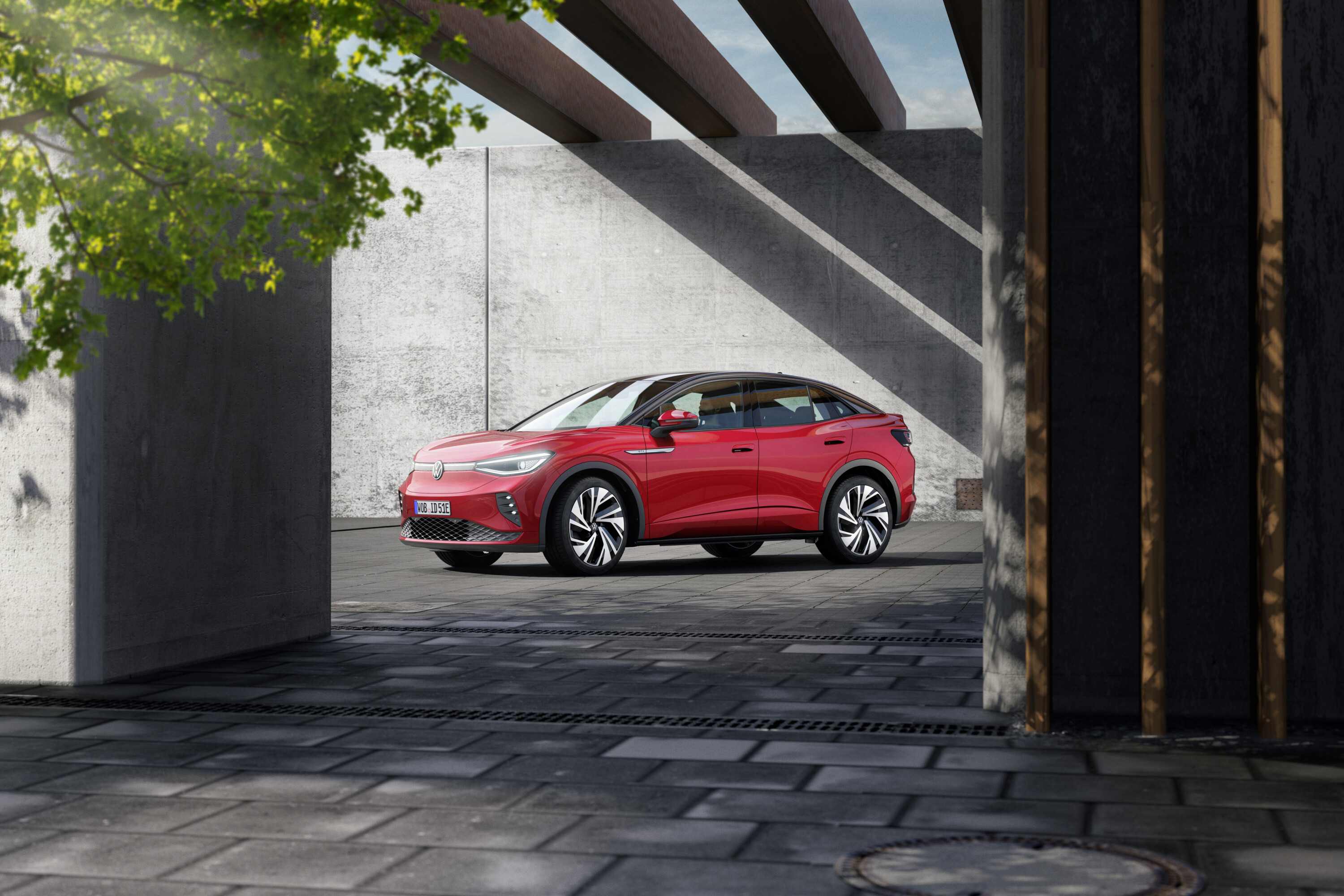
The two sporty SUVs will launch Volkswagen’s ‘GTX’ electric performance moniker when they arrive in the second quarter (April-June inclusive) of next year. The pair will land alongside the regular ID.4 and ID.5 range.
1
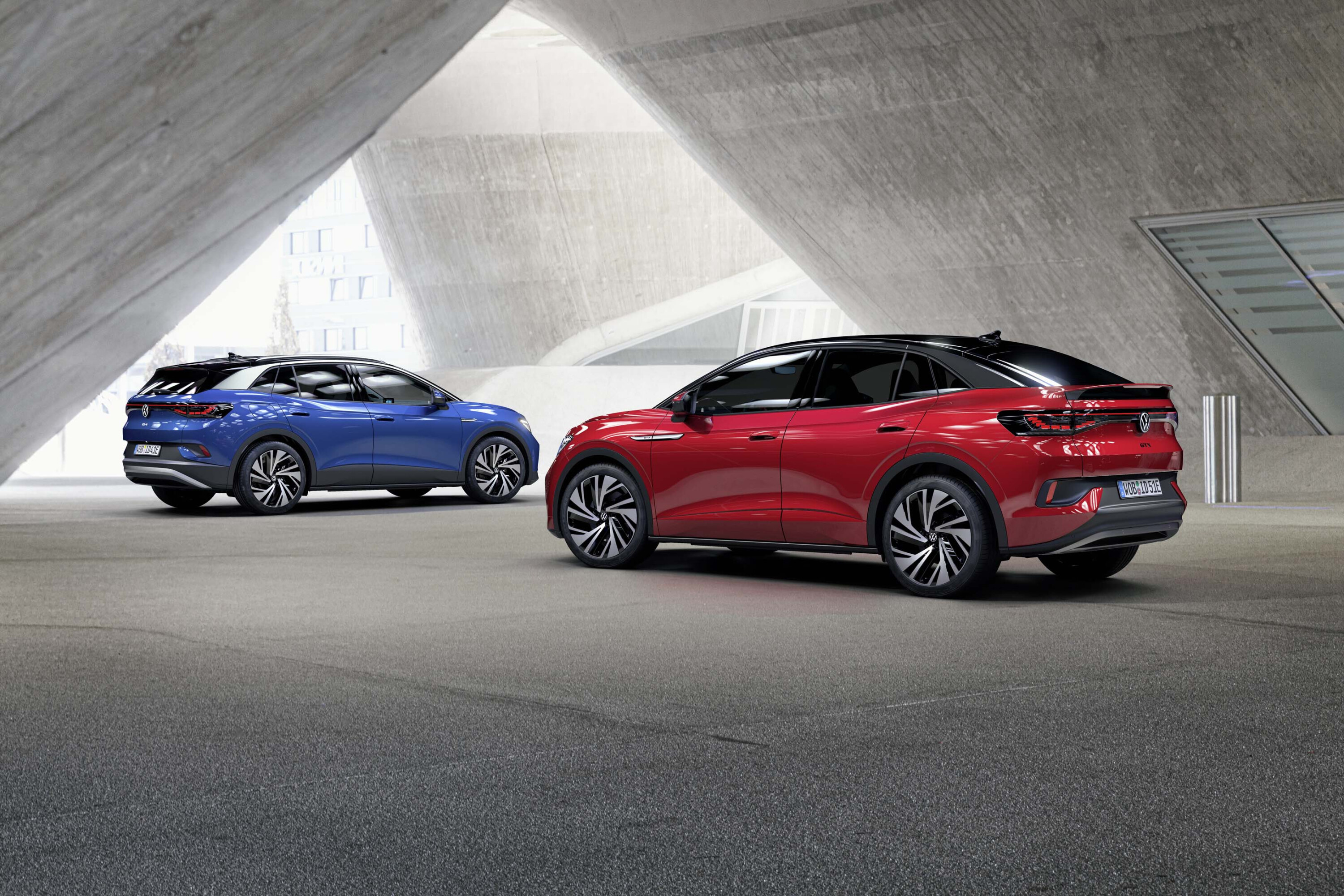
VW’s Australian arm is yet to lock in pricing for the medium SUV and its coupe sibling but is bullish that list prices will align with Tiguans. We pressed managing director, Michal Szaniecki, for a ballpark price, but he wouldn’t be drawn on specifics.
“My most elaborate response would be a very logical step to what customers are accustomed to in our existing performance range – it’s going to be a very, very similar step. But, because it’s not locked in, and one can’t help the other, I can’t be specific today.”
When we put our ballpark of $80-90K into the mix, Szaniecki didn’t seem too surprised. Expect the ID.4 GTX to be a little dearer than a Tiguan R is currently, with an ID.5 commanding a little more due to the “desirability of the body type”, says Szaniecki.
1
ID.4 and ID.5 GTX details
Based on the MEB platform, the ID.4 and ID.5 GTX both feature a 77kWh battery and pair of electric motors.
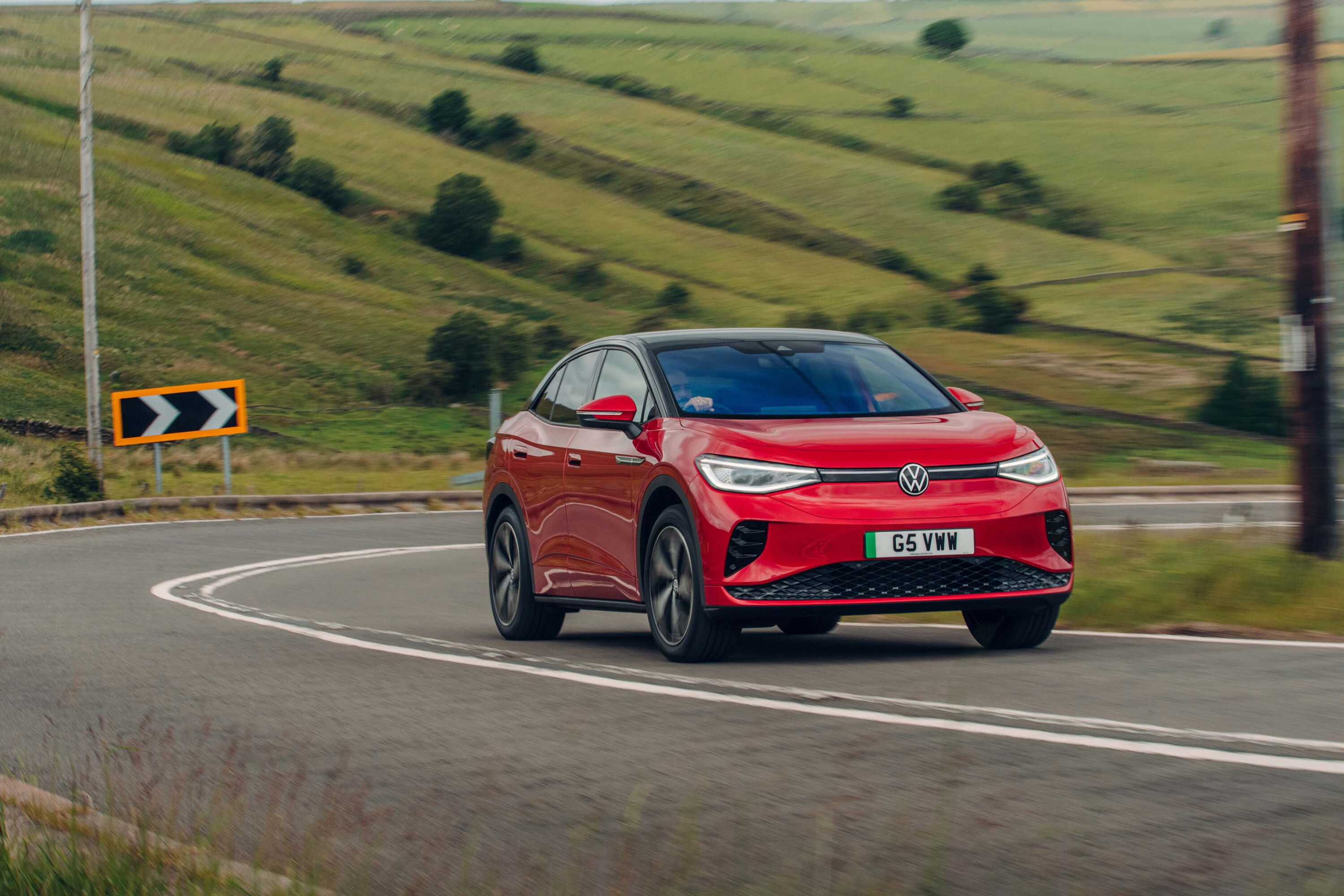
Outputs are 220kW/460Nm, improvements on the 150kW/310Nm rear-drive ID.4 Pro Performance outputs. It means the ID.4 GTX is able to hit 100km/h in 6.2 seconds.
With more power comes a shorter driving range, the ID.4 GTX being capable of 500km (WLTP) from a charge with the ID.5 dropping behind slightly at 491km in the same test. Both are capable of 175kW DC fast-charging.
1
Supply and availability
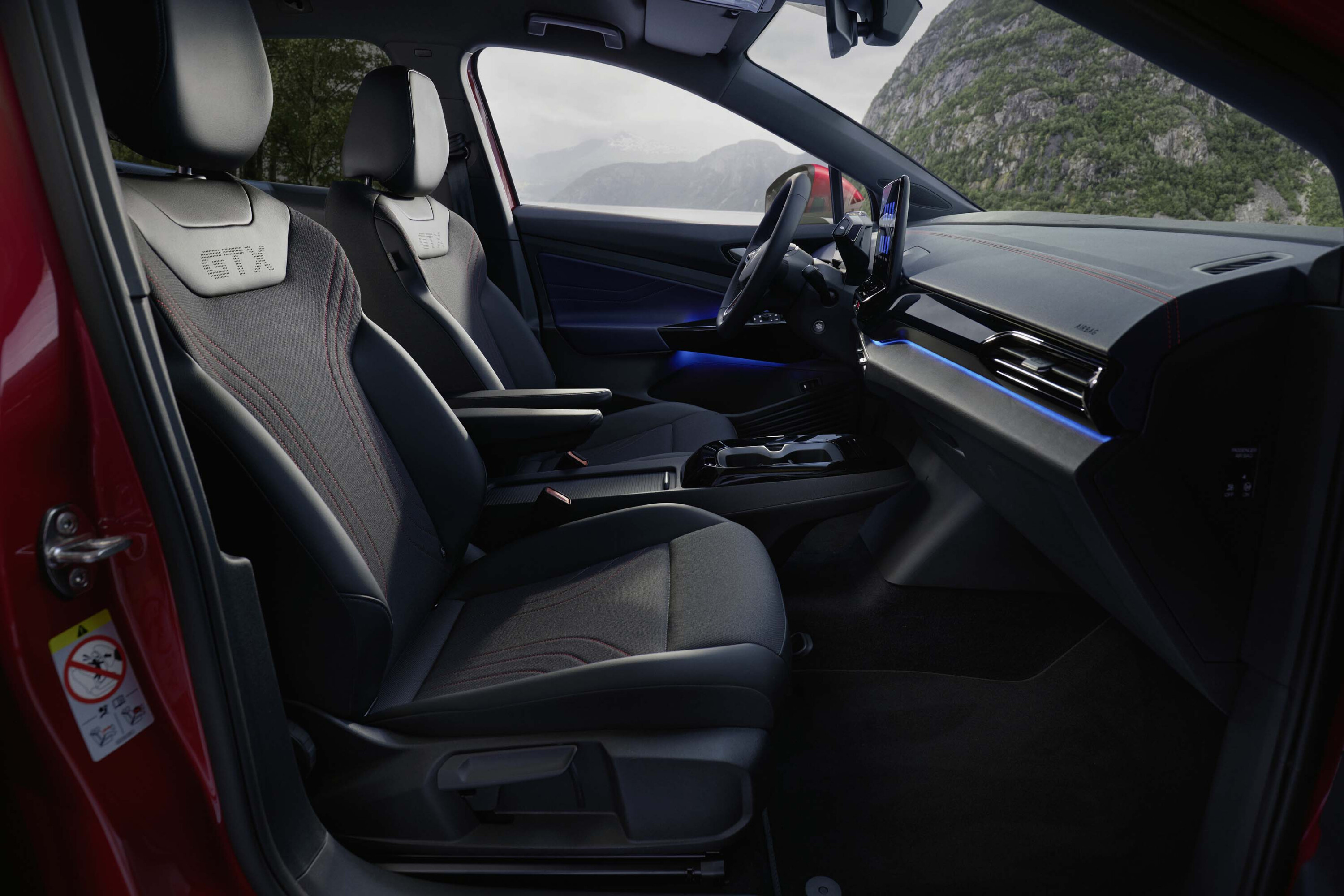
The rest of the world buys more ID.4s than ID.5s, owing to the more practical wagon body shape, but Australia likes to buck the trend of pragmatism.
“In a way, it’ll be down to functionality, but we are open and our supply of cars is ready for any of the scenarios…. I’ve learned my lessons already; I’ve been humbled by the [Australian] market before, so of course, we’re getting our production numbers ready for any scenario”, said Szaniecki.
“[The ID.4] should be a bit stronger on sales from a functionality perspective. But maybe, as we are a performance-focused market unlike Europe, it might be the other way around”, he added.
1
Regardless of which sells more, Szaniecki is keen to shift lots of ID models and is confident in the product.
“Of course we [have sales aspirations]! And every month they grow – it’s thousand of cars. 5000 cars next year would be the immediate answer but the dynamic of the market is changing so fast, and also going in such different directions.
“We’re being mindful that the competition out there is getting stronger and stronger. It’s a beautiful game; it’s a beautiful chapter for the market, and we will be a major part of it in delivering thousands of cars to Australia, that’s for sure”, said an enthusiastic Szaniecki.
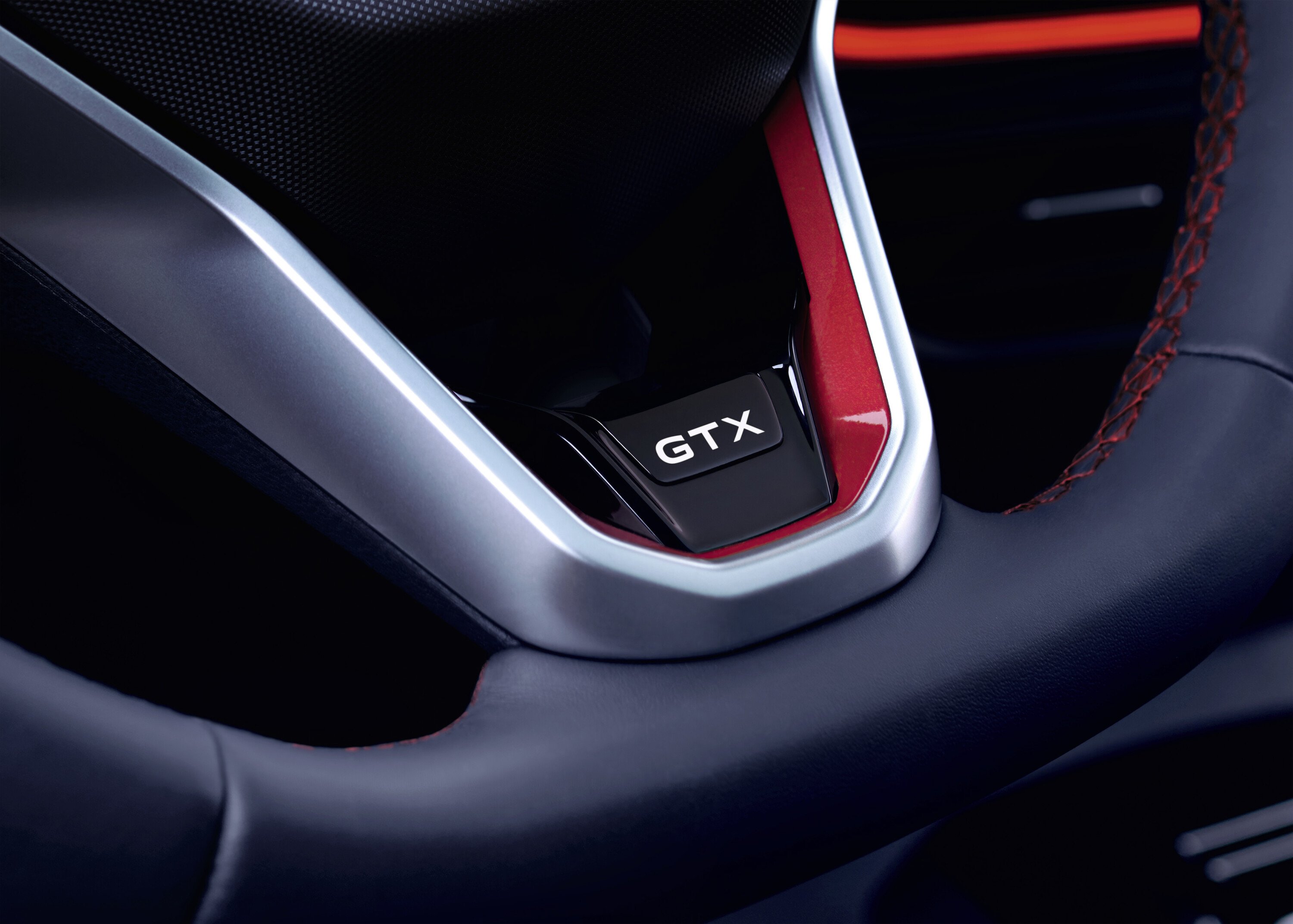
At the event, Volkswagen also confirmed the local release of the ID.3 GTX in the second half of 2024. By the end of next year, VW will have three GTX models on offer and expects performance variants to make up 25 per cent of total sales.
The 2024 Volkswagen ID.3 GTX is gearing up for an Australian release in the second half of 2024, coinciding with the local launch of the facelifted small EV.
Snapshot
- Local ID.3 range headlined by GTX variant
- Outputs and drive type unconfirmed
- Twin-motor AWD possible
“It’s a great win for us”, VW Australia managing director, Michal Szaniecki, told Wheels.
“We’ve been in discussions with headquarters for some time, and now we have it, which is a great surprise. All the details including the visuals and specifications are still under wraps for now.”
The most powerful ID.3 currently has a single rear-mounted electric motor producing 150kw/310whiNm – rather close to the Cupra Born electric hot hatch’s 170kW/310Nm outputs – getting it to 100km/h in 7.3 seconds.
1
To make a significant leap over the existing ID.3, the GTX will likely need to pick up an extra motor and become AWD. We could see it picking up the ID.4 and ID.5 GTX’s 220kW/460Nm powertrain. The result would be an EV that’s quicker than a Golf GTI, and not too far off a Golf R. Think of a 0-100km/h time between 5.5-6.5 seconds
Other things to expect include a tauter chassis, bigger alloy wheels with wider tyres, pumped exterior styling, and adaptive dampers. Selectable drive modes, including a Sport mode, are likely to feature the ID.3 GTX with a local asking price in the vicinity of $70-80K.
Volkswagen Australia delayed the arrival of the ID.3 small car to make sure Australians got the heavily facelifted version that does without the frustrating haptic touch steering wheel and convoluted software that new head honcho, Thomas Schäfer, openly criticised.
As Volkswagen launches its new GTX brand in 2024, it expects performance variants to increase their overall share from 10 per cent of VW’s sales to 25 per cent.
1
Our original story, below, continues unchanged
March 29 2023: Australian timing confirmed for ID models
Volkswagen Australia has today confirmed local launch timing for its ID.3, ID.4, ID.5 and ID.Buzz models – get all the details at the links below.
Story continues…
The facelifted Volkswagen ID.3 electric hatch has debuted in Europe.
Snapshot
- 2024 Volkswagen ID.3 facelift unveiled
- Updated electric hatch receives updated design, new technology and quality improvements
- Local timing still unconfirmed, expected here in 2024 or 2025
Unveiled just two-and-a-half years after the ID.3 launched in Europe – following software-related delays – the updated model was pulled forward to address customer feedback.
Volkswagen Australia has confirmed the updated ID.3 will debut the nameplate locally, but it’s not expected until 2024 or even 2025, with timing yet to be locked in.
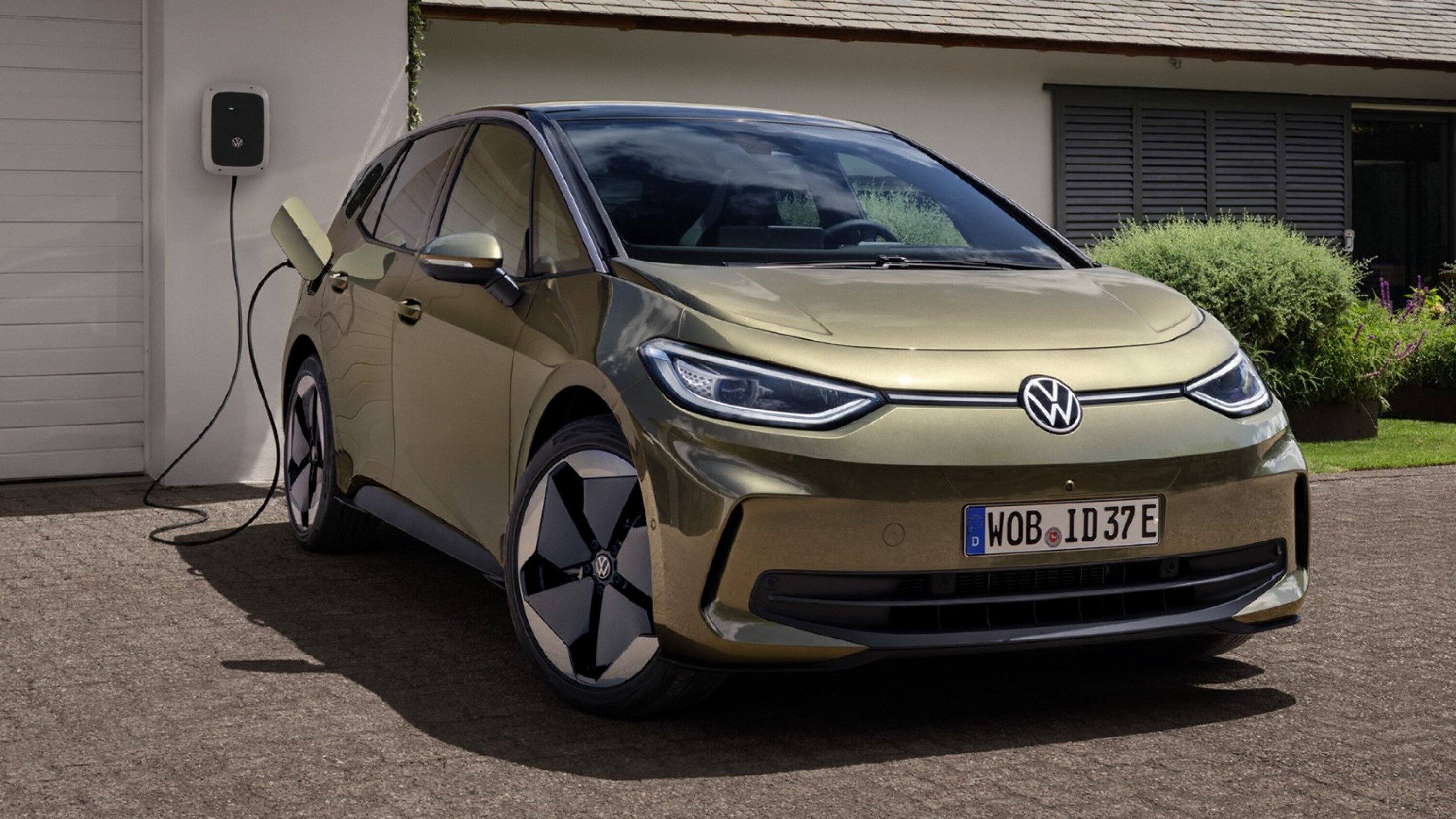
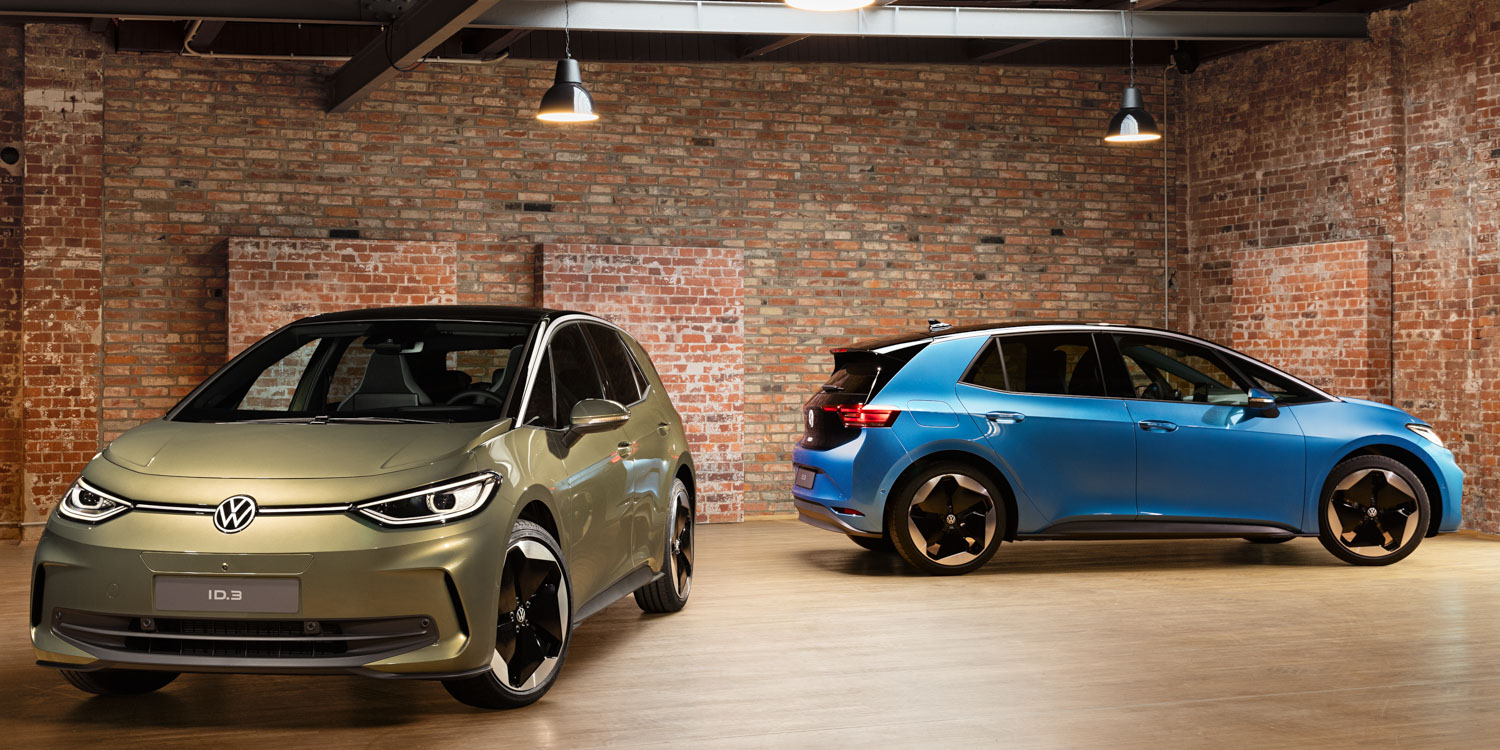
While it appears similar to the pre-facelift model, the revised ID.3 receives a freshened look with a new front bumper, an active shutter system, and air curtains to improve aerodynamics.
1
Volkswagen has redesigned the ID.3’s bonnet by removing the black strip and “recessed sections at the sides [to] create an additional impression of visual lengthening.”
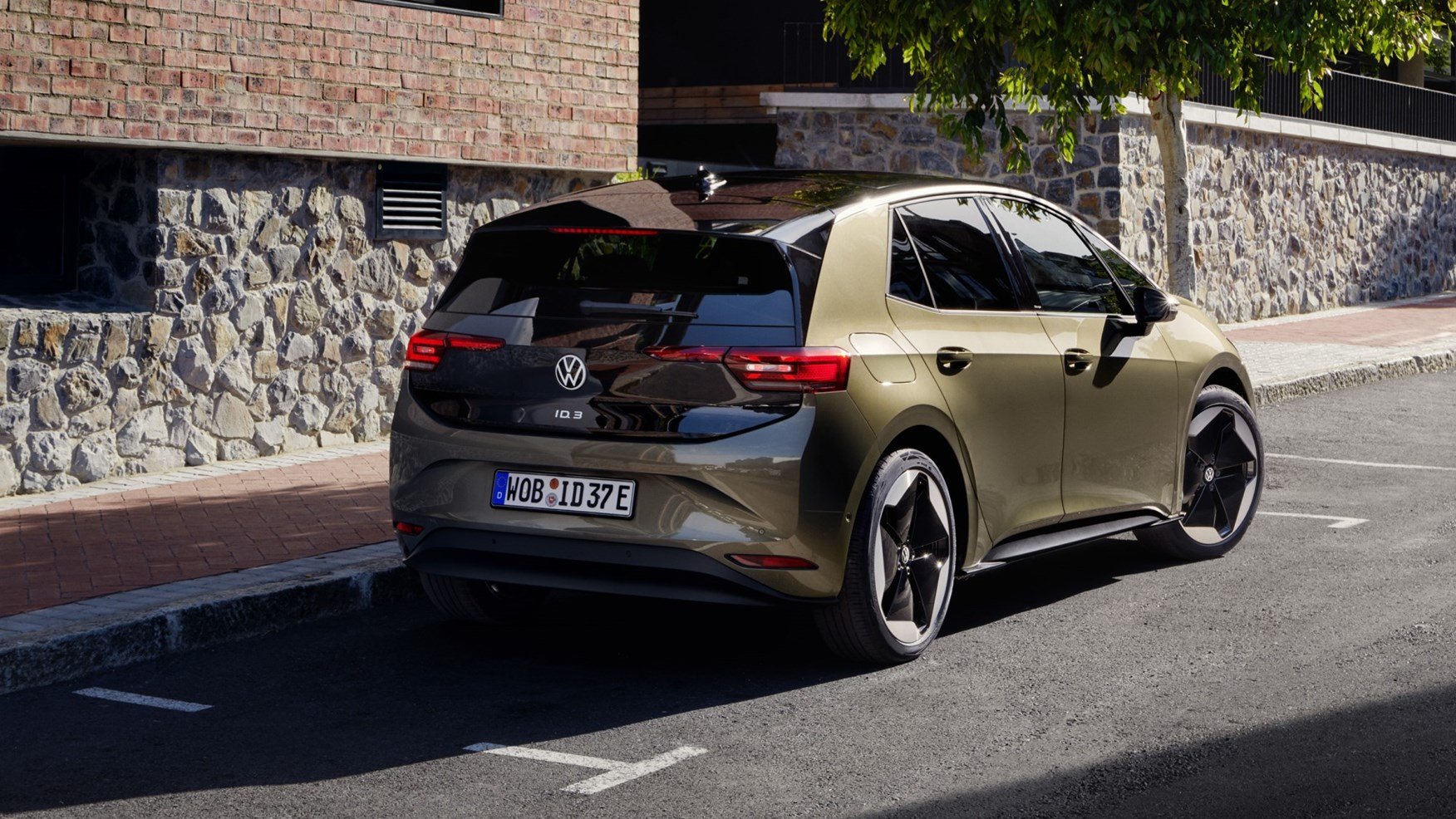
Although the rear end looks identical, the tail-lights have been upgraded to include illumination for the tailgate section, an X-shape for the brake lights, and sequential turn signals.
In addition, it features newly-designed alloy wheels, a thicker beltline, the removal of the c-pillar dot pattern, and a new dark olivine green exterior colour.
As before, the Volkswagen ID.3 has a 2770-millimetre wheelbase, and measures 4261mm long and 1809mm wide. However, it is 6mm lower at 1562mm tall.
1
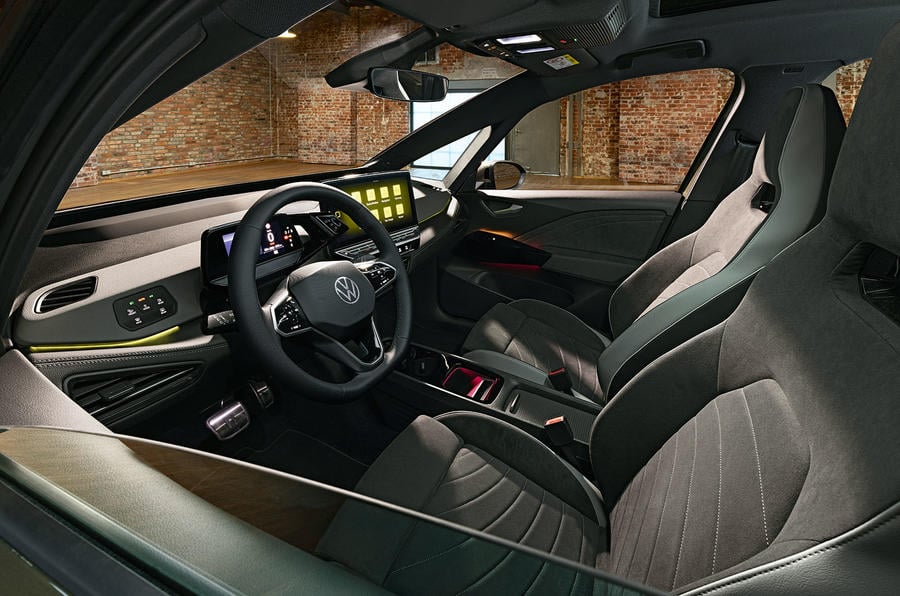
Inside, the updated ID.3 gains higher-quality materials in response to customer and media feedback, with soft-touch materials and remodelled door panels with larger hand rests.
Flagship variants also receive softer materials on the upper part of the dashboard.
Volkswagen said the ID.3 is now ‘animal-free’, with faux leather used on the steering wheel, while the door trims and seat covers are now produced from 71 per cent reused plastic waste.
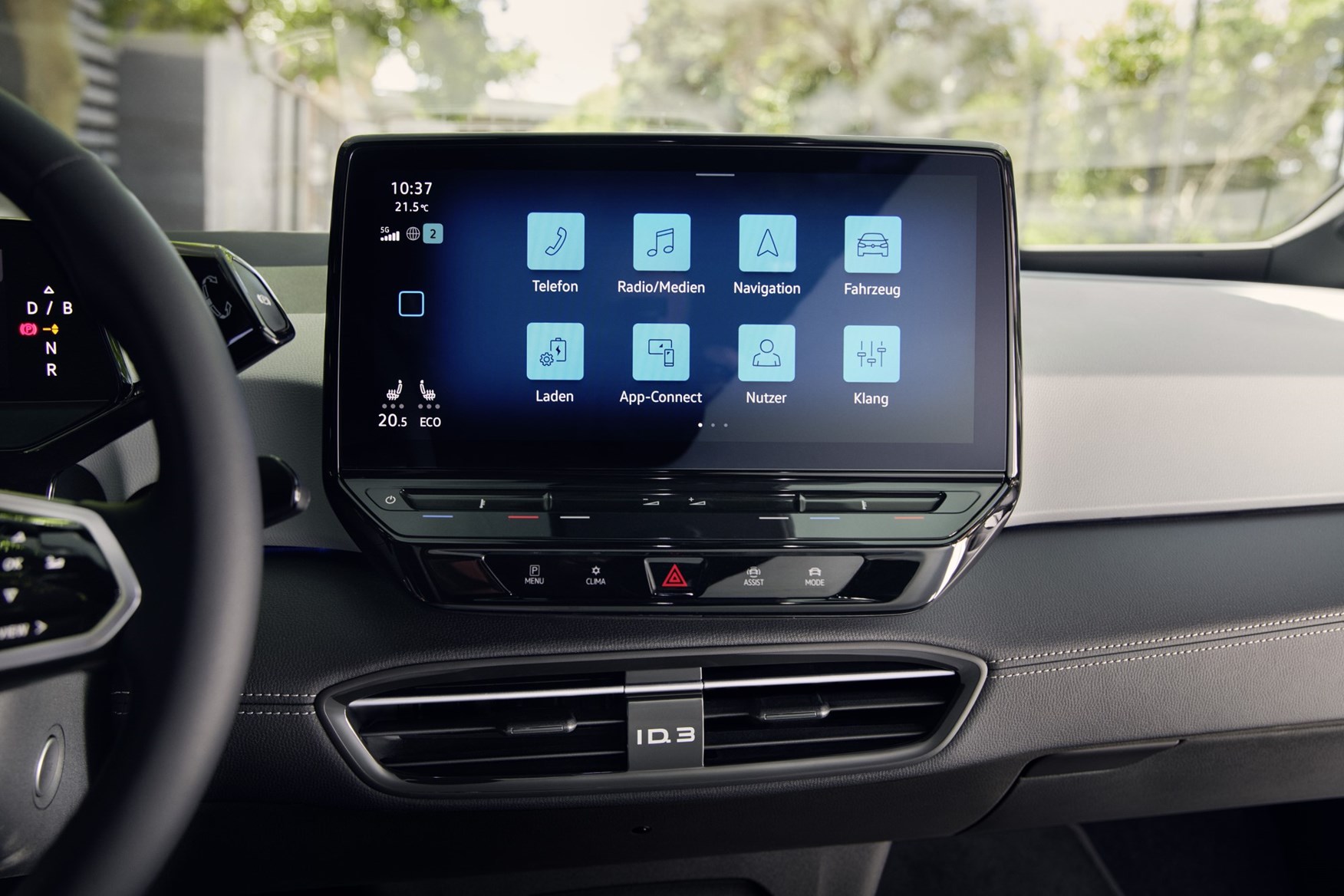
The larger free-standing 12-inch infotainment screen – as found in the related Cupra Born and Volkswagen ID.4 – receives updated, clearer graphics, a more informative charging menu, and an optional cloud-based voice control system for a smoother experience.
1
While the 5.3-inch digital instrument cluster is retained, the ID.3 borrows augmented reality technology for its head-up display from the ID.4 and ID.Buzz.
As expected, despite feedback, the updated ID.3 retains its touch-sensitive controls and single-switch window controls, with physical controls expected to return in the third-generation Tiguan due later this year.
Under the skin, the updated ID.3 retains its MEB electric vehicle architecture, with a carryover rear-mounted 150kW and 310Nm electric motor.
It is available with a 58kWh or 77kWh lithium-ion battery pack, with a claimed WLTP-rated driving range of up to 546 kilometres with the largest battery.
1
Volkswagen claims a “smaller battery is planned for the future,” but this cheaper variant – likely with a 45kWh unit – won’t form part of the initial lineup.
The facelifted 2024 Volkswagen ID.3 will arrive in Europe later this year, with local timing currently unconfirmed.
“We’ll get [ID.3] earlier. It was always following ID.4 and ID.5, so it will come the following year, 2024, and [the facelift being pulled forwards] means we’ll get it earlier,” said Volkswagen Australia product boss, Michelle Rowney, in November 2022.
UPDATE: The Golf R wagon will bow out for Volkswagen’s 2024 model year, leaving a small, AWD wagon-sized hole in the Group’s Australian range.
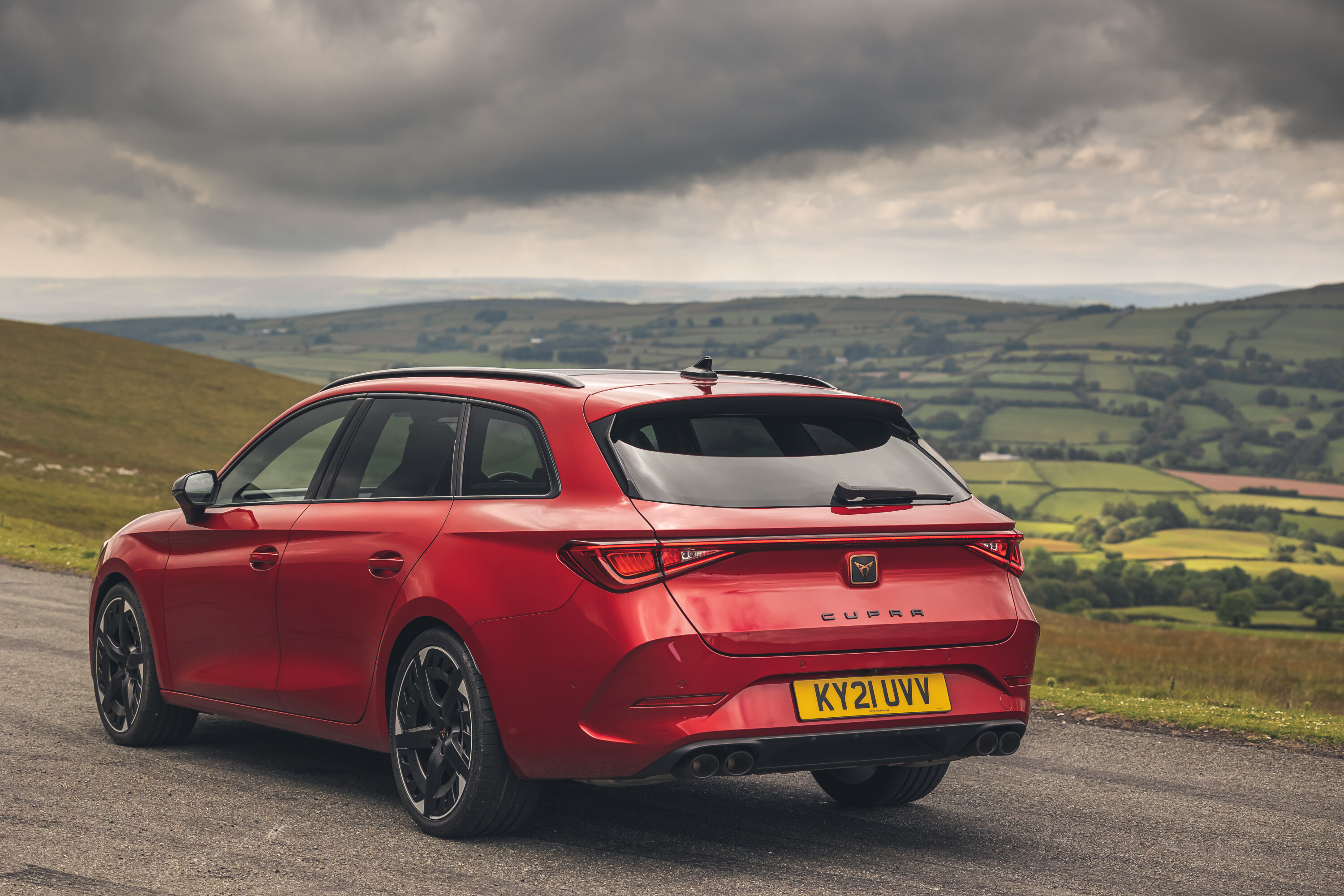
Is this the glass slipper for the Leon Sportstourer needed to step into Oz? Cupra hasn’t said in as many words, but Wheels was notified of the Golf R wagon’s demise in the same breath as the Leon wagon’s local evaluation.
There’s also a blank Cupra Australia webpage [↗] for the Leon Sportstourer. It doesn’t have pricing or release information – we’re told holding a domain is customary practice for the marketing team – but it smells like the Leon wagon may be edging closer to our shores.
Should Cupra bring the Leon Sportstourer here? Read all about the likely variants below and vote with your keyboards in the comments section.
Our original story, below, continues unchanged.
1
July 6: Cupra ‘quietly optimistic’ about Leon Sportstourer wagon for Australia
“We’re definitely interested in a fast wagon”, said an enthusiastic Jeff Shafer, head of product and planning at Cupra Australia when asked about the Leon Sportstourer. “It’s kind of dear to my heart.”
Since Cupra’s launch in July 2022, the brand has rapidly expanded its range. The Born electric hot hatch became the latest addition in May, but it’s far from the last. Along with the Tavascan EV due next year/2025, Cupra is keen to expand its local plug-in hybrid and combustion-engine offerings.
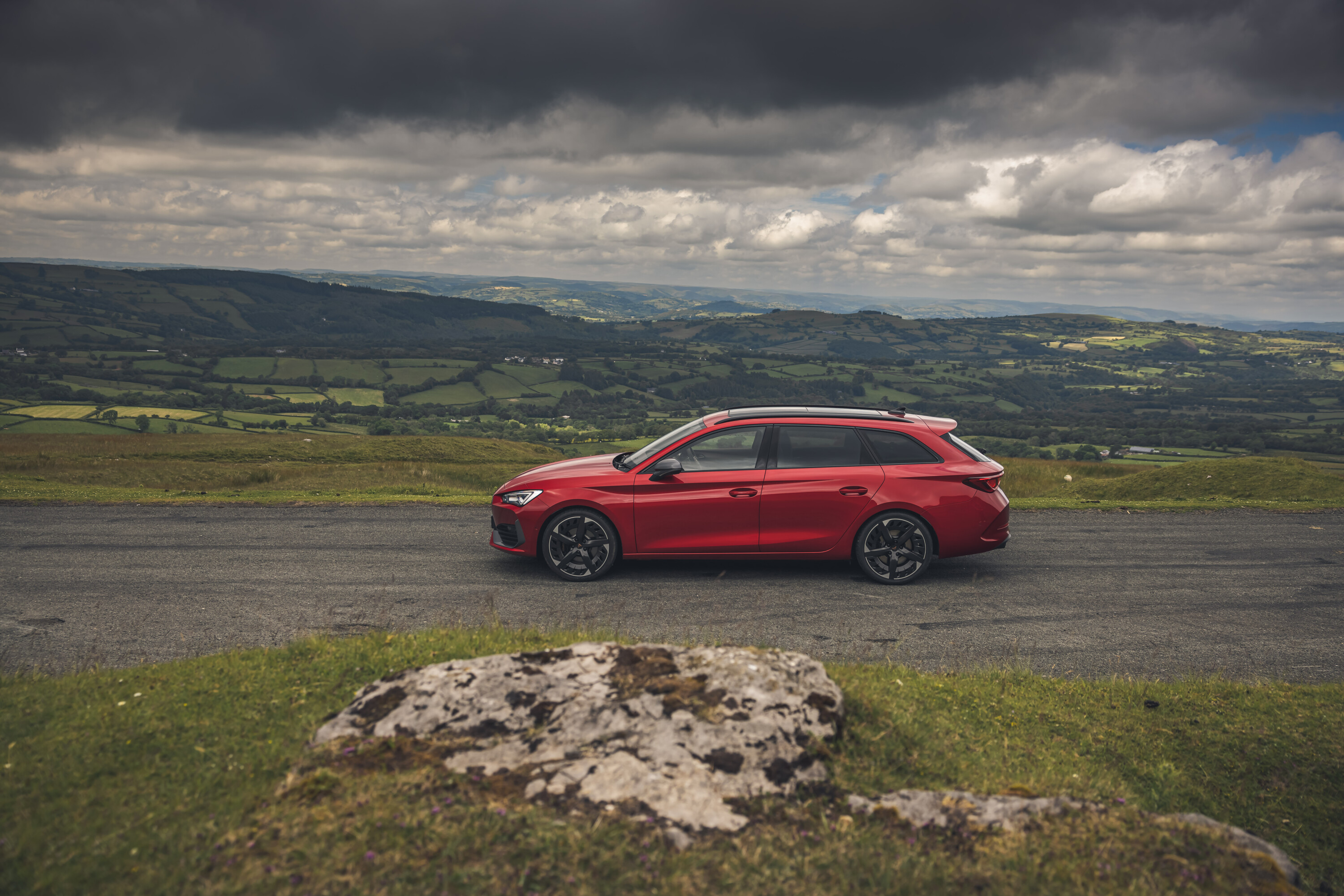
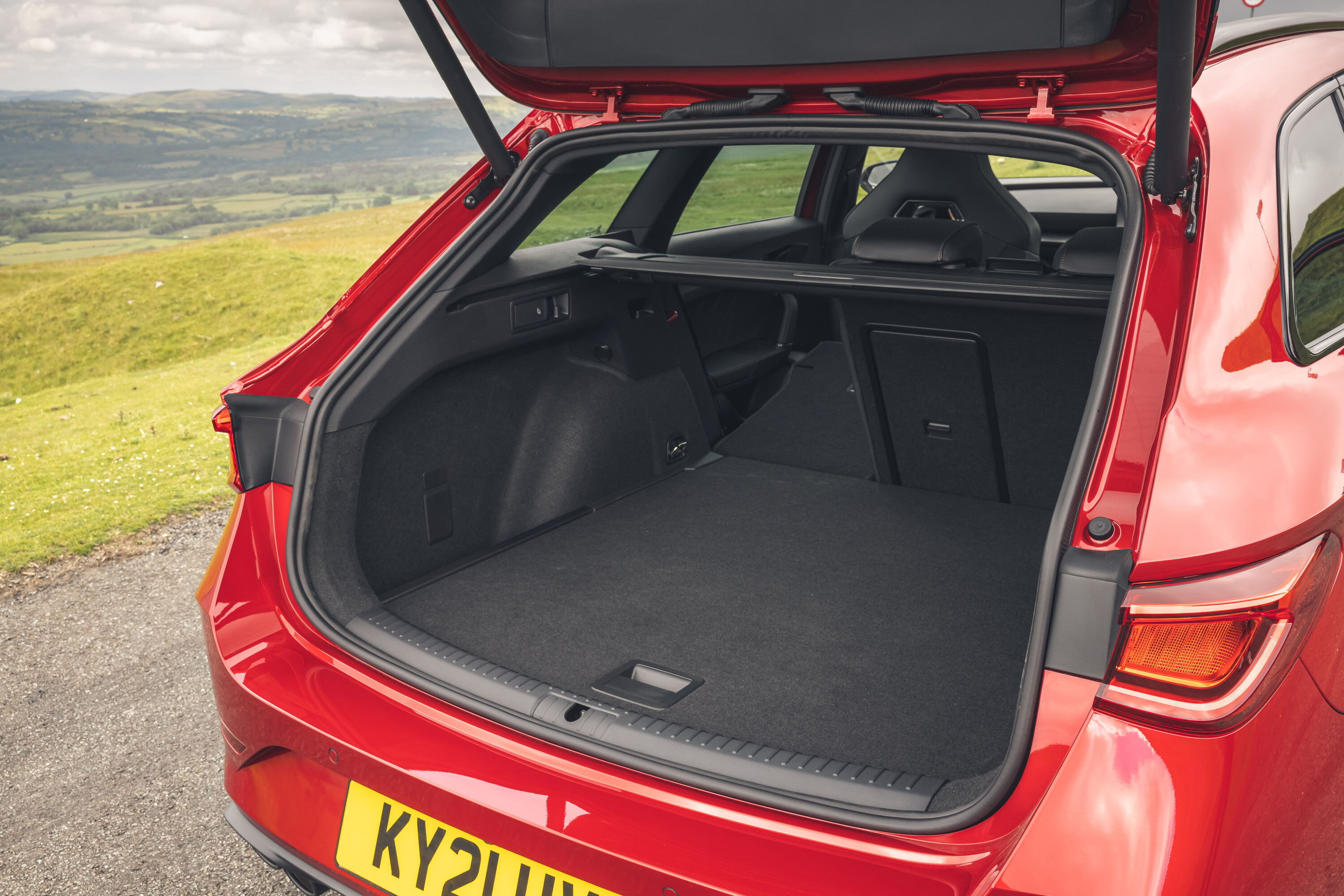
With no all-new piston models in the pipeline, it’ll be a case of taking what’s sold in other markets. In this case, the Cupra Leon Sportstourer – a long-roof version of the hatch. Cupra didn’t confirm its arrival, but Shafer is buoyant about a local release.
I think we’ve got work to do to make the Sportstourer business case stand out, but I’m quietly optimistic that we’ll get there
1
“We’re in discussions with headquarters. It’s not locked in, but I’m feeling good about our chances to bring the [Leon Sportstourer] here”, said Shafer, indicating that if the wagon does come down under it’ll only be in top-spec VZe plug-in hybrid and VZx 2.0-litre petrol guises.
The front-drive Leon Sportstourer VZe has the same powertrain as the Formentor VZe, so 180kW/400Nm from the combination of a 1.4-litre four-cylinder and 85kW electric motor for about 59km EV range.
The VZx packs the familiar ‘EA888’ 2.0-litre turbo-petrol engine and all-wheel drive in 228kW/400Nm tune – a significant point of difference from both the Leon VZx hatch and Skoda Octavia RS.
1
It may not have the Golf R Wagon’s tricky torque-splitting differentials, but the Leon VZx wagon is still rapid, able to hit 100km/h from rest in 4.9 seconds – identical to the current V6-powered Audi S4 Avant.
“I think we’ve got work to do to make the business case stand out, but I’m quietly optimistic that we’ll get there and we’ll see that product come to Australia”, Shafer added. We asked Jeff about the sensibility of bringing a wagon to a market that’s proven so hungry for SUVs.
“When we talk about the factory supporting our requests, Cupra has the freedom to go in different directions to other brands. Leon Sportstourer is a good example”, Shafer said.
Pricing is a little difficult to predict. The Golf R wagon commands a $3000 premium over the mechanically-identical hatch, but the VZx Sportstourer has AWD rather than the hatch’s FWD. We expect you won’t see much change from $70K for a Leon Sportstourer in VZx petrol or VZe plug-in hybrid guise, if they arrive locally.
3
What Jeff means by having the ‘freedom to go in different directions to other brands’, is that Cupra is a new offering with a different customer base to VW and Skoda. Take the Golf R, a car with a legacy behind it. Volkswagen sells just one R wagon to nine R hatches, numbers that mean it might not make long-term sense to continue local R wagon sales, in our view.
With Cupra’s proposed two-strong performance-oriented wagon offer, the brand sees more potential in the Leon Sportstourer. If all goes to plan, we could see the Leon wagon effectively replacing the Golf R Wagon locally.
Cupra stopped short of a local launch date for the Sportstourer (naturally), with Shafer instead giving a very broad timeline: “Probably not in the super short term, but we’ve got some changes coming in the not-too-distant future.”
MORE
Everything Cupra
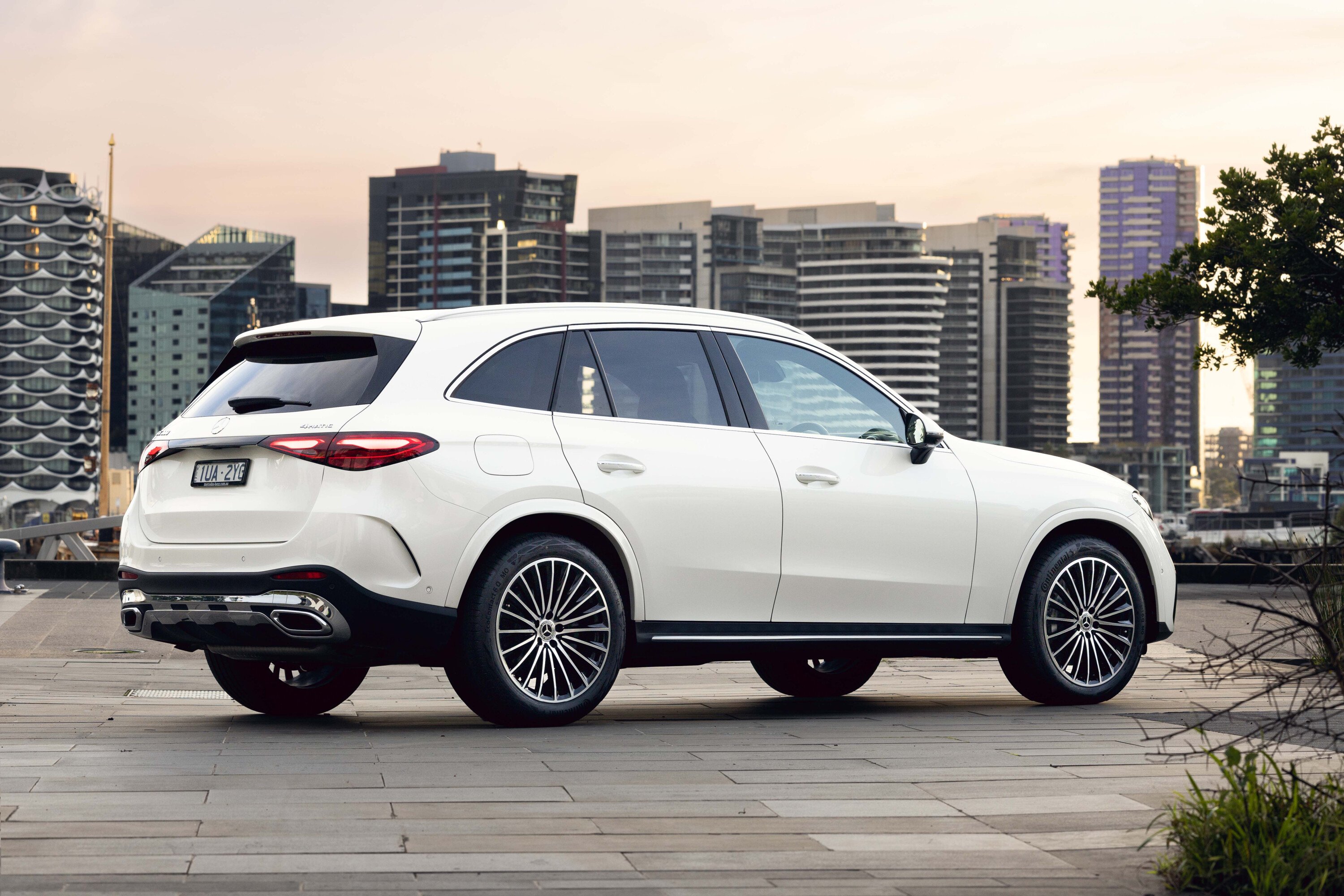
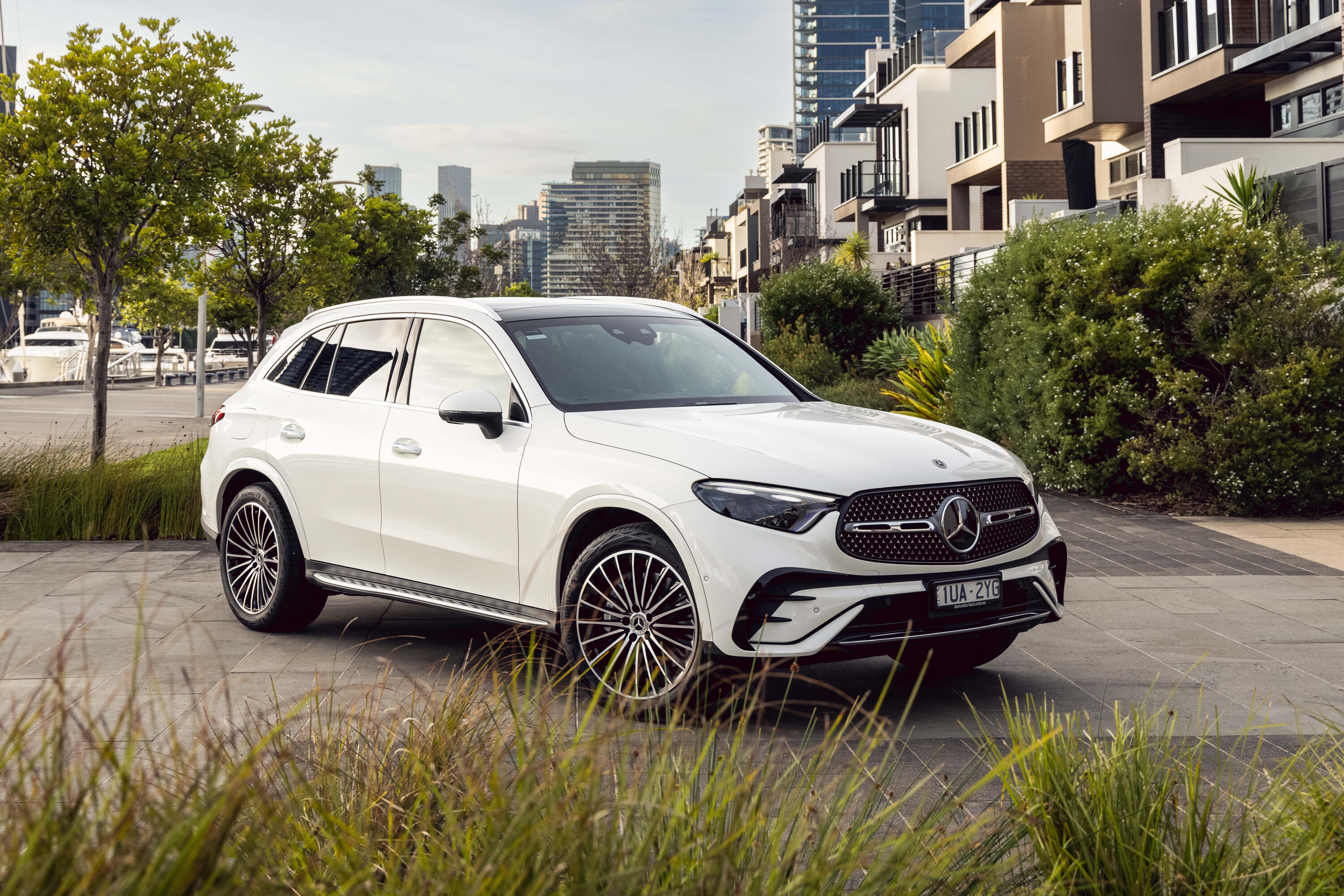
What’s the most important new model for Mercedes-Benz to get absolutely right? A new SL? The flagship S-Class? One of its many cutting-edge EVs? Nope, it’s a mid-size SUV. This mid-size SUV, in fact.
Mercedes sells more GLCs than it does any other model, meaning an entirely new version is a properly big deal. And it’s not just a big hitter on a global scale; it’s a similar story Down Under.
First introduced here in 2015 – we missed out on its GLK predecessor due to a lack of right-hand drive – the GLC doesn’t only hold sway as Mercedes’ most popular model, but it has streaked ahead of rivals from BMW, Audi, and Lexus to be the top dog in its segment.
1
Perhaps understandably, then, this second-generation version is more about evolution than revolution – why mess with the golden goose? – but it has made some significant strides forward, mostly in how it drives and in the quality and comfort of its interior.
However, there’s another thing that has changed dramatically: the price. Now offered as a single variant – the GLC 300 – admission to the new GLC range starts at $103,740 before on-road costs, which is a sharp increase of $22,000 compared to the old entry-level model.
So the big question is, are the improvements worth it?

1
JUMP AHEAD
- How much is it, and what do you get?
- How do rivals compare on value?
- Interior comfort, space and storage
- What is it like to drive?
- How much fuel does it use?
- How safe is the Mercedes-Benz GLC?
- VERDICT
How much it is and what do you get?
Mercedes has made some big changes to the GLC model range this time around.
The previous base model, the GLC 200, has been banished, as have any versions powered by diesel or frugal hybrid powertrains.
In their place we now get one variant: the GLC 300. That’s a good thing, as the 300 was always the pick of the previous model range – it accounted for 60 per cent of total sales – and Merc’s product planners have sweetened the deal further by cramming in more standard equipment.
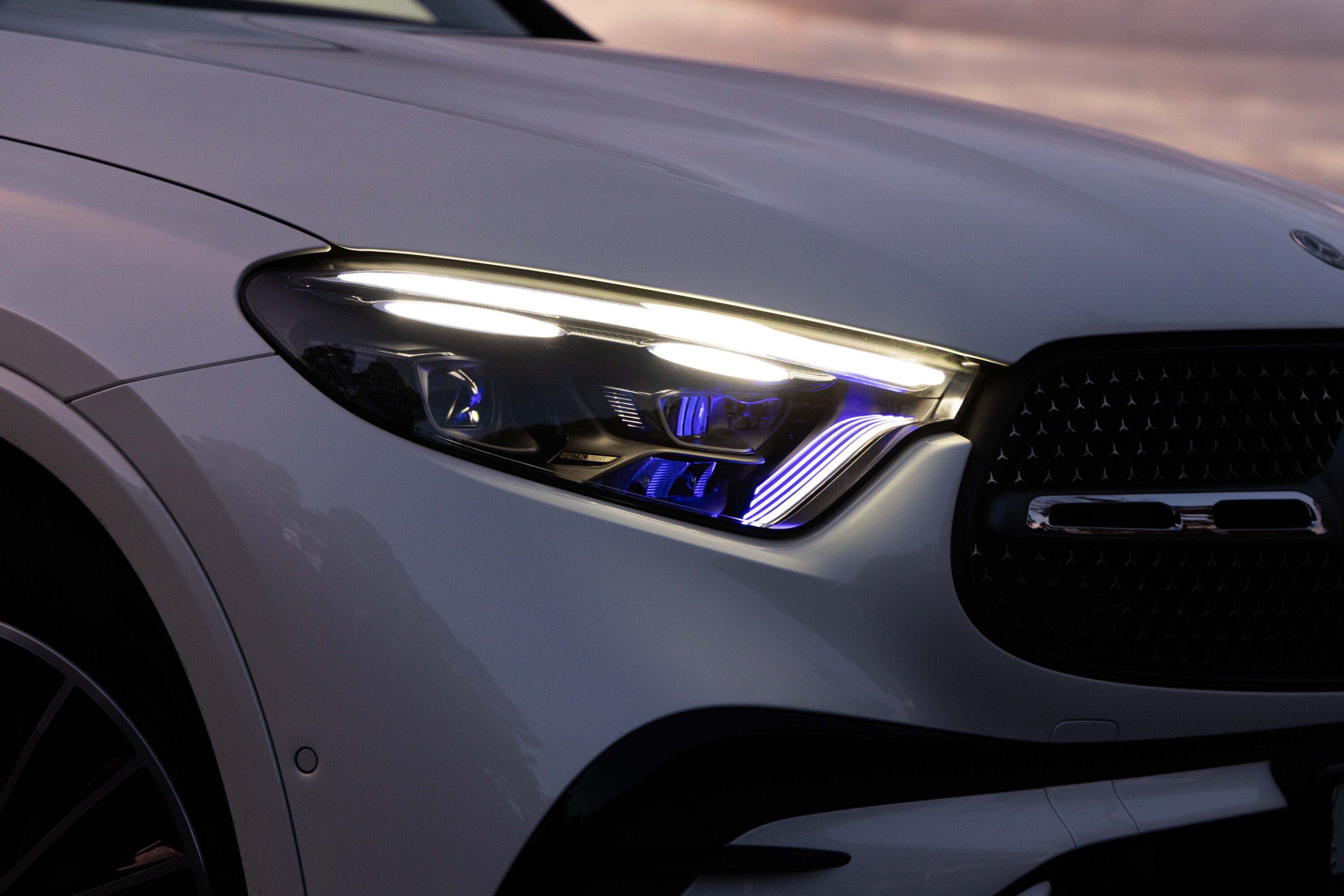
AMG Line exterior and interior packages, for example, are now included, as is a panoramic sunroof, privacy glass, sculpted side steps, metallic paint, body-coloured wheel arches, a remote tailgate, keyless entry and start, and 20-inch alloy wheels.
1
Even better is a noticeable lift in materials quality inside the cabin.
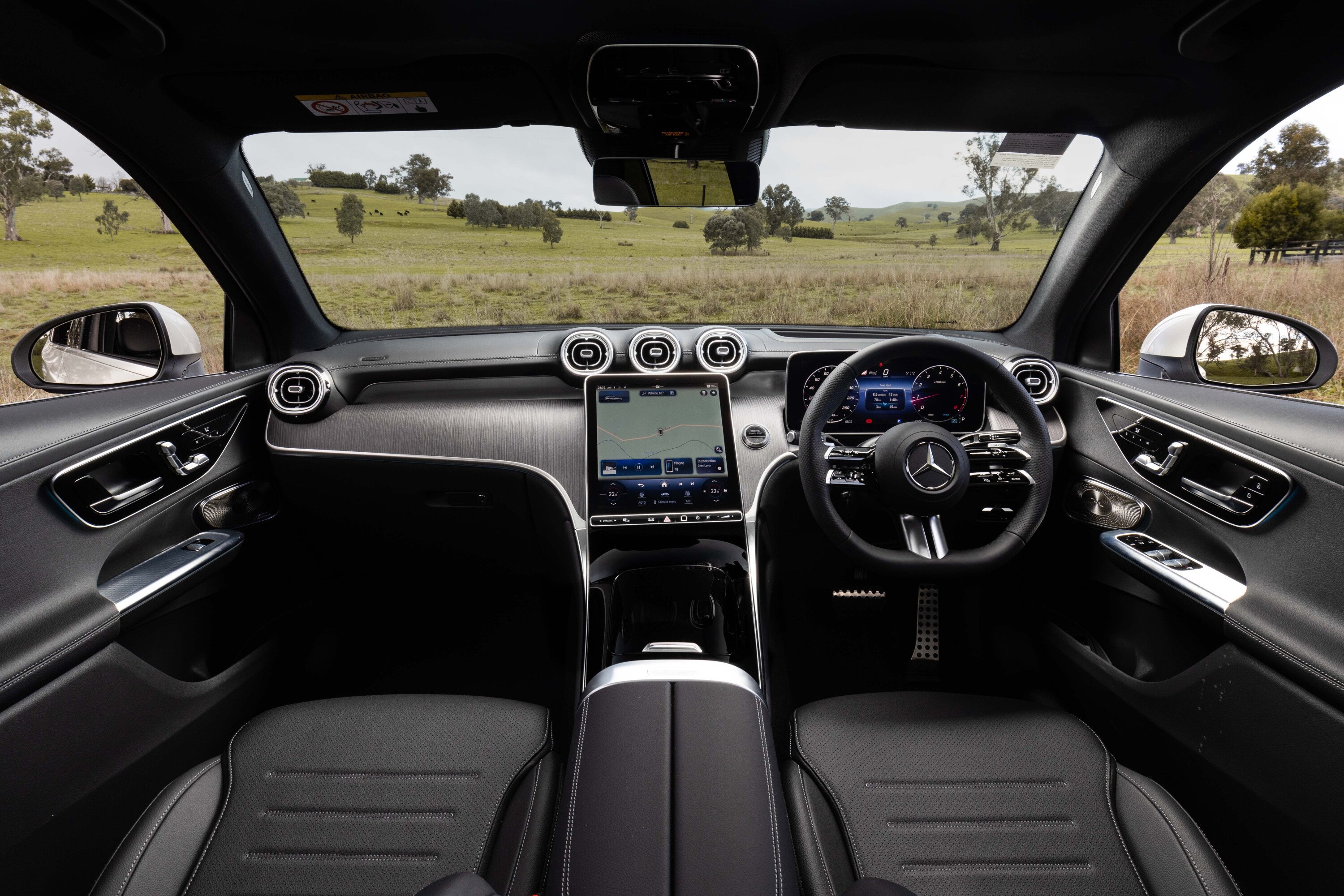
Inside you’ll find the same ginormous 11.9-inch portrait touchscreen as the fresh C-Class, as well as wireless Apple CarPlay Android Auto, fully digital dials with a head-up display, and sublimely comfortable seats trimmed in Merc’s artificial leather substitute, Artico. The front seats are heated, too, and offer a memory function.
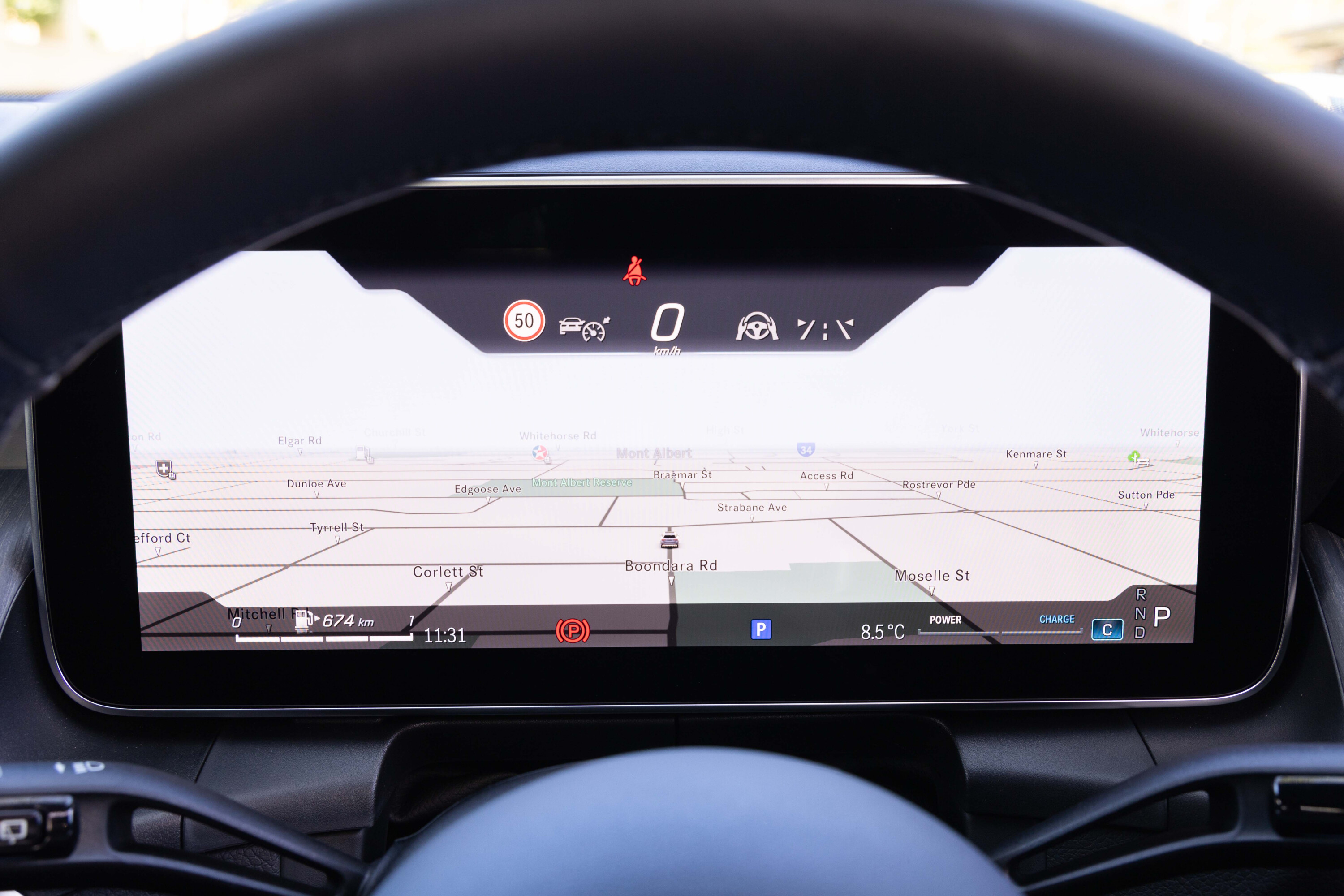
As you’d expect, the suite of active safety systems is now even more comprehensive (more on this in our safety section below) and there’s a new ‘invisible bonnet’ feature that uses cameras in the wing mirrors and front grille to project a live feed of what’s under the nose onto the high-res centre screen. Nice.
Even better is a noticeable lift in materials quality inside the cabin. For all its popularity, the previous GLC had a few weak spots – how it rode and the quality of its interior being the biggest – but the cabin of this new model is a marked improvement.

1
The interior design is far more modern and while there’s still a heavy use of piano black, which marks easily and attracts fingerprints, the rest of the cabin is a pleasing mix of open-pore wood, soft imitation leather and higher-quality plastics.
A trade-off for this extra quality and luxury, however, is a higher price. Earlier we mentioned that the price of entry to the GLC range has risen by around $22,000, from $80,800 to $103,370 (before on-road costs), but that’s not an entirely fair comparison as there’s no base model any more. Factor in the price of the old GLC 300, however, and this new model is still more than $11,000 costlier.
Mercedes says most of that deficit is justified by the higher specification level, but even so, there’s no escaping the fact this new GLC is a richer proposition.

1
As for bodystyles, for now, the GLC is available as a wagon only, but a sleeker coupe version is confirmed.
What’s missing? Notably, Mercedes isn’t offering the fuel-saving plug-in hybrid versions available overseas (Merc-Aus instead directs buyers to its line-up of electric models like EQA, EQB, EQC and the soon-to-arrive EQE SUVs) and there’s no option to add four-wheel steering or adaptive dampers either.
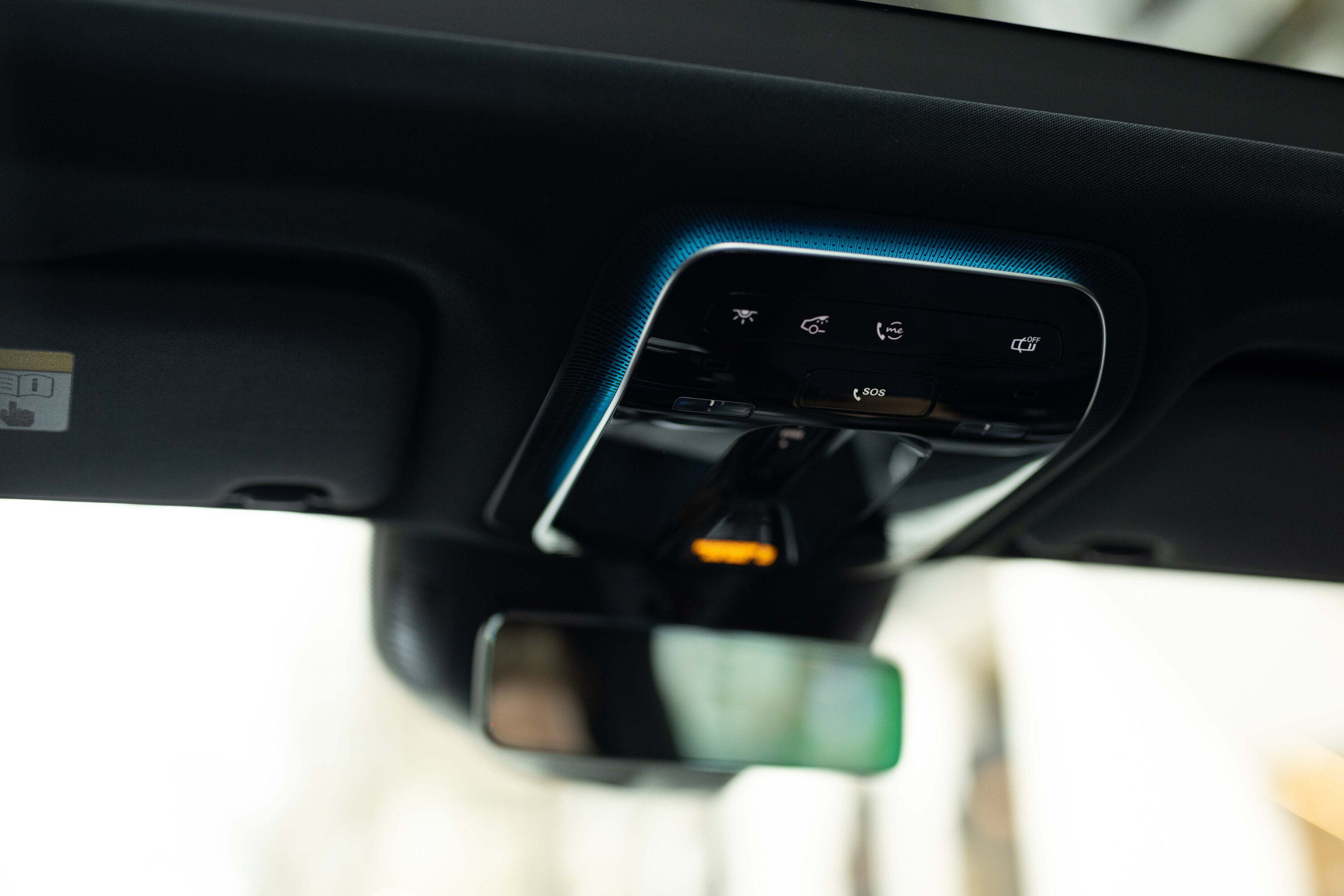
There’s also a limited number of option packs available. Part of the logic of offering a single, well-specified model is to streamline the buying process for customers and they now only have three choices to make: colour, picking between two alloy designs, and whether or not to tick the $6900 Plus Pack which adds additional driver assist features, premium Burmester audio, augmented reality for the sat-nav, acoustic glass, a 360 Guard security system and Mercedes’ version of Matrix LED headlights.
As for bodystyles, for now, the GLC is available as a wagon only, but a sleeker coupe version is confirmed to join the local line-up later in 2023. As the Coupe is still a few months away, Mercedes is remaining tight-lipped on price and spec but you can expect it to mirror the wagon version in offering a single, highly specced 300 variant.
2
How do rivals compare on value?
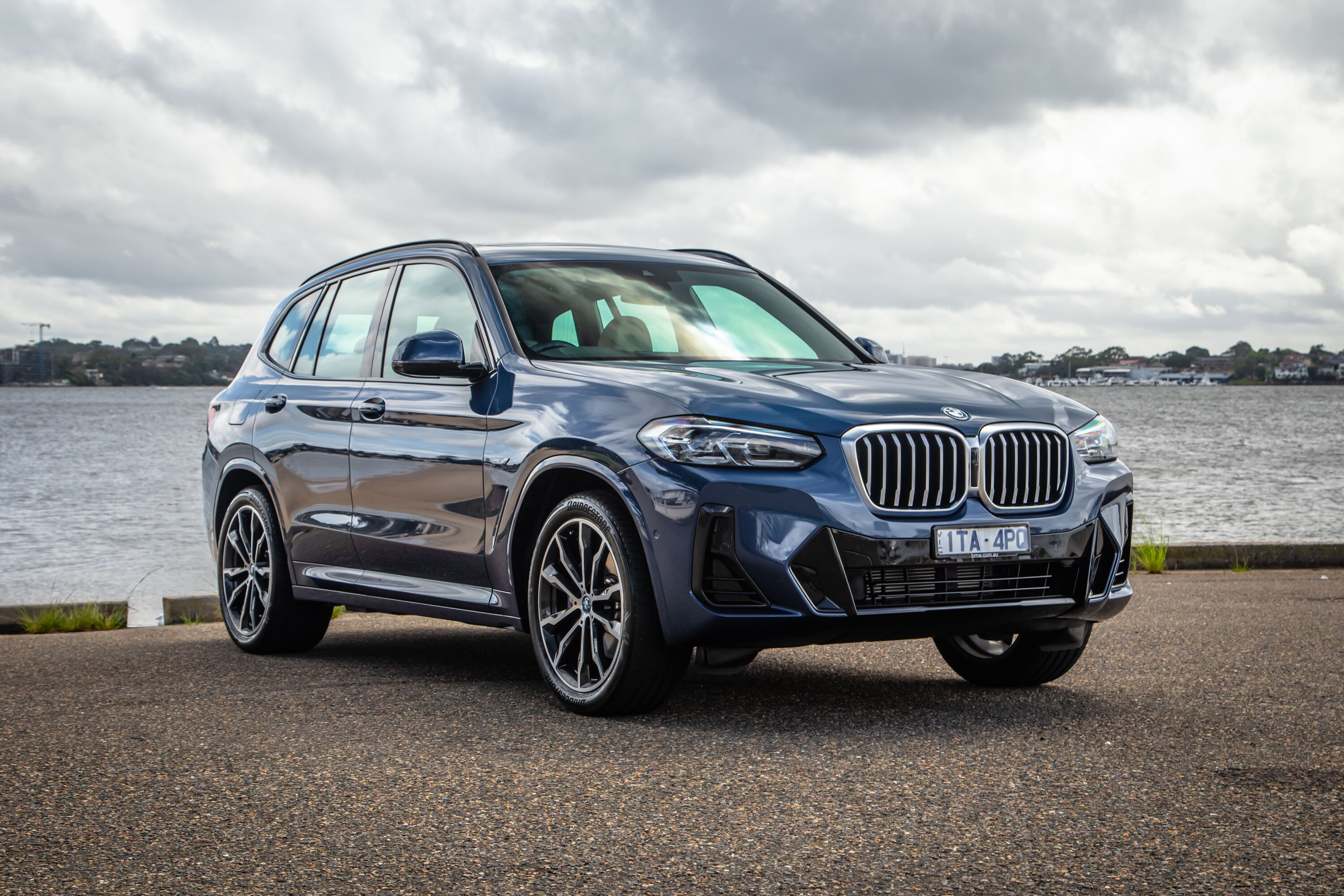
In terms of outright dollars, the GLC 300 is a fair whack costlier than its direct German competitors, the BMW X3 xDrive 30i ($96,500) and Audi Q5 TFSI Sport ($82,800) – both before on-road costs – but it’s also a much fresher model.
BMW’s current X3 is now six years old, although it did score a major update last year, and the Audi is also something of a senior citizen having been first introduced in 2017.
The GLC outdoes both for standard equipment, too, although the recipe for all three models is remarkably similar: 2.0-litre turbo-petrol up front, all-wheel drive underneath and a 0-100km/h sprint in the low sixes. But in nearly every metric, the Mercedes has the edge over its older rivals.
2
Its 2.0-litre engine is supplemented by a 48-volt sub-system which aids economy, driveability and performance thanks to an additional 17kW/200Nm in short bursts.
The GLC’s boot has also grown for this generation and trumps both of its key rivals for load-lugging ability.
And the Merc’s cabin feels far more modern and high-tech. So while the Mercedes is more expensive, you are scoring more equipment, space and luxury for your money.
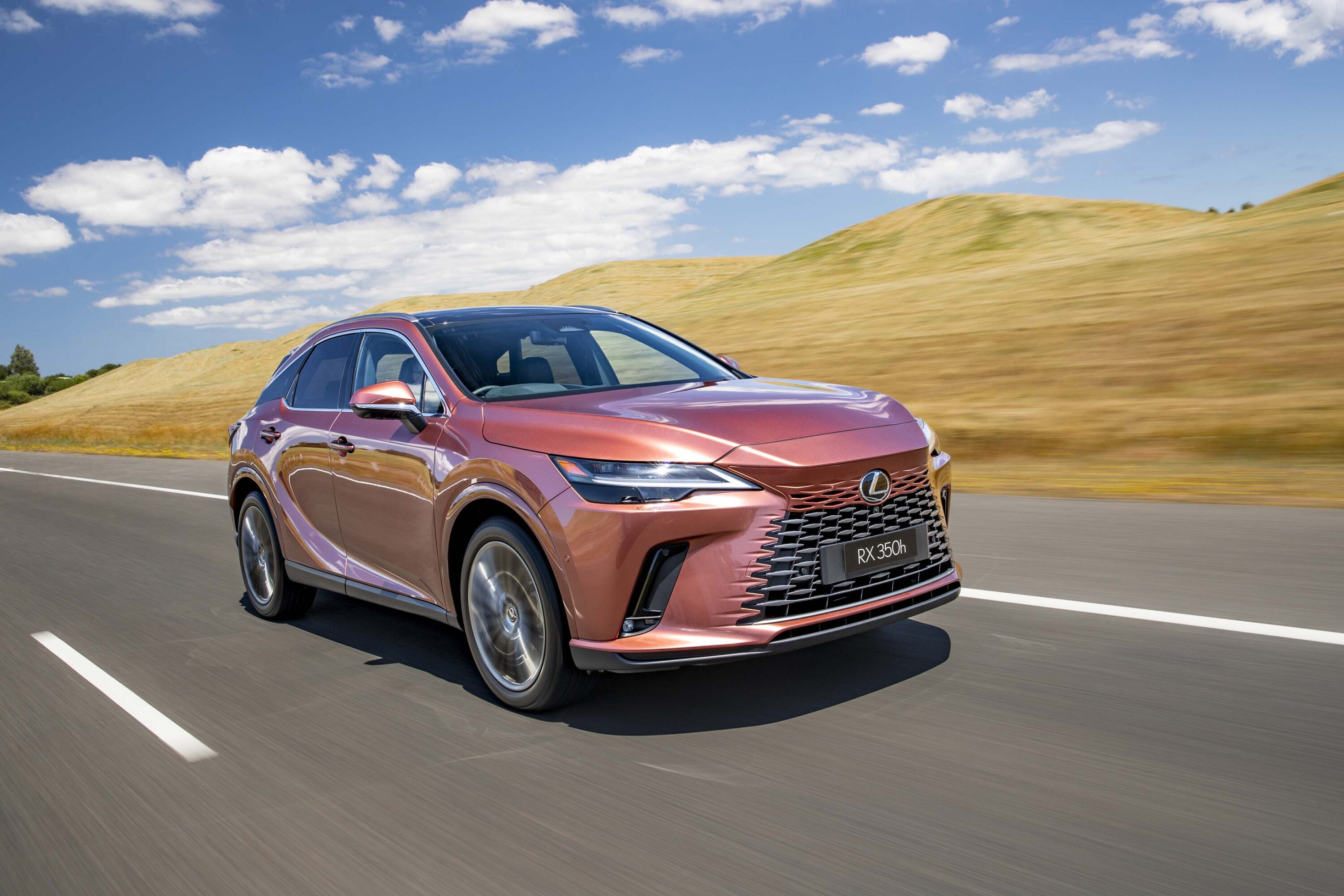
The Lexus RX is another rival to consider. Like the GLC, Lexus’s mid-sizer is box-fresh – the fifth-generation model launched here in February 2023 – and it’s bigger, lighter and thriftier than the model it replaces. Also like the GLC, however, the RX is now more expensive. The RX350 Sport Luxury AWD, which is the closest match for the GLC 300 in spec and performance, is now $105,900 before on-road costs.
2
| Mercedes-GLC 300 | BMW X3 xDrive 30i | Audi Q5 TFSI Sportu00a0 | |
|---|---|---|---|
| Engine | 2.0-litre turbo petrol + 48v | 2.0L turbo petrol | 2.0-litre turbo petrolu00a0 |
| Power/torque | 190kW/400Nm | 185kW/350Nm | 183kW/370Nm |
| Economy | 7.7L/100km | 7.9L/100km | 8.0L/100km |
| Boot space | 620L | 550L | 520L |
| 0-100 | 6.2s | 6.4s | 6.3s |
| Price | $103,370 | $96,500 | $82,800 |
Interior comfort, space and storage
Now built on the same fresh MRA2 underpinnings as the new W206 C-Class, the second-generation GLC is a bigger SUV than the model it replaces.
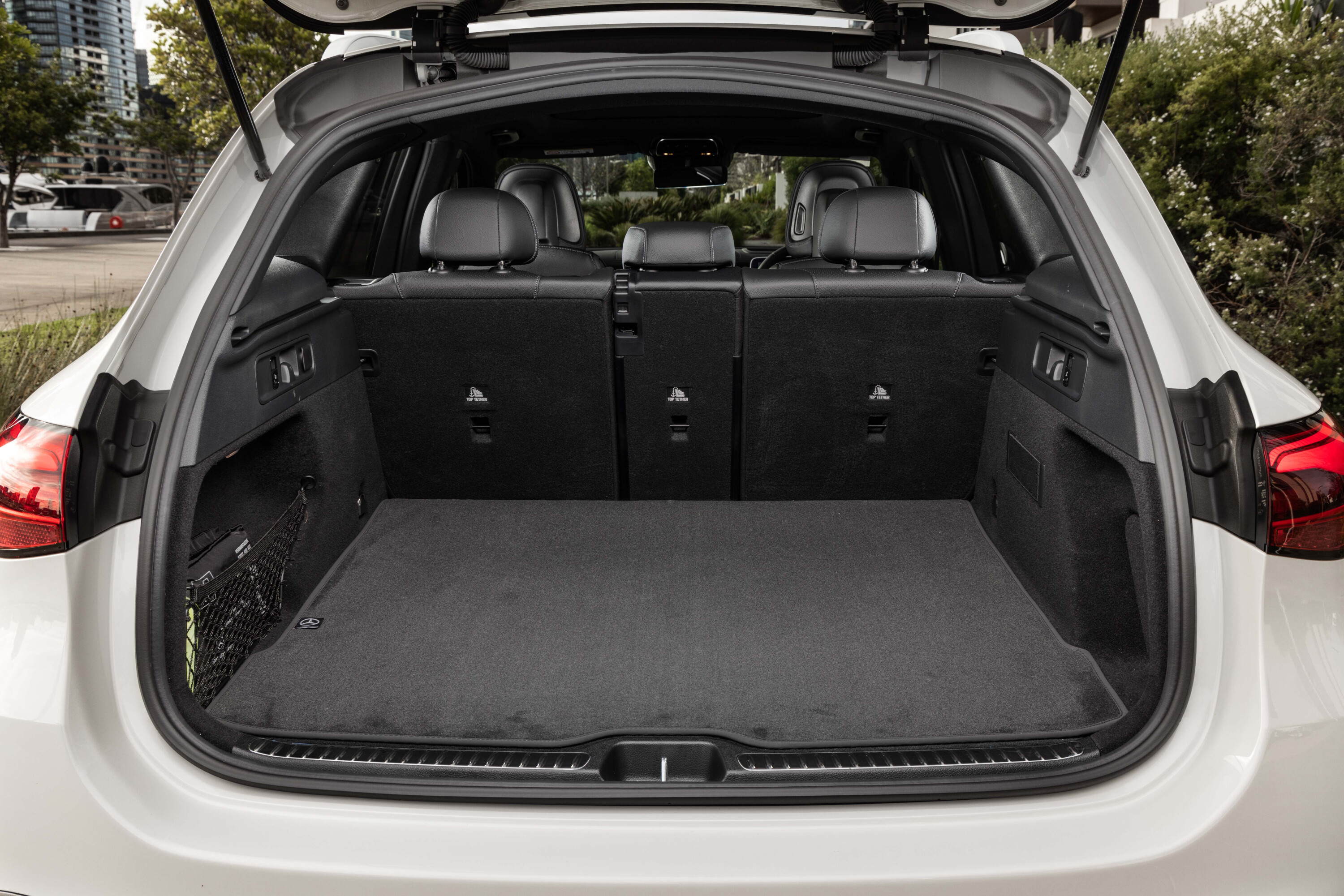
Overall length is up by 60mm, the wheelbase has been stretched by 15mm and the overhangs have also grown by 6mm up front and 23mm at the rear. Boot space is up, too, by a considerable 50L for a total load-lugging capacity of 620L, which is best in class.
Sharing the same gizzards as the new C-Class means the GLC also benefits from the same high-tech, modern cabin design. And it’s bursting with wow factor.

1
Like lots of car-makers, Mercedes has deleted as many buttons and switches as it can but the good news is it hasn’t destroyed the GLC’s ergonomics in the process.
The centre screen is fast and its functionality is superb thanks, in part, to running the latest version of Mercedes’ MBUX software. The graphics and resolution of the screen are a highlight – Apple CarPlay integration is a joy, simply because of how much real estate it occupies – and even better is the placement of the HVAC controls, which always occupy a large strip at the bottom of the display.
Anyone else hate having to stumble through a convoluted menu just to turn down the AC fan?

1
The rest of the cabin design is a pleasing blend of old and new.
Its 12.3-inch digital dials are configurable, the head-up display is large and clear, the standard premium sound system is top-notch, and the touch-sensitive functions on the multi-spoke flat-bottomed AMG steering wheel are easy enough to use.
But there’s also plenty that current GLC owners will recognise, including the general design which is a pleasing evolution of the previous model’s, the placement of the seat controls on the top of the door cards and the column-mounted gear shifter.

1
It all feels premium, too, in a way the previous GLC didn’t and don’t fret that Mercedes has overlooked the basics in pursuit of style.
Ventilation is excellent, as is storage courtesy of big door pockets and twin central cup holders, and there’s a wireless charging pad plus three USB-C ports. The front seats are also fantastic and offer ample comfort and support.
Things are marginally less impressive in the rear. While six-foot adults will find they have decent room for their knees, toes and heads, there are no dedicated USB ports, meaning rear passengers have to make do with the two between the front seats. And while you do score dedicated air vents, there’s no fan or temp control for those in the back.

1
It feels like the new Hyundai Kona has more space, and it does in terms of outright knee room.
Plastics used on the rear of the centre console are also hard and shiny, and we’re not sure how comfortable it’ll be to squeeze three adults across the back seat. It feels like the new Hyundai Kona has more space, and in terms of outright knee room, the Hyundai actually does: 970mm plays 950mm.
The GLC’s boot also has a few weak points. While its overall size is impressive and the rear seat offers a 40:20:40 split-fold with electronic releases, there are no bag hooks or two-stage boot floor. And while there is a place to store the parcel shelf, it’s impeded by the space-saver spare tyre. The rear seat also doesn’t slide or recline.
None of these are dealbreakers, of course, though it would be nice to see Mercedes include some of these features given they’re standard on smaller and far more affordable mainstream models.
2
What’s it like to drive?
Two things strike you immediately: how much bigger the GLC now feels and how much softer the suspension is.
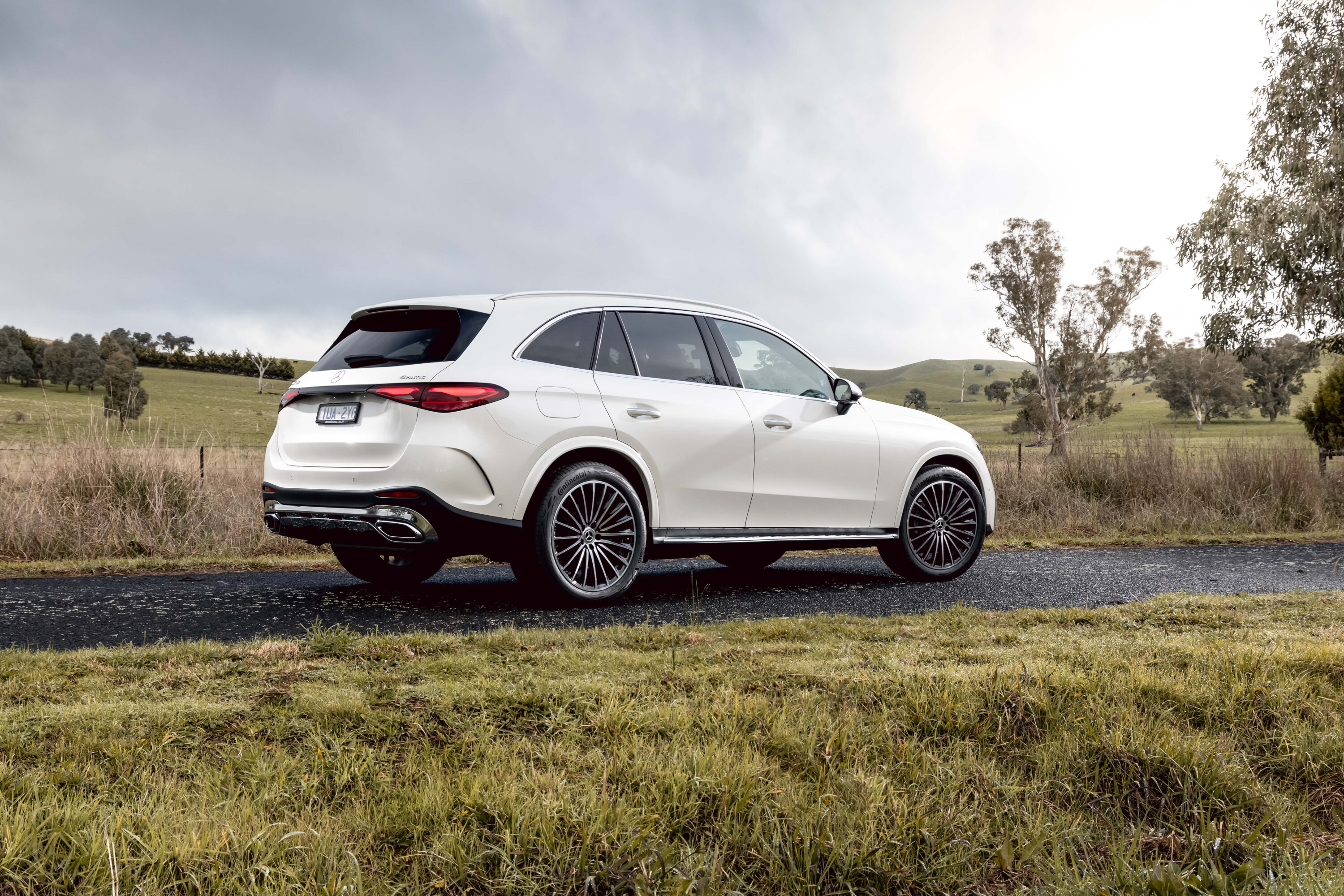
Previous-generation GLCs could judder and jolt over bumps but this new model is noticeably more compliant despite large 20-inch alloys. Australia takes the softer ‘Comfort’ setting for the GLC’s passive suspension as standard and the upshot is a ride that feels pillowy and compliant at urban speeds.
The cabin is quieter than the old GLC, too. In city traffic, the new GLC verges on serene and it does an impressive job of filtering out unwanted road and tyre noise.

1
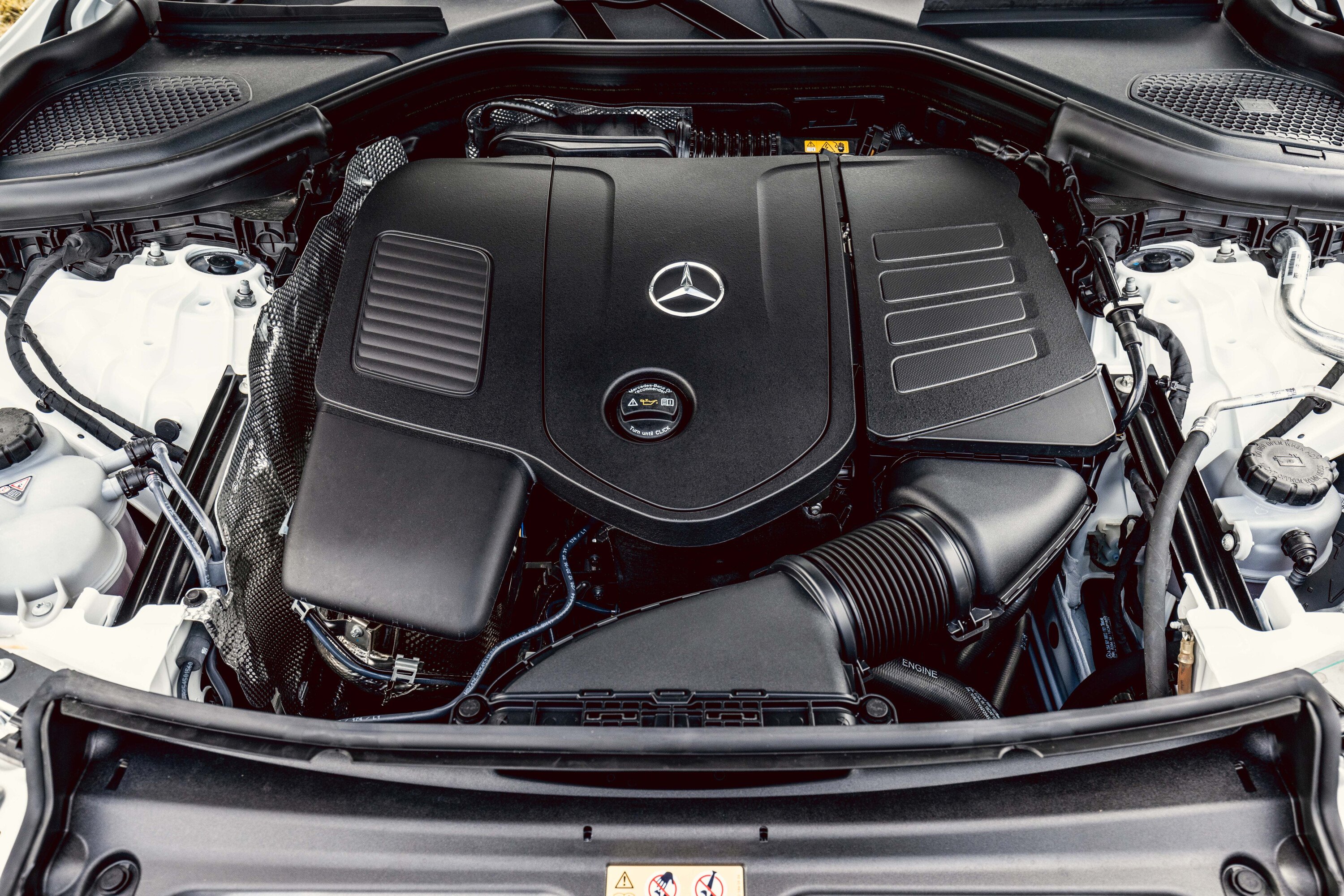
The 2.0-litre turbo engine is also suitably refined and responsive. The core unit itself is largely carried over from the previous GLC 300 but there have been a host of changes to its internals to improve efficiency and response.
And the big news is the addition of a 48-volt sub-system with an integrated starter generator (ISG). Capable of adding 17kW/200Nm for short bursts, the ISG doesn’t only aid performance but also allows the GLC to coast in silence in certain situations, which aids efficiency.
It also helps to deliver a remarkably smooth driving experience. Paired with a nine-speed automatic, the ISG banishes the clunkiness you get with some idle-stop systems and also aids driveability as you accelerate from a standstill by providing instant electric response low in the rev range.
1
Things are equally positive on the open road. Highway refinement is a highlight.
The transmission is commendably smooth on the move, too. Ratios are sifted through almost imperceptibly in traffic and there are no harsh downshifts or jolts as you cruise to a stop, which can sometimes be the case with Mercedes automatics or 48-volt systems that rely on belt-driven generators.
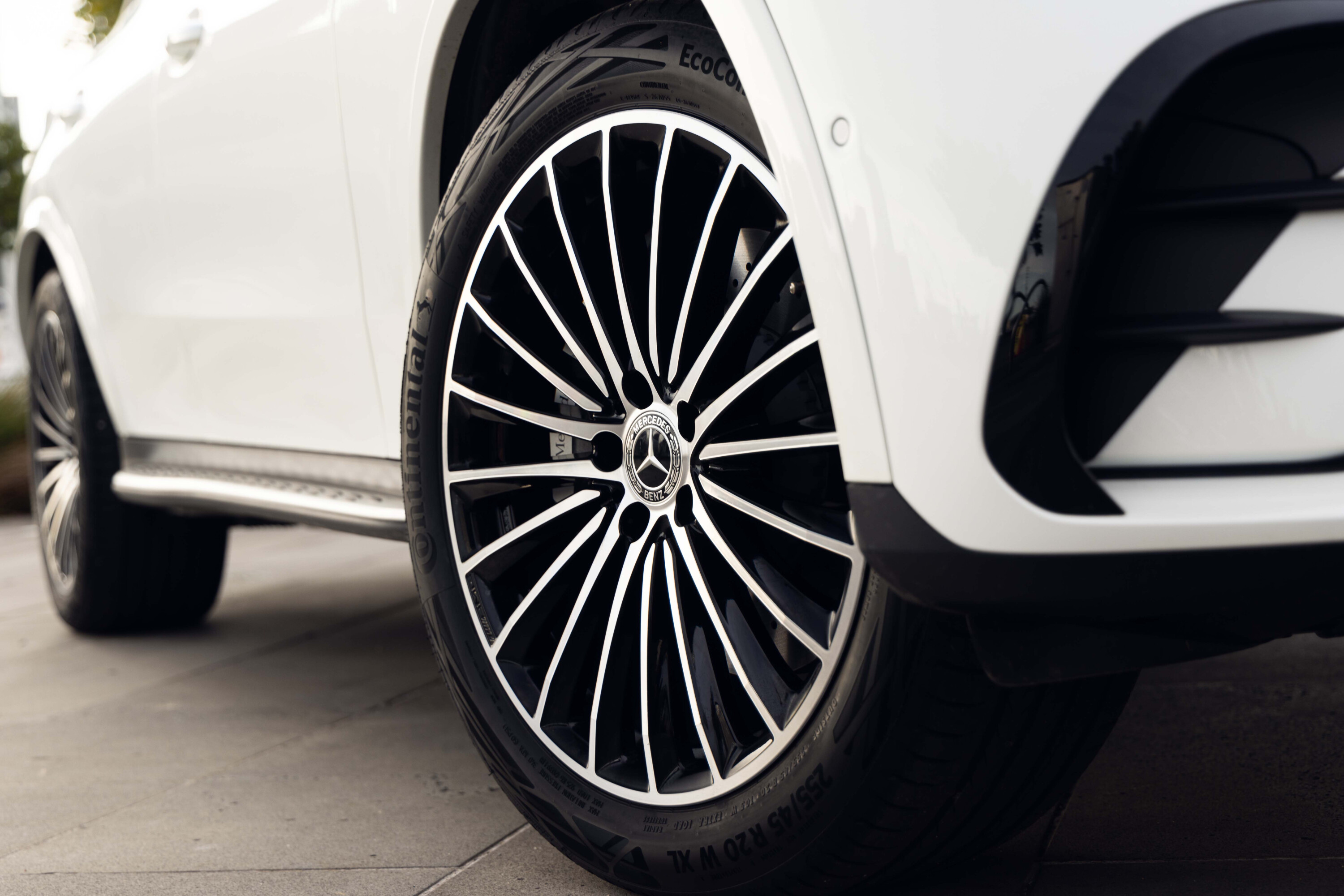
Similarly positive news comes from the open road. Highway refinement is a highlight and while there is some noticeable tyre roar on coarse-chip surfaces – blame the huge 20-inch alloys wrapped in fat Continental rubber measuring 255/45 R20 up front and 285/40 R20 out back – the GLC’s cabin is hushed.
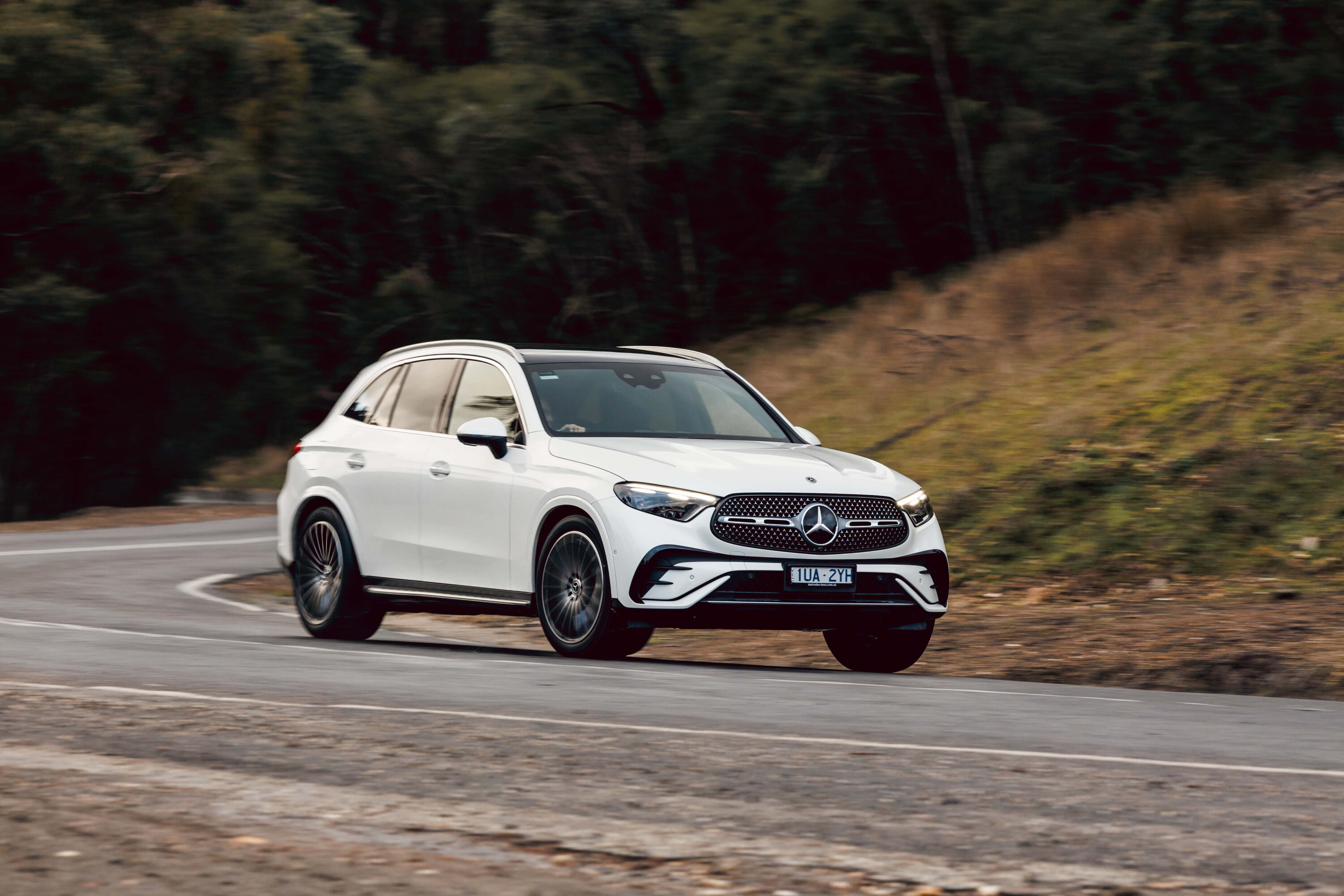
The usual trade-off to such a strong focus on comfort is wallowy handling when things get twisty, but again the GLC impresses. On demanding roads the GLC is surprisingly engaging.
1
The steering is relatively quick at 2.2 turns lock-to-lock and while it lacks feel, it’s also meatily weighted in Sport mode and it’s unwaveringly accurate, giving you the confidence to hurl the GLC about.
Even on really poor roads, the rack is also wonderfully free of corruption or kickback.
The GLC isn’t what you’d call nimble, mind, and there is a fair degree of body roll to contend with but there’s also plenty of grip and we’d wager the compromise between compliance and control is almost ideal for a family SUV.
Is it as sharp and as engaging as a BMW X3? Probably not but keen drivers aren’t going to be disappointed either.
1
The 2.0L turbo engine is a willing companion, too.
Fizzy and responsive, it even sounds okay high in the rev range. And in Sport mode, the nine-speed auto does such a commendable job of keeping the engine in its sweet spot between 3000-5000rpm that we didn’t once feel the need to use the shift paddles.
Perhaps the weakest dynamics link is the brakes. Aussie cars score an upgraded braking system that includes ventilated discs and while the stopping performance is reassuring initially, we did encounter some brake fade during an extended stint of hard driving. But that’s to be expected in an SUV weighing 2000kg.
Still, it’s clear that the new GLC is a better family SUV to drive. Smoother, quieter and more comfortable at urban speeds, it’s also capable and quick on a twisty back road.
We can’t wait to try the upcoming GLC 43 and GLC 63 AMG variants…
1
- What is a Powertrain or Drivetrain?
- Power vs torque
- Car suspension explained
- Automatic transmissions (‘gearboxes’) explained
- Chassis control systems explained
- Car vs Ute vs SUV: How the vehicle you buy should guide the way you drive
Big SUV plus small engine usually equals high fuel bills yet the GLC was impressively efficient during our time behind the wheel.
Officially, Mercedes says the GLC should consume 7.7L/100km of premium unleaded on the combined cycle and our ‘as tested’ fuel figure was pretty close to that. Over a 280km test loop, which took in a mix of urban, freeway and twisty back road driving, we returned a consumption figure of 8.2L/100km. Not bad.
As for other running costs, the GLC’s service intervals are commendably long at every 12 months or 25,000km. Servicing costs are on the high side, but Mercedes does offer capped price servicing package for three years ($3200), four years ($4250) and five years ($6500).
1
How safe is the Mercedes-Benz GLC?
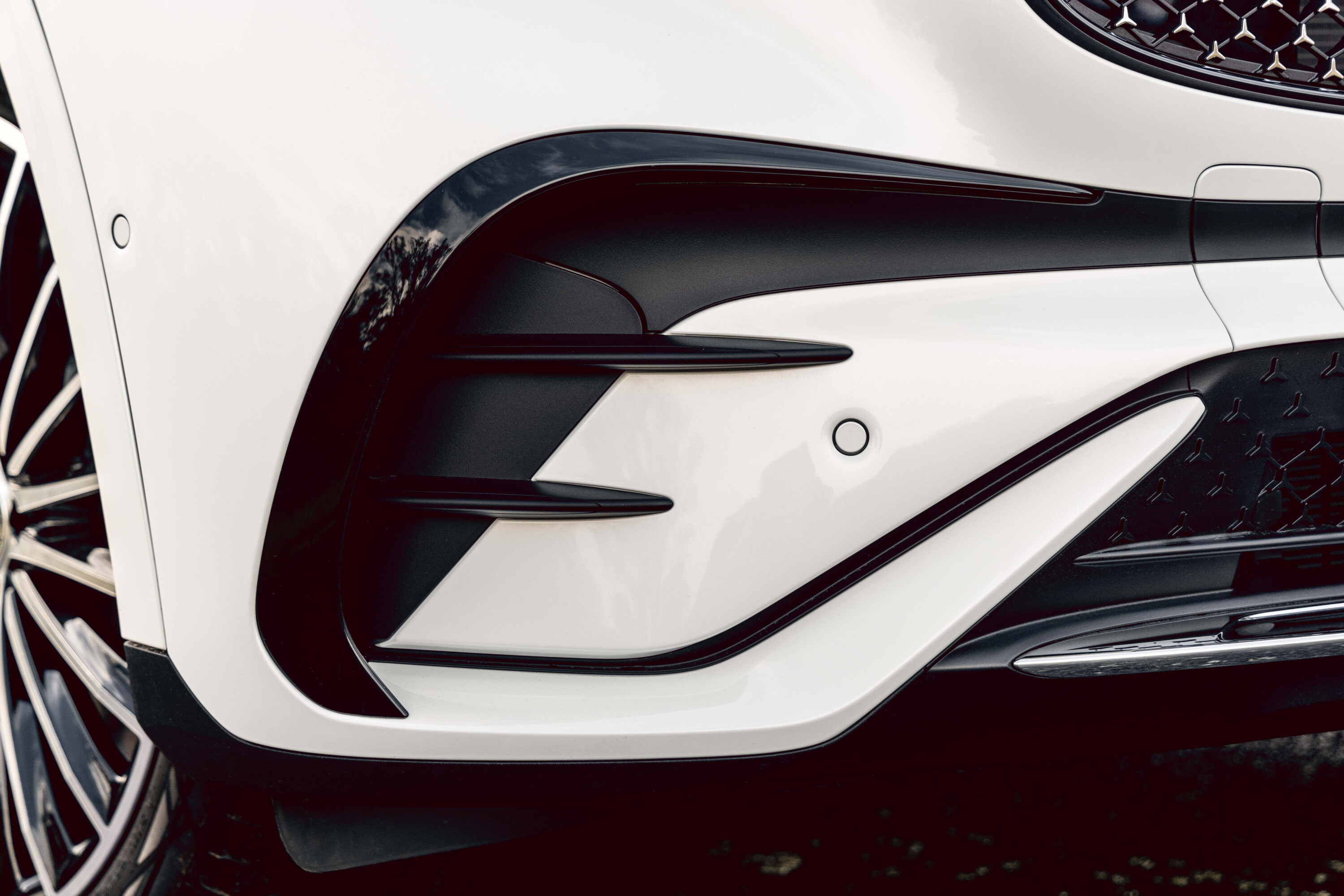
The Mercedes-Benz GLC was awarded a five-star rating by ANCAP in June 2023.
It scored highly for adult and child occupant protection (92 per cent for both categories), and also scored well for vulnerable road users (74 per cent) and for the efficacy of its safety assist systems (84 per cent).
Full points were also given for the protection of the driver and child occupants in the side impact test.
1
ANCAP did note a few areas of concern, however. A ‘weak’ score for the driver protection in the oblique pole test was recorded and ANCAP was also concerned about the GLC’s propensity to cause serious pelvic injuries in pedestrians, giving it a poor impact rating and nil score for that criteria.
The GLC’s safety suite includes 10 airbags, autonomous emergency braking (AEB), lane-keep assist, adaptive cruise control, blind-spot monitoring, speed sign recognition, tyre pressure monitoring, a 360 surround view camera and parking sensors.
1
VERDICT
So has Mercedes nailed its second shot at its most important model?
A definitive call will have to wait until we compare it directly with key competitors but it’s obvious that Merc’s mid-sizer is a sizeable improvement over its popular predecessor.
It’s now quieter, more premium inside and importantly, it’s better to drive. And while prices have crept north, the corresponding lift in quality and equipment means it doesn’t feel like a gouge.
We’re tipping it’ll sell like hot cakes.
1
MORE
Midsize SUVs
New recall notices have been issued, affecting Hyundai, Ford and Alfa Romeo vehicles.
The details of each recall, as published, are posted below.
1
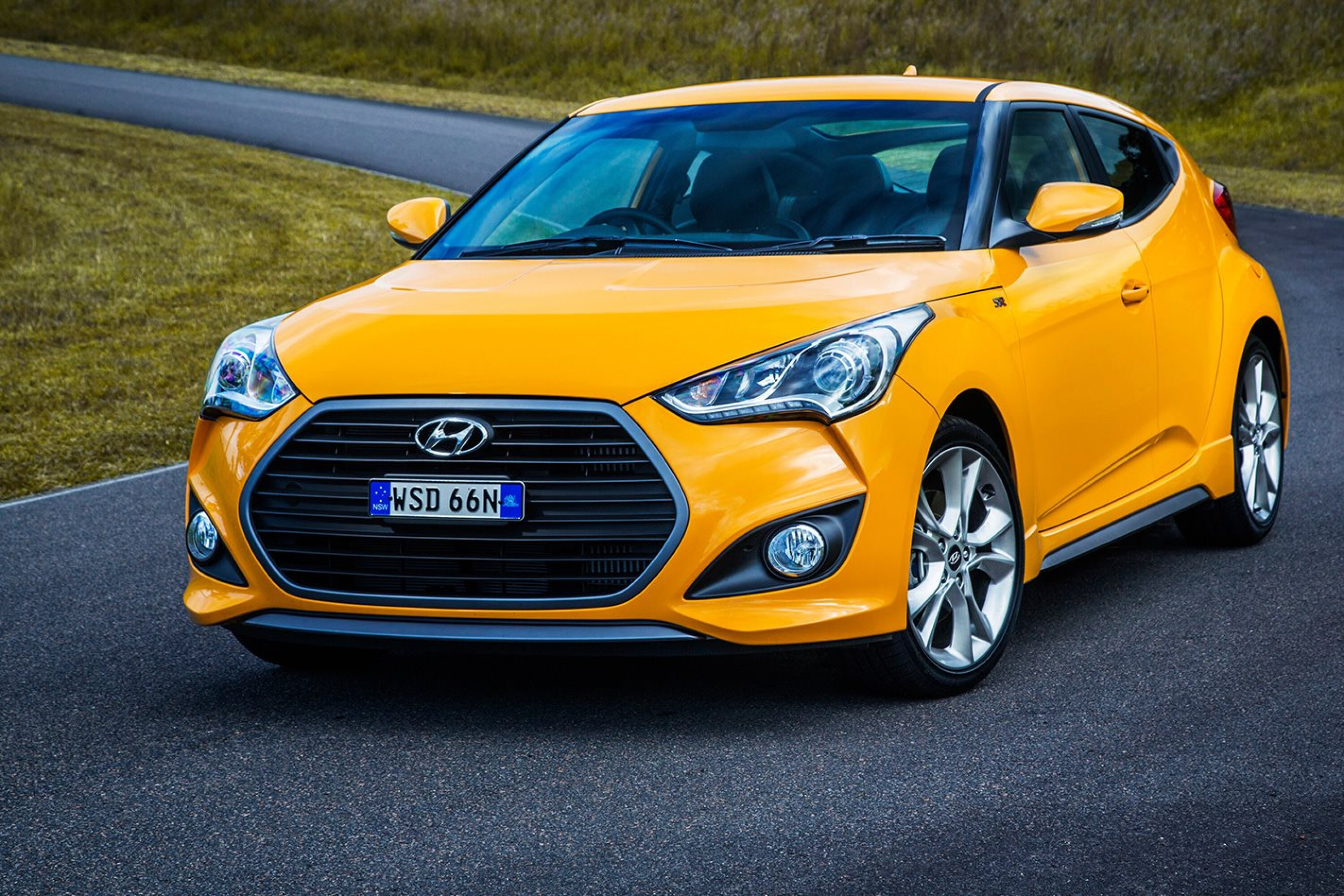
Recall: 2014-17 Hyundai Tucson, Veloster
- Recall number: REC-005722
- Campaign number: 21D150
- Original published date: 6 July 2023
- Year range: 2014 – 2017
- Affected units: 13,548
- List of affected VINs (.csv file) [↗]
- Variants: FS [Veloster] 1.6GDI, TL [Tucson 2.0MPI]
What are the defects?
Due to a manufacturing defect, the engine connecting rod bearing could fail prematurely causing engine damage. If this occurs, engine oil may leak in the presence of an ignition source resulting in a vehicle fire.
What are the hazards?
A vehicle fire could increase the risk of injury or death to vehicle occupants, other road users, bystanders and/or damage to property.
What should consumers do?
Note – If the vehicle’s engine exhibits an unusual noise or generates smoke, or if your vehicle’s instrument cluster displays an engine warning light, drivers should stop the vehicle where is safe to do so, turn off the ignition, evacuate the vehicle and contact their nearest Hyundai dealer immediately.
Owners of affected vehicles can contact their preferred authorised Hyundai dealer to have the work carried out as soon as possible, free of charge.
Supplier details
Hyundai Motor Company
Who should owners/operators contact for more information?
Hyundai Customer Care
- Contact phone: 1800 186 306
- Contact website: www.hyundai.com/au/en/owning/safety-recalls [↗]
\n
1
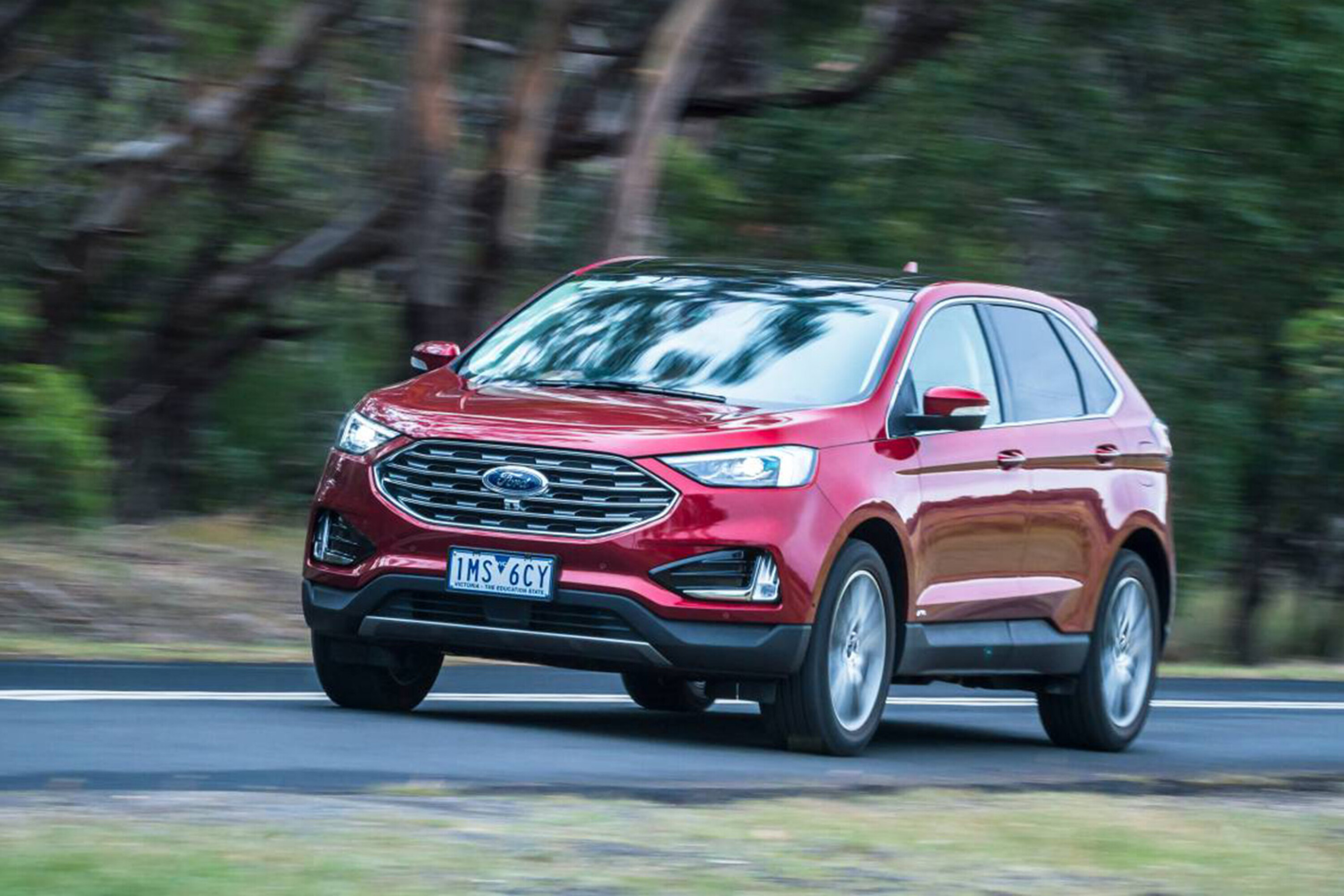
Recall: 2018 Ford Endura
- Recall number: REC-005719
- Campaign number: 23S12
- Original published date: 6 July 2023
- Year range: 2018
- Affected units: 1811
- List of affected VINs (.csv file) [↗]
What are the defects?
Due to a manufacturing defect, brake fluid may leak from the front brake flexible hoses. This could cause the brake fluid warning light to illuminate and may result in reduced braking efficiency.
What are the hazards?
Reduced brake efficiency could increase the risk of an accident and injury or death to vehicle occupants or other road users.
What should consumers do?
Ford will contact affected owners requesting that owners make an appointment at their preferred Ford Authorised Dealership for inspection and repair, free of charge.
For further information, contact any authorised Ford Dealer or Ford’s Customer Relationship Centre on 13 FORD (13 36 73).
Supplier details
FORD MOTOR COMPANY OF AUSTRALIA PTY LTD
Who should owners/operators contact for more information?
Ford’s Customer Relationship Centre
- Contact phone: 13 36 73
1
- Contact phone: 13 36 73
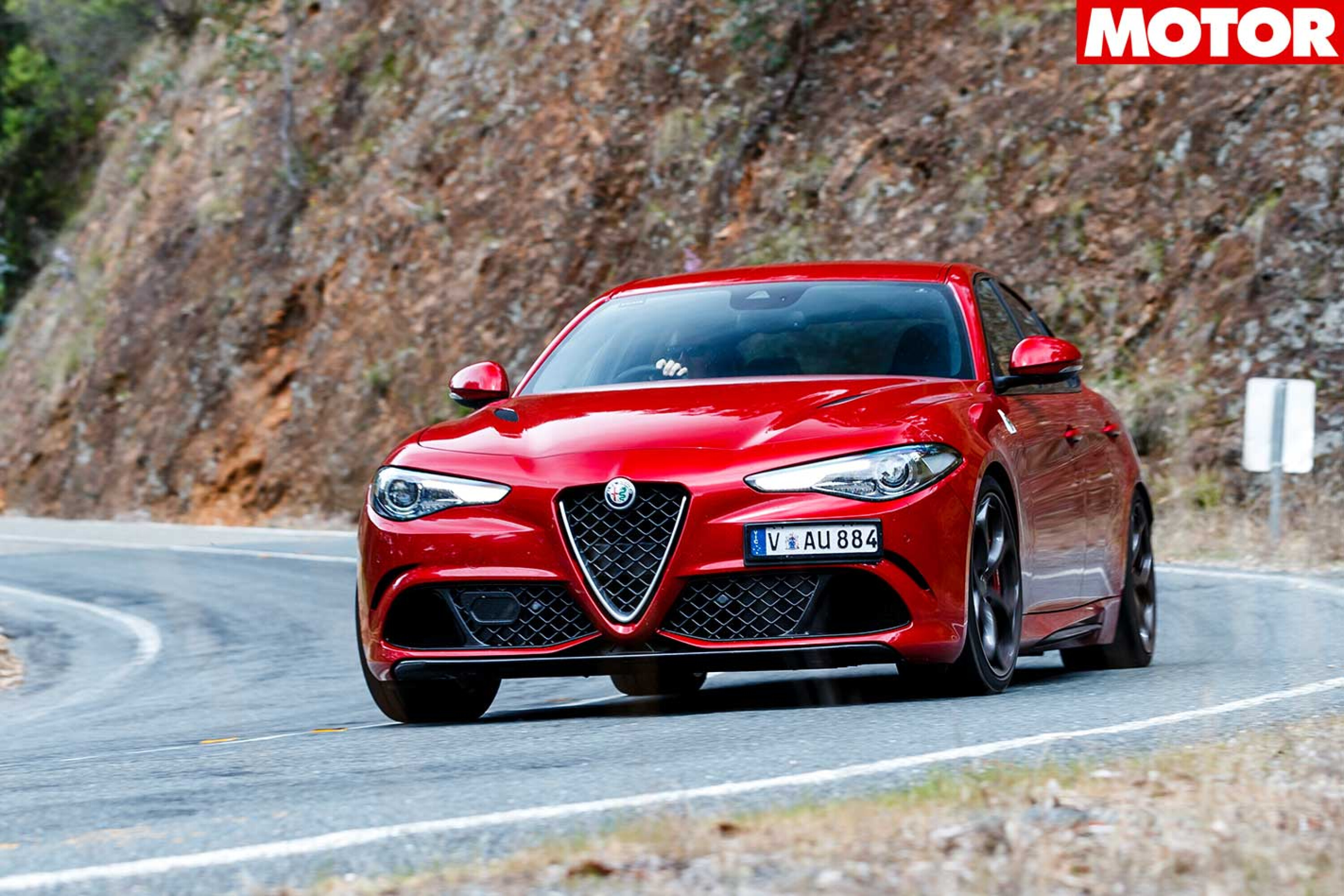
Recall: 2016-20 Alfa Romeo Giulia, Stelvio Quadrifoglio
- Recall number: REC-005707
- Campaign number: 6637
- Original published date: 10 July 2023
- Year range: 2016 – 2020
- Affected units: 27
- List of affected VINs (.csv file) [↗]
- Variants: Quadrifoglio
What are the defects?
Vehicles equipped with carbon ceramic-matrix brakes have an independent electronic parking brake with a roll away prevention feature that can put excessive pressure on the brake rotor in extreme circumstances. This could result in an unexpected reduction of braking performance.
What are the hazards?
An unexpected reduction in braking performance may lead to an accident causing injury to vehicle occupants and/or other road users.
What should consumers do?
Owners of affected vehicles can contact their nearest authorised Alfa Romeo Dealer to have the vehicle software updated, free of charge.
Supplier details
FCA AUSTRALIA PTY LTD
Who should owners/operators contact for more information?
Stellantis Australia
- Contact phone: 1800 075 397
- Contact email: [email protected] [↗]
- Contact website: www.alfaromeo.com.au [↗]
\n
More links to help you with your car recall
- What is a recall?
- What to do if your car is recalled
- Why a car recall isn’t all bad news
- What is a vehicle identification number (VIN)?
- All ANCAP & vehicle safety stories
Ford of Europe has teased a rugged, off-road capable Ford Mustang Mach-E electric SUV ahead of a full reveal on Friday.
Snapshot
- Teaser suggests sporty off-road Mach-E coming
- Off-road tyres, unique grille hinted
- Full reveal at Goodwood Festival of Speed
The 35-second video suggests it’ll feature off-road tyres, a grey grille and – possibly – a taller ride height.
It also depicts the electric SUV with a orange, red and purple wrap, so it’s unclear whether it is just a one-off prototype or a permanent addition to the range – although the video indicates it’ll join the existing line-up.
“… synonymous with freedom and performance…”
Ford of Europe’s website states: “An exciting new member of the Mustang stable that is synonymous with freedom and performance is unveiled for a first look on July 14.”
The off-roading Mustang Mach-E will be unveiled at the Goodwood Festival of Speed on Friday.
Other electric models are also set to be revealed in full or at least teased at the annual event, including the Renault 5 retro EV revival, hotted-up Hyundai Ioniq 5 N, and flagship MG Cyberster convertible.
The Ford Mustang Mach-E electric SUV is expected to launch late this year, as a pricier alternative to the Tesla Model Y and Kia EV6, starting from $79,990 before on-road costs.
MORE
Electric Cars
More EV stories to help you choose the best car for your needs
- ? EV news, reviews, advice & guides
- ❓ Short & sweet: Your EV questions answered
- ⚡ New EVs: Everything coming to Australia
- ? Australia’s EVs with the longest driving range
- ⚖️ Best-value EVs by driving range
- ? How much do EVs cost in Australia?
- ? How much more expensive are EVs?
- ⚖️ Number crunching: Is it time to switch to an EV?
- ♻ Should you buy a used EV?
- ?️ Are EVs more expensive to insure?
- ? Costs compared: Charging an EV vs fueling a car
- ? EV charging guide
- ? Are there enough EV chargers in Oz?
- ?? EV servicing explained
- ? EV battery types explained
- ? When do EV batteries need replacing?
- ? Hydrogen v EVs: What’s best for Oz?
- ? How sustainable are EVs, really?
MORE advice stories to help you with buying and owning a car
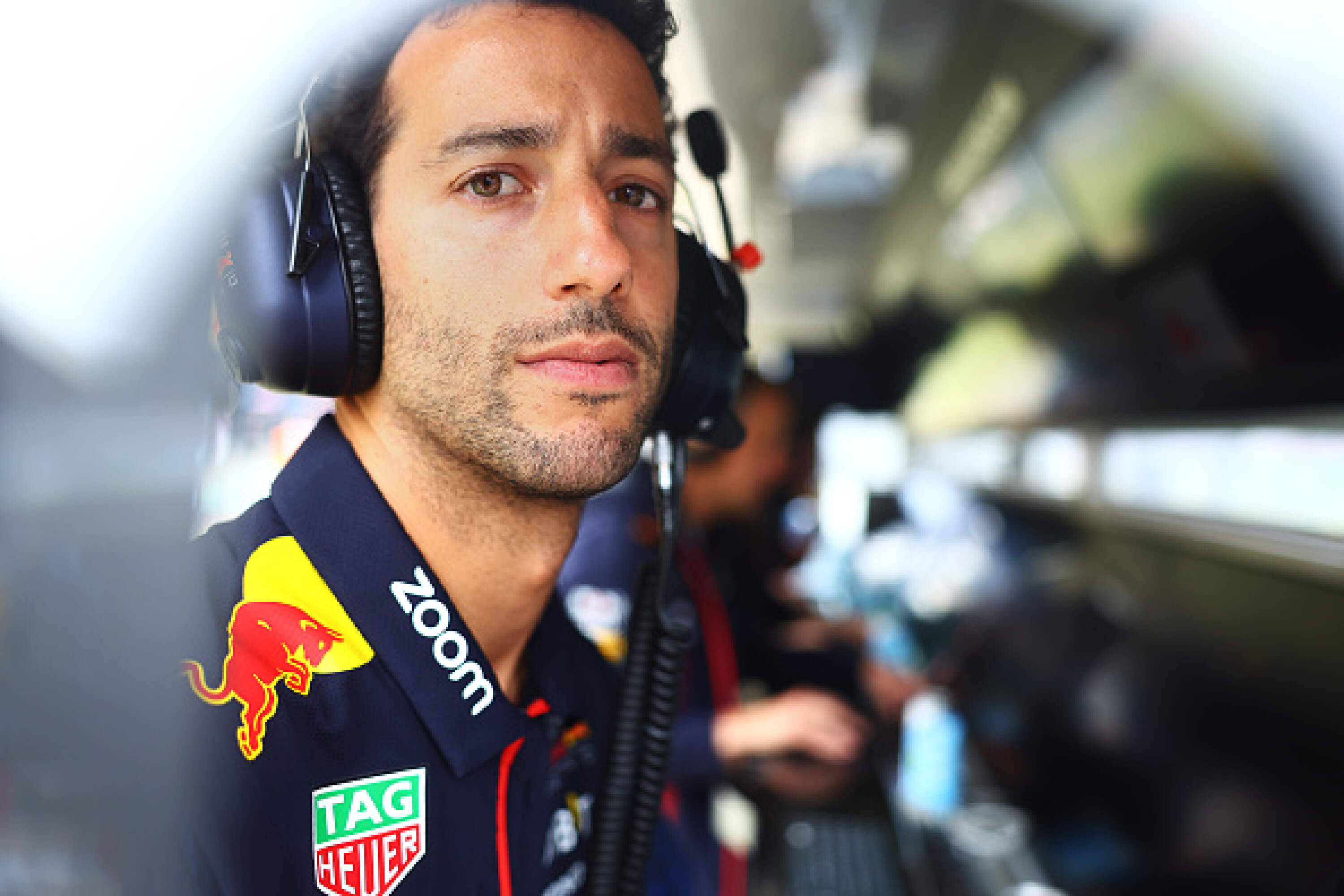
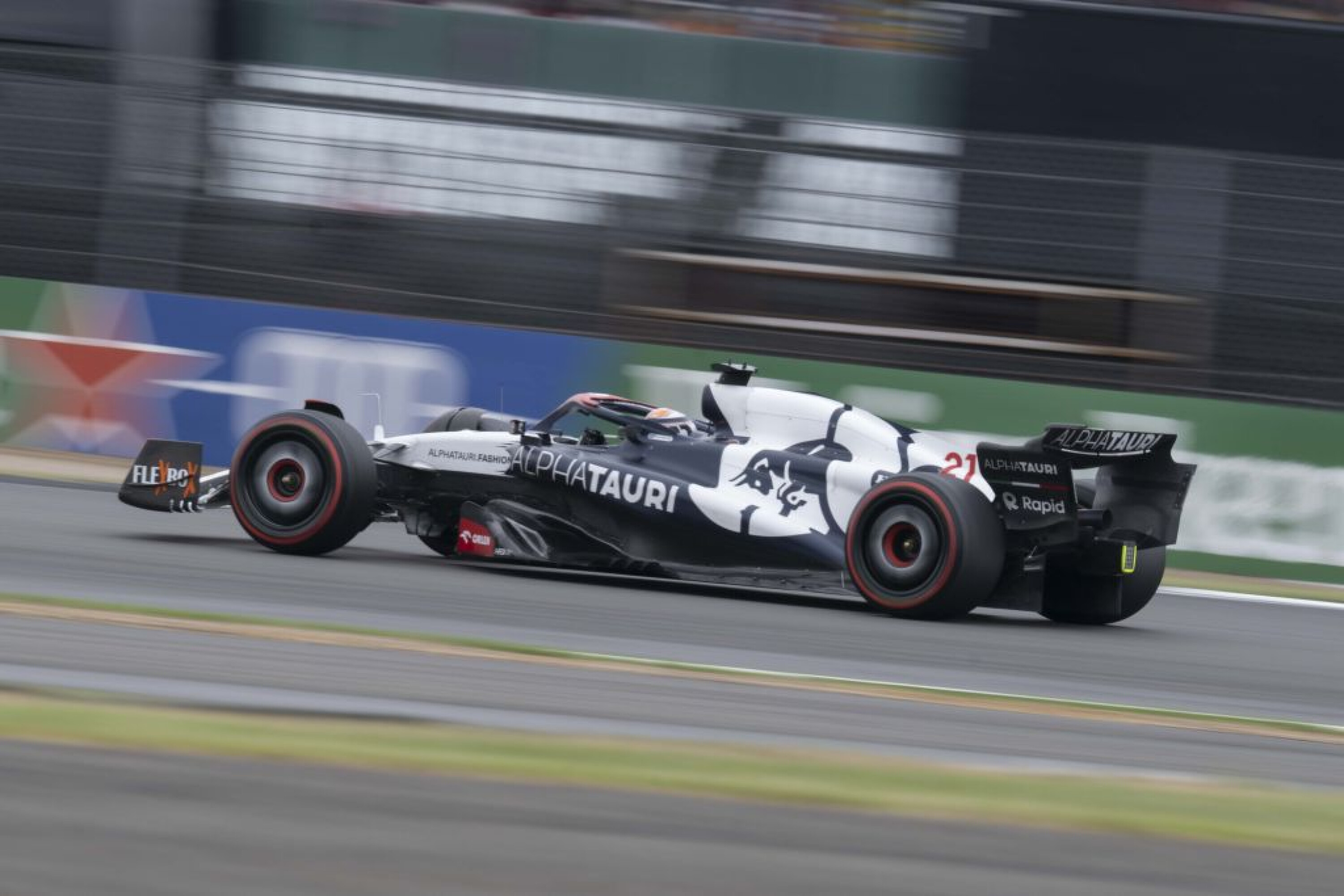
Daniel Ricciardo’s reincarnation as a Formula 1 driver has taken an important step forward, with the Western Australian announced as a mid-season replacement for the struggling Dutchman debutante Nyck de Vries at Red Bull’s satellite team AlphaTauri.
He’ll make his return at the next round of the championship in Hungary on July 22, where he claimed his second-ever win in – ironically – a Red Bull in 2014.
It’s a homecoming of sorts for Ricciardo, who raced for the Italian-based team when it was known as Toro Rosso back in 2012/13.
https://www.instagram.com/p/Cuj41vGI7e_/
The F1 call-up comes at a crucial time for the 34-year-old, as well. He’s made no secret of the fact that he wants to return to top-flight competition after being unceremoniously dumped by McLaren for rising star and fellow Aussie Oscar Piastri for 2023.
After accepting a US$20 million golden parachute from McLaren, Ricciardo joined Red Bull for this season as reserve driver, turning his first laps of the season in Max Verstappen’s car the day after the British Grand Prix as part of a Pirelli tyre test.
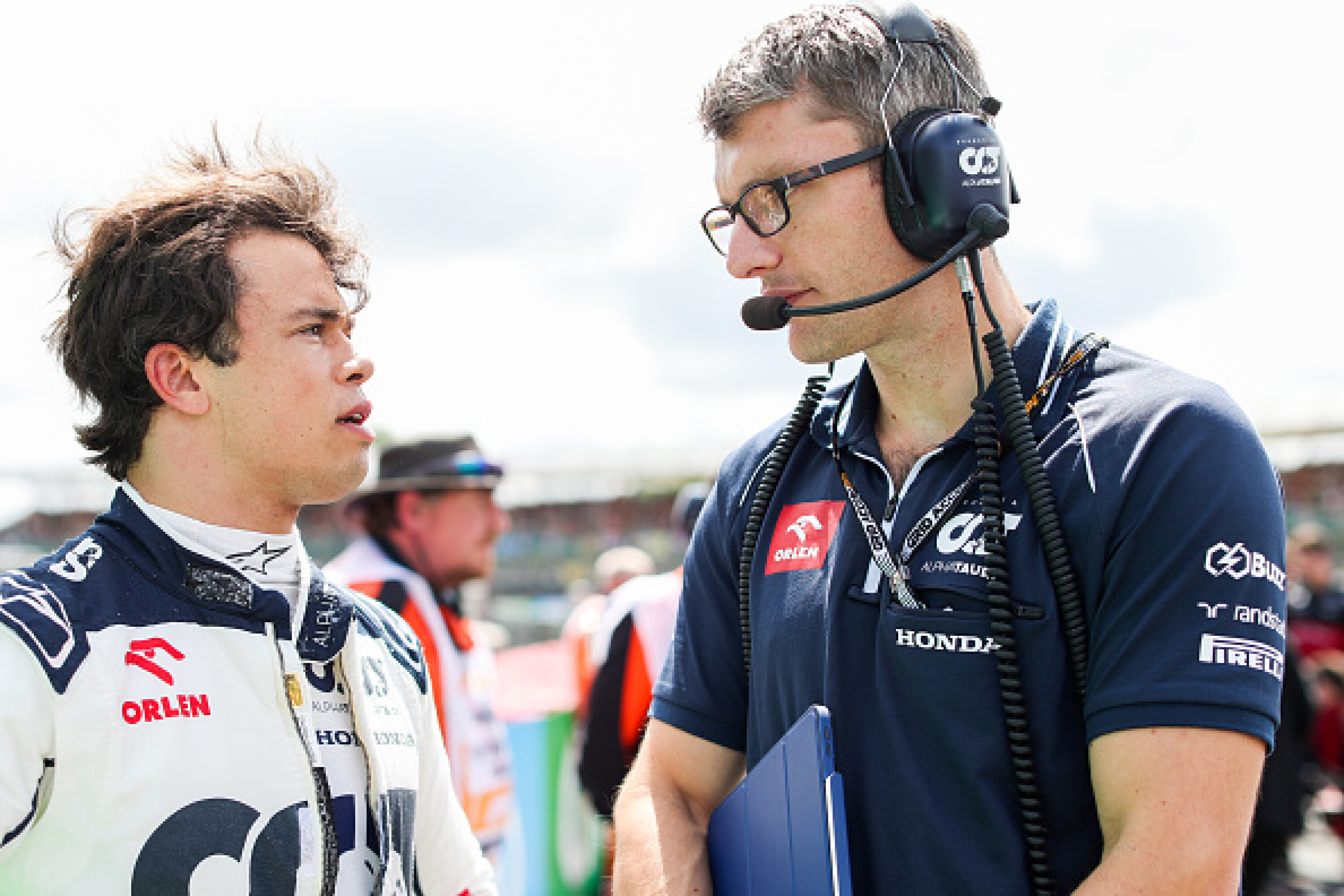
The axe swung quickly at AlphaTauri for the likable de Vries, who hasn’t been able to replicate the form that saw him bag a ninth place in his first grand prix last year as a substitute driver at Williams.
1
After ten races, the young Dutchman hasn’t scored a single point – though it has to be said that his more experienced teammate, Japan’s Yuki Sonoda, has only scored two for the underperforming team.
“I’m very pleased to welcome Daniel back into the team,” said AlphaTauri team principal Franz Tost.
“There’s no doubt about his driving skills, and he already knows many of us, so his integration will be easy and straightforward.”
1
Why has Daniel Ricciardo joined AlphaTauri?
Simple; he wants a shot at a Red Bull seat in 2024.
There are signs of unrest in the Red Bull camp, despite its all-conquering run of race wins this year and 11 on the trot for the team.
Mexico’s Sergio Perez has won two races to Verstappen’s seven, but some rancour at Austria in particular, where the two clashed on track in the sprint race, points to an unhappy team dynamic.
The team’s championship is just as crucial to Red Bull as the driver’s title, and it’s clear to all that there’s trouble in the henhouse.
1
If Perez is walked at the end of the year, though, isn’t Ricciardo jumping right back into the conflagration that he left behind when he joined Renault in 2019?
In short, absolutely. Like him or loathe him, Verstappen is in the form of his life, and the team isn’t about to upset that momentum.
However, Ricciardo is in a different place these days, and the easy rapport between he and Verstappen at present is genuine, despite the friction felt only four years ago.
And if he can wind out of a stellar F1 career in the best car on the grid and the chance of the odd win when Verstappen stumbles, why the hell not?
1
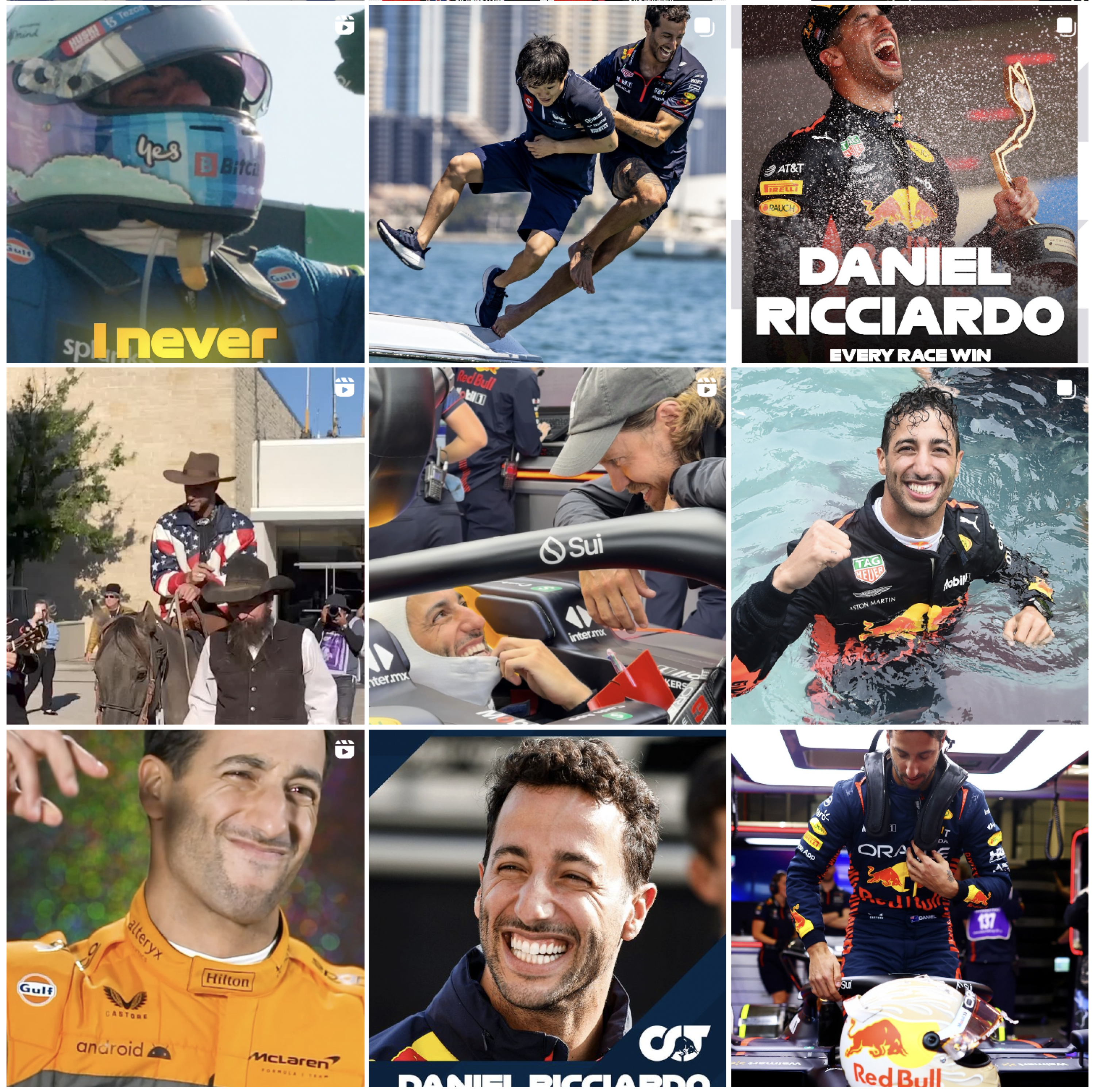
Ricciardo told US magazine The Athletic [↗] recently that the feeling of a comeback is “brewing” inside him.
“I’m trying to put myself in the mindset of, if I was competing, how would I feel? Where’s my energy at?” he said. “I want all those answers now so I can get into next year with a clear plan.
“I’m glad I’m not foaming at the mouth (at not being on the grid), because then I’d probably be questioning ‘shit, should I have taken the year off?’
“But it is brewing.”
It’s certainly the last chance corral for Ricciardo, and there’s no guarantee he’ll make the leap back into the Red Bull squad; despite the presence of the all-dominating Verstappen, the second Red Bull seat is one of the most coveted on the grid.
Open the 171st volume of Nature Journal, issue 4356, turn to page 737, and you’ll find an article called ‘Molecular Structure of Nucleic Acids: A Structure for Deoxyribose Nucleic Acid’.
It’s not very long, just 870 words minus attributions and cited references (you can see it here [↗]), yet within those paragraphs Francis Crick and James Watson tell us how life works. It’s their discovery of the double helix structure of DNA.
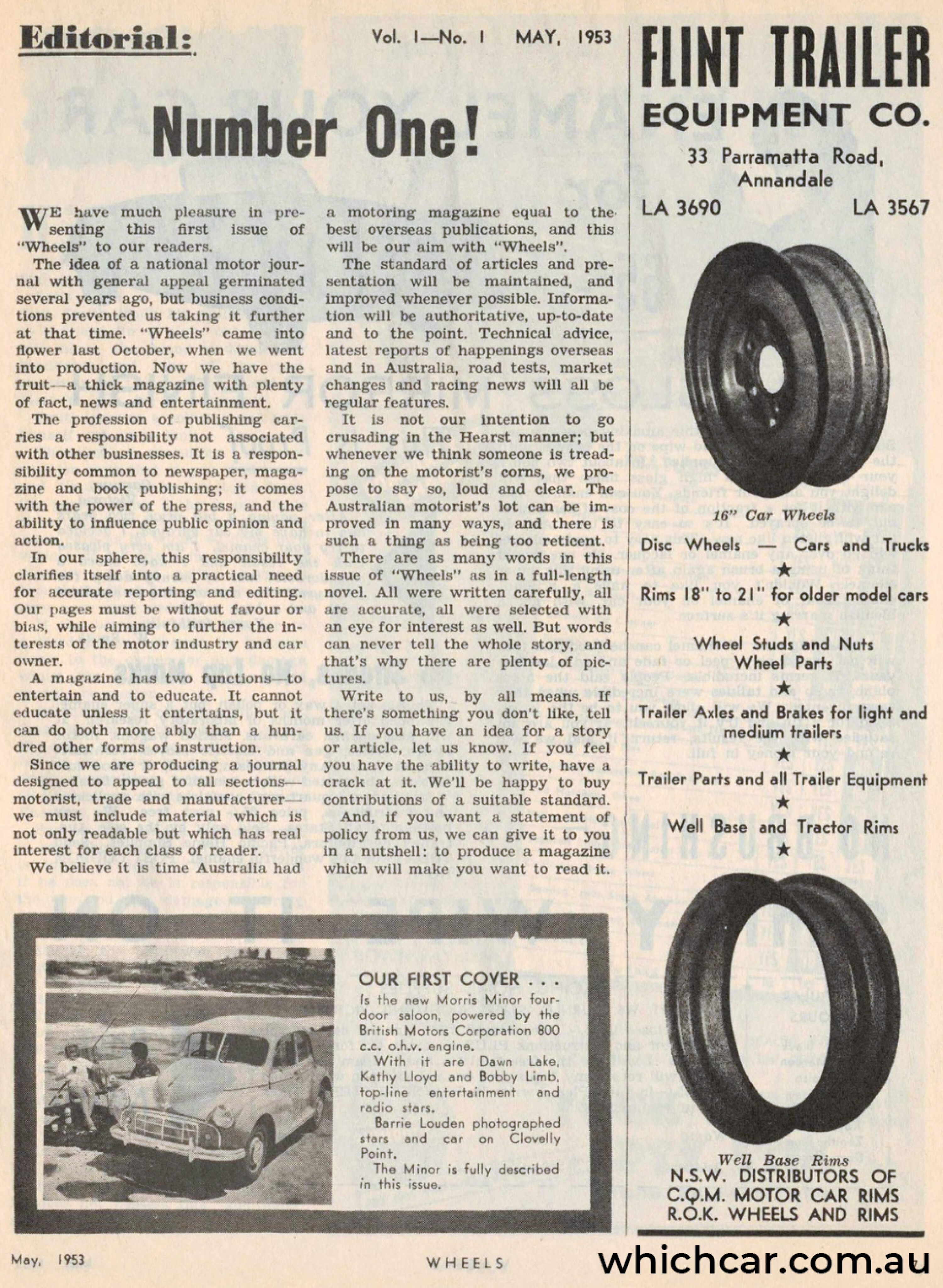
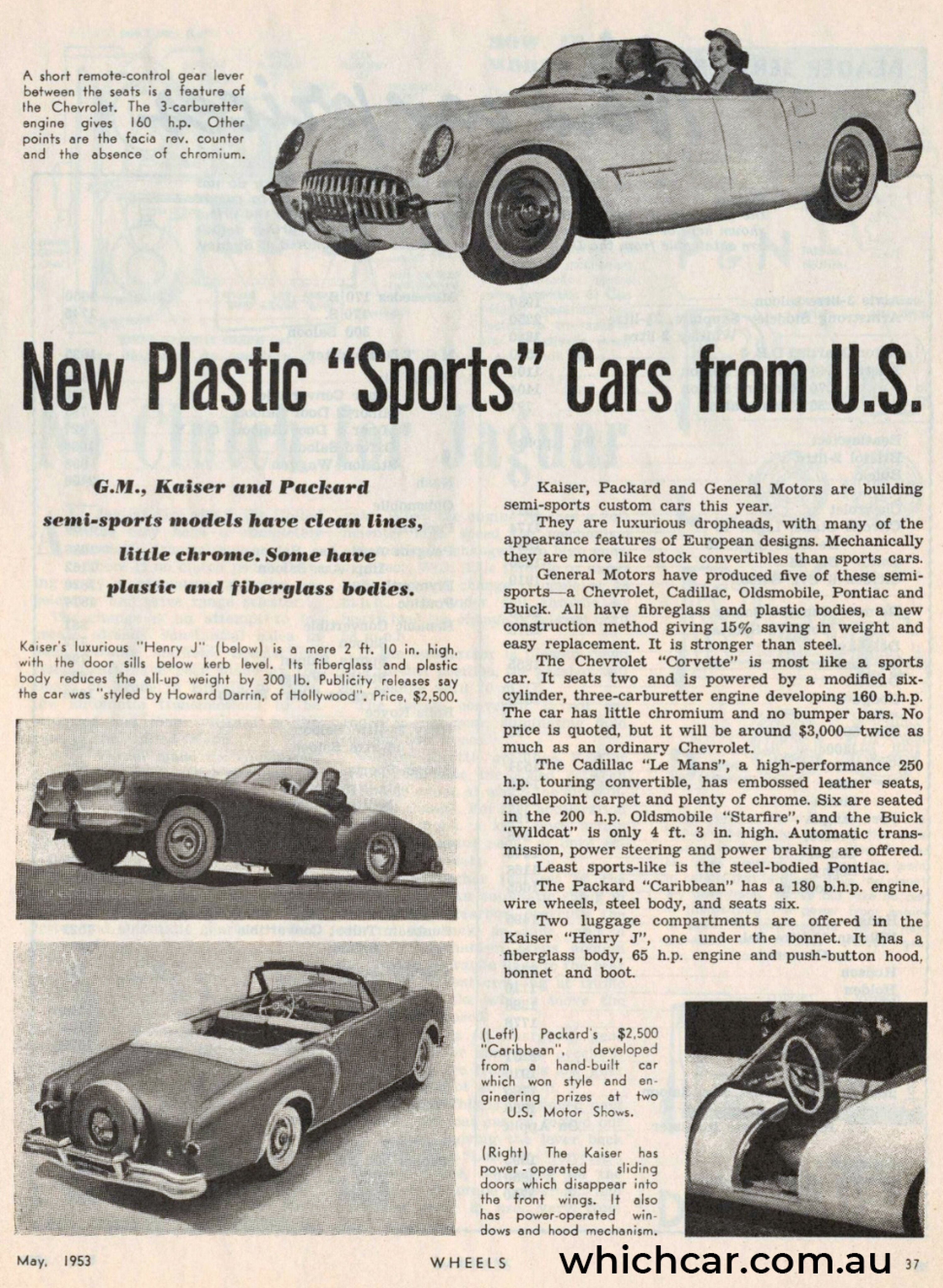
I write this in awe of their great leap of understanding, but also slightly dazed at the fact that Wheels magazine has been in existence longer than our understanding of the basic building blocks of life. When Athol Yeomans sent the first issue of Wheels to press in 1953, the magazine acidly reported on New Plastic ‘Sports’ Cars from U.S., including some contraption called the Chevrolet Corvette.
Top of story: The first issue of Wheels, and the first in our 70 Years trilogy. Click the image to see both covers in full.
1
The news section carried plans for a Redex trial across Australia and a new race track on Phillip Island, there were ads for Lucas batteries spruiking ‘utmost dependability’. Elsewhere, Major G.D. Mitchell gave caravanning advice.
“There is no need for more than a .22 if you are prepared to shoot only for the pot and don’t intend going for pigs, buffalo, scrub bulls or crocodiles,” he counselled. It’s fair to say we’ve come a very long way.
Had they required a break from the dry business of X-ray diffraction techniques, Crick and Watson could have browsed articles on how inadequate the Hume Highway between Melbourne and Sydney was, a primer on the basic principles of disc brakes or how to remove broken screws and taps, all of which stand up pretty well some 70 years later.
2
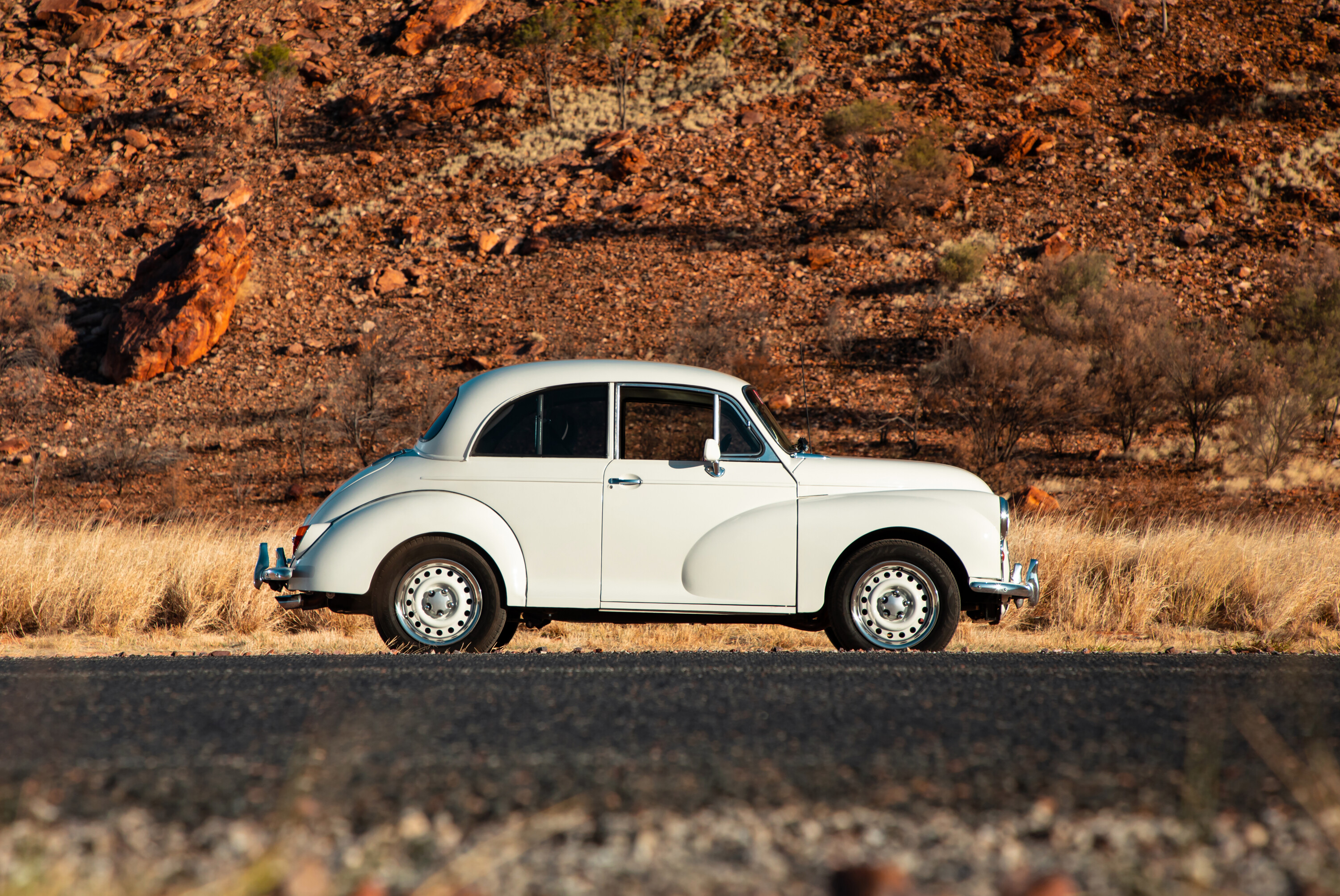
While they were peering under the bonnet of life, we were doing likewise with the new Morris Minor (lubrication by vane pump).
Sterling stuff, and to celebrate seven decades in print, we’re creating three special editions, themed on past, present and future. In this issue, we’ll set about naming the greatest cars of all time across seven key segments. Next month we’ll round up the cars that matter most today – those that are the very best of the current crop.
For the August issue we get the crystal balls out and plot a trendline towards the cars you’ll be driving in the next five to ten years.
As tongue-in-cheek as it may be to contrast our collection of automotive musings with one of the greatest scientific discoveries of all time, both curiously arrive at a similar point. Never before have we been doused in such a firehose of data. Indeed, without the means to convert it into relevant information it loses its meaning.
1
Contemporary science knows we have a tangle of 3.1 billion genetic base pairs within us, but only has a rudimentary grasp of how to apply that data.
Likewise, it’s never been more important to find a trusted voice in a saturated media landscape where any opinion claims validity if it attracts enough attention.
One thing that has never changed across seven decades is Wheels’ commitment to building that bond of trust with you, the reader, to filter the noise and deliver information you can rely upon, even if it was on what ammo is best for dispatching an ornery pig.
So while we can’t tell you how genes function, we know the building blocks of a great car back to front and inside out. Enjoy the issue.
Snapshot
- Vision of a potential future racing car
- Motorised side panels and air intakes open automatically
- Based on 488 GT3, Ferrari’s winningest racing car
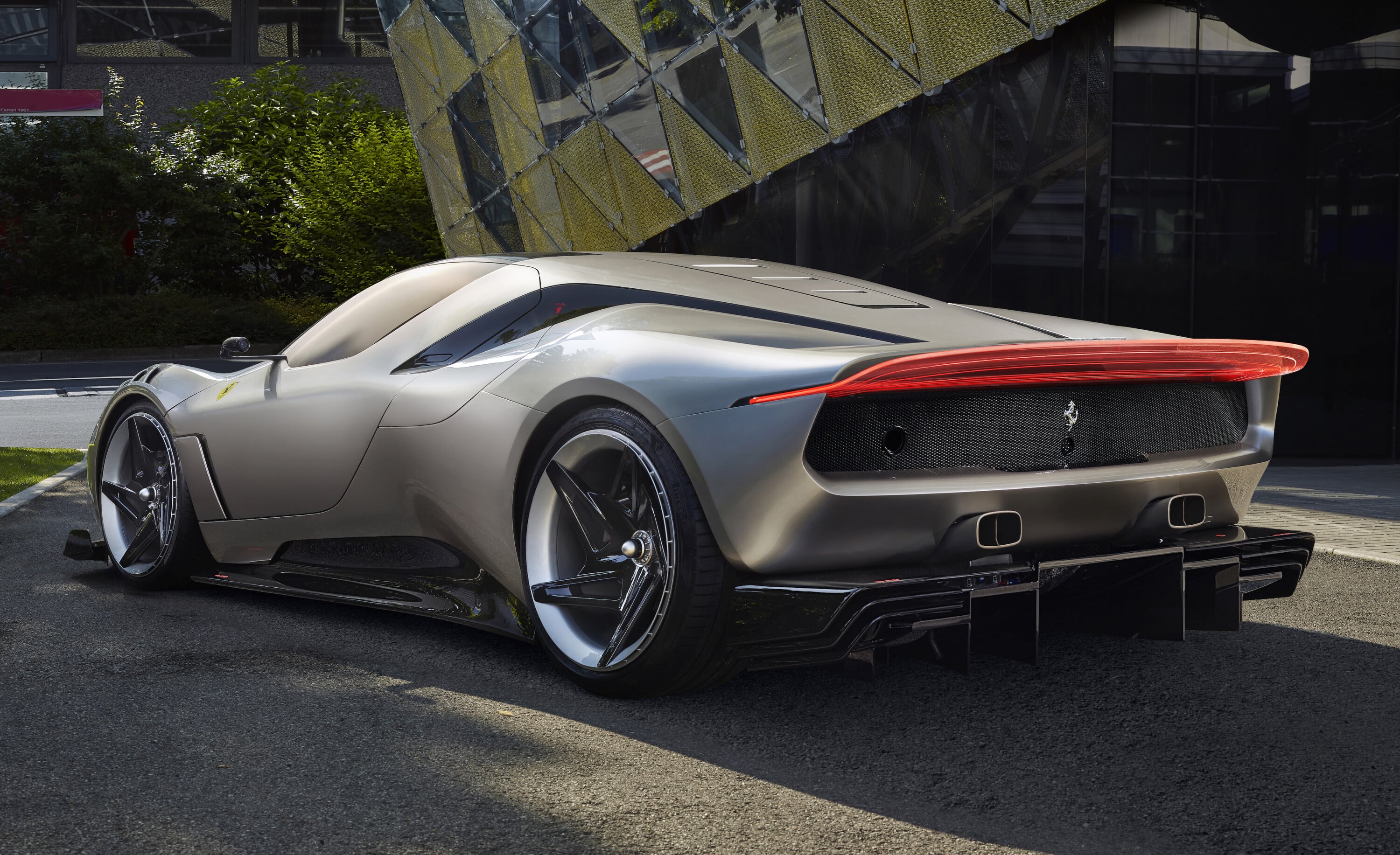
Ferrari’s Special Projects division has unveiled its latest unique Prancing Horse – a futuristic, dual-configuration supercar for the “ultimate private customer”.
The Ferrari KC23 is based on the Italian marque’s most successful racing car, the 488 GT3 Evo 2020, but is designed as a “non-competitive” car that can be either elegant show car or aggressive track car for the “very imaginative, passionate and exacting customer” who commissioned the vehicle.
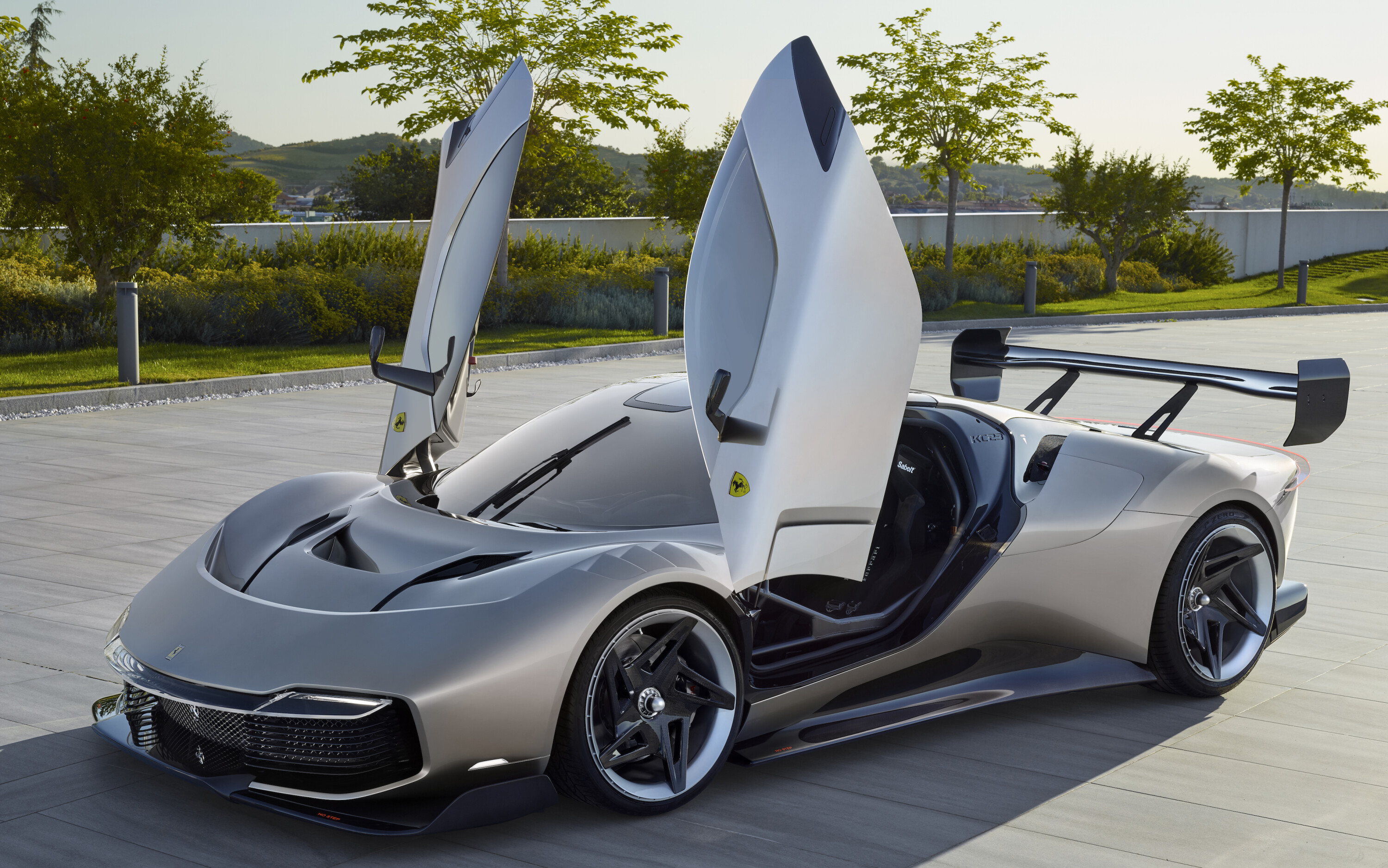
For static displays, the KC23 features a sleek and clean look and sits on either 21-inch or 22-inch wheels. For private track use, the non-road-legal Ferrari can adopt a GT3-style rear wing for extra downforce and uses smaller, 18-inch wheels.
1
The striking body also features moveable aerodynamic aids that open automatically when the KC23’s twin-turbo V8 is fired up. A motorised panel behind the front wheels opens to create a fence for enhancing front downforce; a panel behind the LaFerrari-style butterfly doors opens to feed air to the mid-rear-mounted engine, intercoolers, and auxiliary components.
Designed by the Ferrari Styling Centre headed by Flavio Manzoni, the KC23’s paint job is also special – a four-layer ‘Gold Mercury’ aluminium livery infused with liquid metal and designed to change colour in varying light.
Ferrari says the headlights are inspired by its 2023 Le Mans-winning 499P endurance race car, while the rear ‘light blade’ is a nod to the company’s Vision Gran Turismo racer concept.
1
The slippery silhouette isn’t spoiled by ungainly side mirrors, either – instead featuring slim, compact cameras that feed an internal multi-screen video system that aids all-round vision.
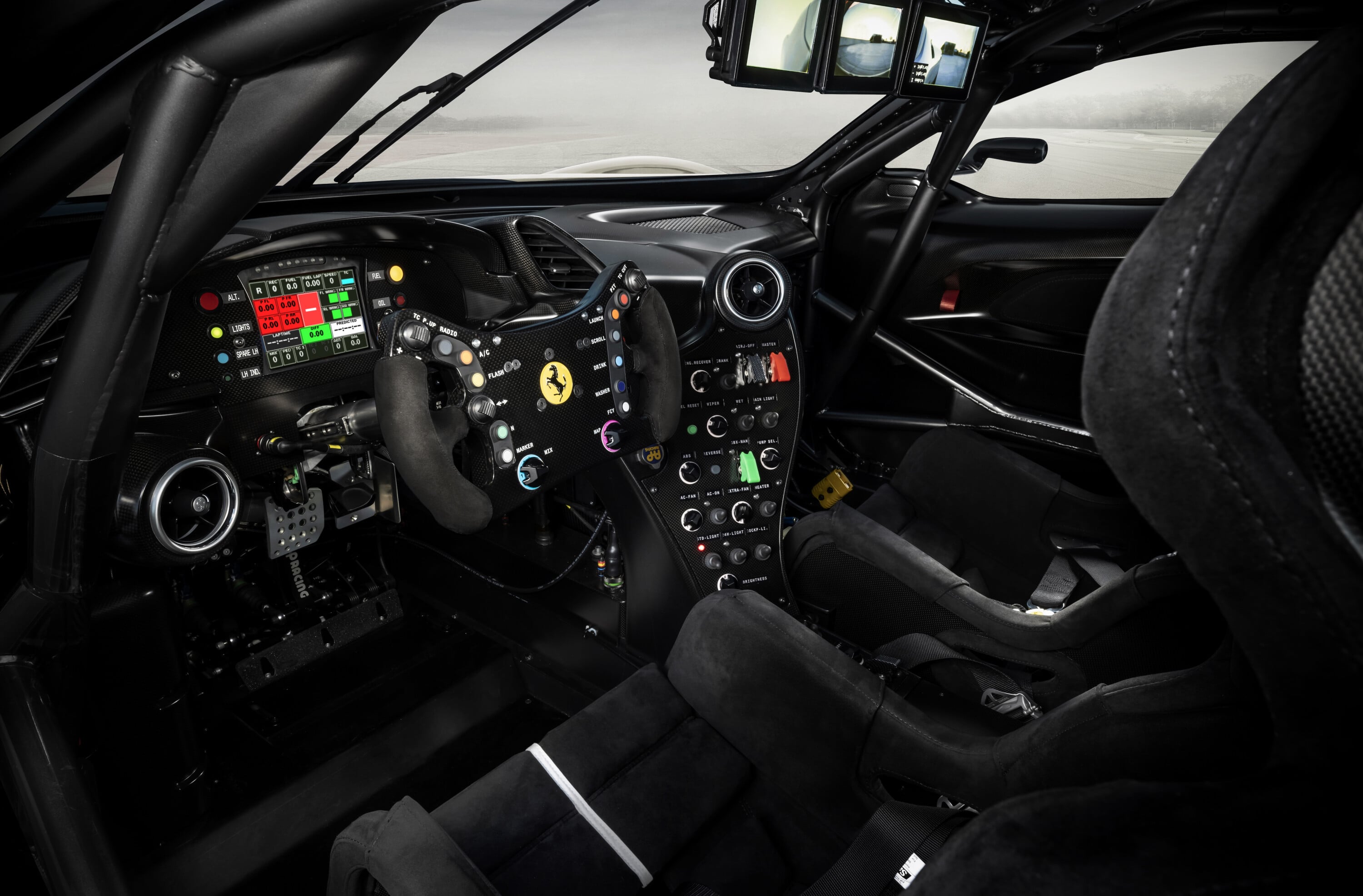
The KC23’s cabin is otherwise faithful to the 488 GT3’s stripped-back interior, complete with full rollcage, motorsport-style yoke steering wheel, and (custom, Alcantara-clad) bucket seats.
Ferrari’s 488 GT3 is its most successful motorsport contender, having clocked up 530 victories and 119 titles.
1
The Evo 2020 iteration was introduced in late 2019 and the KC23 has been in development since 2020.
The KC23 is the latest in a long line of customised Ferraris created for its wealthiest customers, joining one-offs including the 2022 SP51 that was based on the 812 GTS and the 458-inspired 2016 458MM Speciale.
The Ferrari KC23 will be on display at Britain’s famous Goodwood Festival of Speed from 13th-16th July before heading to the Ferrari Museum at Maranello from 1st August to 2nd October.
MORE
Everything Ferrari
It’s Friday night, you’re on the way home from a long week at work and you’re tasked with getting take-away for dinner. A cheeky Nando’s is no bad way to indulge you and the family. A juicy roast chook, chips, and side salad is ordered, but now comes the tricky question of sauce: Medium, Hot, or Extra Hot?
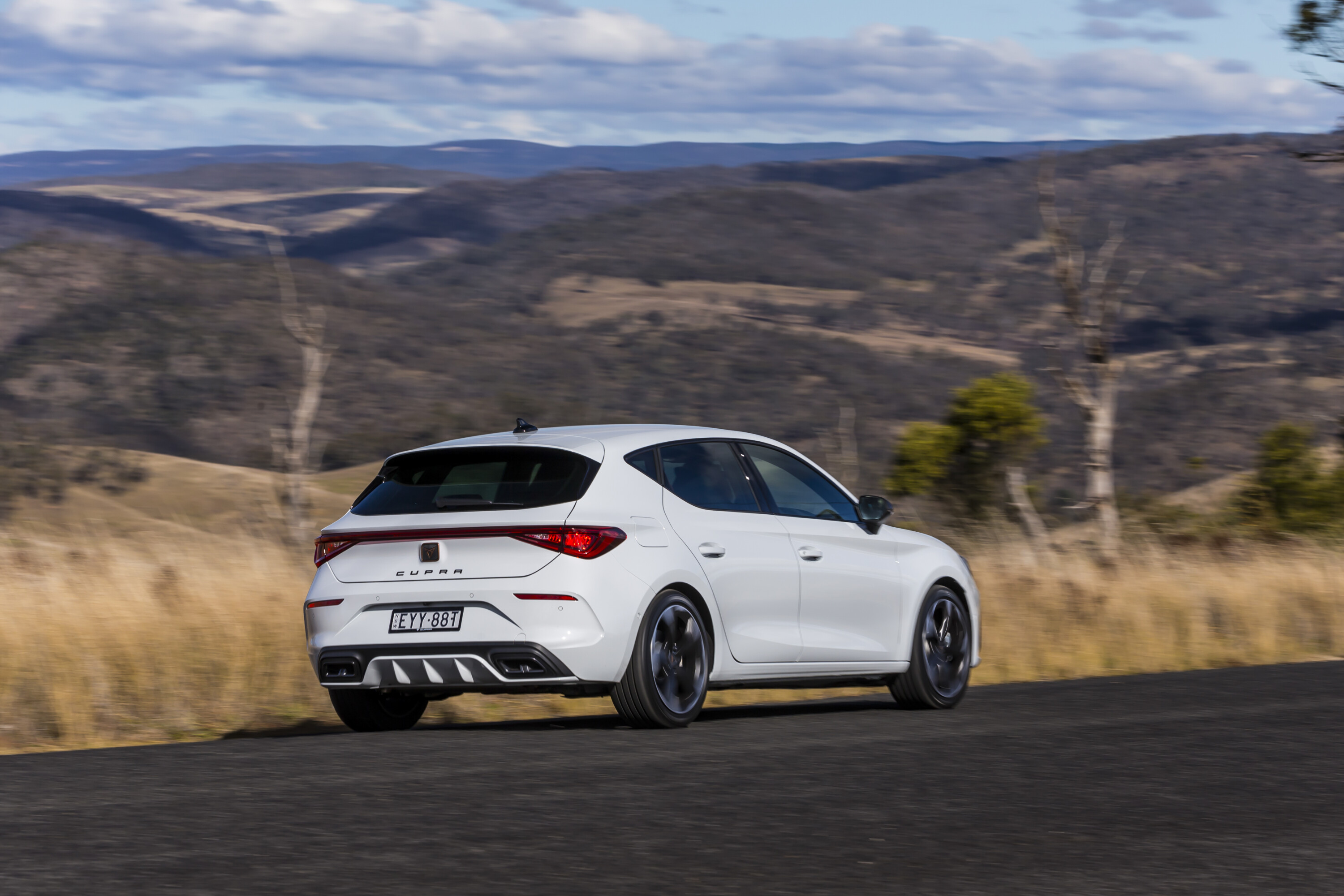
Cupra’s Leon range effectively follows this structure, and in no other marque can you peruse such a broad selection of performance-focused hatchbacks – we rather like that.
One who considers themself particularly macho will, of course, be wooed by the 221kW VZx – the Extra Hot. But some would argue that well-cooked chicken is best enjoyed without tongue-burning sauce obscuring the flavour. Plus, backing off the heat means the rest of your spice-averse family can enjoy it just a little more.
The Leon V sits at the mild end of the spice spectrum, but the core free-range ingredients are exactly the same as you’ll find in the $66K (drive-away) VZx. It should be pretty tasty.
1
JUMP AHEAD
- How much is it, and what do you get?
- How do rivals compare on value?
- Interior comfort, space and storage
- What is it like to drive?
- How much fuel does the Cupra Leon use?
- How safe is it?
- Warranty and running costs
- VERDICT
- Specifications
How much is it, and what do you get?
At $43,990 ($47,990 drive-away) the Leon V serves as the entry point to the Cupra brand.
Not just the Leon range, but the Spanish performance marque as a whole. A good experience here can turn your average car buyer into a lifelong devotee.
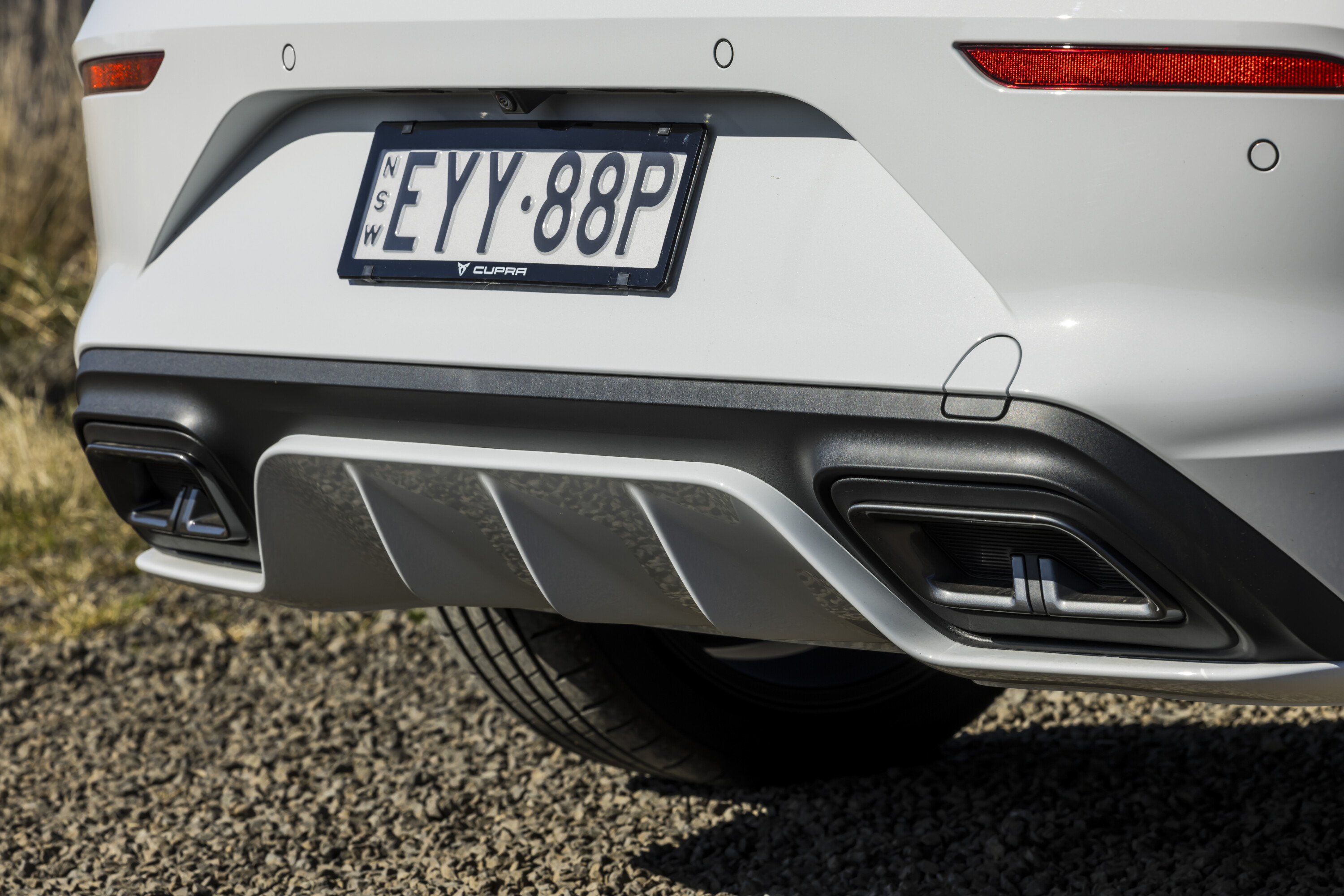
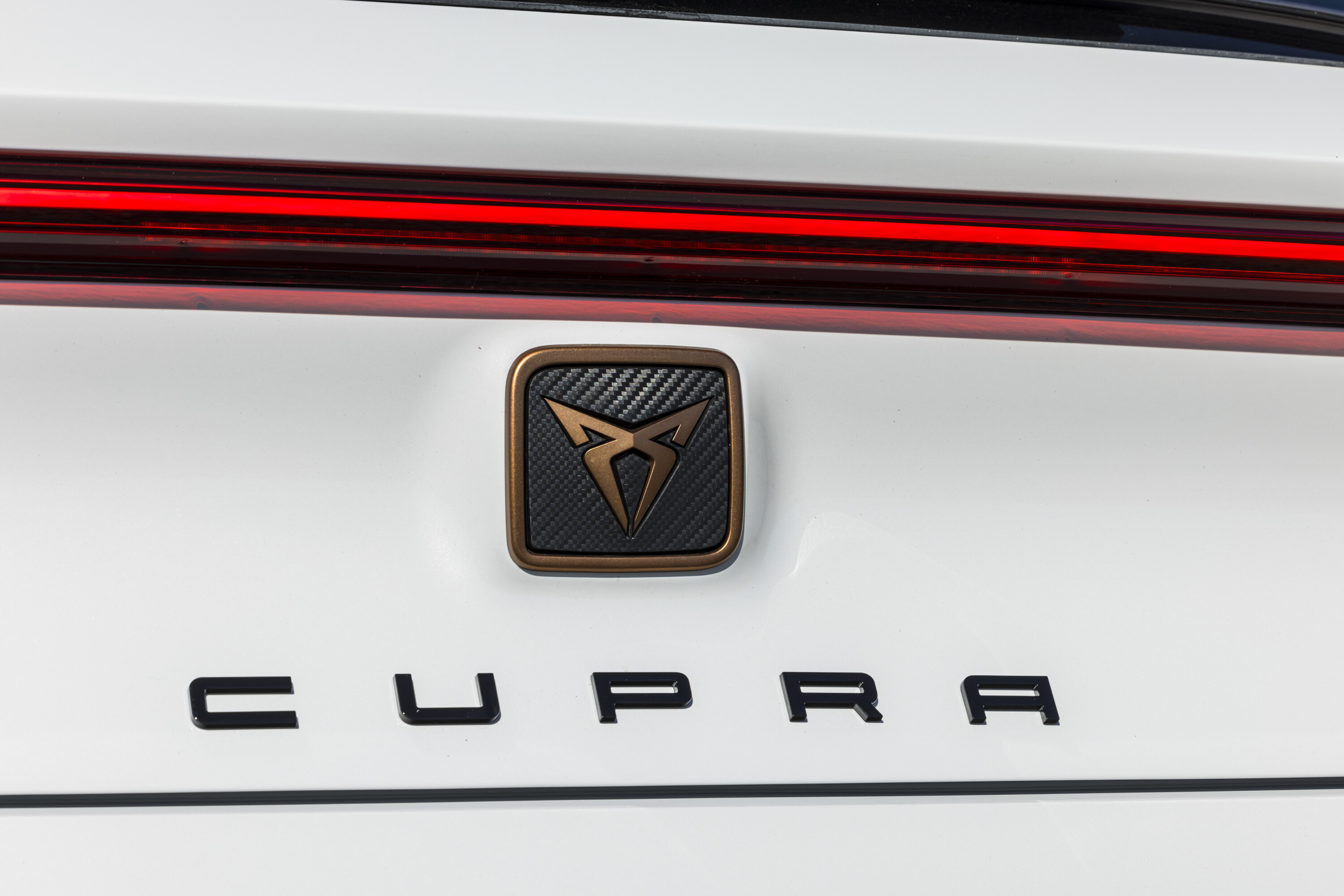
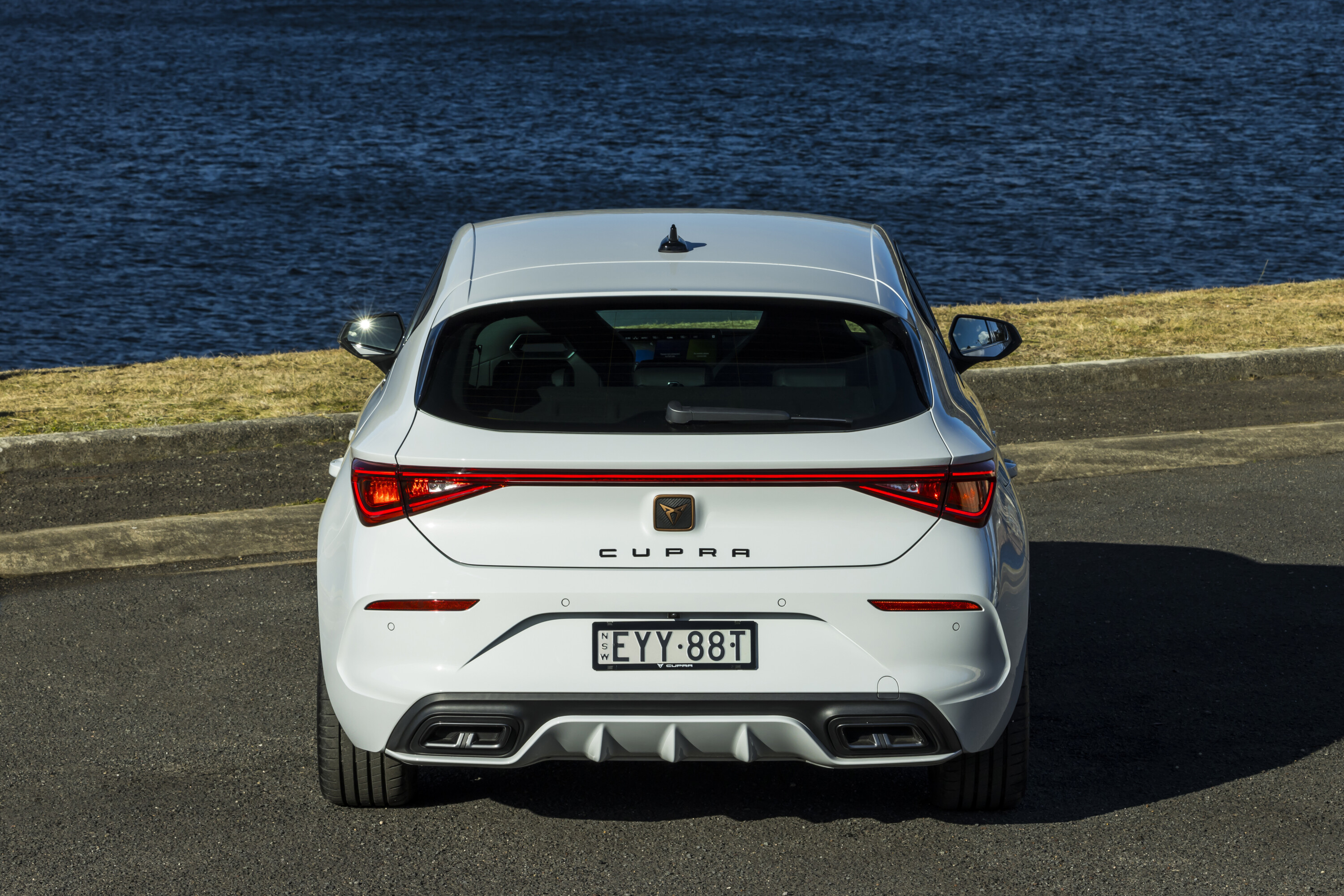
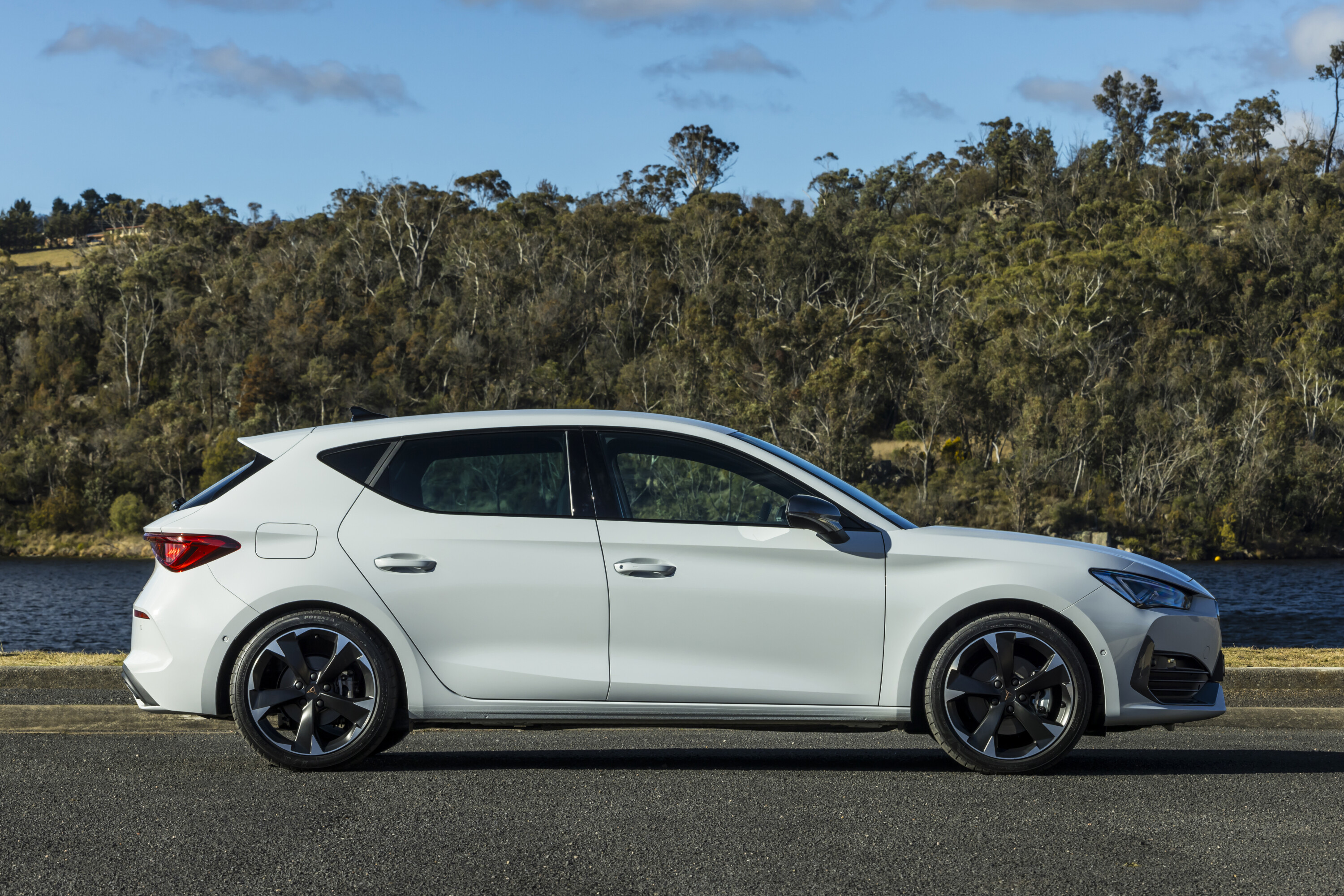
The great thing about the Leron V is that, although it isn’t cheap on the surface (dearer than a Mark 7 Golf GTI, thanks to inflation) it still features the top-spec VZx’s fruits. Outside, only the 18-inch alloys and body-colour rear diffuser set it apart from a range-topper.
| 2023 Cupra Leon V features | |
|---|---|
| 18-inch alloy wheels, two-tone | Rear roof spoiler |
| Full LED headlights and DRLs | Fog lights with cornering function |
| Auto high-beam | Tyre pressure warning system |
| Metallic paint | Wraparound ambient lighting (integrated blind-spot monitoring) |
| Black headliner | Heated leather multi-function steering wheel w/ paddle shifter |
| Cloth-appointed manual bucket seats | Floor mats |
| 10.25-inch digital driver’s display with navigation | 12-inch touchscreen with wireless/wired Apple CarPlay and Android Auto |
| 2x front and rear USB-C ports | Wireless smartphone charging |
| Tri-zone climate control | Rain-sensing wipers |
| Auto-dimming rear mirror | Keyless entry and start |
| Adaptive dampers (15 settings) | 2.0-turn lock-lock Progressive steering |
1
We’ve tested the MY23 car, the model that will be delivered if you order now. In a few months, the MY24 will come along with DAB+ digital radio, as well as a $1200 price increase to $45,190 ($49,140 drive-away). Buy now, if you can.
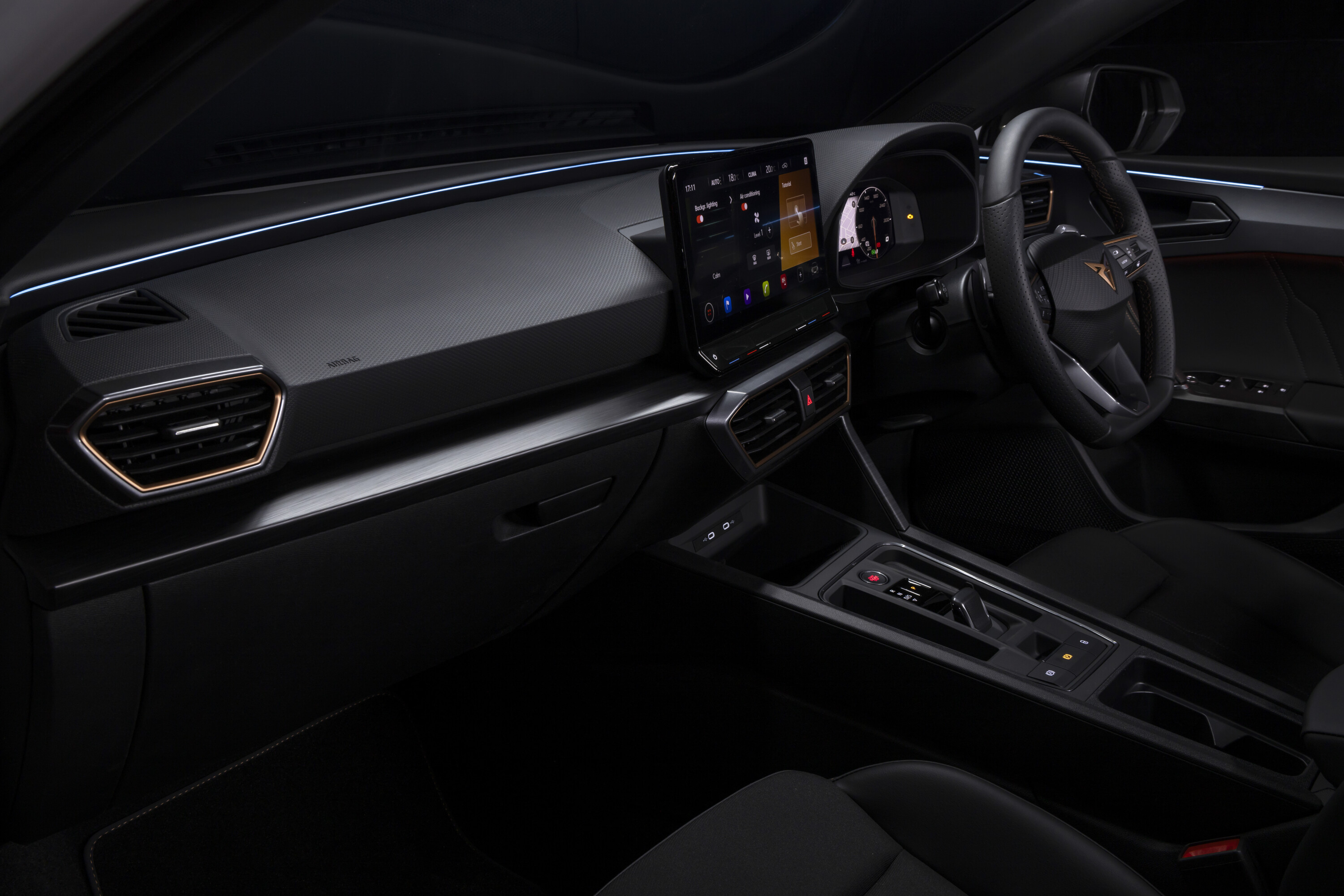
To enhance the interior you can get a leather and sound pack (detailed below), though in our opinion the Beats sound system is only a marginal improvement over the standard stereo. A sunroof costs $1800, and premium paints (Desire Red and Graphene Grey) are $475.
| Leather and Sound package $2450 | |
|---|---|
| Leather seats | Front seat heating |
| Driveru2019s seat power adjust with two-position memory | Mirror memory |
| Copper stitched dashboard | Beats 9-speaker sound system w/ sub-woofer |
1
How do rivals compare on value?
Cupra deliberately doesn’t benchmark rivals, it says. In a way, the Leon V sits in a no man’s land between Hyundai i30 N Line Premium ($41K on the road) and full-fat N auto (about $53K drive-away).
There are some other stylish options in the fray, including the rather slow Peugeot 308 GT Premium ($48,990), Volkswagen Golf R-Line ($40,490), as well as basic versions of the BMW 118i ($49,900), Audi A3 35TFSI ($47,700) and Mercedes-Benz A200 ($63,400). All before on-road costs.
You get much more on-paper spec than the premium-badged bunch in a Leon, with build and material quality to beat the Koreans. If that sounds like your bag, then the Leon V is a solid value proposition.
1
Interior comfort, space and storage
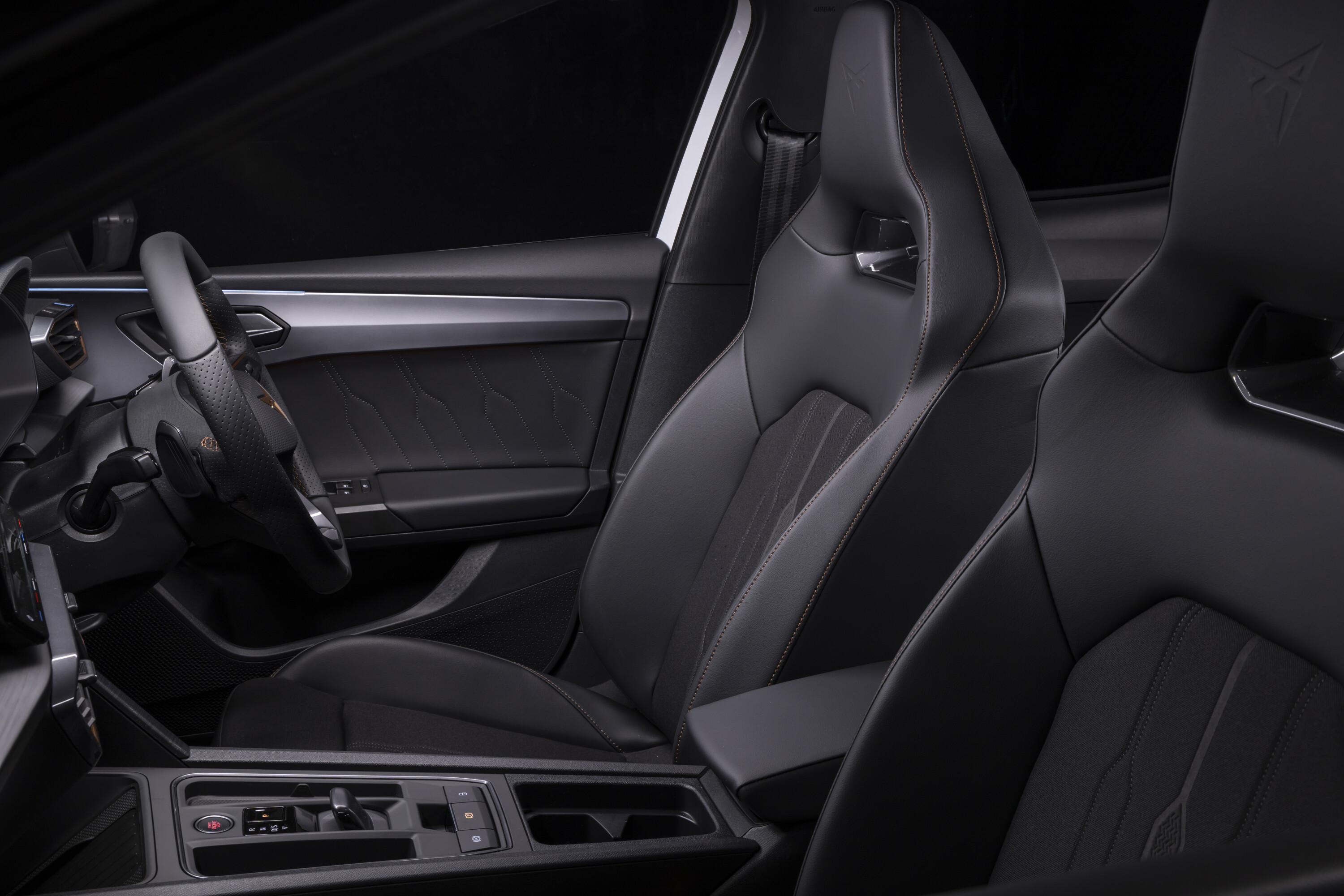
The Leon V sacrifices none of the VZx’s interior style and even choosing to forgo the $2400 leather pack doesn’t see you lose the lovely bucket seats with granular manual adjustment for a great driving position.
A heated steering wheel is standard, and the leather pack – I should add it’s soft Nappa leather, not the plasticky Dakota leather you’d find in a 1 Series – brings seat heating. Two-position memory also features, which is great if you regularly share the car.
Incidental storage is much the same as a Golf with the stubby gear selector freeing up space for an excellent wireless charging pad, two cup holders, and a covered centre cubby. Two USB-C ports in the front (two more in the back) and a 12-volt socket will keep devices charged.
2
That said, even the hard plastics have an expensive-looking grain, and we didn’t detect any rattles on the road.
Cupra’s plastic quality is on par with Volkswagen’s, with soft materials in heavy-traffic areas and on the dash, but harder materials below the beltline. That said, even the hard plastics have an expensive-looking grain, and we didn’t detect any rattles on the road.
With its conventional roofline, the Leon’s back seat offers great headroom, a supportive bench, a third climate zone, a fold-out armrest, and generous legroom. It would make a great car for a growing family, too, with two ISOFIX ports and three top-tether points for baby seats.
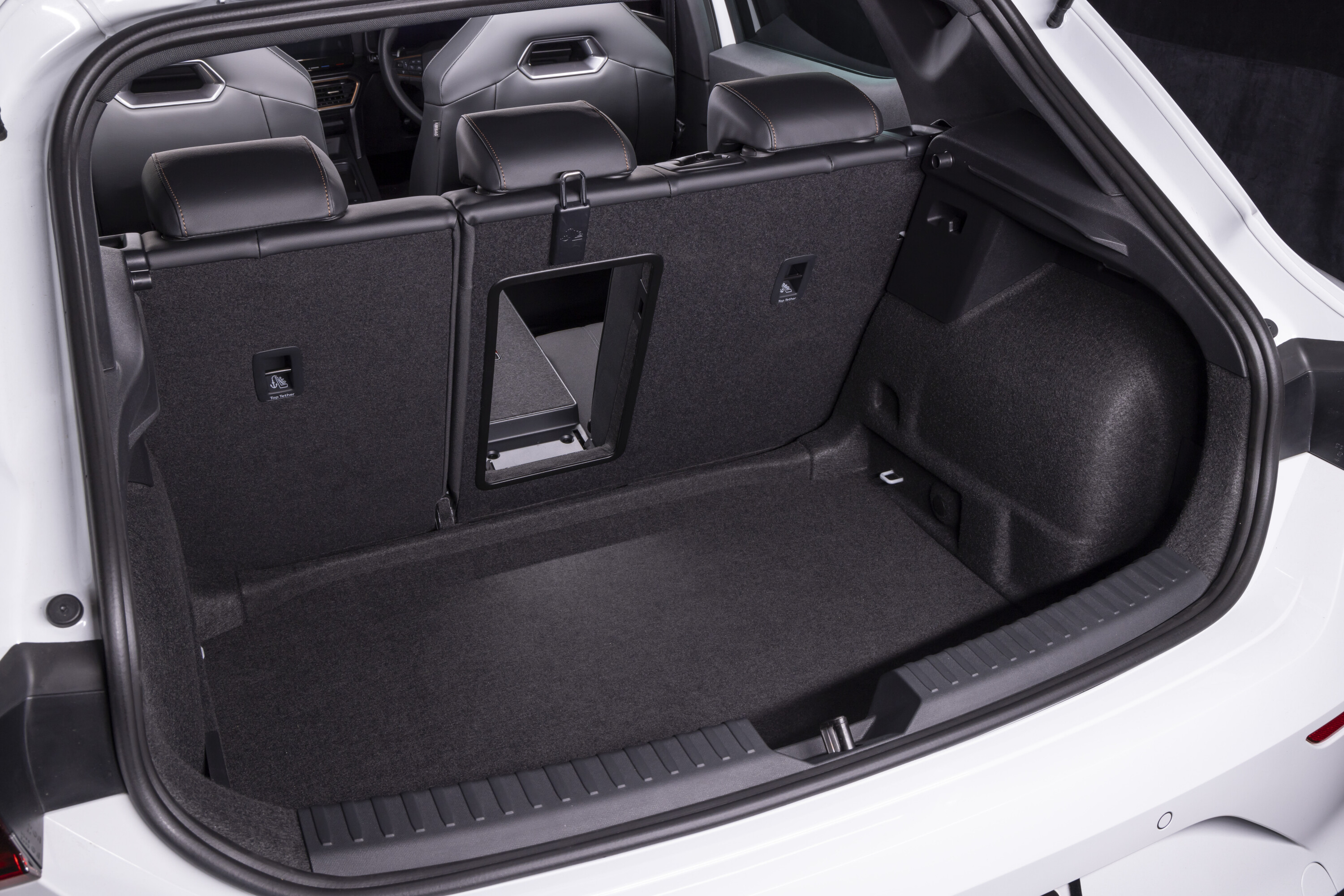
The Leon’s boot is usable, with 380 litres of cargo space and some extra storage beneath the floor. The Leon V features a space-saver spare tyre, a manually-operated tailgate and some useful shopping bag hooks. The rear seats fold in a 60:40 split for carrying longer items, with a ski port between.
8
What is it like to drive?
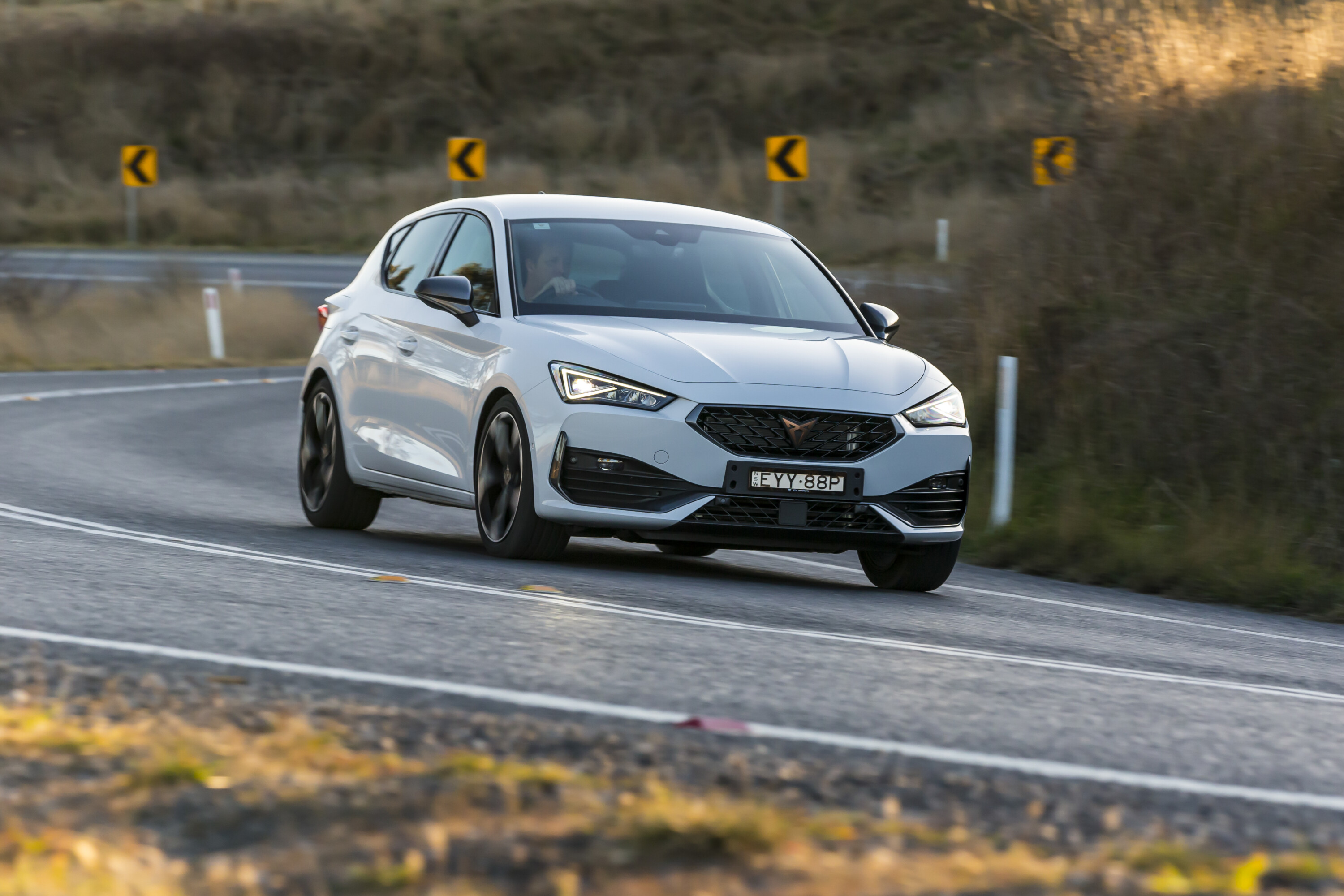
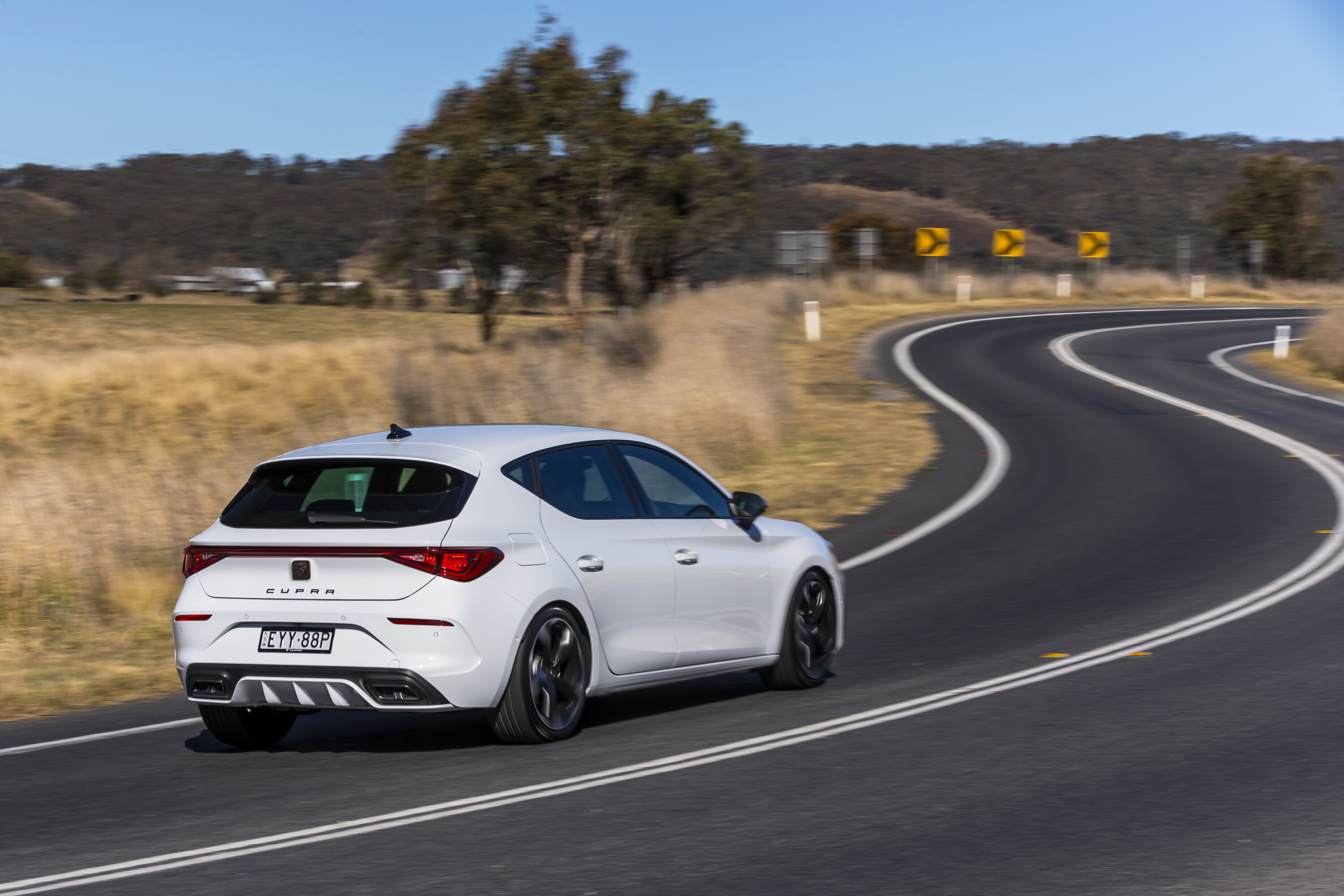
Looking at the specs, the V reads as easily the most mundane Leon to drive. It’s ‘only’ putting out 140kW from a 2.0-litre turbo-petrol four-cylinder, after all – the VZx develops nearly a whole Up GTI’s worth more power from the same basic engine.
Writing a car off from the spec sheet is never a good idea, though, and the Leon V’s 320Nm torque peak is available from 1500rpm right through to 4100rpm for easy overtaking. Cupra claims 0-100km/h in 7.2 seconds.
Unlike the VZ and VZx, the little Leon’s engine note is subdued. There’s a slight throaty growl in the mid-range, but the exhaust is pleasantly refined – even in Sport mode. There’s none of the droning on the highway that we noted in the VZ, and overall the noise, vibration and harness suppression is better than a basic Audi A3.
1
Ride comfort helps here, the Leon scoring multi-link rear suspension rather than a torsion beam for extra silkiness.
The 18-inch alloy wheels with 225/40R18 Goodyear Eagle F1 Supersports cushion blows better than the 19s on upper trims, as does a slightly softer suspension tune that suits the V’s lighter 1461kg weight.
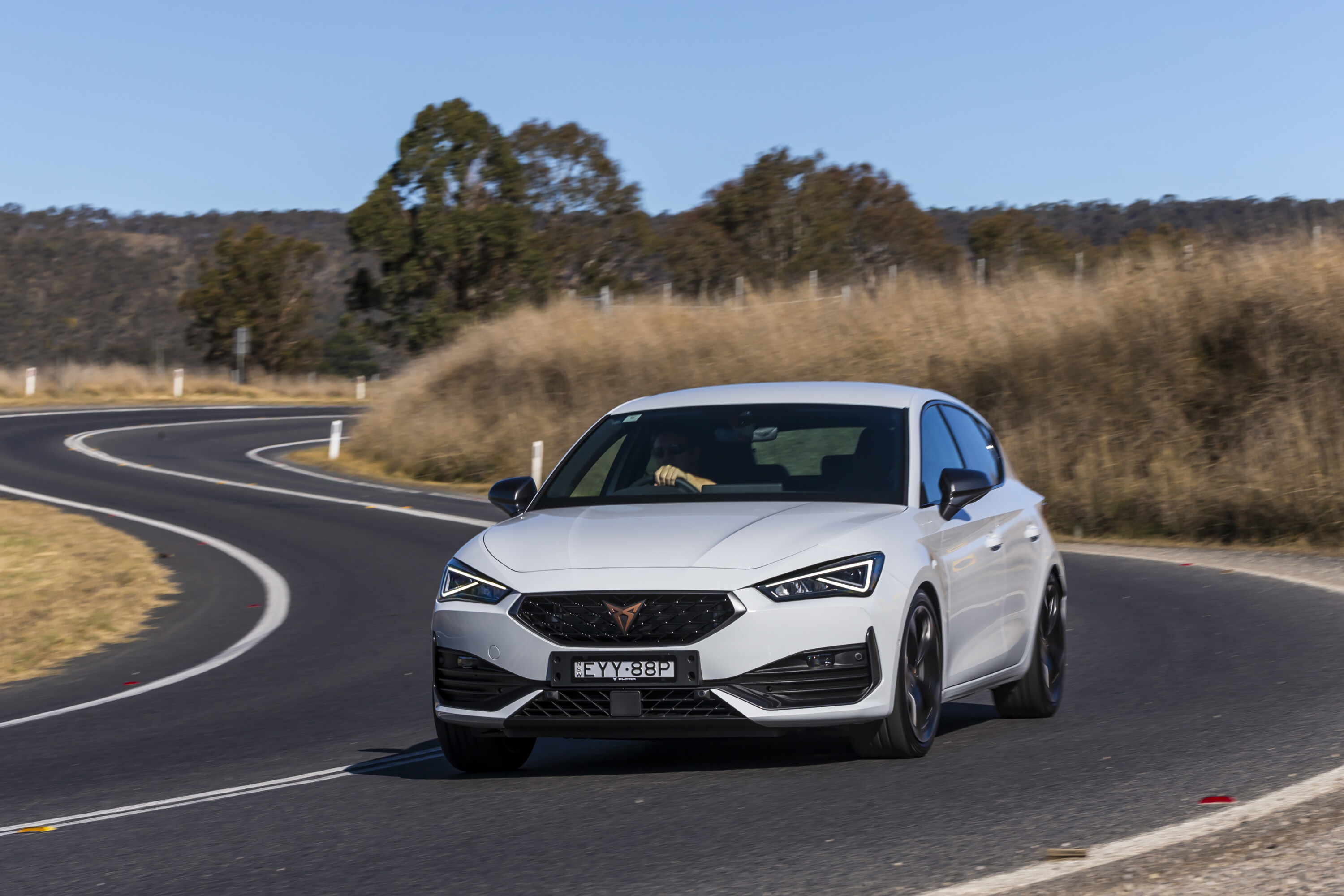
Having to deal with the sodden, cold, and pot-holed roads of Central Western NSW is a tough ask for a front-drive hot hatch, but the Leon V’s agility and balance made it a perfect companion. Even the lack of a limited-slip differential failed to dampen the Leon’s progress.
The trick is driver confidence, aided in this case by firm brake feel and good chassis feedback thanks to suspension that allows enough body roll to communicate grip levels without ever feeling at sea. Modulating the left pedal as you approach a corner even brings the rear Goodyears into play.
1
It may not be as fast as ‘the best’, but it’s not less satisfying.
The Leon V doesn’t reward the fast and aggressive driving style that makes Hyundai i30 Ns and Civic Type Rs sing; you need to step back into a Peugeot 306 GTi-6 mindset, where deliberate and sensitive inputs are required. It may not be as fast as ‘the best’, but it’s not less satisfying.
A whole 15 stages of adjustment for the dampers can be daunting at first, but it’s pretty simple. Comfort is an excellent all-round setting, while the customisable Individual mode is best for NSW’s testing roads. Putting the engine, transmission and steering in Sport with dampers in ‘Malcolm Turnbull’ setting (just right-of-centre), was my preference, but there’s breadth for all drivers to enjoy.
Adjusting the drive modes via the central touchscreen is one bugbear; you have to exit phone mirroring and swipe through the menus. Although the screen itself is responsive, Cupra’s colourful graphics and menus feel a little clunky and unintuitive.
In contrast, Cupra’s seven-speed dual wet clutch transmission is typically excellent, swapping ratios effortlessly in auto and letting you take full control with paddles in manual mode.
If any of the terms in this section have left you scratching your head, these articles will help bring you up to speed!
1
- What is a Powertrain or Drivetrain?
- Power vs torque
- Car suspension explained
- Automatic transmissions (‘gearboxes’) explained
- Chassis control systems explained
- Car vs Ute vs SUV: How the vehicle you buy should guide the way you drive
The Cupra Leon V is Rated at 6.2L/100km in ADR combined testing, although we used 8.0L/100km of 95 RON premium unleaded petrol.
1
How safe is it?
The Cupra Leon was awarded five stars in Euro ANCAP tests conducted in 2020 – the result has been ported over for a maximum ANCAP rating.
It features 10 airbags and well-calibrated driver aids, such as adaptive cruise control, lane-trace assist, and autonomous emergency braking (AEB).
| 2023 Cupra Leon V safety features | |
|---|---|
| AEB with pedestrian and cyclist detection | Driver fatigue monitor |
| Lane-trace assist | Front and rear parking sensors |
| Park assist | Reverse camera |
| Rear cross-traffic alert | Blind-spot monitoring |
1
Warranty and running costs
Every Cupra model, including the Leon, is covered by a five-year/unlimited-kilometre warranty.
Servicing is due every 12 months or 15,000km at a Cupra garage. There are currently two each in NSW, Victoria, and Brisbane; and one in the ACT, South Australia, and WA. You can pay as you go or opt to buy a three- or five-year care plan. Three years cost $990 for the Leon, and five $1990.
1
VERDICT
The decision is in: Mild chicken tastes a little different to the spiciest bird, but it’s no less delicious.
A less rorty exhaust and more comfortable ride make the subdued Leon V a whisker more liveable than the vocal VZ and VZx, yet without sacrificing the ability to get up on its toes and dance down a good road.
Somewhat convoluted software aside, the Cupra Leon range is very well-appointed inside and sports space to carry four adults with their luggage.
If you need the VZx’s extra 81kW, or particularly like the Copper pack, you’ll find that extra $20K in the bank account. For someone chasing a hot hatch that doesn’t make you want to turn your baseball cap backwards, the sophisticated Leon V is a cracker.
MORE
Everything Cupra
2023 Cupra Leon VZ specifications
| 2023 Cupra Leon V specifications | |
|---|---|
| Price | $43,990 (before on-road costs) |
| Drivetrain | |
| Engine | inline 4 cyl, 2.0-litre, DOHC, turbocharged |
| Layout | Front engine, transverse, FWD |
| Power | 140kW @ 4200-6000rpm |
| Torque | 320Nm @ 1500-4100rpm |
| Gearbox | 7spd dual-clutch automatic |
| Chassis | |
| L/W/H/Wu2013B | 4398/1799/1444/2683mm |
| Track (F/R) | 1554/1520mm |
| Weight (claimed) | 1461kg |
| Boot | 380L |
| Fuel/tank | 95 RON / 50L |
| Economy (combined ADR81/02) | 6.2L/100km |
| Suspension | Front: struts, stabiliser bar. Rear: multi-link stabiliser bar |
| Steering | Rack-assisted electric power steering, progressive, 2.0 turns lock to lock |
| Front brakes | Ventilated discs |
| Rear brakes | Solid discs |
| Tyres | Goodyear Eagle F1 SuperSport |
| Tyre size | 225/40R18 |
| Safety | |
| ANCAP rating | 5 stars (2020) |
| 0-100km/h (claimed) | 7.2 seconds |
