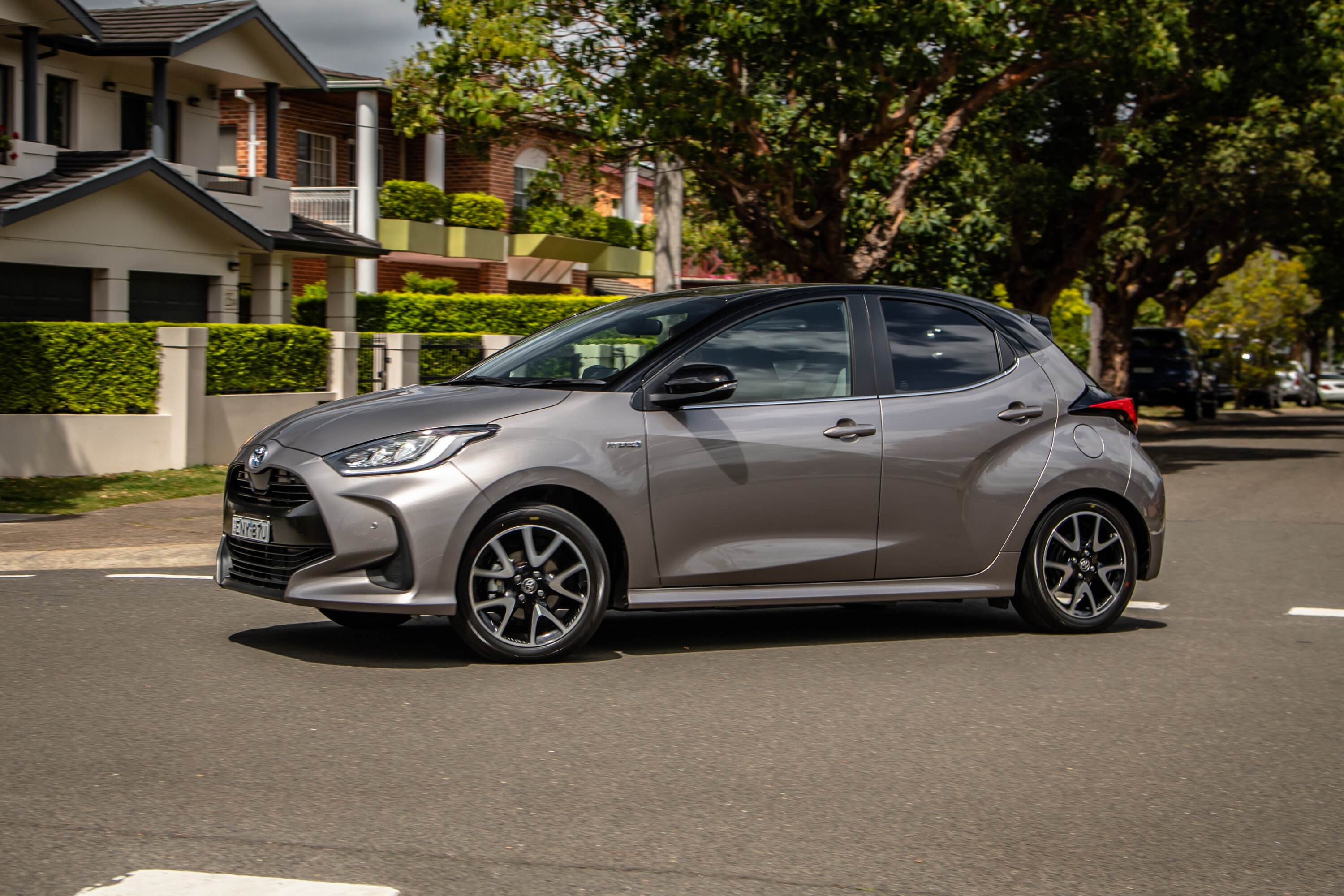
Due to a manufacturing defect, small cracks may form in the front lower suspension arms when driving on rough (corrugated) roads. As a result, the suspension may collapse or detach from the vehicle. If this occurs, the vehicle may experience a sudden loss of steering control.
What are the hazards?
A loss of steering control could increase the risk of an accident causing injury or death to vehicle occupants and/or other road users.
What should consumers do?
Toyota will contact affected owners in writing, requesting to make an appointment at their preferred Toyota dealer to inspect and if necessary replace the front lower suspension arm, free of charge.
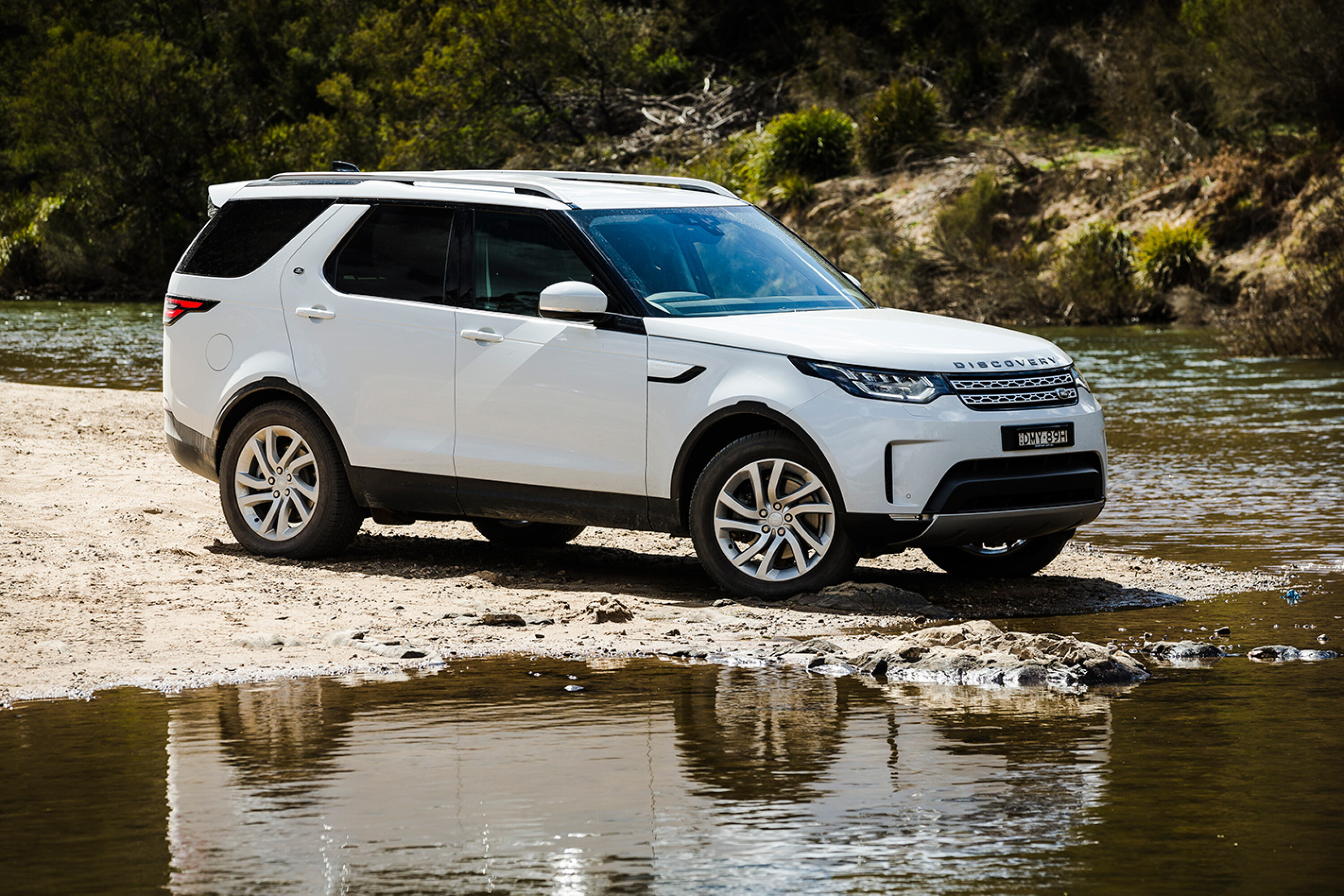
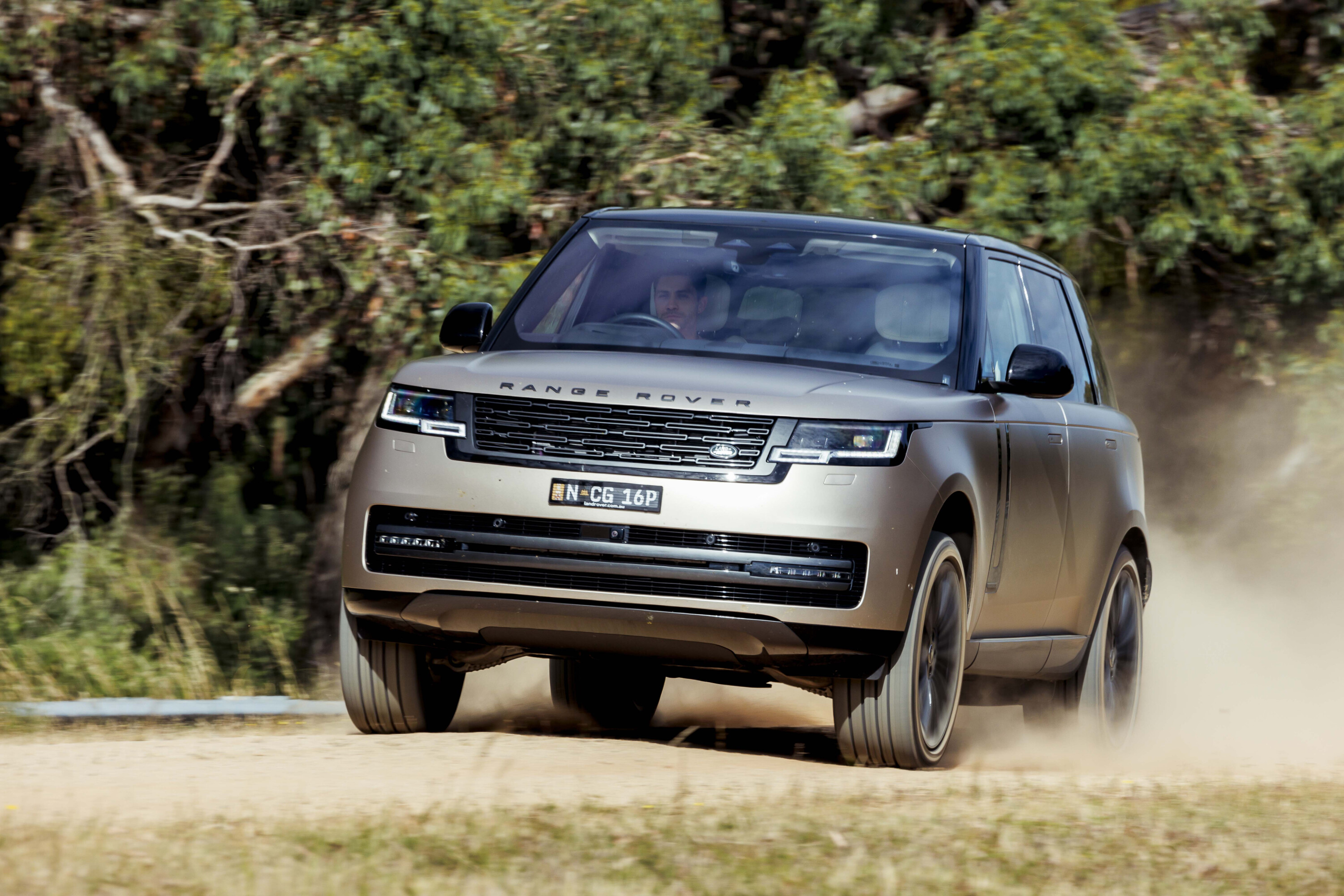
Due to a manufacturing defect, water may enter the rear passenger door latches and cause corrosion in the return spring. As a result, the doors may not latch whilst in closed position and the hazard warning light may not display on the instrument cluster as intended.
What are the hazards?
If the rear passenger’s door does not latch as intended, it could open whilst the vehicle is in motion. This could increase the risk of serious injury or death to vehicle occupants or other road users.
What should consumers do?
Owners of affected vehicles will be contacted by Jaguar Land Rover Australia requesting to take their vehicle to an approved dealership to inspect and rectify the vehicle, free of charge.
Supplier details
JAGUAR LAND ROVER AUSTRALIA PTY LTD
Who should owners/operators contact for more information?
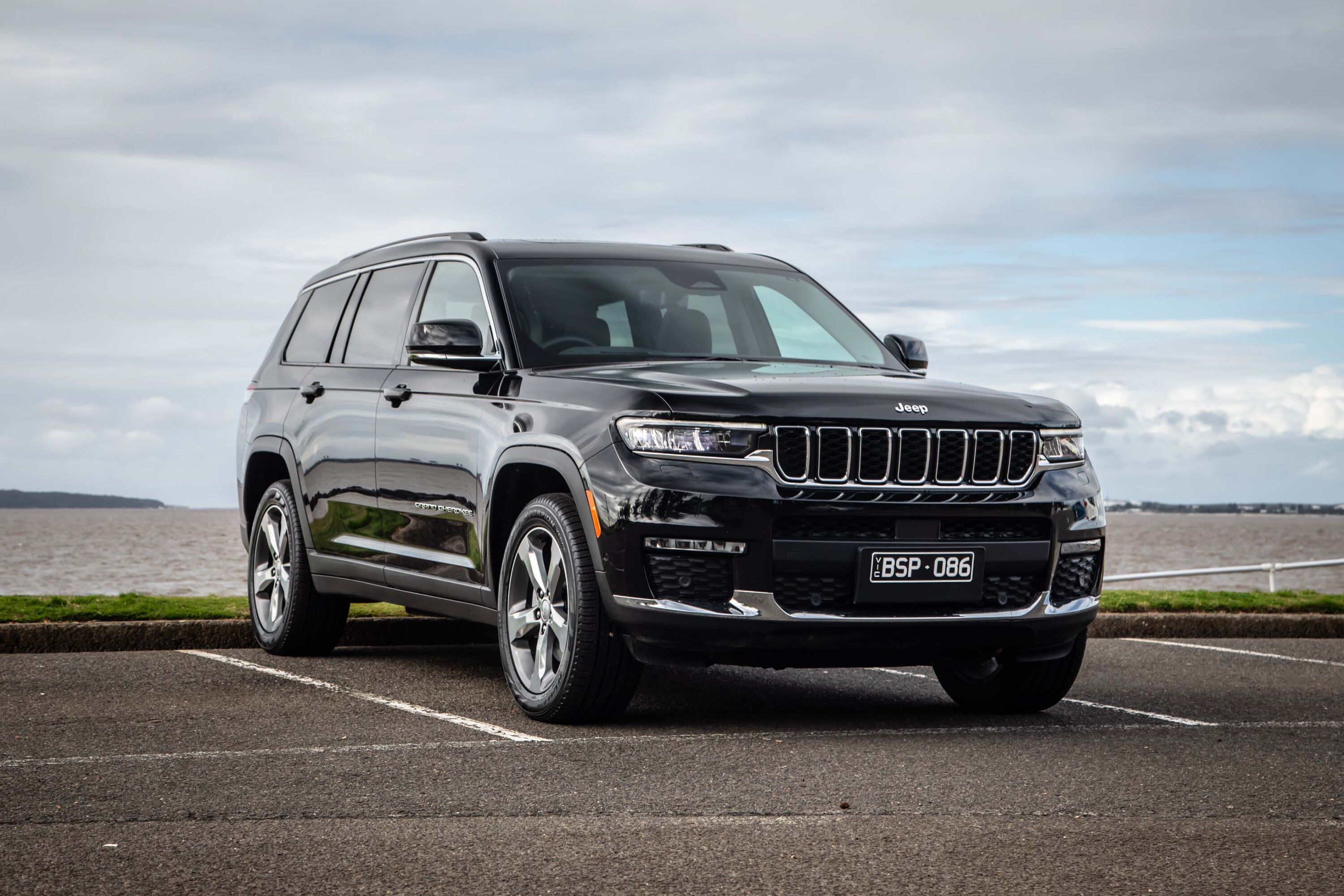
Due to a manufacturing defect, incorrectly installed rear coil springs may detach whilst driving. As a result, it could lead to a loss of vehicle control.
What are the hazards?
A loss of vehicle control could increase the risk of an accident causing injury or death to vehicle occupants and/or other road users.
What should consumers do?
Owners of affected vehicles can contact their nearest authorised Jeep Dealer to have the vehicle’s rear coil springs inspected and, if required, replaced free of charge.
Supplier details
FCA AUSTRALIA PTY LTD
Who should owners/operators contact for more information?
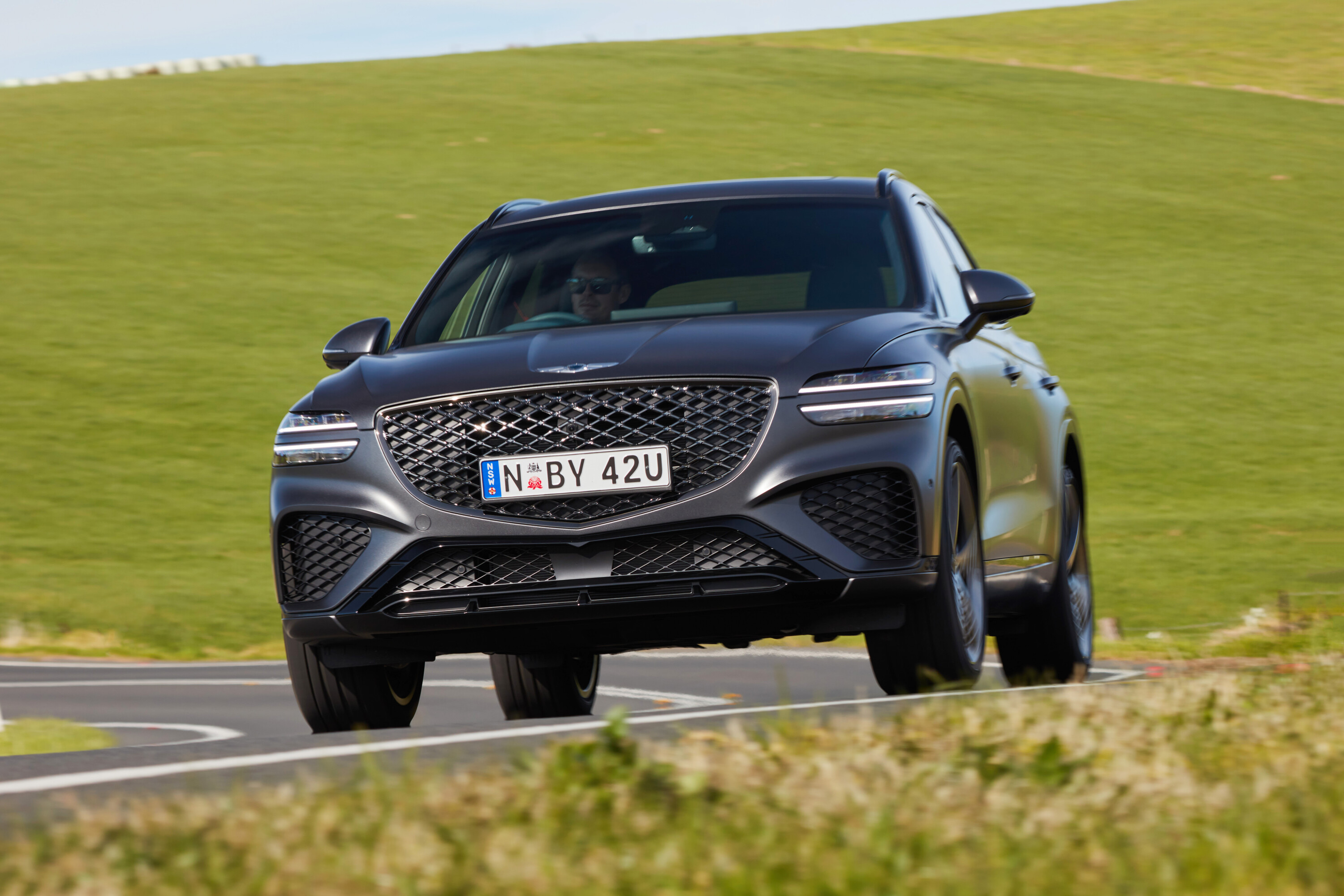
Due to a manufacturing issue, the seat belt pre-tensioner inflator cap may fracture when deployed in the event of an accident.
What are the hazards?
If the seat belt pre-tensioner inflator cap fractures, metal fragments may be propelled at high speed towards the vehicle occupants and could cause serious injury.
What should consumers do?
Owners of affected vehicles will be contacted directly by Genesis Motor Australia (GMA), requesting to make an appointment with their preferred authorised GMA dealership for inspection and repair, free of charge.
If vehicle owners still have queries, they can contact GMA Customer Care on 1800 908 070.
Supplier details
Hyundai Motor Company
Who should owners/operators contact for more information?
The Power-Train Control Module (PCM) software determines if the mixture is rich or lean and adjusts the amount of fuel entering the engine. Due to a manufacturing defect, the PCM software may not operate as intended and could result in the engine shut down causing a loss of motive power while driving.
What are the hazards?
A loss of motive power while driving could increase the risk of an accident and injury to vehicle occupants or other road users.
What should consumers do?
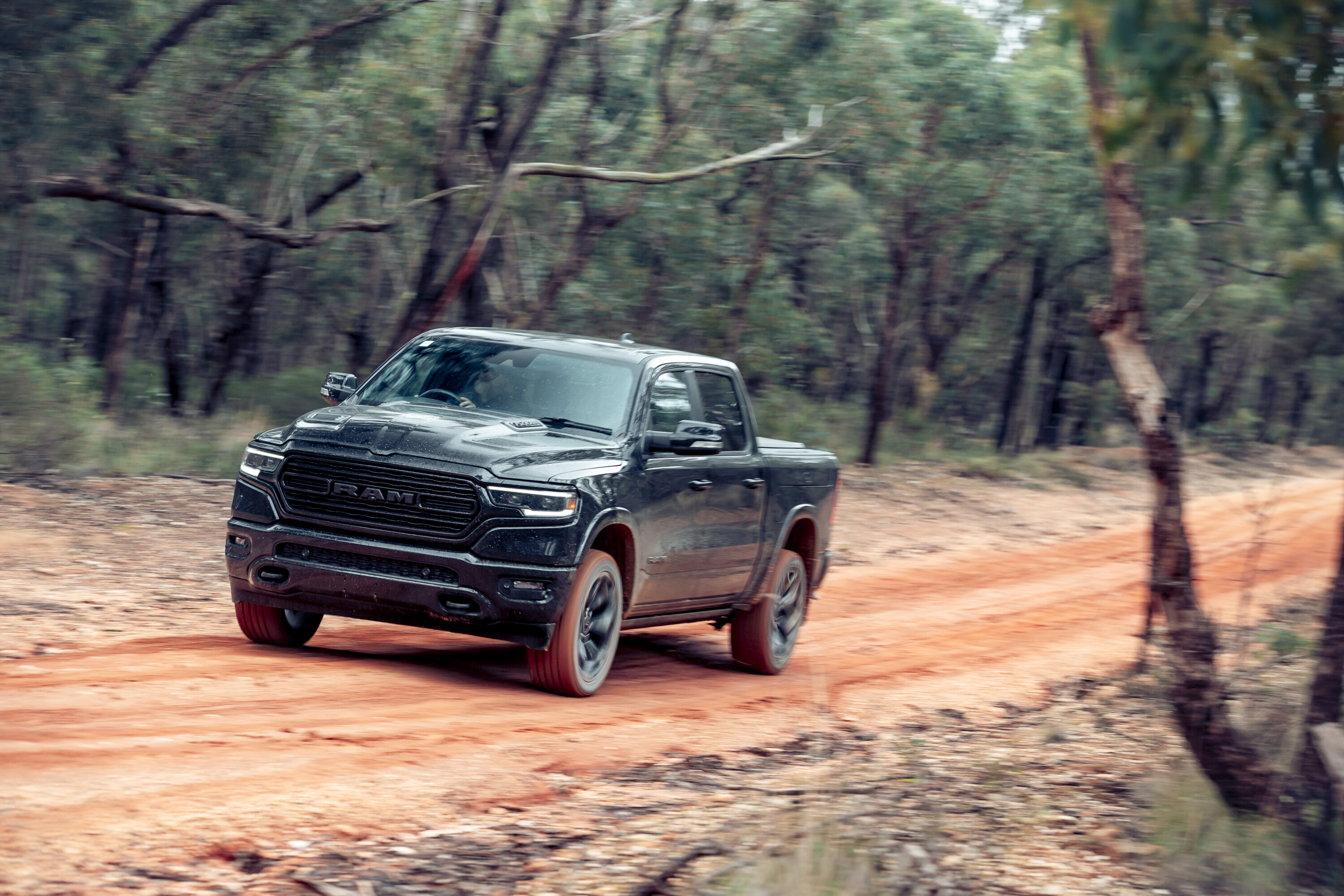
Owners of affected vehicles can contact their nearest authorised RAM dealer to have the vehicle’s PCM software updated. free of charge.
For any additional information and assistance, please call RAM Trucks Customer Assist on 1300 681 792.
Supplier details
AMERICAN SPECIAL VEHICLES PTY LTD
Who should owners/operators contact for more information?
Due to a manufacturing defect, the interior footwell cover may cause interference with accelerator pedal.
What are the hazards?
Interference with the accelerator pedal while driving increases the risk of an accident causing serious injury or death to vehicle occupants and/or other road users.
What should consumers do?
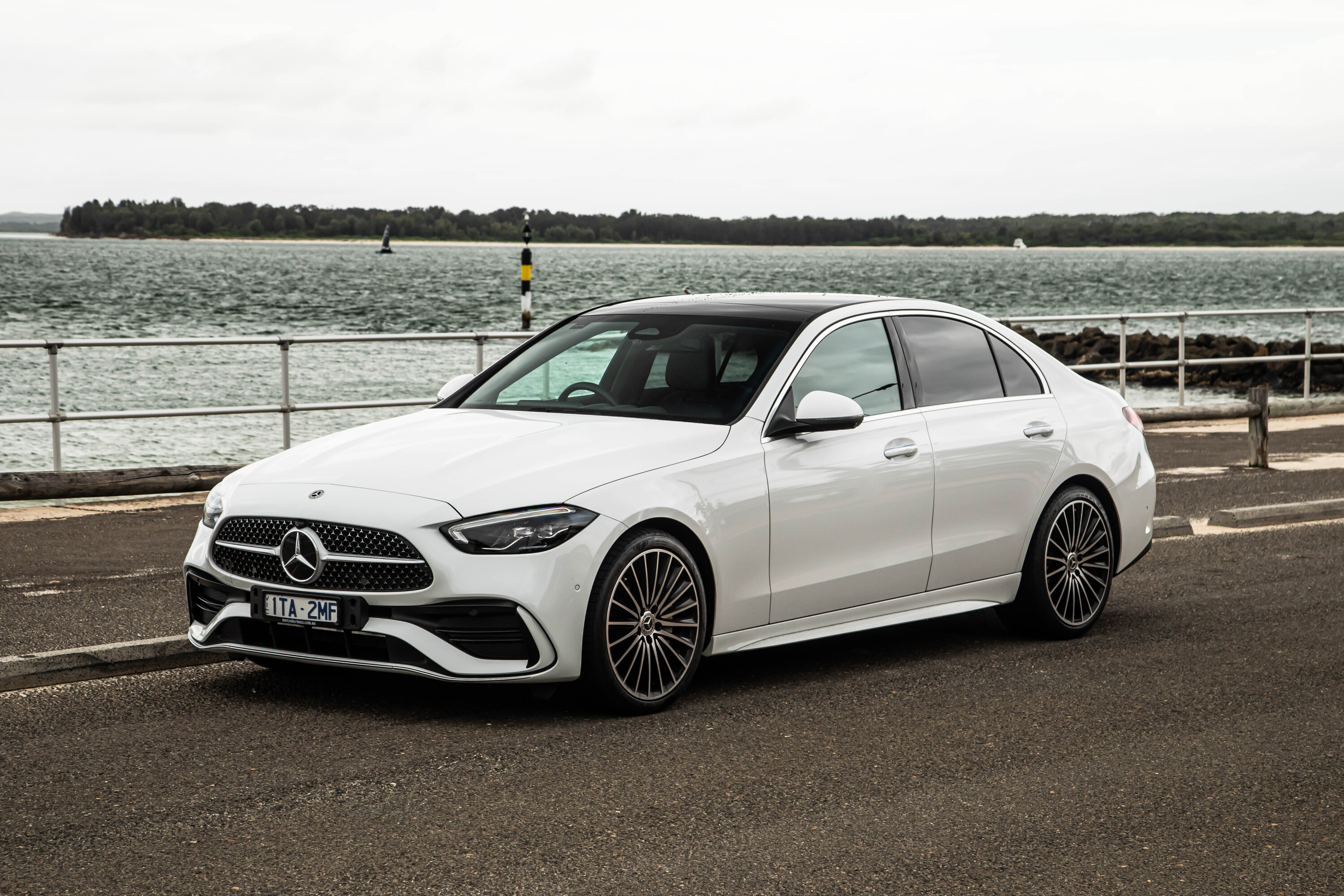
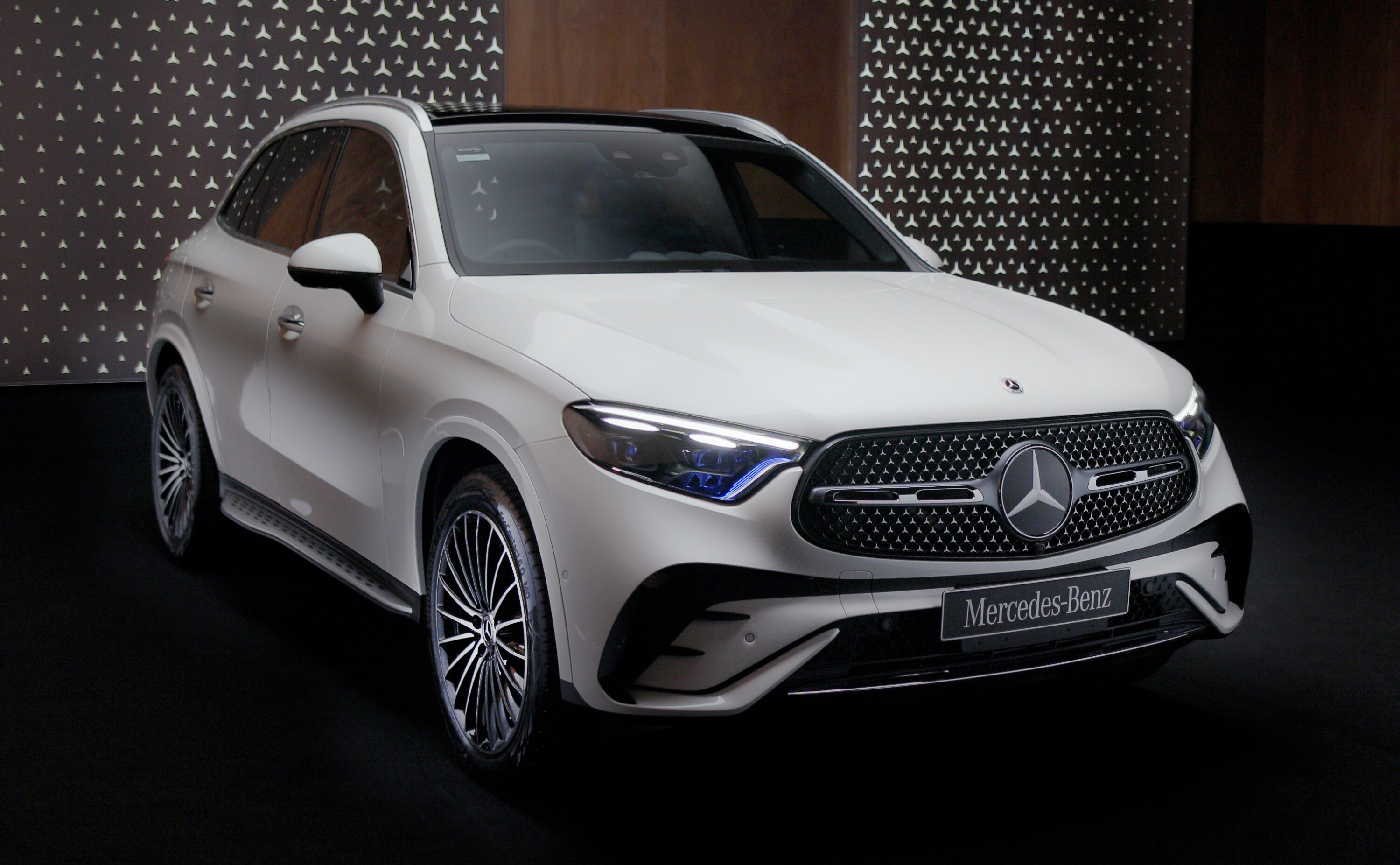
Owners of affected vehicles can contact their most convenient Mercedes-Benz dealership to have the footwell cover repaired, free of charge.
Due to a software issue, some vehicles may experience a thermal overload. If this occurs, vehicle occupants may identify smoke or fire emanating from underneath the vehicle.
What are the hazards?
A vehicle fire may increase the risk of serious injury or death to vehicle occupants, other road users, bystanders, and/or damage to property.
What should consumers do?
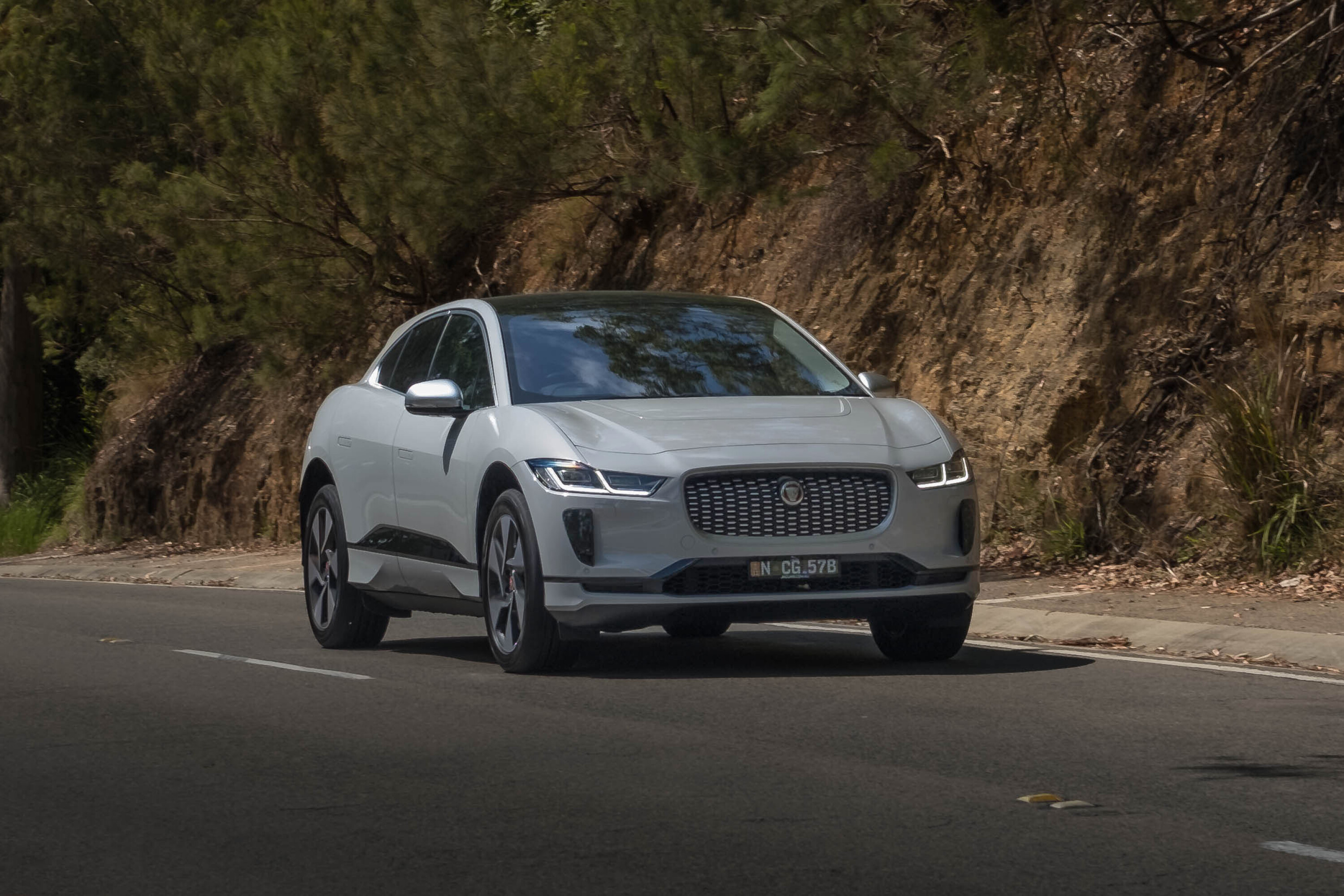
Owners of affected vehicles should contact their preferred Jaguar dealer for inspections. During the visit, Jaguar retailer will provide an update to the Battery Energy Control Module (BECM) software that will monitor the High Voltage battery operational status. This will provide indication in the event the High Voltage battery exhibits conditions which may lead to thermal overload condition.
This software provides an enhanced level of driver warnings in relation to High Voltage battery condition and in the event the software determines a risk exists, the High Voltage battery charging capacity is temporarily limited to 75%. The warning message and associated Owner Guide instruction directs the driver to take their vehicle to a Jaguar retailer for diagnosis, your retailer will then inspect, and if necessary, repair or replace the affected High Voltage battery module/assembly, free of charge.
Supplier details
JAGUAR LAND ROVER AUSTRALIA PTY LTD
Who should owners/operators contact for more information?
Due to a manufacturing defect, the rear tail lamps wiring harness may become lodged between the vehicle body and a foam block. If this occurs, the rear tail lamp may not illuminate as intended.
What are the hazards?
If the rear tail lamp does not operate as intended during dark conditions, the traffic behind will have reduced visibility and may not be able to identify the vehicle. This could increase the risk of an accident causing serious injury or death to vehicle occupants and/or other road users.
What should consumers do?
Owners of affected vehicles will be contacted by Jaguar Land Rover Australia requesting to take their vehicle to an approved dealership for inspection of the rear tail lamp and wiring. If required, the lamp and wiring will be replaced, free of charge.
Supplier details
JAGUAR LAND ROVER AUSTRALIA PTY LTD
Who should owners/operators contact for more information?
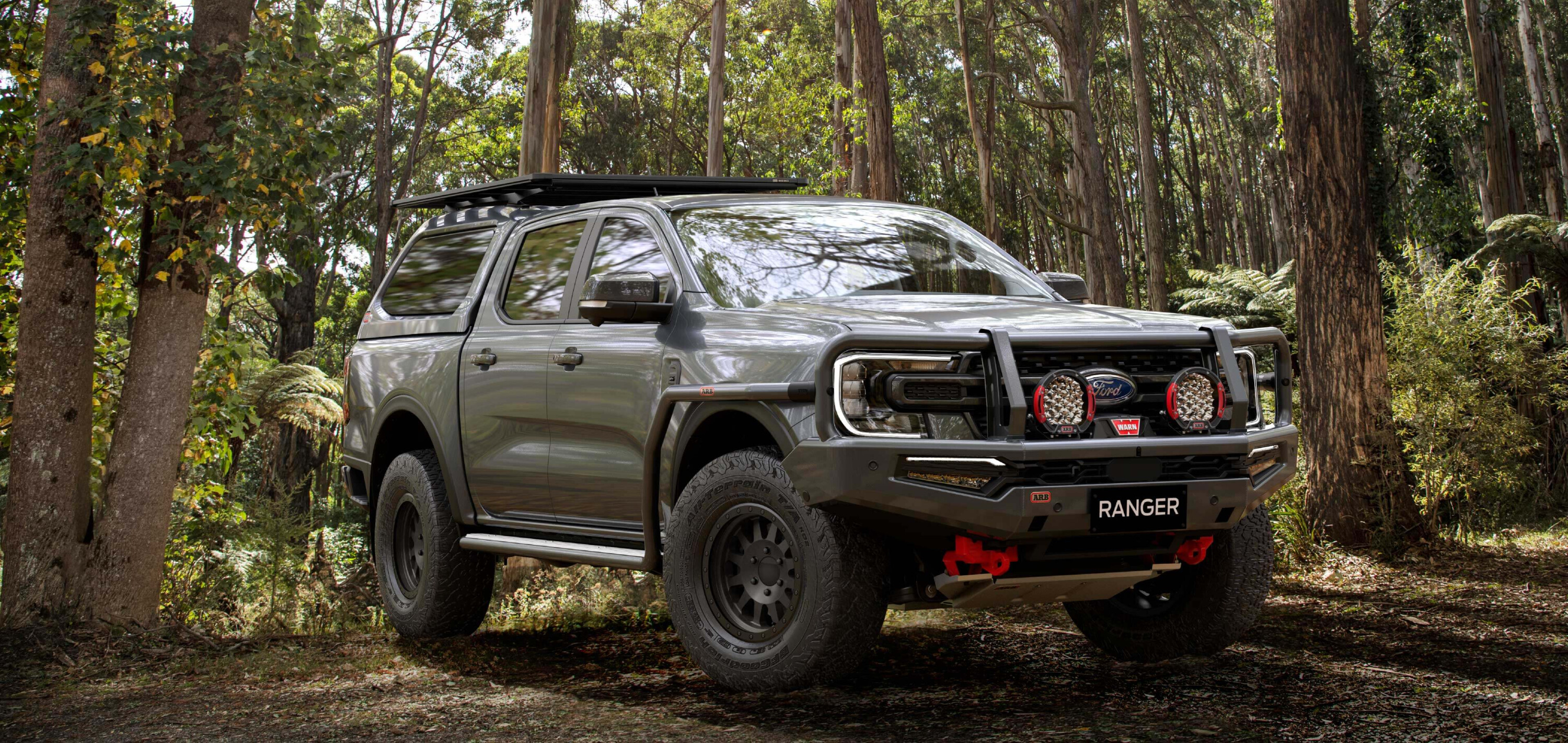
The internal circuit board of the remote control for ARB/WARN VR EVO winches can corrode if exposed to water. Corrosion of the remote control’s circuit board may cause the winch’s cable to stop, wind up or release unexpectedly.
What are the hazards?
If a winch stops or starts unexpectedly while being used, the cable or vehicle may move suddenly. The winch may also operate unintentionally while not being used, for example when parked or driving.
If the winch operates unexpectedly, there is an increased risk of accident and serious injury to occupants of the vehicles or persons nearby.
What should consumers do?
Vehicle owners should immediately stop using the remote control.
Ford will contact affected owners in writing requesting they make an appointment at their preferred Ford Authorised Dealership for replacement of the remote control, free of charge.
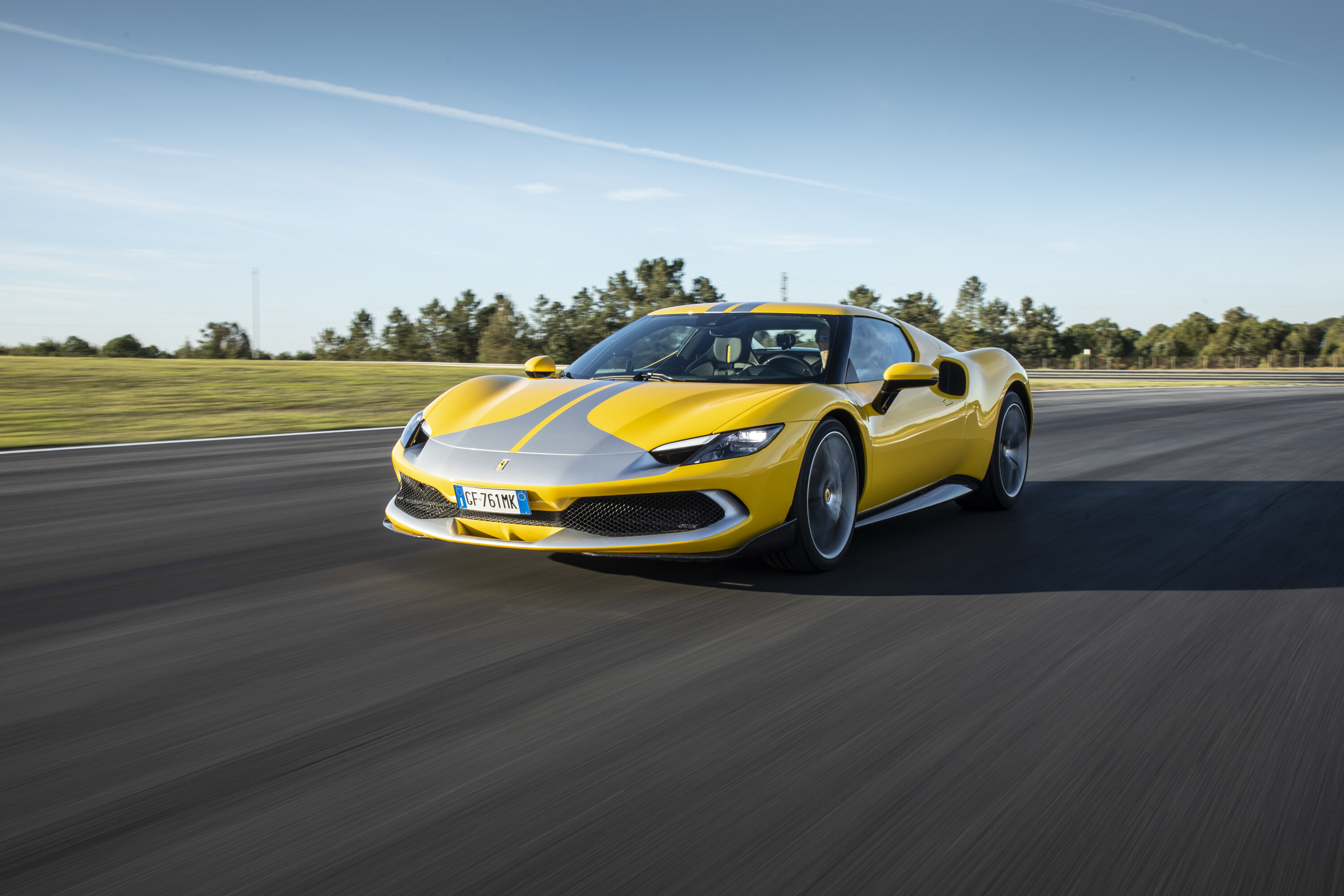
Due to a manufacturing defect, the hose connecting fuel tank may become damaged and corroded due to contact against the high voltage battery cover. If this occurs, fuel may leak in the presence of an external ignition source resulting in a vehicle fire.
What are the hazards?
A vehicle fire could increase the risk of injury or death to vehicle occupants, other road users or bystanders and/or damage to property.
What should consumers do?
Owners of affected vehicles will be contacted by Ferrari in writing, requesting to immediately stop using the vehicles involved in this recall campaign and to make an appointment with their preferred authorised Ferrari dealership or Ferrari Australia to arrange for a replacement of the fuel tank connecting pipe, free of charge.
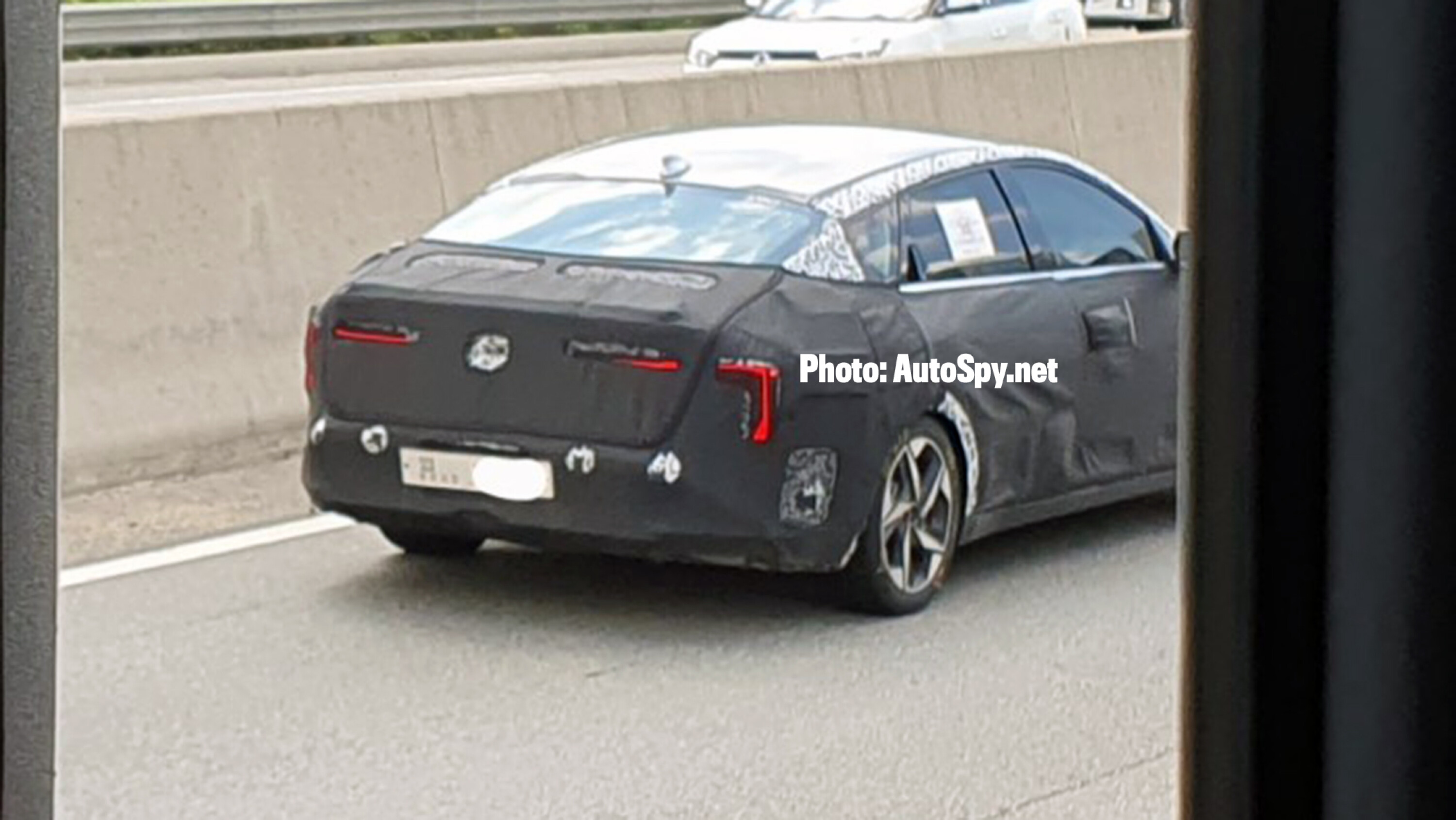
A next-generation successor to the Kia Cerato has been spied testing in heavy camouflage, offering a first clear look at what to expect from the new small car.
Snapshot
New Cerato on the way, Australian launch likely
Sleek ‘four-door coupe’ styling
What will it be called? ud83eudd14
These photos, posted to Korean website AutoSpy[↗], show the new model will take on a more sleek, coupe-like shape reminiscent of the larger Optima sedan that left Australia in 2020.
Whether ‘the new Cerato’ will actually be named Cerato appears to be up for debate, with rumours suggesting Kia will look to unify the global identity of its small car.
Right now, the Cerato name is used in Australia, New Zealand, Russia and South America – but Kia’s home market of South Korea knows it as the K3, while in the massive North American market it has long worn the ‘Forte’ badge.
A subtly restyled version of the Cerato is sold in the UK as the Ceed, available with five-door hatch and wagon forms, along with the jacked-up XCeed and the sporty ProCeed – formerly a two-door coupe familiar to Aussies, now sold as a ‘shooting brake’ wagon-like version of the tapered five-door sold here as the Cerato hatch.
1
In a global sense, it’s a complicated line-up of badges and body styles.
What that name will be is not yet known outside of Kia, but it seems likely we could expect the huge North American market to have more than a little influence over the decision.
While the government makes more than a billion dollars in revenue off speed-related fines alone, there’s also a handful of road rules that are unlikely to be enforced, but could catch you out if you happen to break them.
Each State and Territory has its own bespoke set of rules and subsequent consequences making it difficult for interstate travellers, but they’re all covered by the Road Traffic Act (1961).
We’ve delved into the fine print and found there’s more than a few that’ll catch you unaware…
1. Tooting your horn
According to Regulation 224 of the Australian Road Rules (ARR), you are actually breaking the law if you honk your horn unnecessarily.
Yep, that even includes friendly ‘hello’ and ‘goodbye’ toots!
“A driver must not use, or allow to be used, a horn, or similar warning device, fitted to or in the vehicle unless it is necessary to warn other road users or animals of the approach or position of the vehicle – or if it is being used as part of an anti-theft device, or an alcohol interlock device, fitted to the vehicle,” the rule reads.
That is, if you’re travelling between 20km/h and 80km/h along a road, you might cop a fine for unreasonably obstructing drivers or pedestrians.
According to the legislation, an example of abnormally slowly is “driving at a speed of 20 kilometres per hour on a length of road to which a speed limit of 80 kilometres per hour applies when there is no reason for the driver to drive at that speed on the length of road.”
3. Speeding up while being overtaken
Among the most infuriating moves motorists can make is to speed up just as soon as someone goes to overtake them, but it’s against the law to accelerate while you are being passed by another vehicle on a two-way road.
According to Regulation 145, “the other driver must not increase the speed at which the driver is driving until the first driver has passed the other driver, has returned to the line of traffic where the other driver is driving and is a sufficient distance in front of the other driver.” Take note, drivers.
1
4. Not leaving your handbrake on
This rule and the next one are all covered under Regulation 213 of the Act under the subheading of Making a Motor Vehicle Secure.
According to the regulation, “before leaving the vehicle, the driver must apply the parking brake effectively or, if weather conditions (for example, snow) would prevent the effective operation of the parking brake, restrain the vehicle’s movement in another way.”
Remember to add chocks to your car’s snow kit this winter!
5. Leaving your keys in the ignition and car unlocked
Not only is it a cardinal common sense rule, but the Australian Road Rules insist that you must secure your car when away from the driver’s seat.
And that’s before we get to the issue of your insurance company not coughing up if your car is stolen with the keys in the ignition.
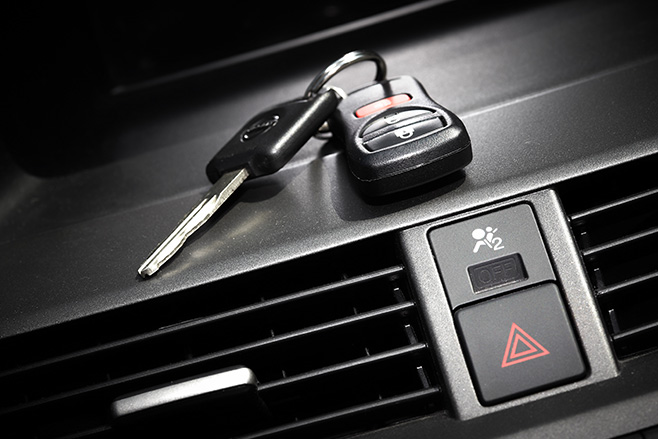
It also falls under the aforementioned Regulation 213, “the driver must remove the ignition key before leaving the vehicle. “If the driver will be over three metres from the closest part of the vehicle and there is no-one left in the vehicle, the driver must secure the windows immediately before leaving the vehicle (if the windows of the vehicle can be secured) and lock the doors immediately after leaving the vehicle (if the doors of the vehicle can be locked).”
1
6. Using your fog lights in clear conditions
Regulation 217 says it is an offence to operate either front or rear fog lights “unless the driver is driving in fog or other hazardous weather conditions causing reduced visibility.”
According to the rule, a front fog light means any light other than headlight fitted to improve visibility while a rear fog light is defined as “a light other than a brake light, a tail-light, a number plate light or a reversing light which is fitted to the rear of a vehicle to make it more visible.”
7. Reversing for too long
Regulation 296 of the Australian Road Rules, it is an offence for a driver of a vehicle to reverse a vehicle “further than is reasonable in the circumstances.”
1
8. Driving with limbs outside of the car
We’ve all put our arm on the window of a car on a hot summer’s day, but in addition to the possibility of sunburn you might also be pulled up on Regulation 268.
“A person must not travel in or on a motor vehicle with any part of the person’s body outside a window or door of the vehicle.” That is unless, your car’s so old that you must use your arm to indicate left and right turns.
9. Stopping near a postbox
Australian drivers must not impede the delivery of mail, it’s already slow enough as it is.
Specifically, Road Rule 199 states: “A driver must not stop on a road within three metres of a public postbox.”
1
10. Splashing mud on someone who is using a bus
Okay, so this is a rule specific only to New South Wales road users, but it’s so unique that we had to mention it.
According to the New South Wales legislation, “a driver must take due care, by slowing down or stopping the vehicle if necessary, not to splash mud on any person in or on a bus, or any person entering or leaving any stationary bus, or any person waiting at any bus stop.”
It’s perfectly okay, it seems, to splash someone waiting for a taxi or a tram with mud – just not somebody waiting for a bus.
More guides to help you choose the best car & tyres for your needs
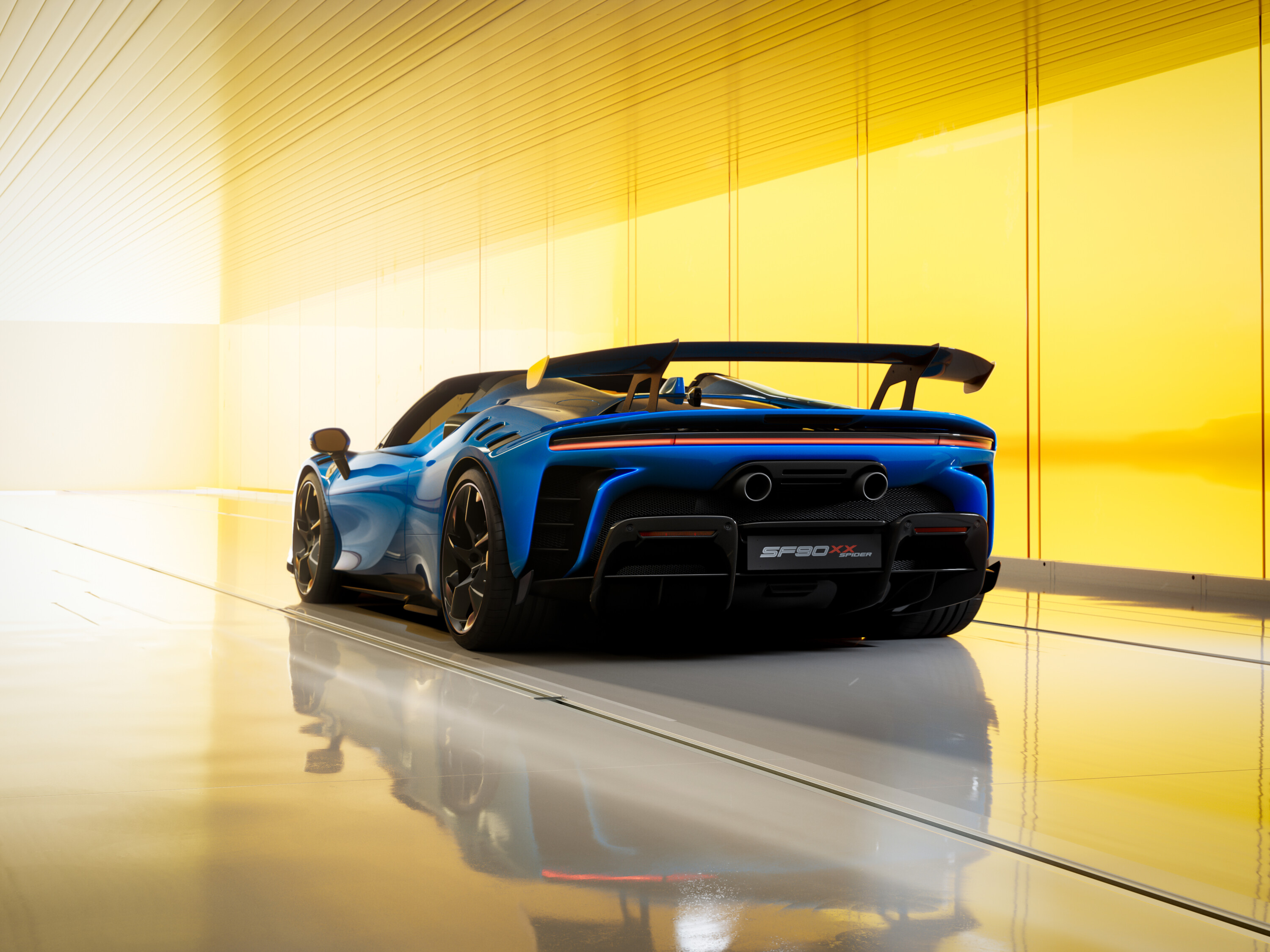
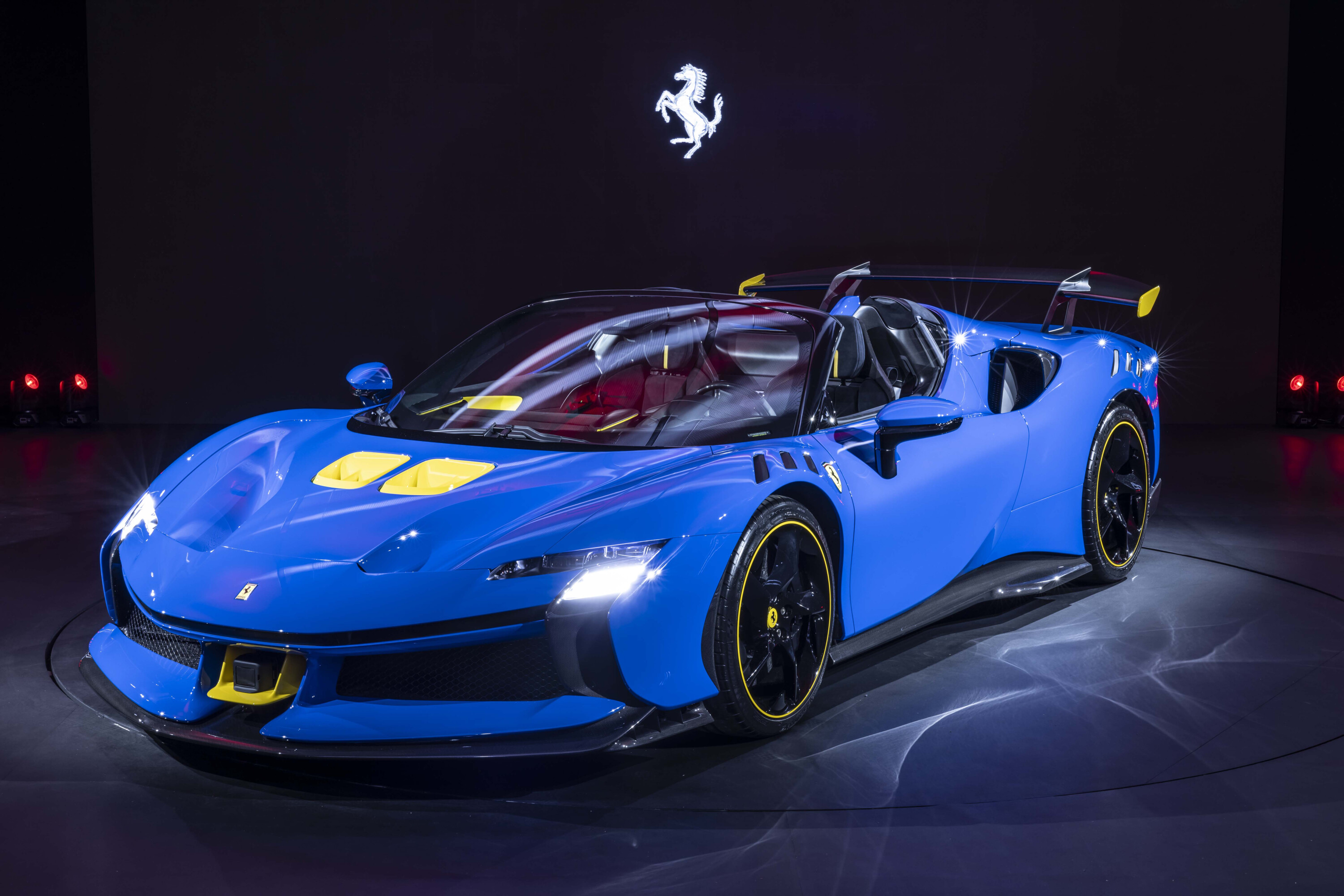
Welcome, dear internet, to an even faster, ever wilder version of Ferrari‘s fastest and wildest model, the SF90.
Dubbed SF90 XX Stradale, it’s the result of a rare collaboration between Ferrari’s Stradale and XX programmes and doesn’t only make more power than any road-going Ferrari before it, but it generates more downforce too.
It’s also the first road-going Ferrari since the F50 to sport an enormous fixed rear wing, but more on that later…
The basic recipe for the SF90 is about as you’d expect: more power, cleverer electronics, bigger brakes and more downforce. Lots more downforce.
2
At 250km/h, Ferrari says the SF90 makes an “unparalleled 530kg of downforce”, which is double what the ‘regular’ SF90 Stradale generates.
Porsche might have something to say about that “unparalleled” claim – a 911 GT3 RS makes 860kg of downforce at 280km/h – but there’s no escaping that a big chunk of the XX Stradale’s additional performance comes from its airflow management.
Available as either a coupe or a spider, the limited edition SF90 XX Stradale is, unsurprisingly, completely sold out. Just 799 coupes and 599 Spiders will be built, at a lofty price of $1.5 million and $1.7 million respectively – but the good news is that Australia has scored an allocation of both versions, so there’s a slim chance you might actually spot one in the wild.
Should that happen, it’s likely you’ll hear the SF90 XX Stradale before you see it. Part of the changes to the powertrain include a redesigned exhaust, tweaked to deliver a richer and even louder V8 soundtrack.
1
And that noise won’t only be enjoyed by people standing on the street. Similar to how Porsche altered the intakes on the insanely loud GT4 RS, Ferrari has redesigned the XX Stradale’s intake plenum, moving it closer to the occupants so those inside the cabin can revel in an extra earful of V8 goodness. Nice.
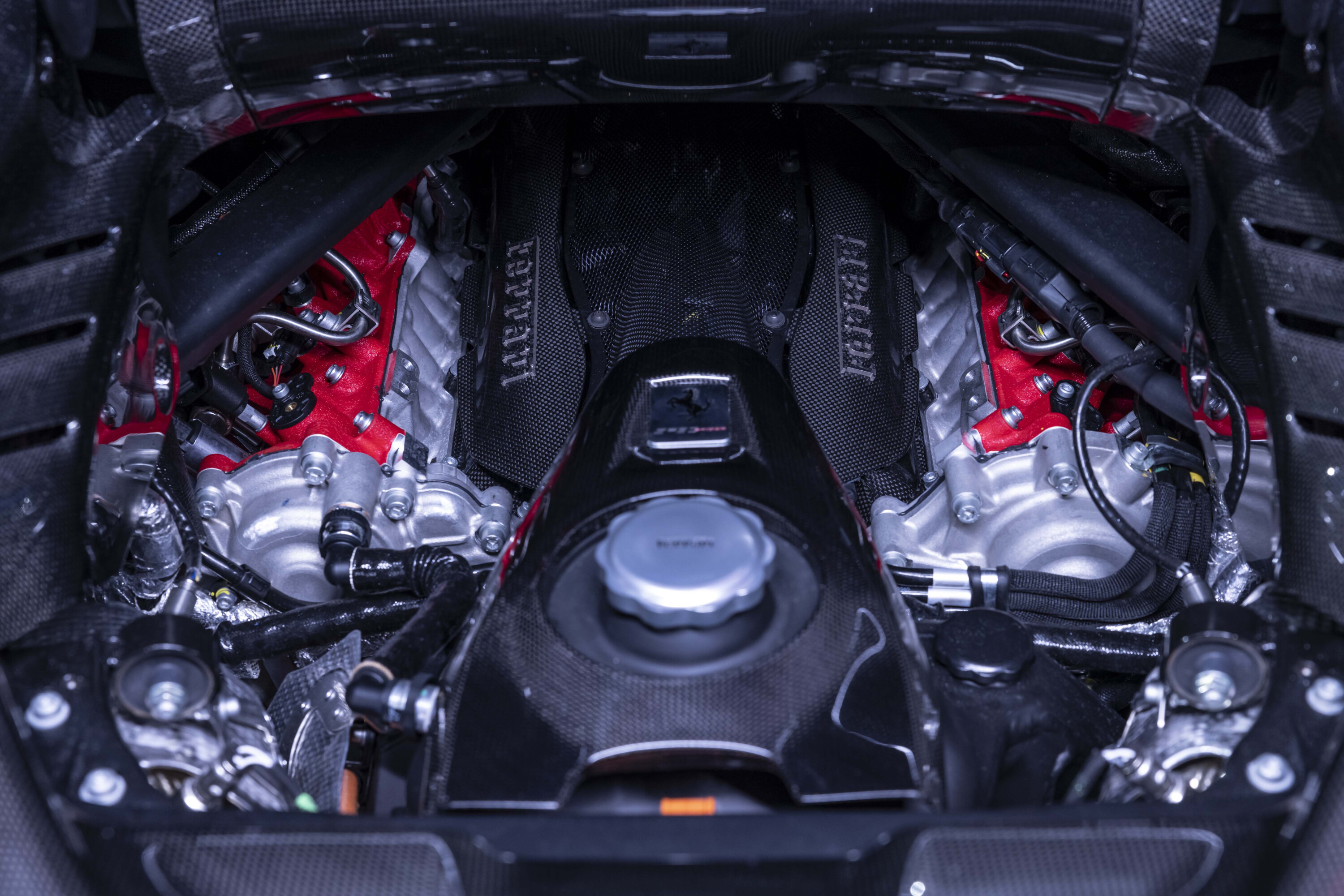
Power and torque weren’t exactly in short supply in the standard 1000hp SF90, but the XX Stradale elevates things further. Power has jumped by 30hp for a total combined output of 1030cv (747kW), with both the 4.0-litre V8 and plug-in hybrid sub-system receiving significant modifications.
Like a regular SF90, the XX Stradale’s powertrain combines a 4.0-litre V8 with a 7.9kWh battery and three electric motors – one wedged between the combustion engine and the eight-speed dual-clutch gearbox, and two other electric motors on the front axle.
1
The V8 itself now makes 12kW and 4Nm more (for a total of 586kW/804Nm), but while that jump may sound relatively small, there have been substantial changes to the engine’s internals.
The inlet and exhaust ducts have been polished to boost efficiency, the compression ratio has been increased, there are new pistons, a different machining process is used for the combustion chamber, and the regular SF90’s secondary air system has been deleted to help shave 3.5kg off the engine’s weight.
The shift logic for the eight-speed dual-clutch is also new, designed to pair with the redesigned exhaust for more theatrical noises on the overrun as soon as you lift off the throttle.
1
Where the XX Stradale’s powertrain really takes things up a notch, however, is in its hybrid system.
The motors themselves are more powerful (171kW up from 162kW) but it’s new software for the delivery of the electronic boost that drivers will notice most.
In Qualifying mode, an additional ‘boost function’ is now available to deliver an extra hit of electric grunt with Ferrari claiming it’s designed to arrive “at the critical moment when the car is exiting a bend”. Up to 30 bursts of extra boost are available, and Ferrari says the new feature alone shaves 0.25s off the XX Stradale’s lap time at Fiorano.
Speaking of which, Ferrari is remaining tight lipped for now about just how fast the XX Stradale is around its test track. Not slow, would be our guess.
1
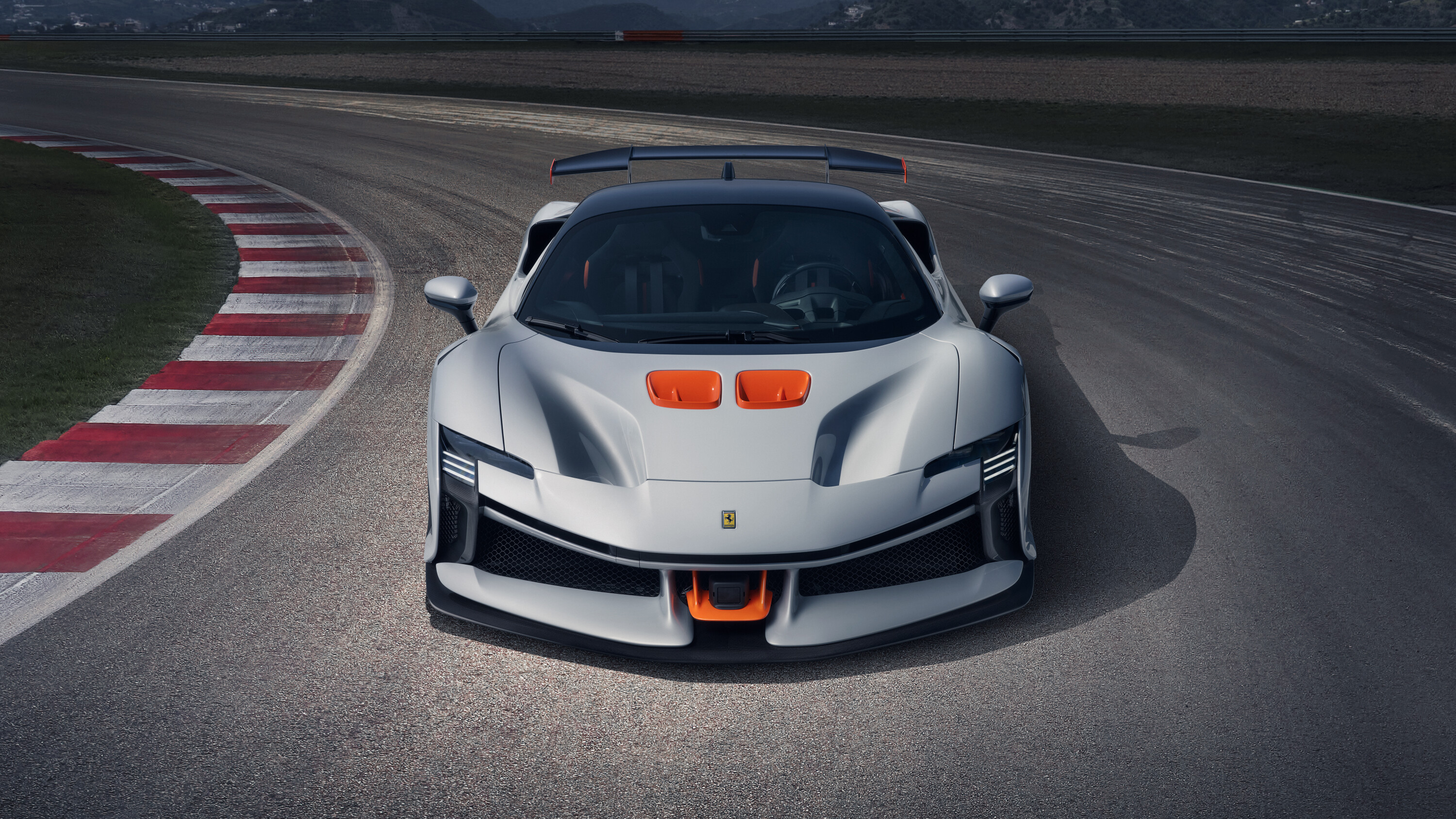
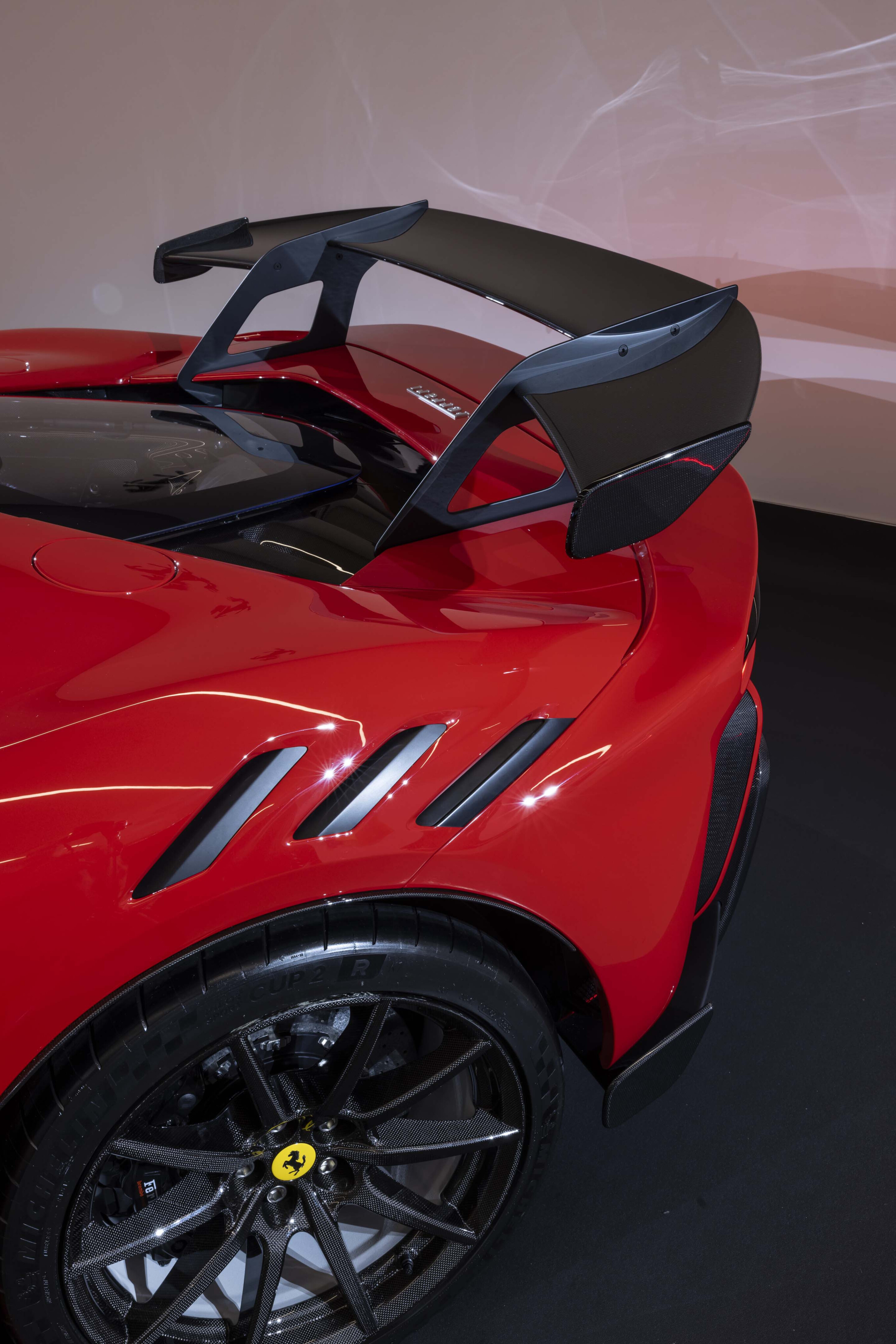
Other aero changes include an angrier nose with a larger front splitter, a redesigned floor, larger rear diffuser, and three new louvres on each of the front and rear wheel arches.
As for other measures of performance, the XX Stradale can hit 100km/h in 2.3sec and scream through 0-200km/h in 6.5s, with both of those markers being a 0.2 second improvement over the regular car. Top speed is 320km/h which is actually 30km/h less but that’s the downside of all that extra aero…
Perhaps the most obvious aero addition is the fixed rear wing which actually isn’t fixed at all thanks a moveable section that has two configurations: LD (low drag) and HD (high downforce). In HD mode Ferrari says the rear wing alone generates 315kg of downforce at 250km/h.
Other aero changes include an angrier nose with a larger front splitter, a redesigned floor, larger rear diffuser, and three new louvres on each of the front and rear wheel arches.
1
Design wise, aside from the additional vents, wings and intakes, the easiest way to spot an SF90 XX Stradale is by its full width light bar at the rear which is a big departure from the regular car’s quad tail lights.
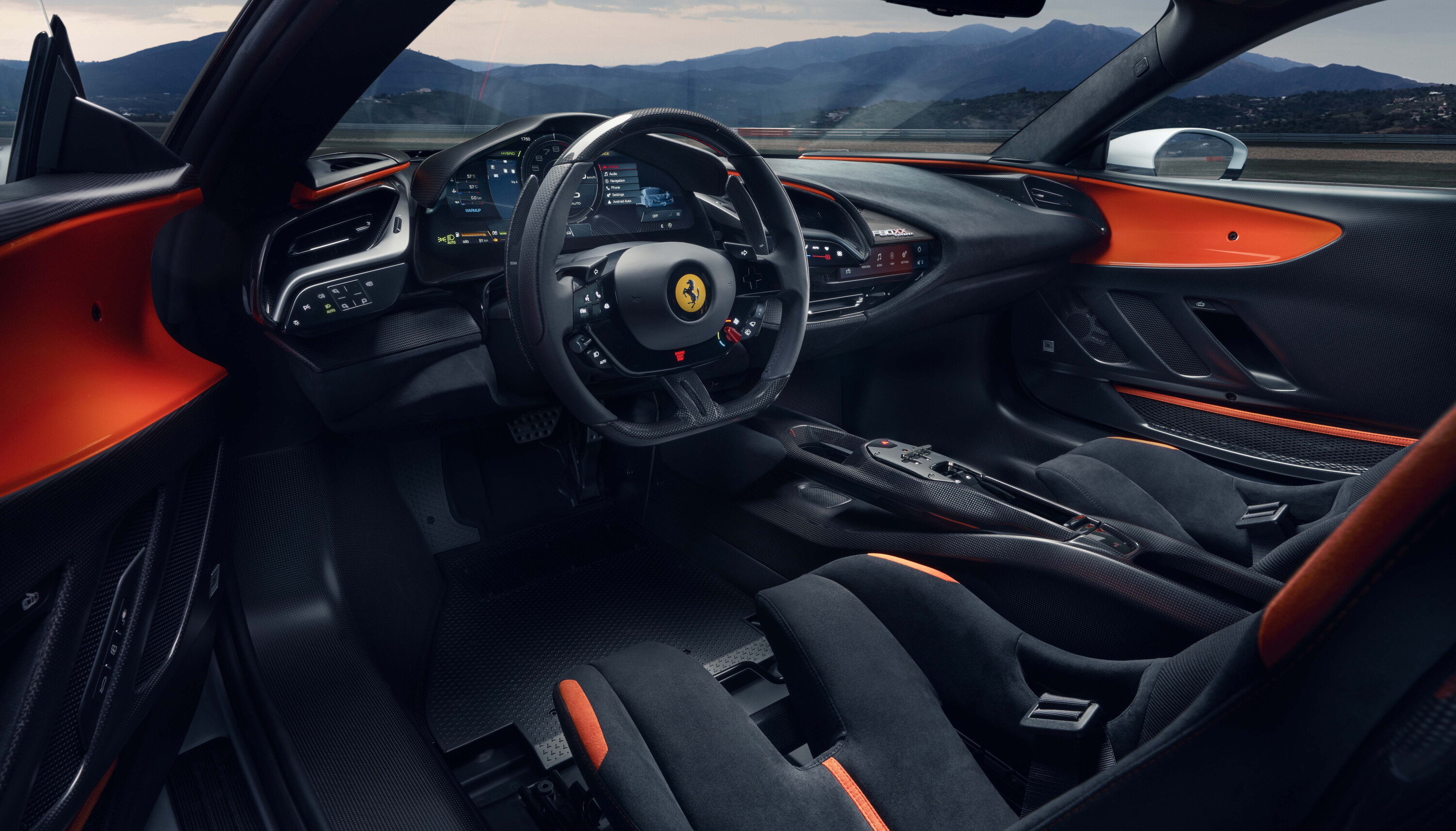
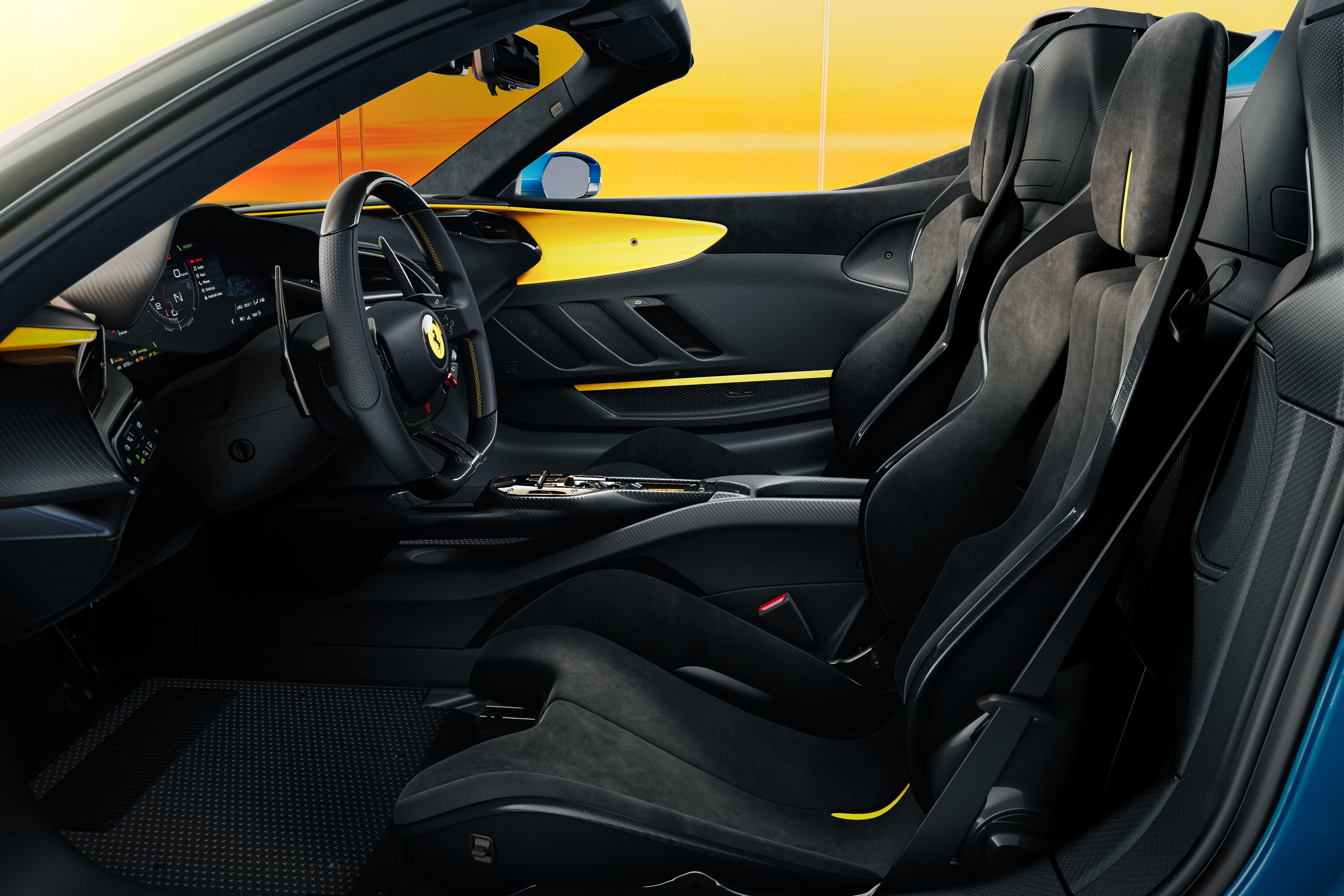
Inside, Ferrari has worked hard to reduce weight – the dry weight is 1560kg, which is a 10kg improvement – through an increased use of carbon and lighter carpets. But perhaps the most interesting element is the new design for the seats.
Said to be the lightest seats Ferrari has ever made, they look like a single-piece carbon bucket but special elastic elements actually allow the backrest to be adjusted for additional comfort.
As for when the SF90 XX Stradale will arrive Down Under? Expect deliveries to kick off sometime in 2024. Before that, let us know what you think about Ferrari’s new flagship supercar in the comments…
Australians love value from their motors. Not cheap cars, mind you, but rather those that deliver plenty of kit and space for a lot less than you might think.
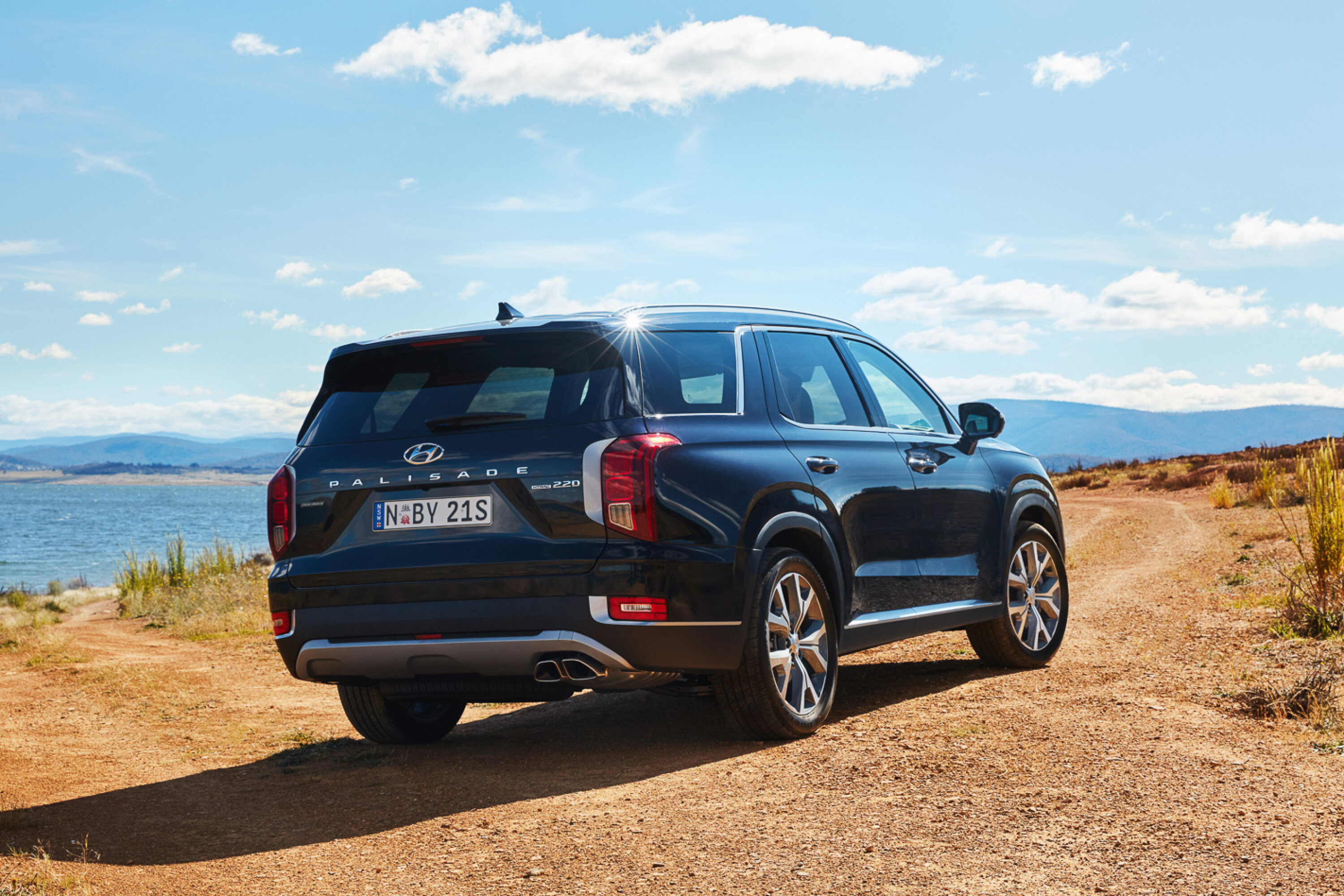
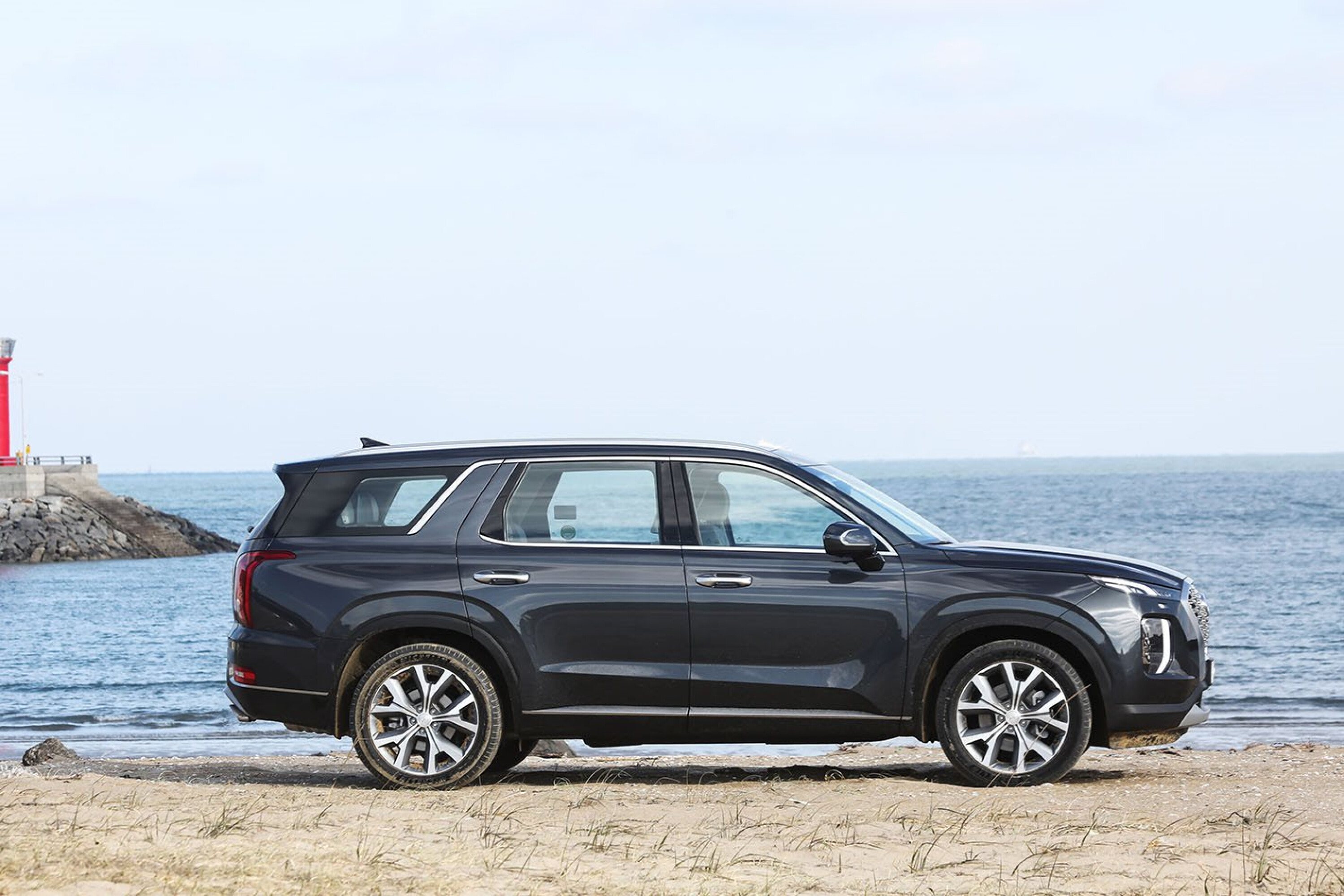
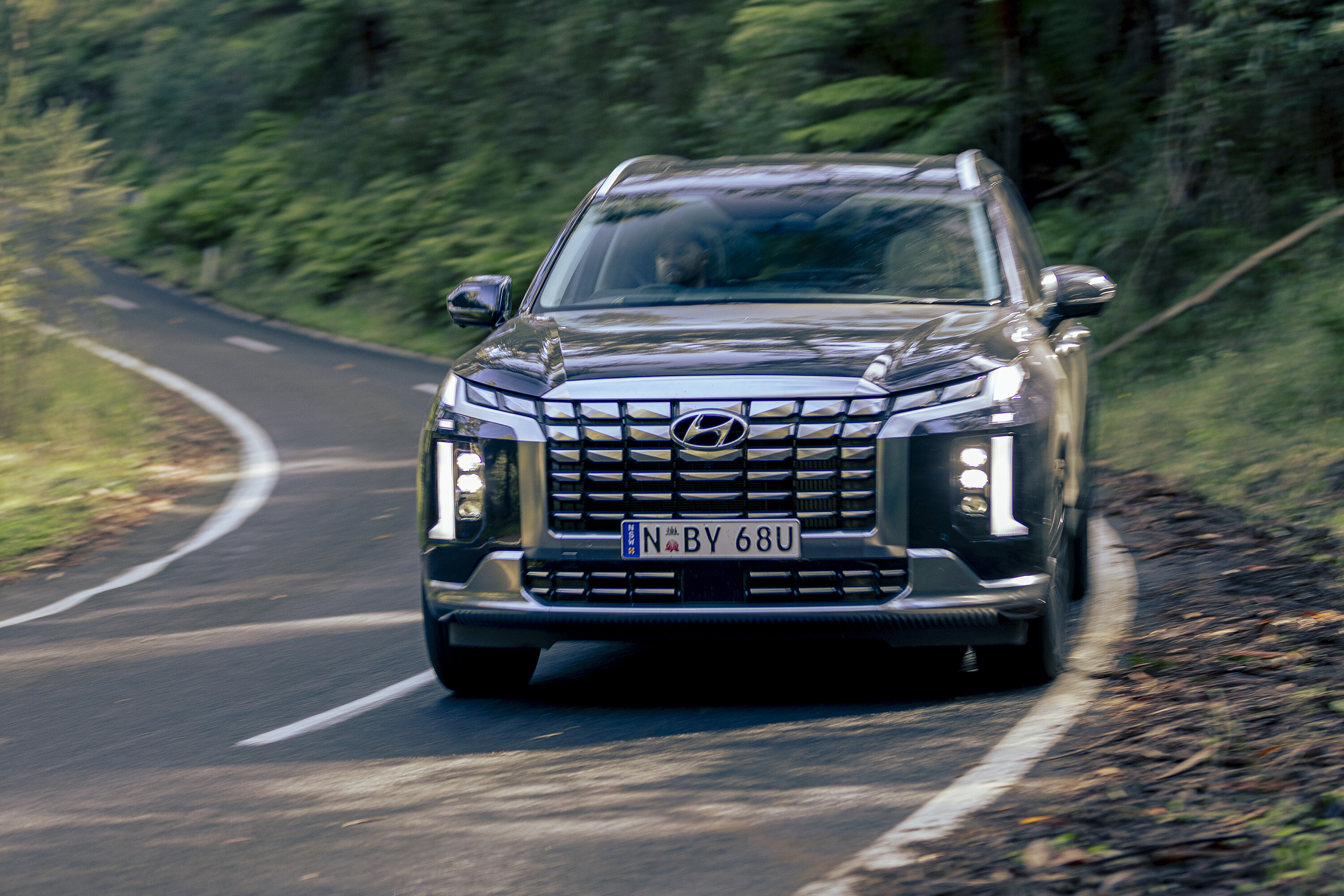
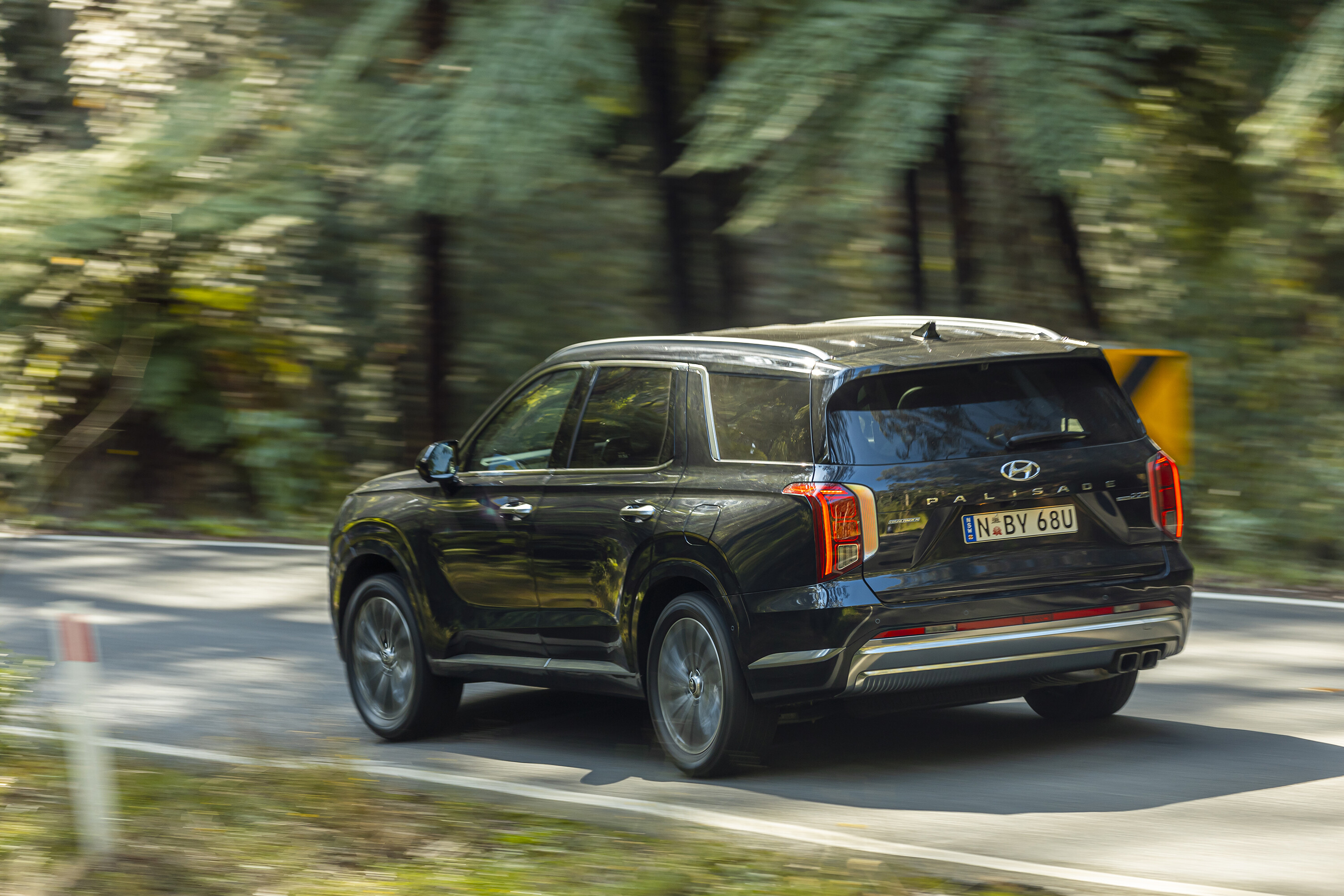
Tony O’Kane compared this genre to the ‘McMansion’, and he wasn’t wrong. It’s also the secret to the Hyundai Palisade’s enduring success.
Initially knocked with a four-star ANCAP safety rating in its earlier guise, an update in August 2022 saw the Palisade score the must-have five stars, with improvements in technology and appearance along for the ride.
It didn’t change the Palisade’s value equation, though – the Palisade remains a stand-out player in the large seven- or eight-seat SUV category.
What body styles are available for the Hyundai Palisade?
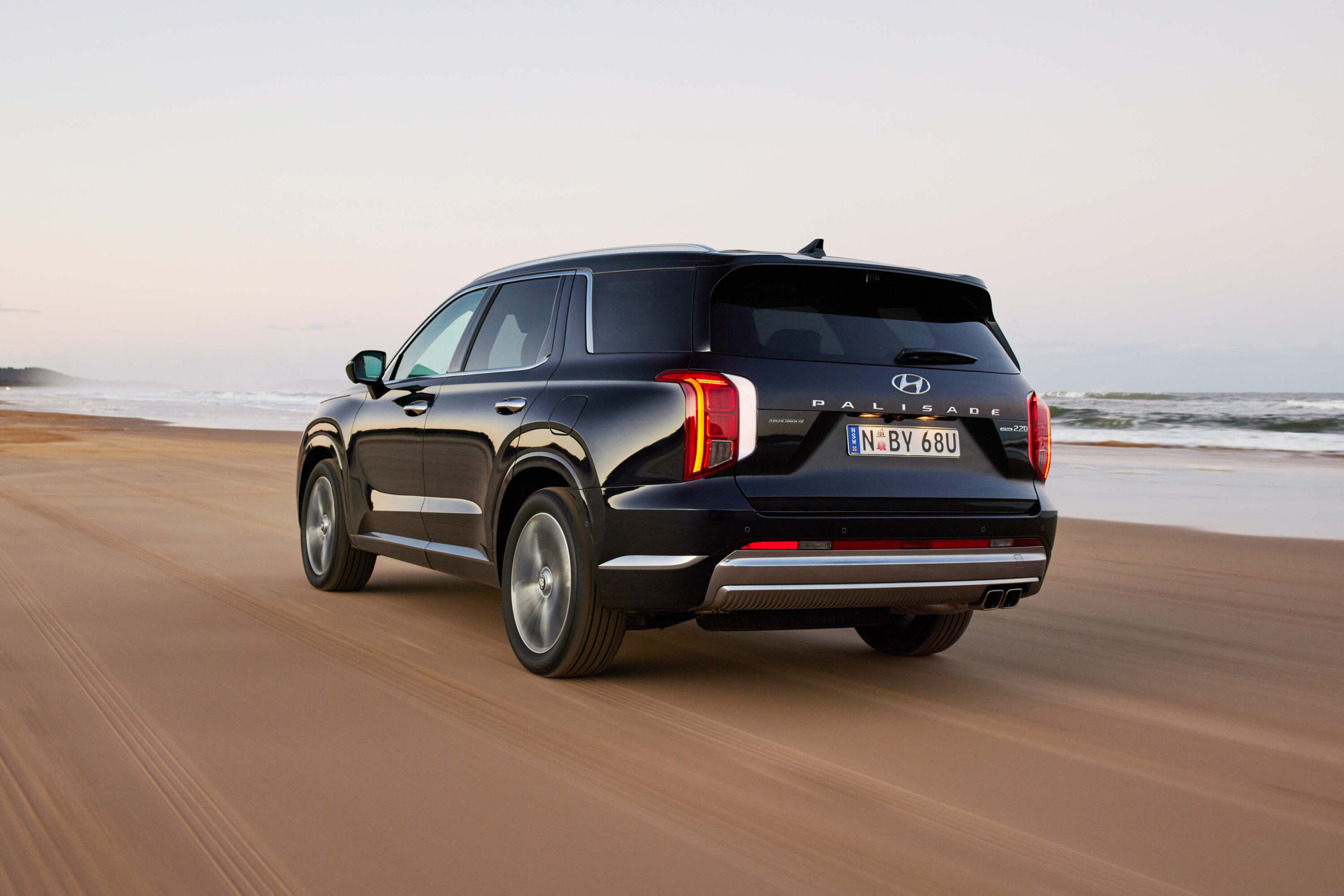
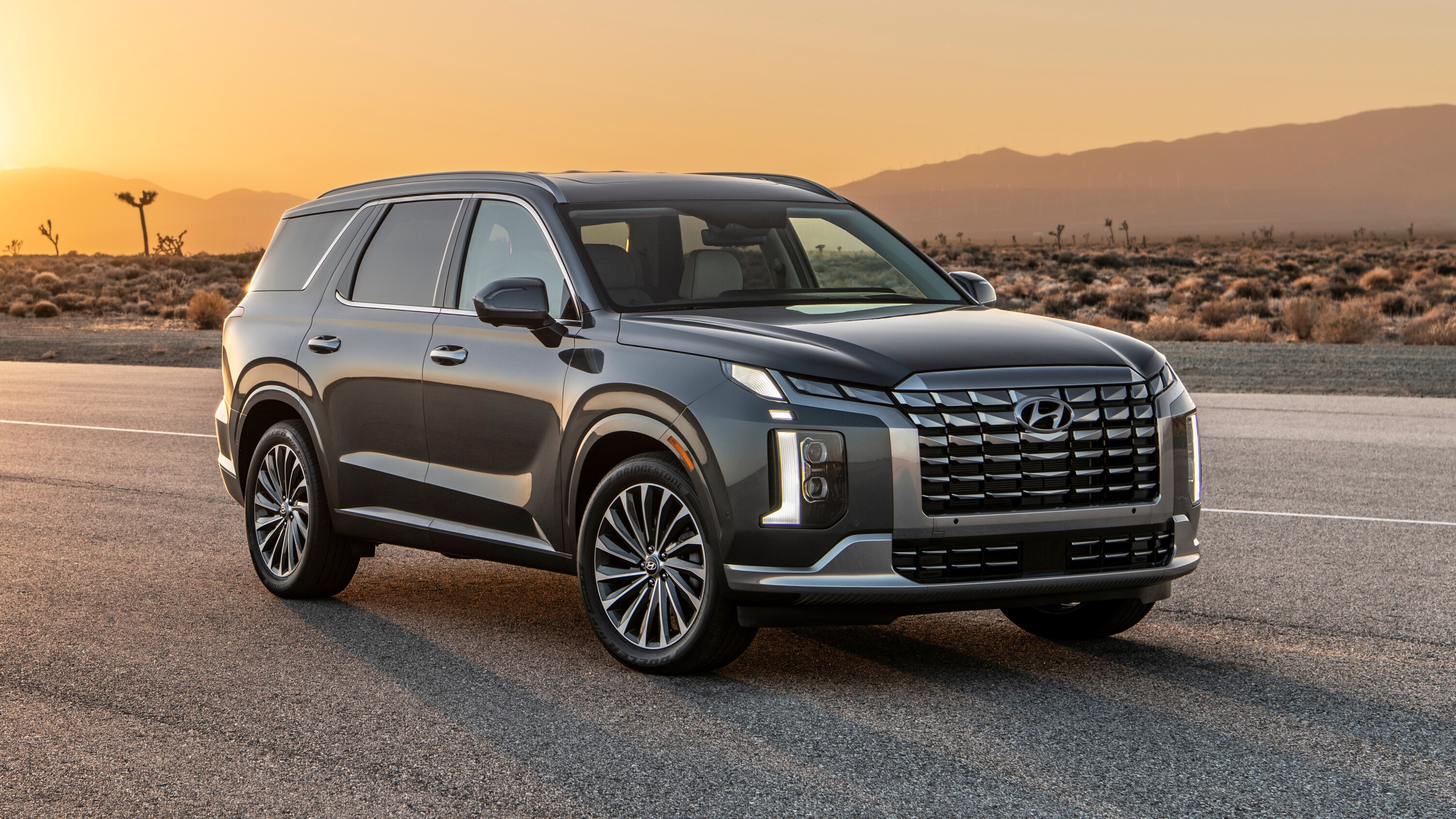
The Hyundai Palisade is a five-door large SUV with seating for seven or eight occupants, depending on specification.
1
What features are standard in every Hyundai Palisade?
The features listed below are standard in the entry-level model and will appear in higher-grade models unless replaced by more premium equivalent features.
2023 Hyundai Palisade Elite features
10-way power driveru2019s seat adjustment
Driver talk function
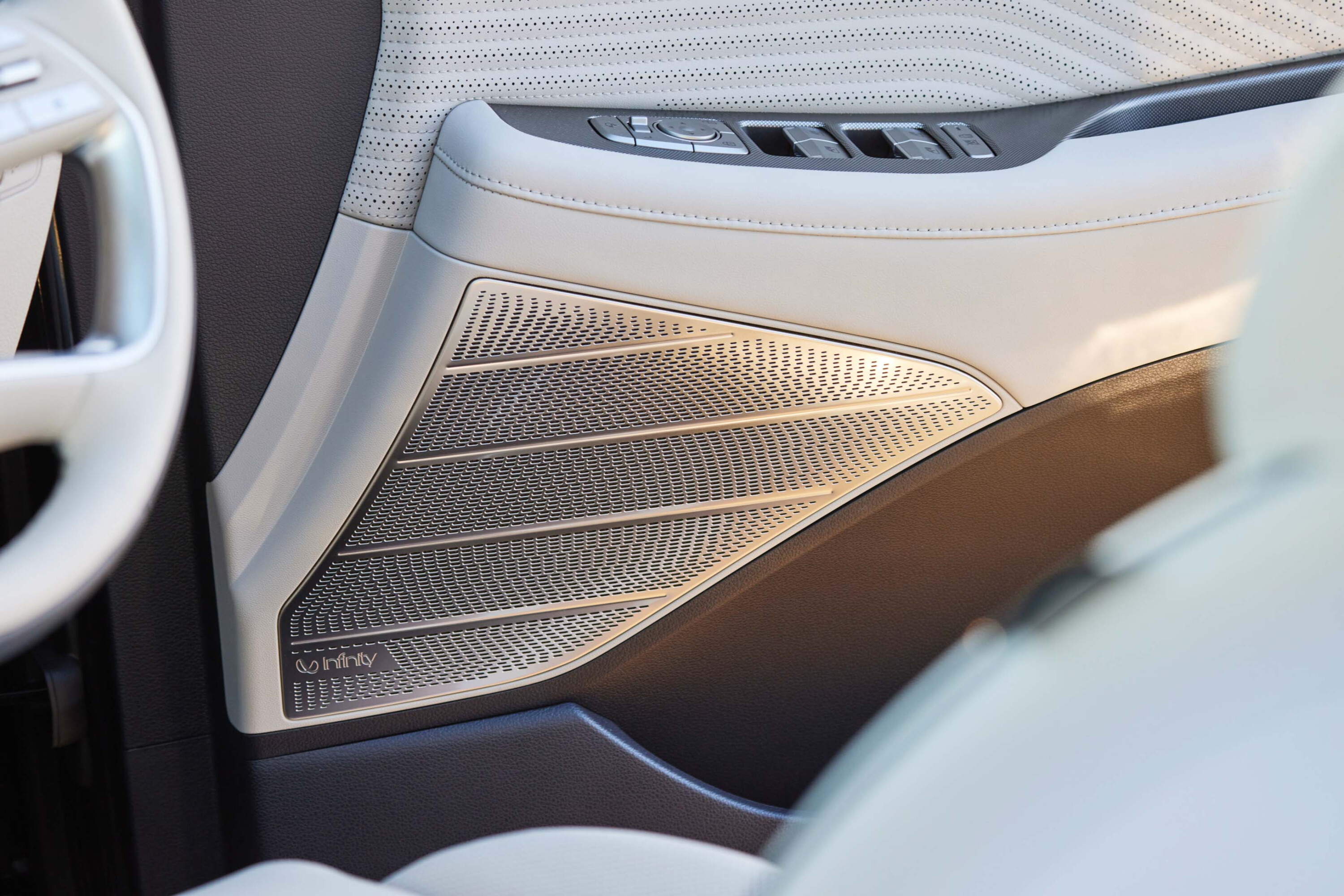
12 speaker Infinity audio system
Four-spoke leather steering wheel
12.3-inch Instrument cluster
Hyundai Bluelink smartphone connectivity and telematics
12.3-inch touchscreen display
LED headlights, tail-lights and daytime running lights
With only two Palisade variants now available the choice is pretty simple, and the up-spec Highlander justifies its $6000 premium with a stack more creature comforts and quilted upholstery. It feels ‘Range Rover lite’ – just what buyers in this segment want.
The ritzy Hyundai Palisade Highlander adds:
2023 Hyundai Palisade Highlander features
Nappa leather seats (available in Warm Grey two-tone, Dark Khaki two-tone or Black monotone)
12-way power driver’s seat with two-position memory, 8-way power passenger’s seat
Heated and ventilated front and second-row seats
Body-coloured cladding and bumpers
Highlander exclusive skid plates and chrome grille with hidden DRL
Digital electro-chromatic mirror with full display
Remote smart parking assist
Rain-sensing wipers
Dual sunroof with tilt function
1
For no extra cost, you can specify both the Highlander and Elite with captain’s chairs in the second row, allowing easier ingress/egress to the three-wide back row.
Pre-facelift examples of the Hyundai Palisade were rated four stars by ANCAP, though a five-star ANCAP safety rating applies to models delivered from August 2022 onwards.
It was the mid-life introduction of a front centre airbag (that required significant reengineering and brought the Palisade’s total to eight) and improved radar-and-camera auto emergency braking (AEB) system that bolstered the Palisade’s safety credentials.
Further changes include an intelligent speed limit information system (that’s rather if nannying – sounding an alarm four times at just 1km/h over the limit) and multi-collision braking assist.
2023 Hyundai Palisade standard safety features
Eight airbags
Multi-collision brake avoidance
Lane trace assist
Lane departure warning
AEB with day/night pedestrian, day cyclist detection and junction AEB
Traffic sign recognition with intelligent speed limit assist
Auto high beam
Adaptive cruise control with stop-and-go
Driver attention monitor
Safe exit assist
In addition, the Highlander grabs a few nice-to-have features that help when manoeuvering this behemoth. These include a blind-spot view monitor in the digital driver’s display, a 360-degree surround-view monitor, and low-speed reverse AEB.
How comfortable and practical is the Hyundai Palisade?
When designing a vehicle that’s nearly five metres long, manufacturers can often rest on their laurels when it comes to packaging – not so Hyundai. The 2023 Palisade manages to jam all manner of creature comforts and clever storage spaces – not to mention passenger space – into its generous body.
It’s also pretty easy getting back there (even without captain’s chairs)…
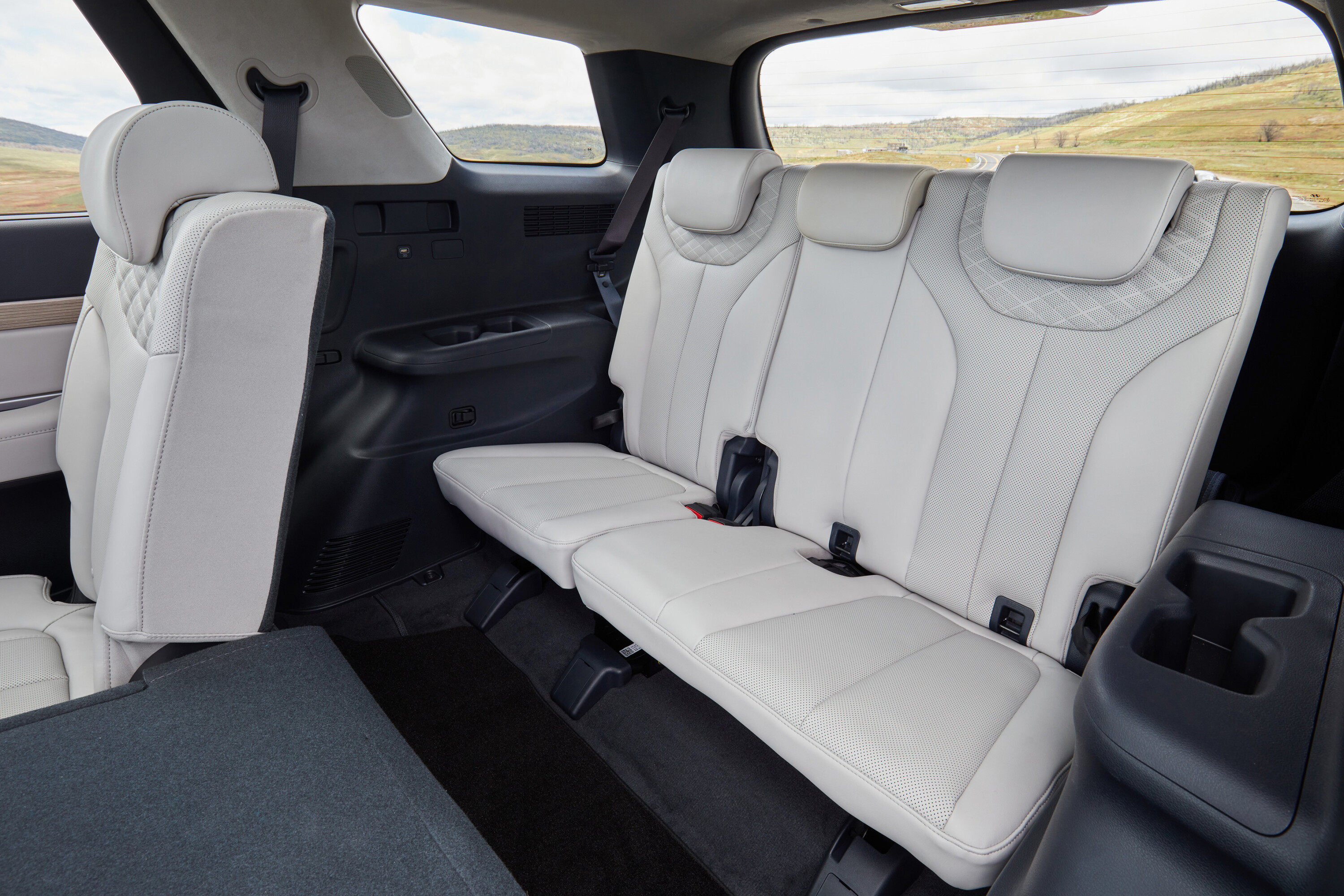
Starting things off is the Elite with 16 cup holders and seven USB charge points to its name, around 30 per cent of which can be found in the oft-forgotten third row (there are vents, too) which is spacious – even for six-foot adults. Three across the back would be a squeeze, but two are remarkably comfortable.
It’s also pretty easy getting back there (even without captain’s chairs) as the Palisade has an electronic button that releases both the backrest and the slider, and with the seat slid forward there’s plenty of room to step up into the rearmost seats.
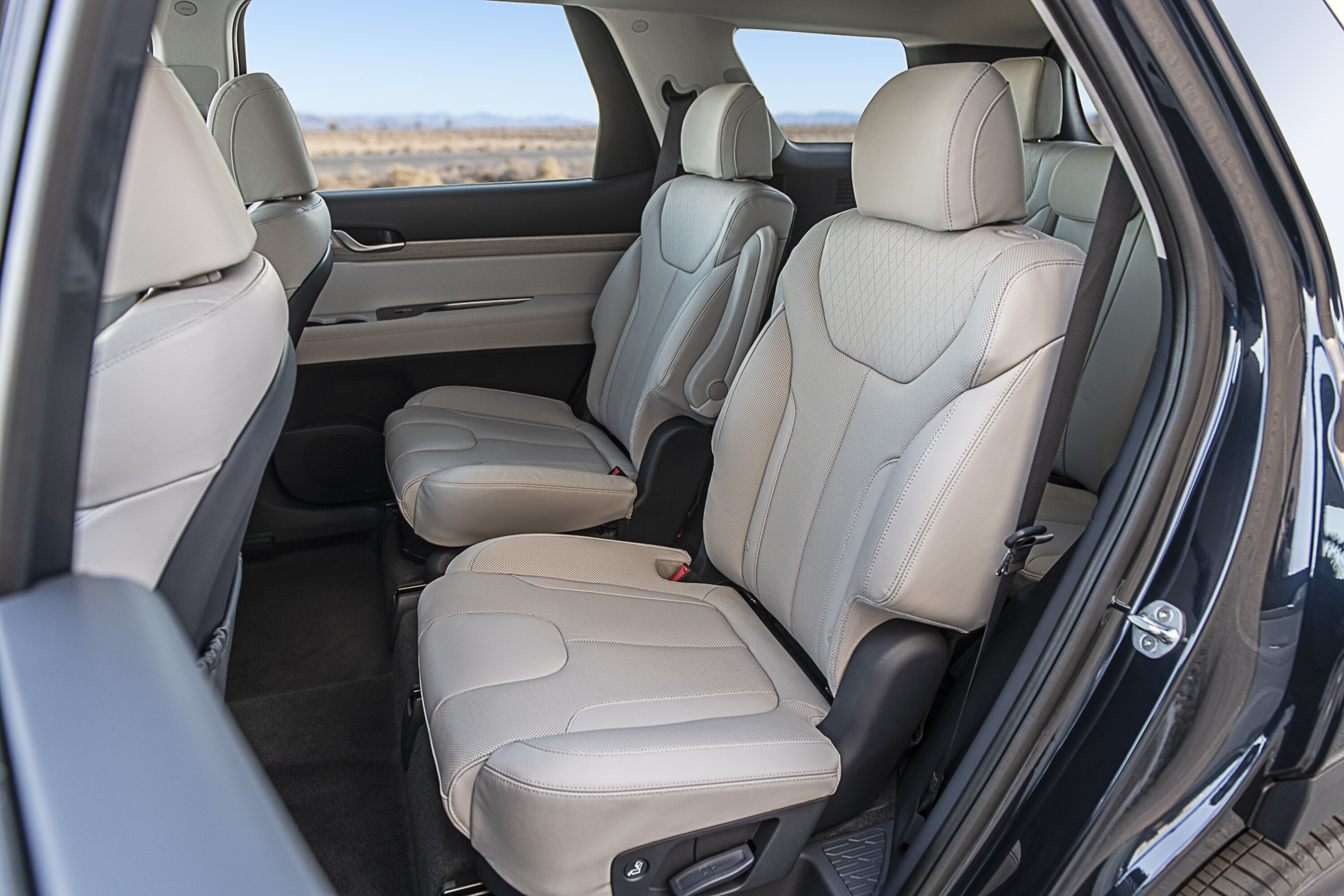
The second row is extremely accommodating with heated outboard seats even in the ‘entry’ Elite. It’s also packed with quality materials backed by apparently excellent build quality. The Palisade’s rear bench can slide and the backrest tilt to balance cargo and passenger space as needed.
It features a glut of child-carrying options, too, with three top tether points in the second row and two in the third backed up by ISOFIX anchors (two for the second row and a single for the third).
1
… it truly does feel ‘Range Rover-lite’
Amenities don’t stop in the middle with USB charge ports in the shells of the front seats to keep cables from dragging on the floor, plus a third climate zone with fan control. The Palisade Highlander adds integrated sun shades as well as quilted Nappa leather upholstery with ventilation for front and second-row seats – it truly does feel Range Rover-lite.
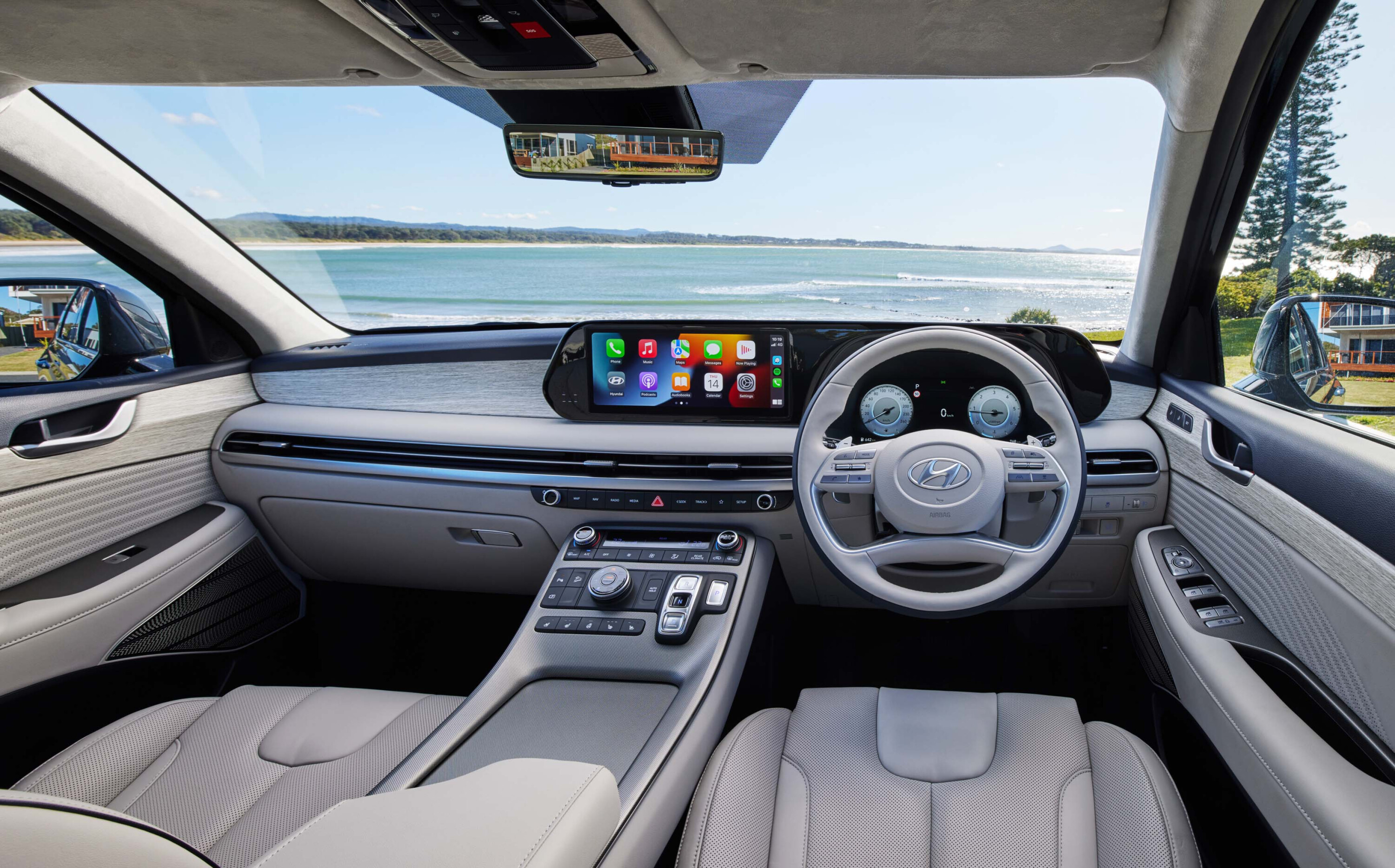
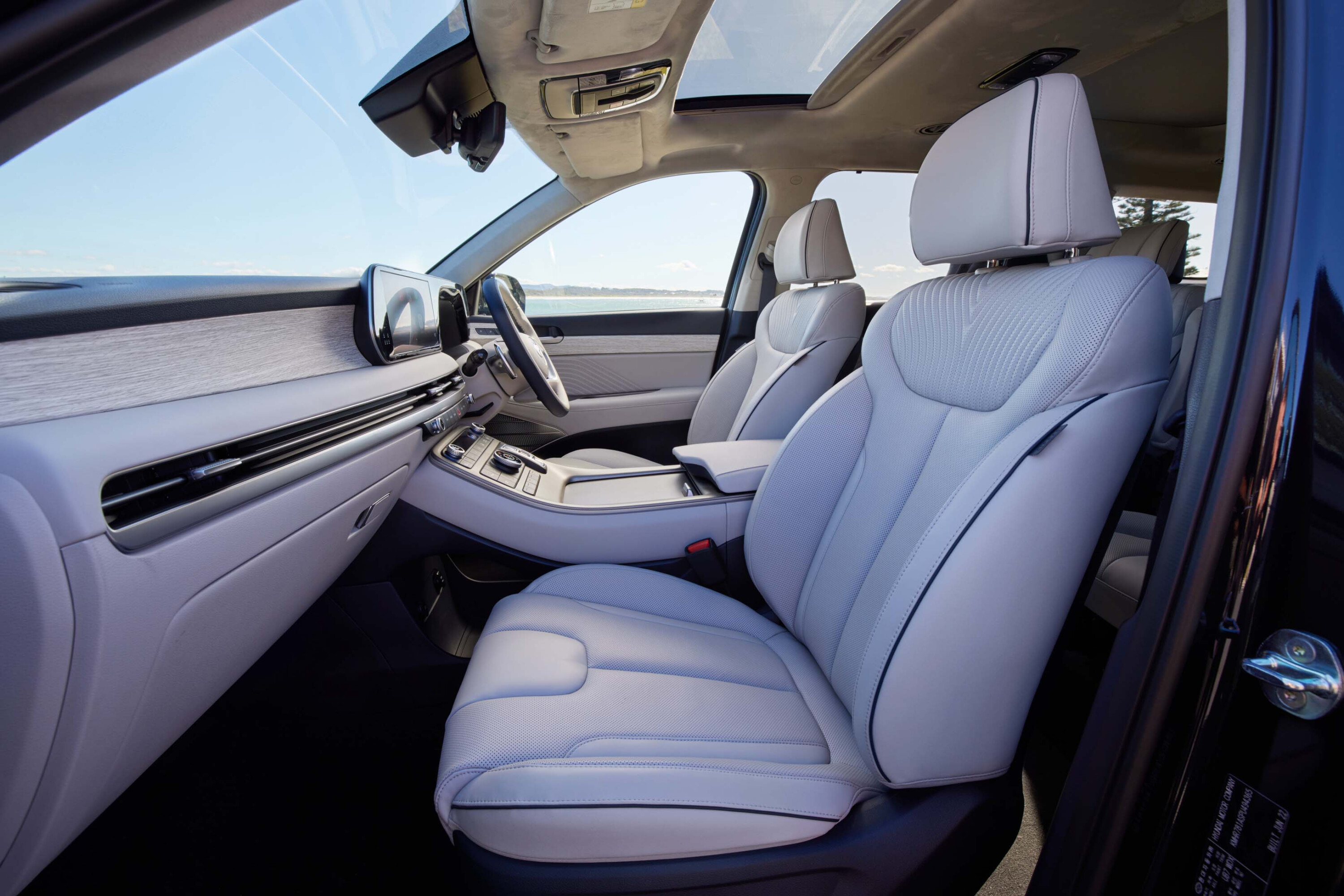
In the front, the seats are broad and supportive with good adjustment in either grade, while the leather-smothered dashboard and generous appliqué of soft-touch materials give an impression of premium in the Palisade that’s missing from the Toyota Kluger and Nissan Pathfinder.
Not that it’s a trade-off for practicality, as the centre console has a retractable lid under which you can hide the cup holder area and phone charging pad. A cavernous cubby beneath the centre armrest is great for storing valuables, while a capacious under-console tray easily accommodates a tissue box or handbag.
How much boot space does the Hyundai Palisade offer?
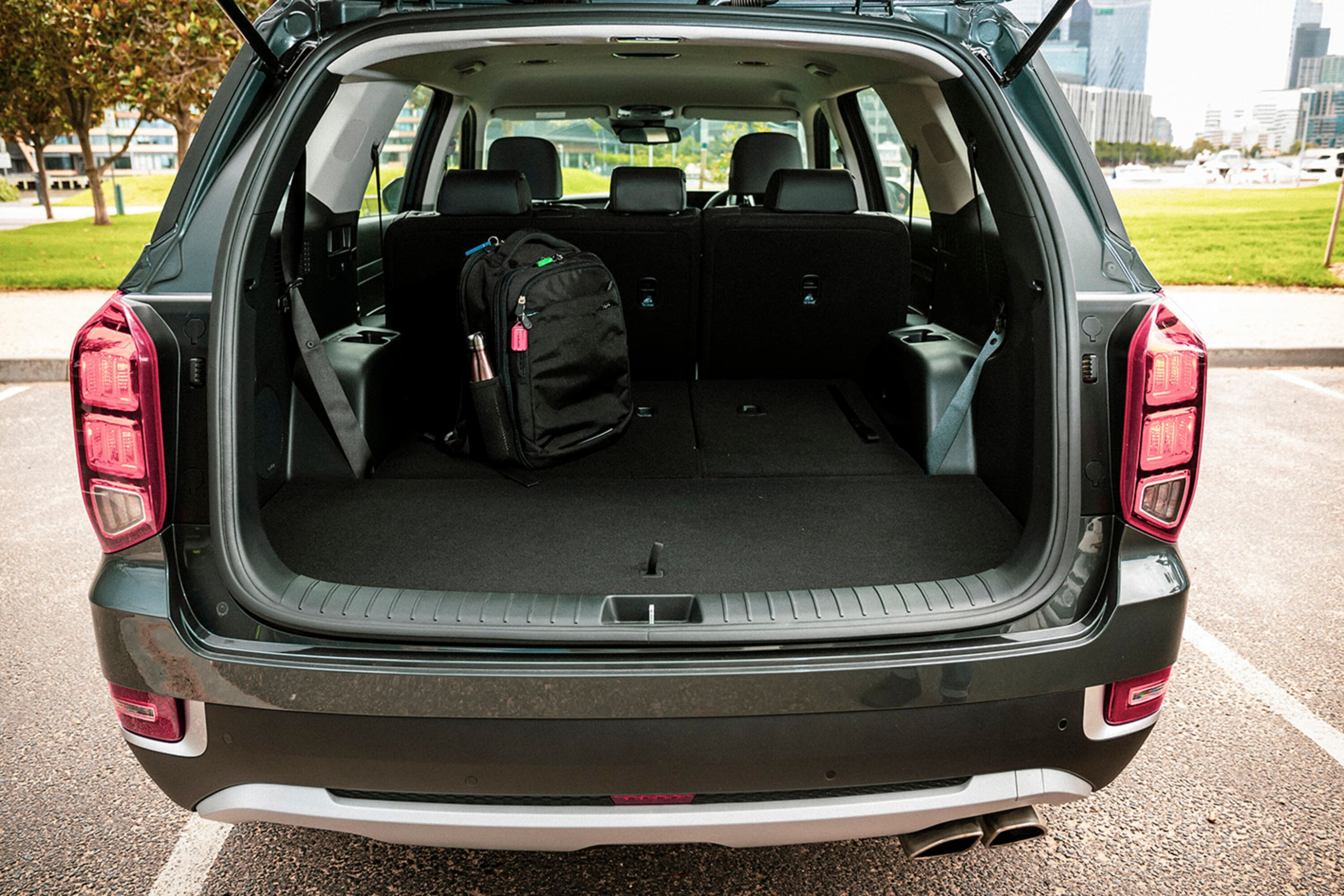
Unlike some rivals, the Hyundai Palisade retains a truly usable boot with three rows of seating in place, offering 311 litres (VDA) of capacity.
Stowing the third row brings that to 704 litres, but the Palisade’s boot has even more to give.
Beneath the floor is a storage compartment that houses the cargo blind and a rolled-up floor mat for when you have the third row stowed to minimise debris dropping through the gaps. There’s a light in the boot, as well as electronic buttons to fold the second row flat.
The Palisade’s full-size alloy spare wheel is slung beneath the vehicle and is relatively easy to access in the event of a puncture.
Nothing in the Palisade’s class offers dynamic nirvana, but this sizeable SUV manages to blend decent road-holding with a very agreeable ride.
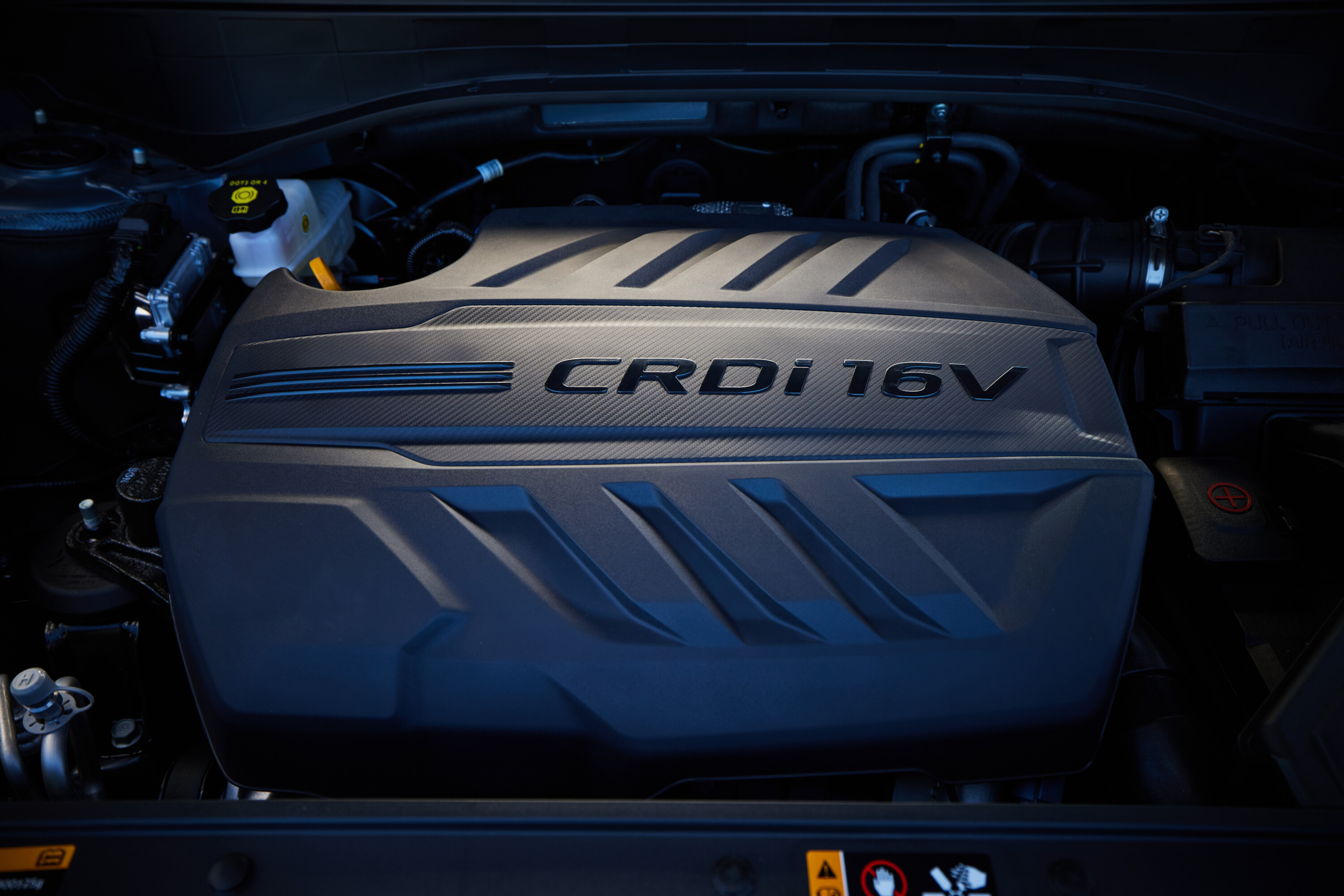
There are two engines in the Palisade, and the one we wholeheartedly recommend (and that the public is putting their money towards) is the turbo-diesel.
Although the 217kW/355Nm 3.8-litre direct-injected petrol V6 is a smooth and willing engine, it’s hamstrung by being front-wheel drive. In a vehicle that weighs between 1911-1984kg with soft suspension, wheelspin is a common occurrence in the wet. It’s also very thirsty, rated at 10.7L/100km ADR combined or a whopping 14.9L/100km on the urban ADR cycle.
1
Oil burners may be out of vogue, but with no shadow of a doubt, the Palisade’s turbo-diesel is preferable to the thirstier V6 petrol.
And not least because diesel brings with it the security of all-wheel drive. With a 440Nm torque peak backed up by 147kW, the 2.2-litre iron block diesel feels a lot nippier and less stressed in the real world than the petrol.
The more expensive four-cylinder diesel does introduce some clatter at idle but, once on the move, it’s refined and well-behaved (for its type) with overall noise, vibration and harshness levels relatively low. Wind noise is impressively absent for such a brick, too. Paired with the Palisade diesel is an eight-speed automatic transmission that selects gears swiftly and decisively.
1
Changing through the eight drive modes (four on-road and three off-road) affects the gearbox logic; we’ve found Smart or Comfort to be the most natural for steering and powertrain calibration.
Sand, Snow and Mud modes also tweak the HTRAC all-wheel drive system’s torque bias, though without locking front or rear differentials the differences are negligible in practice.
The Palisade’s tough American looks may give the impression of a vehicle with marshmallows for springs, but its road manners translate enormously well to Australian roads. The only place the Palisade occasionally suffers is at low speed over small amplitude bumps where its large and heavy wheels amplify small shocks into the cabin.
Somewhat ironically, the Palisade is one of few Hyundais that hasn’t been subjected to local suspension tuning. Yet this big barge manages to be athletic and consistent enough to make confident progress on pockmarked backroads while retaining a level of plushness and isolation over Australia’s horrid country road surfaces.
1
Hyundai’s new four-spoke steering wheel is hooked up to a light steering system that masks the Palisade’s considerable mass.
This is ideal in town and on motorways, where Palisades are likely to spend the bulk of their lives.
Forward visibility is decent over the Palisade’s tall bonnet, while rear and blind-spot visibility is aided by a 360-degree surround-view monitor and blind-spot cameras on the top-spec Highlander.
Which Hyundai Palisade engine uses the least fuel?
The Hyundai Palisade is a big, big SUV – and that’s reflected in its fuel use.
Opting for the 3.8-litre petrol V6 would see you using 10.7L/100km if you could replicate the ADR 81/02 combined consumption test – in reality, consumption is even higher in the suburbs.
As off-trend as diesel engines are, they make sense in this vehicle type. The Palisade diesel’s combined ADR figure is a more reasonable 7.3L/100km.
The Hyundai Palisade is rated to tow a 2200kg braked load with either engine and unbraked towing capacity maxes out at 750kg.
Take care, however, as the Palisade’s maximum permitted tow ball weight is 100kg with the standard towing kit, and only the diesel is available with the heavier-duty 180kg tow ball set-up.
1
How long is the warranty and what are the Hyundai Palisade’s servicing costs?
The Hyundai Palisade is covered by a five-year / unlimited-kilometre warranty.
Palisade servicing is due annually or every 15,000km for either engine after an initial 1500km check-up. Over the first five years, each service is capped at $399 for the 3.8-litre petrol V6 or $489 for the 2.2-litre turbo-diesel.
Hyundai also offers the ability to pre-pay for servicing packages, though the cost is the same as pay-as-you-go. Five years/75,000km for the V6 costs $1995, and the diesel $2445.
Which version of the Hyundai Palisade does Wheels recommend?
Value is what it comes down to here. As Tony O’Kane put it, the fit-for-purpose Palisade “gives you an eight-course banquet with a three-course price tag”.
It comes down to which Palisade best fits your budget. We’d be inclined to spend the extra cash on the AWD diesel, rather than jumping to a Highlander Petrol. If you can stretch for the range-topping diesel, we say do it – there ain’t much under $80K that gets this closer to Range Rover chic than a Hyundai Palisade Highlander.
With the latest update, Hyundai introduced speed limit assist functionality that beeps when you exceed the posted limit.
Clever in theory, but it’s not smart enough to detect time-sensitive areas such as school zones – so if you drive through a school-hours 40km/h area on a Sunday afternoon, it will beep at you for travelling at the prevailing speed limit.
It wouldn’t be so annoying if you could disable the system for good (should you wish) but, for now, it takes several taps on the touchscreen every time you start the car.
A petrol AWD model would also be appreciated, but according to Hyundai, the V6 can’t be packaged with that in right-hand drive markets. The issue is solved for the smaller Santa Fe, which is available as an AWD petrol-electric hybrid.
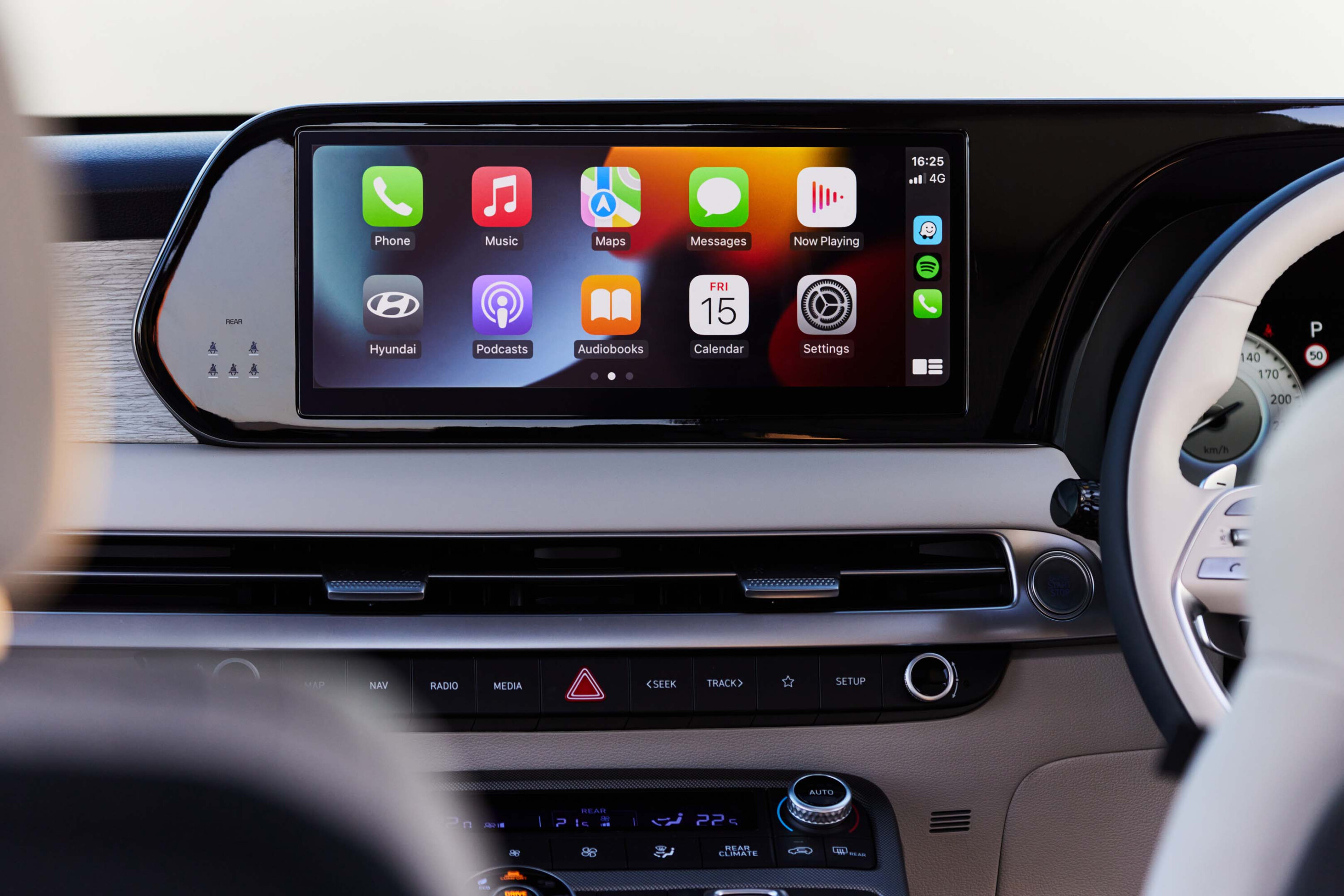
For 2023, the Hyundai Palisade’s list of technological features grew to include 12.3-inch displays – one responsive touchscreen for the infotainment, and a separate LCD housing the digital instrument panel.
The graphics are legible and navigating the menus is simple. A cable is still required for Apple CarPlay and Android Auto smartphone mirroring, but the connection is at least reliable. A wireless charging pad and faster USB-C charge points are now standard, too.
Adding to the tech suite is Hyundai’s BlueLink telematics system which, via a smartphone app, allows the control of basic functions such as tyre pressure monitoring, brake condition, remote starting (though it isn’t a fully digital key – you need the fob to drive off), door locking and window controls, with a find-my-car function and emergency SOS call button also present.
With the app, you can even set a destination using your phone and send it to the car’s navigation, while the phone app also integrates with Google Maps for ‘last mile’ navigation, providing final walking directions from a nearby car park, for example.
Thanks in part to the increasing prices of new cars across the Australian market, leasing a new car has become a popular alternative to buying a car outright.
In particular, novated leases are an attractive option for employees wanting to cut down their taxable income while getting a new car at the same time.
In simple terms, a novated lease allows an employee to pay for a vehicle’s finance with their pre-tax salary, receiving the use of a brand-new car over an agreed number of years.
Generally, they also come with the convenience of a monthly payment that includes not only the lease on the car, but also the registration, insurance, fuel, and maintenance.
The tax deductions available can make leasing a car an attractive option to the self-employed and some employees.
1
What is leasing a car?
Rather than saving up the purchase price or borrowing money to buy a car, a lease is a contract under which you pay for the use of the car.
As noted above, a car lease may be compelling because it can include running costs like servicing and insurance. You pay a monthly amount and let the lease company take care of it.
Generally, no – that’s why it’s a lease and not a loan, much like renting a home rather than using a mortgage to buy it. However, there are options!
Usually, when the term of the lease is over, you hand the car back – but it’s possible under some types of leases to buy the car at the end of the term.
This means that the monthly payments you made in addition to the final balloon payment will likely exceed the as-new value of the car.
Alternatively, you can opt back into another lease with a brand new car and start the cycle again.
The ‘balloon payment’ is a term that refers to a novated lease’s residual value, also known as a final lump-sum payment. This is the payment required at the end of a novated lease term if you wish to keep the car.
If you own a business or are an employee planning to buy your next car under a salary sacrifice agreement, it’s important to have the right kind of lease or finance to make the most of your deductions.
For an employee, a novated lease lets you make monthly repayments and running costs come out of your pre-tax salary, reducing your taxable income.
Business owners are better served with ‘hire purchase’ finance or a chattel mortgage, which allows you to claim back the GST upfront.
Although the tax deductions available in some situations can reduce the cost of owning and operating a vehicle, there’s no escaping the fact that the remainder comes out of your pocket.
It pays to seek personal financial advice and to do your sums before you jump in and sign on the line.
A salary sacrifice arrangement can save you a lot, especially for those in higher tax brackets
Not all leases give operators the option to buy the car outright at the end of the term
Novated leases allow you to pay one monthly payment for a new car, while also taking care of running costs
Is leasing a car worth it?
Before you start toward the car dealership, there are a few factors that depend entirely on your circumstance.
For a novated lease, your employer must first make the option available, which they’ll usually arrange by partnering with a novated leasing business. Only then can you take advantage of having your work pay for your car out of your pre-tax salary.
Having a new car every few years seems like fun, but you’ll likely be paying more for the same thing – especially if servicing and maintenance is included, but then it’s up to you to decide if the convenience of one monthly payment outweighs having to manage all of those details and costs yourself.
Again, if you’re in a marginal higher-tax bracket, it’s another way you can reduce your income at tax time. See a financial advisor or a leasing consultant to find out if leasing will work for you.
Need help understanding how car financing and leasing works?
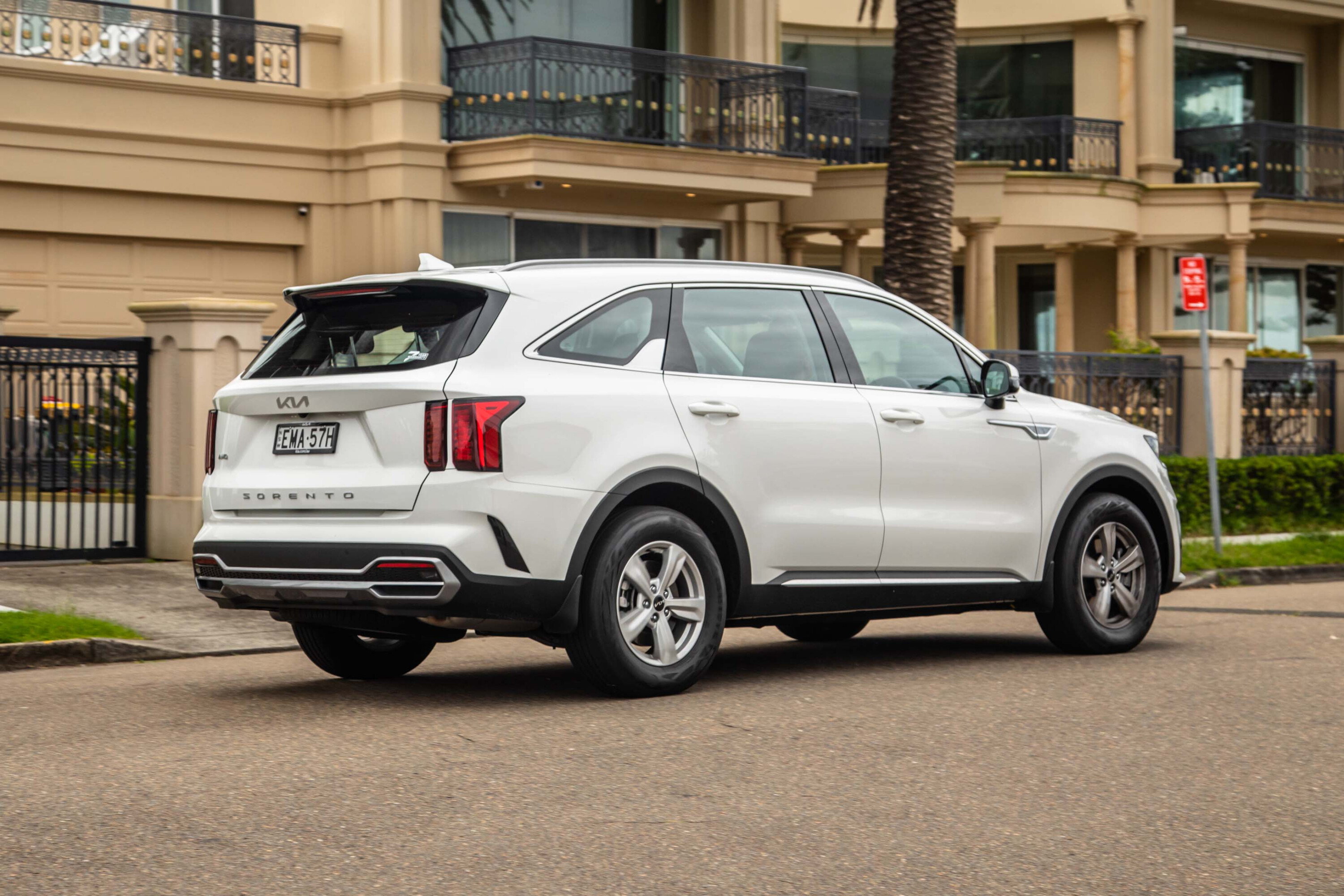
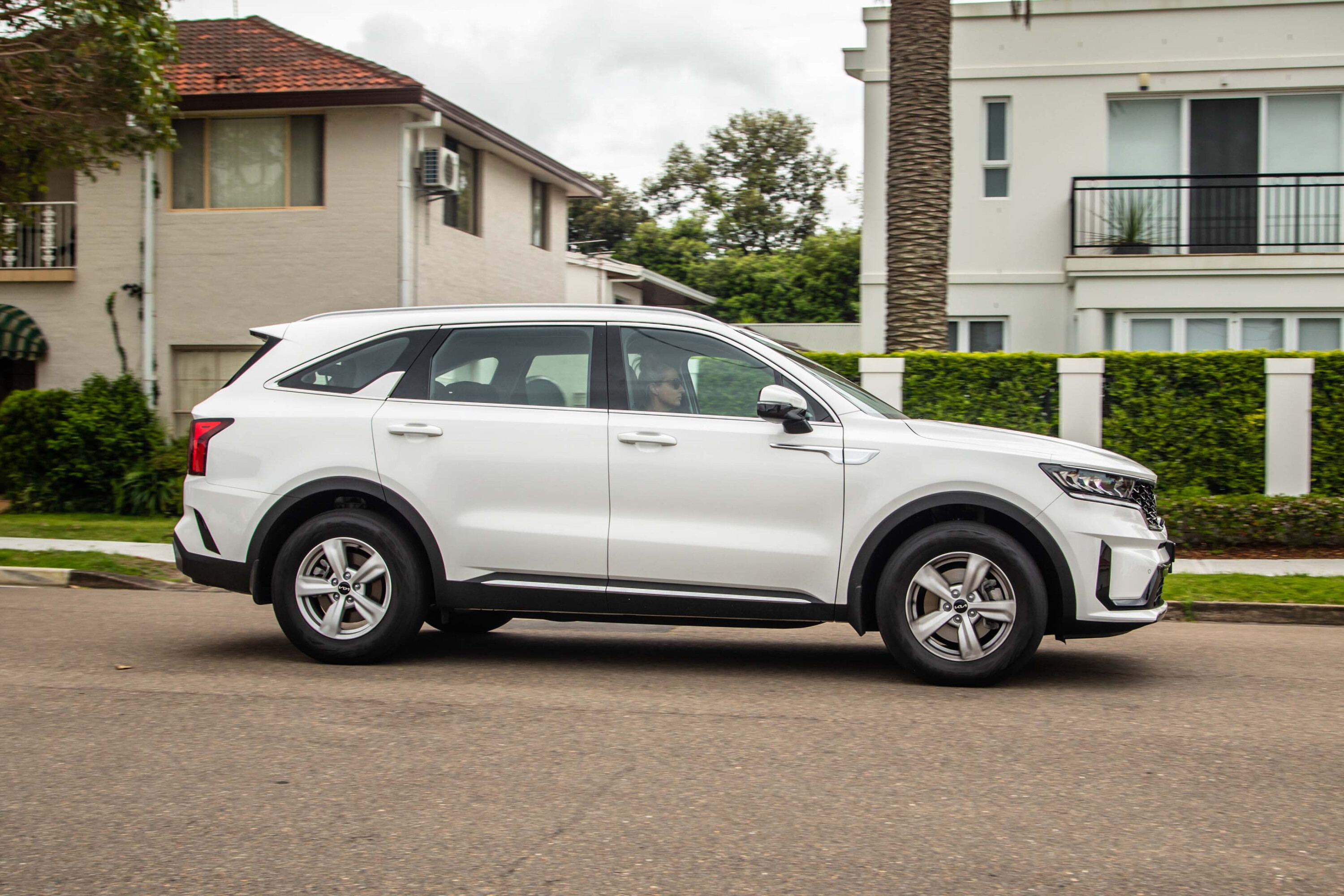
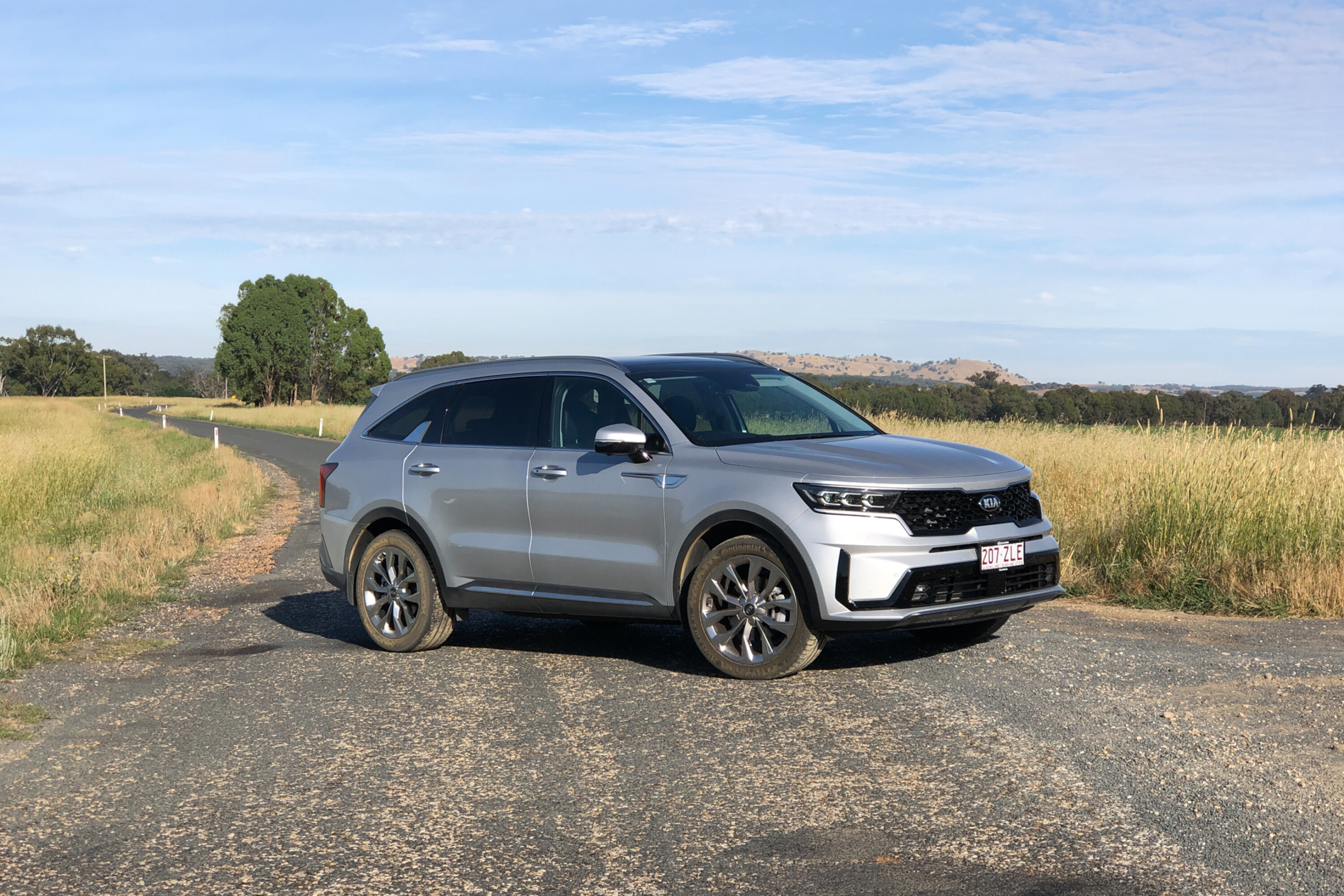
The Kia Sorento is a three-row large SUV with daring interior and exterior design, and an Australian suspension tune that delivers engaging dynamics.
This fourth-gen model launched in September 2020 with plenty of cabin storage, lashings of USB ports, Apple CarPlay and Android Auto connectivity and a five-star ANCAP safety rating.
Diesel, petrol, and now hybrid drivelines are available in conjunction with front- or all-wheel drive, all featuring automatic transmissions. Kia’s seven-year/unlimited-kilometre warranty is one of the best available. Overall, the Sorento is one of our favourite large SUVs.
The features listed below are standard in the entry-level model and will appear in higher-grade models, unless replaced by more premium equivalent features.
2023 Kia Sorento features
8.0-inch colour touchscreen
Premium steering wheel and gear knob
Bluetooth connectivity for phone calls and audio streaming
4.2-inch multi-information display including on-board computer
Wireless Apple CarPlay/Android Auto with voice control
The most affordable variant, the Sorento S, features 17-inch alloy wheels, wireless smartphone mirroring and cloth upholstery.
A 3.5-litre V6 petrol engine is teamed with an eight-speed torque converter automatic as standard.
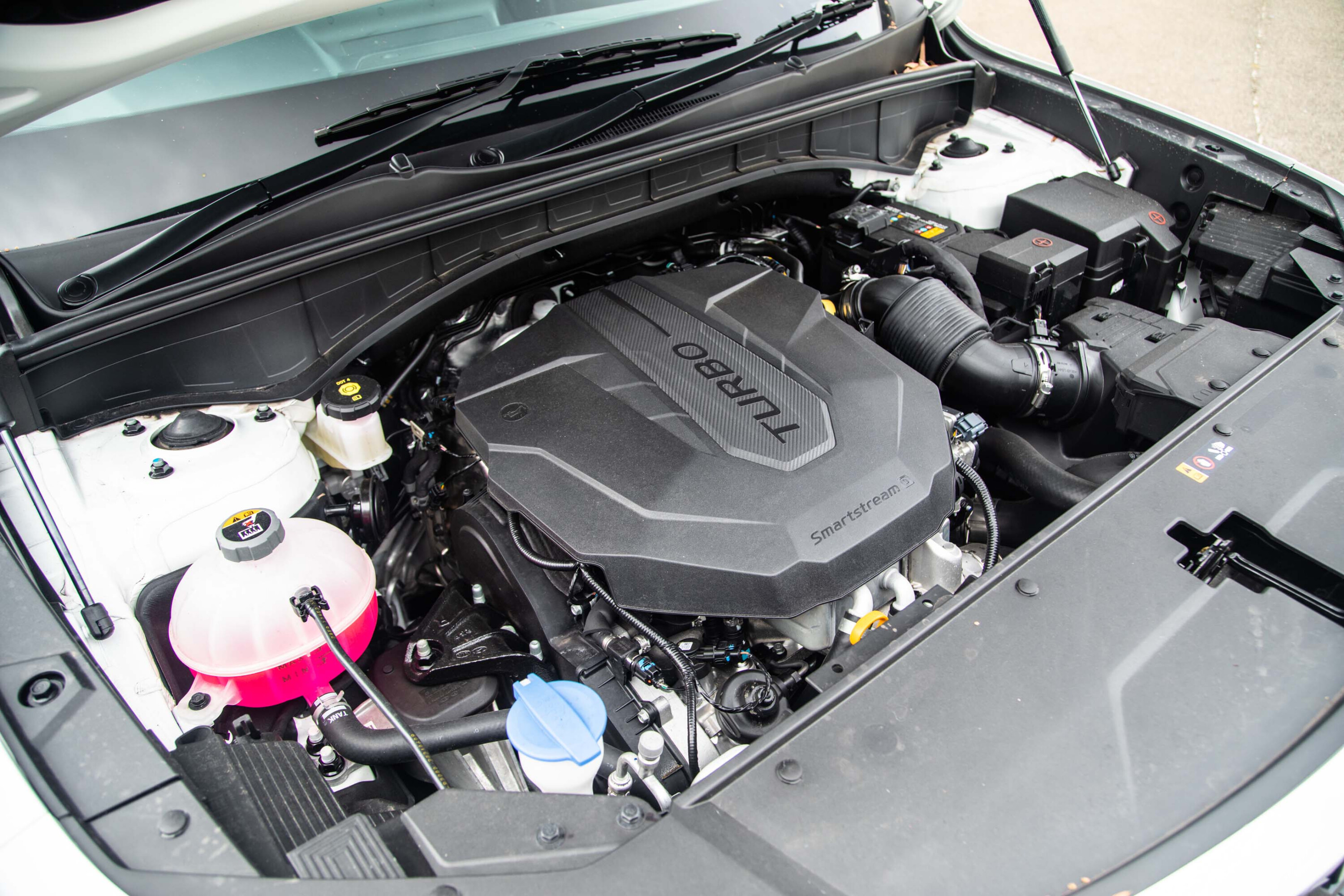
An extra $3000 will get you a torquier 2.2-litre turbo-diesel four-cylinder with an eight-speed dual-clutch automatic transmission and all-wheel drive. Diesel models also get a terrain mode selector.
You can step up to the Sport with the same powertrain choices but power-adjustable front seats, while the Sport+ adds leather upholstery. The range-topping GT-Line is the only Sorento available with petrol-electric hybrid powertrain choices (plug-in or traditional).
The Sorento Sport also brings
2023 Kia Sorento Sport features
A larger 10.25-inch colour touchscreen
Wired Apple CarPlay and Android Auto
Dual-zone climate control with three auto settings
Third-row fan control and ventilation
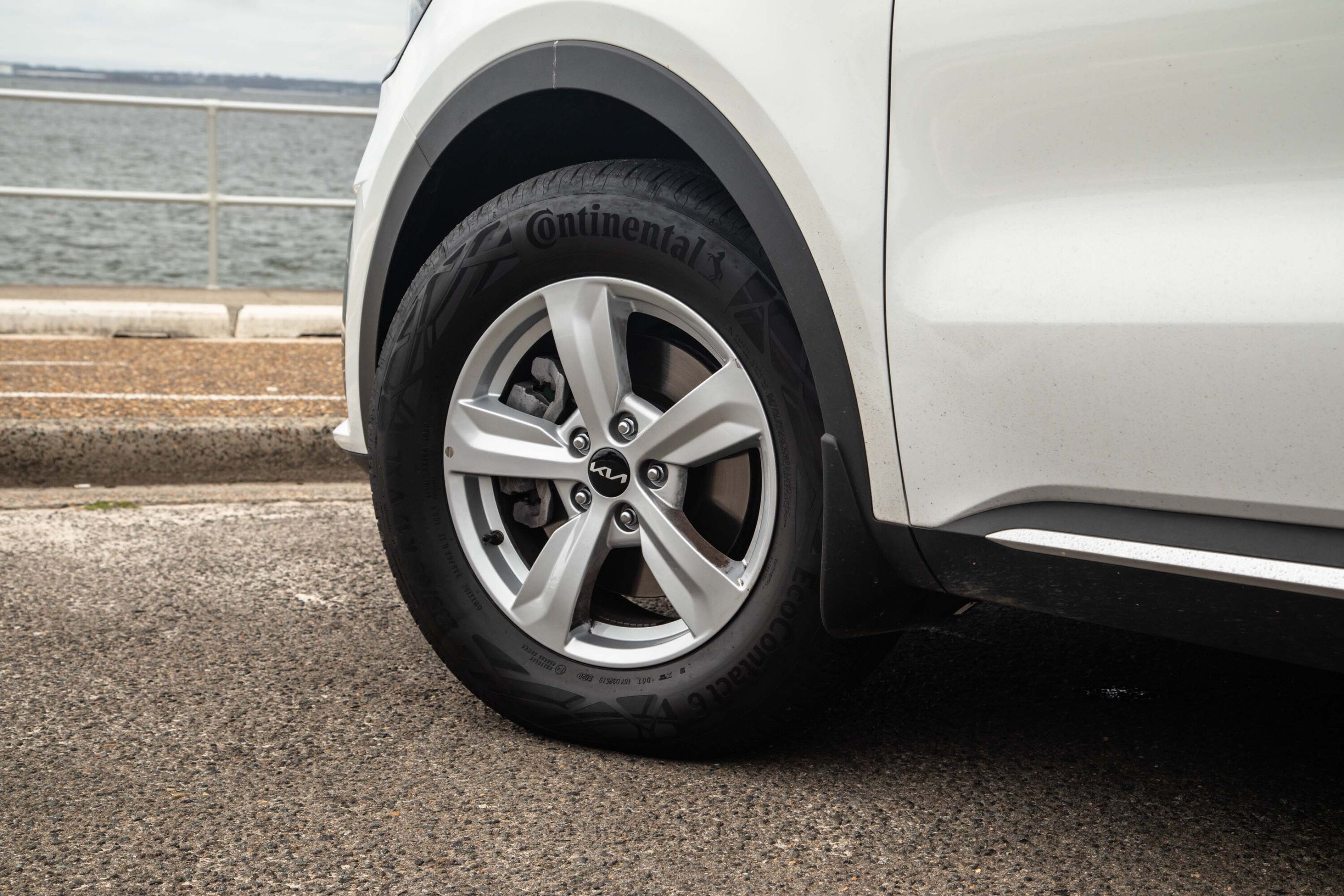
18-inch alloy wheels and Continental tyres
1
Paying more again for a Sorento Sport+ gets you those features plus:
2023 Kia Sorento Sport+ features
Three-stage front seat heating
10-way power adjustable driver’s seat appointed in black leather
Dual-zone climate control with three auto settings
Eight USB charging points
Sporty 19-inch alloy wheels fitted with Goodyear tyres
The Sorento GT-Line is the most expensive and customisable variant, with four powertrains offered and an impressive technology suite.
It’s also fitted with:
2023 Kia Sorento GT-Line features
12-speaker Bose premium sound system with subwoofer and external amplifier
14-way power adjustable driveru2019s seat with cushion extension, lumbar, and two-position memory
Dual projector-type LED headlights
10-way power adjust front passenger seat
360-degree camera
Panoramic and electrically opening sunroof
Driver talk intercom that amplifies the driveru2019s speech in the third row
Rotary gear selector
12.3-inch digital driveru2019s display with electable themes and blind-spot cameras
Selectable 64-colour ambient lighting
Head-up display
Qi wireless smartphone charging pad
Three-stage heated and cooled front seats with auto climate function
Low-speed reverse AEB
Heated steering wheel
20-inch alloy wheels shod in 255/45R20 Continental tyres
The Kia Sorento scored a maximum five stars under ANCAP safety testing in 2020.
The rating applies to all variants and all powertrains, including petrol, diesel, plug-in, and traditional hybrid.
ANCAP rated the Sorento 82 per cent in adult, and 85 per cent in child occupant protection. Its vulnerable road-user protection score was 63 per cent, and the big Kia scored a strong 89 per cent against ANCAP’s safety assist criteria.
Safety highlights include range-wide forward autonomous emergency braking (AEB) with the ability to detect pedestrians, cyclists, and crossing traffic. This system detects potential hazards in the path of the vehicle, first sounding a warning before applying the brakes, and eventually attempting to arrest the car before a collision occurs.
1
The Sorento is fitted with seven airbags, including a centre airbag that sits between two front occupants. Its curtain airbags extend to the second row but do not provide full coverage to third-row passengers.
Low-speed reverse AEB and a 360-degree camera are preserves of the flagship GT-Line.
Safe-exist assist uses the Sorento’s blind-spot monitoring sensors to warn occupants of approaching vehicles that could harm passengers as they get out of the car. Also fitted is a rear occupant reminder system, that warns the driver if any passengers are still in the car when it is switched off.
The fourth-gen Sorento is spacious, upmarket, and intelligently designed, with evidence of comfort and convenience equipment everywhere you look and in every variant.
Even the base Sorento’s six-way manually-adjustable seats are comfortable and set high for an excellent view out – the only trouble being the lack of passenger seat height adjustment. The centre console takes a pair of cups or you can slot the retractable cup holders away for a tray that will take large phones.
Underneath the HVAC panel is another good spot for phones as well as three USB ports and a 12-volt outlet. The doors each take a bottle and the centre console bin is quite hefty.
1
Most Sorentos have legible analogue dials, but the GT-Line’s crisp 12.3-inch digital driver’s display is a step up.
The cool graphics of the central 10.25-inch touchscreen and pleasant aroma of the quilted Napa leather seat upholstery are more than a little reminiscent of an Audi Q7.
If there’s one complaint about the GT-Line, it’s that the heated, ventilated, and 14-way power-adjustable seats are a little less cossetting than the healthily padded pews of the Sport and Sport+.
The Sorento’s second row has ample space for adults, the rear bench slides and the backrest has several angle positions from gangster-lean to engaged office worker.
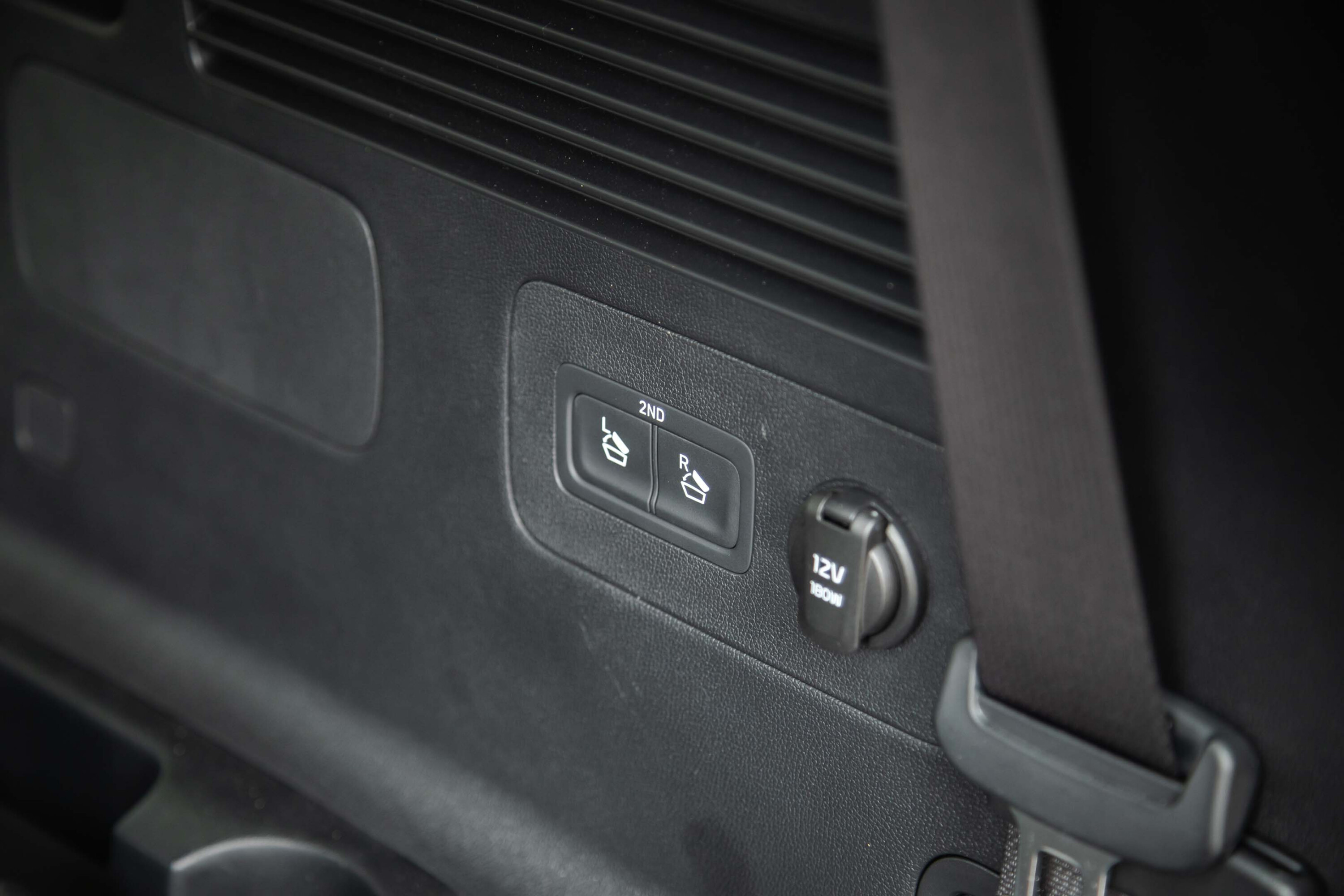
Those in the back of Sport+ and GT-Line Sorentos get a pair of USB-C charge ports (conveniently positioned on the side of each front seat), a 12-volt socket, fold-down armrest, heating for outboard positions, classy integrated sun blinds, and a separate climate control zone with two vents.
1
Although the third row isn’t ideal for anyone over 180cm, the Sorento’s sliding second row means a comfort compromise can be reached.
The Sorento has ISOFIX attachments for both outboard seats in the second row, with top tether points fitted to every second- and third-row seat in the car for maximum child seat flexibility.
When all seven seats are in place, the Sorento petrol and diesel have 187 litres of cargo space (179L for the hybrids). It’s enough for school bags and a quick shop, but not as spacious as a larger Hyundai Palisade or Nissan Pathfinder.
With the third row dropped, the Sorento has 616 litres (608L for hybrids) of cargo area which is very generous, and enough for a pram/stroller. The sliding second row can accommodate more luggage or legroom, depending on your requirements.
Setting all the seats flat (using the electric actuators) creates a 2011-litre space. It’s ideal for carrying large objects such as bicycles or flat-pack furniture.
Absolutely. The Kia Sorento may be a little firm, but it’s just about the best-handling large SUV under $100K.
One of the Sorento’s best aspects has always been its dynamics, thanks partly to the local ride and handling program that sets up this large SUV’s strut front/multi-link rear suspension layout to deliver excellent backroad composure. The steering weighting is natural in Comfort and Smart modes, and helpfully firmer in Sport, with an accurate rack that inspires confidence.
However, the Sorento’s ride – especially in bigger-wheeled Sport+ and GT-Line trims – can be jiggly around town. The firm damping results in a ride that’s less plush than rivals. It never becomes harsh or crashy, but is on the sportier end of acceptable for a seven-seat SUV.
The Sorento’s road noise insulation is very good though, with minimal intrusion from the suspension. Visibility is also excellent for a vehicle this large. The bulky C-pillars don’t affect rear three-quarter visibility too much, while the high-set driver’s seat gives a commanding view out over the bonnet.
There are four engines, starting with the most affordable being a front-drive V6 petrol that produces 200kW/332Nm. It isn’t exactly potent from a standing start or at low engine speeds, but with peak torque and power kicking in at 5000rpm and 6300rpm respectively, it does have decent shove in reserve for when you need to overtake.
1
Being front-wheel drive, traction from V6 Sorento variants isn’t especially predictable in wet or changeable conditions. Therefore, the 2.2-litre turbo-diesel four-cylinder AWD is a more secure option.
Power is a little down at 148kW, but the diesel’s 440Nm make it abundantly torquey. It feels lively from the get-go, which helps with towing. The eight-speed dual-clutch is excellent, with plenty of ratios to choose from and none of the lag you expect from this type of transmission.
Then there are the two hybrid powertrains that are in short supply in Australia and only available in GT-Line trim. The traditional hybrid is a bit more affordable and comprises a 44kW/264Nm electric motor sandwiched between the engine and transmission with a 1.0kWh battery designed to be rapidly charged and discharged.
Outputs are rated at 169kW/350Nm regardless of whether you choose the cheaper front- or pricier all-wheel version and it’s a refined, quiet powertrain around town with less vibration than the diesel.
1
The flagship plug-in hybrid has a larger 67kW/304Nm electric motor upping combined outputs slightly, to 195kW/350Nm.
It’s heavier than the regular hybrid, though, thanks to a 13.8kWh lithium-ion battery that gives it an electric-only driving range of 57km according to the WLTP standard – you’re more likely to see 45-50km in the real world.
Whereas petrol and diesel Sorento GT-Line variants are fitted with large 20-inch alloys that impact ride quality, all hybrids instead roll on 19-inch alloys wrapped in 235/55 Goodyear Eagle tyres. The ride is still firm and supportive, but less fidgety than combustion-only Sorentos.
And, if you happen to be in a GT-Line that’s been parked in a tight space, rendering door opening near-impossible, you can extract it with the driverless ‘remote park assist’ function while standing outside using the key fob.
If you only look at combined ADR fuel consumption then the plug-in hybrid Sorento is a run-away winner, its 1.6L/100km number comparing to 5.3-5.8L/100km (FWD and AWD hybrid respectively), 6.1L/100km (diesel AWD), and 9.7L/100km (petrol FWD).
In the real world, the fuel consumption numbers differ significantly and, depending on your use case, the hybrids may not be the best bet.
One thing’s certain: the petrol V6 is the least efficient by a long margin. Its 9.7L/100km ADR consumption seems to be on the money but around town, we’ve experienced 12L/100km regularly.
1
For urban driving, the plug-in hybrid uses the least fuel, with 4.3L/100km achieved in real-world testing and up to 47km on electric juice alone.
You do need to charge that battery, however, which can be a chore (and expensive at peak times).
The next-best option for around town is the traditional hybrid. Without the fuss of recharging, it’s easy. The AWD is rated at 5.8L/100km and we got 7.1L/00km in real-world testing.
A diesel Kia Sorento may produce more unwanted particulate emissions, but if you’re a country owner or just one who regularly travels long distances, then this is the pick. It’s rated at 6.1L/00km on the combined ADR cycle, and as low as 5.8L/100km on the highway, which is achievable.
How long is the warranty and what are the Kia Sorento’s servicing costs?
The Kia Sorento is covered by a seven-year/unlimited-kilometre warranty – one of the best in the industry.
Service costs and schedules differ depending on the powertrain you choose, but all are covered by seven years of capped-price servicing.
The petrol-based hybrid powertrains require maintenance every 12 months/10,000km, while both the turbo-diesel and petrol V6 Sorentos are due a service every 12 months/15,000km. The Sorento is more expensive to maintain thane some key rivals, including the Toyota Kluger, and related Hyundai Santa Fe.
1
See the table below for a breakdown of Kia Sorento service pricing.
Which version of the Kia Sorento does Wheels recommend?
As far as ranges go, the Kia Sorento is one of the most consistent out there.
Each variant is smartly equipped, attractive, and feels complete for the asking price – even the base S isn’t a dud, and the GT-Line offers plenty of extra equipment to justify its price premium.
That said, our reviewers’ preference is split between the 2.2-litre turbo-diesel, which is ideal for those who cover lots of country kilometres, and the hybrid GT-Line (if you can get one) for urban duties.
The front-drive petrol V6 lacks traction in the wet and guzzles unleaded petrol, which can get tiresome.
At low speeds on steep inclines – the kind of driving scenario found in multi-storey car parks – the hybrid can sometimes be jerky when switching between combustion and electric power.
Does any upgrade have a downside?
There are two notable downsides to upgrading through the Sorento range.
Firstly, only the base S grade has wireless Apple CarPlay and Android Auto; every other grade requires a cable for smartphone mirroring. So you get bigger and fancier displays, but you lose out on wireless phone mirroring.
People who live on particularly rough roads may want to skip the GT-Line with its 20-inch alloy wheels that can make the ride harsh at low speeds.
The Sorento is missing a non-hybrid petrol AWD powertrain that’s found in rivals such as the Volkswagen Tiguan Allspace and Mazda CX-9.
Something you may also want to consider is that Kia does not offer the Sorento with a luxurious captain’s chair arrangement. This not only adds a bit of bling but means you can leave child seats set up in the second row and still access the third. The Kia Carnivalpeople mover, Hyundai’s Santa Fe and Palisade, and the Mazda CX-8 offer this feature in upper trims.
1
What’s the infotainment system like?
The Sorento has a responsive touchscreen across all grades.
The Sorento S is equipped with an 8.0-inch touchscreen with wireless Apple CarPlay/Android Auto, while the Sport trim and above score a bigger 12.3-inch touchscreen with navigation and more attractive graphics.
Digital DAB+ radio is standard across the range, while the top-spec GT-Line gets a powerful Bose sound system and includes a soothing ‘Sounds of Nature’ program.
Australia-bound Sorento SUVs are built in South Korea.
1
Are there plans to update the Sorento soon?
The fourth-generation Kia Sorento was released in Australia in September 2020, for the 2021 model year.
Kia typically sticks to a six- or seven-year product cycle, with a mid-life refresh in the middle.
It means the Sorento is about due for a facelift. Several prototypes have been spotted, and we’ve had speculative renders commissioned to imagine what the next iteration will look like. Although it will bring new exterior styling, a revamped cabin and fresh infotainment graphics, the Sorento’s hard points will remain identical and it will likely continue with revised versions of the existing powertrains.
We expect the facelifted Kia Sorento to be unveiled in late 2023 or early 2024, with a local release to follow shortly afterwards.
It comes with a thoughtfully designed interior, a good mix of powertrain options and a lovely ride/handling balance making it a delight to drive and own. It also offers an advanced suite of active safety systems.
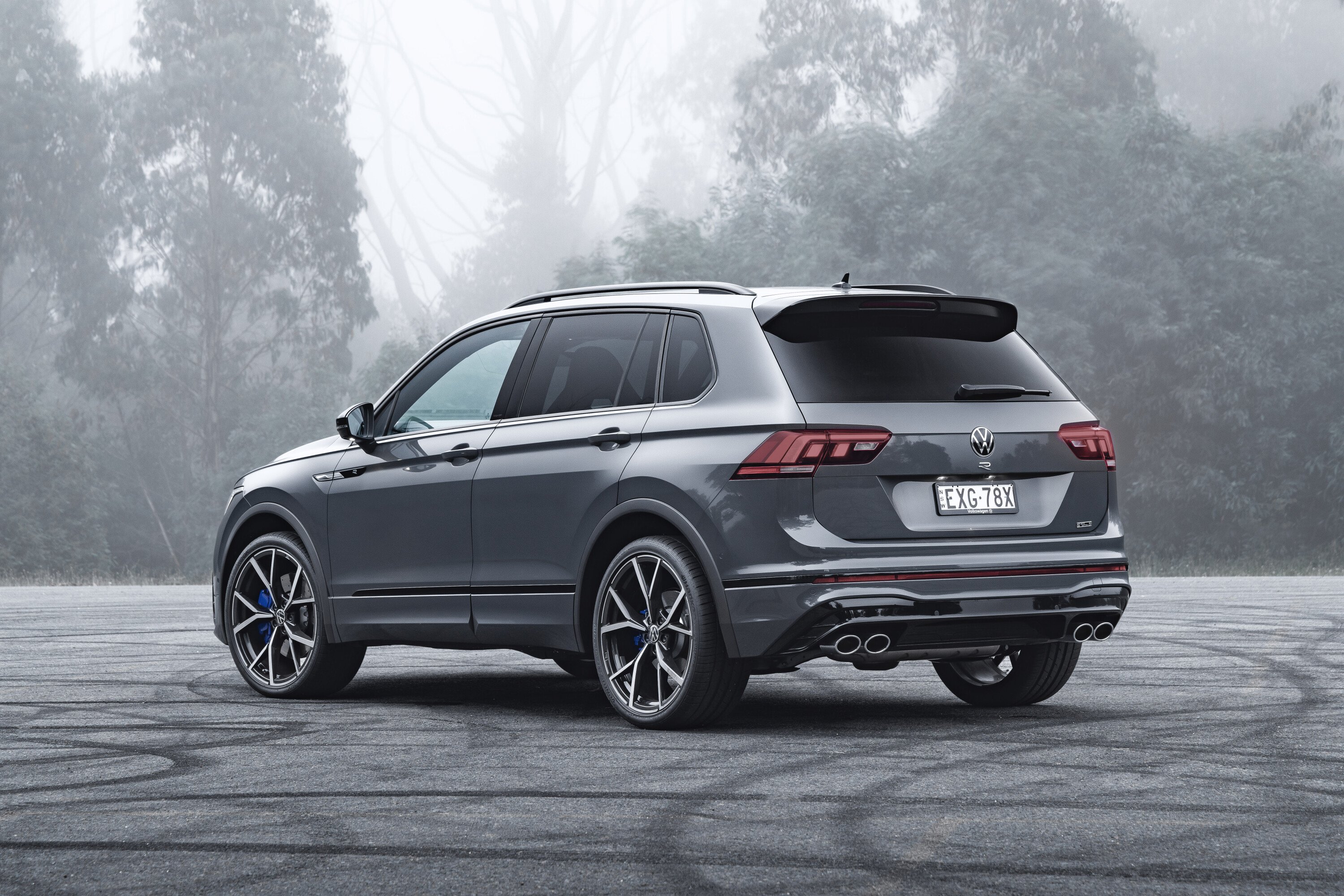
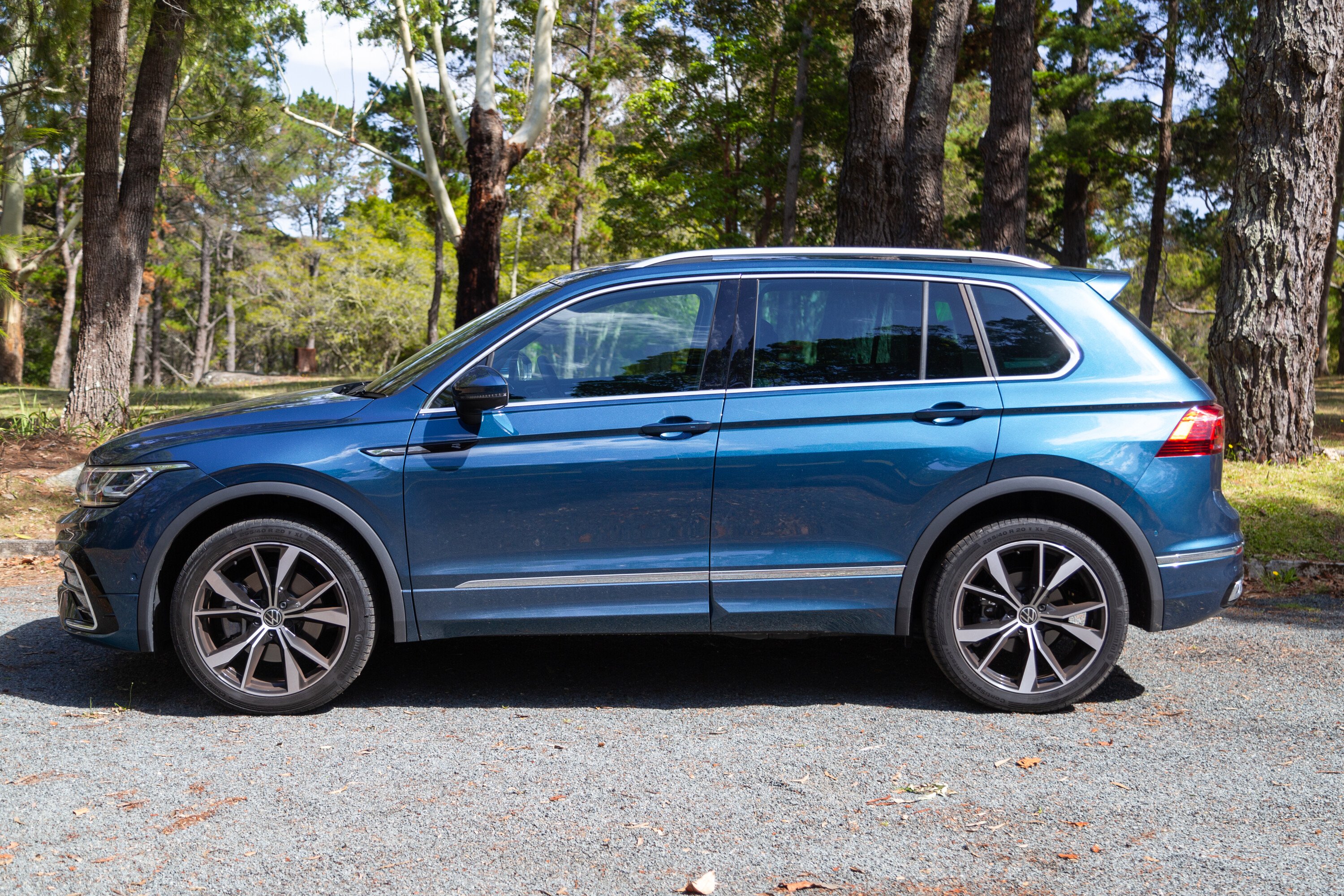
When the current, second-generation Tiguan was launched in 2016, it set new benchmarks in its segment. Today, it’s starting to feel a little bit dated – and rivals are quickly catching up.
What body styles are available for the Volkswagen Tiguan?
The Volkswagen Tiguan comes as a five-door SUV only.
There are front-drive and all-wheel drive models, all seating five – although a longer, seven-seat Tiguan Allspace is also available (and outlined separately). The Tiguan is classed as a medium SUV and competes in the sub-$60K segment.
Five engine options are offered, all of which are turbocharged four-cylinder units. The range starts with a 110kW/250Nm 1.4-litre before moving to a 132kW/320Nm 2.0-litre, a 162kW/350Nm 2.0-litre and a 147kW/400Nm 2.0-litre diesel. There’s also the performance-packed 235kW/400Nm 2.0-litre.
The features listed below are standard in the entry-level Life model and will appear in higher-grade models, unless replaced by more premium equivalent features.
It’s important to note here that the base Tiguan 110TSI Life comes with front-wheel drive, a 1.4-litre engine and a six-speed dual-clutch automatic transmission. Stepping up to the 132TSI Life upgrades to a 2.0-litre engine as well as all-wheel drive and a seven-speed dual-clutch auto.
As you head up the range from here, it’s all 2.0-litre powertrains with seven-speed dual-clutch automatic transmissions – as well as lots of other goodies.
Options across the range are metallic or pearl effect paint; and the electric opening-and-closing tailgate.
The Life can be optioned with a Luxury Package, which gives leather-appointed upholstery, an electrically adjustable driver’s seat with memory, heated front seats, a heated steering wheel and a panoramic sunroof.
1
The only options on a Tiguan R are the sunroof and Harman Kardon sound system.
Elegance and R-Line grades can be optioned with the Sound & Vision Package (which includes a head-up display, the 360-degree top-down parking view and the 10-speaker Harman Kardon premium sound system); and a panoramic sunroof.
The top-spec, high-performance R adds as standard the metallic or pearl effect paint; electric opening-and-closing tailgate; 360-degree top-down parking camera view and head-up display. Its only options are the sunroof and Harmon Kardon sound system.
Front under-seat storage drawers are only available on the 110TSI with its manually-adjustable seats.
1
The Elegance also brings:
2023 Volkswagen Tiguan Elegance features
Leather-appointed seat upholstery (a combination of real and fake leather)
9.2-inch central touchscreen infotainment screen
Electrically adjustable front seats with memory settings
Tinted rear windows
Heated front seats
30-colour ambient interior lighting
Heated steering wheel
Additional chrome and silver styling elements
19-inch wheels
Adaptive suspension
More advanced u201cIQ Light Matrixu201d LED headlights
Side mirrors with memory settings
Paying more again for an R-Line gets you those features plus:
2023 Volkswagen Tiguan R-Line features
20-inch wheels
Progressive steering (a bit sharper and more responsive)
R-Line sports steering wheel
Black interior ceiling headliner
LED tail-lights
Stainless steel foot pedals
Unique front and rear bumpers, R-Line side sills, rear spoiler and R-Line badges
1
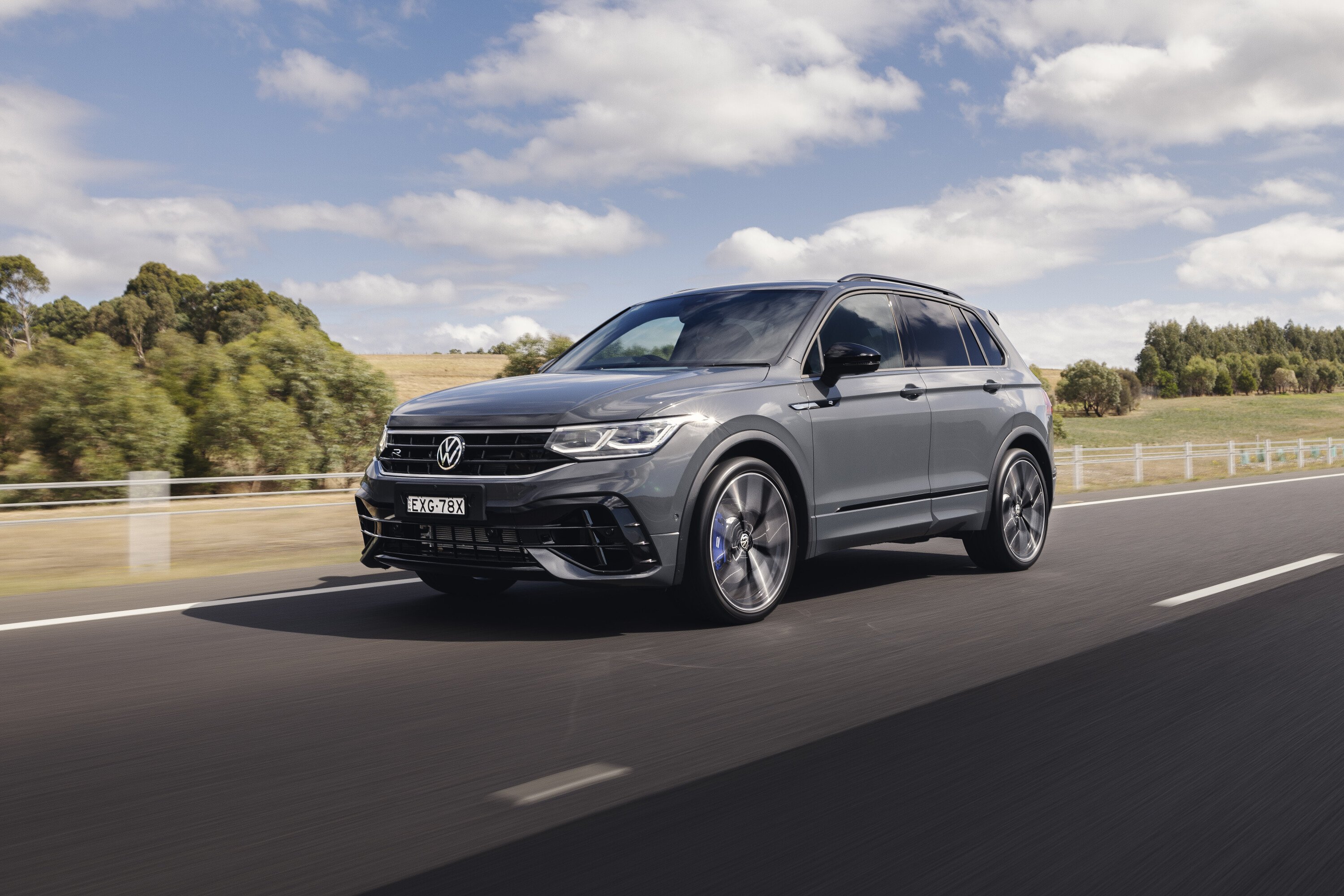
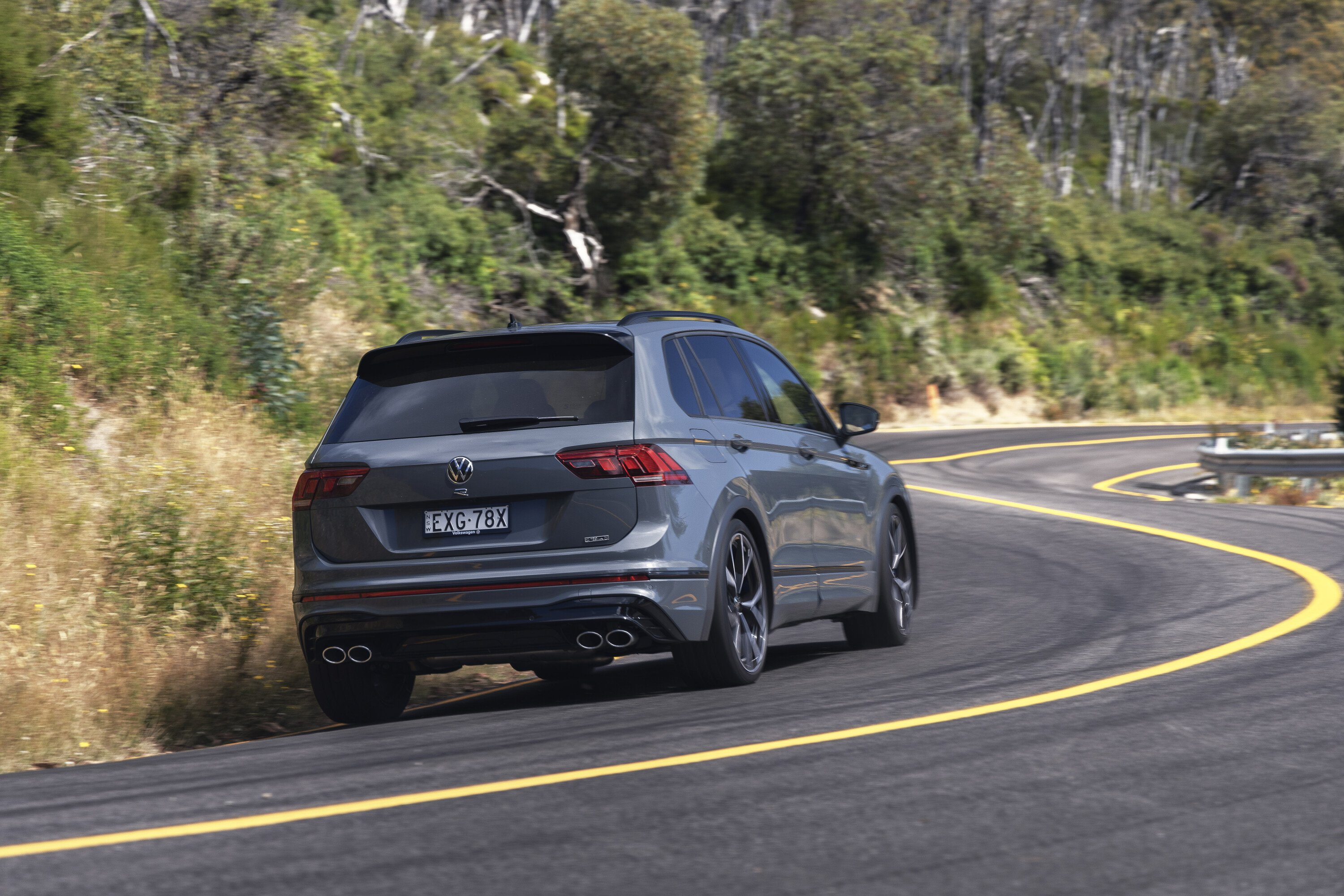
The performance-focused R, the most expensive version, has all-wheel drive and a powerful 235kW engine.
Other differences include:
2023 Volkswagen Tiguan R features
21-inch wheels
Performance chassis systems including ESC
Nappa leather-appointed upholstery
Torque vectoring
R-specific front and rear bumpers including with quad exhaust
Sports paddle shifters
Lots of other R-branded styling bits
Electric opening-and-closing tailgate
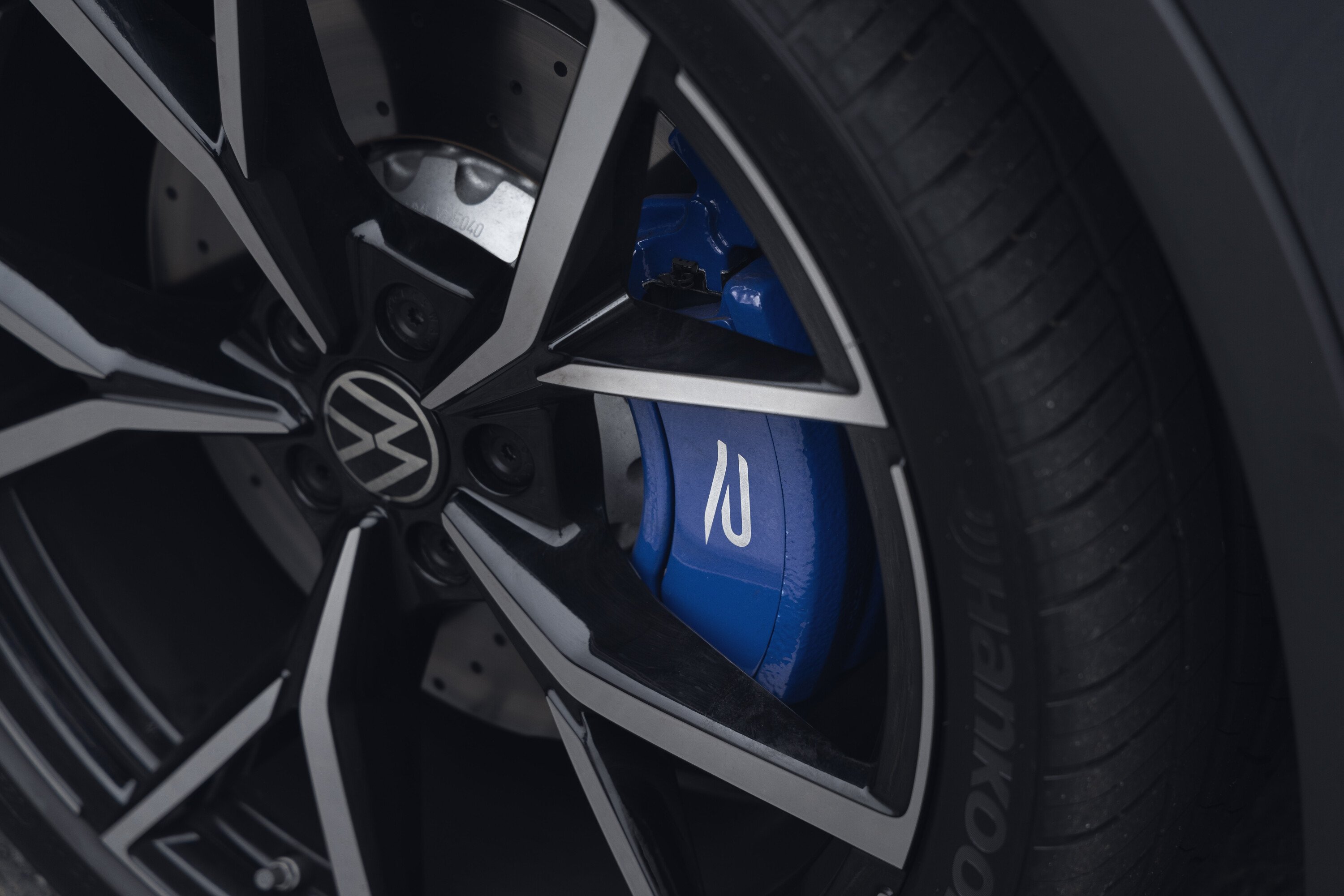
Bigger cross-drilled performance brakes with blue R calipers
Head-up display
Performance drive modes including synthetic engine sound
With advanced active and passive safety technology, most of it standard even from the cheapest 110TSI grade, the Tiguan has strong safety credentials.
The current Tiguan scored five stars in 2016 crash testing with the Australasian New Car Assessment Program (ANCAP) – although with ANCAP’s updated protocol, that is no longer considered valid in 2023.
For active safety, the entire range gets autonomous emergency braking (AEB) – and it is one of the more advanced systems on the market that works up to interurban speeds (30-80km/h) with cyclist and pedestrian detection. There’s also lane-keep assist, which nudges you back into your lane if you start straying out of it.
A reversing camera and front and rear parking sensors are fitted as standard across the entire range, and there’s also reverse AEB which will stop the car before you back into something. Although two small black marks against safety are the lack of blind-spot monitoring and rear cross-traffic alert.
The R comes with rear cross-traffic alert. All Tiguans come with a driver attention monitor which constantly scans your face and notifies you if it thinks you’re at risk of a microsleep.
1
For passive safety, the Tiguan’s airbag suite includes dual front and dual front-side cushions, curtain airbags front and rear, plus a driver’s knee cushion.
Of its rivals, the Tiguan has one of the most relaxing semi-autonomous modes. Highway Travel Assist is what VW calls it, and it combines adaptive cruise control with lane trace assist to ease nerves on the freeway.
How comfortable and practical is the Volkswagen Tiguan?
Compared to its Japanese and Korean rivals, the Tiguan is incredibly comfortable and practical, offering a degree of German premiumness for a price well below what a German brand normally asks.
You can feel the sturdiness and quality of the uniform paint finish as you grab the Tiguan’s door handles (all of which are equipped with comfort access sensors).
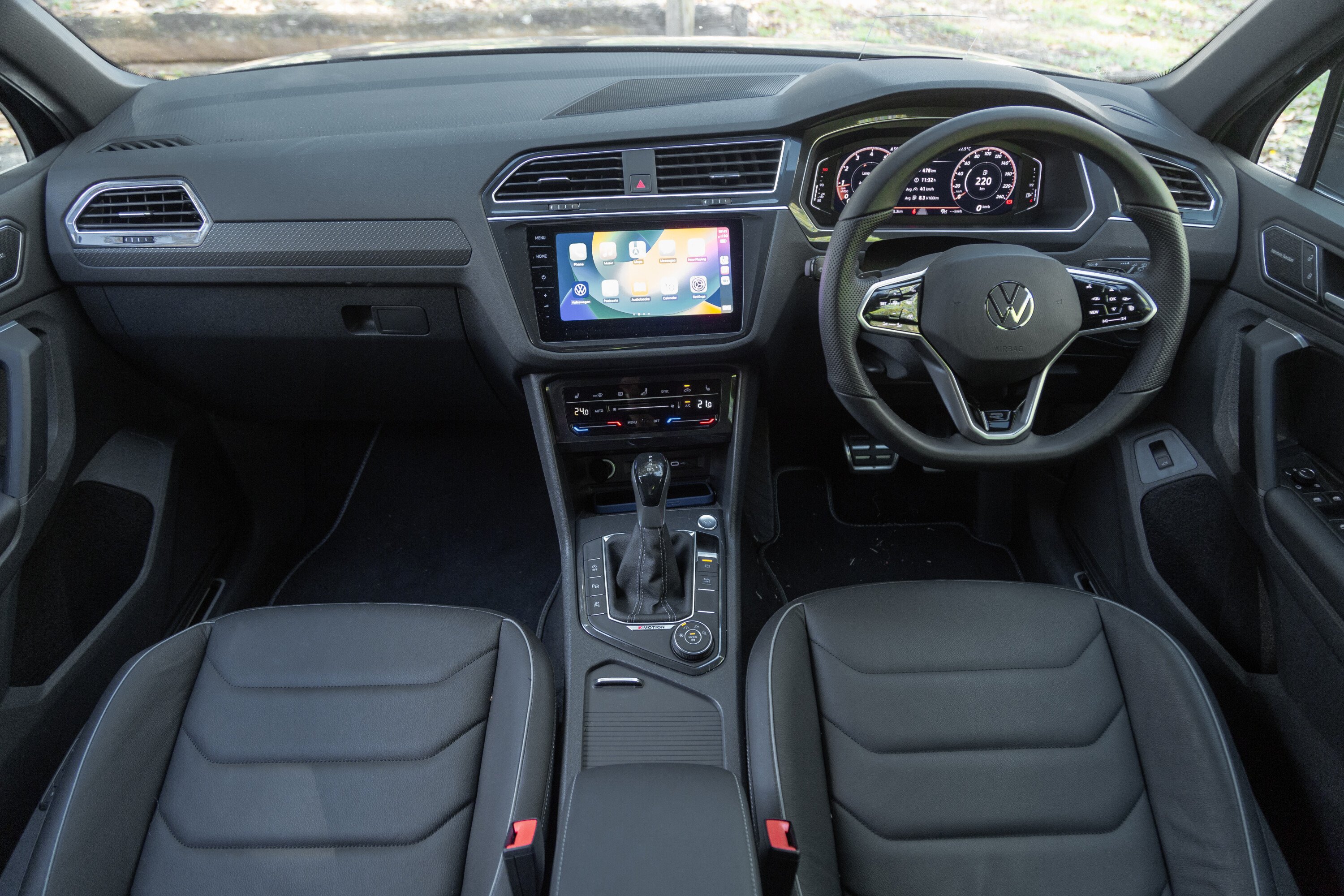
Once inside, you’ll find extremely ergonomic vertically laid-out controls that make the cabin feel spacious – if not cutting-edge on the technology side.
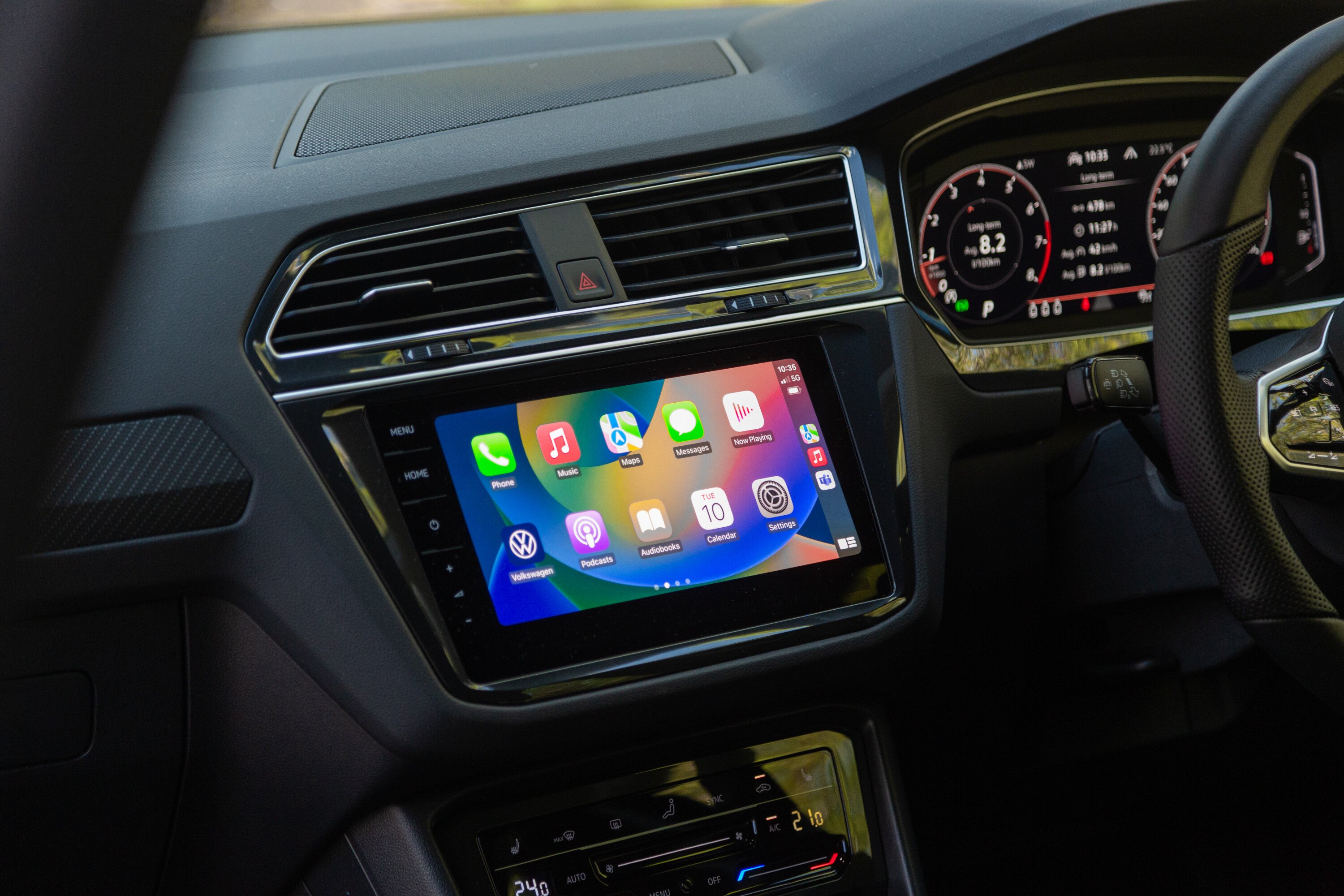
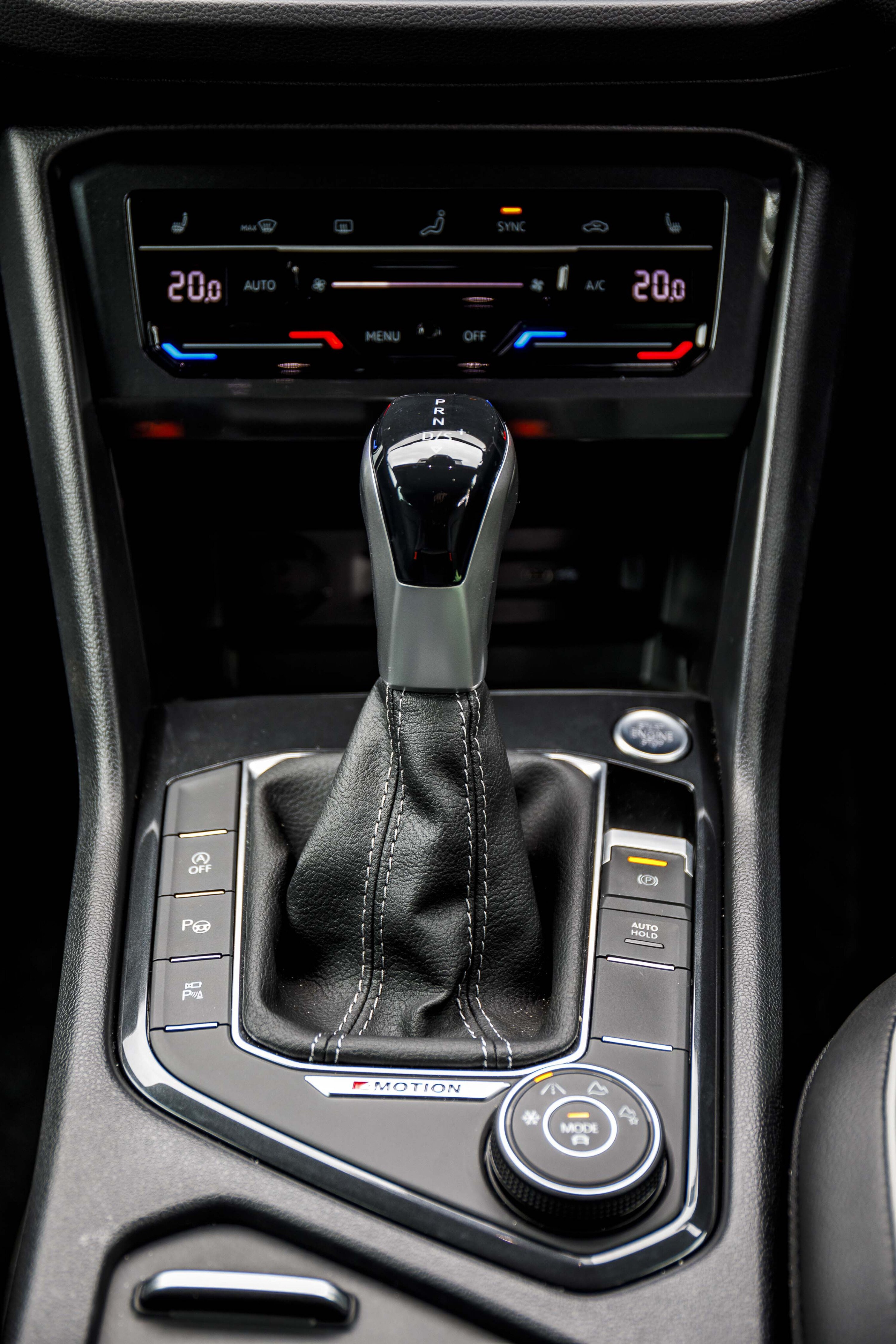
The 162TSI’s 9.2-inch touchscreen is smaller than you’ll find in an up-spec Golf, but the Tiguan’s dual-zone climate controls are mercifully separate, located lower down with capacitive touch sliders. These can be finicky at first, but you grow accustomed to the functionality with time.
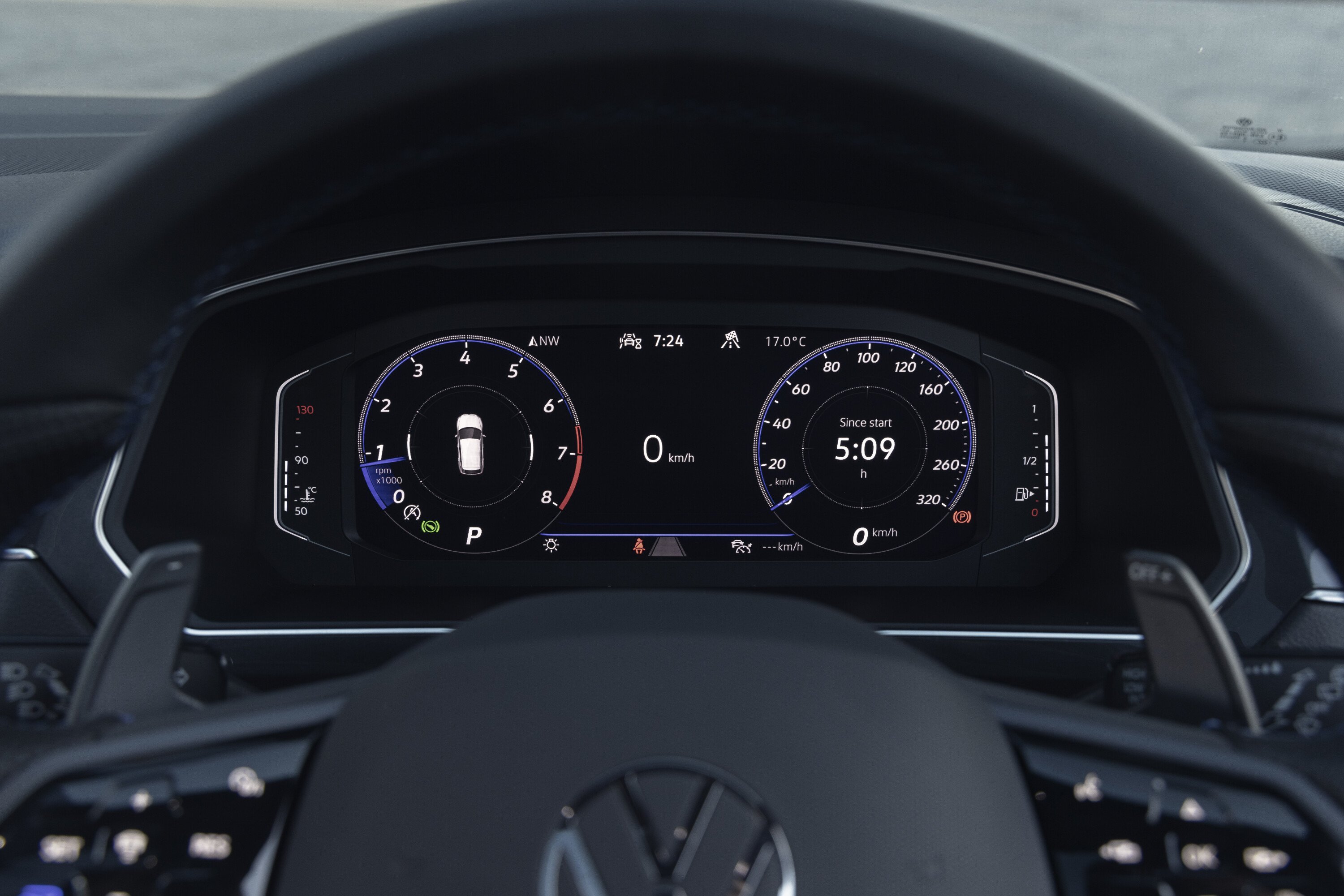
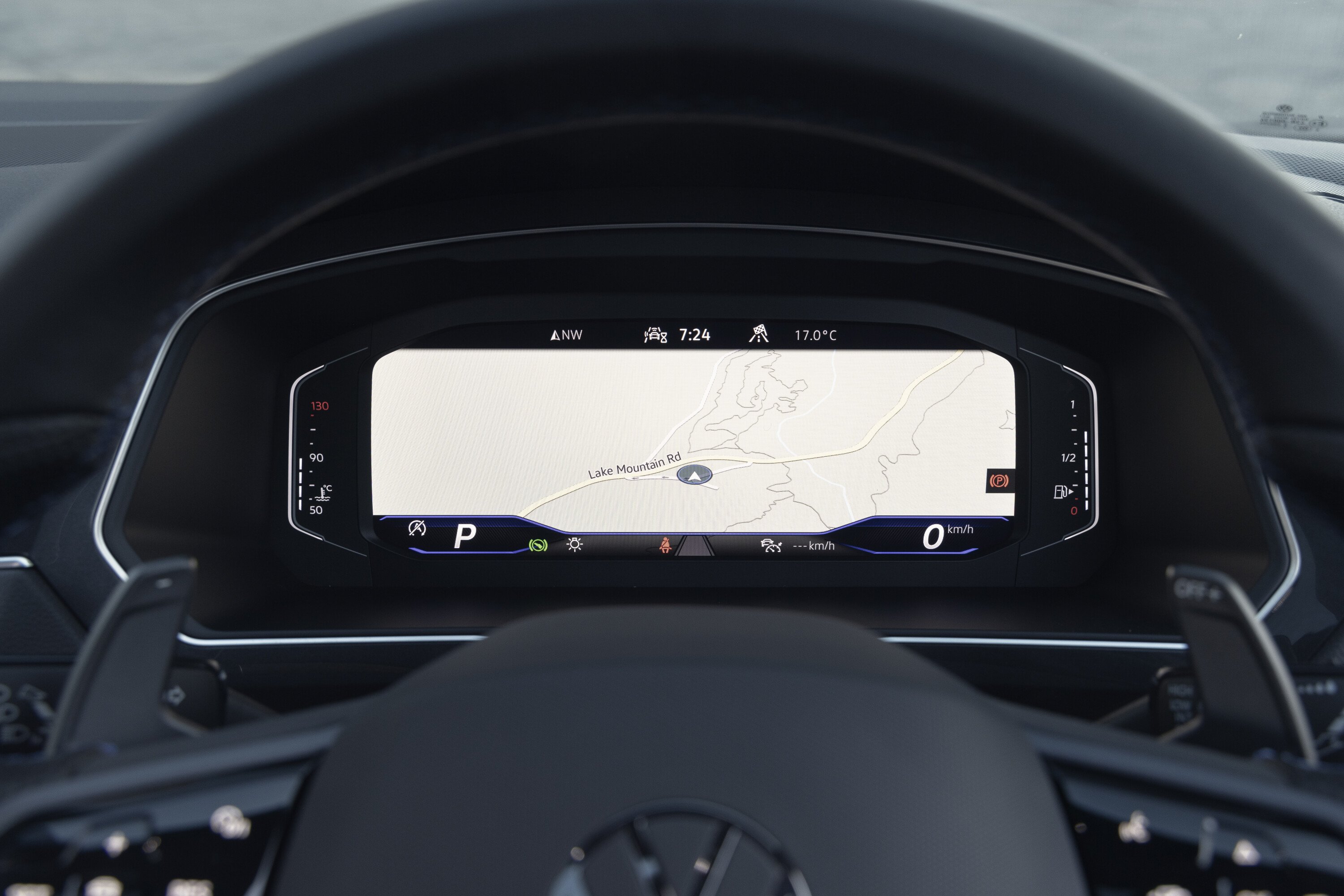
While it’s been around for a while, VW’s 10.25-inch digital instrument display (standard across the range) is yet to be outdone within its competitive set. It’s incredibly legible and its ability to show a moving interactive map enables you to predict the road ahead with soothsayer-like accuracy.
It also means you’re unlikely to get lost in an unfamiliar city with the standard navigation.
3
Material quality is respectable, if not ultra-plush. There are soft plastics where they matter such as on the dash and front door cards, and the door bins are flock-lined to stop bottles rattling about.
Interestingly, the Tiguan we drove in Sydney appeared to have slightly lower build quality than our Melbourne tester, with a few dash creaks evident over nasty bumps.
In 162TSI R-Line guise, seating is taken care of by heated and power-adjustable leather-appointed pews that are just to die for – supportive in the bolsters without ever being ‘too’ sporty for a family SUV; very well judged, Volkswagen.
2
Although it may be one of the shortest medium SUVs – just over 10cm longer than something like a Kia Seltos or Mazda CX-30 from the next size down – the Tiguan is tremendously accommodating, with its high roof guaranteeing great headroom and a sliding second-row bench allowing you to shift priorities between occupant and cargo space.
How much boot space does the Volkswagen Tiguan offer?
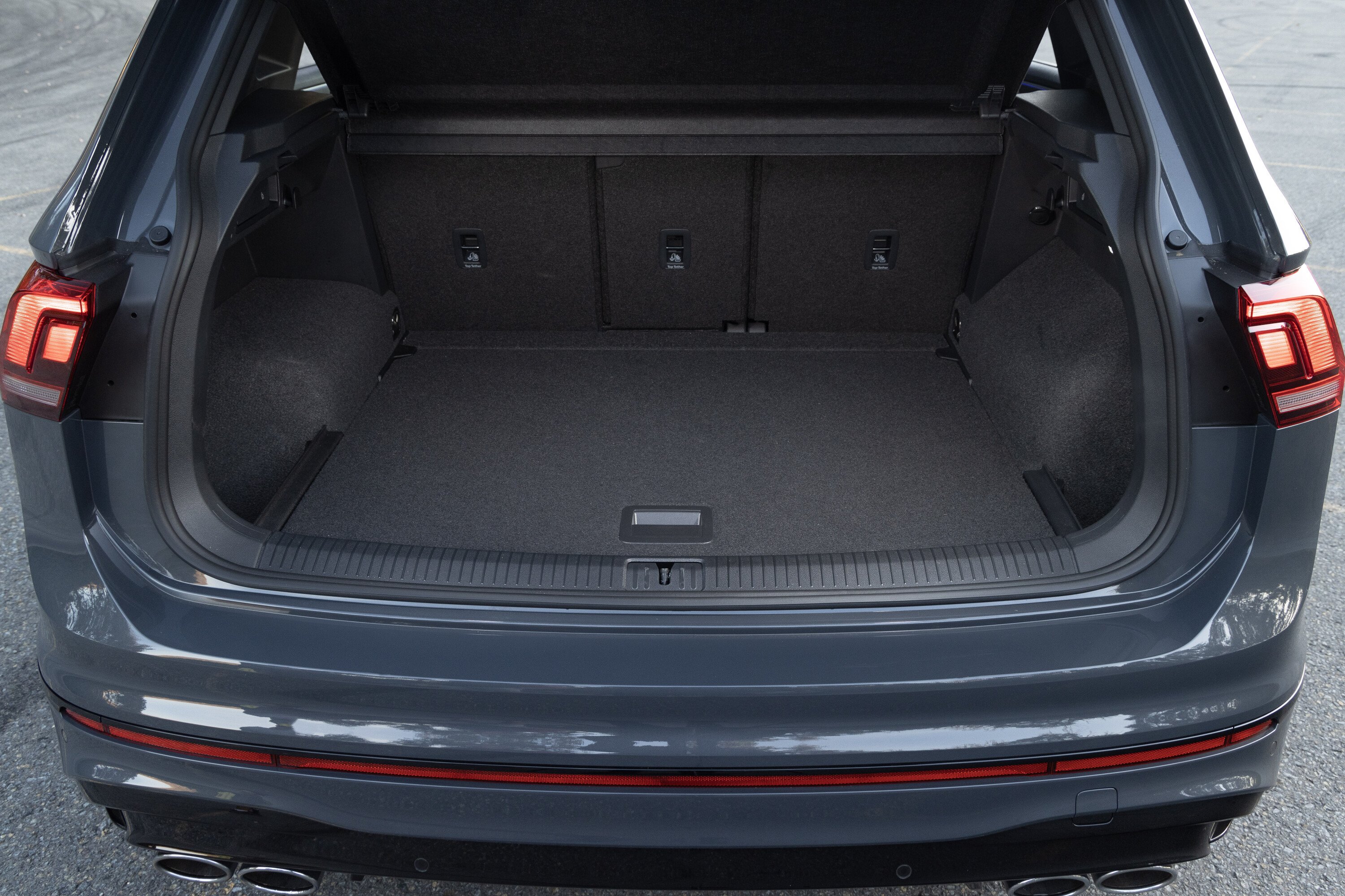
The Tiguan has a very usable boot thanks to its 40:20:40 folding second-row backrest – most cars these days are still 60:40, limiting practicality.
Its second row is also tilt-and-slide adjustable, meaning if you’re only lugging around small kids, you can slide the entire second row forward to maximise boot space. In terms of second-row practicality and boot space, the Tiguan is about as clever as it currently gets.
With the boot in its default position, and the rear seats set back to their furthest, the Tiguan’s boot is a great size, accommodating 615 litres, expanding to 1655L with the second row folded.
1
Under the boot floor is a space-saver spare tyre – which can be removed to free up even more space – while there are practical shopping bag hooks, hidden netted areas, and the ability to install a cargo net thanks to four tie-down points.
All Tiguan variants come with a standard manually-operable tailgate – an electric opening and closing feature is an option. Other rivals notably offer this as standard even on lower grades.
For those chasing more space and a third row, the Tiguan is available in long-wheelbase Allspace guise, too.
Yes. The Tiguan is among the most enjoyable medium SUVs available.
With an upright driving position, low dash and generous glass area, the Tiguan has excellent visibility in all directions, making it easy to judge each corner, unlike larger and more heavily-styled rivals.
This more conventional shape may look a little dated to some, but the Tiguan is certainly not dated in the way it drives. The Tiguan range offers five powertrain choices in total, including the aforementioned diesel and two lower-tune petrols as well as the flagship R, but the high-end 162TSI – which we have recently tested – is Australia’s favourite.
In this state of tune, the VW Group’s ubiquitous ‘EA888’ engine is powerful, tractable and refined, with a little bit of exhaust bark at high revs to match the sporty character.
1
Although some bemoan dual-clutch transmissions, Volkswagens equipped with the wet-clutch variety shift smoothly and – generally – reliably. The seven-speed DSG is quicker and more satisfying to use than a conventional automatic, too.
The Tiguan is also equipped with strong brakes attached to a reassuringly meaty pedal.
Steering in an R-Line model has a progressive ratio, so it requires very little effort around town with its sharp 2.1-turn lock-to-lock ratio, though at higher speeds the tiller settles and is never nervous like a Tesla Model Y’s sharp rack can be.
1
The cabin refinement and NVH suppression are superb, and the suspension is never noisy
The 162TSI’s standard-fit adaptive dampers are rare at this point in the market and bestow the R-Line with excellent breadth, providing both a comfortable urban ride in Comfort mode (despite 255/40 series Continentals wrapped around 20-inch alloys) yet rock-solid body control in Sport mode.
If there are some complaints, the Tiguan can sometimes be a little abrupt over the worst sharp-edged bumps whereas rivals with more sidewall iron out the hits. But the cabin refinement and NVH suppression are superb, and the suspension is never noisy.
The 235kW Tiguan R is, of course, a separate beast again. It’s quick, engaging, grips hard and is simply on a different plane for dynamics thanks to its angrier engine and more sophisticated, performance-oriented all-wheel-drive system.
Which Volkswagen Tiguan engine uses the least fuel?
That would be the 2.0-litre diesel engine – the 147TDI, which uses an impressively low 6.1L/100km on the combined cycle as per ADR81/02 Australian fuel-efficiency regulations.
Next up is the 1.4-litre petrol 110TSI, using 7.7L/100km.
The 2.0-litre petrol engine uses 8.5L/100km in 162kW 162TSI form, while curiously the less powerful 132kW 132TSI specification uses slightly more fuel at 8.8L/100km, matching the 235kW, 2.0-litre R.
The 235kW 2.0-litre Tiguan R has a 58-litre tank, uses 8.8L/100km and requires the most expensive 98 RON premium fuel.
Aside from the base 110TSI and flagship R which both use a 58-litre fuel tank, most Tiguans have a 60-litre tank. Importantly, petrol Tiguans require premium 95 RON petrol (the R needs 98 RON), making it a slightly more expensive proposition to fill than a car that takes the cheapest 91 RON.
In our own real-world testing, we’ve recorded fuel figures of 10.5L/100km for the 162TSI R-Line).
How long is the warranty and what are the Volkswagen Tiguan’s servicing costs?
All Volkswagens are covered by a five-year/unlimited-kilometre manufacturer’s warranty. Servicing is due every 12 months or 15,000km.
Volkswagen offers two pre-paid servicing schemes, spanning three and five years. A five-year prepaid plan is the best value, with prices ranging from $2850 (110TSI) to $3200 (diesel, 132TSI and 162TSI). That makes the Tiguan a pretty expensive car to service compared to, say, a Toyota RAV4.
Which version of the Volkswagen Tiguan does Wheels recommend?
There’s a reason the 162TSI is so popular – it’s the best.
Although the base model offers outstanding dynamics, ergonomics and design for the price – and the diesel unbeatable driveability and efficiency – the 162TSI is a beautiful blend of all these attributes. And, with 162kW, plenty of punch.
Of course, you could also live a little and get the R. You know you want to…
Cupra has announced updates for the Formentor, Leon and Ateca due to arrive in September.
Snapshot
Cupra Formentor receives DAB+ digital radio, electric tailgate as standard
Leon VZe PHEV adds Beats audio option
Digital radio also added to Leon and Ateca
The Spanish performance brand has applied most changes to its top-selling Formentor midsize SUV – though all vehicles receive DAB+ digital radio as standard.
The 2024 Cupra Formentor will feature a standard-fit electric tailgate, and an optional titanium exhaust system added to the flagship VZx AWD.
The $6300 Akrapovic option matches the Ateca VZx, providing owners with a factory-backed exhaust upgrade for a beefier sound from the Volkswagen R-derived 228kW 2.0-litre turbo-petrol four.
1
Cupra has introduced new option packs for the Formentor, with the Leather and Camera Package – priced at $2800 – replacing the previous Leather and Power option for the V AWD, VZ FWD and VZe FWD.
It retains the Nappa leather upholstery, heated front seats and power-adjustable driver’s seat, while a 360-degree camera system replaces the now-standard hands-free electric tailgate.
Prices have increased between $1800 and $2000, ranging from $51,990 before on-roads for the entry-level Formentor V AWD to $65,790 for the flagship VZx AWD – the dearest Cupra sold in Australia.
The 2024 Cupra Leonhatch has received a Leather and Sound Package for the plug-in hybrid VZe – priced at $2550 – replacing the previous leather-only option, with an additional nine-speaker, 350-watt Beats audio system replacing the unbranded six-speaker audio system.
As with the Formentor, pricing for the Leon has increased, ranging from $1200 to $1700.
It means the Leon VZe – now priced at $61,690 plus on-roads, identical to the VZx – no longer matches the all-electric Born hatch, just months after Cupra slashed prices for the Leon VZe and VZx to $59,990 in January.
1
There are no other changes for the Ateca VZx beyond the addition of DAB+ digital radio, with pricing up $1740 to $63,490 before on-road costs or $68,990 drive-away.
Local deliveries of the updated 2024 Cupra Formentor, Leon and Ateca are due to commence in September.
Cupra said customers interested in its current 2023 model-year vehicles can still find them in stock or arriving soon at existing prices.
The brand is preparing to celebrate its first anniversary in Australia in July, with 2338 vehicles registered in 2022 and 2023 (to the end of May).
Cupra Australia claims it has sold “some 3000” vehicles – including yet-to-arrive orders – with electrified models accounting for one-third of the total.
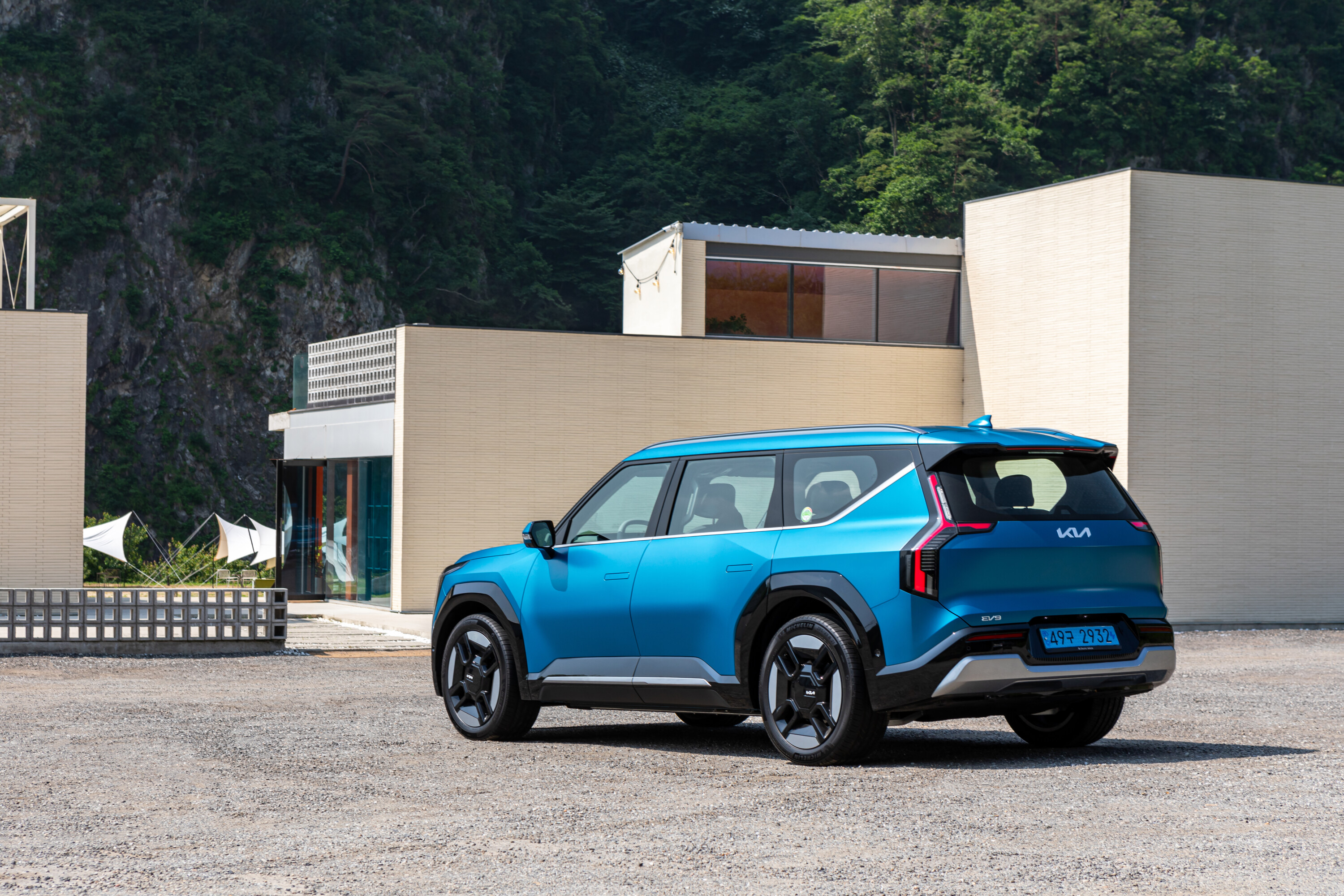
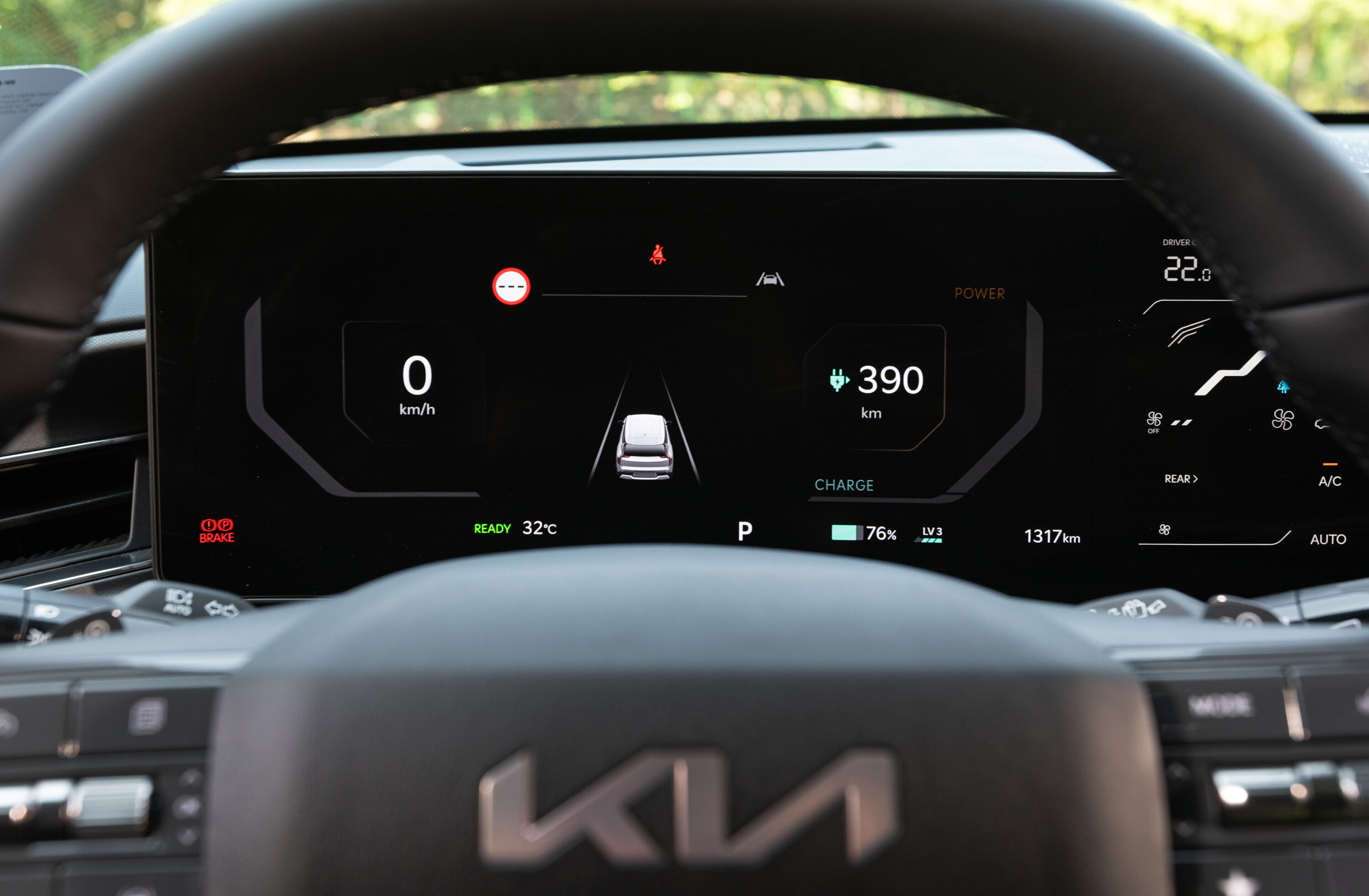
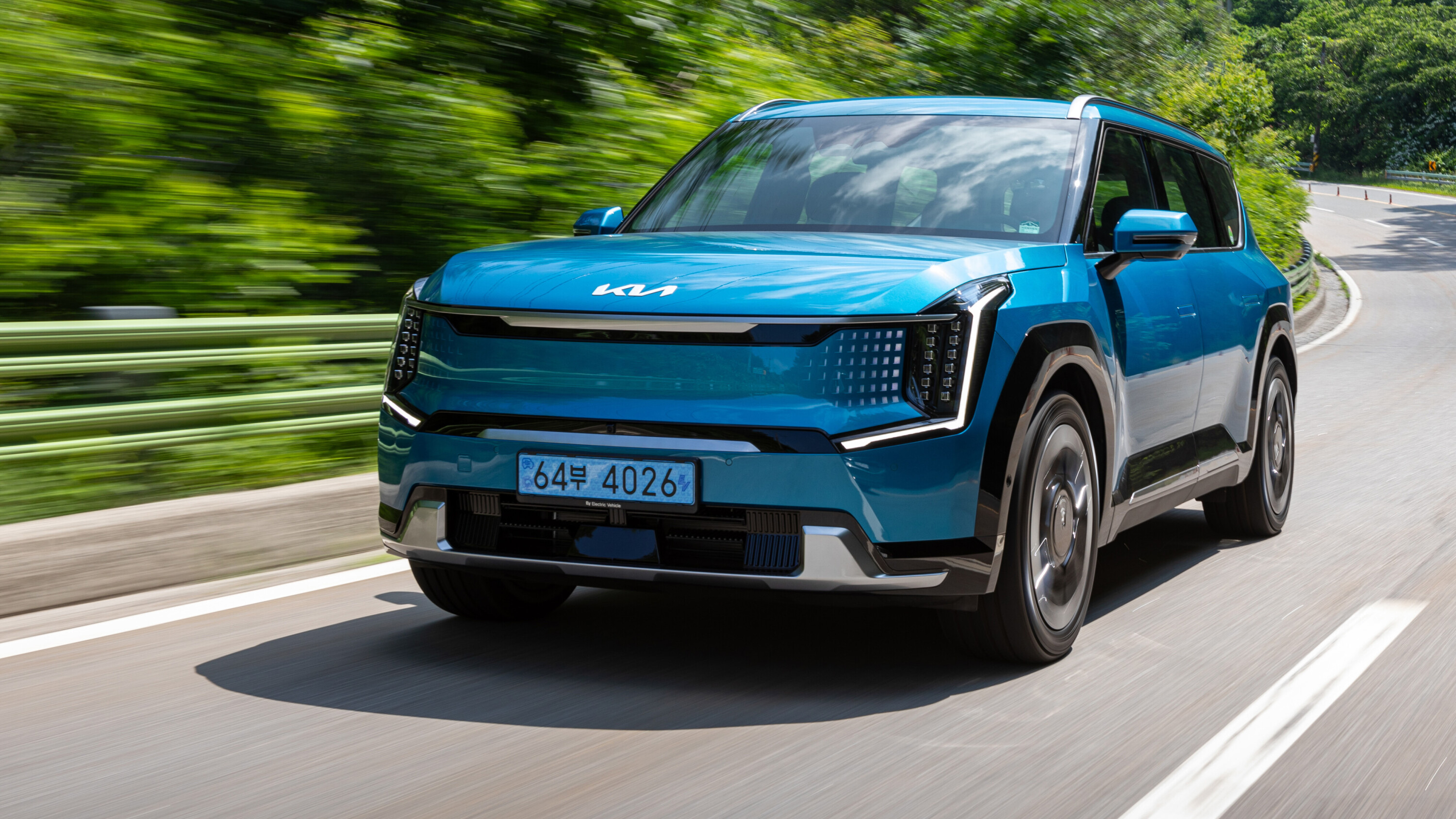
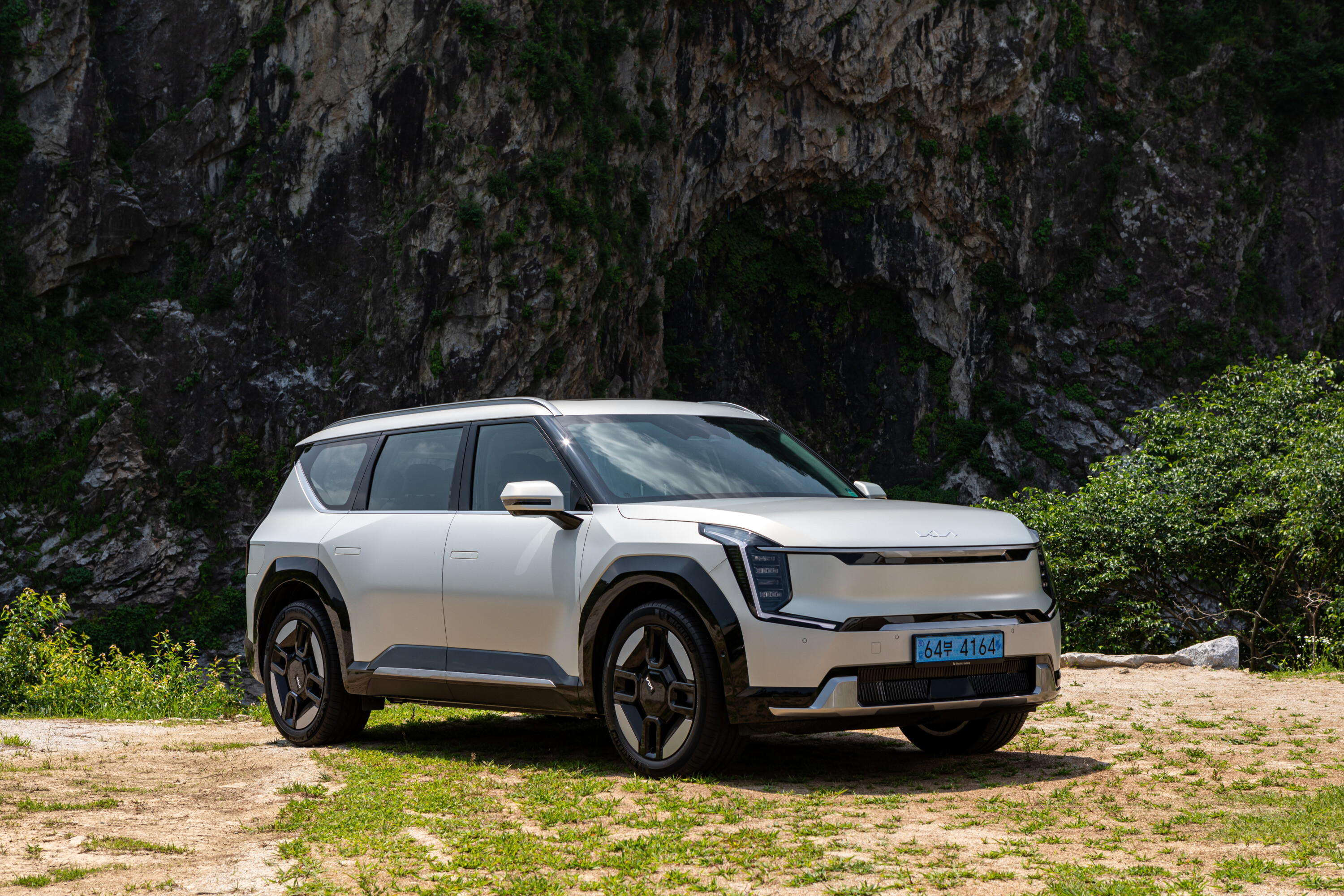
Kia’s massive EV9 is a unique thing, for Kia and the market alike, which could result in a surprise success – even at $100k a pop.
Story continues: EV9 first international drive in Korea
With benchmark EV technology rapidly building Kia‘s reputation (and that of sister brand Hyundai), the next logical step on Kia’s journey was a flagship capable of showcasing its many talents in a truly unique offering.
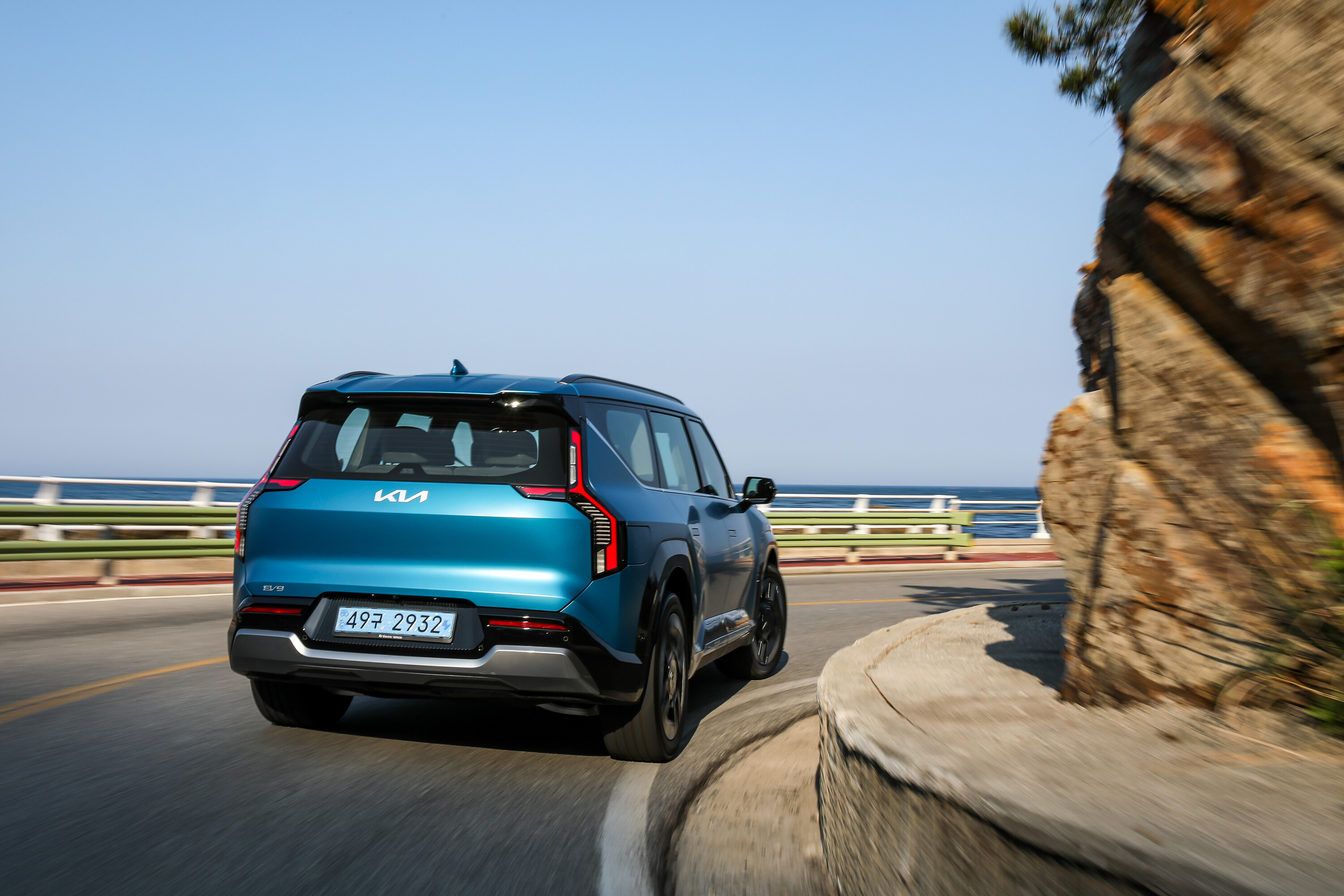
Featuring the next evolution of Kia’s striking design language (including a large proportion of the detail design and form hinted at by 2021’s stunning EV9 Concept), the beautifully nuanced production EV9 manages to disguise its physicality by rejecting the curves of the EV6 for sharper edges and a more imposing, more futuristic shape. In the flesh, in any colour, it has presence. And looks sensational.
1
The beauty in this electric beast is all about what resides on top, and what all that additional metal achieves.
Given the sheer size of the EV9, it would be hard for it to go unnoticed. At 5010mm in length, it’s 200mm longer than a Sorento (which is already classed as a large SUV in Australia), riding on a vast 3100mm wheelbase that’s 285mm greater than a Sorento’s.
The EV9 is also 80mm wider and 80mm taller, so in terms of the real estate it occupies, it’s girthy … yet somehow looks svelte alongside a Sorento and has a superior drag coefficient (0.28Cd versus 0.32).
Underneath, the EV9 rides on an expanded version of the E-GMP platform that also underpins the Kia EV6, Hyundai Ioniq 5/6 and Genesis GV60 – sharing their class-leading 800-volt charging capability – though in truth, the EV9’s wheelbase is only 100mm longer than an Ioniq 5’s. The beauty in this electric beast is all about what resides on top, and what all that additional metal achieves.
The Kia EV9 will reach Australia sometime in the fourth quarter of 2023. Here’s what you can expect when it arrives.
Key Points
Entry-level pricing not yet clear
Upwards of $100,000 for the hero GT-Line
~500km driving range in AWD form
While the only spec available at the EV9’s South Korean international launch was a range-topping GT-Line AWD, the Australian line-up will include two additional variants – an entry-level EV9 (likely to be named ‘Air’) with a 76.1kWh battery and rear-wheel drive, and a long-range mid-spec variant (rumoured to be named ‘Earth’) with a 99.8kWh battery and either rear- or all-wheel drive.
If the long-range rear-drive EV9 gets the green light, so too will its impressive 541km of WLTP range – eclipsing the AWD version (497km) and, by a considerable margin, the standard-battery version (418km). The base EV9 is faster to charge than its big-battery alternatives (20 minutes from 10-80 per cent on a 350kW ultra-fast charger versus 24mins) and quicker to 100km/h than the long-range rear-driver (8.2sec versus 9.4).
1
But the high-output GT-Line remains unmatched for pace (0-100km/h in 6.0sec, or 5.3sec with Boost Mode activated) … at least until the rumoured EV9 GT appears.
Available in six- and seven-seat guises (though the EV9 will be seven-seat only in Australia), all we can confirm so far is that the range-topping EV9 GT-Line will be the most expensive Kia ever sold in this country, with an expected starting price in excess of $100,000.
Excluding the centre-row captain’s chairs, embedded lighting in the front ‘grille’ panel, and Highway Pilot tech that allows for Level 3 autonomous driving in certain markets, expect the Aussie EV9 flagship to feature every equipment trick in the book.
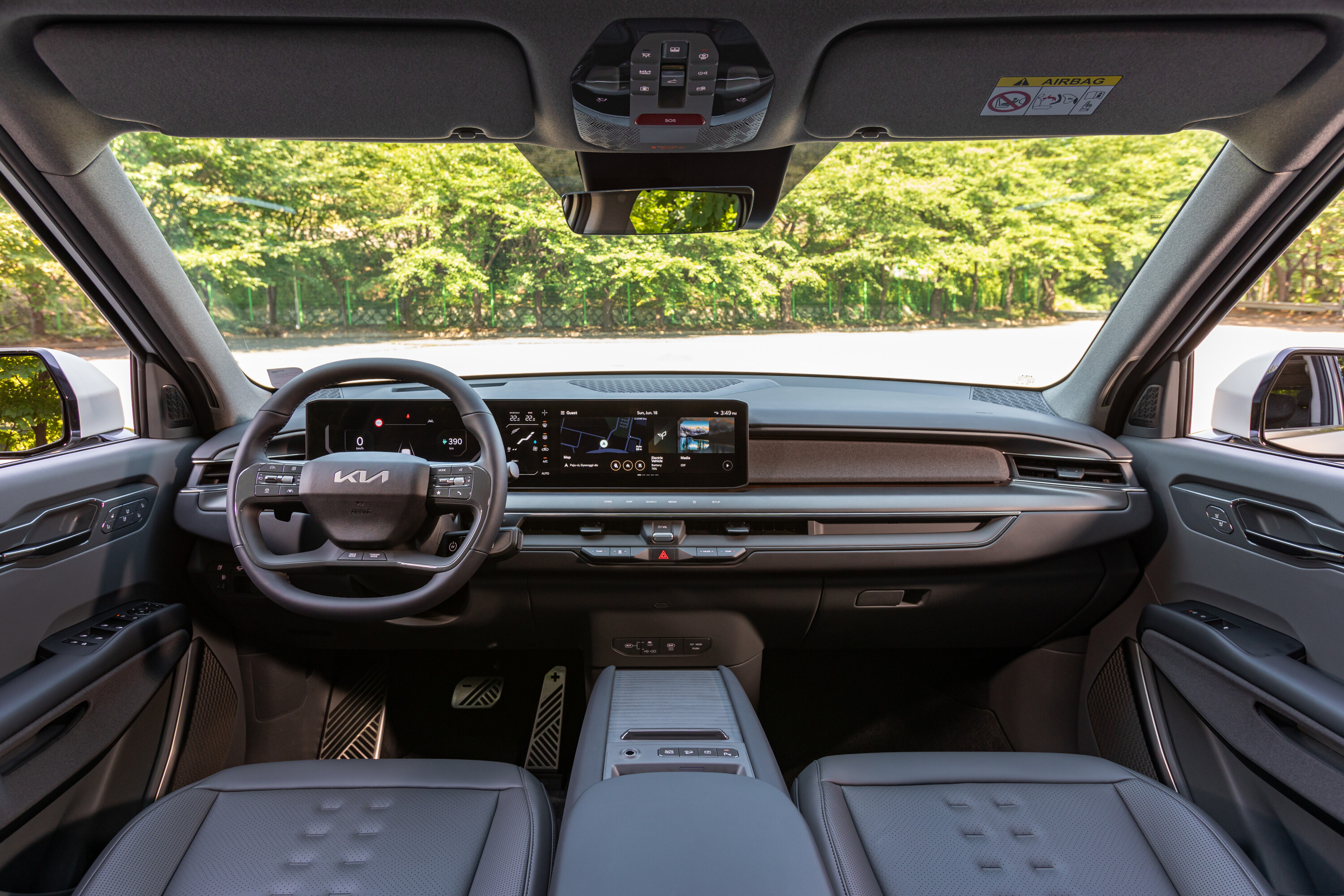
From the driver’s seat, peering out across a broad, flat bonnet through panoramic glass, fronted by a relatively minimalist dashboard design inspired by high-end contemporary furniture, the EV9 both looks and feels premium.
While the A-pillar trims, upper door sections, lower dash, material inserts, and even the full-width loop-pile mats covering the flat floors are all recycled materials, the consistency of interior quality is so strong that you’d never know. The EV9’s plastics may not be squidgy, but they’re smoothly matte, evenly grained and finished, and feel classy.
They’re even tastefully coloured – especially the ‘cappuccino’ headlining of our seven-seat test car, with its wool-blend appearance.
1
The EV9’s front cabin exudes a high-tech warmth
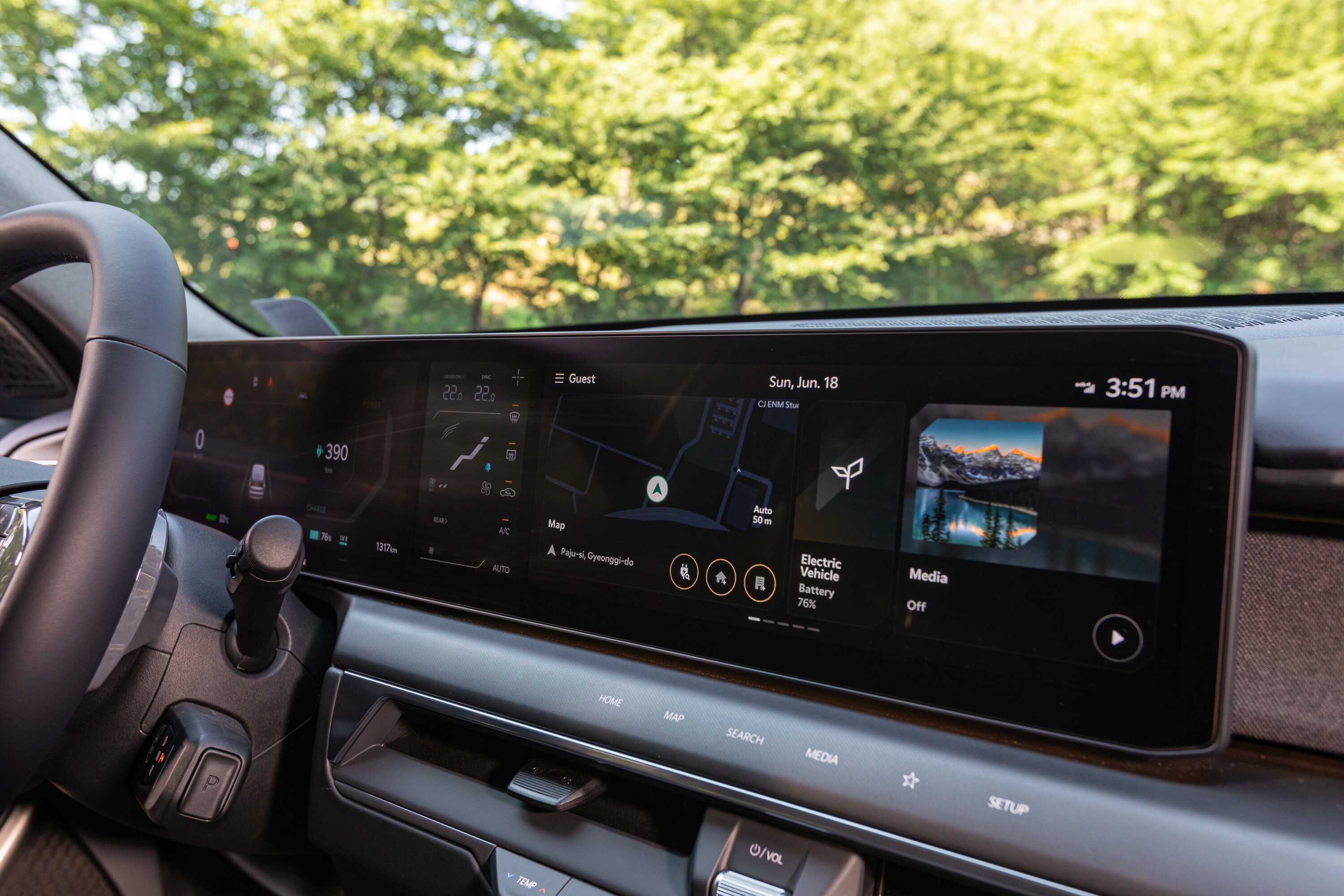
A pair of 12.3-inch screens crown the dash top, merged by a 5.0-inch screen for the climate control (that’s more easily seen by the front passenger than the driver), though the EV9 also features physical toggles for individual temperature control and air direction, and has made a central design feature of the ‘barrel’ volume control, which reeks of common sense.
Joined by a classy steering wheel (with squared-off top and bottom) that also includes the drive-mode and terrain controls, plus logical grouping of all switchgear (and no capacitive nonsense!), the EV9’s front cabin exudes a high-tech warmth.
The few sour notes concern the dash trim in front of the passenger (an ugly, mottled grey plastic in the EV9 with the coffee headlining), plus doors that won’t house much more than a 600ml bottle, though a large centre-floor tray with rubberised inlay, and a usefully deep console between the front seats mostly compensates.
1
As for space and comfort, the EV9 is tremendous.
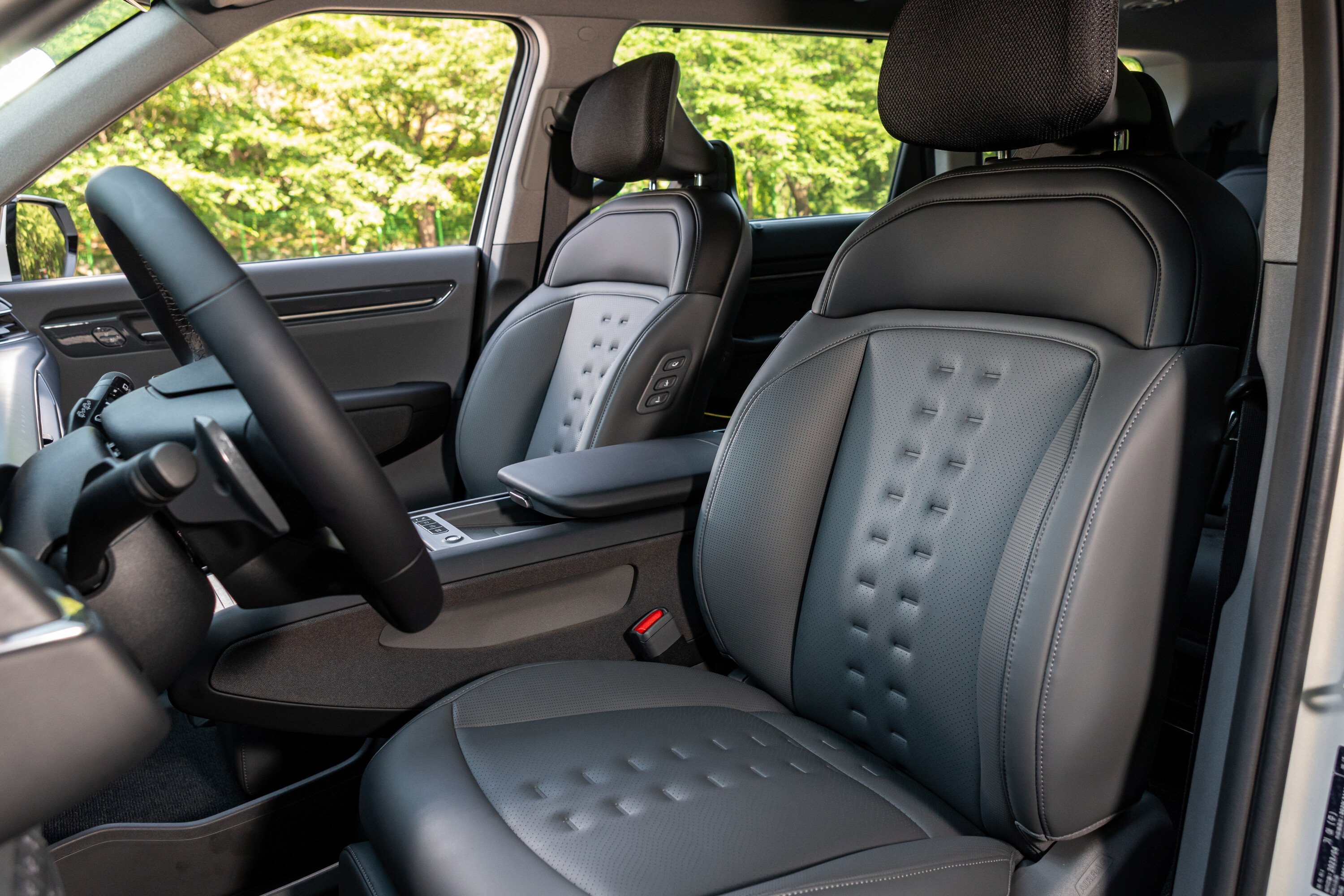
Upholstered in a supple two-tone bio-material that looks great and feels preferable to leather, both ‘relaxation’ front seats feature electric ‘ottoman’ under-calf extenders for supreme long-distance luxury.
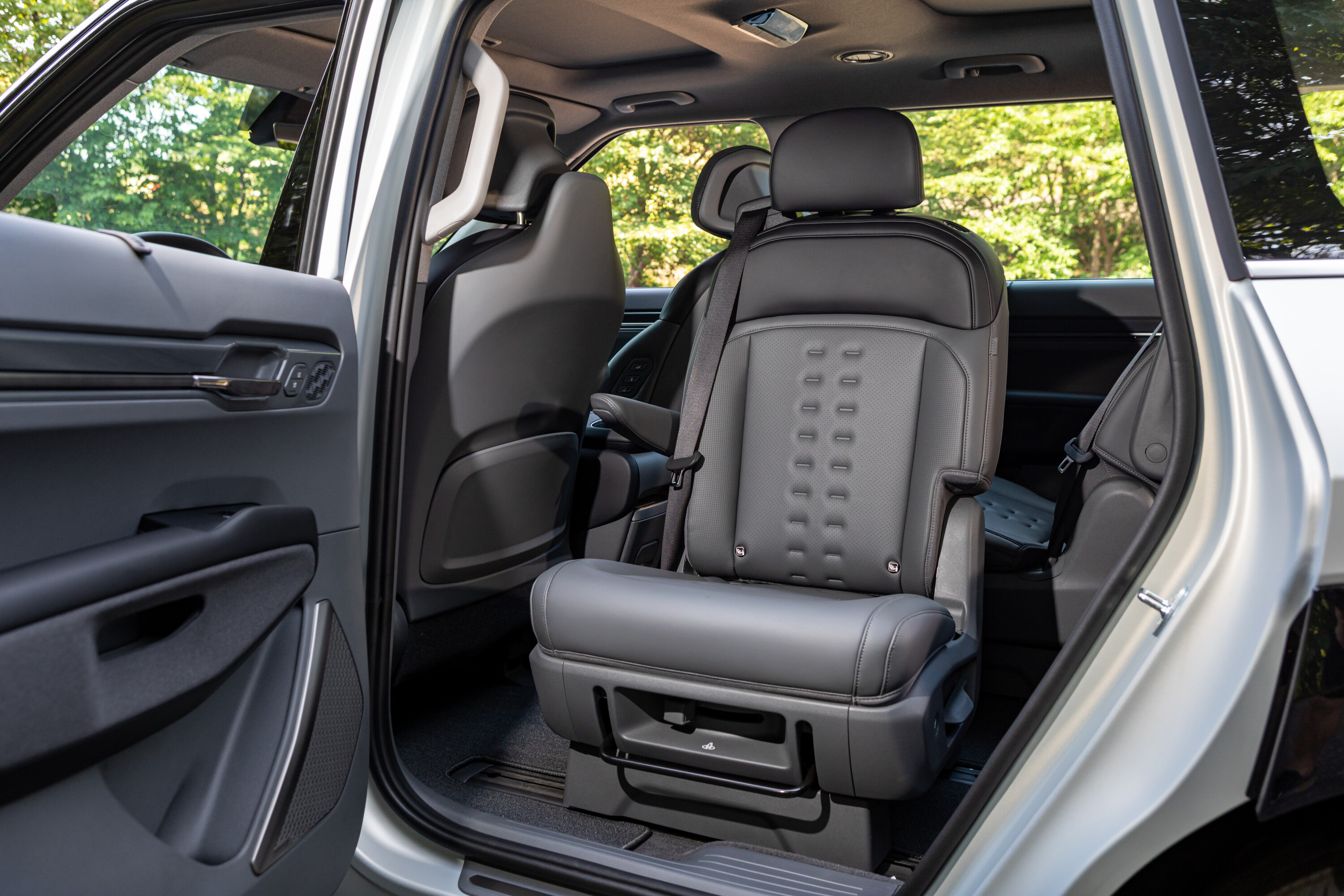
Same goes for the fully adjustable, all-electric second-row captain’s chairs with massage functions and the ability to swivel … however, the Australian-market EV9 will omit these outstanding chairs for a three-person bench that fulfils the seven-seat brief but lacks enough under-thigh support, as well as electric adjustment.
1
We’ll also lose the centre console extension that acts as a table and houses a deep bin – replaced by an elbow-deep hole with a little pocket at its opening to house a mobile phone.
Yet quality in the second and third rows remains consistently luxe, while access and space in the third row (with electrically adjustable backrest rake) means the EV9 can truly provide adult-friendly comfort throughout.
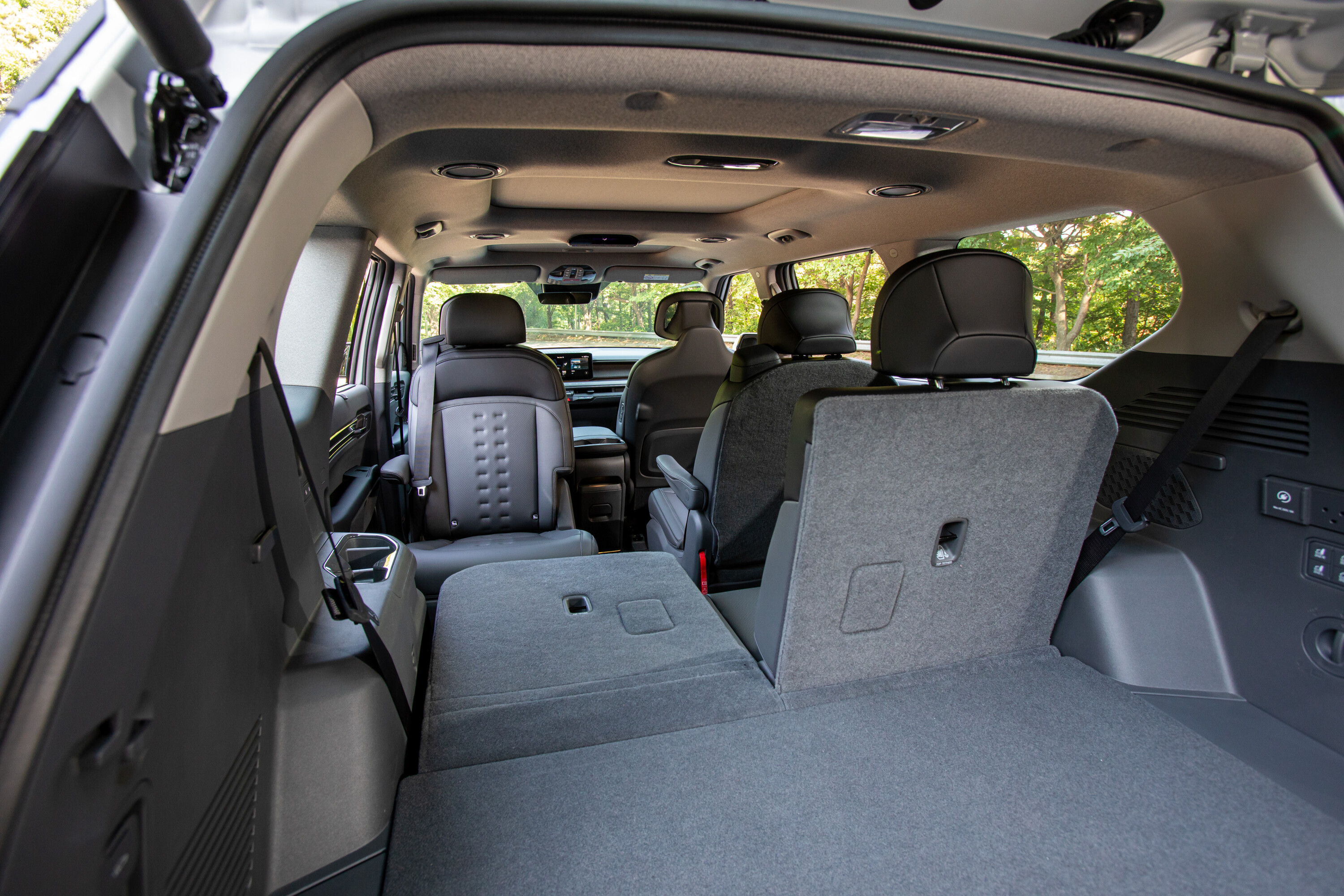
Boot space is similarly impressive, Kia quoting 571 litres with the third row in use, and a massive 2320 litres with the second- and third-row seats lowered (electrically, via individual switches on the boot wall, mounted below a 250-volt, 16-amp power outlet).
With so much exterior presence and interior polish, disguising an entire floor crammed with weighty battery tech, it’s probably no surprise that the EV9 is anything but light.
Kia is yet to quote an official kerb weight, though “around 3000kg” is where the EV9 GT-Line sits – making it heavier than a Nissan Patrol, yet around 200kg lighter than its pricier US-market equivalent, the Rivian R1S electric SUV.
Most of the time, you’d never really know the EV9 was such a big-boned beast. With all that battery heft mounted low in its chassis, the EV9 doesn’t need to be manhandled to change direction, and in tight, flowing corners, there’s a satisfying degree of neutrality, and even some rear-end adjustment, to help the EV9 maintain your desired course.
1
Only once it starts to load up in a corner do you sense the outward momentum, yet the EV9 retains its neutral balance.
Combined with strong retardation from the left pedal and the dynamic benefits of having ‘i-Pedal’ apply some regenerative braking force as though it’s trail-braking the EV9 towards an apex, this electric beast knows how to boogie when it needs to, and achieves that end with consistency and finesse.
Only once it starts to load up in a corner do you sense the outward momentum, yet the EV9 retains its neutral balance. And the firmly, consistently weighted steering points accurately, though without eagerness – the EV9 is more about cossetting in a straight line.
Australian cars will feature a market-specific suspension tune and though the Korean-spec GT-Line we drove on fixed-rate dampers felt nicely wafty and mostly composed on good-quality Korean roads, it could be improved with some tightening and tweaking.
1
The GT-Line AWD more than matches its three-figure accelerative pace with considerable off-the-line punch.
Fast-moving freeways proved to be the EV9’s forte, with a quiet, effortless gait and an easy ability to cruise at 140km/h (the Koreans frequently ignore posted limits), with average energy consumption averaging around 28.5kWh/100km when driven hard, but soon settling to an easy 22.7kWh/100km even with long sections devoured at the aforementioned speeds.
In moderate city and freeway driving, the EV9 averaged 18.2kWh/100km, which points towards the 497km range claim being relatively accurate.
As for overall performance, the GT-Line AWD more than matches its three-figure accelerative pace with considerable off-the-line punch. Packing 283kW and at least 600Nm (or 700Nm with ‘Boost Mode’ activated which, after purchasing through the Kia Connect app, will then be applied permanently), the EV9 GT-Line is good for 0-100km/h in a claimed 6.0sec, or 5.3sec with that 100Nm ‘Boost’.
Yet regardless of torque output, the EV9’s silent-assassin status from a standing start remains unquestioned.
“This is an ultra-modern, ultra-cool large electric SUV”
As the first mainstream large three-row electric SUV, the Kia EV9 immediately sets a standard that similarly priced rivals will be struggling to match … when they eventually appear.
Right now, Kia’s EV9 flagship is not only the most premium vehicle ever offered by the brand, it’s a completely unique selling proposition – its only rivals being the Rivian R1S in North America and, soon, the Mercedes-Benz EQS SUV in optional seven-seat form. Both are priced substantially higher than the EV9.
Yet the Kia rarely, if ever, feels like a cheaper alternative. Sure, it’s not a Bentley, but then you argue it benefits from a taste level unimpeded by the constraints of the past.
This is an ultra-modern, ultra-cool large electric SUV that is elegantly classless, yet is afforded all the benefits of being a Kia when it comes to warranty, servicing and even social standing when separated from the affectations of affluence.
It’s a pity we won’t see the six-seat EV9 because it is truly excellent as a refined luxury express. The seven-seater only falls behind if you’re regularly seating adults in the second row, yet even then, that’s not enough to disregard what is easily the most accomplished Kia ever.