
Not offered in Australia is a new extended-range version of the single-motor variant, with a larger 82kWh battery pack and a more powerful 185kW electric motor. It has a claimed 515km driving range for the XC40, or 533 kilometres for the C40.
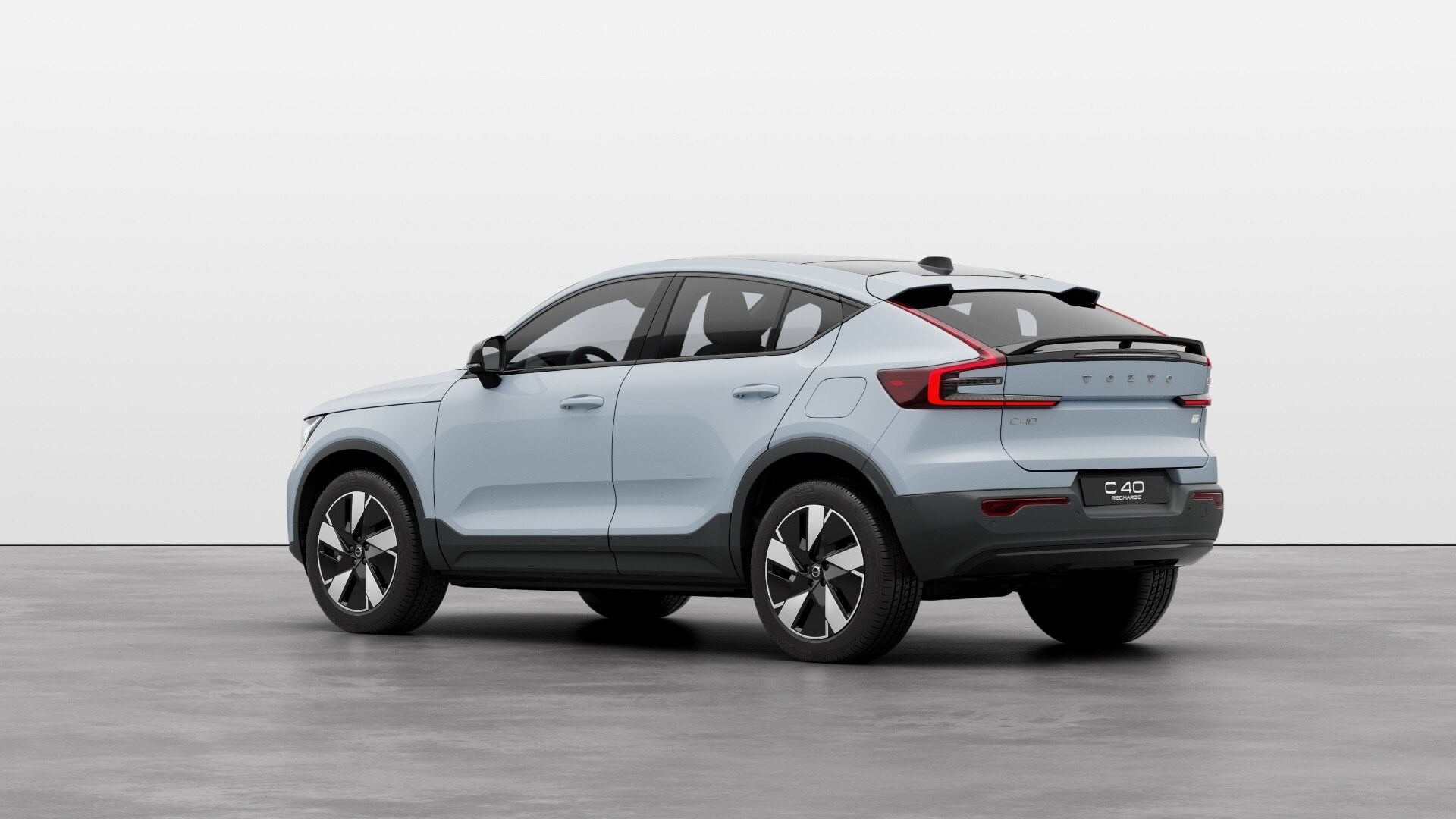
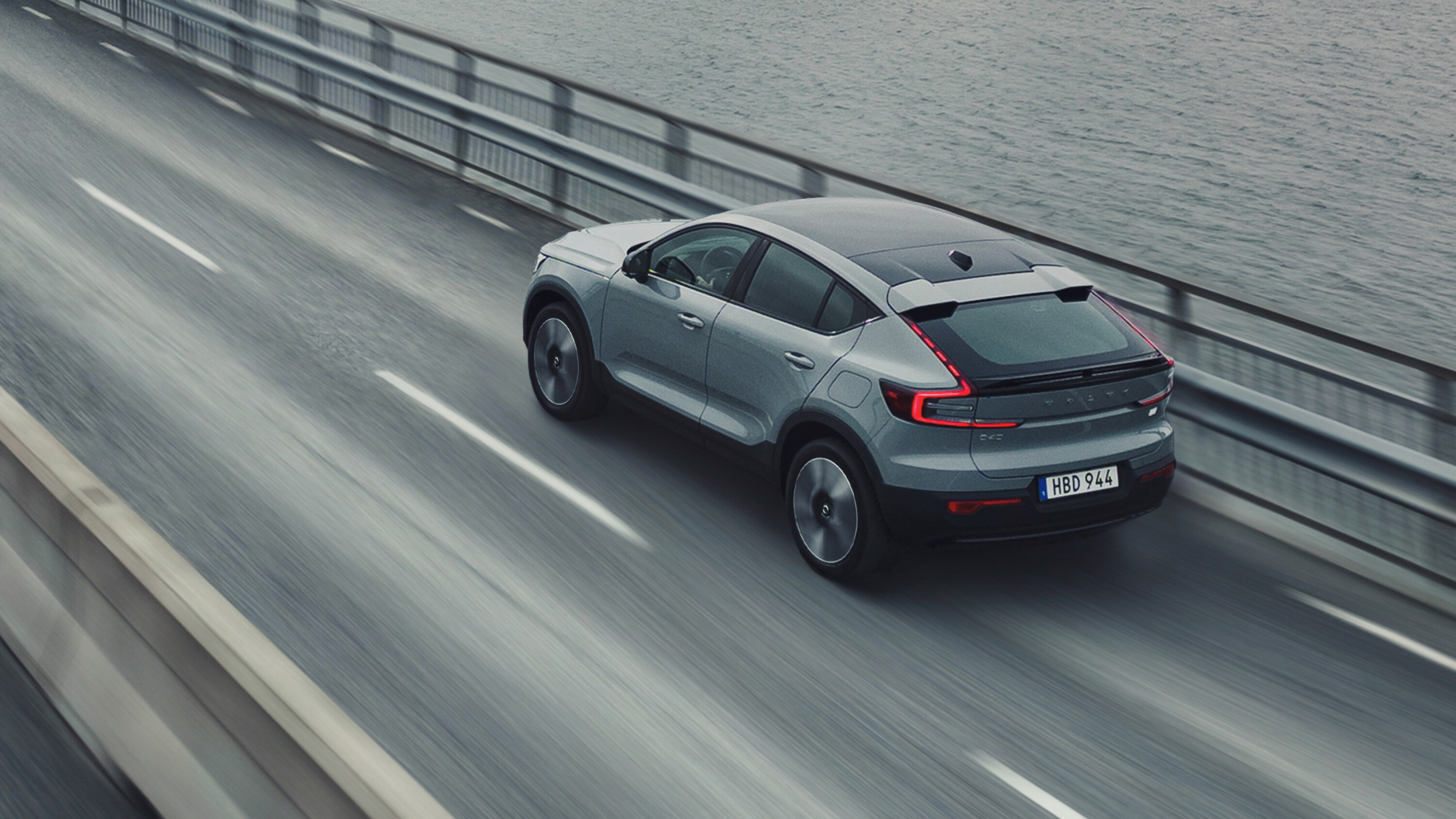
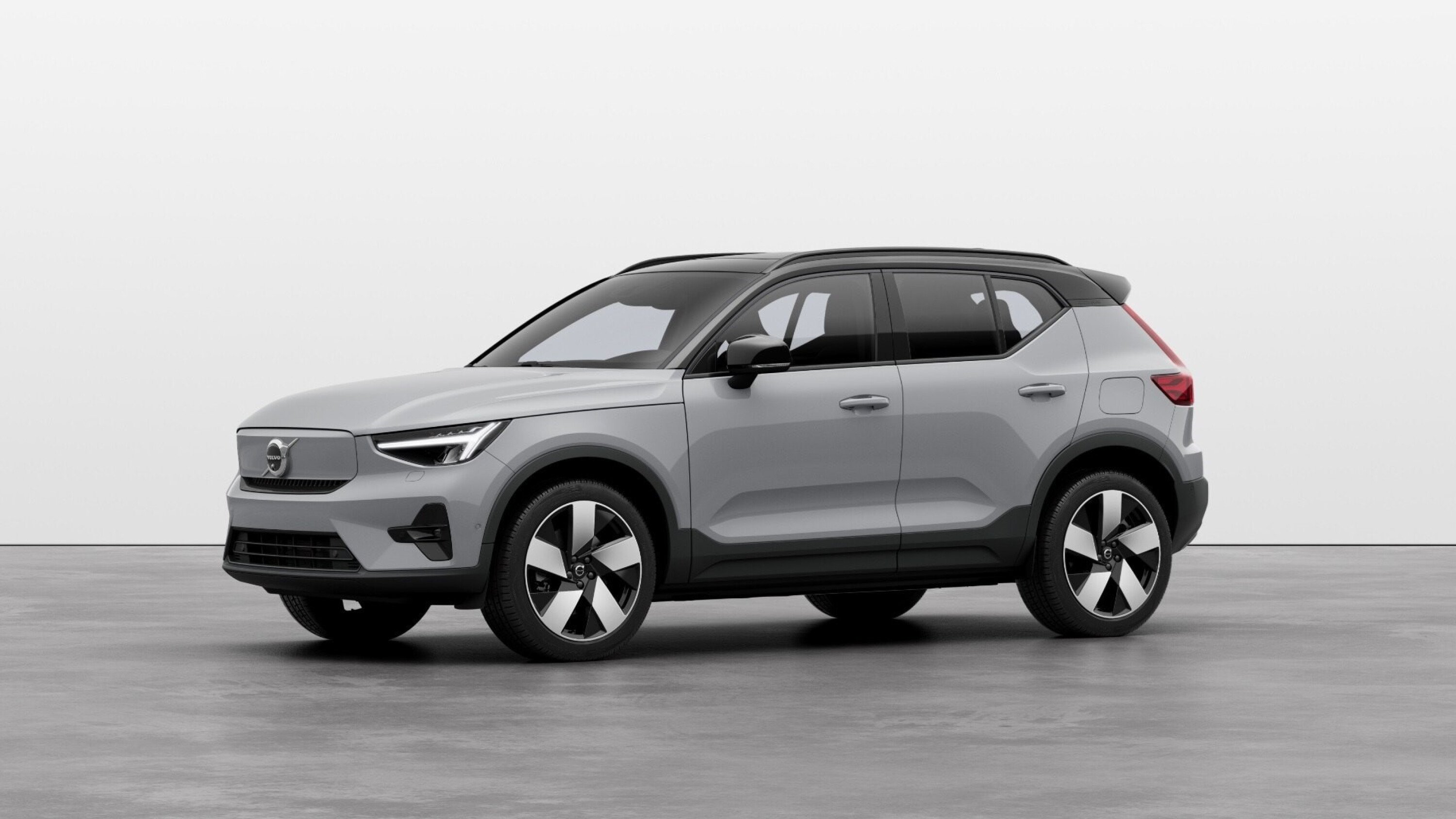
Australian pricing has been announced for the updated 2024 Volvo XC40 small electric SUV and its sibling, the 2024 Volvo C40 small electric coupe SUV.
Snapshot
- 2024 Volvo XC40 and C40 Recharge EVs receive technical update
- Dual-motor gains faster charging, larger battery and tweaked AWD torque split
- Single-motor variant shifts to RWD, gains power bump
As reported previously, Volvo has improved the driving range and charging time for its updated EVs. And, in exciting news for diehards, the entry-level, single-motor variants have shifted from front- to rear-wheel drive.
It is the first time Volvo has offered a rear-wheel-drive vehicle in 25 years, following the discontinuation of the 900 Series, later known as the S90 and V90.
1
More importantly for most buyers, both models benefit from improved driving range and charging times – detailed below.
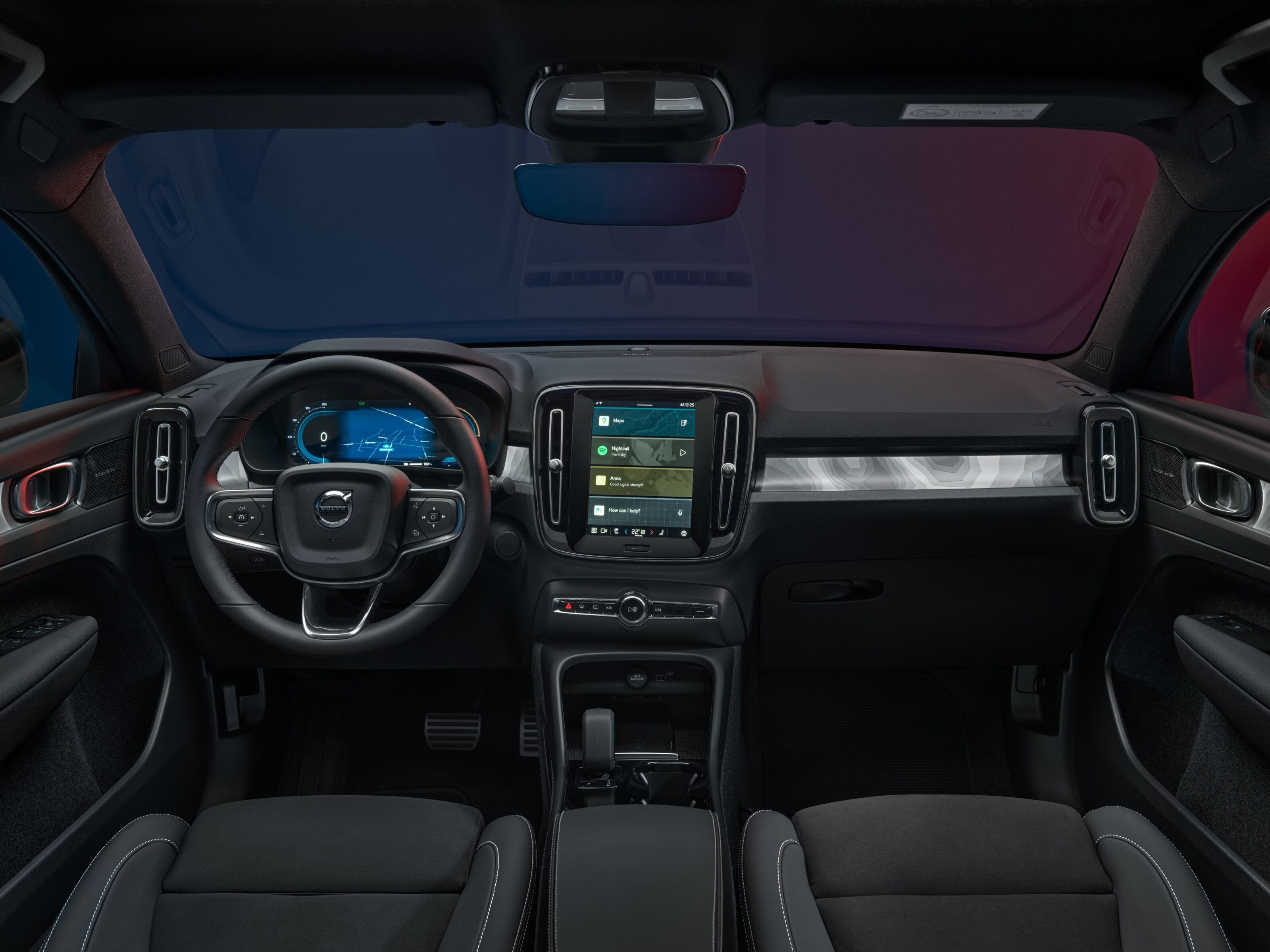
The updated 2024 Volvo XC40 Recharge Pure Electric is priced from $76,990 before on-road costs, while the 2024 C40 Recharge Pure Electric starts from $78,990.
1
Upgrades: Drive configuration, charging and range
The entry-level models switch to rear-wheel drive, rather than being front-driven, to improve efficiency and extend range. It also gets a power bump to 175kW (up 5kW).
However, these entry models retain the 135kW max DC charging speed offered with the outgoing MY23 cars.
Forbidden fruit
2
‘Twin’ dual-motor models gain 62km in claimed range
Australia-bound dual-motor models gain the larger 82kWh gross battery described in the above note (up 4kWh), with an extended WLTP claimed driving range of 500km on the XC40 EV and 507km for the sleeker C40.
The updated dual-motor XC40 and C40 Recharge also come with changes to the all-wheel-drive torque split between the front and rear axles – now 117kW and 183kW, respectively – but combined outputs remain the same at 300kW and 660Nm.
Acceleration times are unchanged for both powertrains, with the single-motor sprinting from 0-100km/h in 7.4 seconds and the dual-motor at 4.9 seconds.
? Nine minutes faster to charge
In dual-motor form, the XC40 and C40 EVs gain an upgraded 200kW DC fast charging capability, up from 150kW. That cuts its claimed 10-to-80 per cent recharging time to 28 minutes – a nine-minute improvement.
There’s also a new, aerodynamic-focused 19-inch alloy wheel design available for single-motor XC40 and C40 variants.
1
? Something looks different about the XC40…
The XC40 Recharge electric SUV gained a mild facelift in early 2022 to align it with the C40 Recharge coupe SUV, with a tweaked front design, new interior dashboard trim, and the introduction of the single-motor version in Australia with a smaller 69kWh gross battery.
What’s to come?
The local arm has promised to offer a completely electric line-up from 2026, spearheaded by the recently unveiled EX90 flagship large electric SUV. By then, Volvo Cars CEO Jim Rowan recently predicted that EVs will reach price parity with internal combustion engine models.
Advice
Australia’s best electric cars for 2023
We’ve tested nearly every EV below six figures in Australia to rank the best on sale today
MORE
Everything Volvo
⚡ More EV stories to help you choose the best car for your needs
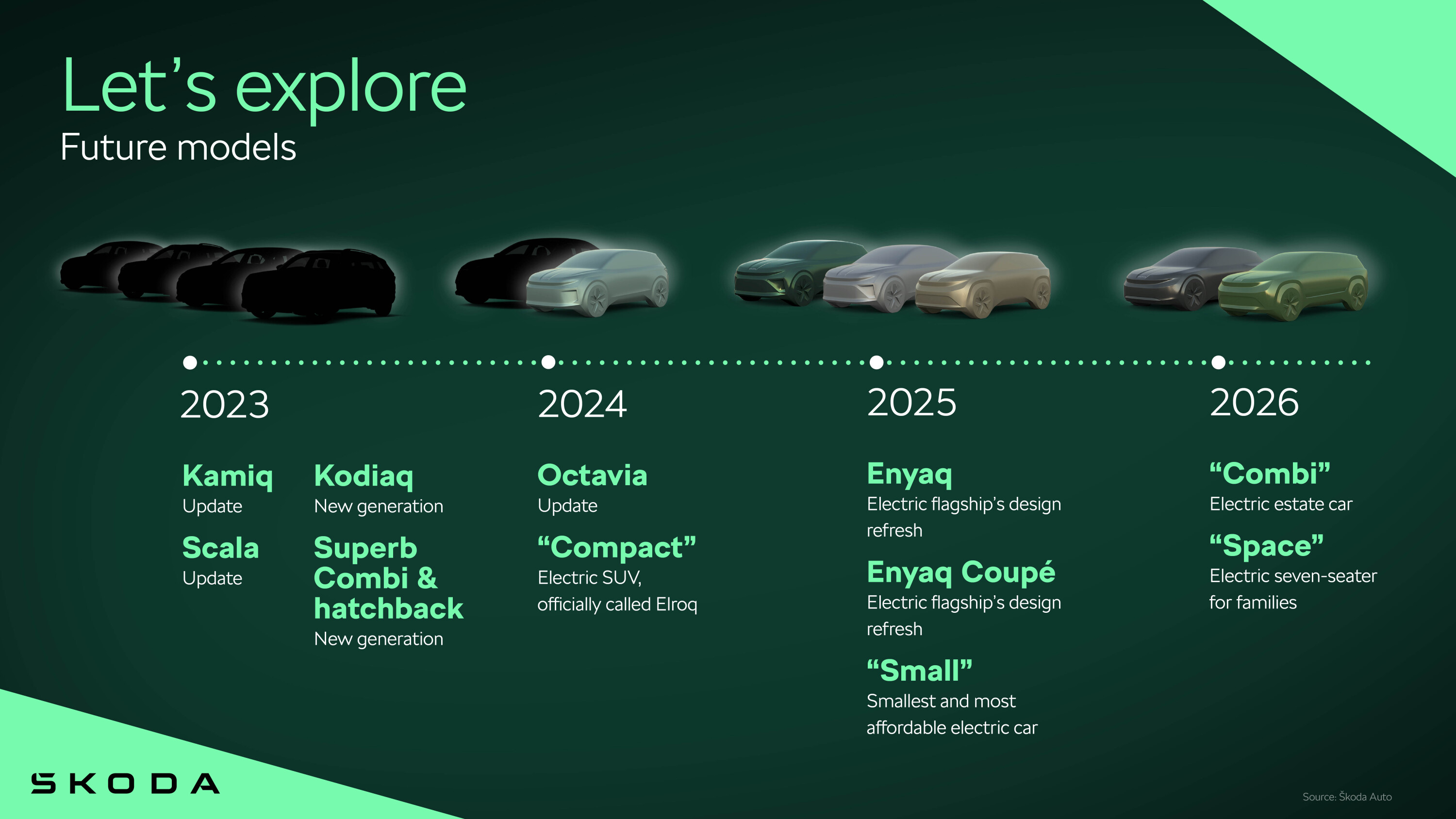
Škoda is set to launch six new electric vehicles by the end of 2026, including a wagon, small to large SUVs, and an Enyaq facelift.
Snapshot
- Four new EV models, Enyaq, Enyaq Coupe updates coming by 2026 end
- Skoda electric wagon to debut in 2026
- Next-gen engine-powered Superb, Kodiaq reveal this year
The Volkswagen Group’s Czech Republic-born car brand will also debut its ‘Modern Solid’ design language – described as practical, simplistic and aerodynamic – across its upcoming electric models.
As the manufacturer of the group’s Modular Electric Toolkit (MEB) EV batteries, Skoda also claims to be focused on improving environmental sustainability in its vehicle production and supply chains, including recycling or repurposing battery packs for stationary energy storage systems.
But, despite currently lagging behind Volkswagen’s growing ID-branded electric line-up overseas, it’s set to change.
1
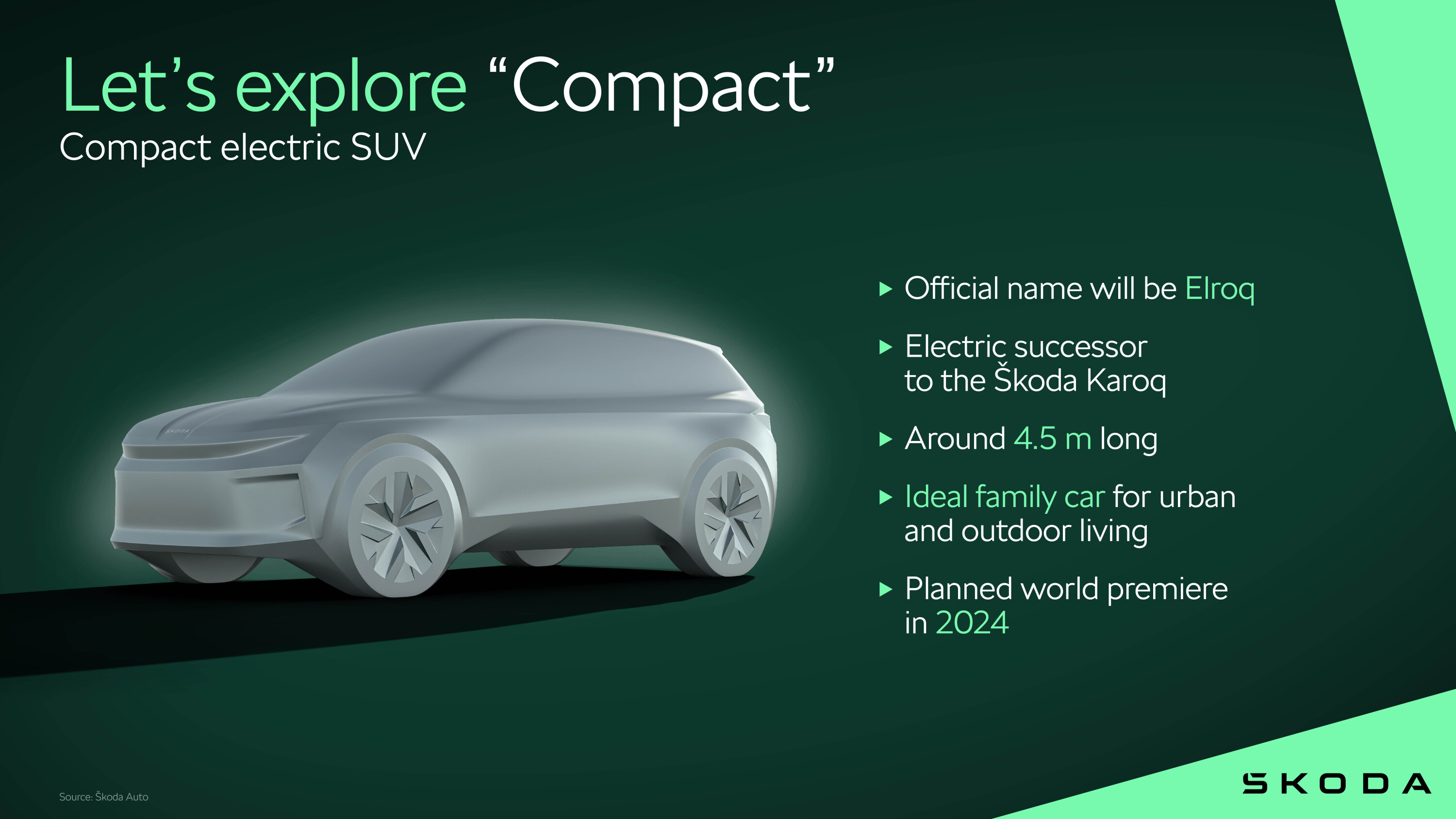
2024: Skoda Elroq EV
The first new EV in Skoda’s roadmap will be called the Elroq – which will be the electric successor to the recently facelifted Karoq.
It’s dubbed as a ‘Compact’ SUV stretching around 4500mm long (about 100mm more than the Karoq), but that’s in line with the popular medium SUV segment models, such as the Toyota RAV4, Hyundai Tucson, and Volkswagen Tiguan.
As per the brand’s ‘Simply Clever’ ethos, it’s said to have a “very practical interior”. It’s expected to debut in 2024.
2
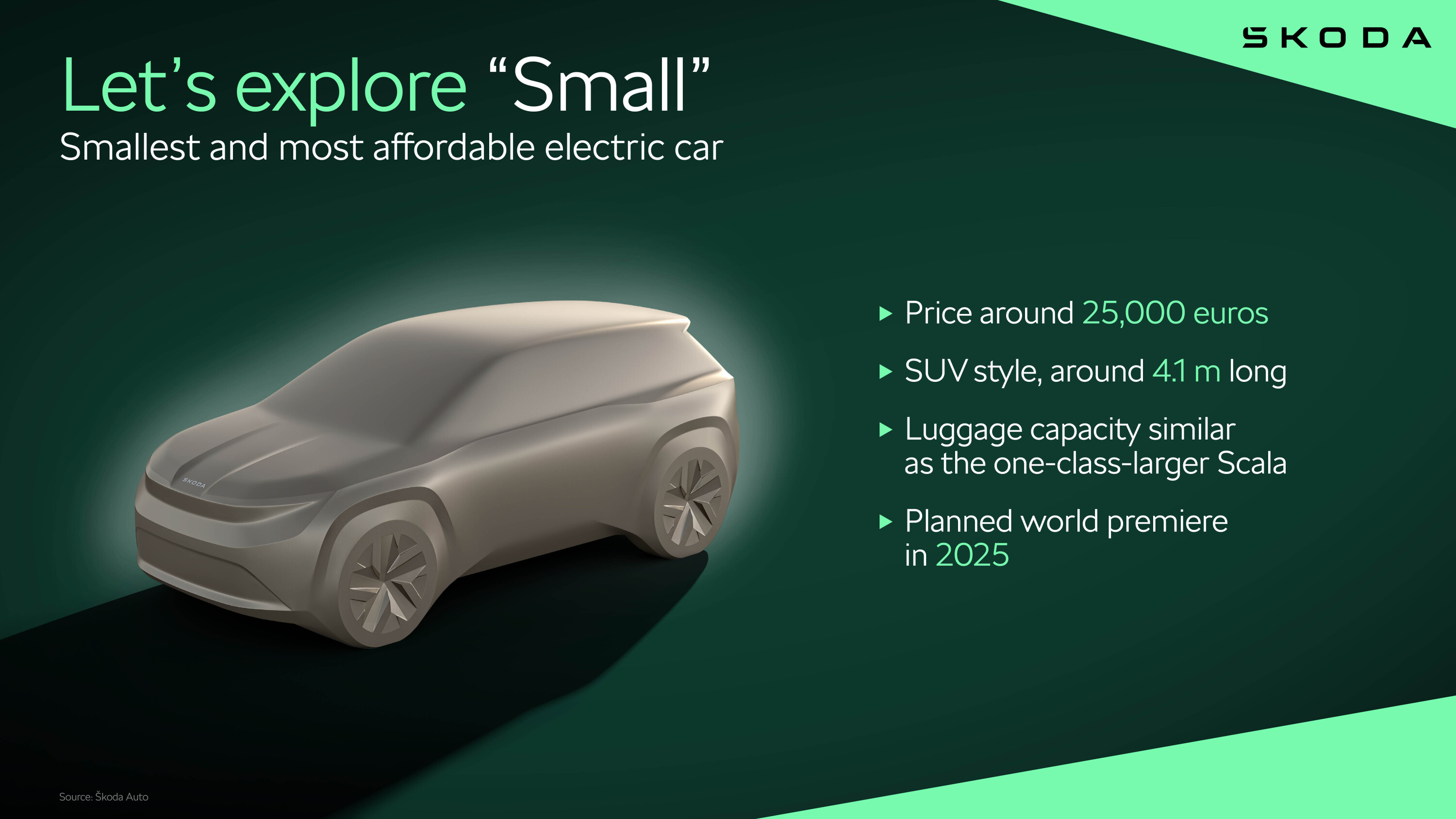
2025: Skoda small EV
Next up will be Skoda’s entry-level ‘Small’ electric city SUV with a starting price of around EU€25,000 (AU$40,000).
The Kamiq-priced affordable EV will ride on the front-wheel-driven MEB Entry platform, with a 4100mm length, and offer a similar boot capacity as the Scala small hatch, which is currently rated at 467 litres.
Additionally, Volkswagen brand CEO Thomas Schäfer previously confirmed that the Skoda EV will be made in Spain and share the same Pamplona assembly line as the yet-to-be-revealed Volkswagen electric city SUV (possibly called the ID.2 X).
It’ll be introduced in the same year as its related Volkswagen ID.2 electric hatch in 2025.
2
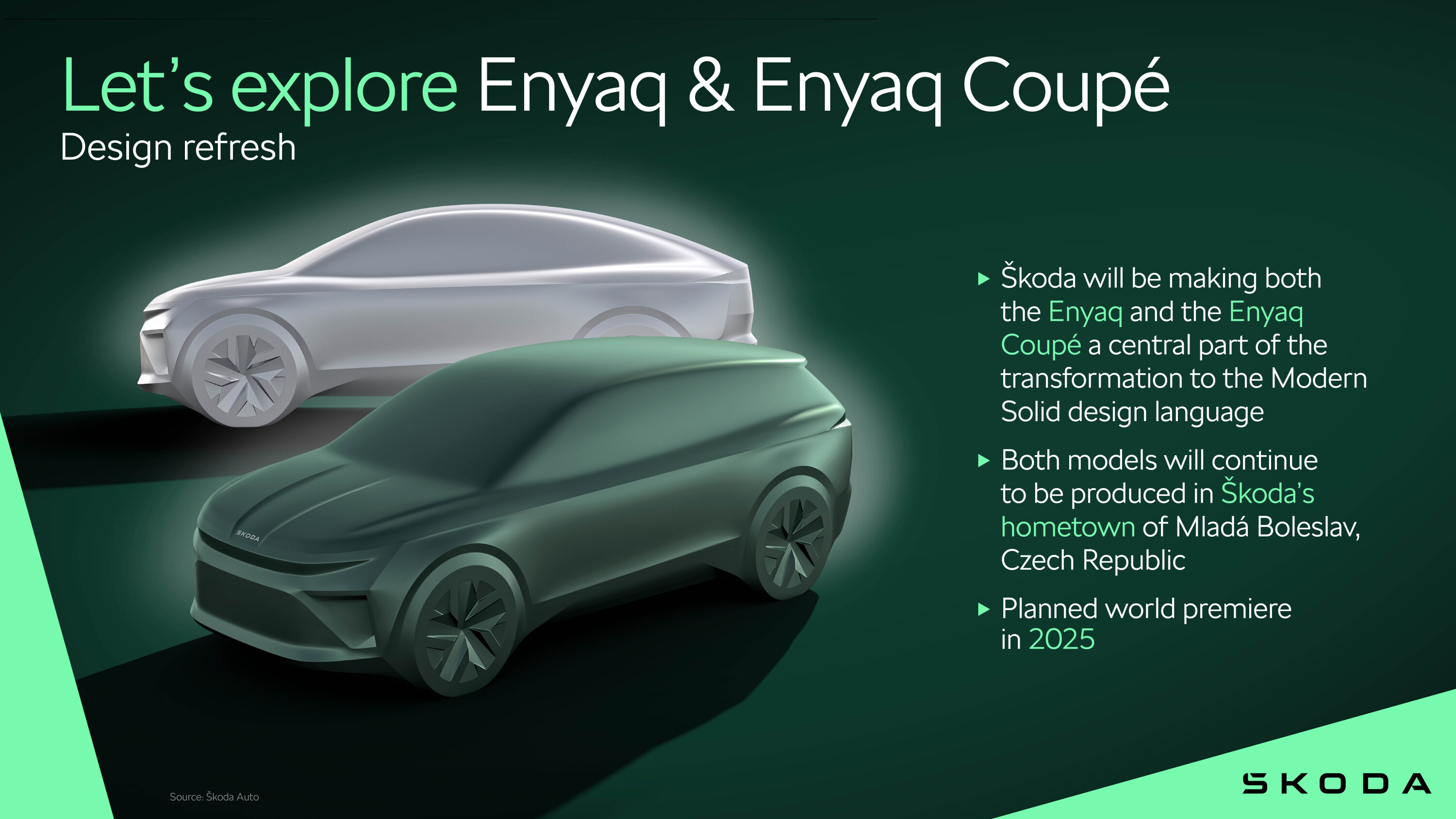
2025: Skoda Enyaq facelift
Skoda’s first electric SUV was launched overseas in 2020. The Enyaq and Enyaq Coupe will receive a facelift five years later.
It will play a “central part of the [design] transformation” by gaining the new Modern Solid language, as previewed on the Vision 7S concept.
The refreshed Enyaqs will debut in 2025 – one year after it launches in Australia after some delay.
2
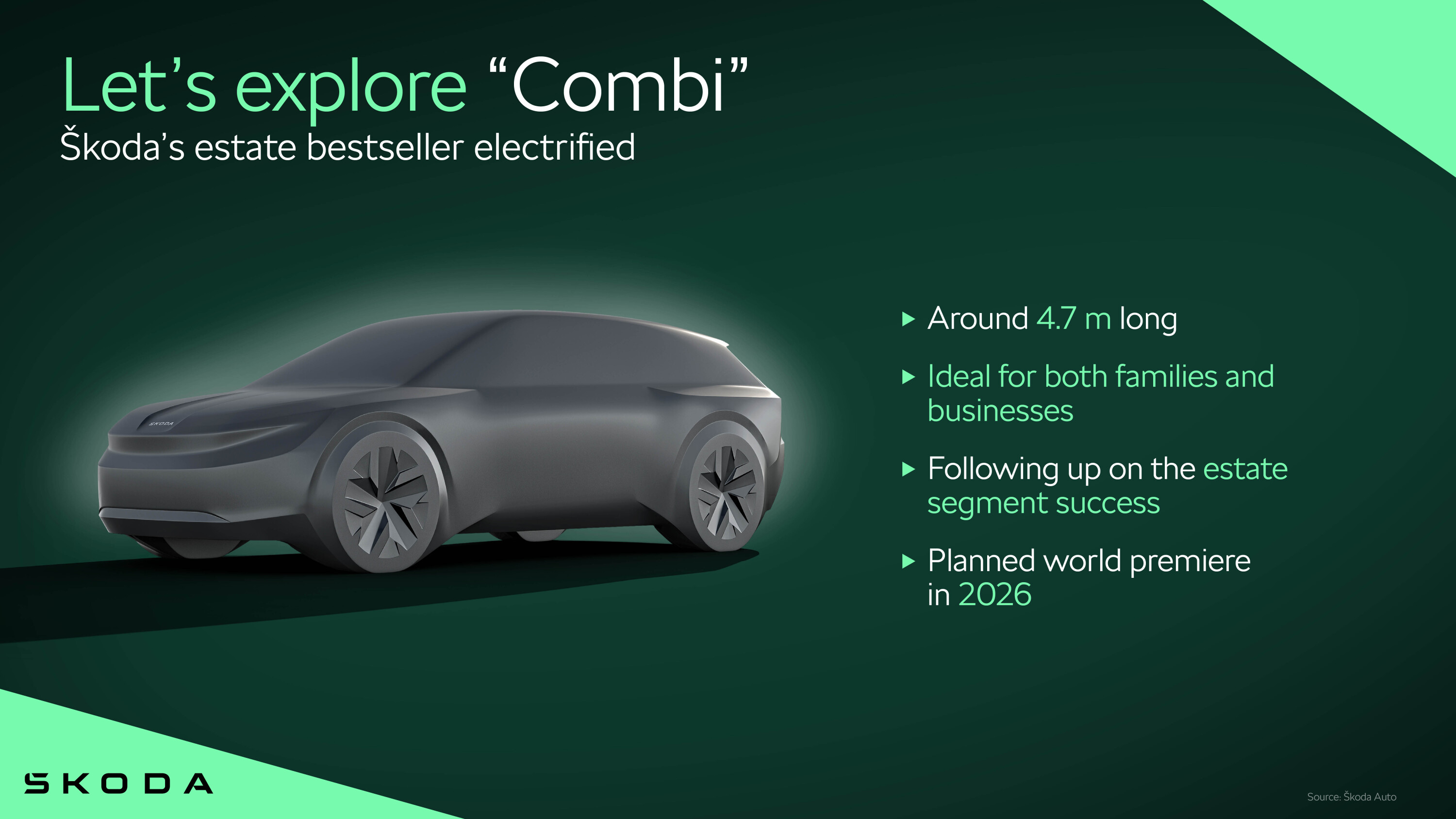
2026: Skoda wagon EV
In a move that will please wagon fans, a pure-electric ‘Combi’ (Skoda’s name for wagon variants) will play a “key role” in the four new EV models being introduced and could be the sales leader.
It will feature a 4700mm approximate length and is said to be ideal for “both families and businesses.”
However, it will need to wait until 2026. Currently, the only electric wagon on sale locally is the Porsche Taycan Cross Turismo, while Europe gets the MG 5 EV. The Audi A6 E-Tron wagon is also expected in 2024.
2
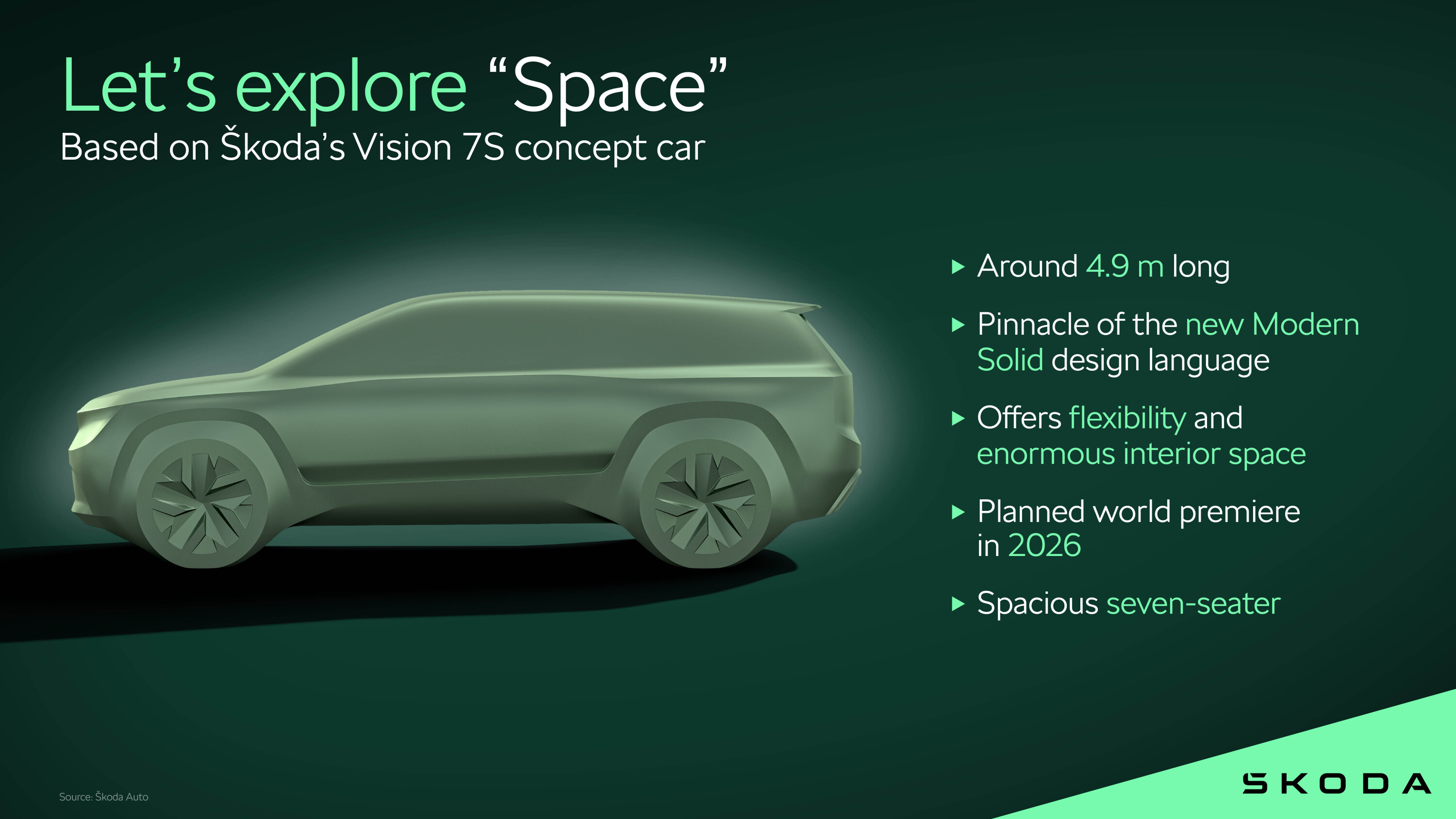
2026: Skoda seven-seat EV
Skoda will launch its flagship seven-seater large electric SUV, following in the shadow of the Vision 7S concept unveiled in 2022.
Dubbed the ‘Space’, it will be the highlight for the new Modern Solid design, be around 4900mm long, and offer a flexible and spacious three-row-interior.
Also expect an increased focus on sustainable and recycled interior materials when it debuts in 2026.
2
New combustion-powered Skodas coming
Despite all this EV news, conventional internal combustion-powered models will continue to be important in its electric transition.
The new generation Skoda Superb large sedan and wagon, and Kodiaq large SUV will debut this year in spring, followed by mid-life facelifts for its small Scala hatchback and Kamiq SUV duo.
The Octavia will also be updated in 2024.
MORE
Everything Skoda
⚡ More EV stories to help you choose the best car for your needs
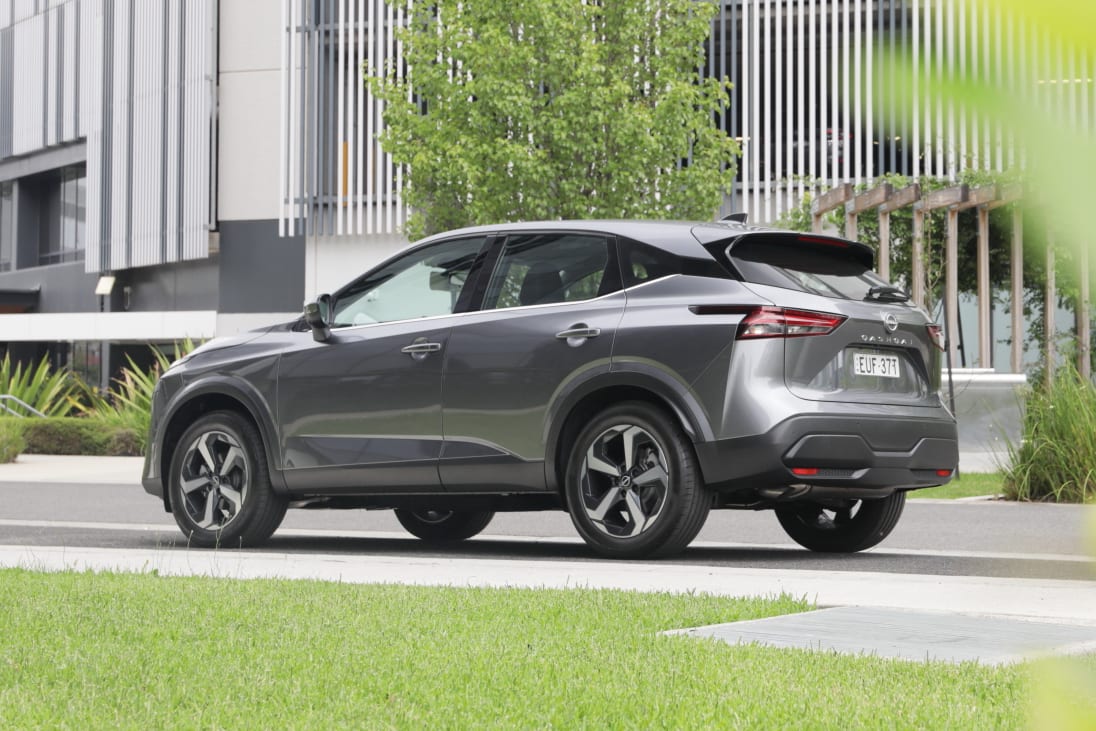
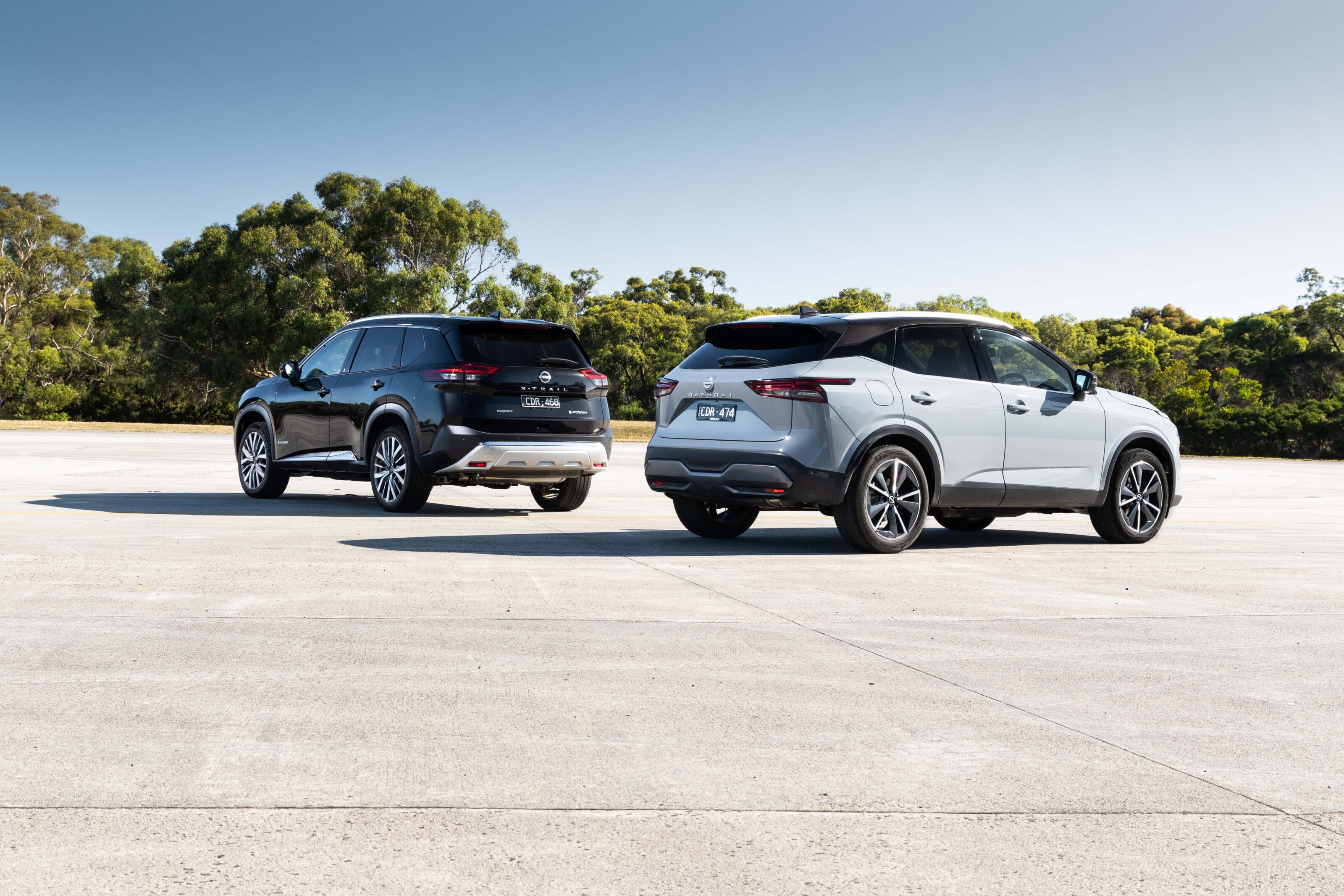
Seeing these two together, it seems crazy to think of the Qashqai as a small SUV, but it is markedly smaller than the mid-sized X-Trail.
How do they compare as buying options? Let’s find out.
? The original Nissan X-Trail ad from 2004 was something of a TV classic.
“There are sports,” came the voiceover as it poked fun at horseshoe throwing and pogo-sticking, “and there are extreme sports”, as images of snowboards and dirtbikes flashed up.
Nissan’s positioning of the X-Trail as the ‘only extreme compact SUV’ – kicking a bit of dust in the then-dominant Subaru Forester’s face – helped make it a sales success and super-heat a new SUV trend that continues today. By the end of 2005, the X-Trail had stolen thousands of Forester sales from Subaru as Toyota readied its new RAV4.
1
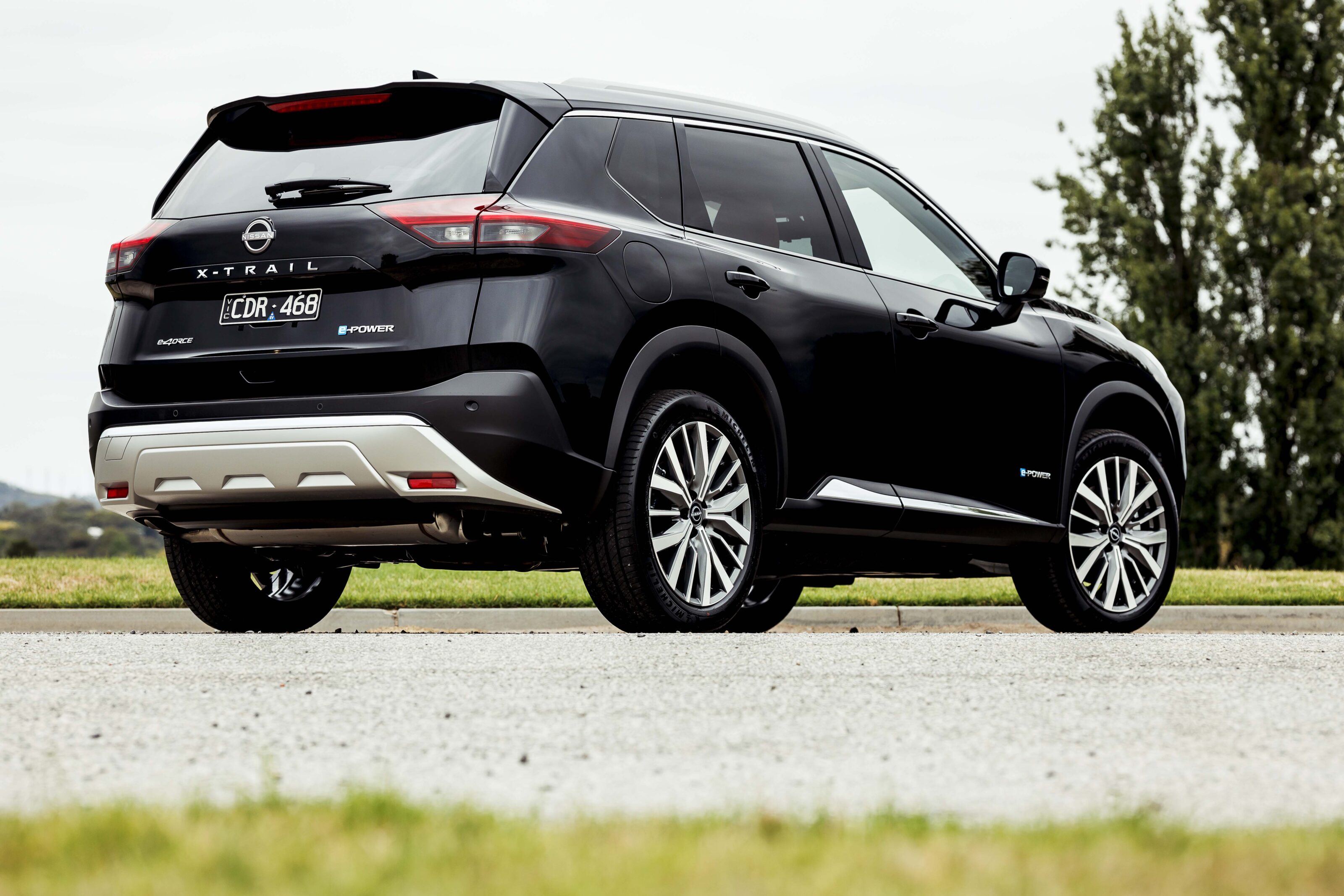
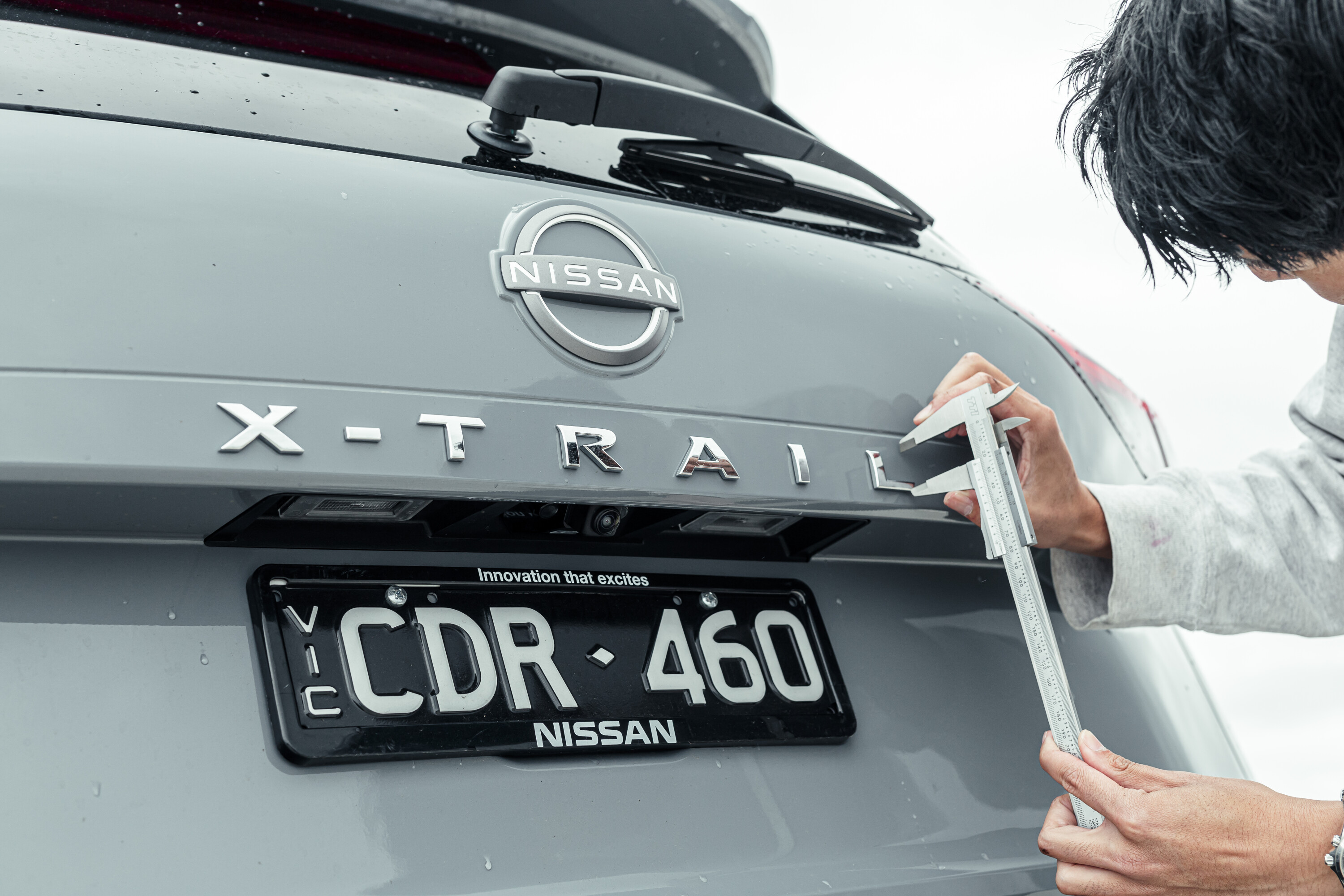
In 2023, the fourth-generation X-Trail is a very different beast to the original and is almost as big as a 2004 Nissan Patrol. Meanwhile, its contemporary baby SUV brother, the compact third-generation Qashqai, is almost as big as the original X-Trail.
With both cars built on the Renault-Nissan-Mitsubishi Alliance CMF-C platform, it’s easy to walk into a Nissan showroom in 2023 and have no clue which one to get. This article aims to solve that.
1
1
JUMP AHEAD
Pricing and features
The Qashqai is available in front-drive only, with a 110kW 1.3-litre turbo-petrol inline-four.
The X-Trail comes in both front- and all-wheel drive, with two powertrains: a naturally aspirated 2.5-litre four-cylinder, and the quirky E-Power petrol-electric hybrid.
In E-Power guise, the X-Trail is propelled solely by two electric motors – just like an electric car. There’s one front, one rear, giving it all-wheel drive. However, unlike an electric car, instead of a huge battery it has a tiny 2.1kWh pack constantly recharged by a small petrol engine under the bonnet.
Which is which?!
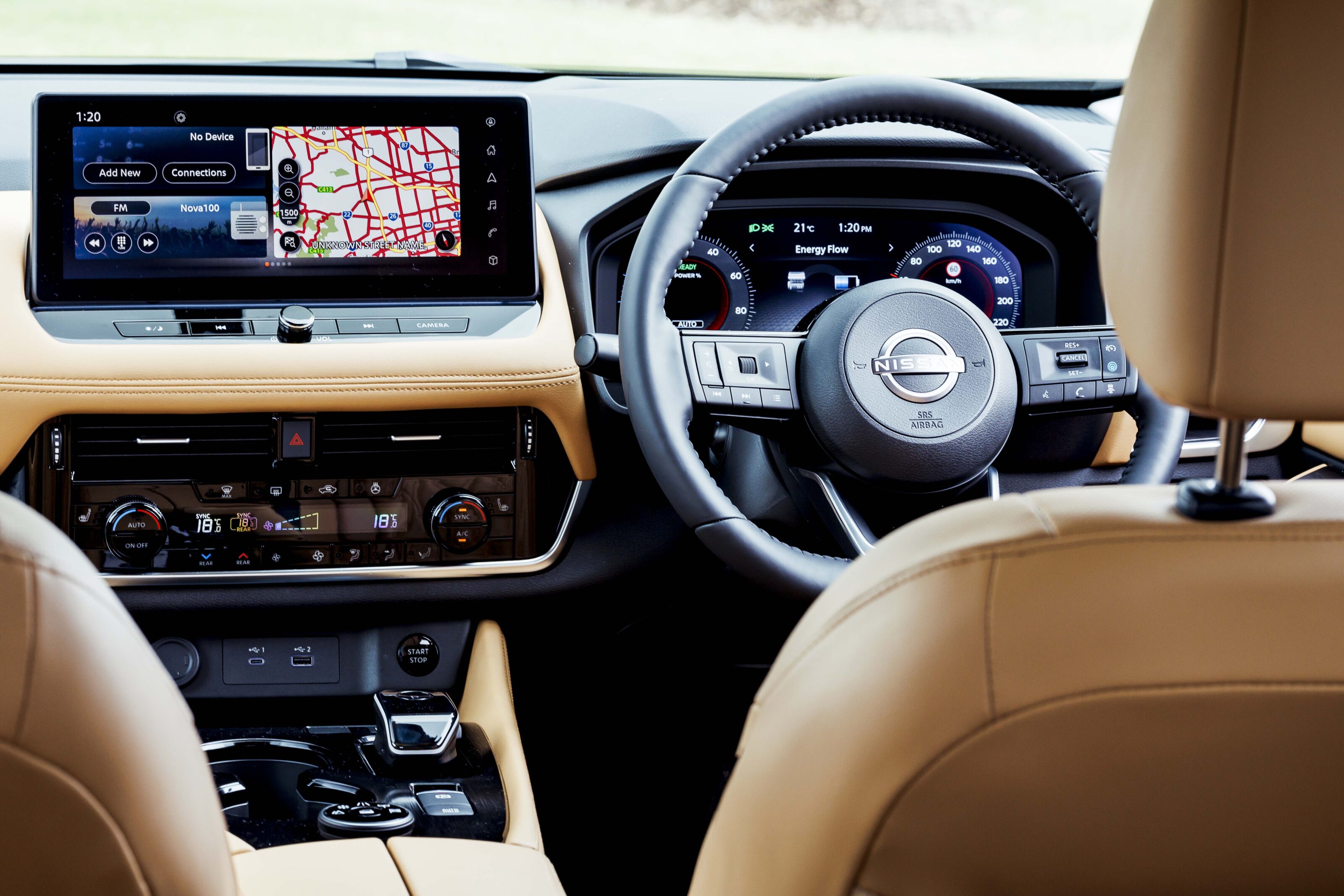
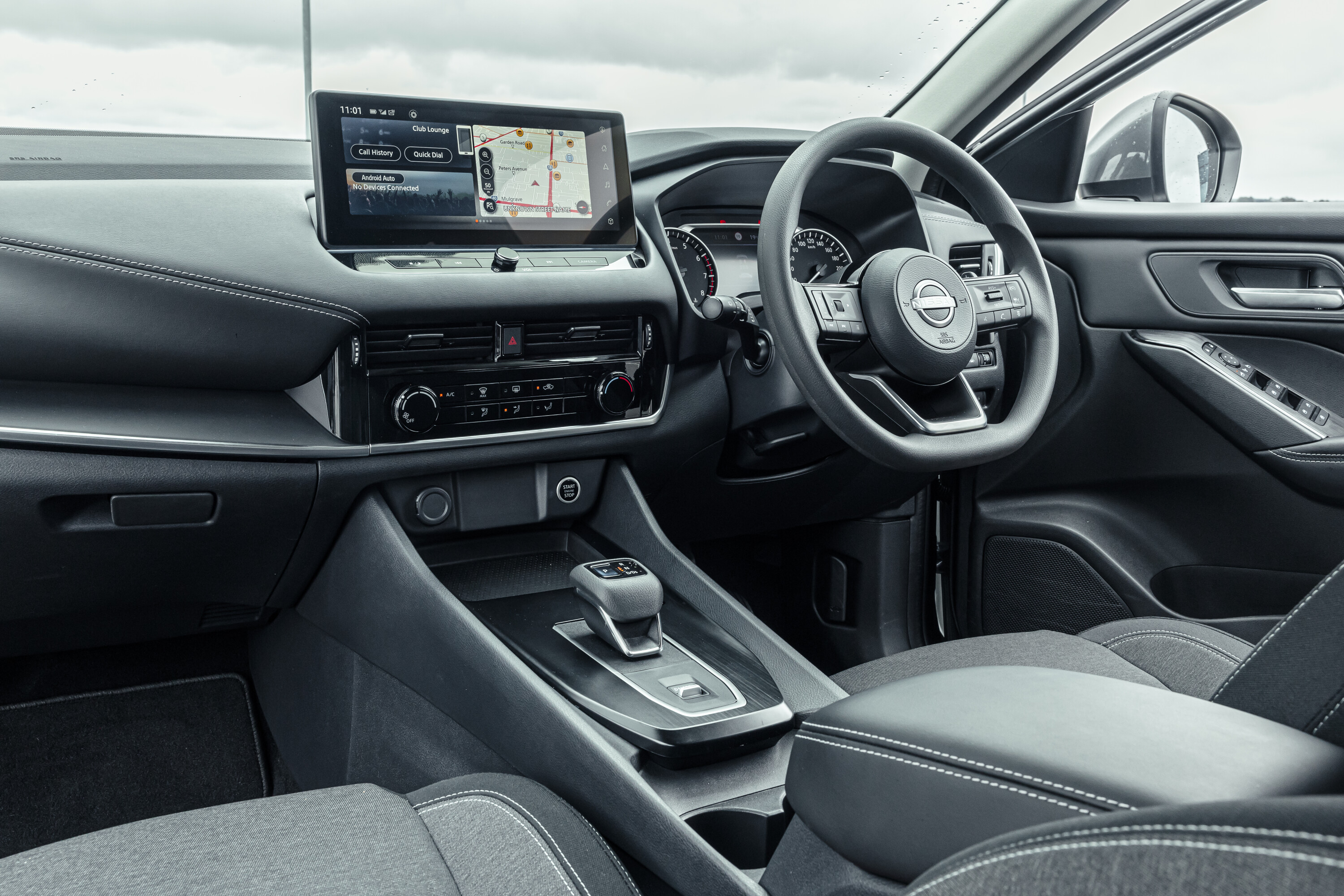
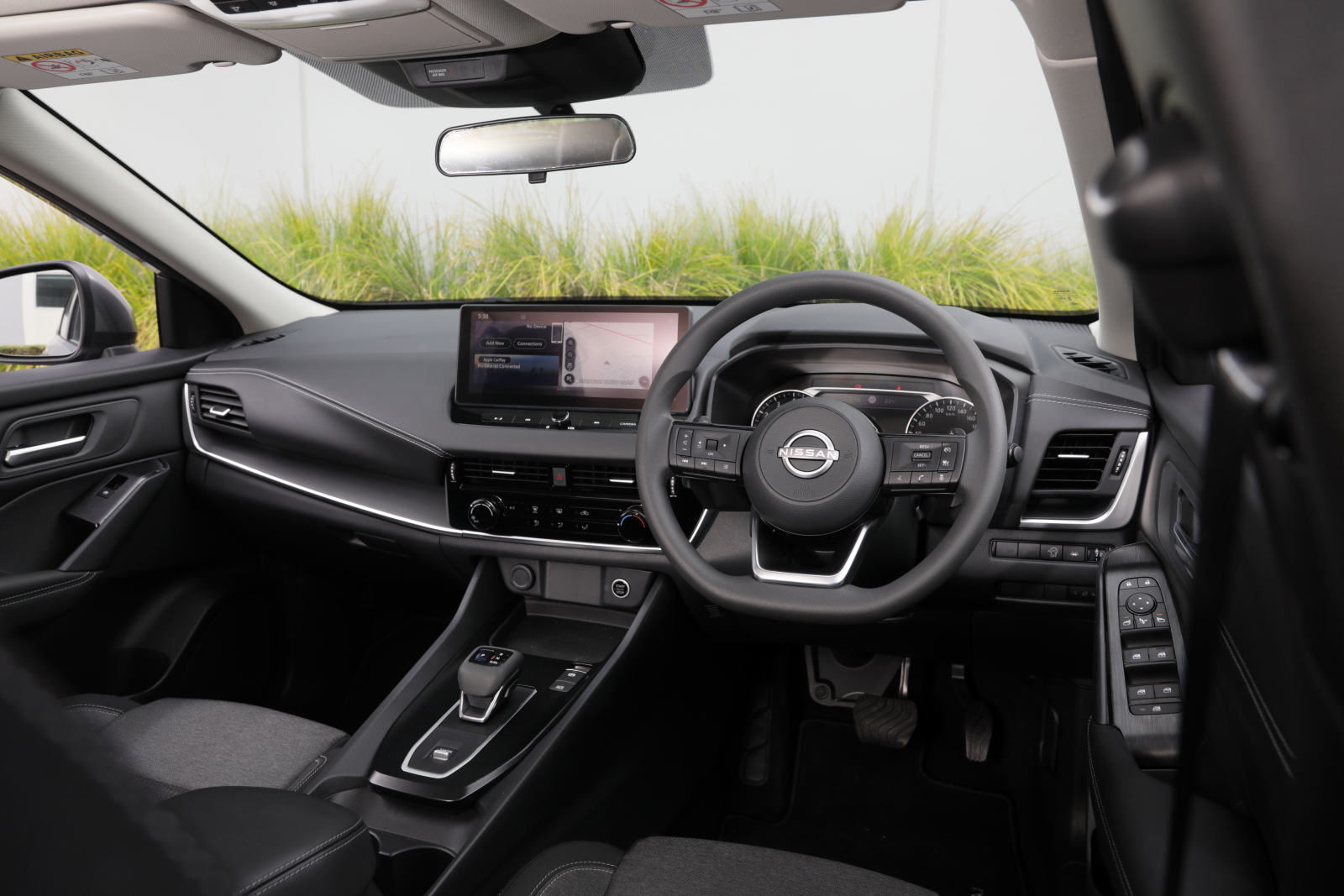
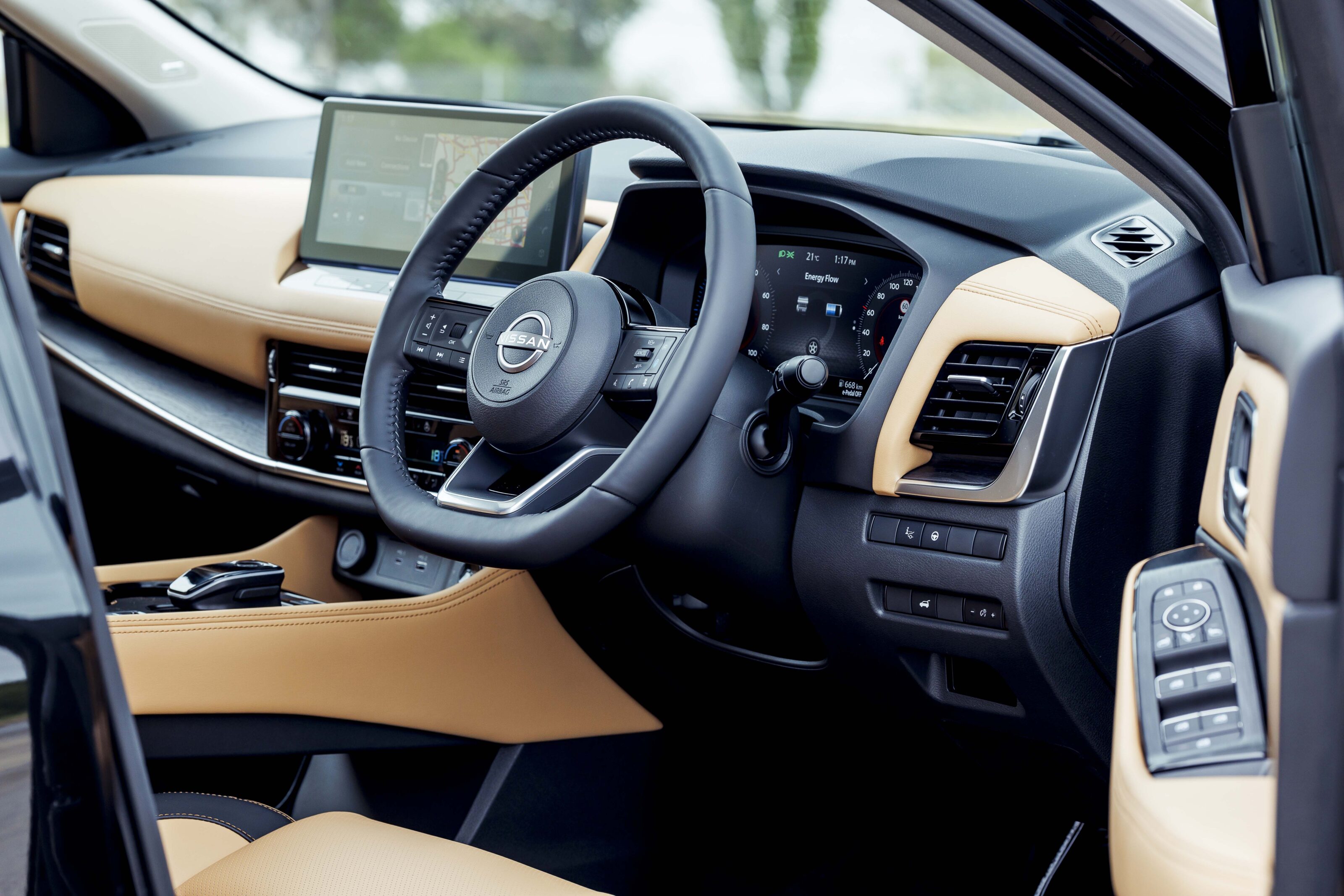
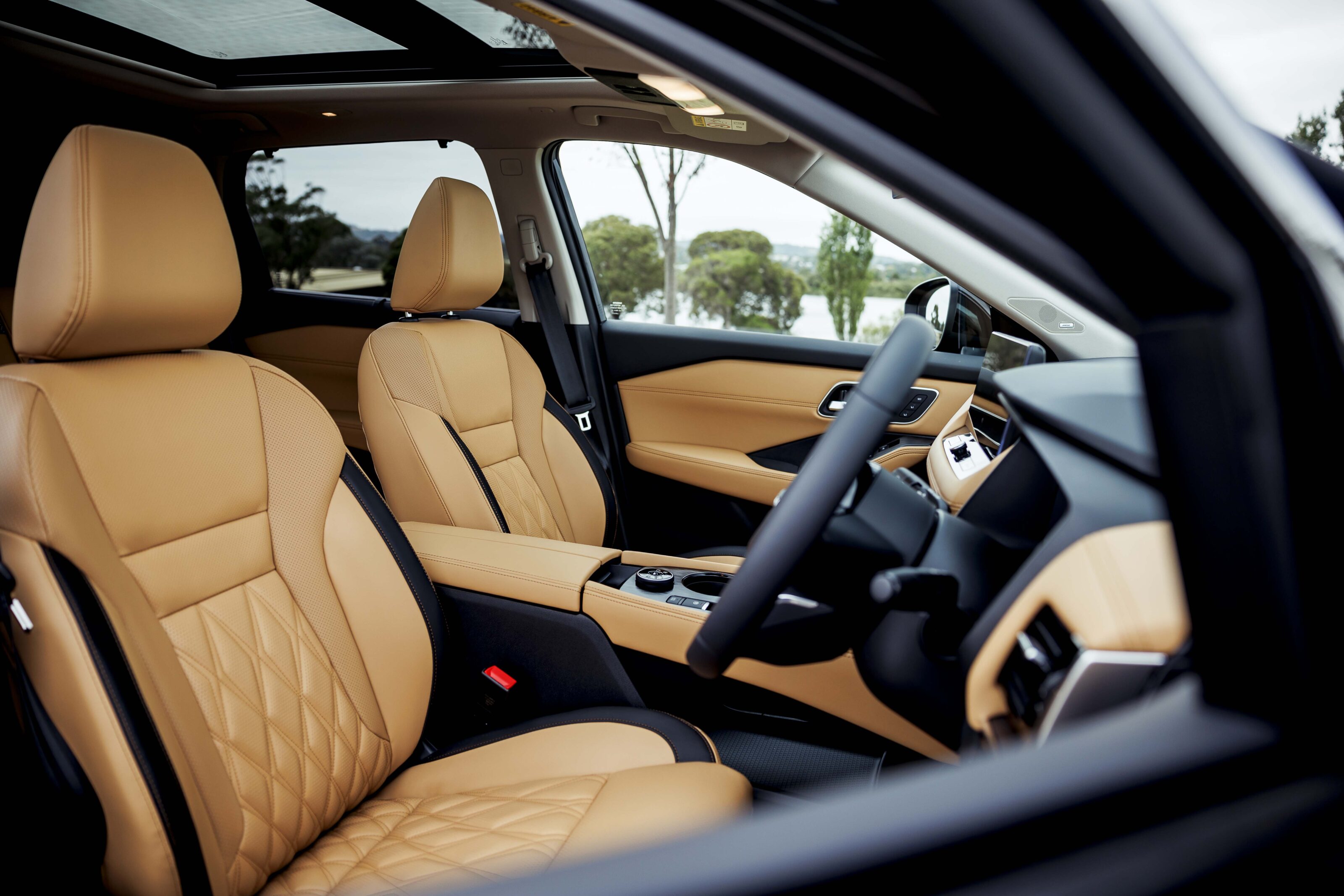
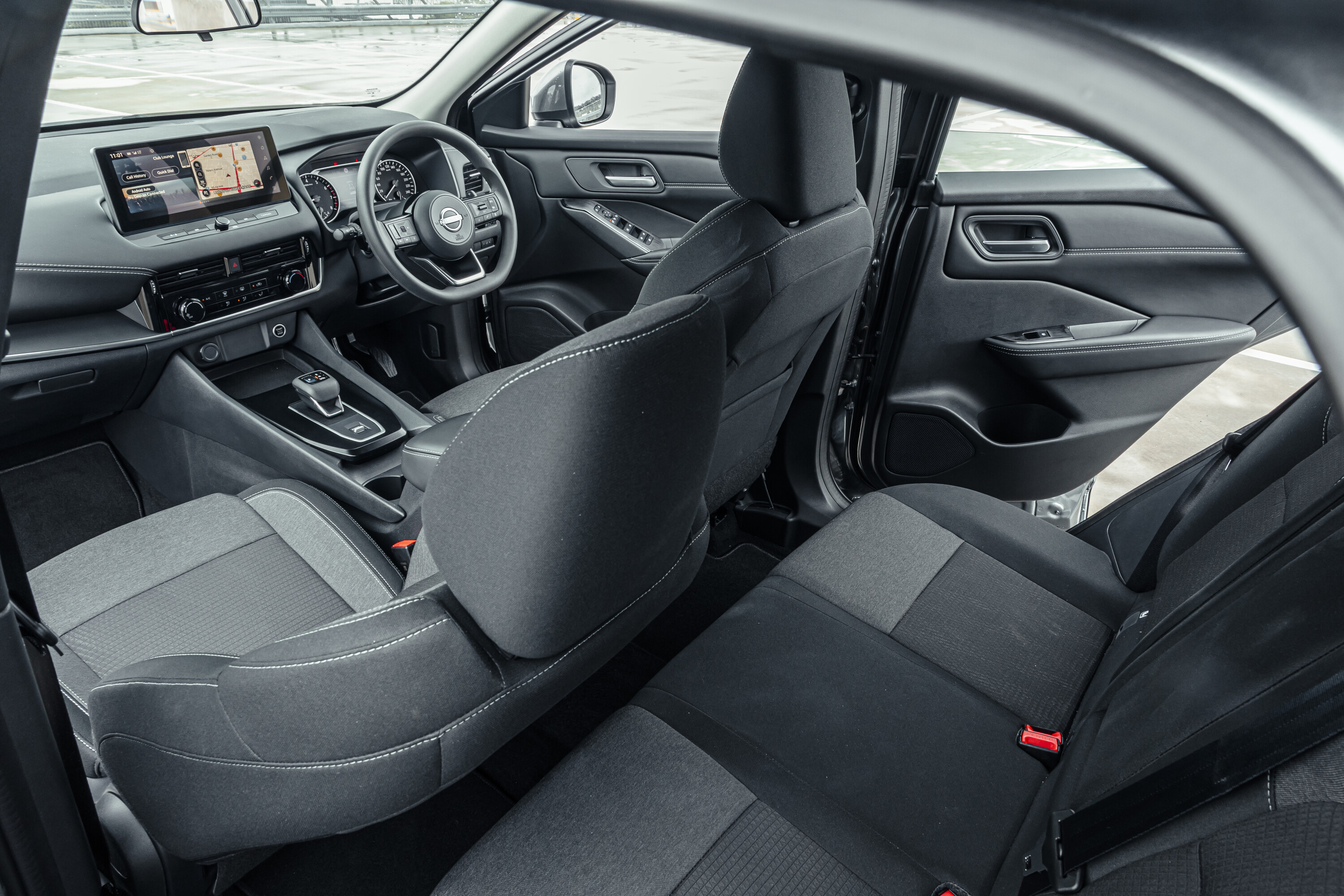
A note on these interiors: the tan & black trim is the X-Trail, leaving the Qashqai with black-on-black.
1
1
In the X-Trail’s case, that’s a 1.5-litre three-cylinder turbo, not connected to the wheels in any way. It’s purely a generator. This helps keep the X-Trail E-Power’s price down, compared to an electric car. A Qashqai E-Power is due in Australia later in 2023 (see our review here), claiming around 5.3L/100km and expected to attract a $3000-$4000 premium.
The Qashqai range kicks off at $33,890 for the base ST and tops out at $47,390 for the richly-specced Ti. Meanwhile, the larger X-Trail range starts at $36,750 for the front-drive ST and extends all the way to $57,190 for the luxurious Ti-L E-Power all-wheel drive (all before on-road costs).
Both cars bristle with standard features no matter the variant – though of course, as you spend more, you get more.
Nissan designers and engineers have brought desirable new features to the Qashqai and X-Trail once reserved for luxury European cars.
This includes things like massage seats, a head-up display, an electric opening and closing tailgate and 10-speaker Bose audio systems – but to get this stuff, you need to shell out for pricier Ti variants.
1
And a base $33,890 Qashqai ST – with its cloth, manually-adjustable seats and 8.0-inch central touchscreen – feels very different to the top-spec $47,390 Ti with its leather upholstery, 10-way electrically adjustable front seats and 12.3-inch central touchscreen. Likewise, a base $36,750 X-Trail ST is a very different beast to the $52,990 Ti-L.
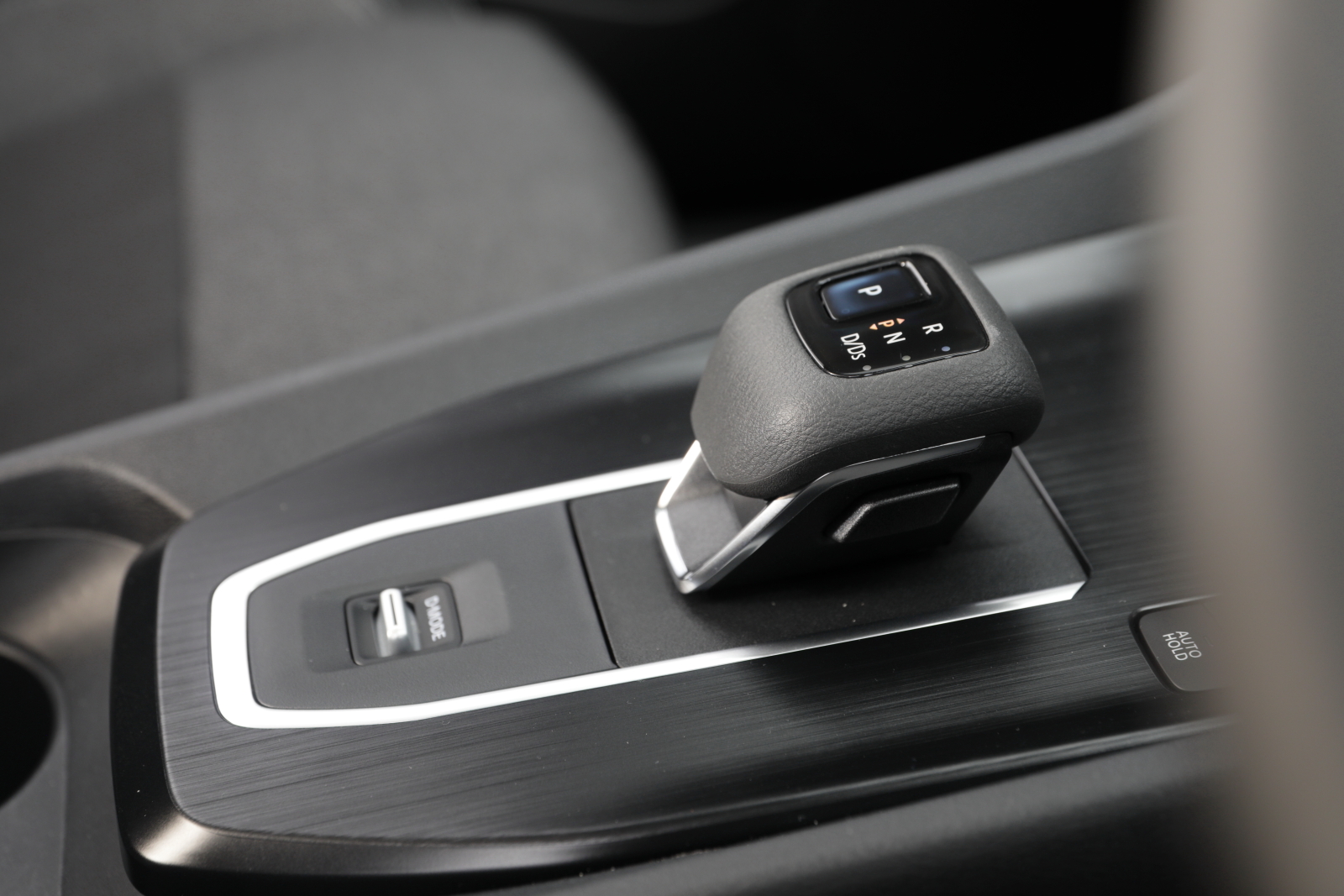
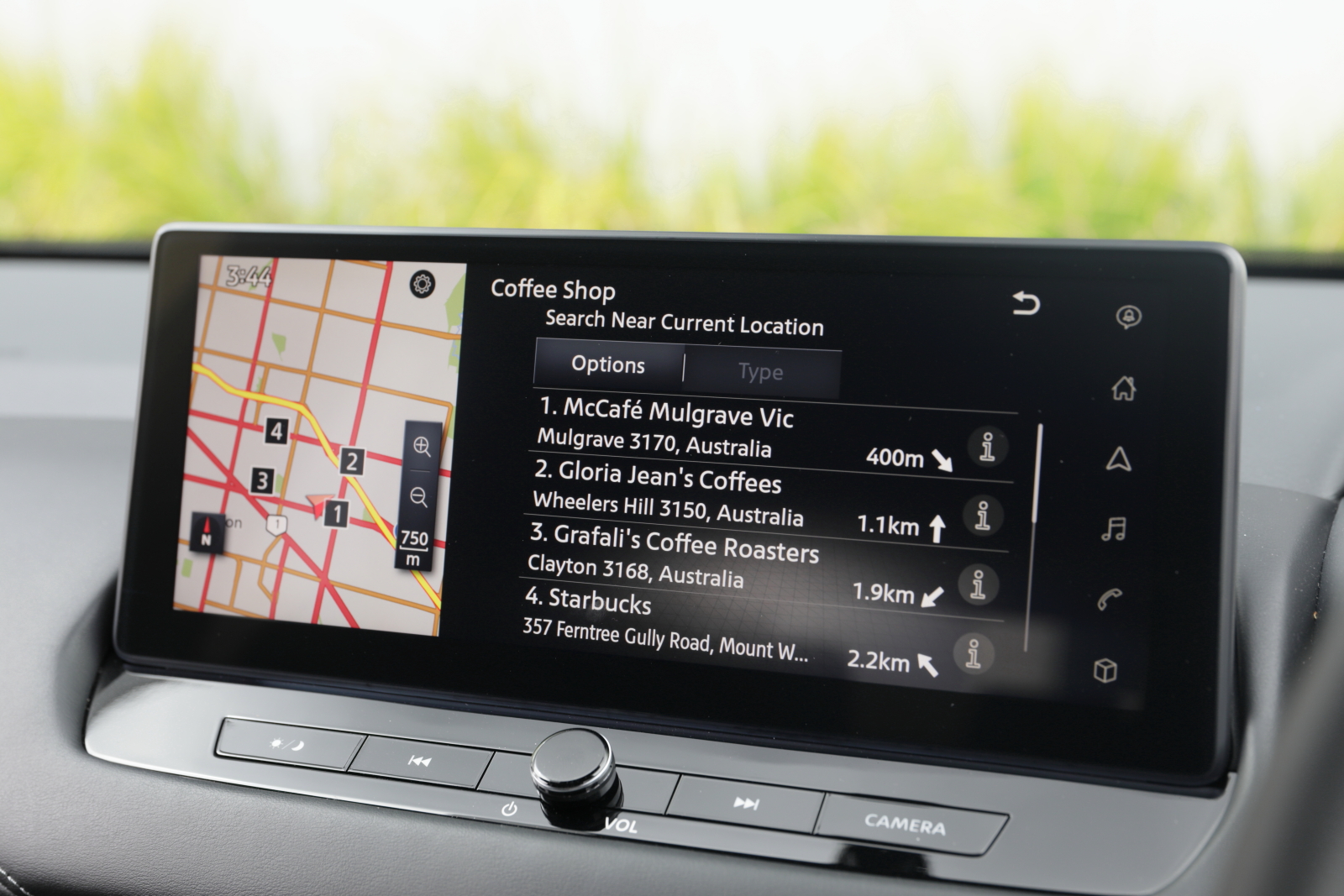
Base Qashqai and X-Trails offer smallish, 8.0-inch central touchscreen displays – although in something of a standout move, the $37,890 Qashqai ST+ boosts that to a much nicer (and equal class-leading) 12.3 inches.
To get the same-size centre display in an X-Trail, you need to shell out a minimum of $49,990 for the Ti. Likewise, the ST+ gets wireless Apple CarPlay but the X-Trail doesn’t offer that until Ti. Again, all the above prices are before on-road costs.
1
At times, both are remarkably close on price – but don’t let the variant names fool you, as a Qashqai ST-L, for example, is more richly specced than an X-Trail ST-L.
The Qashqai ST-L is $42,190 before on-road costs and while you can get an X-Trail ST-L for just $1000 more, the Qashqai has bigger wheels (19s versus 18s), a bigger central touchscreen (12.3-inch versus 8.0), wireless Apple CarPlay (to the X-Trail ST-L’s wired), wireless phone charger, adaptive LED auto-levelling headlights and heated steering wheel. An X-Trail ST-L doesn’t have any of this.
For standard equipment, Qashqai Ti is more comparable to the X-Trail Ti-L.
1
| MY23 Nissan Qashqai pricing (MSRP, excluding on-road costs) | |
|---|---|
| ST | $33,890 |
| ST+ | $37,890 |
| ST+ with two-tone paint | $38,390 |
| ST-L | $42,190 |
| ST-L with two-tone paint | $42,690 |
| Ti | $47,390 |
| Ti with two-tone paint | $47,890 |
| MY23 Nissan X-Trail pricing (MSRP, excluding on-road costs) | |
|---|---|
| ST 2WD | $36,750 |
| ST AWD 7-seat | $39,790 |
| ST-L 2WD | $43,190 |
| ST-L AWD 7-seat | $46,290 |
| Ti AWD | $49,990 |
| Ti-L AWD | $52,990 |
| Ti E-Power | $54,190 |
| Ti-L E-Power | $57,190 |
1
Comfort and space
Both cars are lovely places to sit – especially as you work your way up the grades and add more features, bigger screens and more leather.
The top-spec Ti grade Qashqai and X-Trail, with their diamond-quilted Nappa leather seats, almost feel Lexus-like for their interior ambience and quality. If you haven’t sat in a Nissan interior since 2005, you’ll be blown away.
Our X-Trail Ti-L E-Power test car had curious tan and black interior trim that reminded us of modern Ferraris. Took a bit of getting used to, but we liked it. An all-black trim is available.
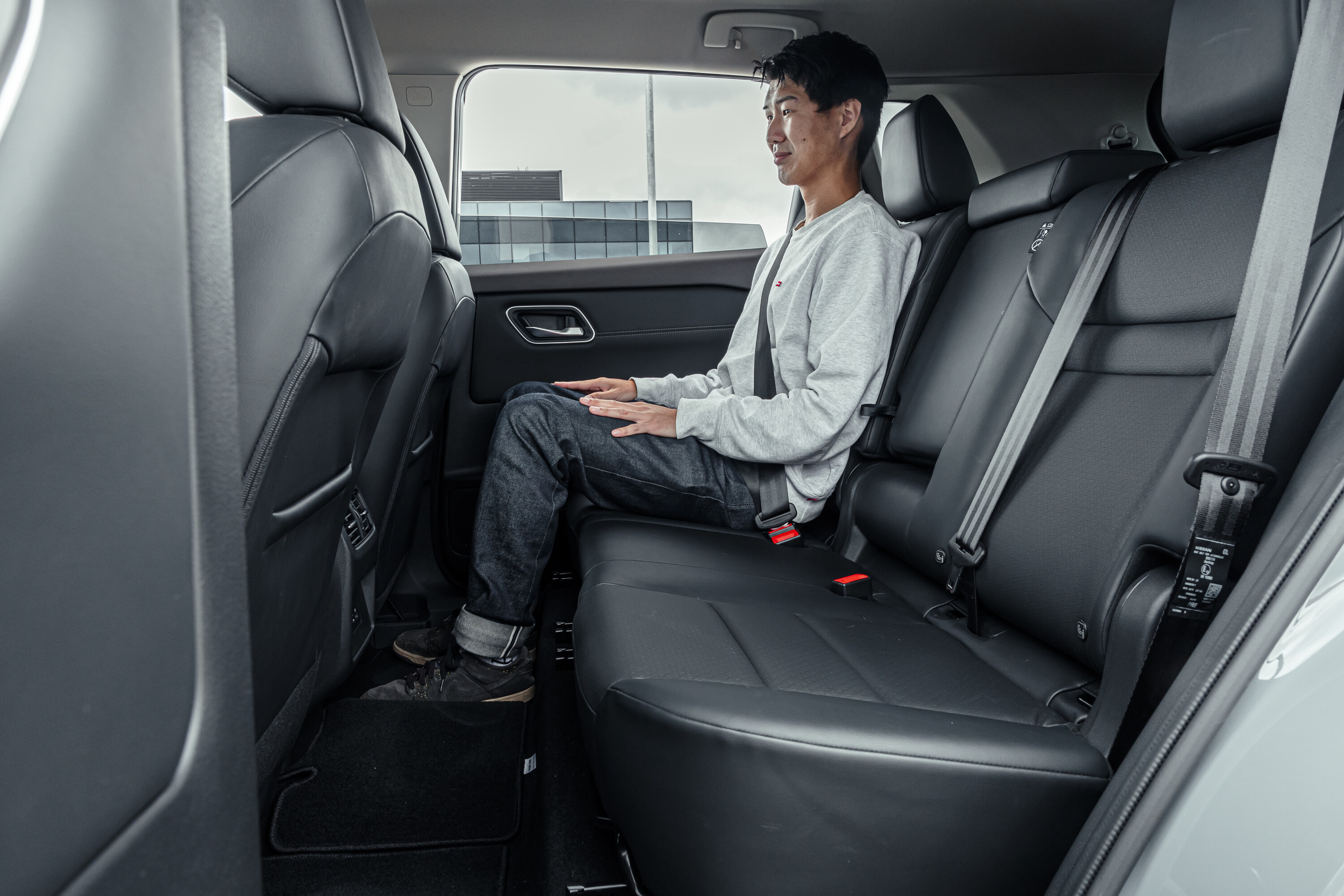
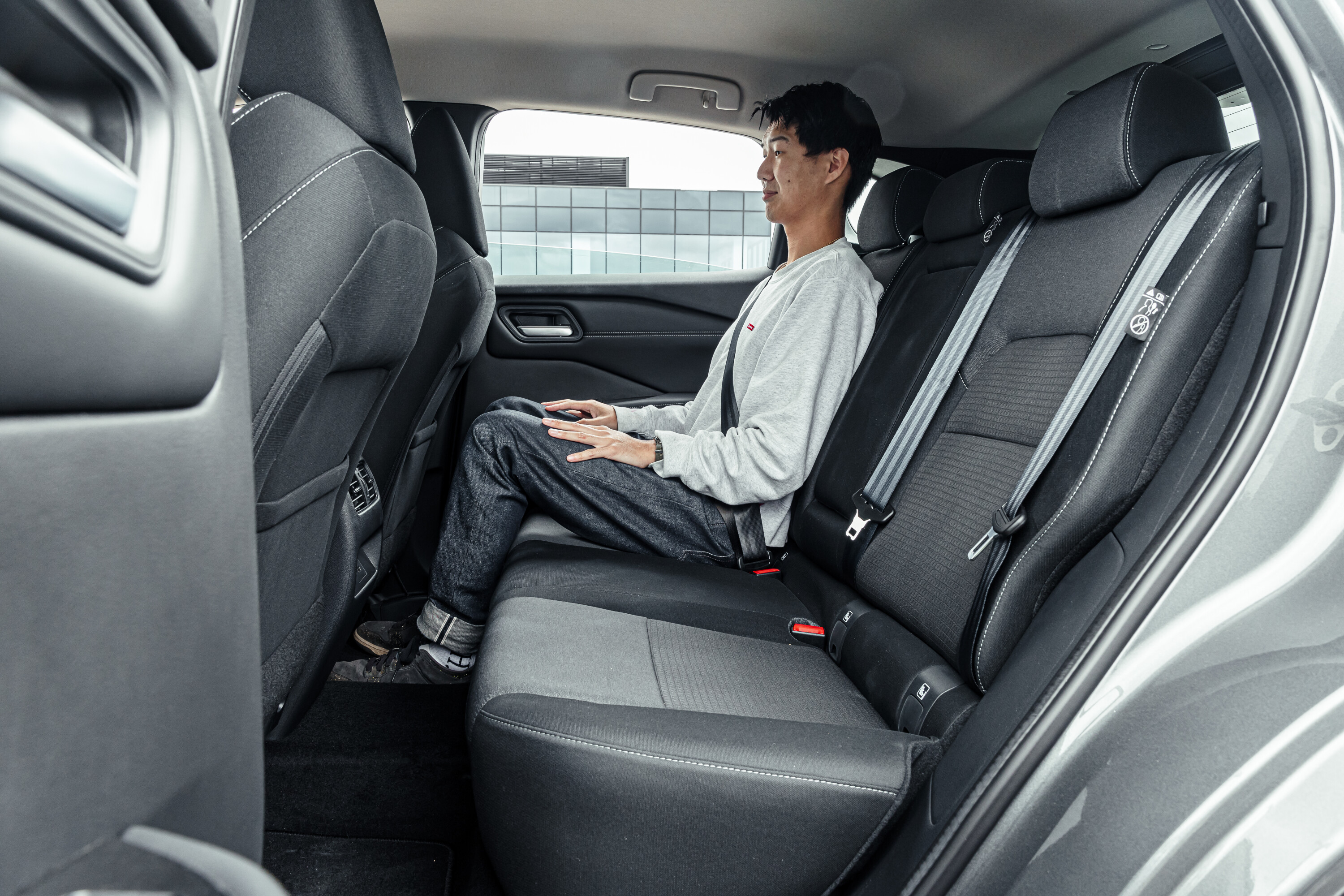
In the Qashqai’s case, rear seat space is surprisingly good for a compact SUV, although obviously, the X-Trail is simply the larger car. Space for front occupants is subtly larger, making for a roomier experience. And its boot alone is almost 30 per cent bigger than you get in a Qashqai.
1
1
The X-Trail interior is full of thoughtful design touches such as the barn-door opening centre console and the lovely, carpet-lined door bins.
Countless clever bins and compartments maximise interior storage space – you can never have too many nooks or crannies.
One underrated feature of both Qashqai and X-Trail – that might just sell a few cars all on its own – are clever rear doors opening generously to almost 90 degrees, allowing very easy access to the rear seats.
Only the X-Trail can offer seven seats, and it’s cosy back there, only really suitable for small children – or, if adults, very short and uncomfortable trips. Owning a seven-seater, even if you never use the third row, does grant a certain peace of mind.
Both cars have two ISOFIX child restraint anchors on both the outboard rear seats.
2
1
MINI MATCH-UP
| u00a0 | Qashqai ST+ | X-Trail ST-L 7-Seat | Difference |
|---|---|---|---|
| Length | 4425mm | 4680mm | +255mm |
| Width | 2084mm | 2065mm | -19mm |
| Height | 1625mm | 1725mm | +100mm |
| Wheelbase | 2665mm | 2705mm | +40mm |
| Head room (front/rear) | 997/983mm | 1050/1000mm | +53/+17mm |
| Leg room (front/rear) | 1072/860mm | 1095/892mm | +23/+32mm |
| Shoulder room (front/rear) | 1436/1415mm | 1451/1422mm | +15/+7mm |
| Hip room (front/rear) | 1362/1335mm | 1374/1274mm | +12/-61mm |
| Boot size | 429 litres | 585 litres | +156 litres |
| Cargo space (rear seats folded down) | 1524 litres | N/A | N/A |
On the road
2023 Qashqai v X-Trail: The basics
| Nissan Qashqai ST+ | Nissan X-Trail ST-L 7 seater | Nissan X-Trail Ti-L E-Power | |
|---|---|---|---|
| Drive | front-wheel | all-wheel | all-wheel |
| Engine | 1.3-litre turbo-petrol 4-cylinder | 2.5-litre 4cyl petrol | 1.5-litre 3cyl turbo-petrol |
| Electric motors | N/A | N/A | 150kW (f); 100kW (r) |
| Power | 110kW @ 5500rpm | 135kW @ 6000rpm | 157kW |
| Torque | 250Nm @ 1600-3750rpm | 244Nm @ 3600rpm | N/A |
| Transmission | automatic, contioniously variable | automatic, contioniously variable | single-speed automatic |
| Weight | 1472kg | 1666kg | 1911kg |
| Tyres | Goodyear Eagle F1 235/55 R18 | Dunlop Grandtrek PT21 235/60 R18 | Michelin Primacy 4 255/45 R20 |
| Price | $37,890 (tested $38,590) + on-road costs | $46,290 + on-road costs | $57,190 + on-road costs |
The Qashqai is surprisingly fun to drive – agile, responsive and light on its feet.
Its chassis would make a good basis for a ‘hot’ performance SUV and is crying out for more power. The 110kW powertrain isn’t as peppy or energetic as the handling. The ride quality is also just okay, too; a little bit firm at times. A bit more comfort would be nice.
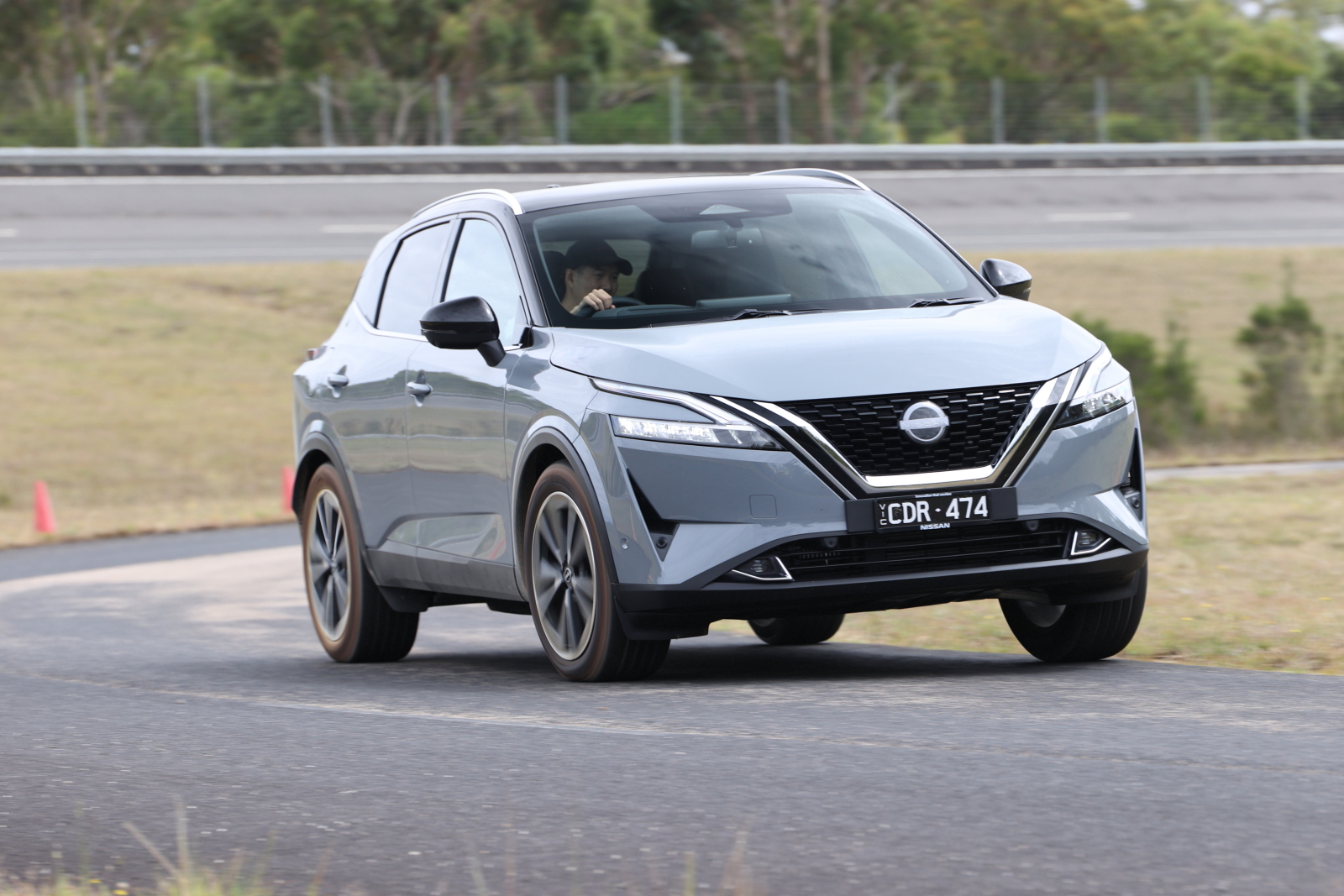
On the other hand, the X-Trail is a lovely vehicle to drive – nicer than the Qashqai. Like the first generation that wooed Australia, the all-wheel drive X-Trail is great on dirt, very stable, secure and fun.
The X-Trail impressed even more on the open road, with its quiet cabin, comfortable seats and well-judged suspension expertly combining comfort and handling, with a level of ride quality sophistication above that of the smaller Qashqai.
1
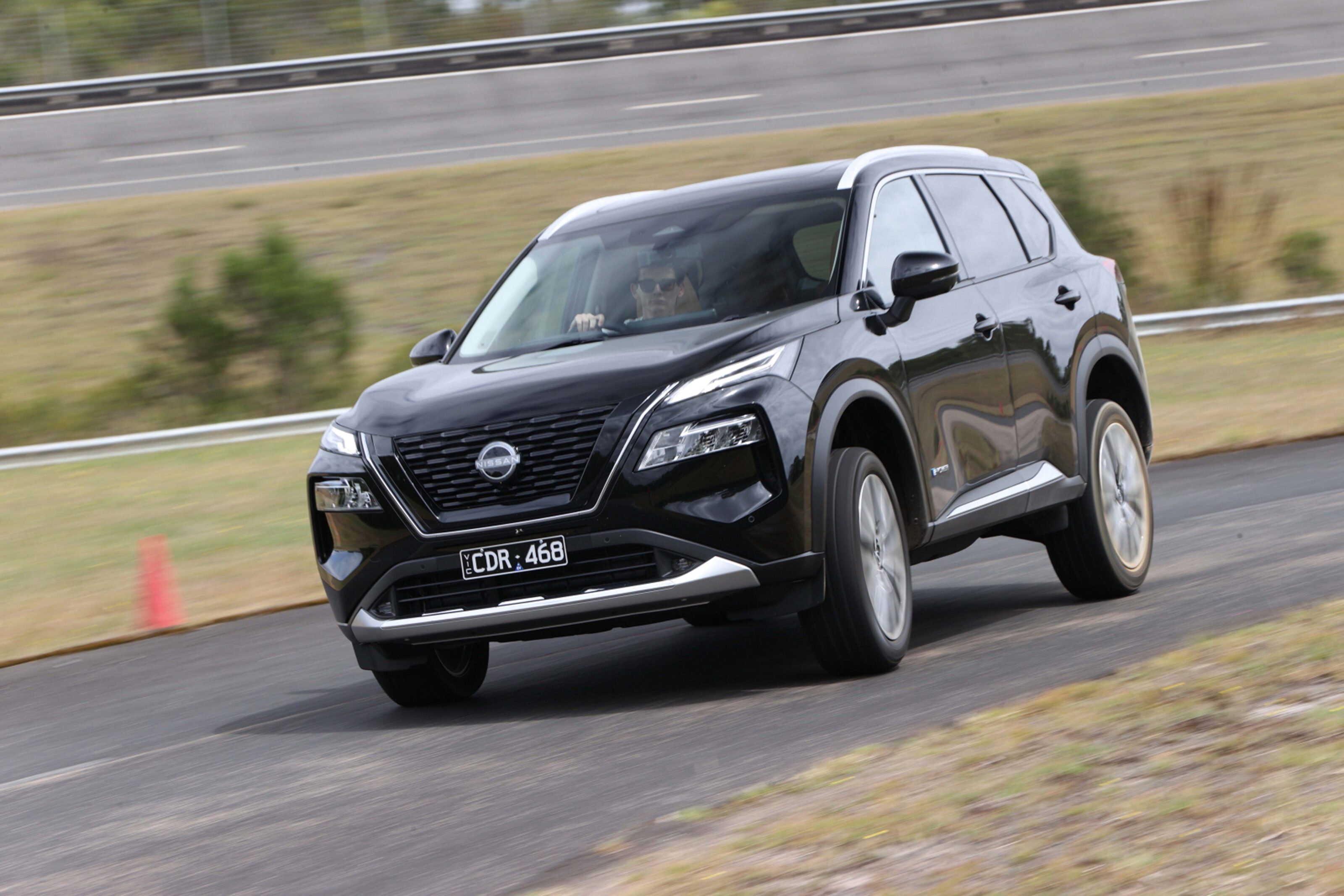
Opting for the E-Power drivetrain takes X-Trail refinement to a new level.
The smooth, silent electric motors imbue it with a luxury driving feel unlike any Nissan ever. It feels like an electric car, meaning buttery-smooth acceleration, instant and seamless switching between drive and reverse, and the punchy throttle response that only comes with electric motors.
The engine, when it kicks in, is impressively quiet – not that hearing it is a bad thing, as with three cylinders it makes a cool, off-beat kind of noise.
An external speaker on the E-Power broadcasts a curious noise at low speeds to warn pedestrians, given its near-silent operation.
1
Based on first impressions of the E-Power system, silky-smooth and quiet electric motors will truly elevate the Nissan range once all its forgettable internal combustion engines and continuously variable transmissions (CVT) are phased out. That’s with maybe the exception of the Nissan Z and its tyre-frying twin-turbo V6.
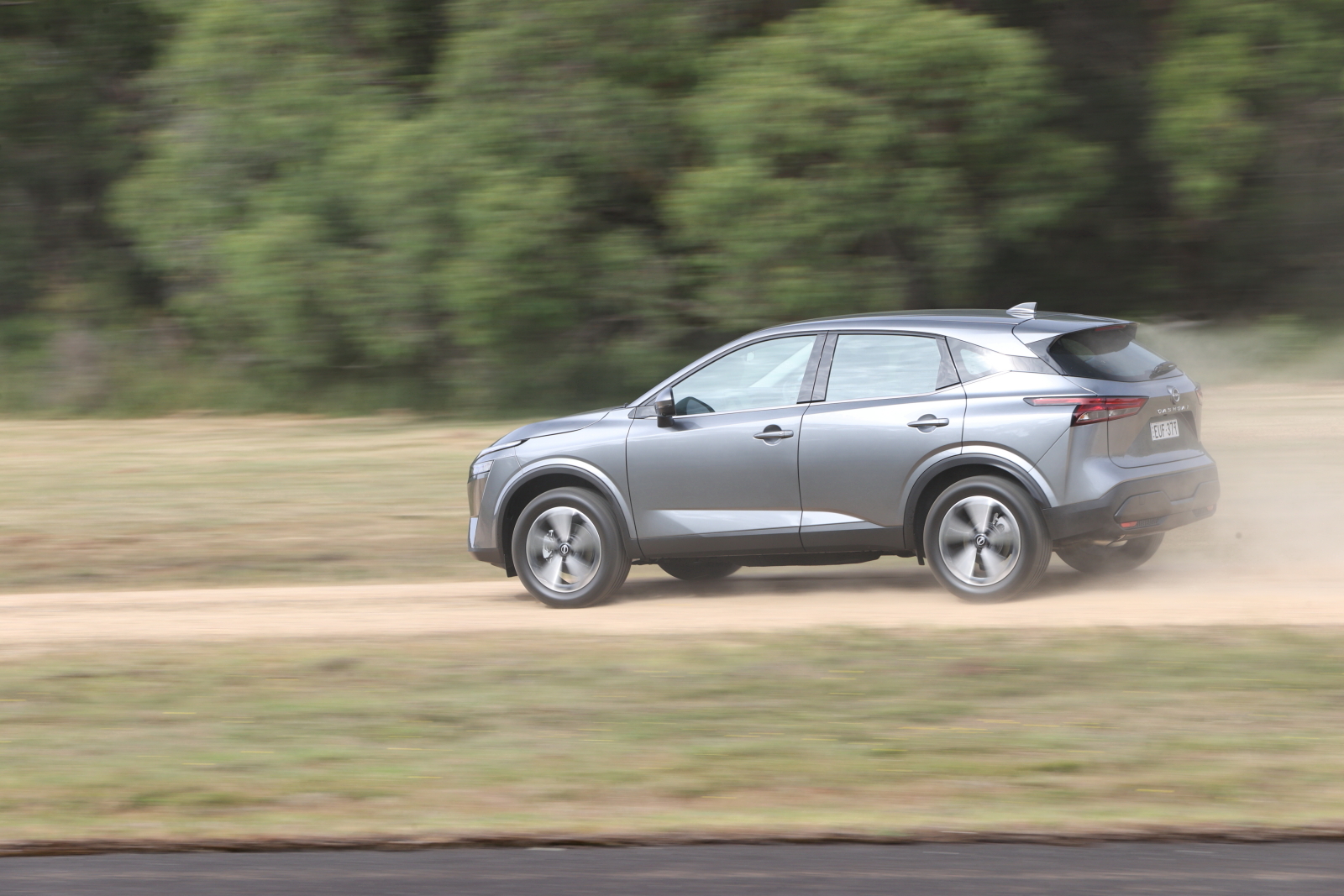
Despite its raised 180mm ground clearance, we wouldn’t recommend taking a Qashqai any further off the beaten track than a dirt road. It’s only front-wheel drive and has no off-road modes.
The X-Trail, however, offers Snow and Off-Road modes in its all-wheel drive specifications and feels much more capable. The ST-L also has 205mm of ground clearance (the E-Power is 187mm).
1
| u00a0 | Qashqai ST+ | Qashqai Ti | X-Trail ST-L 7-Seat | X-Trail Ti-L ePower |
|---|---|---|---|---|
| Power-to-weight | 75kW/tonne | 72kW/tonne | 81kW/tonne | 82kW/tonne |
| 0-100km/h (tested) | 9.6sec | 9.5sec | 9.2sec | 7.6sec |
| 100-0km/h (tested) | 35.9m | 36.4m | 40.9m | 36.7m |
| Lane-change maximum speed (tested) | ~95km/h | ~95km/h | ~90km/h | ~85km/h |
Safety
Both Qashqai and X-Trail come with extensive safety features including the latest advances such as front-centre airbags and reverse auto emergency braking.
Both scored a maximum of five stars when crash-tested by the Australasian New Car Assessment Program (ANCAP).
Our testing included emergency braking from 100km/h to a stop, fully engaging the anti-lock braking system (ABS). This was conducted on the exact same bit of bitumen and in exacting conditions. The results are in the table above.
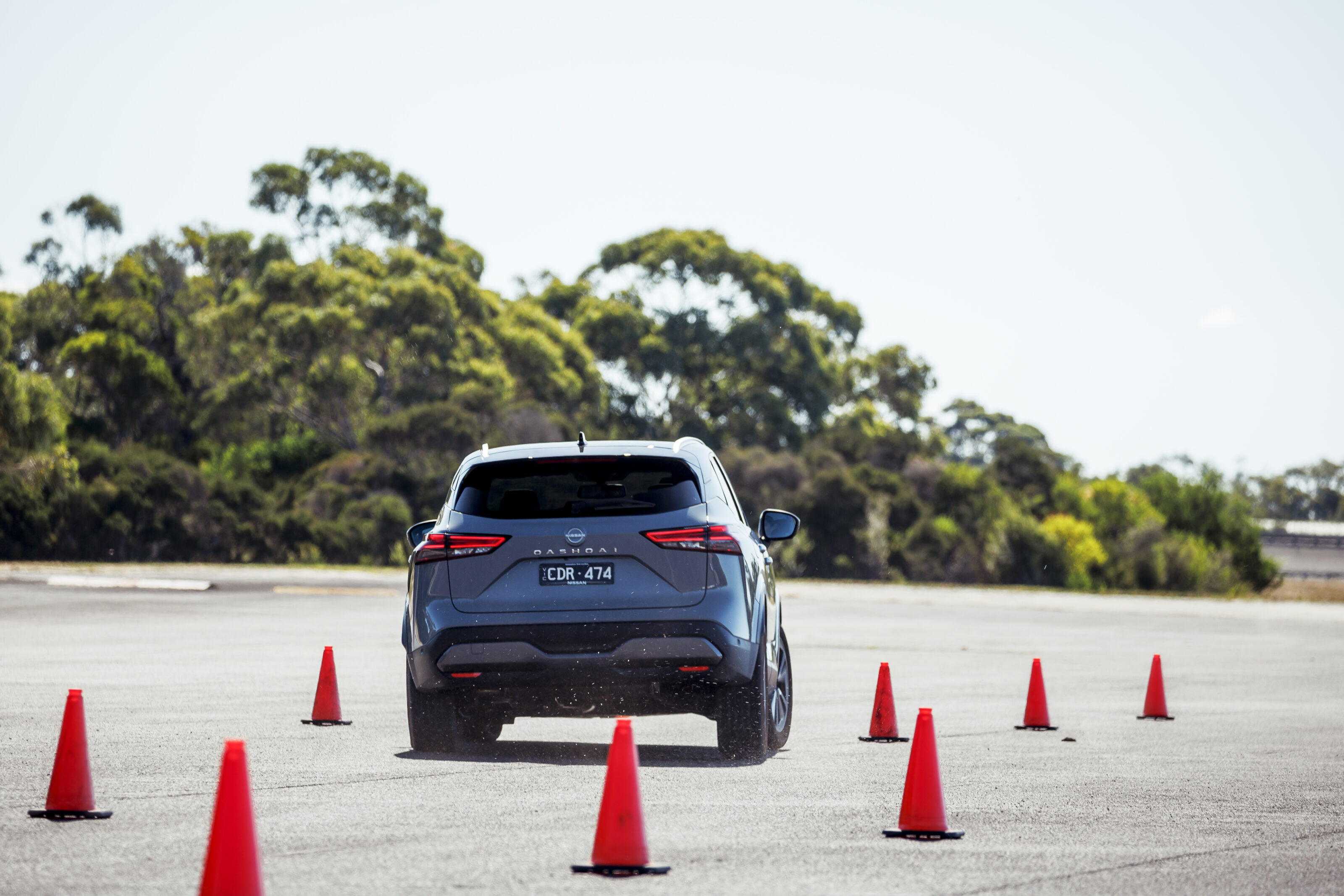
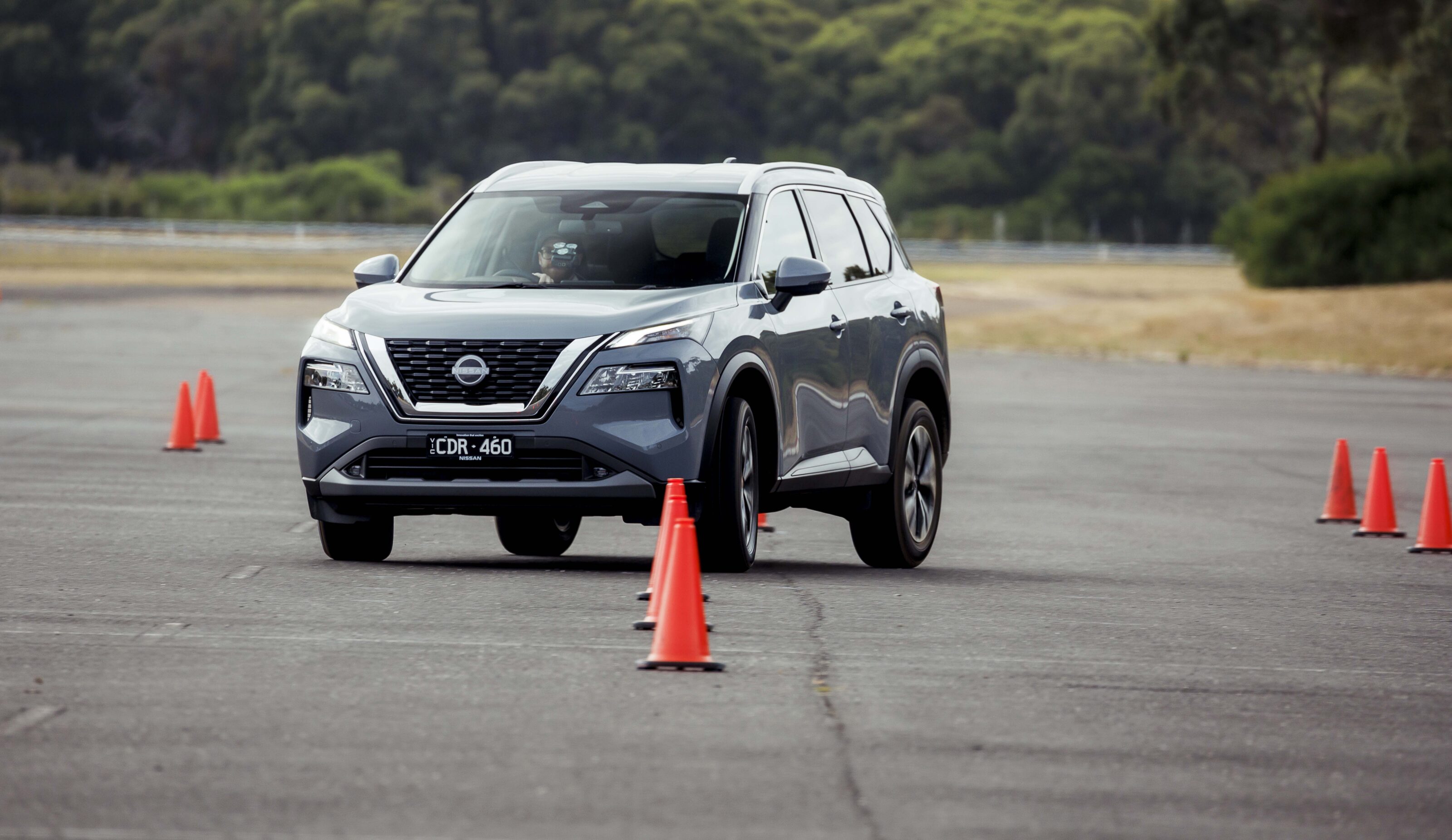
We also conducted an emergency lane-change manoeuvre as per international standards and increased the speed in repeated attempts until we knocked over a cone.
1
The Qashqai was remarkably agile, able to slice through at speeds up to 95km/h – extremely impressive for a small SUV, as good as a modern sports car. Its pricey Goodyear Eagle F1 tyres (somewhat overkill for a compact passenger SUV) certainly would have helped.
We found the X-Trail was also a strong performer, with the exception of the E-Power variant’s electronic stability control that felt too ‘loose’ for our liking, permitting too much yaw. The vehicle almost spun out with the systems fully activated, multiple times.
MORE
ANCAP
1
Fuel efficiency
The smaller, lighter Qashqai uses about 20 per cent less fuel than the X-Trail – as you’d hope.
That difference would add up over time, resulting in a fair premium for the extra space and practicality of an X-Trail.
For all its technology, the E-Power’s economy isn’t as great as we would have hoped at 6.1L/100km. A Toyota RAV4 Hybrid uses 4.7L/100km and runs on the cheaper grade 91 RON, whereas the E-Power requires premium 95 RON.
| u00a0 | Qashqai ST+ | X-Trail ST-L 7-Seat | X-Trail Ti-L ePower |
|---|---|---|---|
| Combined (claimed) | 6.1L/100km | 7.8L/100km | 6.1/100km |
| Fuel tank size | 55 litres | 55 litres | 55 litres |
| Estimated range | 900km approx | 700km approx | 900km approx |
| Recommended fuel grade | 95 RON | 95 RON | 95 RON |
Ownership
Both cars come with Nissan’s five-year, unlimited-kilometre warranty which includes five years of complimentary roadside assistance.
The Qashqai must be serviced once a year or every 15,000km – whichever comes first. For the X-Trail, it’s every 12 months or 10,000km. Nissan offers both capped-priced servicing and pre-paid servicing plans for both cars.
Over five years or 75,000km, a Qashqai costs $2916 to service, or you save $290 if buying a five-year prepaid servicing plan up front ($2626).
Front-drive X-Trails cost $2332 to service over five years or 50,000km, all-wheel drives bump that up to $2363 and the E-Power $2353. Up-front five-year pre-paid service plans will save you $233, $239 and $240 respectively.
If you plan on doing lots of kilometres, the Qashqai works out cheaper to service – 0.035c/km versus 0.042c/km for a front-drive X-Trail. It’ll also obviously be cheaper on fuel.
VERDICT
In this pair, Nissan offers two quite different vehicles to suit whatever your specific needs might be.
So, this question matters: How are you using the car?
Only the X-Trail can be had in all-wheel drive, and with seven seats. It’s more spacious inside, can tow more, and is just more practical more of the time – and for only a small price premium. Plus it’s a generally nicer car to drive than the Qashqai, with better-sorted ride and handling.
1
If you’re looking at Ti and Ti-L grades, the E-Power is worth the extra $4200. It’s faster, smoother, quieter and much nicer to drive – even if it’ll take about 125,000km to pay itself off at $2/litre.
However, if you never plan on towing, don’t ever visit the snow, rarely drive on dirt roads and even more rarely have rear-seat passengers, there’s no point paying for the extra capability and space of an X-Trail – get the Qashqai. It offers more equipment for less money and is cheaper to run.
SCORING
Nissan Qashqai: 7.5/10
Things we like
- Luxe interior for the money
Not so much…
- Ride quality could be better
Nissan X-Trail: 8.5/10
Things we like
- All the space you could ever need
Not so much…
- E-Power economy disappointing
Scoring breakdown
| Nissan Qashqai | Nissan X-Trail | |
|---|---|---|
| Safety, value and features | 7 | 8.5 |
| Comfort and space | 8.5 | 9 |
| Engine and gearbox | 7.5 | 7 |
| Ride and handling | 7.5 | 8.5 |
| Technology | 8.5 | 8.5 |
| OVERALL | 7.5 | 8.5 |
Comparisons
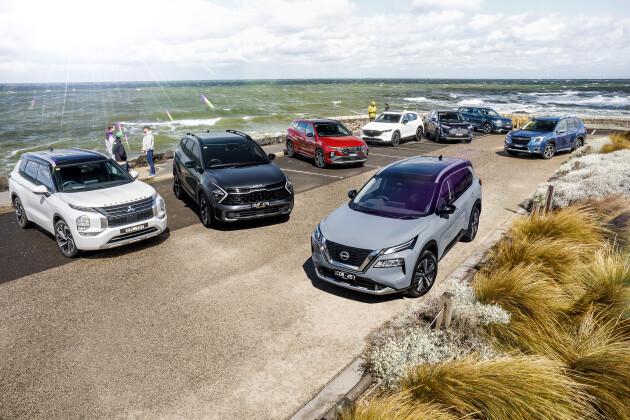
Medium SUV comparison: 2023 Mega Test
Thinking of buying a new mid-size SUV this year? We test eight of the best and most popular contenders to see where you should spend your money
MORE
Everything Nissan
MORE
SUV Buyers Guide
Specifications
| Nissan Qashqai ST+ | Nissan X-Trail ST-L 7 seater | Nissan X-Trail Ti-L E-Power | |
|---|---|---|---|
| Body | 5-door, 5-seat small SUV | 5-door, 7-seat medium SUV | 5-door, 5-seat medium SUV |
| Drive | front-wheel | all-wheel | all-wheel |
| Drivetrain | 1.3-litre turbo-petrol 4-cylinder | 2.5-litre 4cyl petrol | 1.5-litre 3cyl turbo-petrol + twin electric motors & 1.8kWh battery |
| Power | 110kW @ 5500rpm | 135kW @ 6000rpm | 106kW (petrol) + 150/100kW (front/rear e-motors). Combined system output is 157kW |
| Torque | 250Nm @ 1600-3750rpm | 244Nm @ 3600rpm | 250Nm (petrol) + 330Nm/195Nm (front/rear e-motors). Combined system output is 525Nm |
| Transmission | automatic, contioniously variable | automatic, contioniously variable | single-speed automatic |
| Fuel consumption | 6.1L/100km (95 RON) | 7.4L/100km | 6.1L/100km |
| Kerb weight | 1472kg | 1578kg | 1911kg |
| Towing capacity | 1500/750kg | 2000kg | 1650kg |
| 0-100 | N/A | n/a | n/a |
| L/W/H/W-B | 4425/1835/1625/2665mm | 4680/2065/1725/2705mm | 4680/2065/1725/2705mm |
| Suspension | Struts front, multi-link rear | Struts front, multi-link rear | Struts front, multi-link rear |
| Boot space | 429L | 465L | 575L |
| Warranty | 5yr/unlimited km | 5yr/unlimited km | 5yr/unlimited km |
| Safety rating | 5 star ANCAP (2021) | 5 star ANCAP (2021) | 5 star ANCAP (2021) |
| Price | $37,890 (tested $38,590) + on-road costs | $46,290 + on-road costs | $57,190 + on-road costs |
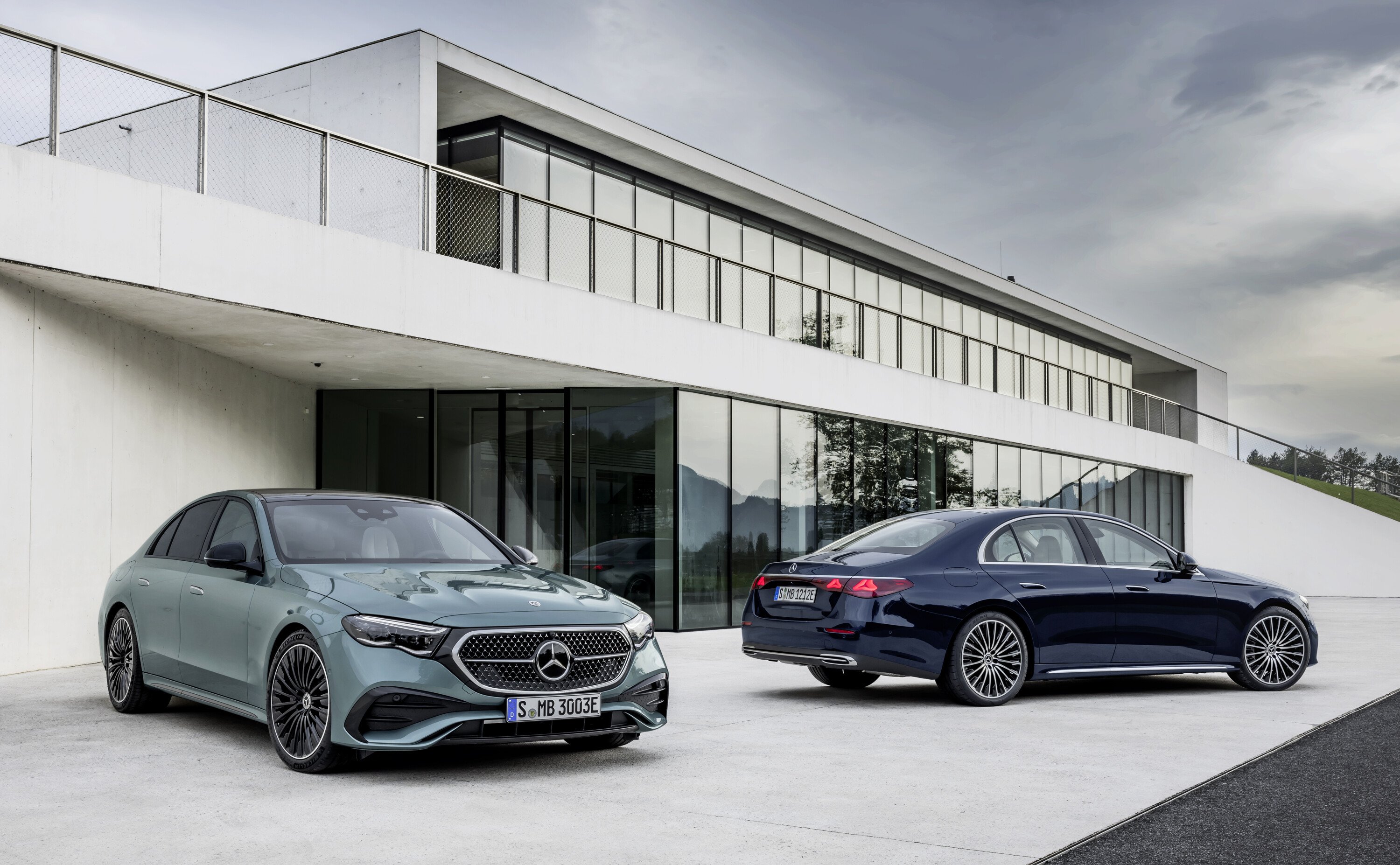
The next-generation 2024 Mercedes-Benz E-Class large sedan has debuted.
Snapshot
- 2024 Mercedes-Benz E-Class: Next-gen sedan unveiled
- Electrified focus with four PHEV options
- Australian launch confirmed for Q1 2024
Mercedes-Benz Australia has confirmed the new E-Class will launch here in the first quarter of 2024 (January to March inclusive), with local pricing and features to be announced closer to launch.
The ‘W214’ E-Class launch precedes a significant update to its biggest rival, the BMW 5 Series, due later this year. It also rivals the Audi A6, which is tipped to become the A7 soon.
1
While the E-Class maintains its conventional three-box sedan design and internal-combustion powertrains – albeit with mild-hybrid or plug-in hybrid technology – the 5 Series will spawn an all-electric i5 twin.
But there’s a pre-existing rival to the i5 in the form of the recently launched Mercedes-Benz EQE, which sports a unique, aero-focused liftback shape and rides on the brand’s dedicated EVA electric vehicle architecture.
JUMP AHEAD
- Exterior design
- Interior comfort and technology
- Powertrains
- Safety
- E-Class wagon; AMG E63; CLE two-door coming
1
2024 Mercedes-Benz E-Class exterior design
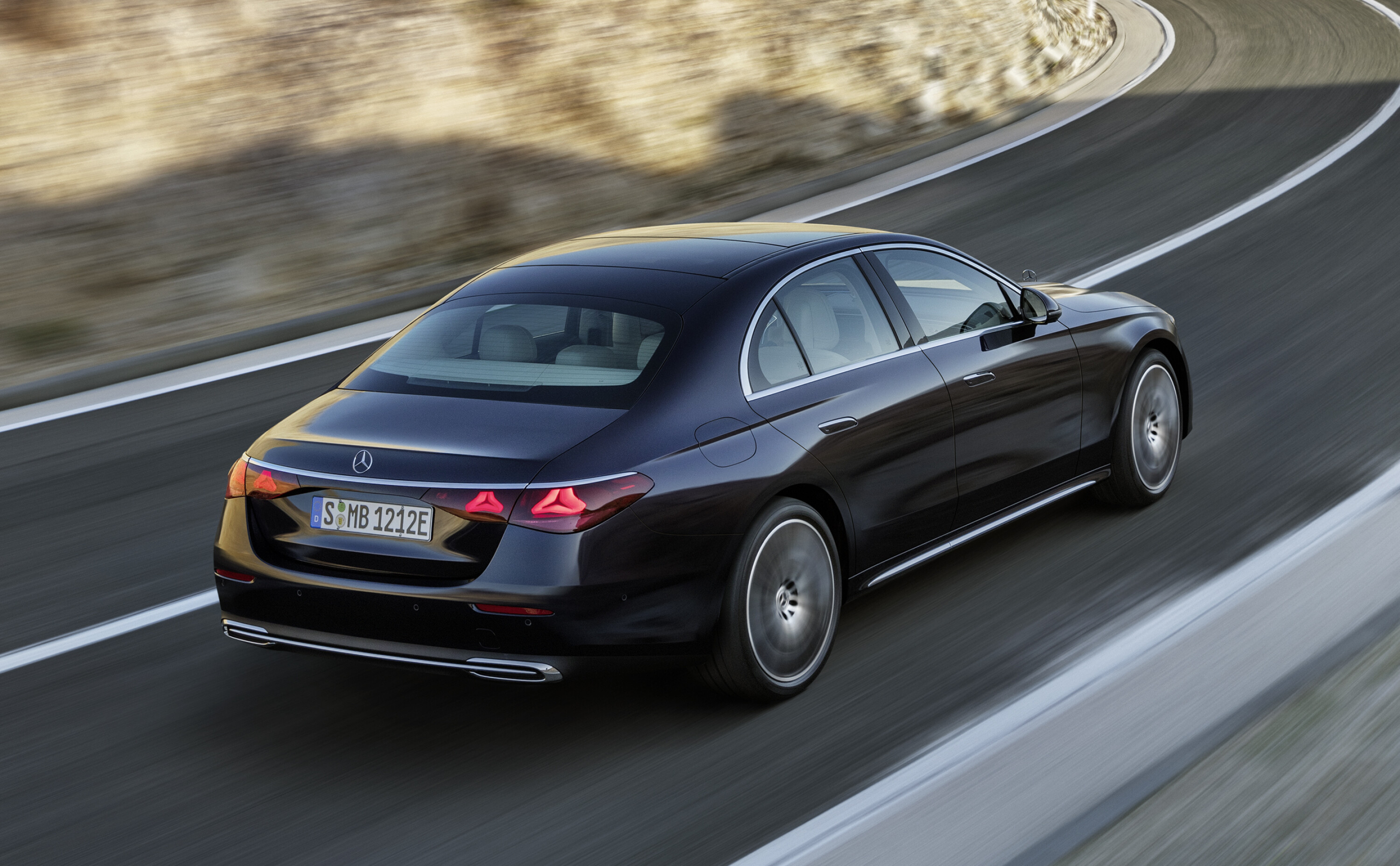
Mercedes-Benz refers to the latest E-Class as “a bridge between tradition and digitalisation”, with an evolutionary design inspired by the latest S-Class and C-Class – but with an overhauled cabin with optional ‘super screens’.
It is based on the updated MRA2 platform shared with the S-Class and C-Class, with mild-hybrid or plug-in hybrid four-cylinder powertrains at launch.
While the design also takes inspiration from the streamlined EQE and EQS all-electric sedans, the E-Class retains its drag coefficient of 0.23 – though it has grown in every dimension, with a larger front-end volume.
1
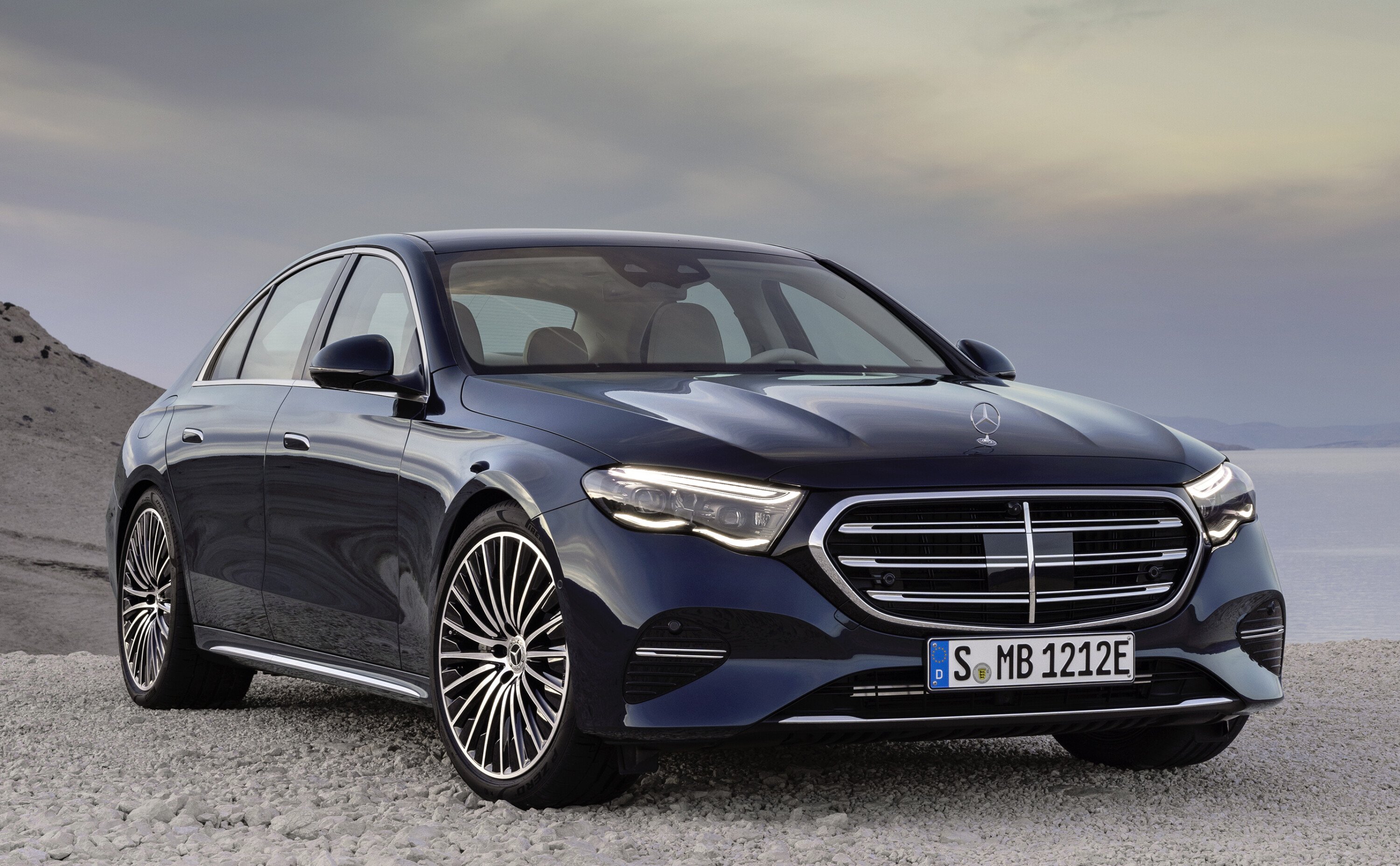
Measuring 4949mm long, 1880mm wide and 1468mm tall, with a 2961mm wheelbase, the 2024 E-Class is 15mm longer, 28mm wider and 8mm taller, with an additional 22mm between the front and rear axles.
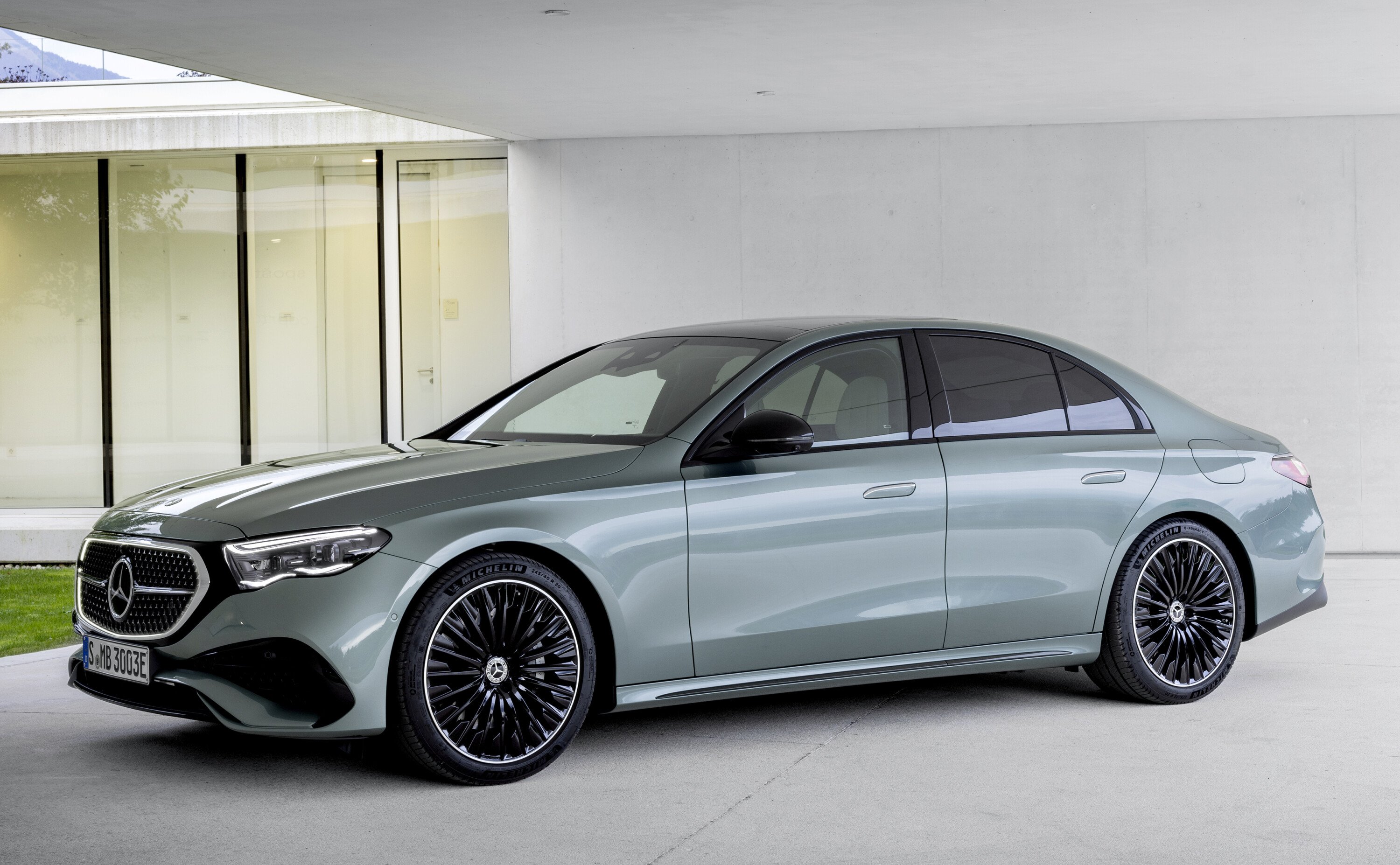
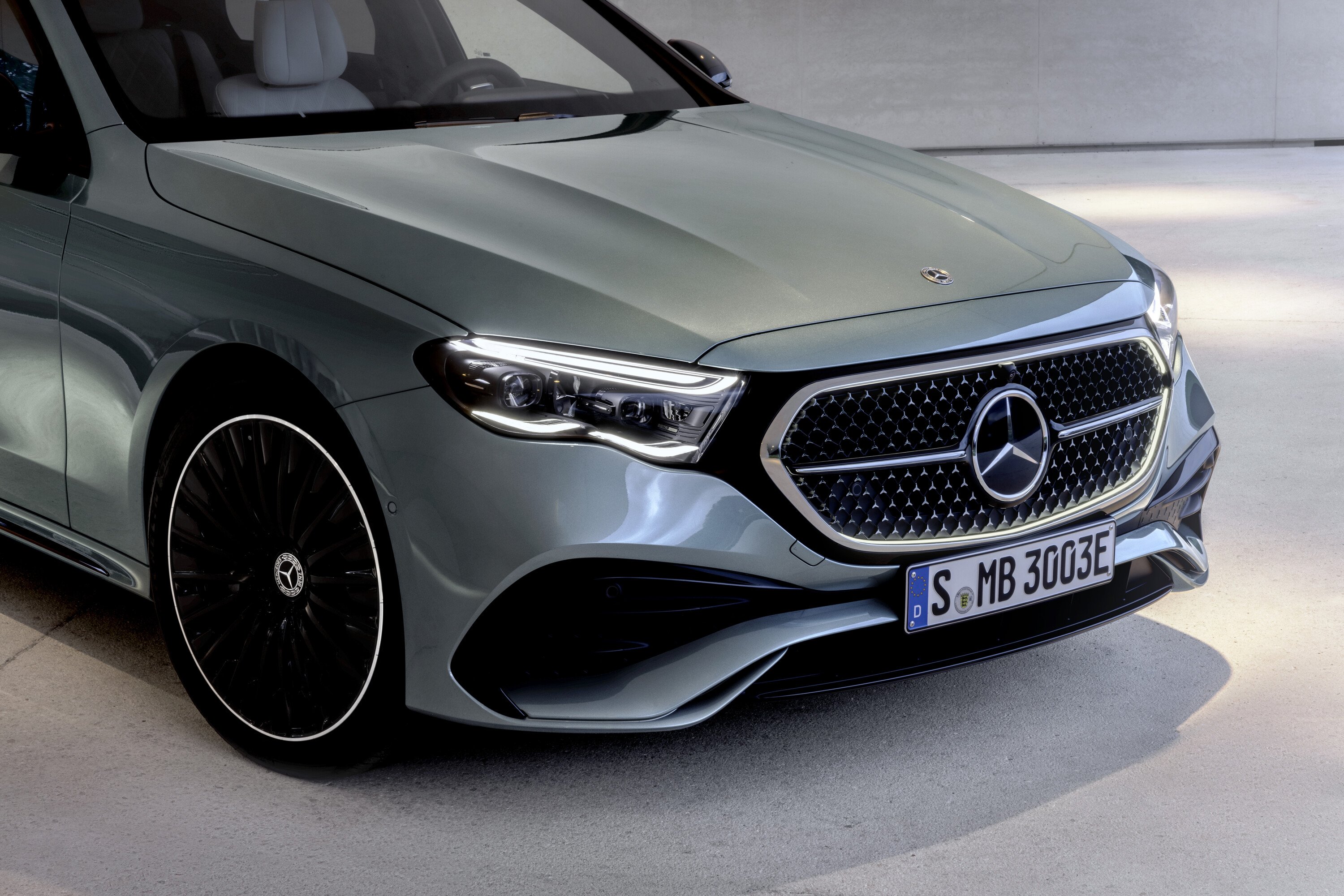
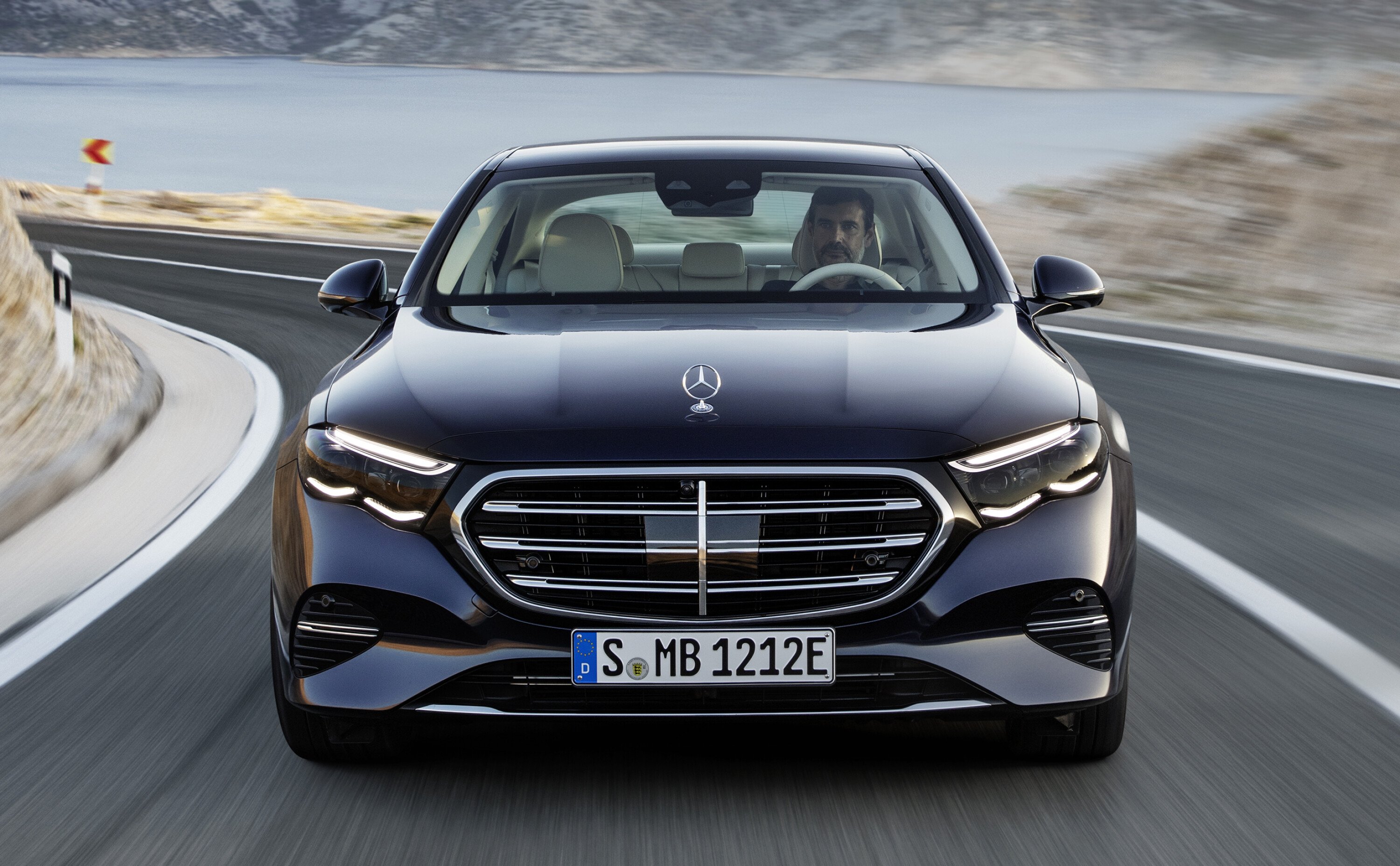
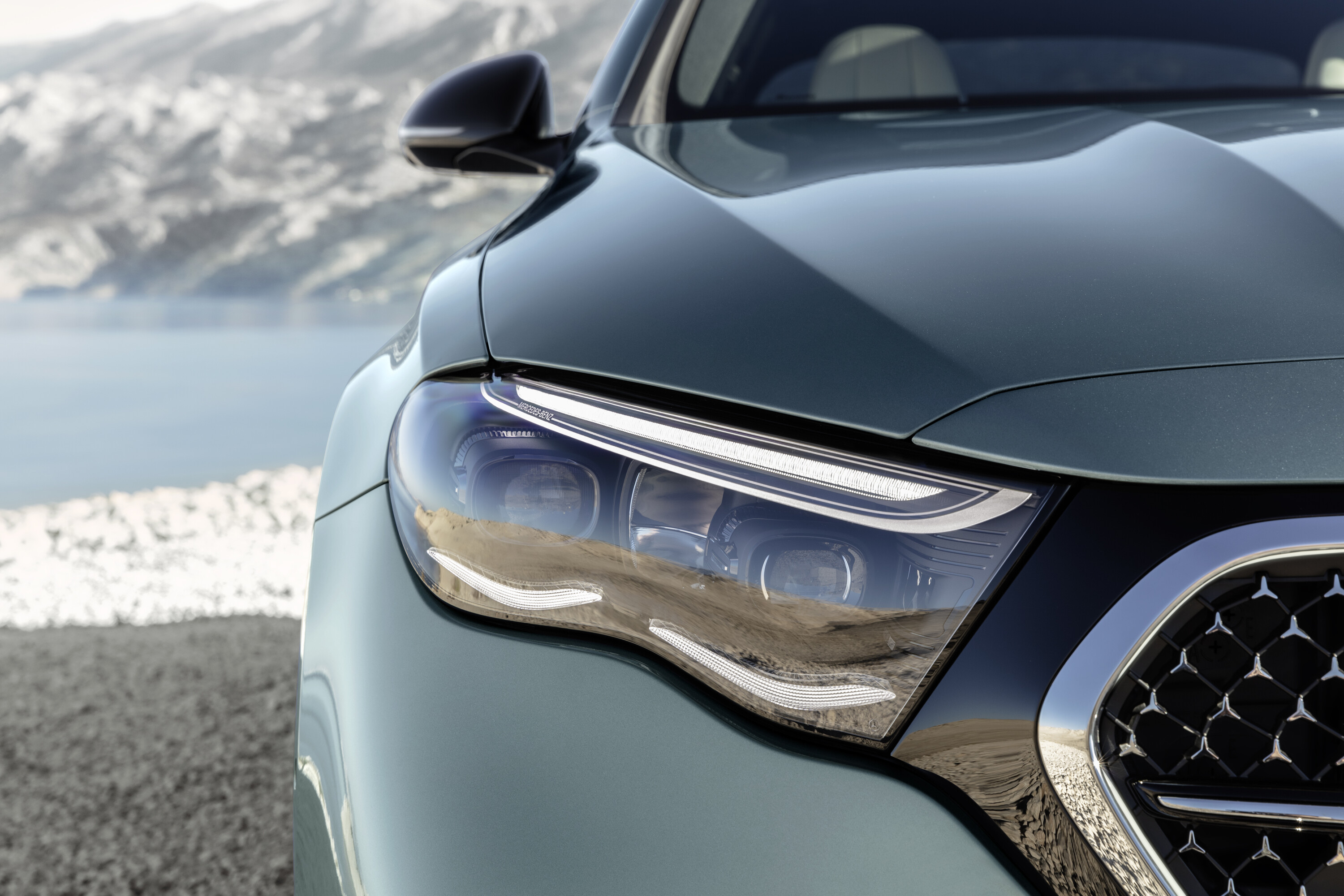
The latest E-Class features a larger front grille with a ‘star-pattern’ for the AMG-Line and a Mercedes-EQ-like gloss black surround that connects the slimmer headlights.
The grille is also available in a classic design, with an illuminated surround for all model lines.
Flush, retractable door handles borrowed from the S-Class are the easiest way to differentiate the new E-Class, with the conventional sedan shape providing an evolutionary look.
1
Alloy wheel designs between 17 and 21 inches are available for the new model.
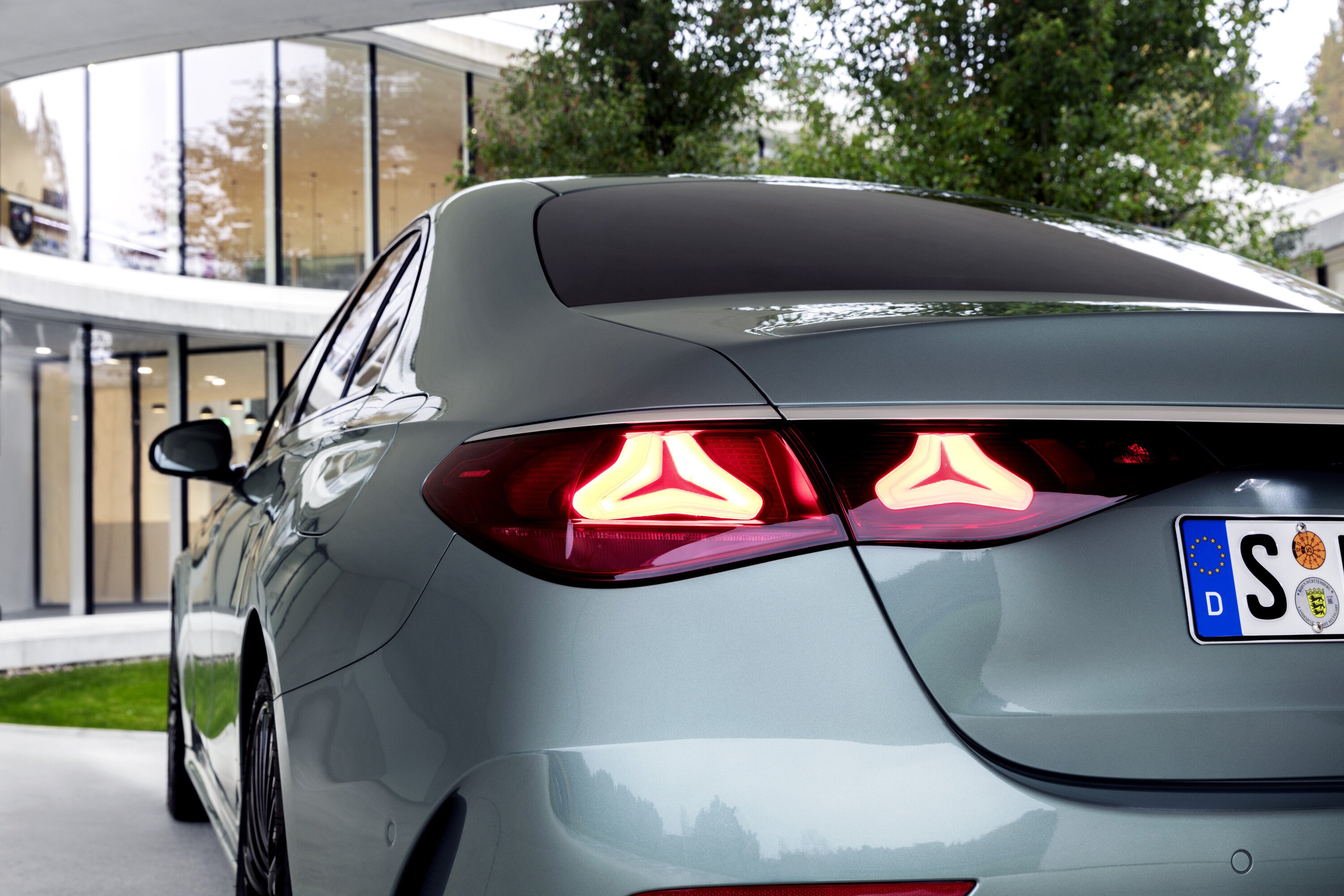
While the tail-lights look similar to the C-Class and S-Class, the E-Class blends the rear design of the EQE and EQS with a full-width upper chrome strip and a unique two-element light signature inspired by the Mercedes-Benz star.
The brand claims the star motif has a day and night design, with a light show option to welcome or bid farewell to passengers.
As with the C-Class and S-Class, the optional air suspension now supports rear-axle steering to 4.5 degrees, reducing the turning circle by up to 90 centimetres from 12.0m to 11.1m in AWD and 11.6m to 10.8m in RWD, with 2.2 instead of 2.4 turns lock-to-lock.
1
2024 Mercedes-Benz E-Class interior comfort and technology
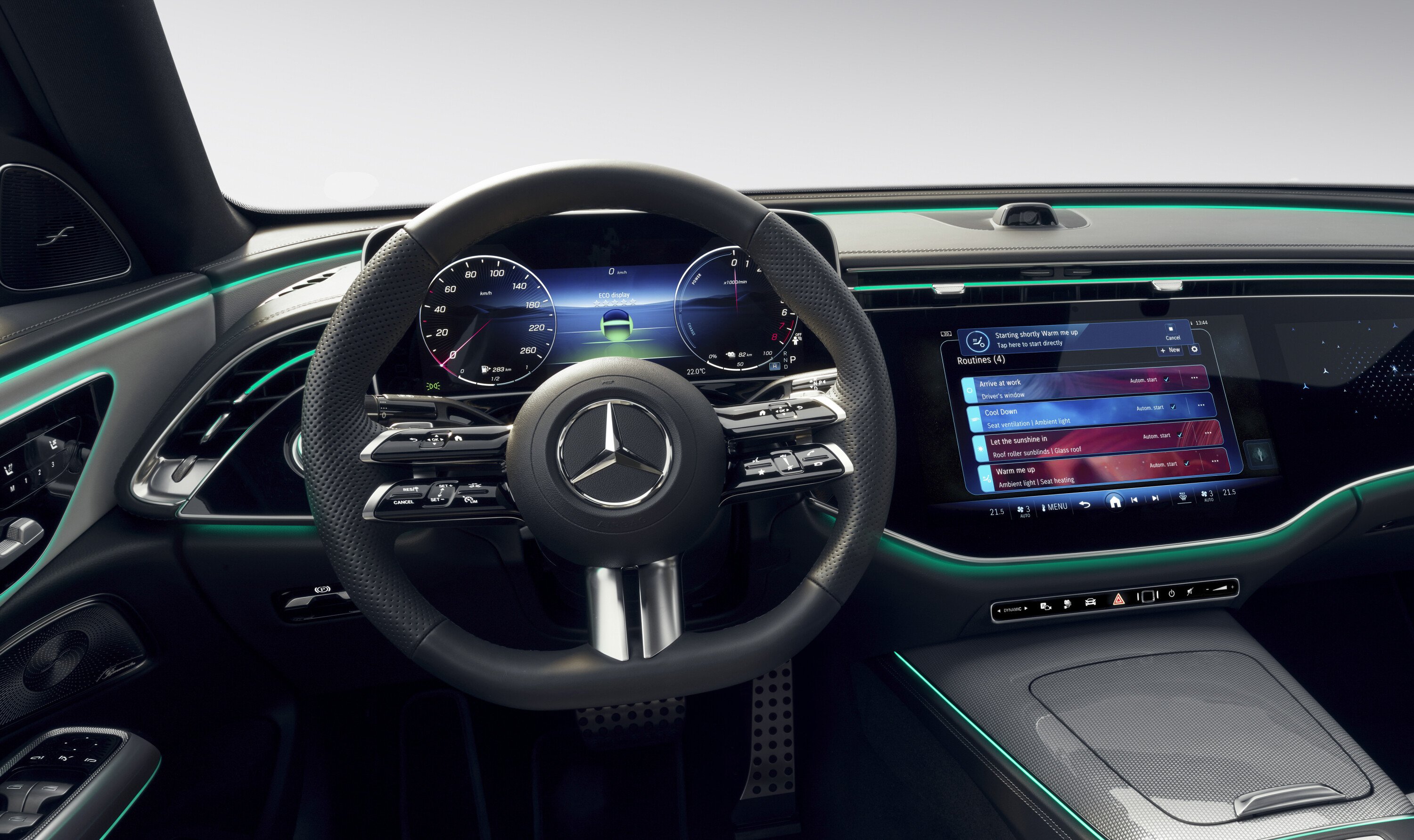
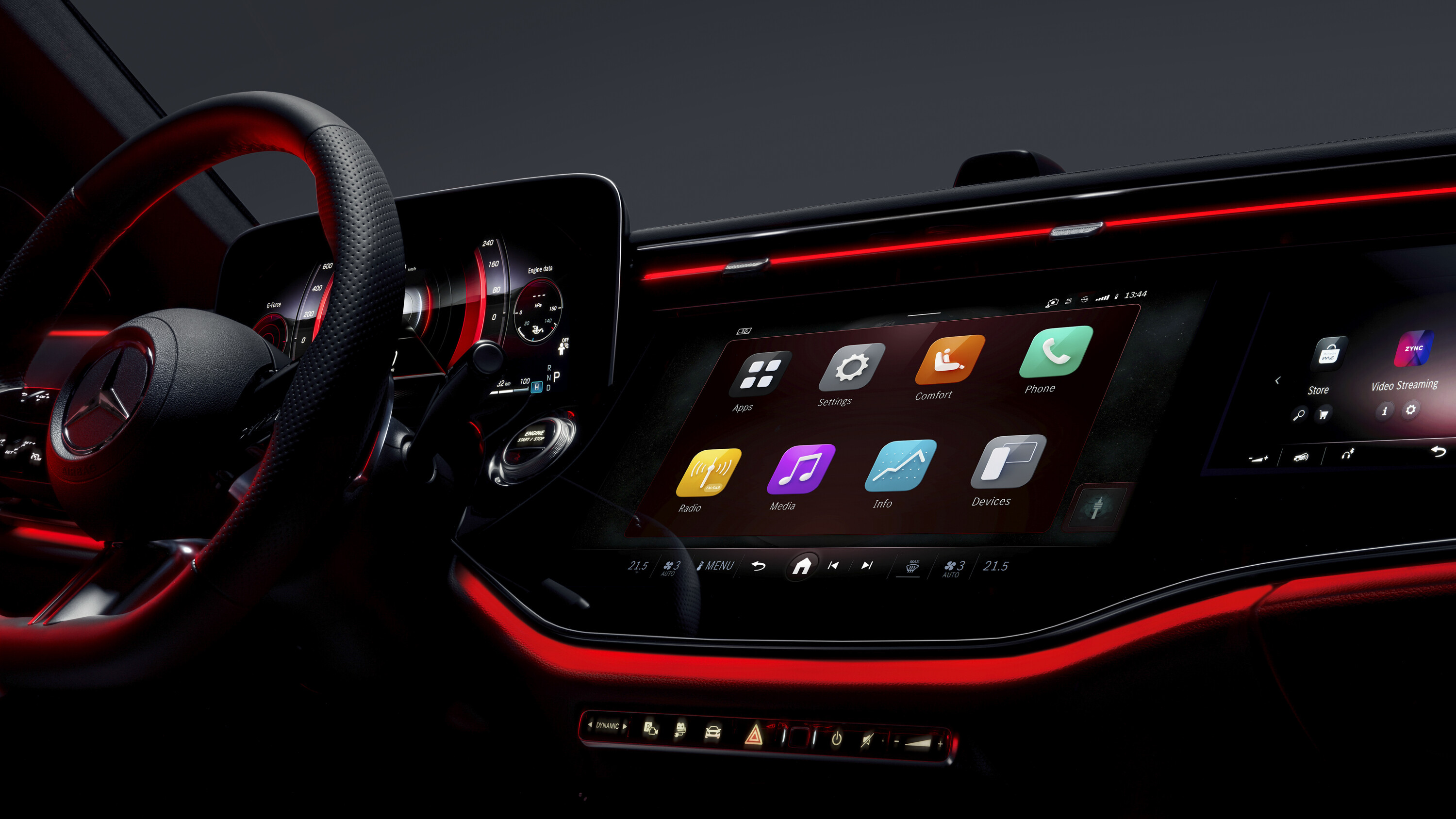
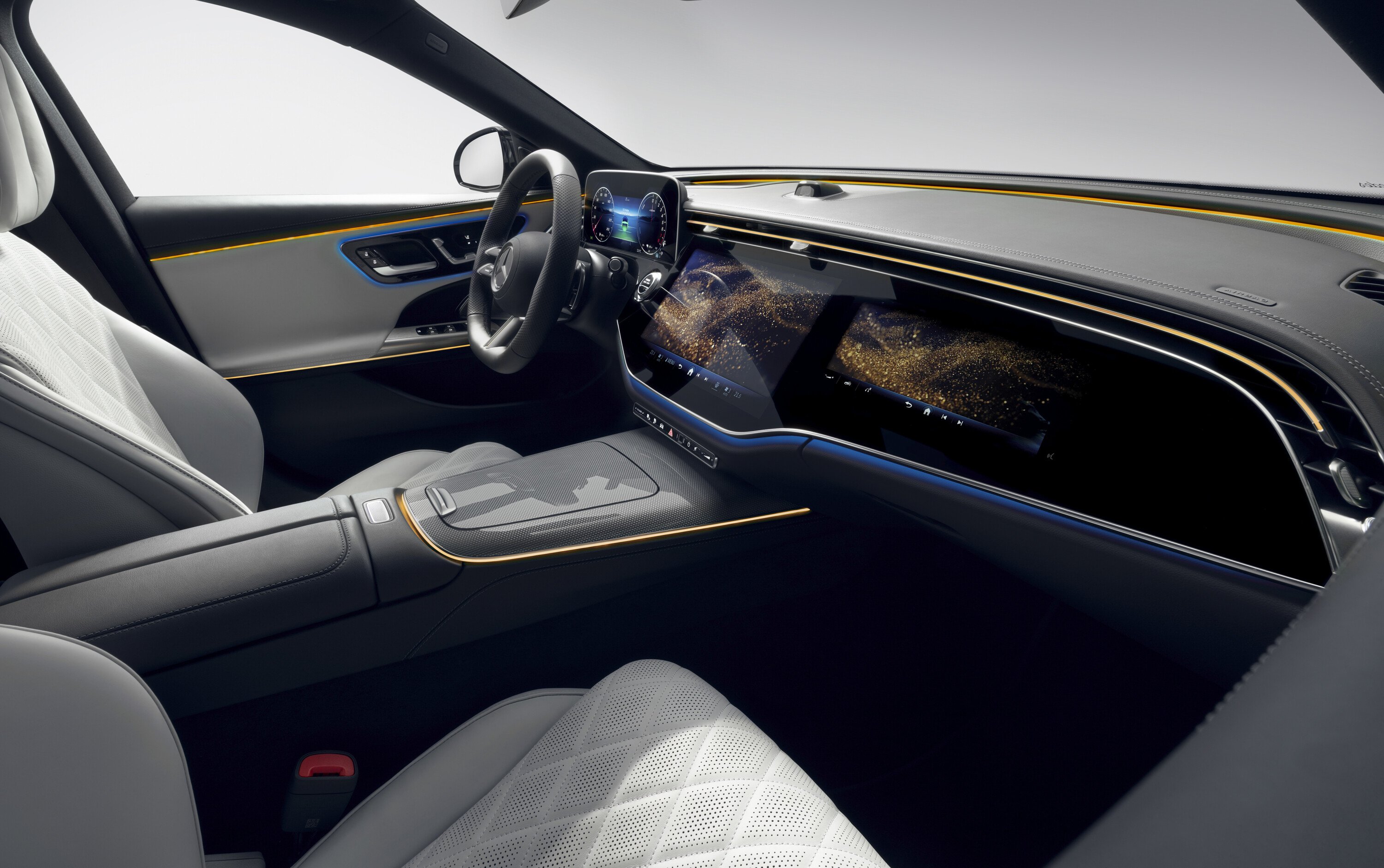
Inside, the new E-Class has a digital-focused cabin with an optional MBUX Superscreen sporting a large glass surface.
This includes a tri-screen set-up with a passenger display, all running the third-generation MBUX infotainment system.
With a new system-on-a-chip, Mercedes-Benz claims the “computing functions of previously separate domains take place in a single processor”, allowing for Tesla-like over-the-air software updates for various components.
It features a built-in 5G mobile antenna, providing data for vehicle applications.
1
And it isn’t just Mercedes-Benz applications where a 5G connection will come in handy, with the addition of the Mercedes Me App Store.
At launch, third-party applications supported by the E-Class will include TikTok, Angry Birds, Webex, Zoom, the Vivaldi web browser, and the Zync entertainment portal.
When optioned with the MBUX Superscreen, the E-Class includes a built-in selfie and video camera on top of the dashboard for applications or storing images or video on a USB stick.
Artificial intelligence has been added to the MBUX system for “personalised automation,” allowing the vehicle to suggest routines or for the occupants to create or download them.
1
The latest MBUX also includes a new presentation of the display’s main icons, a “Just Talk” function for the Hey, Mercedes voice assistant, and digital key support for the iPhone and Apple Watch.
Owners can share a digital key with up to 16 people through channels like AirDrop and iMessage. The user can remove a key through the Apple Wallet or the vehicle’s infotainment system.
While the digital key requires a network connection for the initial setup and sharing, it works without mobile phone reception using Bluetooth and ultra-wideband technology.
As standard, the E-Class features a seven-speaker, 125-watt unbranded audio system. The optional 21-speaker, 730-watt Burmester 4D surround-sound audio system gains 360-degree spatial audio support with Dolby Atmos support for Apple Music subscribers.
1
In addition to the driver feeling the music through seat vibrations, the E-Class features dynamic interior ambient lighting that can analyse and visualise the sound being played.
The optional four-zone system includes automatic vent adjustment and fragrance ionisers.
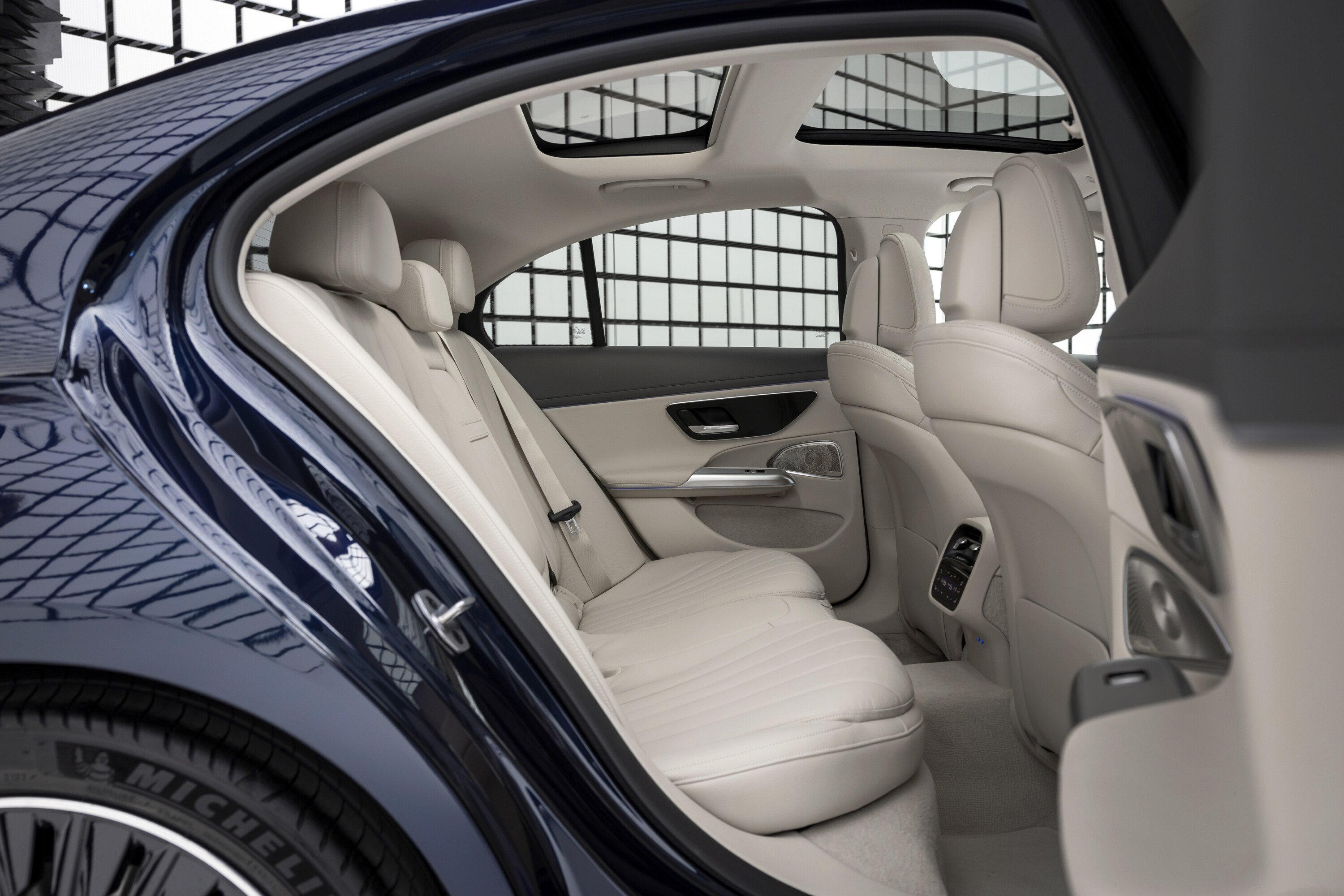
Various interior colour combinations will be available, including light beige with space grey, tonka brown, and cool grey.
Compared to the previous E-Class, the new model has an additional five millimetres of headroom for the driver, while Mercedes-Benz claims rear elbow width is “almost S-Class level.”
1
2024 Mercedes-Benz E-Class powertrains
Six powertrains will be available in Europe – three plug-in hybrids, a mild-hybrid petrol and two mild-hybrid diesels – with a more-powerful E350 petrol likely for Australia and North America.
The entry-level, rear-wheel-drive E200 is now powered by a 150kW/320Nm 2.0-litre turbocharged four-cylinder petrol, with the 48-volt mild-hybrid system providing a 17kW/205Nm boost.
It has a claimed 7.5-second 0-100km/h sprint time and a 240km/h top speed.
The diesel-powered E220d features a 2.0-litre engine producing 145kW and 440Nm, with rear- or all-wheel-drive.
1
Plug-in hybrid options comprise the E300e and E440e, featuring a 2.0-litre turbo-four, a 95kW/440Nm electric motor, and a larger 25.4kWh lithium-ion battery – but with differing combustion outputs.
The rear-drive E300e has a 150kW/320Nm tune for its petrol engine, with a 230kW and 550Nm total system output. It has a claimed 6.4-second 0-100km/h time and a WLTP-rated electric-only range between 97 and 115 kilometres.
Stepping up to the E440e – available in RWD or AWD – brings a more-potent 185kW/400Nm engine, allowing for a 280kW and 650Nm total system output. It has a claimed 5.3-second 0-100km/h time and a WLTP-rated electric-only range between 95 and 109 kilometres.
All powertrains are matched to a nine-speed torque-converter automatic transmission, which weighs 30 per cent less than previous-generation with the “electric motor, power electronics and transmission cooler moved into or to the transmission.”
1
2024 Mercedes-Benz E-Class safety
New safety technology includes; a driver attention camera, which will initiate an emergency stop if the driver fails to respond to warnings, while the active steering assist is now supported in urban and country roads.
A semi-autonomous memory parking assist will remember up to five parking locations.
In addition, the E-Class is future-proofed for Level 4 ‘automated valet parking’ if the parking location is equipped with the appropriate infrastructure.
A front-centre airbag has been added, in line with recent Mercedes-Benz models.
1
2024 Mercedes-Benz E-Class wagon; AMG E63; CLE two-door coming
The next-generation Mercedes-Benz E-Class wagon is tipped to debut by the end of 2023; however, it is unlikely for Australia since the current wagon was axed locally in 2020.
Following the four-cylinder-only C-Class, it’s unlikely that we’ll ever see a V8 in the high-performance E-Class again.
However, unlike the latest Mercedes-AMG C63, Autocar reports the range-topping E63 will likely switch to a six-cylinder plug-in hybrid setup to deliver more than 520kW.
The current two-door E-Class coupe and cabriolet will be replaced by the all-new CLE sports car in the coming months in a merger with the smaller two-door C-Class models.
The 2024 Mercedes-Benz E-Class will be produced in Germany for the global market, while a market-specific version built in China will debut in the coming months.
The 2023 Nissan X-Trail E-Power hybrid line-up has expanded in Australia.
Snapshot
- 2023 Nissan X-Trail ST-L E-Power pricing and features
- More-affordable hybrid joins X-Trail range
- Priced from $49,490 before on-road costs
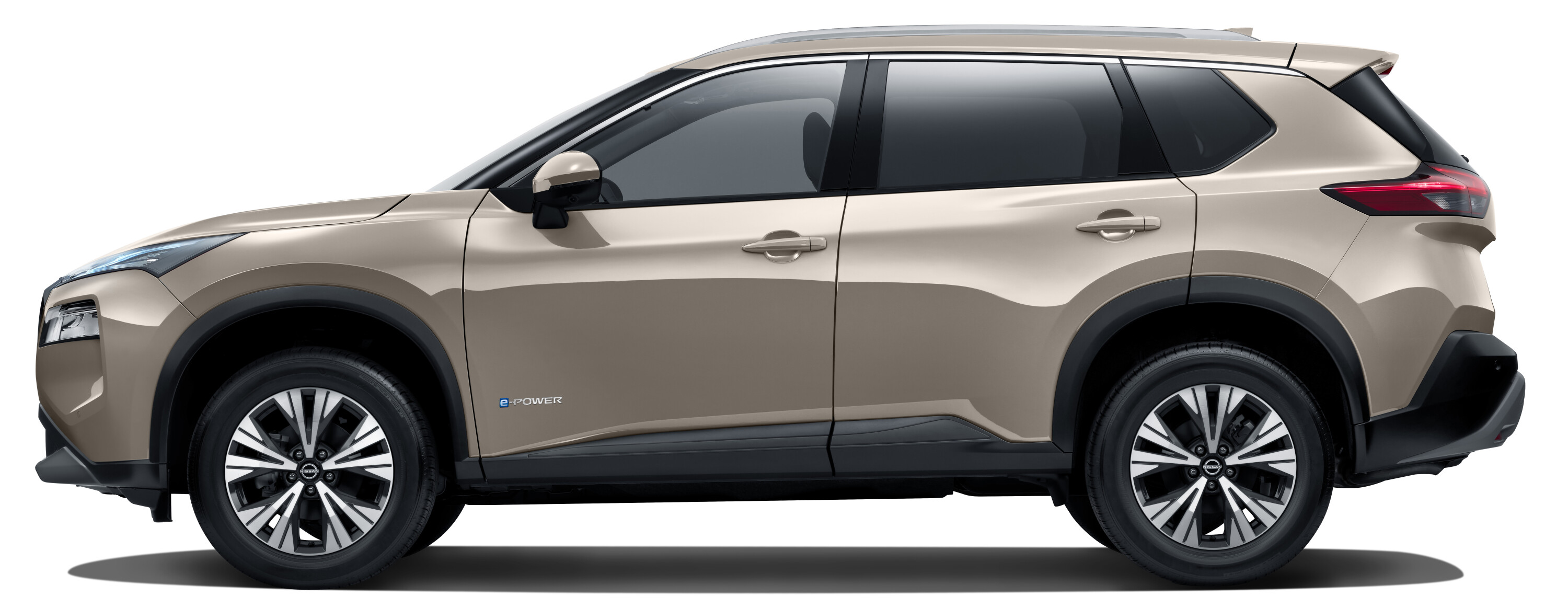
Nissan Australia has confirmed it will launch the X-Trail ST-L E-Power variant in the second half of 2023, joining the range-topping Ti and Ti-L hybrids that arrived in February.
It will be priced from $49,490 before on-road costs – equating to a $4700 saving over the Ti E-Power and a $3200 premium over the equivalent ST-L petrol AWD variant.
As with the Ti and Ti-L hybrids, the ST-L E-Power is only available with five seats – unlike the seven-seat ST-L petrol AWD.
1
The new variant is priced similarly to a mid-spec example of the popular Toyota RAV4 Hybrid, with the XSE AWD hybrid retailing for $50,875 plus on-road costs following a recent update.
“Nissan’s E-Power technology has been incredibly well received by our customers, and we’re excited to be able to offer this efficient, EV-like drive experience across even more of the X-Trail range,” said Nissan Australia managing director, Adam Paterson.
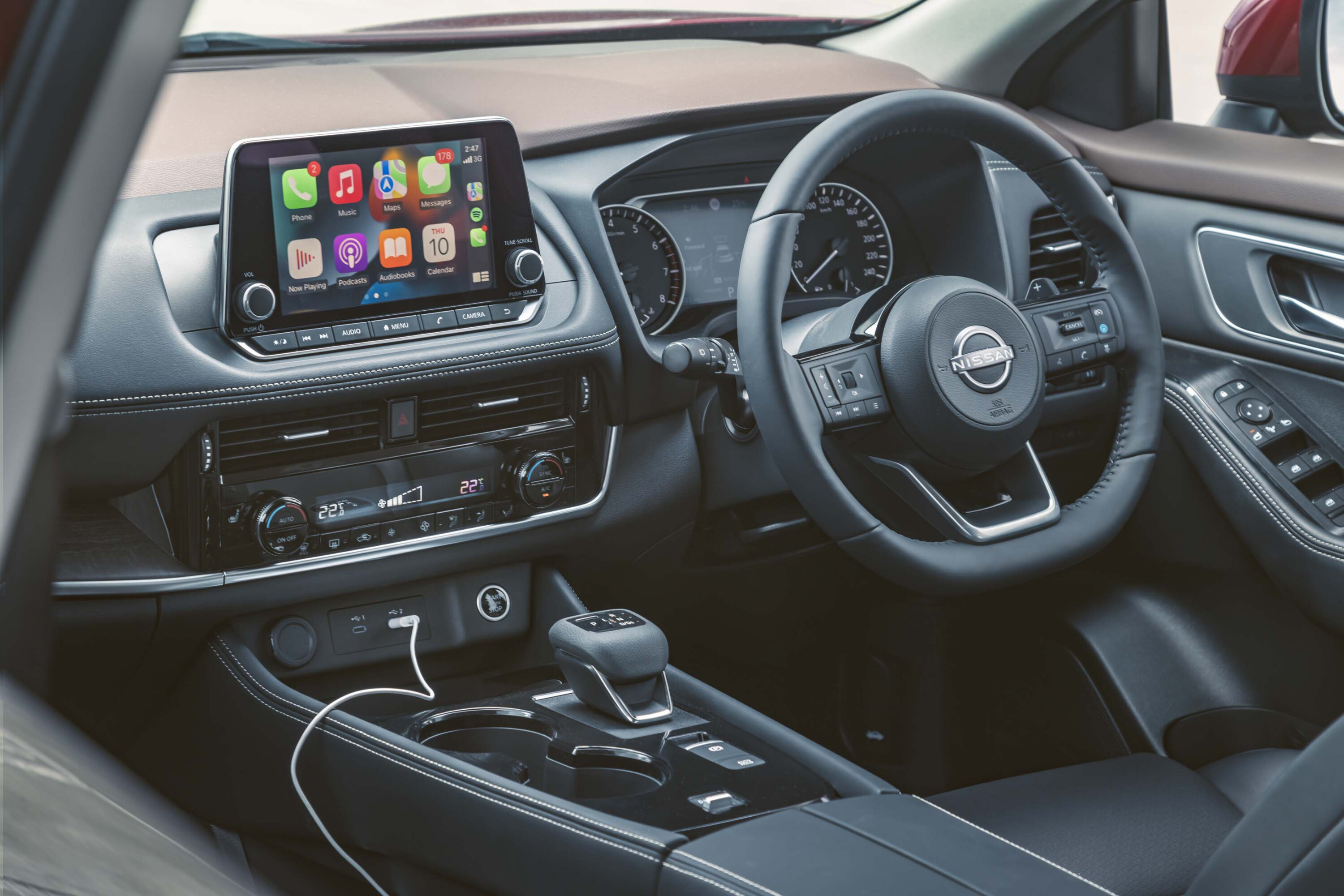
It is equipped comparatively to the petrol ST-L but with unique E-Power components, including the E-Pedal Step for one-pedal driving, active noise cancellation, a black-painted grille, and a low-speed acoustic vehicle alert system.
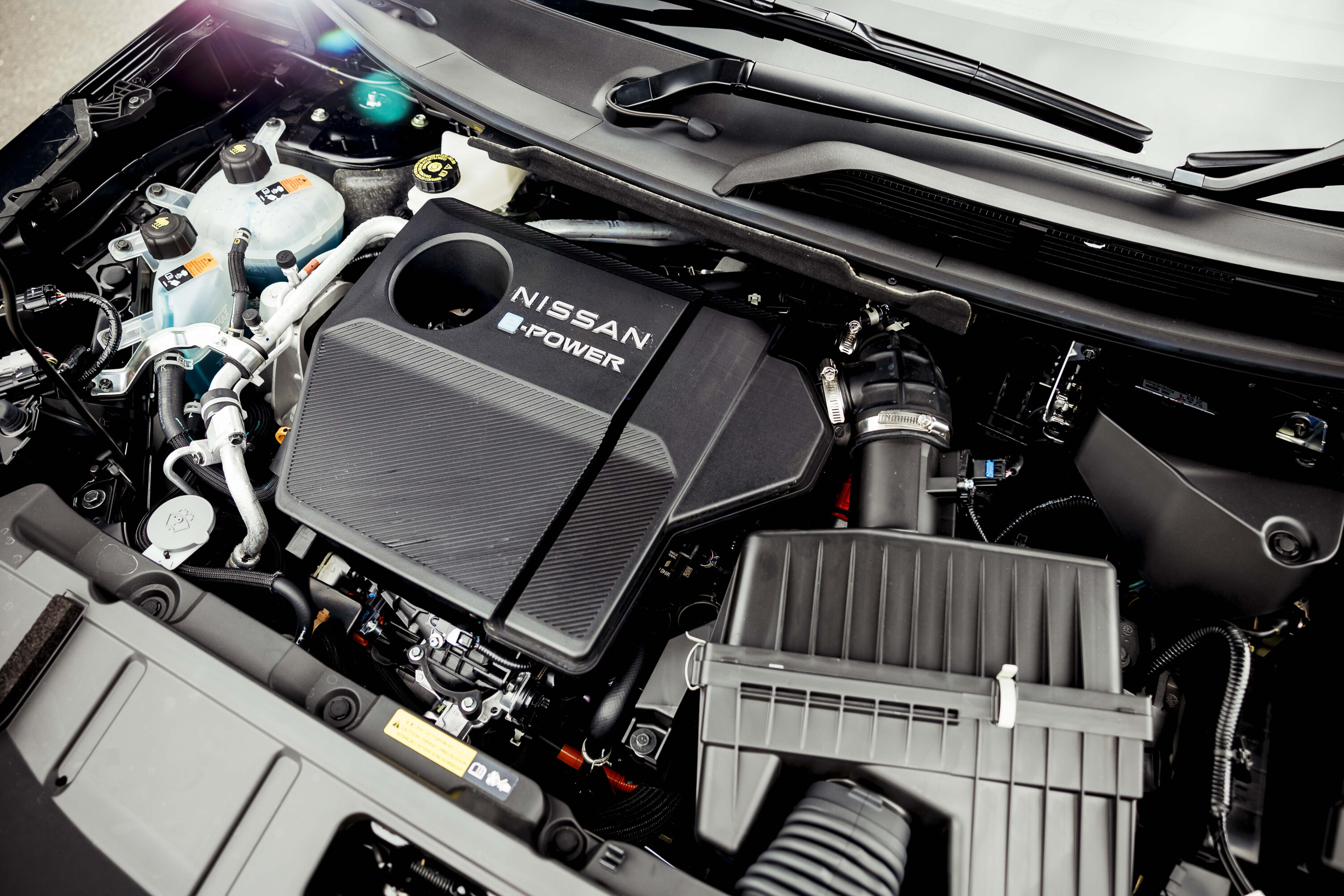
Under the bonnet, the X-Trail E-Power is powered by a 1.5-litre turbocharged three-cylinder petrol-electric setup, in place of the standard naturally-aspirated 2.5-litre four-cylinder.
The hybrid system includes a 1.8kWh lithium-ion battery, a power generator, inverter and dual electric motors (150kW front, 100kW rear), for a combined system output of 157kW with electronic all-wheel drive.
For more information on the X-Trail E-Power’s hybrid setup, click here.
It has a claimed combined fuel consumption of 6.1L/100km and emits 139g/km – down 1.7L/100km and 44g/km compared to the 2.5-litre AWD.
The 2023 Nissan X-Trail ST-L E-Power hybrid will arrive in Australia in the second half of this year.
1
2023 Nissan X-Trail ST-L E-Power features
| E-Pedal Step | Black-painted grille |
| Active noise cancellation | Low-speed acoustic vehicle alert system |
| 18-inch alloy wheels | Synthetic leather upholstery |
| 8-inch infotainment system | Sliding second-row seats |
| Wired Apple CarPlay and Android Auto | 40:20:40 split-folding second-row |
| Six-speaker audio system | 10-way power-adjustable driveru2019s seat with two-way power lumbar support |
| AM/FM/DAB+ radio | Four-way manually-adjustable passenger seat |
| Four USB ports (2x USB-C, 2x USB-A) | Leather-accented steering wheel |
| 7-inch semi-digital instrument cluster | Roof rails |
| Front and rear parking sensors | Flexible cargo bay |
| Dual-zone climate control | Rear privacy glass |
| Keyless entry and push-button start | LED fog lights |
| LED headlights, tail-lights and daytime running lamps | Heated front seats |
| Heated, power-folding side mirrors | Semi-autonomous ProPilot+ driving suite |
| 360-degree camera systemu00a0 | Tyre pressure monitoring system. |
| Auto-dimming rear-view mirror | Autonomous emergency braking (vehicle, pedestrian, cyclist, junction, reverse) |
| Lane-keep assist | Lane departure warning |
| Rear cross-traffic alert | Blind-spot alert |
| Traffic sign recognition | Trailer sway control |
| Rear occupant alert | Adaptive cruise control. |
Ti E-Power adds
| 19-inch alloy wheels | Electric tailgate |
| 12.3-inch infotainment system | Digital rear-view mirror |
| Wireless Apple CarPlay | Tri-zone climate controlu00a0 |
| Satellite navigation | Leather-accented upholstery |
| 12.3-inch digital instrument clusteru00a0 | Adaptive headlights |
| Wireless phone charger | Rain-sensing wipers |
| 10.8-inch head-up display | 10-way power-adjustable passenger seat |
| Panoramic sunroof | LED ambient lighting (centre console) |
| LED turn signals | Chrome side moulding.u00a0 |
Ti-L E-Power adds
| 20-inch alloy wheels | Heated second-row seats |
| Quilted Nappa leather-accented upholsteryu00a0 | Rear sun blinds |
| Memory function for the front seats | Hands-free electric tailgate |
| 10-speaker Bose audio system | Remote engine start |
| Heated steering wheel | LED ambient lighting (centre console and door trim). |
| Reverse side mirror tilt-down function |
1
2023 Nissan X-Trail pricing
Prices exclude on-road costs.
| Model | Price |
|---|---|
| ST FWD five-seat | $36,750 |
| ST AWD seven-seat | $39,790 |
| ST-L FWD five-seat | $43,190 |
| ST-L AWD seven-seat | $46,290 |
| ST-L hybrid AWD five-seat (new) | $49,490 |
| Ti AWD five-seat | $49,990 |
| Ti hybrid AWD five-seat | $54,190 |
| Ti-L AWD five-seat | $52,990 |
| Ti-L hybrid AWD five-seat | $57,190 |
MORE
Everything Nissan
Electric utes are heating up (in a good way)
As one of Australia’s most in-demand segments, utes are common sight for equipment hauling, school runs and holiday road trips – but they’re nonetheless a significant contributor of harmful exhaust fumes, yet the choice for those seeking an all-electric ute remains slim.
The Chinese-born LDV eT60 4×2 is the only new electric ute on sale from a manufacturer, with a high price tag, sub-par capabilities, and a limited features list.
In contrast, electric utes are gaining traction overseas from legacy and new automakers, particularly in the US – hailed for their effortless torque for off-roading, practicality, and low centre of gravity.
How do these key electric utes fare on paper and is there any chance of them coming Down Under amid impending fuel efficiency standards?
Note: Pricing and specifications in this story are converted from overseas figures.
JUMP AHEAD
Pricing
1
Based on direct pricing conversions, the Chinese-born Radar RD6 is the cheapest electric ute by far – even undercutting most combustion engine powered utes today – given it’s only a two-wheel drive ‘lifestyle’ pickup similar to the Hyundai Santa Cruz or Ford Maverick overseas.
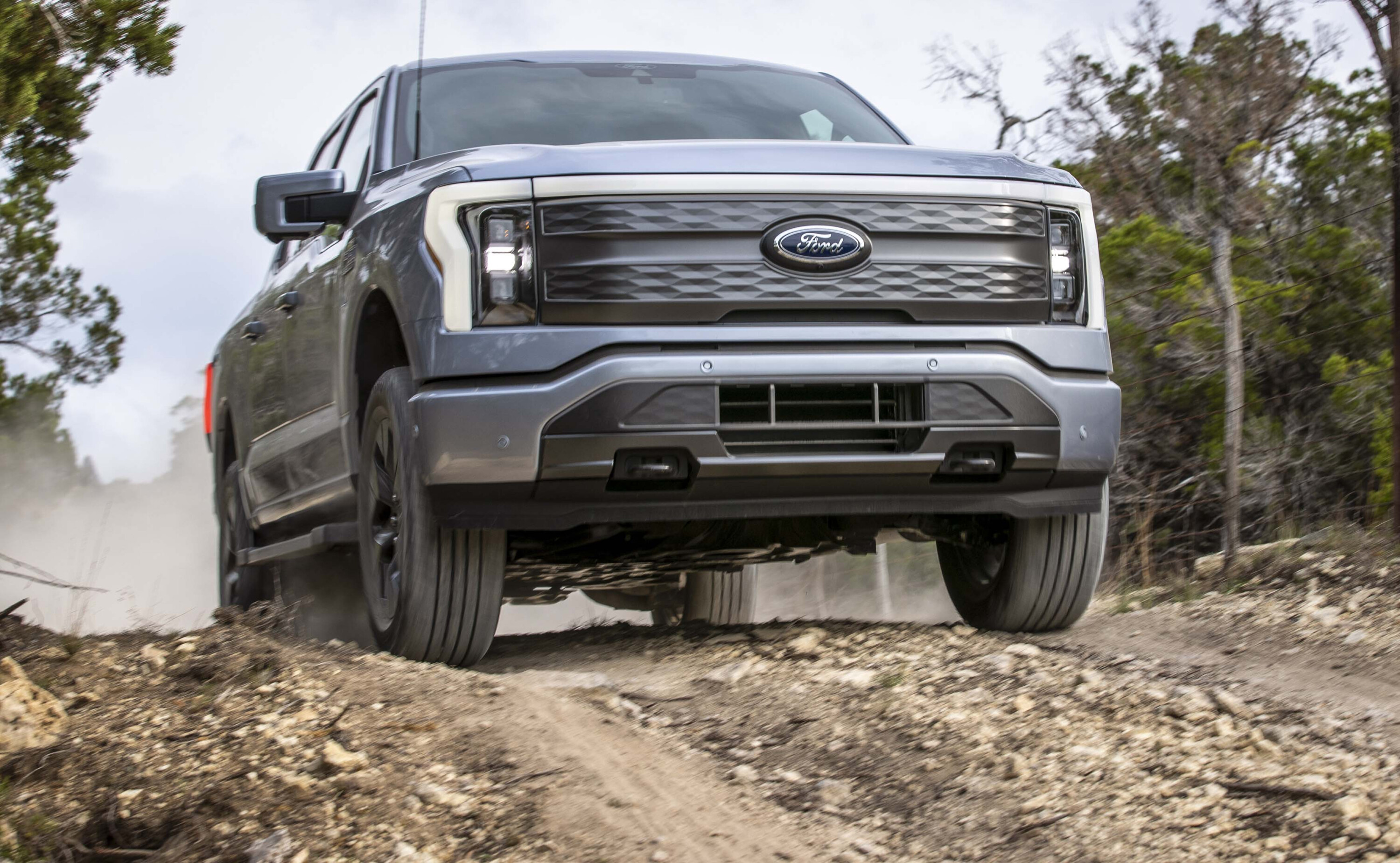
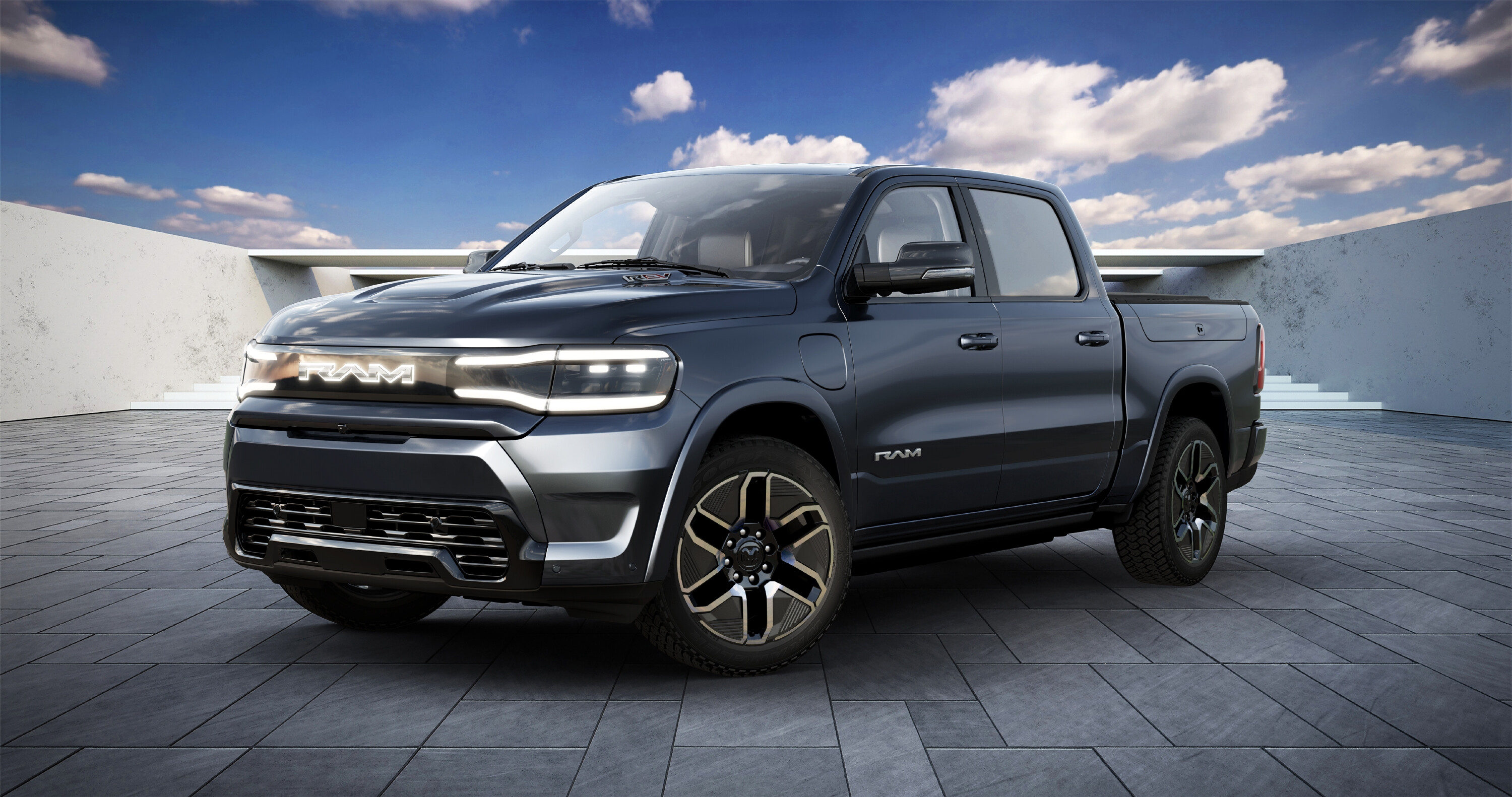
While pricing hasn’t been announced for the Ram 1500 REV, expect it to be well into six-figures in line with the Ford F-150 Lightning and Rivian R1T.
Unlike the traditional carmakers, Rivian allows buyers to pick-and-choose between different electric drivetrain and battery pack configurations, instead of preset model grades.
Most variants of the electric Ford ute, including the Pro, XLT and Lariat, come with a Standard Battery (prices listed below), but can be optioned with an Extended Range battery.
1
| Ford F-150 Lightning | Rivian R1T | Ram 1500 REV | Radar RD6 |
|---|---|---|---|
| Pro: u223c$89,000 (US$59,974) | Base configuration: u223c$108,000 (US$73,000)* | Tradesman: TBC | Sailing Edition: u223c$38,788 (178,800 RMB) |
| XLT: u223c$94,200 (US$63,474) | Top configuration: u223c$145,800 (US$97,850)* | Big Horn/Lone Star: TBC | Maker Edition: u223c$43,126 (198,800 RMB) |
| Lariat: u223cAU$112,700 (US$75,974) | Laramie: TBC | Enjoyment Edition: u223c$49,634 (228,800 RMB) | |
| Platinum: u223c$145,500 (US$98,074) | Limited: TBC | Yeuno Edition: u223c$58,311 (268,800 RMB) | |
| Tungsten: TBC |
*Price depends on configuration options. Rivian R1T Adventure Dual-Motor AWD with Standard pack (base) and Adventure Performance Dual-Motor AWD with Max pack and All-Terrain Upgrade (top) listed.
Performance
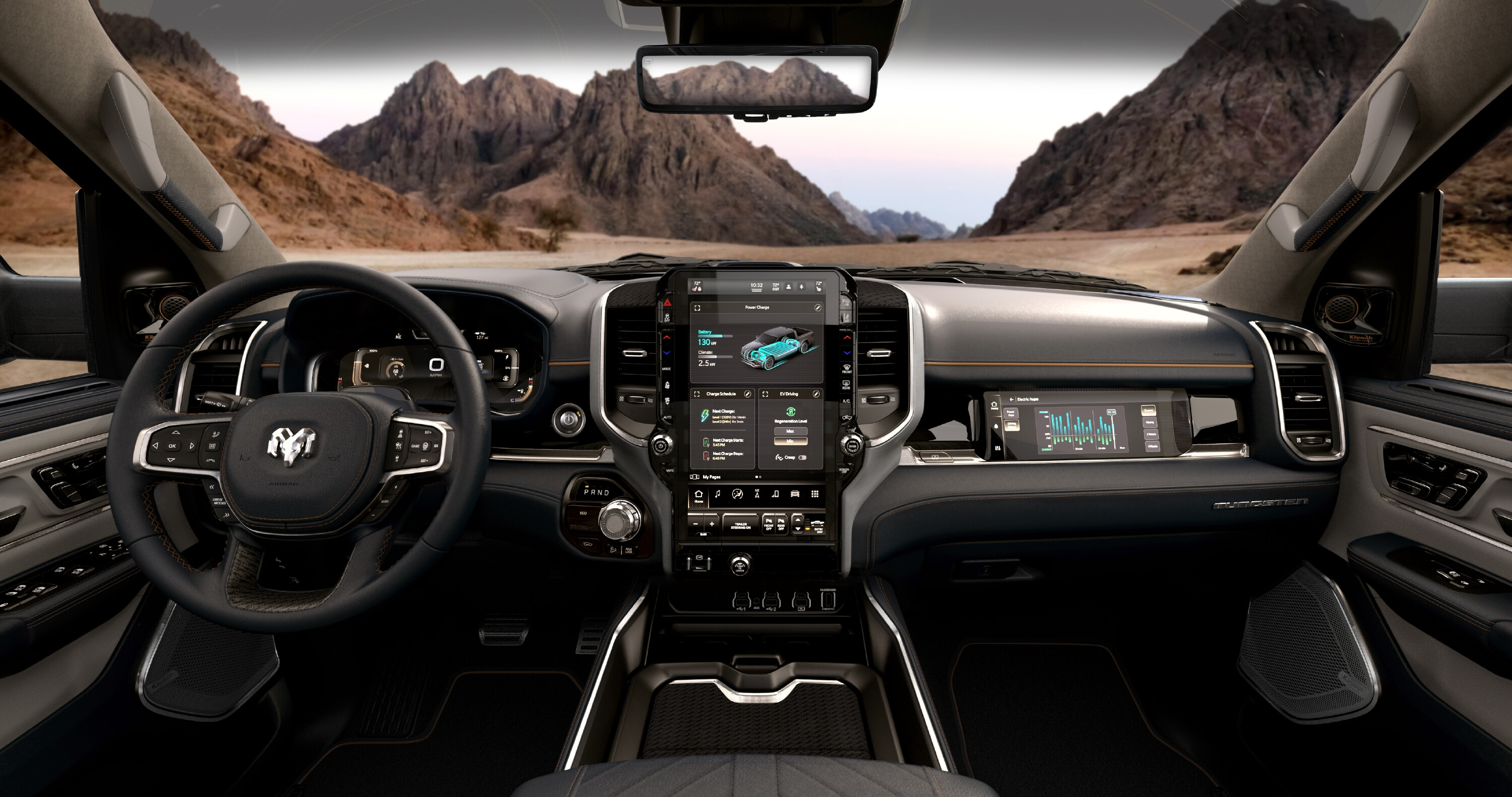
The Rivian R1T has the advantage for power and torque outputs thanks to an optional four-motor drivetrain individually powering each wheel.
While the forthcoming Ram 1500 REV has respectable figures, it’s worth noting that the Stellantis-owned company didn’t state whether the specifications are limited to the top-spec Tungsten or across all trim grades and only disclosed ‘targeted’ numbers ahead of its launch.
The Ford F-150 Lightning falls short in power numbers, especially on the Standard Range battery, but outputs strong maximum torque.
Unsurprisingly, the Geely-owned Radar RD6 electric ute is the outlier in this list since it’s designed to mainly be an urban runabout.
1
| Ford F-150 Lightning | Rivian R1T | Ram 1500 REV | Radar RD6 | |
|---|---|---|---|---|
| Power | Standard Range: 337kW | Dual-Motor AWD: 447kW | 488kW* | 200kW |
| Extended Range: 427kW | Performance Dual-Motor AWD: 523kW | |||
| Quad-Motor AWD: 623kW | ||||
| Torque | 1051Nm | Dual-Motor AWD: 813Nm | 841Nm* | 384Nm |
| Performance Dual-Motor AWD: 949Nm | ||||
| Quad-Motor AWD: 1231Nm | ||||
| 0-100km/h time | N/A | Dual-Motor AWD: 4.5 secs | 4.4 secs* | Standard and medium battery: 7.3 secs |
| Performance Dual-Motor AWD: 3.5 secs | Large battery: 6.9 secs | |||
| Quad-Motor AWD: 3.0 secs | ||||
| Drive type | 4×4 on-demand | 4×4 on-demand | 4×4 on-demand | 4×2 rear-wheel-drive |
Driving range
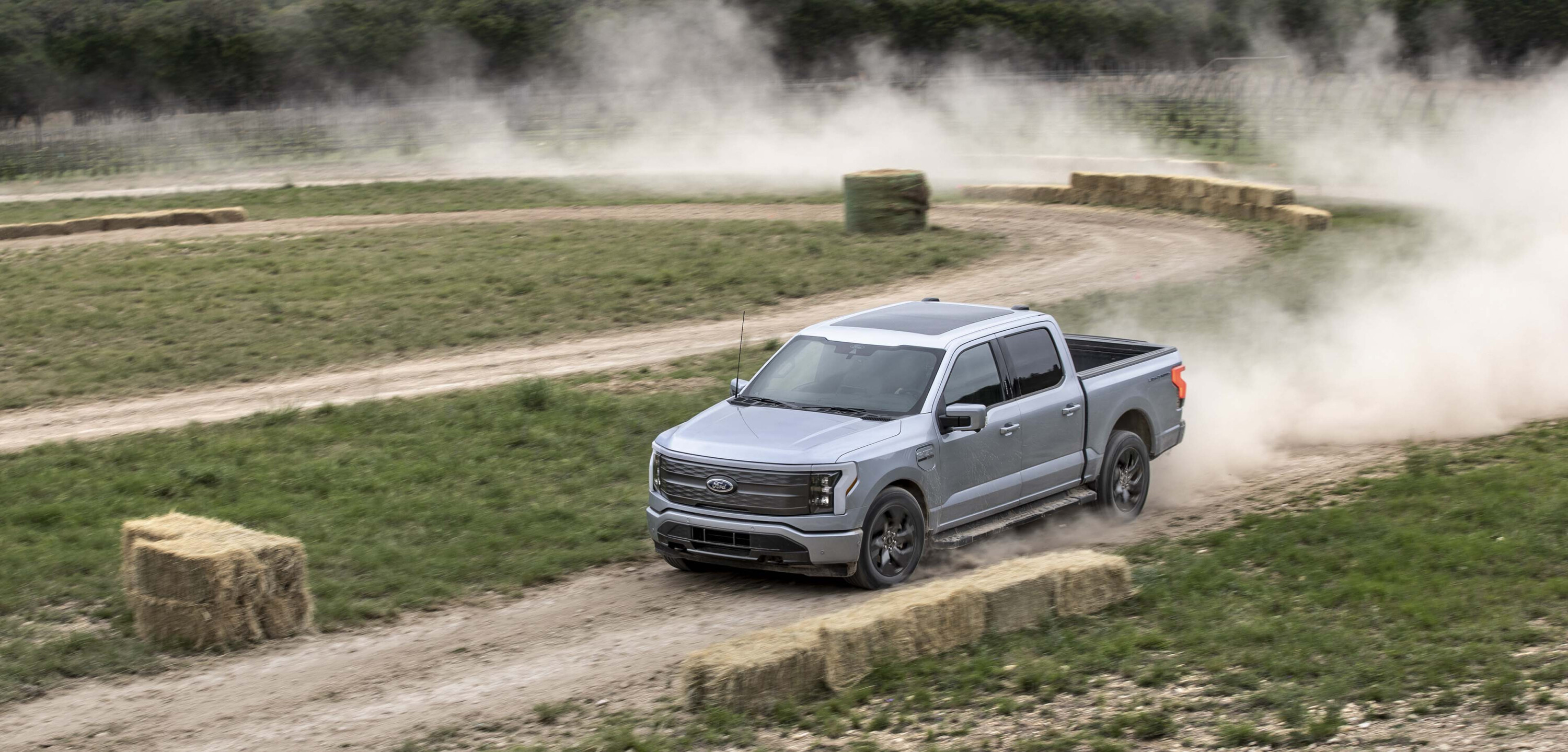
Electric driving range remains a key barrier to adoption, but these American carmakers are countering the inefficient, high and blocky design of the ute body style with gigantic battery sizes.
The Ram 1500 REV has a targeted range of up to 800 kilometres using its largest 229kWh battery pack.
For context…
The aerodynamic rear-wheel-driven Hyundai Ioniq 6 can deliver up to 614 kilometres of WLTP claimed range from ‘just’ a 74kWh usable pack.
1
‘Smaller’ batteries, such as the Ford F-150 Lightning’s 98kWh usable unit, delivers less range – but it’s still suitable for commercial operations that have fixed pre-planned driving routes and distances everyday.
On the other hand, the Chinese-made Radar RD6 lifestyle ute is more akin to electric passenger cars using a longer lifecycle lithium-iron-phosphate (LFP) chemistry as standard, with larger packs adopting the more energy-dense nickel-manganese-cobalt (NMC) type.
*Based on EPA testing
**Estimated EPA numbers only. Range depends on the battery pack configuration.
***Targeted EPA figures only
****Based on unrealistic CLTC testing cycle
| Ford F-150 Lightning | Rivian R1T | Ram 1500 REV | Radar RD6 | |
|---|---|---|---|---|
| Range (claimed) | Std Range: 370km* | Dual-Motor AWD: 435-644km** | Standard battery: 560km*** | Standard battery: 399km |
| Ext Range: 483-515km* | Performance Dual-Motor AWD: 563-644km** | Large battery: 800km*** | Medium battery: 549km | |
| Quad-Motor AWD: 528km** | Large battery: 631km | |||
| Battery size (usable) | Std Range: 98kWh | Standard pack: 105kWh | Standard Range: 168kWh | Standard battery: 60kWh |
| Ext Range: 131kWh | Large pack: 135kWh | Extended Range: 229kWh | Medium battery: 86kWh | |
| Max pack: 180kWh | Large battery: 100kWh |
Dimensions
1
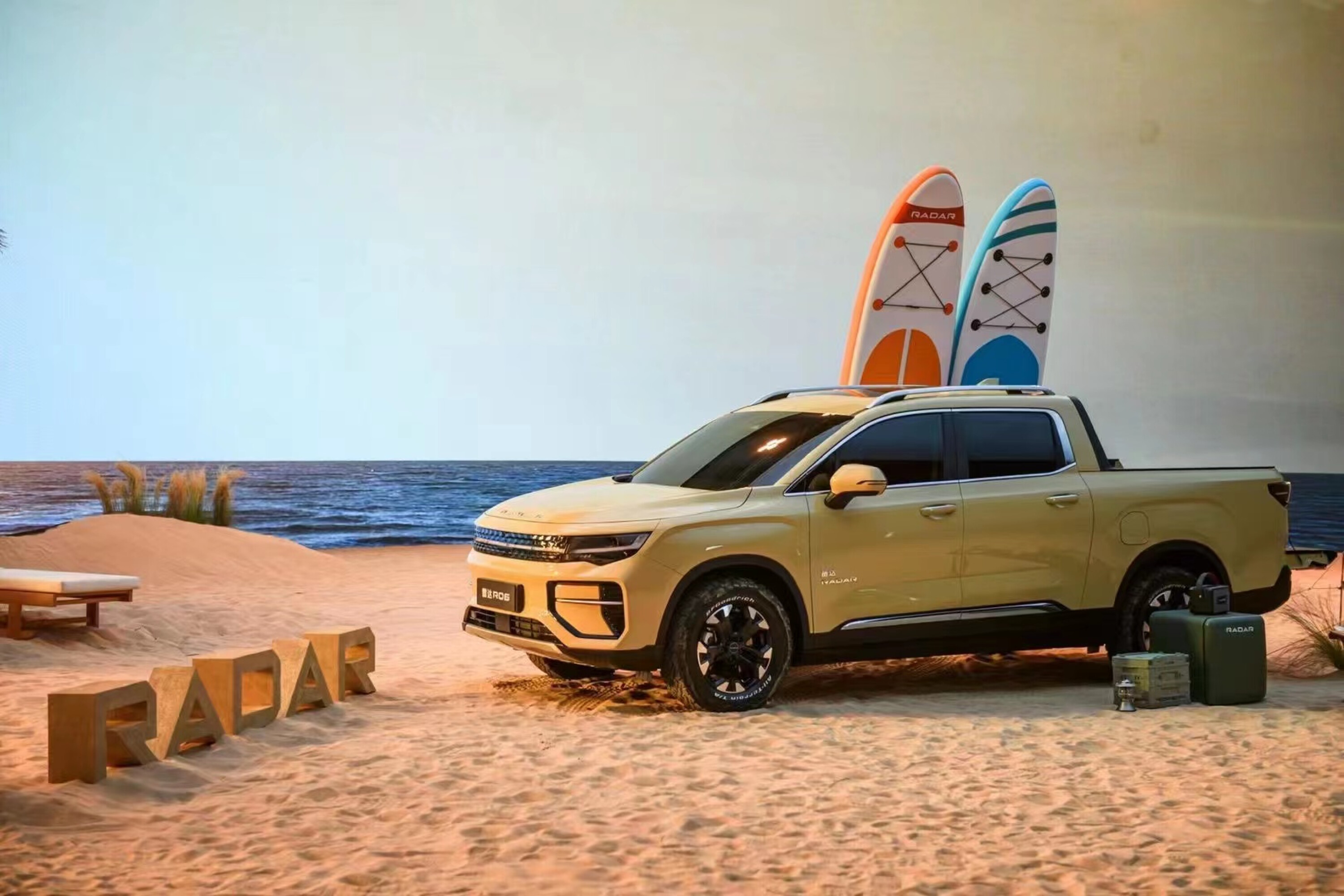
The Ford F-150 Lighting is based on the best-selling 14th generation internal combustion engine passenger truck with a body-on-frame chassis, whereas the Ram 1500 REV uses a dedicated body-on-frame EV platform.
In contrast, the Rivian R1T and Radar RD6 adopt more passenger car-like unibody EV underpinnings.
The Ford is the biggest electric ute in this comparison, but EV startup Rivian can afford better off-roading abilities due to an adjustable air suspension system.
| Ford F-150 Lightning | Rivian R1T | Ram 1500 REV | Radar RD6 | |
|---|---|---|---|---|
| Length | 5885mm | 5514mm | TBC | 5260mm |
| Height | 1989mm | 1986mm | TBC | 1830mm |
| Width | 2032mm | 2078mm | TBC | 1900mm |
| Wheelbase | 3696mm | 3449mm | TBC | 3119mm |
| Ground clearance | 213mm | 378mm (max air suspension height) | 213mm | 180mm |
| Approach angle | 24.4-degrees | 35.5-degrees | TBC | – |
| Brakeover angle | – | 26.4-degrees | TBC | – |
| Departure angle | 23.6-degrees | 30-degrees | TBC | – |
| Wading depth | 610mm | 914mm+ | 600mm | – |
Towing
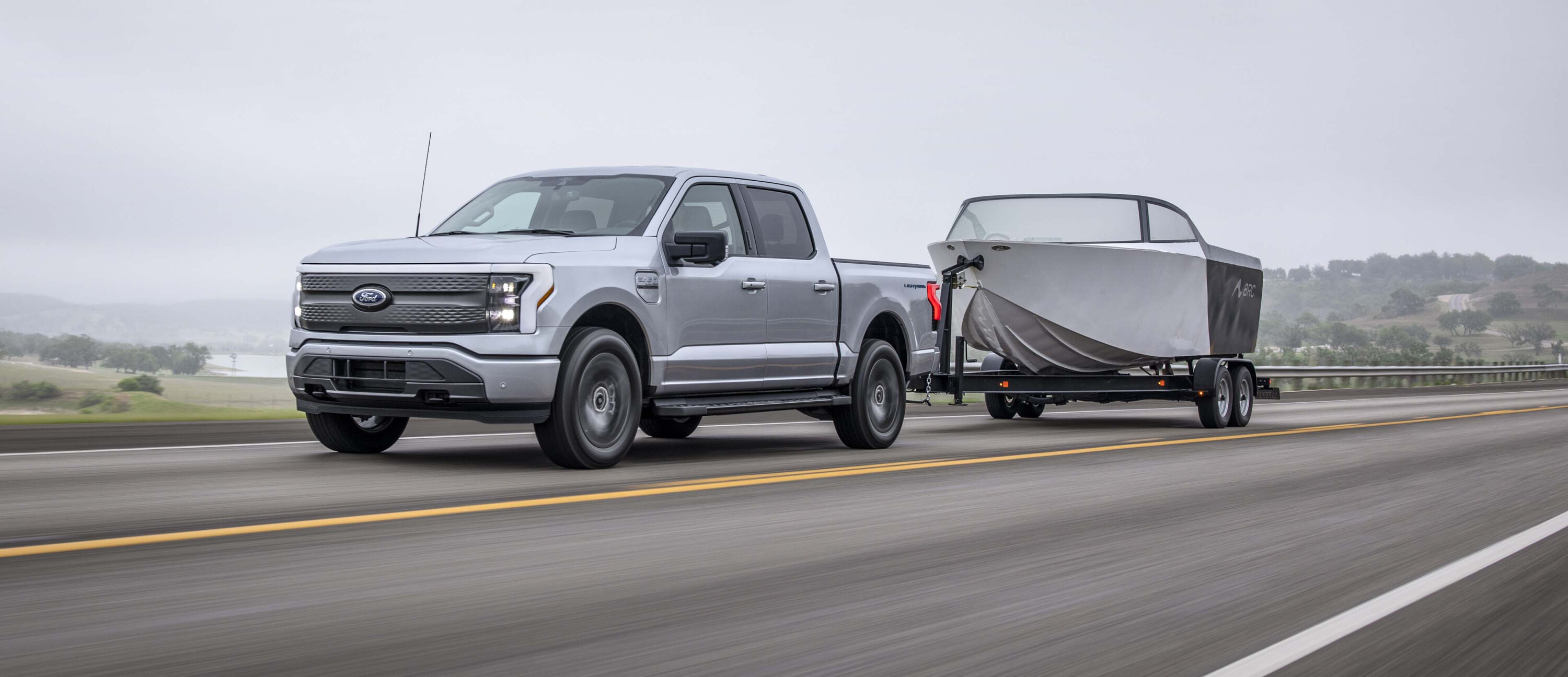
The Ram 1500 REV offers the best maximum towing capabilities and payload in this comparison.
In contrast, the Radar RD6 has poor payload on all three battery sizes.
No manufacturer disclosed unbraked towing ratings.
1
towing
Keep in mind that overseas tests and some manufacturers have noted owners should expect a driving range decrease of up to 50 per cent when hauling a maximum load.
| Ford F-150 Lightning | Rivian R1T | Ram 1500 REV | Radar RD6 | |
|---|---|---|---|---|
| Braked towing | Std Range: 2268-3493kg | 4990kg | 6350kg | 2500kg |
| Ext Range: 3493-4536kg | ||||
| Unbraked towing | – | – | – | – |
| Payload | Std Range: 1014kg | 798kg | 1225kg | Standard and medium battery: 430kg |
| Ext Range: 885kg | Large battery: 400kg |
Cargo space
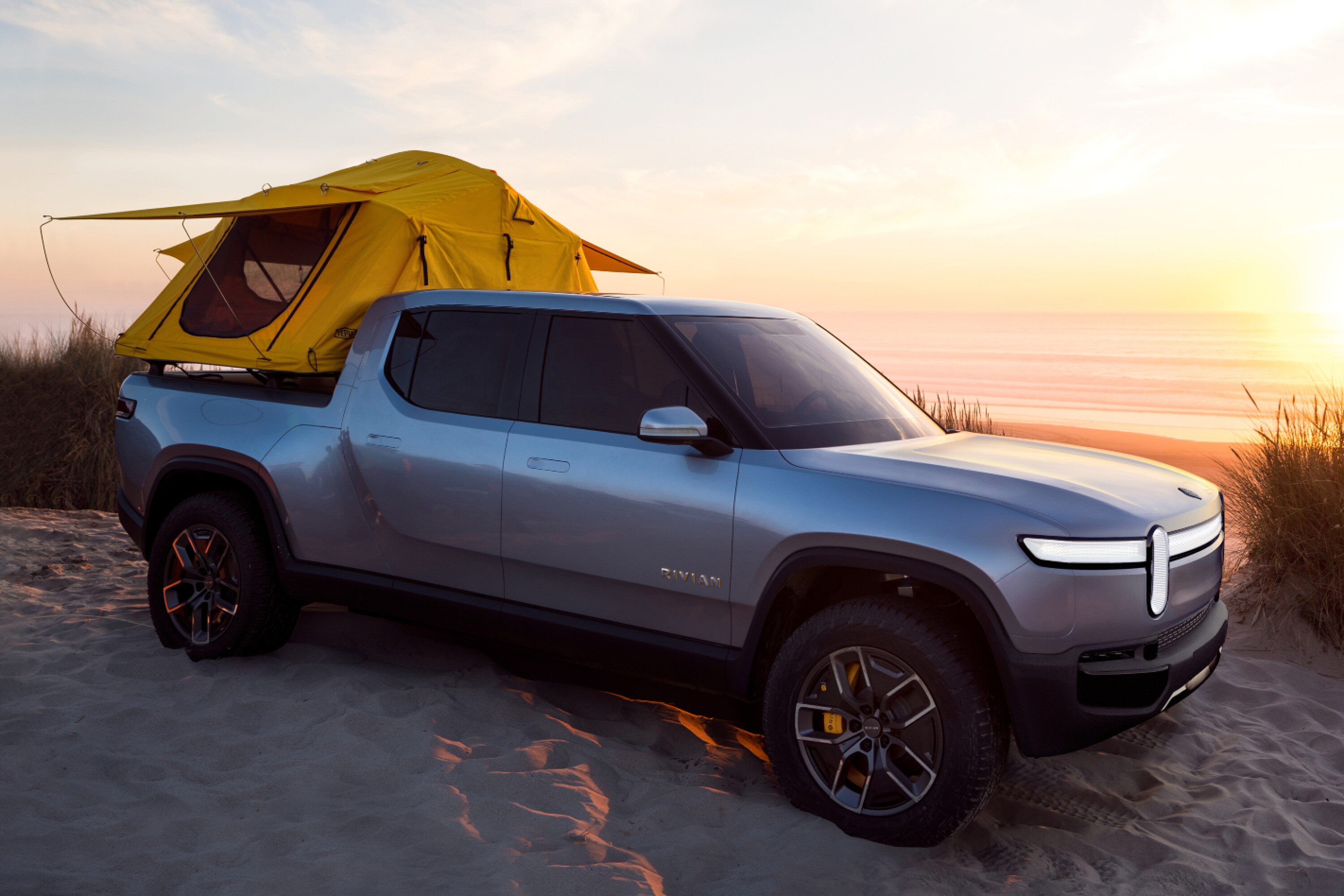
Naturally, the largest Ford F-150 Lightning boasts the biggest bed with a large electrically operated ‘frunk’ (front storage space), despite being based on a traditional combustion engine platform.
Rivian doesn’t detail the R1T’s tray capacity in litres, but is dimensionally smaller than both the F-150 EV and even the Radar RD6 as it prioritises interior space. Its tailgate can drop down to extend the cargo length, though.
All four electric utes feature sizable weather-protected frunks, with the Rivian gaining a see-through tunnel beside the rear wheel axles to hide long items.
1
| Ford F-150 Lightning | Rivian R1T | Ram 1500 REV | Radar RD6 | |
|---|---|---|---|---|
| Tray dimensions (length x width x height) | 1704 x 1285 x 544mm | 1374 (2131mm with tailgate down) x 1298 x 465mm | TBC | 1525 x 1450 x 540mm |
| Tray capacity | 1495-litres | – | TBC | 1200-litres |
| Front boot (frunk) capacity | 399-litres | 314-litres | 424-litres | 70-litres |
| Electric frunk | Yes | Yes | Yes | No |
| Load-through folding rear seats | No u2013 rear seat under storage | No u2013 331-litre Gear Tunnel and expandable tray via open tailgate | No | No u2013 48-litre rear seat under storage |
Charging
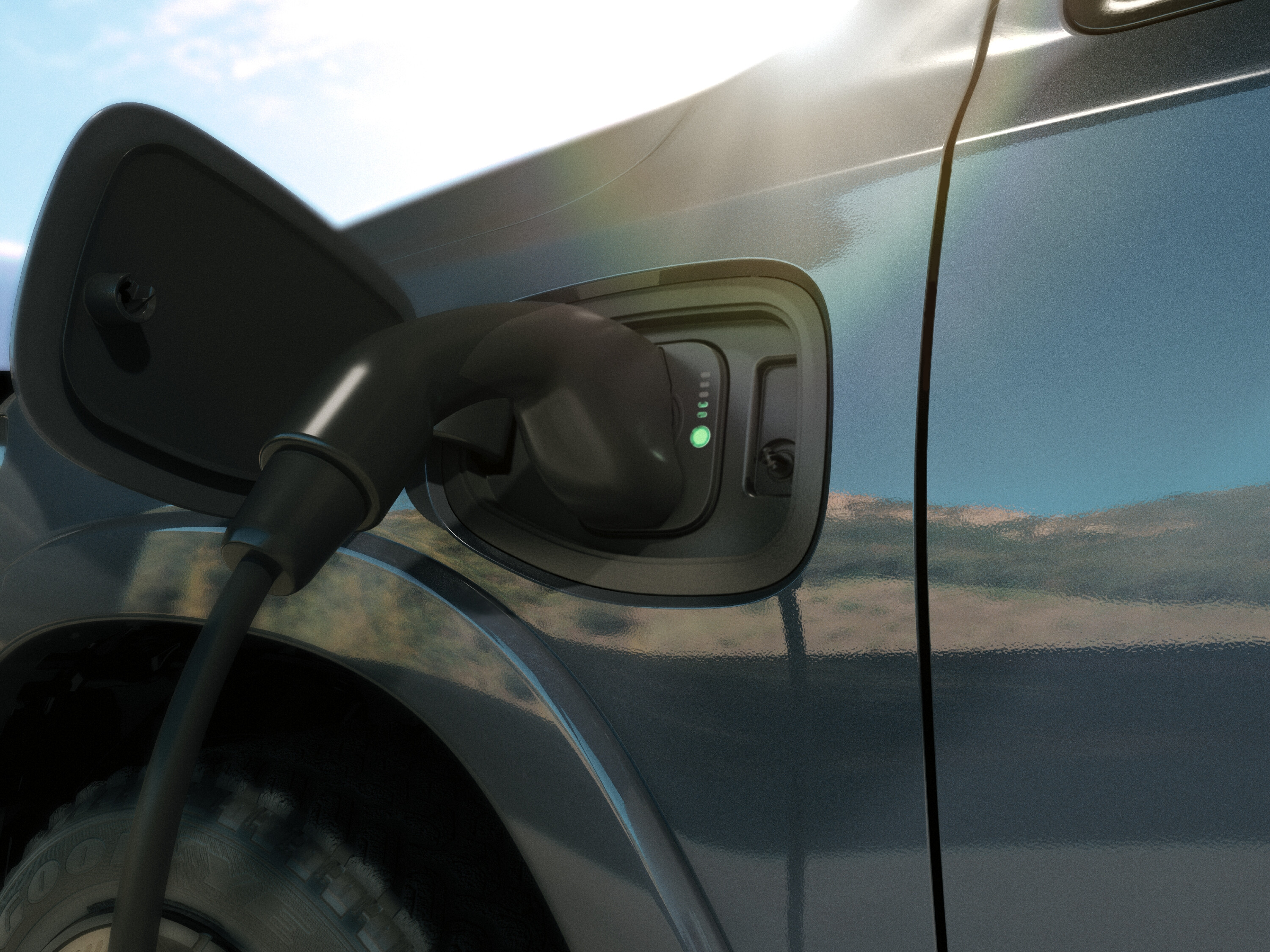
All electric utes are capable of vehicle-to-load (V2L) to act as a mobile power station for powering tools and devices via a bevy of outlets at the tray or frunk.
Only the Ford and Ram boast vehicle-to-home (V2H) and vehicle-to-grid (V2G) which, when connected to a compatible bidirectional charging station, can discharge their large battery packs when not in use to power homes and stabilise the electricity grid to ultimately help owners go off-grid.
1
All models at least have an 11kW AC onboard charger, with the F-150 Lightning Extended Range battery benefiting from an upgraded 19.2kW AC unit.
The Ram 1500 REV has the fastest rated 350kW maximum DC charging capability, with a higher level 800-volt class battery architecture theoretically enabling ultra-rapid charging times and cooler charging thermals (thanks to lower current).
| Ford F-150 Lightning | Rivian R1T | Ram 1500 REV | Radar RD6 | |
|---|---|---|---|---|
| Max AC slow charge rate | Std Range: 11.3kW | 11.5kW | TBC | 11kW |
| Ext Range: 19.2kW | ||||
| Max DC fast charge rate | Std Range: 120kW | 200kW | 350kW | 120kW |
| Ext Range: 155kW | ||||
| Bidirectional charging | Yes u2013 V2L/V2H/V2G compatible | Yes u2013 V2L | Yes u2013 V2L/V2H/V2G | Yes u2013 V2L |
Features
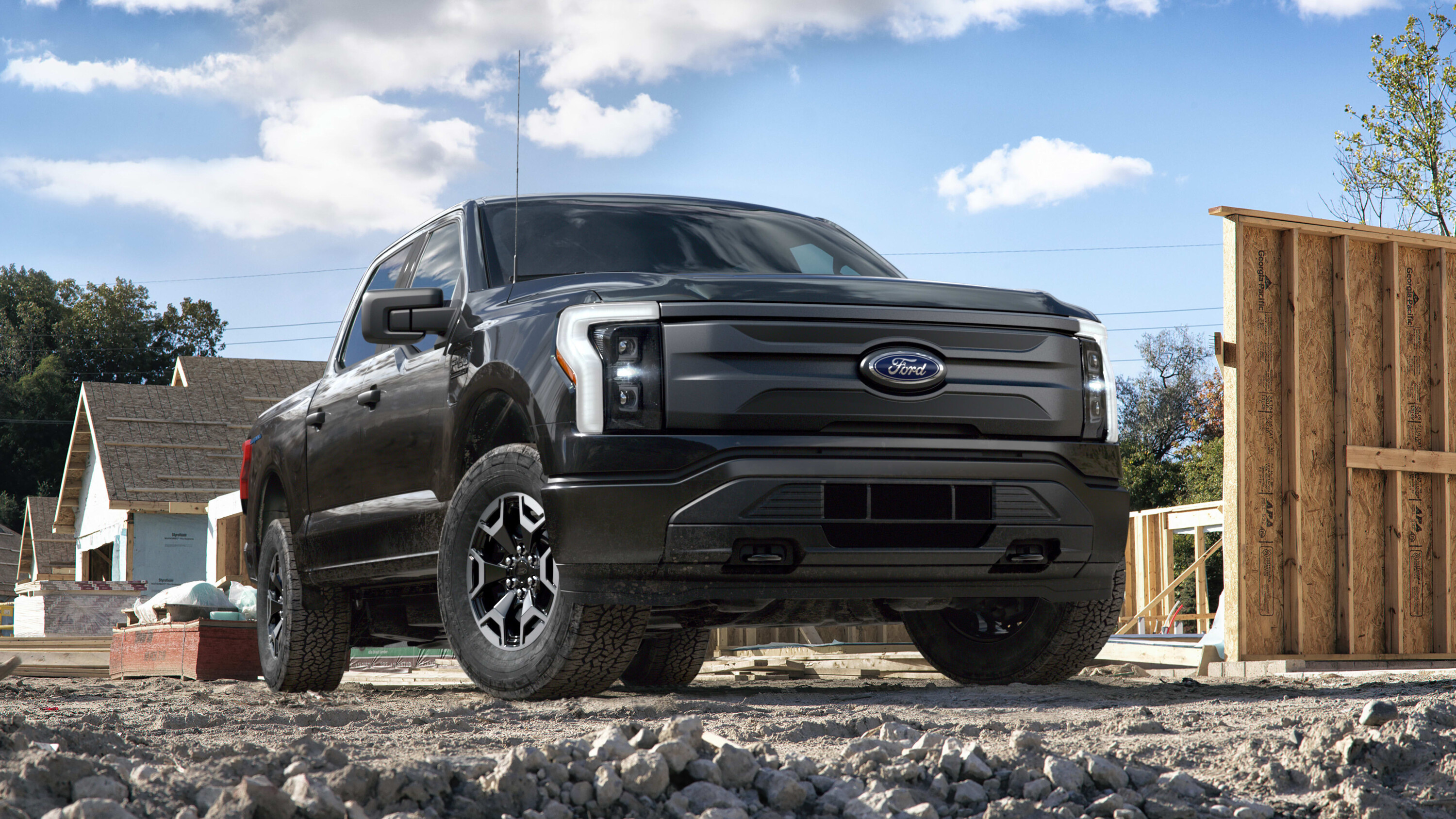
| Ford F-150 Lightning key features | |
|---|---|
| 12.0- or 15.5-inch portrait touchscreen with over-the-air updatable Ford Sync 4 software | Full width LED head- and tail-lights |
| Wireless Apple CarPlay and wireless Android Auto | Eight- or 18-speaker Bang & Olufsen audio |
| 12-inch driver instrument display | Electronically retracting gear shifter stick |
| 18, 20 and 22-inch alloy wheels | 8x 2.4kW (Std Range) or 10x 9.6kW (Ext Range) Pro Power Onboard V2L plugs |
| Tailgate step and work surface | Heated, ventilated, massaging front seats |
1
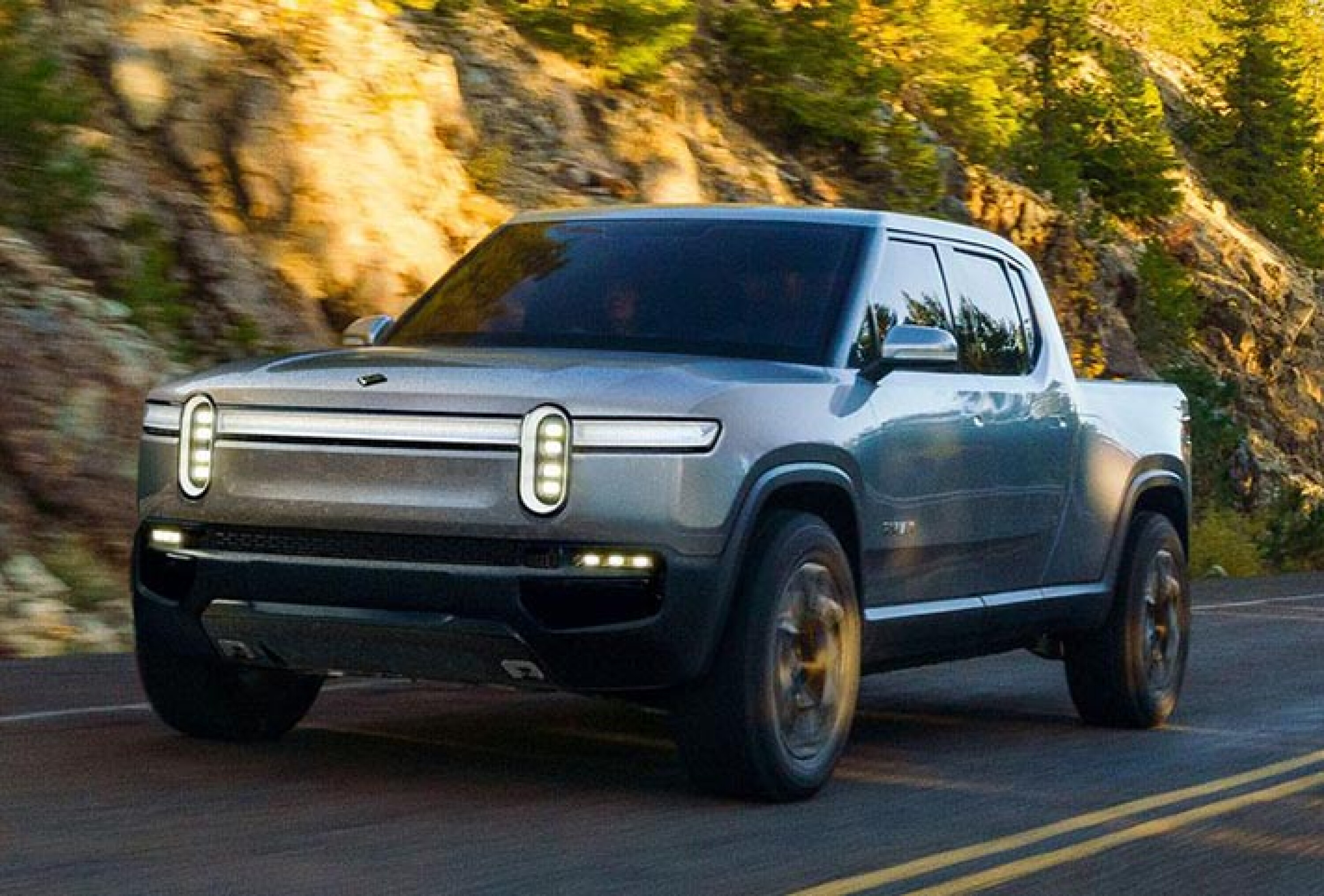
| Rivian R1T key features | |
|---|---|
| 15.6-inch horizontal touchscreen with over-the-air software update capability | Full width LED front daytime running light with charging status indicator |
| 12.3-inch driver instrument display | Gear Guard dashcam recording function |
| 20-22-inch road or all-terrain alloy wheels | Pet Comfort, Kneel Mode, and Camp Mode features |
| Animal-free leather interior | Built-in air compressor, 4x 120-volt outlets, 100-lumen Rivian Torch |
| Hidden Gear Tunnel storage area | Air suspension |
1
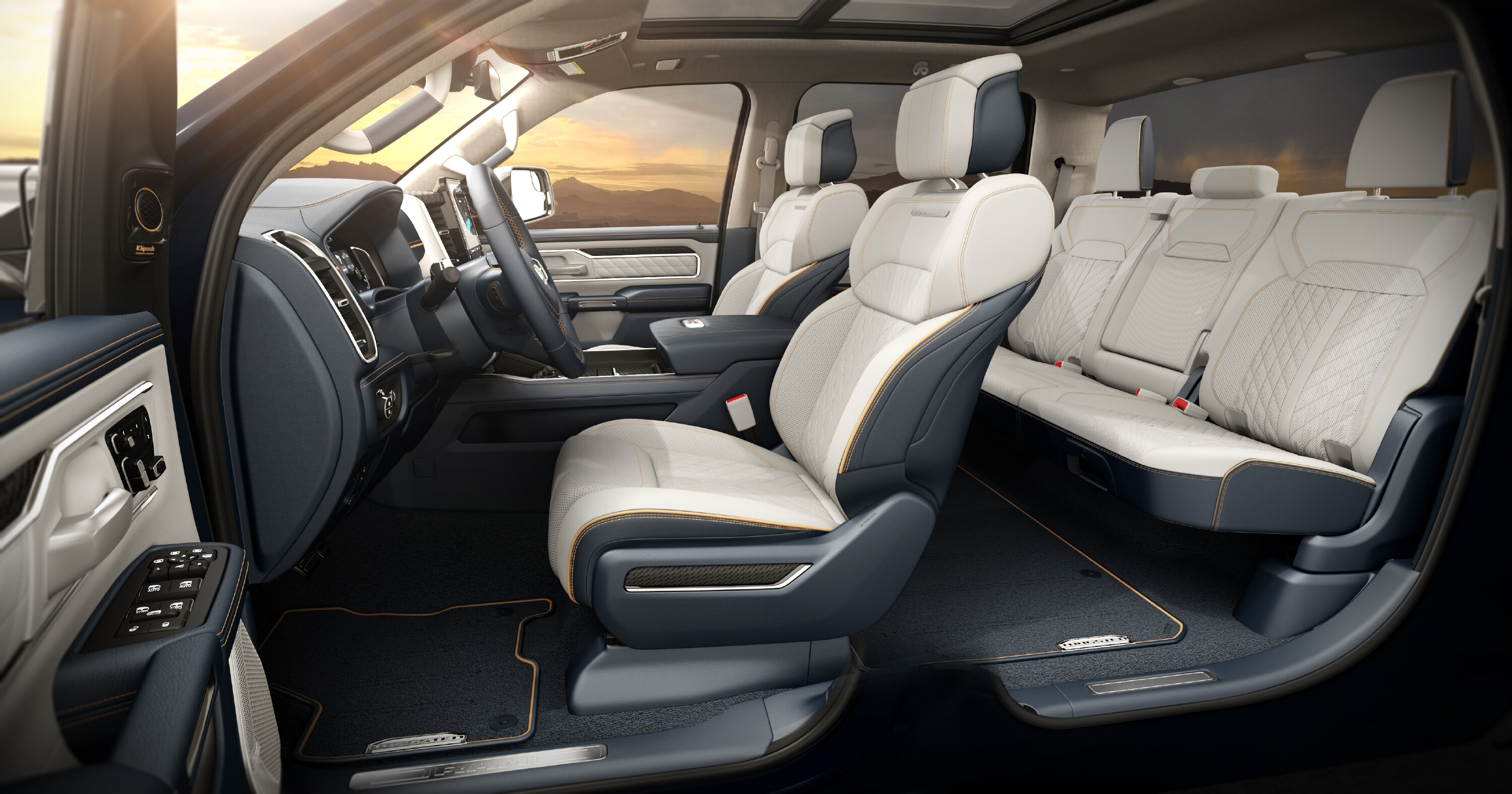
| Ram 1500 REV key features | |
|---|---|
| 14.5-inch portrait touchscreen with Stellantisu2019s Uconnect 5 software | Head-up display |
| 12.3-inch driver instrument display | 23-speaker Klipsch Reference Premiere audio |
| Optional 10.25-inch passenger touchscreen with HDMI input | 2x 7.2kW tub and 1x 3.6kW frunk power outlets |
| 20-22-inch alloy wheels | Available camera-based rear-view mirror |
| 24-way electrically adjustable front seats with memory and massage | Four-corner active air suspension with adaptive dampers |
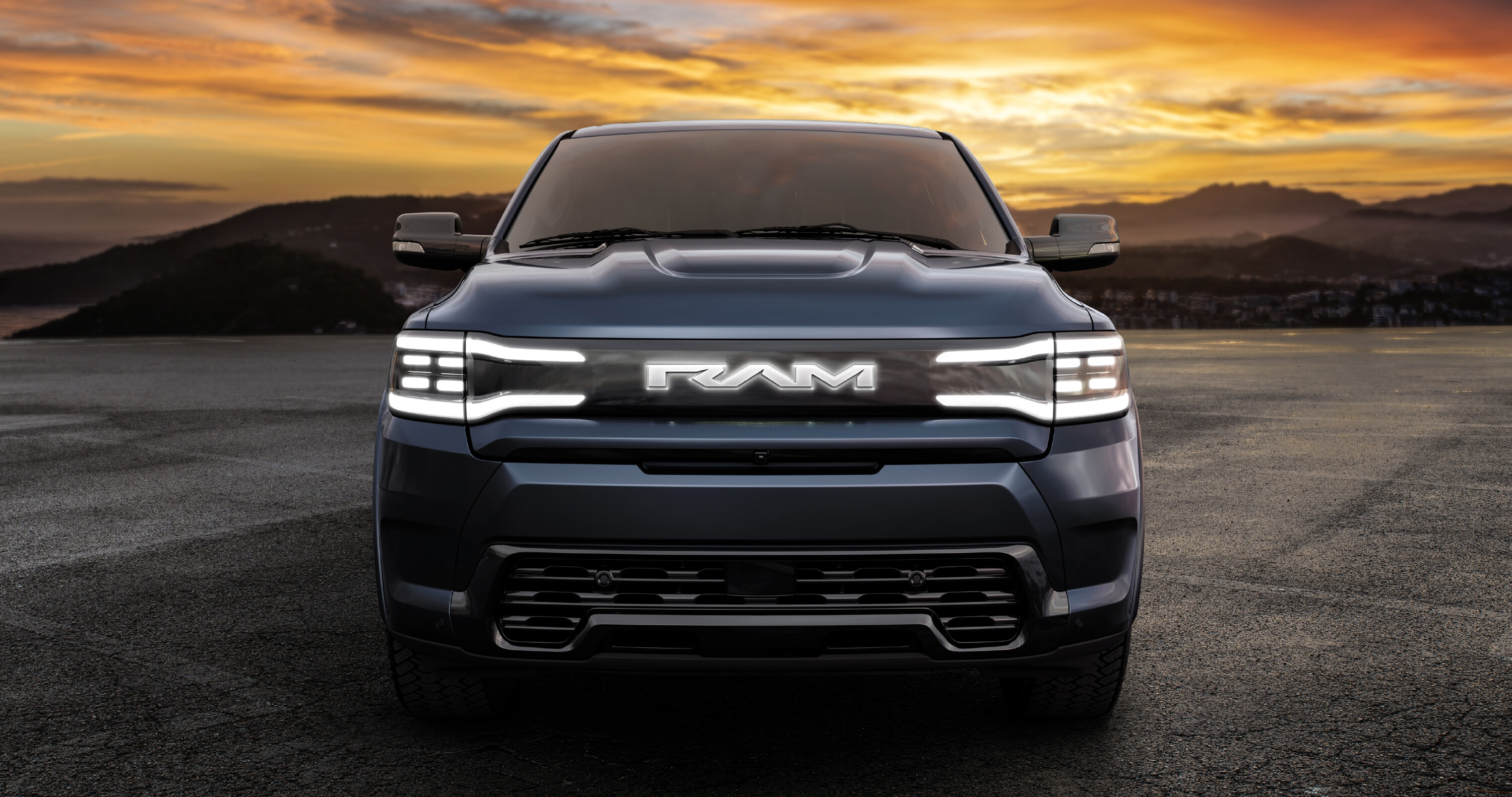
1
| Radar RD6 key features | |
|---|---|
| 12.3-inch horizontal touchscreen with Galaxy Operating System Smart Ecosystem | 72-colour interior ambient lighting |
| 12.3-inch driver instrument display | Adaptive matrix LED headlights |
| 9.0-inch head-up display | 2x 16-amp, 2x 10-amp, and 2x 12-volt V2L power outlets |
| 17-inch alloy wheels | 55-inch panoramic sunroof |
| Flat-bottom leather steering wheel | Faux skid plate |
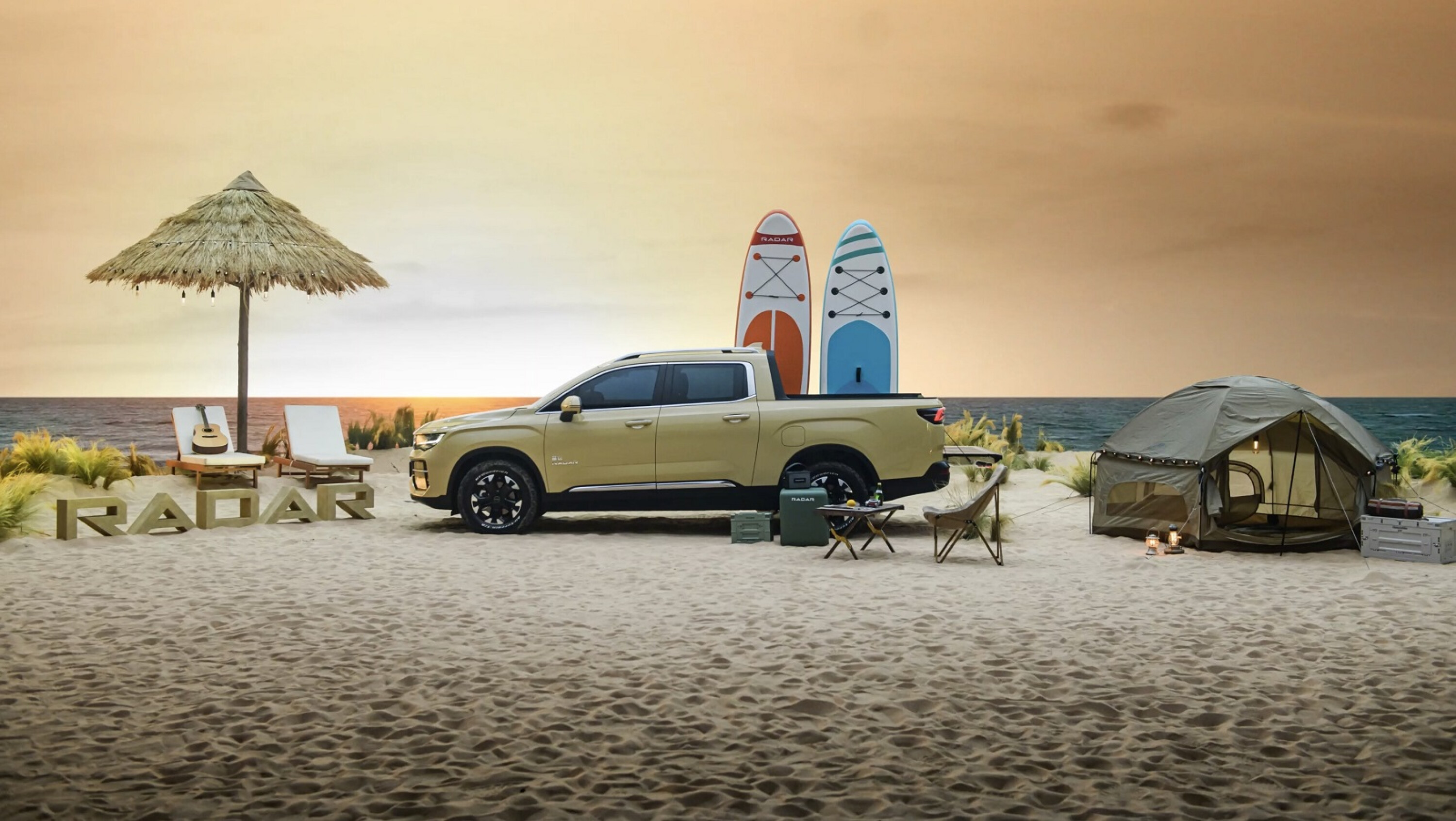
1
Safety
All four electric utes include most active safety assistance technologies, such as auto emergency braking (AEB), blind-spot monitoring, and rear cross-traffic assist.
On the Ford F-150 Lightning, adaptive cruise control, lane centring assist, speed sign recognition, evasive steering assist, and AEB with intersection detection are standard or optional on higher trim grades.
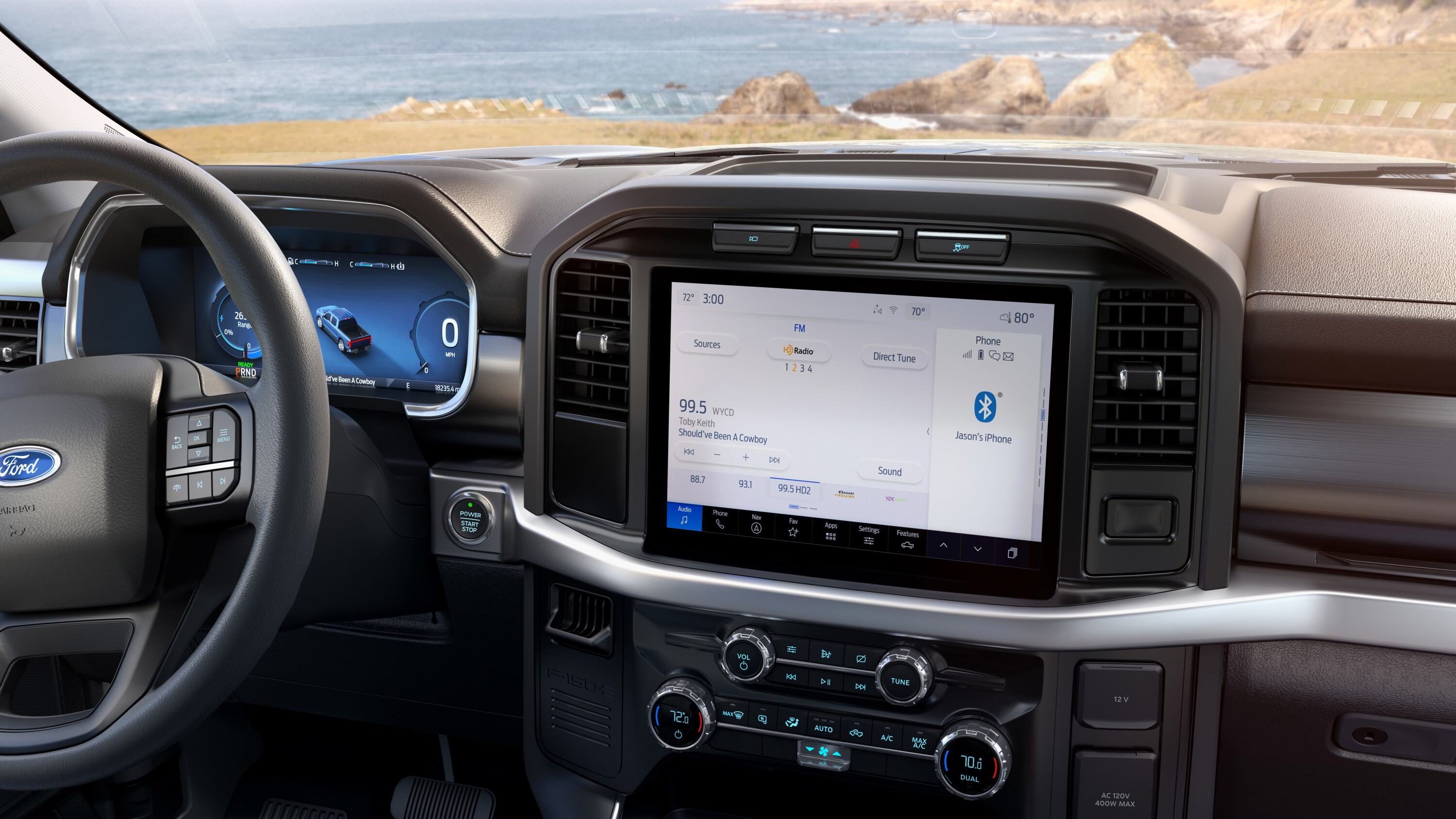
1
Similarly, the Radar RD6 only features adaptive cruise control and a 360-degree camera on higher-end variants.
None of the three American electric utes have been tested by the US government’s National Highway Traffic Safety Administration (NHTSA), but only the Rivian R1T has earned the highest 2023 Top Safety Pick+ award from the nonprofit Insurance Institute for Highway Safety (IIHS).
Availability
The Ford F-150 Lightning remains off the cards for Australia. But, the possibility is there since the petrol-guzzling F-150 twin will land in Australia this year with a right-hand drive conversion done in Melbourne. It’ll also go global to Norway soon.
Meanwhile, the smaller Ford Ranger-sized Rivian R1T could come Down Under in the future, with the startup’s business plans previously outlining Australia for a potential global rollout. It brought two examples here in 2021 for climate testing, but don’t expect it to come anytime soon as it establishes itself in the US first.
1
The Ram 1500 REV is looking most likely for Australia, with the current V8 petrol-powered Ram 1500 dominating the American ute sales charts locally and a right-hand drive conversion facility (via the Walkinshaw Group) recently expanding in Melbourne.
There’s even a possibility for the Radar RD6 to be imported to Australia via Geely-owned counterpart Volvo Australia – but nothing is firm yet.
MORE
Everything Ford
MORE
What is Rivian?
MORE
Everything RAM
⚡ More EV stories to help you choose the best car for your needs
There’s a grab bag of clichés I could trot out to describe what Mazda’s doing with the CX-90.
These stretch from the nauseatingly unimaginative ‘fake it ’til you make it’ to the K-Mart brochure-level ‘dress for success’, with plenty in between – but none would accurately describe what Mazda has accomplished with this excellent large SUV.
The Mazda we know today has been making an open push towards premium since launching the CX-30 small SUV in 2019, but it’s been going on longer than that. Remember the rotary-powered Eunos Cosmo coupe (1990-1996)? Or perhaps Amati, Mazda’s failed Lexus rival?
With the CX-60 and CX-90 (both built at Mazda’s Hofu plant), this attempt is a little different. These are a pair of SUVs featuring longitudinal engines (including all-new straight-sixes), rear-drive-biased AWD, and double-wishbone front suspension – things you’d typically only find in rivals from BMW, Benz, and Audi.
1
But why now? It’s simple. Mazda says its fiercely loyal customers want to spend big with the brand – it’s just that they can’t.
Mazda’s current range tops out at $75K for the CX-9 Azami LE. It just so happens that (come the third quarter of this year), that’s nearly exactly where the CX-90 will start, with the Touring from $74,385 before on-road costs.
There are three core grades: Touring, GT, and Azami. The GT and Azami are available with extra packages and for the tested Azami flagship with captain-chaired Takumi package (oddly known as the CX-90 Turbo S in the litigious United States), you’re looking at $100,185 before on-road costs.
With your mindset locked into Mazda-world, that’s a huge price tag, but compared to a BMW X5 M40i ($130,900) or Audi Q7 55 TFSI ($129,500), the CX-90 looks like rather stunning value – if your concept of value at that price point isn’t tied up in a badge.
The CX-9 and CX-90 will be sold alongside each other in Australia initially, but Mazda’s local arm has admitted the CX-90 will effectively replace the Wheels COTY-winning CX-9 at the top end, if not immediately.
1
Mazda hasn’t rushed this journey to a ‘premium’ architecture, admitting the idea of an inline-six has been floated for around a decade.
Twelve months ago, Wheels magazine editor Andy Enright finally got a chance to taste Mazda’s new longitudinal architecture with the CX-60 plug-in hybrid EV – but no inline-six.
Now, it’s my turn to sample a pre-production left-hand drive CX-90 at Lang Lang for our first experience of the 254kW ‘G50E’ 3.3-litre turbo-petrol straight six.
Before we get to the driving, though, there’s the small matter of the CX-90’s presentation. After all, you buy a luxury car to feel good. That needs to pervade every aspect of the experience, not just the drive.
1
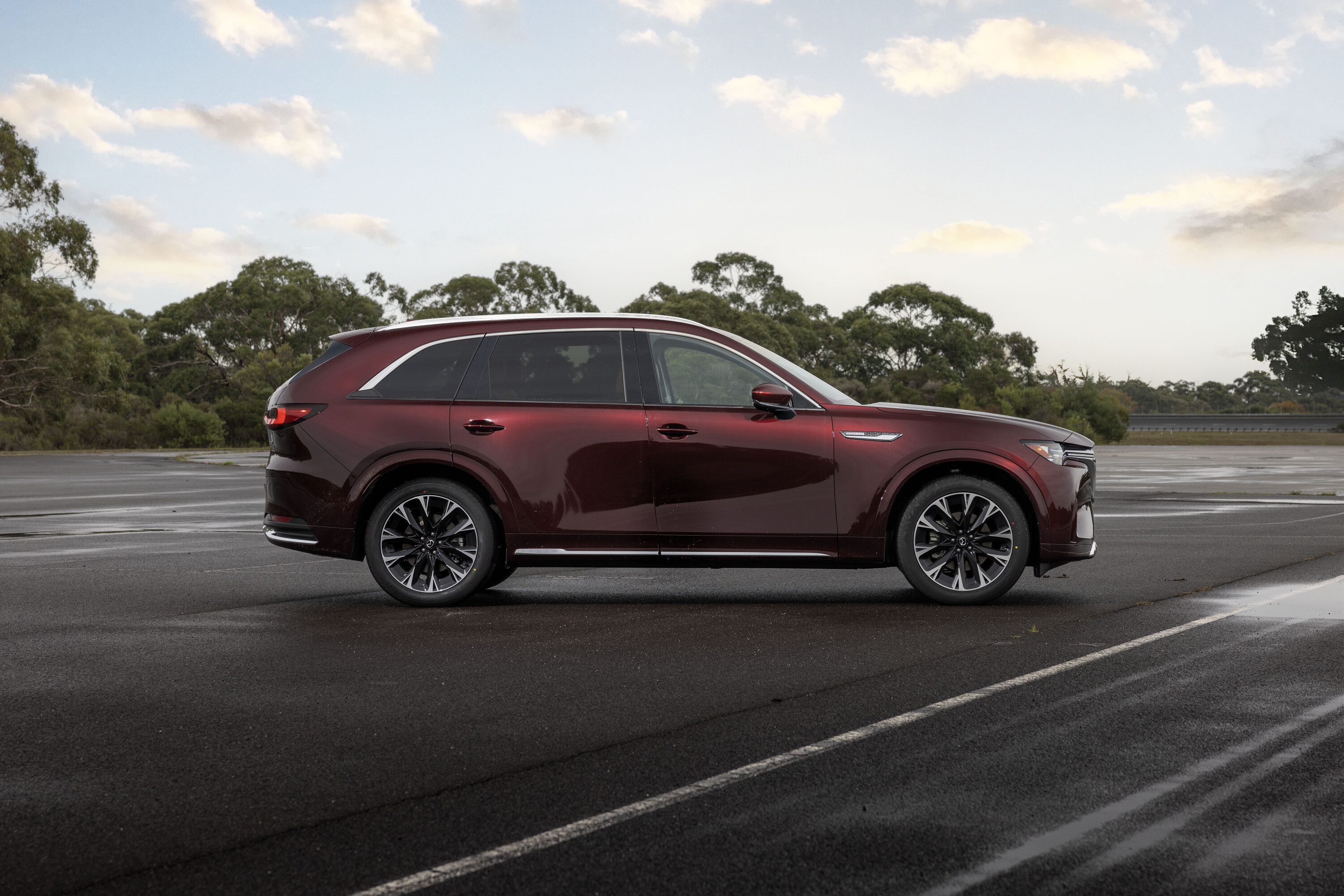
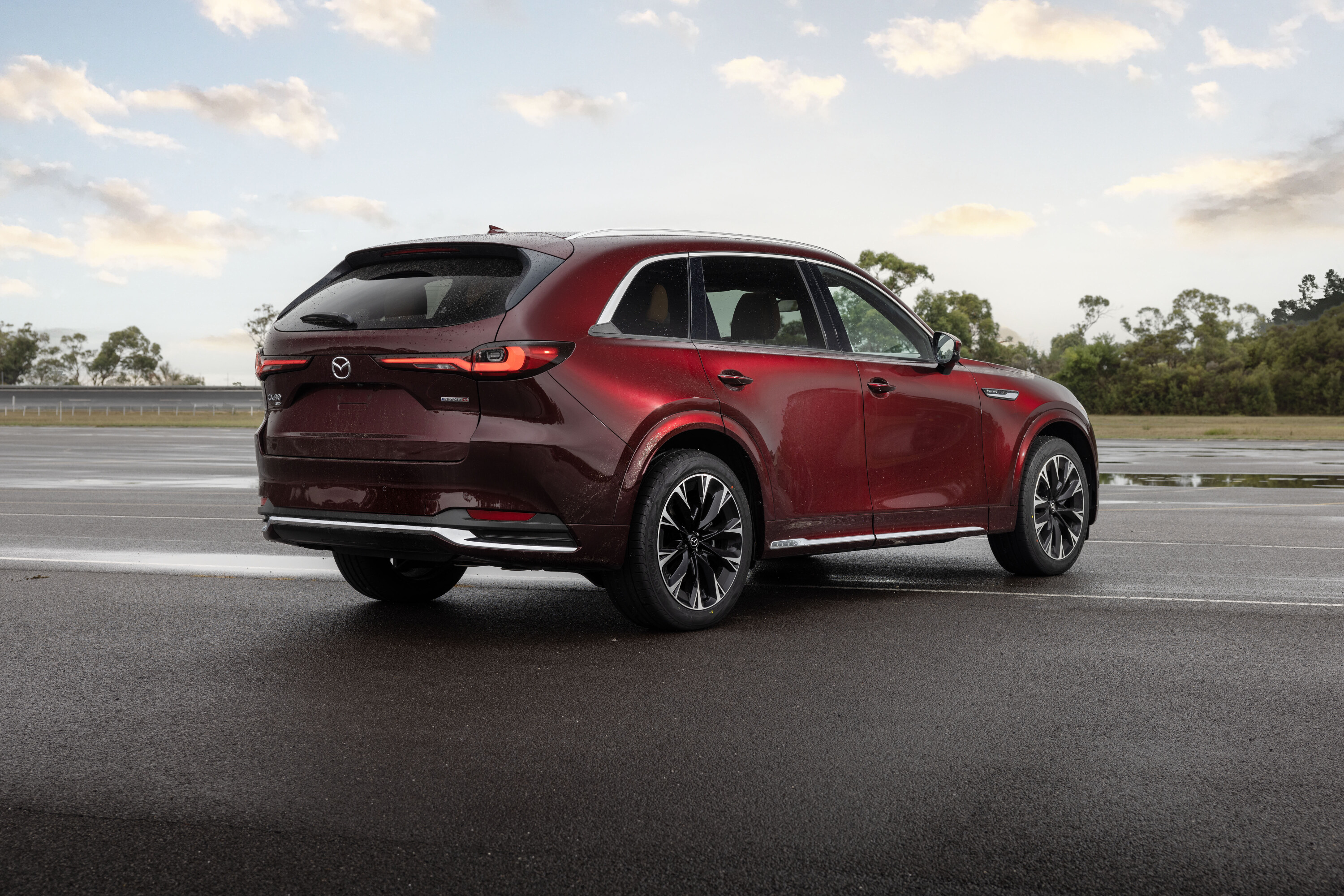
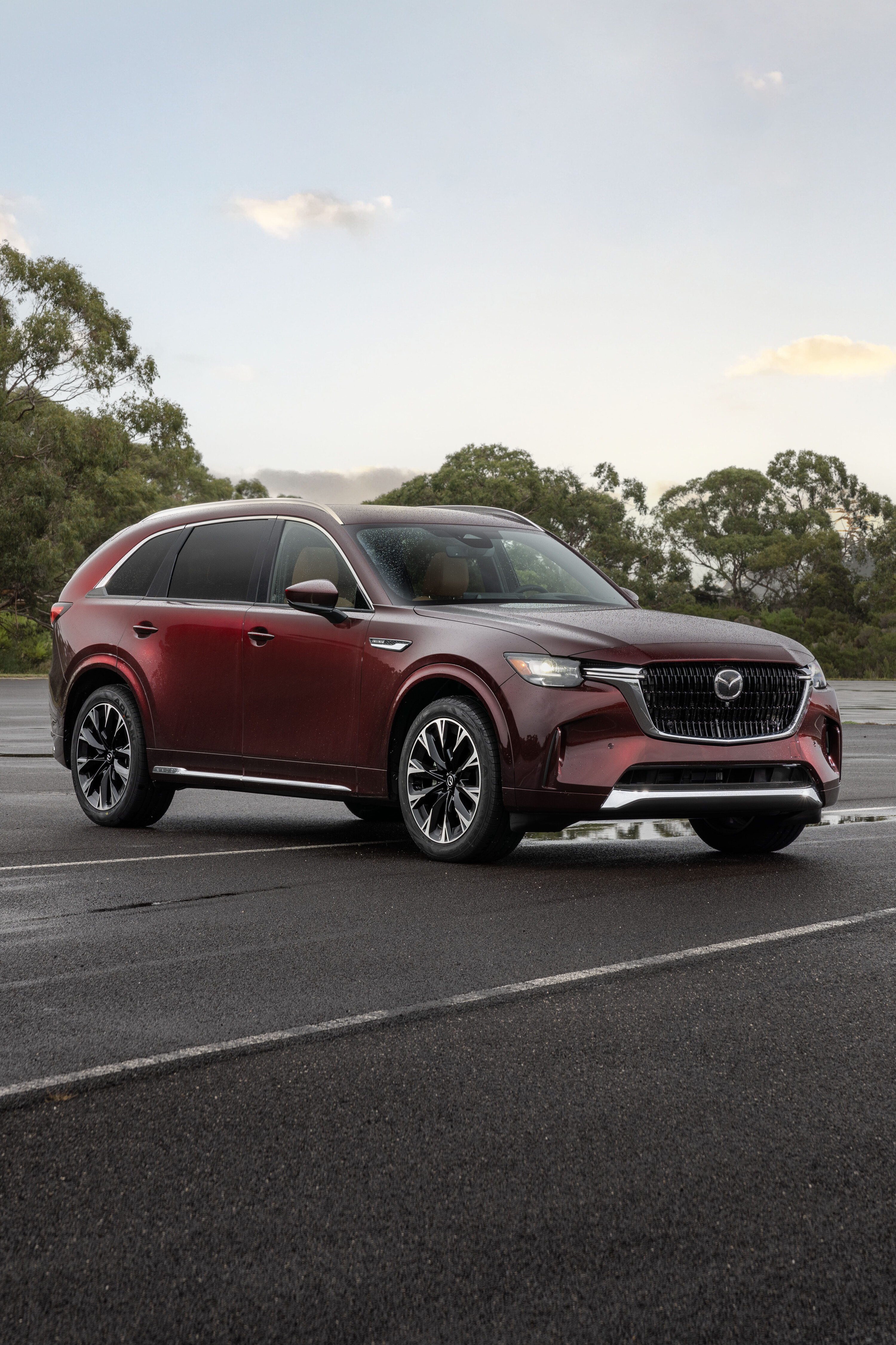
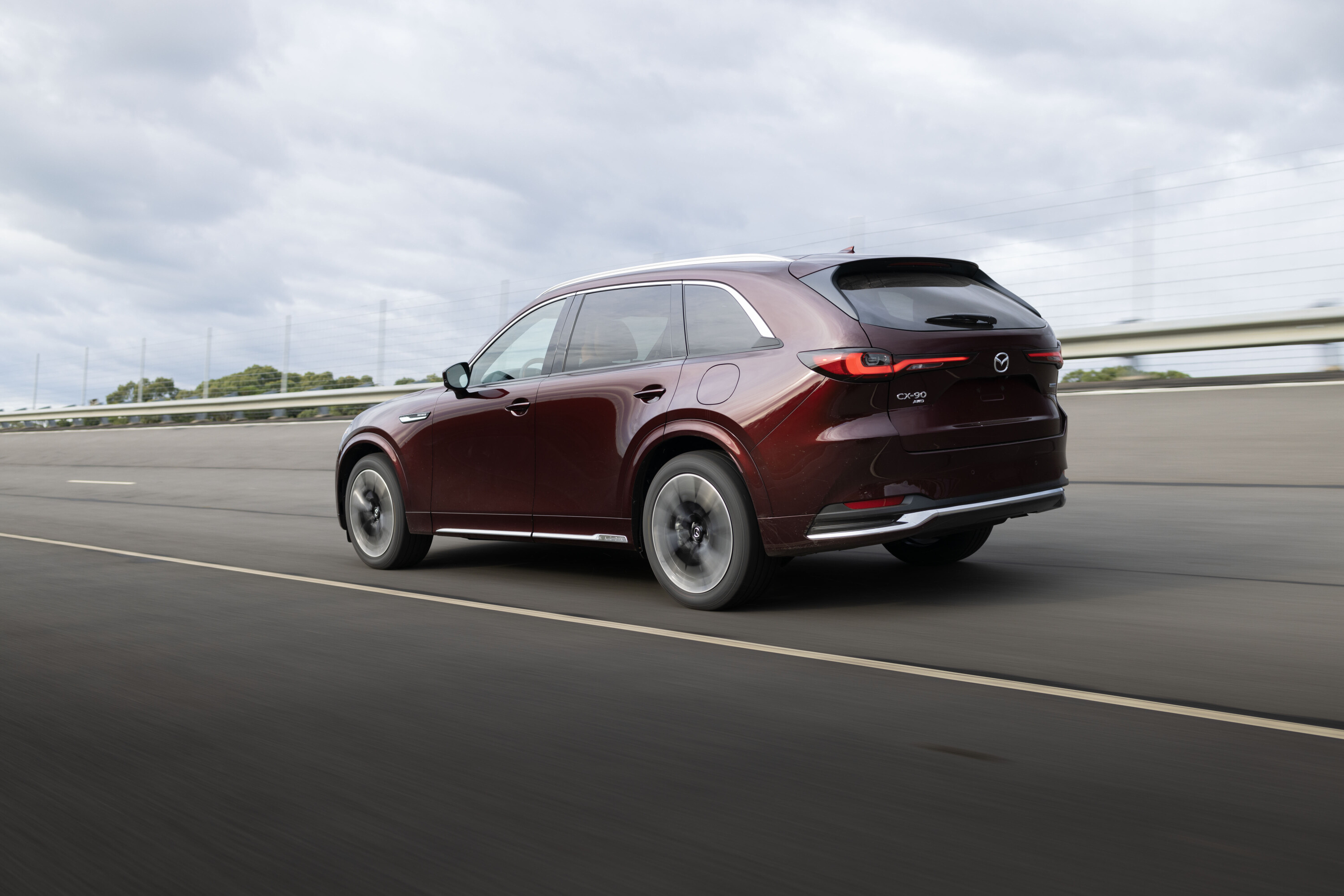
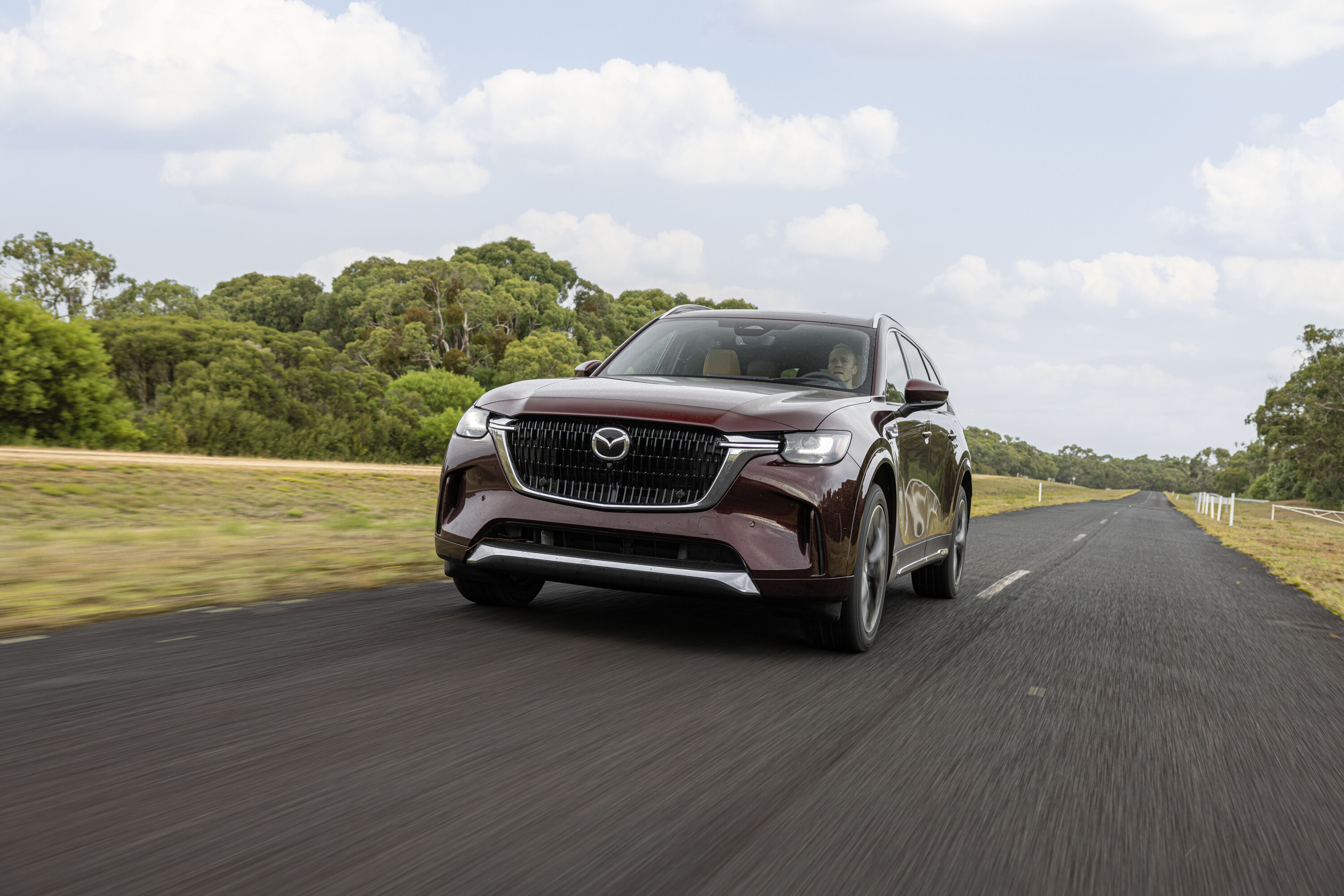
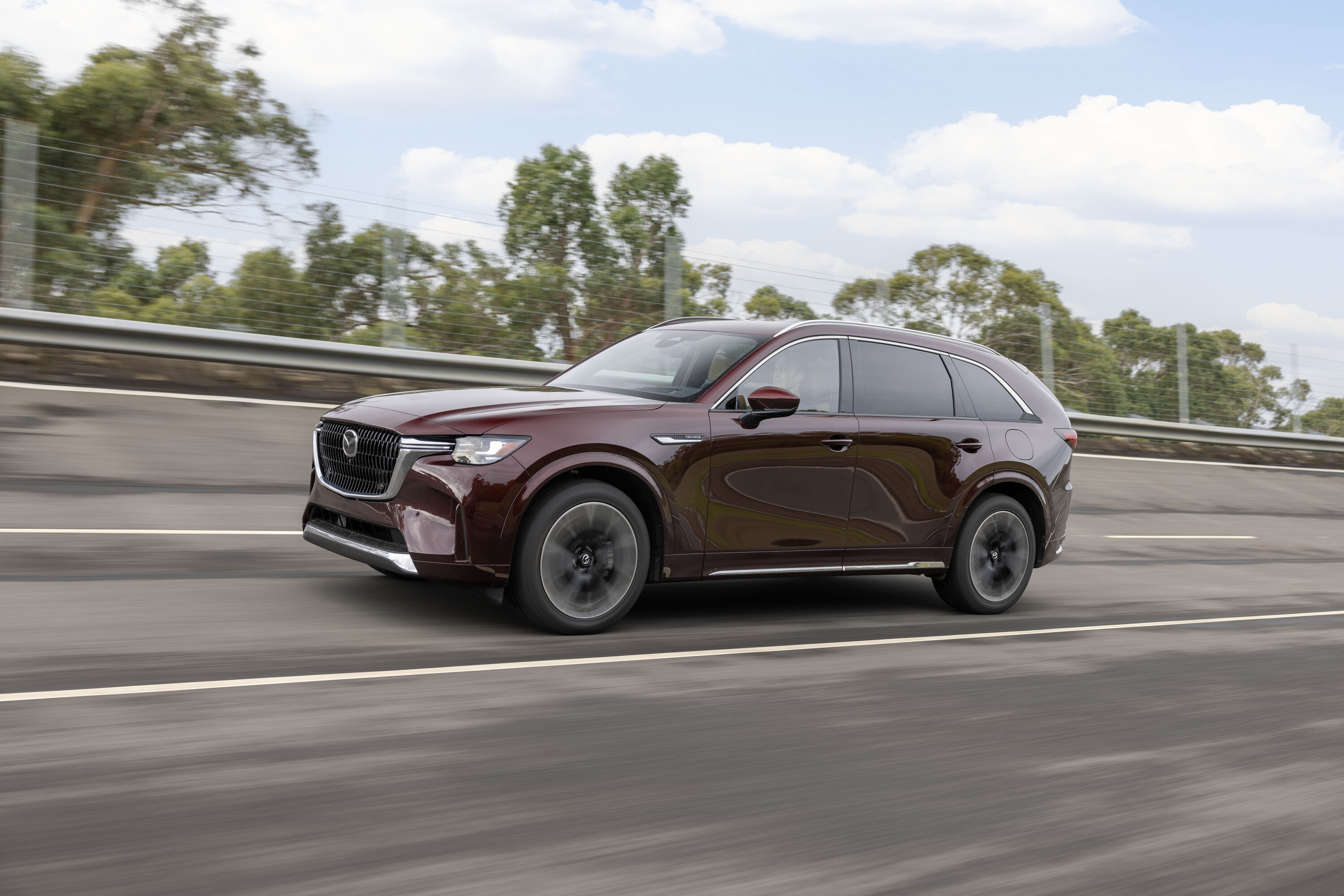
Finished in Artisan Red metallic, the pre-production CX-90 Azami’s metal skin is stretched thin over its wide, sinewy jowls. Viewed front-on, the CX-90 is concept-car pure, though the flanks show a few conceptual compromises in the name of functionality – namely that the CX-90 manages to make 21-inch alloys wrapped in 275/45-series tyres look positively dinky.
At the rear, the CX-90 is less successful. Like a BMX rider locked into a perfectly-balanced wheelie, there’s lots of visual bulk hanging behind the rear axle. There’s justification, as the CX-90 is no small vehicle; 45mm longer and 25mm wider (though 3mm lower) than the egg-shaped CX-9.
You can read full CX-90 Australian pricing and features here, but as a quick overview, the top-spec Azami is stacked with kit, including wireless smartphone mirroring, 21-inch alloy wheels, Nappa leather upholstery with suede seat facings, and seat ventilation.
Mazda’s smooth and syrupy six can’t quite match BMW’s all-conquering ‘B58’ for creaminess, but it gets damn close
| 2024 Mazda CX-90 Azami features | |
|---|---|
| 21-inch alloy wheels (black machined) | LED headlights, tail-lights and daytime running lamps |
| 12.3-inch Mazda Connect infotainment system | 15-watt wireless phone charger |
| Wireless or wired Apple CarPlay and Android Auto | USB-C ports for each row |
| Head-up display | 12-speaker Bose surround-sound audio system |
| Black Nappa leather upholstery | 10-way power-adust heated + ventilated front seats |
| Panoramic Sunroof | Electric steering wheel column adjustment |
| 12-speaker Bose surround-sound audio system | Colour-matched body cladding |
| Ambient lighting | Camera rear-view mirror (selectable) |
2
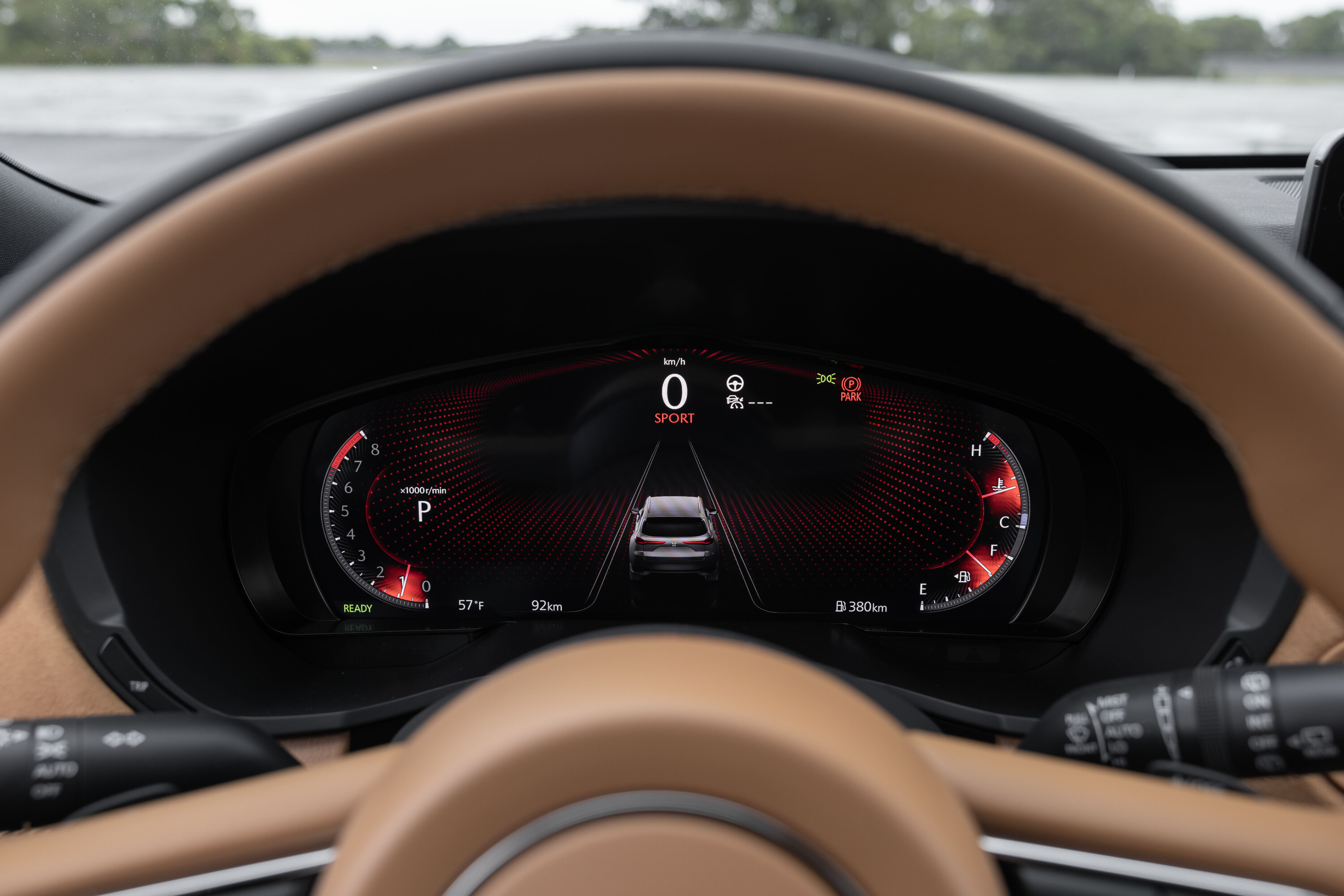
There’s also a new 12.3-inch digital instrument cluster in the Azami which is handsome, though not as customisable or powerful as those found in BMW and Audi products. The fact the central display isn’t a touchscreen is also frustrating when interfacing with Apple CarPlay or Android Auto. The resolution could be better, too, with CarPlay’s icons looking pixelated.
So there are a few tech features where Mazda slips behind the best luxury SUVs (that are $30K more), but the level of fit and finish is right up there. The cabin is sturdy and solid, with the Takumi package ($5000) adding tactile materials to further lift the ambience.
Cabin storage is generous, with two big cup holders in the centre console and spacious door bins. A total of six USB-C charge points, two in each row, feature in the CX-90, and there’s also a wireless charging pad. That steering wheel, too, is about as close to perfection as exists. The size, and the shape; it’s a perfect blend of old-school cool with minimalist modern controls.
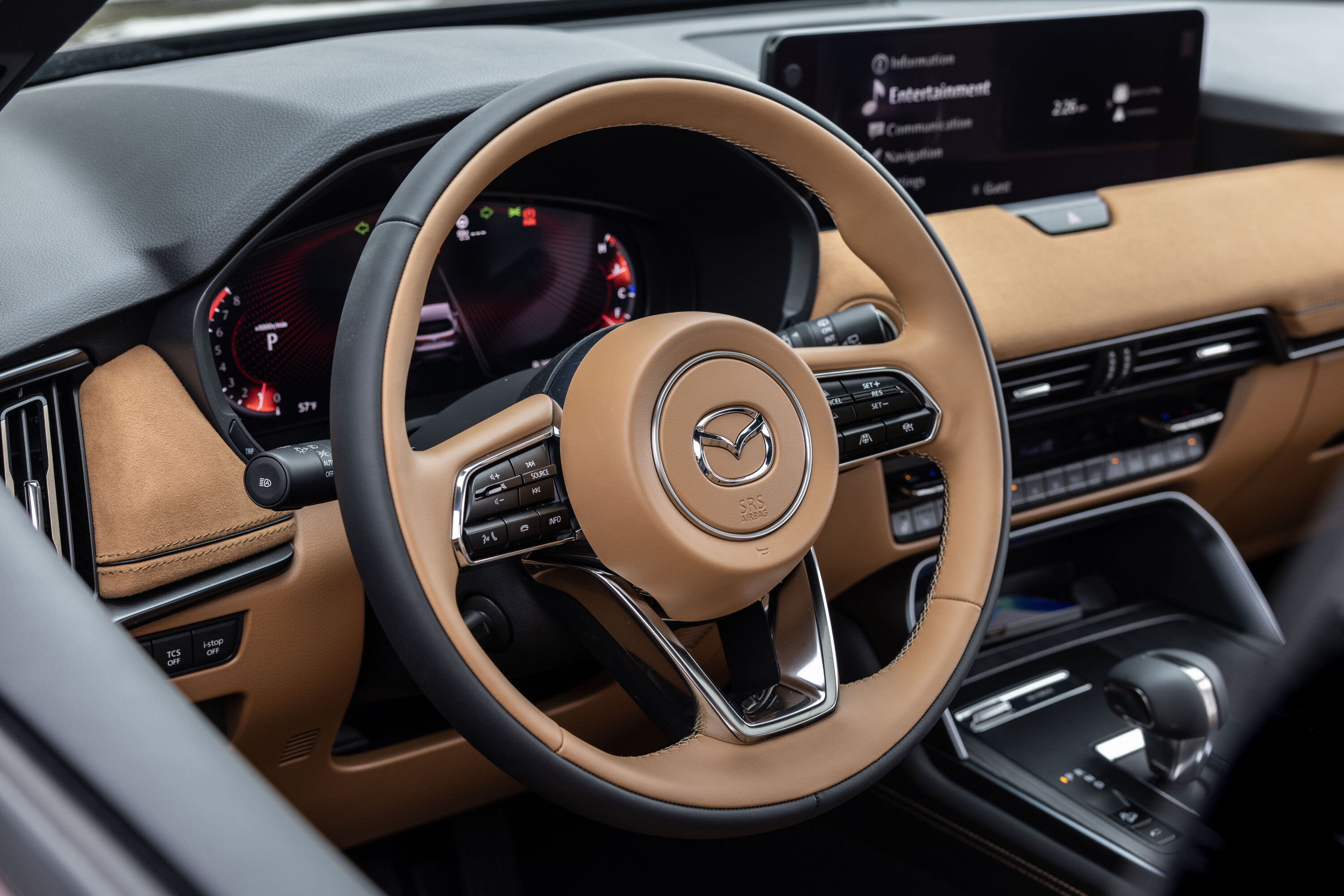
2
We sampled a US-spec vehicle, so while Australian examples will get white upholstery, this car had lovely quilted saddle tan leather with a suede dashboard panel featuring Mazda’s special ‘Kakenui’ stitching.
The second-row captain’s chairs have a centre console with covered storage between, individual manual adjustment, and three-stage heating and ventilation.
| Mazda CX-90 Takumi package includes | |
|---|---|
| Pure white quilted Nappa leather upholstery | White maple wood console and door trim inserts |
| Bright decoration panel | Heated and ventilated second-row captainu2019s seats |
| Cloth dashboard panel with u2018Kakenuiu2019 stitching | Second-row centre console with storage. |
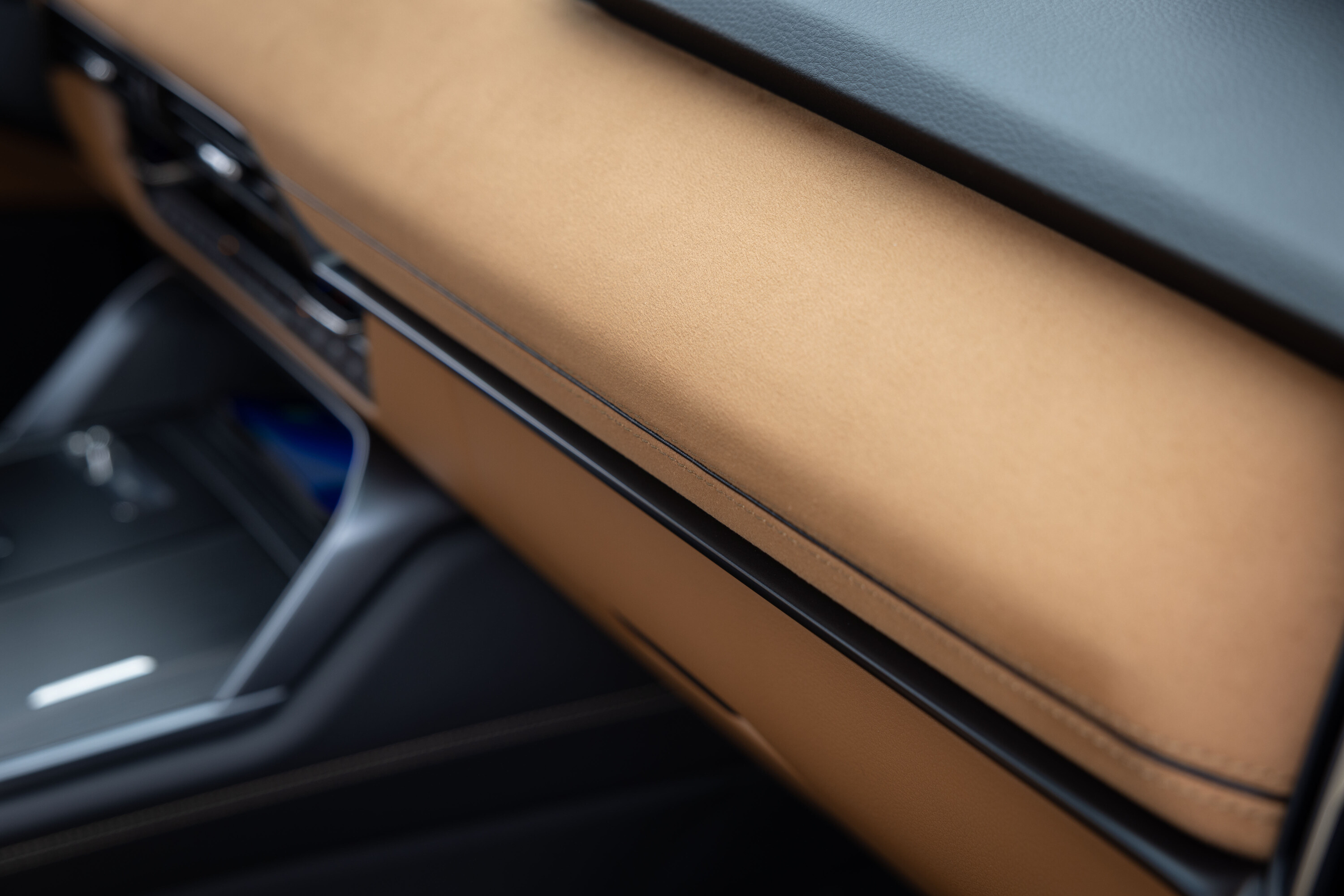
2
The second-row captain’s chairs are delightful – the CX-90 Azami with Takumi package would be a dream hire car; a sort of cut-price Range Rover if you will.
And while the CX-90 isn’t all that much bigger than a CX-9, it does boast a 189mm-longer wheelbase. That’s significant and liberates vast amounts of cabin space. At 188cm tall I’m comfortable in every seat, and while the CX-9 was never a small car, Mazda’s new three-row SUV is a true long-haul six- or seven-seat proposition like a BMW X7.
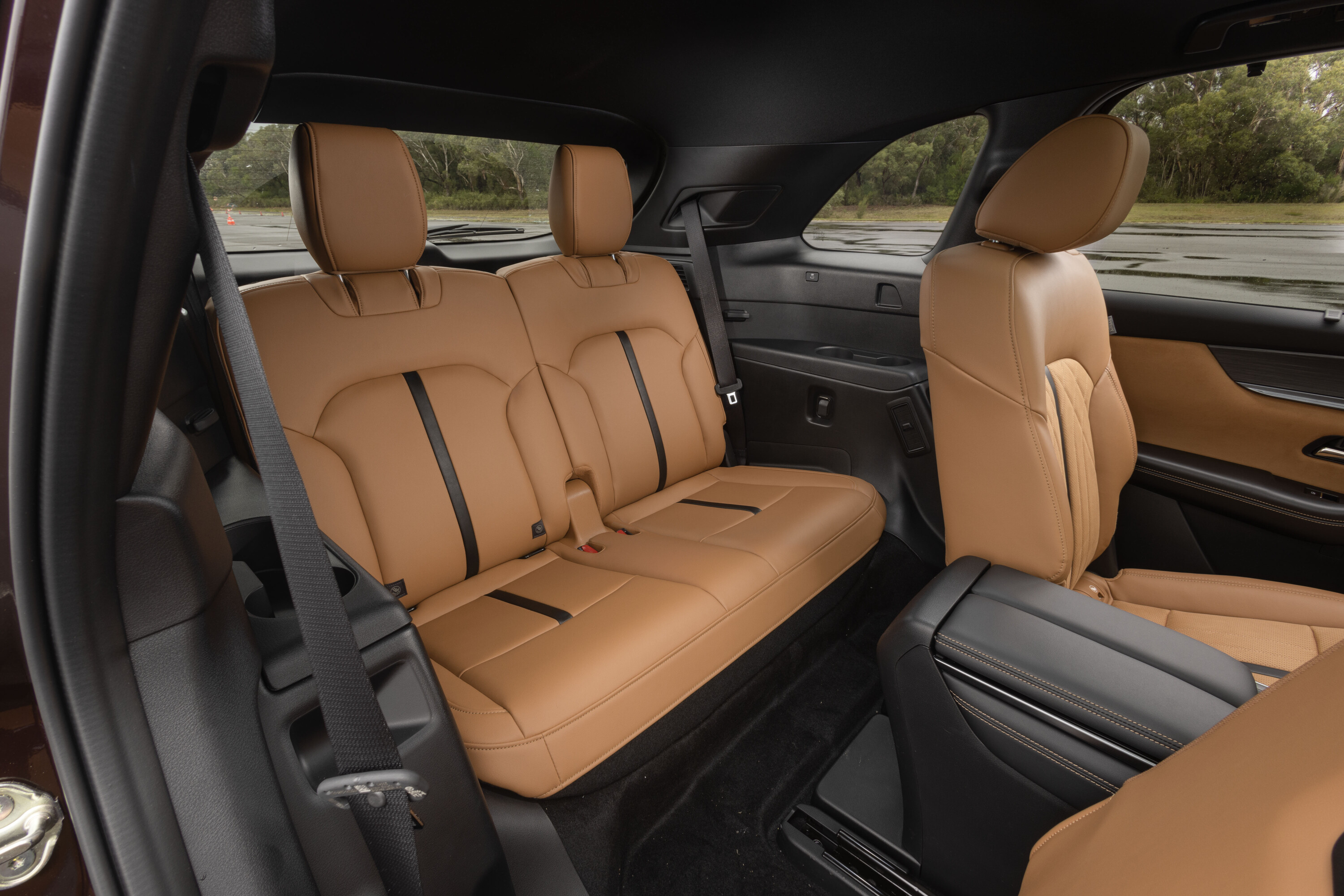
2
What’s it like to drive?
First impressions count for a lot, and the CX-90 is acing the car park test.
Time to turn a wheel.
Initial LHD awkwardness takes a moment to get over, but it wasn’t long before the first pleasant surprise appeared. It’s the CX-90’s reassuring and consistent steering. With a longitudinal straight-six engine, Mazda’s engineers were able to optimise (in their words) the power steering system, mounting the motor ahead of the rack for a more natural feel.
At 3.25 turns lock-lock, the ratio is slow, but because it requires a little more input to turn, the CX-90 is extremely calm at high speeds (right up to 170km/h – not on the public road, of course), where road, tyre, and wind noise insulation is excellent.
Required for insurance, our laps of Lang Lang’s technical test roads were completed behind a CX-9 Touring – perfectly illustrating the CX-90’s step-change in performance. The CX-90 has double wishbone front suspension rather than struts, a five-link independent rear set-up, grippy 275/45 R21 Yokohama Advan V105 tyres and front and rear tracks that are respectively 41 and 44mm wider than those of a CX-9. Should be stable and sophisticated, then.
Almost disappointingly, the CX-90 is unperturbed by the same compressions and sudden camber changes that bothered the CX-9
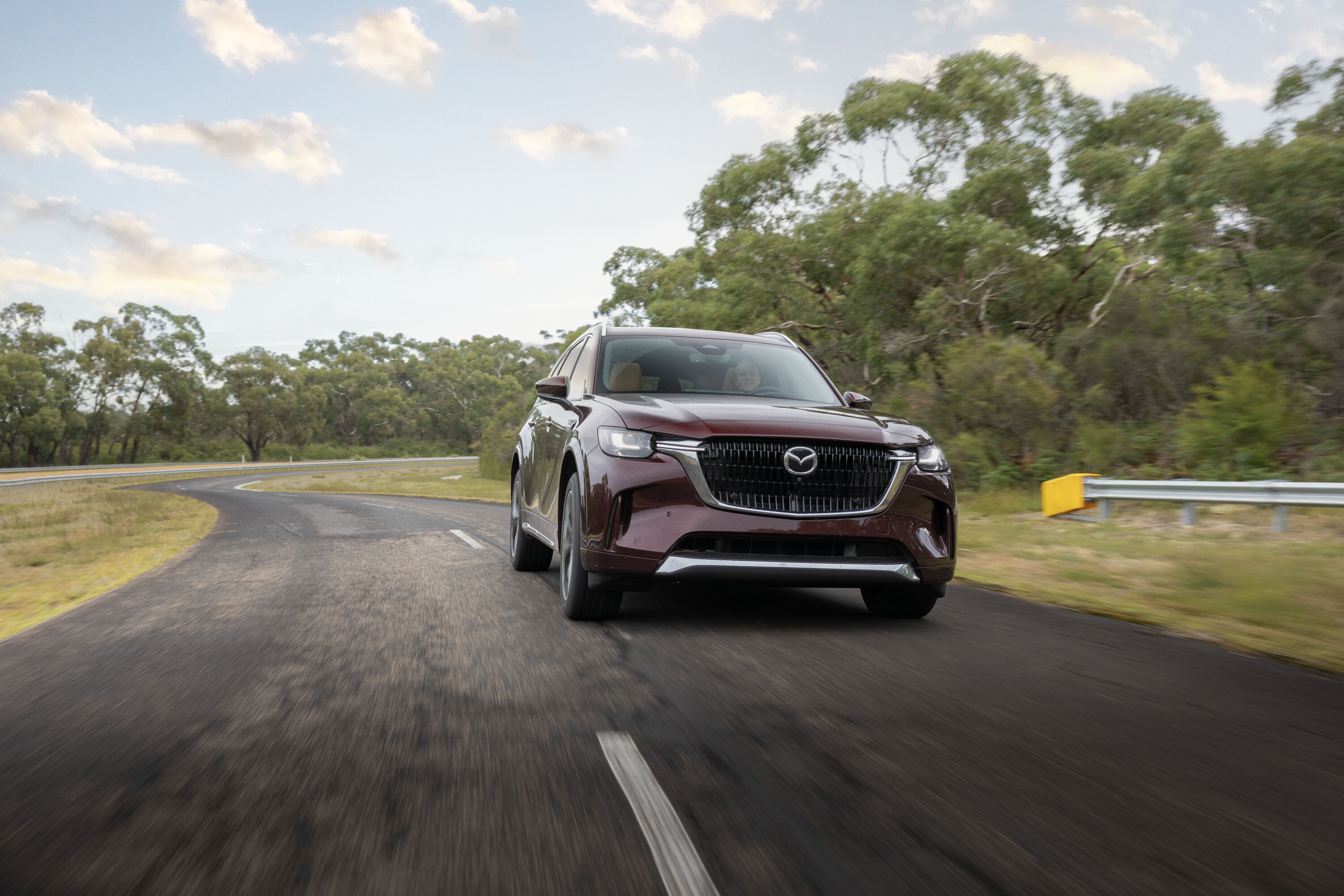
1
After a few laps, our speed increased to the limit of Lang Lang’s simulated country road. Steaming towards a particularly bumpy left-right complex I watch the flustered CX-9’s body buck and corkscrew. I apprehensively set the CX-90 up for the bend and tip in. Almost disappointingly, the CX-90 is unperturbed by the same compressions and sudden camber changes that bothered the CX-9. Stable and sophisticated it is.
In tighter bends, you can feel the CX-90’s rear-driven balance resist on-throttle understeer. Mazda’s Kinetic Posture Control tech also helps quell understeer and pitch, effectively (and occasionally noisily) carrying a hint of brake pressure on the CX-90’s inside rear wheel.
Push beyond the CX-90’s comfortable eight-tenths gallop (as we did in a slalom), and the 2222kg weight becomes apparent with pronounced body roll and oversteer that the ESC has to step in and gather up. The CX-90 rides on simple steel springs and single-stage dampers – there are no multi-stage adaptive items, clever anti-roll systems or air springs to battle the Mazda’s mass.
1
It also means Mazda engineers have only the one setting to balance dynamics and ride comfort. We’ll reserve final judgement for a full Australian road drive, but the settings feel good at Lang Lang; the CX-90 is firm but deals admirably with the test facility’s dips, sharp edges, and the simulated tram tracks.
There is, however, a generous dollop of grunt available from the 48-volt mild-hybrid ‘G50e’ 3.3-litre turbo-petrol inline-six engine. It develops 254kW from 5000-6000rpm and 500Nm between 2000-4500rpm. It’ll be offered alongside a 187kW/550Nm diesel six, and eventually the same plug-in hybrid powertrain as the CX-60.
The six is smooth and syrupy with a pleasing tone in Sport mode. Mazda’s motor can’t quite match BMW’s all-conquering ‘B58’ inline six for creaminess, but it gets damn close. In our standard Lang Lang rolling acceleration test, the CX-90 managed 70-115km/h – roughly equal to a hot hatch like a Golf GTI. Mazda claims a 0-100km/h sprint of 6.9 seconds.
Push beyond the CX-90’s comfortable eight-tenths gallop, and the 2222kg weight becomes apparent with pronounced body roll and oversteer
1
Mazda’s own eight-speed automatic transmission uses a wet clutch pack in place of a torque converter. It’s a unique solution, and one I can’t admit to noticing more than thinking the CX-90 responded promptly to throttle inputs. The automatic’s logic is typically excellent – you’re rarely in the wrong ratio.
It’s a shame Mazda won’t put this excellent platform and engines to use in a new-generation Mazda 6 – which is expected to be retired in the coming year. We can’t think of a vehicle that appeals to the enthusiast crowd much more than a slinky turbo-six-powered wagon.
Mazda CX-90 fuel consumption
The CX-90 G50e is rated at 8.2l/100km in the combined ADR fuel consumption cycle, the diesel an impressive 5.4L/100km.
For what it’s worth, we saw 16L/100km on the trip computer while blasting around Lang Lang in some very un-real-worldly testing.
Mazda has been working tirelessly to improve its adaptive safety systems – though only the Azami gets traffic jam assist. The CX-90’s lane-trace assist, lane-departure warning and adaptive cruise control worked well at Lang Lang, but final judgement will come later this year.
The Mazda CX-90 is yet to be evaluated by safety testing bodies such as ANCAP, or the American IIHS.
1
VERDICT
Eye-catching design inside and out? Check. Plush cabin appointments and a powerful stereo? Yep. Powerful yet smooth combustion engines and sophisticated suspension? Tick.
There’s now an even better driving experience to back up Mazda’s new-found premium image. Honda used to be known as the Japanese BMW, but Mazda’s swooped in with straight-sixes and staked its claim.
But is the timing right? Mazda has gone out on a limb with very little electrification or engine downsizing, and there’s even an off-trend turbo-diesel. As good a car as the CX-90 is shaping up to be, it’ll come down to how the market receives it.
1
There’s also the small case of longevity. Mazda has invested huge time, money and effort to develop this ground-up platform, so even if the CX-60 and CX-90 succeed initially, the combustion-powered SUVs may not have staying power – CX-90 sales performance will probably come down to changing market preferences amid fuel efficiency standards, rather than overall excellence.
Doom and gloom aside, our first CX-90 experience was very promising. And, although Mazda’s three-rower is unlikely to topple the established X5/GLE/Q7, it has every chance of persuading customers out of a Lexus RX, Volkswagen Touareg, or Volvo XC90 – and we’ll be finding out just how it stacks up against those later this year in a comparison test.
MORE
Everything Mazda
MORE
Large SUVs
Specifications
| Mazda CX-90 G50e Azami w/Takumi package (LHD) | |
|---|---|
| Price | $100,185 + on-road costs |
| DRIVETRAIN | |
| Engine | inline 6-cyl, 3.3-litre, dohc turbo-petrol |
| Layout | front engine, longitudinal, AWD |
| Power | 254kW @ 5000-6000rpm |
| Torque | 500Nm @ 2000-4500rpm |
| Transmission | 8-speed automatic with wet clutch |
| CHASSIS | |
| L/W/H/Wu2013B | 5120/1994/1745/3119mm |
| Track (F/R) | 1704/1707mm |
| Weight (claimed USA) | 2222kg |
| Boot (SAE) | 451/1155/2130L |
| Fuel/tank | 95 RON / 74L |
| Economy (combined ADR 81/02) | 8.2L/100km |
| Suspension | Front: double wishbone Rear: multi-link independent |
| Steering | rack-assisted electric power steering 3.25 turns lock to lock |
| Front brakes | 347mm ventilated rotors |
| Rear brakes | 350mm ventilated rotors |
| Tyres | Yokohama Advan V105 |
| Tyre size | 275/45R21 |
| SAFETY | |
| ANCAP rating | not yet tested |
| 0-100km/h (claimed) | 6.9 seconds |
Today we pay tribute to the brave men and women known as the ANZACs, and the sacrifices they have made for our country.
As we remember them, we want to go back through some of the vehicles that Australian and New Zealand military personnel have been behind the wheel of, both in conflict and during peacekeeping operations across the globe.
Here are just a selection of the four- and six-wheeled vehicles that have served (or are about to serve) our country.
This story was first published in 2020.
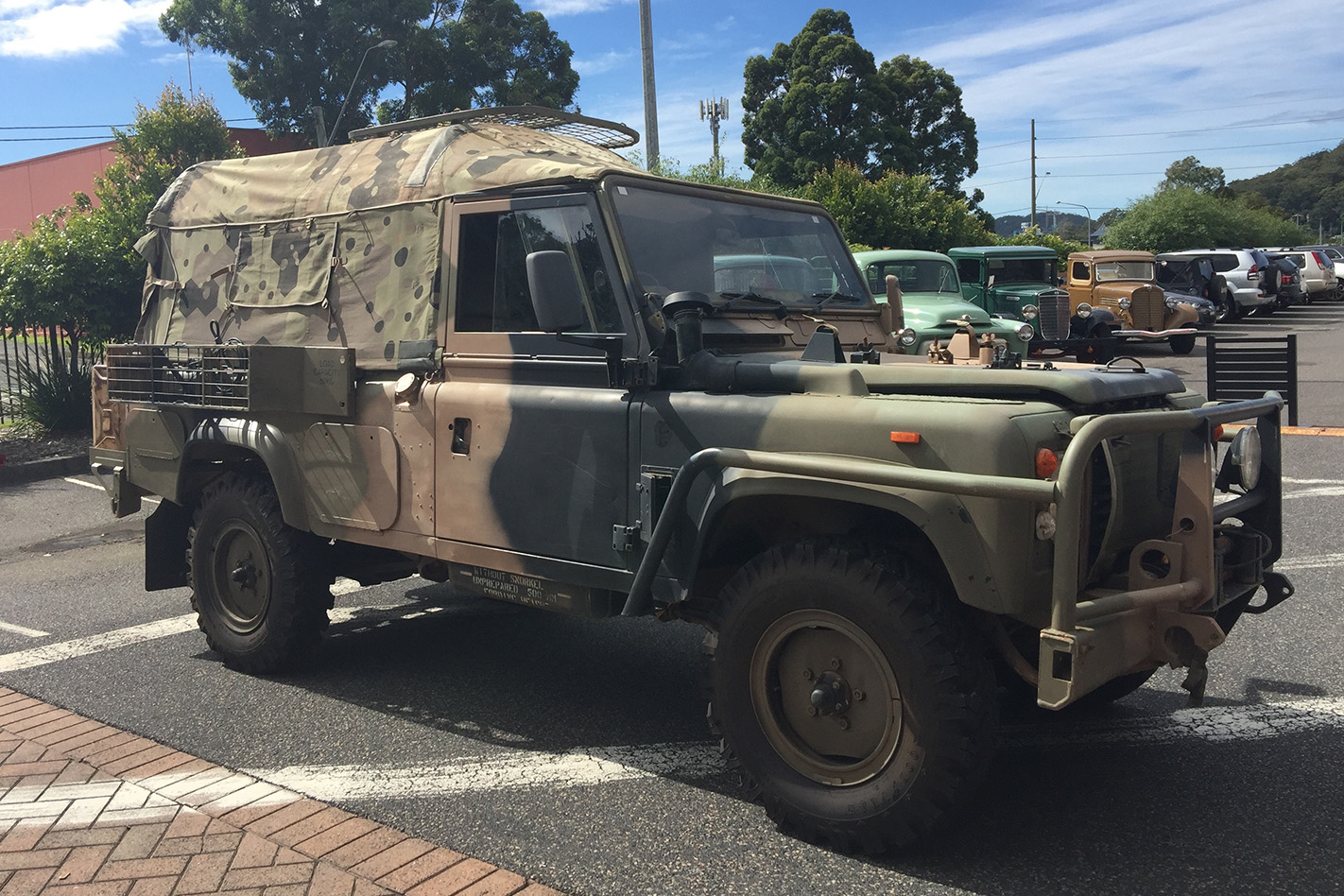
Land Rover 110 Perentie
Some of you may be looking at the photo above, and the name Perentie, and thinking to yourselves, ‘that looks an awful lot like a Land Rover Defender 110’. And you would be correct. Sort of.
The Perentie was a bespoke version of the 110 where the Defender’s infamously unreliable engine was removed and replaced with an Isuzu diesel. The cars were produced by JLR Limited specifically for the Australian Army, and partly manufactured and assembled in Moorebank, New South Wales in the ‘80s and ‘90s.
The Defender was introduced in 1987 to replace an ageing fleet of Series 2A and 3 Land Rovers, and the Isuzu donk selected by the Australian Defence Force was a 3.9-litre four-cylinder 4BD1 diesel engine or 4BD1-T turbo.
The Perentie was used both locally and in overseas operations including Somalia, Timor Leste, the Solomon Islands, Iraq and Afghanistan.
Aside from the engine, other modifications included the relocation of the spare wheel to under the rear of the load area and a galvanised chassis. A neat feature of the Perentie you won’t see too often is the ability to sustain being hung from a helicopter by one corner without the chassis distorting.
A 6×6 variant was also built and used. However, from early 2013 the Mercedes-Benz G-Wagon started to replace the Perentie fleet – more on that later.
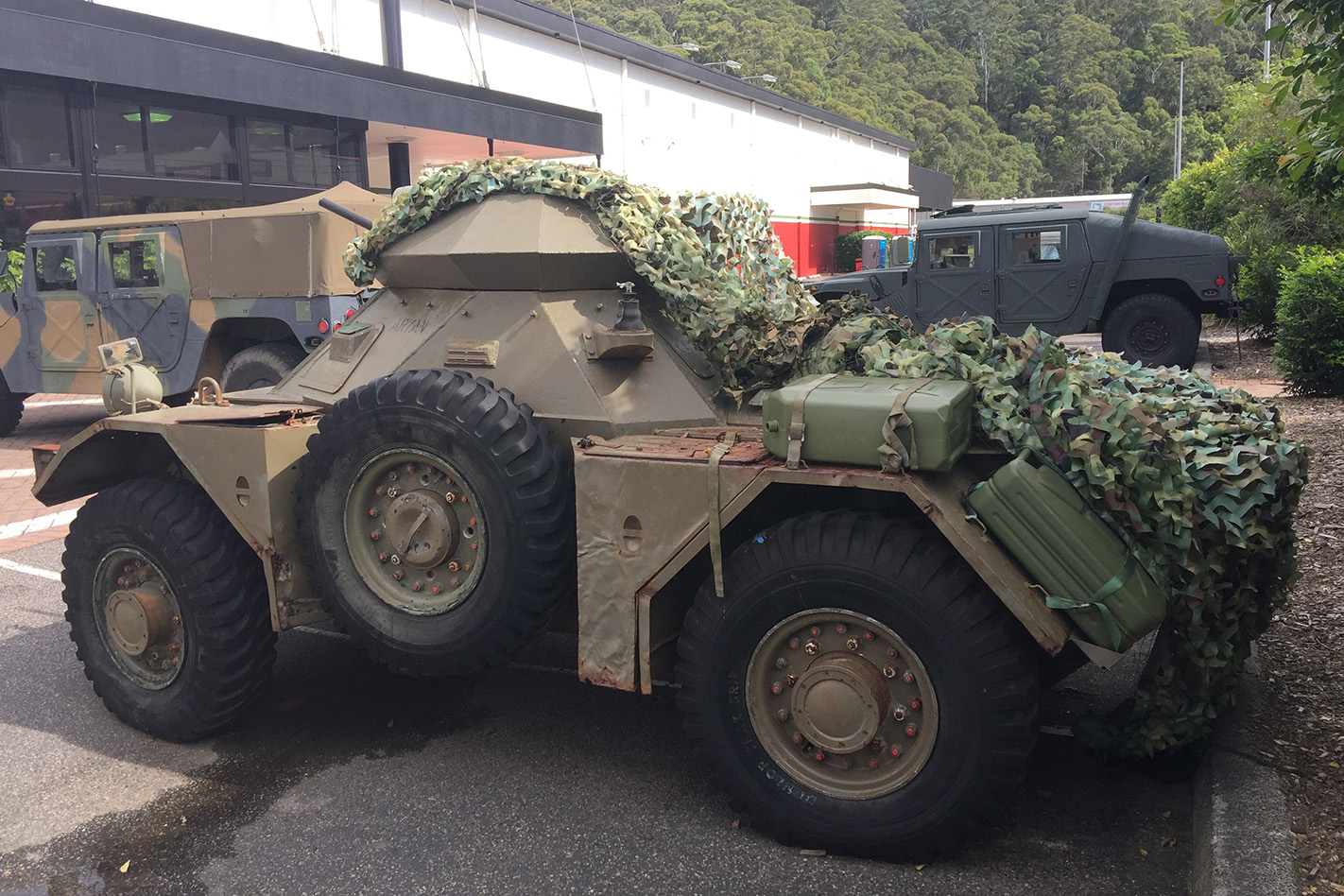
Daimler MK1 Ferret Scout
The Australian Army used both the Mk1 and Mk2 Ferret Scout from its debut in 1953 until 1970.
The light armoured fighting vehicles were designed and used for reconnaissance purposes, and was an evolution of the Dingo which was used by Australian soldiers during WWII.
Australia commissioned 265 Ferret Scouts in total – one of the largest fleets amongst current and previous operators.
The Ferret Scout was powered by a Rolls-Royce B60 inline-six engine, producing 97kW, and could be fitted with a .30-calibre M1919 Browning machine gun.
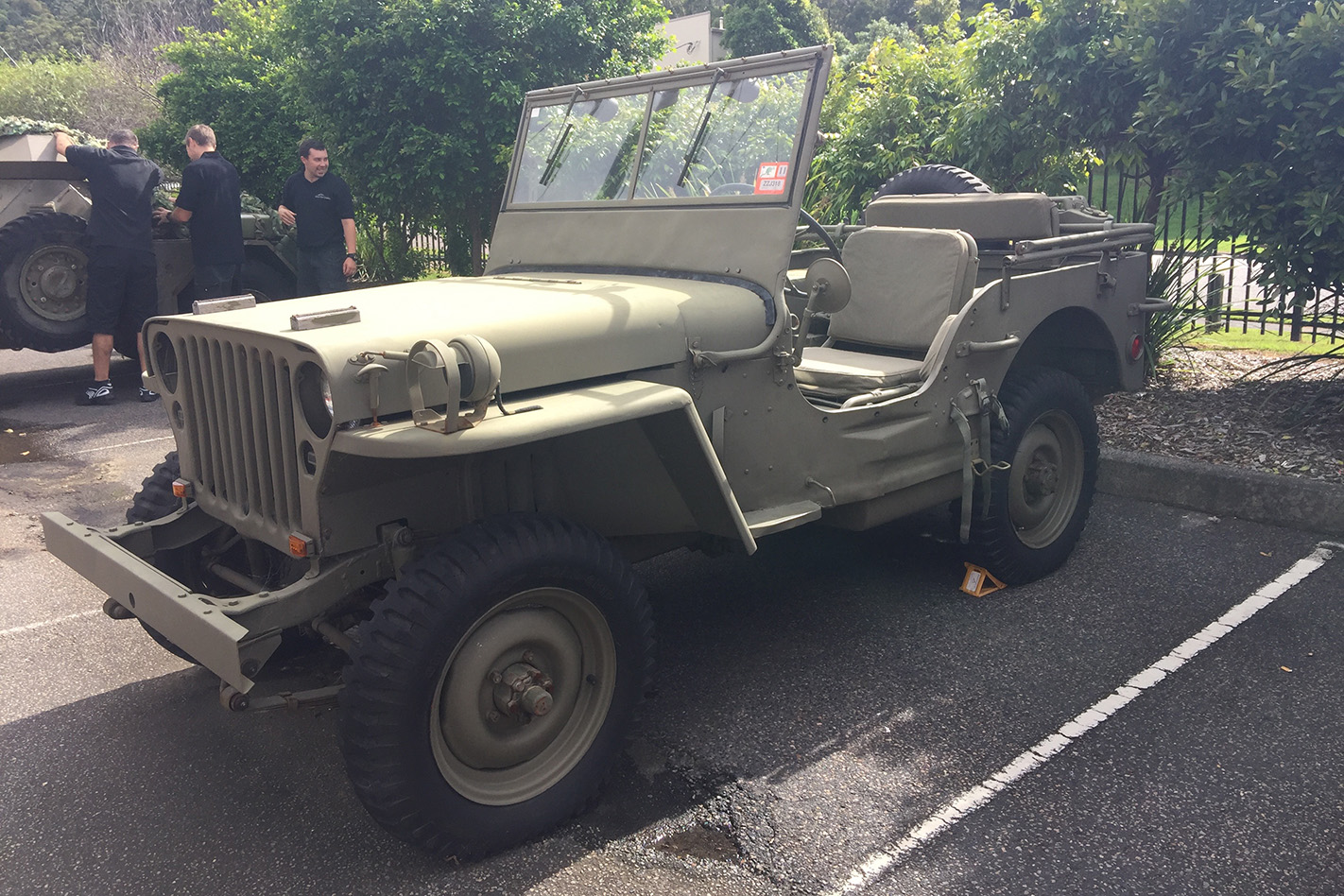
Willys MB Jeep
One of the most iconic army vehicles is the Willys Jeep.
Manufactured in WWII, the Willys MB Jeep (which was also built in huge volumes by Ford) was designed in response to a request from the US Army for a lightweight 4WD utility vehicle. To date, it is one of the most widely-adopted military vehicles of all time.
And despite its American roots, the Willys Jeep was also employed heavily by the Australian Army in WWII in a number of theatres. Lend-lease arrangements also saw the humble jeep in use by the British and Soviet armies, while post-war surplus Jeeps were distributed widely to militaries across the globe.
The car was powered by the ‘Go Devil’ engine, which sent power to all four wheels via a three speed gearbox and two range transfer case. Though small, it was adapted to a huge variety of roles: from towing artillery, toting recoilless rifles, scout duties, battlefield ambulance and even – in experimental form – as a flying car.
Mercedes-Benz G-Wagon
The old Land Rover Perentie mentioned earlier is in the process of being replaced by a fleet of Mercedes-Benz G-Wagons. The German-built vehicles is currently used in both 4×4 and 6×6 variations by the ADF.
The G-Wagons are being deployed as part of Project Land 121, a multi-billion program revamping the Australian military’s fleet of vehicles.
G.H. Varley Pty Ltd in Newcastle is a subcontractor to Mercedes-Benz, and responsible for the design and manufacture of the various modules and tray bodies used on Aussie G-Wagons, and all use Benz’s ‘350d’ 3.0-litre turbodiesel V6
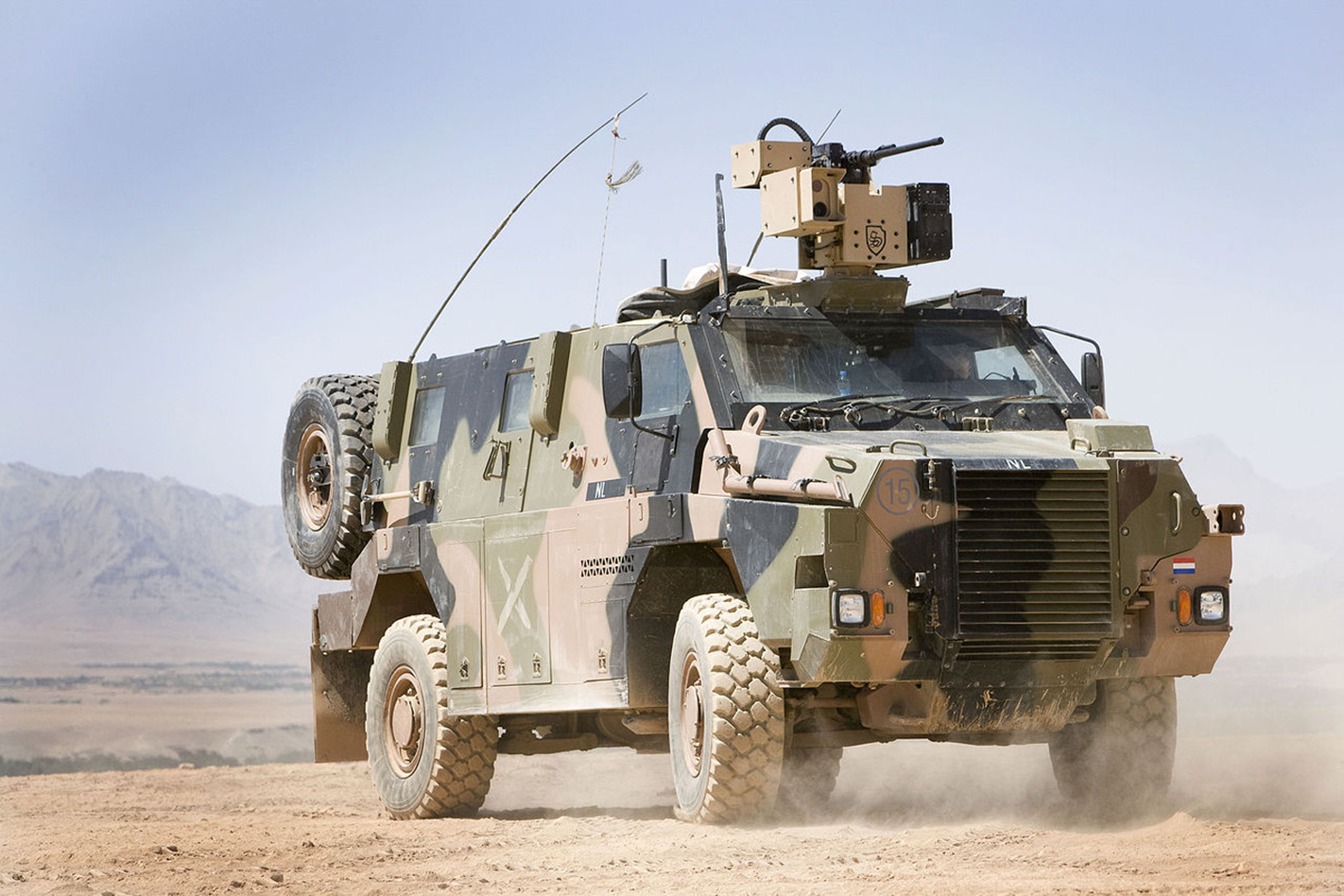
Bushmaster PMV
The Bushmaster Protected Mobility Vehicle (PMV) is an Aussie-built four wheel drive armoured vehicle.
It is produced by Thales Australia with support by Oshkosh Truck which is capable of building the vehicles to US specifications if ordered. Australia isn’t the only country to use the Bushmaster, with the Netherlands, British, and Jamaican armed forces also adopting the vehicle.
It’s powered by a Caterpillar 3126E 7.2L six-cylinder turbo-diesel, making 224kW and 1166Nm, and has space for nine soldiers and their equipment.
Designed to be comfortable in harsh environments like Australia’s top end, the Bushmaster is notable for being designed from the outset to have a fully airconditioned cabin – not to mention its ability to survive landmines and IEDs.
The Bushmaster made its debut in 1997, and has since been deployed in East Timor, Afghanistan, Iraq, and Northern Mali.
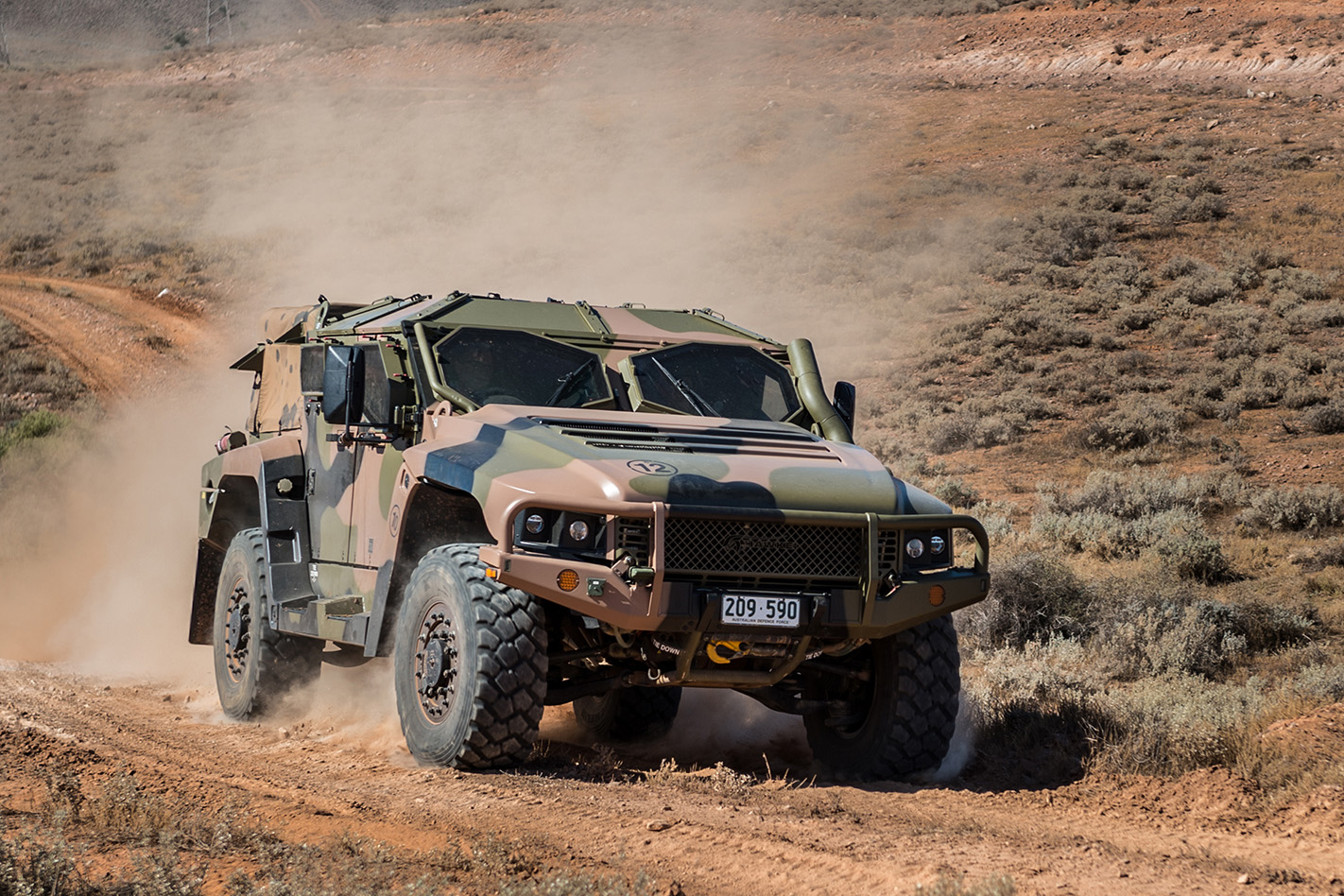
Hawkei PMV
The Hawkei PMV is the new generation of Aussie military vehicle and, like the Bushmaster, is developed and built here in Australia.
Intended as an intermediate step between the lightly-armoured G-Wagens and the much larger Bushmaster, the Hawkei offers a heavier level of protection and is designed to survive front-line usage better than the outgoing Land Rovers and Mercedes-Benzes. Like the Perentie and G-Wagen, the Hawkei is available in a variety of body styles tailored to their specific mission, with around 1100 Hawkeis set to enter service with the ADF in the near future.
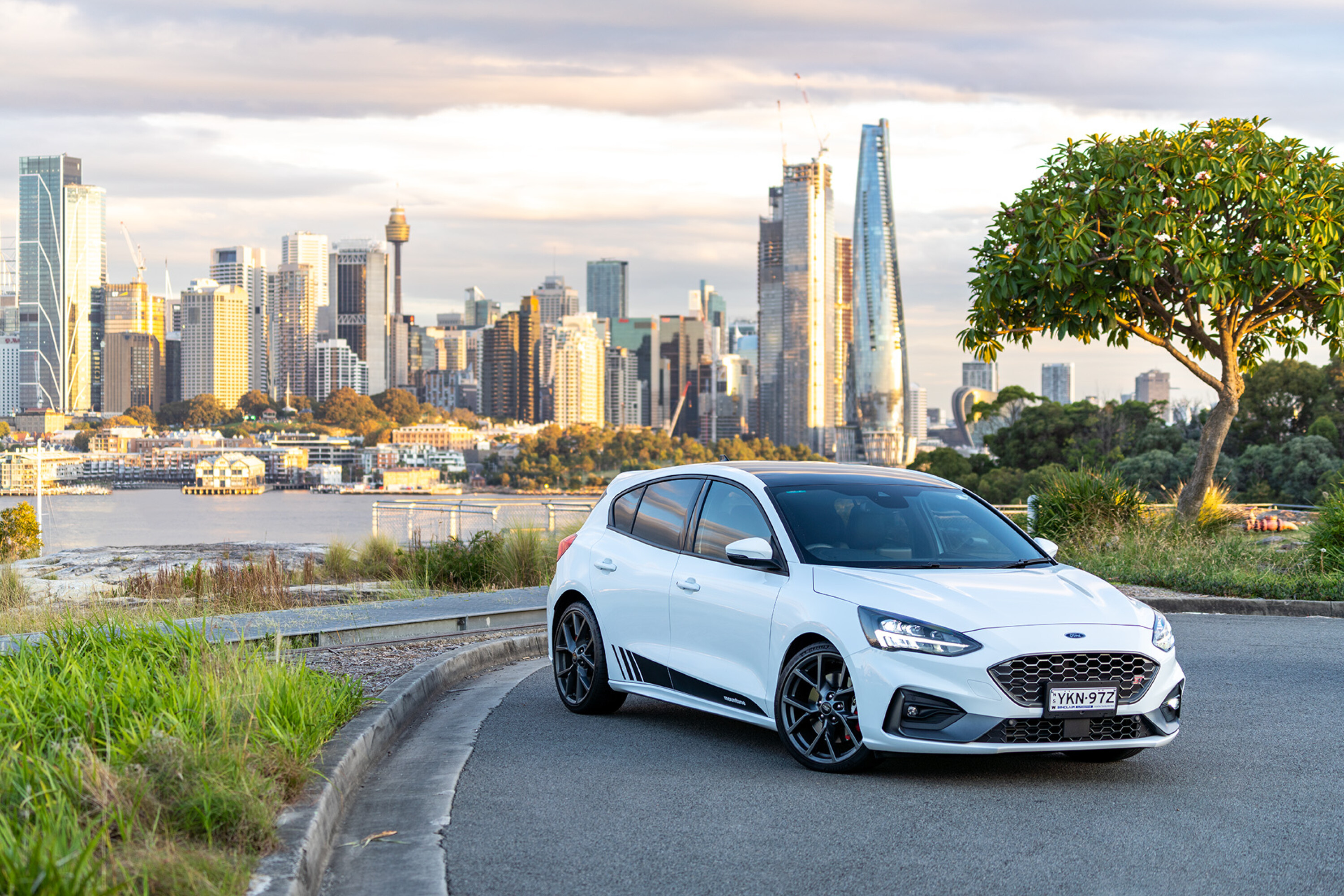
Renowned UK tuning specialist Mountune has brought its services Down Under to give Australian and New Zealand hot-hatch owners easier access to its range of performance upgrades and accessories.
Mountune is best known for its uning packages for models such as the Ford Fiesta ST, Ford Focus RS and Volkswagen Golf R.
The company has long been endorsed by Ford, and Ford Australia introduced Mountune components in 2016 as licenced accessories.
1
The company, formed in 1980 by David Mountain, has set up a support and distribution centre in Tasmania, which will service owners in Australia and New Zealand.
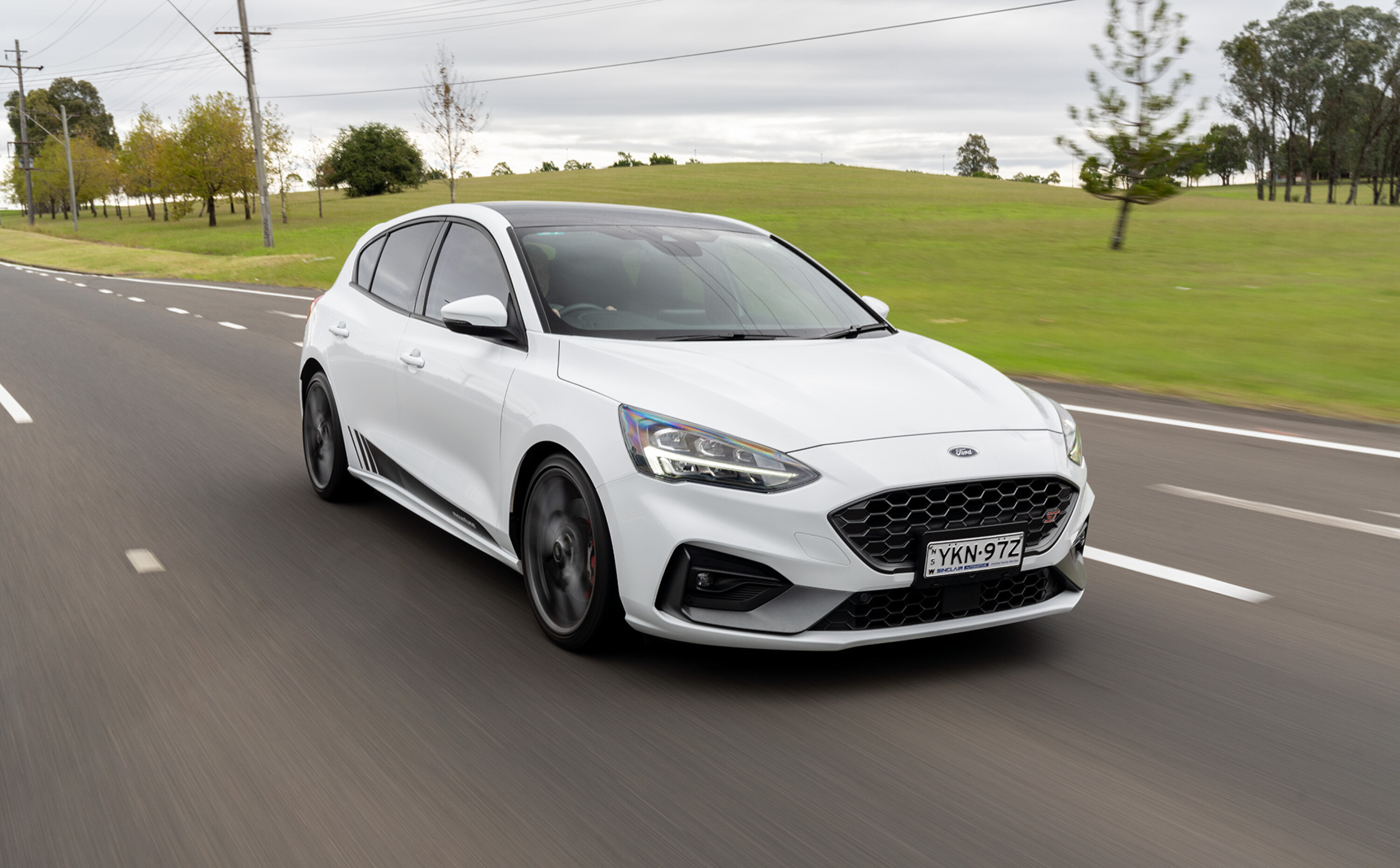
Upgrades for areas including engine, brakes and exhaust – plus a range of accessories – are available for various generations of the Fiesta ST, including the XR4, and the Focus ST, including the XR5.
The parts will appeal strictly to existing owners after the ST hot-hatches were dropped from showrooms last year by Ford Australia.
Some parts are also available for the Puma 1.0 sold in Australia.
2
In the VW Group camp, Mountune modifications and accessories are available for Mk 7 and Mk7.5 iterations of the Golf GTI and Golf R. Third-generation Audi S3 owners are also catered for.
Mountune’s Smartflash upgrades deliver notable bumps in outputs. The Focus ST Mk4 jumps from 206kW/420Nm to 268kW/560Nm; the Golf R 7.5’s power increases from 213kW to 265kW and its torque increases from 380Nm to 500Nm.
Mountain claims the upgraded Golf R 7.5 accelerates from 0-60mph in just 3.7 seconds. Tuning components and accessories can be ordered via Mountune’s local website.
When I first read the phrase “Genesis Electrified GV70” I will admit I was slightly confused. Electrification is something a lot of makers claim – even if it’s not an EV but simply the mildest of mild hybrids.
I think a lot of people will think the same thing – “what does that mean?” Mild hybrid? Hybrid? Plug-in hybrid? Or a full-blown battery electric vehicle?
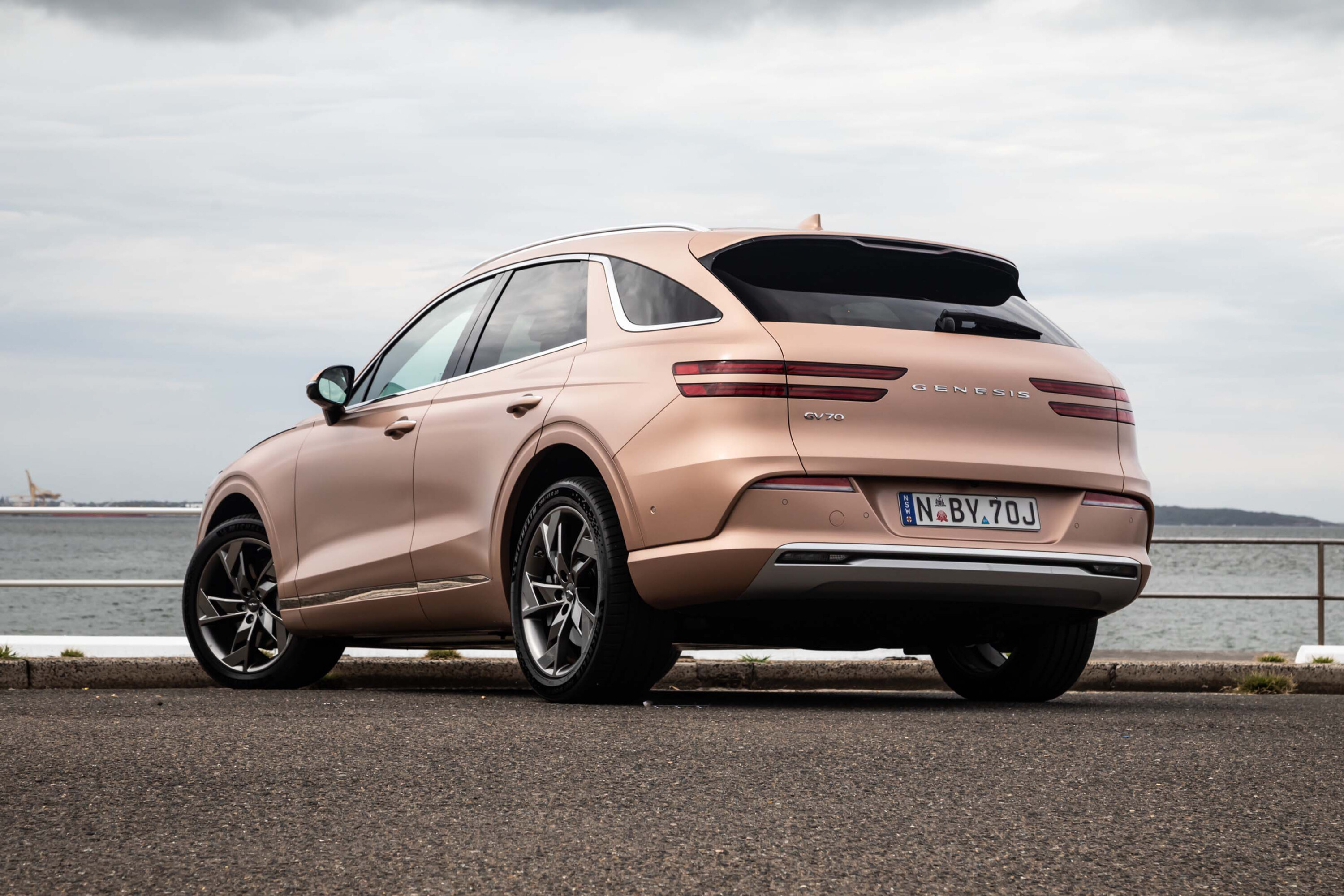
In this case, it means a mid-size Genesis GV70 SUV fitted with a 77.4kWh battery feeding two motors totalling 360kW and 700Nm. These are big numbers, even if they’re dragging more than two tonnes along and that alone should be enough for people to take notice.
Except there hasn’t been a lot of attention for this car, perhaps because the Genesis brand is still making a name for itself, perhaps because Hyundai’s Ioniq 5 and 6 have taken all the glory. But for a pretty sharp price (relatively speaking) you’re getting a loaded-up fully electric SUV with decent range; something that seemingly everyone wants.
1
JUMP AHEAD
- How much is it, and what do you get?
- How do rivals compare on value?
- Interior comfort, space and storage
- Battery & Charging
- What is it like to drive?
- How is it on electricity?
- How safe is it?
- Warranty and running costs
- VERDICT
- Specifications
How much is it, and what do you get?
The GV70 is available as a turbo four (petrol and diesel), a twin-turbo petrol V6 as well as the Electrified version.
There is quite a price gap between the V6 and Electrified, a stout $43,200 making the EV $127,800 before on-road costs. It’s almost double that of the base four-cylinder. As you might expect, it’s absolutely loaded:
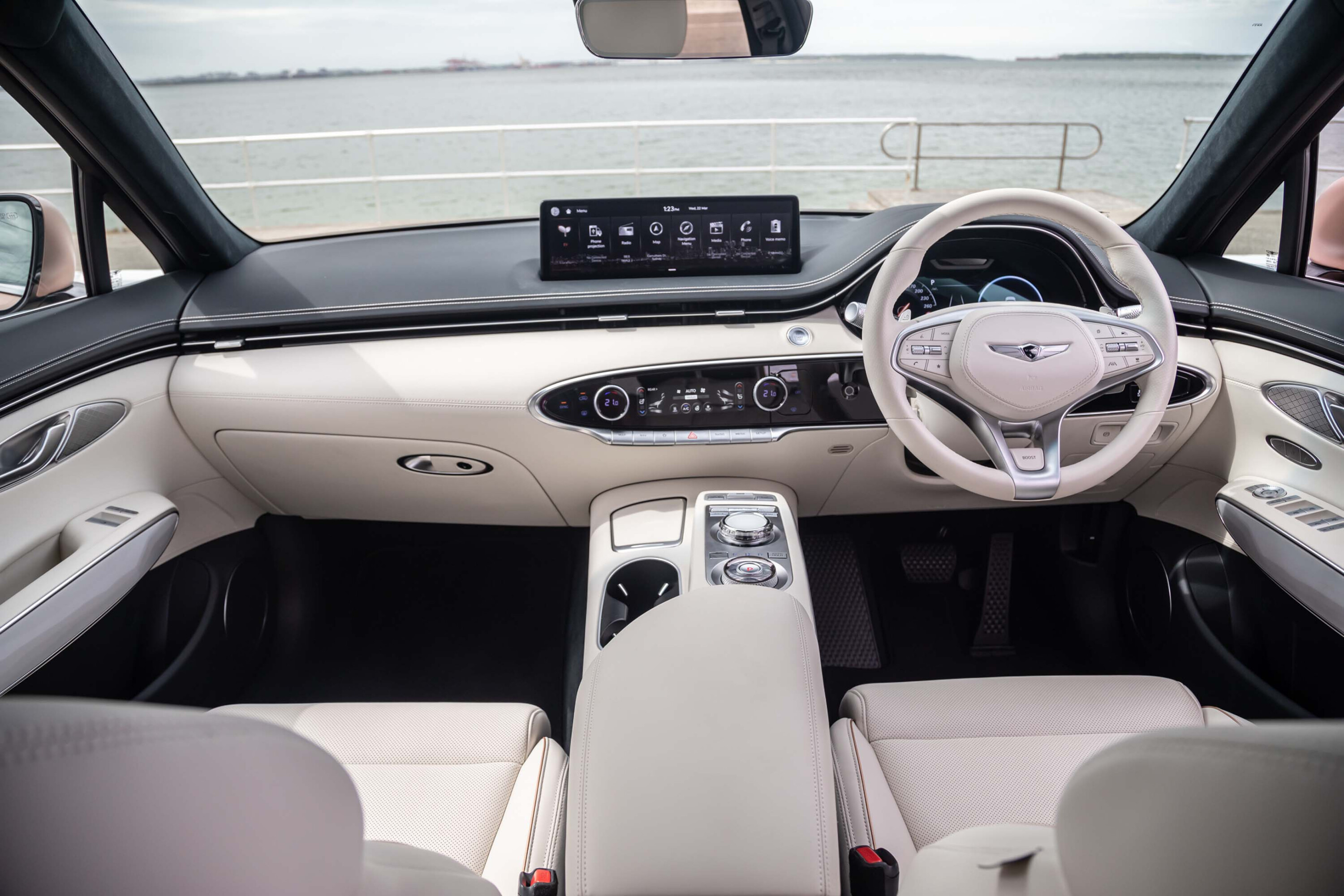
| 2023 Genesis Electrified GV70 standard features | |
|---|---|
| 12.3-inch central touchscreen | Heated steering wheel |
| 12.3-inch digital dashboard | Interior LED lighting |
| 14-speaker Harman audio system | Keyless entry and start |
| 20-inch alloy wheels | Nappa leather upholstery |
| Active noise cancelling | Powered steering wheel adjustment |
| Around-view cameras | Powered tailgate |
| Auto Matrix LED headlights | Powered, heated and ventilated front seats with active bolsters |
| Auto wipers | Reversing camera |
| DAB+ digital radio | Satellite navigation |
| Fob-operated remote start and parking control | Three-zone climate control |
| Front and rear parking sensors | Tyre repair kit |
| Head-up display | Wired Android Auto |
| Heat pump heater | Wired Apple CarPlay |
| Heated rear seats | Wireless phone charging |
1
In a perverse way, the price of the EV shows what a comparative bargain the V6 is as the spec is broadly the same as the combustion version. There’s almost nothing missing from the spec list apart from the ongoing and mystifying absence of wireless smartphone integration.
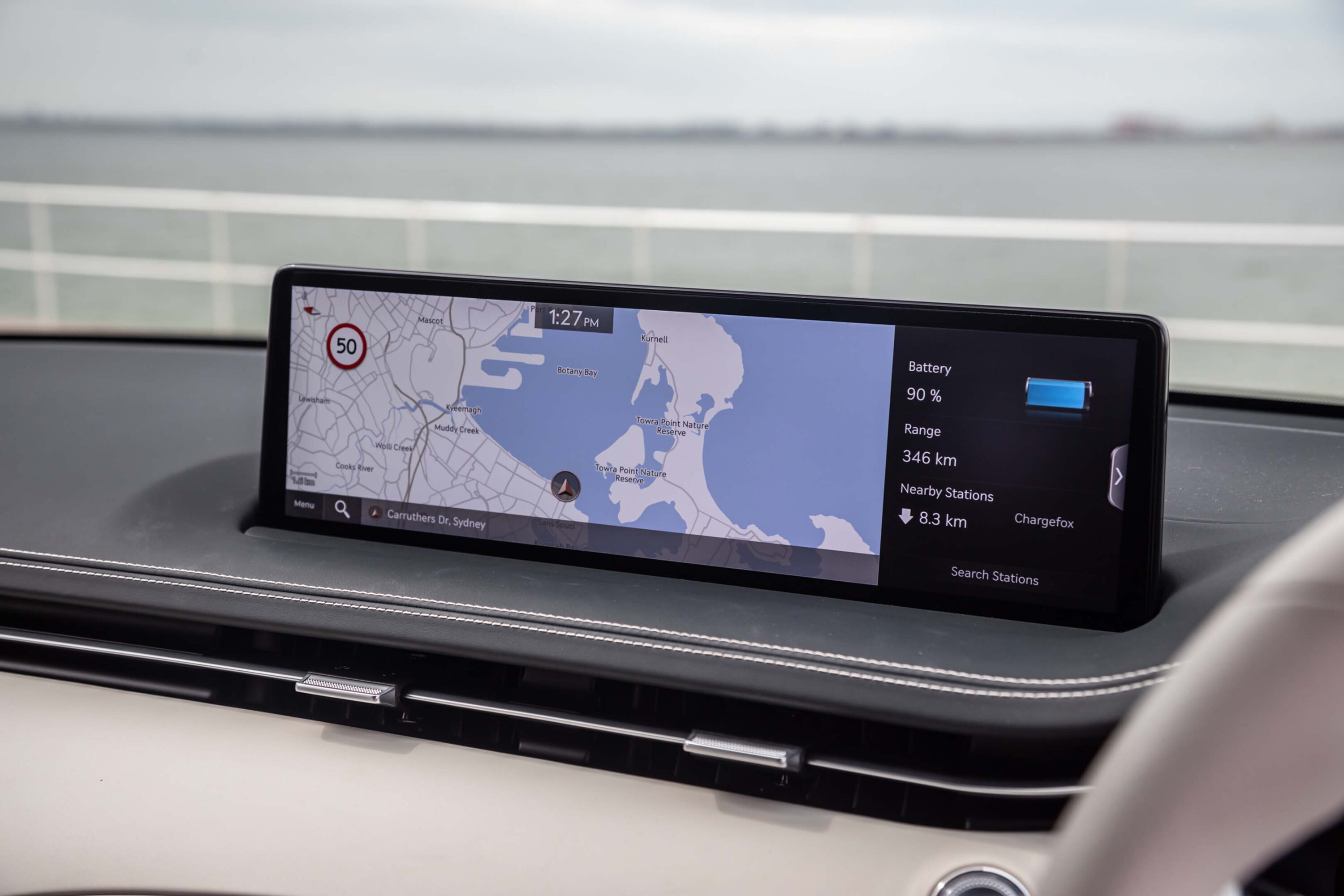
Being an EV, there’s some app integration and cabin pre-conditioning functionality. You also score a five-year subscription to Chargefox’s charging network meaning that if the wind is at your back, you won’t pay for electrons to run your car.
1
If you don’t fancy your chances – although there has to be a point where the charging company gets its act together under new ownership – you can instead choose a wallbox that will charge your car a bit quicker than regular plug sockets at home or work.
Also worth noting is that the charging subscription stays with the car if you sell it within the five-year period.
One more point of order is that the sat-nav will tell you if you need to charge for a given trip you’ve entered and help you find a charging station.
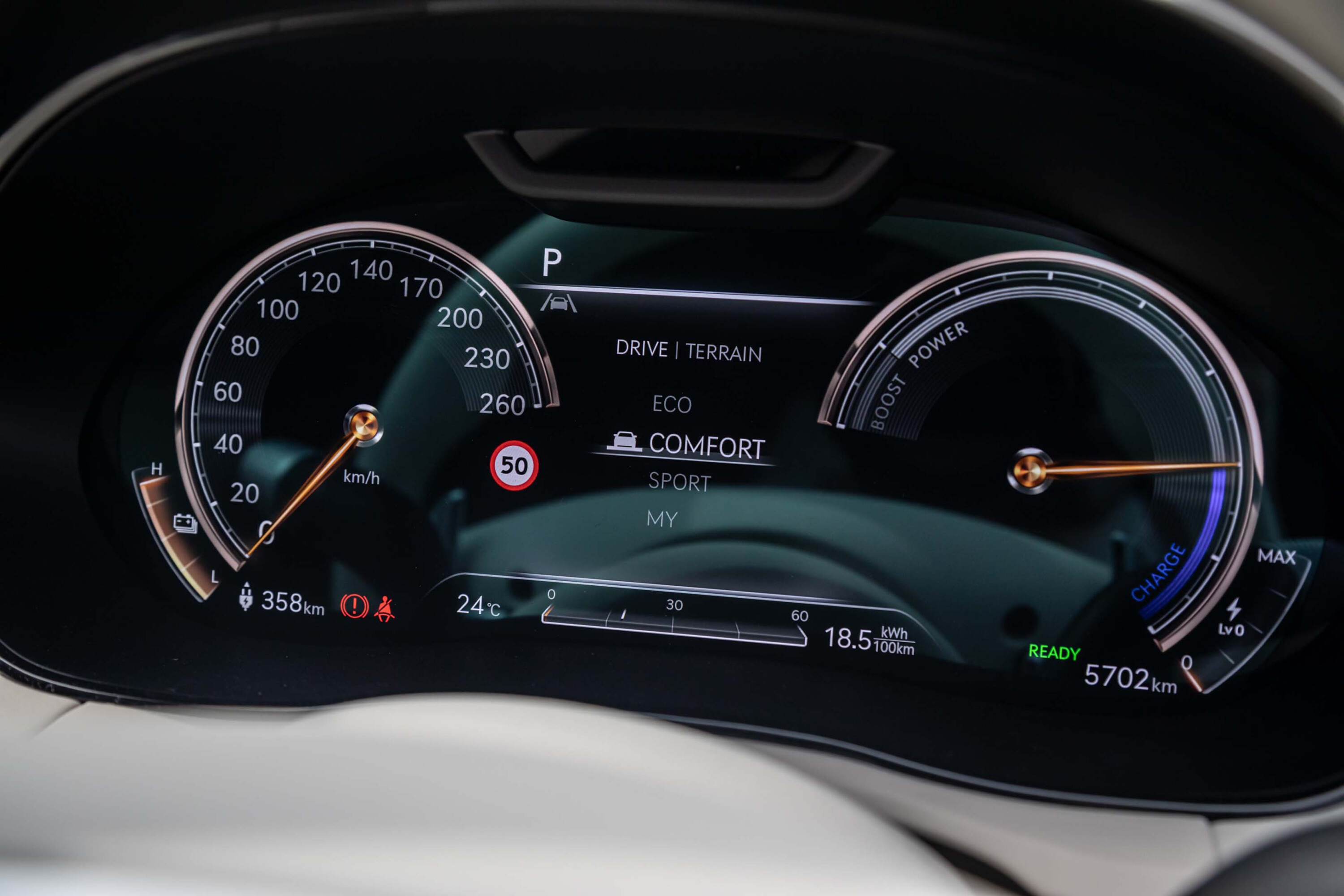
1
How do rivals compare on value?
As far as rivals go, there are two obvious machines from Germany. The first is the BMW iX3, another ICE-powered model made into an EV.
It’s had a hefty chunk lopped out of its launch price, now within touching distance of the less-than-stellar Tesla Model Y Performance at $104,900 before on-road costs.
The other German is the Mercedes EQC which is priced far closer to the GV70 Electrifed at $128,000 before on-road costs. The 2020 Wheels COTY winner is one of a now burgeoning range of electric Mercs and is probably starting to feel a little old even if it doesn’t look it.
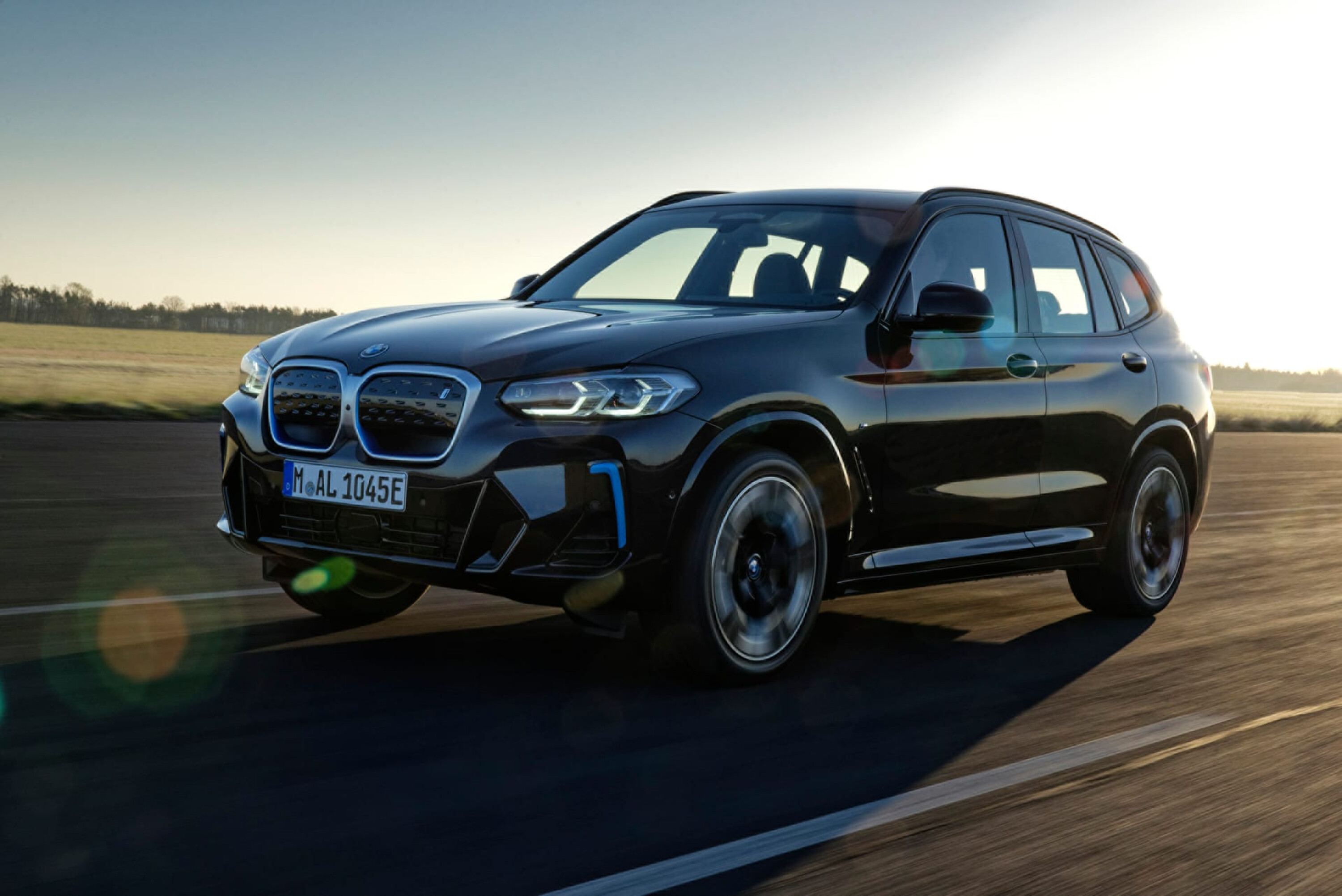
1
Audi’s (soon-to-be Q8) E-Tron is priced from $132,980 for entry 55 SUV and heads up to $153,500 for the E-Tron S (both before on-road costs), which is probably the more sensible match for the GV70. It comes with six years of free charging at Chargefox as opposed to five for the BMW and Genesis. I don’t have another joke about broken chargers.
I think you could also consider the Jaguar I-Pace here, although it’s quite a bit more expensive at $146,857 before on-road costs. It has a bigger battery but a similar range and is not as lavishly equipped. It’s a very nice car, though, and underrated.
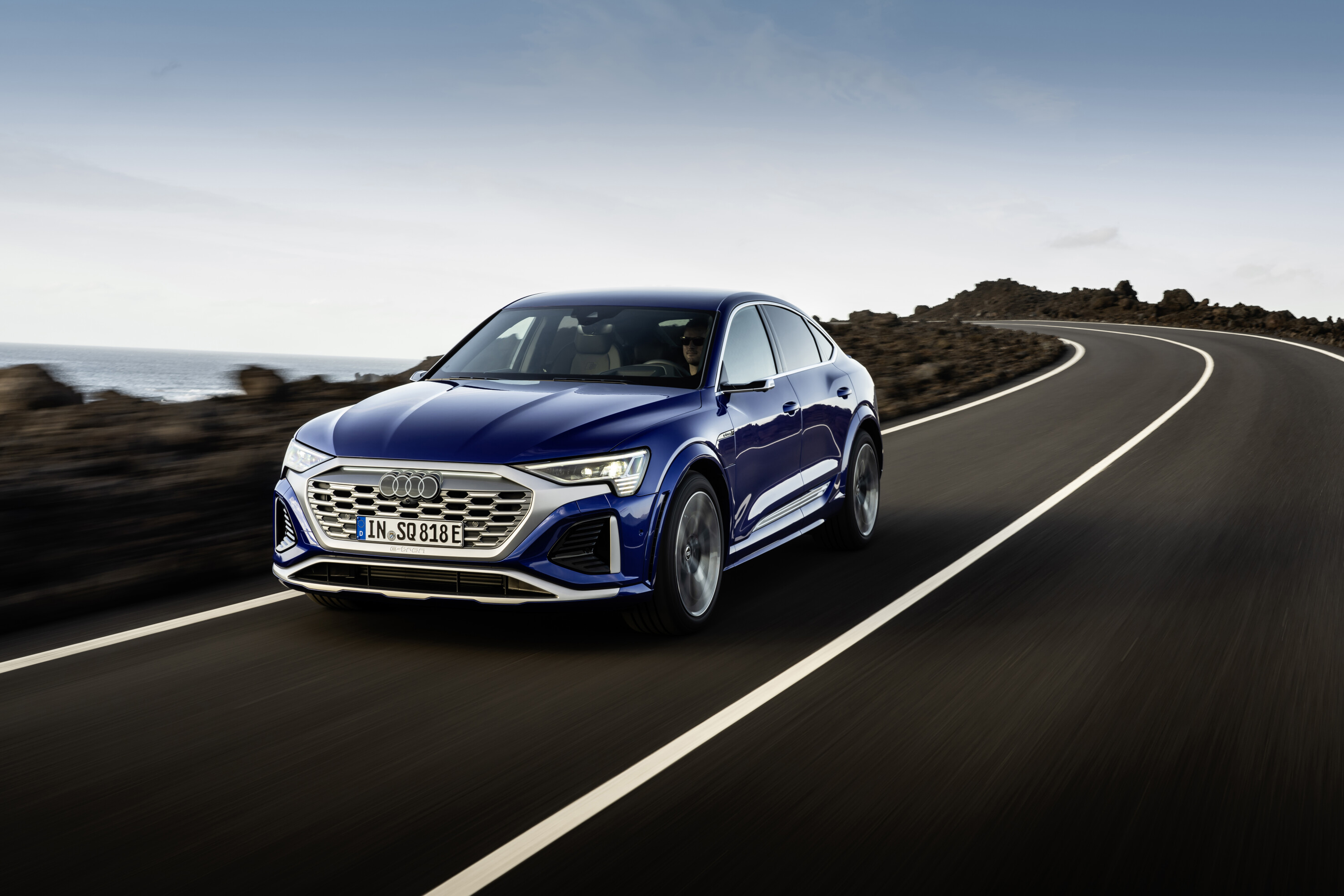
1
Interior comfort, space and storage
The GV70 is a mid-size SUV but is quite roomy and feels a bit bigger than that.
And in that roomy cabin are five Nappa leather-clad seats, lots of lovely materials and barely a plastic panel anywhere, at least not an uncovered one.
Compared to the internal combustion engine (ICE) versions, almost nothing has changed. I think that’s entirely sensible and removes that self-conscious element some people don’t like about EVs.
The front seats are comfortable and accommodating for a broad range of backsides. They also feature active bolstering and if you’ve been driving for long enough, a surprise massage function. Which you can disable, because it feels like the kid behind you pushing your back with their knees.
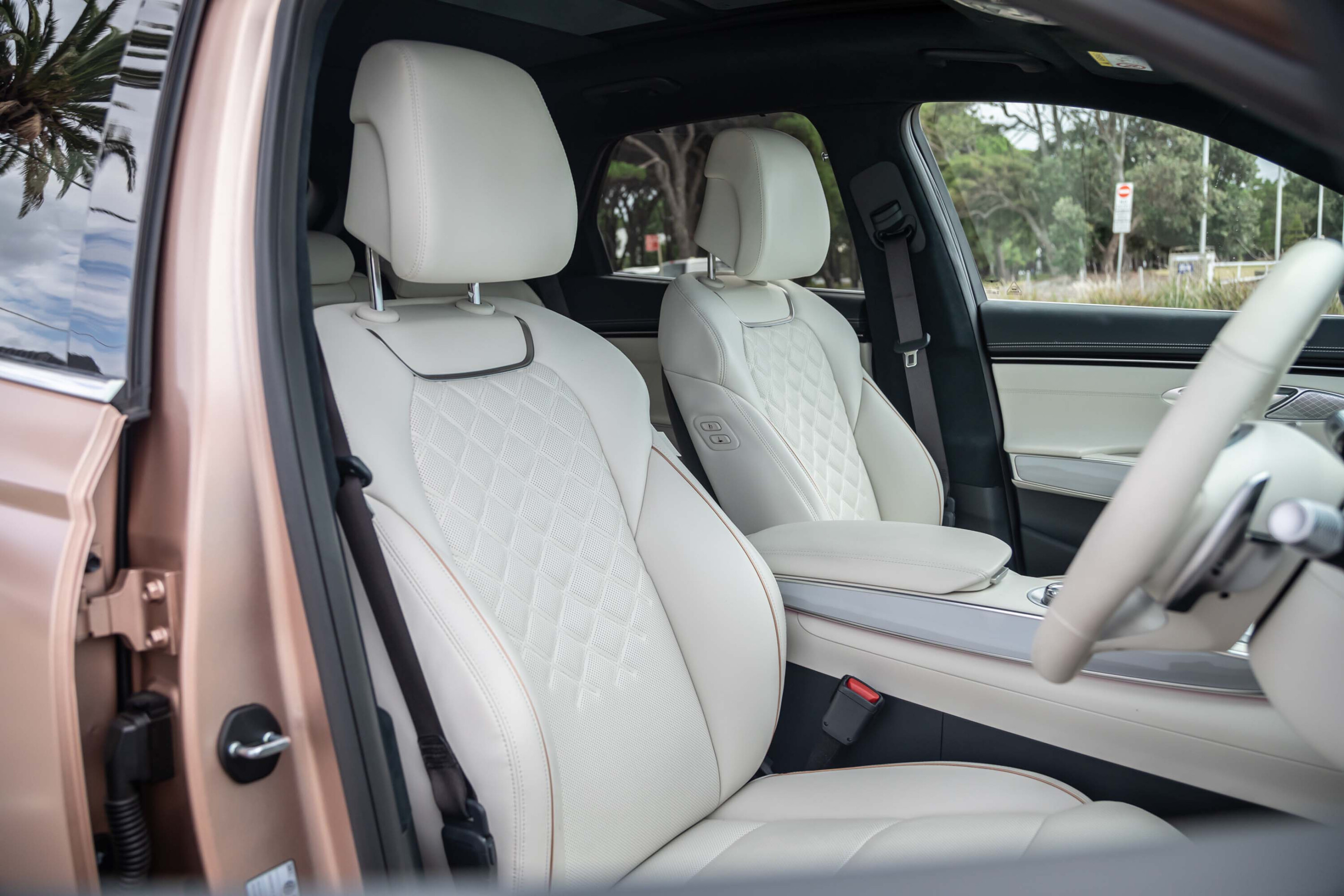
1
You get two cup holders, a wireless charging pad in what looks like another cup holder and a reasonably-sized bin under the armrest. The doors also have small bottle holders.
I was more than once briefly confused by the fact there are two rotary controllers. The bigger one controls the media system and has a fairly iffy scratchpad on top that made me unfeasibly cranky when I tried to write something into the sat-nav.
The second is the gear selector, which works well, but they both look similar in your peripheral vision. I guess you’d get used to it, but it’s an interesting design choice.
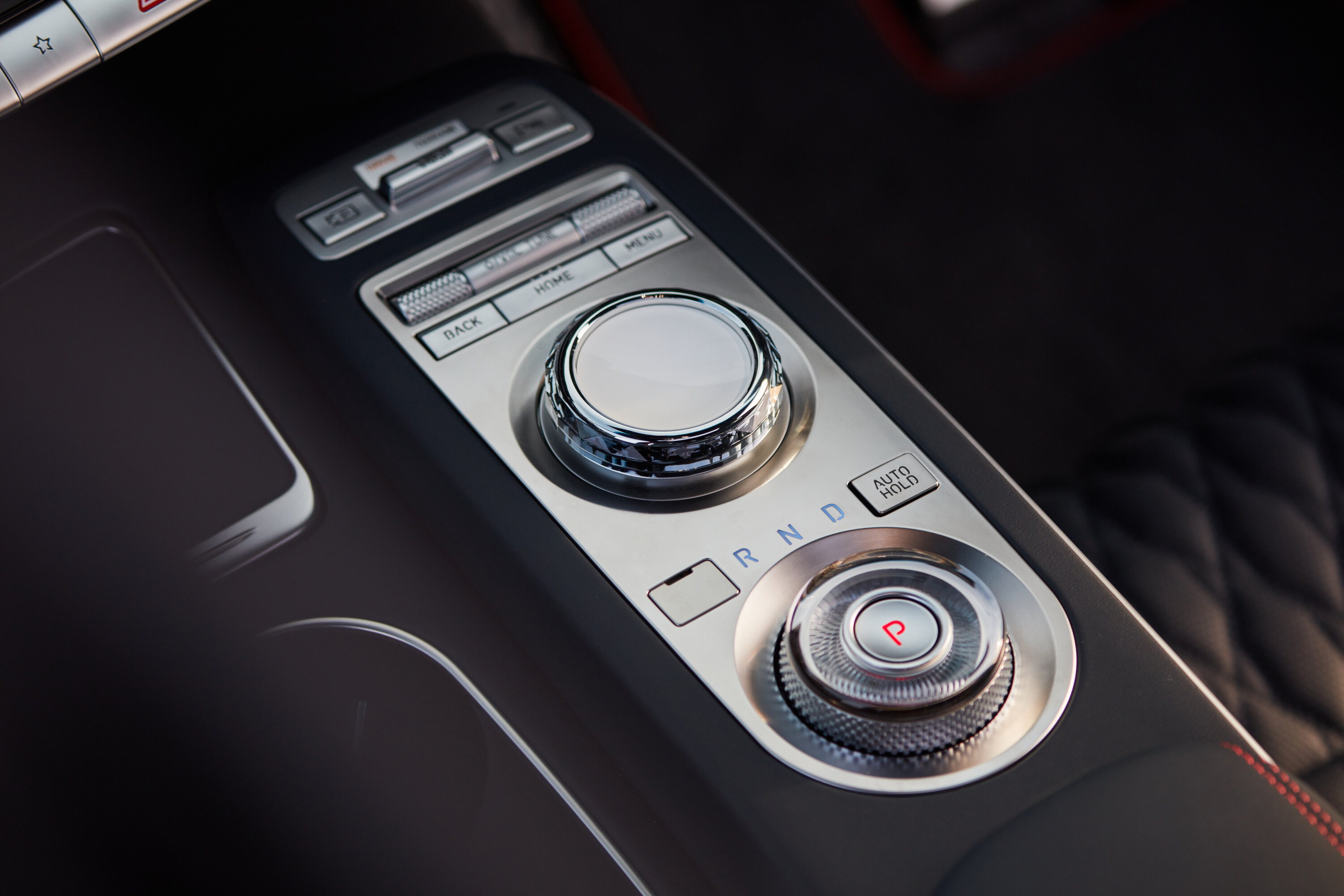
1
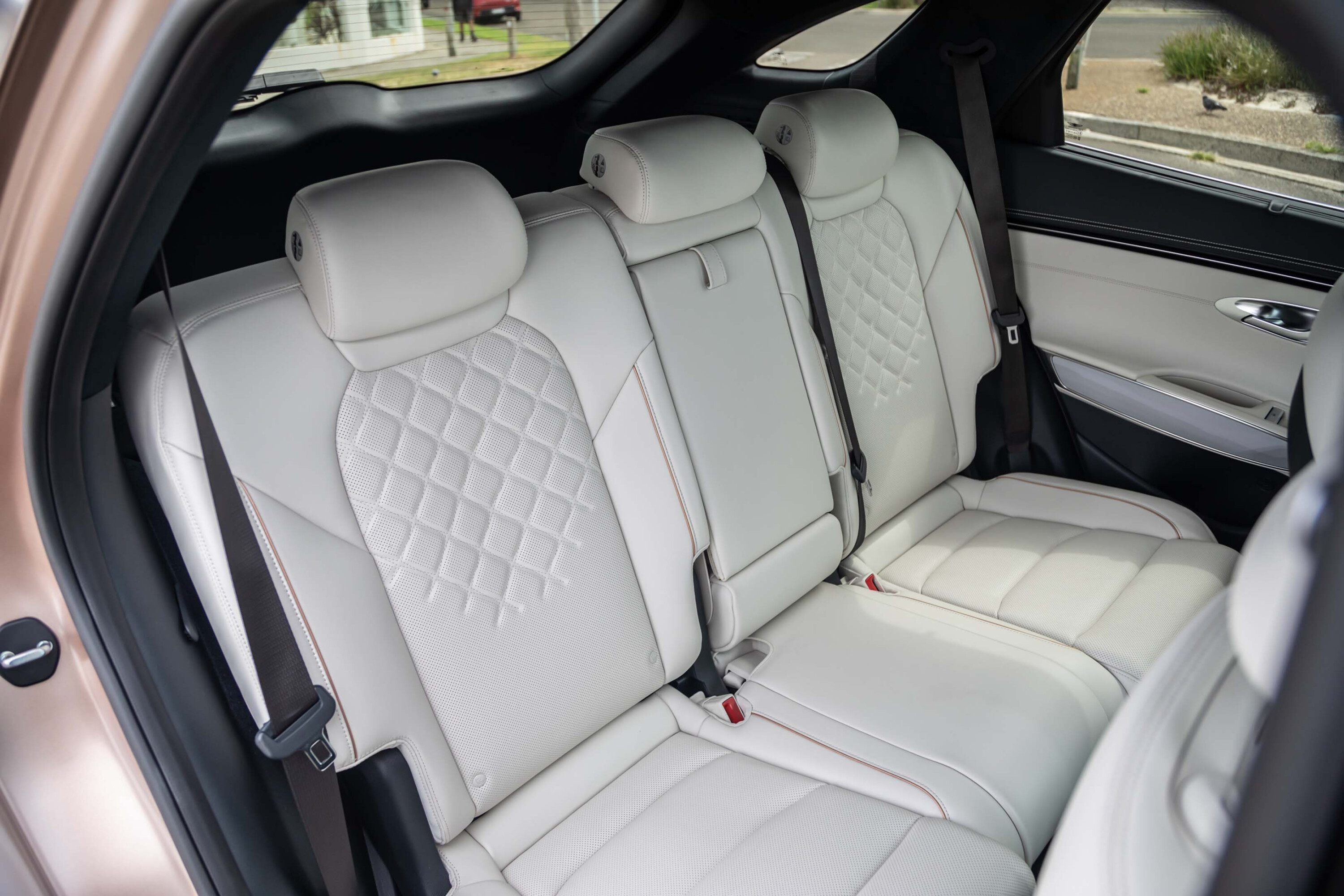
1
You’ll find plenty of space in the back for someone 180cm tall, perhaps even taller.
The seat is well-shaped, there’s plenty of headroom and it’s a very comfortable place to be. The armrest features two cup holders, you get air vents and there are two USB-A ports and a 12-volt supply, in addition to the 240-volt power outlet.
The boot is smaller than that of the ICE cars courtesy of the rear motor pack, with cargo space dropping 39 litres to 502L, which isn’t bad considering the shape of the rear of the car.
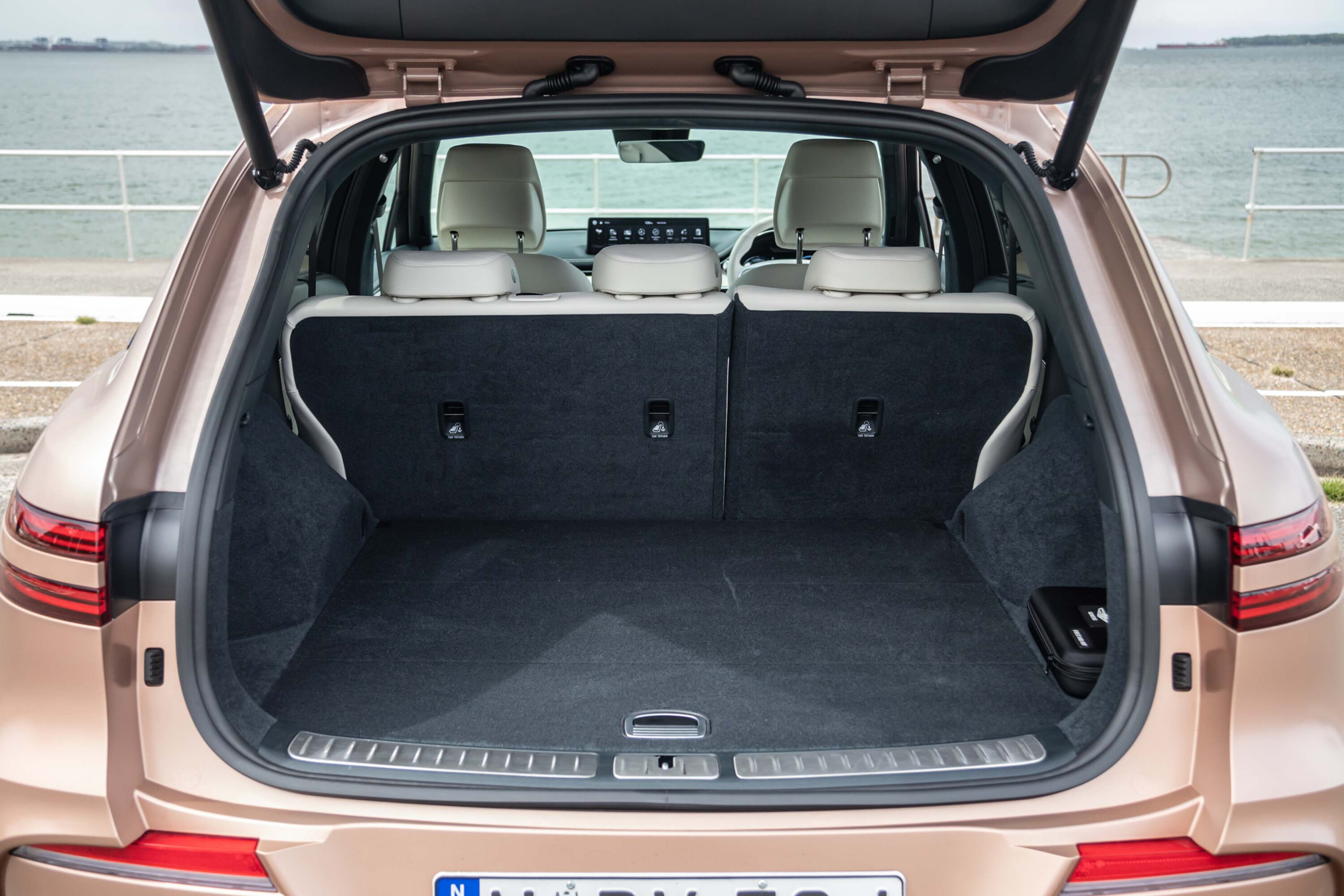
1
Battery and charging
The GV70 packs a 77.4kW lithium-ion battery with an 800-volt power system, meaning a scorchingly fast theoretical charging speed of 350kW.
| 2023 Genesis Electrified GV70 battery details | |
|---|---|
| Maximum battery output | 394kW |
| AC charging time | 7h40m (at maximum) |
| AC charging (maximum) | 10.5kW |
| 50kW charging 10-80 per cent | 1h15m |
| 350kW 10-80 per cent | 18m |
| Charge port | Front grille, CCS Combo2 |
That’s mighty fast but as we’ve seen on other Hyundai and Kia products with the same specs, that means a real-world charge speed of around 250kW, which is still hugely impressive. Hardly any rival can match this outside of the South Korean giant’s walls. Certainly not at this price.
Very few chargers can deliver that kind of juice, of course. There is a much larger number of 50kW chargers around the place that seem more reliable at delivering the promised numbers.
Advice
Australia’s best electric cars for 2023
We’ve tested nearly every EV below six figures in Australia to rank the best on sale today
Like its other-branded siblings, the Genesis has vehicle-to-load (V2L) capability with a maximum output of 3.6kW at up to 15 amps.
To give you an idea of how much that is, it will run a reasonably hefty coffee machine as well as a TV, fridge, that kind of thing.
Based on those numbers (and ignoring the realities of attempting to run an entire house with a single domestic plug) it would power a house for about 98 per cent of the time, only faltering when the oven went on. Point is, that’s ample power to run a campsite or very fancy picnic for several hours.
You get one external V2L outlet (it plugs into the charge port and reverses the direction of energy flow) and one inside the car.
The charge port is in the front grille – blanked out for aero performance, naturally – on the right-hand side as you’re looking at the car. It’s handy for nosing into parking spaces with a charger located at the end.
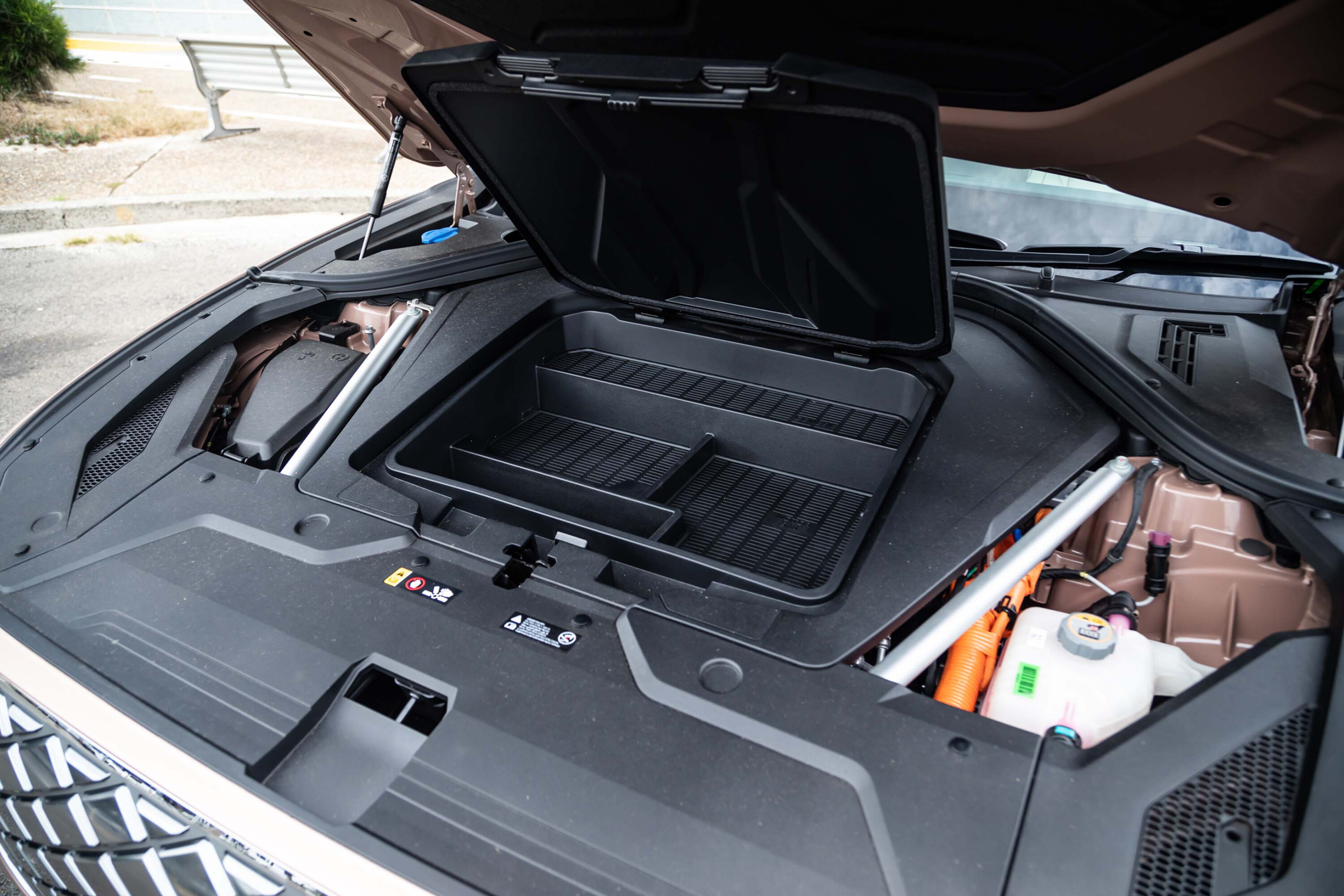
1
What is it like to drive?
The first thing you need to know about the Electrified GV70 is that it’s 2300kg. That’s a lot of weight for a mid-size SUV.
The second thing you need to know is that with up to 360kW and 700Nm available, it doesn’t matter very much.
| 2023 Genesis Electrified GV70 drivetrain | |
|---|---|
| Drive | all-wheel |
| Motor | dual electric motors |
| Power front/rear (boost) | 160kW/160kW (180kW/180kW) |
| Combined power (boost) | 320kW (360kW) |
| Torque front/rear | 350Nm/350Nm |
| Combined torque | 700Nm |
| 0-100km/h | 4.2sec (claimed) |
| Transmission | single-speed reduction gear |
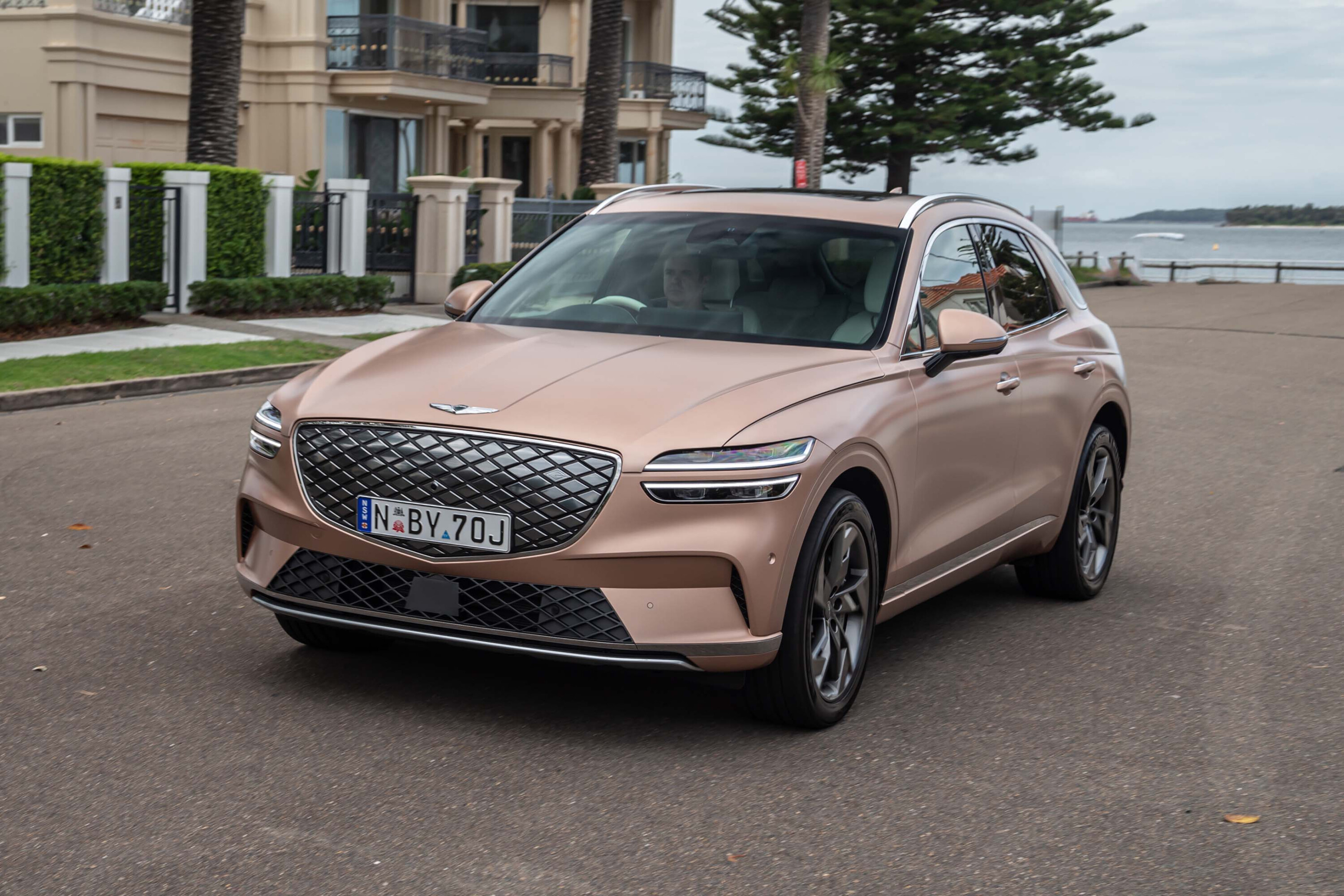
1
Obviously, that’s not strictly true – it does matter because it’s going to hit the range, just as being a high-riding SUV does, 0.29 drag coefficient or not.
That 360kW headline figure is not always available, either – there’s a Boost button on the lower steering wheel spoke that unleashes an extra 20kW at each end. But really, 320kW and 700Nm is a pretty acceptable pair of numbers before you hit the button.
In normal running – and if the diagrams are to be believed – the GV70’s rear tyres do most, if not all, of the work until throttle or grip demands call the fronts into action. That has a couple of benefits – when you do floor it you’ll notice mild torque steer, the front wheels wandering across the lane a little. So you have less corrupted steering although you’d never call this set-up one of the greats.
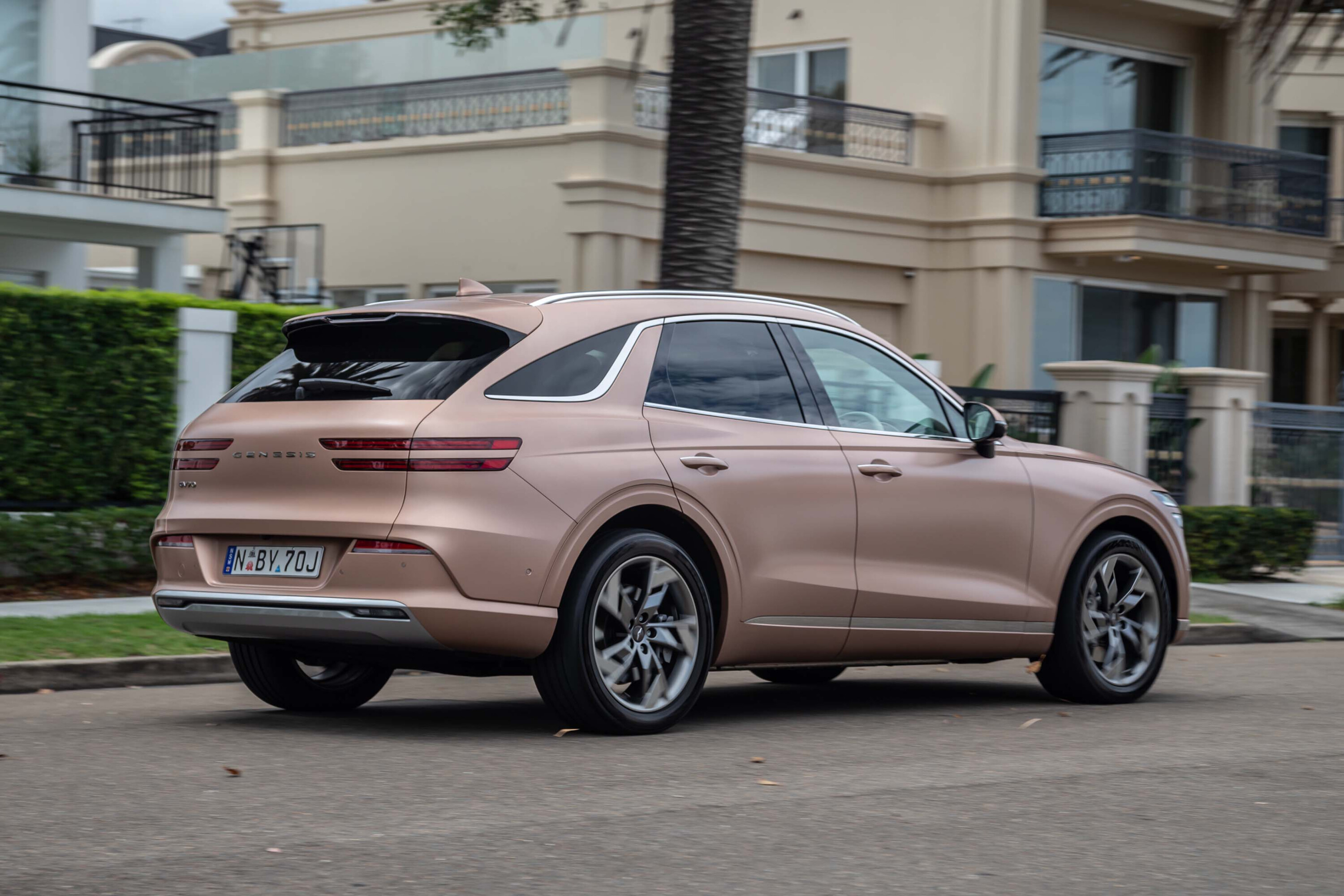
1
It also means the electrical draw is lower, helping extend the urban range. It’s remarkably efficient around town, better than the lower, lighter Jaguar I-Pace I drove recently, meaning a similar everyday range from a smaller battery.
This is an incredibly comfortable car to drive around in. You get plenty of vision out and the suspension in Comfort mode reads the road ahead, continually adjusting accordingly. Every now and then there’s a moment of awkwardness in the ride, but it’s not intrusive and is quickly gathered up.
Ride comfort never really deteriorates, even in Sport mode, which is where I left the car for most of the week I had it. If anything I found the Normal and Eco modes just too soft, but most folks who buy this kind of car will likely be perfectly happy with it.
Sport mode also sharpens up the throttle, which my wife and I both agreed was better.
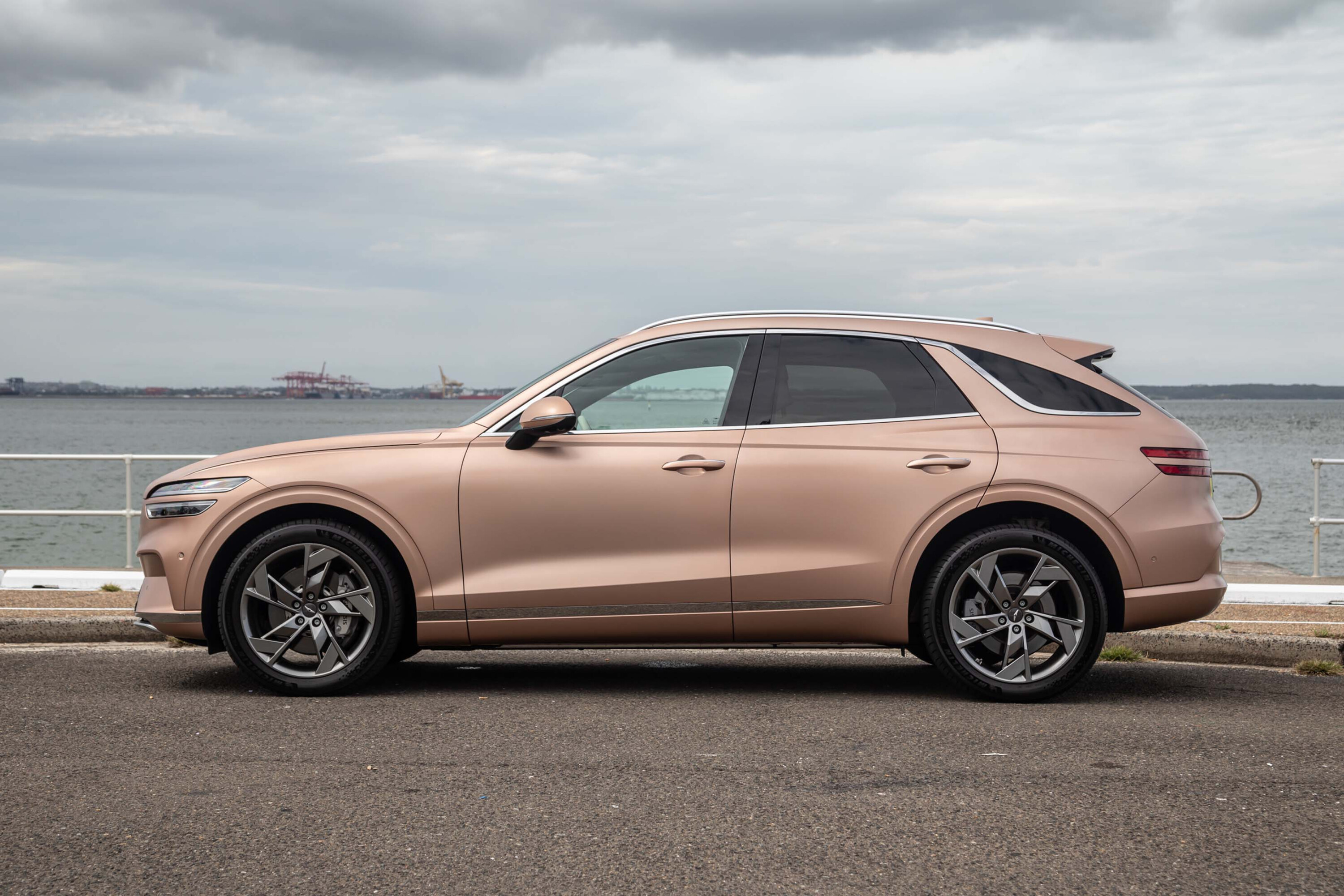
1
At all times, though, there is an astonishing turn of speed lurking, just waiting for pedal to meet carpet.
As these cars mature, engineers have discovered that neck-snapping acceleration isn’t actually that much fun, so the way the GV70’s power and torque roll in is smooth and predictable.
It’s great fun to thread through some bends, the trick of course being to ensure you’ve got the highest level of regenerative braking available to you and using the slow in/fast out approach. You can never get away from the feeling of weight, but the car does its best to mask it most of the time.
The Electrified GV70 is pretty much untouchable in traffic, so unless you’re competing with another powerful EV, that gap is yours. Out on the freeway, it’s super quiet – aided by noise cancelling tech – and with the stereo working its magic through all those speakers, very relaxing because there are lots of driver aids in the form of adaptive cruise control and various lane-keeping features.
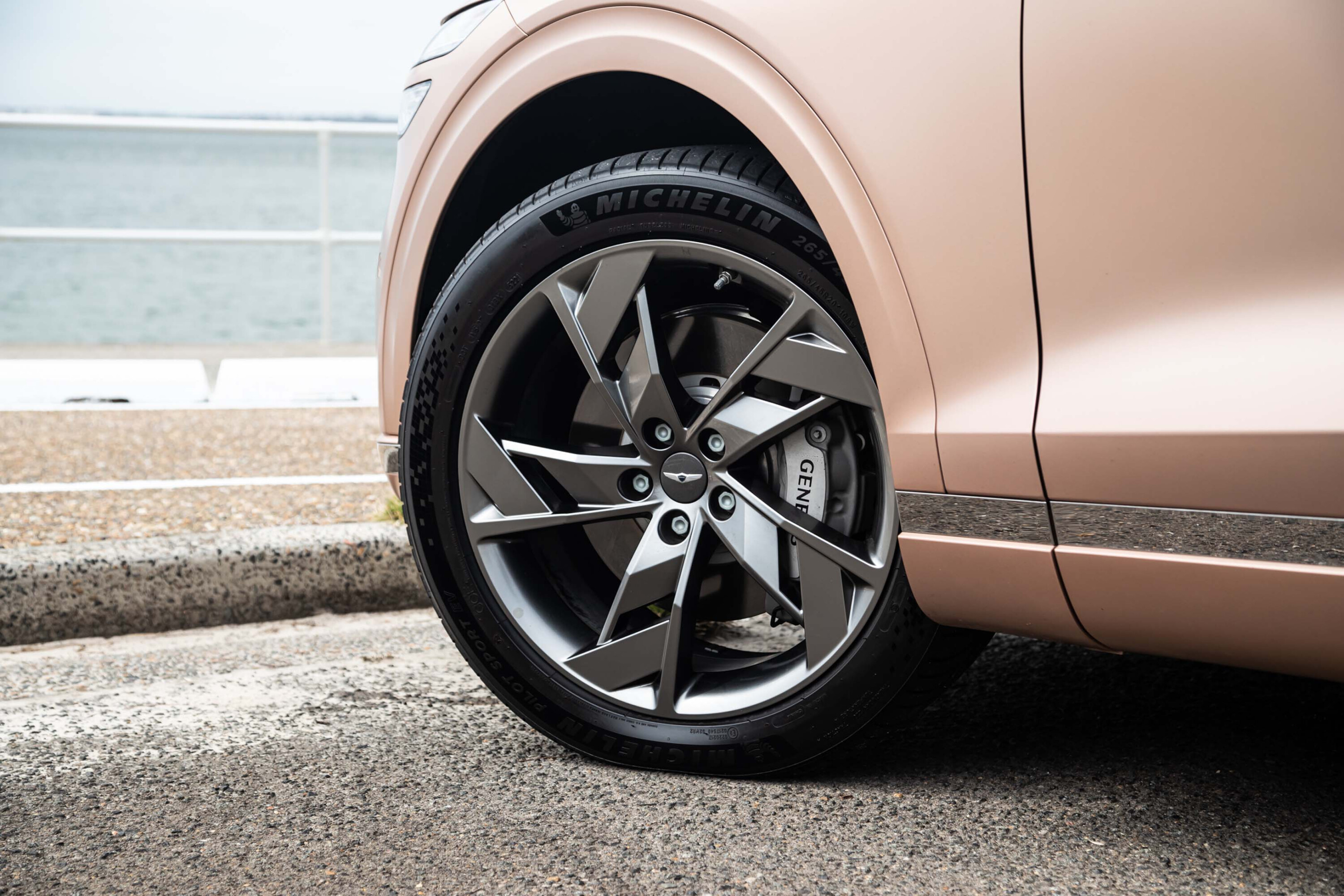
1
I’d like some more accuracy from the steering as I often found myself drifting to either side of the lane and I wasn’t always certain about what the wheels were doing. But given the vibe of this car is luxury, it’s more want than need.
What could improve the is sat-nav’s charging station display. When you’re running in a split screen it regularly updates where your nearest charging station is. Underneath that display is a button to search for it but some don’t actually seem to appear in the maps when it switches to them.
The split screen was adamant about the existence of a nearby Chargepoint charger but the main screen didn’t seem so sure. It also didn’t know about our nearest charger nor that the ones at Miranda Westfield aren’t equipped with CCS2 plugs. Or about the Evie charger at Lawson.
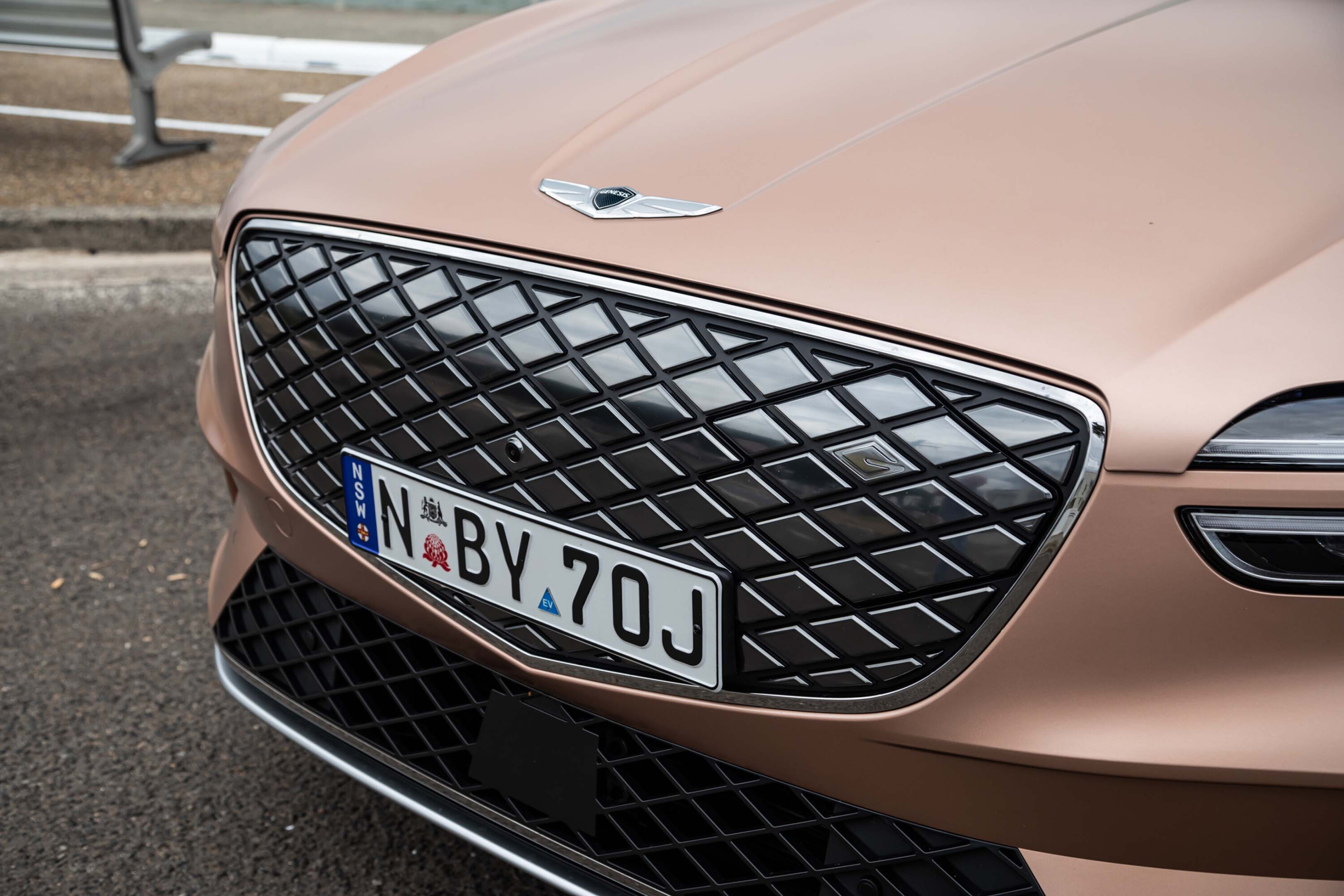
1
How is it on electricity?
Genesis claims a WLTP driving range of 445km – so by the car’s own admission, it’s slightly shy of that with a full battery. Genesis also claims a power consumption figure of 19.9kWh/100km.
| 2023 Genesis Electrified GV70 energy consumption | |
|---|---|
| Energy consumption (WLTP, claimed) | 19.9kWh/100km |
| Energy consumption on test | 19.1kWh/100km |
| Claimed range (WLTP, claimed) | 445km |
| Estimated real-world range | 391km |
This isn’t bad for a fairly large and high-riding SUV. I charged this Genesis three times, all of which using the far more readily available 50kW charging stations dotted around the place.
I avoided Chargefox because I’m not a gambling man and instead twice used my local Exploren charger which gave me a steady 50kW right up to 90 per cent of battery capacity, or 380km. The third charge was at Evie’s Lawson charger, covered below.
My test loop out to the Blue Mountains and back takes in long stretches of 80km/h and 110km/h road and, of course, a steepish climb between Emu Plains and Glenbrook. Yeah, so what? Well, both of these types of driving consume a lot of juice.
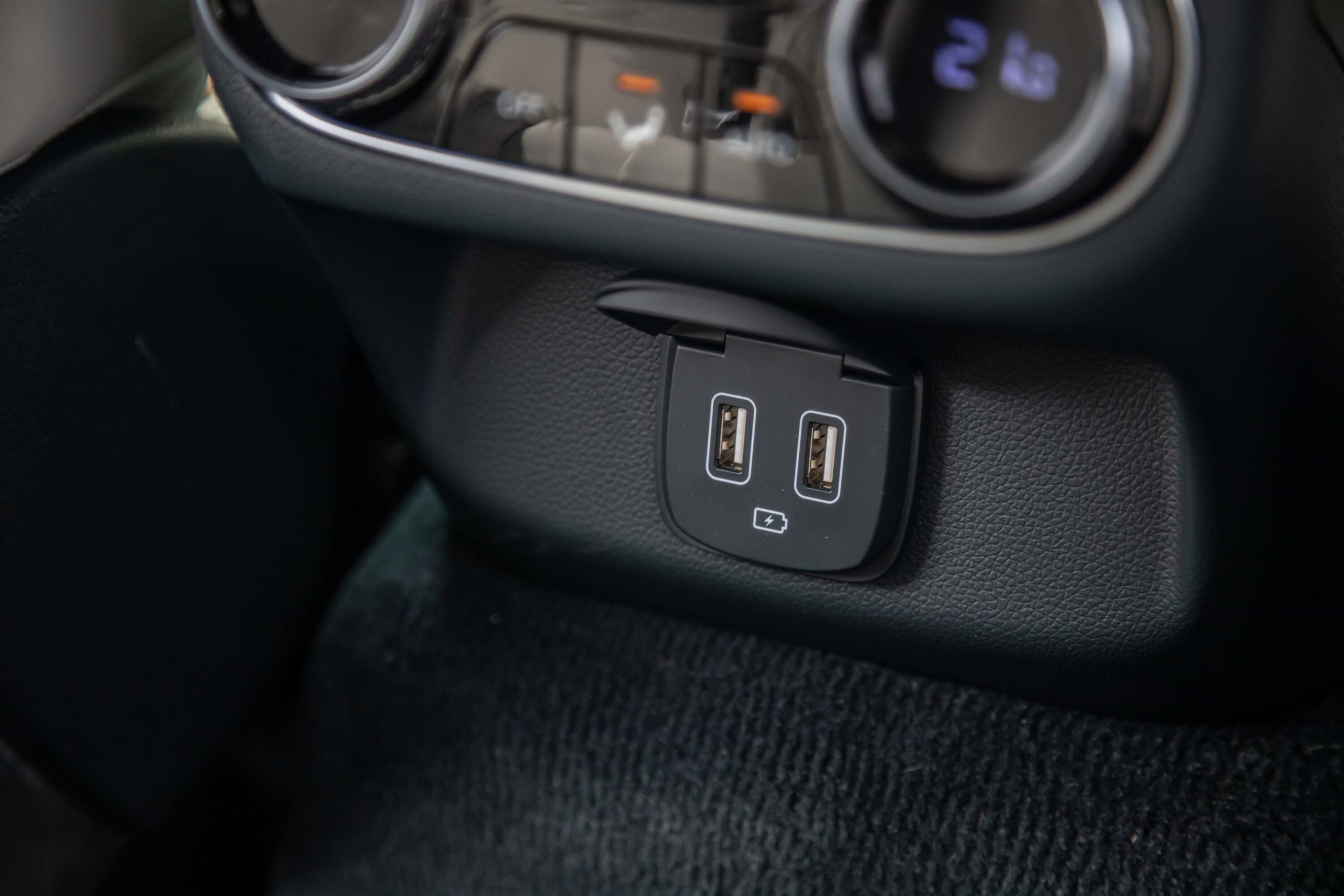
1
Between Sydney and Katoomba, the car told me it had consumed energy at a rate of 24.3kW/h, meaning a 300km range.
We left our lunch spot with a 49 per cent state of charge. On our way back down, we did the electric equivalent of a splash and dash at Evie’s Lawson charging station. As a side note, this is the rare occasion where a charge station isn’t secreted in a parking dungeon or a smelly corner of a petrol station, but straight across the road from the awesome Black Cockatoo bakery.
It also has two CCS2 and two CHADeMo rather than one of each, meaning I could charge while the Kona EV charged alongside, both ticking along at 50kW.
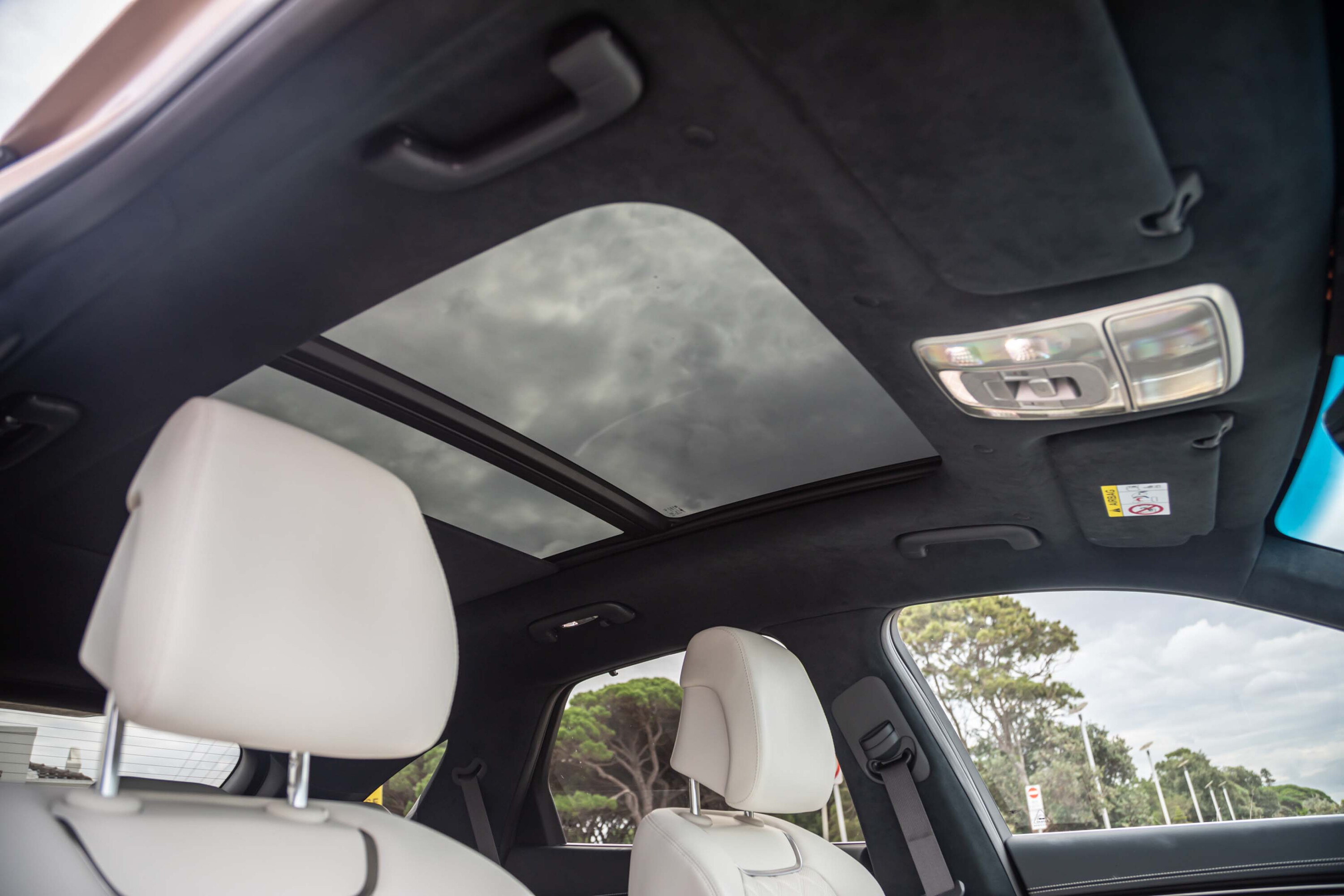
1
At the charger, we took on 17.816kWh in 21 minutes at a cost of $8.02. This took us back up to around 70% of charge, and as we headed down the mountains, that didn’t budge until we were back on the flat – a distance of 32km.
Gravity is your friend in an EV, at least when you’re going in the direction it prefers. We hadn’t expended any more energy than we’d recovered for nearly 50km.
We could easily have made it home without charging and with a rough back-of-the-envelope calculation, we’d have made it with an easy 180km in hand after starting the day with about 380km in the battery at 90 per cent charge.
That’s a lot of numbers, sure, but I found it all quite illuminating.
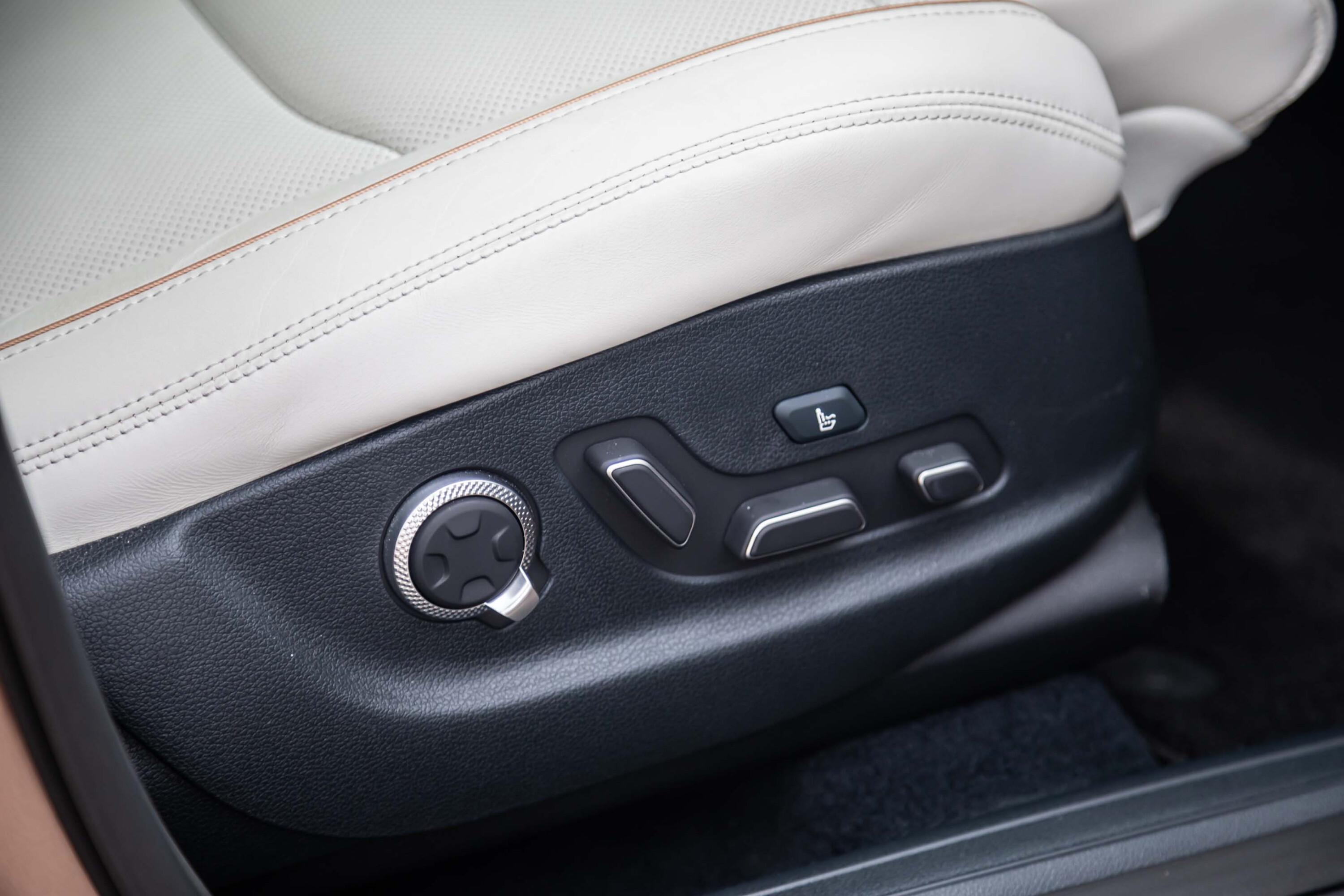
1
How safe is it?
The ICE version of the GV70 scored a five-star ANCAP safety rating but the Electrified version is unrated. There’s no shortage of safety gear, however:
| 2023 Genesis Electrified GV70 safety features | |
|---|---|
| 8 airbags | Lane-keep assist |
| ABS | Leading vehicle departure alert |
| Active bonnet | Multi-collision brake |
| Blind-spot monitoring and cameras | Parking collision avoidance assist |
| Cross junction AEB | Reverse AEB |
| Cross-traffic alert | Reverse cross-traffic alert |
| Driver attention detection | Speed limit assist |
| Forward auto emergency braking | Speed sign recognition |
| Lane following assist | Stability and traction controls |
The generous airbag count includes one for the driver’s knee and a front-centre airbag to try and prevent head clashes in a side impact.
Cyclist and pedestrian detection is part of the forward auto emergency braking package.
Two sets of ISOFIX points and three top-tether anchors take care of the baby and child seats.
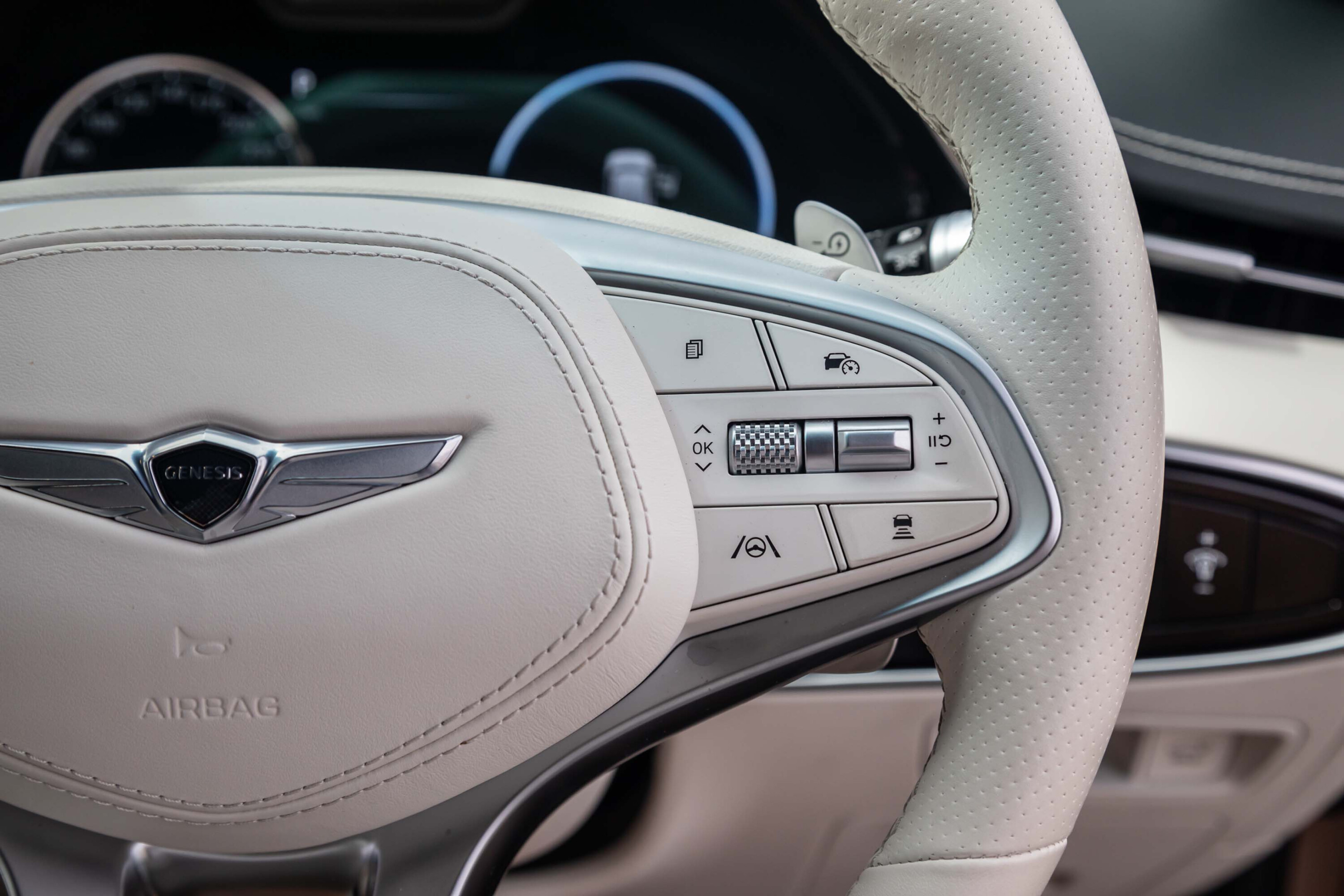
1
MORE
ANCAP
Warranty and running costs
Genesis offers a five-year, unlimited-kilometre vehicle warranty with a separate eight-year/160,000km warranty for the battery.
Servicing is free for the first five years and you’ll be expected to visit every 12 months or 15,000km.
Roadside assist and valet are available for a decade, which is such a long time it barely seems possible. Genesis will come and get the car from you for a service if you live within 70km of the Sydney, Melbourne or Brisbane CBDs, leave you with a loaner and yours will return serviced and washed.
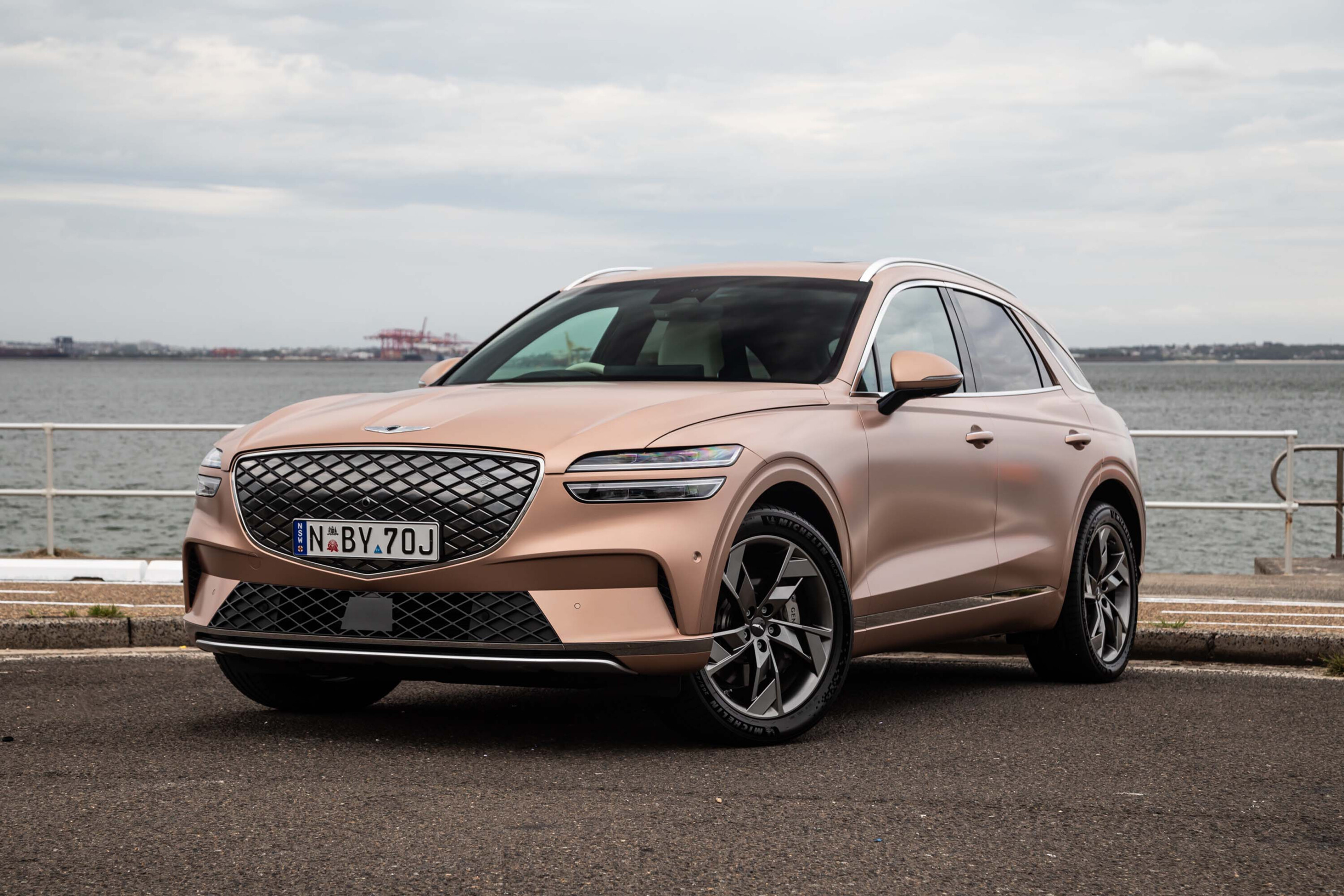
1
VERDICT
The Genesis Electrified GV70 is a terrific car. Fast, incredibly quiet and impressively comfortable, it looks and feels like a proper luxury SUV.
The price may be a sticking point for some – Genesis is still a new brand and there are plenty of established names within striking distance. Having to pony up that kind of cash and wait is another.
Still, this car outsold the Jaguar I-Pace’s 2022 annual total in just three months on sale, so maybe it’s a discovered gem after all.
MORE
Everything Genesis
| 2023 Genesis Electrified GV70 specifications | |
|---|---|
| Body | 5-door, 5-seat medium SUV |
| Drive | all-wheel |
| Motor | dual electric motors |
| Power front/rear (boost) | 160kW/160kW (180kW/180kW) |
| Combined power (boost) | 320kW (360kW) |
| Torque front/rear | 350Nm/350Nm |
| Combined torque | 700Nm |
| 0-100km/h | 4.2sec (claimed) |
| Transmission | single-speed reduction gear |
| Battery size | 77.4kWh lithium-Ion |
| DC charging speed (maximum) | 350kW |
| AC charging speed (maximum) | 10.5kW |
| Weight | 2310kg (tare) |
| Front suspension | MacPherson strut, multi-link |
| Rear suspension | multi-link (5 links) |
| L/W/H | 4715mm/1910mm/1625mm |
| Wheelbase | 2875mm |
| Brakes | 160m ventilated discs front/345mm ventilated discs rear |
| Tyres | 265/45 R20 Michelin Sport EV |
| Wheels | 20-inch alloy |
| Price | $127,800 + on-road costs |
