
This story was first published in 2019, and the ZF two-speed transmission has since appeared in the Porsche Taycan and Audi E-Tron GT. Indeed, ZF has now also announced an even newer electric motor with an integrated planetary gearbox.
Snapshot
- PHEV with up to 340kW outputs
- Promised 100km electric driving range
- Dual electric motors provide AWD
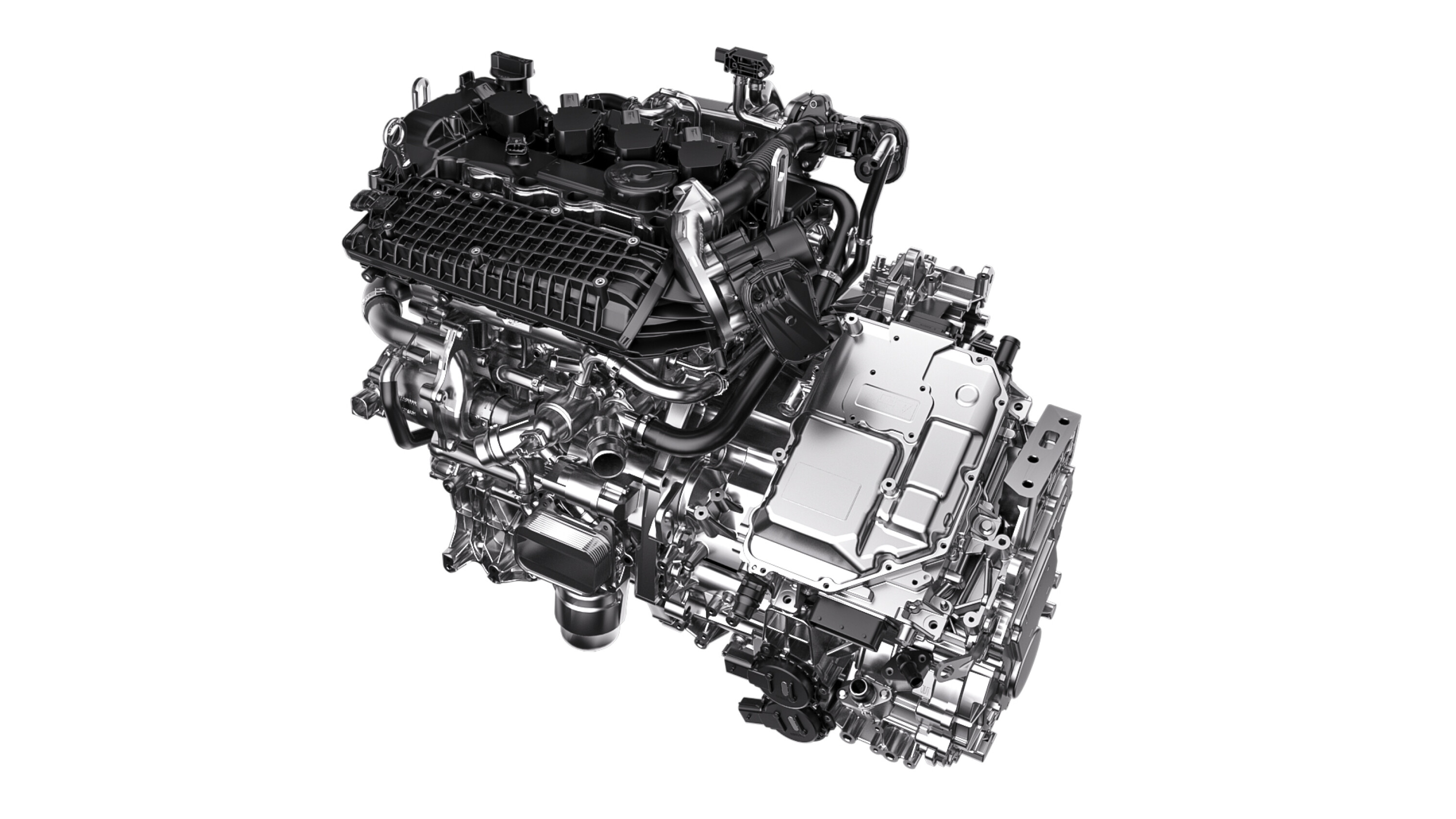
GWM has detailed its next-generation plug-in hybrid powertrain – called Hi4 – claiming up to 340kW, AWD with torque vectoring capability, and 100km of electric-only driving range,.
Exact details of the combustion and electric components still remain under wraps, but it sounds as though the system will be constructed around either 1.5-litre naturally-aspirated, or turbo-petrol four-cylinder petrol engines depending on the application.
GWM says its new powertrain will suit vehicles from the A segment to the C segment – that covers what we know in Australia as micro cars (Fiat 500, Kia Picanto) up to small-medium cars and SUVs such as the Volkswagen Golf, Toyota RAV4, and Kia Seltos.
1
Currently, GWM only sells traditional hybrids (in the shape of H6, Jolion, and Tank 300) in Australia, with its plug-in hybrid nous headed mostly to Europe in WEY branded SUVs.
However, as the Hi4 press release was distributed via GWM’s Australian arm, we can consider the technology may be under consideration for local introduction.
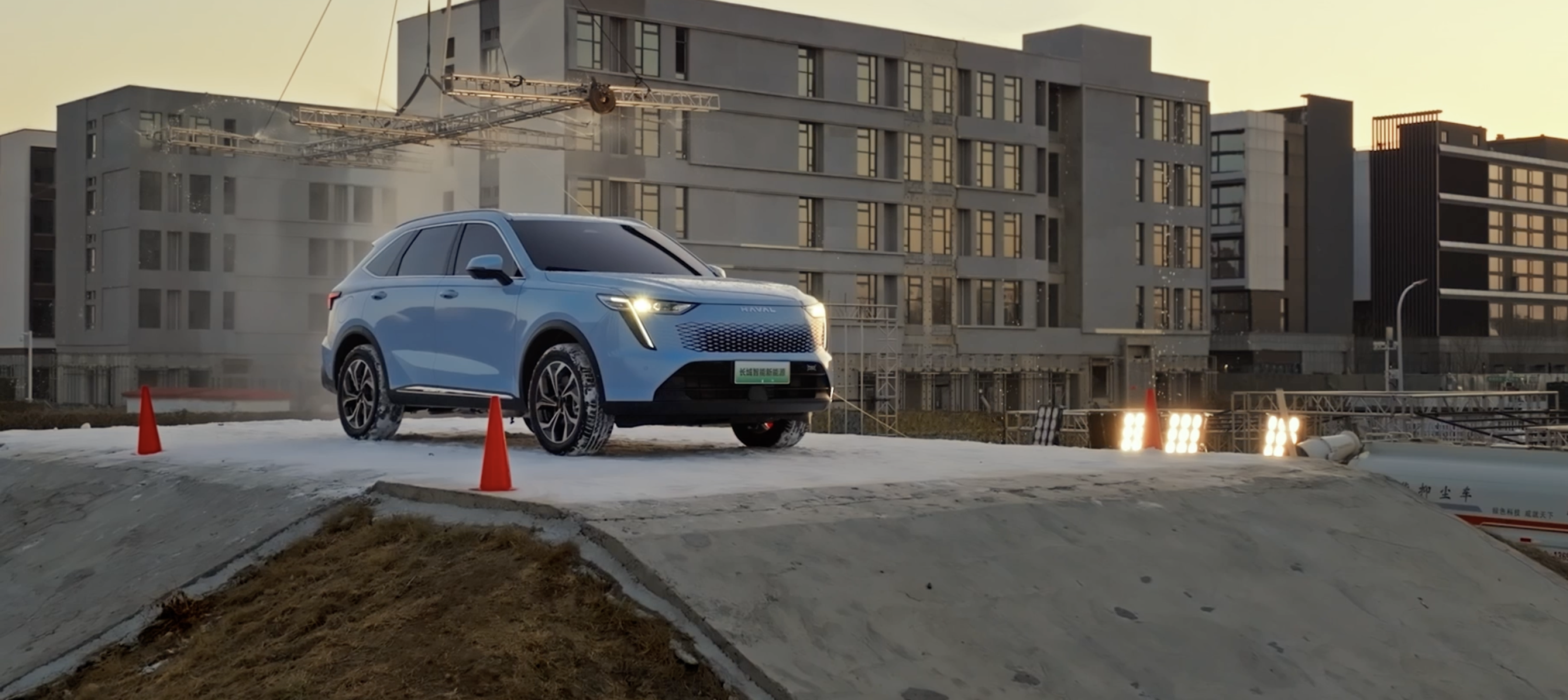
The promotional video also features what appears to be a heavily facelifted baby blue Haval H6 medium SUV though it is, in fact, a new model for the Chinese market known as the Xiaolong Max.
2
Hi4 powertrain details
Helping achieve the proposed 340kW (a significant step up on the Mitsubishi Outlander PHEV’s 185kW), is a system that GWM claims is industry-leading when it comes to thermal efficiency (41.5 per cent) thanks to direct injection and advancements in exhaust gas recirculation (EGR) tech.
With a lithium-ion battery on board (that we have to assume is around 20kWh in capacity), GWM claims vehicles will be capable of 100km electric driving range. Charging will take 30 minutes from 30-80 per cent, according to the carmaker.
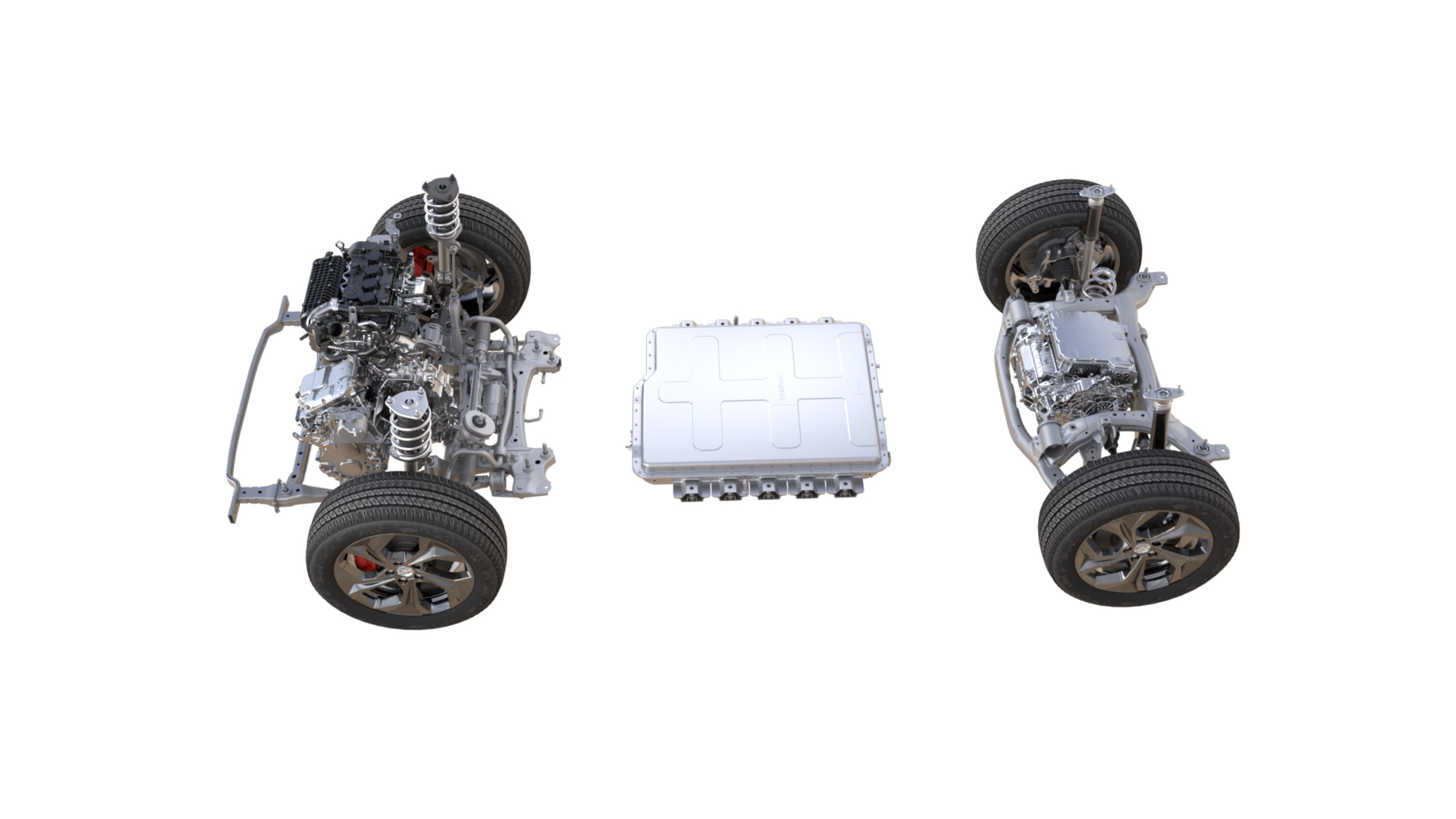
Not unlike Mitsubishi’s Outlander PHEV, GWM’s Hi4 system employs two electric motors, one at the front connected to the combustion engine and front wheels.
1
Haval gestures at an all-new transmission, but it sounds as though the Hi4 system will use a version of the two-speed dedicated hybrid transmission (DHT) that comprises a low-ratio launch gear and a high ratio cruising gear, with the electric motor’s flexible power delivery able to fill in the gaps during acceleration.
Much like Toyota’s series-parallel ‘E-four’ AWD there’s no physical connection between the front and rear motors, the rear electric motor is powered by the battery exclusively. In total, GWM claims there are nine driving scenarios that the car will cycle through to select the most efficient.
With torque vectoring – GWM calls intelligent Torque Vectoring Control for iTVC – shifts power between the front and rear axles and uses brakes to minimise slip across the axles, aiding performance in slippery conditions.
MORE
Everything GWM
MORE
Everything Haval
The Polestar 4 will be unveiled in Shanghai next week, the EV-only brand has confirmed
When it enters production, the Polestar 4 will be the Chinese-owned Swedish brand’s fourth model – as its name suggests – but only the third to be offered as an ongoing global model. (The Polestar 1 was a limited-run performance coupe.)
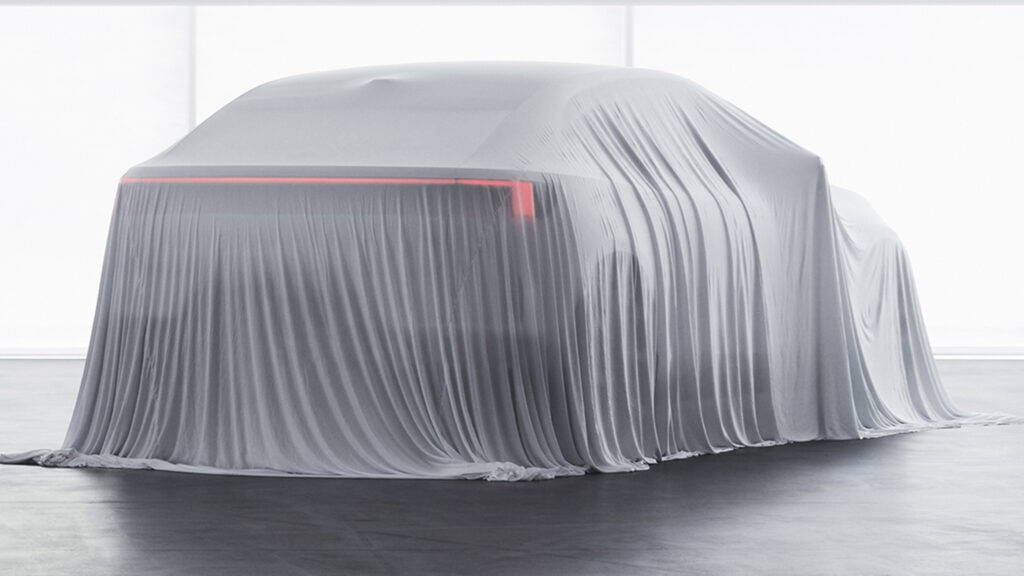
Previewed a number of times since first appearing beneath a sheet in June 2022, the electric Polestar 4 SUV will wear a coupe-like shape.
The new model’s final dimensions have not been confirmed, but, in terms of size and space, the 4 is expected to sit – somewhat confusingly – between the sedan-shaped 2 and the upcoming Polestar 3 large SUV.
As for clues, Polestar has offered the following details alongside today’s teaser image.
Comments from Polestar
“Design cues and sustainability enhancements initially showcased in Polestar’s concept cars will make their production debut in Polestar 4. The electric SUV coupé will also be the fastest Polestar production car to date.”
Thomas Ingenlath, Polestar CEO, said: “Polestar 4 is not simply a modified version of our first SUV. Instead, we reconsidered the entire design to create a new breed of SUV coupé.”
What’s next?
The Polestar 4 will be followed in the coming year by the heavily previewed Polestar 5 four-door coupe and the hotly anticipated Polestar 6 roadster.
Catch up on the Polestar 4 in our evolving story below, and watch for the big reveal to come on April 18.
The story to here
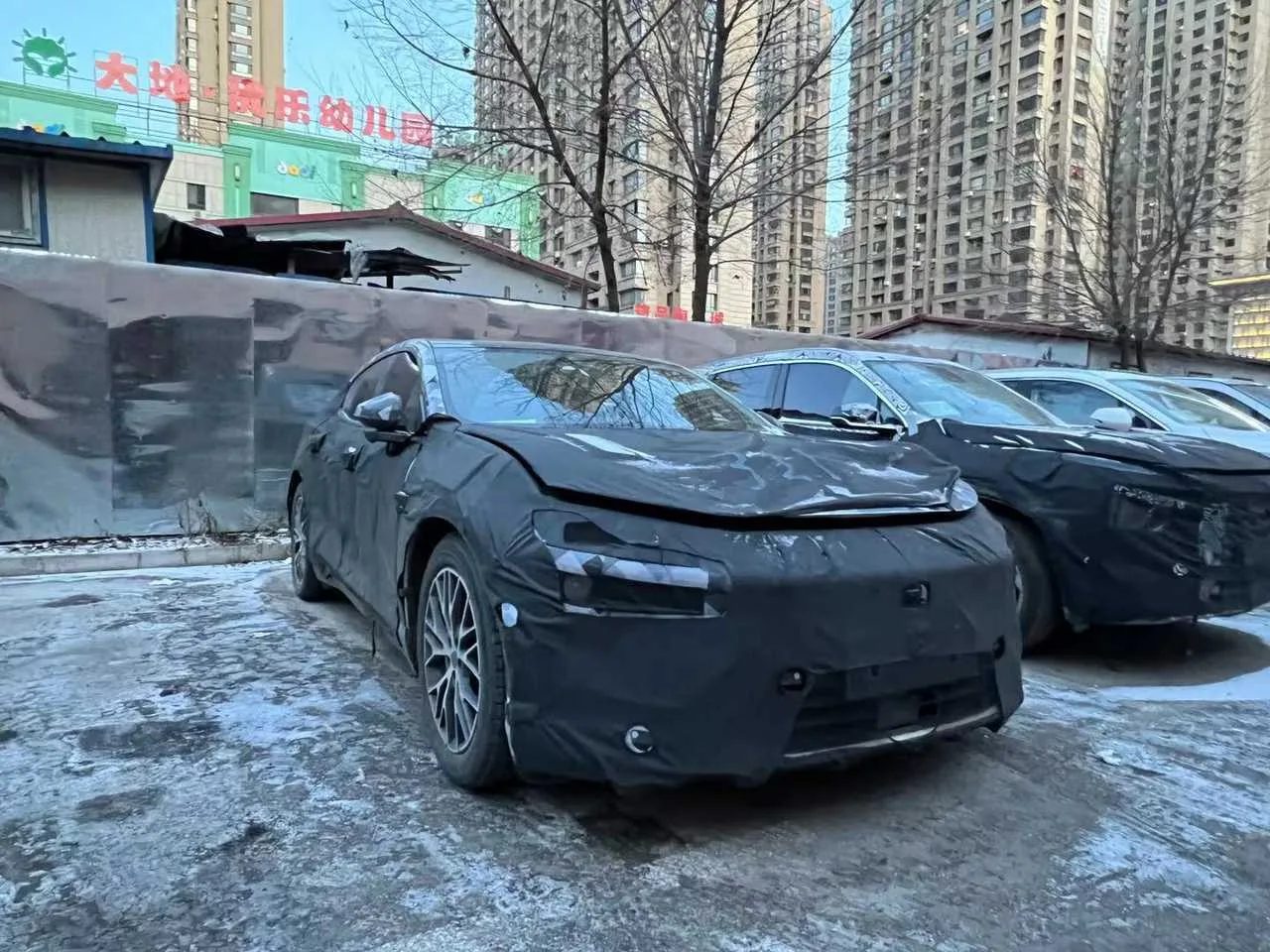
January, 2023: The Polestar 4 electric coupe SUV has been spied testing in China for the first time, according to a Weibo user.
Snapshot
- Polestar 4 coupe SUV potentially spied for the first time
- Smaller, lower, sleeker footprint compared to Polestar 3
- Expected to debut this year
It appears to have a smaller, lower footprint than the forthcoming Polestar 3 large SUV, with a sloping crossover-style roofline similar to the Jaguar I-Pace and Kia EV6, and the same split headlight signature as previewed with the Polestar 5 electric sedan set to follow in 2024.
The Sino-Swedish automaker is expected to debut its fourth vehicle later this year with a similar powertrain setup to its Polestar 3 counterpart.
1
The photographer snapped it next to the Zeeker 001 and other Geely models – all corporate stablemates to Polestar and Volvo Cars.
For reference, the Polestar 3 is based on the dedicated SPA2 electric vehicle platform shared with the flagship Volvo EX90 luxury electric SUV, using a 111kWh battery to deliver an estimated 610 kilometre driving range on the WLTP testing cycle.
On the flagship Long Range Dual Motor variant with the optional Performance Pack fitted, it produces 380kW of power and 910Nm of torque and is all-wheel drive.

1
Before these bespoke Polestar EVs, though, a major update to the Polestar 2 liftback is coming locally in the second-half of this year.
It brings a revised front grille design, larger battery on the long range variants, shifts to rear-wheel drive on single motor configurations, more power, faster charging and more standard safety assistance equipment, but adaptive cruise control will still be an option under the Pilot Pack.
MORE
Everything Polestar
The 2024 Mini Cooper hatch has been officially previewed ahead of its full reveal.
Snapshot
- 2024 Mini Cooper hatch revealed in official images
- Mini has yet to detail technical information; full reveal soon
- Expected in Australia next year
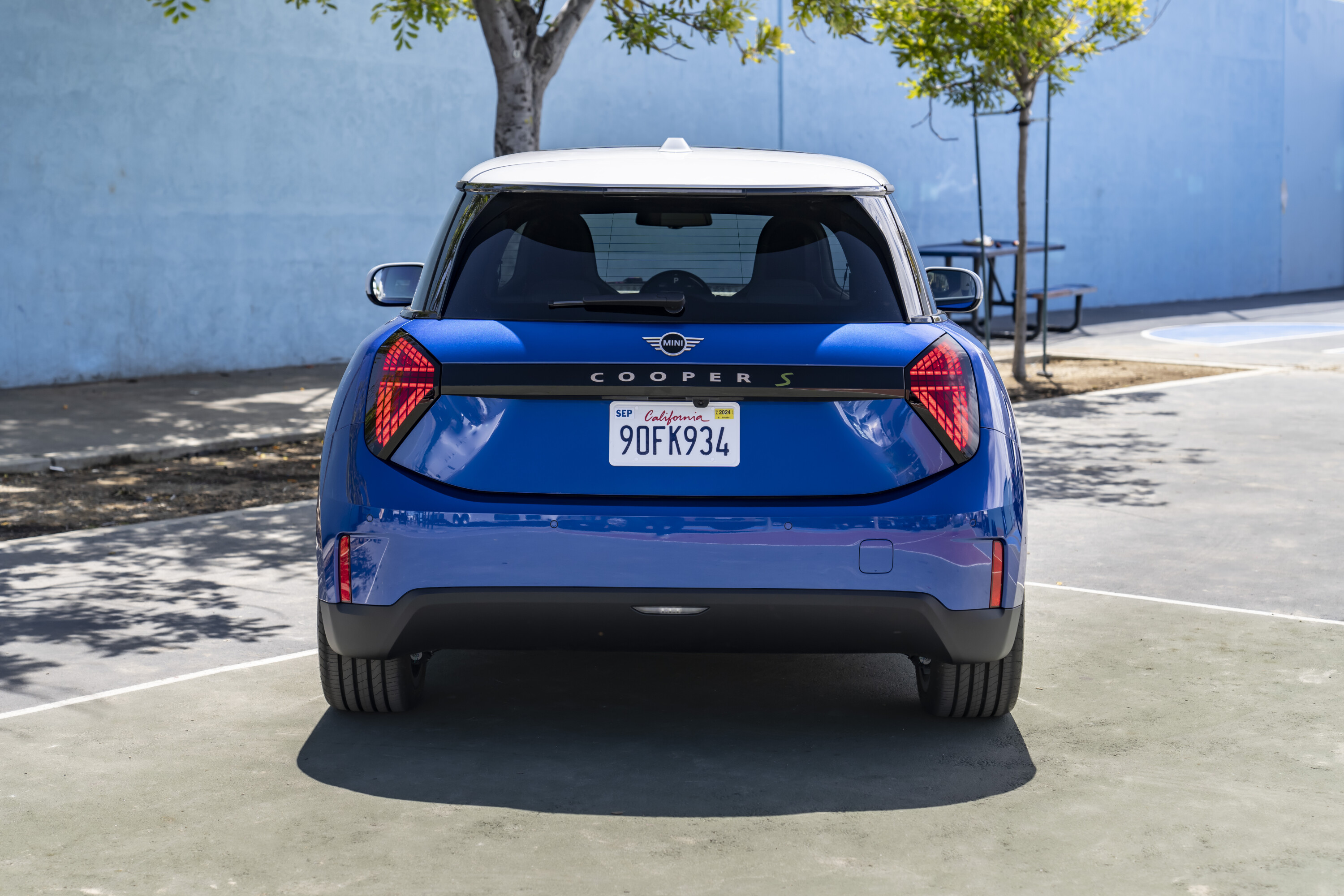
Following leaked images that surfaced online last week during a photoshoot in the United States, Mini has released four official pictures to preview the next-generation of its iconic hatch.
Mini has yet to detail technical information for its new Hatch – now solely badged as the Cooper – with a proper reveal expected soon.
1
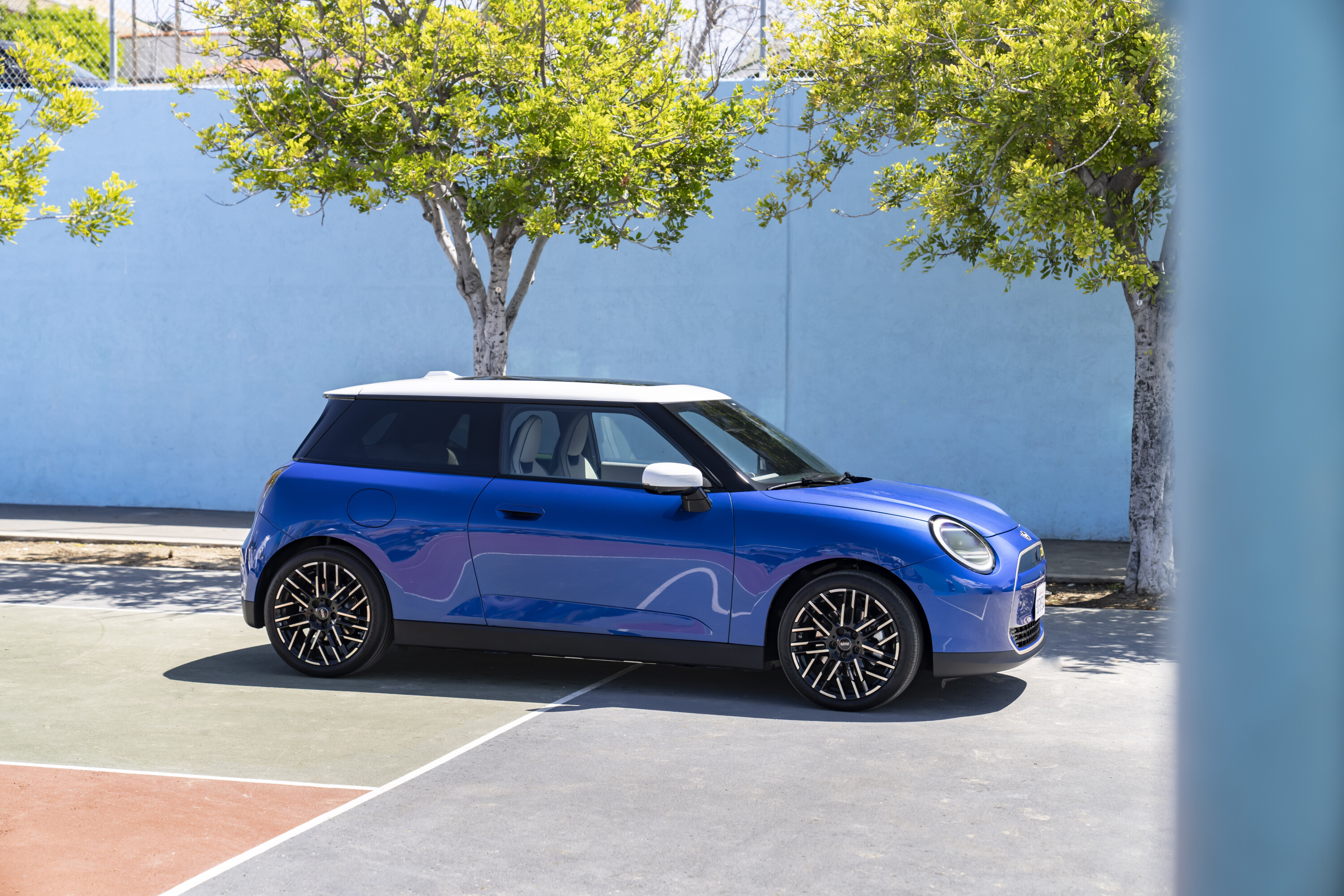
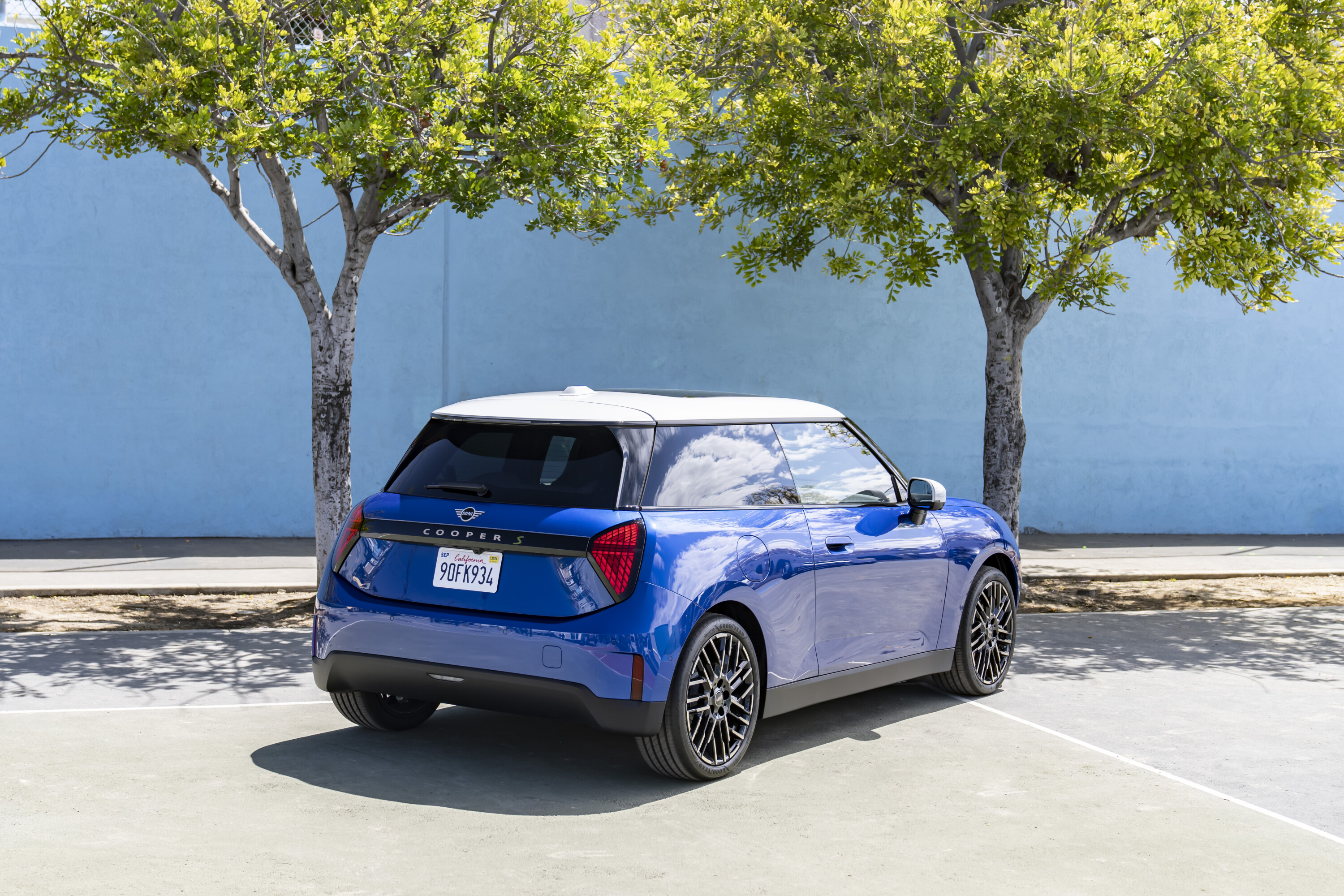
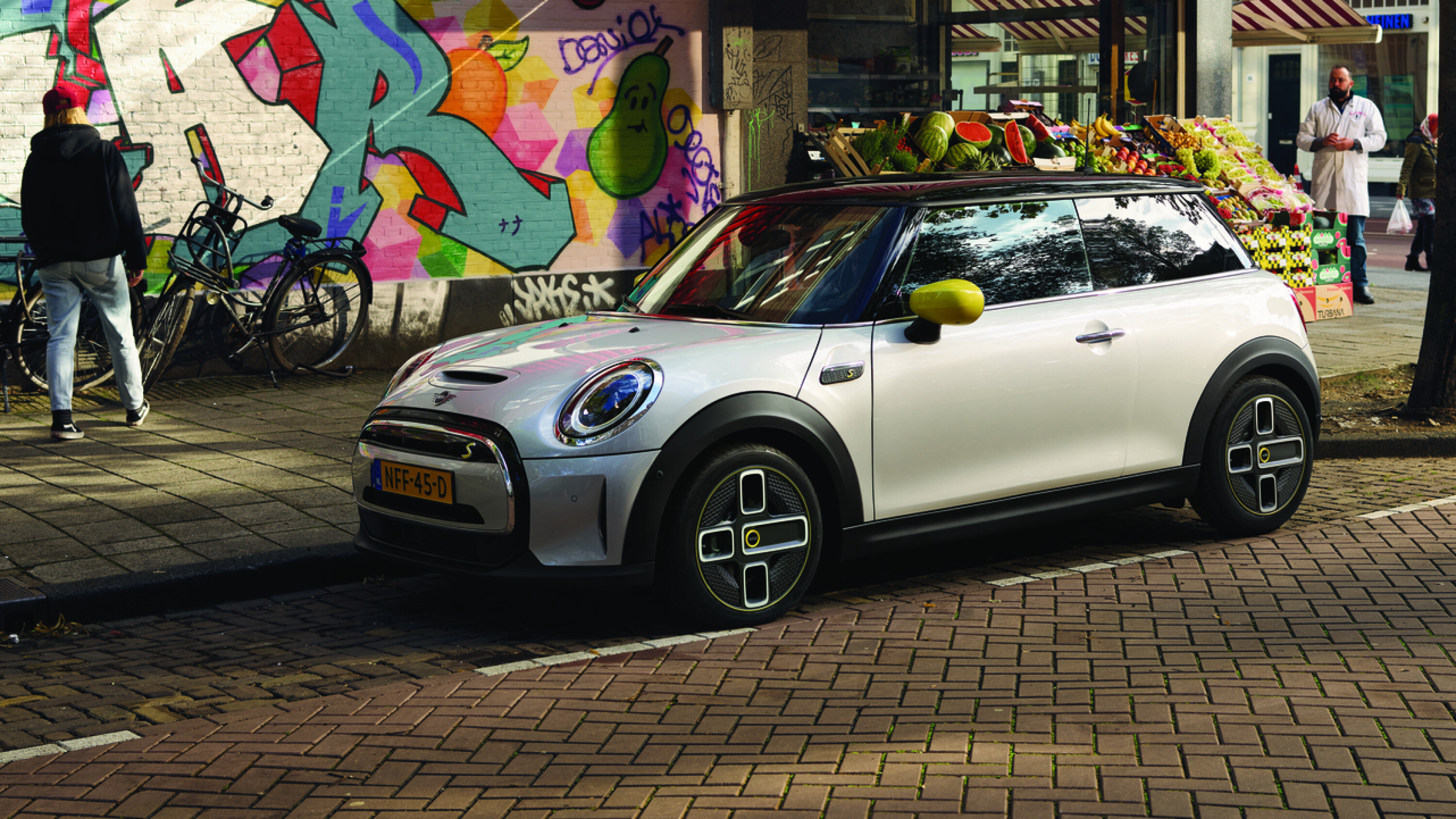
As expected, the next-generation Mini Cooper – shown here in all-electric SE guise – adopts evolutionary styling, with new triangular-shaped tail-lights and flush door handles borrowed from parent company BMW’s parts bin.
Up front, the characteristic round headlights and large grille remain, though both have increased in size. The electric version retains its colour-matched grille insert, with a small air intake below for cooling.
As before, the tail-lights feature a Union Jack-inspired design, with a triangular light signature now facing the correct direction. A full-width black strip has been added between the lights, with Cooper and S badging beneath the Mini logo.
As an all-electric model, this Cooper also has no exhaust pipe at the rear, with only a smooth grey plastic insert along the bottom of the bumper.
1
In 2021, BMW confirmed all future electric Mini models will be built in China by Great Wall Motors (GWM).
Mini last combustion engine will be introduced by around 2025, with only electric models to be launched from that point.
1
An internal-combustion version of the new Mini Cooper will be available, with the model to be entirely developed and produced by BMW in Europe.
Mini claims its fully-electric models will account for “at least” 50 per cent of all sales by 2025, with every single model available only as an EV “by the early 2030s”.
It remains to be seen what this will mean for Mini pricing in Australia, although without a revolution in battery costs, buyers can undoubtedly expect the point of entry to become markedly more expensive.
Currently, the Mini Cooper SE Classic electric hatch is priced at $55,650 before on-road costs in Australia.
1
It seems like most European compact EVs in Australia will stick around that $50,000 price point.
The recently announced Fiat 500e will start from $52,500, while the larger but still Nissan Qashqai-sized Renault Megane E-Tech will be priced from around $70,000 when it launches in late 2023.
The 2024 Mini Cooper hatch is expected to debut in the coming months, so stay tuned to WhichCar.com.au for the latest information as it emerges.
It is expected to launch in Australia sometime in 2024, with more local details likely to be announced soon.
MORE
Everything Mini
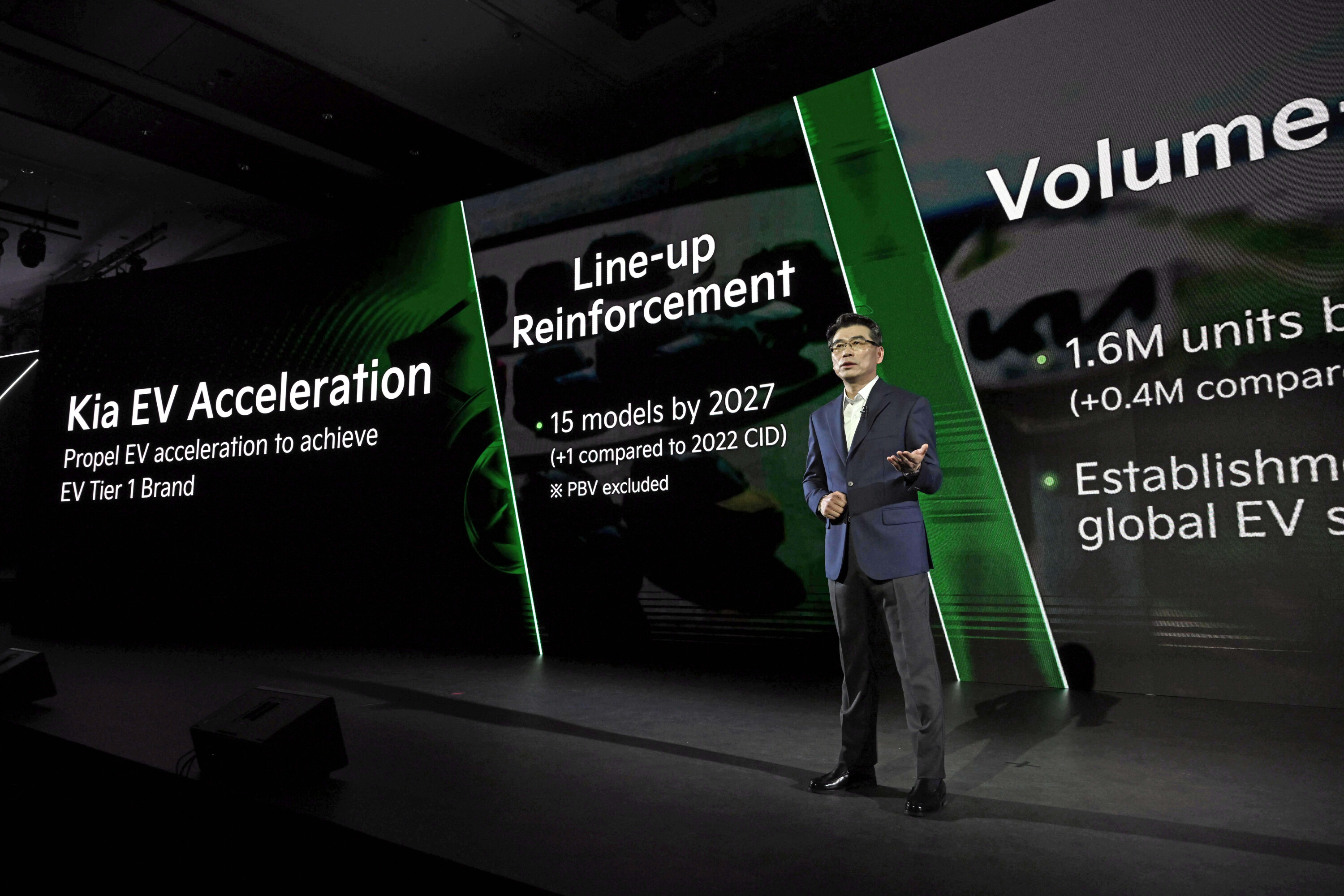
Kia has announced it will introduce 15 all-electric vehicles – up from six today – by 2027.
Snapshot
- Kia to sell 17 all-electric vehicles by 2027
- More than half of all Kia sales to be electric vehicles in 2030
- All vehicles to support over-the-air software updates in 2025
At its recent Investor Day event, Kia said it expects EVs to overtake internal-combustion vehicles in 2030, with approximately 55 per cent of sales to be all-electric – up three per cent.
The sales growth will be supported by an additional electric car in the 2027 roadmap and strategic vehicles for different markets, including Europe, North America, China and India.
JUNE 29: We’ve driven the EV9!
Get our full written and video review at the linked story below.
STORY CONTINUES
1
Kia plans to build small- and mid-sized electric vehicles in Europe and China, while its North American manufacturing facilities will build battery-electric vehicles from 2024.
Small electric vehicles manufactured in India for developing markets will also be introduced by 2027.
Kia’s current electric vehicle lineup comprises the EV6 large SUV, EV9 upper-large SUV, Niro EV small SUV, Soul EV light SUV, Bongo EV van, and Ray EV micro car.
1
The upcoming EV5 will initially focus on the Chinese market in late 2023, with a global rollout in 2024.
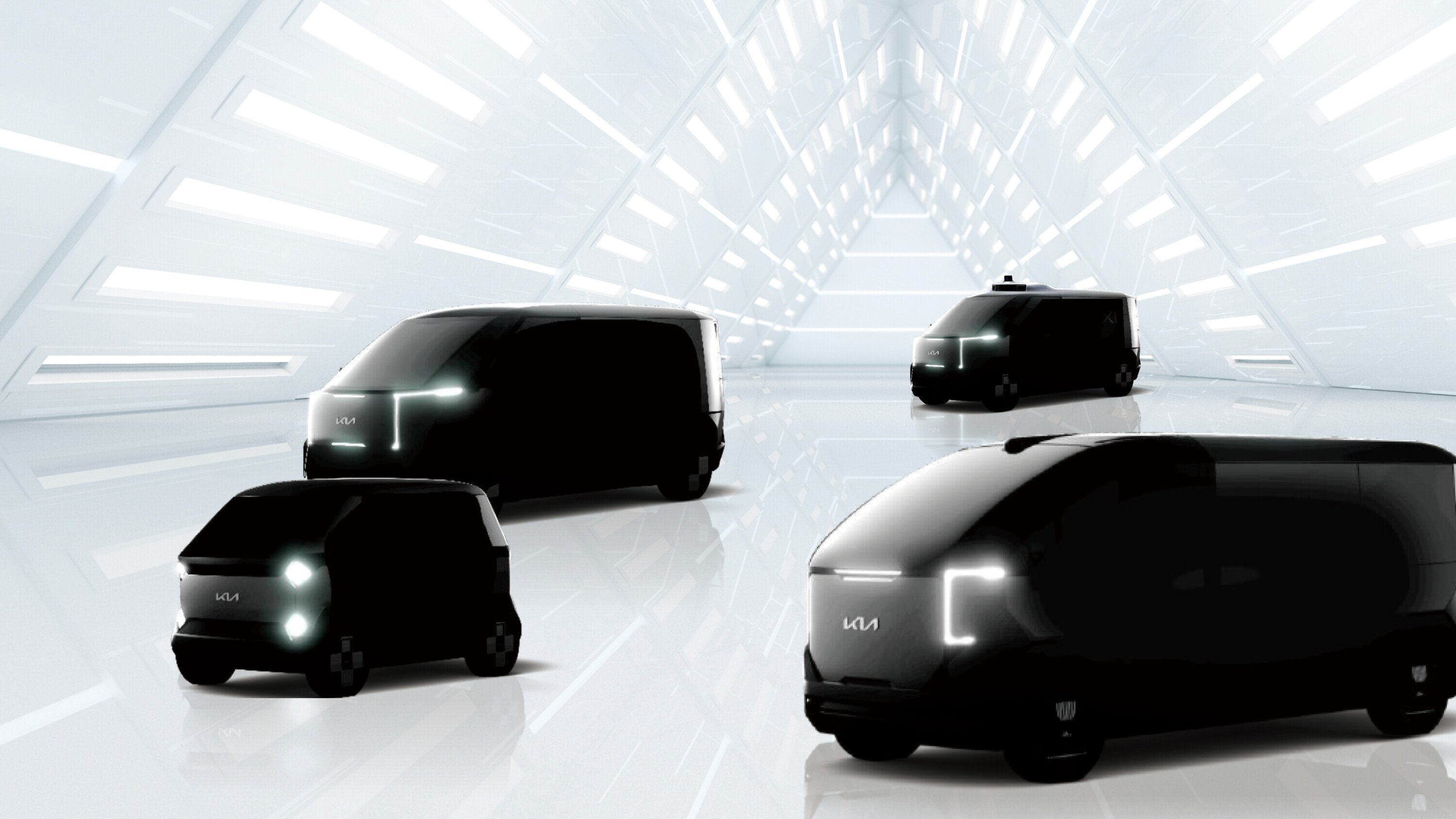
This leaves eight as-yet-unannounced electric vehicles set to launch within the next four years, including a purpose-built vehicle (PBV) – which could take shape as an all-electric HiLux and Ranger-sized ute.
Kia said the ‘medium-sized’ PBV, set to launch in 2025, will ride on the flexible ‘eS’ flat skateboard platform, with support for various bodies.
1
It plans to launch a range of purpose-built vehicles in the future, including an autonomous robot-taxi.
While the EV9 will launch with a level three semi-autonomous driving system, this will expand to “support ‘eyes-off’ driving under certain conditions” in 2026.
As announced, all Kia vehicles will support over-the-air software updates and its Kia Connect connected-car service by 2025.
This is poised to include purchasable feature updates, starting with the EV9 this year, to secure “additional revenue streams via software and services commercialization.”
1
A high-performance GT trim will be developed for all future EV models, including the EV9 GT confirmed for 2025.
In 2023, Kia will introduce the next-generation, Mexican-built Rio in the fourth quarter – already ruled out for Australia – and an update to the Ray EV, potentially twinned with Hyundai’s forthcoming electric micro car.
It also plans to introduce five ‘product enhancement’ facelifts by the end of 2023, which will likely include the Sorento, Carnival, Picanto and K5 (née Optima).
In numbers…
MORE
Everything Kia
Snapshot
- Refresher test proposed at licence renewal
- Immediate licence suspension for 40km/h+ proposed
- Bailey looking to public for feedback
In response to Queensland’s highest road toll in 13 years, transport minister Mark Bailey has proposed several measures to improve road safety in the state, and is canvassing the public for feedback.
The most talked about has been a proposed test that drivers will be required to pass when renewing their licence. It’s not a finite test that will see a suspension for failure, but a measure to give drivers a quick top-up on the road rules.
“It’s not whether we take your licence off you or not, it’s about educating you as a driver… if you don’t get [the test] right the first time, you will get another shot at it and another shot at it until you do get it right,” Bailey said.

1
“It’s designed to be a refresher course, that people would look to do in an easy online way, that gives you a good review of what’s happened in the last four or five years since you got your licence last time,” Bailey told ABC Radio Brisbane.
Bailey mentioned that, not only would a test keep drivers on top of current rules, but also educate them on new ones. For example, changes regarding restrictions on personal mobility devices, as well as electronic devices.
Tougher speeding laws
Another measure Bailey suggested – partially in response to the 74 motorcycle deaths in the state last year – was an on-the-spot licence suspension for drivers caught speeding in excess of 40km/h.
“If you get caught and pulled over at that kind of speed, then it’s kind of ‘hand over the keys, thanks very much,’ and the car stays where it is, and an immediate suspension,” Bailey said.
1
It would bring Queensland’s speeding laws closer to NSW and Victoria’s. In NSW, if you’re caught in excess of 45km/h over the speed limit as a fully licenced driver, your licence is revoked on the spot for a six-month period.
The Victorian government enacted a similar law in 2020: if a driver is caught 45km/h over the speed limit (or at any speed above 145km/h in a 110km/h zone) then your licence is suspended and it’s up to the court to determine the length.
In Queensland, the process currently involves a notice coming in the post and offers a 14-day grace period – something that Bailey thinks isn’t tough enough.
MORE
Car Advice
“I don’t change manually, I have to admit!”
Didier Manning is one of ZF’s chief engineers as well as its key liaison with BMW, a major user of the German company’s transmissions.
He drives an X5 daily yet despite its eight smartly stacked ratios – and shifting speeds similar to those of the ZF 8HP’s dual-clutch rivals – he feels little need to get too involved himself.
We’ll be the first to point out that ‘8HP’ is a very underwhelming name for a gearbox that’s been adopted with such breadth; you’ll find versions of ZF’s blockbuster hit in a relatively cheap BMW 1 Series, a silky smooth Rolls-Royce Phantom and a number of Dodge’s unhinged Hellcats, plus all manner of cars that squeeze into the ginormous gaps between that trio.
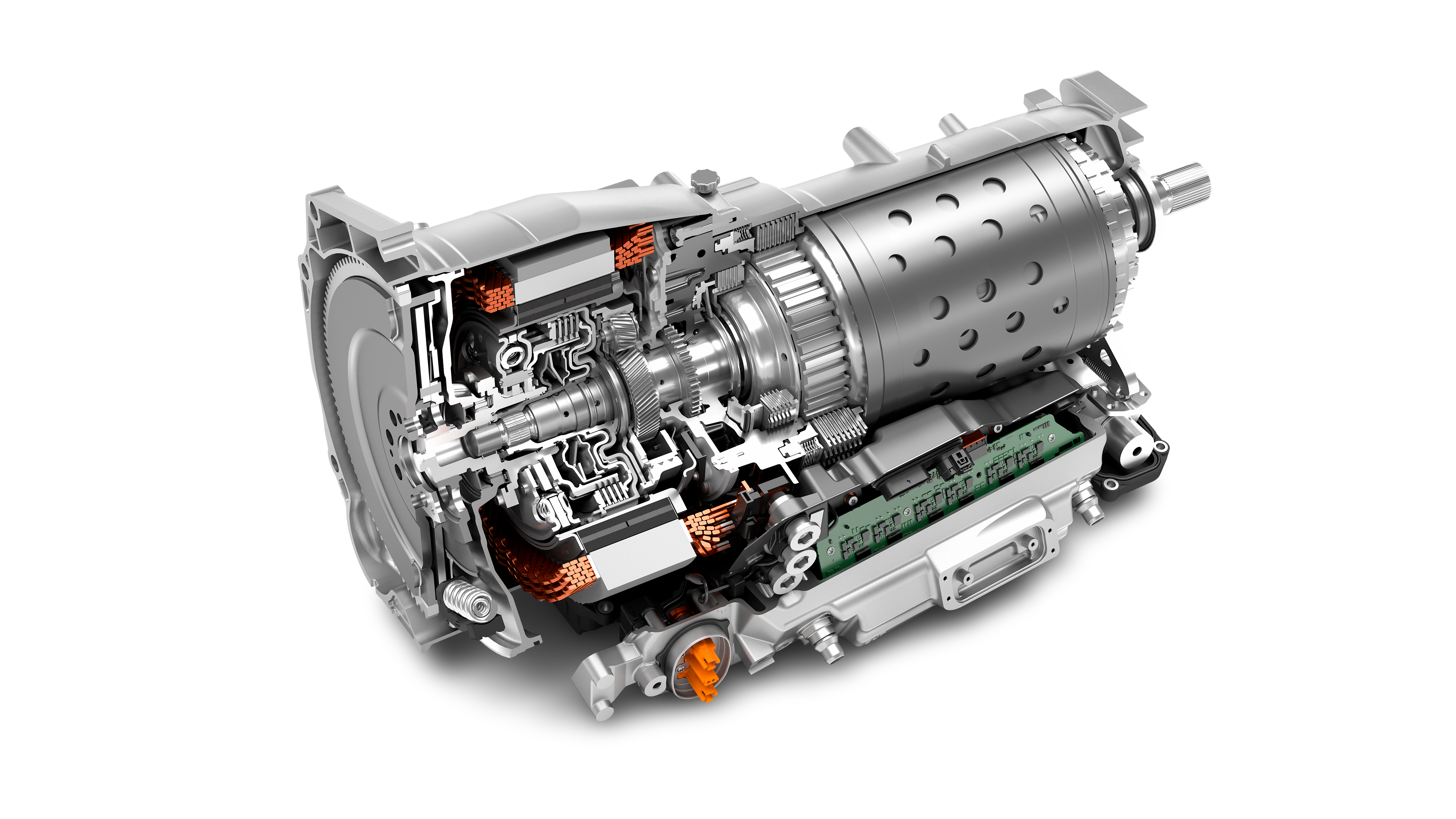
It’s now into its fourth generation, with numerous evolutions during its 15-year life helping ease it into a new era of electrification. ZF’s now ubiquitous eight-speed automatic launched in 2008 via its debut in a new generation of 7 Series, but its development process started several years earlier, amid an automotive landscape that was quite different.
1
Back then: Across ZF’s home market, manuals still dominated and the only excitement around auto shifters concerned the recent dawn of dual-clutch units – DSG having just launched to great acclaim in the VW Golf R32 and Audi TT 3.2.
I ask Manning if his employer had forecast an upward curve in the demand for autos on the horizon. “I wouldn’t say it was accidental but obviously, we are happy the tendency went in that direction,” he says. “But one mustn’t forget we still do manual gearboxes. The BMW M2 and M3 have a stick shift for the purist at heart.
“We’ve had a strong heritage with BMW from the 1960s onwards as our systems integration partner. This enabled us to have a robust architecture that we could use in a lot of different applications and this is definitely something that helped us achieve success with the 8HP.
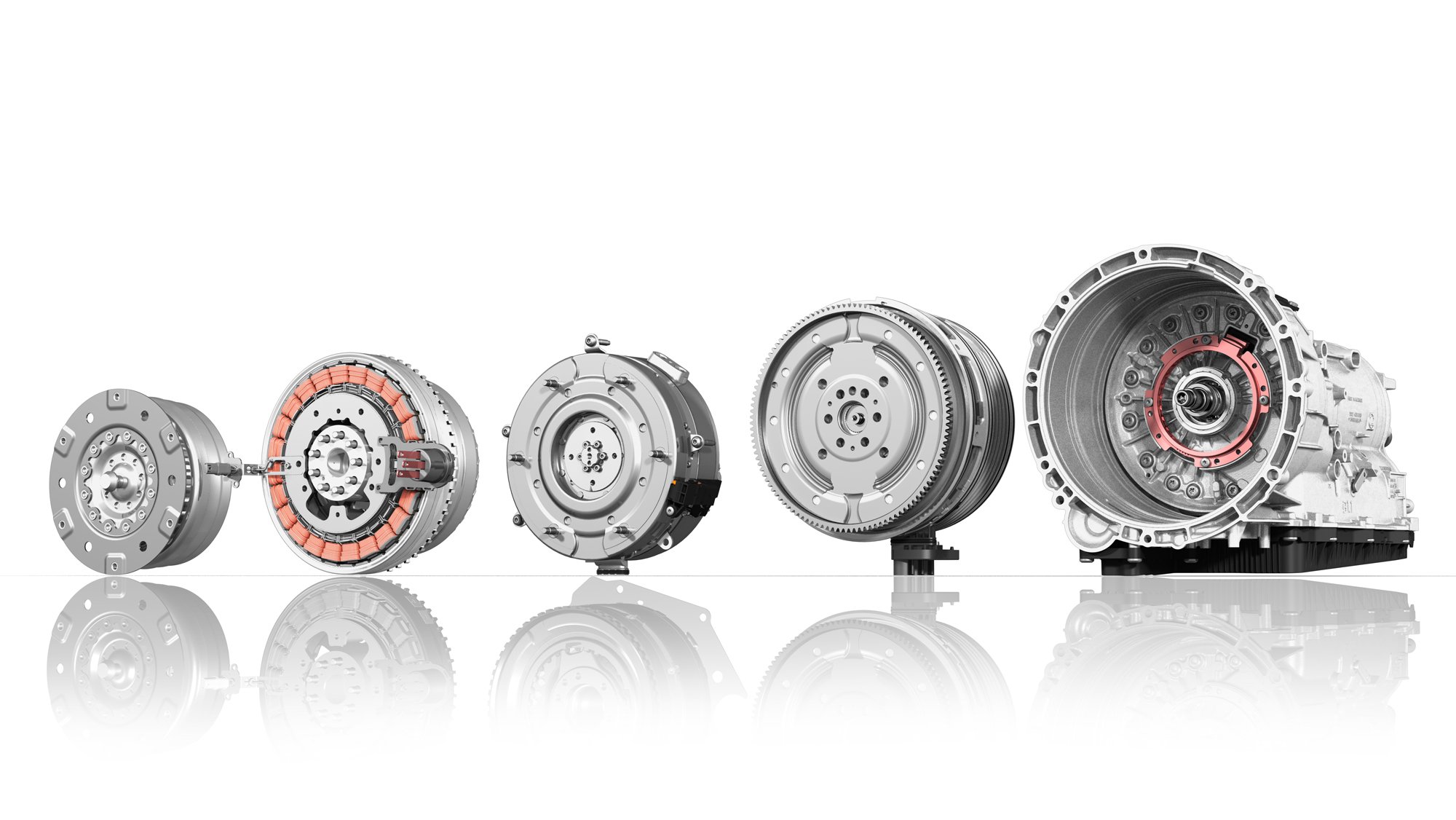
“The gearbox can go from 200 to 1000Nm without any visible difference from the outside. With our fourth generation, we’ve bridged e-mobility from within the gearbox.”
1
ZF has certainly never rested on its laurels, constantly adapting the 8HP to market demands – current and future.
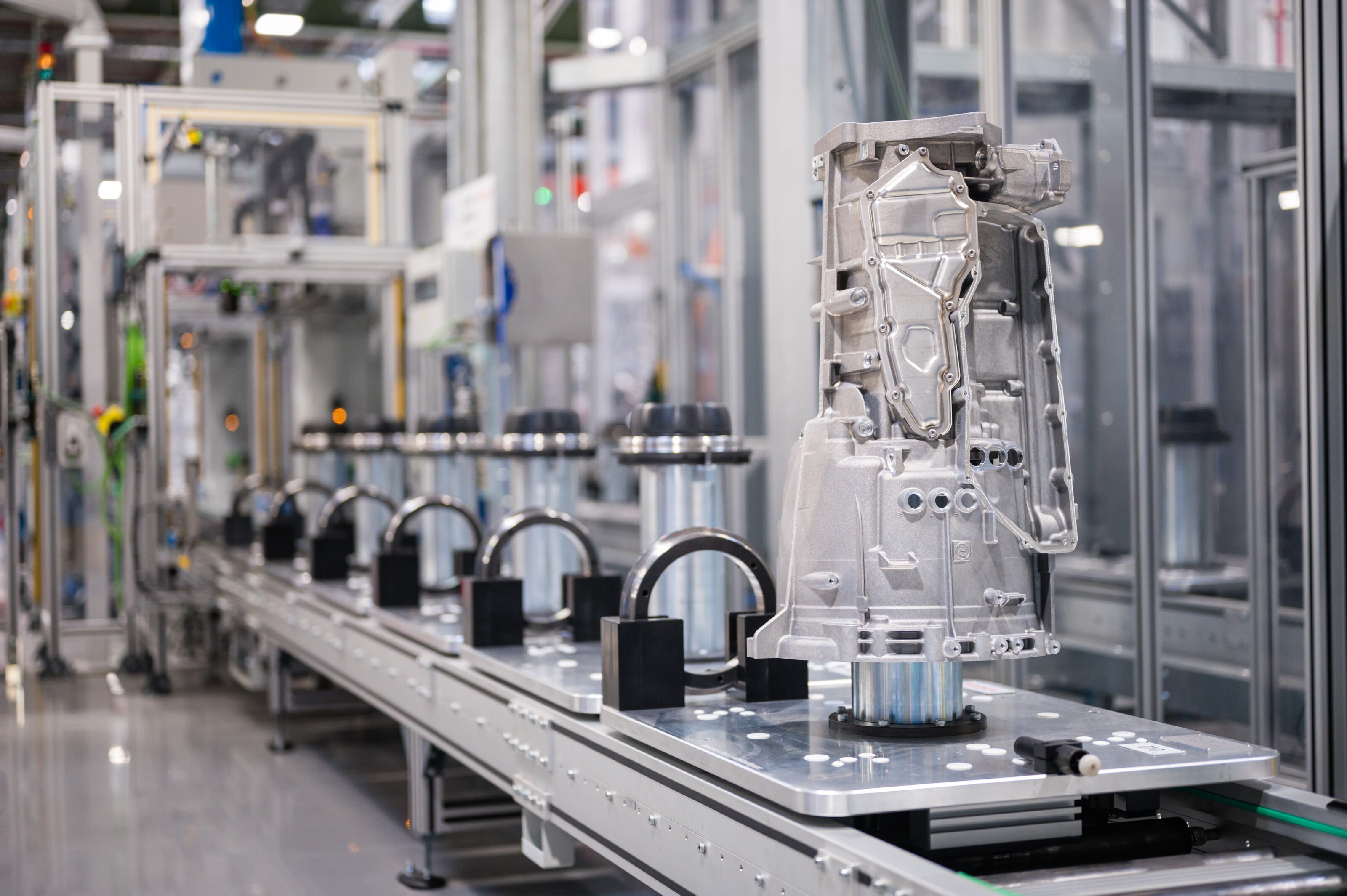
It’s worked especially hard to integrate the extra components of hybridisation within its transmission so that the overall unit takes up no more space than before.
This is welcome news to any car-makers that are hastily adding batteries and motors to their internal combustion cars, as it allows them to retain the core chassis architecture to help fast-track products to launch.
“It is a hell of a challenge when it comes to vibration profiles and the integration process,” Manning confirms. “To make it work we’ve had to minimise the size of the oil pan and so the whole oil feed process has changed to cope. That was one of the big challenges during the development phase that we’ve thankfully mastered.
1
“It went into production last year for mild hybrids and has won awards as the most efficient generator you can have in a 48V MHEV system. Now we’re going into production with a plug-in model.”
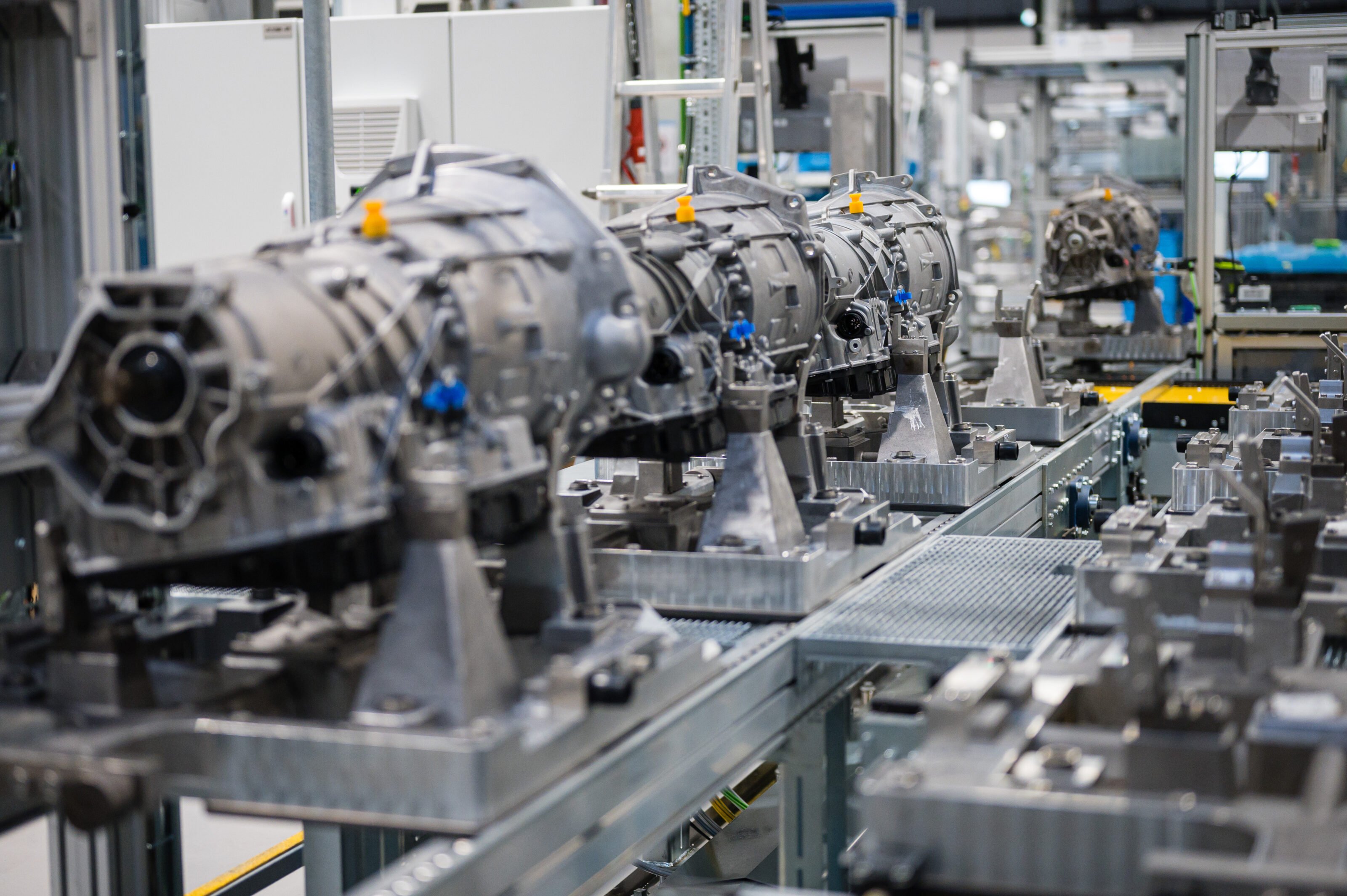
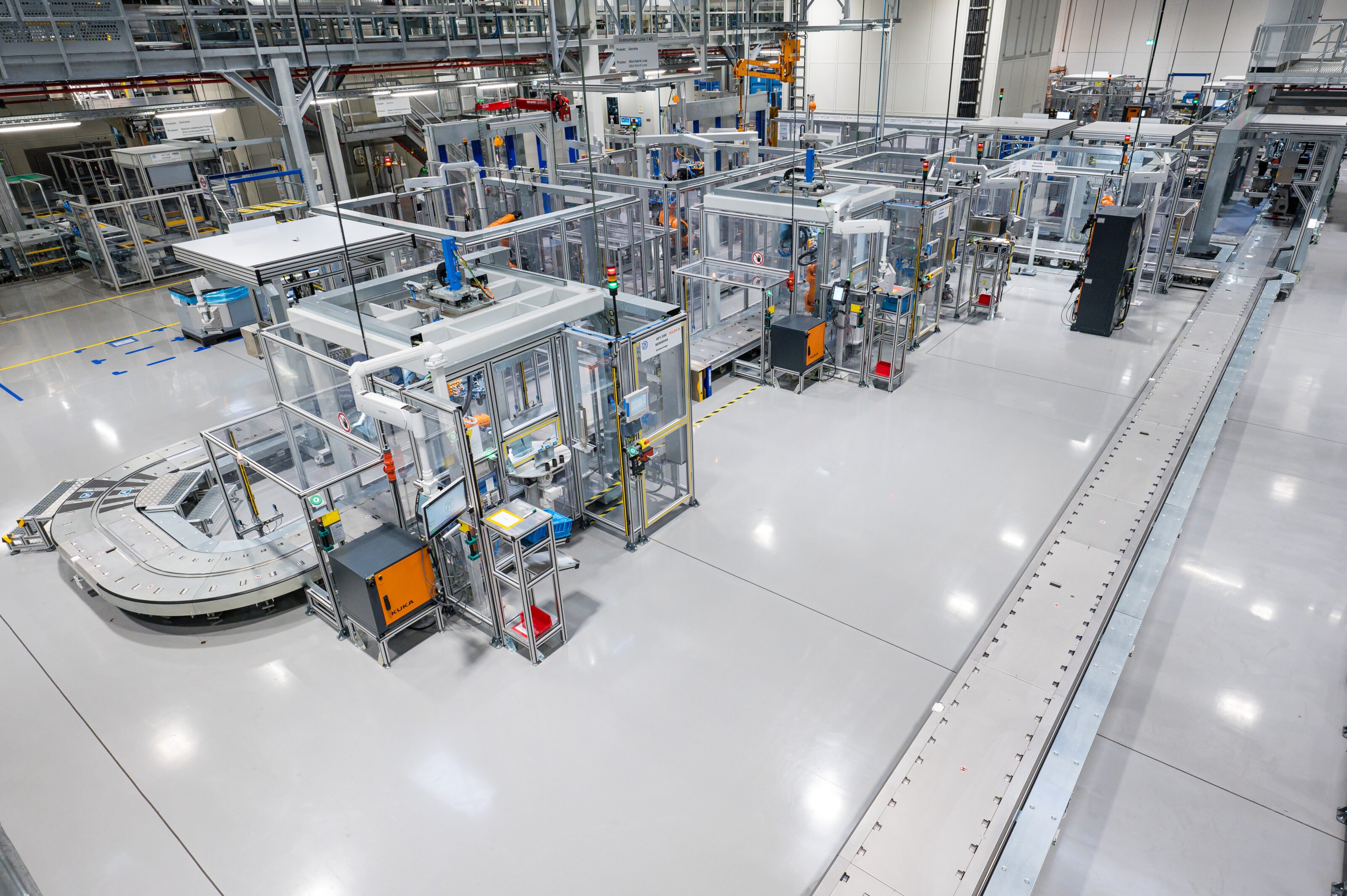
The company is also ensuring it stays flexible as we muddled folk try to work out whether it’s an EV, hybrid or pure combustion engine that suits our needs in an increasingly complex market. ZF’s Saarbrücken plant (close to Germany’s western border) produces up to 10,000 transmissions a day and all iterations of the 8HP currently share the same line, at least until the trends of car buyers become more predictable.
But there were challenges to master even before the dawn of electrification; every gearbox that rolls down the line has a unique tune for the specific model it’ll eventually meet.
1
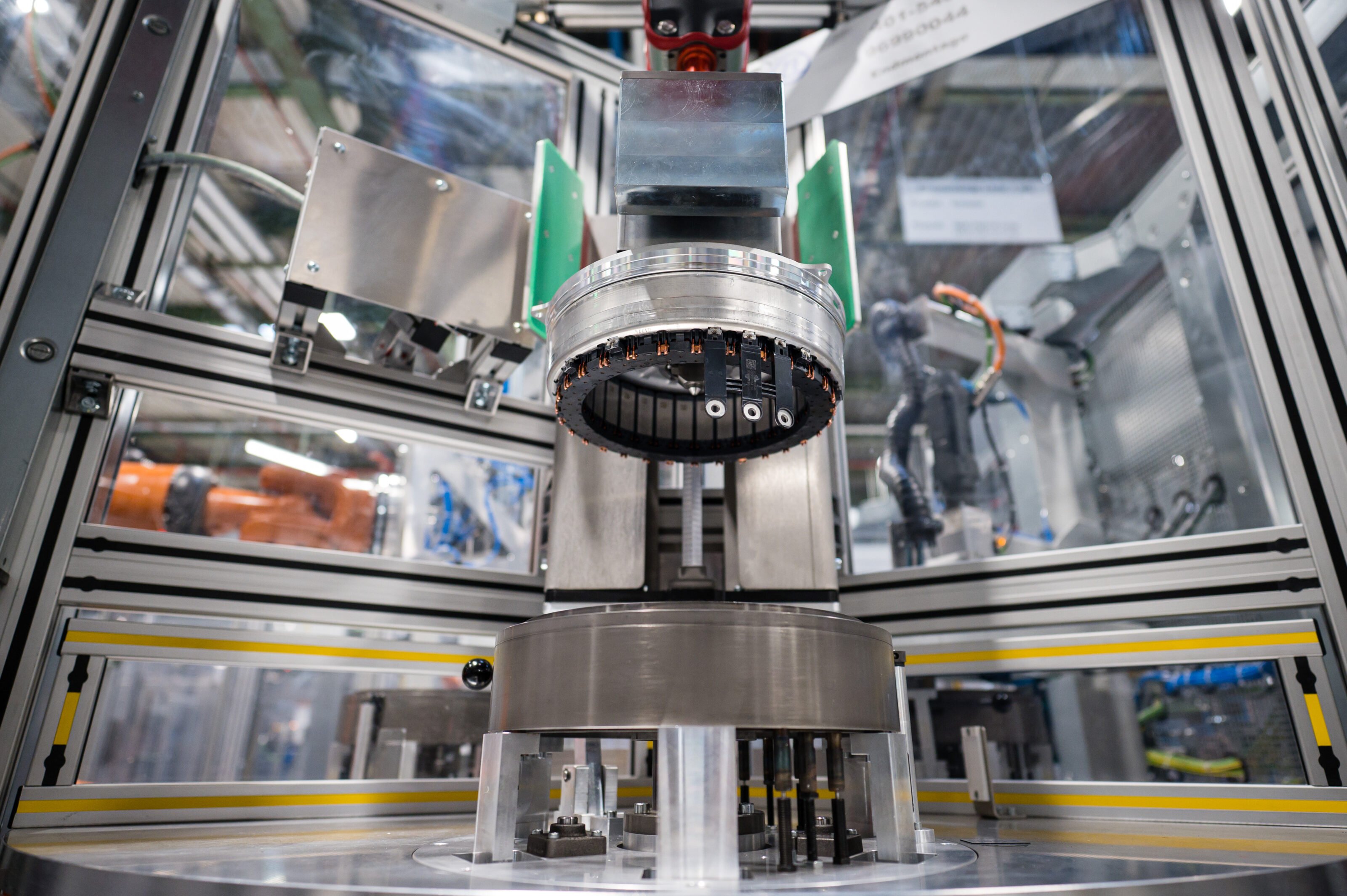
“Take apart a fourth-generation 8HP and you’d find the sort of cogs normally found in a watch,” Manning adds.
“To combine these processes with that kind of volume is something we’re extremely proud of. Production ramped up very quickly in the early days and we make gearboxes not just for Europe, but the rest of the world, where there aren’t the same discussions when it comes to electric vehicles.
“Still, we’re curious to see what’ll happen over the next couple of years. We still see a future beyond 2030 for internal combustion engines. Someone who does 50,000 miles a year is still more likely to use a highly efficient ICE or fuel cell car than an EV.”
Naturally, ZF is open-minded when it comes to the automotive world’s next chapter and will remain agile so it can mirror what’s needed. “Our ambition is to have the same position in the e-axle world as in the gearbox world,” says Manning. “With the 8HP we managed to develop a specification that covered a lot of requirements.
1
“In the e-mobility world, the car-makers play a completely different role, no longer making their own engines by default and so deciding what to do themselves and where to buy in components. To have a product that is technically sound but also financially viable is not easy and a lot of people are fighting for this market. What we’re driving for is a modular kit to cover all the needs of our many customers.”
While the 8HP made waves thanks to its extra two ratios over contemporary rivals at launch, the same simply won’t be true when it comes to ZF’s take on modular EV transmissions. “The maximum number of speeds we’re discussing is two or three,” Manning says. “You don’t need more. Even then it’s only important in a Porsche that’ll do 300km/h.
“If you’re looking at mass production vehicles, there’s not yet an apparent need beyond one gear.”
1
Does that mean he thinks EVs with manual transmissions, a technology Toyota has given us a glimpse of, are something of a curious endeavour? “Yes, to be honest. There is no efficiency gain.”
He’s adamant that ZF got it bang on with the 8HP, though. So why the jump up from six gears, which was the industry standard for most gearboxes 15 years ago?
“We needed a cutting edge. A solution which was intelligent in its use of an ICE. We didn’t want a span that wasn’t useful, which is why we went to eight rather than nine or ten speeds. It’s pointless fitting more as you won’t use them all and you’re just carrying more weight around.
“The driveability was improved in such a way that you don’t need to change gears yourself, as it anticipates what you’d be doing in manual driving. So for either speed or comfort, the system integration allows you to determine which gear you want purely with your right foot, which you’ll master after driving your new car only once or twice.”
“As soon as you’ve experienced that, you never go back to a manual.”
Which probably explains why he never wants to shift himself.
?
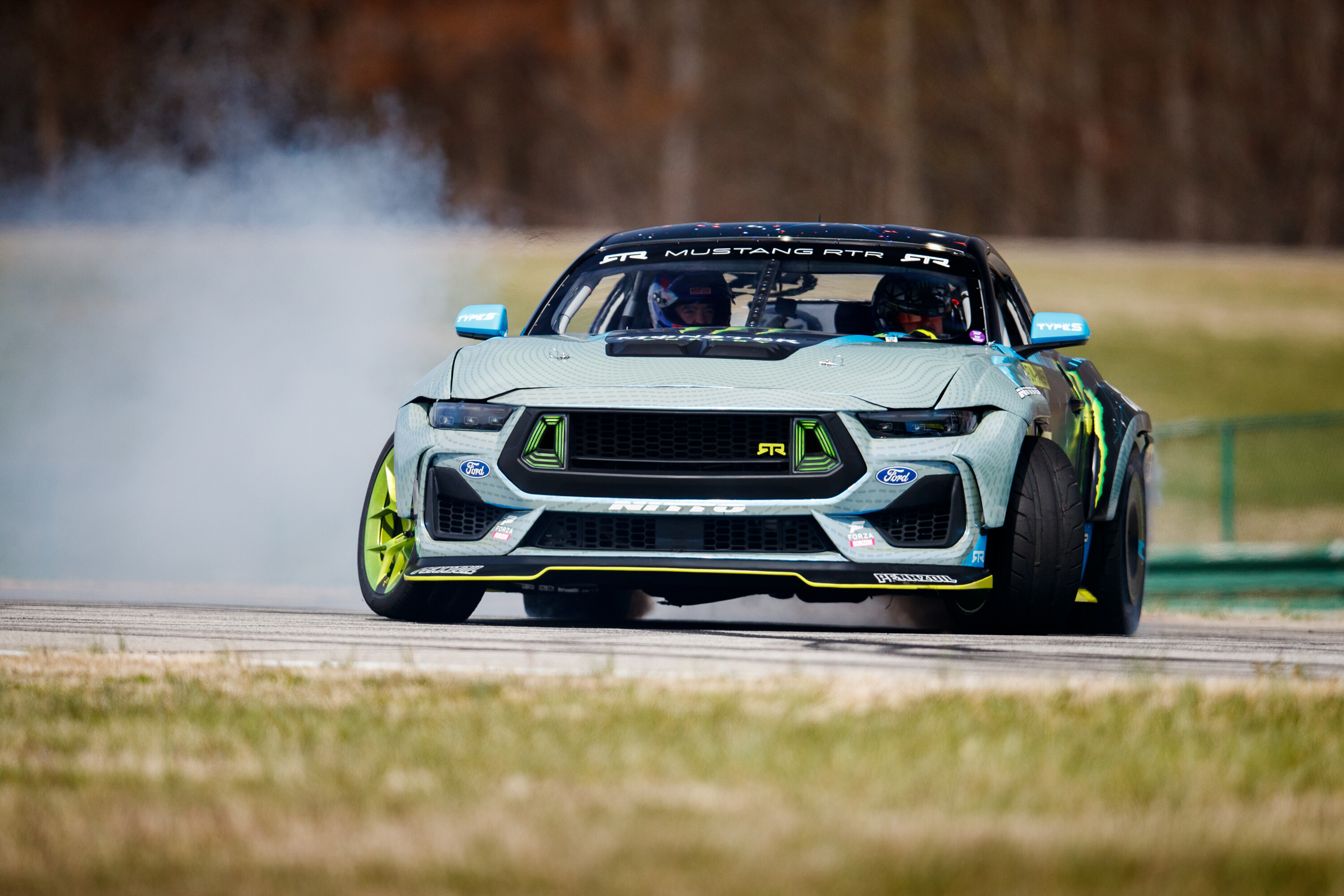
The new-generation 2024 Ford Mustang, already represented in Australia’s Supercars series, has now also debuted in the popular Formula Drift series with the RTR Motorsports Spec 5-FD Mustang racers.
1
Debuting at Long Beach, the Mustang RTR drift cars were piloted by Chelsea DeNofa and three-time Formula Drift Pro champ James Deane.
Although neither made it through to the final-four knockout, strong qualifying positions of second for Deane and third for DeNofa point to a promising season for the team.
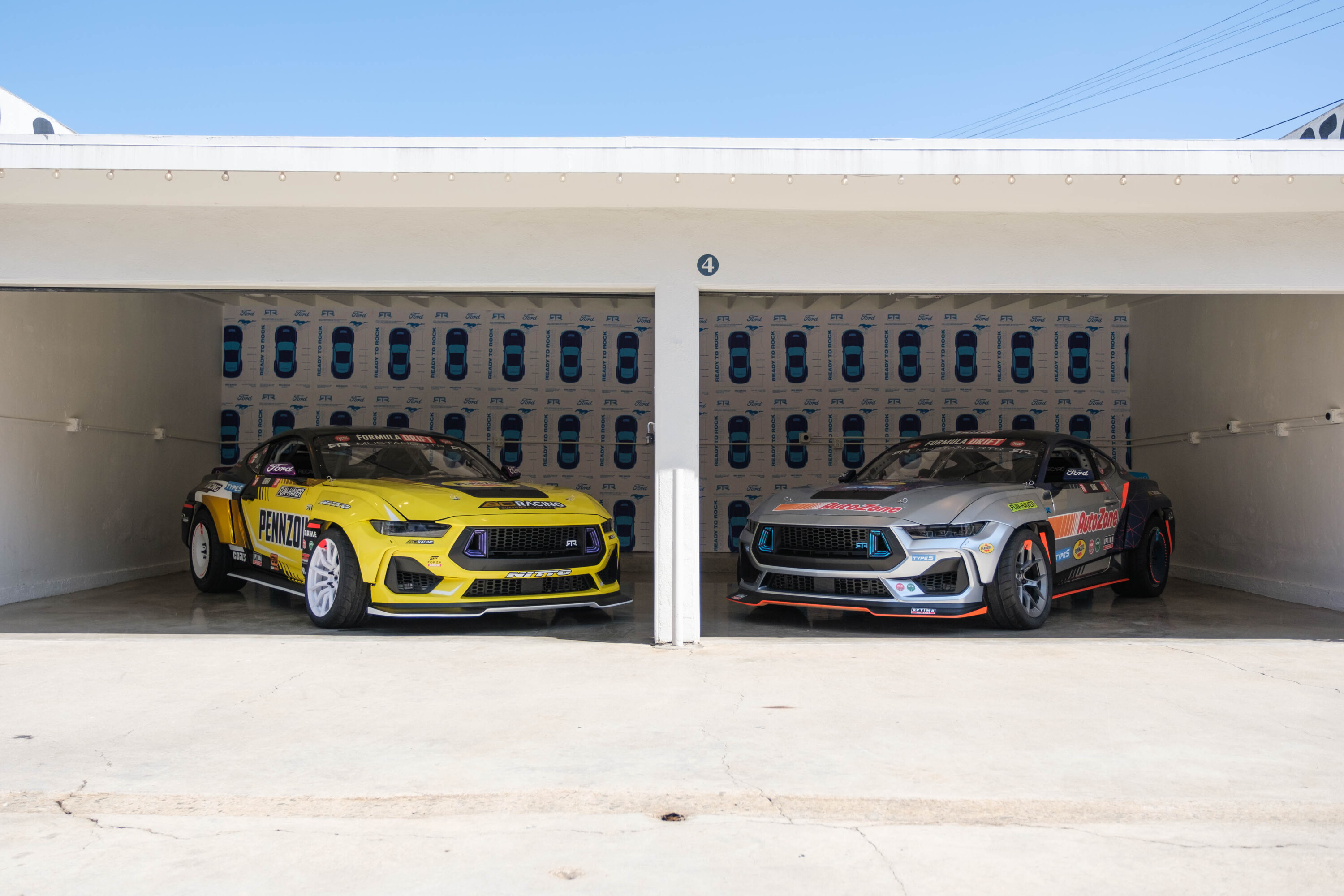
That’ll be boosted by the return of two-time FD Pro champion and household name (in the right houses…) Vaughn Gittin Jr, who revealed his new RTR Mustang drifter in a special video earlier this month. See that clip below.
1
“We took the badass styling, technology, and overall progression of the all-new Mustang as inspiration to develop our new Mustang RTRs for Formula Drift,” said Vaughn Gittin Jr. “The result is the best looking and best performing Mustang RTRs that we have ever created, and they are so fun to drive!”
The video also highlighted the new 2024 Ford Mustang’s new Drift Brake feature – an oldschool-feeling handbrake that controls an electro-hydraulic drift brake.
You can read more about that in our 2024 Mustang reveal story here (and watch our walkaround below), but don’t expect to know about its Australian availability until Ford reveals more about local spec in the second half of this year.
RTR played a key role in the development of that new ‘Mustang Performance Electronic Parking Brake’ for the roadgoing Mustang, with Gittin Jr and DeNofa both involved in the project.
“Our goal was putting larger smiles on the faces of soon to be fellow seventh-generation Mustang owners,” Gittin Jr said.
A number of performance and styling pieces are available in Australia for the current sixth-gen Mustang, but its seventh-gen S650 Mustang catalogue is still to be revealed.
Check out our track review of the 2021 RTR Ford Mustang in the link and video below.
MORE
Everything Ford
DIFFERENTIAL EQUATIONS
The best hot hatch in the world right now is built by Honda, and you’re looking at it right here. That much is not really up for debate.
The latest FL5-generation Civic Type R delivers a level of focus and ferocity that you’ll find nowhere else in its class.
Quite what that class is though remains a debating point. The Type R begins to blur the boundaries between the usual front-drive cohort and the level of sophistication that you find in all-wheel-drive hyper-hatches like the Audi RS3 and the Mercedes-AMG A45 S.
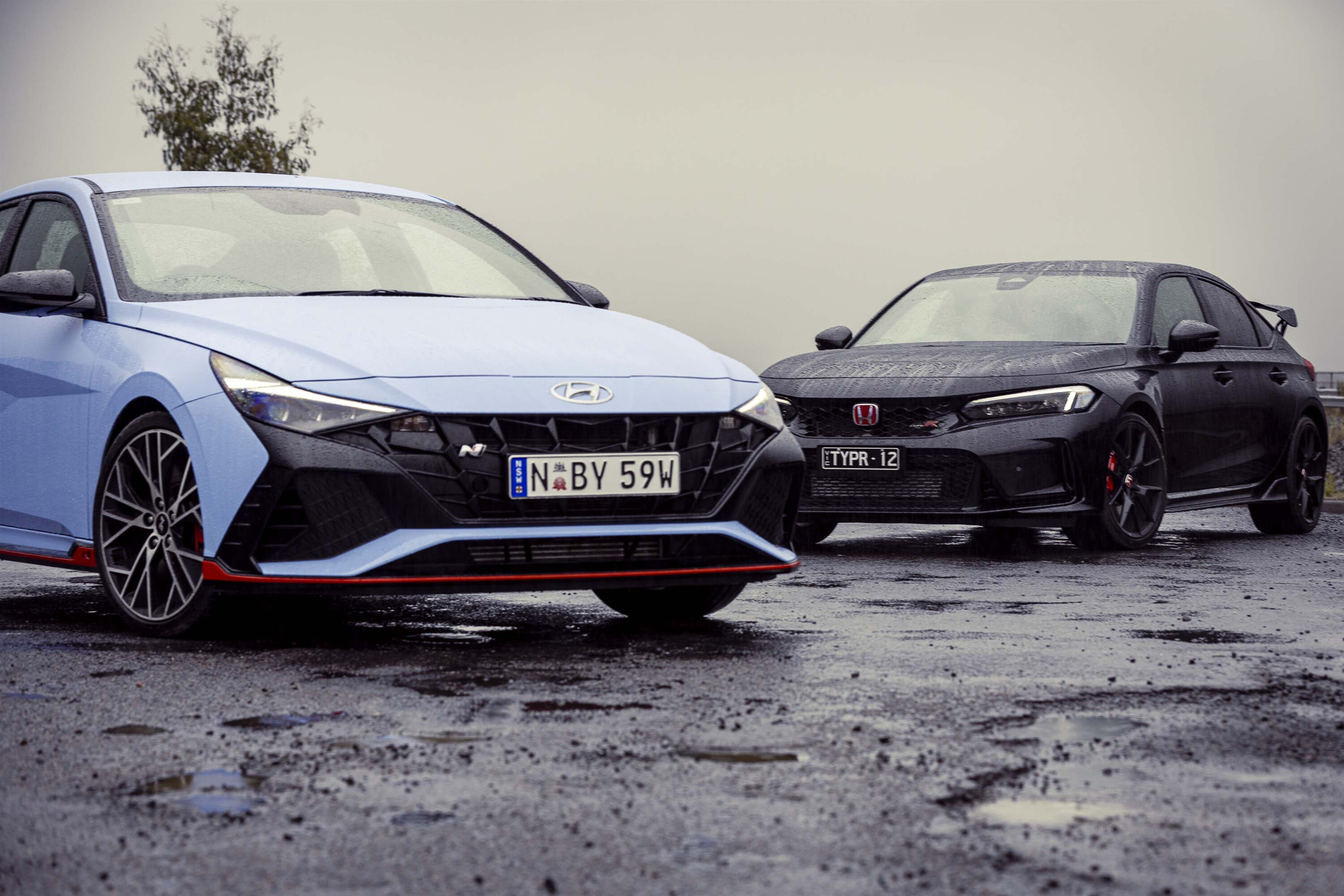
Or, to a lesser extent, the Volkswagen Golf R and the Toyota GR Corolla. We’ll put it up against those in due course, but the question we want answered today is exactly how far removed is it from a vehicle at the top of the front-driver crop?
1
Step forward the Hyundai i30 Sedan N, a front-driver – which, if you look at the bald figures, is quicker than the Civic to 100km/h.
It’s better equipped. It brings with it a warranty that covers race track use. And it’s over $23,000 cheaper.
1
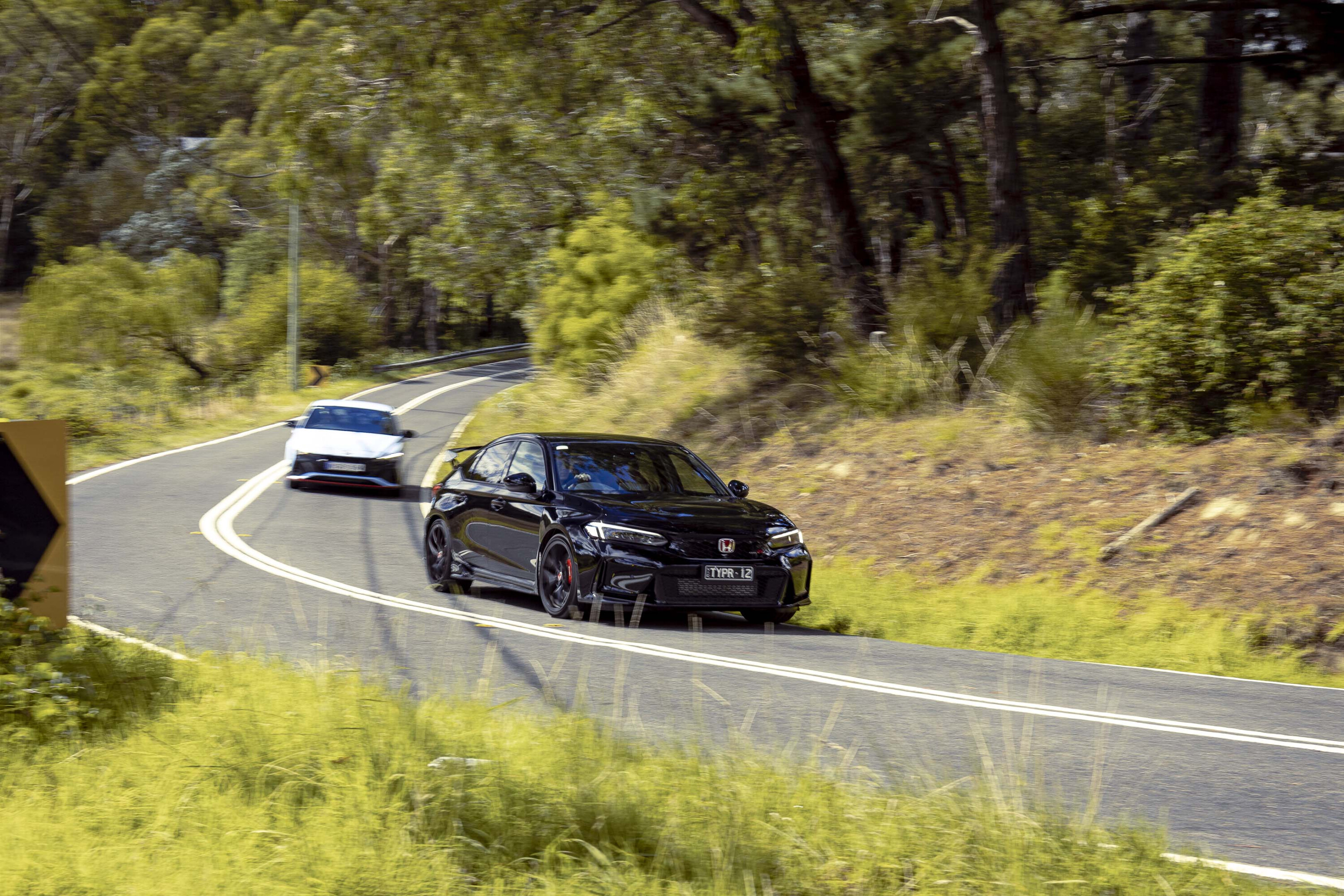
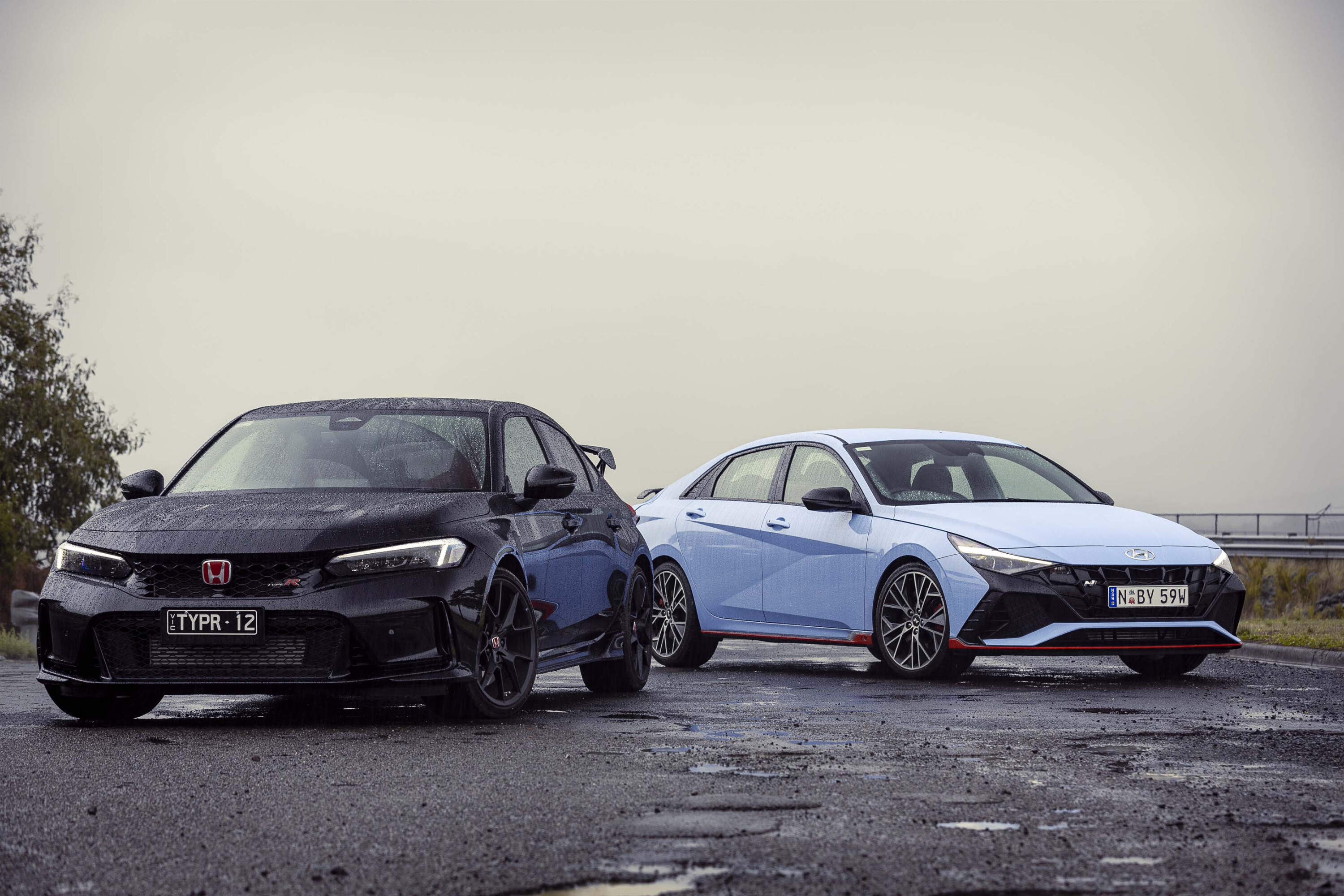
In other words, the Civic may well be the best, but is it the best buy? That’s what we’re here to find out.
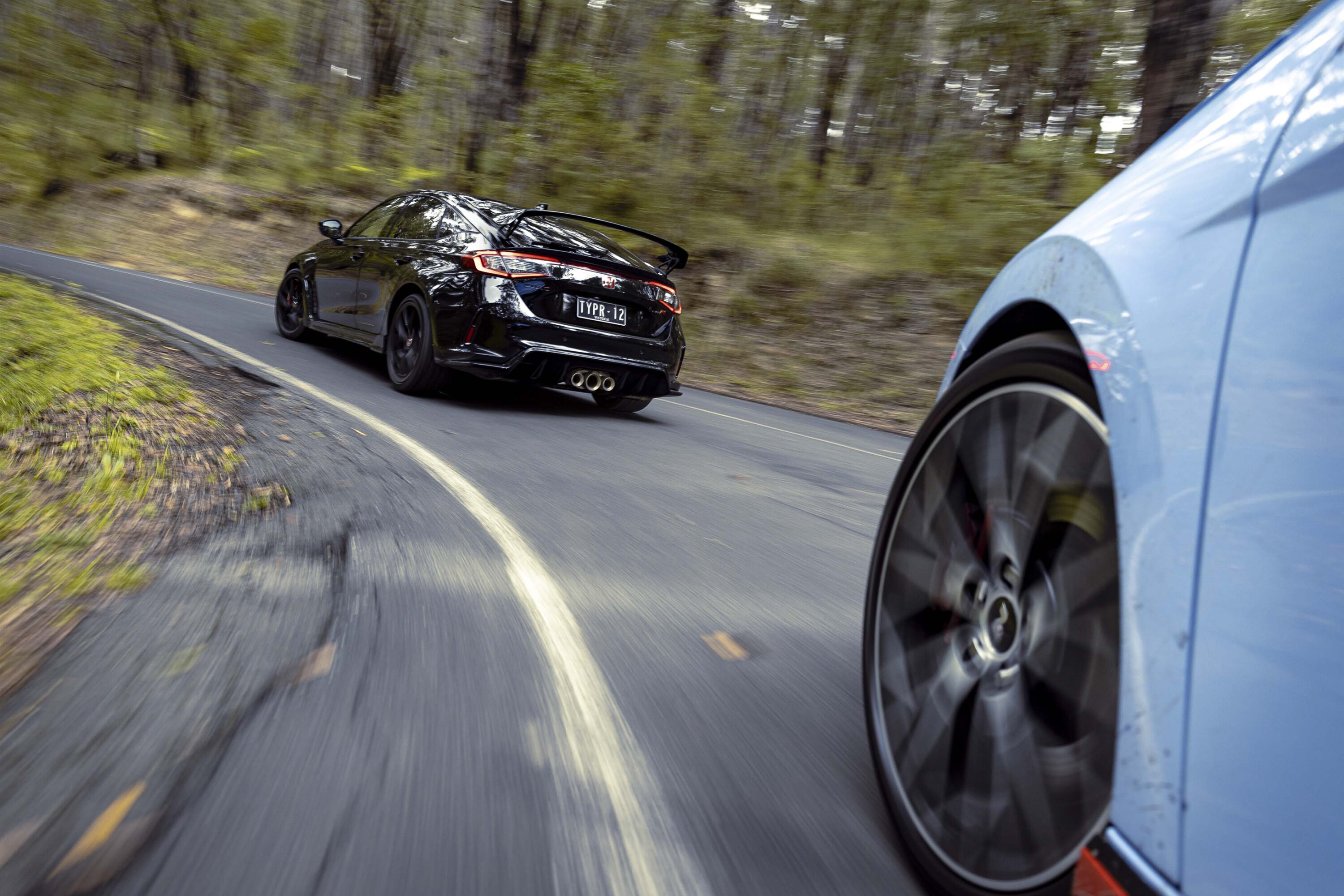
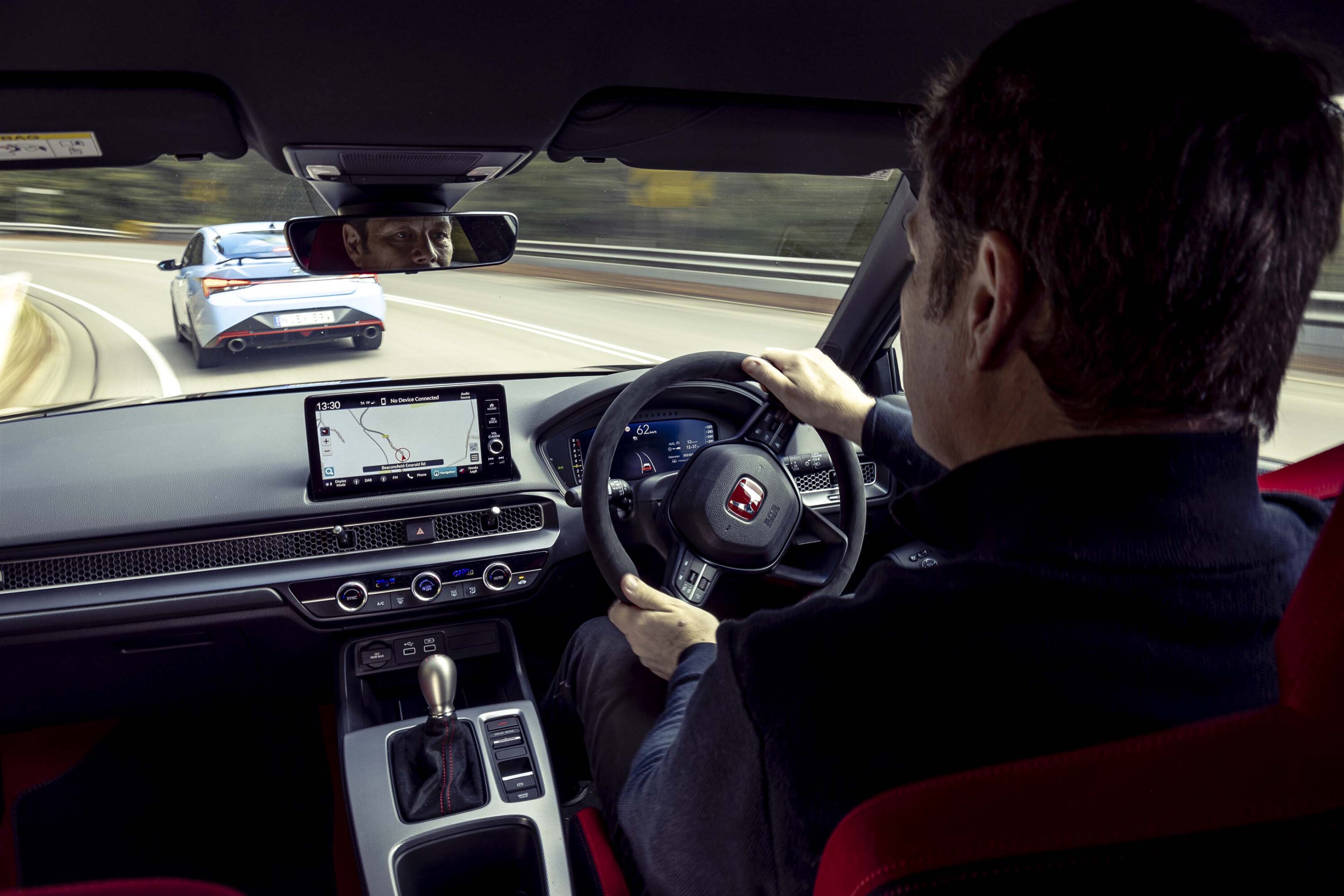
‘Here’ is a test loop that’s a local favourite for those in the Wheels office. It’s a sneaky 30-minute jaunt away from the desk and throws in a mix of corners, surfaces and elevation changes that ought to highlight where the Civic puts clean air between itself and the shark-like nose of the N-car.
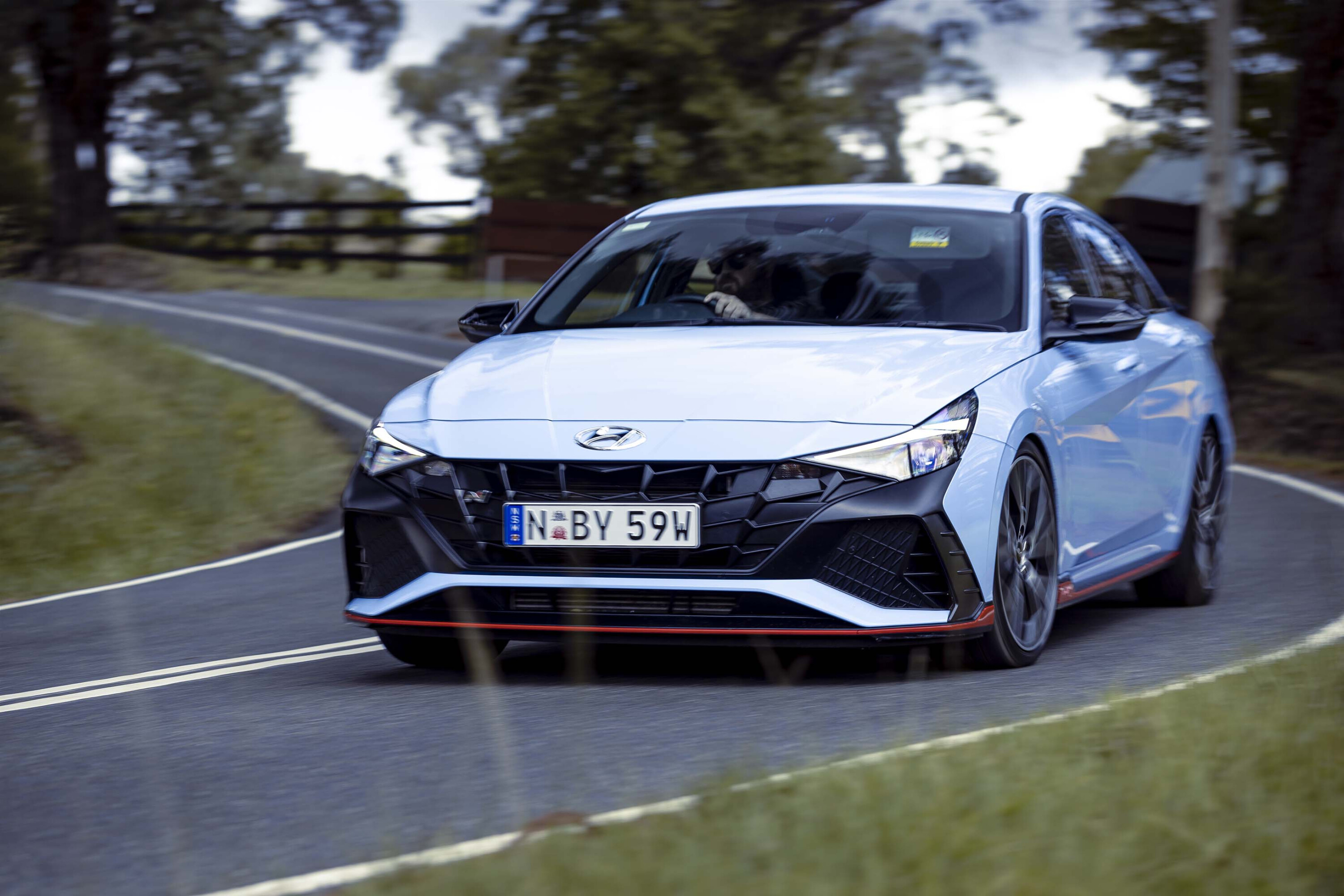
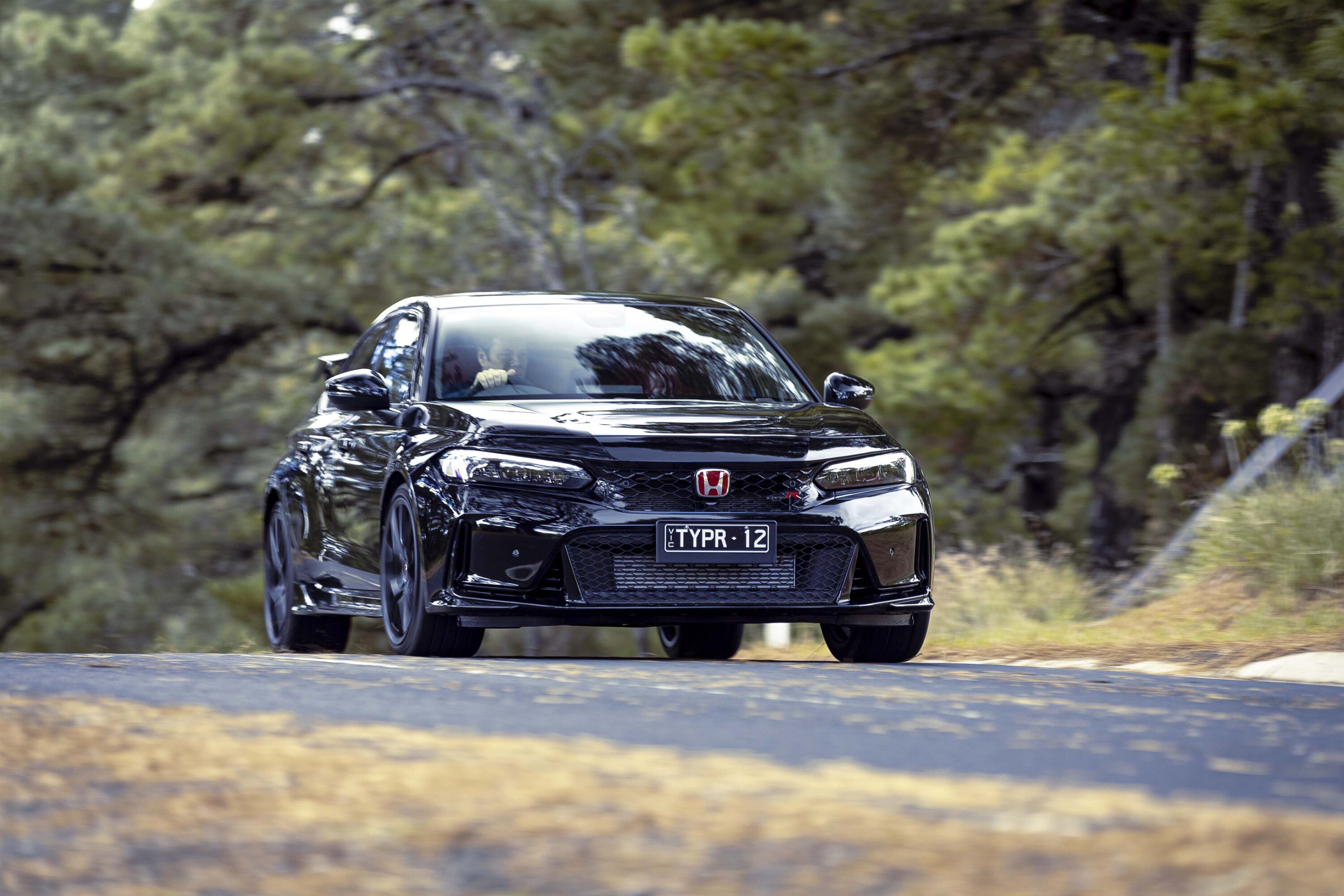
Compared to the easily resolved sedan silhouette of the Hyundai, the Civic takes a little longer to grow accustomed to.
In profile, the wheelbase looks stretched to each corner and is mated to a bluff front and a tapering rear such that it almost looks as if the Type R would be more aerodynamic in reverse.
1
And before you start penning letters about Austin Allegros, that one’s not an urban myth. Ex-BL designer Steven Harper confirmed the Austin was more slippery in reverse, as indeed are many cars with a grille at the front.
Digression over, let’s look at quite what each car brings to this head-to-head. The key stats to consider for the Honda are a power figure of 235kW, torque of 420Nm and a kerb weight of 1435kg which translate to a power-to-weight figure of 163.8kW/tonne.
The Hyundai counters with a more modest 206kW and 392Nm that hauls 1480kg up the road for a 139.2kW/tonne PWR figure. So the Honda is 17.7 per cent better on PWR. That’s significant.
1
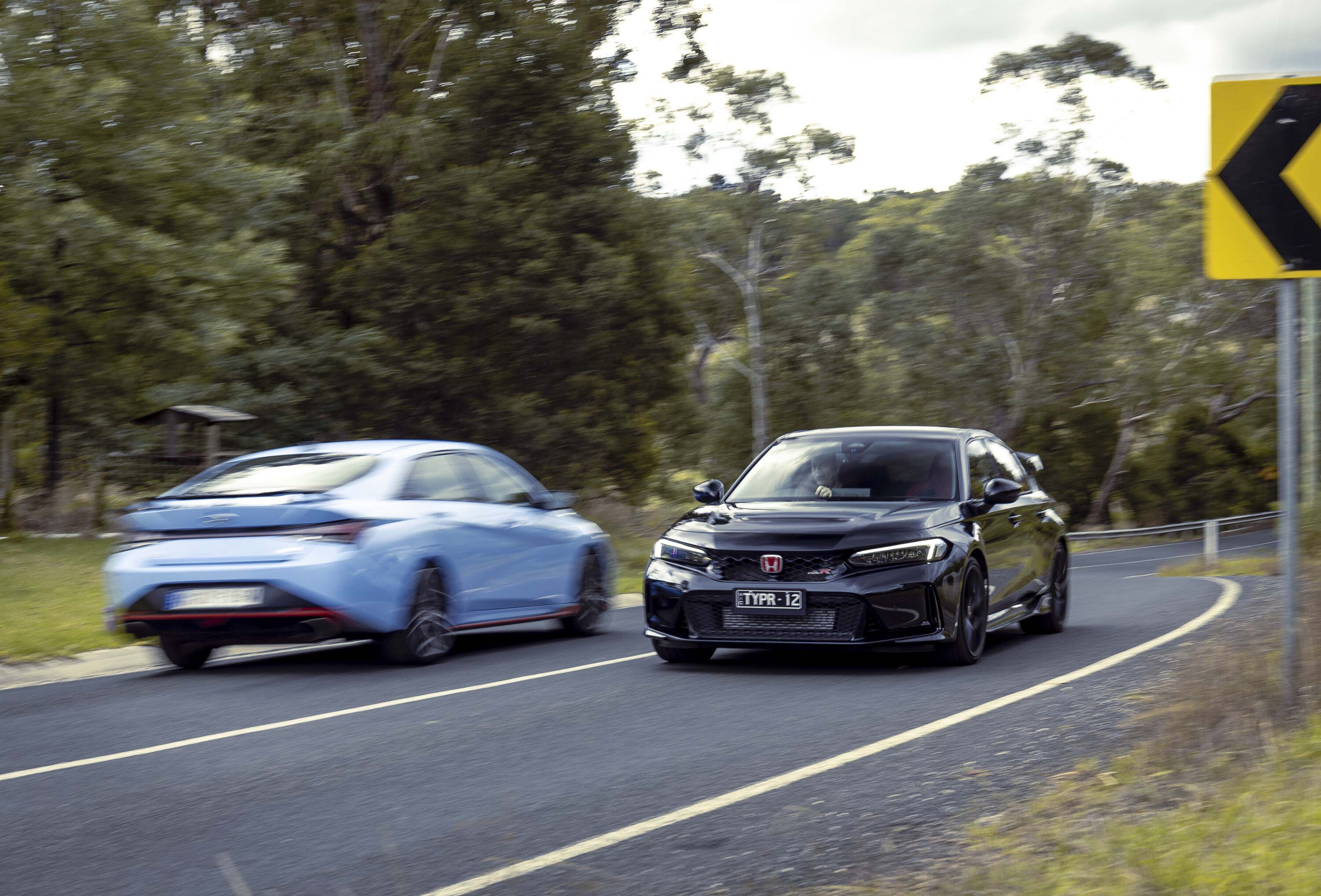
Hyundai’s leveller is its eight-speed dual-clutch transmission, which whips through gears far quicker than the tactile six-speed manual fitted to the Civic. That’s why the Honda will get to 100km/h in 5.4 seconds, just shaded by the Hyundai’s 5.3-second sprint.
Then you try that in the real world and realise that the Honda’s nose seems glued to the ground where the Hyundai feels as if somebody’s filled the engine bay with helium.
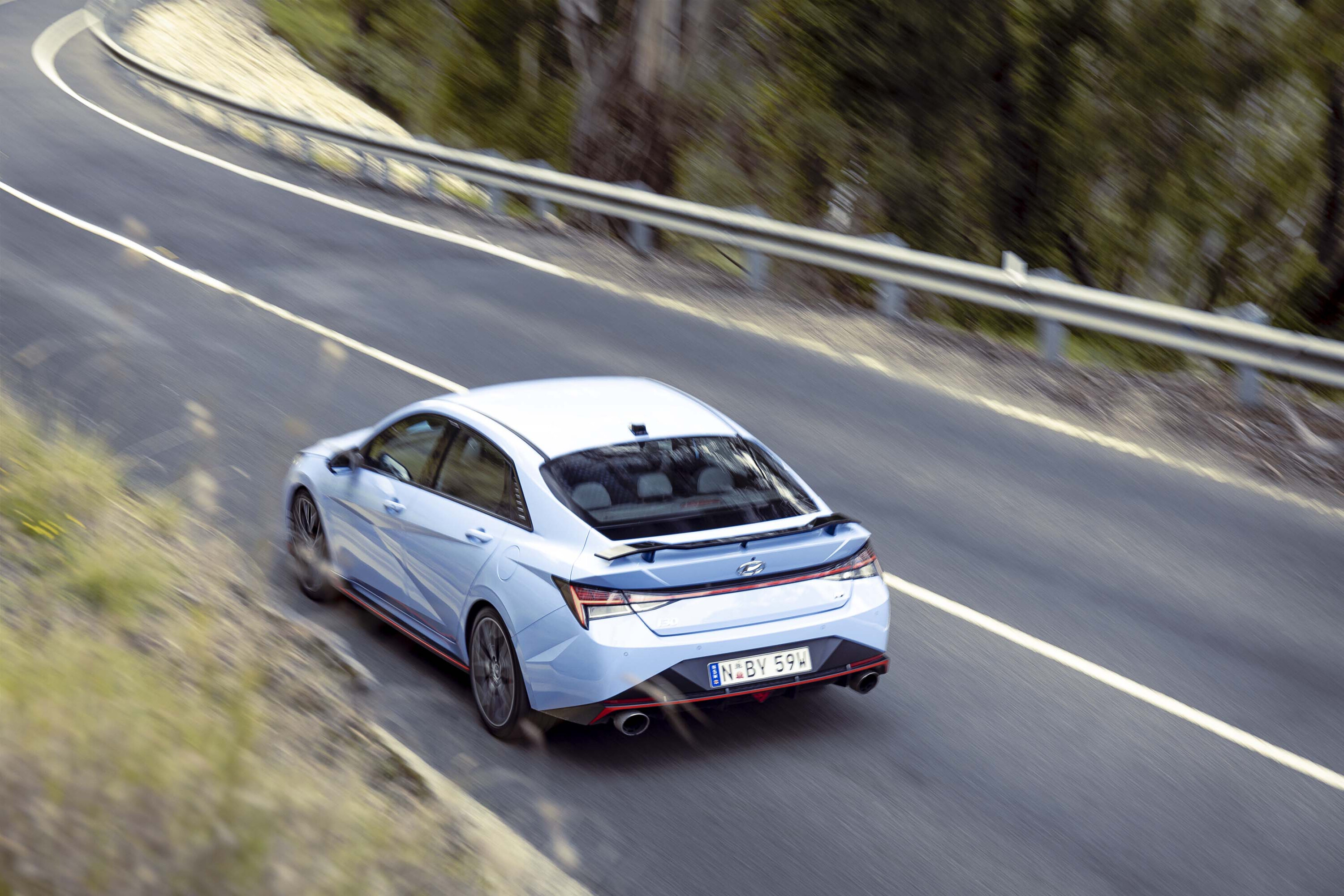
We’ve made note before about the i30 Sedan N’s propensity to wheelspin and axle tramp off the line, a trait exacerbated if it’s at all wet. And so it proves today. The steering is lighter and jumpier in your hands, requiring constant small corrections as the car torque steers, attempting to find traction.
1
That’s not to say that the Honda is entirely free of such vices. It’s just that you really need to provoke the Type R at the top of its rev range in a low gear to get its composure to crack.
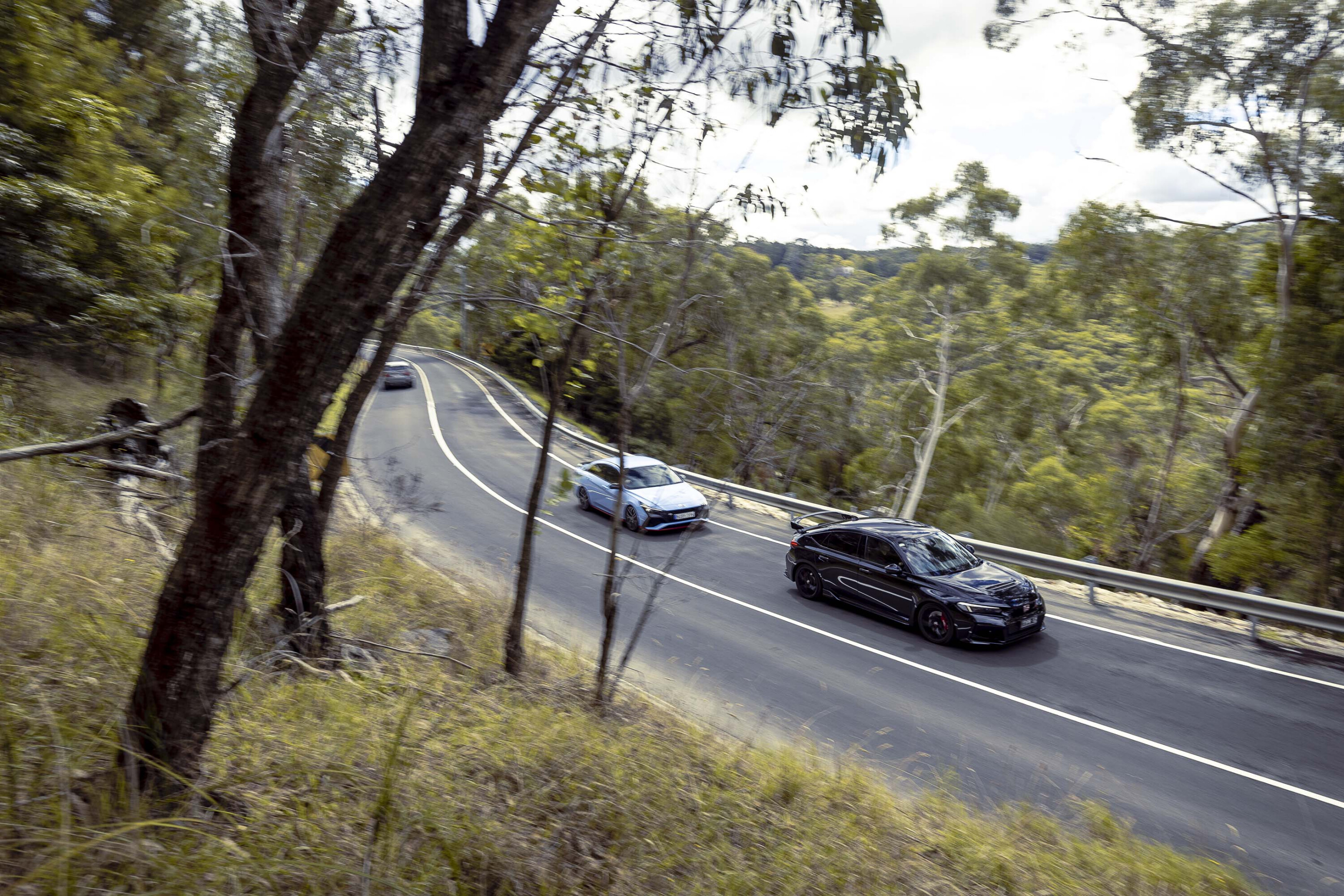
If there’s a road sure to cause some chassis consternation, we’ve found it. The lumps, bumps, blind crests and forested hairpins of Officer Road are 4.4km of condensed challenge. This was one of Holden’s old vehicle evaluation roads, cars schlepping up from the Lang Lang proving ground to tackle this snaking pitch of gnarled and patched bitumen.
Both of these vehicles have front ends that support their two-litre turbocharged transverse fours on MacPherson struts with adaptive dampers. Both have electrically-assisted steering geared at 2.2 turns lock to lock. Both ride on Michelin Pilot Sport 4S rubber measuring 265/30 ZR19 on the Civic and 245/35 ZR19 on the i30. The basic ingredients are nigh-on identical but the recipe has clearly been interpreted differently.
1
Pull on the Civic’s Alcantara-trimmed steering wheel and it feels like a flexed bicep muscle. It’s taut, sinewy. The Hyundai’s feels benign and well-oiled. In fact, the Honda’s EPAS is probably the closest in feel to a traditional hydraulic system I’ve yet encountered. Maybe even better than that of a Porsche 911 in that regard.
Hydraulic holdouts like McLaren need to realise that an inflection point has come. It’s time to move on. It’s helped by new bearings in the column and beefier tie-rod ends. A front anti-roll bar that’s 60 per cent stiffer than its predecessor reinforces that impression of a flat, implacable front end.
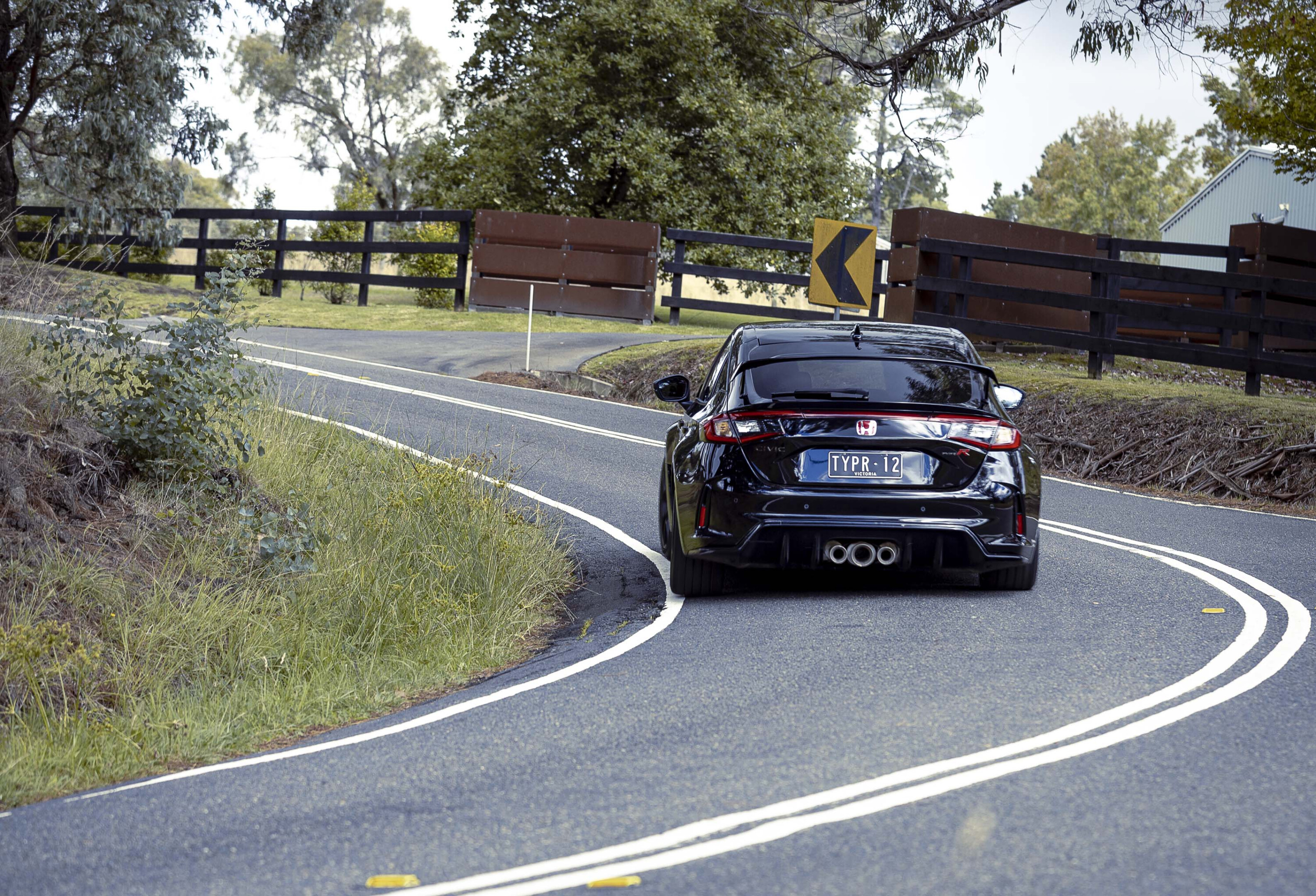
Tip the Type R into a tightish corner and it turns in crisply, instantly keying into the apex. The last Type R ran on 20-inch wheels and you feel that reduction in both unsprung weight and gyroscopic effect in this nimbler successor. You expect that. What you don’t expect is how hard and fast you can then apply a gargantuan bootful of throttle. It takes quite some time to adjust to this aspect of the Civic’s dynamics.
Everything that you’ve ever learned about powerful front-wheel-drive hatches and where they’ll begin to understeer requires an immediate recalibration.
1
The helical limited-slip differential doesn’t have the sort of grabby lock-up that uncouthly drags the front end to the apex. Instead, it doggedly holds a line despite the sort of provocation that would normally punch a hole in the adjacent scenery.
It can carry huge mid-corner speeds and the new Individual mode allows you to wick the engine and steering to their most aggressive settings while retaining a measure of suspension compliance, which is key on a road like this.
The Civic’s gearshift and pedal weighting is beautifully calibrated, with possibly the best rev-matching system I’ve ever experienced. I’m not sure if the shift action is quite such a delight as that of the old EP3 Type R, as the current car has the tiniest degree more grit in the action but it’s very good indeed.
Metal gear knobs aren’t a great idea in Australia though. The Hyundai’s eight-speed DCT is hard to fault, blatting through its ratios with speed and precision.
1
Some have groused that the latest Civic Type R is too firm. That’s utter tripe. For the handling payback delivered, the ride quality is far from unreasonable.
It’s not as generous in its bandwidth as the Hyundai, but it’s far from choppy, even when set into +R mode. Front-end support is excellent on bumpy roads, certainly better than the i30 Sedan N where sharp ruts and shallow potholes will see you get regular use from the bump stops.
In the Hyundai’s defence, this car has seen over 18,000km of spirited use, whereas the Honda is box-fresh.
But it is noisy, especially on poor surfaces where the tyres drum through those rigid NVH pathways into the passenger cell. The i30’s no wafter either, with the engine and exhaust noisier in both its mildest and angriest modes. With the N setting engaged, the i30 barks, crackles and pops.
1
The stability control is also very lax. An indicator on the dash lets you know that you’re in ESC Sport, but a big lift when committed to a corner will send the Korean very sideways indeed.
By contrast, the Civic is far more prescriptive, simply tucking the nose neatly at fast road speeds.
Both vehicles are reasonably large. The Honda, for instance, offers a bigger road footprint than a BMW E39 M5. As a result, they both require careful placement on narrow roads but accommodation inside both is generous, even in the rear seats.
2
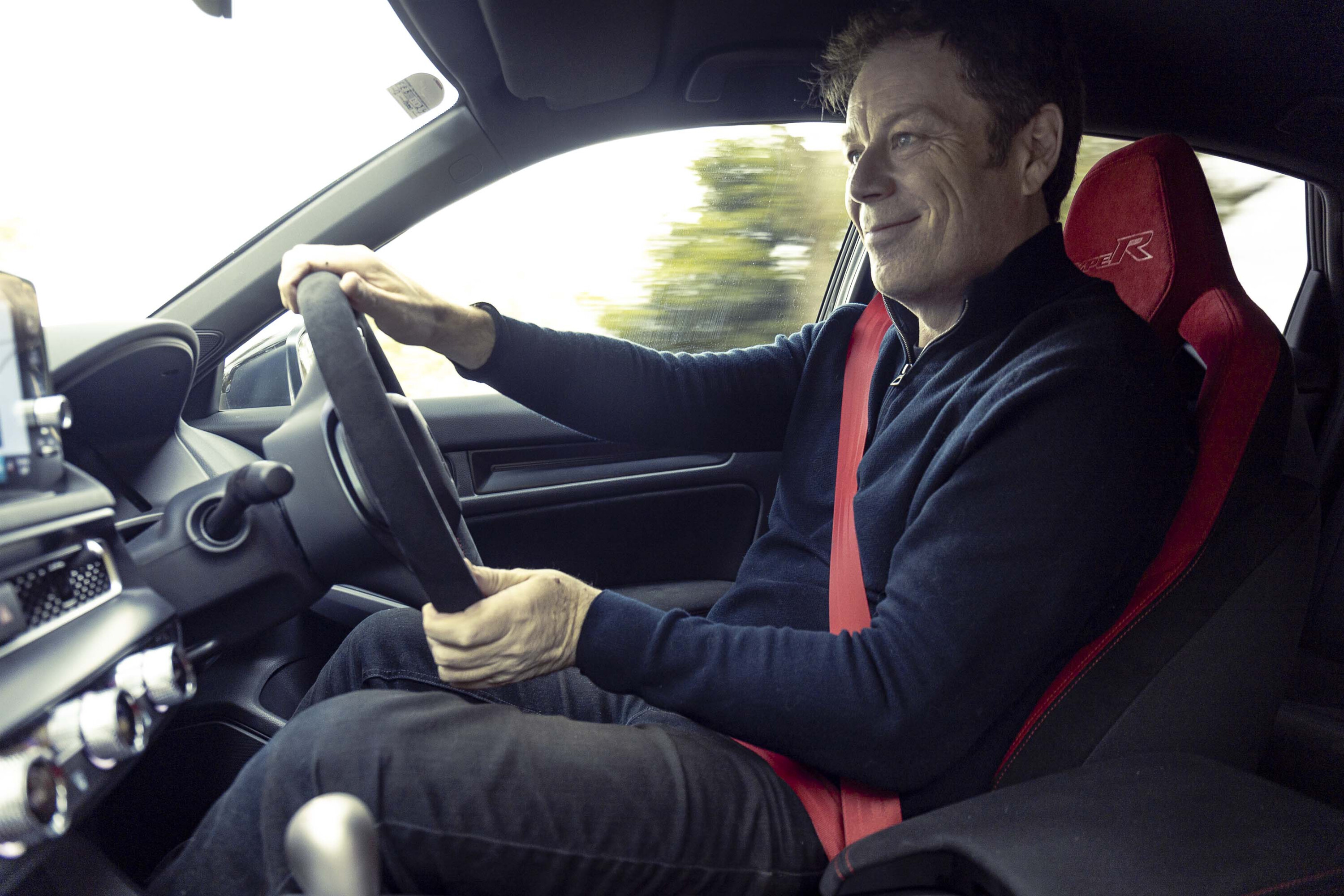
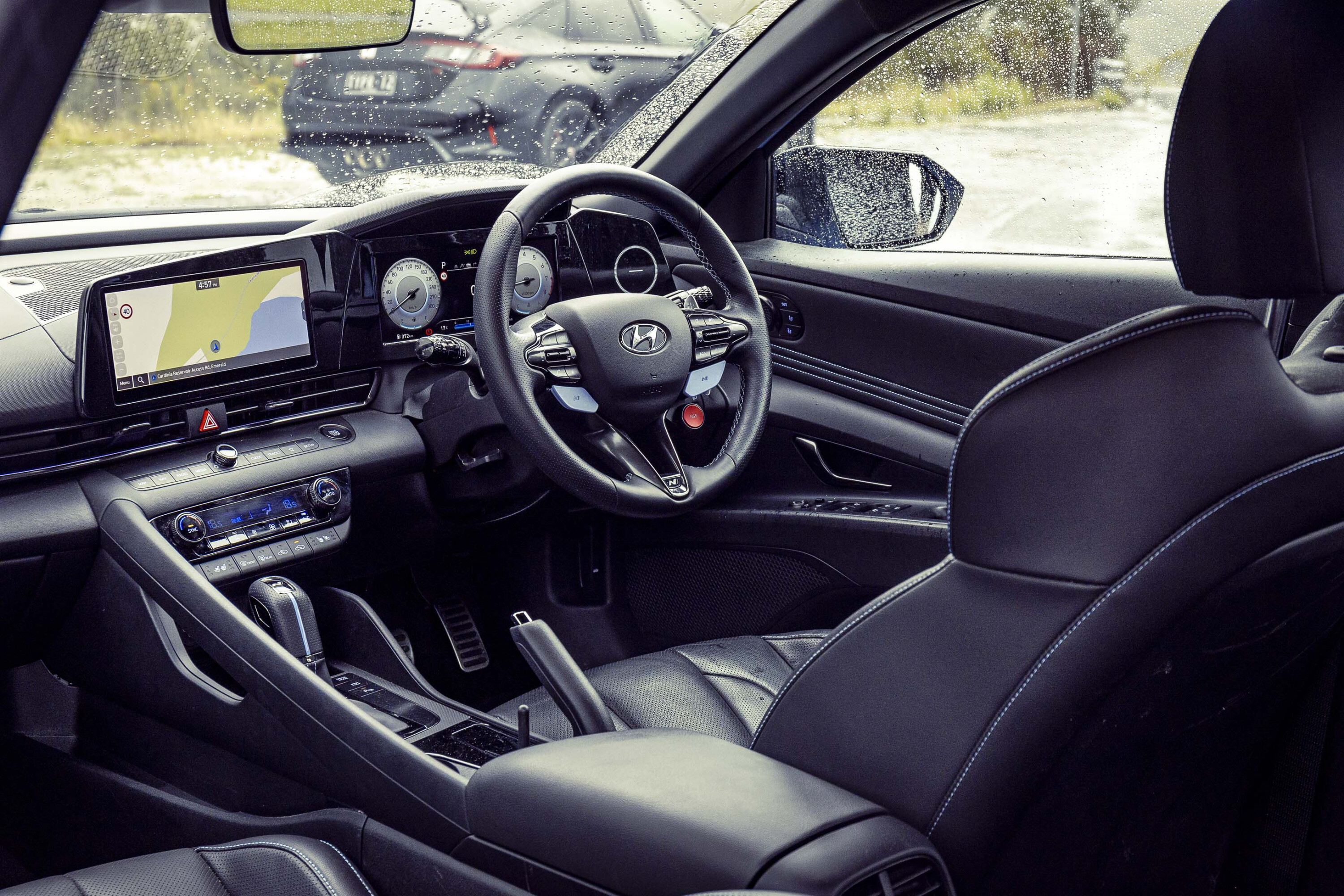
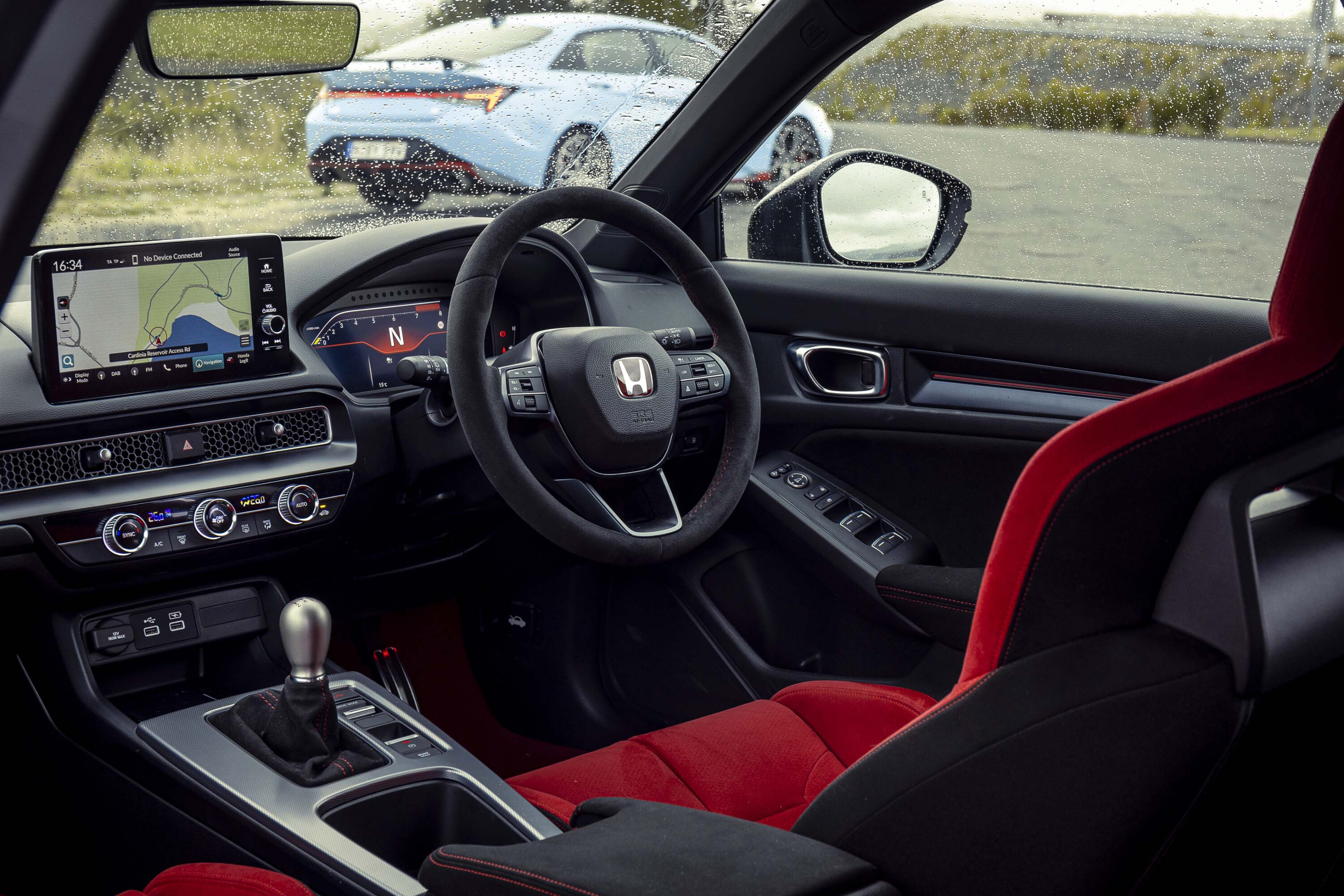
Special mention must go to the Honda’s beautiful bucket front seats which are not only supportive but comfortable too. The Hyundai’s front chairs are a little wider and flatter but, unlike the Honda’s, come with electric adjustment on the driver’s side and heating and ventilation for both driver and passenger. Steering wheel heating too.
Hyundai also supplies a space-saver spare tyre under the boot floor, whereas the Civic relies on a can of sealant in a cubby to the left of the luggage bay. The i30 N relies on a wired smartphone connection for Android Auto and Apple CarPlay. The Civic has wireless CarPlay but to unlock wireless Android you’ll need to go a long way subterranean in the infotainment.
With a cable plugged into it, your phone won’t sit in the Honda’s wireless charger. Instead, it’ll flop around with its cable getting in the way of the gearshift.
Interior quality is another area where the Honda differentiates itself from the Hyundai.
1
1
Brace your left leg against the centre stack when tackling a sharp right and the i30 N is all creaks and rattles. By contrast, the Civic’s spine feels adamantine, Porsche-like. That’s apt.
With prior generations of the Type R, we’d noted that this is what a Porsche hot hatch would feel like. This FL5 reinforces that impression still further. It’s the consideration of what a driver needs, the focus on that and then the finessing of all the other small details to contribute to that feeling of quiet confidence and considered cohesion. It’s a masterstroke.
Hyundai isn’t there yet with the i30 Sedan N, but such is the N division’s trajectory that its day will surely come. Drive the two cars and it does feel like a $23K gulf between them. Maybe more.
1
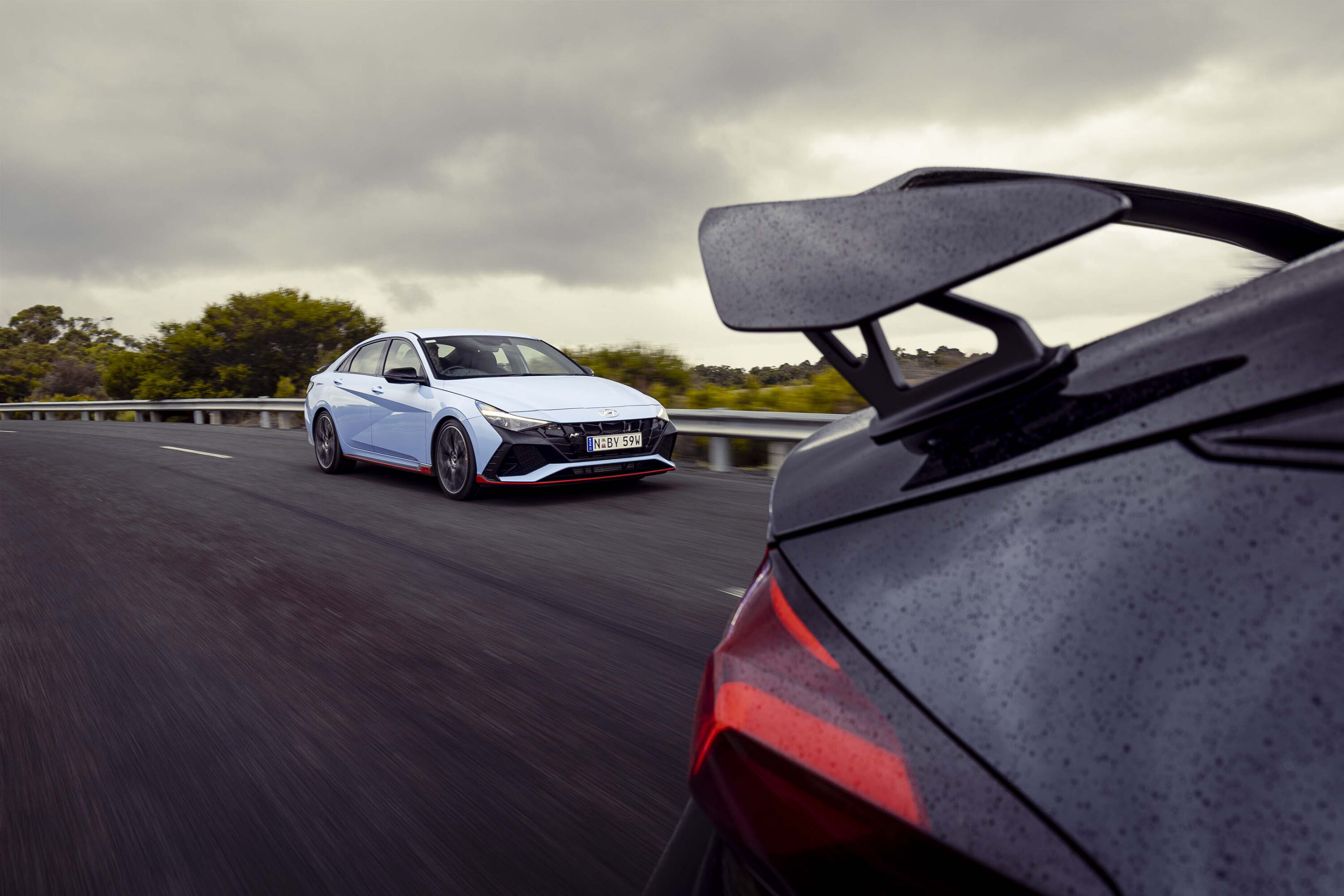
On give-and-take roads, the Hyundai was probably as much fun to drive as the Civic, and it may be easier to live with.
We expected it to get roughed up here but it emerged from this encounter with its pride intact.
If you’ve got $50K and are looking for a driver’s car with genuine versatility, it still stands up admirably.
1
But N is not the new R. Not yet, anyway.
The FL5 Honda Civic Type R feels built without compromise to be the finest front-drive hot hatch of all time.
Yes, it’s a lot of money, but to drive the Civic Type R is to fall in love with the depth of the engineering behind it, to enjoy the benefits of a performance legacy that stretches back decades.
That’s hard to replicate and it bleeds into every aspect of the Type R experience. What your $72,600 is buying you is authenticity, and that is hard to put a price on.
| Specifications | ||
|---|---|---|
| Model | 2023 Honda Civic Type R | 2023 Hyundai i30 Sedan N |
| Engine | 2.0-litre 4cyl, dohc, 16v turbo-petrol | 2.0-litre 4cyl, dohc, 16v turbo-petrol |
| Max power | 235kW @ 6500rpm | 206kW @ 5500-6500rpm |
| Max torque | 420Nm @ 2500-4000rpm | 392Nm @ 2100-4700rpm |
| Transmission | 6-speed manual | 8-speed dual-clutch |
| L/W/H/W-B | 4606/1890/1407/2733mm | 4675/1825/1415/2720mm |
| Weight | 1430kg | 1445kg |
| 0-100km/h | 5.4s | 5.3s |
| Economy | 8.9L/100km (ADR combined) | 8.2L/100km (ADR combined) |
| Price | $72,600 drive-away | $49,000.00 + on-road costs |
| On sale | Now | Now |
With the exception of some high-end high-performance models, all electric cars use a simple single-speed transmission to send power from the motor to the wheels.
The solution is cost-effective, and the incredible torque characteristics of an electric motor ensure swift acceleration even with one gear. But an innovation by transmission giant ZF has taken EVs up a gear – literally.
1
How does ZF’s two-speed EV transmission work?
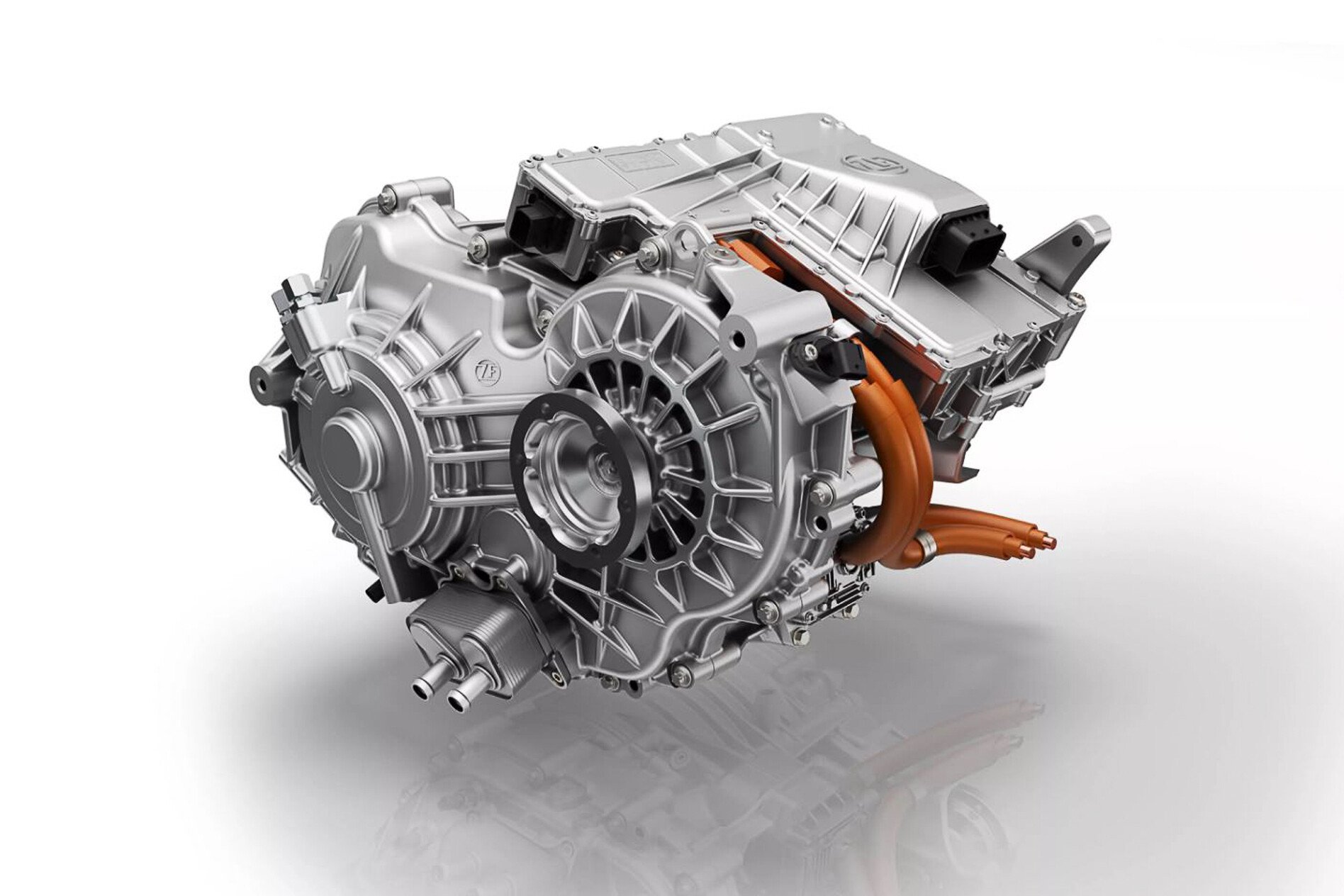
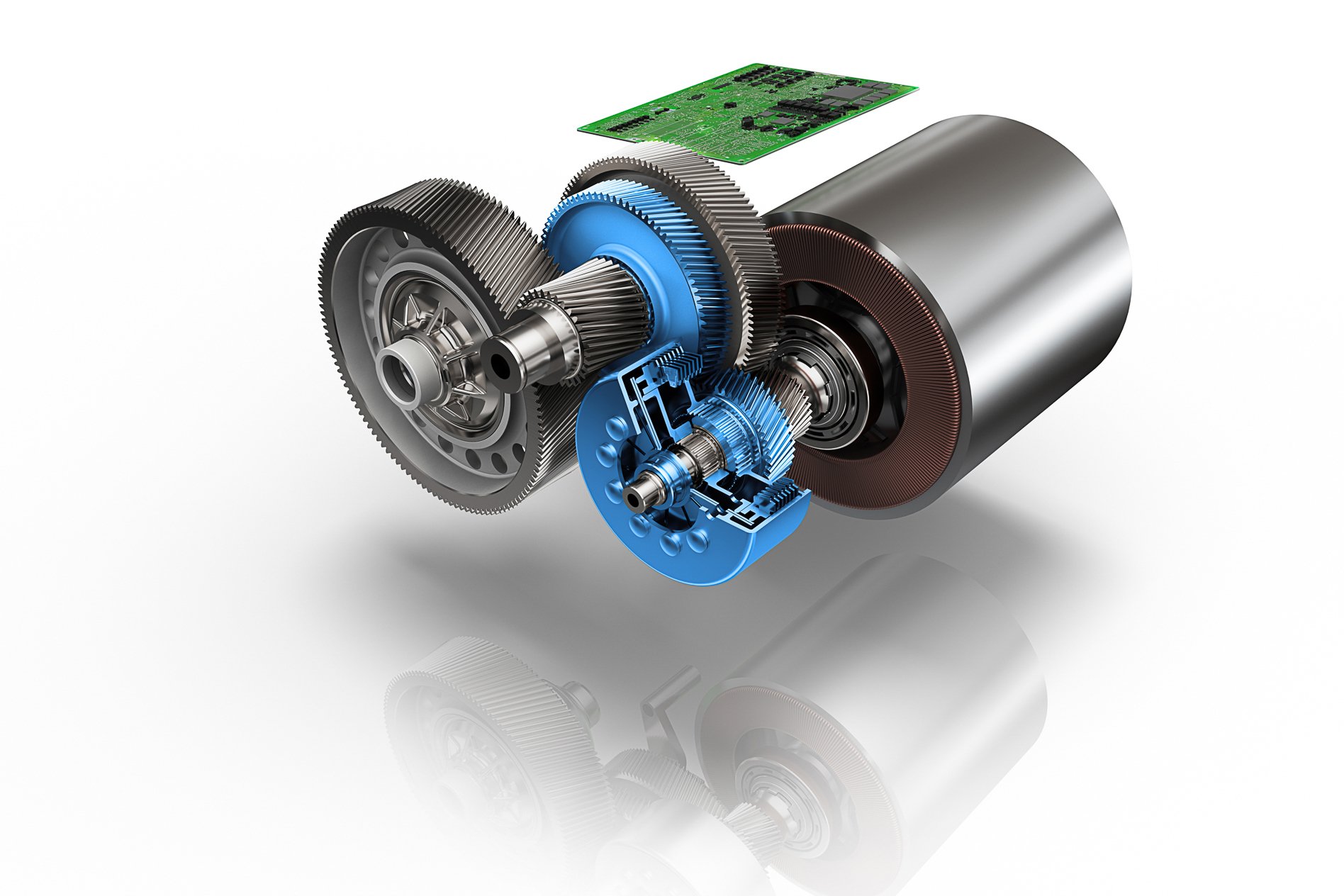
ZF’s universal drive unit, offering a turn-key drivetrain for manufacturers looking to develop a mainstream EV, incorporates a 140kW electric motor and, crucially, a game-changing two-speed gearbox.
At low speeds and in stop-start traffic, an electric motor is at its most efficient, offering regenerative braking to recoup power under deceleration and without power-sapping drag to fight. But at cruising speed, the rapidly spinning motor puts a high demand on the battery, compounded by aerodynamic and tyre resistance.
However, when vehicles fitted with ZF’s new unit pass 70km/h, the gearbox shifts up into its taller cruising ratio, lowering the motor’s RPM for greater efficiency and optimised torque.
Until now, manufacturers have had to choose between low-speed torque or high-speed efficiency and lock that decision into the single gear ratio, but this potentially revolutionary twin-ratio solution is offering something closer to the best of both worlds.
High hopes Down Under
Touring this great land of ours under EV power is a tall order, but multi-speed ’boxes could be part of the answer.
Lower gears would provide maximum towing torque for trailers and caravans, while higher gears would impart long legs for vehicles on the interstate run, reducing charge consumption.
Ratio to the finish
As with manual and automatic gearboxes, expect to see EV transmissions with more ratios.
ZF is up to nine in its automatics for ICE, and more cogs in an EV gearbox will bring similar benefits – more potent acceleration and torque, increased motor life, and longer cruising range.
1
Rival gear
Global auto supplier GKN is already manufacturing a two-speed transmission it calls the eAxle.
This unit is in part, responsible for the dazzling performance of the Porsche 918 Spyder and BMW i8. But with the potential to drive a greater number of mass-market cars, the unit cost of ZF’s transmission will plummet.
⚡ More EV stories to help you choose the best car for your needs
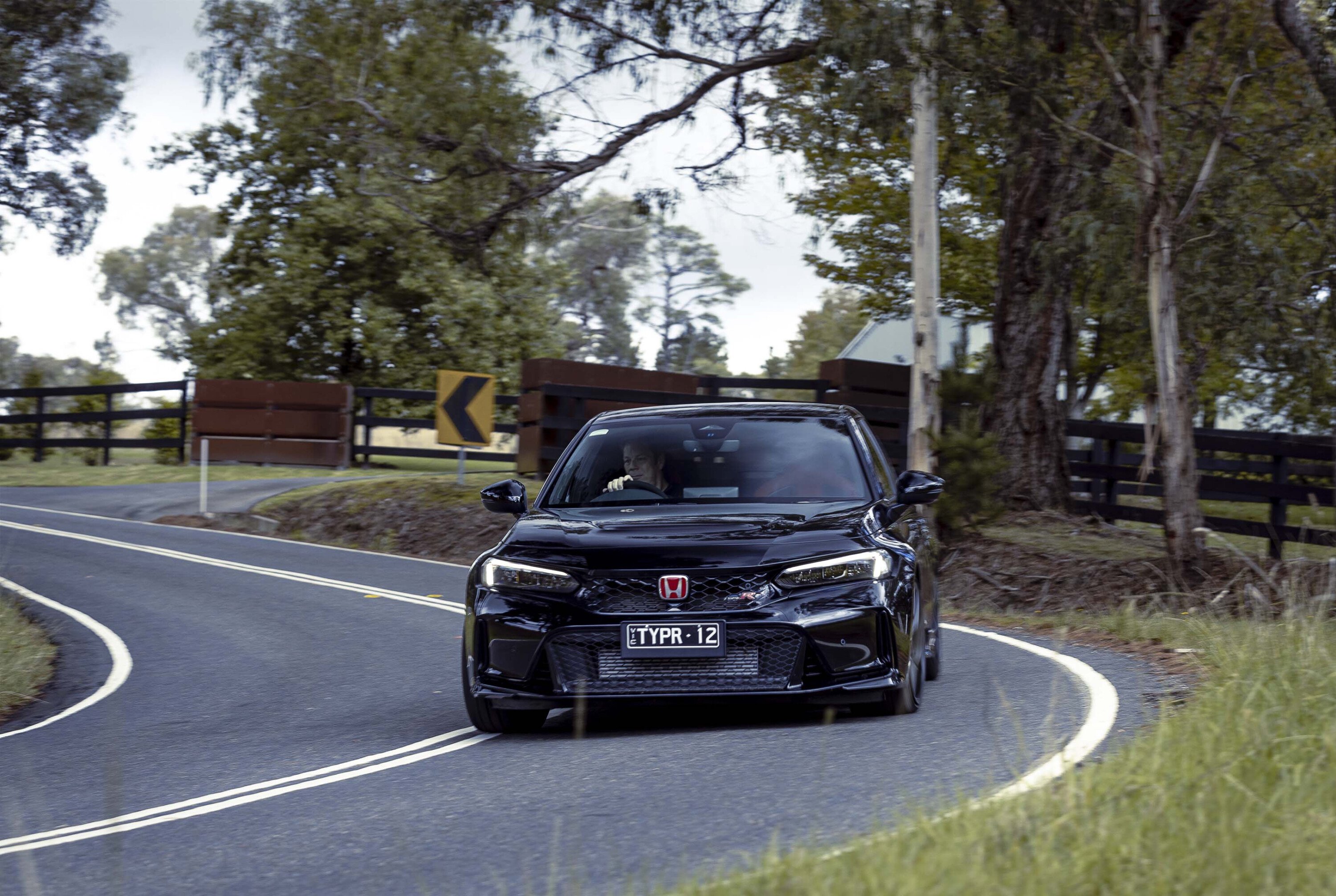
When Honda announced pricing for the latest Civic Type R, punters were astonished that a front-drive hot hatch could command $72,600 drive-away. But with deliveries of the 11th-generation FL5 Honda Civic Type R commencing this month, speculators are already trying to make a quick buck.
There are examples listed for private, or dealer used sale in the classifieds for as much as $89,990 excluding on-road costs with 400km on the odometer.
Once you add registration, insurance, and stamp duty, that’s roughly a $20K mark-up over ordering one new from a dealer. Though, with Civic Type R’s huge wait times, some may consider it worth their while.
1
“Due to high demand for the extremely popular Civic Type R, some wait times are estimated to be approximately 20 months,” reads Honda’s website. Guess that’s $1000/month privilege to get one now.
The lowest price listed for a Civic Type R is $72,600 drive-away from official Honda dealers and, at the time of writing, there are only a handful of delivery-kilometre examples under $80,000.
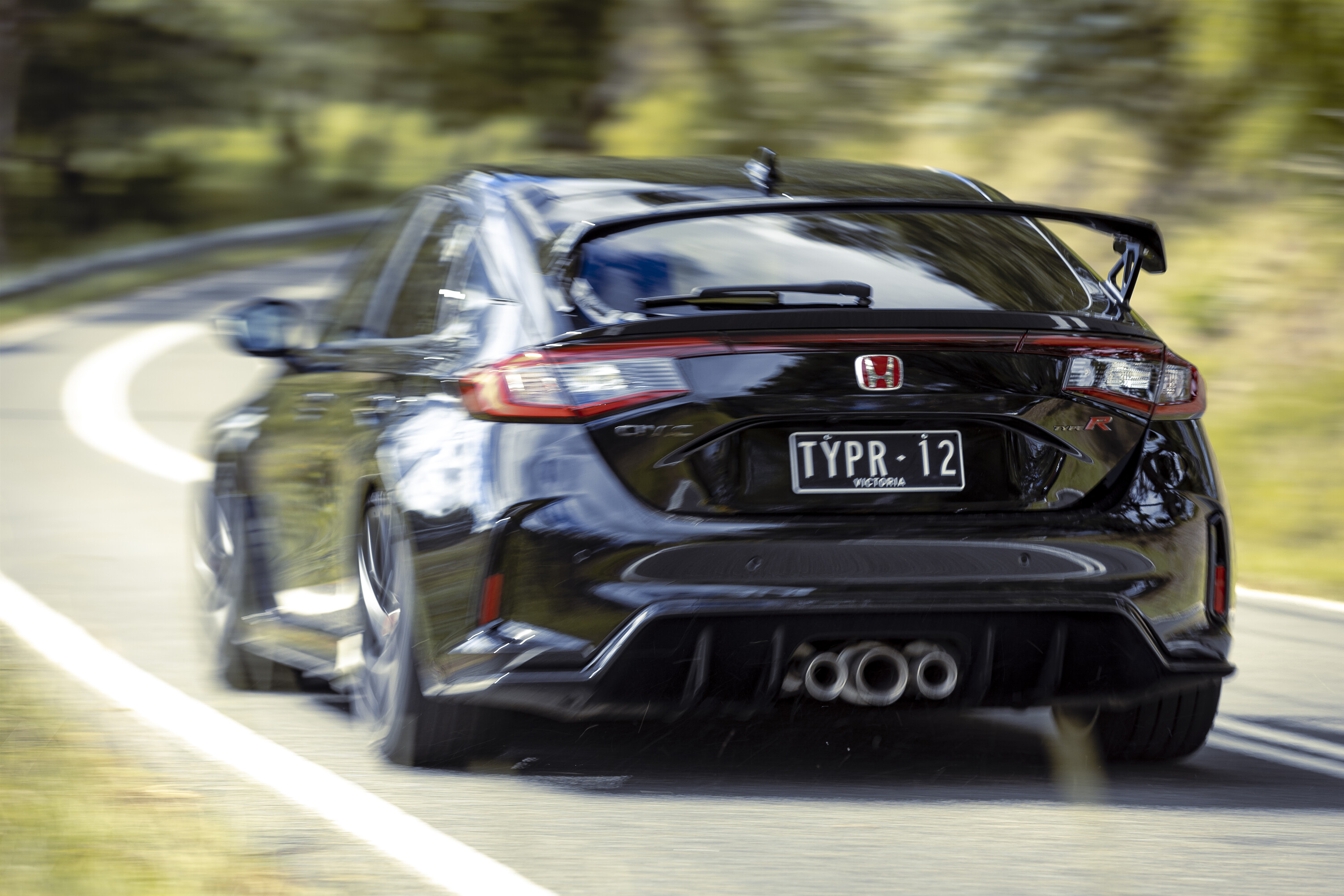
The Civic Type R situation is optically inconvenient for Honda Australia following its transition away from traditional franchise dealers to a fixed-price agency model. The idea is to make buying a new car a simpler and less competitive affair – however, it isn’t Honda preying on long wait times.
1
A spokesperson for Honda Australia told Wheels that none of the dealers currently advertising Civic Type Rs above the retail drive-away price are affiliated with Honda Australia.
“We can confirm that all the advertised units of the 2023 Civic Type R units you referred to are being sold via non-Honda used car dealerships. These dealerships are not affiliated with our current Honda Representative network. There are no Honda dealers marking up their allocations.
“Each of these Civic Type R’s are being sold as used vehicles in the used car market”, the spokesperson added.
1
It’s a situation we’ve seen increasingly, and not just on exotic or enthusiast vehicles, such as the well-publicised GR Yaris saga, but also the more mundane with Ford Rangers and Toyota RAV4 Hybrids also getting a little extra thrown on top.
The Civic Type R uses a 235kW/420Nm 2.0-litre turbo-petrol four-cylinder engine that drives the front wheels via a six-speed manual transmission.
At the Type R’s international media launch, Angus Mackenzie adjudicated a rare 9.5/10 – the verdict being that at $20K more than a Hyundai i30 N, The Type R is a lot of cash. “Is it worth it? If you want what is the best front-drive hot hatch in the business, then yes.”
We’ll have a full local road test, and a comparison between the Type R and one of its main rivals, live on 10 April.
MORE
Everything Honda
