
Toyota Australia has lost its appeal against a 2022 Federal Court decision over damages owed to owners of Hilux, Fortuner and Prados fitted with problematic diesel particulate filters.
In hearing the the Japanese carmaker’s appeal, the Federal Court chose to uphold its earlier decision which found that more than 260,000 Australian Toyotas were equipped with DPF systems that were not of “acceptable quality”.
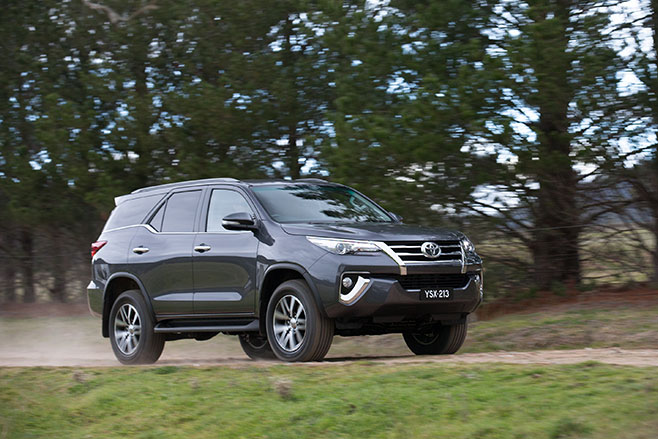
Total damages owed have yet to be revealed, however Toyota could be liable for an estimated $1 billion over the 264,170 affected Hilux, Fortuner and Landcruiser Prado diesel models manufactured between 2015 and 2020.
This latest figure is down on the plaintiffs’ lawyers who had previously targeted more than $2 billion, with members of the class action entitled to more compensation depending on the extent to which they were affected by the loss of their vehicle.
The Court upheld that Toyota was in breach of Australian Consumer Law, having engaged in misleading or deceptive conduct in the marketing and sale of the vehicles, and that the value of affected vehicles at the time of their initial supply has been reduced as a result.
It was found that the reduction in value of these affected vehicles was 10 percent, and not 17.5 percent as had been found by the primary judge.
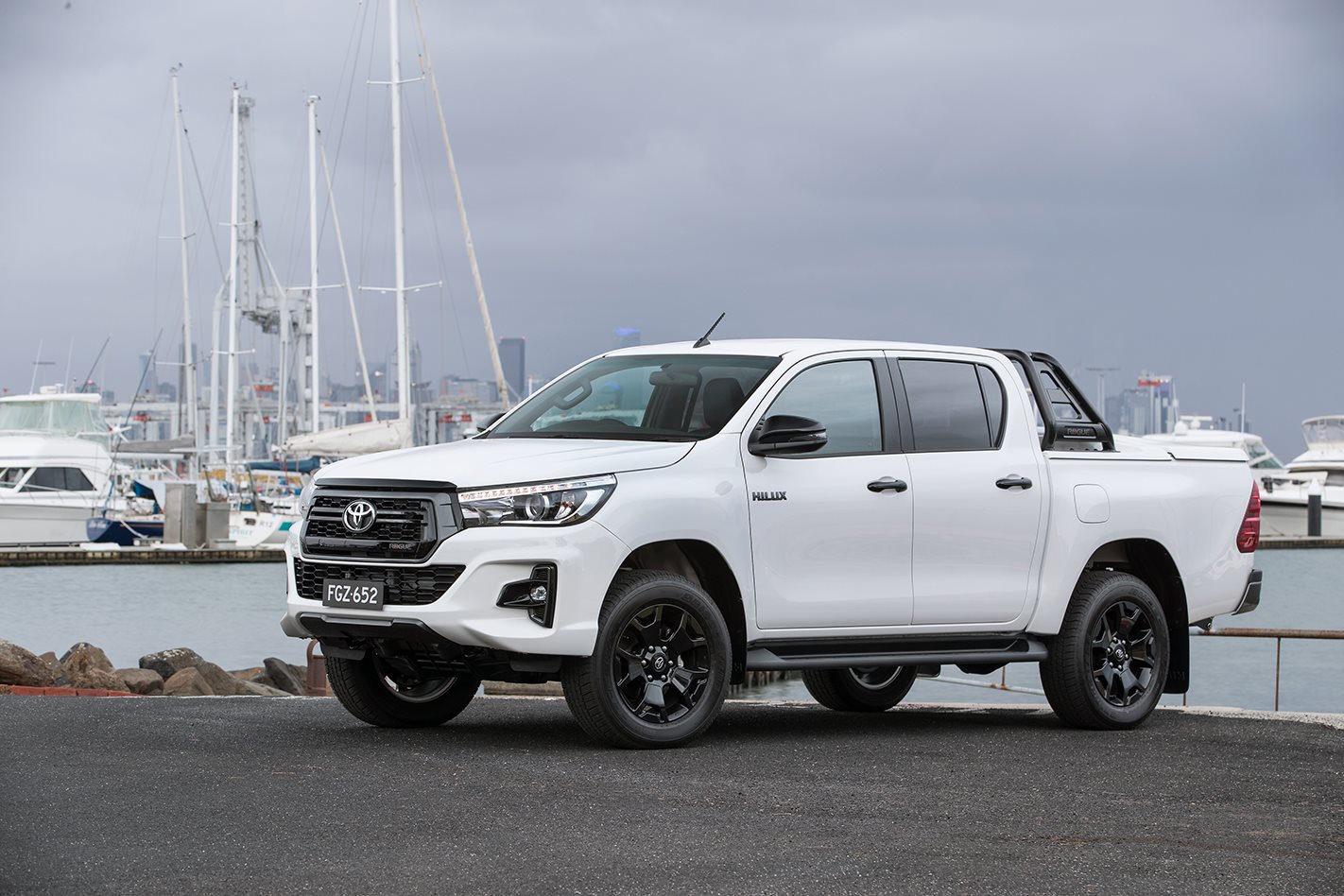
The Court acknowledged that Toyota developed an effective fix for the defect in May 2020 and subsequently offered it free to owners, and also extended the warranty on the item to ten years/unlimited-km.
It was also found that there was merit in Toyota’s submission that the utility of its vehicles was unaffected by the defect and its consequences, and the Court has set aside the primary judge’s aggregate damages award from last April – with the matter of forthcoming damages being sent back to this judge for reassessment.
Responding to the decisions, Toyota released the following statement.
“Toyota is reviewing the decision of the Full Court of the Federal Court of Australia.
“We remain committed to assisting any customer whose vehicle has experienced the DPF issue and to providing a free-of-charge remedy that has been available since 2020. We believe we have implemented customer-focused and technically grounded measures to resolve customer concerns.
“Toyota will consider the judgment carefully before making any further comment.”
CATCH UP
- DPFs are designed to capture and burn off pollutants and harmful emissions. Many of these vehicles were not regularly running at conditions where DPFs are effective, and became clogged.
- Defective DPFs could cause a number of issues including excessive white smoke, reduction in power output and foul exhaust odours.
- In 2018, Toyota fitted a DPF burnoff button to its 2.8-litre diesel, which the Court described as a less affected ‘field fix’, then later upgraded the engine substantially in mid-2020.
The story to here
April 2022: Federal Court finds Toyota misled customers on DPF defect
Snapshot
- More than 250,000 Toyota diesel vehicles found to have DPF defect
- Court finds values affected by 17.5 per cent on average
- Owners may be entitled to compensation
Toyota Australia may be forced to pay billions of dollars to customers affected by a mass defect on selected diesel models.
The Federal Court has found an ongoing and widespread problem with diesel particulate filters (DPF) fitted to some Toyota diesel vehicles reduced their value, opening the door for compensation to be paid to hundreds of thousands of owners.
The Honourable Justice Lee said Toyota Australia’s “conduct in marketing the vehicles as being of acceptable quality was misleading”.
In total, 264,170 vehicles built between October 1, 2015, and April 23, 2020 were affected by the issue, across HiLux, Fortuner, and LandCruiser Prado model ranges.
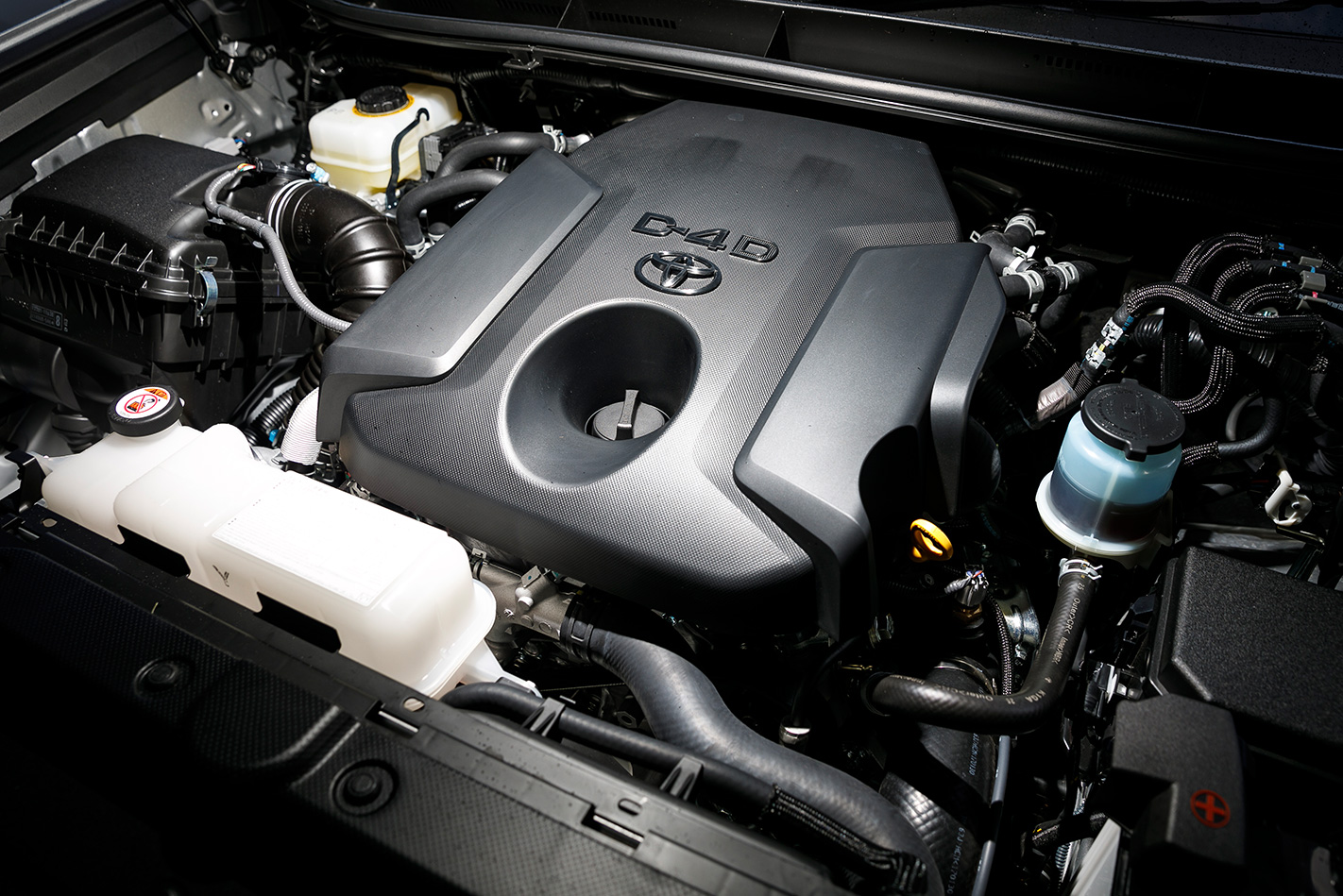
The defect is relevant specifically to cars fitted with either a 2.4-litre ‘2GD-FTV’ or 2.8-litre ‘1GD-FTV’ turbo-diesel four-cylinder engine.

The DPF assembly – designed to reduce harmful exhaust emissions – was found to become clogged or blocked, stopping the system from working, and instead creating a “range of consequences including emission of foul-smelling white smoke, the display of excessive DPF notifications, and the need to have the vehicle inspected, serviced and repaired”.
Fuel consumption was also found to have increased when the issue arose.
Toyota’s defence team argued the issues didn’t affect the operation of the vehicles, and drivers were still able to drive from A to B safely, as the DPF system was not essential.
However, the Honourable Justice Lee wholly rejected the arguments, writing “[Toyota’s] attempt to downplay the significance of the core defect and the defect consequences does not withstand scrutiny”.
Despite owners arguing the defects reduced car values by 25 per cent, Justice Lee deemed a 17.5 per cent reduction in the average retail value to be appropriate.
“We are in the process of reviewing the court’s judgement,” a spokesperson for Toyota Australia told WhichCar.
“At every step, we believe that we have implemented customer focused and technically grounded remedies to resolve customers’ concerns,” they said in a statement.
“Toyota will carefully consider the initial trial judgement before making any further comment.”
The court’s final orders will be handed down in the coming weeks.
The big new Australia-bound 2024 Kia EV9 electric SUV has been properly unveiled today, following a series of detailed leaks and last week’s design-focused reveal.
JUNE 29: We’ve driven the EV9!
Get our full written and video review at the linked story below.
STORY CONTINUES: EV9 confirmed for Australia
JUMP AHEAD
- Design
- EV9 size, space & seating
- EV9 battery, power & acceleration
- EV9 driving range & charging speed
- Technology: Kia Connect & autonomy
- EV9 GT hero confirmed!
- What will the Kia EV9 cost in Australia?
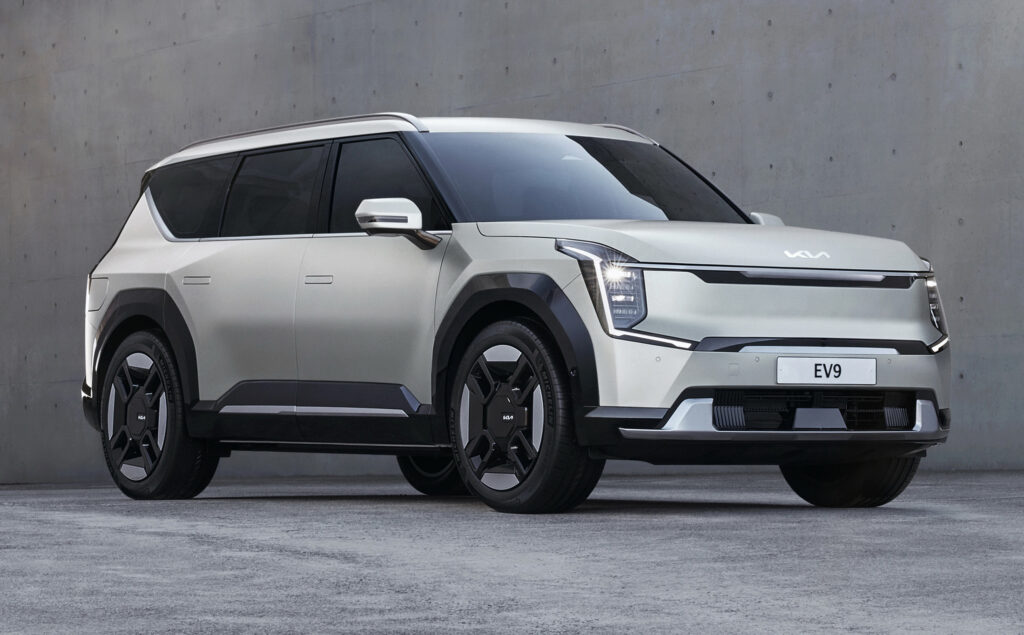
Due in Australia in late 2023, the seven-seat Kia EV9 enters as the largest electric vehicle in the Hyundai-Kia group – and one of the largest EVs in the market – with Hyundai’s Ioniq 7 not scheduled to reach Australia until sometime in 2024.
As with the our 2022 Car of the Year the EV6, and Hyundai’s compelling Ioniq 5 and Ioniq 6 models, the EV9 is built in the Hyundai-Kia group’s E-GMP dedicated EV platform. One of the key features of that architecture is the 800-volt electrical system, allowing for faster charging and more efficient battery integration.
(Buyers should note that the brands’ other EVs, such as the Kia Niro and the Hyundai Kona EV – including the incoming new generation – feature a 400V architecture with slower charging capability.)
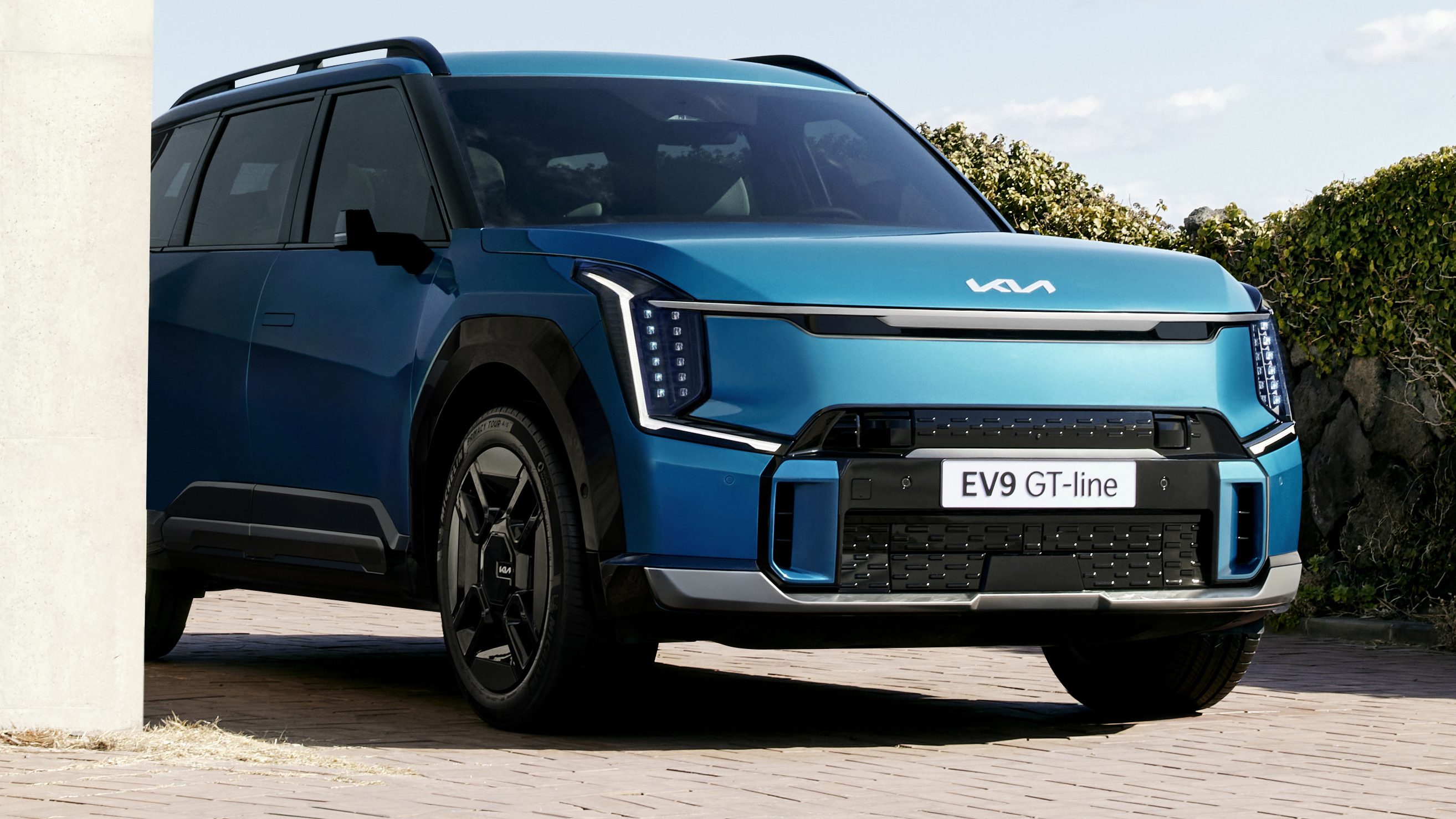
Design: “Opposites unite”.
Not just an off-brand spin on Paula Abdul’s ‘Opposites Attract’, Kia’s new design philosophy claims to target a “unique balance of natural and modern elements”.
Asked by this writer today if he felt it was possible the EV9’s styling goes beyond the ‘sweet spot’ for adventurous design, into the realm of deterrent, Kia design chief Karim Habib focused his language on “early adopters” – risk-takers by nature.
“I think, for who we are as a brand – first of all, Kia is developing products for early adopters. We want people who are open to new solutions, to new ideas, to, let’s say, the invigorating potential of change… we want them to come to our product,” Habib said.
“But, as a designer, I truly believe our job as industrial designers is to visualise the intrinsic qualities of the product, and we believe this is a very innovative product. The design is really a representation of its technology and its innovation, and that quality to me is really a universal appeal.”
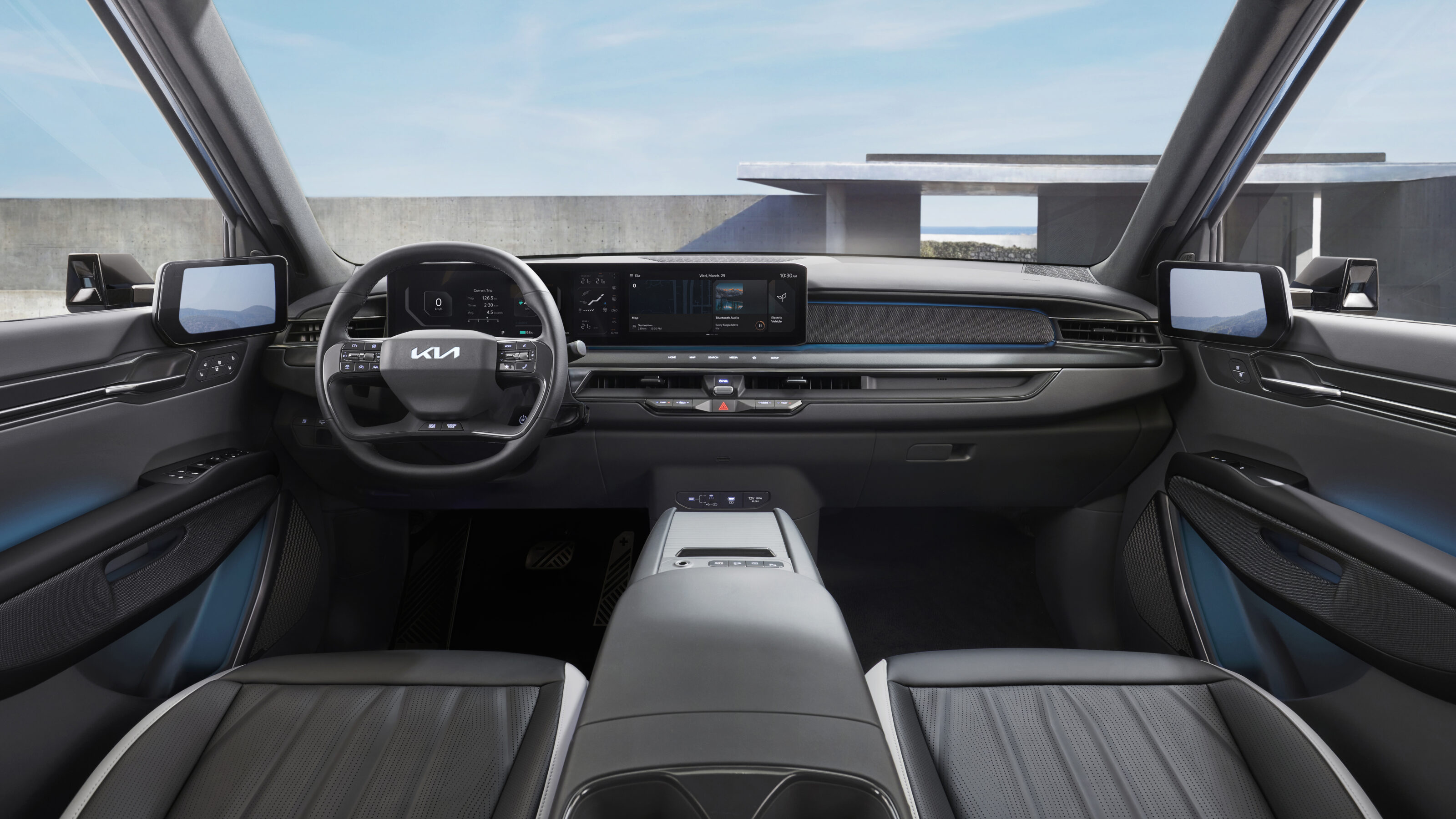
The EV9 introduces a number of design firsts for the brand, from that boxy and bold exterior to, in the cabin, a column-mounted gear shifter (as its stablemate Hyundai is doing) to free up space in the centre console.
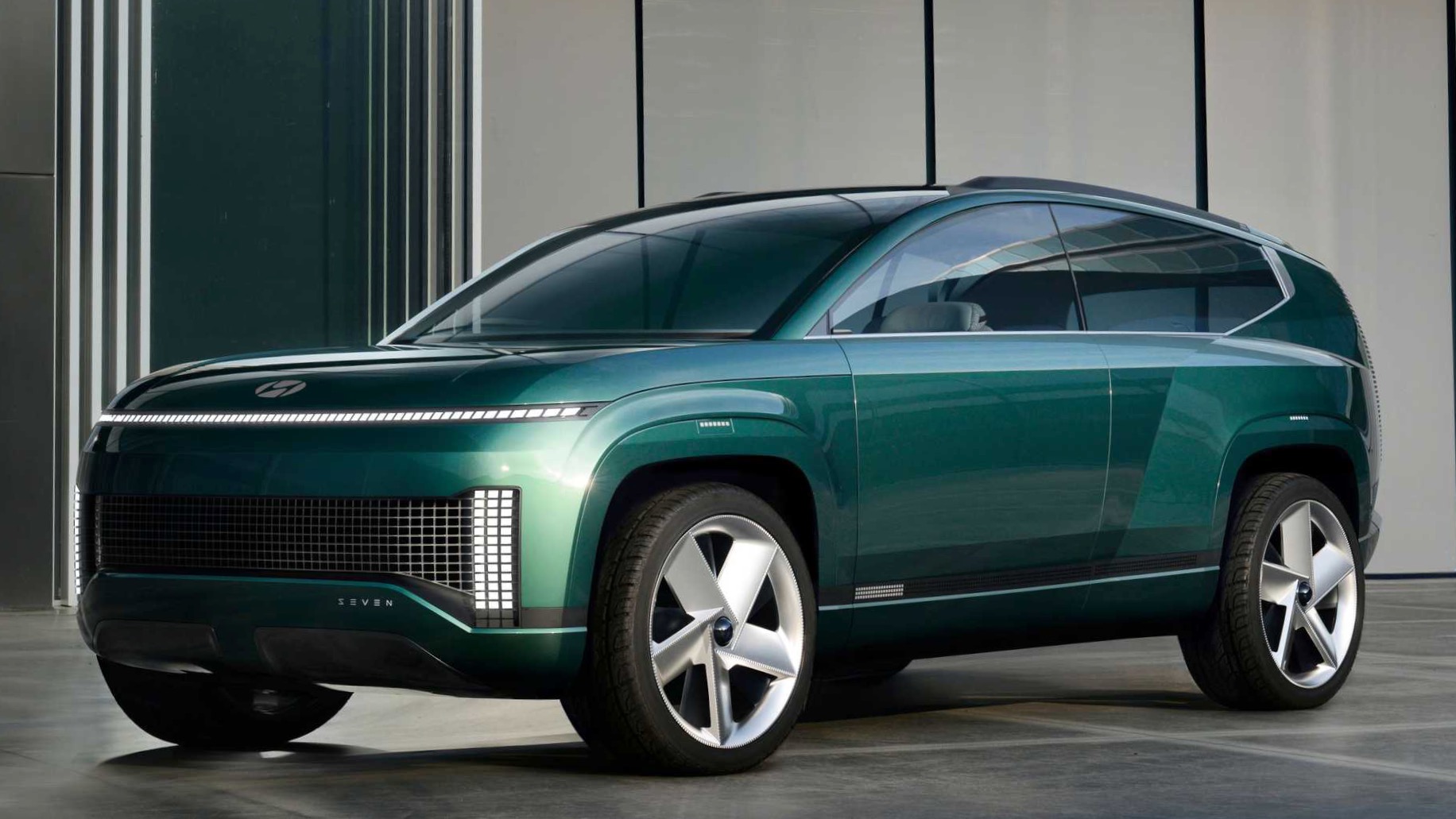
EV9 size, space and seating
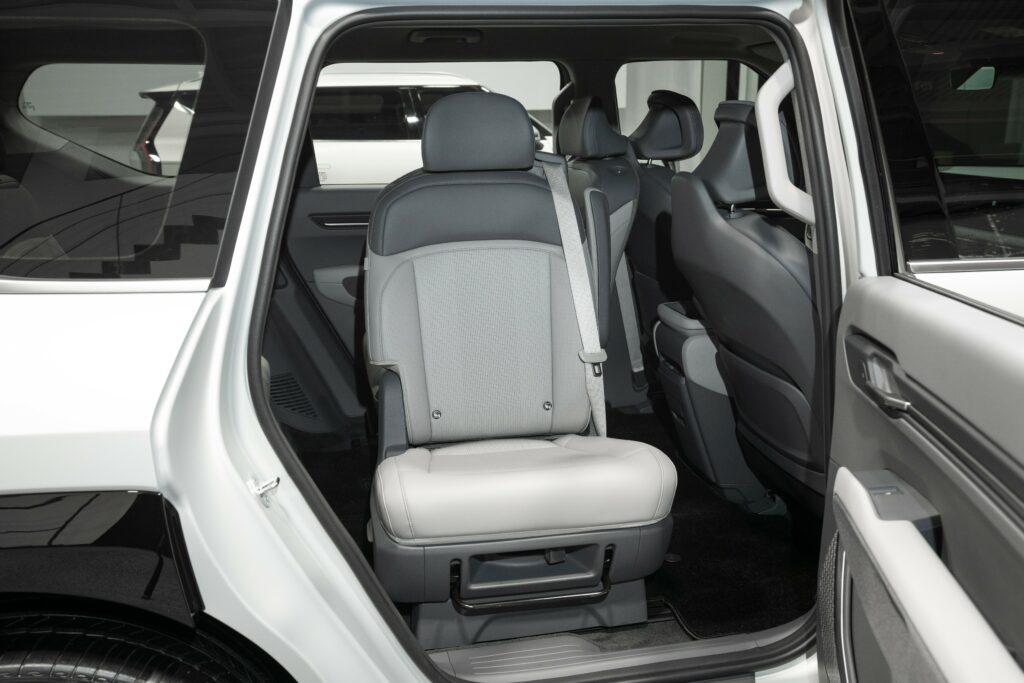
The Kia EV9 will be offered as a three-row model in all forms, with buyers able to choose from seven- and six-seat layouts, with the latter introducing separated, comfort-focused “Captain’s Chairs” in the second row.
Opting for the Captain’s Chairs will allow first- and second-row occupants to recline to a sleeper position for long charging sessions, or the second-row seats can spin to chat with the third-row occupants.
Just like the concept that preceded it, the EV9 rides on a 3100mm wheelbase, which compares well to the Hyundai Ioniq 5’s 3000mm wheelbase – itself longer than the large Palisade SUV‘s 2900mm footprint.
Overall length for the EV9 is 5010mm, longer even than the concept’s 4927mm. The Ioniq 5 measures 4635mm long, while the Palisade comes in at a close 4995mm in facelifted form.
Interestingly, Hyundai’s Ioniq 7 concept has a wheelbase claimed to be “just under” 126 inches long, which converts to 3200mm – meaning the production version could be even longer than the EV9, although the Ioniq 7 concept’s overall length is a hair shorter at 4996mm.
Other dimensions have the EV9 at 1980mm wide and 1755mm tall, compared to the Palisade’s 1975mm and 1750mm.
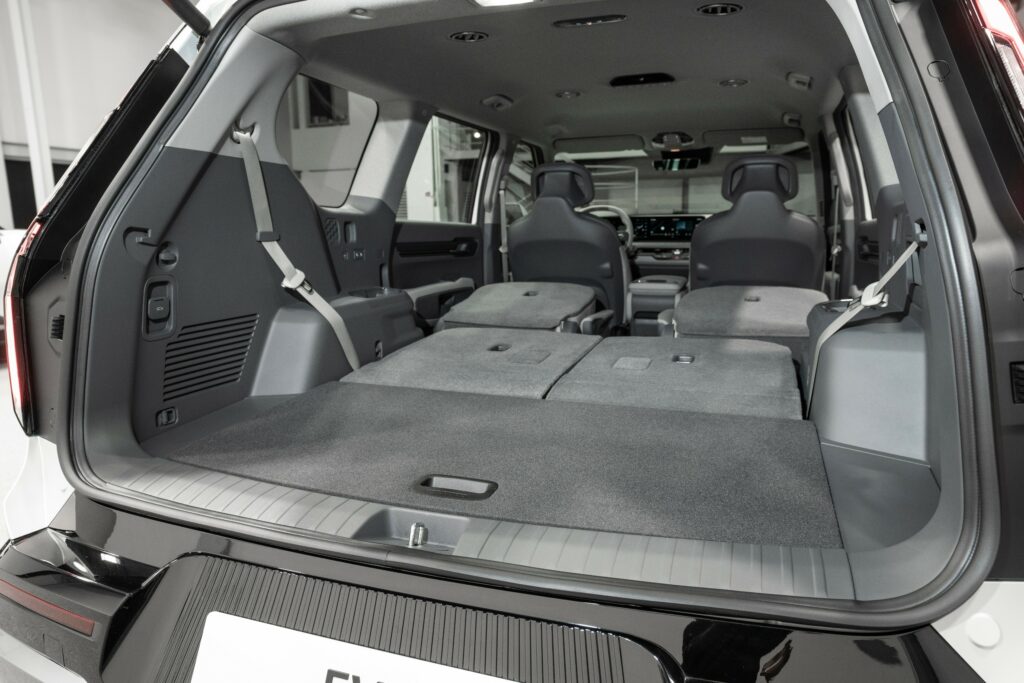
Other numbers, such as boot space and under-bonnet space at the front end, are still to be revealed.
MINI MATCH-UP: EV9 size and space
Note: the tables in this story scroll horizontally.
| MODEL | WHEELBASE | LENGTH | WIDTH | HEIGHT | SEATING |
|---|---|---|---|---|---|
| Kia EV9 | 3100mm | 5010mm | 1980mm | 1755mm | 3 rows / 6-7 seats |
| Hyundai Ioniq 7 concept | 3200mm | 4996mm | 2055mm | 1778mm | 3 rows / 6-7 seats |
| Hyundai Palisade | 2900mm | 4995m | 1975mm | 1750mm | 3 rows / 7-8 seats |
EV9 battery, power and acceleration
The EV9 will be offered in single-motor rear-wheel (RWD) and dual-motor all-wheel drive (AWD) configurations.
- In its standard-range form, the RWD model will draw power from a 76.1kWh battery pack.
- The standard RWD model will feature a single 160kW, 350Nm electric motor and claims a 0-100km/h time of 8.2 seconds.
- A RWD Long-Range variant and the AWD model will both get a huge 99.8kWh battery pack.
- The RWD Long-Range variant, focused more on efficiency than performance, gets a single 150kW/350Nm motor and claims a 0-100km/h time of 9.4 seconds.
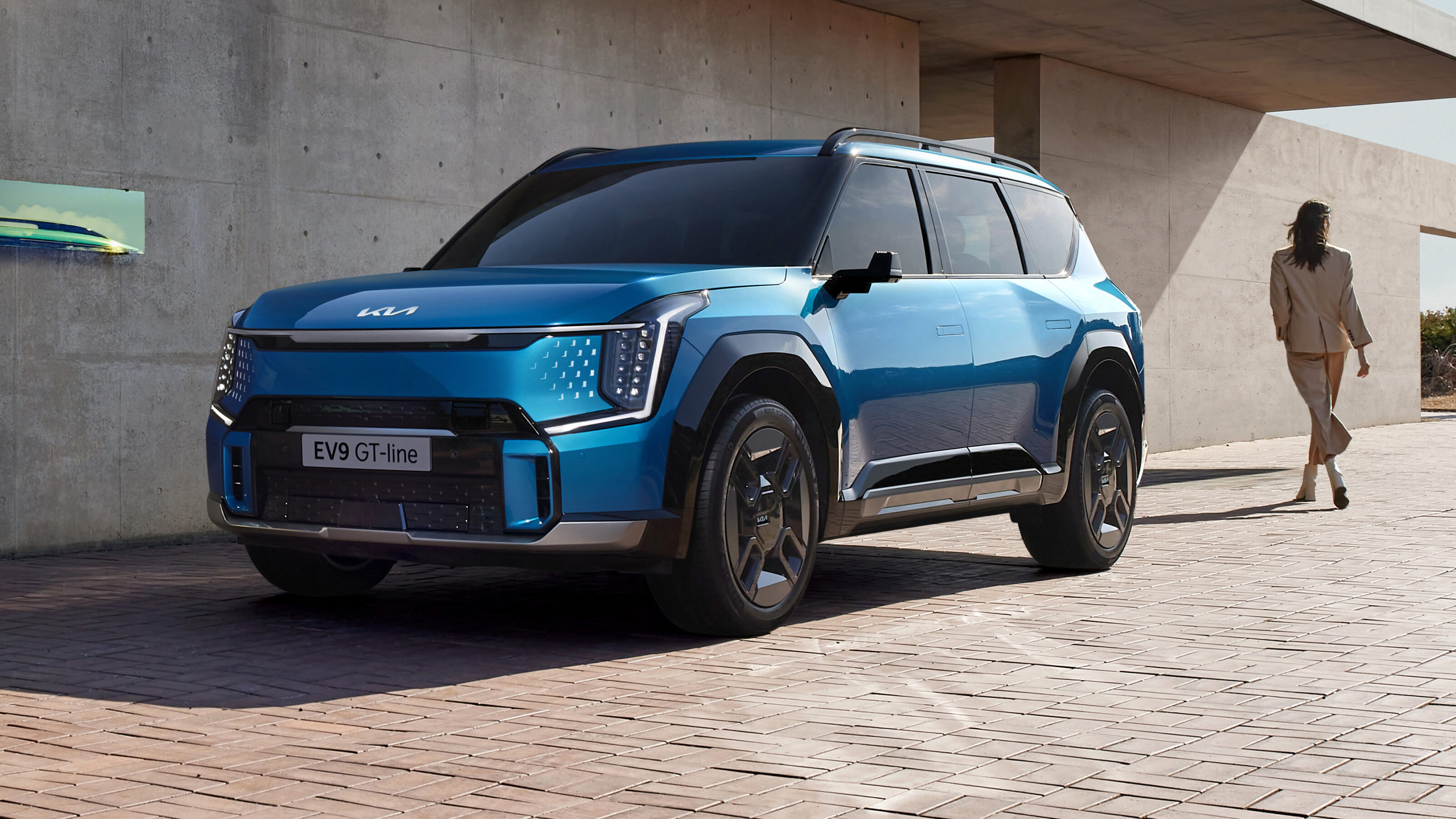
- In dual-motor GT-Line form, the EV9 gets a motor at each axle with total combined outputs of 283kW and 600N, and a rapid 0-100km/h time of 6.0 seconds.
- ? At a later date, buyers will have the option to unlock a torque boost to 700Nm, through the Kia Connect Store in the EV9’s infotainment system. Pricing for this capability hasn’t been revealed, but buyers who take the leap will sharpen their 0-100km/h time to 5.3 seconds.
- A flagship EV9 GT was also confirmed in today’s briefing, with a 2025 launch planned. Details of that model are still to come, but we’d expect a 0-100km/h time below 5.0 seconds…
EV9 driving range and charging speed
For now, Kia has detailed driving range for only one variant: the RWD Long Range – sure to be the most impressive numbers in the range.
- The Kia EV9 RWD Long Range lists an estimated, WLTP-based driving range of “over” 541 kilometres.
- Using a 350kW ultra-rapid charger, the EV9’s 800V system claims a 15-minute charge will result in 239 kilometres of driving.
RECAP: EV9 specifications
Note: the tables in this story scroll horizontally.
MINI MATCH-UP
Below is a table showing what we know of the EV9, compared with a few relatively close rivals. No EV offered in Australia right now is quite a match for the EV9 in size.
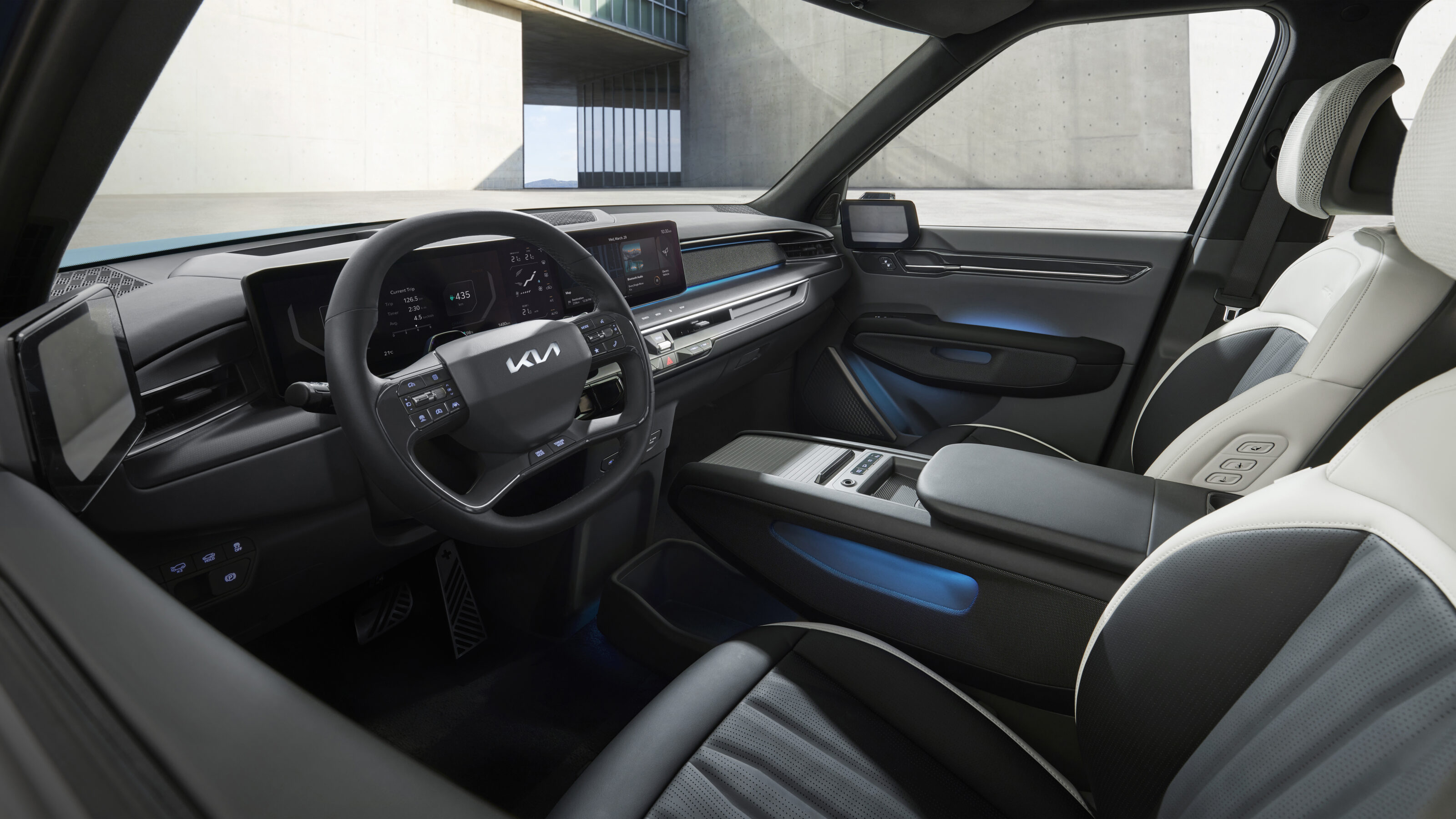
Technology: Remote connectivity, over-the-air updates and autonomous driving assistance
Unlike the EV6 in its current pre-update form, the EV9 will introduce over-the-air (OTA) software updates not only to the Kia Connect infotainment system, but also to the driving and battery software to address issues and improve its efficiency and range over time. Including, as noted above, the ability to unlock more power and torque – for a price.
For now, Kia is offering no word on what other pre-installed features it will keep locked behind a paywall, but some brands have used the technology to offer paid access to heated seats and advanced driver assistance aids. Capitalism in its most evolved form…
The EV9 will also be the first Kia with Highway Driving Pilot (HDP), unlocking “conditional Level 3 autonomy”.
With HDP, the EV9 is equipped with fifteen sensors, including two lidars, that allow it to scan its surroundings and detect objects in a full 360-degree field of view. This helps the car detect and respond to the road and other users, potentially preventing collisions.
The HDP system provides real-time assistance to the driver in various driving conditions, meeting the criteria for Level 3 autonomy “in certain areas”, allowing for conditional driving automation where conditions and regulations permit.
“This allows the driver to take a temporary break from controlling the vehicle,” Kia says – although, from a legal perspective, the brand is likely to remind drivers that they must keep their attention on the road at all times.
As for the EV6, buyers should expect Kia Connect to become available sometime in late 2024. And, no, there won’t be an option to apply it retroactively for existing owners. The system requires a hardware change, and Kia appears uninterested in following Mazda’s lead with an after-purchase upgrade package.
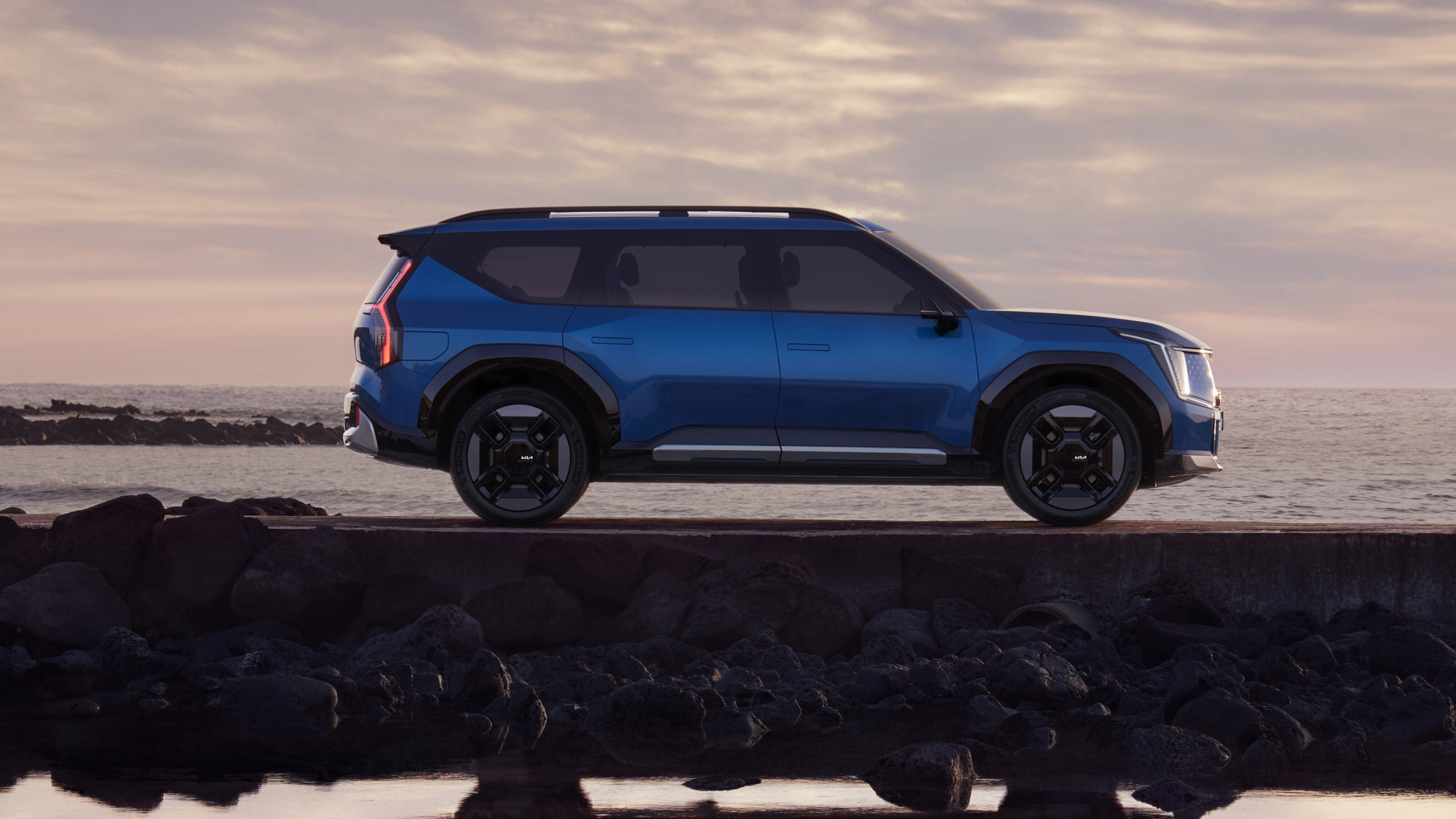
Kia EV9 GT confirmed
Speaking at the EV9’s global unveiling today, Kia president and CEO, Song Ho-sung, was all too happy to confirm plans for a hero EV9 GT.
“We’re aware of growing demand for performance models, and I’m really glad for the interest and success of the EV6 GT,” he said.
“I’m pleased to announce an EV9 GT version will be released in early 2025.”
Obviously we’d be a while away from knowing any numbers for the EV6 GT, but why not look to the smaller but very performance-focused Kia EV6 GT and Ioniq 5 N models?
The EV6 GT delivers 430kW and 730Nm for a claimed 0-100km/h time of just 3.5 seconds, while the Ioniq 5 N’s numbers – still to be confirmed – are expected to go even better, if not beyond 450kW.
Get one of those tunes into the EV9, and buyers might expect a 0-100km/h time somewhere close to 4.5 seconds… well below the 283kW/600Nm EV9 GT-Line’s 6.0-second claim – or the 700Nm upgrade’s 5.3-second figure.
What will the Kia EV9 cost in Australia?
Dear reader, your guess is as good as ours – because you’re a switched-on mob. The EV6 starts these days from $72,590 for the Air, while the GT-Line bumps that up to $69,590. Dig deep for the EV6 GT and you’re looking at $99,950 before on-road costs.
You’d be hard pressed, then, to imagine the EV9 coming in below $100,000 – although Kia might try to scrape under that significant psychological barrier with a circa-$95k starting point…
The EV9 is due in Australia later this year.
Watch for more on the EV9 to come in the months ahead.
The story to here
UPDATE 2: And now it’s official!
Well, this story’s developed fast. In the 30 minutes since we published the below images, the EV9 has been officially unveiled.
At this point, it appears the information below is as detailed as it’s getting for now, with today’s unveiling focusing more on design. Technical details are still to come.
We’ve added the new photos to our gallery, so click any of the shots below to see all of the official images. Watch for more details, including the flagship GT-Line model, to come later this month.
UPDATE: Kia EV9 revealed in leaked marketing photos
Official photos of the big new Kia EV9 electric SUV have found their way online, appearing on the Instagram page Shorts_Car, offering a world’s-first look at the Korean brand’s third new EV.
See the photos below, and watch for more details to come later this morning with the EV9’s official unveiling.
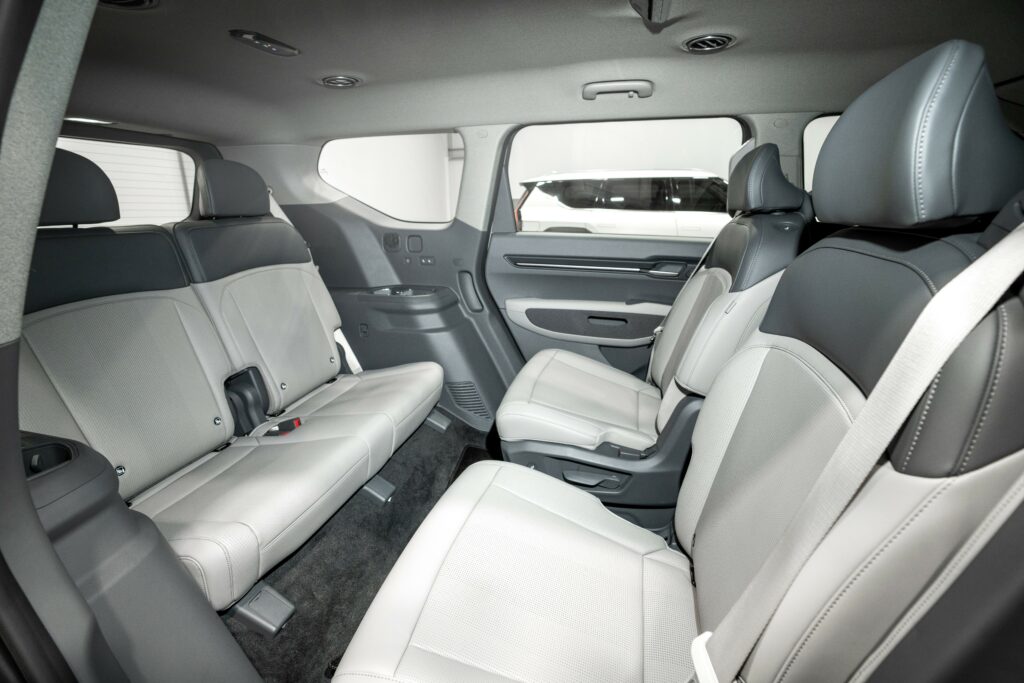
Importantly for Kia, the EV9 will introduce a number of design firsts for the brand, including a bold new design language and, in the cabin, a column-mounted gear shifter (as its stablemate Hyundai is doing) to free up space in the centre console. What’s old is new again…
On the tech front, the EV9 will debut Automode, bringing a number of autonomous-driving features that outshine anything offered in the brand’s line-up so far.
Kia says Automode will offer a self-driving “Highway Driving Pilot“, and while details are still to come, it will likely match Hyundai’s Highway Driving Assist 2 system, which is considered a Level 3 system.
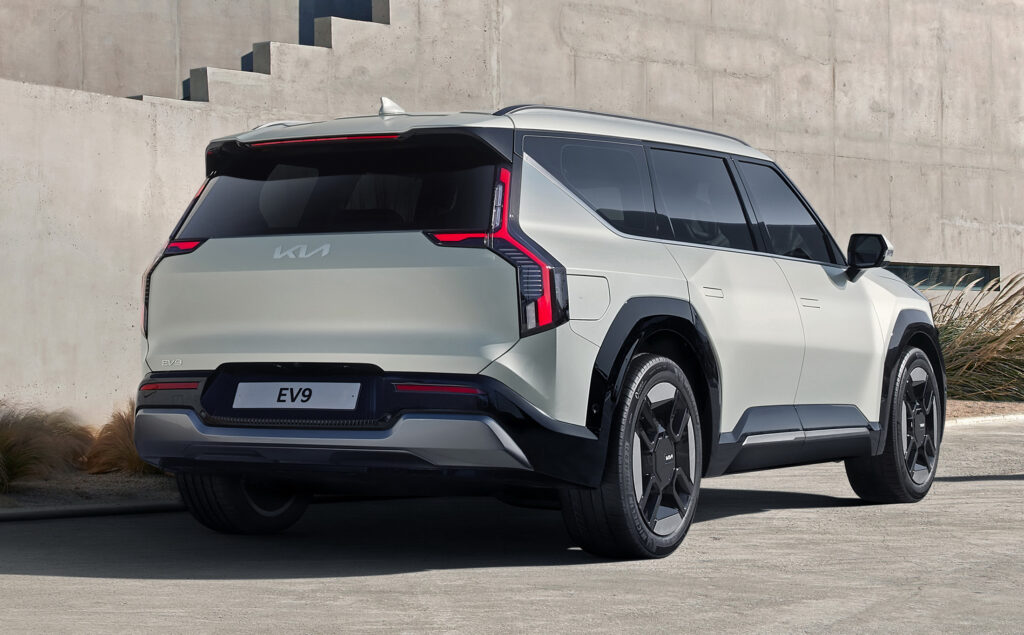
Unlike the EV6 and Niro, the EV9 will also introduce over-the-air (OTA) software updates not only to the infotainment system, but also to the driving and battery software to address issues and improve its efficiency and range over time.
It’s also the first brand in the Hyundai Kia family to introduce an SUV of this size. In concept form, the EV9 was 4927mm long and rode on a 3100mm wheelbase – compared to Hyundai’s Ioniq 5, which measures 4635mm long and has a 3000mm wheelbase.
To suit these massive dimensions, the EV9 is also expected to feature the largest battery ever offered by the group – making it larger than the 77.4 kWh pack featured in the Ioniq 5.
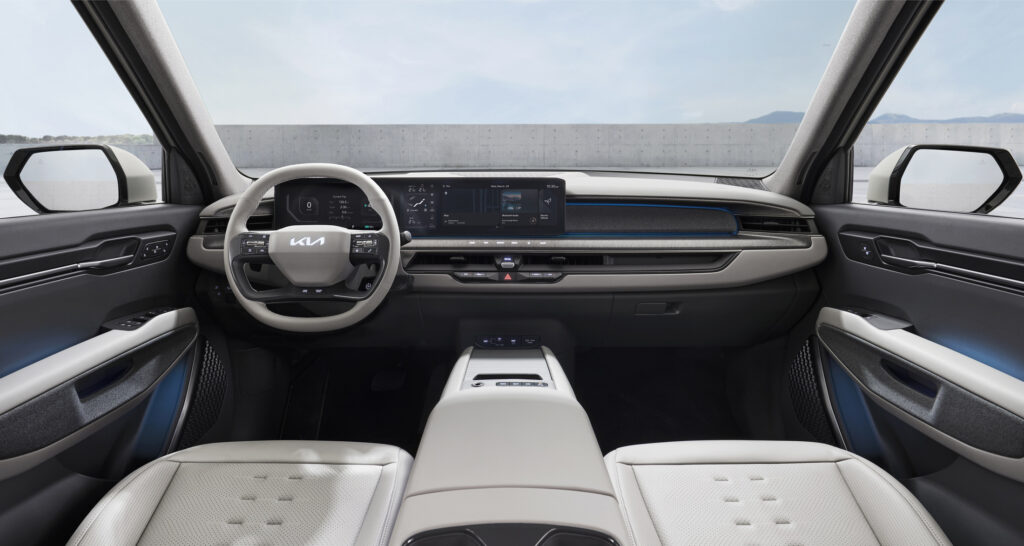
According to an owner survey leaked in January – if it’s accurate – the EV9 will also a driving range of around 467 kilometres in long-range rear-wheel-drive form.
Entry-level models are likely to be rear-wheel-drive, and the survey suggests a driving range of 354 kilometres at that base specification.
Stepping up to all-wheel-drive adds a second electric motor at the front axle, for a 294kW/519Nm total system output. The survey claims a 0-97km/h time of six seconds, with a towing capacity of 1600kg – but its driving range drops to 418 kilometres.
March 1: Kia EV9 detailed in our new renders
The big new Kia EV9 electric SUV is expected to make its global debut in the coming weeks ahead of an Australian launch due in late 2023.
Thanks to the video and screengrabs further below, published in February, we’ve pulled a classic ‘zoom and enhance‘ to expose the EV9’s key design features.
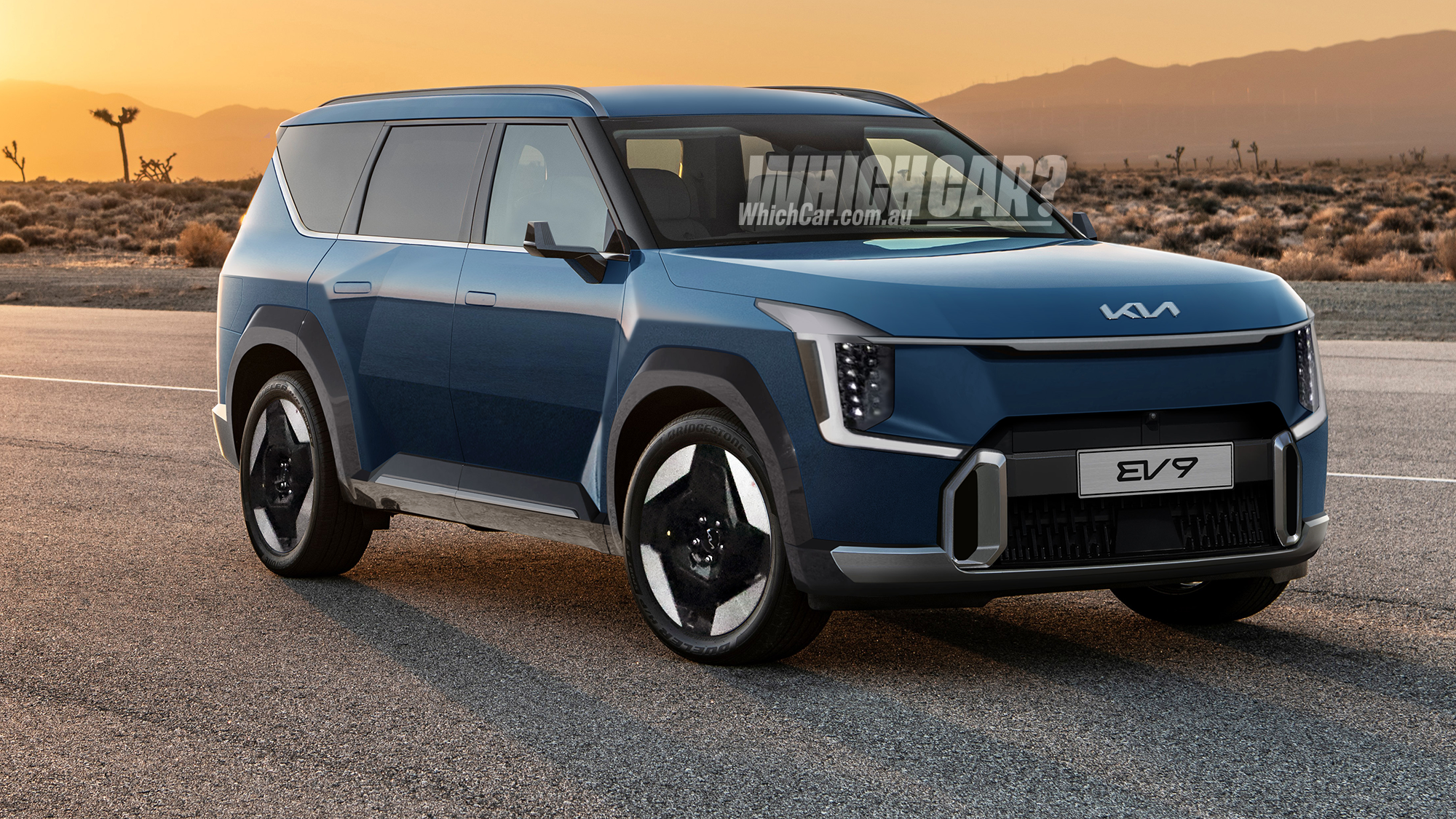
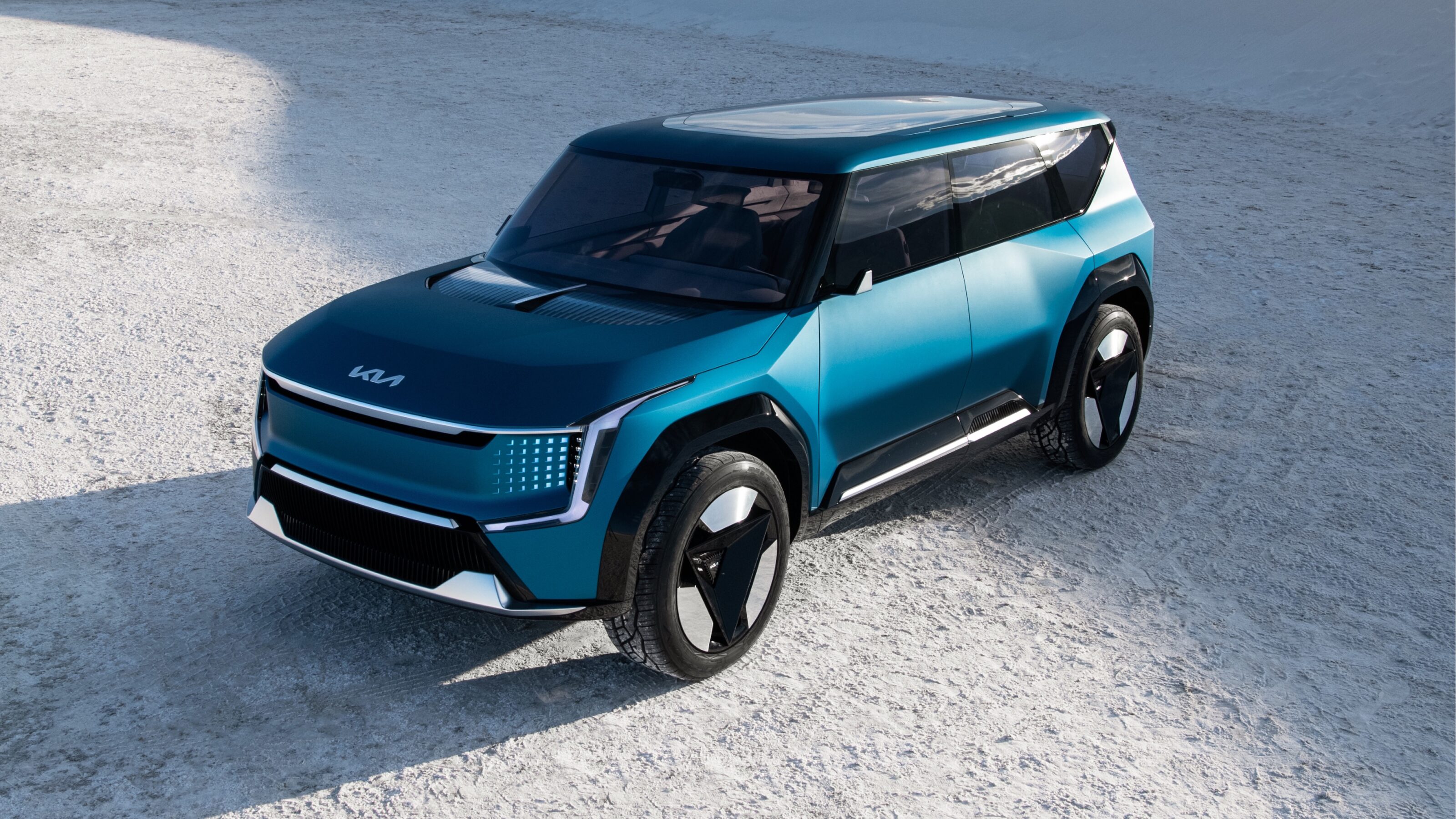
As expected, the final production design will skew remarkably close to the concept car that debuted in 2021, with many of the show car’s lines – looking something like the cutting-edge polygonal 3D models common in video games of the early 2000s – making their way to market.
The result is a retro-futuristic design that responds to the blocky Ioniq 5 of stablemate Hyundai, dialled to a new level.
Whether the EV9’s striking looks will work on Australian buyers is a question we’ll have to wait some months to see answered, although its price – likely to start upwards of $80,000, positioning it around $10,000 above the popular EV6 – might be the real sticking point for many.
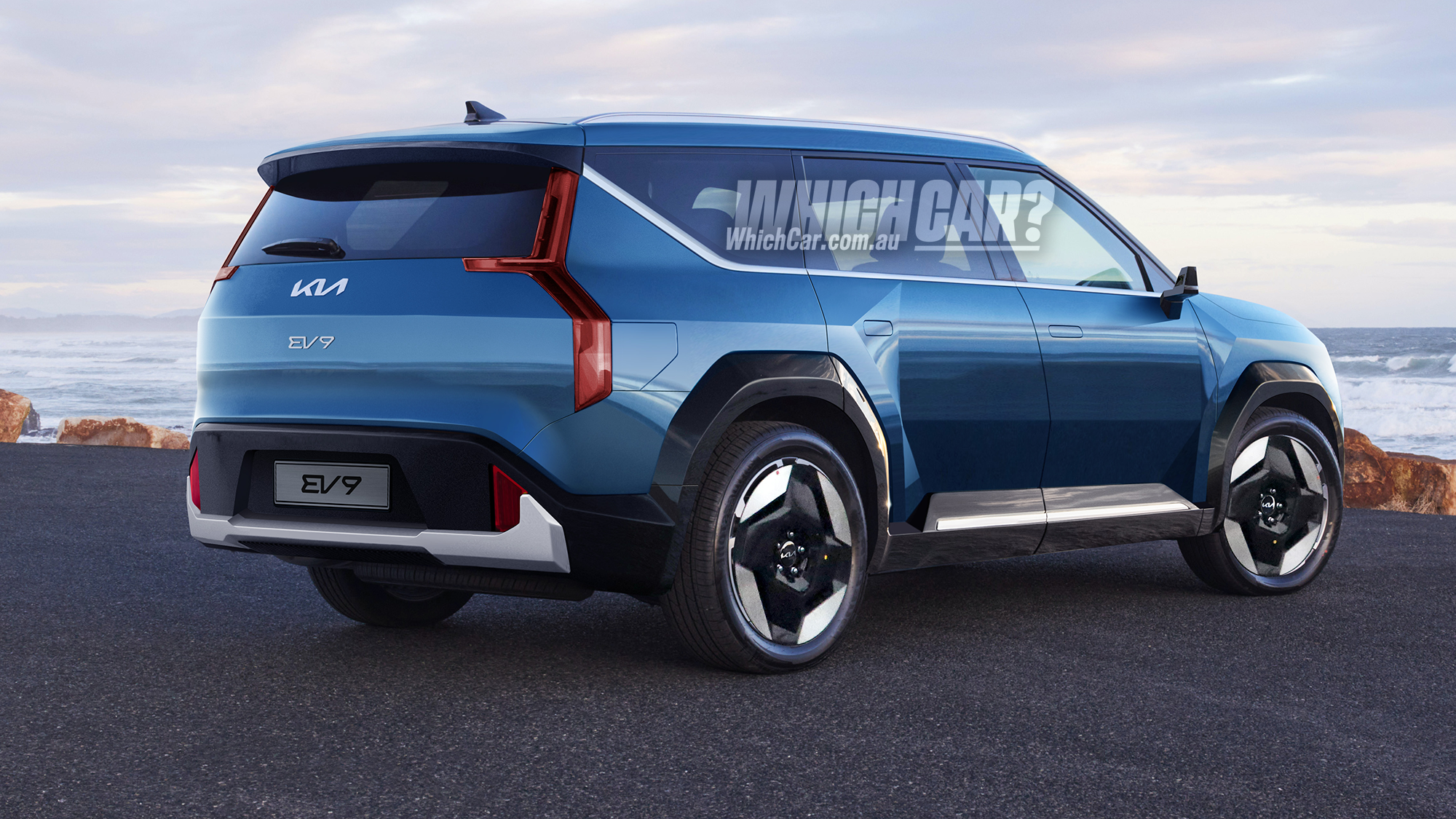
Of course, with supply bound to be as limited as it has been for the EV6 – Kia, as with other brands, blames its small allocations on Australia’s lack of emissions regulations and heavy penalties in Europe – the company will probably sell all the EV9s it can get its hands on.
What do you think of the EV9’s design as show in our renders? Check out the screengrabs further below for your own comparison.
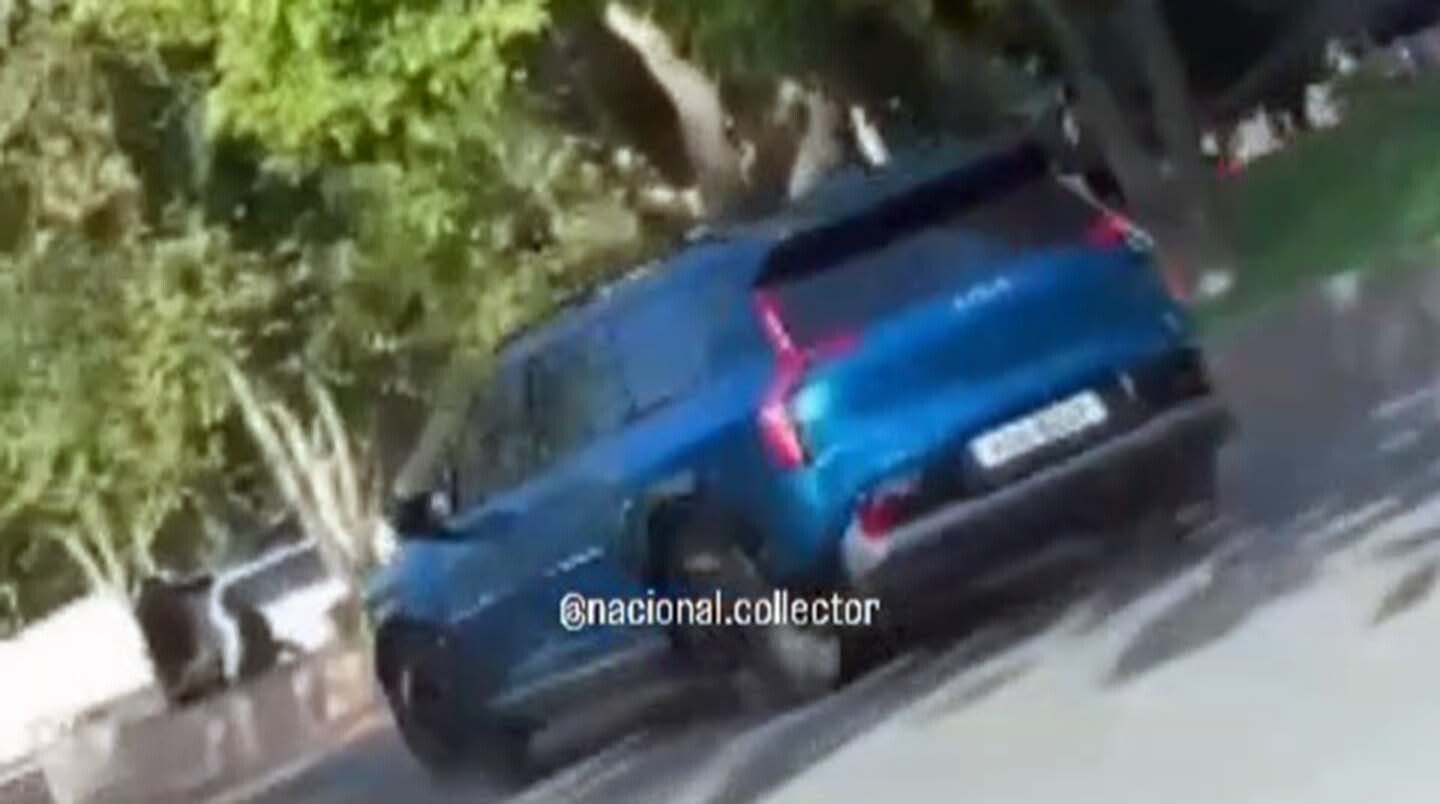
February 2023: The upcoming 2024 Kia EV9 electric large SUV has been captured undisguised ahead of its reveal.
Snapshot
- 2024 Kia EV9 captured undisguised in Chile
- Retains the concept’s overall silhouette, but with toned-down elements
- Confirmed for Australia, due here in the second half of 2023

A video, uploaded to Instagram by @nacional.collector, reportedly depicts the production-ready EV9 in Santiago, Chile – likely during a photoshoot as the Korean brand prepares for its unveiling.
While the video is low-resolution, it isn’t hard to see various similarities to the Concept EV9 revealed at the 2021 Los Angeles Auto Show, particularly at both ends of the car.
To prepare the EV9 for production, Kia has added conventional side mirrors, larger headlights and tail-lights, and a toned-down side profile, likely with EV6-like pop-out door handles.
NOTE, March 1: The video below now appears to have been stricken from Instagram, but the screengrabs in the post show you everything the video had to offer.
https://www.instagram.com/p/Co3YJsQpRp6/
It also sports unique front and rear bumpers, and large alloy wheels, suggesting this example could be a flagship GT-Line or X-Line variant, or perhaps even a high-performance GT.
While it has yet to be officially unveiled, Kia Australia has confirmed the EV9 will arrive here by Christmas, with 400 units expected to land this year.

Under the skin, the EV9 will ride on a stretched version of Hyundai-Kia’s E-GMP electric vehicle architecture, as found underneath the Kia EV6, Hyundai Ioniq 5, Ioniq 6 and Genesis GV60.
It will be heavily related to the Hyundai Ioniq 7, which is also expected to debut later this year.
A leaked customer survey from Kia America has provided some insight into the EV9’s specifications, with single-motor and dual-motor variants likely.
As it shifts closer to the launch of the seven-seat EV9, Kia’s US division has sent out a survey to current Telluride owners, with questions surrounding pricing, powertrains and driving range.
At the bottom end of the range, the EV9 should offer a single-motor, rear-wheel-drive model with approximately 147kW and 340Nm, and a 354-kilometre driving range.
A mid-spec rear-wheel-drive variant is expected with a larger battery and a 467-kilometre driving range, while the base all-wheel-drive includes a second electric motor mounted to the front axle, for 294kW and 519Nm.

It has a claimed driving range of 418 kilometres. A more-potent variant with 650Nm could reduce the range to 386km, with blacked-out styling and 10-millimetre higher ground clearance.
The survey suggested pricing could start from around US$56,000 (AU$79,500), rising to approximately US$73,000 (AU$104,000) for the flagship.
The 2024 Kia EV9 is expected to debut in the coming months, with a local launch due later this year.
Below: the Kia Concept EV9, from the 2021 Los Angeles Auto Show
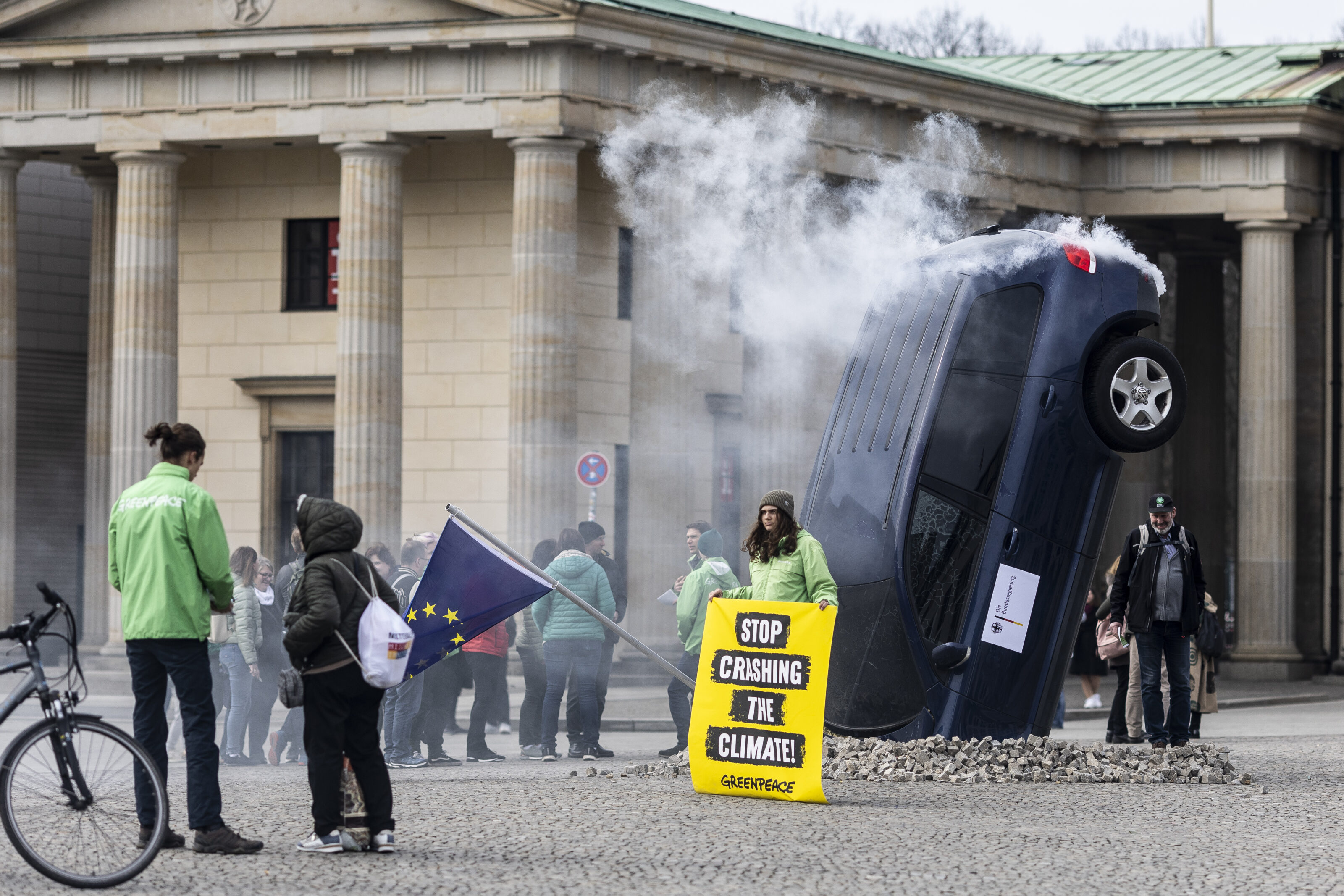
The internal combustion sports car has earned a stay of execution after the European Union (EU) backflipped on a controversial plan to ban all new petrol cars from 2035.
Under pressure by Germany and the country’s powerful auto lobby, EU lawmakers will permit new internal combustion models from 2036, provided they are powered exclusively by new carbon-neutral ‘e-fuels’.
E-fuel is a type of synthetic petrol made using renewable energy and carbon capture. Proponents argue the CO2 still produced has already been removed from the atmosphere, thereby making them carbon ‘neutral’, while some European campaigners have argued their own lab testing has proven e-fuels are no better for the environment than fossil fuels.

Until recently, all new internal combustion models – petrol and diesel – were facing a total ban from 2035 as the EU forced automakers to expensively shift their entire product portfolios to electric.
As well as electric vehicles, Porsche is investing heavily in e-fuels technology, its partner HIF Global having just opened its first e-fuel plant in Chile powered only by renewable energy – with plans to open another e-fuels plant in Burnie, northern Tasmania, by mid-2026.
The Germany-EU e-fuels agreement is a major win for Porsche and also Ferrari, and could preserve Stuttgart’s screaming flat-six, or Maranello’s high-revving V8, for decades to come.
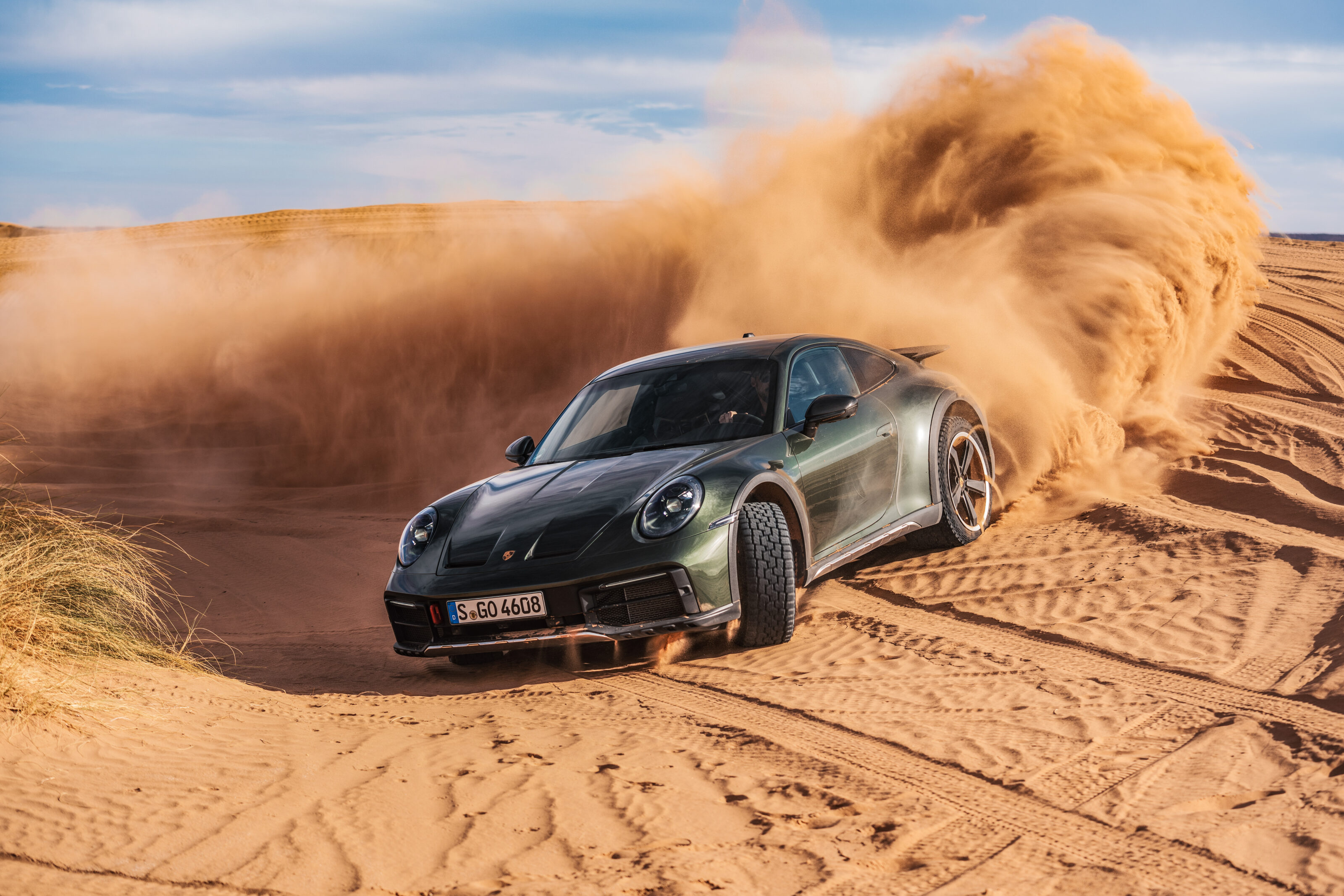
“It is worth it?” said Porsche CEO Oliver Blume earlier this month. “I know no other possibility to decarbonise combustion engine cars.”
Ferrari CEO Benedetto Vigna welcomed the EU decision.
“The good news for us as a company is that on top of electric cars, we will also be able to go on with our internal combustion engine ones,” Vigna told Reuters.
“This decision is very interesting for us because it allows ICEs to go beyond 2036.”
Vigna said the company had already incorporated the e-fuels exemption into its forward product plans and expects 20 per cent of its range to remain internal combustion-powered by 2030.

Italy, meanwhile, continues to push for an exemption beyond 2035 for vehicles powered by biofuel – internal combustion fuels created from different biomasses such as vegetable oils and animal fats.
“We are also showing that biofuels are zero-emission, hence there is no need to go into the technical details,” said Italian Prime Minister Giorgia Meloni last week. “If the technology hits the target, then you can use it.”
The Germany-EU e-fuels agreement was immediately met with scathing criticism from opponents who argue it dilutes the industry’s focus on shifting to electrification.
E-fuel advocates say renewably manufactured synthetic petrol is simply another useful means to reduce man-made carbon emissions, which the scientific community warns will catastrophically change the climate by the end of the century – if not addressed with critical urgency.
It remains to be seen whether the Germany-EU e-fuels agreement also means the current EU-mandated fuel economy figures would be dropped – doing away with smaller-capacity engines and turbochargers.
The shift invariably affects Australia, with the world’s largest automakers making their product decisions based on the regulatory environments of their largest markets. The laws of Germany and the EU will naturally determine the future of Porsche products, for example.
The new agreements could also pave the way for classic vehicles to remain on European public roads for decades, provided an e-fuel variety powers them.
Experts estimate a litre of e-fuel will cost about $3/litre by 2030.
UPDATE: Peugeot 308 GT Sport PHEV pricing confirmed
The 2023 Peugeot 308 GT Sport PHEV is on sale now.
Joining the petrol 308 hatch and wagon launched in November 2022, the GT Sport plug-in hybrid flagship is priced at $64,990 plus on-road costs – making it $14,500 dearer than the GT Premium wagon.
Opting for the GT Sport PHEV sees the standard three-cylinder mill replaced with a 132kW 1.6-litre turbocharged four-cylinder engine paired to an 81kW electric motor, for a 165kW and 360Nm total system output.
It has a WLTP-rated 60-kilometre electric-only driving range and a claimed combined fuel consumption of 1.3L/100km.
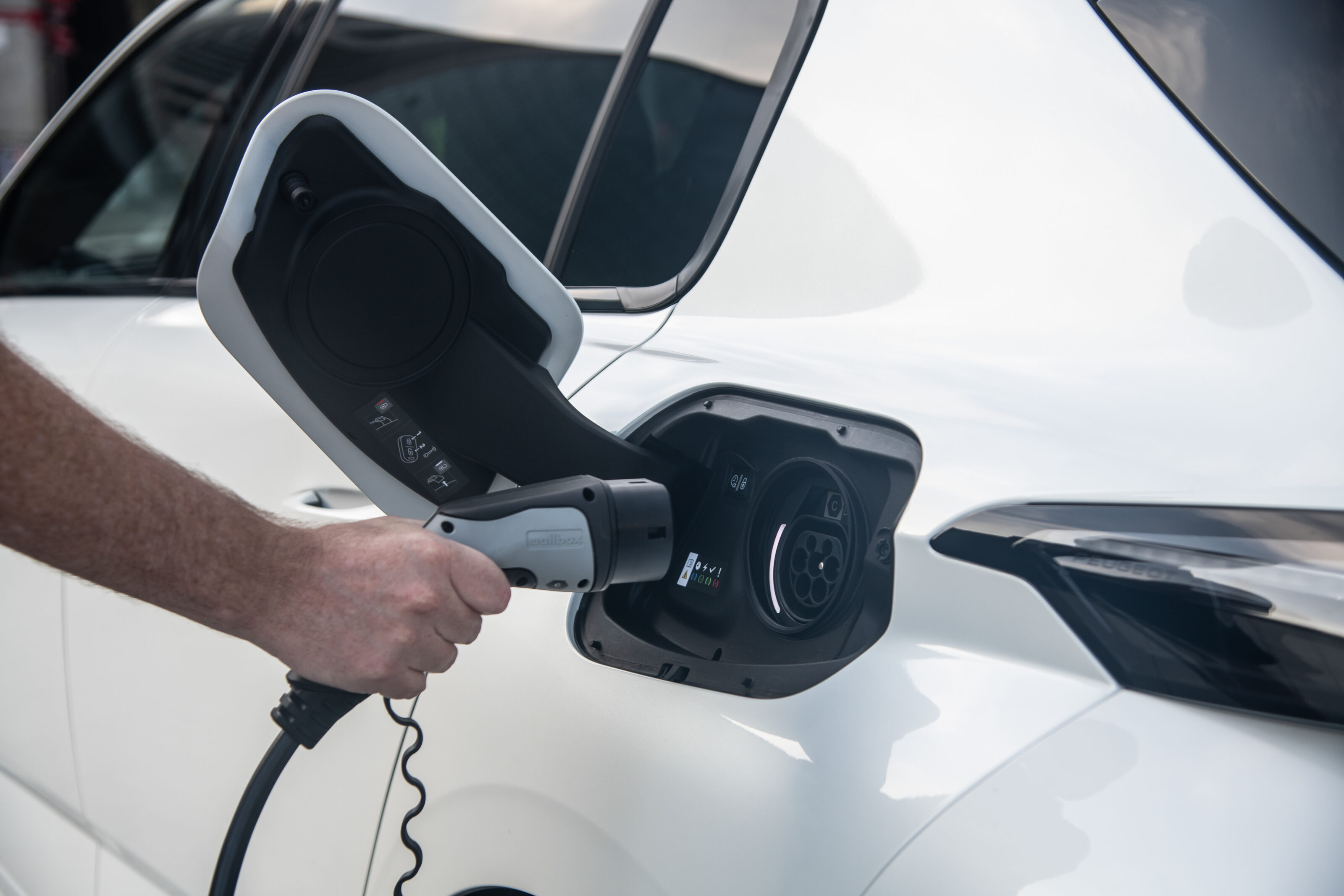
It is equivalent in specification to the GT Premium, but with the addition of the plug-in hybrid setup, a low-speed acoustic vehicle alert system, and a Type 2 charge cable.
For more information on the 2023 Peugeot 308 range, check out our earlier story below, and stay tuned for our review of the GT Sport PHEV.
The story to here
November 2022: 2023 Peugeot 308 arrives in Australia
The 2023 Peugeot 308 has gone on sale in Australia today.
Read Peter Anderson’s review of his Australian first drive of the hatch and Wagon using the link below.

October 2022: Australian pricing and specification revealed
Snapshot
- Priced from $43,990 before on-roads
- $9K price hike for GT variant
- Four-strong range includes wagon and PHEV
The 2023 Peugeot 308 range has been priced for Australia with the range-opening GT hatch starting from $43,990 before on-road costs.
Above that sits the GT Premium ($48,990) and GT Premium wagon ($50,490), with final pricing for the 165kW plug-in hybrid hatch to be revealed closer to its H1 release next year.
Prior to going off sale in late 2021, the previous-gen Peugeot 308 GT wore a $34,990 price tag, making the new car $9000 dearer to get into.
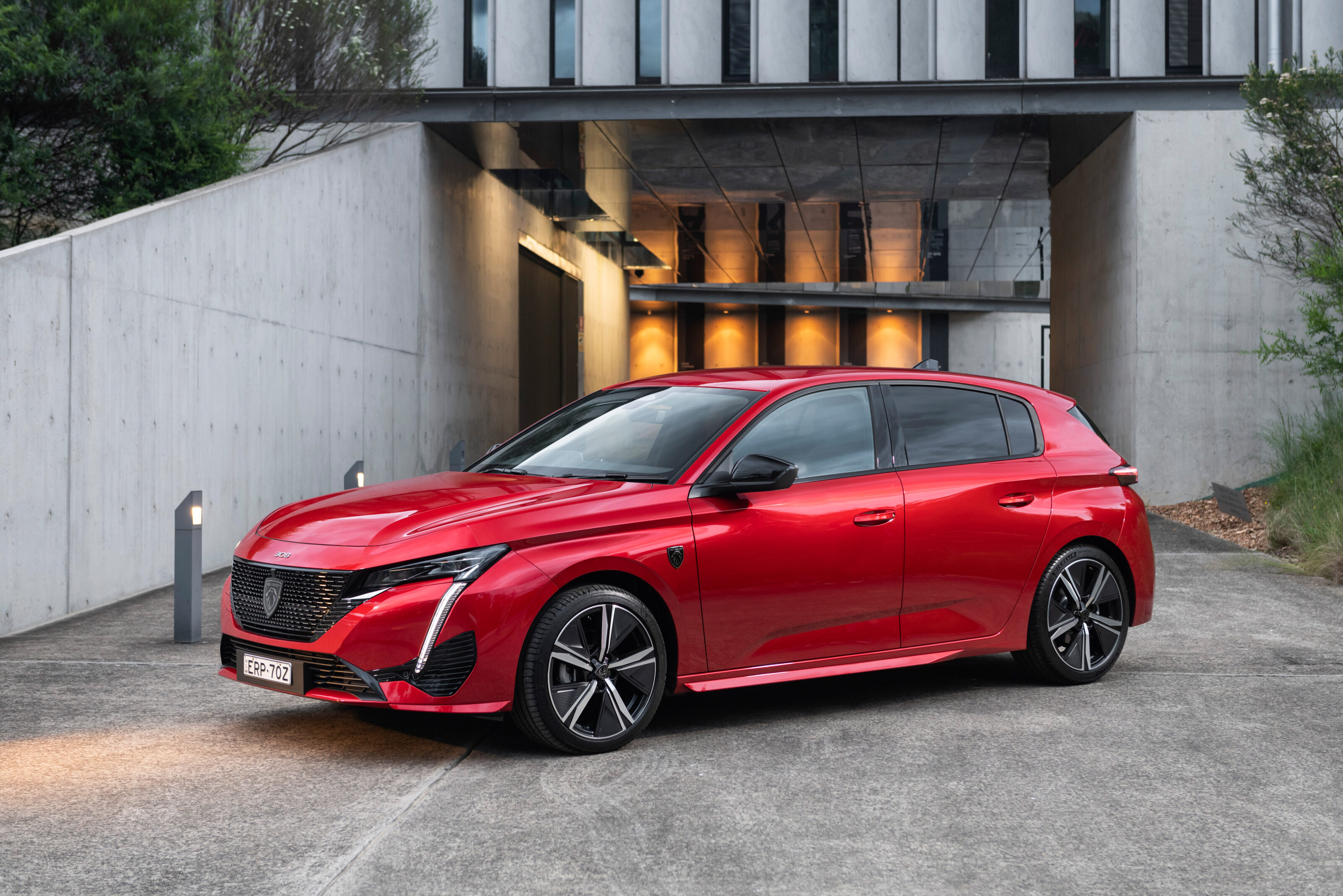
This is a wholly new Peugeot 308 riding on the latest version of the brand’s EMP2 platform shared with the 3008 medium SUV and 5008 three-rower.
Peugeot dealers are accepting order for the 308 now, and managing director Kate Gillis said she’s enthused about its arrival: “It is with great excitement that we can today open pre-orders for the 308.
“Our latest arrival brings a dynamic and stylish design, with the local model range carefully selected to provide consumers with a strong line-up.”
2023 Peugeot 308 features
The GT Hatch kicks off the range with a 1.2-litre turbo-petrol three-cylinder producing 96kW of power and 230Nm of torque. An eight-speed automatic is standard and power is sent to the front wheels.
The Peugeot 308 GT equipped with plenty of safety and tech features, so even though it’s more expensive than entry grades of rivals such as the Mazda 3 G20 Pure, Hyundai i30 and Toyota Corolla Ascent Sport, the 308 GT has a fuller spec sheet.
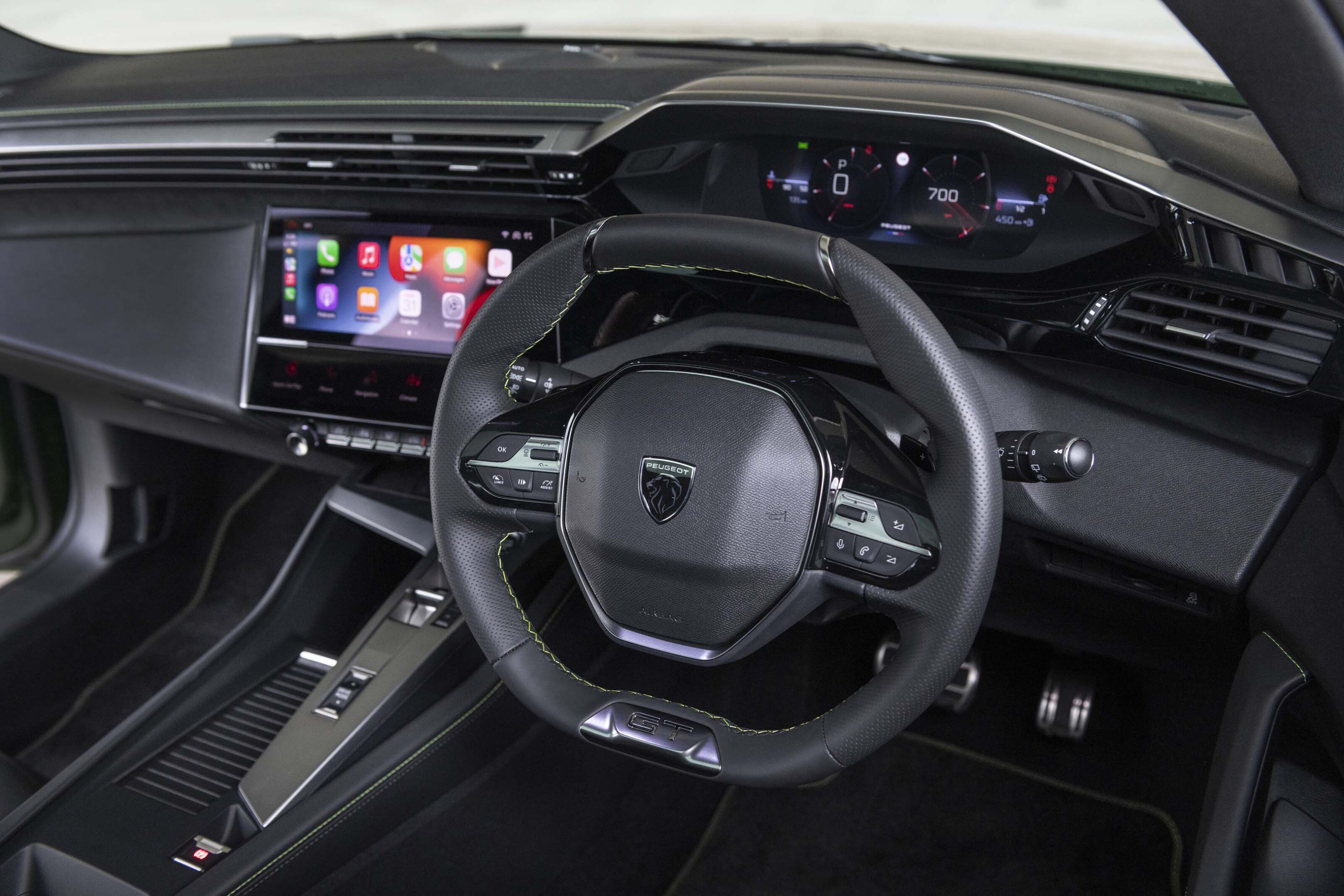
Features include a 10-inch touchscreen with wireless Apple CarPlay and Android Auto, ‘Fraxx nit’ upholstery on the seats and 18-inch alloy wheels.
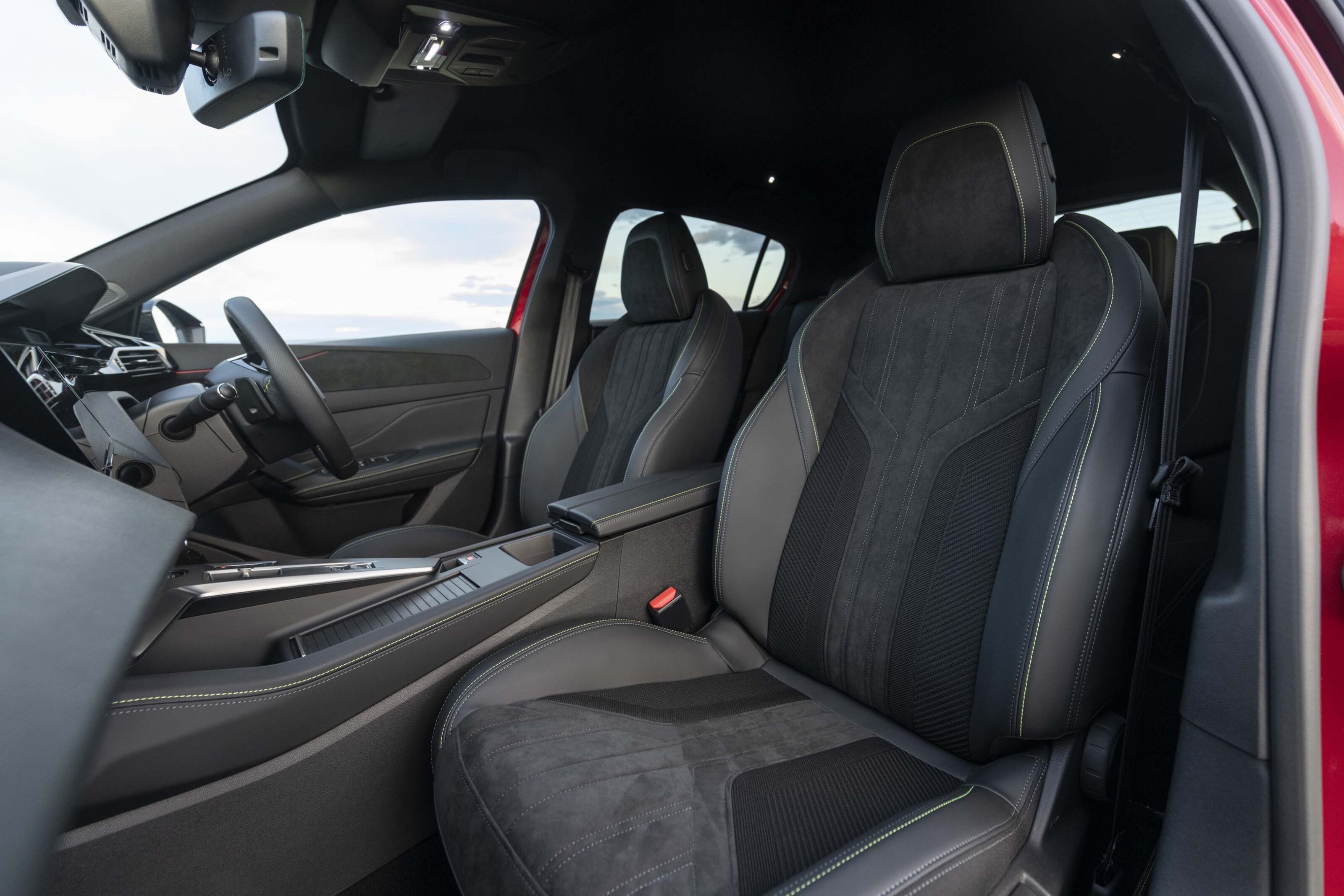
Peugeot 308 GT features
| 10-inch touchscreen |
| 12.3-inch digital driveru2019s display |
| Wireless Apple CarPlay/Android Auto |
| Matrix LED headlights |
| Keyless entry and go |
| 18-inch Kamakura alloy wheels |
| Fraxx knit/vinyl upholstery |
| Adaptive cruise control with stop & go |
| Blind-spot monitoring |
| Rear cross-traffic alert |
In addition, the GT Premium hatch adds some niceties such as a Focal stereo, heated front seats and panoramic sunroof for the $5000 up charge. An extra $1500 gets you a long-roof wagon – a fast diminishing body style in this segment.
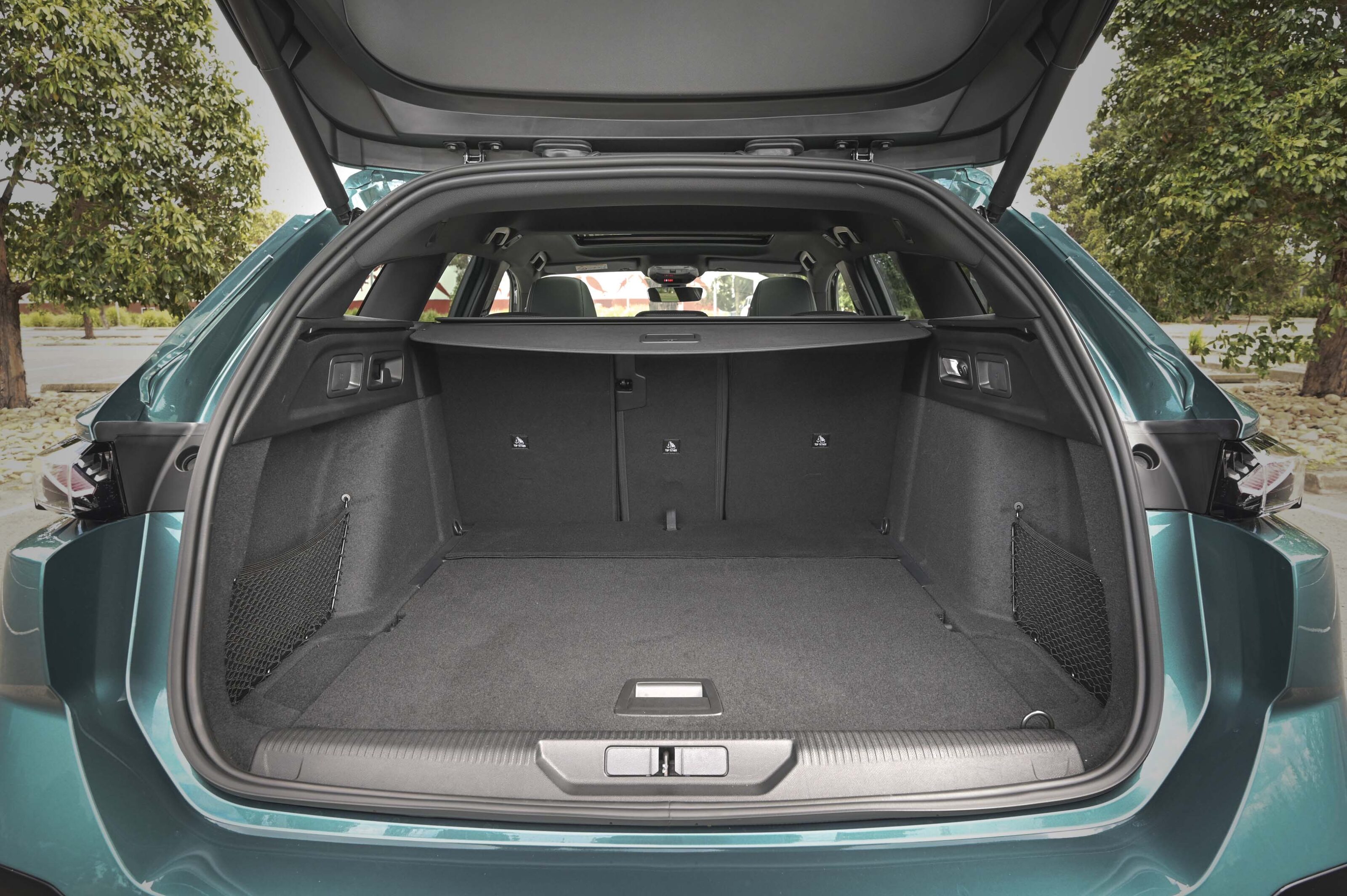
GT Premium hatch and wagon add:
| 10-speaker Focal sound system |
| Power driveru2019s seat |
| Heated and massaging front seats |
| Nappa leather upholstery |
| Panoramic sunroof |
| 18-inch Portland alloy wheels |
| 360-degree camera |
| Lane-trace assist |
2023 Peugeot 308 pricing
The Peugeot 308 range is available to pre-order from dealers now. Prices listed are before on-road costs.
| Variant | Price |
|---|---|
| 308 GT hatchu00a0 | $43,990 |
| 308 GT Premium hatch | $48,990 |
| 308 GT Premium wagon | $50,490 |
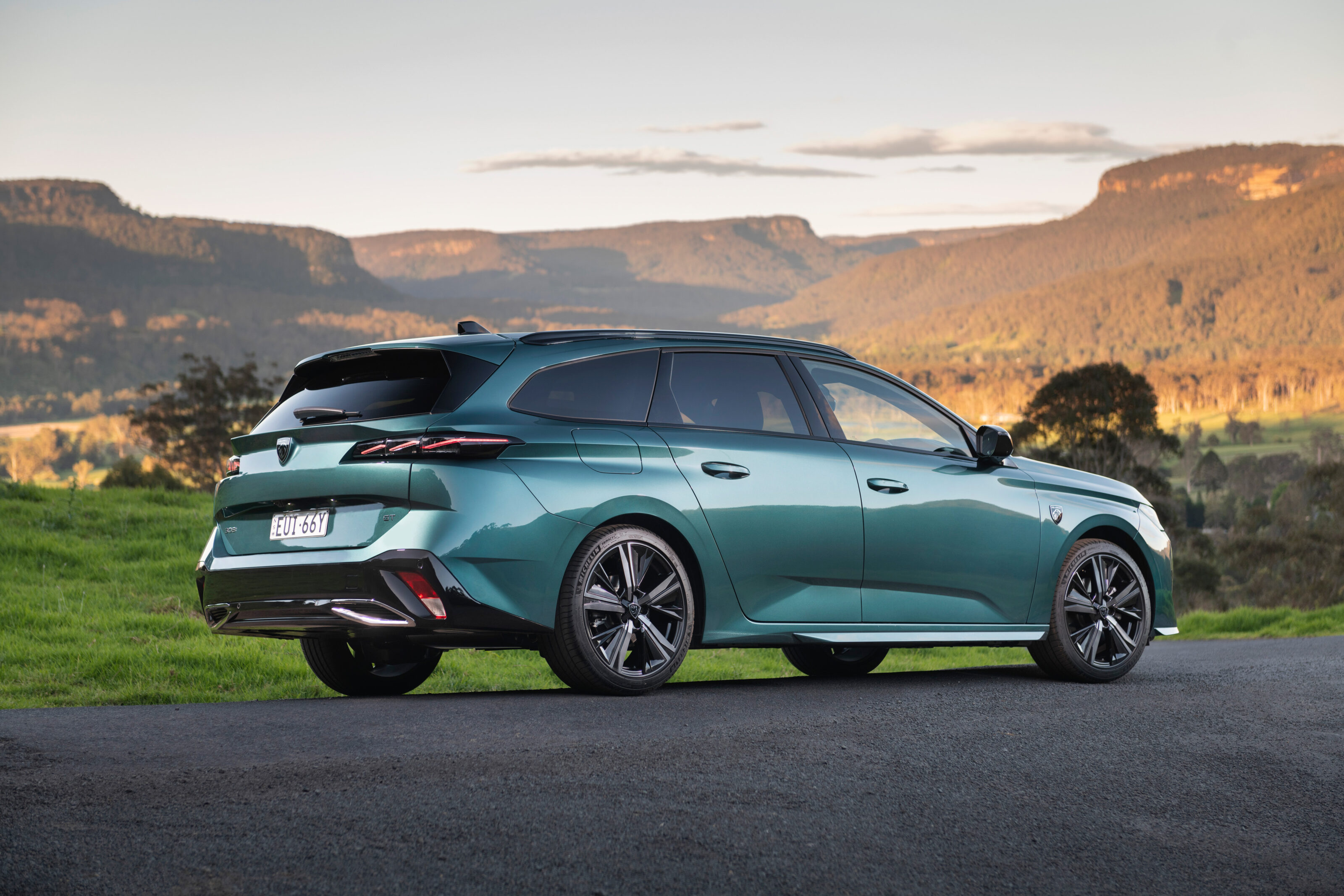
September 6: More details of upcoming model revealed
Snapshot
- 2023 Peugeot 308 hatch and wagon confirmed for Q4 arrival
- Plug-in hybrid GT Sport variant to arrive in 2023
- Local pricing and full specifications yet to be announced
Peugeot has revealed more details about the upcoming 2023 Peugeot 308 hatch and wagon.
The French marque has confirmed the petrol-powered variants will be here before year’s end, while the plug-in hybrid (PHEV) will arrive in the first half of next year.
We now also know that some basic features of the model’s interior, such as the GT hatch will get Alcantara (with leather effect) seats, while the GT Premium hatch and wagon step up to full Nappa leather and get a panoramic sunroof – and all variants will utilise a 10-inch touchscreen.
The GT hatch, GT Premium hatch and PHEV will be offered in six paint colours: olivine green, vertigo blue, artense grey, nera black, elixir red and pearl white. Meanwhile the wagon keeps the black, red, artense grey and white, but swaps out the others for Avatar blue and platinum grey.
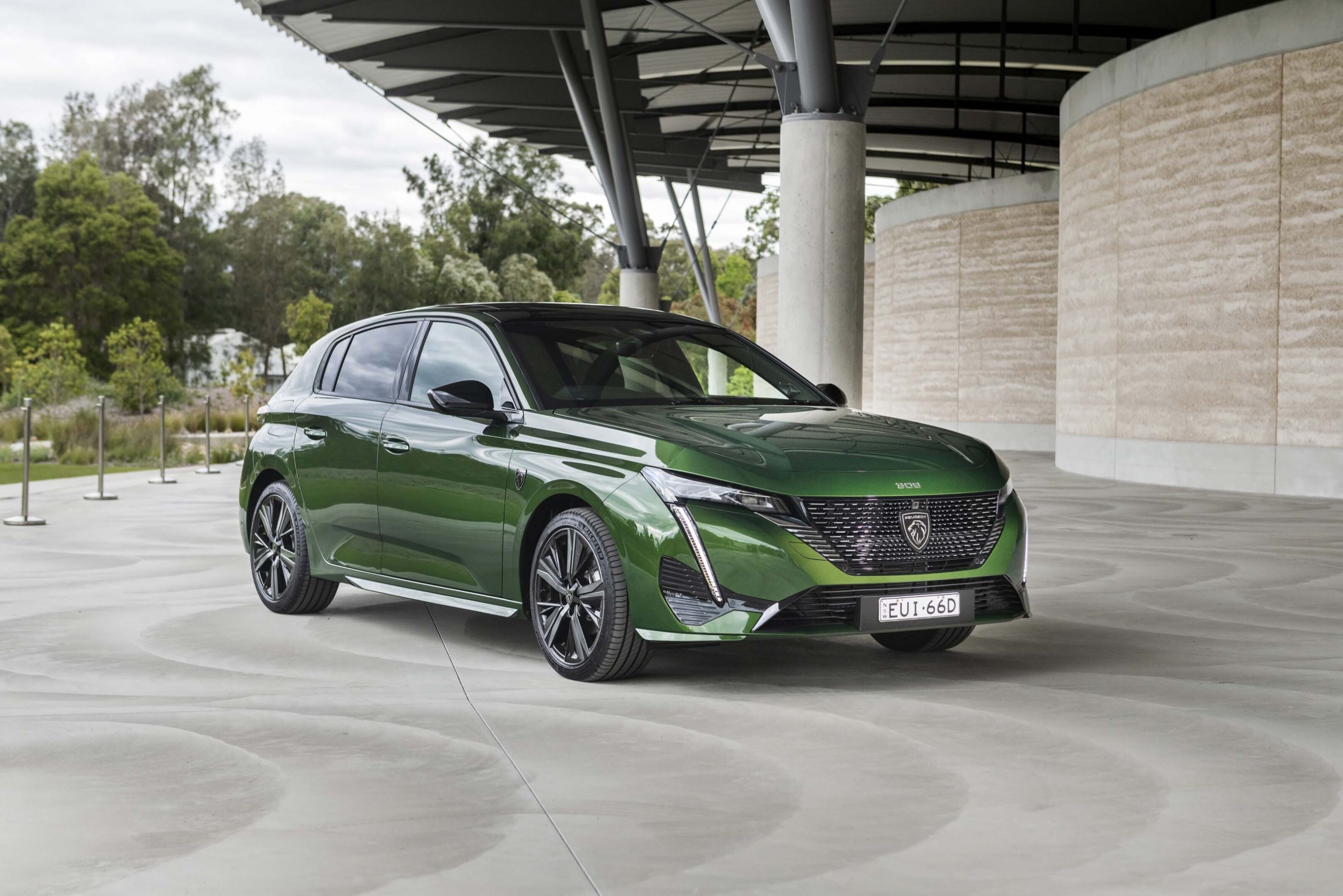
Peugeot Australia Managing Director, Kate Gillis, said: “The new Peugeot 308 follows on from a multitude of iconic predecessors sold over the generations. So, we are delighted to have seen such a strong reception to the latest 308 offering locally since launching ‘register your interest’ in July.”
“The 308 signals a new style era for the brand and we are confident its dynamism and bold identity will appeal to Australian customers with a keen appreciation for inspiring design.”
As of today, the company has also launched an online configurator for customers to build their own 308 – though little more details are provided, with full specification and pricing expected closer to the model’s launch later this year.
July 5: Local timing for Peugeot 308 locked in; PHEV also confirmed
Peugeot has confirmed the next-generation 308 will include a plug-in hybrid option in Australia.
The electrified variant will join the 2023 Peugeot 308 hatch and wagon range set to launch in Australia in the fourth quarter of 2022 (October to December inclusive) – although the plug-in hybrid (PHEV) model will arrive next year.
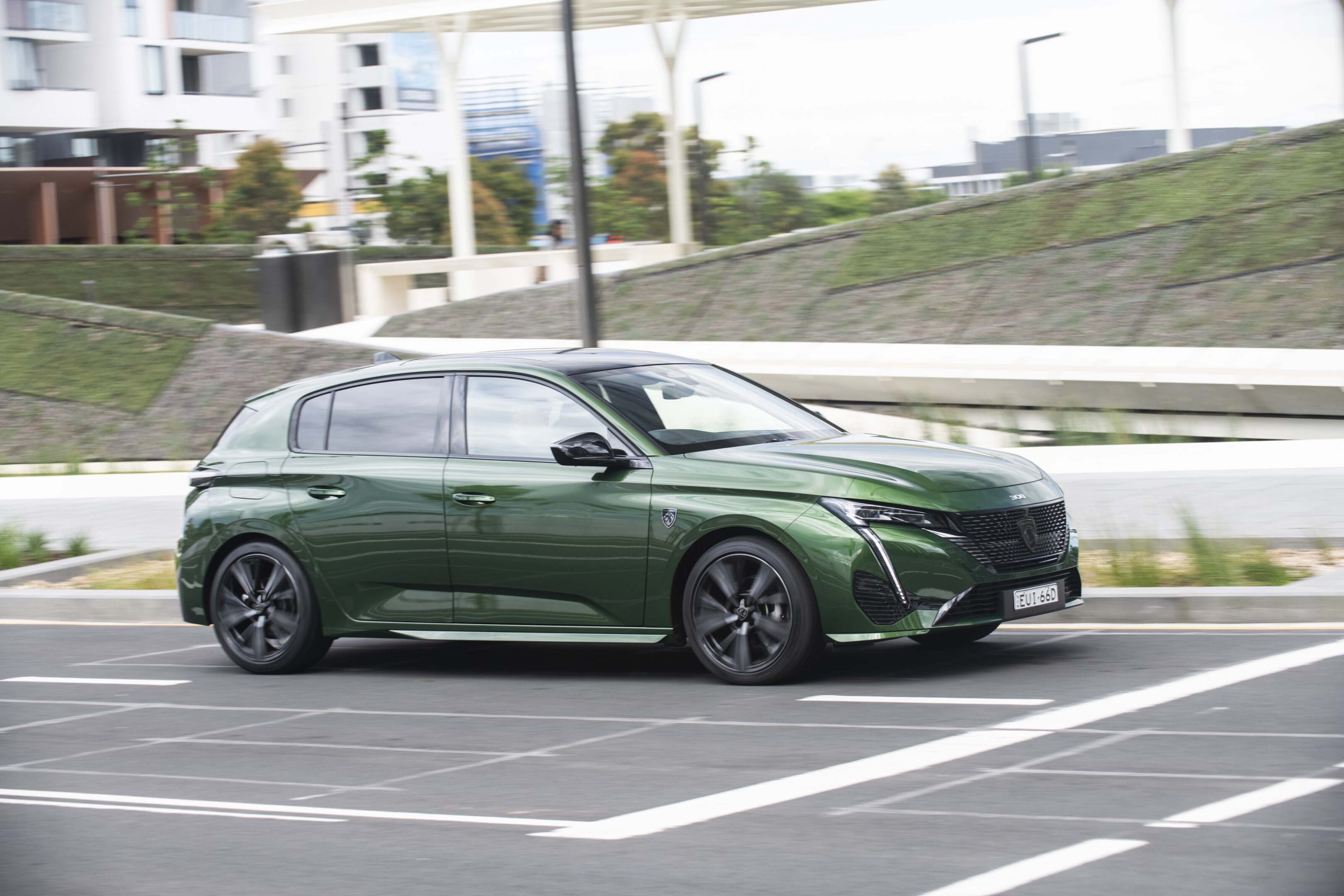
Peugeot Australia has revealed the third-generation 308 will consist of four variants locally; the GT hatch, GT Premium hatch and wagon, and GT Sport PHEV hatch.
Local pricing and full specification details are yet to be announced, with further information expected in the coming months.
The internal combustion 308 variants will be powered by a 1.3-litre turbocharged three-cylinder petrol engine, producing 96kW of power and 230Nm of torque.
This engine is paired with an Aisin-sourced eight-speed torque-converter automatic transmission, sending power to the front wheels.
Opting for the GT Sport PHEV will see the three-cylinder mill replaced with a 132kW 1.6-litre turbocharged four-cylinder engine which is paired to an 81kW electric motor, providing a total system output of 165kW and 360Nm.
GT and GTi variants of the previous-generation 308 used a version of the 1.6-litre turbocharged engine, albeit without electric assistance.
The latter nameplate will not return to the Peugeot range, with the brand needing to meet strict emissions standards in Europe.
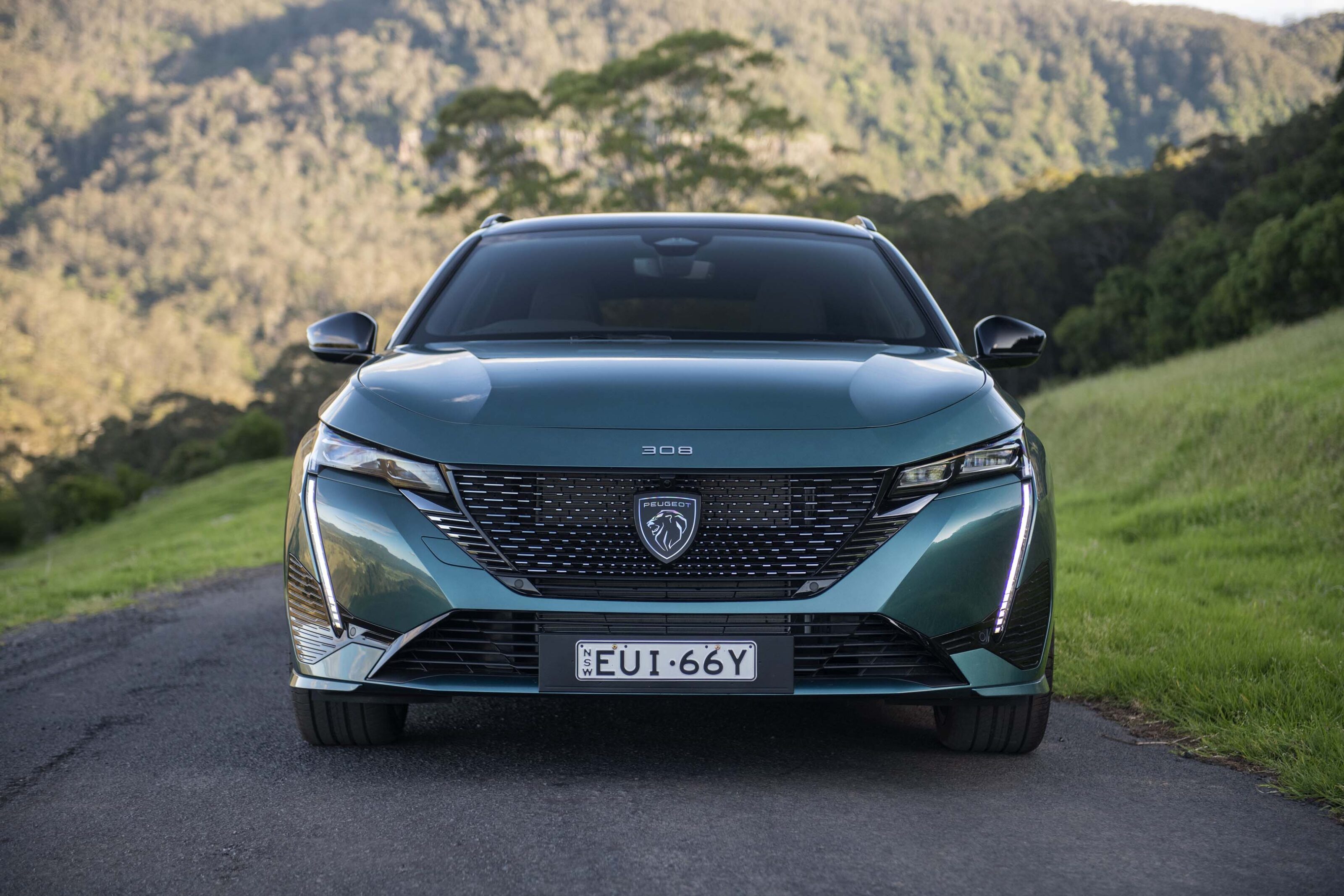
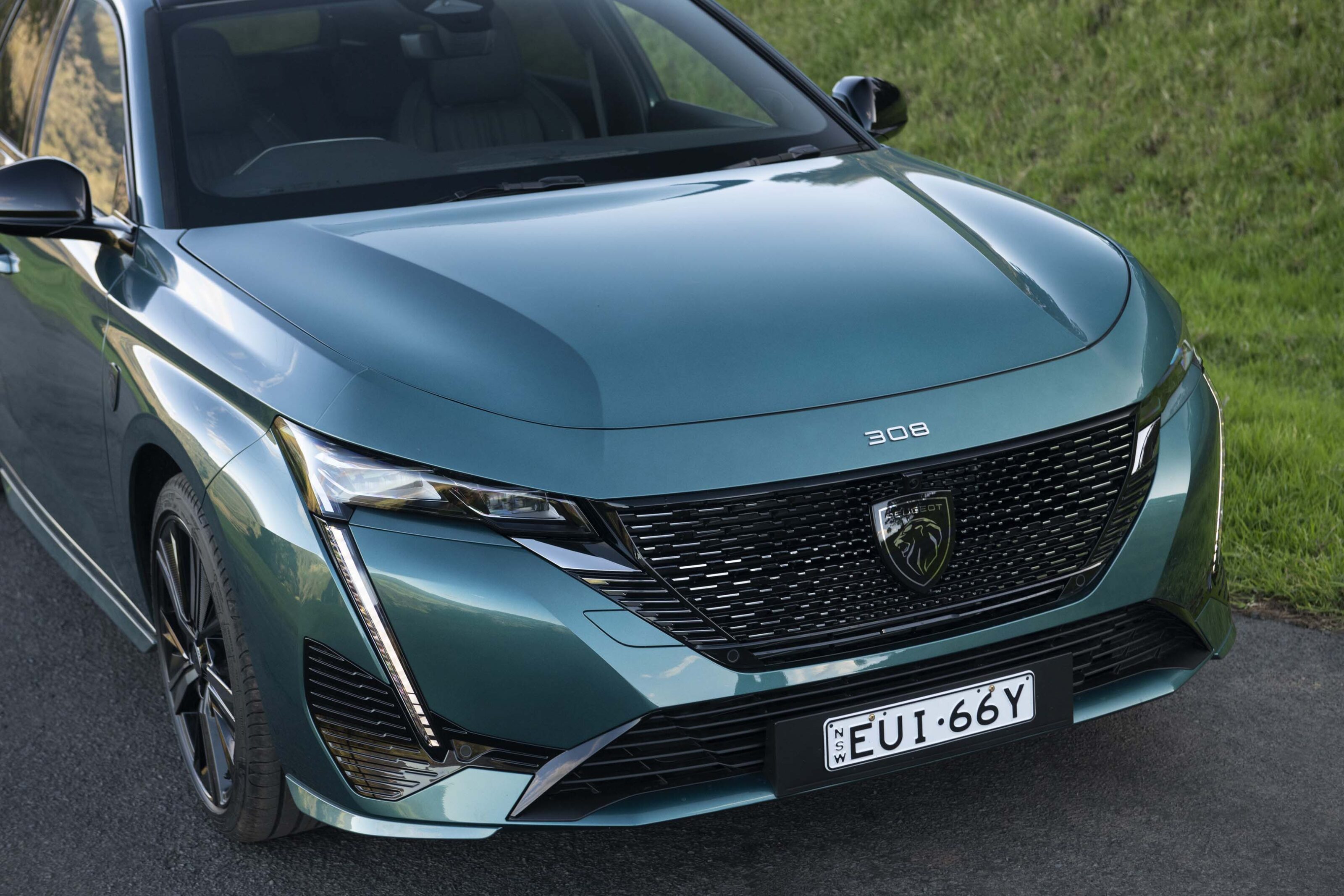
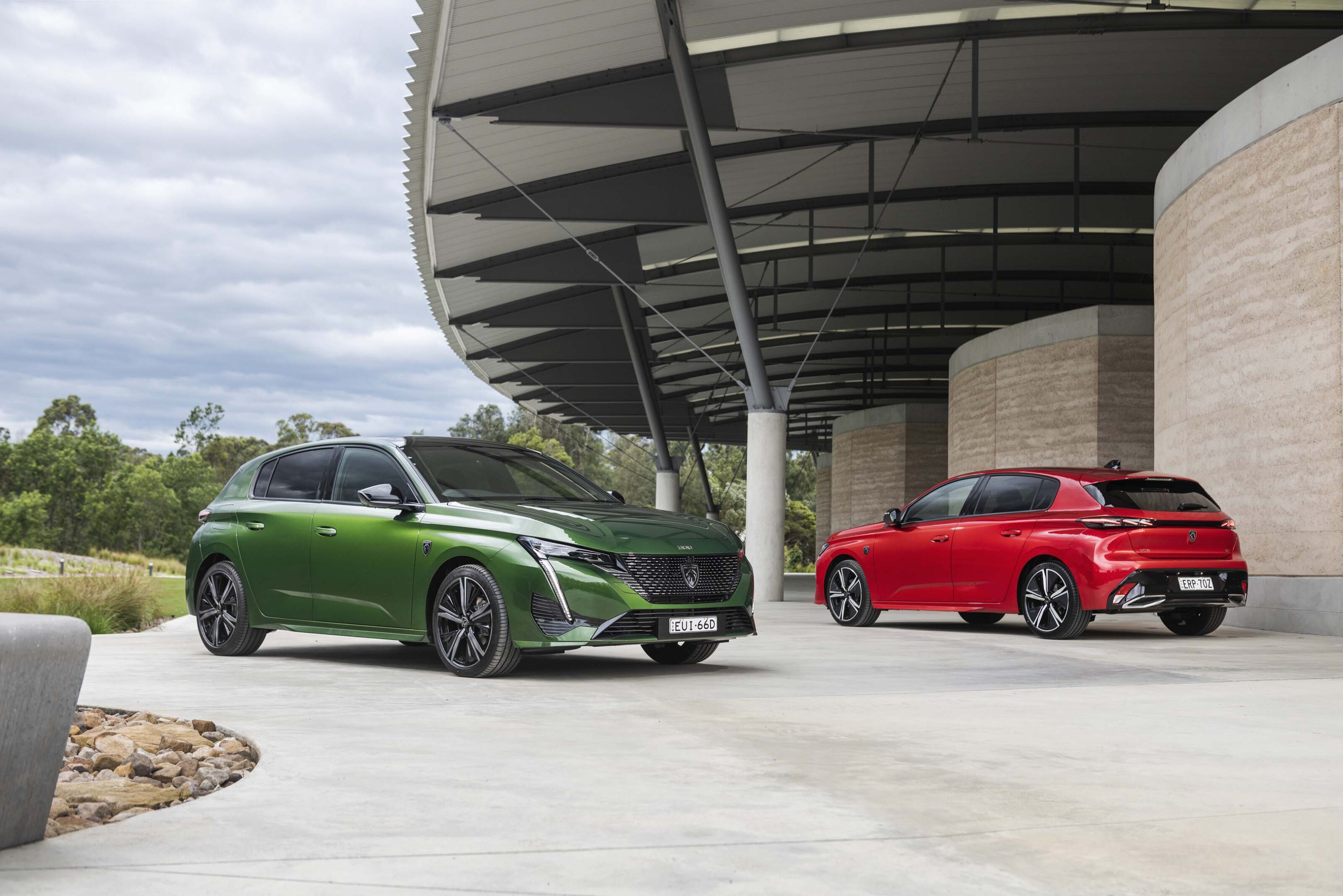
As the first model from the French marque to wear its redesigned logo – hiding a radar for the adaptive cruise control – the new-generation 308 ushers in a new design language, featuring a large graphic front grille and slim LED headlights with a ‘claw effect’ DRL signature below.
The design of the updated hatch was penned with aerodynamics in mind, contributing to a slippery drag coefficient of 0.28 to assist with efficiency.
At 4360 millimetres in length, the 308 is 107mm longer than before. Its wheelbase has also been extended by 55mm (2675mm), which is said to have improved room for rear occupants.
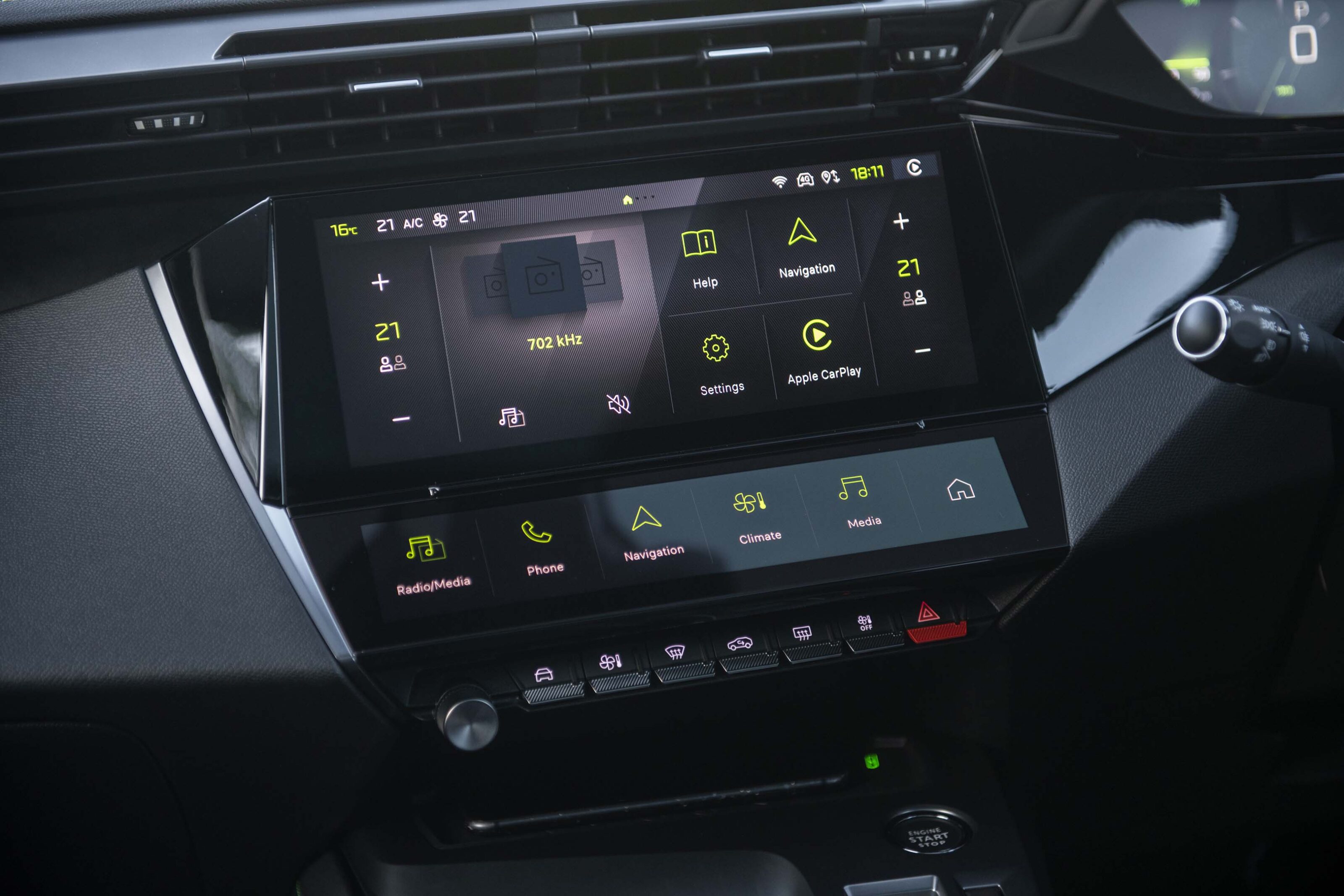
Inside, the 308 includes a 10-inch infotainment system with ‘Hey, Peugeot’ voice recognition, a 10-inch digital instrument cluster, and a rocker-button-style gear selector similar to the Volkswagen Golf and Porsche 911.
A full suite of active safety technology, including; autonomous emergency braking, lane-keep assist, radar-based cruise control, traffic sign recognition and driver attention alert, is likely to be fitted as standard.
Industry safety body EuroNCAP awarded the 308 a four-star rating out of five under the latest 2022 criteria, however, it is currently unknown if this rating will apply locally under ANCAP.
The 2023 Peugeot 308 will go on sale in Australia in the fourth quarter of 2022, with the GT Sport PHEV set to arrive sometime in 2023.
The facelifted 2024 Hyundai i30 Sedan line-up will see the addition of a hybrid variant when it reaches Australia.
Hyundai Australia’s direct consumer senior manager, Andrew Stamatakis, said the electrified i30 Sedan will arrive later this year – joining the existing Santa Fe Hybrid and forthcoming Kona Hybrid.
“[We have] Santa Fe hybrid; we’ve got next-generation Kona coming out this year in a hybrid powertrain followed by a battery electric powertrain later this year. We’ve got a facelift i30 Sedan with a hybrid powertrain for the first time in Australia. That’s just this year.”
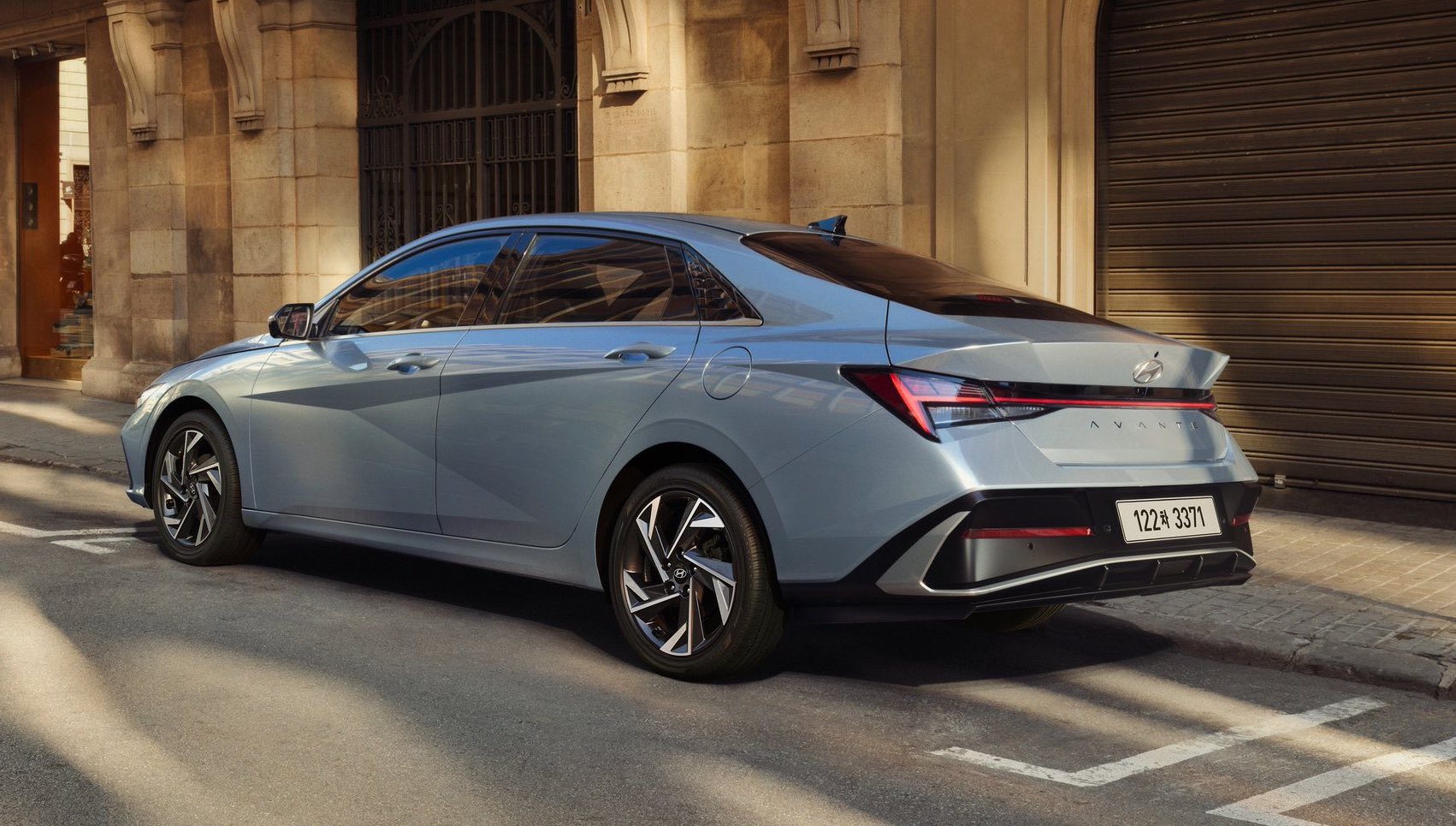
It follows previous speculation the facelifted i30 Sedan – revealed in late February – would gain a hybrid variant in Australia.
The hybrid will join the existing 2.0-litre naturally-aspirated, 1.6-litre turbocharged petrol engine and 2.0-litre turbo-petrol in the i30 Sedan range.
A combined fuel consumption figure below 4.0L/100km and CO2 emissions below 100g/km are likely for the hybrid, in line with the related Kia Niro small SUV.
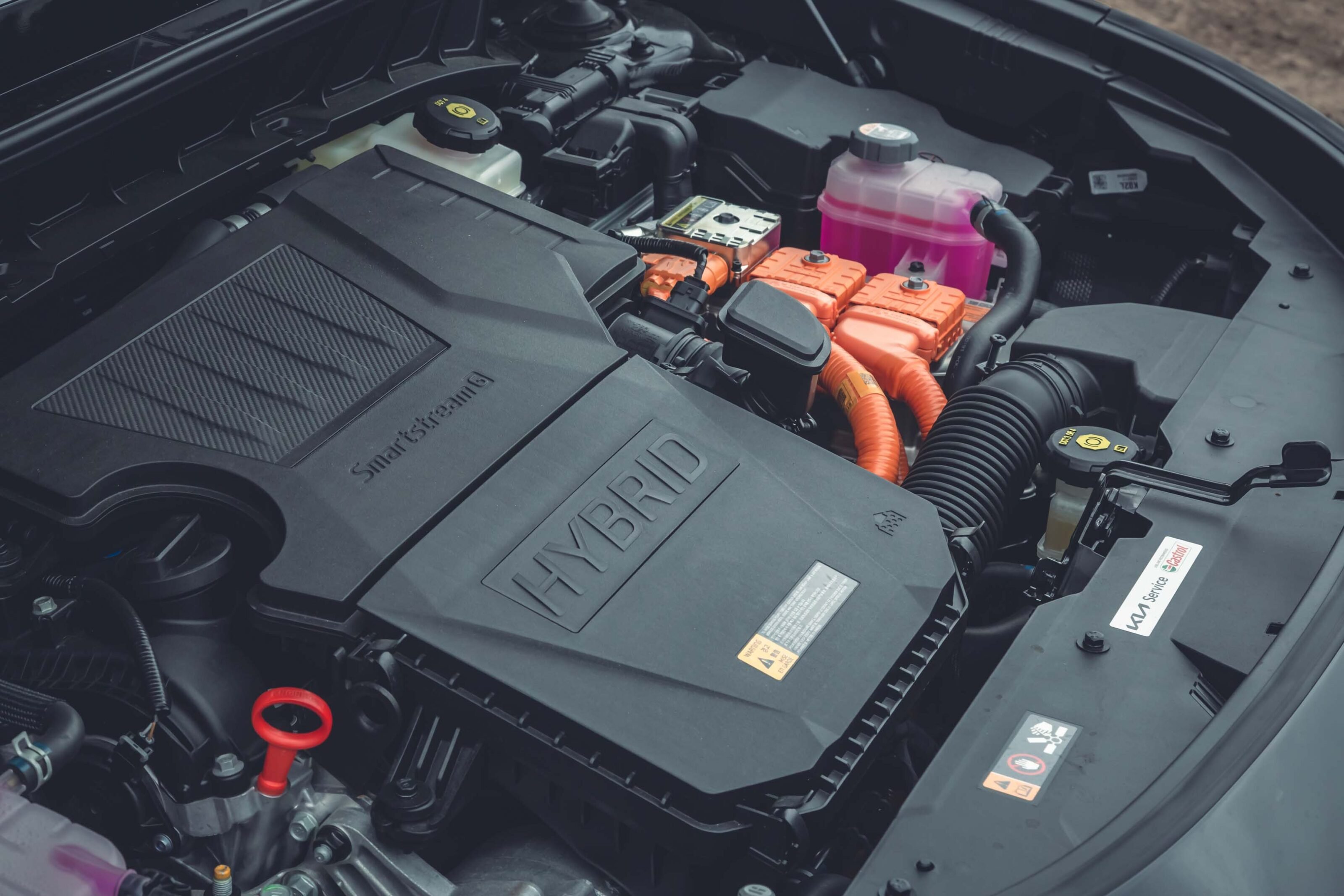
Under the bonnet, the Hyundai i30 Sedan Hybrid will be powered by a naturally-aspirated 1.6-litre four-cylinder engine and electric motor, producing 104kW and 265Nm in total. It is matched to a six-speed dual-clutch automatic transmission and a 1.3kWh lithium-ion battery.
The addition of the i30 Sedan Hybrid will allow Hyundai to better compete with the Toyota Corolla, which is Australia’s top-selling passenger vehicle.
The facelifted 2024 Hyundai i30 Sedan will arrive in Australia in the second half of this year, with local pricing and features to be detailed closer to the time.
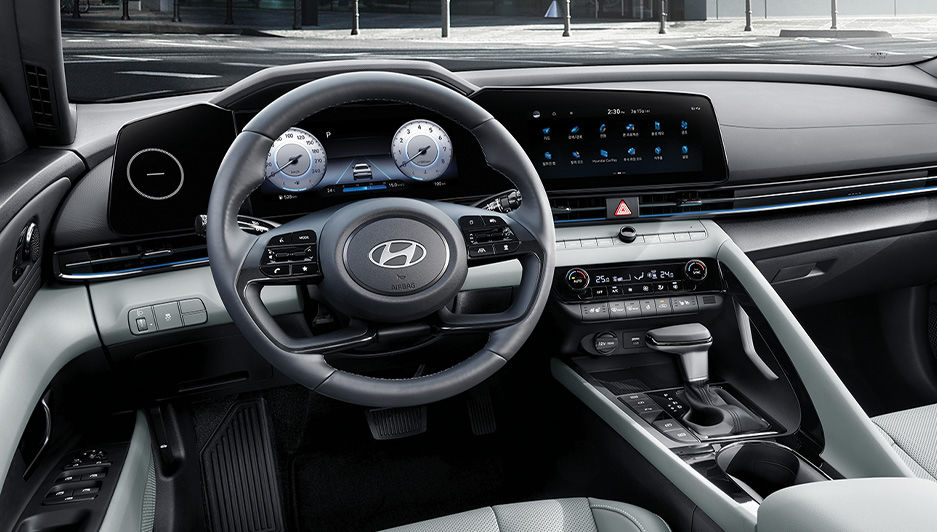
Currently, the i30 Sedan is priced from $25,690 before on-road costs for the entry-level Active manual, rising to $50,200 plus on-roads for the i30 Sedan N.
The hybrid is expected to mirror the standard petrol Active and Elite variants, but with a minor premium to cater for the added technology.
First revealed in March 2020, the i30 Sedan is rebadged specifically for Australia to capitalise on the success of the i30 nameplate – despite the i30 hatch sharing more in common with the previous-generation Elantra.
It’s “time for Australia to catch up” to New Zealand’s fuel efficiency standards, according to the Electric Vehicle Council.
With a recent New Zealand survey finding 62 per cent of people were happy with the policy, the EV Council claims similar standards in Australia would be just as popular.
“Australia is one of the last developed nations on earth not to introduce fuel efficiency standards and this polling shows the government has nothing to fear from quickly catching up,” said EV Council CEO Behyad Jafari.
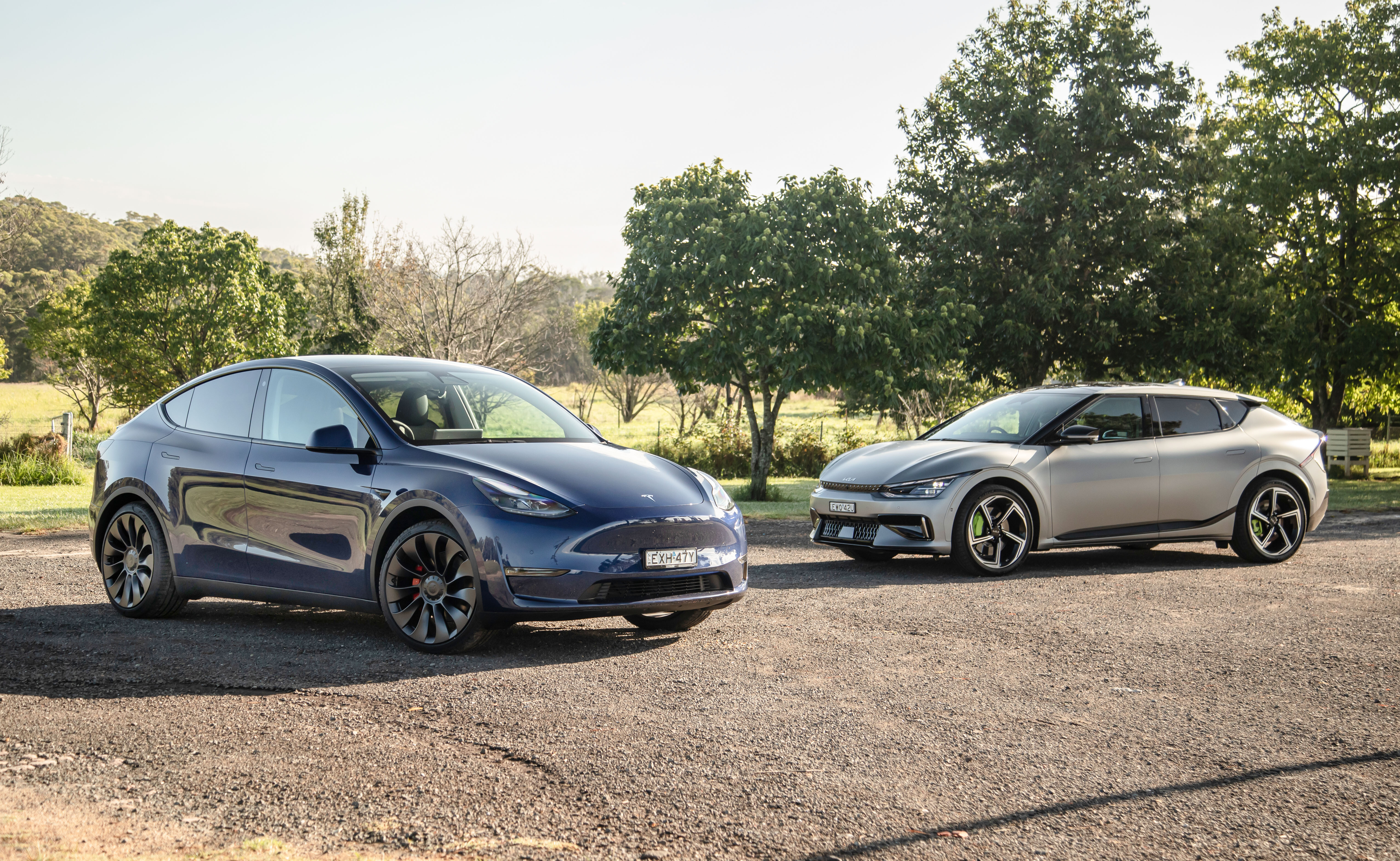
“The Australian Government should have introduced fuel efficiency standards many years ago. If this had happened we would have tens of thousands more EVs on the road, and Australian drivers would not be waiting months, or years, to take delivery of their new electric vehicles.
“There is no reason to delay further. We need the federal government to announce strong fuel efficiency standards this year to help accelerate Australia’s transition to an electric fleet.”
First introduced on July 1, 2021, the New Zealand Government’s Clean Car Discount aimed to encourage the uptake of zero- and low-emissions vehicles in the nation.
It was expanded from January 1, 2022, with each new and used import vehicle sold in New Zealand subject to a rebate, no rebate, or a penalty, depending on its CO2 output.
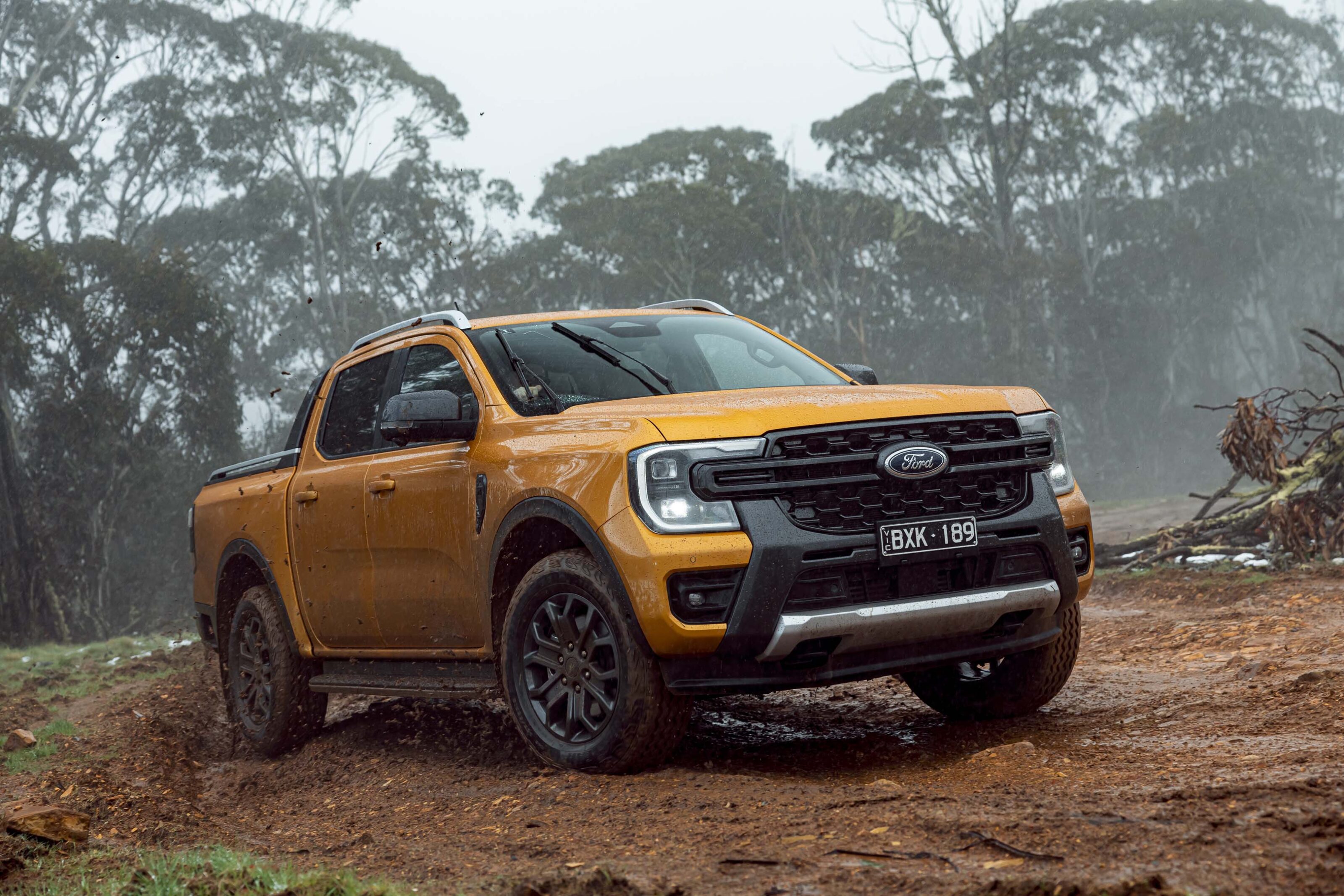
Any passenger vehicle emitting less than 146 grams of CO2 per kilometre is eligible for a rebate, while those that emit 193 grams and higher are subject to a fee that rises with higher CO2 levels.
All others which fall between 146 and 192g/km are in a neutral zone and won’t attract a rebate or fee.
The research surveyed 989 New Zealanders – considered a statistically valid sample size – with 46 per cent of respondents unaware of the Clean Car Standard prior to the survey.
Thirty-five per cent agreed that a discount for low-pollution vehicles and a fee for higher-pollution vehicles is a “good policy.”
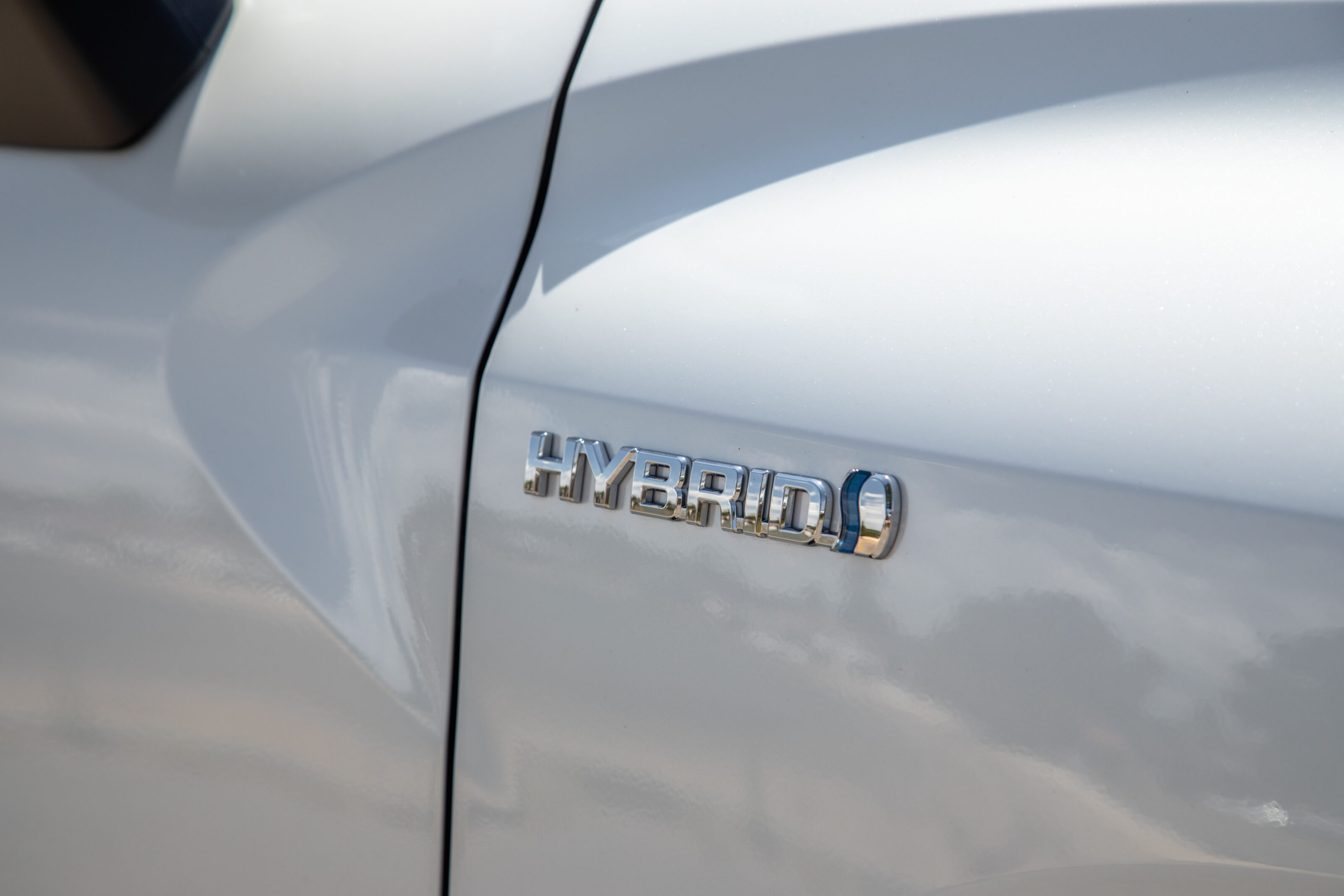
What about Australia?
The Albanese Government is expected to introduce a national new-car emissions standard in the coming months, following consultation with the state and territory governments, industry officials, and consumer groups.
At the National Electric Vehicle Summit in Canberra in mid-2022, the government announced a strategy to grow EV sales in Australia by reducing costs and improving choice through government-led incentives.
It said it would also explore introducing vehicle fuel efficiency standards and improved CO2 emissions schemes.
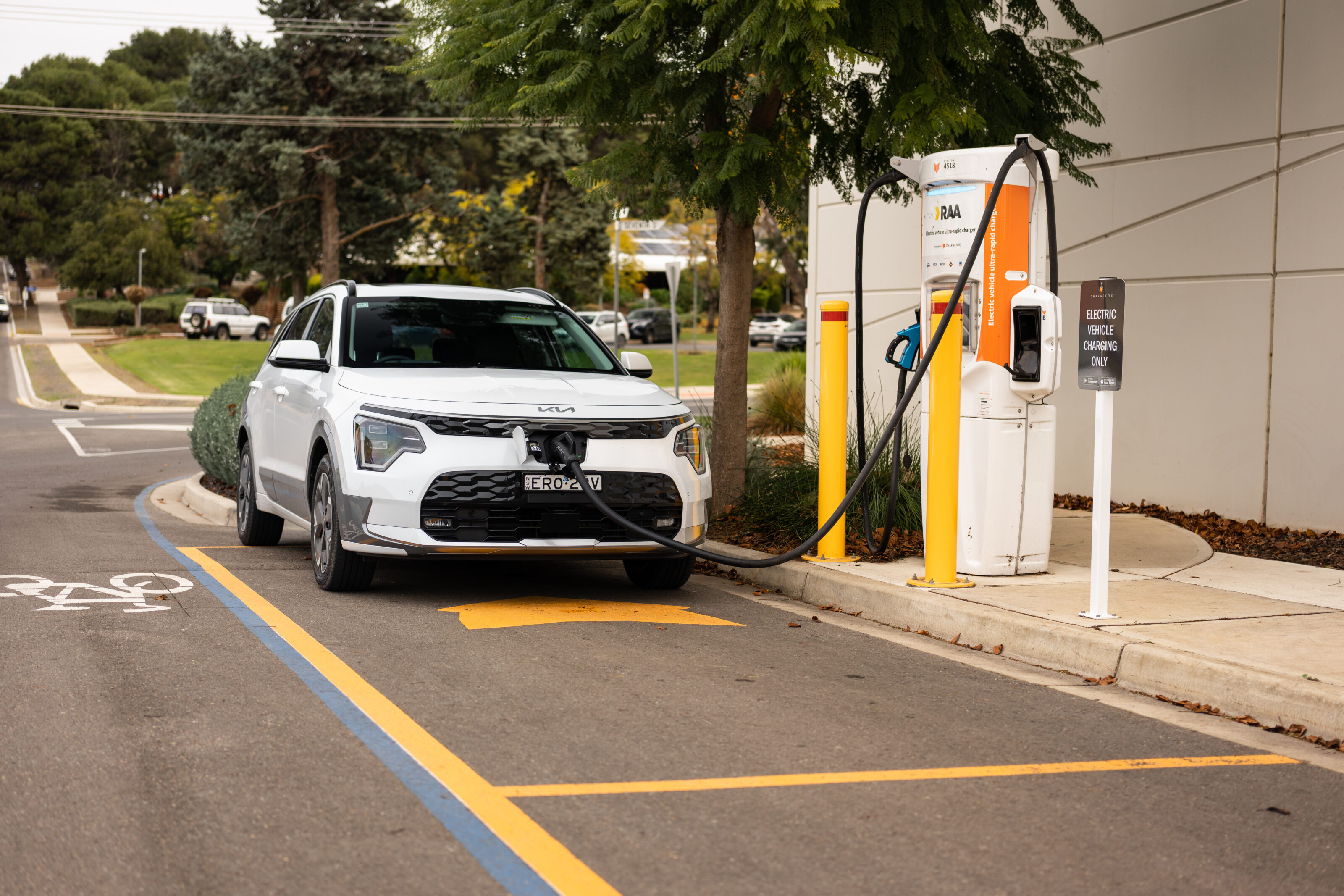
“Many states have implemented their own agenda in the absence of a federal strategy – now is the chance to work together to get the job done,” said Federal Climate Change and Energy Minister, Chris Bowen, at the event.
“But standards that lack ambition will leave us back of the global queue longer for cheaper and cleaner vehicles, we need to be as close as possible to the best practice. I do think now is the time for the conversation that is open, constructive and mature.”
Australia is the only country in the OECD not to have similar policies – apart from Russia.
Hyundai Australia has signalled that we may finally be seeing the start of an easing to the semiconductor supply issue that has hamstrung the launch of its Ioniq 5 EV.
Snapshot
- Hyundai Oz expects to have around 6000 EV slots in 2024
- Ioniq 7 large SUV coming next year, following Kia’s big EV9
- Electrified options in every SUV segment
Speaking at the launch of the Ioniq 6 electric sedan, Andrew Stamatakis, Hyundai Australia’s Direct Consumer Senior Manager, said the company’s supply of EVs to these shores had already improved more than fourfold from 700 vehicles in 2022 to what is envisaged to be 3000 cars this year.
What’s more, Hyundai Australia’s target for 2024 is 6000 electric Ioniq cars.
“When you overlay that (the 700 EV received in 2022) with 30,000 people on an interest list, there’s going to be some disappointed people. We really wish we could have had 30,000 vehicles last year but, alas, we couldn’t. We took some learnings,” he said.
“This year, between Ioniq 5, Ioniq 6 and Ioniq 5 N, we’re close to 3000 units which was a significant increase on last year, and next year, with Ioniq 7 added to the fold, up to 6000 units. We’re getting more regular supply from our factory and we’re very, very happy with that – because it means more happy people getting into these cars and experiencing what the best EVs in the market can offer,” he said.
“By the end of next year, Hyundai is going to have an electrified model in every single SUV segment we operate in. Alongside this, we’re going to have Bluelink (Hyundai’s connected services app) in every single model in the range by the end of next year.”
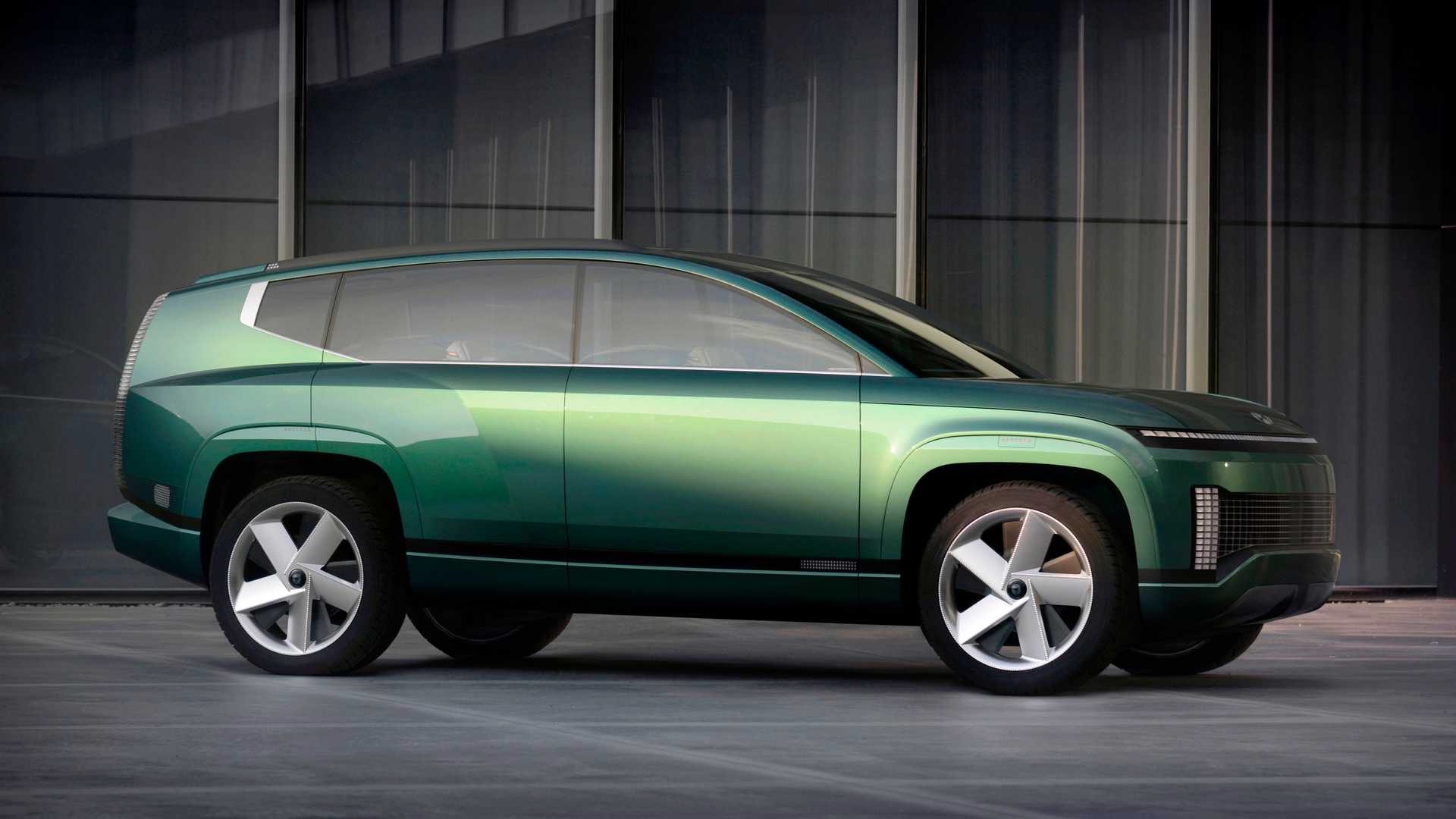
“People forget that we started our electric journey in 2018 with Ioniq,” said Stamatakis.
“Last year, five percent of Hyundai Australia’s volume was battery electric vehicles. Towards the end of this year we have Ioniq 5 N and then next year we have Ioniq 7, which is our large SUV battery electric vehicle. ”
Stamatakis noted that Hyundai’s electrification efforts didn’t solely focus on the Ioniq sub brand.
“[We have] Santa Fe hybrid; we’ve got next-generation Kona coming out this year in a hybrid powertrain followed by a battery electric powertrain later this year. We’ve got a facelift i30 Sedan with a hybrid powertrain for the first time in Australia. That’s just this year.” he added.
Hyundai Australia’s Chief Operating Officer, John Kett, was similarly bullish.
“Think about what Ioniq is doing in transitioning Hyundai from being this innovative brand with respect to a technology, to becoming the EV leader that we want to be,” he added, claiming that the launches of Ioniq 5, Ioniq 6, Ioniq 5 N and Ioniq 7 would “position the Hyundai brand as the leader in terms of EV.”
“Do we want to be Tesla? I think everybody wants to be Tesla,” he chuckled when considering sales.
“It opens up the door for the mass consumer EV opportunity that we have, and our first taste of that will also be later this year when you start to see that in the Kona EV,” he noted.
The order books have already opened on Ioniq 6, with 300 units having been sold and another 120 cars arriving this week. Kett claims that an allocation of 1000 Ioniq 6 units had been made for 2023.
The lead time on specific factory orders currently stands at around 6-9 months, although buyers ordering stock directly from the website are seeing fulfilments in as little as 3-4 weeks.
The initial supply has largely been of entry-level rear-drive Dynamiq trims, but Bill Thomas, General Manager Corporate Affairs, envisaged that the bulk of Australia’s take-up would comprise all-wheel drive Techniq and Epiq variants.
As it stands, the Ioniq 6 makes an interesting counterpoint to the waves of SUV models flooding the market.
“What’s going to bring sexy back from a passenger car perspective?” mused Kett.
Ford is expecting to lose $4.5 billion (US$3 billion) in its electric vehicle division this year, despite revenue rising from its combustion engine arms.
Snapshot
- Ford to post further losses on EVs, more profits on ICE divisions
- Caused by significant investments in EV tech and production
- Expects current Ford EVs to be in the green by next year
According to Automotive News, the American carmaker’s Model E division will suffer nearly 50 per cent more losses than last year due to heavy investments to boost production, develop next-generation models on dedicated EV platforms, and integrate the less expensive lithium-iron-phosphate (LFP) battery chemistry.
Meanwhile, Ford projects $10.5 billion (US$7 billion) in earnings before interest and taxes) from its Ford Blue internal combustion engine division, and around $9 billion (US$6 billion) from Ford Pro, which specialises in commercial vehicles – mostly dominated by diesel models.
This represents a nearly 3 per cent and 47 per cent improvement, respectively, compared to 2022 figures.
The news confirms that its conventional combustion engine-powered vehicles help fund investments in EVs amid tightening emissions regulations and incoming sales bans overseas.
However, Ford chief financial officer John Lawler told investors that its current first-gen EV models will be in the green by 2024 and labelled the Model E division as a ‘fledgling startup’.
All up, the company will post $15.6 billion (US$10.4 billion) in expected earnings before interest and taxes, with $3 billion (US$2 billion) in net losses.
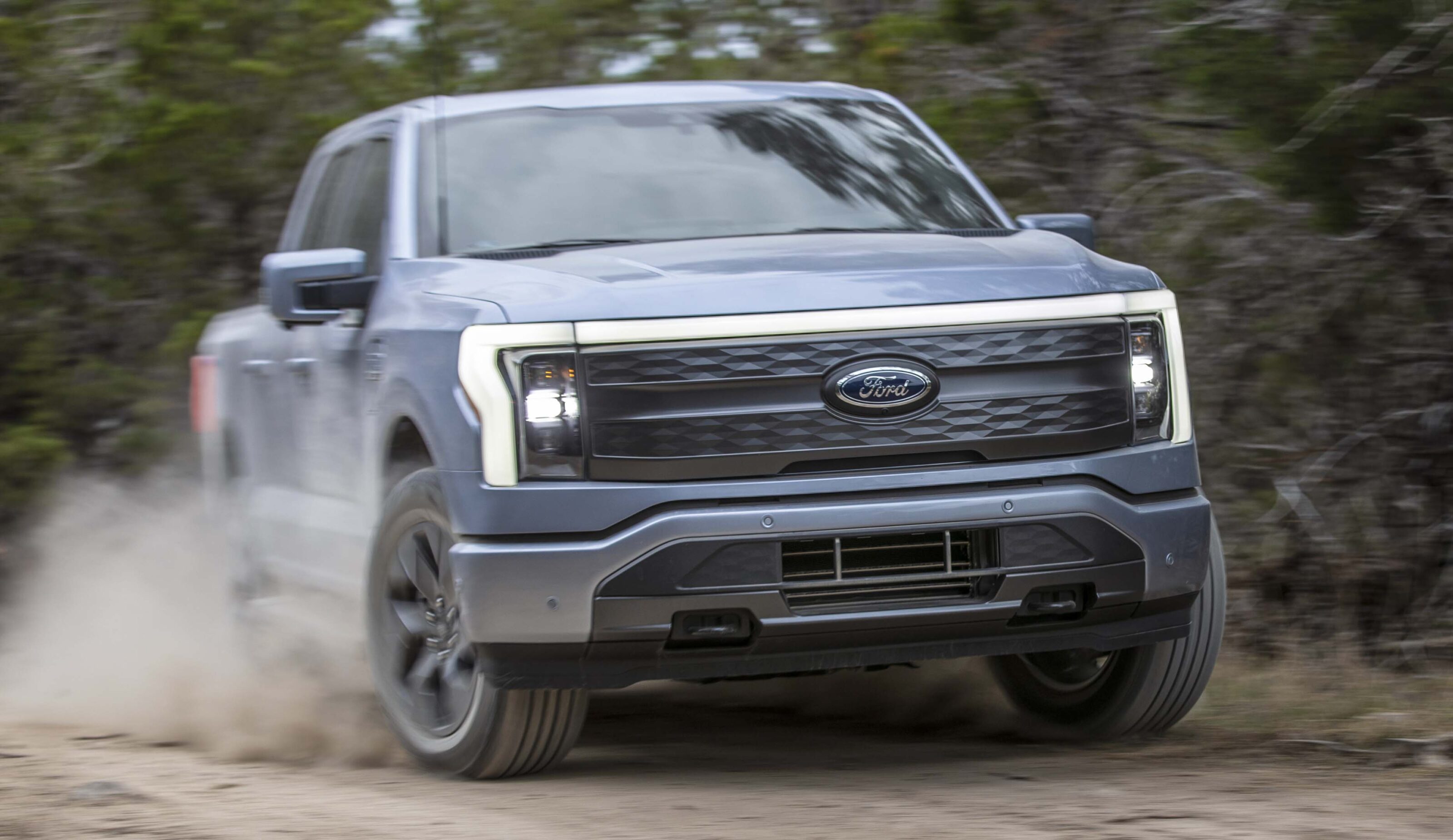
The Blue Oval currently sells the all-electric Mustang Mach-E SUV, F-150 Lightning ute and E-Transit commercial van overseas, with the Explorer SUV coming to Europe that’s based on Volkswagen’s EV platform to cut costs.
Locally, it doesn’t sell any pure EV yet. But, that’s about to change with the E-Transit expected later this year, and high hopes that the Mustang Mach-E will make its way to Australia soon.
⚡ More EV stories to help you choose the best car for your needs
How do hybrid cars work? What types of hybrid cars are out there? We’ve got the answers for you right here.
But first, an unexpected culinary comparison…
Choosing the right type of hybrid car is a lot like picking a curry: it starts at an extremely mild korma, but the level of electrification builds to a high-voltage vindaloo.
Now, seriously, what’s a hybrid?
There are three broad categories each hybrid system fits into: mild, traditional (or just ‘hybrid‘) and plug-in (PHEV). Most hybrid systems use petrol engines as the internal-combustion engine (ICE) components, with diesels a rarity.
Seen often as a transition technology, hybrids offer both an alternative to pure ICE and electric motoring, with lower emissions than petrol power, but without the faff of having to charge every night.
In this article we’ll break down the broad categories, the nuances within, as well as the pros and cons of each to give you an idea of what fuel-sipping option will best suit your lifestyle.
Jump ahead
? Mild hybrids
The world of the mild hybrid, or MHEV, is one of confusion for many buyers.
Mild hybrids are effectively petrol cars with an additional small battery to run certain power-heavy systems, reducing load on the petrol engine.
Things start off with 12-Volt, run to 24-Volt and then to 48-Volt. Some examples really are just glorified accessory batteries.
The one thing to remember is not a single mild-hybrid car on sale has a battery big enough, or motor powerful enough to meaningfully motivate a car. That’s not their purpose.
The ups and downs of mild-hybrid cars
| We like | Not so muchu2026 |
|---|---|
| No need to change driving habits | Little-to-no efficiency gains |
| Usually attached to exotic ICEs that sound good | Added cost and complexity |
| Silent coasting on highways | Often marketed as more beneficial than they are |
? Examples of mild-hybrid cars
The ultra-mild hybrid: The Mazda MX-30 and CX-30 are both available with a G20e-badged engine, which uses a 12-volt mild-hybrid system. The accessory battery is larger, allowing longer stop-start intervals – meaning the engine doesn’t need to kick in as quickly if you’re using air-conditioning and similar systems. It saves 0.2L/100km in the combined ADR cycle.
The mild hybrid: You may be familiar with the term ‘sailing’ – the ability for a car to run accessories such as the brake booster and power steering with the engine switched off at highway speeds – and it’s this that characterises most advanced mild-hybrid systems, for example that found in the Audi Q5 45 TFSI MHEV.
The performance mild hybrid: Typically associated with F1-adjacent marketing campaigns, systems such as this have the most powerful electric motors in the MHEV sphere. Although they can’t drive the wheels, the electric motors do provide a performance boost, often by keeping the turbochargers spooled for improved throttle response as in the Mercedes-AMG C43.
? Traditional hybrids
The most familiar type of hybrid, made famous by the Toyota Prius. These don’t need to be plugged into the wall, and make no claims of electric-only driving range.
Because of their familiarity, we refer to these powertrains as simply ‘hybrids’ in our reviews and news – but here we’re using the term ‘traditional’, to minimise confusion.
Typically, these vehicles have small batteries (1-2kWh) designed to be discharged and recharged very quickly.
The most prolific example in this list, the traditional hybrid was brought to market by the quirky Honda Insight and Toyota Prius in the late ’90s, but Toyota now dominates the space.
The benefits are easy to see; typically a 30-50 per cent drop in fuel consumption compared to an equivalently powerful petrol engine, with zero change to driving habits.
But, as always, the hybrid is not as simple as it seems. There are three types – well really, two types and, err, a hybrid of both.
| We like | Not so muchu2026 |
|---|---|
| No need to change your driving style | Very limited (if any) electric driving range |
| Relatively affordable (usually $2-3K over ICE) | Petrol engines can be noisy |
| Better performance than ICE alone | Different configurations can be confusing |
What types of ‘traditional’ hybrids are available?
? Series hybrid
The series hybrid is the simplest configuration, albeit the less common type. Its design means the wheels are powered exclusively by an electric motor. The combustion engine – typically running in the Atkinson cycle – is used as a generator to top up the small-ish battery.
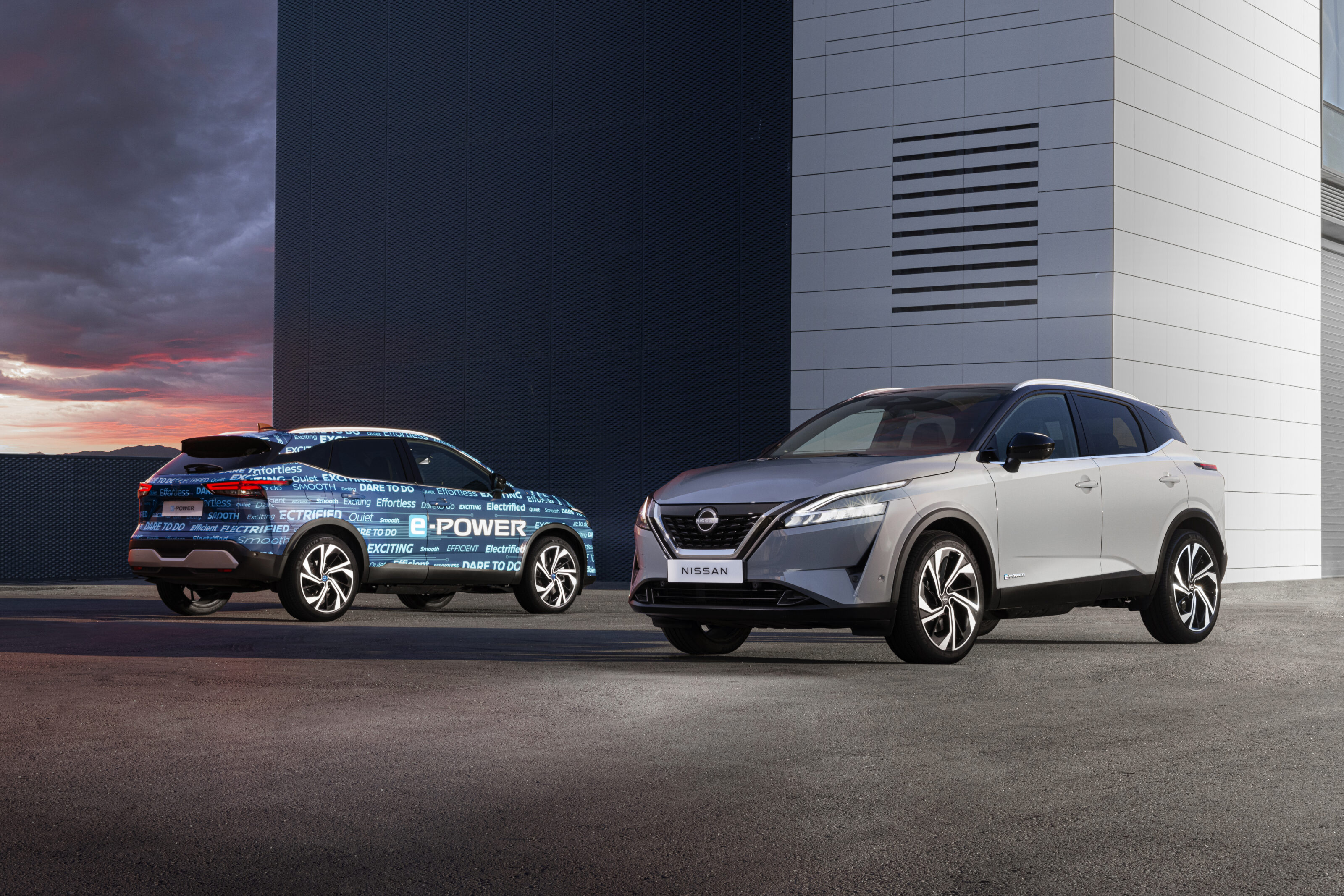
This configuration is sometimes referred to as a ‘range-extender electric vehicle’, as is the case for the defunct Holden Volt and BMW i3, though notably these also fall into the plug-in hybrid category. A smaller-battery series-hybrid powertrain is seen in Nissan’s e-Power hybrids, such as the Qashqai and X-Trail SUVs, which do not need to be plugged in.
The benefits are that an electric motor is far more energy-efficient than a combustion engine (roughly 85-95 per cent compared to 30-40 per cent) and offers instant torque. As the combustion piece doesn’t need to power any driveshafts or fluctuate RPMs, it can be tuned to run in a more efficient way. It also does not need to be solidly mounted, reducing noise and vibration.
Examples
? Parallel hybrid
This is where things get a little more complicated. The Parallel hybrid uses both electric and combustion motors in tandem. Examples on sale today include Hyundai and Kia’s systems found in a range of vehicles, including the Santa Fe hybrid and Niro hybrid.
These powertrains often have traditional drive systems, in the case of the all-wheel-drive Santa Fe hybrid, each wheel is connected to a normal driveshaft via a centre differential with the electric motor mounted between the engine and automatic transmission.
The result is perhaps the most natural feeling for those used to ICE cars, with a traditional torque converter automatic rather than single-speed reduction gear or CVT. The drawbacks are packaging, with smaller electric motors often used, meaning less electric-only driving range and worse fuel economy than the others in this list.
Examples
Back to top? Series-parallel hybrid
Like a half-and-half pizza, this is the best of both worlds and the brands synonymous with hybrid nous – Toyota and Honda – use this system. Here, electric motors can directly power the driveshafts in series mode, or – as needed – the petrol engine can cut in to produce maximum power output in tandem with the electric motor.
The drawbacks are the need for carefully programmed electronics that seamlessly switch between which mode is best based on the current situation. This can make-or-break a car’s efficiency and driving experience. Series-parallel hybrids are also more complicated and often noisier than the other options in this list when accelerating hard.
However, the series-parallel offers more packaging freedom than the parallel hybrid with the option of larger motors and – in the case of Toyota’s three-motor E-four system – a multitude of motors on both axles.
Typically, the series-parallel hybrid also offers excellent efficiency levels with extended electric operation and lower fuel consumption than parallel hybrids, while having greater total outputs than a series hybrid.
Examples
ud83dudd3c Back to top? Plug-in hybrid electric vehicles (PHEV)
The plug-in hybrid EV (or PHEV) is a tricky beast, delivering clear advantages when used as intended, while long drives and laziness can be their undoing.
Some would say it adds unnecessary complication and weight, while slow charging makes it a painfully flawed compromise when compared to both combustion and full-electric options – but for a few, it’s the best thing since Spell Check.
PHEVs may also be the saving grace of the great performance engine, with vehicles such as the Ferrari 296 GTB and forthcoming Mercedes-AMG C63 E Performance offering thrills and frugality.
The PHEV isn’t nearly as popular in Australia as the traditional hybrid, but there are many options on sale, largely out of necessity in Europe where zero-emissions zones in cities have forced manufacturers to invest in plug-in tech.
| We like | Not so muchu2026 |
|---|---|
| Usable, helpful electric driving range | Lots of extra weight to deal with |
| Often very powerful | Added expense drivetrain complexity |
| No range anxiety to worry about | Still create emissions, unlike EVs |
You can identify a PHEV by the biggest batteries in this list, usually between 8-20kWh in usable capacity and crazy-low consumption figures of 1.5-3L/100km (when using mostly all-electric mode).
Like the traditional hybrid, the batteries are designed to be discharged briskly and regularly, but unlike their smaller friends these hybrids require plugging into the wall for best results.
You see, adding 250 kilograms worth of lithium and steel to a traditional hybrid will leave you, well, probably getting the same 7-8L/100km as a petrol car – as Alex Inwood found out while running his long-term Mitsubishi Outlander PHEV without charge.
Charging is necessary then, because these vehicles have anywhere between 30-80km of electric-only driving range. So for those who live in urban environments with access to charging infrastructure (and a masochistic mind that enjoys maths), the plug-in hybrid can make for polar-bear-pleasing zero-emissions local driving.
All this comes without dealing with that dreaded ‘range anxiety’ EV-haters love to talk about… but for the love of Zeus, please don’t use public DC fast-charging infrastructure with your PHEV, because EV owners will despise you.
Examples
- Mitsubishi Outlander PHEV
- Mitsubishi Eclipse Cross PHEV
- Cupra Formentor PHEV
- Ford Escape PHEV
- Mercedes-AMG C63 E Performance
- Ferrari 296 GTB
Clear as mud? A little clearer, we hope
There you have it, a comprehensive guide with definitions, benefits and guidance on which type of hybrid will best suit your life.
If you’re unconvinced by the twin-power source, there’s always our electric vehicle buyer’s guide in which to indulge.
? MORE advice stories to help you with buying and owning a car
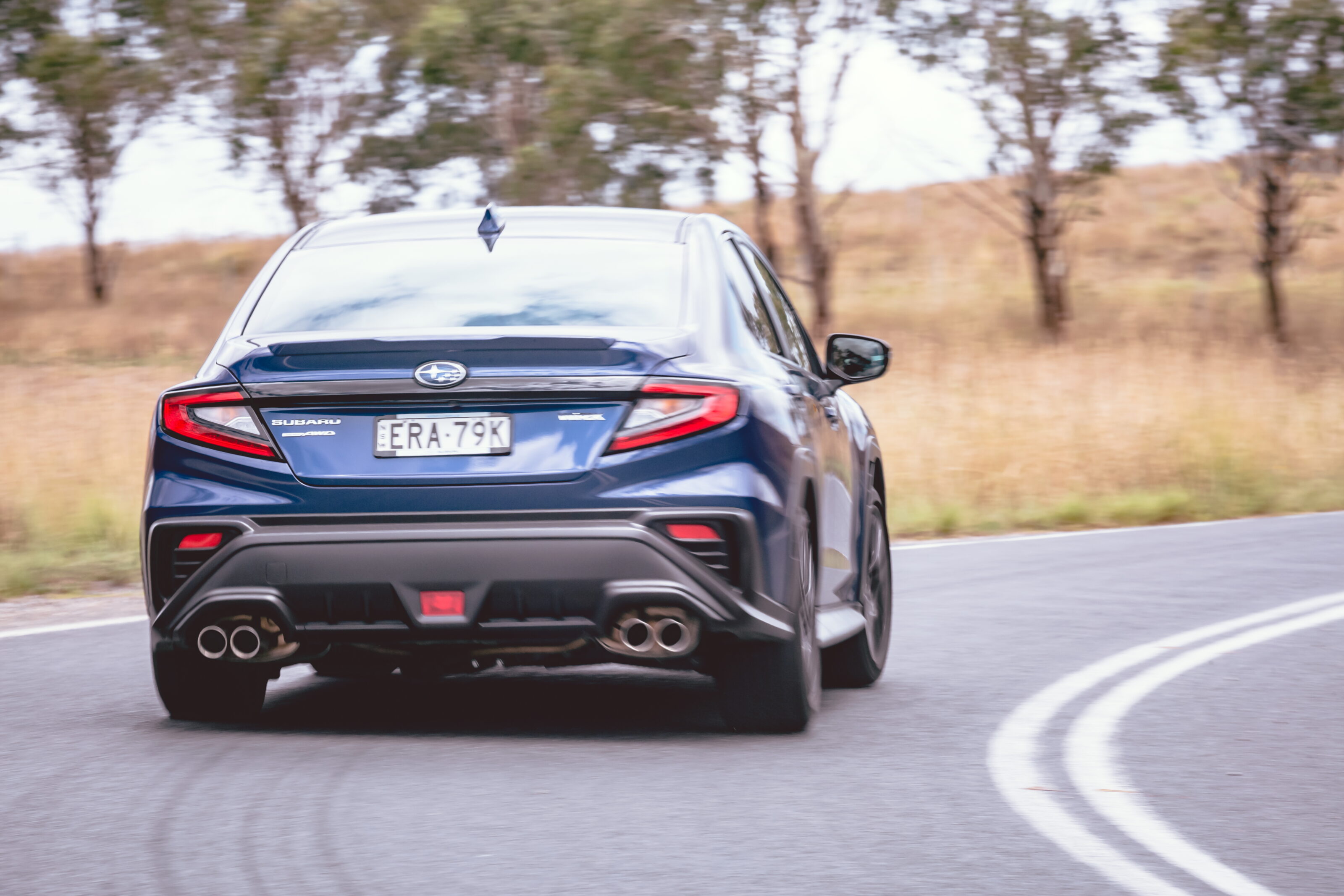
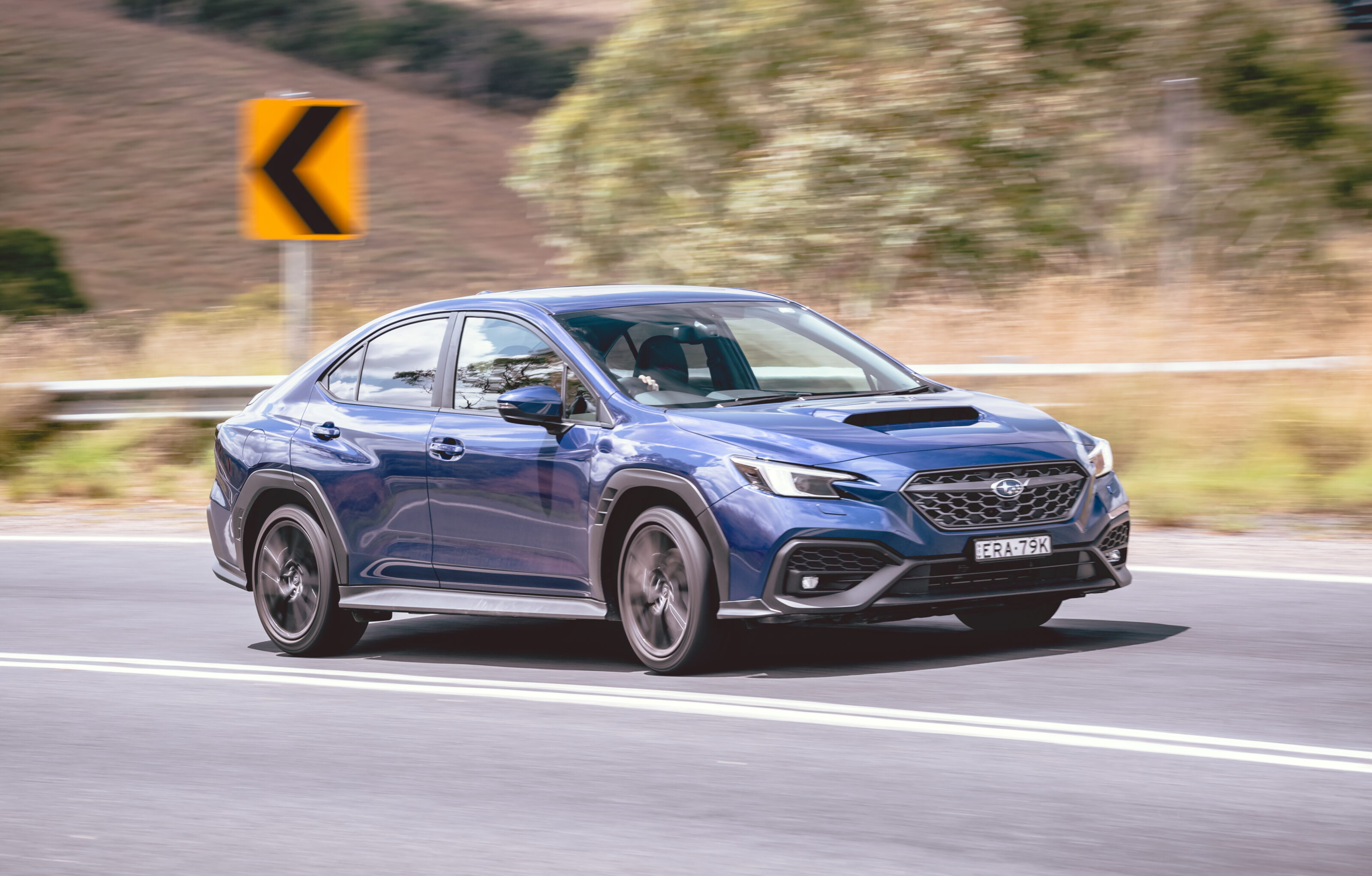
The WRX’s nose eagerly hooks into a dusty, off-camber third-gear bend, tracing the line markings with ease as the rear pivots gracefully around under a trailing brake. It’s all agility and balance.
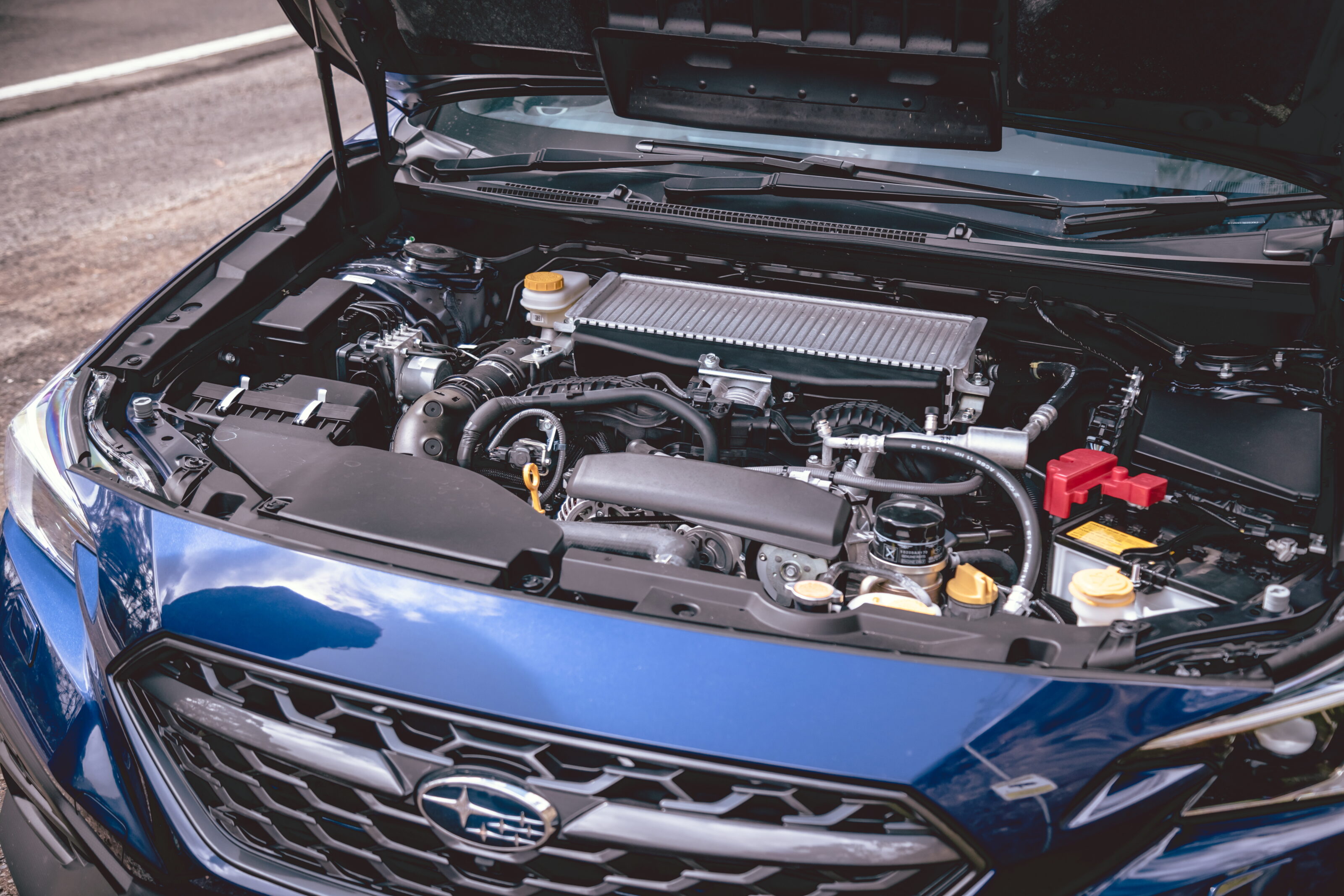
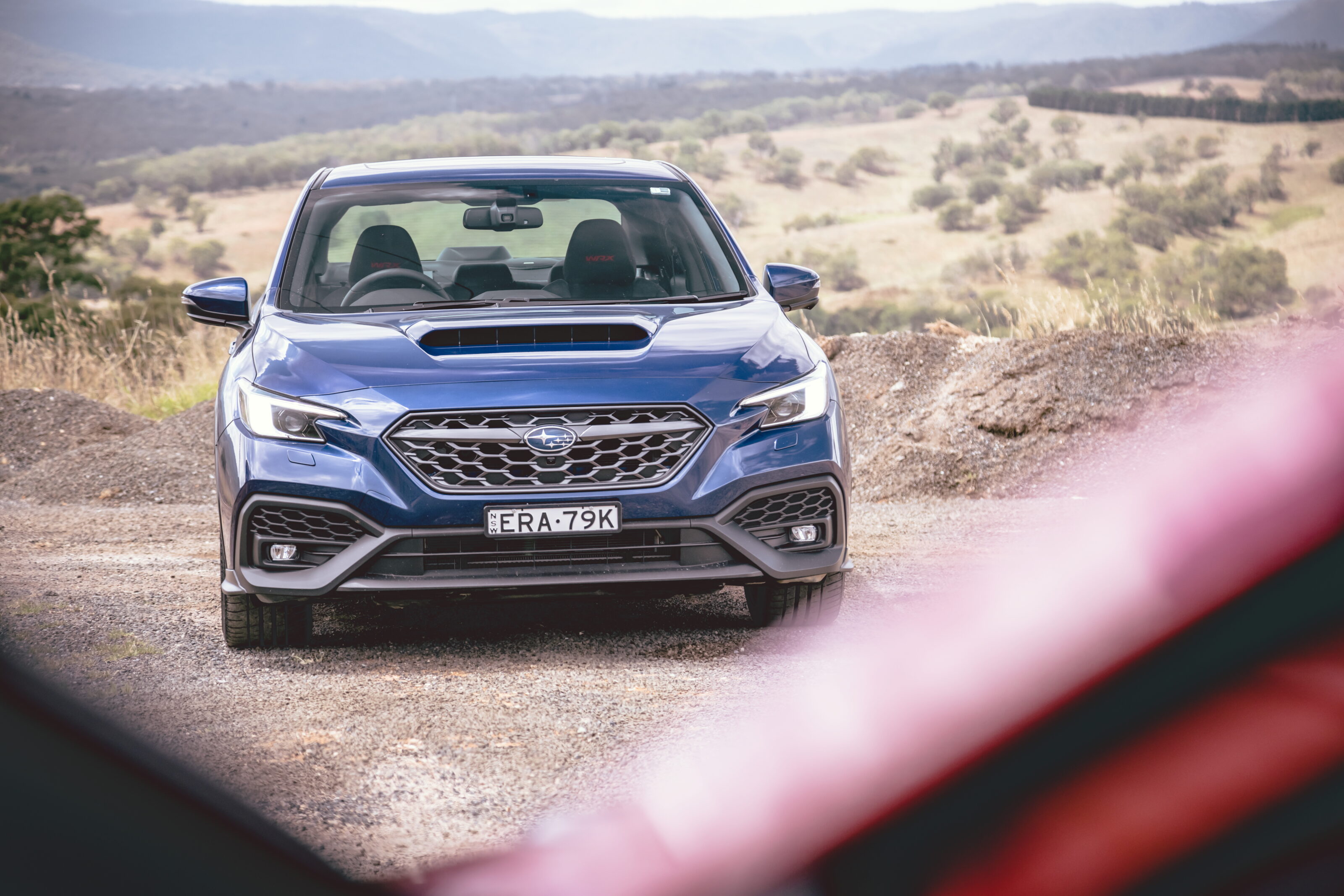
But this is a rare case in Subaru’s latest WRX. The latest-gen model debuted in May 2022, based on the Subaru Global Platform and with a new 2.4-litre turbo-petrol flat-four (now also found in the Outback XT) under the bonnet. There are three trims in the WRX sedan line-up, and with no STI coming, this RS manual is the most hardcore you can get.
It’s stacked with features for the price – including a near 12-inch touchscreen – and rides on a different spring and damper tune to the base ‘VB’ Rexy. It should be the driver’s WRX, and it is, but that comes with a host of compromises that leave us… a little confused.
JUMP AHEAD
- How much is it, and what do you get?
- How do rivals compare on value?
- Interior comfort, space and storage
- What is it like to drive?
- How much fuel does it use?
- How safe is it?
- Warranty and running costs
- VERDICT
- Specifications
How much is it, and what do you get?
Smack bang in the middle of the range, the RS looks pretty decent value at $50,490 before on-road costs, and it isn’t like Subie’s skimped on kit.
The RS gets power-adjustable seats, satellite navigation and a Harman Kardon sound system over the manual-only base car. There aren’t any options; the sunroof is standard, as is metallic paint.
| Subaru WRX RS features | |
|---|---|
| 10-speaker Harman Kardon sound system | Dual-zone climate control |
| 11.6-inch touchscreen | Seat heating |
| 18-inch alloy wheels | TomTom sat-nav |
| 8-way power seats | Tyre pressure monitoring |
| Active LED headlights | Wired Android Auto |
| Auto-dimming rear-view mirror | Wired Apple CarPlay |
How do rivals compare on value?
In a space that was once chock-a-block with rivals, most manufacturers have abandoned the all-wheel drive performance sedan in favour of boosted SUVs like the Volkswagen Tiguan 162TSI R-Line ($57,790 before on-road costs).
An Audi S3 ($73,900 before on-road costs) is smaller and a lot dearer; closer in price is a GR Yaris but that three-door’s minuscule boot ain’t up to family duties.
A GR Corolla ($62,300 before on-road costs) or Skoda Octavia RS ($55,990 drive-away) are closest in ethos and space to the Rex, and each comes equipped with more standard safety kit than this manual RS, which misses out on potentially life-saving auto emergency braking and lane-trace assist tech.

Interior comfort, space and storage
While it’s an improvement on GD and GC series Imprezas, the VB WRX’s cabin isn’t what you’d call premium.
Primary materials such as the soft armrest and high-qual suedecloth upholstery feel good but then you notice the dash is capped in scratchy plastic.
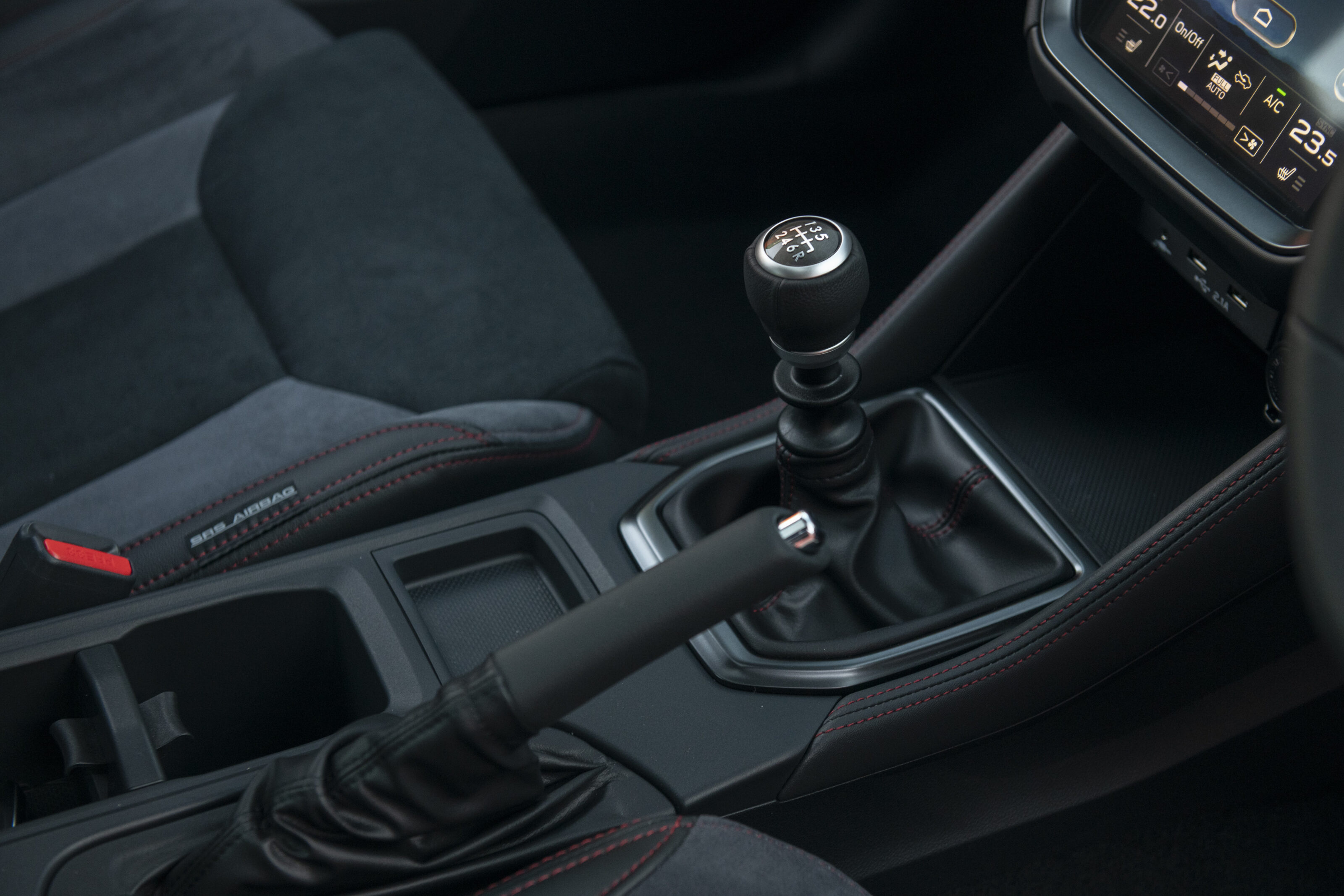
The steering wheel is also bulbous and awkward to hold, not aided by rough leather wrapping – the tiller has none of the appeal that an early Impreza WRX’s svelte Momo rim did. Speaking of controls, the gear stick is a long way away and the high-set driver’s seat feels more SUV (guess that suits the dimpled black cladding outside?) than sports sedan.
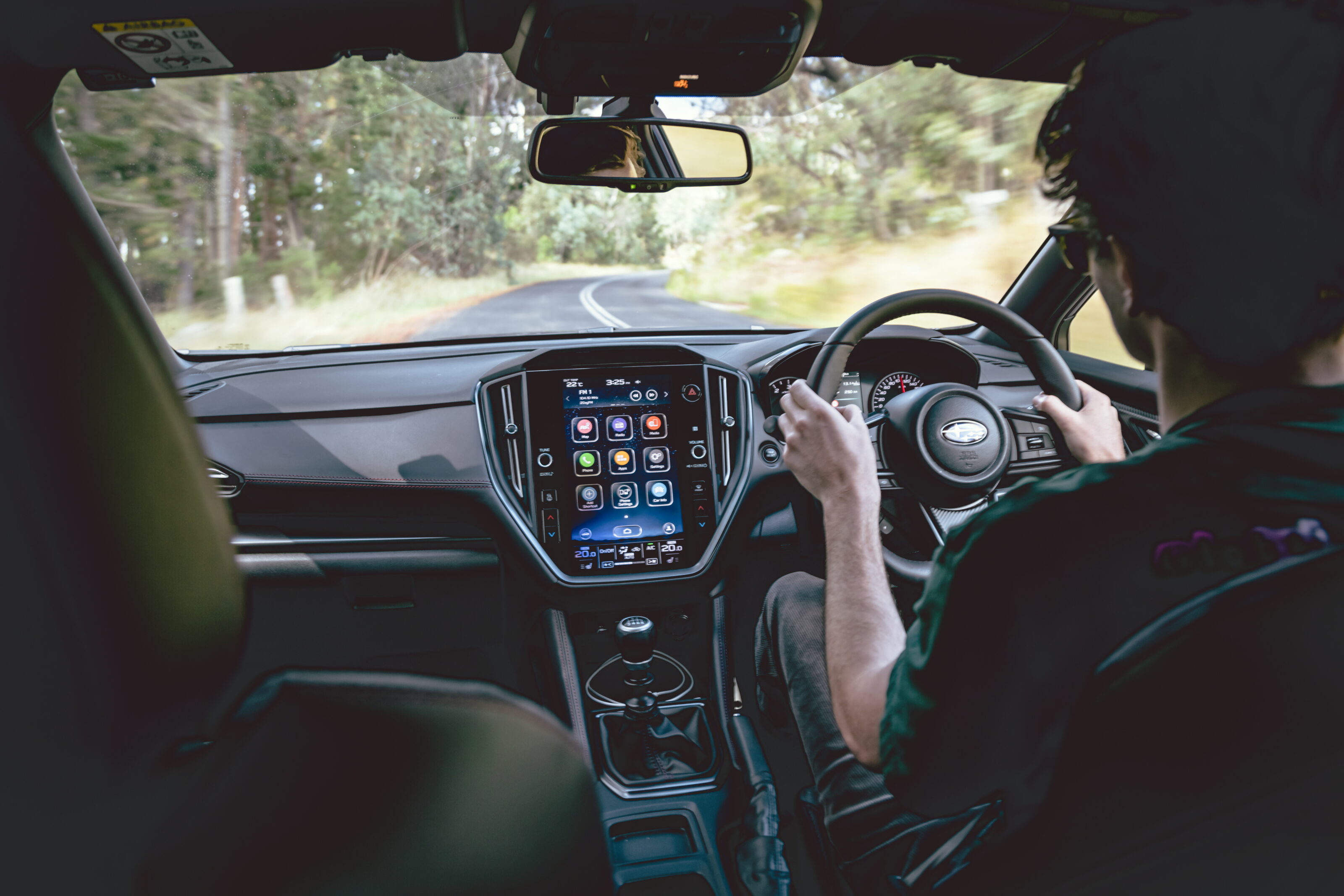
At least the technology package is pretty stellar, the WRX’s 11.6-inch touchscreen is very generous in size, and its portrait orientation will feel natural to smartphone natives. It’s responsive, and the HVAC controls persist at the bottom of the screen for easy interaction.
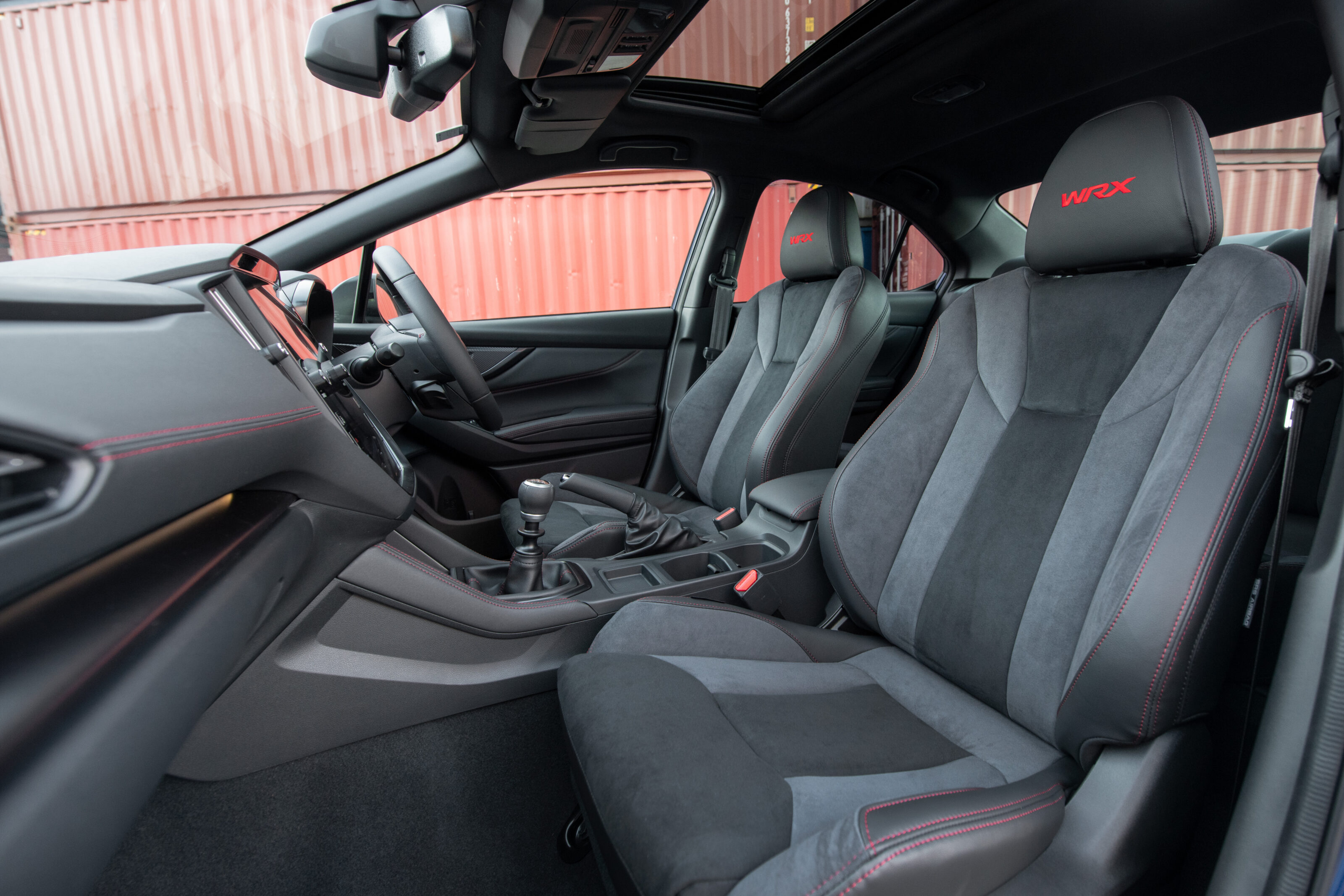
The 10-speaker Harman Kardon sound system does a solid job of rendering tunes, but the Rexy’s instruments feel old hat next to Skoda and Toyota’s digital driver’s displays, and there’s no head-up display, either.
Cabin storage accommodates two slim drink bottles in the centre console and a further two in the doors. There’s no USB-C connectivity, so it’s up to an awkwardly-placed USB-A port for wired smartphone mirroring that seems at odds with the impressive screen above.
The rear seat is generous for six-footers with good under-thigh support, a fold-out armrest with two cup holders, and two USB-A charge points. There’s a great view, too, out thanks to the raised bench, but oddly manual versions don’t get adjustable air vents – that’s for automatic variants only.
Sure, the power tailgate of an equivalently-priced wagon or soft-roader makes it easier to stuff bikes and flatpack furniture into, but at 411L the Subaru’s boot is still very useful. A full-size spare is located beneath the boot floor in typical Subaru fashion.
What is it like to drive?
When you and the WRX are committed to a twisty road it’s an engaged and agile dance partner, but as a package, it’s let down by a powertrain that doesn’t have the urgency or talent the chassis is looking for.
The 2.4-litre boxer produces its 350Nm from right down low, (2000-5200rpm), so it feels peppy in the mid-range, but just as you’re getting to indulge in second gear’s grunt the redline abruptly ends proceedings at just 6000rpm.
As tractable, smooth, and punchy as the ‘FA24F’ may be – it even approaches muted aural pleasure – it’s a motor designed to mesh with the car’s continuously variable transmission (CVT), rather than the knuckly but satisfying long-throw six-speed manual.
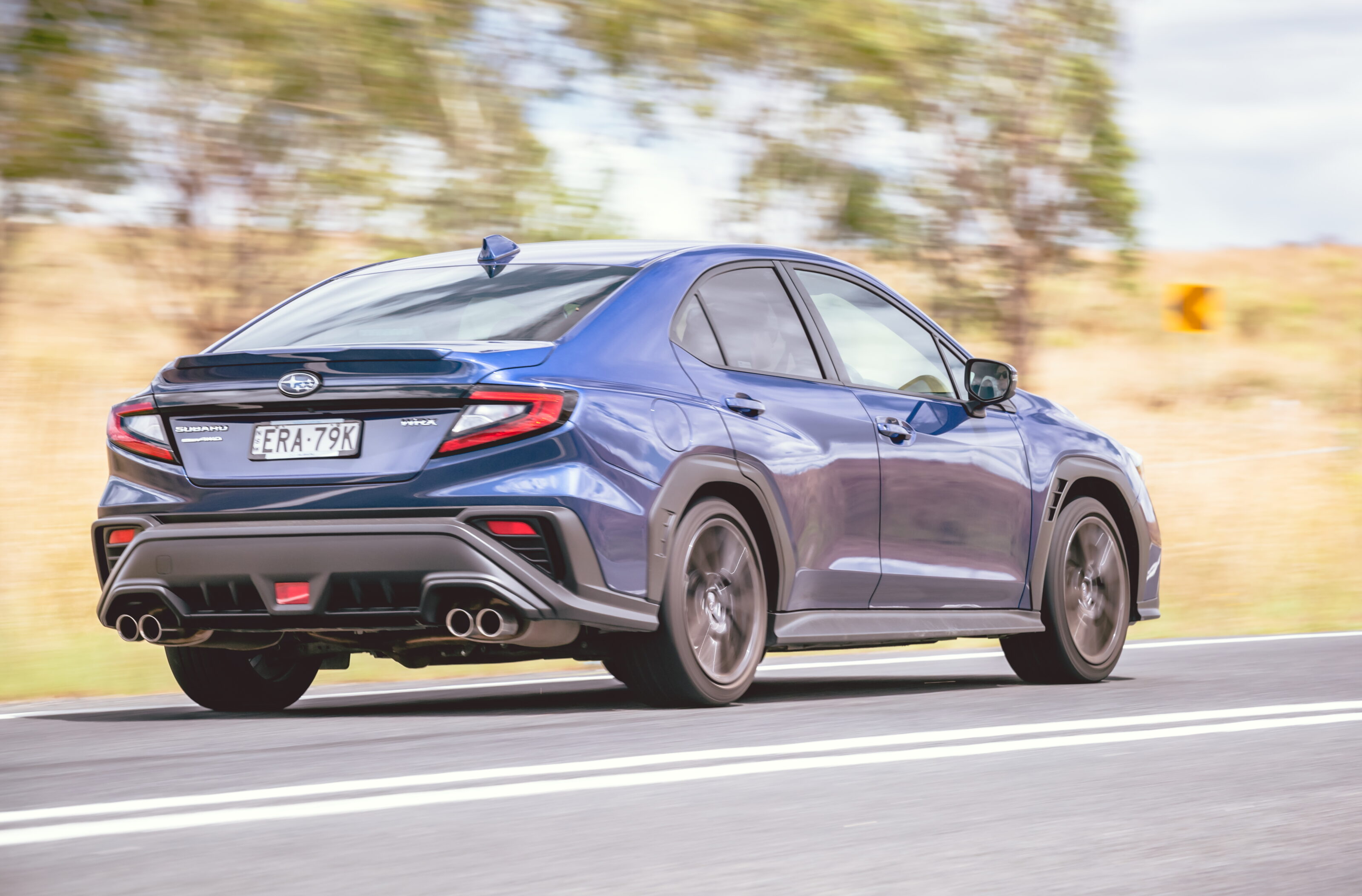
You can’t help but feel that this RS in particular is having a little bit of an identity crisis.
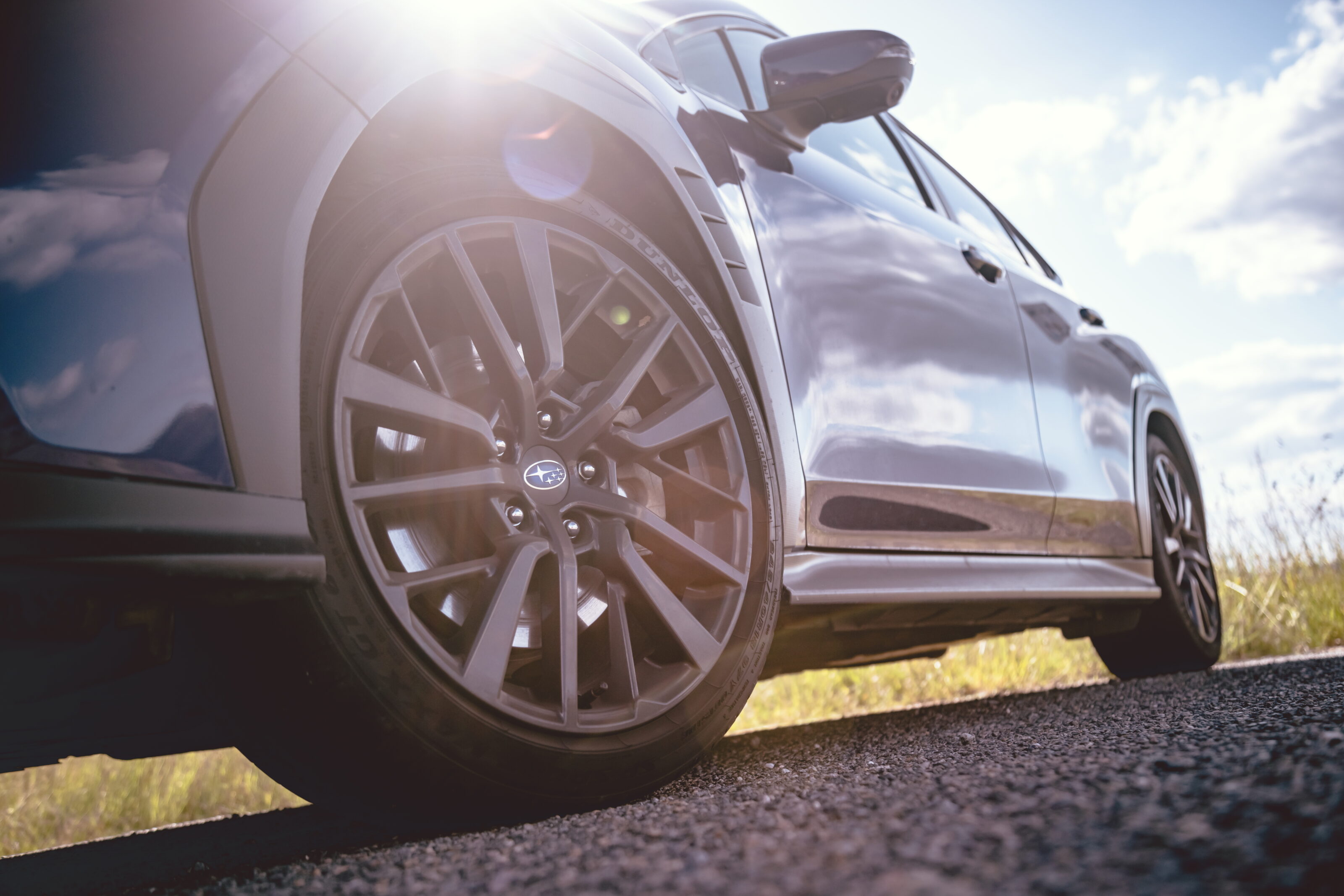
And that’s okay in the more sedate base WRX, or the dearer tS with its adaptive dampers that give the sedan much greater bandwidth, but the RS’s stiffer springs and 18-inch alloys shod in 245/40 R18 Dunlop Sport Maxx rubber equate to an edgier ride quality with a tendency to buck and jiggle over expansion joints and potholes in town – a feeling amplified as you watch the bonnet scoop shimmy over bumps.
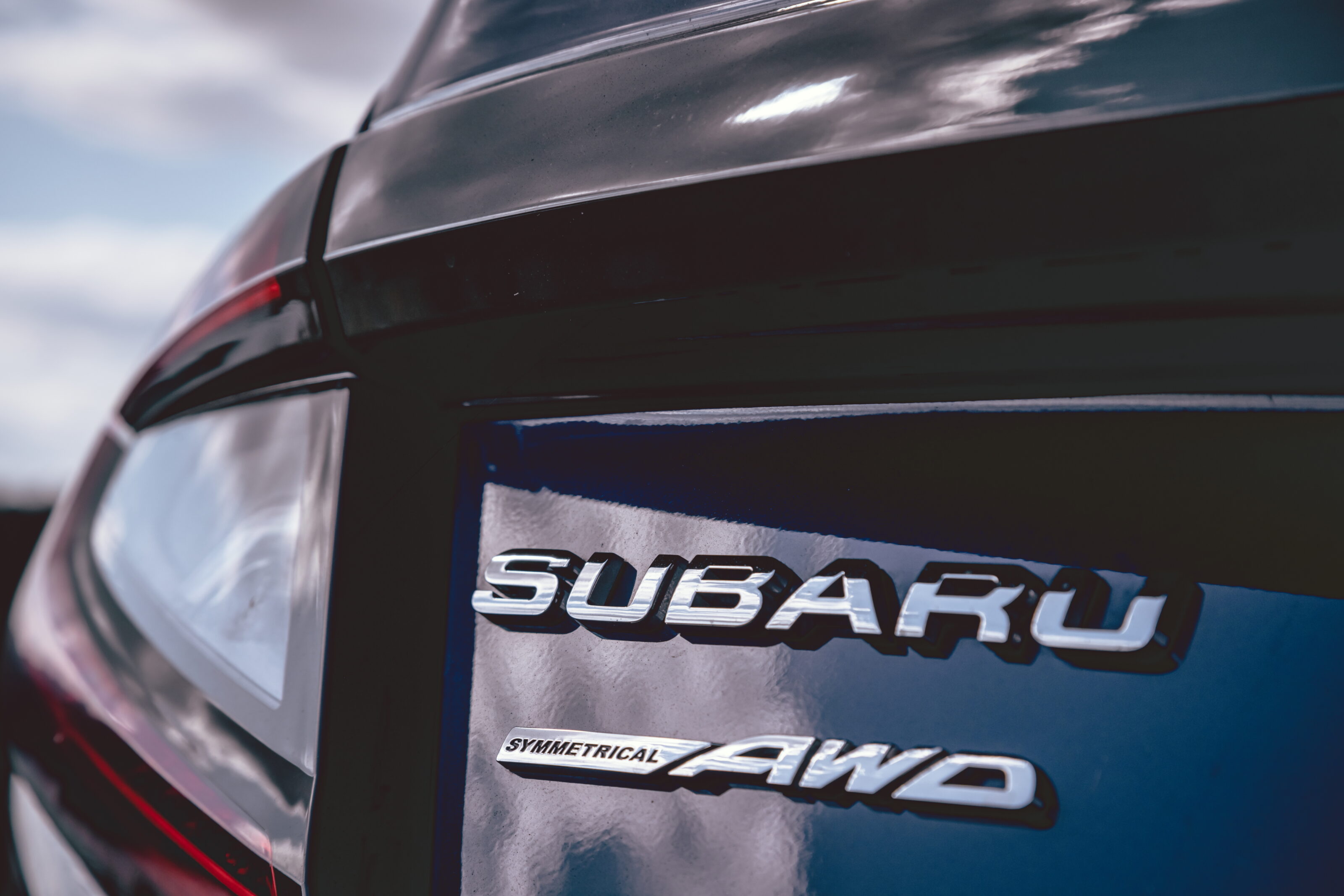
Bring the car up to speed and the tight body motion feels better. Throw the WRX down a testing, slippery road, and its symmetrical all-wheel-drive security is complemented by a pointy front end and agile rear that allow you to exploit this sedan with confidence.
The steering is light and vague, but it is accurate. Learn to trust its sharp initial reaction and the WRX RS comes alive. Owing to its low redline the gears feel short like a WRC car’s and, in isolation, the RS can be a really enjoyable car to punt – providing you learn to trust its wooden brake feel.
You can’t help but feel that this RS in particular is having a little bit of an identity crisis. The focus of the chassis politely requests an engine that revs to 7500rpm, has a louder exhaust and spikier power delivery to bring it alive. For this reason, the more sophisticatedly-damped tS remains our pick… but you can’t have it with a manual.
How much fuel does it use?
The WRX’s new engine requires 95 RON premium unleaded at a minimum, and its fuel consumption is rated at 9.9L/100km in the ADR combined cycle.
Our testing saw the WRX read a much higher 13.5L/100km on its trip computer, though brim-filling the tank revealed an 11.8L/100km figure on a twisty test loop.
How safe is it?
The manual transmission doesn’t interface well with Subaru’s Eyesight safety suite. It’s a similar story to the BRZ/GR86 twins, though Subaru offers a sizeable discount ($4000) for the manual WRX.
Although most driving enthusiasts would disable the lane-keep assist, a total lack of AEB isn’t great in this day and age. Backing up the safety issues, the latest WRX has not been evaluated by independent safety testing body ANCAP.
It’s confounding that Toyota and Hyundai both manage to package the potentially life-saving tech into GR Corolla and i30 Sedan N rivals where Subaru can’t. Both of those rivals allow drivers to easily disable the tech on track, too.
| 2023 Subaru WRX RS manual safety features | |
|---|---|
| Blind-spot monitoring | Rear cross-traffic alert |
| Driver attention monitoring | Auto high beam |
| Front camera | 8 SRS airbags |
Warranty and running costs
Subaru mandates servicing every 12 months or 15,000km. Five years or 75,000km of WRX maintenance will cost $2433.06.
The WRX is covered by a five-year, unlimited-kilometre warranty like all Subaru products in Australia.
VERDICT
There’s a great car in the latest WRX, but the RS’s unsettled urban ride quality isn’t backed up by the sort of firecracker engine or feeling of specialness that Subaru’s rumbly and peaky ‘EJ’ engines served up.
If you’re looking for chassis focus combined with drivetrain sparkle and aren’t worried about a plush urban ride, then the Hyundai i30 Sedan N and Toyota GR Corolla offer more engaging packages.
This leaves the WRX RS feeling a little confused. It hurts to hit these next three keys as our recommendation, but truthfully, the CVT-equipped tS is a safer and more well-rounded package.
Better still, the WRX tS Sportswagon channels the sort of fluid handling and ride quality of Subaru’s excellent fourth-gen Liberty GT, so if it’s brisk family transport you’re after, that’s the WRX we’d recommend.
| Subaru WRX RS manual specifications | |
|---|---|
| Price | $50,490 + on-road costs |
| Drivetrain | |
| Engine | 4cyl, horizontally opposed, 2.4-litre, DOHC direct injection turbo-petrol |
| Layout | Front engine, AWD |
| Power | 202kW @ 5600rpm |
| Torque | 350Nm @ 2000-5200rpm |
| Gearbox | 6-speed manual |
| Chassis | |
| Body | 4-door, 5-seat small sedan |
| L/W/H/Wu2013B | 4670/1825/1465/2675mm |
| Track (F/R) | 1560/1570mm |
| Weight (tare) | 1516kg |
| Boot | 411L |
| Fuel/tank | 95 RON / 63 litres |
| Economy (combined ADR81/02) | 9.9L/100km |
| Suspension | Front: struts, coil springs, stabiliser bar. Rear: double wishbone, stabiliser bar |
| Steering | electric rack-and-pinion, 2.4 turns lock-lock |
| Front brakes | ventilated discs |
| Rear brakes | ventilated discs |
| Tyres | Dunlop SP Sport Maxx |
| Tyre size | 245/40R18 |
| Safety | |
| ANCAP rating | unrated |
| 0-100km/h | 6.2 seconds (estimated) |
