Snapshot
- Tesla to deploy AC charging network at u201ceverywhere vehicles are typically parked throughout the dayu201d
- Encourages charging off renewable energy sources
- V4 Superchargers debuting in Europe with longer cables
Tesla is aiming to roll out more slower AC public chargers to encourage more daytime charging when renewable energy sources are available.
The American company is best known for its convenient fast Supercharging DC network, but head of global charging infrastructure, Rebecca Tinucci, said installing more AC ‘Destination Charging’ wall-boxes at parking spots will better utilise wind and solar energy during the day.
“As we look forward and we talk about this fully-electrified fleet on a global basis, we really want to make sure that the demand for charging more closely follows when renewable sources are available,” Tinucci said at Tesla’s Investor Day presentation.
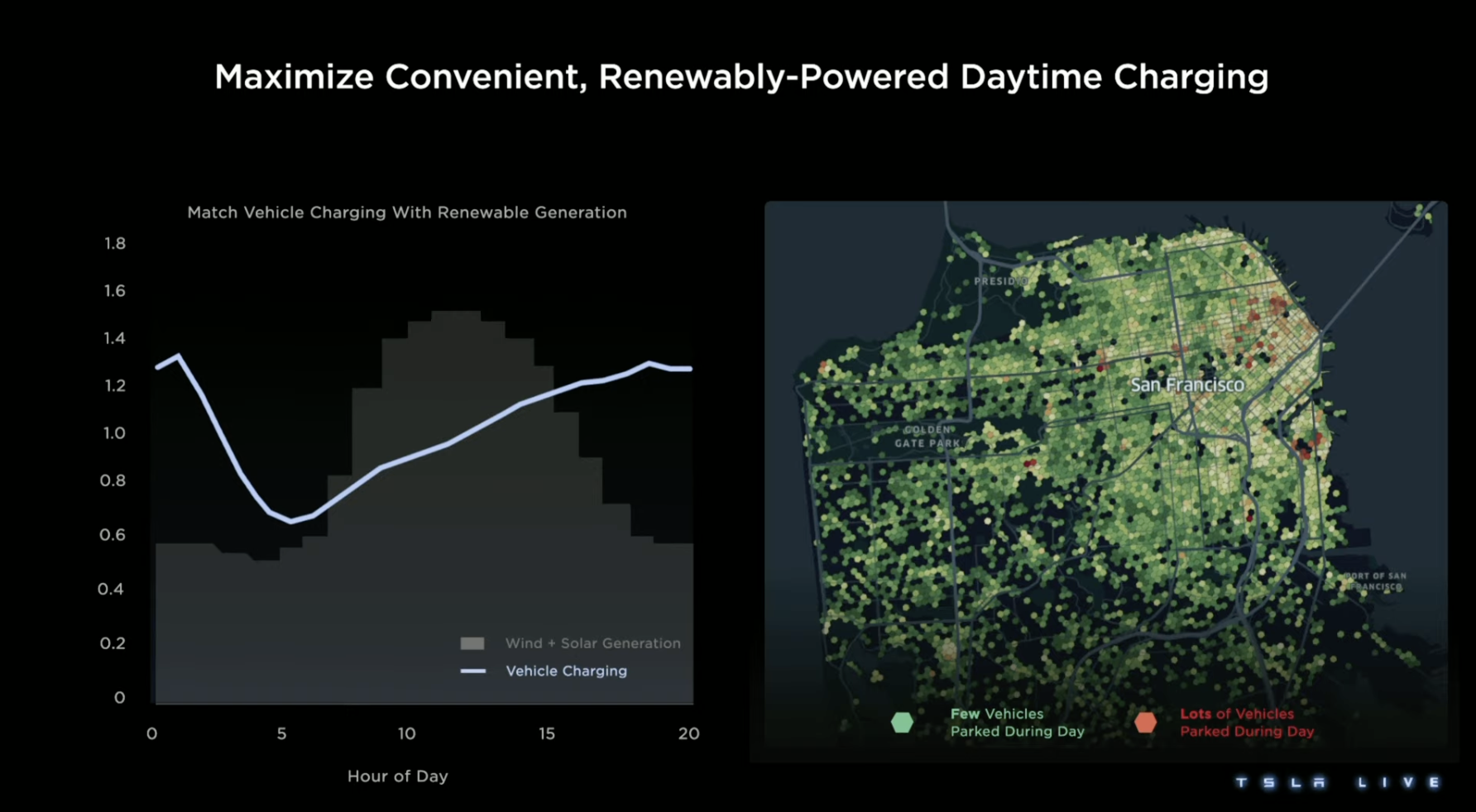
“And we think the best way to go towards daytime charging is to install AC charging that is convenient and low cost everywhere vehicles are typically parked throughout the day.
“So, that’s really the plan. While Supercharging and home charging definitely stays a big part of the puzzle, our teams are currently scaling to install AC charging everywhere vehicles charge during the day so we can power them from renewable sources.”
Tesla currently allows local businesses to install its 11kW AC Gen 3 Wall Connector, but the network hasn’t been deployed by the company itself yet.
Australia’s best electric cars for 2023
We’ve tested nearly every EV below six figures in Australia to rank the best on sale today
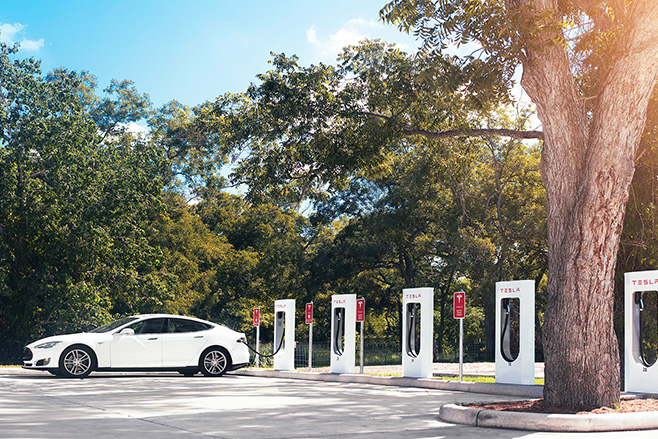
It is compatible with most electric car models using the standard Type 2 connector locally and can charge an EV such as the base Tesla Model 3 rear-wheel drive sedan from 10 to 80 per cent in around four hours.
Tinucci didn’t detail where the AC chargers will be deployed, but the presentation suggested it will start in its US home country.
Additionally, the senior executive briefly mentioned the launch of its new fourth-generation Tesla Superchargers currently being installed in Europe first.
The V4 Superchargers will feature a longer cable, allowing non-Tesla EVs with varying charging port locations to better reach the stations as the network opens up globally in Australia, Europe, the UK, and US.
What wasn’t confirmed was its design and maximum DC output rate, but Electrek reported last year that it will be capable of delivering 300kW to 350kW ultra rapid speeds – although current Tesla EVs can only take up to 250kW DC.
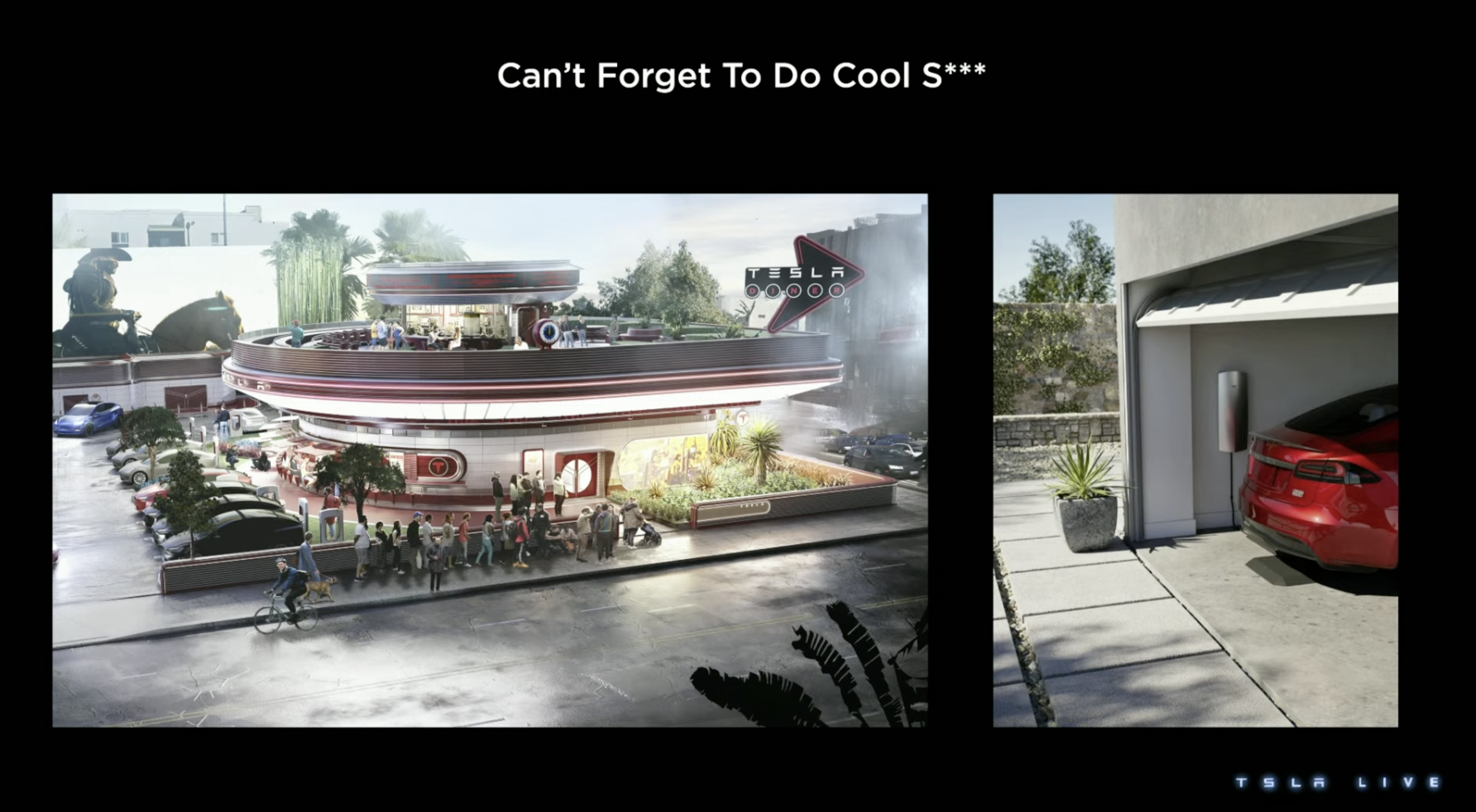
Tesla also did a ‘one more thing’ move by revealing concept renderings of a Tesla Supercharging restaurant and bar hub, and a larger home Tesla Wall Connector AC charging equipment.
The latter could hint at vehicle-to-grid (V2G) bidirectional charging capabilities, with Tesla EVs set to gain the functionality by 2025 – despite CEO Elon Musk arguing it’s “extremely inconvenient” for owners, unless there’s also a home battery storage system in place.
The Australian new car market is continuing to rebound, with last month posting the best February result since the ‘before times’ of 2019.
According to monthly results provided by the Federal Chamber of Automotive Industries (FCAI), it was a better February than last year, with 86,878 units registered compared to 85,340 this time in 2022.
It puts the market up two per cent for the month and seven per cent for the year so far.
Though it continued to hold top spot as Australia’s most popular car brand, Toyota suffered the biggest mainstream loss at 31 per cent down, while electric carmaker Tesla once again entered the top 10 – appearing in ninth place both for the month and YTD.
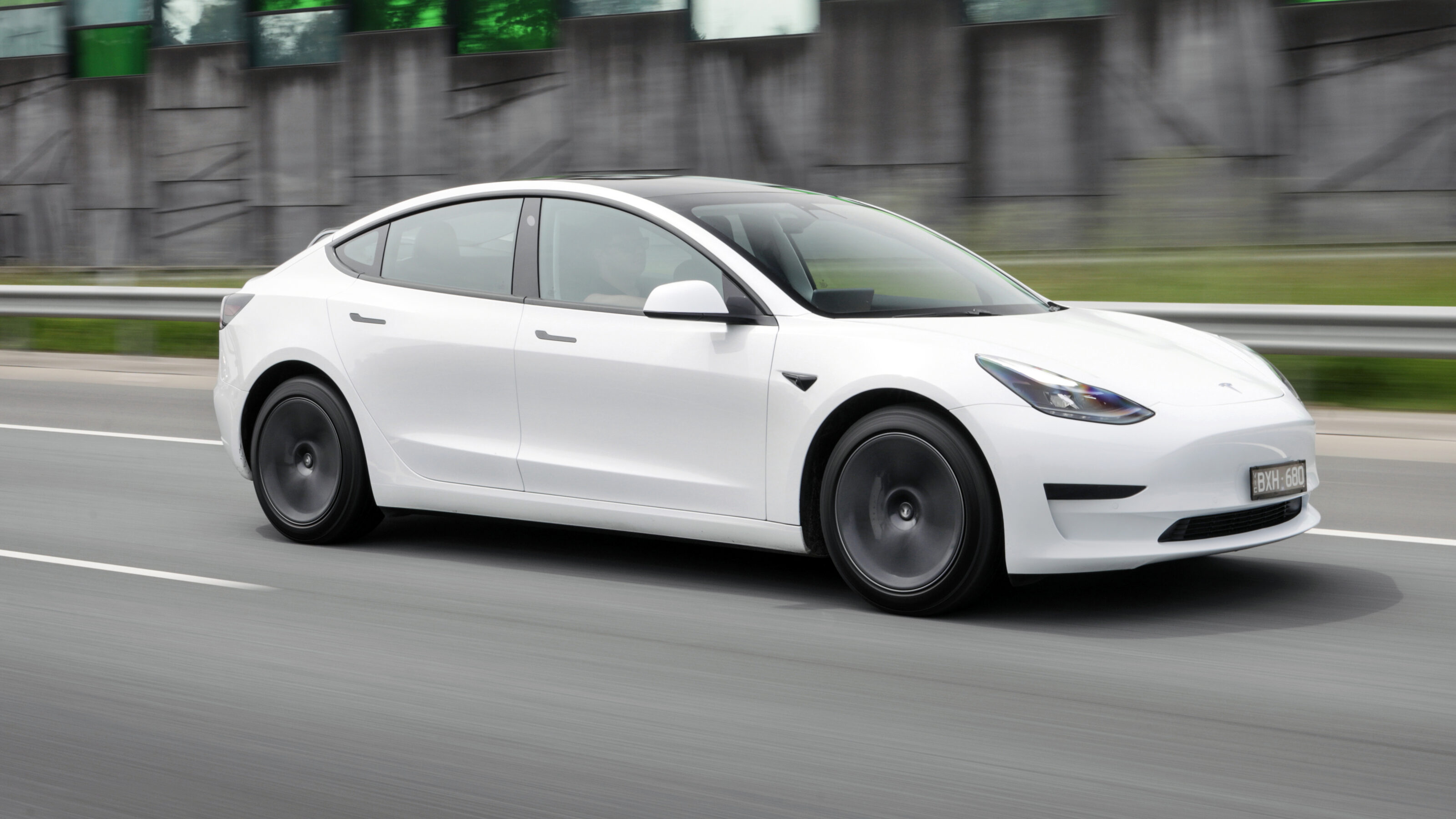
New South Wales sold the most vehicles with 27,600 units shifted, followed by Victoria with 21,894 and Queensland on 18,427.
The Federal Chamber of Automotive Industries (FCAI) said the result is particularly pleasing given global and domestic supply constraints still affecting the industry, and praised the rise in electric vehicle sales which grew to 5932 in February.
“Growing sales of electric vehicles [in particular] proves that where a battery-electric product exists which suits the driving habits, needs and finances of Australian motorists, they will purchase these vehicles,” said FCAI chief executive Tony Weber.

? Australia’s top 10 cars for February 2023
While the top two finishing places unsurprisingly went to the Ford Ranger and Toyota HiLux utes respectively, it was another impressive month for Tesla’s Model 3.
The new-generation Ranger led the way with 4473 sales compared to the HiLux’s 3939, while the Model 3 sedan notched up 2671 units shifted to prove that Australia isn’t done with sedans just yet.
In February, the CX-5 stole back its crown as best-selling Mazda from its compact CX-3 with 2600 cars registered – though the CX-3 still found a top 10 spot YTD coming in ninth with 3463 sales.
In the middle of the pack were the new Mitsubishi Outlander, supply-hit Toyota RAV4 and the MG ZS selling 2166, 2115 and 2047 cars respectively.
Rounding out the top 10 was one other ute – the new Isuzu D-Max – on 1931 sales followed by the Subaru Forester, which had a bumper month due to improved supply with 1709 sold, and a rare (but not unheard of) appearance from the MG3, which achieved 1622 registrations.

In tables: Top 10 models for February 2023
| Rank | Model | Feb 23 | Feb 22 | Variance |
|---|---|---|---|---|
| 1 | Ford Ranger | 4473 | 3455 | 30% |
| 2 | Toyota Hilux | 3939 | 4803 | -18% |
| 3 | Tesla Model 3 | 2671 | 0 | – |
| 4 | Mazda CX-5 | 2600 | 1265 | 106% |
| 5 | Mitsubishi Outlander | 2166 | 1673 | 30% |
| 6 | Toyota RAV4 | 2115 | 4454 | -53% |
| 7 | MG ZS | 2047 | 1953 | 5% |
| 8 | Isuzu Ute D-Max | 1931 | 1930 | 0% |
| 9 | Subaru Forester | 1709 | 1258 | 36% |
| 10 | MG MG3 | 1622 | 1437 | 13% |
In tables: Top 10 model year-to-date 2023
| Rank | Model | YTD 23 | YTD 22 | Variance |
|---|---|---|---|---|
| 1 | Ford Ranger | 9222 | 6698 | 38% |
| 2 | Toyota Hilux | 8070 | 8394 | -4% |
| 3 | Tesla Model 3 | 5598 | 0 | – |
| 4 | Mazda CX-5 | 4789 | 4478 | 7% |
| 5 | Toyota RAV4 | 4073 | 5879 | -31% |
| 6 | MG ZS | 3889 | 3541 | 10% |
| 7 | Mitsubishi Outlander | 3840 | 3025 | 27% |
| 8 | Isuzu Ute D-Max | 3774 | 3825 | -1% |
| 9 | Mazda CX-3 | 3463 | 2370 | 46% |
| 10 | Hyundai Tucson | 3171 | 1506 | 111% |

? Australia’s top 10 car brands for February 2023
Ups and downs ? ?
Toyota had another solid month with a leading 14,332 sales – although nowhere near as good as in February 2022 when it sold more than 20,000 vehicles.
Mazda finished second with 7667 sales (but also ▼ from 8782 in February 2022) and Ford took third with 6022 sales (▲ from 4610 this time last year).
Kia, in fourth, registered exactly 6000 sales for February (▲ from 5881), again outselling its sister brand Hyundai, which took fifth with 5504 sales (▼ from 5649). Mitsubishi finished sixth again with 5500 sales (▼ from 7813), MG held onto seventh place and jumped to 4363 sales (▲ from 3767), while Subaru ranked eighth with 4054 sales (▲ from 3151).
Improved shipping of Tesla’s Model 3 gave it ninth spot again with 3516 sales (no February 2022 figure recorded as it only began reporting from March last year), and Isuzu finished off the top 10 with 3156 sales (▲ from 2785).
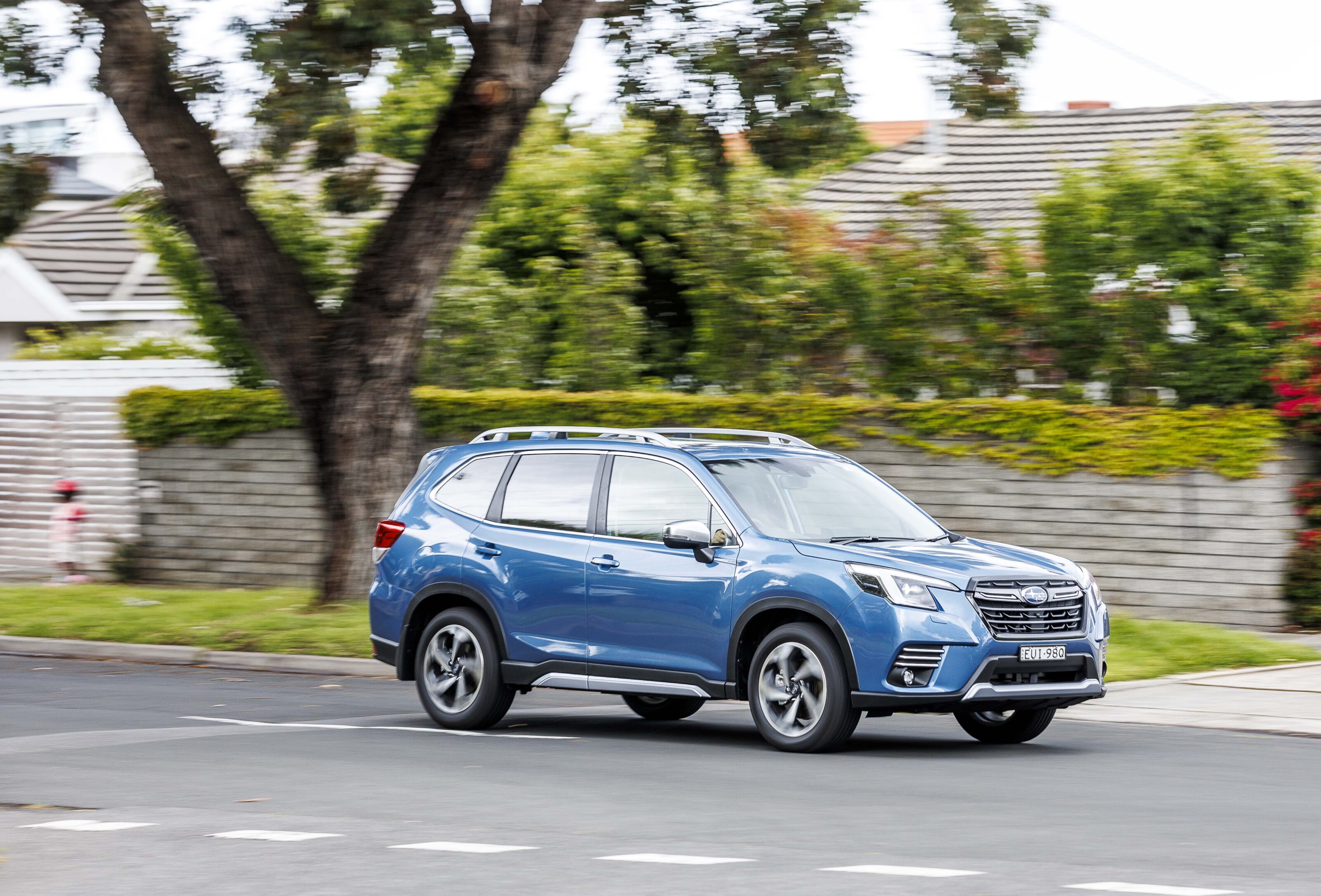
In tables: Top 10 brands for February 2023
| Rank | Make | Feb 2023 | Difference to 2022 |
|---|---|---|---|
| 1 | Toyota | 14,332 | -31% |
| 2 | Mazda | 7667 | -13% |
| 3 | Ford | 6022 | 31% |
| 4 | Kia | 6000 | 2% |
| 5 | Hyundai | 5504 | -3% |
| 6 | Mitsubishi | 5500 | -30% |
| 7 | MG | 4363 | 16% |
| 8 | Subaru | 4054 | 29% |
| 9 | Tesla | 3516 | – |
| 10 | Isuzu Ute | 3156 | 13% |
In tables: Top 10 brands year-to-date 2023
| Rank | Brand | Year-to-date 2023 | Difference to 2022 |
|---|---|---|---|
| 1 | Toyota | 27,695 | -24% |
| 2 | Mazda | 17,074 | -8% |
| 3 | Ford | 12,646 | 38% |
| 4 | Kia | 12,006 | 5% |
| 5 | Hyundai | 11,313 | 5% |
| 6 | Mitsubishi | 10,776 | -25% |
| 7 | MG | 8378 | 15% |
| 8 | Subaru | 7655 | 30% |
| 9 | Tesla | 6829 | – |
| 10 | Isuzu Ute | 5827 | 6% |

And the rest…
| Make | February 2023 | February 2022 | YTD 2023 | YTD 2022 |
|---|---|---|---|---|
| Volkswagen | 2930 | 1766 | 5472 | 3293 |
| Nissan | 2573 | 2820 | 5021 | 5154 |
| GWM | 2353 | 816 | 4856 | 1979 |
| Audi | 1680 | 742 | 3033 | 1528 |
| LDV | 1652 | 1114 | 3075 | 2166 |
| Mercedes-Benz | 1807 | 1482 | 3918 | 4038 |
| Suzuki | 1382 | 1265 | 2792 | 2678 |
| Honda | 1228 | 1408 | 2331 | 2581 |
| BMW | 1047 | 1980 | 2527 | 3545 |
| Volvo Car | 858 | 854 | 1720 | 1580 |
| BYD | 770 | 0 | 1037 | 0 |
| Lexus | 716 | 705 | 1218 | 1233 |
| Skoda | 645 | 424 | 1324 | 754 |
| Porsche | 614 | 571 | 996 | 846 |
| Renault | 569 | 1018 | 1285 | 1663 |
| RAM | 547 | 303 | 956 | 499 |
| SsangYong | 474 | 254 | 938 | 507 |
| Jeep | 392 | 653 | 699 | 1099 |
| Chevrolet | 215 | 154 | 456 | 274 |
| CUPRA | 211 | 0 | 359 | 0 |
| MINI | 186 | 357 | 455 | 503 |
| Polestar | 172 | 0 | 336 | 0 |
| Land Rover | 132 | 138 | 312 | 477 |
| Peugeot | 113 | 183 | 226 | 367 |
| Genesis | 110 | 75 | 216 | 155 |
| Fiat | 78 | 57 | 149 | 111 |
| Fiat Professional | 77 | 66 | 170 | 132 |
| Bentley | 45 | 22 | 45 | 27 |
| Alfa Romeo | 30 | 56 | 59 | 101 |
| Maserati | 25 | 44 | 38 | 88 |
| Jaguar | 22 | 34 | 55 | 67 |
| Ferrari | 22 | 17 | 39 | 37 |
| Lamborghini | 15 | 14 | 25 | 15 |
| Lotus | 13 | 23 | 23 | 35 |
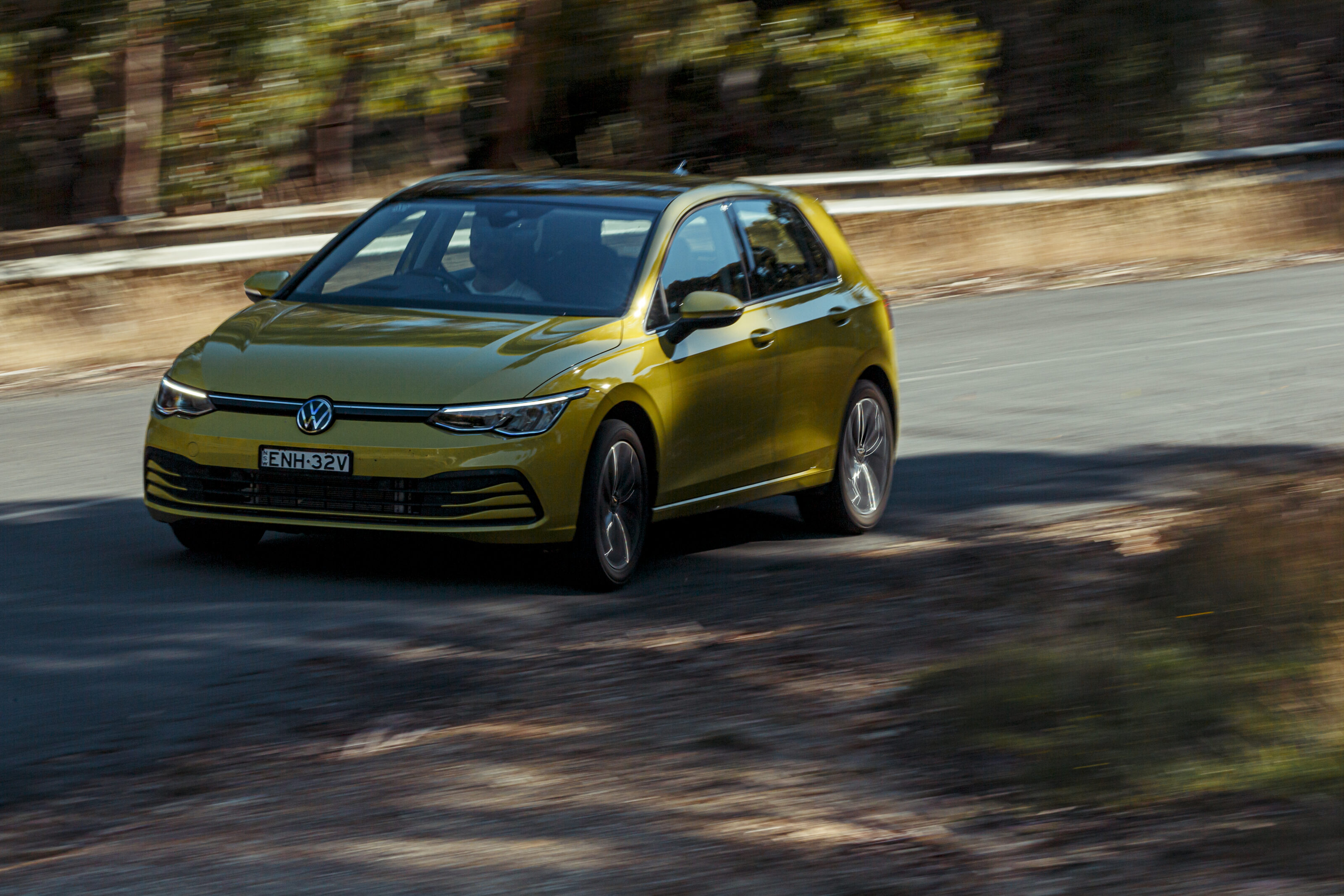
The size and the shape: Market segment results
SUVs and utes represented 77 per cent of the total new-car market in February.
There were 47,888 SUVs sold across all size categories, taking 55 per cent of the pie, while utes and vans amounted to 18,750 sales in January or 22 per cent
Passenger cars of any size continued their downward trend, representing just 16,435 sales in February – giving them a 19 per cent share.

In tables: New car sales by segment and size for February 2023
| Class | Feb 23 | Feb 22 | YTD 23 | YTD 22 |
|---|---|---|---|---|
| SUV Medium | 18,949 | 15892 | 36,597 | 30,768 |
| Ute 4×4 | 14,321 | 16593 | 29,399 | 30,246 |
| SUV Large | 11,696 | 10305 | 22,617 | 19,180 |
| SUV Small | 11,125 | 12261 | 22,131 | 23,145 |
| Small | 5169 | 6800 | 10,657 | 13,365 |
| Medium | 4502 | 2332 | 9444 | 4671 |
| SUV Light | 4498 | 5031 | 10,167 | 8946 |
| Light | 3584 | 3753 | 7040 | 7864 |
| Ute 4×2 | 2449 | 2663 | 4623 | 5027 |
| SUV Upper Large | 1620 | 1446 | 3074 | 2493 |
| People Movers | 1489 | 926 | 2741 | 1840 |
| Vans | 1472 | 2160 | 2935 | 4081 |
| Sports | 762 | 752 | 1465 | 1376 |
| Micro | 471 | 556 | 870 | 1441 |
| Large | 432 | 523 | 746 | 758 |
| Upper Large | 26 | 43 | 74 | 107 |
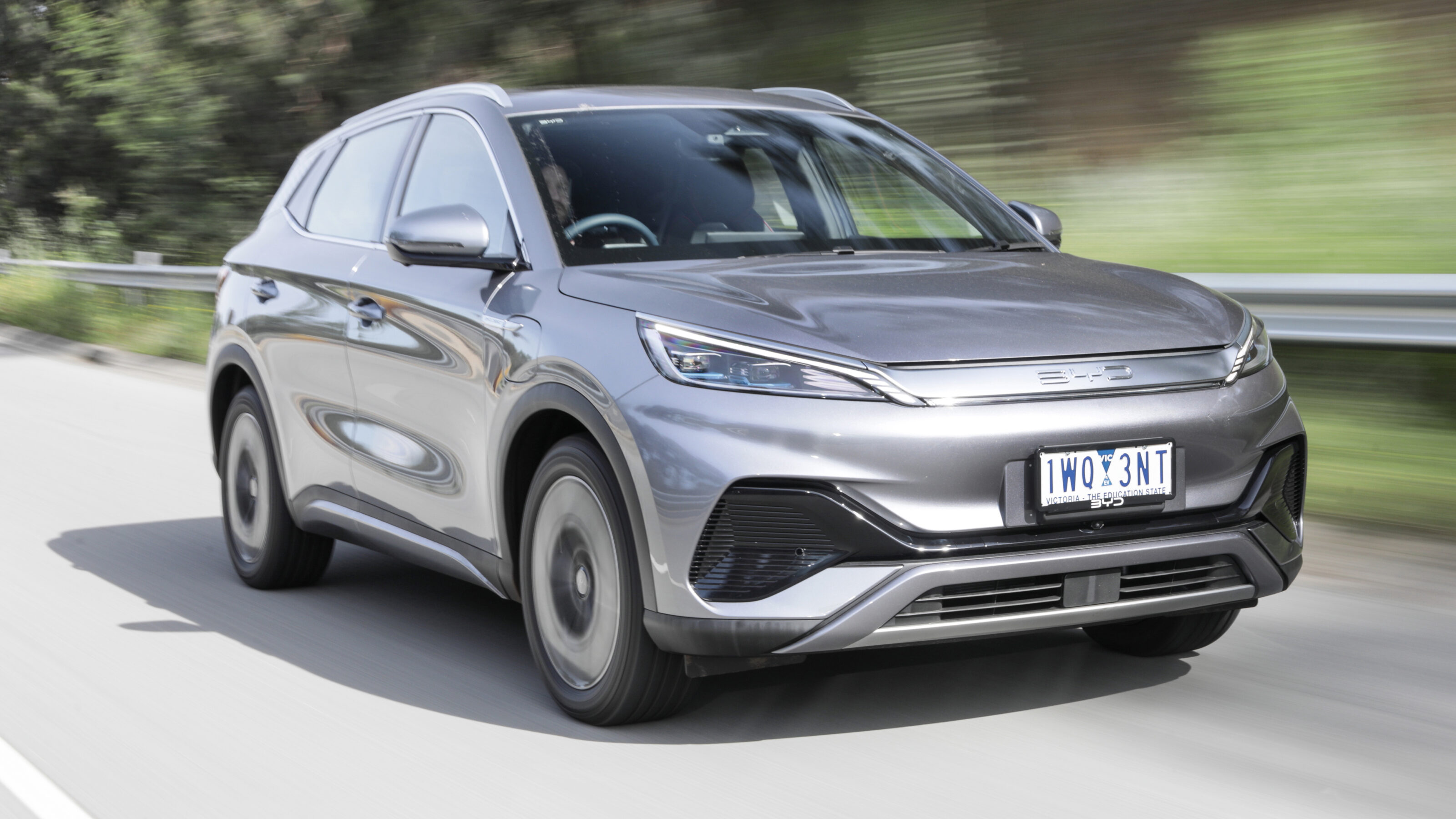
New-car sales by fuel type in February 2023
Petrol and diesel cars still lead the way by a landslide compared to electrified cars – but EVs outsold traditional hybrids in February and the number of plug-in hybrids rose too.
Though the proportion of battery-electric vehicles (‘EVs’) is still well below 10 per cent of the market – achieving 6.8 per cent last month with 5932 sales – overall zero- and low-emission vehicles (which includes battery-electric, hybrids and plug-in hybrids) accounted for 13.9 per cent.
Battery EVs outsold hybrids, with the latter just behind with 5716 sales. The tiny Plug-in hybrid EV segment (PHEVs) showed just 454 sales in February.
Diesel models made up 26,443 of last month’s sales, but petrol remains king – with 44,528 examples sold.
In tables: New car sales by fuel type for February 2023
| Fuel type | Feb 23 | Feb 22 | YTD 23 | YTD 22 | Variance (month) | Variance (YTD) |
|---|---|---|---|---|---|---|
| Petrol | 44,528 | 43,648 | 89,359 | 85,254 | 2% | 5% |
| Diesel | 26,443 | 29,632 | 53,032 | 55,717 | -11% | -5% |
| Electric | 5932 | 600 | 10784 | 1220 | 889% | 784% |
| Hybrid | 5716 | 8143 | 10852 | 13107 | -30% | -17% |
| PHEV | 454 | 305 | 892 | 620 | 49% | 44% |
| Hydrogen | 0 | 1 | 0 | 4 | -100% | -100% |
Country of Origin: Where Australia’s new cars came from in February 2023
Japan remains Australia’s favourite source of cars, followed as previously by Thailand – but with a new twist as China bested Korea to take third place.
Australian buyers chose 24,805 Japanese cars in February, although that number is down from 31,138 at the same time in 2022.
Thailand followed as the source of 18,557 of our new cars (▼ from 21,086), while Korea – home to the Hyundai and Kia brands – accounted for 12,246 sales (just ▲ from 12,237).
However, Chinese production overtook Korean last month with 13,625 sales in February – up from 6357 for the same period in 2022.
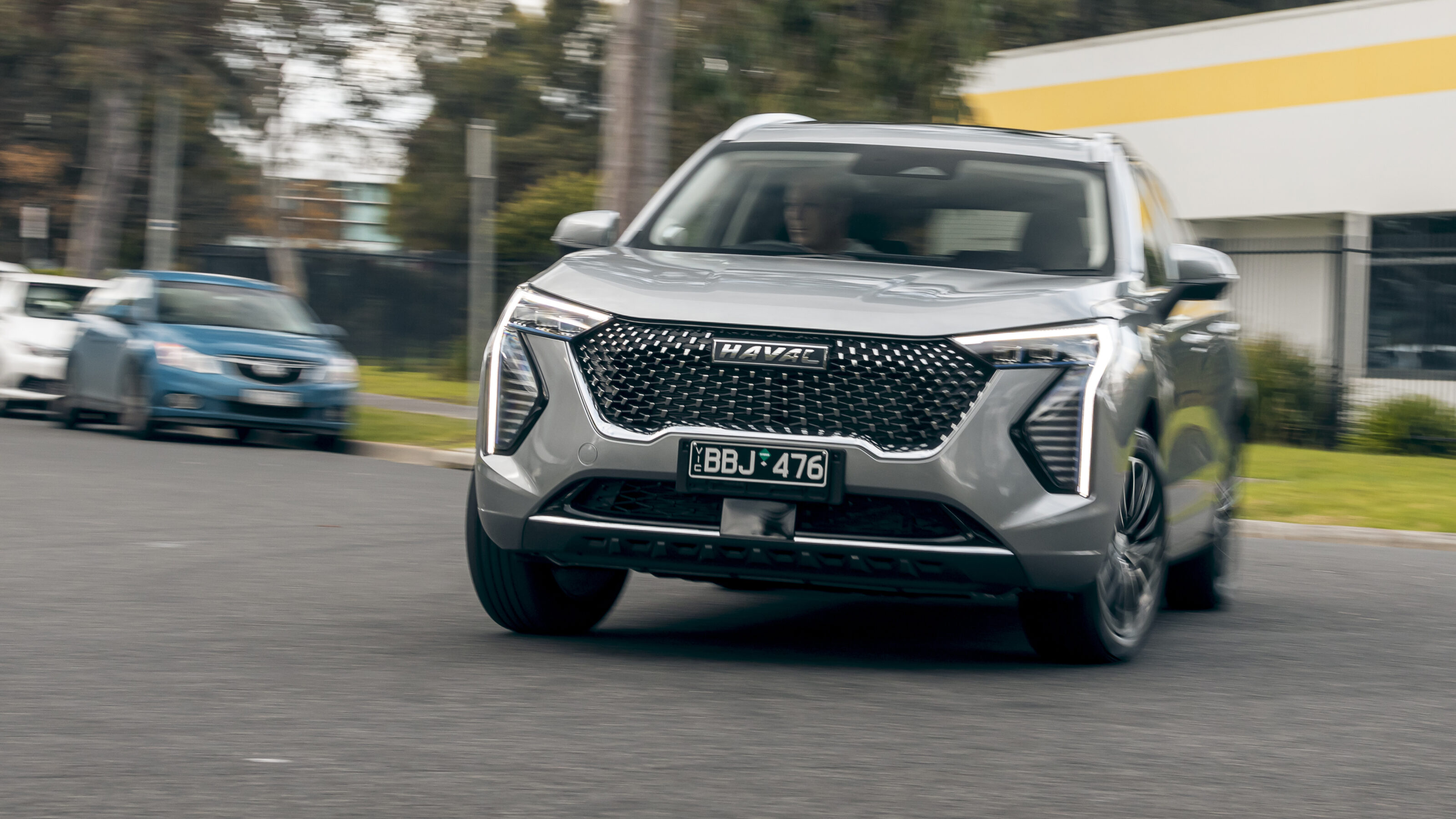
Only one Chinese-owned brand continues to regularly place in the top 10 in the form of MG, but Tesla, Polestar and most Volvo models sold in Australia are now all sourced from China. Between them, they accounted for 8909 sales in February.
Chinese maker GWM sold 2353 vehicles, LDV accounted for 1652 sales, while all-electric brand BYD recorded a massive 770 sales up from just 267 last month.
In charts ?
February 2023 – Top 10 models
February 2023 – Top 10 brands
February 2023 – Overall segment sales
February 2023-2022 – Category sales
February 2023 – sales map
February 2023 – buyer type
Ford Australia has deleted anti-theft technology from the Ranger and Everest due to the semiconductor chip shortage.
In response to continued supply challenges facing the automotive industry, the model-year 2023.5 Ford Ranger and 2023.5 Ford Everest – set to commence production this month – will lose “the interior motion and vehicle inclination sensors of the alarm system.”
As such, the affected Ranger and Everest variants will no longer detect motion inside or if the vehicle is lifted while it’s locked; however, a basic perimeter alarm remains to detect unauthorised door or bonnet access.
In addition, the heating function for the exterior side mirrors has also been deleted for the latest model year.
“The continued semiconductor chip shortage is an ever-changing situation, and our dealers will be reaching out to customers appropriately as we finalise production specification for 2023.5MY Ranger and Everest,” said a spokesperson for Ford Australia.
A dealer bulletin outlining the deleted features – seen by Wheels – was distributed in recent months, when Ford Australia announced pricing and specifications for the updated Ranger and Everest.
The largest revisions have been applied to the mid-spec XLT and Sport variants, which gain an integrated trailer brake controller as standard.
A luxury-focused Platinum variant will arrive in May, featuring chrome exterior trims, quilted leather-accented upholstery, a 12.4-inch digital instrument cluster, a heated steering wheel, heated and ventilated front seats, and Ford’s new flexible rack system.
In addition, the optional touring pack will include the cargo management system and overhead auxiliary switch bank previously exclusive to the Wildtrak and Raptor.
Other changes include; a 20-inch alloy wheel option for the Wildtrak, the addition of a rear-view camera kit for XL cab-chassis variants, and an optional powered roll-top tonneau cover and plastic drop-in bedliner for the Raptor.
As for the Everest, it has gained a more-affordable, rear-wheel-drive Sport variant with the 2.0-litre bi-turbo diesel engine, while the Platinum gains steel underbody protection and a black-painted roof
Meanwhile, the optional touring pack – available on Trend 4WD and Sport 4WD – now includes black stand-off roof rails, a 360-degree camera system, zone lighting, a tow bar and an integrated trailer brake controller.
Ford Australia has yet to confirm if the local Everest lineup will gain a more-rugged Wildtrak variant, following its debut for the New Zealand market in January.
Snapshot
- Illinois detectives forced to pay AU$220 to reactivate VW Car-Net subscription
- Allowed tracking a stolen VW and abducted child remotely
- VW said the representative took a u201cserious break of the processu201d
Cars are increasingly becoming software-driven with unlockable subscription services, but US police officers were forced to pay up to Volkswagen in order to track a stolen vehicle last month.
According to the Chicago Sun Times, thieves stole a pregnant mother’s Volkswagen in front of her home with her two-year-old toddler still inside as she was taking another child into the house.
Since its Car-Net internet telematics system trial had expired, Lake County detectives pleaded with a Volkswagen representative to reactivate it in order to remotely track the location of the vehicle and, importantly, the abducted child.
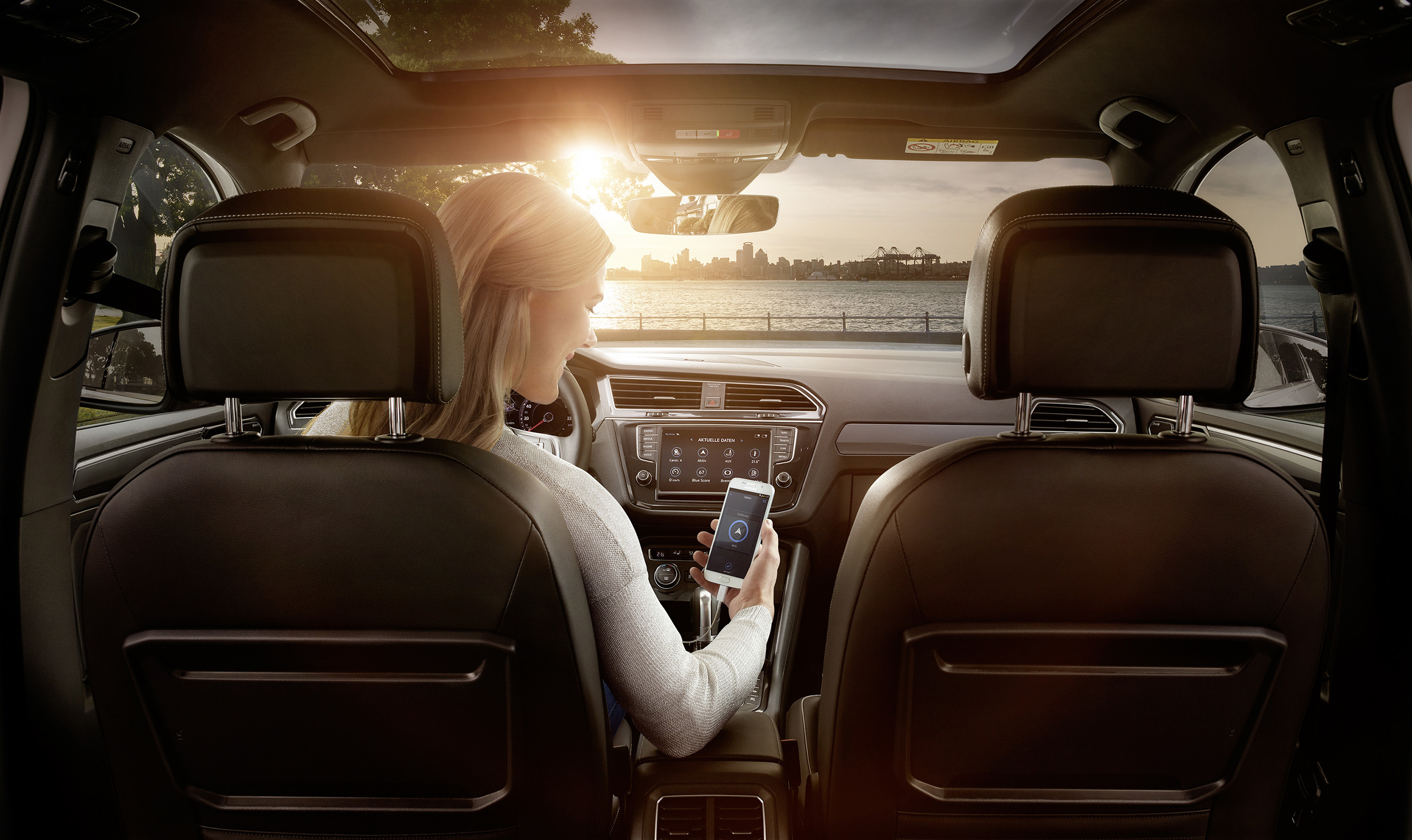
But the representative was steadfast.
“The detective had to work out getting a credit card number and then call the representative back to pay the USD$150 [before] the representative provided the GPS location of the vehicle,” deputy chief Christopher Covelli told the Chicago Sun Times.
The ordeal took 30 minutes – but by then, the County police had already located the vehicle and child before Volkswagen provided the location.
He was left unharmed in a parking lot, but the expectant mother was taken to hospital in a serious condition due to a scuffle with the carjackers.
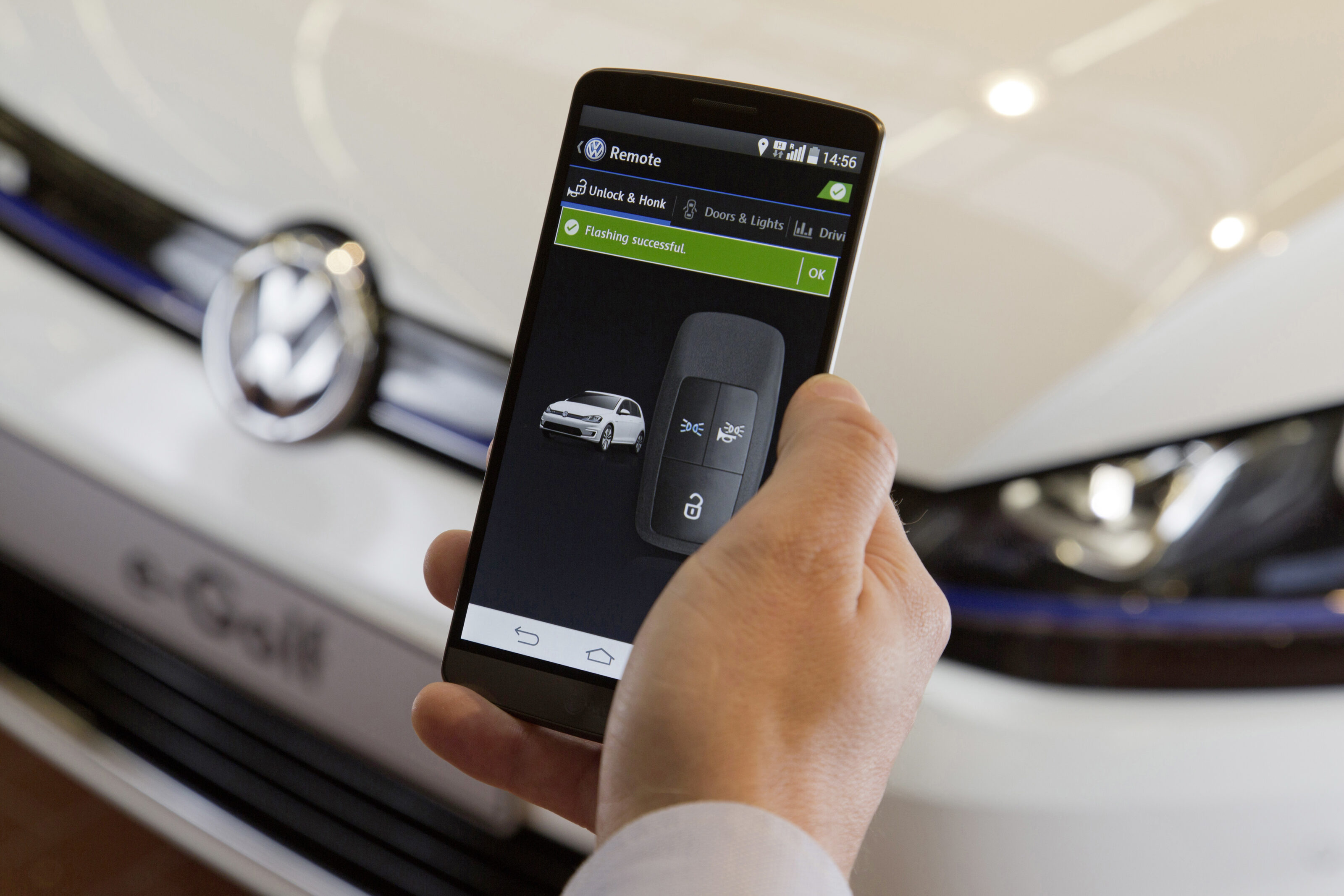
Volkswagen US issued a statement to the publication, labelling the incident as a “serious breach of the process” and are “addressing the situation with the parties involved”.
Covelli said other car tracking services usually cooperate with an exemption – as long as the level of urgency is communicated.
“Obviously, it’s a major concern when there’s information that could potentially save a life and there are major hurdles that one has to jump over to try to get that information,” Covelli said.
“Most companies understand those things take significant time when time is of the essence and the information is needed now to potentially save a life.”
In Australia, car brands such as Ford, Kia, Hyundai, Polestar, and Mercedes-Benz offer internet telematics, mobile app, and automatic emergency calling services for a limited period.
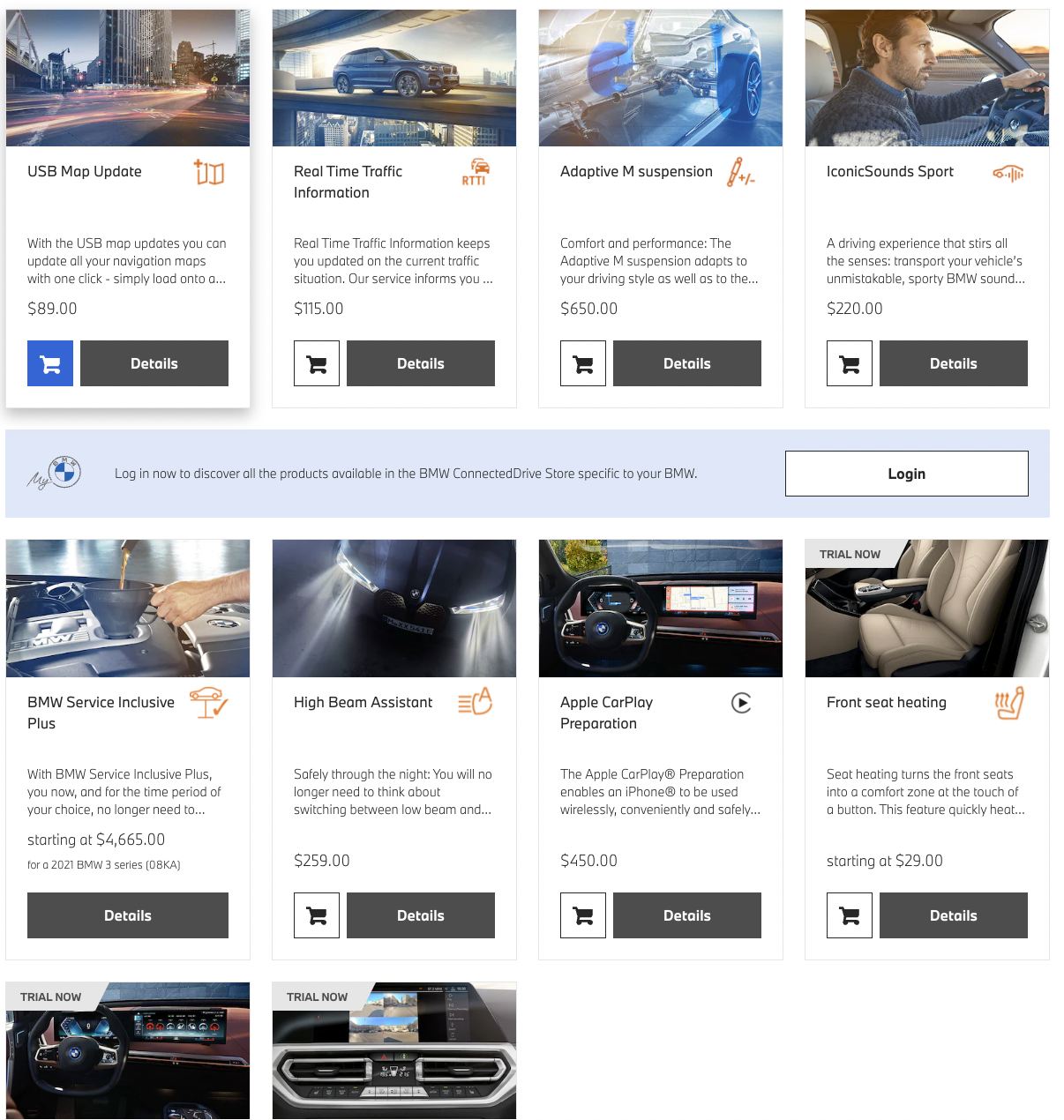
BMW, Mercedes, Volkswagen and Volvo are already (or soon) adopting subscriptions to unlock hardware or software features, such as performance upgrades, future autonomous driving functions, and heated seats.
UPDATE, August 2023: CX-90 Australian launch review
The big Mazda CX-90 is now on sale in Australia. See our full review at the link below.
Story continues…
Mazda has revealed how its new CX-90 champions fuel efficiency in the large SUV segment.
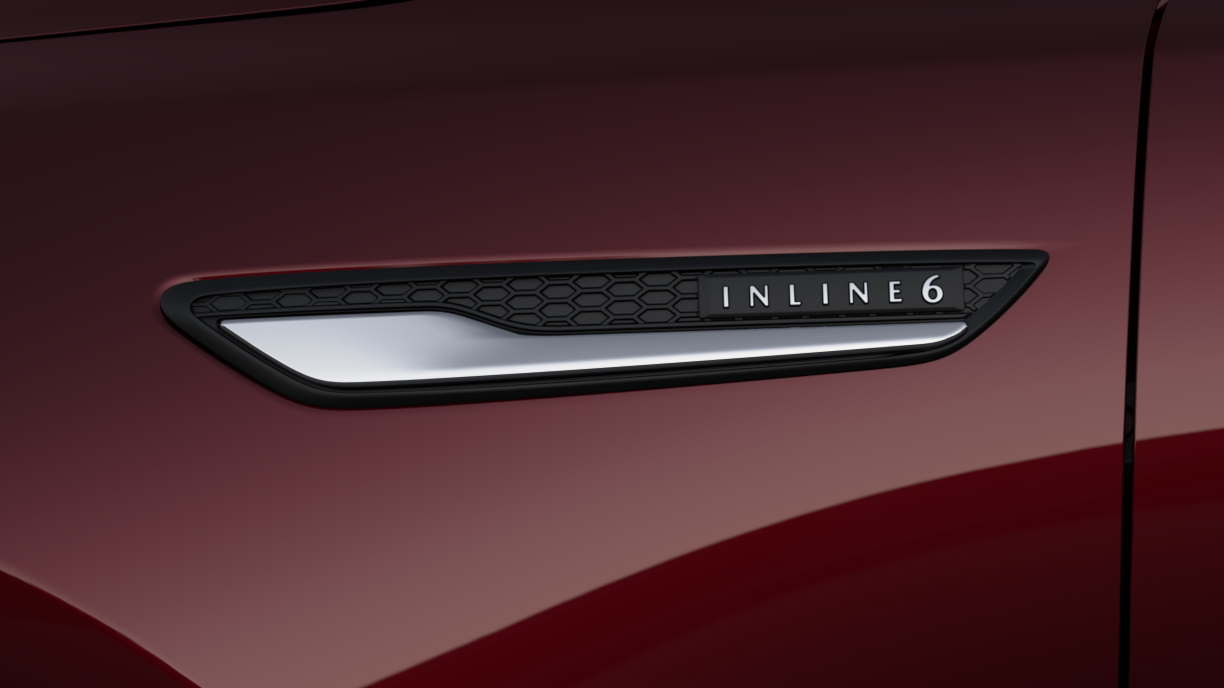
Due to launch locally during the second half of 2023, the all-new CX-90 will be powered by Mazda’s new 48V mild-hybrid, 3.3-litre turbocharged inline-six in both diesel and petrol configurations.
The diesel-drinking e-Skyactive D turbocharged diesel engine claims a best-in-class 5.4L/100km, with a CO2 yield of just 143g/km. Both of these figures are 10 per cent improved on the current class-leader, the existing Mazda CX-8 2.2-litre Skyactive D.
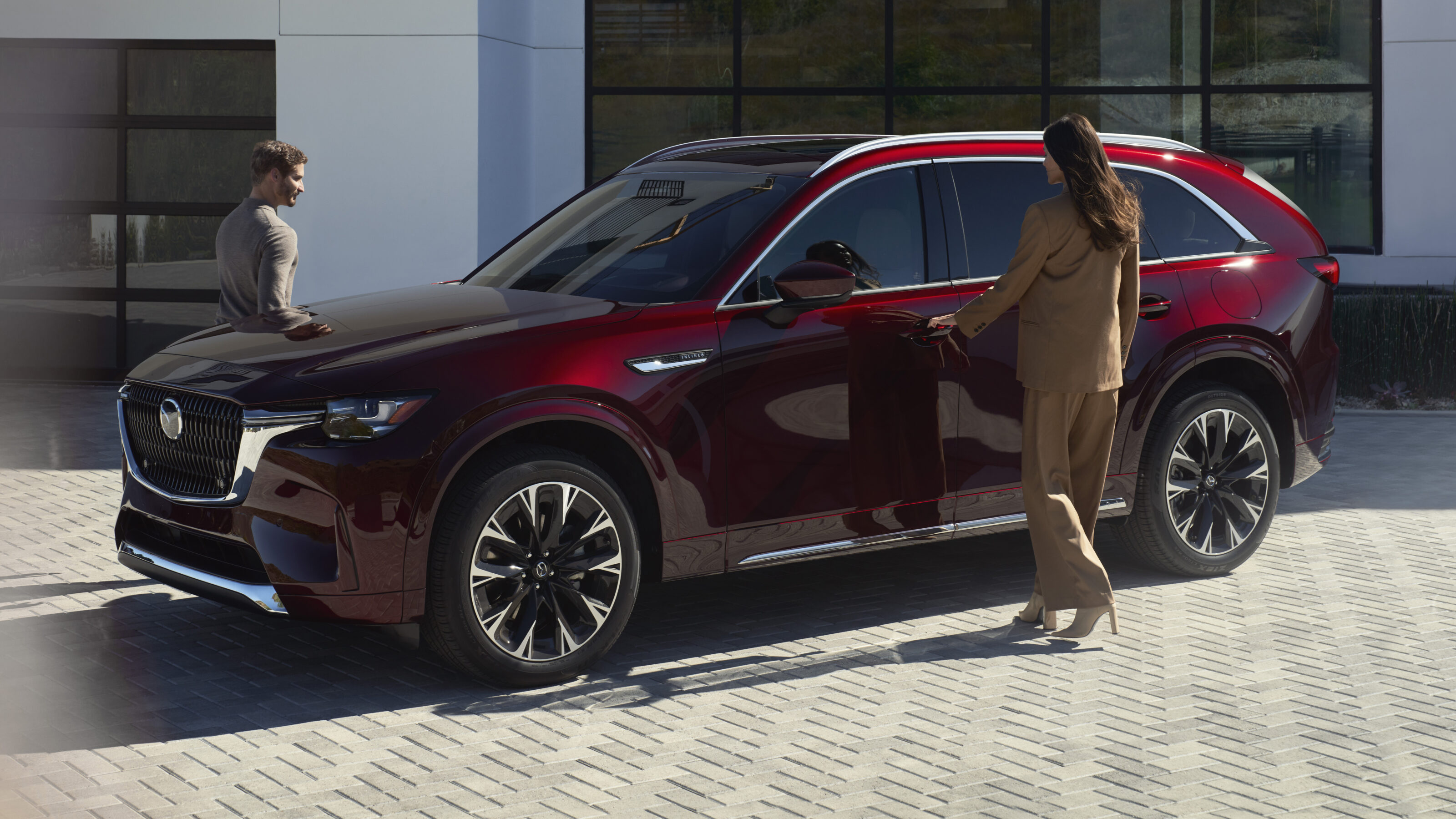
The new silky-six motor promises a more refined driving experience in comparison to the outgoing four-cylinder, also affording a 34 per cent increase in peak power (187kW v 140kW in CX-8 diesel) while surpassing the old Skyactive D’s torque output by a full 100Nm.
The CX-90’s petrol-powered counterpart, bearing Mazda’s e-Skyactive G engine, represents Mazda’s most powerful production engine ever – delivering 254kW and 500Nm.
Compared to Mazda’s current and ubiquitous 2.5-litre turbo-four found in the existing Mazda CX-9, the new inline-six delivers a near 50 per cent bump in power and 19 per cent improvement to peak torque.
The petrol-powered CX-90 will clock the 0-100km/h sprint in 6.9-seconds (8.4 for the CX-90 Diesel) and sip a claimed 8.2L/100km, for a CO2 emissions figure of 189g/km.
Despite the arrangement of more cylinders, producing more power and torque, these improvements to fuel efficiency have been cleverly teased out.
The mild-hybrid system improves efficiency and overall emissions in low load situations, where traditional combustion engines use a lot of energy to get the vehicle moving, while the petrol e-Skyactiv G engine harnesses a higher compression ratio for more efficient fuel combustion.
The diesel e-Skyactive D motor similarly harnesses surplus oxygen within the engine block to improve the fuel combustion process, resulting in better acceleration response, lower N2O emissions at high RPMs while managing better thermo efficiency across the speed envelope due to a greater lean burn.
The e-Skyactiv D engine, too, despite two extra cylinders, mitigates weight creep over the old four-cylinder engine with simple manufacturer structures.
“Mazda has an established reputation for pushing the envelope and achieving complex engineering goals in pursuit of driving pleasure,” Mazda Australia’s Managing Director, Vinesh Bhindi.
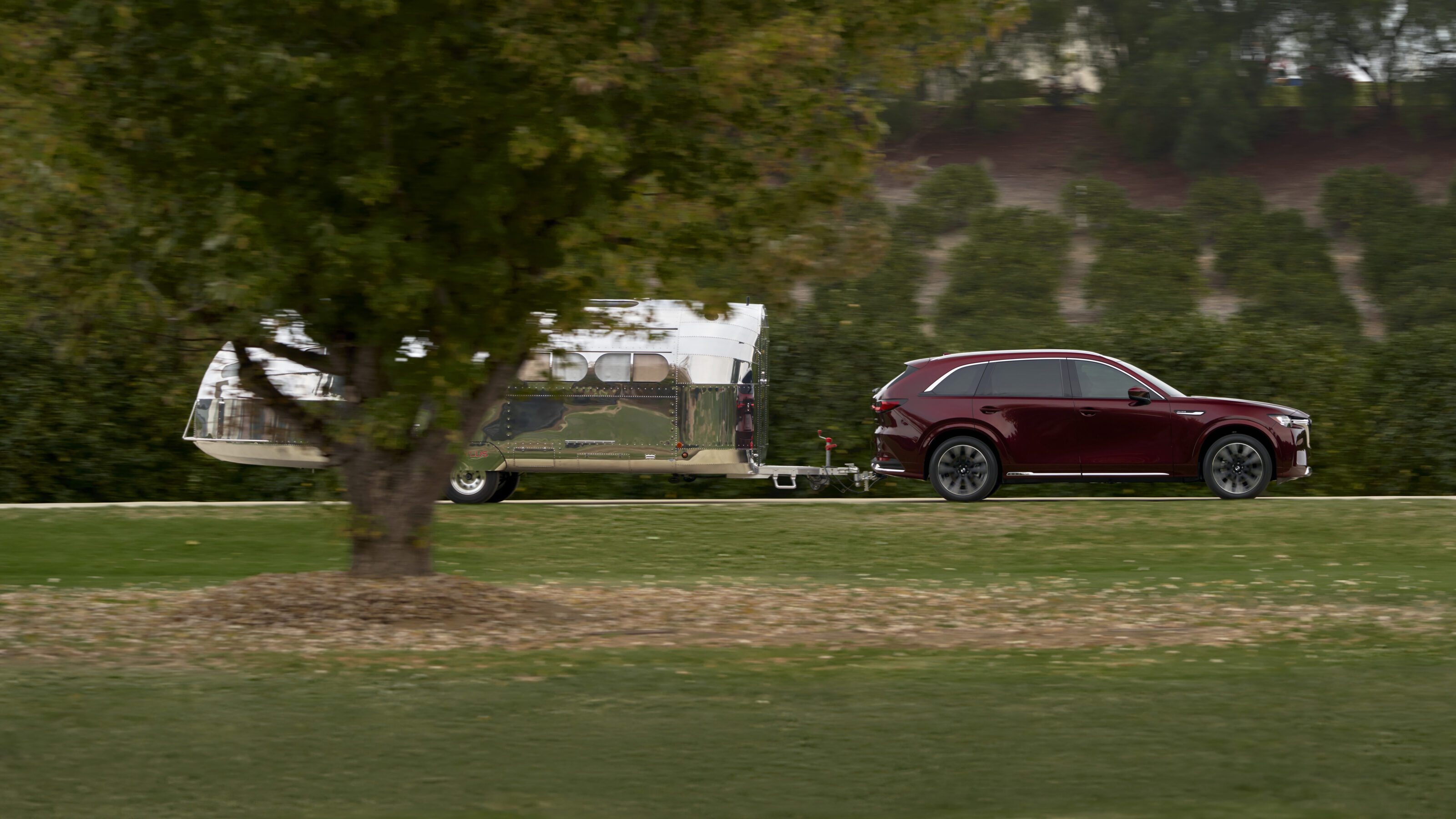
“These two fully-engaging, high-performance powerplants make considerable advancements, not only in power and performance, but also in overall efficiency, ensuring that the signature ‘Jinba Ittai’ (a traditional Japanese mounted archery concept of ‘unity of horse and rider’) Mazda driving experience delivers involvement and fun without any expense to frugality.”
Full local pricing and specifications for the forthcoming Mazda CX-90 will be announced during the first quarter of 2023.
February 1: CX-90 Australian details discussed further
In conversation with Wheels at the Australian press briefing for its new CX-90, Mazda leadership filled us in on what buyers can expect from the premium new large SUV’s pricing and powertrains. Story at the link below.
The story to here
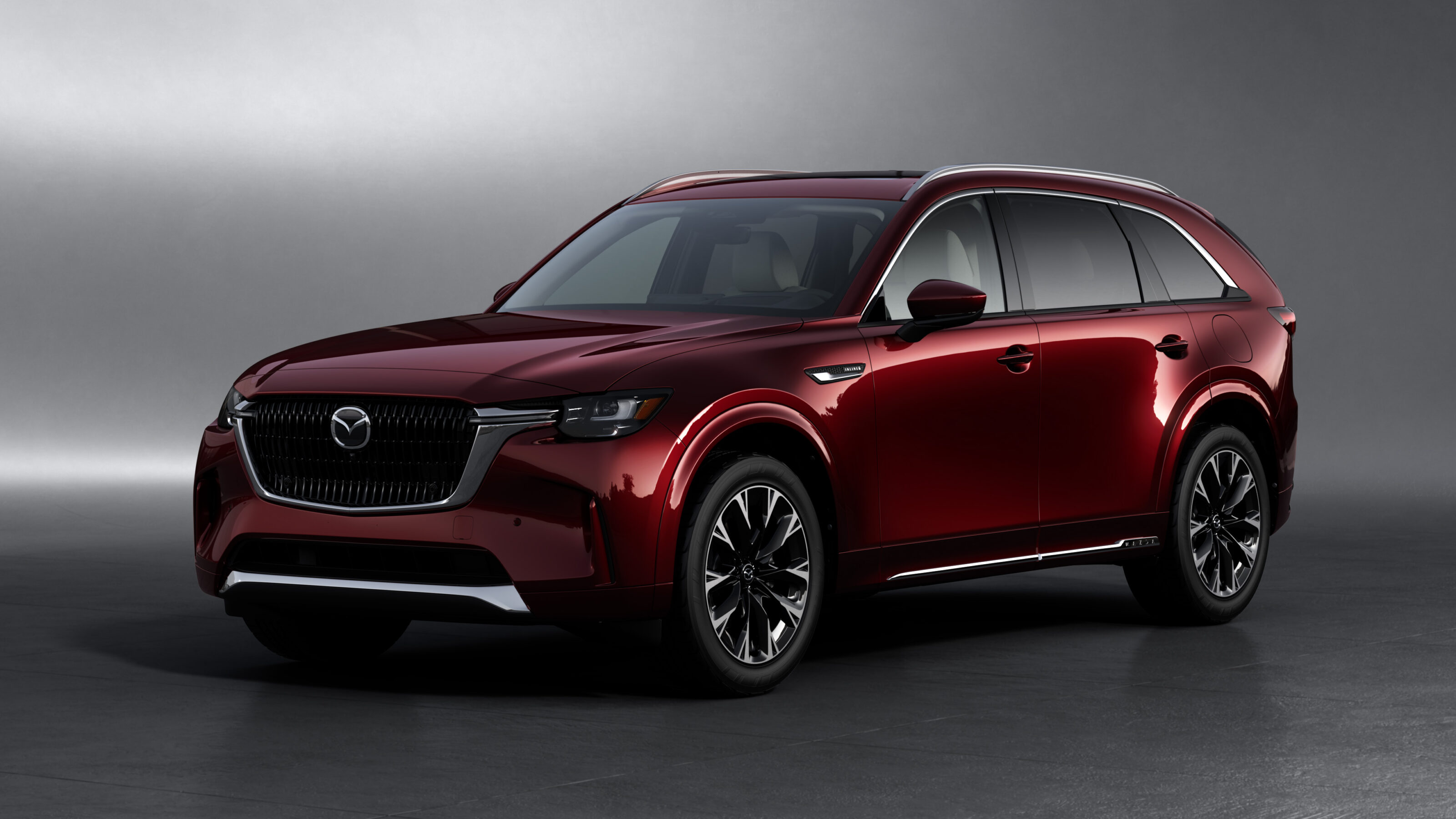
The third new model in Mazda’s architected ascent into the premium market has been unveiled. This is the 2023 Mazda CX-90.
Snapshot
- Petrol and diesel six-cylinder engines
- Turbocharging and 48V electric power
- Seven seats, an eight-speed, all-wheel drive… the list goes on!
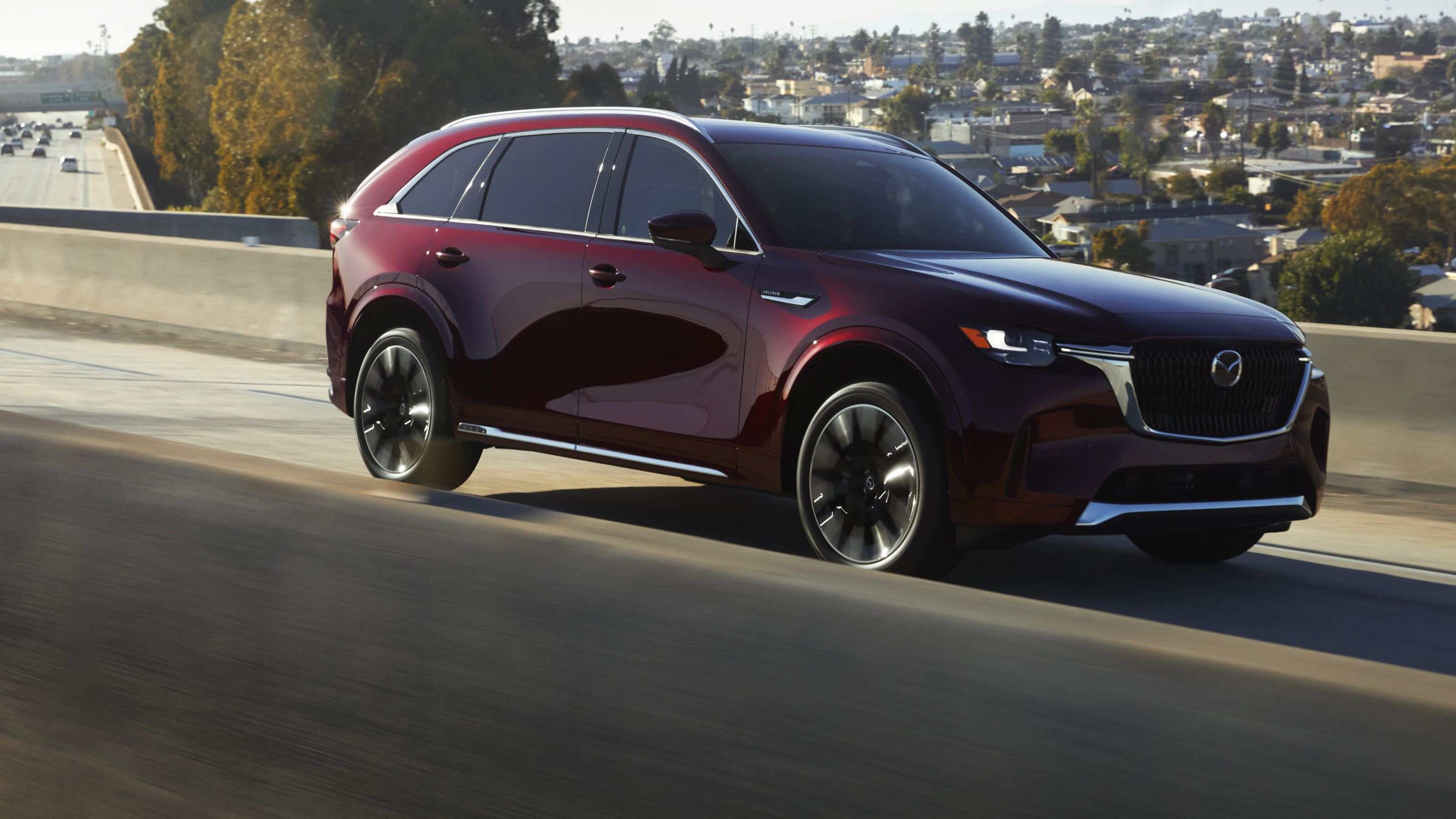
Unveiled in California at 3AM this morning (Australian details were under embargo until 9am), the seven-seat CX-90 marks the next step in an almost anachronistic evolution for the Mazda brand.
Like the closely related five-seat CX-60 revealed last year, the extra-large 2023 Mazda CX-90 enters with a platform and powertrain that power-hungry fans would’ve appreciated in the Mazda 6 or a new halo sports car anytime over the last decade.
(Indeed, that was the rumour until the brand made its SUV focus a little clearer last year.)
Now, despite the nearly total pivot to EVs occurring across the market, Mazda is betting big on combustion engines, launching its first rear-biased passenger platform engine in years, and powerful new inline six-cylinder petrol engines. Music to the ears of buyers not yet ready or able to wave goodbye to powerful fossil-fuelled options – and at least there’s some plug-in EV tech to help begin the transition.
As for when Mazda will dip more than a compact SUV-shaped toe into the pure-EV pool, the brand has said it will launch a proper family-oriented EV in 2025, with a target of 2030 for around 25 per cent of its line-up to be electric.
Until then, it’s the small CX-30, mid-size CX-60 and large CX-90 the brand would like buyers to focus on – and it’s expecting premium design to draw them in.
2023 Mazda CX-90 styling and interior design
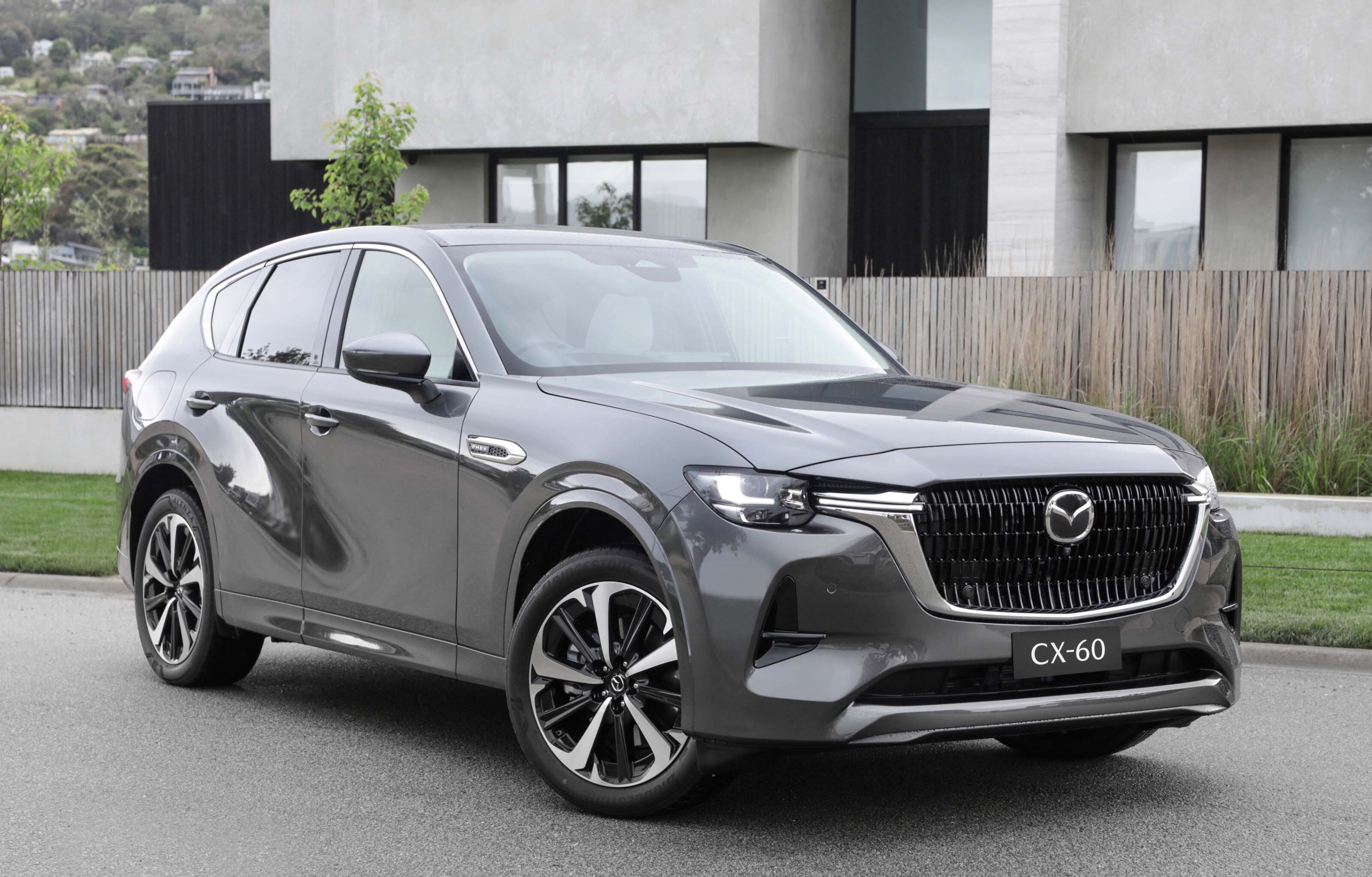
If you’re familiar with the five-seat CX-60 SUV unveiled last year – and you should be by now, given we’ve driven it and take a long tour of its pricing and features – then you’re already familiar with the seven-seat CX-90.
It’s already confirmed that the CX-60 and CX-90 share the same platform, but while Mazda says the CX-90 is wider and longer, its specific measurements have not been offered.
Importantly, the brand’s local arm says the CX-9 is also longer than the mighty CX-9 that has proven so popular in Australia.
Mazda’s big and bigger SUVs
| CX-5 | CX-8 | CX-60 | CX-9 | CX-90 | |
|---|---|---|---|---|---|
| Wheelbase | 2700mm | 2930mm | 2870mm | 2930mm | ? |
| Length | 4550mm | 4900mm | 4740mm | 5075mm | ? |
| Width | 1840mm | 1840mm | 1890mm | 1969mm | ? |
| Height | 1660mm | 1730mm | 1670mm | 1747mm | ? |
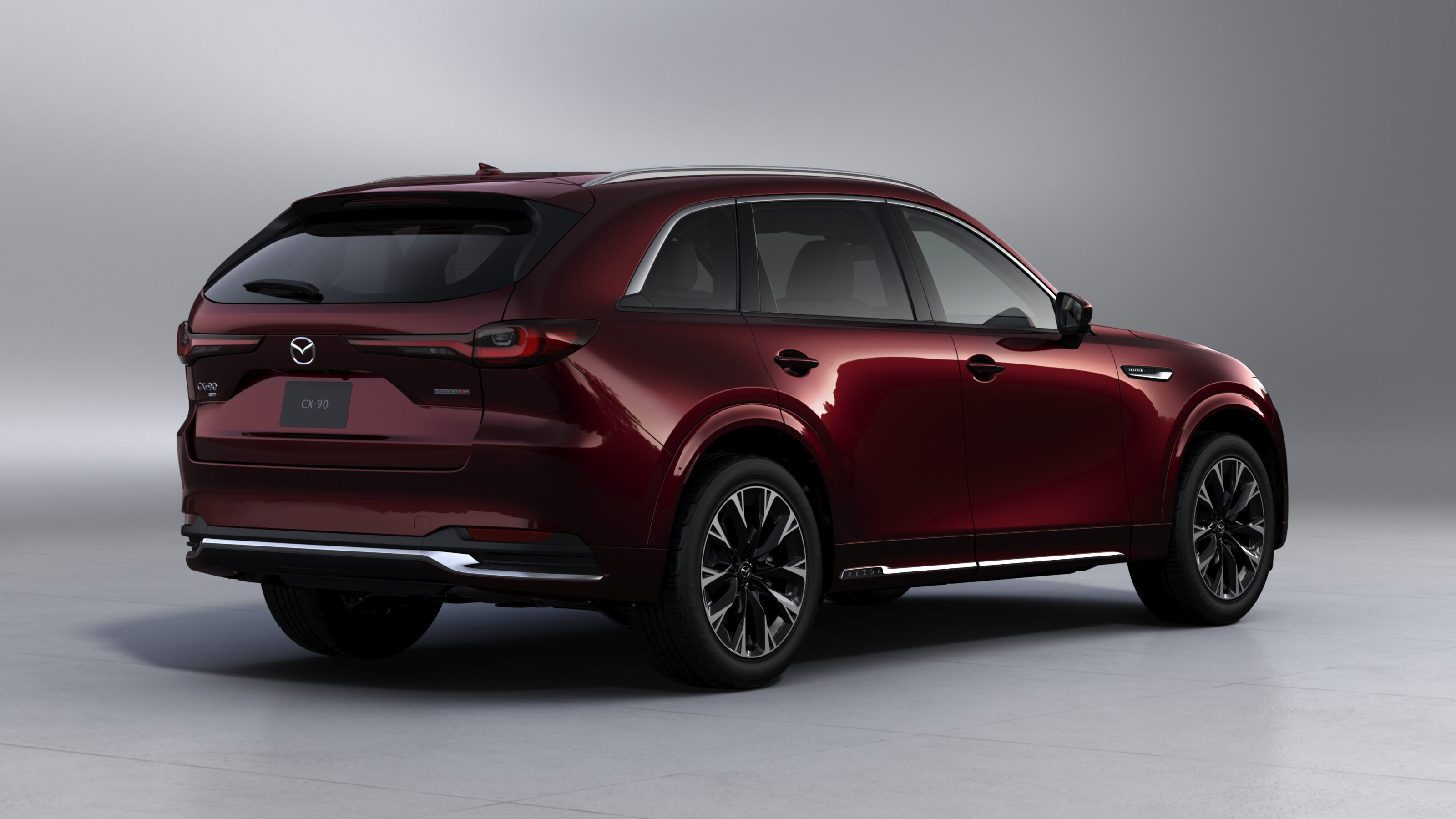
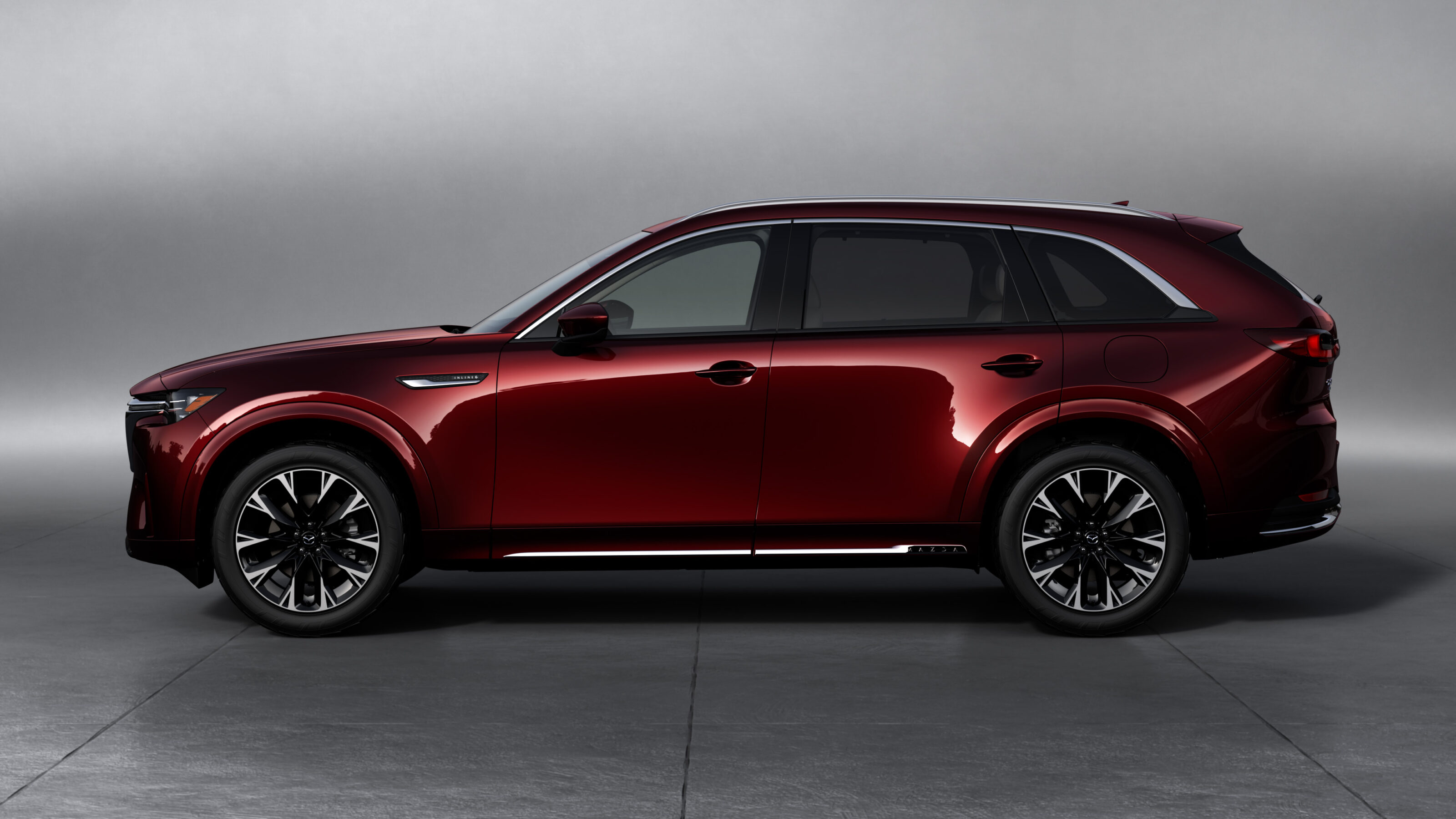
It’s clear though that if it’s wider than the CX-60, it has done one better than the seven-seat CX-8, which has a markedly longer body and wheelbase than the closely related CX-5 but identical in width – giving it an awkward look from certain angles.
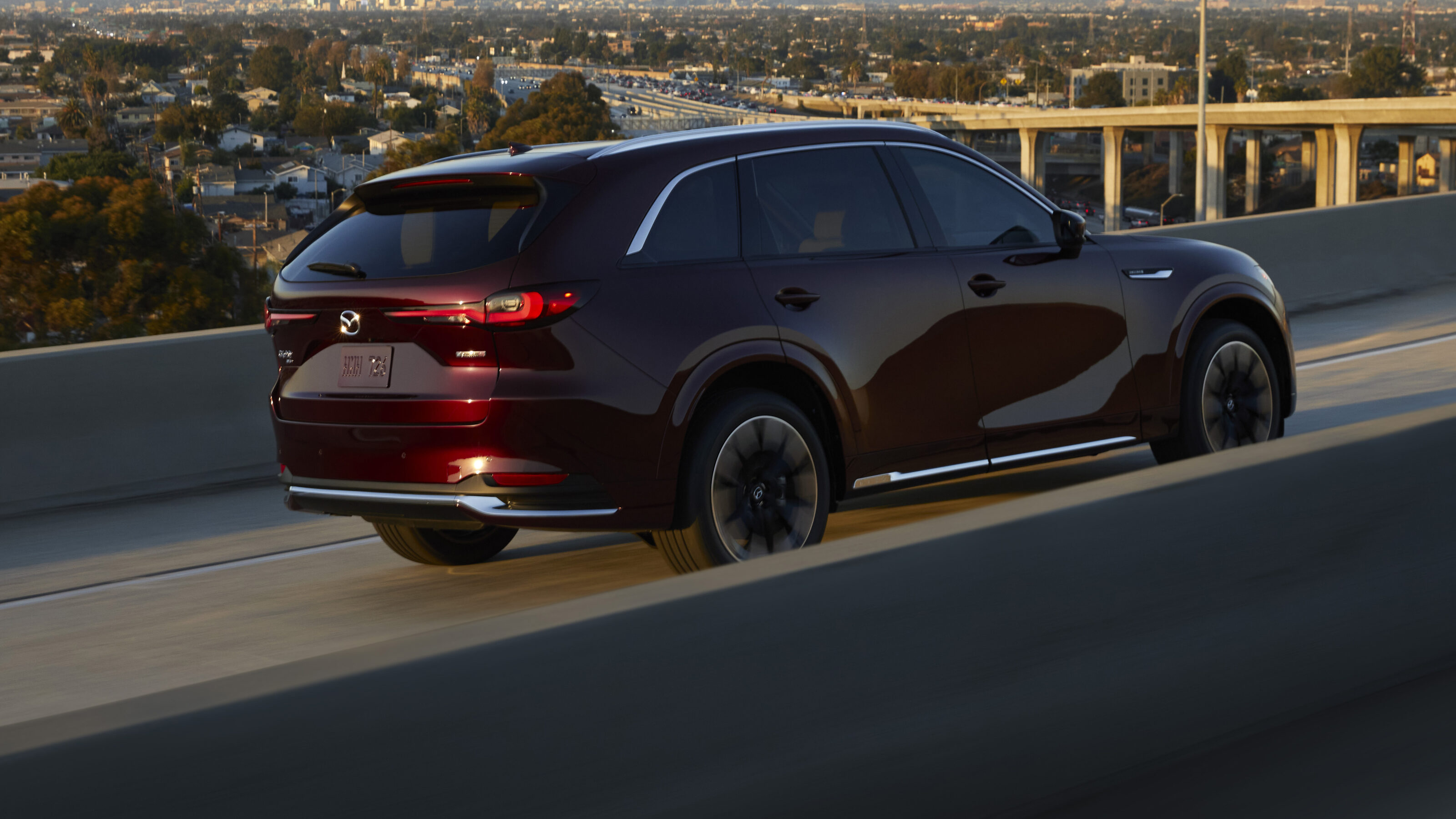
The CX-90’s styling is anything but awkward, with properly pumped haunches blessing it with purposeful proportions that offer no hints of it being a stretched version of the five-seat CX-60.
Zoom in on the details, though, and it becomes obvious that where most brands will give their modern lines some unique styling features to set them apart, the CX-60 and CX-90 reveal again that Mazda is a brand on a budget. But, like Marge Simpson transforming the parts of one power suit into multiple eye-catching designs, Mazda pinches its pennies pretty well.
In this case, CX-60 and CX-90 appear to wear identical headlight and tail-lamp designs. The bonnet and grille also look to be the same parts.
It’s hard to say without full specifications and some time with both cars, but, regardless, it’s a trick that has worked well with the Peugeot 3008 and 5008 twins.
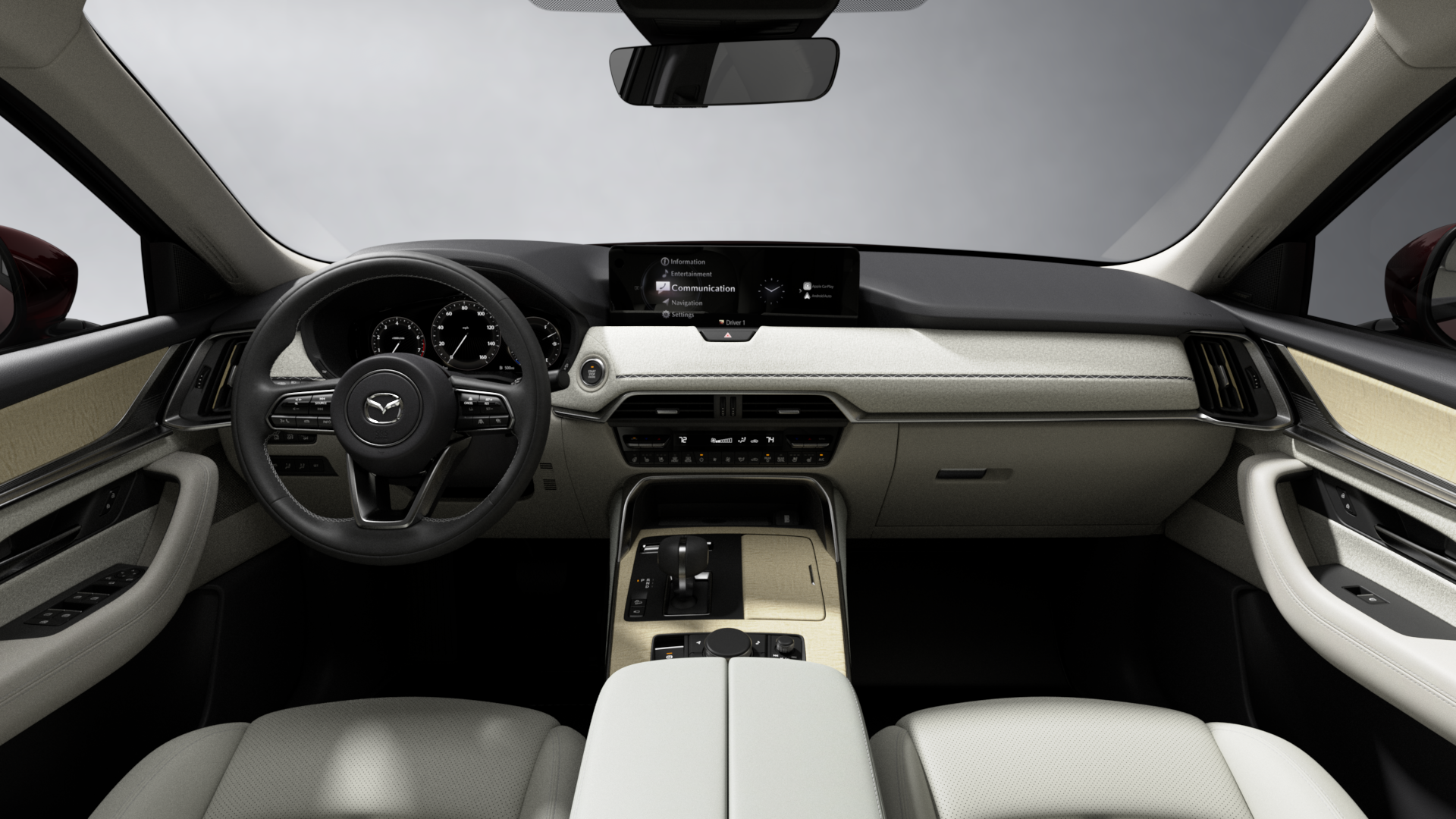
Likewise – and again like those French SUVs – the CX-90’s interior looks to be mostly identical to the CX-60, with the dashboard, centre stack, centre console and door cards all a mirror image. Makes it hard to say the CX-90 could really be that much wider than the CX-60, at least on the inside.
Powertrains and driving comfort
Petrol and diesel sixes, turbocharged and lightly electrified
In Australia, the CX-90 will be offered with one petrol and one diesel powertrain, both of them turbocharged inline six-cylinder mills measuring 3.3 litres in displacement and both equipped with mild-hybrid 48V ‘M-Hybrid Boost’ electrification.
In its petrol form, the CX-90 will offer 254kW and 500Nm, while the diesel dials power down to 187kW and torque up to 550Nm.
Each engine is matched to an eight-speed torque converter automatic transmission – an upgrade from the six-speed unit Mazda has leaned on for years – while the 48V electric motor system sits between these units to “create smooth acceleration” and directly power the CX-90 at low speeds.
All-wheel drive is standard for all CX-90 models.
Kinematic Posture Control
If that heading reminded you to sit up straight in your chair, let’s clear that up…
Wheels editor Andy Enright explains in his CX-60 review: “Another trick borrowed from the MX-5 is Kinematic Posture Control, which nips the brakes at a rear inside wheel during hard cornering, dragging the axle down and reducing body roll”.
2023 Mazda CX-90 technology
Full details on the CX-90’s tech suite are still to come, although the brand specifies a 12.3-inch main display in the dash – seemingly standard in the CX-90 whereas the CX-60 opens with a 10.2-inch and reserves the bigger screen for higher-spec variants – while a full-digital instrument cluster and wide head-up display can be seen in the photos.
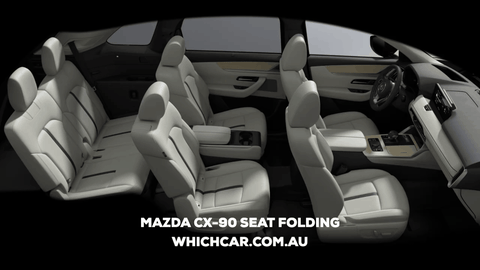
Other equipment singled out during today’s unveiling presents as a short list, focusing mostly on the third row: USB-C charging points, air-conditioning and “upgraded” interior lighting.
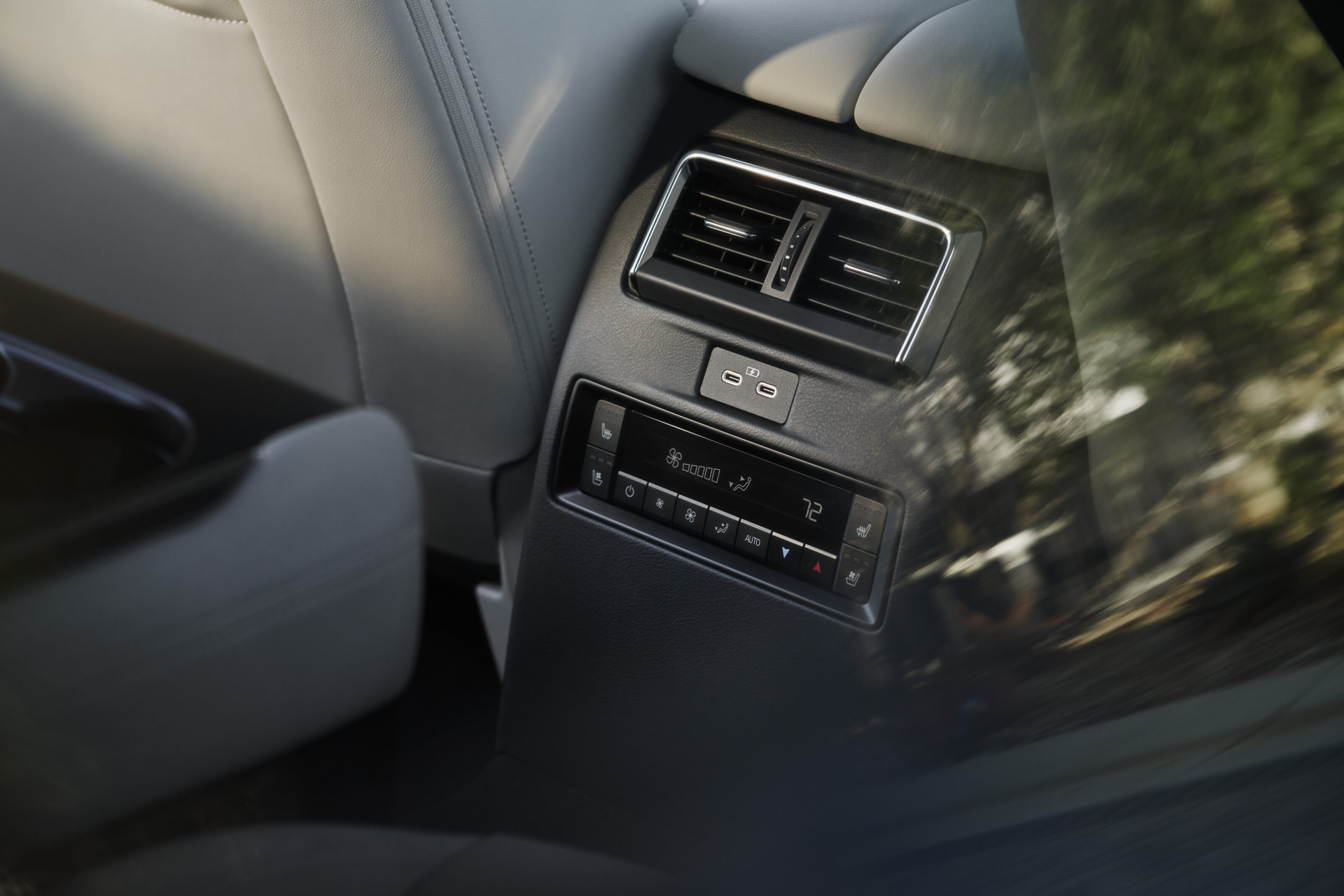
It’s clear from the photos that we can also expect the second row to get a pair of USB-C points, dedicated controls for a single air-con zone, and combination heating/ventilated seats in the outboard positions. Big new 21-inch wheels are also confirmed.
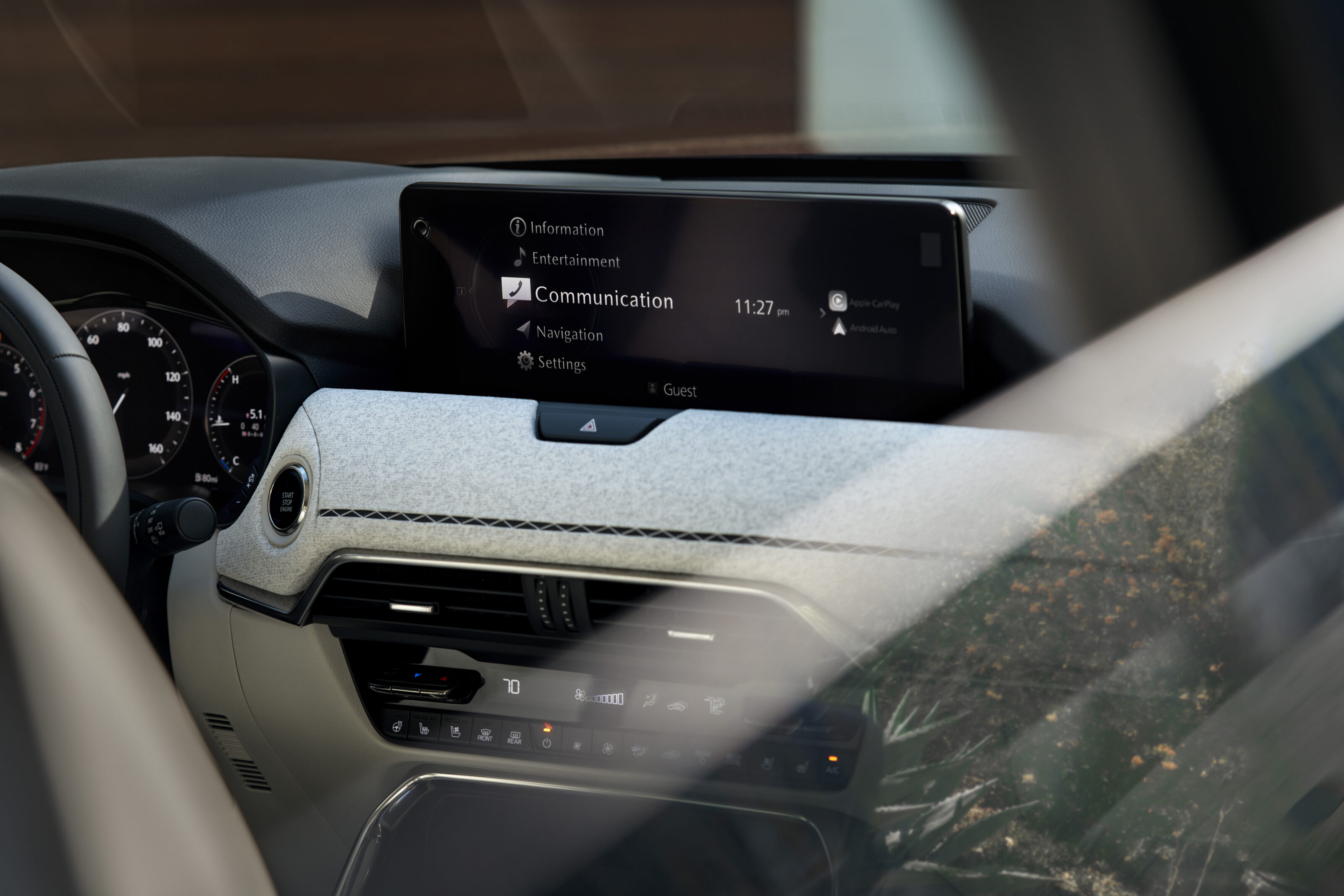
If the CX-60 offers any clues, buyers should also expect the CX-90 to offer LED headlights across the range, along with wireless Apple Carplay and Android Auto (again controlled via the rotary controller rather than through a touchscreen interface) and a massive panoramic glass roof (the photos do reveal this at least).
Depending on the trim grade, there should also be a 12-speaker Bose sound system (if not more, given this is a seven-seater), a heated steering wheel, Nappa leather upholstery, ventilated front seats, adaptive LED headlights and ambient LED lighting.
The CX-60 range opens with manually adjusted front seats in the base Evolve model, but we’d expect to see powered front seats across the CX-90 line-up.
2023 Mazda CX-90 safety
Standard safety features will include Smart Brake Support, Blind Spot Monitoring, i-Adaptive Cruise Control, and “and other new assistance systems”. Mazda isn’t fleshing that out yet, but below you’ll find the full list of standard safety kit in the CX-60.
| 2023 Mazda CX-60 – standard safety features | |
|---|---|
| Eight airbags | Traffic sign recognition |
| Autonomous Emergency Braking (forward and reverse) with pedestrian and cyclist detection | Driver fatigue detection |
| Blind-spot monitor | Rear cross-traffic alert |
| Lane departure warning | Reversing camera |
| Lane keep assist with steering support | Tyre pressure monitoring system |
| Radar cruise control with Stop/Go function | |
Every CX-60 gets a 360 surround-view camera as standard, but in the Azami grade it also offers a ‘see through function’ – which Mazda says allows the driver to see through the front and rear corners of the car usually obscured by the bodywork. The CX-90 will get this as well, although Mazda hasn’t confirmed which grades will be treated.
Lastly, facial-recognition tech is featured in the CX-60 GT and above, automatically adjusting the SUV’s seating position, mirrors and other controls to your saved settings. That, too, is likely to feature with the CX-90.
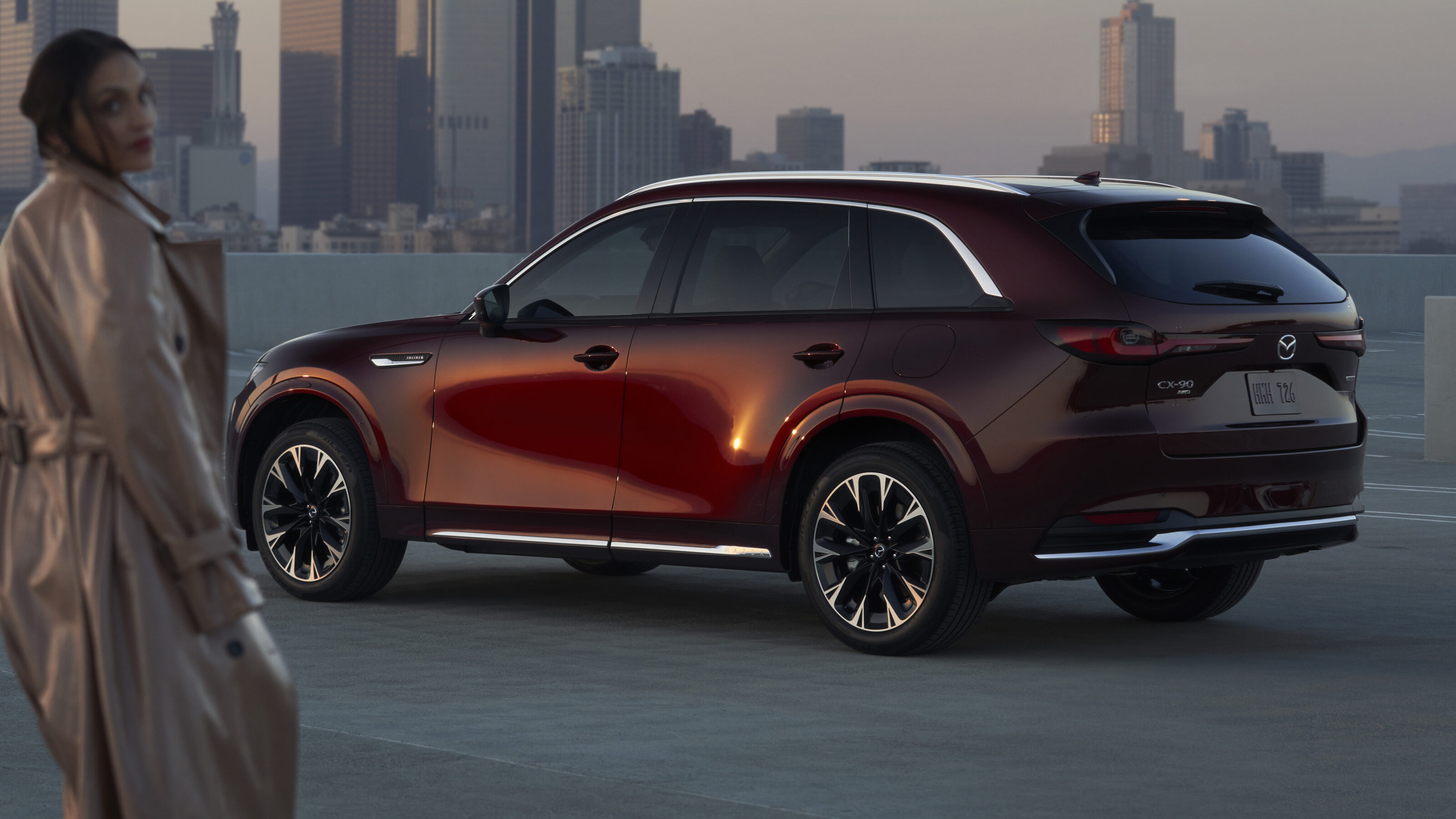
When will the CX-90 go on sale in Australia?
At the time of publishing, the clearest information we have is a goal of launching the CX-90 in Australia sometime in the second half of 2023.
Mazda Australia is holding a press briefing for the CX-90 right as this story goes live, so we’ll update these details as further information is revealed.
What will the Mazda CX-90 cost?
A lot. Mazda hasn’t confirmed pricing for the CX-90 yet, but with the ageing CX-9 starting from around $48,000 and the CX-60 from $59,800, buyers should expect to see the CX-90 priced from at least the high 60s, if not closer to the $75,000 CX-9 Azami – Mazda’s current flagship SUV.
Watch for more on the CX-90 to come in the days and months ahead.
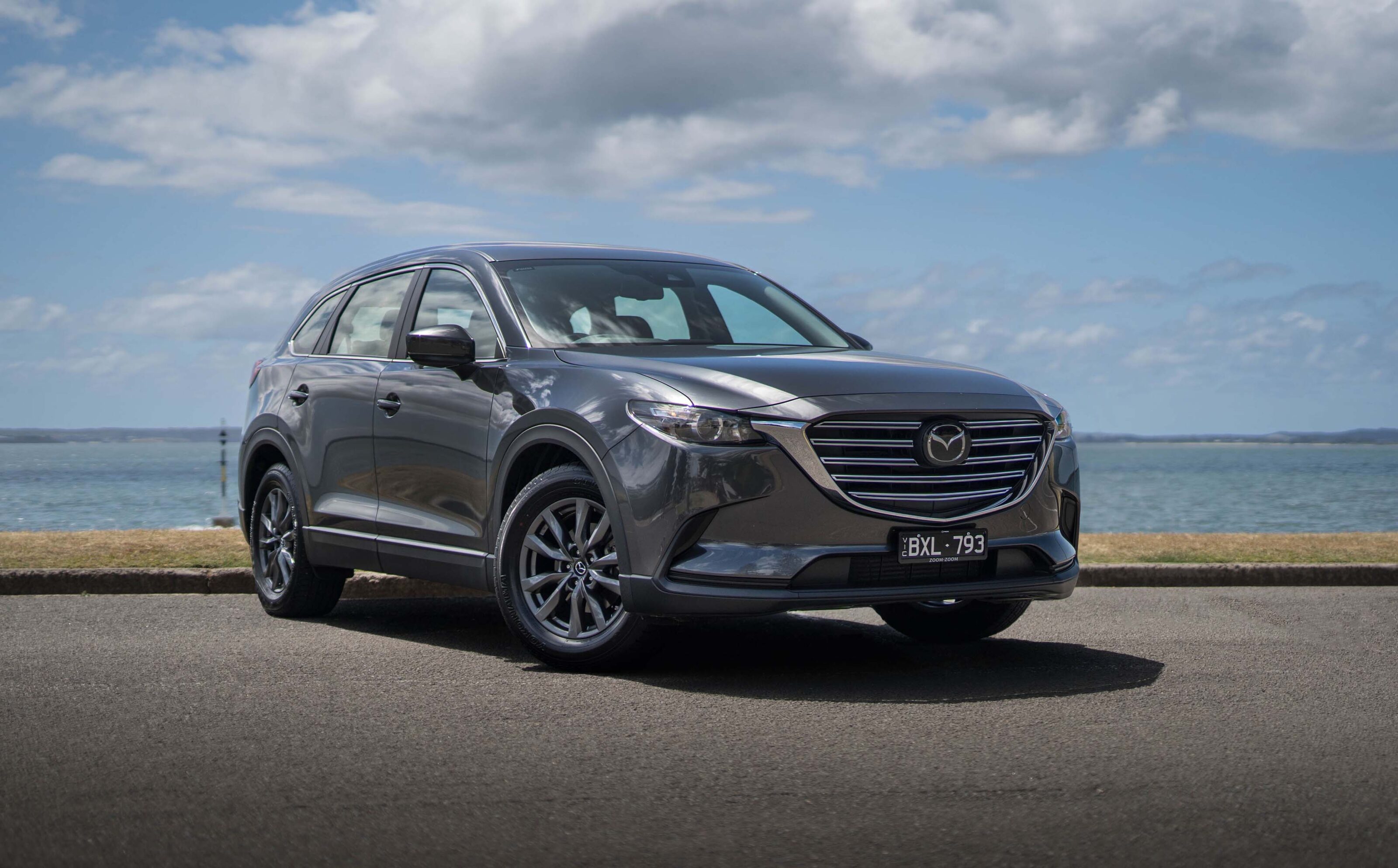
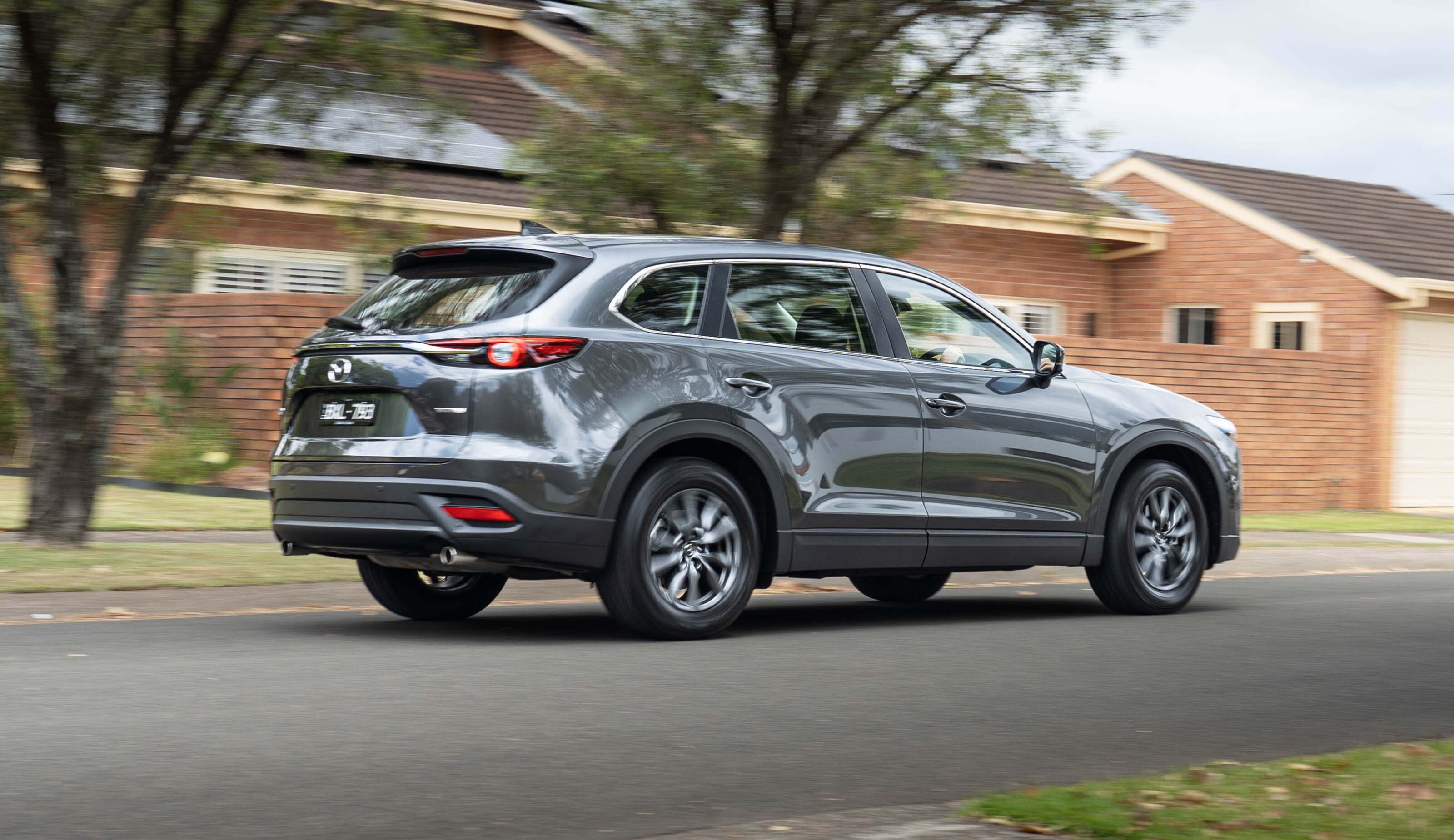
Below: The 2022 Mazda CX-9
JUNE 29: We’ve driven the EV9!
Get our full written and video review at the linked story below.
STORY CONTINUES
March 2023: EV9 leaked!
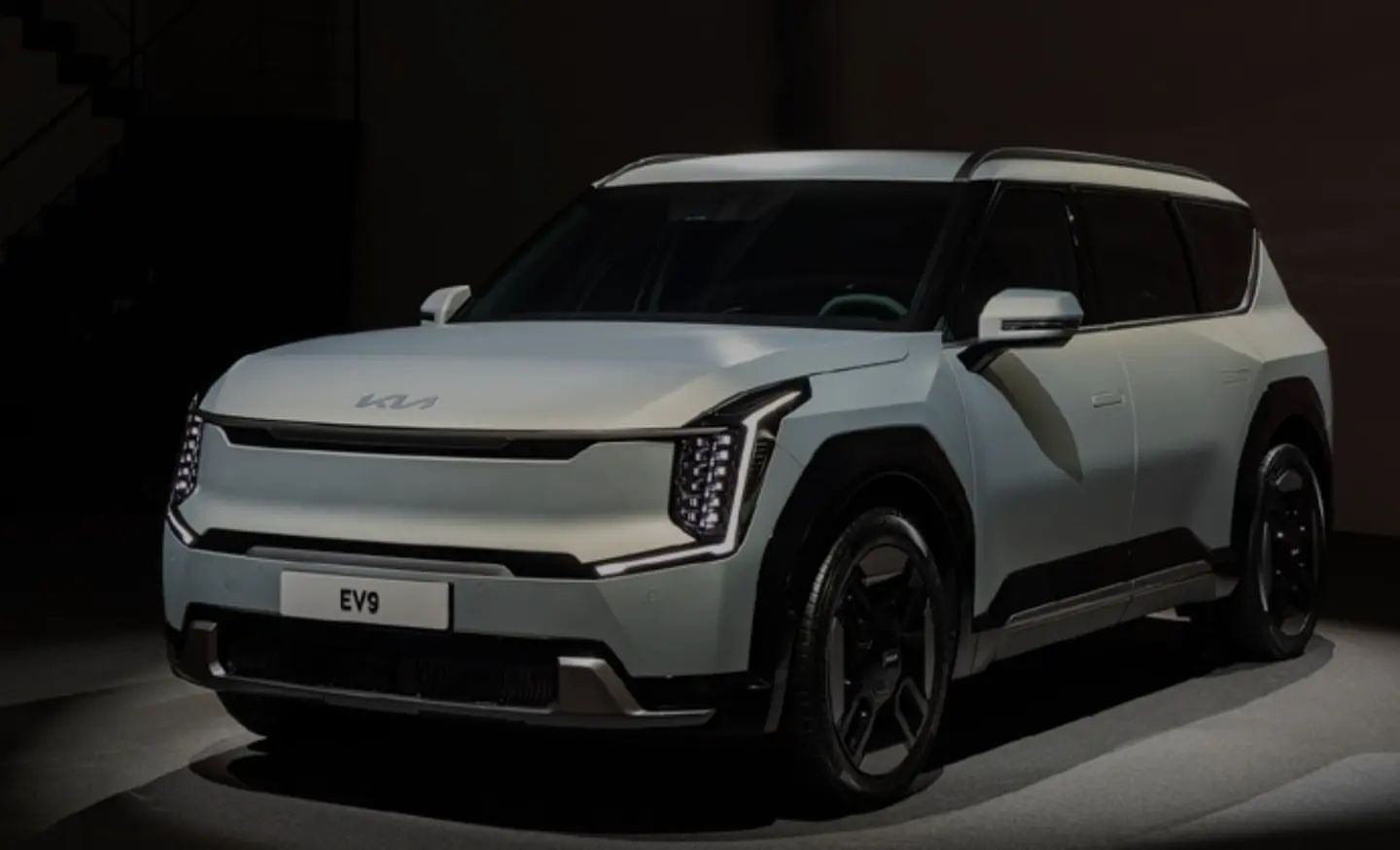
The upcoming Kia EV9 has surfaced in online social media, offering a first clear look at official marketing shots. Get the full story at the link below.
The story to here
The 2024 Kia EV9 electric large SUV has been teased ahead of its unveiling later this month.
Snapshot
- 2024 Kia EV9 teased
- Electric large SUV set to debut later this month
- Australian launch due before Christmas
Kia has confirmed the 2024 EV9’s exterior and interior styling will debut first in mid-March, with technical specifications set to follow in late March.
A new set of teaser videos released by the Korean brand confirms it will strongly resemble the Concept EV9 revealed at the 2021 Los Angeles Auto Show.
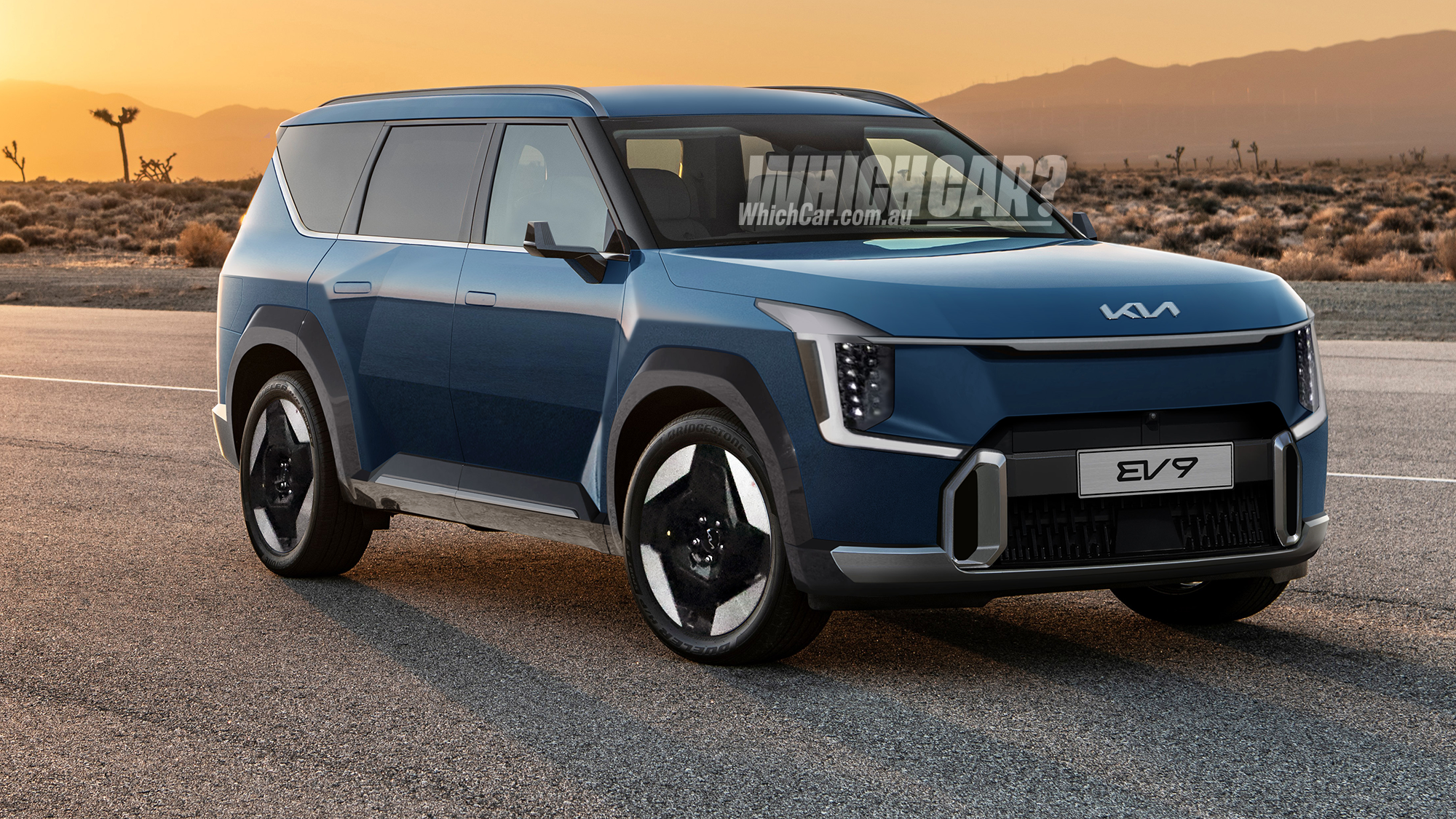
Last month, the Kia EV9 was captured undisguised in Chile by nacional.collector, confirming the concept-like design – albeit with several production-ready changes.
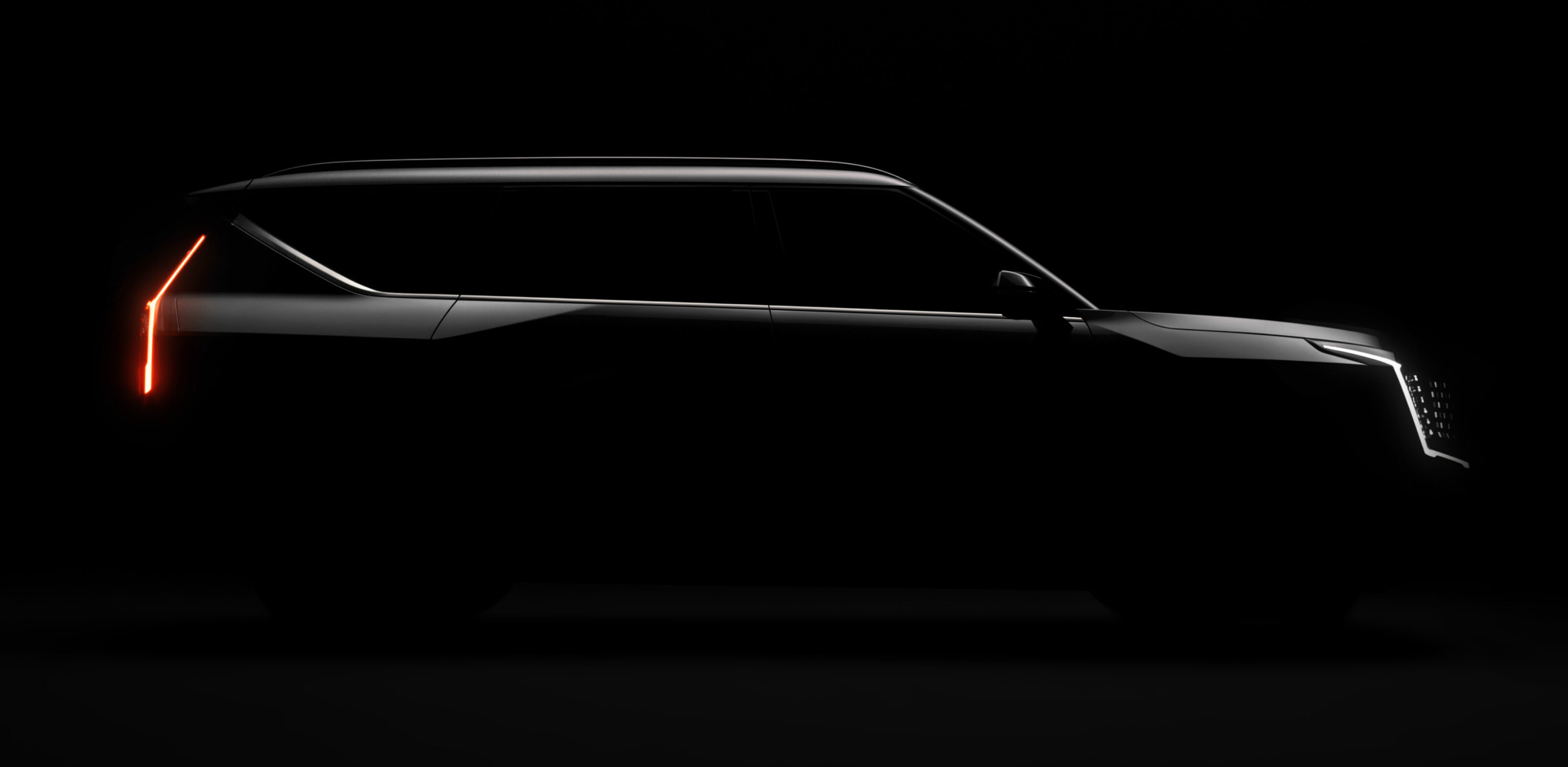
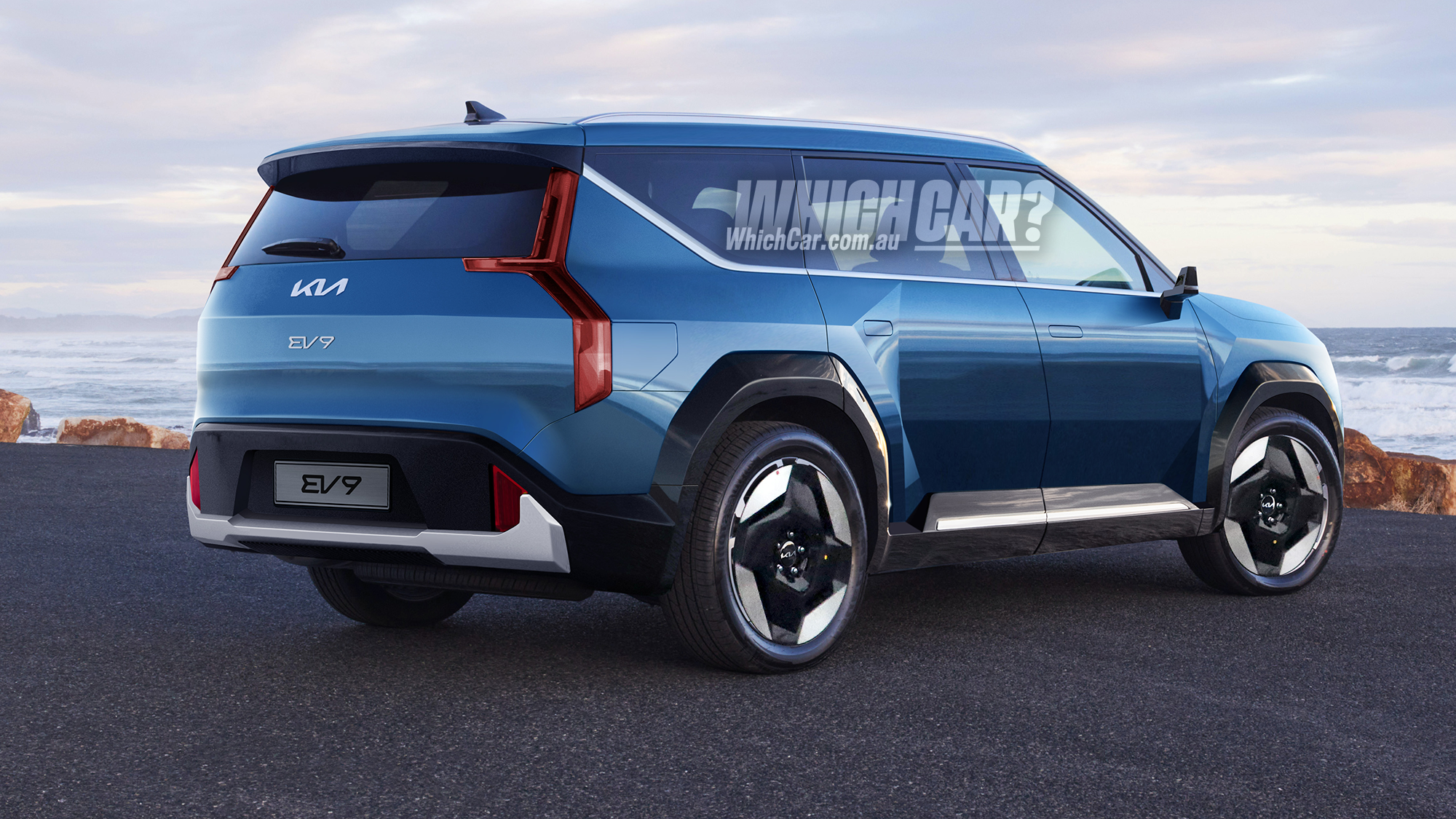
This includes conventional side mirrors, larger headlights and tail-lights, a toned-down side profile and EV6-like pop-out door handles.
Under the skin, the EV9 will ride on a stretched version of Hyundai-Kia’s E-GMP electric vehicle architecture, as found underneath the Kia EV6, Hyundai Ioniq 5, Ioniq 6 and Genesis GV60.
It will be heavily related to the Hyundai Ioniq 7, which is expected to debut later this year.
As reported, a leaked customer survey from Kia America has provided some insight into the EV9’s specifications, with single-motor and dual-motor variants likely.
At the bottom end of the range, the EV9 should offer a single-motor, rear-wheel-drive model with approximately 147kW and 340Nm, and a 354-kilometre driving range.
A mid-spec rear-wheel-drive variant is expected with a larger battery and a 467-kilometre driving range, while the base all-wheel-drive includes a second electric motor mounted to the front axle, for 294kW and 519Nm.
It has a claimed driving range of 418 kilometres. A more-potent variant with 650Nm could reduce the driving range to 386km, with blacked-out styling and 10-millimetre higher ground clearance.
The survey suggested pricing could start from around US$56,000 (AU$83,000), rising to approximately US$73,000 (AU$108,000) for the flagship grade.
The 2024 Kia EV9 electric SUV will to debut in mid-March, with a local launch due later this year.
Snapshot
- Tesla outlines data privacy policy for its high-tech electric vehicles
- Emphasises most data is stored and processed locally, some anonymised
- Pervasive data harvesting a growing issue in auto industry
Tesla is attempting to allay emerging concerns over privacy as its cars become more technology-laden with cameras, sensors and software algorithms.
The American electric vehicle company outlined its commitment to data privacy and protections that “go beyond industry standards” with the launch of a new webpage and support site.
Australia’s best electric cars for 2023
We’ve tested nearly every EV below six figures in Australia to rank the best on sale today
It promises never to sell or rent owner data to third-party companies, only review anonymised data collected from its vehicles, and process data locally in the vehicle.
By default, the data generated from driving and ‘Autopilot’ safety assistance systems is not linked to the owner (unless a ‘safety event is detected’), Tesla can’t monitor the vehicle location, and Sentry mode and dash cam features are opt-in rather than being stored on Tesla servers.
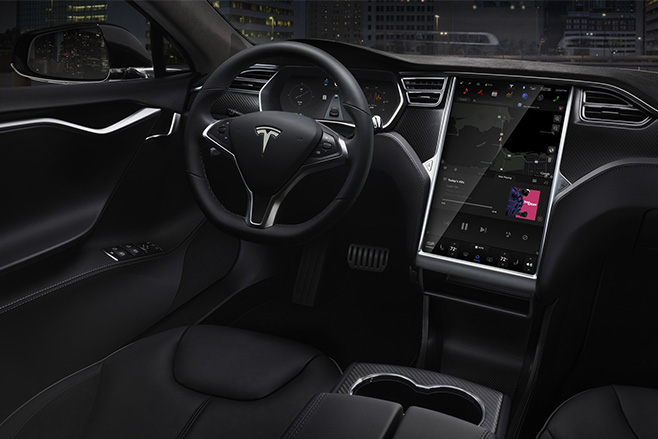
What data does Tesla collect and where does it go?
Similar to most modern new cars, the Tesla Model 3, Model Y, Model S, and Model X contain all-round exterior cameras (plus an interior camera for the latest models), microphones, battery-management algorithms, and are internet-connected to allow touchscreen, smartphone app, and over-the-air software update functionality.
Tesla owners can adjust the privacy settings, request a copy of the data, and review the privacy notice within the vehicle touchscreen or via their Tesla account.
Tesla data privacy policy
| Locally processed in-vehicle | Shared with Tesla, but anonymised | Shared with Tesla and associated with owner account | |
|---|---|---|---|
| Sentry mode camera recordings | Yes | No | No |
| Dash cam recordings | Yes | No | No |
| Cabin camera data | Yes | Opt-in u2013 via data sharing setting | Yes u2013 if Full Self-Driving beta enabled and u201csafety critical event occursu201d |
| Autopilot camera recordings | Yes | Opt-in u2013 via data sharing setting | Yes u2013 in the occurrence of a u201csafety critical event onlyu201d |
| Location data | Yes | Opt-in u2013 via data sharing setting | Yes u2013 in the occurrence of a u201csafety critical event onlyu201d |
| Speed | Yes | Yes u2013 for u201cfleet analysis and improvementu201d | Yes u2013 in the occurrence of a u201csafety critical event onlyu201d |
| Voice commands | Yes | No | No |
| Browsing history | Yes | No | No |
| Odometer | Yes | Yes u2013 for u201cfleet analysis and improvementu201d | Yes u2013 last known value only for warranty calculation |
| Charging data | Yes | Yes u2013 if third-party charging network used only | Yes u2013 if Tesla Supercharger network used only |
| Touchscreen interactions | Yes | Yes | No |
In-car data privacy harvesting is emerging as an issue in the automotive industry, with Federal Liberal Senator James Paterson claiming all Chinese car brands are required by the Chinese Government to covertly assist intelligence agencies, according to Sky News Australia.
BYD Atto 3 owners recently uncovered a bug which allowed anyone to dial the SIM card number from a smartphone to listen into the EV’s cabin without any notification appearing on the touchscreen. The issue has since been rectified.
The Volkswagen Group, Ford, General Motors and Toyota have all previously raised concerns via Reuters, Motor Trend and Motor1 for adopting Apple CarPlay and Android Auto smartphone projection systems as sharing too much data with the tech giants.
Both Toyota and Porsche have been reluctant to implement Google’s Android Auto in particular due to privacy concerns, but have now conceded.
October 18, 2023: Victoria’s EV road tax has been struck down
In a blow for the state, Victoria’s zero-emissions vehicle road-user tax has been deemed unlawful.
See the full story at the link below.
STORY CONTINUES
Snapshot
- Nearly 250 Victorian EVs and PHEVs deregistered for not paying EV tax
- Introduced in 2021, owners charged annually on distance driven
- Other state governments wonu2019t introduce an EV tax until 2027
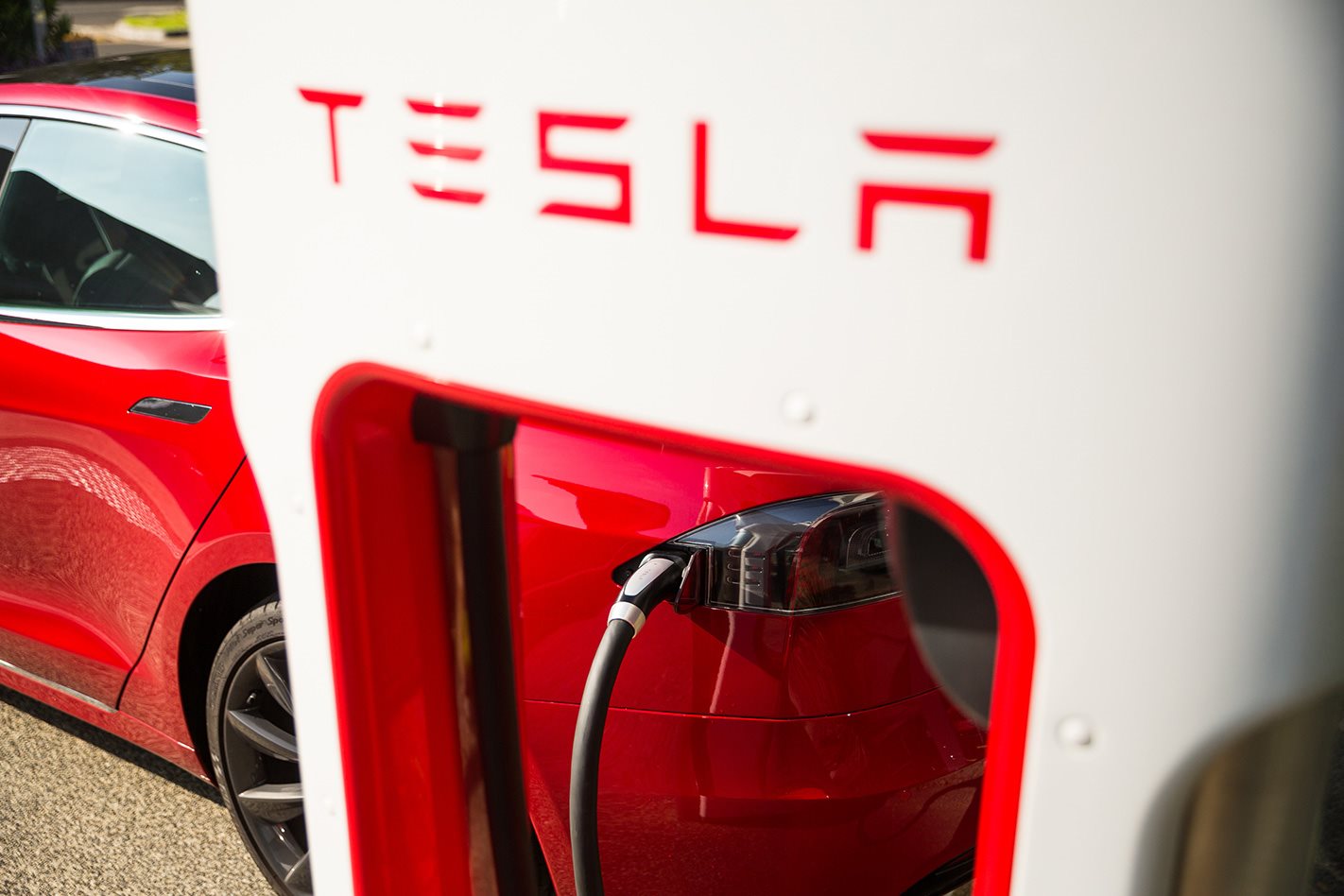
Two hundred and forty three electric vehicle owners in Victoria have had their registration cancelled for failing to pay the controversial tax on electric and plug-in hybrid cars.
The Zero and Low-Emission Vehicle (ZLEV) road user charge was legislated by the Victorian Government in mid-2021 to tax fully-electric and plug-in hybrid electric vehicles (PHEVs) based on distance travelled, in lieu of the fuel excise paid by drivers of internal-combustion engined cars.
The charge increases per financial year based on inflation. It currently costs motorists 2.6 cents per kilometre for pure-electric vehicles or 2.1 cents per kilometre for PHEVs.
“Less than one per cent of ZLEV-registered operators have had their registration cancelled from non-declaration of odometer readings,” VicRoads Registration and Licensing Services COO, Michael Hooper, told the Australian Associated Press (AAP).
All EV and PHEV owners need to manually take a photo of the odometer annually and submit it to VicRoads within 14 days of request, with the Government suspending vehicle registrations after 78 days if owners don’t pay the tax within 56 days.
But Nissan Leaf owner Lisy Kane told the AAP that she inadvertently didn’t pay the EV tax as VicRoads didn’t notify her employer, who administers the car’s payments.
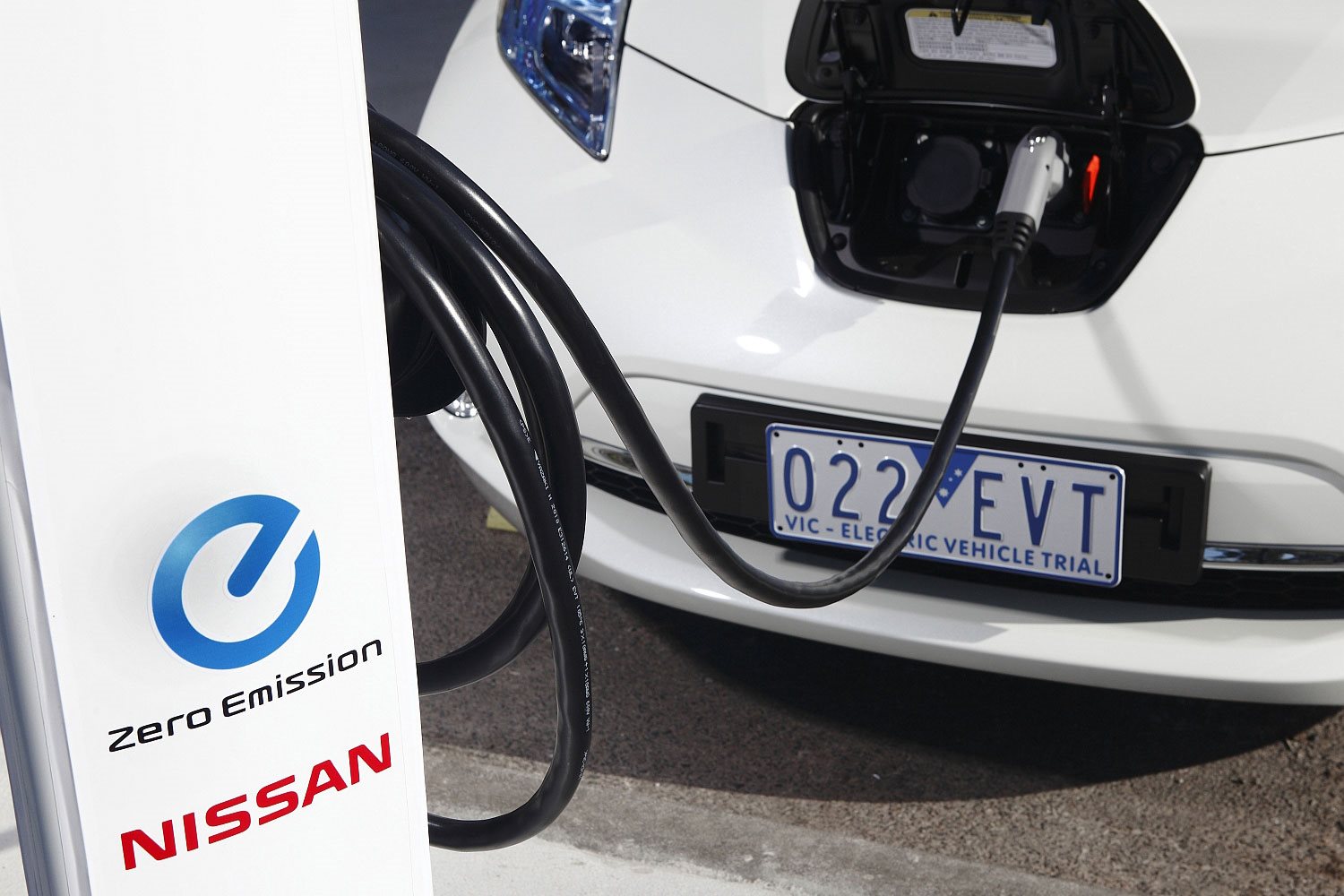
“It turned out I was driving my car unregistered for about six months. I was really, really shocked. It seems like an extreme remedy for not paying a small fee,” Kane said.
“There was no email or any follow-up saying ‘we’re going to cancel your registration in 30 days’ or anything like that.
“We’re fairly certain we did submit the odometer reading, but we might have missed it. It was very stressful.”
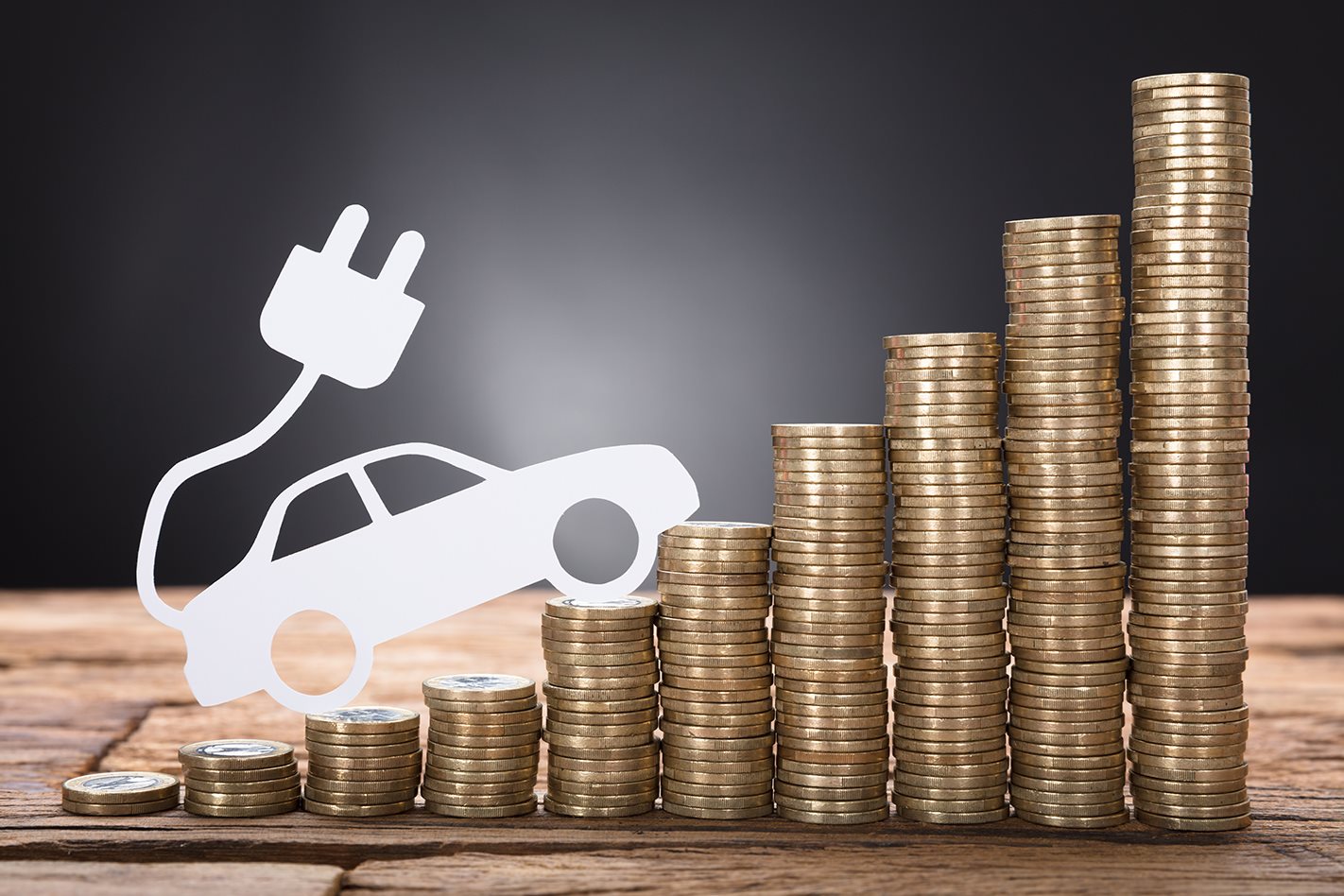
Two Melbourne EV owners have taken the first-of-its-kind EV tax to the Australian High Court, arguing it discourages Victorians from switching to lower- or zero-emissions vehicles. The case is expected to finalise in April.
South Australia previously planned for a similar EV tax to start from 2027, but the plans were recently scrapped by the newly elected Labor-led state government.
Meanwhile, the New South Wales and Western Australian state governments still plan to introduce an EV tax from July 2027 or as soon as EVs make up at least 30 per cent market share.
Snapshot
- Shareholders sue Tesla and Elon Musk for false Autopilot and FSD claims
- Alleges Tesla defrauded them across four years
- Have also been hit with falling share price due to FSD beta recall
Tesla shareholders have sued the company and CEO Elon Musk for overstating the effectiveness of ‘Autopilot’ safety assistance systems and ‘full self-driving’ (FSD) technologies.
According to Automotive News Europe, a class action lawsuit was filed in San Francisco’s federal court on Monday, with shareholders alleging that Tesla defrauded them across four years with false and misleading statements that hid how its technologies “created a serious risk of accident and injury.”
Autopilot – which is only a safety-assist suite consisting of auto emergency braking, blind-spot alert, adaptive cruise control, and lane-centring assist – has been under the spotlight of regulators (and media) as a suspected cause of multiple fatal accidents globally, in addition to driver inattentiveness.
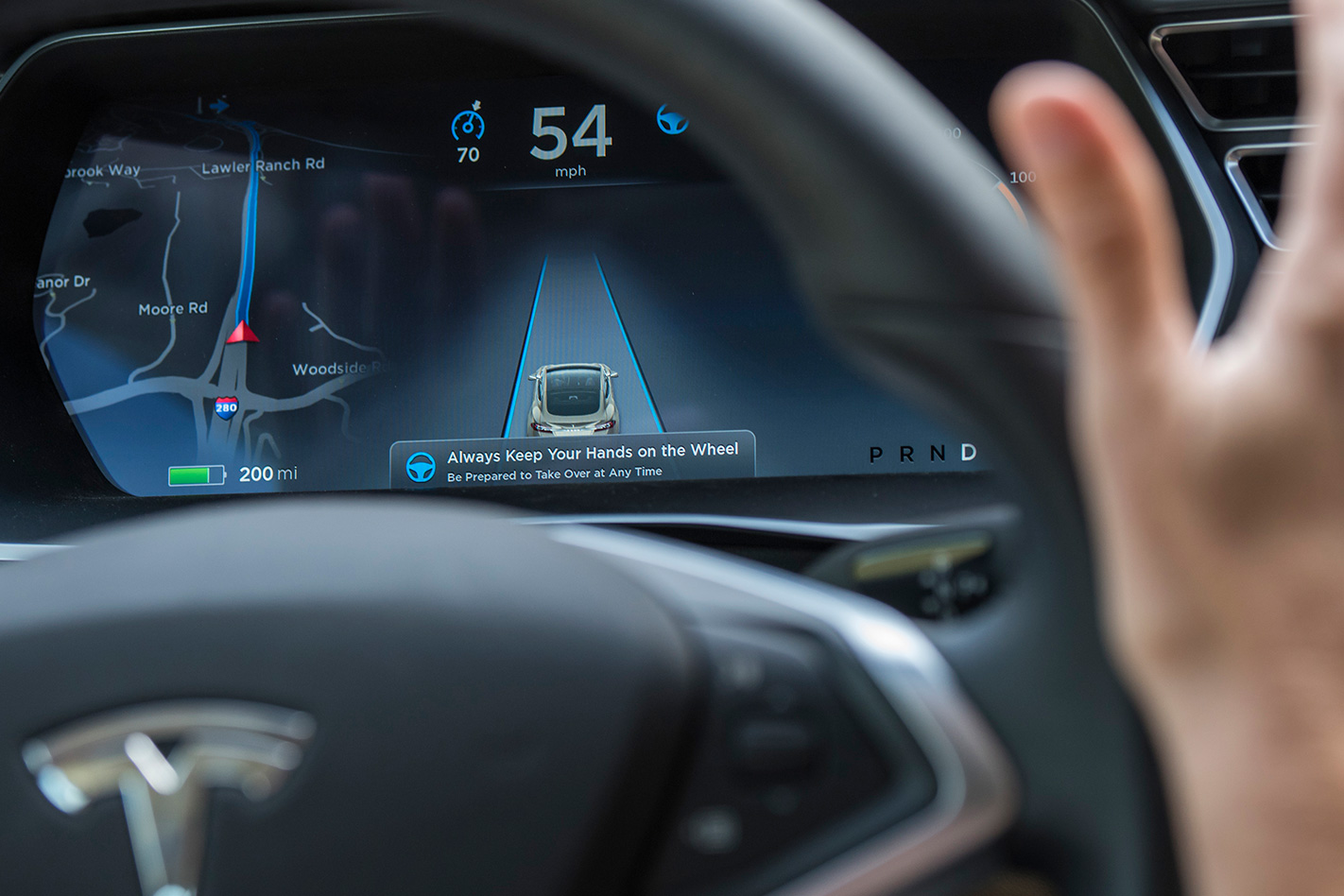
The news comes as the US National Highway Traffic Safety Administration (NHTSA) safety authority forced Tesla to issue a voluntary recall for its FSD beta trial, which has been running since late 2020, as it is deemed ‘unsafe’.
In response, the popular electric car company’s share price fell by 5.7 per cent on February 16 and is another focus area of the lawsuit as shareholders have “suffered significant losses and damages”.
Tesla now admits FSD beta is only a “SAE Level 2 driver support feature that can provide steering and braking/acceleration support to the driver under certain operating limitations. In certain rare circumstances and within the FSD Beta operating limitations… it could potentially infringe upon local traffic laws or customs while executing these driving maneuvers in specific conditions,” according to its support page.
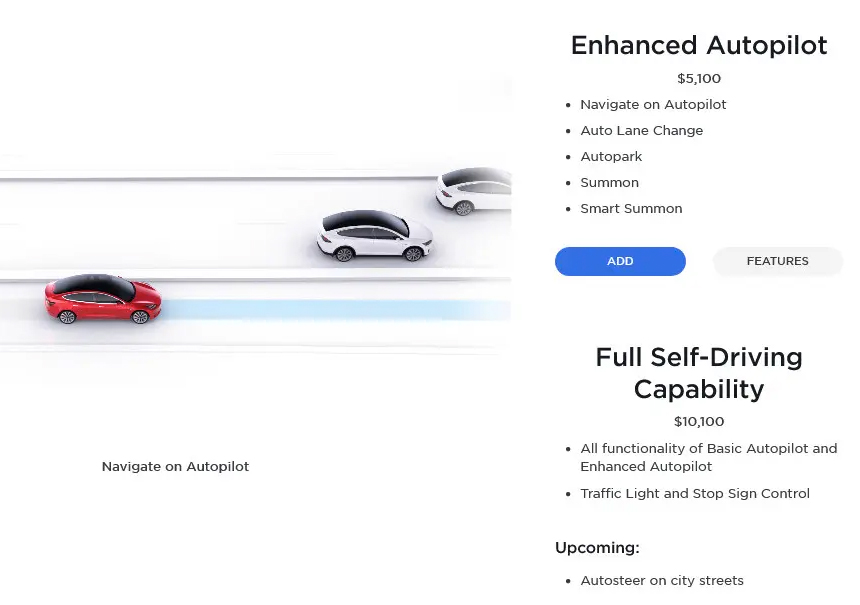
Musk has famously promised the roll out of full autonomous driving publicly almost every year since 2014 and the company has been subject to previous class action lawsuits from disgruntled customers complaining that they have paid for a broken promise.
Full self-driving capability is currently a $10,100 option for all new and existing Tesla electric cars in Australia. It only brings ‘Enhanced Autopilot’ assistance features, and traffic light and stop sign control when adaptive cruise control is activated.
Australia’s best electric cars for 2023
We’ve tested nearly every EV below six figures in Australia to rank the best on sale today
The car world is changing, fast, and Car of the Year is changing with it.
Snapshot
- Car of the Year turns 60 in 2023
- Fresh criteria sees cars judged in four key areas
- Dual-cab utes and ladder-frame vehicles now eligible
For 2023 we’ve given our award a tune up with the goal of boosting its relevance, making it simpler to understand and supercharging the sense of fun.
To achieve that, we’ve tweaked what’s eligible, overhauled our criteria and adjusted our testing process. All in the hope of crowning a winner you can comfortably agree is a standout.
This story is your cheat sheet to understanding what’s new for 2023.
MORE READING
As the 2023 COTY story evolves, the list of stories below will grow. Keep an eye on this page for more, or find it all at our COTY page.
What is Car of the Year?
It’s the car that has impressed us the most over the previous 12 months. Simple as that.
It is not, as is often argued in the audience, “the most relevant” car. Not the most affordable or best-value, nor the most readily available car. In many ways, the cars we’ve determined worthy to compete for the COTY title already respond to these shopping-list points in one way or another, but the final winner is… the car that has impressed us the most over the previous 12 months.
You’ve altered the criteria?
Yep. Complex, convoluted and draconian criteria is tiresome so ‘keep it simple’ was our guiding principle.
COTY’s goal is to celebrate excellence – that can be in design, dynamics, value or even how much energy/fuel a car uses – but a winner needs to be well-rounded, too.
A one trick pony won’t win. But one that sets a new benchmark without dropping the ball elsewhere? That’s what we’re looking for. On the flip side, a solid but vanilla all-rounder won’t win either. A COTY has to stand out and excel in some way.
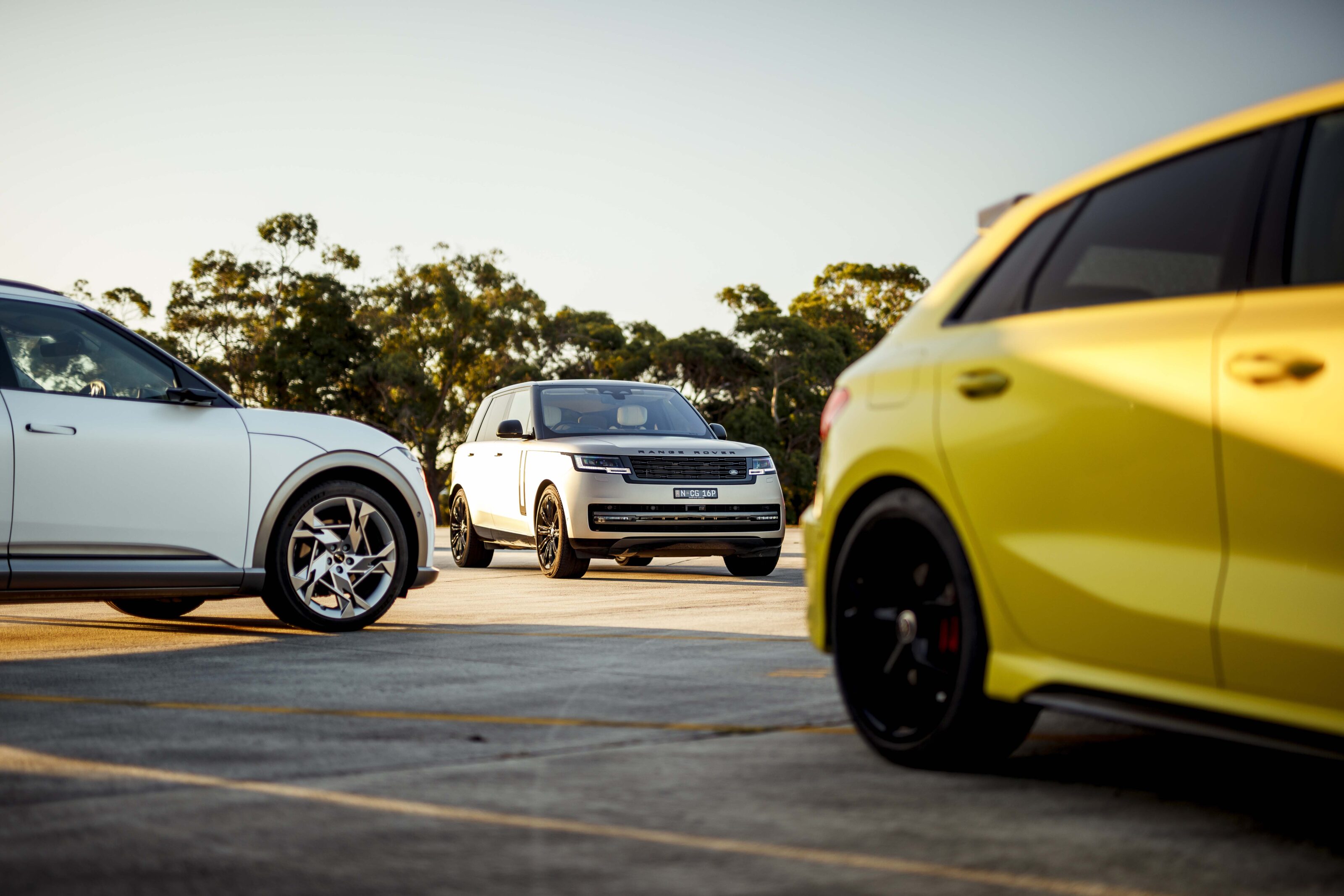
You might notice we’ve removed the technology criterion. That hasn’t reduced the impact of tech – quite the opposite. Technology is now an integral part of all of the other four criteria.
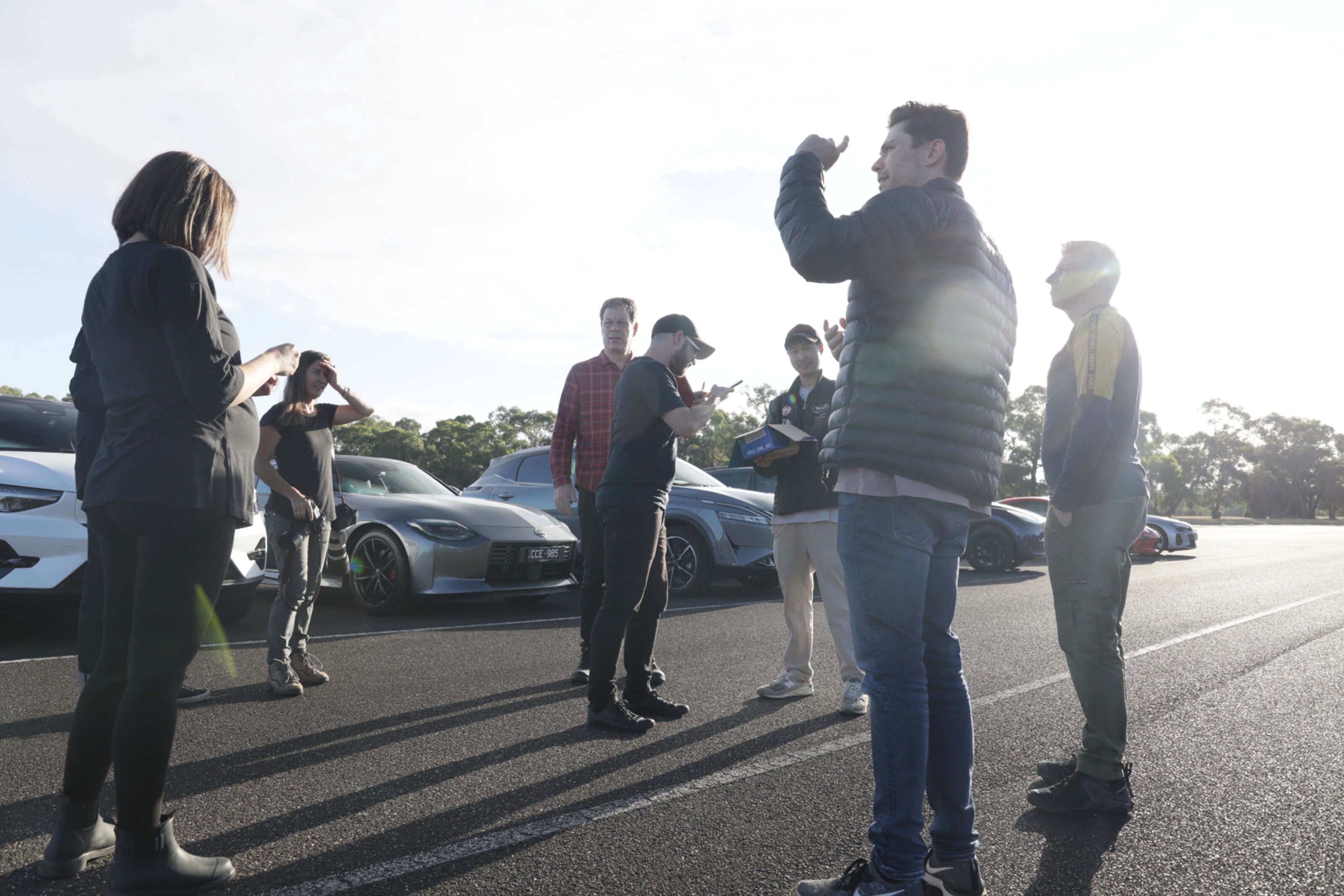
How do we actually find a winner? We test them. Forensically. Empirical data like safety ratings and consumption figures play a part, but we aren’t a slave to numbers and spreadsheets. To our mind that misses the point of COTY.
We test hundreds of cars each year and rate them accordingly to provide you with sound buyer advice. To win COTY, a car needs to do more than simply be a good buy. It needs to get under our skin. To surprise and delight. To deliver something more.
The new criteria
There are now four judging criteria. Each is given equal weighting.
Value
Outright cost, price compared with rivals, equipment levels, ownership costs.
Safety
Crash rating (five-star minimum) level of active safety systems included, passive safety (vision out, agility and braking).
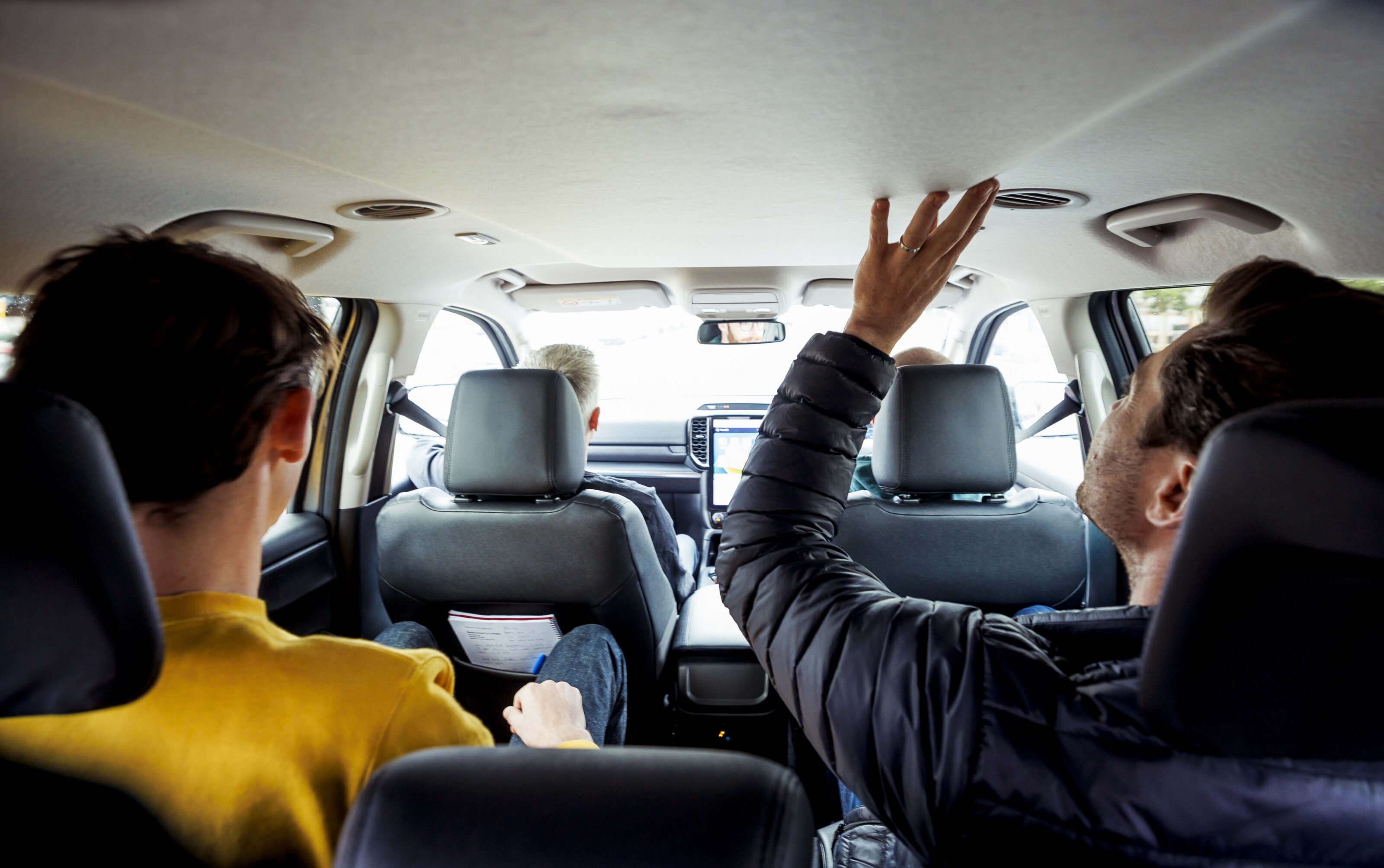
How it drives
Ride and handling, powertrain, refinement, efficiency.
Cabin design and execution
Space and comfort, packaging, build quality, connectivity and infotainment, boot space.
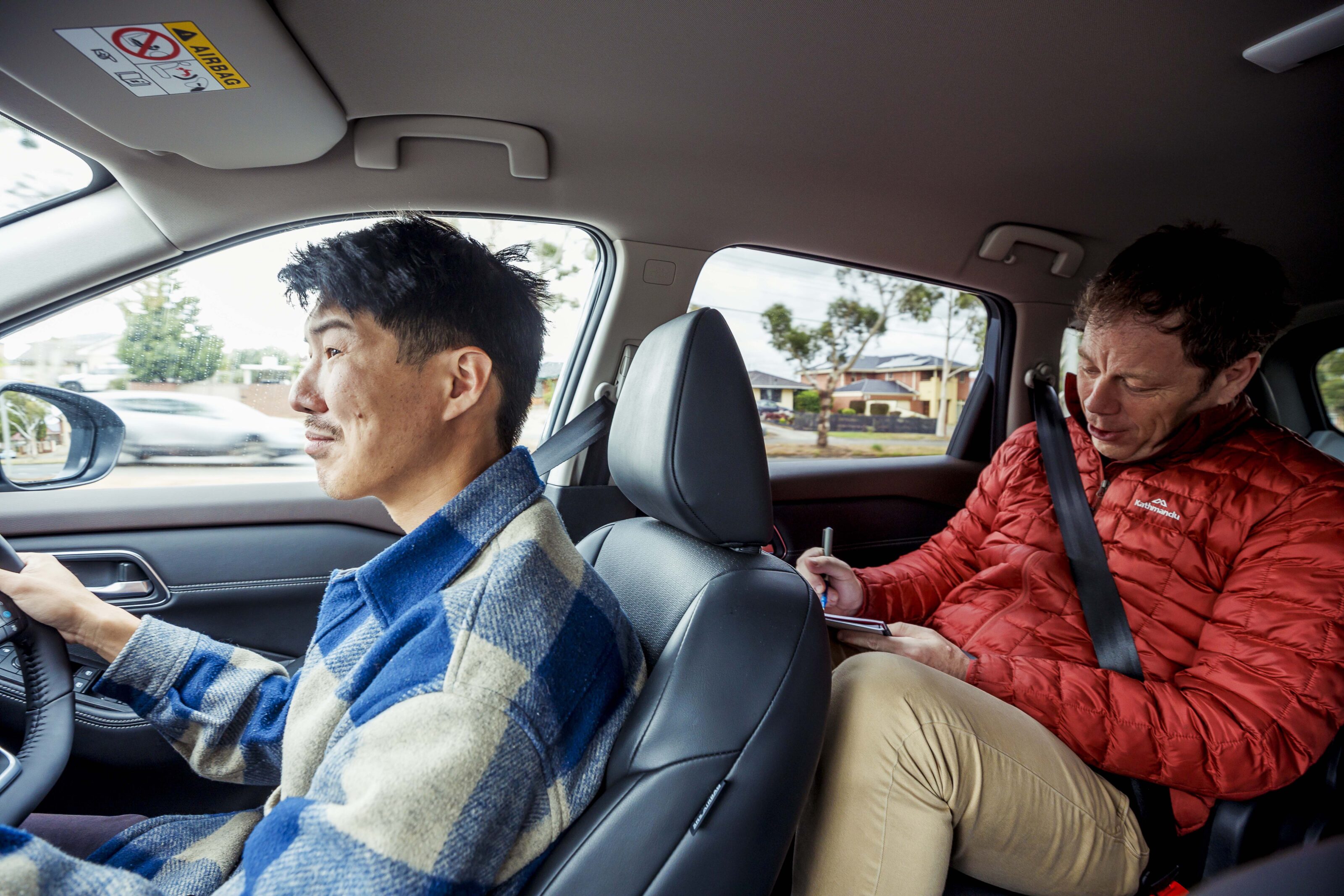
What’s eligible?
We’ve eased the belt out a touch here. Dual-cab utes and ladder-frame SUVs can now be tested to reflect their huge popularity and relevance to Aussie buyers. These segments have also improved at an incredible rate when it comes to dynamics and safety so are deserving of inclusion.
Finally, significant new variants of previously tested models, like a BMW M3, can also make the cut if they impress us enough to warrant inclusion. Game on.
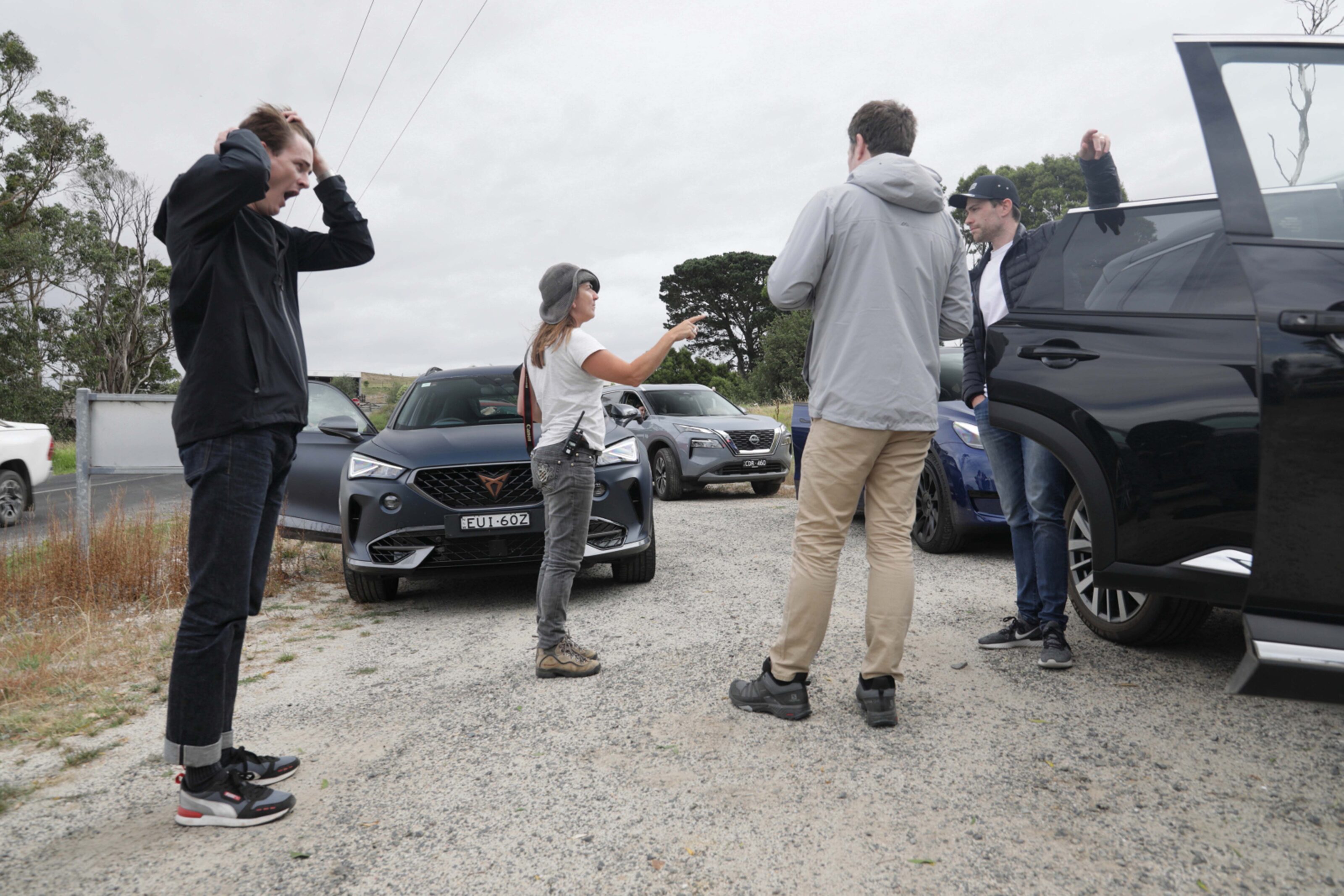
Our judges
Our panel is made up of seven car experts for 2023. Here’s a quick look at their credentials.
Andy Enright
With more than a quarter of a century of road-testing smarts, editor Enright is rarely shy of expressing an opinion on the natural order of things at COTY. Sometimes it’s heartfelt, sometimes it’s a wry hand grenade lobbed in to spark discussion. Either way, it’s rarely dull.
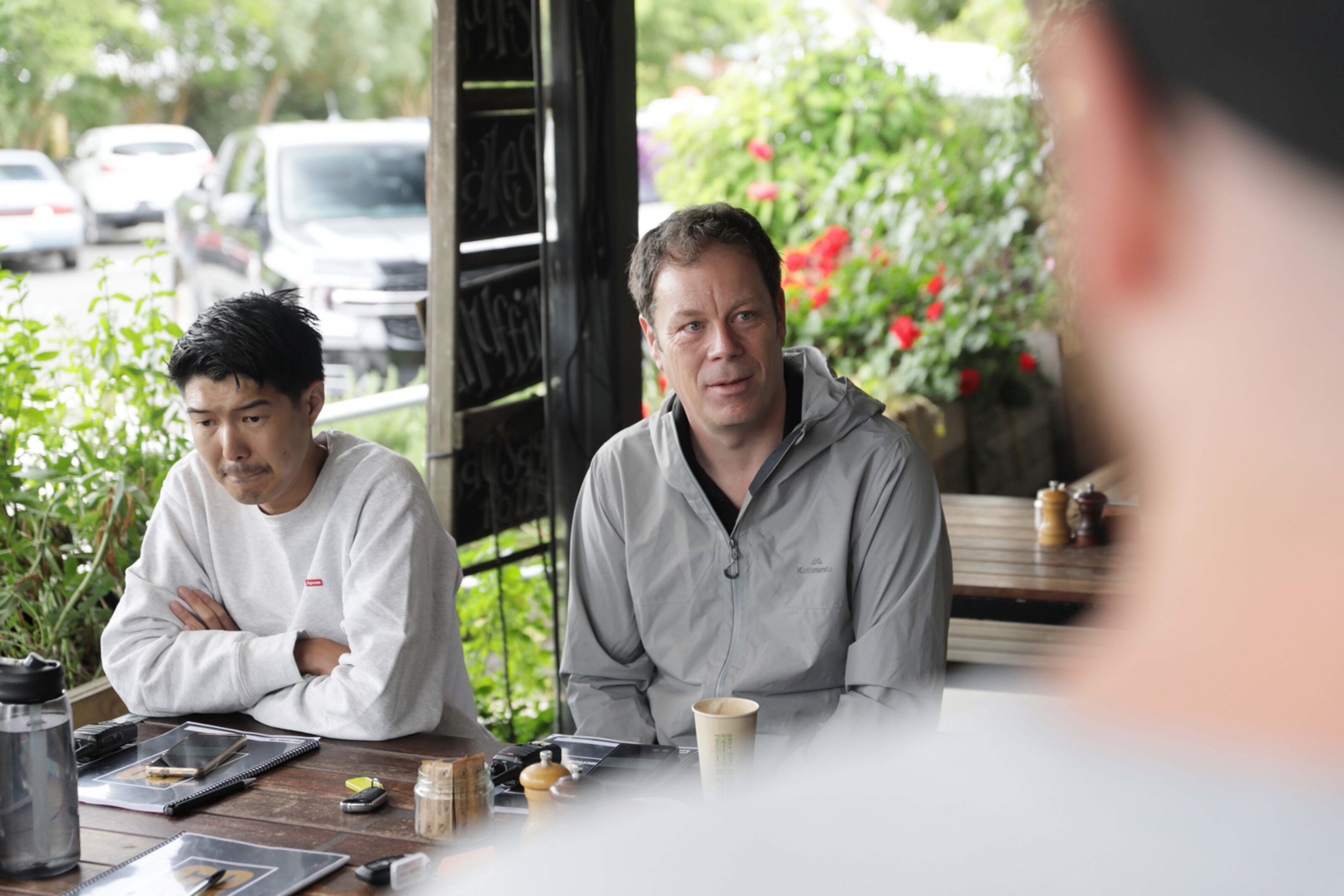
Alex Inwood
Previous editor and now in charge of Wheels online. Born and bred in Bathurst, so he caught the enthusiast bug early by watching Brock, Skaife and Johnson fight it out over the top of the Mountain. Has a soft spot for Porsche 911s, but understands building a genuinely excellent family SUV is probably a greater achievement.
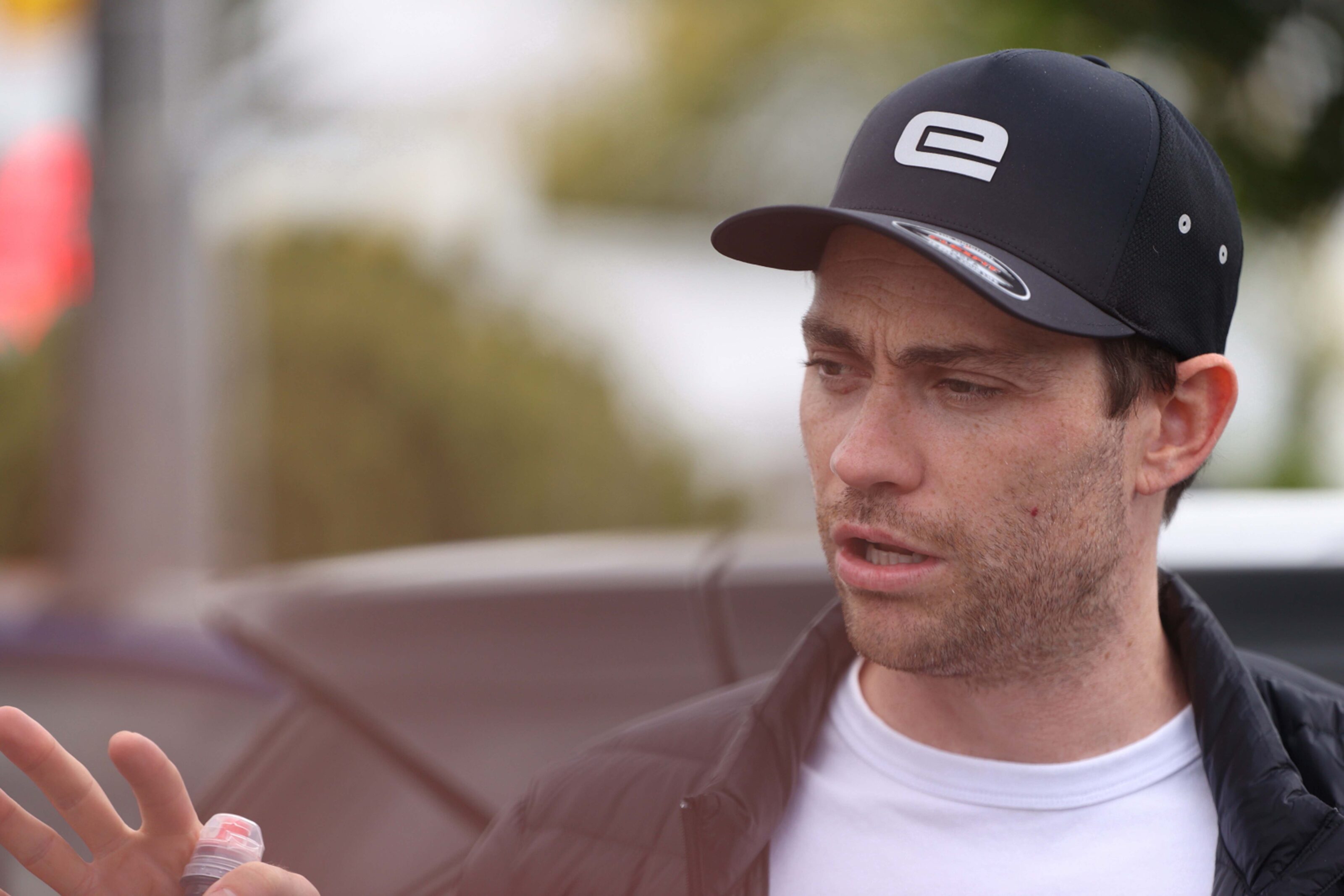
Jez Spinks
He’s the senior rating on deck at this year’s COTY, so we’ll pretend we didn’t notice Jez sideways in the Audi E-Tron GT RS on Lang Lang’s dirt course. As our Chief Content Officer, Jez brings decades of experience to the team and has one of the most sensitive bums in the industry when it comes to assessing a car’s ride comfort.
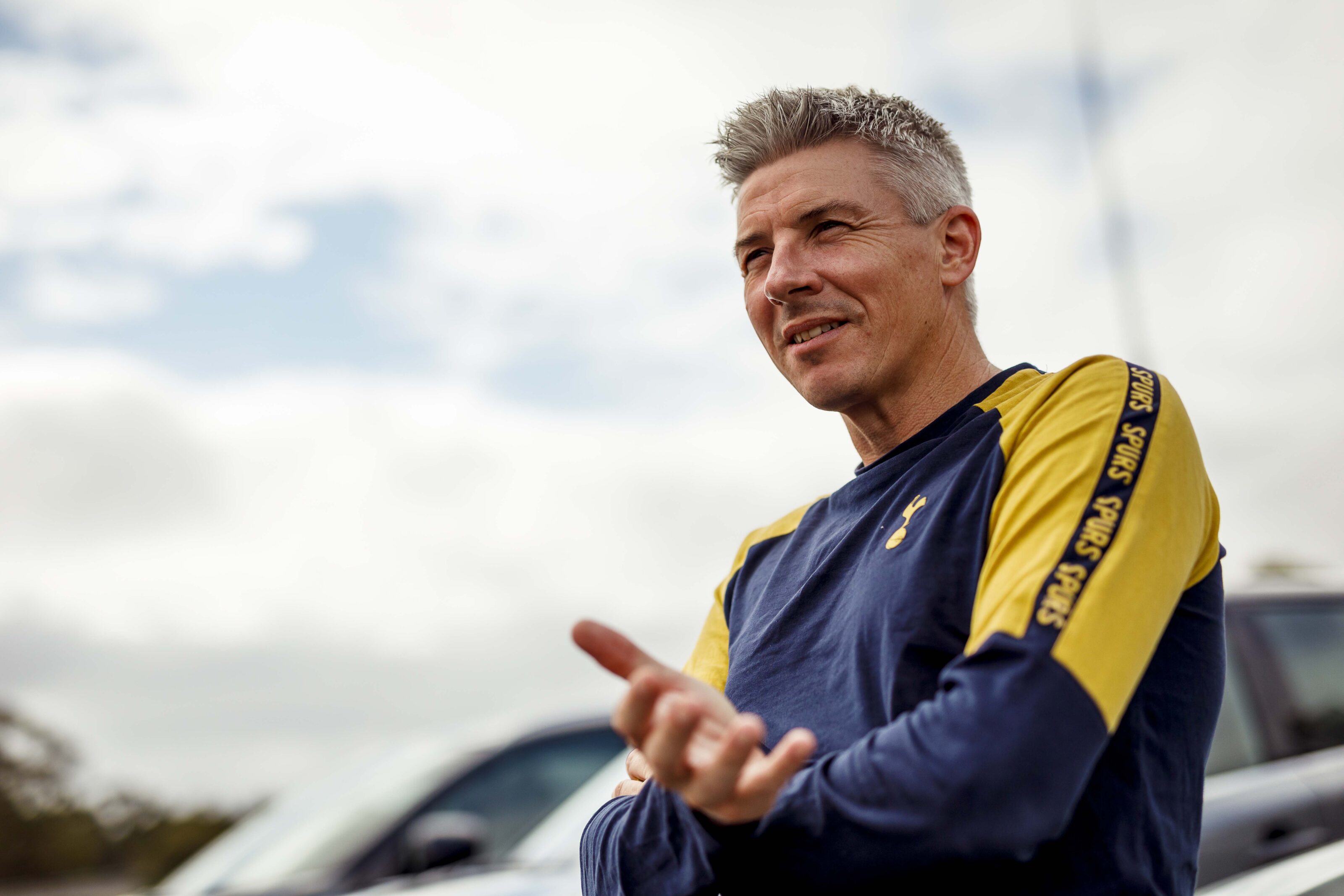
Alex Affat
Possesses a level head and an analytical perspective to proceedings that bely his relatively tender years. Were we to snap him in half, he’d probably have Nissan: Made In Yokohama Since 1933 embossed throughout, but does a very strong job of separating the personal and the professional.
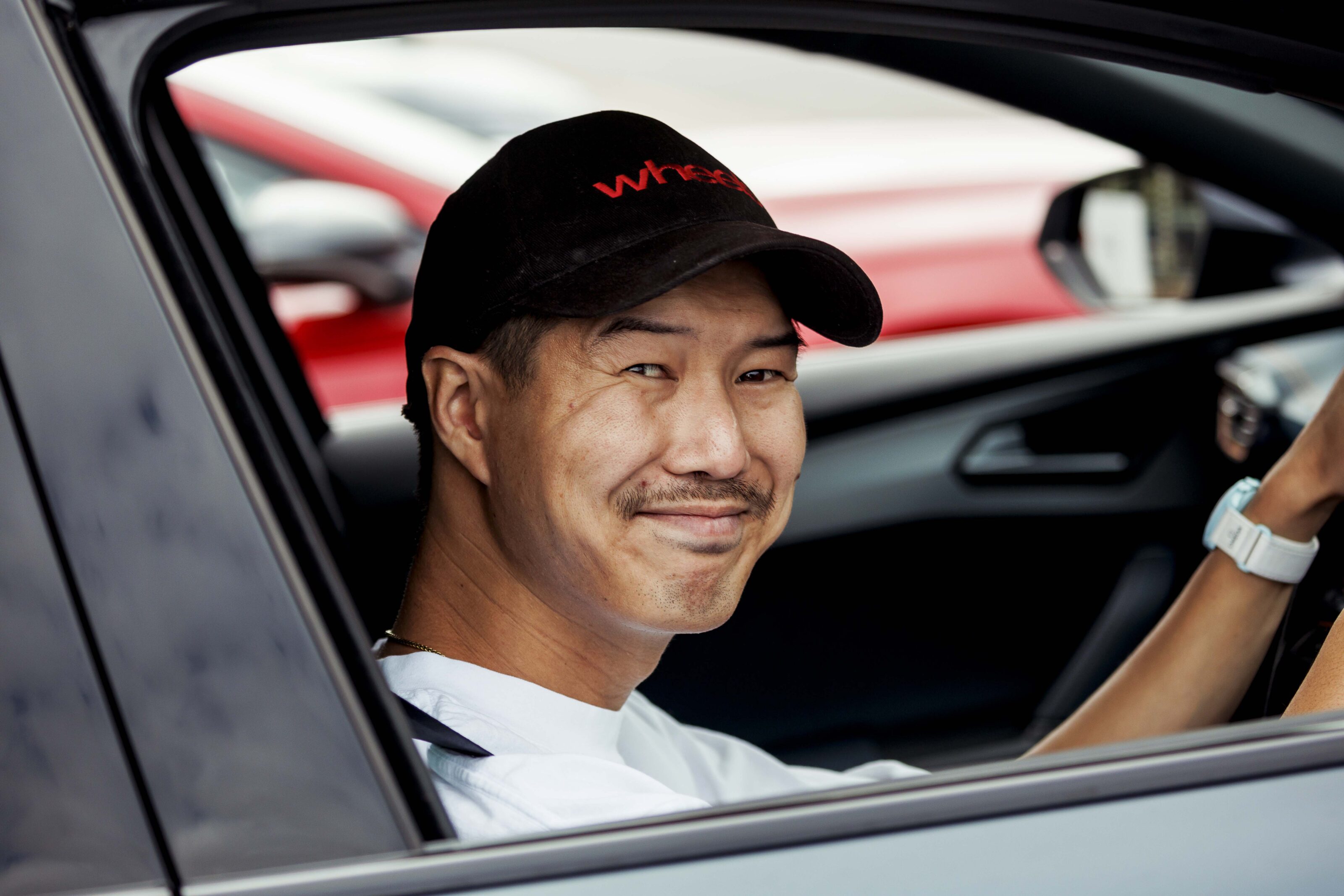
Dylan Campbell
One of three judges with time spent in the Wheels editor’s chair, DC brings a rare mix of experience, talent behind the wheel and unending enthusiasm for road testing. Moose testing too, as he’s the driver tasked with compiling the lane-change data at this year’s event.
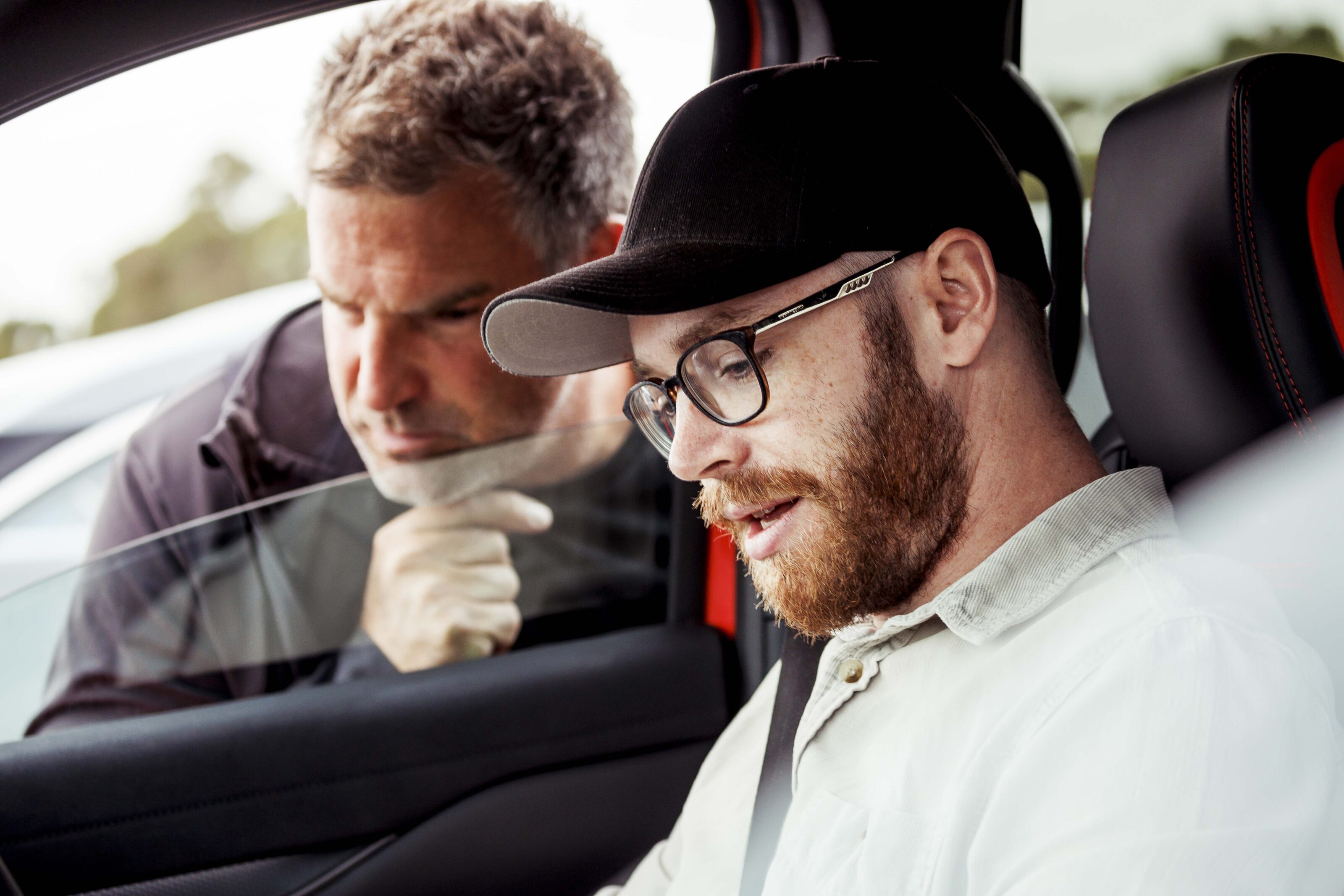
Kathryn Fisk
The head of Wheels’ news desk is about to head out on maternity leave, but that didn’t stop us putting her through the COTY mill. Gamefully withstood the four-ups and still managed to bring a level-headed insight into both relative pricing and real-world practicality.
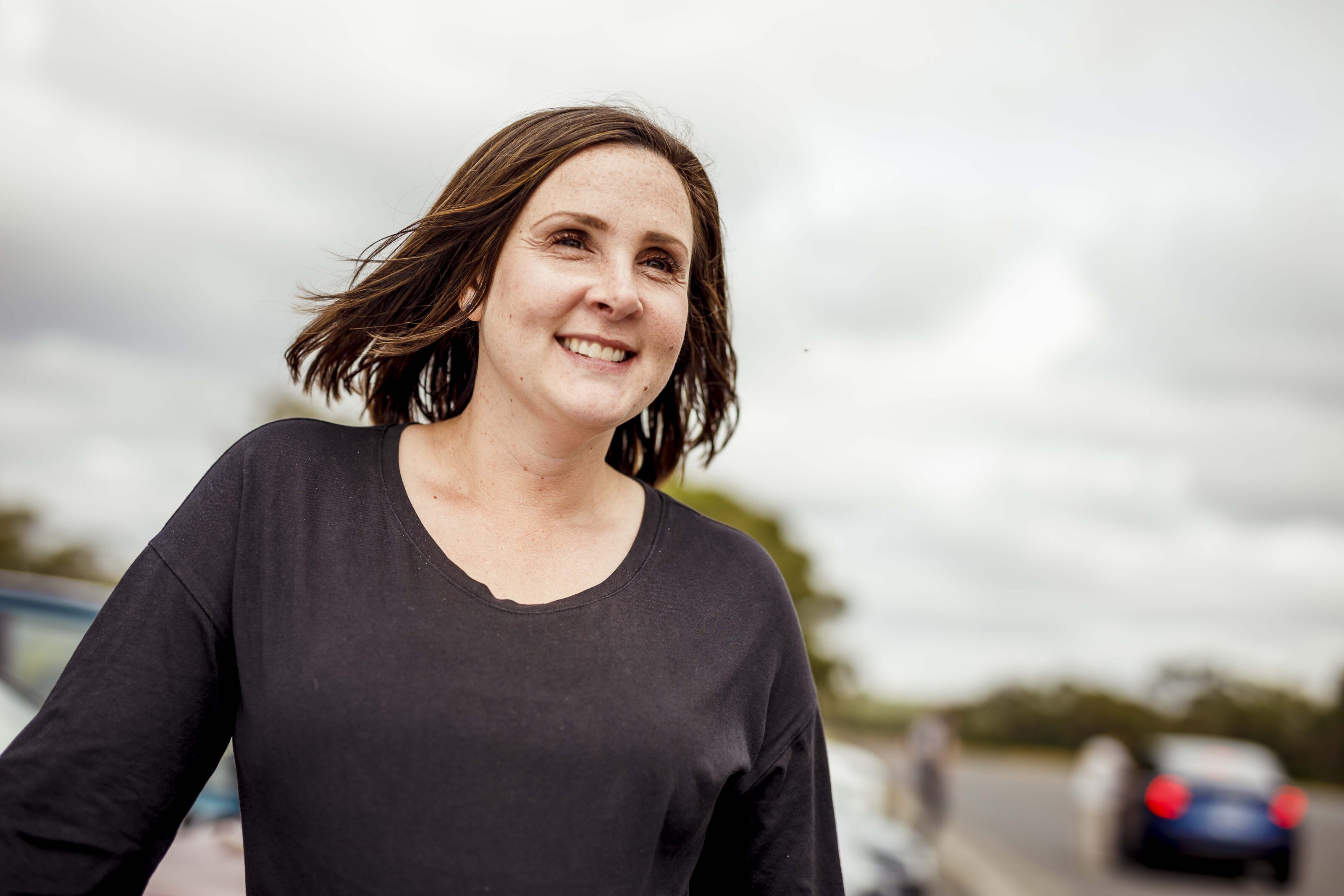
John Law
The other road-testing foetus on the panel, Law’s family holidays consisted of visits to race tracks and car museums, so hats off to dad for bringing the lad up right. Loves to cremate the tyres of something cheap and cheerful at the weekend, but happy to wear the sensible hat here.