
The Greens have proposed a ban on new petrol car sales from 2030
Victorian Greens propose to:
- End Laboru2019s road user charge
- Offer up to $15,000 u2018eco bonusu2019
- Install solar-powered home chargers
The Victorian Greens party has announced its latest electric vehicle policy, in the lead-up to next month’s state election.
The Greens have proposed a ban on new petrol car sales from 2030, a jobs and innovation fund to kick-start Victoria’s industry, solar-powered home chargers, cash incentives up to $15,000 for EVs and to scrap the Labor Government’s road user tax.
The policy comes from the Greens electric Vehicle Rapid Uptake plan, designed to cut transport emissions by incentivising the switch to EVs.
The Greens’ ambitious plan targets both private and public ownership scenarios, all with the aim of cutting emissions.
The Andrews Labor government currently holds power in Victoria and its road user charge, designed to offset the loss of fuel excise, has attracted plenty of criticism – including a damning open letter from Australia’s industry bodies.
The Greens have never held majority power in Government, with Victoria’s Labor and Liberal parties more likely to win the coming state election. Support for the Greens has been growing significantly, however, with notable successes in the 2022 federal election.
Headway around electric vehicles in the upcoming Victorian election will be strictly state-related, with Australia’s federal EV-policy still in development.
What are the policies?
To get individuals into electric vehicles quicker, the Greens want to abolish stamp duty and offer up to $15,000 for electric vehicle purchases under $77,565.
Removing Labor’s current road-user charge – at 2.6 cents/km driven – and free registration is also in the plan.
The Greens also want to enact a ban on new petrol car sales by 2030, five years ahead of the EU’s 2035 stop-sale of all ICE vehicles.
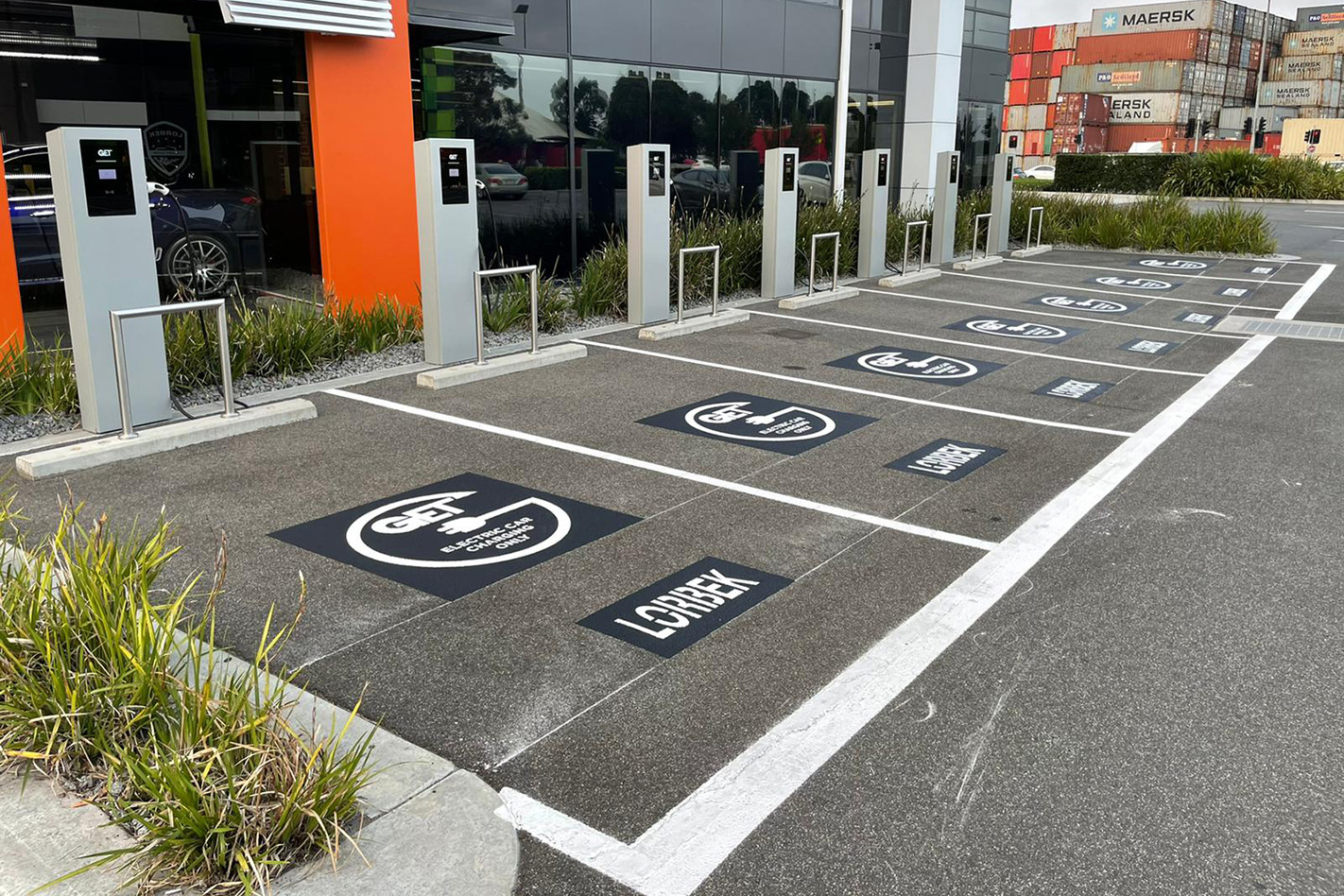
Additionally, the Greens are keen to grow charging infrastructure. Specifically, with destination charges to be installed at train station car parks and a mandate for all new developments to incorporate EV chargers.
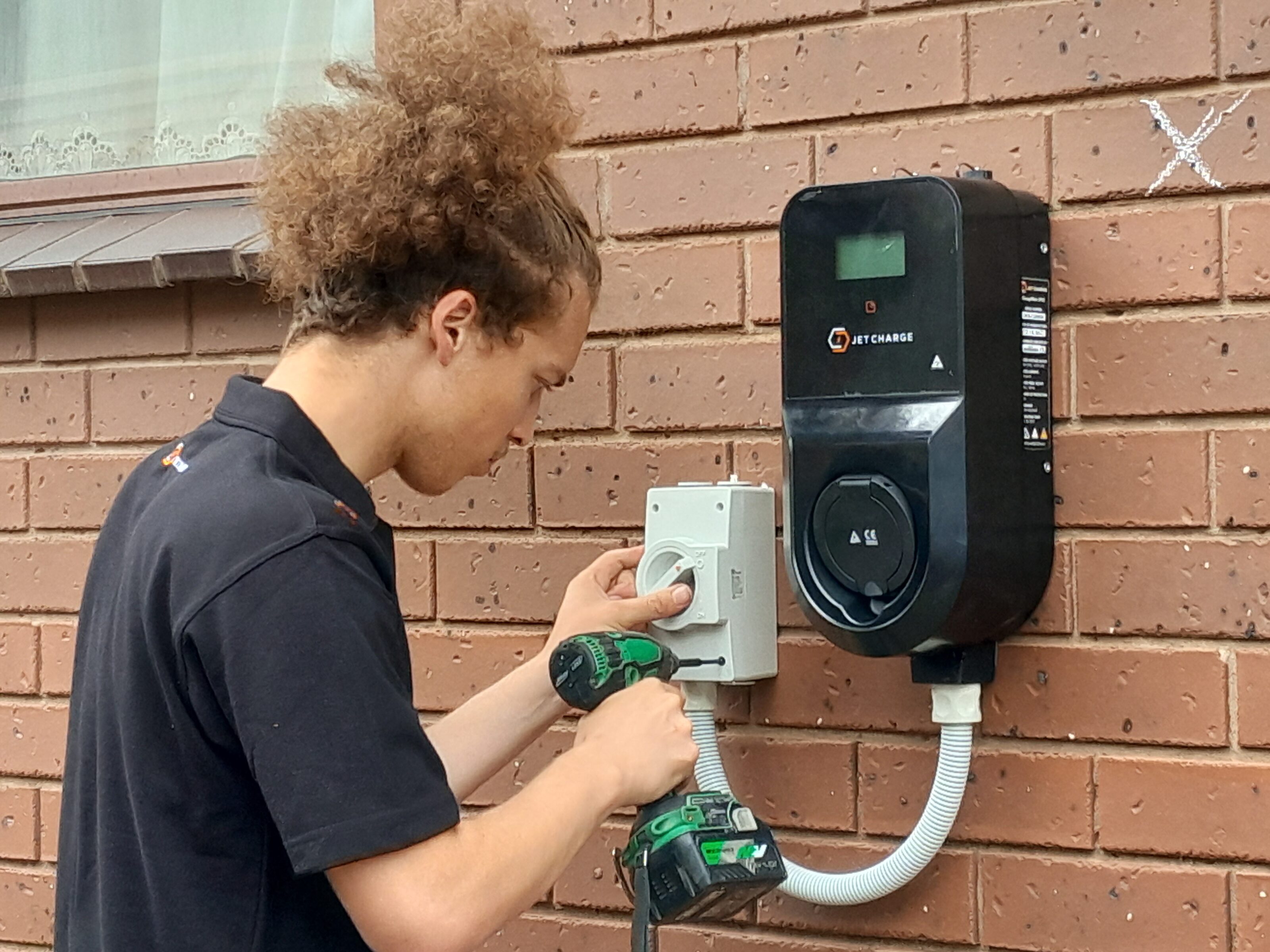
For the many who don’t own property, the Greens have proposed ‘Right to Charge’ laws, giving renters the right to install a home charging station without a landlord’s say.
Fleets and industry
The proposal also incentivises a return of Australian manufacturing, suggesting a target of 3000 electric buses made in Victoria, and incentives to get 5000 more EVs into government fleets.
The run-on effect of government fleet EVs should equate to more affordable second-hand electric vehicles on the market, too.
Finally, the Greens have proposed a fund to bolster manufacturing and development jobs in Victoria with an eye on software, charging, component manufacturing and battery recycling.
UPDATE: Australian pricing revealed for Alfa Romeo Tonale
The incoming new Alfa Romeo Tonale is now available to order in Australia, priced from $49,900 with a petrol-electric powertrain.
Two variants will be offered from launch – the Ti and top-shelf Veloce – and first deliveries should arrive by February 2023. Get all the details at the link below.
The story to here
May 2022: Alfa Romeo Tonale, international first drive
First published in May, this story is unchanged.
The 2022 Alfa Romeo Tonale is the brand’s first model to have full access to the Stellantis parts bin. And as an SUV, it should in today’s commercial environment be a licence to print money.
As it happens, Alfa needs plenty of money to fund the transformation from DOHC fame and quattrovalvole emotion to anonymous inverters and nondescript performance electronics.
The Tonale is in fact the final old-school product to be released before the E-age begins late next year with a set of four dedicated electric STLA architectures. The newest addition to the range is based on the oldest platform the engineers could find, namely the Fiat-Chrysler CUSW components set first introduced in 2010 and used until 2020 in the Alfa Giulietta.
Featuring MacPherson struts all round, this front-wheel-drive matrix was for the Tonale fitted with a unique cryptographic element that relies on blockchain technology to record and memorise the entire vehicle history from assembly line to shredder.
Like the Stelvio, the Tonale is named after a mountain pass in the Dolomites. “No more peaks and summits from now on,” promises the CEO Jean-Philippe Imperato, formerly with Peugeot, grinning broadly.
“Our third SUV, which is currently ghosting through the media, will certainly not be named as rumoured after an Italian lake, mountain, city or region.”
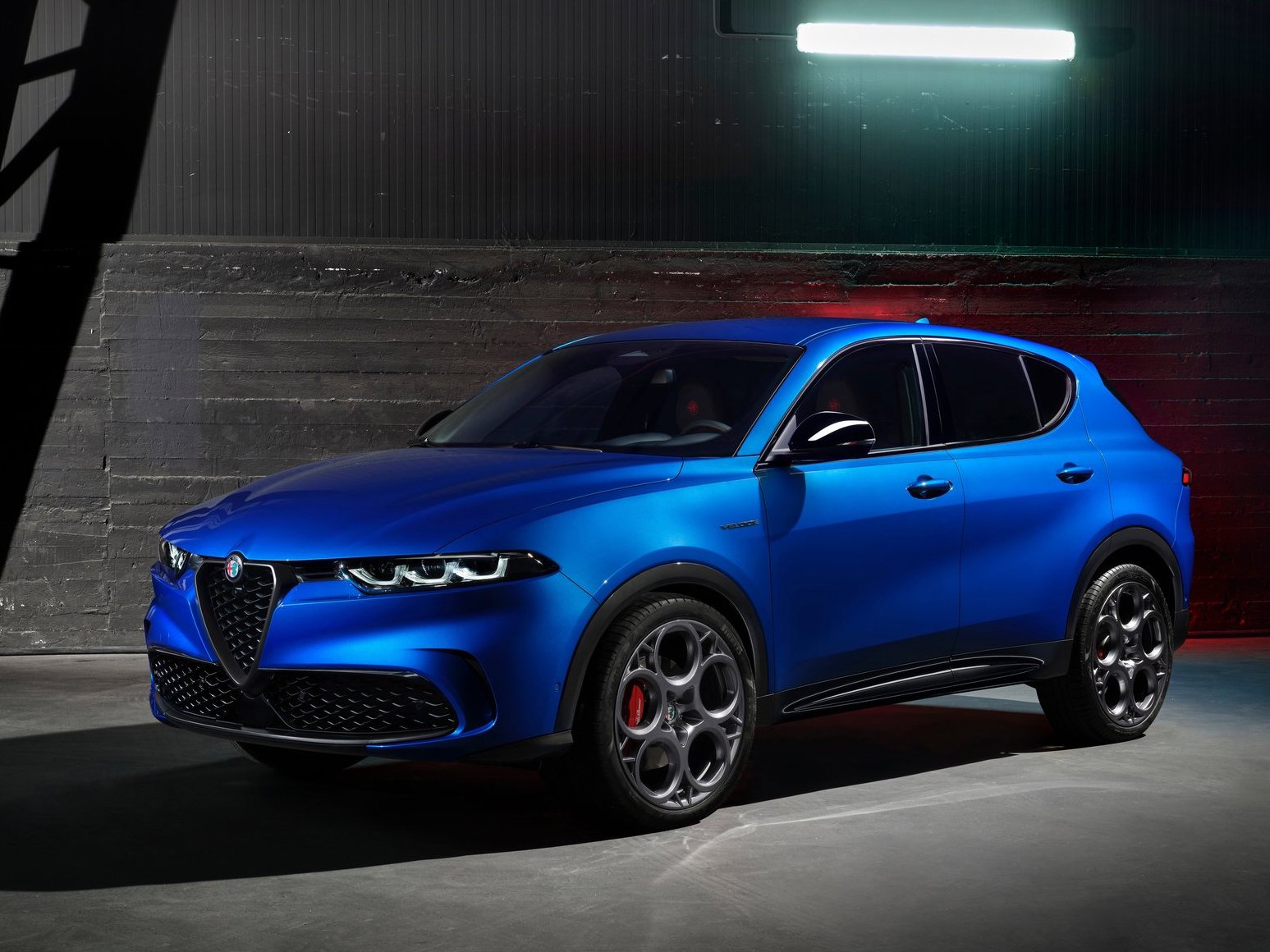
While the Tonale shares its genetic disposition with the Jeep Compass, its smaller T-Roc-sized stablemate due in 2024 taps the second-generation eCMP layout originally conceived by Peugeot-Citroen. This model will be offered with a choice of petrol and electric drivetrains.
According to a source from within Alfa, the plan is to combine a small, compact and light 55kWh lithium battery with a single motor that drives the front wheels with up to 105kW and 270Nm of electric power. Pricing is expected to start in the low €30K region.
But back to the Tonale, which lands a clever world-first feature in the shape of a non-fungible token (NFT) that locks the car and its data history in the blockchain. From the very first ignition spark, this device documents all relevant information, facts and moves including accidents, vandalism, repair work, tuning, change of ownership, and aftermarket add-ons, as well as significant wear and tear.
A telematics module records the mileage, cameras capture any maintenance activity, and a black box monitors the charge cycles and the user behaviour with tamper-proof technology. The transferable system puts an end to the crime of turning back the odometer, makes the service booklet electronically unforgeable, consolidates the resale value and therefore is an essential element of the newly introduced unconditional five-year warranty.
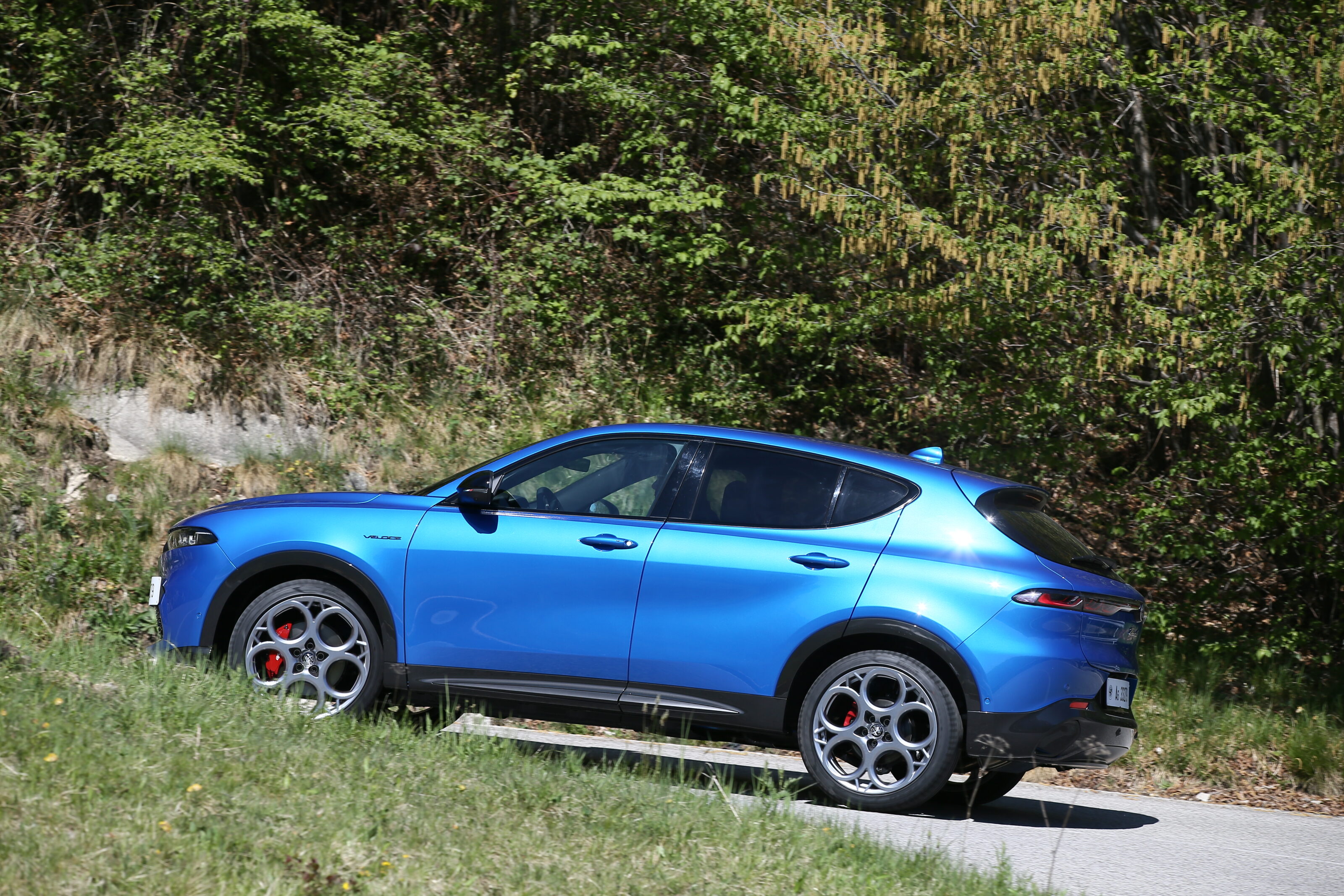
With prices starting at €35.5K (AU$52,375), the Tonale takes aim at the BMW X1, Audi Q3, VW Tiguan, Ford Kuga and Mazda CX-30 to name only the most prominent rivals. The Jeep Compass it shares DNA with costs over ten per cent less, but the Alfa interior is much more advanced, and then there is of course that hard to quantify image bonus.
Derived straight from the acclaimed concept car, the newcomer from Arese exudes plenty of flair, chic, style and italianitá while offering tangible benefits like a large 500-litre boot, enough space for four adults, straightforward ergonomics and plenty of assistance systems.
Depending on the equipment pack (on offer are Super, Sprint, ti, Veloce and Edizione Speciale), the specification ranges from complete to lavish. No money in the world will however buy a manual transmission, all-wheel drive, sunroof or head-up display.
Some markets still need the 97kW 1.6-litre diesel, but the bulk of the model mix will be 97kW and 119kW hybrids featuring the latest 1.5-litre petrol unit. The hybrid module adds a 48V system, a 20kW electric motor good for an extra 55Nm, and a 0.77kWh battery to the tally.
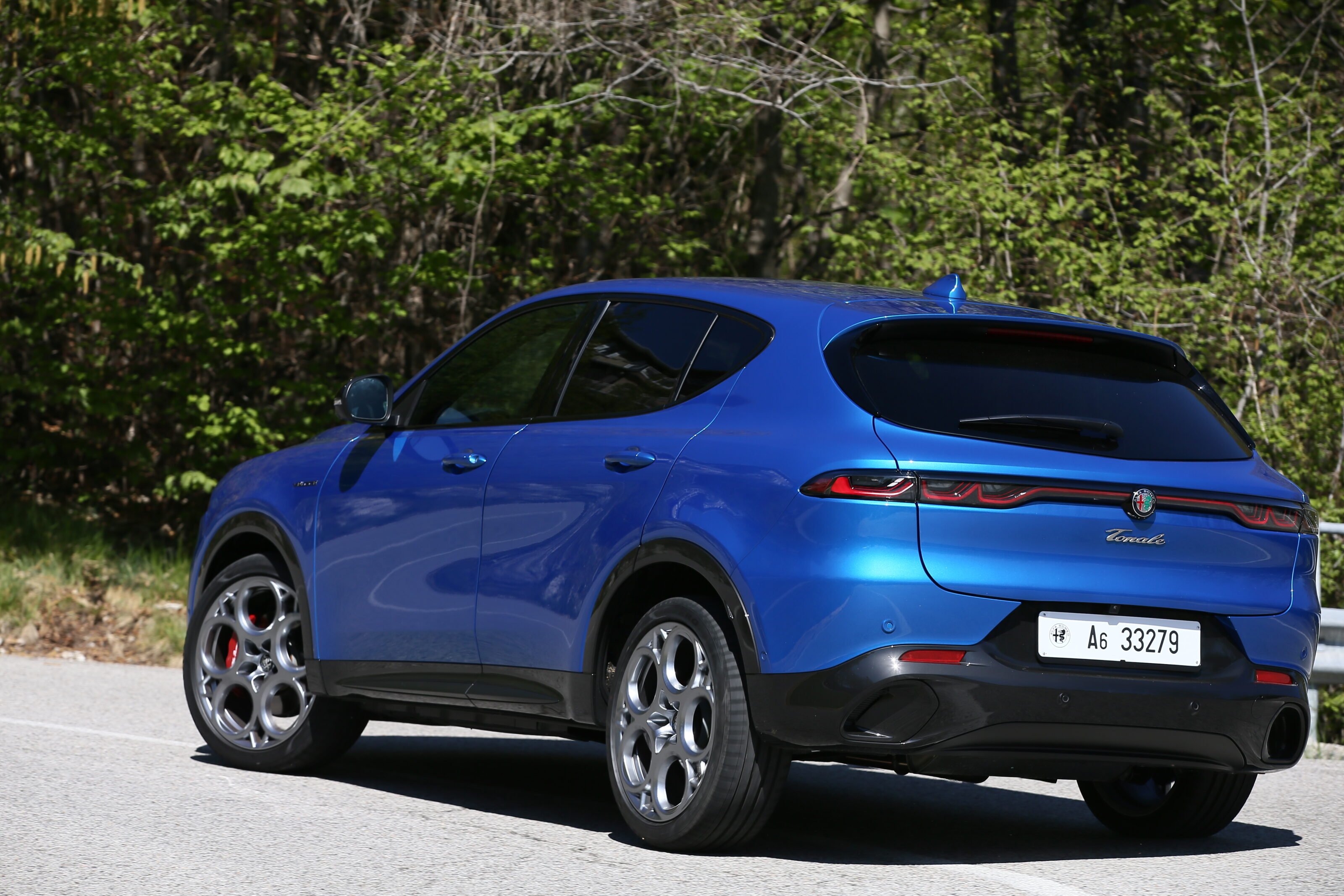
This extended volt and watt configuration enables the car to take off in total silence and to travel a couple of clicks in zero-emission mode. Since the engine-off stamina depends on the state of charge of the tiny secondary energy cell, the exact e-range is a bit of a guessing game, but the consumption (6.3L/100km) does benefit without a doubt from the hybrid support.
The battery weighs 13.5kg, sits underfloor between the seats and is charged purely by brake energy recuperation. In combination with a seven-speed dual-clutch automatic transmission, the dual-heart power unit accelerates the Tonale 1.5 VGT from 0-100km/h in 8.8 seconds. The top speed is a perfectly adequate 210km/h.
Alfa had originally planned to offer its six-eyed summit wrestler right from the beginning in hybrid and plug-in hybrid (PHEV) all-wheel-drive form, but after sampling the first prototypes, commendatore Imperato gave the mules the thumbs down for a distinct lack of grunt and go.
This explains why the upgraded PHEV version is six months late but with a beefed-up system output of 205kW it may well be worth the wait. While the petrol engine of choice is a frugal 1.3-litre unit, the battery-fed e-motor that drives the rear wheels develops a healthy 90kW (10kW more in overboost mode).
Backed by a feisty 550Nm of twist action, this kraftwerk can reportedly beam the 1600kg crossover from 0-100km/h in 6.2sec. It allegedly takes only 2.5 hours to fully recharge the 15.5kWh battery. The electric range varies between 60km and 80km depending on the respective cycle. Prices are expected to begin at €52.5K (AU$77,500).
In 2021, Alfa´s worldwide sales totalled 60,000 units with America taking roughly 50 per cent – a far cry from the 200,000 cars envisioned by the late Sergio Marchionne. Whereas the Italo-Canadian CEO would have launched replacements for the charismatic 8C, GTV and the coveted Spider before refocusing on volume models, Imperato chose a much more pragmatic approach.
“At Stellantis, every single model must be profitable. Losing money on a halo car even if it boosts the brand image is an absolute no-go. Before Tonale, Alfa had only the Giulia and the Stelvio. Great cars for sure, they compete in a league dominated by the Germans. Furthermore, they are too pricey for Alfisti who would like to trade up from a Giulietta, let alone the MiTo.
“Let me be quite clear about this: the portfolio we are working on will include more and more affordable products. Having fixed the quality issues, the next priority is to kick up the resale values. Lower and absolutely transparent running costs are the key to commercial success.”
Imperato may look a little older than the 56 years stated on his ID, but he is still passionately racing touring cars (often with Carlos Tavares) and his favourite track is the Nordschleife, which he has lapped more often than any other circuit.
That’s why he is relentlessly evolving the brand’s trademark cuore sportivo, the dynamic strengths of the model range and the head-turning design.
“But before we reach for the stars, we must get the basics in order. I could for instance build 80,000 to 90,000 Tonales which would get us properly restarted. The market is definitely ready for more aggressively priced, indisputably attractive Alfas. That’s why the small SUV I mentioned earlier is only a first step towards an even brighter future.
“There is more to come, like a compact five-door hatch positioned alongside the Opel Corsa-e and the Peugeot e-208. Make no mistake, a proper Alfa Romeo is not defined by size but by the way it looks, feels and drives.”
Before we hit the road, chief engineer Daniel Guzzafame promised a memorable day in a memorable car, an Alfa capable of meeting or even exceeding everyone’s expectations.
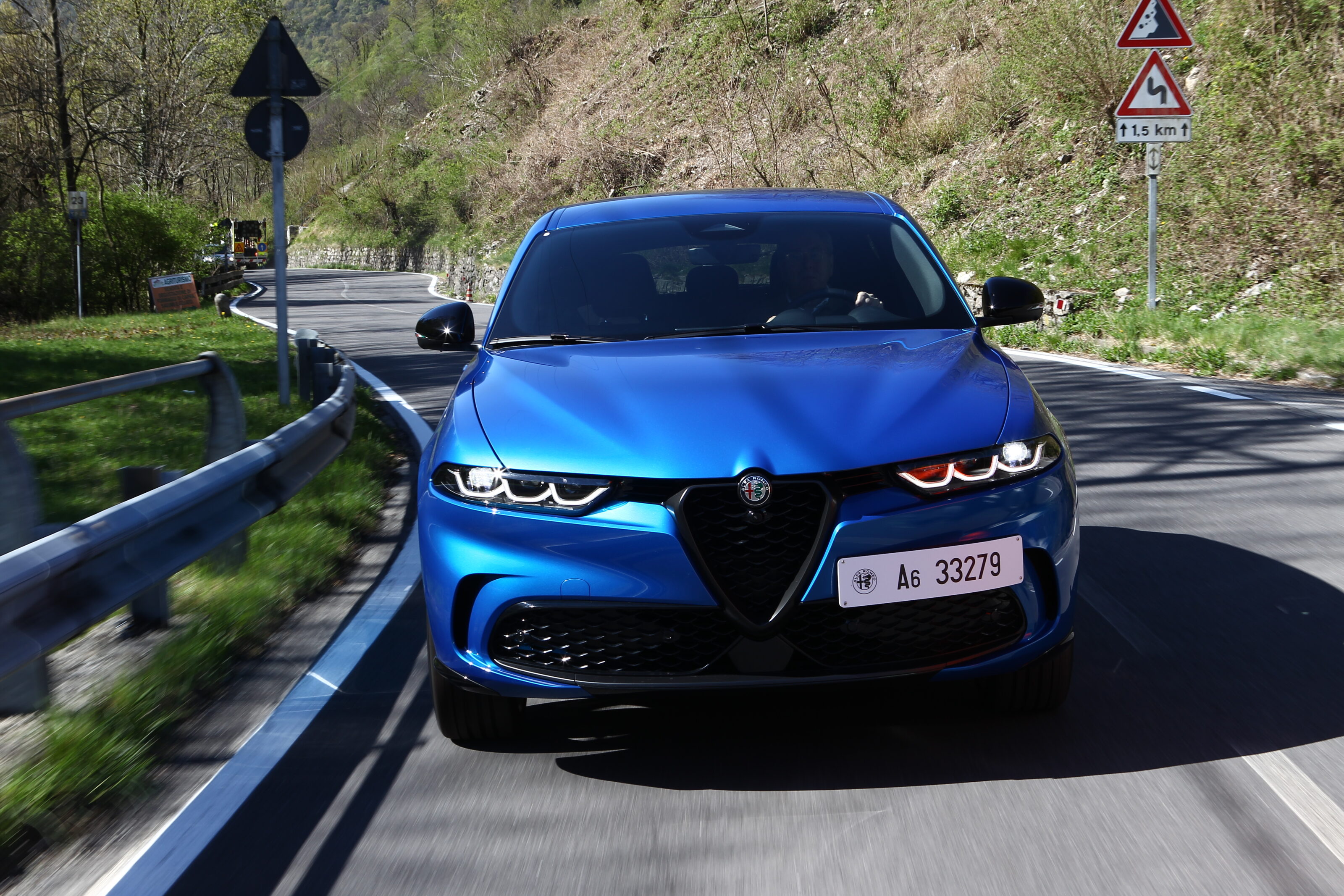
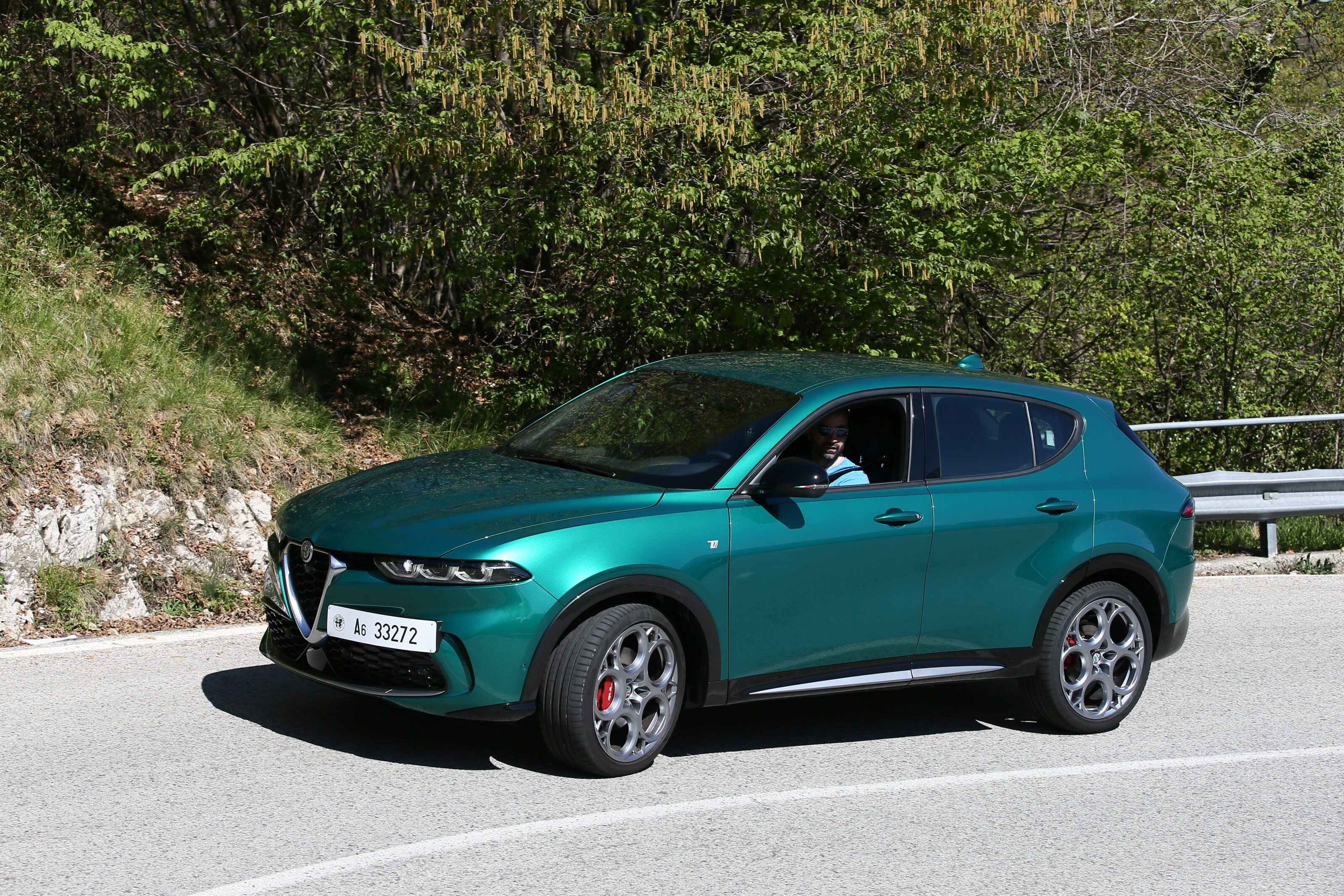
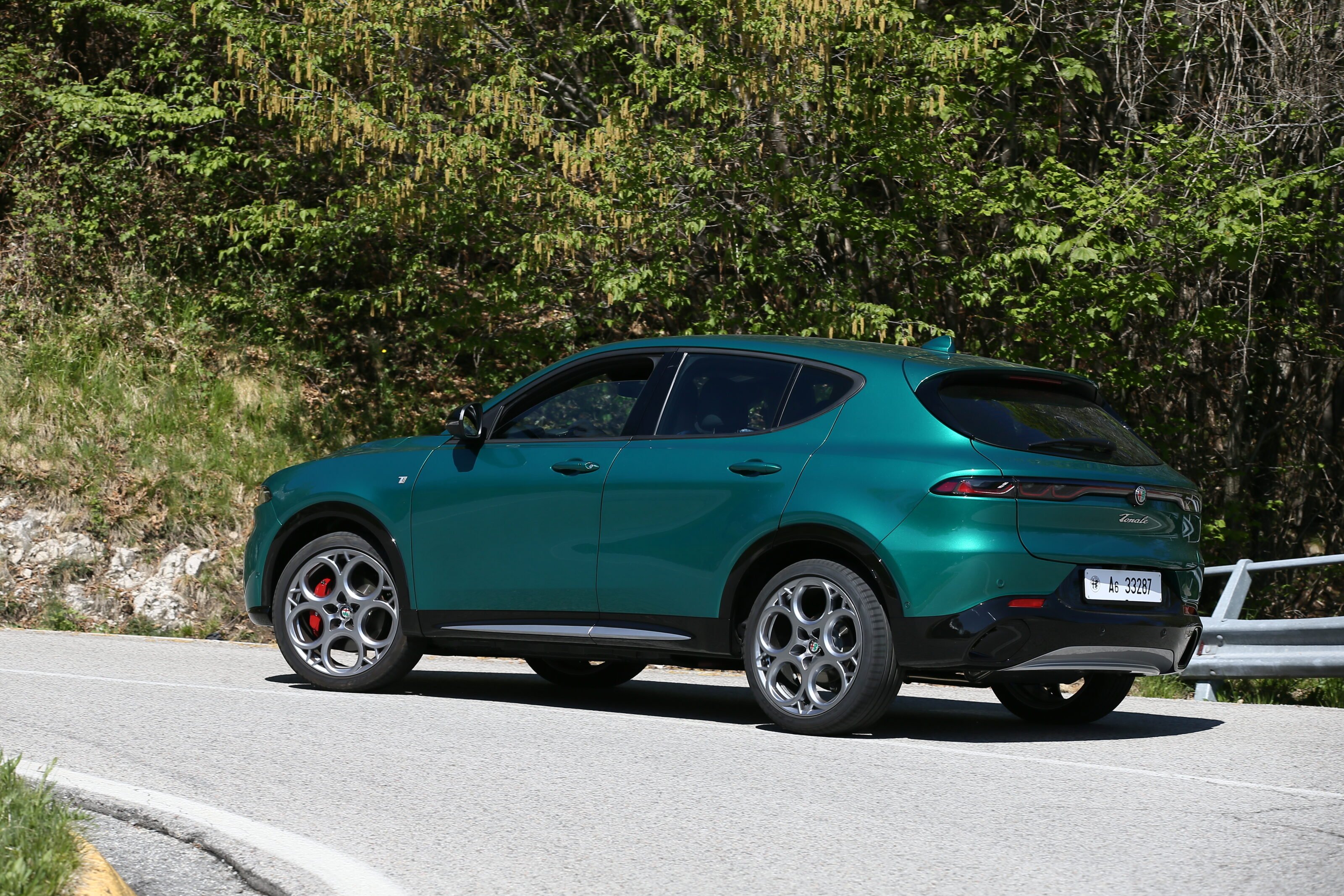
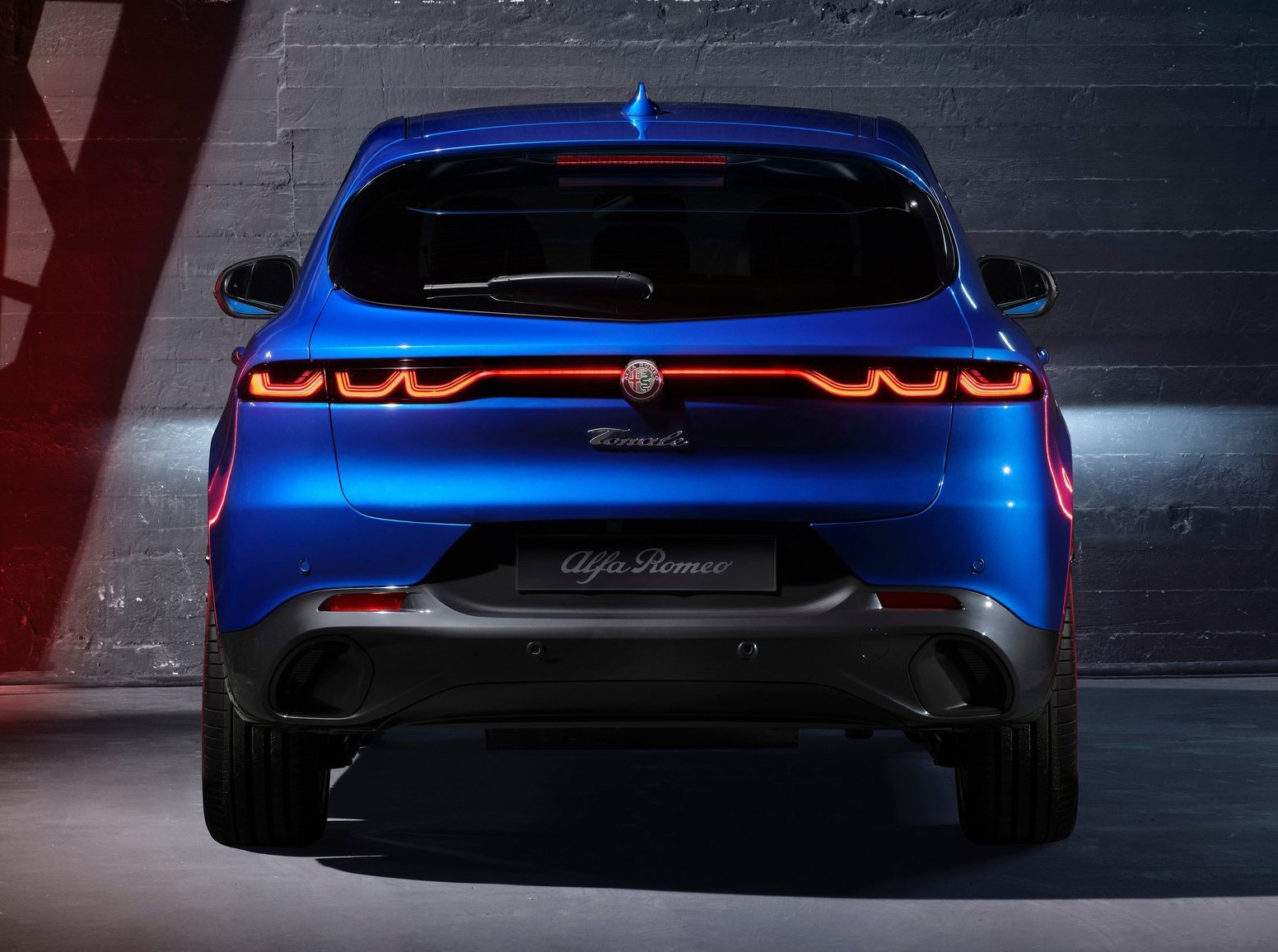
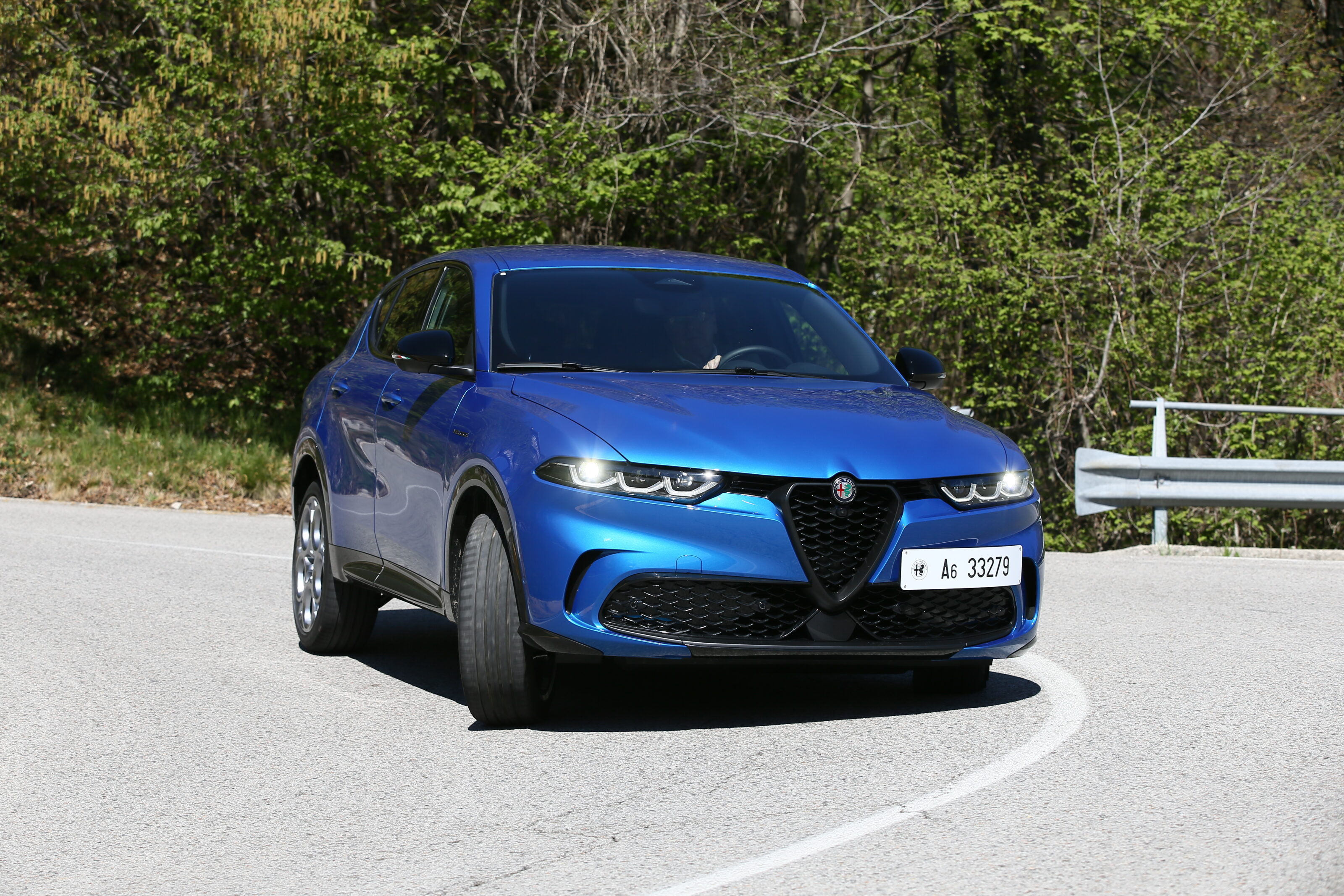
Wishful thinking? The Misano Blue specimen certainly did look appealing: 20-inch telephone dial alloy wheels, Brera-inspired triple headlights, a large scudetto (shield) complemented by the trad dei baffi moustache, not to forget that long and sleek silhouette even though it sits on a relatively narrow track.
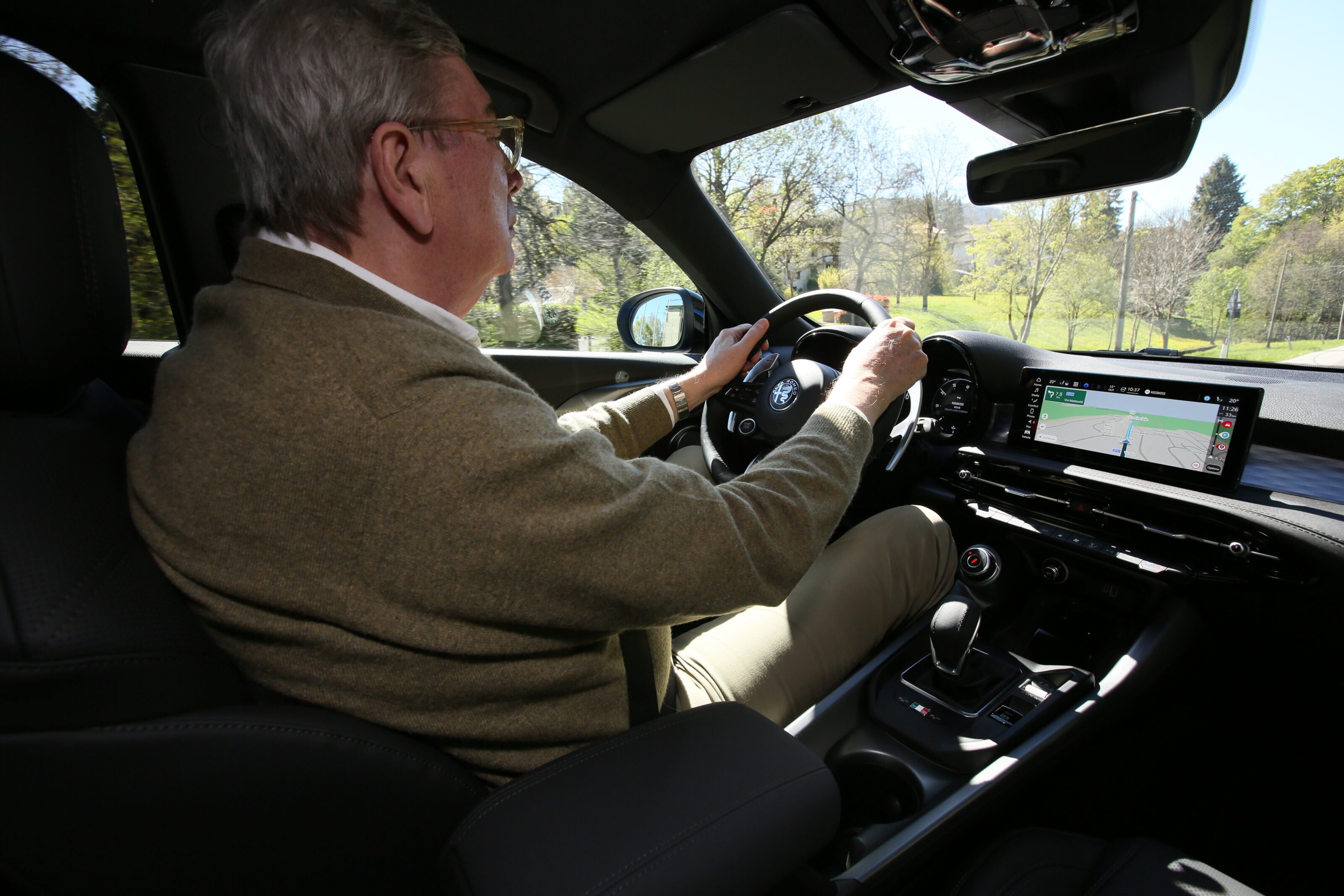
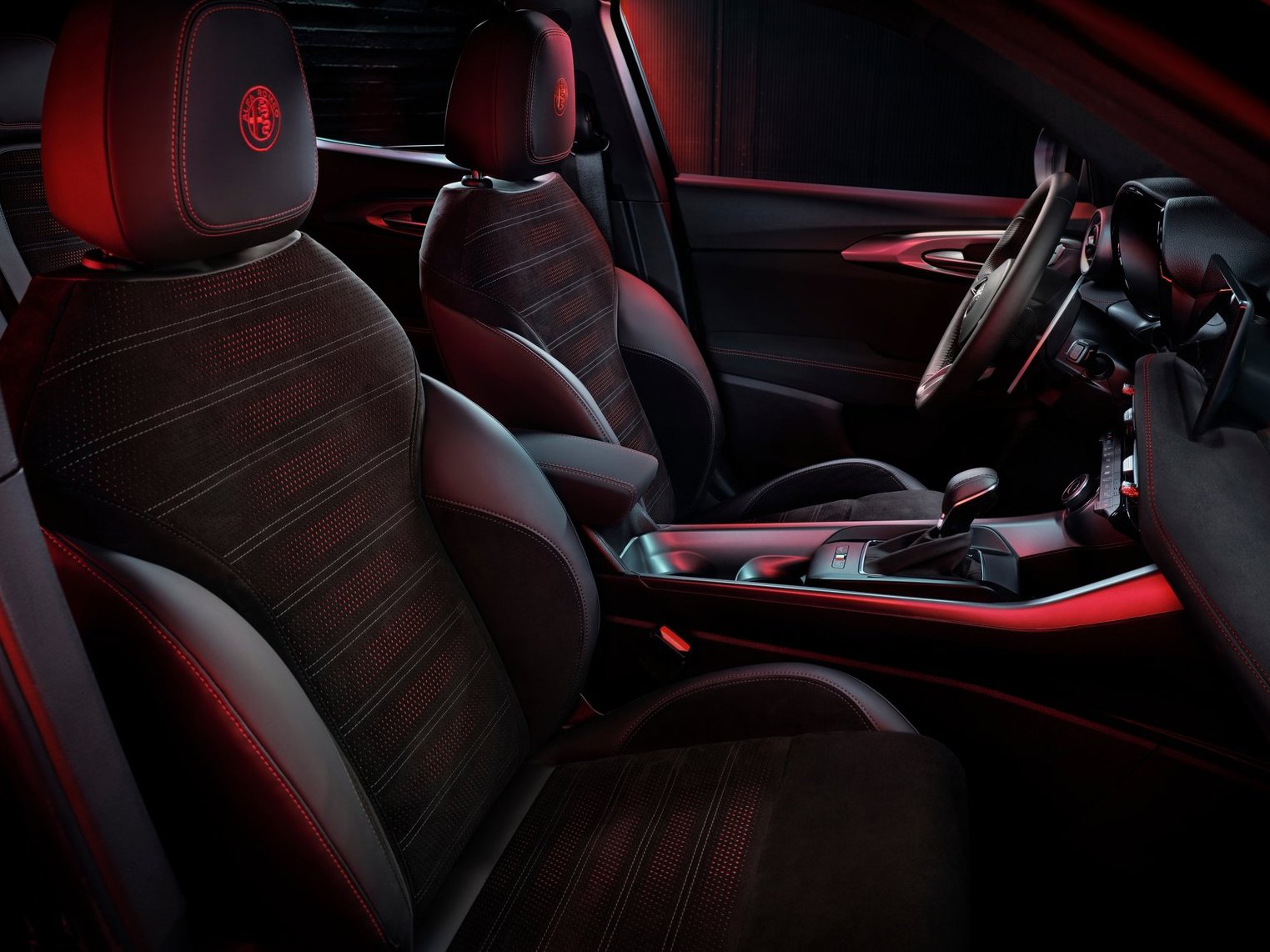
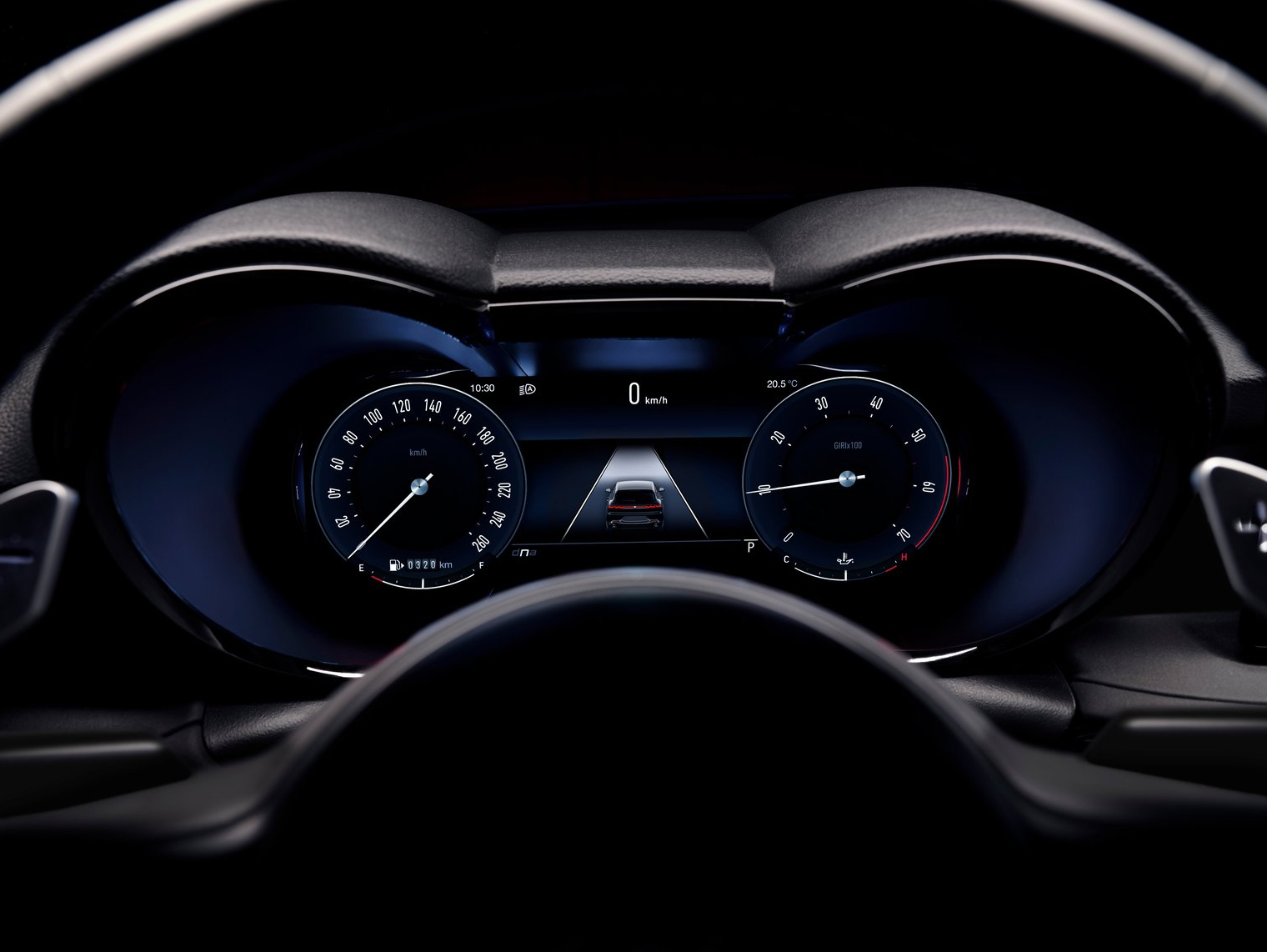
The interior oozes style and class. Its main instrument display houses a speedometer and rev counter in analogue and clearly calibrated form, which is an obligation for every Alfa. The fixed centre touchscreen is too far away for tall drivers, but at least the menu is logically structured, and the high resolution is excellent.
Other heart-warming items are the XXL shift sickles inspired by Valtteri Bottas’ F1 cockpit, the starter button on the steering wheel and the stubby quickshift gear selector. Conspicuous by their absence are the overboost button, E-drive selector and bi-modal exhaust.
The cabins of many previous Alfas – including the pre-facelift Giulia – were sombre and barren chambers trimmed with blackish cheapo surfaces, short of substance and lacking a clear brand identity, sporting ho-hum ergonomics and suffering from persistent connectivity issues. If the Tonale is anything to go by, all that is history now.
Materials are of top-shelf quality, the fit and finish leaves nothing to be desired, the software is positively up to date, and the cabin ambience matches the ambition of the marque at long last. The seats are comfortable and supportive, and the adjustable steering wheel connects both hands to the road like a telepathic roundel.
Only the DNA drive mode selector is positioned out of sight and almost out of reach somewhere close to the driver’s right shin. Normal, Dynamic and ESP Off modes function the way they do in other Alfas, but Advanced Efficiency is unique to the hybrid. Whenever possible, it will select one of six e-drive programmes that include boosting, creeping, queuing and parking.
The chosen route around Lake Como is perfect for tourists but a nightmare for motoring journalists. The three staggered speed limits – 30, 50 and 70km/h – are heavily enforced, the dense traffic turns the nature reserve into a rush-hour testbed, and the roads are too narrow and winding for any car to stretch its legs.
Thus handicapped, we can’t tell you for instance how the Tonale performs on the autostrada, through high-speed esses and when accelerating hard above 120km/h. We know for sure though that the commendably direct steering feels disappointingly mushy around the straight-ahead position and during the initial turn-in phase.
The self-centring effect is too pronounced, the effort is too light and detached in Normal, and the turning circle is too big. Things only improve in Dynamic and above 90km/h when the helm starts to get interested, tightens the line, speeds up the flow and sharpens the feedback. The Alfa guys listened, nodded and claimed it’s a quick software fix.
Still on the debit side, we found it hard to fall in love with the drivetrain. There may be extra power and torque on tap when you need it, but the driver cannot actively summon it, and since the boost effect is available in any gear, at any revs and at any speed, it feels at best like a tailwind but never like a wham-bang afterburner.
The worst flaw by far is the sticky, sedate throttle response. Hold the revs at 4000rpm with the gear selector in D, then floor the accelerator, and you will have to count to three before the full forward thrust breaks cover. Somehow, the dawdling e-drive and the indisposed variable-vane turbocharger don’t see eye to eye.
Adding insult to injury, the dual-clutch transmission allows itself too much full throttle clutch slip, thereby contradicting its fast-shifting, quick-acting working ethics.
Normally, 20-inch Pirellis don’t bode well for a car’s low-speed ride, its tramlining habits and torque steer behaviour. In this case, however, the fat rubber, the adjustable dampers and the independent suspension muster enough compliance to ride out all but the very worst vagaries of the ancient northern Italian turf.
Even rough-edged potholes and anaconda-size transverse ridges won’t throw this Alfa completely off-kilter. At the same time, body roll is neatly controlled, the electronic diff lock masterminds the torque flow with aplomb, and the loose ASR/ESP calibration leaves enough room for playing. Except that those 119 kilowatts have apparently only just surfaced from hibernation, and not even a mix of low gear and high revs can stimulate the envisaged Grand National agility.
In the Tonale, you are always better off in a taller ratio because riding the massive torque surf easily beats frantic late upshifts. Traction is not an issue in the dry, and the cornering grip is reassuringly strong, but the somewhat nose-heavy handling is a bit too passive and uninspiring for a car of such pedigree.
Brembo brakes – inner-ventilated rotors up front, solid discs in the rear – perform with aplomb. The transition from mild regenerative deceleration to full hydraulic stopping power is absolutely seamless and progressive. Dive is well suppressed, fading was never an issue, and the action is at all times easy to modulate.
The 16-valve engine operates according to the Miller Cycle, which means that the intake valves close late to cram as much fuel-air mixture as possible into the combustion chambers. Sadly, the four-cylinder does not really sound like an Alfa, and it is neither particularly smooth-running nor eager to rev.
True, the Tonale has a lot going for it – fully adaptive matrix headlights; Alexa, Android Auto and Apple CarPlay; TomTom sat-nav and a Harman Kardon sound system; Level 2 autonomous driving and plenty of electronic aids.
But its Alfa-ness is strangely underdeveloped and needs more TLC, ideally before the PHEV arrives later in the year.
“Between now and 2030, Alfa Romeo will launch a new model every year,” states a beaming Imperato. “The cycle plan until 2025 is fully validated and funded. I cannot provide you with a PowerPoint presentation on what’s coming next, but you will not be disappointed, and that’s a promise.”
If the most recent moves pay off, the brand will eventually return to the upper premium segment, perhaps even with a flagship good enough to rock the establishment. We are currently working on two or three emphatically sporty and dynamic models which can do 0-100km/h in under three seconds, without breaking into Maserati territory.”
And how about plans for Formula 1? According to the grapevine, Audi is courting Sauber to team up for the 2026 season.
“F1 is a perfect match for our vision of the future, but these are not the right times for a long-term commitment,” says Imperato.
“I’d rather evaluate the deal on a yearly basis.”
“Right now we need to respect that there is one profitable EV company in the world that produces vehicles at scale. Just one”
Ford is preparing to claim a significant chunk of the global EV market by transforming its core company culture from a traditional auto maker model to something that more closely aligns with a startup or tech business.
With three pure-electric vehicles already on sale around the world and more to come, the company is demonstrating it is serious about zero-emissions models, but says the product is only a part of the formula necessary to compete with new specialist EV brands and longstanding rivals alike.
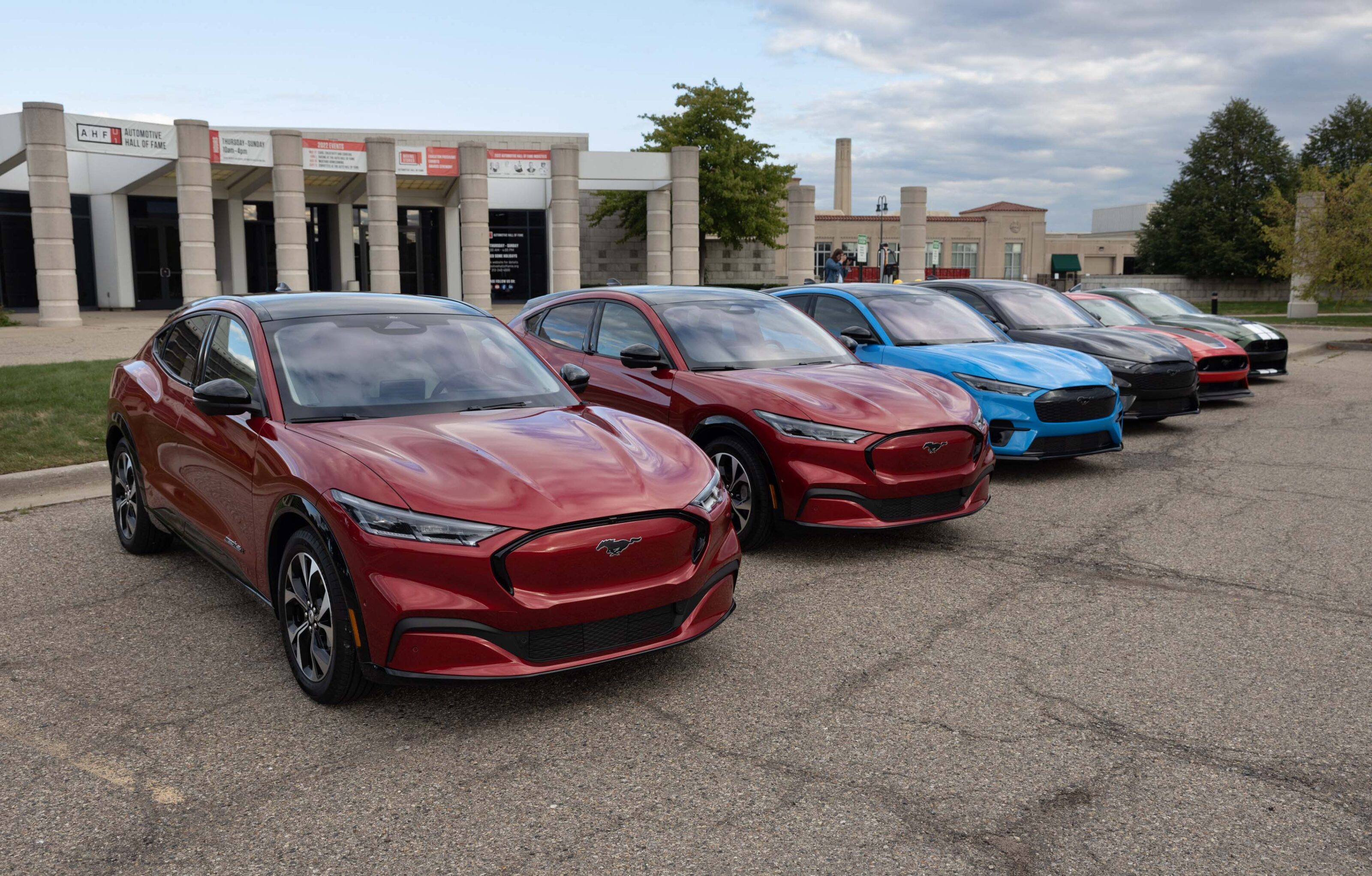
As part of a recent broad-ranging restructure, Ford created three new divisions consisting of the Pro commercial branch, Blue internal combustion engine (ICE) component, and Model E for its growing electric family.
It’s the latter division that Ford says has quietly been adopting a startup culture to become more competitive in a realm created and shaped by relatively young vehicle manufacturers.
Speaking at the company’s Experience Centre in Dearborn, Ford Motor Company CFO John Lawler acknowledged the work of electric giant Tesla but said Ford’s plans to become a more dominant presence in the market will start to emerge in 2023.
“Right now we need to respect that there is one profitable EV company in the world that produces vehicles at scale. Just one,” he said.
“They [Tesla] have incredible margins, but the thing that we have is an EV startup company buried inside Ford. No one really knows what that is, and no one can see it but they will be able to next year when start reporting our segments by EVs, Blue (ICE), and Pro which is commercial.”
With more than 340,000 vehicles sold in just the third quarter of 2022, Tesla is the world’s clear leader in electric vehicles but Lawler said the strategy has been laid out to encroach on the Californian startup with “600,000 units by the end of 2023, two million units by 2026.
“We have to get to those milestones before we start talking about overtaking somebody like Tesla, but those are our goals.”
Tesla is not the only rival Ford is keeping an eye on as it builds its electric momentum and is rolling out a multi-pronged assault on the market to cover as many bases as possible.
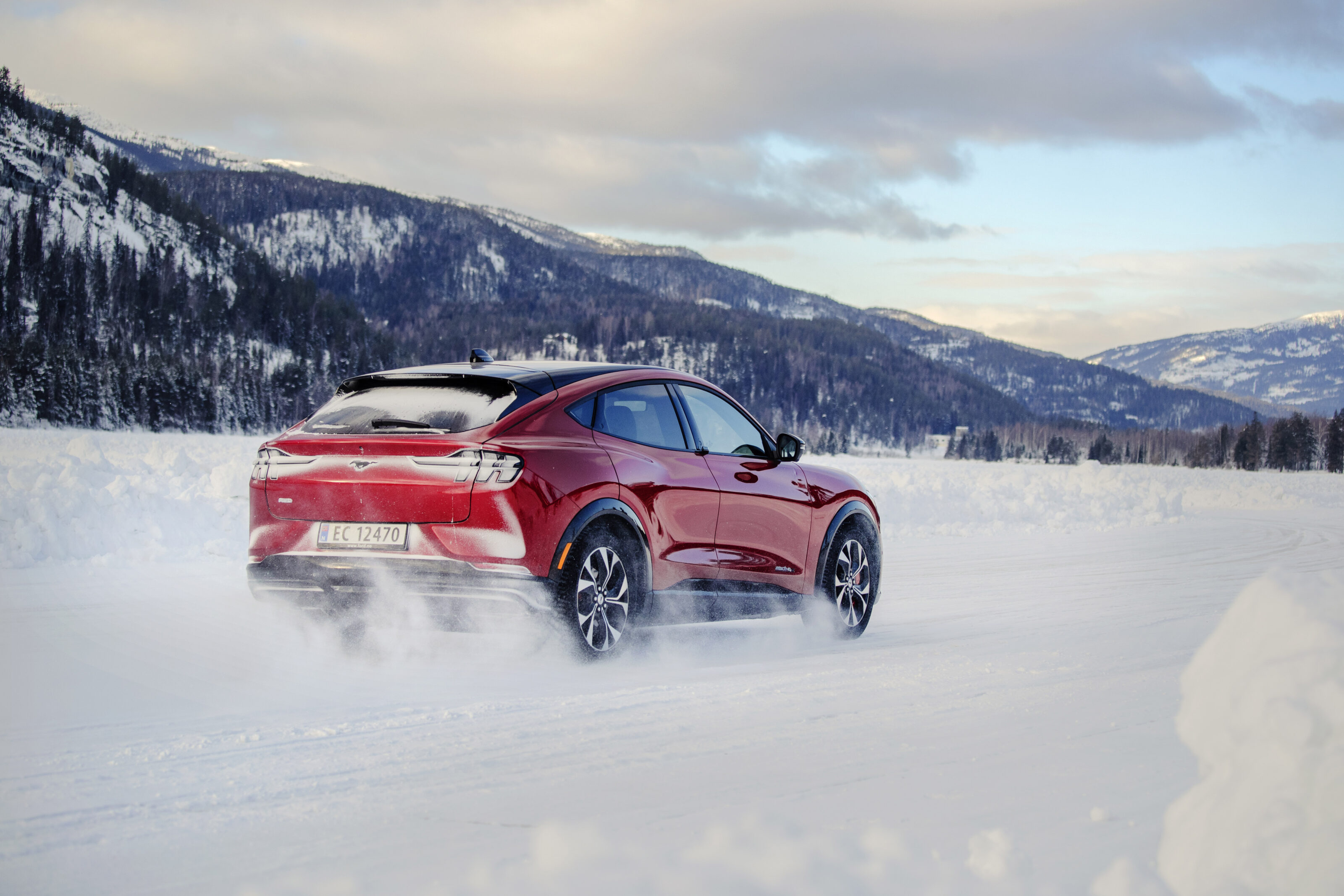
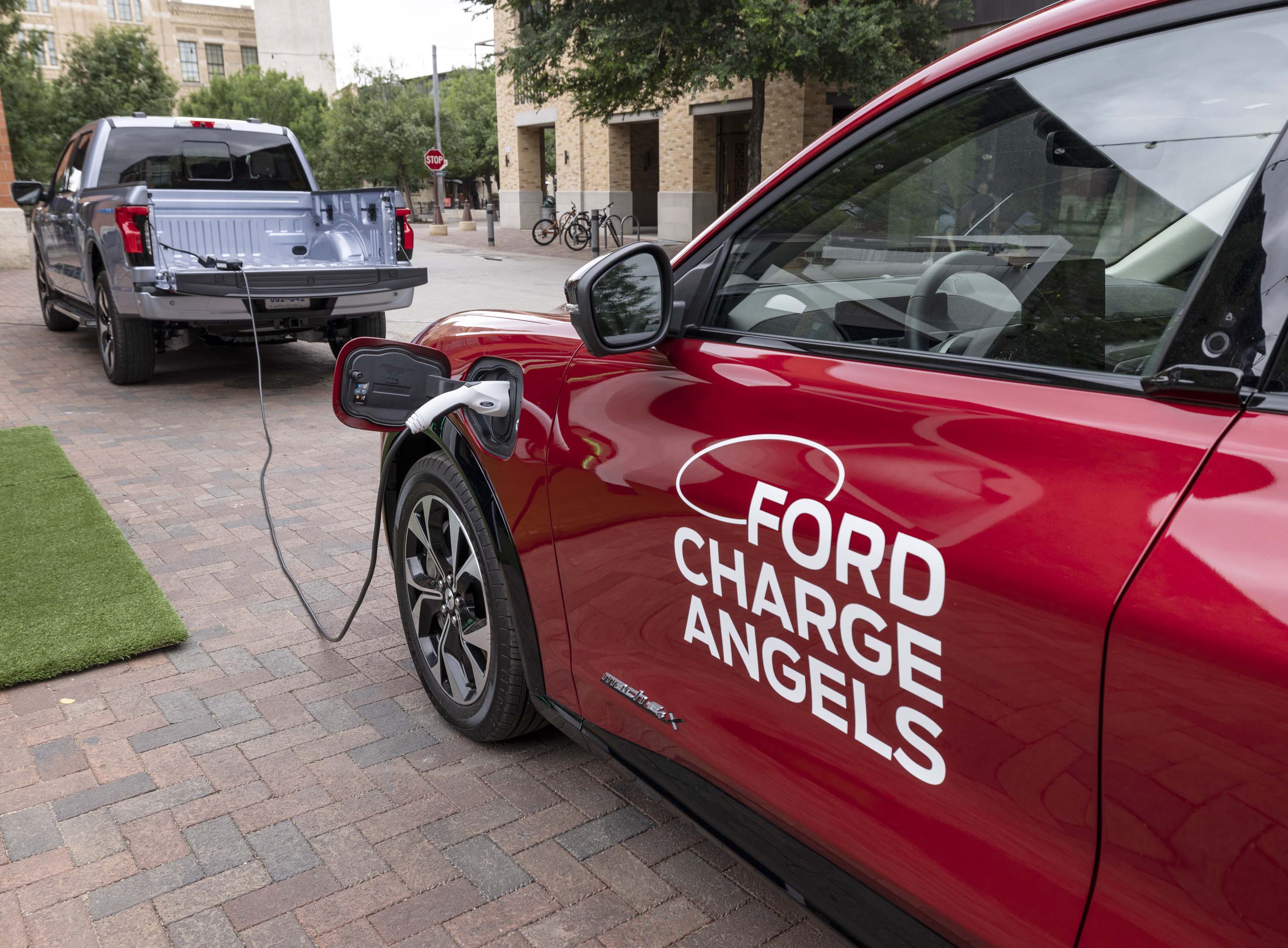
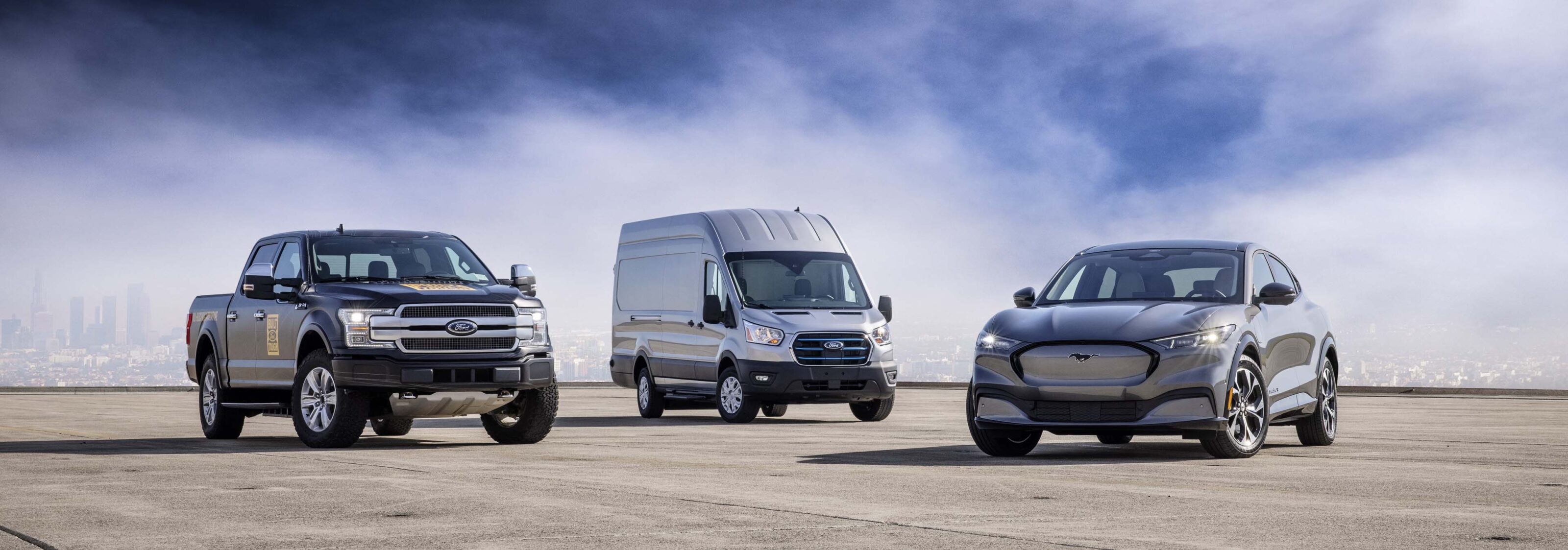
While its performance-focused Mustang Mach-E is an obvious shot across Tesla’s bow, its F-150 Lightning will go after rivals in the ute space including Rivian, while Ford’s E-Transit is already dominating over commercial competitors such as the Mercedes e-vans.
While Ford wants to behave more like a fresh startup, Lawler explained that its E division has something the tech company rivals don’t and how its experience and extensive resources will enable the company to have “the capabilities of a traditional auto maker with the nimbleness and inventiveness of a startup.
“I think there are a lot of true startup companies in this space that would love to have the excellence we have in manufacturing and scaling, but in the shifts we’re making to more of a startup type culture, it’s allowing us to behave differently.
“We’re simplifying our processes, we’re sharpening how we allocate our capital and we’re really focused on those digital connected services and experiences we’re creating for our customers.”
Ford is not the first car maker to review its operations in the light of Tesla’s achievements, with many of the mainstream brands responding in varying degrees to try and emulate its success.
When asked if the Blue Oval would have three electric models in market in 2022 if it were not for Tesla’s aggressive strategy, Ford EV programs and Model E vice president Darren Palmer responded “probably not.”
“Tesla did kick-start the market,” he said. “They showed what they [EVs] can be, and how compelling they can be.”
Palmer explained that frequent review meetings with chief EV and digital systems officer Doug Field are part of Ford’s bid to recreate the same desirability in its electric models, and that mediocre is not accepted as part of the new Model E culture.
“We meet every week under Doug and he says: ‘Did you do the best work of your entire career last week? If you didn’t, what should we change to get to that?’
“We present a car and ask if that’s something that’s going to change the whole market.
“We’ve put a Silicon Valley team together with a Ford team to make a dream team, with a $50bn budget and the support of the entire Ford system. And we just invested in the biggest industrial automotive plant in history to build the next-generation F-150.
“If we don’t get it right with that, good luck”.
For a few months in my early 20s, I had a job delivering industrial cleaning products to small businesses in the south west of Britain and, if it had paid a little better, I’d probably still be doing it.
The pain of minimum wage aside, it was the perfect job for a number of reasons. Firstly it involved meeting a broad range of interesting people each day, and finding out a little more about them and their quirky companies with every visit.
Secondly, my delivery routes took me not on tedious motorways, but through the spectacular scenery and winding country roads of North Somerset, with a majority of my customers based in impossibly pretty towns and hamlets.
And the third element that made my day-to-day so enjoyable was the steed that accompanied me – the venerable Ford Transit.
Since its introduction in 1965, the Transit has been many things – put to work by tradespeople, it quickly became famous for its stoic balance of power and practicality and, in the hands of criminals and gangsters it even managed infamy.
Regardless of its duty, almost all who have spent time at the wheel of a Transit have warmed to the model – and I’m certainly one of them.
But the humble Transit is currently undergoing its biggest transition in nearly 60 years and, from January 2023, the very first electric E-Transit van will arrive in Australia.
In preparation for the local launch, we took Ford’s first zero-emissions light commercial vehicle for a spin outside the global headquarters in Dearborn USA for a first taste of what we can expect.
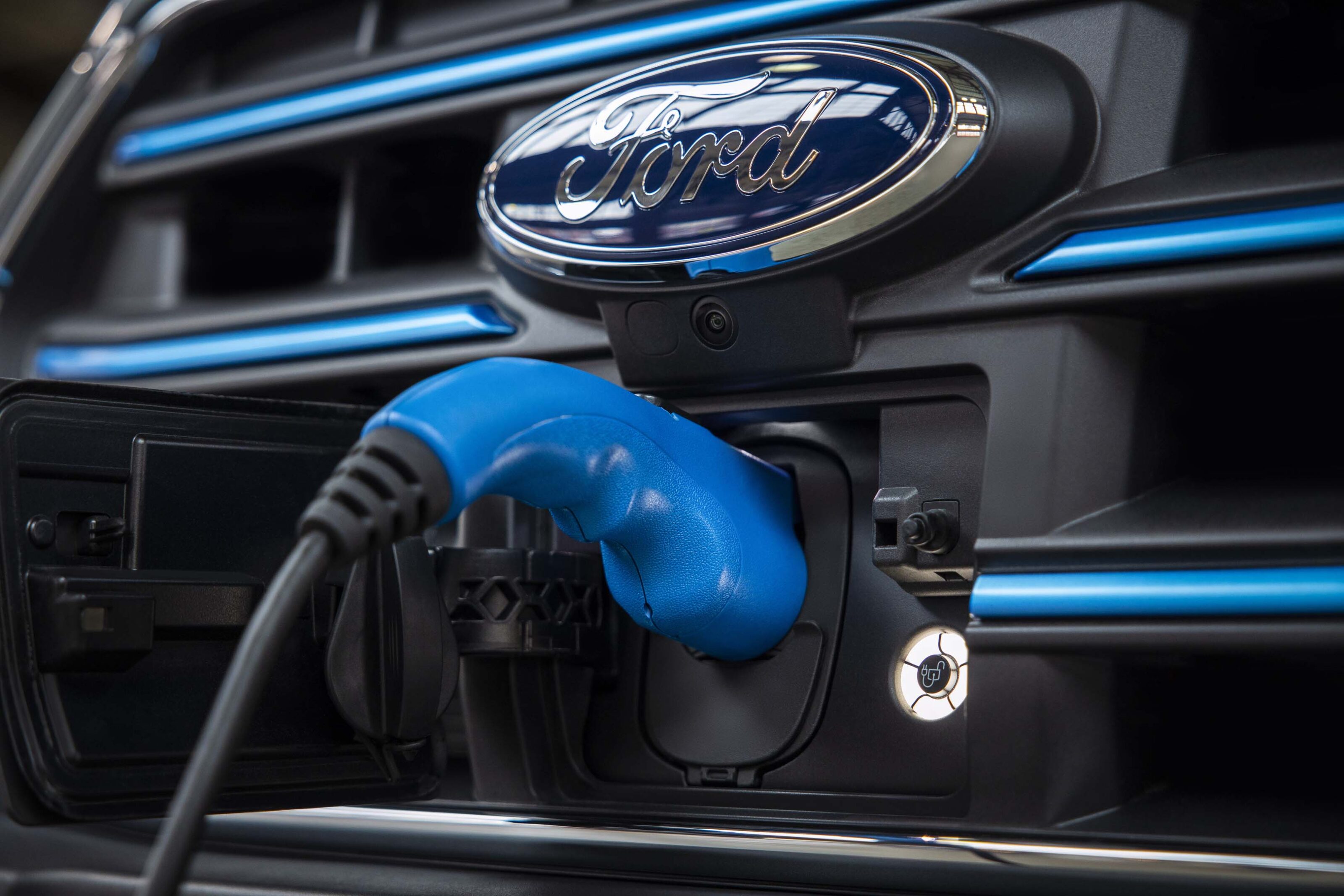
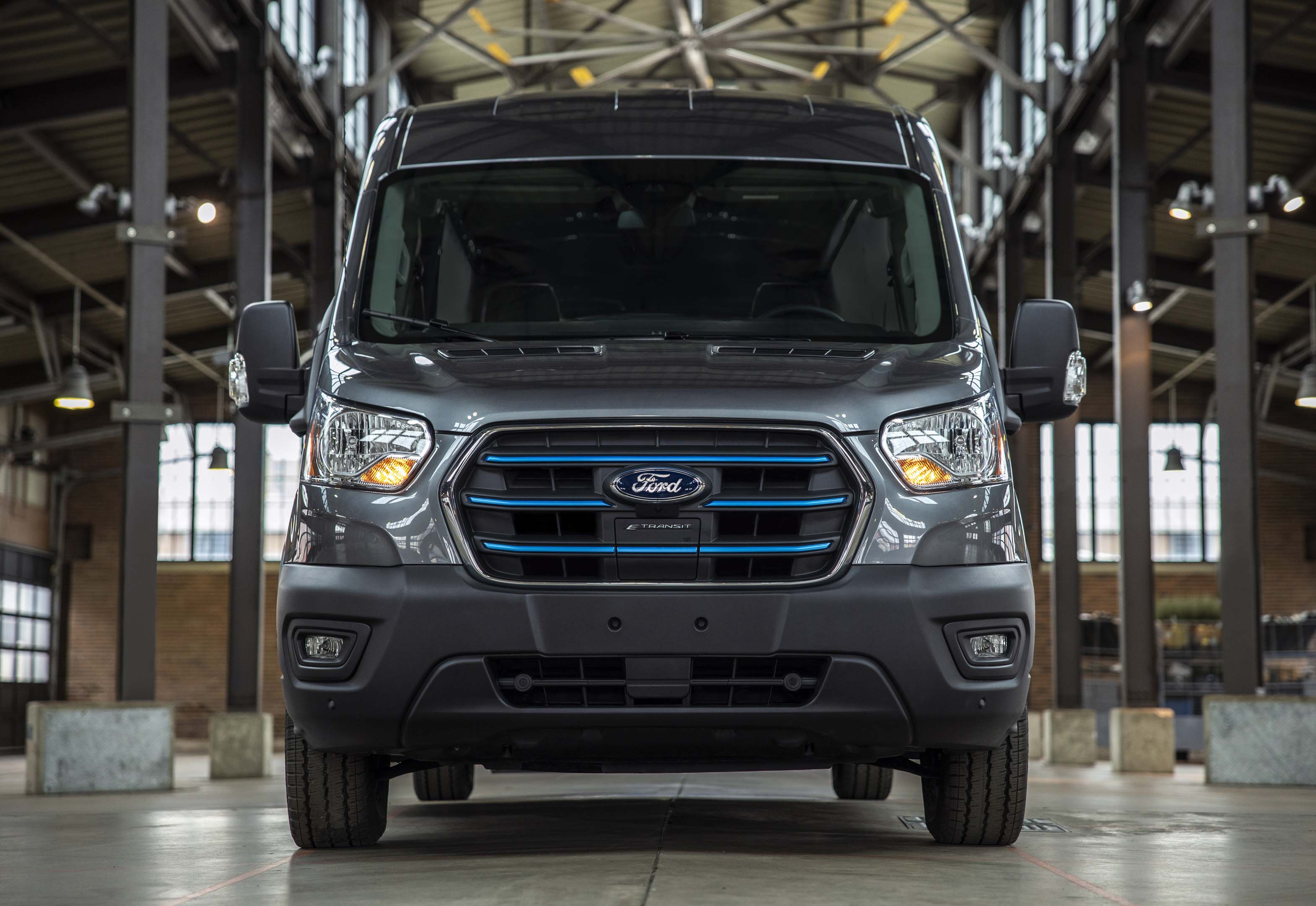
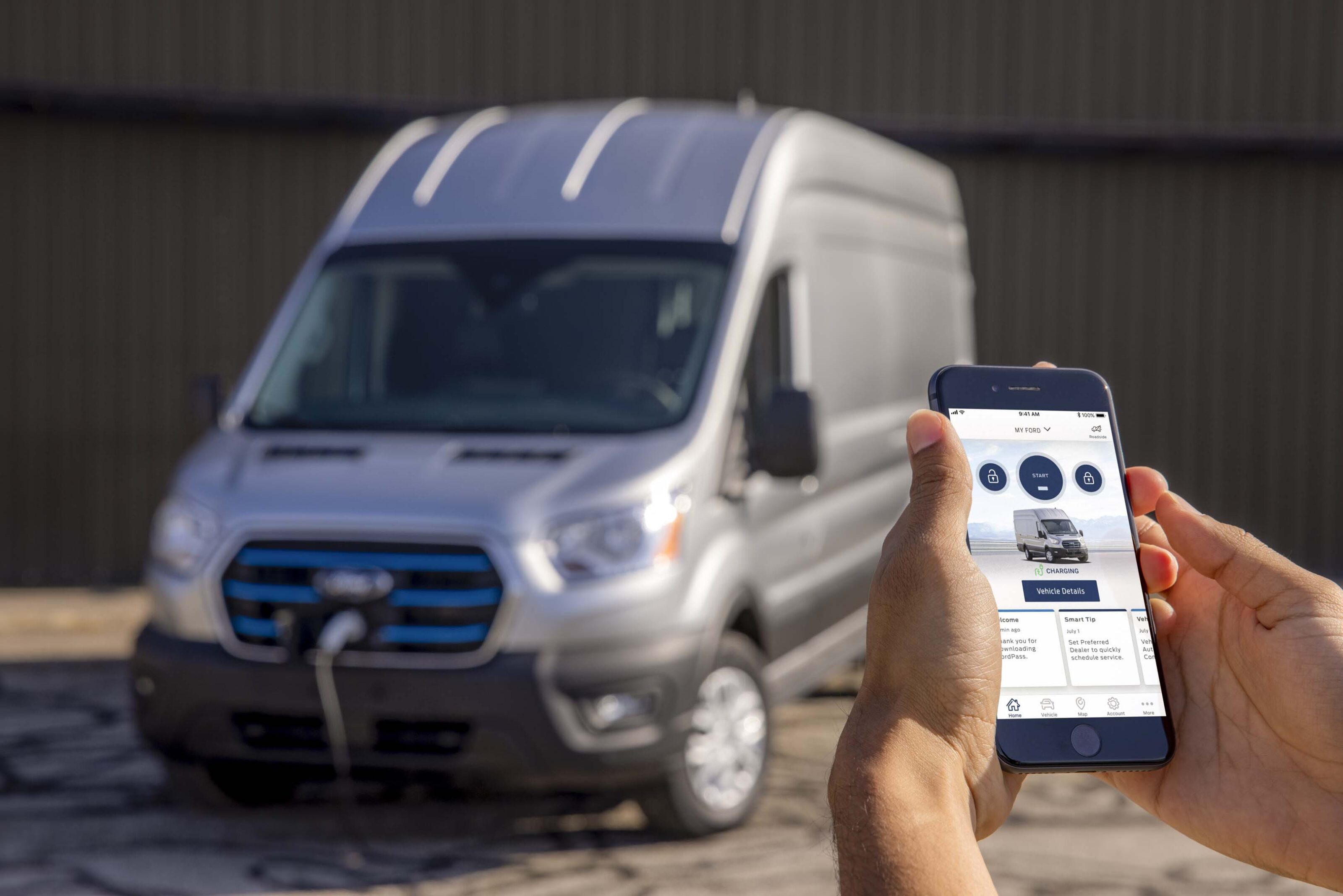
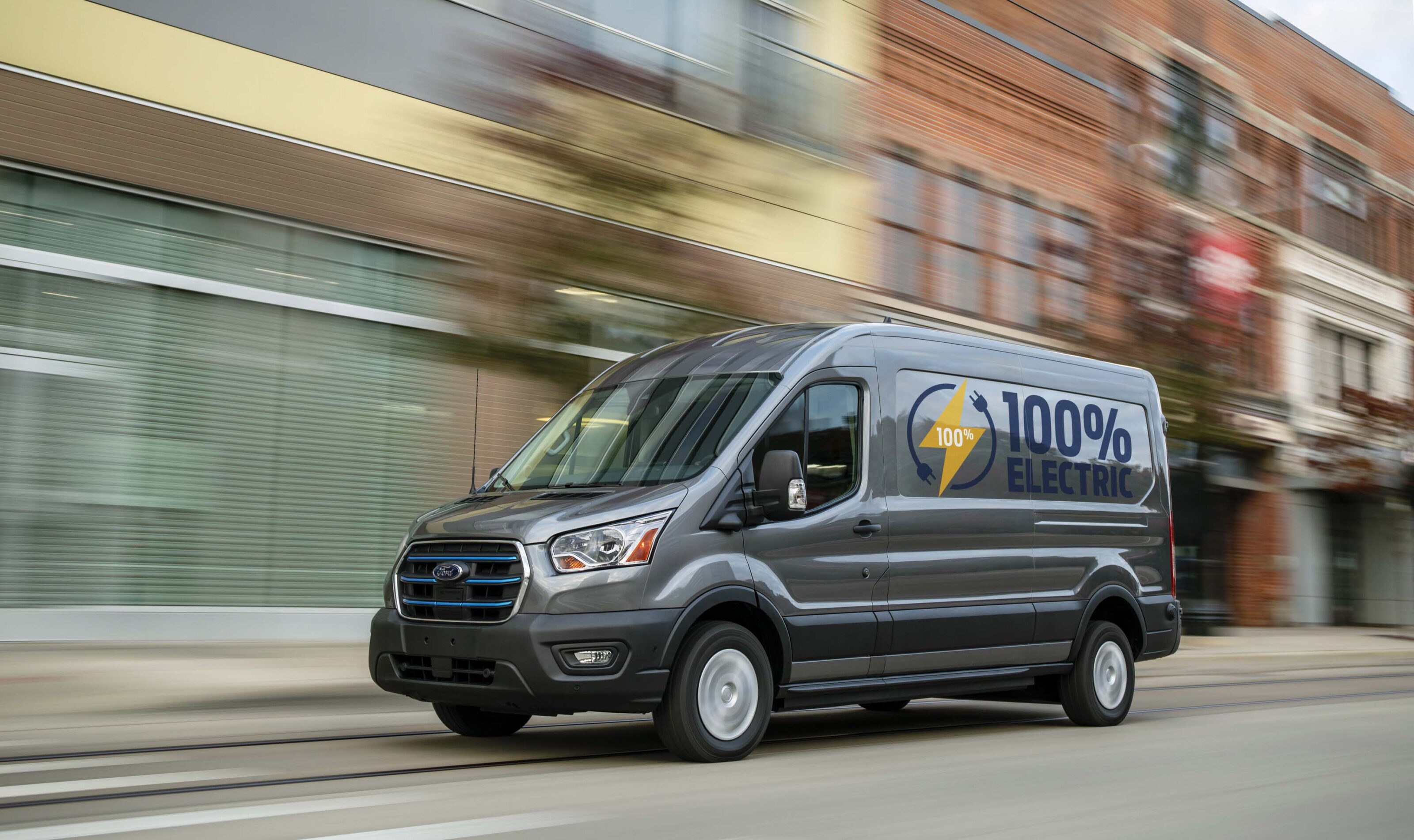
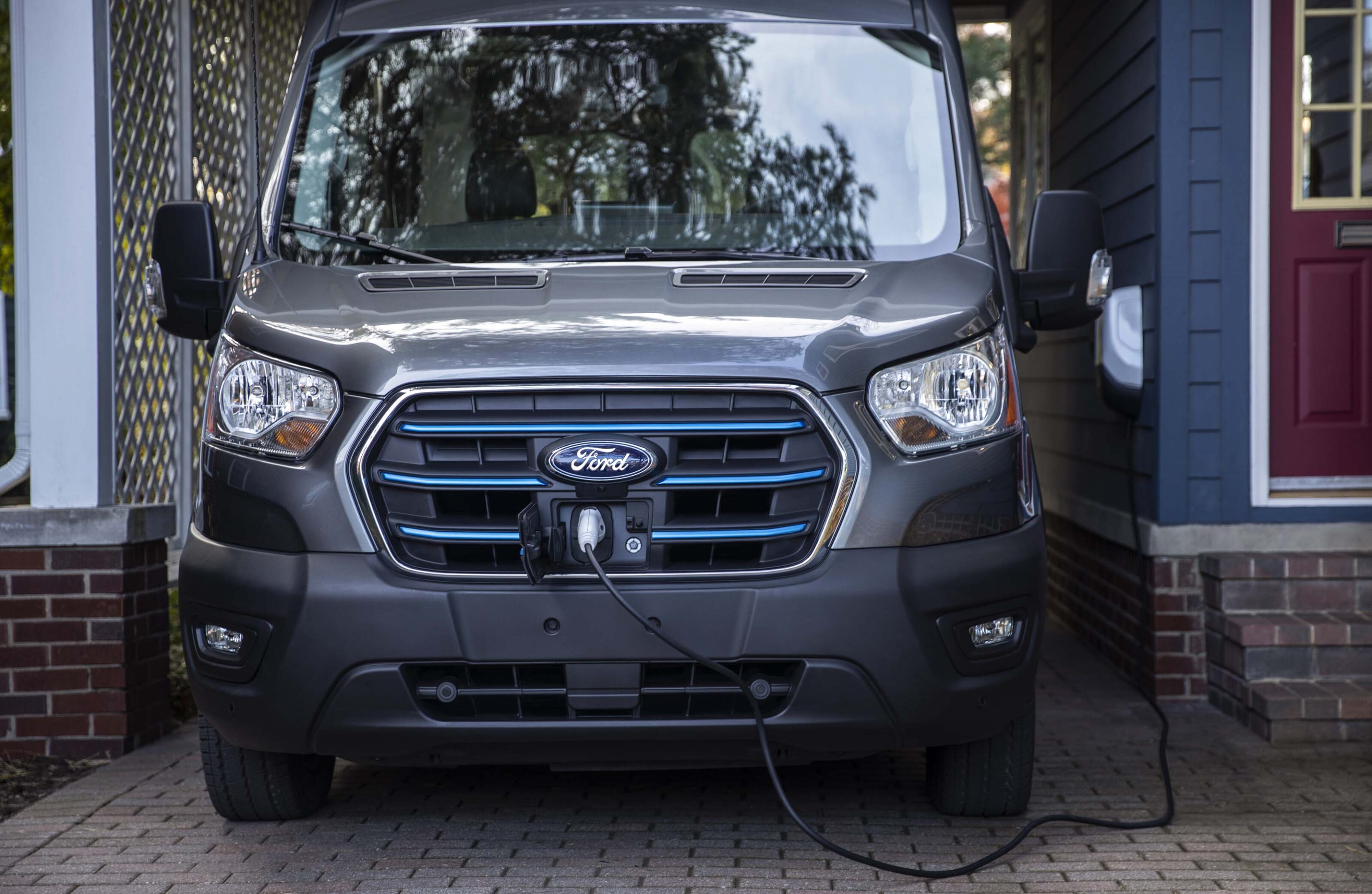
From the outside, there’s little to divulge this Transit’s electric secret. If you look closely, there are blue flashes pin-striping the grille fins at the front as well as the concealed charge flap, and a badge at the back, but that’s pretty much it.
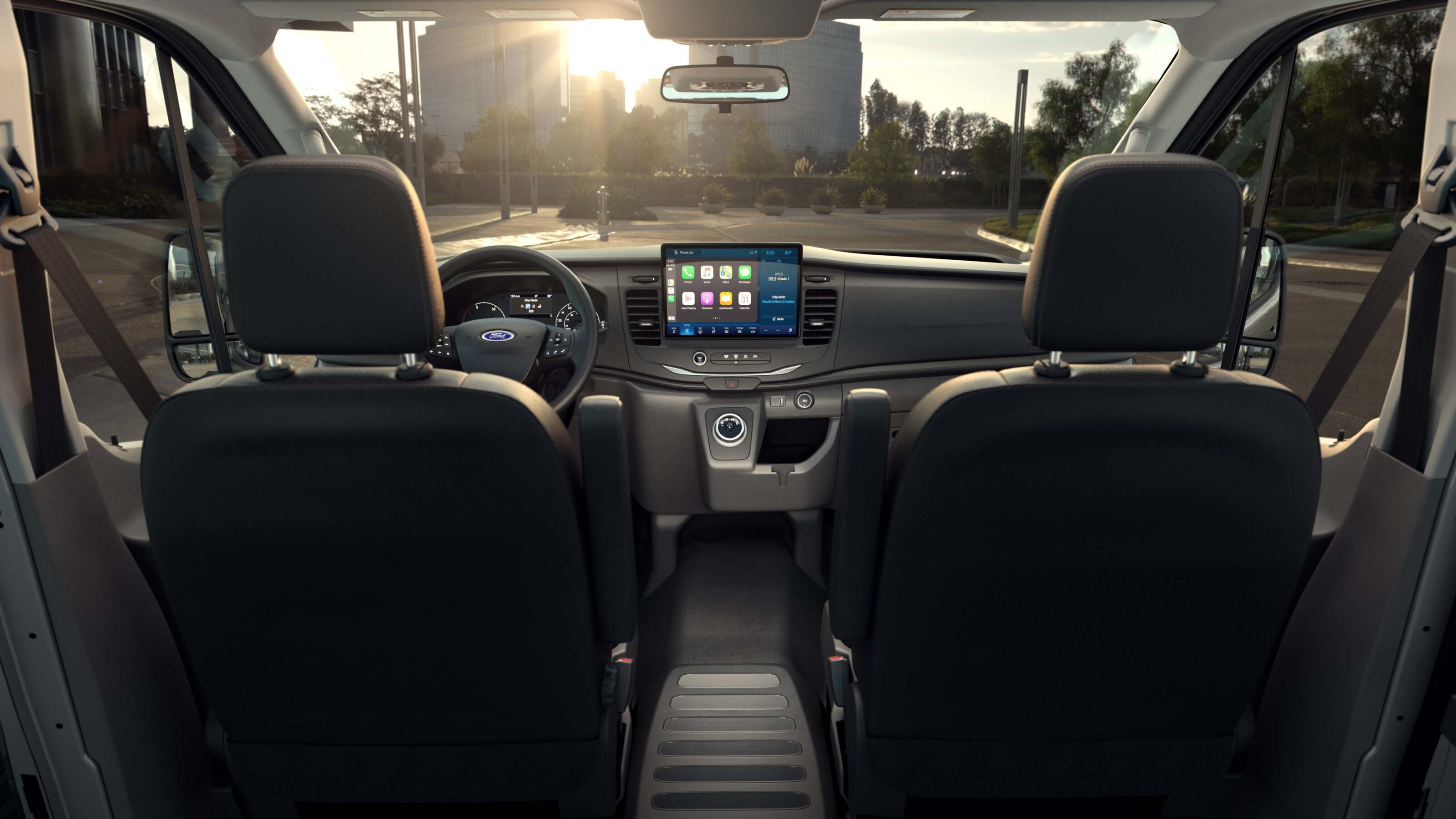
There’s little more to denote the electric hardware once inside, although a central digital instrument cluster screen provides electric power flow and efficiency information to the driver.
While the Transit’s interior has been traditionally utilitarian to deal with the rigours of hard work and coffee spills, the E-Transit has a 12.0-inch touchscreen with Sync4 operating system, and push-button start, along with a rotary gear selector – all hints that this Transit is trying harder.
For now, Ford is producing the E-Transit at its Texas factory in three choices of wheelbase and three options of roof height, although Ford Australia has not confirmed exactly which, if not all, version will be made available locally.
Unlike the number of body options, the E-Transit will be available with just one powertrain
All variants will have a single electric motor on the rear axle producing 198kW and 430Nm, which may not sound like much compared with the dizzying figures frequently claimed for other EV models, but that performance makes it the most powerful of any Transit on the market.
On the road
In practice, the Transit is not fast, but its power and torque delivery has a satisfyingly effortless nature.
Its throttle map has not been calibrated to demolish everything at the lights, but it does deliver a lovely progressive feel all the way from step-off, through a big chunk of torque in the middle of the pedal travel and a flattening-off toward to full position.
It actually makes the E-Transit a treat to drive with none of the accidental wheel slip that’s too easy with diesel variants thanks to inevitable turbo lag and the late onset of full grunt. It’s still possible to get a chirp or scuff from the tyres, but only when deliberately provoked.
Regenerative braking is not as aggressive as some more performance-focused EVs, but still noticeable and essential to prolonging range in suburban and metropolitan settings.
Cleverly, Ford’s information system includes an option to ‘coach’ the driver with warnings whenever the operator is being unnecessarily aggressive with either the throttle or brakes, which would significantly reduce efficiency and range.
Could this system be the end of unwelcome ‘white van man’ driving traits on our roads or an annoying thorn in delivery drivers side’s? Time will tell.
The E-Transit won’t destroy everything at the lights, but it does have a lovely progressive feel all the way from step-off, through a big chunk of torque in the middle of the pedal travel and a flattening-off toward to full position.
A second optional system dubbed Smart Acceleration Truncation further extends battery range by reducing the available acceleration according to load weight and prevents wasteful drag-strip launches when a heavy cargo is on board.
It’s features like this that Ford electric vehicle program vice president Darren Palmer says makes the E-Transit “Insanely tempting for a business”.
“It pays back for most customers in a very short time and it means they can undercut their competitors by a large amount,” he said. “Plus it can be repaired everywhere, dealers can service them and it’s got the whole digital side now, which improves your business throughput.”
Ultimately, just how quickly that payback comes is down to how much Ford wants to charge for the E-Transit in Australia, which is not yet confirmed. In the US, the range kicks off from $39,000 (A$58,000).
If a similar deal can be struck Down Under, the E-Transit will cost little more than its diesel equivalents locally – although expecting a slight premium will likely fend off disappointment.
E-Transit driving range and charging
Speaking of range preservation, with a 68kWh lithium-ion battery, Ford says the smaller-bodied E-Transits will go up to 266Km on a single charge while the higher-drag large-body versions drop to about 174Km. Obviously, that shrinks further as the load increases.
In the context of passenger vehicles and premium EV offerings, those numbers may sound a little meager and we would have to agree that an electric Transit will not be appealing to any freight company that operates legs between capitals.
It’s worth noting however, that an average metropolitan delivery van – Australia Post or Amazon, for example – covers between 100km and 130km per day. It’s almost as if Ford has done its research, isn’t it?
If the maximum range is occasionally exceeded, the E-Transit can be topped up on the fly from 15 per cent to 80 per cent in about 30 minutes using high-rate chargers or, at basic low-rate chargers, a full charge is done in about eight hours back at the depot.

Compared with the standard diesel Transit, the driving experience is enhanced with another design feature unique to the E-Transit. While combustion versions stick with a solid rear axle and leaf-spring suspension, the electric version has an independent, coil-spring setup.
Until a loaded test is arranged the jury will remain out on overall ride-quality, but our first unladen drive suggests the E-Transit has the potential to reduce driver fatigue and boost comfort.
Further increasing the operator comfort is a small optional door between the cab and load space which effectively isolates the driver from almost all of the noise generated by wind and road noise in the large load area.
Another valuable factory option for our test van included a fully racked-out load area with clever folding lightweight shelving which would allow excellent organisation of packages for courier duties, for example, but with the option to open up almost the full load area for large objects.
E-Transit cargo space and payload
Go for the smallest combination of low-roof and shortest wheelbase and the E-Transit will accommodate up to 7000 litres of cargo, while the biggest tall-roof, Extended wheelbase will swallow more than 13,000 litres – the same as is combustion equivalents.
Regardless of the body type, all versions have a maximum rear axle load of 2722kg while the front axle is rated up to 1873kg.
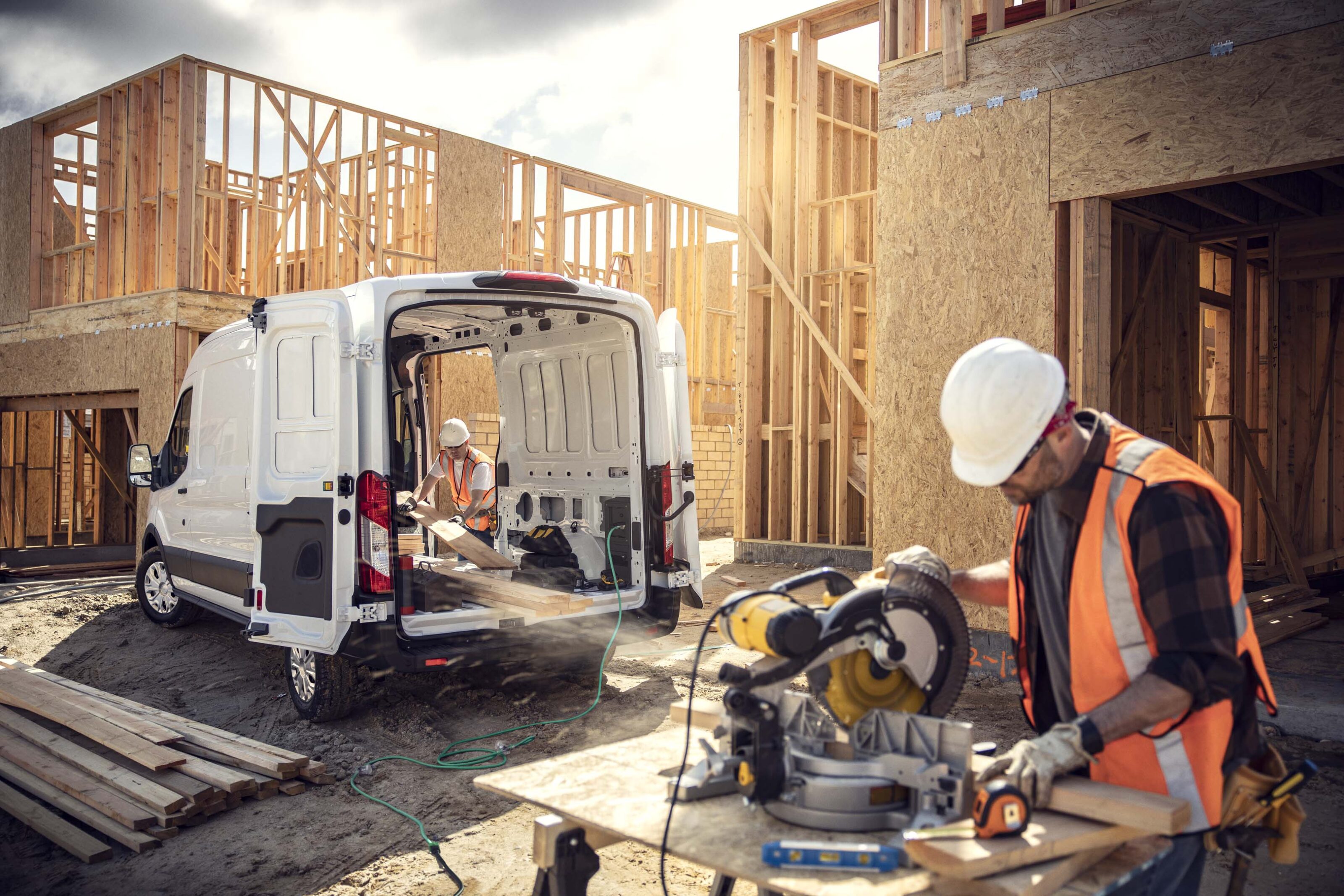
Whatever tasks its charged with, the E-Transit shares its body design with the regular diesel variants, which allows existing customers to swap over specialised or custom equipment from combustion versions to the electric model with a minimum of engineering and downtime.
VERDICT
A first steer of the E-Transit confirms that an electrified version of the famous van upholds the model’s traditional values, providing a workhorse that operators will look forward to driving and accountants will look forward to running the numbers on.
While Ford’s arguably more exciting Mustang Mach-E and F-150 Lightning are currently claiming most of the limelight surrounding the Blue Oval’s electric ventures, it’s the wallflower E-Transit that has the potential to make the biggest impact to transport carbon emissions.
With the milestone switch to electric, the Transit has never more been the stoic and hardworking quiet achiever of Ford’s family.
The 2022 Bathurst 1000 is just around the corner, set to take place this weekend from Thursday October 6 to Sunday October 9.
Keen to tune into this year’s Great Race?
This year’s Bathurst 1000 will be covered both on free-to-air television, and through paid services such as Foxtel and Kayo – with a dedicated Fox Sports 503 channel running until October 10.
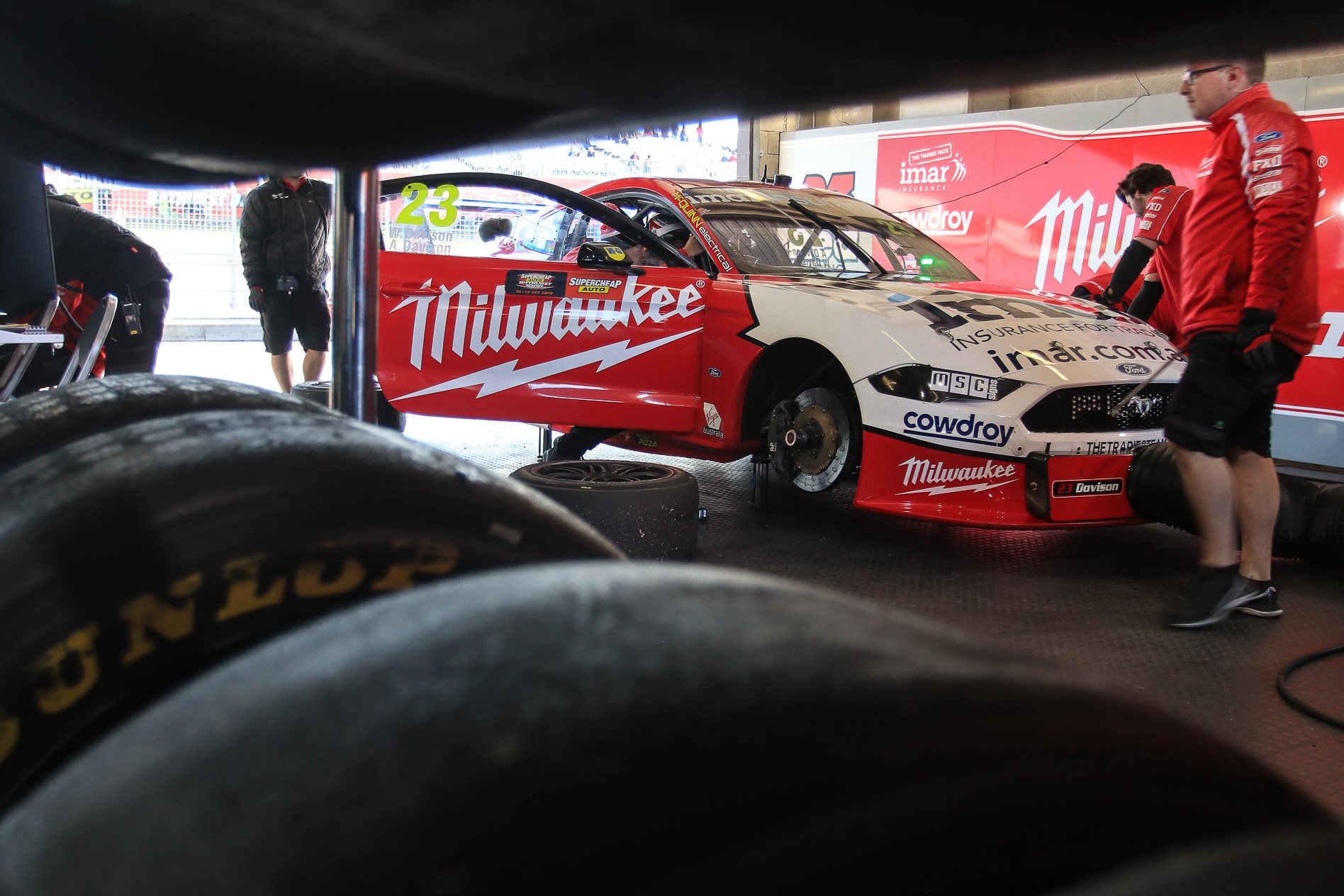
The main race will commence from 11:15am on Sunday, running until around 6:00pm.
All times listed in this article are in AEDT, so adjust accordingly to your timezone.
On-track action commences with practise on Thursday, qualifying on Friday, the Top 10 Shootout on Saturday, and the big race on Sunday.
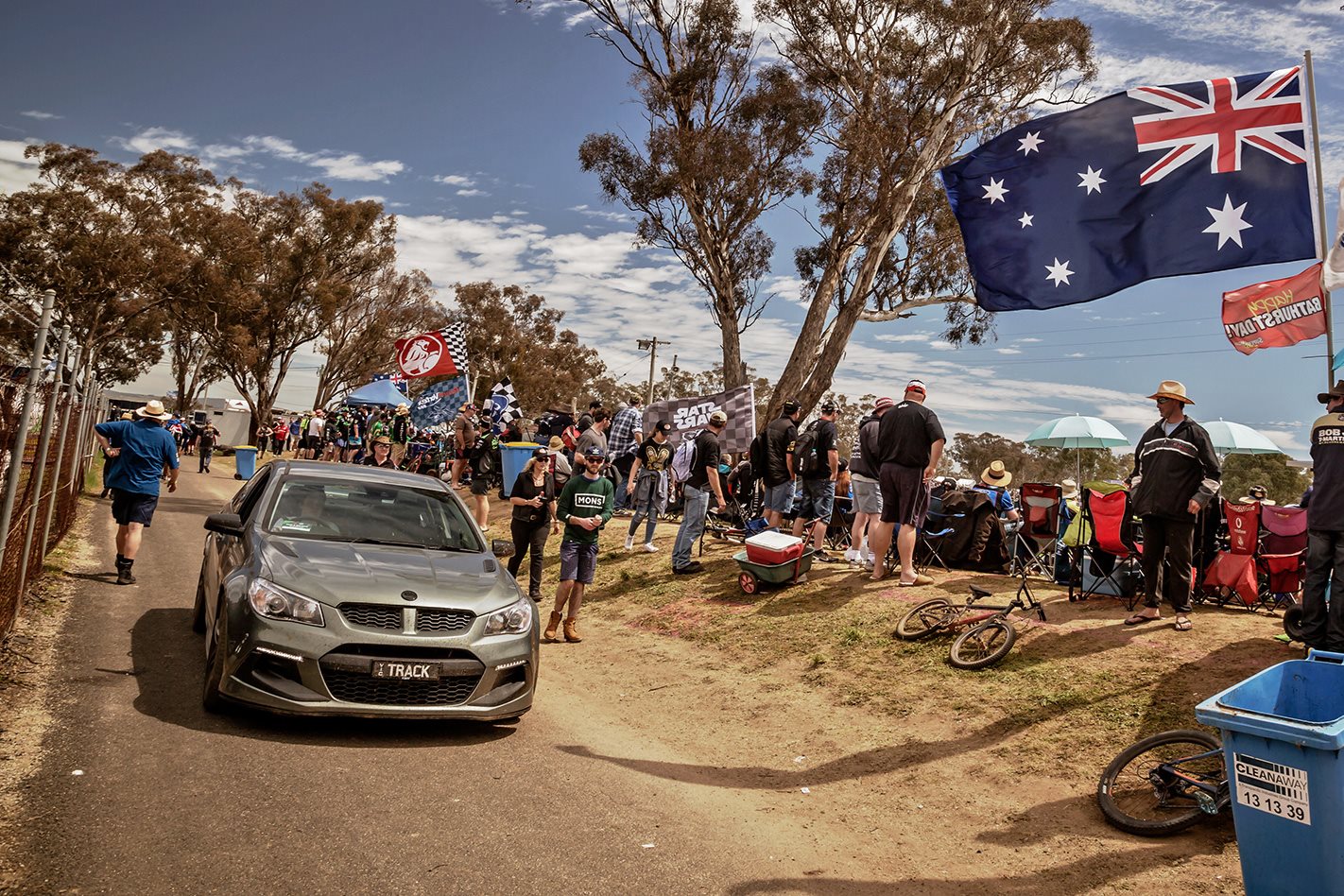
Here’s the Bathurst 1000 schedule for the Supercars throughout the weekend.
Bathurst 1000 2022 schedule
Thursday, October 6
| 11:00am – 12:00pm | Practise 1 (All drivers) |
|---|---|
| 3:55pm – 4:45pm | Practise 2 (Additional drivers) |
Friday, October 7
| 10:10am – 11:10am | Practise 3 (All drivers) |
|---|---|
| 1:00pm – 2:00pm | Practise 4 (All drivers) |
| 4:15pm – 4:55pm | Qualifying – Race 30 |
Saturday, October 8
| 10:20am – 11:20am | Practise 5 (All drivers) |
|---|---|
| 1:00pm – 2:00pm | Practise 6 (All drivers) |
| 5:05pm – 5:50pm | Top Ten Shootout – Race 30 |
Sunday, October 9
| 8:00am – 8:20am | Warm up |
|---|---|
| 11:15am – 6:00pm | Race 30 |
Where to watch
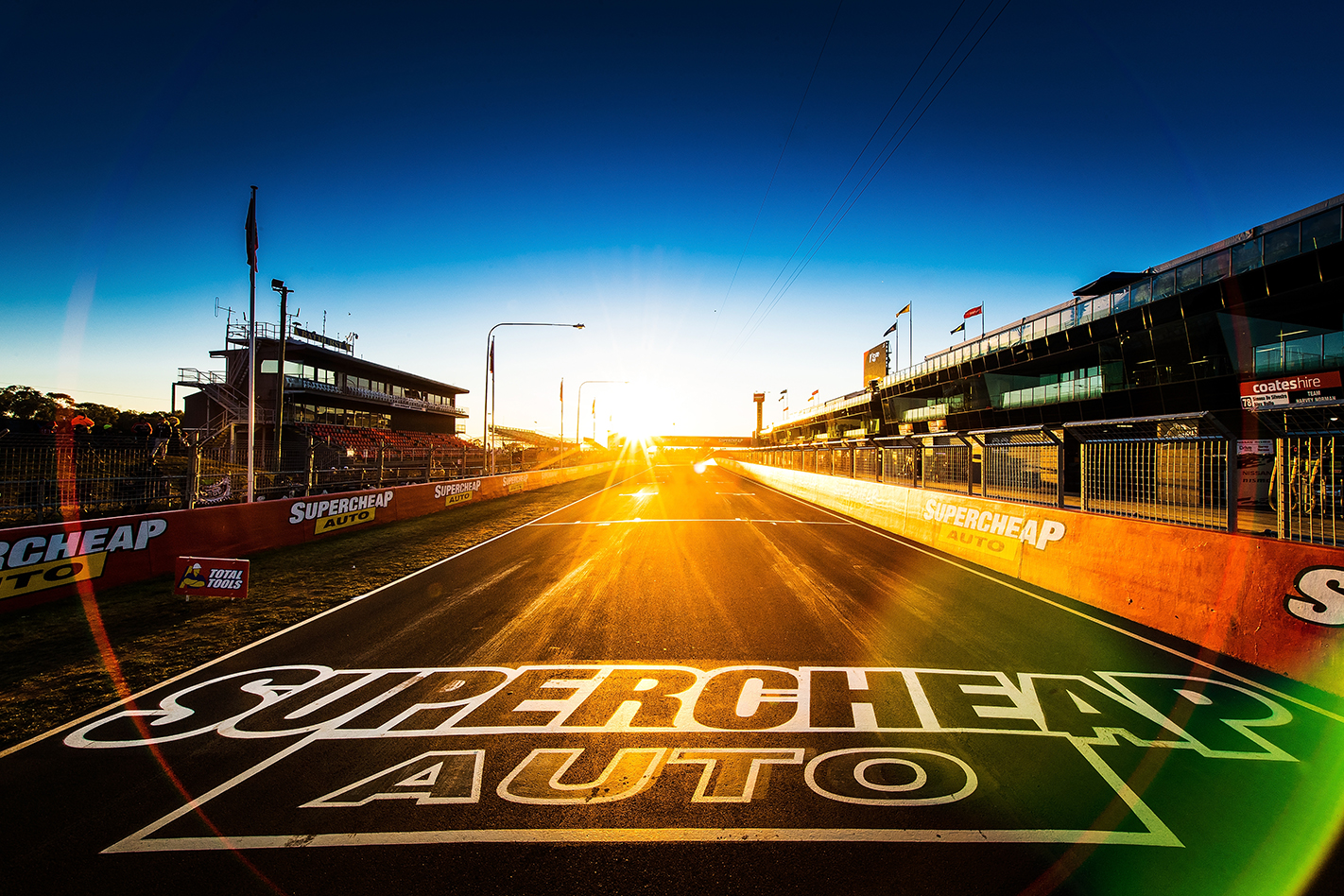
Free-to-air coverage of this year’s Bathurst 1000 comes from Channel Seven, with live, free broadcasting commencing from 10:00am, Friday October 7, on Channel 7, 7mate and 7plus.
Seven’s Saturday coverage also commences from 10:00am and will include the two practise sessions plus the Top 10 Shootout.
Channel Seven’s Sunday broadcast opens ahead of morning Warm Up at 7:30am, with main event coverage firing up from 10:30am.
Those with Foxtel subscriptions gain access to a dedicated Fox Sports channel providing coverage on Channel 503. Kayo Sports customers can also stream proceedings live.
Snapshot
- 2022 Mazda CX-9 priced from $47,250 before on-road costs
- Nine variants on offer, FWD or AWD options
- No specification changes
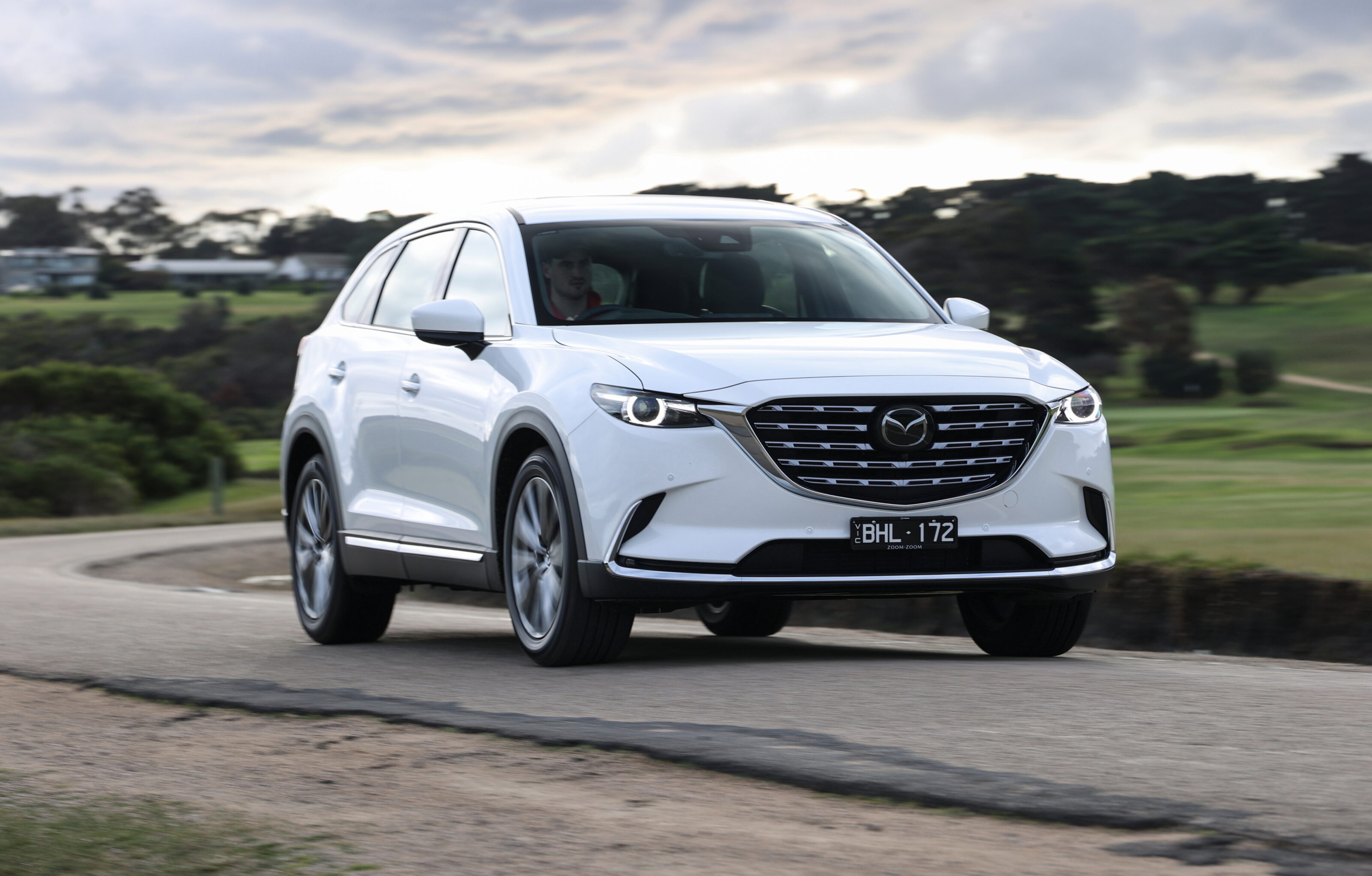
The 2022 Mazda CX-9 large SUV is $1000 dearer than before, following a recent price increase.
It is priced from $47,250 before on-road costs, extending to $74,410 for the flagship variant.
“Market changes, raw materials and production costs and currency fluctuations among other factors can all affect price setting,” said a spokesperson for Mazda Australia.
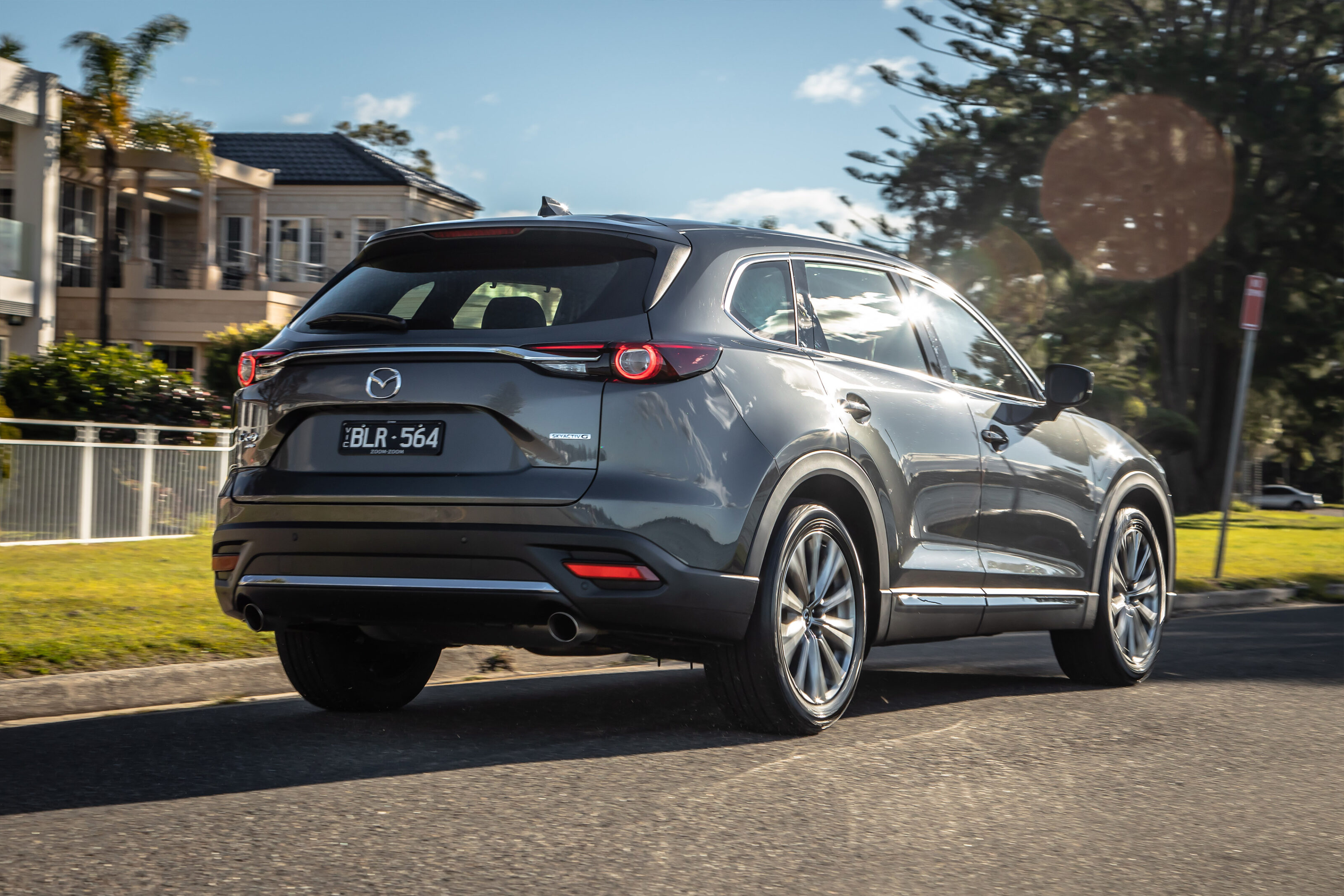
The Mazda CX-9 competes in the large SUV segment in Australia, with rivals including the Toyota Kluger, Hyundai Palisade, Kia Sorento and Nissan Pathfinder.
The flagship seven-seater has been on sale in Australia since 2016, with the last change occurring in December 2020, bringing the GT SP and six-seat Azami LE variants.
A minor update is expected for model-year 2023, followed by the arrival of the rear-drive Mazda CX-90 in the coming years.
2022 Mazda CX-9 pricing
Prices exclude on-road costs.
| Model | Pricing |
|---|---|
| Sport FWD | $47,250 |
| Sport AWD | $51,250 |
| Touring FWD | $54,580 |
| Touring AWD | $58,580 |
| GT FWD | $64,350 |
| GT AWD | $68,350 |
| GT SP FWD | $64,850 |
| GT SP AWD | $68,850 |
| Azami FWD | $67,550 |
| Azami AWD | $71,550 |
| Azami LE AWD | $74,410 |
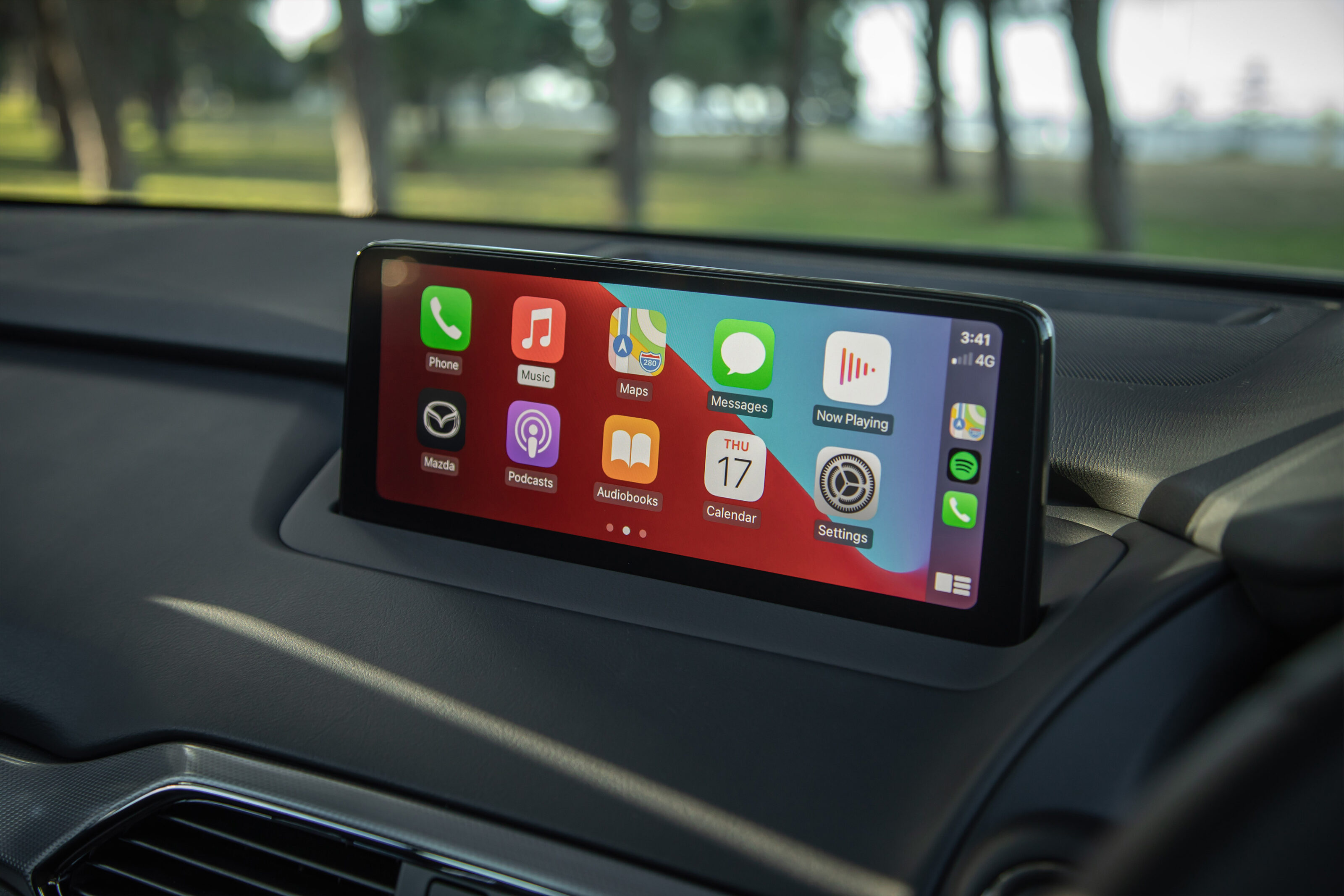
2022 Mazda CX-9 features
Sport
Touring, in addition to Sport
GT, in addition to Touring
GT SP, in addition to GT
Azami, in addition to GT
Azami LE, in addition to Azami
Engine, drivetrain and fuel economy
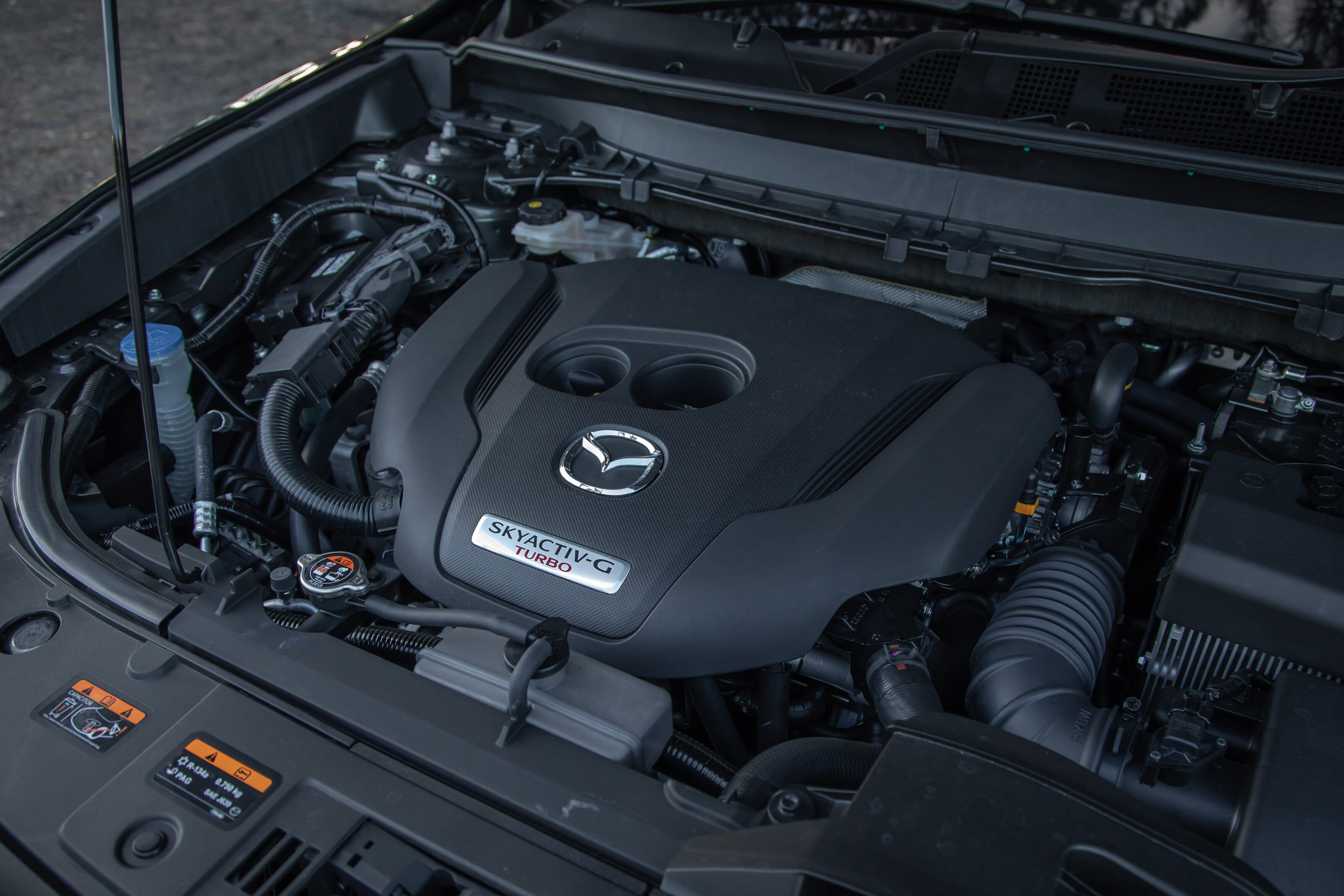
Under the bonnet, the 2022 Mazda CX-9 is powered by a turbocharged 2.5-litre four-cylinder engine, producing 170kW and 420Nm.
It is matched with a six-speed torque-converter automatic transmission.
As standard, the Mazda CX-9 is front-wheel drive, with optional all-wheel drive – except for the AWD-only Azami LE.
It has a 2000-kilogram braked towing capacity.
FWD models have a 72-litre fuel tank, while AWD variants have a 74-litre capacity. It features an engine stop/start system and is compatible with regular unleaded.
Fuel economy figures can be found in the table below:
| CX-9 FWD | 8.4L/100km |
| CX-9 AWD | 9.0L/100km |
Safety
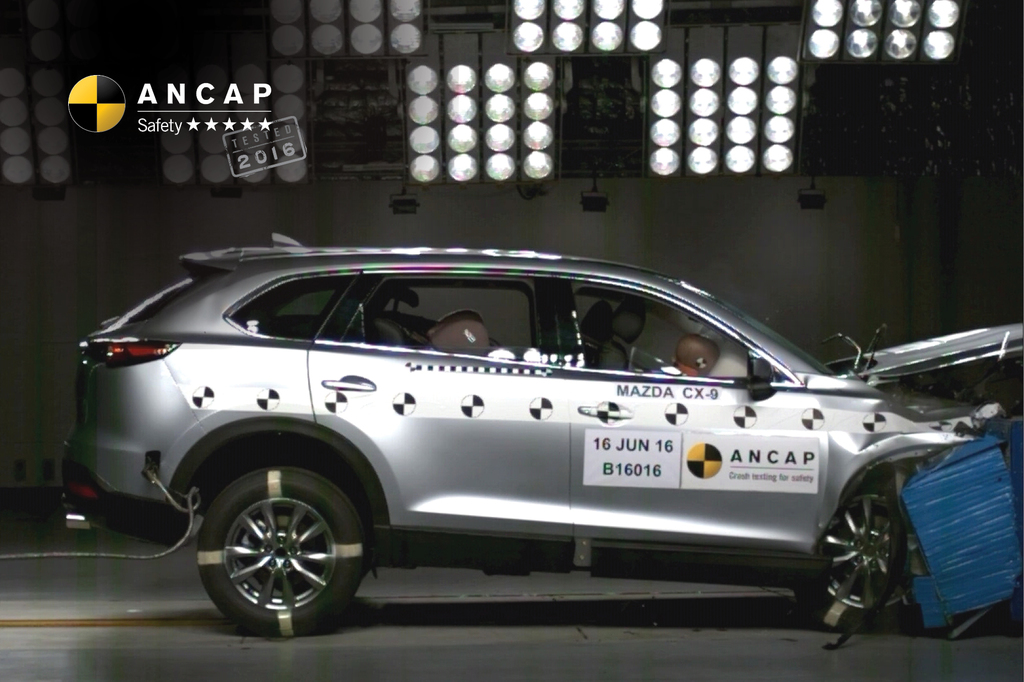
The entire Mazda CX-9 range is covered by a five-star ANCAP safety rating, based on testing conducted in 2016.
This rating will expire at the end of 2022, in line with ANCAP’s six-year date-stamp limit. Mazda has not flagged any plans to submit the CX-9 for retesting under the latest criteria.
Six airbags (dual front, side and curtain) feature across the line-up, including coverage for third-row passengers.
Each variant includes the following active safety equipment as standard:
Dimensions
The Mazda CX-9 has a wheelbase of 2930 millimetres, and is 5075mm long, 1969mm wide and 1747mm high.
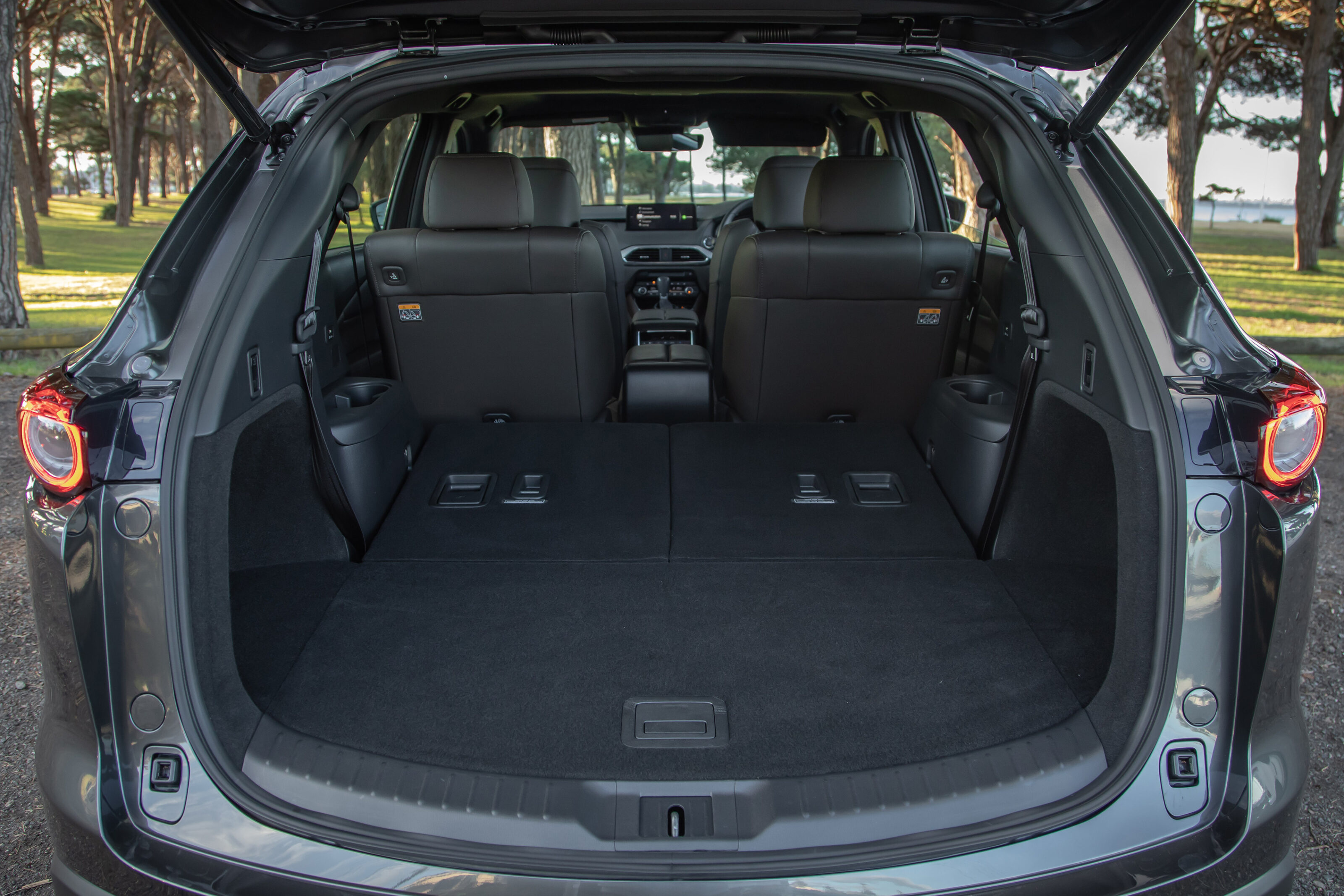
It has a claimed 810-litre boot capacity. This is reduced to 230L with the third row up.
For additional space, the second row can be folded, except for the Azami LE due to its captain’s chairs.
Warranty and servicing
As per the wider Mazda range, the CX-9 is covered by the brand’s five-year, unlimited kilometre factory warranty. It has a complimentary roadside assistance program over the same period.
Mazda offers five years of capped-priced servicing. The CX-9 has a 12-month or 10,000-kilometre service interval, whichever occurs first.
Service pricing can be found below:
| One year | $378 |
| Two years | $424 |
| Three years | $378 |
| Four years | $424 |
| Five years | $378 |
Choice means competition and competition is great for the customer, and never more has that rule applied than in the small SUV market.
With so many competitors fighting for attention in the dinky high-rider segment, the plethora of brands are forced to be hyper-competitive in terms of features, equipment and price. And that’s good news for you.
There are more than 20 models vying for your money in the small SUV class, but we’re going to look at the group that’s most affordable, starting with the least expensive.
UPDATE, December 2022: 5 SUVs under $30k
In addition to the models listed here, we’ve also got a story highlighting five SUVs under $30k that are worth considering if you’re in the market. Get the story at the link below, after you’ve finished reading this one!
MG ZS – $22,990
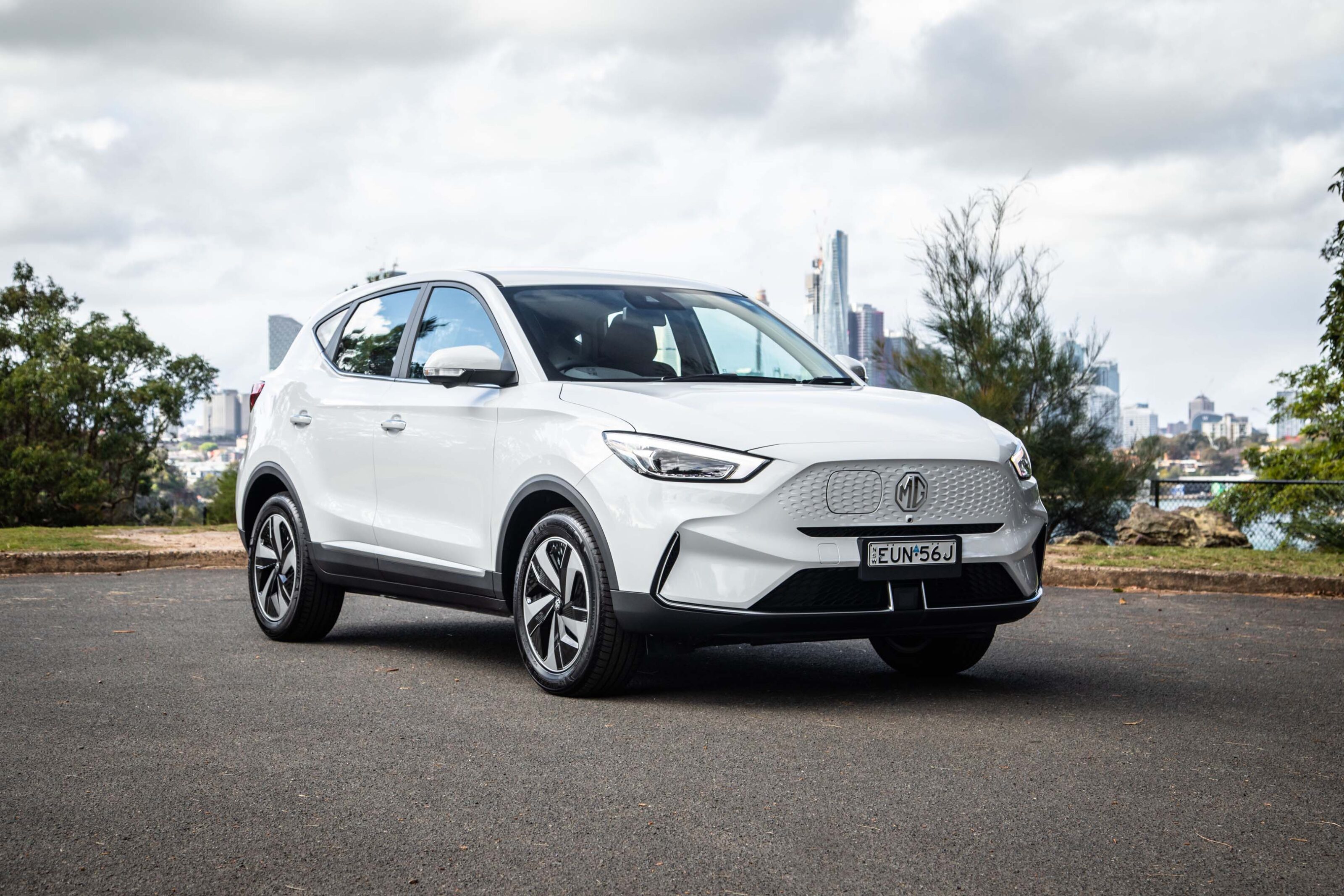
As China’s auto industry matures, the quality – and quantity – of product from the country has also grown.
MG – a brand that used to be as British as bulldogs and warm beer – has been transformed into a subsidiary of Chinese mega-corp SAIC Automotive, and its most promising product since its Chinese-funded revival began is the MG ZS compact crossover.
Suzuki Ignis – $23,490
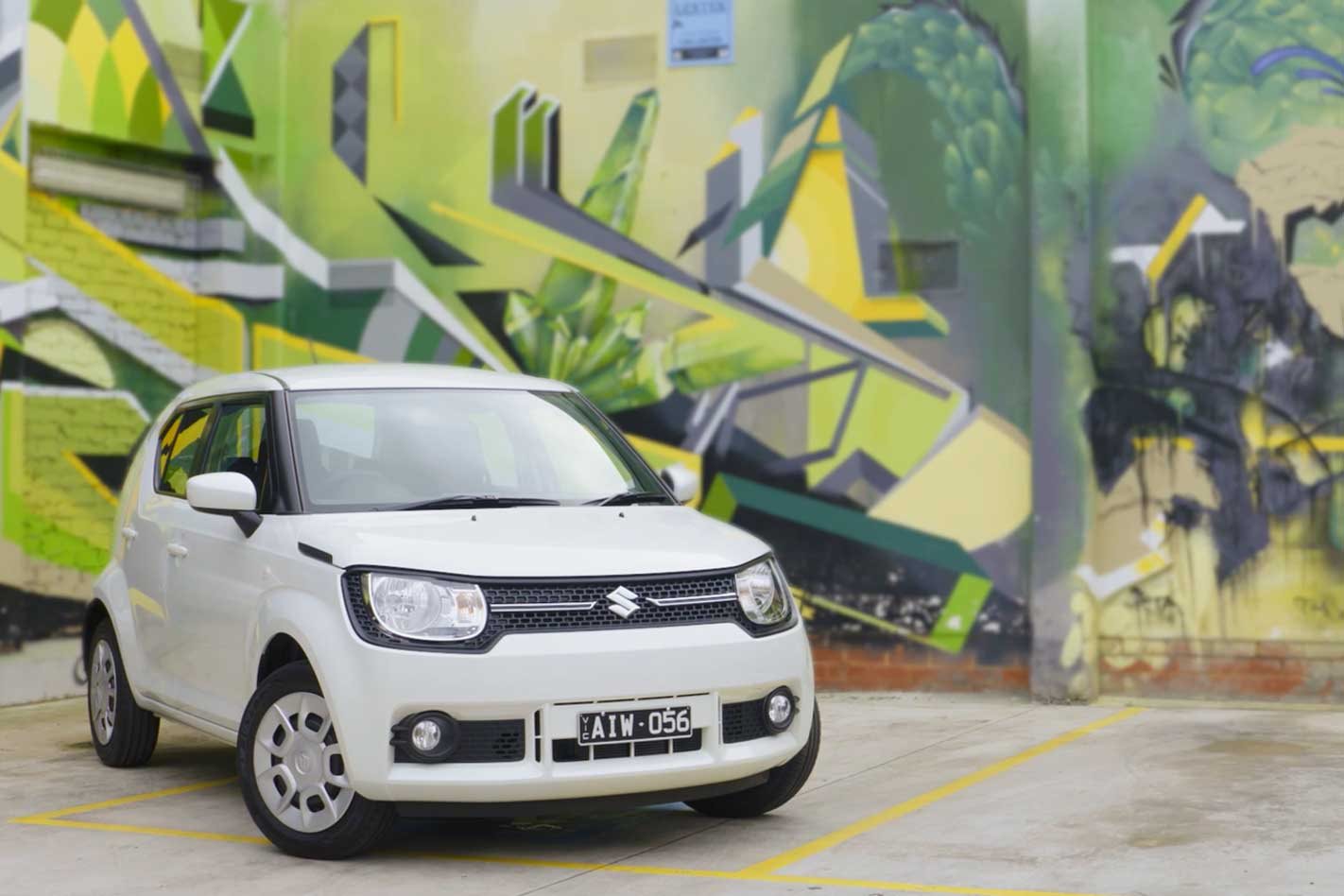
The Suzuki Ignis is one of the most affordable small SUV in Australia, if you can call it that. While it might appear as a larger-than-usual hatchback, the Ignis is a boxy, retro look at a ‘light SUV’ and prices begin at $23,490 (drive-away).
Available as a front-wheel drive only, it may not have much in the way of off-road ability, but the Ignis is a handy city-dweller and offers more head and leg room than you might imagine.
Hyundai Venue – $24,990
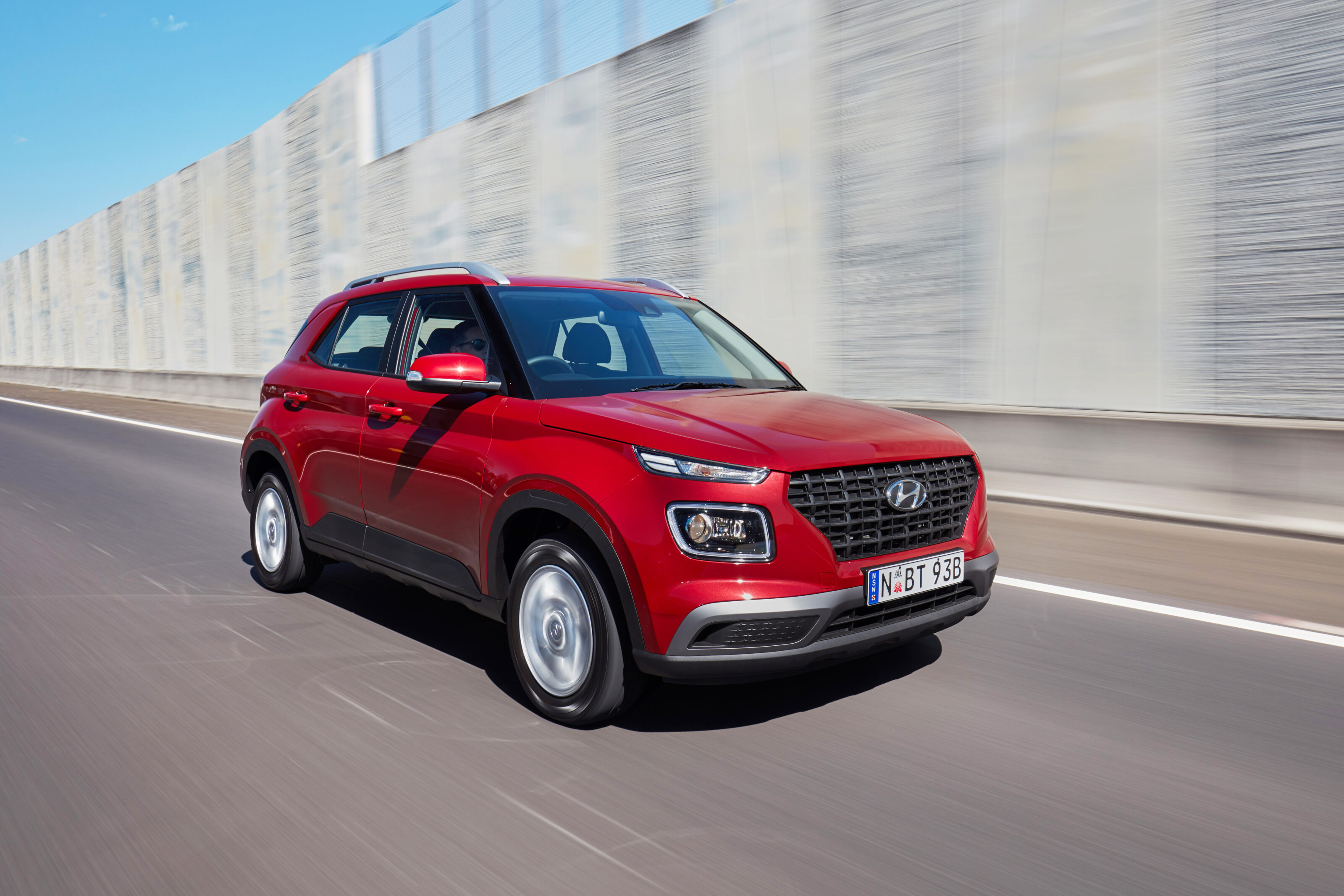
In a weird way the Venue small SUV replaced the Accent in Hyundai’s local line-up, taking the place as the brand’s least expensive car. Weird, because the Accent was a small sedan and nothing like the Venue.
The Hyundai Venue starts at $24,990 including on-road costs and, while there are foibles, there is much to like about the Venue. Cheap and cheerful? You bet.
Mitsubishi ASX – $26,490
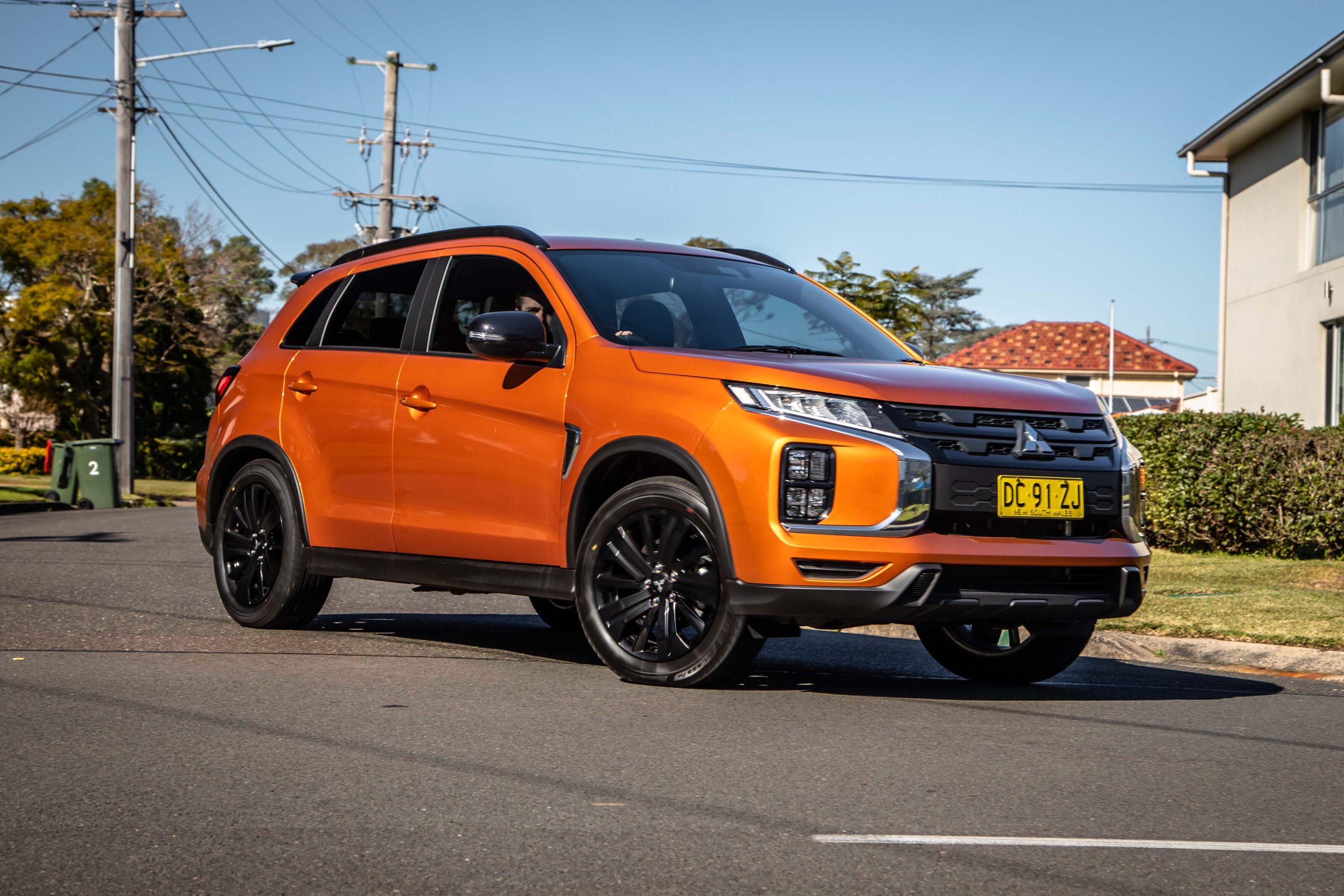
If we gave you the impression the Mazda CX-3 was old – sorry – the Mitsubishi ASX is on another level. But ever since its introduction more than 10 years ago it has sold consistently well thanks to its spaciousness, reliability and low price.
The ASX range begins at $26,490 (including ORCs) today and was recently updated for the umpteenth time, but under its facelifted exterior it’s essentially still the same decade-old car.
Mazda CX-3 – $27,251
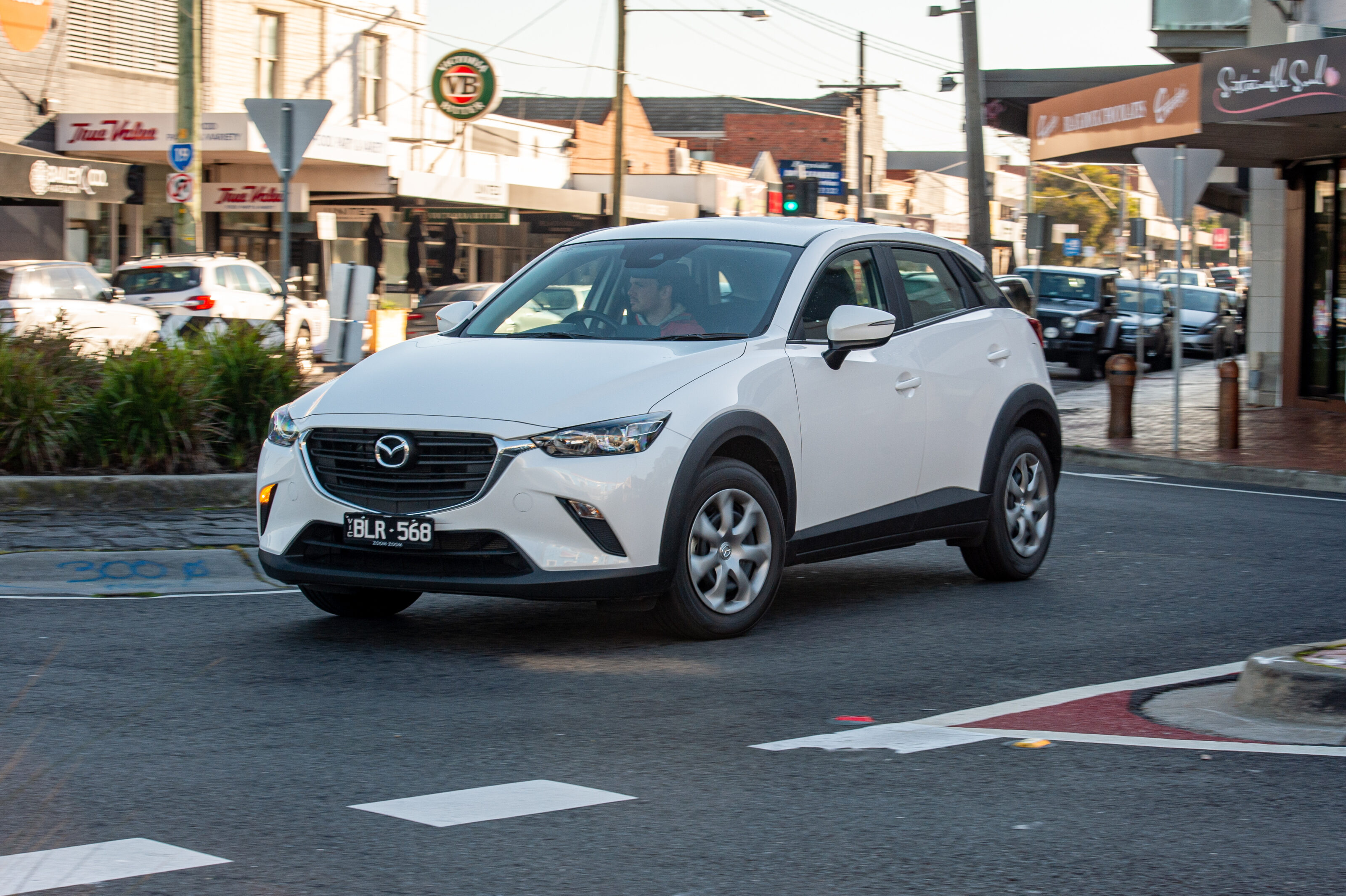
It may be a little long in the tooth, but the Mazda CX-3 can still carve it up with the best of them. It’s consistently one of the most popular small cars on the market and even placed well in our small SUV Megatest – especially impressive considering its age.
Prices start at $27,251 before on-roads.
Haval Jolion – $28,490
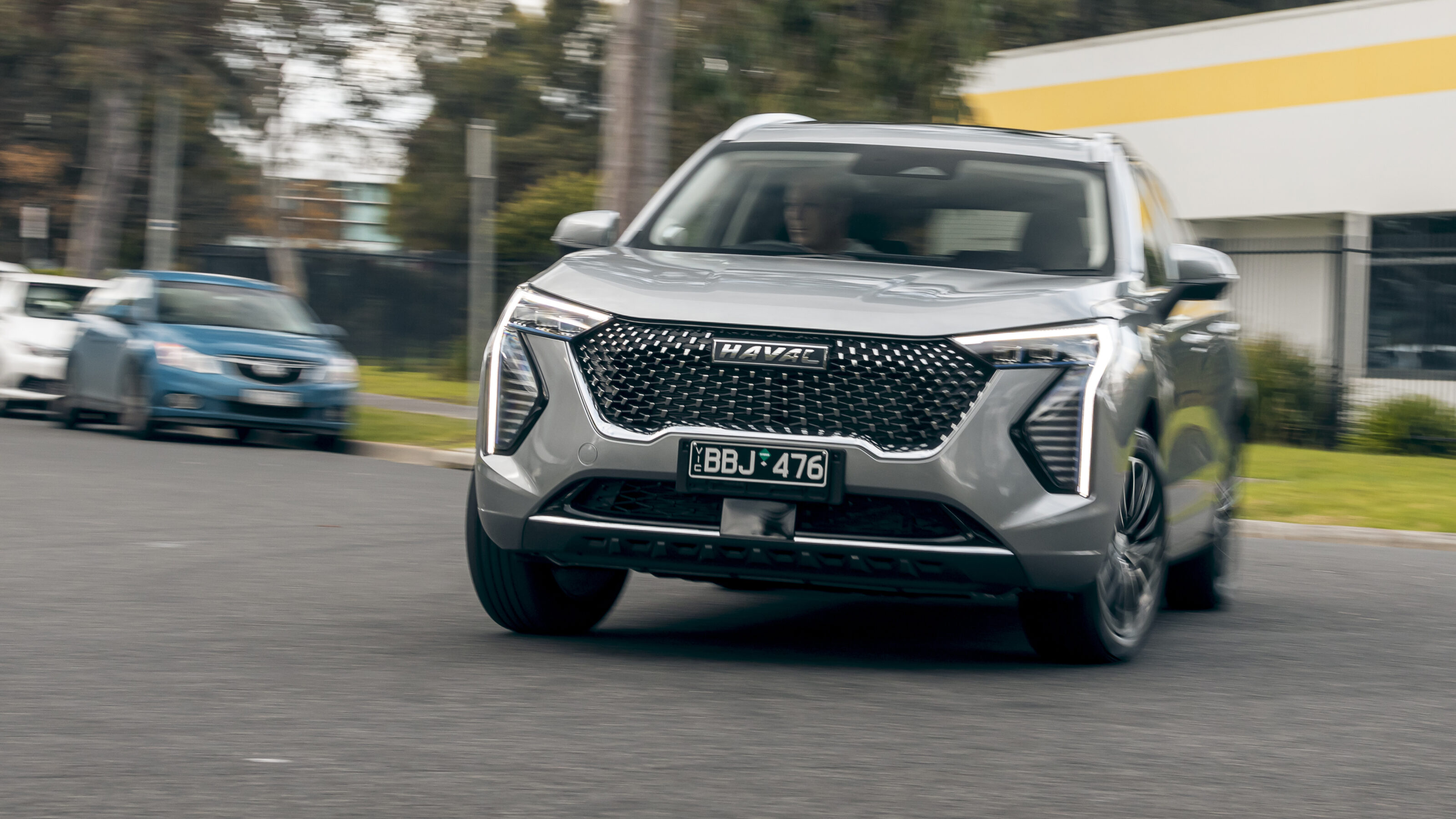
China’s latest entry to the small SUV space is actually one of the cheapest small SUVs with turbocharged power and prices begin at just under $30k.
For such an inexpensive option, there’s a respectable amount of standard kit but the quality isn’t quite up to its Japanese rivals’ standard, nor is the way it drives and handles.
Kia Seltos – $29,290
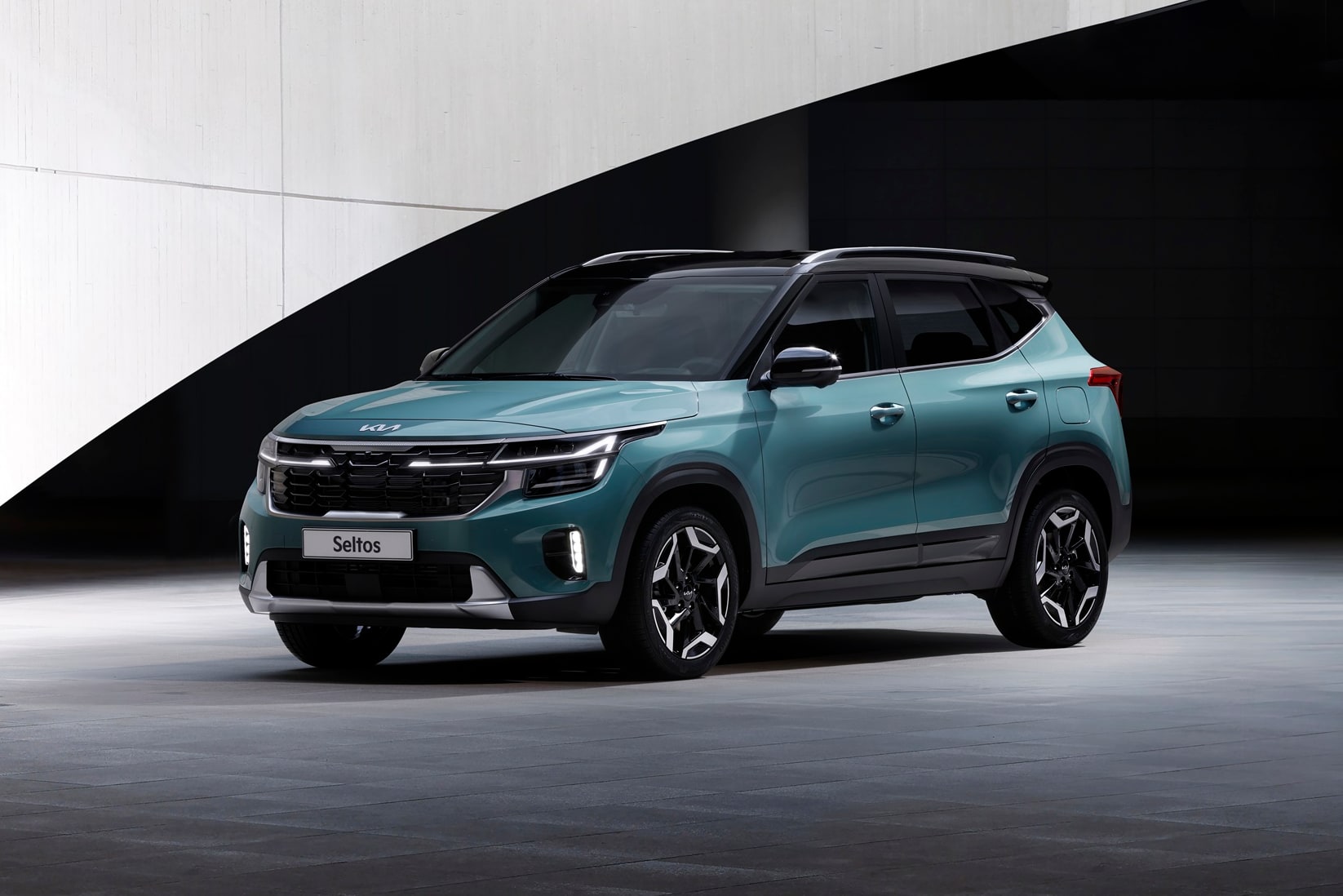
If the Kia Seltos isn’t all things to all people, it’s not for want of trying. The compact SUV market is booming and doesn’t look like stopping but the Korean giant’s late entry has been extremely well-received.
The updated small SUV will launch locally late this year too with a upgraded version of the Seltos’s 1.6-litre turbo-petrol engine, which is also now mated to an eight-speed torque-converter automatic transmission, as well as new safety equipment and upgraded cabin technology.
Prices start at $29390 including on-roads.
Hyundai Kona – $29,490
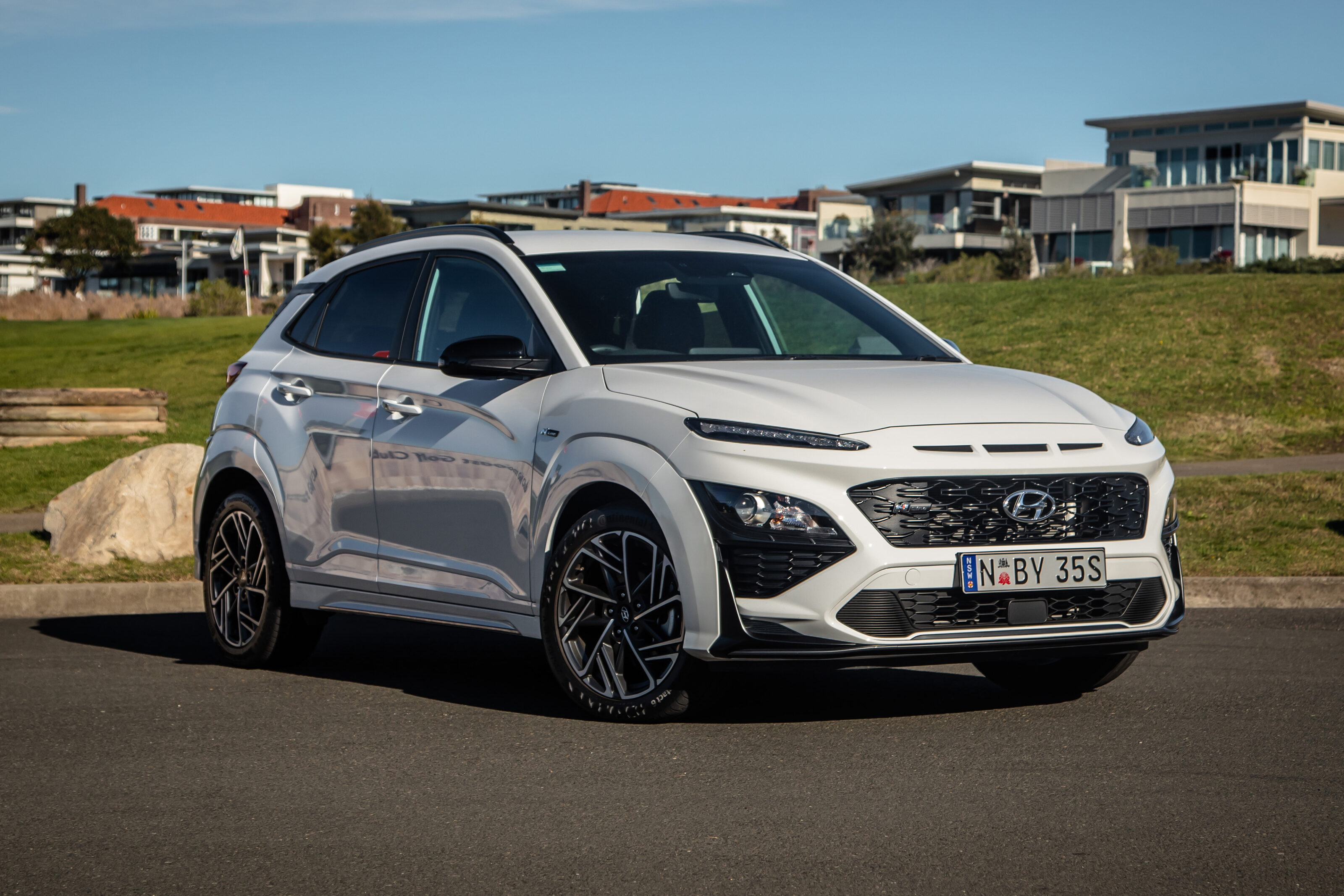
Hyundai’s second entrant into the small SUV segment is the $26,490 (including ORCs) Kona, which is a step up in size, specification and drivetrain when compared with the Venue small SUV.
WhichCar likes the Kona for its bold exterior styling and level of standard kit, though that good first impression is tarnished when you get inside to find a rental-car interior.
Suzuki Vitara – $31,990
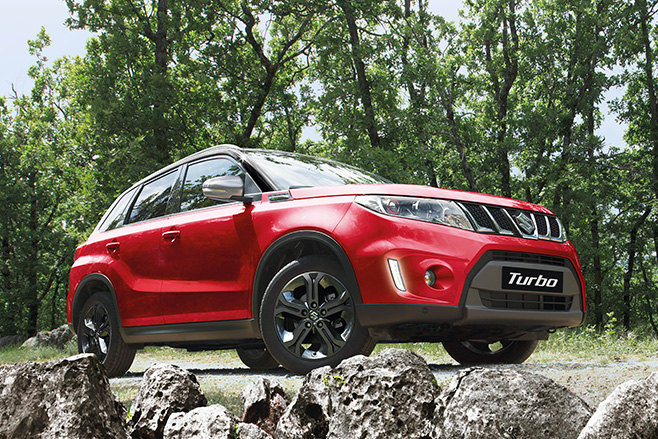
The Suzuki Vitara is a familiar nameplate going back more than 30 years, and now it represents a good, honest SUV that majors on practicality and comfort without falling into the trap of trying to be too sporty.
But while it’s roomy and well equipped, it does feel like it’s built to its $31,990 (including ORCs) price and the absence of advanced driver assistance technology is an archaism.
That’s just the tip of the small SUV iceberg and there’s a lot more choice if you have the budget.
UPDATE, December 2022: 5 SUVs under $30k
In addition to the models listed here, we’ve also got a story highlighting five SUVs under $30k that are worth considering if you’re in the market. Get the story at the link below, after you’ve finished reading this one!
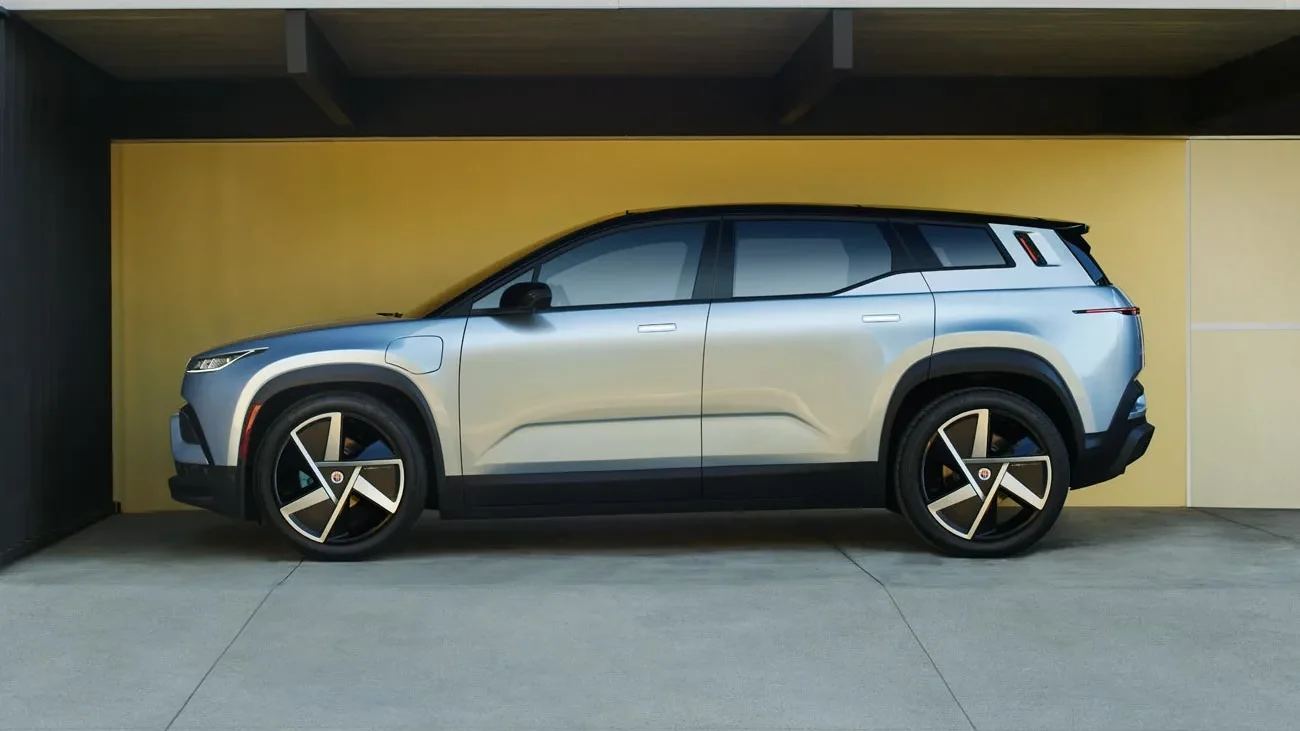
The all-electric Fisker Ocean SUV will debut a new flagship variant at this year’s 2022 Paris Motor Show, taking place October 17-23.
Dubbed the Ocean Extreme, the new halo model tops a three-pronged range, sitting above the Fisker Ocean Ultra and entry-level Fisker Ocean Sport.
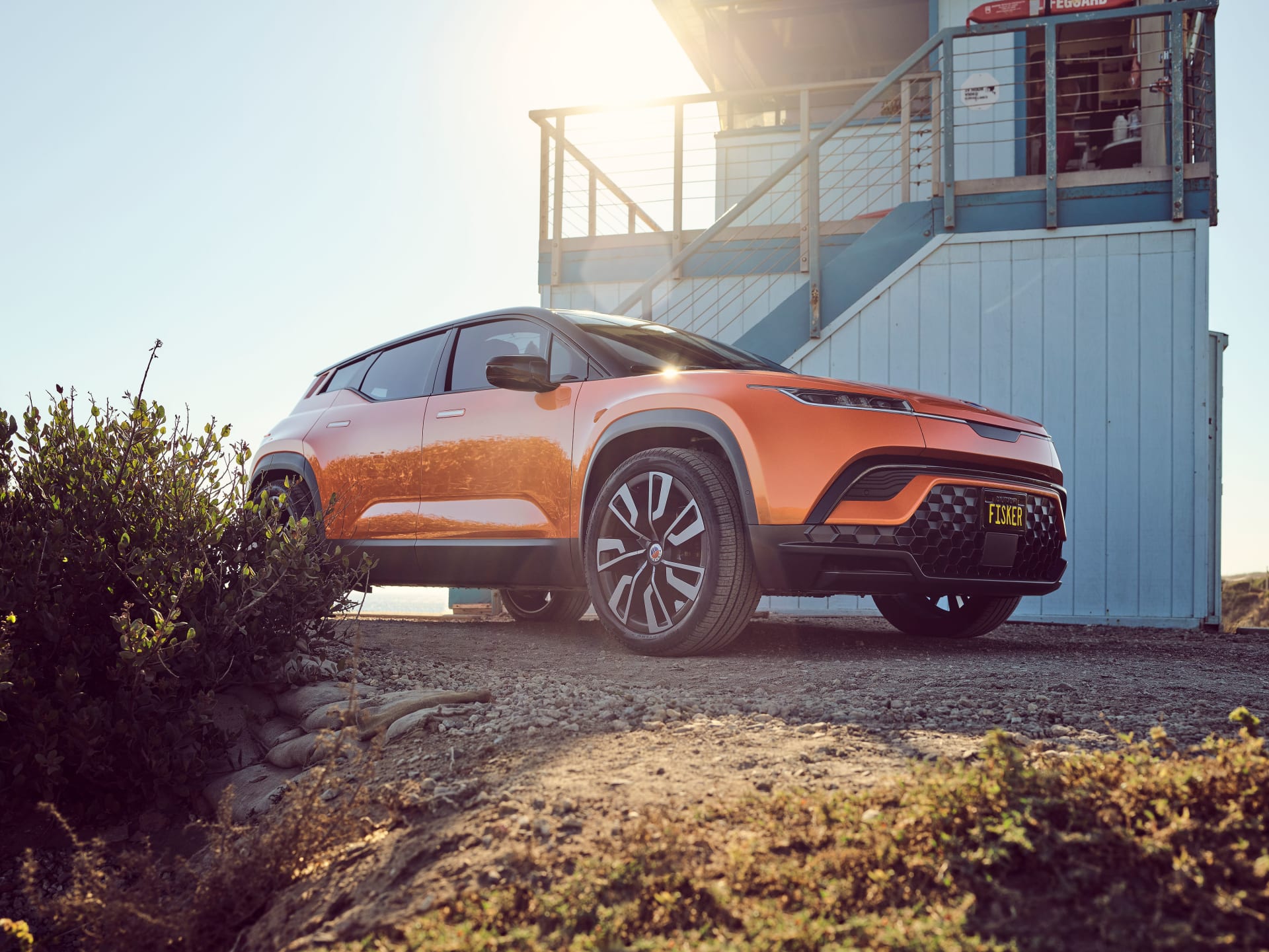
Fisker’s Ocean Extreme will be capable of a WLTP-rated driving range of 630 kilometres, is equipped with dual-motor all-wheel drive, and will reportedly boast over 400kW of power. The mid-spec Ocean Ultra and entry-level Ocean Sport use a single 205kW electric motor on the front axle, delivering a WLTP-rated driving range of 547km and 440km respectively.
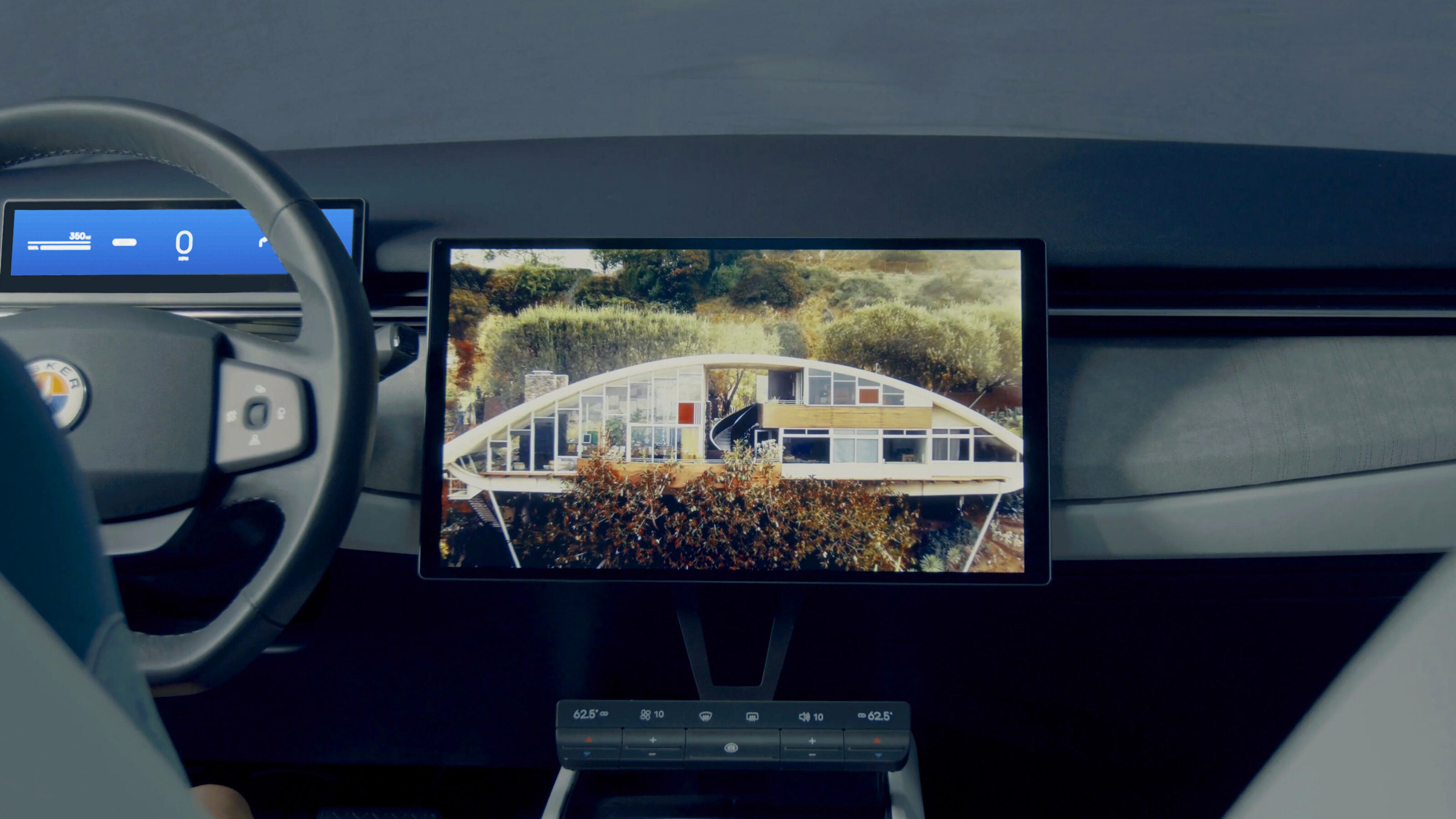
Headline features of the new Ocean Extreme include Fisker’s SolarSky panoramic roof – which can generate upwards of 2400 emissions-free kilometres all on its own. There’s also a 17.1-inch rotating centre screen with “Hollywood Mode”, a variety of advanced safety and driver features, and a stylish cabin swathed in recycled and sustainably-sourced materials.
Production of the anticipated Fisker Ocean is on track to commence from November 2023, with first deliveries bound for the United States, Germany, Austria, Denmark, Norway and Sweden. The remaining “launch markets” of France, the UK and Canada can expect first deliveries from early-mid 2023.
Fisker Oceans are being produced in Graz, Austria, at Magna Steyr’s carbon neutral plant – which also produces other EVs such as the Jaguar I-Pace.
Notably absent from Fisker’s nine ‘launch markets’ is Australia, so can we expect the Ocean SUV locally?
Fisker has previously voiced intent on bringing the Ocean SUV to the Australian market from 2023, with right-hand-drive production already on the cards for the UK market with mid-2023 deliveries.
Speaking to EFTM at this year’s Consumer Electronics Show, Fisker Senior Vice President of Communications, Simon Sproule, said the Ocean “will be left and right-hand-drive from the start because we’re selling in the UK from 2023”.
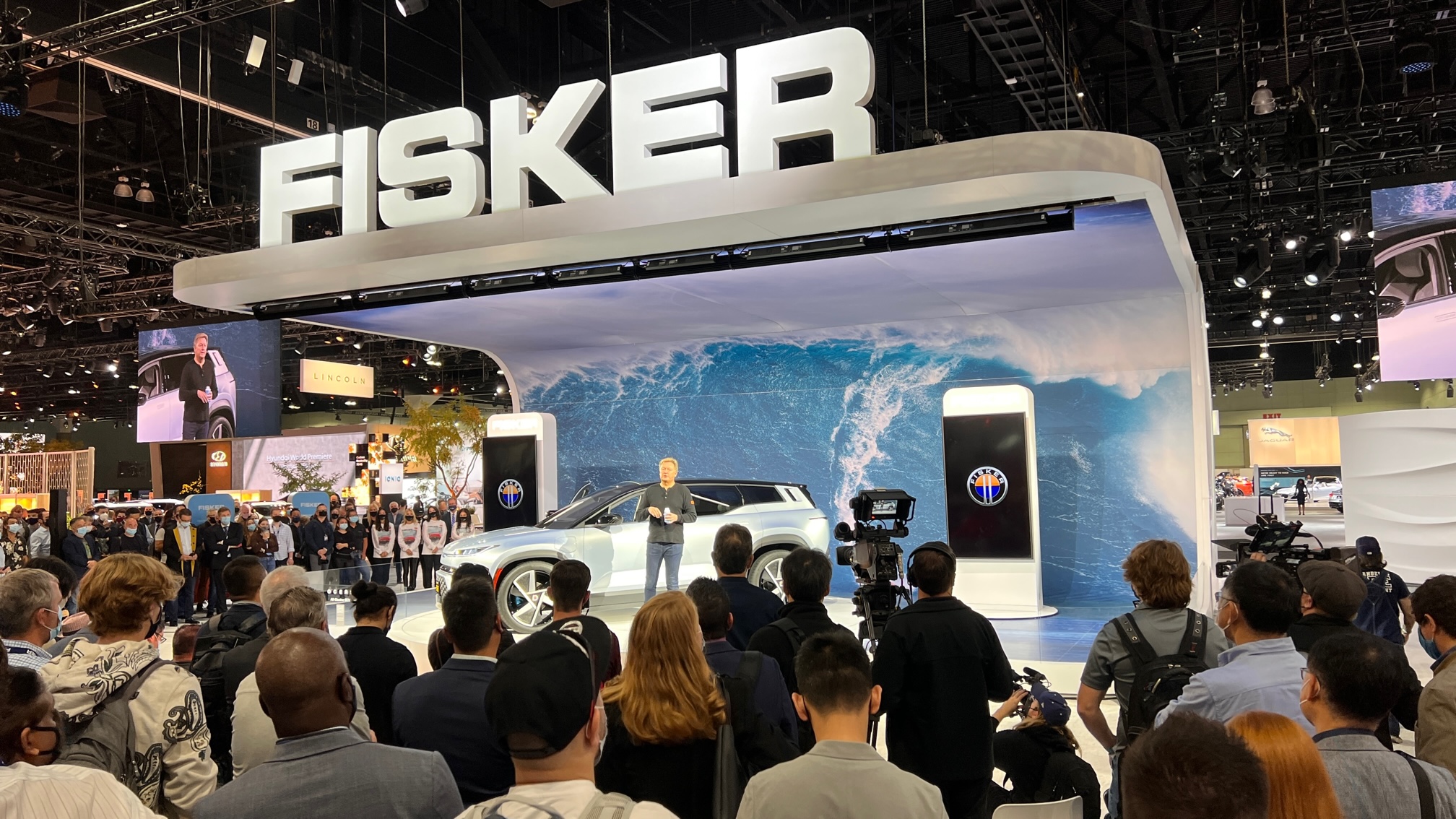
“Intentions are to bring it to Australia in due course”.
Given above timelines, we’d expect a late-2023/early-2024 Australian arrival.
It’s not much of a secret that Kia’s first-generation Niro EV was a bit on the frumpy side. And it was pricey. And it had a planned shelf life of less than two years because it got here really late. Then it was thoroughly sidelined by the Wheels COTY-winning EV6 when it arrived shortly after. Poor thing didn’t stand much of a chance.
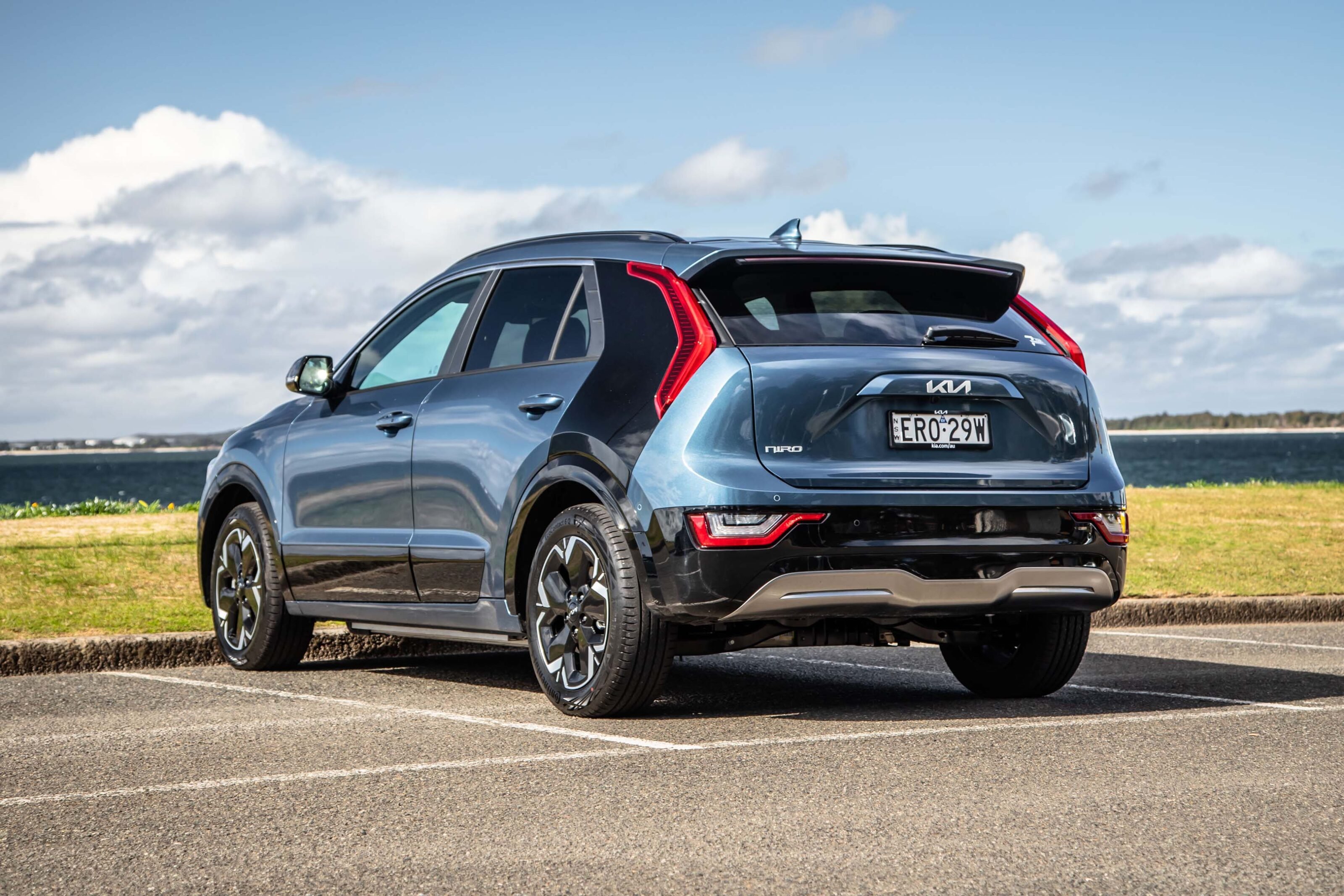
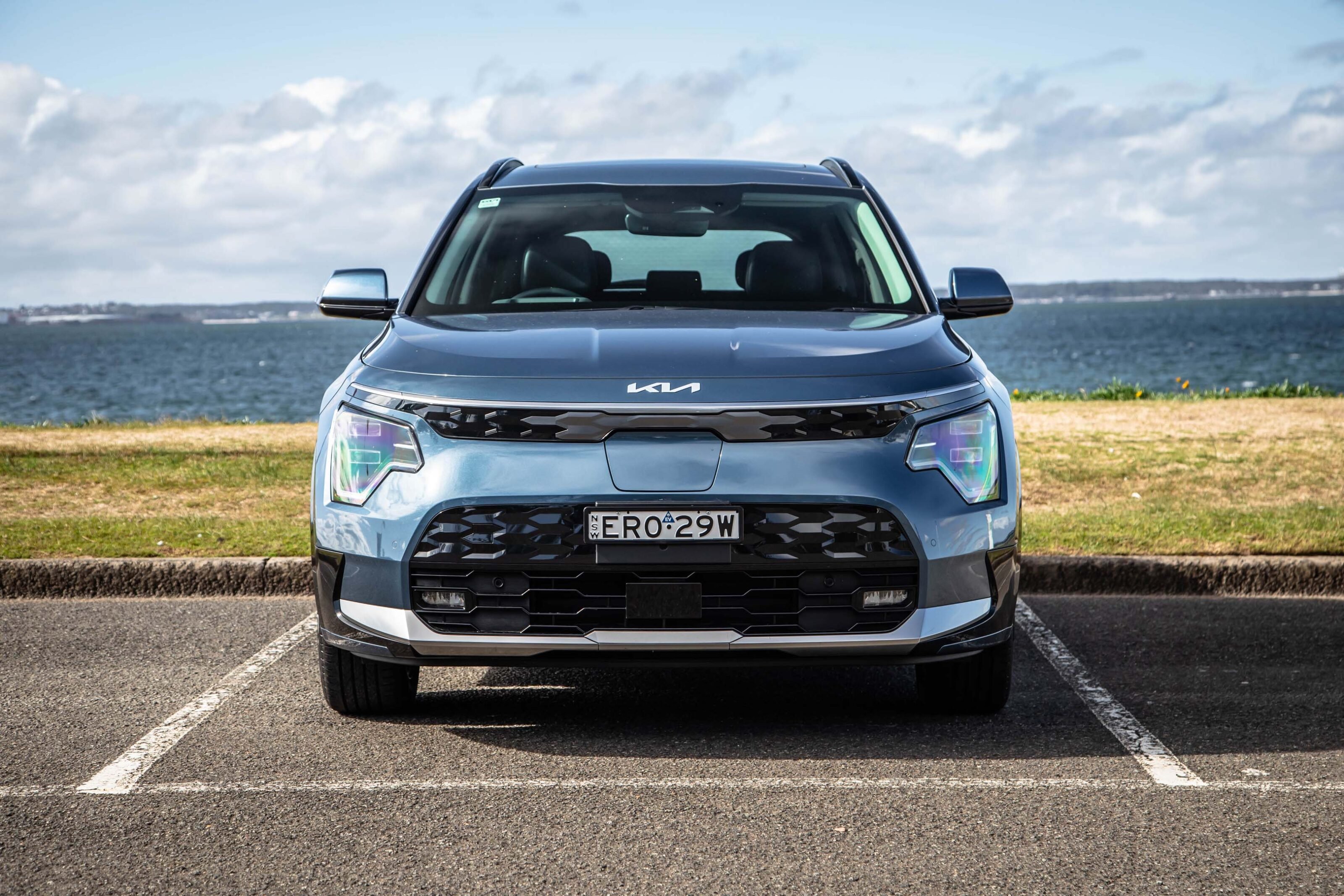
This second-generation car, well, this looks way more like a stayer. It has a new, more stylish body that houses updated electronics, media system and safety gear. It also rides on a new platform while also sporting a new price that pitches it into battle with Polestar and (whisper it) Tesla.
It has a lot to live up to, not because the first generation went off (it didn’t) but because the EV6 is so good and raised our expectations.
What is the Kia Niro EV?
The 2023 Kia Niro is an electrified, five-seat small SUV comparable in size to the Korean brand’s own Seltos SUV.
It shares little under the skin with the Seltos, however, as it’s based on Hyundai-Kia’s K3 platform which is also underneath the Hyundai i30 Sedan (a car that is easily the best in its shrinking class). It’s also on a different platform to the EV6, which is on the company’s E-GMP electric-only skateboard.
Also available as a petrol-electric hybrid, the Niro misses out on the EV6’s super-fast charging capability and it looks and feels more like an internal combustion engine car than a super-futuristic EV.
Kia has definitely bridged some of the gap with funky styling, the option of a contrasting colour C-pillar and some cool lighting front and rear. The rear lights even include an integrated aero device that cleans up the airflow to help improve range.
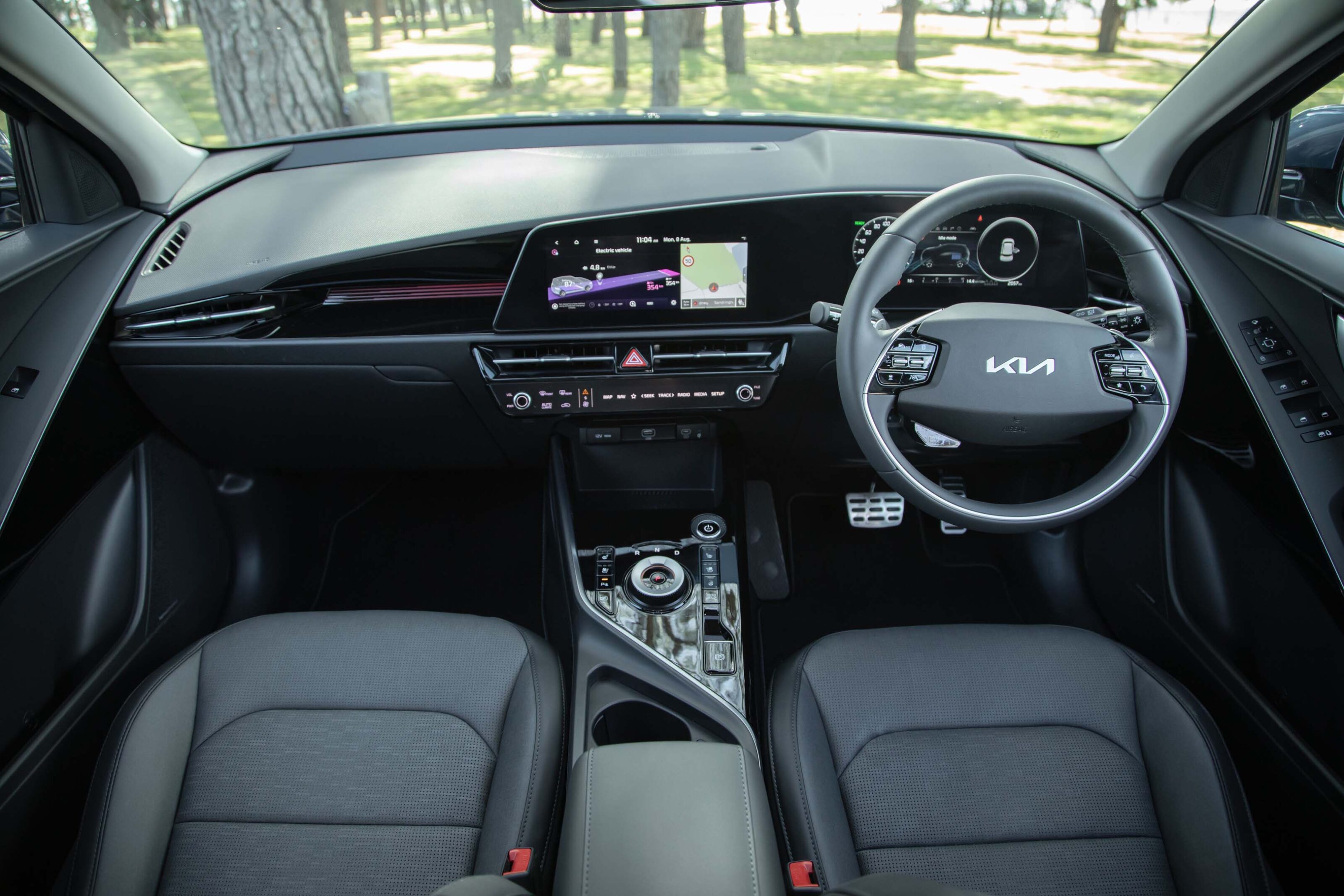
It does have the EV6’s cool dashboard, two-spoke steering wheel and the rotary dial transmission controller to make sure you know it’s electric.
Pricing and features
Kia dropped the plug-in hybrid (PHEV) version of the Niro because punters are unsurprisingly suspicious of them. Or, more bluntly, nobody buys them.
The new range has two each of the hybrid (HEV) and electric (EV) and prices are up across the board.
| Niro HEV Su00a0 | $44,380 |
| Niro HEV GT-Line | $50,030 |
| Niro EV S | $65,300 |
| Niro EV GT-Line | $72,100 |
As you can see, there’s a big gap of more than $20,000 between the hybrid and the EV. If you allow your eye to wander to Kia’s other full EV, the EV6, that car starts at $72,590, albeit for the rear-wheel drive Air (which recently beat the Tesla Model Y in our comparison) rather than the rather more expensive EV6 GT-Line.
The Niro GT-Line has one advantage over the EV6, Kia Connect. As with many EVs available for a similar price, Kia Connect provides remote access to various functions such as door locks, climate control, charging information, and in-car functionality like live traffic updates. And it’s free for seven years.
Highlights
| 17-inch alloy wheels (tyre repair kit) |
| dual-zone climate control |
| fake leather trim |
| 8-speaker Harman Kardon audio system |
| wireless phone charging |
| DAB+ digital radio |
| dual-zone climate control |
| heated steering wheel |
| adaptive cruise control |
| auto LED headlights with auto high beam |
| auto wipers |
| power windows and mirrors |
| heated and ventilated front seats |
| satellite navigation |
| digital dashboard |
| head-up display (10-inch) |
| keyless entry and start |
| front and rear parking sensors |
| reversing camera |
| sunroof |
| powered tailgate |

The GT-Line also has Kia’s party-trick remote control where you can use the key fob to start the car and roll it forward and back. It’s very useful in tight garages or parking spaces. The seventh airbag is a driver’s knee airbag and not a front centre airbag like some rivals.
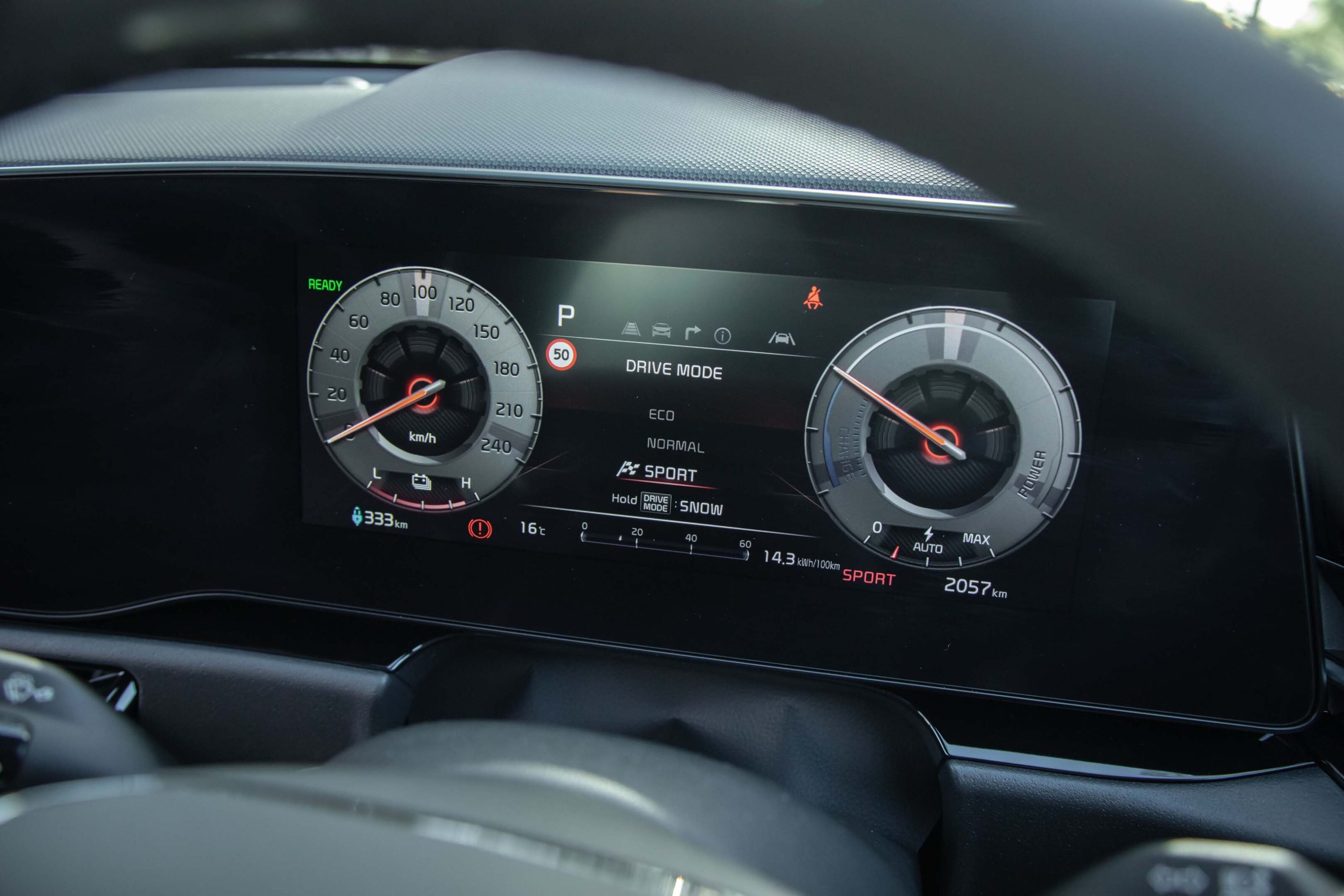
As with the EV6, there are two big 10.25-inch screens set into the GT-Line’s dash. The media and entertainment screen is packed with features and a very cool menu option to show you which way the electricity is flowing and how the battery is going.
The eight-speaker stereo also has USB Apple CarPlay and Android Auto (the S has wireless integration but a smaller screen and heaps less digital bling) and a digital radio interface that won’t make you either veer off the road or give up and use your phone instead.
Best Electric Cars Under $65k: Affordable EVs Rated
Welcome to part one of three price-based EV buying guides, this one focused on the most affordable electric cars available in Australia today
The hefty safety package also explains some of the high price:
| 7 airbags |
| anti-lock brakes |
| stability and traction controls |
| forward collision warning |
| forward autonomous emergency braking (AEB) with junction collision avoidance |
| reverse AEB |
| blind-spot monitoring |
| lane departure warning |
| lane-keep assist |
| reversing camera |
| forward cross-traffic alert |
| reverse cross-traffic alert |
| exit warning |
| rear seat occupant warning |
ANCAP is yet to assess and crash-test the Niro so it doesn’t yet have a rating.
The only available options are seven of eight colours on offer. All but white costs $520 and you can choose body colour or contrasting coloured C-pillars for no cost.
One of the worst things about the GT-Line’s pricing is that it puts it out of reach of the state and territory rebate programs, but at least it squeaks into the stamp duty holiday in some states. It’s also a big ask for Kia to charge the kind of money Polestar and EV darling Tesla do. Then again, it’s a brand on the move and if Kia can get a hold of some of these cars, they will sell.

Comfort and space
As the Niro is based on a conventional platform, you won’t find massive headline interior space figures. However, like the hugely popular Seltos, the Niro is pretty roomy.
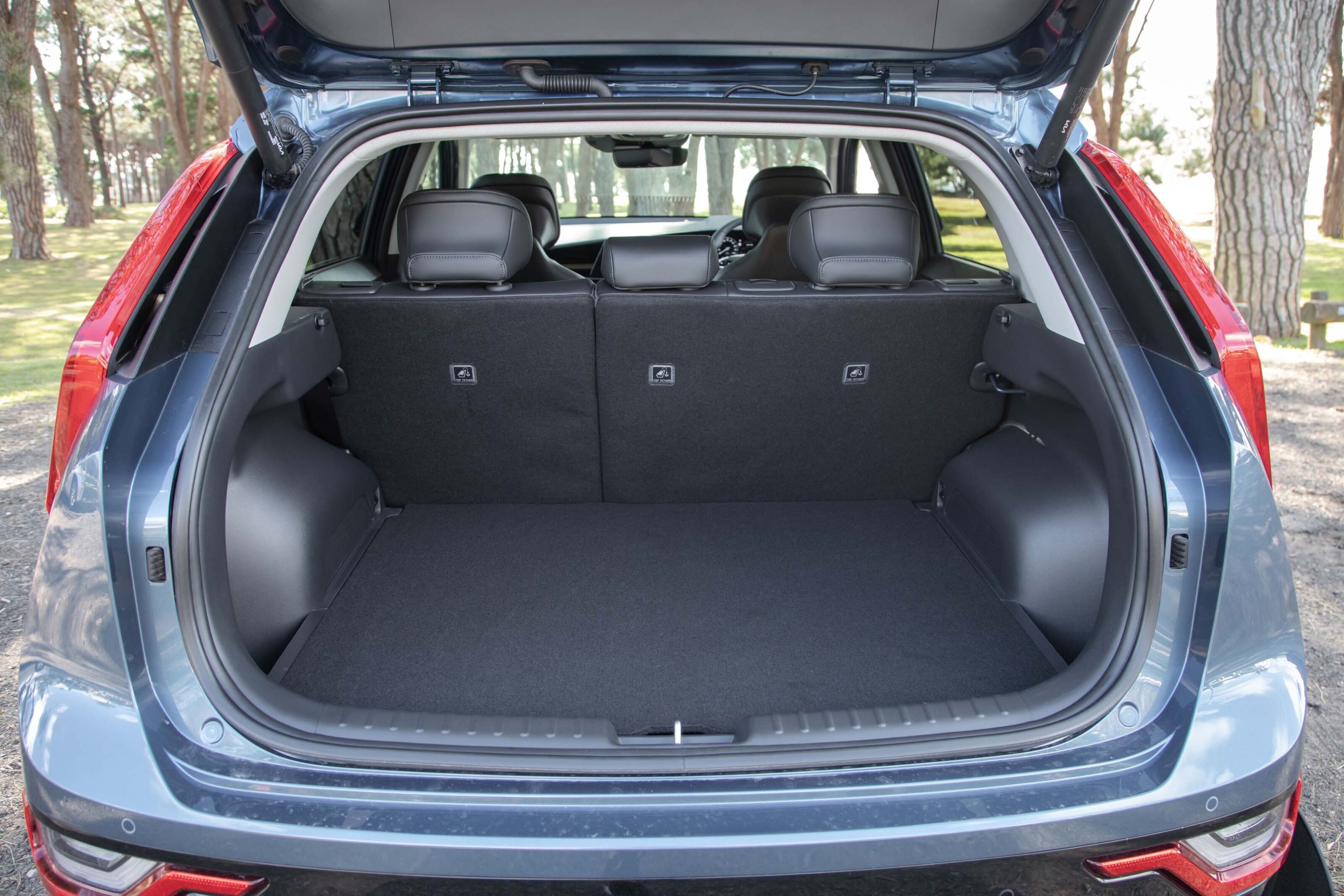
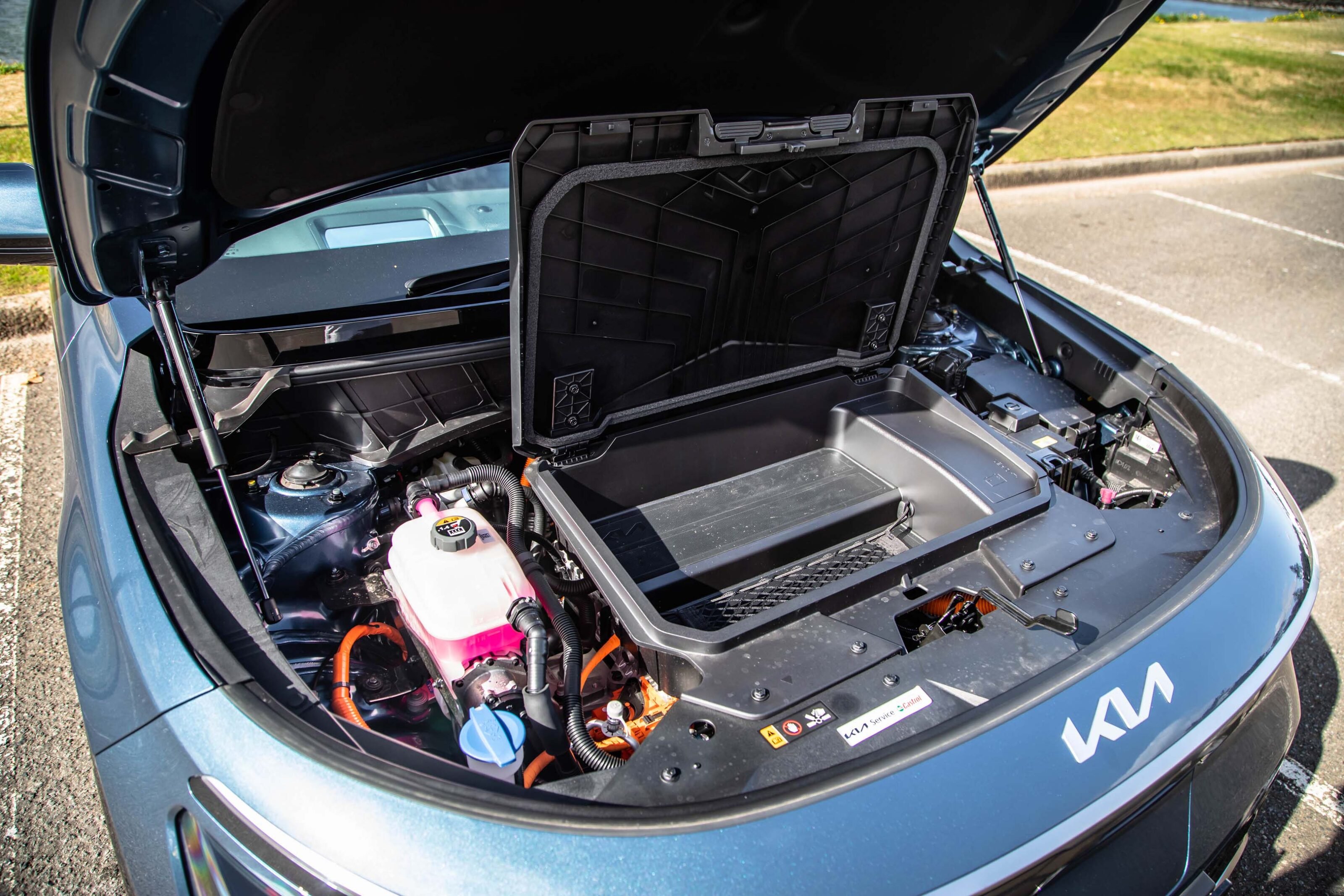
The second-generation’s larger boot starts at 475 litres (50 more than the hybrid) but with the seats down, 1392 litres is thirteen fewer than the old car. You get it all back and more with the under-bonnet boot, which holds 20 litres. The boot also has a powered tailgate.
Rear space is excellent for a car of this footprint, with tons of legroom and headroom for me, a middle-aged slightly-under six-footer. Three across the back might not be super-comfortable, but the almost flat floor at least leaves room for that third person’s feet.
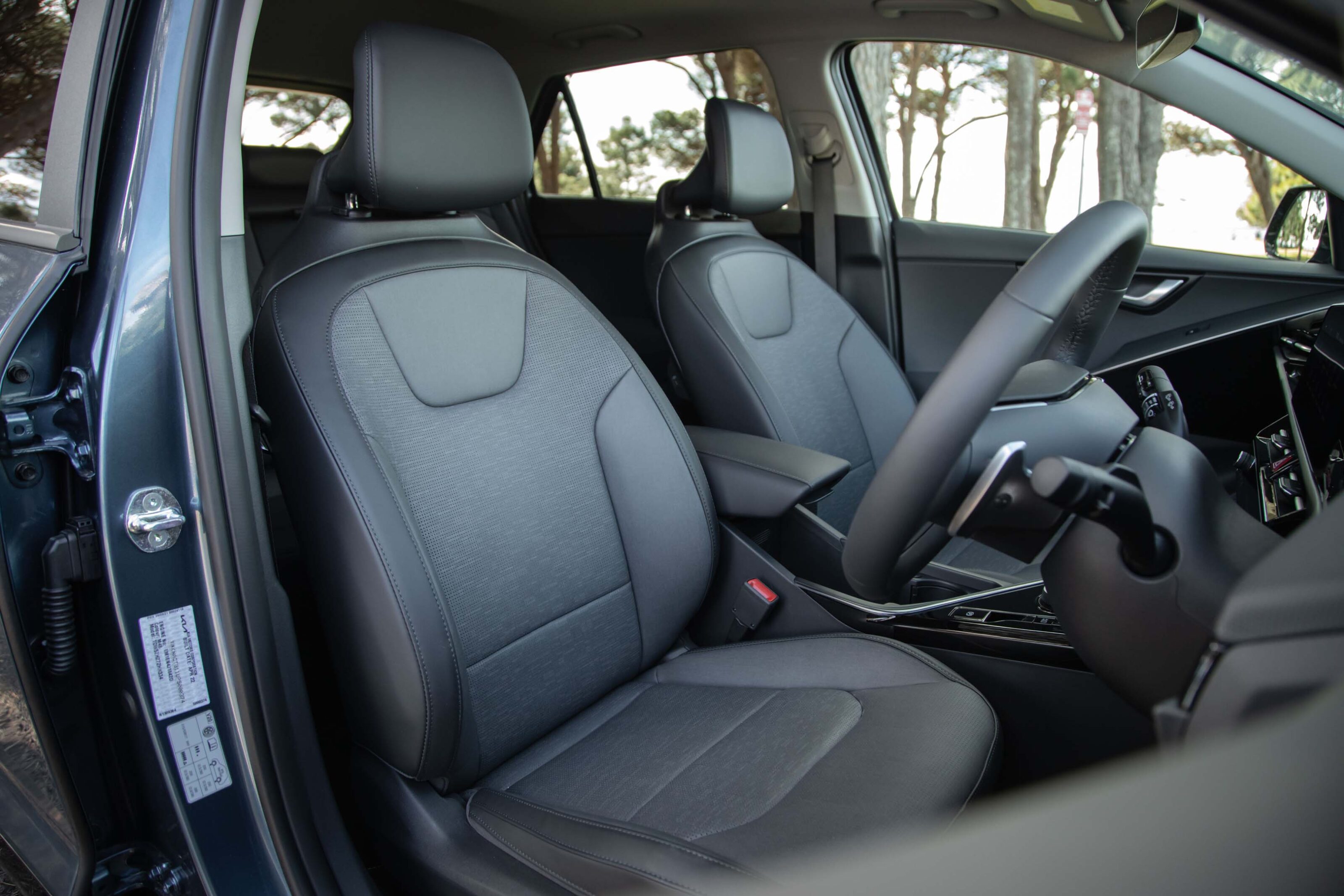
There are also two USB-C ports in the sides of the front seats and air vents for rear passengers too. The fold-down armrest features a pair of cup holders and the rear doors have a small bottle holder each.
I did find the rear seat fairly firm and a bit short in the seat cushion but I didn’t spend a lot of time back there.
Moving to the front, the seats are definitely firm but a three-hour drive around Sydney (and plenty of shorter ones) left me thinking my colleague Mike Stevens was on the money when he said a fifteen-hour journey from Adelaide to Melbourne in a Niro didn’t ruin his back.
EV Buyer’s Guide: Electric Vehicles Under $65K Ranked – The Best and The Rest
Welcome to part one of three price-based EV buying guides, this one focused on the most affordable electric cars available in Australia today
You have a pair of cup holders with retractable stays to convert them to a phone-friendly storage slot, a wireless charging pad, a good-sized glove box and a bin under the armrest.
The dash looks fantastic with its two 10.25-inch screens and the very slick controls for the climate settings can switch to controls for the media system.
It’s super clever in that it saves you from having everything shoved into the screen. You will have to search for some secondary functions, but the big stuff is easy to reach.
Battery and charging
The Niro EV has a 64.8kWh battery that Kia calls the long-range version, except there isn’t a short-range one for sale in Australia.
Either way, it’s a good size and is bigger than a Tesla Model Y’s 50kWh standard range (as far as we can tell, anyway) and a touch under the Polestar 2’s standard range 69kWh battery.
Its 460km range just shades the previous model’s 455km. Kia quotes energy consumption at 16.2kWh/100km and my time with the Niro – which included plenty of in-traffic driving, short errands and a three-hour drive around Sydney taking in motorways and 80km/h zones – almost nailed that figure with 16.3kWh/100km.
When I handed back the Niro, the battery had just on 25 per cent left and a range of 110km, so that 460km figure looks gettable.
| Claimed range (WLTP) | 460km |
| Claimed energy consumption | 16.2kWh/100km |
| Battery size | 64.8kWh |
| Charge time (11kW) | 6h20m |
| Charge time (50kW) | 1h05m |
| Charge time (100kW) | 0h45m |
| Maximum charge rate: | 80kW |
| V2L | Yes |
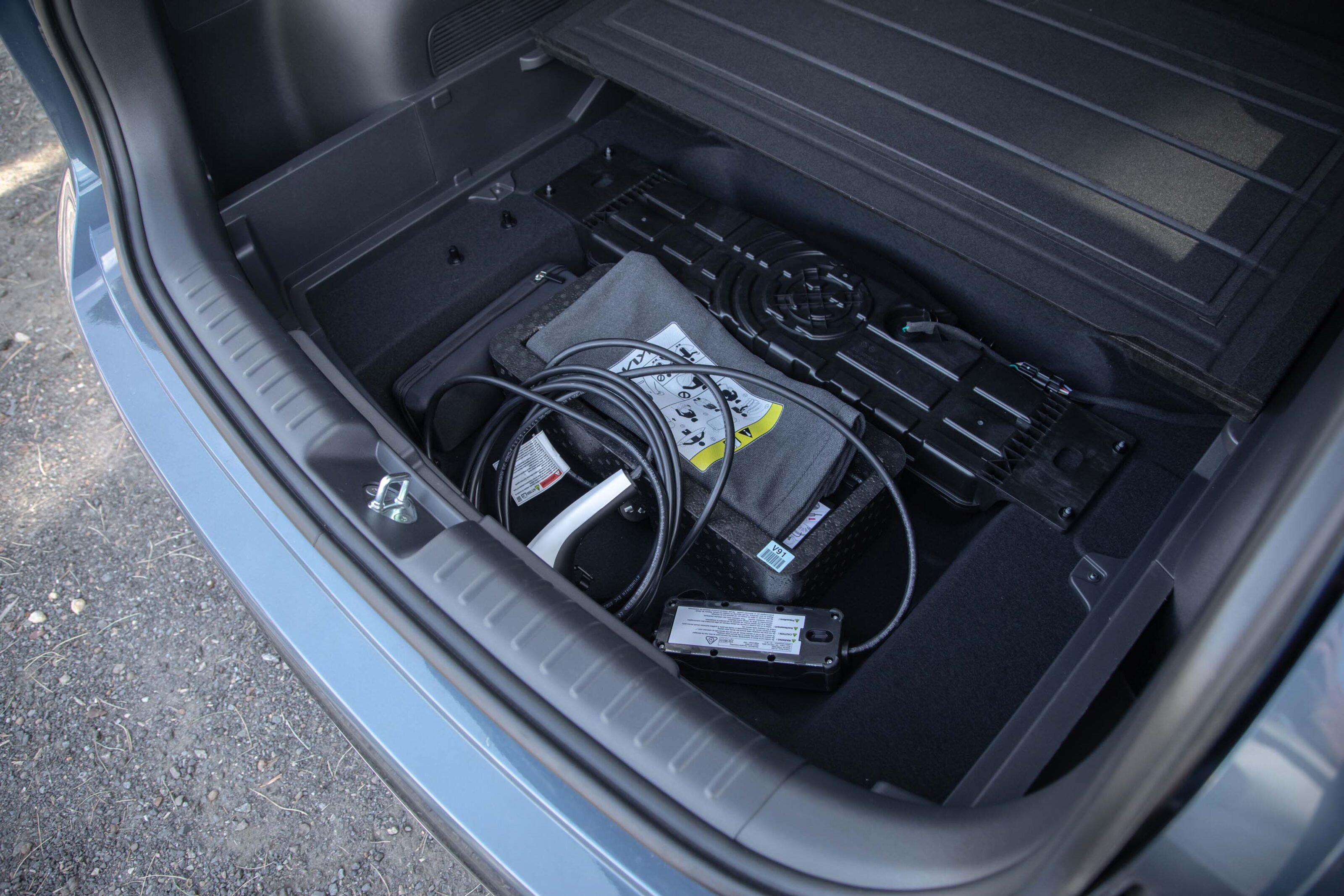
The V2L plug is located in the base of the rear seat and you can run your laptop or modestly power-hungry appliances from the battery.
On the road
The Niro EV has a 150kW/255Nm electric motor driving the front wheels through a single-speed reduction gear transmission. Fans of the replaced car will spot that the torque figure is way down on the first car’s 390Nm. Kia says that this is to improve driveability, we say it’s to save the tyres. Whatever, it’s perfectly fine.
It’s not much slower, covering the 0-100km/h sprint in 7.8 seconds versus the old car’s claimed 7.0 seconds. Neither car is a fireball but this figure matches the entry-level Model Y and Polestar 2 figures pretty closely.
The first impression you get of the Niro is that it’s very quiet. The new car is packed full of sound deadening and it has worked. Only really coarse surfaces send much noise into the cabin; the rest of the time you’re riding along in serene silence.
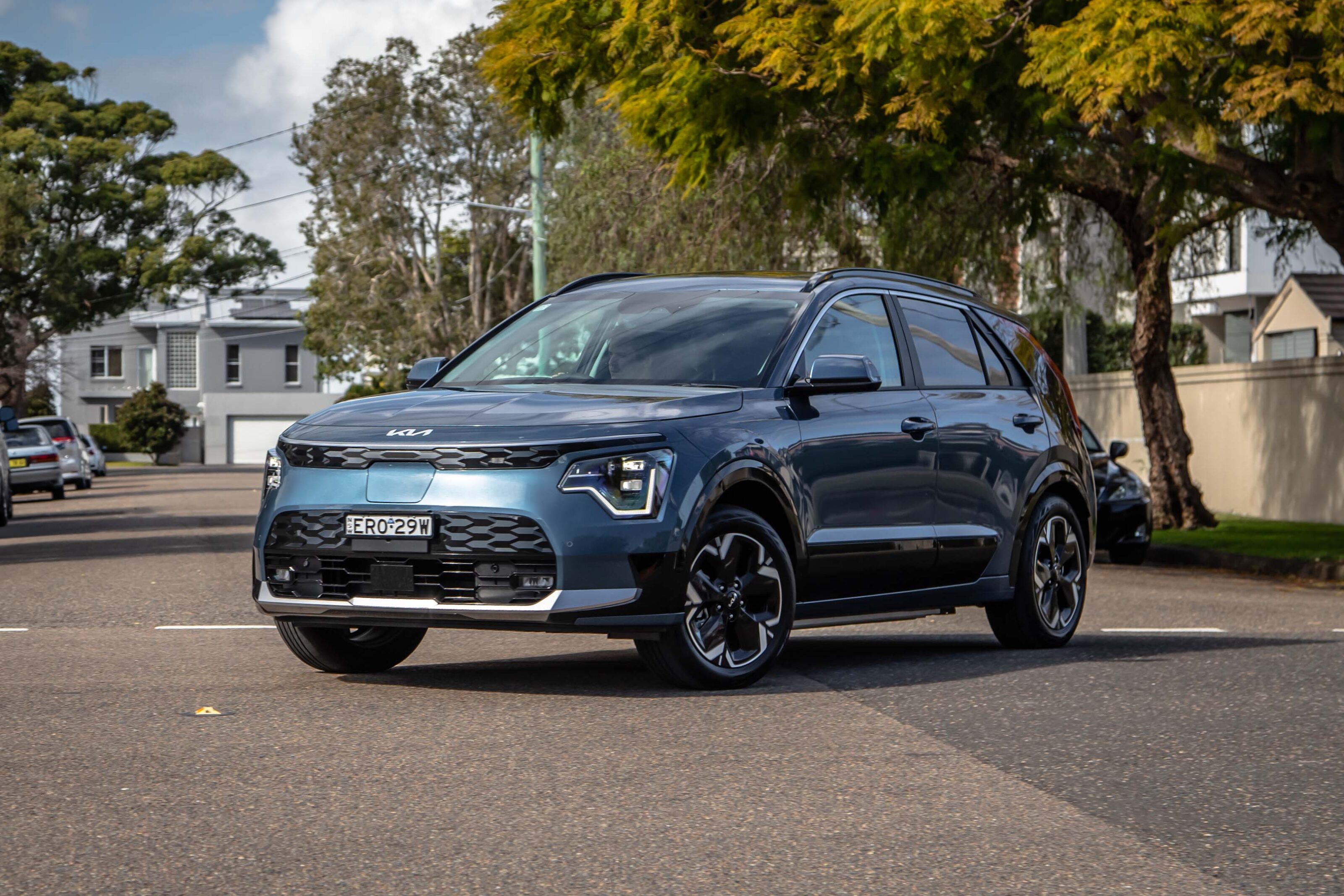
All this is even more impressive when you remember that this isn’t a dedicated EV platform and noise sources and pathways are different in ICE cars.
It feels a bit heavy, though. In Normal and Eco modes, that’s compounded by a gentle throttle response that makes the car feel a little doughy. Obviously, those brisk but not ballistic acceleration stats mean it’s never going to trouble your neck muscles, but flicking the wheel-mounted drive mode switch to Sport livens things up immensely.
That’s a good thing, though, as the other modes keep energy consumption in check and are perfect for the likely commuter-and-school-run grind this kind of car will be consigned to. Sport is just for a spot of fun.
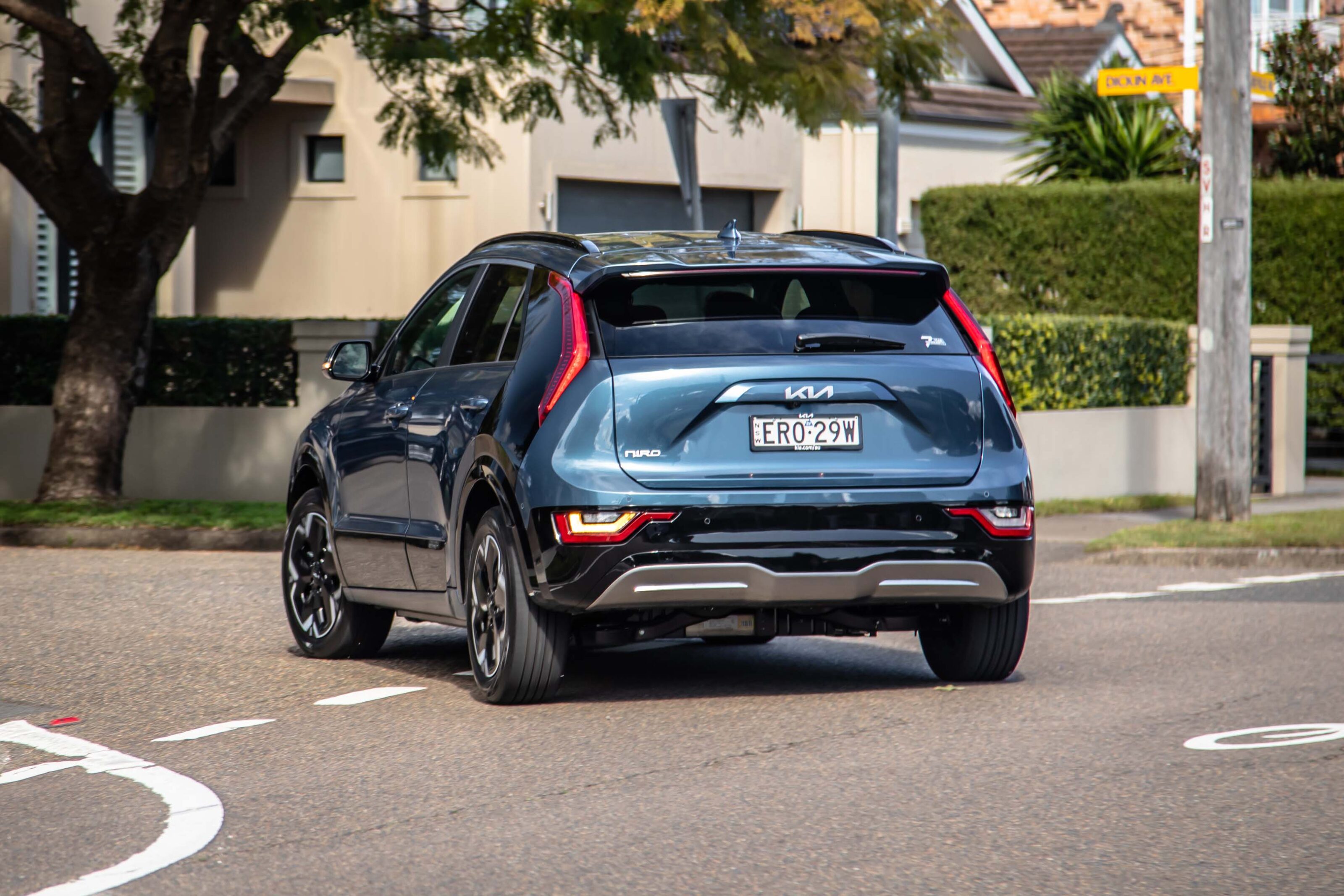
And it is good in traffic. You can use the paddles to choose between three levels of brake regeneration to suit your driving style and context. The strongest is good for traffic and delivers a pretty good one-pedal driving experience. You’ll want to dial it back as speeds rise, though, because lifting off at speed in the strongest setting is a little unsettling, mostly of the stomach kind.
The feeling of weight may also be something to do with a near 1700kg kerb mass, but that’s to be expected in an EV. Again, that’s good going for an ICE-based platform carrying EV gear.
Kia’s Australian chassis team tweaked the suspension to deliver a mostly impressive ride. The Niro can get a little bouncy on irregular surfaces but for the most part, handles most things you can throw at it.
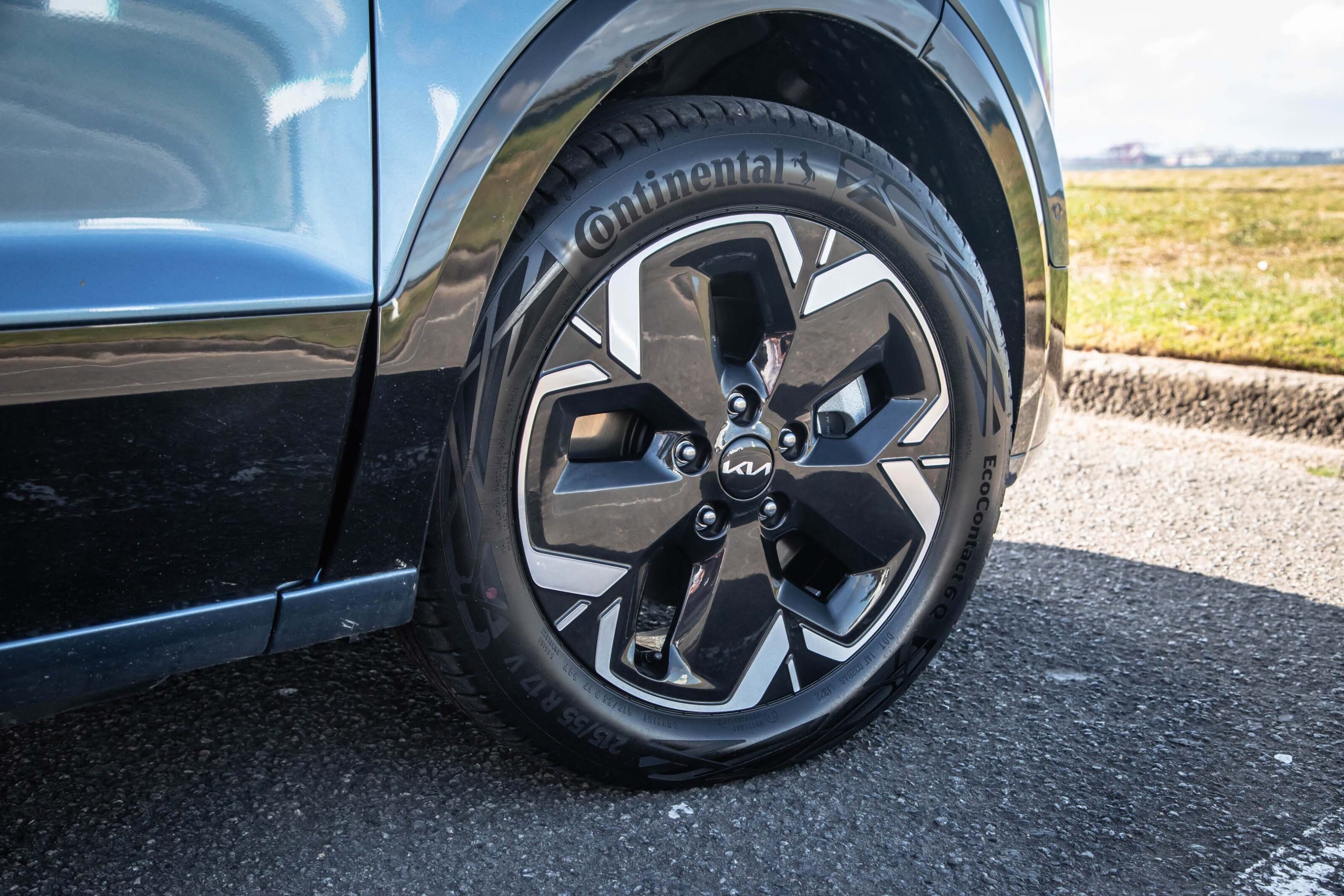
It’s very good over speed bumps and potholes, though, which may be part of the reason the EV GT-Line doesn’t get the HEV’s 18-inch rollers that upset the ride a little.
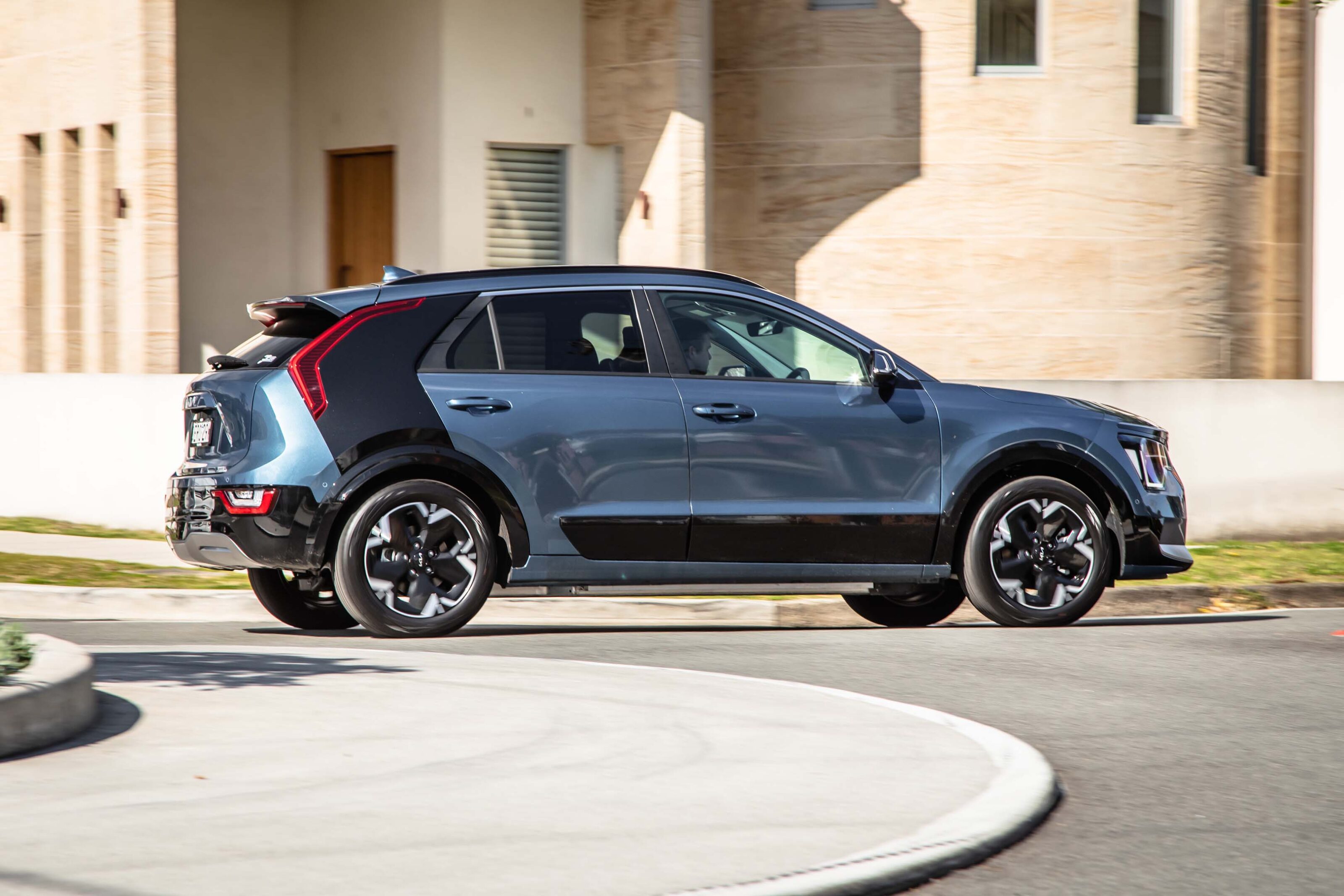
The weighty steering is chatty enough and is just the right speed for around town. The car does roll a bit in enthusiastic cornering but is well controlled and there are absolutely no surprises to be had. Clean, tidy, secure and confident. And an almost absurdly tight turning circle of 10.6 metres.
Annoyingly, the adaptive cruise control is a bit of a pill. You know those terrible drivers who are on-off-on-off the throttle and make even the hardiest of passengers feel ill? Yeah, that’s what this one does. It’s a shame that it’s a bit dense because I found myself going without when there were other cars around. It brakes too enthusiastically – and that might have been related to the highest energy recovery setting but you’d have thought the software could account for that – making progress a little lurchy.
Ownership
Kia’s standard new car warranty of seven years and unlimited kilometres applies to the Niro EV, while the battery and “high voltage parts” are covered for 150,000km. The battery warranty is about the same as its rivals.
Servicing can be pre-paid or PAYG and it won’t matter because both figures work out to a pretty decent $1754 over seven years or $250 per visit. You need to return to Kia every 12 months or 15,000km. It’s way cheaper than the hybrid Niro’s $4010 over the same period.
As ever, Teslarati will jeer at the servicing regime but we say it’s always worth having cars checked over every year. Polestar only wants to see you every two years or 30,000km and its servicing is free for five years.
VERDICT
The GT-Line is the one to have if you can stretch from the S because the spec is so much better and its in-cabin tech is more befitting of a futuristic EV.
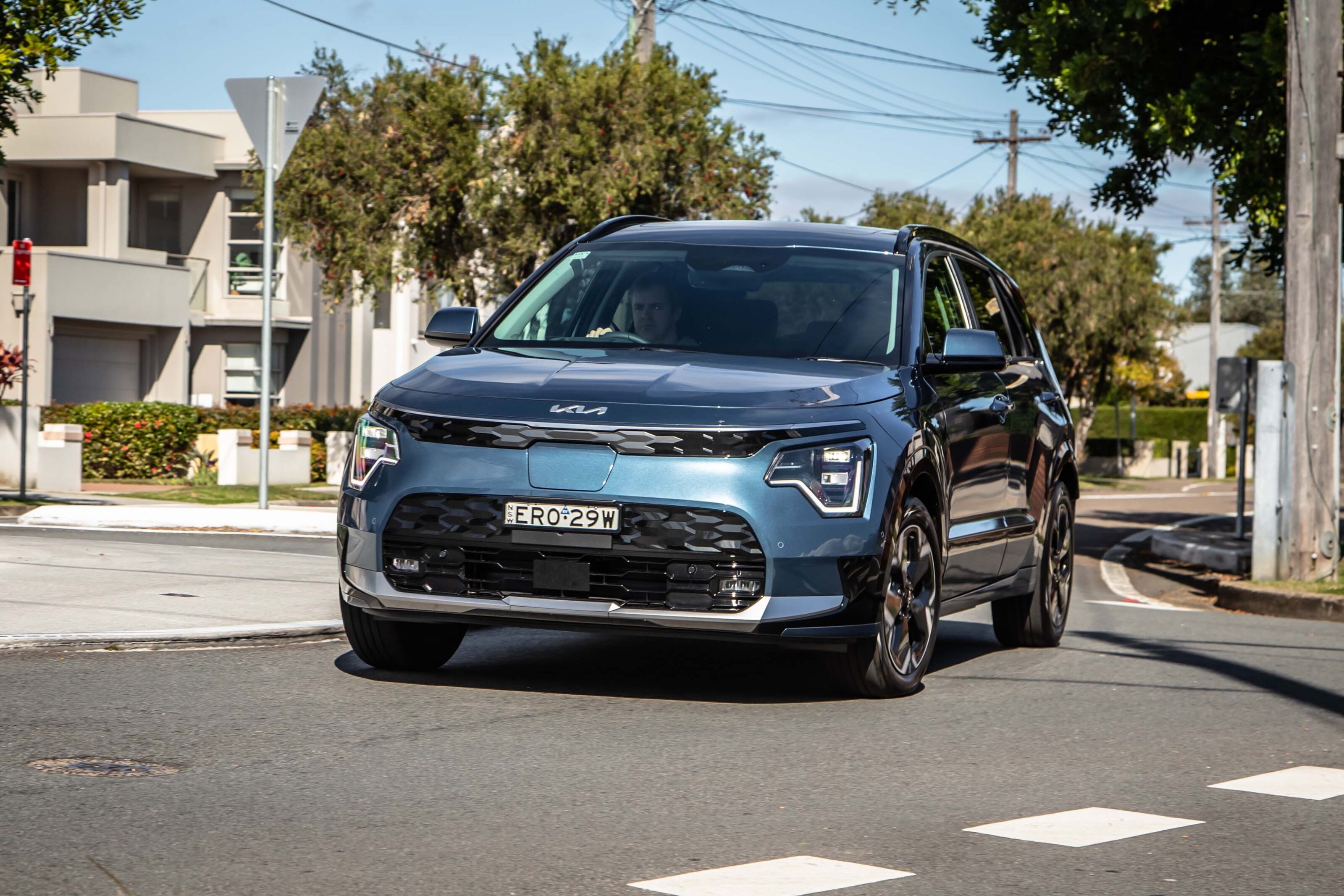
The second-generation Niro is a huge improvement on the first, which was worthy but dull. It didn’t look very modern inside or out, even though it had the future of cars in mind with its electric motivation. This new one, though, is a whole new ball game.
It looks fantastic and belongs in Kia’s family of expressively designed SUVs. It drives really nicely, has a solid range figure that you can actually hit and is quiet and comfortable. That it does all of this on a compromised platform is even more impressive.
Does it really matter in the real world that it doesn’t have 350kW charging or neck-snapping acceleration? Not really. What will matter is the price – over seventy large for a small SUV is a lot of money. Not even Audi is game to charge that kind of cash for its lunatic SQ2 performance SUV.
But the GT-Line is the one to have if you can stretch from the S because the spec is so much better and its in-cabin tech is more befitting of a futuristic EV. That, or join the queue for an EV6 Air.
2023 Kia Niro EV GT-Line specifications
| Body | 5-door, 5-seat small SUV |
|---|---|
| Drive | front-wheel |
| Engine | single electric motor |
| Transmission | single-speed reduction gear |
| Power | 150kW |
| Torque | 255Nm |
| Battery size | 64.8kWh |
| Battery type | lithium-ion polymer |
| AC charging | up to 11kW |
| DC Charging | up to 80kW |
| 0-100km/h | 7.8s |
| Energy consumption | 16.3kWh/100km |
| Weight | 1727kg |
| Suspension | MacPherson strut front/multi-link rear |
| L/W/H | 4420mm/1825mm/1570mm |
| Wheelbase | 2720mm |
| Tyres | 215/55 R17 |
| Wheels | 17-inch alloy (no spare) |
| Price | $72,100 + on-road costs |
Snapshot
- Manufacturing defect in seatbelt pretensioner
- Potential to cause further harm in an accident
- Owners will be contacted by Hyundai
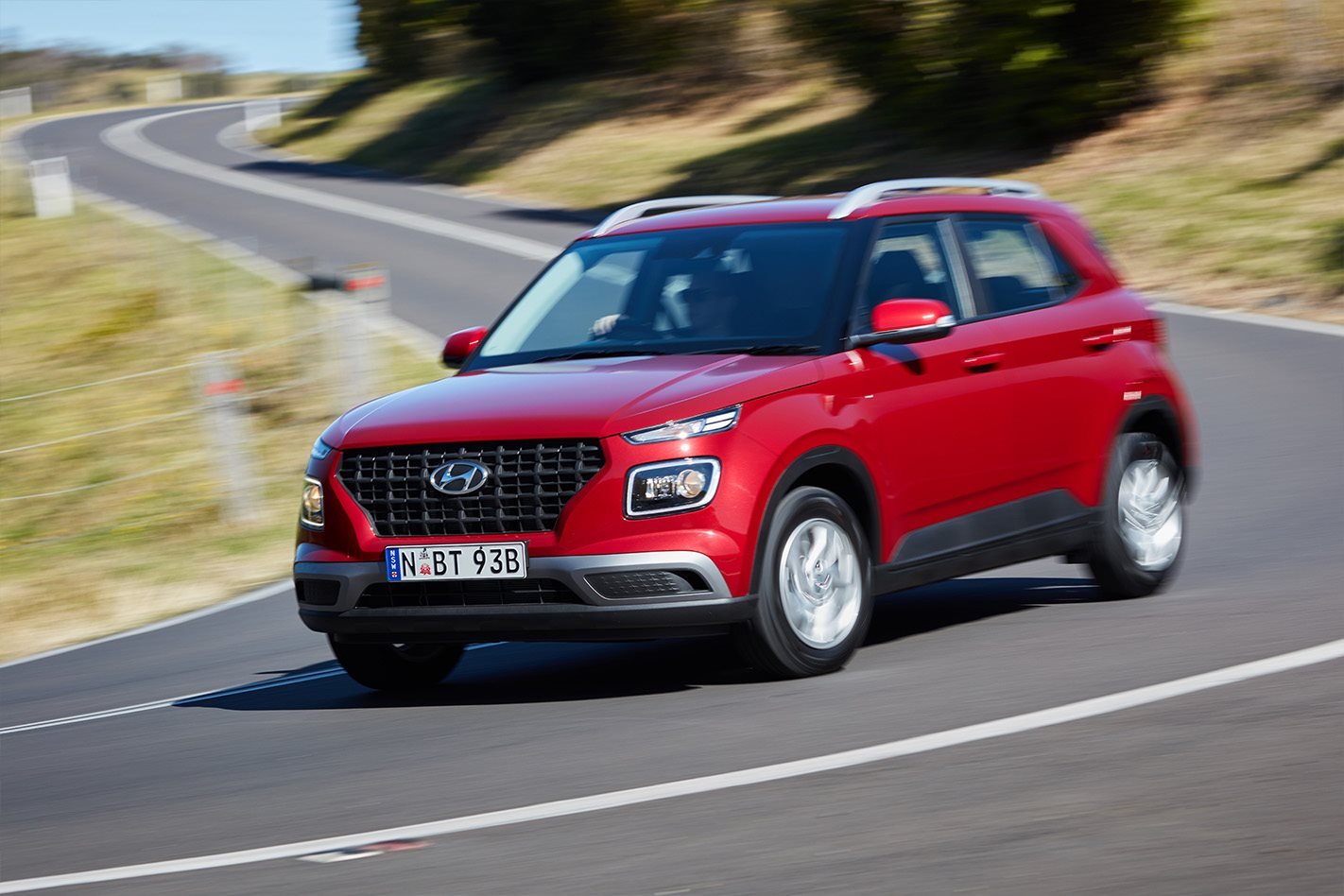
Hyundai has issued a recall notice concerning 15,080 Hyundai Venue small SUVs built between July 2019 and June 2022.
The manufacturing issue affects the seatbelt pretensioner, which has the propensity to fracture in the event of an accident.
The defective item could propel metal fragments at high speed in a crash causing serious injury to occupants, according to the Department of Infrastructure’s recall notice.
What should I do?
Hyundai will contact owners of affected vehicles and request they make an appointment with a service centre to rectify the issue free of charge.
To find out if your vehicle is impacted, the Department of Infrastructure lists affected VINs here.

For further queries, The Hyundai Customer Experience Team can be contacted on 1800 186 306, or here.
