
September 6, 2022: New Honda HQ location revealed
Honda’s Australian car and motorcycle operations will unify on a new site in Melbourne’s inner-north, the manufacturer has revealed.
As reported last year, the company’s head office for its automotive division will merge with the Motorcycles and Power Equipment arm.
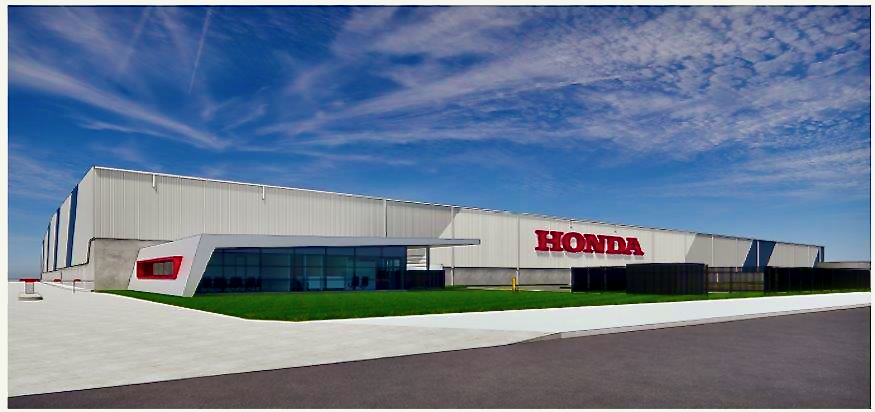
But now Honda has confirmed the two will sit side-by-side at a new, dedicated facility in Moonee Ponds.
Work is already said to be underway, with an expected move-in date at some point during the first quarter of next year.
“We are now making significant investments across the broader Honda business to strengthen our local operations,” said Stephen Collins, Chief Operating Officer at Honda Australia.
“It has been more than 30 years since Honda’s automotive and motorcycle/power equipment businesses were co-located and it is a significant undertaking to reunify the two business operations. As ‘One Honda’ in Australia we will have greater scale to realise our full potential and best serve our diverse range of customers.”
Work on a new parts distribution facility in the Melbourne Airport Business Park has also begun, expected to finish mid-2023, while Honda has also made further investments at its multi-purpose Somerton site.
The story to here
August 31, 2021: Honda head office to move after 40 years
The head office of Honda Australia’s car operations is set to move after a 40 year residence in Melbourne’s north-west.
Currently operating out of Sharps Road in Tullamarine, Honda Australia will be merging with the Campbellfield-based Honda Motorcycles and Power Equipment division at a yet to be revealed location – although it is likely to remain on the north side of the city.
Other sites will remain unchanged, with the Honda Manufacturing Australia lawnmower production facility in Somerton and the Honda Australia Rider Training grounds, also in Somerton as well as Kilsyth, going untouched.
Honda Australia director Stephen Collins said the pandemic has been the catalyst for the move.
“One of the things that makes the Honda brand so unique is our product diversity and we’ve been proudly delivering quality products and joy to Australian customers for more than 50 years,” said Collins.
“It is now time that we invest in new facilities to continue serving our customers in the decades ahead.
“With the huge change in where and how we work as a result of the COVID-19 pandemic, prioritising this next step now will also enable us to better cater for our employees and their needs with improved facilities and the latest workplace solutions.”
Honda recently adopted an agency-based model in Australia, introducing fixed prices across its dealer network with a reduction in the number of operational dealers.
Snapshot
- Mercedes-Benz Australia must pay $12.5 million fine
- Five call centre staff did not make the seriousness of the recall clear enough
- Mercedes says actions were not deliberate
Mercedes-Benz must pay a $12.5 million penalty after one of Australia’s highest courts ruled it had not communicated the severity of the Takata airbag recall effectively enough.
The Federal Court has ordered Mercedes-Benz Australia to pay the fine for “failing to use attention-capturing, high-impact language” when communicating with consumers about the compulsory recall of the potentially-deadly Takata airbags.
Mercedes admitted to breaching Australian Consumer Law (ACL) after the court heard that in conversations with 27 consumers, call centre staff described the recall as a “precaution” and that the type of airbags used had not caused any accidents, injuries or deaths – when that was not accurate.
It’s the first time that a company has been penalised for failing to comply with a mandatory recall notice in Australia, according to the Australian Competition and Consumer Commission (ACCC).
“We believe the statements made by Mercedes-Benz staff had the potential to give the impression to consumers that the airbag replacement was less urgent than was warranted by the real risks posed by the faulty airbags,” said Delia Rickard, Deputy Chairwoman of the ACCC.
“Given the risks of misdeployment increased over time, we were concerned about the risks of any potential for delay in having these faulty airbags replaced.”
Defective Takata airbags have been associated with about 33 deaths and over 350 injuries globally. In Australia, one person died and another was seriously injured in separate incidents caused by the misdeployment of a Takata airbag.
The Takata Recall Notice required vehicle manufacturers to implement a communication and engagement plan for contacting consumers and use appropriately urgent terms to maximise rates of replacements of Takata airbags.
Under the recall, suppliers were required to call back and replace defective Takata airbags by December 31, 2020 and develop and implement a plan to communicate with consumers to make sure as many as possible were swapped for safer ones. The global scandal first broke in 2013, though vehicles from as far back as the 1990s were affected.
“The faulty Takata airbags have the potential to misdeploy and send sharp metal fragments into the vehicle cabin at high speed, which could kill or seriously injure the occupants,” Rickard added.
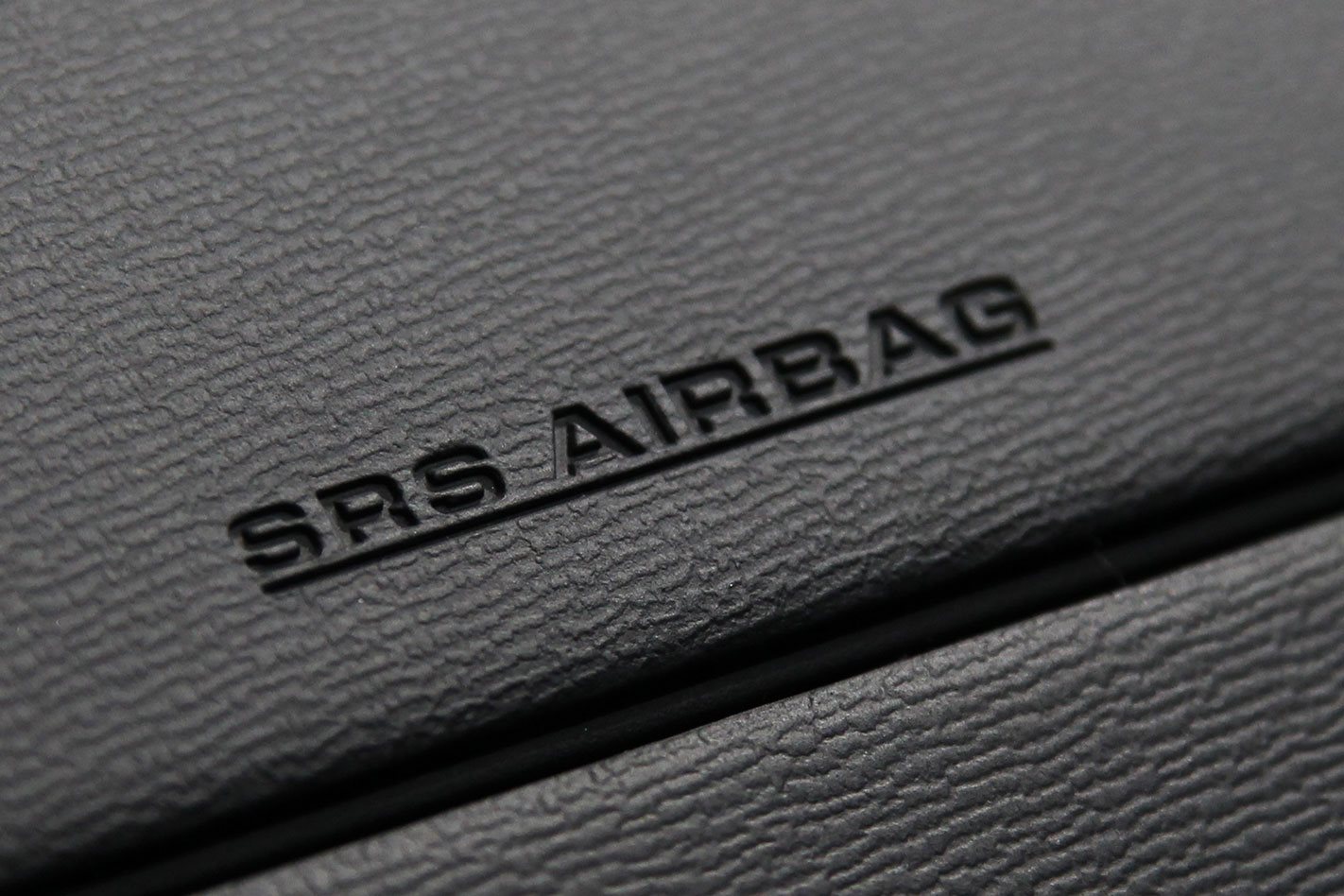
A spokesperson for Mercedes-Benz told Wheels that while it accepted the language used in the aforementioned 27 cases did not stress the seriousness of the situation, such behaviour was not deliberate, and its dedicated Takata call centre took more than 50,000 calls in total during the time it was in operation.
The luxury carmaker also said the problem stemmed from just five contractors, and all the customers they spoke to did have their vehicles recalled and inflators replaced regardless.
“Mercedes-Benz Australia is committed to ensuring the safety of its customers and takes compliance with its ACL obligations very seriously,” the spokesperson said. “We have co-operated with the ACCC in its investigation and reached an agreement to resolve the proceeding related to the Takata Airbag Recall.”
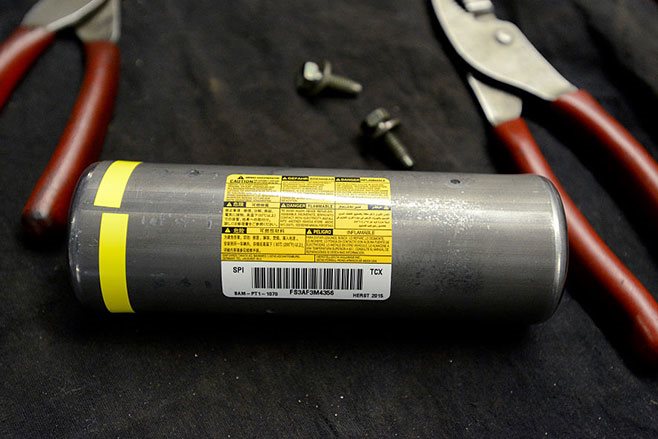
As part of the court ruling, it was agreed Mercedes must now establish a Product Safety Compliance Program to reinforce its obligations under the ACL – including recalls.
Despite all this, Mercedes-Benz vehicles do not contain the Takata ‘Alpha’ airbags, which were those considered the higher risk within the recall, but actually use ‘Beta’ airbags – which under the notice permitted owners to continue driving their cars until the repair was carried out. To date, Takata airbags have been replaced in more than 99.5 per cent of the Mercedes-Benz vehicles involved in the recall in Australia.
However, there is a small number of owners who have not brought their vehicles in for the free replacement and the company states said people are urged to contact their authorised Mercedes-Benz retailer immediately, or call 1300 659 307 to arrange a booking.
Snapshot
- 2023 Maserati MC20 and MC20 Cielo details announced
- Hard-top MC20’s price increased by $29,000, now $467,000
- Topless MC20 Cielo on sale from $528,000, first arrivals expected next year
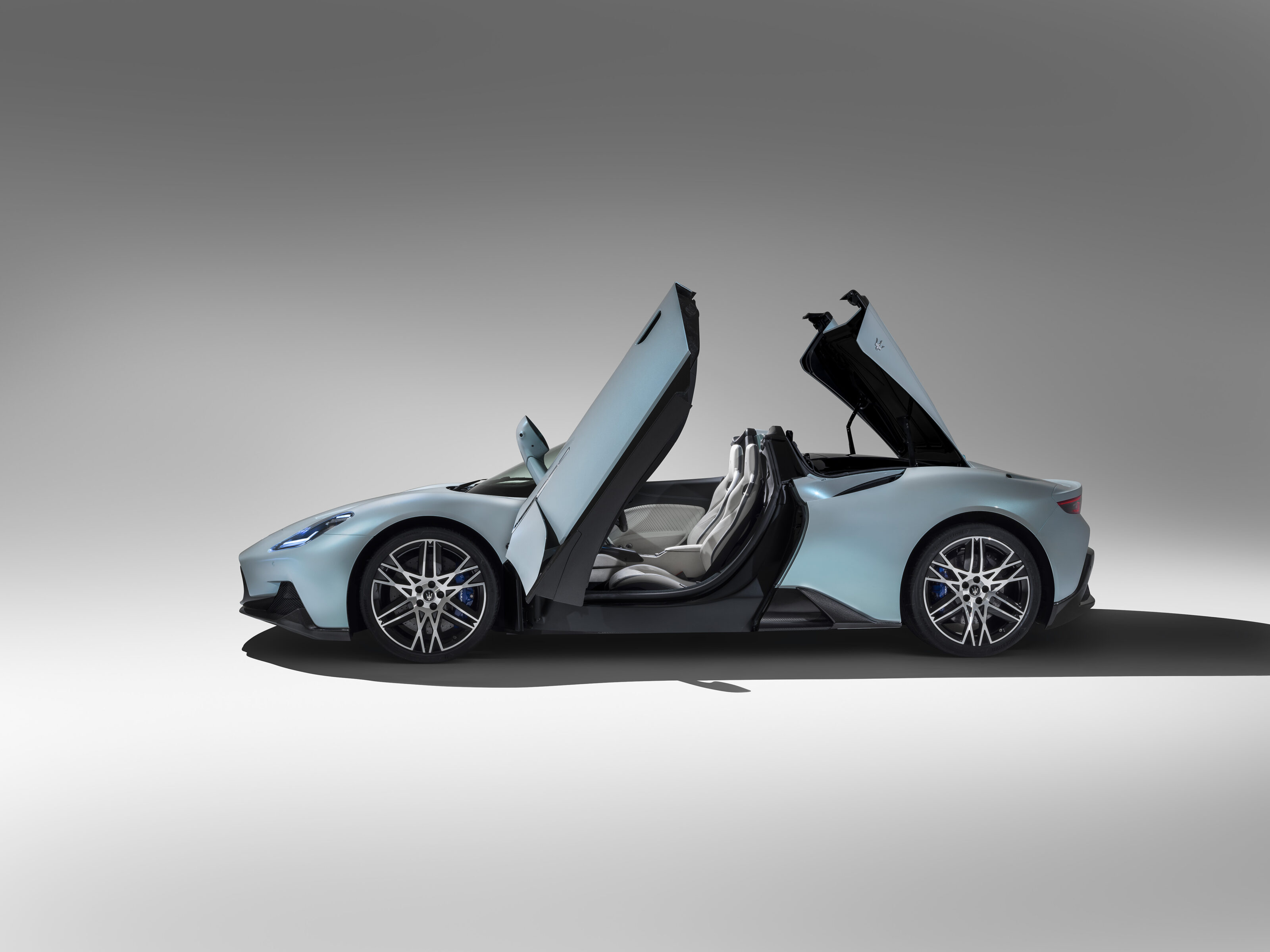
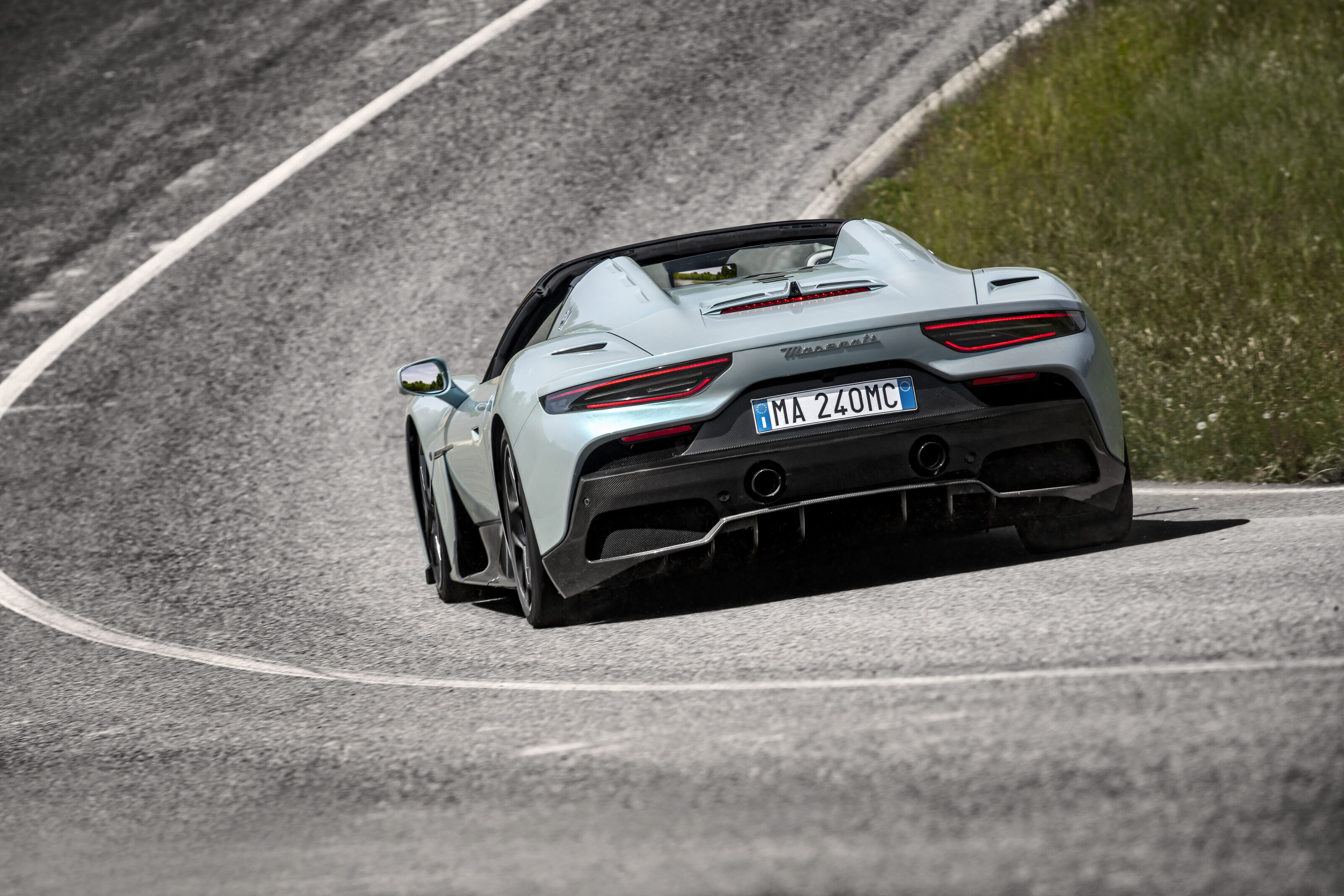
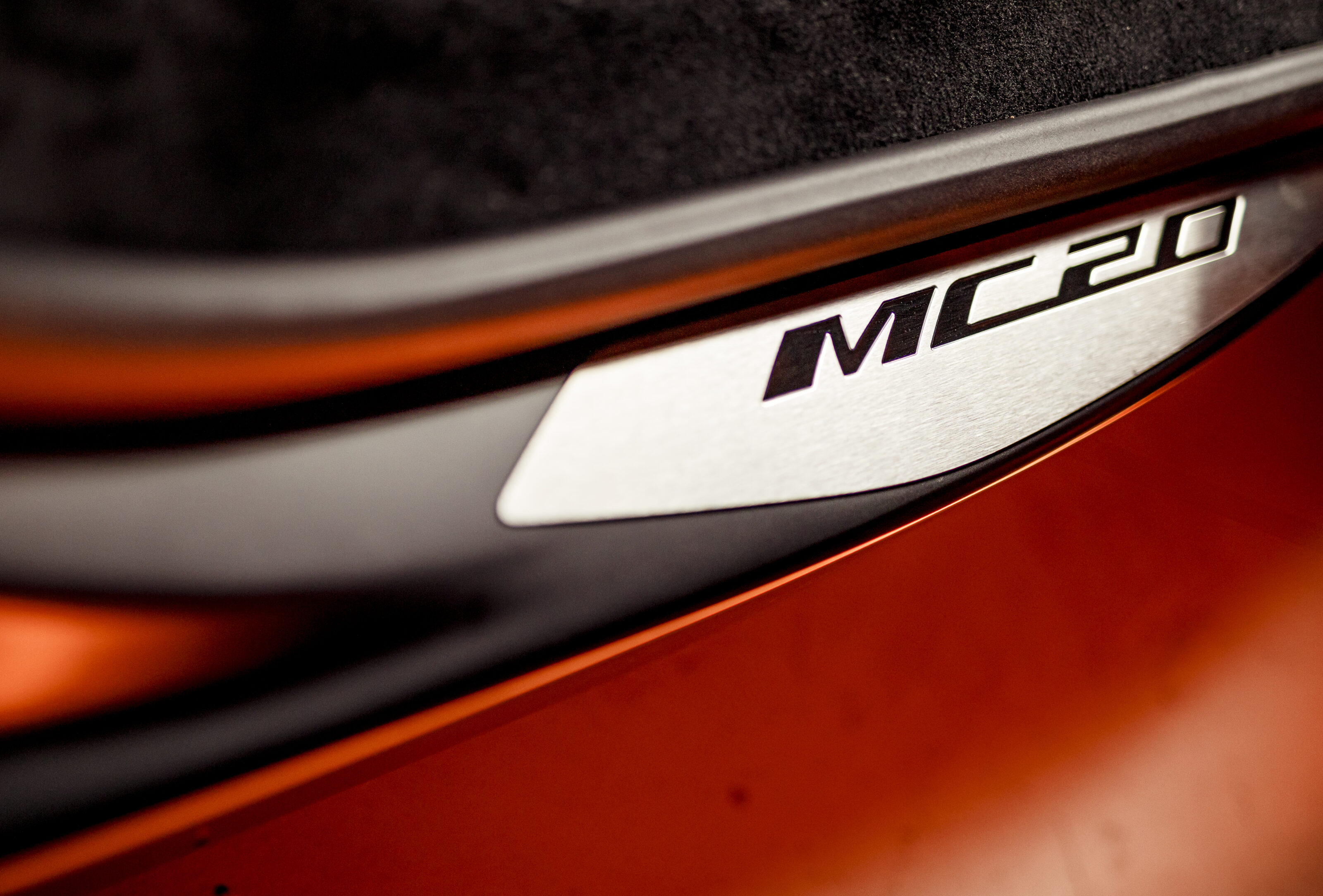
The 2023 Maserati MC20 has landed in Australia, with the two-door hard-top sports car now joined by a new Cielo cabriolet variant.
Initially launched locally last year in its coupe guise, the Maserati MC20 has now spawned the drop-top MC20 Cielo, with both variants of the V6 sports car on sale locally before production starts in November 2022 and January 2023 respectively.
“The Australian response to both the MC20 and MC20 Cielo has been nothing short of remarkable, with our allocation selling out within hours,” said Maserati’s Australia and New Zealand General Manager, Grant Barling.
“So we’re delighted to be able to offer further allocation and opportunity to personalise your MC20 and MC20 Cielo with the introduction of these model year additions and updates.”
Pricing
Only a handful of changes have been made to the refreshed 2023 models, although Maserati has increased the list price of the hard-top MC20 by just under $30,000, now going on sale from $467,000 before on-road costs.
Prices exclude on-road costs.
| Model | Price |
|---|---|
| MC20 | $467,000 (+$29,000) |
| MC20 Cielo | $528,000 |
Features
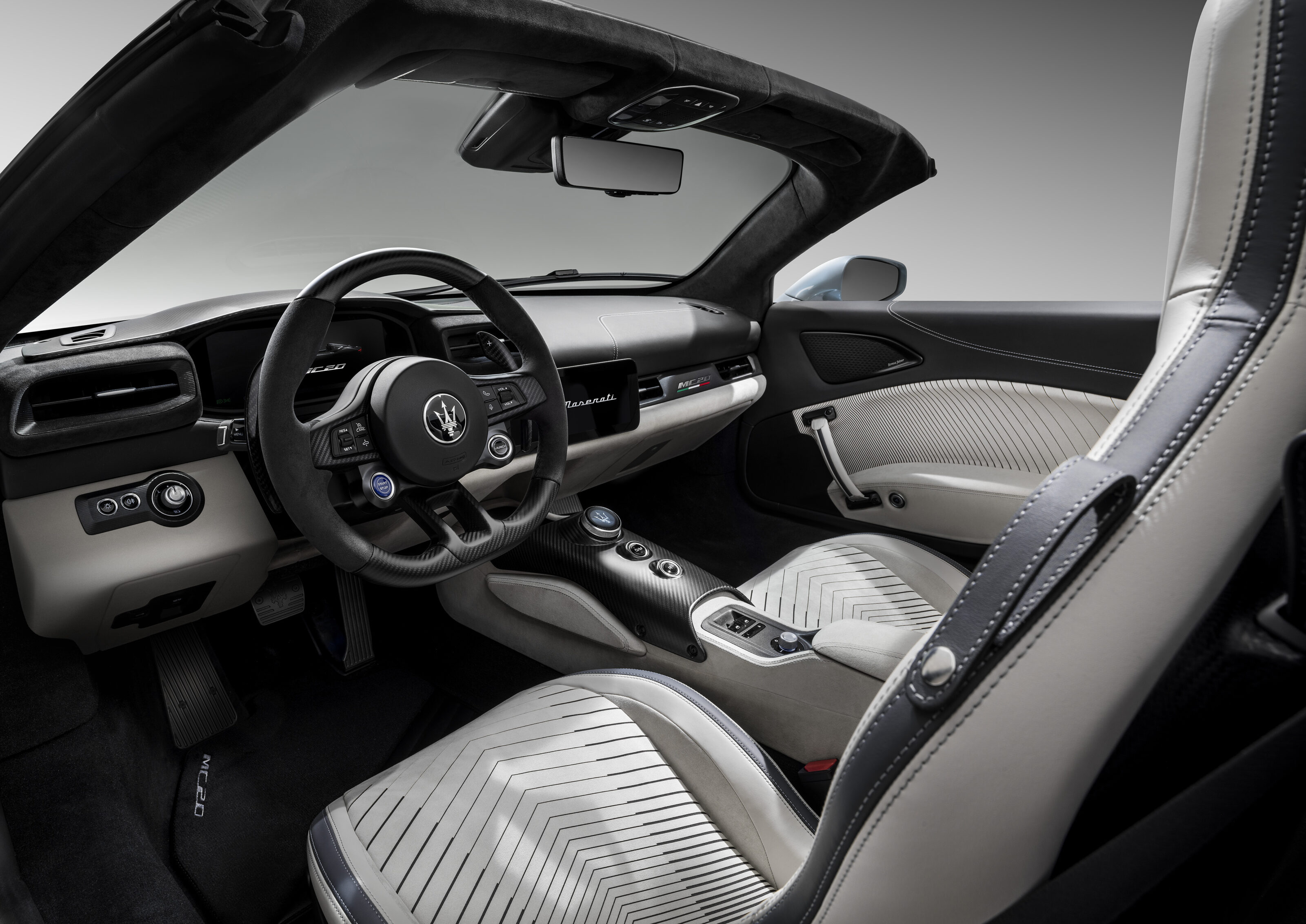
Carrying across from the previous year’s model, the 10.25-inch screens remain inside the MC20’s cabin, with a handful of other additions now fitted to both body styles.
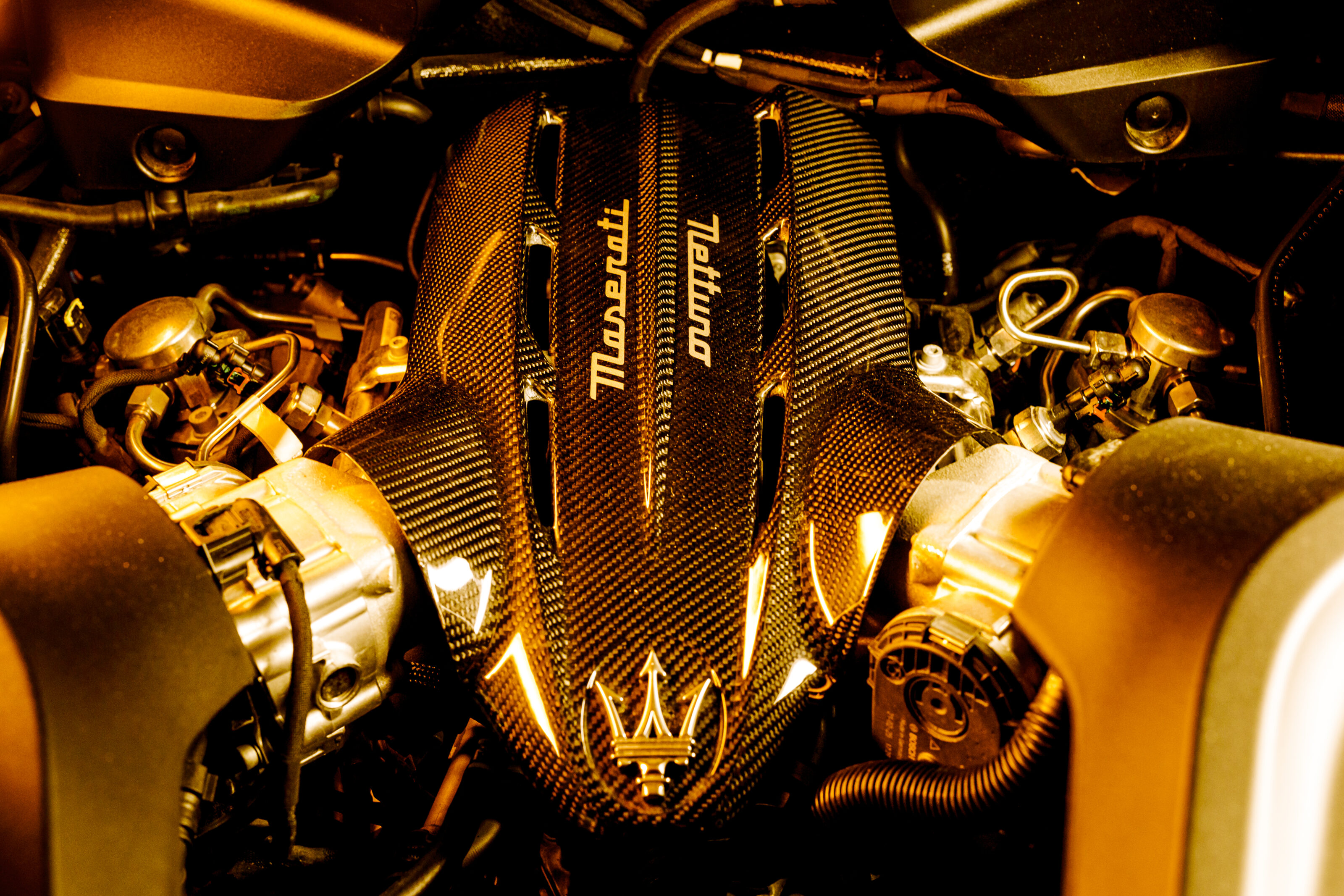
| Carbon fibre engine cover |
| Alcantara sports steering wheel with carbon fibre inserts |
| Blue starter button |
| New metallic drive mode selector with a 1.6-inch TFT round screen |
| 10.25-inch instrument cluster |
| 10.25-inch infotainment screen |
Options
| Grigio incognito exterior finish |
| 20-inch carbon fibre wheels |
| 20-inch MMXX gloss black diamond cut wheels |
Engine, drivetrain and fuel economy
Unchanged from the MY22 MC20 is the V6 ‘Nettuno’ engine, with the 3.0-litre, twin-turbocharged petrol unit continuing to develop 463kW and 730Nm.
The MC20 sends its power to the rear wheels through an eight-speed, dual-clutch automatic transmission, returning a fuel consumption rating of 10.3L/100km on the combined cycle.
Safety
A handful of safety features have been added to the Advanced Driver Assistance System suite of the 2023 MC20, including:
| Automated emergency braking (AEB) with pedestrian/cyclist recognition |
| 360-degree surround view camera |
| Blind-spot and rear cross path alert |
| Auto-dimming exterior mirrors |
| Traffic sign information |
Warranty and servicing
As with the rest of Maserati’s range, the MC20 is covered by a three-year/unlimited-kilometre warranty, with extended warranty options also available through the manufacturer.
New for 2023, Maserati will now also introduce a “comprehensive maintenance programme for three years covering all servicing requirements as outlined in the owners’ documentation”, with pricing yet to be announced.
Availability
With production of the hard-top MC20 starting in November and the MC20 Cielo rolling down the production line in January next year, expect the upcoming models to land in Australia late in the second quarter of 2023.
Snapshot
- Prices up across the board
- More powerful V6 to replace old unit in Modena versions
- Modena S package dropped for MY23
September 5: New pricing revealed for MY23
Maserati has again put pricing up for its Ghibli and Levante models for the coming year, just two months after we reported on the last hikes.
Headlining the changes is the loss of the Modena S package from the model lineups, and a more powerful V6 engine offering 320kW replacing the 257kW in the Ghibli and Levante Modena grades.
Both the Ghibli and Levante GTs continue to get the 246kW 2.0-litre turbocharged four-cylinder, while the Trofeos also keep their 3.8-litre twin-turbocharged V8.
The carmaker says it has “simplified” its range, while also consolidating the number of exterior paints, wheels and trim options across the Levante, Ghibli and Quattroporte models.
In addition, some previously optional equipment is now standard, including; wireless phone charging and remote start on the Ghibli and Quattroporte, and a 15-speaker Bowers and Wilkins surround sound system on all Trofeo variants of Ghibli, Levante and Quattroporte.
2023 Maserati Ghibli Australian pricing
| Variant | Pricing | Price difference |
| Ghibli GT | $155,000 | up $9010 |
| Ghibli Modena | $185,000 | up $11,510 |
| Ghibli Trofeo | $275,000 | up $8500 |
2023 Maserati Levante Australian pricing
| Variant | Pricing | Price difference |
| Levante GT | $145,000 | up $9010 |
| Levante Modena | $200,000 | up $46,010 |
| Levante Trofeo | $300,000 | up $10 |
The Italian marque has also revealed pricing for its Quattroporte model which is as follows:
2023 Maserati Quattroporte Australian pricing
| Variant | Pricing |
| Quattroporte GT | $215,000 |
| Quattroporte Modena | $275,000 |
| Quattroporte Trofeo | $385,000 |
Read on to hear about the other recent price increases earlier this year.
The story to here
July 5: Pricing increased for Maserati’s Ghibli and Levante models
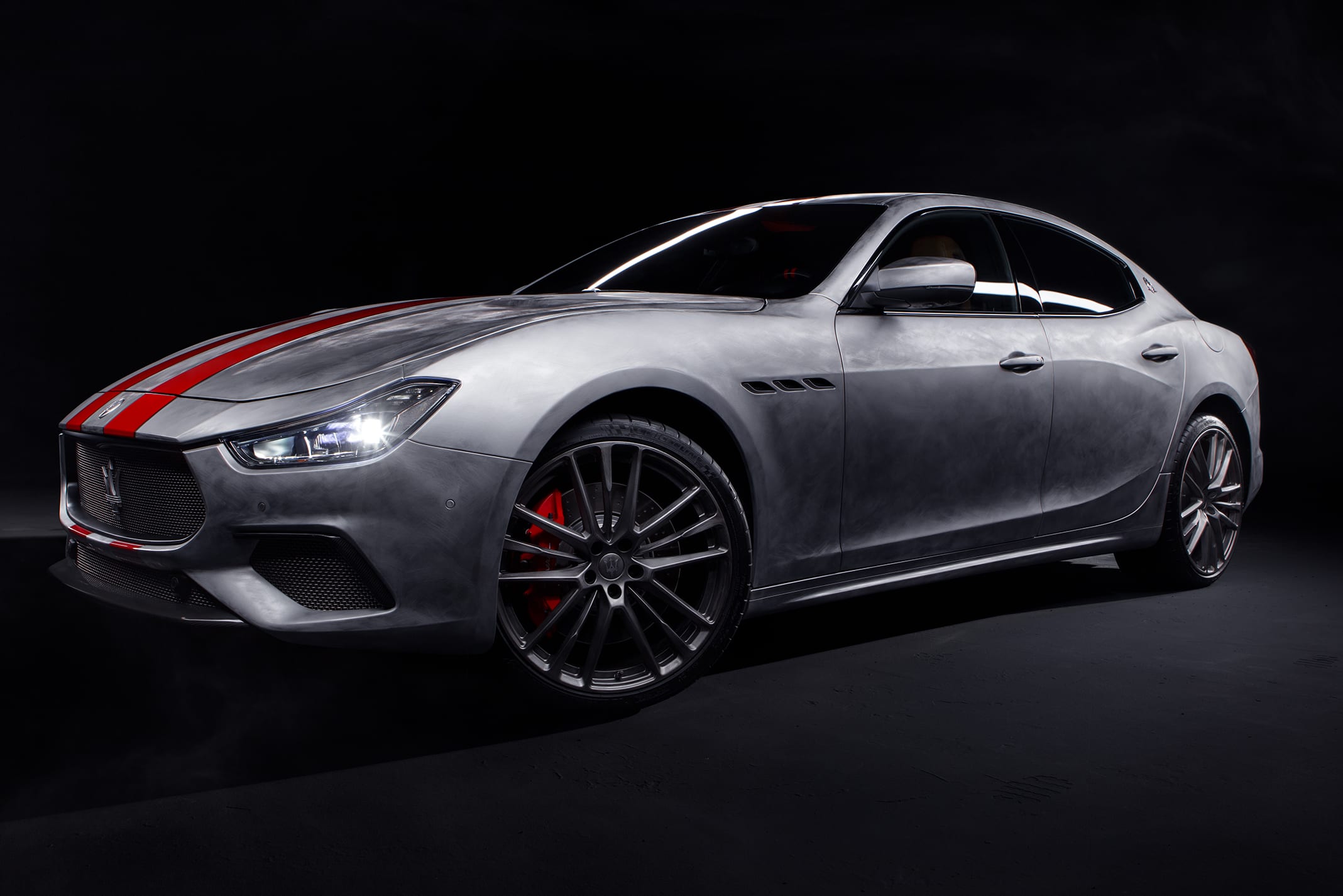
Pricing for the prestige 2022 Maserati Ghibli sedan and 2022 Maserati Levante large SUV has increased for Australia.
The Italian marque has bumped up the Ghibli between $1500 and $3000, kicking off from $135,990 before on-road costs for the entry-level Ghibli GT and extending to $266,500 for the V8-powered Trofeo variant.
Meanwhile, the Levante is between $1000 and $9000 dearer, priced from $145,990 before on-road costs for the Levante GT to $299,990 for the Trofeo.
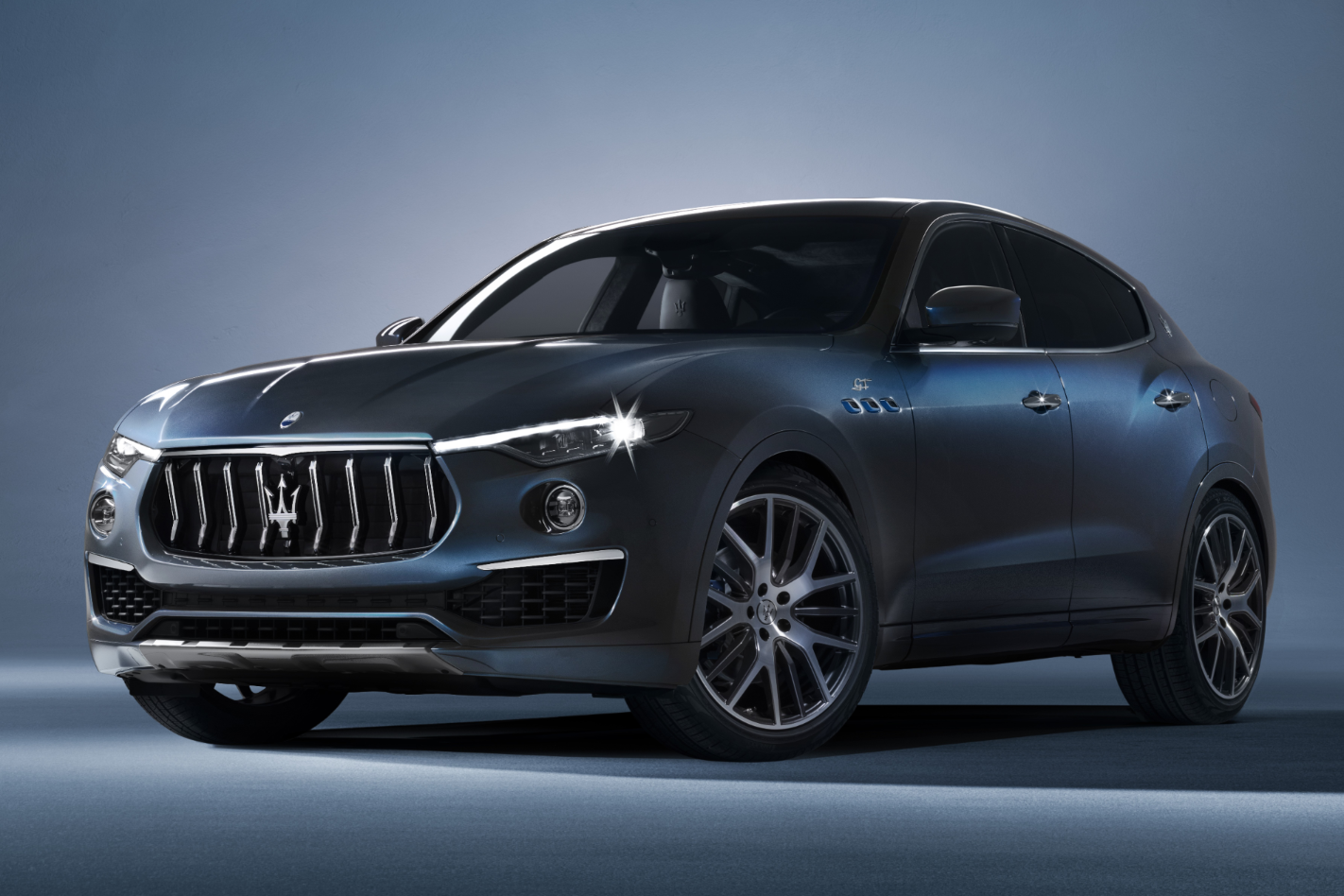
The Levante now features active safety equipment as standard, including; autonomous emergency braking (AEB), blind-spot alert, lane-keep assist, adaptive cruise control and traffic sign recognition.
These safety features were previously available in the optional Base package for the Levante GT, which also included aluminium paddle shifters and an electric tailgate with kick sensor.
Maserati fitted the Ghibli GT with active safety equipment in 2021, including AEB – a feature standard on the $16,000 Kia Picanto.
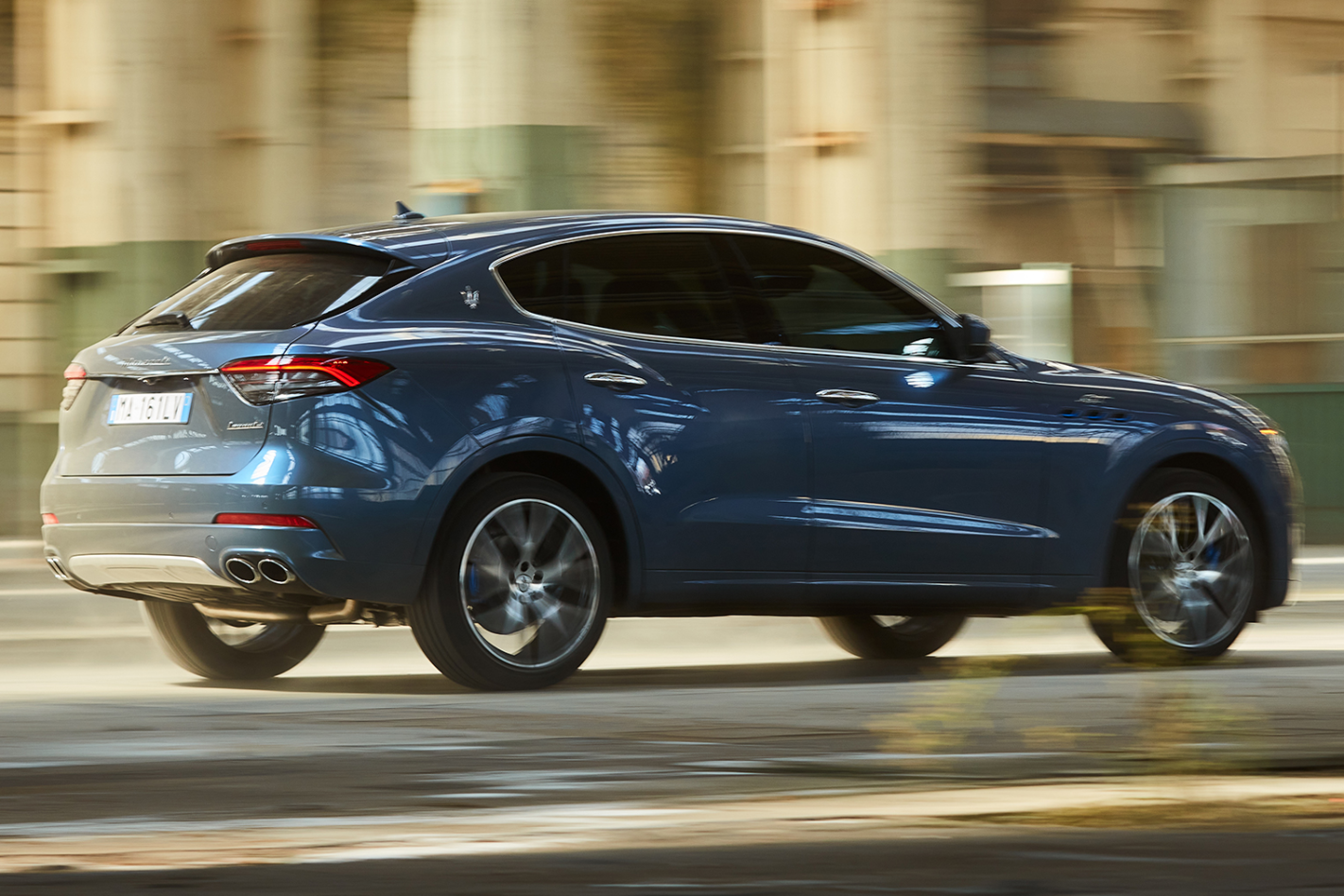
Each vehicle features identical variants and engines, although specification varies slightly.
The Ghibli and Levante GT are powered by a 2.0-litre turbocharged four-cylinder petrol engine with a 48-volt mild-hybrid system, producing 246kW of power and 450Nm of torque.
A 3.0-litre twin-turbocharged V6 producing 257kW and 500Nm is fitted to the the Ghibli and Levante Modena, while the Modena S increases outputs to 316kW and 580Nm.
The flagship Ghibli and Levante Trofeo are powered by a Ferrari-sourced 426kW/730Nm 3.8-litre twin-turbocharged V8.
Each engine is paired to a ZF-sourced eight-speed torque converter automatic transmission, sending power to the rear wheels in the Ghibli, or all four wheels in the Levante.
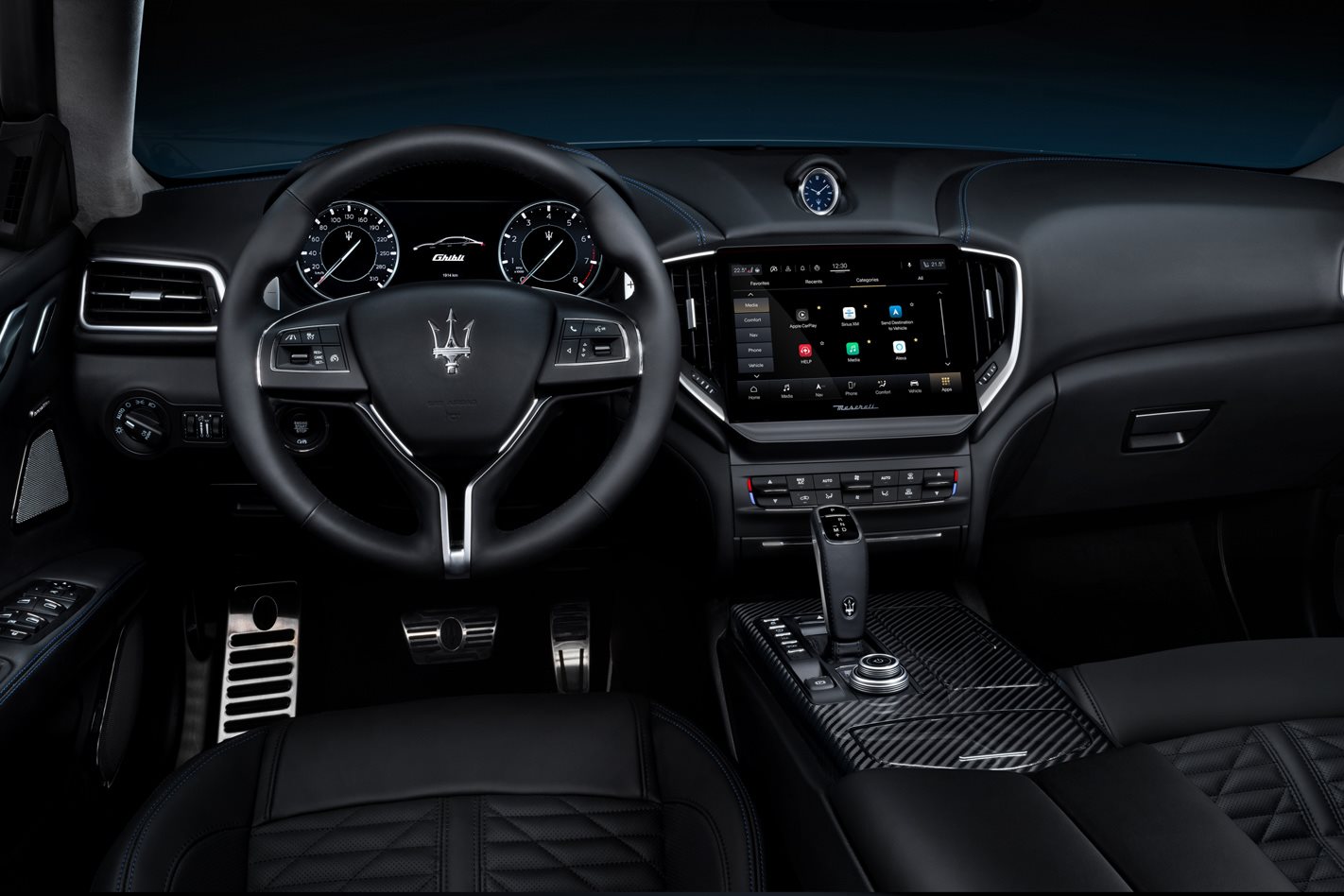
Standard equipment in both vehicles include; keyless entry and start, 19-inch alloy wheels, bi-xenon headlights, leather upholstery and heated front seats.
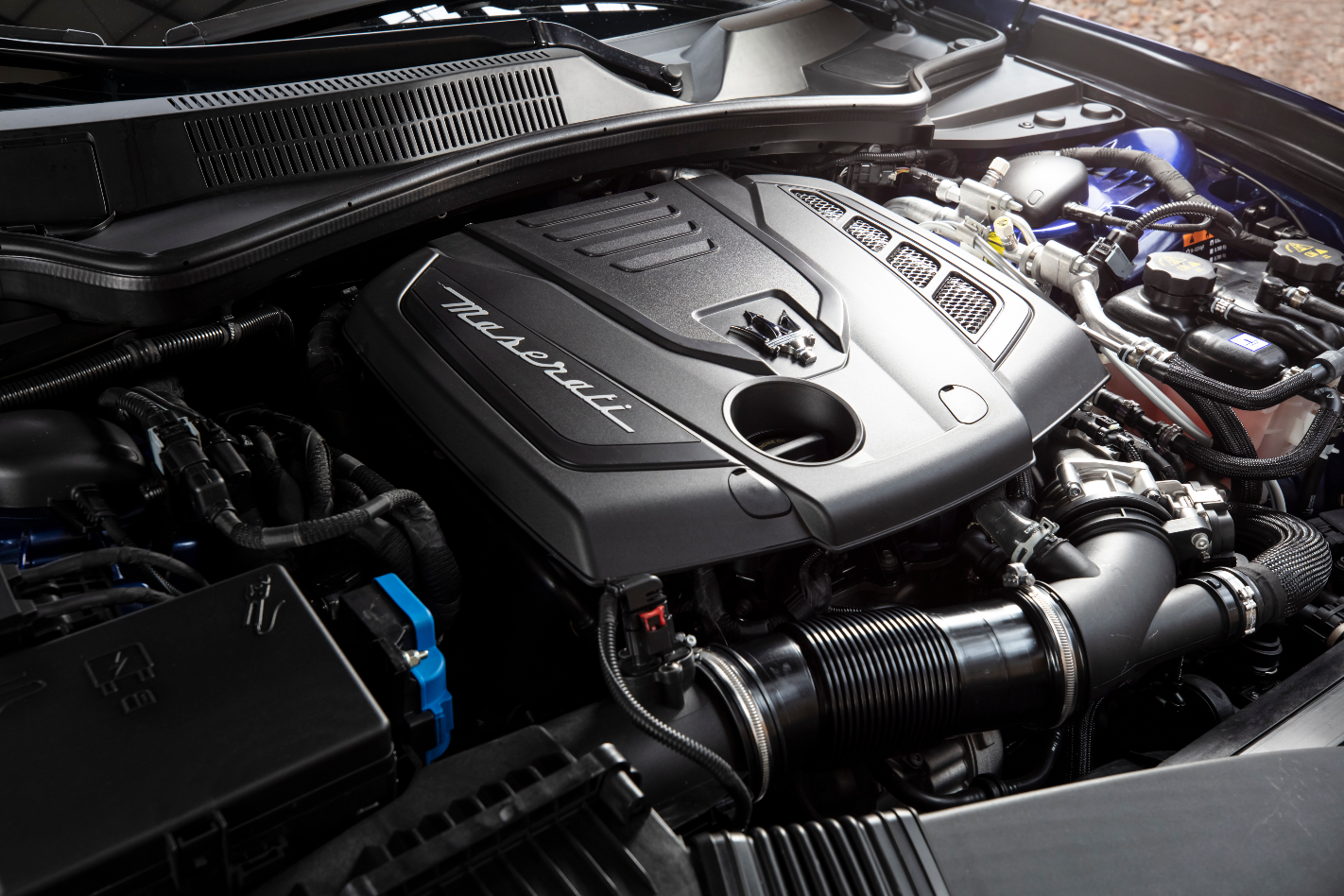
Maserati’s latest Android Automotive-based operating system is standard across the Ghibli and Levante line-up, featuring Apple CarPlay and Android Auto, and Amazon Alexa support.
However, the Levante features a 8.4-inch display while the Ghibli’s infotainment is displayed on a larger 10.1-inch unit with support for wireless smartphone mirroring.
In Australia, the Maserati range is covered by a three-year, unlimited kilometre warranty.
2022 Maserati Ghibli pricing
Prices exclude on-road costs.
2022 Maserati Levante pricing
Prices exclude on-road costs.
September 5: 2023 Maserati Grecale pricing and features officially confirmed
Maserati has now confirmed full pricing and features for its Grecale SUV, due in Australia in the first quarter of next year.
Our original story below has been updated to reflect any additional information now available.
The story to here
August 15: Pricing and features of upcoming Grecale SUV detailed in dealer doc
Days after our first Australian glimpse of the 2023 Maserati Grecale SUV, the Wheels has obtained Australian pricing and features for the model.
According to a dealer bulletin seen by Wheels, the hopeful Porsche Macan, BMW X3 and Mercedes-Benz GLC rival will launch with a three-variant lineup, comprising GT, Modena and Trofeo, opening at $109,500 (before on-road costs).
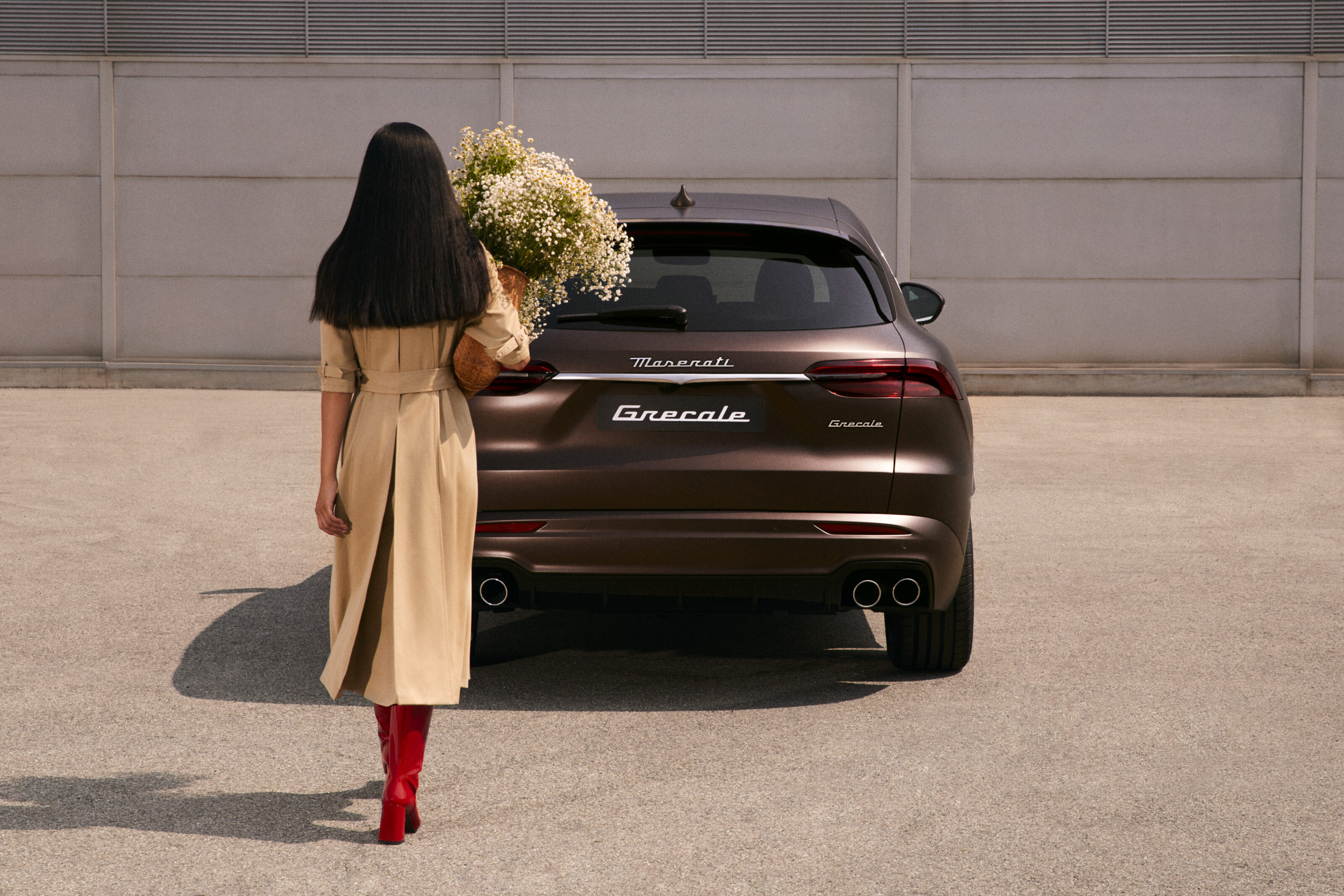
Approximately a year after the initial local launch, towards the end of 2023, Maserati will launch the Grecale Folgore – an electric counterpart to the Grecale – beginning the historic Italian marque’s transition to an all-electric brand.
Harnessing a range of turbocharged four-cylinders and a detuned version of the MC20 supercar‘s V6, there are high hopes for the incoming car. The local arm says interest is strong for the Grecale – which aims to resonate with a larger, younger audience – with early interest exceeding that of any new Maserati in recent memory.
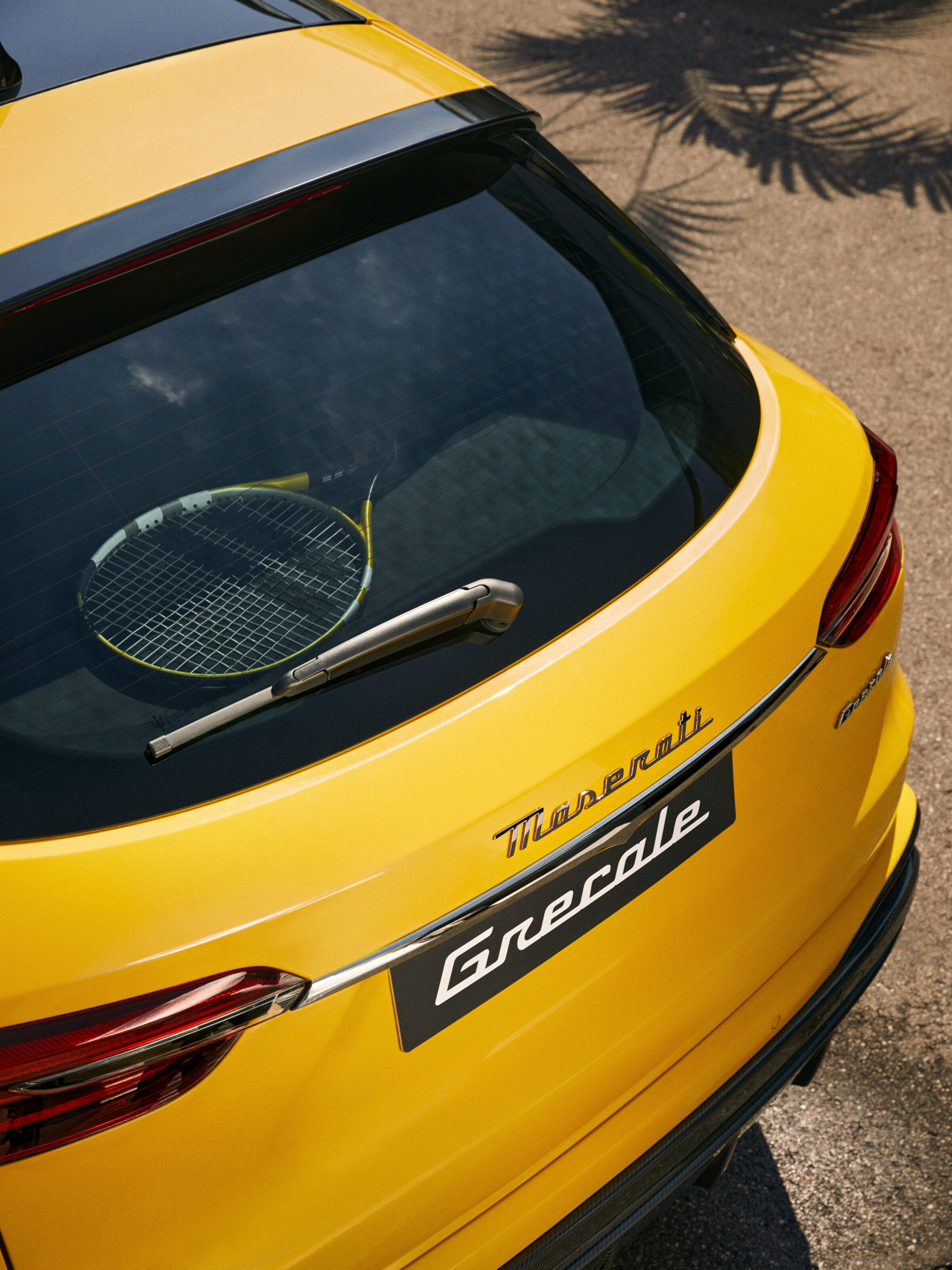
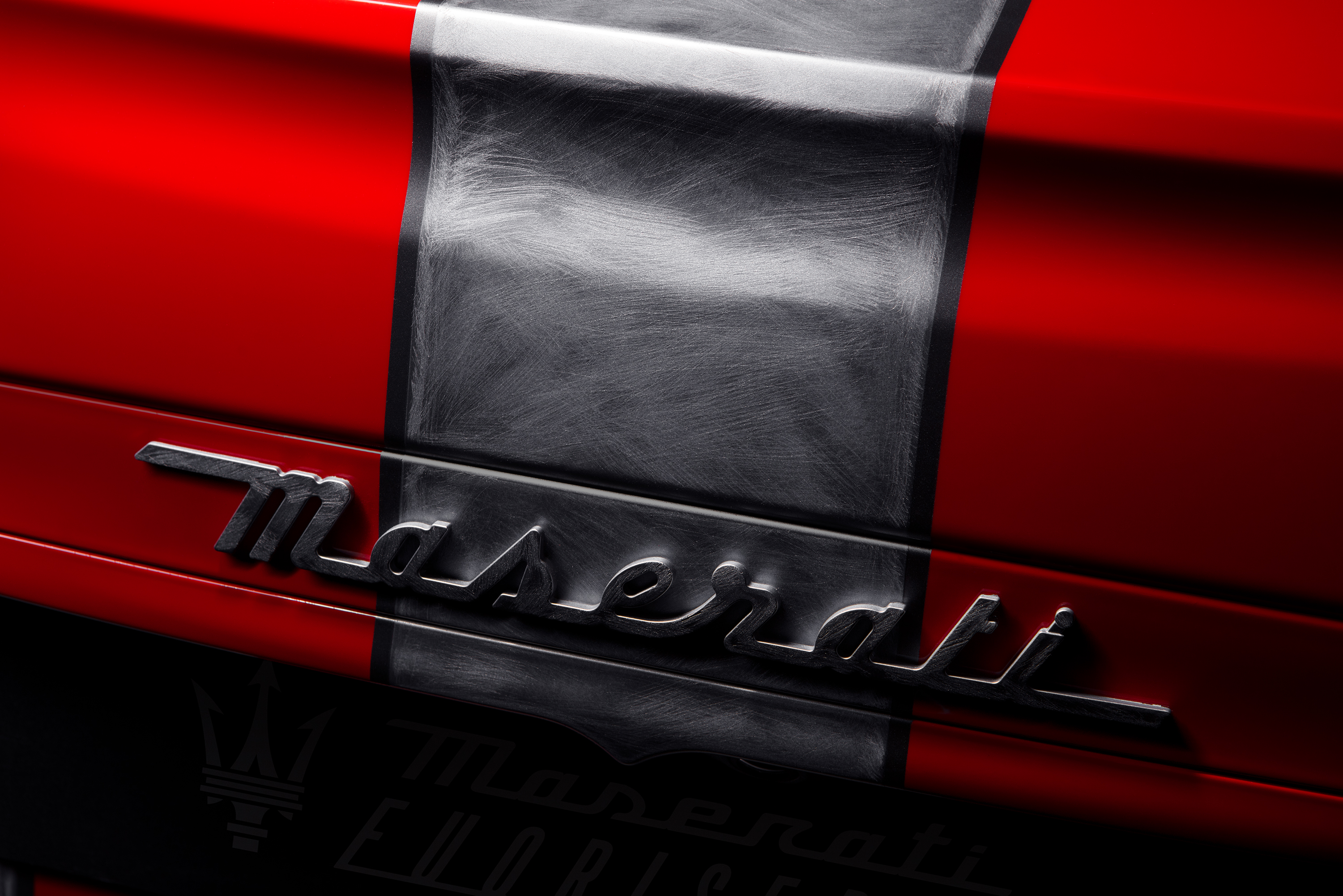
The stylish marque is looking to build-to-order as much as possible, having just relaunched its Fuoriserie customisation program.
The exact timing of the Maserati Grecale’s Australian launch is yet to be confirmed, but is expected closer to the end of the year, or the beginning of 2023.
2023 Maserati Grecale Australian pricing
| Model | Pricing |
|---|---|
| GT | $109,500 |
| Modena | $128,000 |
| Trofeo | $165,000 |
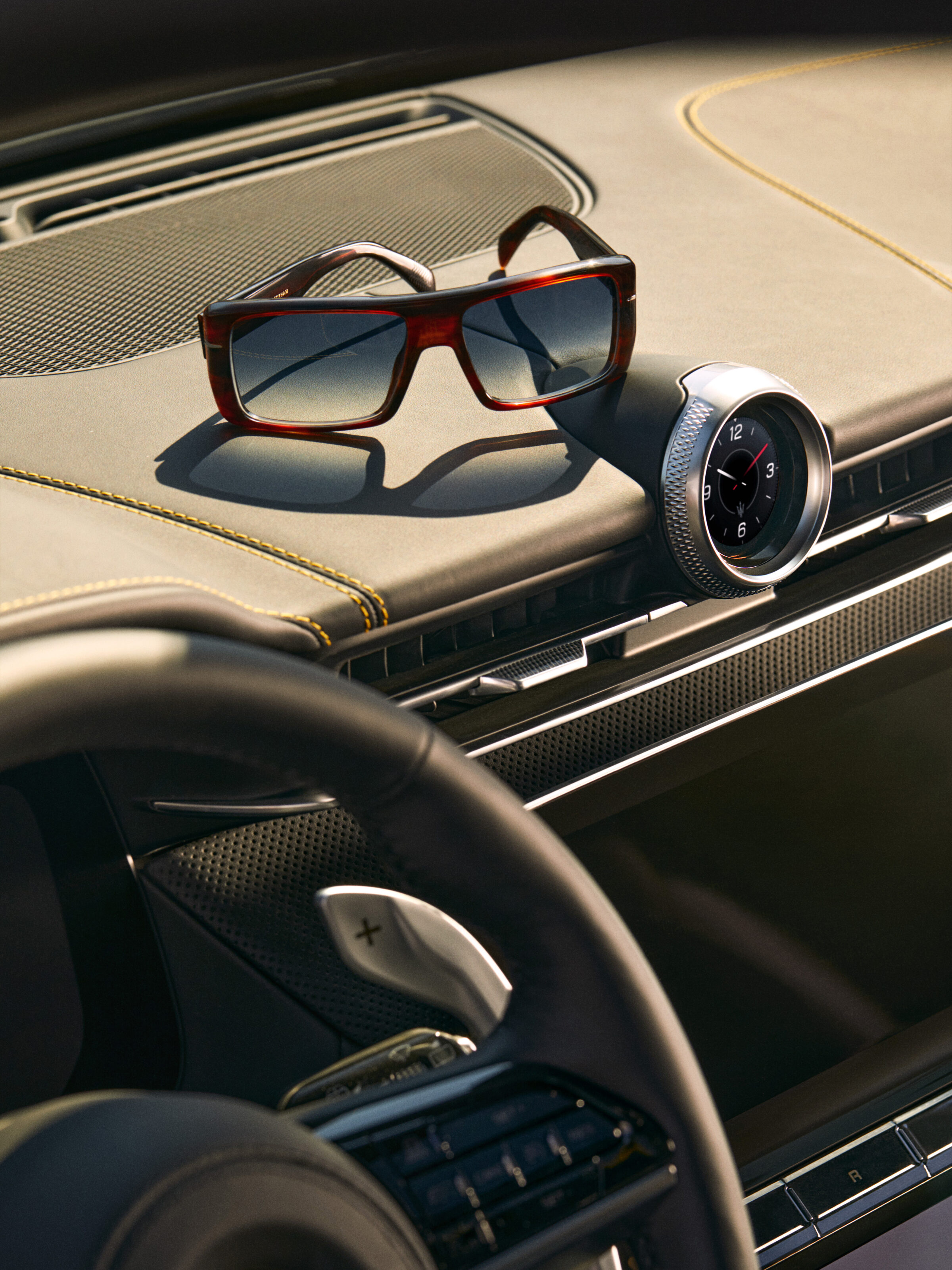
2023 Maserati Grecale features
GT
| Solid paint u2013 Bianco |
| Quad tip exhaust system – chrome |
| Daylight opening (DLO) – chrome |
| Door handles – chrome |
| Puddle lights |
| Mechanical differential |
| Single-rate duspension |
| 19-inch Thetis wheels |
| Tyre kit |
| Matte grey brake calipers |
| Full LED headlights |
| Headlight control – dusk sensor |
| 10-way power seats with driver memory function |
| Fabric headliner |
| Leather upholstery |
| Maglia Milano interior trim |
| Contrast stitching |
| Leather steering wheel in satin chrome |
| Electric-adjustable steering column |
| Aluminium door sills |
| Floor mats (front and rear) |
| Sonus Faber premium sound system (14-speaker) |
| DAB radio |
| 12.3-inch infotainment touchscreen with AM/FM + NAV |
| Maserati smart clock in dashboard |
| 12.3-inch digital instrument cluster |
| Apple CarPlay and Android Auto |
| Four USB charging ports |
| Two-zone climate control with humidity sensor |
| Power boot lid with kick sensor |
| Auto-dimming interior frameless mirror |
| Auto-dimming exterior mirrors |
| Power folding door mirrors (with memory) |
| Heated door mirrors |
| Heated windshield washer nozzles |
| Rear view camera |
| Cyber security |
| Passive speed limiter |
| Cruise control |
| Front and rear parking sensors with rear active braking |
| Automated emergency braking with pedestrian recognition |
| Advanced brake assist |
| Hill start assist |
| Surround view camera |
| Electronic stability control |
| Tyre pressure monitor system |
| Advanced dual stage front air bags |
| Front seat-mounted side airbags |
| Driver assistance level 1 |
| Adaptive cruise control (with stop and go) |
| Active lane management (active blind-spot and lane keeping) |
| Blind-spot monitor |
| Drowsy driver detection |
Modena (in addition to GT)
| Quad tip exhaust system – black |
| Daylight opening (DLO) – black |
| Limited slip differential (LSD) |
| Adaptive suspension u2013 Skyhook |
| 20-inch Etere forged wheels (black) |
| Black painted brake calipers |
| 14-way sport power seats with driver memory function |
| Heated front seats |
| Full premium leather upholstery with campidoglio stitch |
| Open pore Radica wood trim |
| Ambient lighting in dashboard and doors |
| Three-zone climate control with rear touchscreen |
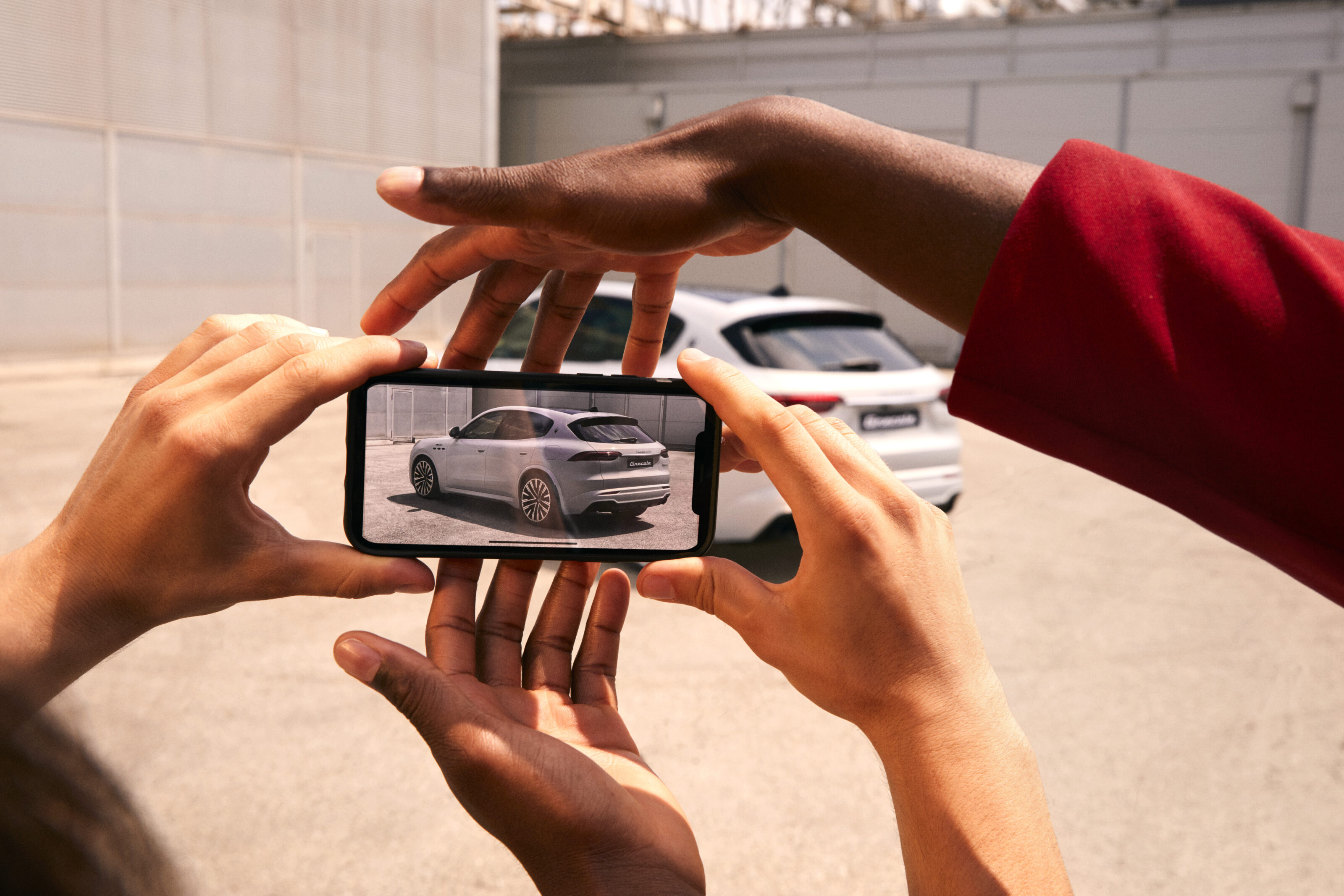
Trofeo (in addition to Modena)
| Trofeo quad exhaust system – black |
| Badges in twilight chrome finish |
| Electronic limited slip differential (E-LSD) |
| Air suspension u2013 Skyhook |
| 21-inch Crio staggered wheels (matte aluminium) |
| High performance braking system |
| Red painted brake calipers |
| Full premium leather upholstery with chevron graphics |
| 3D carbon fibre trim |
| Leather steering wheel in forged black |
| Rear privacy glass |
| Laminated glass |
| Panorama sunroof |
Options
GT
| Metallic paint u2013 Blu intenso |
| Metallic paint u2013 Grigio lava |
| Metallic paint u2013 Bianco metallic |
| Metallic paint u2013 Nero tempesta |
| Metallic paint u2013 Grigio lava opaco |
| Metallic paint u2013 Bronzo opaco |
| Metallic paint u2013 Rosso Granturismo |
| Three-layer paint u2013 Blu nobile |
| Three-layer paint u2013 Grigio Cangiante |
| Model badge removal |
| Roof rails |
| Quad tip exhaust system – black |
| Daylight opening (DLO) – black |
| Limited slip differential (LSD) |
| 19-inch Thetis wheels (gloss painted) |
| 20-inch Etere forged wheels (gloss black) |
| 21-inch Crio wheels (matte aluminium) |
| Painted brake calipers (red/black/blue/yellow) |
| Adaptive full-LED matrix headlights |
| 12-way power seats with driver memory function |
| 14-way power seats with driver memory function |
| Heated front seats |
| Ventilated front seats |
| Heated rear seats |
| Full premium leather upholstery with campidoglio stitch |
| Trident stitched on headrest |
| High gloss piano black trim |
| Open pore Radica wood trim |
| High gloss copper yarn carbon fibre trim |
| Carbon macrotwill |
| Heated leather steering wheel |
| Ambient lighting on dashboard and doors |
| Sport pedals in bruished stainless steel |
| Cigarette lighter |
| Aluminium trunk sill |
| Sonus Faber high premium sound system (21 speakers) |
| Three-zone climate control with rear touchscreen |
| Rear privacy glass |
| Laminated glass |
| Panorama sunroof |
| Wireless charger |
| Alarm system |
| Adaptive suspension u2013 Skyhook |
| Air suspension u2013 Skyhook |
| Infrared (IR) protection windshield |
| Cargo rails on trunk load floor |
| Head-up display |
| Traffic sign recognition |
| Intelligent speed assist (speed limiter + traffic sign recognition) |
| Intersection collision assist |
| Active driving assist |
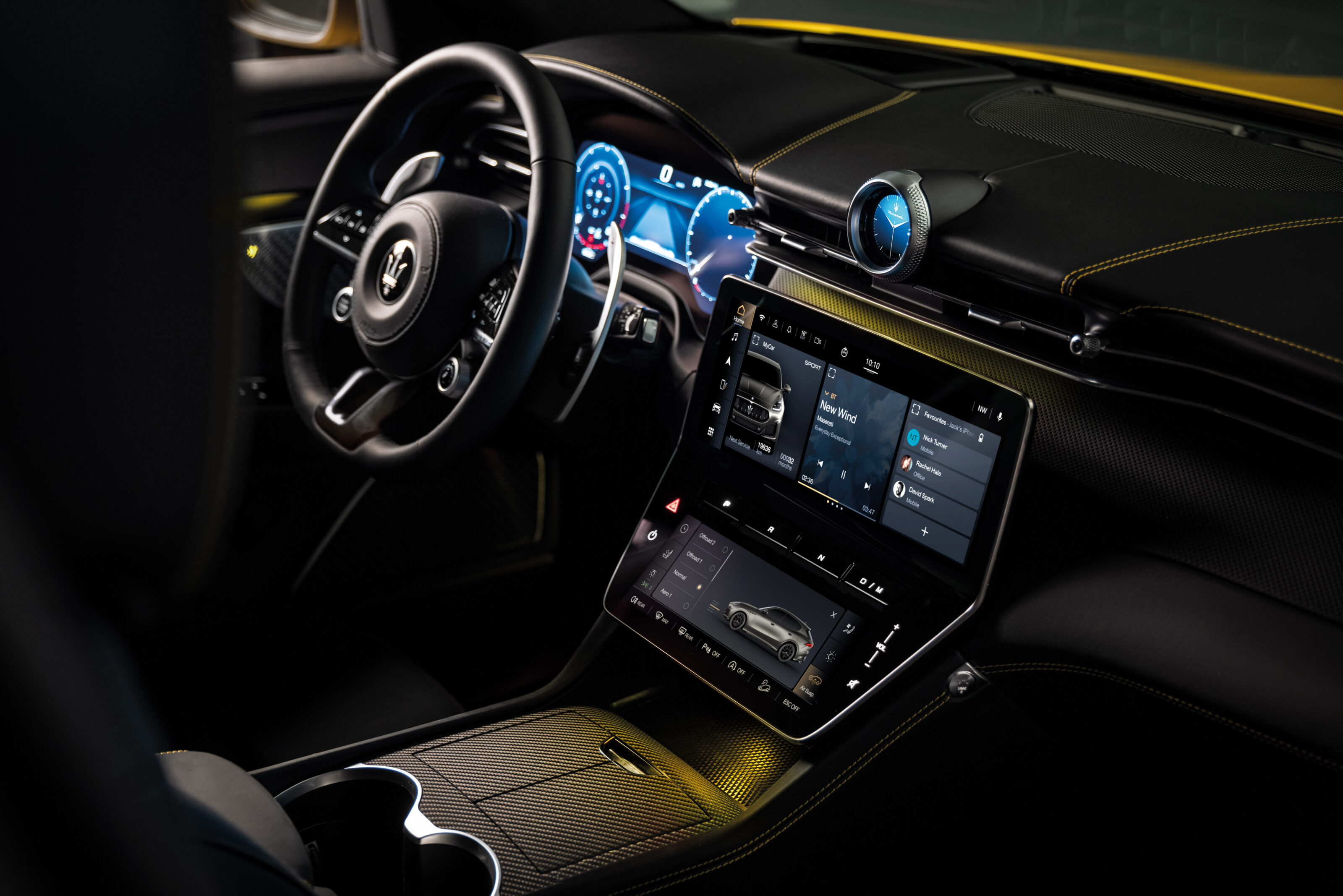
Modena
| Metallic paint u2013 Blu intenso |
| Metallic paint u2013 Grigio lava |
| Metallic paint u2013 Bianco metallic |
| Metallic paint u2013 Nero tempesta |
| Metallic paint u2013 Grigio lava opaco |
| Metallic paint u2013 Bronzo opaco |
| Metallic paint u2013 Rosso Granturismo |
| Three-layer paint u2013 Blu nobile |
| Three-layer paint u2013 Grigio Cangiante |
| Model badge removal |
| Roof rails |
| 21-inch Crio wheels (matte aluminium) |
| 21-inch Pegaso forged staggered wheels (glossy black) |
| Painted brake calipers (red/blue/yellow) |
| Adaptive full-LED matrix headlights |
| Ventilated front seats |
| Heated rear seats |
| Full premium leather upholstery with chevron graphics |
| Trident stitched on headrest |
| High gloss piano black trim |
| High gloss copper yarn carbon fibre trim |
| 3D carbon fibre trim |
| Carbon macrotwill |
| Heated leather steering wheel |
| Sport pedals in bruished stainless steel |
| Cigarette lighter |
| Aluminium trunk sill |
| Sonus Faber high premium sound system (21 speakers) |
| Rear privacy glass |
| Laminated glass |
| Panorama sunroof |
| Wireless charger |
| Alarm system |
| Infrared (IR) protection windshield |
| Cargo rails on trunk load floor |
| Head-up display |
| Traffic sign recognition |
| Intelligent speed assist (speed limiter + traffic sign recognition) |
| Intersection collision assist |
| Active driving assist |
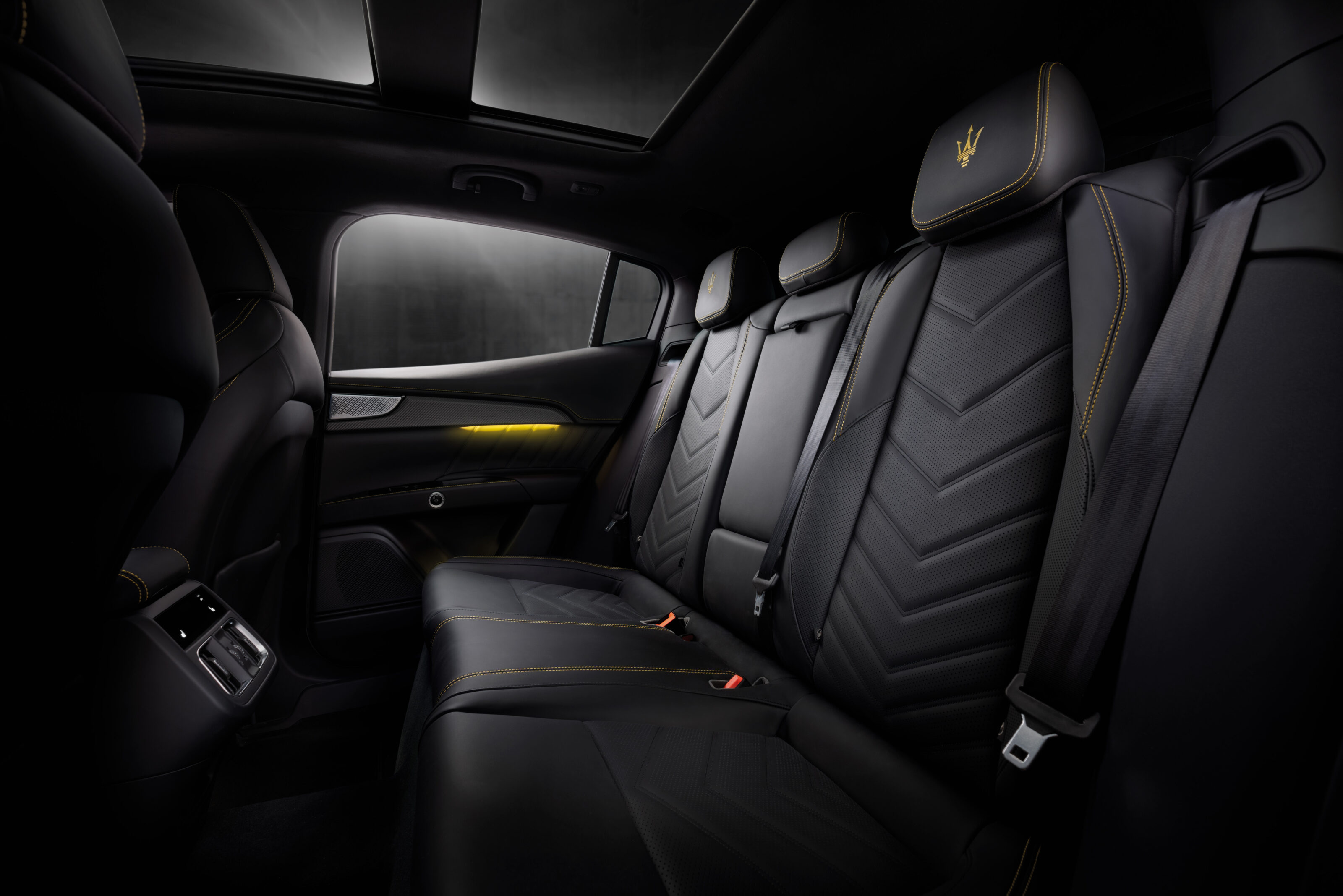
Trofeo
| Metallic paint u2013 Blu intenso |
| Metallic paint u2013 Grigio lava |
| Metallic paint u2013 Bianco metallic |
| Metallic paint u2013 Nero tempesta |
| Metallic paint u2013 Grigio lava opaco |
| Metallic paint u2013 Bronzo opaco |
| Metallic paint u2013 Rosso Granturismo |
| Three-layer paint u2013 Blu nobile |
| Three-layer paint u2013 Grigio Cangiante |
| Four-layer paint – Giallo Corse |
| Model badge removal |
| Roof rails |
| 21-inch Pegaso forged staggered wheels (glossy black) |
| Painted brake calipers (black/blue/yellow) |
| Adaptive full-LED matrix headlights |
| Ventilated front seats |
| Heated rear seats |
| Trident stitched on headrest |
| High gloss piano black trim |
| High gloss copper yarn carbon fibre trim |
| Carbon macrotwill |
| Heated leather steering wheel |
| Sport pedals in bruished stainless steel |
| Cigarette lighter |
| Aluminium trunk sill |
| Sonus Faber high premium sound system (21 speakers) |
| Alarm system |
| Homelink |
| Wireless charger |
| Alarm system |
| Infrared (IR) protection windshield |
| Cargo rails on trunk load floor |
| Head-up display |
| Traffic sign recognition |
| Intelligent speed assist (speed limiter + traffic sign recognition) |
| Intersection collision assist |
| Active driving assist |
Powertrain
The Grecale GT and Modena will boast a 48V mild hybrid system, combined with a turbocharged 2.0-litre four-cylinder engine in two differing states of tune.
The GT nets 221kW at 5750rpm and 450Nm from 2000 and 4000rpm, while the spicier Modena produces 242kW at 5750rpm and 450Nm between 2000 and 5000rpm.
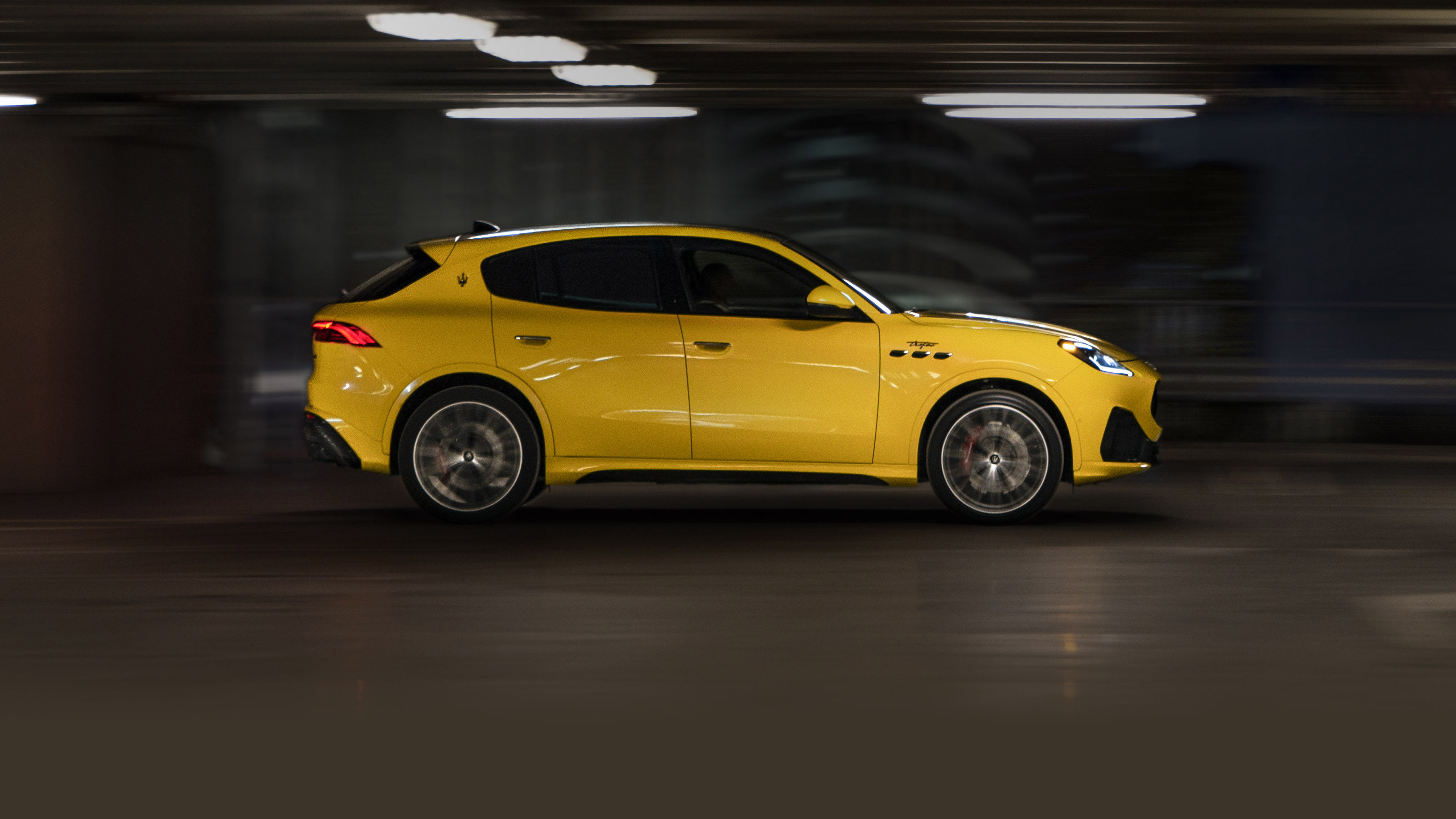
The flagship combustion Grecale Trofeo, however, lifts a detuned version of the fantastic Nettuno V6 powering the new MC20 supercar. The Grecale Trofeo will output 390kW at 6500rpm and 620Nm between 3000 and 5500rpm.
The electric Grecale Folgore, expected late-2023, will be fitted with a 105kWh battery and a 400-volt electrical system, expected to boast a similar driving range to its combustion counterparts, and produce up to 400kW/800Nm to all four wheels.
Safety
The new Maserati Grecale has yet to be tested by ANCAP.
Front and front-side airbags feature on the standard equipment list, however, along with active systems such as, autonomous emergency braking with pedestrian detection, advanced brake assist, active blind-spot monitoring, lane keep assist and drowsy driver detection.
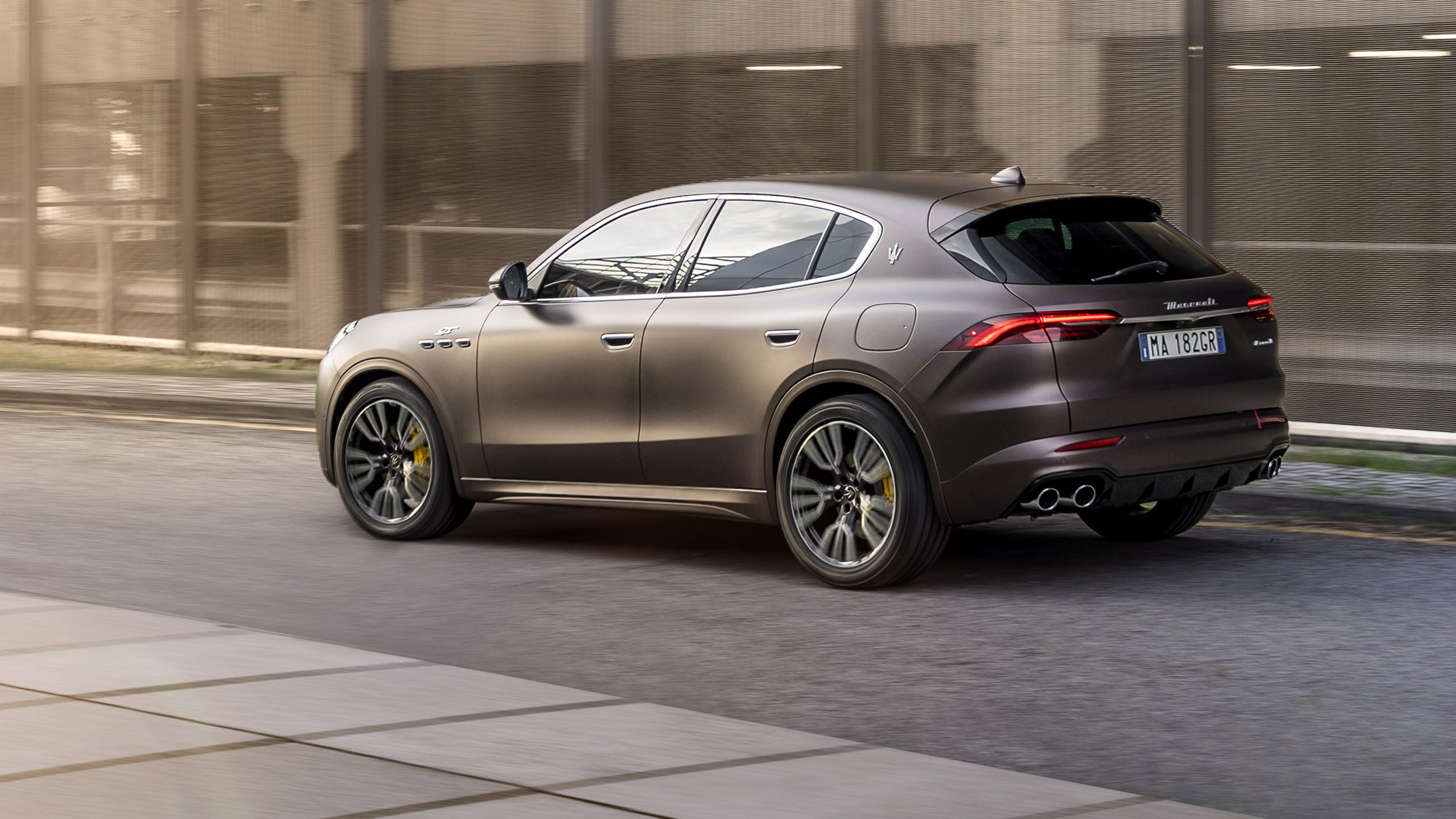
There is also front and rear parking sensors with rear active braking, hill start assist and a surround view camera fitted as standard across the range.
Further advanced driver aid systems, including traffic sign recognition, intelligent speed assist, intersection collision assist and active driving assist, are available as options.
Dimensions
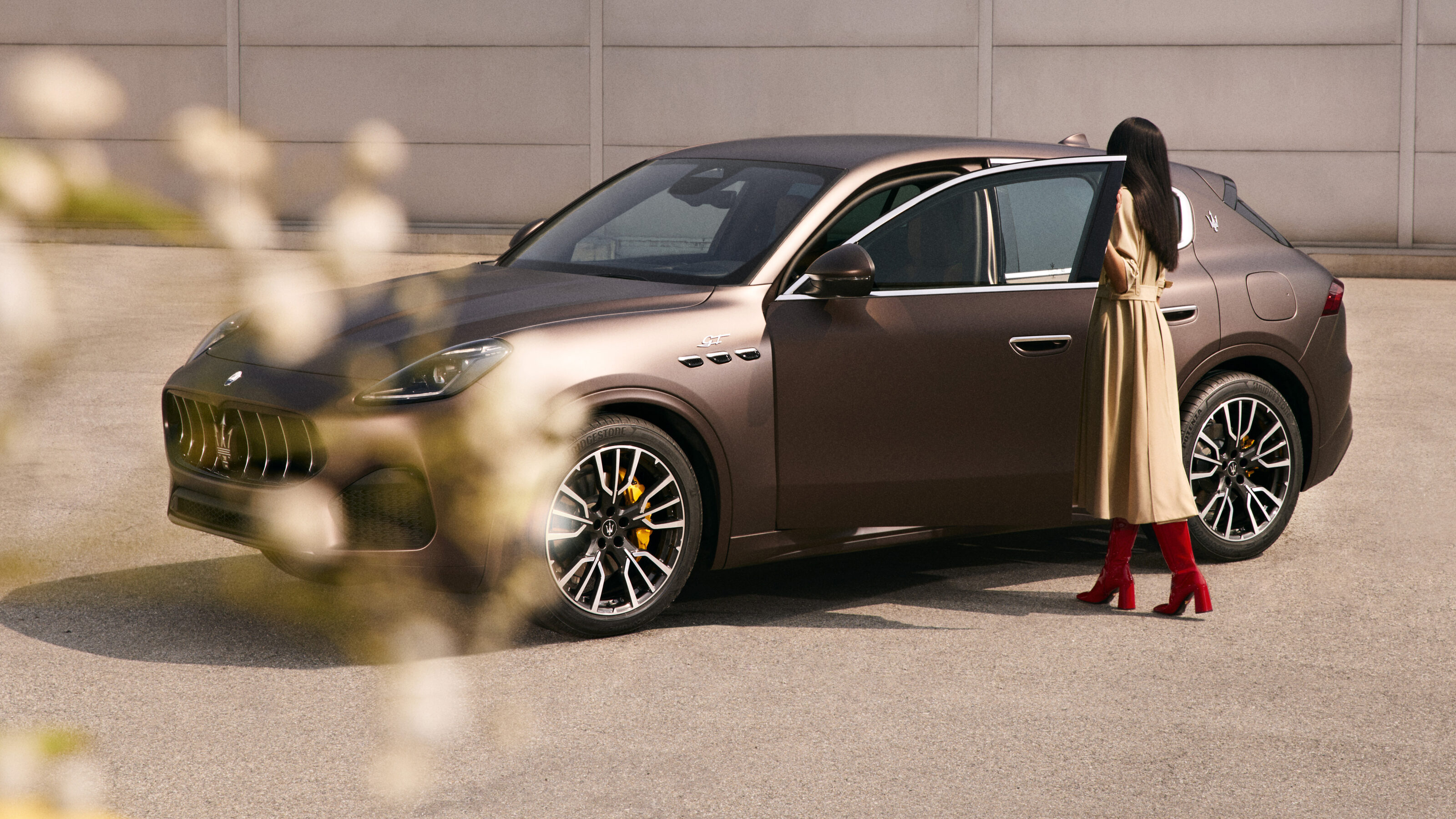
The Maserati Grecale measures 4846 millimetres long, 1979mm wide, 1670mm tall with a 2901mm wheelbase.
The V6-powered Grecale Trofeo gains 570-litres of boot space, while the four-cylinder Grecale GT and Modenas boast a slightly-smaller 535-litres of boot space, due to the packaging of their mild hybrid systems.
Availability
The 2023 Maserati Grecale will arrive in Australia in the first quarter of next year. We will update this page when more is announced closer to launch.
New car sales in Australia hit a five-year high last month, with almost every mainstream brand in the top 10 boasting increases over August.
According to monthly results provided by the Federal Chamber of Automotive Industries (FCAI), it was the best August since 2017, with 95,256 units registered compared to 81,199 this time in 2021 which was boosted off the back of a COVID-19 decimated 2020.
It leaves the market up 17.3 per cent, or 14,057 vehicles, compared with August 2021.
Though most big brands posted a rise in sales, Nissan, Skoda and Volkswagen were among the worst affected of the main players, while Kia, Hyundai and Honda managed to swing things in the other direction.
As expected, New South Wales sold the most vehicles with 30,501 units shifted, followed by Victoria with 25,053 and Queensland on 21,379.
The Federal Chamber of Automotive Industries (FCAI) said the positive result was encouraging amidst the global economic recovery from the pandemic. “The August sales are the best August result since 2017. This gives hope that the supply of vehicles to the Australian market is beginning to show signs of improvement,” said Chief Executive Tony Weber.
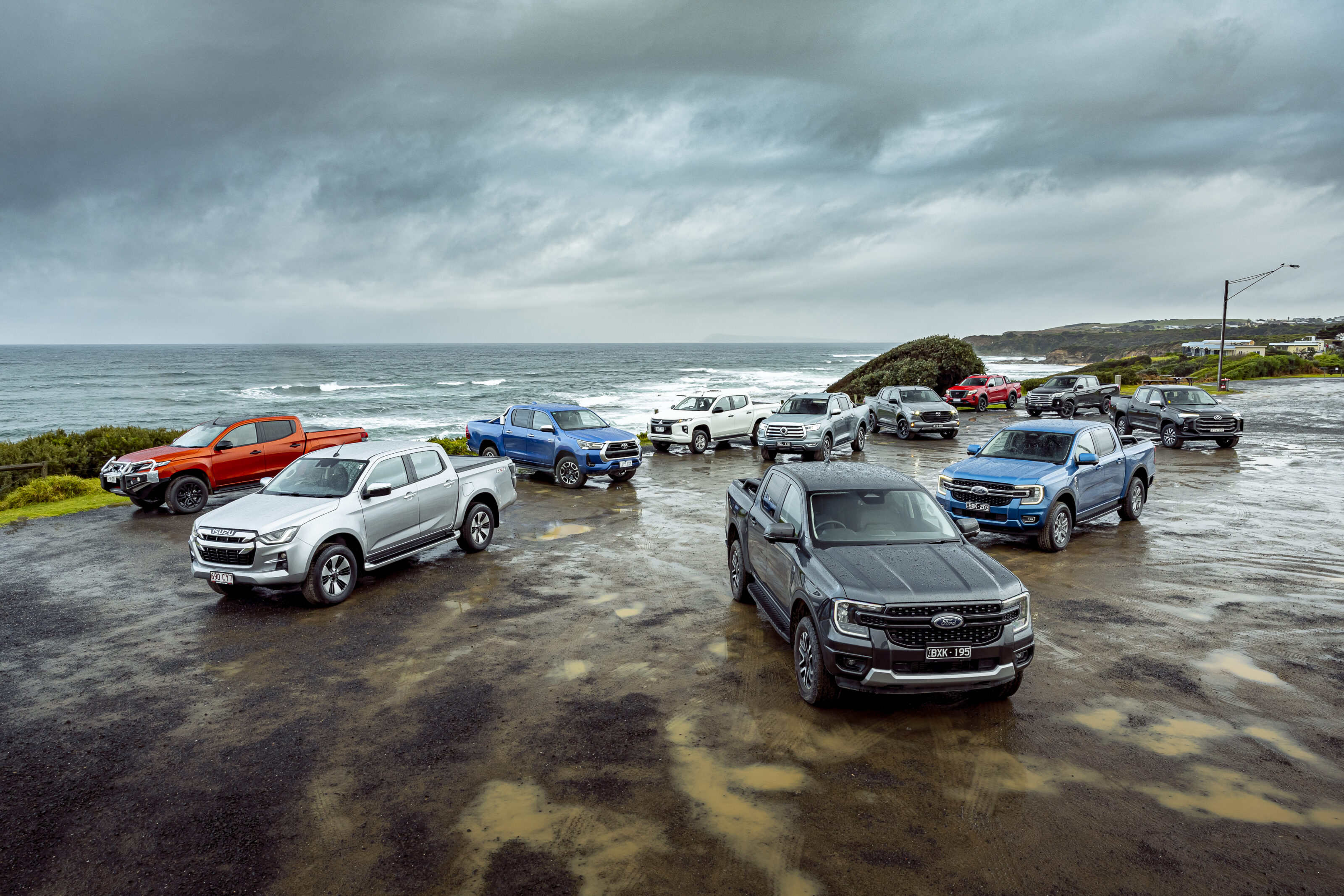
Utes were the country’s most popular vehicle type again last month when combining 4×4 and 4×2 variants, with the former accounting for 16,808 units of a 19,969 total.
There were 17,099 medium SUVs that left showrooms compared to 14,629 in August 2021.
All SUV categories posted growth last month, with upper large SUVs gaining the most with a rise of 76.7 per cent – with the overall SUV share of the market up 18.5 per cent for the month but down 0.1 per cent YTD. Total SUV sales sat at 48,571 for August and 375,036 for 2022 so far (versus 40,981 last month and 375,443 this time in 2021). For the year so far, medium SUVs and large SUVs were both up at 9.1 and 1.5 per cent.
Light-commercial vehicles increased its share by 16.8 per cent in August but dropped 1.2 per cent YTD, while passenger cars also made gains with a rise of 15.3 per cent of the market last month but lost 9.7 per cent YTD.
Micro cars, medium cars, sports cars and people-movers all grew by 40.6, 100.3, 76.7 and 26.7 per cent respectively.
Conversely, light, small, large and upper-large car sales fell by 1.7, 6.2, 12.9 and 1.6 per cent respectively for the month.
Comparatively, year-to-date micro, sports, light, small and upper-large cars were down year-to-date, while medium, large and people-movers were up.

In the blossoming electric arena, in August, there were 4235 electric vehicles sold compared to 370 in August 2021 and 14,524 for 2022 so far – increases of more than 999 and 368.2 per cent.
The number of hybrids was also up from 6487 in August last year to 6864 last month, a rise of 5.8 per cent for the month, and up 13.3 per cent for the year-to-date. Plug-in hybrid numbers were up 83.7 per cent with 540 sold in August and 4059 for 2022 (compared to 294 in August last year and 2059 this time in 2021).
Rising petrol prices are partly responsible for the electric boom, though state-based incentives, such as those in NSW, VIC and QLD, have also played a part.
“We have seen strong sales of battery electric vehicles in August, with Tesla alone selling 3397 vehicles. In the month, EV sales were 4.4 per cent of the total market. This is the highest market share for pure battery-electric vehicles ever recorded in a single month in Australia,” added Weber.
“Year-to-date EV sales are two per cent of the total market, hybrids are 7.6 per cent and plug-in hybrid vehicles are 0.6 per cent. Combined electrified vehicles are now just over 10 per cent of total sales in 2022.”

Top 10 models ?
The Toyota HiLux ute kept the top spot with 6214 for August and 44,626 YTD, compared to 4497 for its regular rival, the Ford Ranger, which came in second place for the month and year-to-date with 27,225 sales.
Coming in third was Australia’s most popular SUV, the Toyota RAV4, with 2482 units registered last month and also finishing third YTD with 25,292 sales, despite having a rocky start to the year when it dropped from the top 10 in January.
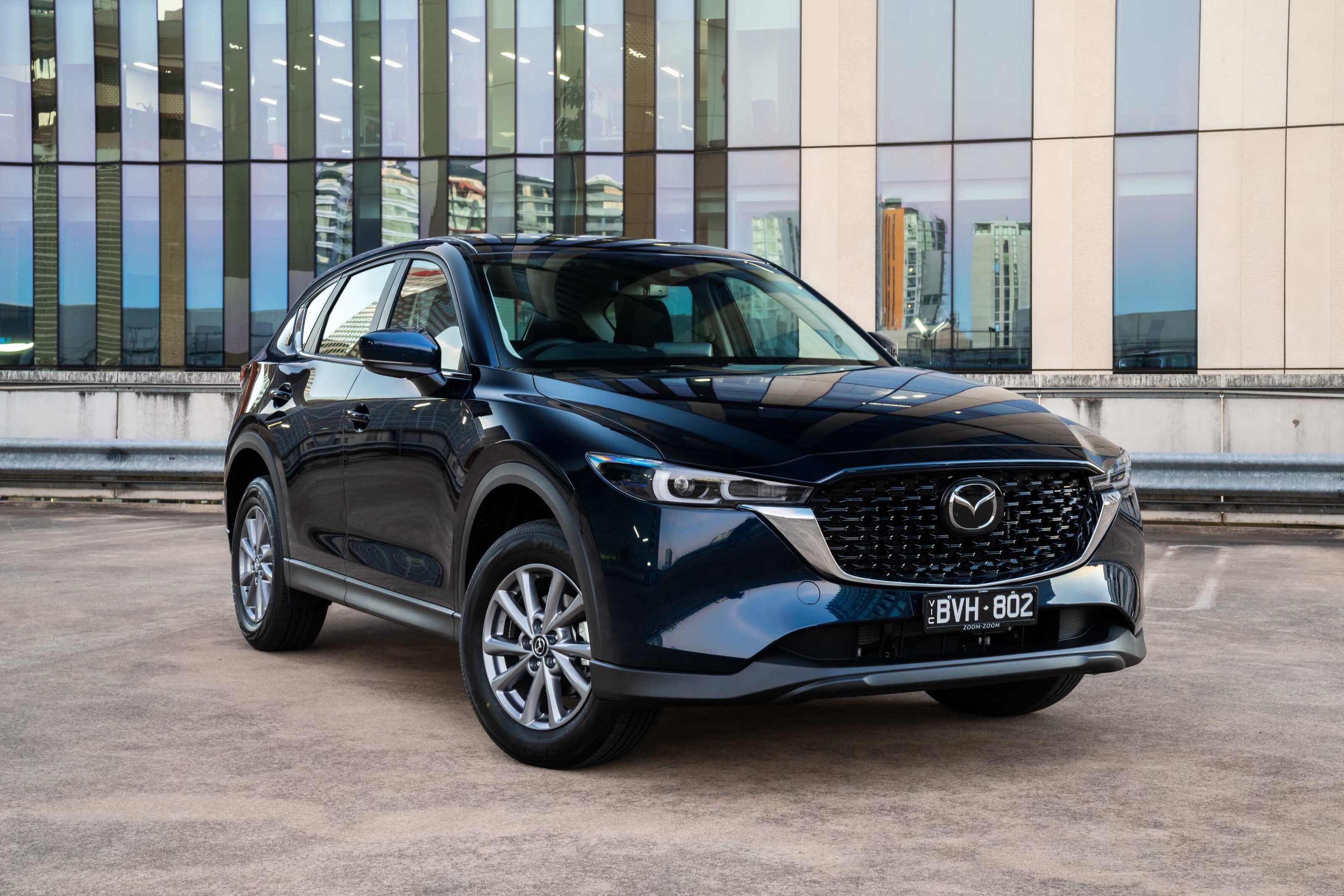
The Mazda CX-5‘s successes continued with another solid period in August selling 2325 cars coming in fifth place. Looking at the year-to-date results, the CX-5 was also fifth with 18,685 cars sold.
Top 10 spots also continued to be taken up by utes, with Isuzu’s D-Max and Mitsubishi’s Triton occupying ninth and seventh places respectively with 1928 and 2087 sales in August. For the year so far, Isuzu shifted 17,320 units of its D-Max, taking sixth overall, while Mitsi sold 20,886 Tritons to take fourth spot.

Representing passenger cars in the top 10 were the ever-popular Hyundai i30, with 1975 finding homes last month (15,485 YTD), coming in eighth for August and ninth for the year to this point, and the Toyota Corolla – which, despite falling out of the top 10 multiple times since December last year is back in good for m, achieving 2115 sales in August with making it sixth, but seventh YTD with 17,251.
Meanwhile, its Prado sibling came in 10th spot last month with 1903 units shifted, but did a little better YTD taking eighth position with 15,928 sold.
Rounding out the top models so far for 2022 was the Tesla Model 3 in fourth – with its 2380 examples sold enough to push the MG ZS out of the top 10 altogether with only 1463 due to being hampered by recent supply issues. For the year so far though the ZS squeezed into 10th with 13,072 while the Model 3 YTD result was 7037.
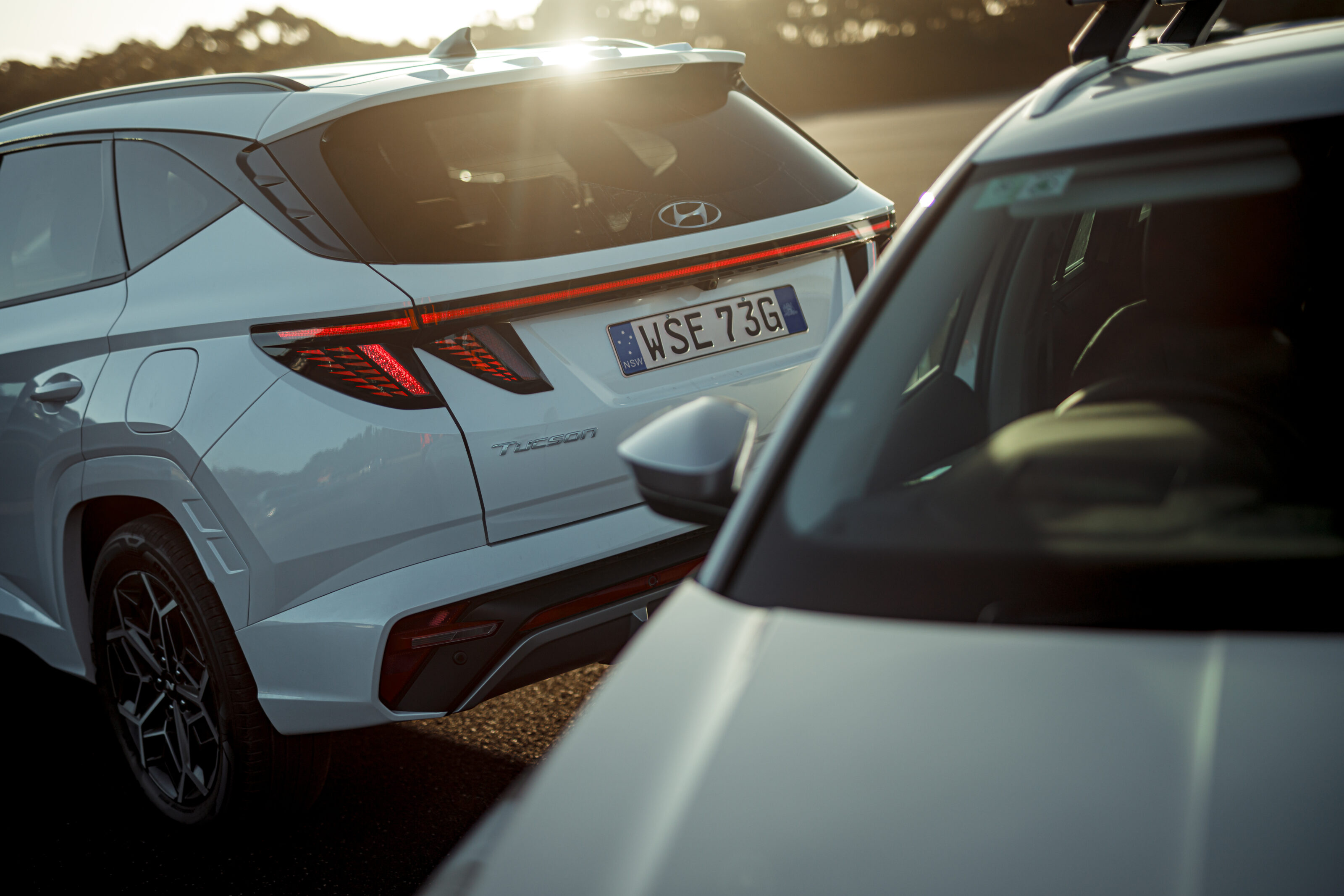
Narrowly missing out on a spot were the Mitsubishi Outlander with 1568 sold, Mazda CX-30 posting 1516, the Toyota Kluger with 1682, and the Hyundai Tucson with 1719 – the latter having recently enjoyed strong results due to improved stock arriving on our shores.
Top 10 cars in Australia: August 2022
| Rank | Model | Sales | vs August 2021 |
|---|---|---|---|
| 1 | Toyota Hilux | 6214 | 39% |
| 2 | Ford Ranger | 4497 | 14% |
| 3 | Toyota RAV4 | 2482 | -22% |
| 4 | Tesla Model 3 | 2380 | N/A |
| 5 | Mazda CX-5 | 2325 | 4% |
| 6 | Toyota Corolla | 2115 | -41% |
| 7 | Mitsubishi Triton | 2087 | 152% |
| 8 | Hyundai i30 | 1975 | -4% |
| 9 | Isuzu Ute D-Max | 1928 | -1% |
| 10 | Toyota Prado | 1903 | -30% |
Top 10 cars in Australia: YTD 2022
| Rank | Model | Sales | vs YTD 2021 |
|---|---|---|---|
| 1 | Toyota Hilux | 44,626 | 20% |
| 2 | Ford Ranger | 27,225 | -18% |
| 3 | Toyota RAV4 | 25,292 | -2% |
| 4 | Mitsubishi Triton | 20,886 | 34% |
| 5 | Mazda CX-5 | 18,685 | -6% |
| 6 | Isuzu Ute D-Max | 17,320 | -5% |
| 7 | Toyota Corolla | 17,251 | -13% |
| 8 | Toyota Prado | 15,928 | 5% |
| 9 | Hyundai i30 | 15,485 | -9% |
| 10 | MG ZS | 13,072 | 4% |

Top 10 car brands ?
August was another decent month for the market’s dominant brand Toyota, with 20,616 sales, up three per cent compared to this time last year – mostly down to COVID-19 related production problems. Year-to-date it has notched up 162,558 units.
Mazda followed in second place with 8824 units sold last month (up 15 per cent) and 66,635 year-to-date, followed by Kia with 6780 cars shifted in August (up 34 per cent) and 52,910 this year so far up 10 per cent.
That put traditional third place Mitsubishi behind in fifth with 6380 vehicles sold in August, but back in third year-to-date with 53,739.
Hyundai came in fourth place last month with 6643 sales (up 32 per cent) versus fifth for the year so far with 51,602 units registered (up six per cent).
Ford took sixth spot last month and year-to-date with 5839 and 38,840 units sold (up 15 per cent and down 20 per cent respectively).
MG held its seventh position for the year with 30,599 registrations (down 16 per cent), and took eighth in August – despite the ZS disappearing from the top 10 vehicles list – with 3074 sales.
Isuzu Ute had a bad month, falling out of the best-sellers list for August with 2800 vehicles shifted – down 9.6 per cent for the month, but rose to eighth place YTD with 24,337 units sold and down just four per cent.
Subaru popped into ninth for August with 2960 units sold, an identical position YTD with 22,779 vehicles shifted.
Missing from the month’s top 10 was Volkswagen on 2868, instead pipped to the post by Mercedes-Benz – which achieved 2886 sales combining cars and vans, with a YTD result of 22,144 and took 10th in both categories.
Ups and downs ? ?
Outside the top 10, successes came for other household names, with BMW (up 52 per cent), Citroën (up 80 per cent) Porsche (up 43 per cent) and Ram (up 56 per cent), Renault (up 44 per cent), Ssangyong (up 37 per cent) and Suzuki (up 105 per cent) all posting large increases in August.
Meanwhile, not so lucky were; Fiat (down 84 per cent), Jaguar (down 39 per cent), Skoda (down 39 per cent), Volkswagen (down 24 per cent), Lexus (down 20 per cent) and Nissan (down 23 per cent) who were the biggest strugglers among mainstream brands.
Top 10 brands: August 2022
| Rank | Brand | Sales | vs August 2021 |
|---|---|---|---|
| 1 | Toyota | 20,616 | 3% |
| 2 | Mazda | 8824 | 15% |
| 3 | Kia | 6780 | 34% |
| 4 | Hyundai | 6643 | 32% |
| 5 | Mitsubishi | 6380 | 33% |
| 6 | Ford | 5839 | 15% |
| 7 | Tesla | 3397 | 3.30% |
| 8 | MG | 3074 | 21% |
| 9 | Subaru | 2960 | -8% |
| 10 | Mercedes-Benz | 2886 | 22.00% |

Top 10 brands: YTD 2022
| Rank | Brand | Sales | vs YTD 2021 |
|---|---|---|---|
| 1 | Toyota | 161,558 | 3% |
| 2 | Mazda | 66,635 | -14% |
| 3 | Mitsubishi | 53,739 | 13% |
| 4 | Kia | 52,910 | 10% |
| 5 | Hyundai | 51,602 | 6% |
| 6 | Ford | 38,840 | -20% |
| 7 | MG | 30,599 | -16% |
| 8 | Isuzu Ute | 24,337 | -4% |
| 9 | Subaru | 22,779 | -11% |
| 10 | Mercedes-Benz | 22,144 | -7% |
In charts ?
August 2022 – Top 10 models
August – Top 10 brands
August 2022 – Overall segment sales
August 2022-2021 category sales
August 2022-2021 category YTD sales
2022 Sales race
August 2022 Australian sales map
August 2022 buyer type
The Tesla Model 3 was the fourth most popular vehicle in August as the US electric-car brand inspired a record month for EV sales.
Tesla sold 3397 vehicles last month after a big shipload arrived to bring fresh supplies of the Model 3 sedan as well as the first deliveries of the related Model Y SUV.
The combined 3 and Y sales accounted for 80 per cent of August’s total of 4235 electric vehicle sales, which represented 4.4 per cent of the total new-car market.
EV sales account for two per cent of the market year to date. In a reverse of the overall market, electric passenger cars lead the way in the total 14,524 EV sales – with 9420 units versus 5070 units for electric SUVs.

Industry body the Federal Chamber of Automotive Industries (FCAI) said electrified vehicles, combining battery electric, plug-in hybrid and hybrid cars, now form just over 10 per cent of the new-car market in 2022.
Hybrid vehicles form the biggest share of electrified vehicles, with 54,699 sales year to date – up 13 per cent.
Plug-in hybrid sales increased by 84 per cent – to 540 units – when comparing August 2022 and August 2021.
The Tesla Model 3’s August result gave the electric sedan two-thirds of the Medium Car Over $60,000 segment. Year-to-date sales of 7037 equate to a 44 per cent segment share.

The Model Y’s 1017 sales gave it a 32 per cent share in the Medium SUVs Over $60,000 segment, where it comfortable outsold popular luxury SUVs including the Audi Q5, BMW X3, Mercedes-Benz GLC, and Volvo XC60.
Tesla started reporting its sales results only from April, having previously remained coy about its showroom performance.
Its first report revealed it was the country’s 15th most popular brand and had 4417 sales in the first quarter.
The company was hit by supply issues from its Chinese production plants in the second quarter just after releasing its long-awaited Model Y SUV.
| August 2022: Top 10 New Car Sales | |
|---|---|
| 1. Toyota HiLux | 6214 |
| 2. Ford Ranger | 4497 |
| 3. Toyota RAV4 | 2482 |
| 4. Tesla Model 3 | 2380 |
| 5. Toyota Landcruiser | 2379 |
| 6. Mazda CX-5 | 2325 |
| 7. Toyota Corolla | 2115 |
| 8. Mitsubishi Triton | 2087 |
| 9. Hyundai i30 | 1975 |
| 10. Isuzu Ute D-Max | 1928 |
It’s a fact that few people buy commercial vans in Australia, with the 2.5-3.5-tonne commercial segment representing just 2.8 per cent of the national light-vehicle market over the first six months of the calendar year. Fewer people still look to the French for their commercial vehicle needs, with Peugeot’s Expert van making up just 1.2 per cent of the segment.
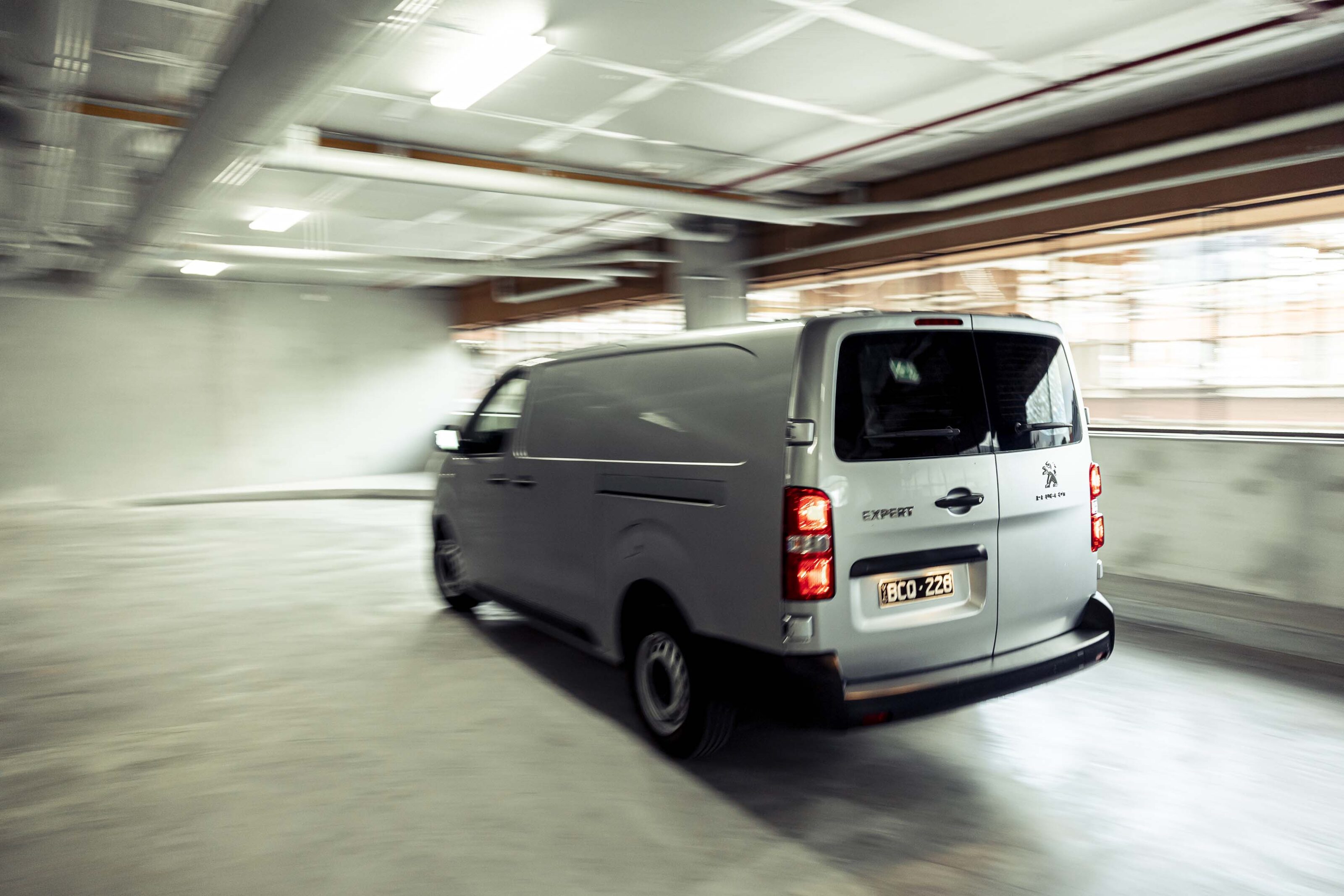
Despite its niche status, the 2022 Peugeot Expert brings style, polish and some generous features to the utilitarian segment.
It also nails its workhorse brief with ingenious packaging for a day on the job, along with all of the load-lugging ability you would expect of a big panel van like this.
Pricing and features
The Peugeot Expert comes in two wheelbase configurations: a ‘Short’ van that measures 4.95 metres in length, and a ‘Long’ body style that measures 5.30 metres from stem to stern.
A pair of engines are offered within the Expert range, with all except for top-spec Sport models powered by a Euro 5-compliant 2.0-litre turbo-diesel four-cylinder producing 110kW and 370Nm.
The halo Sport model gains a more powerful and more efficient engine that develops 130kW and 400Nm at its peak. It is only available in Short configuration and tops the range at $49,990 (before on-road costs).
Opening the range at $38,990 (before on-road costs) is the entry-level Expert City Short with a manual gearbox. The Expert City Short and Expert Pro Long are the only variants offered with a manual; all others are fitted with an eight-speed automatic.
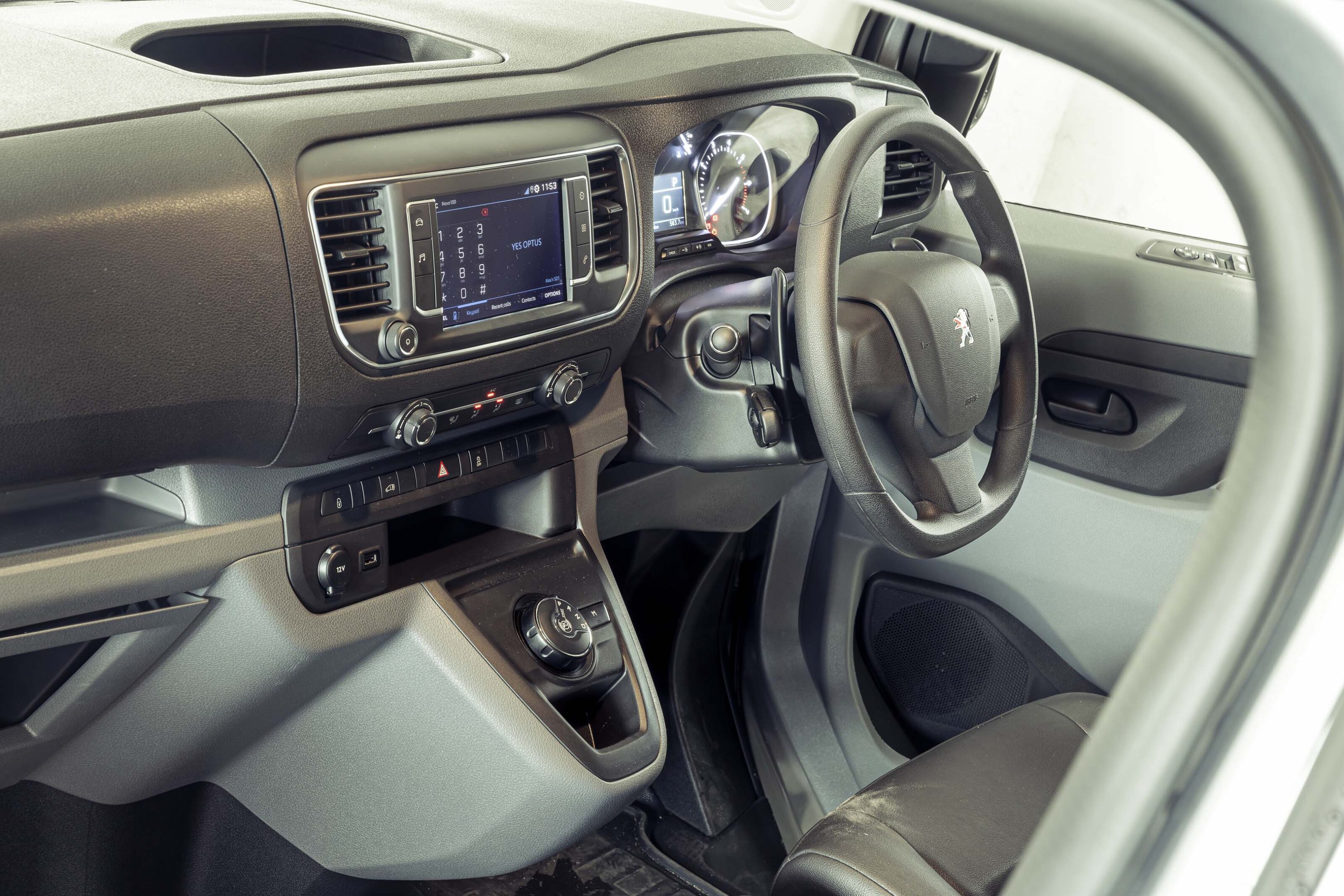
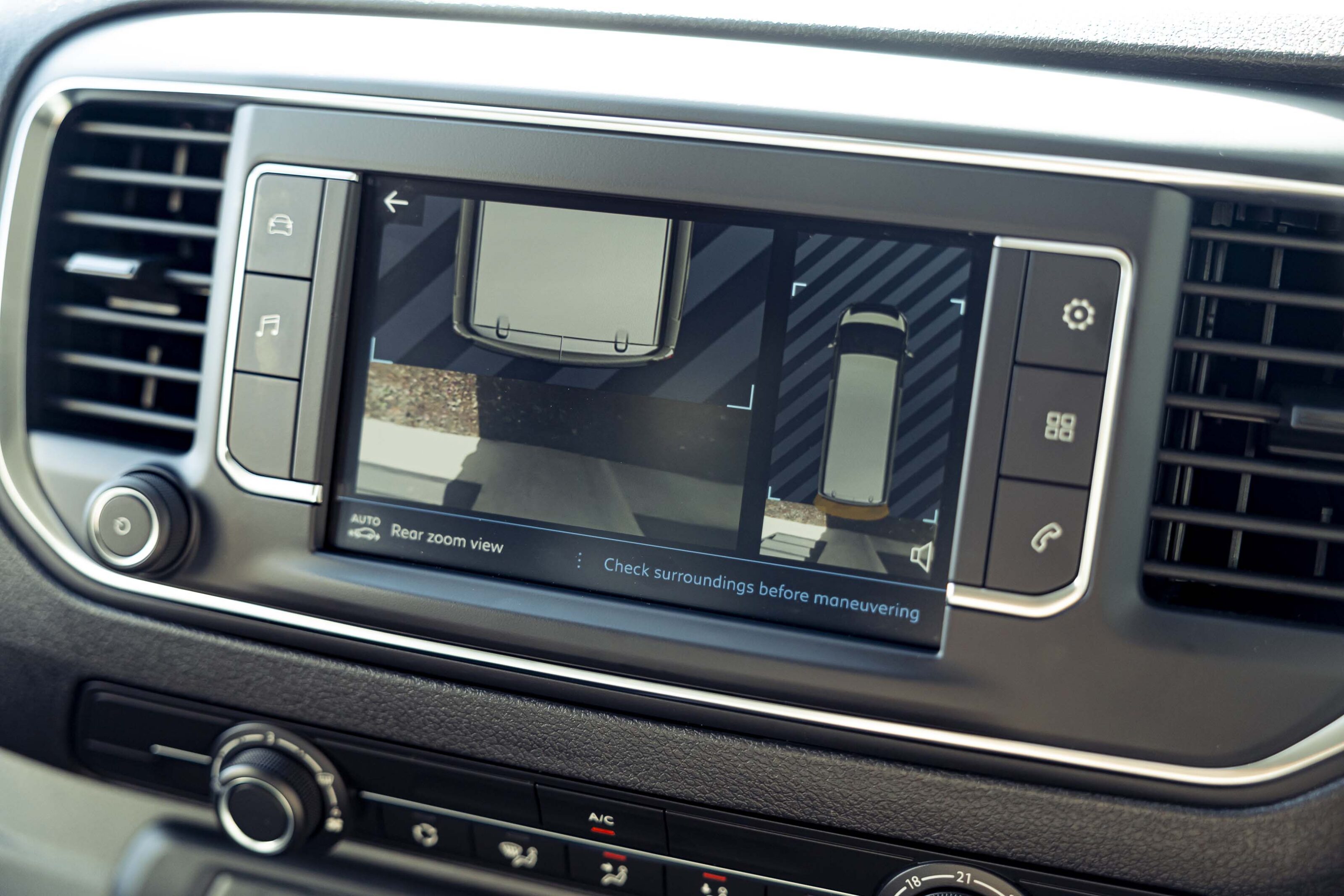
The van we’re driving today is the mid-range Expert Pro Long automatic, splitting the range at $44,990 before on-road costs. Your money nets you a glazed cargo bulkhead, reversing camera and parking sensors, three front seats, automatic lights and rain wipers, auto-dimming rear-view mirror and a 7.0-inch colour touchscreen with Apple CarPlay and Android Auto mirroring.
Being the Long boy, cargo volume jumps from the standard 5.3 cubic metres to 6.1 cubic metres, with a 1.35-tonne payload and a 1.8-tonne braked towing capacity.
Safety equipment for the Expert Pro includes both active and passive systems, featuring autonomous emergency braking (AEB), forward collision warning, active cruise control, electronic stability control, four airbags and blind-spot monitoring.
Comfort and space
The light grey cabin presents an uncluttered and fuss-free environment. You have the ability to seat three abreast, the driver treated to their own single seat with adjustable armrest while the remaining two seats form a mini bench. It’s an amicably airy cabin but, when seated three across, it can get a bit cosy.
Analogue gauges are easily legible and read with clarity during both day and night.
The 7.0-inch touchscreen is simple and responsive, though functionality is rather basic with radio functions and a rudimentary native Bluetooth hands-free phone function. Wired Apple CarPlay and Android Auto, however, make the best of the convenient central screen.
There are various storage locations dotted around the cabin, with door trims boasting deep bins at the bottom, another sizeable tray near the door handle and yet another storage slot up high on the sill.
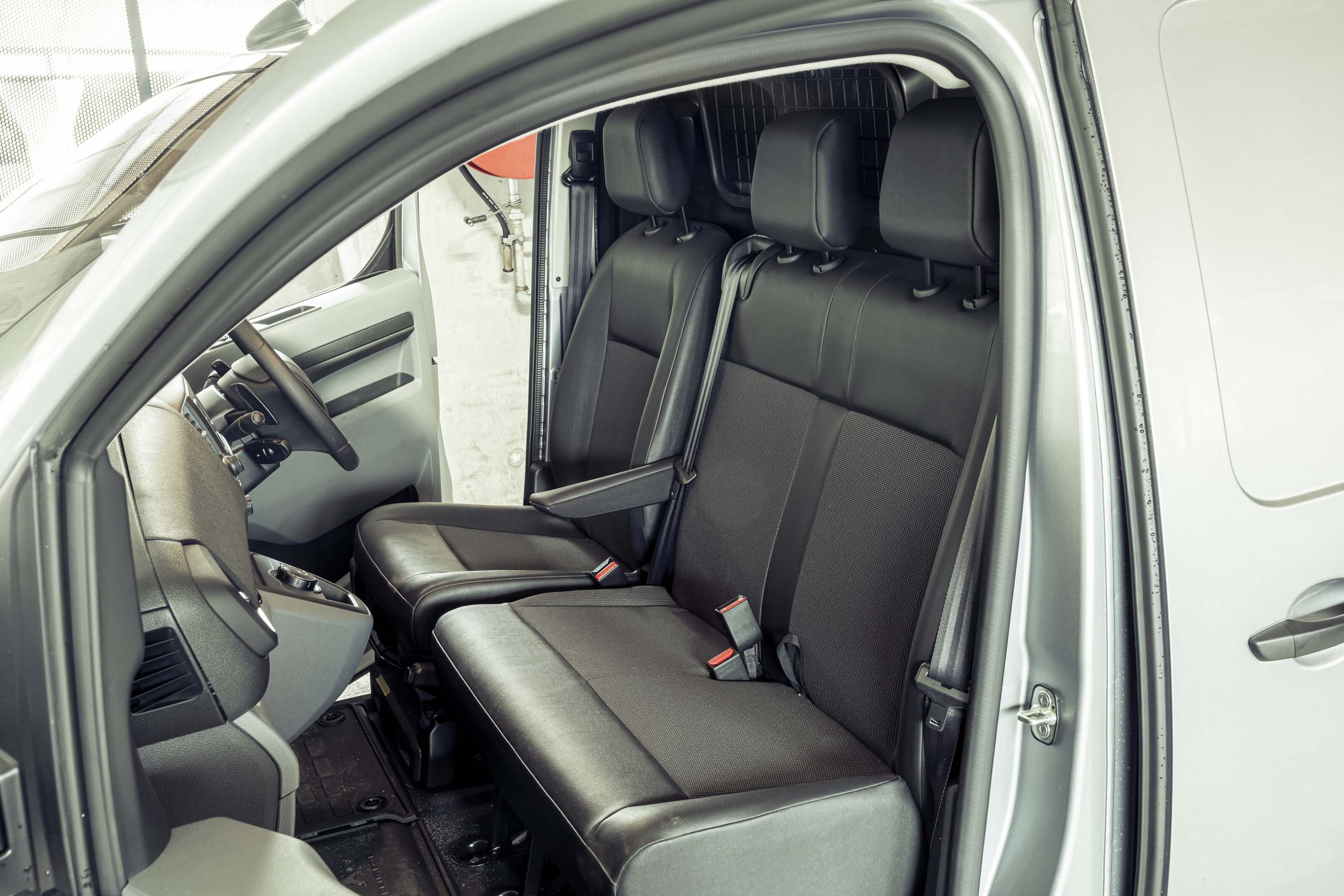
There’s a deceptively deep bin set atop the dashboard centre, with another fistful of bins located in front of the passenger seats. Cup holders, however, couldn’t be located anywhere up front – a rather weird omission for a tradie van.
Hard plastics are prolific across the dashboard, but it feels durable and is likely better suited to the van’s intended purpose than the softer materials found in passenger cars. Overall, cabin ambience strikes a nice balance between function and polish.
Forward visibility is wonderful, thanks to high seating and a large windshield aperture. Rear vision is impeded by the divide of the rear barn doors and the caged bulkhead window. At night, the central touchscreen is reflected in the rear-view mirror from the cargo bulkhead, too.
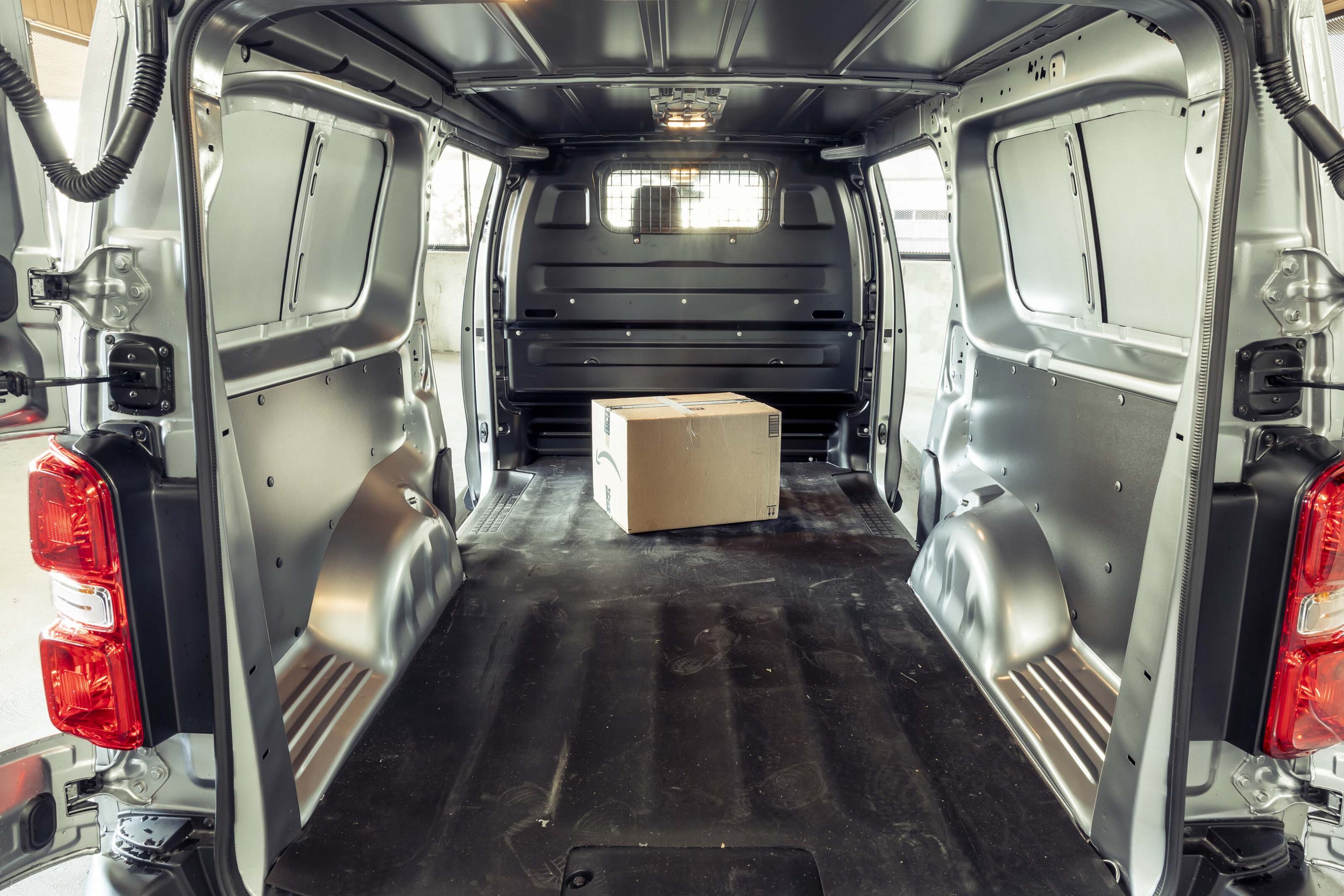
Of course, being a van, all of the comfort is found up front, while most of the space is found behind that glazed bulkhead.
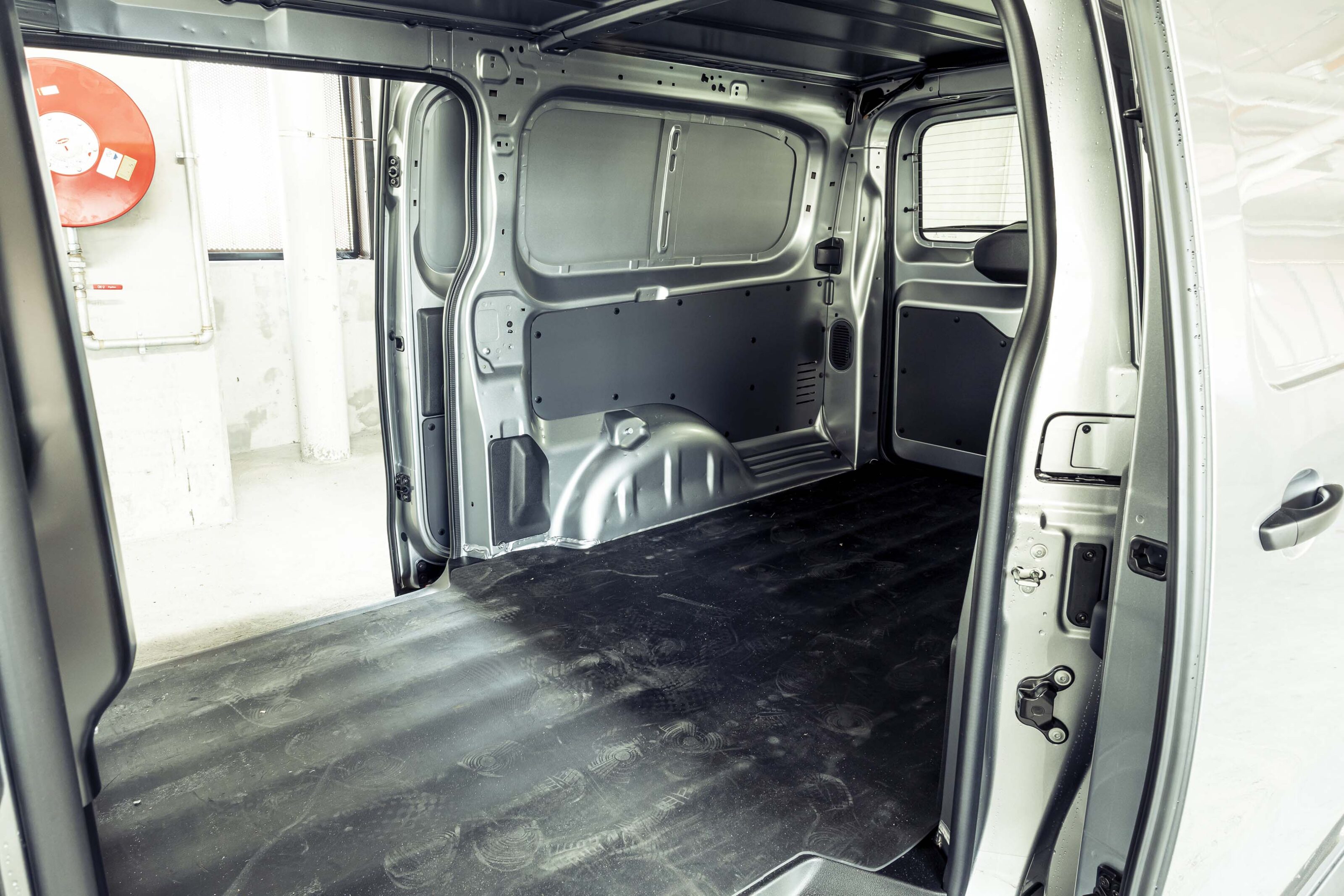
With the long-wheelbase version boasting 6.1 cubes of useable cargo volume, the cavernous rear can cater for three Euro pallets, with a useable floor load length of 2862mm. Max load height measures 1397mm and max load width measures 1628mm – but narrows to 1258mm between the wheel wells.
For side-loading, the sliding side doors measure 935mm wide on the long-bodied Expert van.
The Expert Pro LWB’s ultimate payload is 1350kg.
On the road
Commercial vans may not boast the best reputation for on-road refinement, but the Peugeot Expert impresses with surprising poise.
Stepping up into the high-riding driver’s seat, there is a decent amount of both height and reach adjustment to be found in the steering column. Seats are solid, if a little basic, but offer good under-thigh support.
Backrests are tilt adjustable, to a degree, though you are working within the confines of the bulkhead and taller drivers may find them too upright.
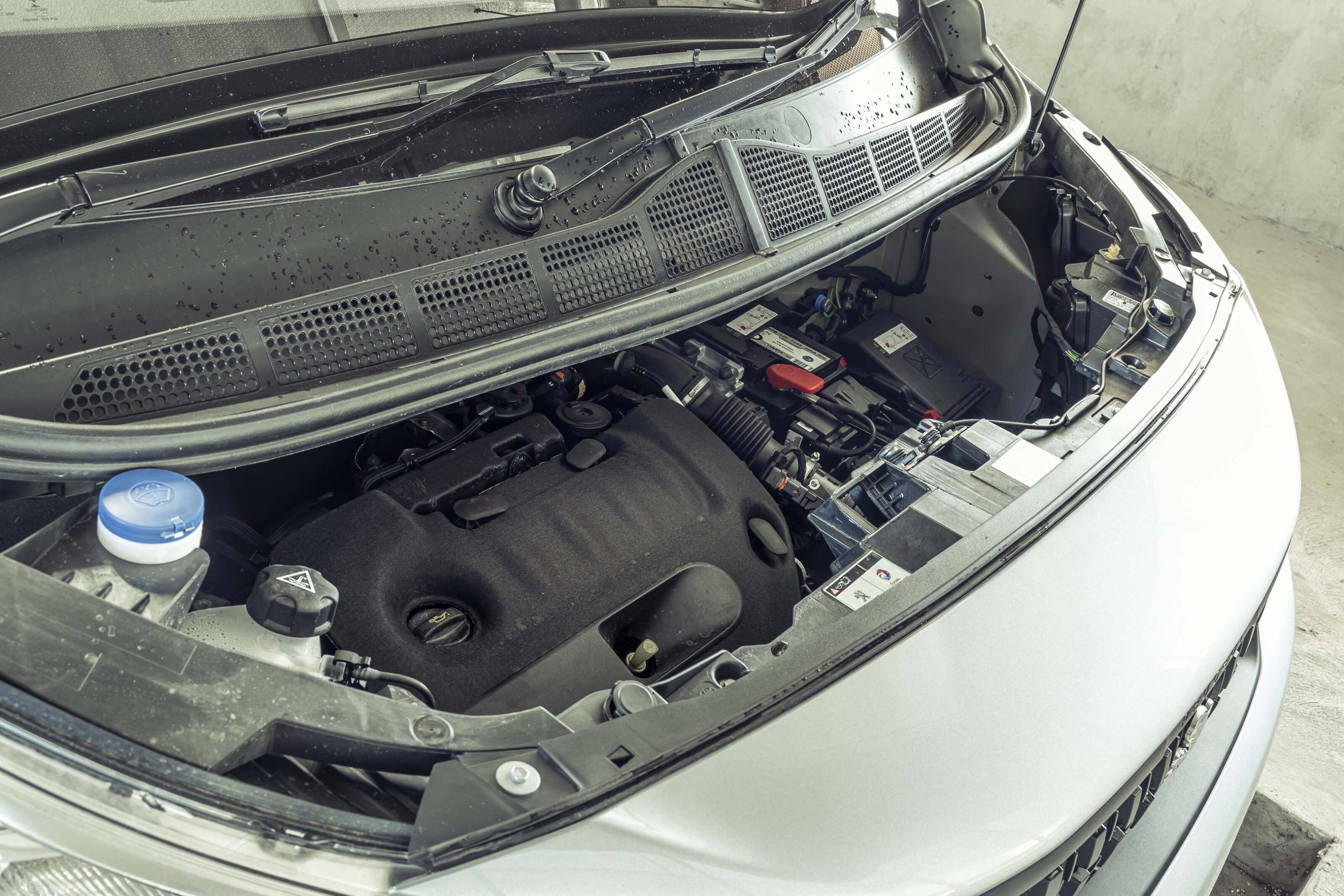
The 2.0-litre diesel is a smooth unit and rather refined for a work van. It’s still audible from the cabin, given its proximity, but certainly isn’t as unpleasant or vocal as some other diesel engines found in the van and dual-cab ute sectors.
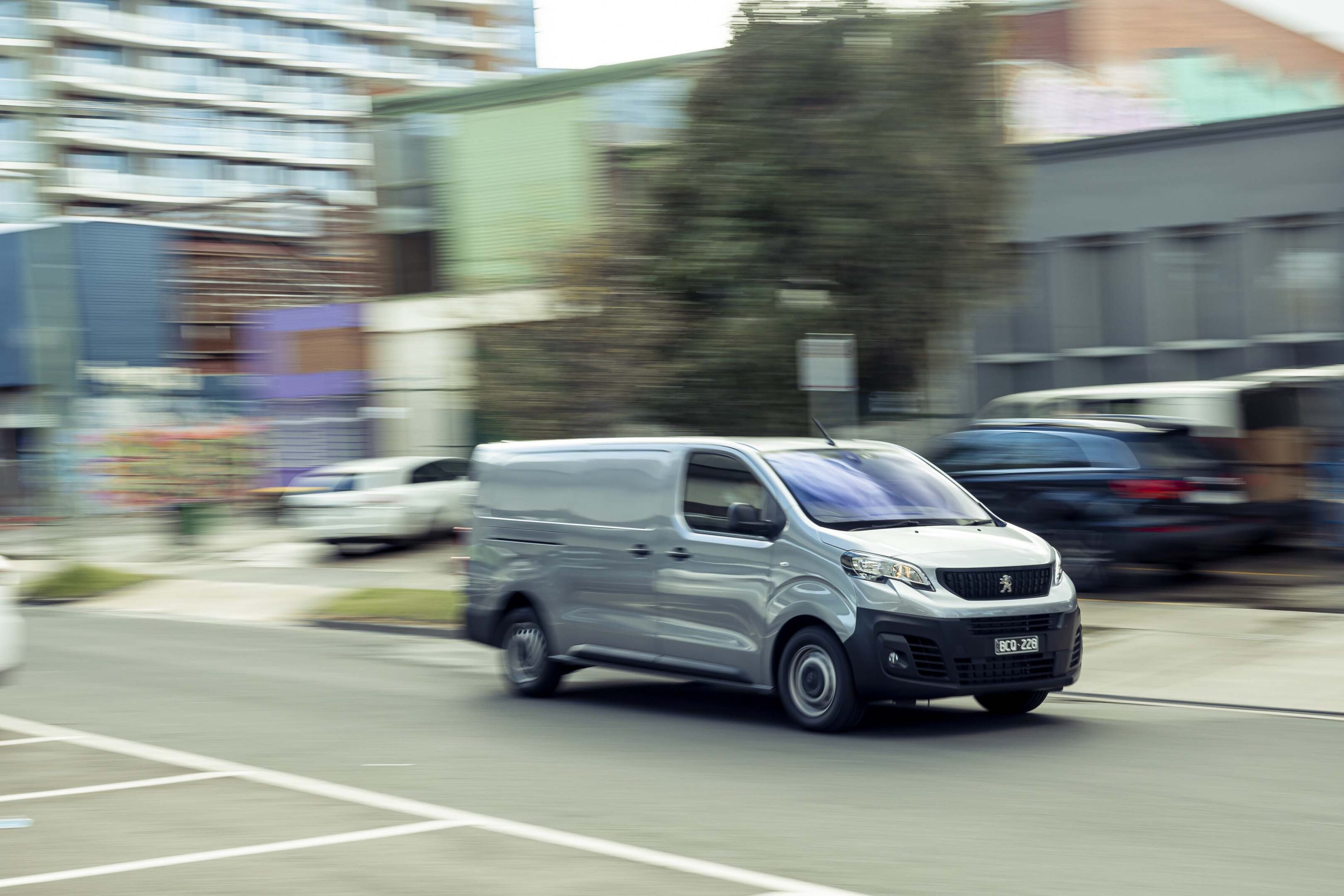
Producing its peak 370Nm at just 2000rpm, it actually feels like quite a sprightly thing when accelerating without a load onboard and gives a faint feeling of being lighter than its 1654kg unladen weight suggests. You can feel it working harder when carrying a full load, however, though it never feels strained.
The illusion of athleticism comes from the smooth powertrain and ease of pace, helped by the eight-speed automatic. It’s a well-calibrated unit that feels adept at keeping the diesel mill plugged into its happiest zone, and scarcely produces any harsh or hesitant gear changes.
With a quoted combined fuel consumption of 6.4L/100km, it’s a rather economical van, returning 7.4L/100km around town over our testing period. It’s worth noting that the Peugeot Expert does require AdBlue additive to help break down harmful nitrogen oxides within the exhaust catalytic converter.
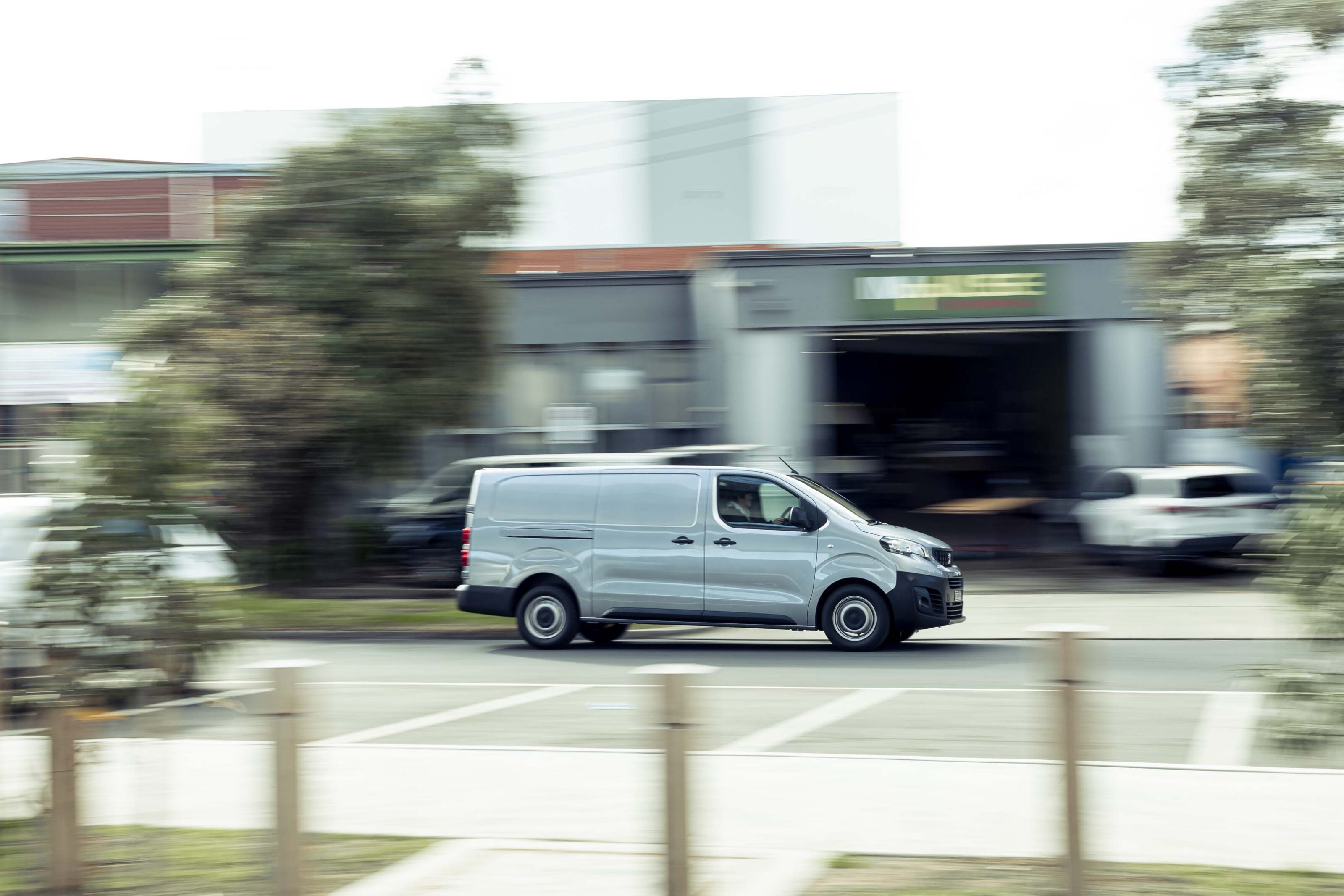
It even rides well, sharing its chassis architecture with the smaller Peugeot 3008 and 5008 SUVs. Whether loaded or unladen, the Expert covers suburban tarmac with impressive composure and body control. Dare I say, it feels rather SUV-like.
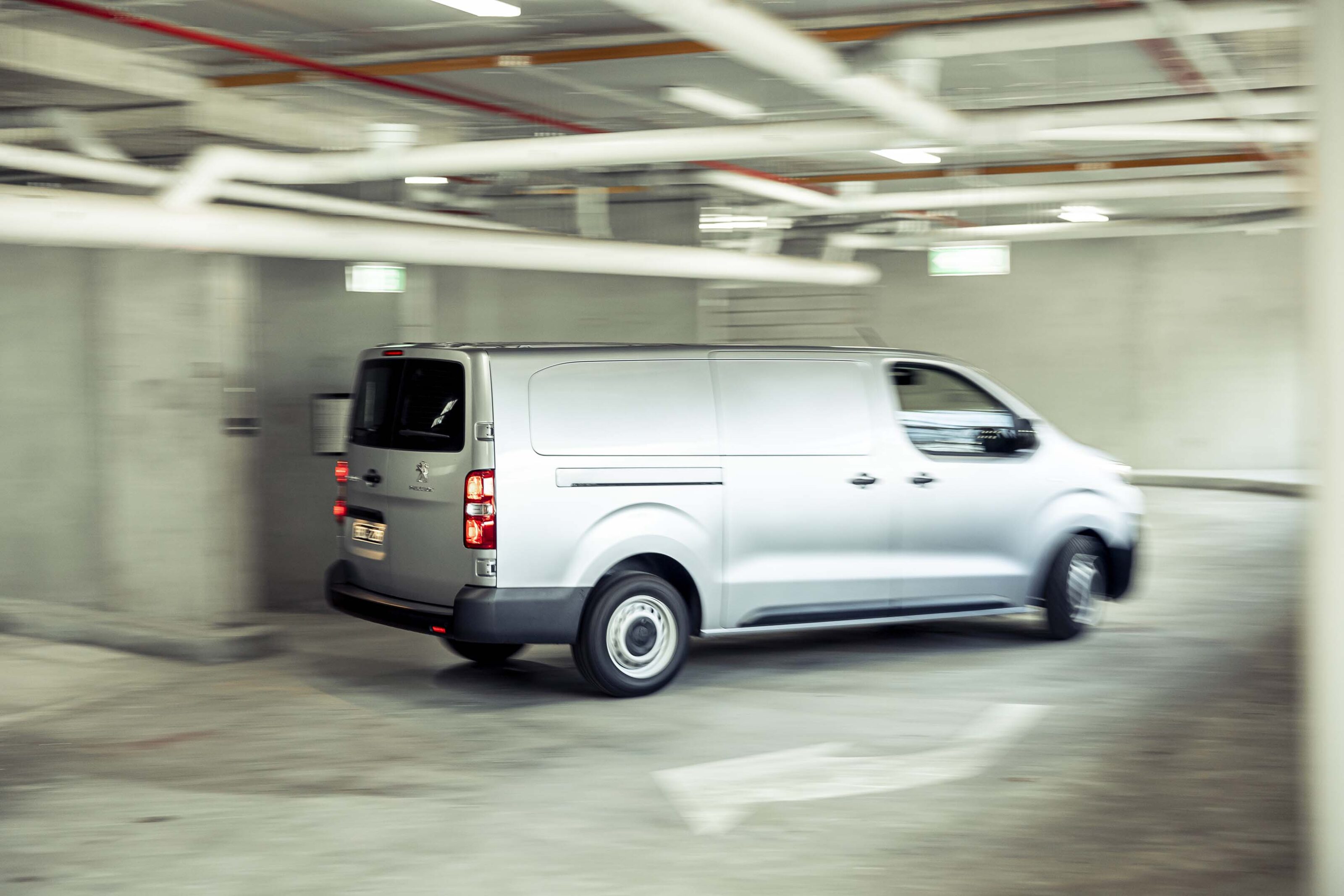
The steering is light, with little detectable variance in feedback as you increase and decrease lock throughout a corner. Its 12.4m turning circle is quite respectable for its size although, more often than not, its sizeable 5300m length will require some three-point manoeuvring in tight spaces.
With the driver located pretty far forward, plus the steering and propulsion all happening, at the front, it does feel like you’re dragging lots of length behind you.
However, the large side mirrors – with blind spot monitoring – help keep the rear end in check. Rearward visibility is impeded by the small aperture of the cargo bulkhead and the headrest of the centre seat though.
Ownership
While most new Peugeots come with a five-year, unlimited-kilometre warranty, the Expert van falls under Peugeot’s Light Commercial Vehicle arm and carries a five-year/200,000km warranty.
Buyers are also covered by a three-year paintwork warranty and a 12-year corrosion warranty.
Servicing occurs every 12 months or 15,000kms travelled, whichever occurs first.
On the safety front, the Peugeot Expert remains untested by both ANCAP and our Euro NCAP counterpart overseas.
It brings a solid mix of active safety to the van sector, with autonomous emergency braking, forward collision warning and front driver and passenger airbags.
It must be noted that this is half the number of airbags that the Expert originally launched with, as Peugeot opted to de-specify the side/thorax airbags from the Expert range in reaction to the semiconductor shortage back at the start of 2021.
VERDICT
Commercial vans fill a niche brief, but the Peugeot Expert brings polish and comfort to this usually utilitarian vehicle sector.
Small sales numbers don’t tell the full story, as the Peugeot Expert is a tremendously competent van. It rides with impressive composure, is smooth to drive and features welcome amounts of interior comfort and polish.
Mid-$40K pricing is comparable to other major players in this space, but the Expert presents well in its finish, drive and features.
In this particular spec, with the automatic transmission and extended cargo area, the Expert straddles a line between genuine commercial utility and true commuting poise.
It’s a worthy consideration for those after a load-lugging van.
2022 Peugeot Expert LWB specifications
This story was first published in December 2021
The best-selling vehicle in America, the Ford F-Series, is now available as an EV – and our Stateside friends are absolutely lapping it up.
But, as we’ll get to in a moment, Australia’s car companies aren’t even talking about electric utes yet, and likely won’t be for some time.
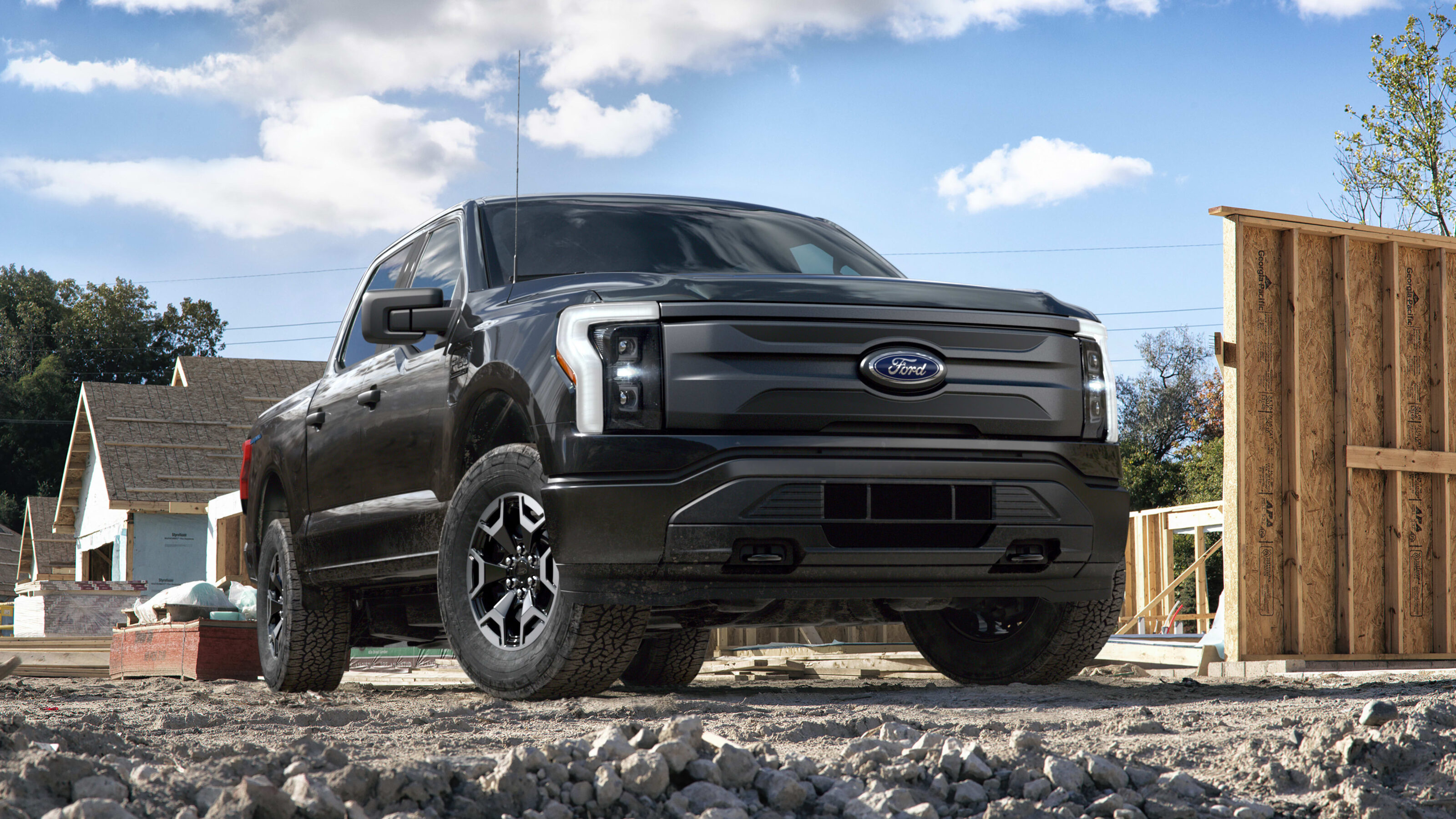
In the USA, in just one week, more than 70,000 orders were placed for the Ford F-150 Lightning, a vehicle at polar opposites to the gas-guzzling stereotype we might associate with this segment. For context, consider that Ford sold 203,797 F-Series trucks for the first three months of 2021, so Lightning needed only seven days to account for over one third of F-Series’ quarterly sales.
It’s a significant shift for the EV segment in the USA, which, up until Ford’s entry, has been dominated by Tesla, with the Chevrolet Bolt and Nissan’s Leaf picking up the scraps.
So what’s got America’s vast middle class so ready to embrace the Lightning?
For starters, affordability. The less-luxo version, called Pro, is priced just under US$40,000 (AU$53,915) before government incentives, which is a mere US$3300 (AU$4448) more than the equivalent entry-level, petrol-powered F-150. Yet the Pro features electric motors on each axle to develop 318kW and 1051Nm, and can travel up to a claimed 370km on a charge.
Opting for the larger Extended Range battery ups the price to US$49,974 (AU$64,200), but bumps outputs to 420kW and 1051Nm, cuts the 0-100km/h sprint time to under five seconds, and increases claimed driving range to 483km.
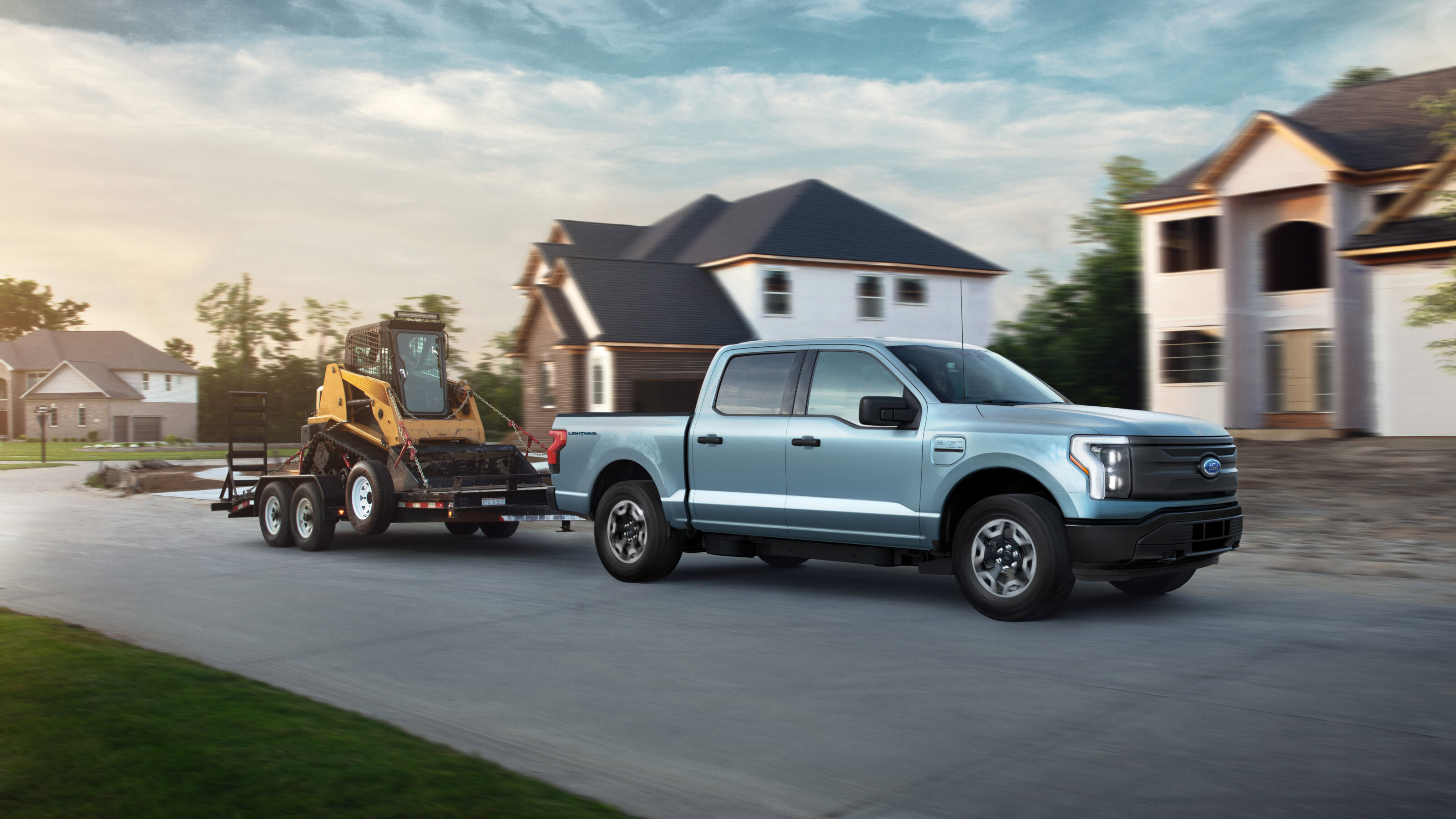
So could Aussie buyers follow America’s lead and embrace EV utes? Well, Lightning won’t be the vehicle to do it, as it’s not built in right-hand drive. But utes do make up around 20 per cent of Australia’s new-car market, so surely the potential exists.
Ask Ford, though, and the simple answer is: not for some time. Global CEO of the Blue Oval Jim Farley says since dual-cabs are so popular here, as are diesels, and Australia’s charging infrastructure is not mature – it’s hard to make a case for EVs.
“Infrastructure would have to improve in places like South Africa and Australia,” he told The Verge’s Decoder podcast. “I think it will take some time for those markets to move to full-electric.”
The Ford F-150 Lightning needed only seven days to account for over one third of F-Series’ quarterly sales.
Meanwhile, Ford Australia Product Communications Manager Ben Nightingale tells Wheels EV utes are coming, but they are years away.
“Globally, Ford is investing almost AU$39 billion in electrified vehicles through to 2025,” he says. “Electric vehicles are a big part of our future,” but the brand is “taking a considered approach to electrification” and will reveal more electrified model news “in due course.”
Wheels understands, though it’s unconfirmed, that even though the next Ranger will be engineered to be PHEV capable, Australia won’t have access to it as a hybrid from the get-go.
As for the other big Aussie players in the dual-cab segment, Toyota is revealing nothing about its HiLux plans, choosing not to comment when approached by Wheels.
Volkswagen, for which the Amarok ute is its second-best-selling model behind Golf, also told us there isn’t anything to discuss at this stage.
Will the success of the F-150 Lighting provide momentum for other brands to fast-track EV pick-up development? The benefits are obvious, from packaging (no engine allows for a huge lockable storage frunk in addition to the tray) to performance, with the Lighting confirmed to be quicker than the third-gen US-market Raptor.
Oh, and yes, electric vehicles can tow. Depending on the variant, Ford claims a maximum braked towing figure of 4536kg for the Lightning, and a maximum payload of 907kg.
But for now, it seems boutique upstarts like Bollinger and Rivian may deliver EV pick-ups in Oz before many of the major OEMs.
Will Ford make a PHEV Ranger ute?
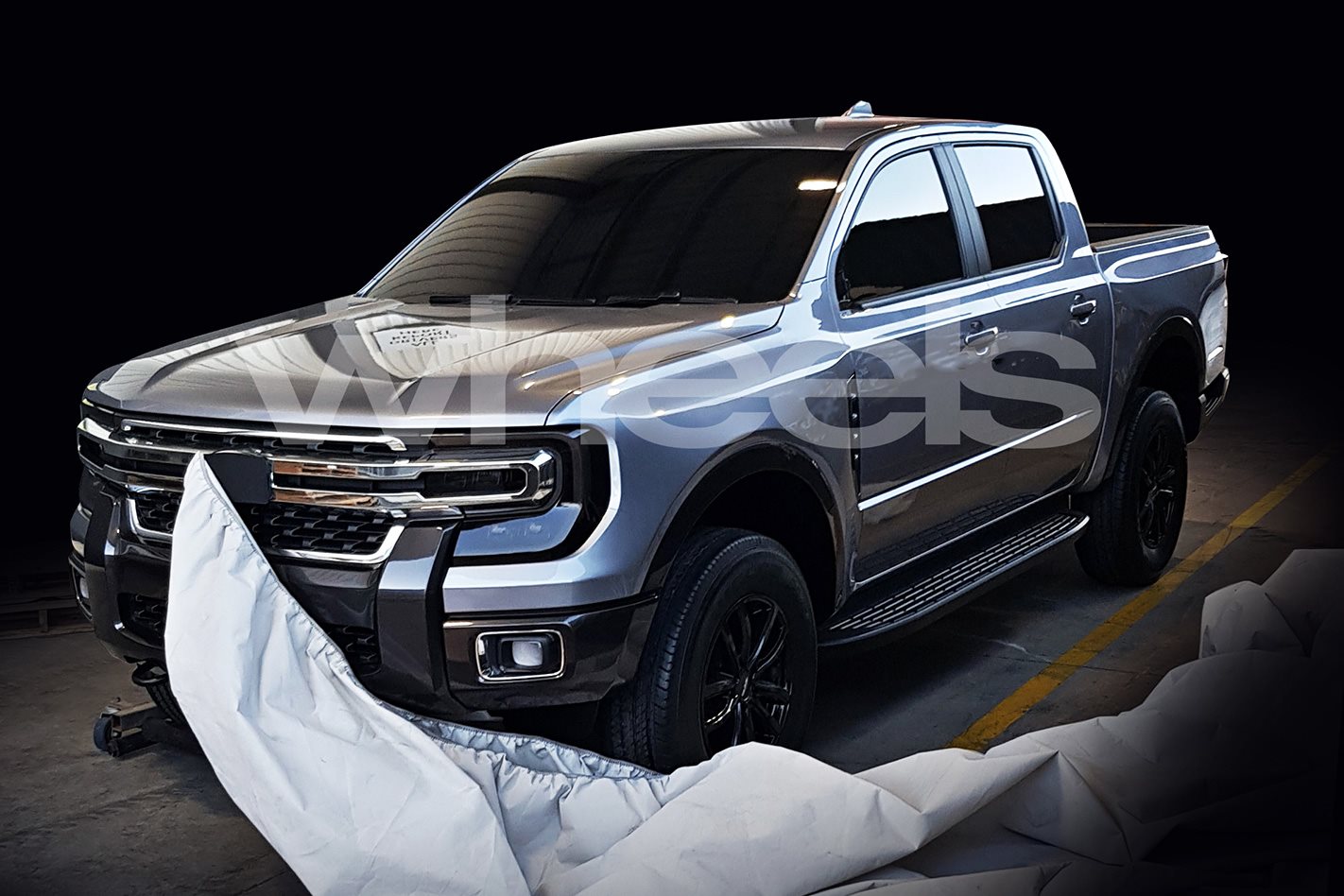
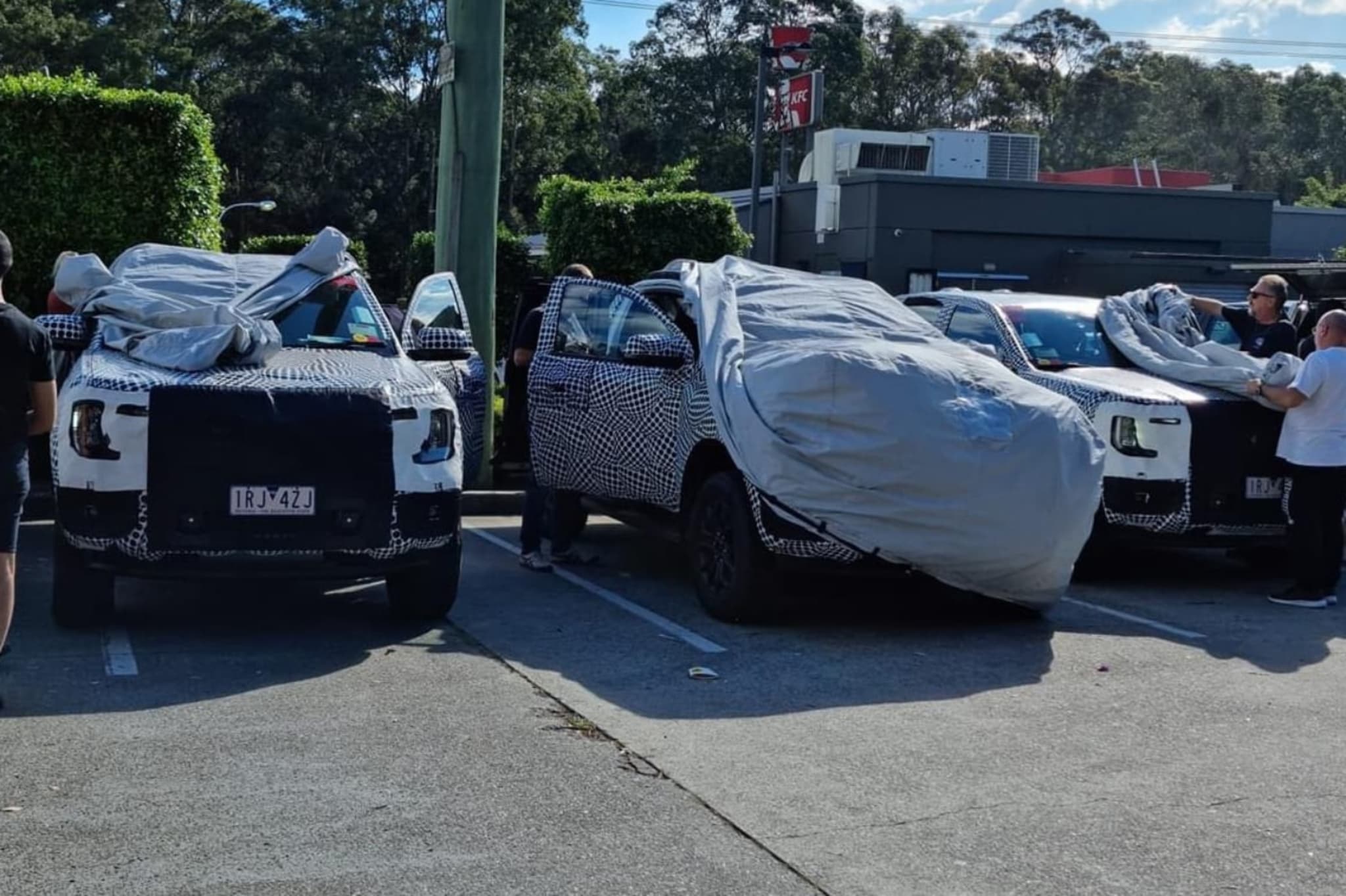
For 4×4 ute buyers with no inclination to switch to electric, the new 2022 Ford Ranger hears you loud and clear. By the end of the year, Ford Australia will confirm details of the next-gen dual-cab, which Wheels readers will have already seen via our exclusively leaked photographs.
But while we do know the next Ranger will be plug-in capable, Australia won’t likely see a piece of that action at launch.
Instead, with the five-cylinder diesel gone, a turbo-diesel V6 seems likely (probably a variant of the 3.0-litre Powerstroke unit offered in the F-150), as well as an updated version of the current 2.0-litre twin-turbo diesel.
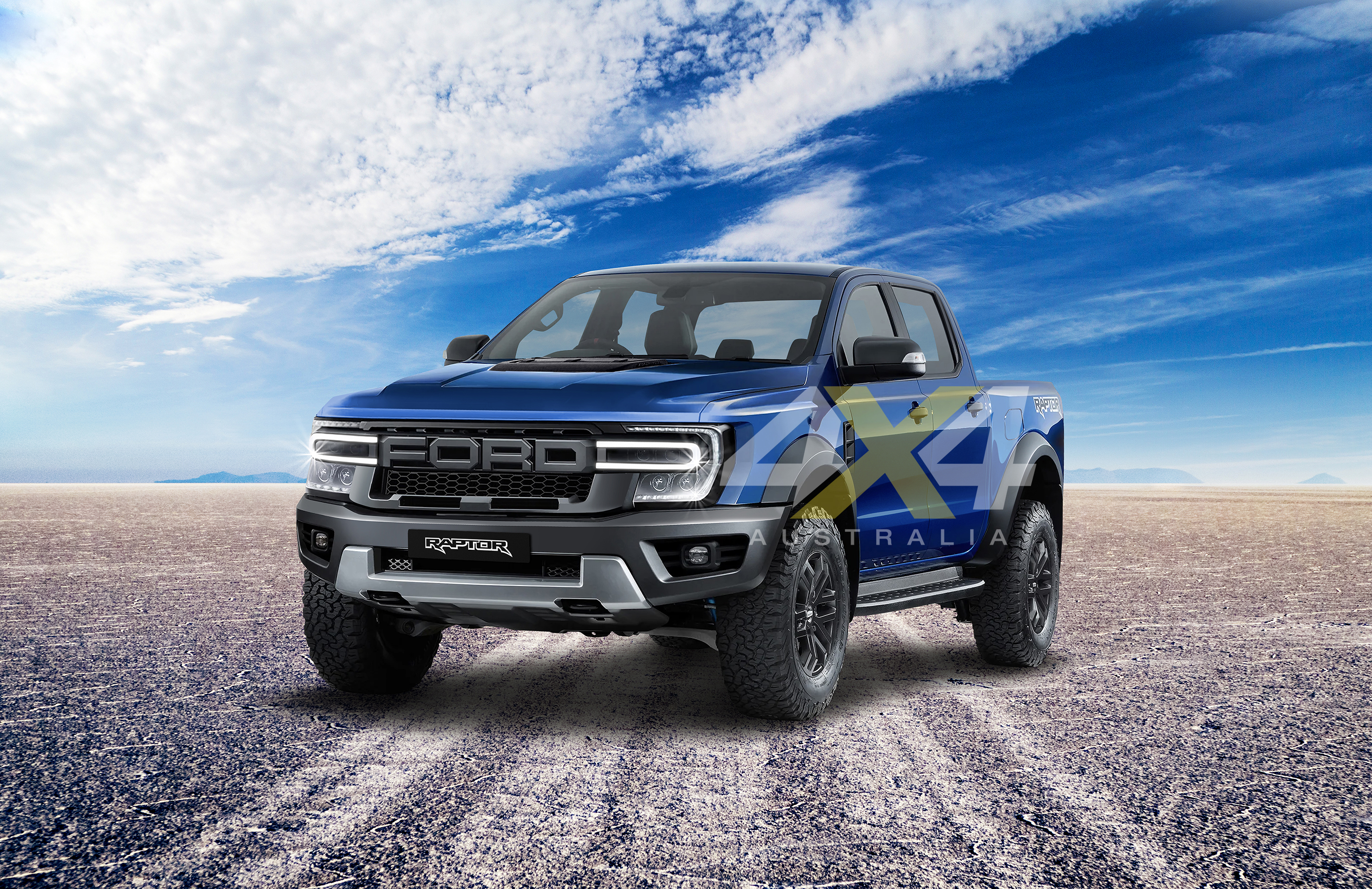
For the Ranger Raptor, there’s tipped to be a twin-turbo petrol V6, though we’re not expecting to see this until at least 2023.
The 2022 Ranger will be built on an evolution of the current T6 platform, with key alterations to allow for hybridisation and electrification, possibly with dimensional changes and revised rear suspension to improve traction and ride.
UPDATE: New 2023 Lexus RX driven
Following its global unveiling, we’ve now driven the new-generation Lexus RX. Get the full story at the link below.
The story to here
Snapshot
- Two hybrid options coming
- PHEV on the way
- No seven-seat for now
- RX 500h debuts F-Sport Performance and turbo/hybrid power
The new 2023 Lexus RX premium large SUV will arrive in Australia early next year with a choice of three key variants, consisting of a single turbocharged petrol version and a choice of two hybrids – a first for the model.
Missing from the all-new fifth-generation RX is the entry-level 300 as well as the most potent V6 versions of the previous range, however, Lexus has substituted the absentees with more powerful and efficient powertrains across the range.
The most accessible point of the line-up is now represented by the 350 with a choice of petrol-only RX 350 or RX 350h mild hybrid, while the halo of the range is a new RX 500h, which is offered only in a newly introduced F-Sport Performance grade.
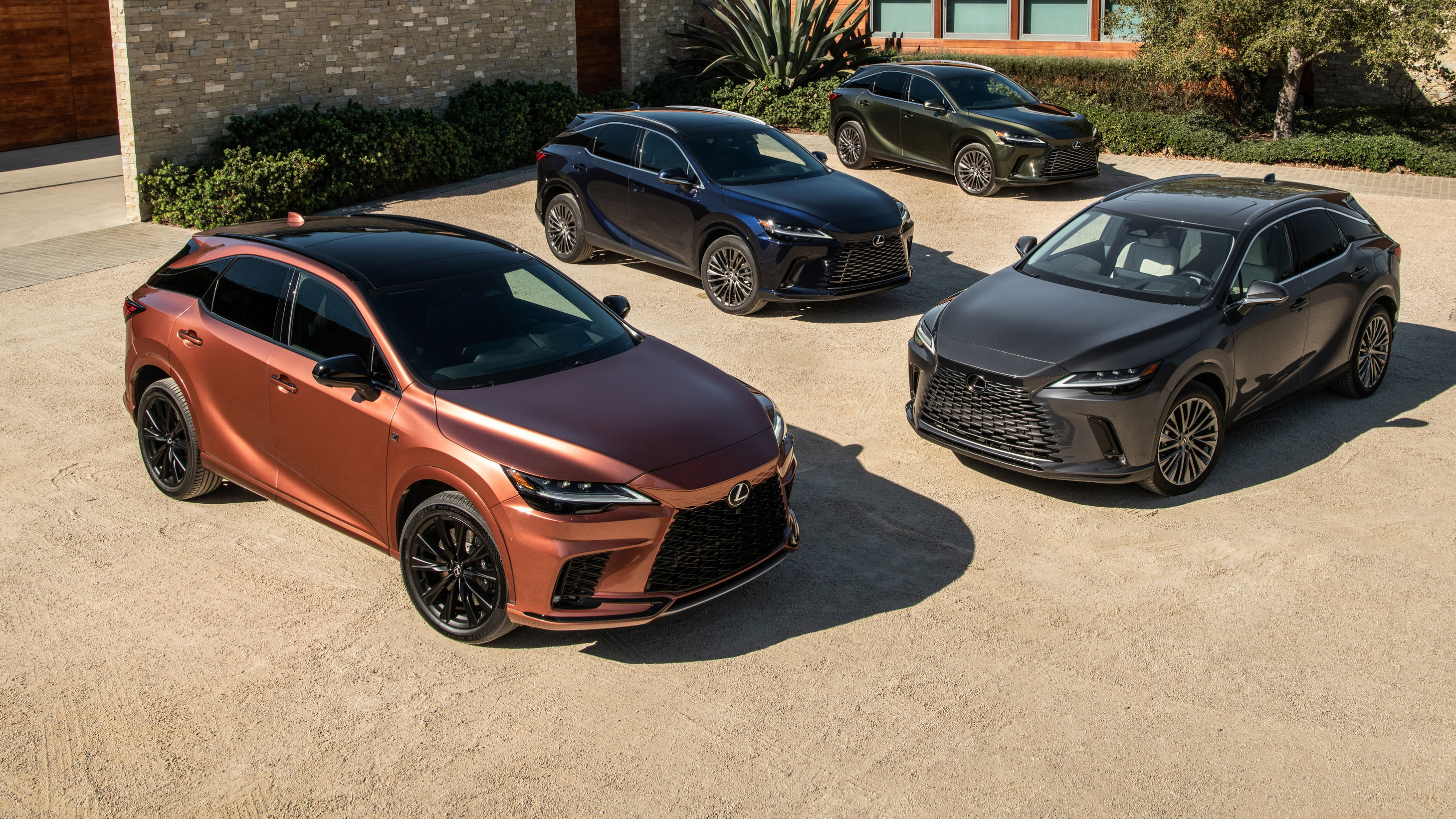
All 2023 Lexus RX versions will be available exclusively with all-wheel drive and automatic transmissions, except the RX 350h, which will be offered in a choice of AWD or front-wheel drive.
Exact timing for a fourth variant is yet to be confirmed, but Lexus will also introduce a plug-in hybrid (PHEV) to the range after the 2023 model’s arrival with the RX 450h – the first PHEV RX and only the second offered in the Australian Lexus line-up.
Watch this space for more details closer to the RX 450h’s arrival.
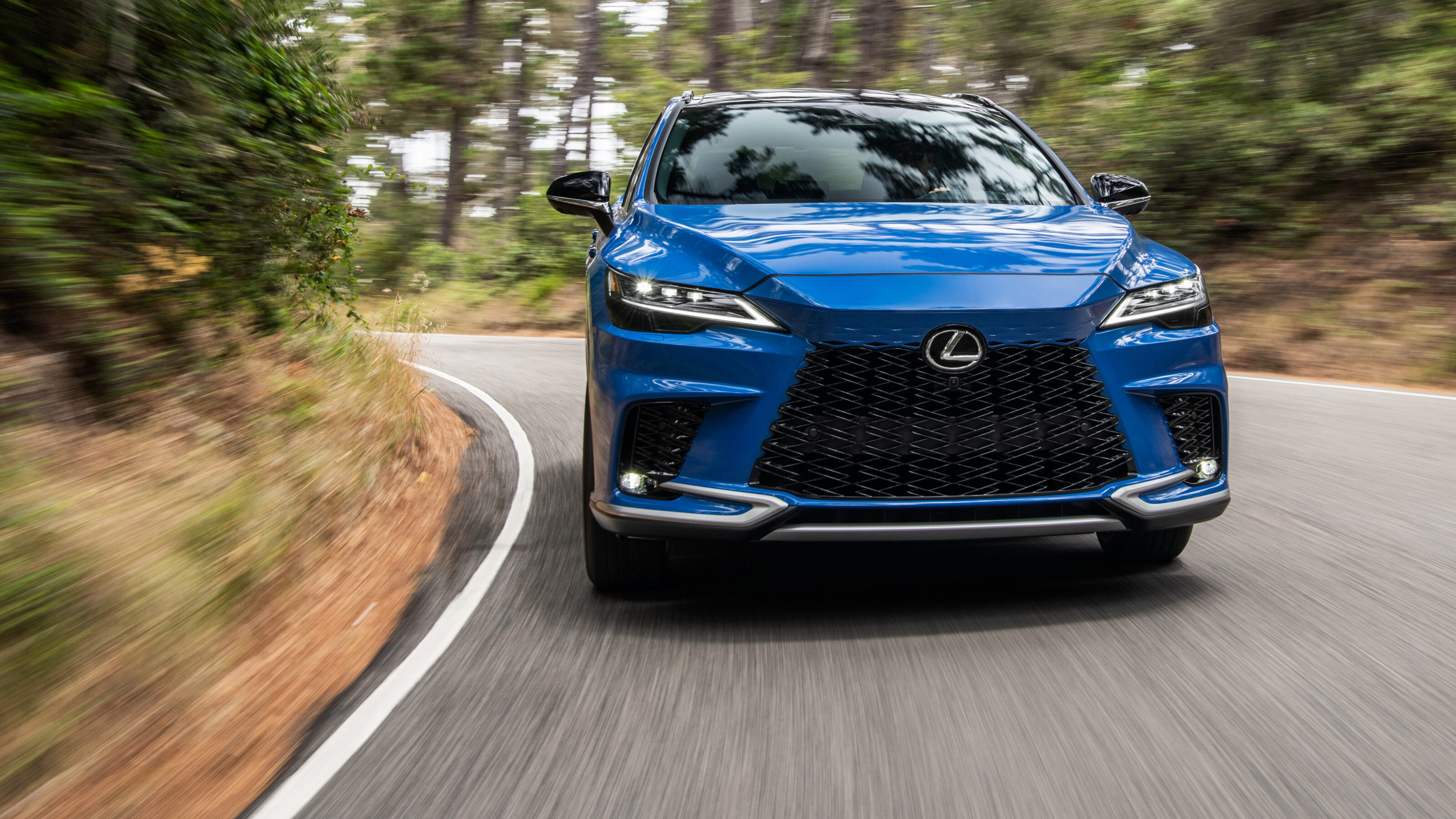
Lexus RX 500h
With 273kW and 551Nm, the new RX 500h is the most powerful petrol-electric hybrid yet offered by Lexus, necessitating the creation of the F-Sport Performance grade, and the variant introduces a host of new technology for the brand.
Firstly, with a 2.4-litre turbocharged petrol four-cylinder under its bonnet, the 500h is the first Lexus to combine hybrid electric with a forced-induction engine. Secondly, its eAxle rear electric motor is the largest yet used and is the first to be given its own controller – separate to the front axle electrics.

The decision to make the rear motor independent of the front allows greater versatility of its Direct4 all-wheel drive transmission. Under hard acceleration, the rear motor can apply exactly the right amount of torque to prevent the tail squatting, while under hard braking, strong regenerative braking prevents excessive nose dive.
Finally, the independent rear motor also allows more precise distribution of power and torque from front to rear, improving traction on all surfaces including wet roads or unsealed trails.
Unlike previous Lexus all-wheel drive systems, which had a single motor on the rear axle and a pair at the front, the 500h has just one motor up-front to allow space for the extra ancillaries such as turbo plumbing and intercooler – but it too has been beefed up to earn its F-Sport Performance badge.

Lexus claims the new flagship of the range will crack the 0-100km/h benchmark in 5.9 seconds, which is significantly faster than either the previous petrol-only V6 350 or hybrid V6 450h but, despite its higher performance, torque and power, uses less fuel.
A direct comparison is not possible however. Lexus claimed the previous V6 hybrids managed as much as 5.7L/100km but new more realistic WLTP testing positions the 500h fuel consumption at about 8.2L/100km.
The F-Sport Performance also gets enhanced braking and handling as part of the package with adaptive dampers, rear-wheel steering, 400mm brake rotors and six-piston calipers at the front, and 21-inch wheels included in the price.
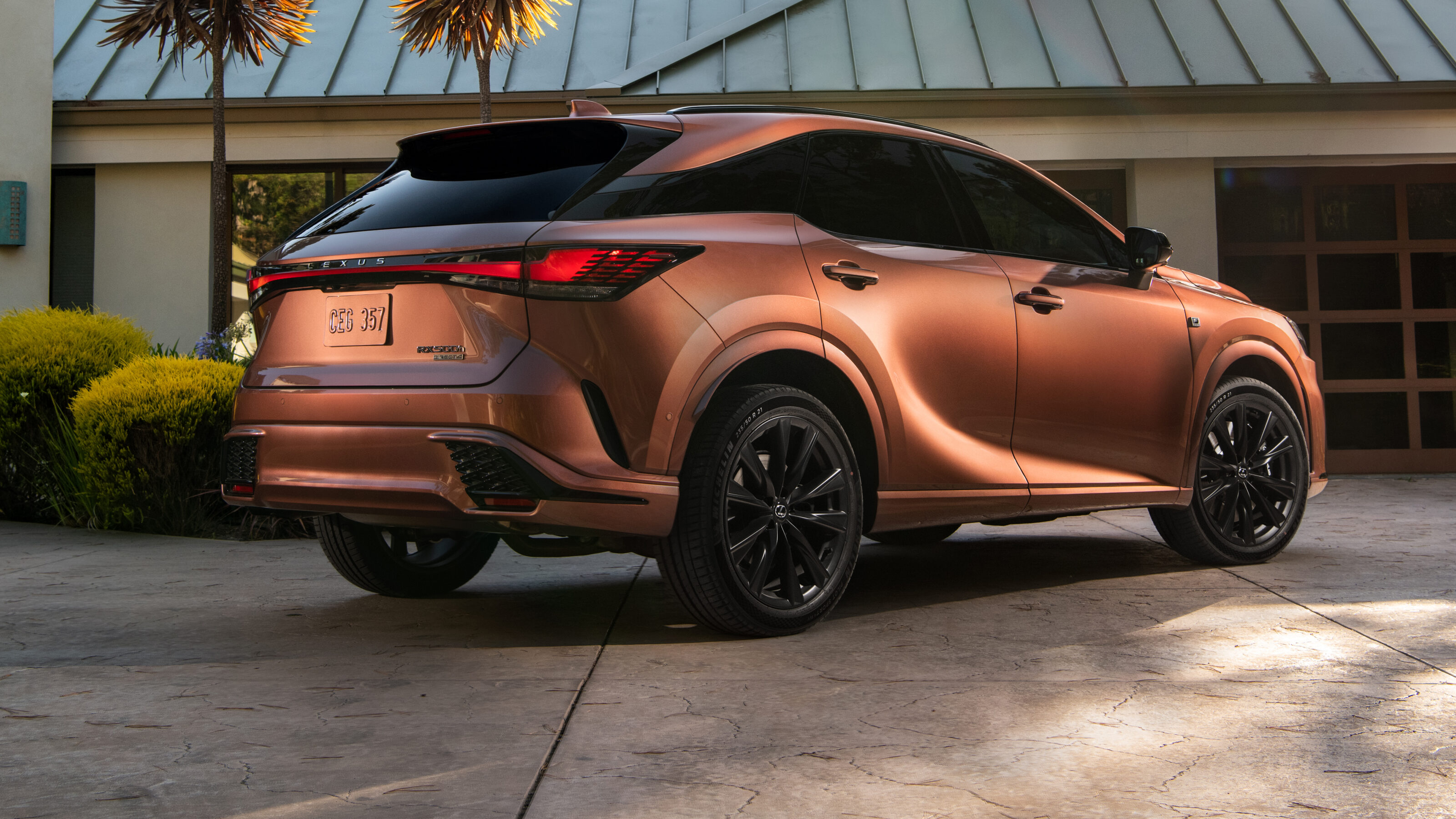
Lexus RX 350
Beneath it in the range, the RX 350 uses the same 2.4-litre turbocharged four-cylinder petrol minus the electrified elements. It is also all-wheel drive but sends power to the rear wheels through a more conventional driveshaft and differential.
It produces peak power and torque of 205kW and 430Nm, can get to 100km/h from standstill in 7.2s and uses about 8.8L/100km.

Lexus RX 350h
Rounding out the range is the RX 350h which pairs a 2.5-litre naturally aspirated four-cylinder petrol to the company’s more traditional twin-motor front axle with continuously variable transmission and a single motor on the rear axle in the case of the AWD version.
Its maximum system output is 180kW and 316Nm – enough to do the 0-100km/h dash in 7.4s – while Lexus claims a combined fuel consumption of between 6.4L/100km and 6.7L/100km is possible.
Beyond confirmation that the 500h will only be available in exclusive new F-Sport Performance grade, Lexus is not detailing the specification level of the other variants at this stage – although it’s expected that the Luxury, F-Sport and Sport Luxury options of the previous range will continue and feature throughout.
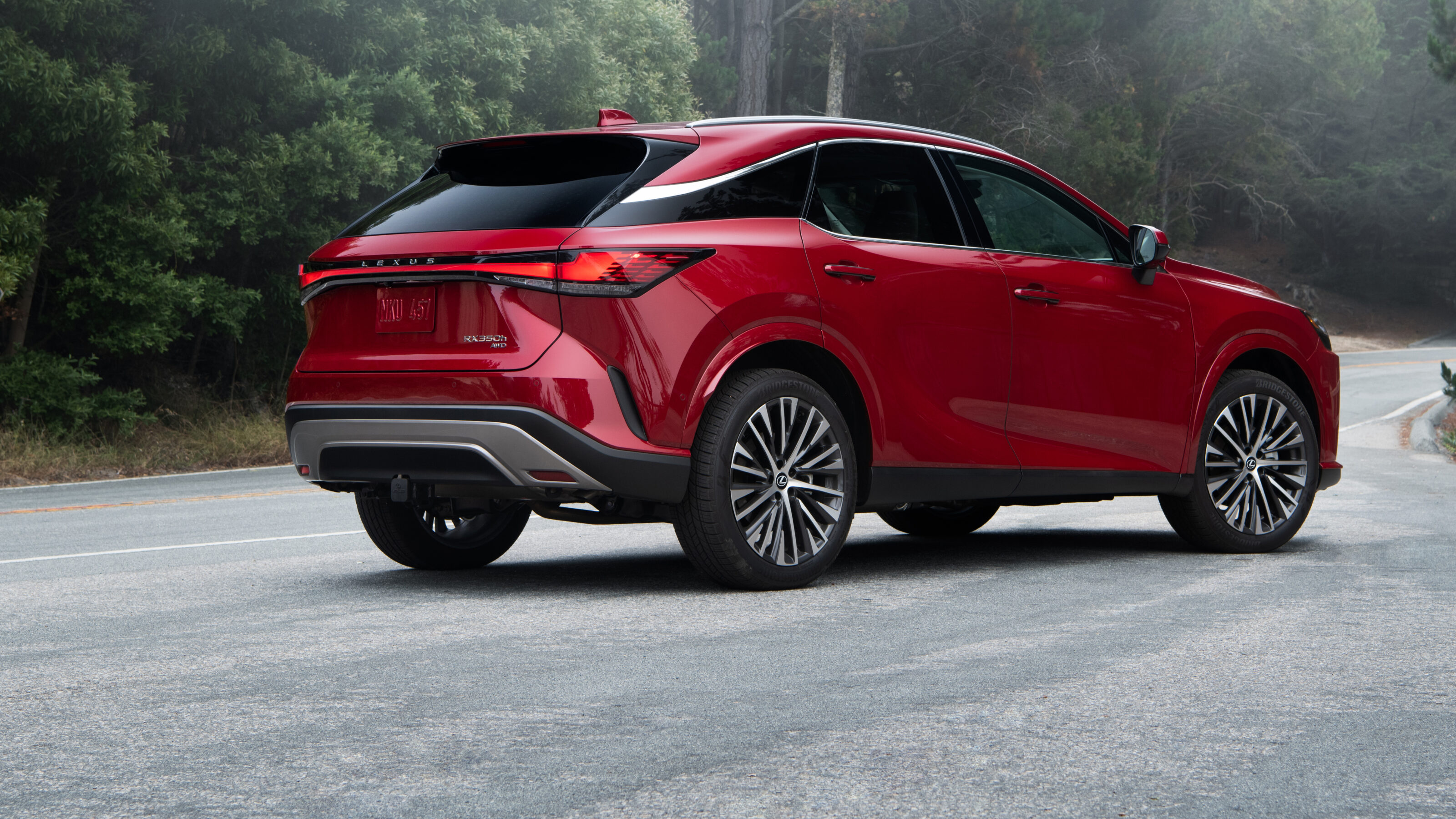
Transmissions: CVT and torque converters
As for transmissions, the 350h continues on with Lexus’s unique continuously variable transmission, while the range-topping 500h hybrid and 350 are offered with a torque-converter automatic transmission with paddle shifters.
In the case of the 500h, it gets six speeds while the 350h has eight.
Architecture and dimensions
Regardless of the variant, all versions of the fifth-gen RX now roll on the new GA-K platform (the same as Toyota’s TNGA-K) bringing numerous significant changes.
With the switch to the more advanced architecture, the RX has lost between 40kg and 90kg depending on the variant and while, its overall length and height of 4890mm and 1695mm are unchanged, it is 25mm wider and has a 60mm longer wheelbase.
The dimensional changes, including a 45mm wider rear track, have increased dynamic stability and interior space, while lending a more purposeful stance to the RX’s posture, says Lexus.
Rear storage space is not impacted by choosing a hybrid RX, with all 2023 Lexus RX versions offering the same 1091-litre boot volume, and all offer space for five adults.
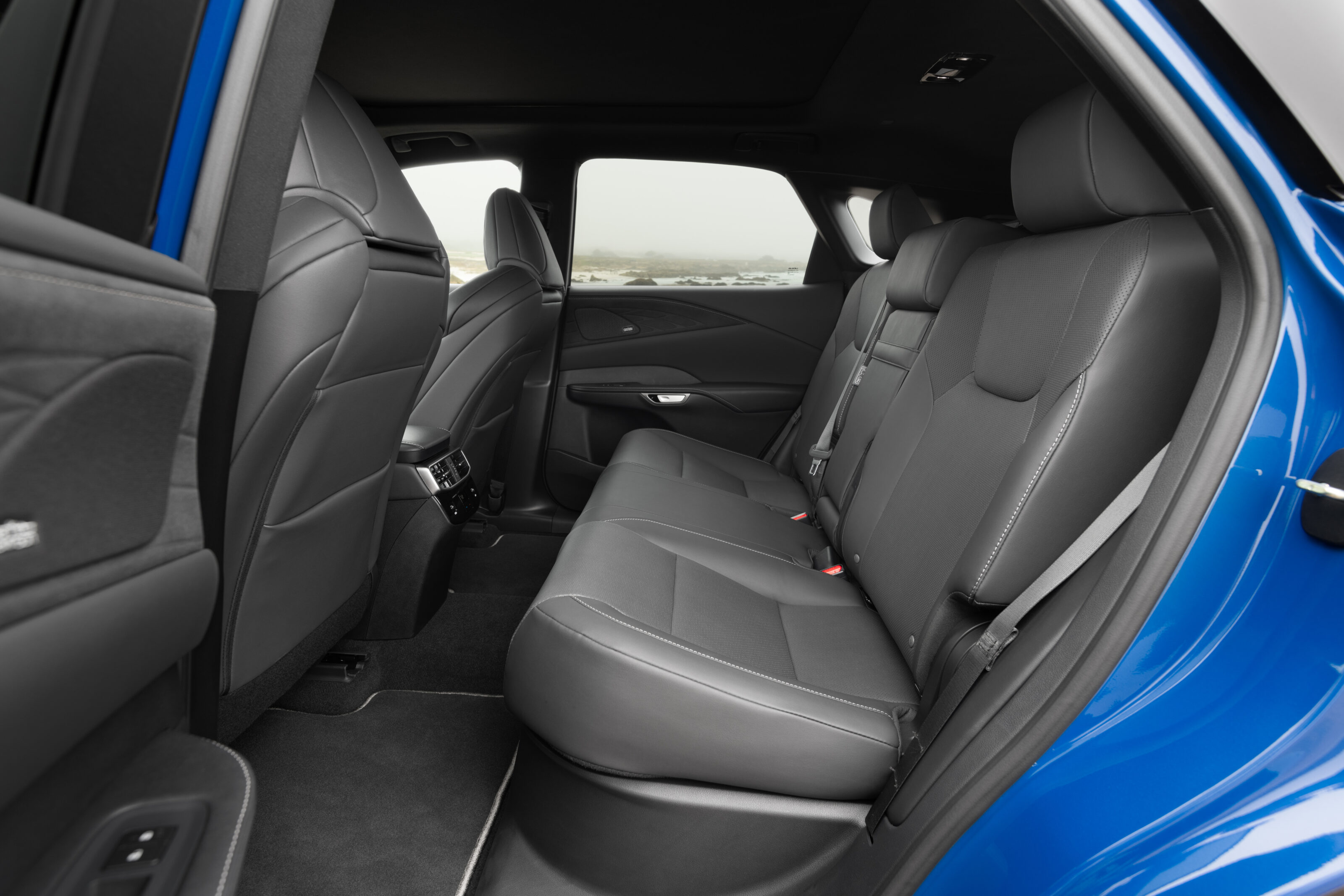
2023 Lexus RX: The basics
| 2023 Lexus RX Australian models | Powertrain | Outputs | Transmission | Fuel | 0-100km/h | Boot space |
|---|---|---|---|---|---|---|
| 2023 Lexus RX 500h | 2.4 turbo petrol + electric motors front / rear | 273kW / 551Nm | 6-speed auto | 8.2L/100km | 5.9 sec | 1091 litres |
| 2023 Lexus RX 350 | 2.4 turbo petrol | 205kW / 430Nm | 8-speed auto | 8.8L/100km | 7.2 sec | |
| 2023 Lexus RX 350h | 2.5 non-turbo petrol + twin electric front motors | 180kW / 316Nm | CVT auto | 6.4L/100km | 7.4 sec |

With the introduction of the fifth-generation RX, a seven-seater is not being offered.
Technology
Inside, the RX is equipped with a 9.8-inch touchscreen as standard, while higher-grade versions get a 14-inch screen, although both display sizes offer the same features. Wireless Android Auto and Apple Carplay is supported along with wireless and USB-C cable charging.
The driver’s instruments are also digital, supplemented by a colour head-up display, while electric front seat adjustment, heating and ventilation is expected to be standard across the range.

Lexus Australia chief executive John Papas said the fifth-generation RX would continue to offer the luxury and value that Australians had come to expect, while bringing new levels of refinement to the model.
“RX is synonymous with Lexus in Australia. It has helped forge the Lexus brand here, pioneering the luxury SUV concept and winning customers with its refined luxury and thoughtful design.
“The all-new RX builds on the model’s long-standing qualities but now encapsulates it in a thoroughly modern and more sporting package that still delivers high on comfort and elegance.
“The Lexus human-centred ‘Tazuna’ concept builds the interior around the occupants with considered design touches to enhance the experience for driver and passengers alike. The RX is not only a great car to drive, but a great car to ride in.”
2023 Lexus RX pricing for Australia still to come
Pricing is also not being discussed at this stage, but given the significant addition of technology, the general cost of the new model is expected to rise over the existing line-up, which starts at $73,136 and tops out at $112,460.
