
Snapshot
- Kia Connect free for seven years
- EV6 will wait until facelift
- Retrofit jobs not an option
After years of being denied access to the ‘Uvo’ online connectivity system offered to customers in other markets, Kia Australia is finally on a level footing with the launch of its new Kia Connect system.
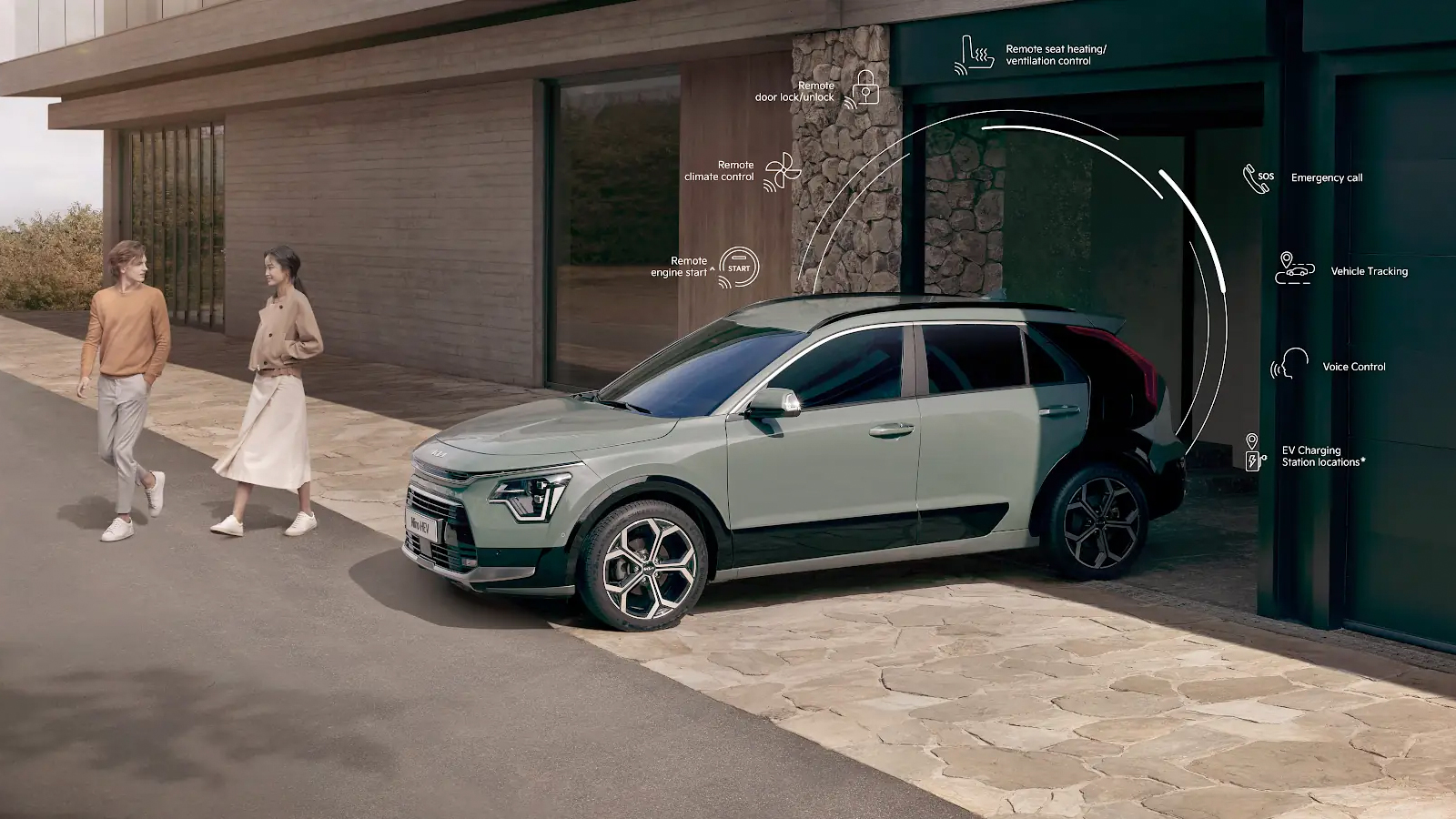
Launching with the new-generation 2023 Kia Niro electric and hybrid SUV range, Kia Connect adds an extensive suite of in-car and remote phone-based features and free connectivity for buyers.
Kia Connect features
| EV Charging locations | Remote Climate control | Remote lock |
|---|---|---|
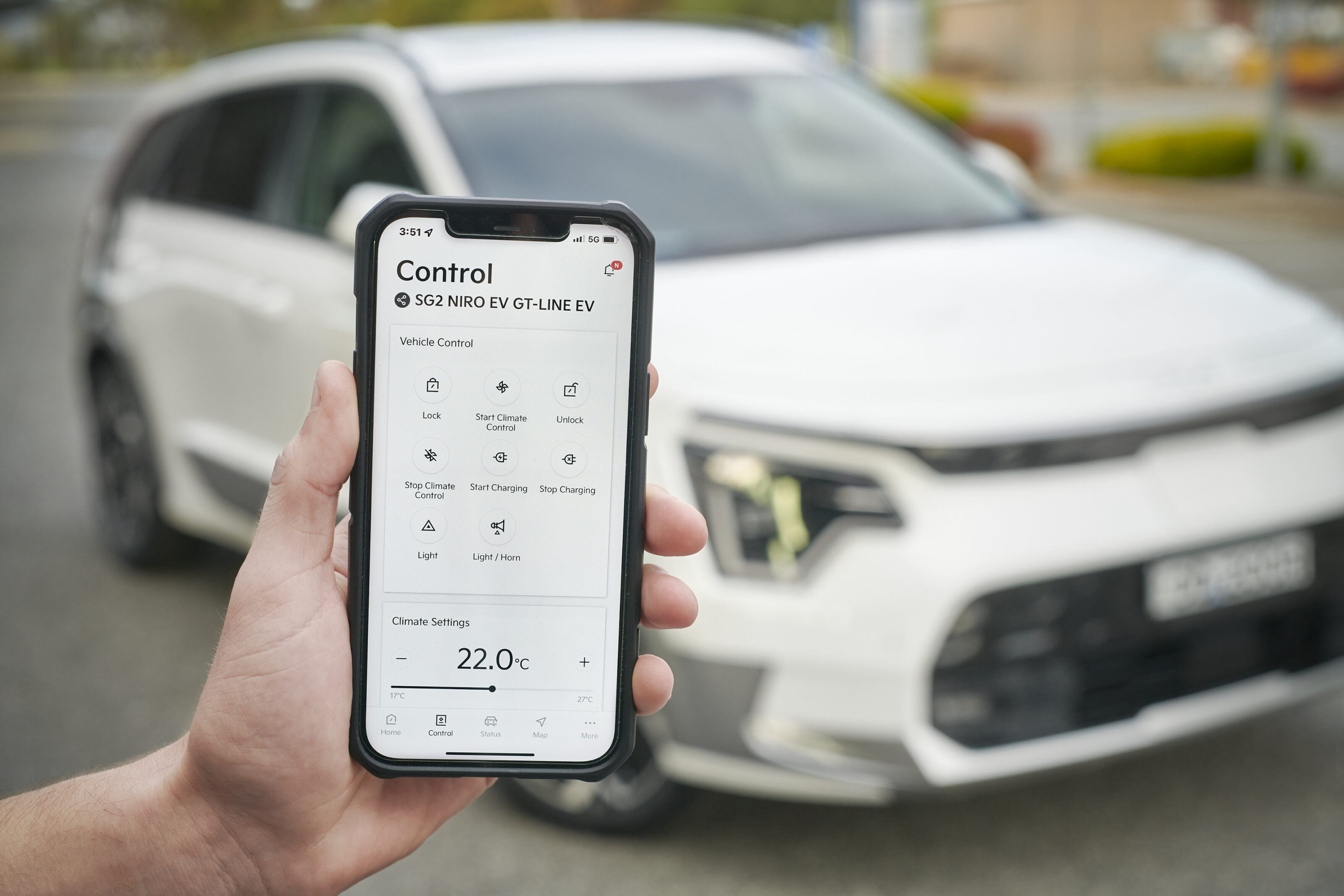
| View nearby locations of charging stations for EVs as well as other details such as plug availability and compatible connector types. | Through the Kia Connect App, you can remotely activate, set and schedule climate control before you get in the car, so it’s just right when you get in. | Never again leave your car unlocked u2013 or yourself locked out of your car. With the Kia Connect App, you can remotely lock and unlock your Kia from anywhere with a simple tap. |
| Destination Send to Vehicle | Vehicle tracking | Vehicle status |
|---|---|---|
| This feature allows the Kia Connect App user to send an address directly from the app to the vehicle navigation system, which is ideal for notifying you when you are ready to depart in due course. | Always know where your car is parked, even if you didnu2019t park it yourself. And if you need, the Kia Connect App can walk you to it using augmented reality guidance. | Vehicle status offers a comprehensive report on your car including whether the doors/boot/bonnet are open or closed, fuel or battery charge and other vital diagnostic information before you start your journey. |
| Valet parking mode | Local POI search | Emergency call |
|---|---|---|
| Activate this mode before handing it over to someone and it will let you monitor the vehicleu2019s location, driving time, distance and top speed using the Kia Connect App. With Geo-fence alerts it will even alert you when the vehicle strays outside of pre-set limits of geographical areas. | Local area search combined with Weather Forecast and Points Of Interest which cover not only information of the local area, but also enroute and the destination. | In case of an accident where the airbag is deployed, this feature will automatically contact the Kia Connect 24/7 call centre for your safety. The dedicated SOS button allows you to call the centre yourself if necessary. |
The system, which offers a persistent mobile data connection through the Optus 4G network, is offered completely free to buyers for seven years – in line with the company’s existing seven-year warranty, roadside assistance and capped-price servicing program.
Kia Australia isn’t saying what sort of data costs it’s swallowing in not charging for the Connect service, but concedes it will likely announce a subscription price at some point – probably before the first Australian-delivered 2023 Niro vehicles reach their seven-year anniversary.
”There’s an ongoing cost to Kia, but covering it free for users is a decision we made when we developed the product plan,” Kia Australia’s chief operating officer Damien Meredith told media at the recent Kia Niro launch event.
What happens after that initial complimentary period? Kia Australia product planning boss Roland Rivero chipped in: “We’ve got seven years to figure that out!”
Which cars will get Kia Connect?
The timing of Kia Connect’s local debut could be considered awkward, with buyers of the most expensive model Kia has ever offered in Australia – the flagship EV6 electric vehicle – missing out on the feature by mere months, despite already being available overseas.
Speaking with Wheels Media at the Niro event, Rivero confirmed the localisation timeline for making Kia Connect available in the EV6 just didn’t line up in time for its early 2022 launch.
“We started the Kia Connect project around 12 to 18 months ago, and it takes that long,” Rivero said.
It’s worth noting that while the EV6 went on sale in Australia in February this year, production for those first deliveries would have occurred sometime in 2021.
So, when will Kia Connect appear in the EV6?
Rivero said buyers can expect to see it become available at facelift time, which Kia calls ‘PE’ for Product Enhancement. Based on its launch timing and the usual five-to-six-year lifetime of most Kia models, that should be around 2024 or 2025.
That will be the case for all Kia models going forward, too. The next model to launch with Kia Connect will be the facelifted Seltos SUV, due in Australia later this year.
Can I retrofit Kia Connect into my existing Kia?
Owners of existing Kia models hoping for a retrofit upgrade to Kia Connect –similar to Mazda offering an Apple CarPlay and Android Auto upgrade to owners of compatible models – will miss out, Rivero confirmed.
Where the Mazda initiative allowed owners to upgrade their display hardware and wiring at a cost of $500, upgrading an existing Kia model to accommodate Kia Connect would be a lot more work – including not only the addition of a new display and processor, but also mobile data connectivity hardware, a new switch panel for the additional buttons, and wiring and chips to connect it all.
“There’s no retro-fitting option, Kia Connect will only be offered in all-new and facelift models. It’s simply too big a hardware upgrade to manage as a retrofittable option in existing vehicles,” Rivero said.
Australian buyers of new and facelifted models can at least be assured that our market’s version of Kia Connect is a full-featured suite that rivals – and in some cases outdoes – what is offered for Kia models in other markets.
“Some markets don’t tick all the boxes – some aren’t going to offer it for seven years free, and some might decide ‘immobilisation is something our market won’t implement’. So in terms of features, we’re very much aligned with the rest of the world.”
Rivero added that more features are coming in later updates: “This is only phase one,” he said.
“The second phase adds over-the-air updates, so that’s going to make the customer experience even more convenient – where a sat-nav map can be updated at any time from home, or they could purchase upgrades through the system, that sort of thing.”
While most Kia Connect features will likely be considered welcome by most buyers, the ability to purchase upgrades through the Kia Connect system could be a portent of the sort of downloadable software and built-in hardware features that can already be enabled – ‘unlocked’ at an additional cost – in models from Tesla, BMW and Mercedes-Benz.
The head of Cupra has said Australia “needs to speed up” its electric vehicle strategy and if does, the market could look drastically different in just two to three years.
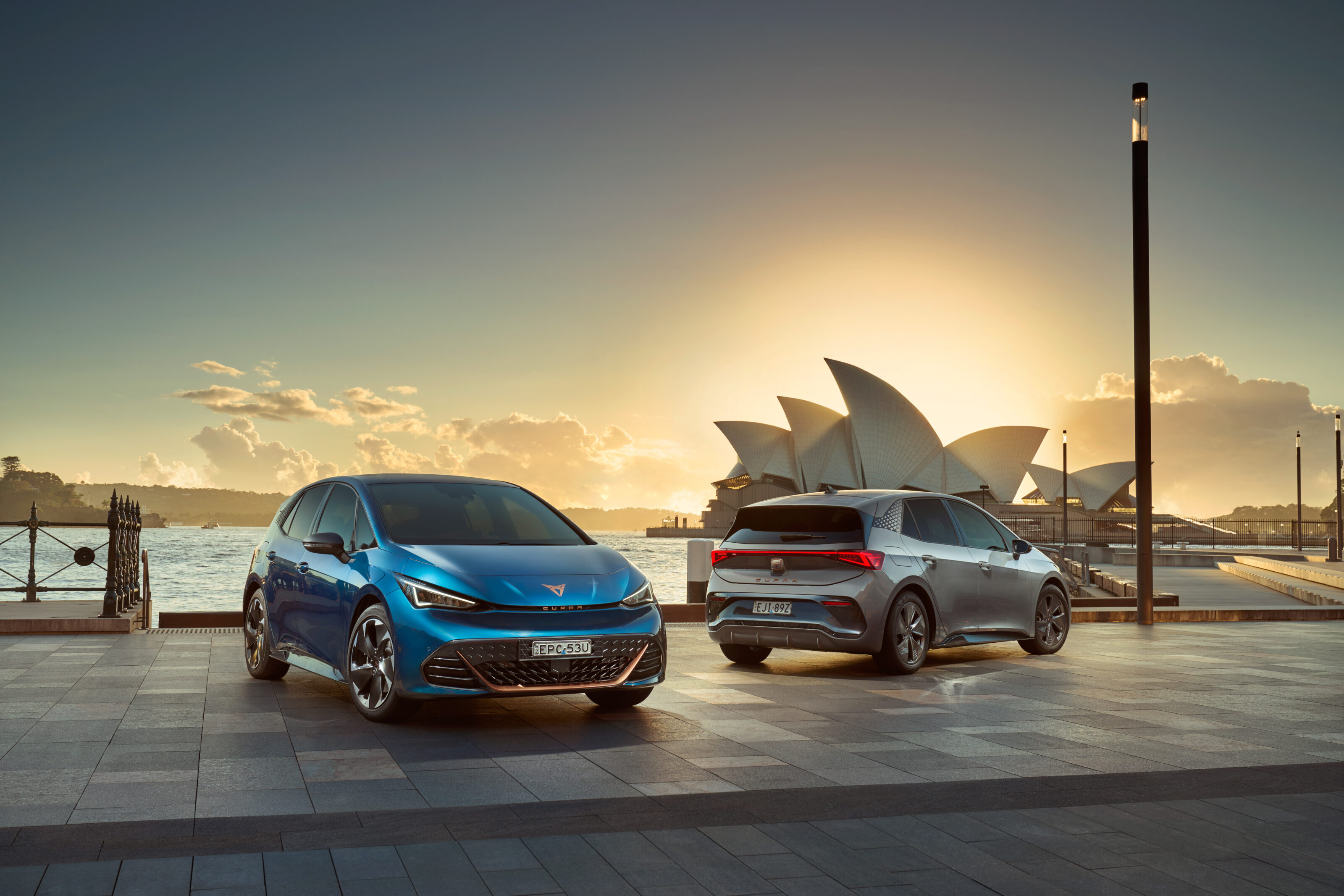
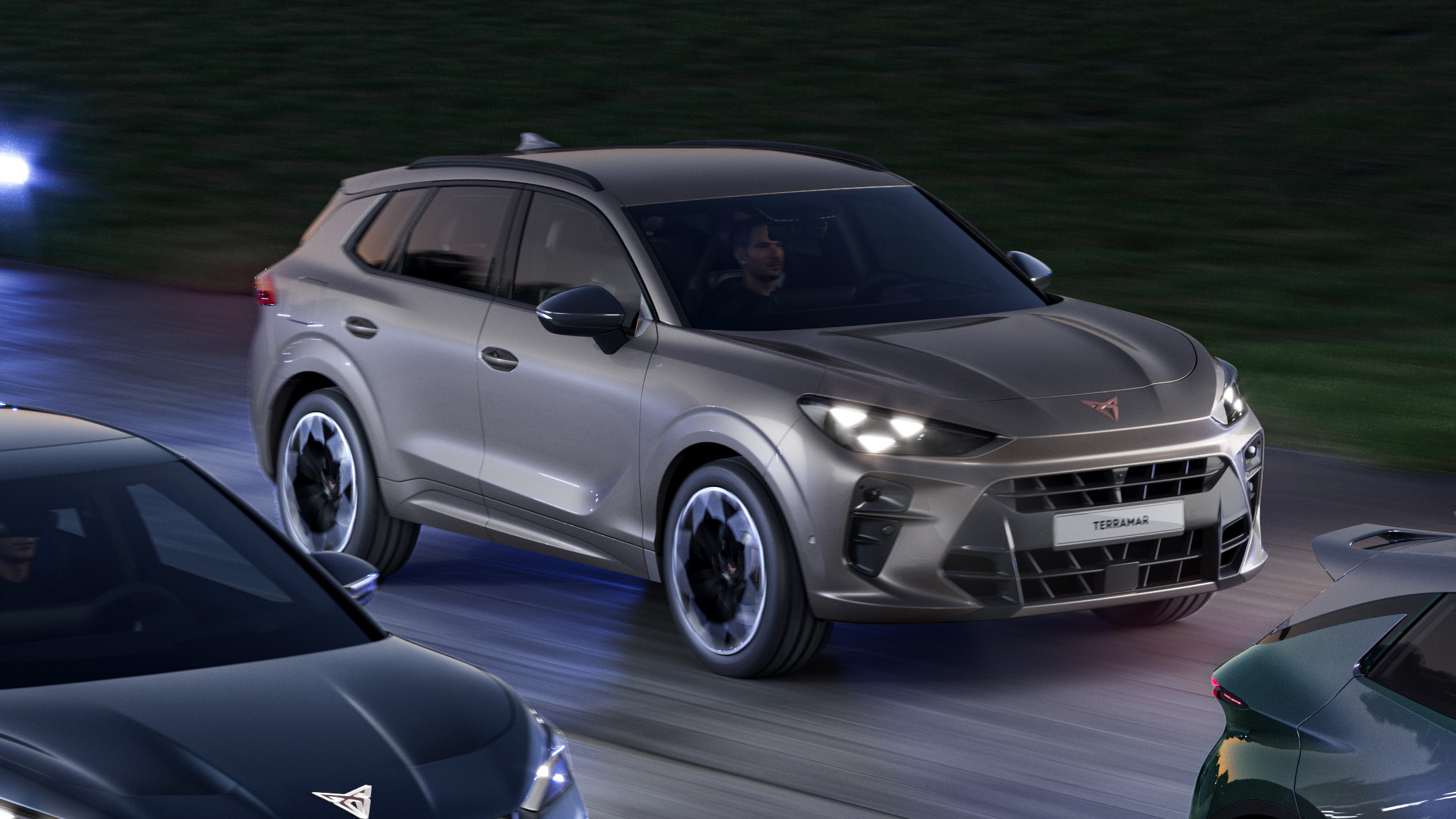
Cupra has confirmed its Terramar plug-in hybrid SUV, as well as Tavascan and Urban Rebel ultra-compact EVs will come to Australia – as the brand targets 7000 sales by 2025.
“I think the question will be how has Australia evolved as an electrified market by 2025? And I hope by then it has evolved starting from scratch, but I think it needs to speed up because it is the only way to reduce emissions – and cars are one of the bigger cause of emissions,” CEO Waynne Griffiths told Wheels at the Spanish performance brand’s local launch this week.

“There will be a change probably in the policy, you have a new government that hopefully puts that as a priority. And if the Government puts the actions in place it can happen very fast within a period of two or three years, you can see the share of the electric market go from nothing to 20 per cent.
“See what happened in Europe, they all started at nothing and then within a period of two or three years, by putting in an incentive plan and a support plan for infrastructure you can get the market grow.
“I think, an EV policy with a clear message to the consumers that it’s the right thing to do [is crucial]. The customers need that, because, without that, there’s a lot of let’s wait and see, whether this is just a passing thing or do they really work? How long do the batteries last? Where can you charge them? They’re too expensive.
“So all these rumours and stories around EV tend to disappear in the moment where governments make clear EV policies to support the sales of electric vehicles and to support the roll out of the charging infrastructure.“As well, customers want to know they’re doing something smart, but not smart just for the environment, but smart for the pocket. And then on top of that, to know that it’s going to be backed, that they’re going to be able to be mobile everywhere they go. And you see that going hand in hand, but the trigger always in all markets that I’ve seen the EV roll out, starting in Norway, which was the first [is an EV policy]”
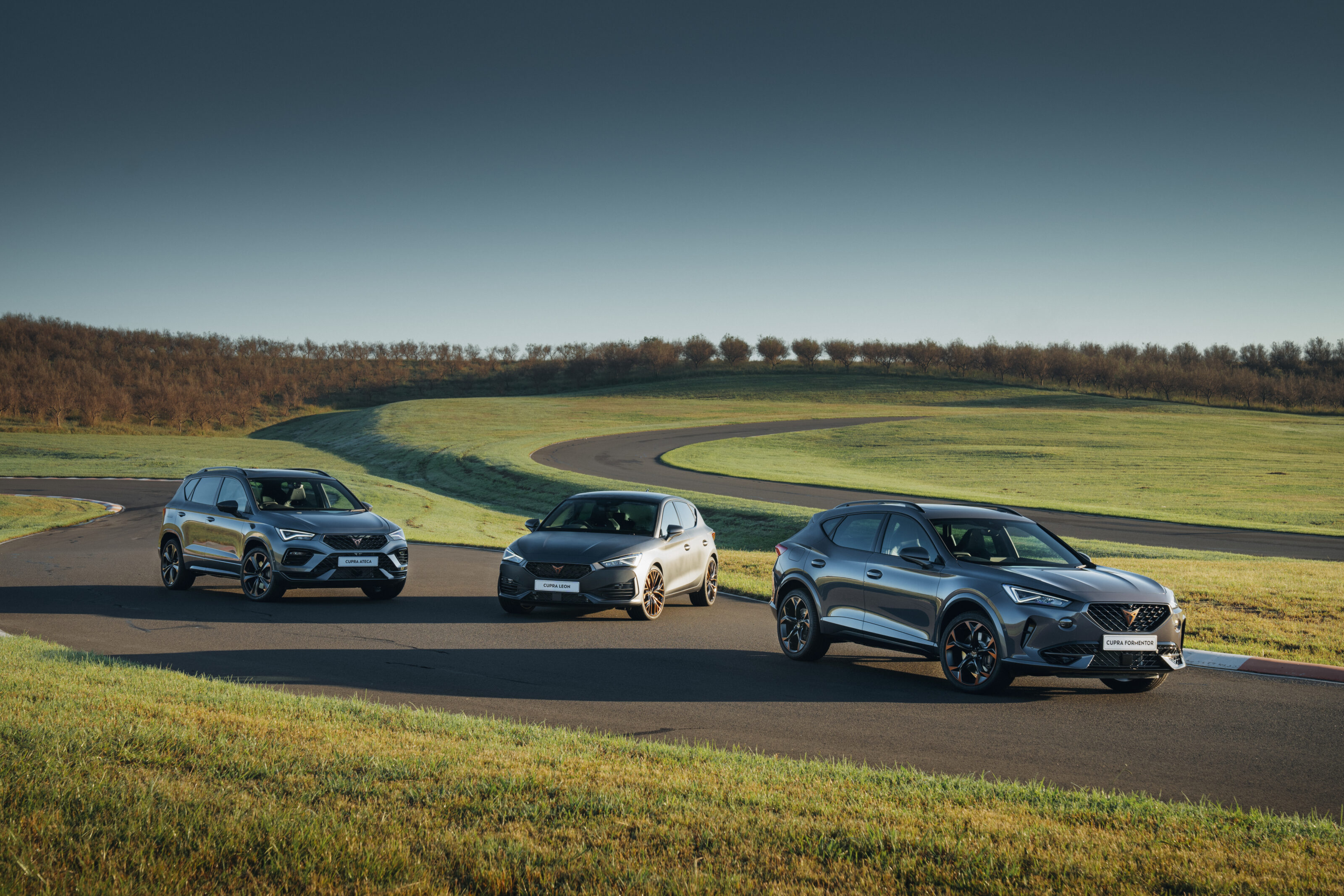
As well as ensuring supply of its petrol-powered models – the Leon, Ateca and Formentor – this year, Griffiths said the company will prioritise numbers of its Born EV for Australia too.
“We have for Australia secured supply for this year because we see Australia as a strategic objective,” he said. “So within our limited supply, we will prioritise the supply for Australia this year to make sure the launch works for the Cupra Formentor, Ateca and Leon.
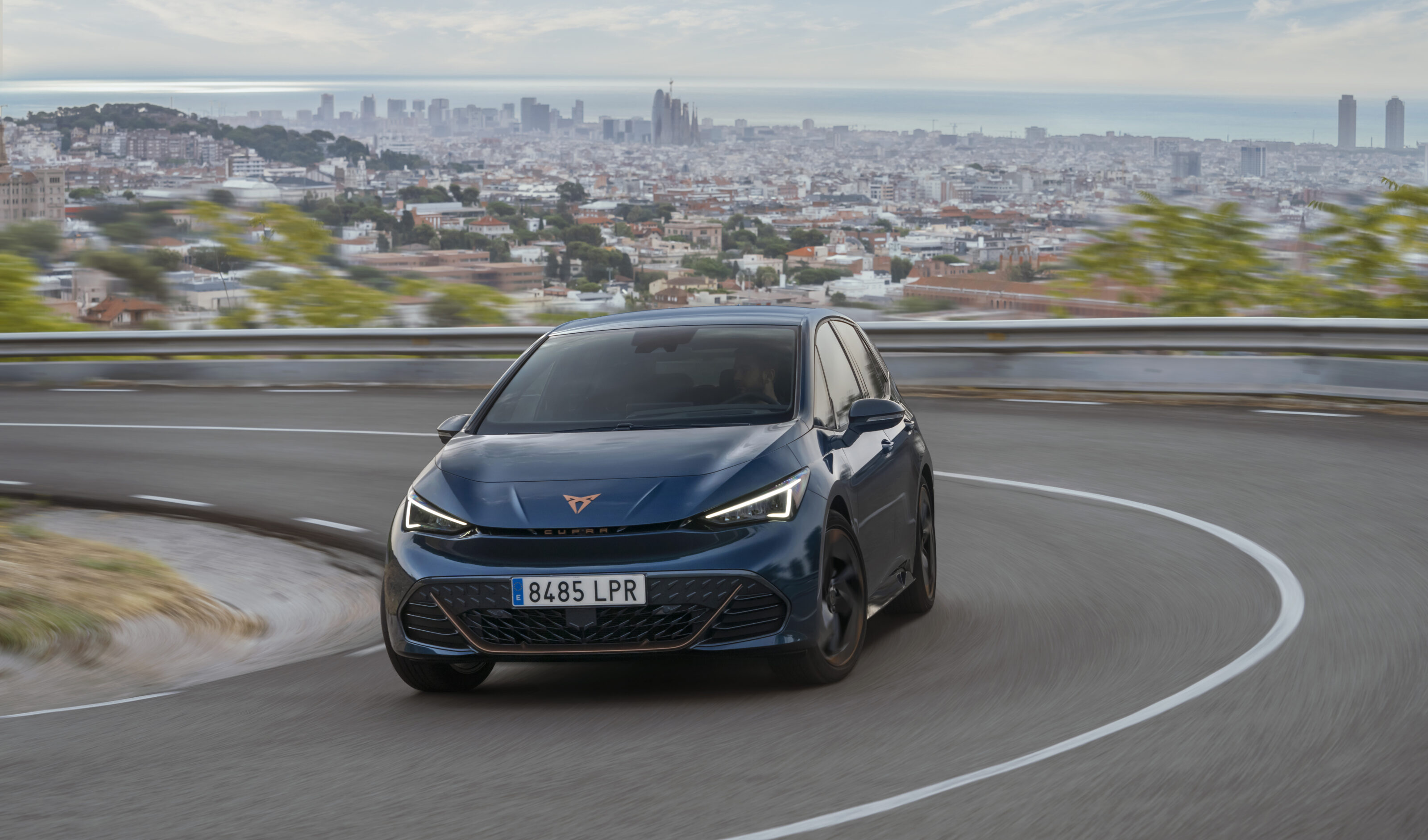
“And we will also secure supply for the most important launch, which, I think for the brand in Australia, will be the Cupra Born, our first fully-electric car.
“It’s still very early to be launching a fully-electric car in Australia – when you drive around, you don’t see many electric cars, you don’t see many in general, but it will happen because it needs to happen, it’s going to happen everywhere. The electrification is the only way to get to zero emissions at the moment in passenger cars, at least.”
Griffiths says Australia makes a natural market for Cupra’s expansion as a challenger brand, though says the company will know within a few years whether it is succeeding here or not.
“Assuming the market gets going, then I think [Cupra] electric cars will be playing a role by then, and those will include the Tavascan for most of Australia, I think. The Terramar is a plug-in hybrid, therefore as a combustion alternative, both of those will work together with the Born by then as well, as it’s fully-electric.
“And I think that the UrbanRebel [also confirmed], we will be bringing from after 2025 here. That could be huge, particularly in cities like Melbourne or Sydney. It’s a great car in a city with a [driving] range of up to 500 kilometres with great acceleration, a gold car, really fun to drive, looks great.
“I think those key electrified cars by then will play the most important role in the 7000 cars. But still by then, we will be still selling Leons and Formentors as well.
“[Electrification] is a big step and we’re jumping in the swimming pool in the deep end. But you have to believe in it. And then you have to make those decisions now. And they’re really difficult and tough decisions to make now believing that, that’s what it needs to be in the future. Because if you don’t do that, then the alternative is that you’re going to disappear because at some point the combustion engines will run out.
“So I mean, there is no doubt that there is a climate change, that the clock is ticking and we need to start fixing this fast – the solutions that’s there, the technology there, at the moment is in that battery-electric vehicles.”
It begins, as the best conversations tend to, over a bacon and egg roll. We’re gobbling breakfast in a small-town cafe, peering through the window at the swoops, curves and bright colours of the cars assembled for this group test when photographer Brook pops the question: “That Corvette… is it a muscle car, sportscar or a supercar?”
There’s a pause and some puzzled expressions before we all talk at once.
“Definitely a muscle car; the Corvette has always been a muscle car.”
“But it’s mid-engined now. And look at it! It’s a proper wedge. That’s a supercar!”
“Nah, it’s like a 911. A sportscar that can mix it with supercars.”

It takes another 15 minutes, and some granular theorising – “isn’t a muscle car based on a regular production model?” – before we finally agree: GM has changed the recipe so radically for this C8 generation that it requires further exploration to properly pin it down. That’s job one for this comparison test.
The other cars are easier to wrap your head around. Well, mostly. The Mercedes-AMG C63 S Coupe and Audi RS5 are ubiquitous German performance coupes that are, essentially, European muscle cars. They certainly look like muscle cars, with their blistered guards, tough stances and sinister grey and green paint schemes. And in the case of the AMG, with its lumpy, wet-sounding idle, it sounds like a proper muscle car, too.
The Basics
| Corvette | AMG C63 S Coupe | Audi RS5 | F-Type P450 | |
|---|---|---|---|---|
| Engine | 6162cc V8 DOHC, 32V | 3982cc V8, DOHC, 32V, twin-turbo | 2894cc V6, DOHC, 24V, twin-turbo | 5000cc V8, DOHC, 32V |
| Transmission | 8-speed dual clutch | 9-speed automatic | 8-speed automatic | 8-speed automatic |
| Power | 369kW @5500-6000rpm | 375kW @ 5500-6250rpm | 331kW @ 5700-6700 | 331kW @ 6000rpm |
| Torque | 637Nm @ 1800-4600rpm | 700Nm @ 2000-4500rpm | 600Nm @ 1900-5000rpm | 580Nm @ 2500-5000rpm |
| 0-100km/h | 3.63sec (tested) | 3.9sec (claimed) | 3.9sec (claimed) | 4.6sec (claimed) |

The F-Type is an out-and-out sportscar. Sensually styled and represented here in V8-powered P450 guise, Jag’s ageing coupe (it first appeared way back in 2013) has recently been treated to a gentle mid-life update that brought tweaked exterior styling – I’m still not sure about those squinty headlights, mind – and a tech overhaul for the cabin.
Jaguar Australia also took the chance to ditch the four- and six-cylinder versions of the F-Type Down Under, meaning the range is now V8 only. Down-sizing be damned! Now that’s logic we can get behind.
What really unites this quartet is price. They all land between $160,000 and $180,000, and while the AMG, Audi and Jaguar are established players with loyal followings, they’re also the exact cars the Corvette needs to steal customers away from if it wants to succeed. That’s job two.
The F-Type range is now V8 only. Down-sizing be damned! Now that’s logic we can get behind.

Our plan to discover how the ’Vette measures up is simple: head two hours east out of Melbourne to tackle the brilliant driving roads around the Yarra Ranges National Park. Mount Donna Buang and the enticingly named Icy Creek are both on the agenda but there’s a problem: the weather isn’t playing ball.
It’s raining hard and when we park the cars near the summit of Mount Donna, it begins to snow. Heavily. Almost $800K of (mostly) rear-drive performance cars on roads covered in snow and ice? What could possibly go wrong?
While photographer Brook grabs the chance to shoot some details and hero statics in the snow – I swear I heard him giggle with glee at one point – it gives us a chance to take stock.

There isn’t a shrinking violet here but in the visual stakes, it’s the Corvette that hits hardest.
Love or hate the design, there’s no denying it’s dramatic. This is the first time in 70 years that a Corvette has bolted its engine behind the driver and GM’s design team (headed by Aussie Mike Simcoe) has made full use of the new layout. The nose plunges provocatively, the windscreen has a proper supercar rake and huge air intakes gawp at the hip point. It looks crazily wide and low. A proper exotic.
I wouldn’t have mine in this shade of blue, or with the racing stripes, but the ‘Vette oozes presence.
There isn’t a shrinking violet here but in the visual stakes, it’s the Corvette that hits hardest.

There are some clumsy details, though. The front number plate housing (something not required in the States) is a heavy-handed, tacked-on eyesore and there’s something amiss around the rear haunches. They’re too slab-sided; too visually heavy.
And I’ve never seen a car make 20-inch wheels look so small, or squander its stance by housing the alloys so deep within the wheel wells. But these are minor, objective complaints. If you’re looking to turn heads, the Chevy is unbeatable.
The visual drama continues inside. Swing your behind into the driver’s seat and you’re confronted with a cabin that initially feels quite alien. The steering wheel is the shape of a 50 cent piece (remember those?), big high-definition screens are angled toward you and there’s a discombobulating amount of small buttons lined up on the edge of a high, sweeping centre console.

Brilliant driving position, though, and forward vision is superb thanks to the short nose and low scuttle but immediately there are some issues.
Our particular car has flashes of white trim on the dash that reflect distractingly onto the windscreen, rear vision is dreadful through a section of glass the size of a postage stamp, and while the fighter-jet cabin cocoons the driver it leaves passengers feeling separated from the action.
With his shots in the bag, snapper Brook calls for some action photography which sees us learn two things: 1) performance-focused summer tyres do not perform well on freezing tarmac 2) despite being the cheapest and least powerful of this quartet, the Audi is easily the quickest and most capable in these conditions.

Controversial. That’s how I’d describe this generation of RS5. First launched back in 2017, it was derided for lacking involvement and personality but the car we’re testing here copped an update in 2019. It brought even angrier styling (those three vents above the larger grille hark back to the Sport Quattro), a cabin overhaul and the inclusion of RS1 and RS2 shortcut buttons for the drive modes.
You can also spec it with gold wheels that, to our eyes, would be about the only thing that could make our particular Sonoma green example even more appealing. Audi knows how to do understated aggression, doesn’t it?
And anyway, today we’re reaping the benefits of the RS5’s more reserved personality. It mightn’t have the cartoonish loutishness or throttle-steer playfulness of the C63 or F-Type but it rushes up our snow-covered section with the surefootedness of a mountain goat.
Audi knows how to do understated aggression, doesn’t it?

The others feel like newborn giraffes. They switch suddenly from butt-puckering understeer to ‘oh crap’ levels of oversteer and it’s the AMG that’s the biggest handful.
It’s running the most hardcore rubber courtesy of staggered Michelin Pilot Super Sports and it feels as though someone has wrapped its alloys with sections of PVC piping. At one point it simply runs out of forward momentum and can’t make it any further up the hill.
But it’s when the radio crackles into life and a concerned voice says “Er, guys, the Jag is stuck…” that we decide to cut our losses and regroup tomorrow. One final observation from a frustrating day? If you’re looking for an evocatively styled sportscar that’s also a brilliant GT, go for the F-Type.

Once we liberate it from a muddy bog I slip inside for the schlep home and discover it’s a superb long-distance cruiser. Lovely loping suspension, brilliant driving position, solid refinement and an effortless, torquey V8 that treats your ears to a deep, burbly soundtrack. No seat heaters, though. Bummer.
Day two kicks off with a squelch. Impossibly it’s even wetter than yesterday but at least we’re heading for marginally warmer climes. I start in the C63 and with the mercury hovering closer to 10 degrees instead of zero it feels fractionally less grip-limited. Still a caged animal, though.
In conditions like these, you need a friendly chassis and initially, the big Benz feels the opposite. Breathe on the throttle and its rear axle squirms and bucks. Lean on the front tyres and they slide glassily across the surface of the road. Much of this is down to the compound of those Michelins.

They need heat to work but push through the initial glassiness and there’s actually more grip to play with than you think. And when you learn to trust that the adhesion is there, the AMG becomes properly exciting. Actually scrap that. It’s genuinely addictive.
Much of this is down to the nuclear bomb nestled under the bonnet. My goodness this is a cracker of an engine. A proper, barrel-chested beast of a V8. With outputs of 375kW/700Nm it easily outguns the other powertrains in this test and trumps them for personality too.
The big 4.0-litre lump never, ever feels highly strung or stressed and because it’s so robust and torquey you can be fooled into thinking it does its best work low in the rev range. Delve further into the throttle, however, and it offers a seemingly bottomless degree of shove right up to the 7000rpm redline.
… Much of this is down to the nuclear bomb nestled under the bonnet. My goodness this is a cracker of an engine.

Sounds proper, too. I’d buy this car for the soundtrack alone. The Corvette might be louder but the AMG sounds meaner. More sinister. As though it’ll tie cement blocks around your feet and push you into a river without a second thought.
And there’s genuine talent to the chassis. Like the RS5, the C63 benefitted from an update a few years ago but the AMG’s refresh was more substantial. It gained the same nine-speed auto as the E63 and amped up the configurable chassis tech, big time.
Suddenly we had nine-stage traction control and a multi-mode AMG Dynamics submenu to play with that altered the behaviour of the diff, torque vectoring and stability control. You control the systems through two cheap-feeling dials that hang from the steering wheel spokes and in its ‘Master’ setting the C63 does the best job of treading the greasy tightrope between grip and slip.

You find yourself catching slides, power oversteering and managing small slip angles of understeer with the confidence of knowing that unless you really stuff it up, the car has your back.
It’s brutish and bombastic but there’s also a decent degree of bandwidth, too. The firmly sprung suspension offers just enough compliance in Comfort for day-to-day driving. The cabin strikes a sweet balance between tech and ergonomics. The back seat is roomy enough for adults on short journeys and the driving position is nicely judged.
A quick word on seats, though. If you value comfort it is best to avoid the optional $3700 AMG Performance Seats. I’ve seen torture devices with more padding and less intrusive bolstering.

The RS5 couldn’t be more different to the AMG. With the surface drying and the temp rising, the Audi loses some of the edge that saw it lead the pack yesterday.
It still has more grip than the others and is secure and confidence-inspiring but after the adrenalin shower that is the C63, the car from Ingolstadt just isn’t as exciting. The engine doesn’t have the same sense of bottomless power and the exhaust is the least inspiring of this quartet.
Although it sounds okay, an octave above the others, it has a deep, almost distorted reverb sound when you upshift or lift off the throttle. Some of the Wheels road-testing team loved it but to my ears, it lacks the tone and character of the V8s in the other cars.

Impressive what it does with 2.9 litres, though. Of all the engines on test, it feels the most highly strung and sophisticated and it pairs well with a quick-shifting, short-ratio eight-speed automatic. Performance is punchy but thrust has never been in short supply in the RS5. What it typically needs more of is involvement…
Like the Corvette, which we’ll get to soon, you need to finesse your driving style to extract the best from the RS5. The optional carbon brakes are brilliant, so lean on those to get the nose set into a corner and then, even before you spot the exit, mash the throttle and let the Sport differential do its thing.
Drive it this way and the RS5 is hugely capable and blisteringly quick but there are some chinks in its armour. The steering is light and keeps you at arm’s length. The damping is overly firm and bouncy in Dynamic. And where the other cars challenge and reward you in equal measure, charging up a winding road in the RS5 is simply less heart-thumping.
Like the Corvette, which we’ll get to soon, you need to finesse your driving style to extract the best from the RS5.

Engagement isn’t something lacking in the F-Type. Its steering is even woollier than the Audi’s and you feel even further away from the front axle (both literally and figuratively) but the Jag is dripping with character. If the Audi is an impeccably dressed but reserved architect, the F-Type is a blue-blooded aristocrat that captivates the room with its charm.
Its most obvious drawcard is the engine. You might think a supercharged 5.0-litre V8 is outdated and antiquated in 2022 but you’d be wrong. This is a joyful powertrain. Incredibly, the P450 is the least potent F-Type you can buy in Australia but even though it’s about 100kW/100Nm down on the flagship R variant, not once did I yearn for more power.
The noise plays a key role in the excitement stakes. There’s a deep V8 purr low in the rev range but the timbre and volume both lift an octave as you pass 3500rpm. The main benefit of wringing it all the way to the 7000rpm redline is what happens when you pull the upshift paddle.

Where the other cars bang home gear changes with whipcrack efficiency, the Jag seems to revel in them. To draw them out and marinate in the raspy, almost slurry ‘braaaaaaaaaap’ as you shift up a cog.
The rest of the dynamic package feels like a GT car spoiling for a fight with much meaner machinery. All of the key elements seem to have had their corners rounded off. The steering is smooth and more slowly geared than the others, the brake pedal has a pronounced sneeze factor at the top of its travel, the gear ratios are long and lazily stacked and the suspension has a suppleness that’s missing in both the Audi and AMG.
As we discovered yesterday, this makes it a superb long-distance cruiser but the trade-off is that you feel a step removed from the action in cut-and-thrust cornering. It also feels the biggest and widest of this group, which can make it tricky to place with confidence and because you sit so far back in the chassis, any moments of yaw feel magnified.
Where the other cars bang home gear changes with whipcrack efficiency, the Jag seems to revel in them. To draw them out and marinate in the raspy, almost slurry ‘braaaaaaaaaap’ as you shift up a cog.

There’s talent lurking beneath the surface. Push through the vague steering and slacken off some of the electronic nannies and the F-Type responds eagerly. Great brakes, too, once you delve deep into the pedal travel, and the seating position is the best of the group. But you get the sense the Jag tolerates being driven hard rather than relishes it.
Which leaves the Corvette. Drive it after the others and it instantly feels on another level for sportiness and intent. You peer through a windscreen with a low scuttle, you can spot the rocker covers of the big LT2 V8 behind you in the rear-view mirror and the degree of steering response and chassis agility take a noticeable step up.
At 1545kg the Corvette isn’t especially light for a mid-engined performance car but in this company, it’s a virtual welterweight. It dives into corners and you can really lean on the front axle – provided you keep it loaded. Typically mid-engined cars can get snappy if you carry the brake right to the apex but today, the Corvette doesn’t so much reward trail braking as demands it.

Bleed off the brake too early and it’ll slip into understeer before snapping savagely into oversteer, which results in a few hair-raising moments. Learn to keep the weight on the nose, however, and the ‘Vette is ferociously fast.
Like the others, it has adjustable drive modes but you have more parameters to play with. You can tweak the firmness of the brake pedal through three stages, for example, and you can save your favourite settings in an individual mode accessed through a ‘Z’ button on the steering wheel. One thing to avoid? Track mode for the steering. It’s too heavy and magnifies the lack of connection rather than solves it.
Like the Jag and the AMG, the engine dominates proceedings in the Corvette. The core of the LT2 V8 is ancient – it still has pushrods! – but it’s also dry-sumped and pairs with a sophisticated eight-speed gearbox from Tremec. It’s the same ’box used in the Maserati MC20 and it’s spookily good. Not quite as quick or as polished as a Porsche PDK but bloody close.

Dial the powertrain into its most aggressive setting and the ‘Vette is savage in a straight line. You need to feed in the throttle on wet roads but at full noise it’ll monster the others in this test for sheer acceleration. And it sounds mega. It’s the loudest car here but there’s musicality to go with the volume.
Chevrolet hasn’t forgotten about the practical stuff either. The ride on adaptive dampers is astonishingly supple and controlled, there’s loads of cabin storage and two boots: a small one in the nose and a big one, which can swallow a bag of golf clubs, packaged behind the engine.
Does all this make the Corvette the best car here? Objectively, yes. It’s the quickest, the lightest, the most exotic, turns the most heads and once you factor in the price of options, it’s the cheapest, too. So it wins in this company. GM might have drastically altered the Corvette’s DNA for this C8 generation but ultimately it still delivers what it always has: supercar performance for muscle car money. Stick that in your bacon and egg roll.

As for the others, they’re trickier to separate. The Jag is beautiful and likeable but in this group it’s outgunned for ultimate pace and ability so comes home last.
The Audi’s pace, excellent build quality and tenacious grip see it edge the Jag but it can’t match the bombastic C63 for character. The AMG is a spinning bow-tie of a car. One that leans into the silliness, the noise and theatre but never feels like a caricature because it’s built on a base of genuine talent.
In many ways that makes it similar to the Corvette. And while this V8-powered C63 mightn’t be around for much longer – a hybrid successor with half the cylinders arrives soon – it’s nice to know the ‘Vette’s arrival in Australia means its spirit lives on.
SCORING
Chevrolet Corvette: 8.5/10
Things we like
- Supercar performance for muscle car money
- Feels and looks genuinely exotic
- Excellent ride comfort
- Surprisingly roomy and practical
Not so much
- Exterior design is clumsy in places
- Cabin looks great but is tricky to use
- Good luck getting one; recent price rises
- Rubbish rear vision
Mercedes-AMG C63 S: 8.0/10
Things we like
- One of the all-time great V8 engines
- Brutish performance
- One of the best exhaust notes on sale
Not so much
- Firm ride jars occasionally
- Uncompromising optional bucket seats
- Traction limited in cold weather. Or even looks like raining
Audi RS5: 8.0/10
Things we like
- Grip and confidence in slippy conditions
- Potent V6 delivers a lot from 2.9 litres
- Lovely cabin and build quality
Not so much
- Tied down chassis not as playful as others
- V6 soundtrack lacks character next to V8s
- Ride feels overly bouncy/springy in Dynamic mode
Jaguar F-Type: 7.5/10
Things we like
- Striking design and beautiful proportions
- Exhaust is so loud it feels naughty
- A brilliant GT and cruiser
Not so much
- Woolly steering
- Chassis can feel aloof, which robs confidence
- Storage is pitiful in such a big car
Specifications
| Corvette | AMG C63 S Coupe | Audi RS5 | F-Type P450 | |
|---|---|---|---|---|
| Body | 2 door, 2 seat targa | 2-door, 4-seat coupe | 2 door, 4 seat coupe | 2-door, 2-seat coupe |
| Drive | Rear-drive | Rear-drive | All-wheel drive | Rear-drive |
| Engine | 6162cc V8 DOHC, 32V | 3982cc V8, DOHC, 32V, twin-turbo | 2894cc V6, DOHC, 24V, twin-turbo | 5000cc V8, DOHC, 32V |
| Compression | 11.5:1 | 10.5:1 | 10.0:1 | 9.5:1 |
| Bore/stroke | 103.25mm x 92.0mm | 83.0mm x 92.0mm | 84.5mm x 86.0mm | 92.5mm x 93.0mm |
| Power | 369kW @5500-6000rpm | 375kW @ 5500-6250rpm | 331kW @ 5700-6700 | 331kW @ 6000rpm |
| Torque | 637Nm @ 1800-4600rpm | 700Nm @ 2000-4500rpm | 600Nm @ 1900-5000rpm | 580Nm @ 2500-5000rpm |
| 0-100km/h | 3.63sec (tested) | 3.9sec (claimed) | 3.9sec (claimed) | 4.6sec (claimed) |
| Transmission | 8-speed dual clutch | 9-speed automatic | 8-speed automatic | 8-speed automatic |
| Weight | 1545kg | 1745kg | 1685kg | 1781kg |
| Fuel consumption | 14.2L/100km (tested) | 15.0L/100km (tested) | 13.6L/100km (tested) | 15.0L/100km (tested) |
| Front suspension | Double A-arms, coil springs, adaptive dampers, anti-roll bar | Struts, A-arms, coil springs, adaptive dampers, anti-roll bar | Multi-links, coil springs, adaptive dampers, anti-roll bar | Double A-arms, coil springs, adaptive dampers, anti-roll bar |
| Rear suspension | Double A-arms, coil springs, adaptive dampers, anti-roll bar | Multi-links, coil springs, adaptive dampers, anti-roll bar | Multi-links, coil springs, adaptive dampers, anti-roll bar | Double A-arms, coil springs, adaptive dampers, anti-roll bar |
| L/W/H | 4630/1934/1234mm | 4751/1877/1401mm | 4723/1866/1372mm | 4470/1923/1311mm |
| Wheelbase | 2723mm | 2840mm | 2766mm | 2622mm |
| Brakes | 338mm disc, 4-piston caliper (f): 351mm disc, four-piston caliper (r) | 402mm discs, 6-piston caliper (f); 360mm disc, single-piston caliper (r) | 400mm discs, 6-piston calipers (f), 330mm discs, single-piston caliper (r) | 380mm disc, two piston caliper (f) 376mm disc, single-piston caliper (r) |
| Tyres | Michelin Pilot Sport 4S 245/35 ZR19 (front), 305/30ZR20 (rear) | Michelin Pilot Super Sport 255/35 ZR19 (f) 285/30 ZR20 (r) | Pirelli P Zero 275/30 ZR20 | Pirelli P Zero 255/35 ZR20 (f) 295/30 ZR20 |
| Wheels | Staggered 19in and 20in alloy | Staggered 19in and 20in alloy | 20-inch alloys | 20-inch alloys |
| Price | $160,500 | $180,687 | $158,800 | $166,048 |
Audi could soon add the Q4 E-Tron and a number of plug-in hybrid models to its Australian range as it looks to expand its electrified portfolio Down Under.
Until now hybrid models haven’t been a focus for Audi, or the wider VW Group, in Australia with the strategic focus instead placed on fully-electric models.
But with new VW Group brand Cupra using its Australian launch to confirm it will offer its Terramar plug-in hybrid in 2025, it seems Audi will beat it to the punch once strong supply can be secured from German HQ
“The next wave of vehicles we’ll probably see will be some plug-in hybrid models that we can talk about in a few months,” Audi’s corporate communications manager, Shaun Cleary, told Wheels. “Not for this year but that’s the next phase of what we’re looking at.”
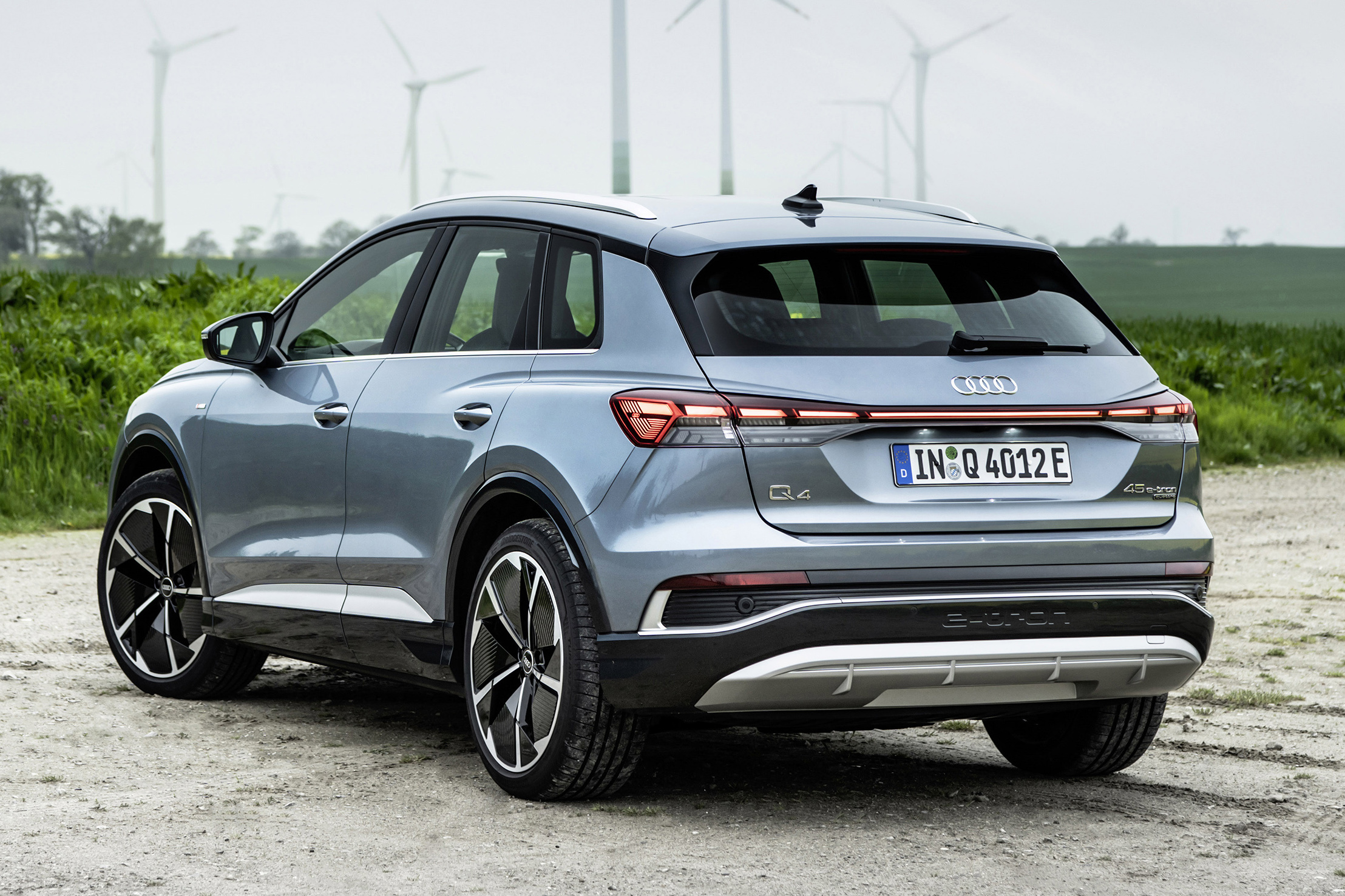
Globally Audi currently offers plug-in hybrid variants across its model range stretching from A3, A6, A7, A8, Q3, Q5, Q7 and Q8, but Cleary said it’s likely Audi will focus on high volume segments first in Australia. That makes the Q5 and Q3 ‘TFSI e’ the most likely candidate to kick things off.
“There’s a range of models for us to look at and that’s what we’re currently deciding with Germany,” said Cleary. “But we’re looking at those segments which are most popular for us at the moment.”
It’s likely the plug-in models will be positioned at the top end of their respective ranges, although Audi is also keen to offer more affordable EV models.
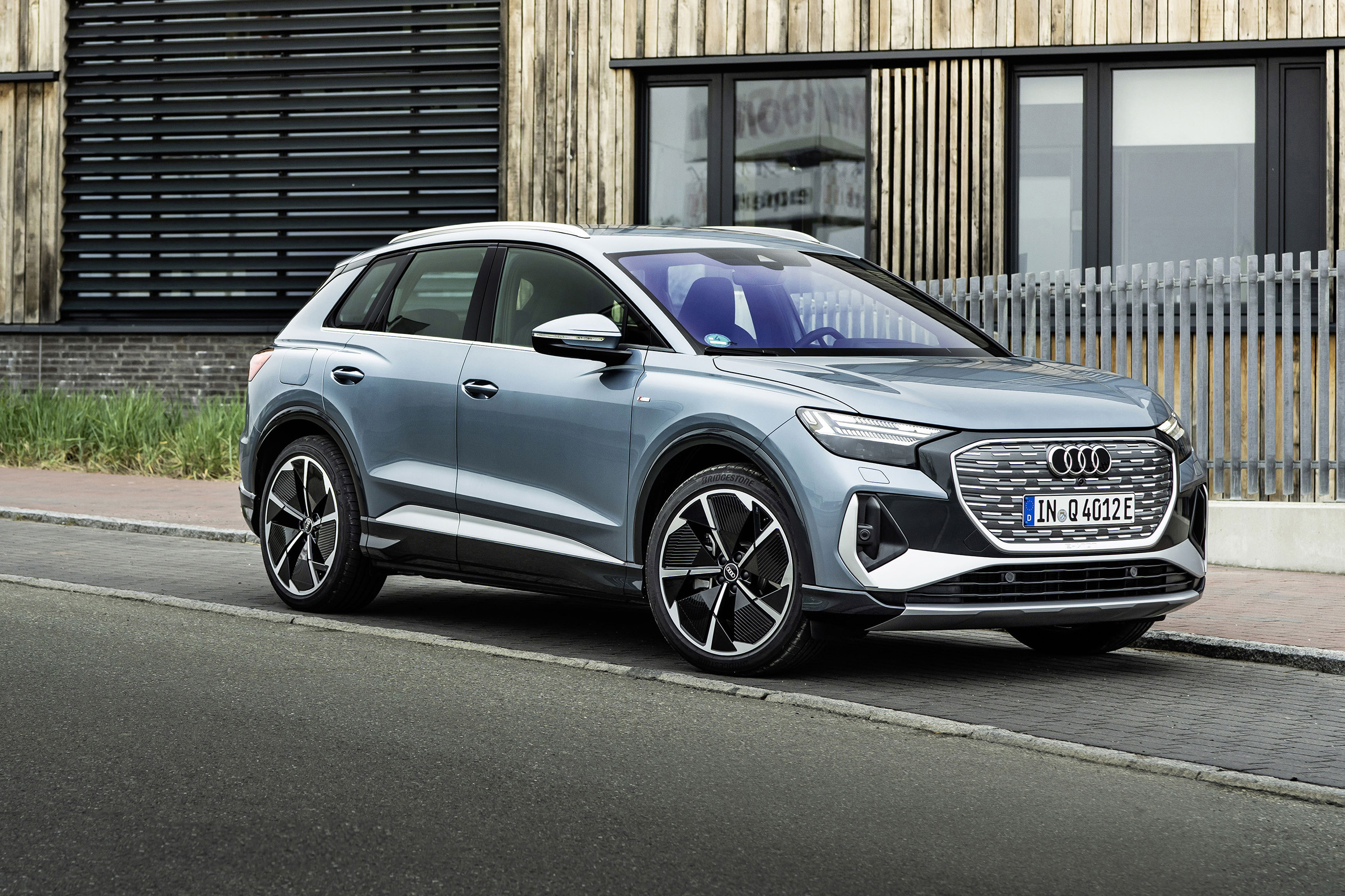
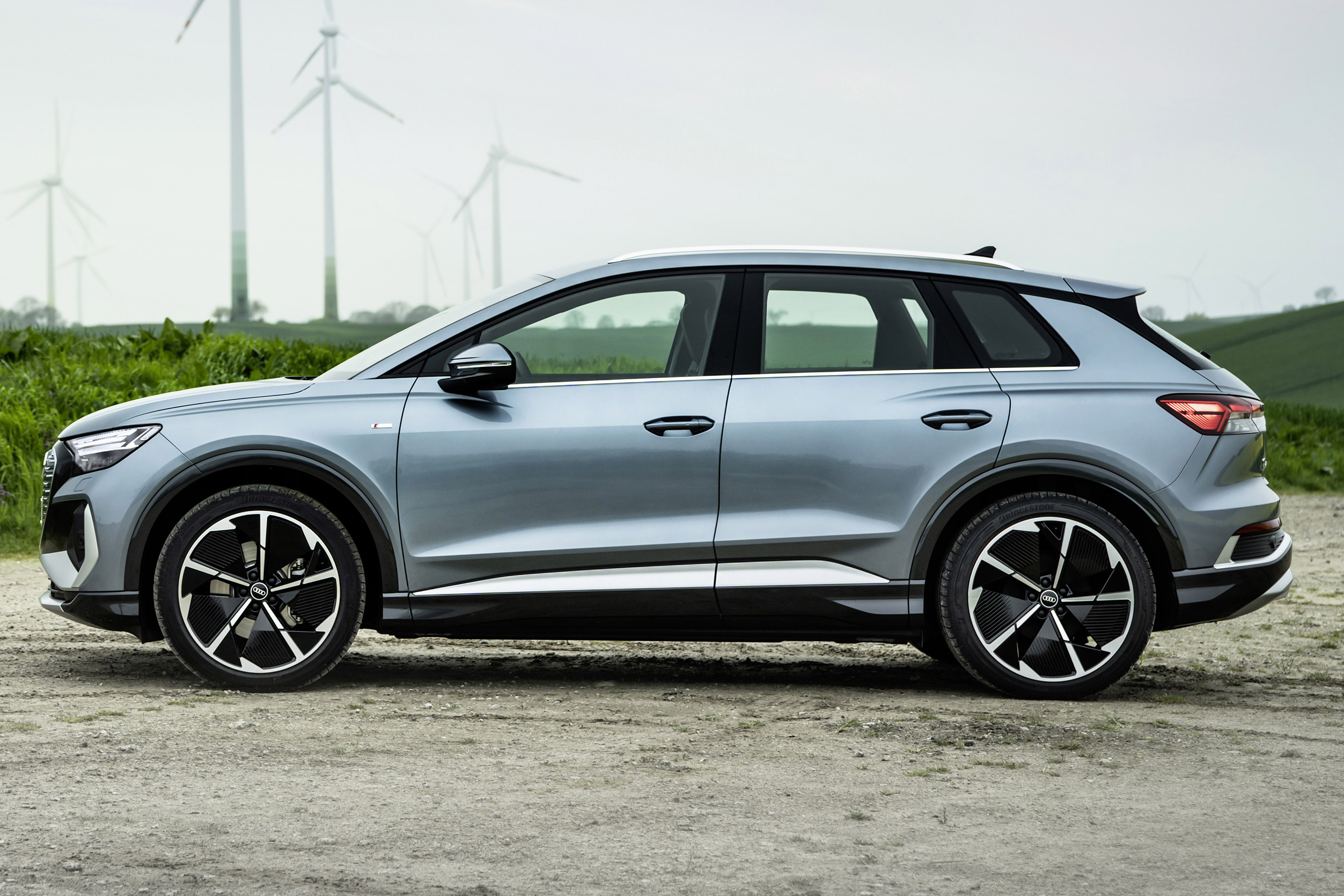
“We’re also looking at Q4 E-Tron,” said Cleary. “That’s obviously a very popular vehicle worldwide and we’re still working with HQ on how and when we can introduce that.”
Cleary wouldn’t be drawn on exactly when Q4 E-Tron would arrive in Australia, but Audi’s GM of marketing, Nick Reid, confirmed Audi Australia sees a clear opportunity in adding more affordable electric models to its range.
“Moving forward we want as many electric models as we can get,” he said. “Tesla has shown there’s a real market for sub-$100K EVs so I think that’s something we can definitely capitalise on.”
Currently Audi sells the e-tron wagon and E-Tron Sportback SUVs in Australia and it will soon introduce its flagship RS E-Tron GT performance model but both cars are expensive. The E-Tron SUV range kicks off at $140K while you’ll need at least $180K to get into an RS E-Tron GT.
Injecting the Q4 E-Tron would help Audi capitalise on the current upswing in Australian EV sales and give it a rival for the Mercedes EQA and Tesla Model Y, especially if it can be priced under $100K.
“We’ve seen the number of electric vehicles on our roads grow hugely over the last couple of years,” added Reid. “The market is developing very quickly and we’re learning a lot.”
The issue for Audi in Australia is securing supply of electric models. Globally our market is a low priority with the majority of new EVs sent to countries with higher EV volumes, but Cleary said the recent shift in EV popularity Down Under strengthens Audi Australia’s case.
“There are already many markets that are very well established in terms of sales [of electric cars],” he said. “And those markets have clear policies and targets for CO2. So it’s a very competitive environment.
“But we’re working very closely with Germany to update them on the situation in Australia. And there’s definitely been a change in the conversation and mood here.”
It’s time to put the MY22 Mazda CX-30 to the test, focusing on the low- to mid-spec Evolve Hybrid to see how the lower end of the CX-30 spectrum compares to the similarly (but not electrified in any way) G20 Evolve, G25 Touring and X20 Astina we reviewed last year.
Half of the range is referred to as G20 to denote the use of a 2.0-litre engine, while the other half is dubbed G25 for the 2.5-litre.

The G20 line-up starts with the Pure, before moving up to the regular Evolve, Evolve M Hybrid, Touring, Touring SP and tops off with the Astina while the G25 range begins with the Touring, followed by the Touring SP and is rounded out by the Astina.
Beyond that, throughout the range are added ‘Vision Technology’ variants on all grades except the Astina, which instead gains the flagship X20 Astina that sports Mazda’s new Skyactiv-X engine.

Pricing and features
Of the 10 grades available, the car we have on test here is the 2022 Mazda CX-30 G20e Evolve – the third rung on the CX-30 ladder – costing $36,040 RRP, or $36,237 as tested with the addition of $197 carpet floor mats (before on-road costs).
Pricing for the range starts at $29,390 for the base-spec G20 Pure in manual guise, or add $1000 for auto, and goes all the way up $47,390 for the top grade X20 Astina – all before on-road costs.
As standard, the CX-30 G20e Evolve gets features such as automatic LED headlights and tail-lights, dual-zone climate control with rear air vents, 12-volt power outlet, two USB ports for the front, leather-trimmed steering wheel and gear shifter, head-up display, 10-way electric driver’s seat adjustment, eight-speaker audio system, satellite navigation, DAB+ digital radio, keyless entry and start, Bluetooth and multi-function voice control accessible from the steering wheel.

This variant sadly misses out on LED daytime running lights, leather seats (available in the next grade up, the G20 Touring) and the heated front seats, Bose 12-speaker sound system and the heated steering wheel available on the G20 Astina.
Even at the top of the range, however, when chosen with either the 2.0-litre or 2.5-litre engine, the Astina still does not get powered seat adjustment for the front passenger, nor do rear occupants gain any USB ports whatsoever – an interesting omission for a premium contender since both its Kia Seltos and Honda HR-V rivals both offer it on their top-spec grades for less money.
On the outside, the CX-30 isn’t much to write home about, with no whacky design features screaming for attention, nothing really breaking the mould and the standard Platinum Quartz metallic paint isn’t exactly sexy.

However, it is just classy and simple and manages to look different enough to what is essentially a jacked-up Mazda 3 in crossover form. The plastic wheel-arches could be slimmer, or gone altogether ideally, but it doesn’t detract from what is overall an aesthetically pleasing form.
The interior of the G20e Evolve also feels very premium – even for a low-spec variant. It has a black cloth interior, which looks and feels of high quality even if it’s not leather, and the door and dash materials are similarly high-end. The blue leather-look dash top contrasts well with the black fabric and toned-down hard plastic.
Small chrome details, such as on the door handles and steering wheel – alongside contrast stitching on the seats, dash and central storage bin – make for a beautifully simplistic cabin that is neither bare nor fussy.

The simplicity extends to the climate controls too – just an up/down for temperature and two dials for fan speed displayed via a slim digital screen – which adds to the minimalist vibe.
At the centre of it all is an 8.8-inch infotainment screen, which is easy enough to navigate (even if it does just look like a giant sideways phone) and – in a wild departure from the direction most of the industry is going – is accessible through a rotary dial on the centre console rather than being a touchscreen.
While this may lose points with some, we can honestly say we didn’t miss the ability to paw the display with our mitts – there weren’t any occasions we found that it slowed us down or got on our nerves. And the bonus is, as an owner, precious seconds of your life will be saved by not needing to clean fingerprints off it all the time.

The unit’s placement, however, leaves something to be desired – it’s strangely set back so the bottom gets obscured by part of the dashboard and you lose some visibility if you’re not particularly tall or your seating position isn’t high enough.
Additionally, it offers only wired access to Apple CarPlay/Android Auto and lacks wireless charging.
One other missing feature that niggled us a little was the lack of a powered tailgate. Sure, first-world problems and all that – but rather than just leave it off, Mazda has instead lobbed in a lock button in its place, which somehow just irked us more as it is an extra step to take to make sure the car auto locks when you walk away.

If you don’t press it when you shut the boot, you’ll need to make sure you hit the lock button on the key when you really do intend to leave the vehicle – otherwise, the car will be left unlocked. Possibly a well-intentioned addition, but in reality it just added to our ever-growing to-do list.
The Mazda CX-30 was awarded a five-star ANCAP rating in 2019, and as standard benefits from safety features such as 360-degree cameras, a reverse camera (providing one of the clearest images out there), seven airbags, blind-spot monitoring, two Isofix anchors and three top tether points, child-proof rear door locks, driver attention alert and driver monitoring, emergency brake assist, front and rear cross-traffic alert, hill launch assist, intelligent speed assist, lane departure warning, lane-keep assist, front and rear parking sensors, smart brake support and traffic sign recognition.
Beyond the standard features, buyers can choose from five free paint options (our test car wore one of these, known as Platinum Quartz metallic), as well as three cost options – Polymetal Grey, Soul Red Crystal and Machine Grey (all metallic) – for $595.
The G20e Evolve rides on 18-inch metallic grey alloys as standard, but upgrading to a sporty-looking silver wheel design costs $2024 or classy satin chrome rims will set you back an added $2104.

Comfort and space
Only the driver gets a power-adjusted seat in the CX-30 – though having 10 different options to twiddle, as well as more-than-adequate cushioning, makes for one very comfortable chair. It also has two memory positions so you never have to fear someone else coming in and ruining your entire set-up. On the flip side, however, the headrests are rock hard.
In the front row, there’s plenty of storage for basic needs, with two cup holders plus slots in the doors for slim drink bottles, a deep central bin and a drop-down sunglasses compartment in the ceiling.
However, one small design quirk lies in the space allocated to putting your phone – it’s not wide enough to accommodate a standard size iPhone (think 10/11) let alone larger models (such as a 13 Pro Max), which feels like something a manufacturer with premium aspirations should be getting right.

The further back you go, the more restricted space becomes, with second-row passengers wedged in fairly tightly. Sitting in the back, we found we only had around 10 centimetres between us and the seat in front – and that’s being a female of average height, meaning anyone taller could struggle to squeeze themselves in or feel cramped if they did.
Even our three-year-old had his legs pushing up against the back of the front passenger seat when extended, not leaving much room for growth – and that was with said seat pulled almost all the way forward. Headroom too could be an issue for taller folk, as could getting in and out of the rear doors, which was slightly awkward for us already due to the shape of the exit.
While back seat passengers get two cup and bottle holders in the doors, as well as a map pocket on the left-hand side and rear vents for heating/air-conditioning, it lacks other amenities such as a USB outlet. Only the front gets these, tucked inside the central storage bin, and both are type A, not the faster and more modern type C.

At 317 litres, you would not call the CX-30’s boot spacious even in the small SUV segment where rivals boast much greater volumes. For example, Honda’s HR-V offers 437L, Nissan’s Qashqai 430L and Mitsubishi’s ASX 393L.
Not all is lost for the little CX-30 though, as utilising under-floor storage brings that number up to a more competitive 430L, and putting the second row down creates a total of 1406L. In the standard set-up it is enough to fit a child’s pram with a backpack and a couple of other bags, or your weekly supermarket shopping.
Fitting a child’s car seat isn’t too tricky, with the removable clips making the Isofix anchors easy to locate (even if you do have to now find somewhere to put them so they don’t get lost forever), but it did require moving the front passenger seat all the way forward so we could get in to attach the seat to said anchors on either side without having to walk around the outside of the vehicle to do so.
The bigger problem is getting access to the top tether anchor in the boot, as the parcel shelf gets in the way and you need to lift it out unless you want it to repeatedly bash you on the head while you attempt to tighten the strap.

On the road
The 2022 Mazda CX-30 is powered by a choice of two naturally aspirated, four-cylinder petrol engines – either a 2.0-litre making 114kW of power and 200Nm of torque or a 2.5-litre good for 139kW and 252Nm. Both are mated to Mazda’s six-speed Skyactiv-Drive automatic transmission. All CX-30 variants can be had with front-wheel drive, but only the G25 Touring upwards are available with all-wheel drive.
Our test car was the 2.0-litre FWD G20e M hybrid, which was added to the range in September 2021 – the same hybrid powertrain as offered on Mazda’s electrified MX-30. This is a mild hybrid, meaning the electric motor never powers the wheels on its own as it would in a Toyota Yaris Cross hybrid.
The 2.0-litre is louder than we’d like because it’s an engine that likes to rev high (it develops peak power at 6000rpm and maximum torque at 4000rpm) but it’s only really intrusive upon cold start or under harder acceleration as it settles down to a quiet cruise. Wind and tyre noise are also pleasingly hushed.

While you couldn’t call it nippy, as both the accelerator (and brake) pedals need a firm and deliberate input to get much return, it’s not slow either, and thanks to some sharp steering and keen gear changes, it manoeuvres exactly where you need it to go without feeling sluggish.
It handles very well too, benefitting from being based on the Mazda 3’s underpinnings, with little to no body roll even around tighter bends – feeling nicely planted and agile which is reflective of its slender 1460kg mass. The car itself also feels quite low to the ground for an SUV, which helps it to be that bit more engaging.
The ride is befittingly smooth for a Mazda, with the suspension only proving the slightest bit fussy over the worst of surfaces, such as large potholes or particularly wince-worthy speed bumps.
It has only two selectable driving modes, default and Sport. The latter adjusts transmission response only, rather than unlocking additional performance.

The transmission is quick to react to all throttle inputs and seemed to match the gear ratio well to the amount of power needed during our test, regardless of whether it was around town or on the highway.
In all, there was nothing super exciting about the drive of the CX-30, but in keeping with its inoffensive looks, it presented as a solid performer – showing skill and competency in most areas, if not being exceptional.
The Mazda’s claimed combined fuel economy is rated at 6.3L/100km and we found this to be fairly accurate during our time with the car; in fact, our average bested it at 6.1L/100km, which is not bad at all given the rising cost of petrol at the moment.

Ownership
Mazda Australia offers a five-year, unlimited-kilometre warranty, with five years of capped-price servicing and roadside assistance.
Pricing for servicing is as follows:
- One year/10,000km $328
- Two years/20,000km $374
- Three years/30,000km $328
- Four years/40,000km $374
- Five years/50,000km $328

VERDICT
As a solid little runaround for a young singleton, or even for an older buyer with no particular need for a great deal of space, this CX-30 variant drives well, doesn’t guzzle fuel, is still on the right side of $40,000 for its size and it looks and feels premium.
But as a family car, even with just one young child, the need for more space is likely to push you up into CX-5 territory for not wildly different money. For the base model CX-5 you’re looking at around $36.5K drive-away, albeit with some small sacrifices on spec.
Space is key and the CX-30 might just need to grow up a little more to be able to work as a daily driver for families.
2022 Mazda CX-30 G20e Evolve M Hybrid Vision Tech specifications
Cupra has revealed it will limit the top speeds of its electric vehicles in future.
The Cupra brand has launched in Australia, bringing three petrol-powered models initially with plans for its first EV, the Born, to arrive next year.
Speaking to Wheels about whether Cupra might explore a two-speed transmission, like the Porsche Taycan, Vice President of R&D Dr Werner Tietz admitted that there was simply no need as the firm plan to limit the top speed of future models.
“It’s expensive. It’s heavy. On the [Taycan], that was necessary to have this high speed, high max speed and the acceleration,” he said. “On our cars, we will limit the top speed, so actually we are limiting to 160, 180[km/h]. It depends on the model. Therefore, you don’t need a gearbox”.
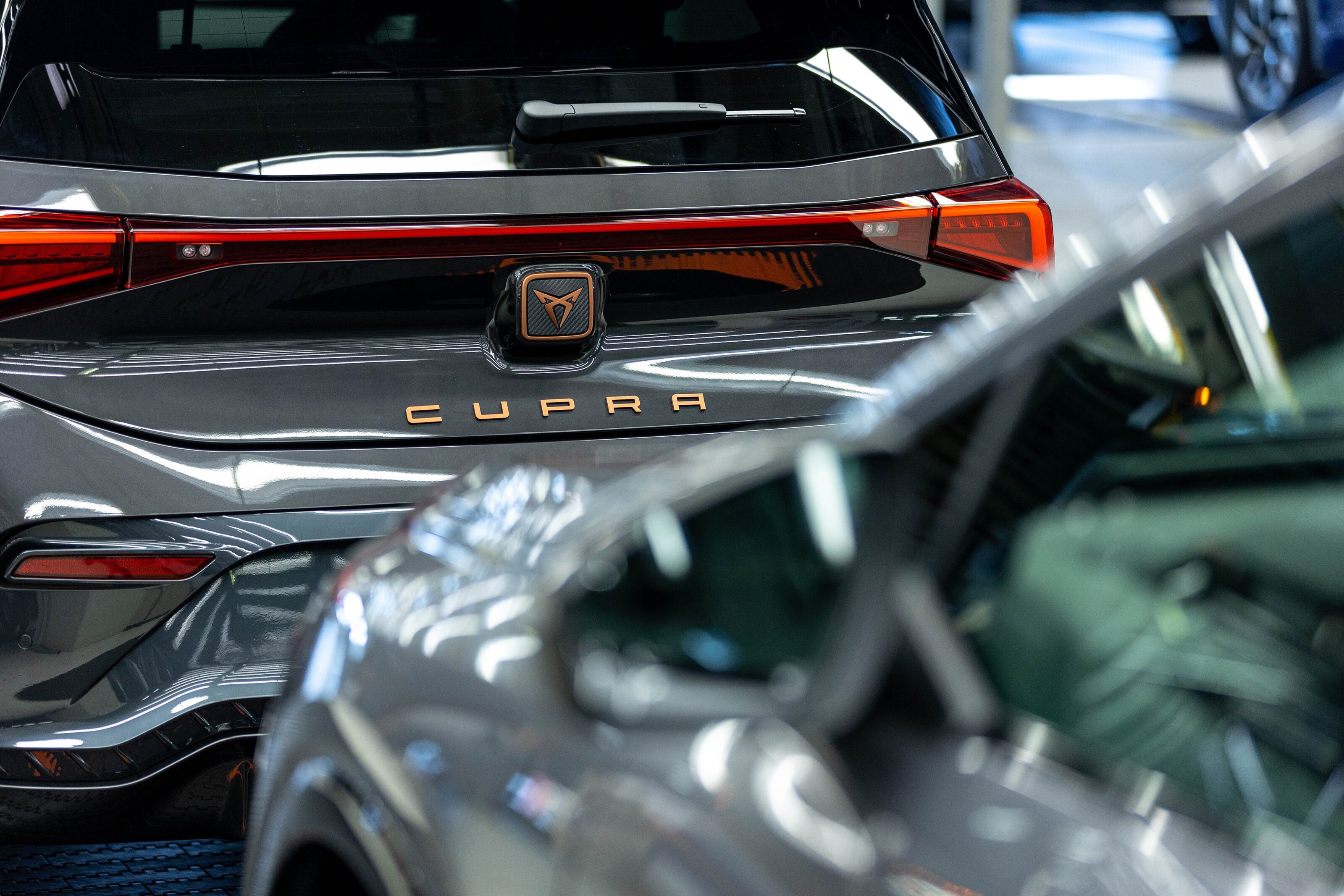
The move by Cupra follows a precedent set by the safety vanguards at Volvo, who implemented a blanket 180km/h speed limit on all new vehicles from mid-2020.
An impassioned Dr Tietz then went on to outline the various ways Cupra is engineering fun into its future models.
“It’s the linearity of the throttle, it’s a shifting time. The rest is chassis tuning, so the tyre development… chassis adjustment,” he said.
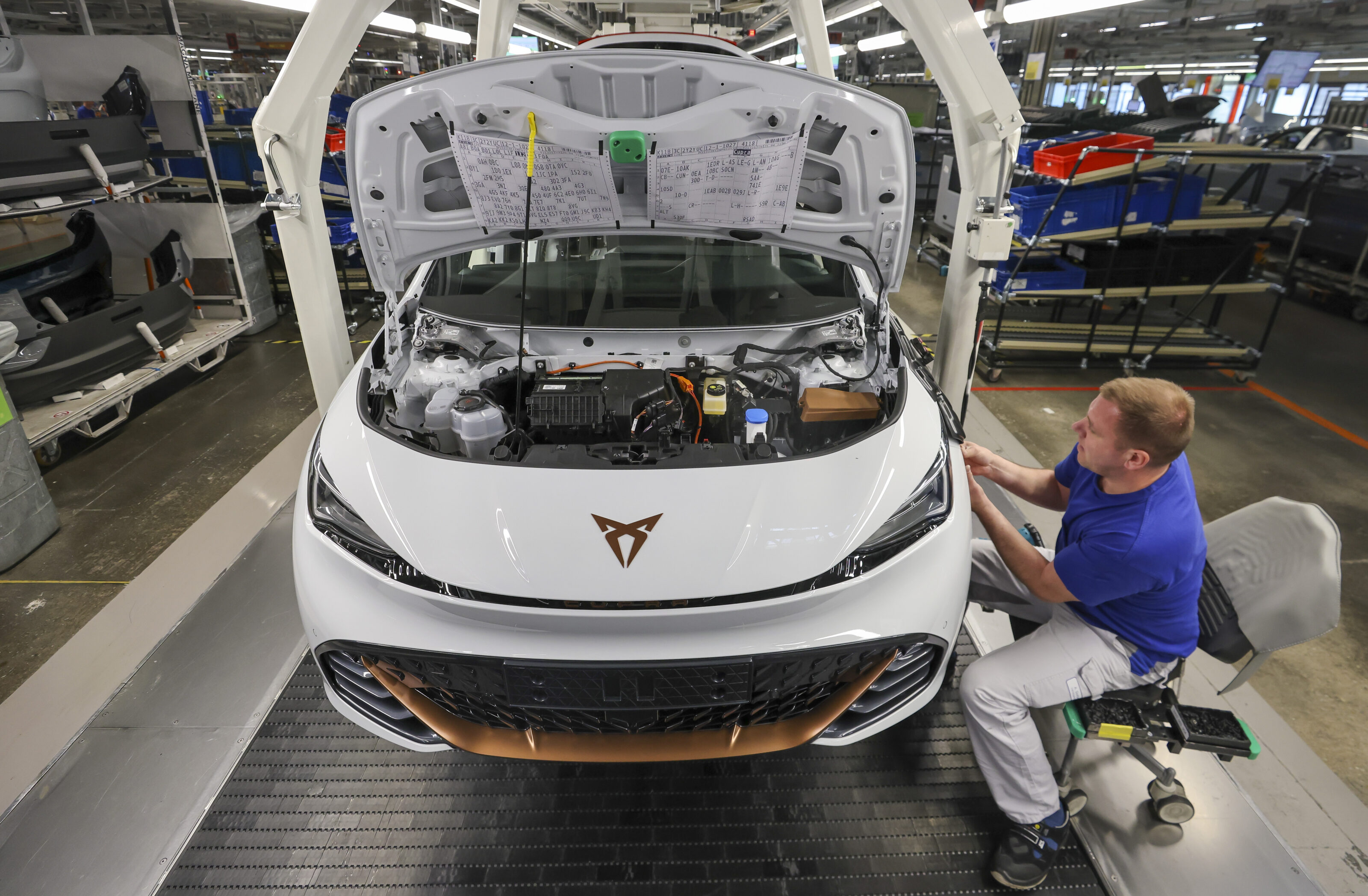
“We are not that comfort oriented, we are more dynamic oriented.
“Why must [the electric car] be boring?”
“We want to build cars for people who love driving. And not just commuting from home”.
Also speaking at the brand’s launch in Sydney, CEO Wayne Griffiths said: “We want to stand out by standing for cool cars… with great design and cars that are fun to drive, emotional, sexy, even in an electric area.”
Evocative design and charismatic performance may be steeped into every Cupra model. But is there cause for concern as performance stablemates, like the Golf R and Audi S3, edge closer to inevitable electrification?
Tietz isn’t fazed, replying: “If you look at our sister brands, there will be some overlapping on sporty versions of, maybe of Audi. But that’s it.”
He acknowledges that certain hero variants may be positioned above Cupra’s models, but stresses that Cupra aims to distinguish itself by focussing “the full range to the sporty character”.
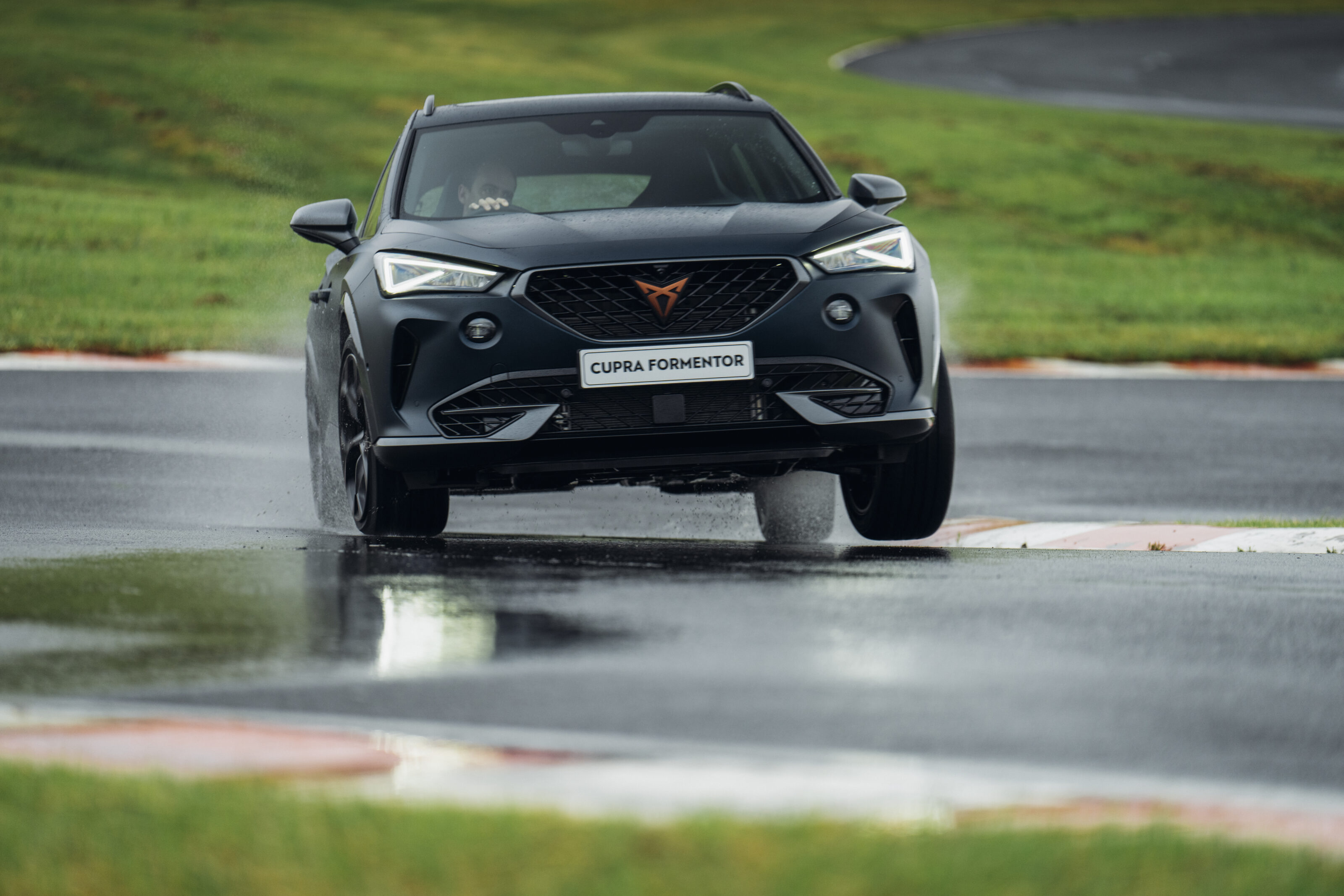
It won’t be an easy path to success, but there’s a lot of opportunity in Australia for Cupra as an accessible mainstream marque with a clear performance beat.
Griffith says the local climate is “a very competitive market, but I think it’s still a very open-minded market”.
“If you are authentic and deliver what you promise… then you could hit a nerve here in Australia,” he said.
“I think doing sporty cars is good for Australia. It’s a sporty country”.
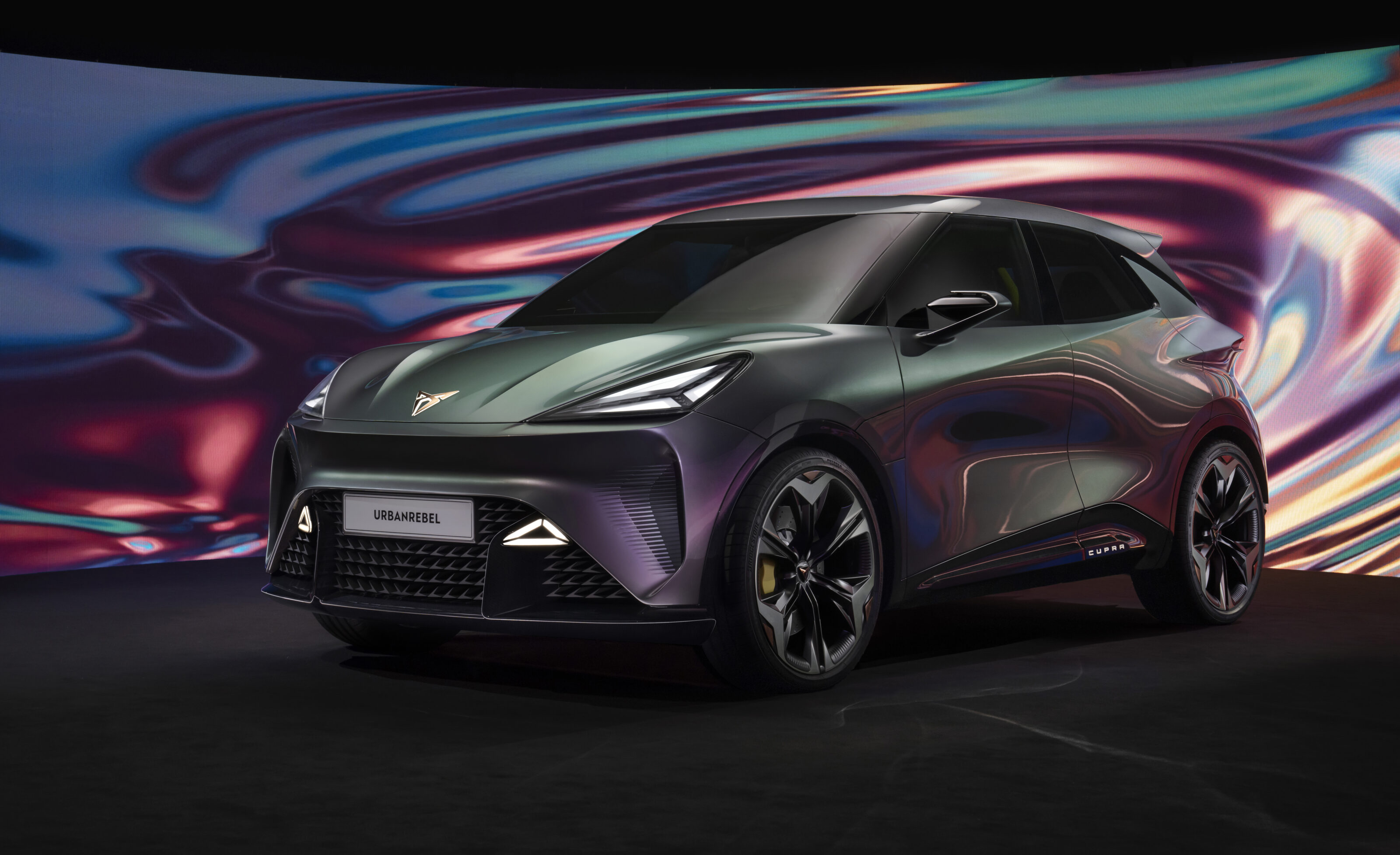
Spanish VW Group brand Cupra is promising a “genuinely affordable” EV for Australia with its new ultra-compact electric city car that could cost less than $40,000 when it arrives in 2025.
The Cupra Urban Rebel is confirmed to be part of a second wave of models that will start arriving from 2025, joining up with the brand’s initial line-up of vehicles launching this week in Australia.
The Urban Rebel is just over four metres in length, powered by a 166kW electric motor good for a 0-100km/h sprint of 6.9 seconds, and promises a driving range of 440 kilometres.
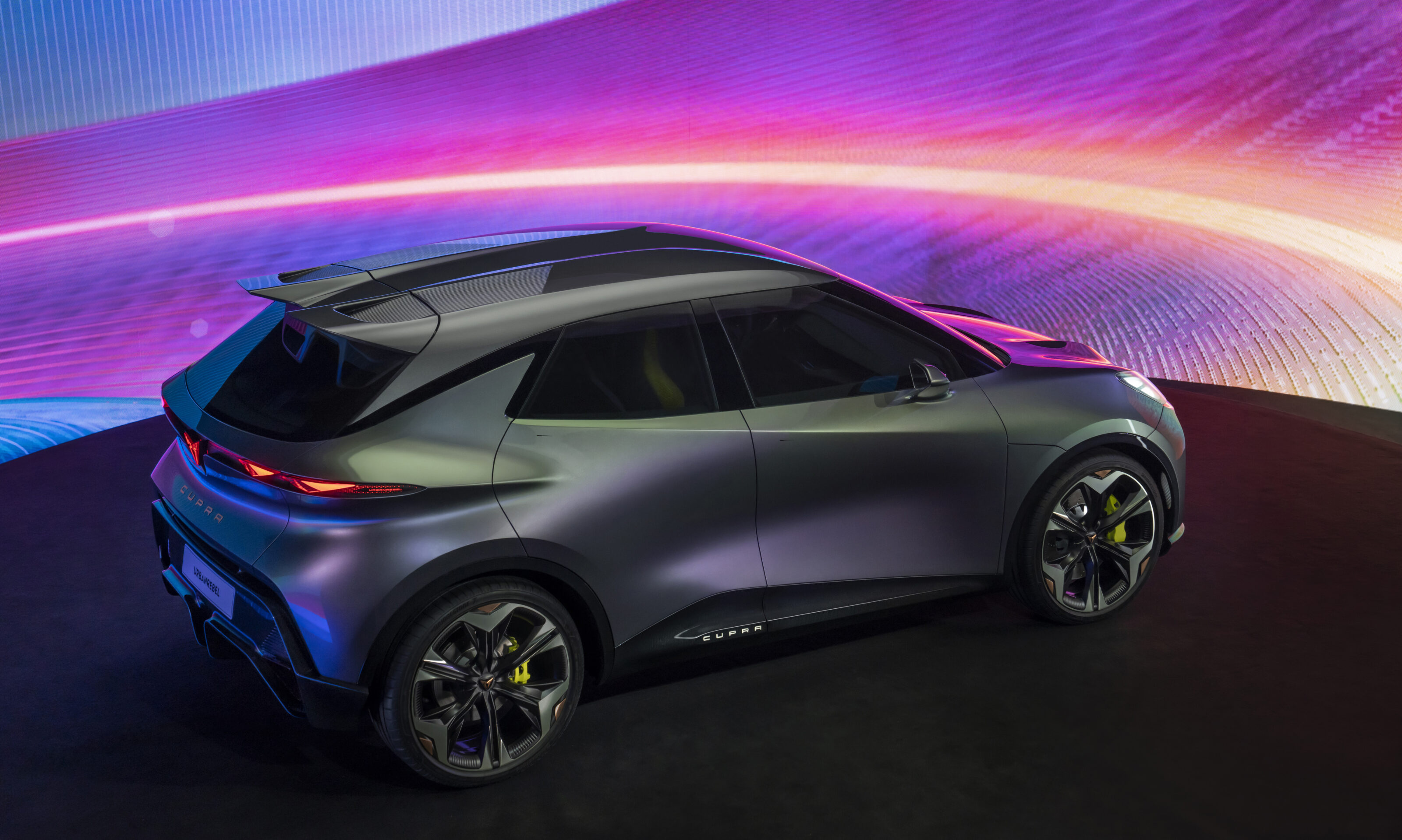
It will use the VW Group’s smallest battery electric platform – dubbed MEB Small – which will also be used for a Volkswagen expected to be called ID.1, as well as a Skoda version.
Cupra Australia has already told Wheels that the brand’s first EV, the Born that’s coming in early 2023, will be priced similarly to a VW Golf GTI. The GTI currently costs about $55,000 before on-road costs.
Cupra’s global CEO, Wayne Griffiths, said the VW Group’s smallest EVs are planned to cost from the equivalent of $30,000 in Europe.
“The small BEV, as we call it, has the ambition from the Volkswagen Group of having cars starting at around €20,000 ($29,500),” said Griffiths. “That won’t be the ambition of Cupra because Cupra is positioned above the mass segment – we’ll have more content (features) and in terms of power and performance different as well. So below Born and affordable.”
A starting point of about €25,000 is anticipated Cupra Urban Rebel when it launches in Europe in 2025, which would be about AU$37,000 if converted directly.

Based on today’s Australian market, that would still make the Urban Rebel the cheapest EV available. Much is likely to change by the Urban Rebel’s 2026 arrival.
Griffiths also believes the Born is also a relatively affordable model.
[With] the price level of the Born, I don’t know in Australia, mainly I know in the markets we launch in already – in Spain, Germany – it’s an affordable car,” said Griffiths.
“And it’s out at the lease rates of around say Leon or a Volkswagen golf. With the good to high residual values that the electric cars have combined them with the reasonable price and you get to an affordable price.”
The Cupra brand is only four years’ old, having been spun off the Seat brand in 2018 to capitalise on the trend for “disruptor” EV companies such as Tesla.
Griffiths says it will target a younger generation of buyers than other VW Group brands.

“We are the only new brand, a brand created from scratch. So, I think that’s our role in the Volkswagen Group – a contemporary brand for the next generation of car lovers.
“Our customers are on average one generation younger than the other brands in the group. We’re 10 to 15 years younger, we’ve seen the research where [our average buyer is] around 40 years’ old, which still seems quite old, but in an SUV segment is quite young, where the majority of other brands are somewhere between 50 and 60 [years old].
“There’s a generation of young customers coming up who want different brands [for their cars] than their parents and their grandparents. They want to stand out for their generation and they want to stand out because they stand for something.
“The brands that resonate with this new generation have to be brands that not base their values on history, heritage, prestige, status, money… but more values that are in line with today’s generation. So, it’s more about sustainability, contemporary values, and being authentic.

“And I think with Cupra, we deliver that. We want to stand out by standing for cool cars from Barcelona, with great design and cars that are fun to drive, emotional, sexy, even in an electric area.”
Cupra plans to offer a fully-electric vehicle lineup from 2030. The Urban Rebel will follow the 2023 Born and the 2025 Tavascan electric vehicle.
The Terramar, also due here in 2025, will be a plug-in hybrid featuring the company’s last internal combustion engine.
Cupra has confirmed its Terramar plug-in hybrid SUV, Tavascan electric EV, and Urban Rebel ultra-compact EV will come to Australia – as the Volkswagen Group’s Spanish brand targets 7000 sales by 2025.
Cupra Australia announced its local ambitions at its official media launch in Sydney this week, stating that it aimed to kick off with 1600 sales in the second half of 2022.
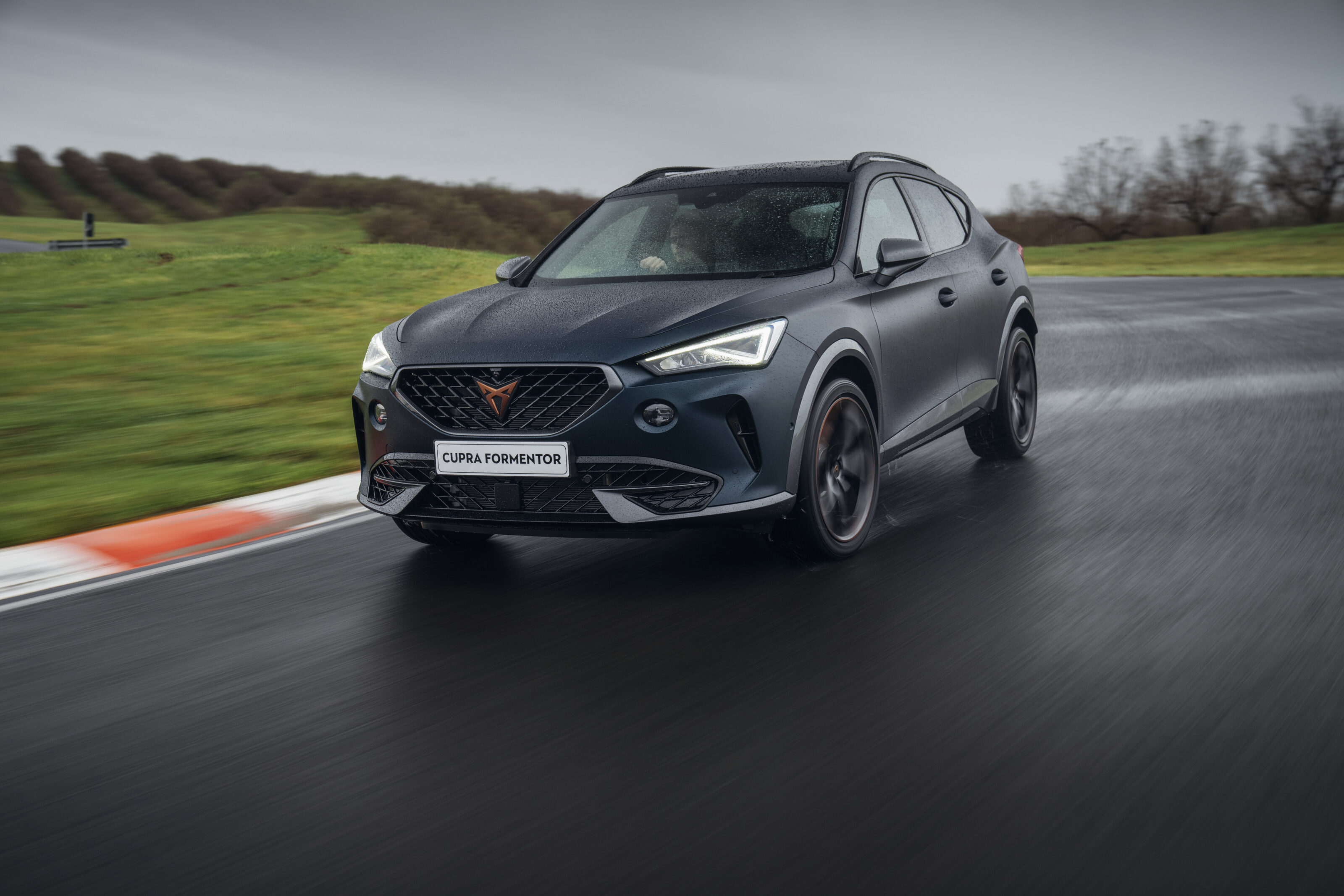
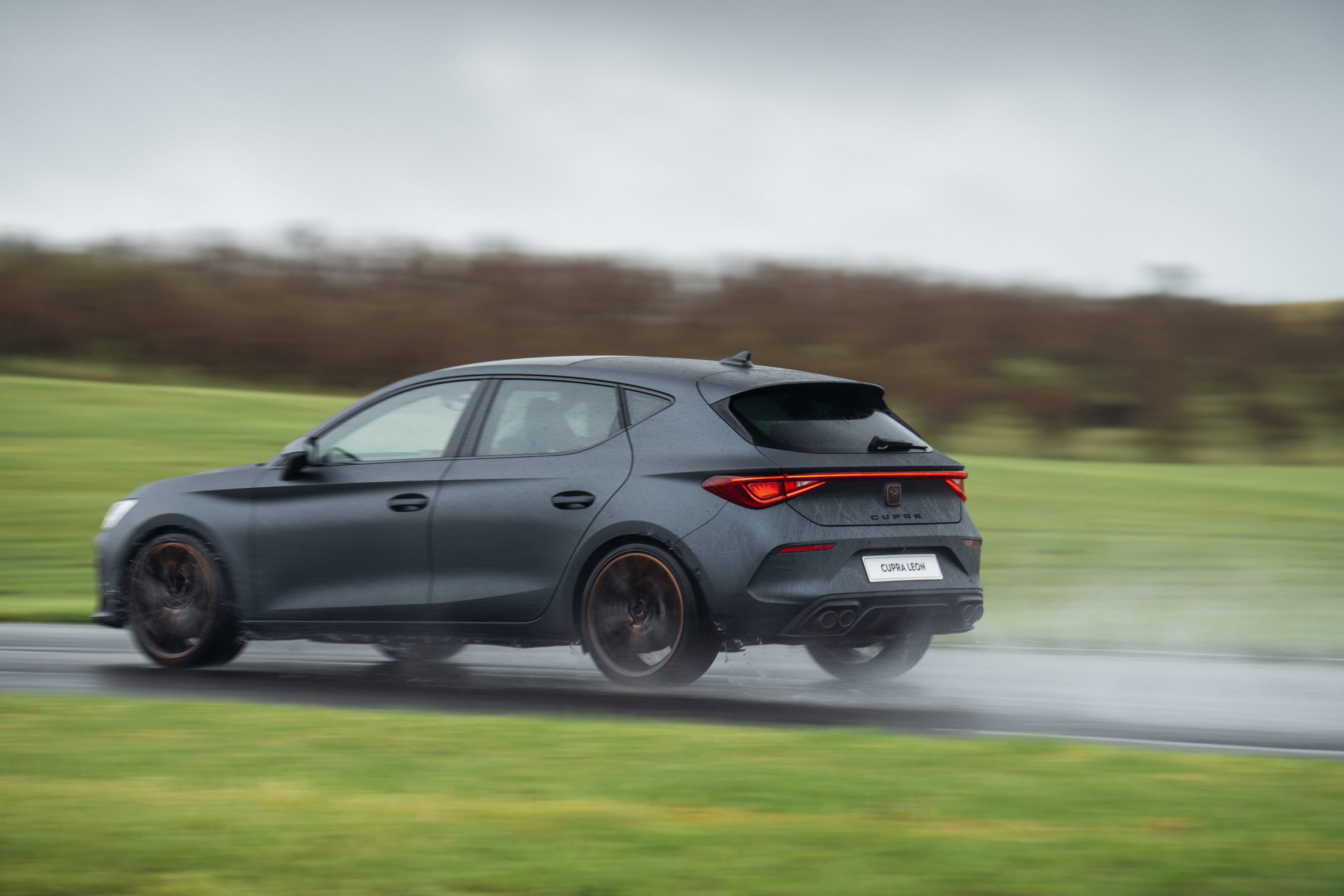
The Cupra range initially comprises the Leon hatch, Ateca SUV and Formentor flagship SUV.
They will be joined in early 2023 by the brand’s first EV, the Born hatchback that’s twinned with the Volkswagen ID.3 that’s also expected to come to Australia eventually.
In 2025, the line-up will expand with the Urban Rebel ultra-compact EV, Tavascan electric SUV and Terramar hybrid to help Cupra reach its sales goal and continue its transition into a fully electric brand by 2030.
Global brand CEO Wayne Griffiths says Australia makes a natural market for Cupra’s expansion as a challenger brand, though says the company will know within a few years whether it is succeeding here or not.
“I think now is the right time, not only for Australia, but for Cupra in general, because you see with the disruption of our industry from [the transition from] combustion cars to electric cars, you see a lot of new players arriving to the market,” said Griffiths.
“There are probably two phases [in Australia]: we launch a brand now with the existing line-up that we have with the Ateca, Leon and Formentor. And we need to get to a relevant volume within the next couple of years in the first phase… get to whatever, I don’t know, 3000 cars.
“To me, the measure of success will be: does the brand resonate in Australia as it is doing already in Europe?
“If we do that, then I couldn’t care less if it’s 5000 or 10,000 [cars we sell here]. We’re not here for the volume… we are here to extend our global footprint and prove we can be a global brand, not just a brand based in Europe. And we’ve come to the place furthest away possible to prove that.”
Griffiths acknowledges Australia isn’t a straightforward market, with a proliferation of brands competing for a share of about a million sales – a tiny volume by the standards of most mature western markets.
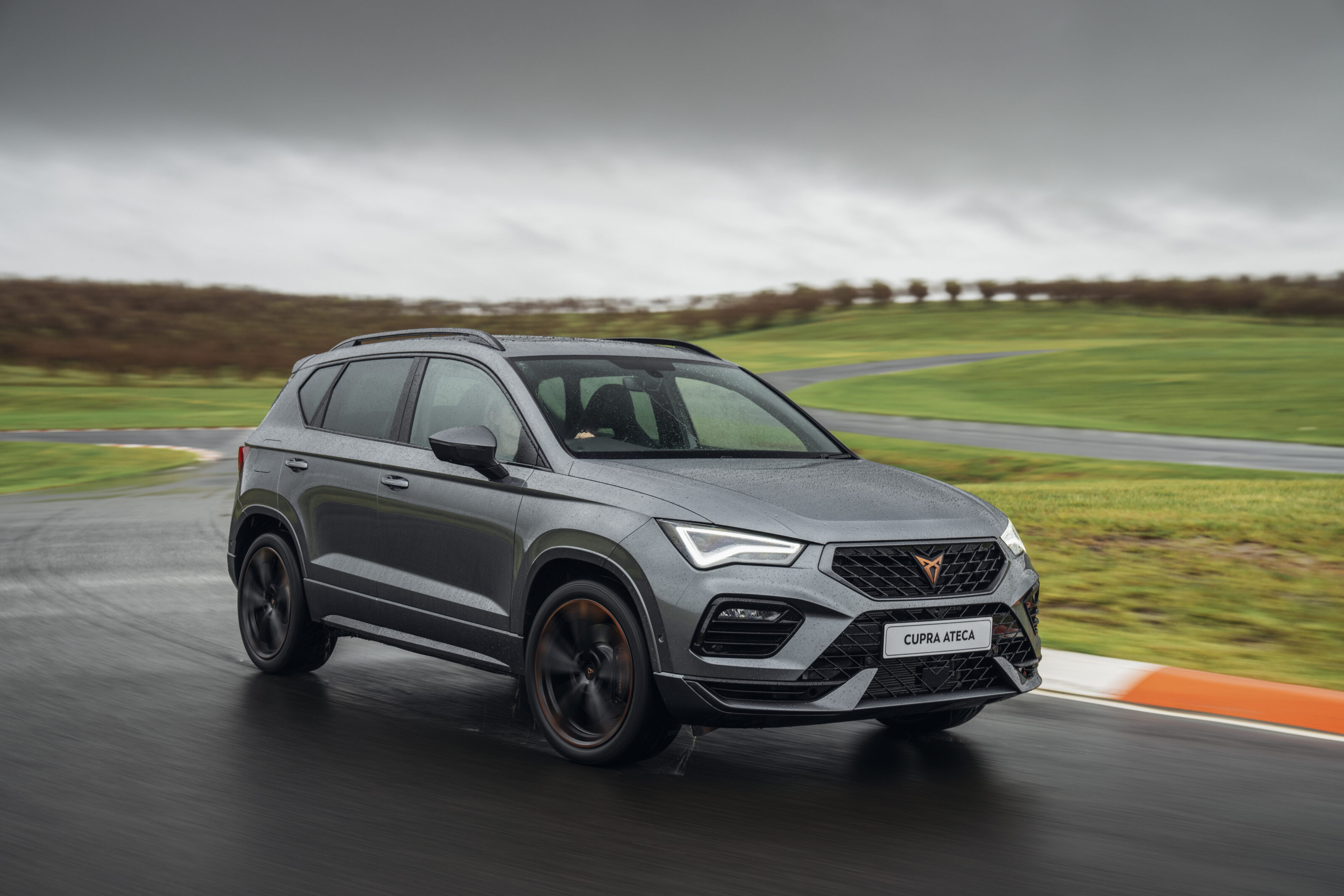
“I don’t underestimate how tough the Australian market is today and how tough it will be in the future. Because I think a lot of other new brands will be entering the market like us as well.
“But I think [Australia is] still a very open-minded market. I think if you are authentic and deliver what you promise [as a brand], then you could hit a nerve here in Australia. And I think doing sporty cars is good for Australia. It’s a sporty country.”
The 2025 sales target is ambitious for the brand that was spun off from its parent company Seat in 2018. Cupra was previously a sporty trim grade like R is to Golf.
It took stablemate Czech brand Skoda 12 years in Australia to reach 7000 sales.
Cupra has the advantage of offering SUVs immediately, however, while the brand will be hoping the Australian market accelerates towards electric vehicles sooner rather than later.
Cupra says it wants to achieve five per cent of the global EV market “in the long term”.
Plug-in hybrid variants are being offered as transition models for those not yet ready to commit to fully electric. This includes a plug-in version of the Formentor available in Australia, followed by the Terramar from 2025 – the SUV that will feature the brand’s last internal combustion engine.
The Cupra Urban Rebel forms part of the VW Group’s plan to introduce a series of genuinely affordable electric vehicles.
The Spanish brand is targeting half a million global sales by 2025. It sold just under 80,000 units in 2021, triple its result in 2020.
Formentor is by far its most popular model in the UK and Europe, accounting for nearly 55,000 of Cupra’s 2021 sales.
Cupra Australia expects the Formentor to be the dominant model initially, with about half of sales. It also believes the Born EV can account for up to a fifth of its sales in 2023. Cupra has previously said the Born could be priced similarly to a VW Golf GTI hot-hatch.
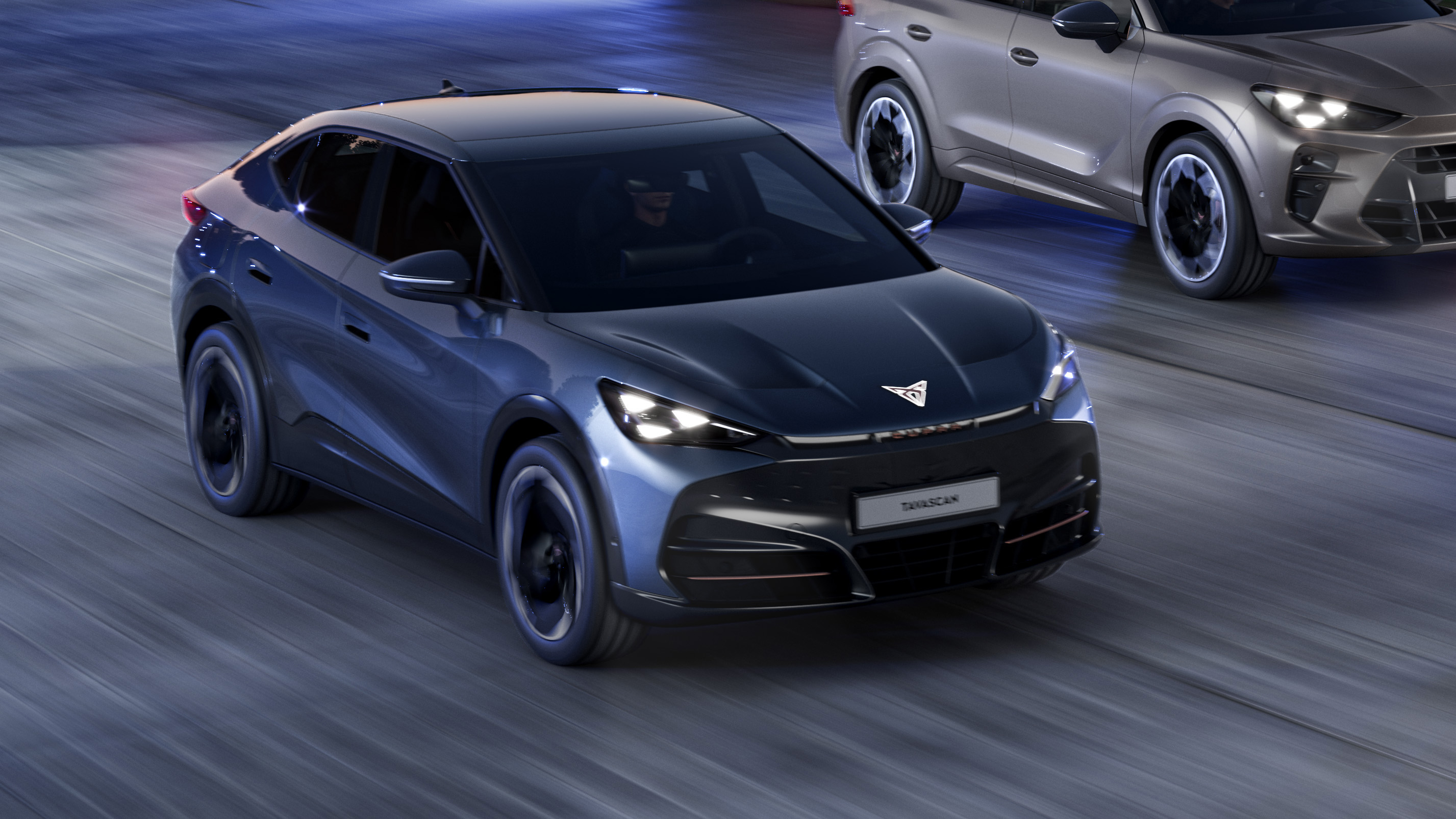
Cupra models will be sold in Australia using an agency model and Cupra Garage store-style showrooms. Cupra Australia says it has already had more than 11,000 expressions of interest.
The media launch was held at its first and flagship Cupra Garage in Sydney, which features a café as part of its set-up. The Garages will also include a selection of the Cupra vehicle range, sell merchandise, and showcase the brand’s history.
Cupra Australia plans to expand its Garages to 15 nationwide sales locations by 2023.
Snapshot
- Opel Insignia to be retired by the end of 2022, due to its GM-based E2XX platform
- Vauxhall Insignia previously left the UK due to low sales
- Marks the final GM-era vehicle on sale in Europe
UPDATE, July 21: Opel Insignia to be axed as German production wraps up
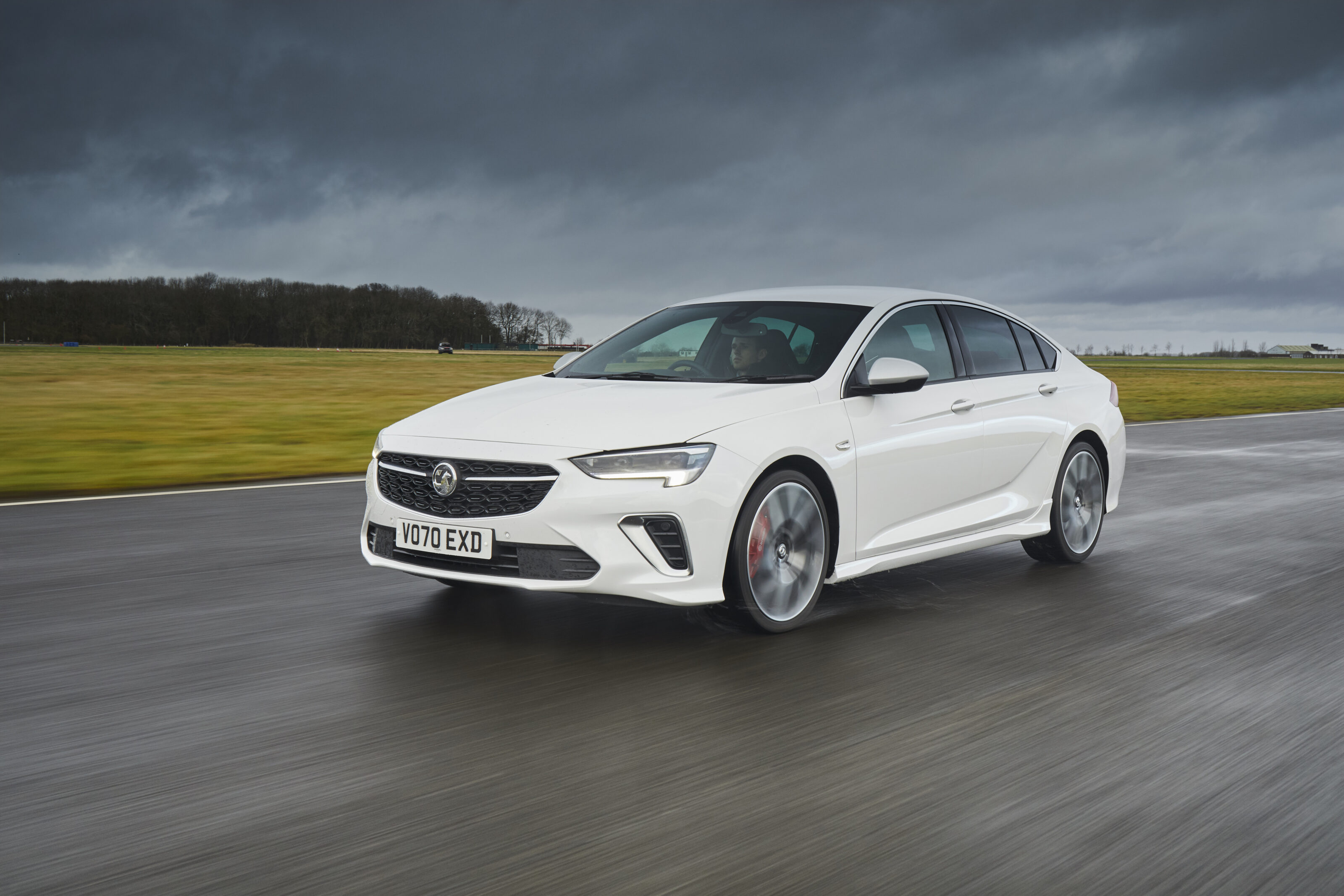
The vehicle that once wore the famous Holden Commodore nameplate will soon reach the end of the line.
A spokesperson for Stellantis confirmed to Automobilwoche that the Opel Insignia would be discontinued in Europe, with production at its Rüsselsheim plant in Germany to wrap up by the end of 2022.
The factory will instead focus on producing the Opel Astra and DS 4 small cars, allowing Opel to have a “faster ramp-up” for the Astra.
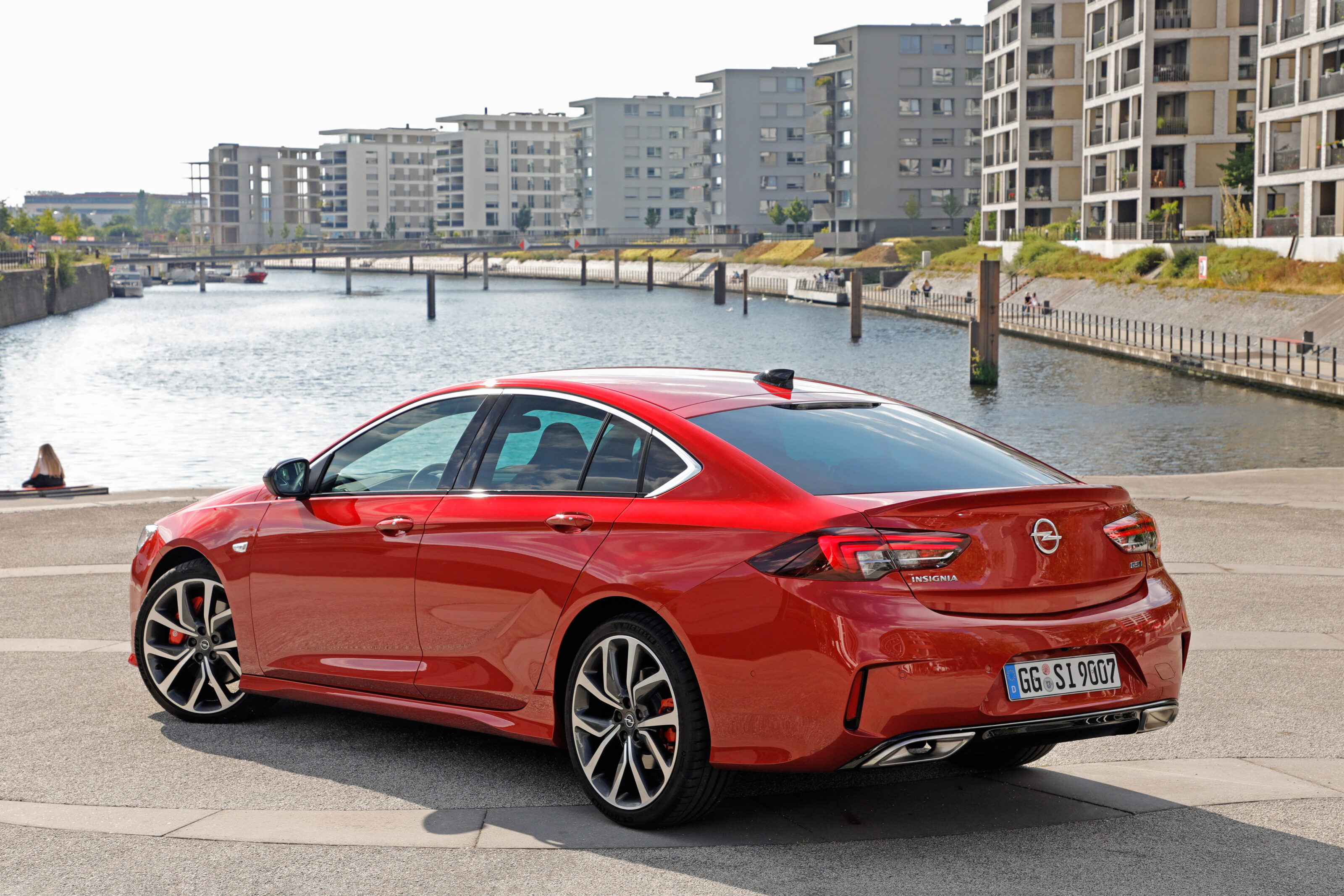
Opel was purchased by Groupe PSA in 2017, in the same year the second-generation Insignia launched, with the German carmaker now part of the Stellantis group of brands.
The mid-size Insignia was developed under previous ownership by US car giant General Motors, using the company’s E2XX architecture. This platform does not support plug-in hybrid or full-electric powertrains without extensive re-engineering.
An all-electric replacement for the Insignia with a raised crossover-style body, similar to the Citroen C5 X, is expected to launch in 2024.
The story to here
May 18: Vauxhall Insignia axed in the UK two years after end of Holden Commodore’s run
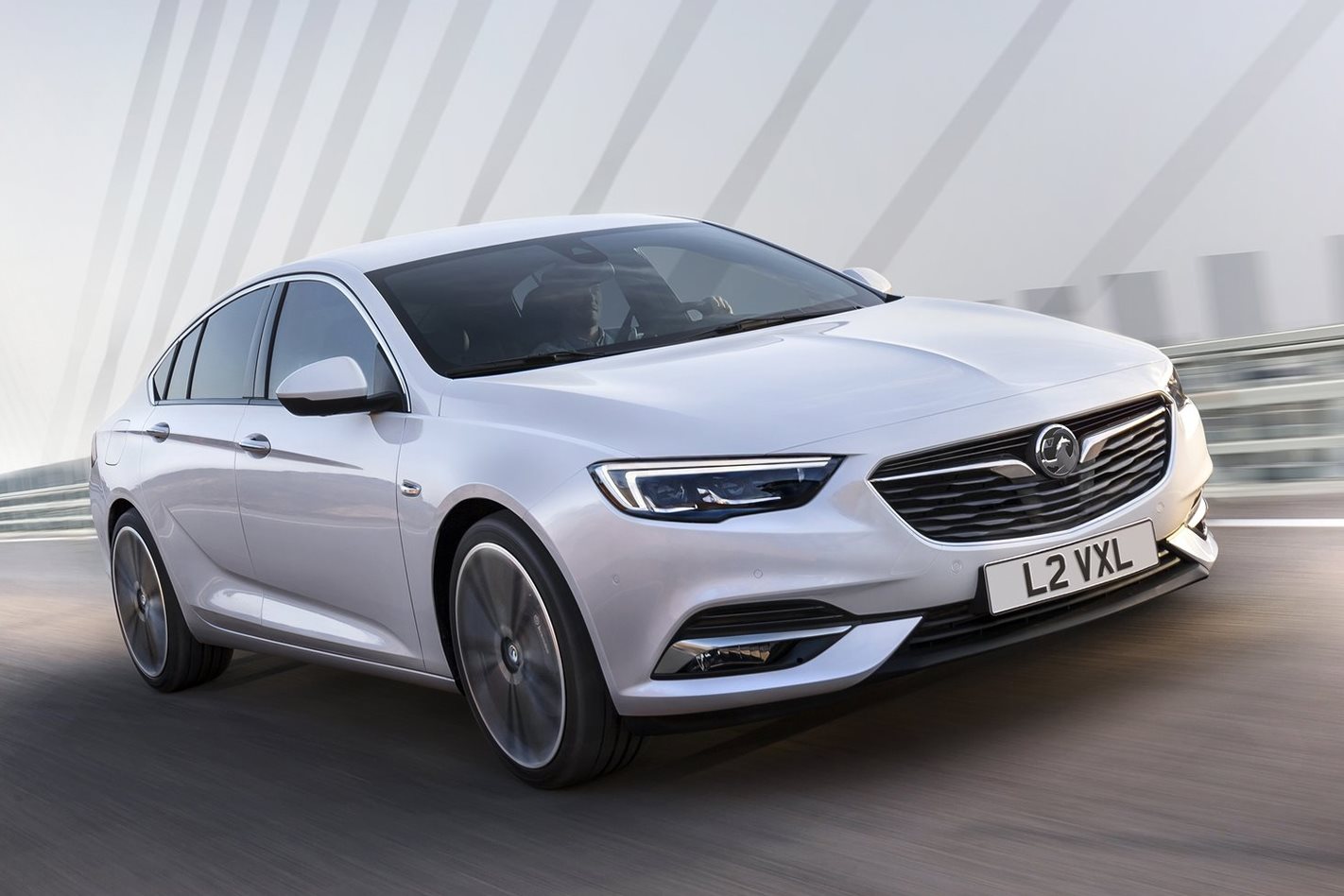
Slumping sedan sales are being blamed for the death of the Vauxhall Insignia – the British sibling to the Holden Commodore – which was pulled off sale in the United Kingdom this week.
Based on the Opel Insignia, the Vauxhall was rebadged for the UK market and available in right-hand-drive since the second-generation model’s 2017 launch, having been put on sale in Australia as the Holden Commodore ZB from 2018.
As reported by British publication Autocar, Vauxhall intends to fulfil its current order books for the Insignia, but won’t take any new reservations for the sedan and wagon, while also confirming it has no places to introduce a replacement model in the near future before the marque goes all-electric by 2028.
“The Insignia is stopping for Vauxhall,” Vauxhall UK’s managing director Paul Willcox told Autocar.
“We will fulfil orders, but there is no plan in the short-term to replace it straight away.
“There will still be an Opel Insignia [on sale in Europe], but there is a gap for us, with no plans to fill for now.”
A boom in popularity for SUVs, as well as for segment rivals such as the BMW 3 Series and Audi A4, have been attributed to the Insignia’s demise – with sales declining from a peak of over 45,000 in 2011 to roughly 8000 in 2019.
Similar factors led to the Holden Commodore ZB being removed from sale in 2020, with the European-based model never achieving the success of its Australian-made predecessors after local production ceased in 2017.
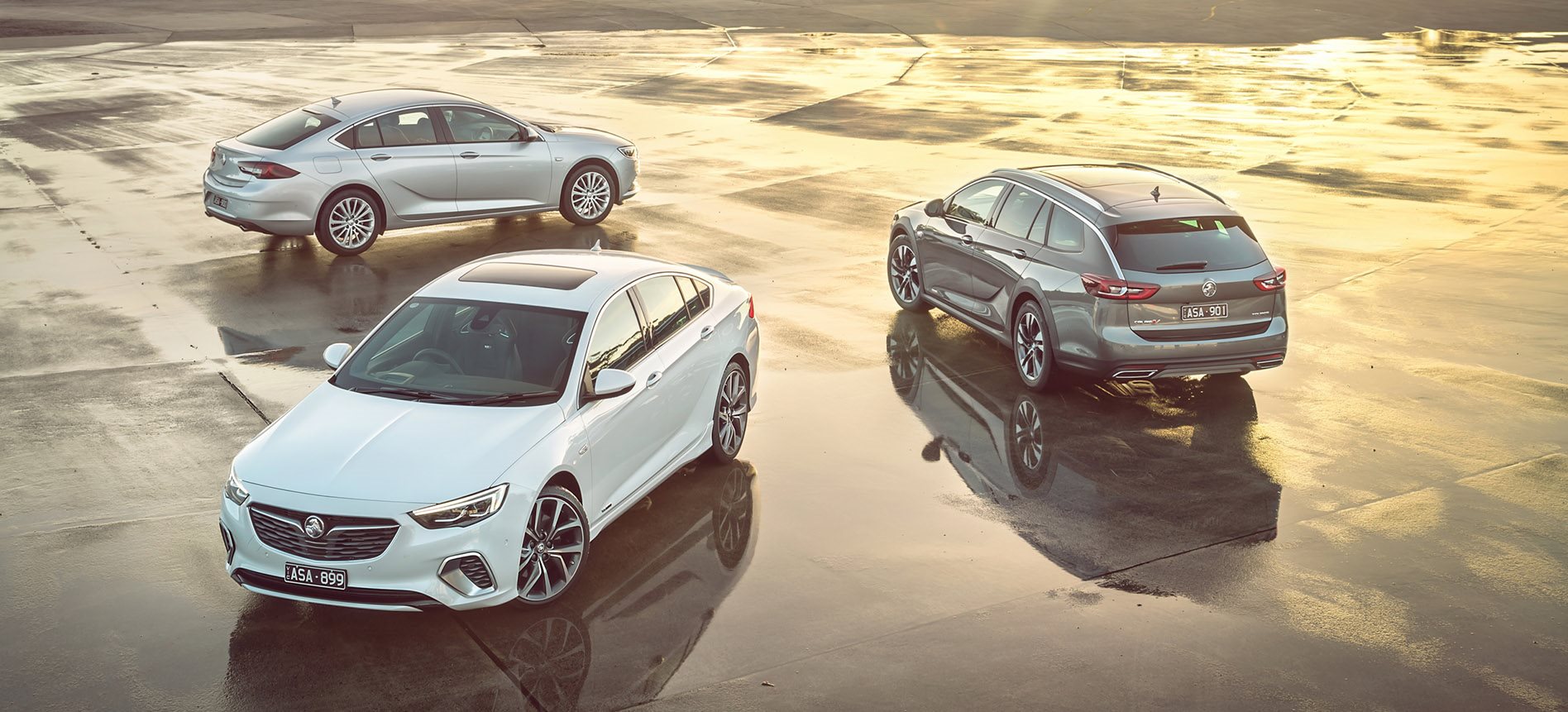
The Insignia’s departure from Vauxhall’s line-up marks the end of the manufacturer’s association with General Motors, having been sold by its American owner to PSA – now known as Stellantis – in 2017 after a 92-year run.
Under the control of Stellantis, Vauxhall will continue to sell rebadged vehicles from its European siblings in the UK, borrowing from the catalogue of Peugeot, Citroën and long-time partner Opel.
The Insignia-based Commodore continues to be a part of the Supercars Championship, scheduled to be replaced next year with the incoming Gen3 regulations which will pit Ford’s Mustang against the Chevrolet Camaro, although the Commodore will drop down to Super2 in the coming years as a choice for competitors in the feeder category.
As a first go at the concept, Mitsubishi’s last-gen Outlander PHEV was far and away the best option in the line-up. It took an older platform with gasping petrol engines, added a slick electric motor setup and – instead of complicating matters – just used the engine as a generator to juice the EV drivetrain when the battery ran out.
Simple, straightforward, but innovative. Flashes of the old Mitsubishi, the one that used to produce awesome concept cars and interesting road cars.
There’s a PHEV version of the vastly improved new Outlander coming but for the moment, the sole hybrid in the Mitsubishi range is the Eclipse Cross PHEV.

The Eclipse Cross is one of the now two SUVs based on the old Lancer platform, the other being the pensionable ASX – its long-overdue replacement will surface in 2023, we’re told.
Mitsubishi intended the Eclipse Cross to be that replacement – but buyers stubbornly refused to take the bait, or, more accurately, just kept buying the ASX.
In response, Mitsubishi rejigged the Eclipse Cross, made it longer, deleted the lower bit of glass in the tailgate and took itself off to battle with the Forester, RAV4 and Chinese interloper, the MG HS.
How much is it, and what do you get?
At the top of the range, the Exceed wallops you with a $54,490 price tag –and that’s before on-road costs.
The entry-level ES is hardly cheap at $46,990 plus on-road costs, but it is reasonably well-equipped and has the important bit – the PHEV drivetrain.
Although the drivetrain itself dates back to 2013, I will concede, as did my colleague Tony O’Kane in a recent comparison with the MG HS and Kia Niro, that it was ahead of its time.

For your nearly sixty grand on-the-road you get 18-inch alloy wheels, an eight-speaker stereo, dual-zone climate control, front, side and reversing cameras, keyless entry and start, front and rear parking sensors, wireless phone charging pad, part-digital dashboard, adaptive cruise control, electric and heated front seats, sat-nav, auto LED headlights, auto wipers, head-up display and a tyre repair kit.
An 8.0-inch touchscreen runs a tired old media system but does provide Apple CarPlay and Android Auto. It also features a fairly comprehensive (if confusing set) of screens detailing the way the car is using its two energy sources and brims with largely unreadable statistics, at least until you dive into the owner’s manual.
How safe is it?
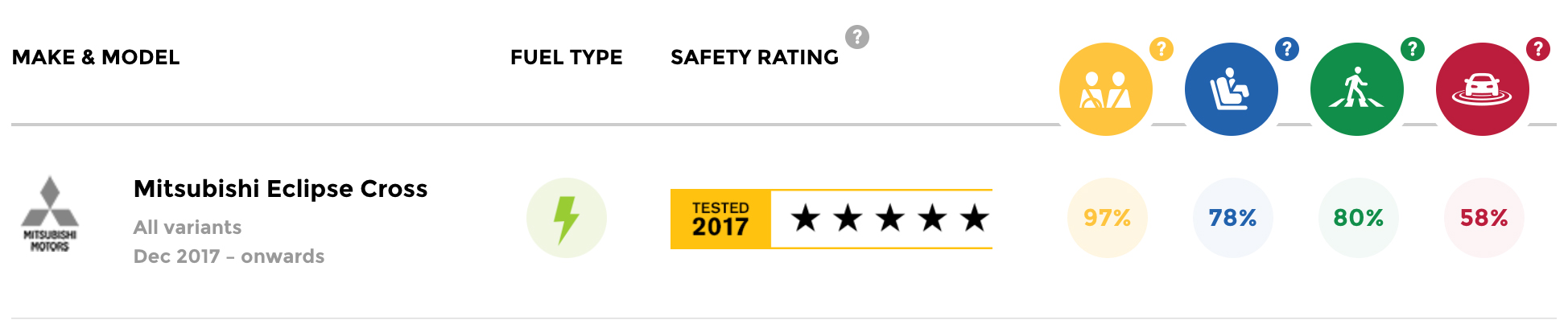
The five-star ANCAP safety rating dates back to 2017, with seven airbags, ABS and stability controls, blind-spot monitoring, forward auto emergency braking with pedestrian detection, reverse cross-traffic alert and lane departure warning.
The kids are looked after with two lots of ISOFIX points and three top-tether anchors.
Let’s move inside, how is the cabin?

It was quite useful that this car had clearly been through the press fleet wringer, with nearly 7000km under its steel-belted radials.
The interiors of press cars take an absolute pounding, with sometimes careless drivers and passengers as well as enthusiastic photographers contorting themselves into all kinds of gaps at the expense of bits of trim.
For the most part, the interior had held up well, but the piano black around the gear shifter was notably scratched.
For a car with such an advanced drivetrain, it’s not especially stylish inside, and some of the switchgear is either super-old looking (heated seat switches) or chintzy (volume control).

Being based on the smaller ASX, interior space is much as you’d expect. One of the ASX’s redeeming features is its legroom and it is basically identical here in the Eclipse Cross, which is to say there’s a fair bit of it. There isn’t much support in the back seat’s cushion though, which is a bit of a shame, because the front seats are quite good.
Front seat passengers have two cup holders and bottle holders in the doors, with the same for the rear seat dwellers. The front features a handy-sized centre console bin and, under the climate controls, there is room for a phone.
Boot space is predictably smaller than the petrol-only Eclipse Cross, with a starting bid of 359 litres when the rear seats are in place and just 626 litres with them folded out of the way.
The reality is that both are probably higher than that as these figures feel conservative. Bottom line is, there’s a fair amount of space in the Eclipse Cross’s bulky body.
| Eclipse Cross PHEV | Toyota C-HR | Mazda CX-30 | |
|---|---|---|---|
| Rear seats up | 359L | 318L | 317L |
| Rear seats down | 626L | No official figure | 430L |
What is it like to drive?

The Eclipse Cross PHEV shares a number of irritating quirks with its ICE counterpart, like the weird driving position and the mystifying inability of Mitsubishi’s chassis engineers to use the multi-link rear suspension to good effect.
Steering feel is vague and free of any information from the road surface. The artificial weighting as you turn the wheel also isn’t especially helpful, although that’s less of an issue around town.
It really does feel its age underneath the strikingly designed body. In contrast, the new Outlander shows that Mitsubishi can do so much better.

The style-focused rising rear window line does compromise your vision when you’re doing a head check, so blind-spot monitoring is certainly a handy inclusion. And the ride around town just isn’t as settled as I’d like it to be given what else is available in the class. I’ll get to the freeway in a minute.
Of course, the really important bit about this car is the PHEV drivetrain. Unlike, say, the RAV4 hybrid (not a plug-in) or the MG HS PHEV, the Eclipse Cross has a very simple system. Two electric motors – one for the front, one for the rear – drive all four wheels.
A 13.8kWh battery provides a claimed electric-only range of 55km and hot damn did I get close to that, with 52km on the trip before the engine stepped in to serve up the electrons via exploding hydrocarbons.
So it’s basically a 2.4-litre generator with 94kW at 4500rpm, and that’s just fine. It’s relatively simple and effective.
What’s great about this drivetrain is that it loves to operate in EV mode

The front motor delivers 60kW and 137Nm while the rears serve up 70kW and 195Nm, for 130kW and 332Nm totals; quite respectable, really. It’s just a pity the car weighs a hefty 1890kg.
What’s great about this drivetrain is that it loves to operate in EV mode. Even when requesting brisk acceleration, the Eclipse Cross did not resort to extra kick from the engine, relying on the battery to do its thing. It’s really quite good and gives you that EV-on-a-budget (well…) vibe.
And you can do this day-in, day-out by charging the PHEV from a wall socket, taking just a few hours to return it to full even without a wallbox.
For most Australian city-dwellers, 50-odd kilometres of electric range is plenty for a day’s motoring and if you have solar panels it’ll cost you basically nothing to charge. If you have certified carbon-free grid power, you won’t be putting out any CO2 either.

The DC fast-charging compatibility – something a surprising number of PHEVs don’t have – also means a 25-minute charge. If you’re at a shopping centre so equipped, that should be more than enough while you’re tearing around trying to avoid getting the plague.
On top of that, vehicle-to-grid capability is built-in, so when you have all the right bits and pieces, you can power your home in the event of a blackout or it will stabilise your power in the event of a brown-out.
There are limitations, of course, but that’s mighty handy and will be so during the inevitable teething problems as we phase out coal generation over the next few decades.
How is it on fuel?
My plan for the week was to see what happens when you run through the battery and don’t have the time or opportunity to recharge.
This is where it gets interesting. From a Monday pick-up, we made it to Thursday, a combination of working from home, self-imposed people avoidance and Christmas holidays meaning we weren’t going anywhere far.
We locked it up, used another car on Friday and then set off for a drive to Katoomba from Sydney on Saturday.

Again, it turns out that the PHEV system is really clever. It doesn’t completely drain the battery, so like a series hybrid from Toyota, it’s always there with a little electric juice to get you on your way or creep along at low speed.
The engine kicked on and stayed on for the run down the M5/M4/M7 and up the Great Western Highway to Katoomba. Once there, it was on and off as we dribbled around car parks and along the main street.
Take-away lunch secured, we found a spot to eat overlooking the Megalong Valley and the battery kept the climate control going and us comfortable. I was most interested in the run down the hills and how much energy the car would recover for the battery. Weirdly, it wasn’t much.
Like the petrol versions, the PHEV has lovely alloy paddleshifters, but here they instead let you choose between five levels of regenerative braking. Even set at its maximum setting, the run down the mountains didn’t recover much energy, although it did keep the engine off or running at low revs.

On the freeway, engine droning away to hold us at 110km/h, it’s quite noisy, with lots of tyre, wind and road noise penetrating the cabin. As I always say, the M4, in particular, is pretty wretched, but others in the segment do a far better job of maintaining a quiet cabin, so that was a bit of a shame.
Speaking of being held to 110km/h, the cruise control was a little, shall we say, lax about things. The speed would often drop well below the set marker for no apparent reason. That gets on your nerves pretty quickly.
We know from experience that if you drive the Eclipse Cross PHEV as intended, with the battery charged, your fuel use can be extremely low – we’ve achieved 2.8L/100km in rigorous testing, which is impressive.
This time around, our plan was to see how it fares in those situations where you’ve forgotten, or weren’t able, to get that battery charged. The result 11.2L/100km.
After a couple more days in town, the fuel economy improved to 8.3L/100km, but still not where you’d want a hybrid to be. Best to keep that battery topped up as much as possible, then.
We know from experience that if you drive the Eclipse Cross PHEV as intended, with the battery charged, your fuel use can be extremely low – we’ve achieved 2.8L/100km in rigorous testing, which is impressive.
How long is the warranty, and what are the running costs like?

Mitsubishi offers a 10-year warranty on all its cars but you do need to read the print to understand it. It’s not fine print – nothing so sneaky here lest the ACCC wield the banhammer – but you need to know the details.
First, it applies for 150,000km, which for most people is fine. Second, and this applies to all owners, you have to service it at a Mitsubishi dealership or risk reverting to the standard warranty of five years/unlimited kilometres, which itself isn’t terrible.
Servicing is also covered by a ten-year program, which is mighty helpful and matches the warranty’s length of 10 years/150,000km. Four of these services cost $299, three cost $399 and the remainder a whopping $799.
That gives you a ten-year service bill of $4790 or $479 per year on average. That’s not super cheap for a car that is hardly the last word in luxury and technology, drivetrain aside. An ICE-only Eclipse Cross is about a thousand dollars less to service over the same period.
Would you recommend it?

For the price, I’m not sure the Exceed is the one to go for. Once you stack on the on-roads and servicing, you’re getting awfully close to the price of an unadorned Polestar 2 or, shockingly, a Tesla Model 3.
Neither are as well-equipped but if you live in the right state and are more interested in electric motivation than ultimate safety or comfort, the Eclipse Cross Exceed’s proposition is a little shaky.
Venture down the range and with less bling and a lower price tag, the PHEV starts to make sense if you’re committed to charging it regularly and only want the ICE as a backup for visiting Aunty Merle out in the bush.
Whichever Eclipse Cross PHEV you buy, though, you’re certainly getting the best one because it is better than the petrol-only version in the same way the Outlander was – and by a similar margin.
If you’re just looking at the direct competition – the MG HS PHEV – you’re getting a pretty good deal from the Mitsubishi for a few more dollars as well as the backing of a long, long warranty.
2022 Mitsubishi Eclipse Cross Exceed PHEV specifications
| Body: | 5-door mid-size SUV |
|---|---|
| Drive: | all-wheel |
| Engine: | 2.4-litre four-cylinder |
| Transmission: | single-speed reduction gear |
| Power: | 94kW @ 4500rpm (ICE) |
| Torque: | 199Nm @ 4500rpm (ICE) |
| Bore stroke (mm): | 88.0 x 97.0 |
| Compression ratio: | 12.0 : 1.0 |
| EV drivetrain | 60kW/137Nm front; 70kW/195Nm rear |
| EV range | 55km (claimed) |
| Battery capacity | 13.8kWh lithium-ion |
| 0-100km/h: | 10.9 sec (claimed) |
| Fuel consumption: | 1.9L/100km (combined) |
| Weight: | 1890kg |
| Suspension: | MacPherson struts front/multi-link rear |
| L/W/H: | 4545mm/1805mm/1685mm |
| Wheelbase: | 2670mm |
| Brakes: | 310mm ventilated disc front / 290mm solid disc rear |
| Tyres: | 255/55 R18 Bridgestone Ecopia |
| Wheels: | 18-inch alloy wheels ( spare) |
| Price: | $53,990 before on-road costs |
