Snapshot
- Ferrari plans to introduce an additional 15 models by 2026
- 60 per cent of the model line-up will be electrified by that time
- Latest hypercar to launch next year ahead of Le Mans debut
Ferrari has announced new production plans, confirming it will launch 15 new models into its line-up by 2026, while also outlining its targets for electrification.
Off the back of reports earlier this week which suggested the Italian manufacturer was building a new production line for electrified vehicles only, Ferrari has confirmed it is aiming for 60 per cent of its model range to feature some form of electrification by 2026 – with 55 per cent to be hybrids, while the remaining five per cent will be fully-electric vehicles.
This will only swing more in the direction of electrified vehicles by 2030, as pure internal combustion engines will power just 20 per cent of the model range – with hybrids and EVs split evenly between the rest of the line-up.
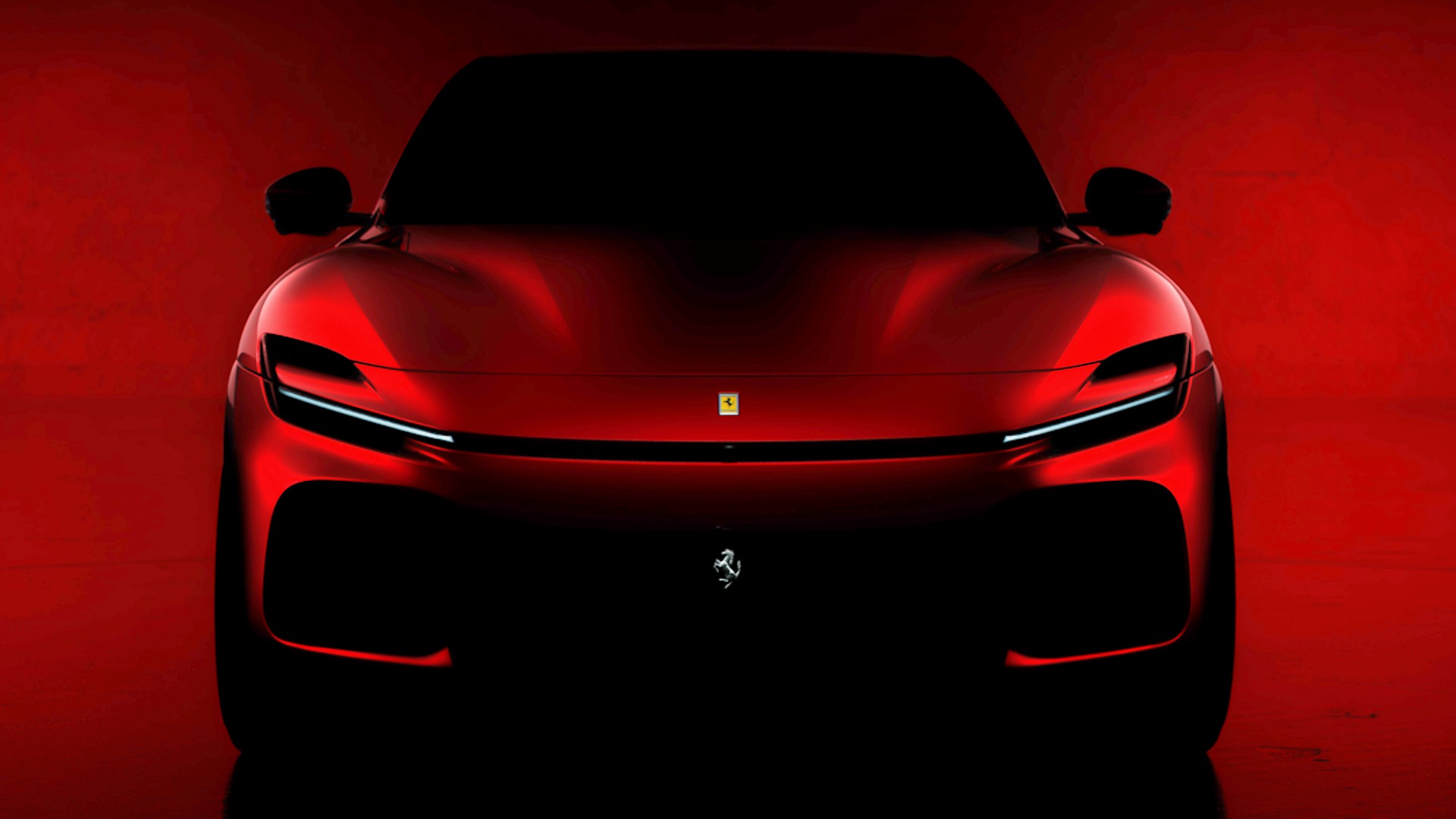
While covers will officially come off Ferrari’s Purosangue V12 SUV in September this year, we’ll have to wait until 2025 to see the Prancing Horse’s first EV, leaving the marque just five years to reach its target of going carbon neutral by 2030.
Despite this being Ferrari’s first attempt at a high-riding, four-door SUV, the Purosangue is expected to account for 20 per cent of the brand’s sales over its lifetime, while models from the Super Series and Icona Series will make up just 10 and five per cent of all deliveries respectively.
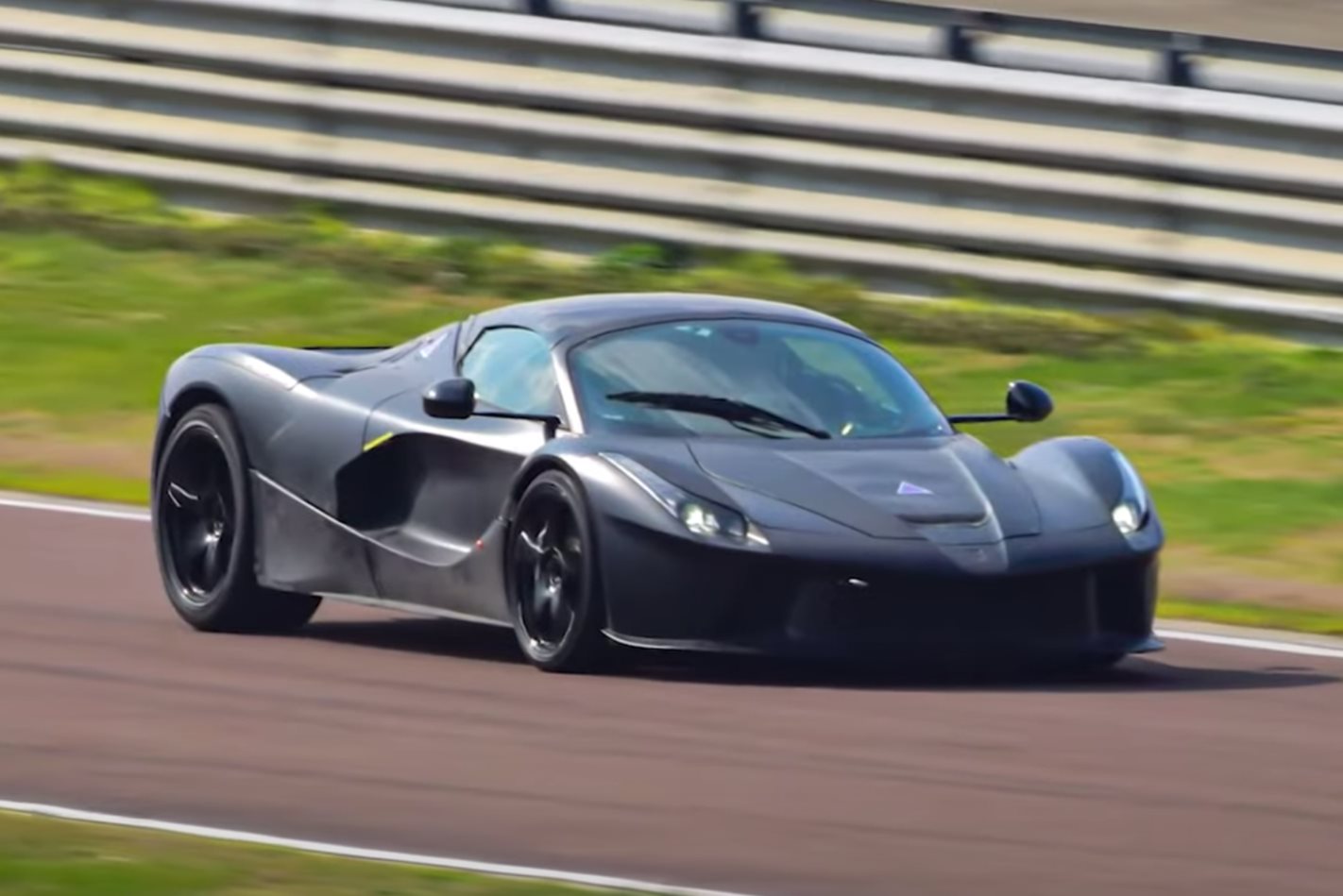
Making its debut in the top tier of the Ferrari line-up will be its latest hypercar, internally dubbed ‘Supercar’ despite its status as the direct replacement to the LaFerrari.
Although no details have been confirmed as yet, it’s tipped to be the first flagship Ferrari since the F40 to use a non-V10 or V12 engine, with a hybrid twin-turbo V8 likely to be fitted.
The yet-to-be-named hypercar isn’t just for the road – it will also be Ferrari’s challenger for the Le Mans Hypercar category in next year’s World Endurance Championship, signalling Maranello’s first time in the top class in 50 years, taking to Le Mans in the centenary event.
“Our brand fuels the dreams of millions. It has been built up over 75 years of thrilling, memorable experiences, through success on the track and sheer driving pleasure on the road,” said Ferrari Chairman, John Elkann.
“It has created an inclusive, close-knit community that encompasses diverse people, countries and even industries. As long as we preserve its heritage and values, it will lay a solid foundation for our future strategic plans”.
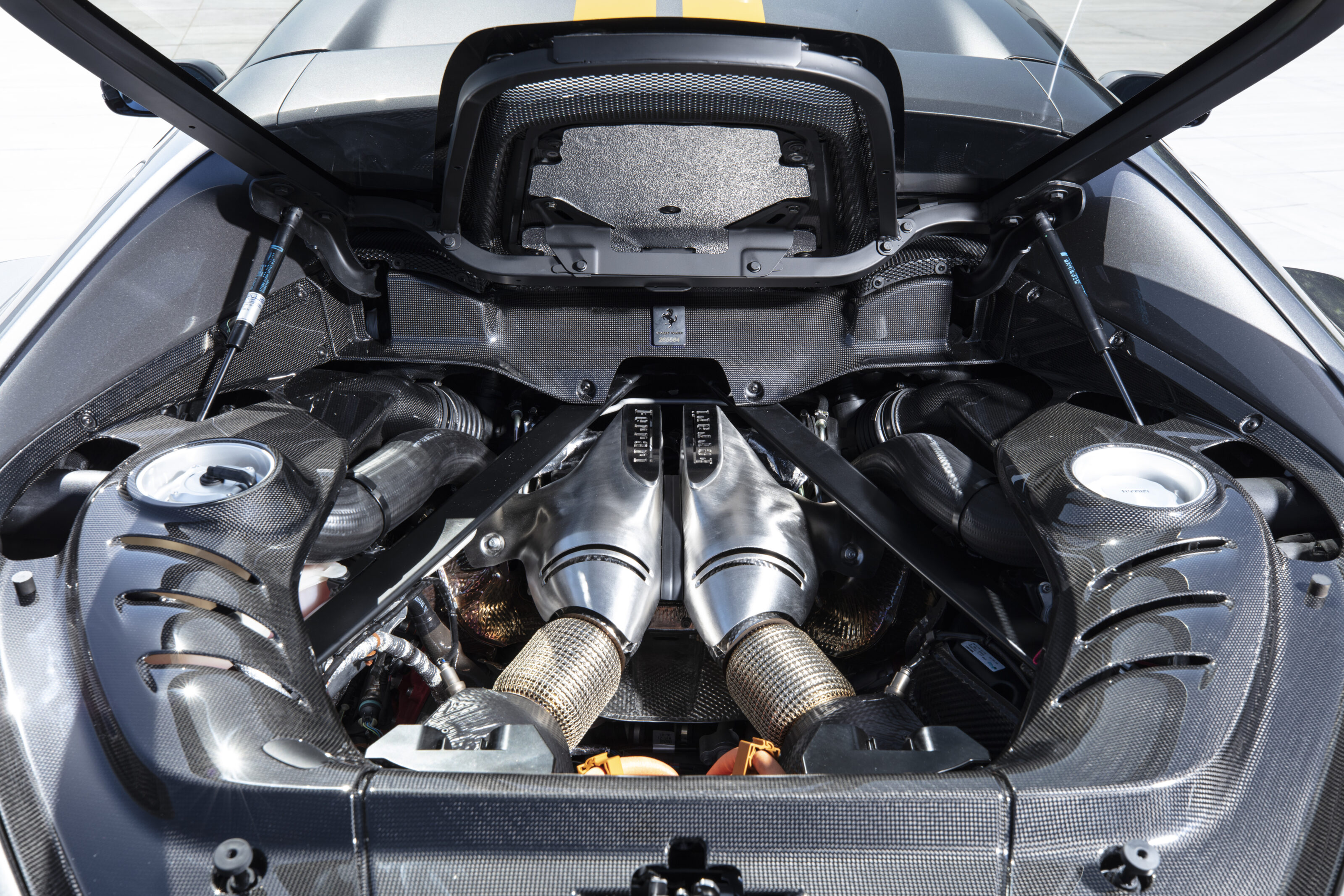
Ferrari’s current electrified model range consists of the SF90 and 296 GTB, both of which are plug-in hybrids.
Related video
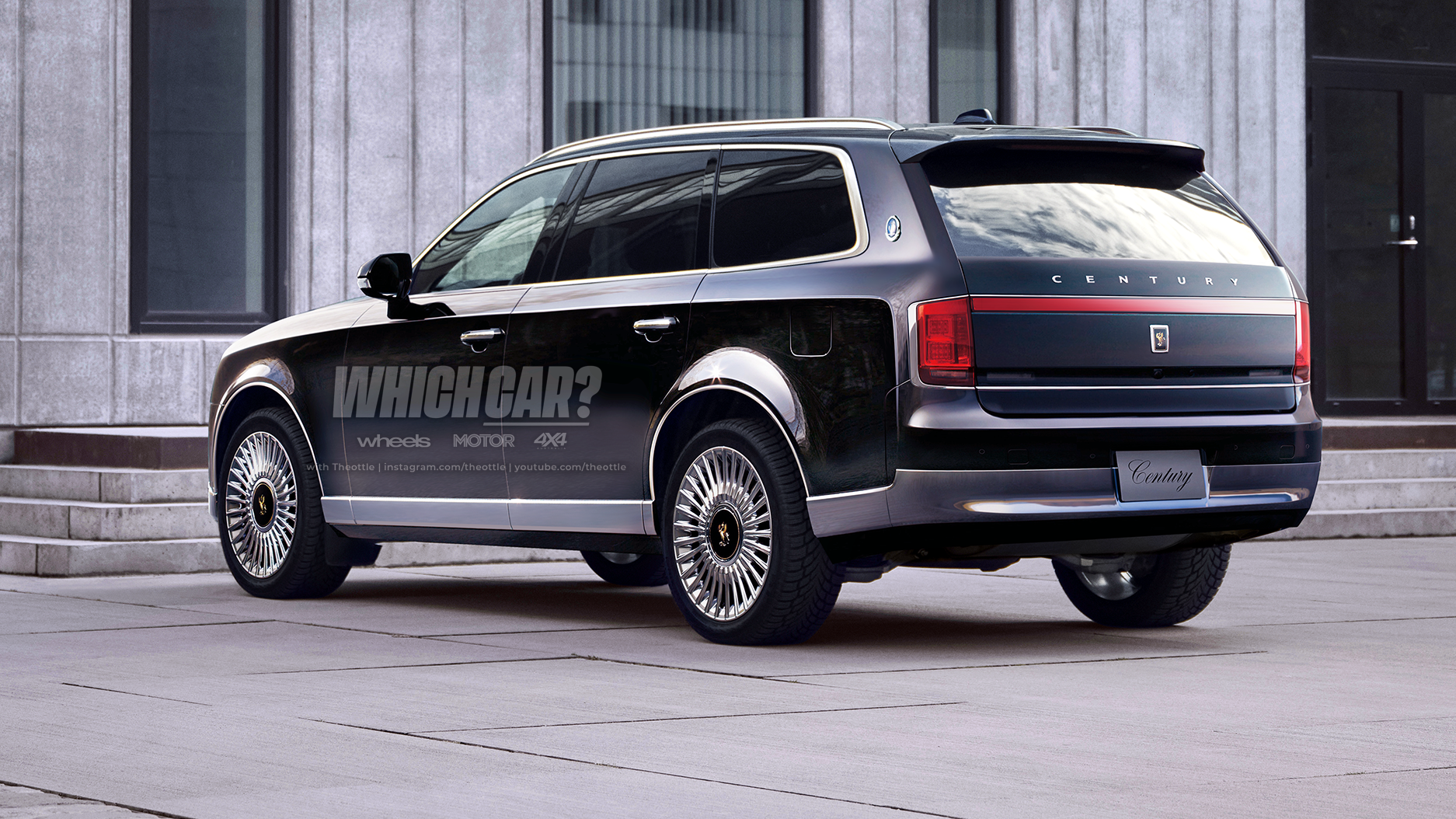
Perhaps not realising the impiety of his actions, Photoshop wizard Theo Throttle has rendered the Toyota Century as… an SUV.
Wielding his mouse and keyboard shortcuts with reckless abandon, Theo has given the legendary Japanese limousine the body it would need to succeed in the West.
Because, let’s be real: if Toyota were to once again offer the Century badge in America, Australia or Europe, the ‘upper large’ luxury SUV space is where it would have to compete.
Yes, Rolls-Royce still does conventional models in the Phantom and Ghost, and the ‘affordable’ Ghost is admittedly its top seller, but the flagship Cullinan SUV is where the brand has seen greatest attention and demand since its 2017 debut.
If Rolls offered an SUV at the Ghost price point, there’s no question it would eclipse all other models in the line.
Likewise, Bentley offers the Bentayga SUV in short and stretched forms, Mercedes has launched the GLS as a high-riding successor-of-sorts to the S-Class, and a more luxurious Maybach version is also offered.
BMW’s X7 resides in the same space (where a more upmarket Alpina model might someday join it), and the big new Range Rover has again pushed the idea of luxury SUV into new territory.
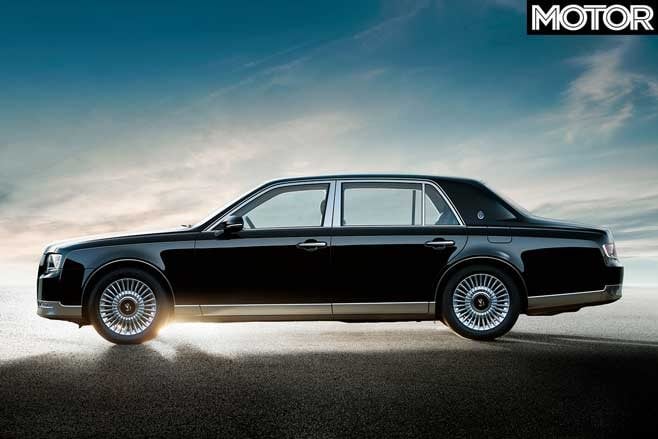
So… beyond Japan, the Century would perhaps make best sense as an SUV.
It’s a good thing then, for zealous adherents of the Century legend, that Toyota is unlikely to offer its most exclusive, hand-built icon in the West again.
For 55 years, accounting for just three generations of Century, Toyota has shown little inclination to turn its group flagship – yes, it sits in higher esteem than the Lexus LS – into an earner.
It has always, but especially now, existed only to showcase the best the brand can offer, to its own definition of the term, for the only market that can ever truly appreciate all it represents: Japan.
I do really bloody like how this one looks, though.
If you want to ruffle Audi’s feathers, simply refer to the accomplished S3 Sportback as a hatchback. “No, no, no,” Audi will object, “It’s kind of a little high-performance wagon”. And to an extent, I agree.
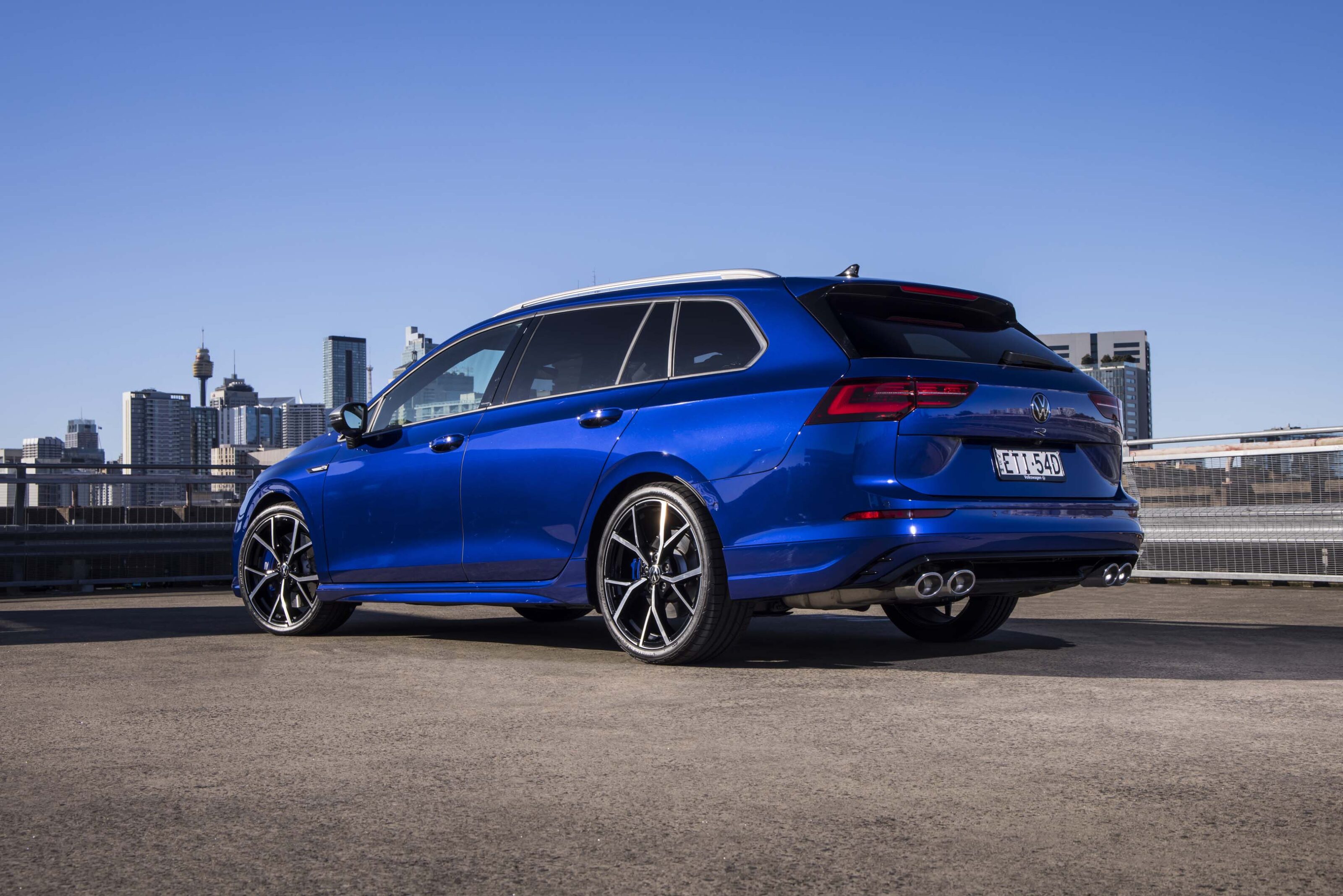
The Audi in question is a small car with a respectably sized boot, accessed through a fifth door, while offering ample room for adults in the second row. So it would qualify, in at least one definition, as a little wagon. Except I’ve just driven Volkswagen’s new Golf R wagon and the S3 has never looked more like a hatchback in hindsight.
Compared with the Golf R hatch, this second-generation wagon is a significantly extended evolution with a longer wheelbase, bigger boot and more room for passengers in the second row. Does this blend of proven performance and peak practicality work in practice or only in principle?
For a start, there’s plenty of muscle thanks to a 20Nm torque boost over the hatch that takes output to 420Nm, while power remains at a generous 235kW from the prolific EA888 turbo 2.0-litre four-cylinder.
In Comfort mode, the seven-speed dual-clutch automatic transmission can seem a little lazy and unwilling to drop a gear or rev into the peak power range, so calling on maximum motivation in a hurry can be frustrating.
Flick over to one of the numerous other drive modes, however, and the entire nature of the R wagon changes.
In Sport and Race, throttle response is exceptionally good and any suspicions of turbo lag are instantly dismissed. It’ll do the zero-to-100km/h dash only a tenth slower than the hatchback but 4.9 seconds is still very handy for getting to the shops in a hurry.
That’s paired with urgent and aggressive gearchanges from the oil-immersed dual-clutch for a wonderfully effortless method of covering distance.
There’s plenty of muscle thanks to a 20Nm torque boost over the hatch that takes output to 420Nm, while power remains at a generous 235kW
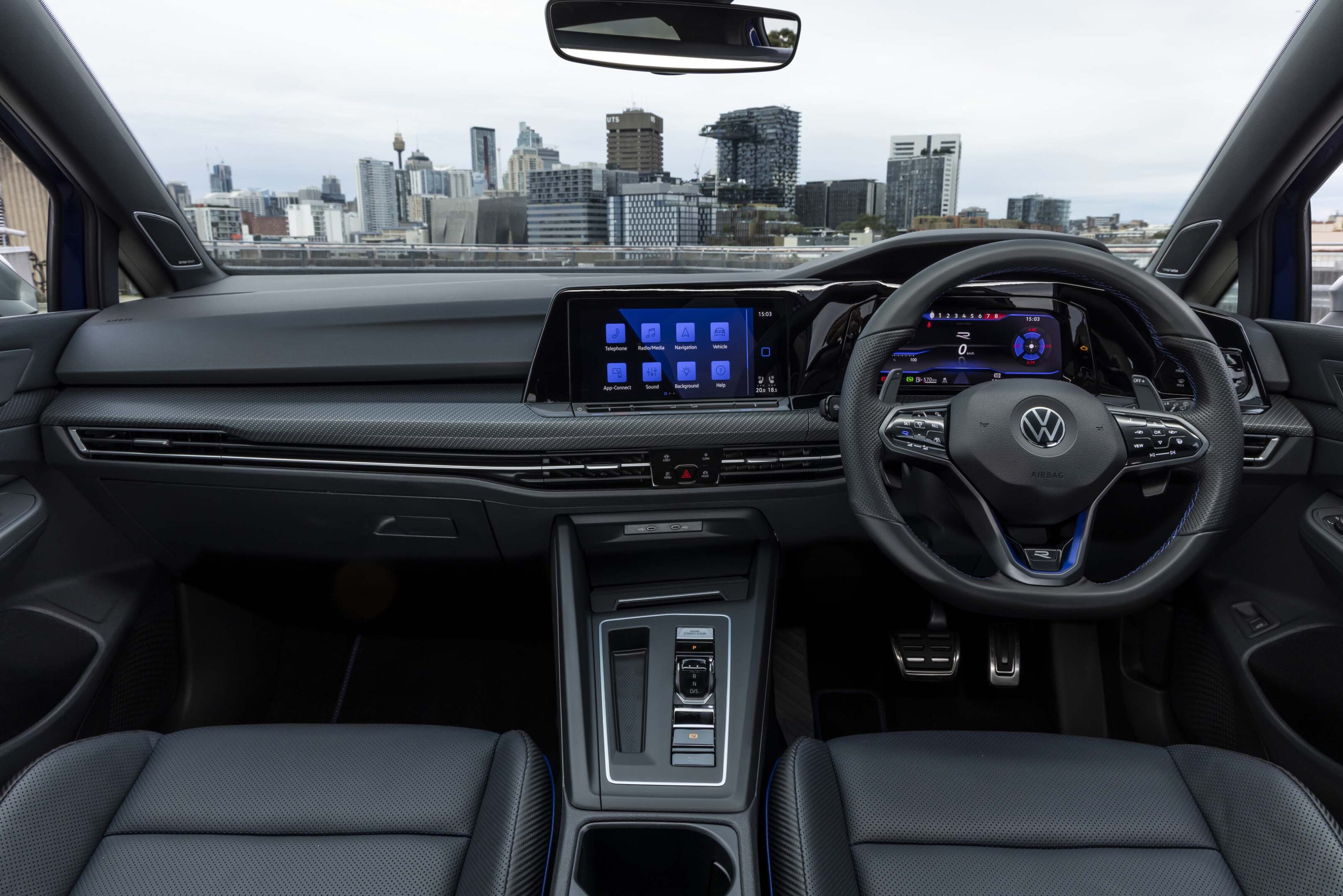
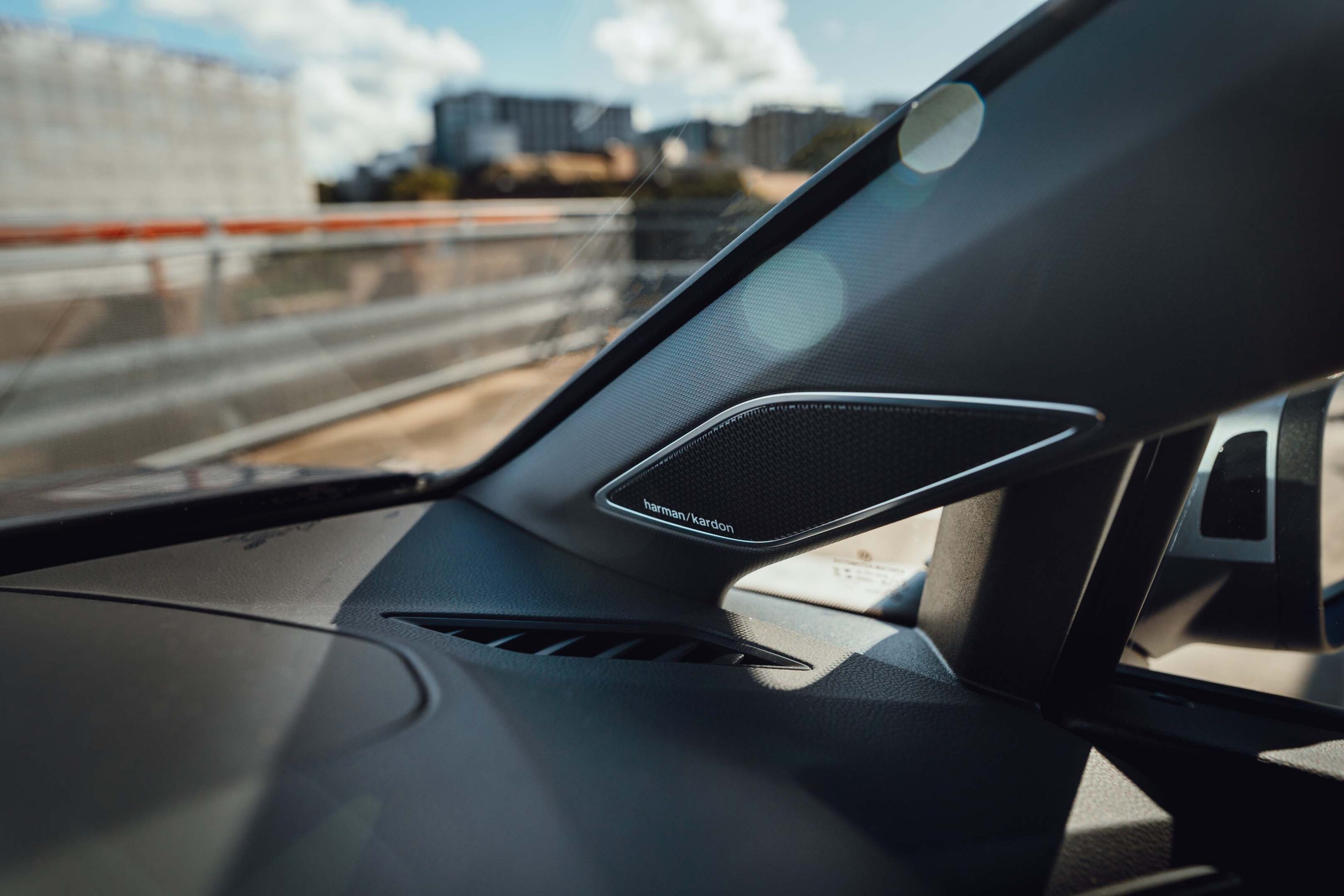
In the sportier modes, the exhaust backfires on overrun with the same unapologetic volume as a Hyundai i30 N but the general note gets no louder or more aggressive than in the mildest of modes so a little more theatre would have been good to accompany the other noticeable changes in the Golf’s character.
If VW offers the Akrapovic titanium exhaust offered for the T-Roc R, then we will be laughing.
In all modes, the steering loads up with a satisfying weight as lock is wound on and its nose turns in with the obedience that all versions of the Mk 8 Golf are known for. Give in to the steering’s confidence and encouragement and there is mountainous grip to be found in the wagon’s chassis.
Its 50mm longer wheelbase has imparted a greater sense of stability in faster corners and one particular favourite freeway slip road was dispatched with eye-opening pace.
That said, the turning circle is only widened by 100mm and any unwillingness to rotate compared with the hatchback would probably only be evident on the track.
What is obvious, however, is the greater mass that comes with the wagon body. With the extra dollop of torque, acceleration is virtually unaffected but the positioning of that additional 82kg certainly is noticeable when pushing the R wagon into corners.
The clever torque vectoring and sharp ESC intervene surprisingly often to resettle the unwieldy tail, which acts as a pendulum during aggressive changes of direction, exacerbated by the extended overall length (+354mm). It’s also not hard to find the limits of the relatively short suspension articulation.
Resistance to roll is conversely very good, as is overall handling, but the four bags of cement hanging over the rear axle cannot be entirely hidden – especially if you happen to get stuck in before the Hankook Ventus S1 Evo 3 rubber has had a chance to shake off a bit of Melbourne’s horrid chill.
With the extra dollop of torque, acceleration is virtually unaffected but the positioning of that additional 82kg certainly is noticeable when pushing the R wagon into corners.
To its credit, the stability program is very well tuned for the wagon and its effect is subtle, pinching a rear wheel rather than severing power when the limits of grip are nearing.
With no track time booked, Drift mode was regrettably not possible to test but I suspect the extra length and mass out back would make the slides possible in the hatchback even more hilariously sustainable. Nurburgring mode, however, is the absolute pick.
Its slightly softer and more compliant suspension setting – designed to pacify some of the Green Hell’s nasty bits – is particularly well-suited to Australia’s dodgy and sometimes unpredictable roads. It pairs with the more switched-on engine and steering settings for a mode that feels beautifully tailored for going fast Down Under.
Almost all other attributes are unchanged compared with the hatch. Brake feel is satisfyingly firm and more akin to multi-piston calipers than the Golf’s beefy single-pot sliding units. Tyre noise is a bit intrusive but ride quality is forgivably firm, with adequate suppleness, and the longer body feels rigid.
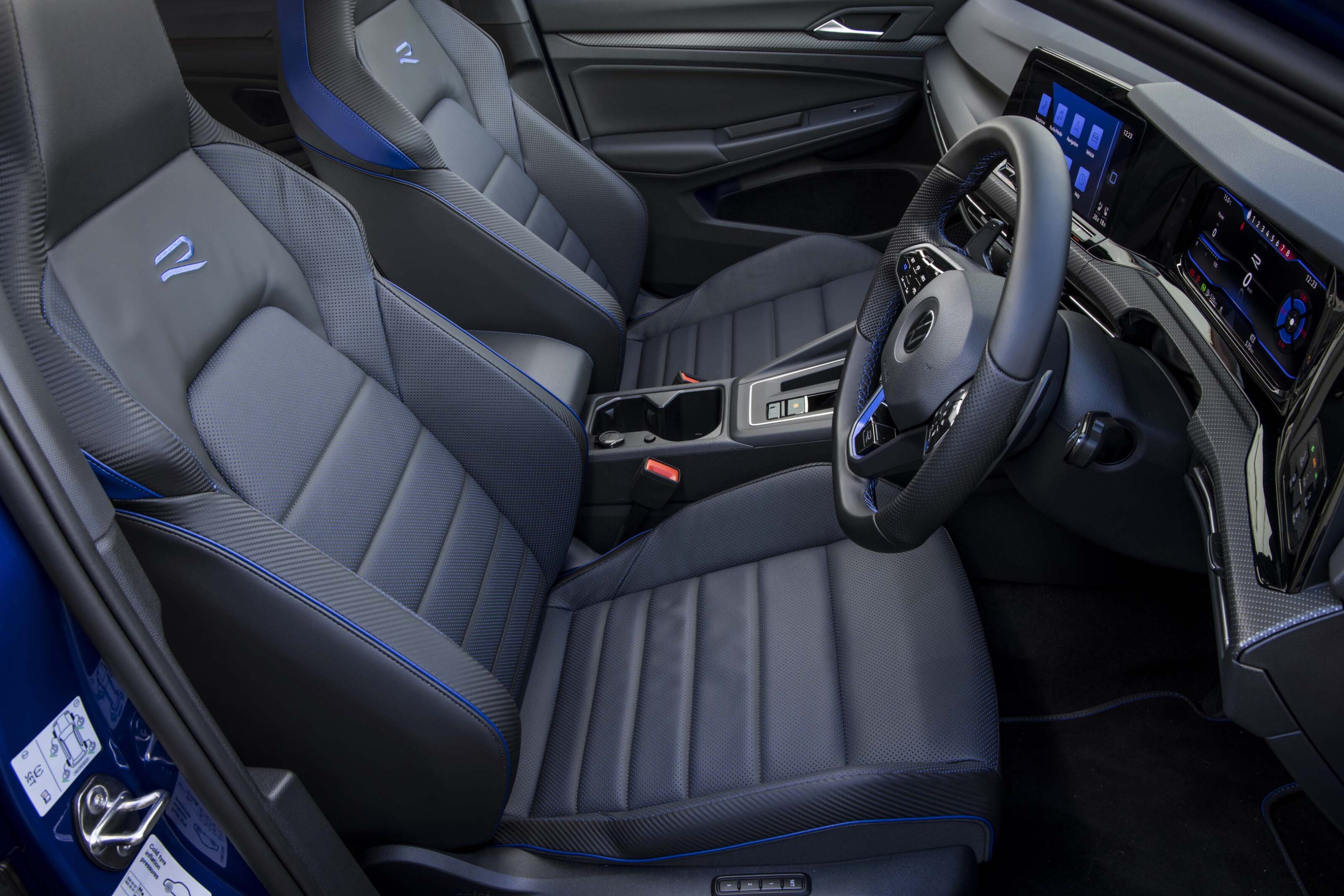
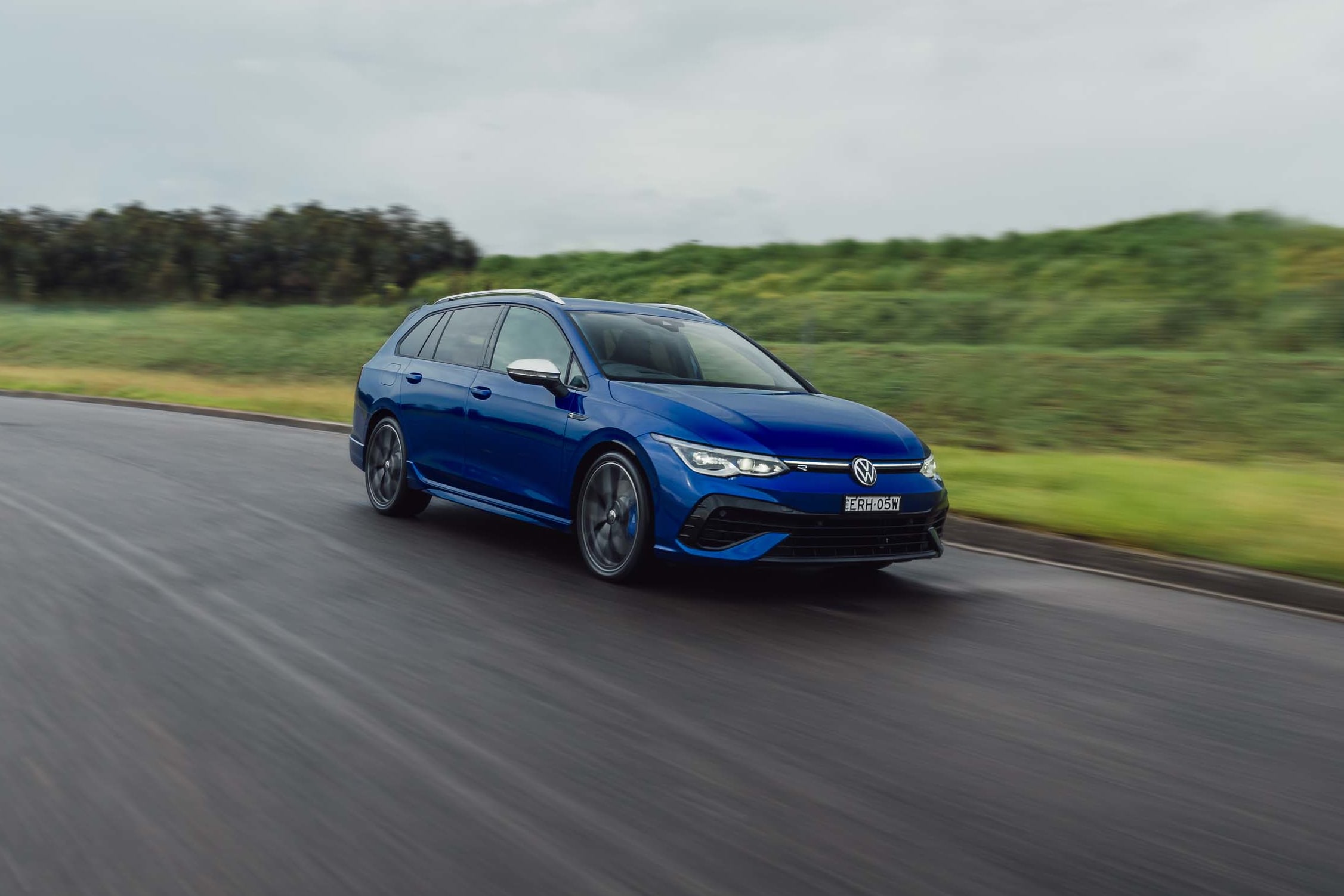
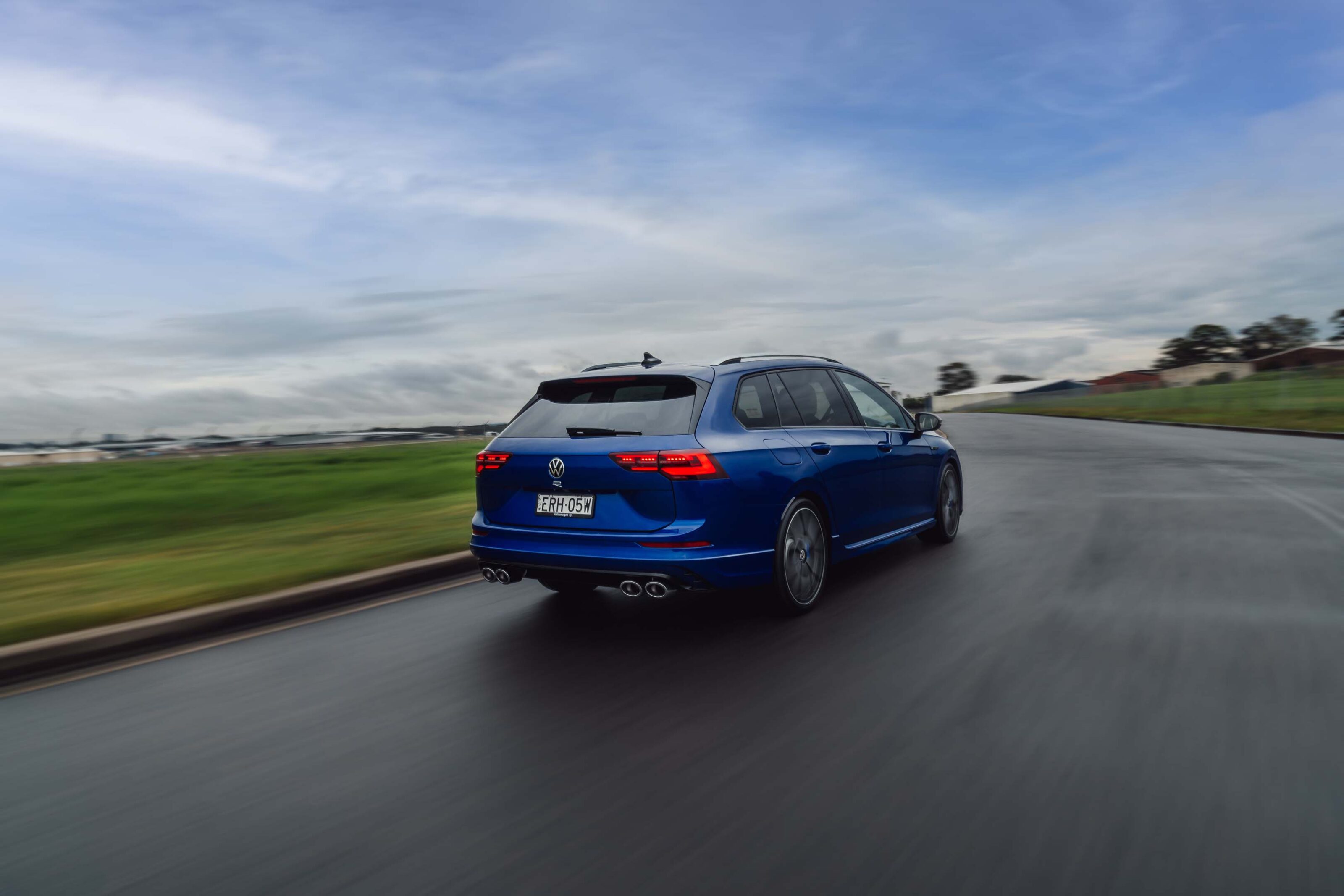
Front seats are bucketed and sufficiently supportive to justify the R branding without becoming punishing on longer rides, the driving position is less hot hatch and more large coupe, while the aggressive R styling translates to a wagon body brilliantly. Its presence and stance on the road is irresistibly cool.
I won’t waste too much page space relisting the standard equipment, which is identical to the hatchback, but I will spend a few words to pick out some of the highlights as well as the not-so-good.
Brake feel is satisfyingly firm and more akin to multi-piston calipers than the Golf’s beefy single-pot sliding units.
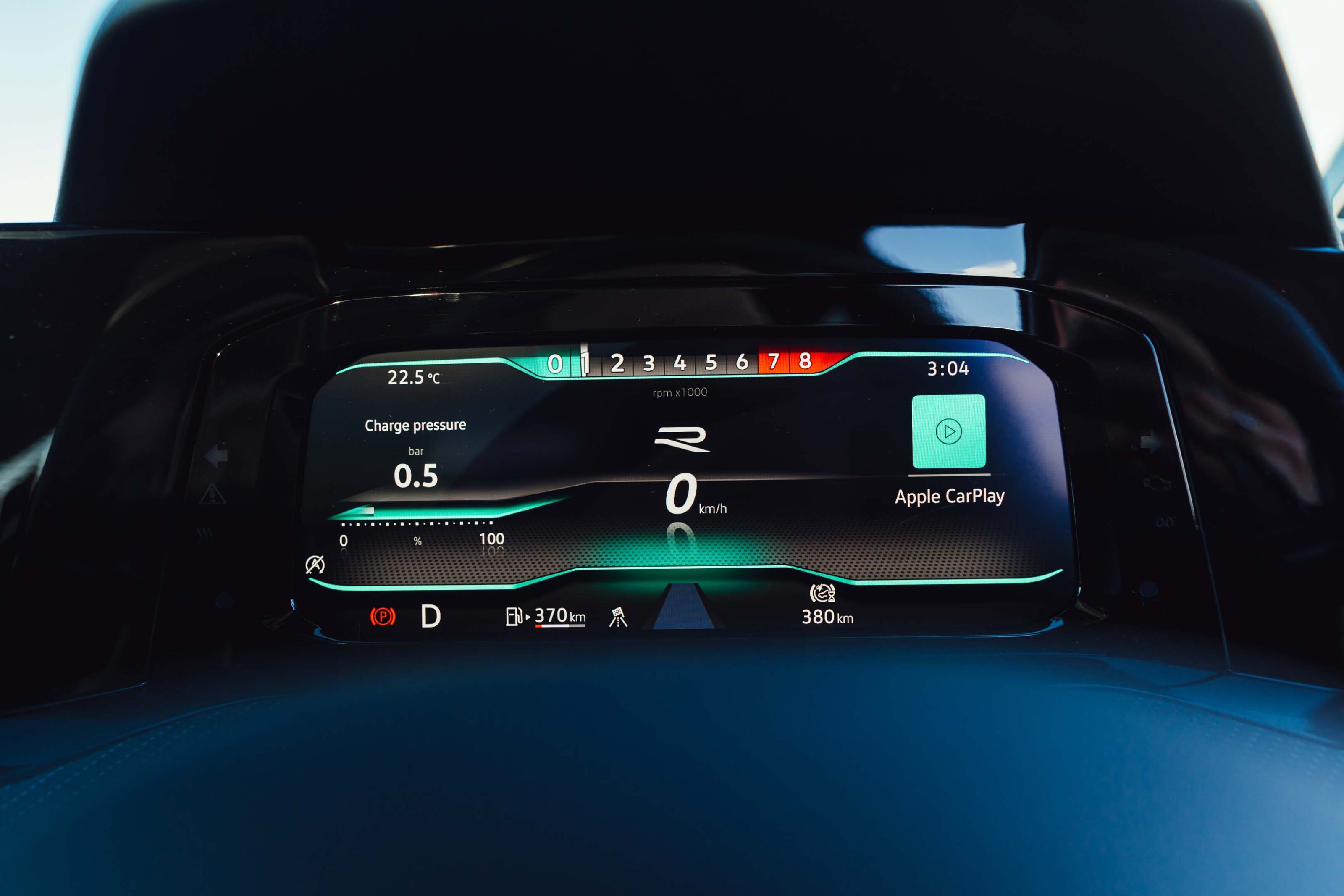
The interior is very well executed in typical Volkswagen fashion with a sharp central screen complemented by the digital instrument cluster, cool blue highlights, ergonomically excellent steering wheel and a general sense of refinement and quality as you might expect from the VW badge.
Inclusion of wireless Android Auto and Apple CarPlay, a head-up display, heated and ventilated front seats, multicolour ambient lighting, adaptive LED headlights and cool R puddle lighting at night all add to the premium feel of the flagship Golf, but more on that later.
On the flipside, I’m certainly not the first to bemoan some of the functional failures such as fiddly infotainment operation, lack of volume control knob and solid-state temperature controllers that don’t illuminate at night.
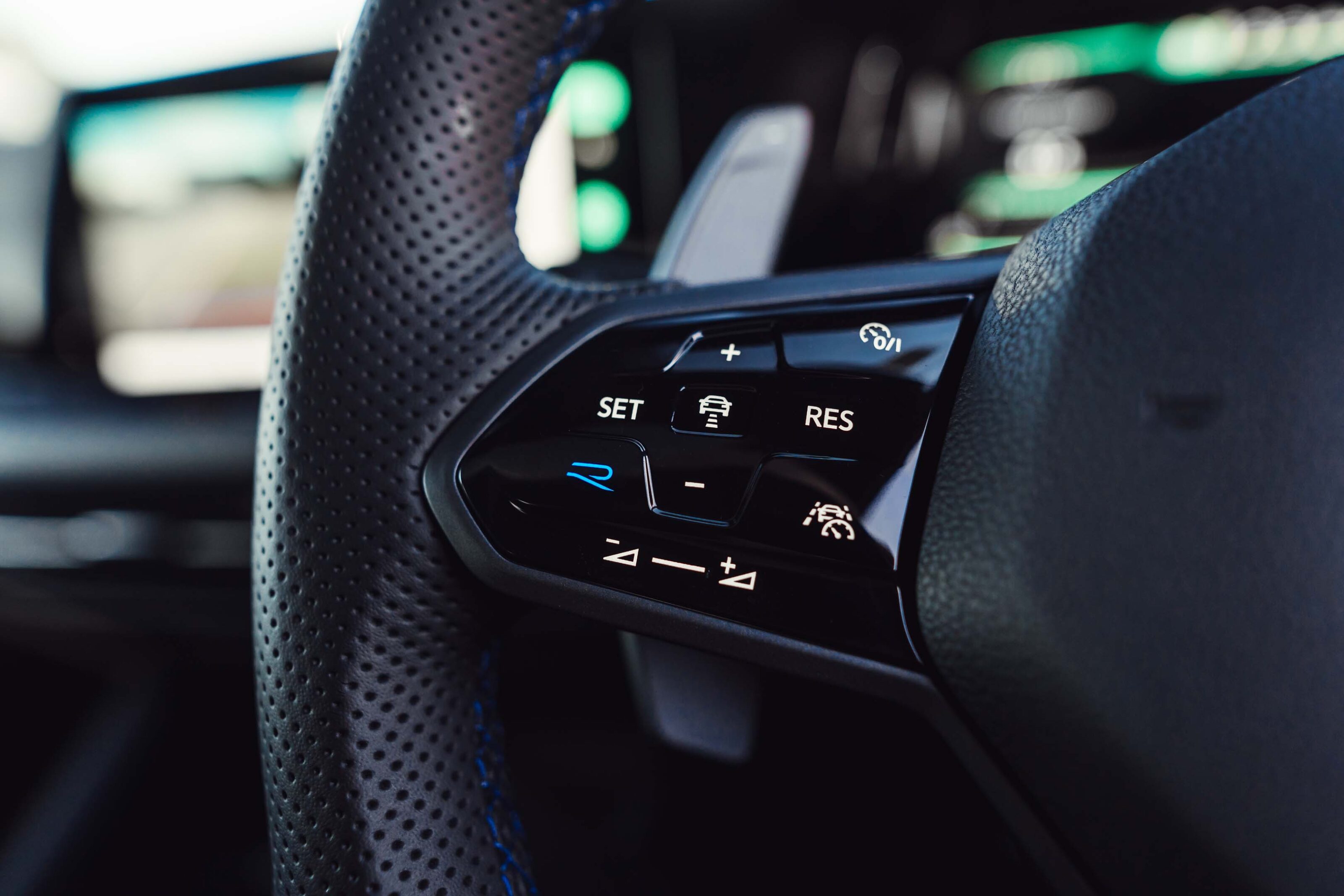
While I’m at it, I failed to see the logic in fitting steering wheel function switches that don’t click, but then adding in synthetic sensation with generated haptic feedback. Seems like unnecessary complexity for no real advantage.
All-round parking radar is included as standard but cries wolf while there is still a foot of car park to use up (perhaps it thinks it’s still fitted to the hatchback), while reverse emergency braking activated on two occasions for absolutely no reason at all, prompting an unscheduled change of underwear.
So why would you pay the extra $3000 and cop a small but noticeable performance compromise for the new Golf R wagon over the hatchback that we like very much?
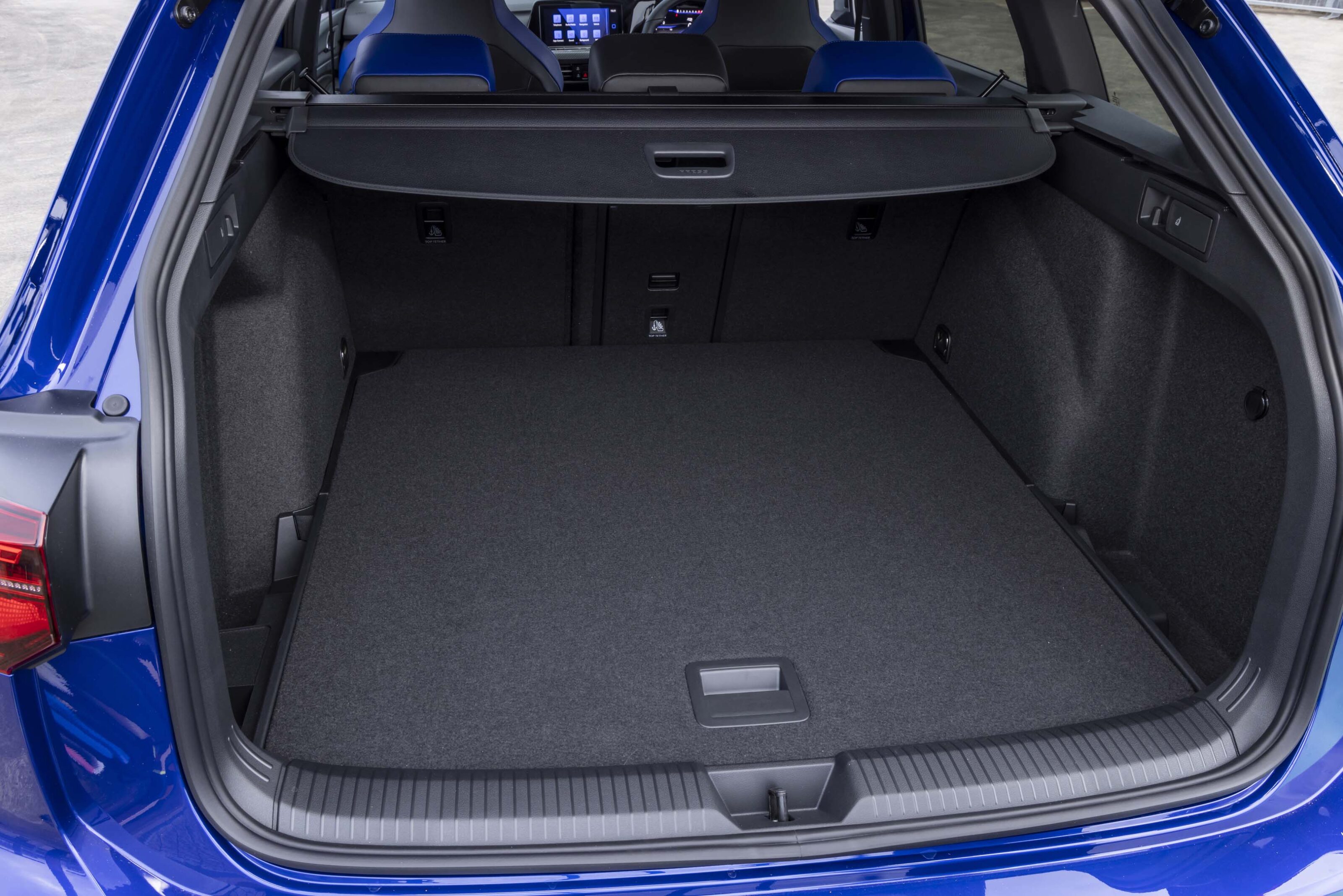
While the hatch has a relatively small boot, the wagon adds a whopping 237 litres of volume for a maximum capacity of 611L.
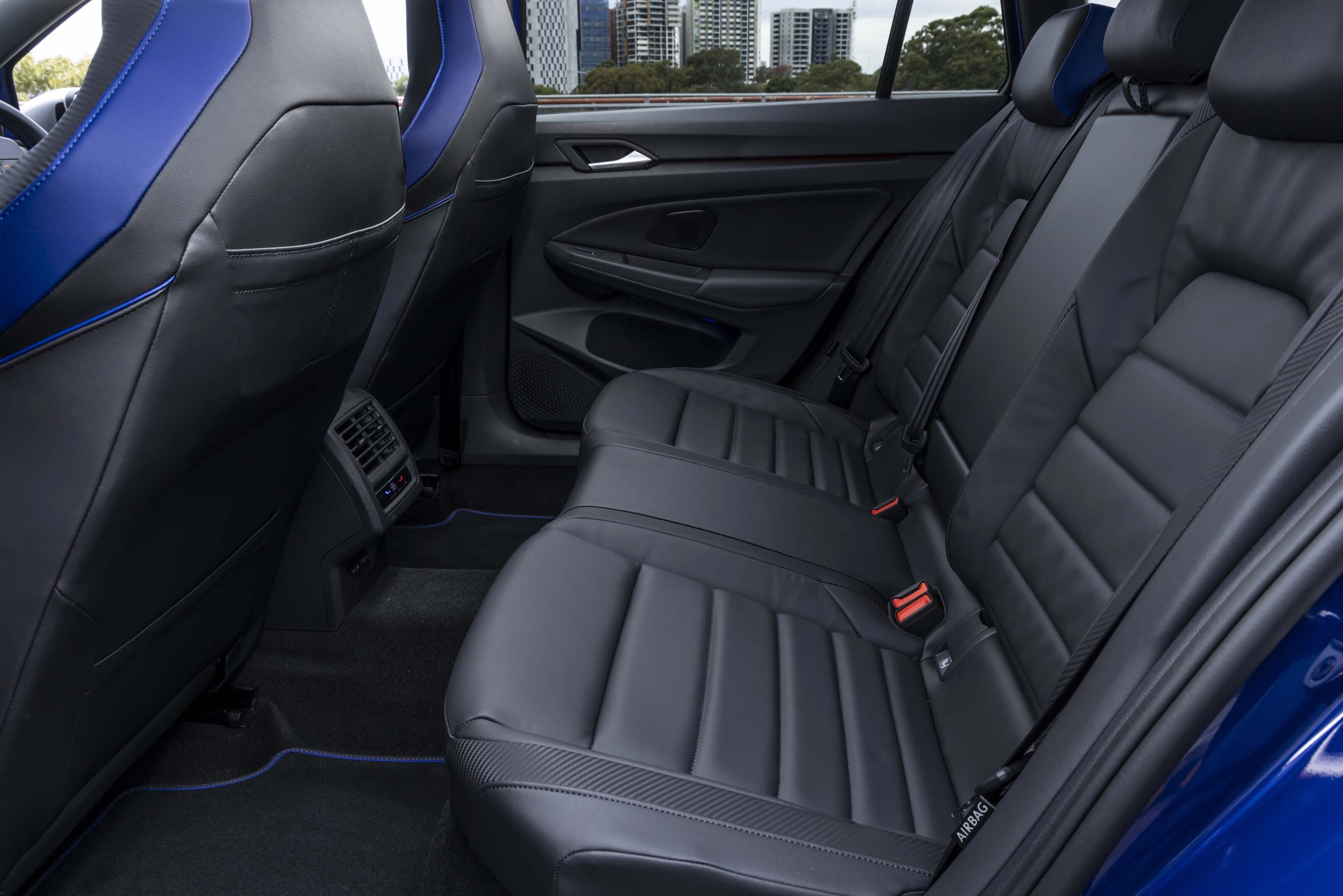
Not only that, the stretched length has liberated an extra 38mm of legroom for passengers in the second row. That mightn’t sound like much but in combination with a slightly raised roof, all five seats in the R are now reasonable propositions for longer trips.
There are also climate controls for the rear passengers, a couple of USB sockets, pleasantly reclined and supportive seats and two places for ISOFIX child seats.
When the full seating capacity isn’t required, the 60:40 folding rear seats open up a further 1031 litres of stowage – 412L bigger than the hatchback offers in full load mode. It’s not a completely flat load area, but the sheer size opens up mid-sized SUV levels of practicality.
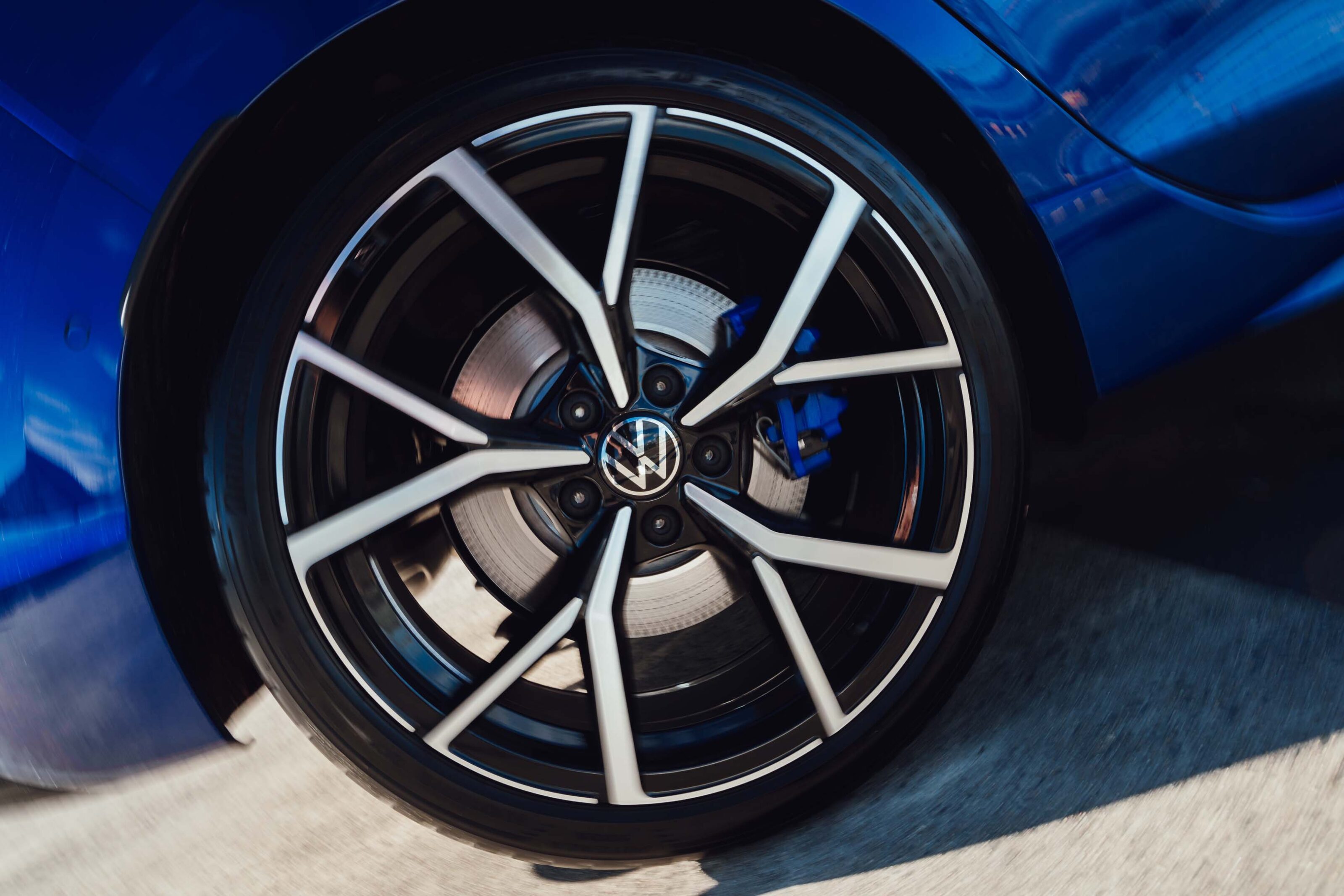
Curiously, there’s no space-saver spare wheel even though the subwoofer hidden beneath the boot floor appears to have been designed to accommodate one, and the dreaded inflator kit is your only option if one of the 19-inch tyres get a puncture.
If you, as many Australians still do, refuse to give in to the tsunami of SUVs to get into something more practical, and still want a level of driving engagement associated with the halo R brand, an extra $3000 over the hatch seems like a bit of a bargain. Or is it?
The Golf R wagon is doubtless many cars in one and offers something more family-oriented without having to stray too far from the very peak of Volkswagen’s performance envelope, but it might be guilty of trying to do too much.
Certainly, it nails the performance vs practicality ratio with almost all of the hatchback’s potency, plus a segment-leading boot and genuinely comfortable seating for four adults (or five for shorter trips).
The Golf R wagon is doubtless many cars in one and offers something more family-oriented without having to stray too far from the very peak of Volkswagen’s performance envelope
But it feels like it has been spread a little thin when a bid to boost the luxury credentials VW has thrown into the mix as well. With a price increase over the first Golf R wagon, the 2022 version is a nearly $70,000 proposition and just $1710 cheaper than the Audi S3 hatchback, sorry, Sportback, which shares much of the Golf R hardware.
To my mind, an R wagon that offers the same punch as the Audi but leaves the luxury stuff to the four rings and costs about $60,000 would make far more sense. Instead, VW is encroaching on its sister brand’s territory and allowing fledgling Cupra to cut the affordable performance grass instead.
Undeniably, the new Golf R Wagon is a well-rounded car that will appeal to the relatively small but loyal high-performance, high-quality wagon crowd.
Despite its price, you could argue that, in the all-wheel-drive performance wagon market, it has the stage to itself – especially as Subaru won’t be offering a WRX STI of any form, let alone in Sportswagon format.
The truth is though, no matter how good the R wagon is, VW will probably sell one for every ten T-Roc Rs that arrive later this year despite the former offering almost twice the luggage capacity, more torque, the same all-wheel-drive transmission and superior dynamics.
Market positioning, crowded segments and esoteric product propositions aside, there is one simple Golf R wagon fact that we can say with confidence – you won’t get a faster wagon for the same cash.
Unless Audi reconsiders and decides its S3 isn’t one after all.
The truth is though, no matter how good the R wagon is, VW will probably sell one for every ten T-Roc Rs that arrive later this year despite the former offering almost twice the luggage capacity, more torque, the same all-wheel-drive transmission and superior dynamics.
Snapshot
- Five-star rating for mid-sized SUV
- Top result for adult protection
- AEB result for pedestrians mixed
Haval has announced the five-star ANCAP safety rating awarded to its H6 SUV earlier this year now extends to the Hybrid and GT variants.
Only the standard petrol H6 was tested earlier this year, although the full-marks score now applies to Haval’s Hybrid offering and its soon-to-be-launched GT.
Read on below for details on how the Haval SUV fared. Our original story has been updated to reflect the latest information.
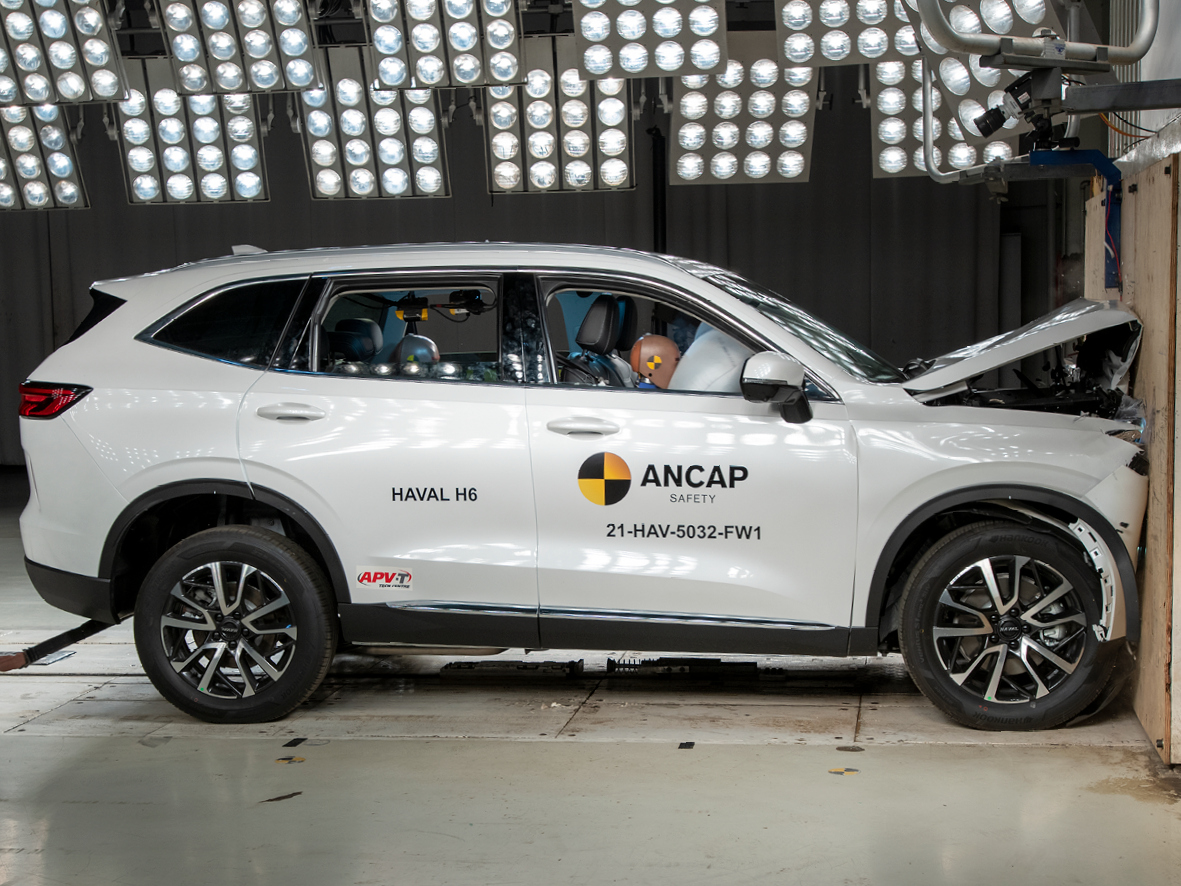
Crash testing authority ANCAP has awarded the 2022 Haval H6 a five-star safety rating.
The mid-sized SUV achieved solid scores across all categories, doing especially well for protection of adult occupants (90 per cent with 34.22 out of 38 points), children (88 per cent, 43.55 out of 49), pedestrians and cyclists (vulnerable road users, 73 per cent and 39.45 out of 54).
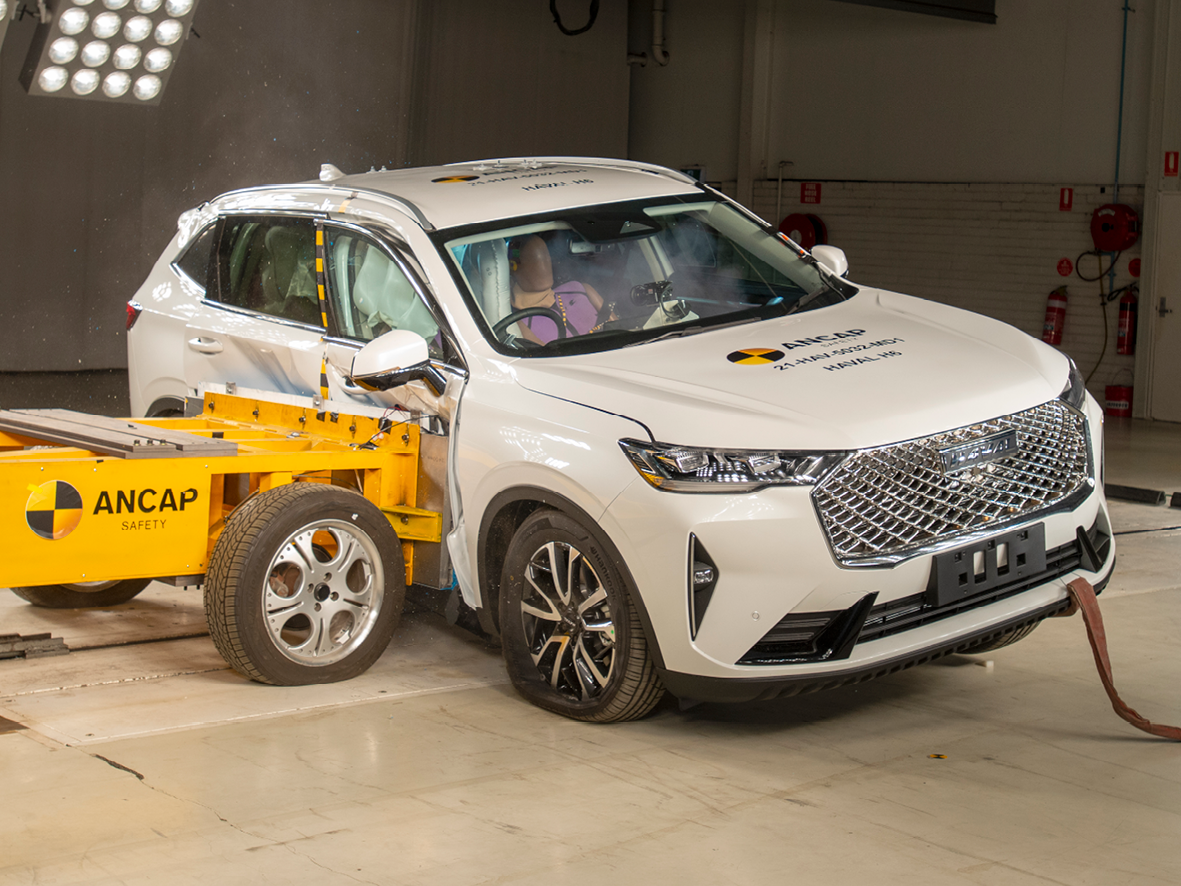
The H6’s onboard safety systems also helped it perform well (81 per cent with 13.06 of 16) in actively avoiding or reducing the effects of a range of potential collisions – including in a run-off-road crash and in car-to-car and car-to-cyclist autonomous emergency braking (AEB) scenarios.
However, when it came to the AEB pedestrian backover test, which simulates a pedestrian walking or standing behind a reversing vehicle, the H6 was not so hot – earning zero out of a possible two points and was dubbed poor.
The result comes from the latest round of testing against ANCAP’s new 2020-2022 rating criteria.
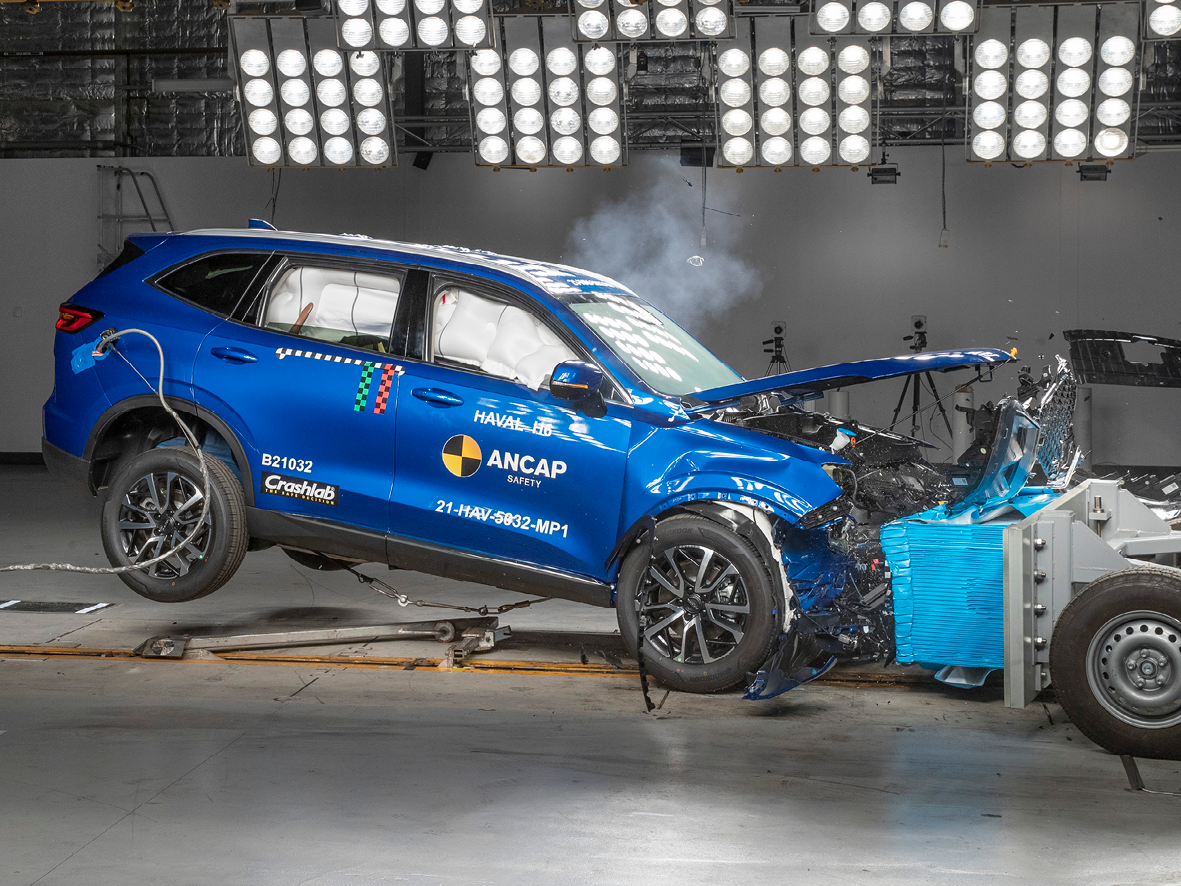
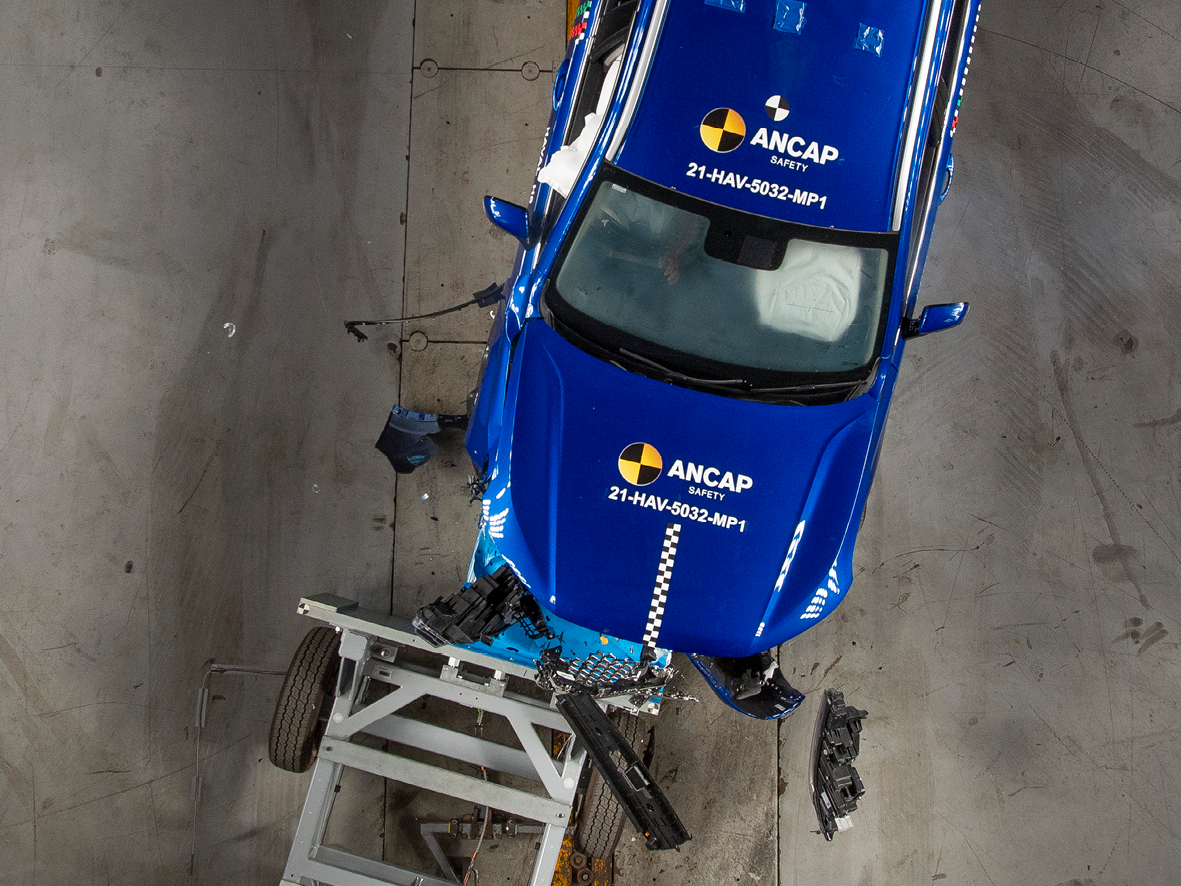
Full points were scored for driver protection in both the side impact and oblique pole tests, as well as for protecting front and rear-seat occupants from whiplash and for the front-seat passenger in the frontal offset test.
In the latter however, protection to the driver’s chest was knocked down to marginal as the impact on the dummy used in the test indicated risk of injury, and a penalty was also applied for the driver’s footwell – which showed ‘loss of integrity’ in the frontal offset test.
Child occupant protection meanwhile, and the ability of the H6 to safely accommodate a range of typical child restraints, also scored highly. But it’s worth noting that ANCAP said one of the selected, Type E, booster seats for four to eight year-olds could not be correctly installed in the centre rear seating position due to a lack of Isofix or integrated child restraints.
Two additional crash tests were performed by ANCAP on hybrid variants of the GWM Haval H6, with comparable high levels of safety performance observed, the company said.
“This is GWM’s first new Haval SUV model to the Australasian market for a number of years. Delivering a five-star vehicle to the market, against ANCAP’s latest 2022 protocols, demonstrates the brand has kept pace with the latest ANCAP safety standards and consumer safety expectations,” said ANCAP Chief Executive Officer, Carla Hoorweg.
“There has been a lot of interest in a safety rating for the H6, and this now provides consumers with an independent assessment of its safety performance.”
The 2022 Haval H6 range starts from $32,990 drive-away for the H6 Premium 2WD and tops out with the H6 Vanta AWD at $41,990, with prices rising twice over the last four months. The model was first introduced in Australia in March last year.
In February, the Chinese carmaker confirmed pricing and features for its H6 Hybrid – set to start at $44,990 drive-away when it arrives in the coming weeks.
British sports car and supercar firm McLaren is reportedly developing an SUV as it looks to make itself financially stable.
According to Autocar, the Woking-based manufacturer has an all-electric, battery-powered SUV in the pipeline for a 2030 debut, with any chance of a combustion engine being used ruled out due to the United Kingdom’s upcoming ban on the sale of new cars which run on fossil fuels.
Supercar-makers turning to high-volume, high-riding SUVs in pursuit of a buck is nothing new – Porsche’s Cayenne all but saved the company, while the Lamborghini Urus recently became the marque’s fastest-selling model, with 20,000 units shifted over a four-year period.
The potential plan to add an SUV to its product line-up would be in direct contrast to comments made by McLaren’s global sales and marketing boss, Jolyon Nash, at the 2016 Geneva Motor Show.
“We’re very focused on sports cars, supercars, performance cars,” said Nash six years ago.
“I think we’ve got a fairly clear view and a clear understanding of what McLaren represents, what its DNA is all about, and for us that’s sports cars, supercars. We don’t see an SUV fitting into that.”
In a twist of irony, Nash’s comments at the time were echoed by Ferrari’s senior vice-president of design, Flavio Manzoni, who said: “You’d have to shoot me first. Ferrari is not a follower; Ferrari does not follow the standard trends. [The SUV] is a marketing trend, because the companies know that it is a kind of volume opportunity, but this is not our spirit.”
Six years down the track and Ferrari is gearing up to launch the Purosangue, its V12-powered, four-door SUV – a project which was overseen by now-McLaren CEO, Michael Leiters.
While the project is still roughly eight years away from being potentially rolled out, it’s understood McLaren’s SUV will be offer four-wheel drive with a choice of dual- or tri-motor applications.
McLaren’s recent financial woes have led to battles for ownership of the Ron Dennis-founded marque, with Audi and BMW reportedly in the mix to take control of the automotive side of the business.
Snapshot
- Nio ES7 launches in China
- Range-topping variant boasts a 930km driving range
- Not yet known if the brand will launch in Australia
Chinese electric vehicle manufacturer Nio has revealed its latest model, the ES7 SUV.
Dropping into the brand’s line-up alongside other offerings, including the ET5 sedan, the ES7 adopts styling cues from its siblings – such as; its double-dash daytime running lights, shark nose front fascia and black cladding around its lower exterior surfaces.
Just like the ET5, the ES7 also has 33 roof-mounted sensors, consisting of ultra-long range LiDar, seven eight-megapixel high-resolution cameras, four three-megapixel light-sensitive cameras, five millimeter-wave radars, and 12 ultrasonic sensors to give it semi-autonomous driving capabilities.

Riding on a 2960 millimetre wheelbase, the ES7’s 4912mm length, 1987mm width and 1720mm height means the SUV is slightly bigger than Tesla’s Model Y – its natural rival.
Inside the cabin, Nio’s PanoCinema digital cockpit is featured alongside equipment such as; a 12.8-inch, vertically-mounted infotainment screen, a head-up display, Dolby Atmos surround sound, Nappa leather front seats with heating and ventilation, and rear seats with adjustable angle backrests.
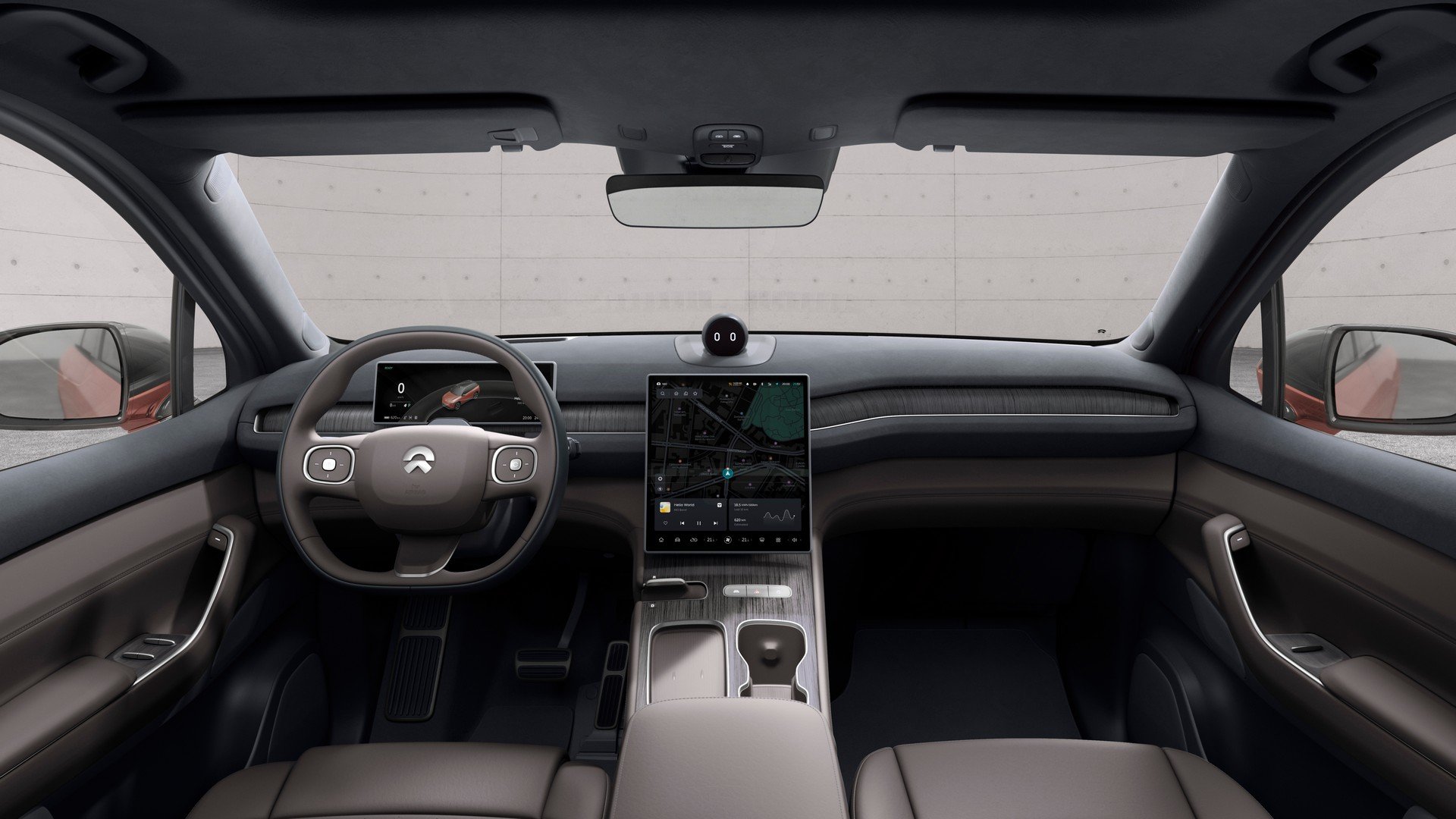
Available only with a dual-motor setup, the ES7 boasts impressive outputs of 480kW and 850Nm, allowing it to complete the 0-100km/h sprint in 3.9 seconds when in Sport+ mode.
A total of three battery packs have been made available for buyers in its local market – a 75kWh unit which allows 485 kilometres of driving range, a 100kWh long range pack enabling 620km and then the flagship ultra-long range, 150kWh battery pack, providing up to 930km.
The impressive power and torque figures, as well as its long-running batteries, mean the ES7 can tow up to 2000 kilograms – while also providing 3.3kW of external power for equipment when camping.

Standard equipment also includes four-pot Brembo brakes up front, adaptive dampers all around and a 50:50 weight distribution.
Starting at ¥468,000 (AU$99,800) for the entry-level, 75kWh variant, the ES7’s list price goes up to ¥526,000 (AU$112,000) in its 100kWh guise, with no pricing yet for the flagship 150kWh grade.
It’s not yet known if Nio will launch its product range in Australia, but expect the ES7 to go up against the Model Y and even Audi’s E-Tron SUV if it does arrive on local shores.
UPDATE, April 18 2023: Cyberster unveiled, Australian launch confirmed
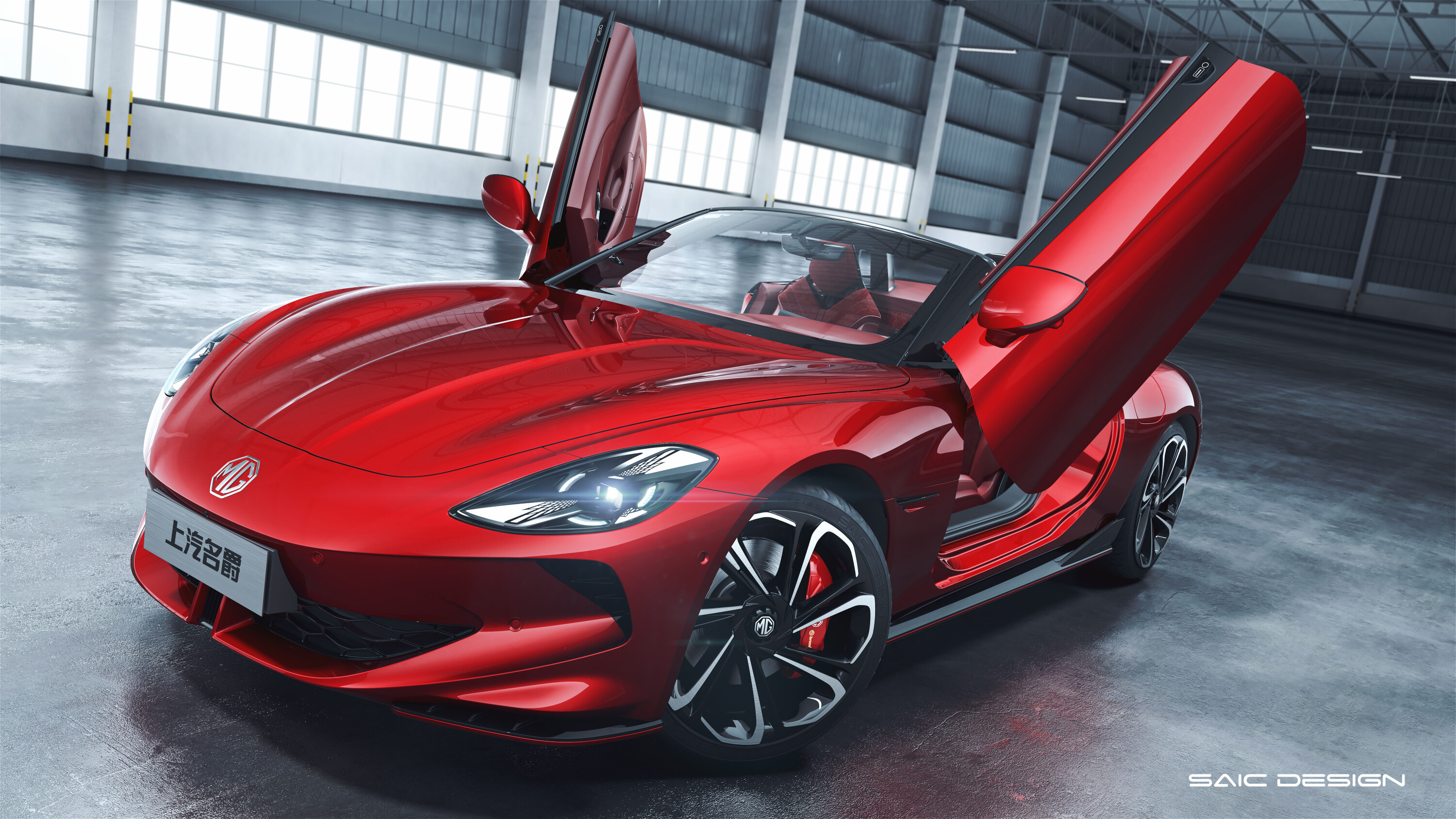
The production version of the MG Cyberster has now been unveiled, at the 2023 Shanghai motor show, and it’s coming to Australia. Get all the details at the story linked below.
June 24, 2022: Cyberster rendered!
Based on the 2023 MG Cyberster images below, we’ve had a go at imagining how the final design might look. Check out our stunning images at the link below.
June 16: First clear look at production Cyberster design
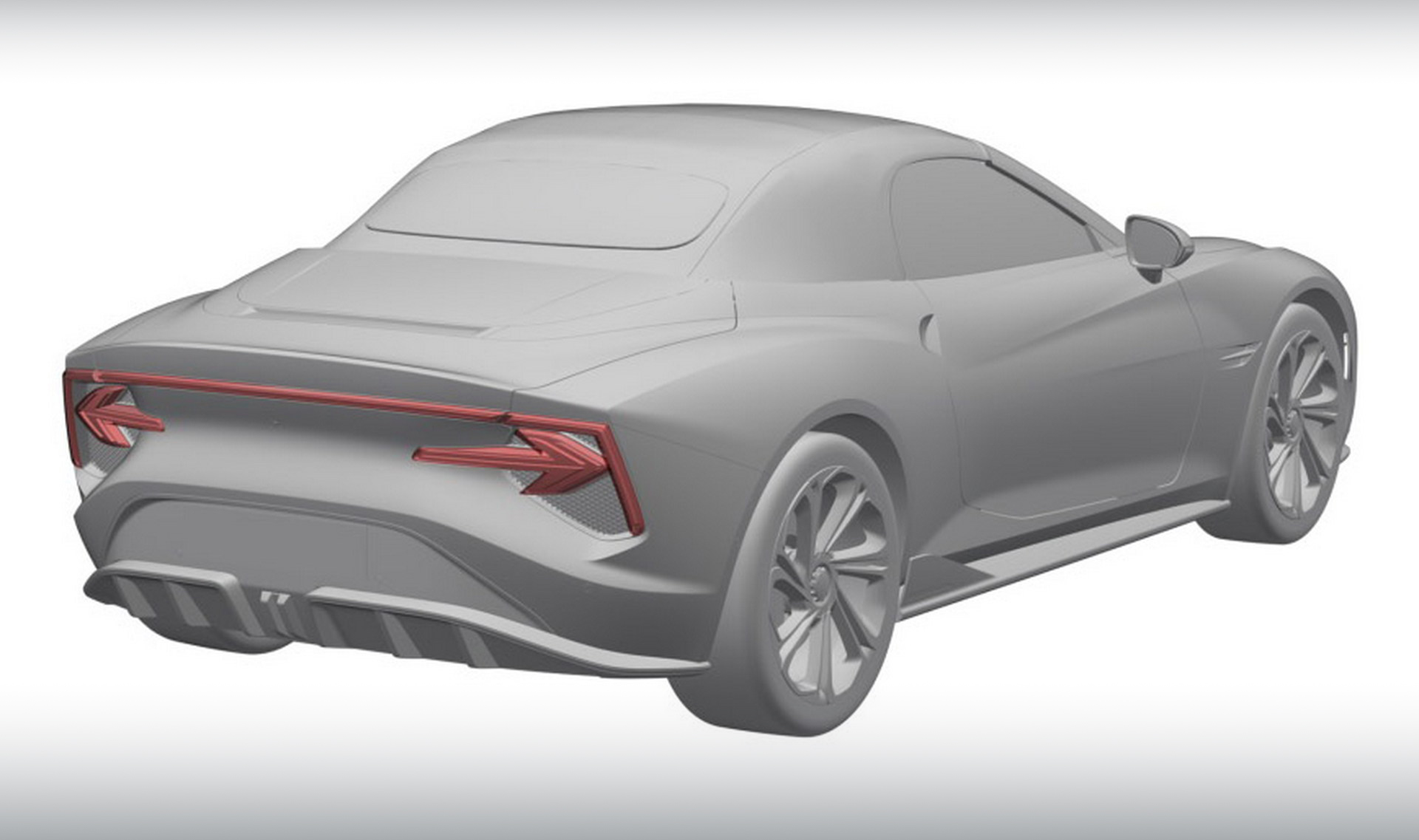
The final production design of the upcoming MG Cyberster has been revealed, thanks to a set of design patent application images that have surfaced online.
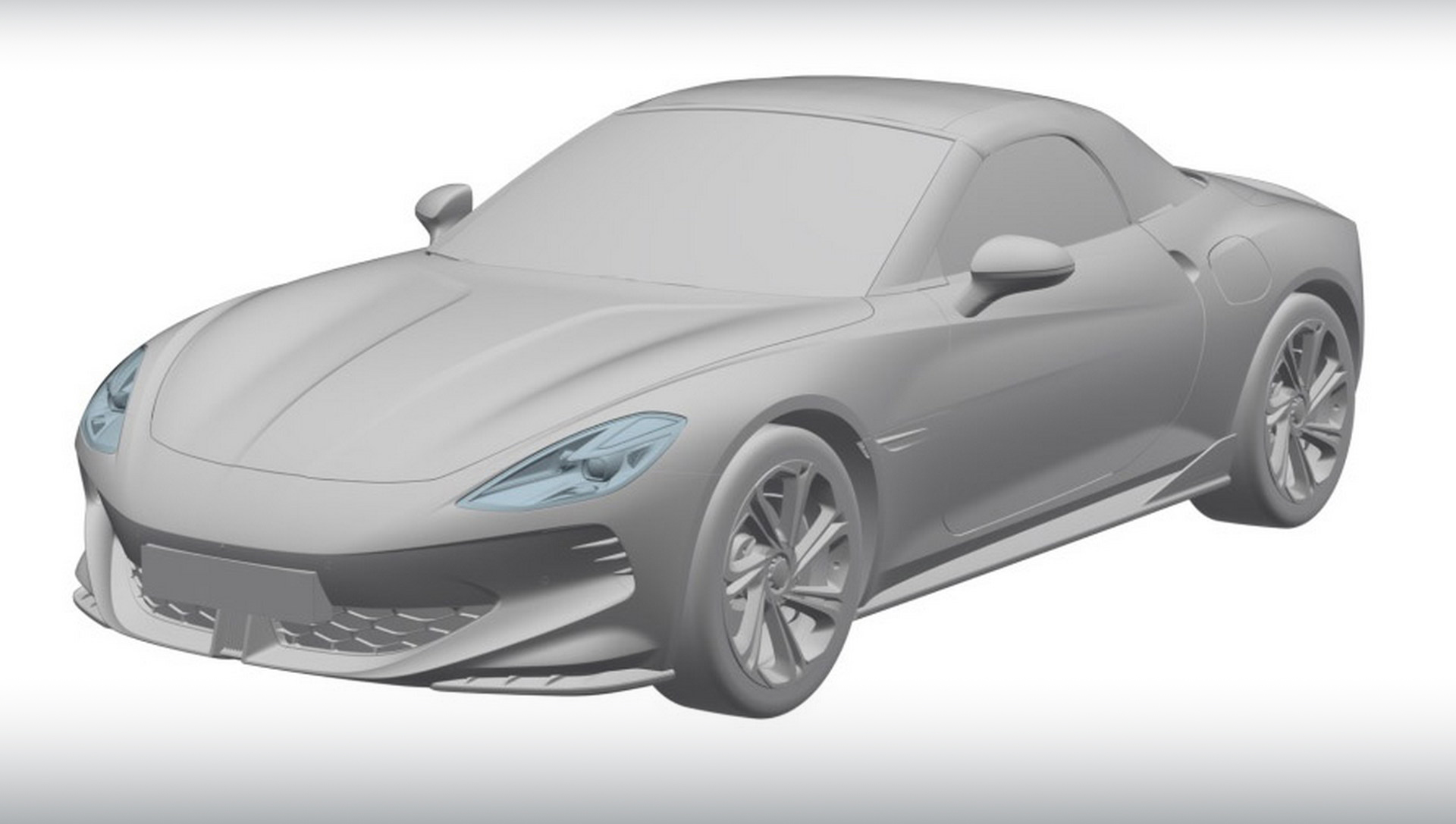
No surprises, the Cyberster’s design will be dramatically toned down from the powerfully styled concept that debuted in April 2021 (see further down), but it’s likely we can expect the production car to bring plenty of presence on the road.
Patent application renderings are rarely flattering – usually looking as though the vehicle is riding on jacked-up suspension – but the overall design of the Cyberster looks like it’ll have the necessary market appeal.
Expected to debut in the coming year, the Cyberster will bring electric power back to the roadster segment, more than 10 years since the Lotus-based Tesla Roadster went out of production (and with no sign of the new model).
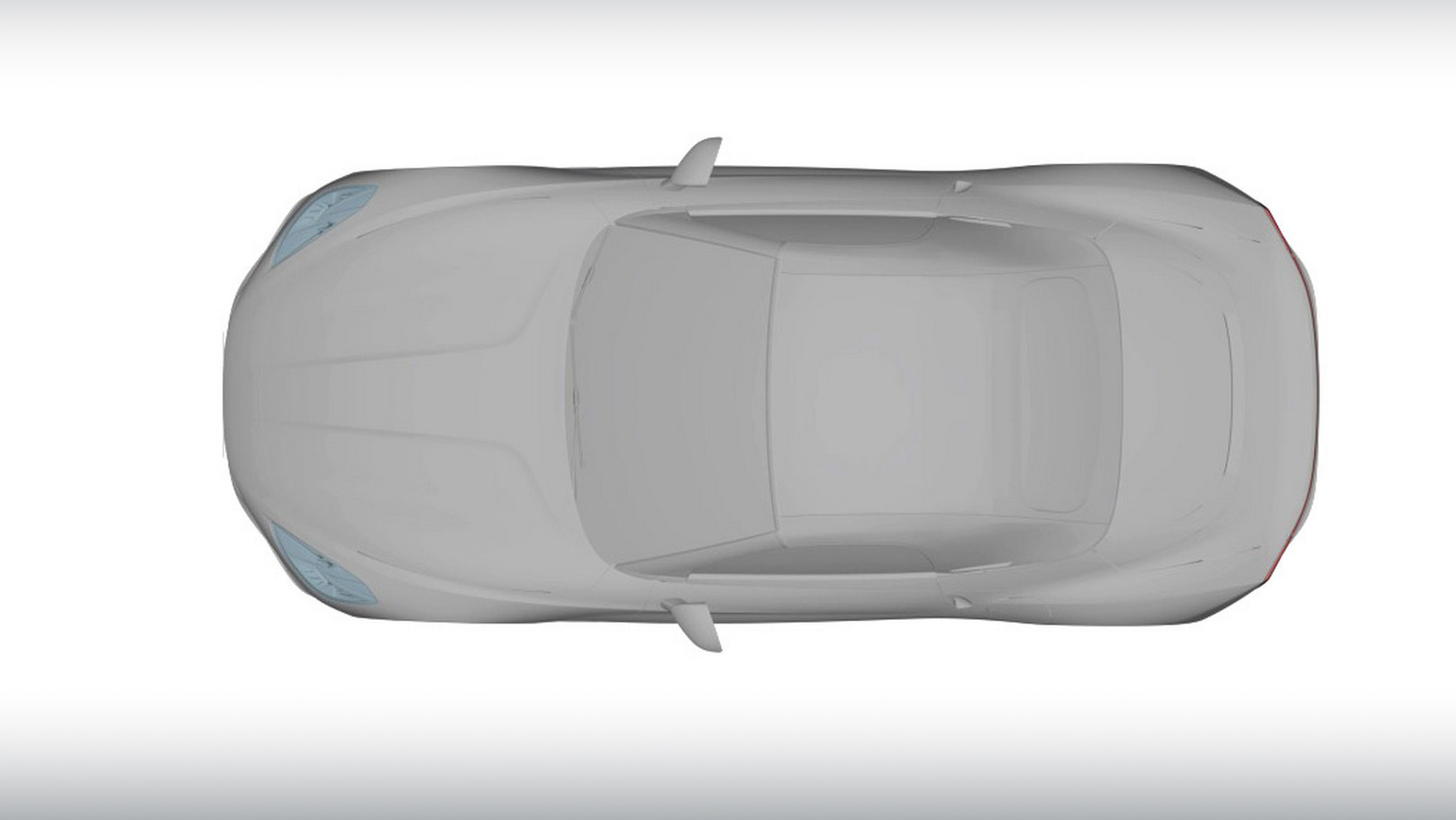
The Cyberster will also be the MG badge’s first new roadster – a design for which it was once famous – since the mid-engined, rear-wheel-drive F and TF left production around 2011.
That was a messy time in the badge’s history, however, with ownership under the Rover Group jumping from British Aerospace to BMW, and finally to China’s Nanjing Automotive.
Watch for more on the Cyberster to be revealed in the months ahead, and catch up on the story below.
The story to here
April 30, 2021: There must be some irony in the fact that its focus on high-demand markets has moved Ford to keep more and more of its compelling new models from our shores – yet it’s MG that could bring Australia its next exciting new electric vehicle.
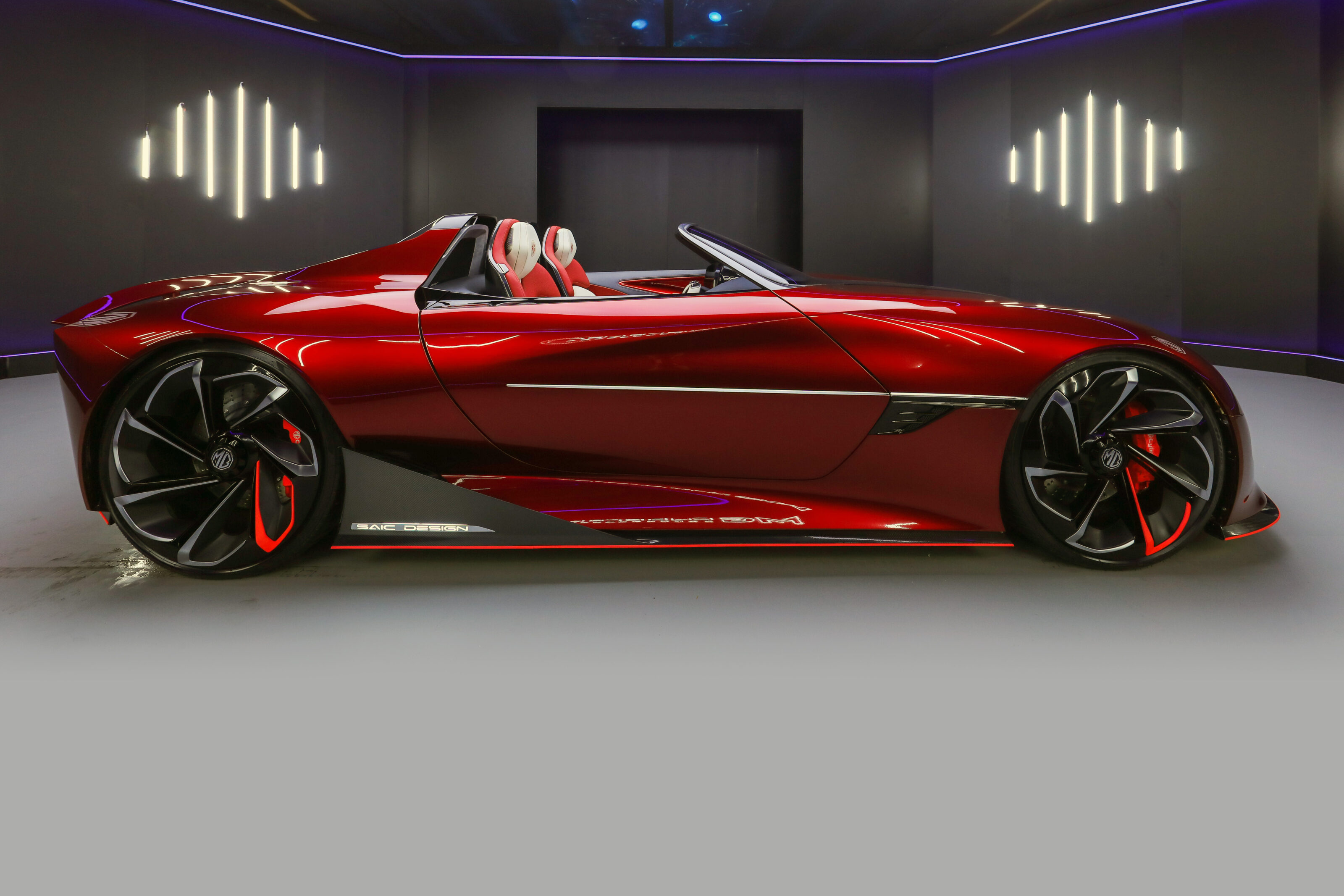
Earlier this month, the Chinese-owned British brand unveiled the Cyberster, a futuristic electric sports concept that revealed a look at where the brand expects to take its styling and technology in the years ahead.
At the time, MG offered no word on whether the electric roadster would lead to a production model, but today the brand has announced that some version of the Cyberster will enter production – and a right-hand-drive option is confirmed, opening the door to an Australian launch.
That will be welcome news for MG’s local office, coming on the back of two consecutive months of top-10 sales success.
We don’t need to speculate on this one, either: in a statement issued today, an MG Motor Australia spokesperson revealed the new model is being considered for a local debut.
“We’re excited to confirm that the Cyberster electric sportster will be offered in both left- and right-hand-drive configuration. As part of our Electric For Everyone strategy, MG Australia will now examine the Cyberster’s potential for the Australian and New Zealand markets,” the spokesperson said.
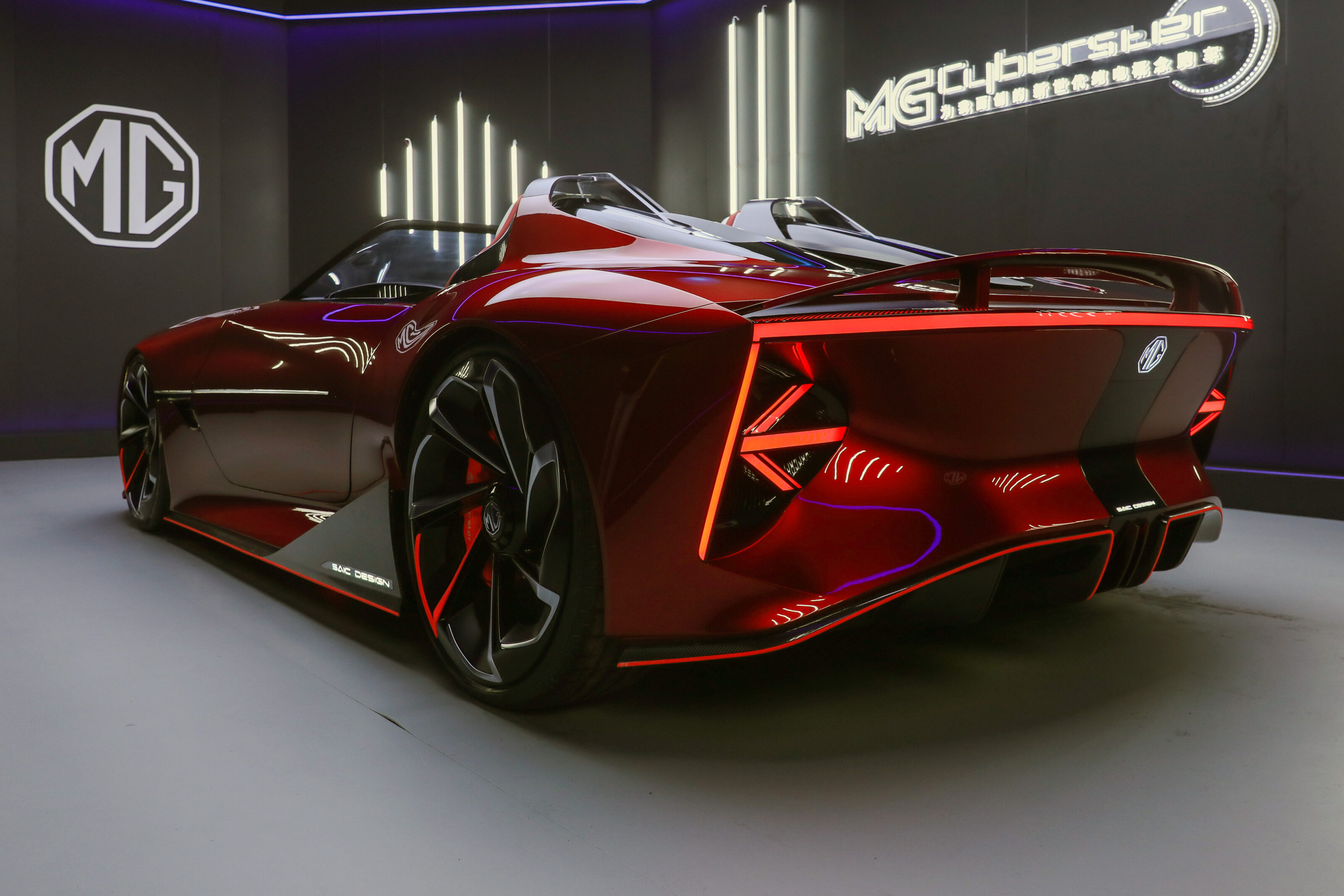
Further details about the concept’s final production form are still to be revealed, but it appears the Cyberster name is confirmed.
Like the Porsche Boxster, whose name combines the words boxer (for its engine) and roadster, the Cyberster name is likely derived from its futuristic themes and its roadster design.
The concept was designed in London, around the idea of “looking strongly into MG’s future, touching on our heritage, but more importantly building on our cutting edge technology and advanced design”.
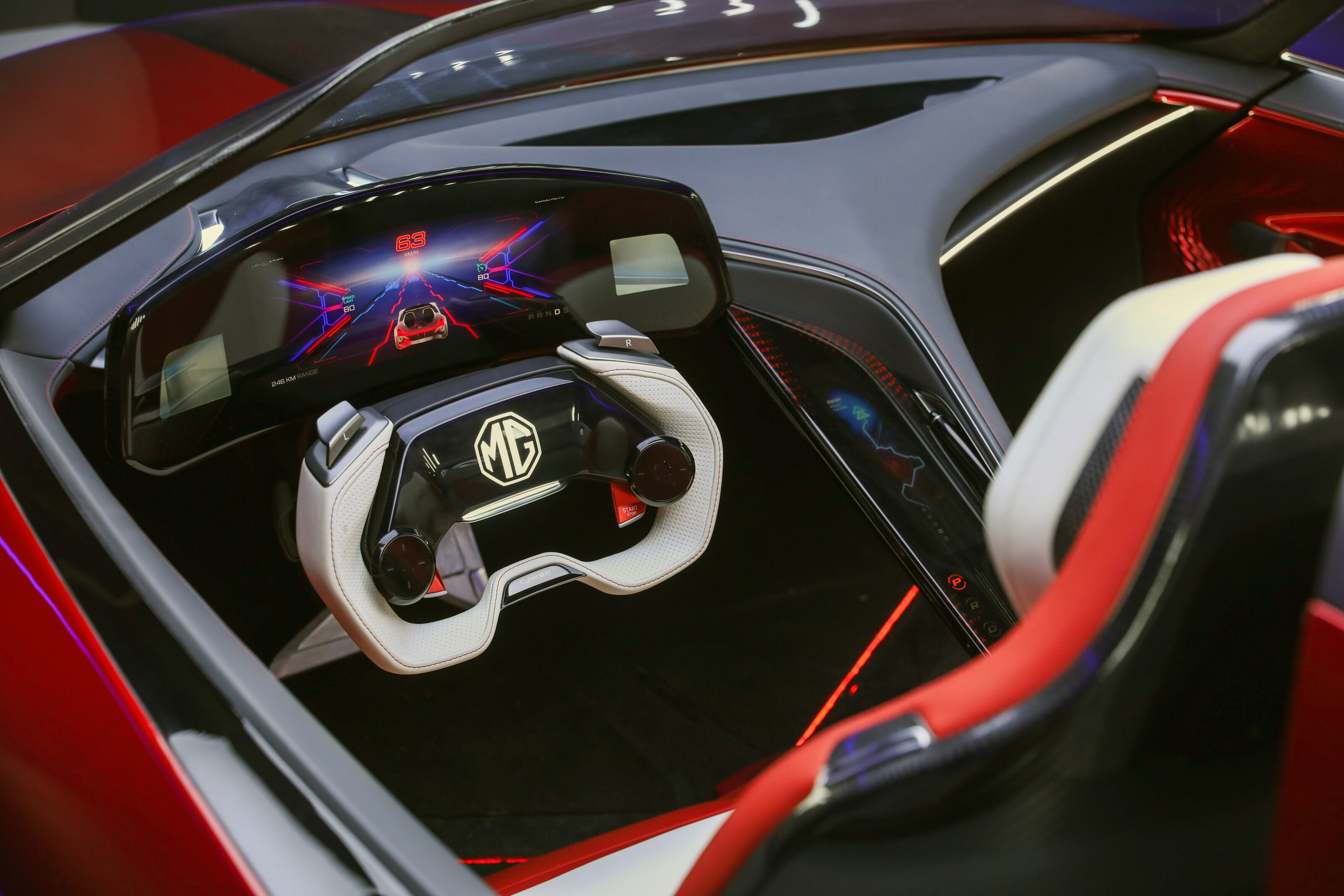
The concept claims an all-electric driving range of 800 kilometres, with a 0-100km/h time of “less than” three seconds.
For more on the Cyberster and MG, see our links below. Watch for more on the production model to be revealed in the weeks and months ahead.
Snapshot
- Potential fault could disable certain safety features
- Recall only affects FN Mustang GTs with manual transmissions
- Total of 2304 units recalled
Ford Australia has issued a recall notice for its Mustang GT, with certain examples of the pony car impacted by a potential fault.
Affecting a total of 2304 examples of the FN-generation Mustang GT V8 manual built between May 17, 2018, and December 3, 2020, an issue with the manual gear position sensor could disable certain features of the car, according to Ford.
“In the affected vehicles, the manual gear position sensor may be causing the rear-view camera display, reverse lamps, and various driver assist features (traction control, forward collision warning, blind-spot warning, and cross-traffic indicator) to stop functioning,” said a spokesperson for Ford Australia.
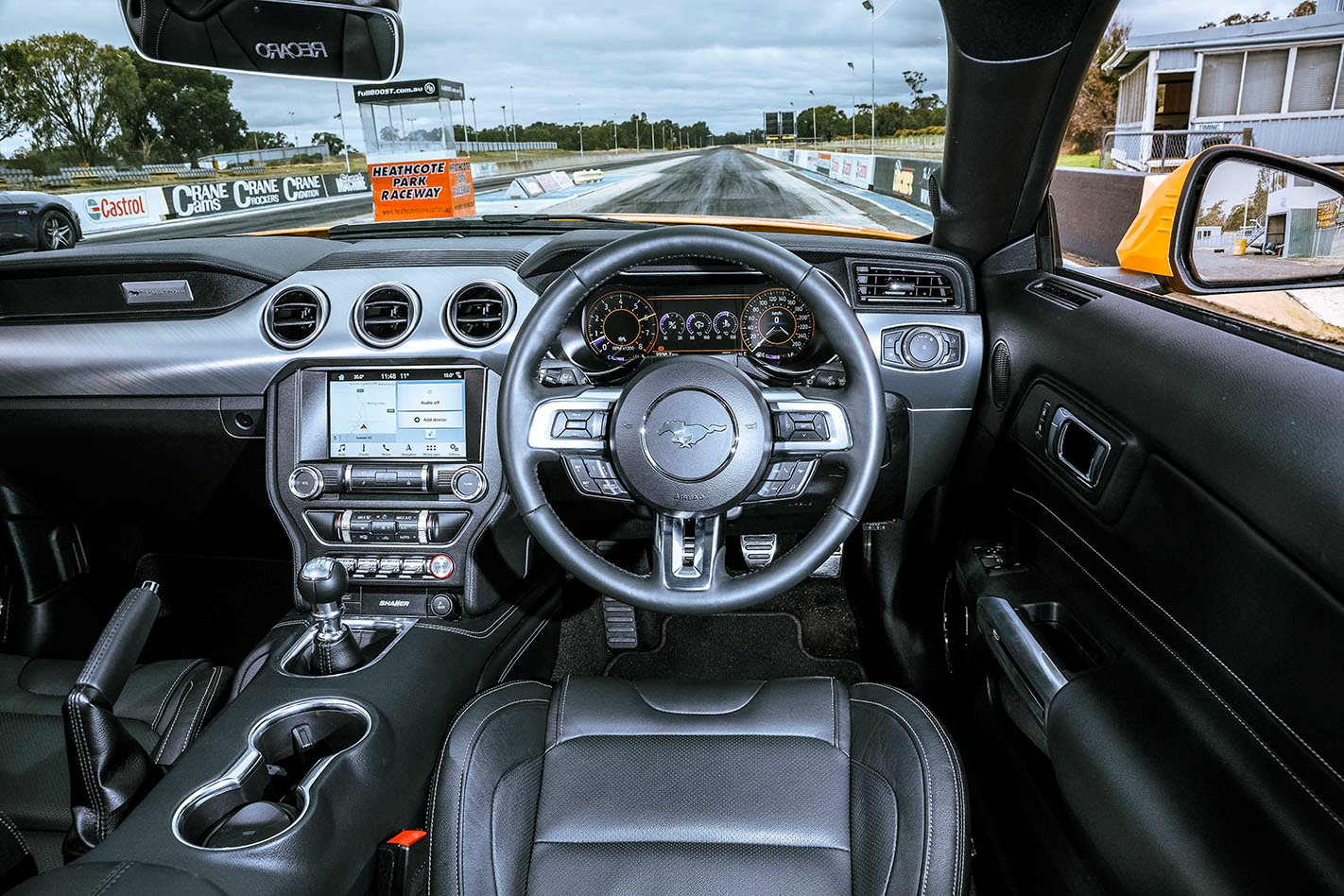
“If the modules controlling the rear-view camera, reverse lamps, and other driver assist features receive a faulted gear position sensor signal from the Powertrain Control Module (PCM), they may disable those features.
“An instrument cluster warning light may illuminate along with a message indicating function is not available. Dealers will reprogram the PCM software on all affected vehicles at no charge to the vehicle owner. Ford will be writing to relevant customers regarding this recall.”
Owners who are unsure as to whether their vehicle is affected can enter their VIN on Ford’s recall search page.
Ford has clarified the recall does not affect the 10-speed automatic equipped Mustang GT or the four-cylinder High Performance variants.
Snapshot
- Australian Grand Prix contract extended until 2035
- Albert Park will remain as the host circuit
- Formula 2 and Formula 3 set to fly to Australia for the first time
Australian Formula 1 fans, let us rejoice – the Australian Grand Prix has been given one of the biggest contract extensions in F1 history, secured until 2035.
Announced this morning by Formula 1 and the Australian Grand Prix Corporation (AGPC), Melbourne’s Albert Park will remain on the calendar for more than a decade, with its current contract – which ran through to 2025 – has been extended to 2035.
The decision to come back to Australia for the next 13 years will also include the addition of Formula 2 and Formula 3 to the support card, marking the first time either series has come Down Under in the World Championship era.
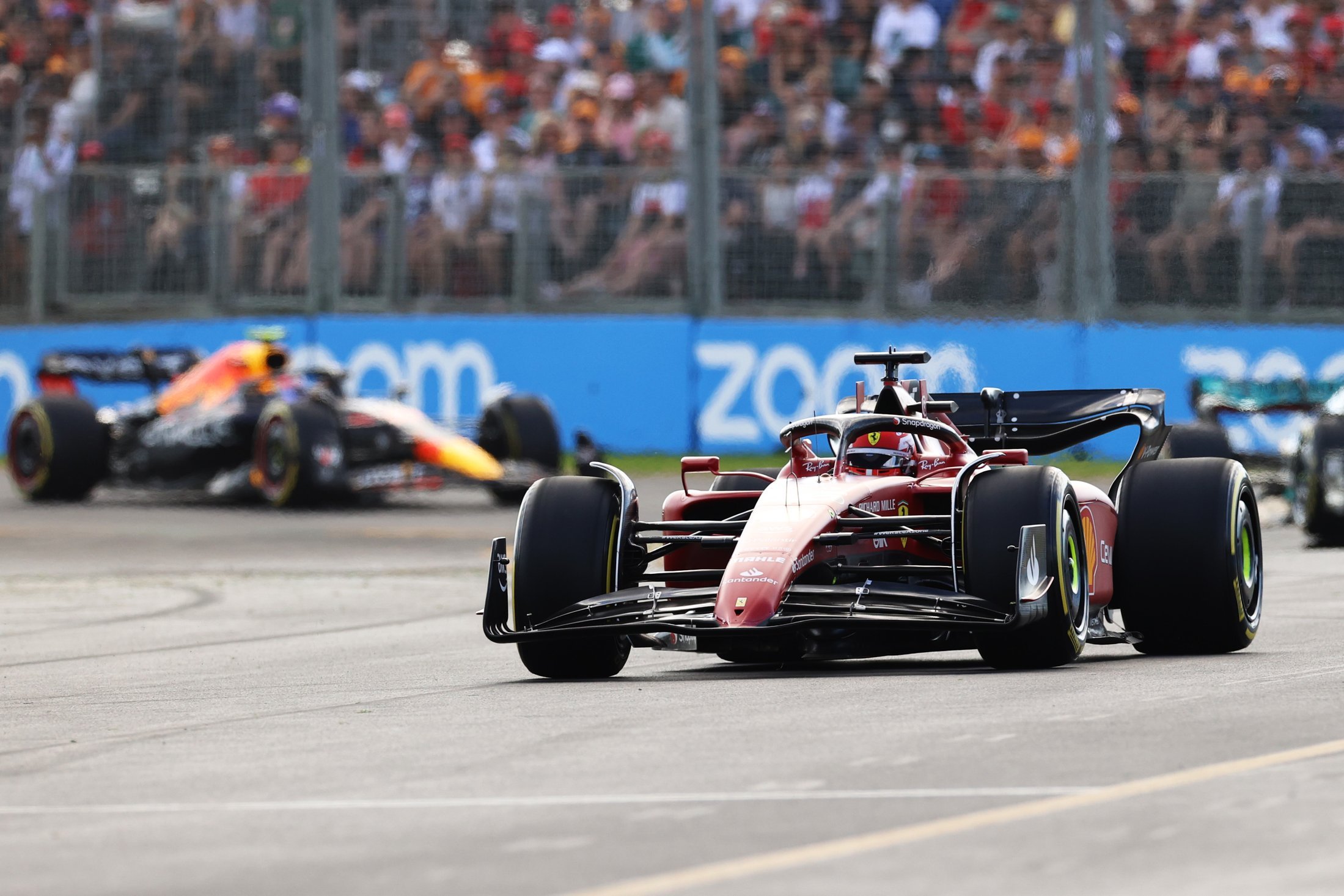
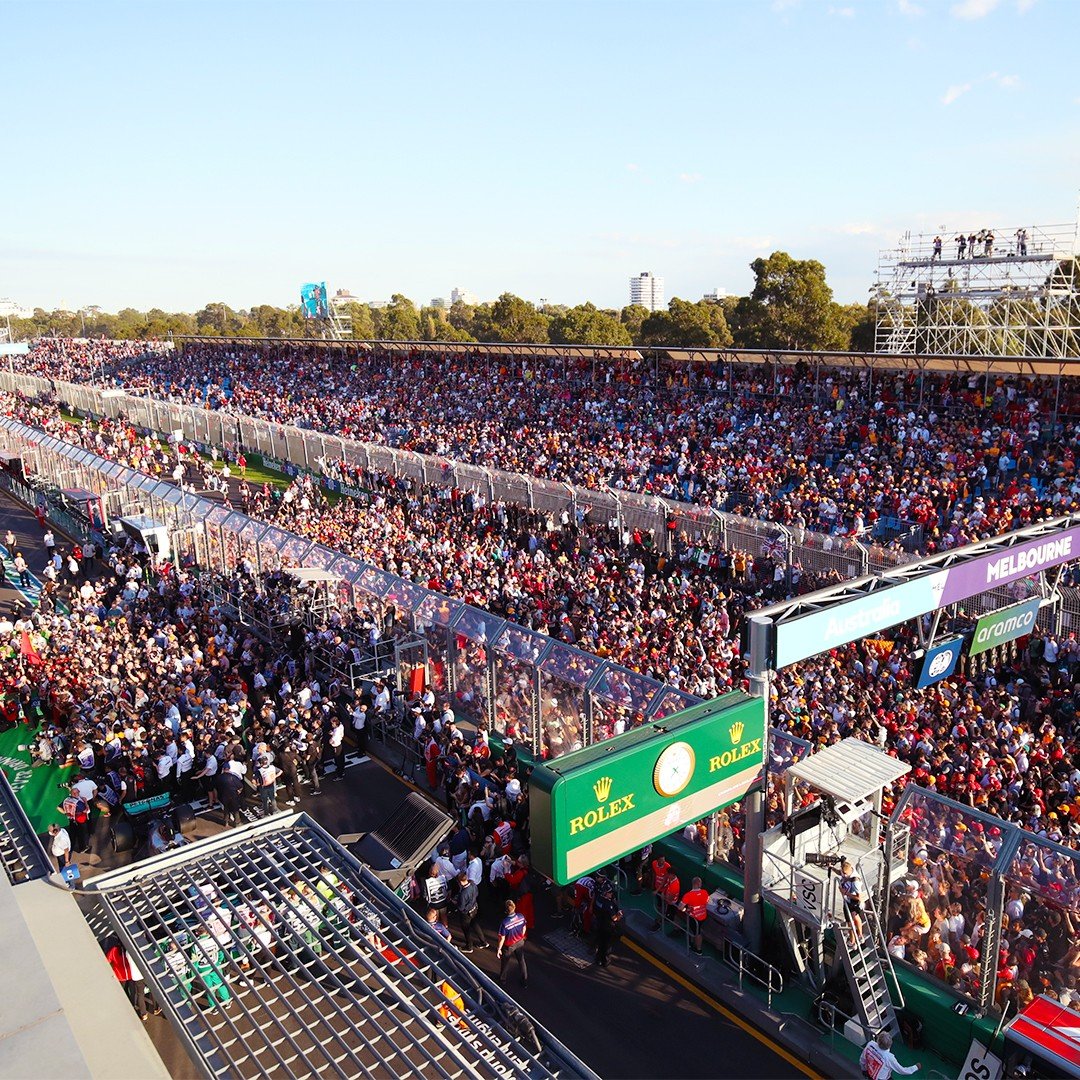
Circuit upgrades and a two-year hiatus thanks to the global pandemic drew record crowds for this year’s Australian Grand Prix, with the 419,000 four-day attendance making it the second-largest weekend for a sporting event in Australian history – behind only the 1995 Australian Grand Prix in Adelaide.
Former Ferrari F1 team boss and current F1 President and CEO Stefano Domenicali said the long-term deal reflected the mutual love between the sport and Australia.
“I am delighted to confirm that Melbourne and the Albert Park circuit will continue to be on the Formula 1 calendar until 2035,” Domenicali said.
“The race has always been a favourite for the fans, drivers and the teams and Melbourne is an incredible and vibrant international city that is a perfect match for our sport. This year we saw huge crowds and passionate fans at the Grand Prix, and we are very excited by the future in Australia as our sport continues to grow.
“I want to thank the Victorian Government, Daniel Andrews, Premier of Victoria and Martin Pakula, Minister for Tourism, Sport and Major Events for their tireless support for the event in Melbourne, as well as Andrew Westacott and Paul Little from the AGPC for making this already long-term partnership secure for the future. We are all looking forward to being back in Melbourne next season with all our fans.”
AGPC CEO Andrew Westacott said the contract extension builds on Melbourne’s claim to be Australia’s sporting capital.
“This is a sensational announcement that is simply great for Melbourne and Victoria,” said Westacott.
“It builds on our rich motorsport history, as well as Melbourne’s love of big sporting events and provides aspiration to the next generation of Aussie racing stars.
“We’re proud of our strong relationship with Formula 1 and together we will grow the sport in Australia and the broader Asia-Pacific region. Everyone at the Australian Grand Prix Corporation looks forward to taking the Formula One Australian Grand Prix to new levels over the course of the next 13 years.”
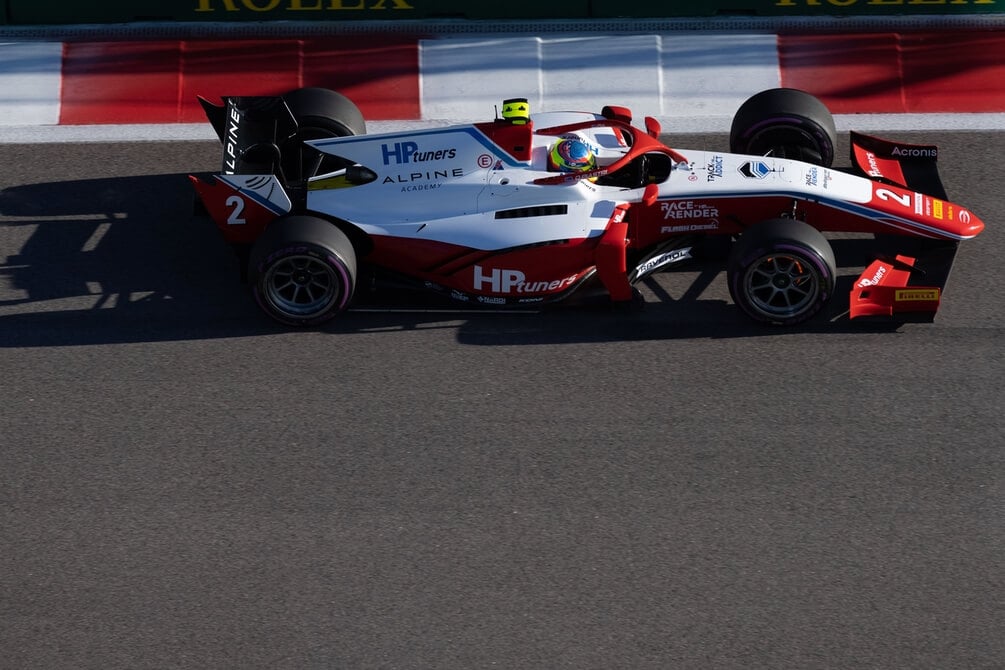
Despite enduring a tough season so far with McLaren, West Australian Daniel Ricciardo is locked in with the Woking-based team until the end of next year, potentially being joined by fellow Australian – and reigning back-to-back Formula 2 and Formula 3 champion – Oscar Piastri on next year’s Grand Prix grid.
The addition of the junior Forumla categories to the line-up could come at the cost of local supports, as this year’s undercard featured the Supercars Championship, Porsche Carrera Cup Australia and S5000 – the latter of which is at the highest risk of being dropped.
Introduction: New Best Friend
This is our new long-term review car, the 2022 Hyundai Kona N.
We call him KonaN O’Brien. He’s a good bloke, a guy that’s happy to accompany you on day-to-day errands and will always lift the mood with a good fart joke. You know, the sort of bloke that’ll help you move house.
He also has a tough streak, and is more than happy to back you up in a street fight. We suspect he’s quietly struggling with some sort of personality disorder as, at a moment’s notice, his persona switches to a more KonaN the Barbarian type of character than your usually affable SNL host.
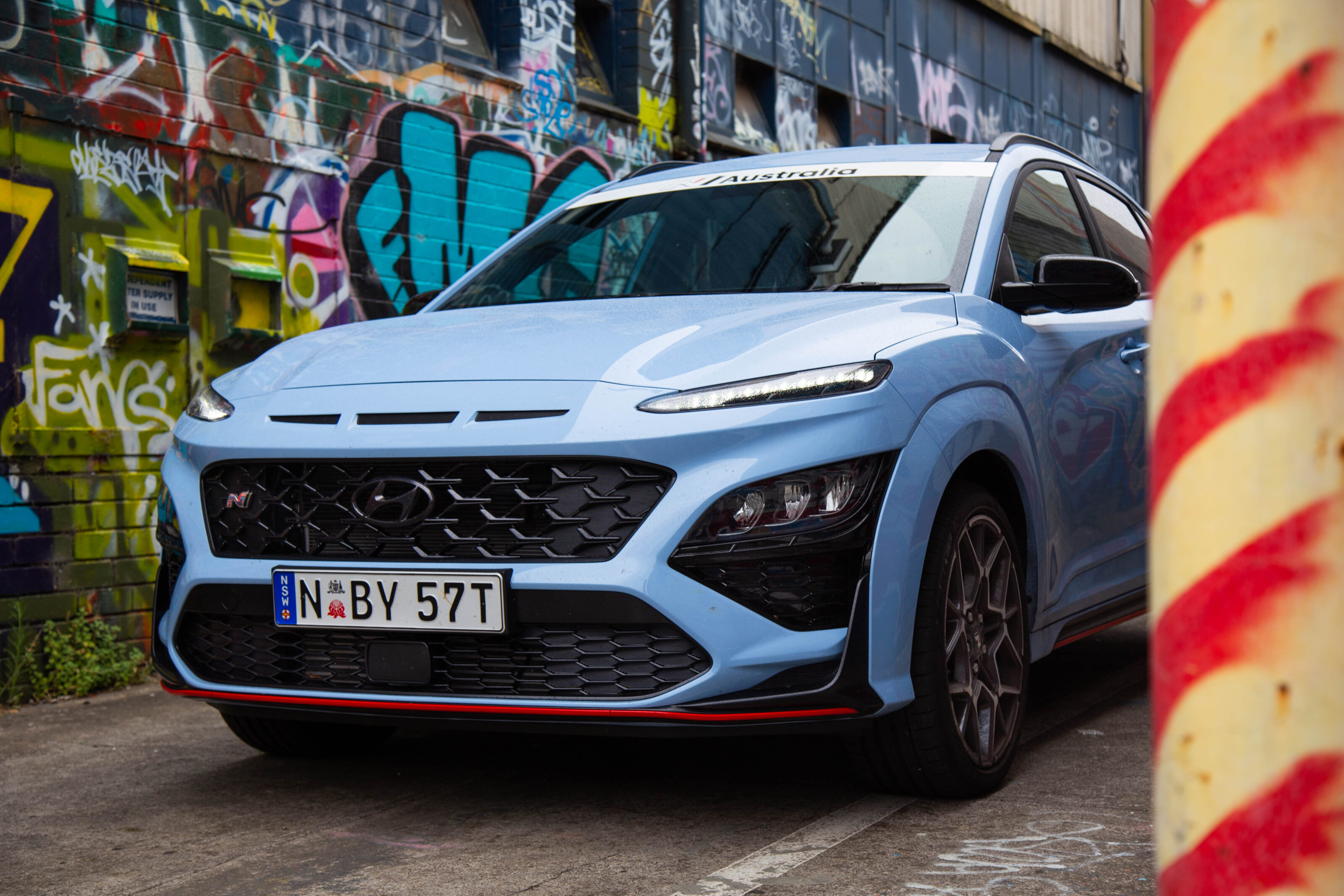
If you haven’t worked it out yet, KonaN (hat tip to Trent Giunco for first coining the name in our office) is actually a 2022 Hyundai Kona N. Our big blue bus arrived at the MOTOR Garage in December.
I’ve had the manic bump and grind of the holiday period to get acquainted with my new best friend but, before that, there was the slight matter of Hyundai’s N Festival to attend to. N Fest is a travelling annual track day put on by Hyundai for its growing base of enthusiasts and, given that 2021’s event landed in Victoria, I was kindly invited along with ‘my’ new Kona N to take part in all the festivities.

I’m no stranger to the 4:30am slog out of Melbourne up to Winton Raceway, but the hot Kona made for the best highway companion I’ve ever enjoyed. An effective climate control system, Android Auto and a hugely impressive Lane Following Assist system sharply contrasted with the tramlining old Nissan I’m usually slaving up the Hume Highway with. There was significant tyre roar produced by the Kona N’s Pirelli P Zero tyres however, although this was easily counteracted by cranking the standard-fit eight-speaker Bose sound system up a few notches.
My proximity to the sleepy town of Benalla was signalled by increasing numbers of N cars on the road and I soon arrived at the gates of Winton Raceway feeling more refreshed than fatigued.
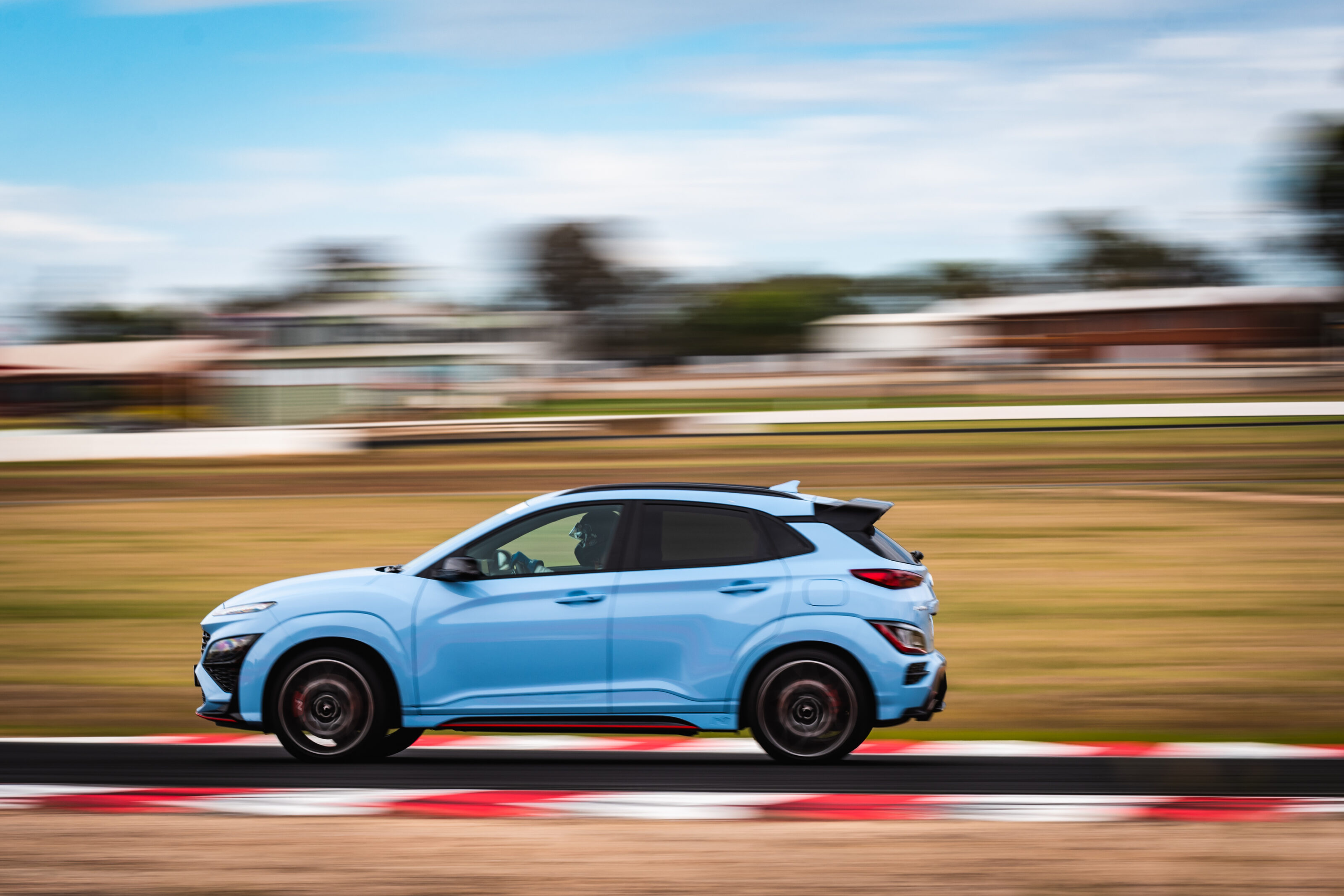
As dozens of i30 Ns crackled and popped their way through the gates (c’mon guys, we’ve all got the same engines), I was beginning to feel a little out of place as the guy who brought a mini SUV to a track day.
This was soon reinforced as I was mistakenly sent out onto the main straight to take part in a huge group photo opportunity for all of the ‘real’ N owners. There was just one other Kona out there amongst a sea of N-badged hot hatches.

Driver briefing done, helmet on, it was time to see if the Kona N really was a fish out of water at Winton.
Using the steering wheel-mounted lap time trigger, the Kona N whipped out an impressive 1:45.5-second time on its first flying lap before running into traffic which rarely abated all day. I was feeling pretty chuffed before my time was put to shame by Scott Newman, who pegged a blistering 40-flat later in the day.
There’s significantly more body roll produced by the SUV’s higher centre of gravity, and the brake pedal felt a bit squishy after a full day’s running, but it’s a surprisingly capable car. And not just for a junior SUV, either.
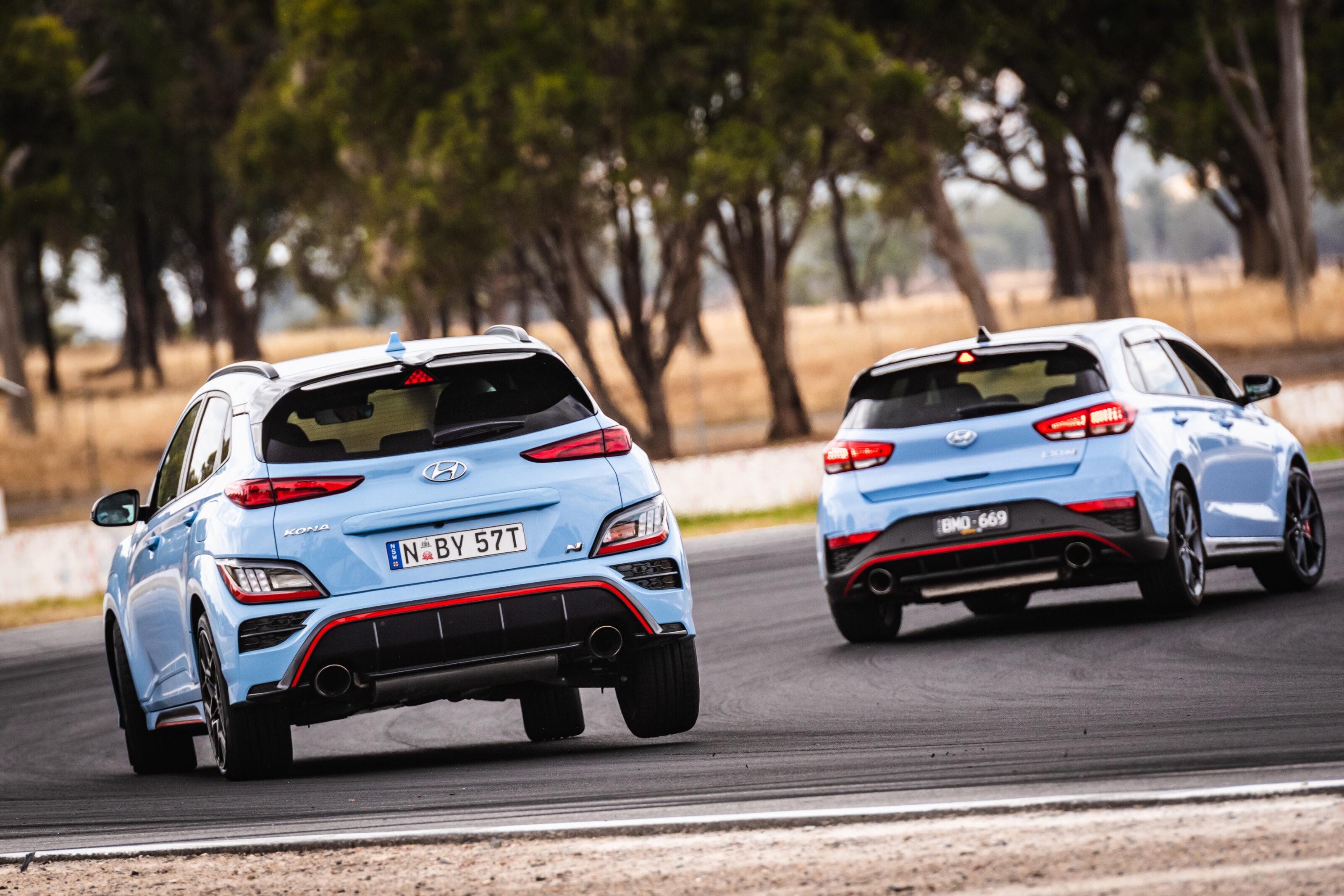
After sampling the full range of N cars throughout the day, the Kona may not be the circuit racer’s weapon of choice, but there’s less in it than you think, and that’s the Kona N magic.
It does things an otherwise pragmatic mini SUV simply shouldn’t do. It makes hilarious noises, turns lots of heads, and can be driven for hours with ease to and from a track while posting some genuinely impressive times in between.
In a word, it’s just fun! But doubts are starting to creep in as to whether the Kona truly boasts the practical benefits it trades on. Why might you buy this over an i30 N Hatchback? That’s something to consider next month. Stay tuned. – AA
Things we love
- Track talent
- Great powertrain
- Lane Follow Assist
Not so much
- Thirsty in N Mode
- Tyre roar
- Body roll
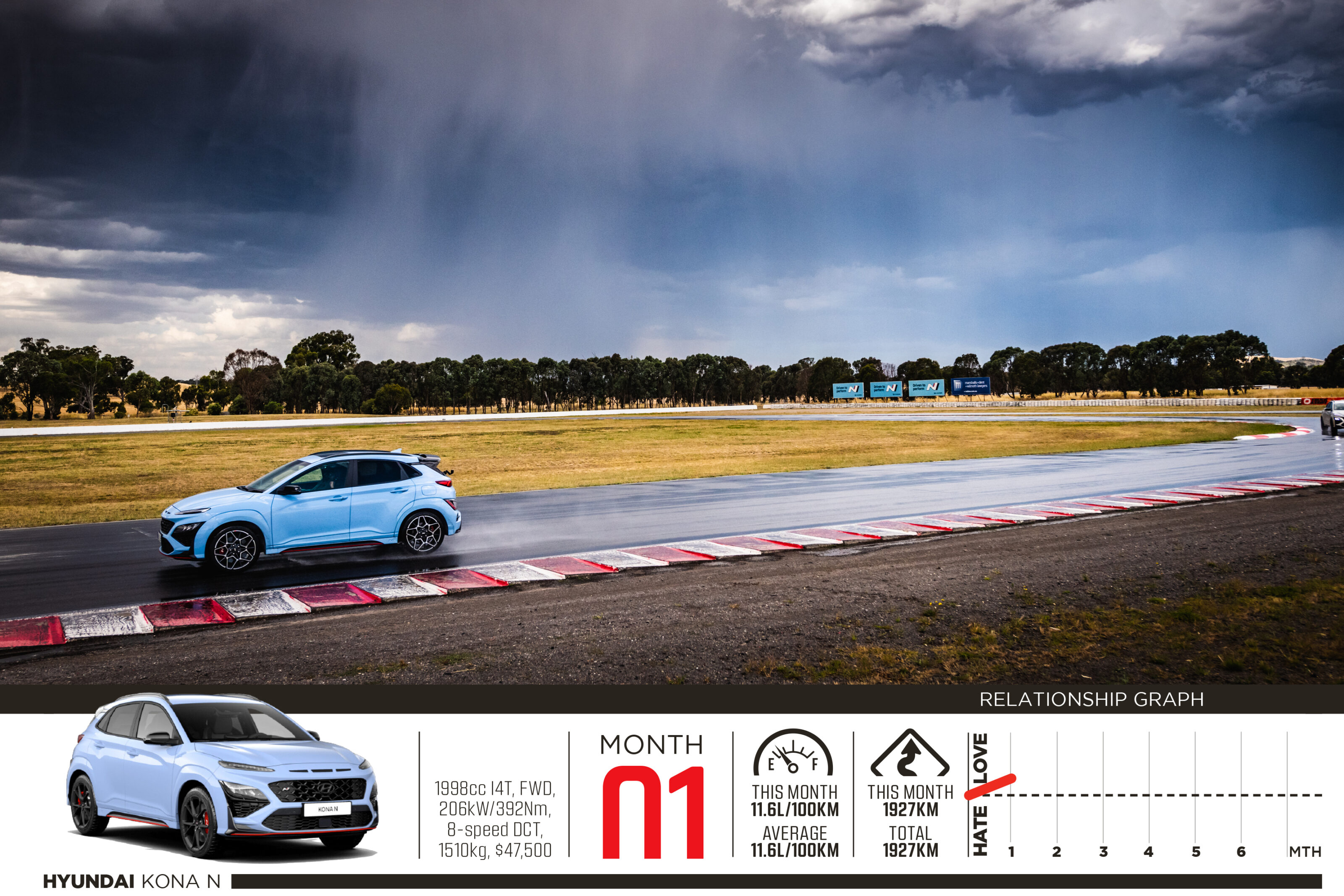
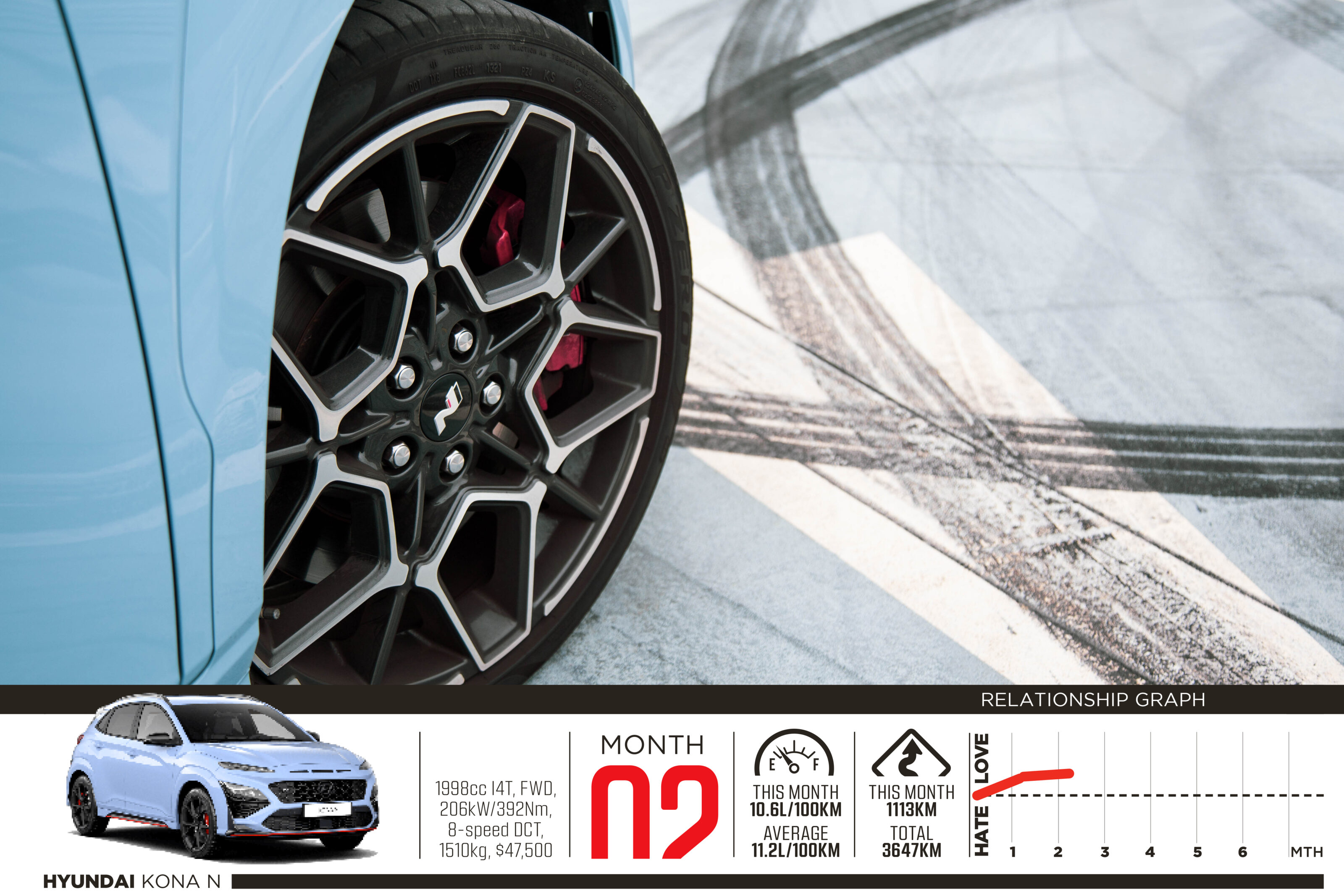
Month Two: Pack and Send
The Kona N raises questions that Alex Affat struggles to answer
KonaN is proving to be a bit of a crowd favourite. In fact, I’ve not brought home a long-termer that’s garnered such a curious reaction from the public.
The thing that surprised me, however, is that all of the admirers and enquirers I’ve chatted to have been noticeably older than the young enthusiast crowd I was greeted by at Hyundai N Fest at Winton Raceway, covered in last month’s report.
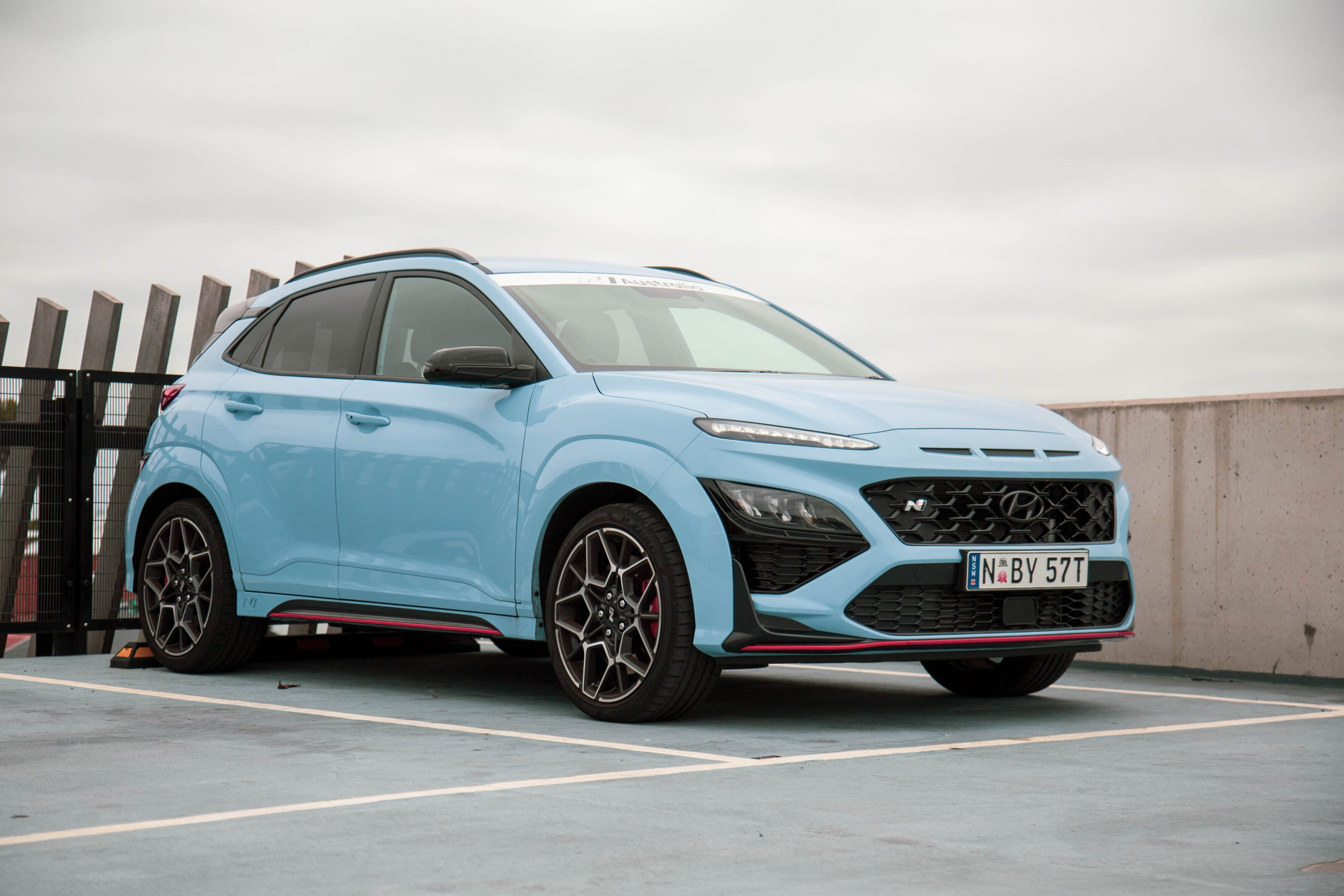
Whether it’s by design or the simple consequence of a longer product pipeline beholden to our geographically isolated market, N Division’s product rollout seems almost flawless.
Spearheaded by the breakout i30 N Hatchback, priced well and targeted at young enthusiasts, N Division was able to quickly build goodwill and awareness with healthy sales and media praise.
Over the last month, I’ve come across numerous occasions where that loose awareness of N Division prowess manifested in fervent curiosity when faced with our Performance Blue SUV.

The first instance was at a large gathering of my girlfriend’s extended family. Upon arrival to the family home, all of the uncles poured out to poke around the Kona N. Not even a prior Lexus LC500 V8 coupe spurred quite this response.
Another came outside the barbershop, where a customer raced out to engage me with a bevy of questions about this N car he’d never seen before.
The third and most recent encounter came from a fellow apartment resident, who’d caught me outside waiting in the car, and came to the window to express his appreciation of the Kona’s bombastic exhaust note and extroverted styling while seeing it about over the previous few weeks.
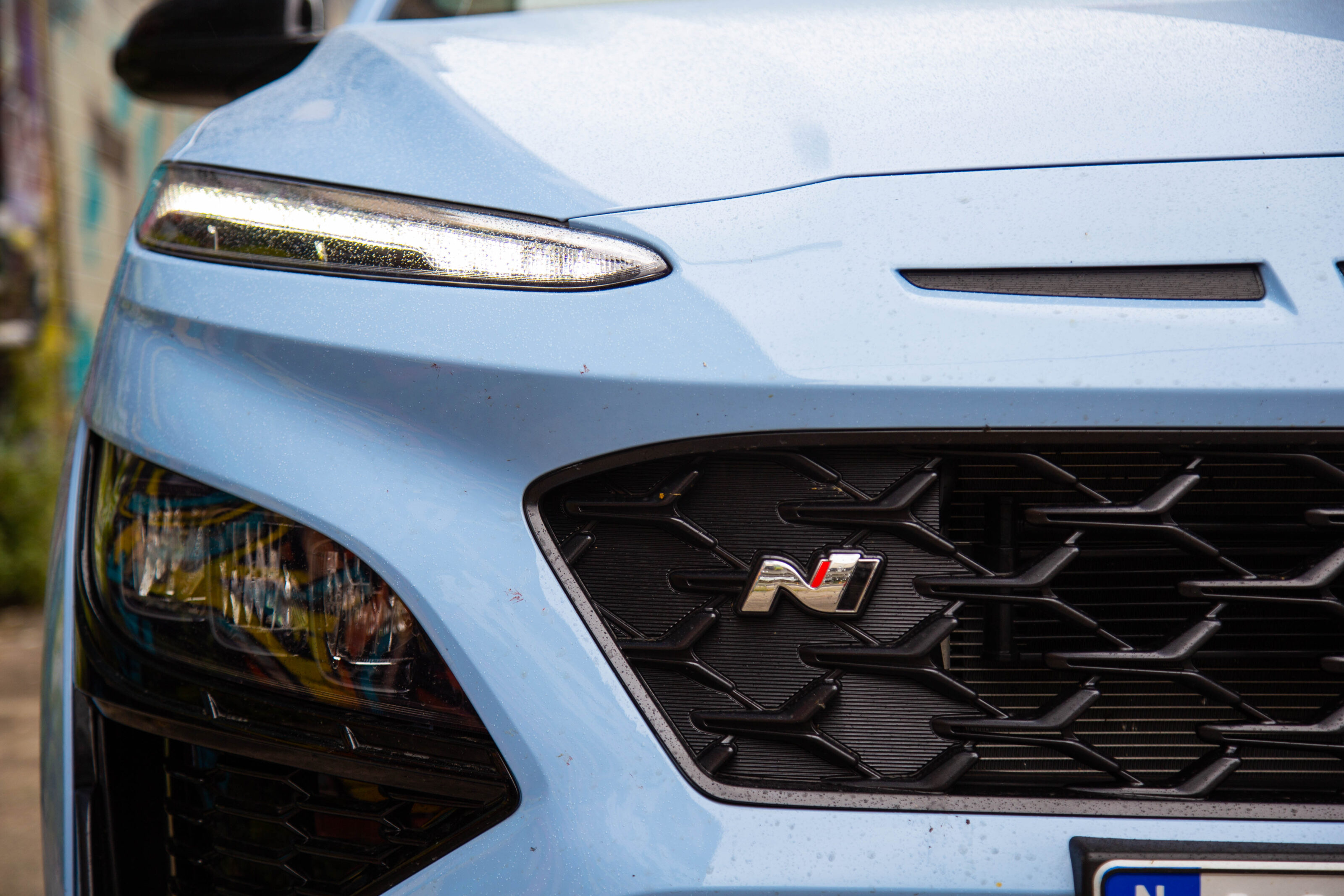
To my surprise, here were three 50-something-year-old dads, all with teenage offspring, who had all heard good things about N Division; a CX-5 owner, a Ford Territory owner, and a Golf owner, all asking whether I’d recommend a hot Kona as their next purchase. In good conscience, I’d struggle to give an unqualified yes.
I get their line of thinking. They’d heard how good the i30 N is, but to their mind and lifestyle, the Kona – most would expect – promised more cabin space, comfort and a bigger boot. But it doesn’t.
Make no mistake I am loving life with KonaN. There’s an undeniable, yet intangible lifestyle benefit to a high-riding crossover. Entry and egress is tremendously easy and the tall aperture of the boot makes loading big things simple. You don’t need to carefully navigate driveways either, just hop in and go!
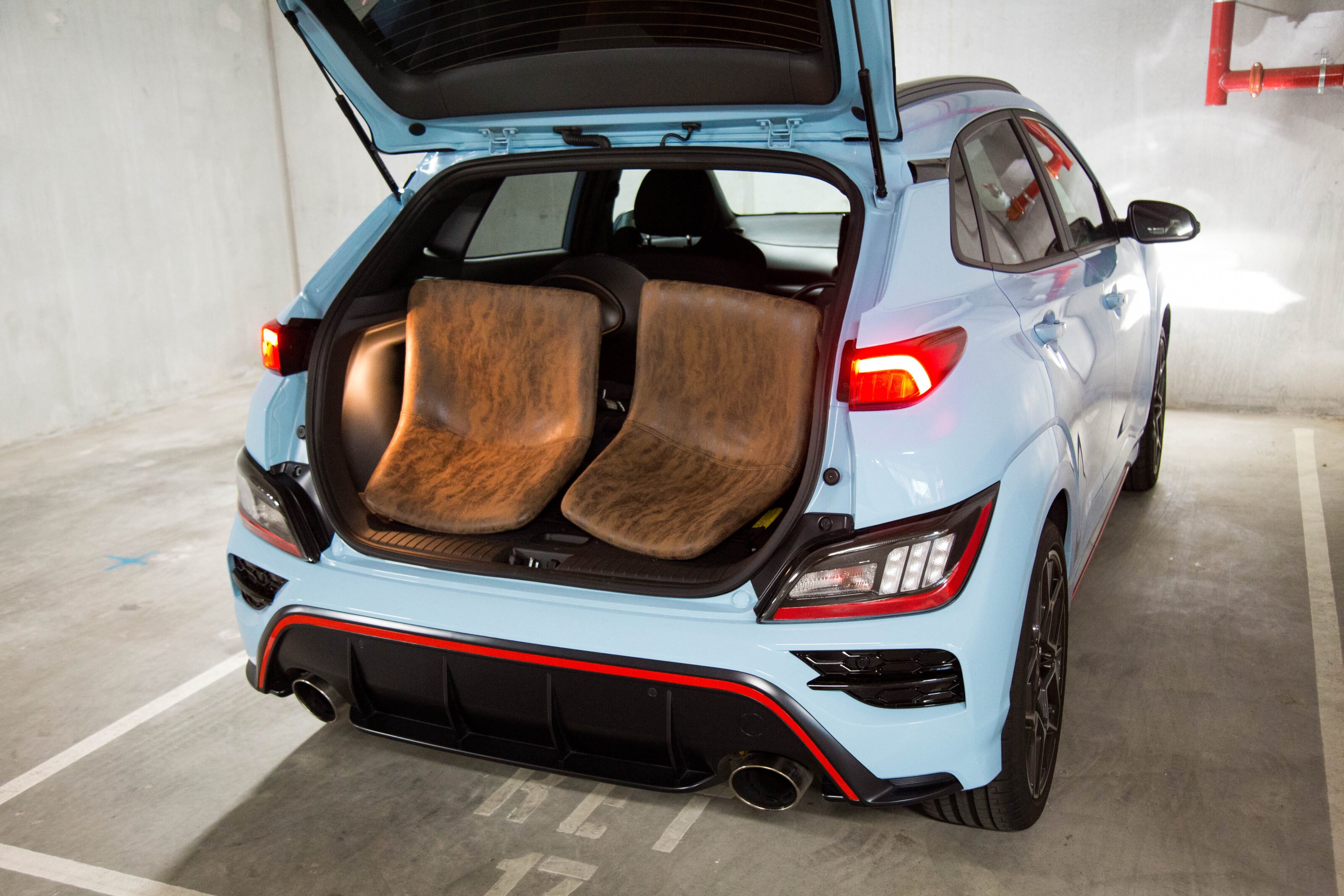
It’s very firmly damped in urban scenarios though, forcing you to slow to a crawl over speedbumps. The boot, too, is small at 361-litres. This is, counter intuitively, markedly smaller than the i30 Hatchback’s 395-litre boot, both of which are dwarfed by the recently released i30 Sedan N’s massive 464-litre boot. That’s strike one against the ‘practical’ SUV promise.
Second-row seating also takes a hit compared to its compact counterpart. While the Kona is based on the same K2 platform as the existing i30 Hatchback, 50mm have been removed from the wheelbase, with flow-on effects felt in reduced rear legroom, smaller doors and a subsequent smaller aperture for access. Strike two.

There’s a lot to love about the Kona N, and I empathise with the fact that many modern households feel they require an SUV. In that respect, it’s best in class on performance for its price, and I’d happily recommend it to young couples who enjoy a spirited drive.
But for my partner’s uncle, with two teenage children and a penchant for weekend fishing trips; or barbershop bloke, with three teenage sons who regularly brim the family Territory with Saturday sporting equipment, I’m just not convinced the Kona offers the practical benefits it trades on.
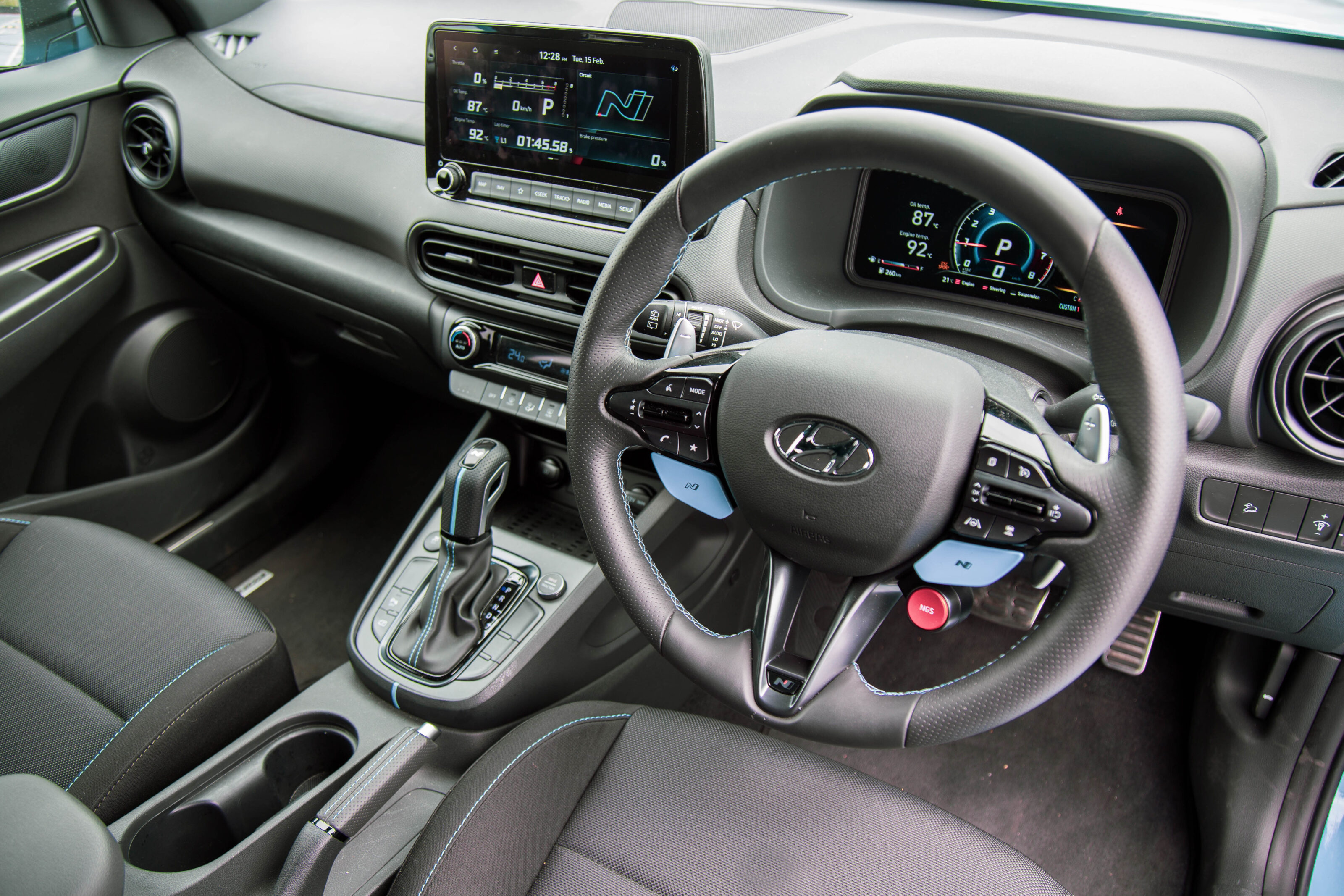
What it does offer is an entertaining city car that’s easy to live with and can devour a country road with poise far beyond a Mazda CX-5 or Ford Territory’s reach. In fact, a recent outing saw the Kona hang with some seriously tasty enthusiast metal, but I’ll tell you more about that next month… – AA
Things we love
- Ground clearance
- Ease of entry
- Cargo net
Things we rue
- Firm city ride
- Small boot
- Tight second row