
Introduction: Arach-Attack
ST forces Kirby to address his fears with gusto
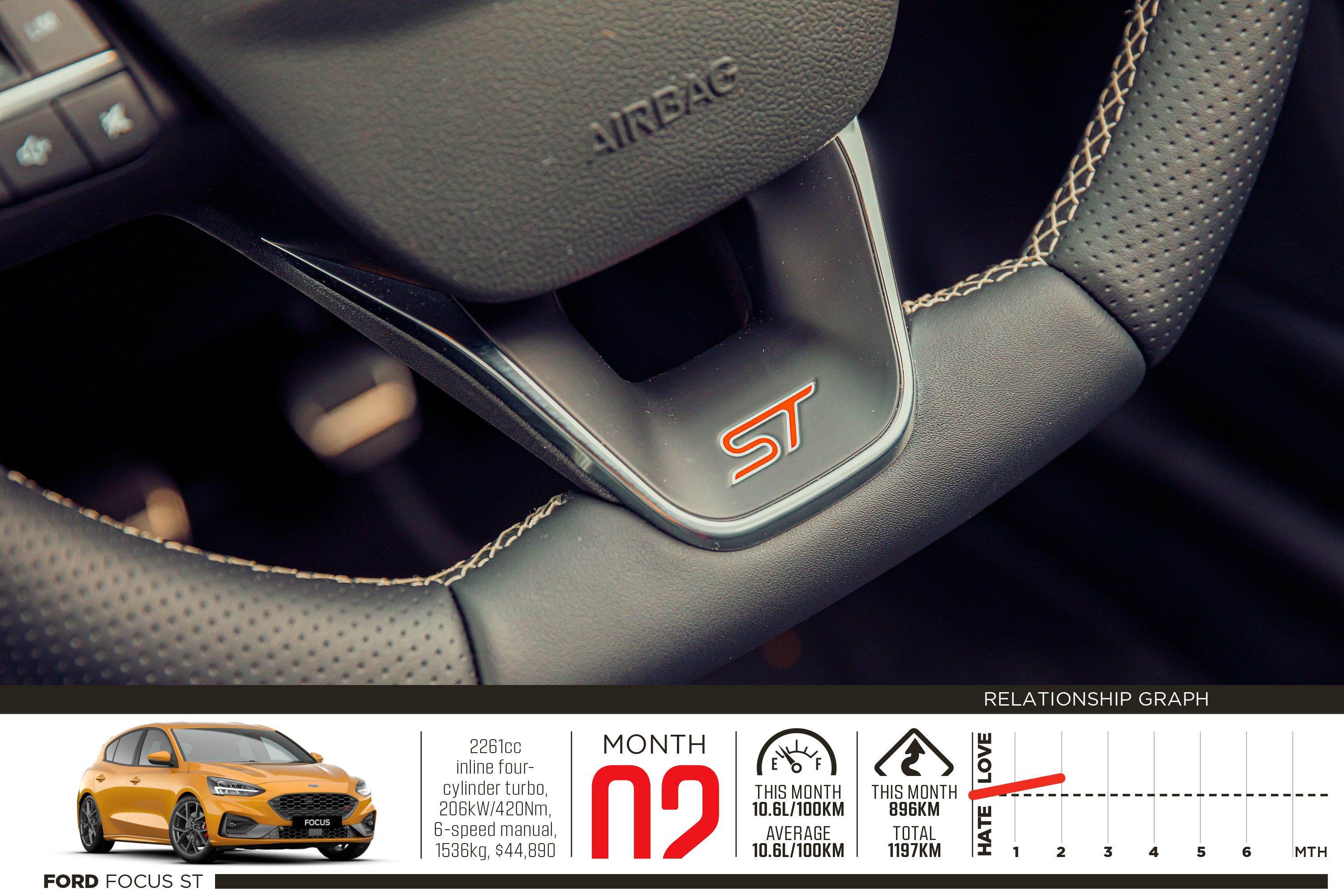
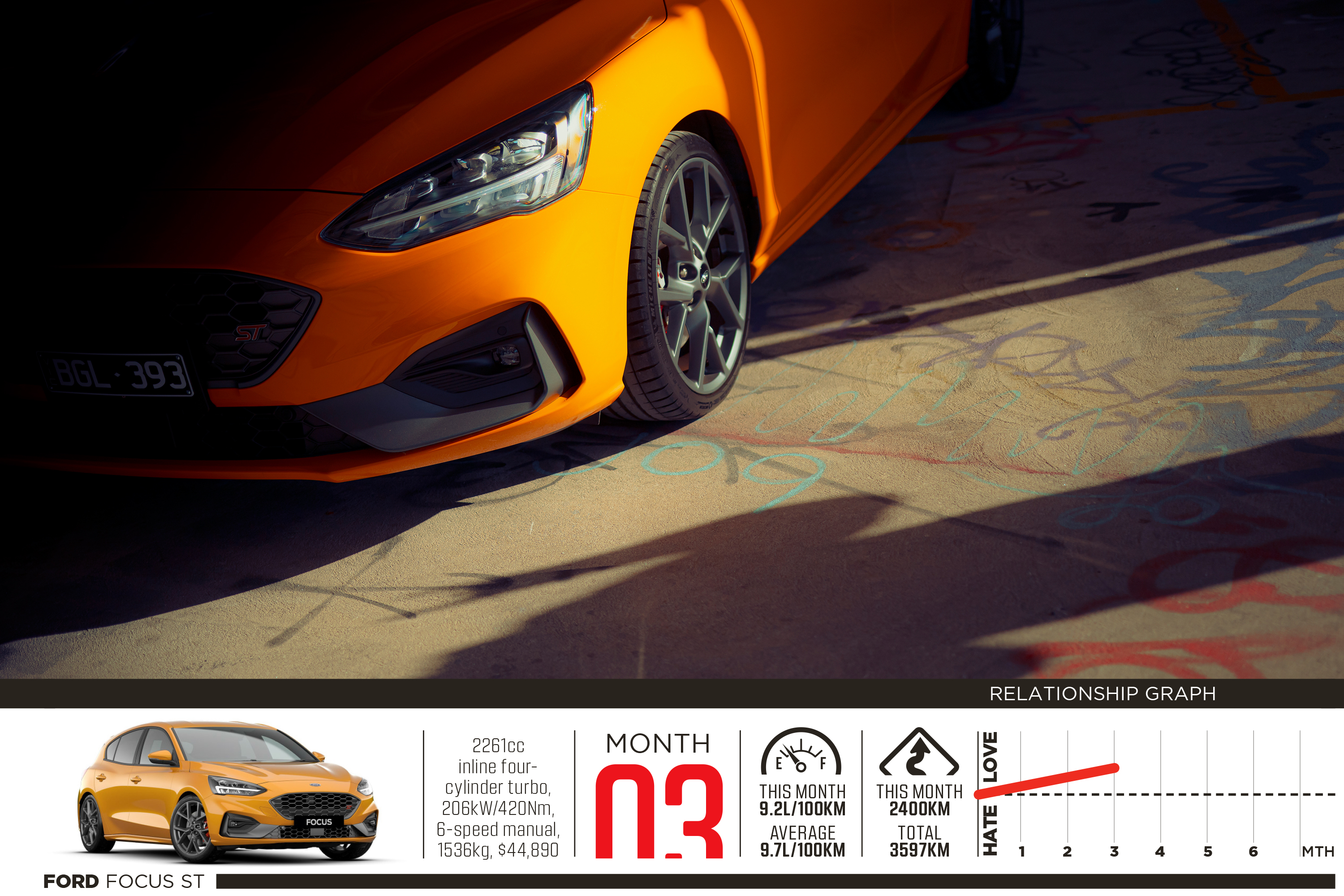
My custodianship of MOTOR’s new long term Ford Focus ST started on a bad foot.
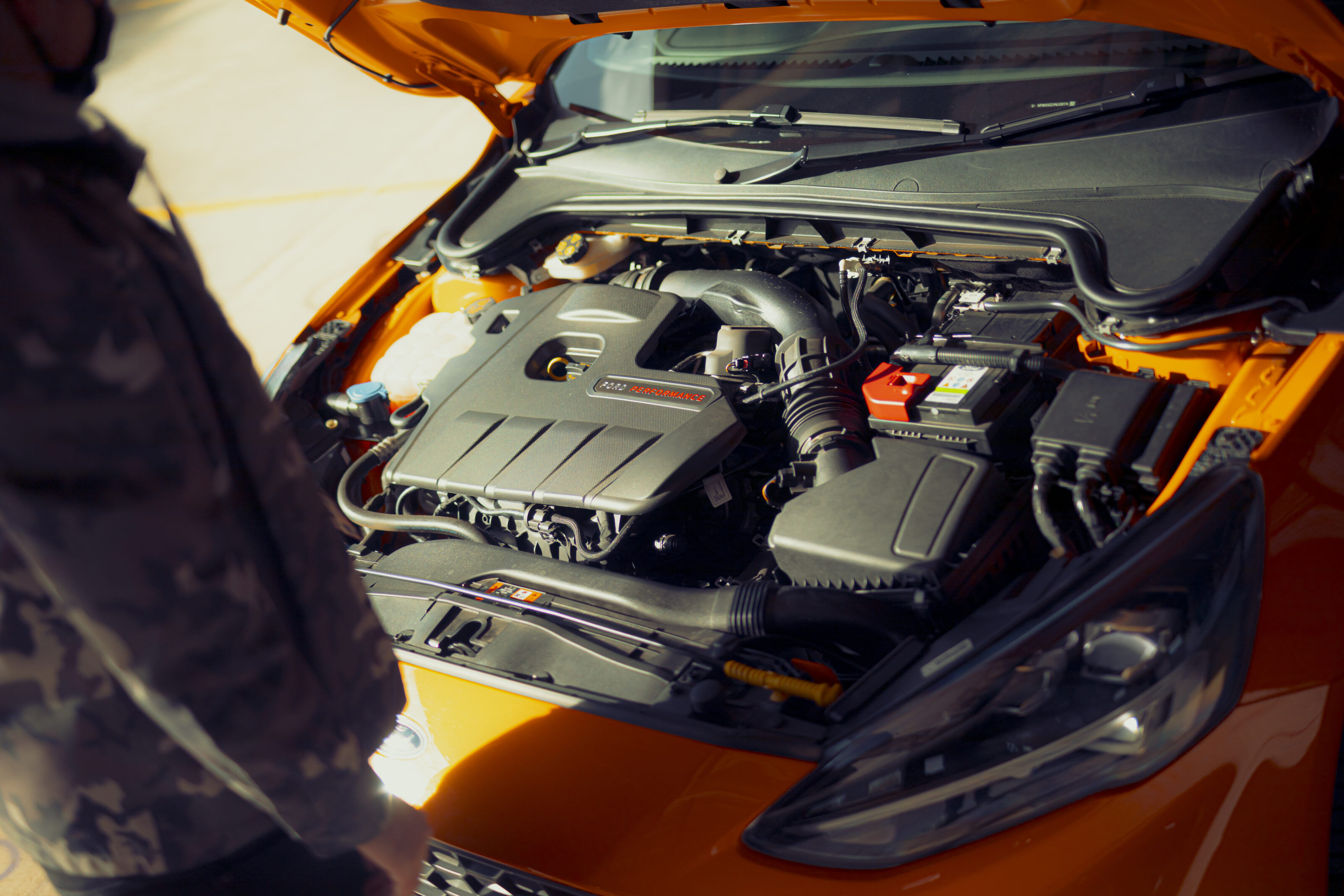
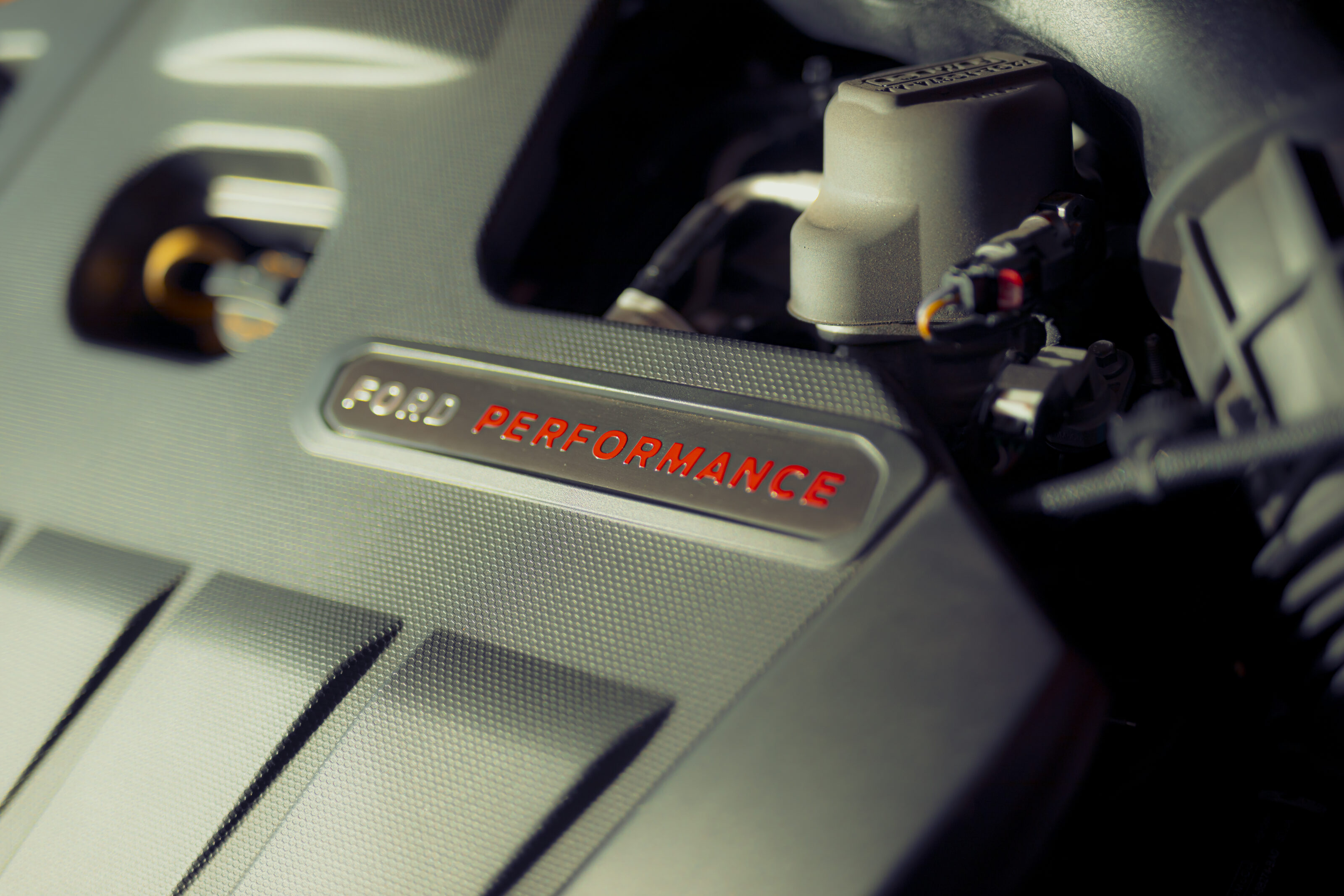
When I opened the bonnet to look at the engine I had to stop myself from immediately handing the car back to Ford. Staring back at me was a fully assembled cobweb strung between the ‘big block’ 2.3-litre four-cylinder turbo unit and the firewall. I cursed quietly as this confirmed I’ll be sharing the vehicle with a spider.
This is a problem for me because I hate spiders. They are demons unleashed upon us mere mortal as a unique and cruel form of torture.
The eight-legged bastard must have set up shop the moment I parked the ST in my driveway. But, for the time being at least he was out of sight, out of mind.
Helping ease my fear has been how delightful the ST is to drive around town. This is a proper performance car but its domesticated manners are remarkable. Unlike its smaller Fiesta ST sibling which has a suspension tune that’ll rattle your fillings free on the Hume, the Focus’ adaptive dampers are well calibrated. In Comfort the damping is well-suited to Melbourne’s constant tram tracks, speed bumps, and potholes.
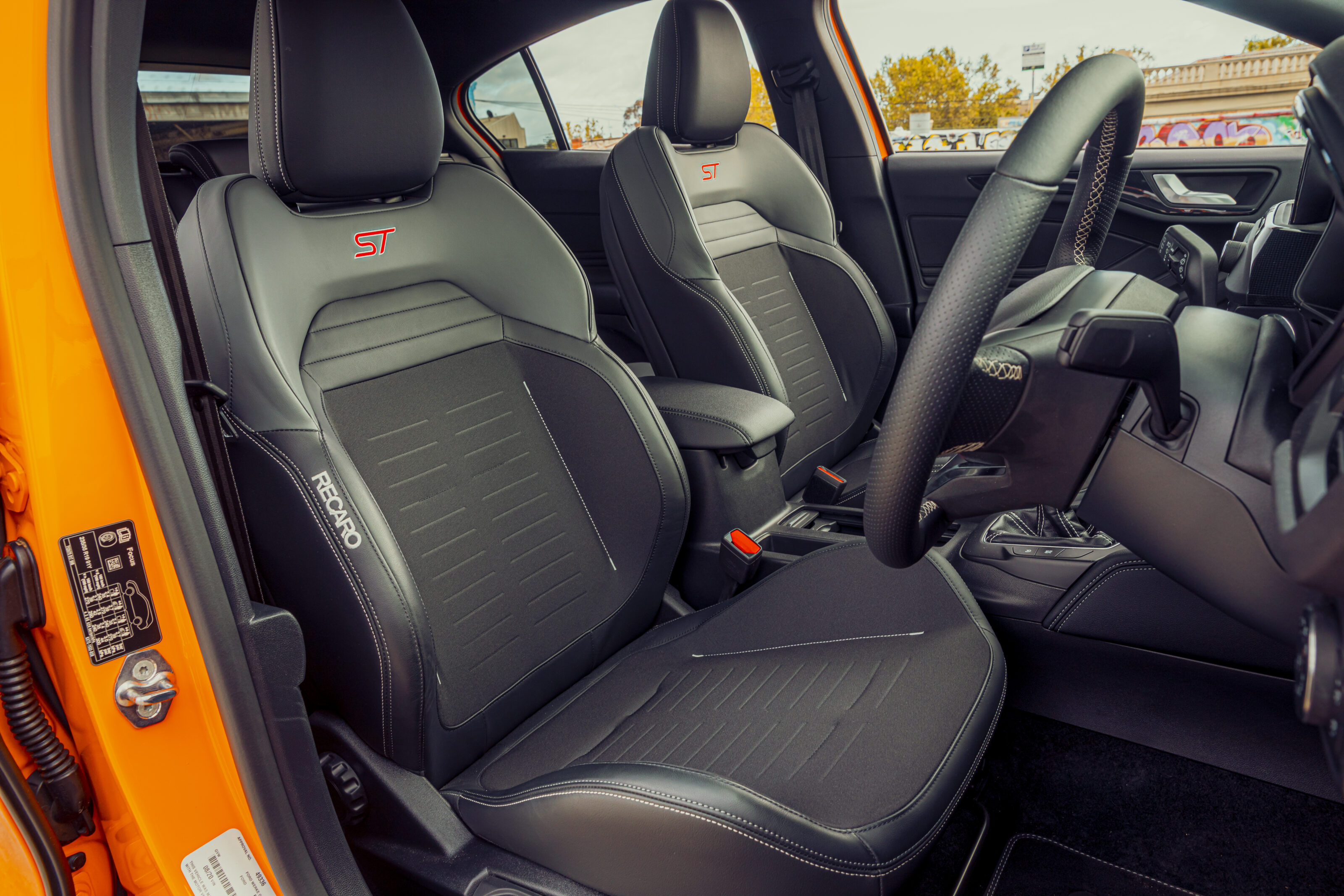
The biggest highlight of the ST so far has been the seats. The week prior to picking up the ST I was the temporary custodian of the GR Yaris Rallye that Enright is running. As our fearless Editor can attest to, the seating in the Toyota results in taller individuals rubbing their scalps on the roof liner. Not so in the Focus, with the manually adjustable seats able to be lowered into the perfect seating position. Add to that the Recaro buckets provide excellent lateral support with ample cushioning for comfortable daily use. The pews are a nice distraction from some of the harder plastics that proliferate the cabin.
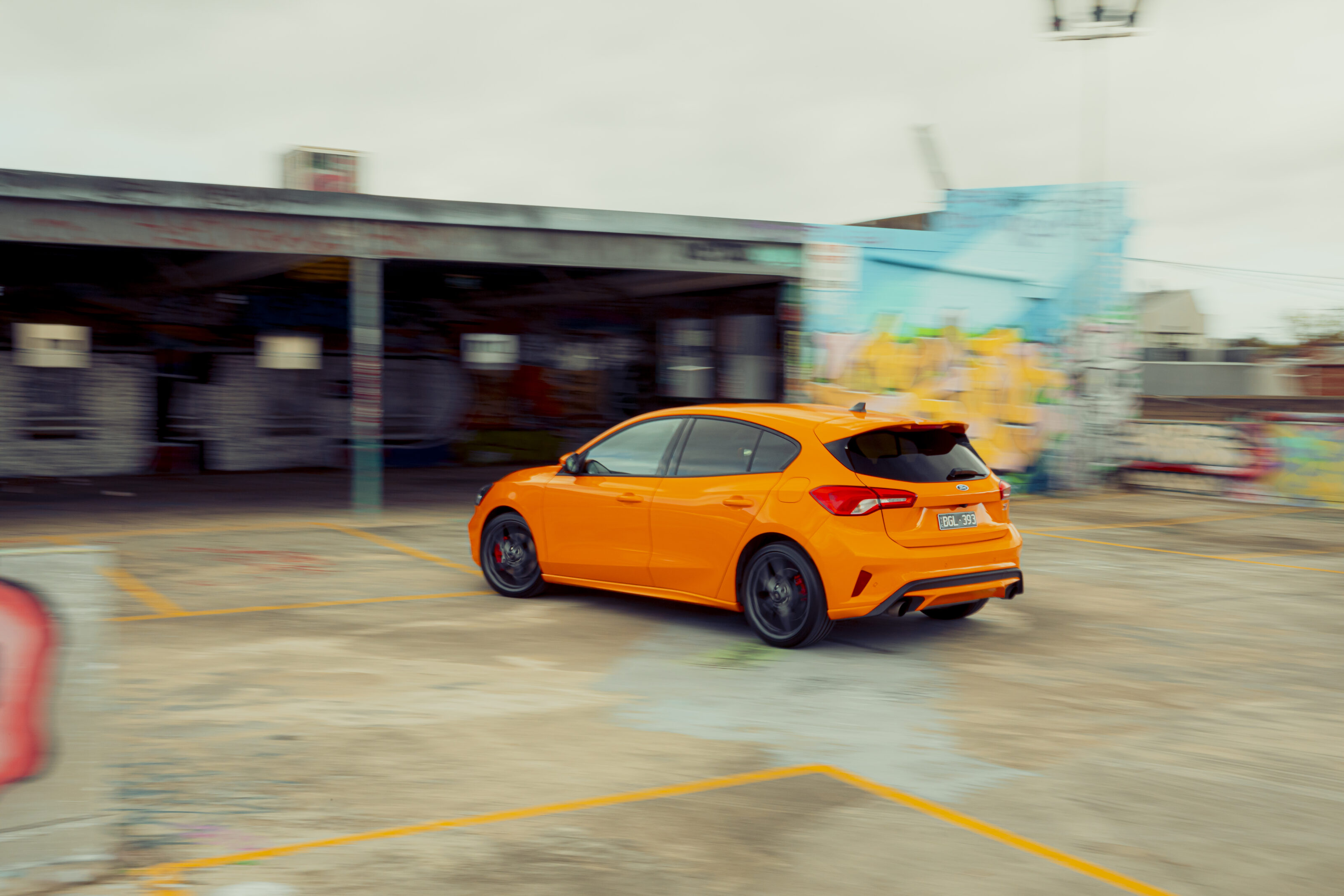
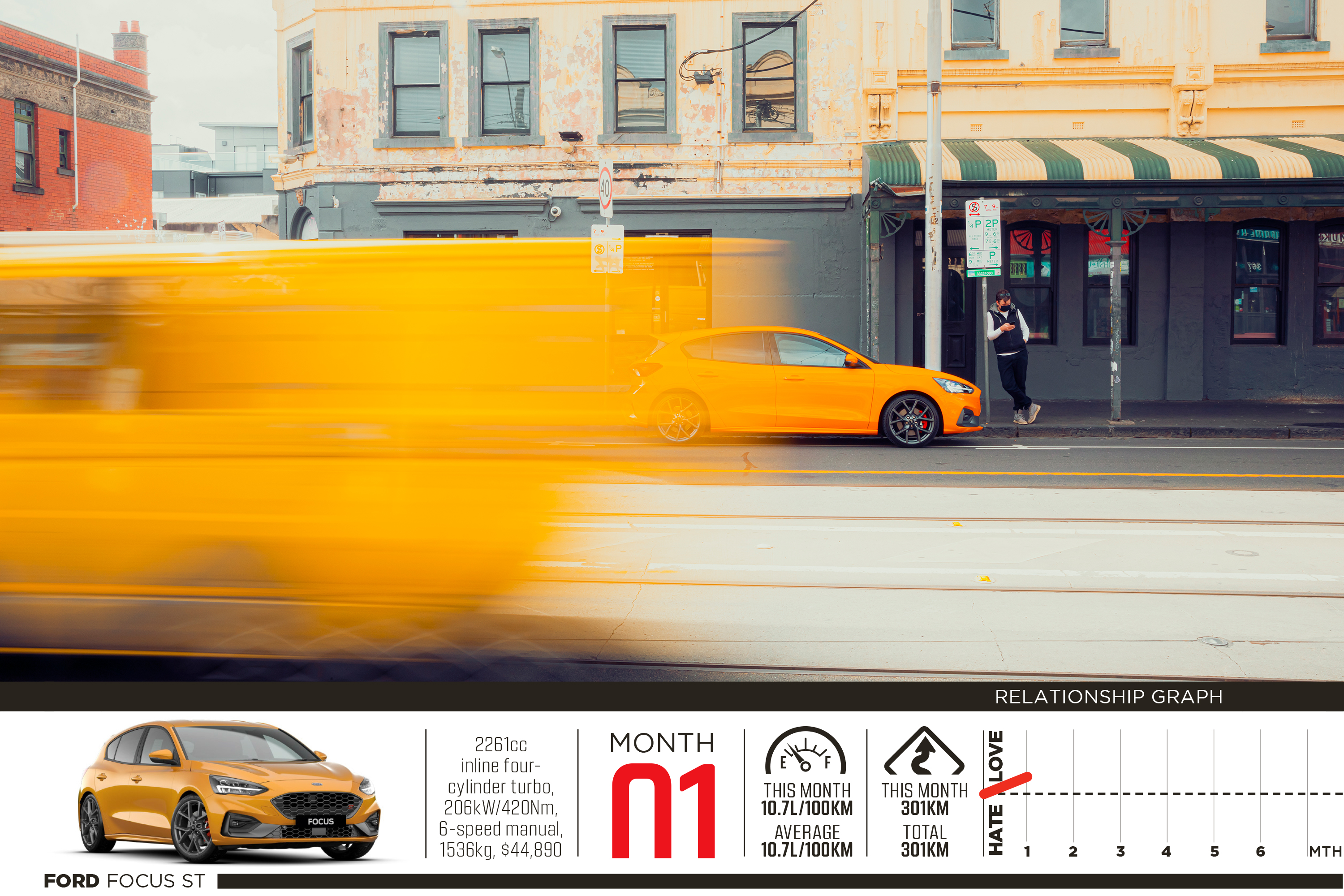
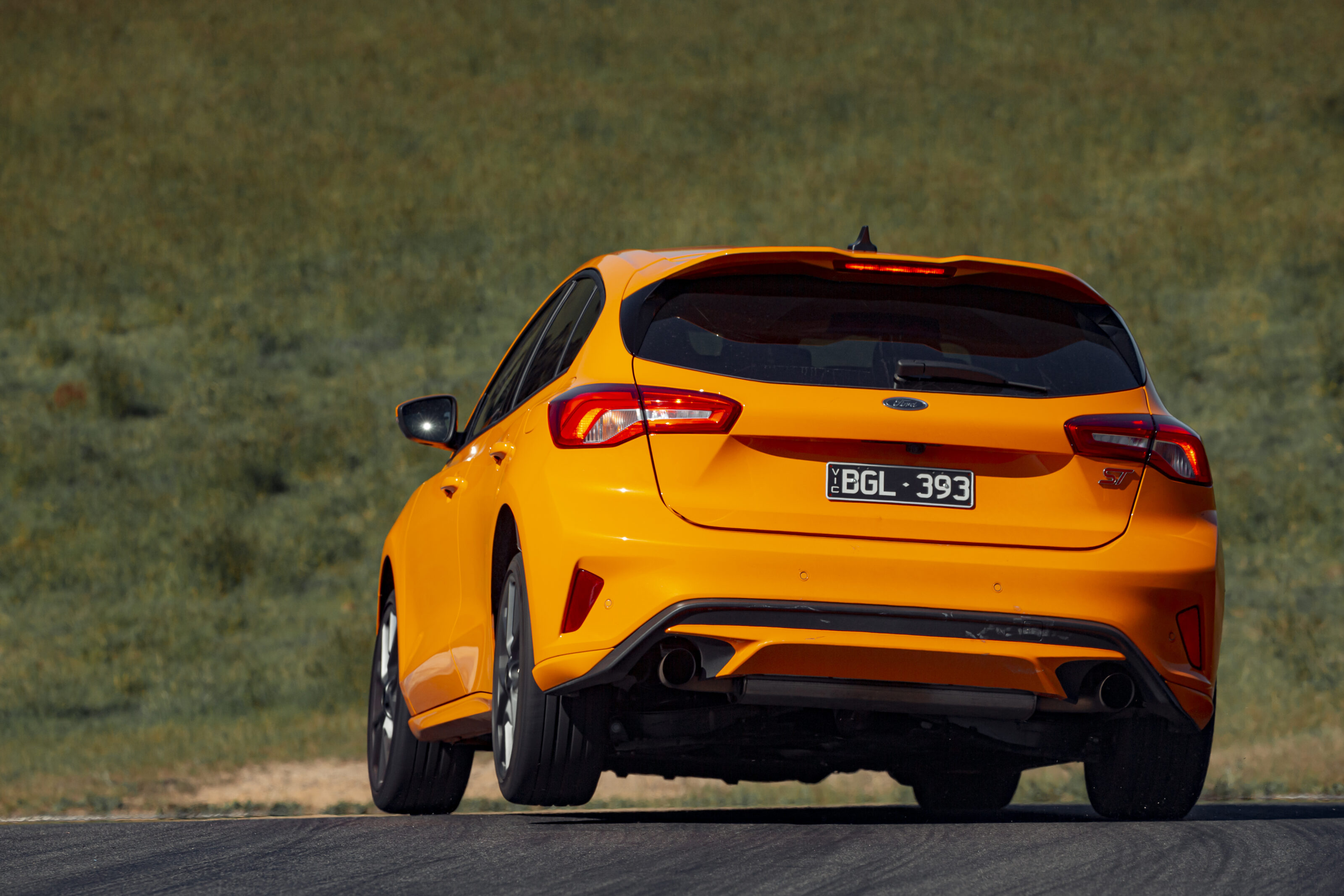
There are two things that set BGL 393 apart from the crowd. The first is its Orange Fury paint (which I adore) that adds $650 to the $44,890 MSRP. The second is the six-speed manual transmission.
What makes the manual a compelling choice is all the low-down torque, with 420Nm of twisting power available between 3000-5000rpm. It means you don’t have to wring the ST’s neck and short shifting between gears has you riding a constant wave of torque.
Ford’s engineers have put effort into making the manual a preferable choice for those that use the ST every day. It’s little things like the fact the cruise control will stay active as you shift between gears that make all the difference.
However, that goodwill is undone somewhat by the same system’s inability to hold your requested speed when battling gravity. On a long but gentle downward slope the ST added as much as 10km/h to where I had set the cruise control before I had to intervene and apply the brakes myself. Kinda defeats the purpose of an active cruise control, no?
While the ST won’t be fixing my arachnophobia any time soon, its charms have been beguiling enough to allow me to risk being within the same capsule as a spider. Next month we’ll see if my nerves can survive a proper drive.- CK
Things we love:
- Recaro seats
- Adaptive dampers
- Torque for days
- Active cruise
- Interior plastics
- Spiders
Month Two: Track Focus
Kirby unleashes the ST at Haunted Hills
If you get the chance to drive a Ford Focus ST on the track, take it. And if you own a Focus ST, book yourself in for some track time. You won’t be disappointed.
I was fortunate enough to help out on a recent MOTOR video shoot at Bryant Park Hillclimb in Gippsland, part of which involved thrashing ‘my’ Focus ST around the circuit. Scott Newman was the man setting down the benchmark times during the day for a video comparing the speed difference between the manual and automatic transmissions, but I was along to assist with the action shots. I won’t spoil the result, but if you want to know which is quicker, make sure to keep an eye on the MOTOR YouTube channel for the full video.
With no stopwatch-induced pressures it meant I could focus on getting the most fun – instead of outright speed – out of the ST. Man, did we have some fun. The Focus is responsive, engaging, and feels eager to please.
The electronically actuated mechanical limited-slip differential fitted to the front axle deploys power wonderfully. In its race mode the ST features an auto-blip feature, which I was thankful for as I focused on learning where the hell the Haunted Hills circuit went instead of perfecting my heel-and-toe technique. The Michelin Pilot Sport 4S rubber provide ample grip – and you can even save some tread wear by lifting the inside rear tyre and waggling it in the air for prolonged periods on certain bends.
Most people may dismiss a front-drive hatch as being a beacon of understeer, but the ST has a refreshingly lively rear axle. The car rotates with ease, and even with all the electric nannies left on you can find yourself rolling off the lock mid corner as the rear slips out of line.
The ST sounds fantastic. It has an authentic burble at idle, which grows to an aggressive rat-a-tat-tat at redline that wouldn’t be out of place in a Finnish forest. Slice into another gear and there is an authentic crack and pop of overrun. The vocal theatrics aren’t as aggressive as the likes of a Hyundai i30 N, but feel genuine instead of confected.
But with all that good has been some minor disappointing revelations. The first has been that I am finding myself wishing a head up display wasn’t omitted from the spec sheet. It’s an extremely minor gripe, but one that for the price of entry doesn’t seem entirely unreasonable.
Next is the ST’s constant gear change suggestions. Even in its sportiest mode, there is a little icon on the dash nagging at me to shift to a more fuel-efficient ratio. This is fine in an eco mode, slightly irritating in comfort, but wholly annoying, not to mention dissonant, in a setting called ‘Race’. Efficiency be damned!
New for 2021 in the Focus ST is a digital dash. There’s not a huge benefit compared to the traditional dials of the previous model year, seeing as the layout isn’t adjustable, and the visuals only change when a new drive mode is selected. Speaking of, change drive modes on the move and you’ll lose all functionality of the dash sans speedo for several seconds as graphics flash up to allow you to cycle through the different options.
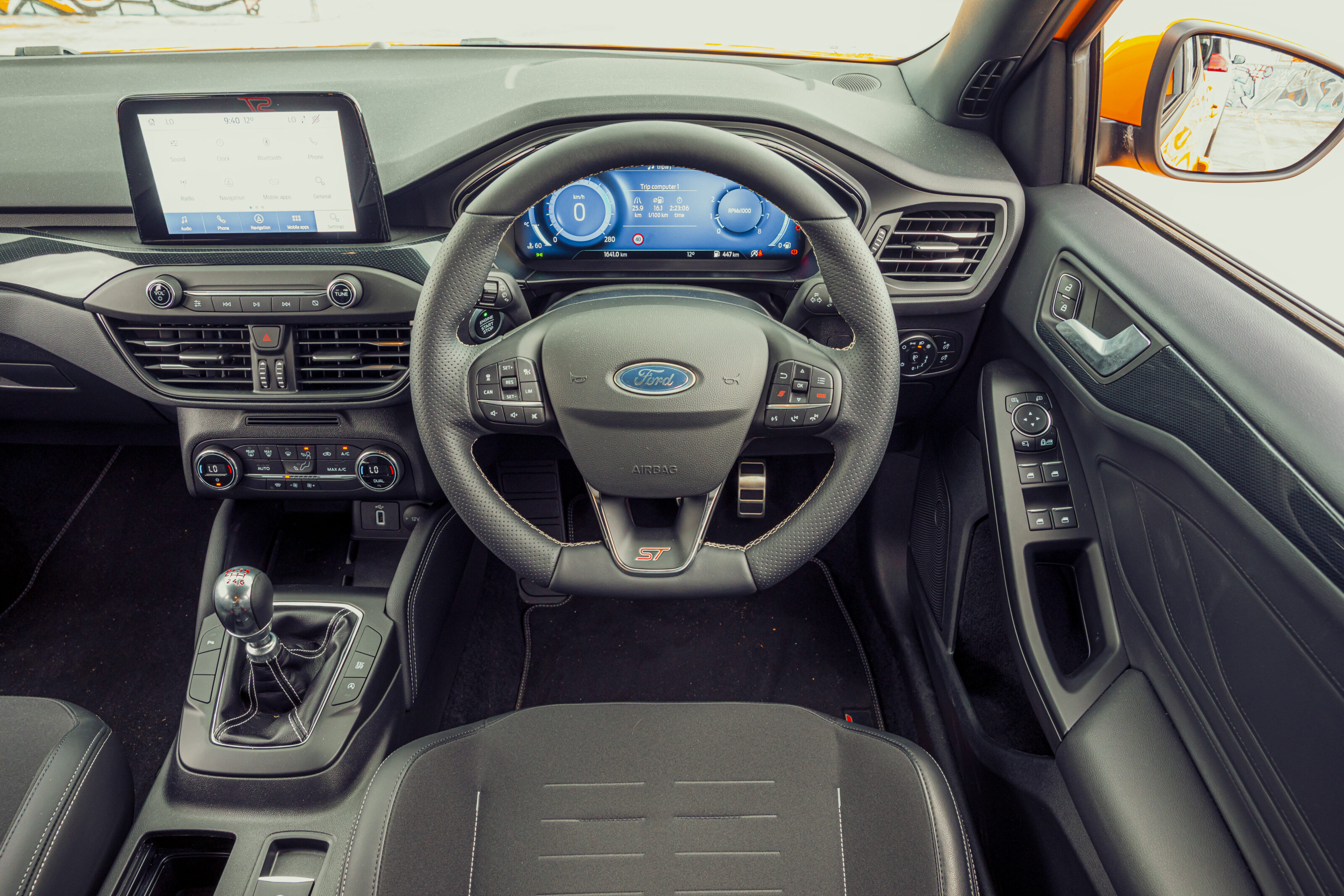
The transition screen remains visible for just longer than I expect every time, always leading me to believe the whole thing has frozen in place before it decides to complete the change. I’m yet to see a major advantage to the fully digital unit compared to analogue dials with a central screen nestled between.
On the plus side, my eight-legged friend has vacated the premises. Note to self – spiders hate racetracks. That’s good news for everyone in my books. -CK
Things we love:
- Track time
- Race mode
- Rally sounds
- Slow graphics
- Gear suggestions
- No head up display
Month Two: The Grass is Greener
Kirby discovers jealousy can be a virtue
I’m not usually the jealous type. But I am jealous of Alex Affat. Not only does he maintain an aura of effortless cool at all times, he also owns (and regularly drives, bless him) a genuine Nissan R32 GT-R. I’m not the only person that is jealous of Affat though. He regaled me recently with the dilemma of commuting in a JDM icon. At every other set of traffic lights he is set upon by owners of modern performance cars all looking to demonstrate that their sprightly metal is capable of sending Affat’s geriatric Godzilla out to pasture.
Nissan’s original claimed power figures for the GT-R (which we can take with a lake’s worth of salt) were 206kW and 353Nm; roughly on par with ‘my’ ST’s 206kW and 420Nm. So, why isn’t anyone trying rev their crackle-tuned Golf GTI at me for the traffic light grand prix?
I’ve noticed in my last month of faux-custodianship that the ST somehow flies under the radar, even with its Orange Fury flanks contrasted against Melbourne’s grey spring weather.
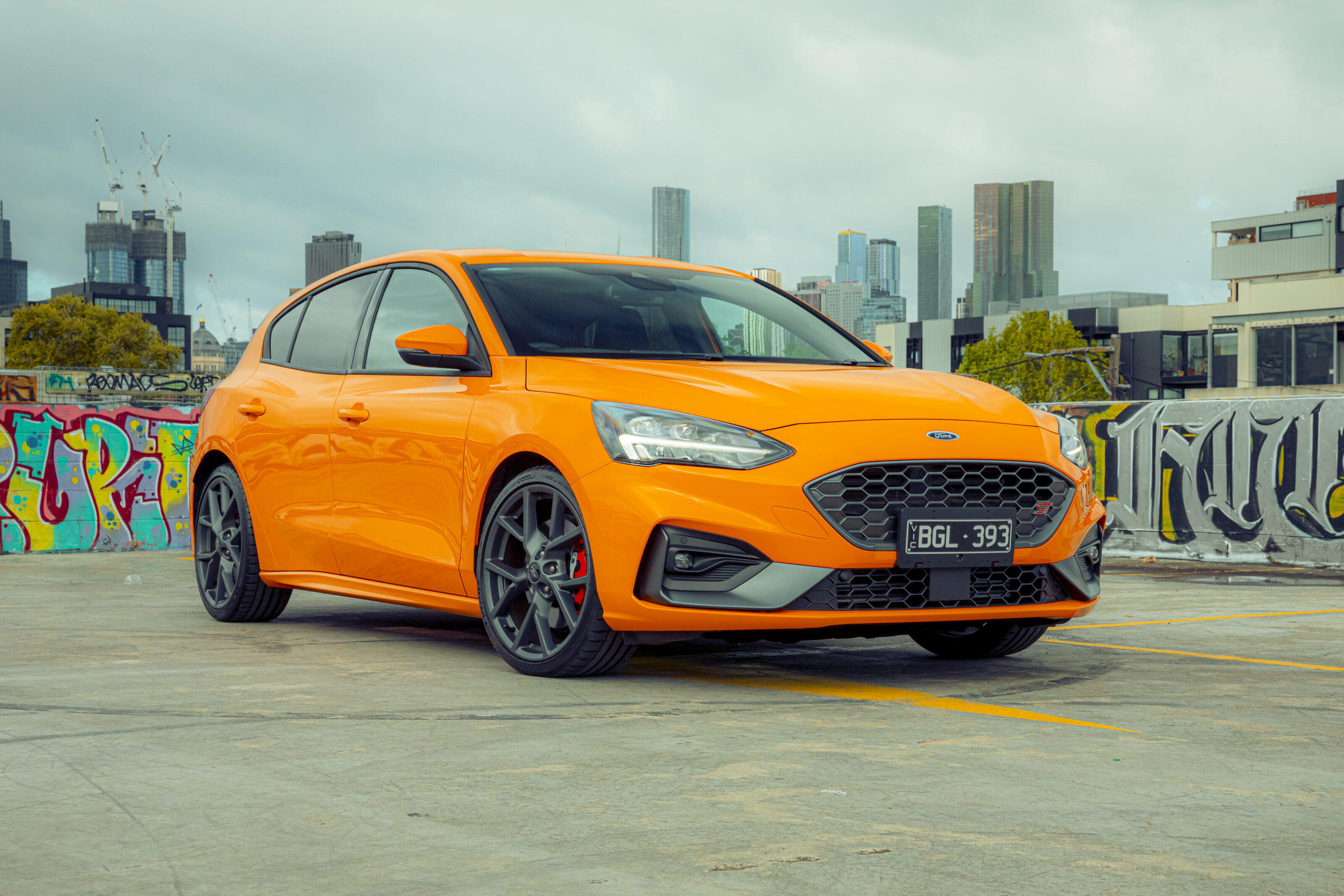
This could be in part because the ST really doesn’t shout about its performance abilities all that hard. There’s no huge wing, the arches aren’t adorned with brutish flares, and the exhaust – while rorty – doesn’t really shout at passers-by.
In fact, line the ST up against more pedestrian Focus variants and I suspect anyone but a car nerd like you and I would be able to pick it from the line-up.
There is certainly something to be said for a vehicle that carries itself with that kind of quiet confidence. But I feel that the outwardly humble personality results in people overlooking the Focus ST’s merits. That disappoints me.
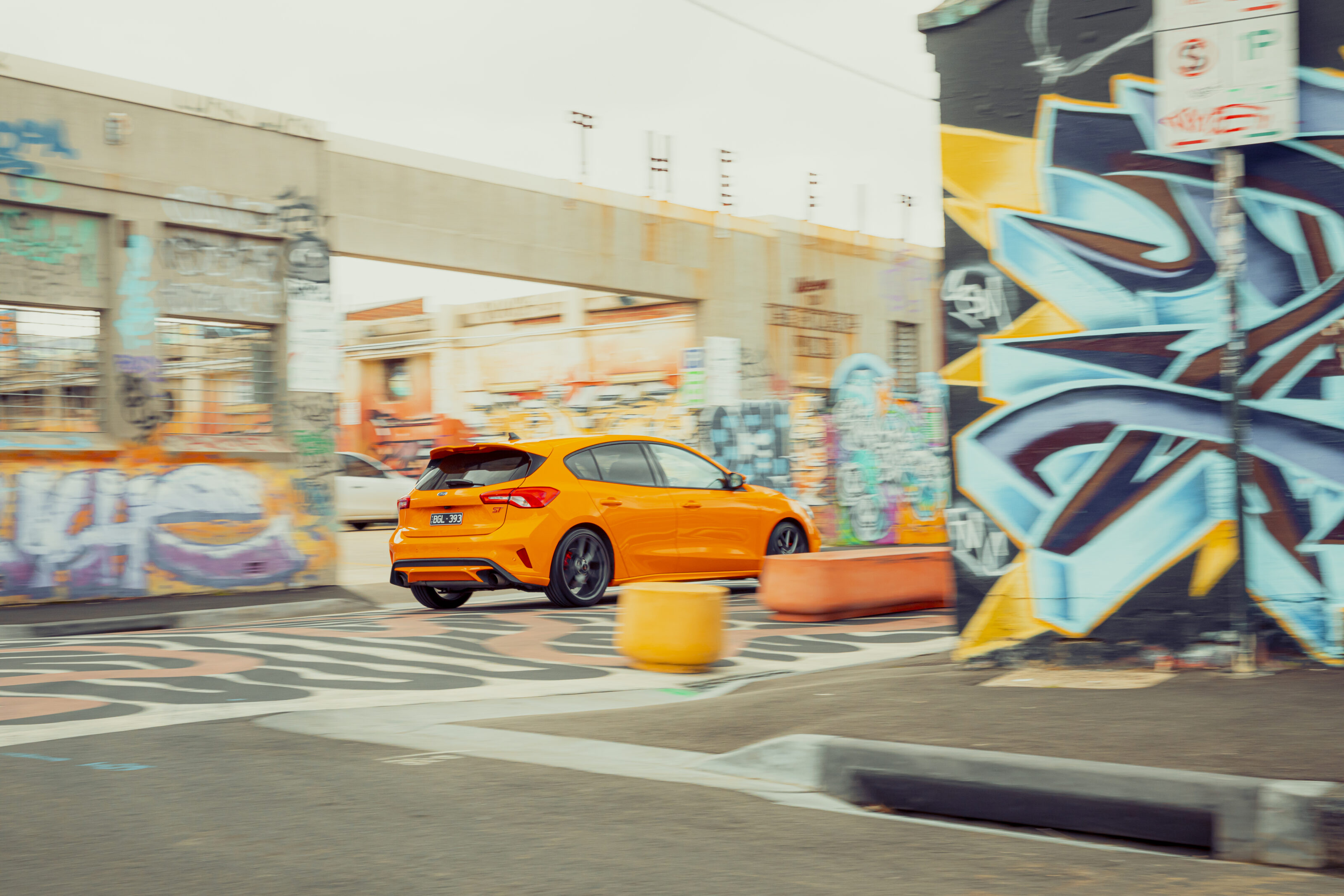
My time with BGL 393 comes to an end this month, and after nearly 100 hours in its Recaro saddle I’ve become quite fond of the Blue Oval’s hot hatch hero.
That said, before I hand the keys back to Ford, I do need to clear my liver, with the ST’s radar cruise control catching an increasing amount of ire. Ford has seen fit to teach the ST to read road signs, which it does with the same accuracy as Stevie Wonder. This isn’t something Ford should be ashamed of, as almost every vehicle on sale today is terrible at reliably reading speed signs.
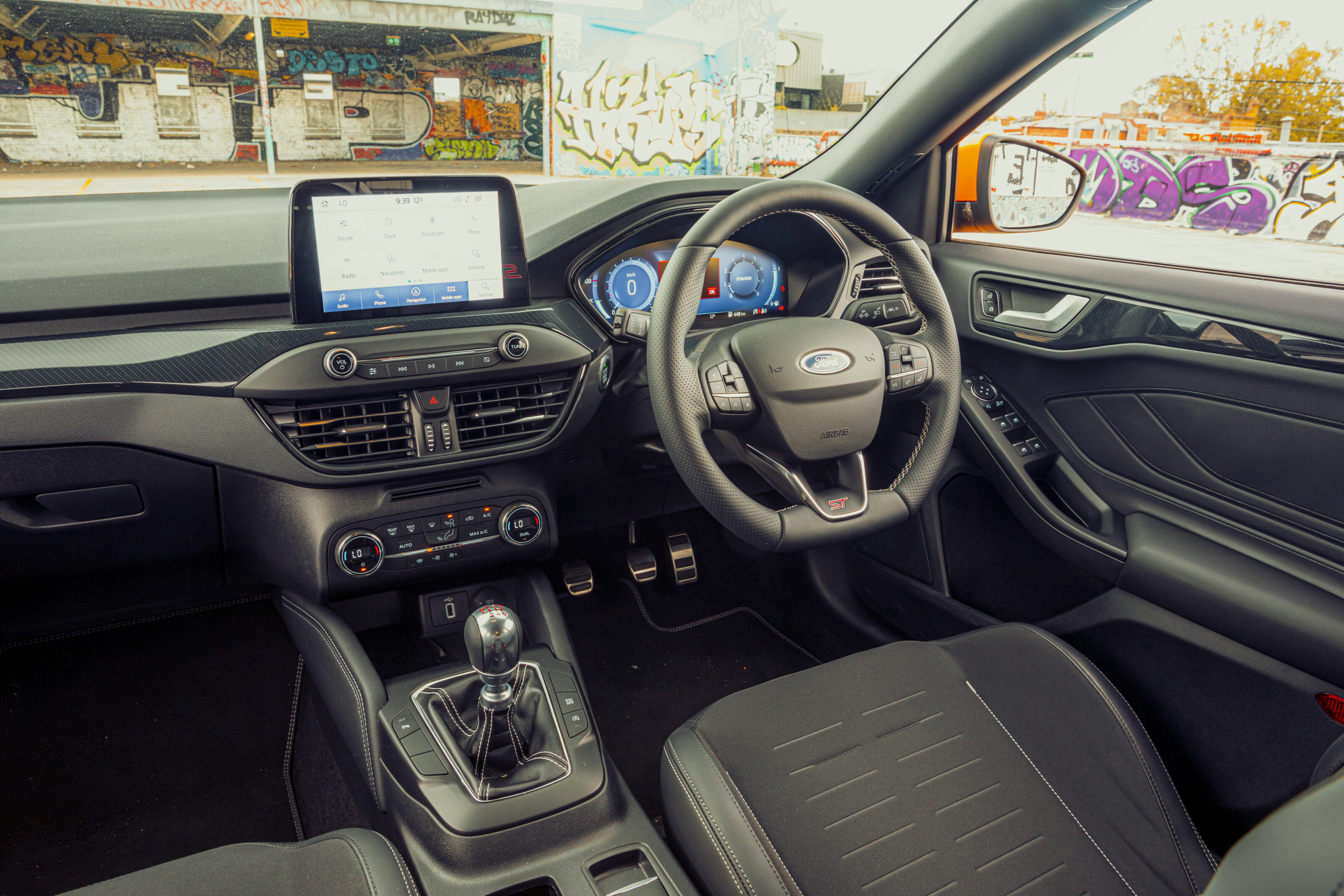
However, Ford has seen fit to give the system the ability to change your set cruising speed to whatever the most recent road sign the vehicle has passed may be. In isolation this system (which, I should note, can be turned off) has merit, acting as a back-up should you fail to notice a freshly reduced speed limit. In reality, it means I have both had my cruise control changed to 60km/h in a 100km/h zone, and 130km/h. Both from the same sign, funnily enough! Poor form.
A co-worker borrowed the keys for the ST recently, and while impressed with its power, they were disappointed in some of the cabin materials. This prompted me to really ponder the ST’s spec offering – was it enough? For me, yes. The only real omission I kept yearning for was a head-up display. But the B&O sound system was crisp, digital instruments clear, there was a large enough and responsive infotainment system, smartphone mirroring, wireless charging pad, and soft padding in the right places to make long drives comfortable.
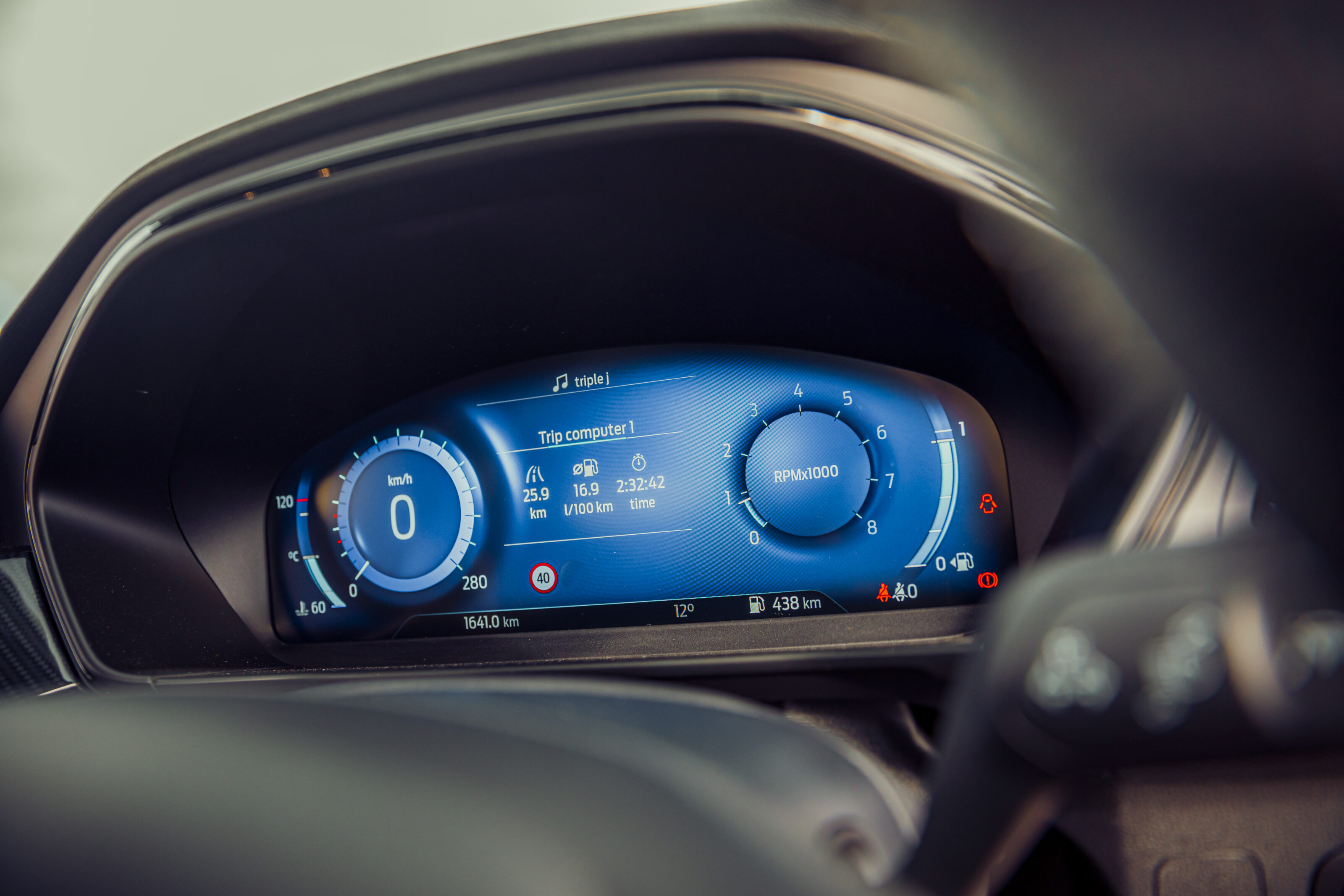
Yeah, you can find some scratchy plastics under the steering wheel and on the side of the transmission tunnel, but this is where the ST undersells itself. It’s not a hot hatch for anyone wanting a luxury feel at a budget price.
So, who is the Focus ST for? It’s for people who care more about driving than they do having the most obnoxious exhaust, the biggest wing, or freshest metal at Cars & Coffee. Pretention is left at the door in the ST. There is nothing insincere about its personality. Within its DNA you are informed that this is a vehicle that was built by car people, for car people. You feel this through the controls – the responsively sprung throttle, linear clutch, the reassuring brake and the well-oiled shift. These are likely to be things your local badge snob is going to overlook when searching for their next depreciating asset.
In a sea of loud Tarocash suits, sometimes wearing a comfortable tee shirt is all you need to stand out. – CK
Things we love:
- Sleeper styling
- Control weights
- Unspoken appeal
- Tad thirsty
- Sentient cruise
- Somewhat unloved
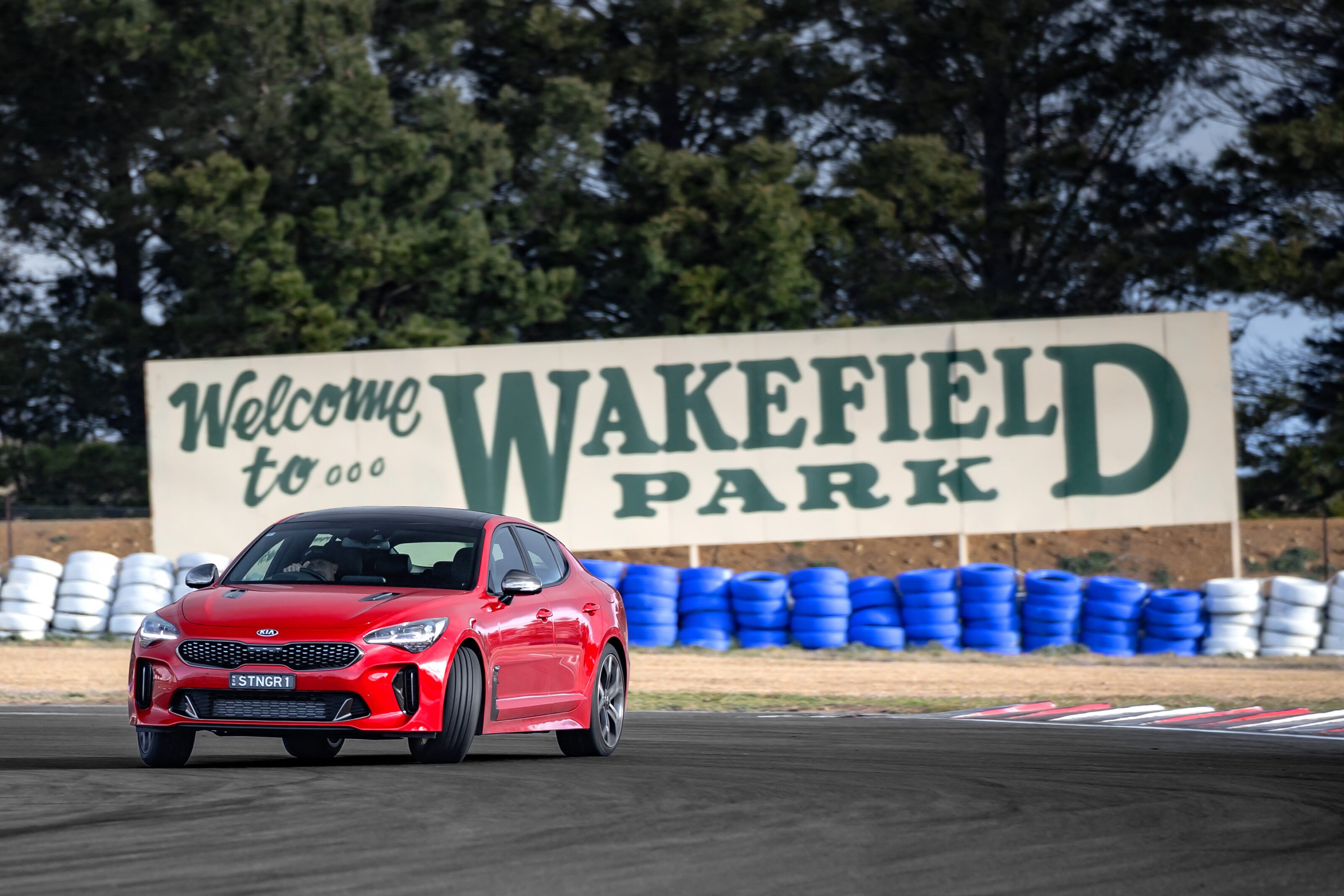
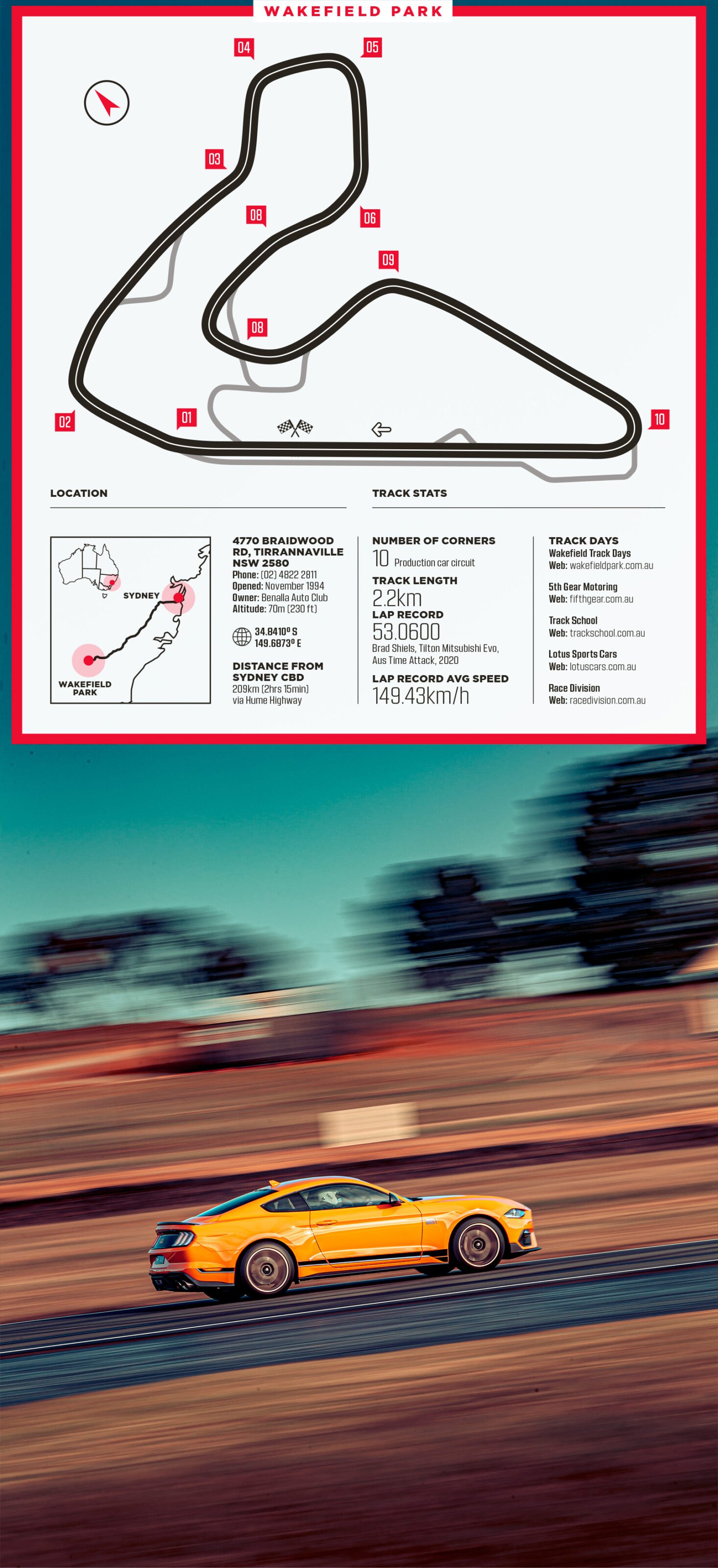
Wakefield Park Raceway was built by and for those like us – car people with a passion for driving. So when Paul Samuels and John Carter saw the impact of urban sprawl on race tracks like Sydney’s Amaroo and Oran Park, it shifted them into action. They wanted to safeguard the ability to drive on a track, without necessarily racing, and built a facility that focused on club-level motorsport.
That location is just outside the NSW regional town of Goulburn. The 2.2km layout was built in 1994 and opened by Sir Jack Brabham that year. The topography is without trees or natural obstacles, meaning safety and runoff is rarely if ever an issue. In 2000 the ownership changed, while the circuit also received some re-profiling at the Fish Hook and Turn 10. National level racing appeared that year, including the Supercars development series.
The Benalla Auto Club, which also owns and runs Winton Raceway, purchased Wakefield Park in 2007 and resurfaced the track. The venue is used extensively for driver training, club track days and manufacturer events. MOTOR has also conducted PCOTY at the venue, something Warren Luff knows all about.
“It’s a great little circuit. I’ve seen it grow and evolve over the years. I hope it’s there for many years to come as it brings a lot to the Goulburn community,” he says. And in doing so, Wakefield Park is achieving what Samuels and Carter set out to do by providing a place for enthusiasts to hone their skills. With the help of Luffy, here’s MOTOR’s guide to one of Australia’s best track-day circuits.
Section One: Getting Kinky
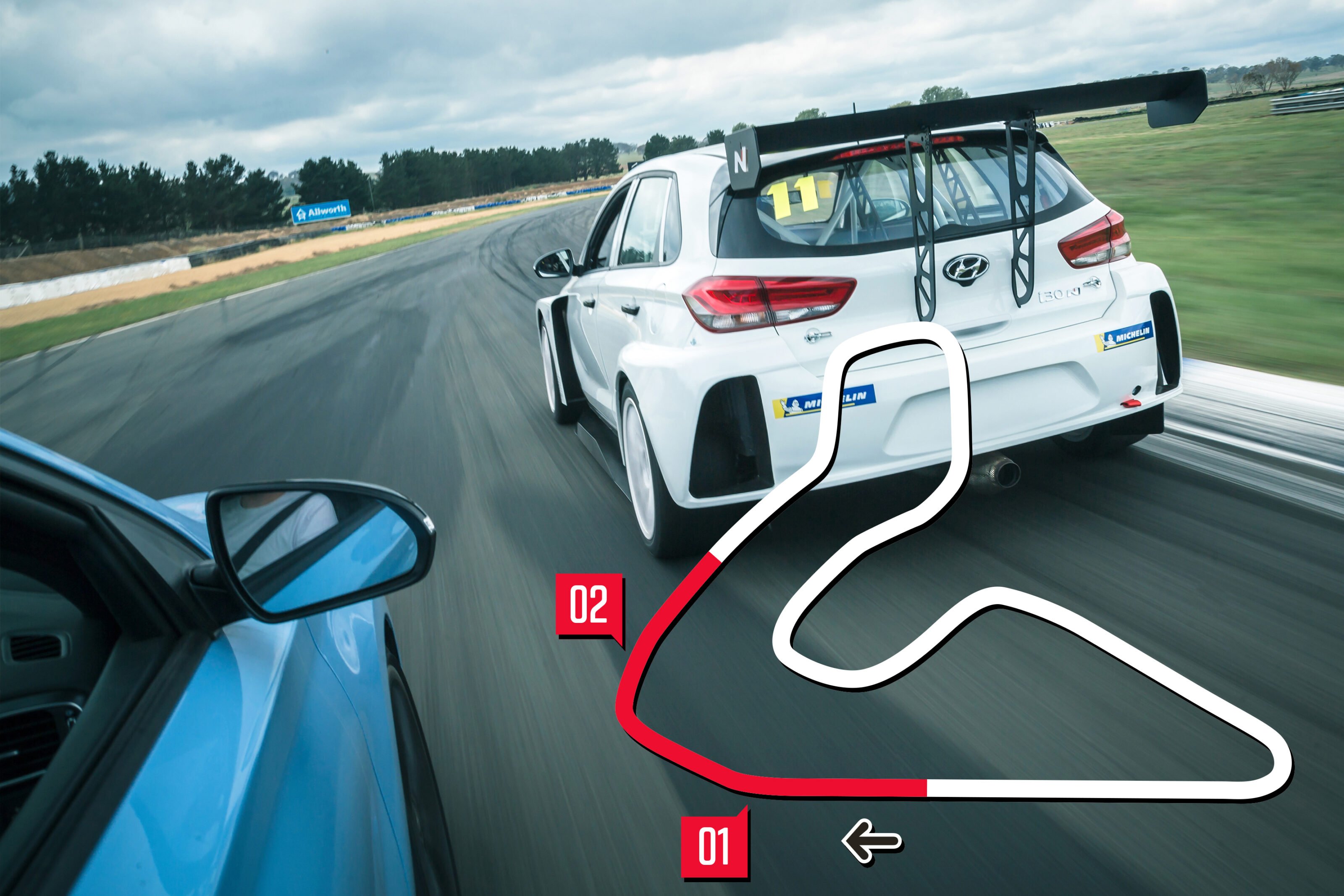
Turn One
The big thing to note is that you can generally get through Turn One faster than that which Turn Two will allow. Therefore, the speed you carry through that first kink ultimately determines your line and braking, and subsequently the speed you carry through Turn Two. If you overcommit through One, it’s very easy to lose serious time through Two and up the hill to Turn Three.
Turn Two
However, the critical corner is still Turn Two. You have to get your braking done in a straight line to settle the car and get a good run through and out of the corner in order to maximise your momentum up the hill. So the kink is a set-up corner for Two. Most cars can generally remain flat to the apex, but it really does depend on what you’re driving. It’s critical that you don’t let ego get in the way by trying to see how fast you can get through Turn One and then completely stuff up Turn Two.
MOTOR Tip
There is more to be gained by taking a cautious approach to Turn One and getting Two right than barrelling in too hot and overshooting. A lot of time can be gained or lost. Like many sections it makes you think about your craft and to be more aware of how your inputs in one corner impact others.
Section Two: Over the Top
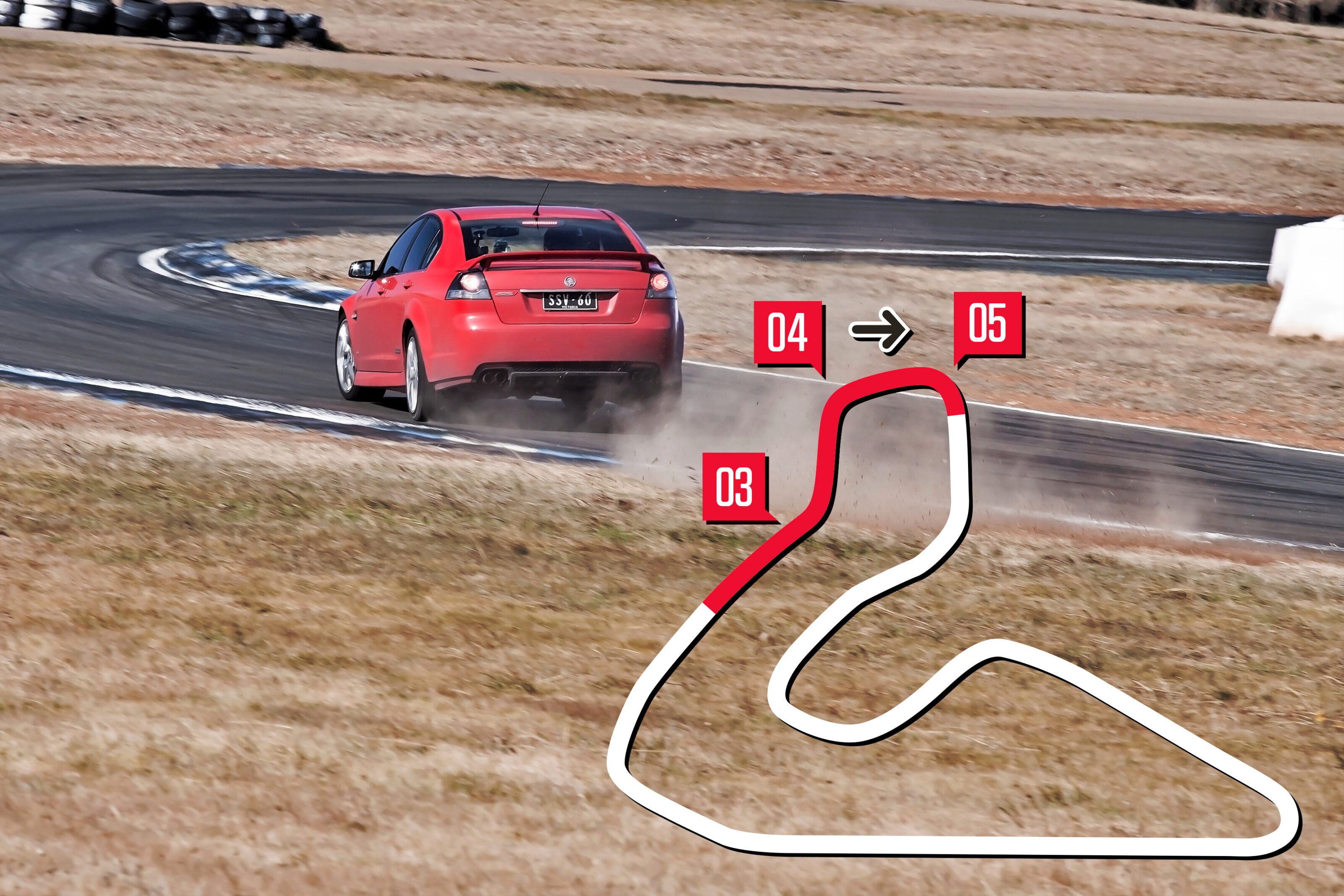
Turns Three and Four
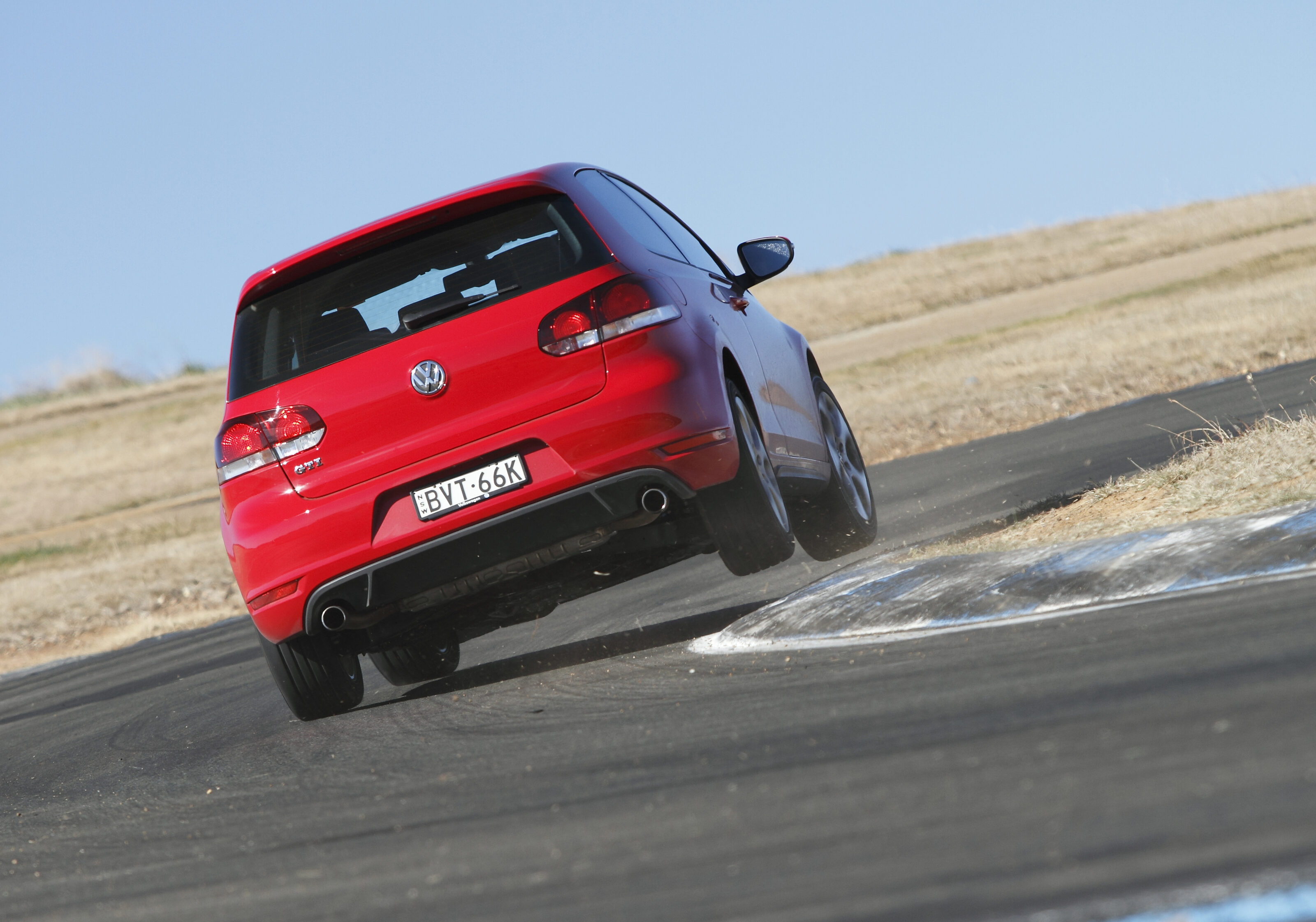
Turn Three is a fast, unassuming bend that requires the same approach as Turn One. That’s because the line you take through Three affects the line you’ll use through Four. For instance, you can blast through Three and think you’re a hero, but you’ll end up too far to the right and negatively impact Turn Four, which has the flow-on of hampering Five and the run down the hill.
Turn Three is all about compromise. You need to try and keep the car as much to the left on exit as possible without losing momentum. Then carry as much speed as possible through Four while positioning yourself up nice and high for Five. Turn Four is cambered because it’s on the hill – it’s not deliberately made that way, it’s merely following the shape of the earth.
Turn Five
Turn Five appears to be a relatively simple 90-degree corner, but your speed through Six and Seven towards The Fish Hook is all determined here. It’s a critical corner to get right. It’s very easy to rush this corner and end up with a lot of mid-to-exit understeer.
MOTOR Tip
Because of the gradient, you can use the incline to do some of the braking for you through turns Three and Four. Effectively, you’re pushing the nose of the car into the hill. It’s deceptive because you can carry more speed through Turn Three than your mind believes, but remember to keep it within reason as to not affect the next few corners.
Section Three: Down the Hill
Turn Six
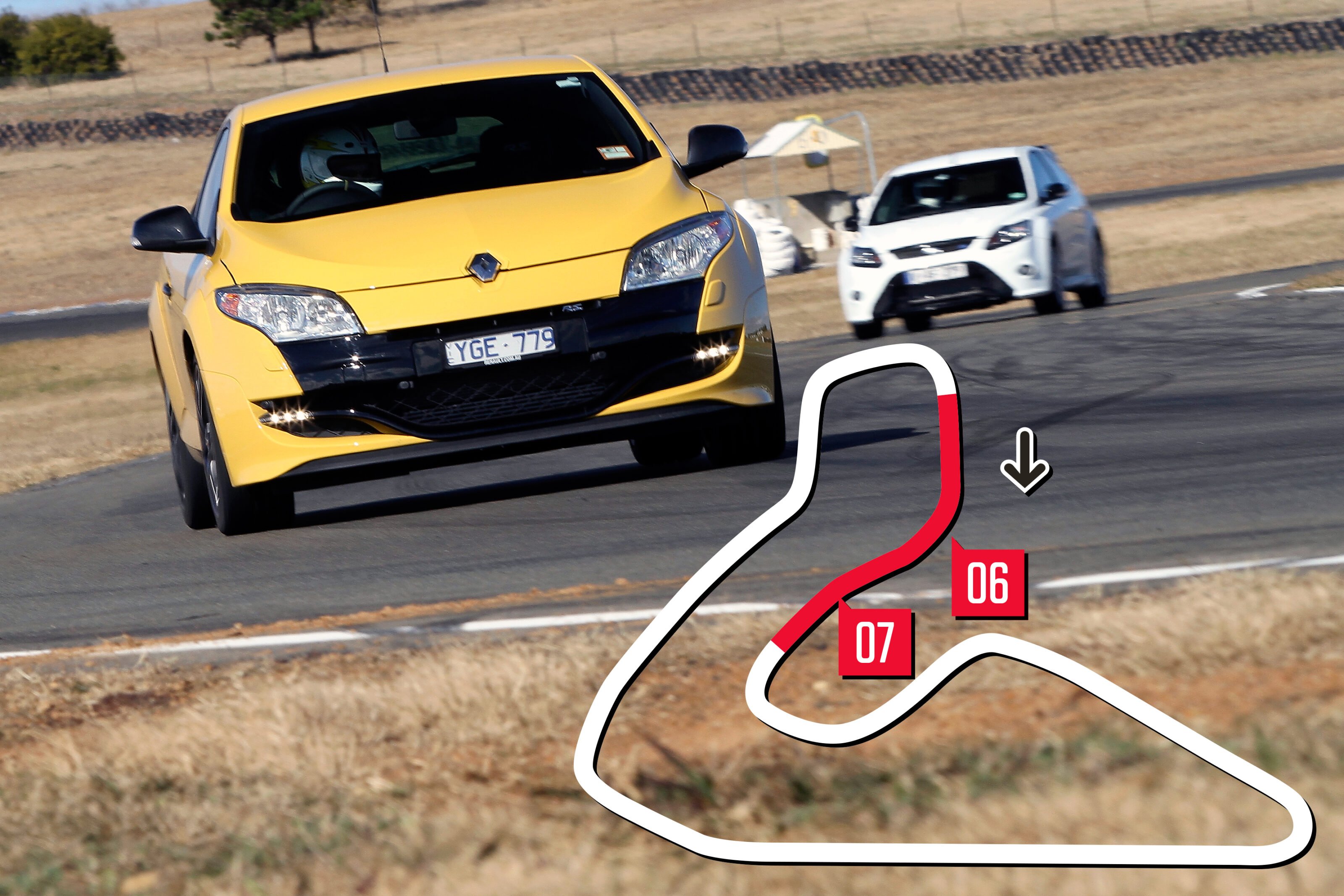
This is a really fun part of Wakefield Park. Generally, in most cars, Turn Six is only a small lift just to get the front axle dialled in while using as much of the inside kerb as possible to try and maintain as much pace as you can. Essentially, you’re trying to increase the width of the circuit so the more kerb you can use, the more speed you’ll carry.
Turn Seven
Turn Seven is more about setting the car up and braking on corner exit into Turn Eight. Because the track is continually curving to the left as you come through Seven, you need to try and square the car up as much as possible and brake diagonally towards the outside of Turn Eight as your entry point so the car can brake in a straight line.
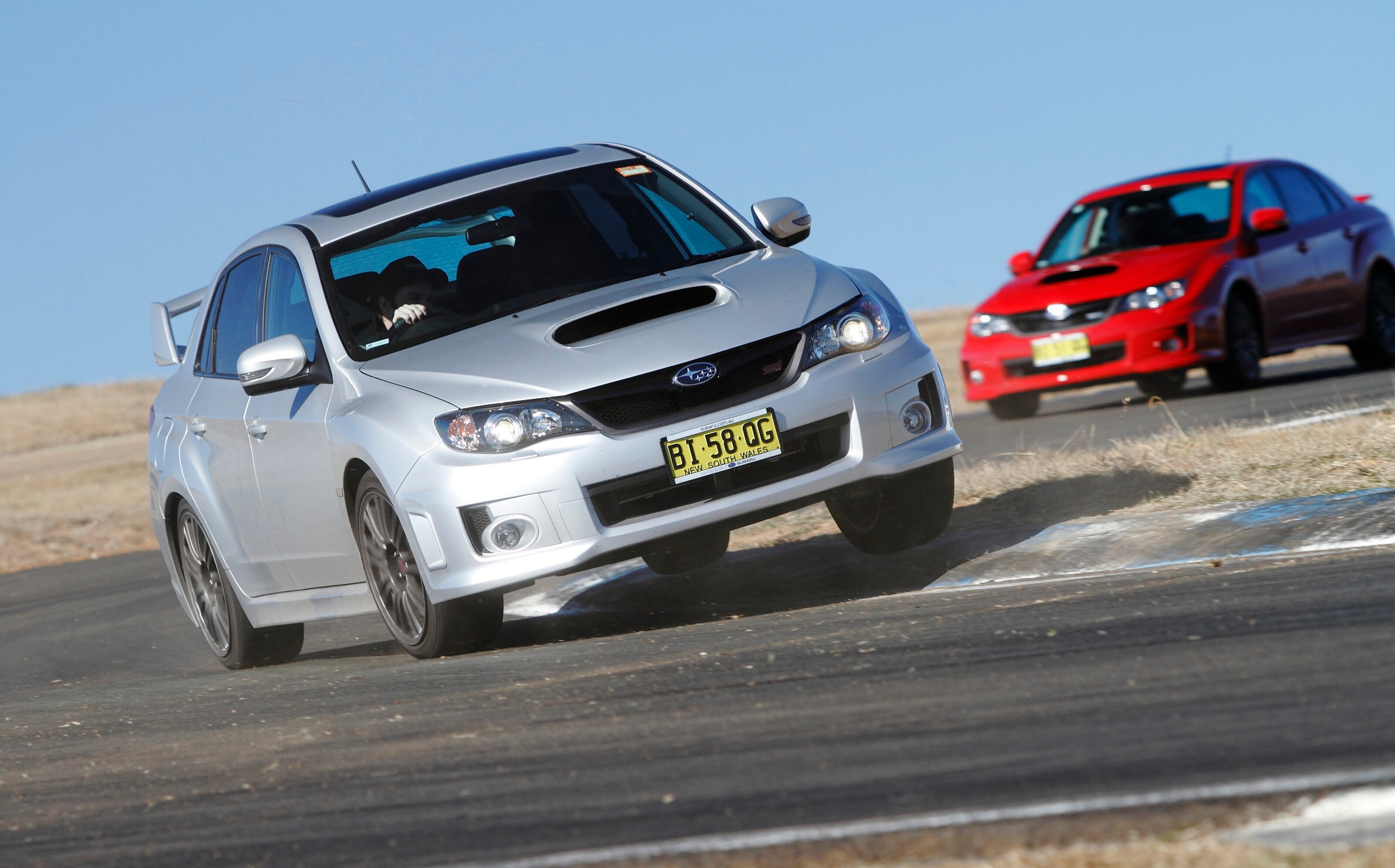
Even in a car with ABS, despite the fact you won’t lock an inside front, if you don’t have equal pressure over the front wheels the system isn’t going to be as effective as it can be. Your braking into Turn Eight is all determined by the line you take through Seven so you can get the car settled under brakes.
MOTOR Tip
In any type of car that doesn’t have a lot of power, carrying corner speed and keeping the car flowing is important to maintaining positive momentum. It’s a critical aspect to the lap time and a lesson Wakefield Park definitely teaches you.
Section Four: The Fish Hook
Turn Eight
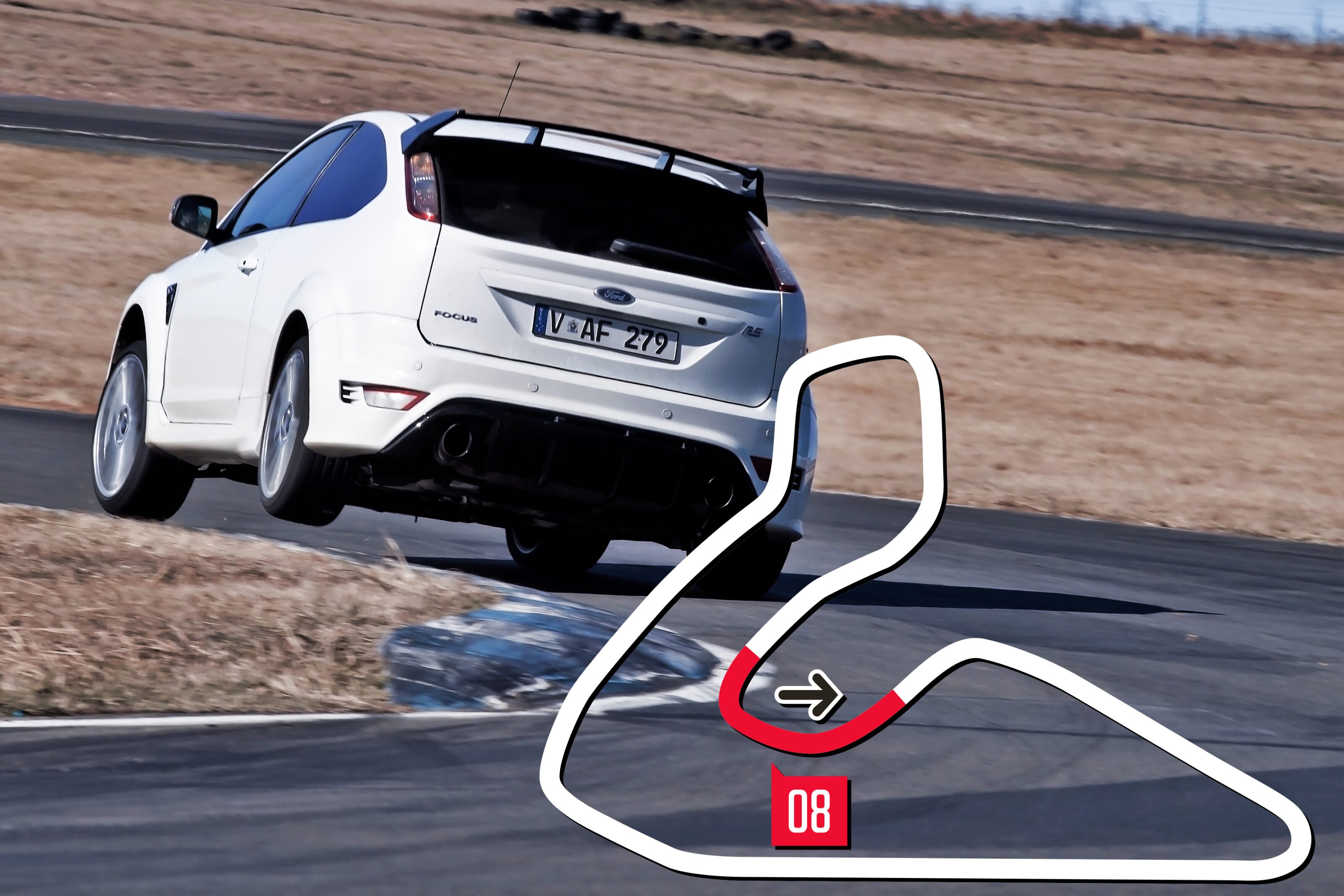
Over the years the profile of Turn Eight has changed. It’s a very easy corner to out-brake yourself after carrying too much speed down the hill through Six and Seven. As I noted earlier, braking into Turn Eight can be very easily compromised by line, but also by clearing the pedal too early and not slowing down enough.
If you look at the outside of the track there’s no grass for about 10 metres from the edge of the circuit. That’s because so many people understeer wide and fire off the track. So you need to get the car slowed enough so you’ve got some point on the front axle.
You want to be quite aggressive with the steering and really make the car go where you want it to. That’s because pretty much any type of driveline layout will generate mid-to-exit understeer here given that past the apex point it’s all about getting the power down as you head up to Turn Nine.
MOTOR Tip
Wakefield Park is far more technical than it seems on a track map. It’s a circuit that punishes mistakes because of the flow-on effect through the subsequent corners. Using GPS data offers an insight on turn combos, clueing you in on where you need to compromise speed on initial corner entry.
Section Five: Fast Right
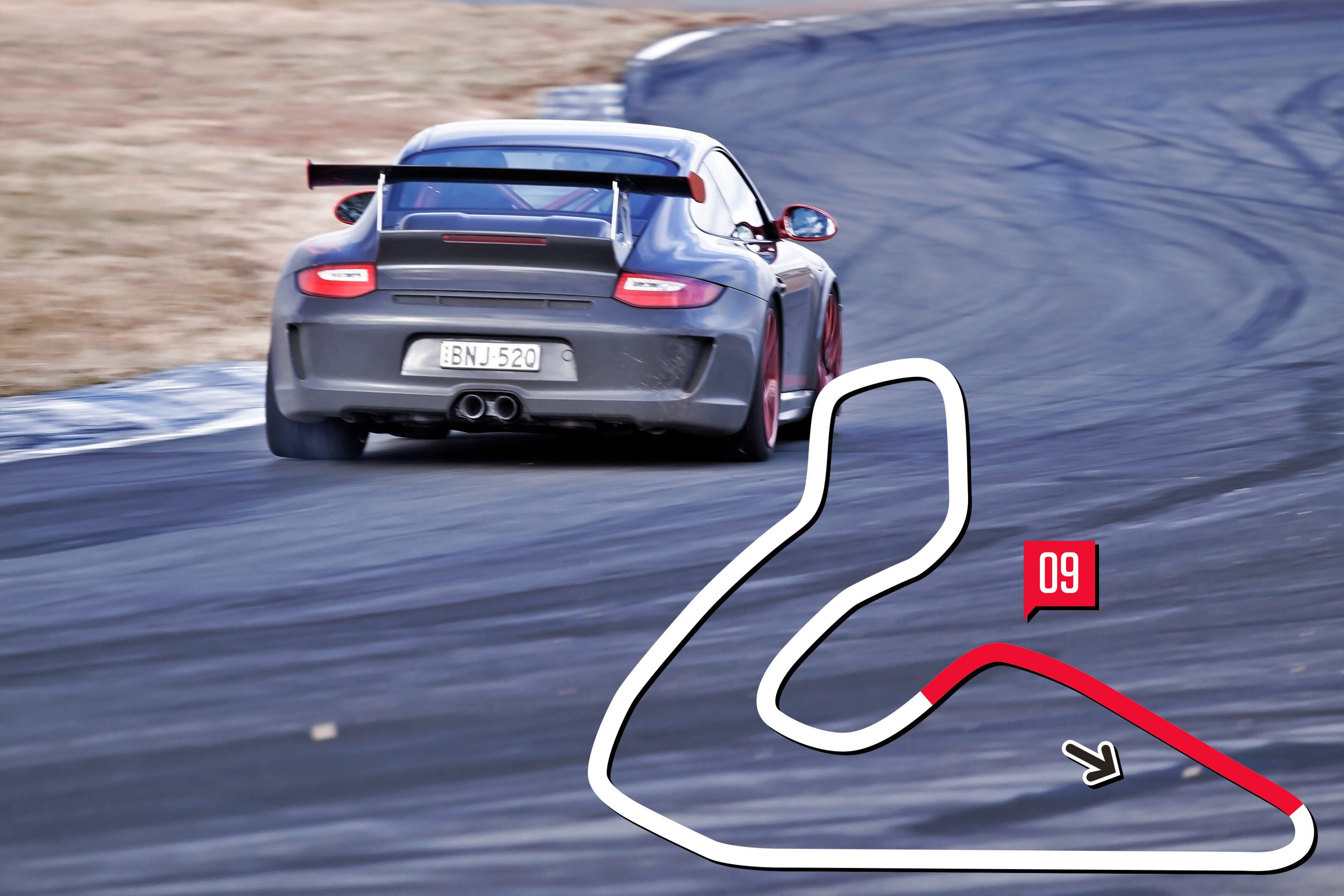
Turn Nine
It’s a slight rise on the entry to Turn Nine, but it is a very fast-flowing corner. In a racing environment it’s crucial to get right in terms of setting up for an overtaking on the run into 10. In most road cars Turn Nine is just a lift to get enough weight back on the nose and aid turn-in. In something more serious a light touch of the brake is required, but it’s only a very, very light touch. Trying not to over-slow the car is important.
Be careful of how much inside kerb you use as it can upset the balance of the car coming out of the corner. It’s a relatively fast bend and sometimes if you use too much of the inside kerb (again, it depends on the car you’re driving) it can then make you late getting back on the throttle. That in turn means you’ll be slow on the run down to Turn 10.
MOTOR Tip
You don’t need a car with a lot of grunt. A little hot hatch is a lot of fun around Wakefield Park. However, of course, it’s a riot in a high-horsepower, rear-wheel drive car, too. More than anything, it’s more about the driver. A good driver can make just about any car look good here, but a bad driver can very much make any car look bad.
Section Six: The Final Hairpin
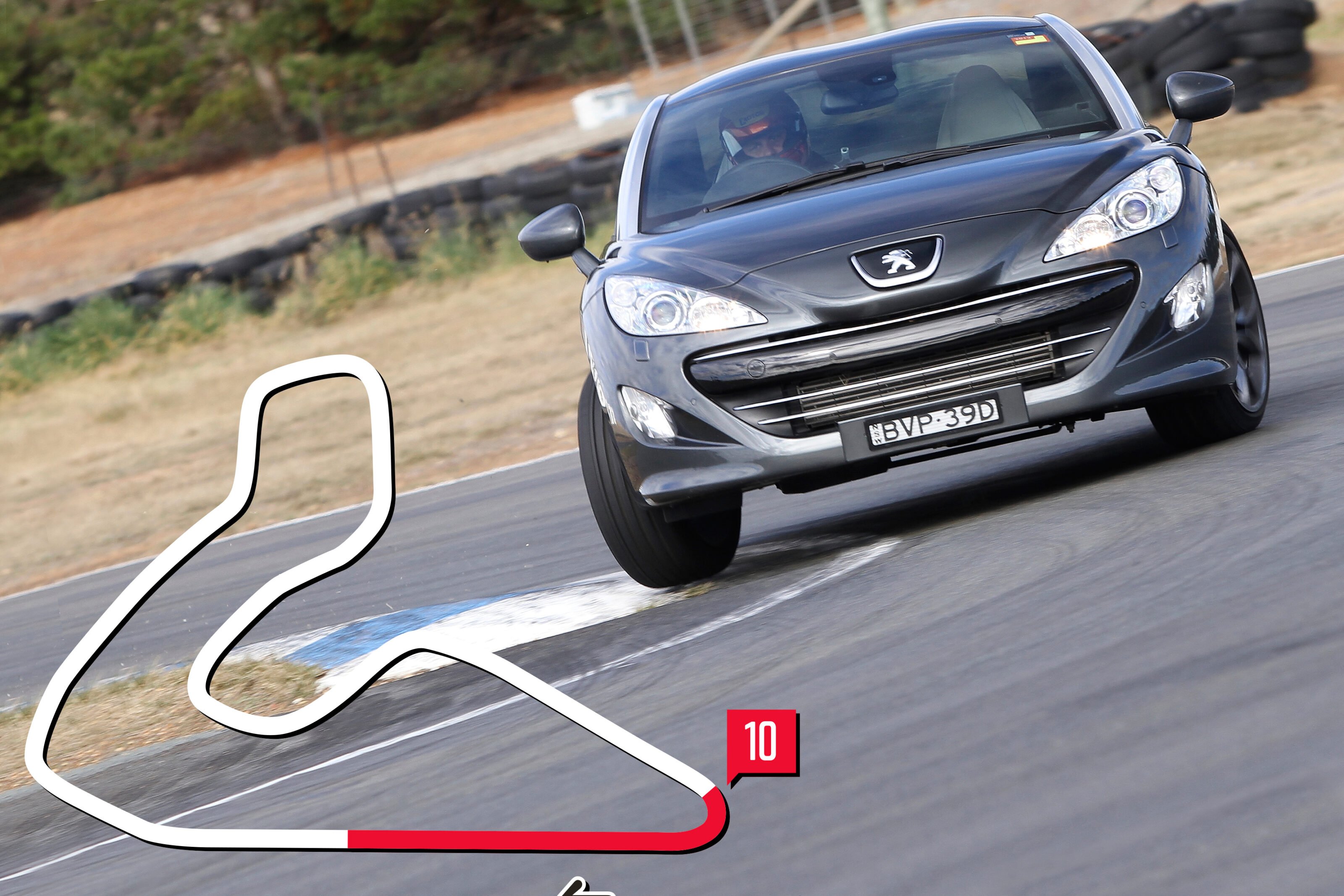
Turn Ten
Turn 10 is similar to Turn Eight in that it’s very easy to misjudge your braking. About 70 per cent of the time you’re slowing the car it’s relatively flat, but that last 30 per cent to the apex is downhill – it actually drops away a fair bit. Therefore it’s easy to rush the apex, or miss it altogether if you don’t arrest the pace enough. This is where nearly all cars will understeer without the right set up for the corner.
You really have to focus on braking the car as hard and long as possible while you’re in a straight line before trailing the pedal to the apex. Conversely, Turn 10 is also a much tighter corner than its given credit, so again running wide is very easy to do. It’s such a simple corner to miss the apex by half a metre to a metre if you don’t slow the car enough in a straight line.
Your terminal speed down the front straight is determined by your exit. Any mistake that you make at Turn 10 not only affects that lap, but it also affects the start of the following lap as well.
MOTOR Tip
A common mistake at Wakefield is rushing the apex at Turn Two, Eight and 10. Spend time finessing how you drive through and out of the corner, but especially monitor your approach over almost anything. They’re all high speed entries and people either leave the braking too late or don’t brake hard enough.
Wakefield is a Mecca for club-level motorsport
Ideal for those who want to hone skills and improve against the stopwatch
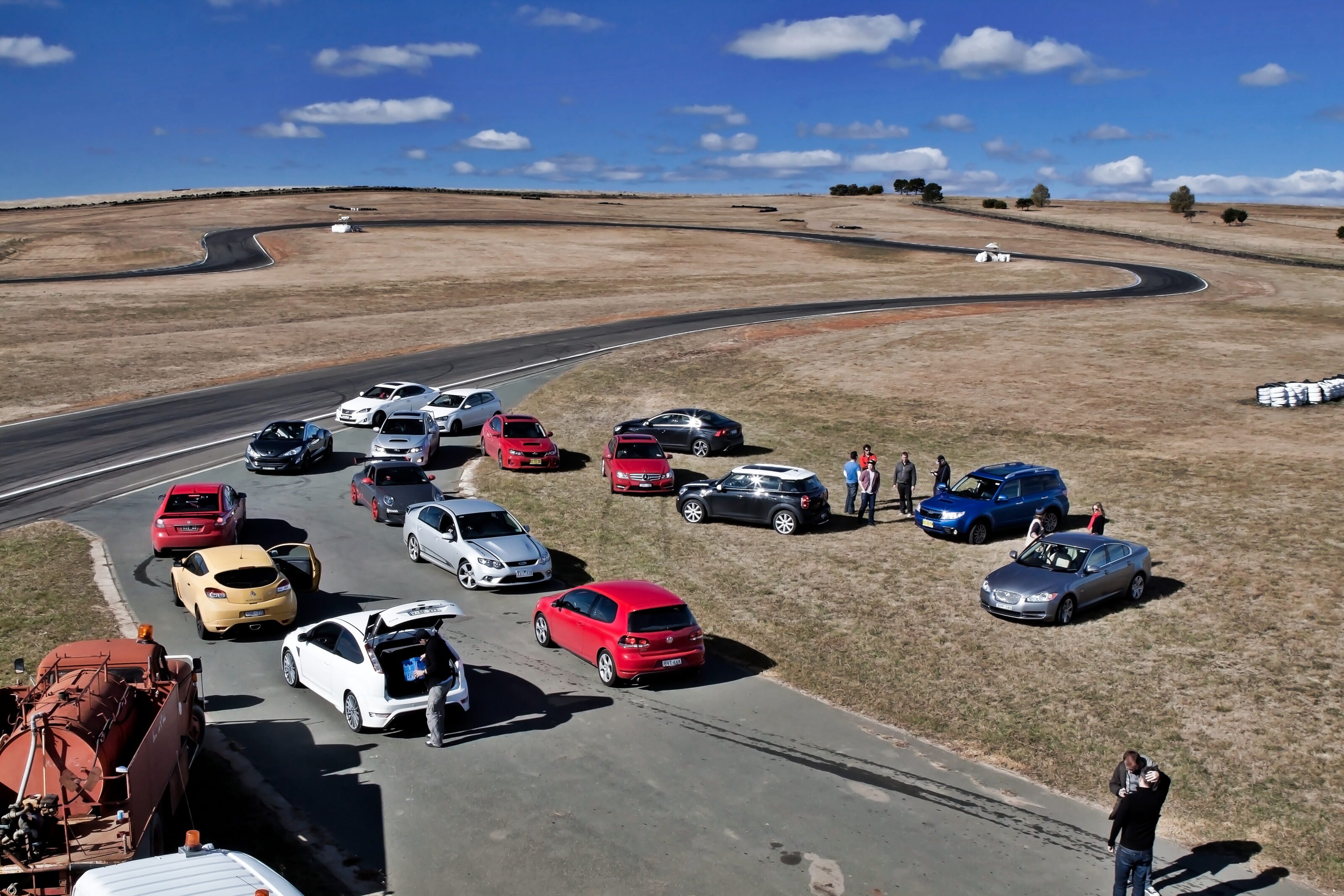
When branding a circuit the “nation’s spectator track”, the venue had better live up to slogan. Given the fact you can see the entire 2.2km layout clearly from most spectator areas, we reckon it’s warranted. And with loads of natural elevation and tricky, technical sections around Wakefield Park Raceway, it’s worth watching.
While the original idea was to hold events like driver training and general track days, this is a great place to watch racing. The Shannons Nationals (with categories like TCR) hold rounds here, as well as club sprints, state championship events, time attack and Superbikes.
As a guide, anything less than a minute is seriously quick (we’re talking proper race cars), while a production car on good rubber should aim for the 1min 10sec mark.
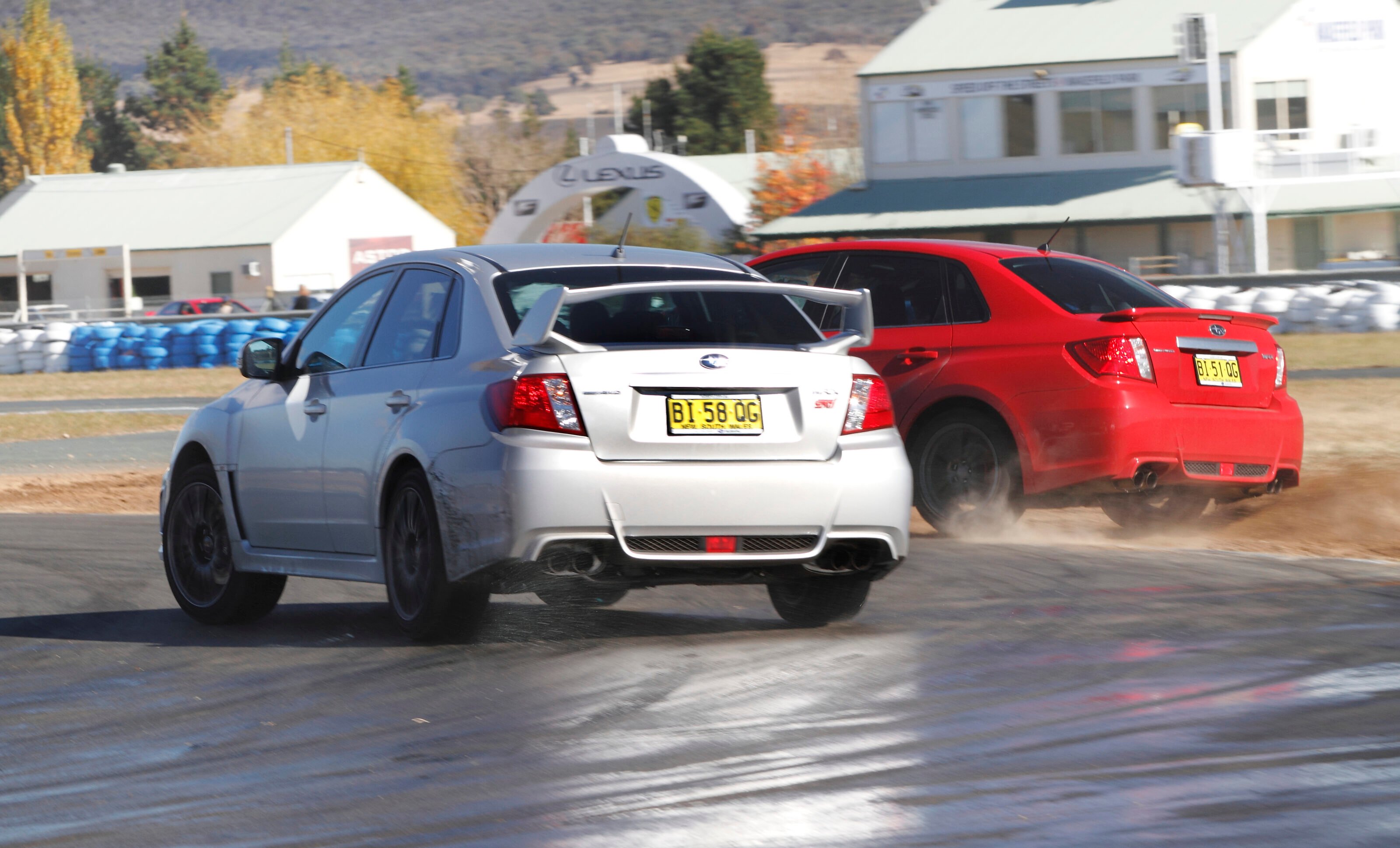
Wakefield is also extensively used for motorcycles and offers specific challenges for bikers.
Those making the trek from Sydney will need to allow more than a few hours to drive (or trailer) down the Hume Highway, while Canberrans cut that commute to about an hour. Accommodation shouldn’t be an issue with the Goulburn township only 12km away. If that’s too far away, Wakefield Park Raceway offers five on-site cabins, each equipped with six bedrooms. It’ll cost you $75 for a room for the night, or $450 for the entire cabin.
If you can’t make it in person, the virtual world offers options, too, with Assetto Corsa delivering the rural NSW track to your living room. Either way, Wakefield Park is a great facility to experience.
Campbell Bolwell, a pioneer of local sports car manufacturing, has been honoured with the Medal of the Order of Australia (OAM).
Bolwell began producing sports cars in 1962, with hundreds of vehicles being built over the past six decades, though his company now makes large composite panels for Kenworth trucks.
“Campbell’s long career in automotive and manufacturing innovations is widely acknowledged within Australia’s manufacturing community,” the company said in a statement.
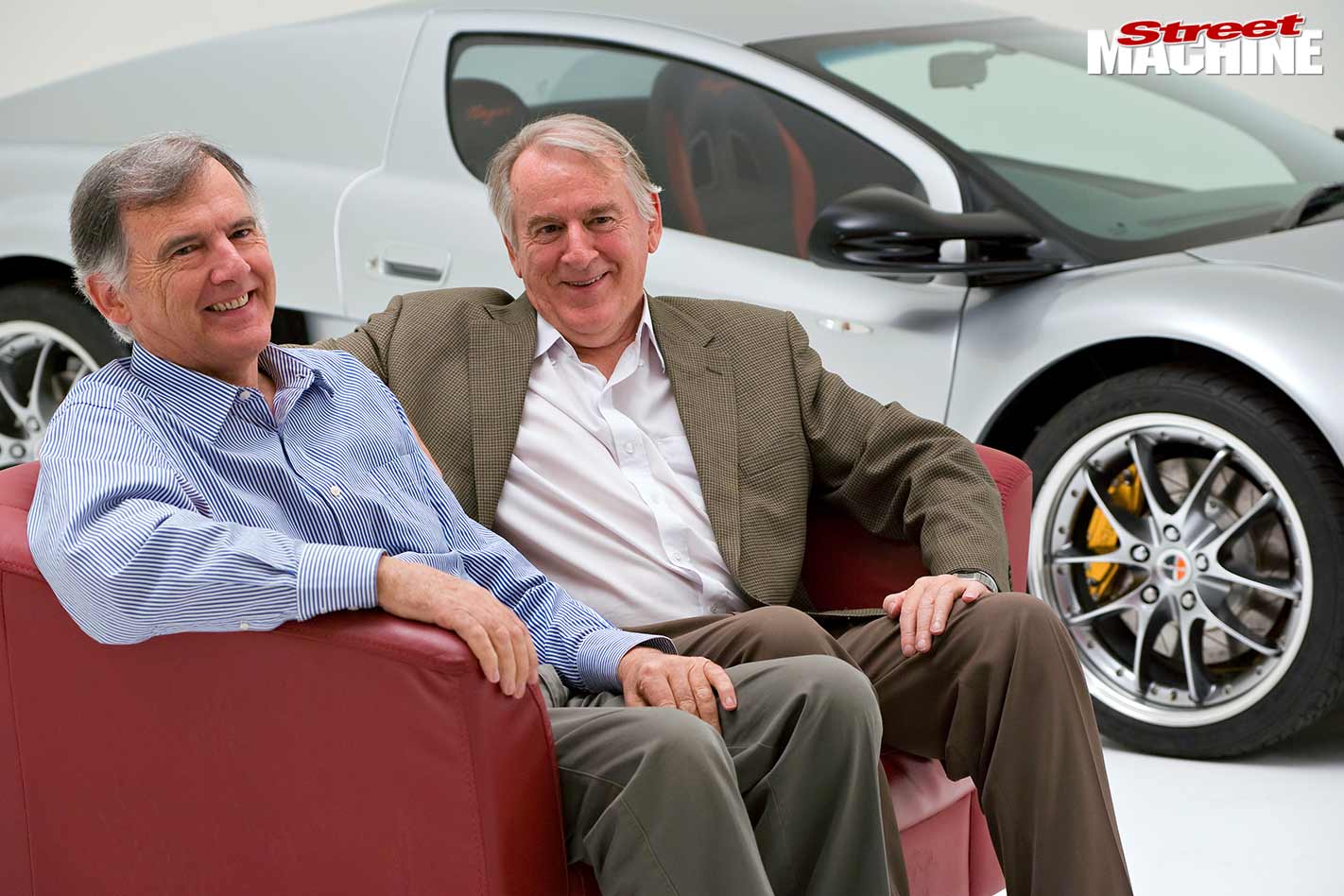
“Having begun working with composites in the early 1960s – long before it gained the popularity it has today – Campbell is acknowledged as one of the founding fathers of the composites industry in Australia.”
Bolwell cars is perhaps best known for the Nagari – named after an indigenous word meaning ‘flowing’ – which was created after Campbell’s brother Graeme returned from working under Colin Chapman at Lotus for a period, bringing with him a wealth of knowledge.
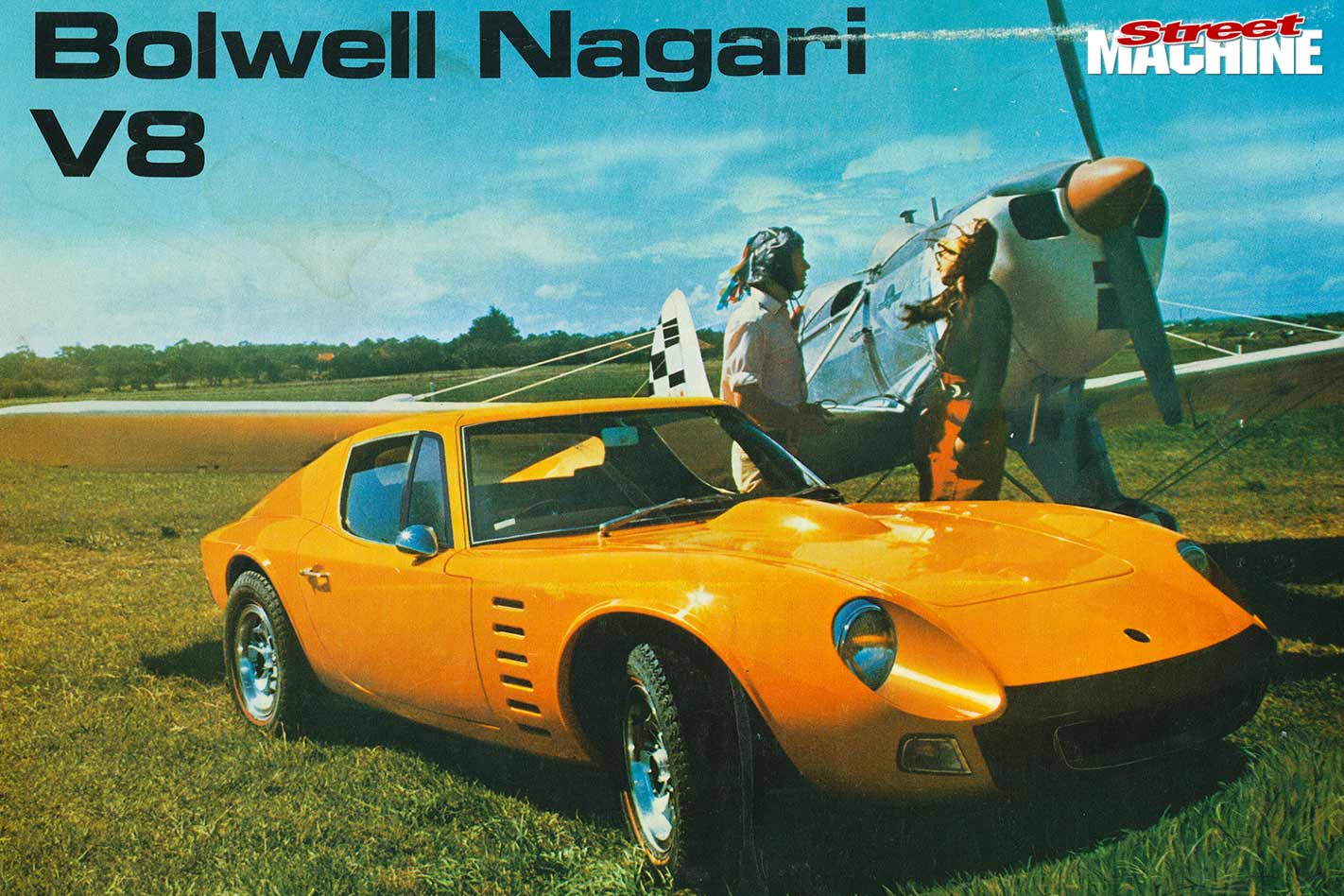
But while the company no longer produces large volumes of cars, the Bolwell Corporation has been heavily involved in local truck and caravan manufacturing in the years since.
“I was a petrolhead that failed high school, and from it all we’ve built up a multinational company,” Campbell told Street Machine in 2019.
“All that was possible because of the reputation we forged building Bolwell motor cars.”
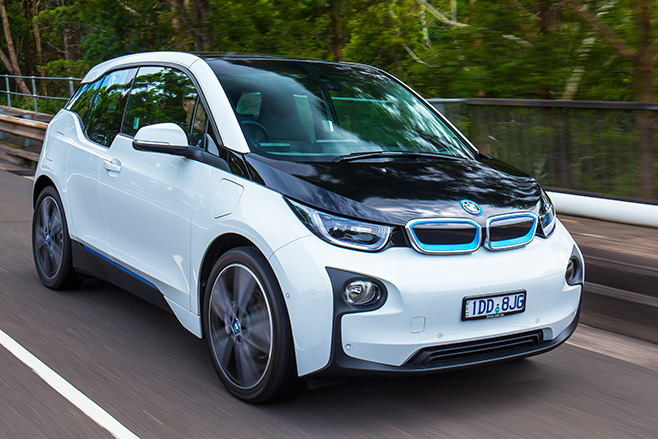
UPDATE, January 28, 2022: The end is near for BMW’s first electric vehicle, as overseas reports confirm production will end this year.
According to British publication Autocar, a BMW spokesperson has said the final i3 will roll off the Leipzig production line in July, as no direct successor is in the frame to take the i3’s place.
Instead, the place of BMW’s entry-level EV will be taken by the iX1, its rear-wheel-drive fully-electric version of the X1 SUV, while the second-generation Mini Electric is set to become the smallest EV in the BMW Group’s range from 2023.
The story to here
July 2, 2021: The first BMW to go EV and adopt the ‘i’ badge will be going out of production in just a few months’ time, coming to the end of its eight-year life cycle.
According to BMW Blog, dealers in the US have been notified of the plans to phase out the i3′s production from this month as only 180 production slots remain.
Winner of the 2014 Wheels Car of the Year award, the i3 range was last given an update in 2018 when the i3s arrived in Australia, a more performance-oriented version of the base car.
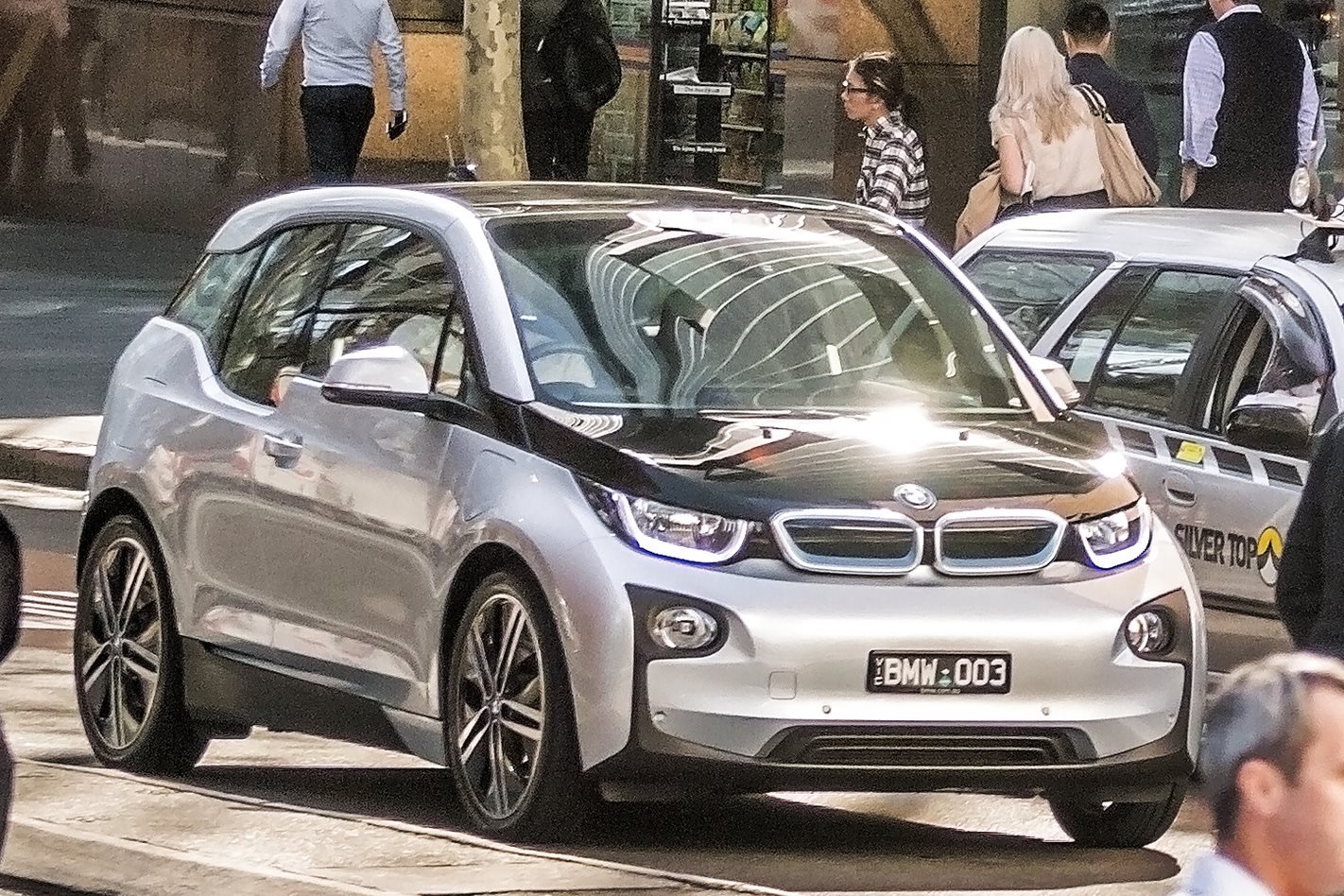
Originally launching in 2013 alongside the i8 sports car (which ended production last year), the i3 was BMW’s first vehicle to be built on a carbon-fibre frame, available either as a full EV or a range-extended EV with a two-cylinder petrol motor onboard – both fitted with a 60Ah battery which could allow a range of 130km and 240km respectively.
Range was increased with the addition of a 94Ah, and later a 120Ah battery pack, allowing a maximum driving range of 310km in the range-extended model under WLTP testing.
In October last year, BMW announced its 200,000th i3 had rolled off the production line, with the now final-generation vehicle making 125kW in i3 guise as the i3s scored a 10kW boost.
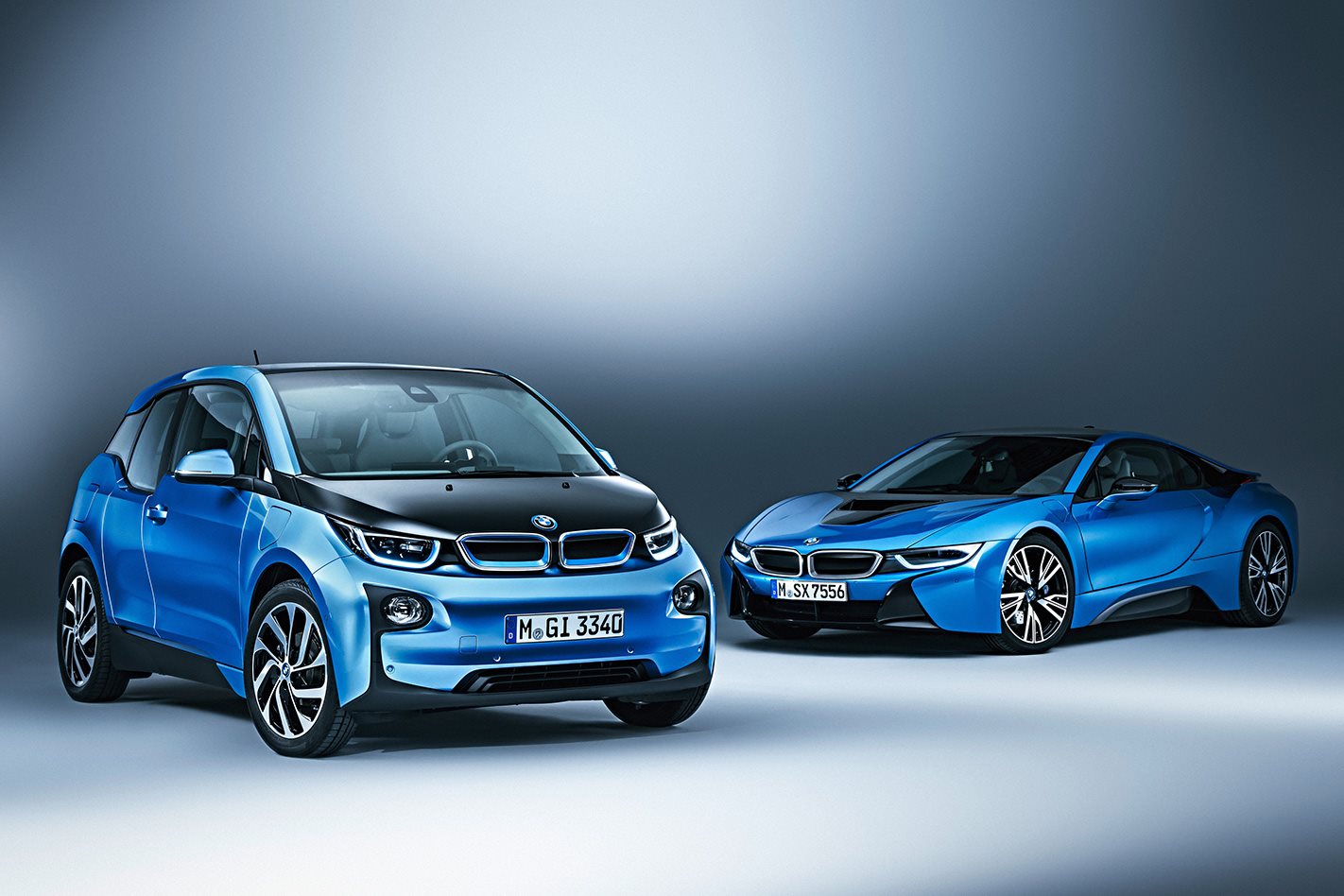
Despite success in Europe and award-winning credentials, the i3’s popularity has dwindled in Australia, as sales dropped to just 55 units in 2020, down from 96 in 2019 – and with only 23 sold at the end of May this year.
If there’s a legacy for the i3, it was a ground-breaking vehicle from a manufacturer which had never previously dipped its toes into the EV market on such a scale, doing so before the world had truly embraced the move towards electrification.
Off the back of the i3 and i8, BMW is now planning more electric-only vehicles, with the i4 four-door set to arrive early next year and provide an alternative to the internal combustion-engine-powered 3 Series and 4 Series. It also has the new iX SUV and the X3-based iX3 SUV.
BMW Australia has been contacted for comment.
Lotus has used a battery collaboration announcement this week to reveal a first look at its next electric sports offering, following the monstrous and exclusive Evija.
The stylised vector sketch is accompanied by no details, but it does at least show fans what to expect from the new model – known for now as the Type 135.
There are some clear styling cues from the iconic Esprit to be seen here, along with a hint of Europa at the rear.
Regardless of its design themes, the new model will effectively act as a successor to the Elise, with the new Emira confirmed to be the brand’s last internal-combustion offering.
This new sports car isn’t expected to debut until the far off future of 2026, with new SUVs and a four-door coupe expected to beat it to market.
The Type 135 will be built in Hethel, in the UK, while the brand’s nw passenger models will be built in China – as detailed here in September 2021.
The new electric sports Lotus is anticipated to offer single- and dual-motor arrangements, suggesting rear- and all-wheel drive configurations. Outputs are expected to vary from 350kW to a huge 650kW.
As for its battery announcement, Lotus has confirmed it will work with compatriot Britishvolt to co-develop a new battery cell package for its upcoming range of family and sports cars.

The story to here
September 21, 2021: Lotus shows off electric sports car platform, previews future Alpine
Lotus has unveiled its new modular electric vehicle (EV) platform, set to underpin its forthcoming battery-powered models.
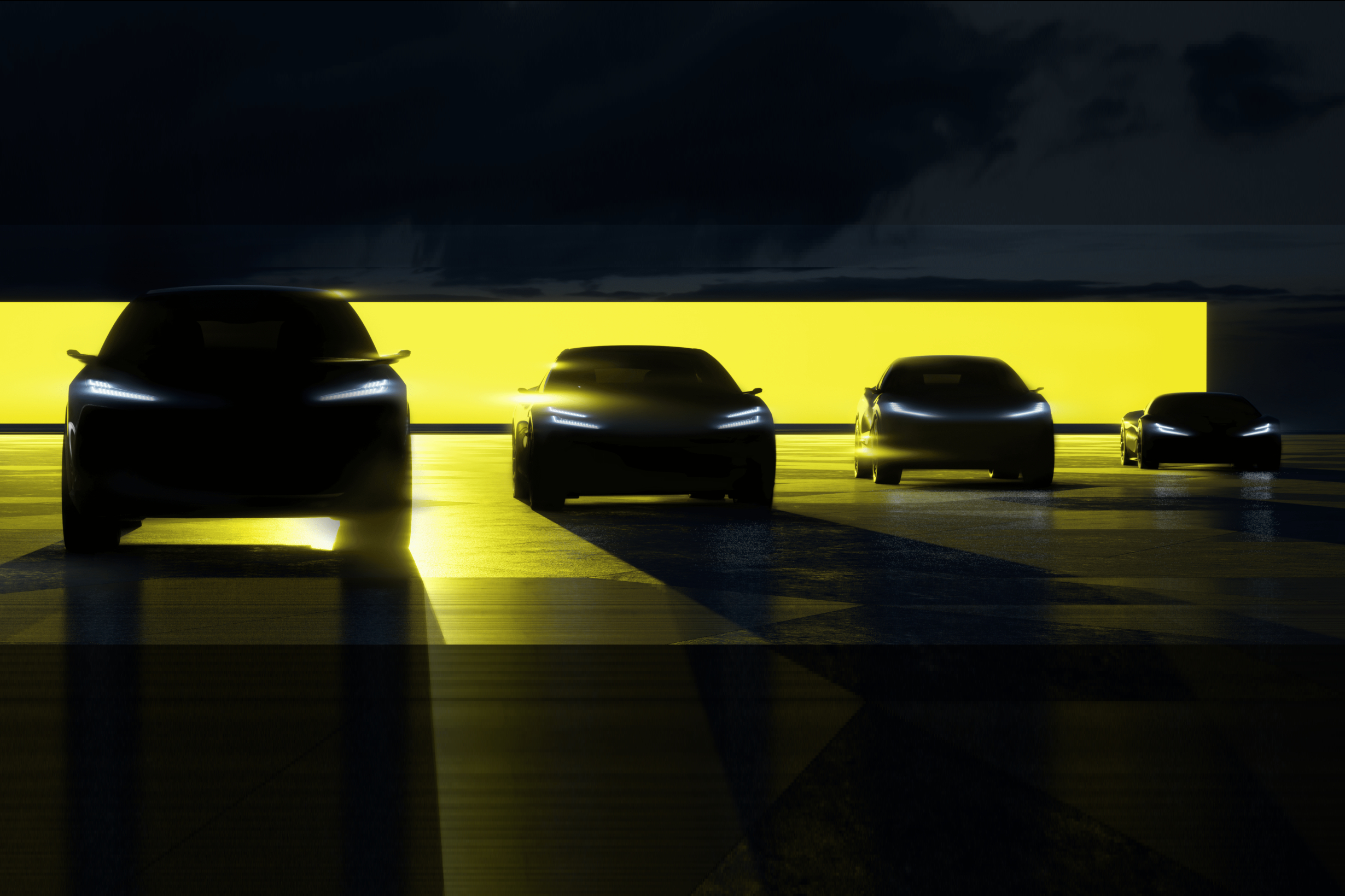
As part of its new EV line-up, teased earlier this month, Lotus is proceeding with a new battery-powered sports car – developed in collaboration with French brand Alpine and manufactured in the UK.
The British firm says the rear subframe is 37 per cent lighter than the equivalent structure found on the recently-unveiled Lotus Emira – the company’s last petrol-powered model.
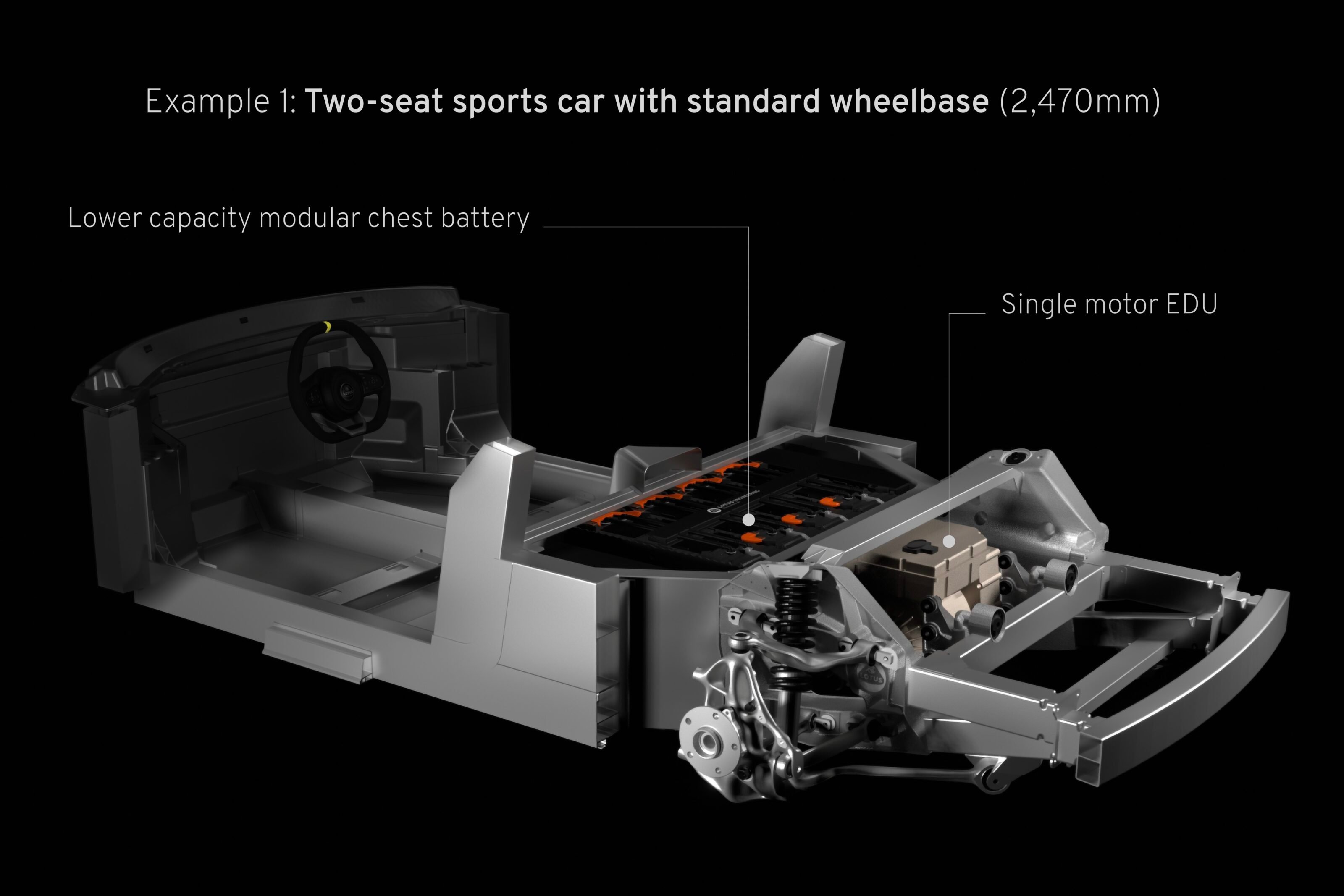
With relatively minor changes, the new platform can be changed to suit three different types of two-door bodies. Varying configurations can accommodate either single or twin electric motors, and a choice of two battery packs with up to 66.4kWh or 99.6kWh of capacity.
While the 99.6kWh is just a theoretical maximum, the battery size would almost match that found in the Tesla Model S Plaid.
The vehicle architecture can be used with either a single electric motor producing a maximum of 350kW, or a dual-motor set-up pumping out up to 650kW.
“Rather than developing a single vehicle, it means [we] now [have] the ‘blueprint’ for the next generation of electric sports cars, for future products and for the Lotus Engineering consultancy to commercialise,” Lotus engineering director Richard Moore said.
“The electric sports car architecture [is the] perfect [illustration] of the innovation, which continues to be at the heart of everything Lotus does.”
Both two-seater layouts – offering either a shorter wheelbase with smaller battery and single motor, or a longer wheelbase with a larger unit and a twin setup – use a ‘chest’ configuration, in which the batteries are mounted behind the occupants.
The third option is a 2+2 layout – with a second row of seats – which uses a ‘slab’ configuration, where the battery is mounted under the floor “for vehicles where a higher ride height and a taller overall profile is required”.
It’s likely the ‘slab’ skateboard-like platform will be adopted for the future four-door Lotus coupe – designed to compete directly with the Porsche Taycan.
As Renault’s newly-minted performance arm, Alpine is set to deliver three fully-electric models in 2024 – one of which will be the A110’s replacement, co-developed with Lotus – while the latter’s electric coupe isn’t due until 2026.
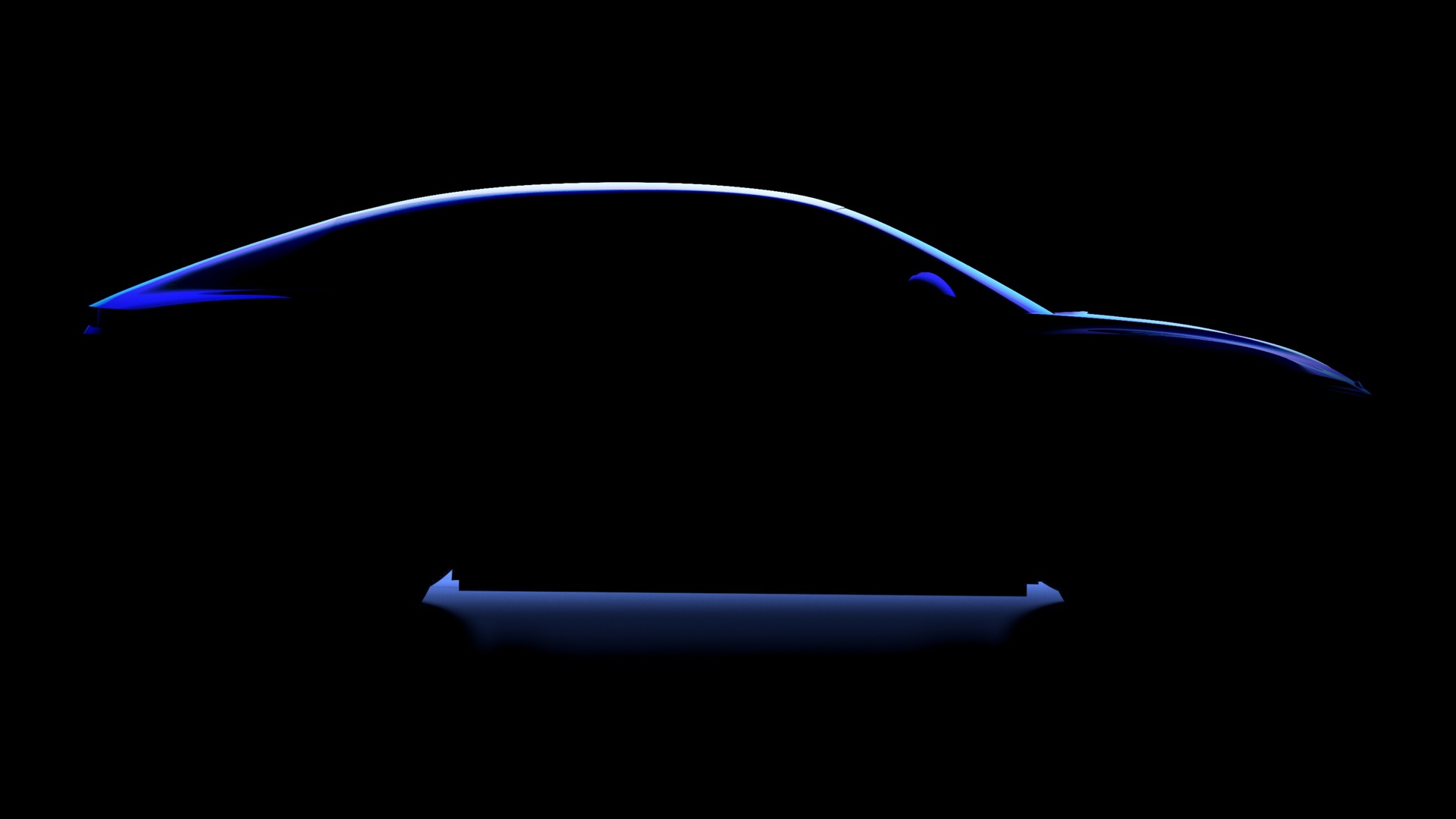
Update, January 29, 2022: Alpine has confirmed that at least one of its new electric models, the GT X-Over electric SUV, will be built at its plant in Dieppe, France.
The same facility is responsible for building the existing A110 coupe, which recently left the Australian market due to its incompatibility with new Australian Design Rules requirements.
Alpine describes the Dieppe plant as a site “dedicated to the production of small series, sports and competition vehicles”.
While the GT X-Over represents an inflection point for yet another sports brand entering the jacked-up passenger vehicle market, Alpine promises the coupe-shaped SUV will deliver “all the excellence in sports vehicles that defines the Alpine brand”.
Nothing else has been revealed at this stage, save for confirmation that the GT X-Over will go into production by 2025.
The story to here
July 3, 2021: Alpine teases electric coupe, hatch, SUV for 2024
Snapshot
- Three Alpine models set for release from 2024
- Renault 5 could turn into 160kW Alpine R5
- Flagship GT aimed at rivalling German grand tourers
It’s been less than a fortnight since it was announced that Alpine would take over the Renault performance division formerly known as RenaultSport, yet the French marque has already teased its plans for the future.
In line with the Renault F1 Team rebranding to Alpine this year, the niche manufacturer will be handling all of the hot Renault products from now on – though it has been confirmed it will only be producing electric vehicles, leaving the internal combustion engined performance models to fall by the wayside.
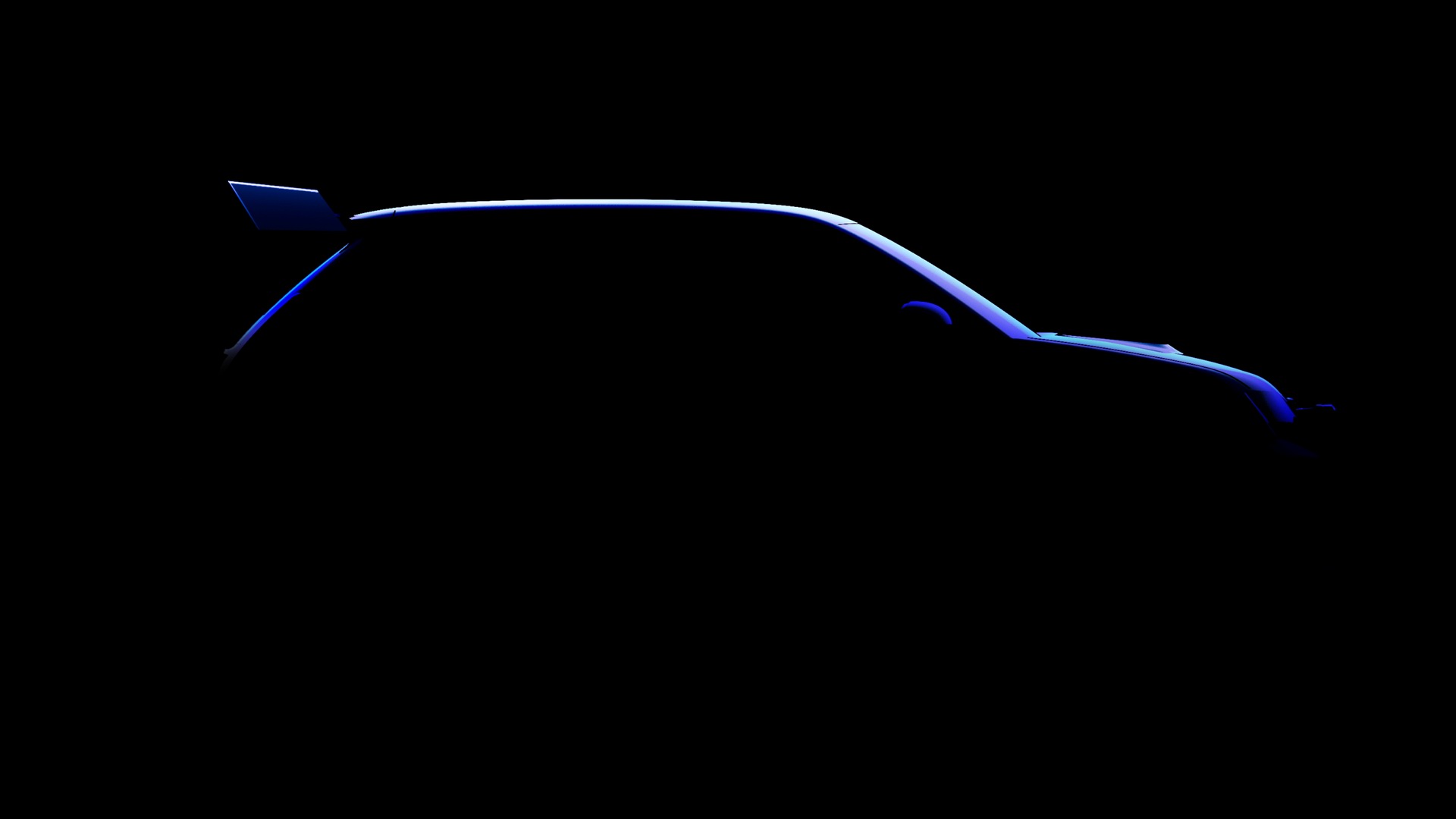
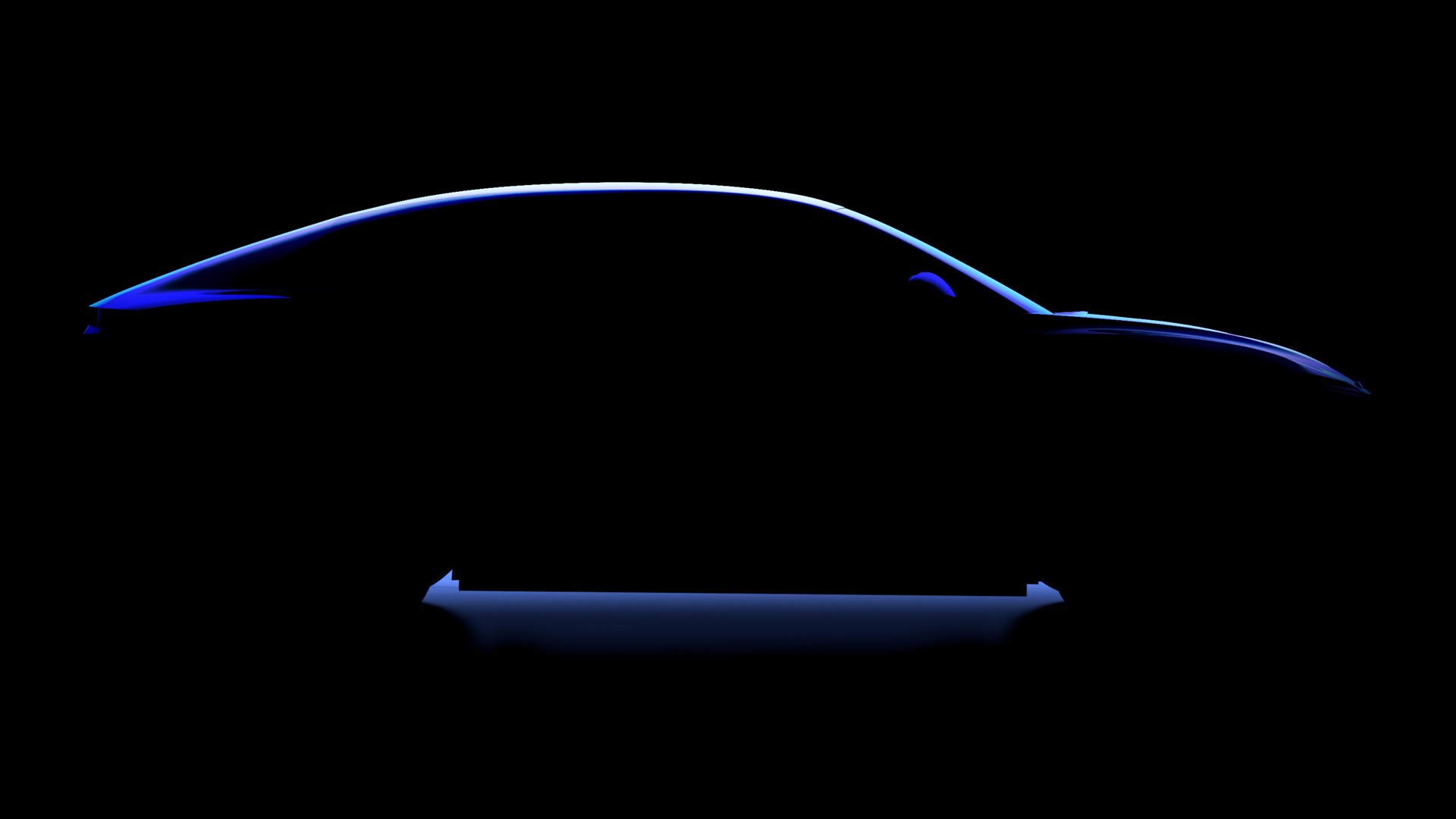
Alpine has wasted no time in providing teasers for its new models, releasing a silhouette of three new vehicles set to be rolled out from 2024.
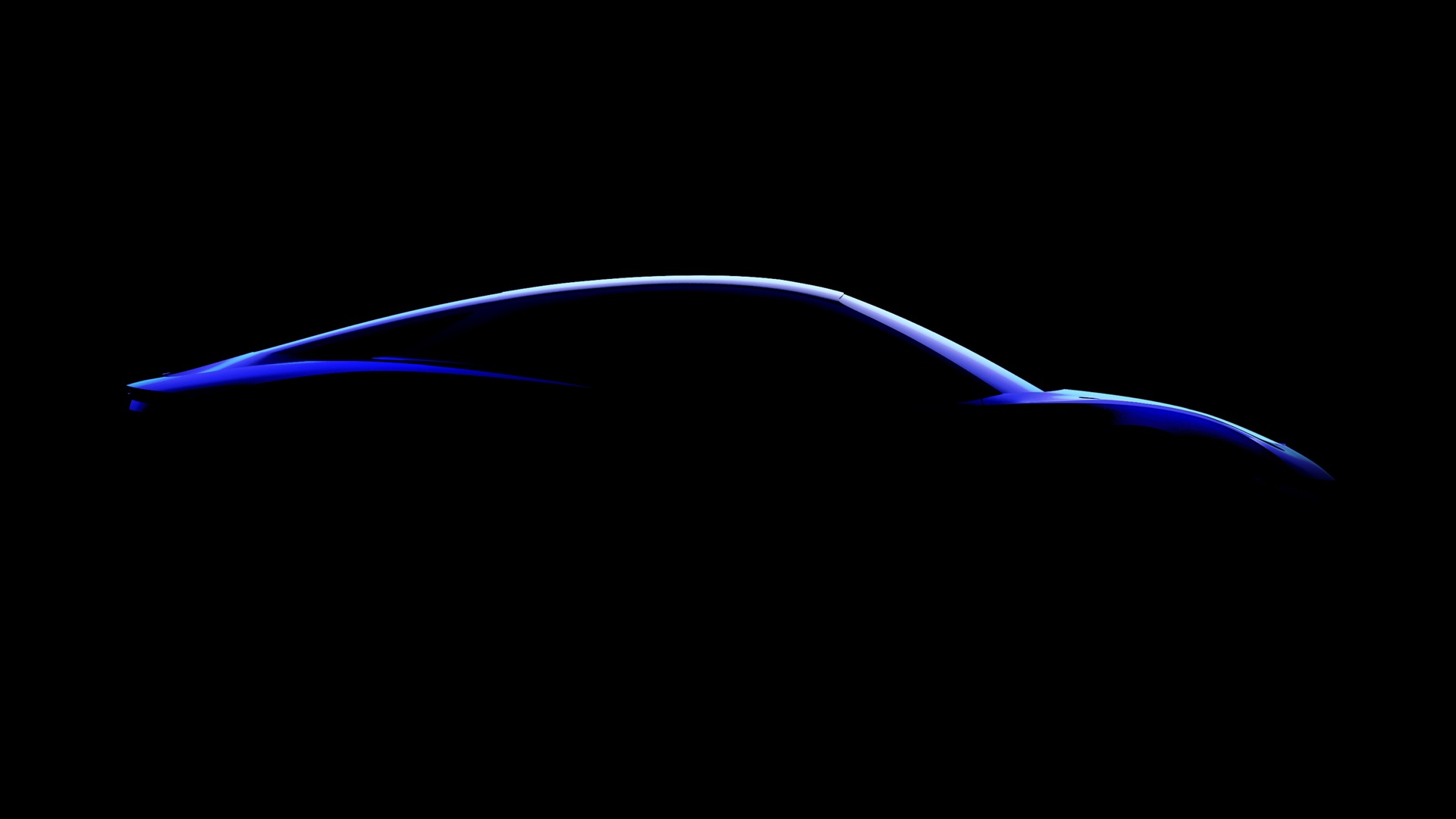
According to UK publication Autocar, the current A110 sportscar, Alpine’s only vehicle on sale, will have a direct replacement to be powered by electric motors, currently in development with chassis gurus Lotus.
A hot hatch is also in the works, with the boxy Renault 5 of the ’80s getting a modern rebirth, the base model acting as a replacement for the Zoe while the performance-oriented Alpine R5 will utilise the motor from the new Mégane E-Tech Electric, featuring a 160kW motor and 60kWh lithium-ion battery pack.
Renault claims the new CMF-BEV architecture which will underpin the R5 variants is 33 per cent cheaper to produce than the current Zoe, thanks in part to utilising a carry-over of parts from the ICE-powered CMF-B platform which underpins the Clio, Captur and Nissan Juke.
Finally, the third teased vehicle looks to be a grand tourer, likely to be based on the Mégane E-Tech’s CMF-EV platform for larger C and D-segment vehicles, though the performance model should feature a more powerful motor than the 160kW unit in the E-Tech.
As a potential rival to German EVs like the Audi E-Tron GT, Renault’s head of engineering Gilles Le Borgne told Autocar the grand tourer will have the Mégane’s electric front motor and feature something yet-to-be-revealed in the rear.
“In the rear, we will have a big surprise,” said Le Borgne.
“We want to do torque-vectoring and really amazing handling performance, as you can imagine for an Alpine.”
Despite being lauded as a great driver’s car for the 21st century, the current Alpine A110 has struggled in Australia, selling just 43 units since 2019.
While the world’s telcos are busy rolling out the new 5G network, there’s a fifth-generation SUV that has also been highly anticipated.
The latest Kia Sportage arrived in late 2021, bringing substantially increased exterior dimensions, bolder styling, and an enlarged equipment list across the range.
It remains a crucial model for the Korean brand. It’s the most popular Kia globally and Australia’s second-favourite Kia (after the Cerato small car), while it competes in the mid-sized SUV segment that is the country’s second-most-popular vehicle category after 4×4 utes.
We’ve already been impressed by the flagship GT-Line variant, but can the Sportage be recommended in its most affordable auto guise – the S petrol?
Pricing and Features

Car manufacturers are not in the business of giving away features, so extended equipment lists are accompanied by price increases.
Kia’s sharp drive-away pricing offer took the sting out of those initially, before disappearing in late January.
The base Sportage, with a $32,445 (before on-road costs) starting RRP, has gone from $34,690 to $36,479 drive-away for the manual 2.0L petrol front-wheel drive, or from $35,690 to $38,539 drive-away for the auto version that is more relevant to most buyers.
Customers with $39,845 ($44,101 drive-away) to spend can access an all-wheel-drive diesel drivetrain.
Some Sportage S features were previously limited to the GT-Line. These include adaptive cruise, blind-spot and rear cross-traffic monitoring systems

Some standard Sportage S features were previously limited to the range-topping GT-Line last time out. These include adaptive cruise (auto transmission only) and rear sensors linked to blind-spot and rear cross-traffic monitoring systems. There are also LED headlights, though only the new GT-Line comes with full-LED projector-style lamps.
LED tail-lights (again partial only with full LED on the GT-Line) and tyre pressure monitoring move down from the old SX+ grade.
The S also adopts an electric park brake, speed sign notification, wireless Apple CarPlay/Android Auto, multi-device Bluetooth connectivity and a front centre airbag designed to prevent a clash of heads in the event of a side impact.

It’s well-equipped, even if the kit list merely brings it up to speed with key competitors, including the two most popular mid-sized SUVs in Australia, the Toyota RAV4 and Mazda CX-5.
Rain-sensing wipers, integrated navigation, keyless start and digital radio are features found in the $34,300 RAV4 GX petrol and $33,390 CX-5 Maxx (prices before on-road costs) but not the Sportage S, while the Toyota adds front parking sensors and the Mazda provides a head-up display.
Elsewhere, a base Subaru Forester carries a slightly higher RRP of $35,990 (plus on-road costs) over the entry Sportage but provides a bigger engine, all-wheel drive, and a handful of extra features.

Within the Sportage line-up, stepping up to the SX – priced from $35,000 ($39,111 drive-away) – brings several features to easily justify the dollar gap to the S.
These include dual-zone climate control, electric lumbar adjustment for the driver’s seat, 18-inch wheels, seat-fold release levers in the boot, and a larger infotainment display (12.3 rather than 8.0 inches).
With no major options available, buyers must climb further up the grade ladder for desirable features such as an automatic tailgate, branded audio system, electric seat adjustment, wireless smartphone charging and a panoramic sunroof.
Comfort and Space

In GT-Line guise, the Sportage presents one of the best interiors in the segment. The flagship has obvious advantages such as leather upholstery and a wide, curved dual digital display, though the S’s perception of quality isn’t helped by a no-frills colour scheme, a very basic digital driver display, and front doors that are finished in harder plastic rather than the softer material used in all other grades.
Air-con is single-zone only and the S misses out on the clever digital Dual Control Panel found in other Sportages and that can be switched cleverly between infotainment and HVAC (heating, ventilation, air-conditioning).
Blank buttons on the centre console only serve to remind the owner that they’ve bought the base model, none of the windows incorporate auto up/down, and a key ignition is antiquated in this era of starter buttons (keyless start/entry isn’t standard until the SX+ variant).

Cabin ergonomics are harder to fault. Climate controls and the infotainment display are angled towards the driver, various buttons and switches are all logically positioned, and the thruster-style gear selector fits satisfyingly in an enclosed palm.
The front seats provide comfortable cushioning and good lateral support, though longer-legged occupants might prefer some extra cushion length.
This tester found the rear bench better for under-thigh support. Passengers in the back are also treated to the largest amount of space yet found in a Sportage – with an extra 8cm of legroom created courtesy of lengthened dimensions that include a wheelbase stretched by 8.5cm over the previous model.

Kia has also ensured the base model doesn’t miss out on important rear-seat features such as vents and armrest (with cup holders).
The door pockets, as with those up front, could be more generously sized, though, and the S (along with the SX) lacks the USB-C charging points found in the seatbacks of SX+ and GT-Line models.
Cabin ergonomics are harder to fault. The infotainment display is angled towards the driver, switches are all logically positioned, and the gear selector fits satisfyingly in an enclosed palm

Boot space has also benefited from the Sportage’s enlargement. Up from the old model’s 446-litre luggage capacity to a quoted 543L, the Kia now offers one of the biggest boots in its segment despite the rarity of a full-size spare wheel under the floor.
A retractable cargo blind can hide belongs, but the S misses out on remote release levers for the 60:40 rear seats (SX upwards) and a luggage net (GT-Line only).
Infotainment

The 8.0-inch media unit display doesn’t look entirely at home in its dash position, betraying its status as the budget infotainment interface of the range.
Graphics are also less fanciful than those used for the larger, 12.3-inch touchscreen employed in other variants.
At least that’s largely irrelevant for those preferring Apple CarPlay or Android Auto, and the S exclusively enables wireless connection where other grades require smartphones to be plugged. Google/Apple Map apps are also important in the absence of integrated navigation.
The 8.0-inch display doesn’t look entirely at home, betraying its status as the budget of the range. Graphics are less fanciful than those used for the touchscreen in other variants

Two smartphones can be connected simultaneously, allowing one to be charged while the other links with the display.
However, that’s the only way to recharge your smartphone as an inductive tray is exclusive to the GT-Line.
The S also lacks digital radio and comes with only a basic six-speaker audio system. An eight-speaker Harman Kardon system features on SX+ and GT-Line models.
On the Road

Kia Australia was determined to battle through the logistical challenges of the pandemic to maintain its local ride and handling program for the fifth-generation Sportage.
The team was also granted its wish to equip the SUV with Mando dampers featuring advanced valve technology, promising a sporty yet comfy ride.
While suspension compliance on the S never matches the impressive level of the GT-Line despite its smaller wheels and thicker tyres, the base Sportage provides more than adequate ride comfort.
The Sportage is also at its wieldiest in its lighter S specification, though keen drivers will still discover more involving handling in a CX-5 or Volkswagen Tiguan.

Kia Australia had to settle for a Korean-market steering tune and, while decent, it’s not quite nailed when it comes to off-centre response. However, there is a welcome consistency to the weighting once more lock is applied.
The lane-keep system is a greater frustration, its overly sensitive calibration often resulting in tugs at the steering wheel even when the vehicle is sufficiently clear of lane markings.
Carried over from the previous Sportage, the S petrol’s 2.0-litre four-cylinder lacks direct fuel injection and offers outputs of just 115kW and 192Nm, so it is neither advanced nor powerful.
While suspension compliance on the S never matches the GT-Line, the base Sportage provides more than adequate ride comfort … keen drivers will discover more involving handling in a CX-5 or Tiguan

While the six-speed auto operates with greater smarts than the seven-speed dual-clutch auto teamed with the 1.6-litre turbo-petrol engine that’s not available in the S, it can be slow to downshift to compensate for the 2.0-litre’s limited torque.
Picking the 2.0-litre turbo-diesel costs more but repays with much stronger performance and better fuel economy.
The base petrol is the thirstiest engine in the range, rated at 8.1 litres per 100km compared with 7.2L/100km for the turbo-petrol and 6.3L/100km for the diesel.
Braked towing capacity is 1900kg for the diesel and manual 2.0L petrol, or 1650kg for the auto 2.0L petrol and 1.6L turbo.
Ownership
The Sportage is covered by Kia’s renowned seven-year warranty but the brand’s capped-price servicing program isn’t quite as generous. Costing $1280 over three years, $2395 over five years or $3479 over seven years, dealership maintenance costs for the Sportage are higher than average.
Its twin-under-the-skin Hyundai Tucson is surprisingly cheaper to service, along with the aforementioned rivals the Mazda CX-5 and (especially inexpensive) Toyota RAV4.
VERDICT

The fifth-generation Kia Sportage is a bigger, safer and better proposition than its predecessors. As with many of its rivals, it’s just more convincing in higher specifications.
It’s well worth the relatively small price jump to the SX variant, or even consider Kia’s smaller Seltos Sport Plus that is sufficiently roomy for small families and, for virtually the same money, provides some extra features, a turbo-petrol engine and all-wheel drive.
2022 Kia Sportage S specifications
| Body | 5-door SUV |
|---|---|
| Drive | FWD |
| Engine | 2.0-litre four-cylinder |
| Transmission | 6-speed auto |
| Power | 115W @ 6200rpm |
| Torque | 192Nm @ 4500rpm |
| Bore stroke (mm) | 81.0 x 97.0 |
| Compression ratio | 10.8: 1 |
| 0-100km/h | Not quoted |
| Fuel consumption | 8.1L/100km (auto, combined) |
| Weight | 1538kg |
| Suspension | Struts (front); multi-links (rear) |
| L/W/H | 4660/1865/1680mm |
| Wheelbase | 2755mm |
| Brakes | 305mm ventilated discs (front); 300mm solid discs (rear) |
| Tyres | Hankook Dynapro HP2 235/65R17 |
| Wheels | 17-inch alloy (full-size spare) |
| Price | $34,445 + on-road costs / $35,690 drive-away |
Snapshot
- Reiko Sato comes to Isuzu with extensive accounting experience
- Takuji Ozawa departs the role to return to Japan
- Deputy General Manager of Product Planning Takeshi Imanari returns to Japan
Isuzu Ute Australia has shuffled its Australian operations, with two major changes for its management structure.
Taking over the role of Deputy Managing Director, previously held by Takuji Ozawa, will be Reiko Sato – Isuzu Ute Australia’s first female director.
Joining the brand from a background in accounting, Sato will directly oversee the company’s finance and accounting, information technology, administration and human resources divisions, as Ozawa departs Australia after two and a half years to return to his native Japan with Mitsubishi Corporation.

Further changes within Isuzu as a whole will see Isuzu Ute Australia’s Deputy General Manager of Product Planning, Takeshi Imanari, return to the head operations in Japan after just under seven years in Australia.
Throughout his time in Australia, Imanari was an “integral part of the product development of the all-new MU-X and new D-MAX“, each rising to roughly 10 per cent of sales in their respective segments.
Taking his place, Kenichi Kudo joins the Australian operations after five years at Isuzu Motors International Thailand in sales and marketing.
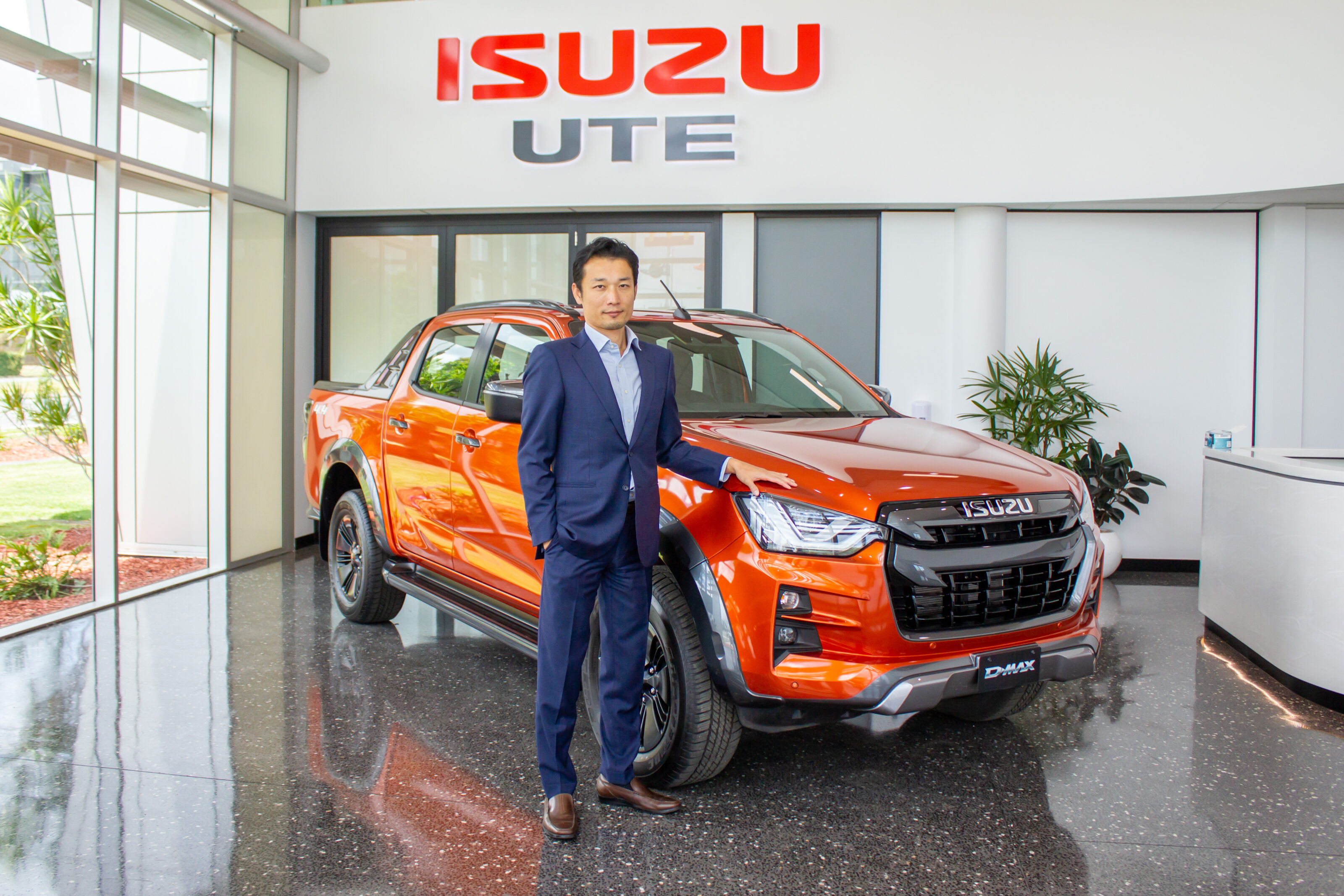
Isuzu Ute Australia Managing Director Hiroyasu Sato thanked the outgoing team for their efforts to grow the brand in Australia, while also welcoming its new recruits.
“This announcement will see two fundamental decision-makers responsible for much of the IUA’s growth over the past few years return home to Japan, with their replacements set to bring in a fresh perspective – along with years of experience from overseas markets to help develop our operations here in Australia,” said Sato.
“We are indebted to Mr Ozawa and Mr Imanari for their service and commitment to the brand over the years, and we are excited to welcome Mr Kudo and our first female Director, Ms Sato, to the IUA family.”
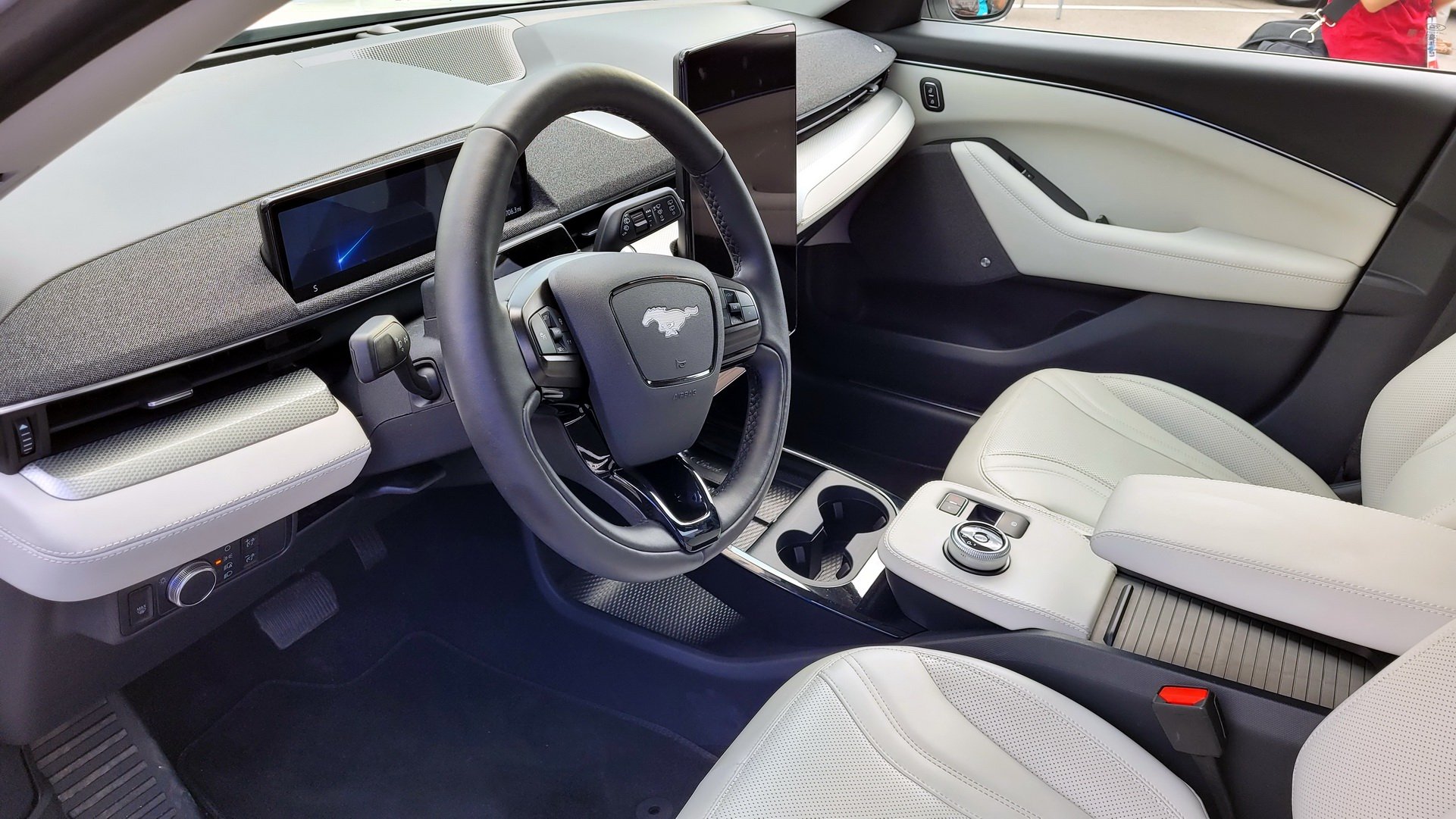
The all-electric Ford Mustang Mach-E is looking increasingly like it will join the brand’s Australian line-up.
A trademark filing by Ford to register the name Mustang Mach-E has just been uncovered, just days after the application was submitted to IP Australia.
While it’s not unusual for carmakers to register model names despite having no plans to offer those vehicles here, this is often done early on – not two years after the vehicle began production, as with the Mustang Mach-E.
In October 2021, Ford Australia revealed five electrified models would be rolled out locally by 2024, with the E-Transit and Escape PHEV (plug-in hybrid) named at the time.
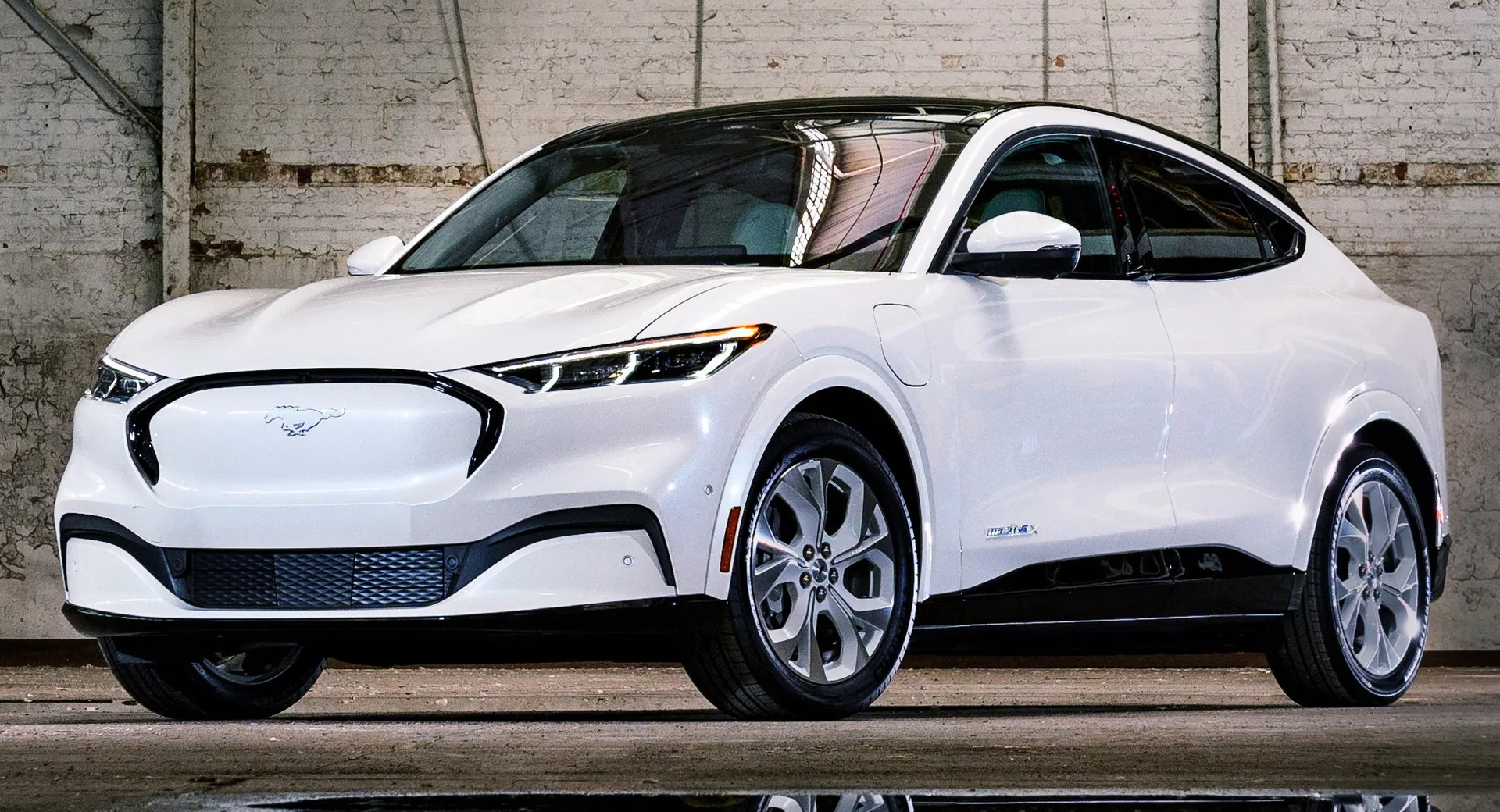
It’s believed the upcoming Ranger ute and Everest SUV will see hybrid versions introduced in the coming years, leaving many to suggest either the battery-powered F-150 Lightning pick-up, or the Mustang Mach-E – the latter having decent odds, being it is already manufactured in right-hand-drive, while the F-150 Lightning is only built in left-hand-drive.
In the UK, Ford offers the electric Mustang SUV in three variants: the entry-level Mach-E, the mid-range AWD, and the limited GT flagship.
The 98.7kWh Extended Range battery is available across all three, while the Mach-E and AWD come with the Standard Range 75.7kWh battery pack.
Driving range varies from 400 kilometres to 610km, depending on the model and battery optioned.
“We’re pleased to see a growing appetite for electric vehicles (EVs) in Australia, and we’re taking a considered approach to electrification to make sure we get our offering right for our customers,” a spokesperson for the company’s local arm told WhichCar in May 2021.
“Ford owners are very clear that they expect toughness, performance and capability from our vehicles, and so our focus is on offering EVs to meet those expectations.
“Ford Australia’s EV line-up will grow quickly, first with our Escape PHEV SUV and soon with other battery-electric vehicles (BEVs) and electrified models. We’ll share details about these in due course.”
KTM is set to expand the X-Bow range with a road-legal version of the GT2 racer it designed for customer racing series around the world.
Details are scarce, but we know the road car will be closely related to the racing version that is based on a Dallara carbon-fibre tub shared with the regular X-Bow – if you can even call the X-Bow ‘regular’.
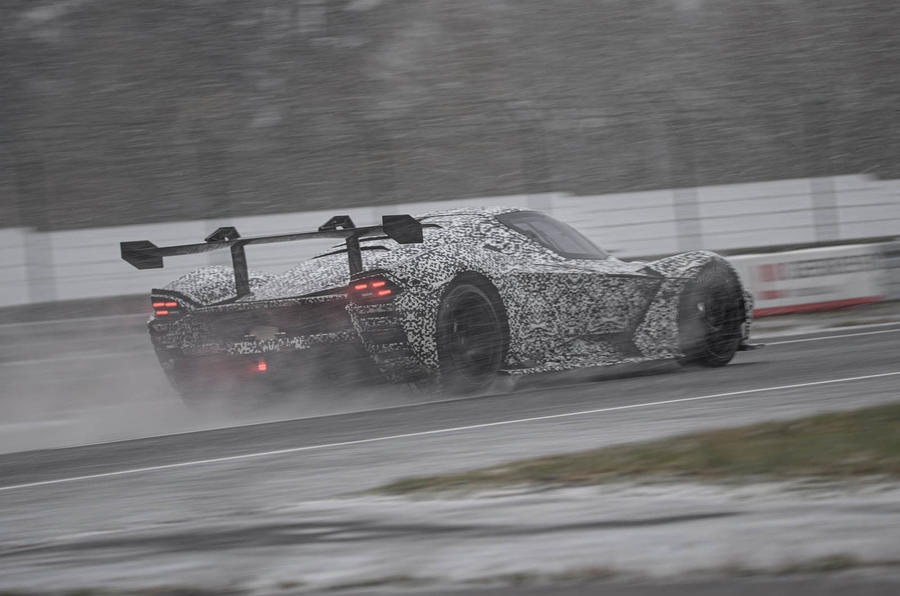
Currently, the X-Bow GT2 employs a jet-fighter canopy that lifts forwards and features opening side-windows. Newly released testing photos of this road-going GT2 show it on street-style rims and fitted with the same entry hatch on either side.
Power-wise, it should inherit the GT2’s Audi turbo 2.5-litre inline five-cylinder. Mounted amidships, it supplies 447kW/720Nm to the rear wheels. GT2 drivers select gears through a six-speed sequential Hollinger transmission and steering-wheel mounted paddle shifters.
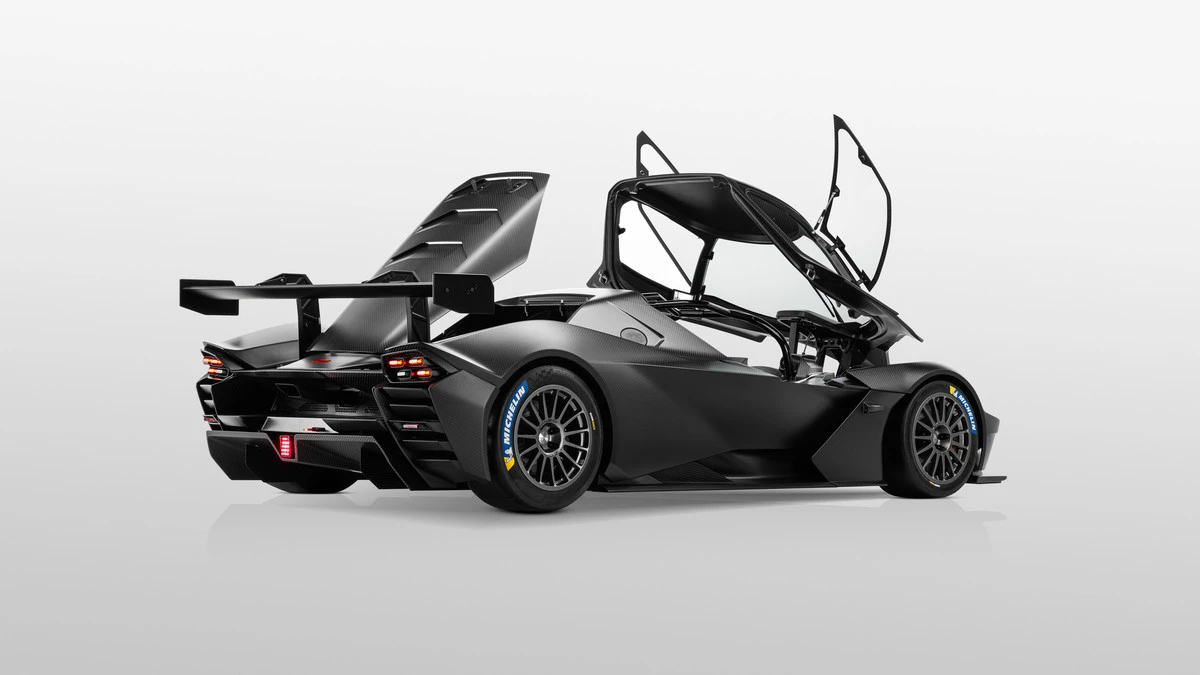
At a dry weight of only 1048 kilograms, the X-Bow GT2 boasts a power-to-weight ratio of 420kW per tonne. For reference, a Ferrari 812 Superfast can only manage 345kW per tonne.
With so much performance available, KTM will be focusing on taming the X-Bow GT2 for street use depending on what market it’ll be homologated for and their road rules.
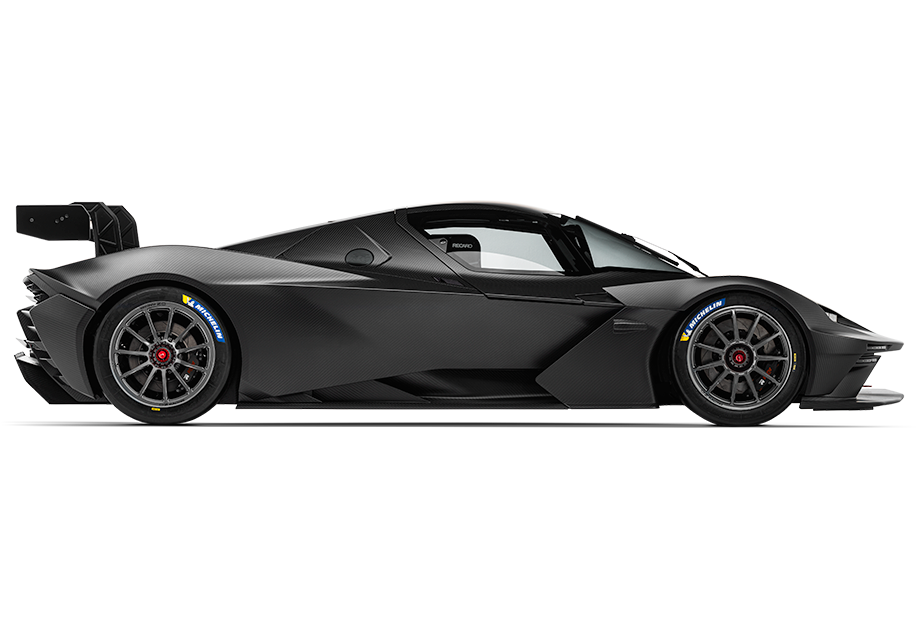
Whatever KTM comes up with for the road GT2, it won’t be cheap. The GT2 was priced at €294,000 (AU$465,800) at launch, while the less-powerful GTX version homologated for lower-rung racing series was set at €230,000 (AU$364,449).
We’ve reached out to Simply Sports Cars to hear if a road-registered X-Bow GT2 is a possibility for Australia. Worldwide deliveries are reported to begin in 2023.
