
There may be a 2023 BMW X1 M on the way, if spy photos posted to Instagram are anything to go by.
Images posted by @buschixd show a number of next-generation X1 models in BMW’s vinyl-wrap camouflage being transported on the back of a truck in Europe, with some peculiar details.
What makes the picture interesting is the quad exhaust tips on the small SUVs, strongly suggesting these are high-performance versions of the X1 from BMW M.
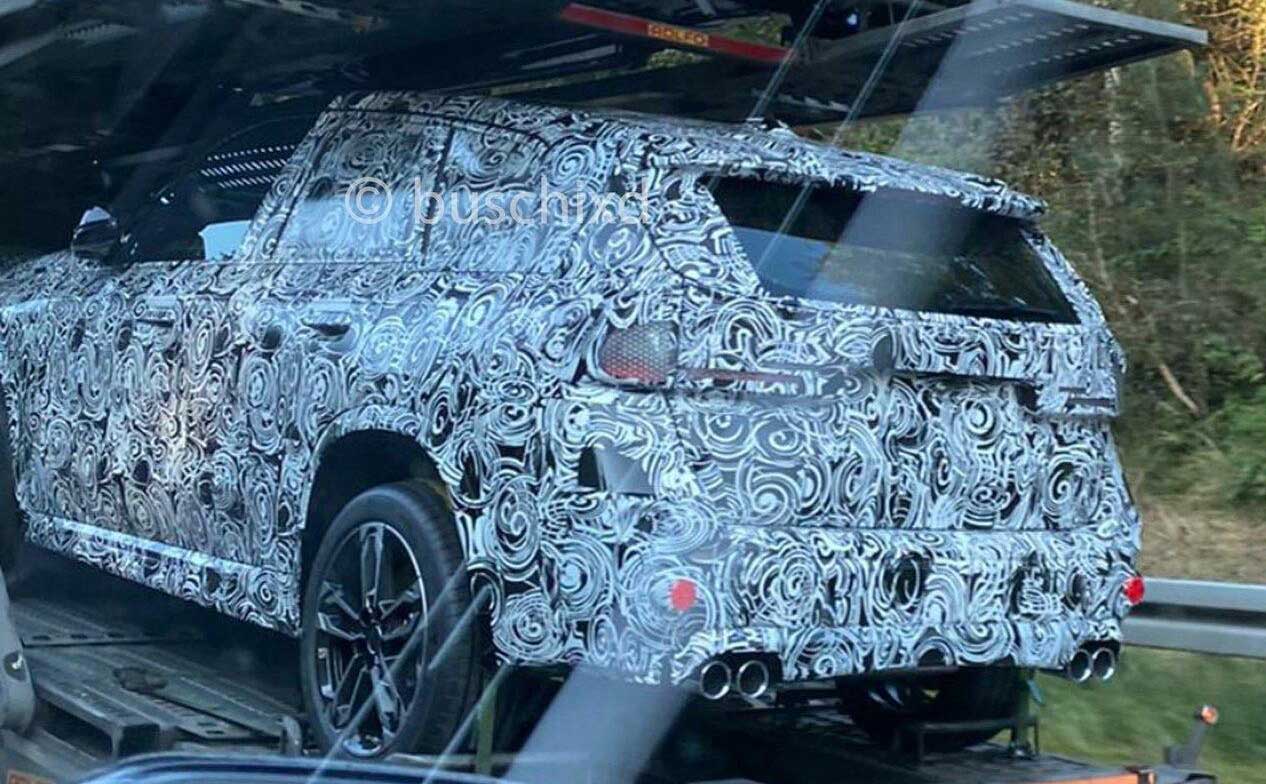
Production of the current X1 is due to end in 2022, and given the popularity of models such as the Mercedes-AMG GLA and the Audi RS Q3 – neither of which BMW currently has a direct answer for – it makes sense the company is looking to compete in the niche segment.
While nothing has been locked in, expect the X1 M to gain a powerful turbocharged four-cylinder engine and all-wheel drive, combined with the usual recipe of larger brakes and a chassis tuned by engineers from BMW’s M division. Hybrid assistance is not completely out of the question.
If the model comes to fruition, the X1 M will join a growing range of high-performance SUVs from BMW – including the X8 M, which is also expected to debut in 2022.
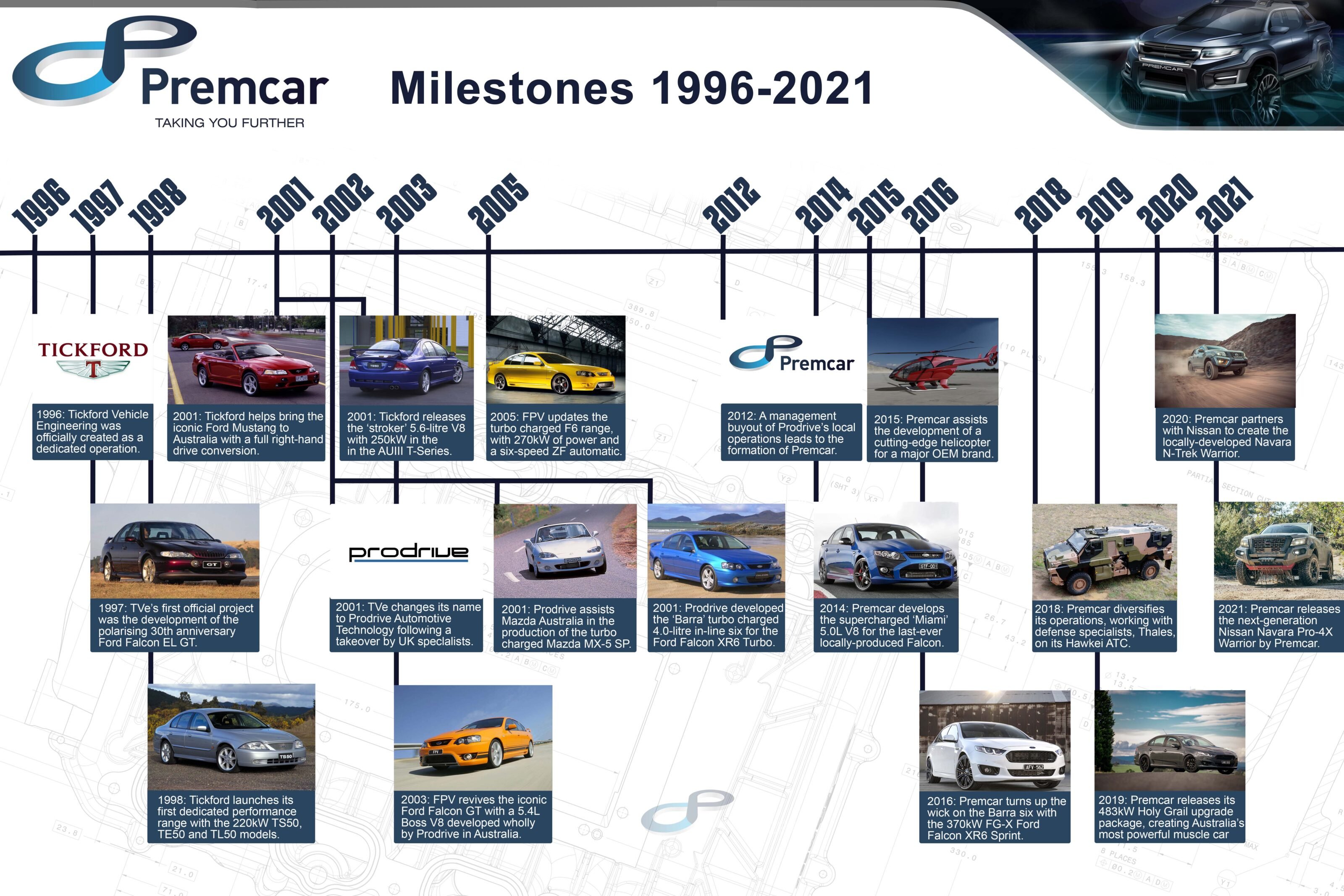
The name Premcar may not quite be a household one, but some of its other titles most certainly are.
Tickford, Ford Performance Vehicles, the Holy Grail and Pro 4X are all some of the projects the former Ford in-house tuning operation is best known for.
In the world of performance and manufacturing, the Australian firm has continued to push on even after the closure of local vehicle production, surviving through diversification.
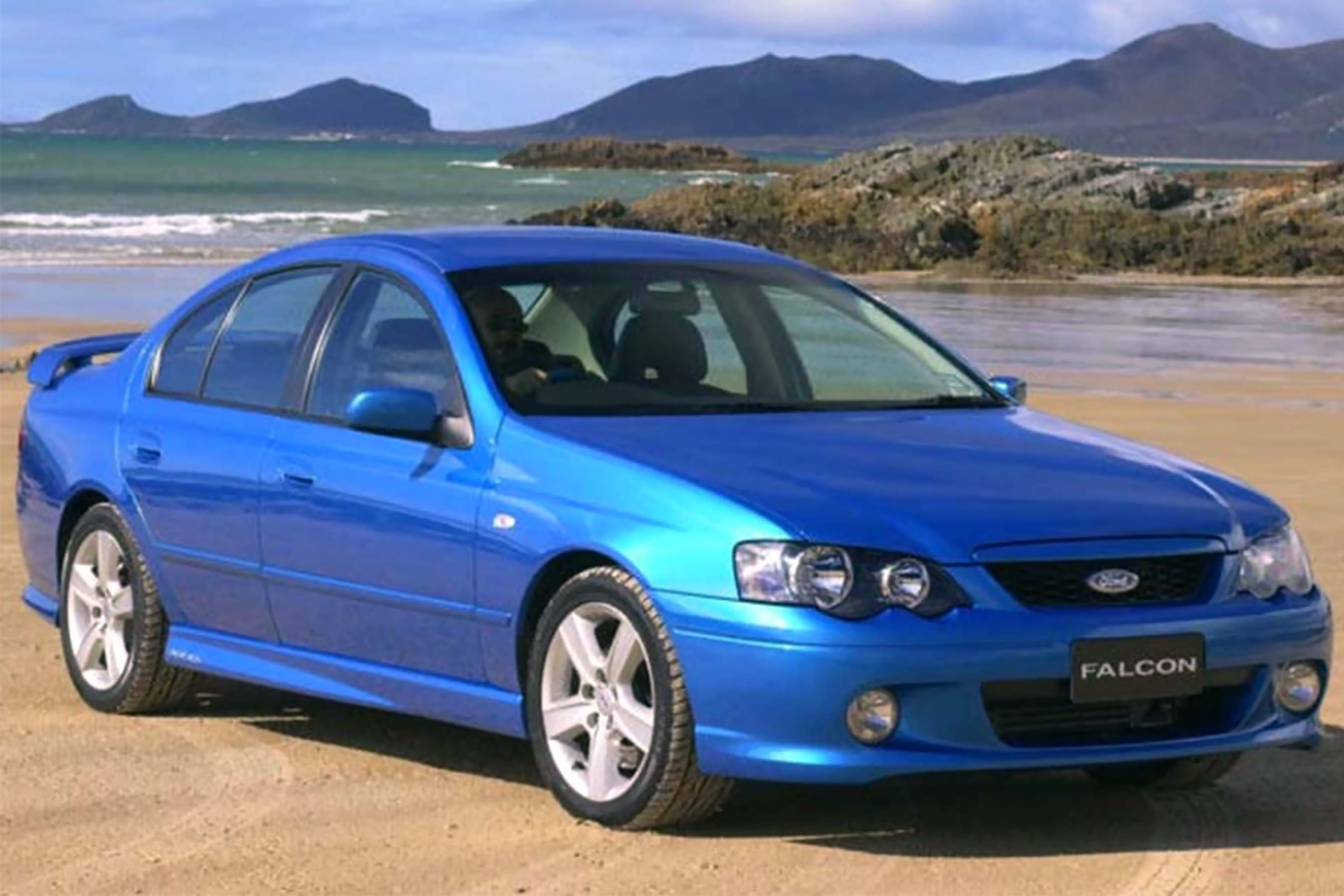
Now celebrating the 25th anniversary of its first model, the Ford Falcon EL GT, Premcar engineering director Bernie Quinn has taken the time to chat with MOTOR about the history of his company – from the early days with the Blue Oval through to more recent projects.
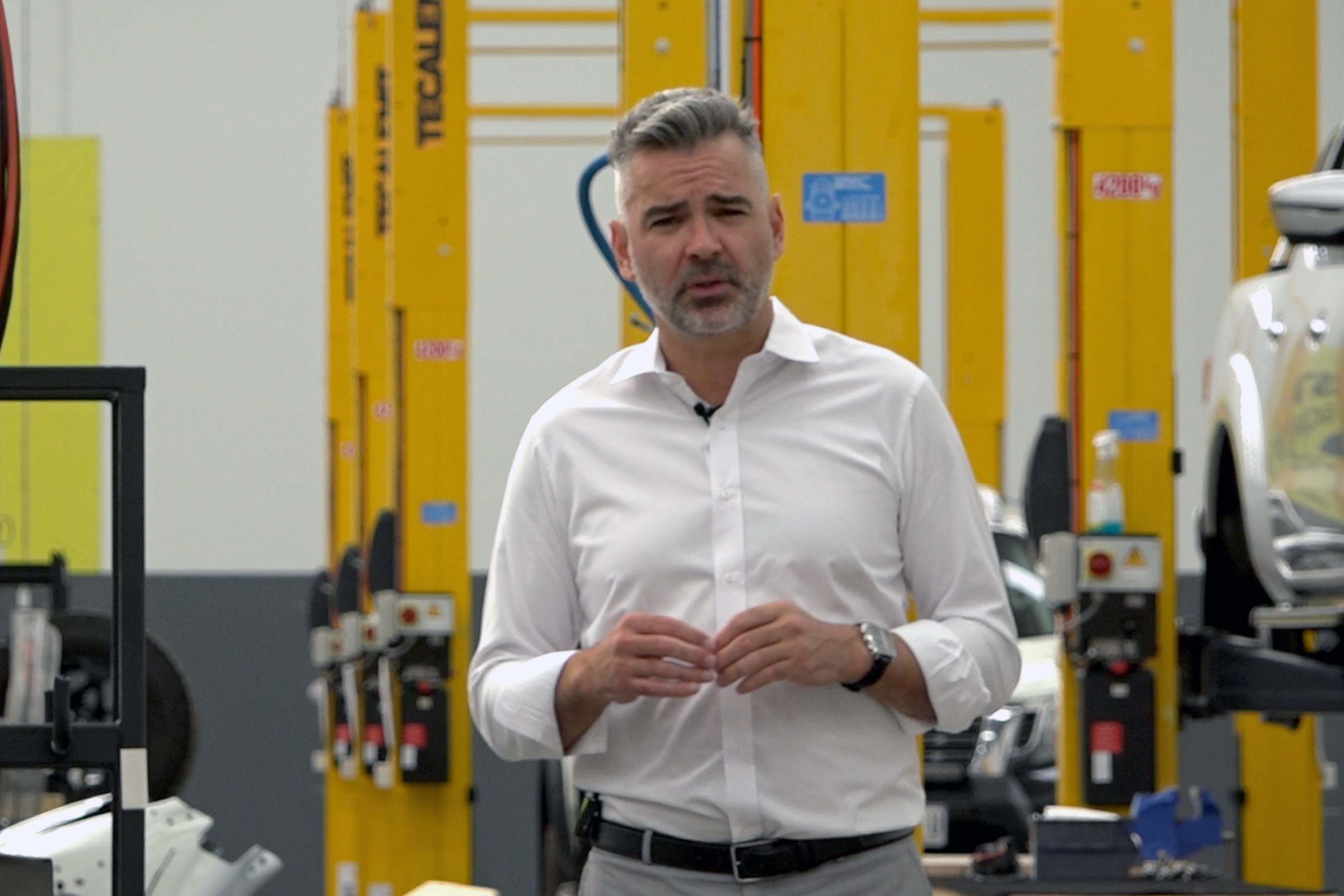
Jordan Mulach: It’s 25 years since the first official Tickford Vehicle Engineering car rolled off the production line, but the name actually has roots going back to the early E-Series Falcons – helping Ford with the first EB XR cars in 1992. How did the Tickford business first come about?
Bernie Quinn: “Tickford came out from the UK and was engaged by Ford to handle all of its niche vehicle development and manufacturing. It’s important to segregate the two from the engineering and development side to the manufacturing side.
“At that point in time, the Ford plant in Broadmeadows was running at full steam, with a maximum capacity of around 100,000 cars a year, building Falcons. The plant didn’t have the capacity to do niche variants such as the sporty models like XR6 or LPG conversions, sunroof installation, wheel and tyre packs – they were all done outside of the factory at Tickford in a secondary environment.
“You can imagine the plant running flat out just to make the mainstream Falcons, LTDs and Fairlanes. Although it was UK owned, the manufacturing side was a fully incorporated business in Australia in 1992.
“The engineering was done still out of the UK business – even though there were engineers in Australia from 1992 to 1996, they were managed by the UK Tickford Vehicle Engineering side.
“The original strategy was to have a majority of the engineering done in the UK, but over time, as it gained momentum and new models came out, it became clear Tickford needed a presence in Australia to keep up with all the work. We had to hire more engineers here to make sure we could fulfil all of these programs.
“The decision was made, and in 1996 Tickford became its own corporate entity in Australia. That’s the difference between 1992 and 1996. From the working team’s point of view, it was all business as usual and a continuation, we didn’t think about it too much in terms of being UK or Australian owned.”
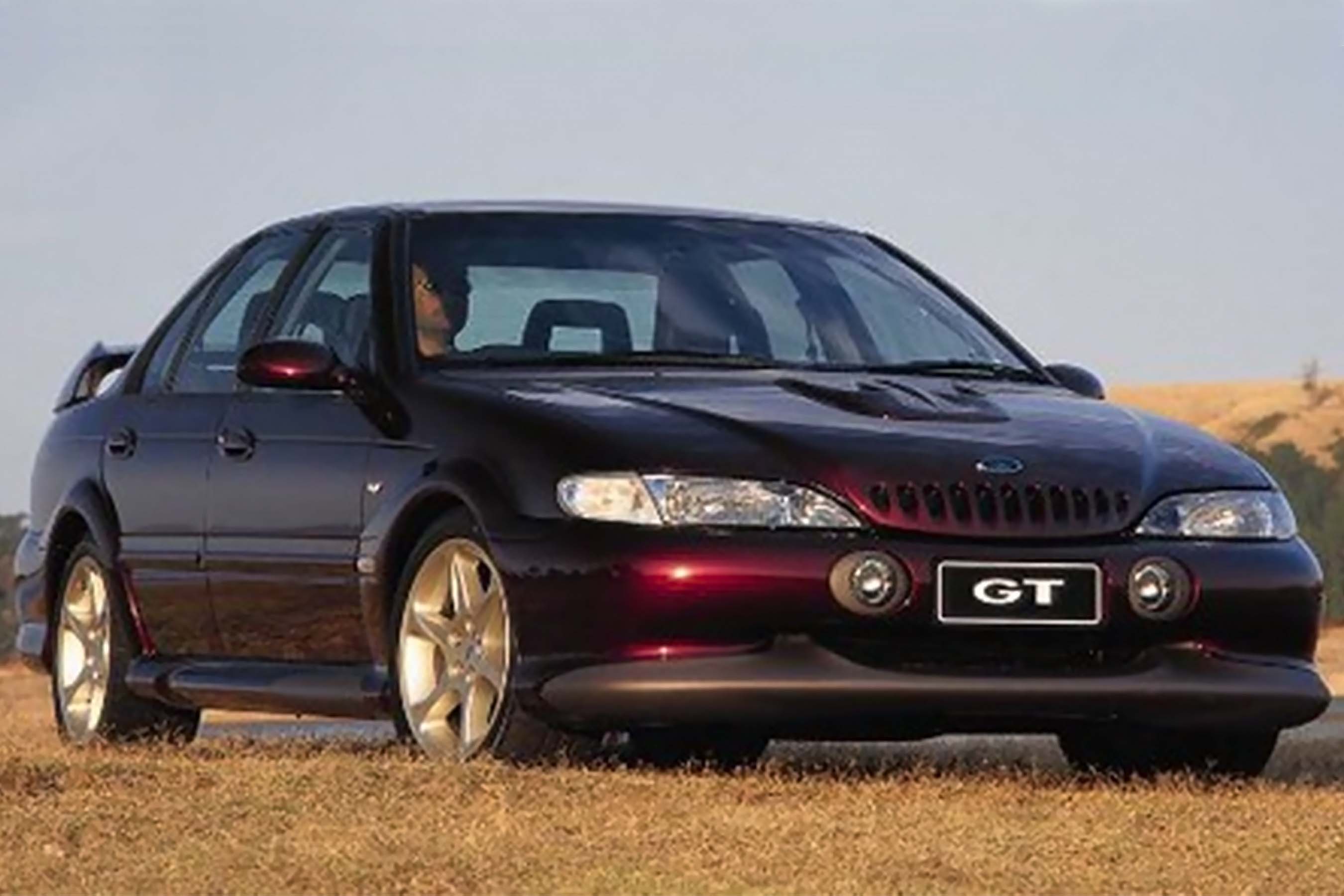
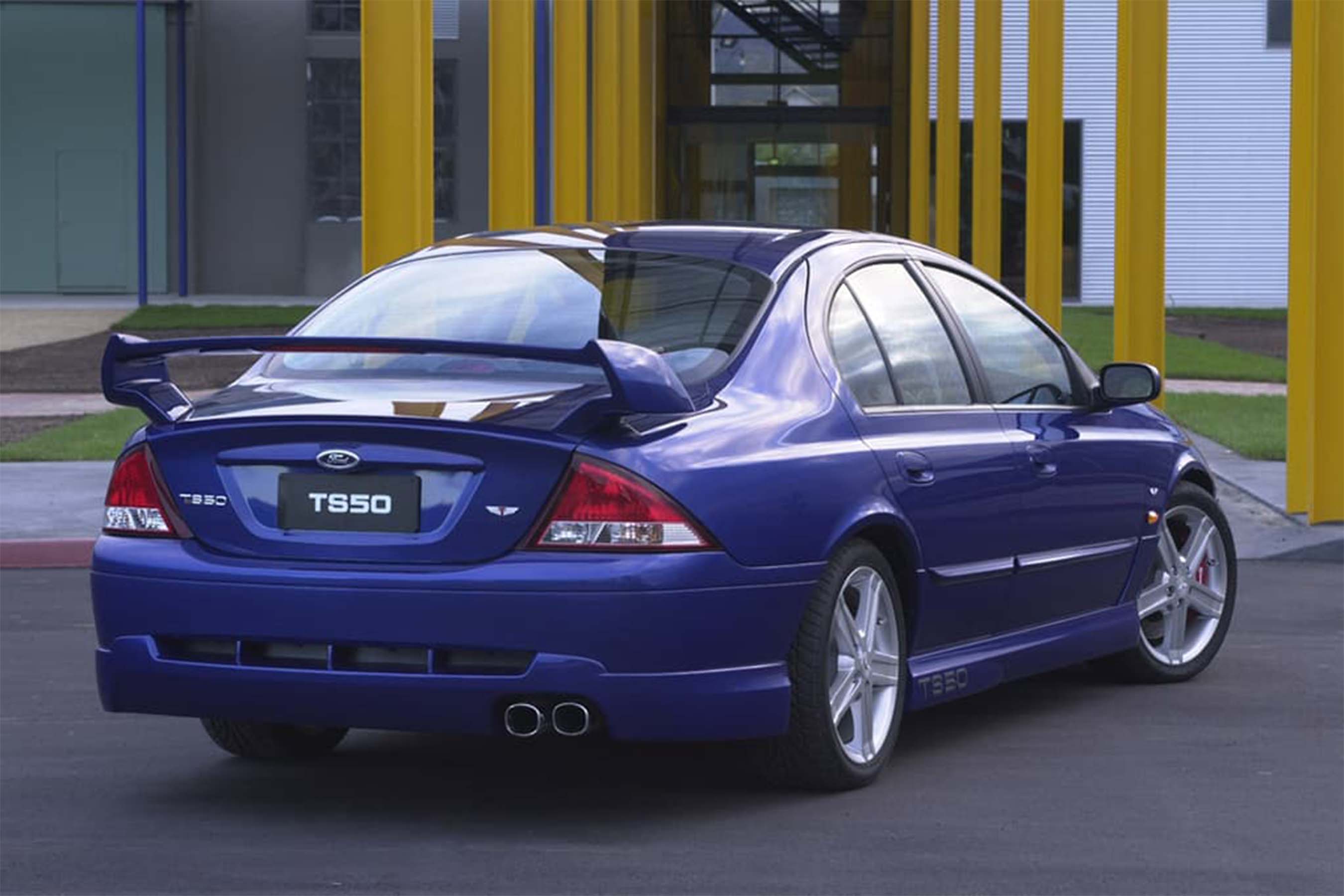
JM: The AU Falcon has developed a “love it or leave it” following, with many believing it to just be a stop gap between the ageing E-Series and upcoming B-Series Falcons. There were some high-performance and limited versions to come from Tickford, were these just to try and fill a hole until the BA came along?
BQ: “David Flint was the big influence on the A Series cars in the business, it was his baby. He had a background with Aston Martin so it was his idea to have bespoke and customised luxurious cruisers with the iron fist in a velvet glove. He would do interesting things like making sure any cast-iron suspension component was painted, as well as clear coating the engine bay – it was about this kind of hand-built approach.
“He had this different idea about what those Tickford vehicles should be and those AU FTE (Ford Tickford Experience) cars, which weren’t necessarily faster than the HSV equivalent, but they were a more cohesive package with some classic styling elements – even though we were working with the AU which wasn’t the prettiest car in base form!
“With the last version of the T-Series, the Stroker models, everyone knew the B-Series was coming and it would have the 5.4-litre Boss V8 engine, nearly 300kW, a fantastic chassis and styling – that was going to be the catalyst or start of the new era for FPV.
“The Stroker was a stop gap – no more sand kicked in our face from HSV, let’s knock them out with this last hurrah for AU. It was an awesome car. The innovation wasn’t just in the engine or the unique Tremec gearbox, but the manufacturing to do a limited run and build them reliably out of the factory was pretty amazing.”
JM: The introduction of the BA saw the 4.0-litre, turbocharged inline six cylinder Barra engine developed to provide an alternative to the new Boss V8 engine. Both developed similar power and torque with a slight weight benefit for the XR6 Turbo. Do you think the 270kW Barra was a better engine than the 290kW Boss?
BQ: “I get asked this a lot – would you have the V8 or the inline six turbo? Especially at the launches I had to tow the political line and give the PR statement. Honestly, day-to-day and week-to-week my opinion would fluctuate. I’d have either the Barra turbo auto or a Boss V8 manual. The transmissions suited each engine.
“When they were launched, I think the V8 was a bit more compromised than the Barra, which just blew us away. The first cars were built in AU bodies and the AU was a much lighter car than the BA, forgoing safety features and with a lighter rear axle compared to the IRS in BA. Those light AUs with Barra turbo motors blew everyone away, we knew we were on to a winner.”
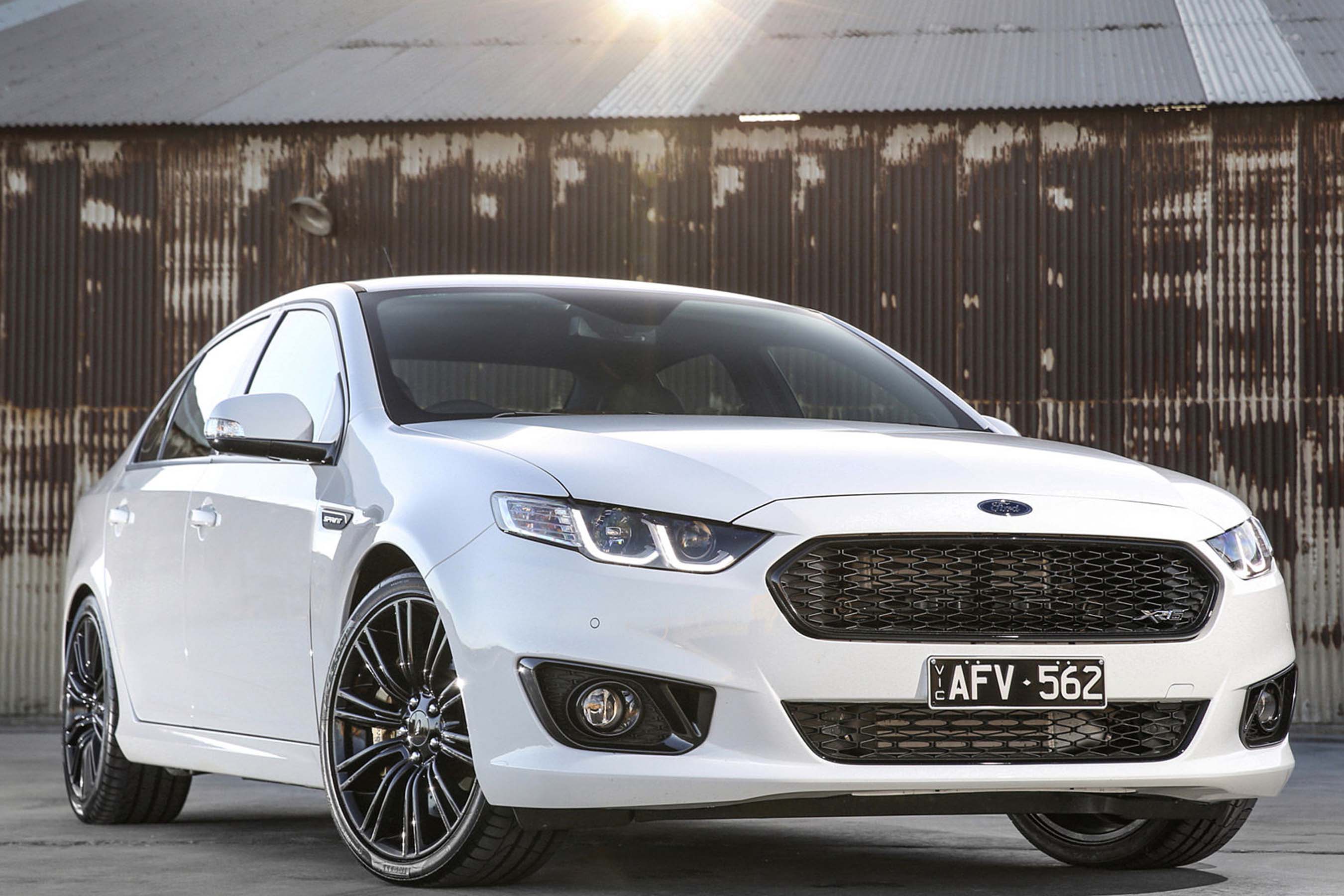
JM: Fast forward to 2016 and Ford shuts up shop in Australia. Yourself and the Premcar team were brought on to give the XR6 Turbo and XR8 a send-off with the limited run Sprint editions. Was it bittersweet to know it was a case of “what might have been”?
BQ: “Bittersweet’s probably the right way to put it. At the time, the joint venture had been dissolved. In 2012, Premcar bought out the Prodrive automotive technology business and then the FPV joint venture finished after that when Ford bought out FPV to just let the brand die.
“Ford still came to us to do the engineering for the GT-F and the XR6 and XR8 Sprints. We were excited to be involved and give them one last hurrah – especially the turbo because it was out last chance to build all the best bits of the Barra motors plus to add in some unique parts into one package, making sure we gave it a fitting send off.
“The difference between the XR6 and F6 versions of that motor was a lower compression ratio in the F6 to feed more boost in but not detonate. That meant it didn’t have the same snappy throttle response as the XR6 Turbo, because when you were off boost, you had a low compression ratio engine. We worked out a way to get a lower intake pressure drop, as well as lowering the back-pressure in the exhaust, make it breathe a bit better and gain more efficiency through parasitic losses.
“However, because it was more efficient, it wasn’t generating the same kind of heat in the combustion chamber – which is the aim, to not over pressurise or over heat the combustion chamber during a combustion event. With the increase, we were able to put the higher compression piston in, but also use the bigger turbo (Garrett GT3582r) in the XR6 Turbo Sprint – plus the larger intercooler to get the snappy response of the XR6 Turbo with the mid-range power of the F6.
“To reduce the intake pressure loss, we had to make a bigger air intake and to fit something in, we had to make interesting shapes with thin walls on the intake duct so we went to carbon fibre. It was the first use of carbon fibre in the production of a Ford anywhere in the world, and the process we used to validate it was used across the globe for all Ford products. Everyone who’s driven them talks about it being their favourite car. I had a G6E Turbo and I have extremely fond memories of it.”
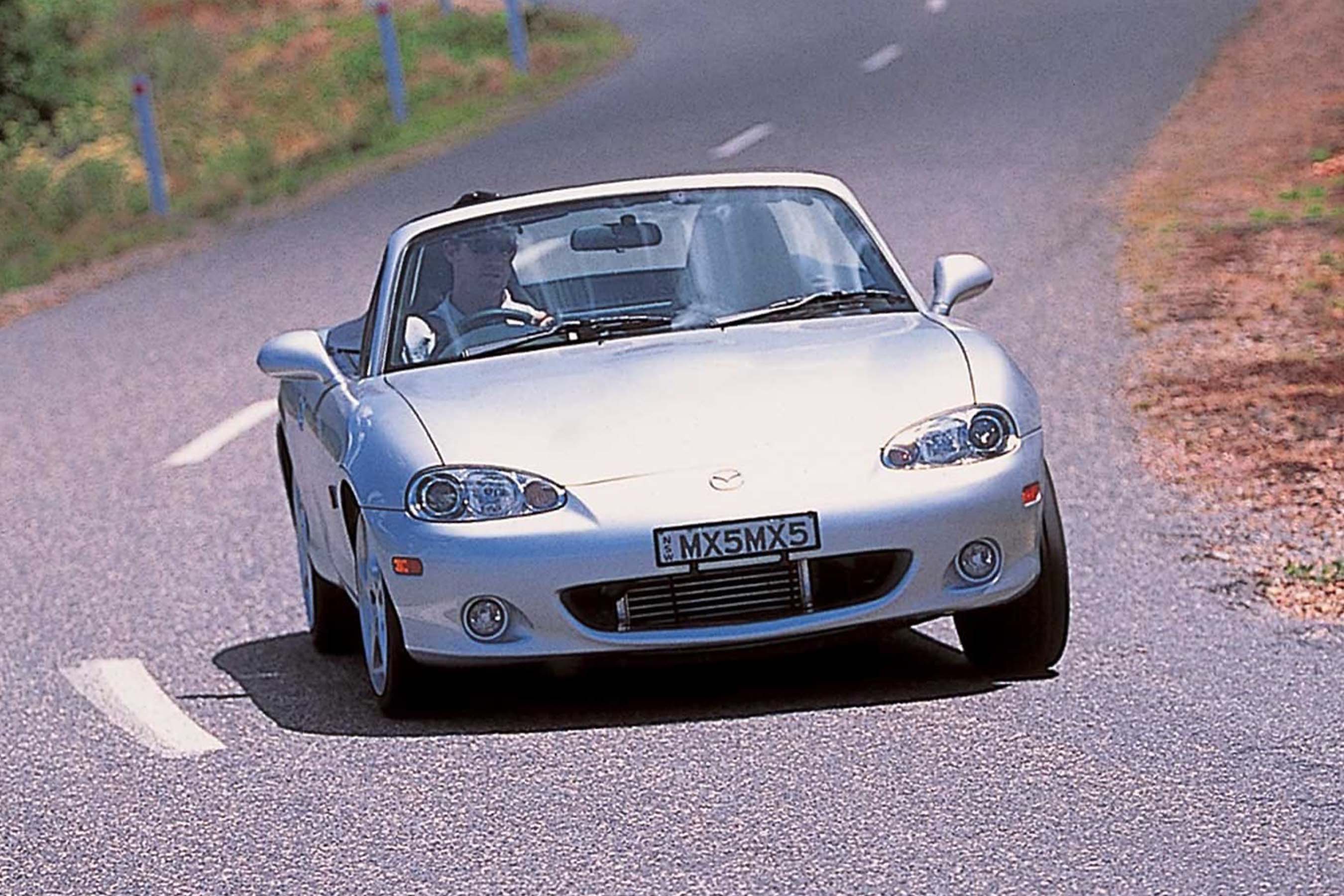
JM: I bet you’re regretting selling it now, looking at used prices…
BQ: “You’ll never forgive me, but I sold it to buy a Toyota 86. I absolutely hated the 86. Overseas media said it was better than the Porsche Cayman or better than sliced bread. I had this idea of making an aftermarket kit for it. Harrop was doing a supercharger for it, we were going to do suspension –so I thought I better get one as a development mule. I bought it and used it as my daily driver.
“The good thing about it is you could thrash it all day every day and it would hardly break the speed limit, but you had to do that because it had the worst torque curve I’ve ever seen in my life. It would start to come up in torque and literally drop off then come back at 5000rpm – you had to wring its neck and it just became tiresome. The rear-wheel steer too…everyone talked about it being agile, but if you were halfway through a corner and adjusted the throttle position, the thing would break out into oversteer.
“It was one of the reasons why we didn’t follow through – it was going to be too difficult and we got distracted with all of these other projects. We talked about it a bit and Harrop ended up making the supercharger for it, but sold that as a standalone package. A mate from Ford gave me his Fiesta ST to drive around the same time and that thing was unreal, it was a fantastic car. I made a mistake with the 86.”
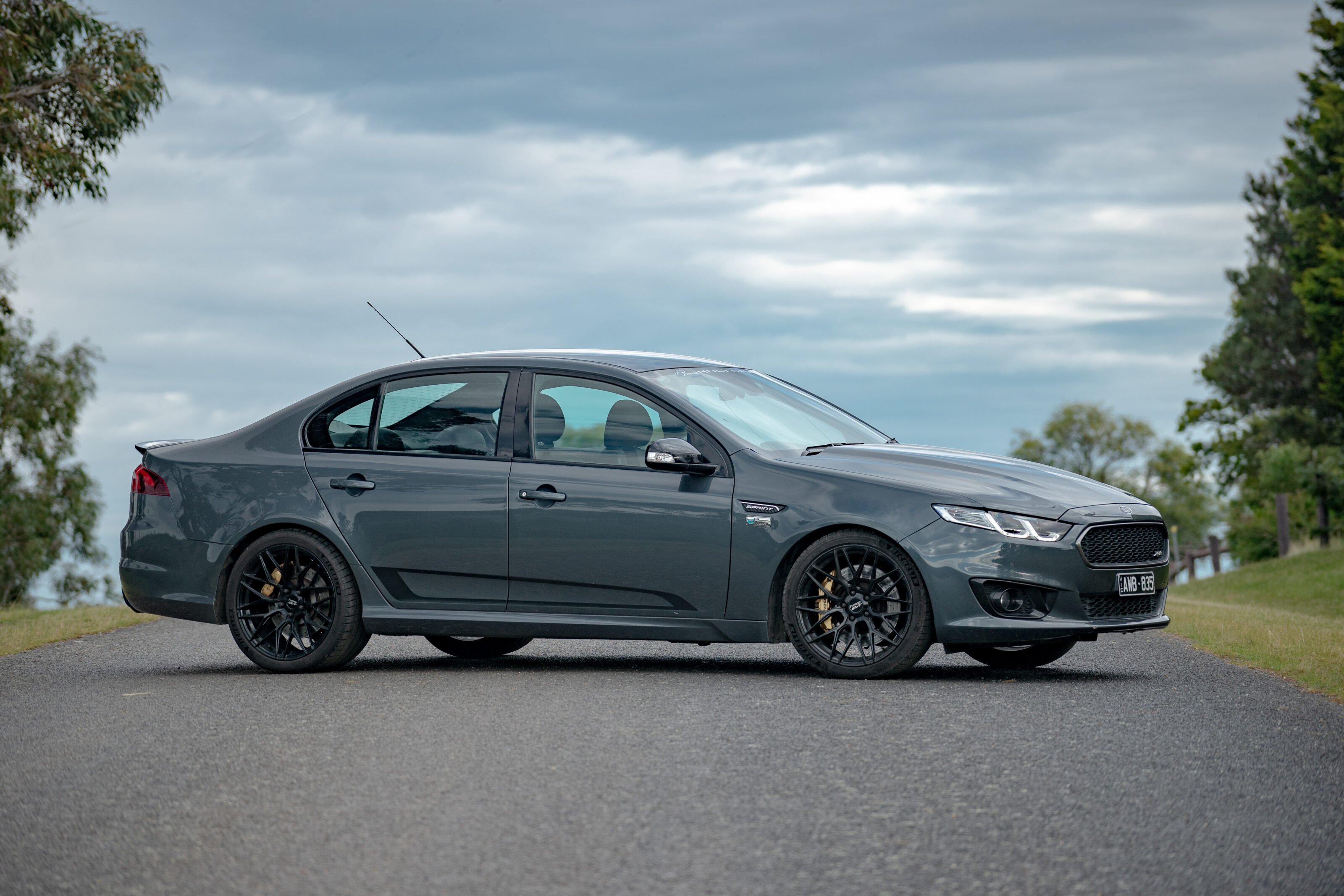
JM: Even though the Ford adventure officially wrapped up with the Sprint cars, the Premcar team seemingly threw everything bar the kitchen sink at the Falcon with its Holy Grail kits. Why was it so important for you to create the ultimate version of the Falcon?
BQ: “The Holy Grail was 100 per cent a passion project. We always wanted to do a kind of ultimate version of the Miami V8 engine and the Falcon – we knew putting new trailing arms in the back with different bushes would help with getting the power down. We knew intercooling the engine would be critical in unlocking its full potential, so we threw everything at it to make that package.
“I’m really rapt that we got it out, we made no money on it – even though it was an expensive package – because of the costs of tooling and engineering all of those parts. It was satisfying to get it into people’s hands so they could see what was possible with the platform and the engine. Everyone who drives one goes ‘holy shit, we didn’t know that car was capable of being that good’.
“I’ve still got one I drive in Targa High Country and it’s the kind of car where you go as hard as you think you can go, the car just taps you on the shoulder and says, ‘you can do a bit better, go harder’. You keep upping the ante on these Targa stages and it’s never failed me. People are always surprised at how capable it is on those types of roads – you’ve got bumps, tight corners, open corners, uphill, downhill. It just pulls like you wouldn’t believe.
“We’ve still got the last Falcon ever sold which has 80 kilometres on the clock. It seems like a waste, but it’s the preserved one. We have cars which we drive in anger.”
JM: After that relationship ended, was there any anxiety about the future of the business?
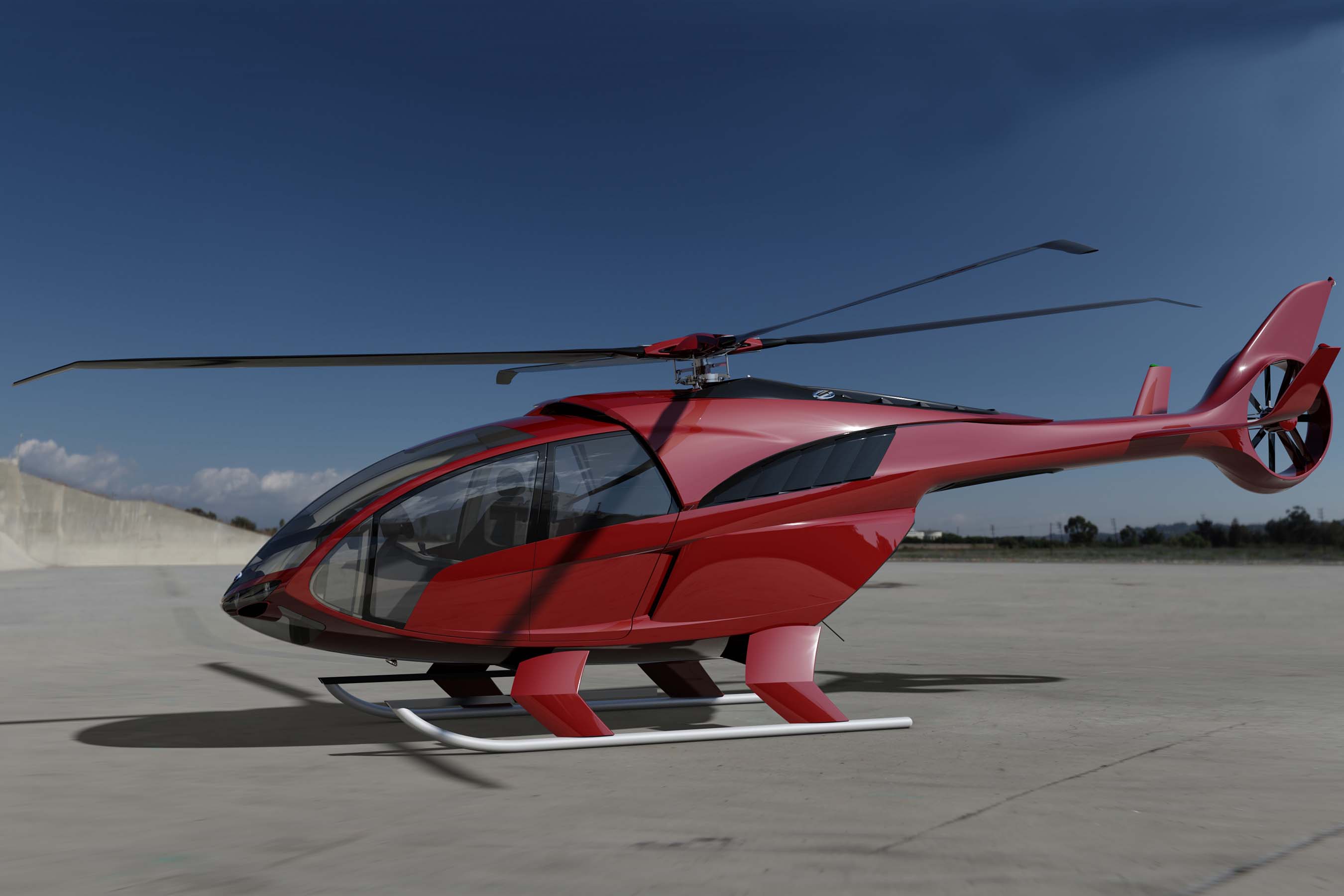
BQ: “We’ve had plenty of anxious moments and still do to this day, you never get to the point where you think it’s all cool and relaxed. It’s one of the reasons why we’ve diversified with a whole range of companies, I mean, we even did a helicopter project as well in that time frame.
“The idea is to not put all of your eggs in one basket, because that’s when you put yourself at the highest risk of factors outside your control. The relationships are all about de-risking the business as much as possible. I’d be lying if I said it was relaxing!”
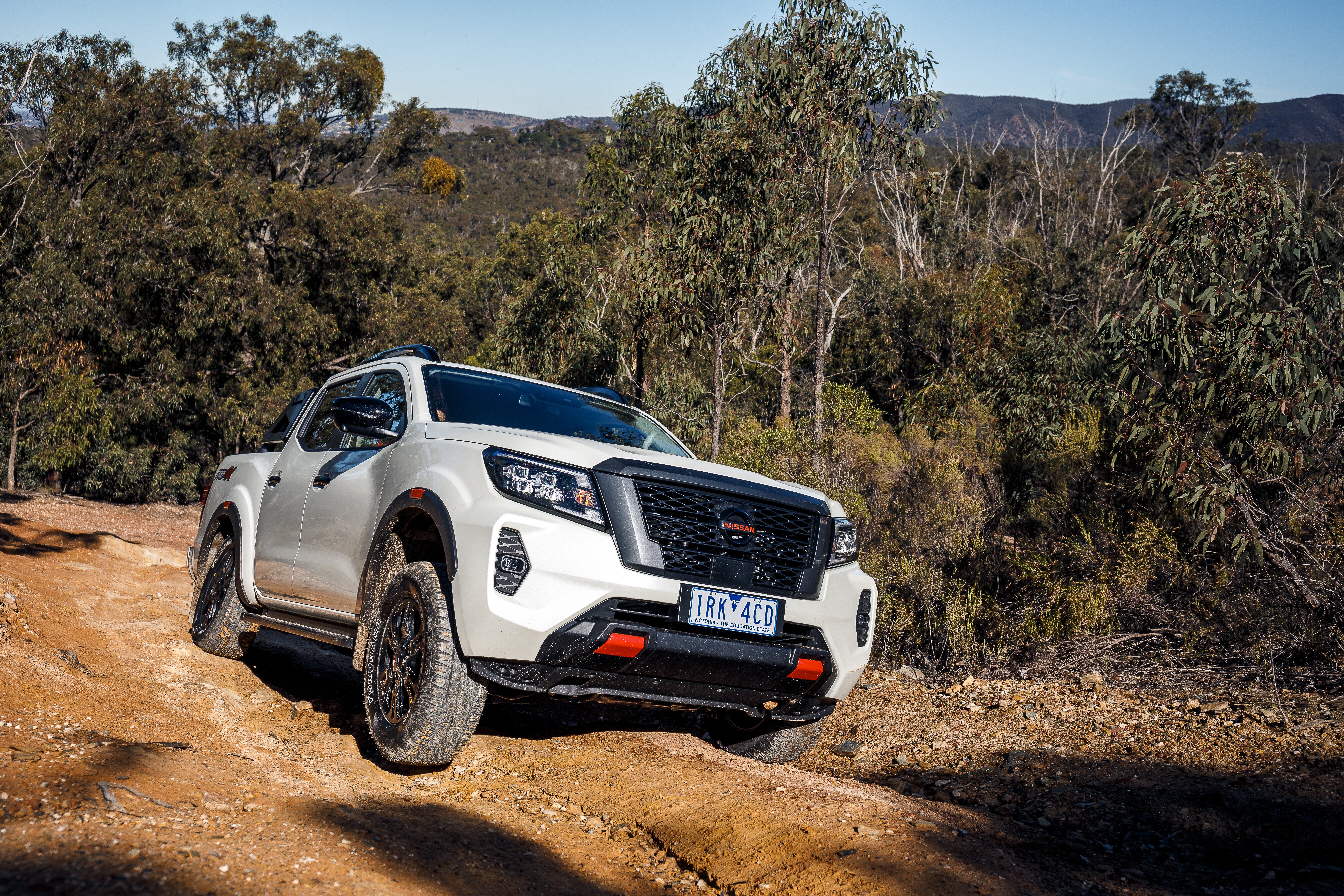
JM: So what now for Premcar? In addition to the Nissan Navara PRO-4X Warrior, are there any other OEM projects the team is working on?
BQ: “You’ll see more stuff from us. Some we’ll be public with, some we won’t be, but there’s plenty happening. We are becoming the experts in the 4×4 dual-cab space, which means there will be more coming in that area of the market, but we’re also doing more work with EVs.
“It’s the new way forward, we’ve actually just completed a project with a Chinese manufacturer to do front and rear suspension plus driveline modules. There are special considerations – you have to keep in mind fundamentals like an internal combustion engine being mounted into a subframe, you need frequency of separation to not get coupling between multiple systems – which creates buzzing, NVH etc.
“With an ICE, you’re usually working between 0-700Hz with the frequencies coming from the engine, but with an electric motor, it’s much higher. Your isolation strategies have to be different because of the way the torque is delivered compared to an ICE, meaning different motor mounts to cope with the surge of torque.
“Braking systems on EVs are a bit more complicated, partially due to their large mass, but you need to integrate that with the regenerative braking from the electric motor. We’ve had to adapt our skills to that, we’ve been doing it for a while now and I think we’re in a really good position to capture more of that work from car companies.”
JM: Say for some reason Premcar is dissolved tomorrow and you can never work in the industry again. What’s the car you look back on and think, “that’s my legacy”?
BQ: I think the Holy Grail is the culmination of our best capabilities in one package, but there’s only a few of them out there – so it doesn’t have that spread. Then you say the Barra turbo was extremely popular, there’s thousands of them out there which means it’s a successful program – of which we were a key part. Maybe BF F6 auto would be my pick. However, the current stuff is an example of how we’ve been able to diversify and adapt with the modern times.
A unique law in the American state of New Mexico has forced Tesla to think outside the box to set up a bricks-and-mortar store.
New Mexico is one of a handful of states which bans the direct sale of vehicles to customers, instead requiring manufacturers to establish a physical presence through a third-party dealership.
However, Tesla has been able to circumvent the law by establishing a partnership with the native village of Nambé, building its dealership on Tribal land which isn’t covered by the state’s laws.
Through repurposing a defunct casino, Nambé Pueblo Governor Phillip Perez supported the partnership – which Tesla and the local residents hope will strengthen the local economy, providing more jobs for those in Pueblo of Nambé as well as nearby Santa Fe.
“This location will not only create permanent jobs, it is also part of a long term relationship with Tesla,” Perez told KRQE.
“The company is working with Nambé Pueblo to provide education and training opportunities for tribal members, as well as economic development.”
Although the population of Nambé Pueblo is just 1700 residents, the Tribal village is just 30 minutes away from the state capital of Santa Fe (84,000 residents) and a 90 minute drive from Albuquerque, the state’s most populous city with just over 560,000 people.
Snapshot
- Mitsubishi could end development on its own platforms by 2026
- Partnership with Nissan could result in badge-engineered vehicles
- Local arm denies any plan exists to halt development
Mitsubishi will end development of its own platforms in favour of rebadging Nissans by 2026, according to reports from Japan.
As reported by Nikkei Asia, the automotive manufacturer is said to be looking to reduce costs by ditching its own research and development for future vehicles, instead choosing to focus on electric vehicles made by Nissan, and by extension Renault, through the three-brand partnership.
The smallest arm of the Renault-Nissan-Mitsubishi alliance, the latter manufacturer currently has eight different platforms – but is aiming to reduce this to four by 2026, with at least two being self-produced.
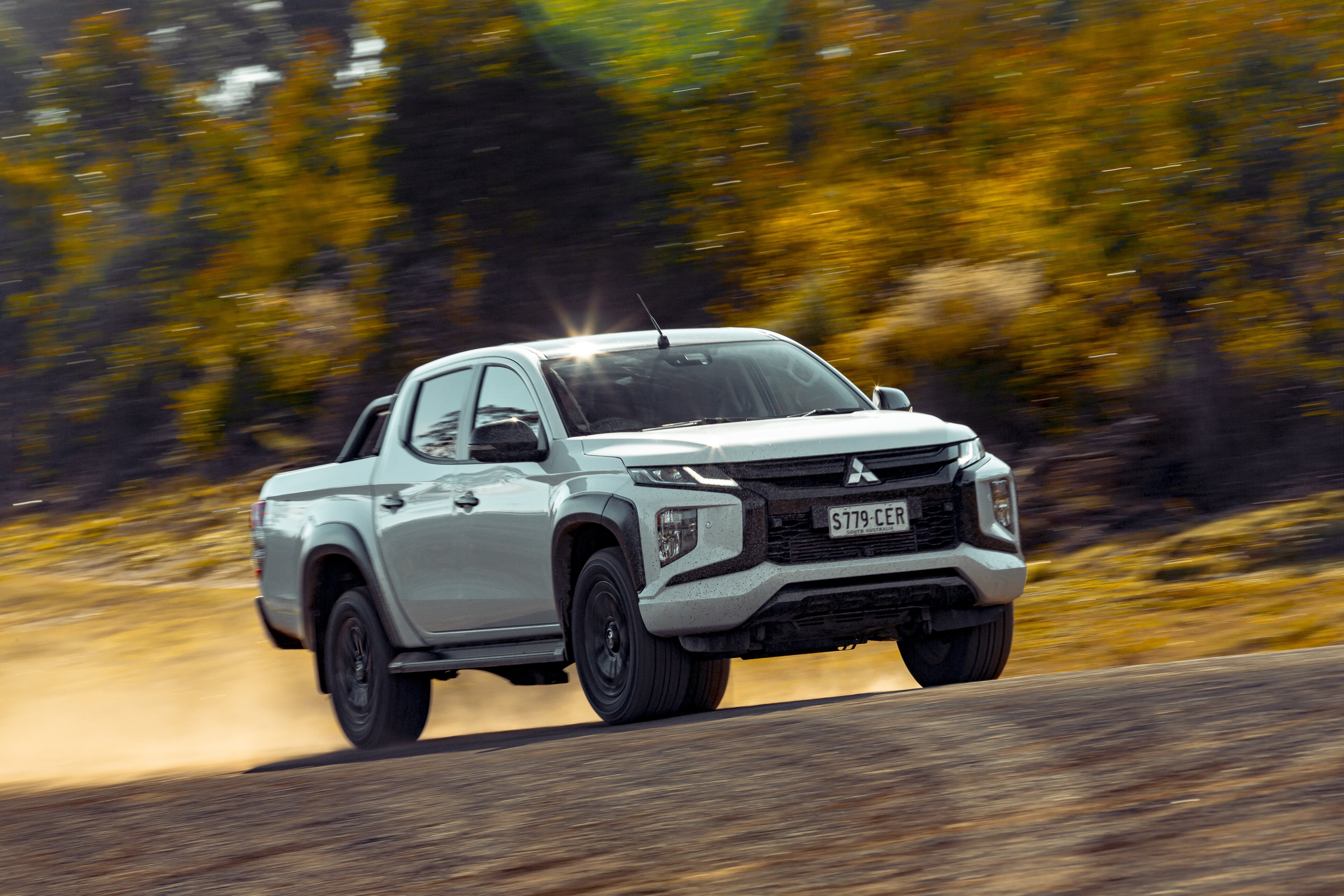
Mitsubishi Australia however has denied its global operations are to be consolidated with Nissan.
With a worldwide push towards electric vehicles, Mitsubishi could benefit from the development and production work currently being outlaid by its partners – following Renault introducing two new EV platforms – CMF-EV and CMF-BEV – which reduce production costs by up to 33 per cent over its existing vehicles.
This all depends on how the alliance is structured and implemented in the future. Currently, Renault has a 43.3 per cent stake in Nissan (which holds a 15 per cent stake in Renault) while Nissan owns 34.04 per cent of Mitsubishi, more than any other company.
The European Union’s planned ban on internal combustion engine vehicles has been met with resistance in the Czech Republic, with the country’s Prime Minister saying it isn’t feasible for the nation’s economy.
According to Automotive News, Andrej Babis has been critical of the proposed ban, which will see new ICE vehicles banned from sale from 2035 as part of the EU’s wider goal to reach net zero emissions by 2050.
“We will not agree with the ban on selling fossil-fuel-powered cars. It’s not possible. We can’t dictate here what green fanatics devised in the European Parliament,” the Czech PM said.
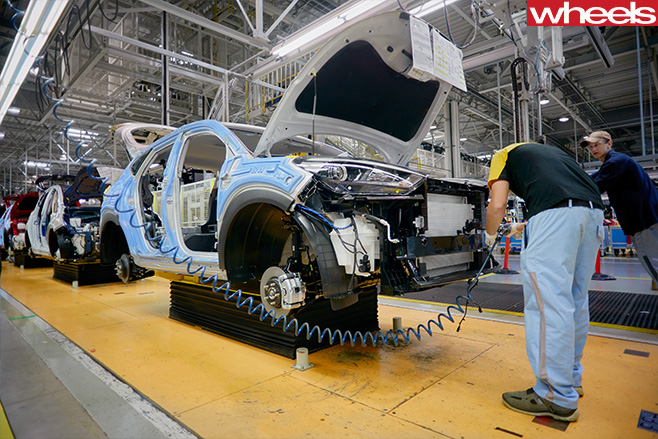
The automotive manufacturing industry is a major part of the Czech economy, accounting for roughly 24 per cent of the country’s exports, with local brand Skoda, as well as Toyota and Hyundai’s plants, producing around 1.4 million vehicles a year.
As a part of the EU’s rotating presidency, the Czech Republic and Babis will assume the role late next year, with the ICE ban being listed as a priority topic to be tackled.
While Babis isn’t against supporting infrastructure for EVs, he has ruled out introducing subsidies and incentives – despite Skoda, Toyota and Hyundai all moving towards electric futures.
- Introduction: Standing Out
- Month 2: No Rohrl Model
- Month 3: La Dolce Vita
- Month 4: Quarter Pounder
- Month 5: Until Next Timer
UPDATE, August 5, 2022: New 2023 RS3 driven in Australia
The new-generation RS3 is finally in Australia. You can read our review here, and watch Inwood’s track and road drive in the video below.
The story to here
Introduction: Rev-enant
Audi’s smallest RS returns and enters our garage
Perhaps I’m uncompassionate or cold-hearted, but I’ve never really understood the sobbing groupies and wailing fans when a band announces they are breaking up.
At least, that was the case until earlier this year when French electronic legends Daft Punk dropped the bomb with the announcement no one saw coming and, after nearly three decades, the enigmatic duo would go their own curious, anonymous, robotic ways.
As far as bands and musical ventures go, this feeling of emptiness was very new to me, and yet its deep uncomfortable ache seemed familiar. Some hours later and after countless replays of Daft Punk classics like a heartbroken schoolgirl, I finally remembered.
The last time I felt like this was when Audi discontinued the RS3.
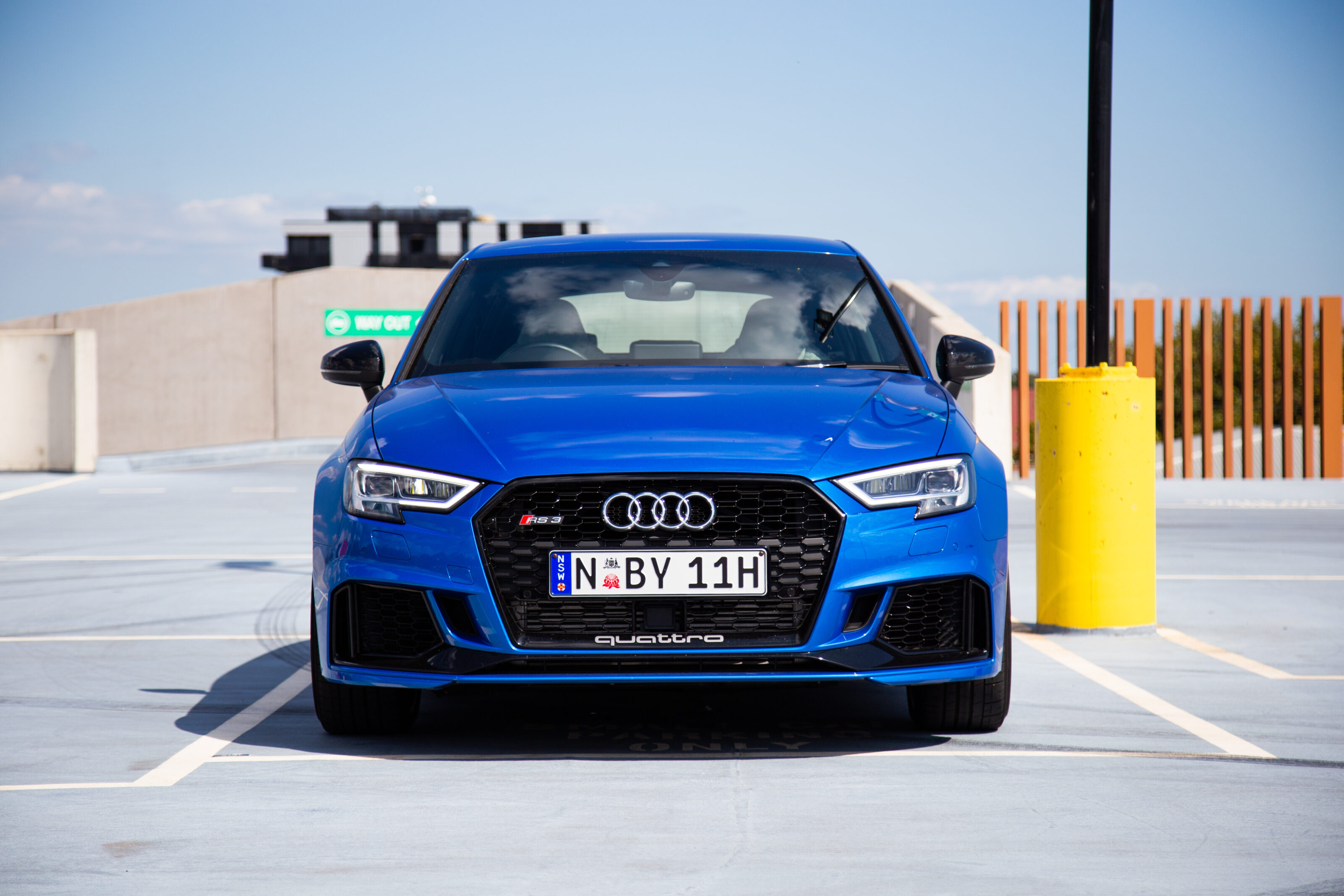
Amid the chaos of switching over to the new Worldwide Light Vehicle Test Procedure (WLTP) in 2018, the German manufacturer halted production of its A3 flagship with no guarantee it would return in the present third-generation.
With the fourth-gen A3 now out and about in Europe and other parts of the world, it seemed increasingly likely we would have to wait until the yet-to-be-confirmed all-new RS3 appears in local showrooms for a taste of the magical five-cylinder and quattro combination.
But again, with widespread downsizing and hybridisation in response to strict emissions regulations, there is no such thing as a guaranteed engine and transmission combination in today’s automotive landscape.
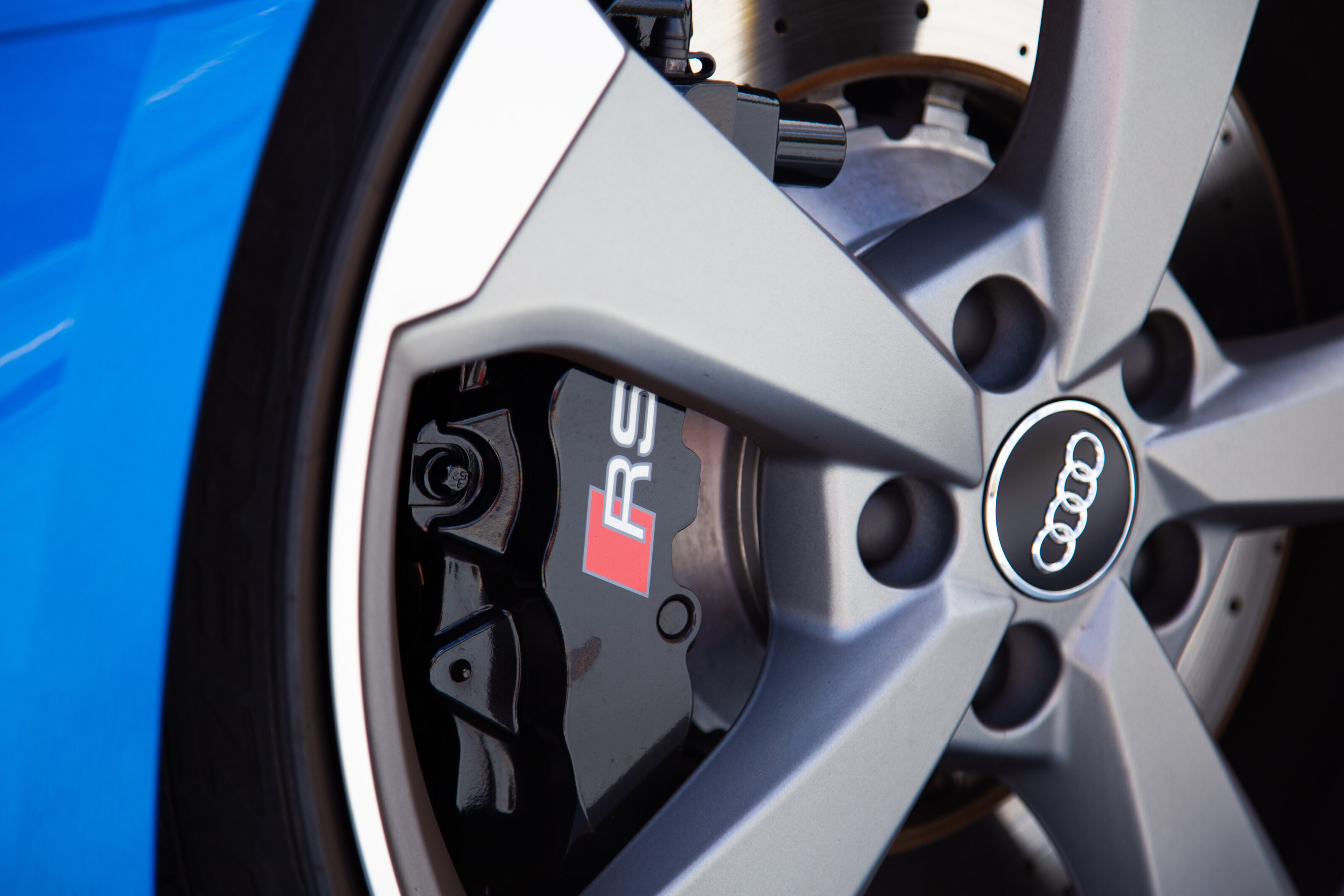
“This 294kW machine is a very welcome visitor to the long-term test garage”
So when I heard that the Neckarsulm production line would once again start pumping out the current-generation version I finally understood how people felt when Axl, Slash and Duff buried the hatchet in 2016 and reformed iconic band Guns N’ Roses.
From 2020, the most muscular version of Audi’s small hatchback and sedan returned to local dealerships. Pause for applause. With the next incarnation of the Audi A3 imminent however, the freshly returned RS3 is very much having its swansong. But its momentary resurrection offers an important opportunity to evaluate what the hi-po hatch does well and, more importantly, what its successor could do even better.
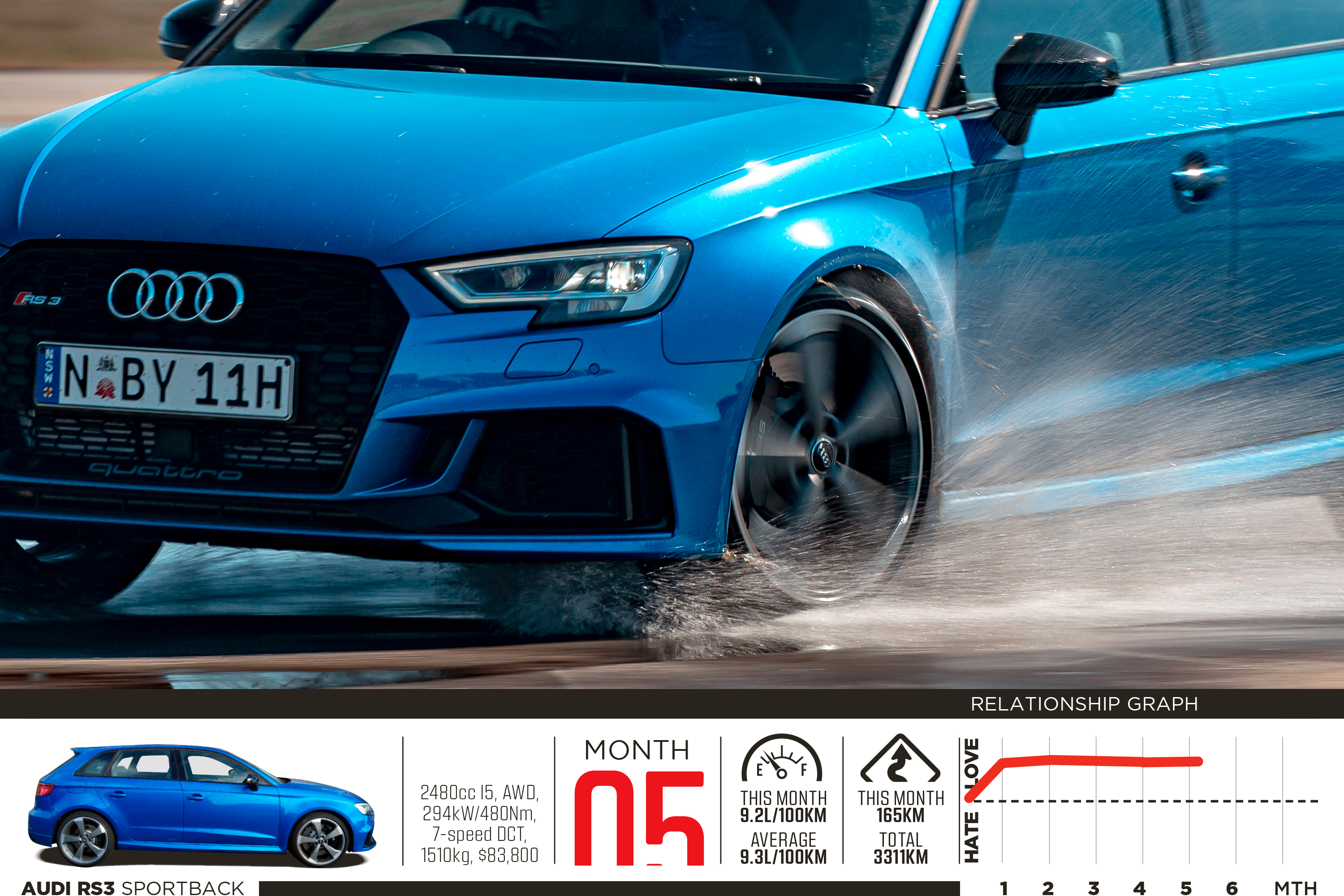
That’s why I have taken (okay, snatched) the keys to an Ara Blue example with light grey leather upholstery until mid-winter. I love the colour. Ara was initially an Exclusive colour by Audi for the R8 V10 plus and, for a while at least, was initially seen only on the supercar.
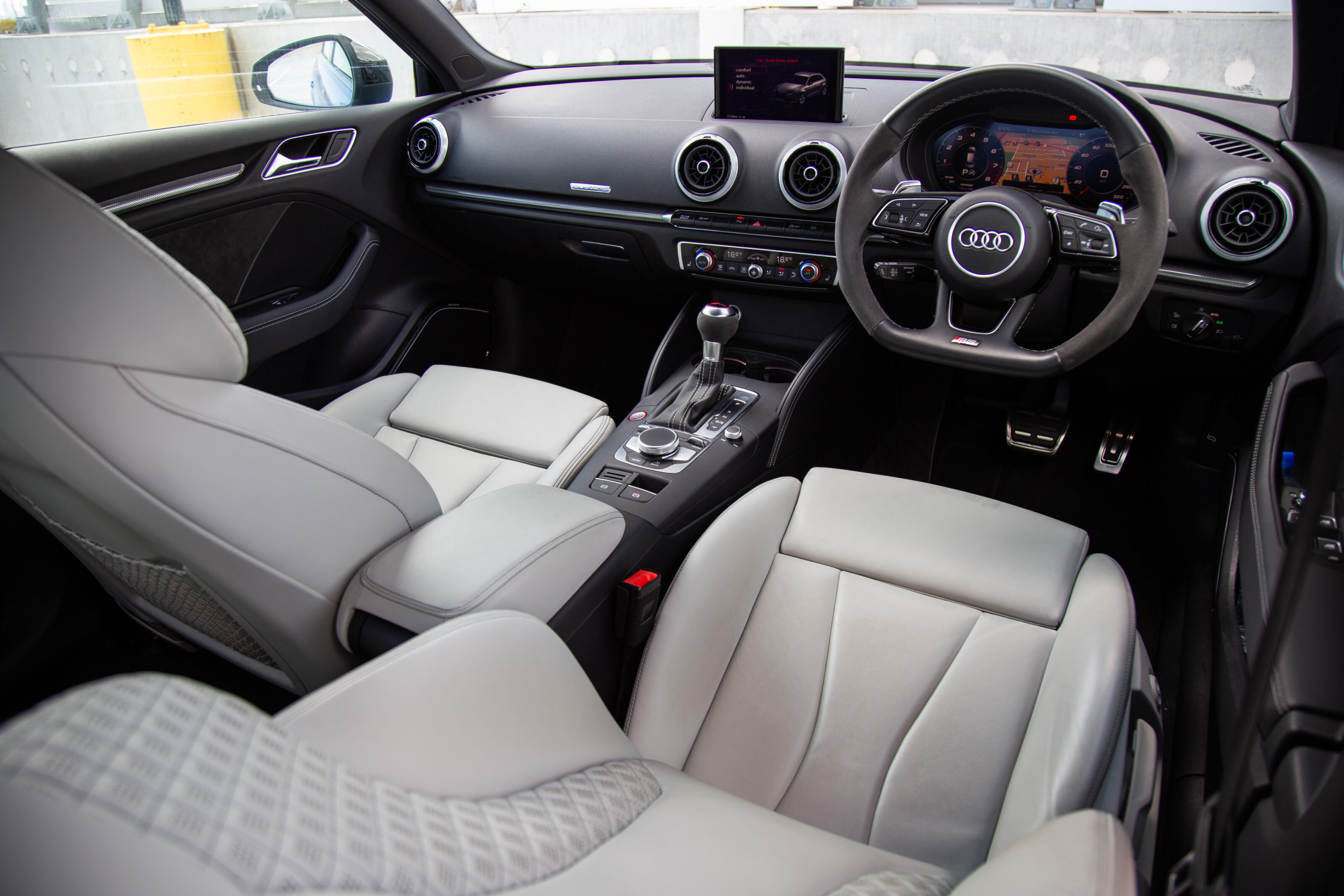
I’m happy to report the fudamentals remain excellent. What’s changed? A top-spec Bang and Olufsen sound system, that leather, wireless device charging and adaptive dampers are all now standard fare – along with a $2200 price increase to $83,800 for the Sportback. You can still also get the sedan equivalent for $86,500.
Oh and if you were thinking of dropping a frankly absurd amount of cash on the optional carbon ceramic brake package, then Audi has done you a favour and discontinued it. Trust me, if you drive this 1500kg hot hatch hard enough to need space-age anchors then I suspect slowing down really will be the least of your worries.
But there’s one update that I’ll be keeping a particular eye on – or should that be ear?
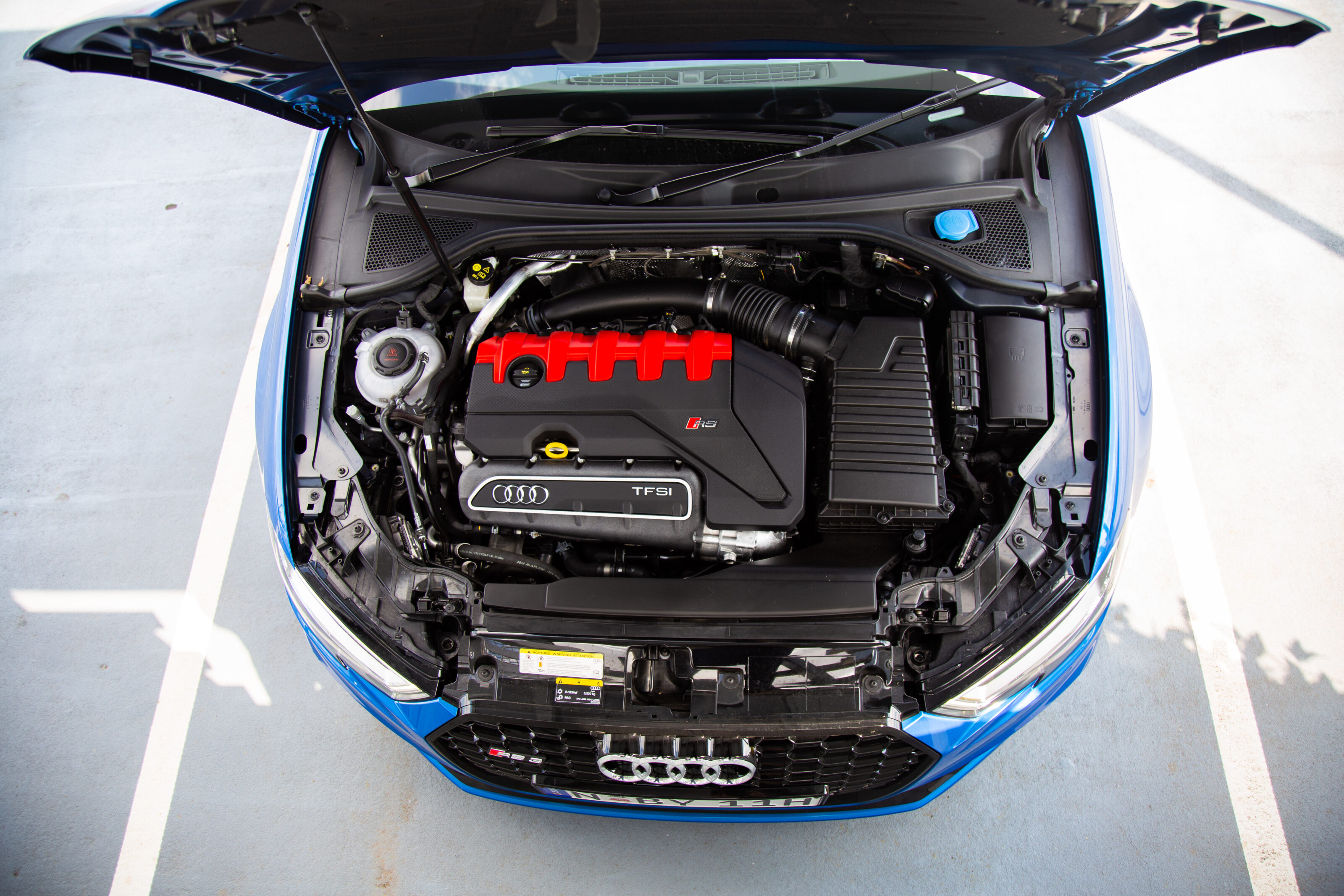
To sneak through the more stringent WLTP emissions standards, the RS3 now has a particulate filter plumbed into its exhaust and, while the sophisticated device is doubtless great news for the environment, they have a tendency to strip aural character from the exhaust as efficiently as they scrub particles.
If the rally style pops and cracks on overrun that the pre-WLTP version offered have gone, then a little of the RS3’s soul will go with it.
The next few months will not be a frivolous folly and a personal indulgence in a car that I like very much, but one that fails to capture a significant audience.
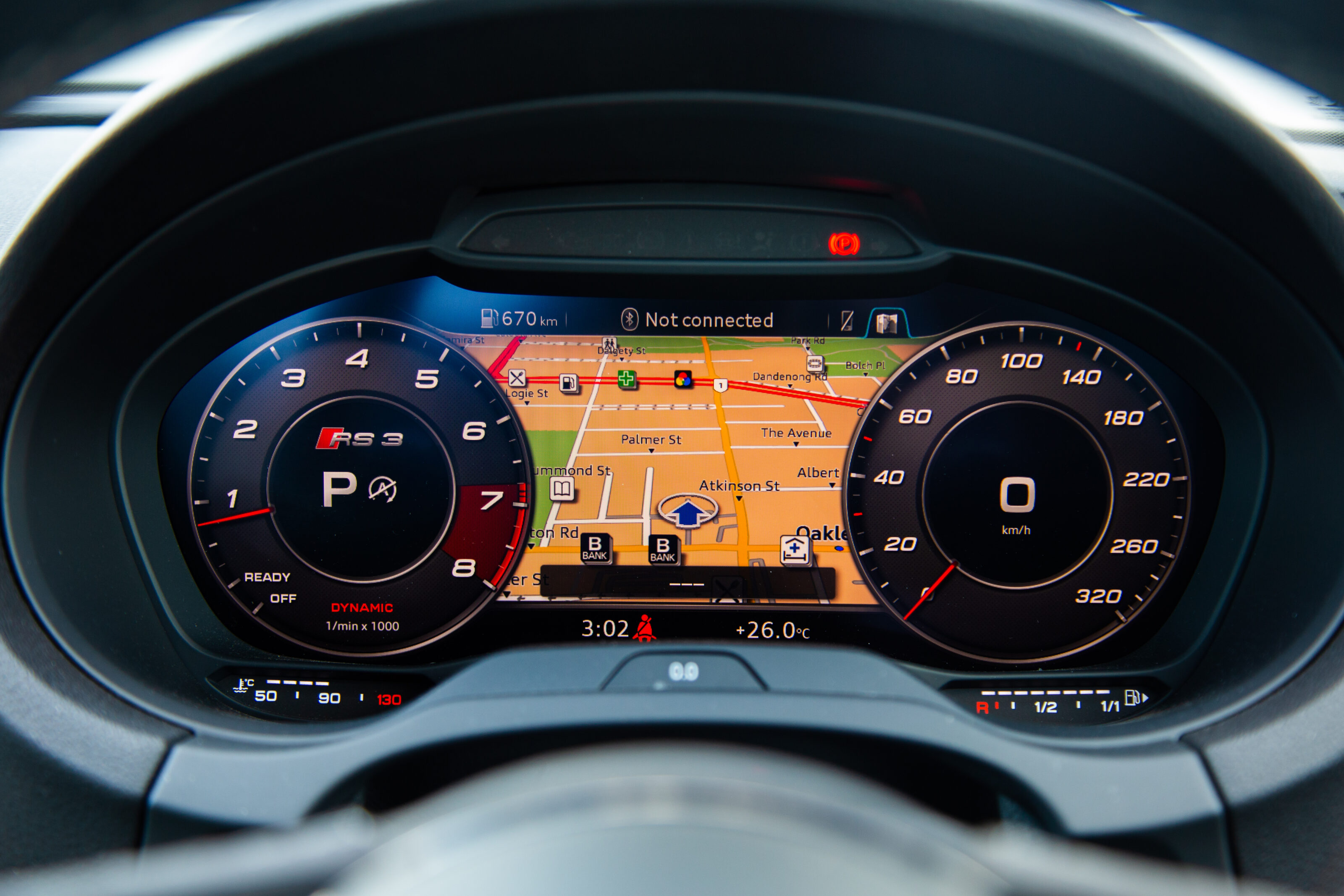
Unlike some other high-performance halo variants, the RS3 is not a micro-volume seller that acts more as a hero for the rest of the range. On the contrary, with a quarter of all 2018 A3 sales accounted for by the range-topper, it’s happy to earn its keep.
It’s not clear how long you’ll have a chance to grab your own example of the RS3 or when its replacement will arrive in all-new guise but, like bumping into an old friend you thought was long gone, this potent machine is a very welcome visitor to the long-term test garage.
The revenant Audi RS3 is not significantly harder, better, faster or stronger but, for both pragmatic and shamelessly nostalgic reasons, I’m still delighted to get behind the wheel… one more time. – DG
Things we love
- Return of old fav
- Straight-line pace
- Plush cabin
- Sound reduction?
- Last of its kind?
- It’s not mine
Update One: No Rohrl Model
Baby RS is still a brute, but needs a little more brat
I am blessed with really lovely next-door neighbours. They bring in my bins if I am away, look after parcels if they look nickable and even occasionally pass an espresso martini over the wall between our balconies – five stars. And if they are ever popping out they will let me know – not with a quiet knock on the door or message, no, their method is far more MOTOR than that.
If Eugene is leaving I can tell because the exhaust note of his 350kW Mitsubishi Lancer Evo VIII sounds like the 3pm freight train has derailed. If Suzie is going out, the note from her BMW M140i fitted with an Akrapovic exhaust actually makes the front door rattle. Other neighbours with young children and plates that fall off shelves undoubtedly hate it, but I think It’s absolutely brilliant.
So imagine how excited I was to potentially return the favour with the updated RS3 now in my garage for a few months. Not only did the pre-update model have a wonderful cat-lighting idle exhaust note when cold, it even spat a few cracks and pops with an accompanying and wholly gratuitous rev up.
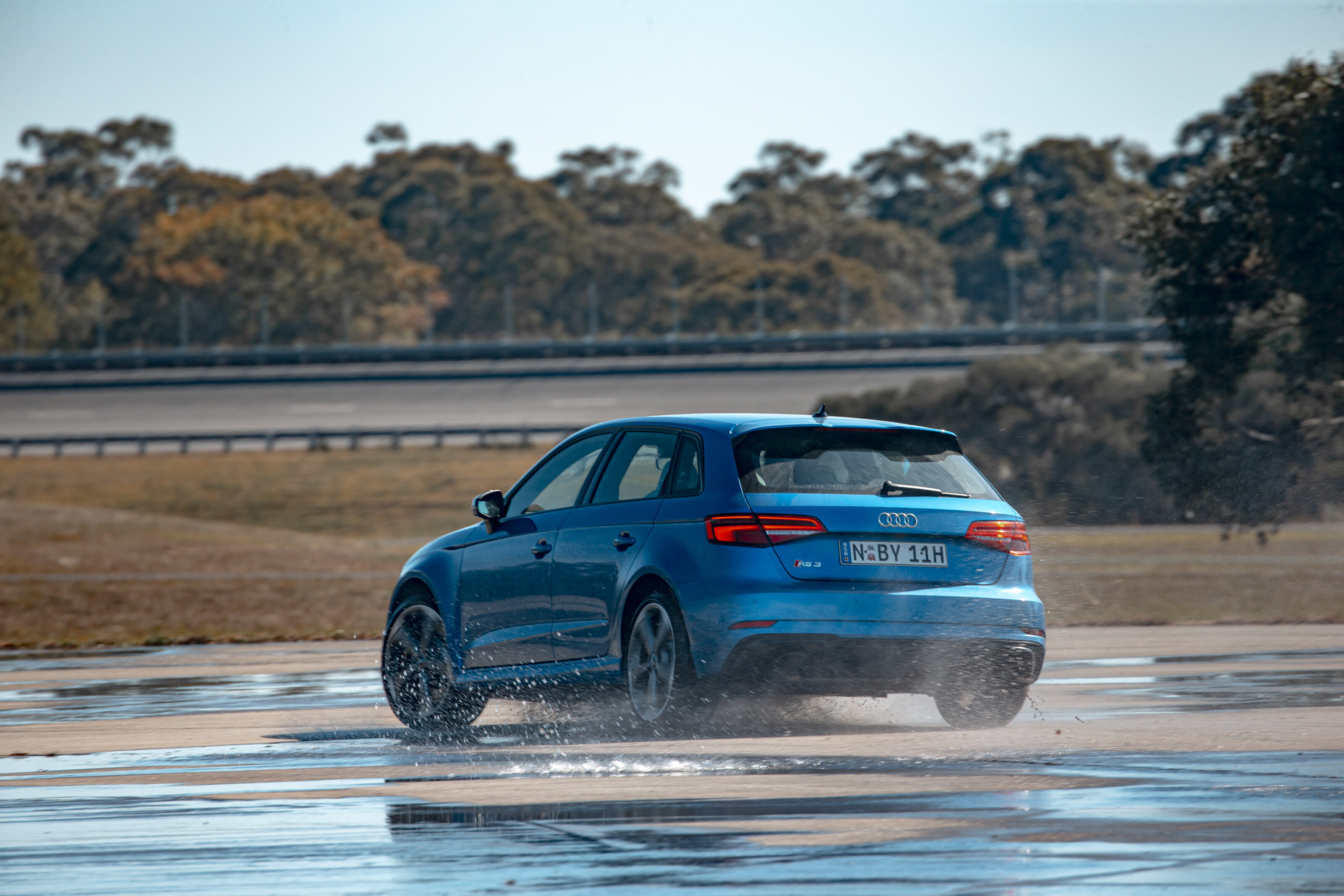
Devastatingly though, it wasn’t to be. As part of the emissions-satisfying update, Audi has plumbed a particulate filter into its exhaust and the air-quality-boosting device has removed charisma from the report as efficiently as it scrubs tiny pieces of carbon.
Gone are the antisocial pops and cracks on overrun and downshifts, while the overall volume has been turned down from Johnny Rotten to Jack Johnson.
Out on the road, thankfully it’s not all bad news. There’s still the unmistakable, wonderfully weird note that sets this car apart from almost anything else, and the 2.5-litre turbocharged five-cylinder still manages enough volume to be enjoyable inside the car and out. In this current automotive climate, unique is becoming increasingly rare.
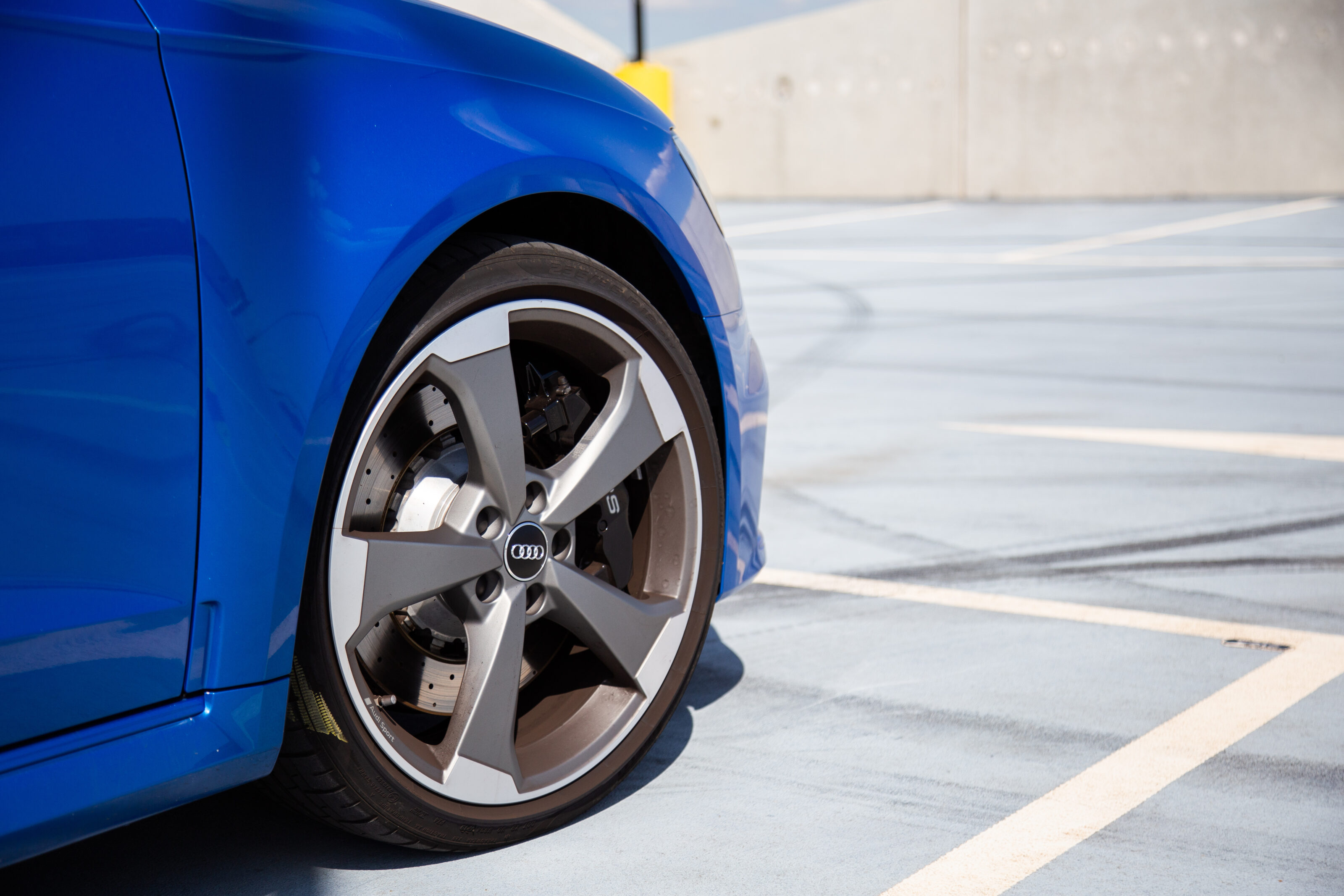
And the RS3 is not all bark (okay, a small woof) and no bite because the engine that produces that pleasant note is an absolute masterpiece. There’s a little lag under full acceleration from both the turbo and seven-speed DCT, but that only adds to the drama when it finally musters the full 294kW and 480Nm and dumps it all in your lap.
I’m delighted that not only is the RS3 still blindingly fast, it also has the same unstickable manner of delivering power to the road. Pick a line through a corner, stomp the throttle and the quattro system simply finds a way to deal with the increasing mountain of torque and maintain your course without troubling you for steering correction or a great deal in the way of throttle modulation. It’s effortless pace without lacking any of the character.
But if this delicious recipe of power and grip was a cake then it would be like finding a pubic hair in the icing when it comes to the Audi’s limits of adhesion.
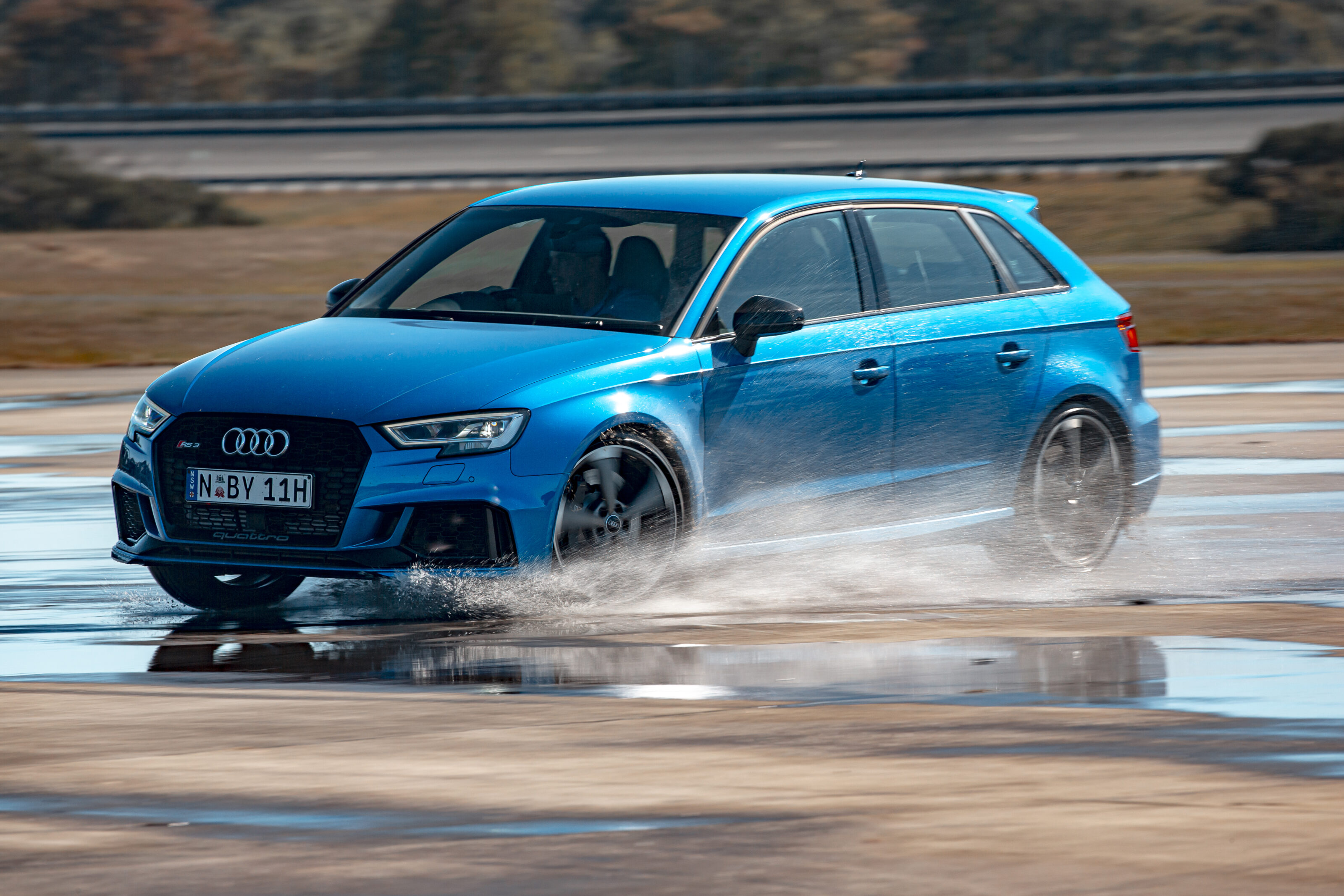
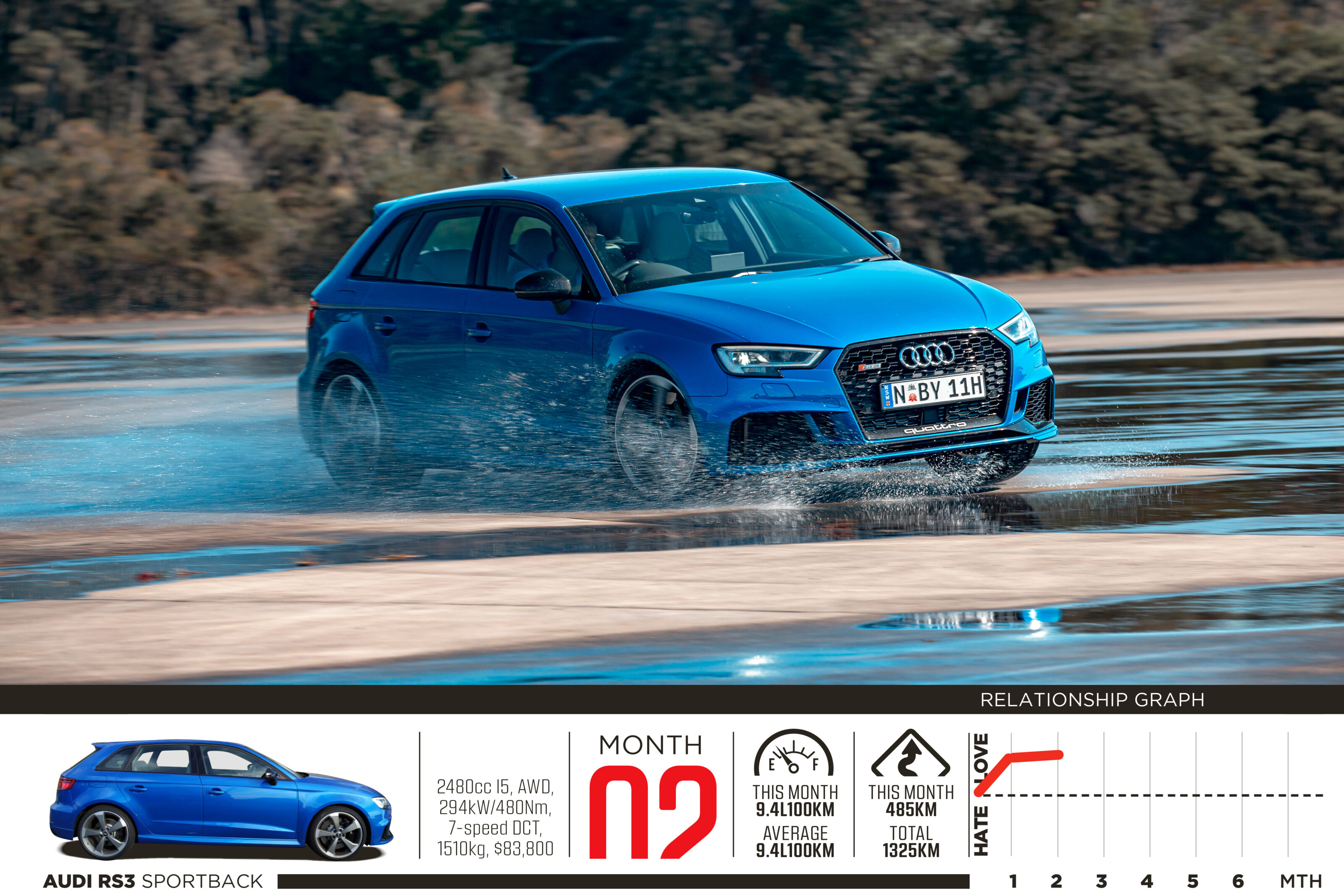
Of course, exploring the ragged edge on a public road would be hugely irresponsible and would most likely end badly but a recent encounter with a wet skidpan allowed the RS3’s stoicism to be convincingly obliterated.
When the Pirelli P Zero rubber runs out of ideas, the RS3 becomes a whole world of disappointing understeer. An enthusiastic armful of Scandi will start to unsettle the tail but, regardless of the driving mode and ESC setting (Sport or ‘off’), the stability systems will surreptitiously step in, pinch a rear brake and all the fun is over before it even starts.
Repeated attempts resulted in the same outcome. This is perhaps the most un-Audi Sport thing the RS3 does. For a car that wears the coveted RS badge, not allowing you to completely cancel all stability interventions is frustrating.
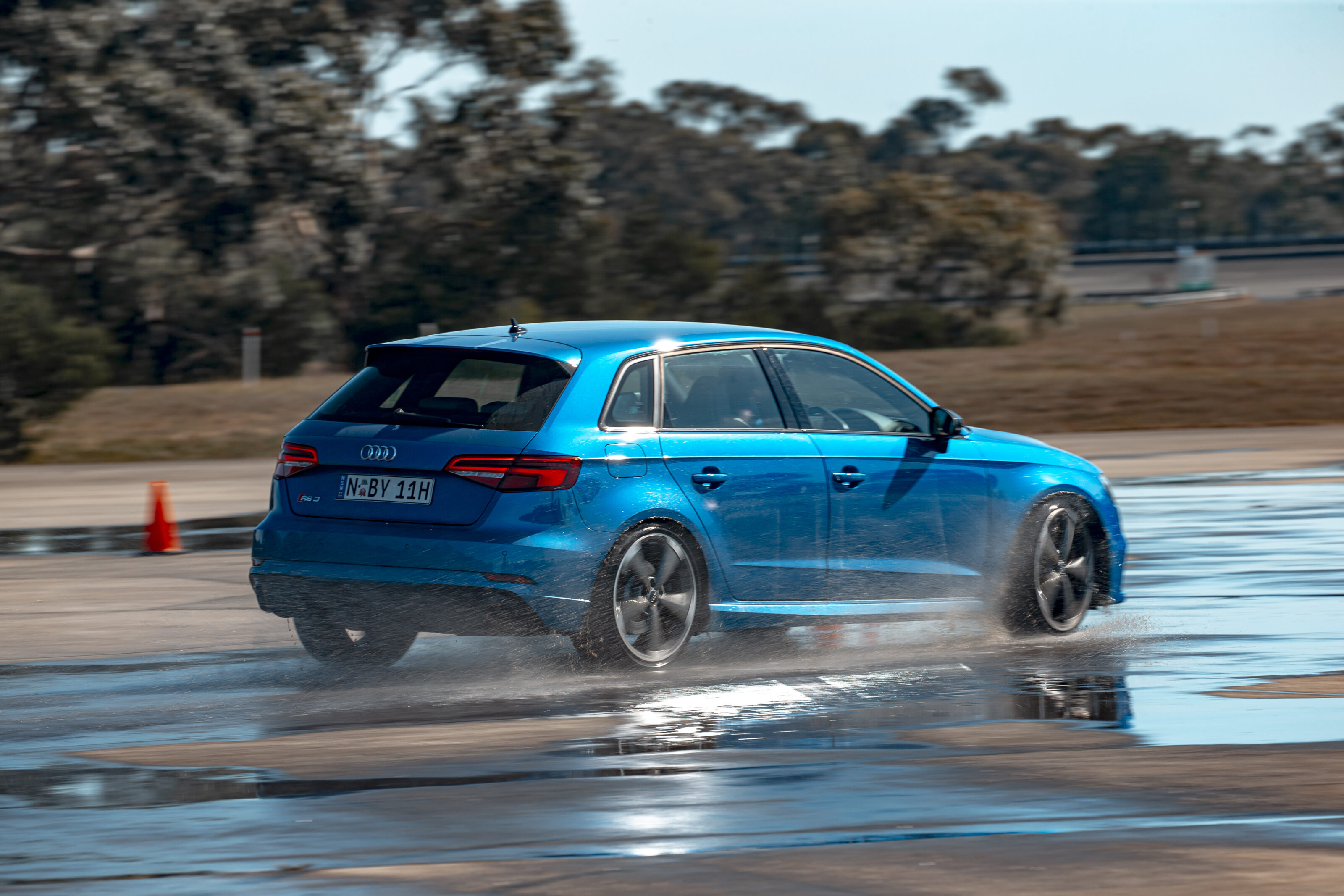
Any heroic oversteer catches or embarrassing spins won’t be all your own work – although you might be glad of the latter.
Even with the stability control switched to what the Audi claims is ‘off’ there is still a little electronic wizard watching the levels of wheel spin and attitude, waiting to shut things down if the tail end can be convinced to do something lively.
So, dear Audi, if you’re listening, I’ve only been in the RS3 for a few weeks but I already have a couple of things I would like put on the wish list for the fourth-generation A3’s RS transformation. Please and thank you in advance.
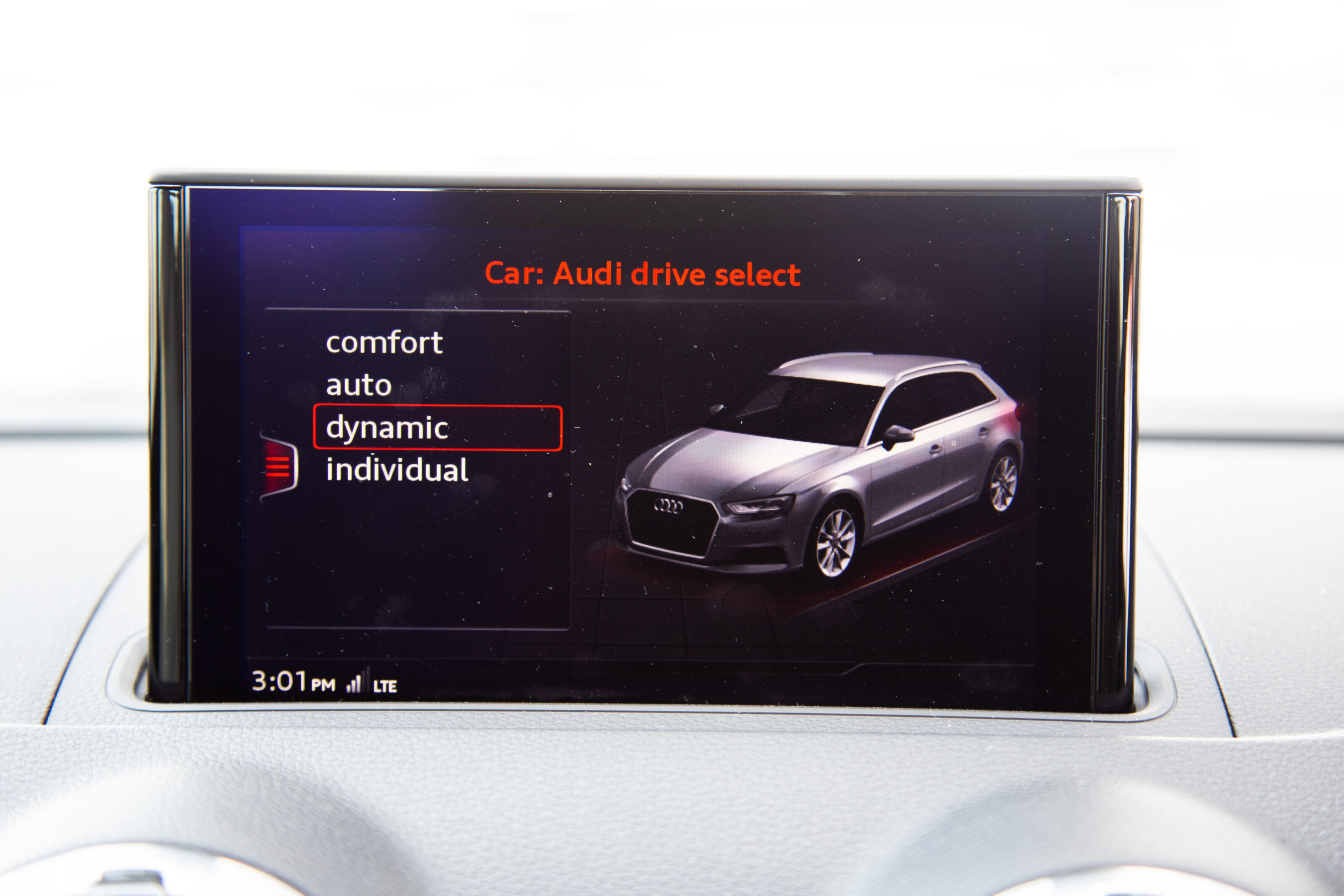
While many other manufacturers are programming ‘Drift’ and ‘Race’ driving modes into their hottest models, the RS3 is showing its age with Dynamic as the most reckless. So how about Mouton (Michèle) and Röhrl (Walter) modes for the new version along with an exhaust that makes dogs howl?
When I bring home an example of the new Audi RS3 I’d like my neighbours to know about it. – DG
Things we love:
1. Huge power 2. Practicality 3. Handsome looks
Things we rue:
1. Muted exhaust 2. Lying ESC 3. Unshakeable tail
Update Two: La Dolce Vita
Does Dan’s RS3 live up to some slightly rose-tinted expectations?
For many years of my childhood I was annoyed by my parent’s abject aversion to theme parks and each time we headed off on a family holiday it was never to go and visit Mickey or spend 10 days lost in an intestinal plastic maze of water slides. Instead, we would usually arrive at a semi-derelict farmhouse in northern Italy and spend two weeks cruising white beaches and hilltop villages away from the hordes and traditional tourist traps.
It took me until my 20s to admit it, but it was heaven. Mum and Dad had a knack of finding incredibly special places full of adventure and intrigue and my brother and I would spend all day in rivers, ruined castles and vineyards eating like the locals and slowly turning brown.
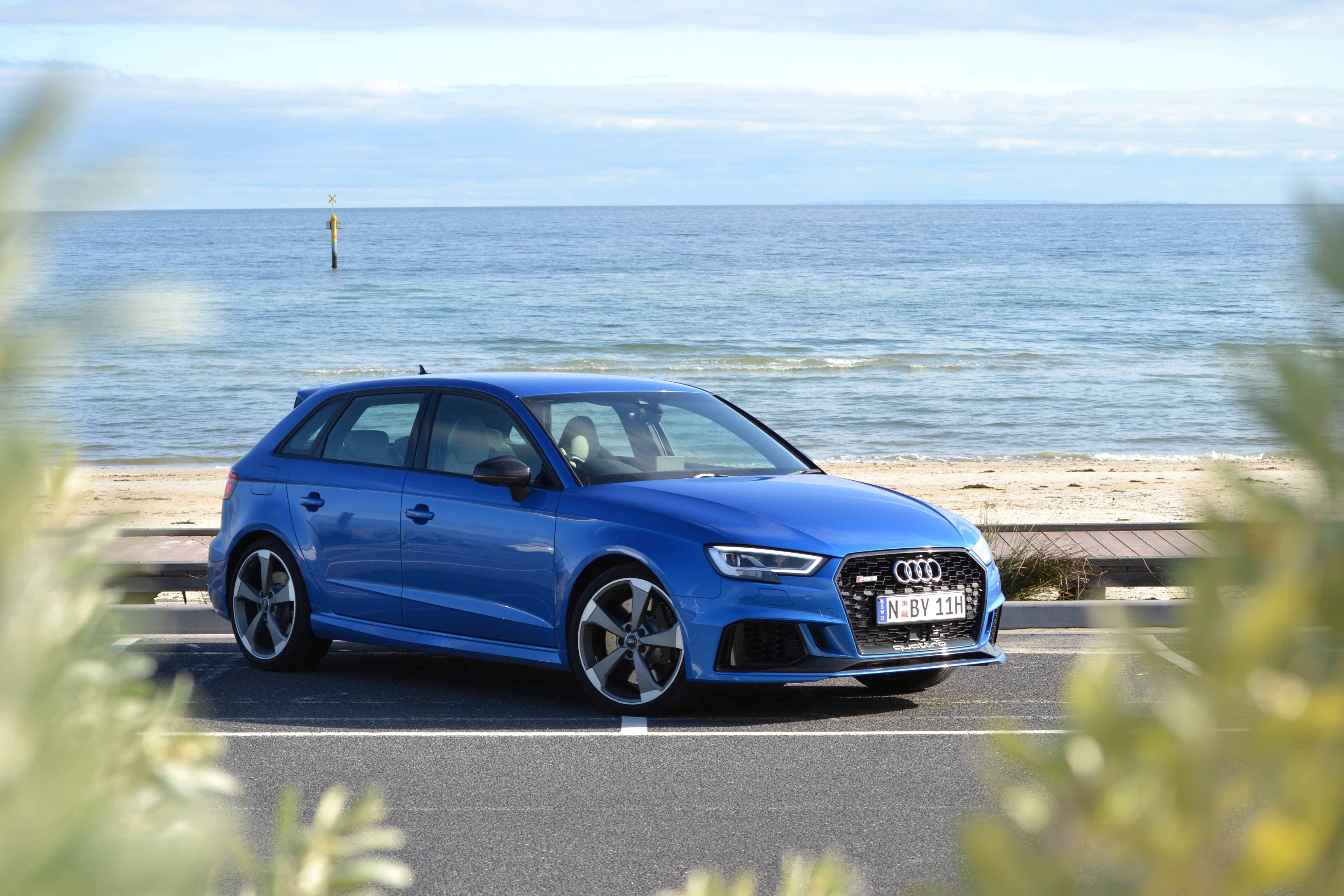
Years later, however, I retraced the hire-car tracks back to one of these secret spots and it was disappointing. Through the eyes of an adult and without my older brother to blow stuff up with cheap fireworks, the magic had faded. The beach was still perfect, and the sun still beamed the rays of Mediterranean warmth but something was absent. That’s kind of how I’m feeling about the RS3.
In my first full month with the Audi I wasted no time throwing the baby of the RS range straight into some frontline performance tests and wasted even less time berating its understeery chassis, lying ESC and muted exhaust note.
But now I’m thinking it might not have been the small changes Audi has made to the model that are to blame – maybe it’s me that has grown up or moved on? In the ensuing years since I first fell in love with the RS3, Mercedes-AMG has introduced its astonishing new A45 S, the Volkswagen Golf R got its claws into me and I also spent as much time as I could in the now discontinued BMW M140i.
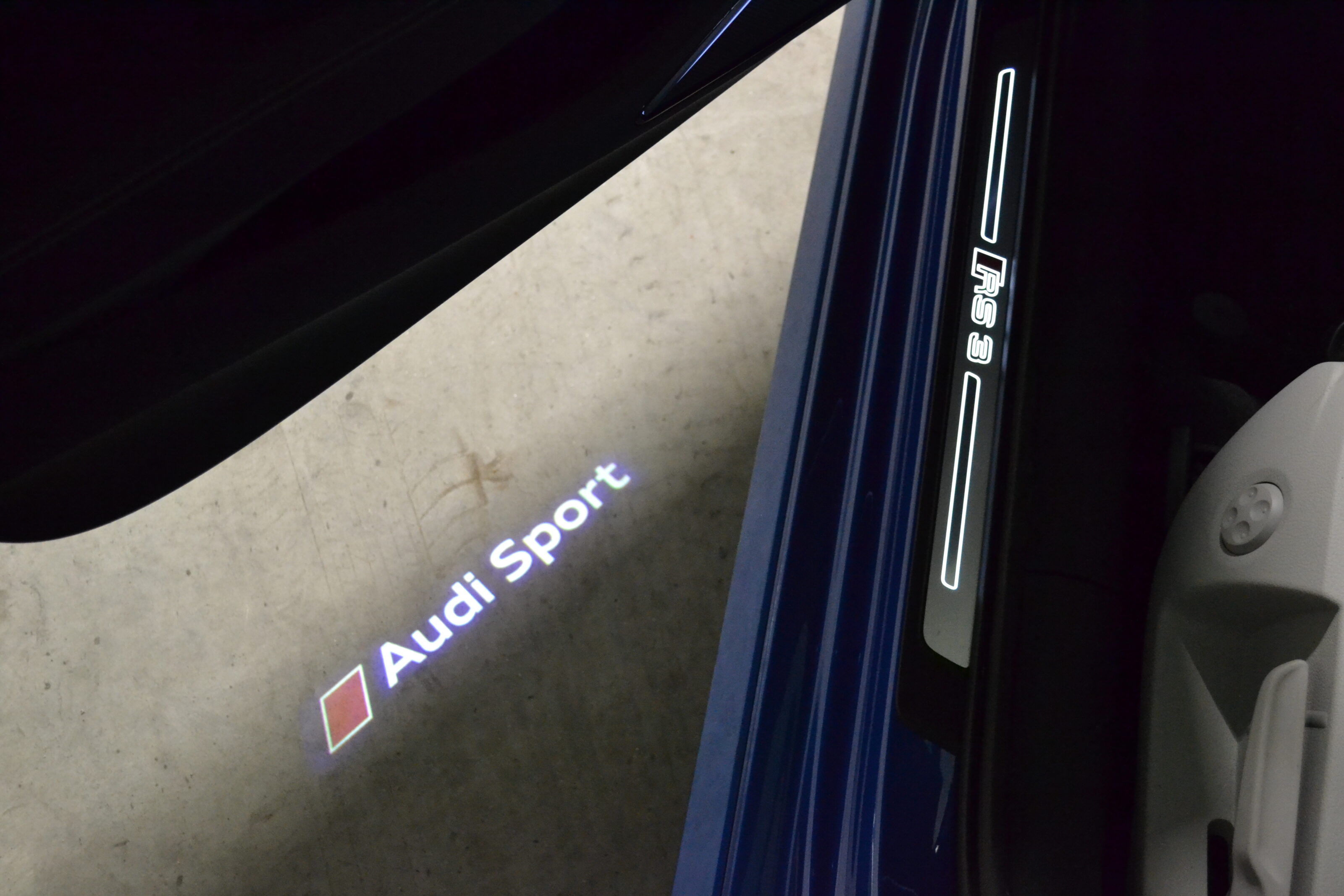
That’s a serious amount of pedigree performance hatchback for the revenant Audi to compete with. But even the most unforgettable of my family holidays ended in a rainy Heathrow long-term car park.
That’s why the last four weeks have been all about acknowledging that, despite its intent, a hot hatch will not spend all its time on a skidpan or attempting to snap the needle-stop at the redline. That stuff is for heydays and high days and sooner or later the holiday is over.
One of the reasons hyper hatches like the RS3 appeal to a relatively broad audience is their supercar-embarrassing performance is built on the bones of a sensible small German runabout, and if you wanted to be unfairly simplistic, the 294kW all-wheel drive RS3 rolls on the same platform as an entry level Golf Mk7.
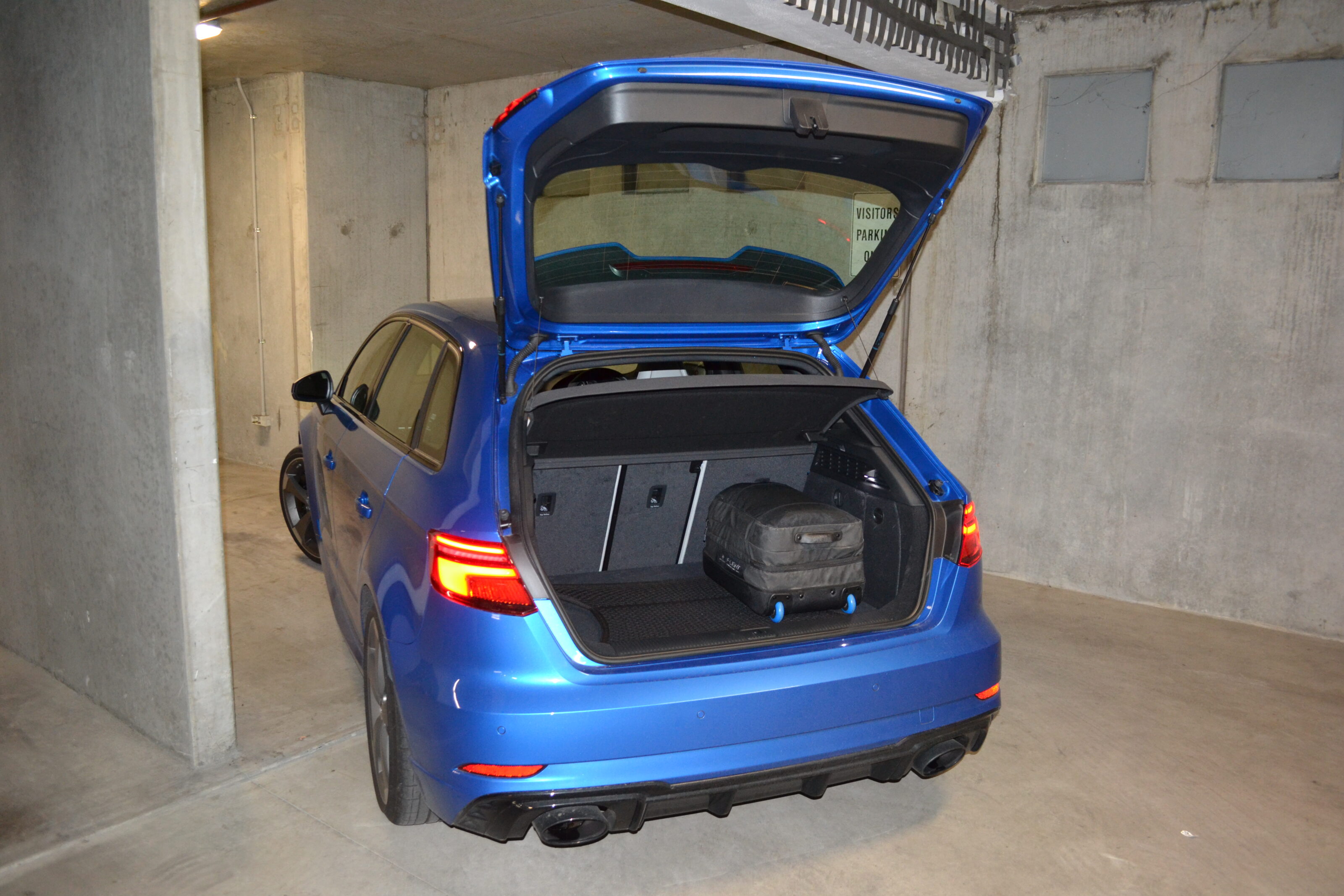
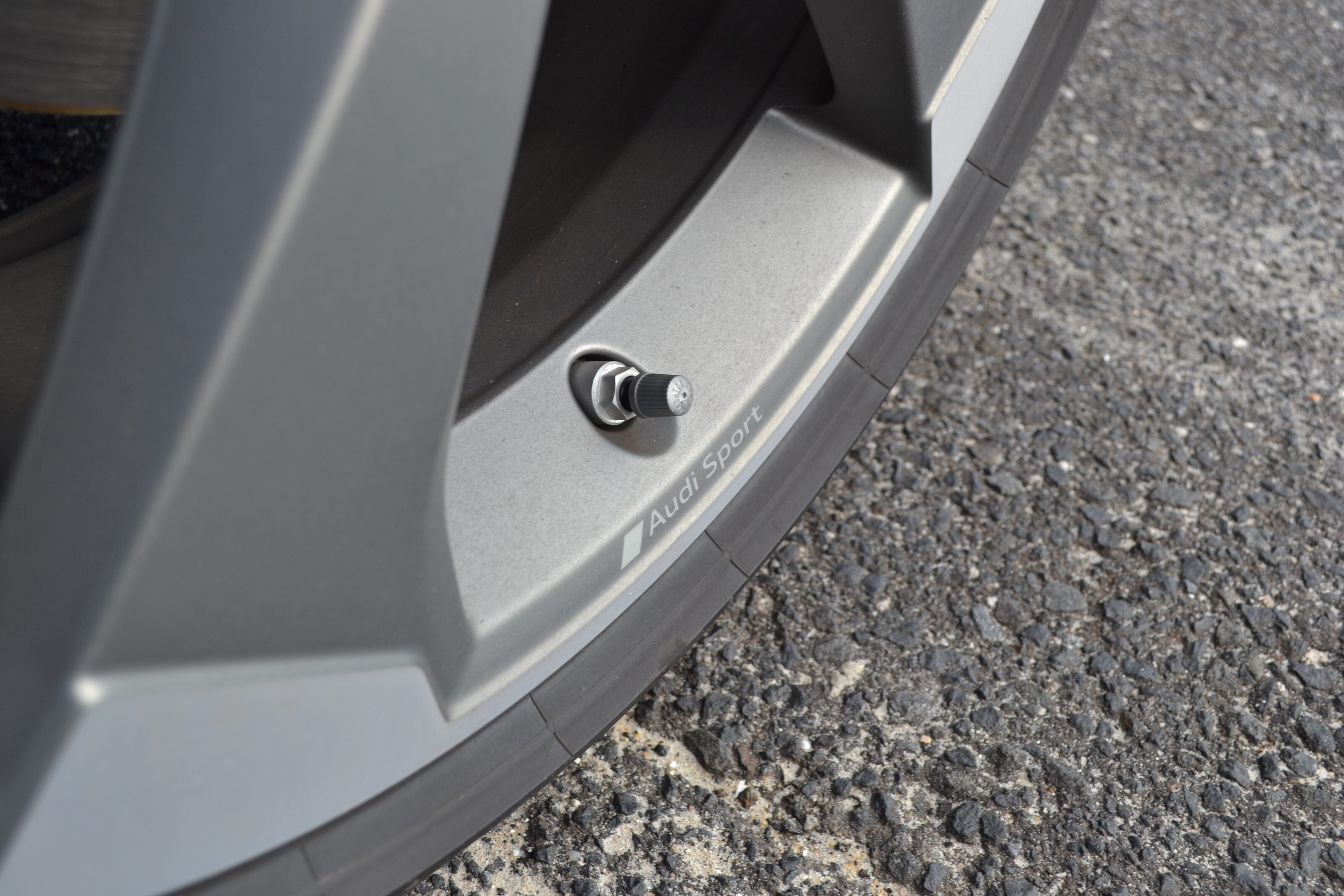
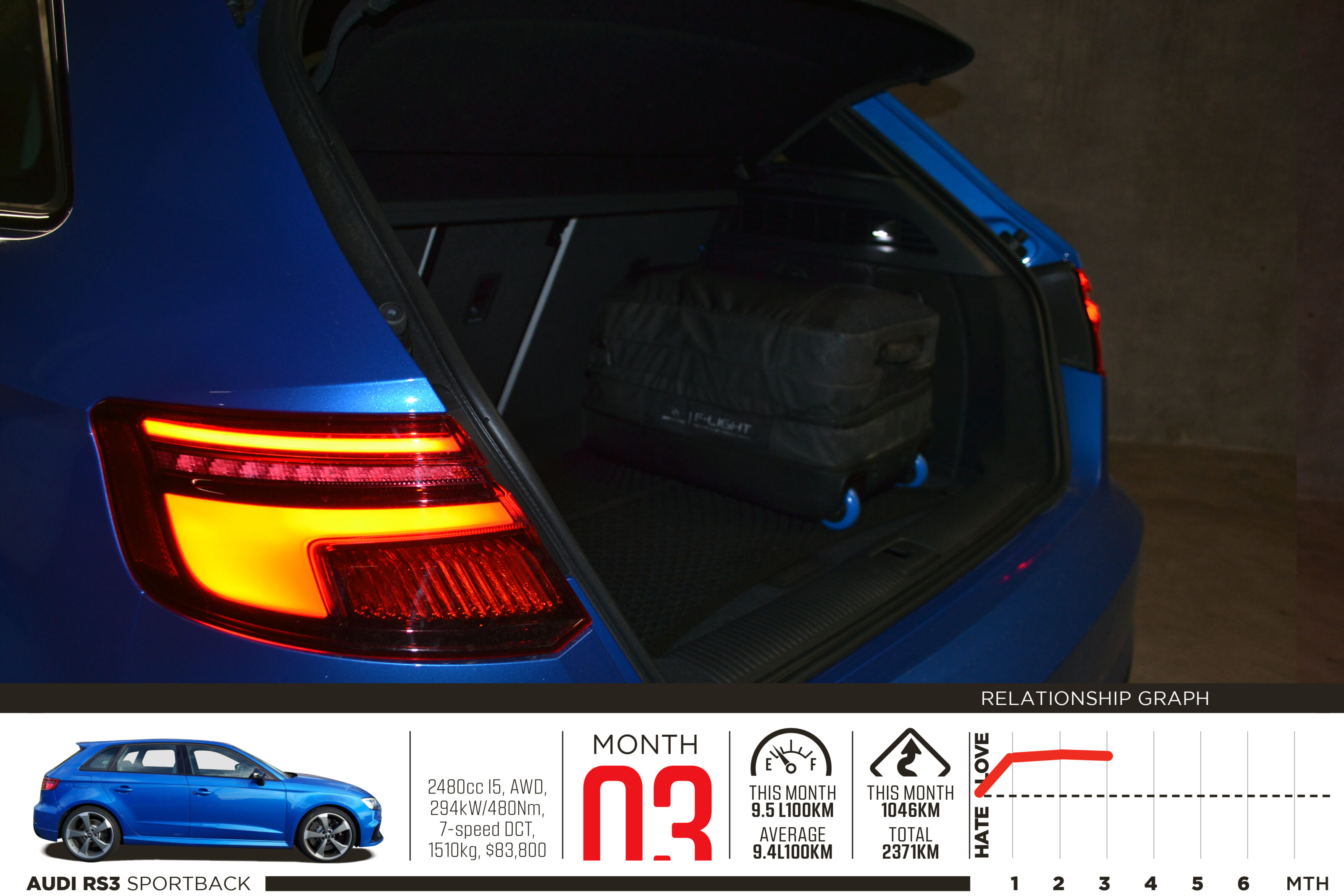
And while that might sound like I’m throwing dirt on the Audi’s credentials, it’s actually a compliment when it comes to practicalities. The second row of seating easily accommodates two adults or three at a push, the RS3’s external dimensions are a breeze to live with even in the city and its 19-inch wheels are even shod in a special P Zero that makes it almost impossible to kerb a rim. As for the boot? The rear differential does rob a little space but the 280-litre compartment is still a useful shape and expands through the folding rear seats to 1120 litres.
Its ride is on the firm side and, even with the drive mode selection in Comfort, the stiffness would probably be a bit much for someone who doesn’t read MOTOR or who has never chopped a coil off their suspension with an angle grinder.
Generally speaking though, the Audi RS3 has been performing daily duties without complaint and it’s easy to forget it has that incendiary five-cylinder turbo engine poised under the bonnet bolted to the automotive equivalent of Araldite for a transmission system. Especially as its handsome but understated exterior continues the ruse and belies the performance levels right up until the moment you choose to destroy something with a V8 and rear-wheel drive.
I would love nothing more than to cut a lap of my favourite driving roads every day in the RS3 but that’s an impossible treat for almost all mortal motoring beings. Instead, I’m enjoying its only slightly compromised day-to-day attributes and planning the next long weekend away like a reunion with a long-lost holiday romance.… – DG
Things we love:
- Sleeper looks
- Practicality
- Surprising pace
- Jarring ride
- Smallish boot
- Reduced sound
Update Three: Quarter Pounder
Dan throws a final challenge at the RS3 with a trip to the drag strip
There is a part of my brain that has evolved specifically for driving the Audi RS3 and, no matter what the other lobes are preoccupied with, is continually thinking about my driver’s licence and the importance of its existence in my life.
Under normal day-to-day driving the little bundle of synapses does nothing more than quietly fizzing away with a background level of electrical activity. That is until my ears send it the unmistakable sound of a turbocharged 2.5-litre five-cylinder at the redline, followed by the DCT dumping the clutch on second.
At this point the specialised ganglia calculates that the Audi is rapidly on its way to a police impound and immediately relaxes the calf muscle in my right leg. It’s this brilliant human adaptation that has allowed me to retain the permission to drive on public roads despite being the custodian of the RS3 for four months now.
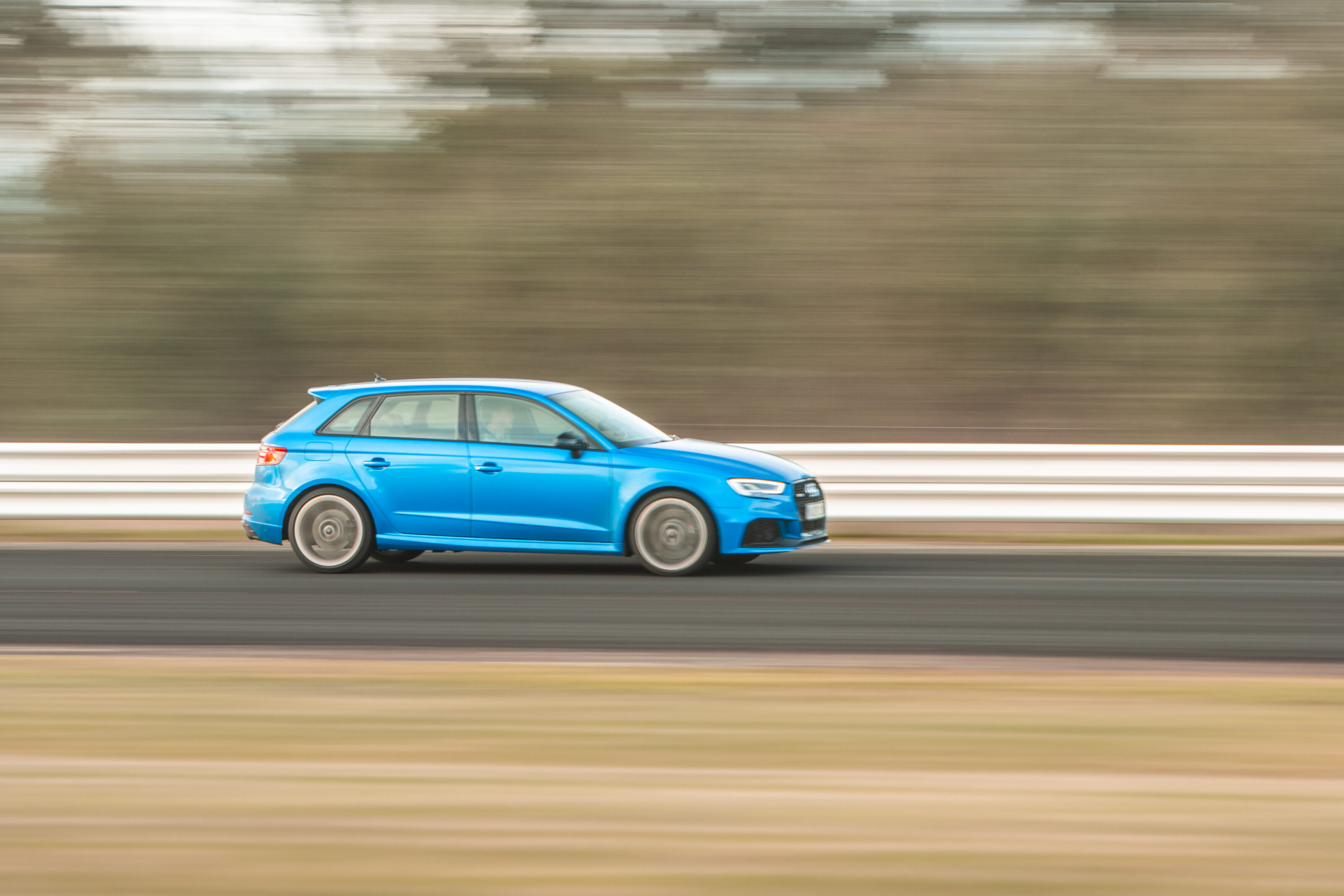
Resisting the Audi’s huge surge of acceleration and weirdly wonderful five-cylinder report is extraordinarily difficult, especially on this quest to familiarise myself with the swansong RS3’s true personality and various facets.
Over the weeks since taking the keys I have been throwing different driving duties and scenarios at the hyperactive hatchback, from the prosaic to the prodigious. Challenges the smallest RS aced include the day-to-day practical tasks as well as back-road blasting, while it performed less strongly at the fringes of its ability. But another unique opportunity recently presented itself and I simply couldn’t resist throwing a new task at the Ara Blue bombshell.
You may be familiar with the drag-race videos we’ve been publishing each week on MOTOR’s YouTube channel in which we take a selection of high-performance cars to a drag strip and, well, you can probably work out the rest. Finally, here was a chance to unleash the full five-cylinder fury well beyond the 110km/h national fun cage legally and safely, and the experience has reaffirmed my love for the smallest RS Audi.
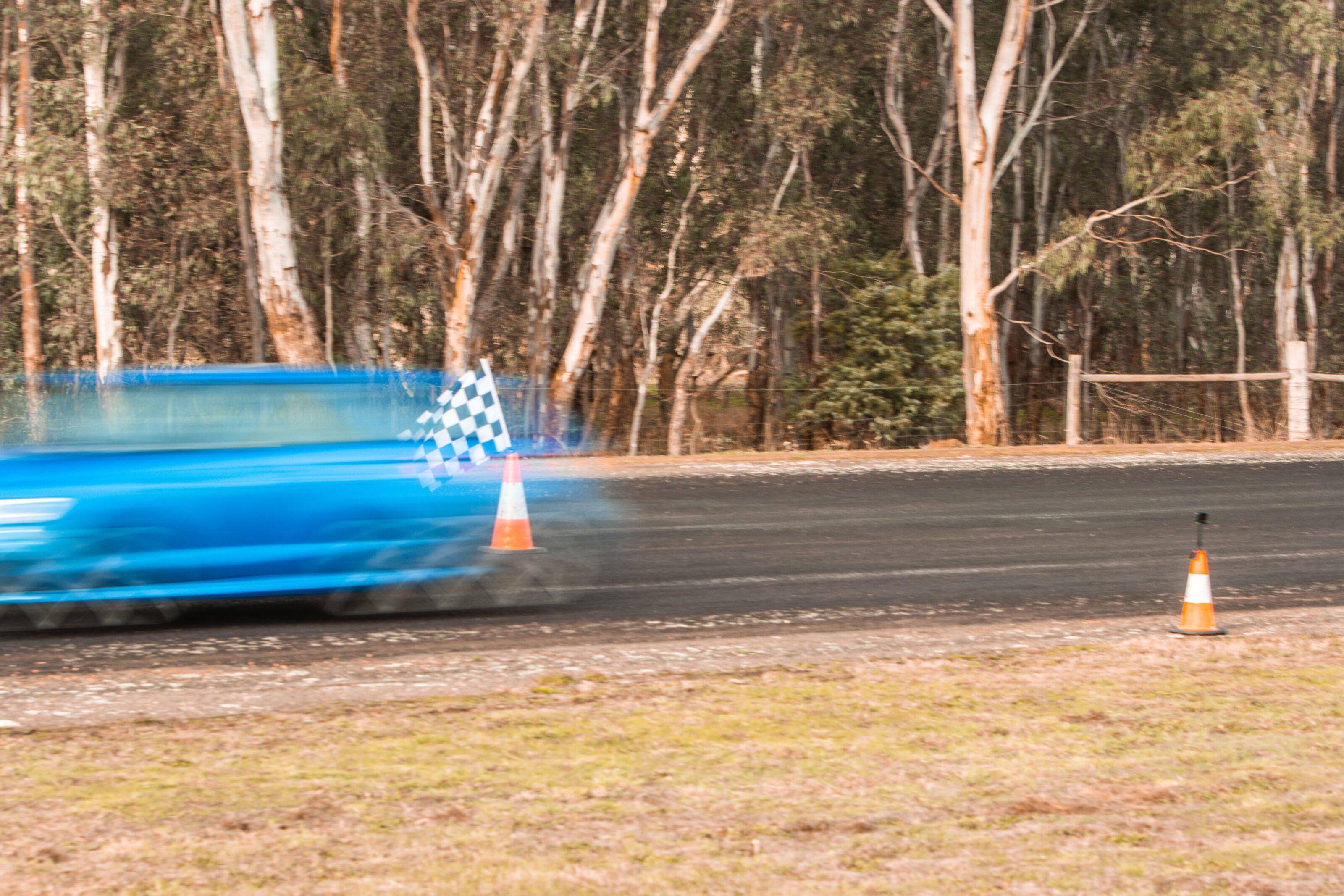
Track conditions were not ideal somewhere outside Axedale in central Victoria with showers and a very cool start to the day, but things did improve and I found a take-off slot in the afternoon for a few skirmishes into the speed stratosphere. The RS3 is bloody quick.
That might sound like stating the absolutely obvious but I mean it’s fast in a way that transcends the hot hatch realm. While the performance of many tuned small hatchbacks drops away a little after the 0-100km/h benchmark, the RS3 has the pace of larger high-performance cars and amazingly long legs.
Its launch control is simple to execute and devastatingly effective with the quattro system sniffing out grip in each corner even though the start line surface was chilly and unconditioned. After a momentary pause post brake release, the Audi bursts from its starting blocks like it’s leaving an aircraft carrier.
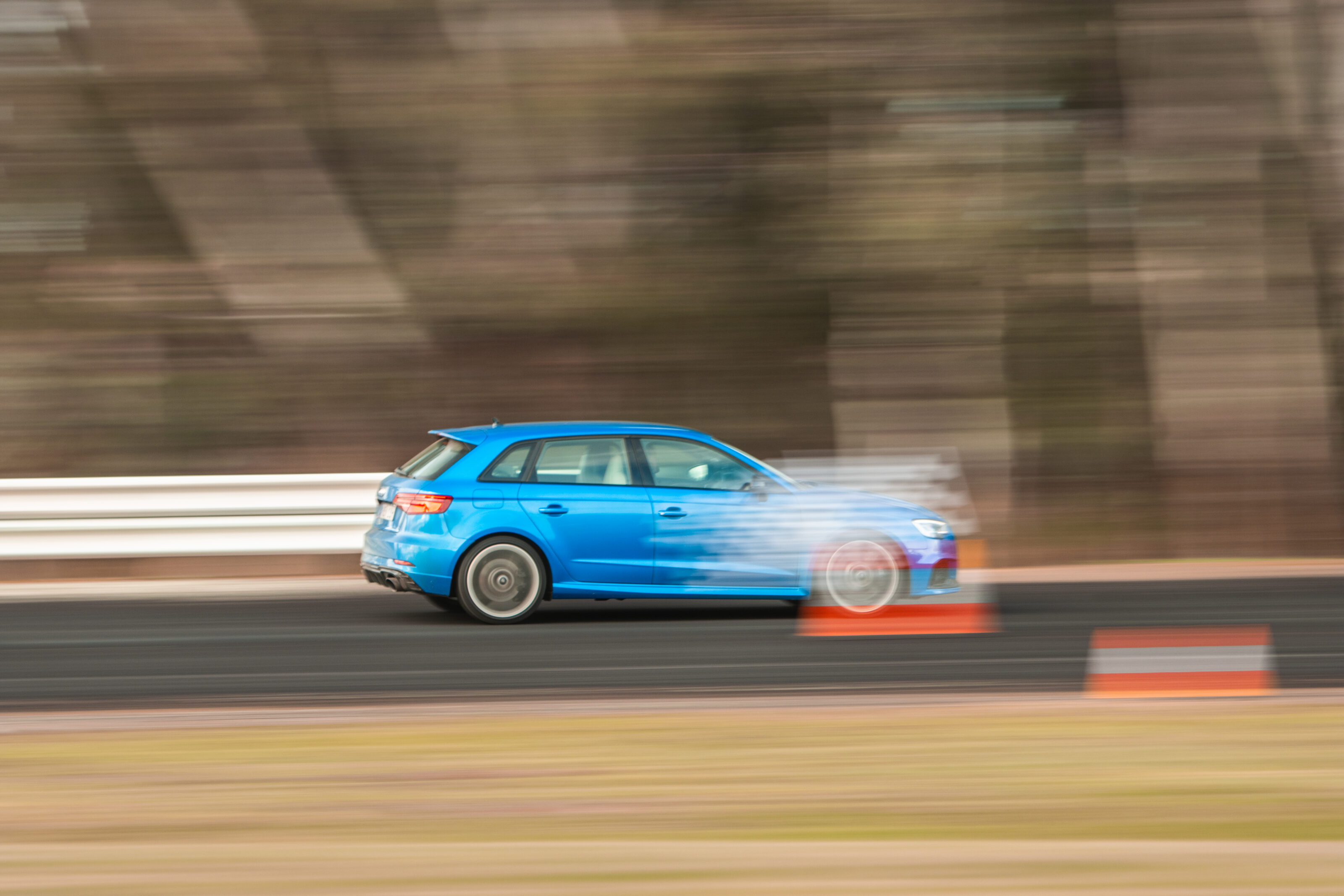
Almost 300kW is enough to just break traction over odd slippery spots but otherwise the grip is enormous and acceleration from standstill is eye widening. But it’s as the speedo winds on to beyond 120km/h that the RS3 really impresses with unrelenting progress.
Adding to the physical drama, the glorious exhaust note is even more delightful when you get a chance to listen to not just one cog swap, but a whole series at full noise. Other engines that were having a good holler that day took the form of a straight-six, flat-six and a V8, all of which bragged bigger capacities but somehow, the Audi’s noise was the most manic and intoxicating to echo from the walls.
However, the drag strip is not just about the subjective delight of sound, but hard facts and figures. Not only did the little RS manage a best 0-100km/h time of 4.2 seconds (just a tenth off the claimed best) it did the 400-metre dash in 12.4 seconds and crossed the line at 184km/h. Those are some big achievements for a little car.
It’s also worth noting that repeated runs resulted in nothing other than impressively strong and consistent passes. No warnings flashed up, no error messages displayed and the dual-clutch/quattro union was brilliantly stoic. The same certainly cannot be said for other launch control systems which need to bow-out for a breather after only a handful of attempts – including another present on this particular day.
My time with the Audi RS3 is coming to a close and this particular day is going to make it even harder to hand back the key. – DG
Things we love:
- Consistent Pace
- Acceleration
- Stability at speed
- Time’s nearly up
- Speed limits
- Ride quality
Update Four: Until Next Time
Everything flies when you’re having fun… in an RS3
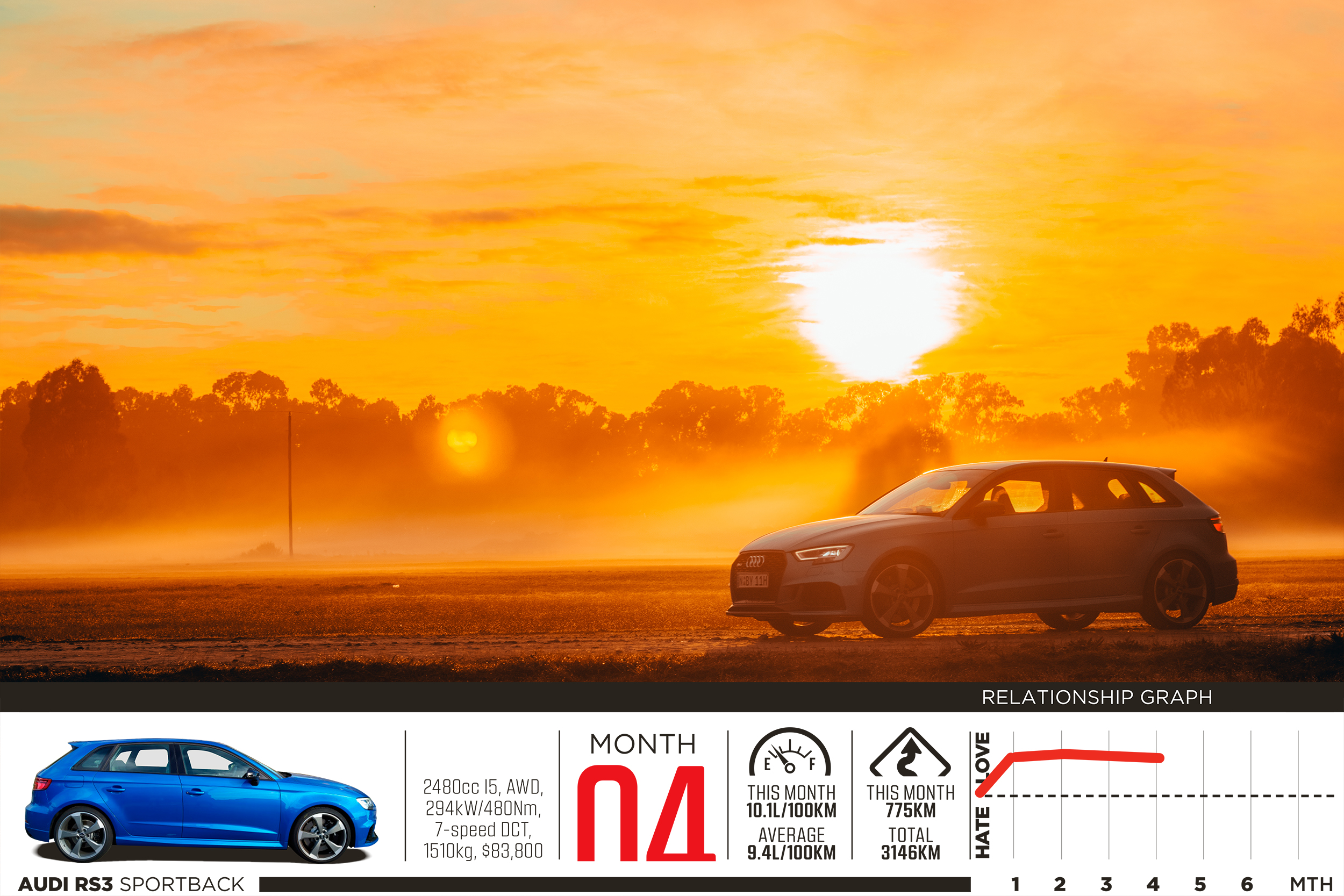
After five months with the Audi RS3 I have become accustomed to its effortless power and the ease in which 294kW makes everything fly by, but it turns out, in addition to scenery and kilometres, the rule also applies to time. That’s why the key has been wrestled from my hand and my tenure as custodian of the baby of the RennSport family has come to an end.
But as I stare in reflection at an A3 Sportback-shaped hole in the garage I really only have positive memories of the Ara Blue bolt of lightning. Yes there was the time it refused to oblige me with a power slide on a skid pan and made me feel like an embarrassed parent on school sports day. And, while its new particulate filter has robbed the previous properly antisocial soundtrack from its exhaust, what’s left is still pretty good..
Beyond that, the RS3 has proven to be an incredibly strong all-rounder performing day-to-day duties without complaint or compromise, but it’ll just as readily tear off its corporate attire to reveal a cape and spend all day torturing B-roads with abilities that defy the small hatchback segment.
In fact, there’s very little about the RS3 that reveals its age. Its looks (if arguably a little understated for a full-fat RS) are still chiselled and handsome, performance in a straight line is almost unrivalled in the segment, and its stoic manner of going fast around bends is impressive by today’s standards.
Dated infotainment and somewhat conservative driving modes aside, I’d like to say that there’s virtually nothing about the current RS3 that needs updating or superseding, but I won’t. Coincidentally, the same week I gave back the RS3, Audi chose to release a tantalising glimpse at the forthcoming new model and the best idea yet of what we can expect from the 2022 version.
Obviously the engineers have been reading my updates in these pages because virtually every criticism has been addressed and improved. Firstly, the RS3 will finally get a drift mode and a track-focused option far more mischievous than the current Dynamic setting. Two new drive modes named RS Performance and RS Torque Steer will allow the Audi to match the sideways theatrics of hyper hatches such as the Ford Focus RS and Mercedes-AMG A45 S.
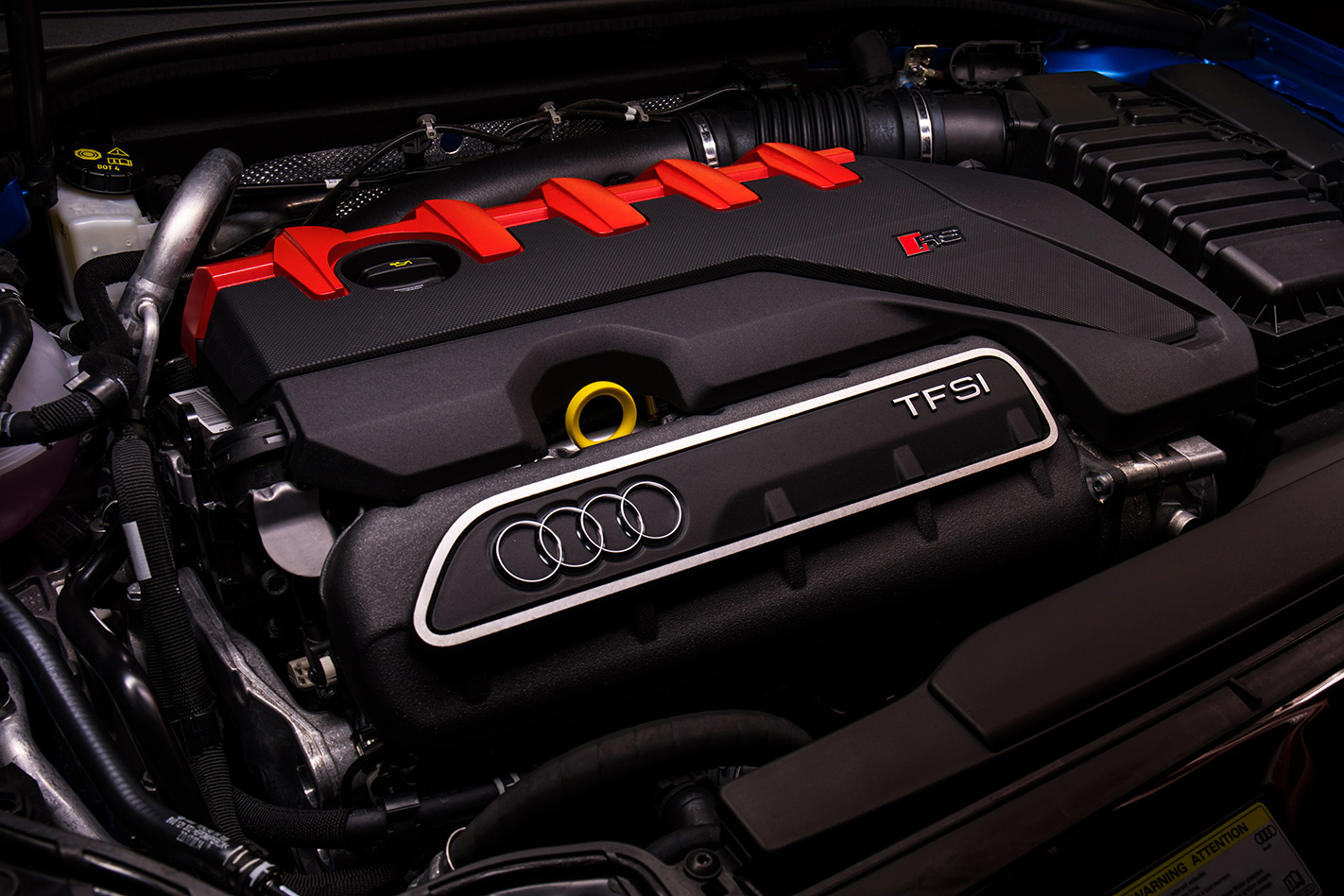
Not only will the option allow the stability control to be switched off completely, a new RS Torque Splitter differential arrangement can direct 100 per cent of power to the rear axle, rather than the maximum 50 per cent limit by the existing Haldex all-paw set up.
And while there’s no extra power (yet), the gorgeous five-cylinder turbo petrol engine is retained for another generation of RS3 aural excitement (the kind no other brand can boast) along with a little 20Nm torque boost sweetener.
In addition to that, the optional carbon ceramic brakes that were deleted from the current version will make a comeback as an option, top speed will be increased to a massive 290km/h and the zero to 100km/h acceleration will drop to a seriously rapid 3.8 seconds.
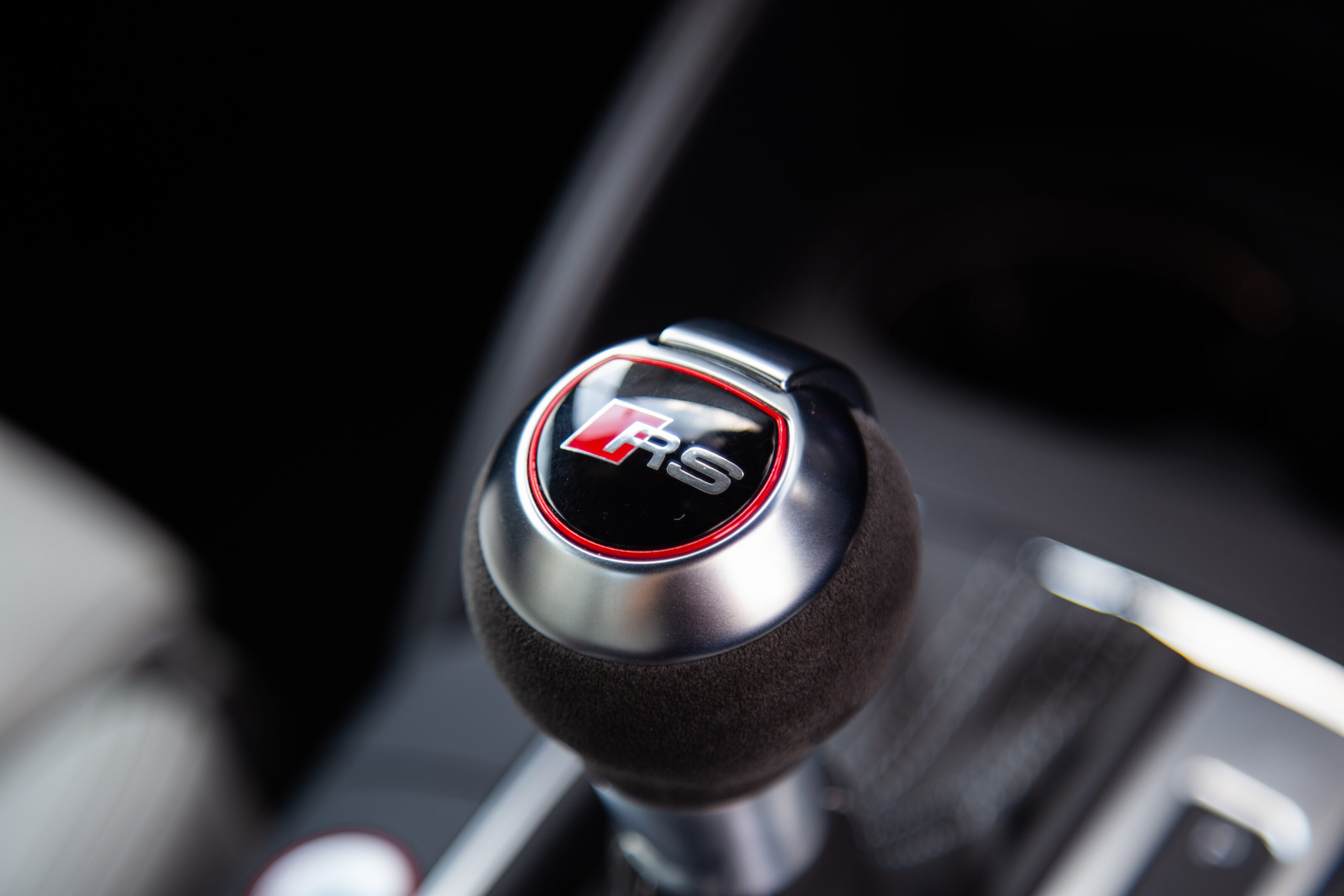
What isn’t yet known is whether the clever engineers have found a way to resurrect the missing pops and cracks from the exhaust on overrun. Audi, if you are listening, installing a speaker at the tailpipes like the SQ5 TDI is NOT the solution.
In the face of such strong hyper-hatch competition, Audi will also need to have sharpened the handling and steering, while maintaining the classic quattro levels of grip if it is to deliver a comprehensively evolved RS3. I simply cannot wait for an opportunity to find out.
The months since I picked up the RS3 last autumn have gone by in a flash but, unfortunately, time can’t fly fast enough for the arrival of the next-generation RS3, and a replacement for the 8V model won’t arrive until next year.
But over many weeks with the outgoing version and the most recent morsels of information heralding its replacement’s arrival now flowing in, I’m preparing to fall for the new version just as I did the first time around and I’m confident it’ll be well worth the wait. – DG
Things we like:
- Age-defying
- Performance
- Multi-skilled
- Unkillable ESC
- Muted sound
- Giving it back
Let’s set the scene – you’ve bought a new car, you’re about to drive it home for the first time and you want to put on some of your own music.
You go to pair your smartphone with the car’s infotainment system, but it just won’t happen. Ever had this happen to you? Turns out you’re not alone.
American analytics firm J.D. Power has released the findings of its latest study into new vehicle quality, discovering of all the issues new owners face, smartphone connectivity is the most common – with 25 per cent of all problems relating to a vehicle’s infotainment system.
For the last decade, voice recognition was cited as the top issue – but this has been eclipsed for the first time since 2011.
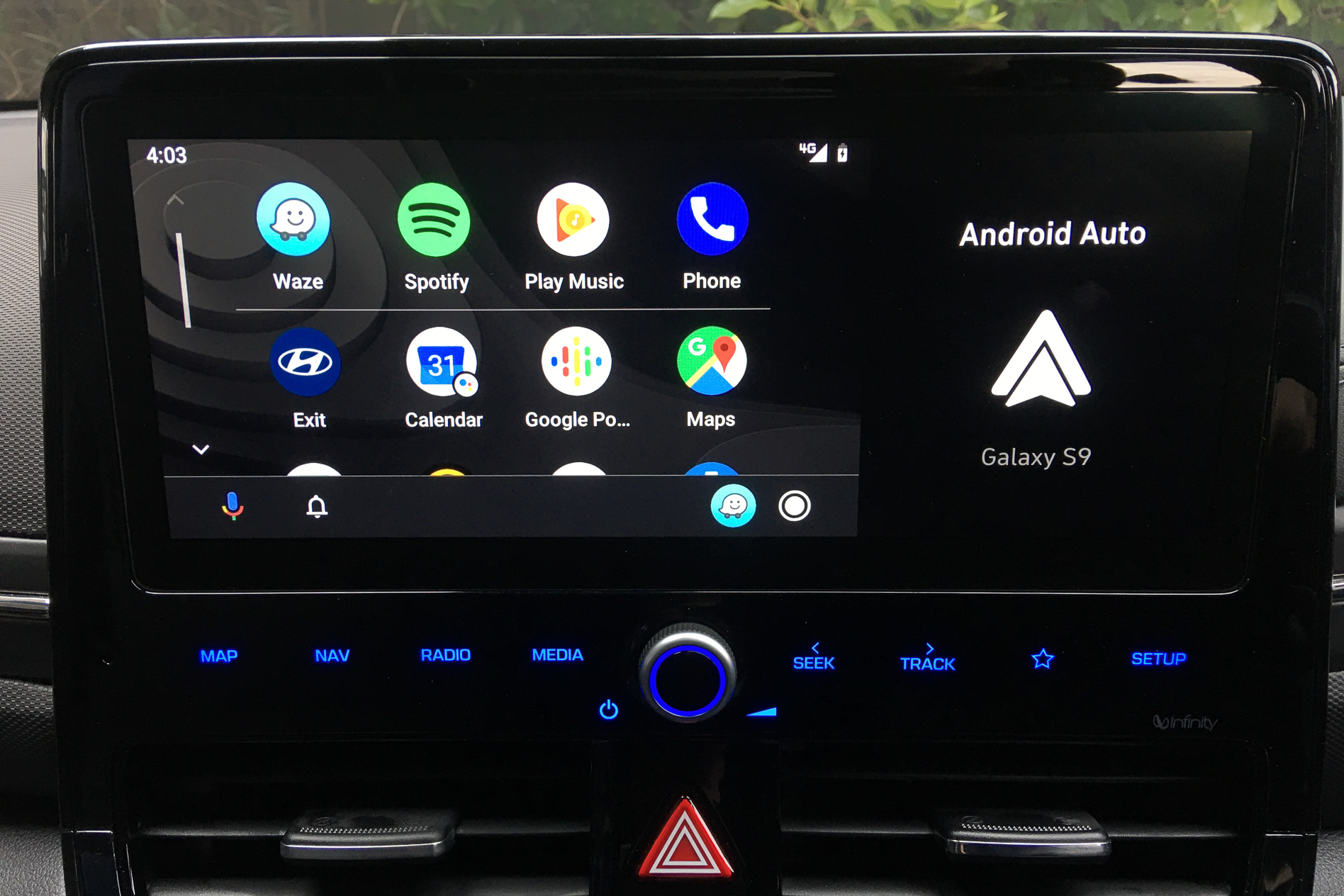
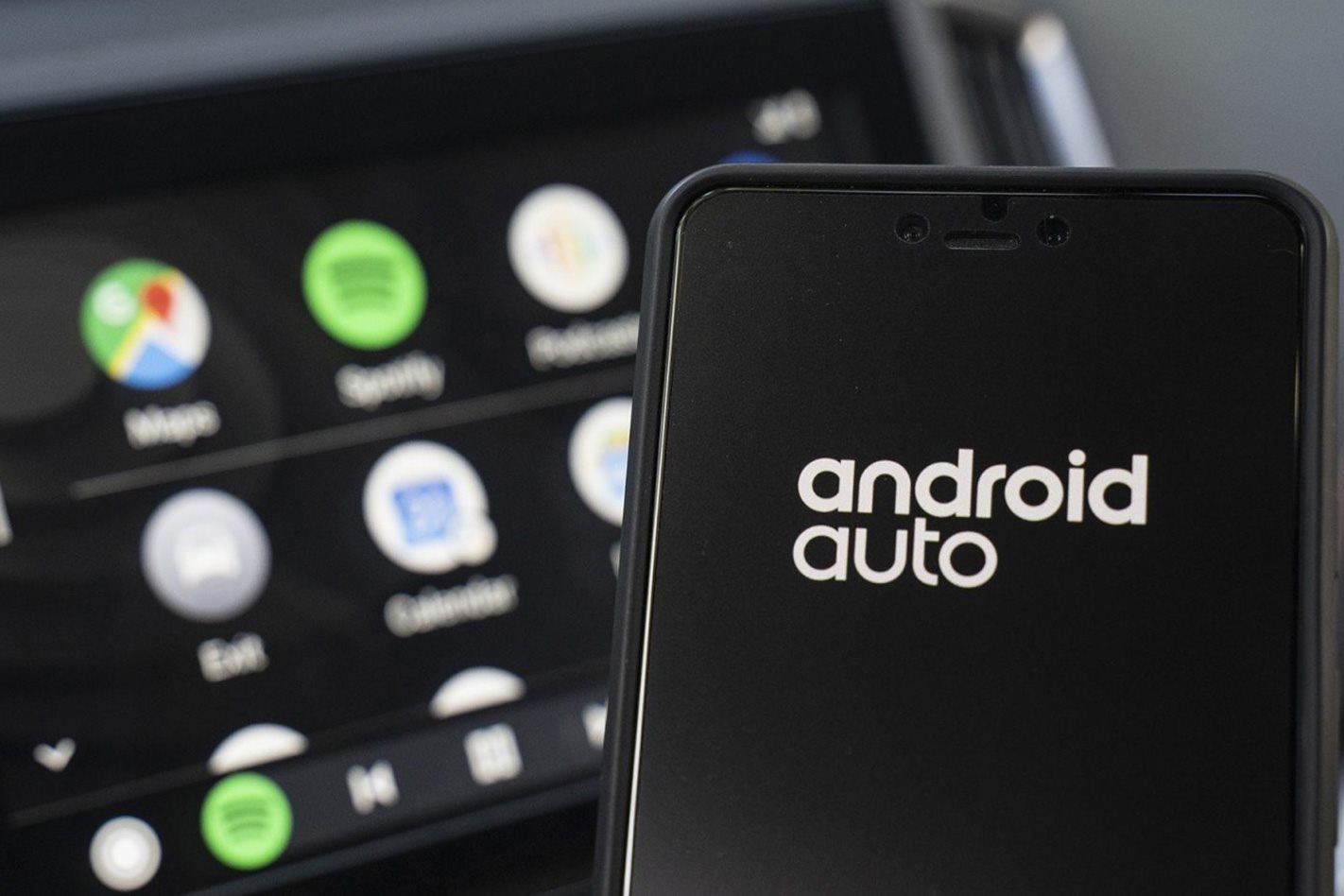
According to J.D. Power, the biggest gripe for owners is with their connection to Apple CarPlay and Android Auto, especially in wireless applications.
J.D. Power’s vice president of automotive quality, Dave Sargent, said the push towards wireless connections is at the forefront of the issues – coupled with smartphones from a previous generation, which may not be optimised to work with the systems.
“Owners want wireless connectivity, and the industry has responded,” said Sargent.
“However, this has created a bigger technical challenge for both automakers and tech companies. Automakers generally are the ones facing the wrath of owners, but this is definitely a shared problem.
“Owners don’t care who’s at fault – they just want their phone and their vehicle to talk to each other.
“Owners are caught in the middle when vehicle and phone technologies don’t properly connect.
“This year there are many examples of smartphone technology not working as intended in new vehicles. With more vehicles being fitted with the wireless technology owners want, the study reveals an increase in connectivity problems between smartphones and vehicles, leaving many owners unhappy.”
The study was based around 228 questions relating to vehicle ownership, with over 110,000 purchasers and lessees of 2021 model year vehicles taking part – roughly just over one per cent of all new owners in the United States over a 12-month period.
UPDATE: There have been plenty of 2022 Honda Civic news and reviews stories since this pricing article went live, so head to our Civic page to catch up on the latest.
The story to here
September 2021: Next year, 2022, marks the fiftieth anniversary of the introduction of the legendary Honda Civic.
That first generation is the model credited with keeping Honda in the automobile manufacturing business and now eleven – yes, eleven – generations deep, it’s become an icon for the brand. With more than twenty million Civics sold worldwide, it’s also Honda’s most successful model.
Known for its efficiency, reliability and fun-to-drive factor, the Civic has continued to grow in size and the previous tenth-generation Civic now appears XXXL-sized compared to the early cars. The tenth generation also introduced turbocharging to the Civic for the first time and, thankfully, that continues.
But most importantly, with each successive generation, Honda pays attention to improving the breed.
BEEP BEEP: It’s important to note here that Australia will be offered the new Civic in hatch form only, and you can read more about launch plans here. For now, this story is intended only to give buyers a sense of the new model’s driving experience and fit-and-finish.
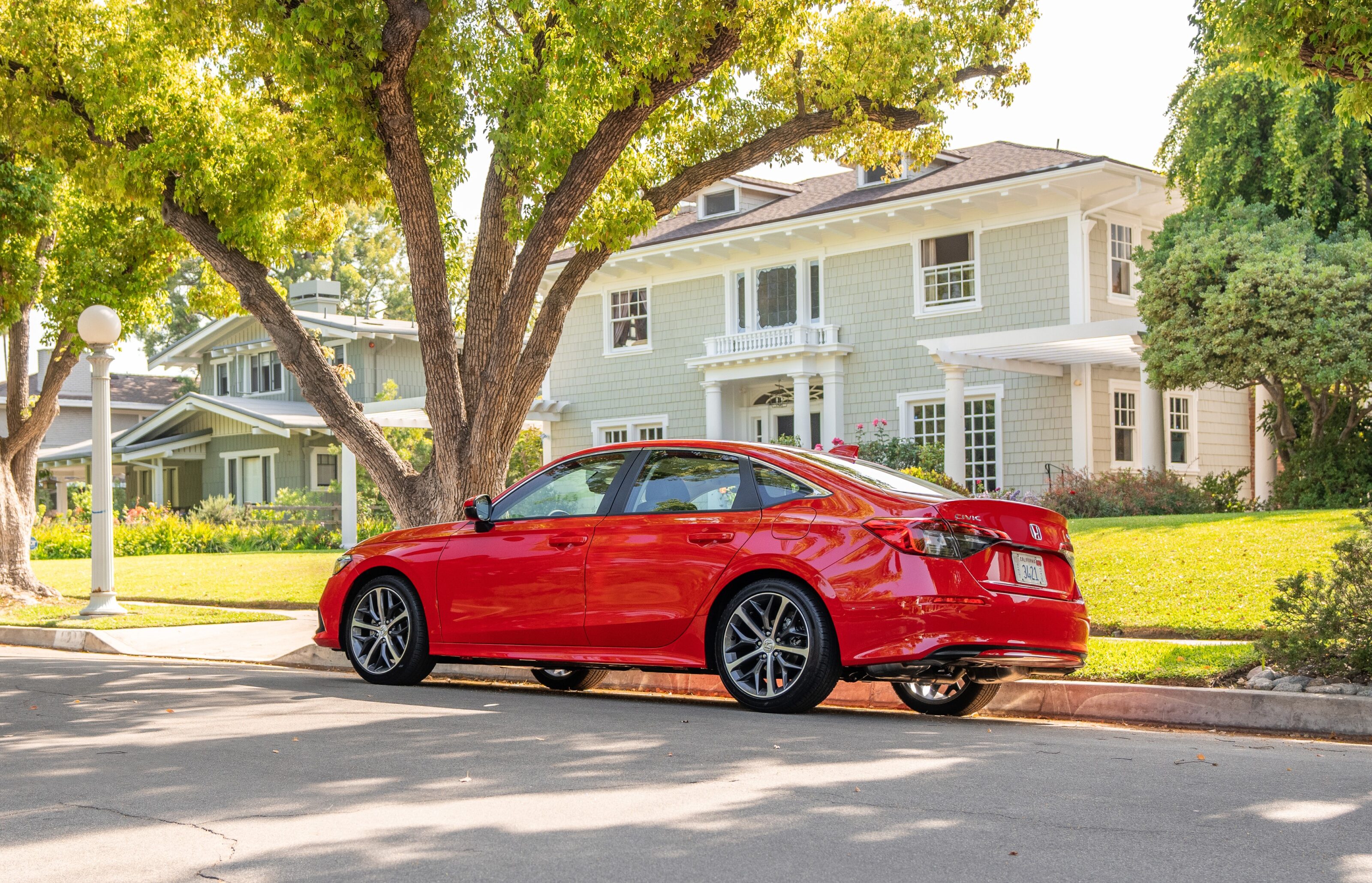
For this first drive review, we’ve had a bit of seat time in a North American-specification Civic sedan in Touring trim, which is more-or-less the equivalent of our VTi-LX grade, save for the lack of a hatchback.
At the moment, this Civic Touring sedan is the most powerful and best-equipped model available in that part of the world.
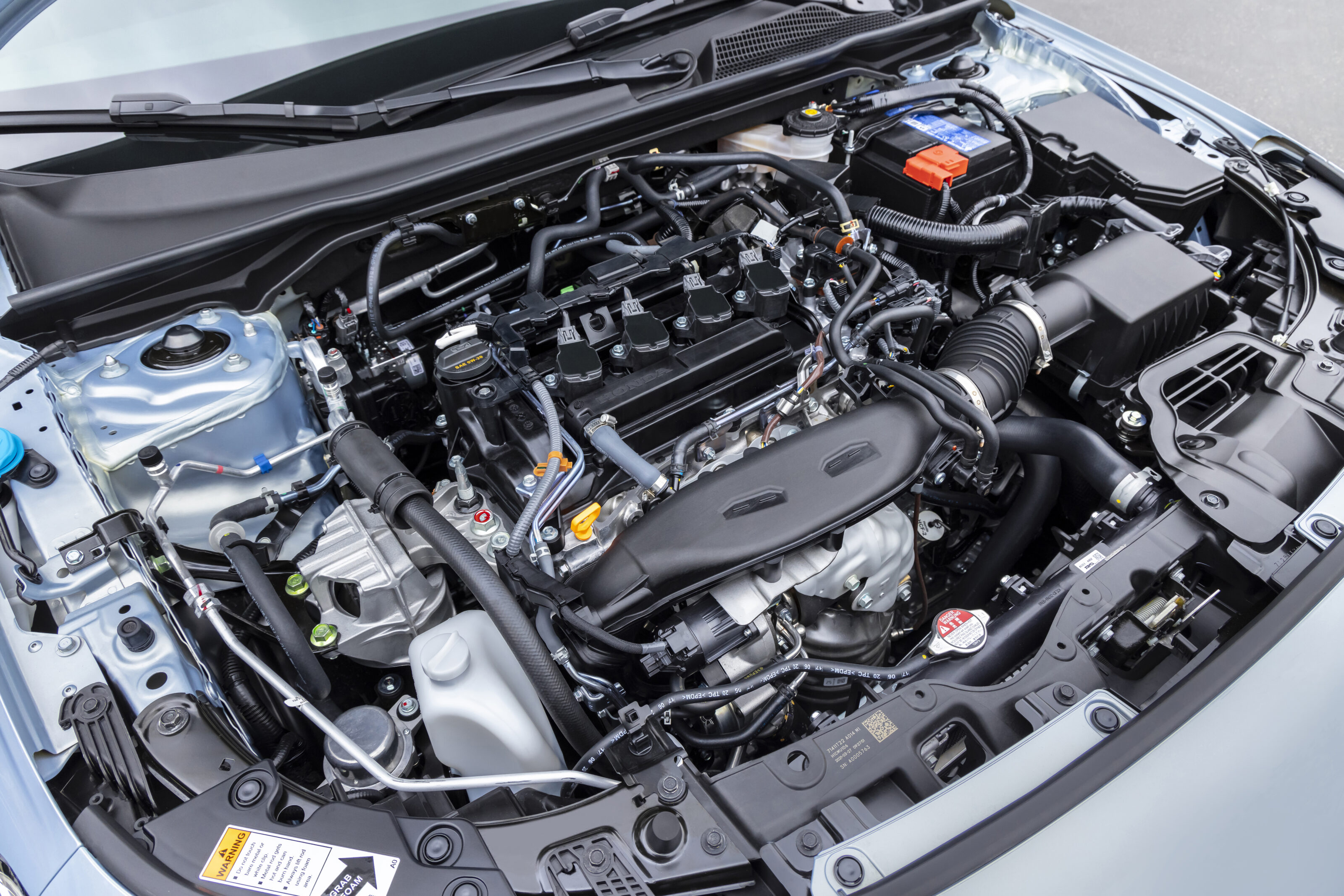
For this new-generation model, Honda’s turbocharged four-cylinder engine carries over, as does the continuously variable transmission. It’s not without change, though. The 1.5-litre, VTEC, dual-overhead cam, turbo motor has been retuned for 2022 and now produces 134kW at 6000rpm and 240Nm from 1700 to 4500rpm.
It’s a modest increase of seven peak kilowatts at 500rpm higher than before and an additional twenty Newton-metres over a slightly narrower rev range. Peak torque now begins to fall off at 4500rpm instead of 5500.
The suspension is based around McPherson struts in the front and a multi-link design for the rear. Kerb weight of the sedan is up by a modest twenty kilos over the previous model to 1396kg the new hatch is expected to add a similar touch of mass.
Weight distribution is that old front-drive chestnut – 61 per cent front, 39 per cent rear. Steering remains electrically assisted and is the variable ratio type. Brakes are discs in all four corners.
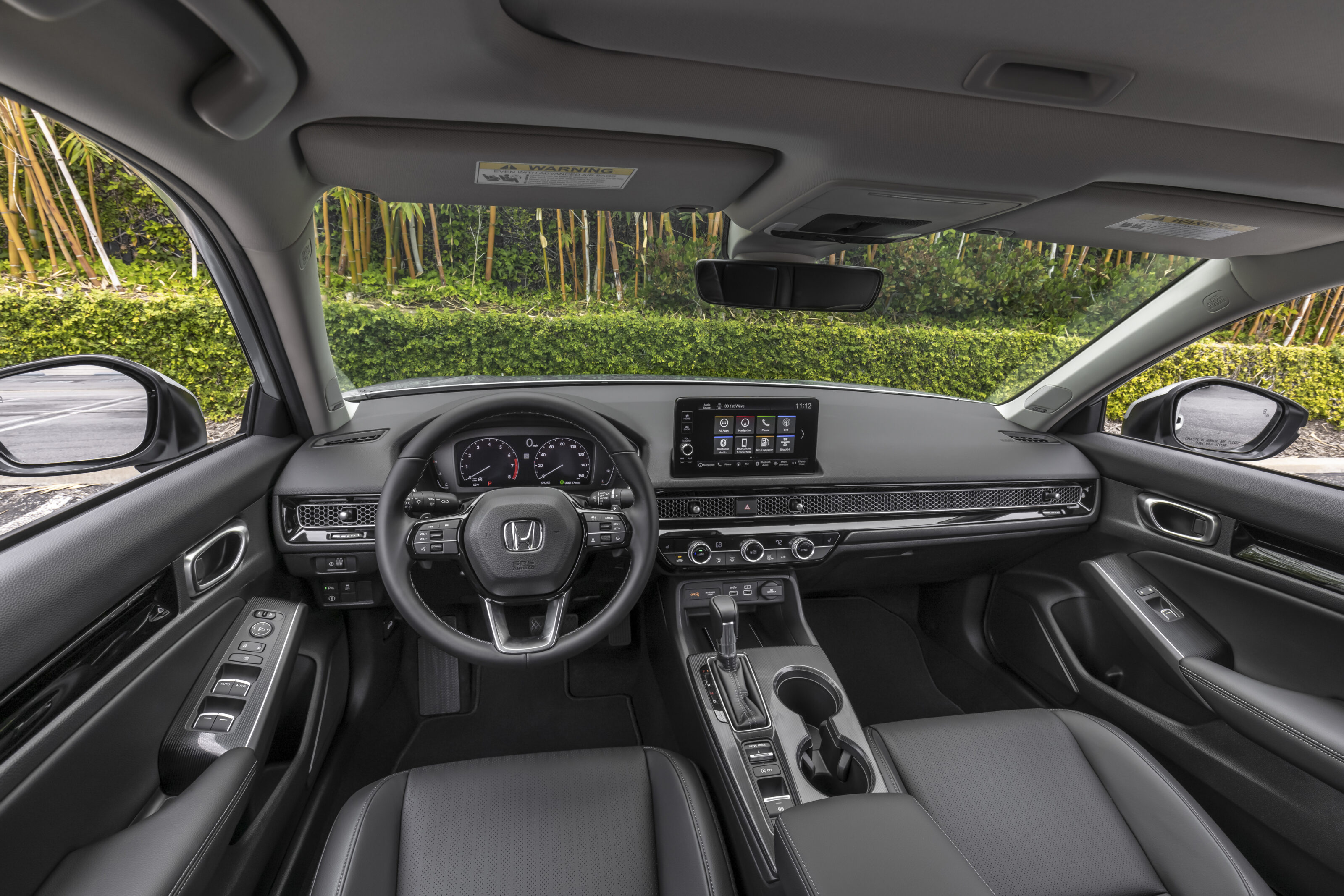
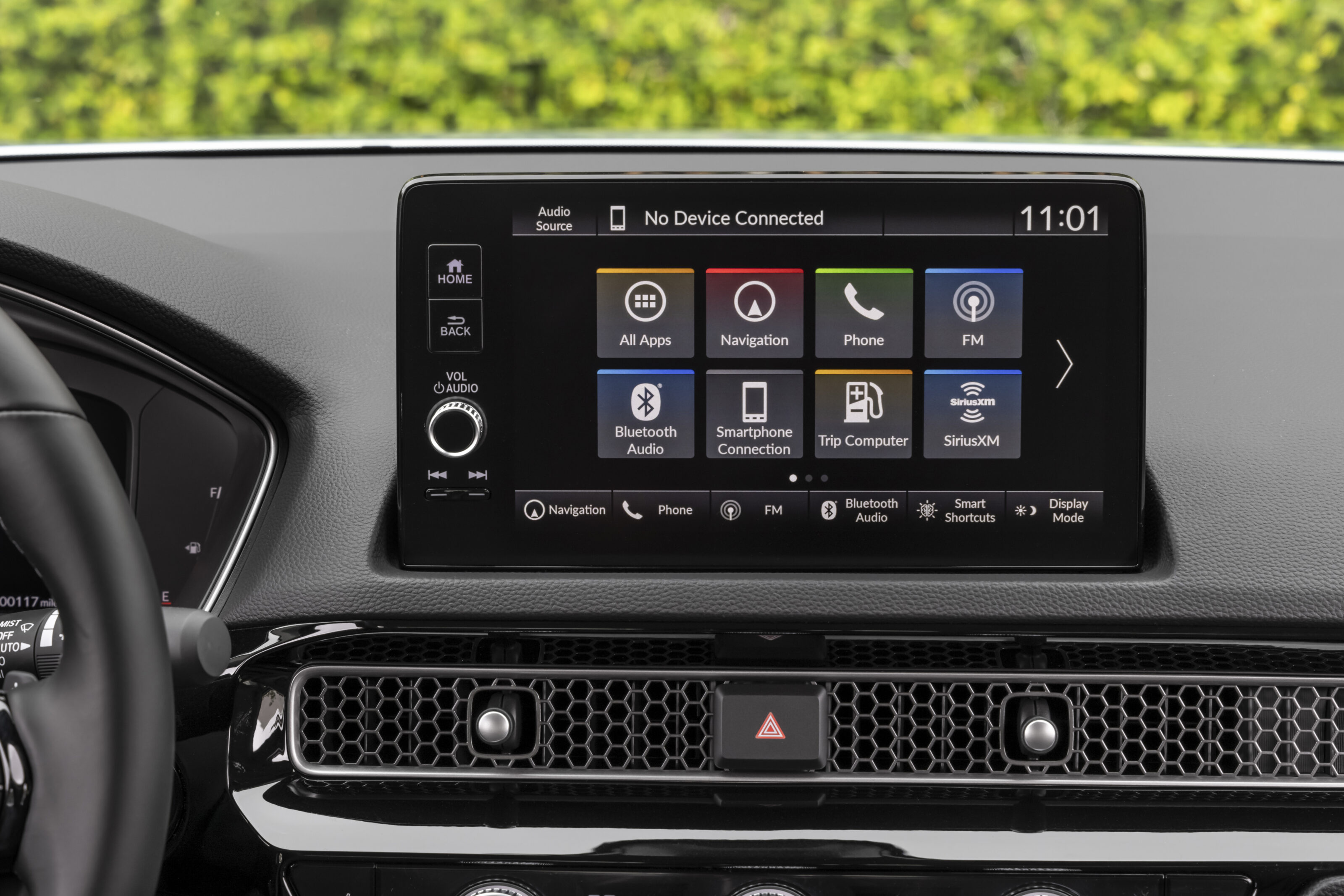
Inside, the entry-level Civics have a simple instrument cluster, the top model fitted with a stunning, 10.2-inch TFT screen. Honda’s latest infotainment system is based on either a 7.0-inch or 9.0inch touchscreen that sprouts from the top of the dashboard. Wireless phone charging is only available in this Touring model.
Again, Australian buyers should note that local trim grades have not been announced, and equipment lists may vary from what we’re describing here.
The 1.5-litre turbo motor now produces 134kW and 240Nm, a modest increase of seven kilowatts at 500rpm higher and an additional twenty Newton-metres over a slightly narrower rev range.
The exterior design of the previous generation was something of an acquired taste for some and a necessary evil for others. The angular, disjointed shapes of the nose and tail didn’t leave anyone with the warm and fuzzies, and perhaps some even overlooked the styling in order to get those Honda dynamics they enjoy.
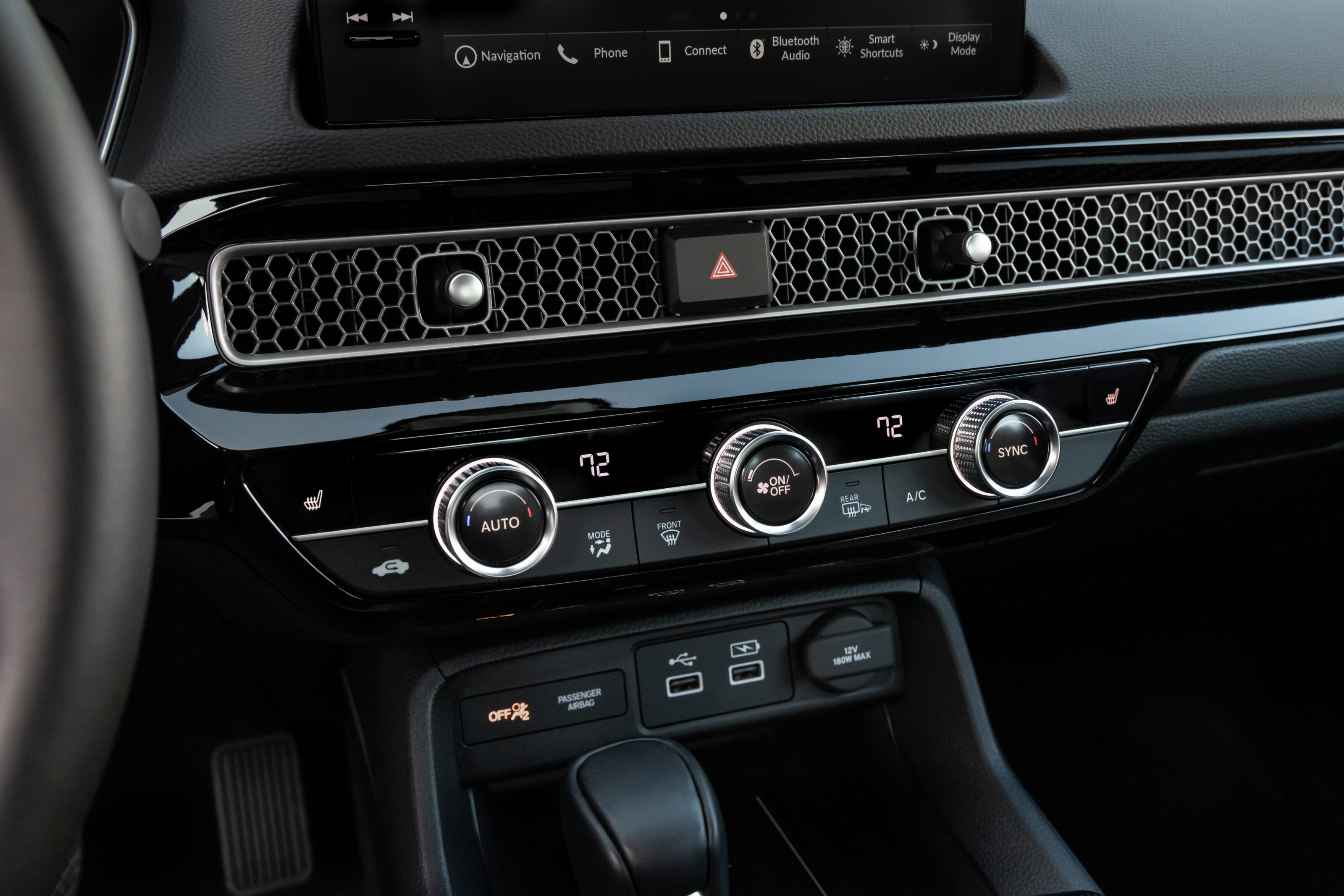
Overall, the shape of this eleventh-generation Civic is more mature, sophisticated, and refined. It possesses hints of Accord and takes design from quirky to polished. The interior is refreshingly minimalist and the delightfully recessed HVAC vents give the cabin a horizontal, spacious feel, save for the infotainment screen set atop the dash.
Apple CarPlay and Android Auto are standard across the range of sedan models and can be used wired or wirelessly in the Touring sedan.
Safety remains a top priority, with passenger protection provided by front, knee, side, curtain, and rear airbags in place. Adaptive cruise control with a low-speed follow function carries over from the tenth-generation model.
While the seating position of the ninth-generation Civic was a couple of centimetres too tall and left much to be desired, it was remedied for the tenth gen and, thankfully, that continues for the ’22.
The seat is positioned near perfectly and relatively low so that the driver feels in harmony with the car while having excellent visibility. A notable miss is the lack of adjustable lumbar support.
The driver’s relationship to the wheel and pedals is assisted by the adjustable steering column and the six-way manual or eight-way power driver’s seats, the latter reserved for the top model.
The Civic will accommodate drivers in a range of sizes and the standard dead pedal helps with support. The second row is relatively spacious, as well. Filling a Civic with four full-size footballers shouldn’t be a concern and all will be comfortable.

The steering wheel is a modern, three-spoke design that encourages hands at 9-and-3 with buttons for the adaptive cruise and lane-keep systems, as well as redundant audio controls. This Canadian-spec test car naturally included a heating function for the steering wheel. The centre armrest has a reasonable amount of storage, as do the door pockets and the cubby/wireless charging pad ahead of the gear selector.
Honda has struggled with the operation of its in-house sat-nav systems and has been saved in recent years by the rollout of Apple CarPlay and Android Auto. While the interface has been improved for 2022, it’s still not as intuitive nor as straightforward as any simple smartphone application. Accessing the Civic’s deeper functions in the system is easy enough, but you’ll still be encouraged to connect your iPhone or Android for their clean operation.
Automatic, dual-zone climate control is standard equipment in this Touring tester and the highlight isn’t its ease of use, but rather how Honda has cleverly styled the vents into the design of the dashboard. The result is a clean, attractive and minimalist aesthetic that’s often reserved for cars costing three, four, and five times as much as this Civic.
While many of us love our manual and automated gearboxes, there’s yet to be a continuously variable transmission enthusiast organisation. The engineering concept behind them is perfectly logical, which is to let the engine operate at the optimal speed for the task at hand, which varies from maximum acceleration to fuel sipping cruising and everything in between. However, the droning and groaning of an engine mated to a CVT often sounds completely unnatural and labored compared to a geared drivetrain.
To be fair, it’s taken years, if not decades, for CVTs to come into their own and the mating of the 1.5-litre turbo four and this example is as good as they get. The broad torque curve of this engine allows it to operate at relatively low revs and the CVT rarely causes the motor to shriek with anxious urgency. At full throttle, however, it does play an odd parlour trick by way of mimicking shifts at the redline.
Say you’re accelerating onto the motorway and you put your foot to the floor. Once you hit the redline, the CVT will adjust, the engine revs drop, and begin their climb again, and the process will repeat once or twice before you’re up to speed. This behaviour is as redundant and as inauthentic as the shift paddles on the steering wheel. The CVT operates perfectly, but if Honda wanted this Civic to possess the feeling of a geared transmission, why not simply engineer a decent auto box?

A major highlight of this new Civic is the overall dynamic package – handling, ride quality, and comfort.
In this regard, this Honda has it all, and it’s remarkably quiet inside the cabin, even at higher speeds. In fact, it may be the quietest car in the segment.
It carves a line with confidence and shows little body roll. Body and wheel control is above average, but the front dampers on this early production test vehicle allowed a touch too much secondary body motion in more extreme conditions and enthusiastic drivers may be looking for a little more control in those situations. It’s a pockmark on an otherwise excellent chassis.
A major highlight of this new Civic is the overall dynamic package – handling, ride quality, and comfort. This Honda has it all.
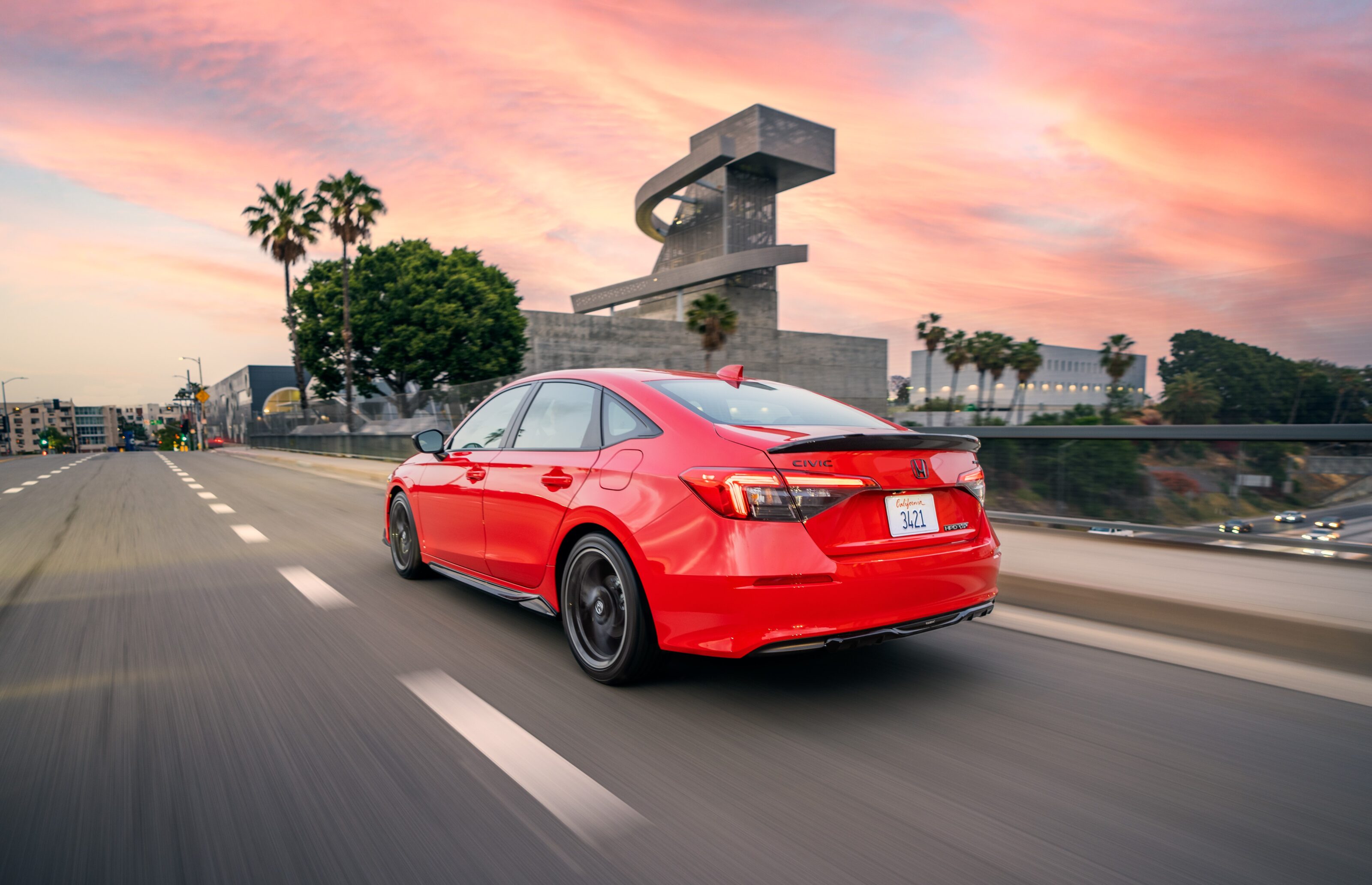
Steering response is excellent, though feel and feedback are limited. Braking control and modulation are well above average, as you’d expect from Honda. The brakes show decent power and while there seems to be some anti-dive geometry engineered into the suspension, the slightly soft brake pedal feel seems out of step with the rest of the Civic.
For Honda, this eleventh-generation Civic changes the paradigm once again. As they do with each successive generation, it is incrementally improved across many quantifiable metrics but it’s the mature styling that makes it more appealing and the quiet, premium interior that makes it a place that drivers and passengers will enjoy.
2022 Honda Civic Touring specifications
| Body | 5-door, 5-seat sedan/hatch |
|---|---|
| Drive | front-wheel |
| Engine | 1498cc I4, DOHC, 16v, turbocharged |
| Bore/Stroke | 73 x 89.5mm |
| Compression | 10.5:1 |
| Power | 134kW @ 6000rpm |
| Torque | 240Nm @ 1700rpm u2013 4500rpm |
| 0-100km/h | 7.5sec (estimated) |
| Fuel consumption | 6.9L/100km (combined/claimed) |
| Weight | 1371kg |
| Power/weight | 98kW/tonne |
| Transmission | CVT |
| Suspension | MacPherson struts, anti-roll bar (f); Multi-link, anti-roll bar (r) |
| L/W/h | 4655/2081/1415mm |
| u00a0Wheelbase | 2735mm |
| Tracks | 1536mm (f); 1565mm (r) |
| Steering | Electrically assisted rack and pinion, variable ratio |
| Brakes | 282mm ventilated discs, single-piston calipers (f); 259mm solid discs, single-piston calipers (r) |
| Wheels | 18 x 8-inch (f/r) |
| Tyres | 235/40R18 (f/r); Goodyear Eagle Sport |
| Price | TBD |
The upcoming arrival of Cupra is set to stir the pot in Australia’s automotive landscape.
Initially launching next year as the fourth brand offering from the Volkswagen Group, Cupra’s intentions are clear from the outset – this is a brand aiming to be known for performance vehicles, whether they’re powered by an internal combustion engine or electric motors.
Coming to the local market with three models – the Leon, Ateca and Formentor – two of which will be available as plug-in hybrids, the marque aims to ease the transition away from conventionally-fuelled engines to energy from the plug.
Cupra Australia brand director Ben Wilks told MOTOR he’s excited to launch a handful of PHEVs when the brand debuts in 2022, adding the recently-revealed Born EV will be a pillar of the marque’s line-up when it arrives in 2023.
“The move towards electrification is why we wanted the PHEVs to be available at launch”, said Wilks.
“Those cars are significant – I can take a Formentor hybrid, do my daily commute, charge it and have it exist on pure EV. I find that quite exciting as a first step, but there’s no doubt we want to have the Born and have it as soon as we can.
“It’s a matter of when and not if [with the Born]. Wayne [Griffiths, Cupra CEO] has given me a good push to make sure the when is a bit earlier than I was anticipating, but we’re working with all of the team to try and make it a reality as soon as we can get it. There’s interest from customers on LinkedIn and more are contacting our information centre – so the sooner we can, the better.”
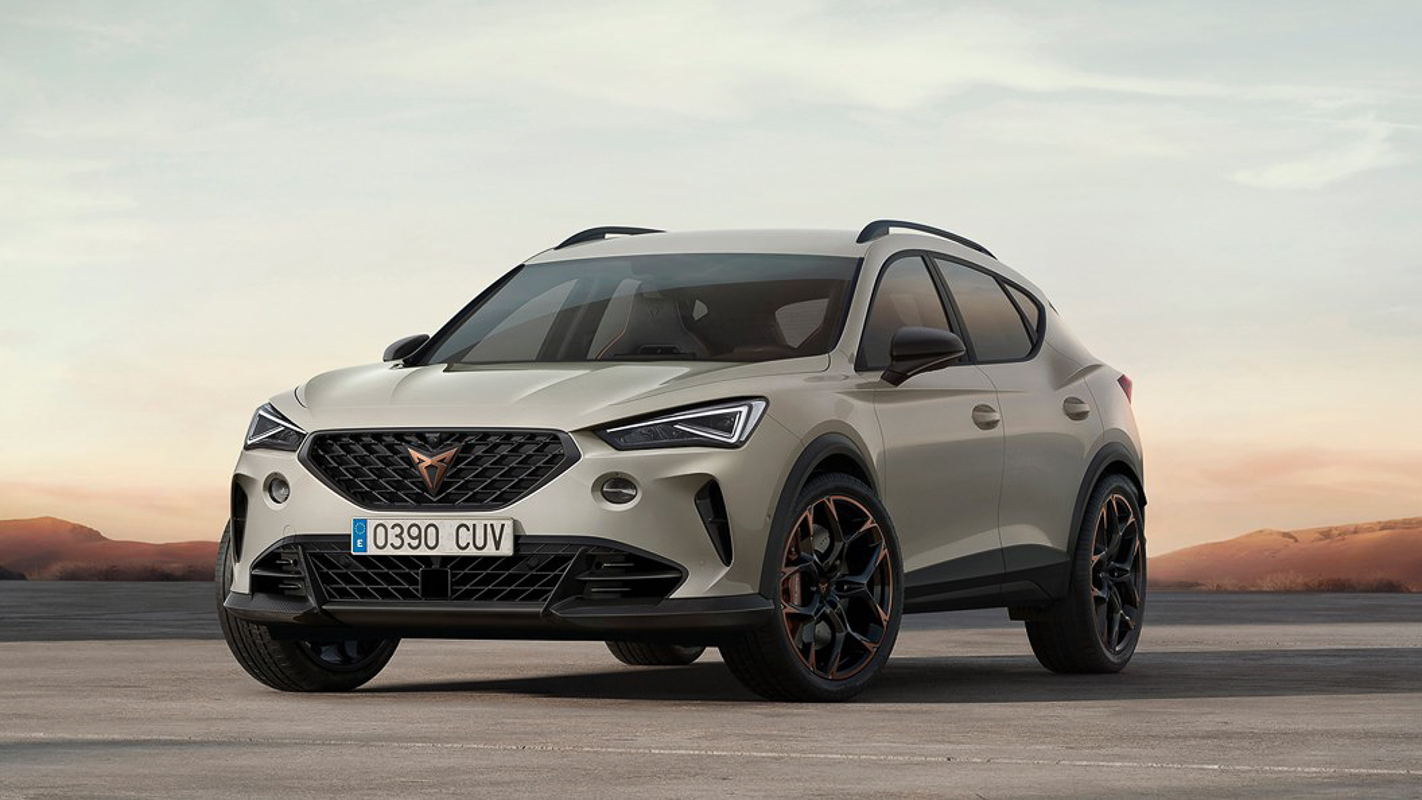
“We are a young brand but I think it’s exciting because we can say to people we are doing something which no one was doing before and wasn’t on offer.
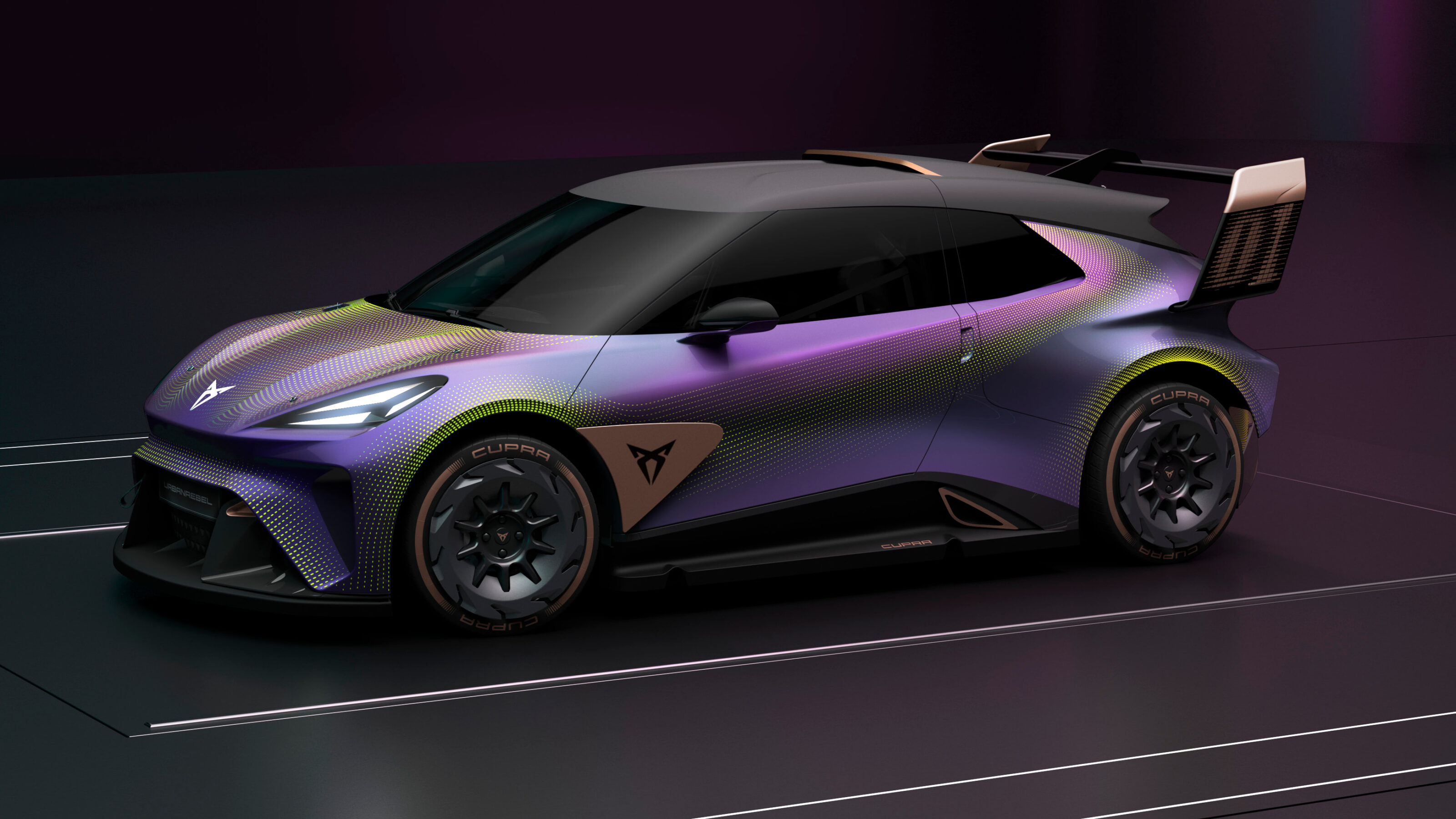
“In terms of future product, you’ve seen a good guide of where we’re going in terms of electrification with the UrbanRebel concept. If you look at the car and imagine where an road-going alternative could end up, that’s exciting for Australia. Tavascan is an amazing looking product and an electric SUV has enormous appeal for the local market.
“In terms of launching, to come with two SUVs and a sports hatch in three trims, I think we’ve got a strong offer from the start – so having them in the market early is going to establish us quite well. We’ve got plenty to choose from a customer’s point of view because we’re in the segments they want to buy into – we’re not starting at an outrageous price point or a segment which customers aren’t interested in.
“We are doing something a bit different within the segment and unashamedly, we want to be loved not liked. It doesn’t matter if everyone likes us because it’s a compelling and great framework for making decisions within this brand on future product.
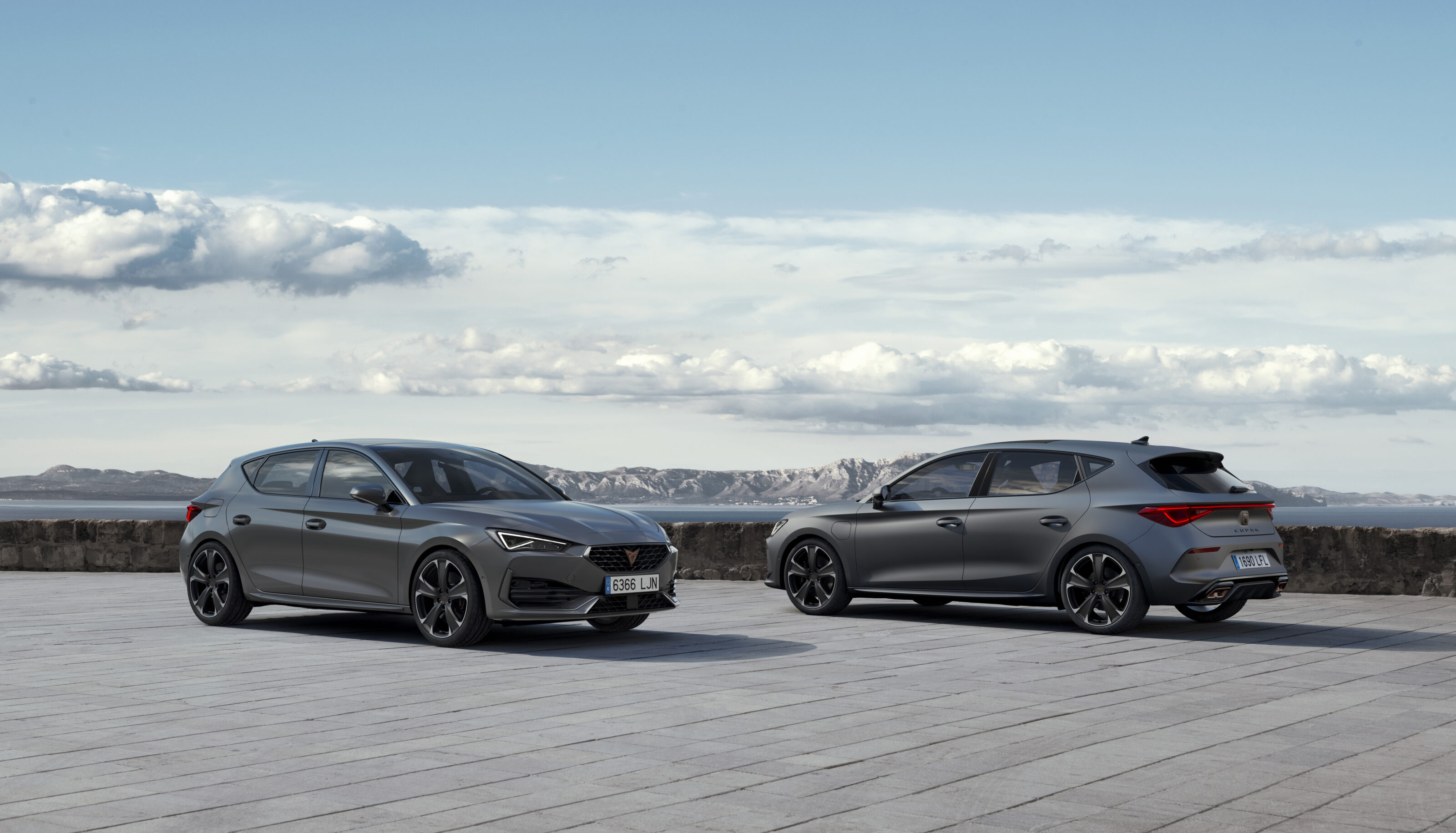
Wilks believes the brand’s point of difference will be its dedication to providing performance products – not only within the VW family, but in the wider vehicle segment each model is targeting.
“We are a dedicated performance brand and we’re operating in a relatively affordable space for a performance brand, it’s what we’re bringing to Australia.
“Our target isn’t necessarily people who are already interested in VW Group products, rather people who are interested in a brand which has design and performance at its heart, as well as a bit of magic. In this heritage from Barcelona, it’s something special about the soul of the cars and something I sense quite strongly from the team at Cupra.
“These people have a passion for delivering interesting and exciting looking cars which challenge convention – cars don’t have to be boring, and that’s the driving force of what these guys are trying to do and there’s a group of customers which that ethos will be appealing to in Australia.
“That’s what we want to get across and that’s how we distinguish ourselves – a dedicated performance brand with a clear orientation towards design.
“This concept of being a brand which is design oriented but not pretentious – I find this really appealing and something our customers can really buy into as well.
“Being great to look at and great to drive doesn’t have to be the reserve of premium brands, it can be something which is available in a more accessible space. We’re about indulgence and pleasure – but also not super-premium luxury.”
All three Australia-bound models are based on VW’s MQB platform but Wilks stresses the architecture is purely a blank canvas for the performance of its vehicles, all of which will be set up differently to the related offerings from Volkswagen, Skoda and Audi.
“The MQB Evo platform is an incredible starting point, but there are a number of suspension setting choices around the dynamic package and tuning of electronic stability controls, which govern how the car feels.
“The intent from our engineers is for a car which is responsive – not only on a race track but every time you drive it. Under lockdown we don’t get to drive every day but when we do get to drive, why shouldn’t it be nice? Why shouldn’t it be a pleasure?”
After its arrival in Australia next year, Cupra will transition to becoming an all-electric company by 2030, aiming to phase out its ICE-powered vehicles over the next decade.
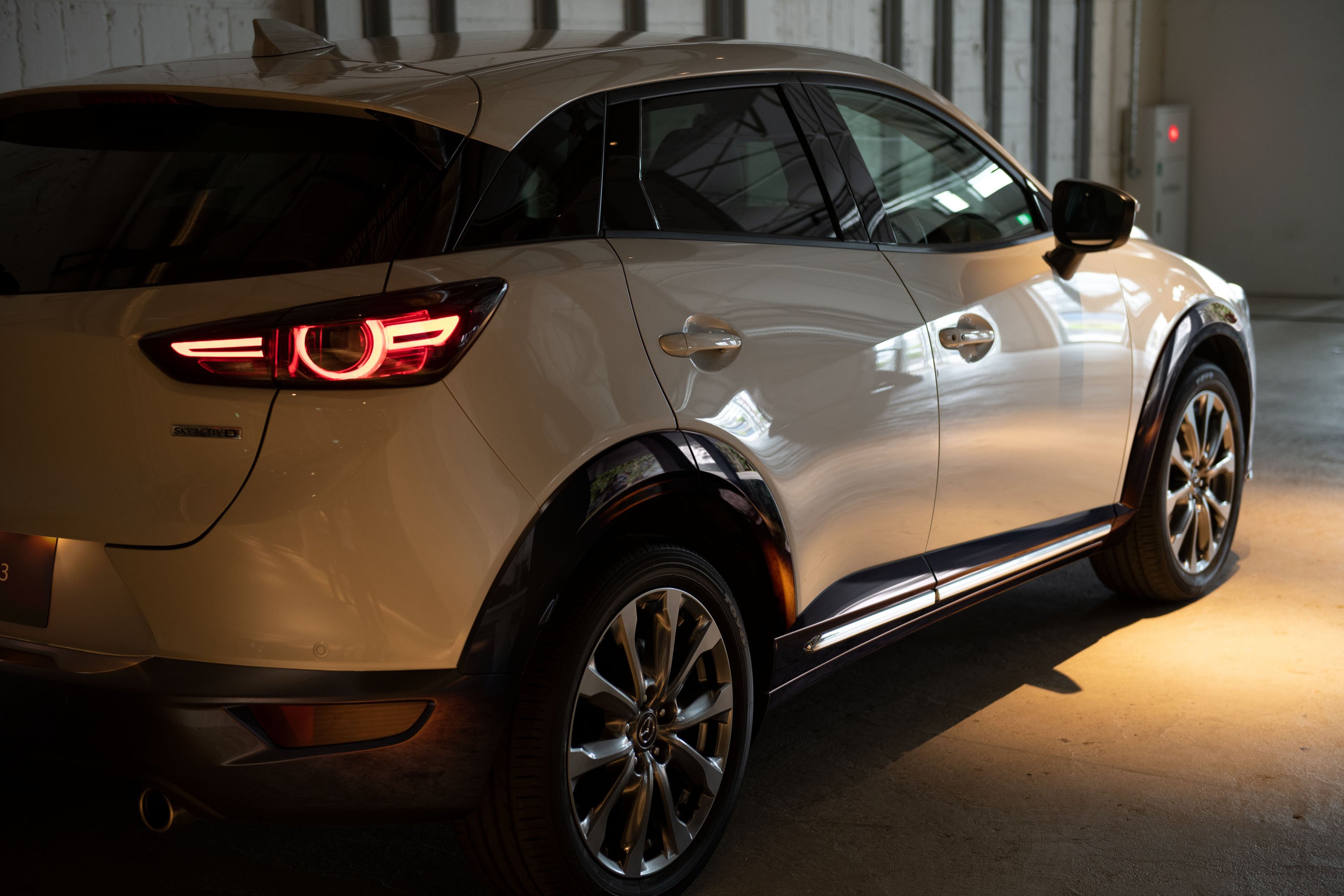
The segment-leading Mazda CX-3 is set to gain a minor update heading into 2022, with the small SUV gaining a new exterior look towards the end of this year.
A ninth paint option will be added to the range with platinum quartz metallic available to be optioned on any trim level of the CX-3, the light champagne gold colour having already been made available on other models.
On top of this, the range-topping Touring, Akari and Akari LE variants are set to all feature gloss black lower body trim, setting them apart from the rest of the line-up which retain the flat black cladding.
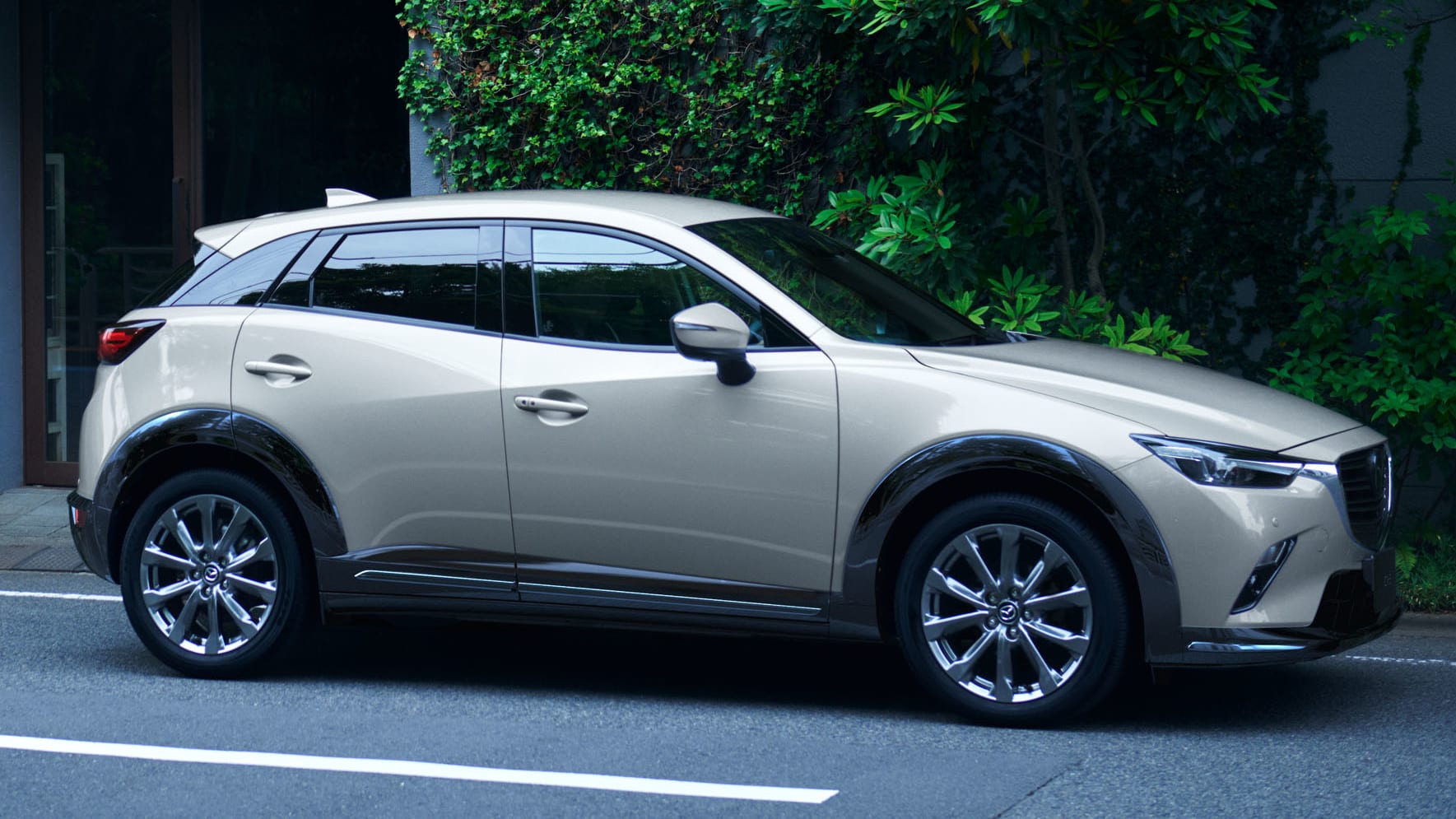
Mazda last provided the CX-3 with a minor update earlier this year – introducing Apple CarPlay and Android Auto for the first time, as well as redesigned seats across the range, while individual variants scored extra equipment.
The CX-3 is the current segment leader for small SUVs, accounting for 28.8 per cent of all sales in the category so far this year through selling 10,679 units to the end of August – nearly double the number of the second-placed Toyota Yaris Cross on 5406.
Prices for the CX-3 range are unchanged.
2022 Mazda CX-3 pricing (excludes on-road costs)
| Neo Sport FWD manual | $22,890 |
| Neo Sport FWD auto | $24,890 |
| Maxx Sport FWD manual | $24,890 |
| Maxx Sport FWD auto | $26,890 |
| Maxx Sport LE FWD auto | $27,640 |
| Maxx Sport AWD auto | $28,890 |
| sTouring FWD manual | $29,090 |
| sTouring FWD auto | $31,090 |
| sTouring AWD auto | $33,090 |
| Akari FWD manual | $34,190 |
| Akari FWD auto | $36,190 |
| Akari AWD auto | $38,190 |
| Akari LE FWD auto | $36,690 |
| Akari LE AWD auto | $38,690 |
