
We’re to blame. Us. And by us I mean you and me: motoring enthusiasts. You may well have looked at the recently revealed Emira and wondered why the heck Lotus is building a replacement for the Elise that weighs more than 1400kg and can be specified with electric seats, radar cruise and space for golf bags. Let’s not forget that the original Elise weighed 725kg.
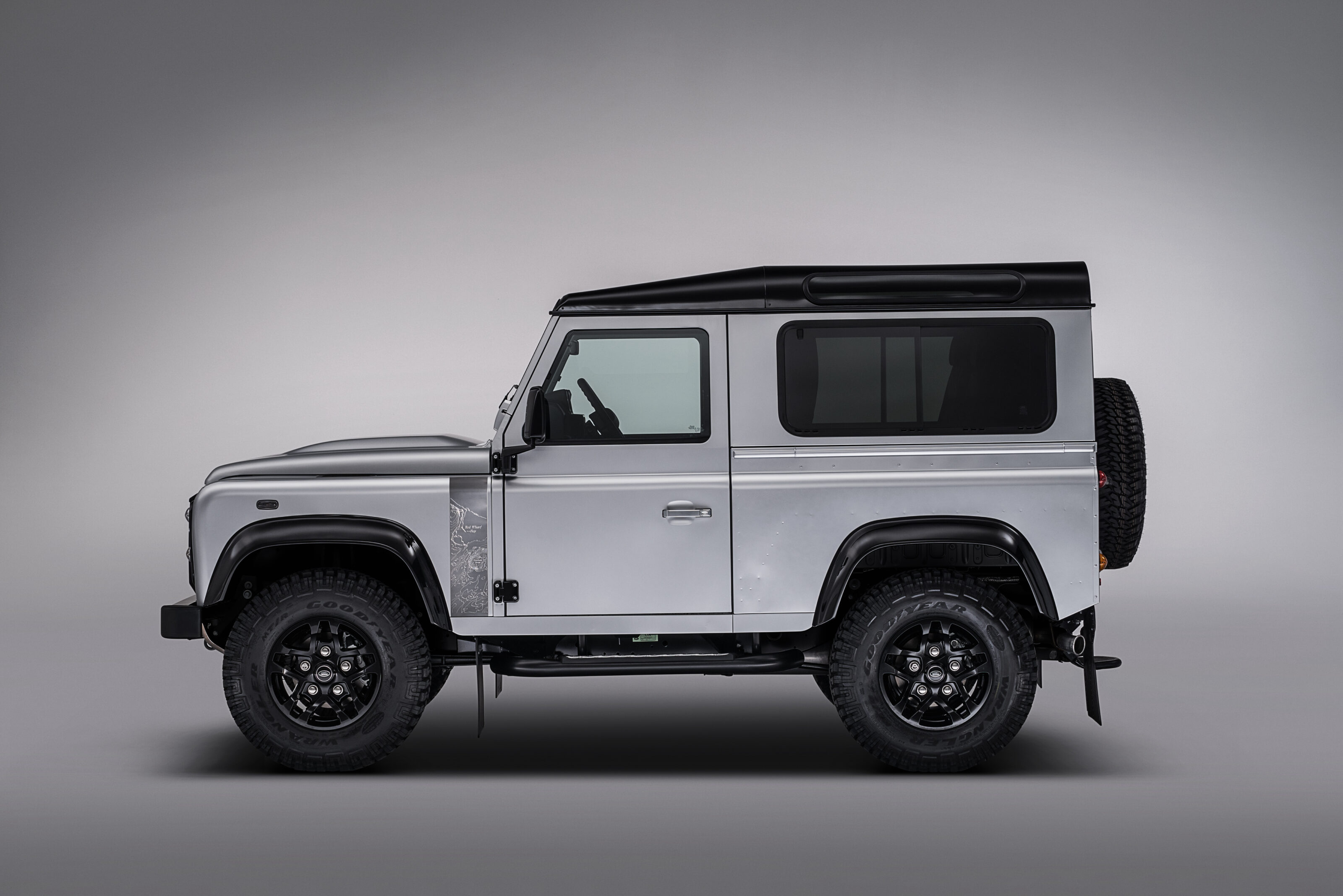
Lotus is right now fielding the same criticism Land Rover did with the Defender when it dragged that model into the here and now. Nobody bought the old Defender in its latter years. Or the Elise come to that, of which 16 examples were sold last year in Australia. And while you probably couldn’t envisage a market better suited to selling Land Rover Defenders, in its last full year on sale here, the Defender was roundly trounced in the sales charts by clanging wrong’uns like the Dodge Journey.
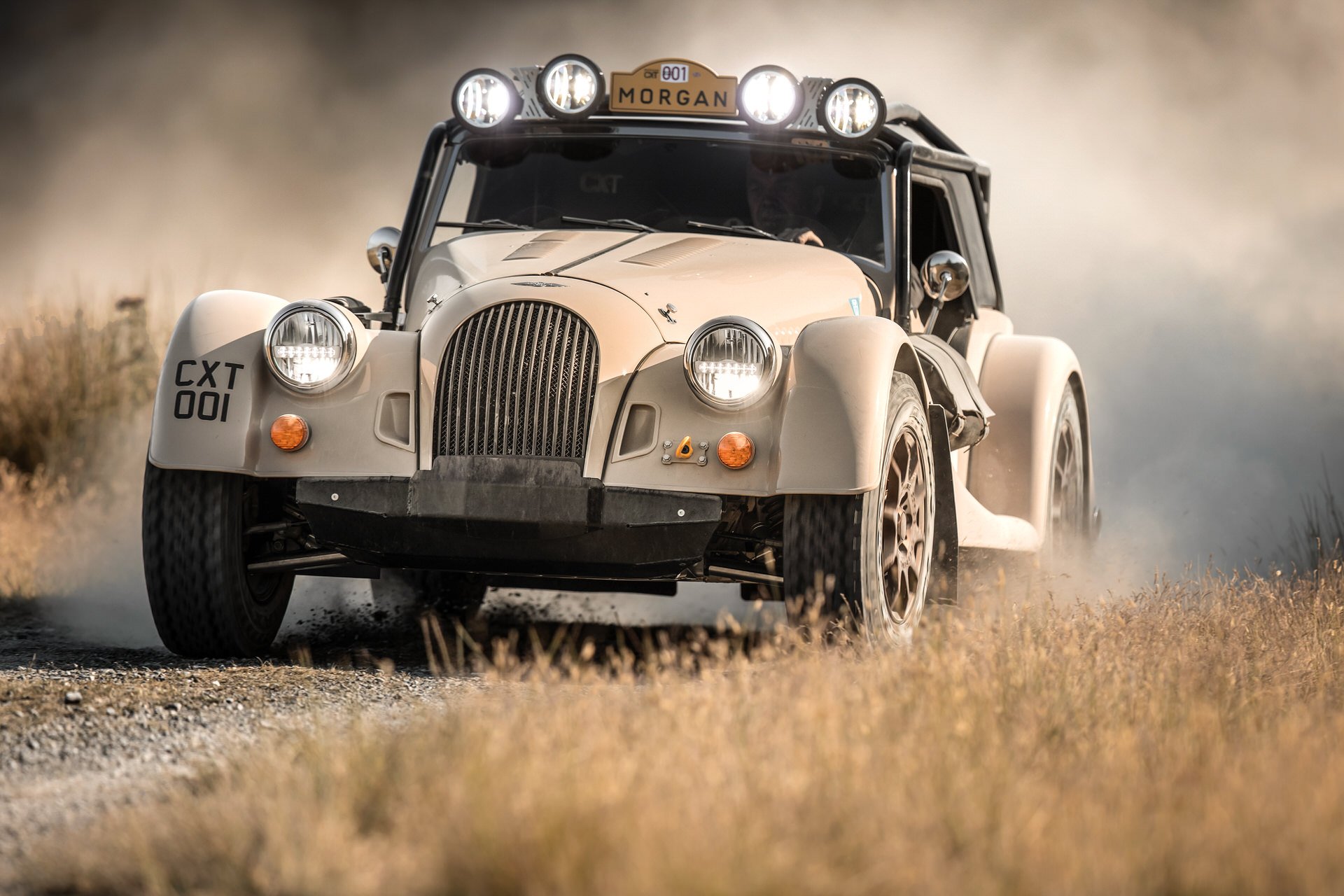
You can unearth such cognitive biases everywhere you look. The Alpine A110 is a car of near-deity status, but it shifted seven units here last year, which means it outsold Morgan by one solitary car. A threadbare constituency of middle-aged men who enjoy dressing up as Mr Toad almost one-upped the might of Formula One’s Alpine. Having considered this issue for a while, I think it’s because our passion means that we can become fixated on the idea of something rather than the reality.
We love the notion of hosing out an old Defender but were we in the position to buy one it would fairly quickly become a peripheral concern. Likewise we lionise Lotus’ ideals of light weight while parroting Chapman tropes at length, but would an Elise be a better car if a six-footer could fit in it, there was space to charge a phone and the air-con and infotainment system worked? Through a purist lens, possibly not, but reality probably disagrees.
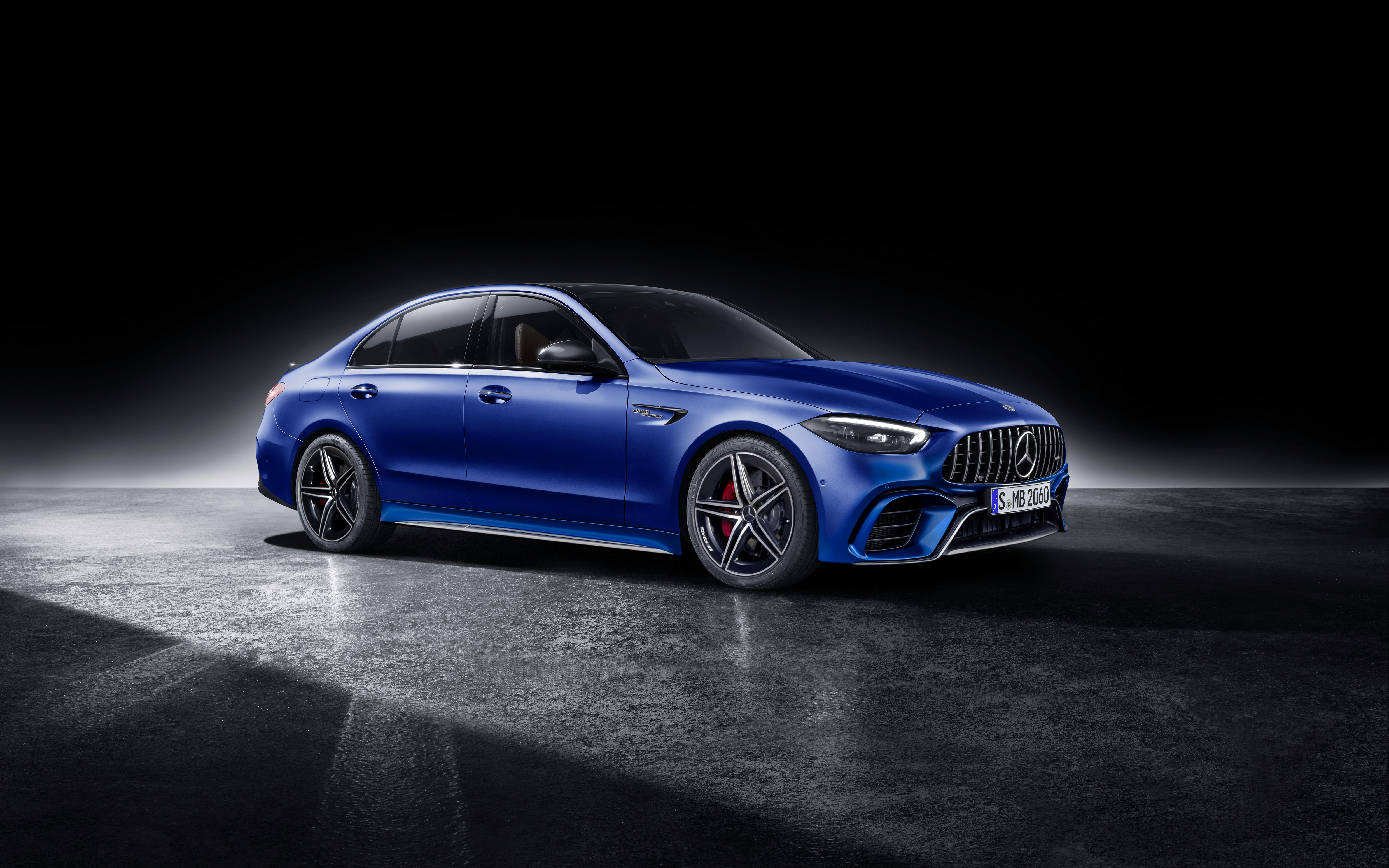
When Mercedes-AMG launches the four-cylinder C63e hybrid, you’ll notice the cycle restart. In the same vein, many will choose to ignore the fact that the all-wheel drive BMW M135i sells better than the old rear-driver. The first full year of sales for Porsche’s four-cylinder 718 Boxster and Cayman was 19 per cent better than the last full year of the six-pot 981, and that was in a declining market for sports coupes.
Granted, to the likes of us, sales are anything but a perfect indicator of a car’s inherent worth but, to car manufacturers at least, runs on the board count for a lot more than our closeted marketplace of ideas and ephemera. We may be shouting our opinions into a private echo chamber of like-minded individuals but, in the background, development continues apace and it usually results in ever superior cars. We’ve never had it so good and yet we’ve never raged against the machine of progress quite so vociferously. Even now I feel an anxiety over how the Emira is received. I might go and hose out somebody’s car. It sounds wholly therapeutic.
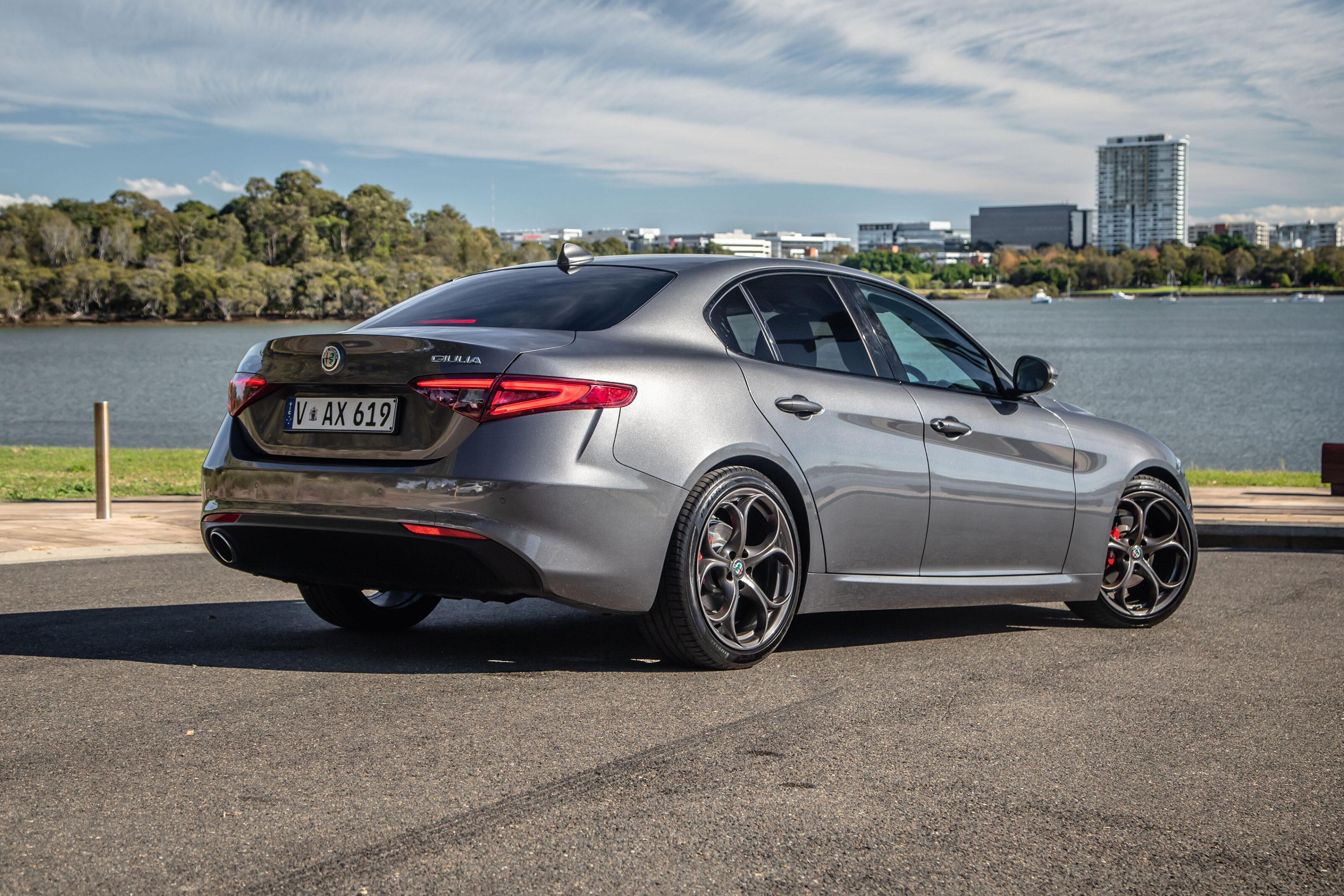
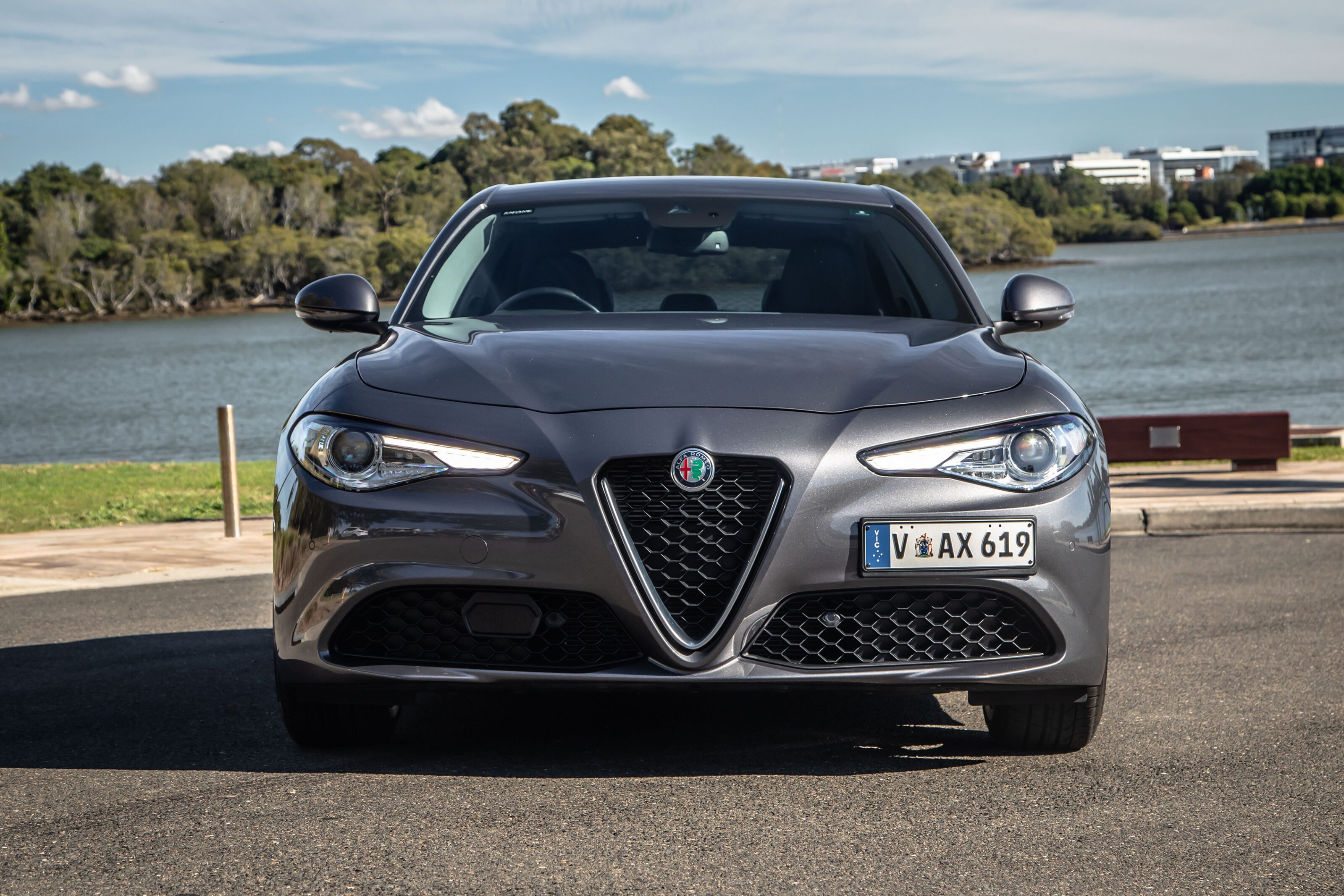
The Giulia Sport is Alfa Romeo’s affordable pitch at mid-sized luxury European motoring. Yet it certainly doesn’t look the part and, to fair degrees in key areas, feel as such.
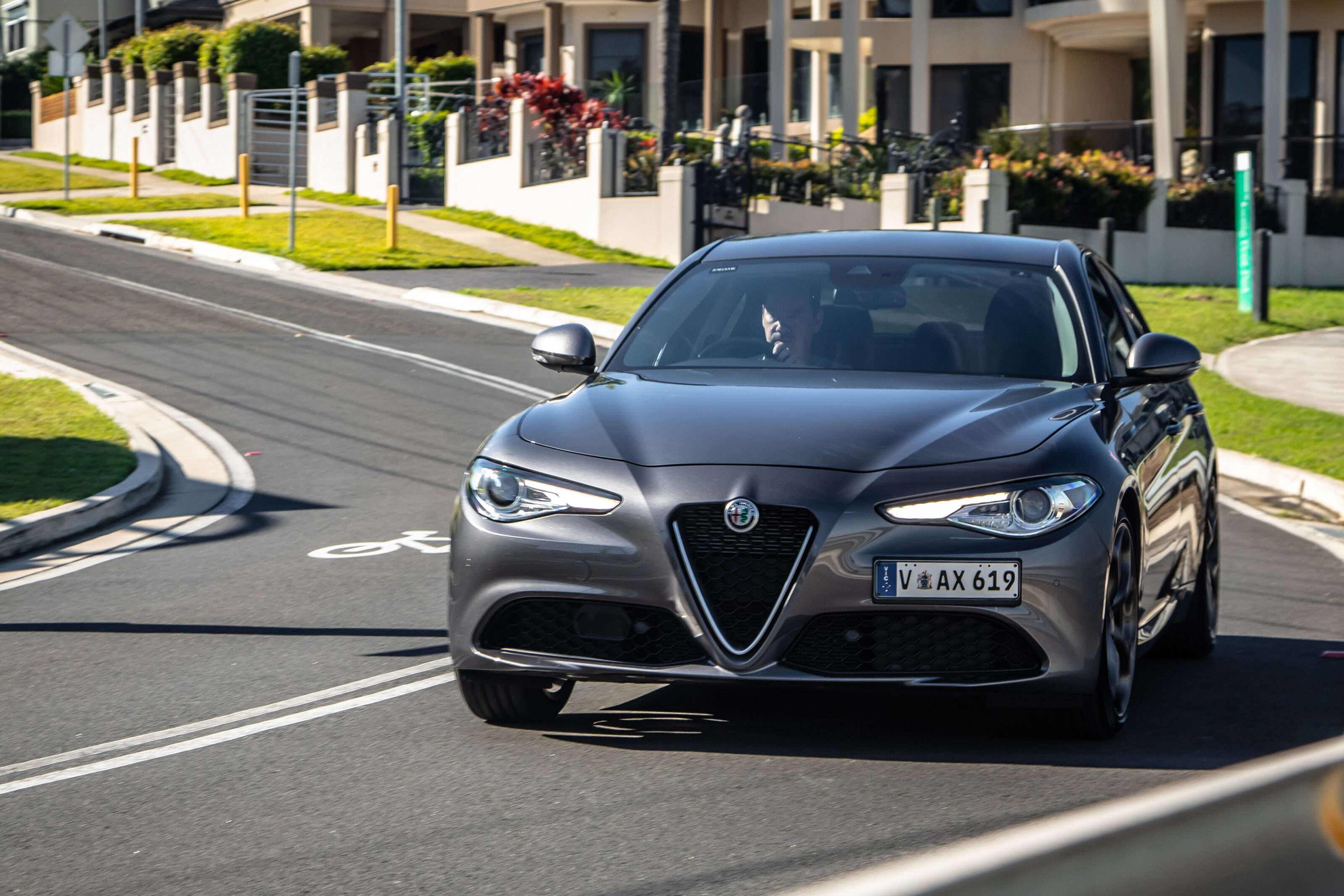
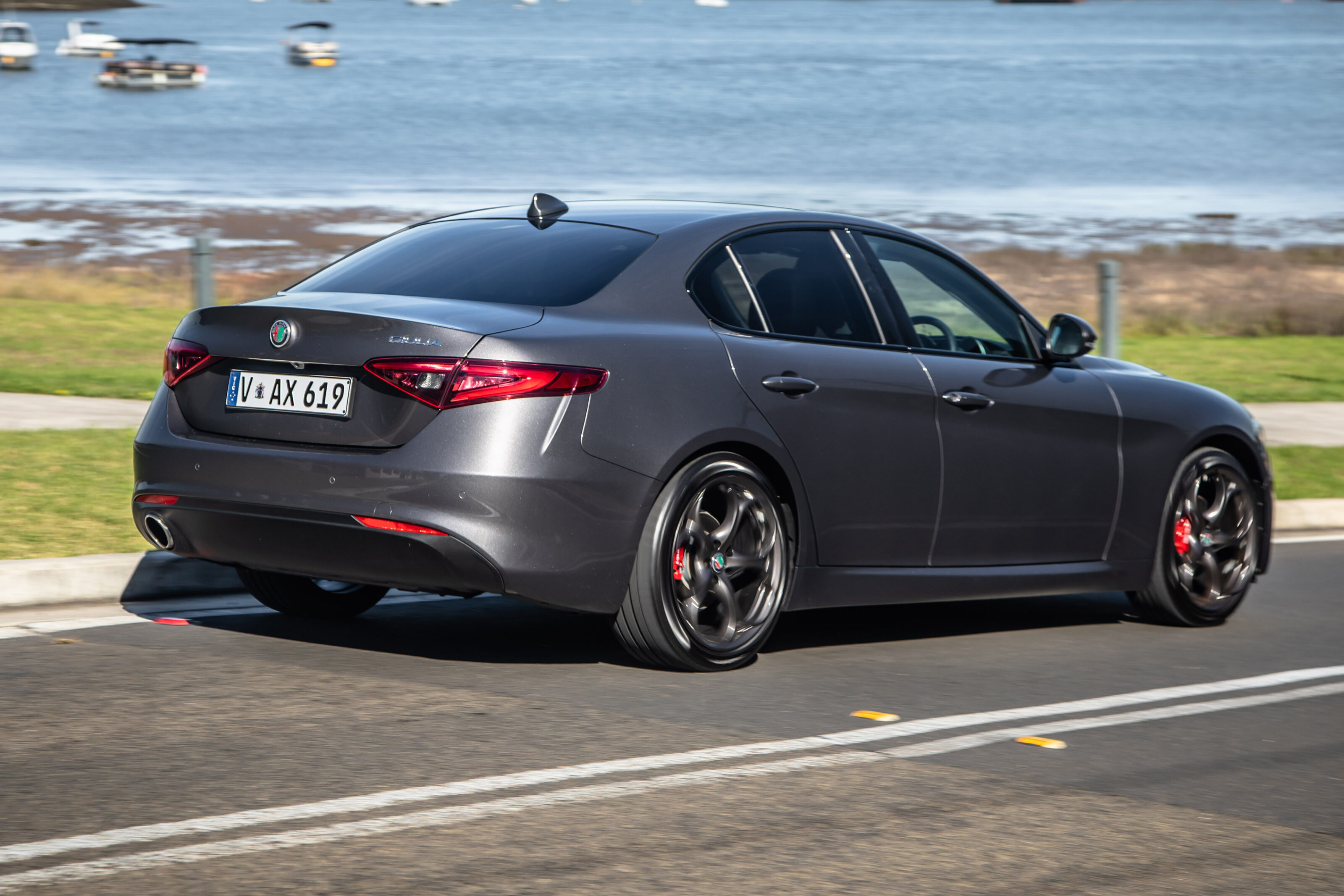
Parked up, at fifty paces, it looks six-figure rich. And it’s easy to imagine that was exactly its Italian maker’s game plan when an augmented Sport supplanted its no-name predecessor in the latter part of 2020.
The former ‘just Giulia’ was re-specced as the Sport with upmarket spin, arguably the most handsome four-door on terra firma made sexier still with larger 19-inch Dark finish five-hole rolling stock, black trim and bright red Veloce-grade brakes.
Inside, impossibly thick-bolstered sport seats, real leather trim and sportier wheel and pedal touchpoints were brought into play, and other changes notwithstanding – of which there are quite a few – the Sport’s stake is that, yes, you can indulge in rich effect on a cut-priced budget.
The Sport was the most enhanced variant of a slimmed-down, three-strong MY20 update to the Giulia range, the old Giulia and Giulia Super relegated to history, the new base version augmenting brand hallmarks of alluring looks and fine dynamic alacrity with expanded active safety and improved infotainment aimed to keep closer step with key German rivals boasting longer provenance and stronger popularity with buyers.
Thing is, recalibrating Giulia’s entry point to foist desirability seems a well-calculated balancing act, not merely some grab bag of obvious tricks – more engine boost, digital instrument eye candy – in efforts to chase Teutonic wheel tracks.
The Sport raises Giulia’s tip-in point by around three grand, now $63,950 before on-roads, and it’s offset by less-conspicuous substance to go with the obvious showmanship. But, clearly, the main game is to outdo the Germans on soul and emotion with (arguably) a more evocative pitch than the more austere Mercedes-Benz C200 ($66,900 list) and BMW 320i M Sport ($70,900 list) that the buck-banging base Giulia continues to undercut on price.
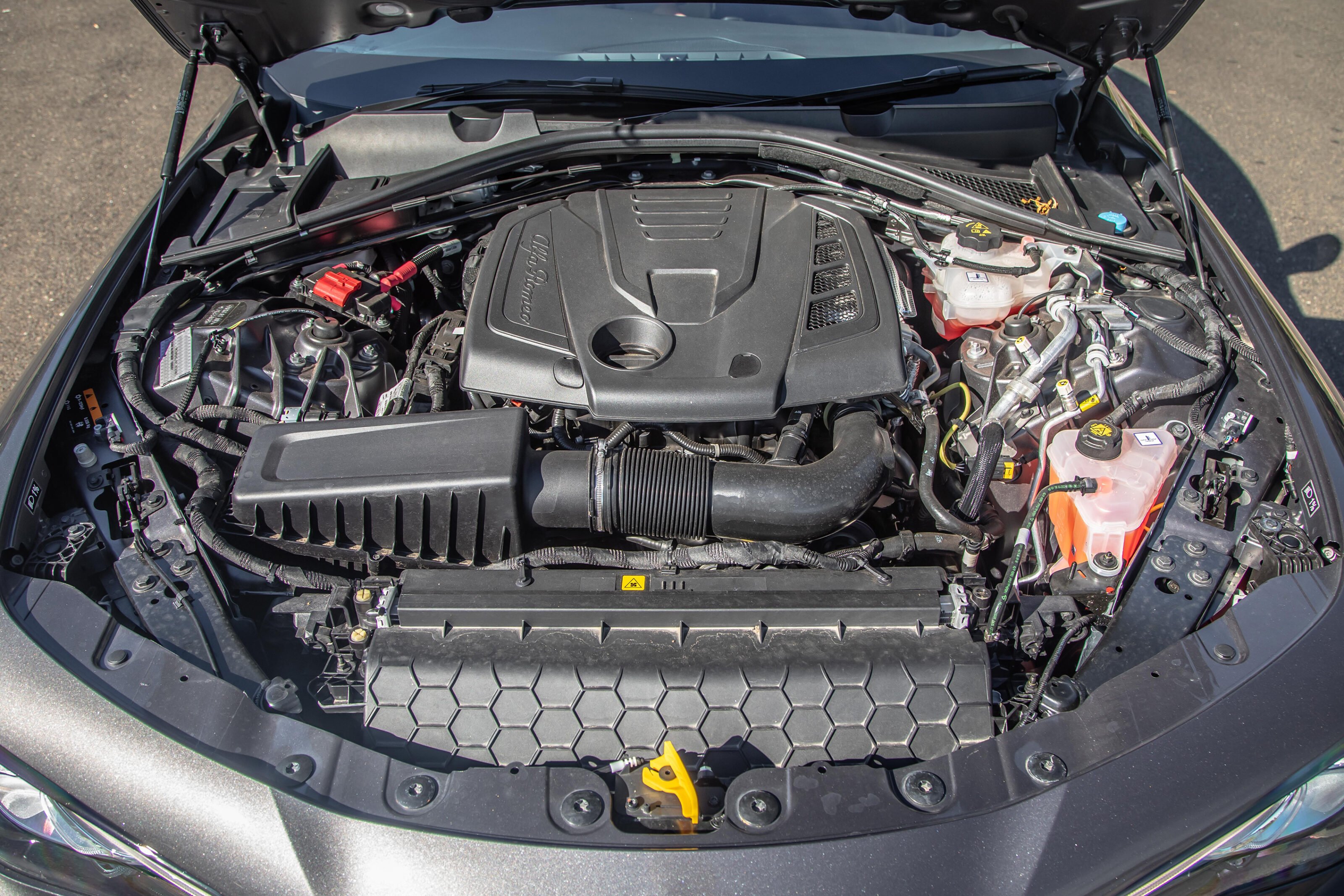
Now that the Giulia range soars into the exotic stratosphere with the GTA and GTAm, the Sport’s low-spec 2.0-litre turbocharged four’s 147kW (at 5000rpm) and 330Nm (at 1750rpm) outputs appear quite humble, though it weighs in nicely against C200 (150kW/300Nm), 320i (135kW/300Nm) and Audi A4 35 S Line (110kW/270Nm, at a thrifty $59,900 list).
The Sport lacks the limited-slip differential, dual exhaust and adaptive suspension thee come standard in the measurably more potent (206kW/400Nm) Veloce, though the latter’s damping smarts can be optioned in the ($2955) Lusso bundle that also adds ambient lighting and audio upgrades.
The base rear-driver’s fairly respectable 6.6-second 0-100km/h claim is nine-tenths shy of the Veloce that sits $7500 further up the fiscal tree. Cup half full is that you Sport brings huge effect on a budget; cup half empty is that it returns modest delivery despite big aesthetic promise. No foul on Alfa Romeo’s part: the sheep in wolf’s clothing ploy is commonplace in the Giulia’s competitive set, from AMG-look Benzes to the newly facelifted Genesis G70.
It’s an obedient and refined powertrain, the engine crisp to respond and mounting its peak torque quickly, the ZF-sourced eight-speed auto offering impressive focus. By the seat of the pants it feels lustier than the outputs suggest, the Giulia’s lithe mass, at just 1394kg tare, aiding its sense of purpose on the march.
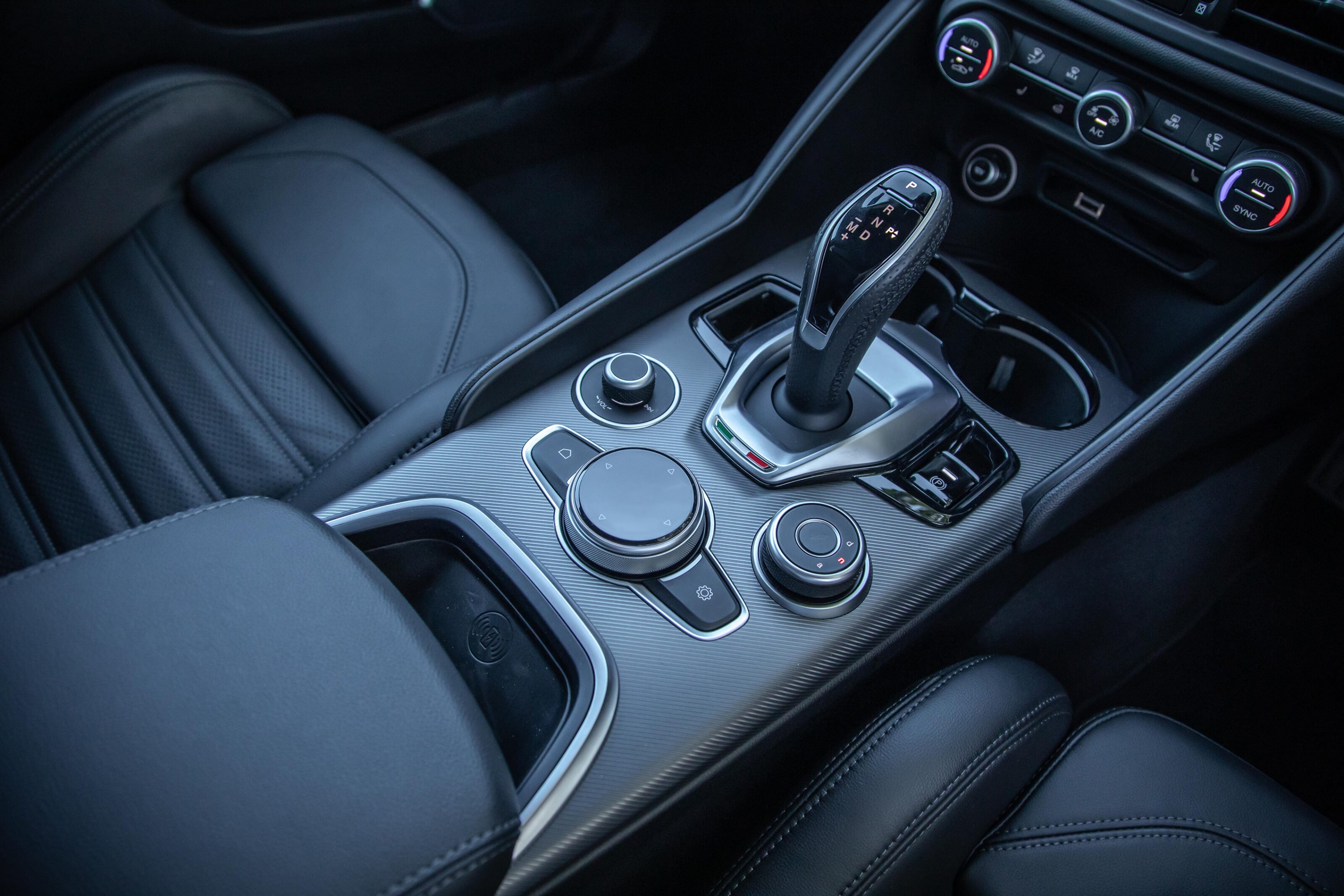
With the DNA mode selector set to D-for-dynamic, it is still tempered enough for around-town punting, the elephant ear paddle-shifters – column-mounted as is Italian favour – largely superfluous for brisk progress.
This new base version augments Alfa Romeo’s brand hallmarks of alluring looks and fine dynamic alacrity with expanded active safety and improved infotainment aimed to keep closer step with key German rivals.
Bar the lack of soundtrack, the Giulia Sport doesn’t feel short-changed. There’s enough in the powertrain’s reserves to serve the chassis’ whims and talents – not the other way around – and the upshot is that no matter how it’s driven there’s a nicely struck balance of character and execution.
It’s been widely reported that the Giorgio chassis is around for a good time though not for a long time. And there’s a fair chance that the provenance with which the Giulia will ride off into the sunset is to hang off the sedan’s well-praised, grin-inducing handling talents.
But it’s better than that, as the Sport demonstrates. The real worth in the underpinnings is the consummate blend of feisty dynamics and commanding ride comfort in tandem, albeit in Lusso enhanced form for best effect.
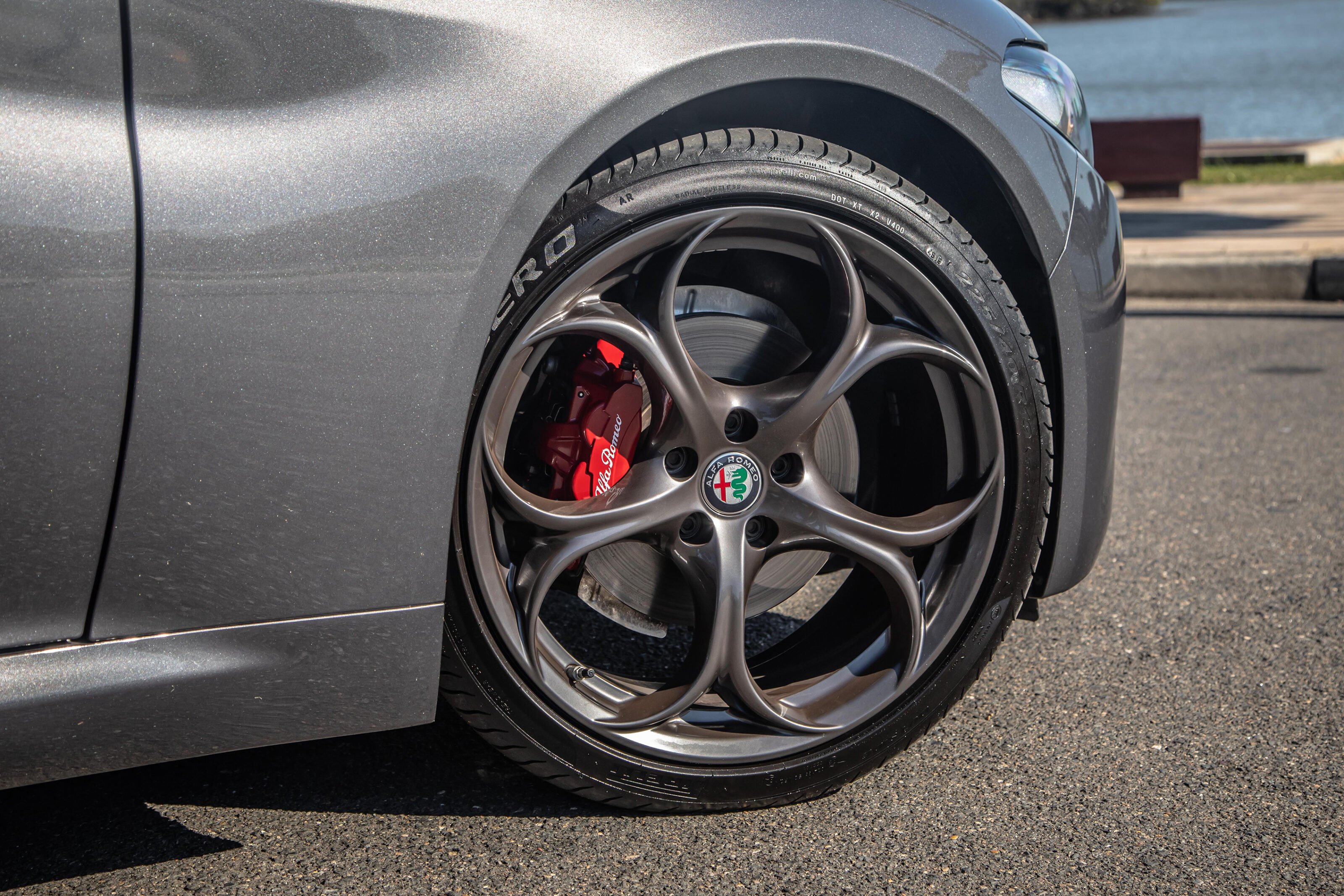
It’s the combination of clear and eager steering, assertive front-end point and sheer enthusiasm to change direction that is impressive. It’s light on its Pirelli P Zero feet, the 225mm front and 255mm rear stagger plying ample grip and augmenting mid-corner poise nicely. It’s joyfully playful once you push on and nigh on tenacious in response once you do even if, in certain situations, its character can become slightly and strangely synthetic in connection.
Case in point are the brakes, identical two- and single-pot hardware to the Veloce and not short on power, though the vaguely wooden pedal does rob them a touch of ultimate precision. Another quirk of the breed is that, according to those who’ve driven a few, Giulias can be dynamically inconsistent from one example to another – especially Quadrifolgio stock – though that’s tough to substantiate and, if there is any truth to opinion, our Vesuvio Grey example is particularly fighting fit example.
For a variant priced at a repmobile tier, the Sport is one helluva package, not merely because it talks the Sporting talk but because on balance it’s quite an accomplished daily runabout. Its manner is evenly tempered, its powertrain is nicely resolved, and there’s nothing flustered or undignified about its character.
The bump control is remarkably good, with fine cushioning and detailed compliance, and the Italian four-door is genuinely comfortable at a cruise bar some inevitable slap from those 35-series licorice-strip rear tyres across square-edged road imperfections. Ride pliancy isn’t sacrificed for body control nor impinges on the sense of connection and intimacy, resulting in a natural duality that can both pander to driving enjoyment and fit the daily-grind executive role confidently.
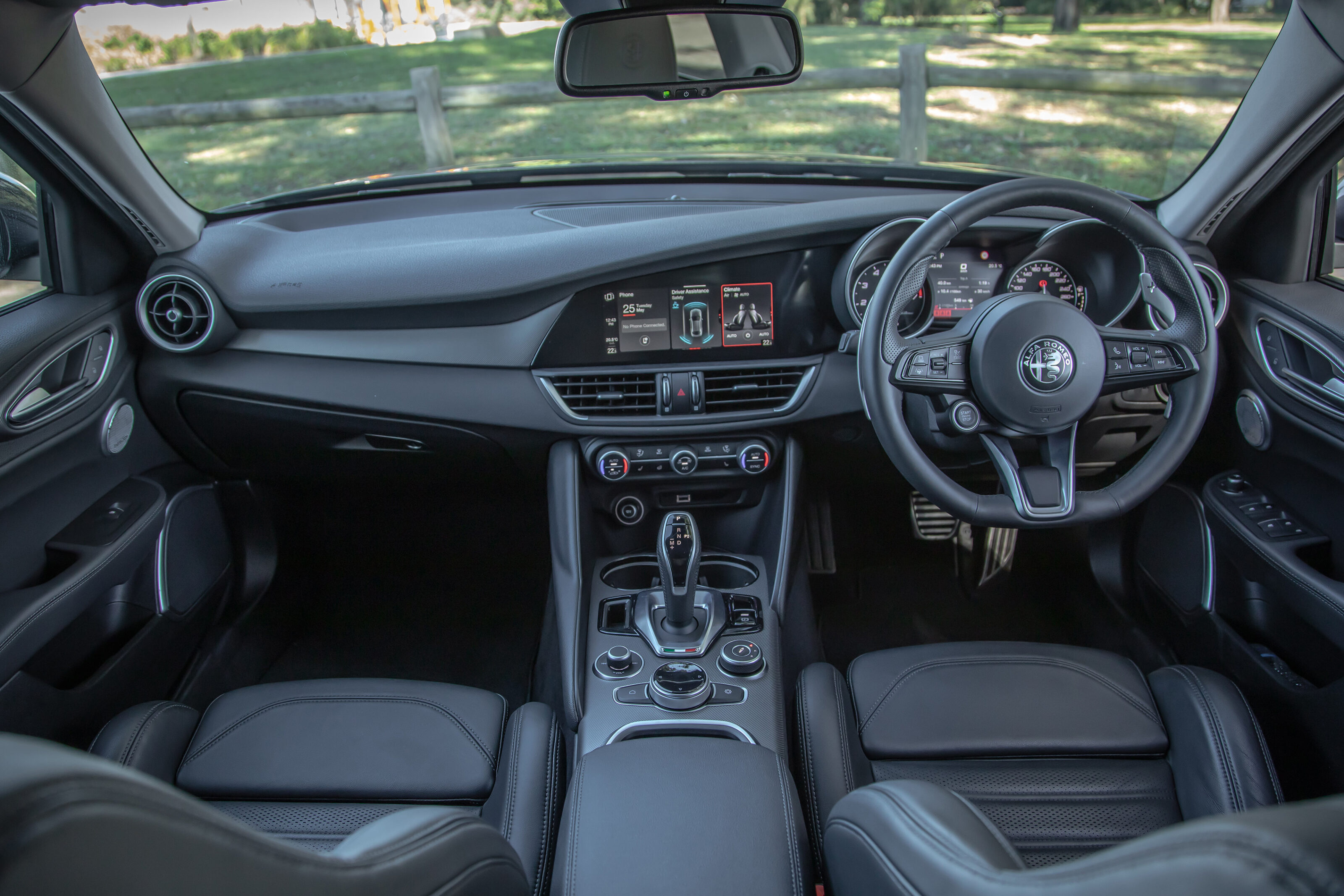
Where the Giulia Sport gets a little heavy-handed is in the cabin, namely the seats. They’re gloriously upmarket for a base variant, with fine waxy genuine leather and a sense of craftsmanship. It’s just the cartoonish side bolsters are so aggressively shaped that the seatbacks that they weld you in, creating discomfort with long seat time, and tend to jam into your elbow when applying steering lock.
And the Giulia’s cabin won’t please all-comers, mostly because it sticks to its ‘classic’ lane and foregoes the audacious digital heavy-handedness pedalled by German rivals. Somewhat bland in some eyes, but for traditionalist tastes like yours truly, the austere format is a selling point.
The real worth in the underpinnings is the consummate blend of feisty dynamics and commanding ride comfort in tandem, albeit in Lusso enhanced form for best effect.
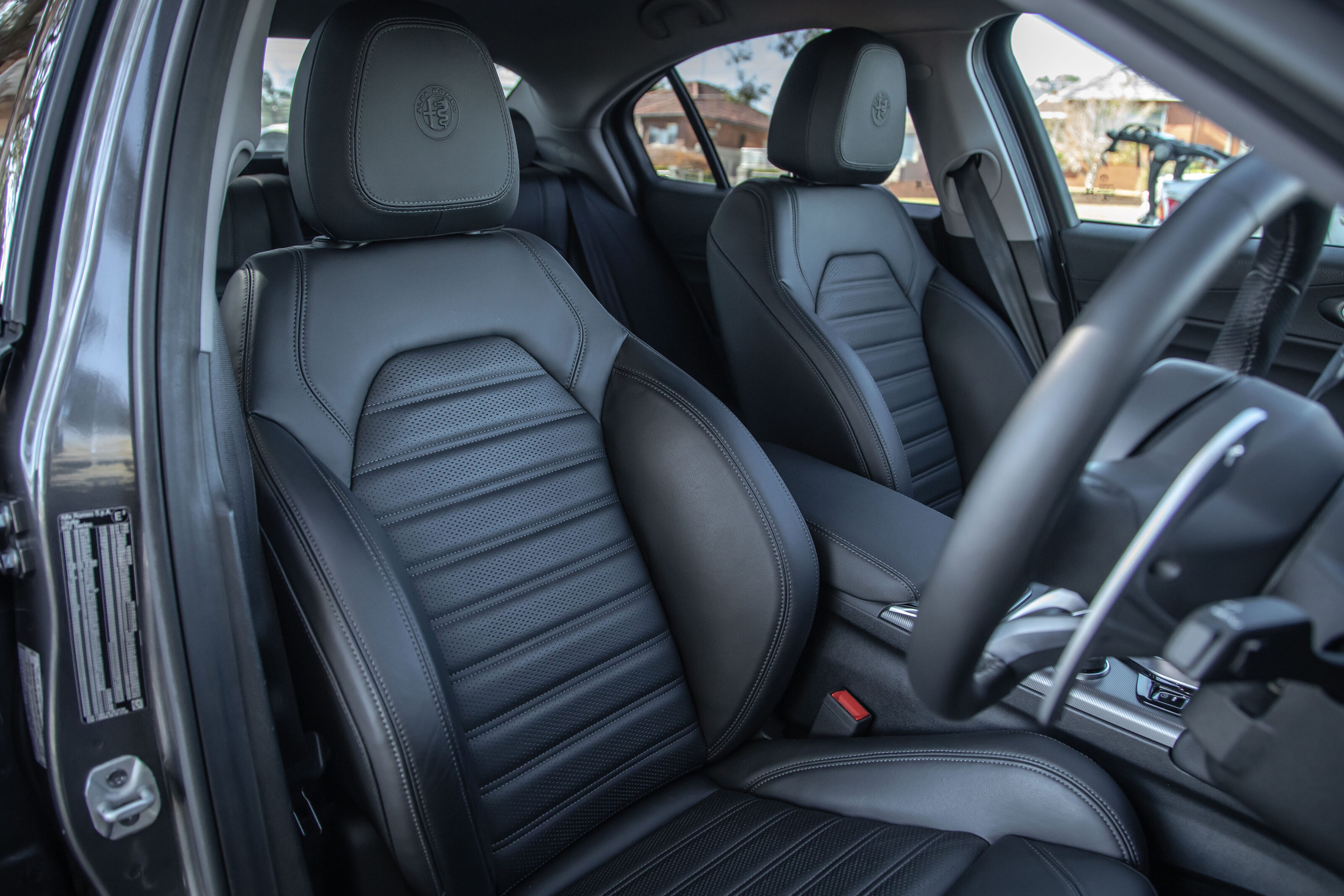
The black theme, as tested, is the least interesting choice of three: the optional red and tan alternatives do it better justice. But the blend of materials and gloss-free satin look is, for the most part, quite classy. But key model-year updates such as those racy pews with heating and driver memory, the revamped heated leather wheel, new alloy pedals and the like, weigh in stronger with the more upmarket vibe and ambience.
Also relatively new is the 8.8-inch touchscreen with its proprietary sat-nav, DAB+, Apple CarPlay and Android Auto mirroring is an infotainment improvement. But despite the trendy tile format software and sharp resolution, the system is more Band-Aid than boon, with its small-for-segment screen awkwardly positioned in the flowing dash fascia and a user interface that is clunky whether you use the touchscreen or control rotary controller, the latter having gained a more solid feel than the old hardware it replaces.
Many of the other controls, switches and dials, though, remain cheap and flimsy, one area that really drags the sense of quality down a few pegs.
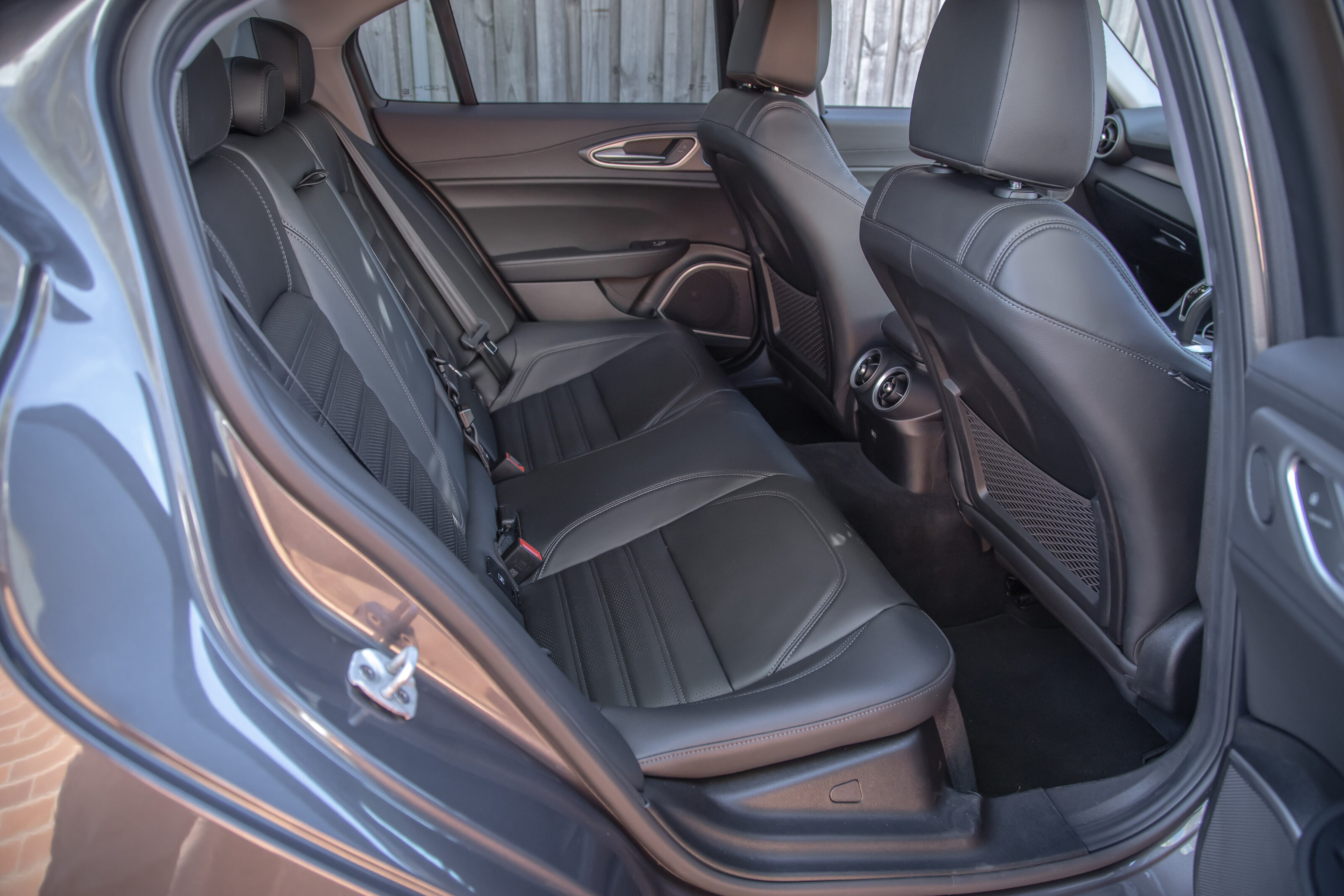
The sound, driver-centric ergonomics up front are mirrored in the back with a sharply angled seat base and strong plus-two leanings with the seatback sculpting. It’s not the roomiest four-door in the segment but with ample clearance to prove decent four-adult comfort. The deep, carpeted boot offers a decent 480 litres of luggage space and there’s no spare wheel, though the humongous truck-sized battery is hidden in the boot wall serves as one measure to help achieve Giulia’s ideal 50:50 front-rear weight distribution.
This latest update has bolstered the entry Giulia’s safety credentials by adding lane-keeping assistance, collision avoidance smarts in its so-called Active Blind Spot system and traffic sign recognition to an otherwise broad-coverage suite that includes all-speed AEB and contributed to the range’s 2016 five-star ANCAP assessment.
Less assuring is the slim three-year/150,000-kilometre warranty and perhaps a little more factory faith might inspire more ownership confidence for a marque that, deservedly or not, is stigmatised with a reputation for less than stellar reliability.
This mightn’t deter the ‘Alfisti’ though it might remain a fair sticking point to those with their gaze fixed on Germany, exactly the people this smarter, techier, safer and more lavishly equipped base Giulia hopes to seduce.
The Sport has a lot going for it: expensive looks and keen sporting focus that talks the talk, at an enticing price point usually reserved for premium-badged humdrum. Importantly, it’s also a fine daily driver and a comfortable grand tourer. And that it digs deeper into the well-worn and inimitable lane that sets itself apart from other Euros could be considered a major drawcard.
It’s far from flawless, which importantly, makes it more Alfa Romeo in spirit, as it should be. And it’s all the more compelling as a result.
2021 Alfa Romeo Giulia Sport specifications
| Body: | 4-door, 5-seat sedan |
|---|---|
| Drive: | rear-wheel drive |
| Engine: | 1998cc inline four, DOHC, 16v, turbocharged |
| Bore/stroke: | 84.0 x 90.0mm |
| Compression: | 10.0:1 |
| Power: | 147kW @ 5000rpm |
| Torque: | 330Nm @ 1750rpm |
| 0-100km/h: | 6.6sec (claimed) |
| Fuel consumption: | 6.0L/100km (combined/claimed) |
| Weight: | 1394kg (tare mass) |
| Power/weight: | 105kW/tonne |
| Transmission: | eight-speed torque converter automatic |
| Suspension: | double A-arms, coil springs, dampers, anti-roll bar (f); multi-links, coil springs, dampers, anti-roll bar (r) |
| L/W/H: | 4643/1860/1436mm |
| Wheelbase: | 2820mm |
| Tracks: | 1557/1625mm |
| Steering: | electrically assisted rack-and-pinion |
| Brakes: | 330mm ventilated discs, two-piston calipers (r); 320mm discs, single-piston calipers (r) |
| Wheels: | 19 x 8.0-inch (f); 19 x 9.0-inch (r) |
| Tyres: | 225/40 R19 (f); 255/35 R19 (r) Pirelli P Zero |
| Price: | $63,950 + ORC |
Ferrari has its foot firmly on the throttle as it pushes further into a future demanding both lower emissions and higher performance.
The Ferrari 296 GTB is Maranello’s first return to a six-cylinder engine since the Dino 246 GT was launched back in 1974, but the addition of hybridisation means it’s far removed from an ‘affordable’ entry-level model. With huge outputs and ultra-advanced electronics, it’s a true junior supercar, and seems certain to ultimately elbow the F8 out of the Ferrari line-up. It’s also likely to cost about $500,000 when it makes it to Australia in 2022.
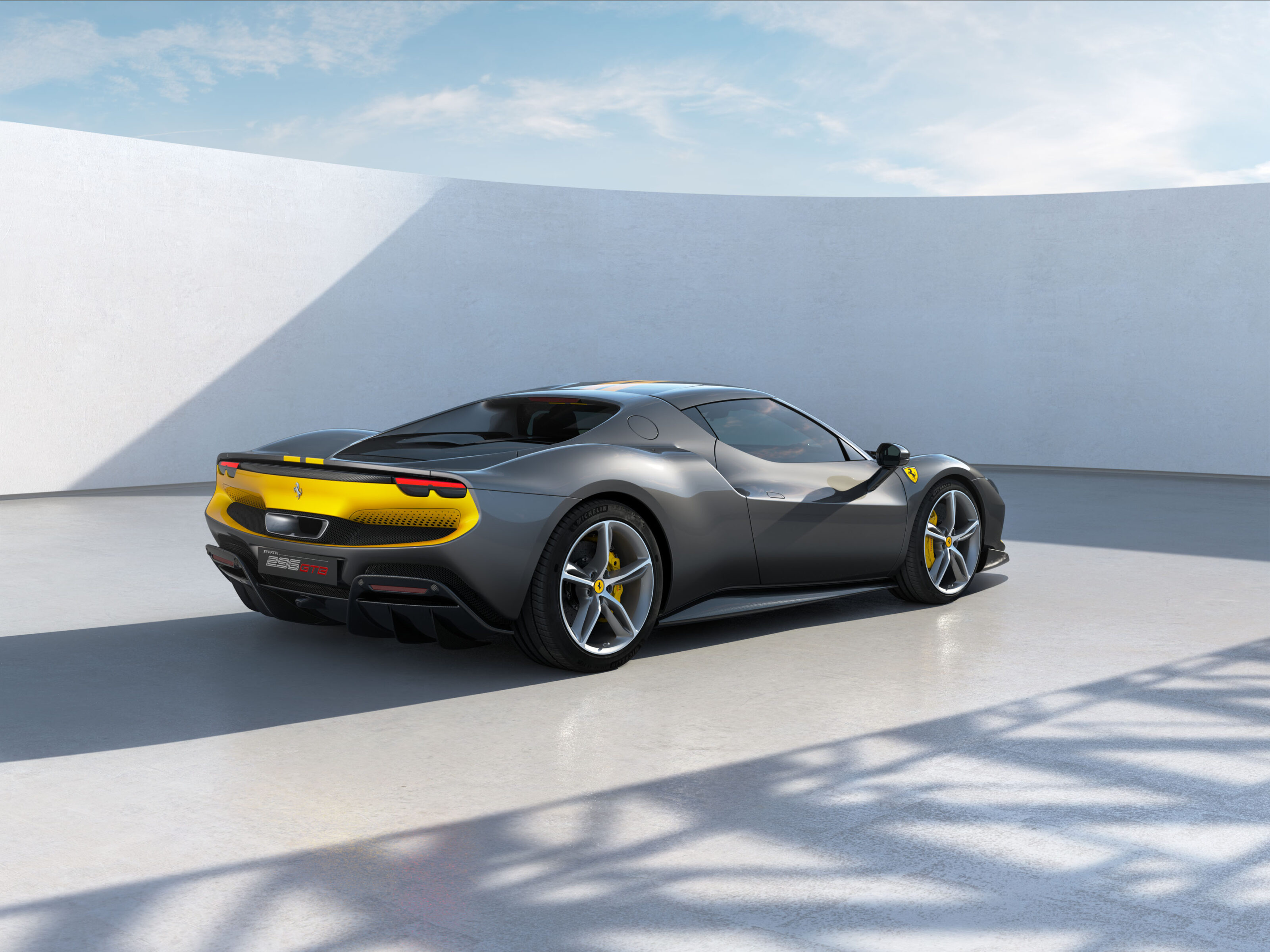
But back to that F163 twin-turbo V6, which is a genuine benchmark. Making a whopping 163kW per litre – 488kW from 2992cc – it boasts the highest specific output of any production car engine, toppling the AMG A45 S and its 155kW-per-litre M139 2.0-litre turbo.
With the optional Assetto Fiorano package, the 296 GTB is among the fastest horses to ever tackle Fiorano, posting the same lap time as the F12tdf of 1m:21sec. It’s a mere two seconds slower than the demonic SF90 Stradale hybrid.
Central to the 296 GTB’s stunning performance is all that Ferrari has learned from the SF90 and the F1- derived MGU-K e-motors and PHEV architecture. Applied to this rear-drive layout, the motor (sandwiched between the engine and eight-speed dual-clutch gearbox) delivers an additional 122kW, giving the new car total outputs of 610kW and 740Nm. A relatively small 7.45kWh battery pack offers a claimed pure-electric range of 25km up to a maximum of 135km/h.
At the other end of its performance spectrum, the 296 GTB can hit 100km/h in 2.9 seconds, while 0-200km/h takes just 7.3sec.
For context, the recently revealed McLaren Artura, also running a hybrid V6 powertrain, hits that latter benchmark a full second later (8.3sec), suggesting that on both price and performance, the 296 GTB will be a closer rival for McLaren’s 720S.
The similarities to the Artura run deeper than powertrain layout. Like the McLaren, Ferrari has opted for a vee angle of 120 degrees, to improve packaging and efficiency. Two symmetrical turbochargers mounted within the engine vee can spin to 180,000rpm, while max engine speed is 8500rpm.
Central to the 296 GTB’s stunning performance is all that Ferrari has learned from the SF90 and the F1- derived MGU-K e-motors and PHEV architecture.
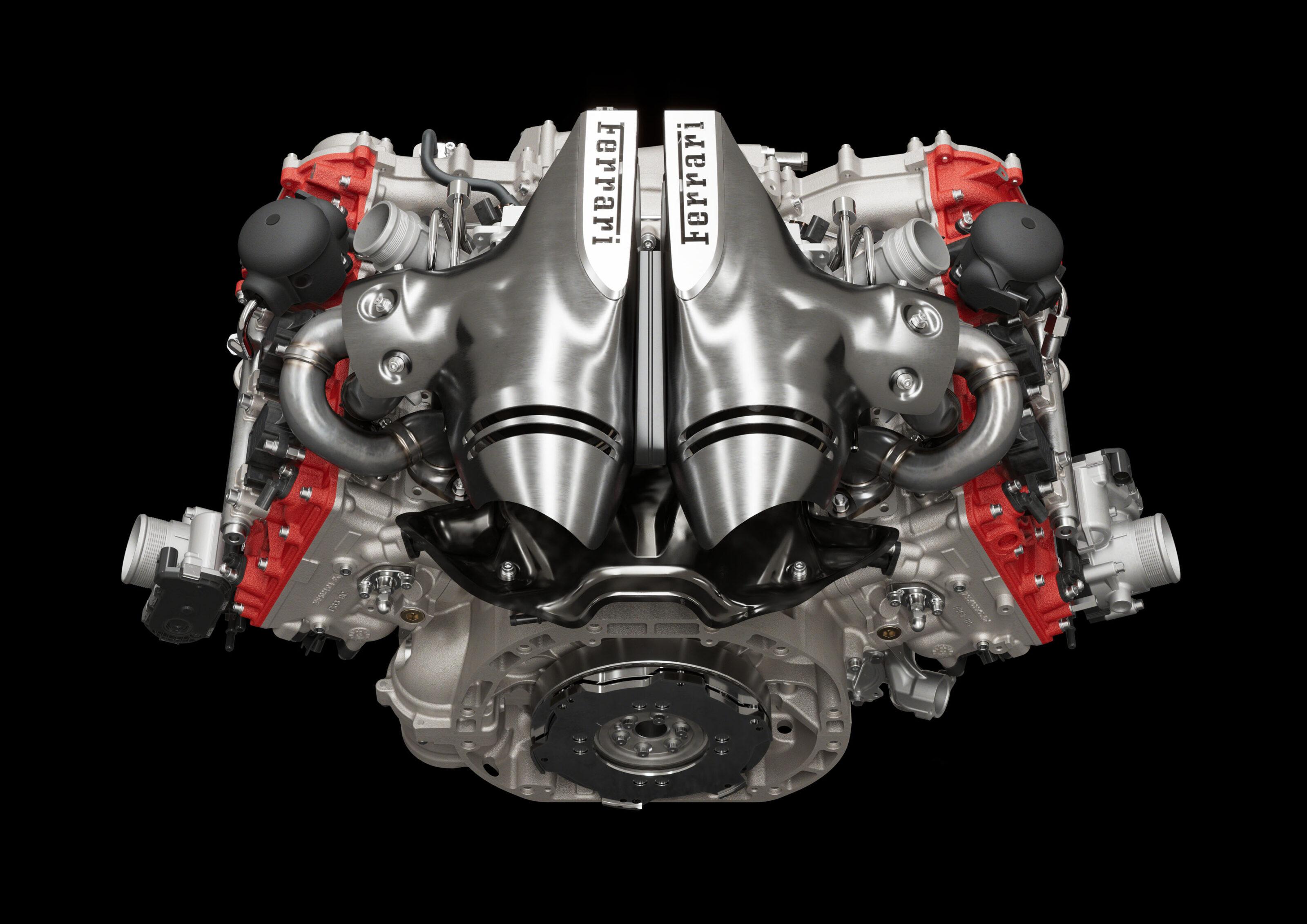
The F163 engine shares its bore and stroke with Maserati’s Nettuno engine powering the MC20 supercar, but both brands claim this is coincidence.
Arguably just as significant as the new engine is the revised chassis in which it sits. The 296 GTB runs a wheelbase a full 50mm shorter than that of the F8-based cars, assuring supreme agility, while the claimed dry weight is 1470kg, only slightly heavier than the V8 coupe, despite the 296’s motor and battery.
As well as being compact, the 296 also features the first use of six-way chassis dynamics sensors to feed data to an even more advanced version of Side Slip Control, the driver aid that helps manage drift angle. The software takes inputs from the chassis sensors and can estimate the amount of grip at the rear tyres to provide just enough ESC assistance to keep the car in a controlled slide.
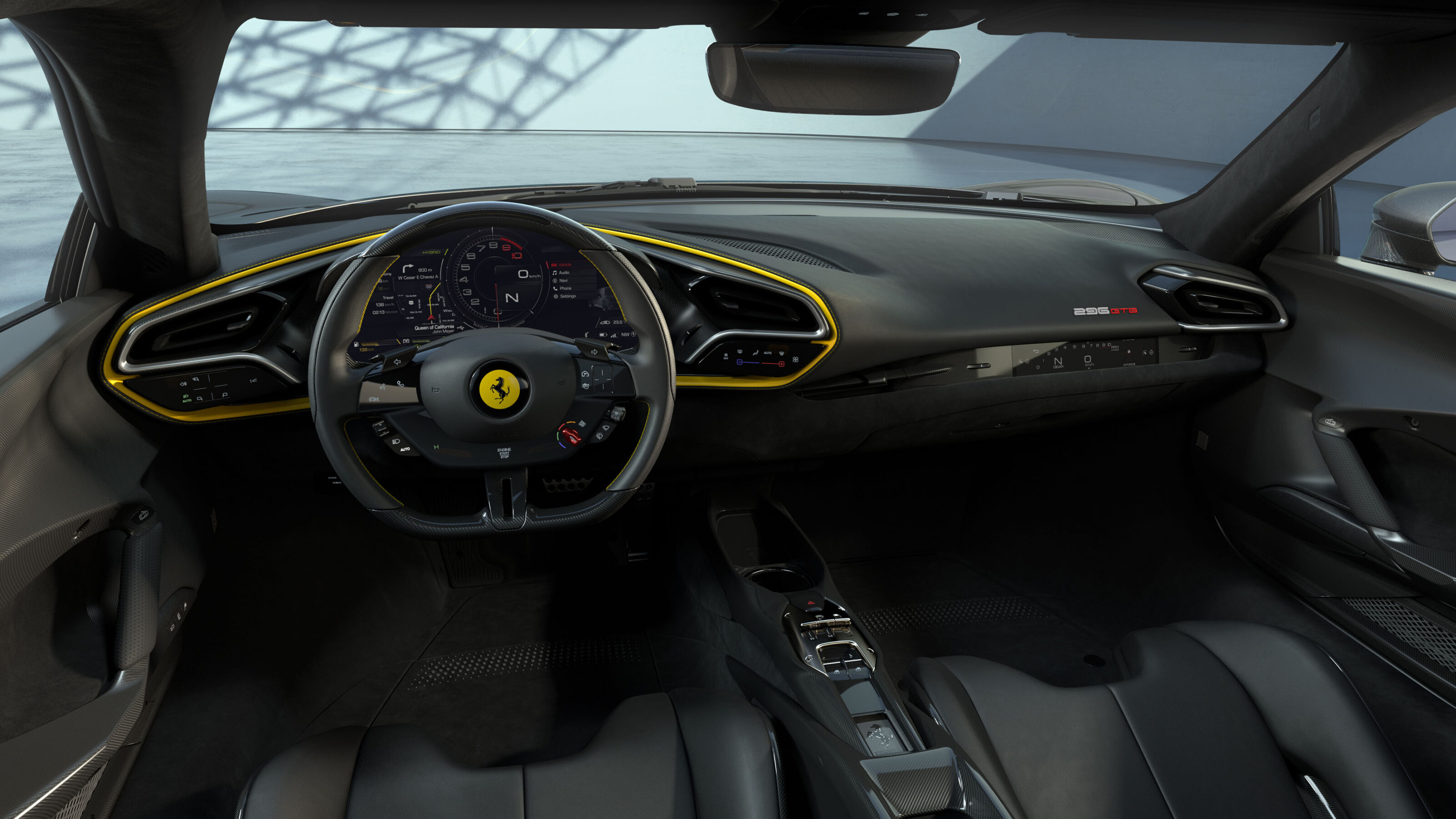
Inside, a digital interface follows the SF90’s lead, but aims to simplify the user experience. Given the outlandish performance available, minimal driver distraction sounds like a very sound approach.
The reasoning behind the 296 GTB’s V6
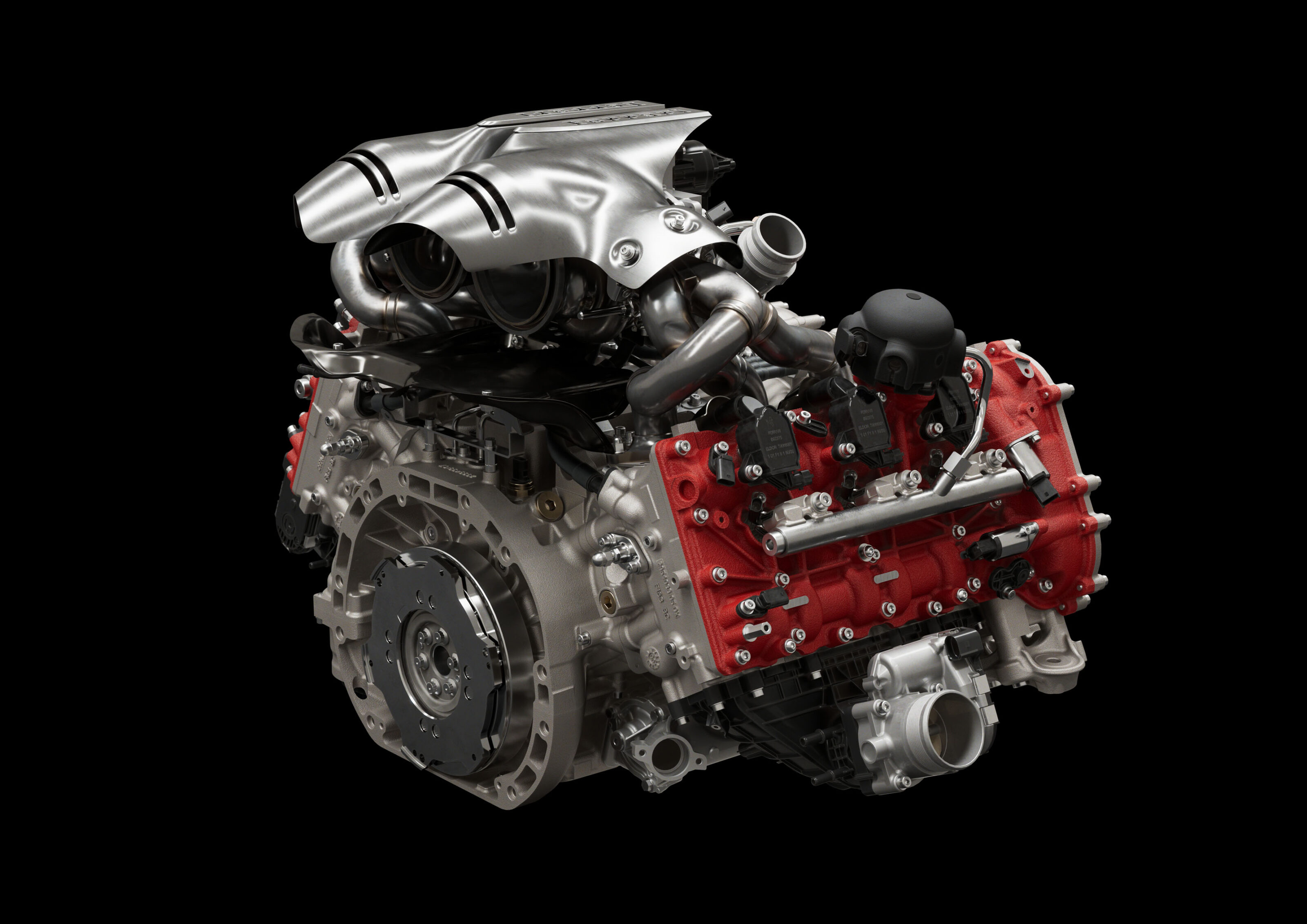
Both Ferrari and McLaren have now built 120-degree V6 engines. Why? Packaging and balance. The ultra-wide vee angle delivers an engine flatter than one at 90 degrees, lowering the CoG. It also leaves more space for mounting the pair of hot-vee turbos, allowing shorter plumbing and therefore more immediate response. Similarly, it allows the exhaust to be optimised for length and direction. Ferrari thinks the new V6 is so acoustically reminiscent of previous hero engines, it’s referring to it as the ‘piccolo V12’.
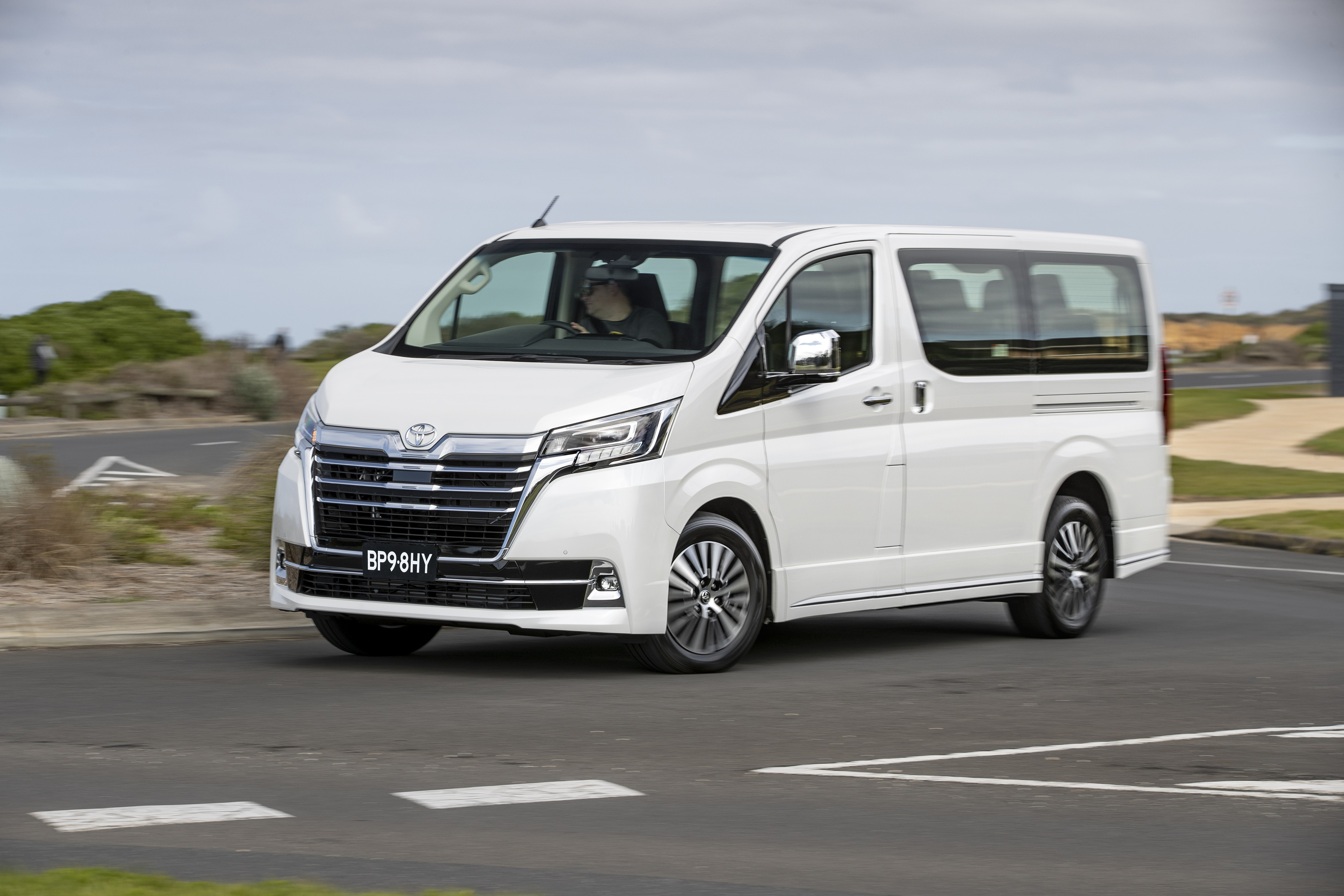
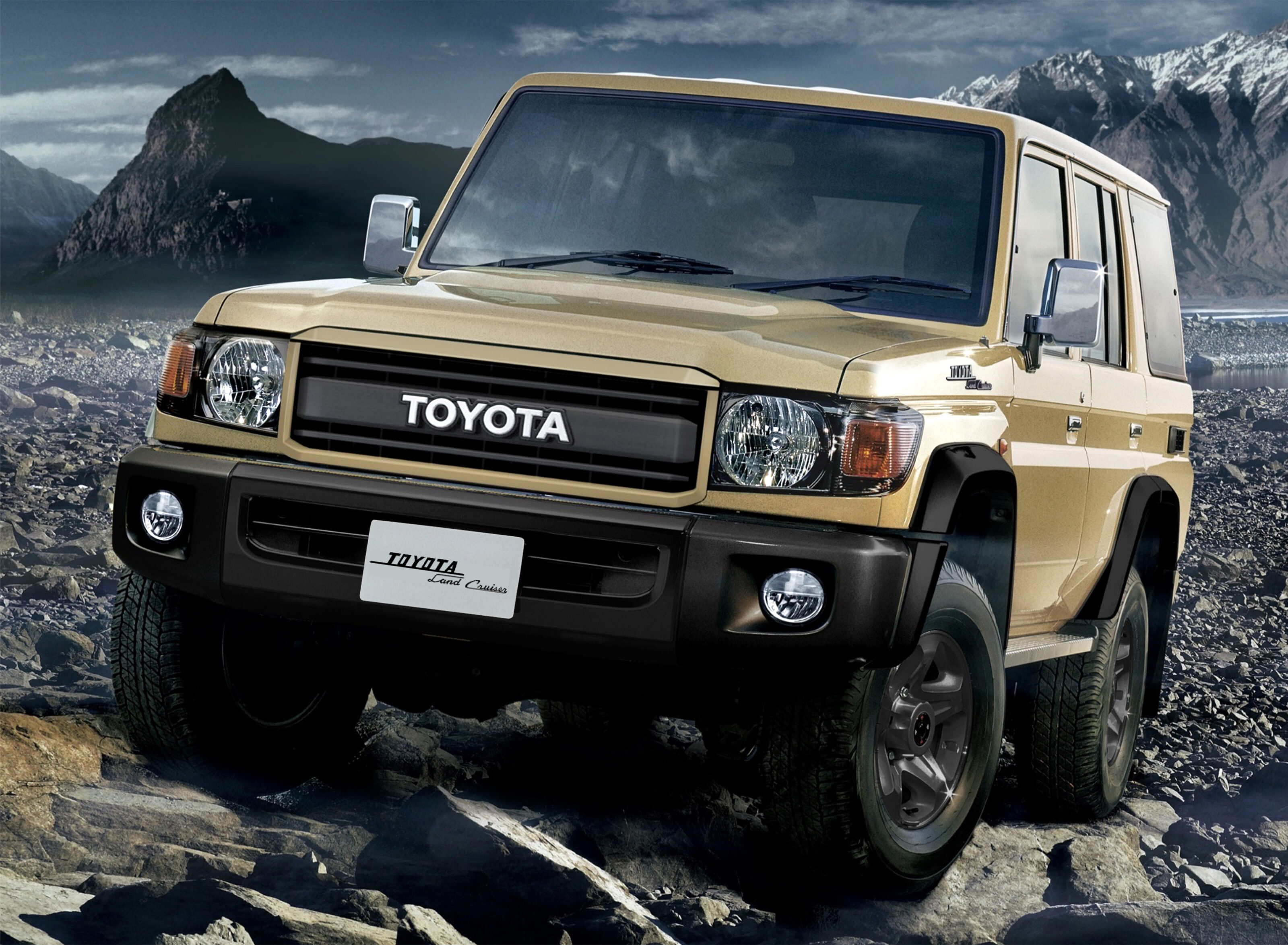
Toyota has the greatest chance of being recommended of any business in Australia, based on a new study by market research and data analytics firm YouGov.
Factoring in a range of considerations – such as customer experience, brand image and brand values – the study found Toyota is likely to be recommended by 87.7 per cent of owners, blitzing the field to take the number one spot.
Honda took sixth place, with an 82.8 per cent rate. In seventh place is Mazda (82.7 per cent), while Hyundai was the tenth most recommended brand at 82.5 per cent.
The result saw the Japanese car manufacturer beat a host of other popular companies in Australia, including; Jack Daniels, La Roche Posay and Singapore Airlines – trailing behind in second, third and fourth place respectively.
Asahi, Honda, Mazda, Jim Beam, Heineken and Hyundai make up the remainder of the top ten list.
Based on the YouGov Brand Index score, the study measured the percentage of customers from a brand that would recommend the product to a friend or colleague, with data compiled from June 1, 2020 to May 31, 2021. A minimum sample of 300 customers were studied per brand.
Australia was the only nation to feature strong recommendation rates for automotive brands.
| Rank | Brand | Score |
|---|---|---|
| 1 | Toyota | 87.7 |
| 2 | Jack Daniels | 86.5 |
| 3 | La Roche Posay | 85.7 |
| 4 | Singapore Airlines | 84.1 |
| 5 | Asahi | 83.3 |
| 6 | Honda | 82.8 |
| 7 | Mazda | 82.7 |
| 8 | Jim Beam | 82.7 |
| 9 | Heineken | 82.5 |
| 10 | Hyundai | 82.5 |
It wasn’t until Lamborghini whipped the covers off the stunning Miura in 1966 that the world had really stopped to consider the benefits of a mid-engined layout. Hell, even in the ’50s, Grand Prix cars still had their engines in front of the driver.
This article was first published in the August, 2011 issue of MOTOR
For a performance car, the advantages of mid-mounting the powerplant are pretty obvious. The only problem is that they start and stop – pretty much – with weight distribution.
The mid-engined layout might help handling, but it can also be a bitch to access for servicing, generally rules out a rear seat, restricts luggage space (and shape) and is undoubtedly more expensive to manufacture.
It’s for all those latter reasons that the mid-engined layout has consistently failed to become the default setting for the motor industry. Which is why companies like Ferrari restricts the layout to its sportscars, while its GTs have traditionally been – and remain – front-engined.
But it’s not just Ferrari that makes such a distinction, and the end result is not necessarily a GT, either. Plenty of other manufacturers follow the same set of rules and turn out genuinely good, high-performance cars. And here are three of them right now.
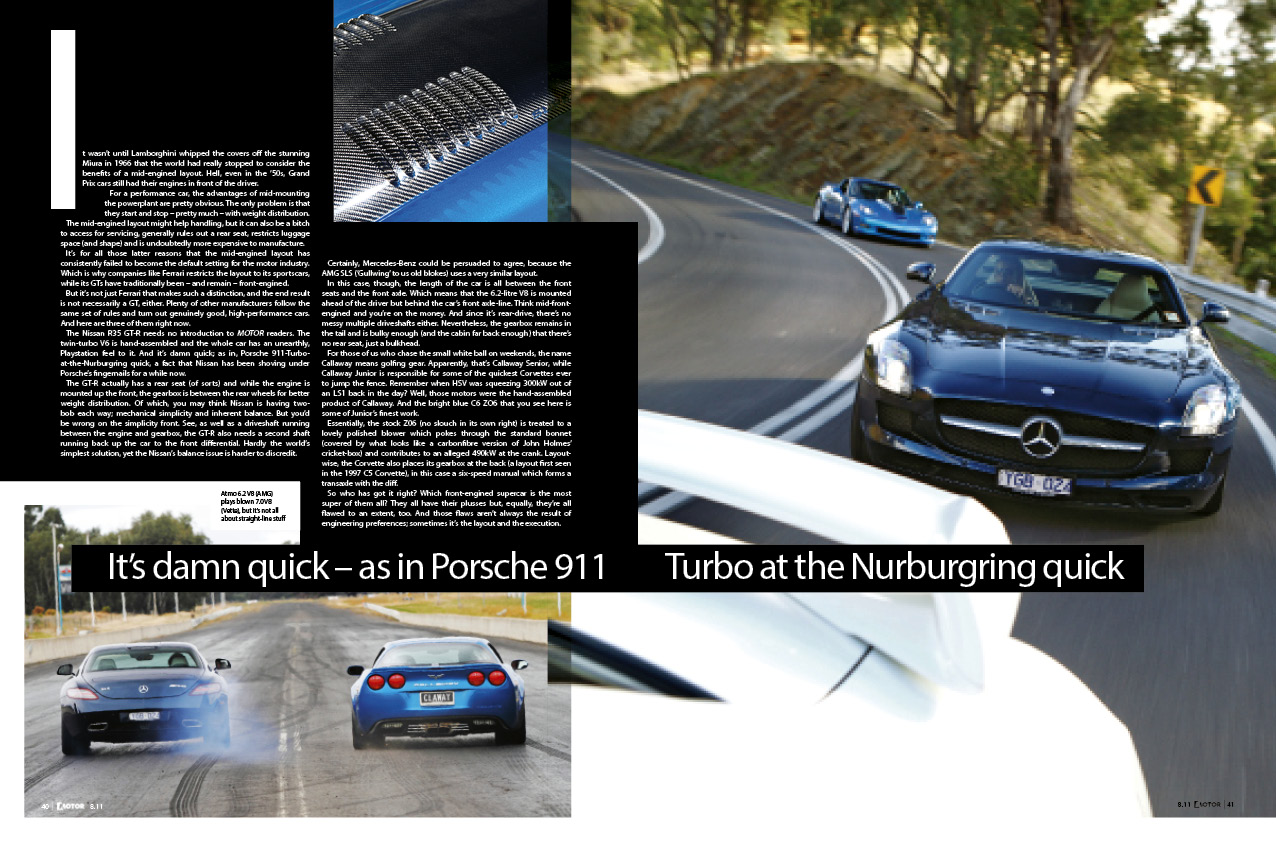
The Nissan R35 GT-R needs no introduction to MOTOR readers. The twin-turbo V6 is hand-assembled and the whole car has an unearthly, Playstation feel to it. And it’s damn quick; as in, Porsche 911-Turbo-at-the-Nurburgring quick, a fact that Nissan has been shoving under Porsche’s fingernails for a while now.
The GT-R actually has a rear seat (of sorts) and while the engine is mounted up the front, the gearbox is between the rear wheels for better weight distribution. Of which, you may think Nissan is having two-bob each way; mechanical simplicity and inherent balance.
But you’d be wrong on the simplicity front. See, as well as a driveshaft running between the engine and gearbox, the GT-R also needs a second shaft running back up the car to the front differential. Hardly the world’s simplest solution, yet the Nissan’s balance issue is harder to discredit.
Certainly, Mercedes-Benz could be persuaded to agree, because the Mercedes-Benz SLS (‘Gullwing’ to us old blokes) uses a very similar layout.
In this case, though, the length of the car is all between the front seats and the front axle. Which means that the 6.2-litre V8 is mounted ahead of the driver but behind the car’s front axle-line. Think mid-front-engined and you’re on the money. And since it’s rear-drive, there’s no messy multiple driveshafts either. Nevertheless, the gearbox remains in the tail and is bulky enough (and the cabin far back enough) that there’s no rear seat, just a bulkhead.
“The GT-R doesn’t have quite the steering feel of the Benz, but it hangs on like very few cars ever made – and pretty much none made at this price”
For those of us who chase the small white ball on weekends, the name Callaway means golfing gear. Apparently, that’s Callaway Senior, while Callaway Junior is responsible for some of the quickest Corvettes ever to jump the fence.
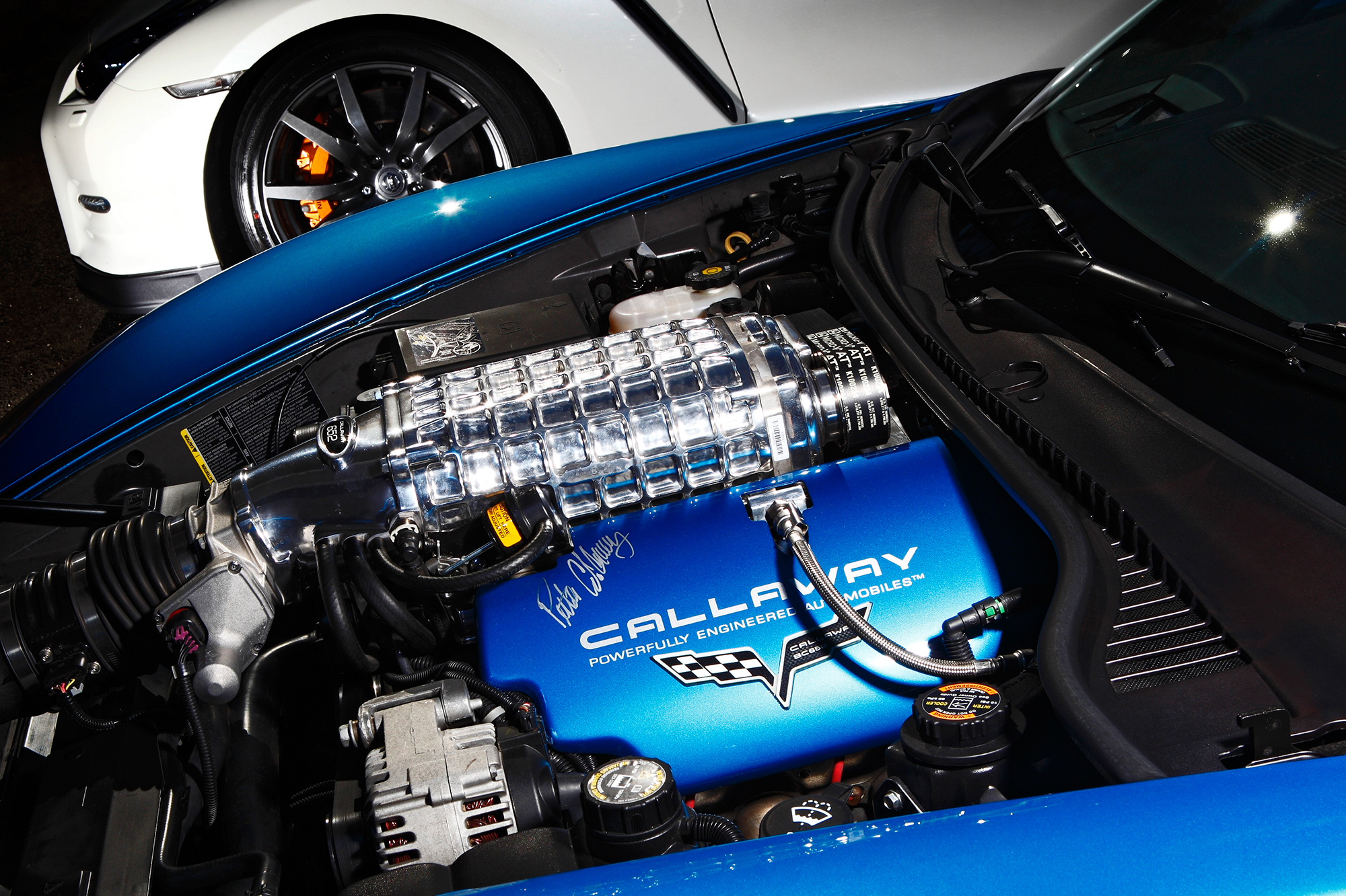
Remember when HSV was squeezing 300kW out of an LS1 back in the day? Well, those motors were the hand-assembled product of Callaway. And the bright blue C6 ZO6 that you see here is some of Junior’s finest work.
Essentially, the stock Z06 (no slouch in its own right) is treated to a lovely polished blower which pokes through the standard bonnet (covered by what looks like a carbonfibre version of John Holmes’ cricket-box) and contributes to an alleged 490kW at the crank. Layout-wise, the Corvette also places its gearbox at the back (a layout first seen in the 1997 C5 Corvette), in this case a six-speed manual which forms a transaxle with the diff.
So who has got it right? Which front-engined supercar is the most super of them all? They all have their plusses but, equally, they’re all flawed to an extent, too. And those flaws aren’t always the result of engineering preferences; sometimes it’s the layout and the execution.
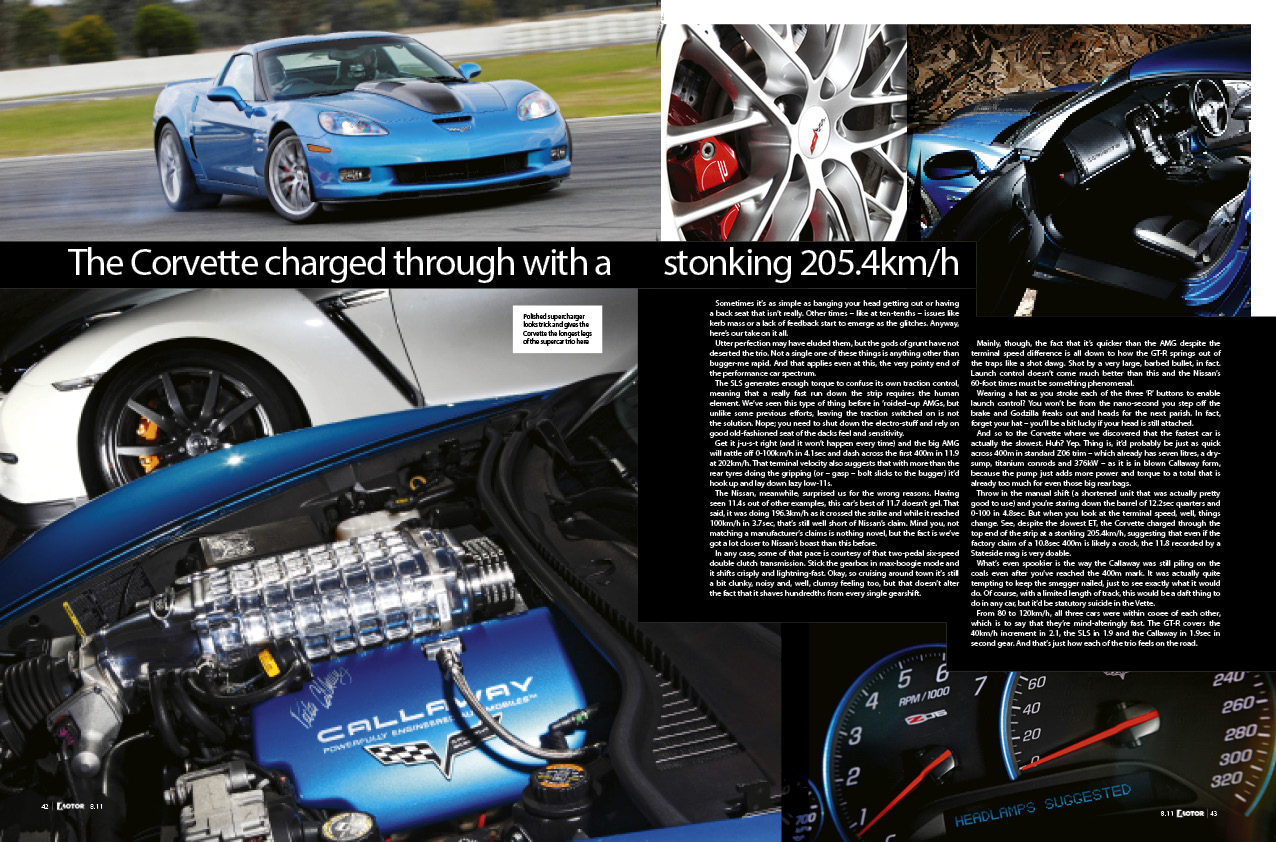
Sometimes it’s as simple as banging your head getting out or having a back seat that isn’t really. Other times – like at ten-tenths – issues like kerb mass or a lack of feedback start to emerge as the glitches. Anyway, here’s our take on it all.
Utter perfection may have eluded them, but the gods of grunt have not deserted the trio. Not a single one of these things is anything other than bugger-me rapid. And that applies even at this, the very pointy end of the performance car spectrum.
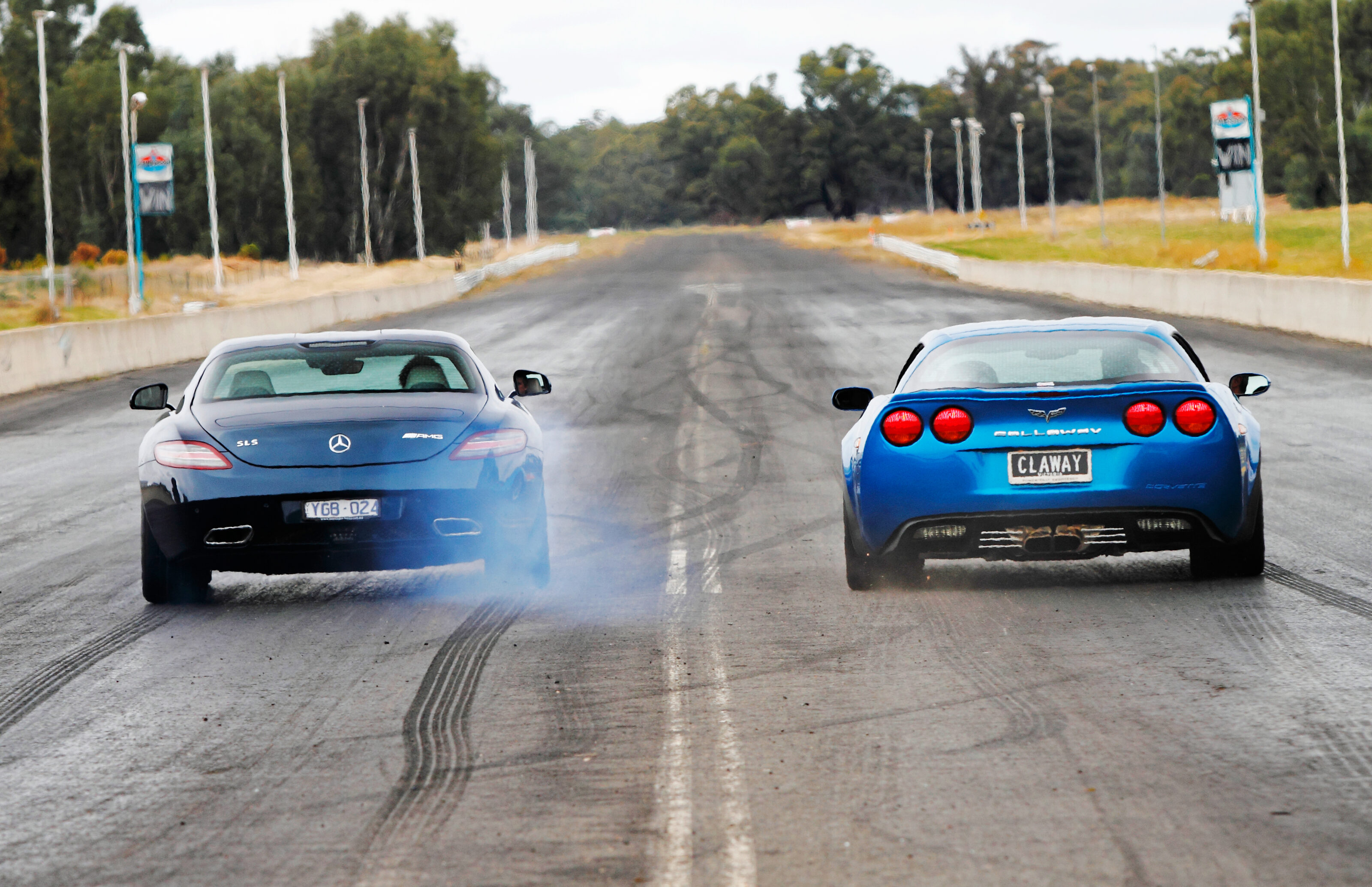
The SLS generates enough torque to confuse its own traction control, meaning that a really fast run down the strip requires the human element. We’ve seen this type of thing before in ’roided–up AMGs, but unlike some previous efforts, leaving the traction switched on is not the solution. Nope; you need to shut down the electro-stuff and rely on good old-fashioned seat of the dacks feel and sensitivity.
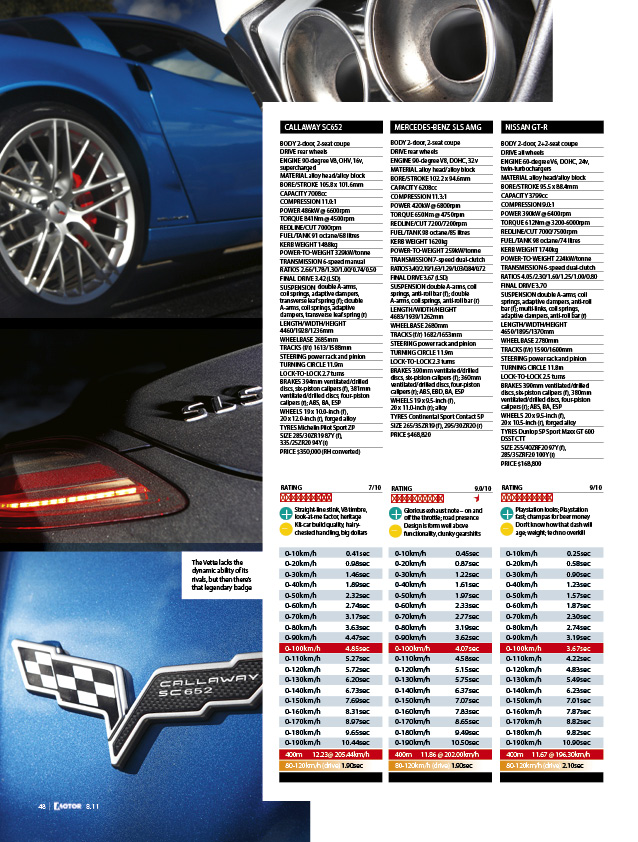
Get it j-u-s-t right (and it won’t happen every time) and the big AMG will rattle off 0-100km/h in 4.1sec and dash across the first 400m in 11.9 at 202km/h. That terminal velocity also suggests that with more than the rear tyres doing the gripping (or – gasp – bolt slicks to the bugger) it’d hook up and lay down lazy low-11s.
The Nissan, meanwhile, surprised us for the wrong reasons. Having seen 11.4s out of other examples, this car’s best of 11.7 doesn’t gel. That said, it was doing 196.3km/h as it crossed the strike and while it reached 100km/h in 3.7sec, that’s still well short of Nissan’s claim. Mind you, not matching a manufacturer’s claims is nothing novel, but the fact is we’ve got a lot closer to Nissan’s boast than this before.
In any case, some of that pace is courtesy of that two-pedal six-speed double clutch transmission. Stick the gearbox in max-boogie mode and it shifts crisply and lightning-fast. Okay, so cruising around town it’s still a bit clunky, noisy and, well, clumsy feeling too, but that doesn’t alter the fact that it shaves hundredths from every single gearshift.
Mainly, though, the fact that it’s quicker than the AMG despite the terminal speed difference is all down to how the GT-R springs out of the traps like a shot dawg. Shot by a very large, barbed bullet, in fact. Launch control doesn’t come much better than this and the Nissan’s 60-foot times must be something phenomenal.
Wearing a hat as you stroke each of the three ‘R’ buttons to enable launch control? You won’t be from the nano-second you step off the brake and Godzilla freaks out and heads for the next parish. In fact, forget your hat – you’ll be a bit lucky if your head is still attached.
And so, to the Corvette where we discovered that the fastest car is actually the slowest. Huh? Yep. Thing is, it’d probably be just as quick across 400m in standard Z06 trim – which already has seven litres, a dry-sump, titanium conrods and 376kW – as it is in blown Callaway form, because the pump just adds more power and torque to a total that is already too much for even those big rear bags.
Throw in the manual shift (a shortened unit that was actually pretty good to use) and you’re staring down the barrel of 12.2sec quarters and 0-100 in 4.8sec. But when you look at the terminal speed, well, things change. See, despite the slowest ET, the Corvette charged through the top end of the strip at a stonking 205.4km/h, suggesting that even if the factory claim of a 10.8sec 400m is likely a crock, the 11.8 recorded by a Stateside mag is very doable.
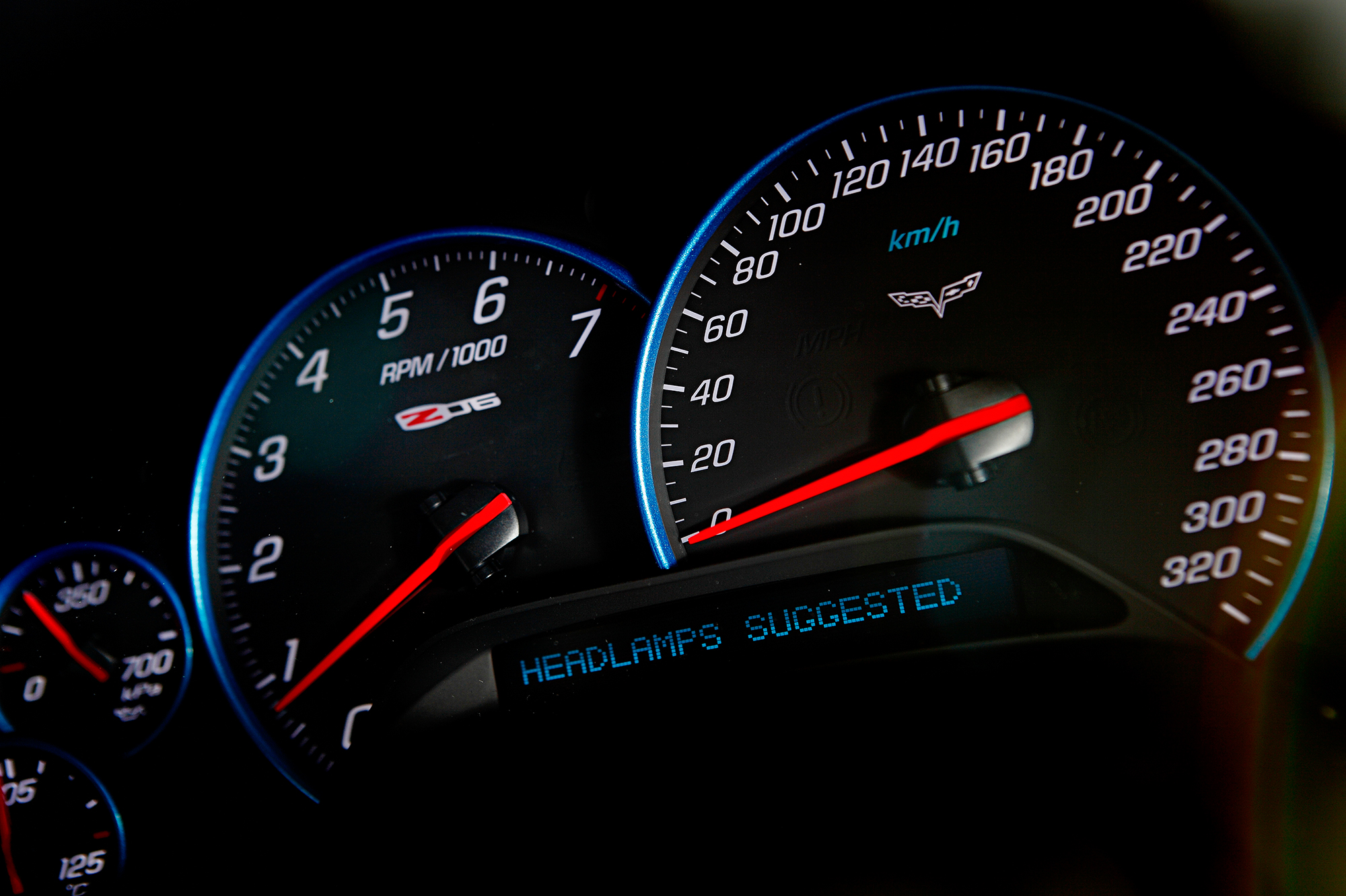
What’s even spookier is the way the Callaway was still piling on the coals even after you’ve reached the 400m mark. It was actually quite tempting to keep the smegger nailed, just to see exactly what it would do. Of course, with a limited length of track, this would be a daft thing to do in any car, but it’d be statutory suicide in the Vette.
From 80 to 120km/h, all three cars were within cooee of each other, which is to say that they’re mind-alteringly fast. The GT-R covers the 40km/h increment in 2.1, the SLS in 1.9 and the Callaway in 1.9sec in second gear. And that’s just how each of the trio feels on the road.
The six-speed DSG in the Nissan can take some waking up (it shifts down each gear one at a time) while the AMG just skips a cog or three and bolts. And the Corvette, pretty much regardless of what gear it’s in, uses that blown torque-wave to simply blast off. Line up an overtake of a B-double in the plastic Yank and you’d be doing serious jail time speeds by the time you were passed and tucked back in.
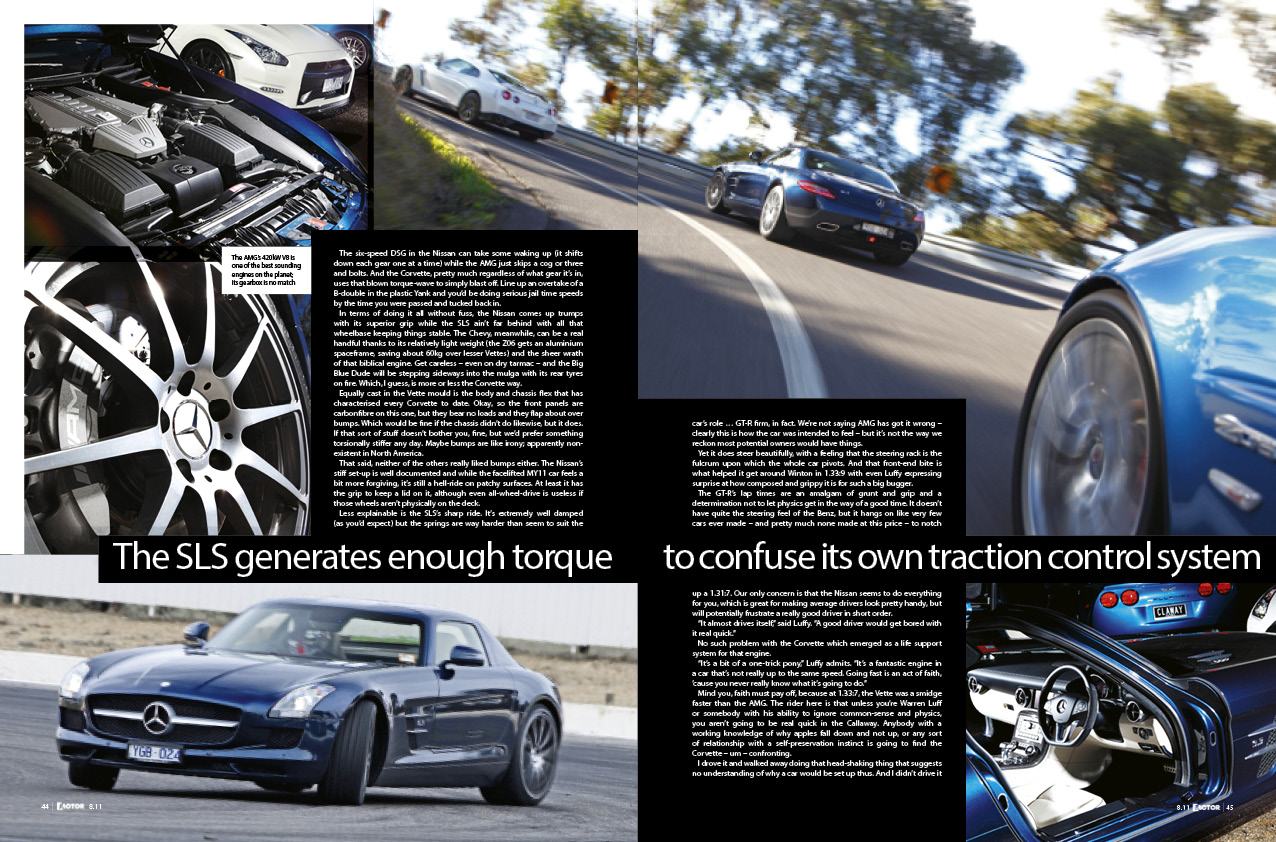
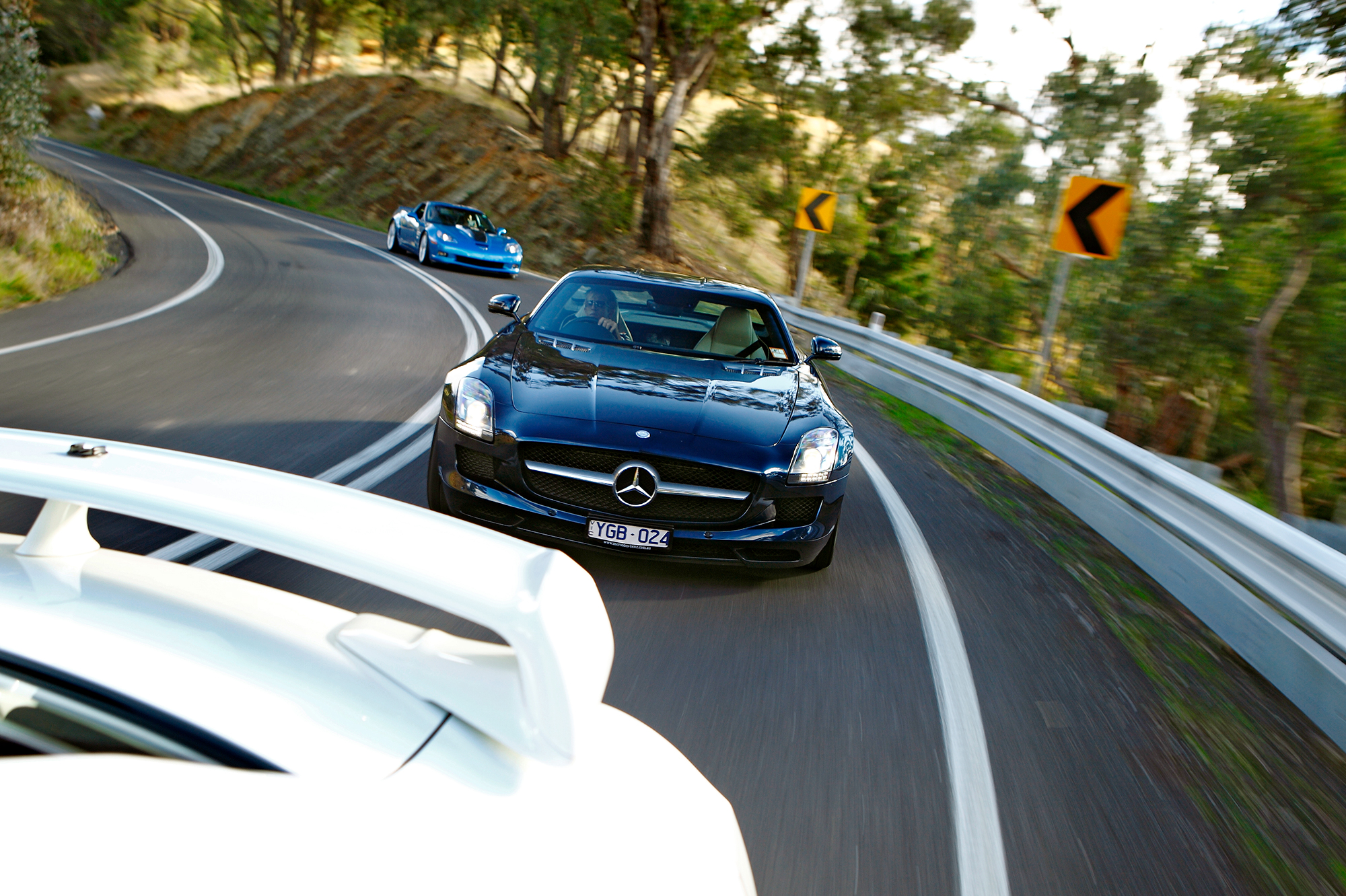
In terms of doing it all without fuss, the Nissan comes up trumps with its superior grip while the SLS ain’t far behind with all that wheelbase keeping things stable. The Chevy, meanwhile, can be a real handful thanks to its relatively light weight (the Z06 gets an aluminium spaceframe, saving about 60kg over lesser Vettes) and the sheer wrath of that biblical engine. Get careless – even on dry tarmac – and the Big Blue Dude will be stepping sideways into the mulga with its rear tyres on fire. Which, I guess, is more or less the Corvette way.
Equally cast in the Vette mould is the body and chassis flex that has characterised every Corvette to date. Okay, so the front panels are carbonfibre on this one, but they bear no loads and they flap about over bumps. Which would be fine if the chassis didn’t do likewise, but it does. If that sort of stuff doesn’t bother you, fine, but we’d prefer something torsionally stiffer any day. Maybe bumps are like irony; apparently non-existent in North America.
That said, neither of the others really liked bumps either. The Nissan’s stiff set-up is well documented and while the facelifted MY11 car feels a bit more forgiving, it’s still a hell-ride on patchy surfaces. At least it has the grip to keep a lid on it, although even all-wheel-drive is useless if those wheels aren’t physically on the deck.
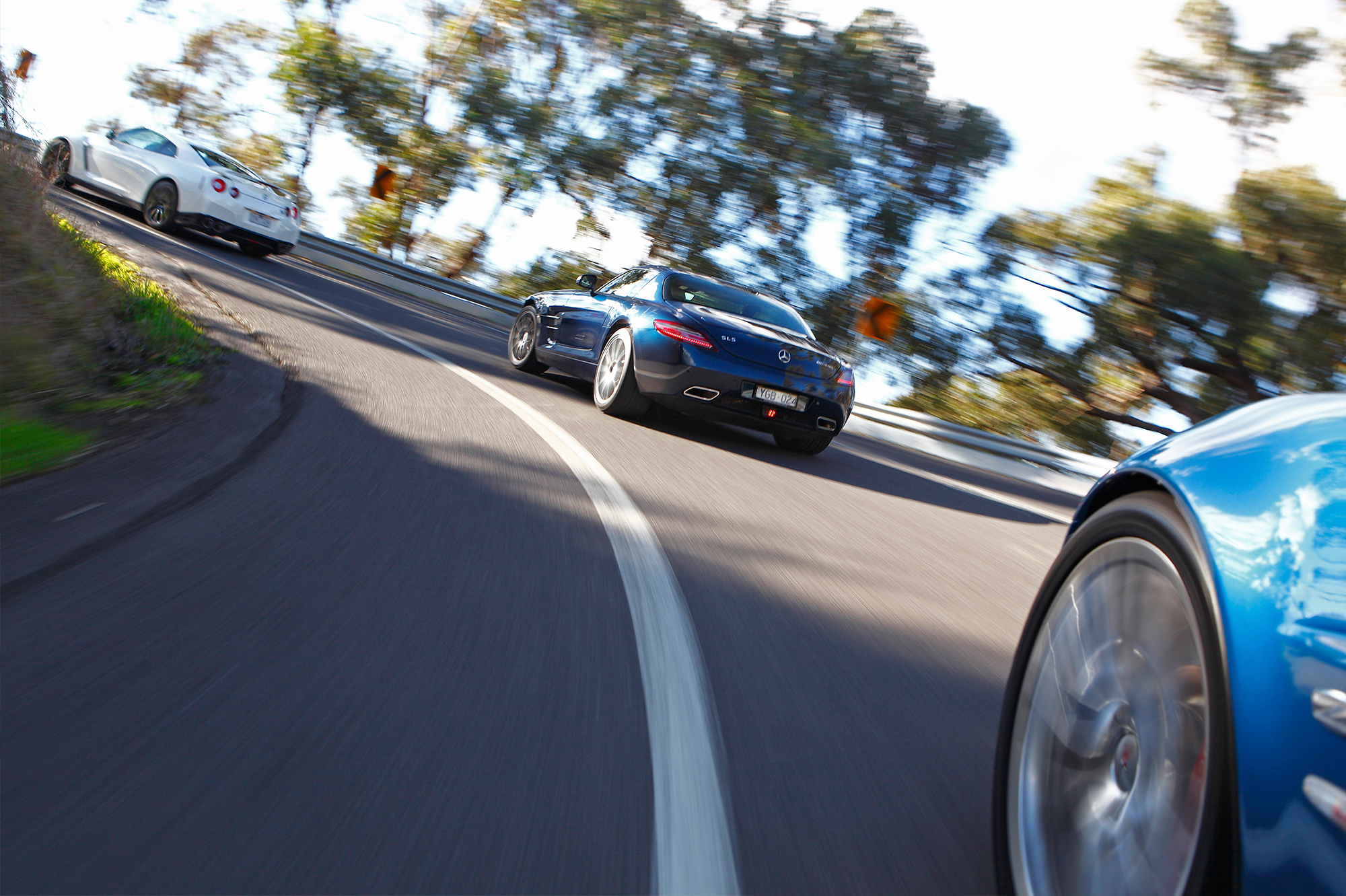
Less explainable is the SLS’s sharp ride. It’s extremely well damped (as you’d expect) but the springs are way harder than seem to suit the car’s role … GT-R firm, in fact. We’re not saying AMG has got it wrong – clearly this is how the car was intended to feel – but it’s not the way we reckon most potential owners would have things.
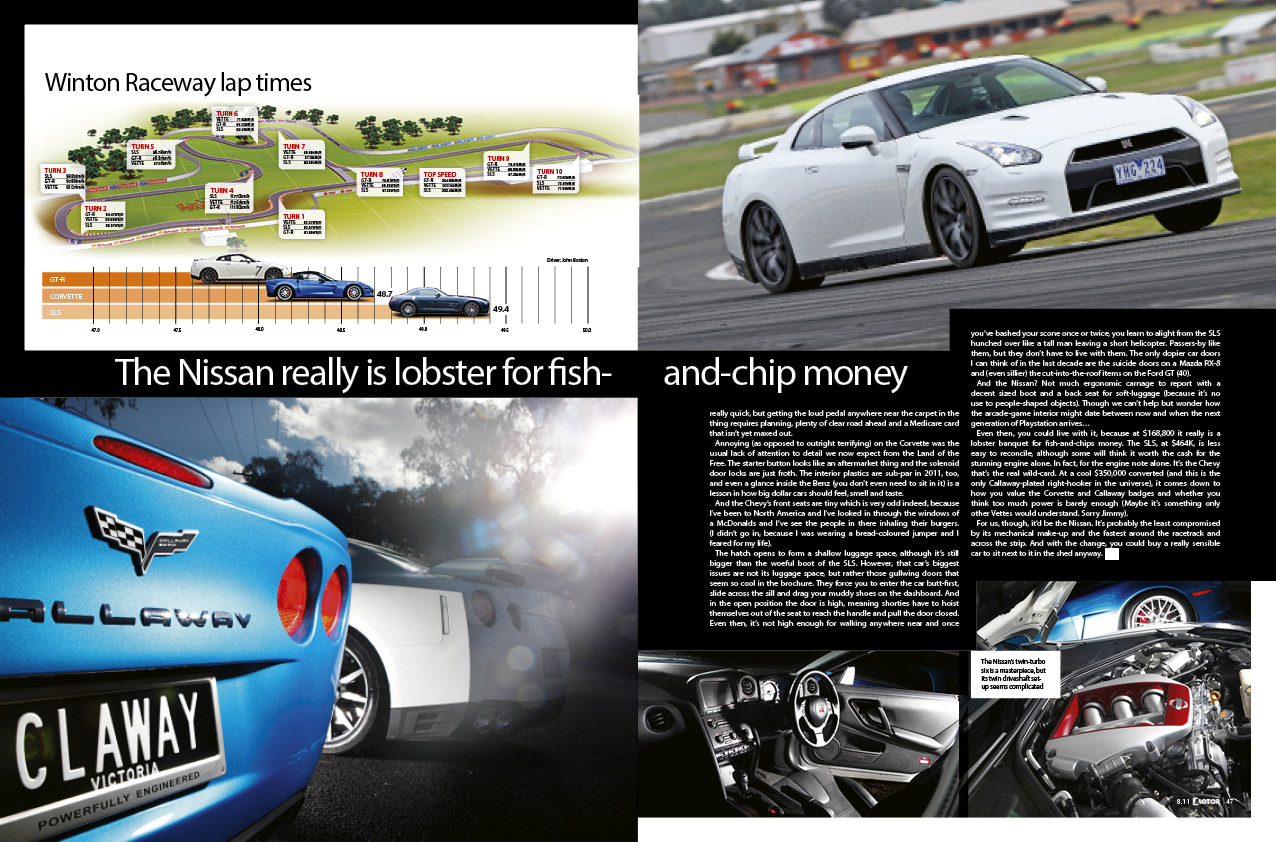
Yet it does steer beautifully, with a feeling that the steering rack is the fulcrum upon which the whole car pivots. And that front-end bite is what helped it get around Winton in 1.33:9 with even Luffy expressing surprise at how composed and grippy it is for such a big bugger.
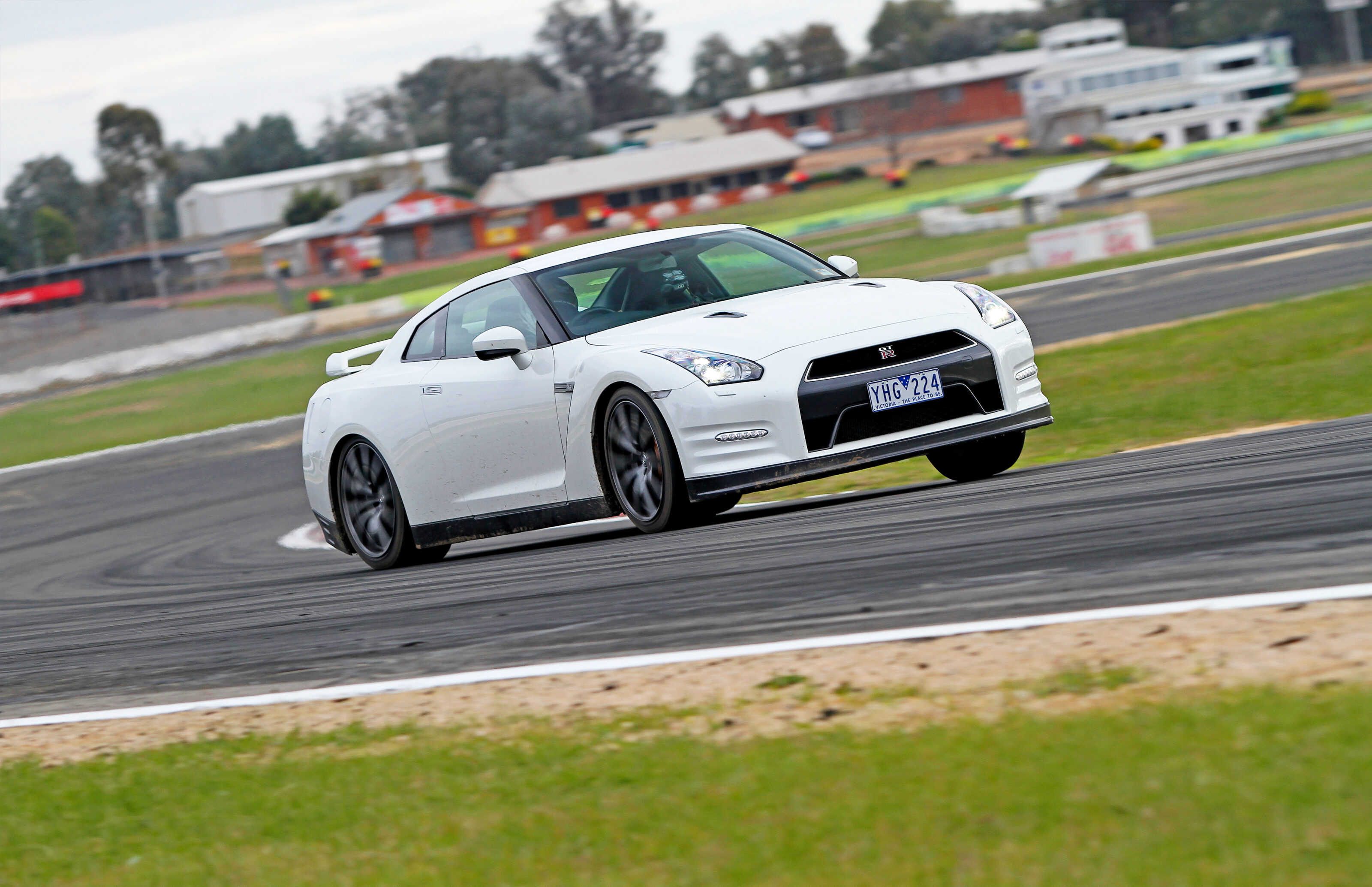
The GT-R’s lap times are an amalgam of grunt and grip and a determination not to let physics get in the way of a good time. It doesn’t have quite the steering feel of the Benz, but it hangs on like very few cars ever made – and pretty much none made at this price – to notch up a 1.31:7. Our only concern is that the Nissan seems to do everything for you, which is great for making average drivers look pretty handy, but will potentially frustrate a really good driver in short order.
“It almost drives itself,” said Luffy. “A good driver would get bored with it real quick.”
No such problem with the Corvette which emerged as a life support system for that engine.
“It’s a bit of a one-trick pony,” Luffy admits. “It’s a fantastic engine in a car that’s not really up to the same speed. Going fast is an act of faith, ’cause you never really know what it’s going to do.”
Mind you, faith must pay off, because at 1.33:7, the Vette was a smidge faster than the AMG. The rider here is that unless you’re Warren Luff or somebody with his ability to ignore common-sense and physics, you aren’t going to be real quick in the Callaway. Anybody with a working knowledge of why apples fall down and not up, or any sort of relationship with a self-preservation instinct is going to find the Corvette – um – confronting.
I drove it and walked away doing that head-shaking thing that suggests no understanding of why a car would be set up thus. And I didn’t drive it really quick, but getting the loud pedal anywhere near the carpet in the thing requires planning, plenty of clear road ahead and a Medicare card that isn’t yet maxed out.
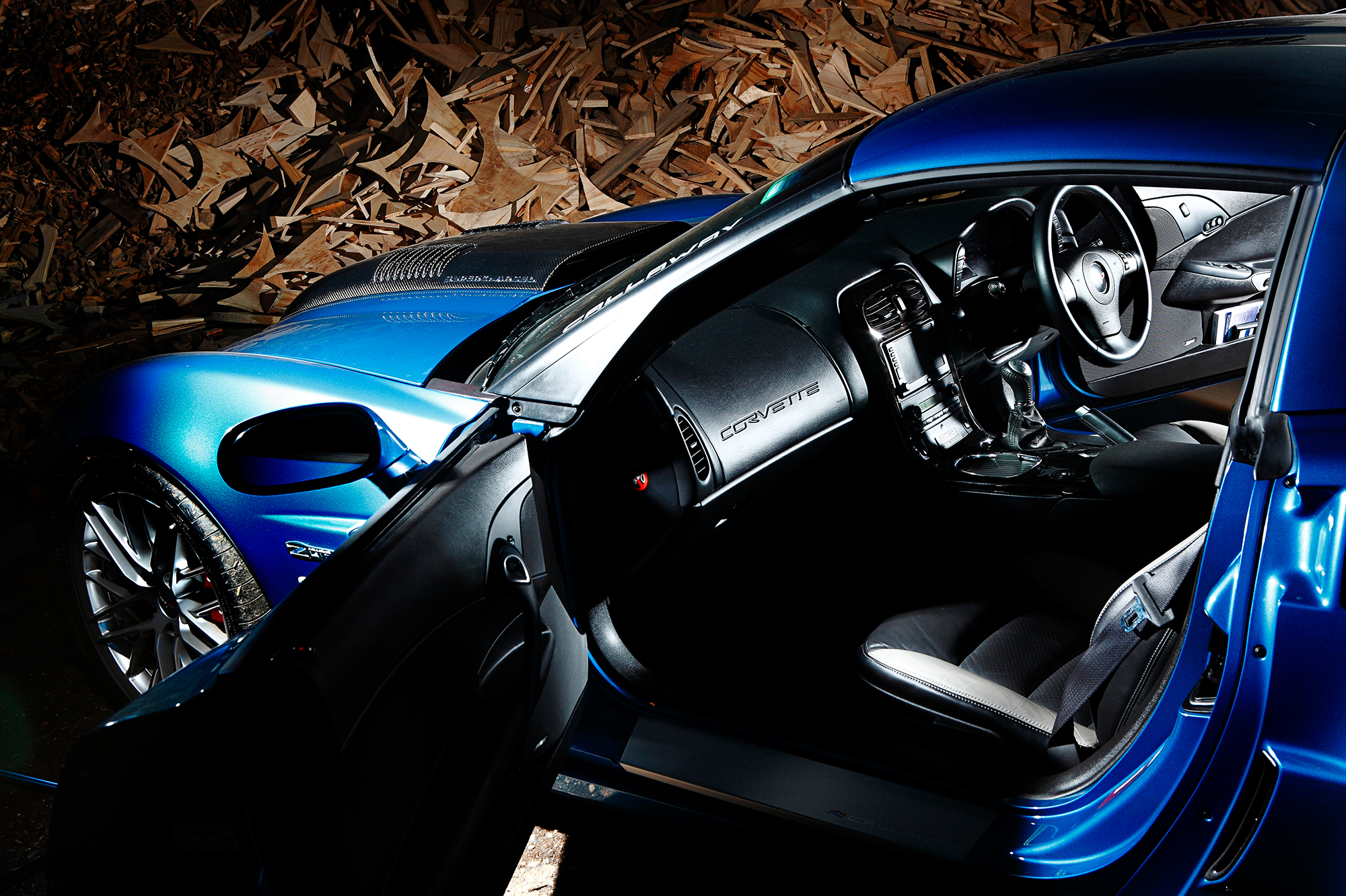
Annoying (as opposed to outright terrifying) on the Corvette was the usual lack of attention to detail we now expect from the Land of the Free. The starter button looks like an aftermarket thing and the solenoid door locks are just froth. The interior plastics are sub-par in 2011, too, and even a glance inside the Benz (you don’t even need to sit in it) is a lesson in how big dollar cars should feel, smell and taste.
And the Chevy’s front seats are tiny which is very odd indeed, because I’ve been to North America and I’ve looked in through the windows of a McDonalds and I’ve see the people in there inhaling their burgers. (I didn’t go in, because I was wearing a bread-coloured jumper and I feared for my life).
The hatch opens to form a shallow luggage space, although it’s still bigger than the woeful boot of the SLS. However, that car’s biggest issues are not its luggage space, but rather those gullwing doors that seem so cool in the brochure. They force you to enter the car butt-first, slide across the sill and drag your muddy shoes on the dashboard. And in the open position the door is high, meaning shorties have to hoist themselves out of the seat to reach the handle and pull the door closed.
Even then, it’s not high enough for walking anywhere near and once you’ve bashed your scone once or twice, you learn to alight from the SLS hunched over like a tall man leaving a short helicopter. Passers-by like them, but they don’t have to live with them. The only dopier car doors I can think of in the last decade are the suicide doors on a Mazda RX-8 and (even sillier) the cut-into-the-roof items on the Ford GT (40).
And the Nissan? Not much ergonomic carnage to report with a decent sized boot and a back seat for soft-luggage (because it’s no use to people-shaped objects). Though we can’t help but wonder how the arcade-game interior might date between now and when the next generation of Playstation arrives…
Even then, you could live with it, because at $168,800 it really is a lobster banquet for fish-and-chips money. The SLS, at $464K, is less easy to reconcile, although some will think it worth the cash for the stunning engine alone. In fact, for the engine note alone.
It’s the Chevy that’s the real wild-card. At a cool $350,000 converted (and this is the only Callaway-plated right-hooker in the universe), it comes down to how you value the Corvette and Callaway badges and whether you think too much power is barely enough (Maybe it’s something only other Vettes would understand. Sorry Jimmy).
For us, though, it’d be the Nissan. It’s probably the least compromised by its mechanical make-up and the fastest around the racetrack and across the strip. And with the change, you could buy a really sensible car to sit next to it in the shed anyway.
Online shopping in lockdown? Or maybe you’re after a gift? Here’s ten cool pieces of kit that we’ve found across the world wide web lately.
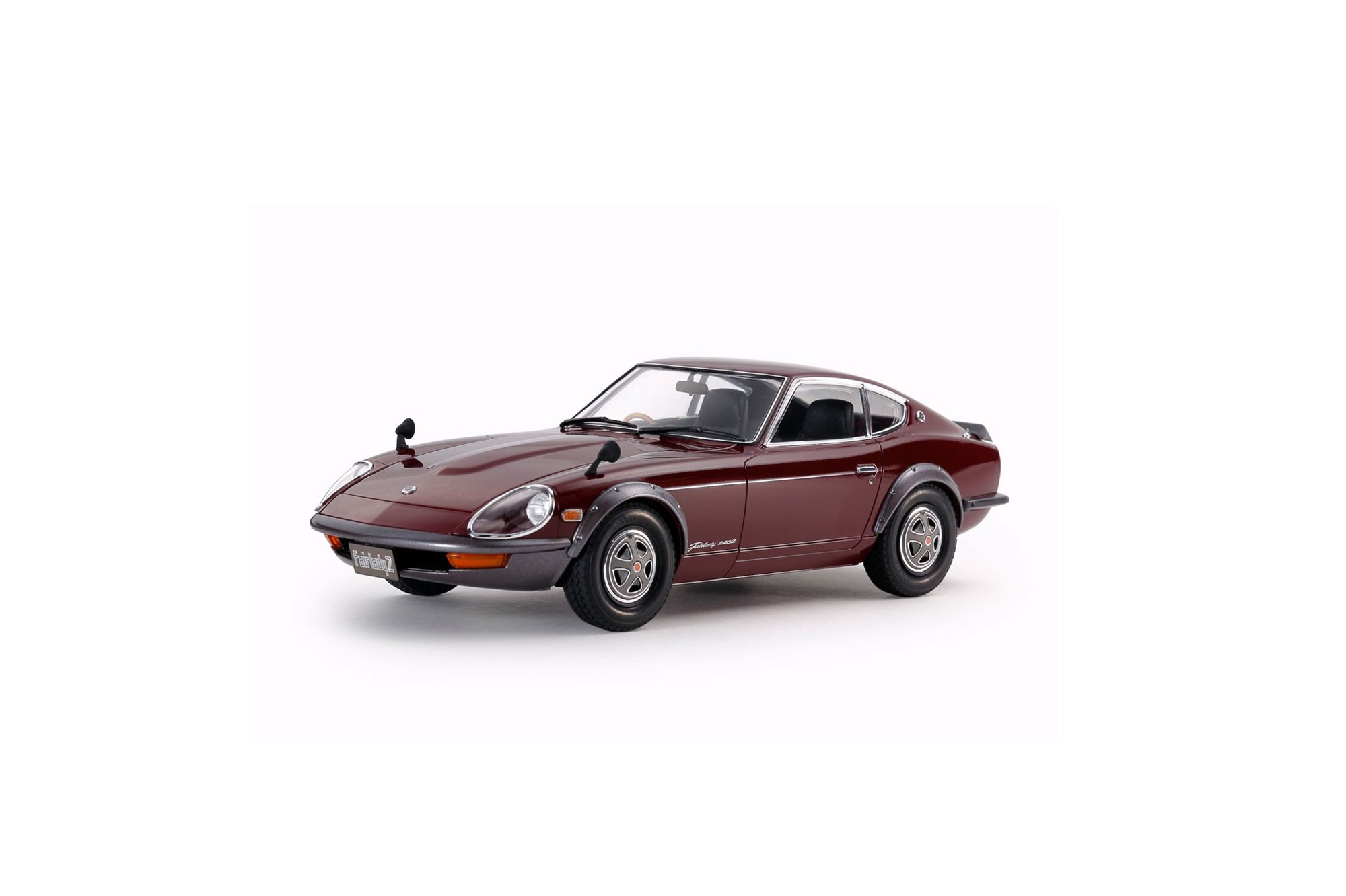
Tamiya 1/24 Nissan Fairlady 240zg – $75 – metrohobbies.com.au
The ‘Grande’-nosed 240Z launched as a JDM-only model in 1971, specifically for Group 4 homologation. Build your own with this sweet kit
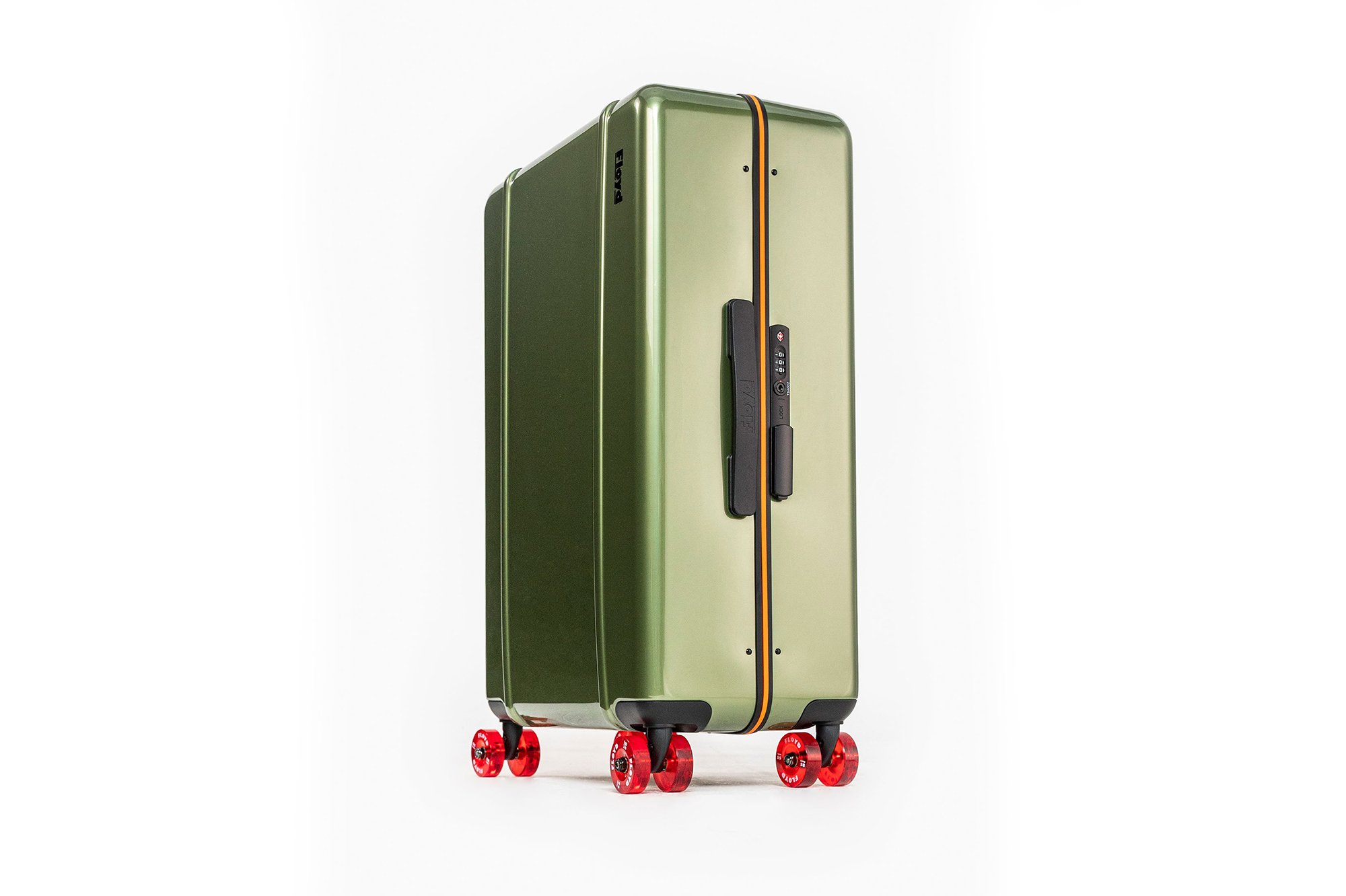
Floyd ‘Check-in’ 61-litre suitcase – $767 – floyd.one
Travel may not be on the cards for any of us anytime soon, but if you’re after a new case in anticipation, check out this sleek ‘70s surf-n-skate inspired unit
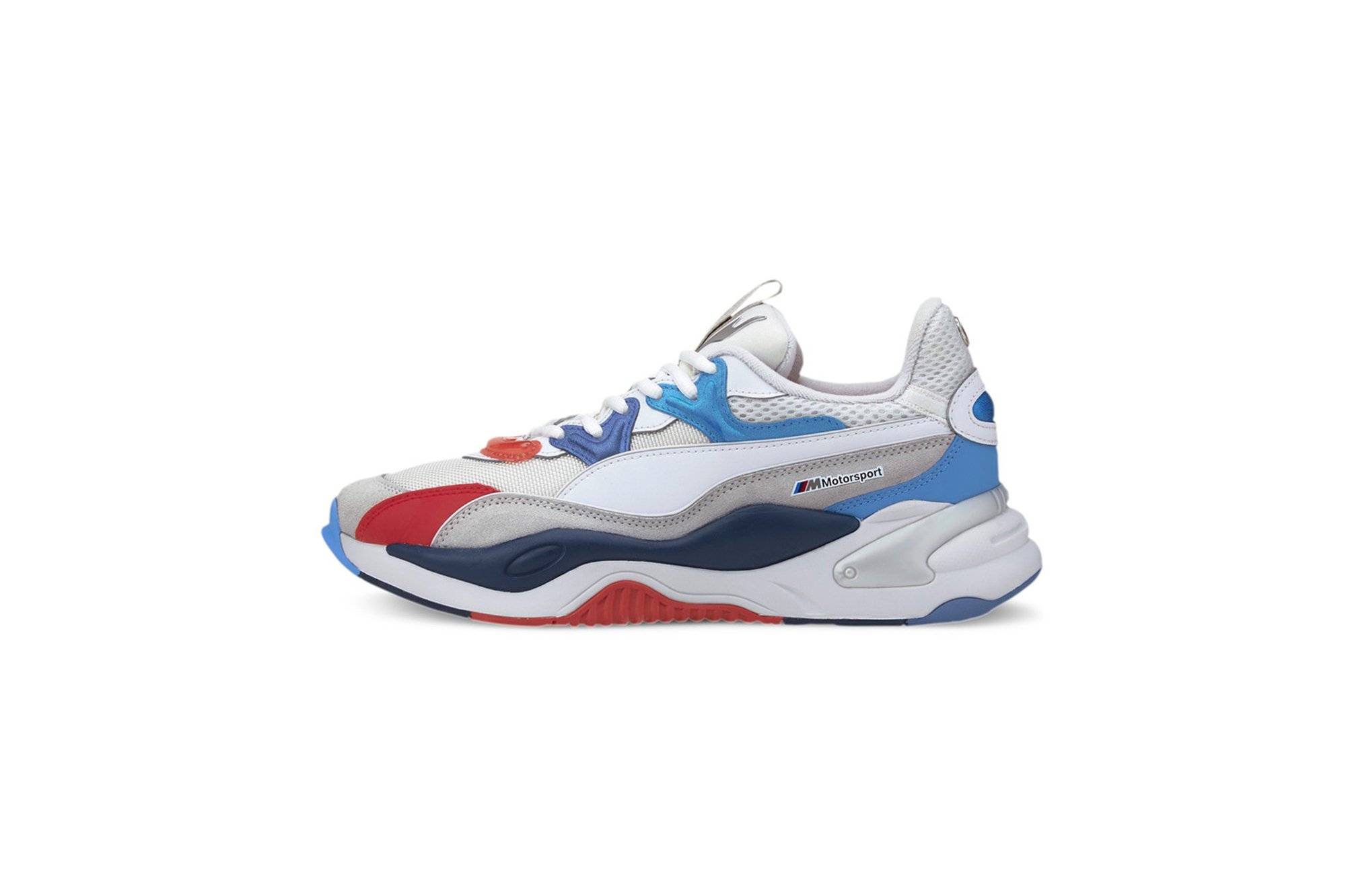
BMW M x Puma RS-2K sneakers – $180 – au.puma.com
Automotive brands are increasingly appearing in the lifestyle sector. Puma has recently tapped BMW’s M Division for an entire collection and these shoes are a standout
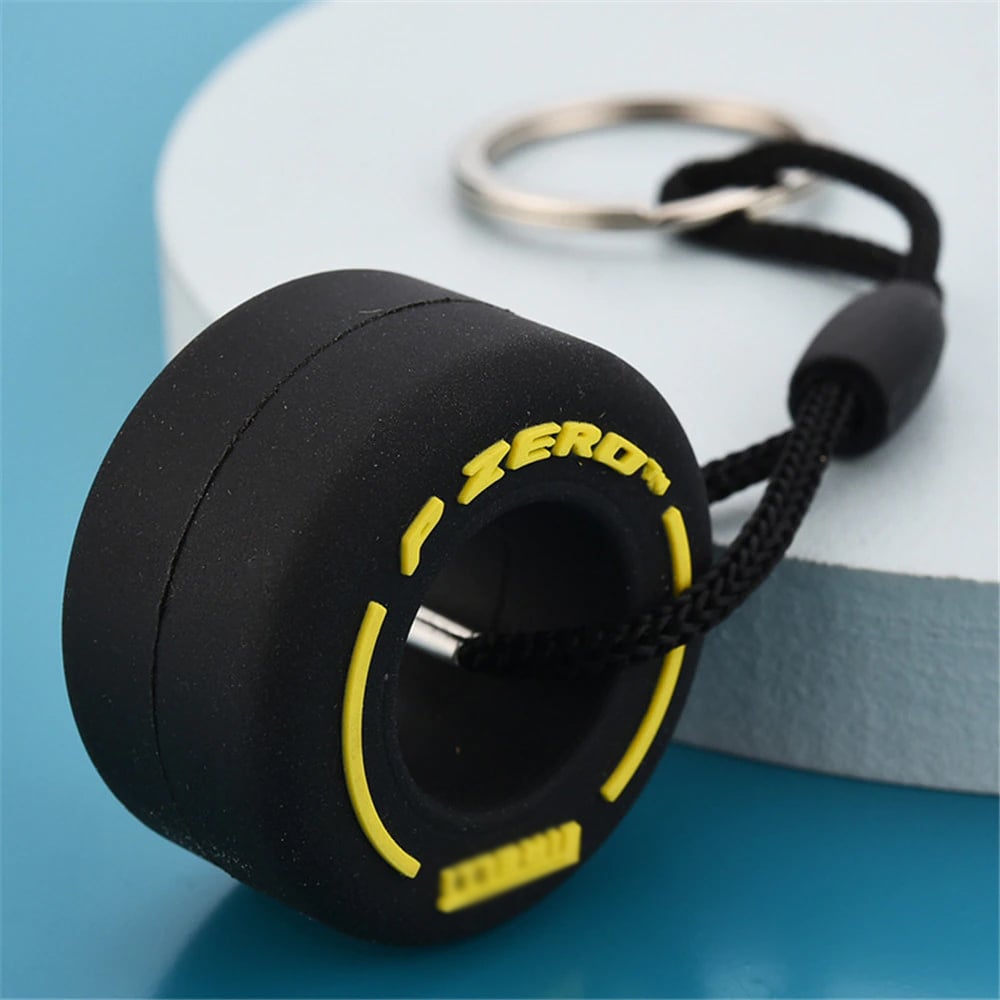
F1 tyre keychain – $16 – f1essentials.com
F1 fans should get a kick out of these neat P Zero keychains. You can even pick your favourite colour of compound, and we’re told they don’t explode like in Baku…
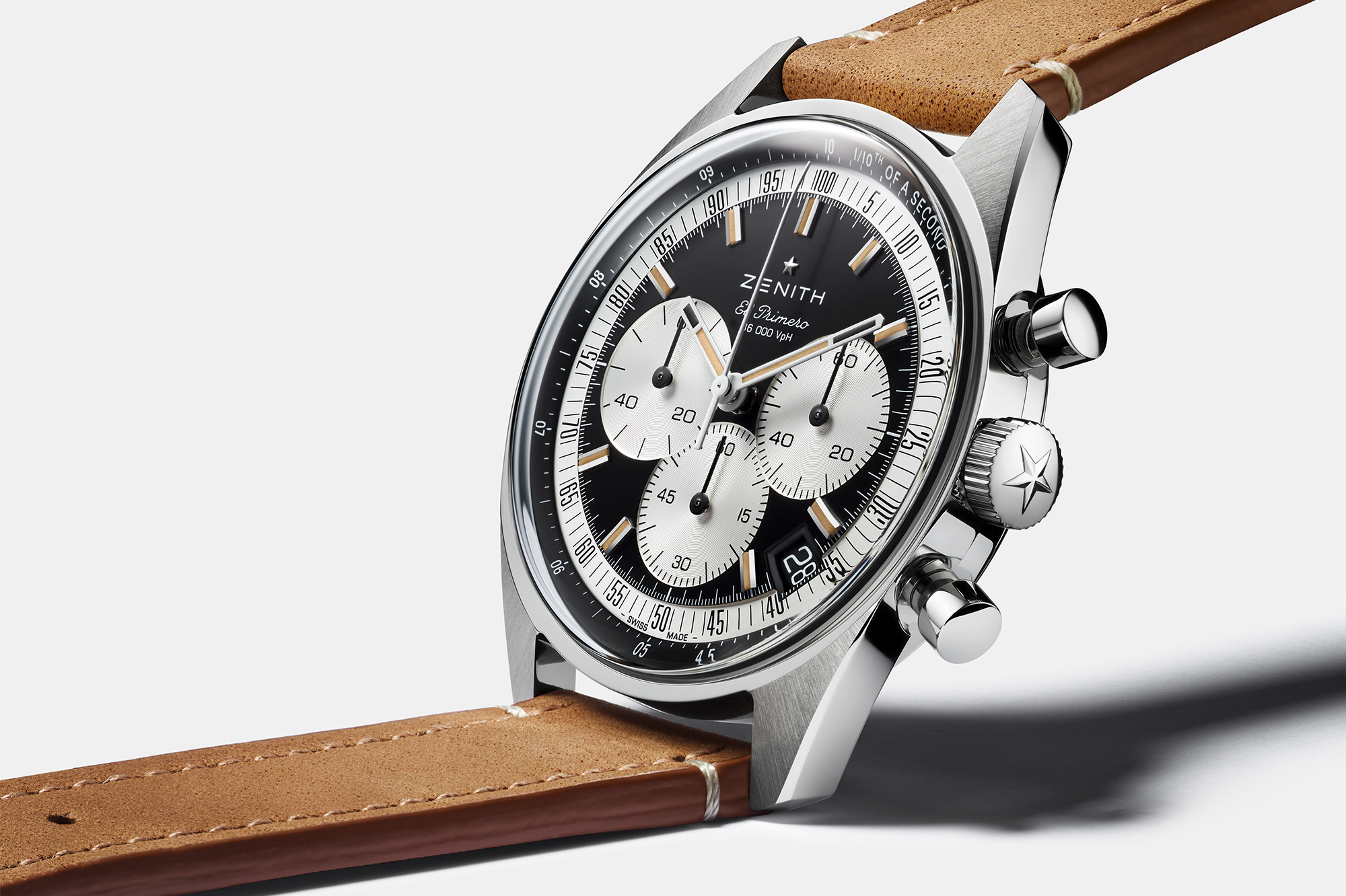
Zenith Chronomaster Original – $12200 – monards.com.au
Watches, like cars, have bloated in size over the years. Zenith goes right back to 1969 with this faithful 38mm rendition of its popular Chronomaster. El Primero 3600 automatic movement is a modern tour de force
Track Pack
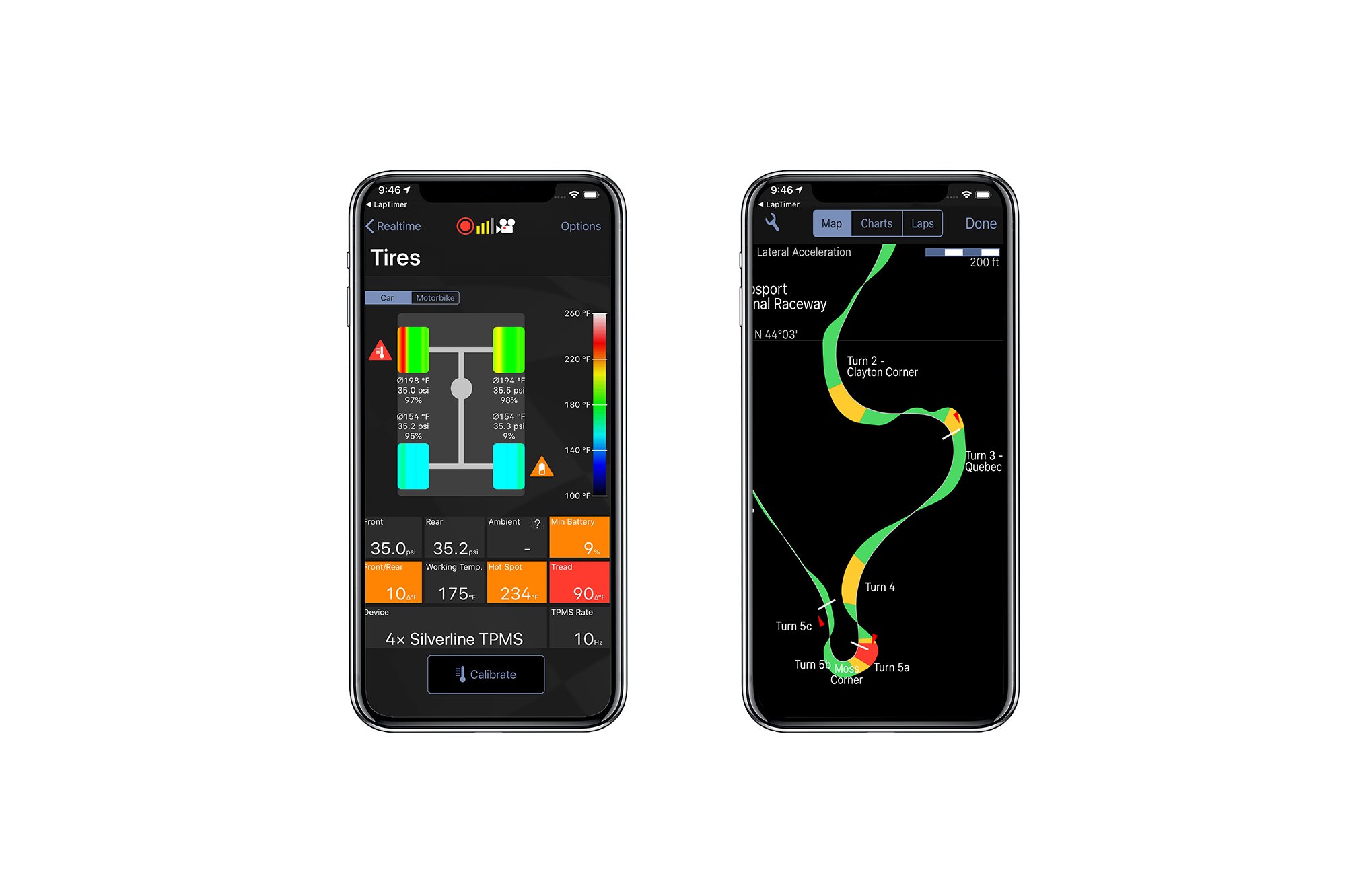
Harry’s lap-timer app – $13-$40 – gps-laptimer.de
Harry’s Lap-timer is one of the most popular telemetry apps available, and logs all sorts of sensor data and comes pre-loaded with over 800 international tracks. Add ancillaries like cameras, external GPS, OBD etc. to increase functionality. Comes in three versions with different levels of functionality, from $13-$40
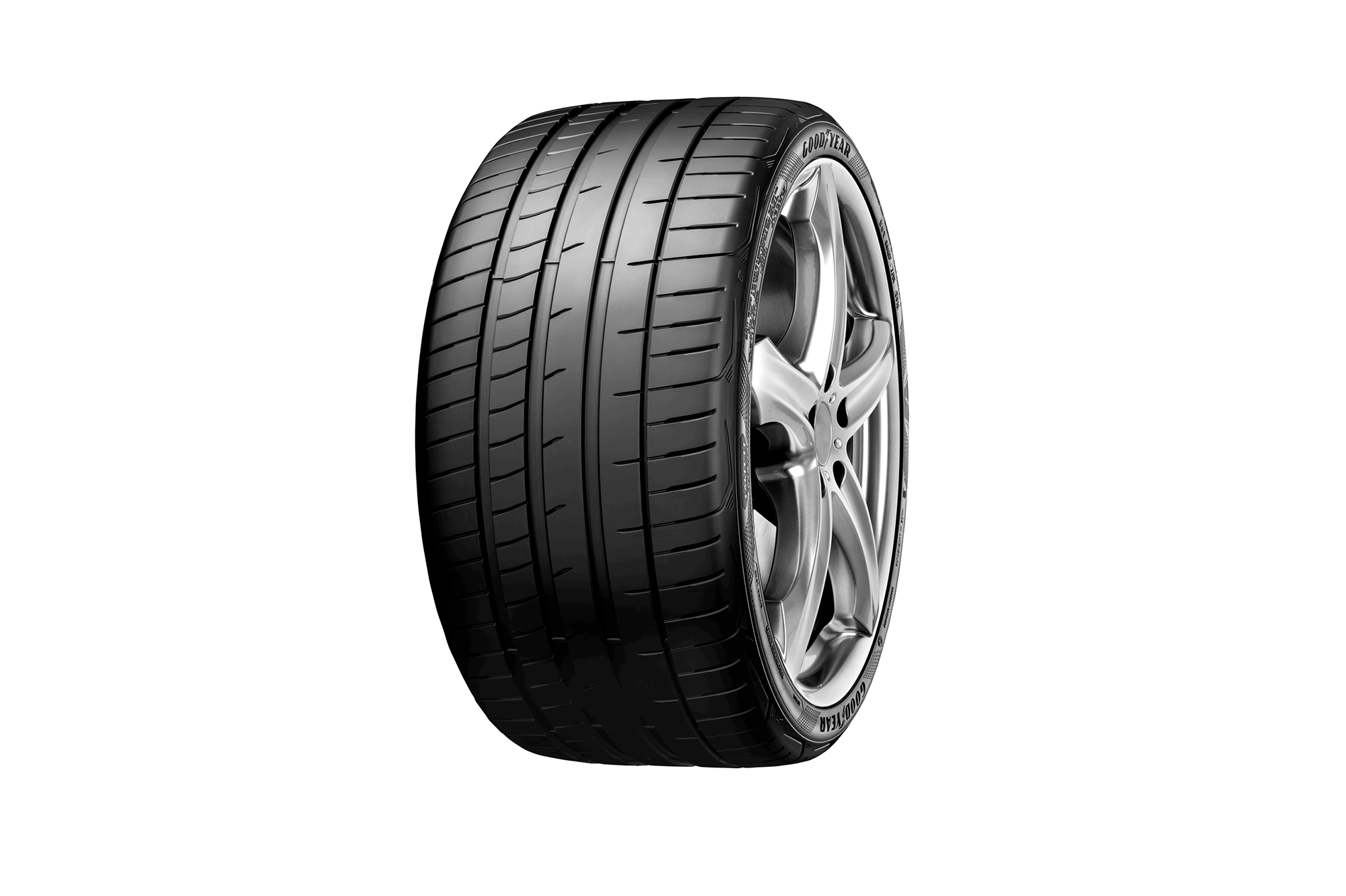
Goodyear Eagle F1 Supersport – $319* – tyreright.com.au
After a gruelling day of testing at SMSP, it was the Goodyear that stood out as the winner of our 2021 Tyre Test. *=Price listed as guide only
OMP KS Winter-R Balaclava – $54 – raceline-racewear.com.au
Balaclavas may not be absolutely essential (unless you have lots of facial hair), but it’s great for keeping your lid mung-free

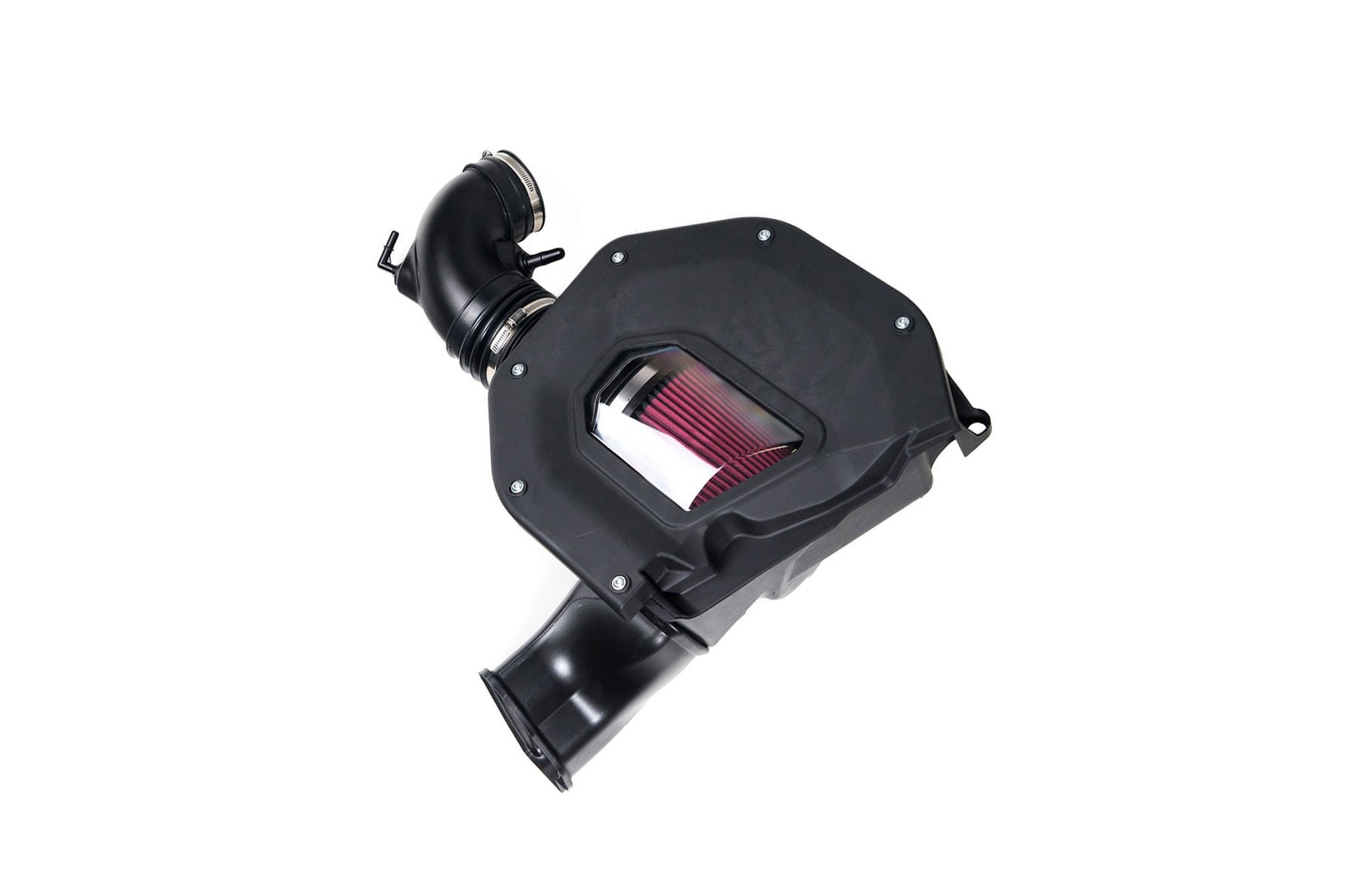
Roush 18-20 5.0 cold air intake – $695 – mustangmotorsport.com.au
Tuneless bolt-in intake from Roush, to fit current FN-gen 5.0 Mustangs, is more efficient than OEM unit and also sports near-factory fit and finish. Also looks cool…
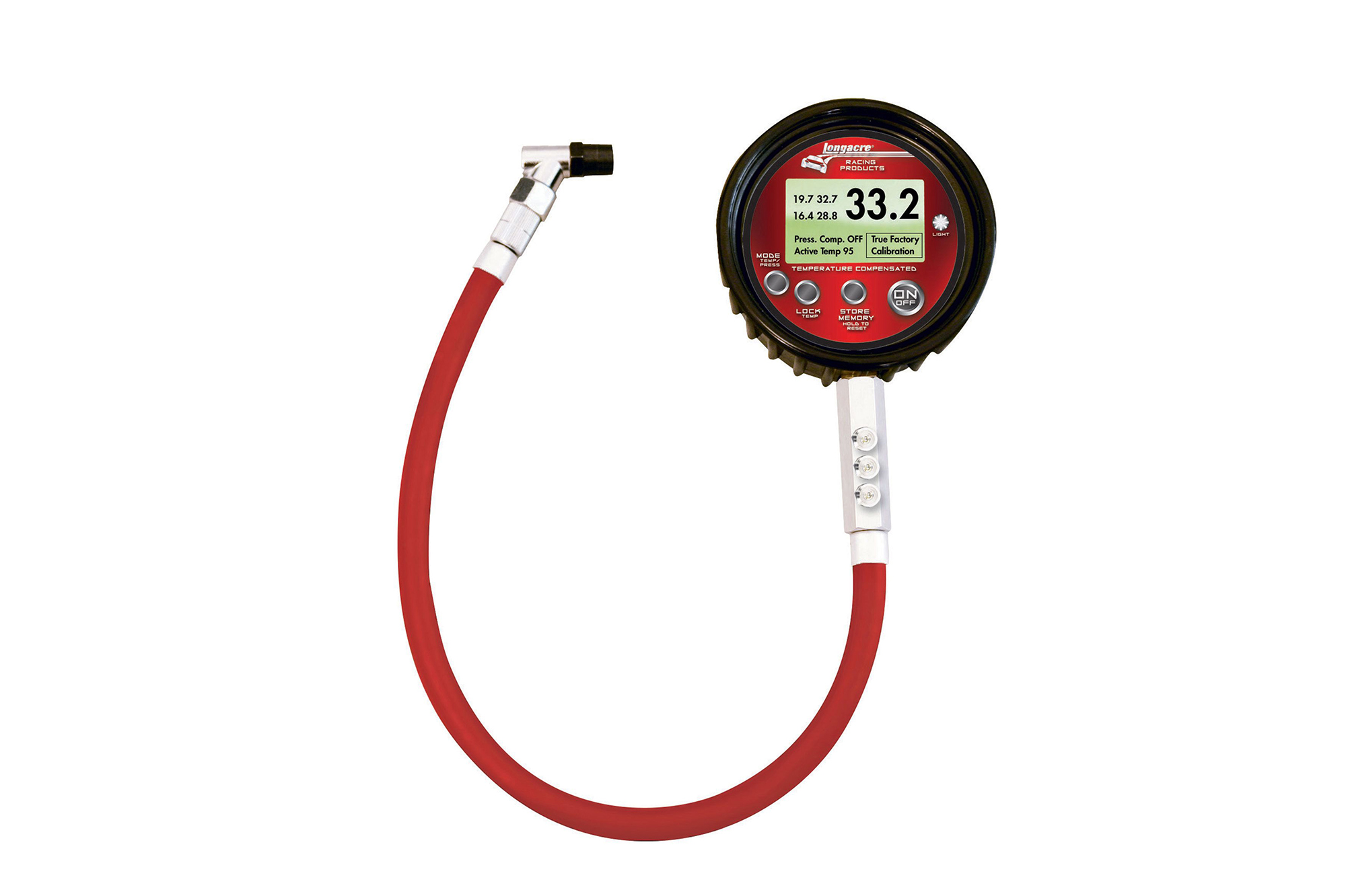
Longacre 0-100psi digital tyre pressure gauge – $99 – autosport.com.au
Pressure gauges are an essential part of your track pack. This digital Longacre unit measures up to 100psi in .2 increments
Snapshot
- Turbocharged four-pot engine modified to produce 447kW
- Top speed of 365km/h achieved
- Initial plans were to celebrate 10 years of Octavia in the UK
The British arm of Czech manufacturer Skoda has given one of its most important cars a birthday treat, restoring a modified Octavia which still holds a land speed record.
It has been a decade since Skoda decided to take one of its four-door sedans over to the famous Bonneville Salt Flats in Utah to try and break the 200mph (322km/h) barrier, but no one expected the team to leave the United States with a record which still stands today.
Driven by journalist Richard Meaden, the 2011 Octavia clocked an average speed of 227.080mph (365.450km/h) across two runs up the five-mile course, setting a new record for 2.0-litre forced induction production cars.
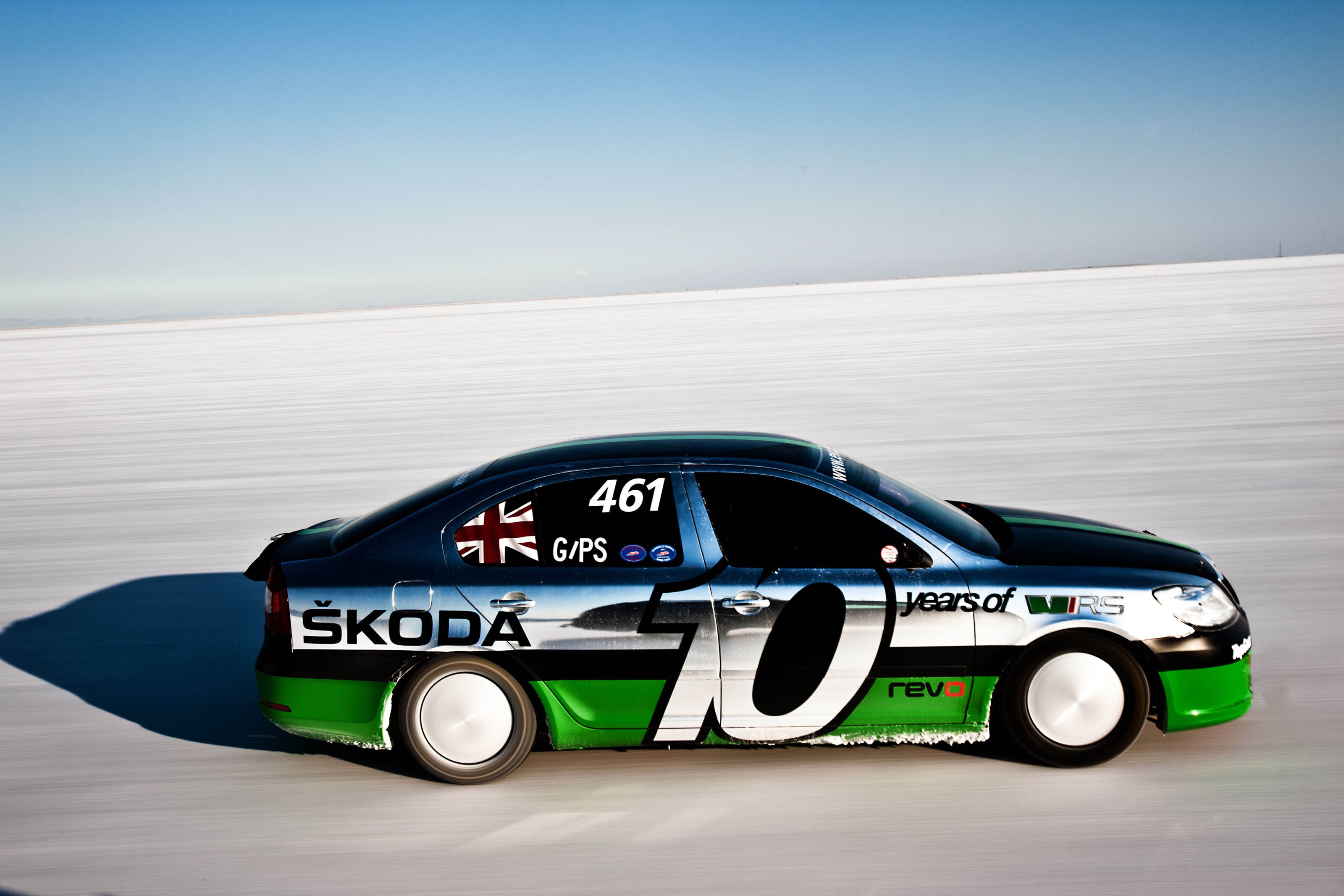
Dreamt up as a project to celebrate 10 years since the Octavia nameplate first went on sale in the UK, the car in question was based on a Corrida Red Octavia vRS 2.0 TSI, initially slated to be a part of the British arm’s press fleet before the Bonneville project team was able to acquire it.
To achieve its ultimate top speed, some serious modifications had to be made, but only within the guidelines of the governing body which runs Bonneville Speed Week – the Southern California Timing Association.
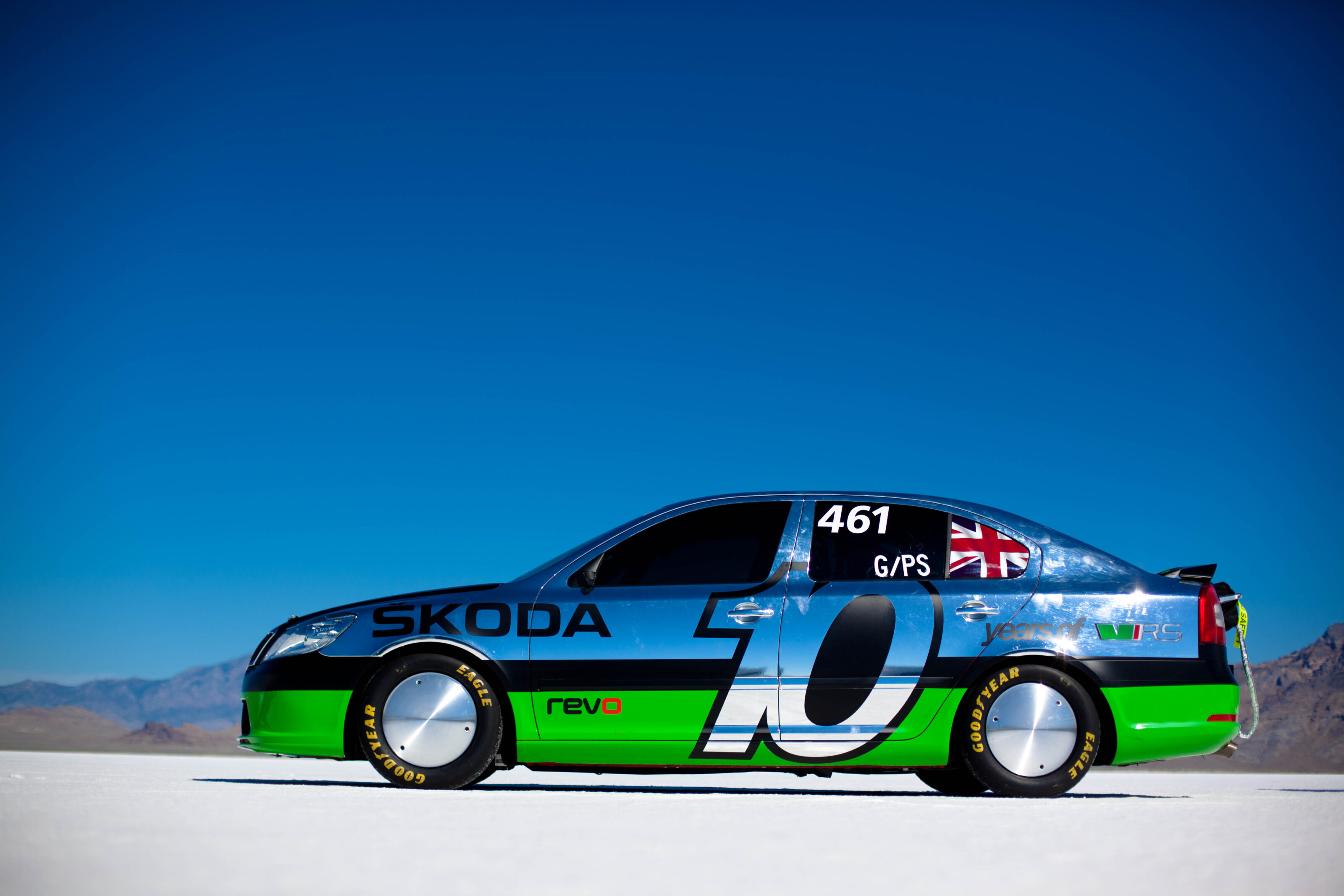
Replacing the four fuel injectors normally found on the EA888 engine, the team added another set of four ,as well as a larger turbocharger and radiator, tuning the four-cylinder unit up to 447kW – or around 300kW more than the stock vehicle.
While the car’s standard transmission was optimised for acceleration, top speed was the aim on the flats, leading the team to fit the gearbox from the eco-friendly Octavia GreenLine due to its longer ratios.
With no real need for brakes, the stock rotors and calipers were put on the shelf, replaced with a boot-mounted parachute which acted as a safer way to stop the Octavia while also reducing weight.
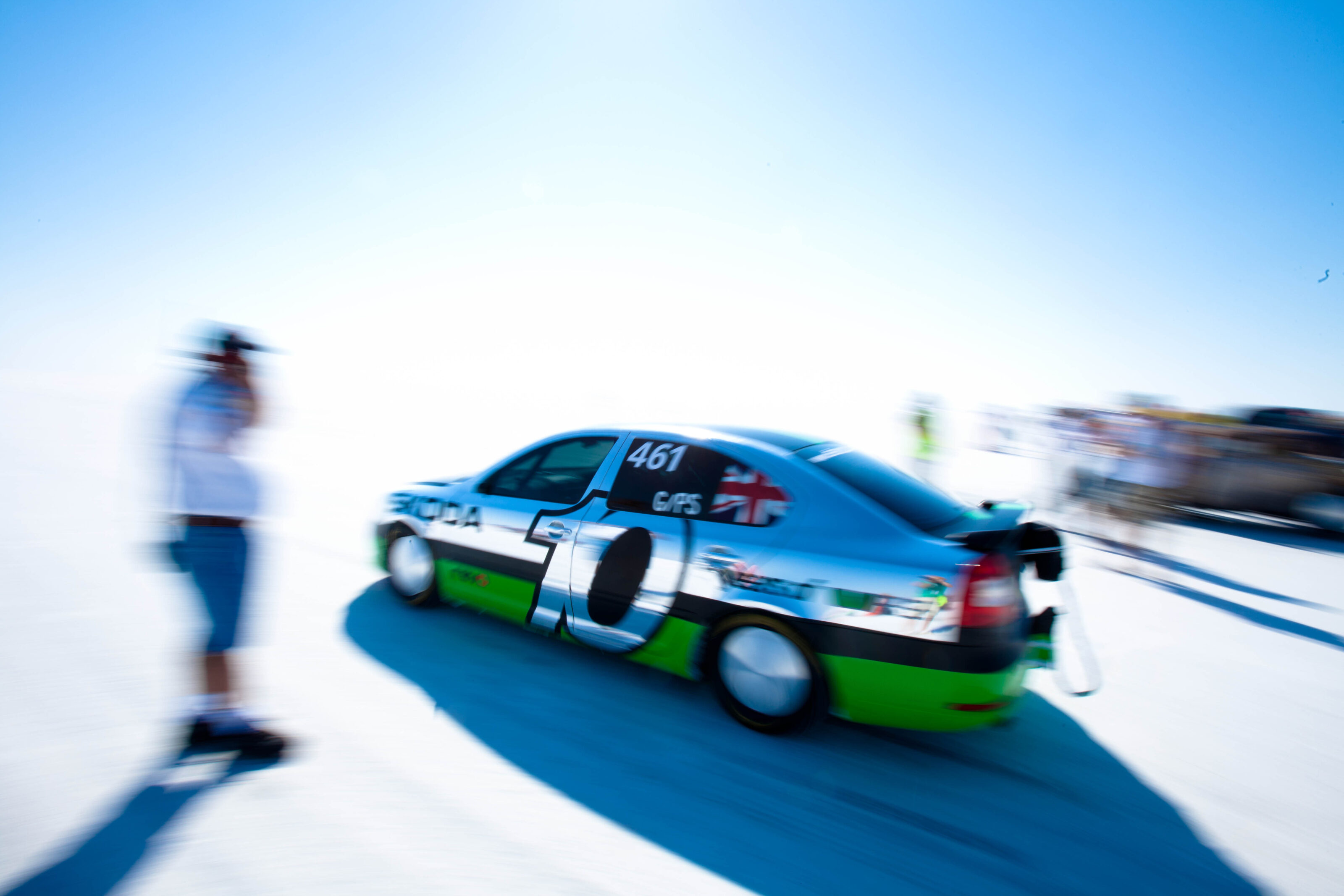
After setting the record on August 19, 2011, the car was shipped back to the UK where it remained unused for the best part of a decade before its restoration, brought back to its former glory to celebrate 10 years since the first famous run.
Watch the video below to see a handful of British journos getting behind the wheel at Millbrook’s high-speed bowl.
The ever-popular Ford Mustang GT: it’s ‘Australia’s favourite sports car’, a fixture on the sales charts and part of an ever-diminishing club of surviving naturally aspirated V8s on sale. We know what you’re thinking: you’d take the coupe, right? The stats would suggest yes, but should so many be so quick to discount the charms of the open-air Mustang?
Mustang convertibles, like most, have traditionally been less celebrated than their coupe counterparts: they’re more expensive, they’re heavier and, according to many a pundit, aren’t as good to drive.
Look deeper, and you may find those to be limiting answers to more complex questions. It’s partly true that the Mustang GT convertible, aside from the track-honed Mach 1, tops the Mustang range with a list price of $75,225 – a modest $200 increase for 2021 – before options and on-road costs.
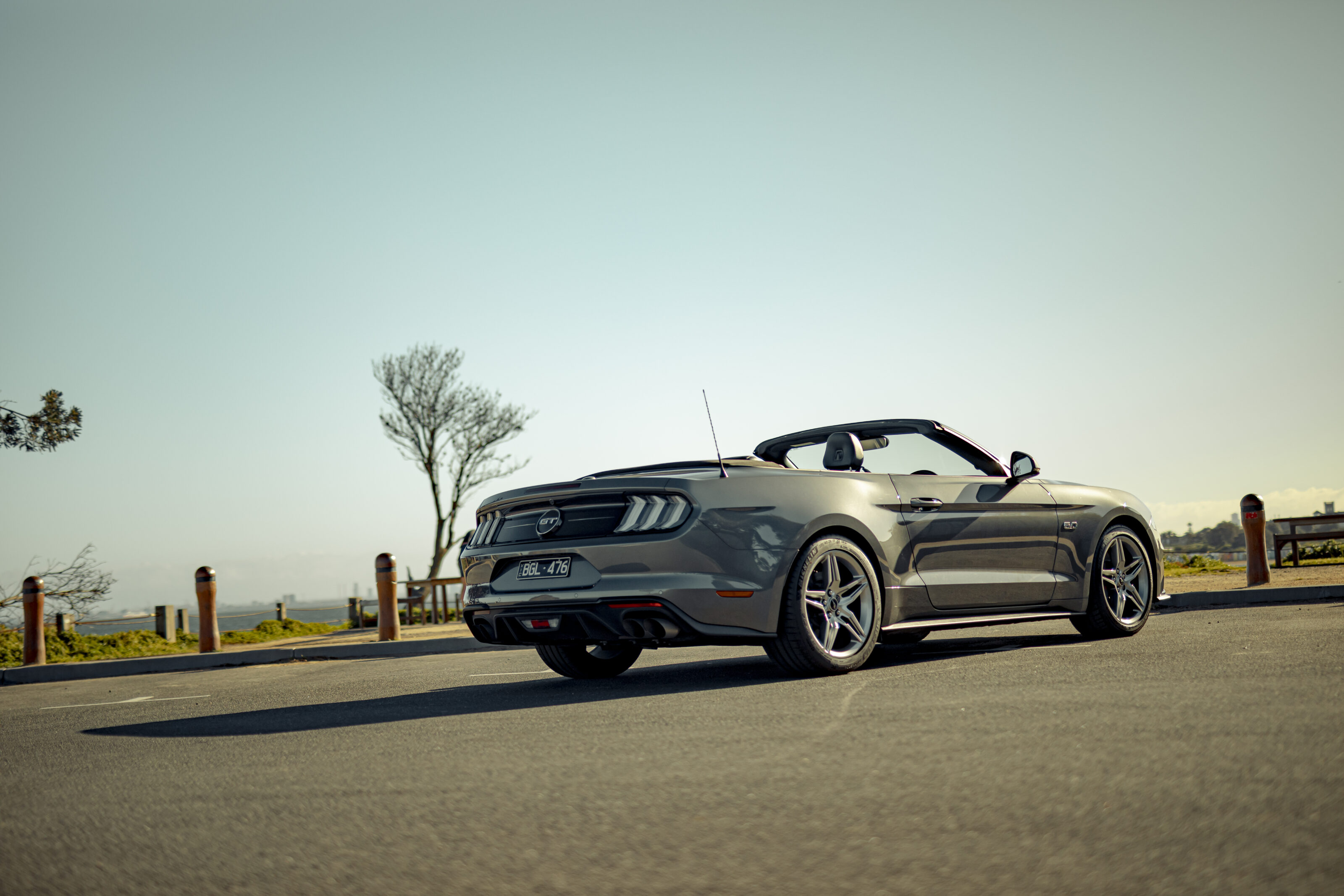
You can’t opt for the burly six-speed gearbox in a ragtop Mustang so, be it four or eight cylinders, it’s the ten-speed auto for us.
That’s a noticeable price creep from the $63,990 first asked of buyers upon launch in 2015, but let us remind you that you’re getting a wholly-improved car today.
A major update in 2018 squeezed a further 33kW and 26Nm from the 5.0-litre Coyote V8, now pumping out 339kW/556Nm, and bringing along a sharp new face, the introduction of the ten-speed auto, and a healthy tech update.
Since 2018, Ford also offers a five-year/unlimited-km warranty. Servicing occurs every 15,000kms or 12 months, with Ford offering a $299 ‘special price’ servicing program of up to four years/60,000kms.
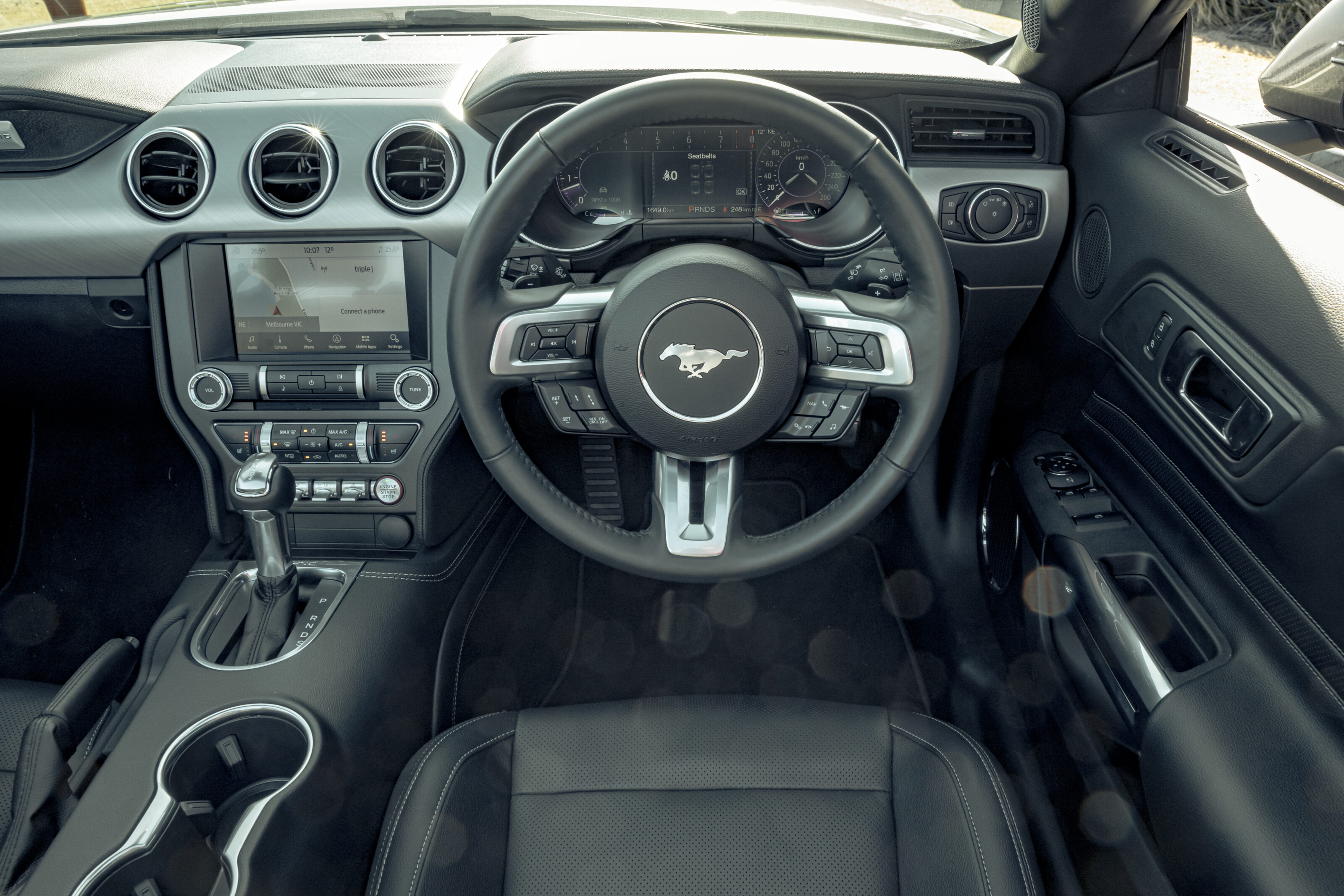
Today you’ll find amongst the standard equipment list: 19-inch alloys, Bimodal exhaust, automatic LED headlights and tail lamps, rain sensing wipers, 390-watt 12-speaker B&O stereo, eight-inch infotainment screen, 12-inch digital instrument cluster, Apple CarPlay/Android Auto connectivity, SatNav, reverse camera, keyless entry, heated and cooled six-way power seats, leather upholstery, dual-zone climate control and ambient lighting.
There’s also a suite of active safety features including adaptive cruise control, autonomous emergency braking, lane-departure warning and lane-keep assist.
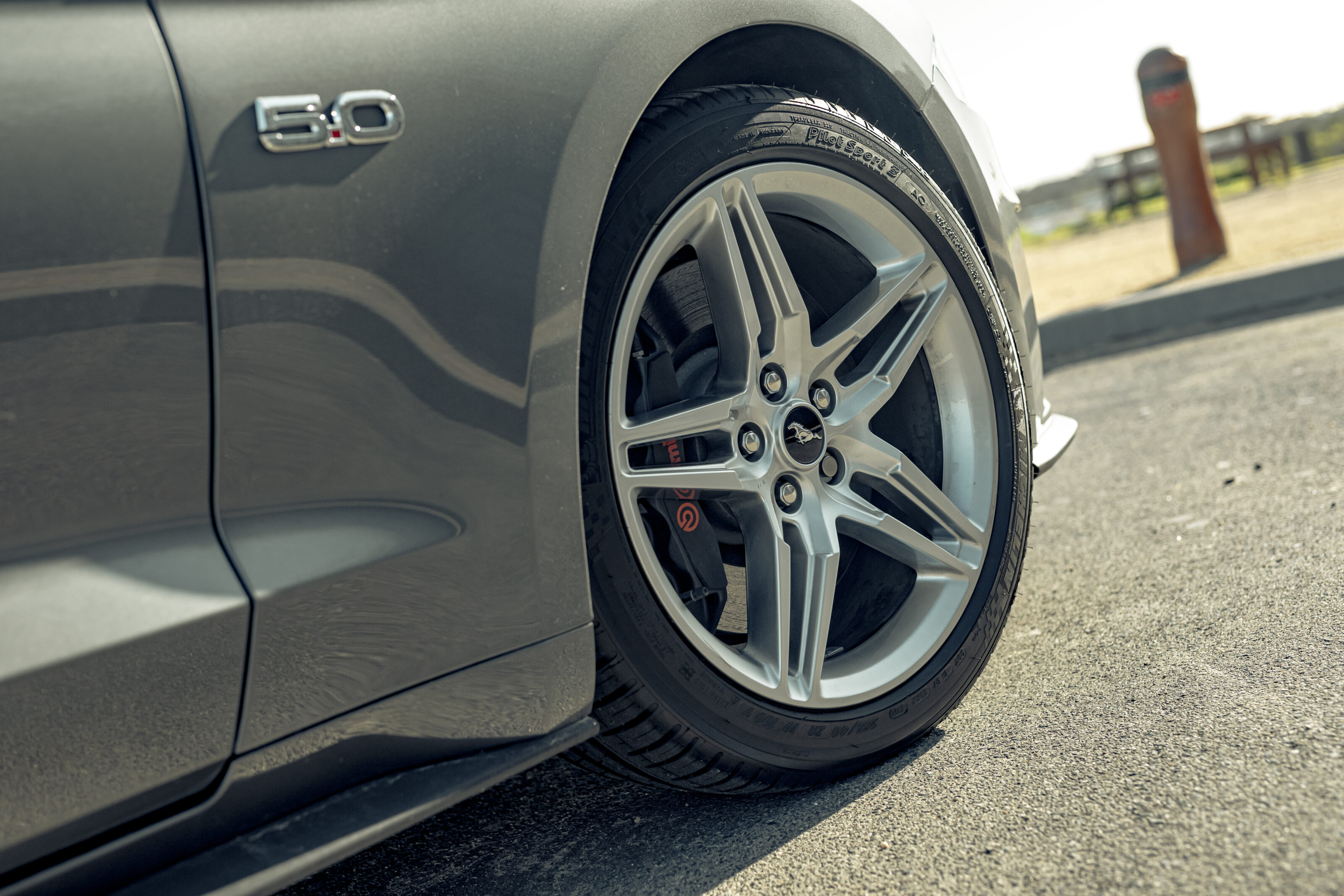
Our Carbonized Grey Metallic test car came further optioned with MagneRide adaptive dampers, Recaro sport seats and optional forged 19-inch wheels.
The design translation from coupe to convertible can vary in execution and effect but, while styling is subjective, the S550-generation Mustang must surely be one of the best exemplars in recent times. Something about the coupe’s native design works so well once you lop the roof off.
An almost arrow-straight belt line dominates the silhouette, running the length of the car, sitting atop the distinctive Mustang swage lines which blend into pumped haunches at each corner. It’s seen a brutish muscle car today, but there’s a softness in the details, true to the original 1964 World’s Fair showstopper.
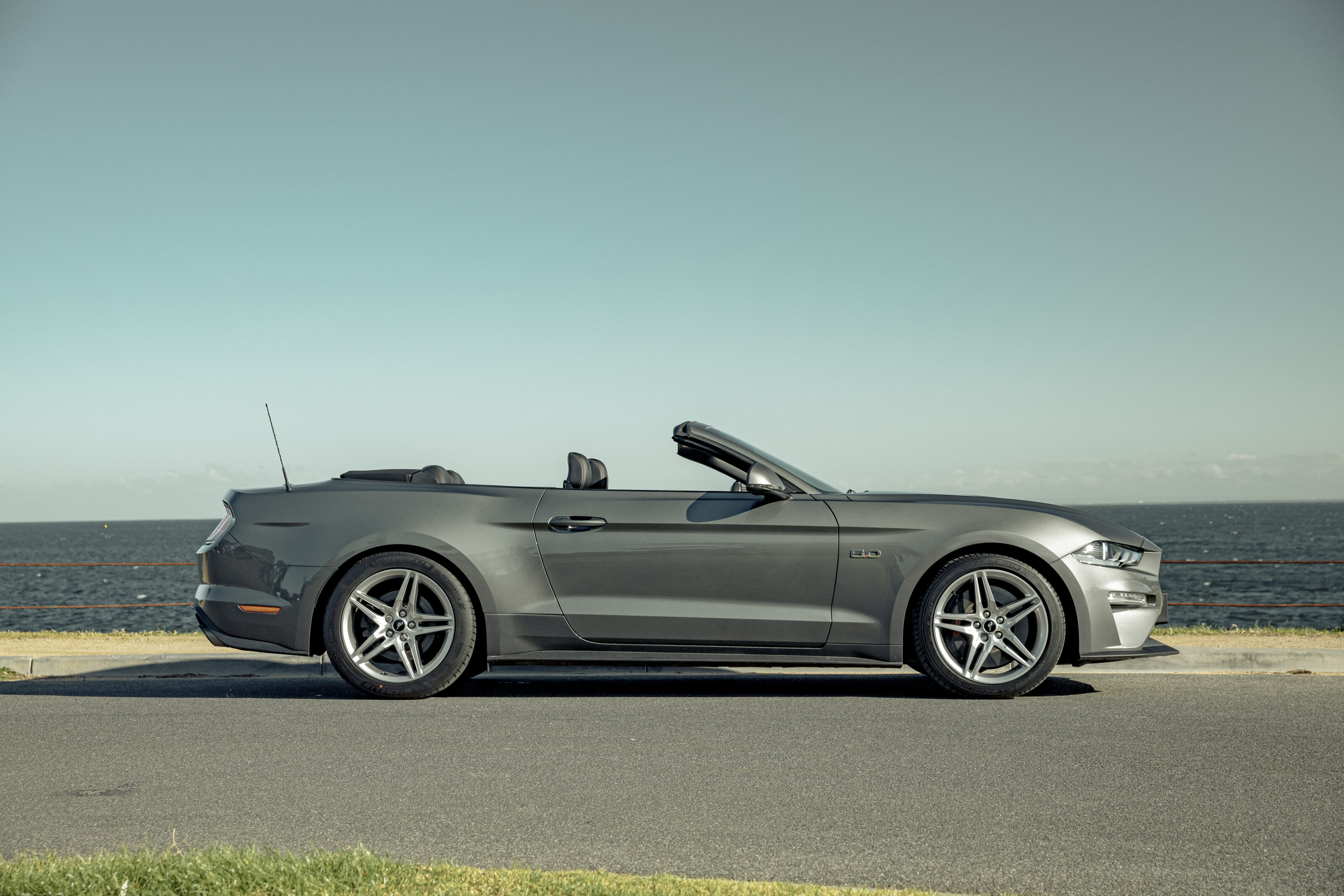
The cloth roof can extend or retract in as little as seven seconds at vehicle speeds of up to 10km/h. Rearward visibility is reduced and wind noise is noticeably increased in comparison to the coupe when on the move. All the more reason then to drop the roof, as if that bellowing 5.0-litre V8 wasn’t enough already.
It’s always been that V8 that’s been central to the GT’s appeal and, as ubiquitous as they may be, the massively gratuitous flare up of revs on start-up never fails to make you smile. The open-air experience adds another layer of sensory interaction with the characterful powerplant.
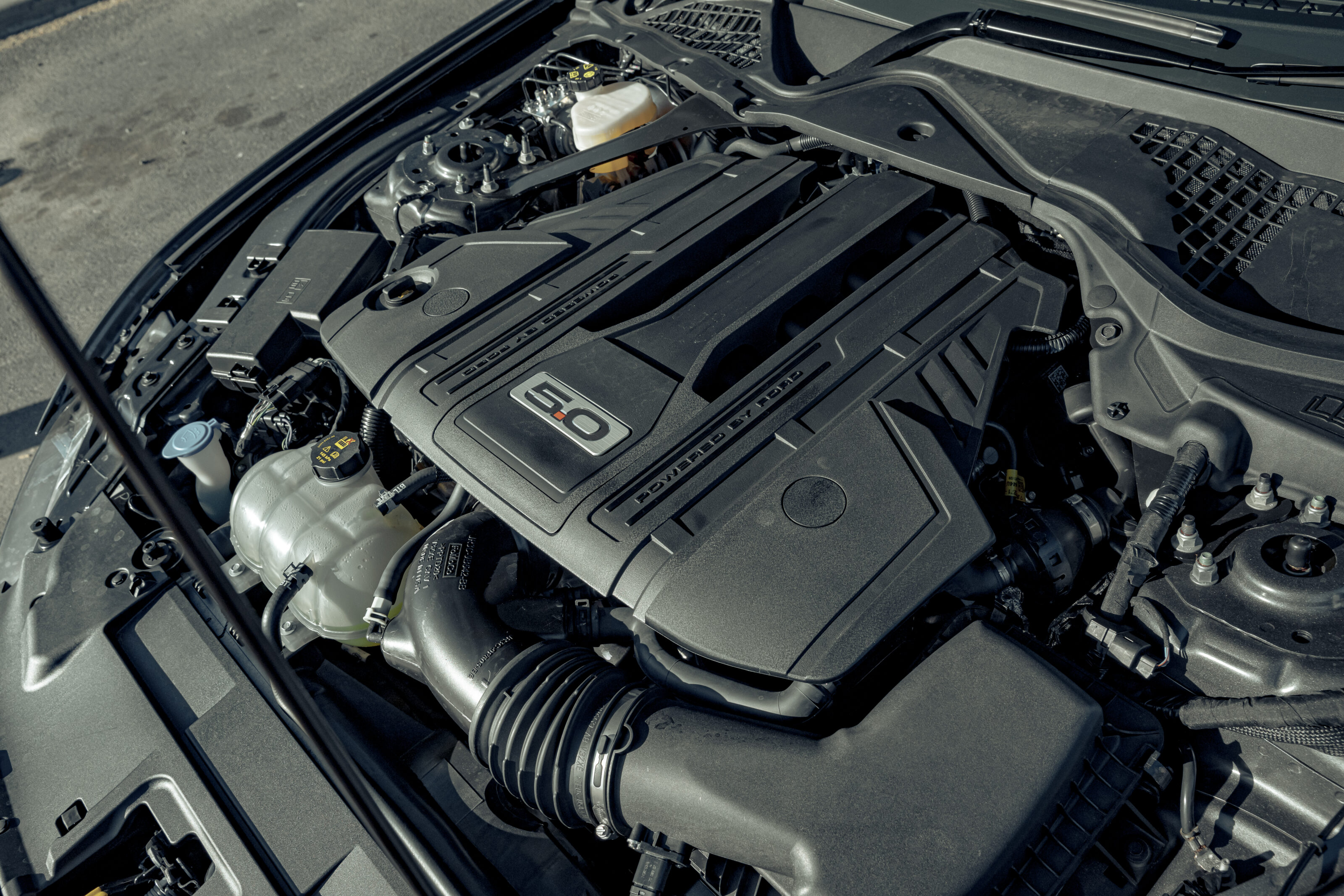
The bimodal exhaust is properly loud, and sounds good throughout the rev-range, never devolving into a booming drone at a constant cruising speed. There’s even a faint driveline whine that seems to have been tuned in to the ‘Stang, vaguely sounding like a supercharger.
Together with the now-standard Bullitt-style vented bonnet and subtle lip kit, there’s plenty of modified muscle car vibes distilled into the V8 ‘Stang from factory.
Despite the convertible’s most-premium position within the Mustang range, it still remains one of the most entertaining road cars available when speaking dollar-for-dollar. There’s also nothing else comparable you’ll find in the sub<$80k price bracket with this much grunt.
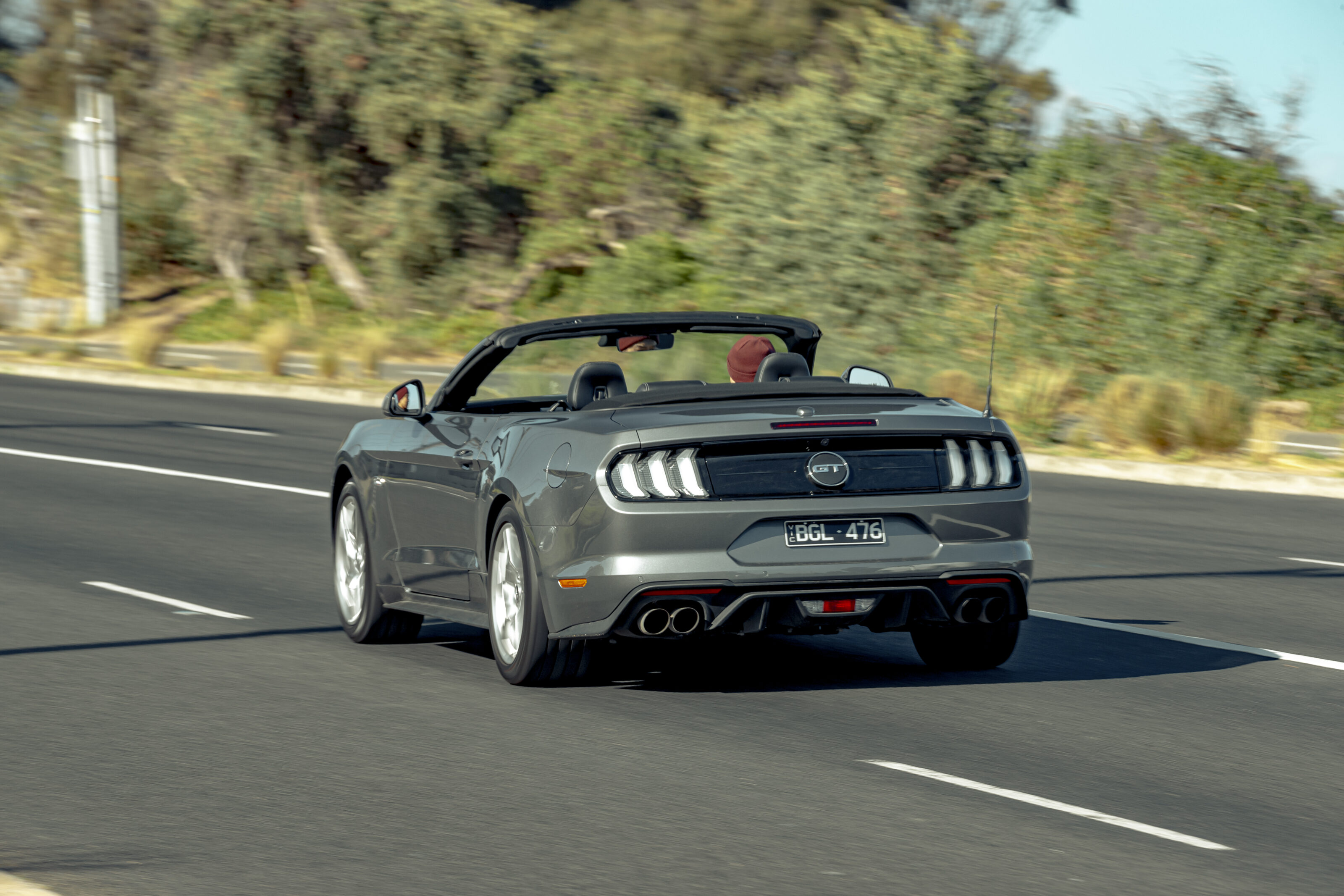
It’s a tremendously effortless engine, with a well of power and torque to draw from virtually anywhere in the range. A maximum of 556Nm is delivered at 4600rpm, while power rushes hard and fast to a heady 7000rpm peak, before falling away as the 7400rpm redline follows shortly after.
The automatic eight-cylinder Mustang claims 12.7L/100km, however this figure can blow out as high as 18L/100km in more spirited circumstances.
It’s the engine that dominates the experience, making ease of overtaking opportunities and quick exits from the traffic lights in an urban setting.
Steering is hefty in the default steering mode, with a slightly doughy on-centre feeling, that can grow tiring in slow situations like navigating car parks or small suburban streets. Thankfully, the comfort steering mode markedly lightens up the rack and quickly became my default setting for commuting and errands.
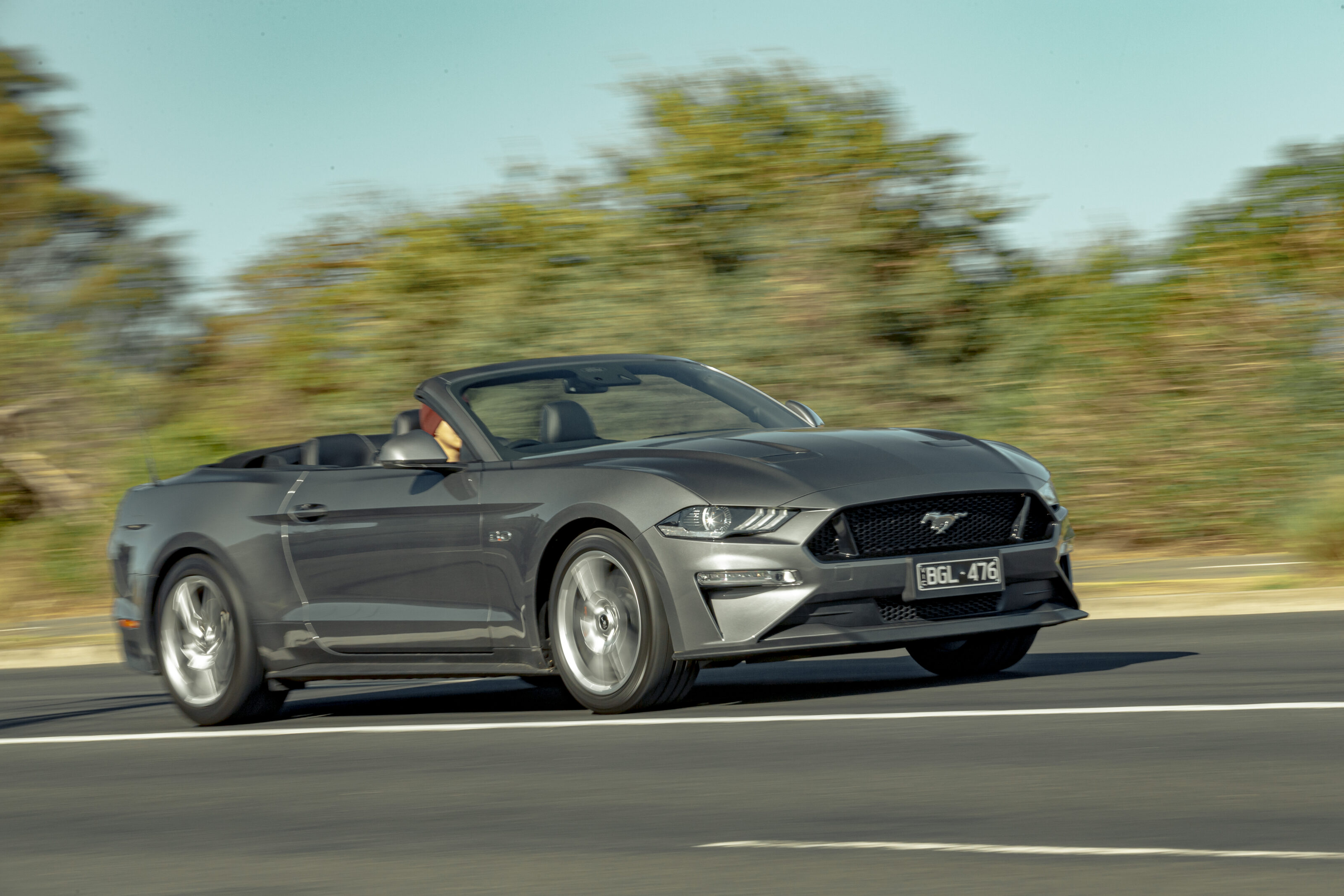
MagneRide adaptive dampers are an essential option for anyone expecting long-range touring capabilities from their Mustang, greatly improving body control, compliance and bandwidth compared to the very firm conventional units.
Secondary to the engine, it’s that 10-speed auto that most defines this Mustang, and it can divide opinion.
Some prefer the six-speed manual which, despite boasting very tall gears, possesses a slick-feeling shift-action and well-calibrated auto-blip feature. The 10-speed’s ratios are very tightly packed, but is undeniably effective in most circumstances.
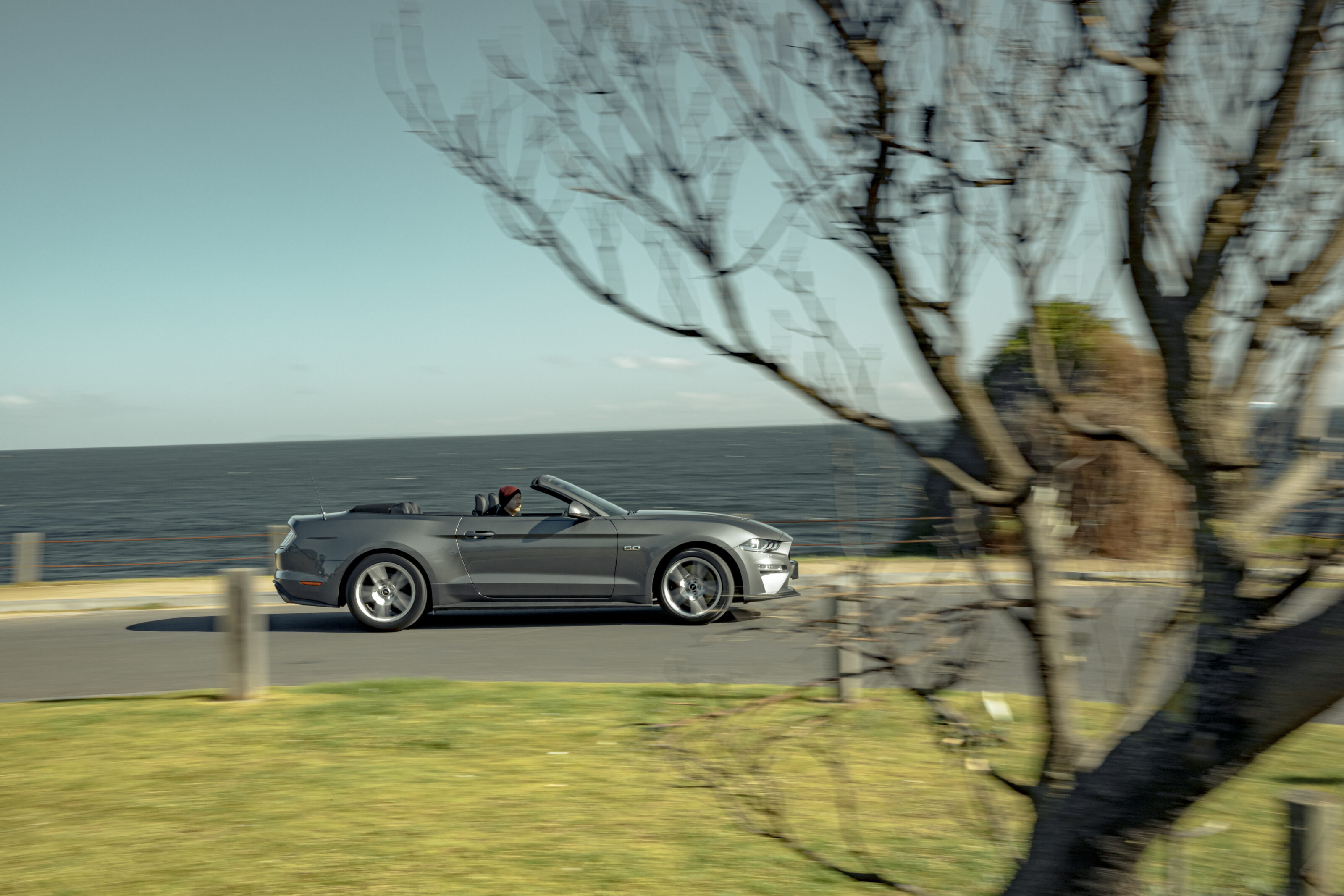
In auto mode, and under normal driving circumstances, it’s a smooth and intuitive unit that will happily climb up and down cogs as needed. With such tightly-packed ratios, sometimes there’s as little as a 500rpm difference between ratios at the higher end and can deliver shifts almost imperceptibly at a constant cruise.
Conversely, should you decide to leave town and go for a proper gallop, the self-shifting transmission is equally as decisive, detecting when you’re hard on the brakes and automatically rattling off downshifts as needed.
The transmission does its best work when left to its own devices, with the small and stubby plastic shifters lacking in tactility and not really adding much to the overall experience.
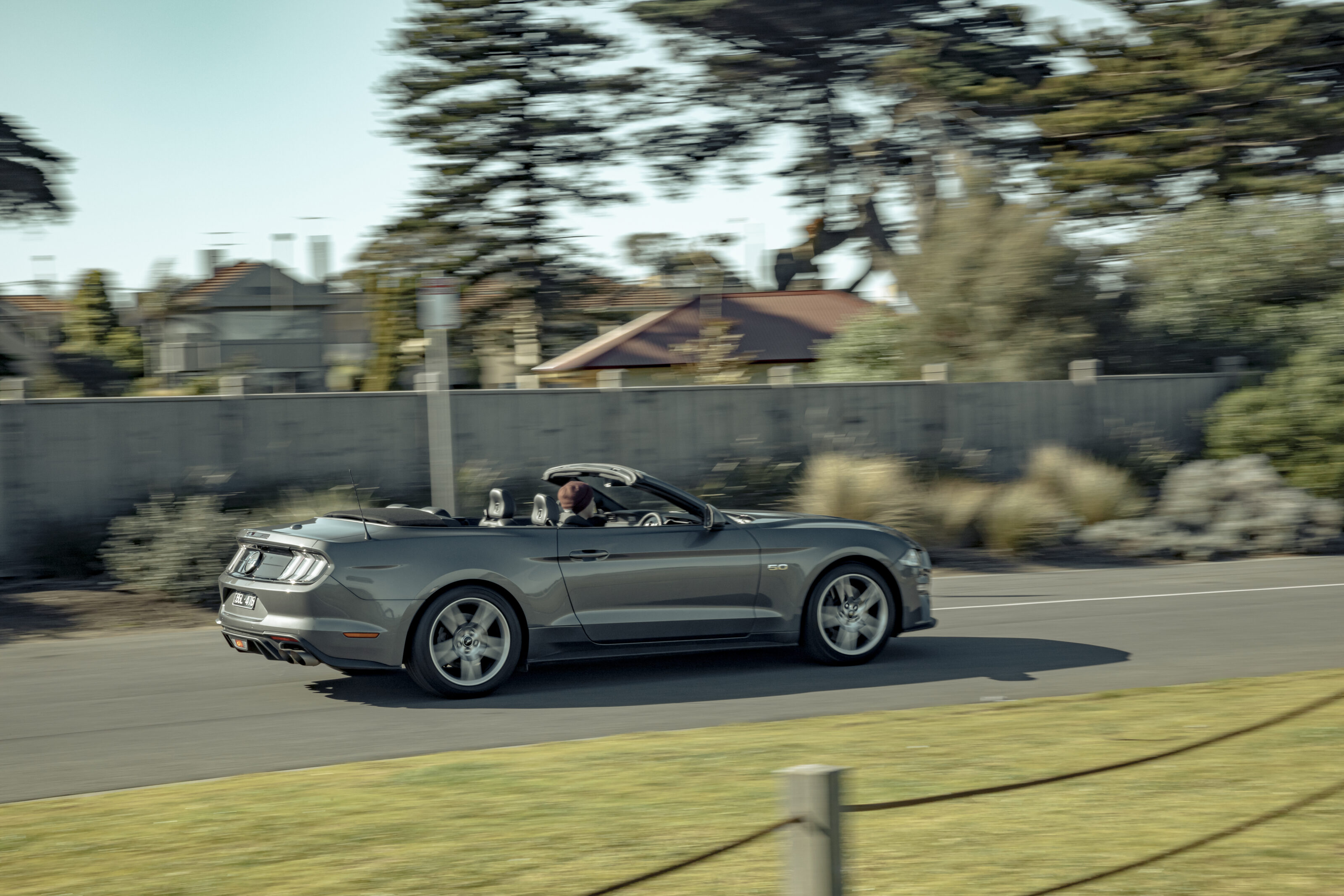
The 10-speed can lose some of its shine when you dial it back a few clicks. At six-to-eight-tenths, it can feel like there are too many ratios for the calibration to juggle, as if the gear delivered is based upon millimetric flexes of your right toe.
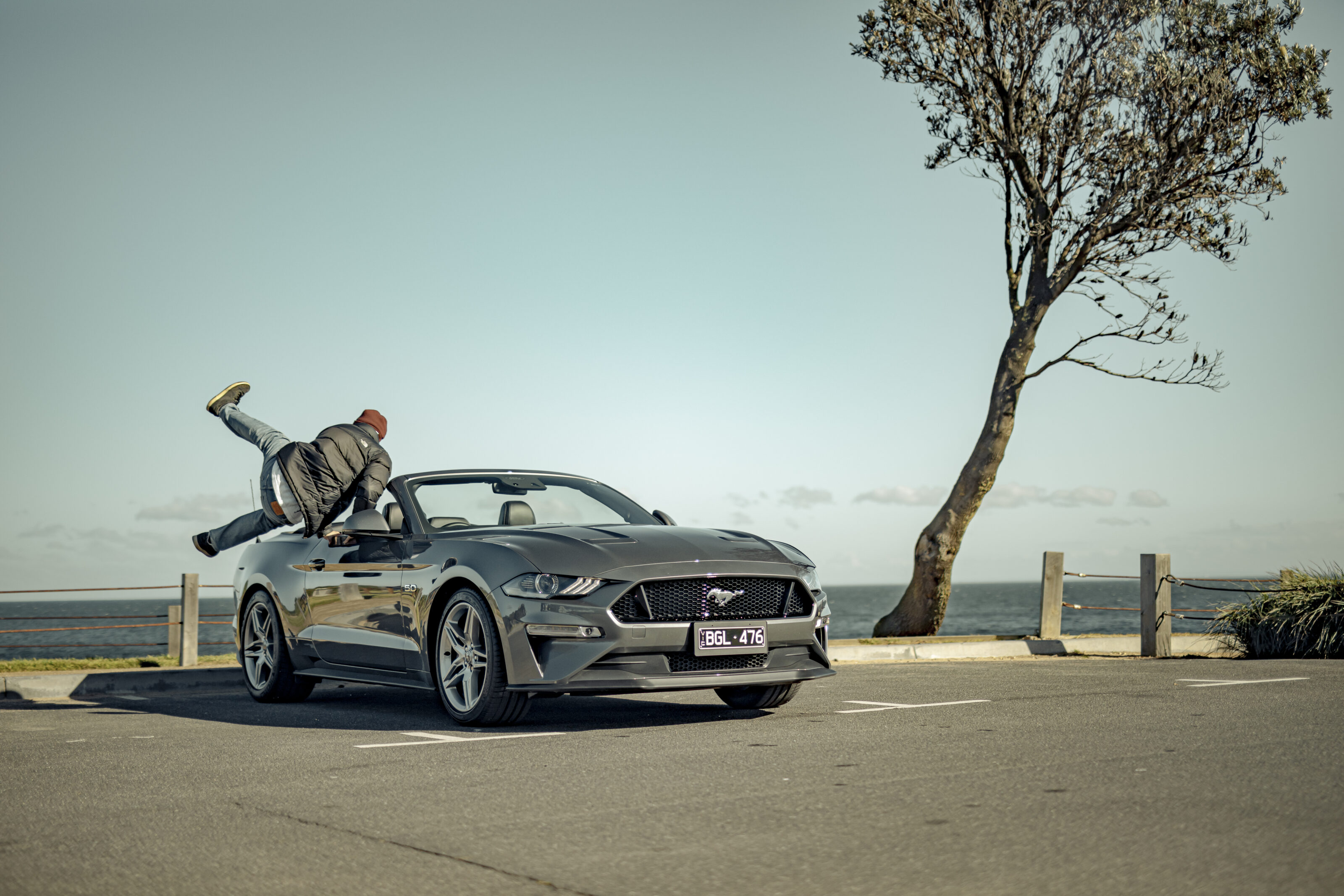
The Mustang has never truly been scalpel-sharp steerer, especially in convertible guise which carries an extra 70kgs of mass on its shoulders. At 1802kgs, the eight-cylinder ragtop is a heavy horse.
Power is a great leveller though and, at times, the Mustang can seem light on its feet through sheer brute force, but it feels big within a country road lane, and can struggle to contain its mass in a hot corner entry.
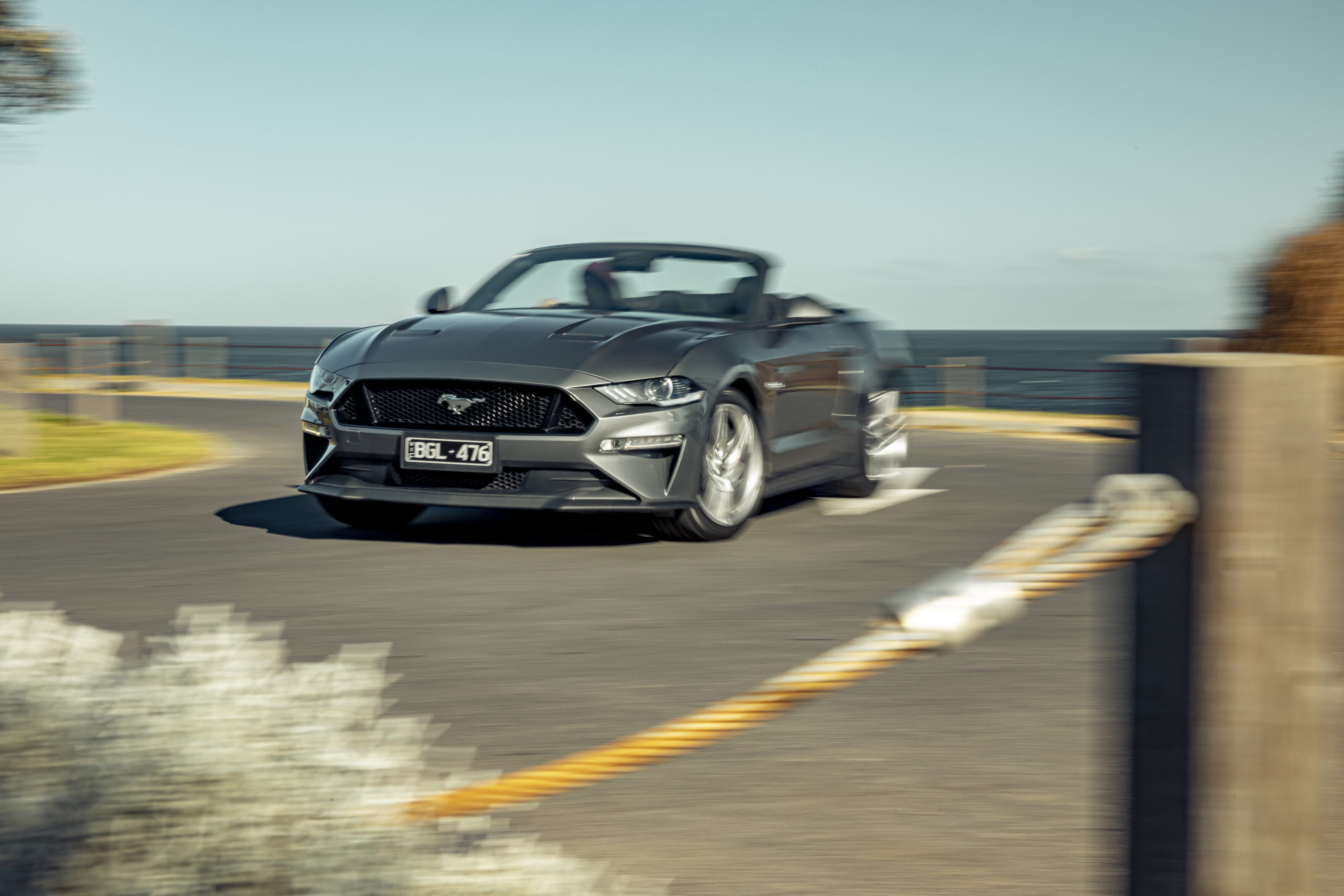
The steering remains a weak point, even at speed, as it struggles to communicate the car’s front end to the driver and barely varies in weight and tactility as lock is wound on and off through a corner.
You might be the ultimate judge but, for many would-be Mustang buyers, limit handling ability isn’t of primary concern and many will easily forgive it for the way it makes you feel the other 95 per cent of the time.
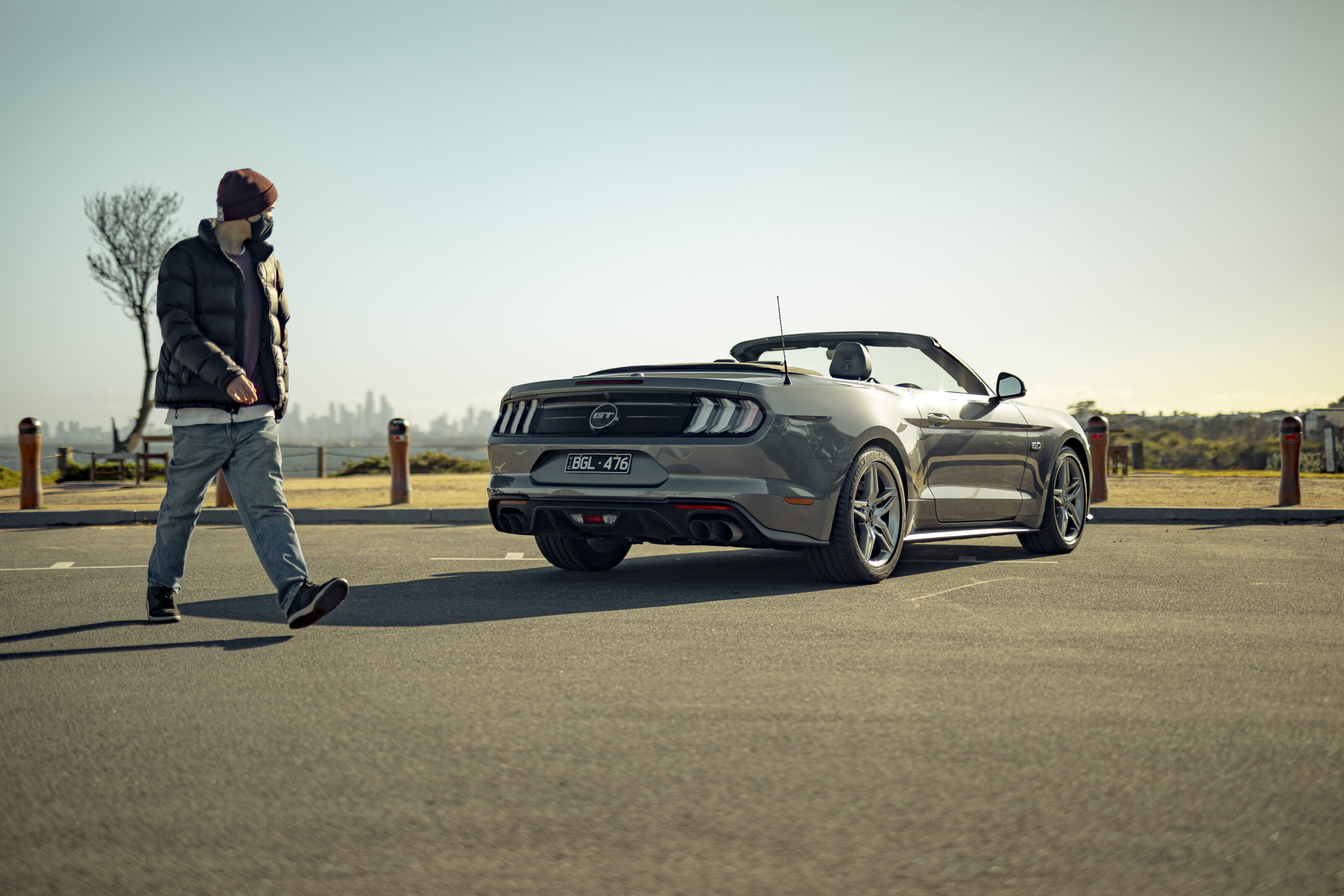
It may be getting on in age, but the Mustang convertible continues to nail its brief as a charismatic and lovable muscle car cruiser. The cabin is still a pleasant place to be, with the prior 2018 update delivering a big step up in the quality of materials.
It’s also well-equipped throughout, with Ford’s SYNC3 infotainment system proving intuitive and effective – with Apple CarPlay and Android Auto compatibility.
Usually fitted as standard with heated and ventilated seats, our Mustang traded such features in exchange for optional Recaro sports seats. I’m rather slight of frame and found them to offer good support, however some colleagues have commented on them being slightly too narrow. Try before you buy.
The cabin may lack the showroom draw of the younger and more tech-filled offerings, but the Mustang has always traded on its retro appeal. And that appeal may only grow as the passage of time marches on.
As the industry continues to shy away from cars like this, the V8 ‘Stang begins to look like a rolling rebellion against the demise of internal combustion.
If this is one of the last naturally aspirated V8s you’re able to buy before we’re all whirring around in EVs, you deserve to hear that thunderous soundtrack with nothing but the sun and stars above you.
2021 Ford Mustang GT convertible specs
| Body: | 2-door, 4-seat convertible |
|---|---|
| Drive: | rear-wheel |
| Engine: | 5038cc V8, DOHC, 32v |
| Bore x Stroke: | 93 x 92.7mm |
| Compression: | 12.0:1 |
| Power: | 345kW @ 7000rpm |
| Torque: | 556Nm @ 4600rpm |
| Power/Weight: | 188kW/tonne |
| Transmission: | 10-speed automatic |
| Weight: | 1802kg |
| Suspension: | struts, coil springs, adaptive dampers, anti-roll bar (f); multi-links, coil springs, adaptive dampers, anti-roll bar (r) |
| L/W/H: | 4789/1916/1396mm |
| Wheelbase: | 2720mm |
| Tracks: | 1642mm (f/r) |
| Steering: | electrically assisted rack-and-pinion |
| Brakes: | 380mm ventilated discs, 6-piston calipers (f); 330mm ventilated discs, single-piston calipers (r) |
| Wheels: | 19 x 9.0-inch (f); 19 x 9.5-inch (r) |
| Tyres: | 255/40 R19 (f); 275/40 R19 (r) Michelin Pilot Sport 4 S |
| Price: | $75,225 |
Snapshot
- Details of self-driving AI software explained
- Humanoid robot codenamed ‘Optimus’ in development
- Third Tesla event of its type
Tesla has shown off its latest self-driving developments at a big showcase event – including plans for a humanoid robot.
Alongside a look at the highly technical challenges of creating a self-driving car, Tesla CEO Elon Musk revealed plans for a ‘Tesla Bot’ at the firm’s AI Day – hosted in the US Thursday night/Friday morning Australian time.
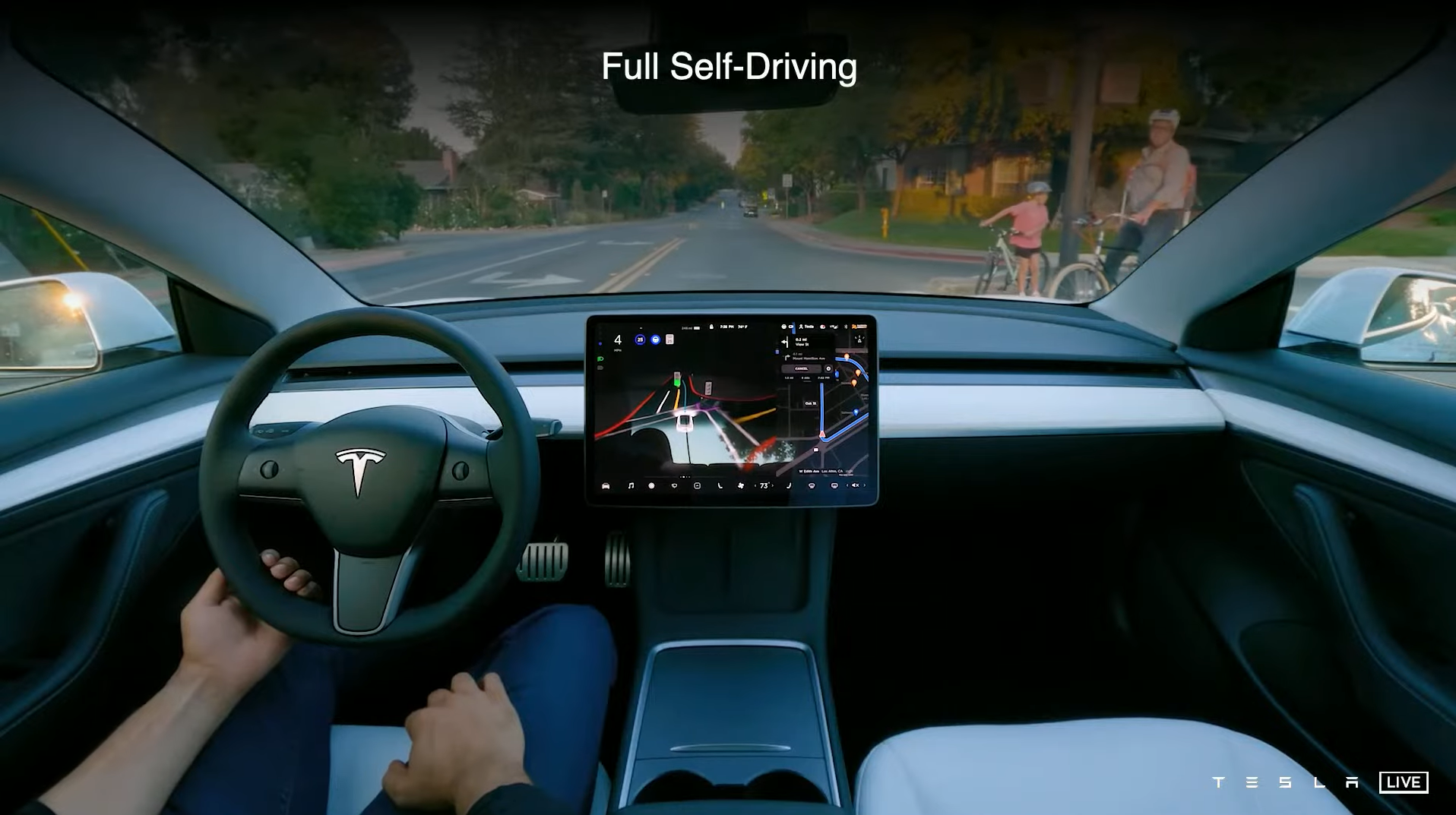
The live-streamed, two-hour, showcase opened with a video demonstrating a Tesla operating in ‘Full Self-Driving’ mode – moving autonomously through suburban traffic. The car’s projected movements were telegraphed through its instrument cluster, which also showed key road items including signage and individual lanes.
While Telsa’s Autopilot system (which now faces a probe over the number of accidents it is said to have caused) currently performs some driving tasks automatically, it’s not yet fully autonomous.

Musk was joined on-stage by a number of Tesla programmers and developers, who delved into the complex process of designing a self-driving ‘neural network’.
Essentially, Tesla’s system uses the combined input of eight in-car cameras to build a “four-dimensional vector space”.
This environment is populated with individually-identified objects: stop signs, other cars, pedestrians, and anything else which may affect the car’s movement.
Rather than assess every camera’s input on its own, the AI rolls each frame into a singular, spanning view.
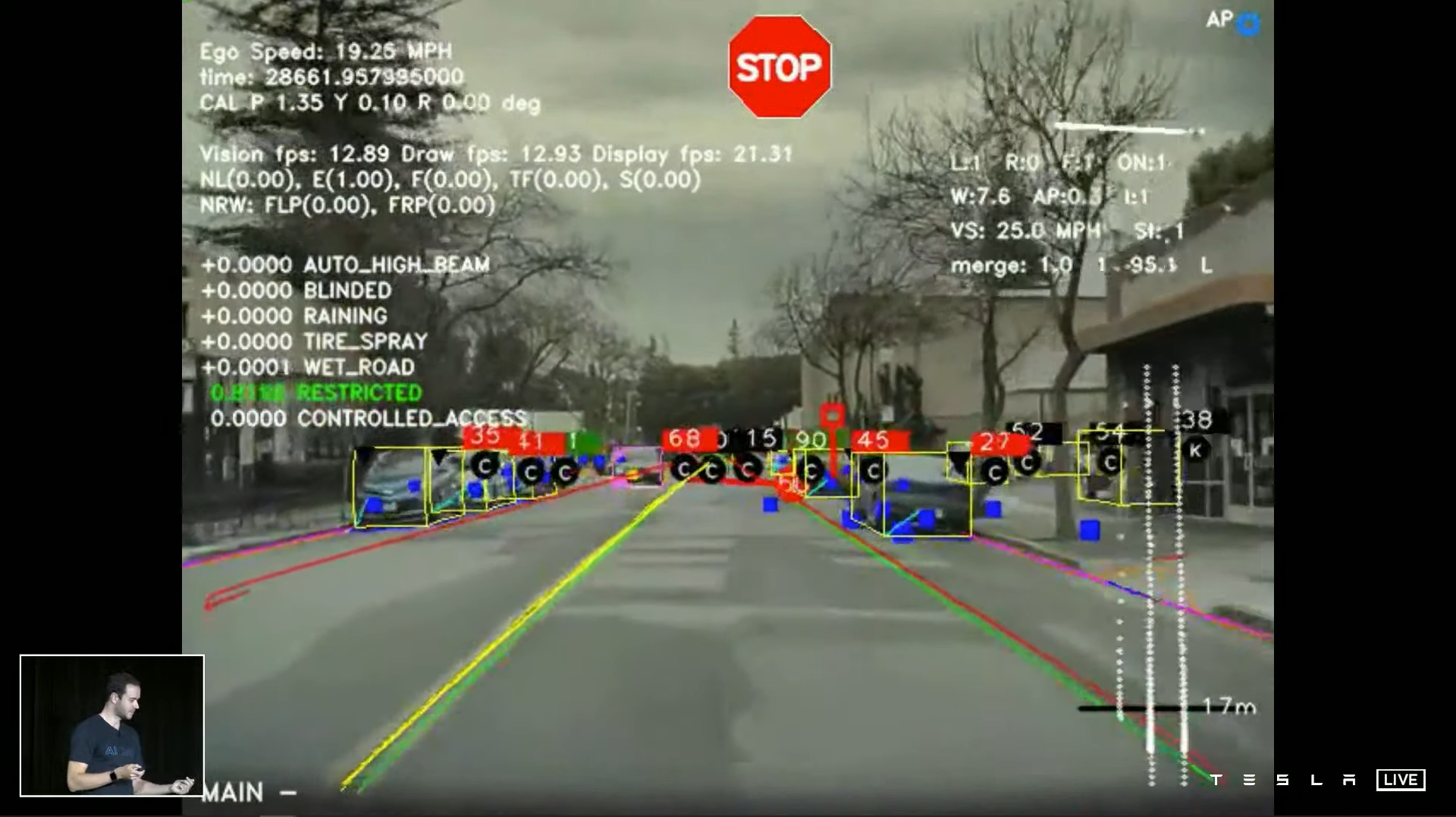
Much of this ‘training’ is taking place with the aid of video-based simulations, allowing the program to refine its responses within varying road layouts and conditions.
For example, hundreds of training videos have featured snow spray which would impair the cameras’ ability to capture the surroundings. It’s being performed within a supercomputer system known as Dojo.
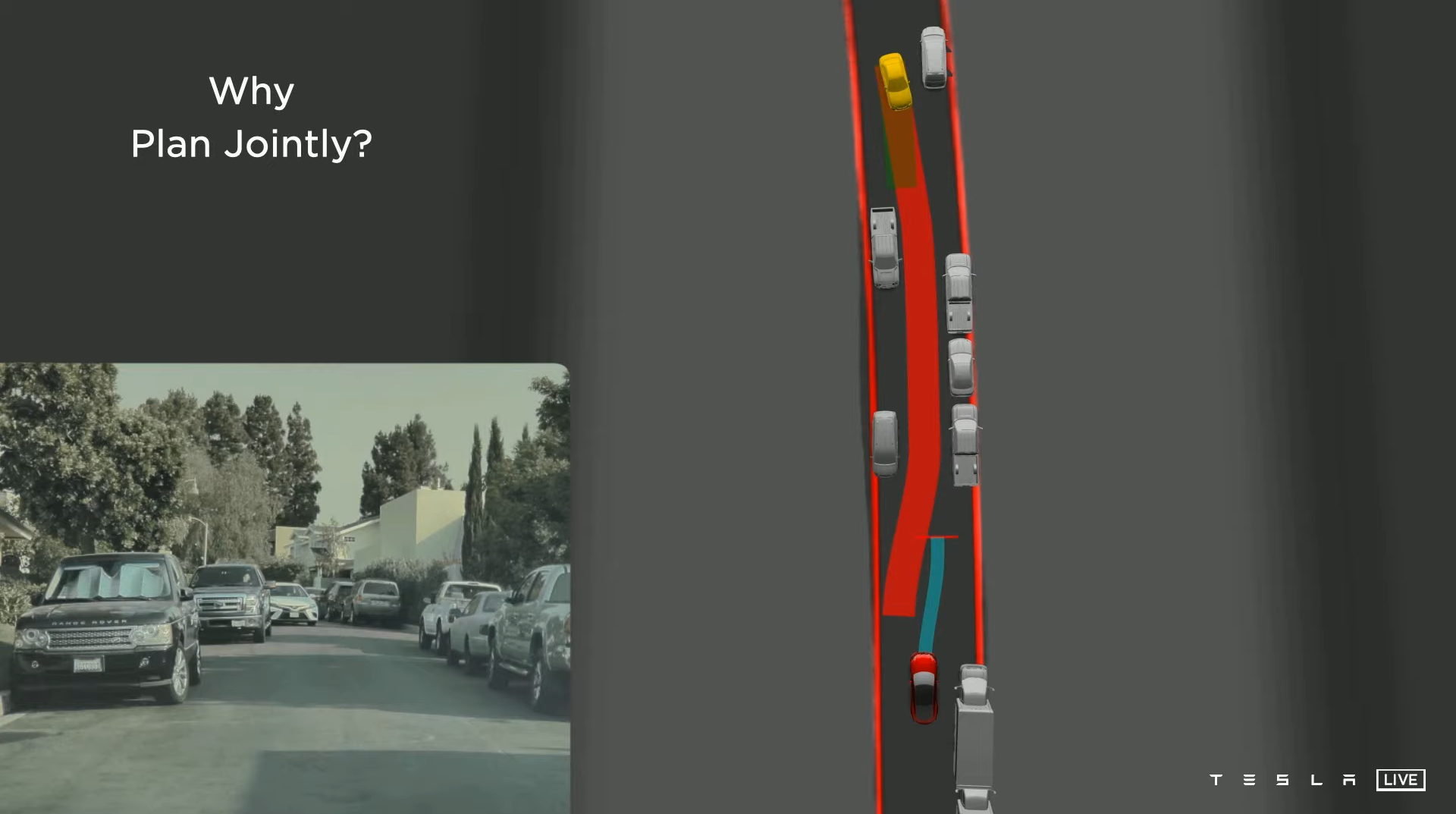
Autopilot software director Ashok Elluswamy also explained some of the AI’s reasoning processes, using the example of giving way on a narrow street.
Here, the car would assess the position and speed of an oncoming vehicle, as well as the location of any others parked on the roadside. It would then decide whether to give way or move forward based on the other driver’s predicted actions, watching for any movement changes.
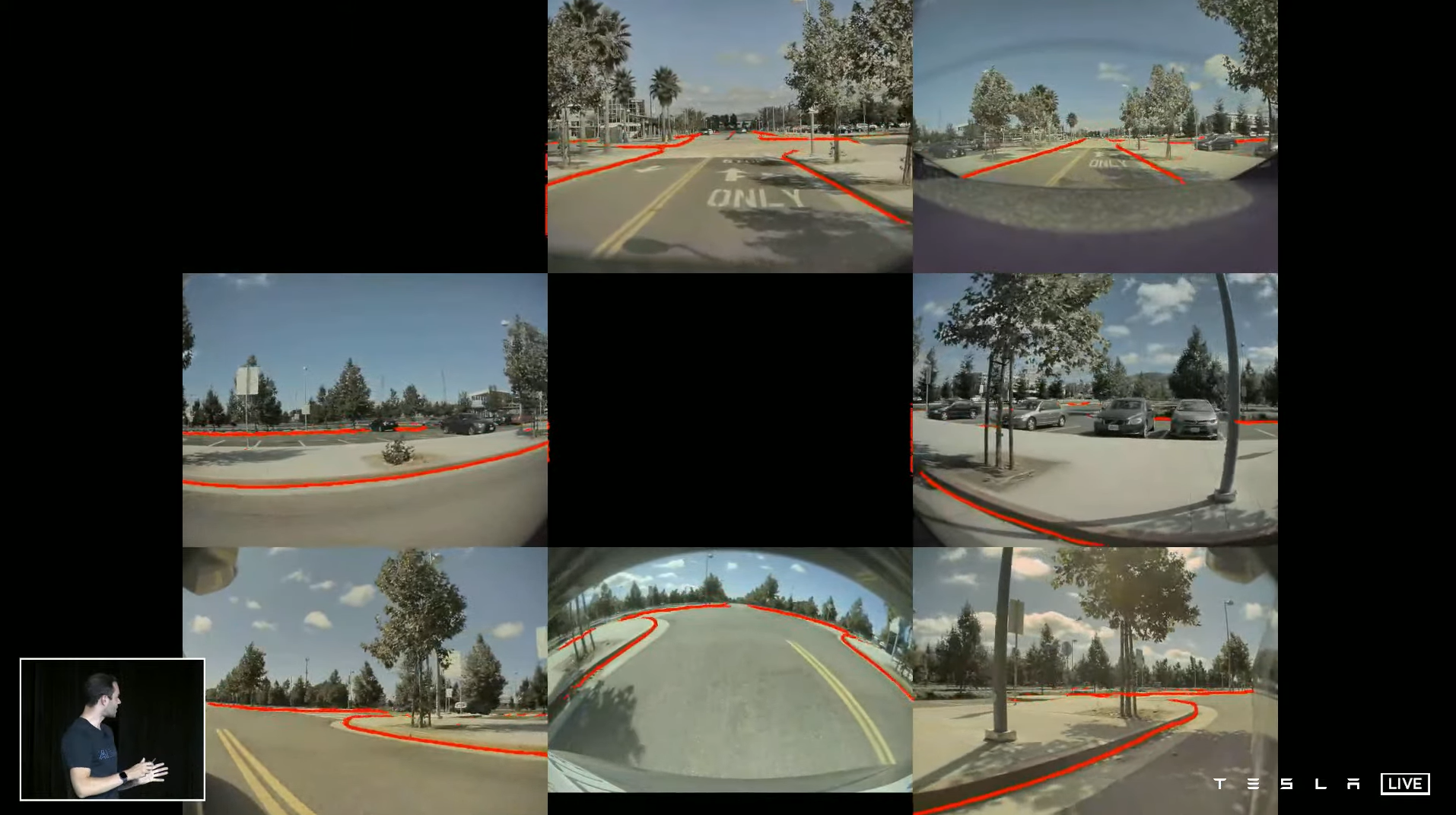
Musk expressed that “safer than human” driving is entirely achievable with existing camera designs – though new technology will likely be pursued in the company’s future.
Road footage from around 50 countries is apparently being used to train the AI, though American roads have been the primary focus so far.
“Let’s solve it for the US, then we’ll extrapolate it to the rest of the world,” Musk said. “The prime directive is don’t ‘crash’, and that’s true for every country.”
When quizzed about Tesla AI possibly being forced to prioritise the safety of either occupants or pedestrians, Musk dismissed the issue as “somewhat of a false dichotomy” – citing the technology’s rapid processing methods.
“To a computer, everything is moving very slowly. Not that [a conflict] will never happen, but it will be very rare,” he said.
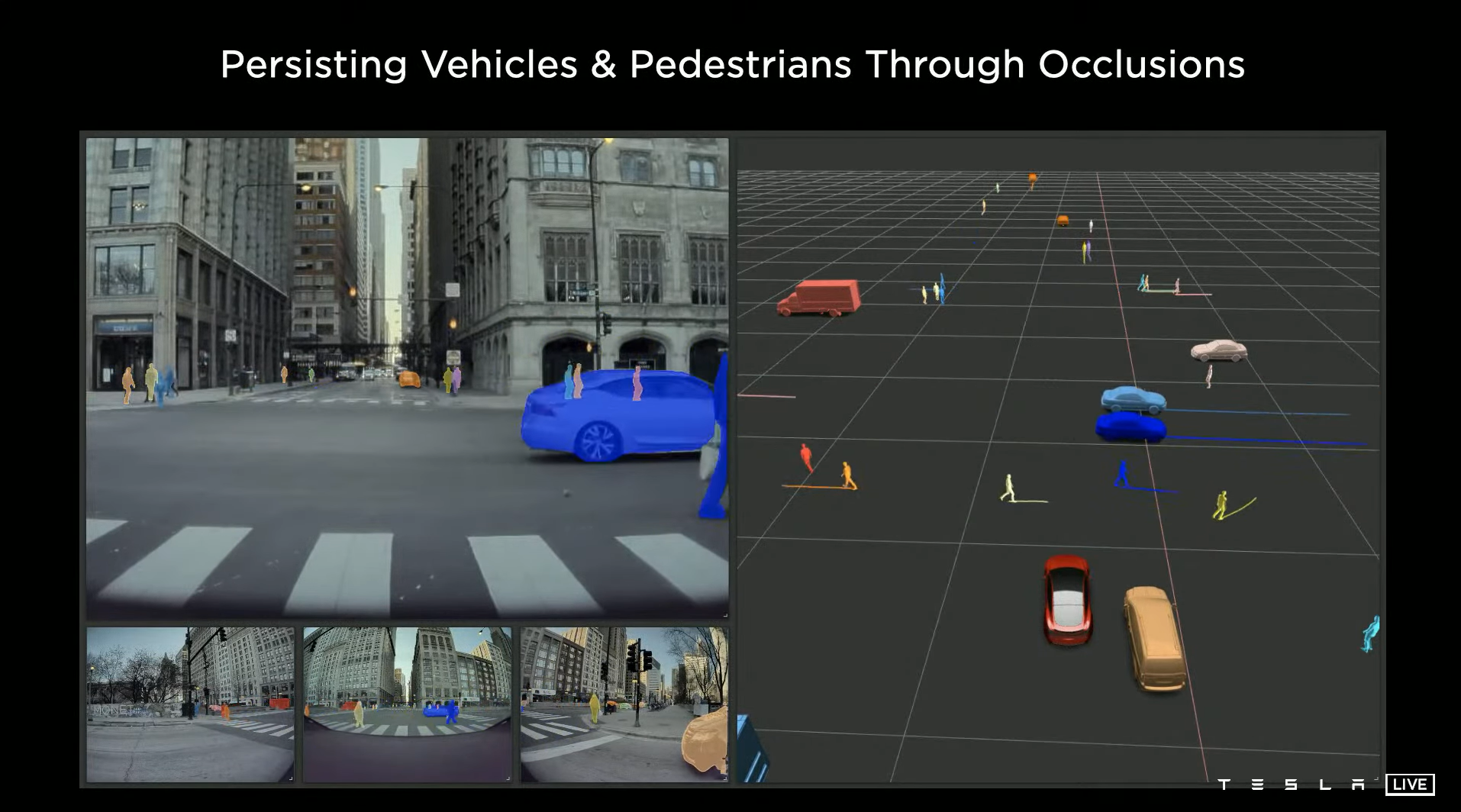
Both Musk and his development team labelled the AI’s predictive ability as “eerily good.” It’s said to already be capable of spotting objects like cyclists and pedestrians “beyond human” levels.
Musk was also asked about potential for open-source versions of Tesla’s AI software. “This is fundamentally, extremely expensive,” he answered. “Somehow that has to be paid for, unless people want to work for free.”
“But if other car companies want to licence it and use it in their cars, that would be cool.”
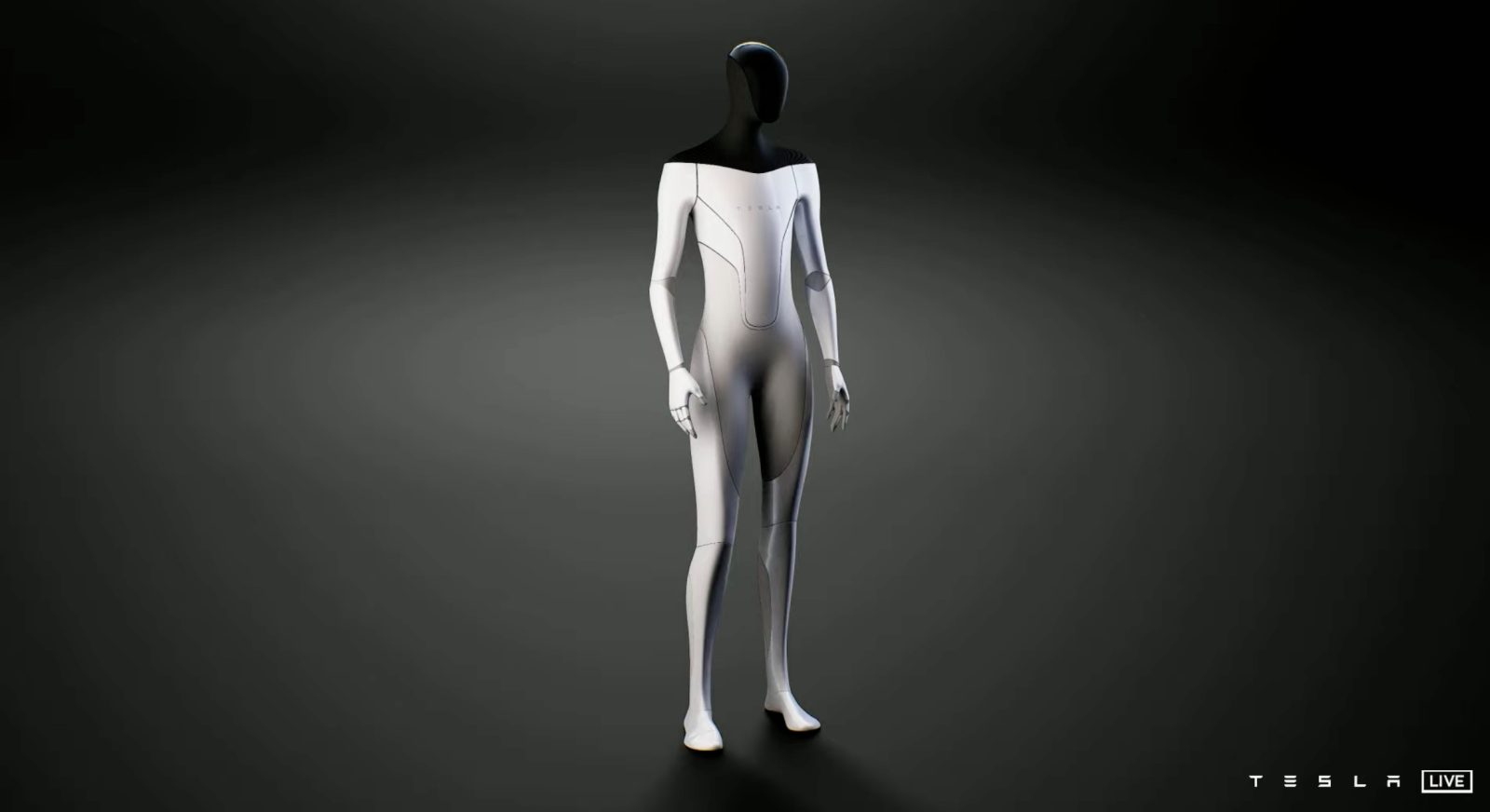
While there was plenty of discussion on the finer points of AI learning, it was Musk’s robot reveal that sparked the most interest.
“Our cars are semi-sentient robots on wheels,” Musk said. “Now we want to put that in a humanoid form.”
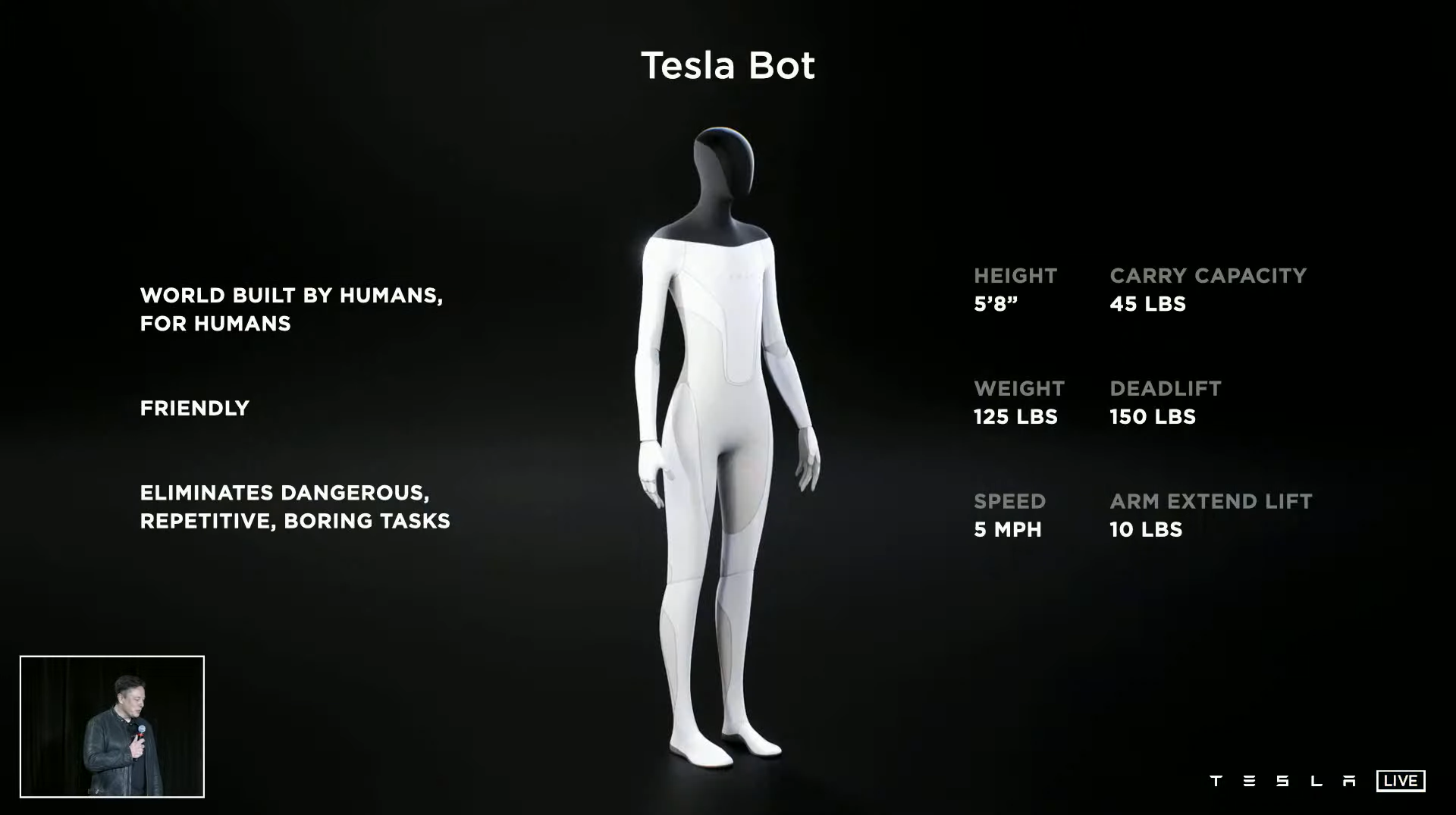
Codenamed ‘Optimus’, Tesla hopes to have the first prototype robot in action next year to show “[it is] much more than an electric car company”.
The first versions of the Tesla Bot will be intended for work that is “boring, repetitive, or dangerous” — jobs that “people would least like to do” according to Musk. One such role could be inside Tesla’s own “Alien Dreadnought” car factory.
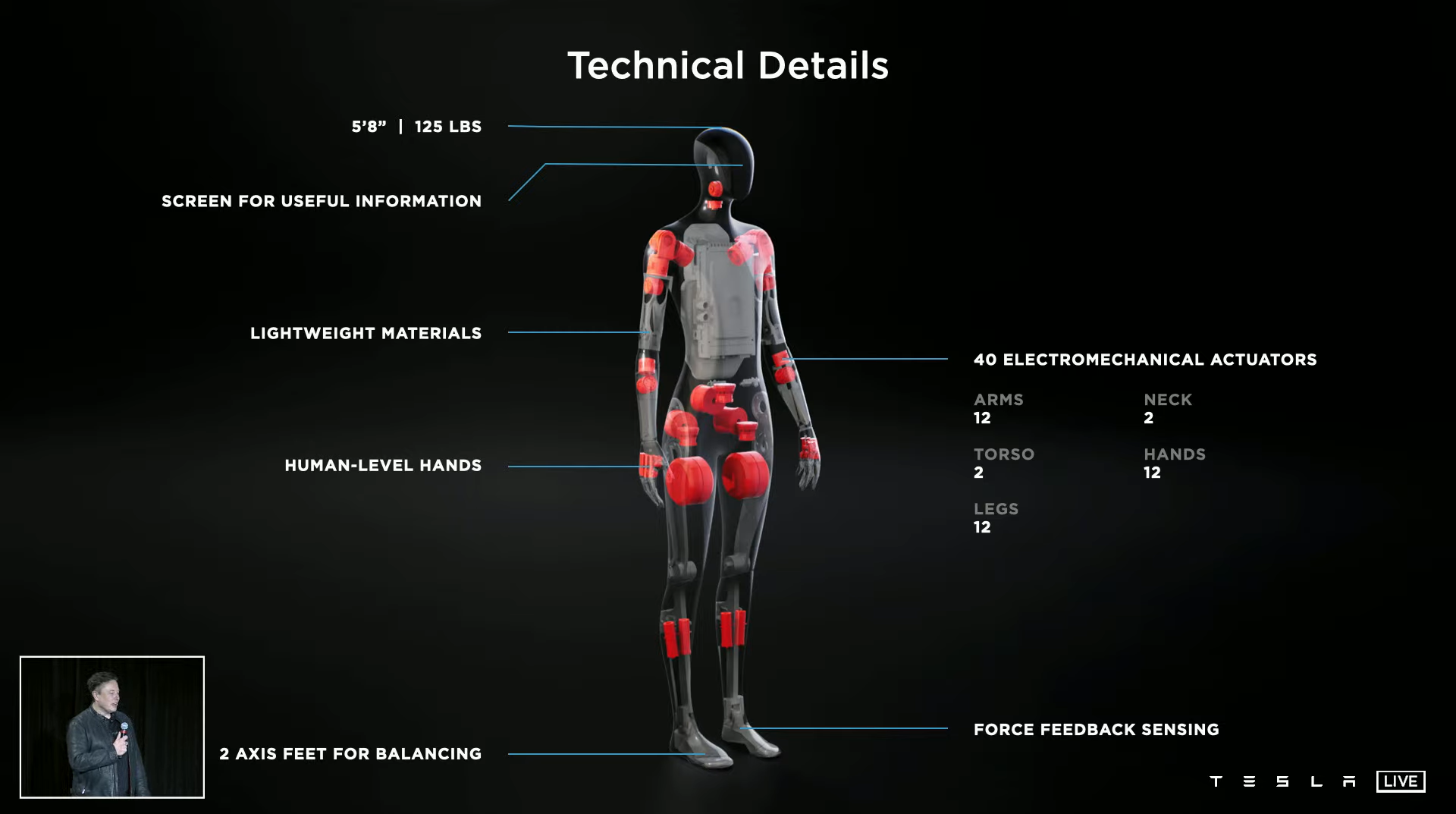
The robot will feature a human-like design, though Musk seemed keen to distance it from any Terminator comparisons. “We certainly hope this does not feature in a dystopian sci-fi movie,” he joked. “At a physical level, you can run away from it and most likely overpower it.”
Tesla plans to use an eight-camera processing system like that in its cars, backed by similar machine learning software.
Ultimately, Musk says the Tesla Bot should be able to perform tasks based on verbal commands, without “line by line” code training. “I think we can do it,” he added.
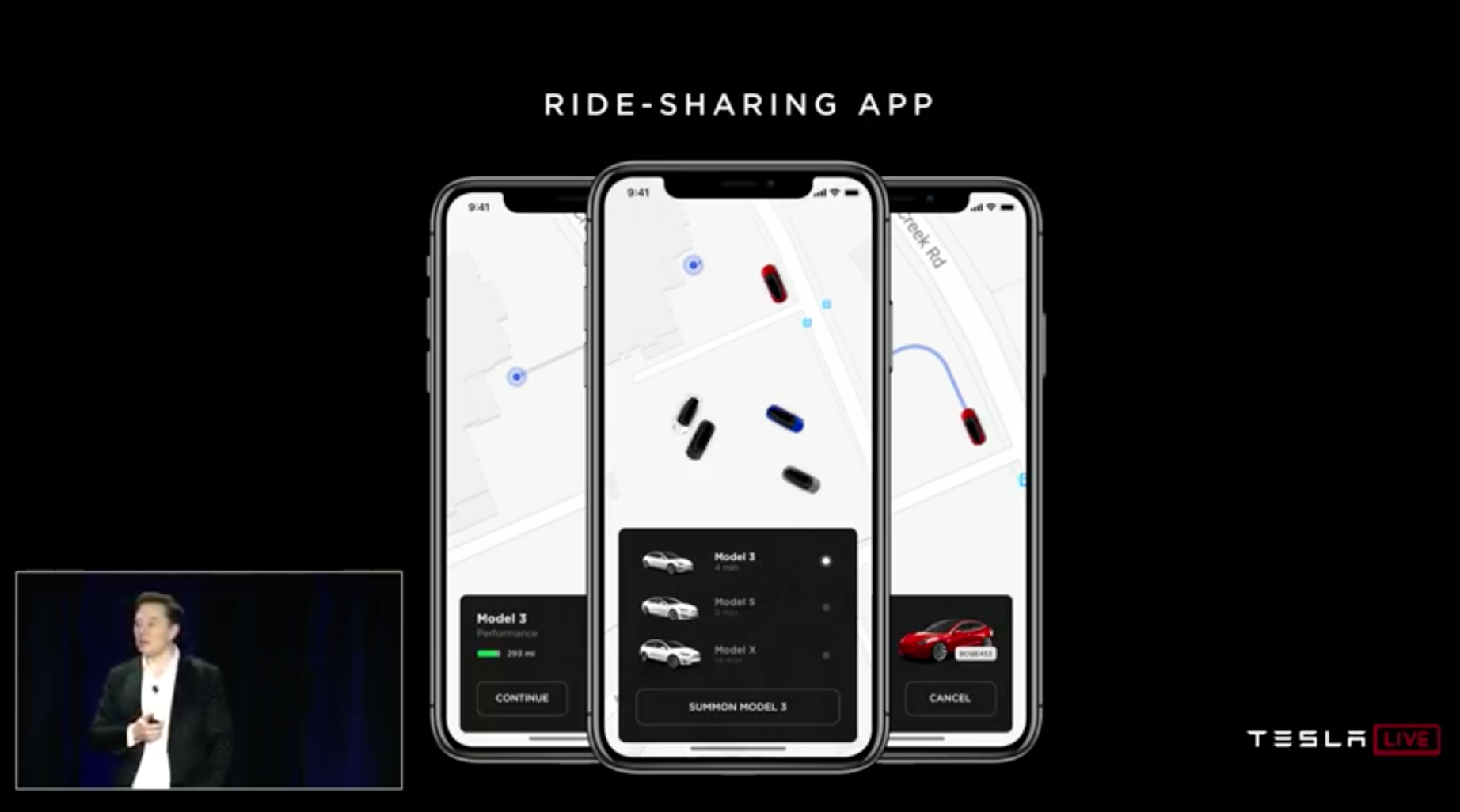
AI Day was the third in a series of technology showcases hosted by Tesla.
‘Autonomy Day’ was held in 2019 at the company’s Pao Alto headquarters. At that event, Musk made a number of promises, notably that Tesla would “for sure” have one million self-driving taxis on the road by mid-2020.
When questioned on Twitter in April 2020 about the robo-taxi’s progress, Musk blamed “regulatory approval [as] the big unknown.” As of today, it has yet to debut in any capacity.

He also unveiled an advanced silicon chip for self-driving functionality, which is being built into every Model S, Model X and Model 3. Made by Samsung and capable of 36 trillion operations per second, Musk labelled it “the best chip in the world.”
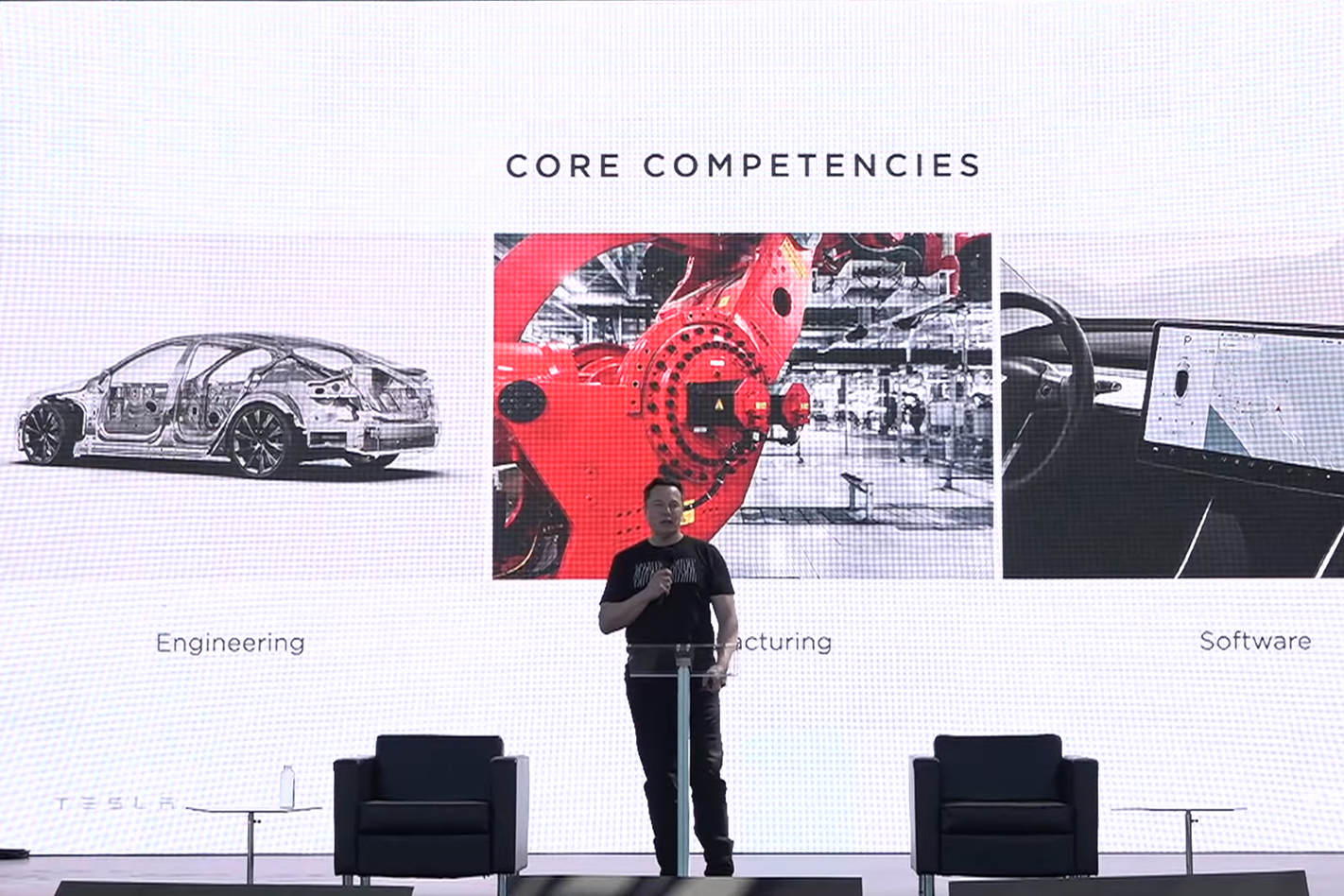
Tesla followed up with ‘Battery Day’ at its Fremont Gigafactory factory last September, where Musk announced plans to reduce battery production costs in readiness for more affordable electric cars. A redesigned ‘tabless’ battery was placed on the agenda, increasing both range and power.
Snapshot
- Updated Compass comes with a lot of tech as standard, but limited options
- Not taking kit out of cars as is the case with some rivals
- Two Compass variants already here, others coming by year’s end
Jeep Australia has so far swerved being badly hit by the growing semi-conductor crisis by reducing the number of options on its models.
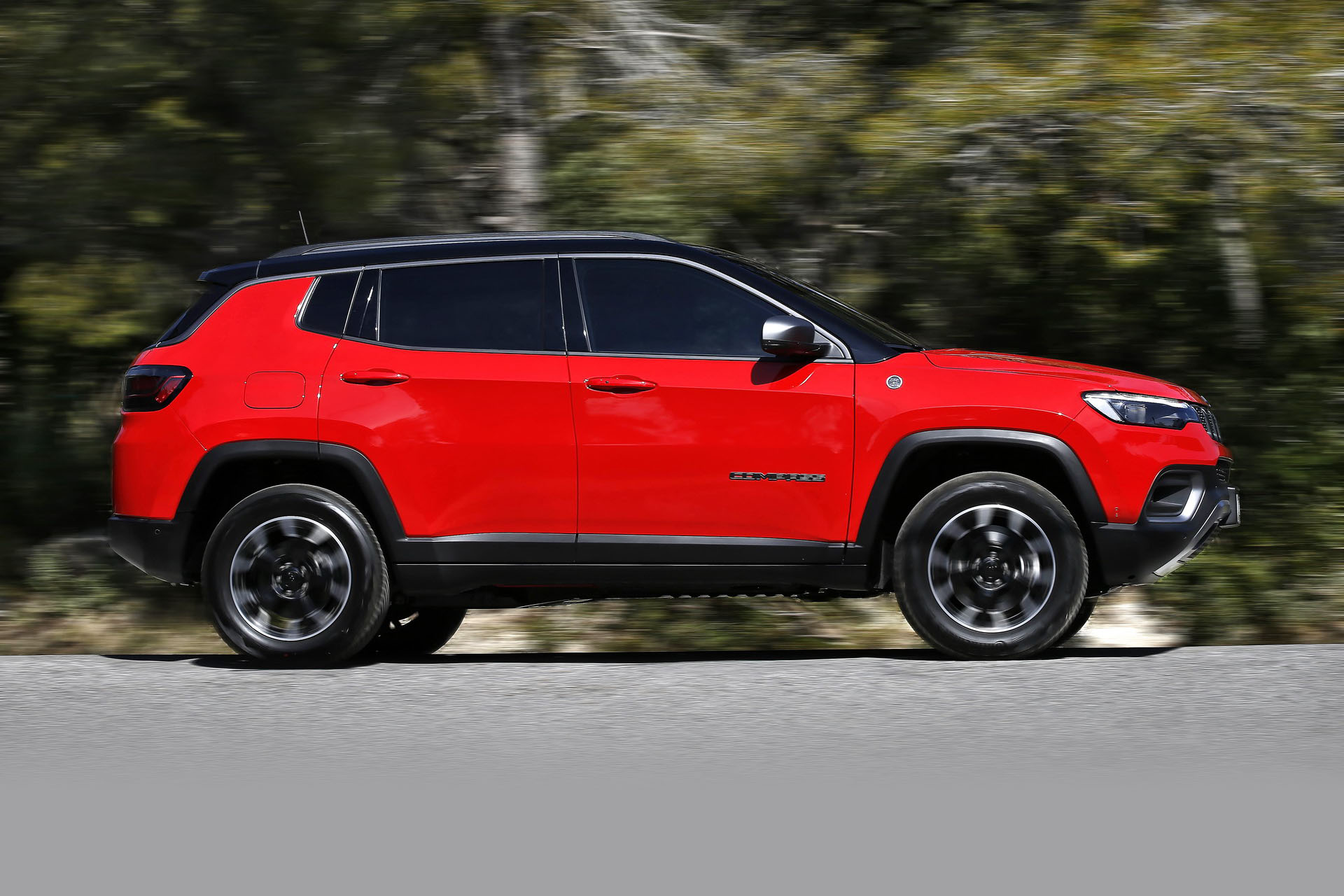
While the updated 2021 Jeep Compass has improved tech and safety features now as standard, it also comes with a pretty short extras list – with only the two highest spec variants gaining optional packages beyond premium paint choices.
However, according to Jeep, offering fewer options is allowing the company to keep producing its cars in good numbers, and bringing them into Australia, without having to strip out components.
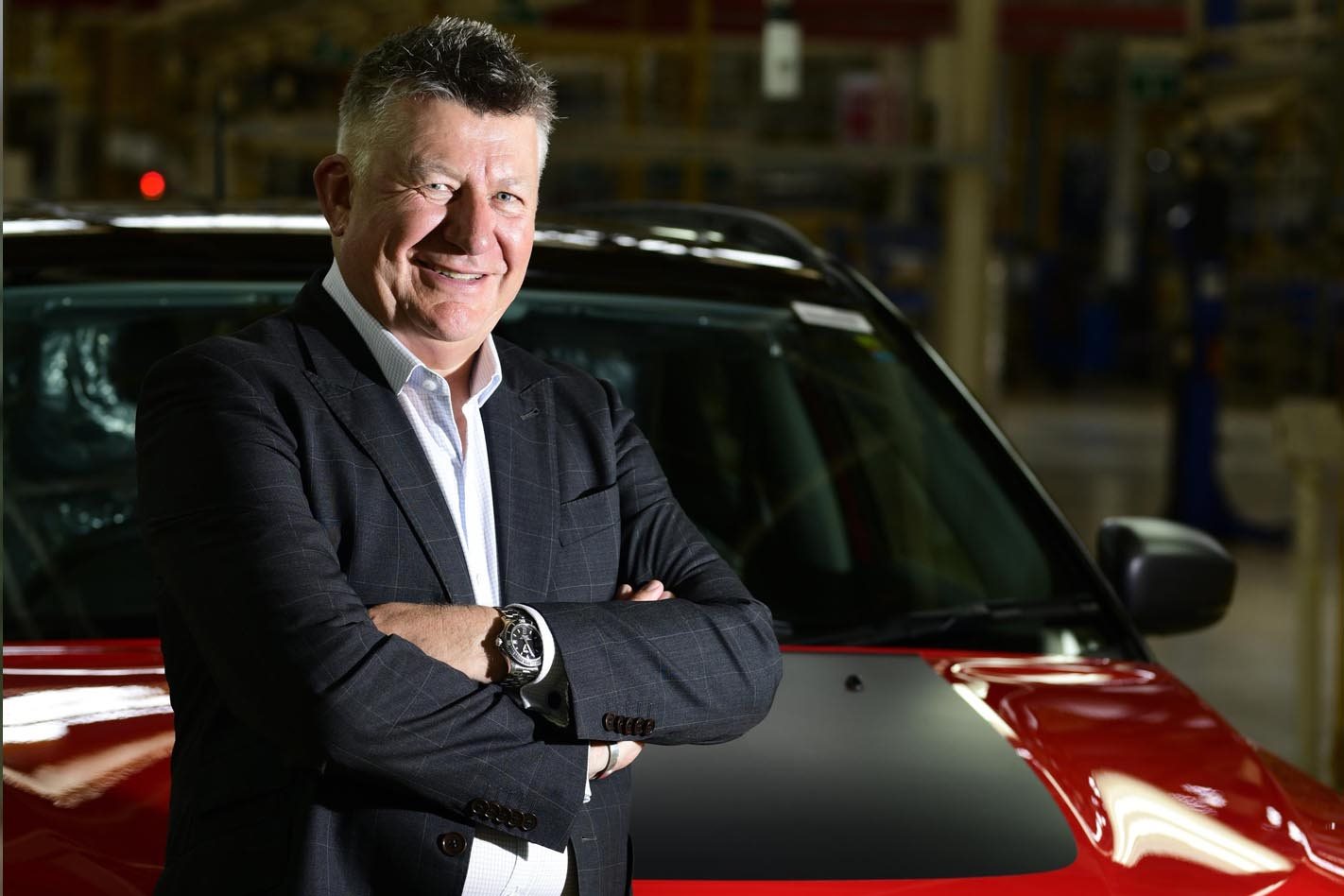
“With the new level of equipment [in the 2021 Compass] you’d think it would mean more problems related to chips, but so far we’ve done well,” said Kevin Flynn, MD of Jeep Australia.
“We’ve reduced the number of options and variations across the whole of our range – and we’ve done that deliberately as we decided it was better for us, and easier for our customers and dealers.”
Speaking at a presentation today, the MD said the US marque was not immune from the global issues, but unlike some other carmakers, it hasn’t yet had to pull components from any models – saying “so far, we’re ok”.
While the boss acknowledged supply of the Compass has been affected by the global parts shortage, he added that in other models the order banks were “very healthy”.
So far the Launch Edition and S-Limited variants are the only ones to have arrived on Aussie shores – but Jeep has confirmed the 80th Anniversary Edition is expected to land next month, with the Limited and Trailhawk following by the end of the year.
“Worldwide production issues are holding us back a little – we don’t think we have ever had such a low level of stock in this country,” Flynn said.
“We’re working to improve our situation but I can tell you that we would be in a far stronger position [with Compass] if it wasn’t for the current frustrations and restrictions.
“Every month we look at the production planning and at the figures in great detail and hope we see the numbers produced that we want, and then re-forecast.
“Obviously we’ve had to be reasonable in what we have been asking for [from US HQ].”
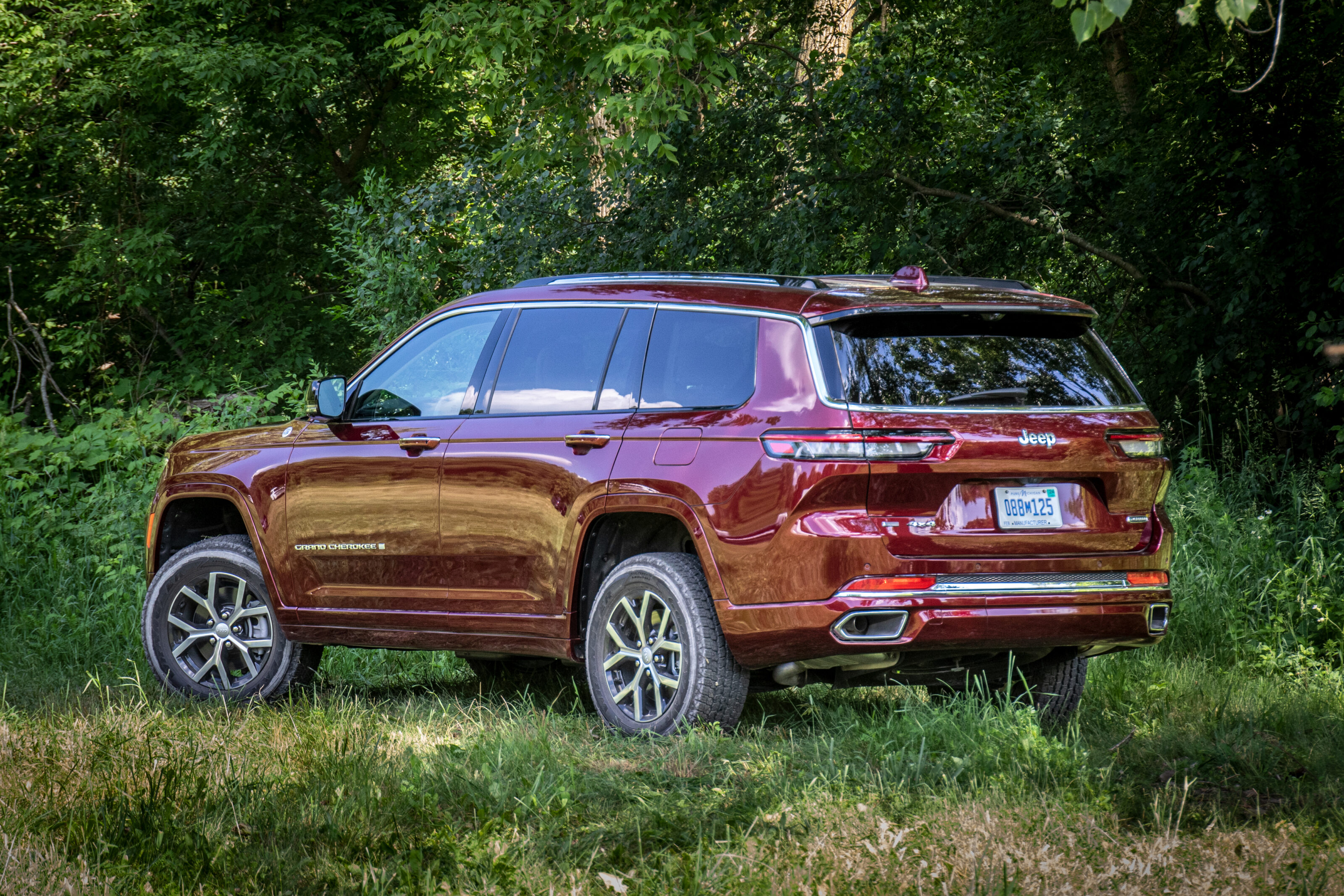
The brand is still expecting to launch the new Grand Cherokee locally in the final quarter of this year, although only in three-row guise initially – with the two-row version coming later.
Conversely, Flynn ruled out the Australian arm bringing the Compass-based Commander, found in overseas markets, Down Under, stating: “We did have a look at that, but at this point in time it is not going to make up our offering.”
According to Flynn, over the last few years Jeep has turned its performance around and “everything we said we wanted to achieve is actually being achieved”.
“A lot has changed. The previously decline of the brand levelled out in Covid-hit 2020. This year, despite the challenges around chips and the pandemic, it has been a fantastic year. What we have achieved so far has been pretty good – we’re 97 per cent up on 2019,” he said.
With sales improving for the US carmaker locally, it seems its new approach to becoming a premium brand is sitting well with Australian customers.
Flynn told Australian journalists on Friday Jeep has been relaunching its strategy to its dealers in recent months.
“It is becoming harder and harder to actually sell the entry grade vehicles [in Australia] and even now in the Launch Edition [of the 2021 Compass] the level of spec on that is so much higher than what we launched on the last model.
“We’re also seeing that move up with the next Grand Cherokee, which is just on a different level. Jeep really has moved upmarket.”
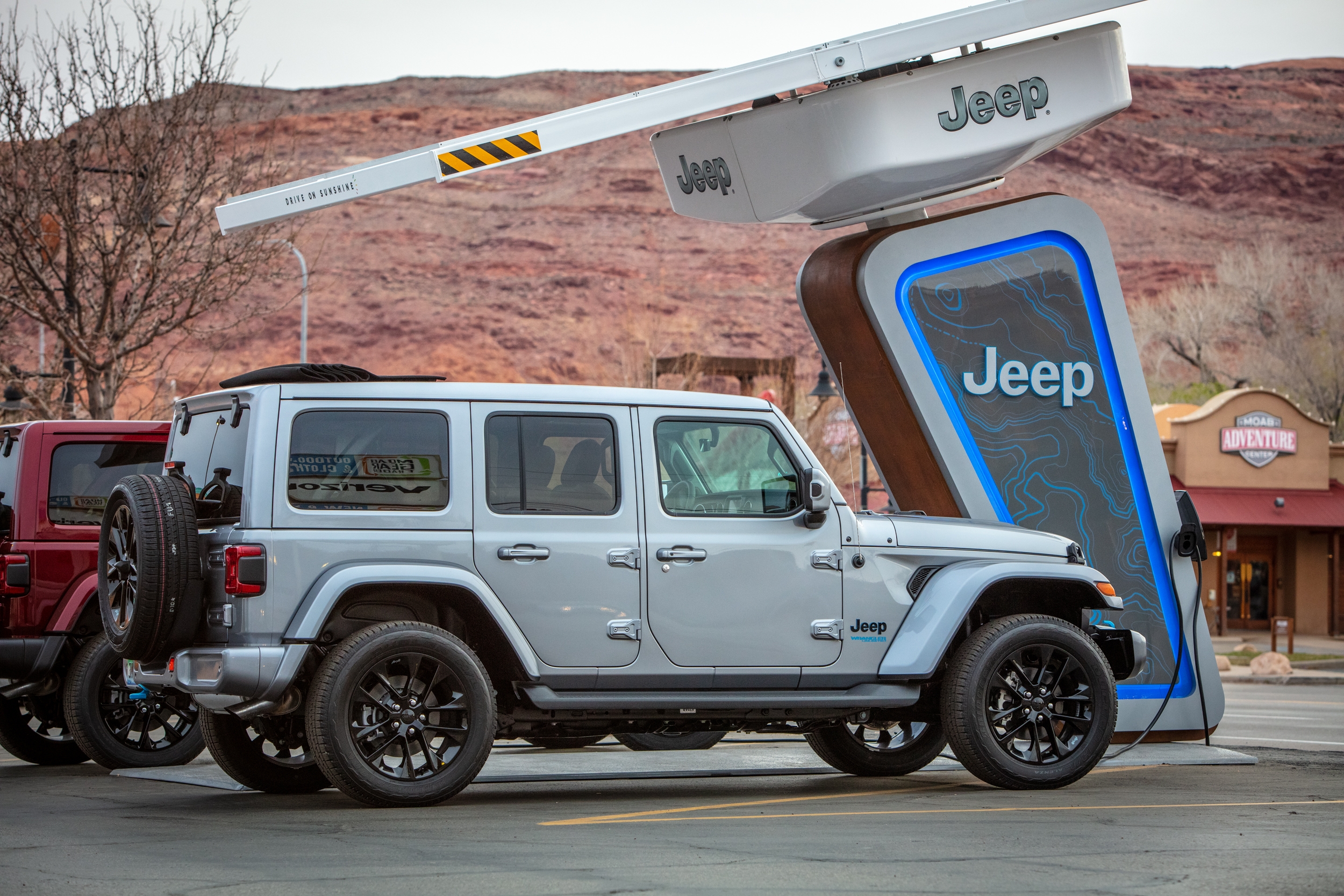
When asked about the company’s plans to bring its new electrified models, such as the hybrid Wrangler 4xe, Down Under (revealed earlier this year for the US market), the MD kept his cards close to his chest – but did express frustration at Australia’s lack of national emissions targets and failure to encourage greater uptake of electric vehicles.
“Australia is interesting isn’t it? Predicting the right time to launch electrified products in Australia is an art,” Flynn said.
“We are obviously working hard on finding that right time and are keeping a close eye on the technical innovations (being developed by parent firm Stellantis more widely) and are going to be in a good position to move at the right time with the right products.
“It’s interesting to see some movement on that front in New Zealand, which could have some influence in what happens here. Over the coming months we will start making some announcements.”
