
Snapshot
- Updated Compass comes with a lot of tech as standard, but limited options
- Not taking kit out of cars as is the case with some rivals
- Two Compass variants already here, others coming by year’s end
Jeep Australia has so far swerved being badly hit by the growing semi-conductor crisis by reducing the number of options on its models.
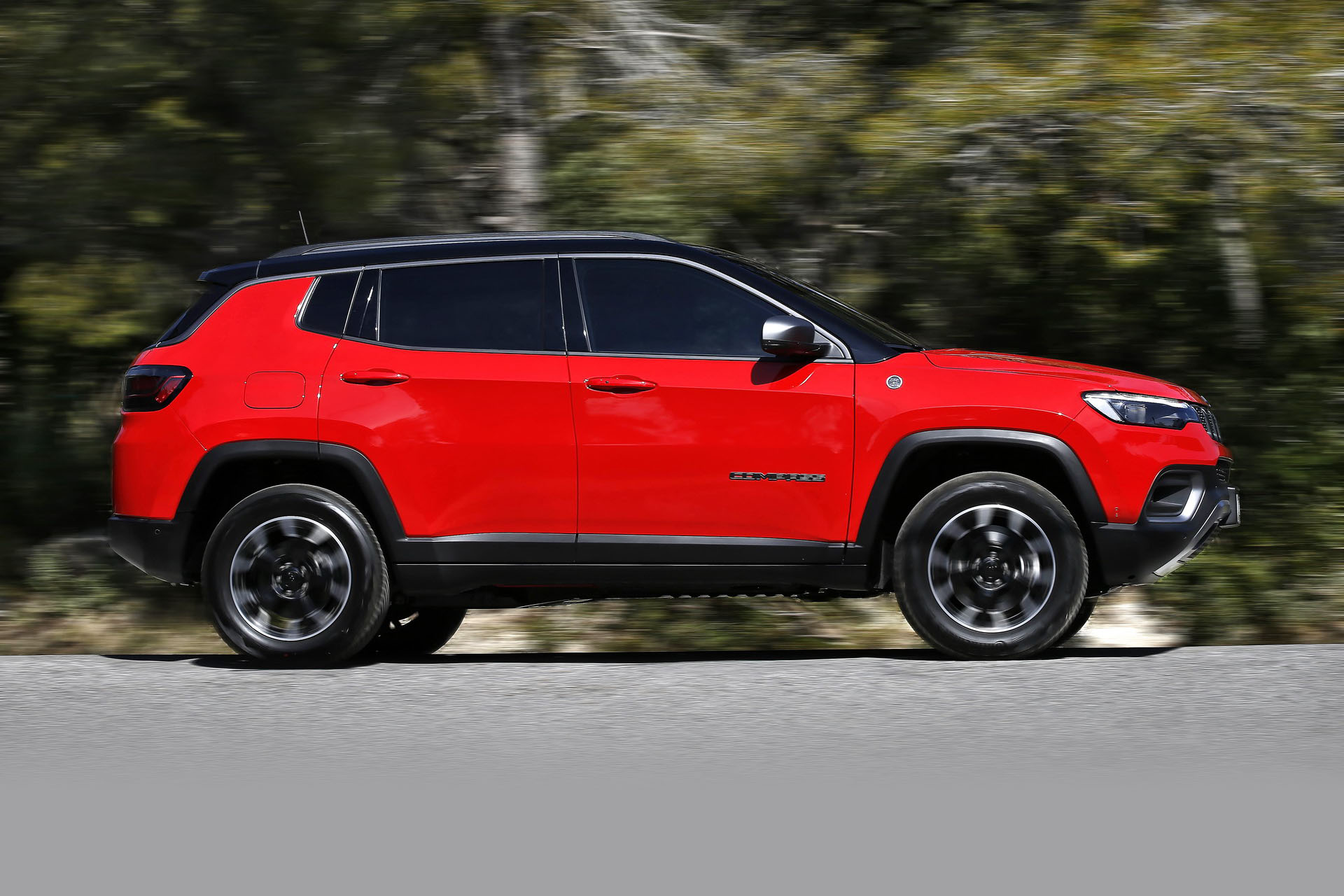
While the updated 2021 Jeep Compass has improved tech and safety features now as standard, it also comes with a pretty short extras list – with only the two highest spec variants gaining optional packages beyond premium paint choices.
However, according to Jeep, offering fewer options is allowing the company to keep producing its cars in good numbers, and bringing them into Australia, without having to strip out components.
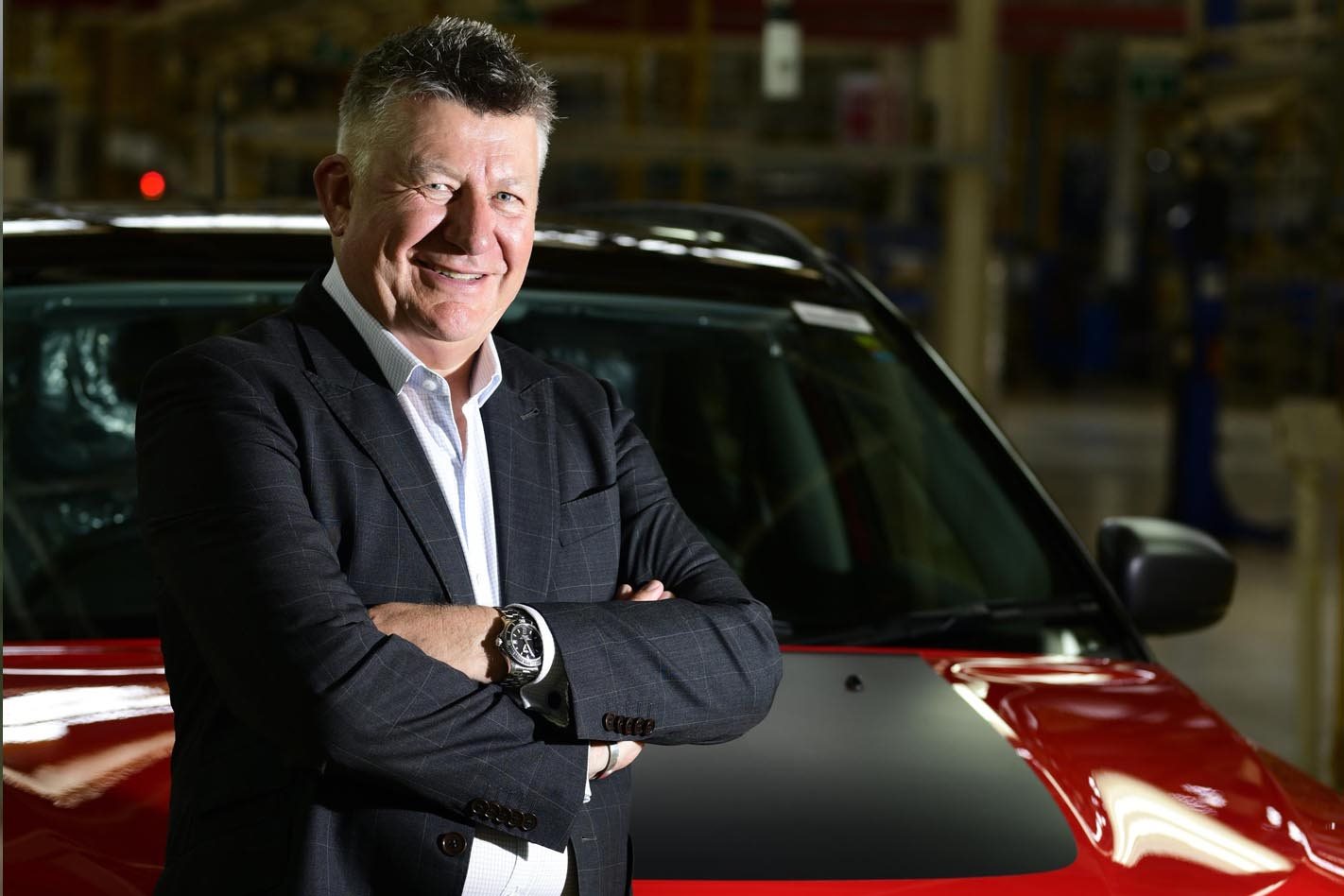
“With the new level of equipment [in the 2021 Compass] you’d think it would mean more problems related to chips, but so far we’ve done well,” said Kevin Flynn, MD of Jeep Australia.
“We’ve reduced the number of options and variations across the whole of our range – and we’ve done that deliberately as we decided it was better for us, and easier for our customers and dealers.”
Speaking at a presentation today, the MD said the US marque was not immune from the global issues, but unlike some other carmakers, it hasn’t yet had to pull components from any models – saying “so far, we’re ok”.
While the boss acknowledged supply of the Compass has been affected by the global parts shortage, he added that in other models the order banks were “very healthy”.
So far the Launch Edition and S-Limited variants are the only ones to have arrived on Aussie shores – but Jeep has confirmed the 80th Anniversary Edition is expected to land next month, with the Limited and Trailhawk following by the end of the year.
“Worldwide production issues are holding us back a little – we don’t think we have ever had such a low level of stock in this country,” Flynn said.
“We’re working to improve our situation but I can tell you that we would be in a far stronger position [with Compass] if it wasn’t for the current frustrations and restrictions.
“Every month we look at the production planning and at the figures in great detail and hope we see the numbers produced that we want, and then re-forecast.
“Obviously we’ve had to be reasonable in what we have been asking for [from US HQ].”
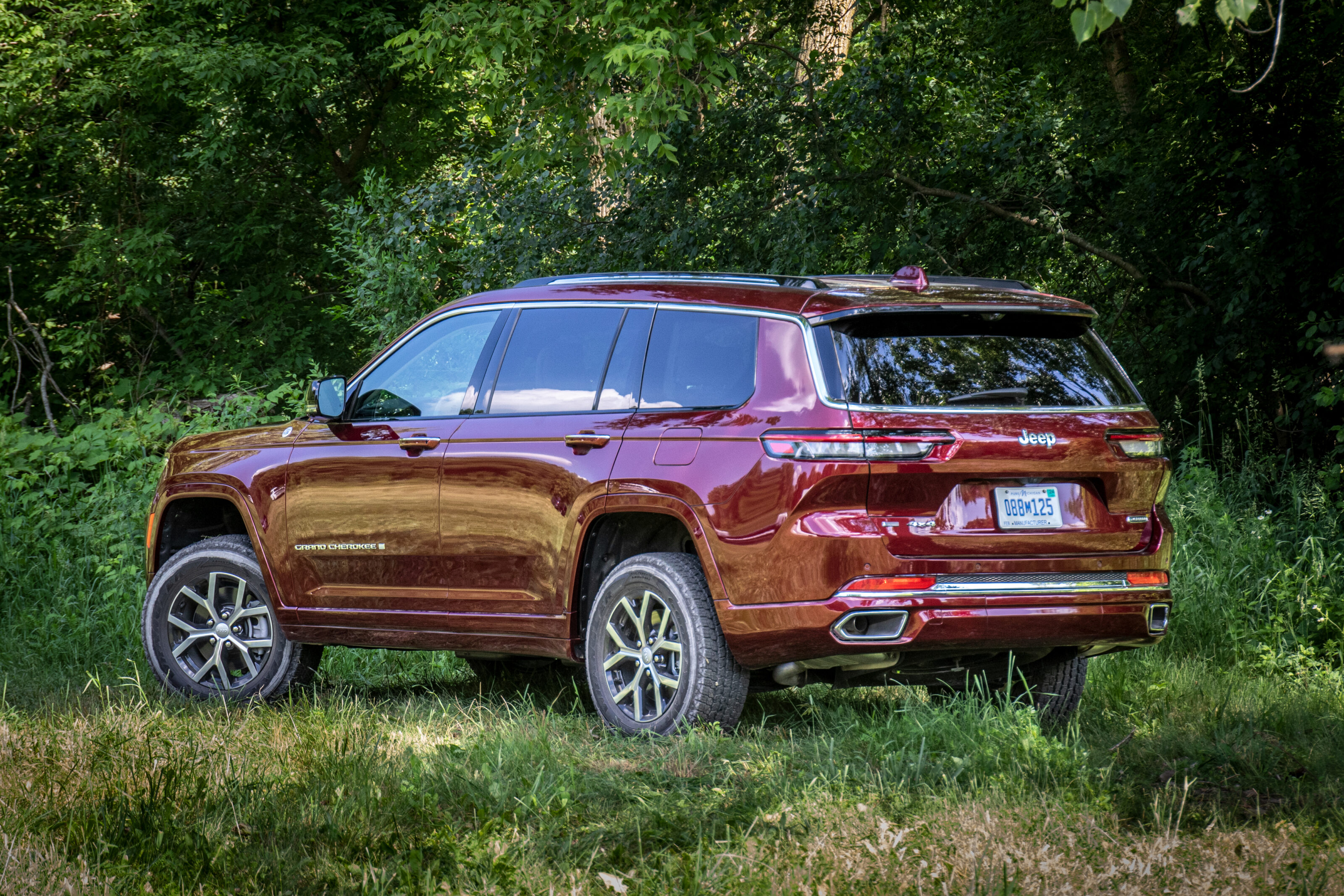
The brand is still expecting to launch the new Grand Cherokee locally in the final quarter of this year, although only in three-row guise initially – with the two-row version coming later.
Conversely, Flynn ruled out the Australian arm bringing the Compass-based Commander, found in overseas markets, Down Under, stating: “We did have a look at that, but at this point in time it is not going to make up our offering.”
According to Flynn, over the last few years Jeep has turned its performance around and “everything we said we wanted to achieve is actually being achieved”.
“A lot has changed. The previously decline of the brand levelled out in Covid-hit 2020. This year, despite the challenges around chips and the pandemic, it has been a fantastic year. What we have achieved so far has been pretty good – we’re 97 per cent up on 2019,” he said.
With sales improving for the US carmaker locally, it seems its new approach to becoming a premium brand is sitting well with Australian customers.
Flynn told Australian journalists on Friday Jeep has been relaunching its strategy to its dealers in recent months.
“It is becoming harder and harder to actually sell the entry grade vehicles [in Australia] and even now in the Launch Edition [of the 2021 Compass] the level of spec on that is so much higher than what we launched on the last model.
“We’re also seeing that move up with the next Grand Cherokee, which is just on a different level. Jeep really has moved upmarket.”
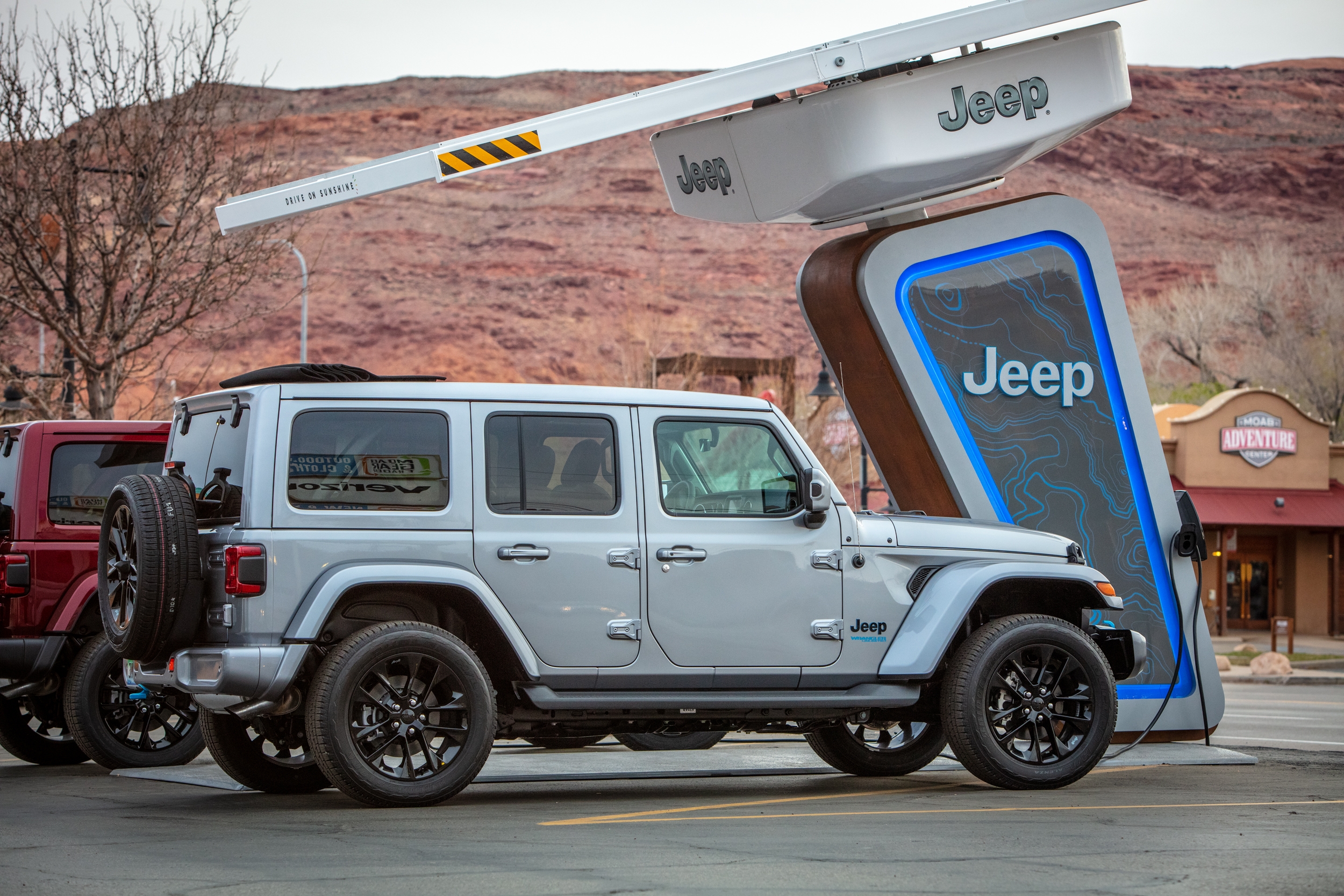
When asked about the company’s plans to bring its new electrified models, such as the hybrid Wrangler 4xe, Down Under (revealed earlier this year for the US market), the MD kept his cards close to his chest – but did express frustration at Australia’s lack of national emissions targets and failure to encourage greater uptake of electric vehicles.
“Australia is interesting isn’t it? Predicting the right time to launch electrified products in Australia is an art,” Flynn said.
“We are obviously working hard on finding that right time and are keeping a close eye on the technical innovations (being developed by parent firm Stellantis more widely) and are going to be in a good position to move at the right time with the right products.
“It’s interesting to see some movement on that front in New Zealand, which could have some influence in what happens here. Over the coming months we will start making some announcements.”
It’s no secret that, in today’s motoring climate, the SUV rules the road as the popular choice of transport, leaving the once-wonderful wagon resigned to the fringes.
We know what you’re thinking: an enthusiast will always take a wagon over a high-riding SUV, but should they? When you’ve got a couple of kids, or maybe just lots of golf clubs to carry – do you opt for Mercedes-AMG’s mental V8 C63 S wagon or Alfa Romeo’s ballistic Stelvio Q?
The powerhouse AMG comes armed with the 4.0-litre twin-turbo V8 producing 375kW/700Nm, and weighs in at 1750kg. There’s space for three in the second row, with a further 490-litres of luggage space out back.
The Stelvio swings in with the same 375kW output, but less torque at 600Nm, drawn from it’s twin-turbo 2.9-litre V6. Naturally, the high-rider carries a few extra kegs over the low-slung C-Class, weighing in at a portly 1850kg. The boot can swallow a few extra clubs though, measuring in at 525-litres.
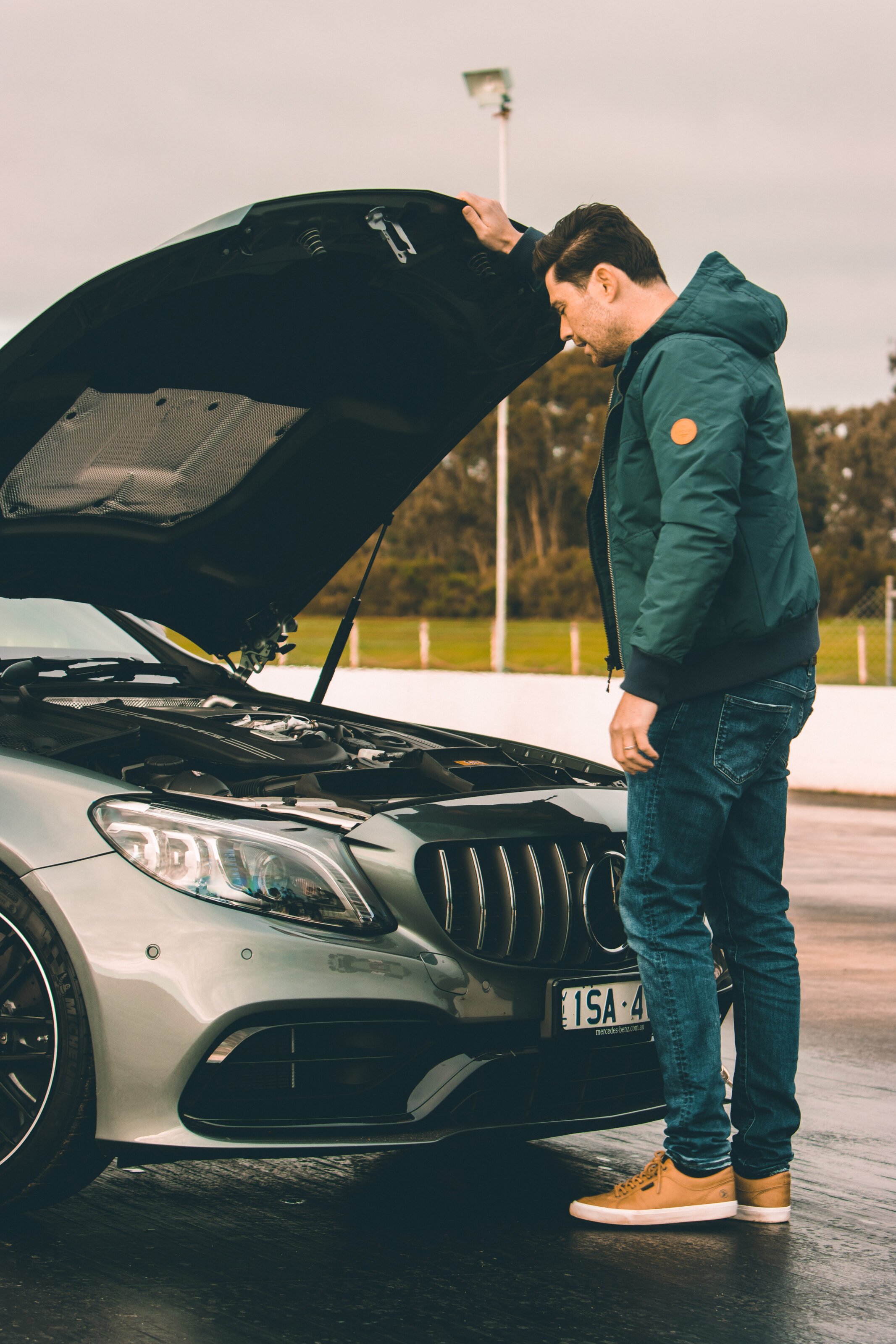
To see which of these two vehicles best blends sport and utility, we lined them up in a range of scenarios to see which is best. First up is a max attack launch control race start, followed by a comfort mode street start, closing out with a 50km/h roll race.
Let’s see what happens, shall we?
Race Start
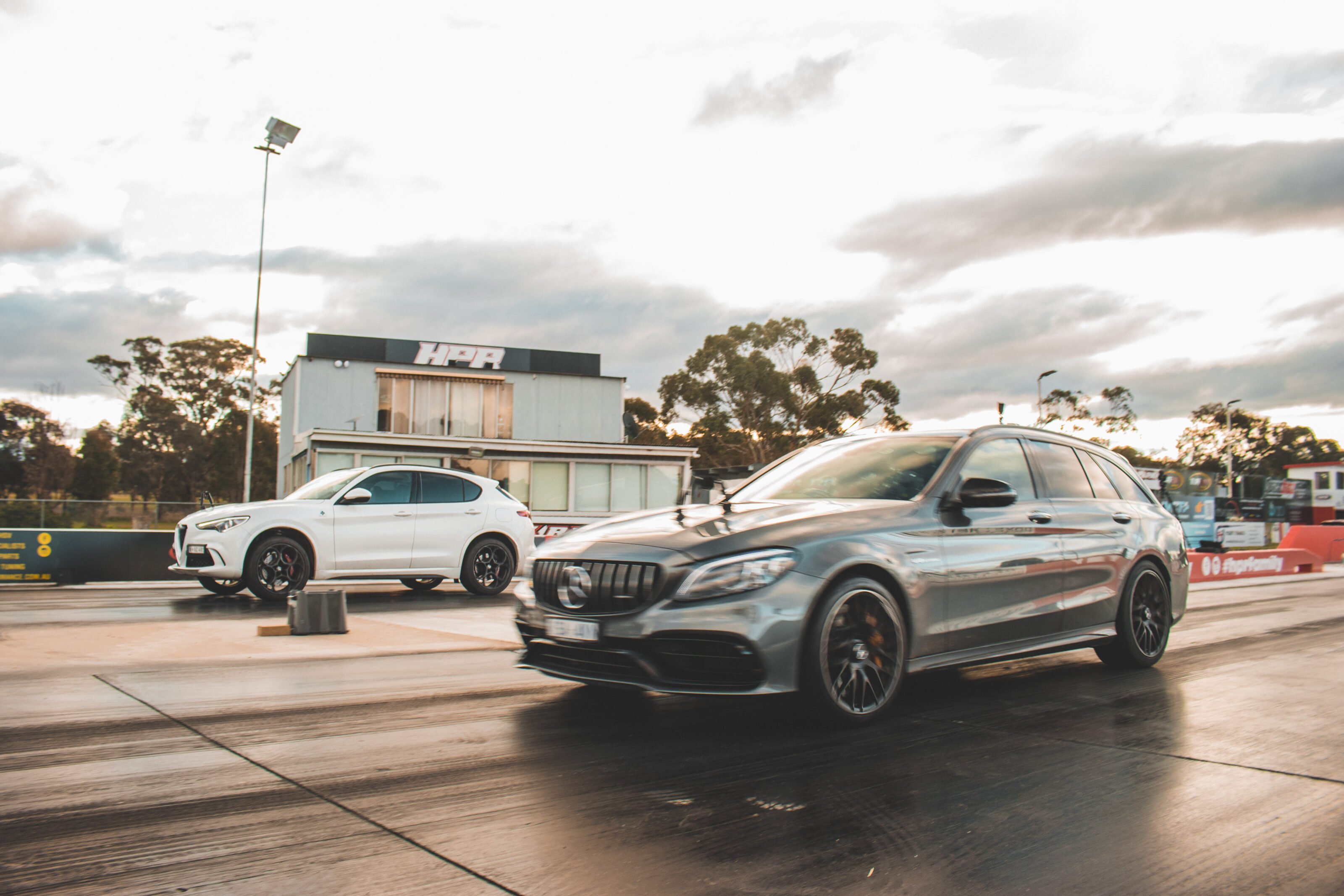
The Stelvio Q may be carrying an extra 400kgs on its shoulders, but its all-wheel drive underpinnings and well-calibrated launch control saw it leap out of the gates while the muscular Merc – a hard car to launch at the best of times – struggled to find its footing.
“That is an atom bomb” says a bewildered and confident Dan Gardner in the Stelvio, however the chase would soon be on.
Despite a face-melting launch from the Italian heavyweight, the lighter C63 quickly began making up for lost time. A few extra metres of road could have proved all the difference, however the Alfa Stelvio staved off the Merc, crossing the line just a tenth of a second ahead.
With such a close result, a do-over was performed to see if the C63 could make up for those crucial closing metres. Sadly, though, despite posting an improved 0-100km/h and quarter-mile time, the bombastic wagon couldn’t catch the Stelvio SUV.
Street Start
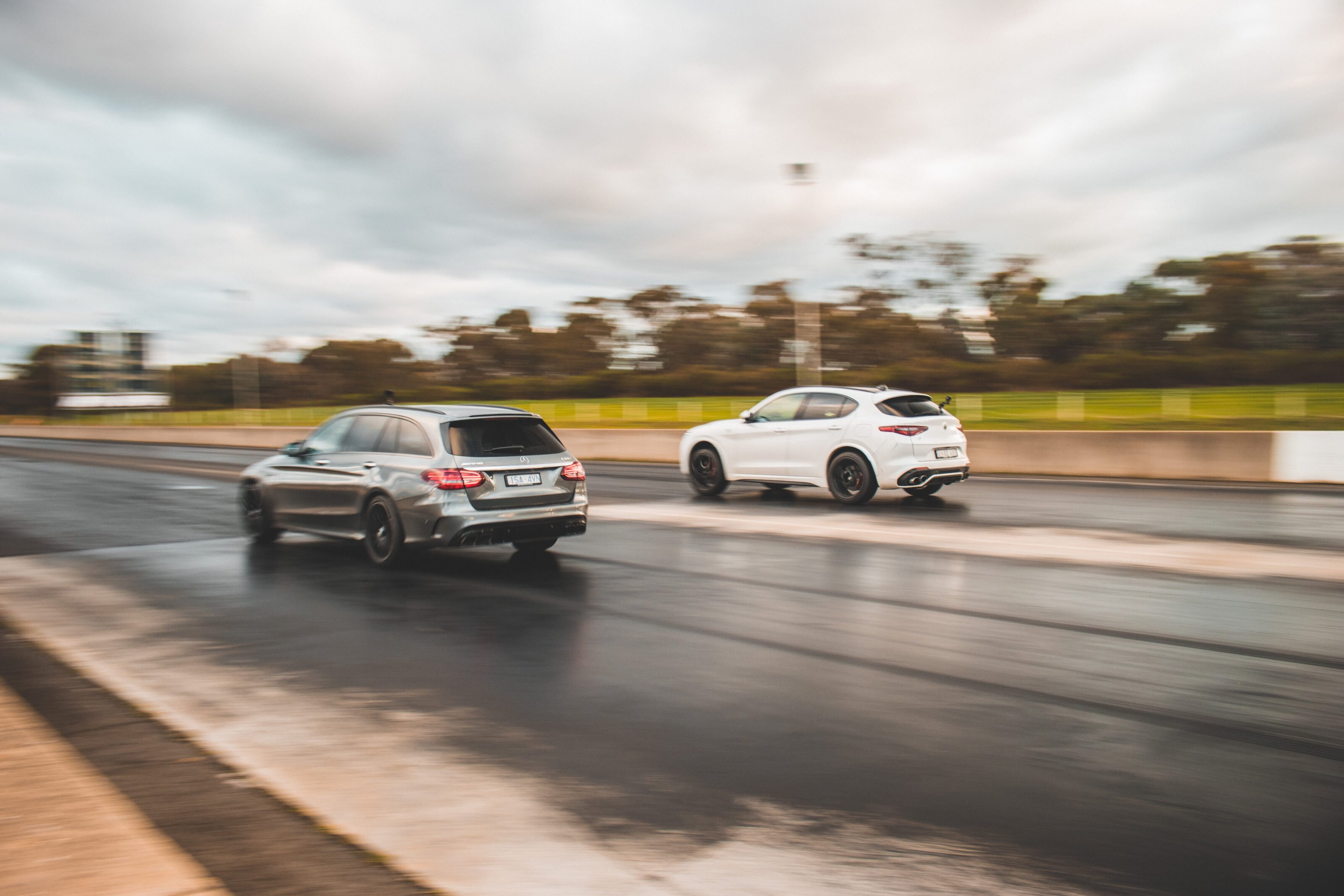
Returning to the starting line for our conventional street start race means returning the cars to their default comfort driving modes. Intended to replicate the impromptu traffic light lunge, there’s no launch control functions to lean on, just mash the pedal and go.
This scenario played well into the Mercedes-AMG’s hands. With no launch control to rely on, and perhaps a lazier powertrain calibration, the Stelvio’s previous slingshot start became a rather leisurely stroll off the mark.
An emphatic win for the C63 S wagon.
Roll Race
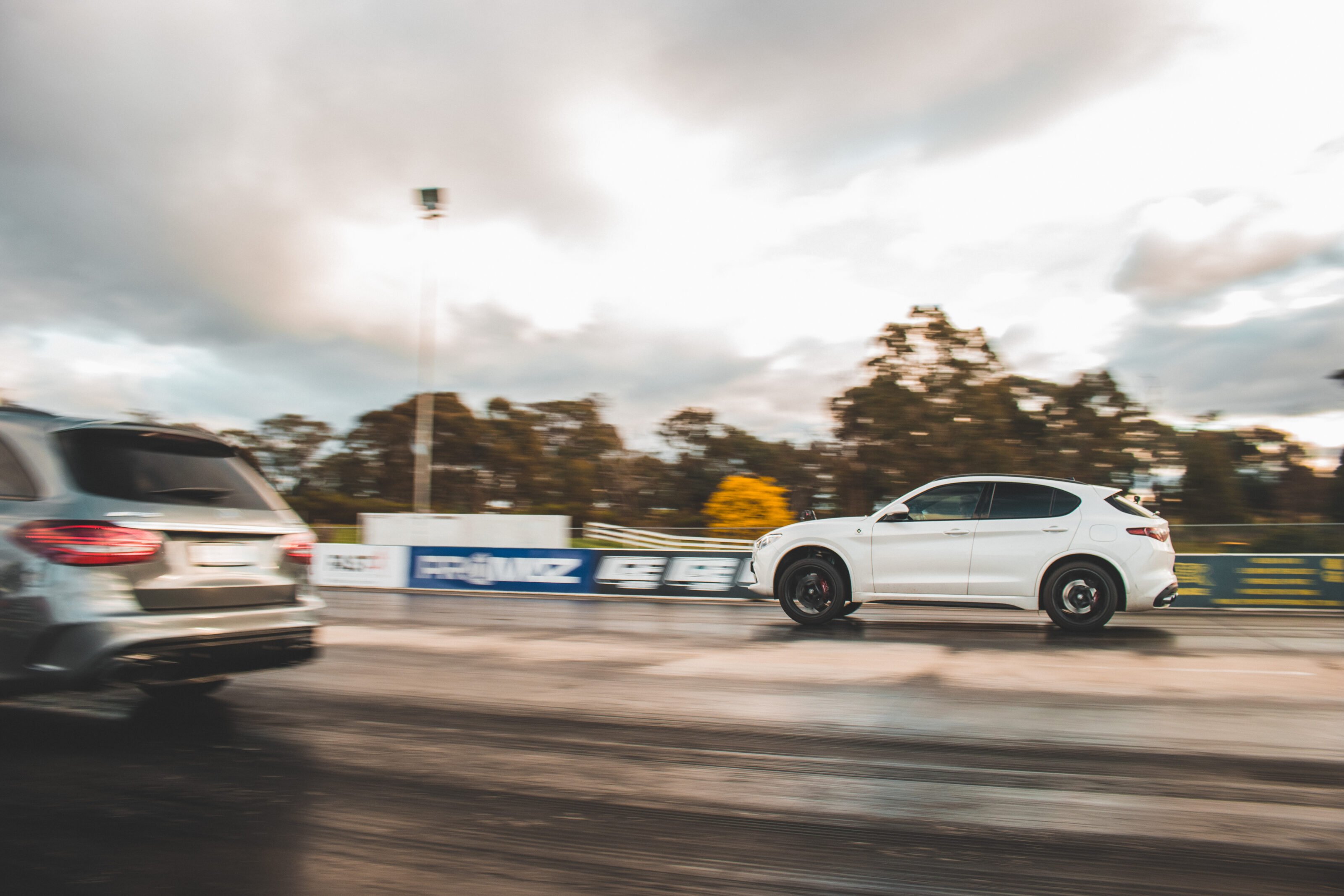
Cruising out onto the strip at a constant 50km/h, our roll race allows us to see which car reacts quicker and more efficiently when the spur is dug in while on the move.
In this setting, the Alfa Romeo Stelvio’s traction advantage is even further diminished as AMG’s fast wagon is able to easily leverage its power.
Flattening the accelerators as they pass the starting marker sees both cars squat hard under load. The Stelvio gets its nose ahead with a slightly more decisive reaction, and both cars look remarkably even in the early stages.
From there, it’s the big V8 and the lighter car that dominates all the way to the finish. The Stelvio is an impressive performer for a big SUV, but you can’t beat physics.
Results
Or can you? Despite losing out in the street start and roll race, the Alfa Romeo Stelvio Q is actually the quicker of the two over the standing quarter-mile.
A brutally effective launch control system yielded a 0-100km/h best time of 3.9 seconds, ultimately crossing the 400m marker in 12.1-seconds at 185km/h.
The Mercedes-AMG C63 S’ monstrous outputs and rear-drive layout make it a significantly harder car to launch. By day’s end, we bested a 0-100km/h time of 4.1-seconds and clocked the quarter-mile in 12.3-seconds at 194km/h.
It was the savage German wagon that won two of our three events, but perhaps you can call that a win on points for the Alfa Romeo SUV. In truth, and on tarmac, both of these cars are seriously rapid.
But which would you rather take home? Watch all the action up top and let us know in the comments below!
Snapshot
- New WRX set for 2022 arrival
- FB flat-four motor to be used across WRX and STi models
- Official reveal delayed due to New York show cancellation
UPDATE, August 20: Subaru has released a teaser video on social media confirming the fifth-generation WRX will be available as a manual – keeping the performance sedan as an enthusiast’s machine.
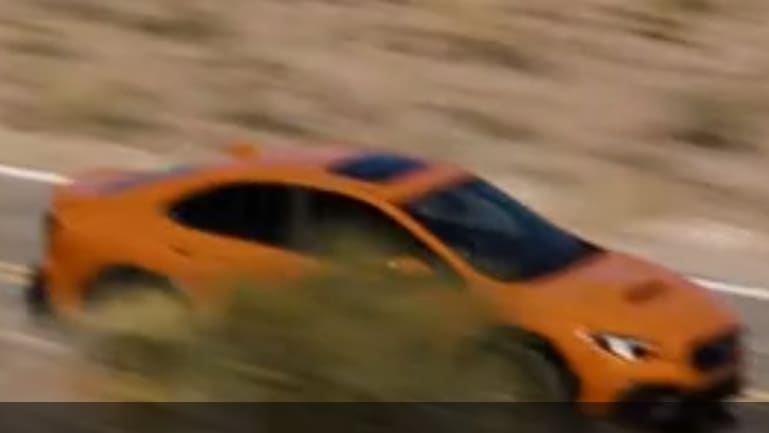
After announcing the official reveal would be delayed due to the cancellation of the New York International Auto Show, Subaru provided a closer tease of the WRX, including showing off its black arch surrounds which stand out when paired with the orange paint featured.
Sticking with tradition, the WRX’s bonnet scoop remains to feed air into the top-mounted intercooler on top of the new FA24 turbocharged engine – while the inclusion of a three-pedal option will be sure to please those who have invested in the brand over the years.
The story to here
JUNE 30: A new Subaru WRX is on the horizon, with the release today of a first new teaser image confirming the fifth generation of the rally-bred performance sedan will be revealed soon.
Replacing the current WRX – which has been in production since 2014 – the 2022 WRX is tipped to be powered by the 2.4-litre, turbocharged four-cylinder FA24 engine found in the North America-only Subaru Ascent SUV, making 194kW and 376Nm in its current guise.
While this is a 3kW drop from the MY21 WRX, it represents a 20Nm increase over the current model and could still increase with the WRX potentially receiving a hotter tune than the Ascent.
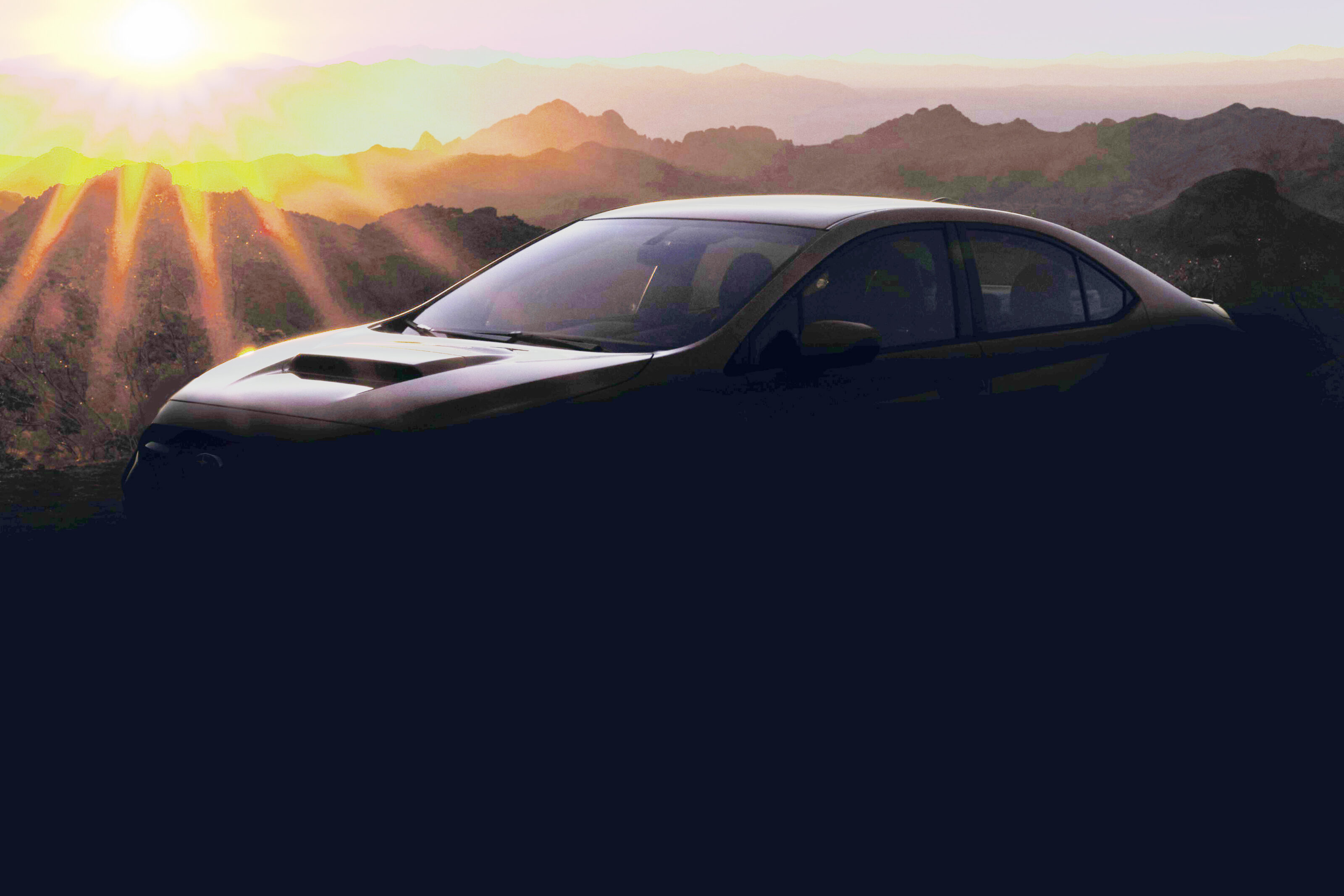
As with every other WRX, fans can expect all-wheel drive and a six-speed manual transmission, though two-pedal buyers will likely have to make do with the constantly variable transmission (CVT) as found in the current WRX.
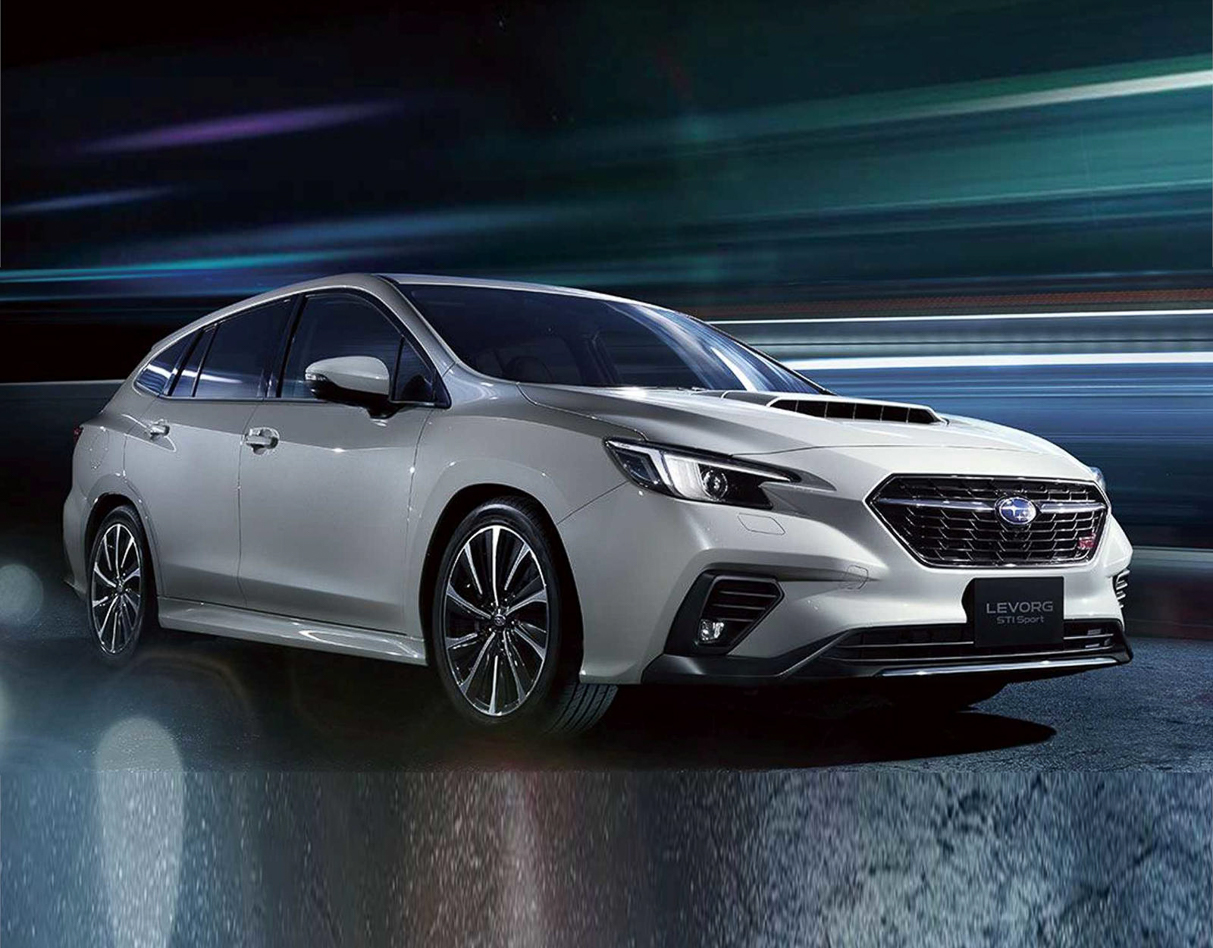
It’s expected the new WRX will reflect the latest Subaru design themes revealed with the updated Japanese-spec Levorg wagon in 2020, possibly even having the Levorg renamed to WRX as a wagon variant with the 2022 release of the model.
Subaru Australia’s public relations manager, David Rowley, told Wheels there is no confirmed date for the local launch of the new WRX.
“We don’t currently have a confirmed launch timing for WRX in Australia, but at this stage anticipate early 2022,” said Rowley.
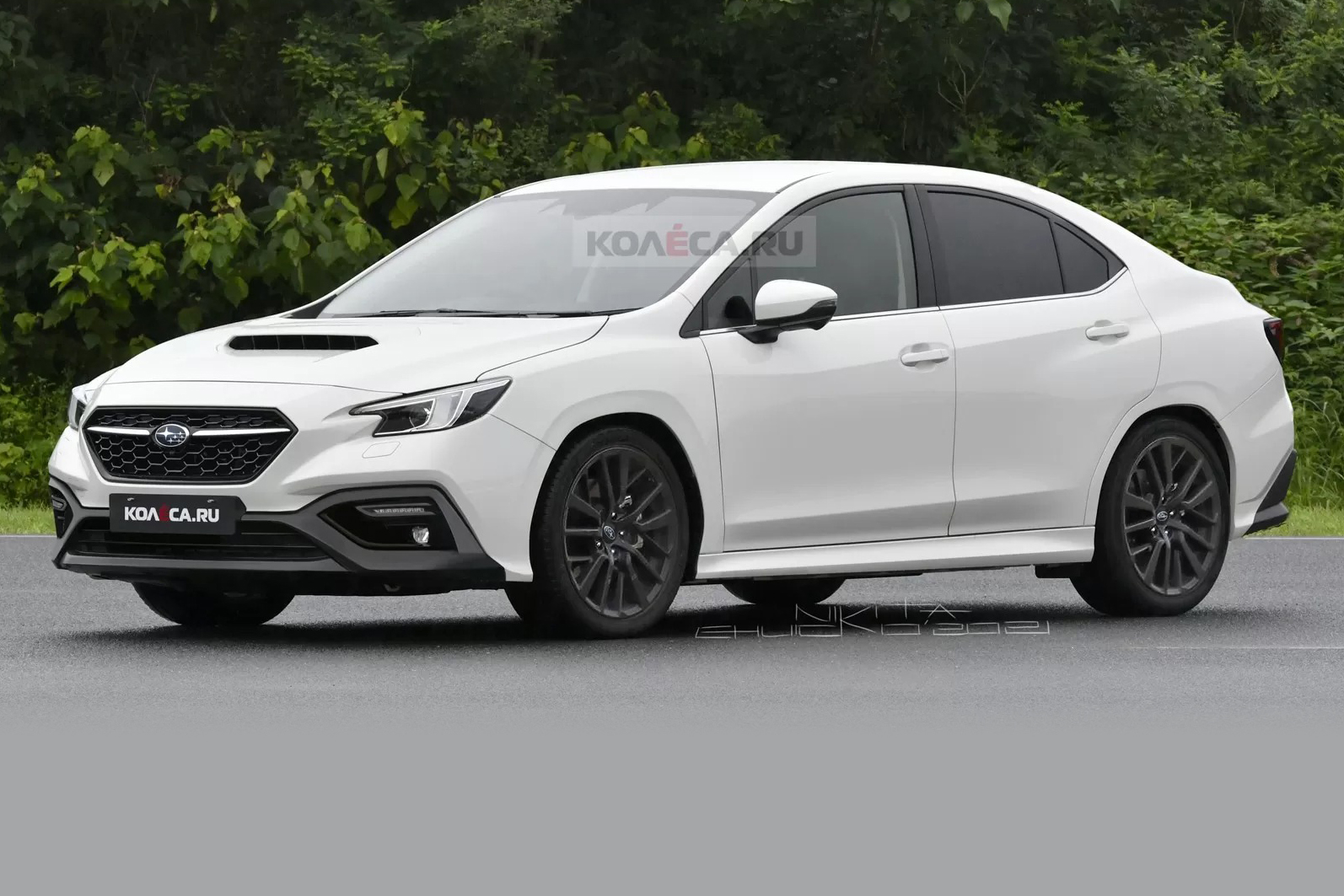
The high-performance STI variant is expected to finally ditch the EJ engine after over 25 years of service, adopting a modified version of the FB to develop around 300kW.
Subaru Australia recently celebrated 50,000 WRX sales Down Under since the model’s debut in 1994, coming off the back of 10,000 local sales of the WRX STi at the back end of 2020.
Snapshot
- Completely revamped interior
- Front receives some changes
- Powertrains the same, but turbo diesel gets AdBlue
Jeep Australia has launched the updated 2021 Compass, featuring a completely revamped interior and more options now coming as standard.
At a presentation this morning, the US firm revealed in more detail how the design team has evolved the 2021 model from its predecessor.
While this year’s Compass is not all-new, having launched the second generation back in 2017, the facelift does bring with it a wealth of differences in the cabin, making the car a more premium offering in its segment than the outgoing 2020 version.
“With this Compass it is amazing what has been achieved, it rides like no other in its segment thanks to its frequency adjusted damping,” says Kevin Flynn, MD of Jeep Australia.
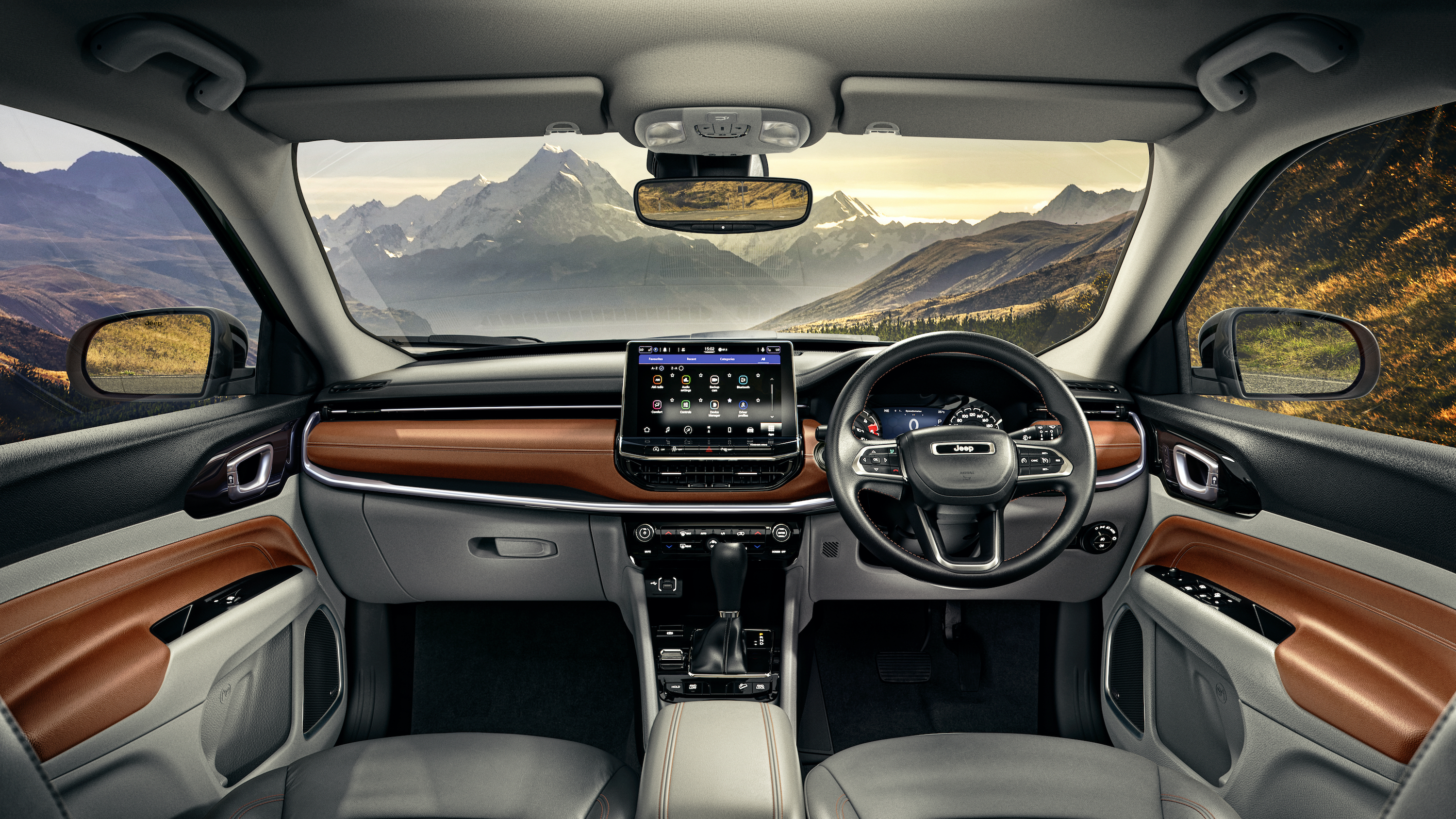
“It will go to the supermarket quite happily and take teenagers back to university or high school, and of course do the school runs and holidays – but that is almost what is expected. What can it do beyond that is all about the experience and freedom, which this packs in bucketloads.
“It’s capable and composed for going off-road – this vehicle can go through anything and offers so much more than a traditional SUV just ticking the normal boxes.
“The interior of this car especially is phenomenal. I love the detailing and outside styling as well, and the safety features added – which have really taken it to another level.”
With the 2021 update there are now five variants of the Compass – although the 80th Anniversary Edition is limited to just 160 units, and although Jeep would not confirm how long the Launch Edition will be around for, the carmaker did say it’s shelf life will be shorter than the others.
Design
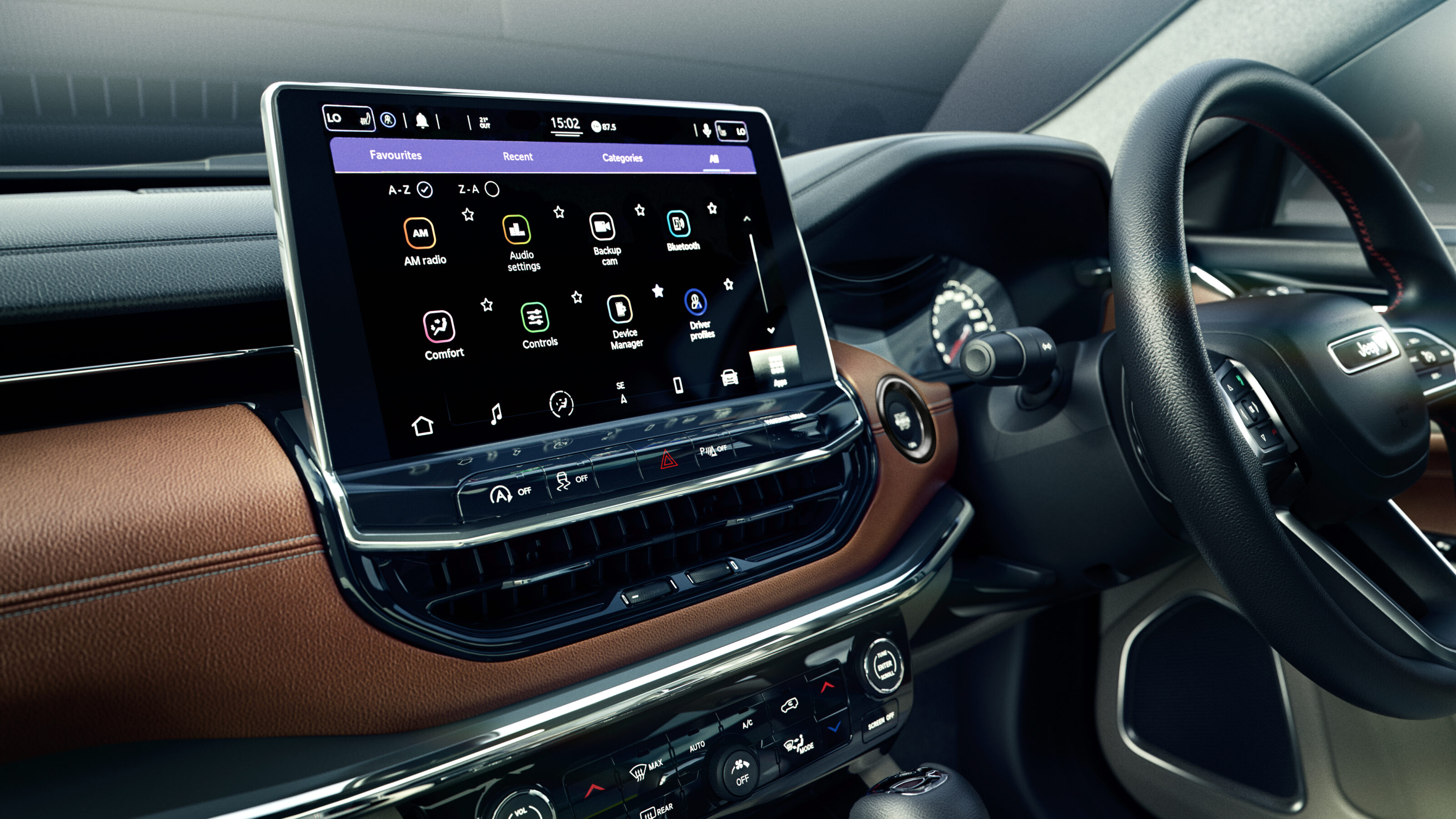
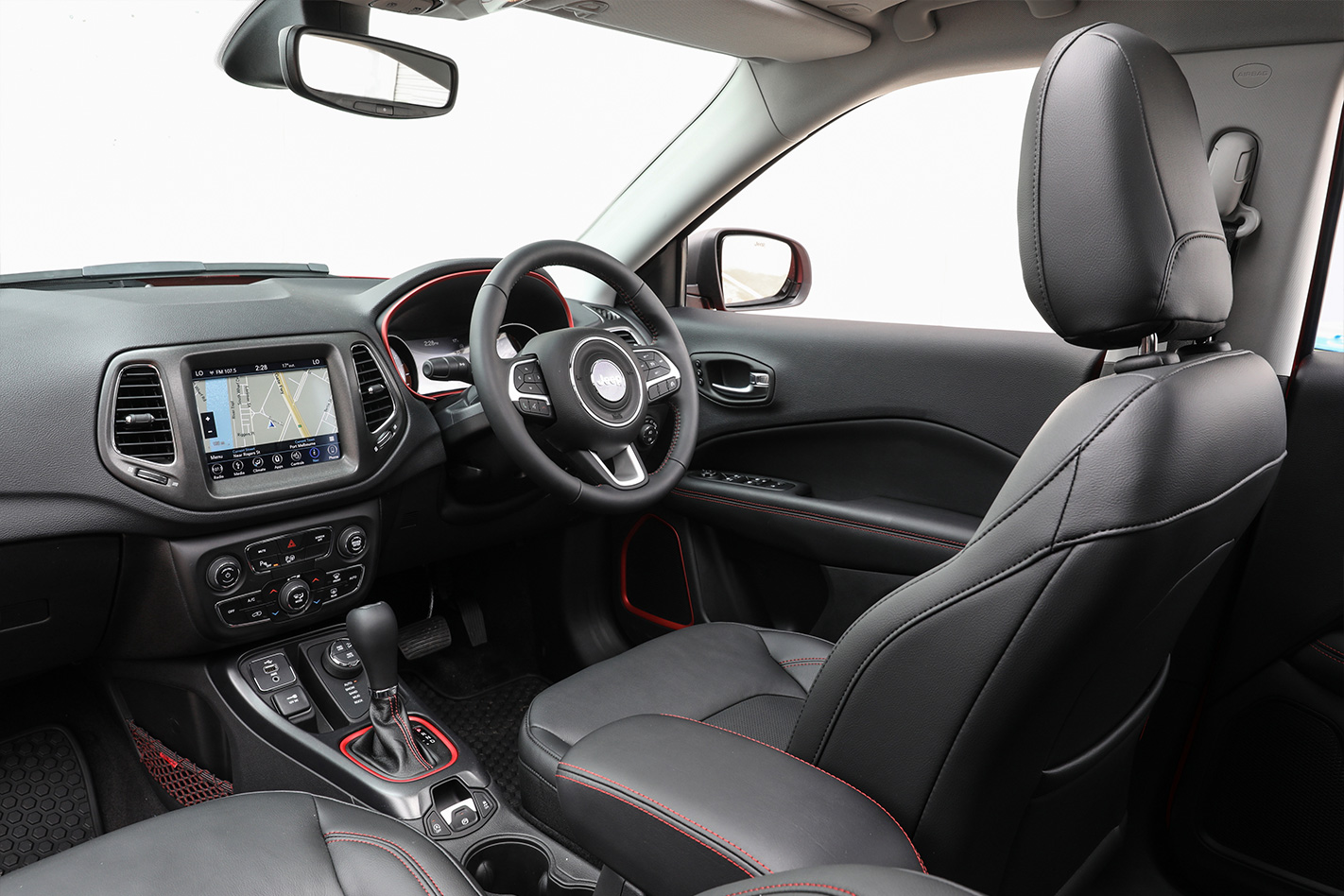
The refreshed interior is where the latest Compass differs the most from the last, featuring softer materials and a sleek, simple and modern approach to give a more premium feel to the cabin.
A chrome metal accent runs along the dash to emphasise the width and adds “textural richness”, next to a contrasting leather panel which can be found in black or tan leather depending on the variant.
“It has not been over designed, far from it…it has been designed to celebrate functional and technical details,” says Winnie Cheung, interior chief designer.
“There is an intuitive, strategic placement of controls – kept simple for drivers and passengers to be able to appreciate their surroundings.”
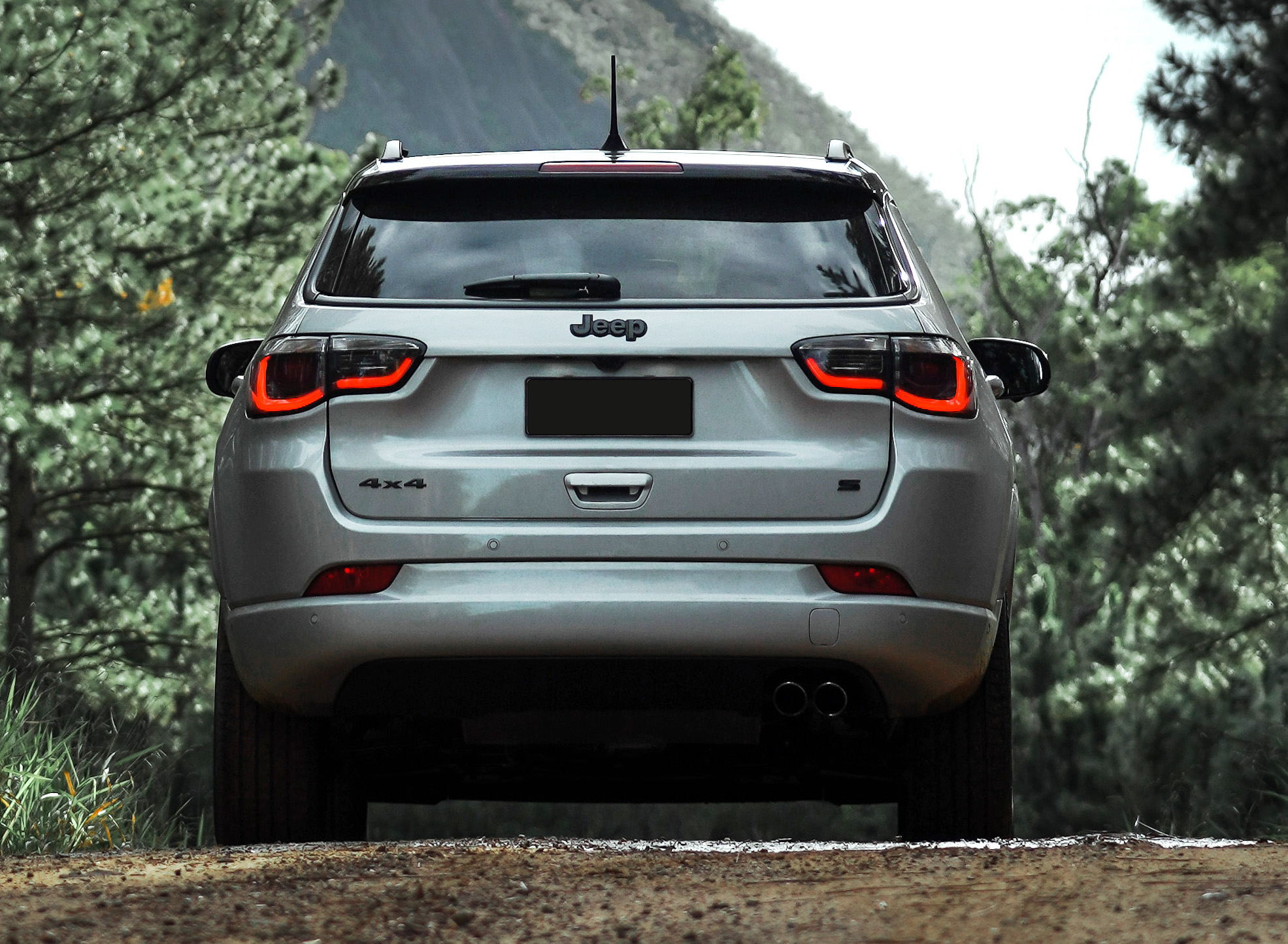
The differences between the MY20 and MY20 are marked. Where the 2020 was clustered, the 2021 has a higher-quality look, and touchpoints are said to be easier to use.
On the outside too, there are some notable alterations compared to the outgoing model.
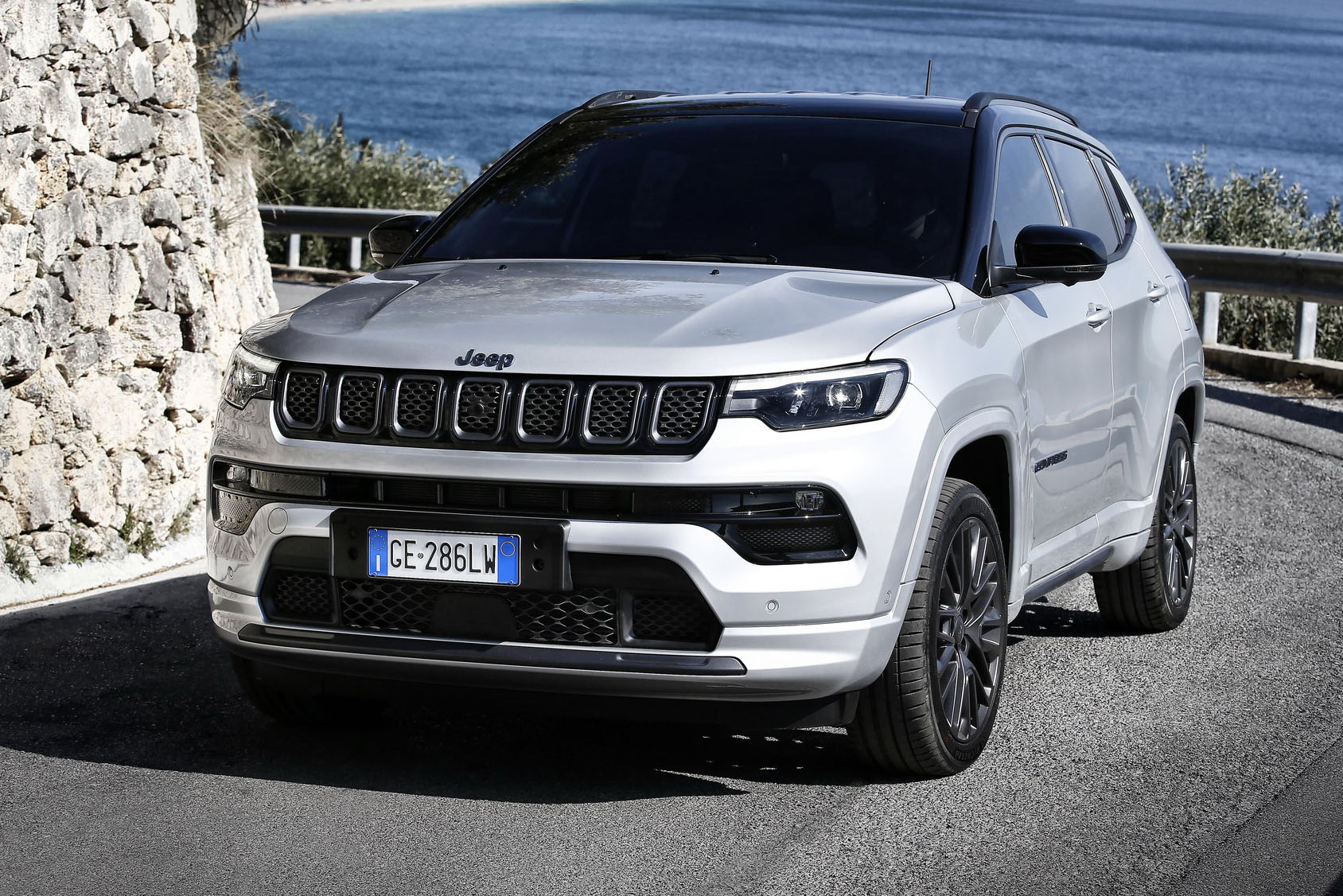
While the updated Compass features the same seven-slot grille and trapezoidal wheel arches which make it obviously a Jeep, it has more modern, sleeker horizontal lines throughout – and, in fact, the whole front section of the car is different.
Said grille has a black finish, it has new LED headlights too, fresh tail-lights, the fog lights have been moved upwards – as have the daytime running lights – and the front air intake now runs the full width of the car,
The lower fascia and wheel arches are painted in body colour in S-Limited guise only, retaining black plastic in all other variants.
Features
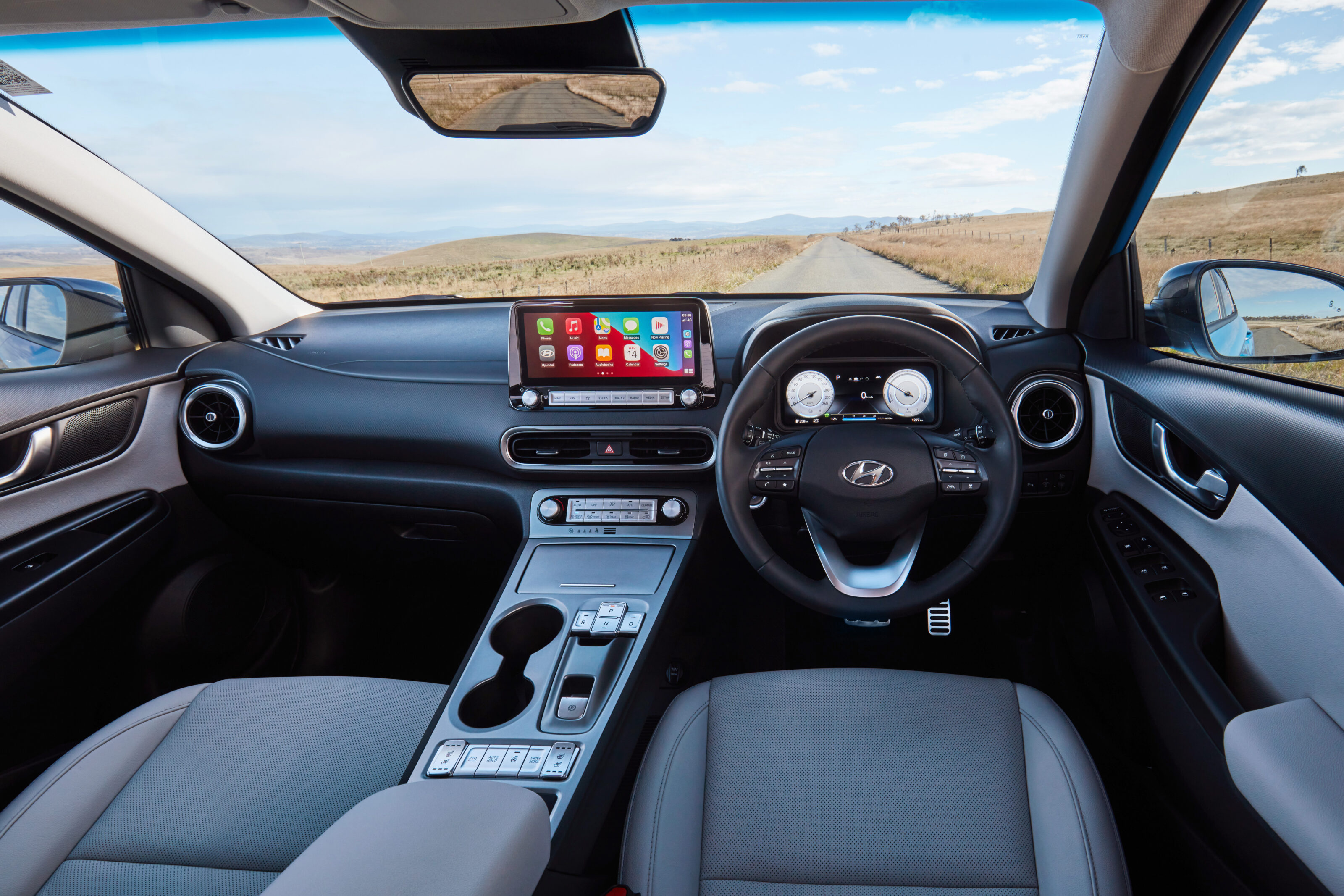
Noteworthy changes to the Compass as standard include a revised and bigger 10.1-inch touchscreen and 7.0-inch TFT digital dash (10-inch in Limited Guise), wireless charging with Apple CarPlay and Android Auto capability, and automatic headlights and high beam.
Additionally, Jeep’s Connect 5 system is now five times faster – speeding up route calculation and voice recognition.
The 360 degree camera can be found as an option on the S-Limited but is standard on the Trailhawk.
It has more than two times more storage as well, redesigned doors, and new driver and front passenger headrests as well as heated, ventilated and electrically adjustable seats – though it should be noted that while heated seats in the second row can be had overseas, they are not coming to the models available Down Under.
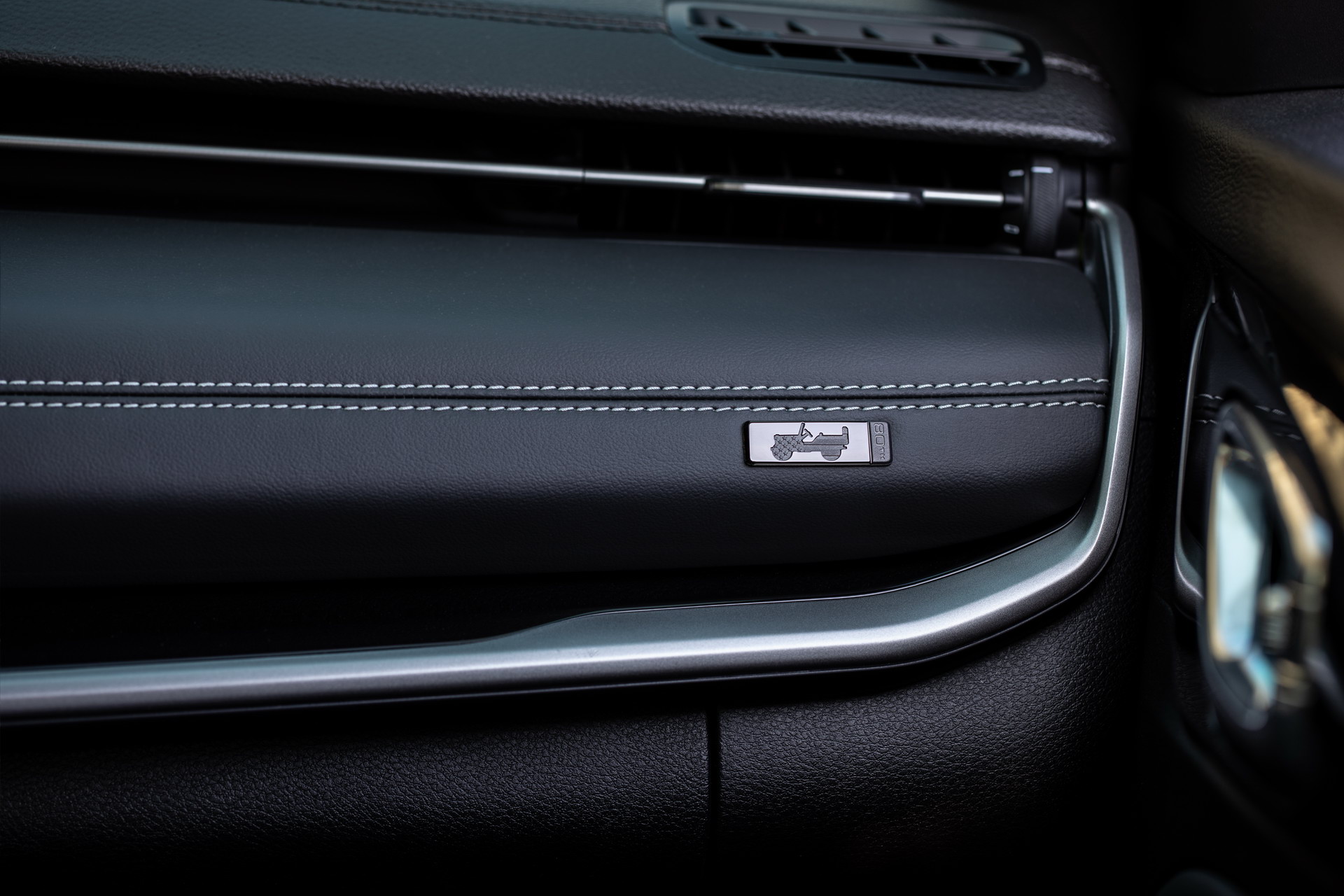
Rear passengers do however, benefit from new centralised vents and USB ports for the back row.
Rounding out the changes is a powered tailgate on the Limited variant and above, also with kick function.
All Compasses retain the marque’s Active Drive 4×4 system (including 4WD lock and 4WD low), hill descent control and rear axle disconnect. Additionally it benefits from Jeep’s Selec-Terrain Management, offering four modes – plus a ‘rock’ option in the Trailhawk.
According to Jeep, the extremely stiff and rigid chassis is composed both on and off-road, and the updated model sports best-in-class ground clearance (225mm in S-Limited and Trailhawk guise) and approach/departure angles.
For more standard and optional features, read our pricing and specs story here.
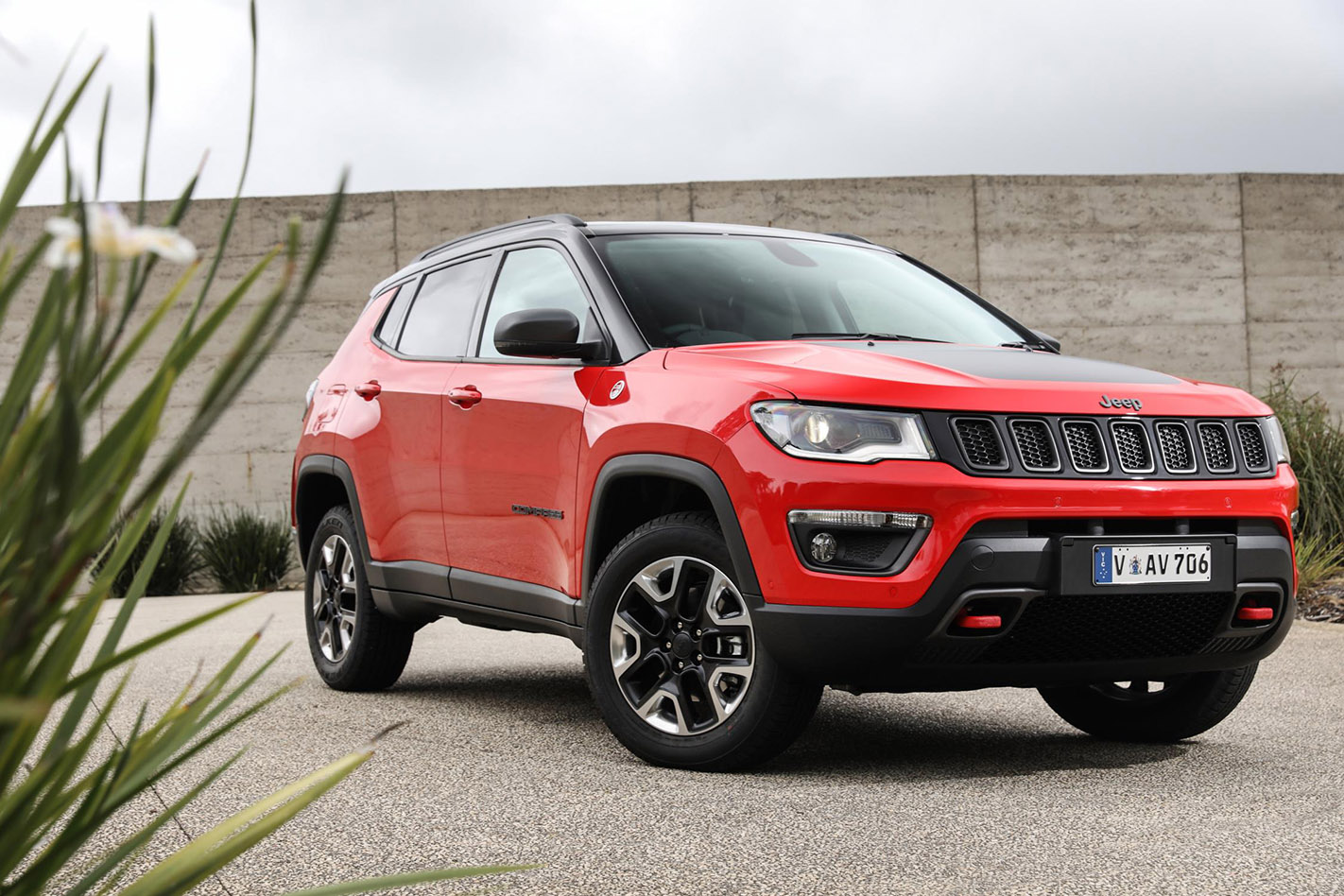
Engines, transmission, fuel economy and dimensions
The 2021 Compass’s powertrains remain the same as in the MY20, with the exception of the 2.0L turbo diesel which utilises the AdBlue urea-based system.
Jeep’s familiar ‘Tigershark’ naturally-aspirated 2.4-litre four-cylinder petrol engine still produces 129kW and 229Nm.
In the case of the Compass Launch Edition, this shove is sent to the front wheels through a six-speed torque-converter automatic transmission.
For the Compass Limited, 80th Anniversary, and S-Limited, drive is sent to all four wheels through a nine-speed automatic transmission.
The second engine is a 125kW/350Nm 2.0-litre four-cylinder turbo-diesel engine, and is only available in the range-topping Trailhawk.
For the petrol-powered versions, average fuel consumption is rated from 7.9L to 9.7L/100km on the ADR combined cycle, depending on the variant.
Size wise, 2021 Jeep Compass is 4398mm long, 1819mm wide, 1657mm tall, and has a wheelbase measuring 2636mm.
Safety
Proving the updates to the 2021 Compass aren’t only skin-seep, Jeep has added several new safety features to the refreshed Compass range, including:
| Intelligent speed assist |
| Traffic sign recognition |
| Pedestrian emergency braking |
| Drowsy driver detection |
| Active lane management system |
| Automatic electronic brake hold |
| Adaptive cruise control with stop |
| Full-speed forward-collision warning plus |
| Blind-spot monitoring |
| Rear cross-path detection |
| Lane departure warning plus |
| Parkview rear backup camera |
Pricing and availability
| Jeep Compass Launch Edition FWD | $37,950 |
| Jeep Compass Limited 4×4 | $43,950 |
| Jeep Compass 80th Anniversary 4×4 | $47,941 |
| Jeep Compass S-Limited 4×4 | $46,950 |
| Jeep Compass Trailhawk 4×4 | $51,250 |
So far the Launch Edition and S-Limited variants are the only ones to have arrived on Aussie shores – but Jeep has confirmed the 80th Anniversary Edition is expected to land next month, with the Limited and Trailhawk following by the end of the year.
Snapshot
- Semi-conductor shortage freezes 14 Japanese plants
- Shutdown affects multiple Australian-bound models
- Lexus also hit by production pause set to begin in September
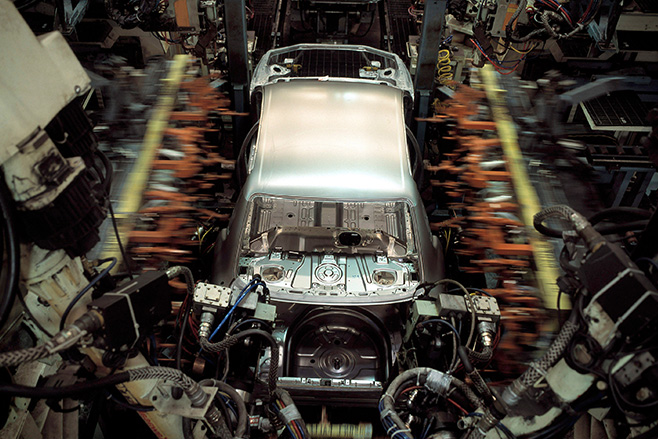
Global automotive giant Toyota has announced it will be suspending production across 14 of its Japanese factories throughout September as it grapples with a global shortage of semi-conductors.
Having already temporarily halted production at a handful of plants in August, today’s announcement will see a significant number of sites affected worldwide – with at least 20 Toyota and Lexus models available in Australia on the list of those facing possible delays.
According to Reuters, the delays will cut the production of around 360,000 cars accounting for 40 per cent of Toyota’s global monthly production with just 140,000 of those due to the Japanese plant closures, as Toyota’s supply chains for plants in the United States, China, Europe and other Asian countries are also affected.
A Toyota Australia spokesperson told WhichCar it is in talks with its global headquarters to continue vehicle supply locally.
“Toyota Australia has been advised that vehicle production plants in Japan will be impacted in August and into September, caused by parts shortages resulting from COVID-19 restrictions in Southeast Asia,” said Toyota Australia.
“We are working closely with our global production team to work through the impact on Australia and to support our customers.”
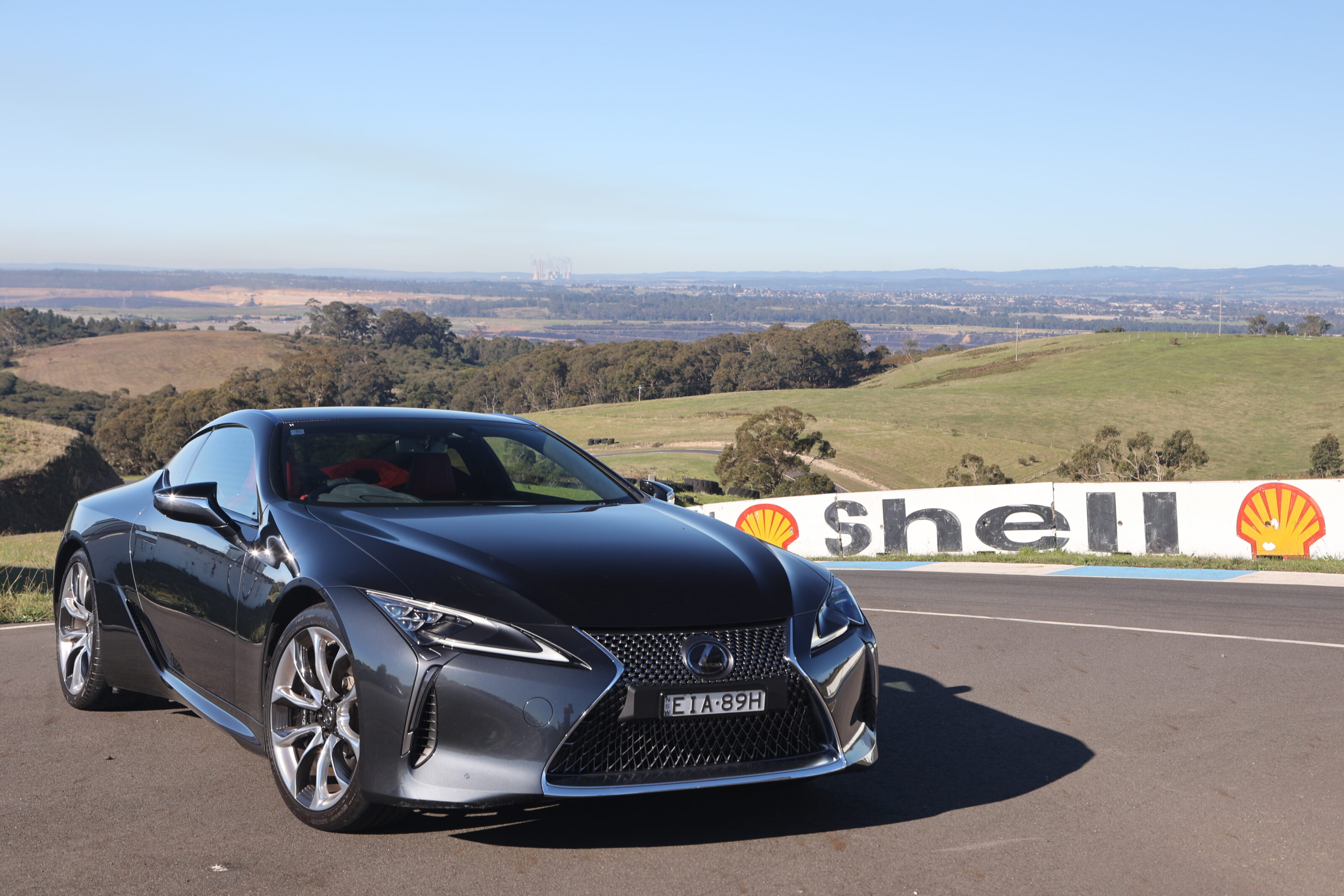
Lexus Australia reiterated Toyota’s comments, also saying its focus is on getting cars to customers while production hampers supply.
“Lexus Australia has been advised that vehicle production plants in Japan will be impacted in August and into September, caused by parts shortages resulting from COVID-19 restrictions in Southeast Asia,” said a spokesperson.
“The needs of our customers remain paramount while we work to determine the impact on Australia.”
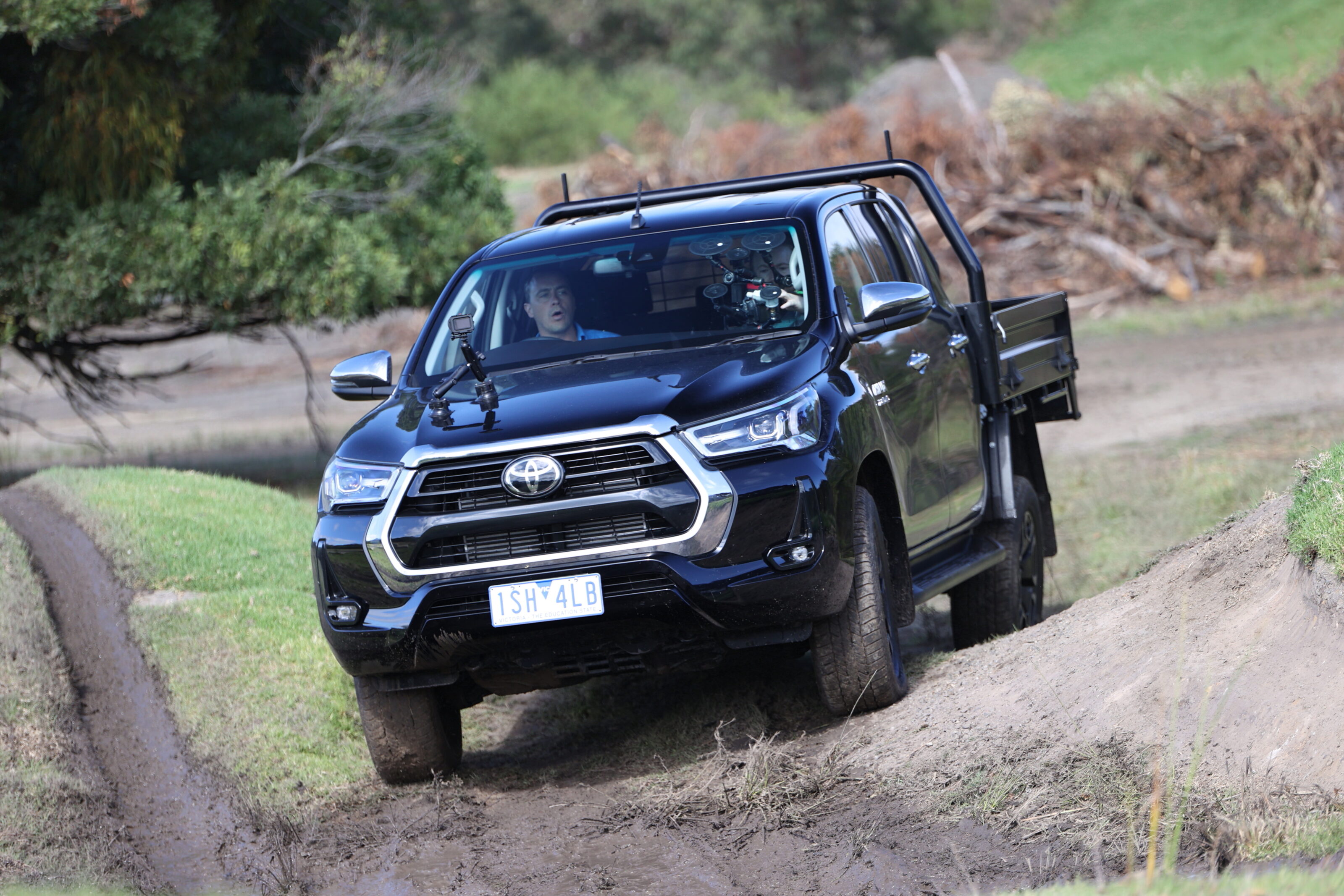
With 25 Japanese lines closing for multiple days next month, Australian Toyota models affected include; the Yaris, Yaris Cross, GR Yaris, Corolla, RAV4, Camry, Prius, Land Cruiser Prado, C-HR, Land Cruiser 70 and Land Cruiser 300.
Luxury brand Lexus is caught up in the shortage too with the LC, ES, LS, IS, RC, RC F, NX, CT, UX and RX all listed as being produced at the plants worst affected.
Toyota is currently the number one car brand in Australia, having sold 136,596 vehicles to the end of July, well clear of second-placed Mazda with 69,365 sales.
It was three years ago that the then-budding N Division gave us their landmark debut, the Hyundai i30 N.
It blew us away with its incredibly versatile talents, huge fun factor, and the fact that it punched well above its tax bracket. I remember it as one of those special cars that you knew, from the first turn, was bloody good.
Australians gave a warm welcome to South Korea’s breakout star athlete, with over 2700 pre-facelift examples sold locally over the past three years. That makes our fair nation one of N Division’s leading markets, behind Germany and the UK.
But Hyundai knew that N Division’s first-born could do more, for more people, signalling to us years ago that a self-shifting DCT variant was coming.
A couple of delays and three years later and here, finally, sits a 2022 i30 N resplendent with Hyundai’s new eight-speed wet-style dual-clutch transmission.
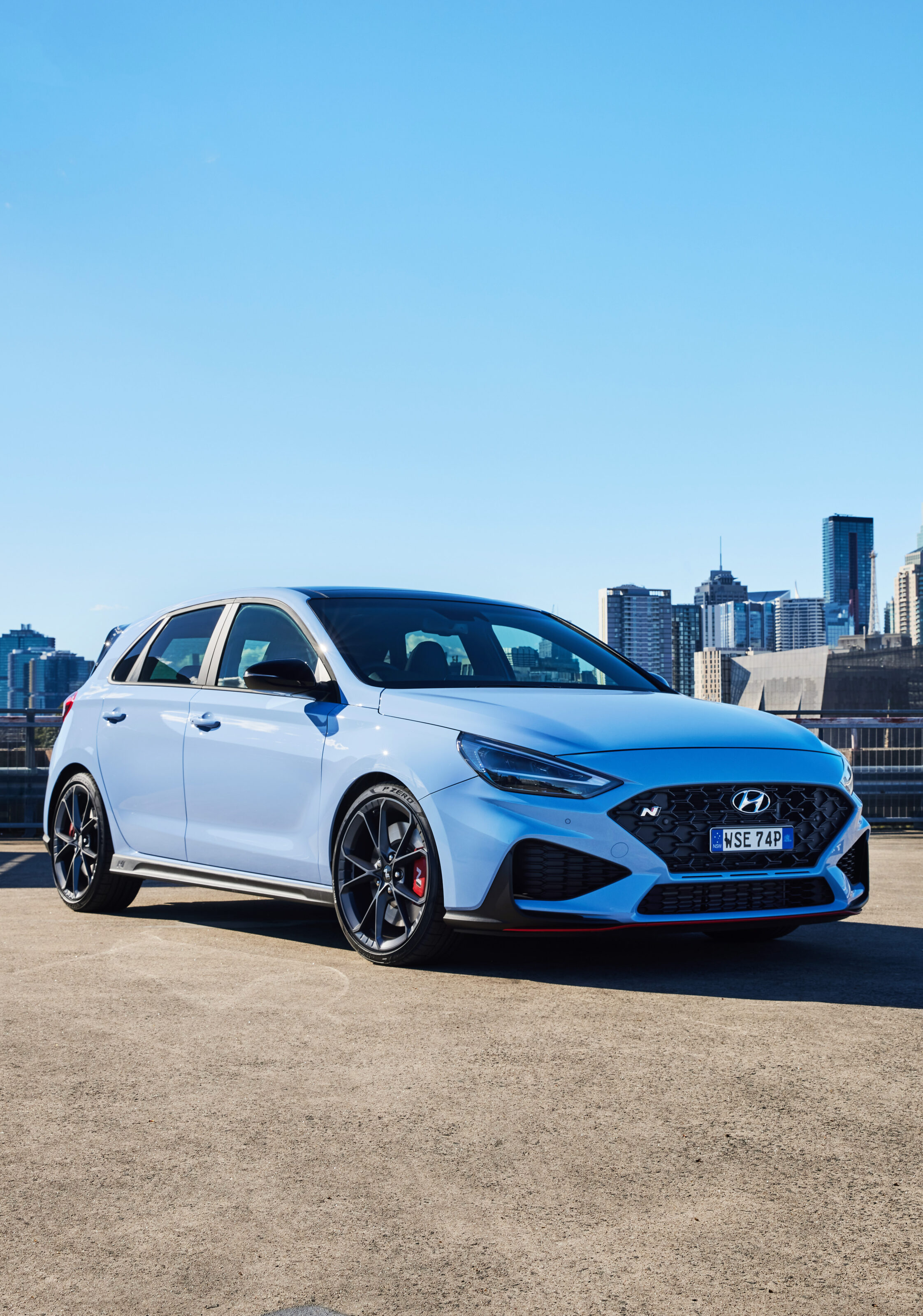
The initial headline sub-$40K pricing now begins at $44,500 (before on-roads) for the standard six-speed i30 N. Add $3000 for a base eight-speed DCT (or a manual in Premium trim), at $47,500.
A Premium Pack pair with sunroofs top the range at $49,000 and $52,000 for the manual and dual-clutch respectively.
That’s not an insignificant increase in coin, but this isn’t an insignificant update either. Far from a fresh face and a new gearbox option, Hyundai’s changelog points to a wholly refined package with meaningful updates outside, inside, and underneath.
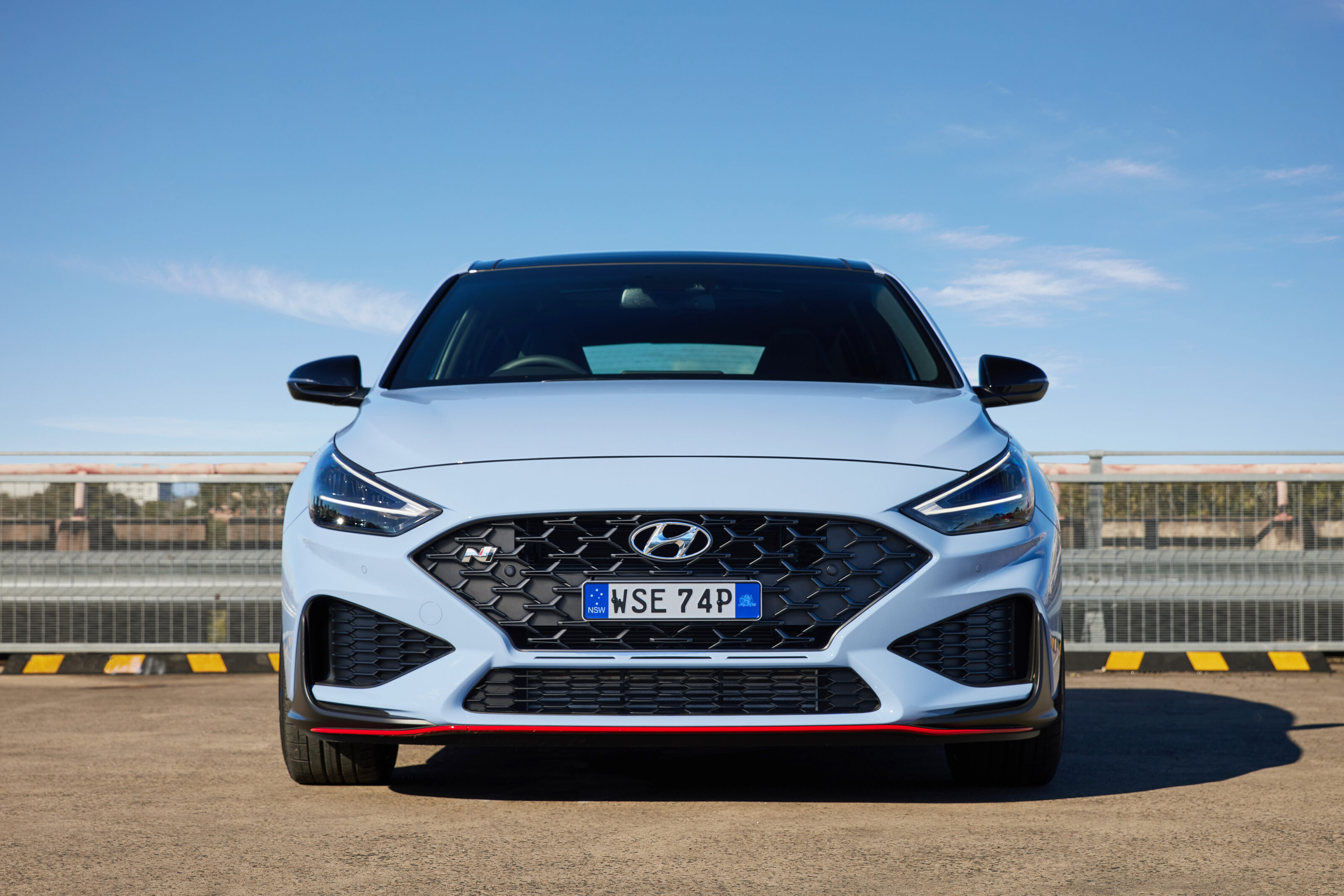
From the kerb side test, you’ll notice the wicked new V-shaped LED headlights and taillamps, and the new N-specific cascading grille.
The fresh design is somewhat less wicked, in my eyes, and isn’t as distinctive or proud as the pre-facelift’s softer snout, but you be the judge and let us know.
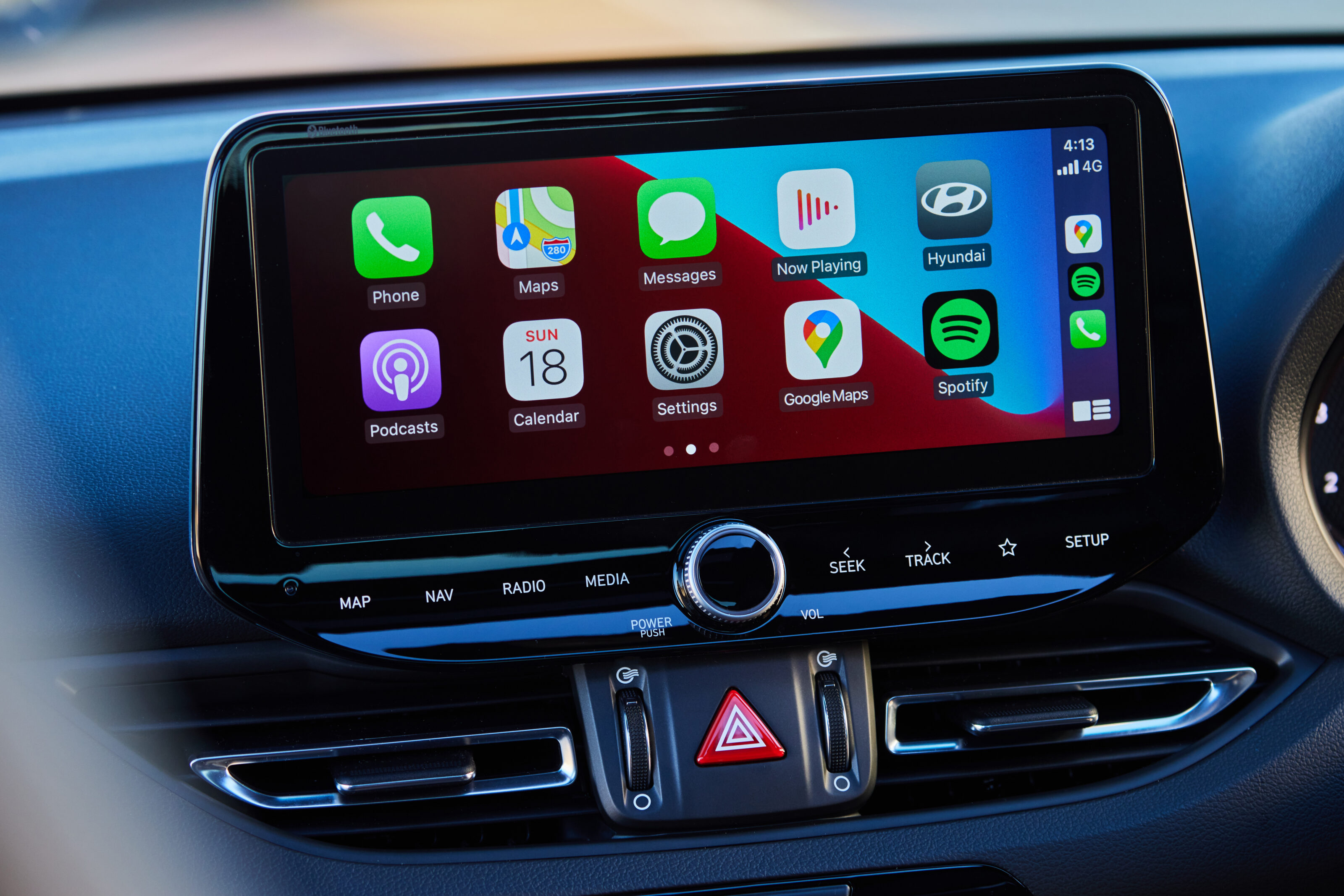
Inside, the standard equipment list looks generous with a new 10.25-inch infotainment screen taking centre stage. Integrated SatNav, DAB+ radio, Apple CarPlay and Android Auto compatibility, dual-zone climate control, wireless phone charger, 4.2-inch central TFT instrument screen, sport bucket seats being the notable appointments.
Hyundai’s SmartSense active safety suite has also expanded within the model, adding Lane Following Assist, Lane Keep Assist, Blind-Spot warning and Rear Cross-traffic alert. The i30 N also benefits from Hyundai’s five-year/unlimited-km warranty.
Our Premium Pack (with sunroof) test car adds beautifully sculpted fixed-headrest bucket recliners with an illuminated ‘N’ logo, Alcantara/leather upholstery, heated front seats and steering wheel, rain sensing wipers and an electro-chromatic rear-view mirror.

Those Premium bucket seats shave 2.2kgs off compared to the standard-fit items. Other weight-saving measures include the new forged 19-inch wheels.
The lighter rims skim off 14.4kg of unsprung mass (3.6kg per corner) compared to the previous cast alloys, and go some way to negating some of that weight creep brought about by the added kit and new transmission.
Speaking of, the automatic gearbox is a versatile unit that is smooth and robust in its shifts under normal driving circumstances. In fact, when you’re simply noodling around town in Normal mode, it feels as friendly as a base i30.
Here, the throttle calibration is very pedestrian and initial take-up in traffic is smooth, however there’s fairly significant amount of idle creep through the twin-clutch and, in low-speed scenarios, can build to quite a pace if you don’t cover the brakes.
Similarly, in situations like basement parking, frequent changes between drive and reverse can see the car creep to an eye-widening distance before the clutch engages. This isn’t helped by the fact that the i30 N possesses a noticeably large turning circle at 11.6m (a mainstream i30 will do the loop in 10.6m), at times exacerbating the need for hurried three-pointers.
It should be noted that there’s meant to be an aptly named ‘Creep Off’ convenience feature, which sadly couldn’t be located under the expansive N Performance option menu.
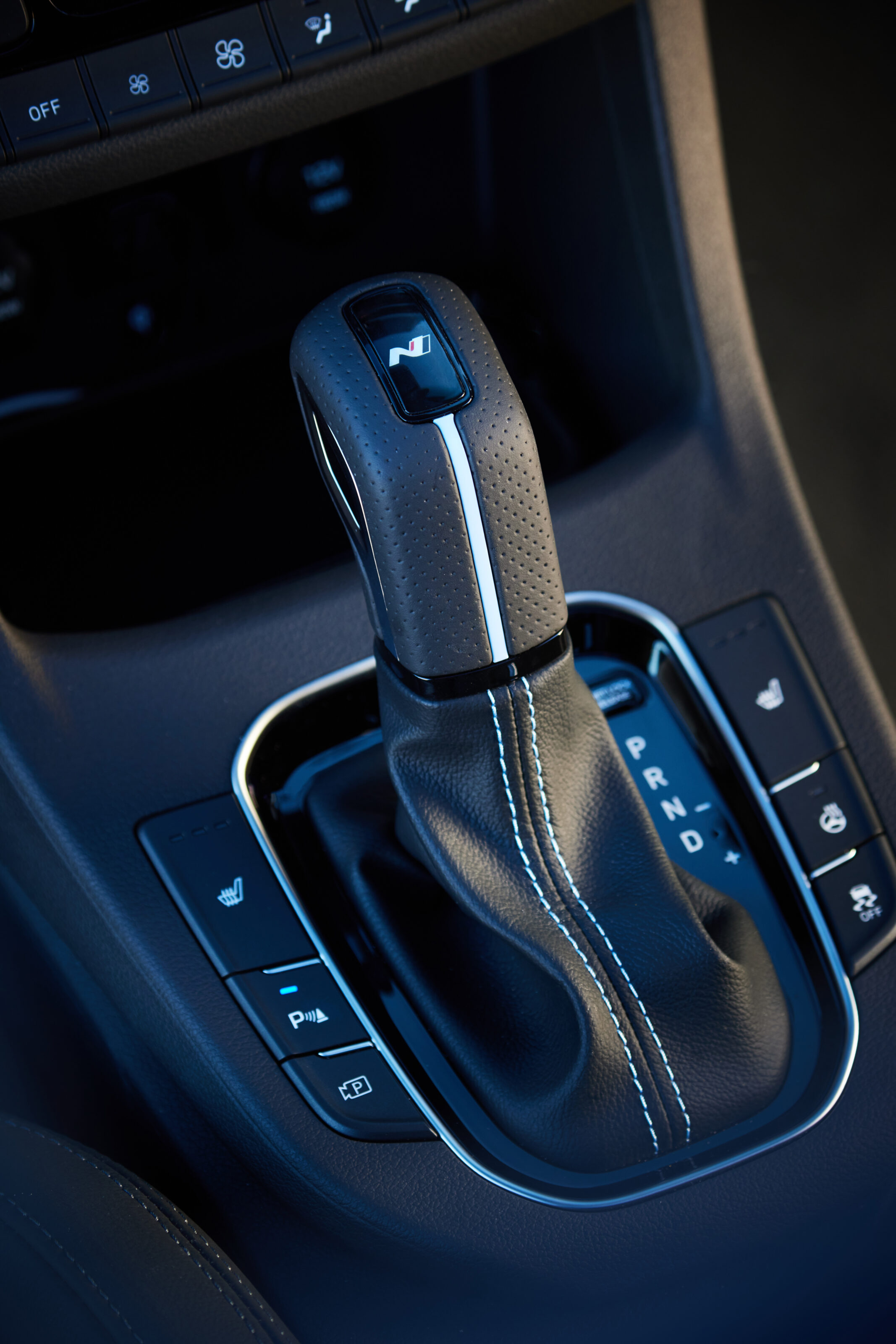
“At speed the twin-clutch is brutally effective, delivering frenetic gear changes through fine metal paddle shifters”
Steering in Normal mode is wonderfully light and, at 2.1 turns lock-to-lock, the rack is quick and effortless to pilot.
Suspension and body control is well-judged and extremely liveable. There’s an undertone of firmness to the locally-tuned adaptive damping in its default mode, although it remains wonderfully compliant and comfy with a wider scope between Sport and Normal modes. It’s a tremendously easy car to drive around town.
But the i30 N DCT’s inner-city mannerisms make up just part of the brief in its quest for new levels of mass appeal. In being more, for more people, has the punchy little blue bolt lost any of that magic we were originally so taken by?

The short answer is no. The new i30 N DCT makes evolutionary strides in its versatility and accessibility, but it’s as poised and fun as ever on a twisting Aussie B-road.
Even in Normal and automatic modes, the i30 N will cover ground quickly and comfortably. Supple body control and precise tactile steering make easy work of dissecting fast flowing roads.
The steering wheel mounted drive mode and N mode buttons make for intuitive and rapid changes in vehicle characteristics whenever the mood should take you.
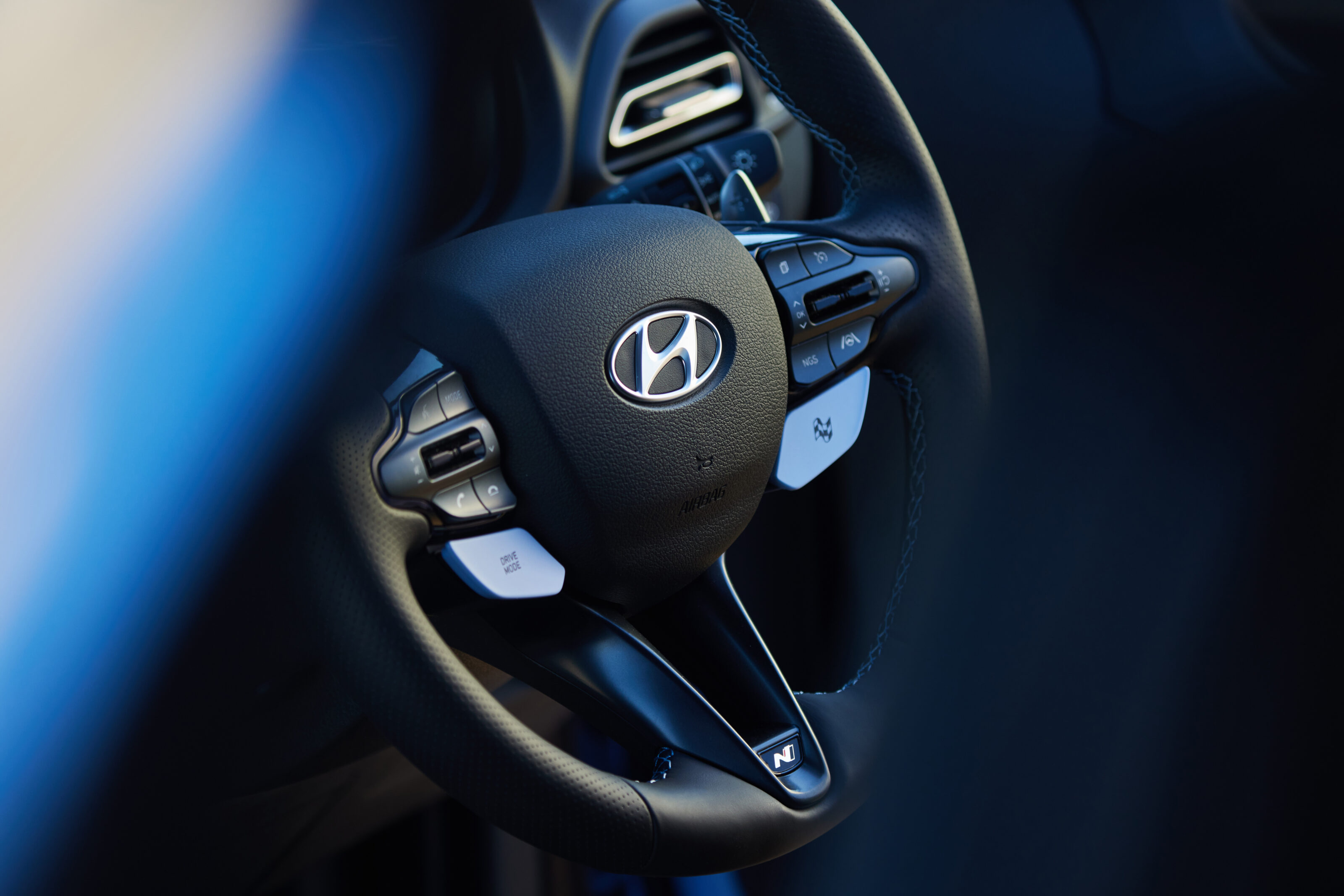
Sport sharpens up the throttle and weights up the steering into a beautiful sweet spot while avoiding needless heft. The dampers also firm up significantly, communicating fine bumps, contours and changes in road surface, things you were completely unaware of having just run up the same road in Normal mode. The exhaust also drops an octave and there’s an awesome induction noise on the move.
It’s the chequered flag N Mode on the right-side of the steering wheel that acts as the real back-road blast button: loosening ESC into sport, and seemingly kicking the exhaust soundtrack up another notch again.
The i30 N, in its latest guise, survives the need for the dreaded petrol particulate filter, thankfully still signalling downshifts at max attack with a raucous staccato “thratatat” that echoes off rock faces and concrete barriers. It sounds unreal.
At speed the twin-clutch is brutally effective, delivering frenetic gear changes through fine metal paddle shifters, or the tiptronic shifter if you so choose. The gearbox seems happy to cooperate too, and will give you the downshift if it can.
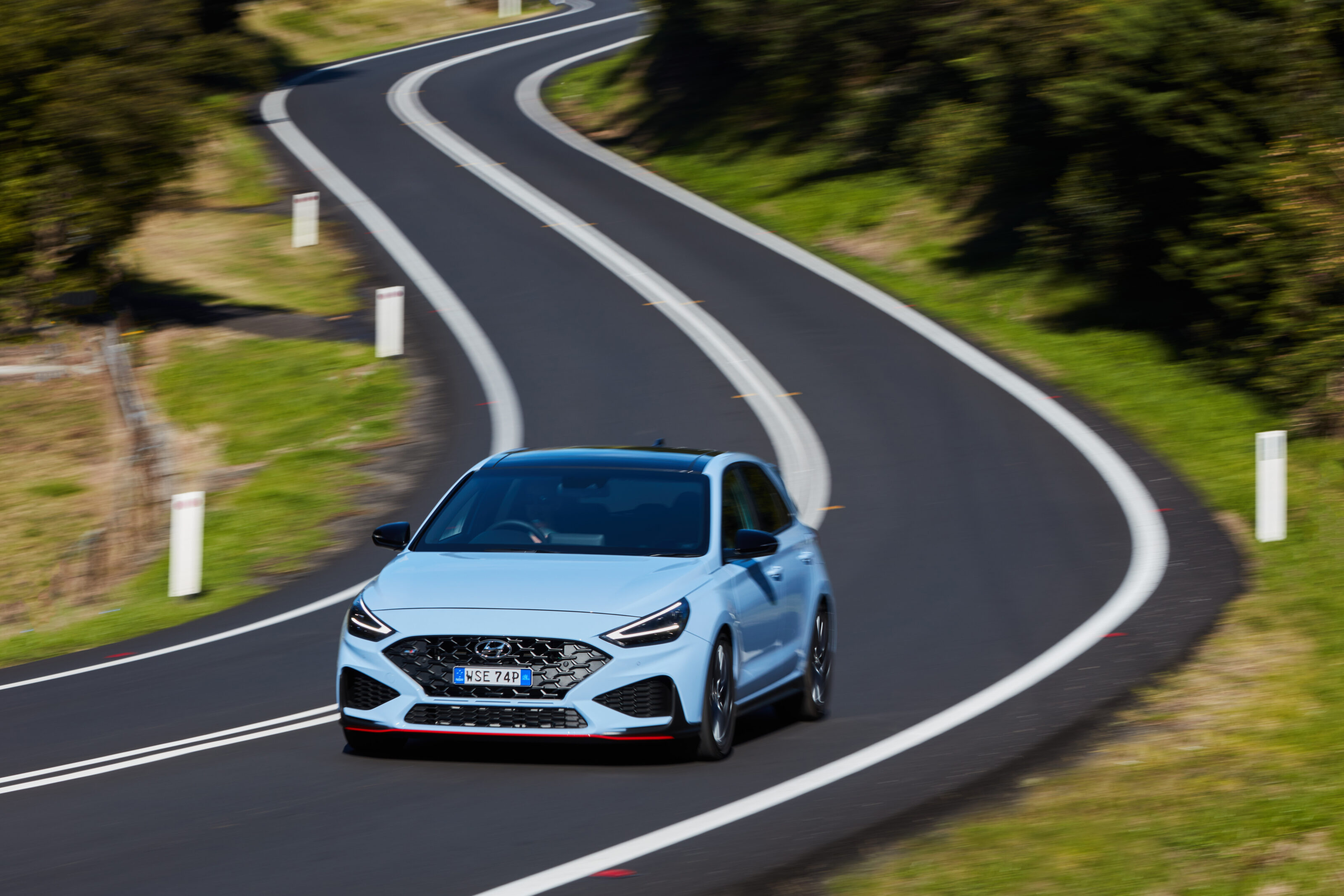
N Division has been busy over the past three years making fine revisions to the suspension, including: new spring rates (increasing 5.7 per cent up front and 4.2 per cent at the rear), revalved dampers, revised rear toe-arms, and redesigned front knuckles and lower control arms yielding an increased 1.7 degrees of negative camber at the front.
Steering remains as brilliantly judged as before. The ceiling for the front-end’s mid-corner grip is very high, and even as you approach the threshold of understeer, the car never ploughs, the square-set Pirelli P Zeros (produced specifically for Hyundai N) instead easing into steady-state understeer as it pulls round the bend. It’s very confidence inspiring and forgiving, with the i30 N being very receptive to mid-corner corrections and inputs.
You can power down very early post-apex and, while there is some kickback through the steering column, the bimodal electronically controlled mechanical differential at the front axle confidently tracks straight and true.
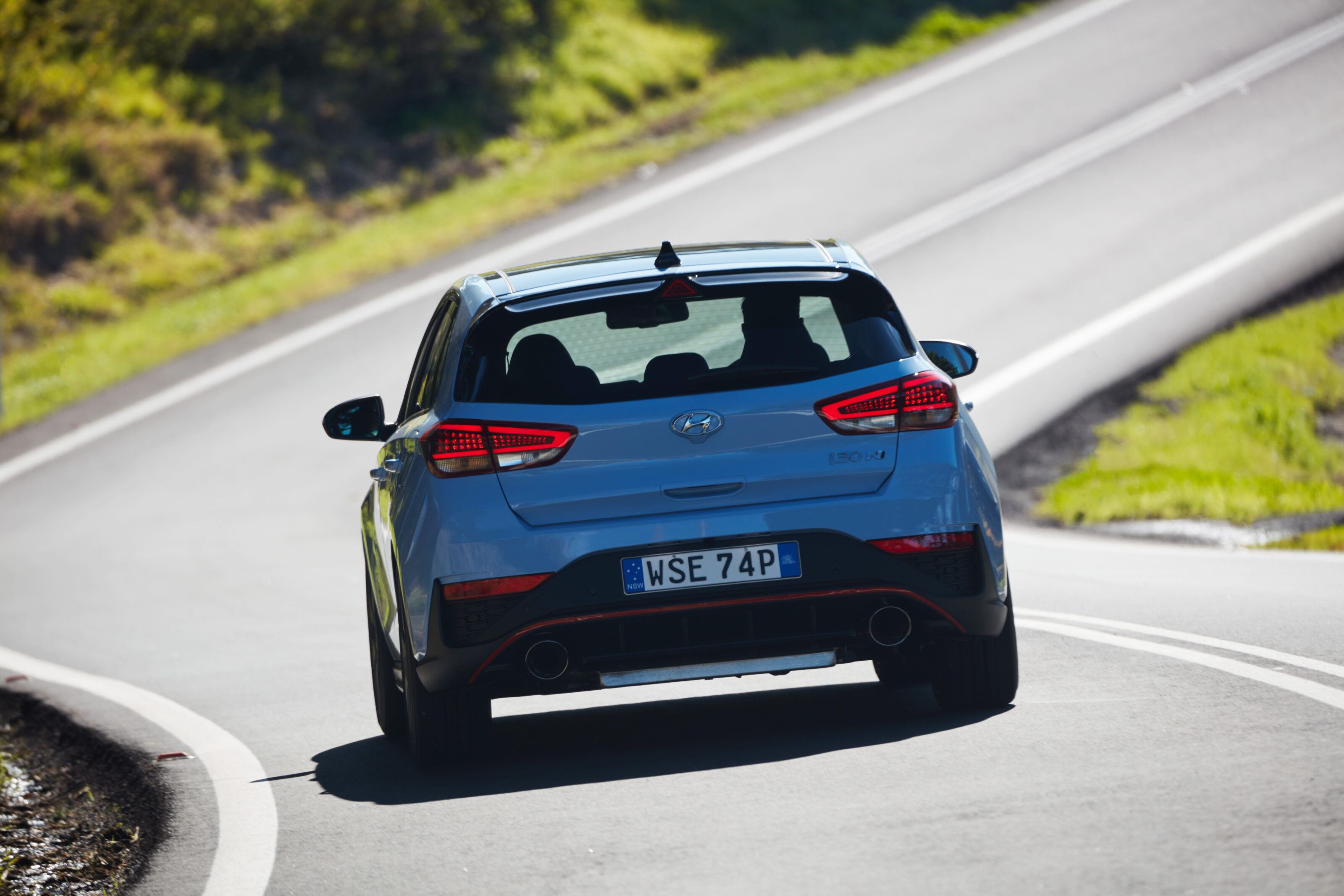
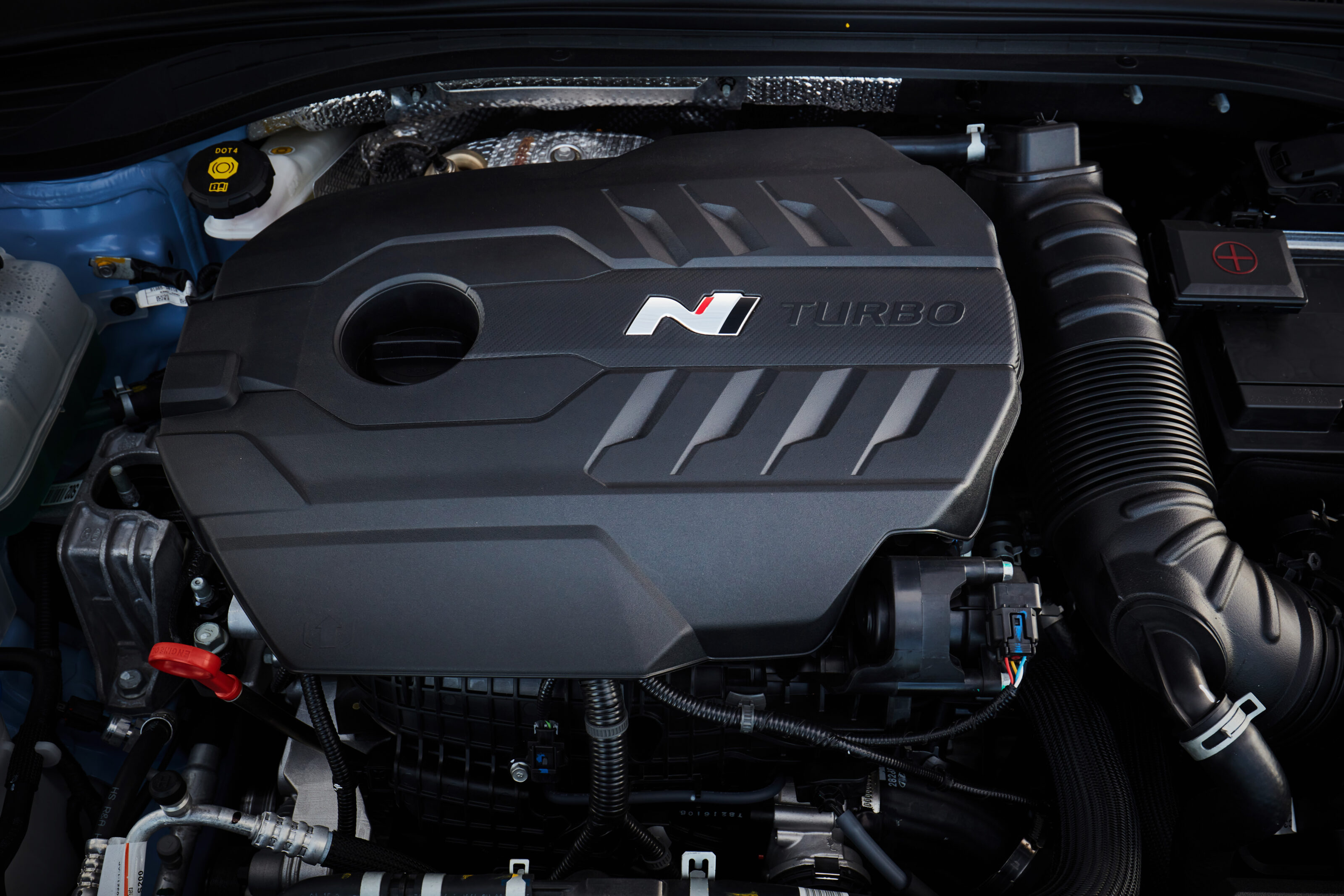
The riotous 2.0-litre T-GDi four-cylinder feels as explosive on corner exit as before. Just 4kW more has been squeezed from the little mill, but torque is up a decent chunk, now topping out at 392Nm. A modest peak power increase belies a drastically improved engine map, with the new unit producing more power and torque comprehensively throughout the rev-range from 2000rpm.
The new ‘flat power’ philosophy sees the i30 N’s native torque output exceed the old overboost function, arriving at 2100rpm and sticking around until 4700rpm. Power rushes hard and fast up to 5000rpm, maintaining that peak 206kW through to 6000rpm before cutout is hit at 6400rpm. The new DCT also drops the i30 N’s 0-100km/h time to a claimed 5.4-seconds.
Achieving the new power curves required far more than a simple flash tune, with N Division increasing the engine block strength via different machining techniques, adding a larger 6.8-litre intercooler (up 0.3-litres), and a redesigned turbo with new flow paths and larger compressor, turbine and scroll area; with development aided by Hyundai’s own i30 N WTAC Clubsprint competitor of 2019.
The end result is a great hot hatch that’s still devastatingly capable and undeniably fun on a twisty road, but also one that’s grown in scope and maturity when dealing with the bump and grind of life.
The cabin may be somewhat of a sore point to some, sharing many of its main hardpoints and cues with the pedestrian i30. The Premium Pack does much to elevate the ambiance, but plastics are still a big theme across the dash. Functionally, however, it’s great.
The update brings along a big serving of added tech, with all equipment interfaces remaining intuitive and easy to use. The touch-sensitive shortcut buttons below the 10.25-inch touchscreen seem a little too easy to press when attempting to use the screen on the move, however.
With this new update Hyundai has avoided change for the sake of it, bringing genuine advancements and improvements – along with an associated price increase. As a result, the original value proposition may have been diluted, more so in this particular fully-loaded spec, but it’s a resoundingly capable car and, thanks to the added eight-speed, those merits have now been opened up to a whole new pool of drivers.
If you were previously limited by the sole-available H-pattern, N Division now has a car for you (there’s also a Kona).
The self-shifting i30 N has been a long time coming, but good things come to those who wait. Hyundai have simply given more of us, more of a very good thing.
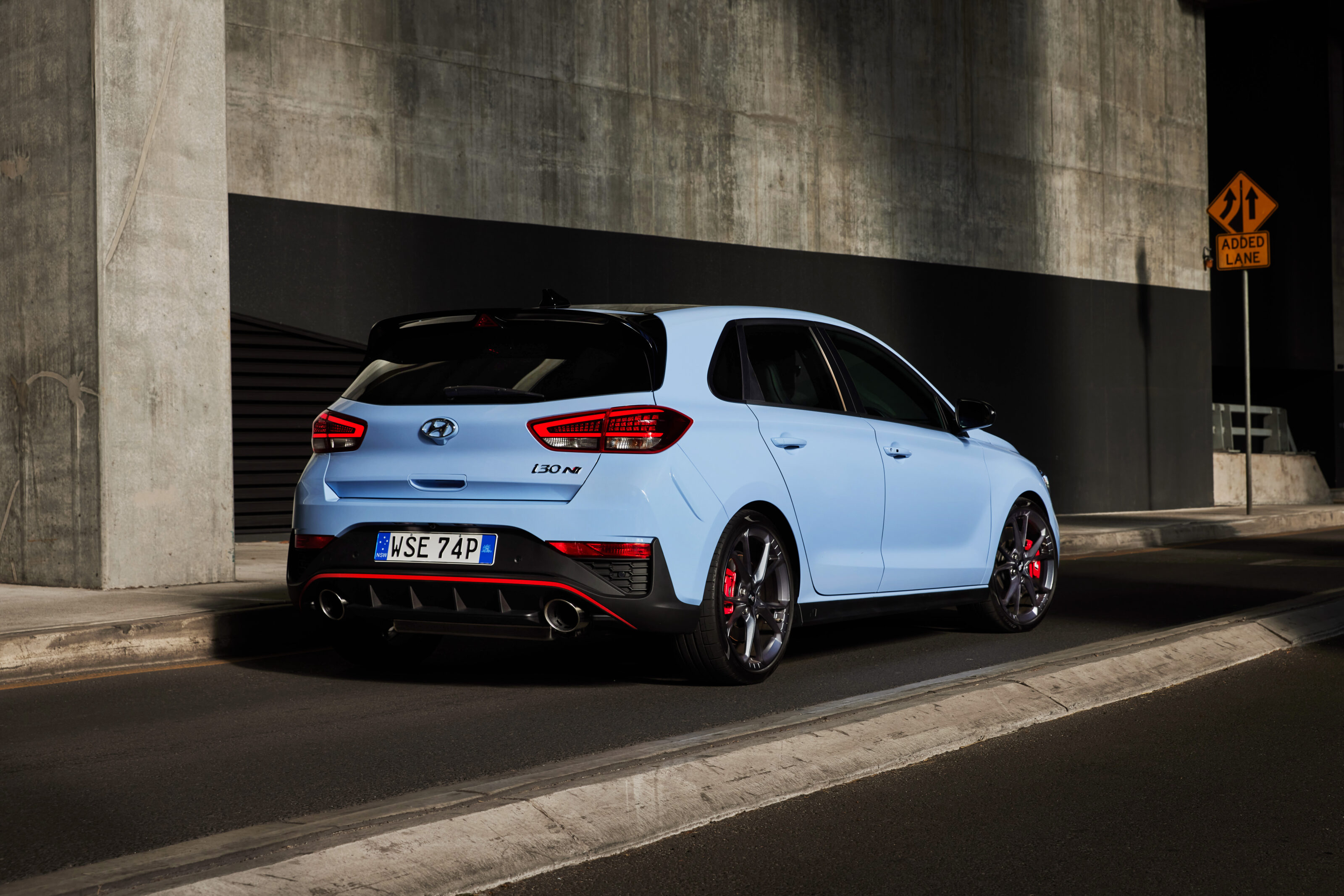
Hyundai i30 N DCT Premium w/sunroof specs
| Body: | 5-door, 5-seat hatch |
|---|---|
| Drive: | front-wheel |
| Engine: | 1998cc inline-4, DOHC, 16v, turbo |
| Bore/Stroke: | 86.0 x 86.0mm |
| Compression: | 9.5:1 |
| Power: | 206kW @ 6000rpm |
| Torque: | 392Nm @ 2100-4700rpm |
| Weight: | 1541kg |
| Transmission: | 8-speed dual-clutch |
| kW-per-tonne: | 133kW/tonne |
| Suspension: | struts, adaptive dampers, anti-roll bar (f); multi-link, adaptive dampers, anti-roll bar (r) |
| L/W/H: | 4455/1795/1419mm |
| Wheelbase: | 2650mm |
| Tracks: | 1573/1564mm (f/r) |
| Steering: | electrically assisted rack-and-pinion |
| Brakes: | 360mm ventilated discs, 4-piston calipers (f); 314mm solid discs, single-piston calipers (r) |
| Wheels: | 19.0 x 8.0-inch (f/r) |
| Tyres: | 235/35 R19 (f/r); Pirelli P Zero HN |
| Price: | $52,000 + ORC |
All good things must come to an end and so too will the Fast and Furious franchise, with the penultimate film set to be released on April 7, 2023.
As reported by Entertainment Weekly, shooting for Fast 10 is set to begin early next year with Fast 11 likely being filmed immediately afterwards for back-to-back releases, closing out the series which started in 2001.
Series star Vin Diesel previously confirmed the family of films would be winding up after its 11th iteration, but hasn’t ruled out a spin-off, having already started another story arc with Hobbs & Shaw.
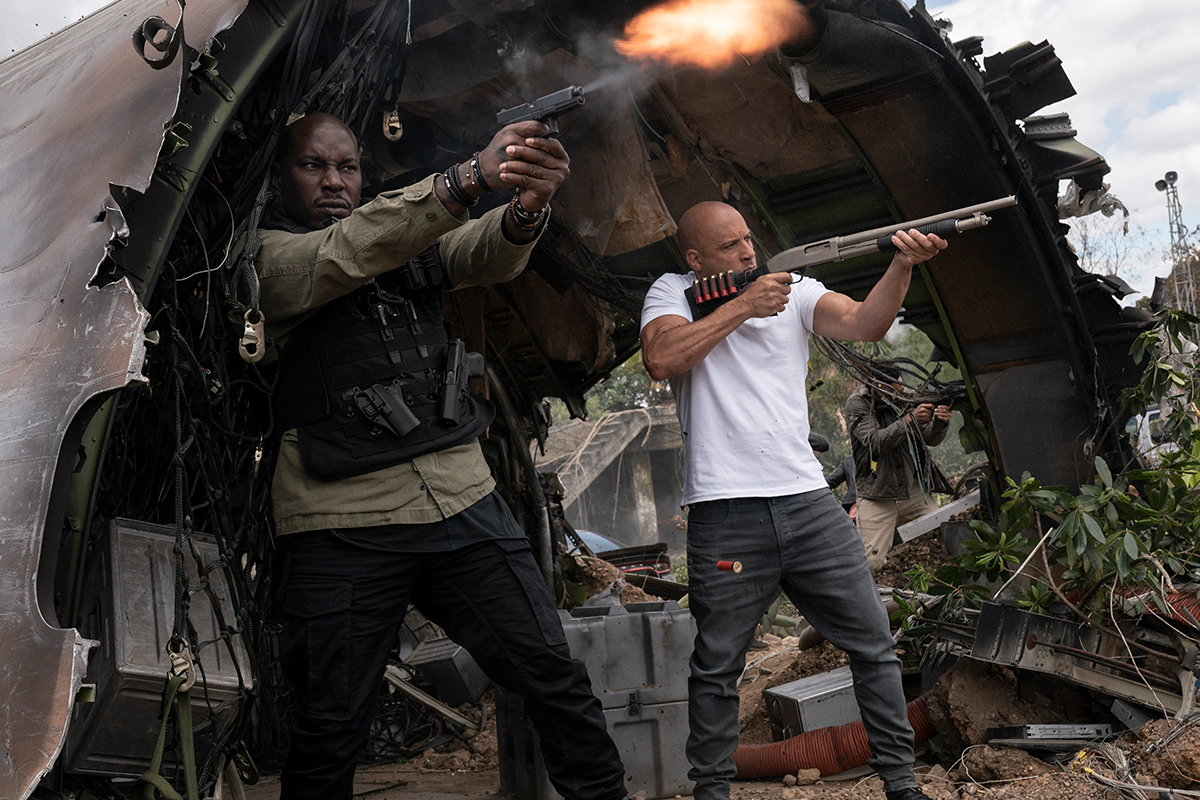
It will be an impressive stint for the series if production continues through to Fast 11, as many expected it to wrap up after the death of lead actor Paul Walker in 2013 – leading to production of Fast 7 being finalised with the late actor’s brothers.
The usual crew of Diesel, Michelle Rodriguez, Jordana Brewster, Tyrese Gibson, Chris Bridges, Sung Kang and Jason Statham are likely to return, but it’s unconfirmed whether former WWE star John Cena will reprise his role as Diesel’s brother in the future, having been added to the series in this year’s Fast 9.
Director Justin Lin is set to direct the final pair of movies, having already directed five out of the nine existing films including – Tokyo Drift, Fast & Furious, Fast Five, Fast & Furious 6 and F9.
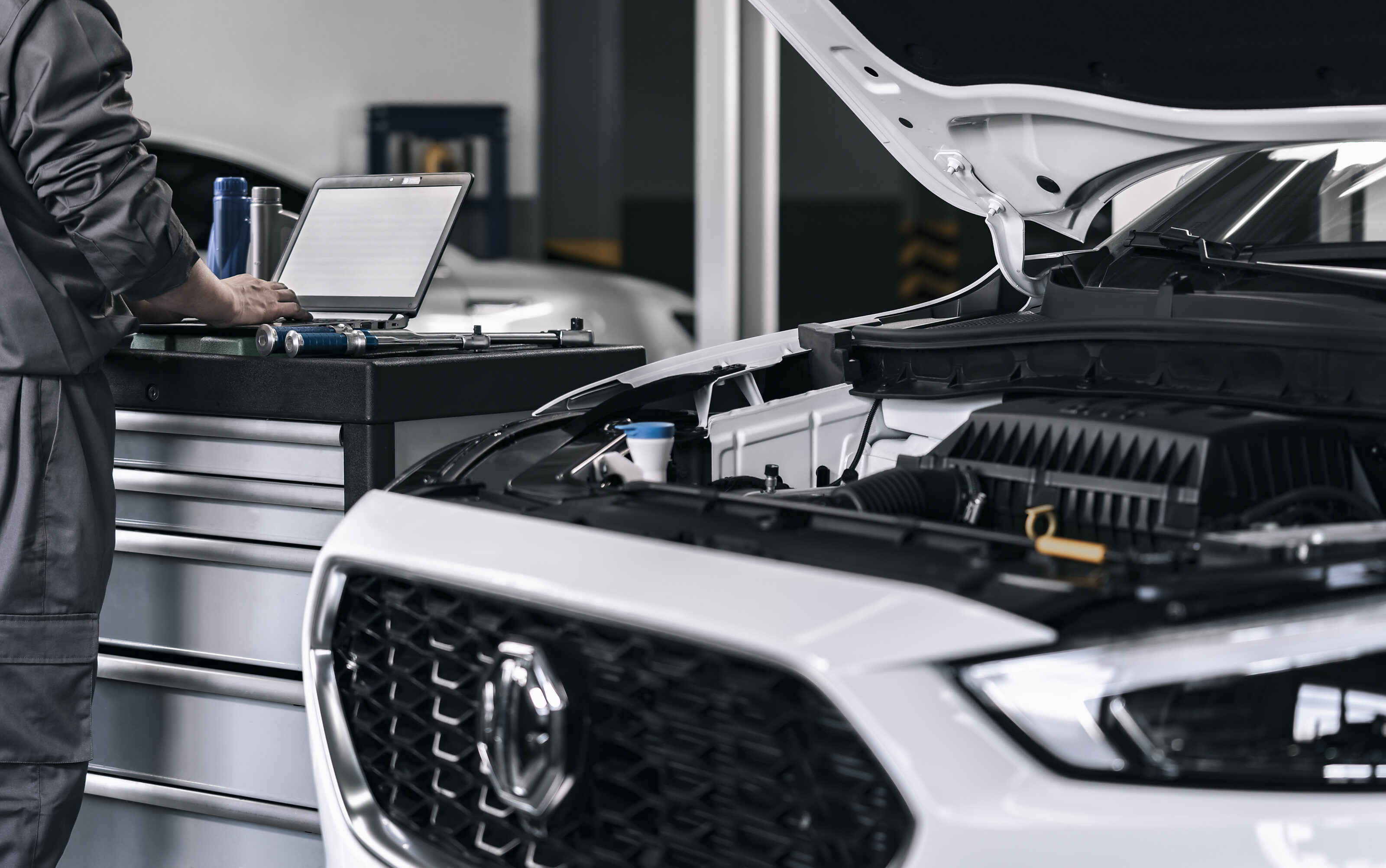
For the first time since the brand was reintroduced in Australia, MG has launched fixed-price servicing for its new and used cars.
Dubbed ‘Precise Price Servicing’, it is available for all MG vehicles purchased since the manufacturer’s arrival in 2016, providing owners with exact pricing and details of the scheduled maintenance.
With MG already covering all of its vehicles with a seven-year/unlimited-kilometre warranty, one of the longest available in Australia, the addition of fixed price servicing puts another feather in the cap of the company – having recently become the first Chinese manufacturer to achieve a top 10 monthly sales result in Australia with the ZS.
MG Motor Australia and New Zealand CEO, Peter Ciao, said introducing fixed-price servicing will help build customer trust in the brand which is already making progress in Australia.
“In a market where customers are becoming increasingly aware of their finances, providing transparency on the final cost customers will pay for servicing is very important,” said Ciao.
“Launching our Precise Price Servicing initiative is another step towards ensuring our customers have complete peace of mind when they join the MG family.”
MG’s strong sales are expected to continue amidst a shortage of semi-conductor chips globally, with the brand’s Australian arm confirming it has ample stock after receiving its first full shipment of vehicles last month.
UPDATE, August 19: United States senators have asked for the Federal Trade Commission (FTC) to investigate Tesla over claims made relating to its Autopilot systems.
Democrats Richard Blumenthal and Edward Markey penned a letter to FTC Chair Lina Khan saying Telsa and CEO Elon Musk’s claims of its Autopilot systems being marketed as fully self-driving were dangerous and misleading.
“Tesla and Mr Musk’s repeated overstatements of their vehicle’s capabilities…put Tesla drivers – and all of the travelling public – at risk of serious injury or death,” the letter said.
“Tesla drivers listen to these claims and believe their vehicles are equipped to drive themselves – with potentially deadly consequences.”
The request to the FTC comes only days after the NHTSA announced it would be opening an investigation into Tesla crashes while Autopilot was activated.
The story to here
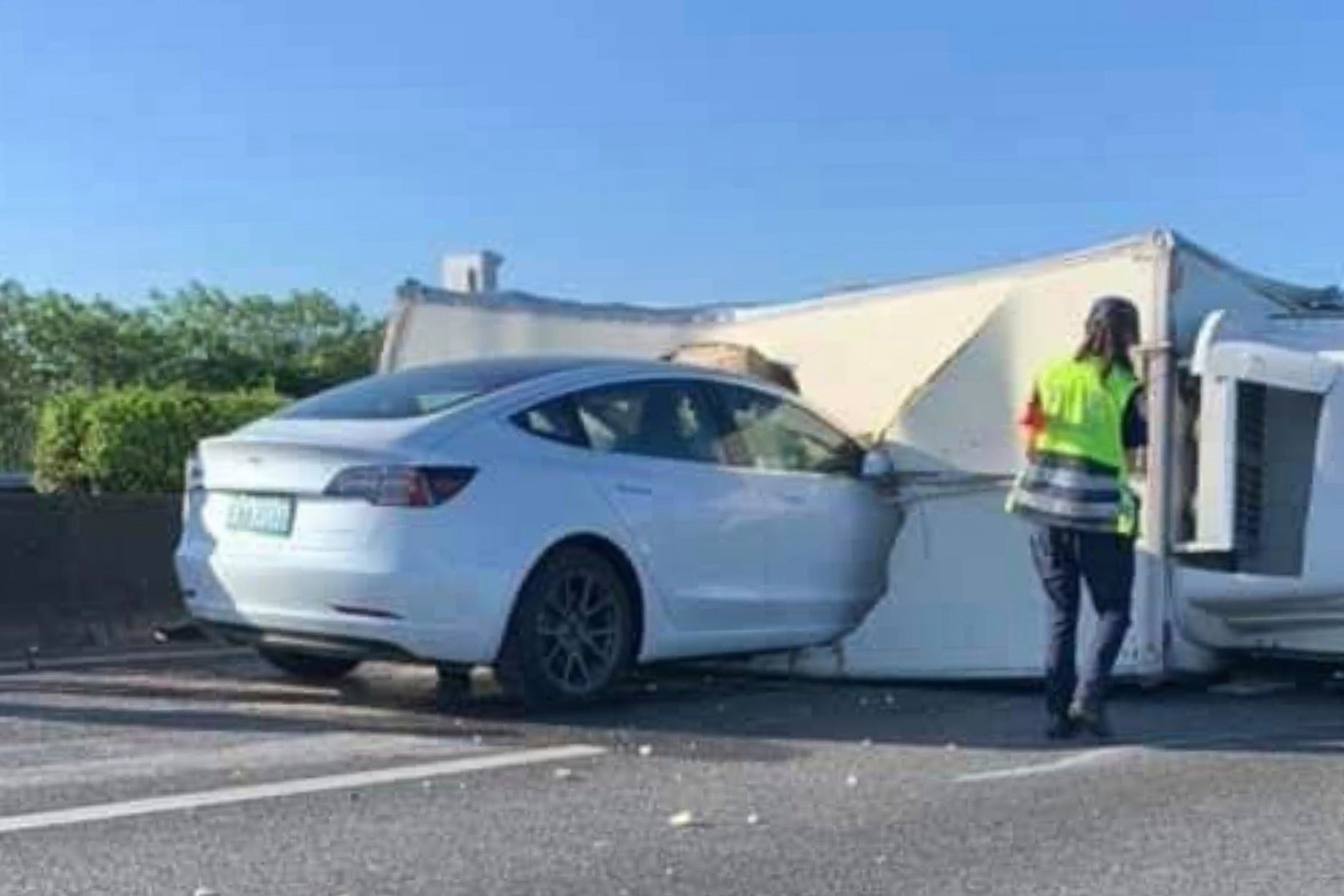
August 17: A series of traffic collisions between Teslas using Autopilot and first responder emergency vehicles has triggered an investigation into the firm’s autonomous driving system.
The National Highway Traffic Safety Administration (NHTSA) reports 11 crashes involving Tesla cars and emergency vehicles have occurred since the start of 2018 – all while the semi-autonomous Autopilot or Traffic Aware Cruise Control functions have been engaged.
A majority of the incidents occurred after dark and resulted in first responders being struck – despite following protocol by having safety equipment such as lights, flares, illuminated arrow boards and road cones visible to alert traffic of their presence.
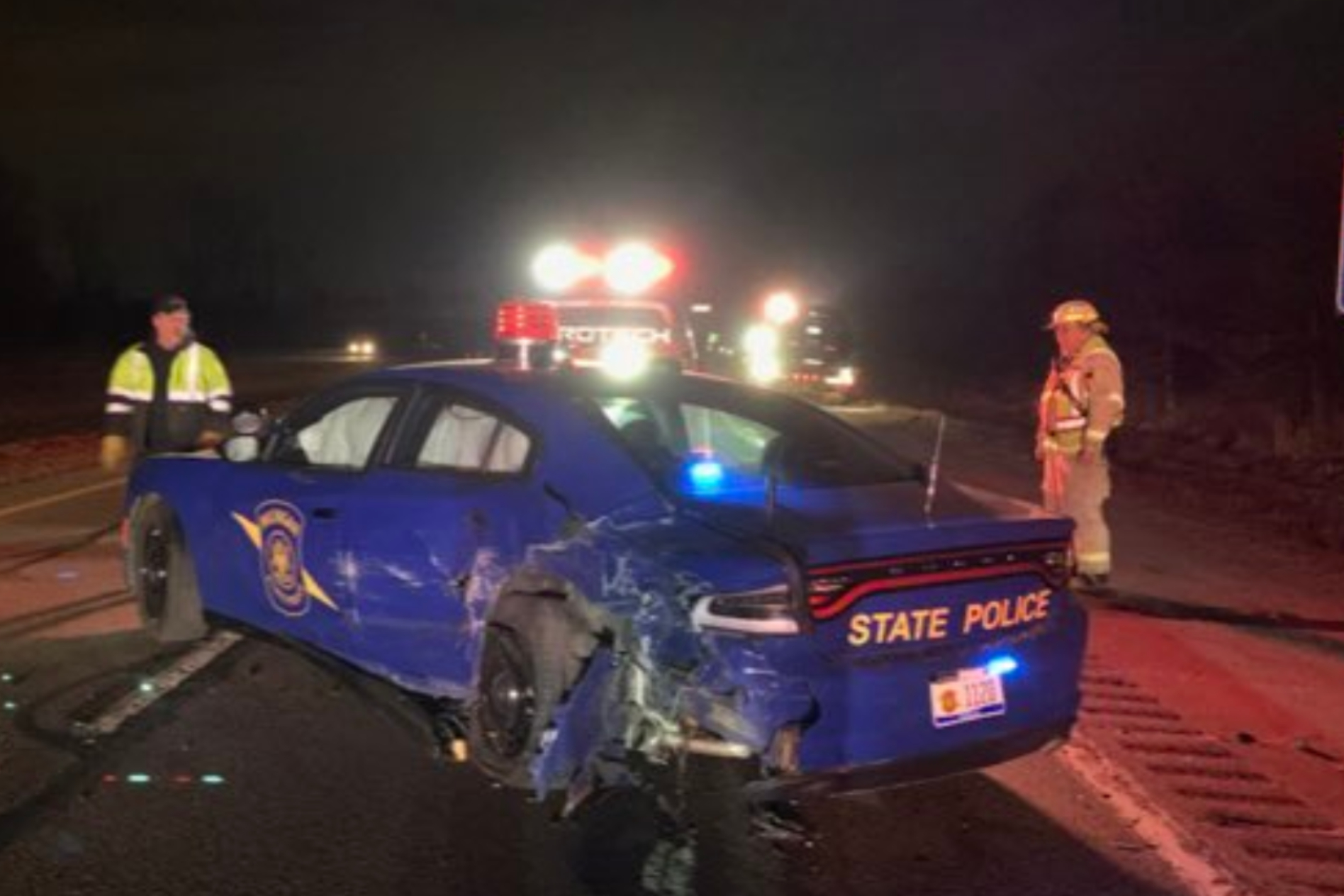
According to the NHTSA report, of the 11 crashes, seven incidents have resulted in 17 injuries and one death. With 765,000 Autopilot-equipped vehicles on the road, the investigation covers just 0.0014 per cent of Teslas in the United States.
Despite Tesla and other automotive manufacturers putting in safety systems to make sure the driver of the vehicle is attentive while its autonomous features are active, the tech can be ineffective – as evidenced by one incident where a driver ran into a police car while watching a movie.
The NHTSA investigation will determine whether the Autopilot system meets the required standards for monitoring, assisting and enforcing driver engagement while engaged, as well as its ability to detect and respond to objects and events nearby.
Snapshot
- Standard Range now features a 100kW electric motor
- Battery size reduced to 39.2kWh
- WLTP tested range of 305km
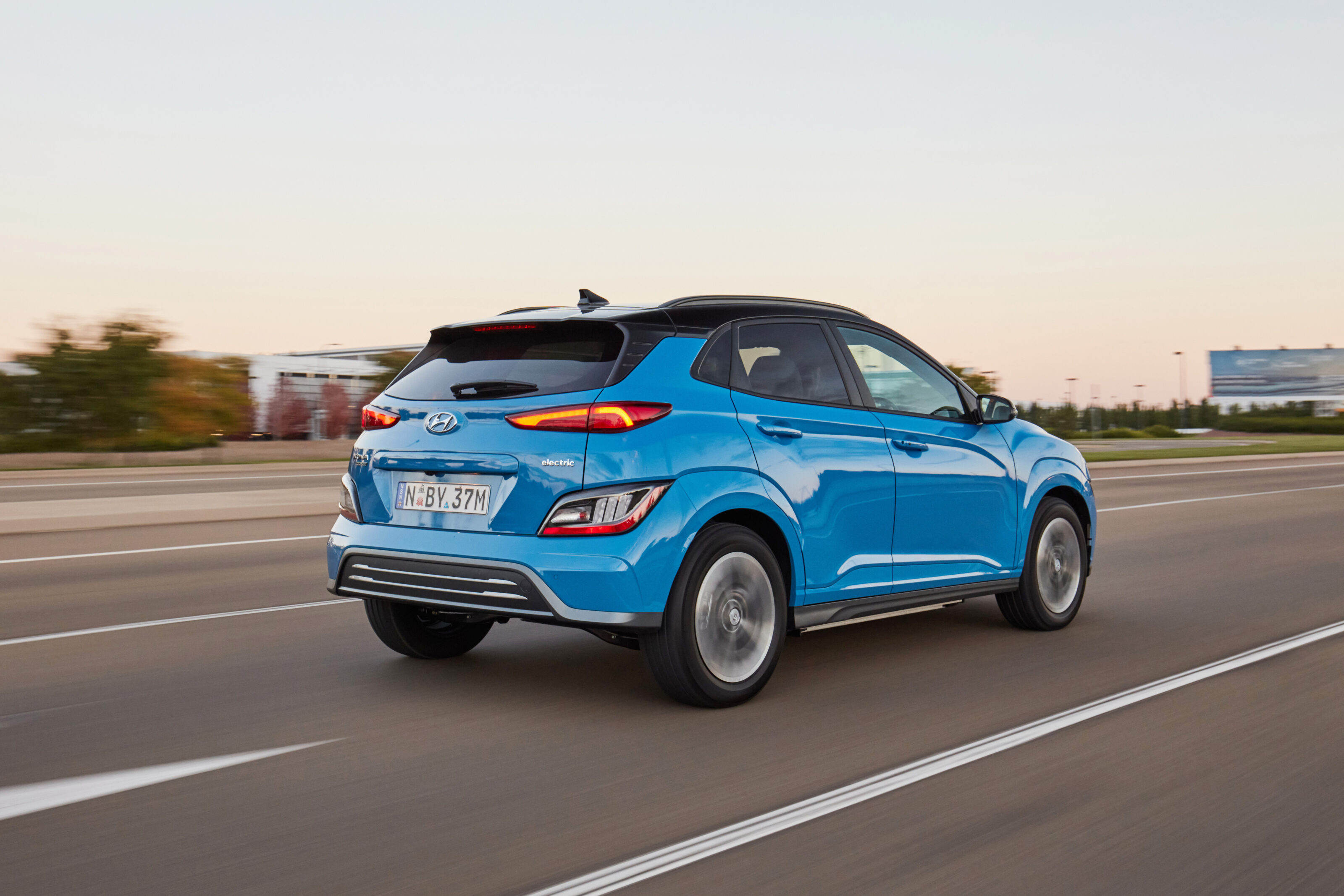
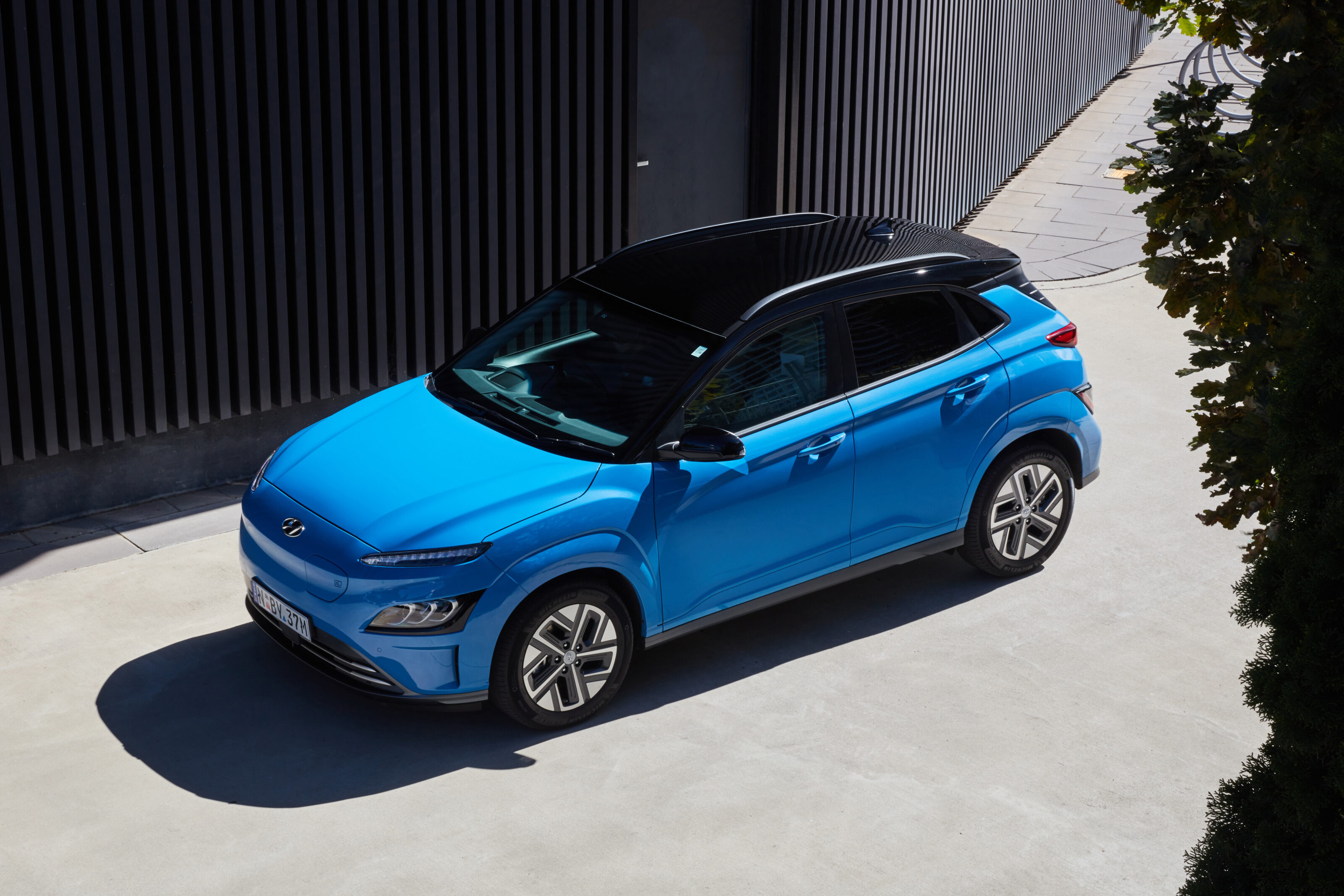
The Hyundai Kona EV has gained a second powertrain choice with the release of the Kona Standard Range.
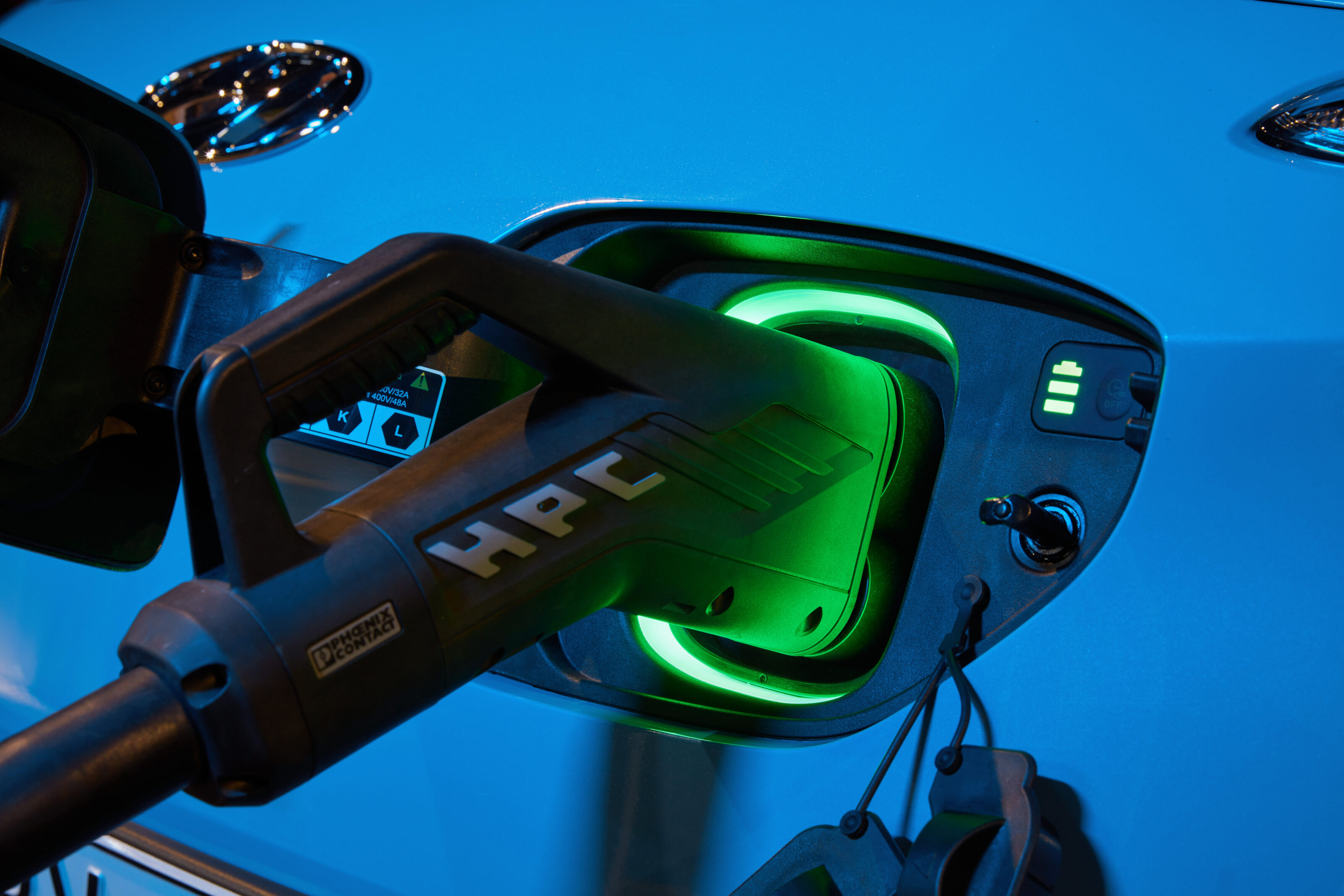
Joining the existing Kona Electric – which has now been renamed to the Extended Range (ER) – the Standard Range (SR) packs a 100kW/395Nm motor and a 39.2kWh battery, reduced from the ER’s 150kW motor and 64kWh battery pack.
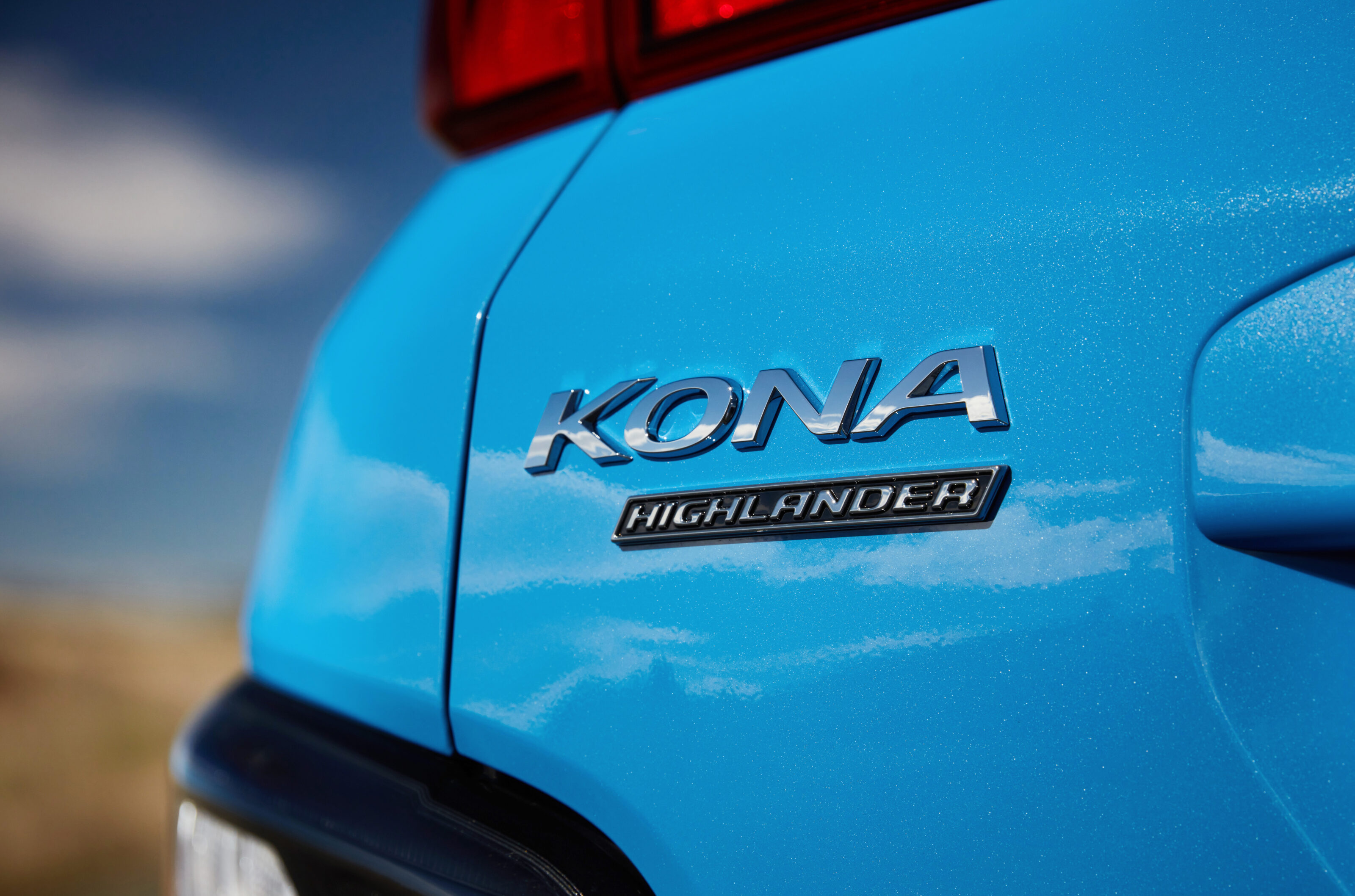
With driving range reduced to 305km from the ER’s 484km, Hyundai has made the two SR trim variants – which are the Elite and Highlander – $6000 cheaper than their ER counterparts.
Pricing
Hyundai has not only introduced the SR at a lower price to the ER but also reduced the price of the latter powertrain, dropping the price of the Elite and Highlander by $1500 and $2000 respectively.
All prices are before on-road costs:
| Kona Elite Standard Range | $54,500 |
| Kona Highlander Standard Range | $58,000 |
| Kona Elite Extended Range | $60,500 |
| Kona Highlander Extended Range | $64,000 |
Only two optional extras are available for the Kona range, with premium paint setting buyers back an extra $595 while a black and grey interior is offered at a $295 premium.
Features
Both the SR and ER are available in Elite and Highlander trim – with spec unchanged between the two variants.
On the Elite trim this includes as standard:
| Auto dusk sensing headlights |
| LED daytime running lights |
| Rear park assist system |
| Rear view camera |
| Tyre pressure monitoring system |
| 17-inch alloy wheels with Michelin Primacy 4 tyres |
| Tyre mobility kit |
| Leather appointed interior |
| Passenger height adjuster |
| Electronic parking brake |
| Paddle shifters |
| Smart key and push button start |
| Climate control with auto defog |
| Rain sensing wipers |
| Solar control glass with rear privacy |
| Acoustic windscreen film |
| 10.25-inch digital supervision cluster |
| 10.25-inch satellite navigation system |
| Harman Kardon 8-speaker audio |
| DAB+ digital radio |
| Wireless charging pad (Qi standard) |
| Apple CarPlay and Android Auto |
| Bluetooth connectivity |
| Rear passenger USB charging port |
| Heated exterior mirrors |
| Power folding exterior mirrors |
| Front and rear power windows, front windows one touch auto up/down |
| Rear fog light |
| Front closed grille |
| Body coloured cladding |
| Driver and front passenger seat back pocket |
| Luggage net |
| Roof Rails |
| In-cable control box (ICCB). |
In addition to the entry-level Elite trim, Highlander versions gain:
| Front park assist system |
| Glass sunroof |
| Heated steering wheel |
| LED headlights and front indicators |
| Air ventilated front seats |
| Ambient lighting |
| LED tail-lights |
| Heated front and rear outboard seats No-cost options: |
No-cost options:
| High beam assist |
| Power driveru2019s and passengersu2019 seats |
| Head-up display |
| Electro-chromatic interior mirror |
| Two-tone roof u2013 phantom black. |
Safety
Retaining the standard Kona’s five-star ANCAP safety rating, the Kona Electric variants are all available with six airbags and a range of safety technology such as:
| Blind-spot collision-avoidance assist |
| Driver attention warning |
| Forward collision-avoidance assist |
| Lane following assist |
| Lane keeping assist |
| Rear cross-traffic collision |
| Avoidance assist |
| Rear occupant alert |
| Safe exit warning |
| Smart cruise control with stop and go |
| Electronic stability control |
| Anti-lock braking system |
| Brake assist system |
| Electronic brakeforce distribution |
| Hill-start assist control |
| Traction control system |
| Vehicle stability management. |
Warranty and servicing
The Kona Electric range is offered with Hyundai’s five-year/unlimited-kilometre warranty as well as 12 months’ roadside assistance.
Hyundai also offers a complimentary first service at 1500km, giving customers a roadside support plan and sat nav update plan for 10 years when the Kona is serviced on time through Hyundai dealers.
Availability
The new Kona Standard Range is on sale now.
