
Lexus has confirmed it will reveal what it describes as its “new brand vision” next week, on Tuesday March 30 at 9pm AEDT.
Initially teased in February, the new concept is intended to preview the next generation of Lexus design and technology.
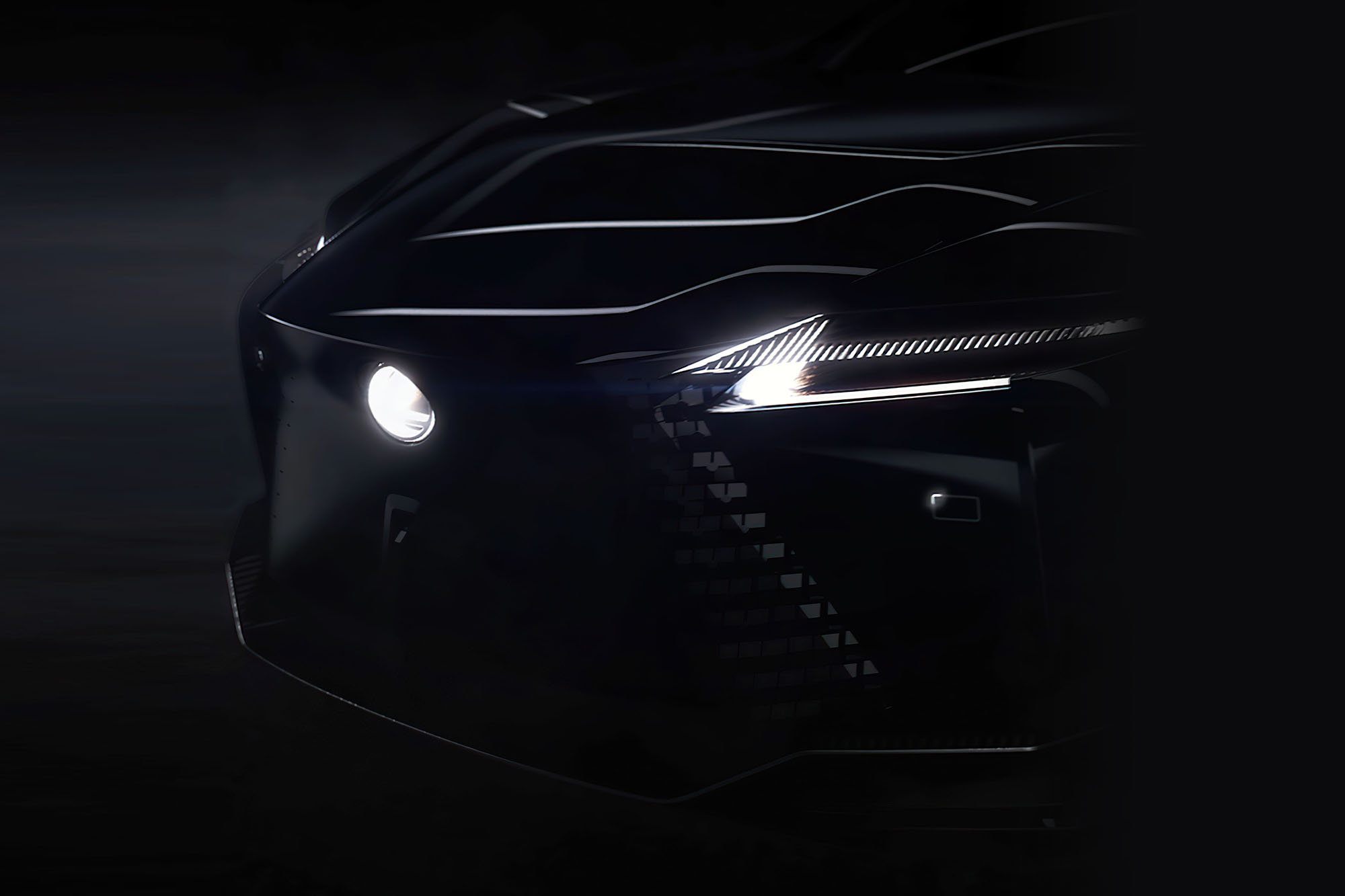
With only shadowy teasers to go off, it remains to be seen how much of a departure we can expect from the Japanese premium brand’s current look.
Indeed, with the next-generation Lexus NX having already surfaced online with an evolutionary design, it’s unclear if the ‘next generation’ will make for any great styling leap from the Lexus look buyers already know.
To that point, Lexus branding chief Koji Sato said in February: “Furthermore, we will launch the first model under our new vision within this year”, with more new models to debut from 2022.
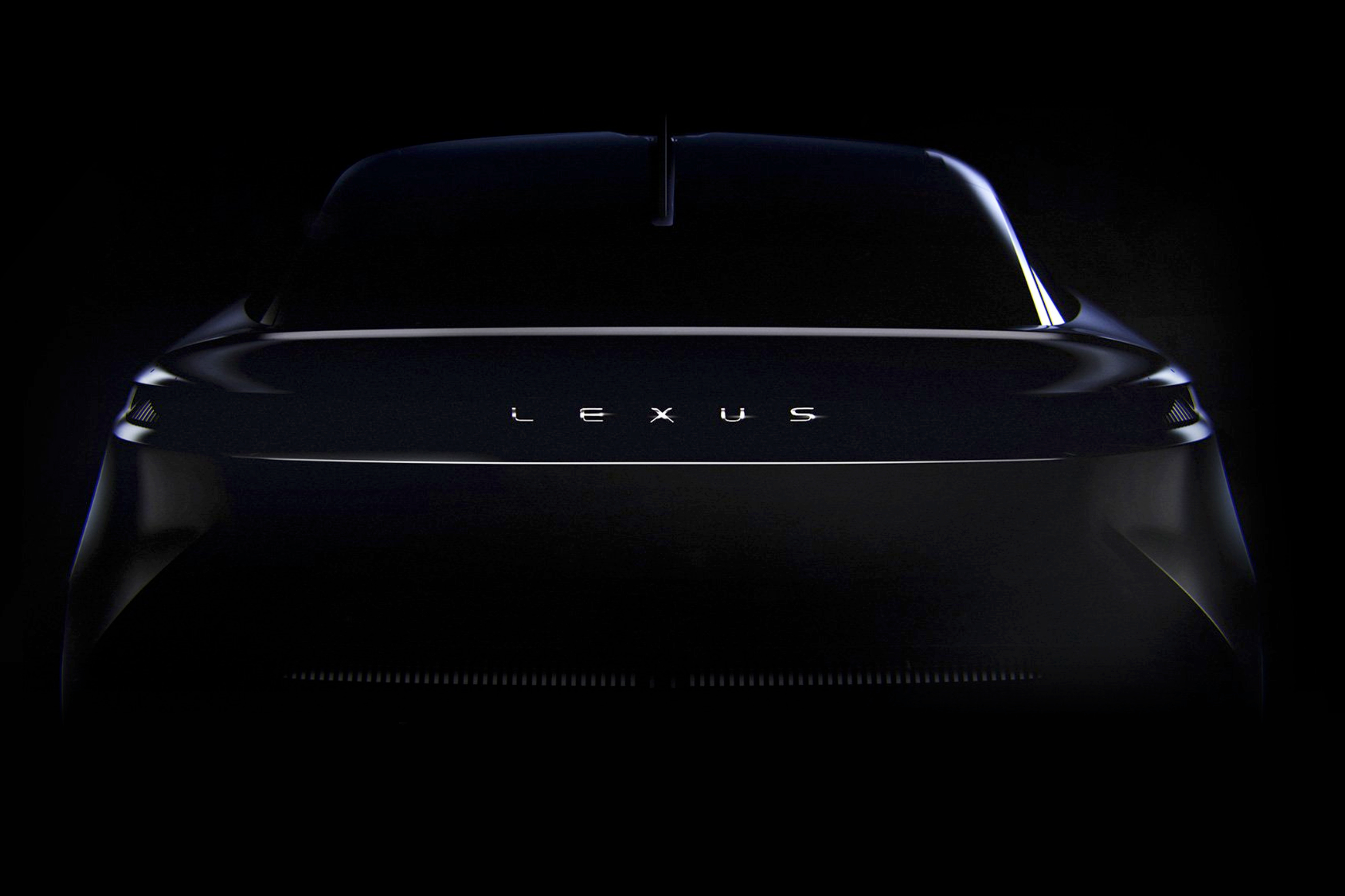
It’s hard to say Lexus should look to dramatically revolutionise its styling language at all, given its still dramatic ‘Spindle’ grille has already spent the past decade-or-so embedding its hourglass shape in the minds of buyers.
As the image below suggests with its smooth and closed-off ‘grille’ area, we should expect the upcoming concept to boast an electric drivetrain. (At this point, just about any upcoming concept from every brand will likely be built around an electric strategy.)
In electric form, the concept is sure to lean on the brand’s new Direct4 technology, built into parent company Toyota’s E-TNGA architecture.
Direct4 is described as a new way of distributing torque to each wheel, allowing for much more precise control of torque splitting, traction and braking outputs.
It’s based on the notion of e-axles, where the front or rear axle is bundled together with an electric motor, transaxle and controller in one unit.
Lexus says that the key to controlling the outputs of the e-axles comes from the fact that both wheels are connected directly to the axle, rather than being filtered through diffs or pinion wheels.
The general proportions of the previewed concept point to an IS medium- or GS large-sized sedan, but, again, it remains to be seen if Lexus will stick to its existing conventions. After all, Hyundai’s new Ioniq 5 is something of a segment buster in terms of exterior dimensions and interior space.
Watch for the new Lexus concept to appear next week.
With cars now faster than ever, claims of 0-100km/h times have gotten smaller and smaller, so we decided to mix things up a bit.
At Performance Car of the Year we took a pair of similarly matched (on paper) contenders, strapped timing gear onto them, then found out what is quickest to 200km/h.
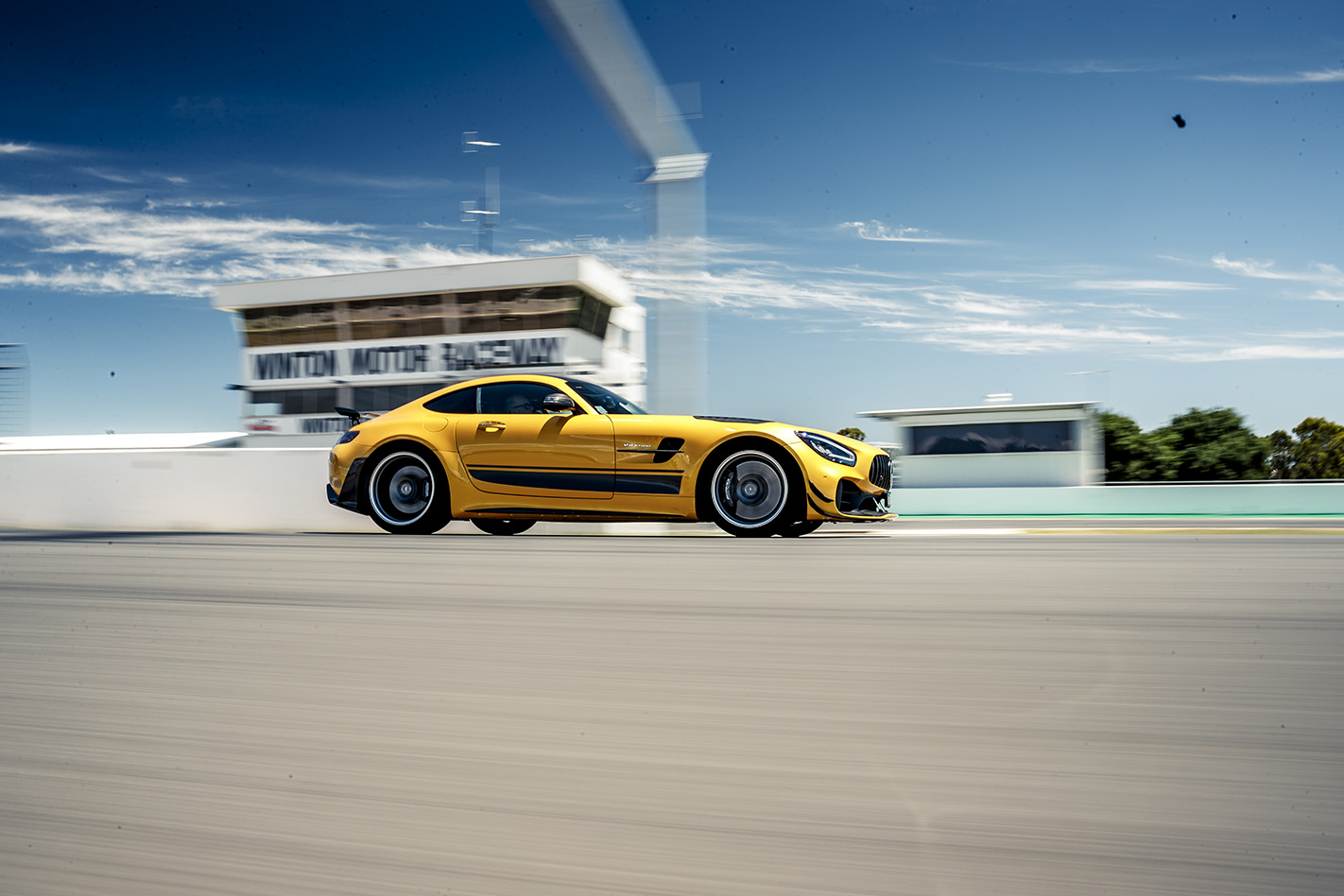
Our first match up is between a hero to fast families everywhere, the Audi RS6, and Affalterbach’s track day hero, the Mercedes-AMG GT R Pro.
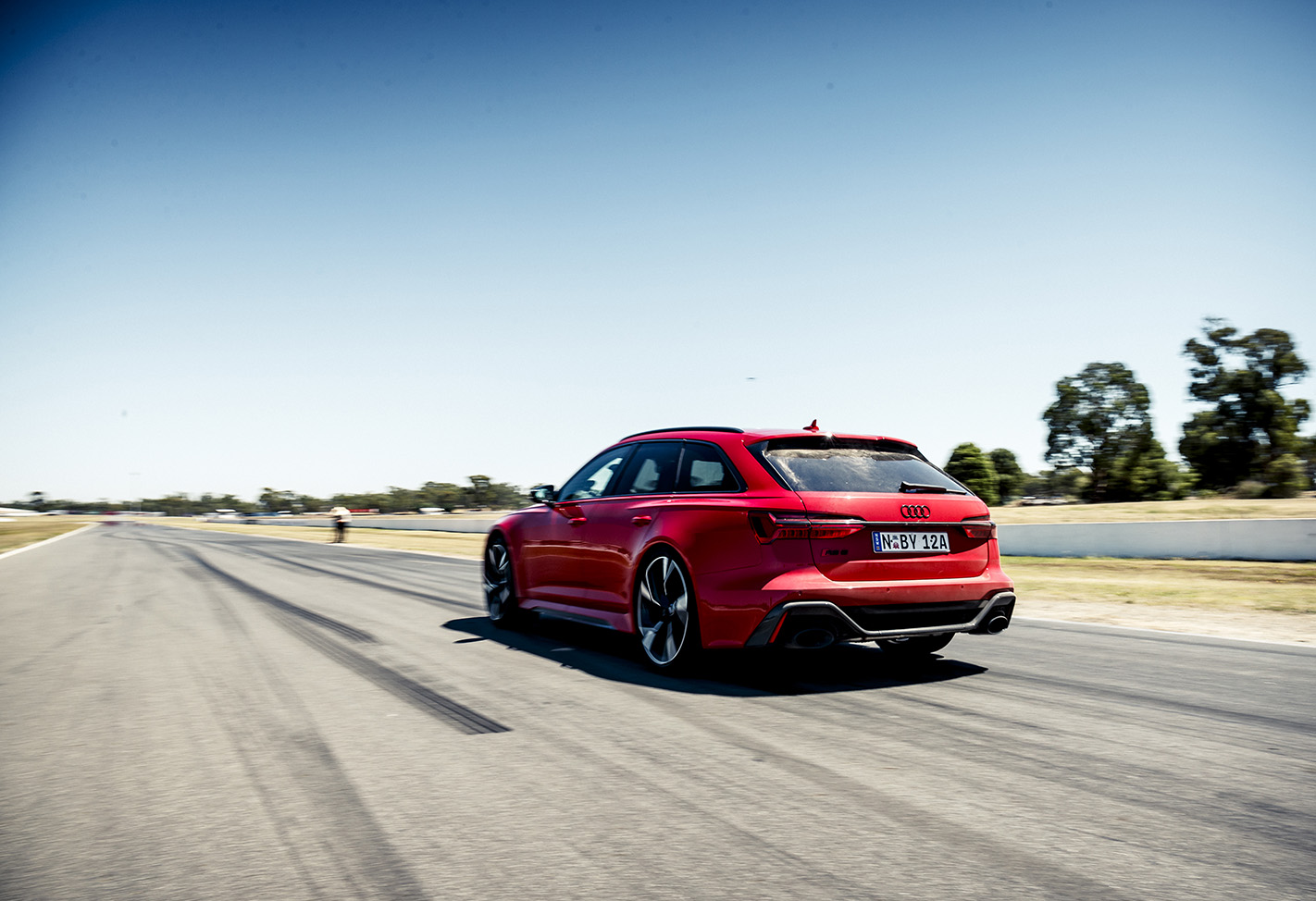
In theory, these two aren’t likely rivals. However, both have a claimed 3.6 second 0-100km/h time, and use a twin-turbo V8 to deploy circa 400kW+ to the ground.
The Audi is the more powerful, with 441kW and 800Nm, and uses all-wheel drive, but is a hefty 2075kg.
Meanwhile, the AMG sends 430kW and 700Nm to the rear wheels only, but weighs just 1632kg.
Watch the video above for a full breakdown of how both cars performed.
In this showdown, light weight trumps all-wheel drive, with the Pro two tenths quicker to 100km/h, and a whole two seconds faster to 200km/h.
Despite being down on power and driven wheels, it was the AMG which came out on top.
The Audi’s major shortcoming is the launch control. On the day of testing it simply refused to build revs, making for a soft getaway that it was unable to recover from.
At the end of the quarter mile the Mercedes is properly hauling, flying through the traps at 207.82km/h
Over the same distance the Audi hasn’t yet tipped over the double tonne, reading 193.67km/h at the end of its 400 metre sprint.
Make sure to check back next week as the Porsche 911 Turbo S faces off against the Audi R8 Performance for an all-German atmo v turbo duel.
Nissan has recalled 14,460 Pathfinders built in 2014 and 2015 due to an issue with the stop lamp (brake light) sticking in the “ON” position.
According to the notice, if the stop lamp relay does stick in the ON position, there is a possibility that the lamps could remain illuminated even when the brakes are not being applied.
Nissan says the faulty relay could also cause a loss of engine power and may also allow the driver to shift the vehicle out of park into gear or start the engine without compressing the brake pedal.
The Japanese automaker will be contacting the owners of affected vehicles in writing, and owners will need to contact their preferred Nissan dealer to organise an inspection of their vehicle.
If a fault is found, Nissan will reposition the stop lamp switch and replace the stop lamp relay at no cost to the owner.
Anyone seeking more information about the issue can contact the Nissan Customer Service Centre on 1800 035 035.
Nissan has also compiled a list of the affected vehicles VIN numbers, which can be found here.
MORE: Pathfinder stories MORE: All Nissan stories
Love ‘em or loathe ‘em, today’s luxury mid-sized SUVs like the Audi Q5 45 TFSI and BMW X3 30i are now as much a part of the story of us as any homegrown Holden or Ford. It just depends on where you are in life.
Thirty-odd years ago, with Ps in hand, maybe your choice – like mine – was between a Volkswagen Golf and Nissan Pulsar. A decade on, commitments might have meant a Mazda 6 or Toyota Camry (and a No Doz addiction), before the need for bigger stuff like a Ford Territory or Holden Captiva arose. Life’s great tapestry and all that.
Today – if you’re lucky – you’re middle aged (ish), middle class and in the market for a mid-sized premium SUV. You’ve made it this far, so why not? And before you think this is yet another instance of you turning into your parents, don’t forget: back in their day, a Ford Fairlane or Volvo 740 was likely in the mix. So maybe not.
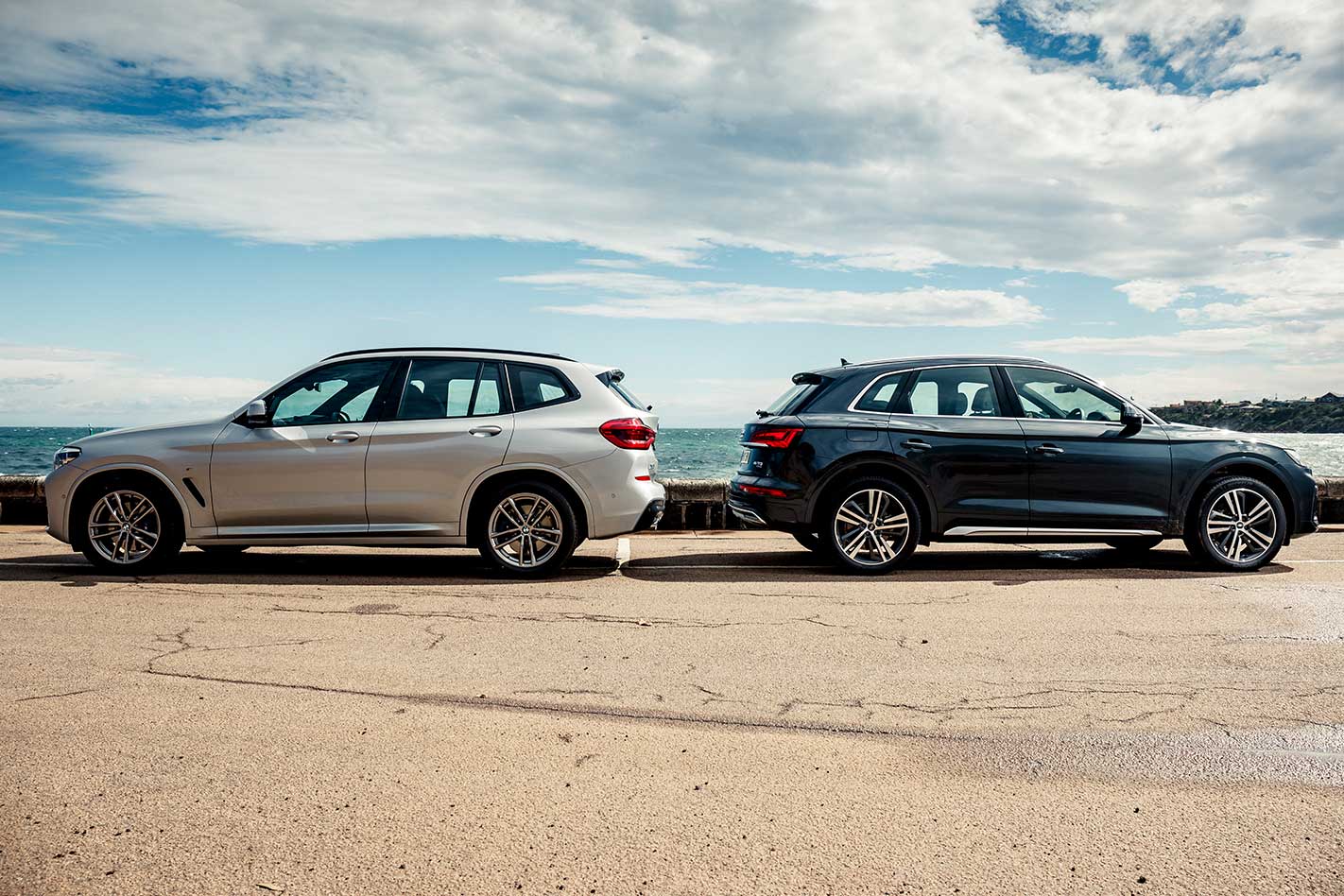
The latter’s interesting because it builds on an already-frugal proposition – up to 90kg was skimmed off when this current, B9 A4-based, second-generation, Type FY Q5 debuted in mid-2017.
Later that year was also when the third iteration of BMW X3 surfaced, though its mid-cycle nip ‘n tuck probably won’t happen before later this year at the earliest.
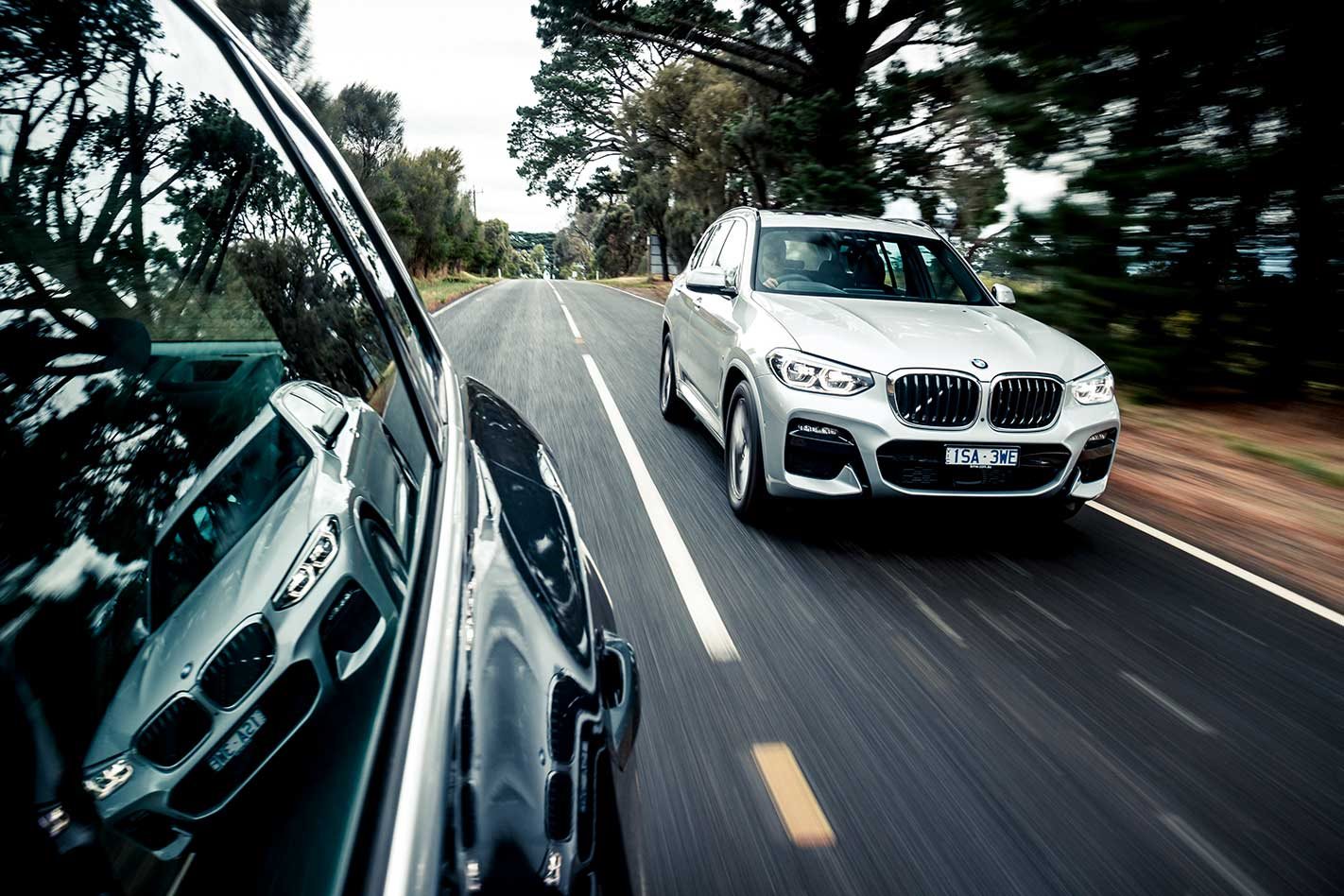
Classic Audi versus BMW stuff then. It’s like the old Holden versus Ford feud but for well-heeled folk. And on the subject of money.
Sledgehammer SQ5 aside, the 2021 Q5 is offered in five versions, with a trio of newly mildly-electrified internal combustion powertrain choices.
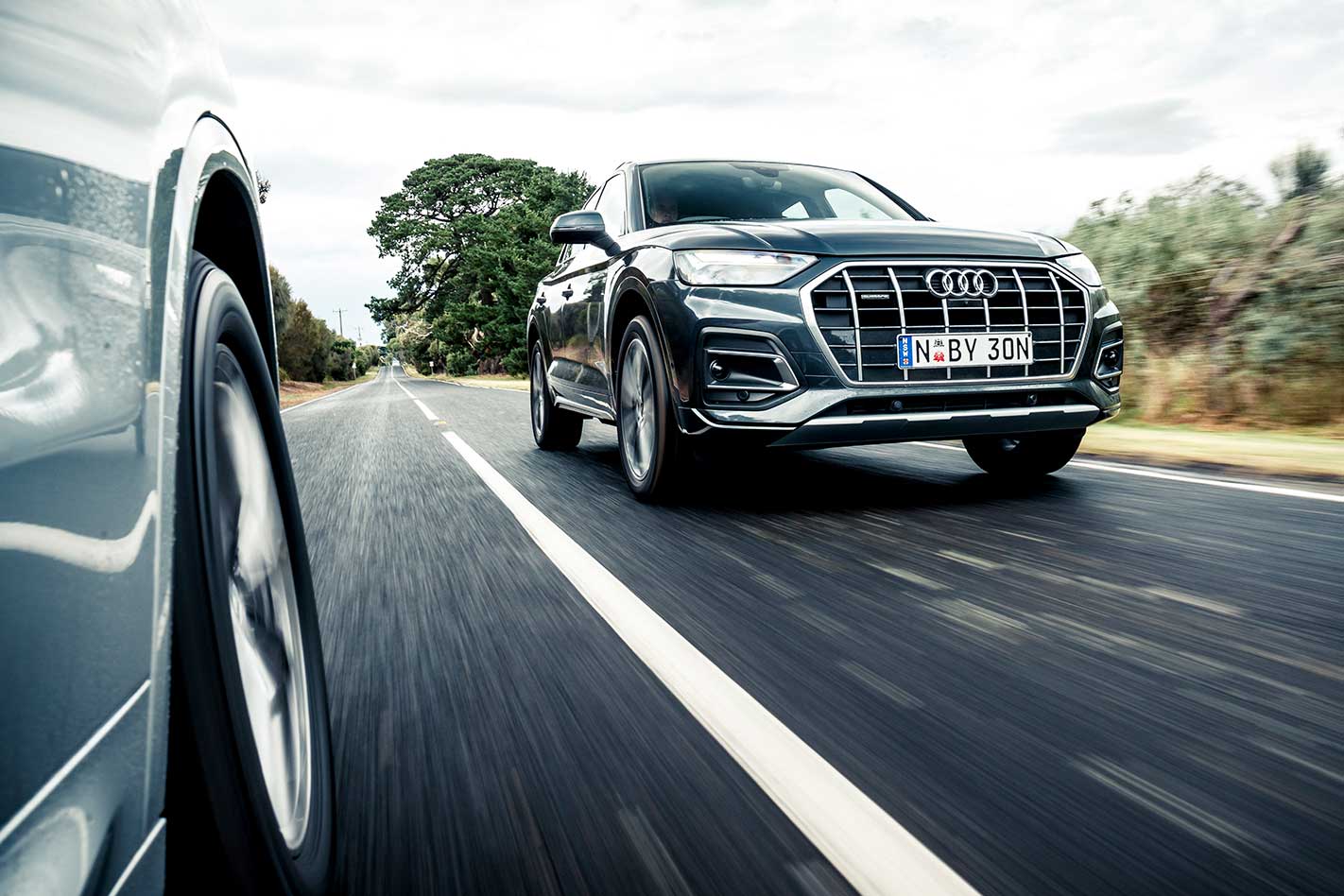
While these prices are around $2K dearer than before, the new $89,600 50 TDI S Line quattro is over $4500 exxier; it’s powered by a 210kW/620Nm 3.0-litre V6 turbo-diesel and employs an eight-speed torque-converter auto.
Safety is on a par with the class expectations, and includes Autonomous Emergency Braking (AEB), blind-spot monitor, lane keep warning and assist, Rear Cross-Traffic Alert, approaching traffic warning when turning right, hill descent control, parking sensors, tyre pressure monitor, driver attention monitor, reverse camera, auto headlights and rain-sensing wipers.
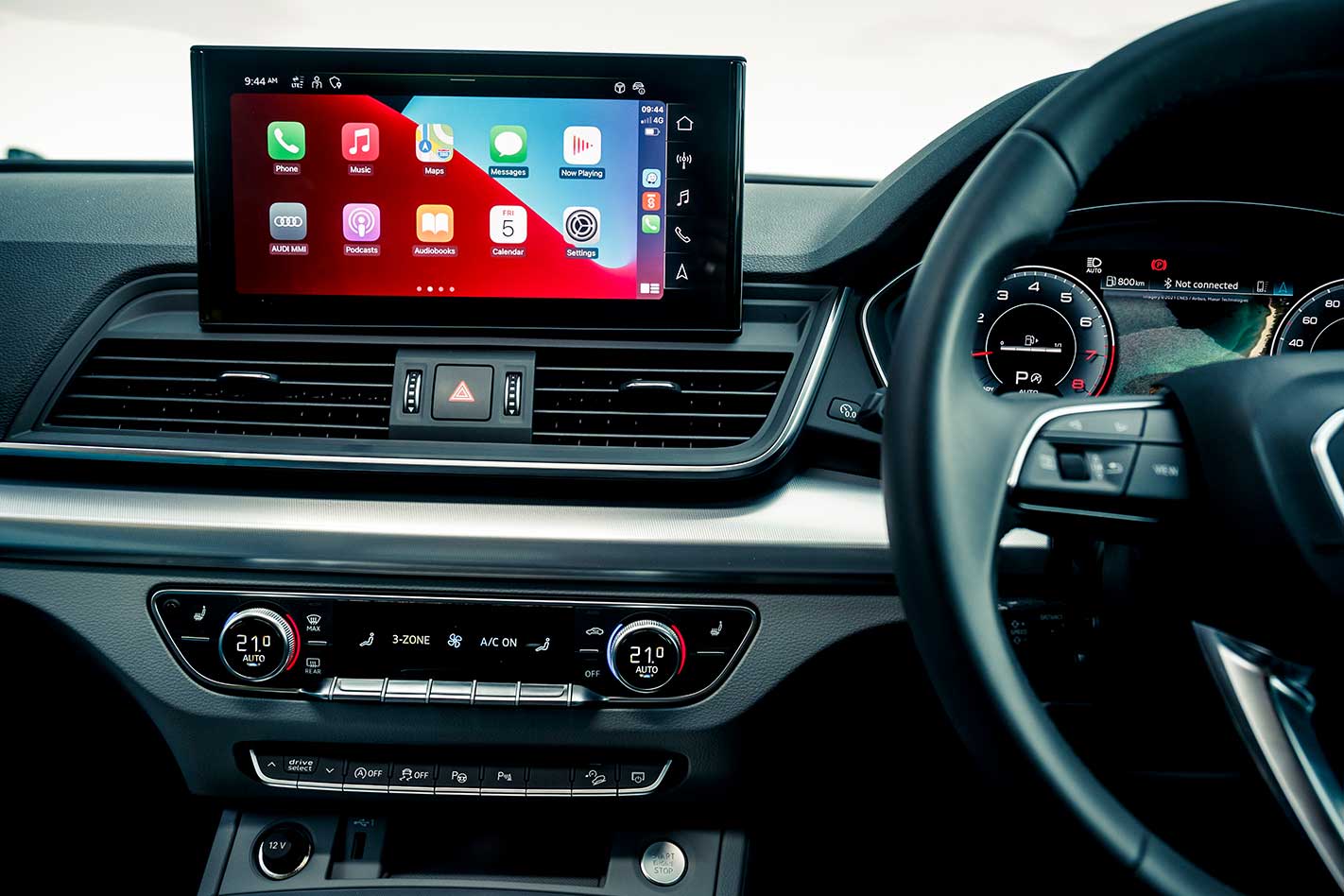
Also featured are keyless entry/start, Audi’s Virtual Cockpit digital instrumentation, ‘Hey, Audi’ speech control for the new 10.1-inch touchscreen multimedia, two-phone Bluetooth capability, Audi Connect real-time info connectivity, wireless Apple CarPlay/Android Auto, satellite navigation, digital radio, wireless smartphone charging, paddle shifters, leather upholstery, electric front seats, tri-zone climate control, ambient lighting, a powered tailgate with gesture control and alloy wheels.
Our 45 TFSI quattro is the better-equipped Sport, which adds adaptive cruise control and Traffic Jam Assist offering semi-autonomous driving, Collision Avoidance Assist, Turn Assist, a 360-degree view camera, automatic parking, a panoramic sunroof, sport front seats with heating and driver-side memory, a premium audio upgrade, heated/folding/dipping electric mirrors and 20-inch alloys – and all for an extra $7K.
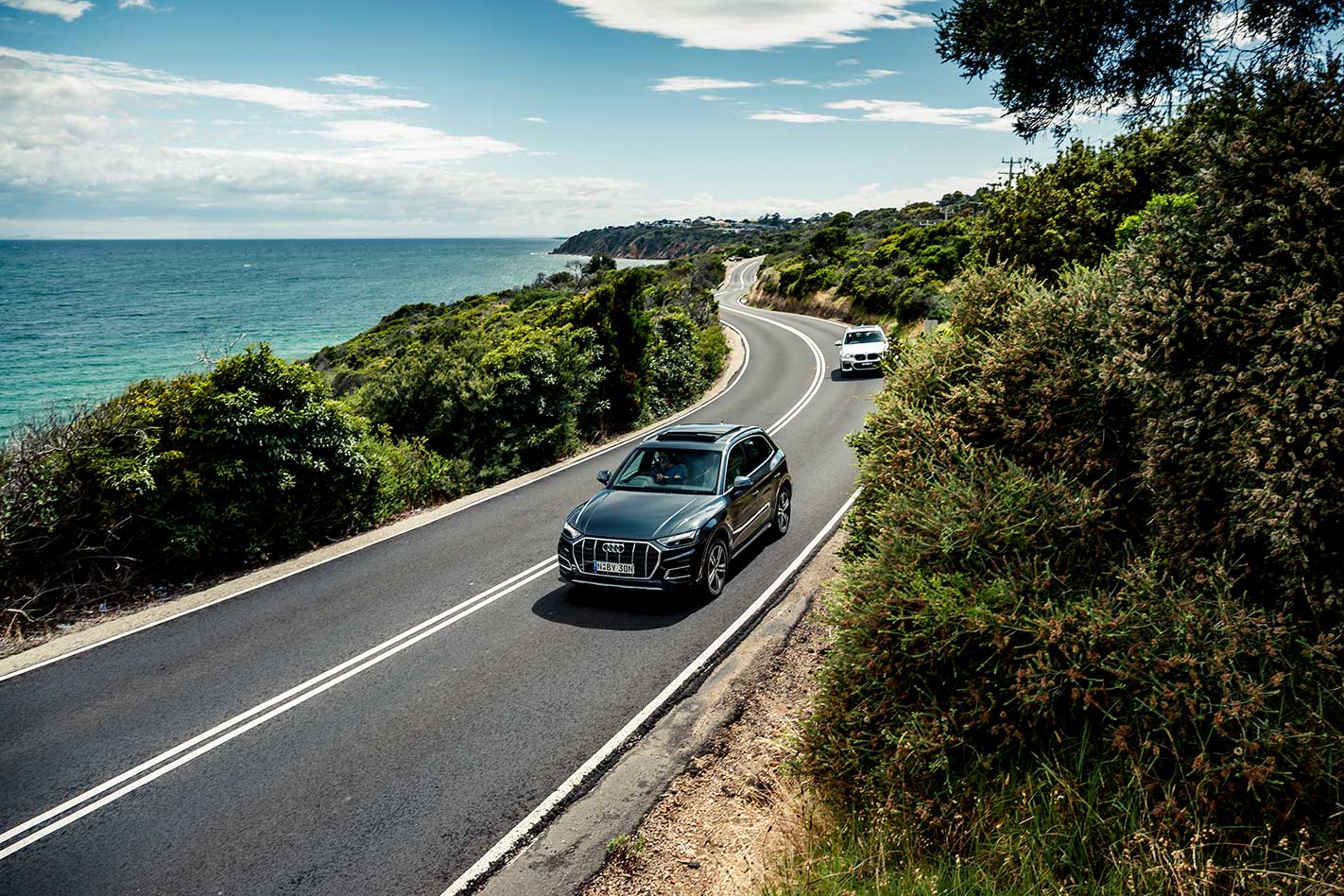
Meanwhile, the cheapest X3 petrol with AWD equivalent – the xDrive30i M Sport Pack – kicks off from $76,396 before ORC or $85,900 driveaway (nationally), and it too relies on a 2.0-litre four-pot turbo, with just 2kW more power at 185kW but 20Nm less torque at 350Nm than its four-ringed foe. The auto is ZF’s eight-speed torque-converter unit.
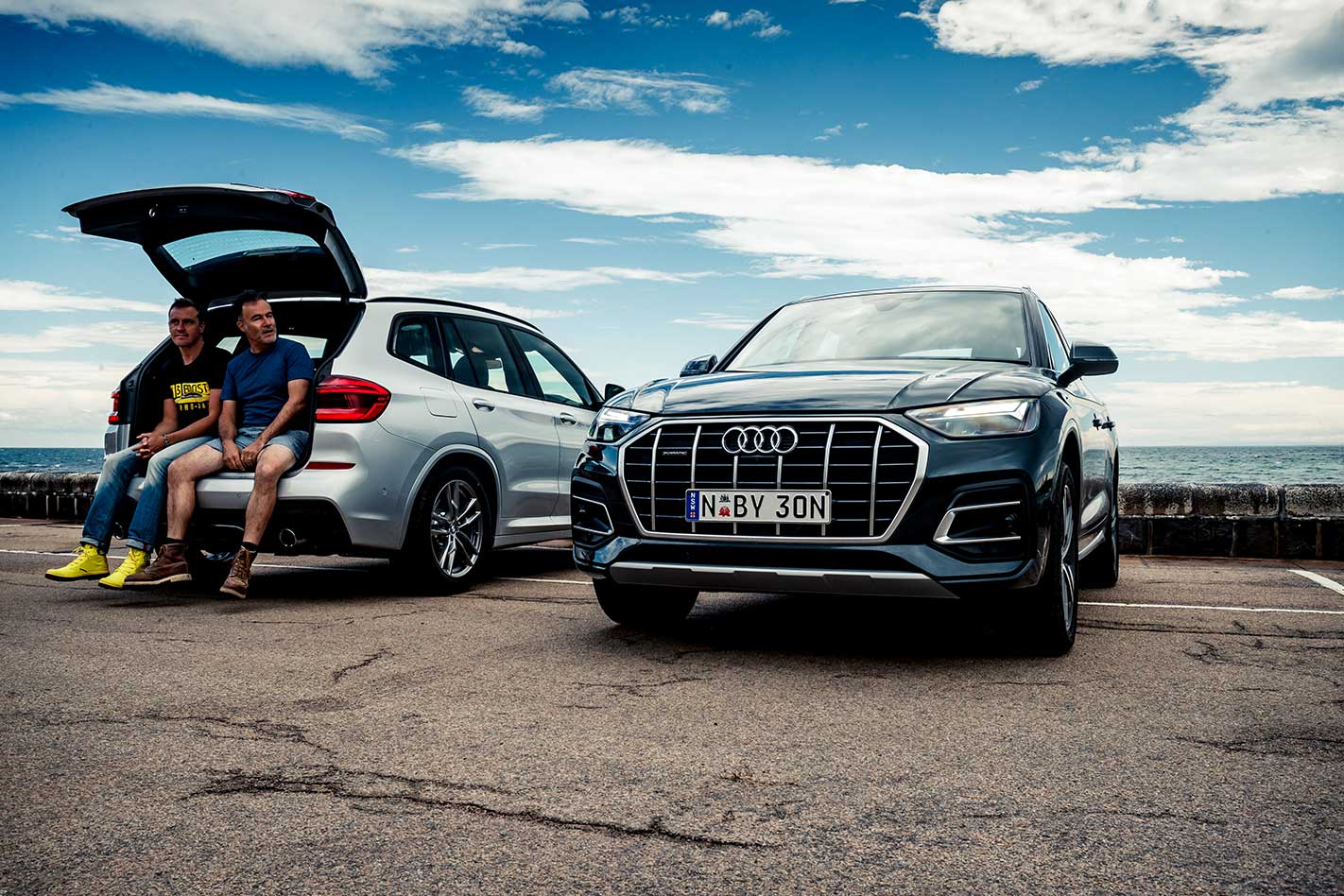
The SUVs from Ingolstadt (but built in Mexico) and Munich (via South Africa) offer near-lineball pricing and equipment levels, except that the xDrive30i standardises adaptive dampers, a head-up display and an M Sport body kit, uprated brakes and racier trim package… but forgoes the 45 TFSI quattro Sport’s sunroof and banging stereo.
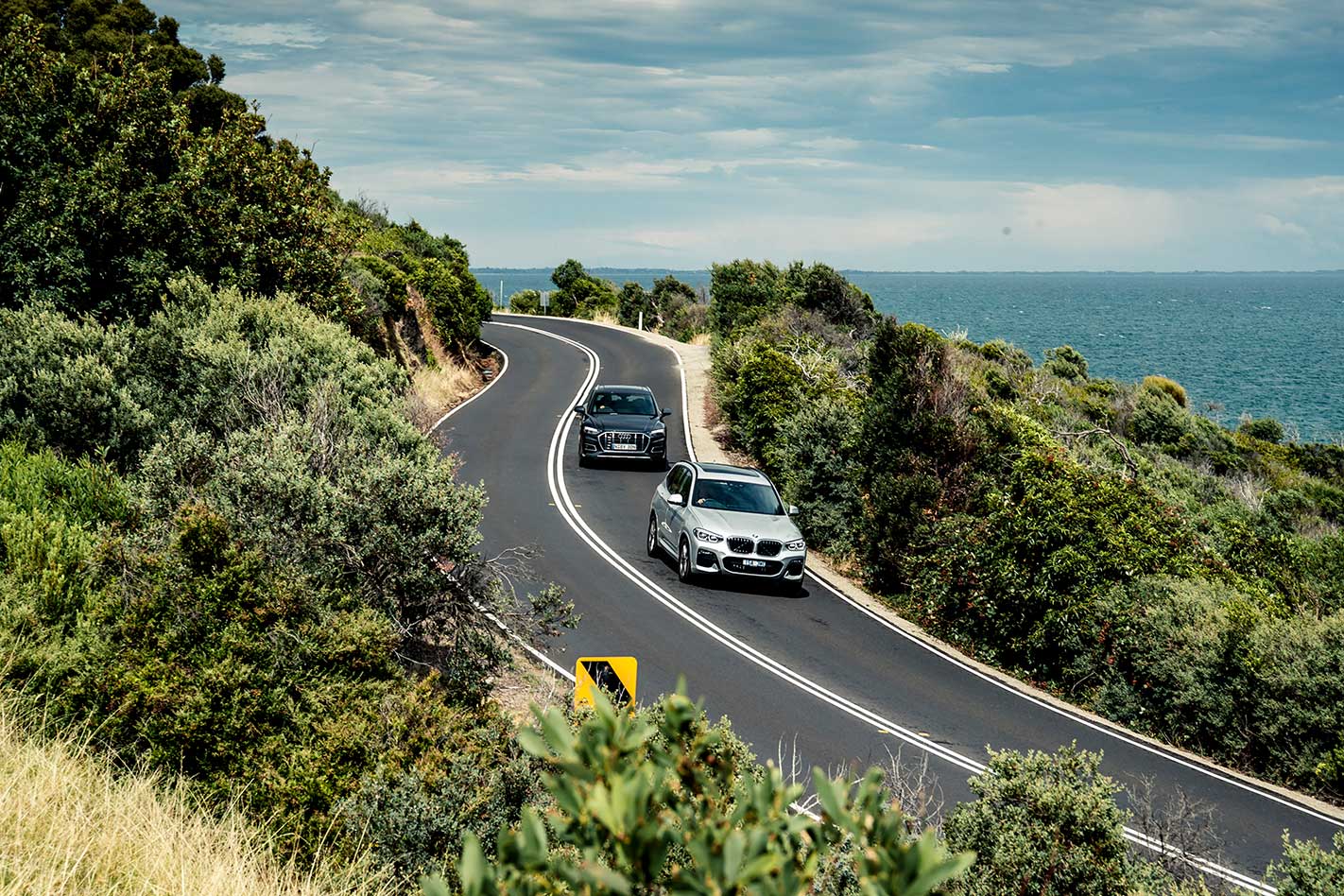
Replete in body-kitted activewear, both German SUVs look better than their base-grade brethren, though neither will be remembered for their beauty. The X3 in particular has always been the pretty X5’s fuglier baby bro. Fun fact: today’s G10 is larger than the original 1999 E53 X5.
As far as the post-purchase costs are concerned, a very interesting anomaly arises. Weighing in at 1825kg, the 45 TFSI quattro Sport’s official combined fuel-consumption figure is 8.0L/100km (for a carbon dioxide emissions rating of 182g/km), compared to the 1745kg xDrive30i’s 7.4L/100km and 169g/km. That disparity makes sense on paper given the mass differences.
Audi’s 12-volt mild-hybrid tech and on-demand AWD system seem to more than offset the extra kilos. Unsurprisingly, 95 RON premium unleaded petrol is their preferred tipple.
Where both brands stumble is with their sub-standard three-year/unlimited-kilometre warranty, when rivals like Mercedes now offer five years.
However, there is a ‘BMW Service Inclusive Basic’ package available starting at $1950, covering scheduled servicing from three-years/40,000km to five-years/80,000km.
After three years the 45 TFSI Sport quattro is expected to be worth about 61 percent of its value, behind the 63 percent forecast for the xDrive30i.
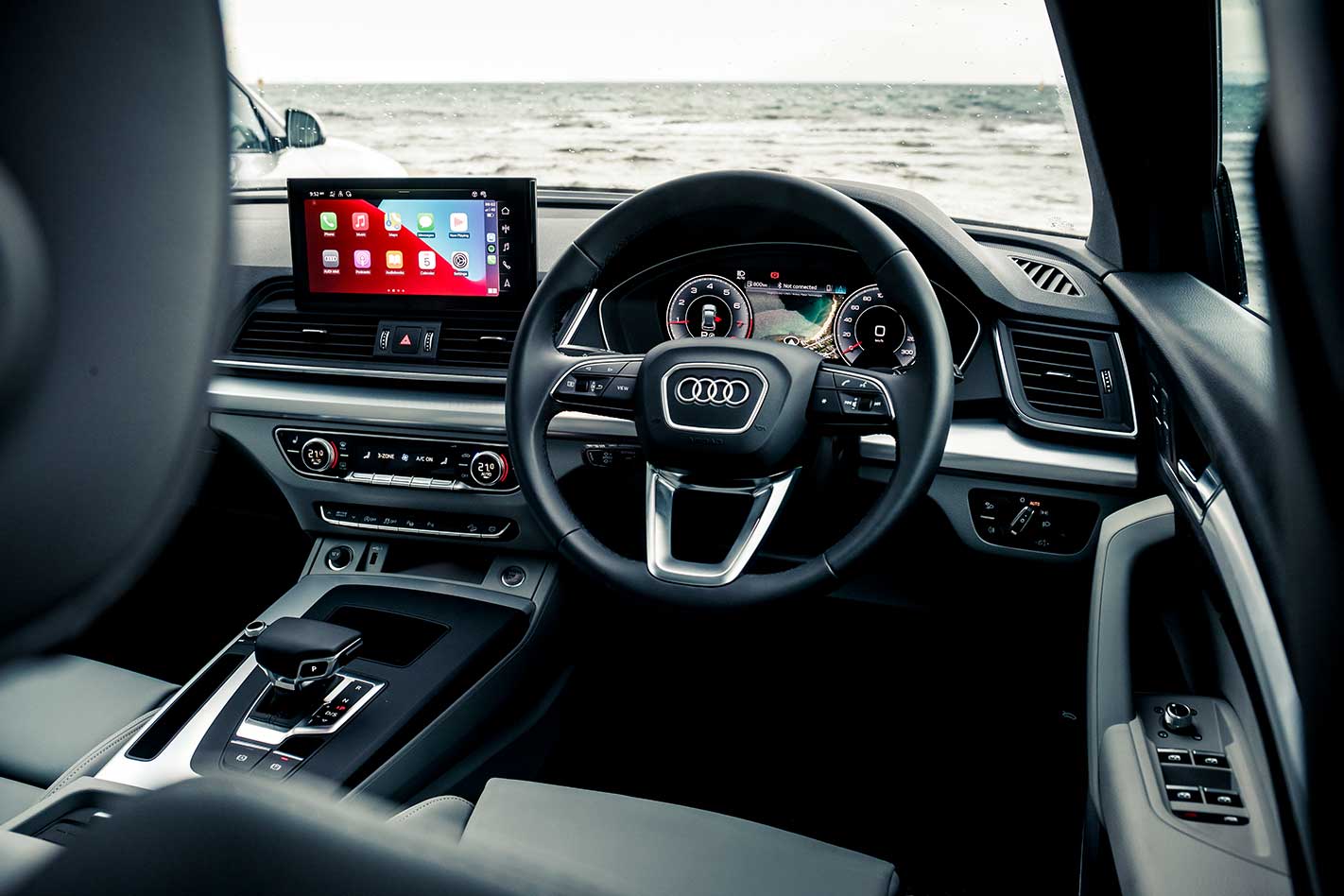
Making a mockery of their medium-size stationing, both SUVs are properly large inside, with ample room front and rear for a quartet of six-footers – as long as the trio out back are more Keira Knightley-sized than Newcastle Knights-like.
They’re remarkably similar in presentation too: doors open up wide for unencumbered entry/egress into solidly-made cabins; lofty seating includes big bolsters up front to keep you nestled in tightly and comfortably; and the driving positions simply cannot be faulted, such is their adjustability.
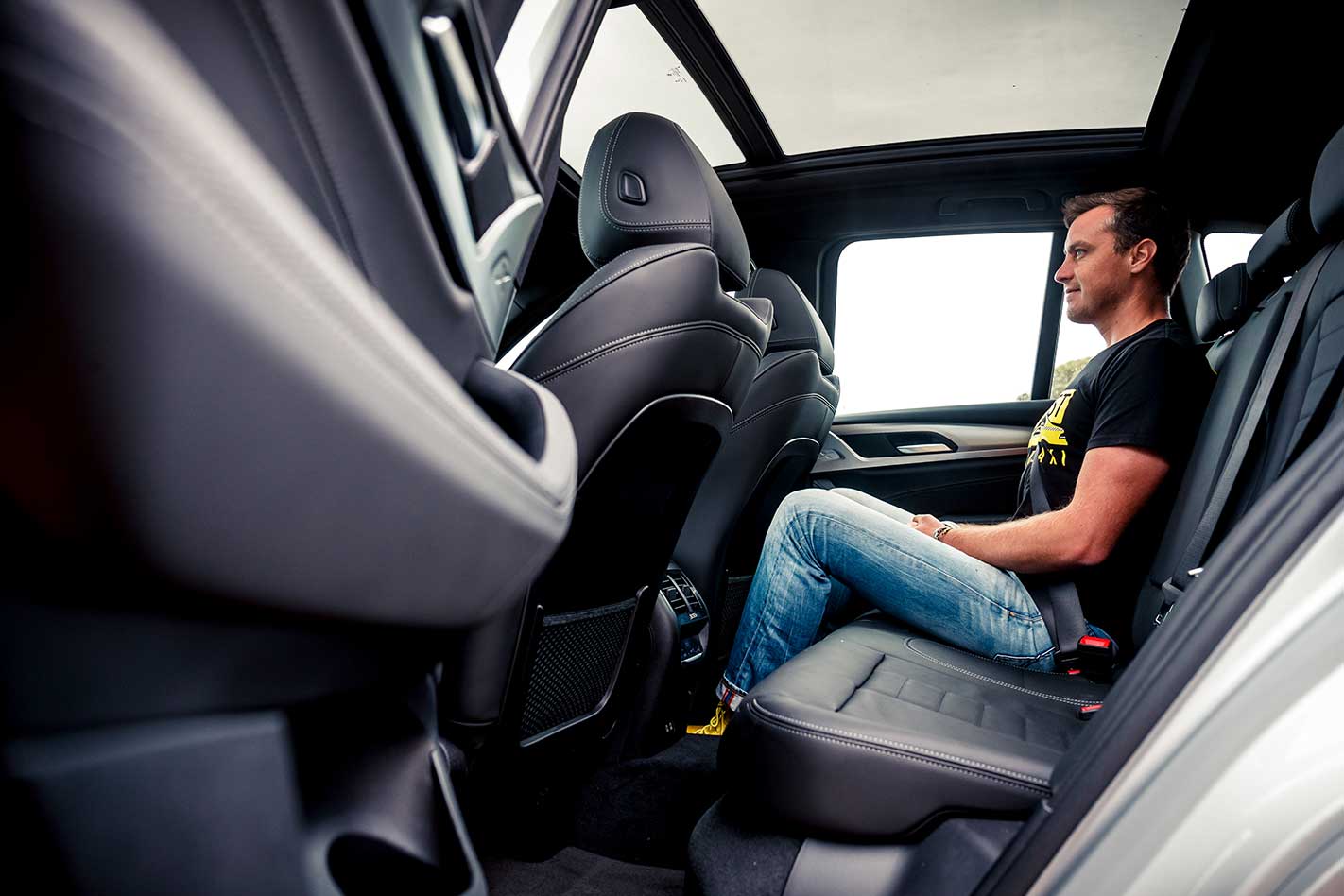
As mentioned earlier, even the equipment levels more-or-less align, as if they’re watching over each other’s’ shoulder. Surely the cheapo rear-armrest-sited cupholder arrangement that blights both cabins is proof.
If they were spying, Audi might be in for a shock. The X3’s dashboard is a modern masterpiece of presentation, melding the classic driver-angled display with sophisticated touchscreen tech.
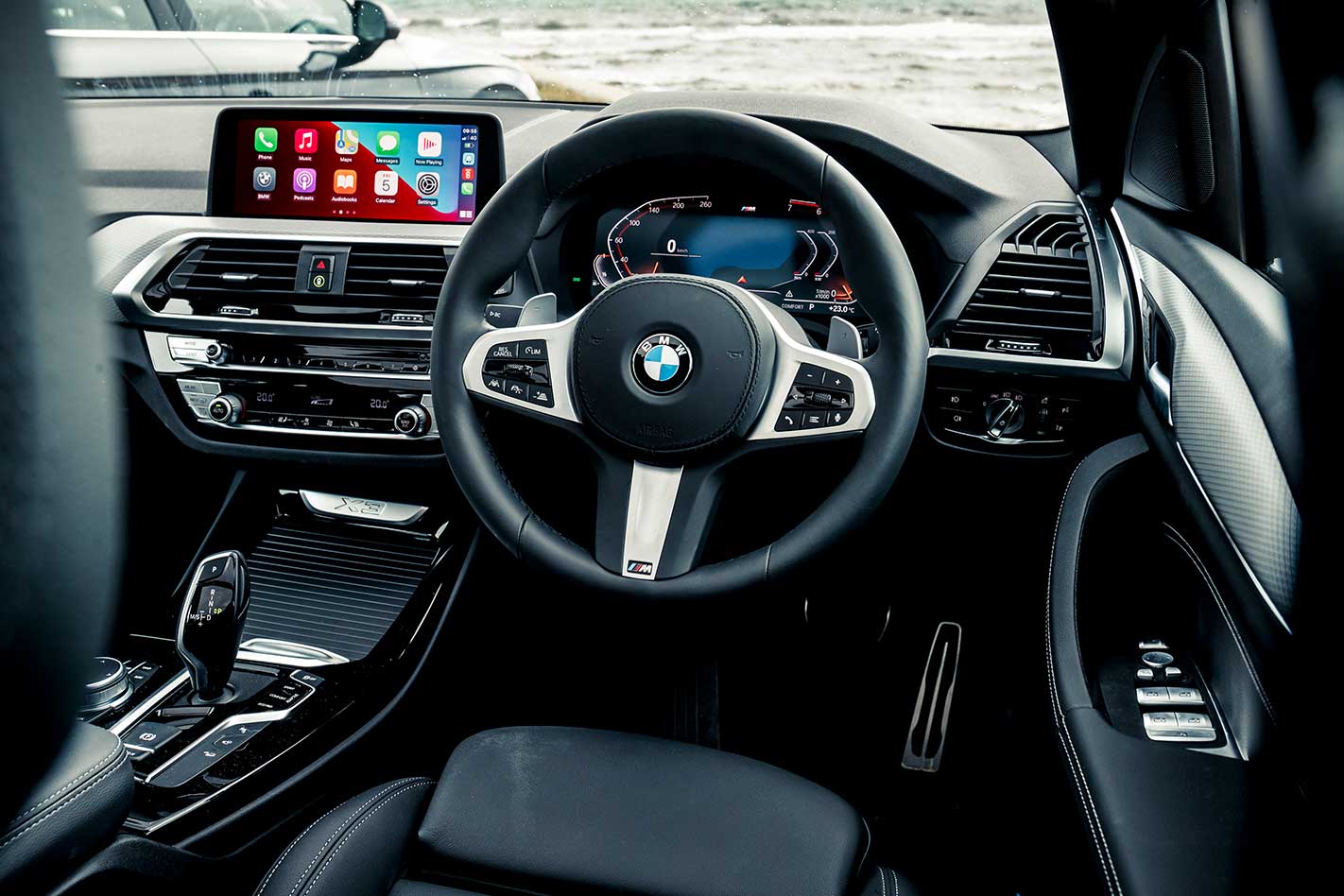
The gear lever is perfectly positioned and with the tip-shift function set up in the correct pull-upshift/push-downshift pattern. Our only disappointments are the messy electronic instrumentation – oh how we long for the elegant analogue dials of old – and surprisingly low-rent lower-lying plastics.
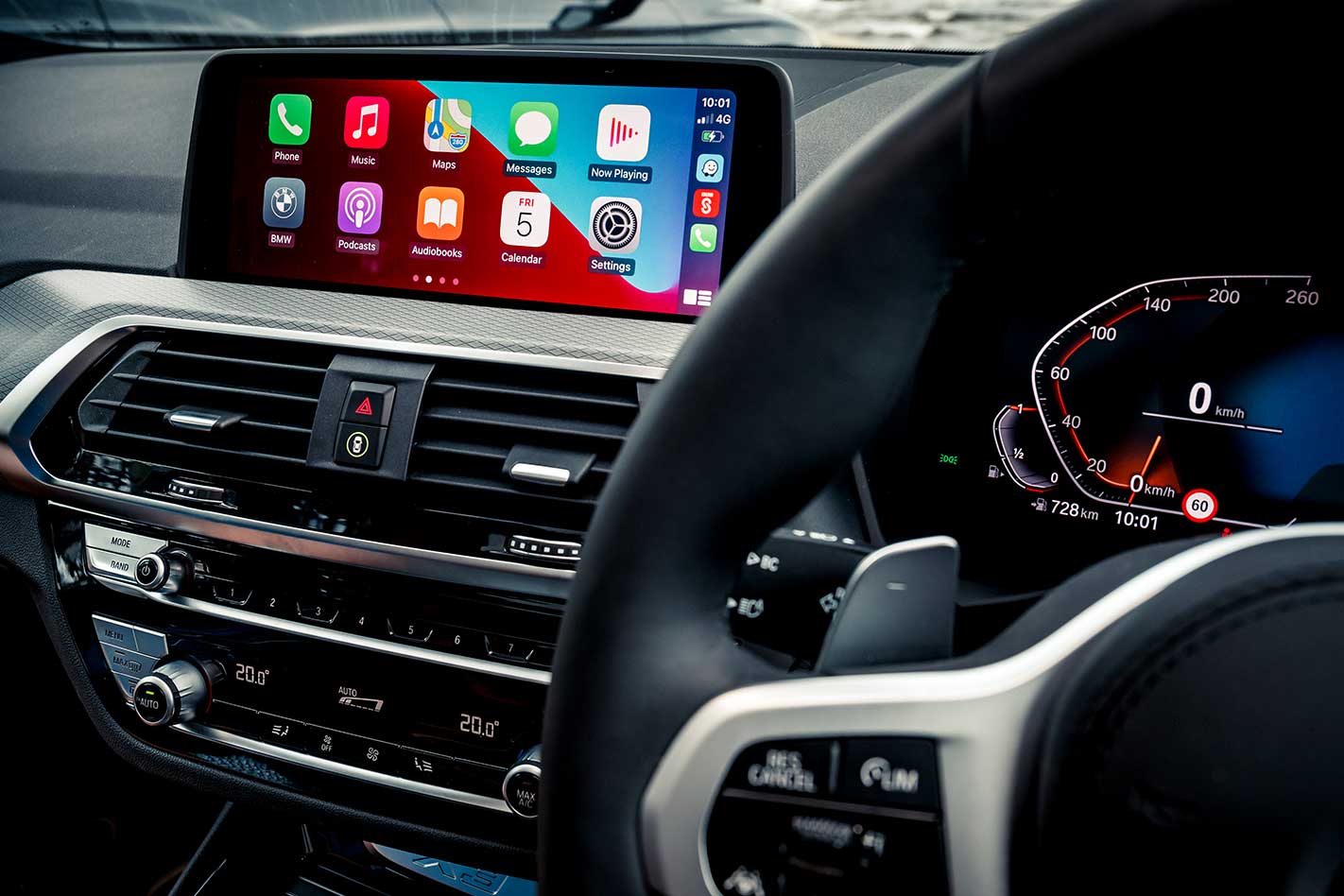
And the brand-spanking multimedia set-up is largely touchscreen-operated, but the clarity, logic and speed of response doesn’t make that a problem.
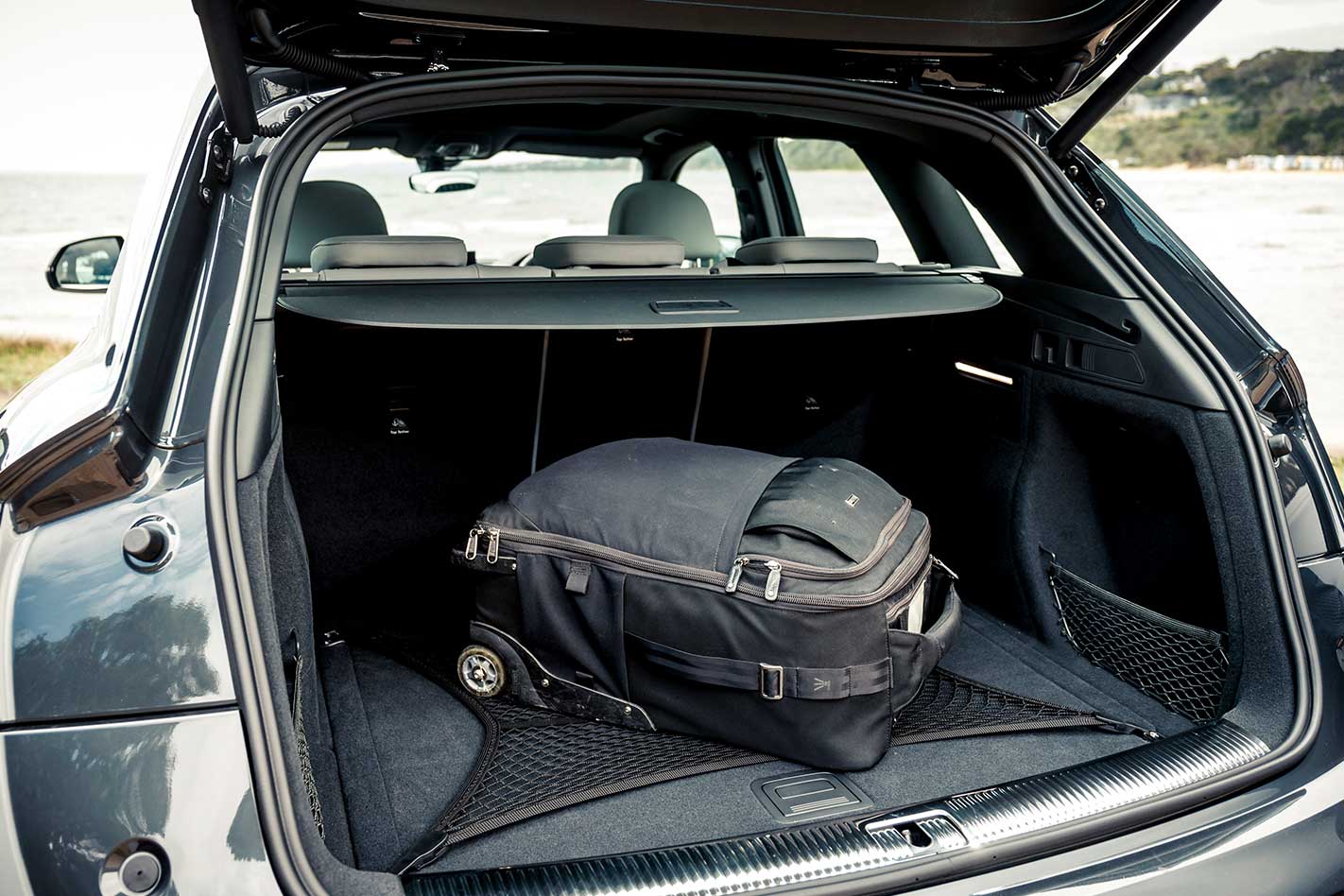
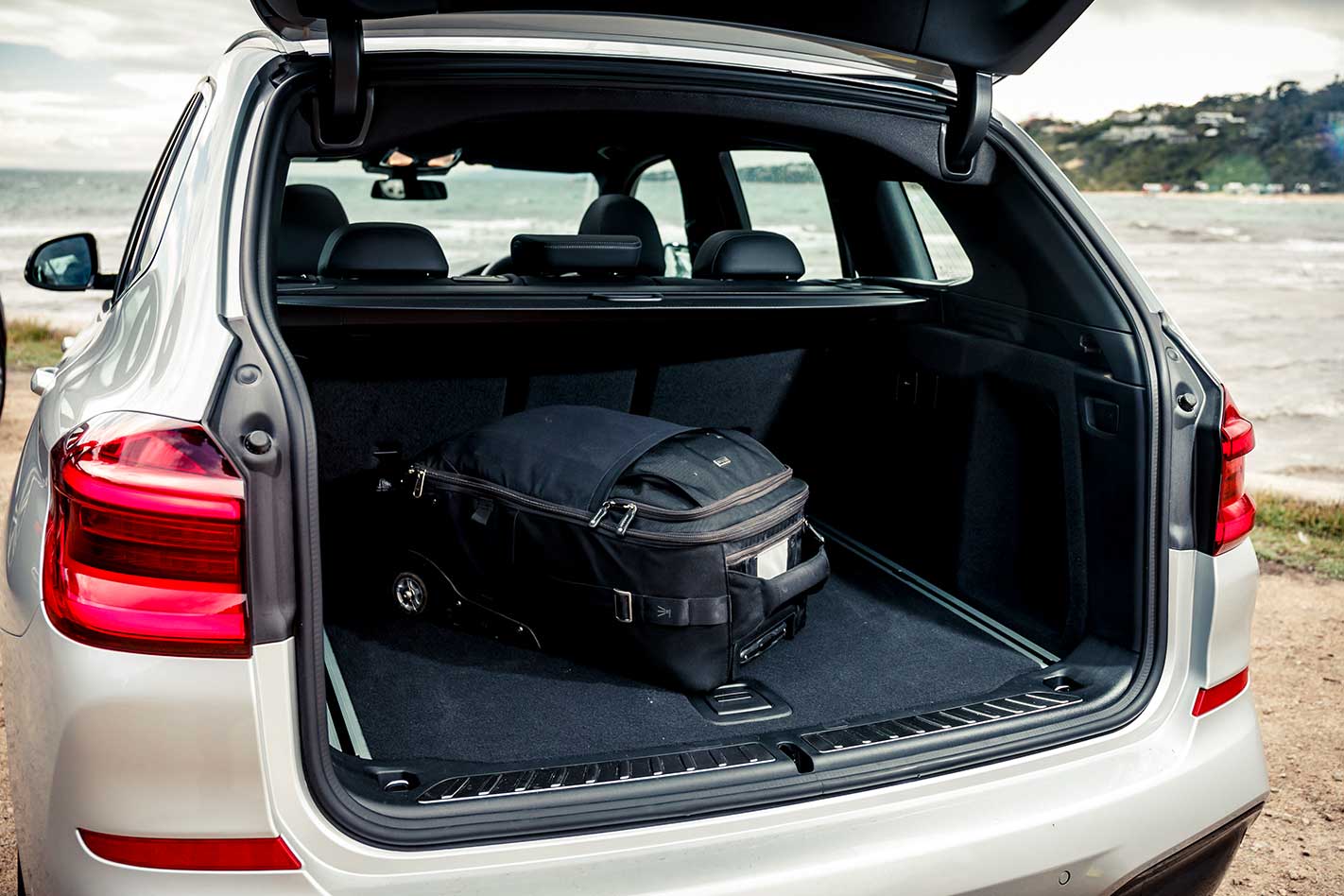
Further back, each provides family summer holiday levels of cargo capacity – the Q5 ranging from 520 litres to 1520L with the 40/20/40 backrest folded. The X3’s is even more cavernous, extending from 550L to 1600L, and with a spring-loaded remote fold-down backrest function to boot.
Speaking of security, shared active safety tech include AEB with pedestrian detection, blind-spot monitor, lane keep warning and assist, Rear Cross-Traffic Alert, approaching traffic warning when turning right, hill descent control, parking sensors, tyre pressure monitor, driver attention monitor, reverse camera, auto headlights and rain-sensing wipers.
Adaptive cruise control with stop/go capability, semi-autonomous parking, stability control, traction control, anti-lock brake, electronic brake-force distribution and brake assist are also present.
Both Germans were tested by Euro NCAP in 2017 and received the full five-star rating. To nobody’s surprise whatsoever, even their scores are practically identical, with the Audi achieving marginally better child-occupant protection and pedestrian impact ratings than the BMW.
Aided by the lofty seating position, low beltline and deep glass areas, all-round vision ranks highly in both vehicles, backed up by large mirrors and the big-screen reverse camera with alternative view options. Both SUVs also include a pair of rear-seat Isofix anchor points and a trio of child-seat tether strap anchors.
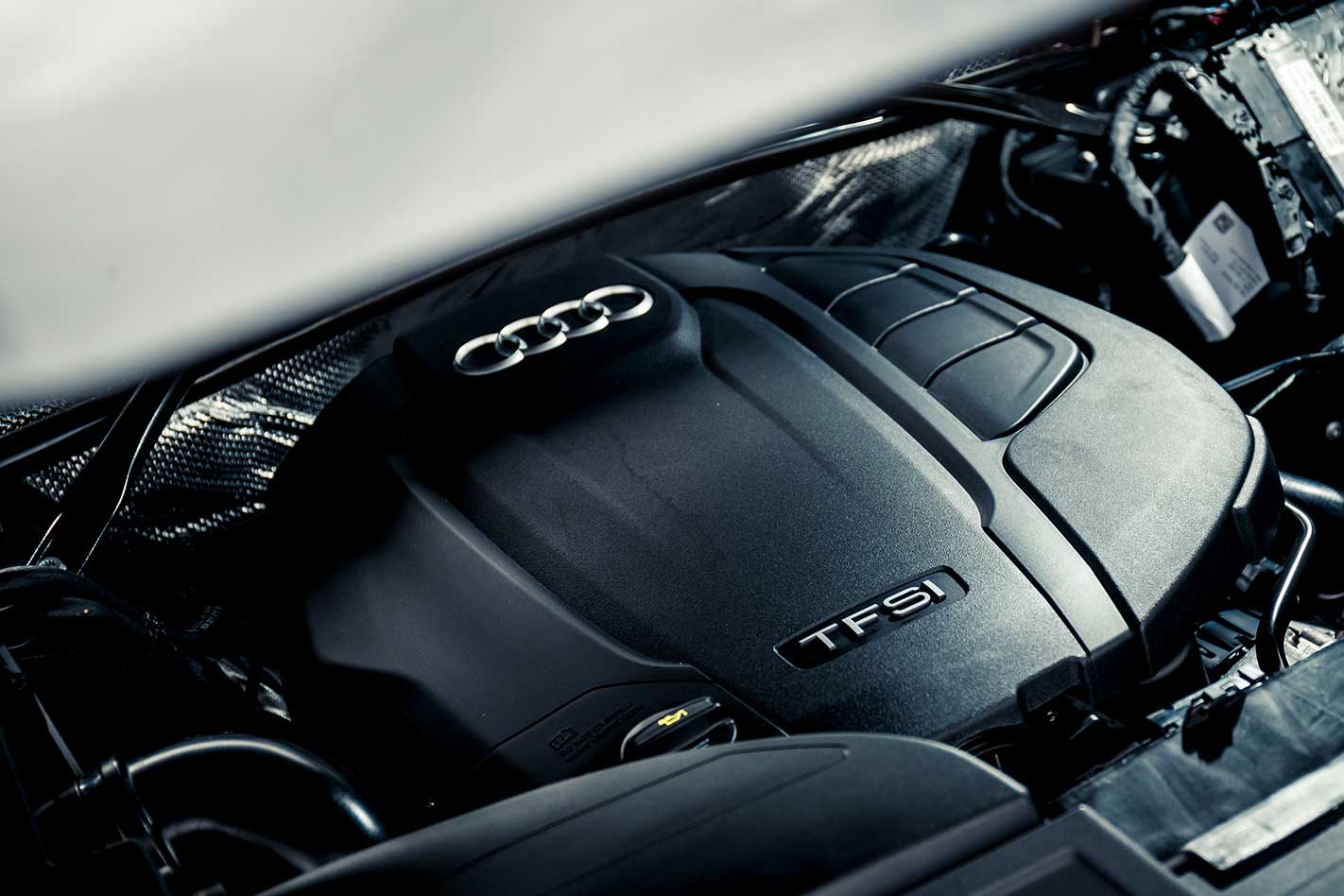
Audi first. The 183kW 2.0-litre four-cylinder turbo is a terrific engine even before you take its incredible economy potential into account. Punchy from the get-go, with very little of the lag or hiccup associated with dual-clutch gearboxes, it pulls as hard as it revs, tacho swinging swiftly and effortlessly to the redline without letting up.
It simply roars along. A metallic rasp betrays the comparative paucity of capacity, but this is no bad thing, imbuing the Q5 with a zingy, eager charm.
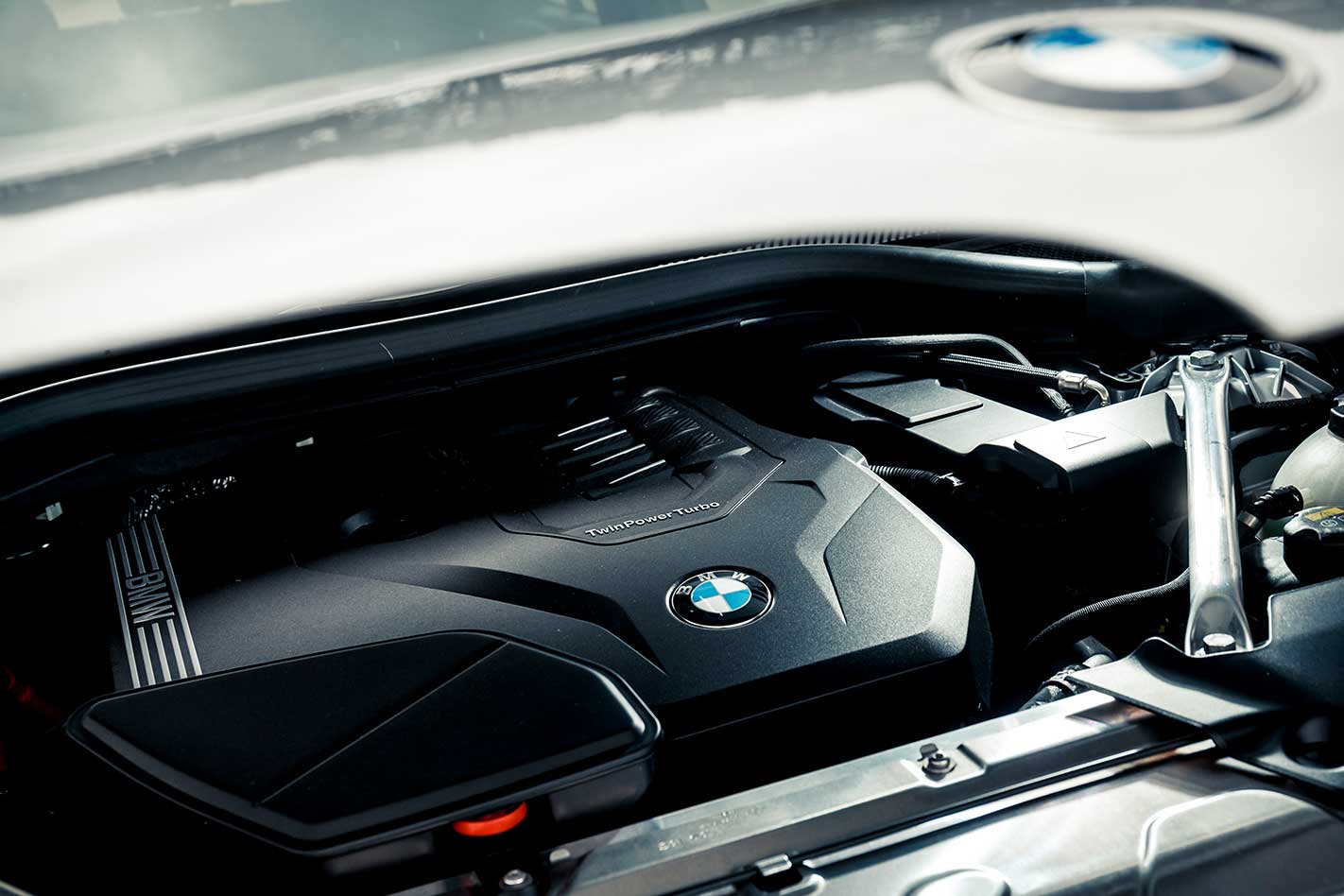
Ever responsive to throttle inputs, the xDrive30i’s flexes its muscles forcefully and yet fluidly every single time. What a gem.
The only thing missing is the mellifluous soundtrack of a classic BMW six. That’s a trade we’re willing to endure, as this 2.0-litre turbo’s ability to accelerate so vigorously from low revs is quite an achievement. Codenamed B48, it simply elevates this particular X3 grade in the process.
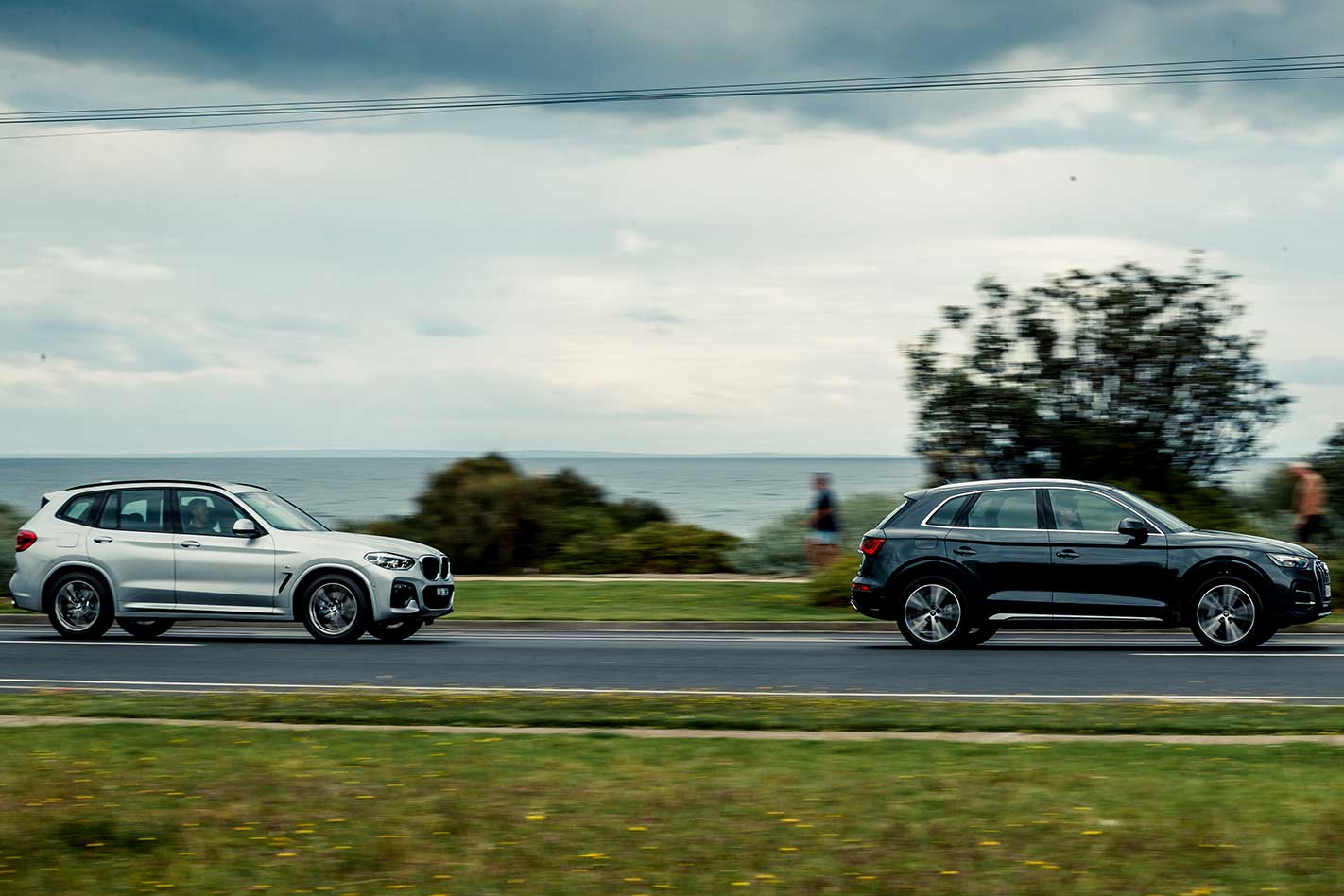
Initially, the Q5 feels faster, especially in Sport mode, but both return a 0-100km/h result of 6.3 seconds, while the X3 seems to have a deeper set of lungs at the top end, borne out by the 240km/h xDrive30i pipping the 45 TFSI quattro by just 3km/h.
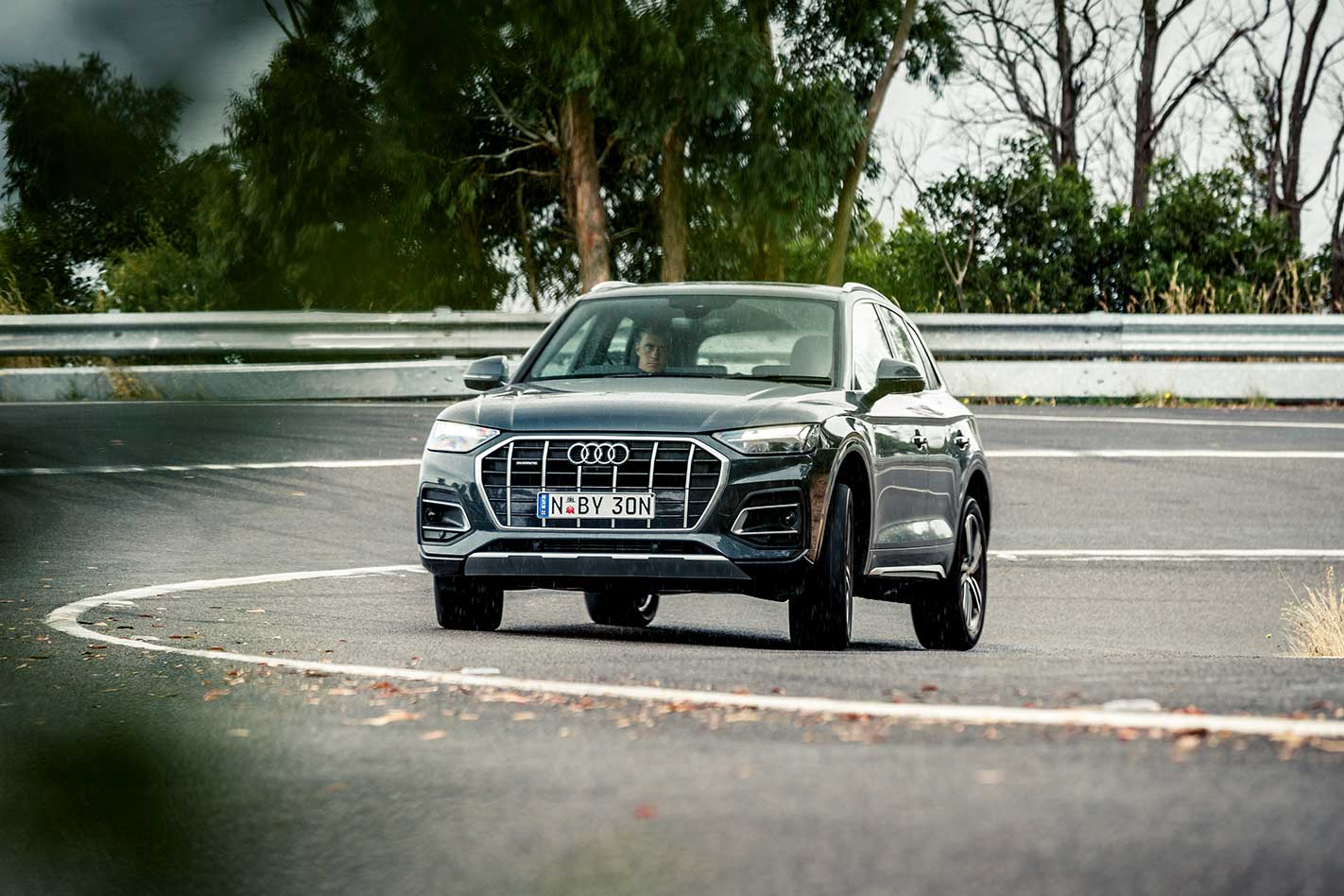
Another one of the Q5’s superpowers is its ability to relax and reassure new drivers. Climb in. Get immediately comfortable. Push the button, and off it goes, with an ease to its urge and a serenity to its speed that will instantly endear it to many people.
That sense of feeling light on its feet extends to the steering, which is effortless enough around town (and with a slightly better turning circle than the X3), yet precise and planted out on the open road, without becoming heavy or cumbersome.
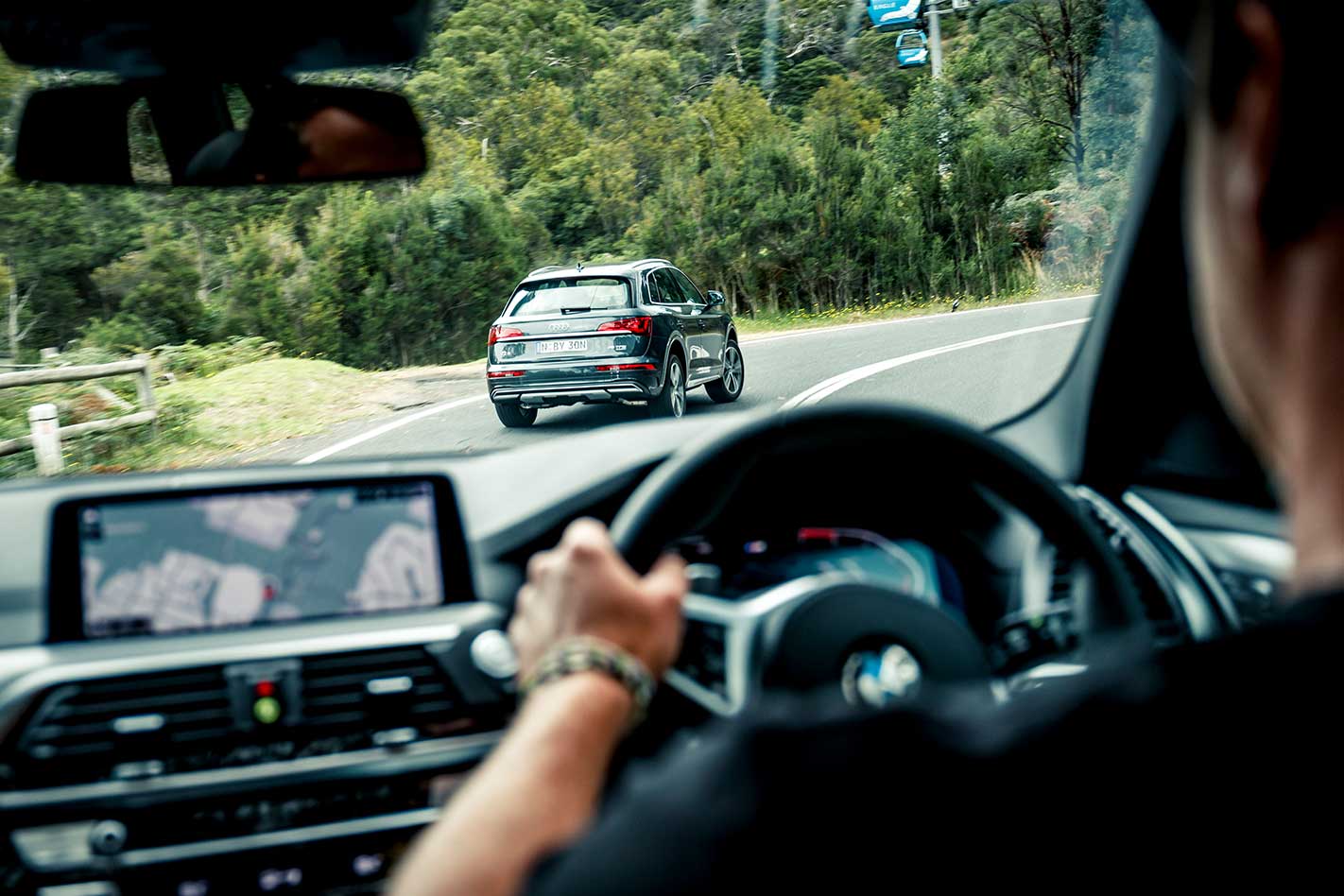
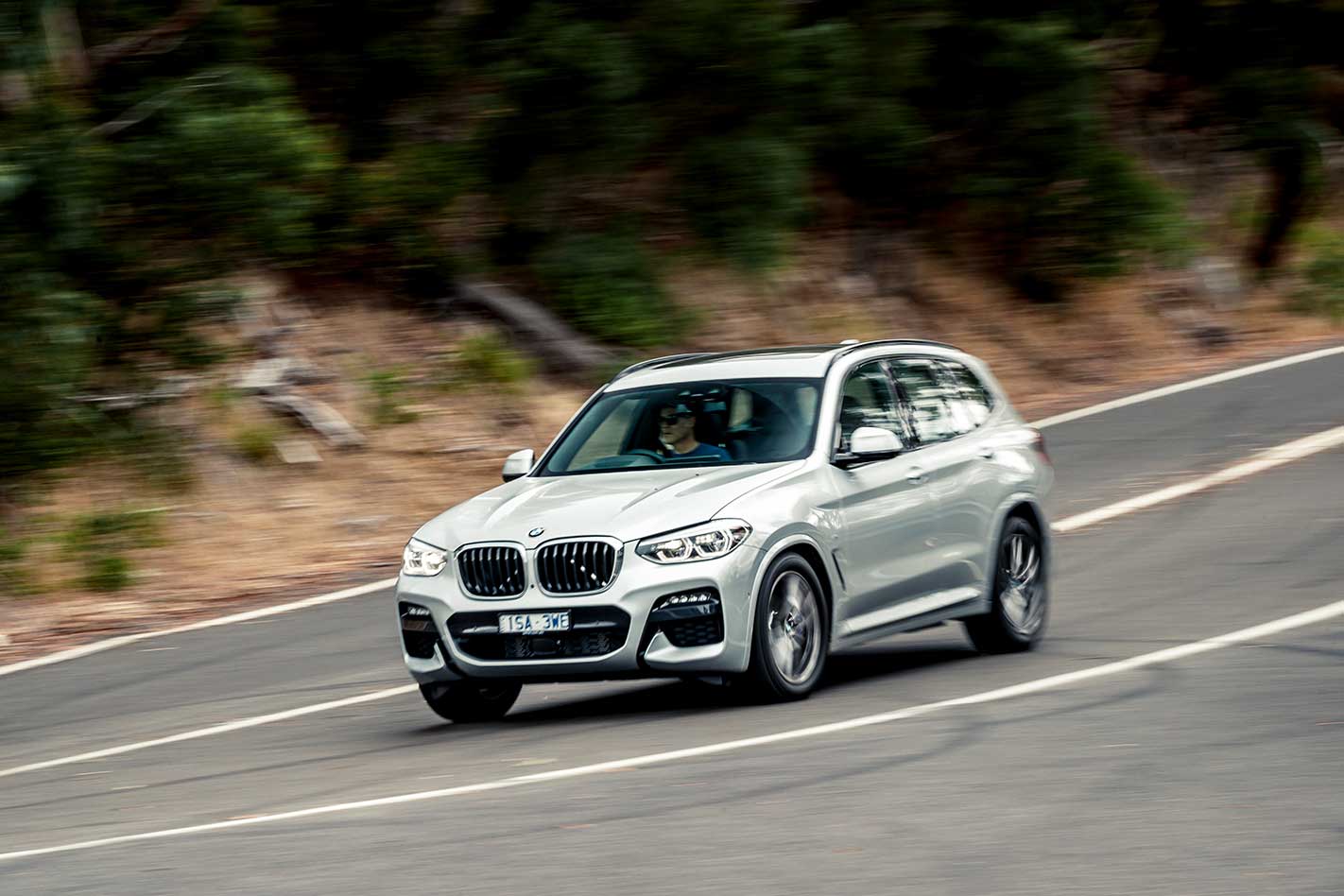
In contrast, the BMW feels palpably heftier and more solidly tied down to the road, from the first turn at low speeds through to blasting up a mountain pass. But it’s also in another class with the way it goes and flows with the road.
The xDrive30i’s standard Adaptive M Suspension with its adjustable dampers provide more nuance and finesse, backed up with greater feel and feedback.
Conversely, the xDrive30i pulls ahead for ride comfort compared to the 45 TFSI quattro Sport, for two reasons – an inch-smaller wheels and those adaptive dampers.
The latter in particular reduce the amount of head toss out on the open road and suspension pitter patter around town, though it isn’t quite as quiet as the Audi either. For a bit over $2K extra, Q5 buyers can option up Adaptive Air Suspension – with variable ride height for greater ground clearance. Do it.
Note that BMW fits 20-inch alloys as standard on this grade, with the 19s as per our test car a no-cost option that probably makes the ride suppler. Sneaky.
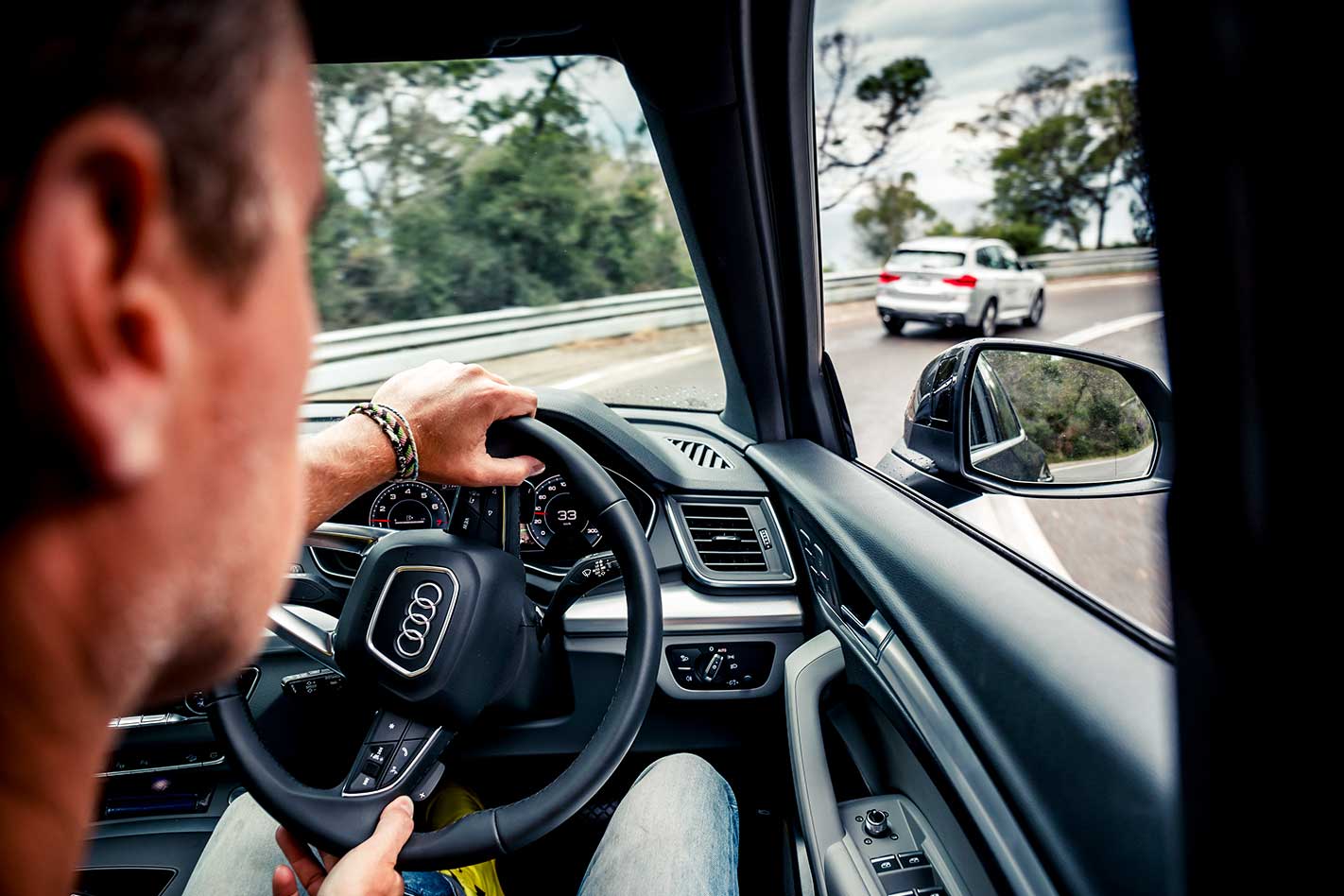
In searing Sport grades as tested, their premium is offset by matching high equipment levels, highlighting how eerily similar in execution the two German machines are.
In one area, however, the Audi is in a league of its own, and that is its mild-hybrid-enhanced fuel economy – and that’s even more impressive given how stirring its four-pot turbo performance remains. For some people, that’s enough to give the 45 TFSI quattro Sport a decisive advantage.
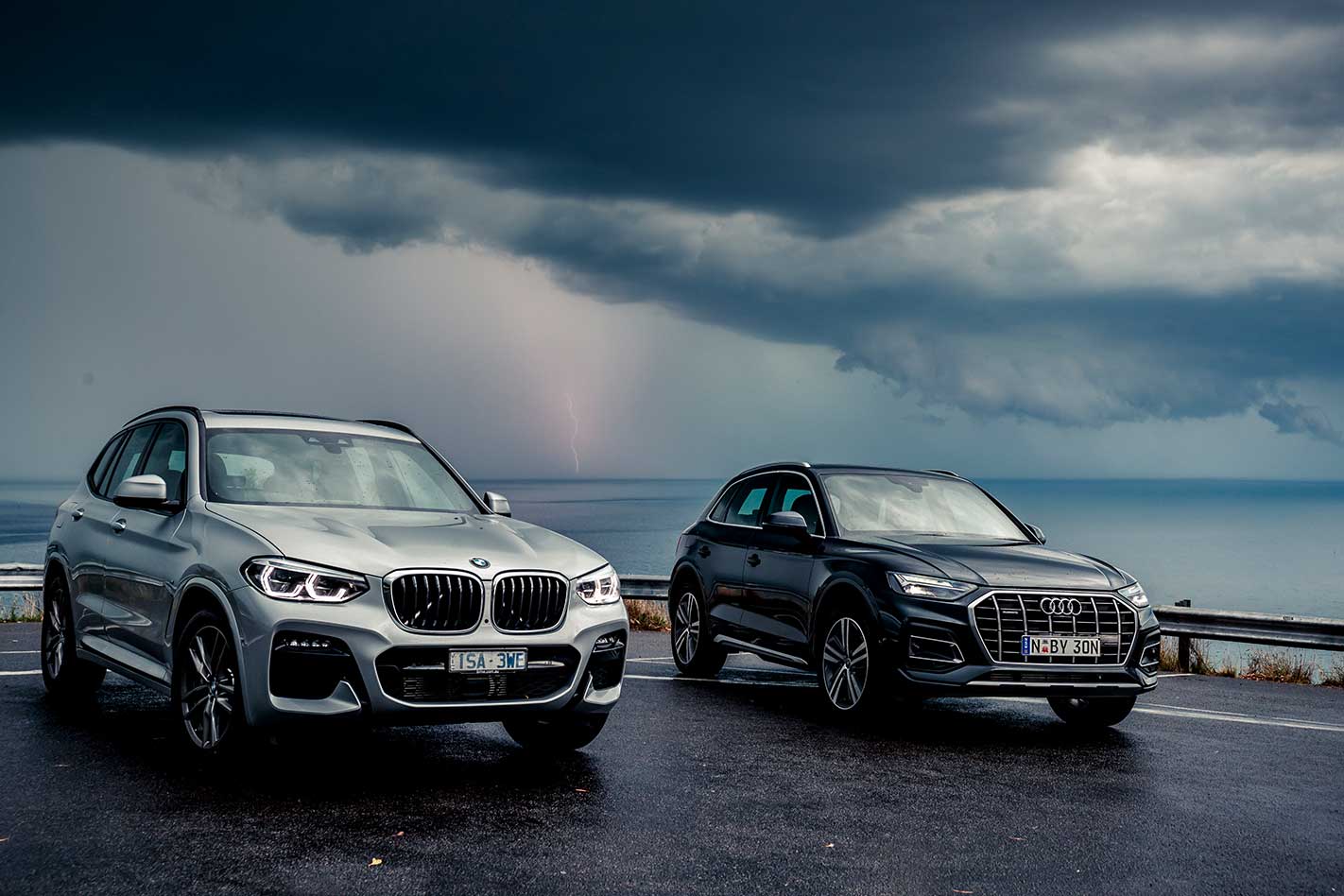
Which wins then? Your answer may already actually lay within: thinking back again to those earlier formative-years cars, would you have picked the Golf, Mazda6 and Territory over a Pulsar, Camry and Captiva? If the answer’s yes, yes and definitely yes, then the X3 is for you.
VERDICT
BMW X3 xDrive30i 1st
8/10
Pros: superb powertrain; impressive handling/ride balance; appealing dash presentation
Cons: dreary design; some cheap cabin materials; expensive options
Audi Q5 45 TFSI quattro Sport 2nd
7.5/10
Pros: outstanding efficiency; sparkling performance; spacious and quiet interior
Cons: not Audi’s best dash design; some cheap cabin materials; like BMW, sub-standard warranty
INTERIORS IN DETAIL
Audi Q5
Airy and uplifting it may be, with an obsessive approach to detail and quality as well as a new (MIB 3) info and multimedia system set-up, but the Q5’s dash is starting to look dated in 2021, and even a tad austere.
BMW X3
If you can see past the slightly chaotic instrument graphics, with their annoying digitised anti-clockwise tacho, the X3’s dash is almost flawless. Superb iDrive interface beats buttonless interface every time, while the M Sport package’s overall quality and ambience edges out Audi’s – even if both Germans suffer from cheapo lower-lying plastics.
Specifications
Audi Q5 45 TFSI Quattro Sport
Body: 5-door, 5-seat SUV Drive: all-wheel Engine 1984cc inline-4cyl, DOHC, 16v, turbo, mild hybrid Power: 183kW @ 5000-6500rpm Torque: 370Nm @ 1600-4300rpm Transmission: 7-speed dual-clutch Weight: 1825kg Power-to-weight: 100kW/tonne Fuel consumption: 8.9L/100km (tested) L/W/H: 4682/1893/1663mm Wheelbase: 2832mm Tracks: 1622/1626mm (f/r) Suspension: multi links, coil springs, anti-roll bar (f/r) Steering: electrically assisted rack-and-pinion Turning circle 11.7m (2.6 turns lock-to-lock) Brakes: 350mm ventilated discs (f); 330mm ventilated discs (r) Tyres: 255/45 R20 101W (f/r) Michelin Latitude Sport 3 Price: $76,600/As tested $78,590**
Warranty: 3yr/unlimited km. Service interval: 12 months, 15,000km. Glass’s 3-year resale: 61%. AAMI Insurance: $1170
BMW X3 xDrive30i M Sport
Body: 5-door, 5-seat SUV Drive: all-wheel Engine: 1998cc inline-4cyl, DOHC, 16v turbo Power: 185kW @ 6500rpm Torque: 350Nm @ 1450-4800rpm Transmission: 8-speed automatic Weight: 1745kg Power-to-weight: 106kW/tonne Fuel consumption: 12.7L/100km (tested) L/W/H: 4708/1891/1676mm Wheelbase: 2864mm Tracks: 1610/1594mm (f/r) Suspension: struts, A-arms, adaptive dampers, anti-roll bar (f); multi-links, coil springs, adaptive dampers, anti-roll bar (r) Steering: electrically assisted rack-and-pinion Brakes: 330mm ventilated discs (f/r) Tyres: 245/50 R19 (f/r) Bridgestone Atenza RFT Price: $76,396 /As tested $81,206**
Warranty: 3yr/unlimited km. Service interval: variable – condition based. Glass’s 3-year resale: 63%. AAMI Insurance: $1184
Mazda has issued a recall for 2668 examples of its 2020 CX-30 Astina small SUV after a fault was discovered with the tailgate mechanism.
According to the notice: “The boot’s power liftgate may partially lower unexpectedly from the fully opened position when the vehicle is parked facing uphill on a slope in high ambient temperature.”
Mazda notes the faulty liftgate may cause injury if it partially lowers and comes into contact with someone accessing the rear storage area.
The Japanese manufacturer will be contacting affected customers directly to inform them of the issue.
However, the part needed to rectify the problem with the tailgate mechanism won’t be available in Australia until May.
Once the part does arrive, owners will need to drop off their CX-30 at a preferred Mazda dealership, where the problem will be fixed at no cost.
Owners wanting further information about this recall can contact Mazda Customer Support on 1800 034 411.
Mazda has also included a full list of the affected vehicles VIN numbers, which can be viewed here.
MORE: CX-30 stories MORE: All Mazda stories
Porsche says it will not build a new hypercar until at least 2025, with its focus on electric vehicle technologies taking a priority.
The line in the sand was drawn by Porsche CEO Oliver Blume, who commented on the matter while speaking to journalists after the company’s annual results conference.
Instead of building a successor to the Porsche 918 (which was first revealed in 2013), the company will be focusing on advancing its full electric vehicle technologies – as well as electrifying its existing road-car range.
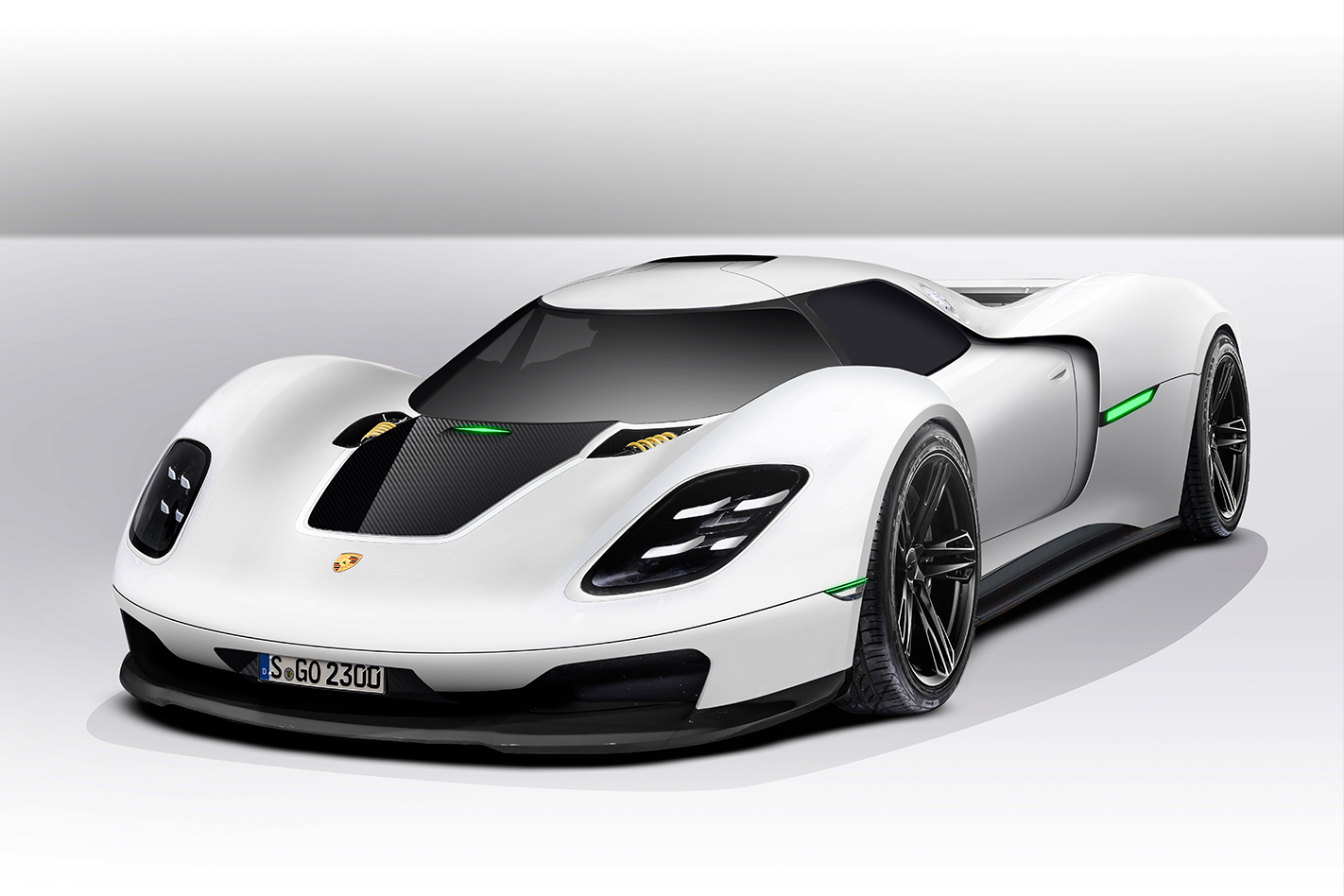
“In terms of following the 918, a hypercar is always something we are thinking about at Porsche, but for the next few years, our concentration is on the electrification of our model range,” Blume said.
“The battery will be the ‘cylinder’ of tomorrow, so we still have to investigate high-power, high-density cells. We will invest in these cells, and when we have the right cell for a high-power car, then will come the point, but I don’t think about this car before the second half of the decade.
“Before 2025, we won’t have a hypercar. Later on, it might be possible.”
While we’d love to see a new Porsche halo car built sooner rather than later, long waits between hypercar drinks aren’t entirely out of the norm in Stuttgart.
The Carrera GT was revealed in 2003, putting ten years between it and the 918, while Porsche fans had to wait two full decades after the iconic 959 ceased production for another flagship to be built.
Questions over a 918 successor began to arise after Porsche announced it would return to the 24 Hours of Le Mans from 2023 under the LMDh regulations (which differ to the LMH ‘Hypercar’ rules that Toyota and Ferrari are competing under).
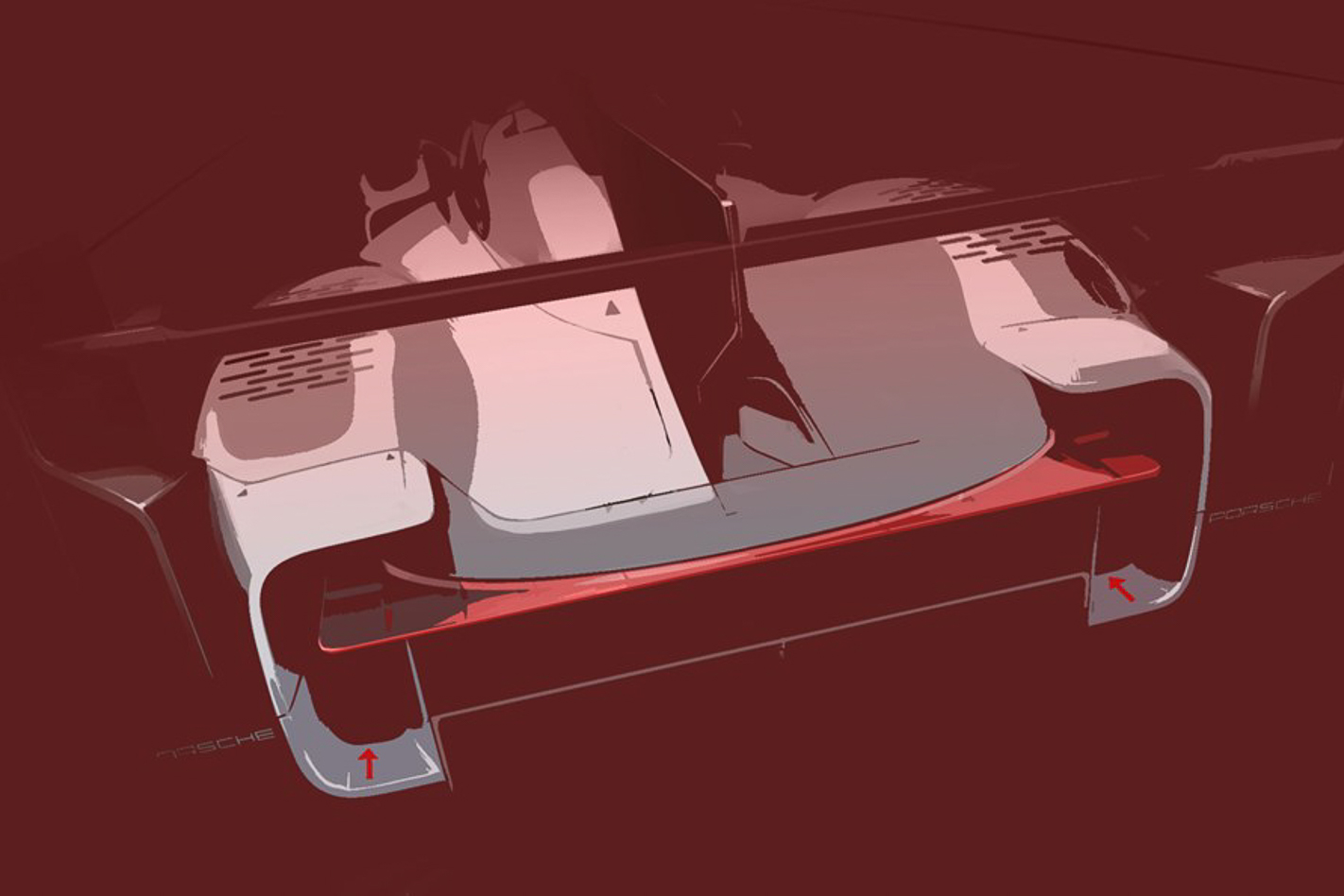
“We will return to Le Mans with a prototype, with which we will be able to win the big classic races like Le Mans, Sebring and Daytona,” Blume added.
“Ferrari has already joined in the past few weeks, so it will be a very close, tough competition and we are very happy about it.”
Those speculating that Porsche would build a road-going version of its future Le Mans racer haven’t been paying close enough attention.
While yes, Porsche could build a homologation special of its own accord, it isn’t a requirement of the ruleset, and the LMDh regulations enforce the use of a LMP2-derived spec chassis and third-party hybrid components.
A new Porsche hypercar could certainly take styling cues from the LMDh racer, but its chassis, battery, and electric motors would all be different.
Porsche is believed to have a 1.6-litre turbocharged V6 racing engine in its possession – developed internally for a Formula 1 project which never came to fruition using engineers from the 919 LMP1 project.
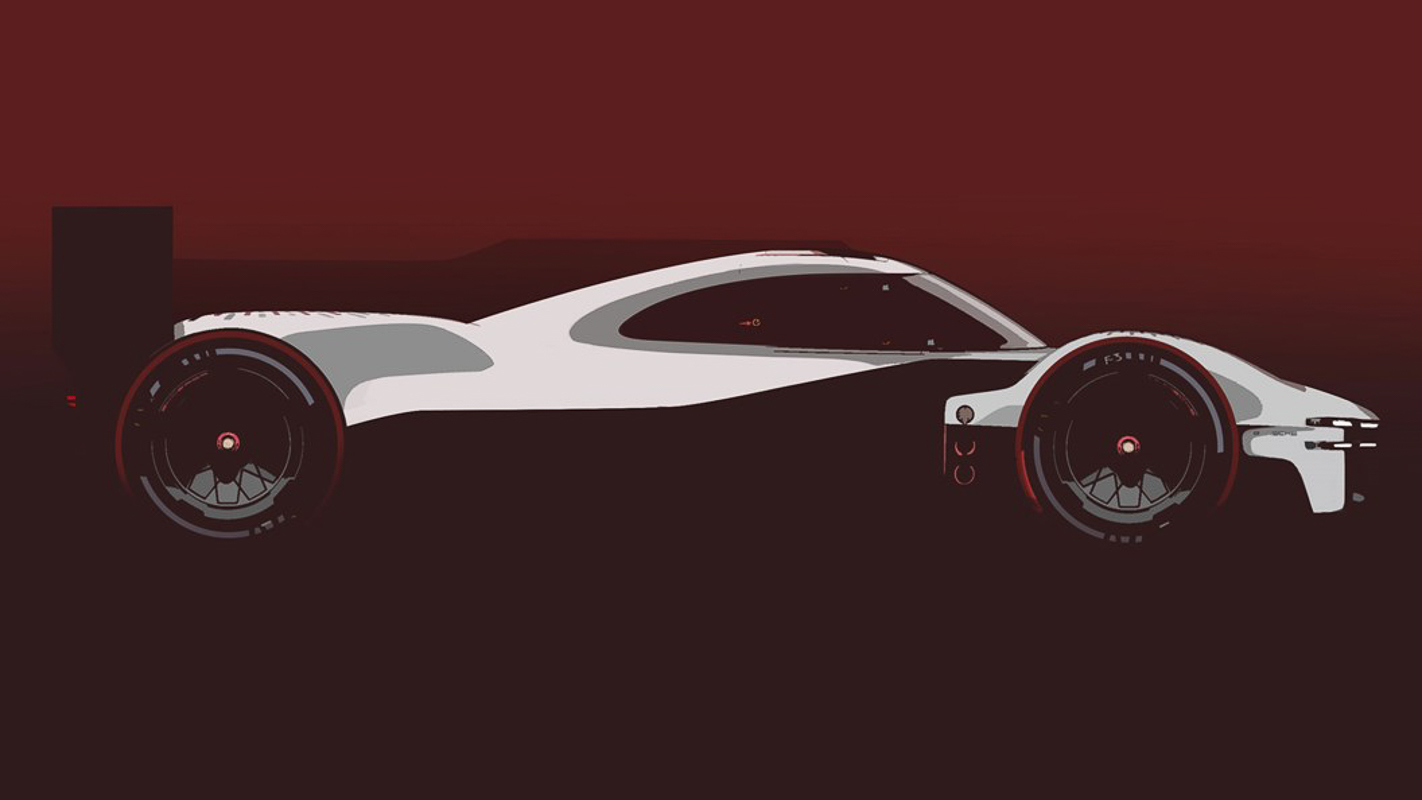
This F1-spec unit could be used in the LMDh racer (paired with the spec hybrid components), but it would prove a significant engineering challenge to make road-ready. Just look at how many delays AMG has faced with its F1-powered Project One program.
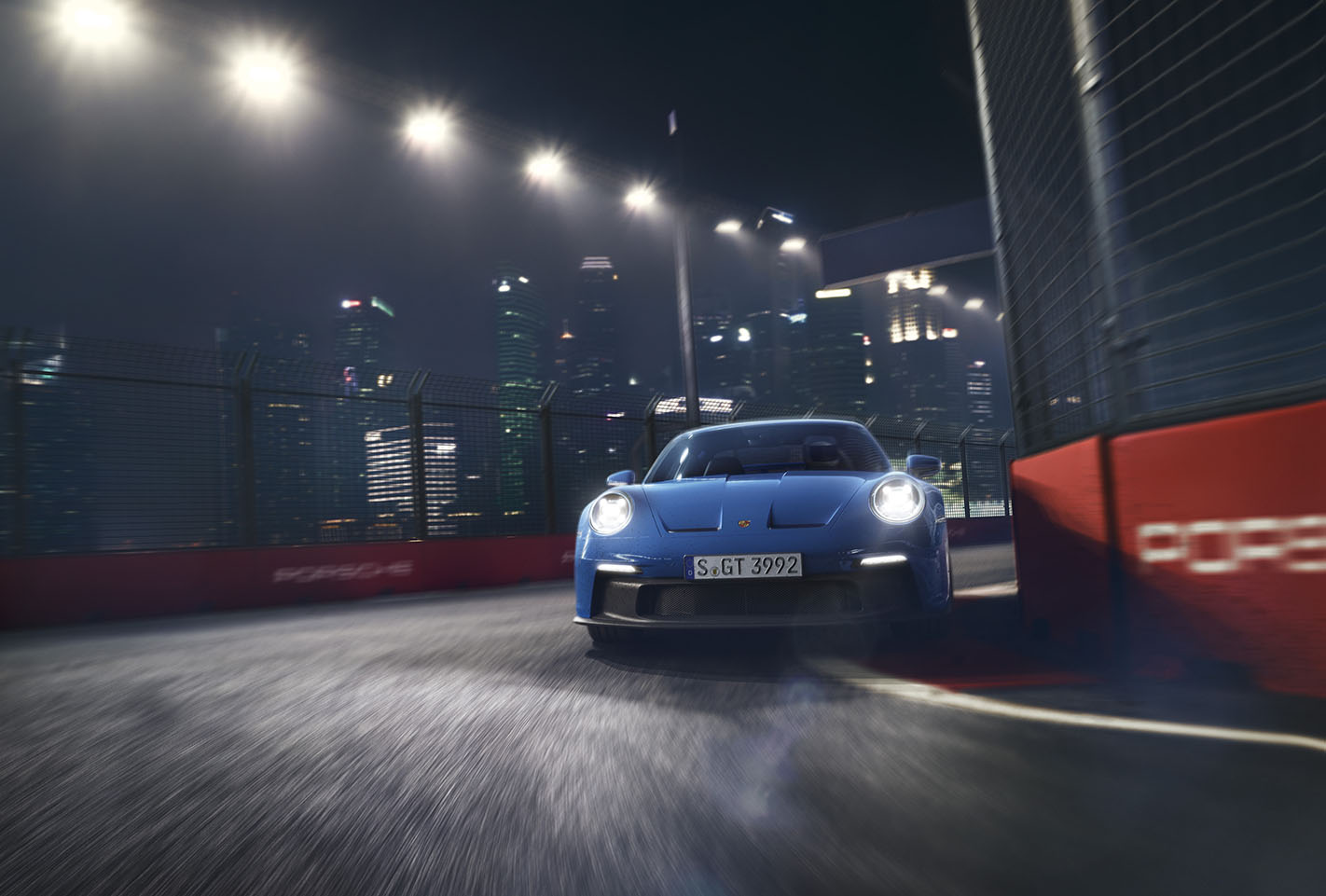
Don’t despair completely, though. While we won’t be getting a new Porsche hypercar, performance enthusiasts can get excited about the fact a next-gen 992 911 GT3 RS is already in the works, with the newly released GT3 set to arrive in Australia later this year.
Mitsubishi’s UK office is selling off its entire historic fleet of vehicles in an online, no-reserve auction.
The decision comes as the Japanese manufacturer announced last year it would be permanently withdrawing from the UK market before the end of 2021.
The classic collection consists of 14 cars in total, and within the assortment are some of the marque’s most revered models of the last five decades.
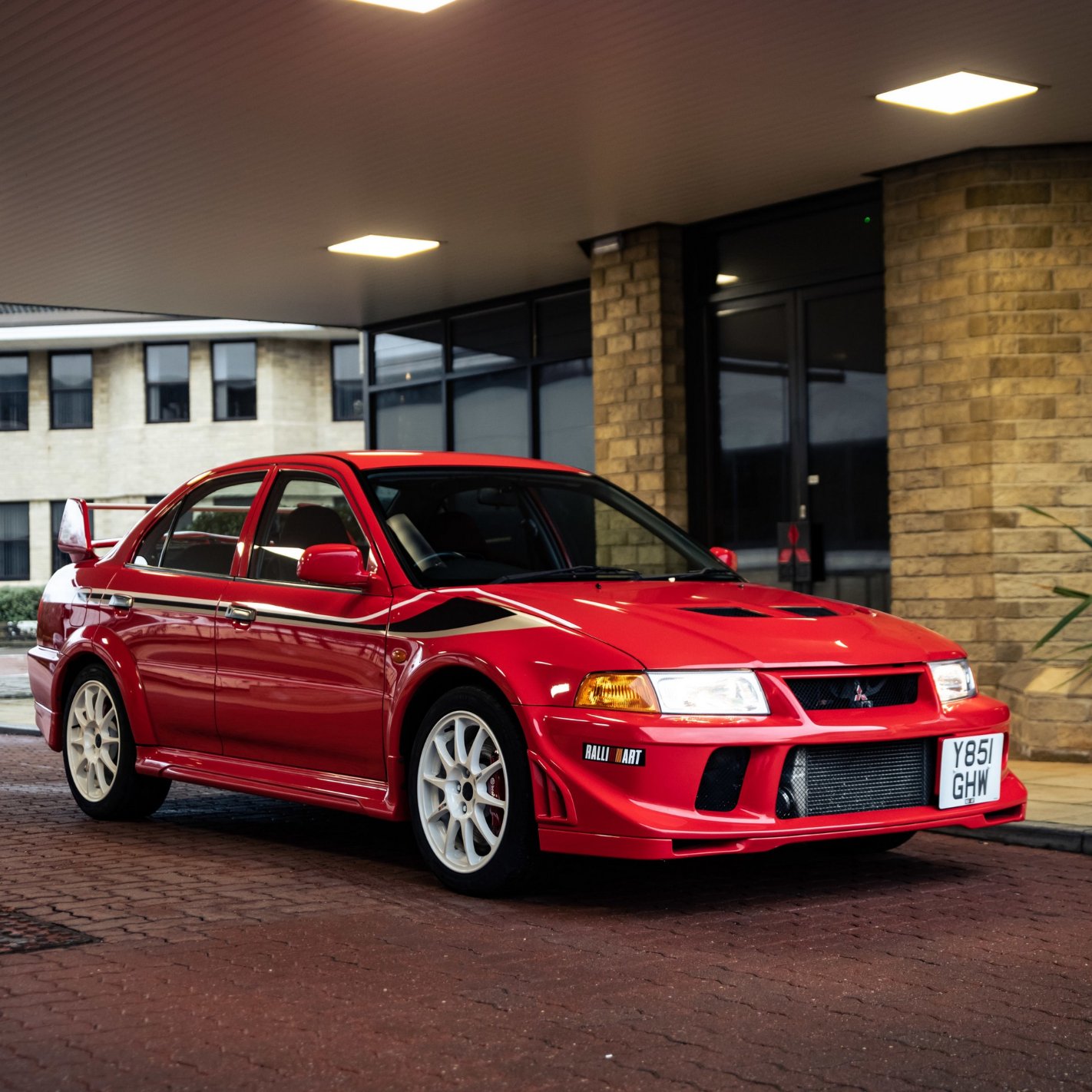
Perhaps most desirable of all is a mint 2001 Lancer 2.0 Evolution VI ‘Tommi Makinen’ edition.
Widely regarded as one of, if not the best Lancer ever to bear the EVO badge, this particular example would easily be among the cleanest on the planet.
Owned by Mitsubishi UK from new, and a limited-edition number six of 2500 made globally, the bright red beast has been signed by Tommi Makinen himself and covered just 10,253 miles (16,500 kilometres) from new.
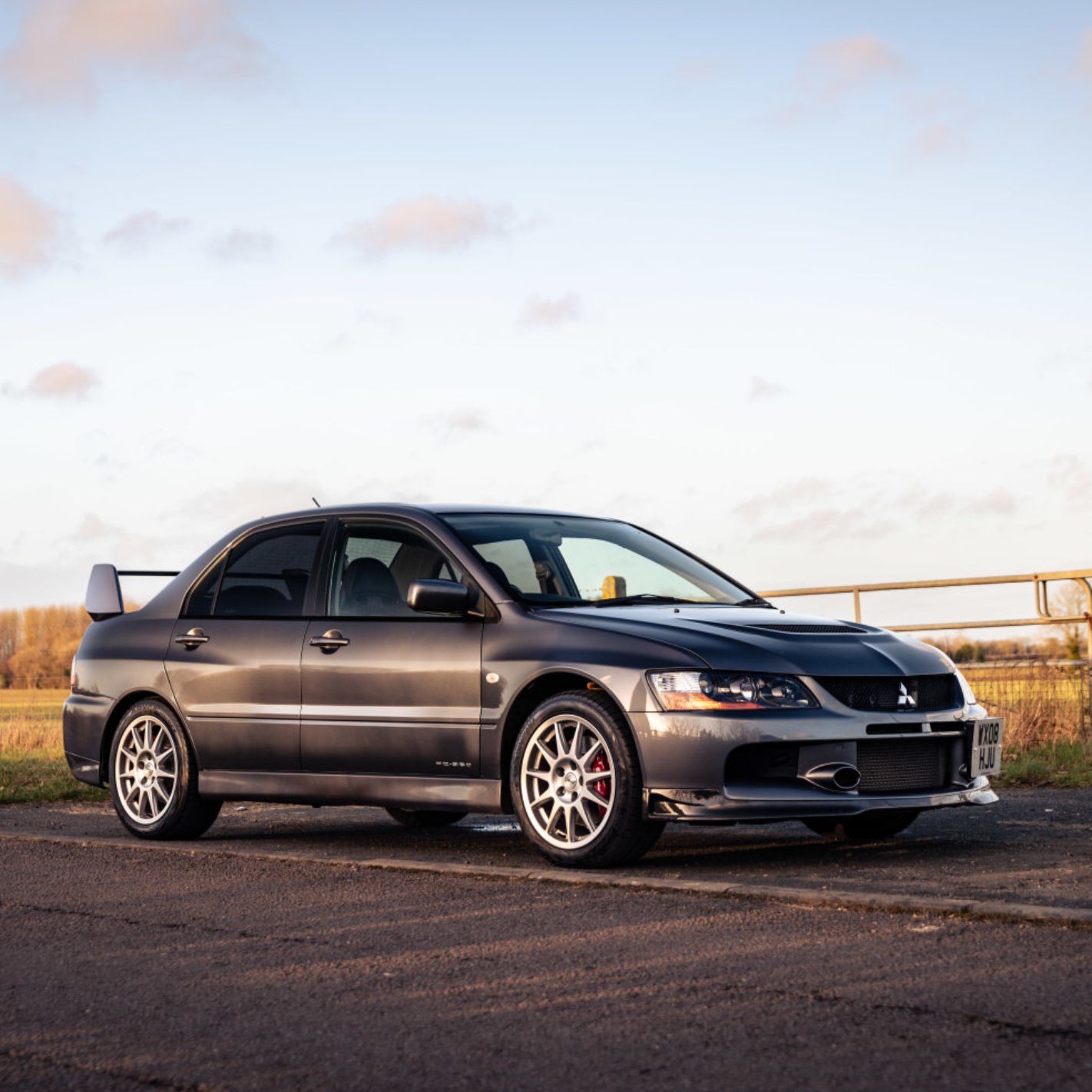
Another rally-bred, AWD weapon heading to auction is a 2008 Lancer Evolution IX MR FQ-360 HKS.
Mouthful of a name aside, this is the zenith of the EVO 7, 8, and 9 generation of Lancers, with its 2.0-litre four-cylinder turbocharged 4G63 motor producing 273kW and 492Nm.
The Stone Grey stunner is said to be in near-showroom condition, with less than 8000 kilometres showing on the odometer.
It’s not all EVOs though – the UK arm of the manufacturer is getting rid of some other hero cars from the golden age of Japanese car making.
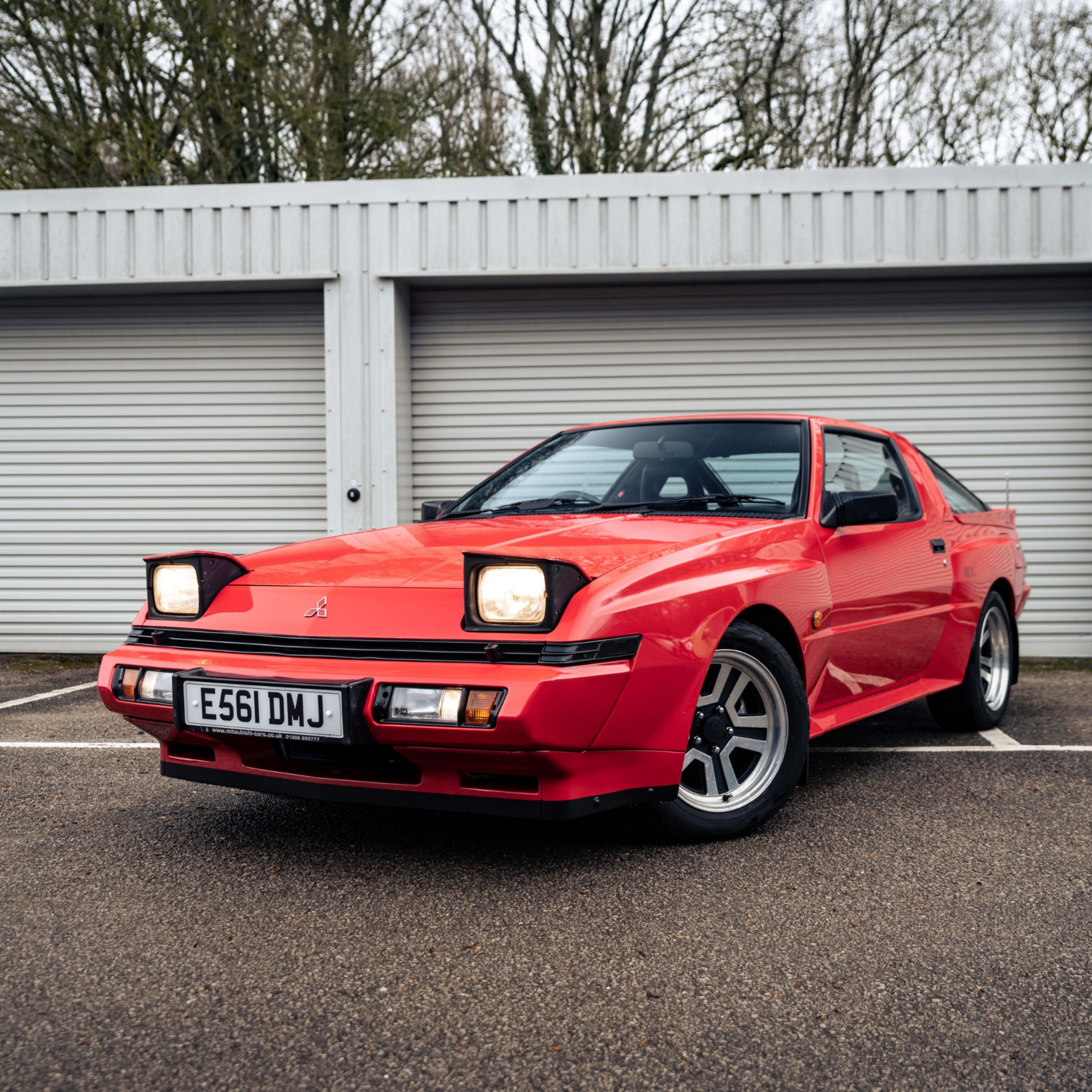
There’s a mint 1988 Starion and a gorgeous 1992 3000GT (both of which have impressively low mileage), and a 2000 Shogun MK2 SWB 3.0 V6 that really pulls at the heartstrings.
Mitsubishi UK is even selling the first car it ever registered in the country – a 1974 Lancer 1400.
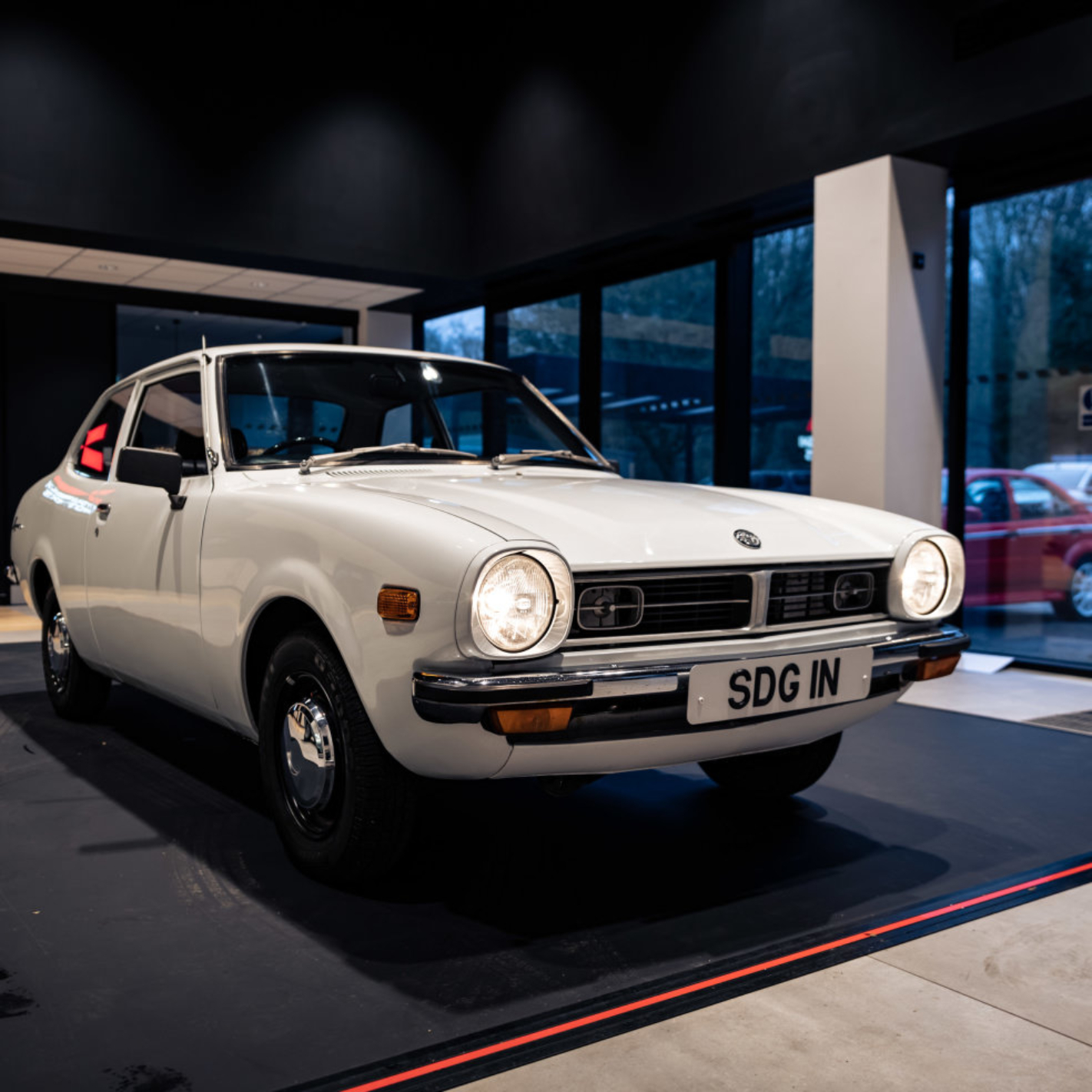
The diminutive-looking piece of history was featured at the 1974 British Motor Show at Earl’s Court and has covered a mere 73,703 miles (118,613 kilometres).
Fans of the brand’s off-road racing exploits can also bid on a factory-prepared Lancer Evolution IX Group N Works Rally Car.
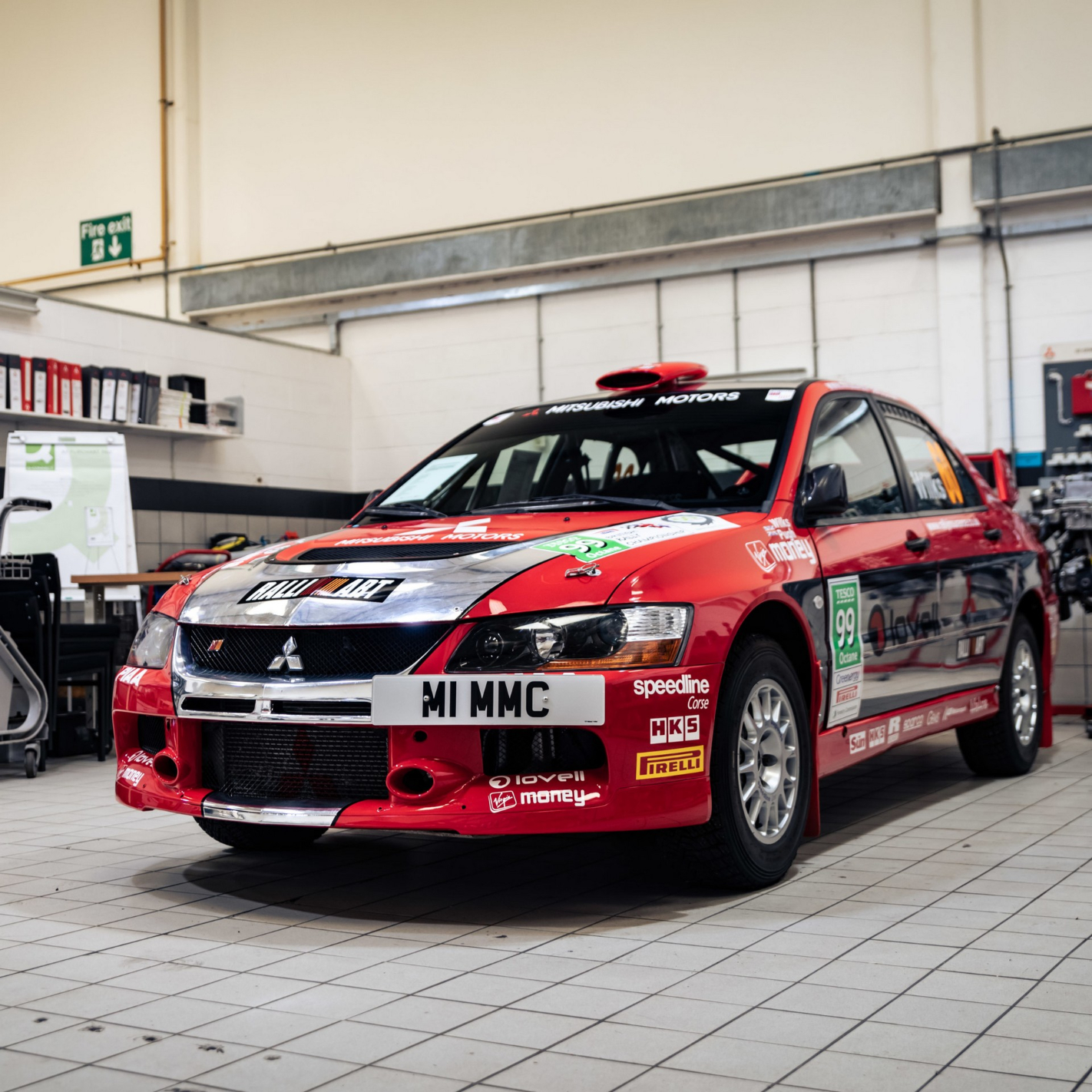
Piloted by Guy Wilkes and co-driven by Phil Pugh, this is the very car that won the British Rally Championship in 2007 and 2008.
The auction, which ends on April 30, is sure to be a spectacle, and we can imagine more than a few fiercely contested bidding wars.
Electric hypercars like the Rimac C_Two are changing the game in more ways than one. Not only do they have the accelerative capabilities to rearrange your internal organs, but they are forcing manufacturers to invest in new high-tech development facilities.
That is because of a process known as Electromagnetic Compatibility Testing. While the test itself is nothing new, the way it is conducted, and the engineering required to pass the test with a high-powered electric vehicle is a whole new ball game.
Electromagnetic Compatibility Testing is, on the face of it, a straightforward undertaking. It measures the electromagnetic signals a car emits, and how that vehicle reacts to the same invisible forces being sent back from various pieces of technology and infrastructure. For something like a VL Commodore, it would have been a walk in the park. The most advanced fully electric vehicle ever built? Not so much.
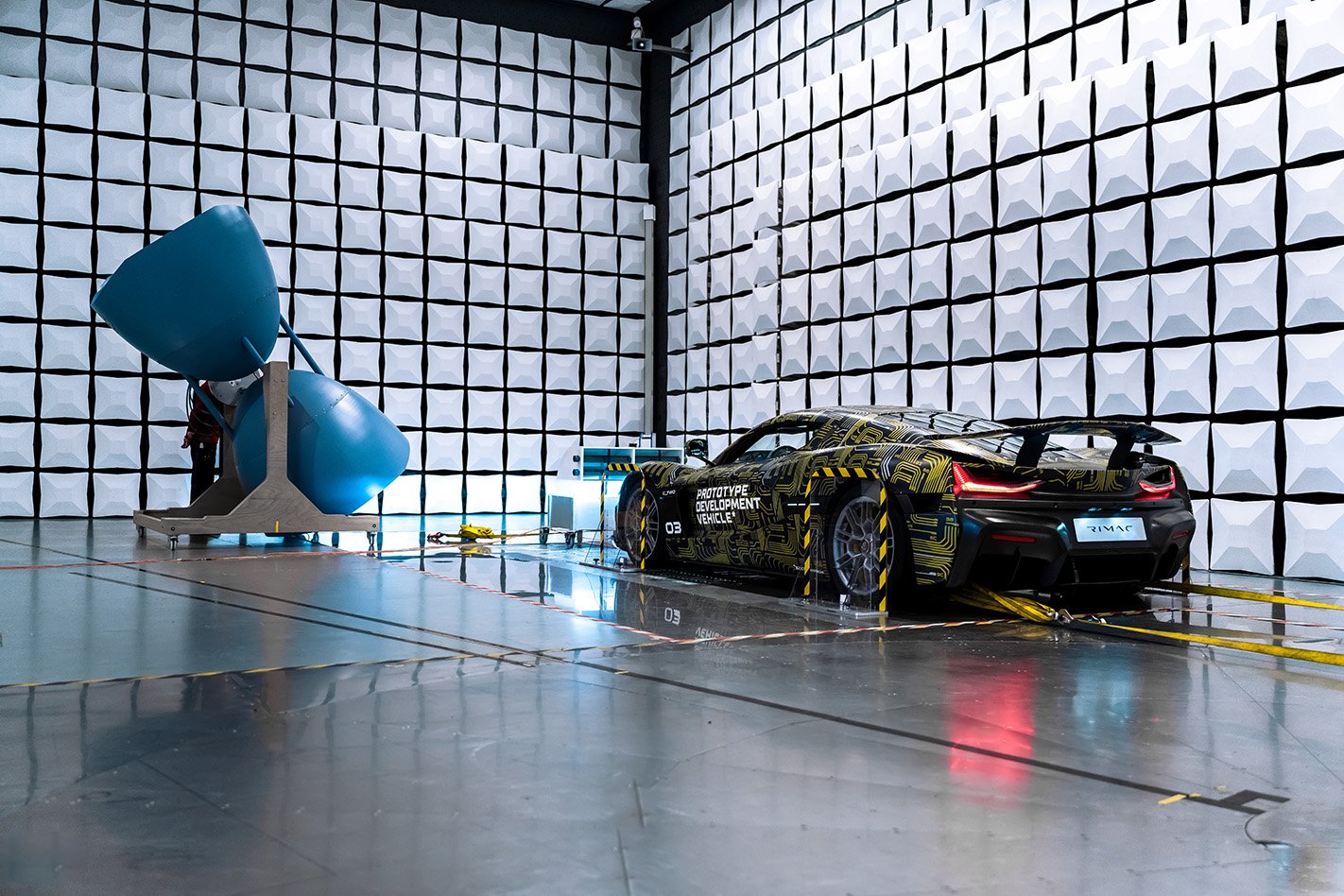
If you’ve ever seen a hypercar in the flesh, and whipped out your phone to take a photo, the reason your handset hasn’t turned into an expensive pocket weight is because of EMC testing. While the Bugatti Chiron has more wiring than a JayCar, it also uses a good old fashioned combustion engine to make its power, meaning its electromagnetic emissions are relatively low when compared to something like, say, the 1408kW all-electric Rimac. If Rimac didn’t put the C_Two through the rigorous EMC testing and homologation procedure, it could drive down the street frying traffic lights and wiping the laptops of passers-by.
While the Rimac is an extreme example of why the procedure is necessary, regular cars have needed to complete EMC testing in order to receive homologation for a while now. The increased demands of in-car connectivity such as WiFi hotspots in the cabin, along with autonomous driving systems, digital radio, and car-to-x infrastructure has made EMC testing more rigorous. As an example of what a ‘regular’ car is now fitted with, the Mercedes-Benz S-Class has more than 200 control units on board, and more than 5 kilometres of wires.
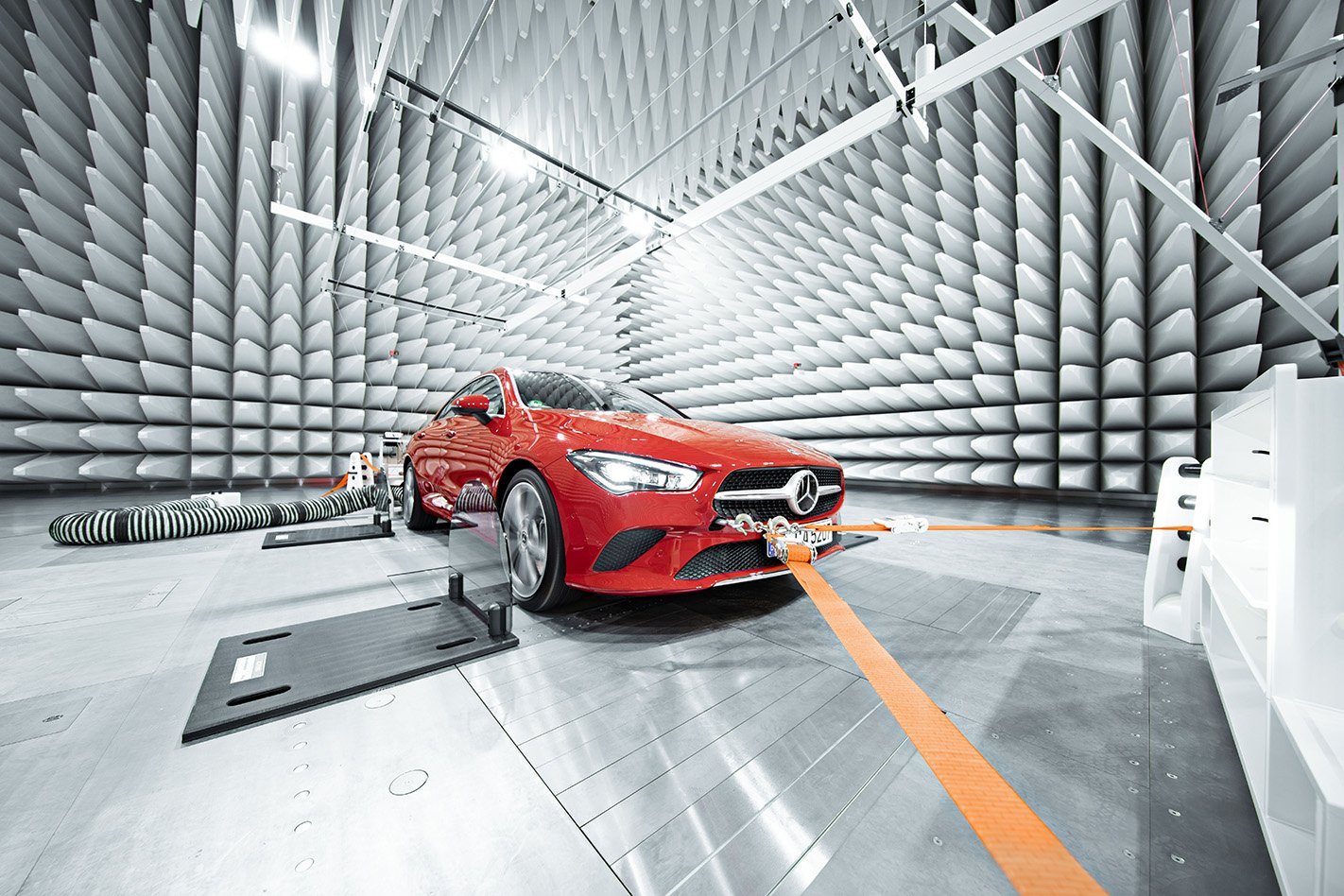
The EU approved standard – ECE R10 – must be achieved for a vehicle to be homologated and sold in Europe. As in many disciplines, Rimac is pushing further and setting more rigorous goals to achieve.
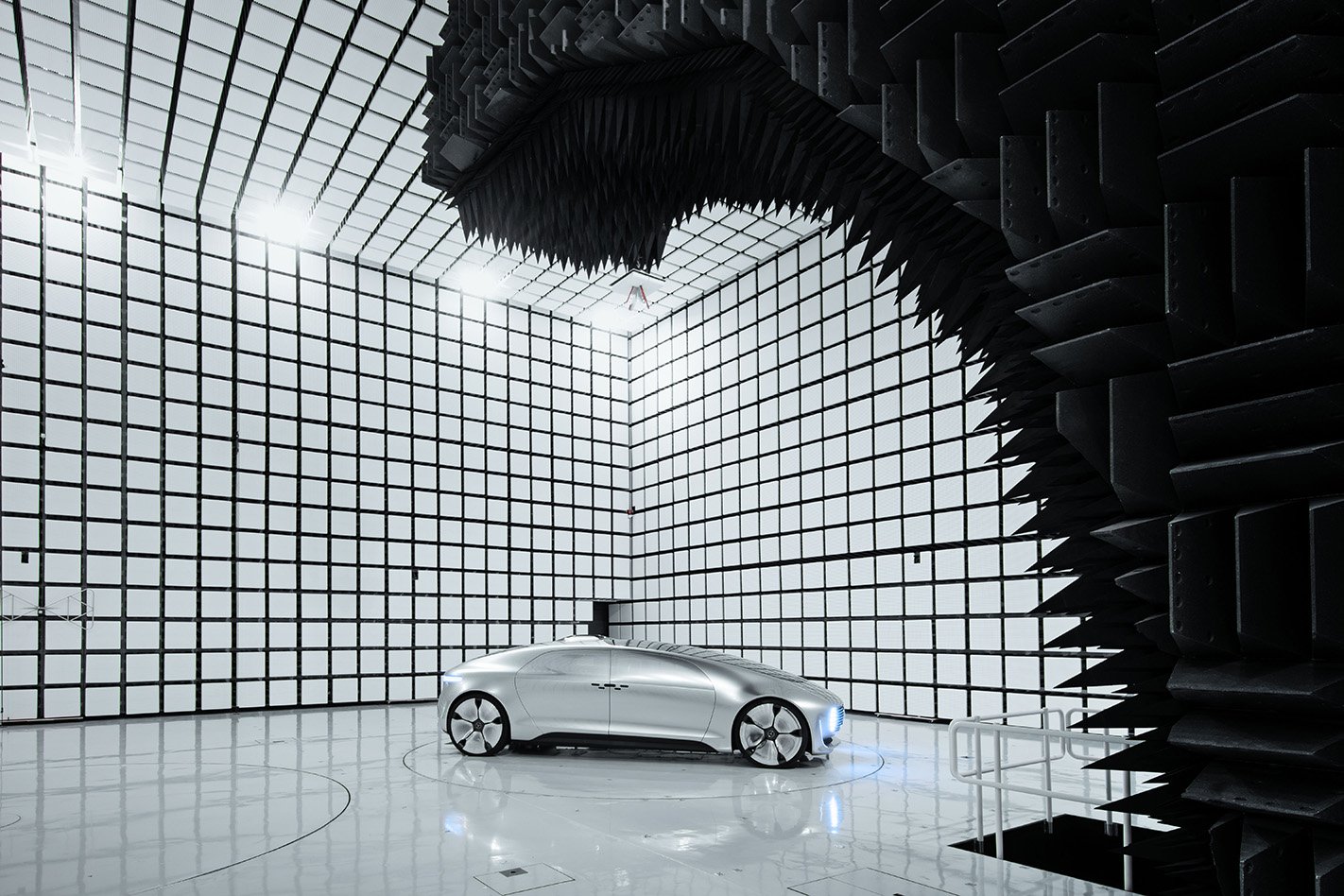
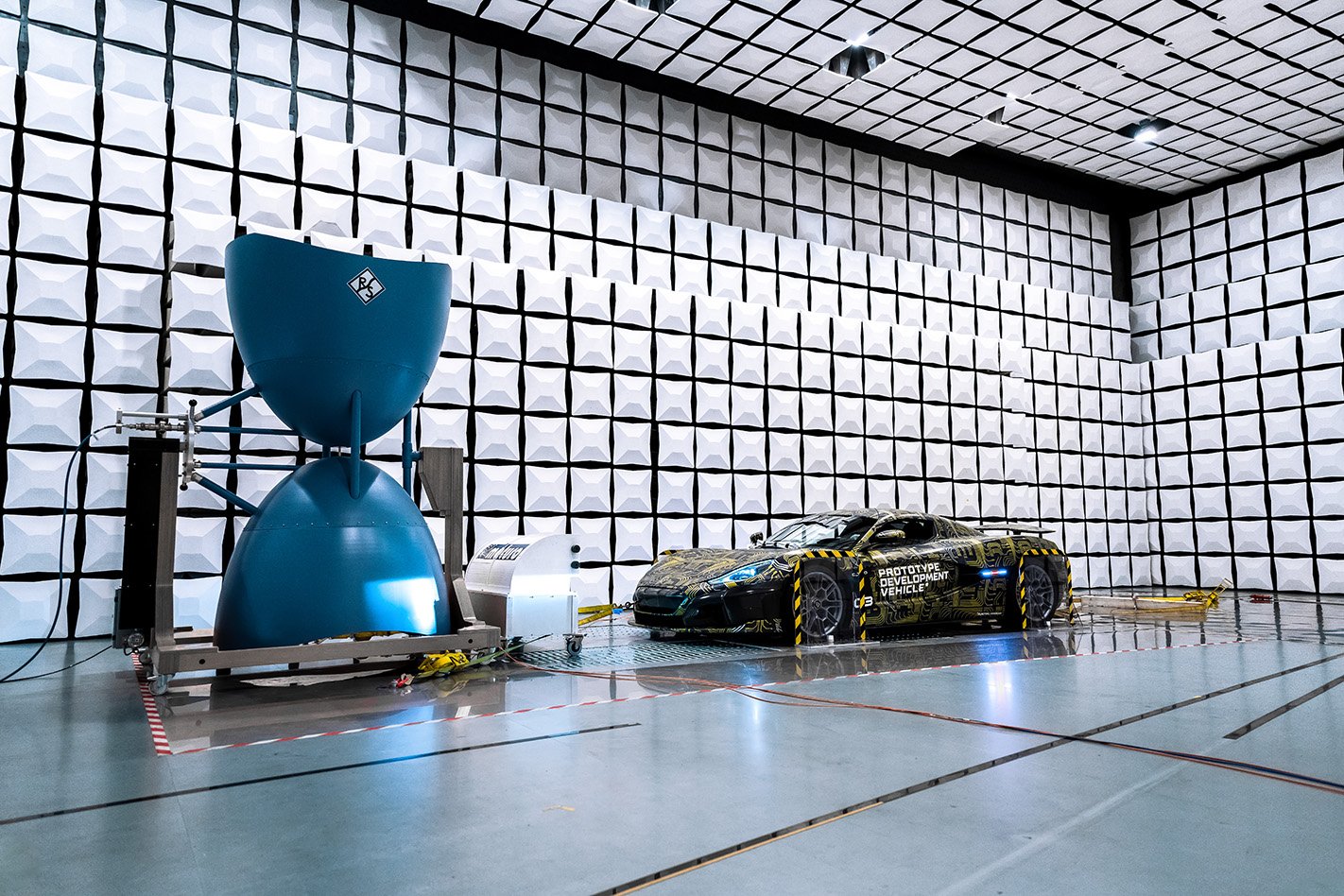
In order to pass EMC testing, Rimac had to begin working on the problem during the earliest stages of development. All high and low voltage systems on the C_Two, including the battery, inverters, powertrain and more, were fitted with solutions such as filters and Y-capacitors that dampen electromagnetic outputs. During EMC testing the C_Two is driven at a selection of varying speeds on a rolling road within a Semi Anechoic chamber, and subject to varying levels of electromagnetic radiation – from a mere 20MHz, all the way to 20GHz.
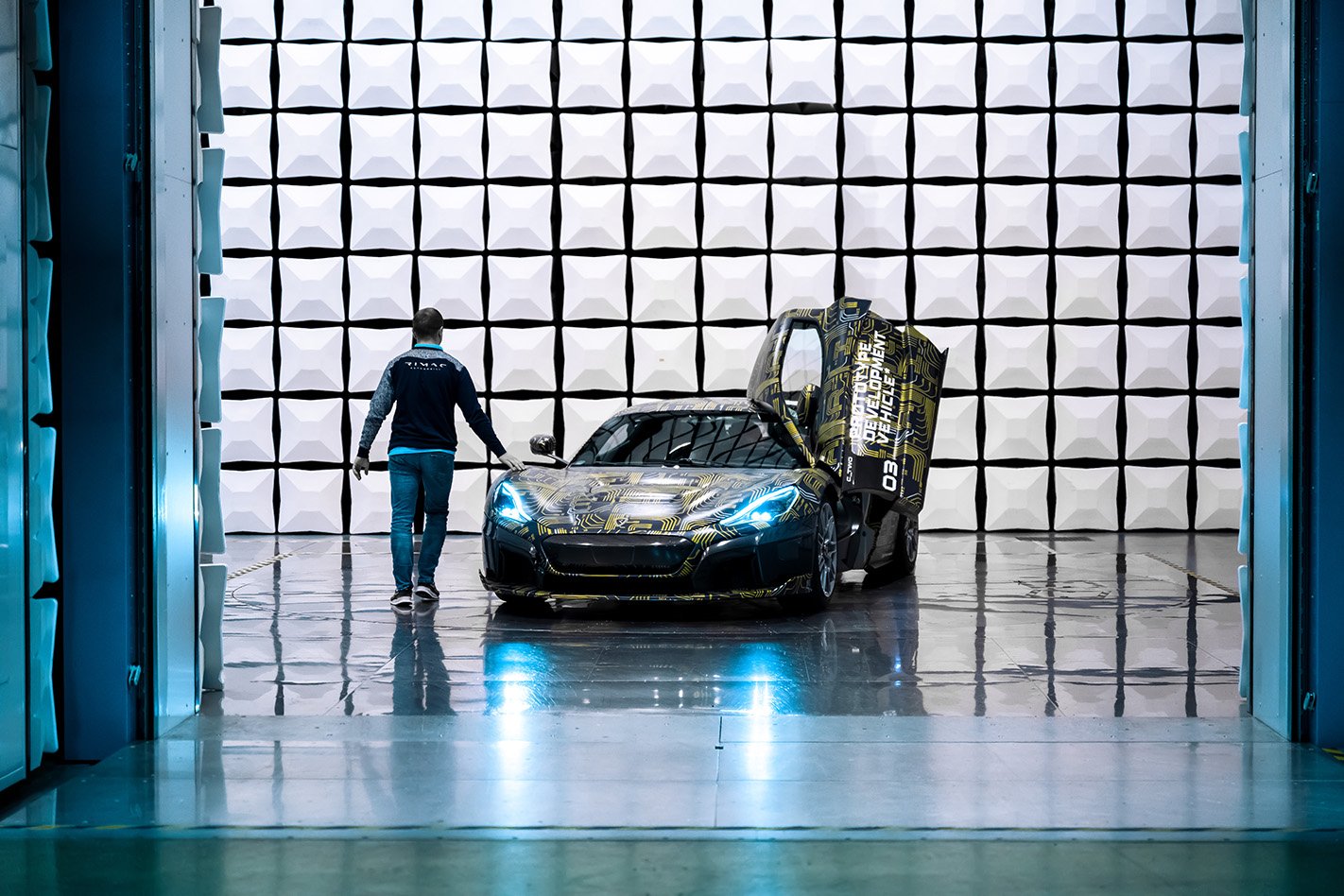
The car is bombarded sequentially with antennas, using different directions and polarisations to simulate varying levels of electromagnetic force, and testing is repeated with different combinations of on-board electronic systems activated. Finally, everything from the C_Two’s wipers, navigation, radio – the whole lot – are activated, and the maximum amount of radiation sent its way in order to ensure it performs in a ‘worst case scenario’ setting.
EMC testing is understandably incredibly complex, and immensely challenging for a car like the C_Two to complete. So much so that after completing its first round of electromagnetic evaluation late last year, Rimac’s engineers had to return to Croatia to make further changes. If you ever manage to snap a pic of the C_Two on your smartphone without it bricking in your hands, you’ll know they’ll have done the job.
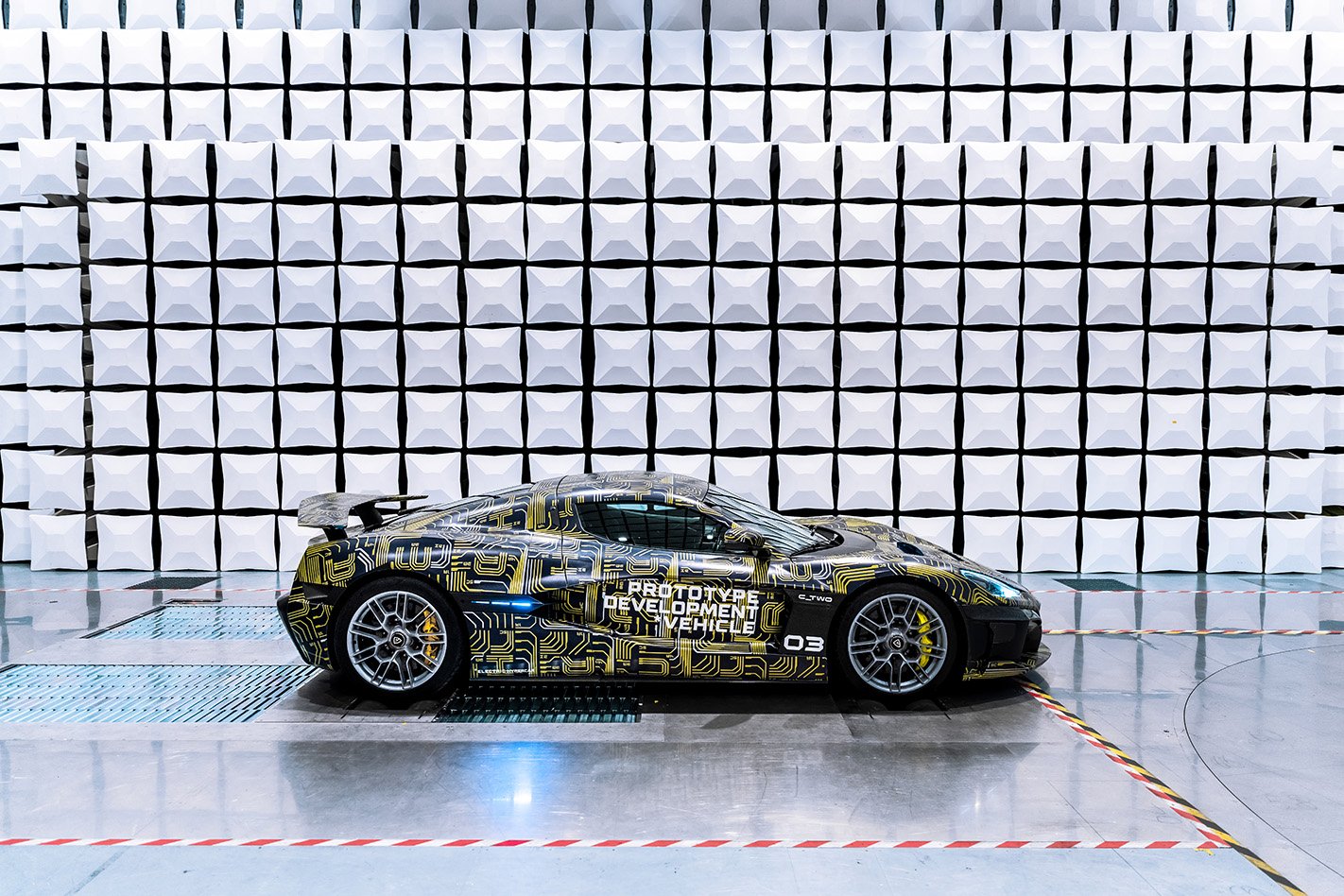
IN HOUSE
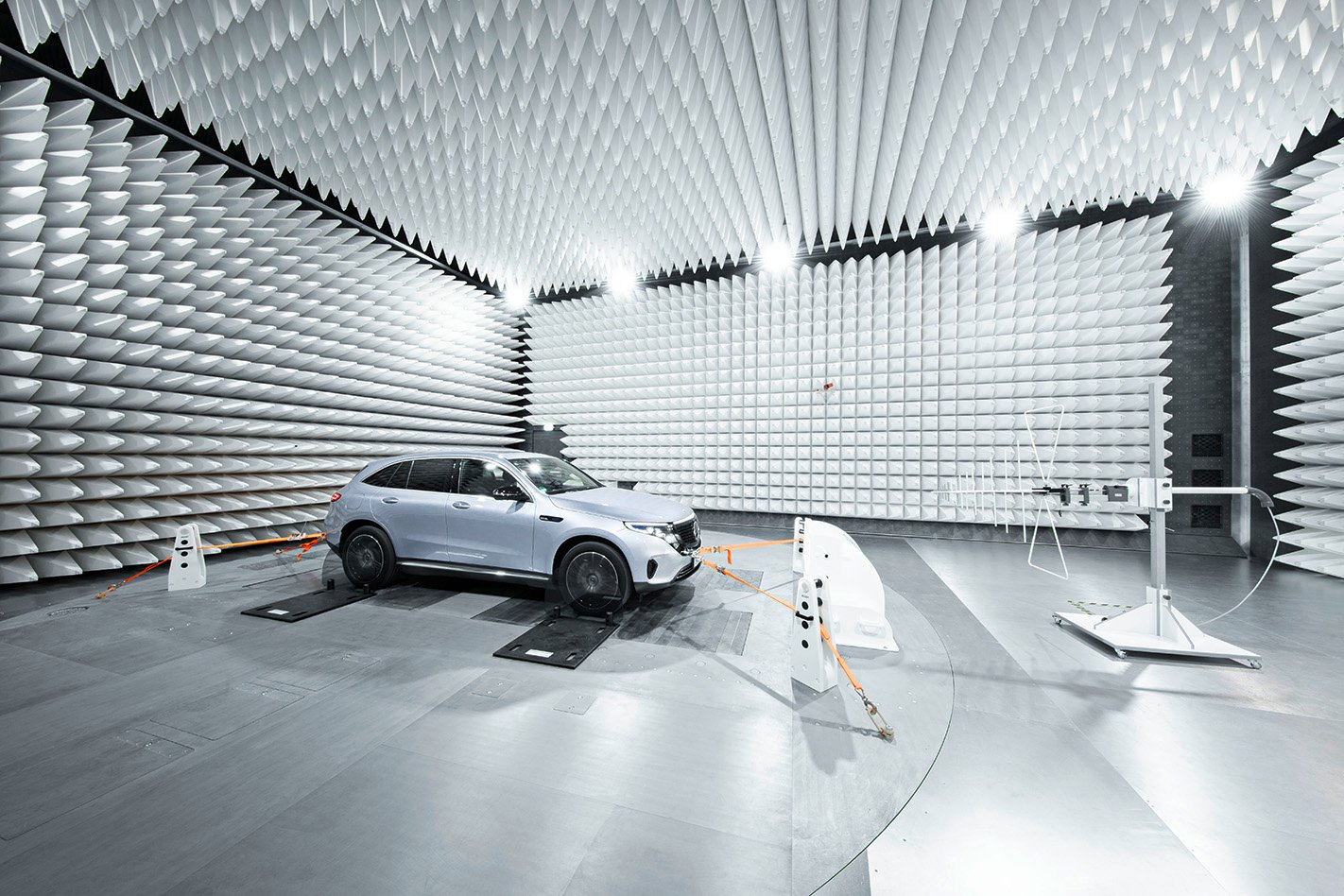
While Rimac uses external contractors to conduct its EMC testing, automotive giant Mercedes-Benz completed construction in 2019 of a new technology centre in Sindelfingen dedicated to in-house electromagnetic homologation. The cost? A cool A$78 million. More than 200 Mercedes employees staff the facility.
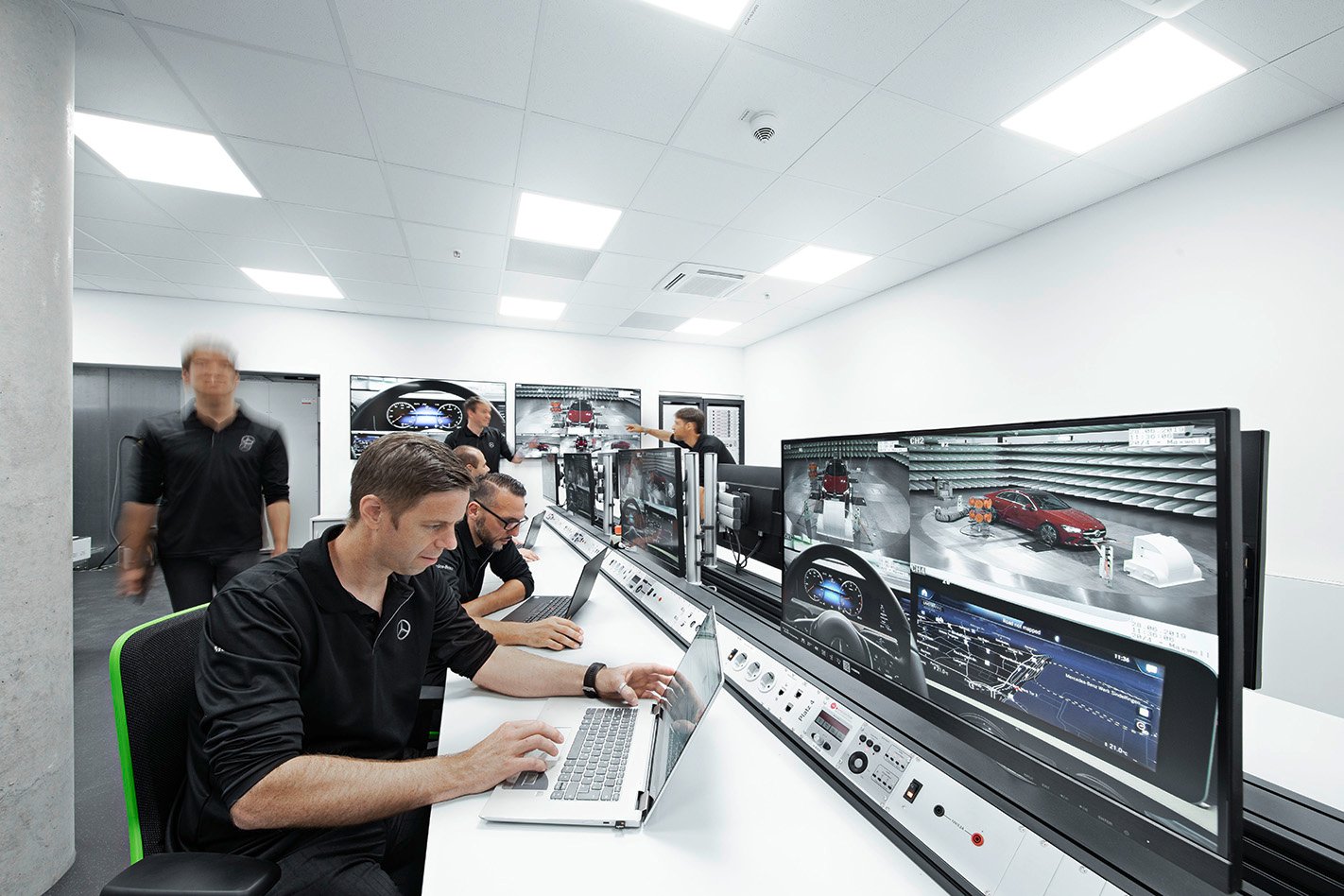
RECEIVING LOUD AND CLEAR
No longer does a vehicle have a single antenna that simply does the job of receiving AM and FM radio. Bluetooth, sat-nav, central locking, and more all require antennae fitted to the vehicle to work. With the introduction of 5G, cars will require two or four antennae to do the job previously conducted by one. EMC testing allows companies to ensure that these antennae will be able to receive the information they need so you can keep tuning into Smooth FM on your commute to work.
SHIELDS UP
There’s no need to put on your tin foil hat just yet, but in our modern society electromagnetic waves are everywhere. Between radio, television, and wireless internet, this invisible force is inescapable. To ensure EMC testing is conducted as accurately as possible, the facilities are shielded using metal to prevent outside interference disturbing the results.
STIRRED UP
Mercedes-Benz’s new EMC testing facility (see above) uses a unique system designed in-house. Instead of placing different antennas around the room and repeating the test for different directions, a trio of large mechanical “stirrers” are housed within a reverb room. These spiral structures rotate at between 10-120rpm and constantly distribute electromagnetic waves, allowing Mercedes to test for the effects of radiation from different directions and with different polarisation simultaneously.
Porsche has teamed up with Bill and Ted stars Keanu Reeves and Alex Winter to create one of the better automotive ads we’ve seen this year.
The short seven-and-a-bit minute film follows Reeves and Winter as they road trip from Santa Barbara in California all the way down to Porsche’s Experience Centre in Los Angeles.
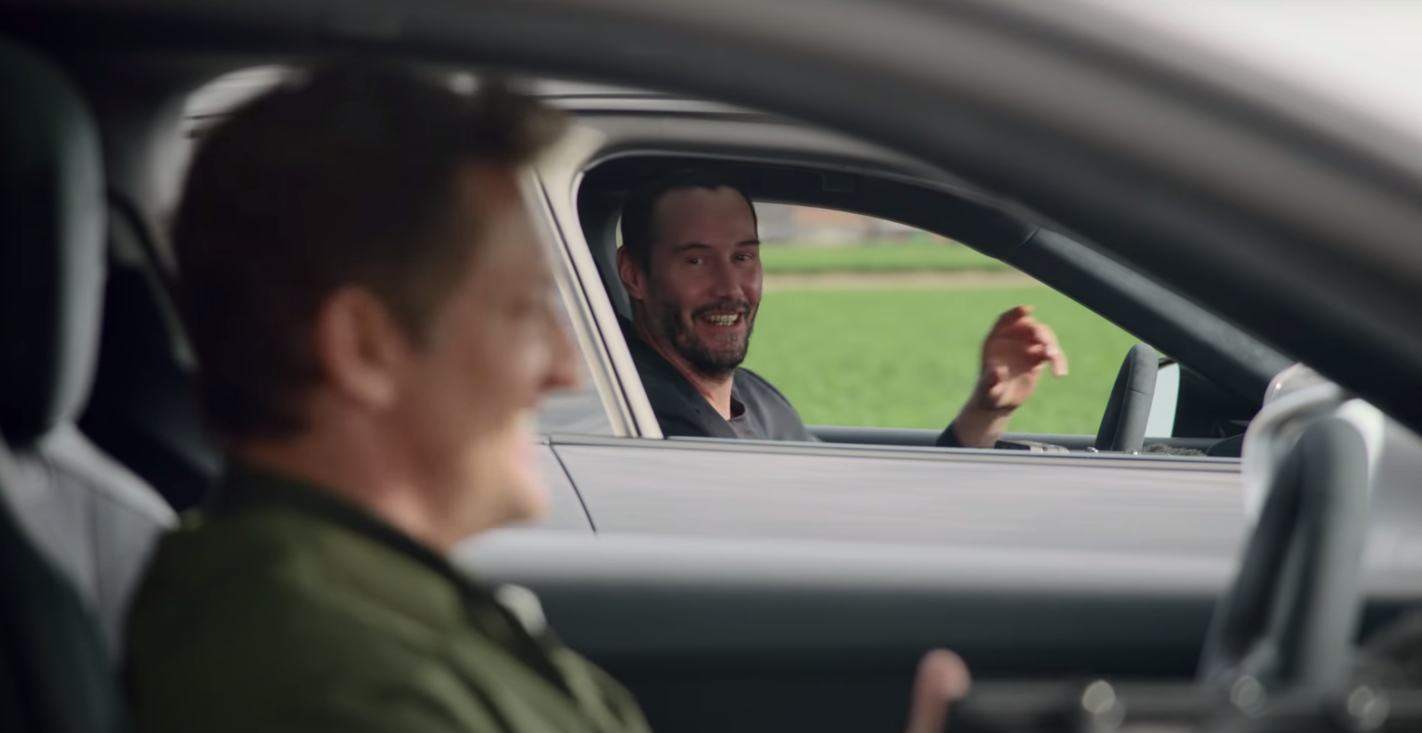
The catch? They’re both driving Stuttgart’s all-electric Porsche Taycan Turbo, and they’re making the trip on a single charge.
And the comedic duo aren’t just highway cruising down the 101 – Porsche has set up a number of challenges for them along the way, to show off the versatility of its rapid EV.
First up, Reeves and Winter cruise to their first task while talking about previous Porsches they’ve both owned.
The Matrix star reflects on his 1996 993 Carrera he nicknamed “the sled” (we would’ve loved a bit of backstory on that one), while Winter talks about his first Porsche being a Targa “from many years ago”.
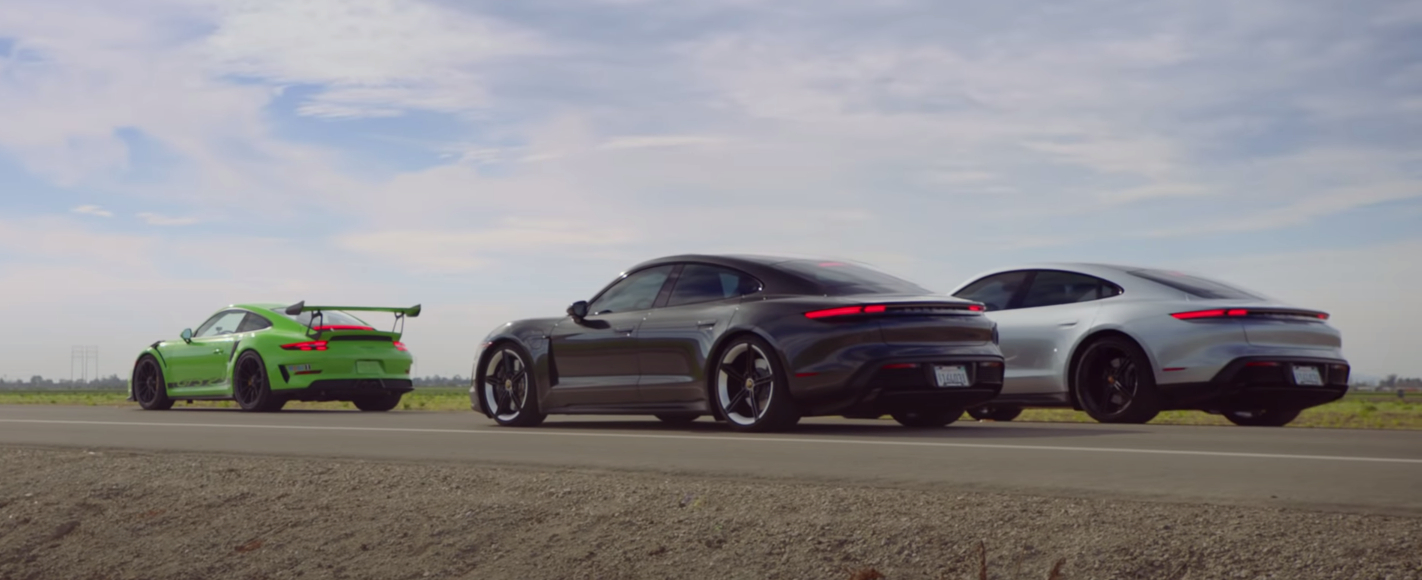
They arrive at the first challenge, where they’re greeted by former Top Gear America star and rallycross driver, Tanner Foust, who has parked himself on a dead straight, closed road.
Foust is sitting pretty in a Lizard Green 991.2 GT3 RS, and he proceeds to floor it down the tarmac, revving out the Weissach wonder-mobile all the way to its 9000rpm redline.
Reeves is so taken by the noise that he even comments, after a perfectly-timed pause, “well that sounded good”.
The pair then proceed to try out “Launch Mode”, and both are apparently shocked by the sheer acceleration of the vehicles.
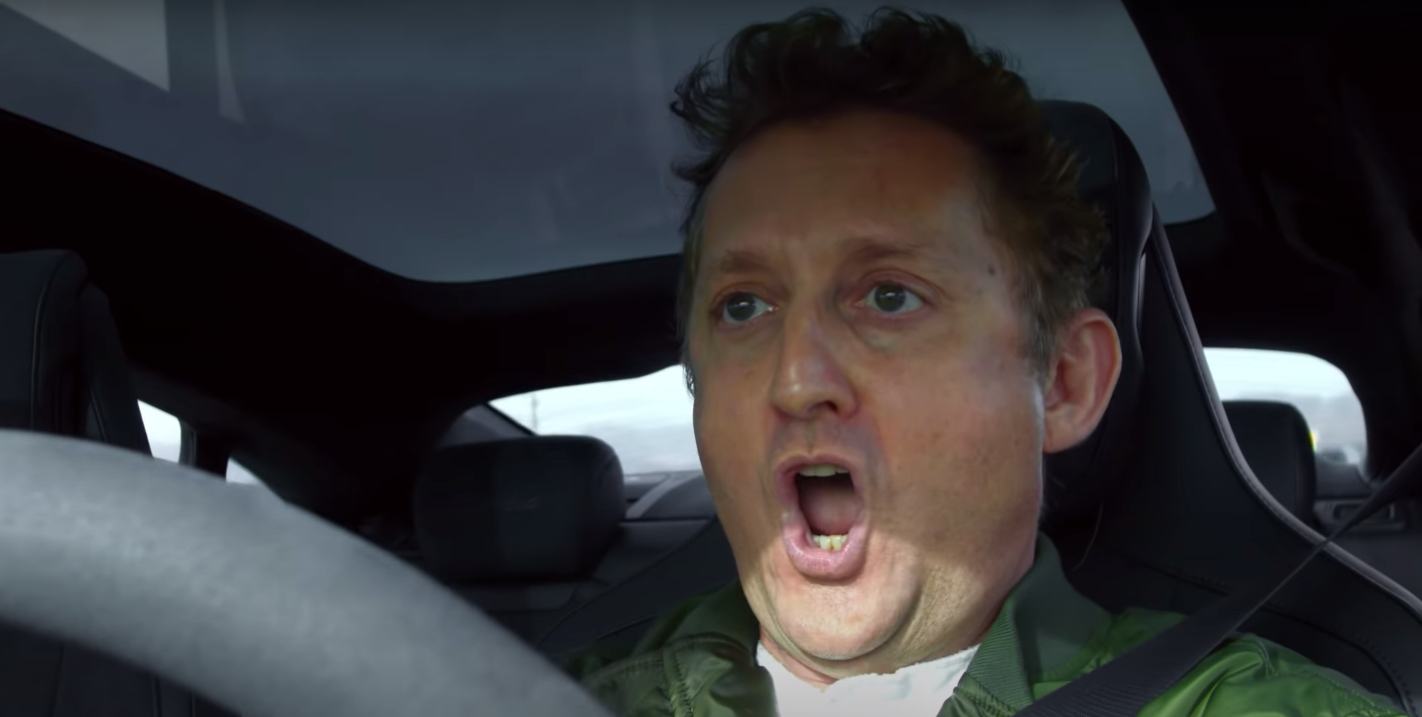
The sprint wouldn’t have taken them very long, with the Taycan Turbo capable of sprinting from 0-100km/h in a dizzying 3.2-seconds, thanks to AWD and a whopping 500kW/850Nm of instant electric shove.
Ironically, the 991.2 GT3 RS Foust sped down the road in has the exact same quoted 0-100km/h time, which makes the Taycan seem even more impressive.
Next Reeves and Winter find themselves on a twisty stretch of asphalt spaghetti, being shown how to drive a hillclimb by Porsche’s factory driver Patrick Long.
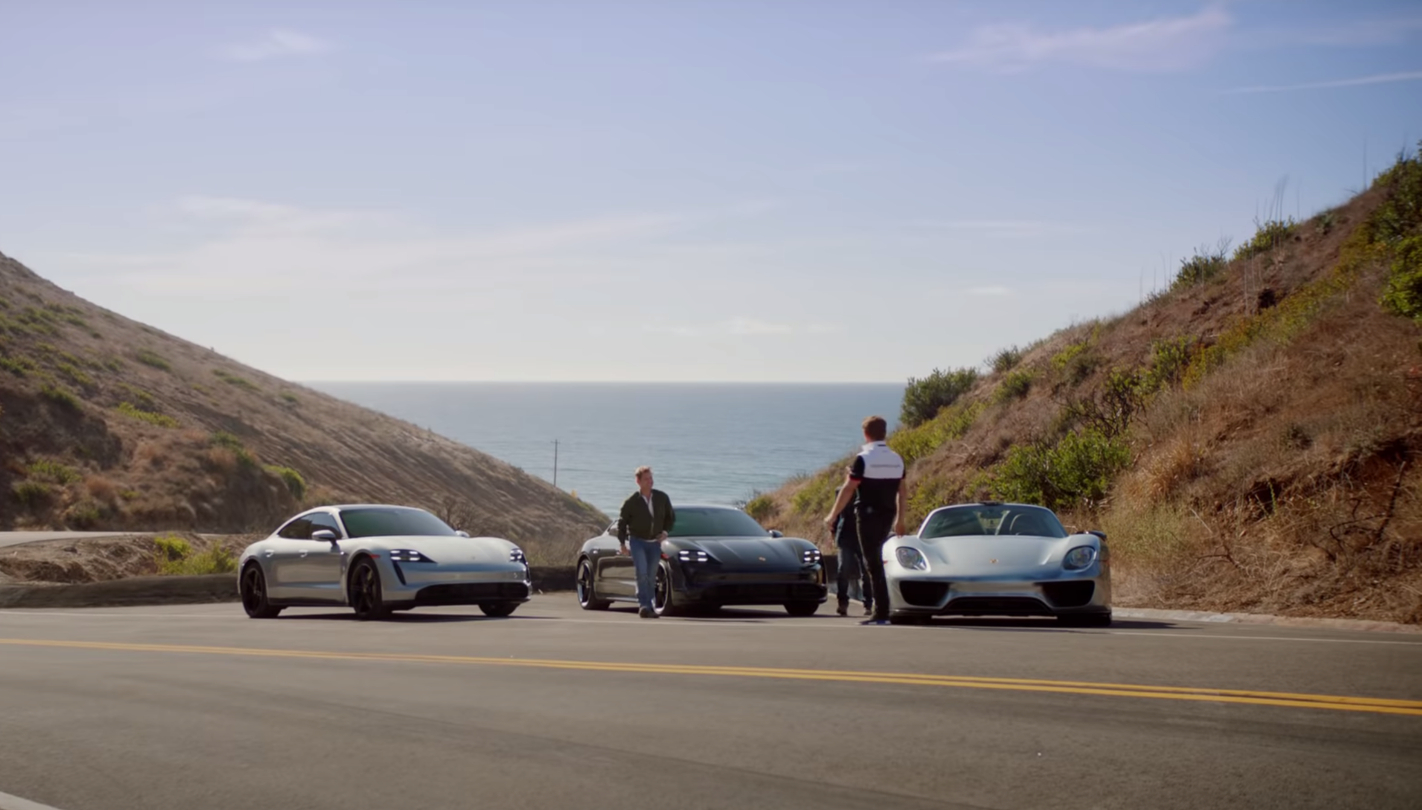
The dual Le Mans and Daytona winner hasn’t come to the hillclimb ill-equipped either – he’s brought one of Porsche’s most fabled hypercars, the hybrid 918 Spyder.
The three drivers bomb up the hill, and while Winters seems to be admiring the view, Reeves (who is a massive petrolhead) is obviously pushing the Taycan hard, commenting “definitely a few white-knuckle moments here”.
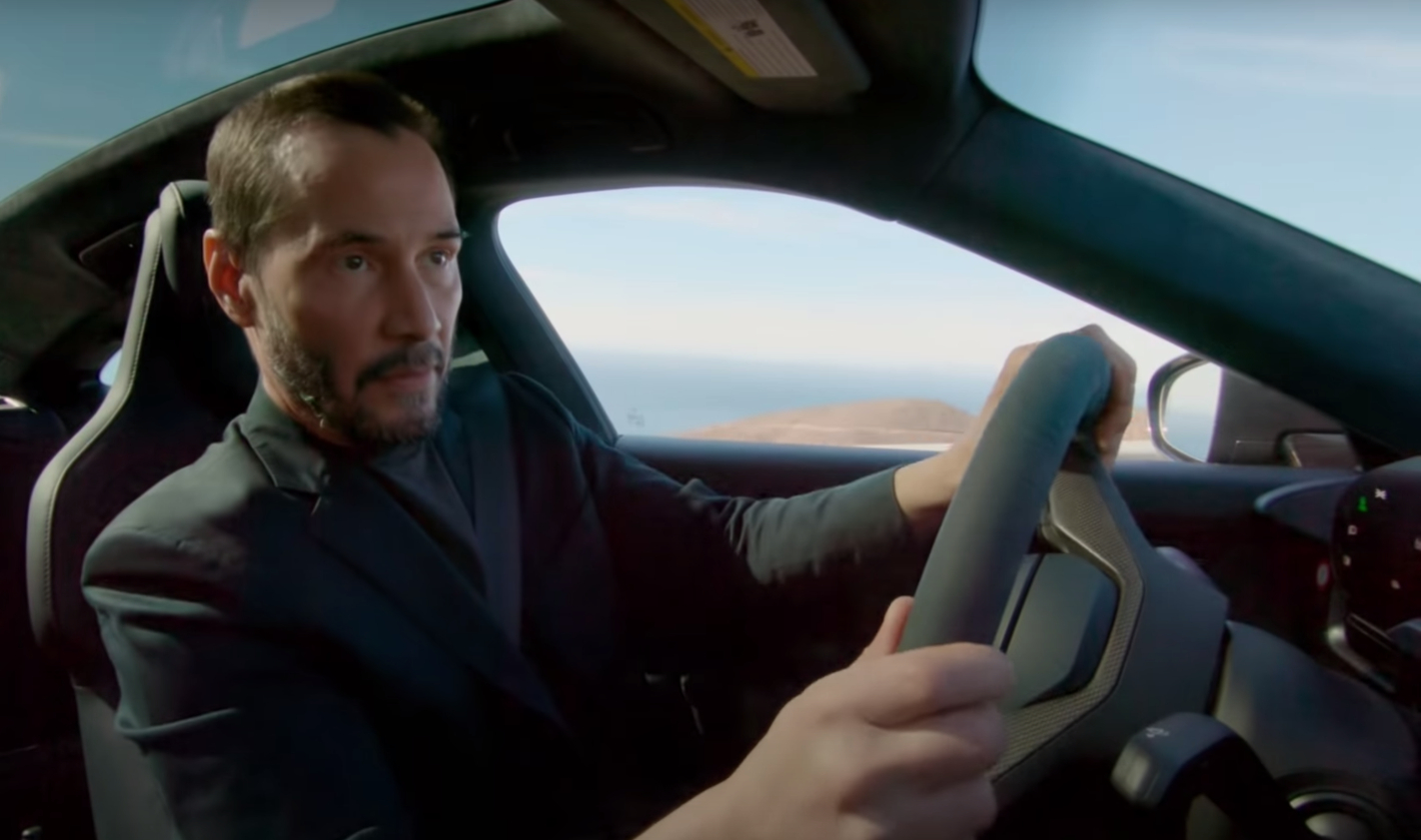
The co-stars then take to California’s 405 highway, before reaching their final destination at the Porsche Experience Centre.
They’ve made it on one charge, and to celebrate, they learn how to drift the electric super-sedans on the skid pan.
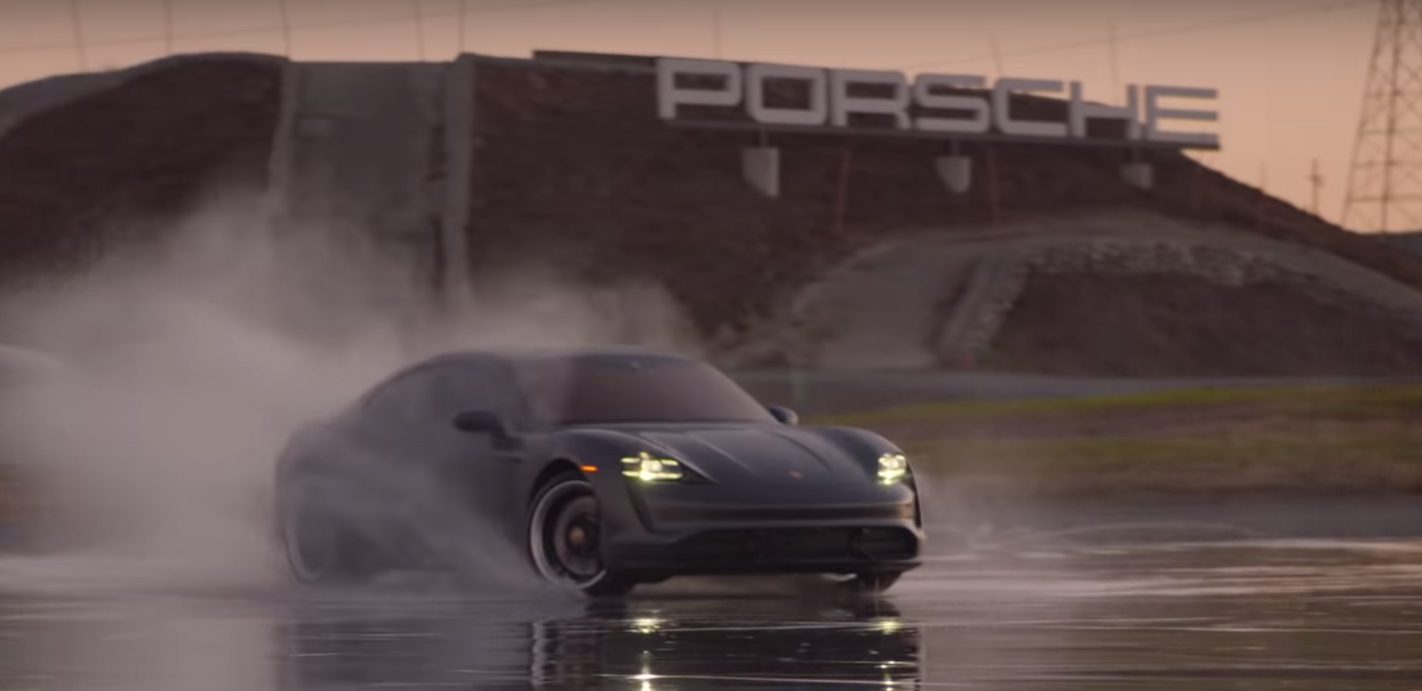
It’s a fun video, and aside from some of the obviously scripted moments, it’s interesting to see how much the two appear to genuinely enjoy the Taycan.
MORE: Taycan stories MORE: All Porsche stories
A new EV charging station has been launched in Melbourne’s inner south, catering primarily to inner-city residents unable to charge their vehicles at home.
The Hub, at 30 Prohasky Street, Port Melbourne, comprises seven 22kW GET electric vehicle chargers in an area surprisingly short of public charging stations.
Launched today by Lily D’Ambrosio – Victoria’s Energy, Environment and Climate Change Minister – the Hub’s location is crucial to an area that has seen former industrial sites turned to commercial, and residential apartment buildings, and is close to the new Fishermans Bend residential and business precinct.
A supplier and installer of EV charging stations for residential and commercial applications, GET built the Hub for the growing number of drivers who cannot access a reliable and convenient way to charge their EV.
The company’s director and founder Srecko Lorbek said people living in high-density apartment towers, townhouses and strata buildings with limited off-street parking really are starved for choice because they have very limited ability to charge their vehicle from their own home.
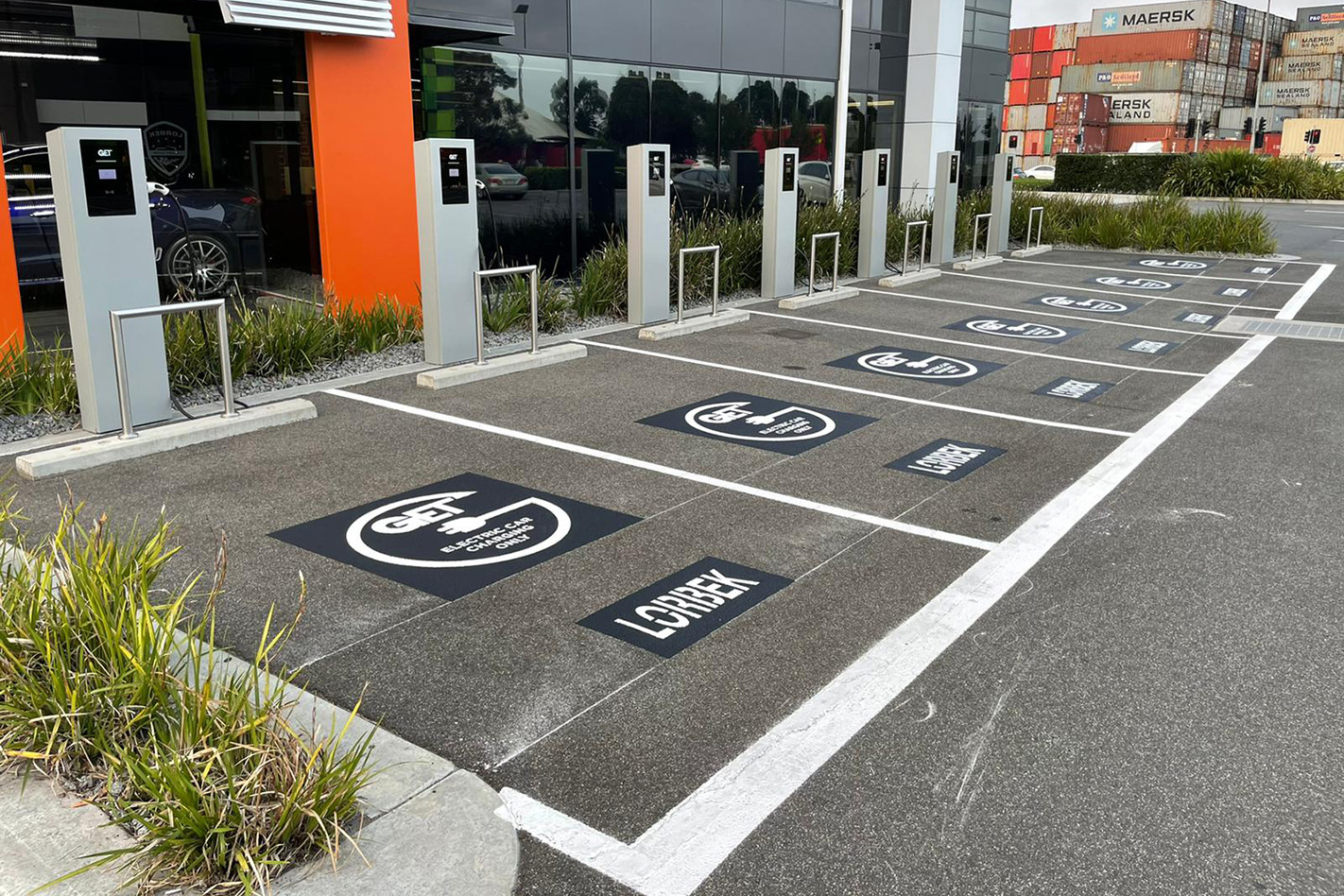
“So, we decided to build our own user-pay Charging Hub so that drivers can charge their EV any time of the day or night in a safe and secure environment. As the world rapidly accelerates towards EVs, the Hub is the petrol station of the future.”
GET CEO Harry Hartman said the Hub was also built in recognition of the fact that Australian EV sales are gaining momentum as the world’s leading car manufacturers bring forward plans to exit petrol and diesel engine vehicle production.
“Such a rapid exodus from petrol and diesel underscores the need for urgently expanding EV charging infrastructure, especially as governments and other large fleet buyers go electric,” he said.
“While conventional wisdom may be that consumers will lead the transition, the reality is that the carmakers are leading change by phasing out production of fossil fuel powered cars, vans and light commercial delivery vehicles. By 2030, new car buyers will have little choice other than to buy electric.”
At today’s launch, Lorbek thanked the Victorian Government for supporting the proliferation of electric vehicles with charging infrastructure – and gave a nod to its controversial EV tax.
“The Victorian Government is moving in the right direction by recognising internal combustible engine (ICE) vehicles are on the way out and developing public policy and infrastructure to support EV drivers,” he said.
“They are also ahead of the curve by anticipating the need for EV drivers to contribute to road maintenance, and whilst the timing of that is a matter for government, we support their leadership in advancing discussion and debate.”
The GET fast chargers are 22kW AC and are suitable for battery electric and plug-in hybrid vehicles with Type 2 or CCS2 ports.
