
The global reveal of the Jaguar XJ220 was not proceeding to plan.
The sleek show car’s V12 engine had seized on Friday and the car had to be pushed onto the British motor show stand at 3am on Saturday, October 18, 1988 ahead of the event opening at 11am. Given that there were only five of the 48-valve 6.2-litre engines in existence, twenty per cent of the total supply of these motors had just been welded into an expensive paperweight.
Nevertheless, the car was a huge hit with show visitors. Ferrari’s new F40 was on display next to Jaguar’s stand, but few paid much attention to the Italian car. An attractive model appeared on the Ferrari stand, shedding clothes in the hope that the throngs of people would migrate from the Jaguar display.

It seems strange to think now, but after the launch of the techno-fest Porsche 959, the F40 was viewed as a hastily cobbled-together and somewhat cynical cash-in on the company’s 40th birthday. What a gift hindsight is. It was thoroughly overshadowed by the behemoth Jaguar, despite the fact that the XJ220 never turned a wheel under V12 power, either before or after the event. Despite stories of blank cheques being handed to Jaguar staff, there were no plans to put the vehicle into production. It was a concept loosely based on how Jaguar might go racing within the framework of the FIA Group B rule set. Cynics might call it motor show fluff. And then it wasn’t.
But before we get into the whys and wherefores of that, a brief rewind on how the XJ220 had arrived under the spotlights at the NEC. The story is, for the most part, fairly well known. TWR had been handling Jaguar’s motorsport entries, winning the 1983 European Touring Car Championship in 1983 with the XJS and the 1988 24 Hours of Le Mans and World Sports Car Championship with the XJR-9. However, that car’s V12 engine was set to run afoul of new motorsport emissions rules and the company had earmarked its successor, the XJR-10, to use a version of the Austin Rover V64V engine, a V6 powerplant that had been developed for the MG Metro 6R4 rally car, itself left high and dry by a change in the rallying rule set. It was, it should be noted, a powerplant that TWR had acquired the rights to use, when it was clear that it would no longer be used in the 6R4.

Enter Kim Randle, Jaguar’s Director of Engineering. In order to win on Sunday and sell on Monday, Randle reasoned that the cars representing Jaguar on track ought to look like the cars in showrooms. Over the Christmas break in 1987, Randle built what he describes as a CAD model – “cardboard assisted design” – in quarter scale of a potential Group B racer. This rough mock-up of the chassis and hard points was taken into the design studio where two designs were generated. The first, the work of Cliff Ruddell, looked more like a typical endurance sports car and was rejected. The other, by Keith Helfet, had far more Jaguar in its genes.
Using Helfet’s body design, Randle assembled a team of 12 volunteers, the so-called Saturday Club, to create a concept, guided by Group B regulations. It featured the mid-mounted 48v V12, four-wheel steering, all-wheel drive and a targeted top speed of 220mph (350kmh), and was thus named XJ220. Randle approached FF Developments to engineer a four-wheel drive system, something which Jaguar had no in-house expertise with. A clever system ran power from the rear transaxle through the V of the engine using a quill drive, whereupon it would join an inverted front differential. The chassis was built from bonded aluminium, with a wheelbase of 2845mm and the entire vehicle tipped the scales at 1560kg, some 200kg lighter than the lowest-spec XJS.
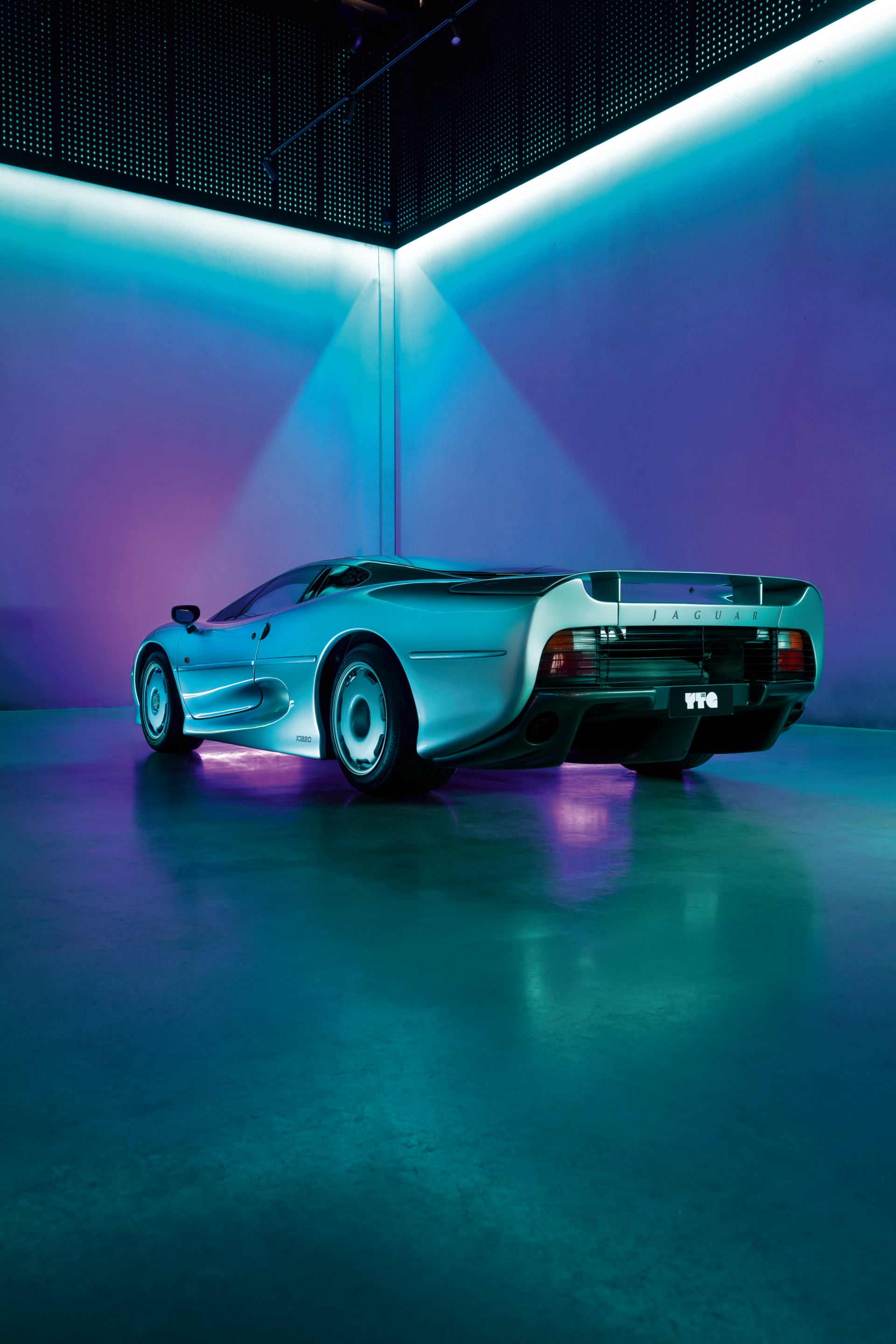
Looking back now, it’s easy to see why the XJ220 show car monopolised the public’s attention. It was an incredible looking thing, long and low, with a glass roof and rear deck displaying the engine’s dozen trumpets. The Connolly leather-trimmed cabin looked production-ready and the sleek silver bodywork looked sculpted by air, testament to the hours of work the team had spent in the wind tunnel at MIRA.
Such was the reception to the car that Jaguar became intrigued as to whether the XJ220 could be offered as a production car. It didn’t take the company long to come to the conclusion that they didn’t have the in-house resources to build the XJ220. An existing alliance with TWR, called JaguarSport, would be the best solution, with JaguarSport then spinning off a separate company called Project XJ220 Ltd. In mid-1989, TWR appointed Mike Moreton to run the project. An ex-Ford Motorsport man, who had helped head up both the Sierra RS500 Cosworth and RS200 projects, Moreton’s first job was to establish what the project costs would be and from there Jaguar could assess whether there was a viable business case for XJ220 production.
It was clear that the writing was on the wall for the V12. The XJ220 needed to shed both weight and complexity, and its two key rivals, the Porsche 959 and the Ferrari F40, had both opted for downsized (sub-3.0-litre) turbocharged engines. Of course, this decision was in no way influenced by TWR owning the rights to the ex-Metro 6R4 powerplant which just so happened to fit the bill. Out went the proposed height-adjustable suspension, the scissor doors and the rear-steering along with the active aerodynamics. Because of the physically shorter engine, the wheelbase could be reduced by a hefty 205mm and the body shrunken somewhat, cutting weight and boosting agility.

It’s suggested that there was a bit of empire building when it came to the decision to ditch the all-wheel drive system. With FF Developments out of the picture, TWR had control of the project. In truth, Moreton realised that developing this novel four-wheel drive system to a production specification would have pushed the project timeline way beyond what Jaguar would accept. FF Developments were contracted in any case to work on the gearbox and rear axle.
The V64V engine would need a bit of help in order to make the power required to propel the XJ220 to its target top speed. As it stood, it was a naturally-aspirated 90-degree V6 with four valves per cylinder, displacing 2991cc. The decision for the Metro 6R4 to do without the turbochargers adopted by its Group B rivals sacrificed top-end power for low-end tractability and response, but it wouldn’t suffice for the XJ220. The engine was bored and stroked to 3498cc and fitted with two Garrett T03 turbochargers. Given that it had changed quite so markedly, Jaguar gave the engine its own designation, the JRV-6 unit.
A rather persistent urban myth that seems to have developed around this engine was that it originated from a cut-down Rover V8 powerplant. This stemmed from the fact that a six-cylinder version of the Rover V8 was used in the very first 6R4 test mules merely to assess packaging requirements. Instead, the actual V64V engine was a custom build, with a block designed by ex-Cosworth engineer David Wood, while Cosworth was largely responsible for the top end build.
Early iterations of Jaguar’s version, the JRV-6 unit, were tested using an otherwise plain-bodied Ford Transit van, a vehicle that subsequently gained fame when it was wheeled out for the Goodwood Festival of Speed. It’s now owned by the Goodwood trust and still draws the crowds each year at the festival.
Next we have to kill another enduring XJ220 myth, and it’s probably the one that’s been most damaging to this car’s legacy. Buyers signed up for a car with a V12 engine and all-wheel drive and got something with a V6 and rear-wheel drive. As a result, there was a huge legal stoush as many attempted to cancel their orders. It’s a great story but it’s not even close to being true.

When Jaguar greenlit production of the XJ220 in December 1989, buyer contracts stipulated very clearly that this would be a rear-drive car powered by a V6 engine. Jaguar asked for a deposit of £50,000 (A$102,312) + VAT, and nested within the contract was an important, but innocuous-looking clause. The price of the car would be index-linked, which would see the invoice raise from the mooted £290,000 (A$593,414) at the time of contract signing, to £361,000 (A$738 698) by February 1990 and then up to a massive £403,000 (A$824,640) when the first production-ready cars were available in June 1992.
Jaguar attempted to make good on the 220mph (354km/h) top speed claim. Chassis 004 had already achieved a top speed of 212.3mph (341.7km/h) at Fort Stockton, Texas in early 1991, driven by Andy Wallace, but Jaguar felt more was to come. Martin Brundle was enlisted to drive chassis 009 in June 1992 at the Nardo ring in Italy, and achieved exactly the same top speed, with Brundle noting that there was nothing left to give. The XJ220 was running into its 7400rpm rev limit.
The engineers reprogrammed the Zytek ECU to allow for a 7900rpm rev limit and gutted the catalytic converters, the exhaust modification alone liberating around 38kW. Brundle went foot to the boards again, recording a top speed of 217.1mph (386.4km/h), which made the XJ220 the world’s fastest production car, a record that stood for almost four years, finally beaten by the 240.1mph (386.4kmh) of the McLaren F1 in March 1998. Given that tyre scrub on the outside lane of the Nardo banking at 300km/h accounts for 10km/h of top speed, that particular XJ220 would have been a 220mph car on the straight. Whether that counts for anything versus a customer-spec car is open to question.
Jaguar also took the XJ220 to the Nürburgring Nordschleife for high-speed track testing. It’s worth noting that this was five years before the Nissan Skyline R33 GT-R set its ‘legendary’ 7m59.88s lap of the track with Dirk Schoysman at the wheel. Jaguar believed that the quickest mark at that point was an 8m14s lap set by a Honda NSX. In October 1991, Le Mans winner John Nielsen piloted an XJ220 to a 7m46.37s lap time, a record for a production car that would stand for eight years. In a not entirely uncommon incident of foot-shooting, Jaguar didn’t realise the promotional gold that this achievement represented. It took Nissan’s marketing department to create the idea that the Nürburgring lap time was the gold standard of sports car capability and that its Skyline was the record holder.
Then macroeconomics happened. The Soviet Union collapsed, oil prices soared, US credit was squeezed and the whole bubble that surrounded speculation on supercars burst, and burst far quicker than anyone expected. Between 1991 and 1993, the UK felt the bite of the early 1990s recession. The XJ220 deposit holders realised that they were about to realise a stack of negative equity; their new cars instantly worth about half what they were about to pay. Some customers tried to wriggle out of their contracts, prompting a legal challenge, which Jaguar easily won. It should be noted that Jaguar weren’t the only ones in this predicament.
The mooted production run of 350 cars was never realised, the company finding just 281 buyers for the XJ220. That’s still an 80 per cent fulfilment rate, which was far better than the 71 McLaren F1s that were sold against its intended production run of 300 (for a 24 per cent fulfilment rate). Again, hindsight.
It’s fair to say that the XJ220 had a traumatic birth, then. The production car was built at the Bloxham plant, meeting the body-in-white which was constructed at Abbey Panels in Coventry. The production-spec car was first displayed at the 1991 Tokyo Show and Tom Walkinshaw insisted on waiting until the first 10 cars were with owners before okaying press drives.

We had to wait until September 1992 for the XJ220 to grace the cover of Wheels, with a cover line that would prove to be a favourite of Wheels subeditors down the years; ‘Off The Clock’. Mark Fogarty became the first Aussie journo to drive the XJ220, in this case both on road and at the Salzburgring circuit.
“The physical effort needed to steer and stop the XJ220 is the closest you’ll ever come to the exertion of racing a Group C sports car,” he said. It’s clear he was no great fan of the way the car sounded though. “Aurally, this engine is no masterpiece. It clatters and rattles into life, at idle sounding very coarse and primitive. Once under way, the note improves, taking on a low, guttural growl. But even at full noise in fifth, there’s no spine-tingling scream or yowl, nothing remotely sonorous. It’s a purposeful roar, much like the muted Le Mans turbo racer from which the motor is derived.”
If Fogarty was unimpressed by the soundtrack, there was very little cause for complaint about the potency of the V6 engine. “The figures suggest it would bend bitumen: 404kW at 7200rpm and 644Nm at 4500 revs. And when you press the pedal, you get instant, constant go,” he noted. “No discernible turbo lag, no sudden explosion of power. From first to fifth gear, the acceleration is relentless, gathering force and still surging at 225km/h, a maximum dictated by the road conditions,” he said, and it was clear from the figures that the XJ220 had the legs on both the Ferrari F40 and the new Lamborghini Diablo.
“The engine is blessed with a brilliant chassis,” he continued. “The combination of a taut body, compliant yet uncompromising equal length wishbone suspension, tenacious tyres and ground effects aerodynamics glues all that grunt to the ground. And it rides with a suppleness that is remarkable in itself, all the more so because it has been achieved in concert with race car-like handling and roadholding… It’s as close to a neutral handler as you can get, with some understeer setting in at the limit.”
That opinion contrasted quite markedly with the next XJ220 drive we featured in Wheels. Taking place on the cold, wet Castle Combe circuit in the UK, journalist Mark Gillies emerged wide eyed and chastened. “The thing feels bloody fast and its performance is memorable,” he said. “The handling is too, but for all the wrong reasons. If there’s a more evil device on our roads, I wouldn’t like to find it – the 220 suffers from immense initial understeer followed by violent, snappy, pendulous oversteer. There is a momentary point of neutrality…. but house-trained the Jag is not. You’re unlikely to find this out on the road because your bravery runs out before the gumball Bridgestones yield to the laws of physics, but there’s only so much that tyre technology can mask in the wet.” Sounds like a case of choosing your moments.
And timing was what scuppered the XJ220 from a commercial perspective. After building 282 cars, production wrapped up at Bloxham in April 1994, the facility being transferred to Aston Martin to handle assembly of the DB7. Some of the production run had yet to find owners, with the final handful of unsold XJ220s offered at £127,550 (A$260,999) plus VAT in 1997. In another developmental oversight, Jaguar had never homologated the car for sale in the US, potentially its biggest market, and the vehicle was only approved under the restrictive Show or Display exemption in 2001. It wasn’t because the car was exclusively right-hand drive. In fact, there are more left-hand drive cars than right-hookers, with just 69 cars having their steering wheel on the right. Jaguar just didn’t have the resource to allocate to US type approval during development.
Our final test in the XJ220 came in the March 1995 issue and it was a test that seemed tailor-made for the big Jag. It lined up on Kemble runway against the Porsche 911 Turbo, the Lotus Esprit S4S, the Ferrari F40, the Ferrari F512M, the Aston Martin Vantage and the Dodge Viper. Andrew Frankel was the man tasked with sinking the slipper and the results were eye-opening. Rather predictably, it came down to a shootout between the XJ220 and the F40. The Ferrari logged a terminal speed at the mile marker of 286.1km/h yet the Jaguar squeaked ahead at 290.1km/h, its superior aerodynamics meaning that it overcame a power-to-weight deficit against the Ferrari (276kW/tonne versus 324kW/tonne). One notable absentee was the McLaren F1, and Frankel claimed that from previous performance data he possessed, the F1’s terminal speed over the mile would have been a mighty 317km/h, but doubted whether there would have been enough runway left for it to stop safely thereafter.

The 1994 McLaren F1 subsequently eclipsed the XJ220’s performance in almost every regard. The McLaren was worthy of the superlatives then, plaudits that have meant that these cars are now worth somewhere in the region of $50m. The Jaguar never scaled those lofty heights of acclaim and that reflects in prices today. Due to its rarity and troubled genesis, the XJ220 is a tricky car to value, but prices have been firming of late, with good US cars now starting to climb above USD$600,000. That said, auction prices will fluctuate significantly based on mileage, provenance and condition. Aussie cars are a far rarer proposition, and the one that features here, for sale by Young Timers Garage in Melbourne, ought to hover somewhere around seven figures. That’s still less than a quarter of the price of the Ferrari F40 which, as well as being slower, is also more than four times more commonplace, with 1311 units built. There’s probably a great MBA dissertation on the supply and demand affecting these two cars.
Fast, flawed and undoubtedly fascinating, the Jaguar XJ220 achieved so much. It was the fastest production car in the world, the quickest car around the Nürburgring, and even to this day is possessed of the sort of road presence that has escaped many so-called hypercars. Love it or hate it, the XJ220 is never anything less than an event. It offered a blend of qualities that has never quite been replicated and, as the years pass, perhaps collectors will come to realise quite what a rare and beautiful thing it is. It celebrated a moment for Jaguar that we may never see again; one of giddy and limitless possibility. Its time will no doubt come.
The even rarer XJ220S
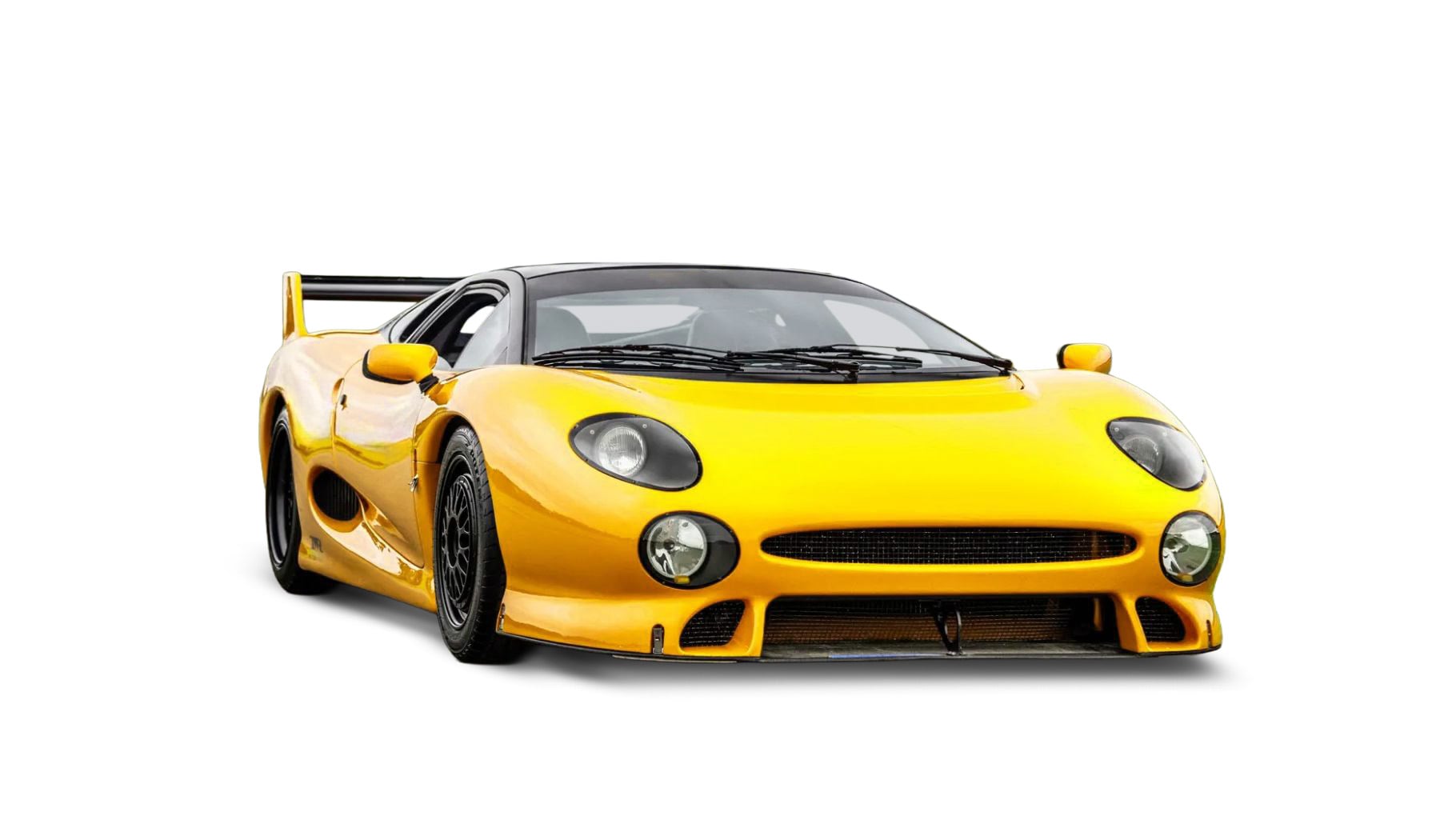
Jaguar built six roadgoing XJ220S models, in effect a road-legal version of the XJ220-C racer which won the Grand Touring class at Le Mans in 1993 before having the win stripped due to not running catalytic converters. It features a composite body, fixed headlights and a stripped out cabin featuring Kevlar bucket seats. Power stepped up from 404kW to a hefty 507kW and weight dropped from 1470kg to 1151kg. Just as it looked as if Jaguar had a world-beating competition car on its hands, the McLaren F1 GTR happened.
Specs
| Model | Jaguar XJ220 |
|---|---|
| Engine | 6222cc V12, DOHC, twin-turbo |
| Power | 405kW@7000rpm |
| Torque | 644Nm@4500rpm |
| Transmission | Five-speed manual |
| Power to weight | 276kW/tonne |
| L/W/H/WB | 4930/2009/1150/2640mm |
| Weight | 1470kg |
| 0-100km/h | 3.6sec |
| Top speed | c.352km/h |
| Price now | $800k-$1.2m |
The article originally appeared in the December 2025 issue of Wheels. Subscribe here and gain access to 12 issues for $109 plus online access to every Wheels issue since 1953.
While most of us our interested in the practicality, fuel economy and longevity of cars, the quest to produce cars that can push the boundaries of speed goes on apace. When the former world’s fastest car, the Ferrari F40 hit a top speed of 322km/h (200mph) in 1987, many thought that thanks to aerodynamics, cars couldn’t go much faster… but of course, they did.
The Bugatti Veyron hit a major new milestone when it hit 407km/h in 2005 but unbelievably, cars just continue to get faster at the top end. Here are the five current fastest cars in the world:
1. Yangwang U9 Xtreme: 496.2km/h

BYD’s premium arm shocked us earlier this year, setting the record for the world’s fastest car at a massive 496.22km/h (or 308 mph) with the U9 Xtreme electric hypercar at the ATP test track in Germany. Four electric motors, each capable of spinning at 30,000rpm, produce an eye-watering 2176kW (2,959hp).
In addition to its speed run, the U9 Xtreme also holds the record for the fastest fully electric production car to lap the Nürburgring race track in Germany, with a time of 6:59.157. It reportedly hits 100km/h in under 2.0 seconds, all while costing around A$400,000 in China – a bargain compared to some cars on this list.
2. Bugatti Chiron Super Sport 300+: 490.4km/h
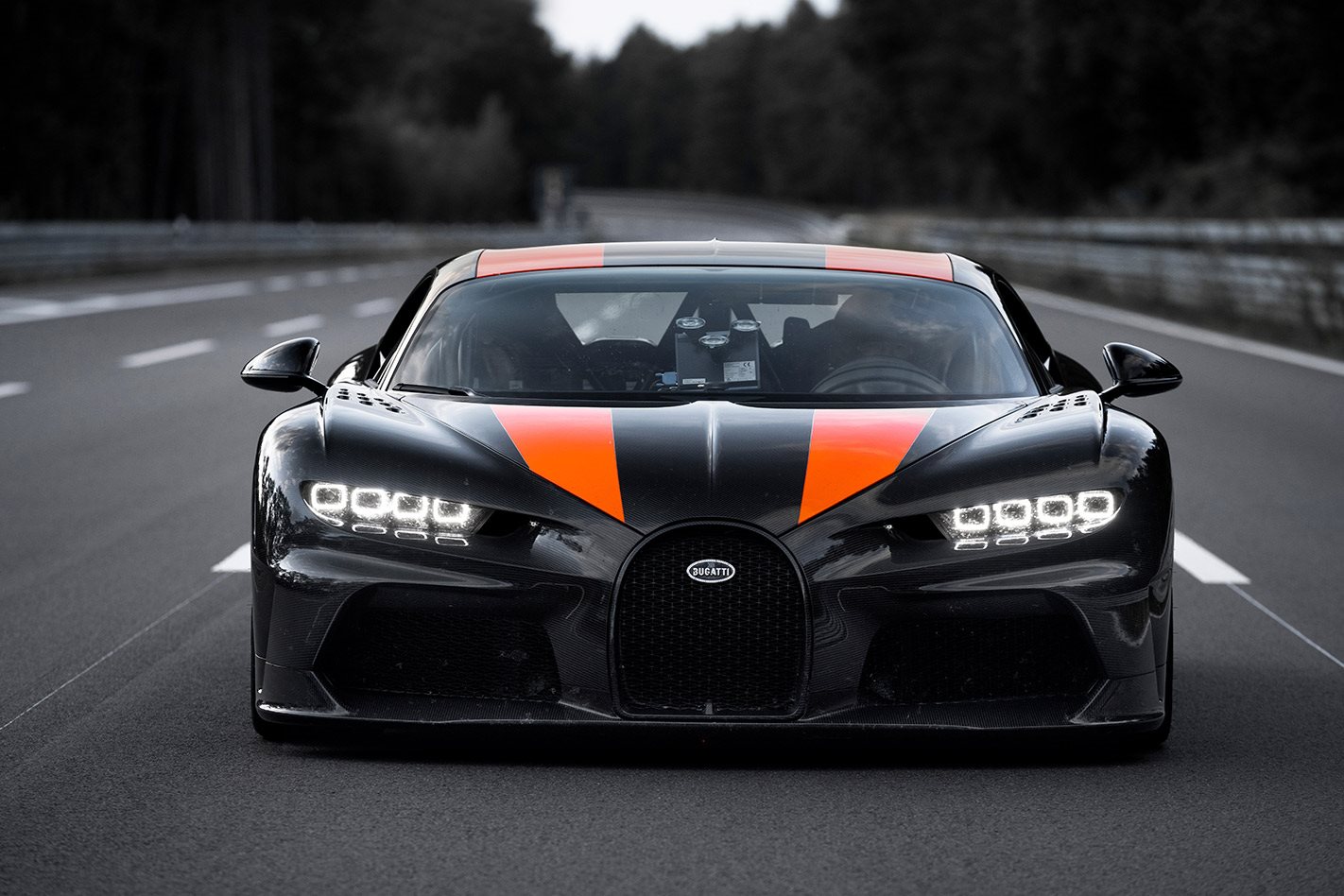
Based on the regular Bugatti Chiron, the Super Sport 300+ was an even faster and more focused version of the Chiron, which was already one of the world’s fastest cars. It made 75kW more power than the ‘regular’ Chiron at and was launched by Le Mans winner and Bugatti test driver Andy Wallace with a casual 490.4km/h in Germany back in 2019.
Power comes from a quad-turbocharged 8.0-litre W16 engine making 1160kW of power, enabling it to sprint from 0-200km/h in just 5.8sec and 0-300km/h in a scarcely believable 12.1sec. Only 30 units of the Super Sport 300+ were produced and priced at around €3.5 million (A$6.3 million).
3. SSC Tuatara: 455.3km/h
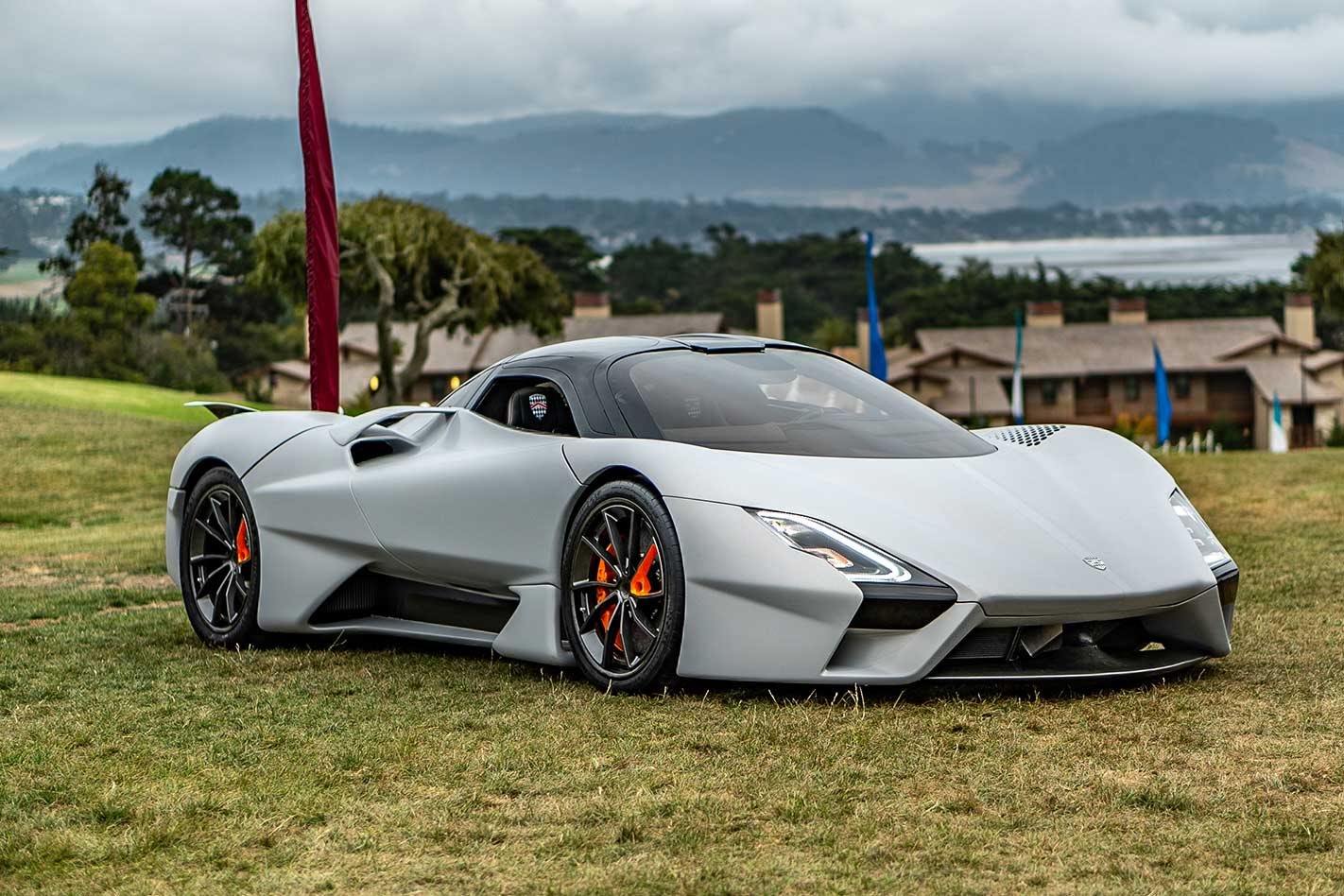
In case you’ve not heard of it, the SSC Tuatara is an American hypercar made by SSC North American (formerly Shelby SuperCars). Power is sent to the rear wheels from a 5.9-litre twin-turbo V8 engine that makes a huge 1304kW of power, yet only weighs around 1250kg.
SSC claims that it hit a top speed of 331.15mph (532.9km/h) and was the world’s fastest car, but that was disputed. The Tuatara then made another attempt in 2021, hitting an average speed of 282.9mph (455.4km/h) over two runs. Pricing for the Tuatara starts at US$2 million, and only 100 units are planned to be built.
4. Bugatti W16 Mistral: 453.8km/h

The Bugatti Mistral is officially the world’s fastest convertible, achieving a top speed world record of 453.8km/h in 2024. It marked the final use of the French brand’s famed W16 engine, which first went into production with the Veyron, and was replaced with the hybridised V16 in the Tourbillon.
Just 99 units of the Mistral were made, and all were already sold out before it was revealed. Pricing for the Mistral started at a cool €5 million (almost A$9 million).
5. Hennessey Venom F5: 437.1km/h
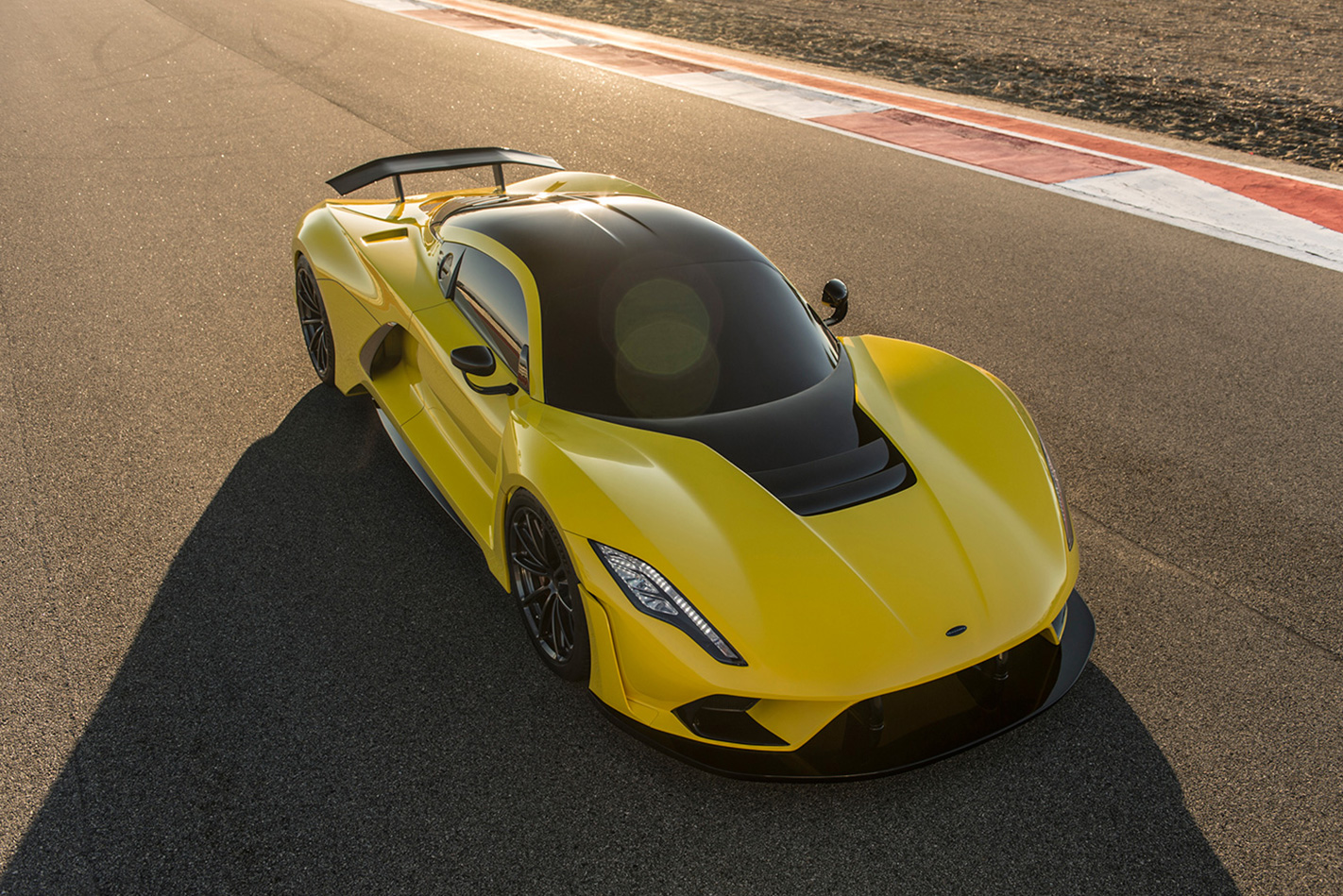
Featuring a twin-turbocharged 6.6-litre V8 that makes a huge 1355kW of power and gearbox-shredding 1617Nm of torque, the Venom F5 sprints from 0-400km/h in just 15.5sec, which is half the time of the Bugatti Chiron.
Weighing less than 1360kg (tare), Hennessey also promises a top speed of 550km/h, although 437.1km/h is as fast as it has gone so far. Pricing starts at around US$2.1 million (A$3.3million ) for the base coupe and hits around $3 million for the roadster.
The beloved Suzuki Jimny three-door is back on sale in Australia after a sudden production pause was required to upgrade its active safety systems to comply with Australian standards.
Now fully compliant with current Australian design rules thanks to an upgraded autonomous emergency braking system, the updated Jimny matches its five-door Jimny XL sibling. Suzuki has also upgraded its feature list, with pricing starting from $31,990 plus on-road costs for the entry-level Lite.
Australian Jimny three-door production was paused for 2025 as its autonomous emergency braking system did not meet Australian design rules. AEB was fitted as standard but not to the level required for compliance. The Indian-made Jimny XL, however, is fitted with the more sophisticated AEB system and was not taken off sale.
The new ADR rule affected many products sold locally, including the Mitsubishi Eclipse Cross and Pajero Sport, Mazda6 and even more of Suzuki’s products, including the Ignis and S-Cross SUVs.
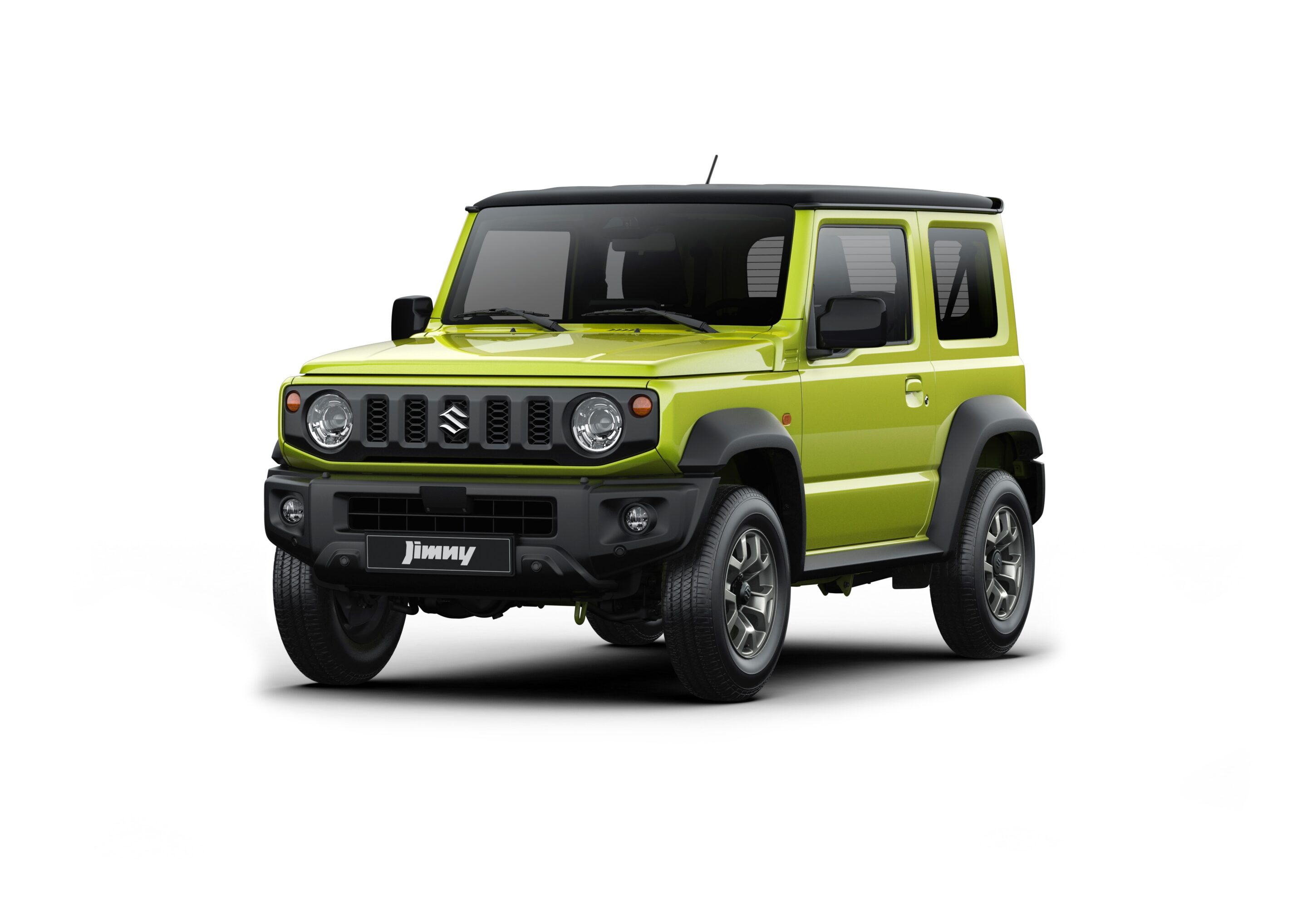
Unlike those cars, however, Suzuki has engineered the system for the three-door Jimny, allowing it to be re-sold in Australia. Pricing starts at $31,990 +ORC for the entry-level Lite (+$1500 compared to the pre-updated model), $33,990 +ORC for the mid-spec Jimny manual (+$2000) and $36,490 +ORC for the top-spec Jimny automatic (+$2000).
In addition to the upgraded AEB system, Suzuki has also given the Jimny three-door more standard features. The entry-level Jimny Lite now features a 7.0-inch touchscreen with Apple CarPlay and Android Auto, deleting its former basic radio with a CD player, and the Jimny manual and automatic now feature a larger 9.0-inch touchscreen that is already available on the Jimny XL.
Front and rear parking sensors are now available, as is adaptive cruise control (likely only for the automatic model) and lane departure prevention.
That’s on top of the standard features of the pre-updated Jimny manual and automatic, including AEB, lane departure warning, dusk-sensing automatic LED headlights, automatic climate control, a leather-wrapped steering wheel and electric-folding mirrors. The Jimny Lite is more basic in its equipment, but still includes power mirrors and windows and air-conditioning.
2026 Suzuki Jimny three-door pricing (plus on-road costs):
| Jimny Lite manual | $31,990 |
|---|---|
| Jimny manual | $33,990 |
| Jimny auto | $36,490 |
New features for the 2026 Suzuki Jimny:
- Jimny Lite: 7.0-inch touchscreen with Apple CarPlay and Android Auto
- Jimny: 9.0-inch touchscreen with Apple CarPlay and Android Auto
- Front and rear parking sensors
- Dual Sensor Brake Support II (DSBS II)
- Lane departure prevention
- Adaptive cruise control
The updated Suzuki Jimny three-door is now in production for Australia with the first examples due in Australia in early 2026.
Ford Australia has revealed pricing and equipment for the updated MY26.5 Ford Everest large SUV, which is priced from $58,990 plus on-road costs.
Available to order next month ahead of the first deliveries landing in mid-2026, the updated Everest range has seen the deletion of the former 2.0-litre bi-turbo diesel engine, as well as the Ambiente and Trend models, replaced by the 125kW/405Nm 2.0-litre single-turbo diesel from the Ranger and a new Active base model. The 184kW 3.0-litre V6 turbo-diesel engine continues as before, though now available in base Active form. All models are equipped with a 10-speed automatic transmission as standard and rear-drive models are no longer available.
Priced from $58,990 plus on-road costs, the Everest Active includes equipment such as leather upholstery, a 12-inch touchscreen, 18-inch alloy wheels, privacy glass, tyre pressure monitoring and automatic LED headlights.
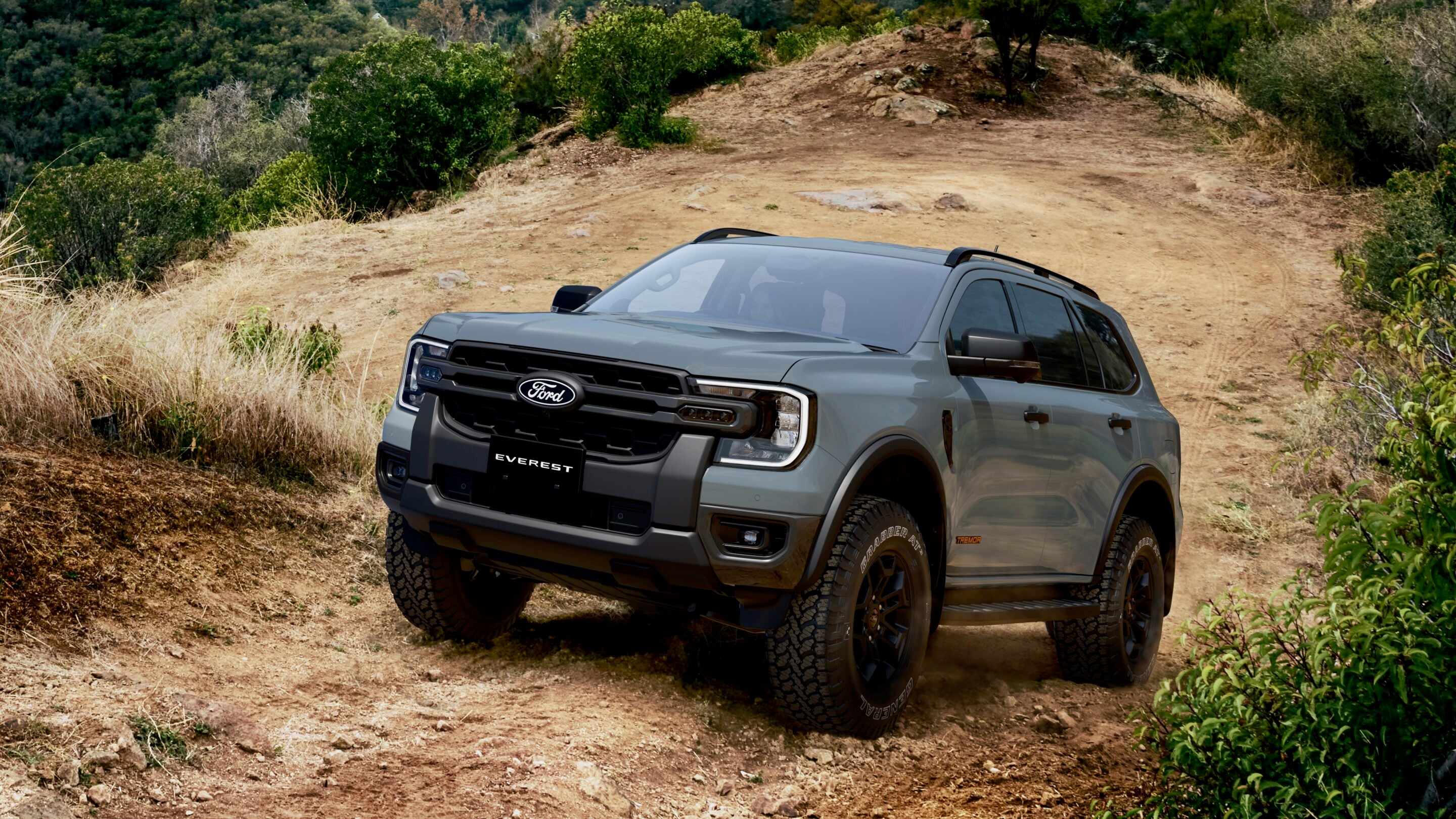
The Everest Active’s pricing is $500 less expensive than the more powerful bi-turbo Ambiente it replaces, but includes more standard features.
Elsewhere in the Everest’s line-up, a 360-degree camera is now standard on the Sport and Tremor models, with tyre pressure monitoring also added to the Sport. The former Tremor Premium Seat Package with heated and vented front seats with electric adjustment is now standard equipment, and buyers can remove the third row of seating for the first time.
On the colour front, ‘Alabaster White’ and ‘Acacia Green’ colour options are now available on the Everest, with the former ‘Equinox Bronze’ shelved.
MY26.5 Ford Everest pricing (plus on-road costs):
| Active 2.0L 4×4 | $58,990 (new, $500 cheaper compared to former bi-turbo Ambiente) |
|---|---|
| Active 3.0L 4×4 | $66,990 (new) |
| Sport 2.0L 4×4 | $68,990 ($2200 cheaper compared to former bi-turbo Sport) |
| Sport 3.0L 4×4 | $76,990 (+ $1000) |
| Tremor 3.0L 4×4 | $79,990 (+ $1550) |
| Platinum 3.0L 4×4 | $83,490 (+ $500) |
Ford Everest options:
- Prestige paint: $675-$950
- Third row seating (Active): $1350
- Towing Pack: $2000-$3250
- 18-inch all-terrain tyres (Active): $750
- 18-inch all-terrain tyres (Sport and Platinum): No-cost option
- Rough Terrain Pack (Tremor): $3550
The MY26.5 Ford Everest line-up will available to order in December ahead of the first deliveries arriving in mid-2026.
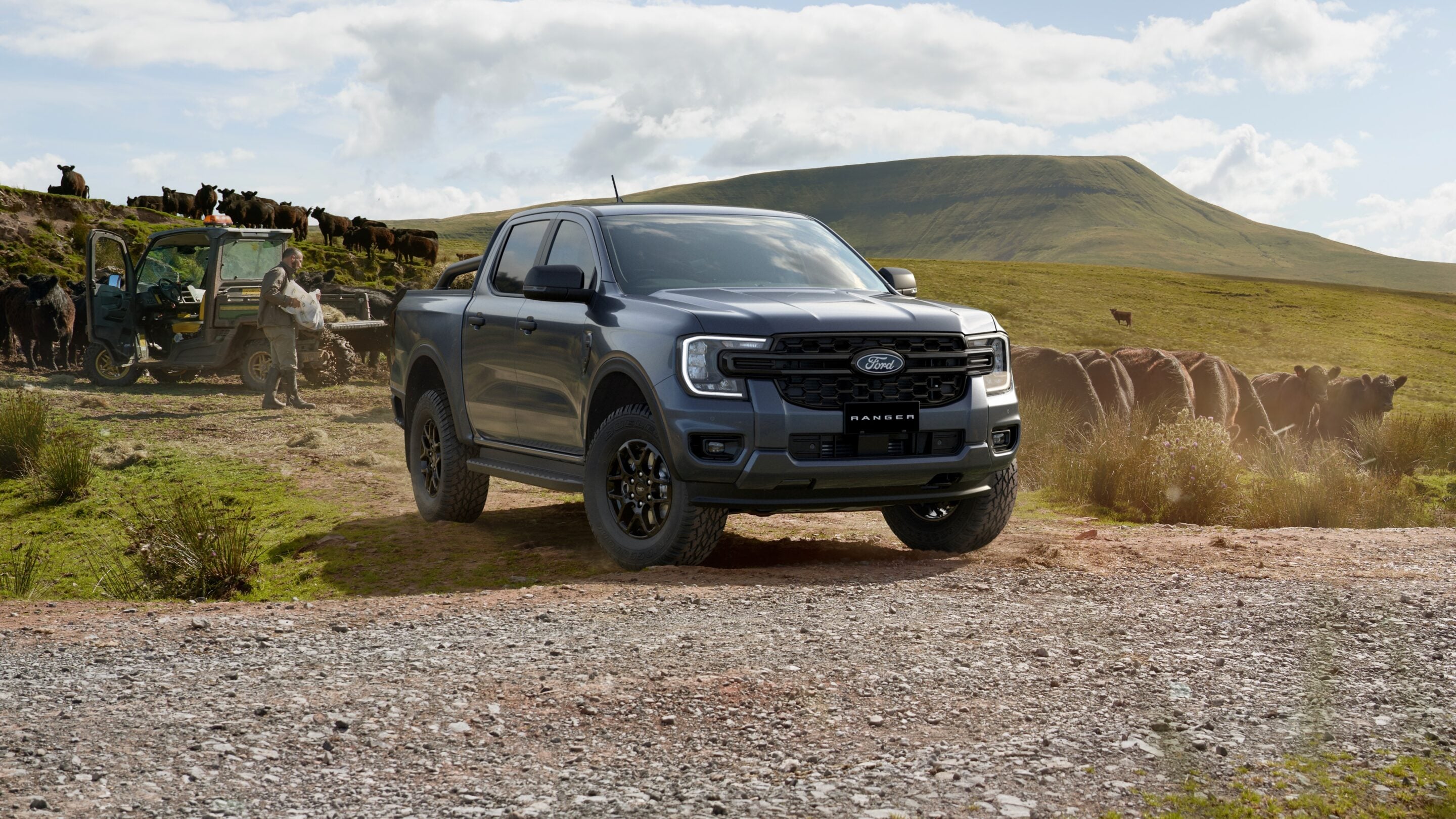
Ford Australia has revealed pricing and specifications for the upgraded MY26.5 Ranger line-up, which includes changes such as shelving the former bi-turbo 2.0-litre diesel engine, new available models, more standard features across the range and new colour options.
Pricing starts at $37,130 plus on-road costs for the entry-level XL Cab Chassis, which is unchanged compared with the current model despite its new added standard equipment. The order books for the MY26.5 Ford Ranger are now open ahead of the first deliveries commencing in mid-2026.
Of most significance for the Ranger models is that Ford is simplifying the engine range with the 2.0-litre bi-turbo diesel engine no longer available. As previously announced, the 125kW/405Nm 2.0-litre single-turbo diesel – now upgraded with a new timing chain and an updated fuel injection system – continues as the entry-level engine but the 184kW/600Nm 3.0-litre V6 turbo-diesel is now available across more of the line-up to cover the former bi-turbo variants.
The 2.3-litre turbo-petrol plug-in hybrid and 3.0-litre turbo V6 petrol engines are unchanged, while all models are now equipped with a 10-speed automatic transmission as standard.
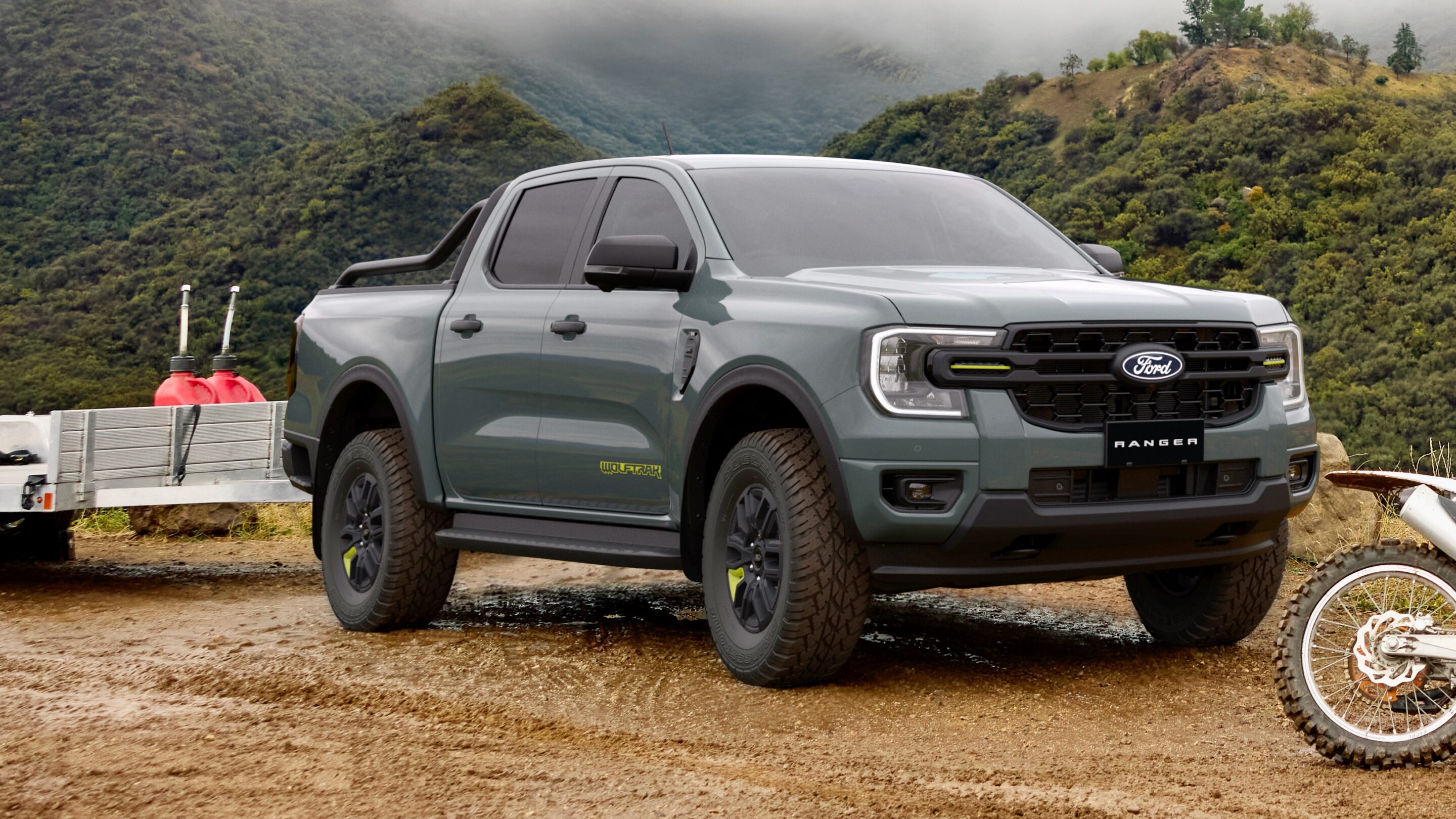
Elsewhere in the line-up there are minor changes: the Ranger Sport is no longer available, but the Black Edition is now a permanent model, available with the V6 diesel engine. The former Ranger Tremor has returned to the range with its off-road focus, while there’s a new Ranger Wolftrak model that sits above the XLT, featuring equipment such as black 17-inch wheels with all-terrain tyres, green exterior highlights, vinyl upholstery with Wolftrak logos and availability of a unique ‘Traction Green’ colour.
As part of the changes to the Ranger line-up, Ford has also added more standard equipment to various models. The XL, for example, adds the larger 12-inch touchscreen, dual-zone automatic climate control (with rear vents for double cab variants), while selecting the XL V6 also adds 17-inch steel wheels, rear disc brakes and an e-shifter with selectable driving modes.
The XLS adds side steps, carpet flooring with a driver’s floor mat and 17-inch alloy wheels with all-terrain tyres, while the Wildtrak now features new 18-inch alloy wheels, Matrix adaptive high beam and a 10-speaker B&O sound system.
Importantly, Ford has also upgraded the safety levels for cab chassis variants with blind-spot monitoring, rear cross-traffic alert, a digital reversing camera, lane change warning, rear parking sensors and reverse automatic braking now standard.
MY26.5 Ford Ranger pricing (plus on-road costs):
| XL Single CC 2.0L 4×2 | $37,130 (unchanged) |
|---|---|
| XL Super CC 2.0L 4×2 | $39,630 (unchanged) |
| XL Double PU 2.0L 4×2 | $43,530 (unchanged) |
| XL Single CC 2.0L 4×4 | $45,600 (- $2630) |
| XL Super CC 2.0L 4×4 | $48,100 (- $1130) |
| XL Double CC 2.0L 4×4 | $50,000 (+ $770) |
| XL Double PU 2.0L 4×4 | $51,400 (+ $270) |
| XL Single CC 3.0L 4×4 | $52,100 (new, $600 cheaper than 2.0L bi-turbo predecessor) |
| XLT Double PU 2.0L 4×2 | $52,990 (- $3700 versus 2.0L bi-turbo predecessor) |
| Black Edition Double PU 2.0L 4×4 | $53,490 (now permanent) |
| XL Super CC 3.0L 4×4 | $54,500 |
| XL Double CC 3.0L 4×4 | $56,500 (+ $3770 versus 2.0-litre bi-turbo predecessor) |
| XL Double PU 3.0L 4×4 | $57,900 (+ $3270 versus 2.0-litre bi-turbo predecessor) |
| XLS Double PU 3.0L 4×4 | $58,450 (+ $570 versus 2.0-litre bi-turbo predecessor) |
| Black Edition Double PU 3.0L 4WD | $59,990 (new) |
| XLT Super PU 3.0L 4×4 | $63,790 (+ $1900 versus 2.0-litre bi-turbo predecessor) |
| XLT Double CC 3.0L 4×4 | $66,590 (new) |
| XLT Double PU 3.0L 4×4 | $67,990 (+ $800) |
| Wolftrak Double PU 3.0L 4WD | $70,990 (new) |
| Tremor Double PU 3.0L 4WD | $75,090 (new) |
| Wildtrak Double PU 3.0L 4WD | $75,090 (+ $3500) |
| Platinum Double PU 3.0L 4WD | $80,890 (unchanged) |
| Raptor Double PU 3.0L EcoBoost | $90,690 (unchanged) |
MY26.5 Ranger options:
- Prestige paint: $750
- XL Towing Pack: $1950
- XL Wheel Cap: $50
- XL 2.0L 17-Inch Wheel Pack: $950
- XLT Touring Pack (3.0L Cab Chassis): $750 (3.0L Cab Chassis) – $1500 (3.0L Pickup)
- Tremor Touring Pack: $1050
- Auxiliary switch bank: $450
- Cargo Management System: $450
- Wildtrak 20-Inch Wheel Pack: $800
- Power roller shutter: $3900
- Flexible rack system: $1990
- Lift and slide canopy (factory-fitted): $4500
- Dual lift canopy (factory-fitted): $4700
- Commercial canopy (factory fitted): $4700
The MY26.5 Ford Ranger line-up is now available to order ahead of the first deliveries commencing from around July.
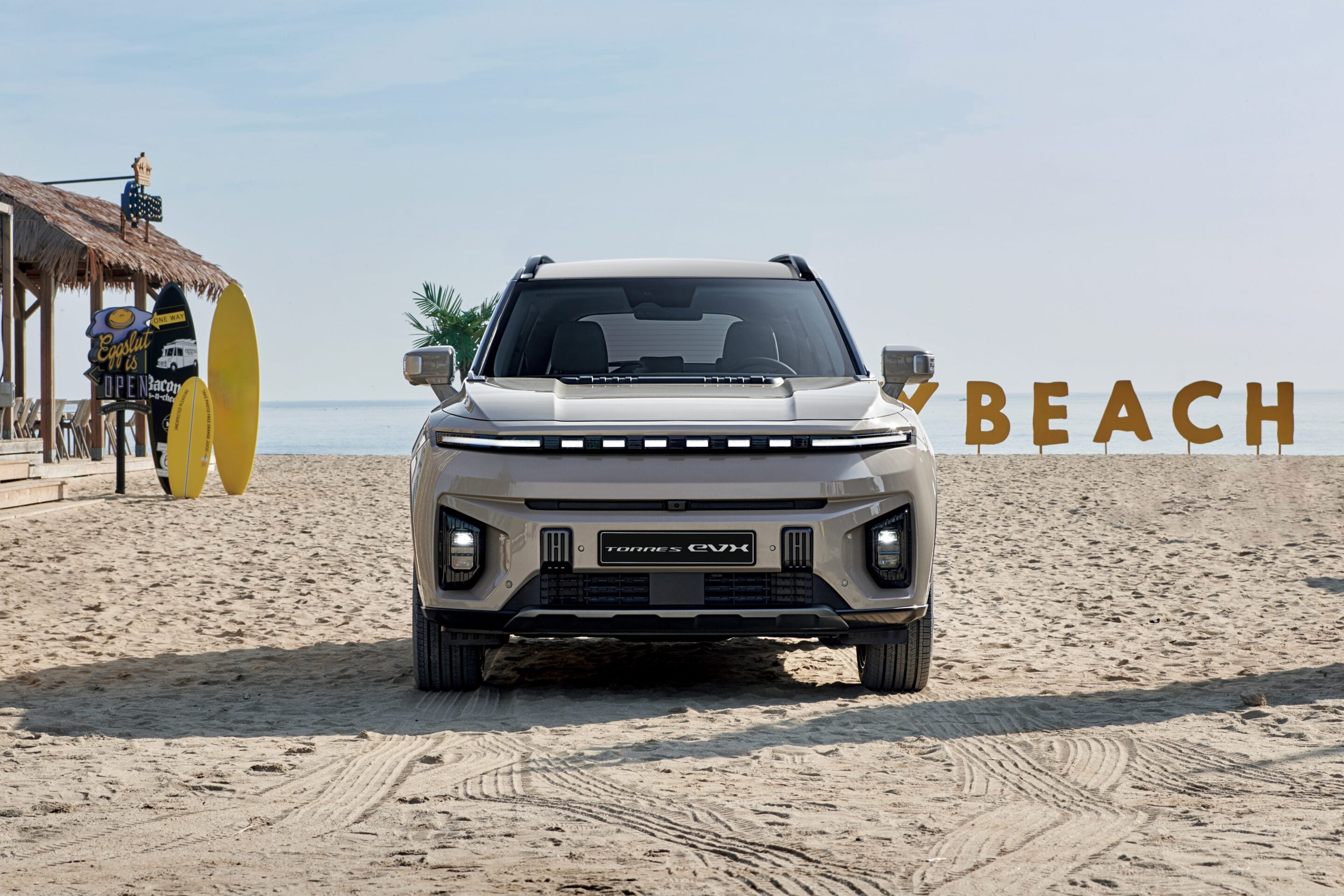
KGM Australia has launched its first electric SUV in Australia: the KGM Torres EVX. Competing against cars such as the Tesla Model Y and Kia EV5, the Torres EVX is an electric mid-size SUV with up to 462km of range (WLTP).
Priced from $58,000 drive away, it’s available in a single specification in Australia and is priced $10,000 above the Torres hybrid, which the brand also recently launched. Torres EVX sales will commence on December 1, 2025.
Powered by a front-mounted 150kW/339Nm electric motor drawing power from a BYD-sourced 80.6kWh LFP battery, the Torres EVX is rated at 462km of range (WLTP). The battery can be charged at up to 150kW for a claimed 10-80 per cent charge in as little as 37 minutes, while peak 10.5kW AC charging gives a full charge in a claimed nine hours.
Unlike the also-recently launched Musso EV electric ute, the Torres EVX is only available in single motor front-wheel drive form for now. Vehicle-to-load (V2L) functionality is standard, allowing the Torres’ battery to power external devices.
Like the Torres hybrid, the EVX benefits from updated frequency select dampers and additional sound deadening materials from key noise transmission areas such as the engine compartment, engine cover, and wheel arches.
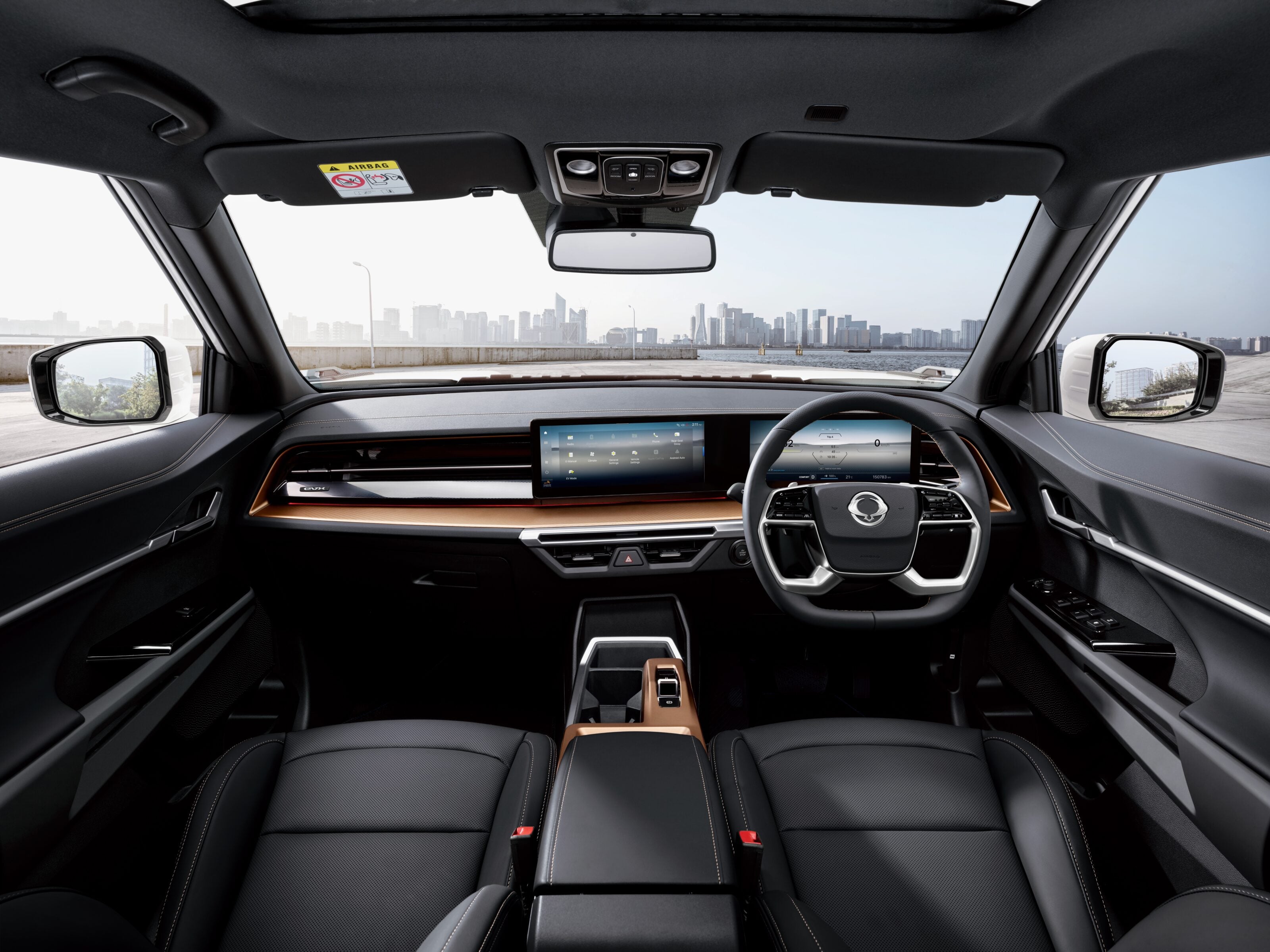
Just one specification will be on offer from launch, which is loaded with standard features including synthetic leather upholstery, heated and ventilated electrically adjustable front seats, heated outboard rear seats, dual 12.3-inch screens and a sunroof.
Safety features include eight airbags, autonomous emergency braking, adaptive cruise control, lane keeping assistance, blind-spot monitoring with rear cross-traffic alert, parking sensors and a 360-degree camera.
2026 KGM Torres pricing (drive away):
| Torres ELX petrol 2WD | $38,000 |
|---|---|
| Torres Adventure petrol 2WD | $43,000 |
| Torres Ultimate petrol AWD | $47,000 |
| Torres Hybrid K30 2WD | $45,000 |
| Torres Hybrid K40 2WD | $48,000 |
| EVX 2WD | $58,000 |
Torres EVX standard features:
- 18-inch alloy wheels
- Automatic LED exterior lighting
- Rain-sensing automatic wipers
- Vehicle-to-Load (V2L) capability
- Sunroof
- Roof rails
- Rear privacy glass
- Heated/auto-folding mirrors
- Keyless entry with push button start
- Electric tailgate
- Dual-zone climate control with rear vents
- Synthetic leather upholstery
- 8-way power adjustable front seats with driver’s lumbar
- Heated front and rear outer seats
- Ventilated front seats
- Heated leather steering wheel
- Integrated panoramic display with 12.3” dual display LCD instrument cluster and touchscreen infotainment
- Apple CarPlay and Android Auto
- Interior ambient lighting
- Rear door sun blinds
Torres EVX safety features:
- 8x airbags
- Autonomous emergency braking (AEB)
- Adaptive cruise control
- Lane keeping assist with lane departure warning
- Lane change-collision warning
- Blind-spot monitoring
- Rear Cross Traffic-alert (with braking)
- Forward collision warning
- Safe exit warning
- Front vehicle start alert with safety distance alert
- Auto high beam
- Front and rear parking sensors
- 360-degree camera
The KGM Torres EVX will go on sale in Australia on December 1, 2025, with deliveries due to commence soon afterwards.
BYD will further expand its offering in Australia when the BYD Sealion 5 goes on sale next month ahead of the first deliveries in early 2026.
Sized slightly larger than the Toyota RAV4, the Sealion 5 will be offered exclusively with plug-in hybrid powertrains in Australia for up to 100km of range (NEDC). Pricing is yet to be revealed, but it’s expected that the Sealion 5 will be the cheapest plug-in hybrid on the market, undercutting the $39,990 drive away Chery Tiggo 7 SHS.
The BYD Sealion 5 range will use a 1.5-litre petrol engine combined with a single electric motor for a peak 156kW peak power output. The Essential features a 12.9kWh battery for a claimed 71km range (NEDC), while the Premium upgrades to a larger 18.3kWh batter for 100km of range.
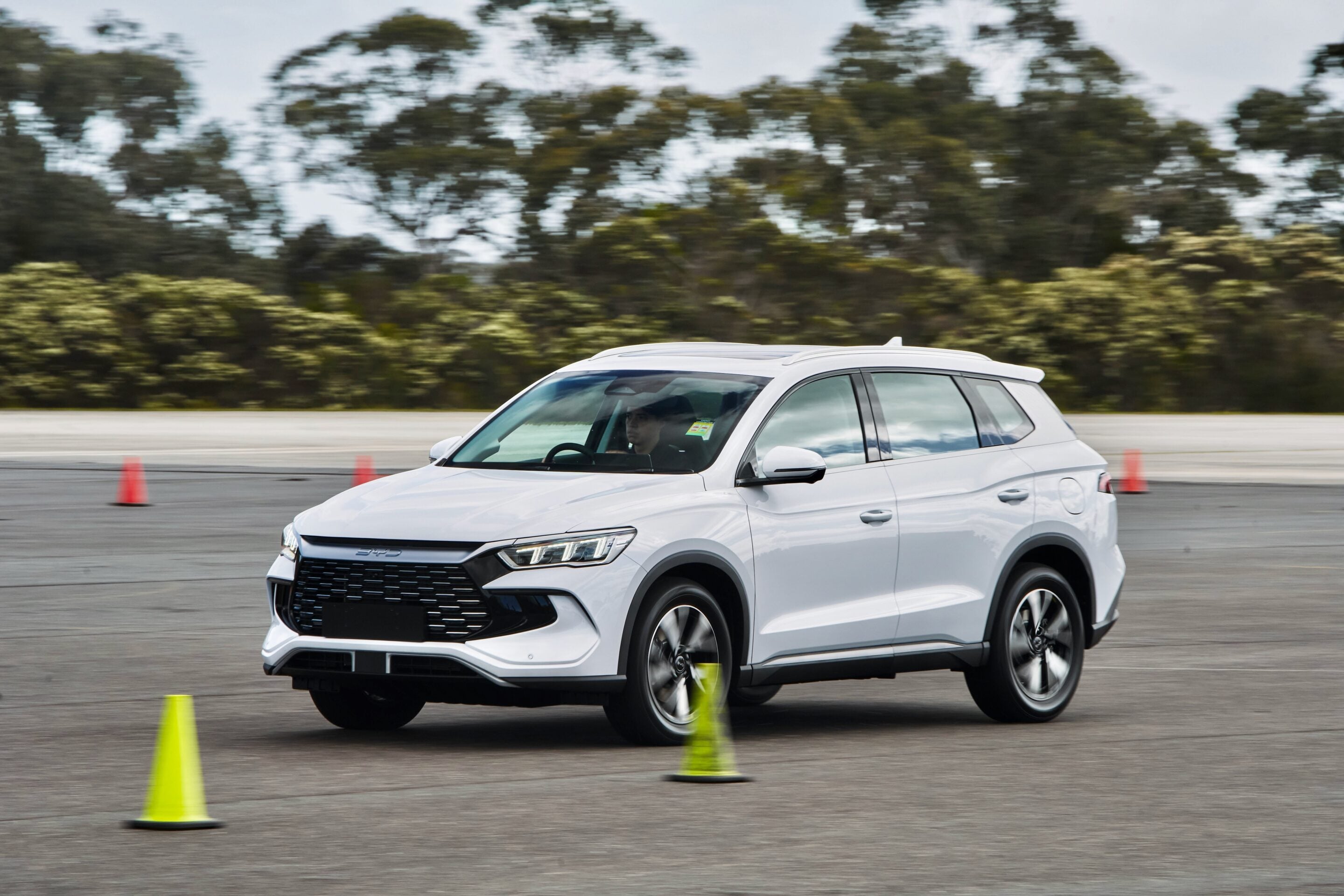
Measuring 4738mm long, 1860mm wide, 1710mm tall, and with a 2712mm long wheelbase, the Sealion 5 is bigger in all dimensions than the new RAV4 that’s due in early 2026. The boot measures 463 litres with all five seats in place, expanding to 1410 litres with the second row folded.
BYD is yet to announce full local specifications for the Sealion 5, but has confirmed that entry-level Essential and upper-spec Premium models will be available, with the Essential featuring equipment such as a 10.1-inch touchscreen, Apple CarPlay and Android Auto and an 8.8-inch digital instrument cluster. BYD’s Digital Key functionality also allows drivers to unlock and start the car using a smartphone or NFC card, in addition to a full suite of active safety features.
The upper-spec Sealion 5 will be further equipped with a larger 12.8-inch touchscreen and a 360-degree camera.
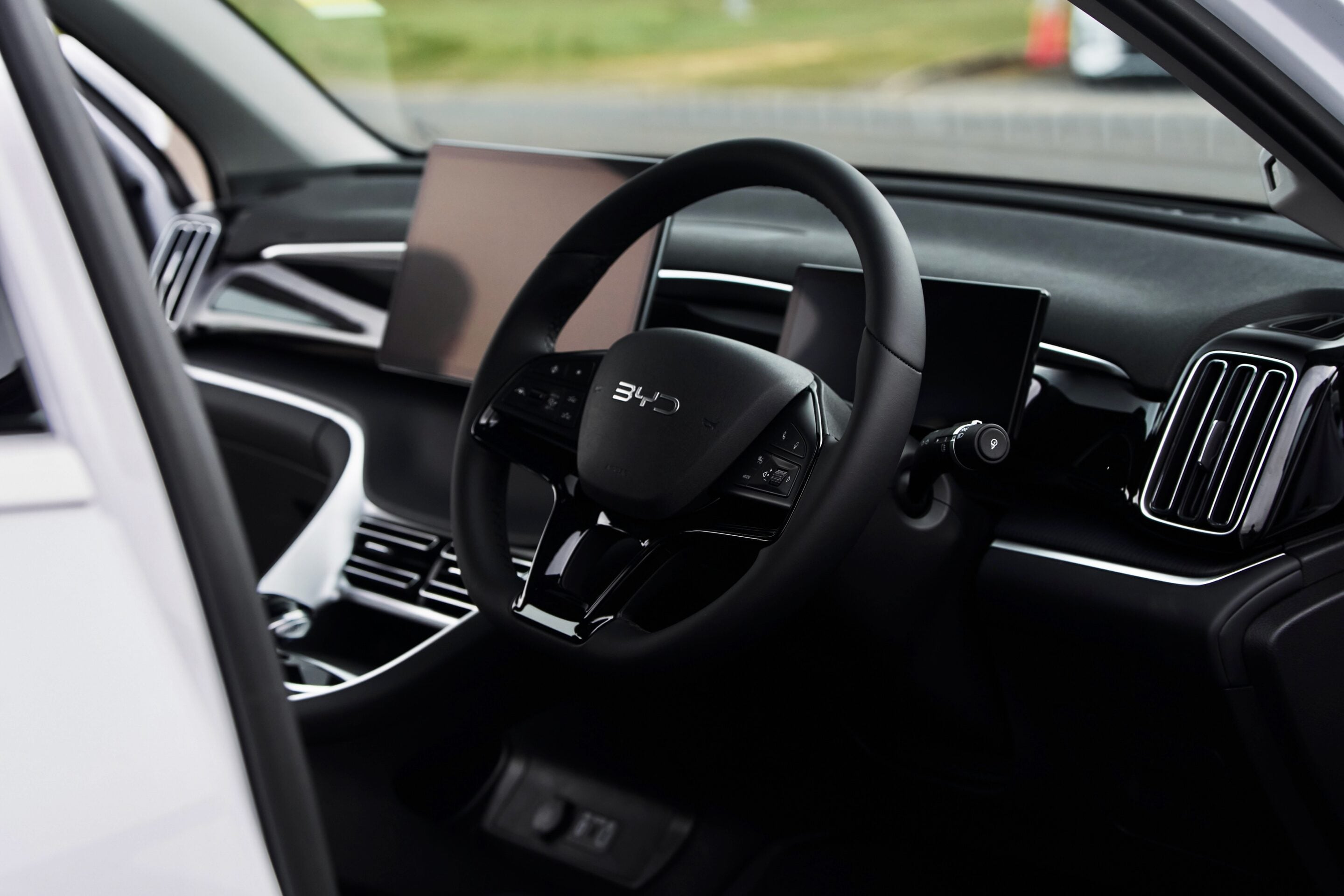
“The Sealion 5 is designed to help Australian businesses transition their fleets toward lower emissions,” said Stephen Collins, BYD Australia COO. “By combining advanced technology with affordability in Australia’s most popular segment, it helps reduce emissions, support sustainable trade, and creates more opportunities for new energy vehicles, while also giving families a practical, versatile SUV for their everyday needs.”
The BYD Sealion 5 will go on sale next month ahead of the first deliveries landing in early 2026.
Omoda Jaecoo Australia has introduced a new cheaper plug-in hybrid variant to its J7 mid-size SUV range called the Track SHS. Priced from $43,990 drive away, the Jaecoo J7 Track SHS is $4000 less expensive than the J7 Summit SHS model which remains unchanged but still uses its 1.5-litre plug-in hybrid drivetrain that’s capable of travelling 90km on a full charge (WLTP).
Sharing its model name and most of its equipment with the petrol J7 Track, the Jaecoo J7 Track SHS is well equipped with features such as 19-inch alloy wheels, synthetic leather upholstery, a 13.2-inch portrait touchscreen and a large suite of active safety features.
Compared with the J7 Summit, the Track loses features such as a panoramic sunroof, a larger 14.8-inch touchscreen, an eight-speaker Sony sound system, wireless phone charger, a head-up display, power tailgate, LED front fog lights and colour-selectable LED ambient cabin lighting.
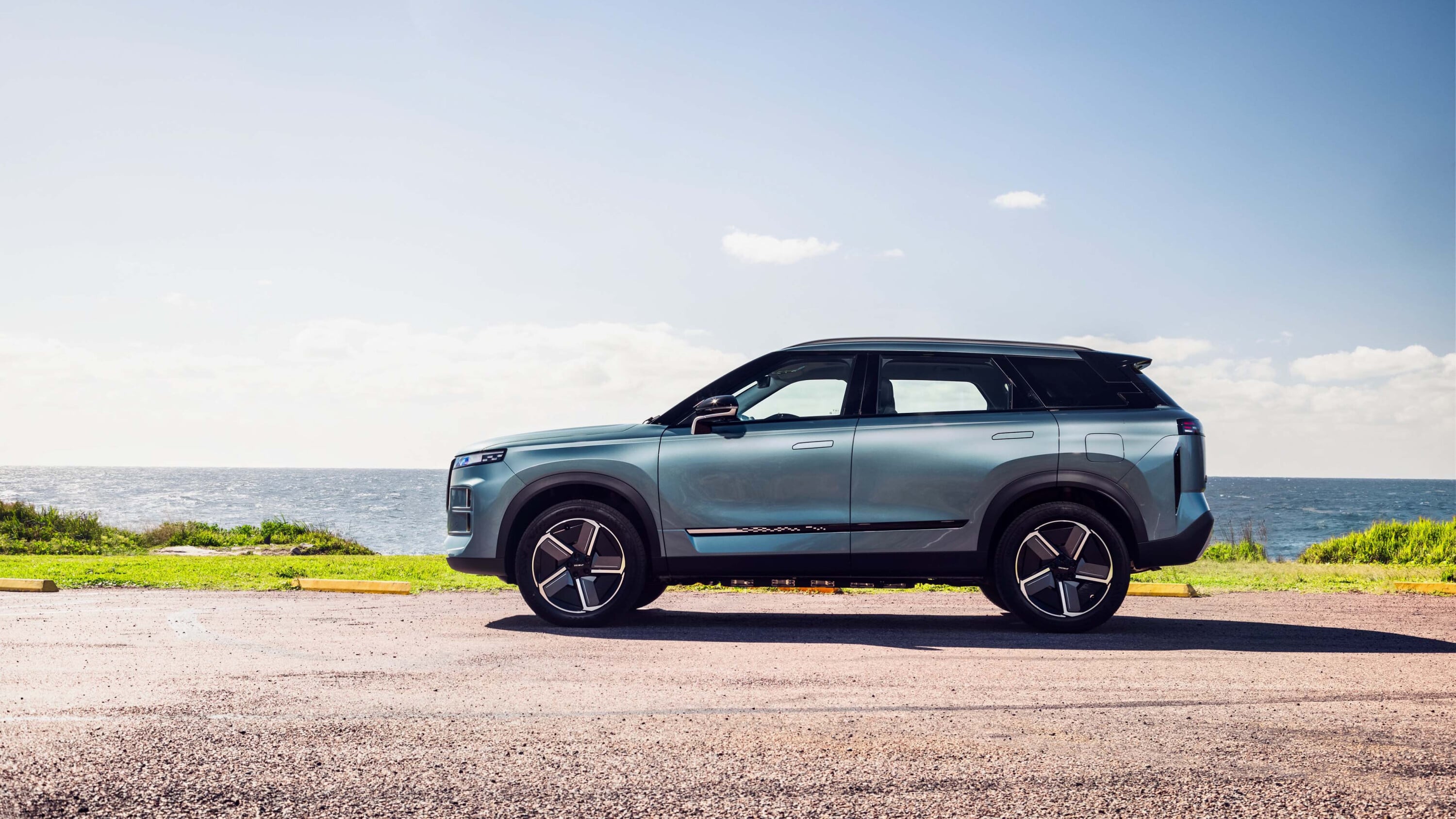
The Jaecoo J7 SHS uses a 105kW/215Nm 1.5-litre four-cylinder turbo-petrol engine combined with a 150kW/310Nm electric motor for combined outputs of 255kW/525Nm. Power is drawn from an 18.3kWh LFP battery for a WLTP-rated range of 90km, and it can be charged at up to 40kW for a 30-80% charge in as little as 30 minutes.
2026 Jaecoo J7 pricing (drive away):
| Core | $34,990 |
|---|---|
| Track | $37,990 |
| Ridge | $42,990 |
| Track SHS PHEV | $43,990 |
| Summit SHS PHEV | $47,990 |
Jaecoo J7 Track SHS standard features:
- 19-inch “aero” alloy wheels with a tyre repair kit
- Roof rails
- Power-retractable door handles
- Heated and auto-folding mirrors
- Automatic LED head and taillights
- Synthetic leather upholstery
- 10-way electric driver’s seat with memory
- Heated and ventilated front seats
- Dual-zone automatic climate control
- 10.25-inch LCD driver instrument cluster
- 13.2-inch LCD touchscreen
- Satellite navigation
- Apple CarPlay & Android Auto (wired + wireless)
- AM/FM/DAB+ digital radio
- Voice control (“hello Jaecoo”)
- Six-speaker sound system
J7 Track SHS safety features:
- 8x airbags
- Autonomous emergency braking
- Adaptive cruise control with traffic jam assist
- Adaptive lane guidance
- Lane keeping assistance
- Blind-spot monitoring
- Rear cross-traffic alert (with braking)
- Door open warning
- Auto high beam
- Driver attention monitoring
- Traffic sign recognition
- Front and rear parking sensors
- 360-degree camera
The Jaecoo J7 Track SHS is now on sale in Australia, with local deliveries due to commence soon.
Whenever an established manufacturer – what we’d now call a ‘legacy brand’ – releases an electric car, there’s an added sense of anticipation.
Unlike a challenger brand who can enter the market with whatever it wants to release carrying no weight of expectation, an established brand has plenty at stake. That’s certainly the case for Mazda, with the release of an electric car that isn’t just important because it’s a Mazda. It’s important because it’s a Mazda 6.
See, the Mazda 6 – in the face of increasingly rabid SUV demand – remained popular with buyers in Australia in both sedan and wagon form. Aussies loved the 6 as an alternative to the ubiquitous Toyota Camry – stylish to look at, functional, comfortable and a lovely car to drive. The wagon provided even more flexibility and reminded Wheels why wagons are so underdone in Australia every time we drove one.

That’s why the new Mazda 6e, with an all-electric drivetrain and RWD, is so important for the brand in Australia. According to Mazda, internal research has indicated its customers are both ready for the return of the 6 and to sample their first EV. Time will tell whether that’s true, but this quick drive of a LHD Euro-specific 6e provides some initial detail on just what Mazda will be putting front and centre in its showrooms.
Pricing and final specification will be announced closer to launch in 2026, but here’s what we know so far. First up, Mazda has told us to expect a price below $55,000 before on-road costs, which is impressive. If it can bring the electric sedan in around that number, Aussie buyers will take notice. Mazda 6e gets a 78kWh lithium ion phosphate battery pack. That’s good for a claimed driving range beyond 500km, with a single motor mounted at the rear axle. There’s 190kW on offer and charging capability from 30 to 80 per cent in as little as 15 minutes under optimal charging conditions.

Where the Mazda 6e differs from other of vehicles we are familiar with is the development. Mazdas have all previously been developed in-house – this 6e features a chassis and electrical hardware developed by Chinese car-making partner Changan, which sells a different version of the vehicle as a Deepal in other markets. The 6e is also the first electric Mazda not based on a previously available petrol vehicle – another reason it’s so important in the Australian new-car market.
The Mazda 6e certainly looks the part. The five-door hatchback design is stylish from any angle, and ensures the street presence it will need to catch the eye of buyers. It looks like a Mazda, but it also looks like a premium sedan. There’s no conventional sedan (with a boot, not a hatch) or wagon planned at this point either, so four-door hatchback it is.
The LHD 6e we’re driving here for Wheels is an evaluation vehicle brought to Australia from Europe, where much of the suspension reworking was done to ensure it has a more broadly appealing driving response, given the global focus of the car. Inside, the 14.6-inch central infotainment screen is a whopper, bright, clear and easy to navigate, and you get a 14-speaker Sony audio system, three-zone climate control AC, heated seats front and rear, a panoramic glass sunroof with proper electric sunshade, and a clear 360-degree camera.

The version we drove was beautifully trimmed in a terracotta-coloured suede material with excellent fit, finish and attention to detail. There’s quality in the touch surfaces and the controls, as you’d expect from Mazda. The centre console and storage on offer also looks practical and useful. Visibility is excellent, thanks in part to the huge glass roof and the amount of light coming into the cabin. Aside from some EV-focus functionality like the gear selector stalk, it’s very much a Mazda in every sense.
The flat floor means you’ll need the front seats raised a little to have the toe room you want, if you’re in the second row, but even back there the sculpting of the seats and the padding means you’ll be comfortable on longer trips. I took a couple of laps around Lang Lang’s ride and handling loop with two adults up front and me seated in the passenger side of the second row. The ride back there, up to 100km/h, is as good as it is up front.
A couple of things are immediately impressive when you’re behind the wheel – the first of which is the insulation inside the cabin. It’s staggering how much wind and tyre noise can be drowned out by a conventional driveline. Electric cars don’t have that luxury, and the 6e remains quiet – even of Lang Lang’s noise/vibration/harshness circuit which is designed to upset that sense of calm inside the cabins. There are no rattles, squeaks or noisy plastics to be found anywhere.

Out on the high-speed loop, ratcheting speed up to 130km/h, there is almost no wind or tyre noise entering the cabin either, such is the quality of the insulation. It means the 6e presents a strong case as a comfortable long hauler, where persistent noise can get very tiring, very quickly. If you spend a lot of time at highway speed, the 6e is going to work well.
Onto the driving itself and, as you’d expect of an electric vehicle, the 6e feels punchy and responsive. Wheels likes the fact its RWD, which reverts to the purity offered by the front tyres doing the steering and the rear tyres doing the driving. Push the 6e hard into a tight corner, and it behaves as you’d expect a RWD car to behave. On that note, it seems to hide its heft pretty well too, something most EVs aren’t able to mask.
It remains comfortable whether you’re in ‘Comfort ‘or ‘Sport’ mode, selectable via the centre screen, and the regenerative braking system has a decent feel to it, too, without some of the weirdness associated with some electric cars. During our short drive, we liked the steering, too, which isn’t on MX-5 level, but is still pretty good.
It’s hard to find negatives when you’re driving a LHD version of a car that hasn’t yet had final specification for our market, but on first experience, the 6e isn’t just an excellent Mazda, it’s an excellent electric car. Time will tell whether previous Mazda 6 owners are willing to take the punt on a fully electric version.
Specs
| Model | Mazda 6e |
|---|---|
| Priced | From less than $55,000 (estimated) |
| Engine | Single electric motor |
| Power | 190kW |
| Drive | Rear-wheel drive |
| Battery | 78kWh lithium-iron-phosphate |
| Range | 500km+ (claimed) |
Launched way back in 2017, the first Skoda Kodiaq was the brand’s initial attempt at a large SUV, and its first seven-seater product. Timely, given the rise and rise of the SUV form, it added to Skoda’s fortunes significantly, especially the RS version. Now it’s time for Kodiaq generation two – longer, with more equipment and more maturity in execution, is the Skoda Kodiaq Sportline now the seven-seat SUV to buy?
There are three versions of the Kodiaq available in Australia for the moment: entry-level Select, mid-spec Sportline (tested) and top-spec RS, with pricing starting at $56,990 drive away. All use a 2.0-litre turbo-petrol engine and all-wheel drive, though both mild- and plug-in hybrid models are coming
Skoda Kodiaq pricing (drive away):
| Select 140TSI | $56,990 |
|---|---|
| Sportline 140TSI | $61,990 |
| RS 195TSI | $76,990 |

The Kodiaq’s pricing places it at the cheaper end of seven-seat SUV land, with its main rivals being the Hyundai Santa Fe, Mazda CX-80 and Volkswagen Tayron (which it shares a lot with mechanically). It’s smaller on the outside than those cars, but it’s also larger than seven-seaters like the Nissan X-Trail and Mitsubishi Outlander.
But even in unoptioned base model Select form, the Kodiaq is quite well equipped and unless you’re into the sportier styling of the Sportline, the Select makes more sense. Head to the bottom of the page for the full list of features, but even the Select features leather upholstery, an electric driver’s seat, an electric tailgate, heated front seats, a 13-inch touchscreen and a full suite of active safety features, including nine airbags and adaptive cruise control with traffic jam assist.
For the moment, the Kodiaq Select and Sportline models are only available with the Volkswagen Group’s ubiquitous ‘EA888’ 2.0-litre four-cylinder turbo-petrol engine, in this tune making 140kW of power and 320Nm of torque. That’s mated to a seven-speed dual-clutch transmission and sends power to all four wheels. There’s no hybrid model available yet, but a 150kW plug-in hybrid version is due before the end of the year.
As it is in all other applications, the EA888 engine in the Kodiaq is creamy smooth and sounds good as well, with a nicely raspy note. At 140kW, it’s got adequate performance, though the 320Nm of torque hitting at just 1400rpm is what really impresses about the drivetrain. It hits 100km/h in a claimed 7.9 seconds, which is more than quick enough for the target market and those wanting more speed can spend $15k extra to get the 195kW Kodiaq RS. The seven-speed DCT is one of the better ones we’ve experienced, with typically-fast shifts and little in the way of low-speed hesitation.

The ‘140TSI’ engine in the Australian-spec Kodiaq is not quite as powerful or efficient as what Europe gets, however – it makes 150kW there and is cleaner to boot. The claimed combined consumption for the Australian model is 9.2L/100km with claimed CO2 emissions of 209g/km, which is officially 0.8L/100km and 12g/km over the more powerful six-cylinder petrol Mazda CX-80. The Kodiaq uses minimum 95RON premium unleaded for its 58-litre fuel tank.
On the road, as with the previous model, the Kodiaq impresses with its taut European suspension, agile handling and impressive refinement. Thanks to the size and weight gain over the previous Kodiaq, it’s not quite as agile but it’s still more fun to drive than many rivals with its well balanced chassis, quick steering and firm-ish ride quality. Thankfully, the adaptive dampers in the Ultimate Pack can be relaxed a lot, with some 15 different settings, though it’s too floaty at the softer end of the spectrum.
Whereas the previous Kodiaq was starting to feel a bit dated inside, the new model has hit it out of the ballpark in cabin design and materials. While equivalent Mazda CX-80 or Hyundai Santa Fe models feel a bit cheap inside (both of their higher-end models employ more expensive materials), the Kodiaq is richly upholstered with tasteful leather and suede upholstery, plenty of soft touch materials and high quality switchgear. In some ways, the Kodiaq feels slightly more upmarket than its Volkswagen Tayron cousin, and it’s definitely easier to use some functions like the climate control in the Skoda thanks to its more liberal use of physical buttons.
A large 13.0-inch touchscreen is standard on all new Kodiaq models with features such as wireless smartphone mirroring, sat-nav and digital radio, though no live services functionality, as it offers in Europe. Screen quality is crisp, though it could be a bit easier to use. Sound quality from the 13-speaker Canton audio that’s part of the Ultimate Pack is punchy.

Storage space in the front of the Kodiaq is excellent with large door bins, different trays with two wireless phone chargers and two USB-C ports in the centre console, configurable cupholders and storage in the centre tunnel and even two gloveboxes.
The Kodiaq’s middle row is spacious for two adults, while three will fit fine. A storage section that sits on the driveshaft tunnel with extra cupholders is removable, while there are also console-mounted air vents, two USB-C ports, a 12V socket and if you choose the Ultimate Pack, heated outboard seats. Other features include big door bins, inbuilt window shades, map pockets and even a tablet holder, while child seat duties are handled by three top tether and two ISOFIX points.
The third row is, like the previous Kodiaq, best kept to children. I could just fit my six-foot self there but both headroom and legroom are limited. There are also no child seat points, air vents or charging ports, with only a little bit of side storage. If you’re looking to use your third row of seating relatively often, the CX-80 and Santa Fe might be more practical for you, though the Kodiaq’s boot is still quite large.
There is 289 litres of space lies behind the third row, and 794 litres available with the third row folded. Boot features include under-floor storage, various hooks to hang bags off, a protective mat and cargo fastening elements to hold cargo. Fold the second row and a huge 2035 litres of space is available, which is 64 litres more than the larger CX-80 can manage.

The rest of the Kodiaq package is still quite classy with its attractive and high quality cabin, torquey petrol engine, fun driving dynamics, long list of standard equipment and huge boot. The engine is a bit thirsty however, and there’s no hybrid model quite yet either. But overall, the second-generation Skoda Kodiaq impresses as a family bus, just as it always has, but now it’s better equipped and more mature as well.
Skoda Kodiaq specifications:
| Model | Skoda Kodiaq Sportline 140TSI |
|---|---|
| Price | $61,990 drive away |
| Drivetrain | 1984cc inline four turbo-petrol |
| Transmission | Seven-speed dual-clutch, all-wheel drive |
| Peak power | 140kW (@ 4200 – 6500rpm) |
| Peak torque | 320Nm (@ 1400 – 4100rpm) |
| 0-100km/h | 7.9 seconds |
| Combined fuel consumption/CO2 emissions | 9.2L/100km, 209g/km |
| Fuel tank/size | 95RON premium unleaded, 58 litres |
| Dimensions (length/width/height/wheelbase) | 4758/1864/1659/2791mm |
| Tare mass | 1885kg |
| Boot | 289 litres (third row up), 794 litres (third row folded), 2035 litres (third + second row folded) |
| Warranty | Seven-year/unlimited km with 12 months of roadside assistance |
| Service intervals/cost | Annual/every 15,000km, $4750 for a seven-year plan ($678 per year) |
| On sale | Now |
Skoda Kodiaq Sportline standard features:
- 20-inch alloy wheels with a space-saver spare
- Roof rails
- Glass black trims on the grille and mirrors
- Automatic LED automatic exterior lighting
- Rain-sensing automatic wipers
- Keyless entry and push button start
- Heated/auto-folding/auto-dimming mirrors with dropping in reverse gear
- Electric tailgate
- Rear privacy glass
- Tri-zone automatic climate control
- Leather and suede upholstery
- Power adjustable driver’s seat with lumbar and memory functionality
- Heated front seats
- Heated leather steering wheel with paddle shifters
- 10-inch digital driver’s display
- 13-inch touchscreen
- Wireless and wired Apple CarPlay and Android Auto
- Satellite navigation
- AM/FM/DAB+ digital radio
- Nine-speaker sound system
- Dual wireless phone chargers
- 5x USB-C charging ports
- Heated windshield
- Rear door sunshades
- Simply clever features: 2x bins in doors, door edge protectors, umbrella in the driver’s door, screen protector, cargo fastening elements in the boot and a tablet holder
Kodiaq Sportline safety features:
- 9x airbags
- Autonomous emergency braking (AEB) with junction, pedestrian and cyclist monitoring
- Adaptive cruise control with stop and go functionality and traffic jam assist
- Lane keeping assistance with lane departure warning
- Adaptive lane guidance
- Emergency assist
- Blind-spot monitoring with rear cross-traffic alert (with braking)
- Exit warning
- Automatic low-speed emergency rear braking
- Driver fatigue monitoring
- Matrix adaptive high beam
- Traffic sign recognition
- Front and rear parking sensors
- Reversing camera
- Tyre pressure monitoring
- Anti-theft alarm system with interior monitoring and towing protection
The Skoda Kodiaq earned a five-star safety rating from ANCAP based on testing conducted in 2024 by Euro NCAP with category scores of 89 per cent for adult occupant protection, 87 per cent for child occupant protection, 82 per cent for vulnerable road user protection and 81 per cent for safety assist technology.
Kodiaq Sportline options:
- Ultimate Pack (adaptive dampers, 13-speaker Canton sound system, head-up display, hands-free functionality for the electric tailgate, heated outboard middle row seats, automatic parking, 360-degree camera and electric front passenger seat with memory): $4000
- Panoramic sunroof: $1900
- Velvet Red paint: $770
