Best Small SUV series
Looking to get into a brand-new small SUV? Our stories below will guide you to the model that best suits your needs!

International drivers are on notice that to keep driving locally, they must now complete knowledge and practical tests in a shake up of Australian driving rules from April 25 – or October 31 in Western Australia and mid-2025 in Queensland.
Under the Experienced Driver Recognition (EDR) scheme, drivers aged 25 and over from countries that didn’t meet the full licence testing requirements – and weren’t included in the Recognised Country Scheme – were previously eligible for Experienced Driver Recognition status, allowing them to convert their overseas licences to Australian ones without additional testing.
However, after the deadline, drivers from EDR-recognised countries – such as Bulgaria, the Czech Republic, Estonia, Hong Kong, Hungary, Latvia, Lithuania, Poland, Republic of Cyprus, South Korea, Republic of Serbia, Romania, Slovakia, Slovenia, South Africa, and Taiwan – will be required to pass both knowledge and practical driving tests to obtain an Australian licence and continue driving in the country, unless they transition before the deadline.
The EDR scheme still applies for drivers from countries such as Belgium, Canada, Denmark, Finland, France, Germany, Greece, Ireland, Italy, Japan, Luxembourg, Malta, Netherlands, New Zealand, Norway, Portugal, Singapore, Spain, Sweden, Switzerland, the UK and the USA, meaning that drivers with licences from those countries aren’t required to be tested for an Australian driver’s licence.
The changes in the scheme will potentially cause high demand for driving tests, which may place additional pressure on already stretched resources for driving instructors and driving schools. According to EzLicence, Australia has seen a 3.2 per cent decline in qualified driving instructors over the past year.
EzLicence has offered the following tips on how affected drivers should approach the rule change if they miss the April 30th deadline:
Are you an affected driver through changes to the EDR scheme? Let us know in the comments below.
| Driving | |
|---|---|
| Interior | |
| Practicality | |
| Overall value |
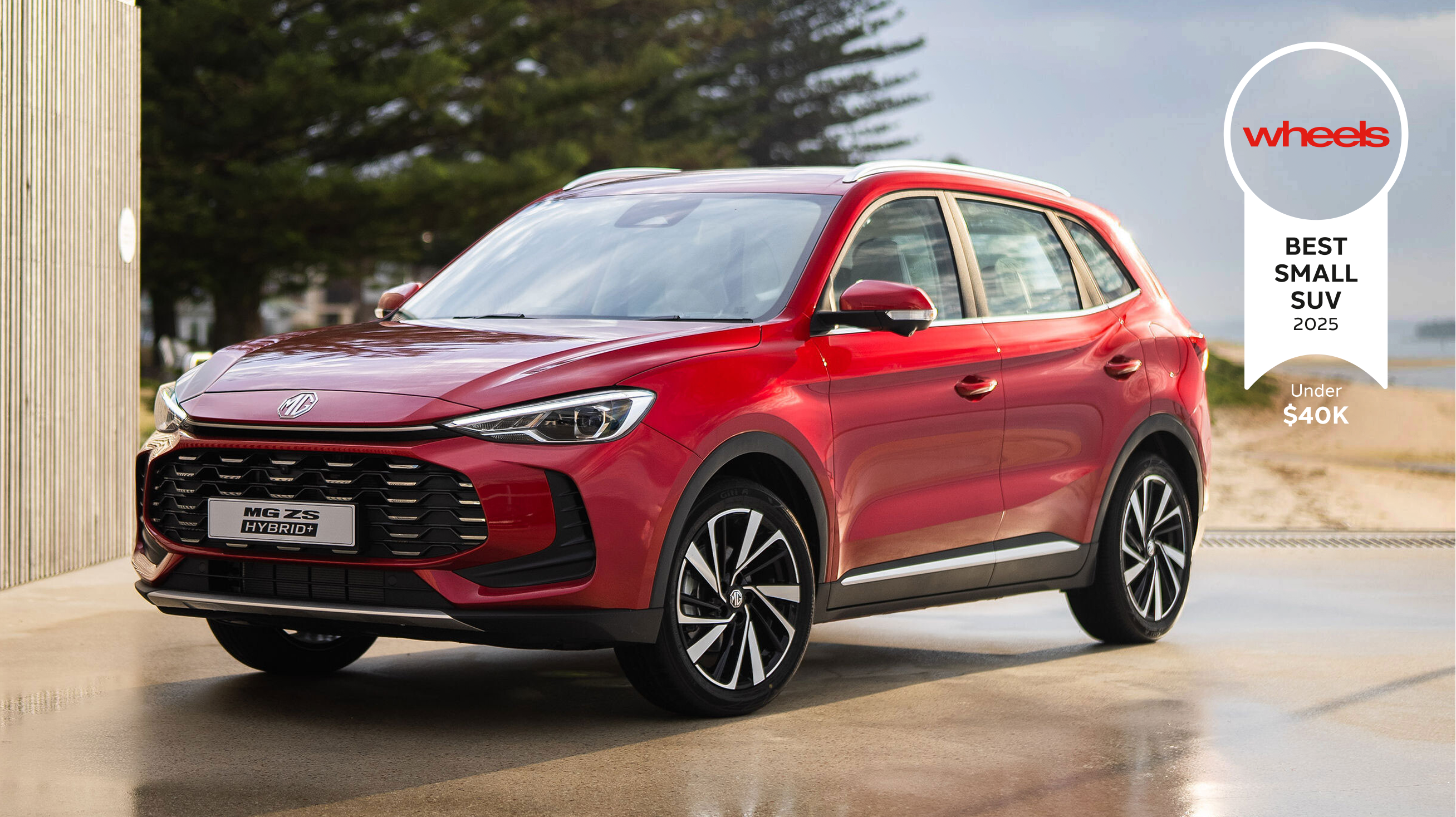
The second-generation MG ZS first launched in Australia in November 2024 in Hybrid+ spec priced from $33,990 drive away. Petrol-powered models have just arrived and lower the price of entry significantly to just $26,990 drive away, but we think the Hybrid+ is worth the extra spend.
While not as cheap as the ZST, the new ZS is better equipped and it’s also larger and more refined. The cabin is more modern with higher quality materials, while the growth spurt has allowed for a larger rear seat and boot – the size has increased from a healthy 359 litres to a large 443L with the seats up, for example.
The infotainment system has upgraded to MG’s latest unit, which is much easier to use than the system in the ZST and while it doesn’t feature smartphone mirroring that’s wireless, it’s still got sat-nav, digital radio and access to the company’s ‘iSmart’ live services so that owners can lock and unlock the car, turn on the climate control to warm or cool the car before getting in and even check where the car is.
On the road, the new ZS Hybrid+ presents a compelling option in the small SUV segment as it’s more comfortable than the ZST and CX-3, and is a generally relaxing car to drive. The 1.5-litre hybrid drivetrain is powerful making 158kW, yet efficient rated at just 4.7L/100km. The only annoyance comes from the lack of steering wheel reach adjustment – just like the ZST – and the overactive speed limit assistance, which makes a fuss if you travel even 1km/h above the speed limit.
But the new MG ZS Hybrid+ is a big improvement on the car it replaces and in the $30,000-$40,000 small SUV segment, does quite well overall. It offers more space and more equipment than a lot of rivals, an industry-leading warranty and cheap servicing, now with 15,000km intervals.
| Driving | |
|---|---|
| Interior | |
| Practicality | |
| Overall value |
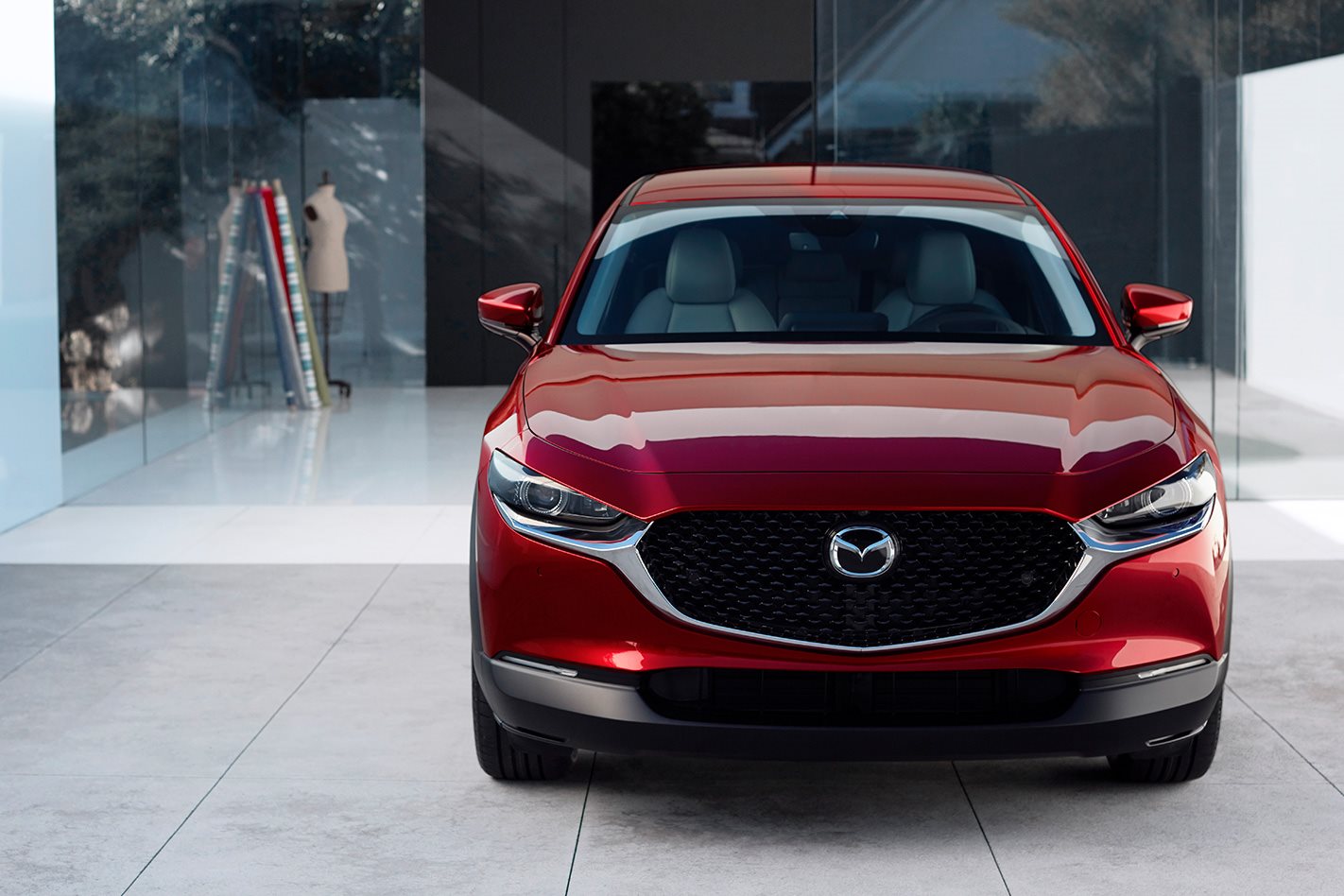
The Mazda CX-30 – the 2021 Wheels COTY-winning Mazda CX-30, no less – remains a desirable and borderline luxurious option in the small SUV segment thanks to its handsome styling and cabin full of lovely materials. Even in the entry-level CX-30 Pure, quality is excellent with plush trims and understated details. It would definitely make you think twice about spending double on something from a more premium manufacturer.
Cabin quality aside, there’s lots to recommend about the CX-30. If you like driving, the CX-30 is definitely one to test drive as it offers keen dynamics and fun handling. While its ride could be softer, it still offers a nice balance and road noise levels are impressively low. While it’s not the fastest offering, even the entry engine provides reasonable thrust and sounds good in doing so, plus the transmission is intuitive and smooth.
The CX-30’s engine range has been simplified to either a 2.0-litre or 2.5-litre four-cylinder petrol engine with a six-speed auto and optional all-wheel drive with the 2.5L engine high up the range. Simple, though the lack of a hybrid option hurts the CX-30 as neither engine option is particularly fuel efficient in the real world.
What’s more impressive about the CX-30 is that the whole range features a big suite of active safety kit like AEB, adaptive cruise control, blind-spot monitoring, auto high beam and even a head-up display. Some models like the Touring LE and Astina add adaptive lane guidance, front cross-traffic alert and a 360-degree camera, but even the base Pure can be optioned with them if buyers want even more safety features.
It’s on the practicality scale that the CX-30 falls a little bit, as its rear seat and boot are smaller than you might expect with just 317 litres on offer. Plus, its service pricing isn’t cheap either. But in summary, it’s easy to see why the CX-30 is a former Wheels COTY winner. Its exotic styling and interior quality make it look far more expensive than it actually is, and the whole range is well equipped, too – especially with safety kit. It’s fun to drive and while the engines aren’t the thriftiest or cheapest to service, they are fun to use. If you’re after a small SUV, the CX-30 should definitely be on your test drive list.
| Driving | |
|---|---|
| Interior | |
| Practicality | |
| Overall value |
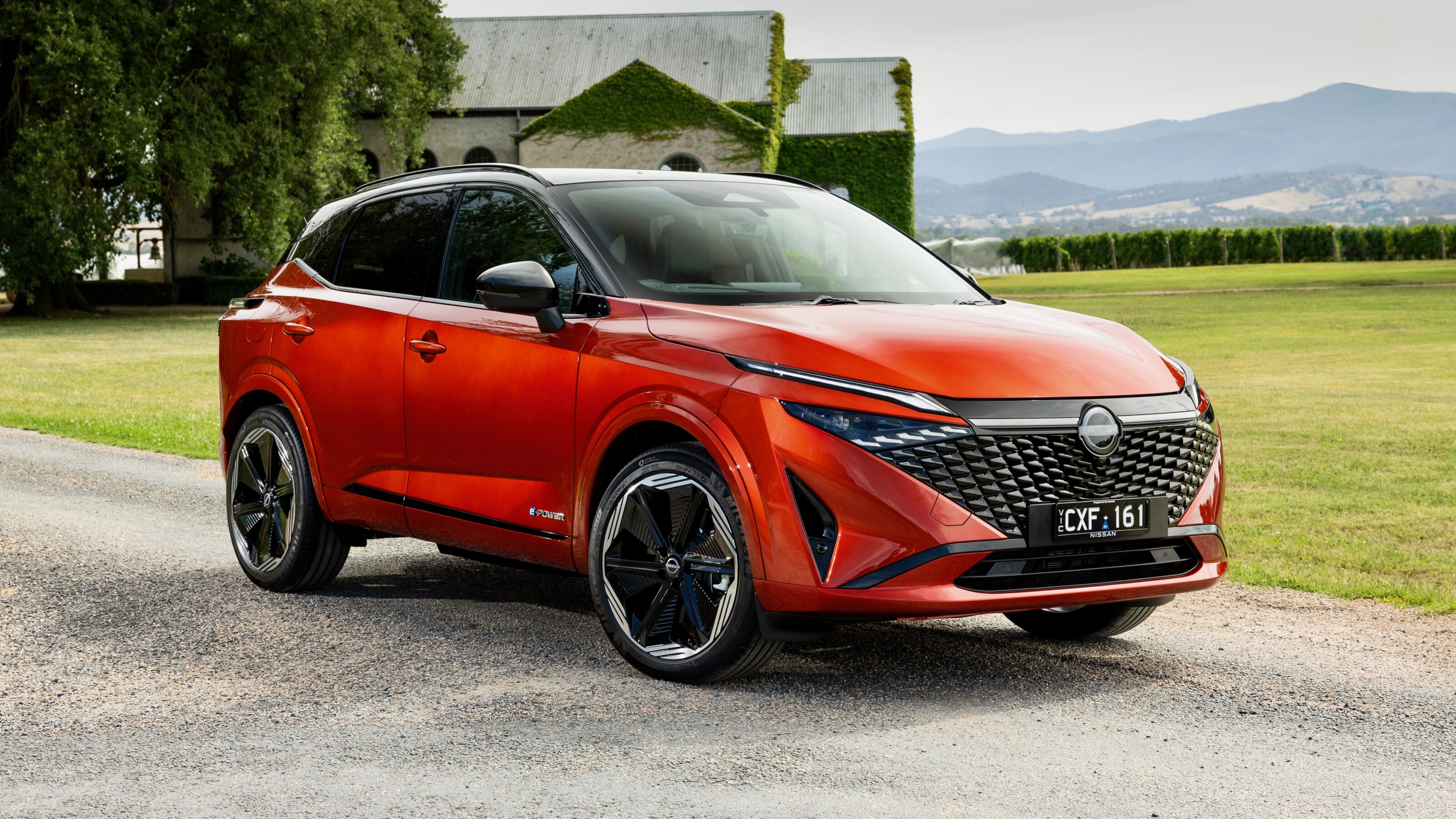
The Nissan Qashqai – formerly Dualis in Australia – is a car that we think should sell stronger. While its 6,560 units sold in 2024 were reasonable, it has more sales potential and the recent facelift should help thanks to an improved value equation, particularly at the entry level where a lot more standard equipment did not – surprisingly – lead to a price rise.
The cabin of the Qashqai is one of the highest quality in the segment thanks to plenty of soft touch materials and lively damped switchgear. A 12.3-inch touchscreen is now standard across the range and it’s more modern than the former system formerly used in lower models – it’s crisp and well-featured. The rear seat of the Qashqai is reasonably spacious and will fit two adults fine, and the boot measures a healthy 479 litres with the seats up and 1,422L with them folded.
Under the bonnet of the Qashqai is a choice of two engines: a 1.3-litre turbo four-cylinder or a 1.5-litre turbo three-cylinder hybrid, with both driving only the front wheels through a CVT automatic transmission. Both need premium unleaded fuel, but both are quite fuel efficient – especially the hybrid in the real world.
On the road, the Qashqai impresses with a mature and refined driving experience that feels quite European, which is no surprise given that it was built there and designed for those roads. Both available drivetrains feel peppy for the segment, and impress with their low end grunt. Even the CVT transmission is mostly un-CVT like in its operation thanks to well defined stepped ratios.
Nissan’s five-year warranty can impressively be extended to 10 years in total if serviced through a Nissan dealership, while the brand has also improved its five-year service cost at just $1,995. Overall, the Qashqai is a classy and refined entrant to the segment that deserves more love from buyers. It’s well rounded with a great cabin, reasonable practicality, a solid driving experience and gutsy drivetrains, including the unique range-extended hybrid system. While it’s still not cheap to buy, the recent facelift improved the value equation and it’s a more worthy buy as a result.
| Driving | |
|---|---|
| Interior | |
| Practicality | |
| Overall value |
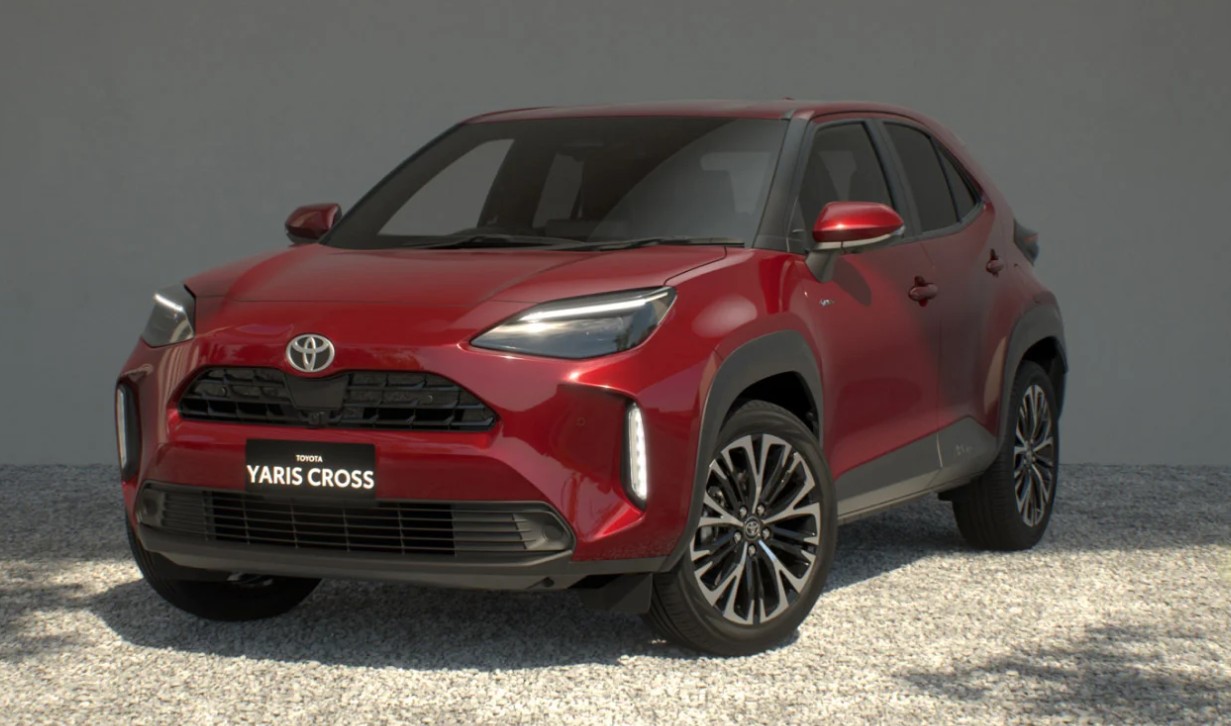
The Toyota Yaris Cross is the smallest SUV that the company sells in Australia. The Yaris Cross is like its Corolla Cross sibling: larger and more practical, though using the same name as the car on which it’s based – in this case, the Yaris hatchback. Pricing starts at $30,900 for the entry-level GX and like all other non-performance/4WD/commercial Toyotas sold locally, the Yaris Cross is now only offered in hybrid form.
Under the bonnet is a 1.5-litre three-cylinder hybrid drivetrain making 85kW, which sends power to either the front or all wheels via a CVT gearbox. The claimed fuel consumption for the Yaris Cross ranges from just 3.8L/100km for 2WD models to 4L/100km for the slightly heavier AWD model, which is excellent. You’ll likely get similar consumption in real life too.
On the road, the Yaris Cross impresses with solid driving dynamics and a comfortable ride quality, though refinement could be better as both engine and road noise make themselves known.
The cabin of the Yaris Cross is good quality and funky, and a recent update gave it a digital driver’s display and new infotainment software to make it more modern and user-friendly inside. There are multiple storage spots, while the new central armrest has made it more comfortable. While the back seat isn’t huge, it will take two adults fine. The 390-litre boot is actually larger than all-wheel drive Corolla Cross models, though it shrinks to 316L with its own AWD system fitted.
Like the Corolla Cross, five-year servicing for the Yaris Cross is cheap and both its mechanical and battery warranties are extended by servicing through a Toyota dealership. Overall, the Yaris Cross is an excellent entry-level SUV that’s very fuel efficient, nice to drive and good quality, though it could be more refined and cheaper across the range.
| Driving | |
|---|---|
| Interior | |
| Practicality | |
| Overall value |
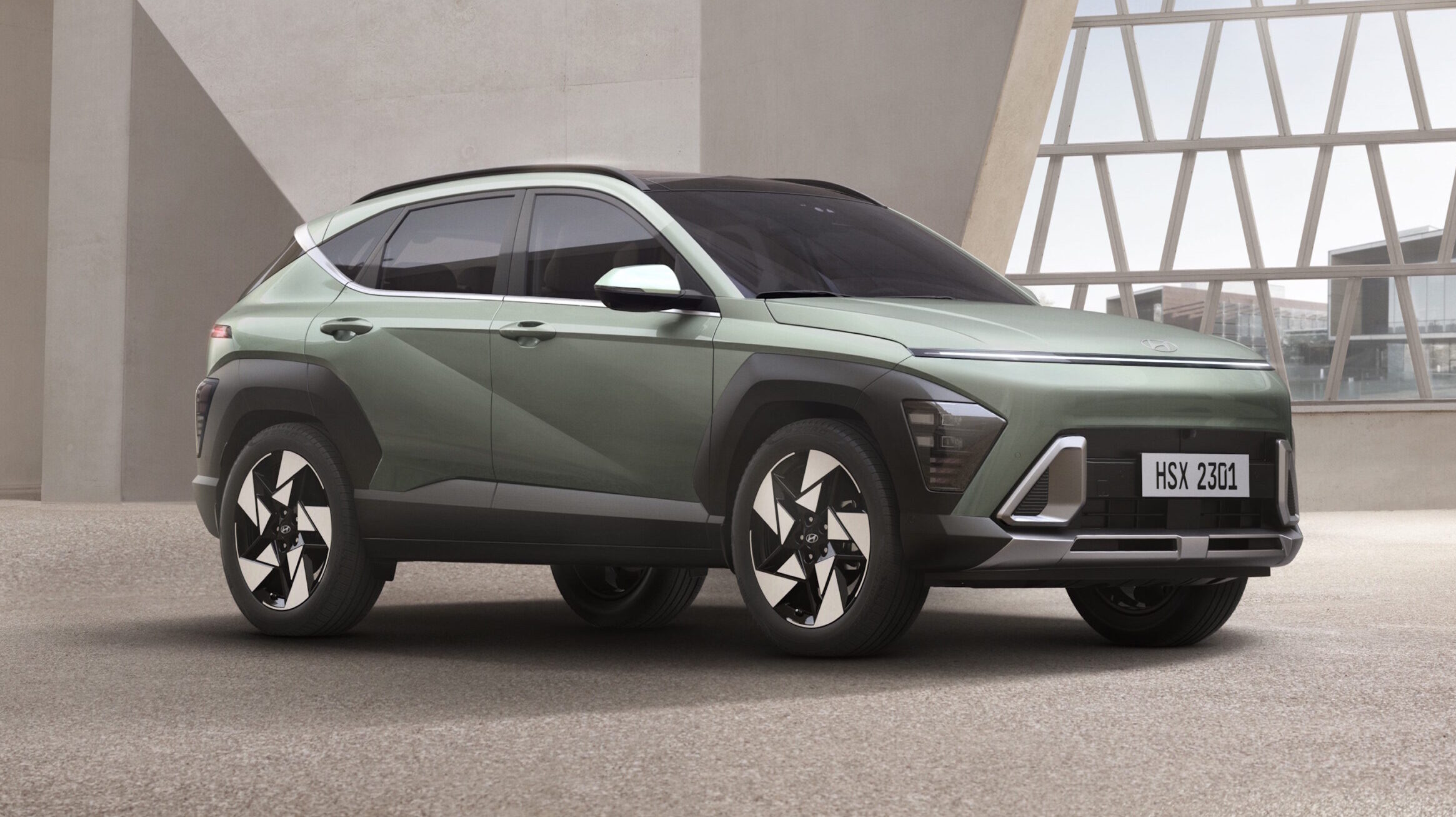
The second-generation Hyundai Kona has been on sale in Australia for over a year now and, like its predecessor, is proving popular with over 17,000 sold last year alone. The new Kona is larger, more mature, more refined and features an optional hybrid drivetrain for the first time locally. The hot Kona N is no longer around unfortunately, but the 146kW Kona N Line is still quick.
Where the Kona has seen the biggest improvement is in its interior design as it’s now more up-to-date than the previous edition, which felt dated in comparison to newer Hyundai models. The Kona’s cabin could be better quality, but there’s no denying the awesome practicality and pleasing ergonomics throughout.
The rear seat of the new Kona is larger than the old one and two adults will fit perfectly fine this time around. The boot is also larger now at 407 litres seats up and 1,241L with them folded, while there are some clever tricks like a dual-level boot floor to help practicality further. Impressively, all models feature a spare wheel.
This time around are a choice of three drivetrains: a naturally aspirated 2.0-litre petrol, a 1.6-litre hybrid or a turbocharged 1.6-litre, all mated to automatic transmissions – being CVT, dual-clutch and torque converter, respectively. The former two are front-wheel drive, with the turbo engine exclusively all-wheel drive in Australia. The new Kona drives well with a great ride quality and improved refinement as well, especially with road noise.
In short, the new Hyundai Kona is a worthy competitor in the small SUV segment thanks to its all-round ability: it’s much more practical this time around, good to drive, more practical, cheap to service and – finally – offers a hybrid choice.
| Driving | |
| Interior | |
| Practicality | |
| Overall value |
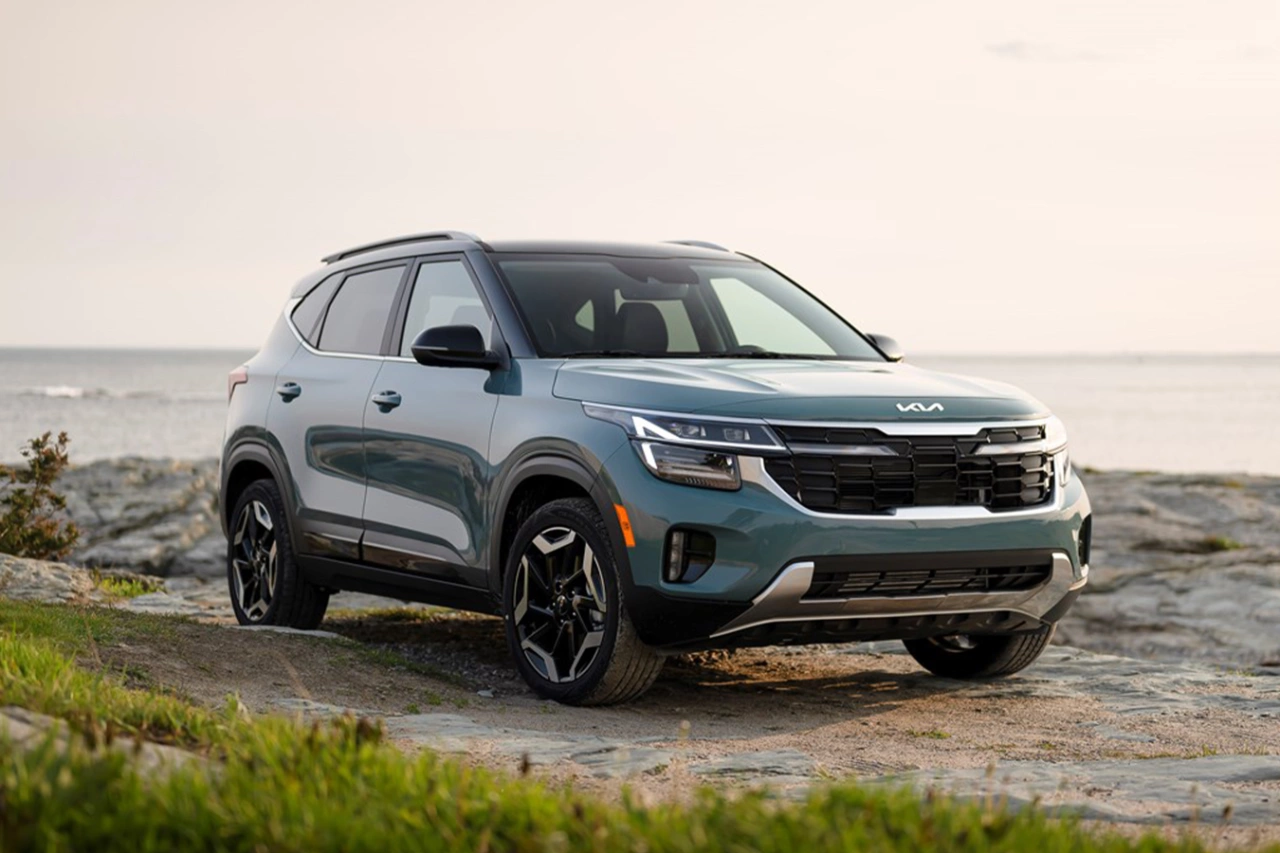
With almost 8000 sold in 2024, the Kia Seltos is one of two small SUVs in the brand’s line-up and is it positions itself in one of the most popular segments in the country. The Seltos has been around since 2019 and while a replacement is due in the next year or so, there’s still plenty to like about the current model.
The Seltos’ interior is definitely its biggest selling point because it’s quite practical for the size. Two taller adults will be quite comfortable in the rear seat, while the doors open nice and wide for easy fitment of child seats. The Seltos’ boot is a good size as well at 468 litres for the base S (433L for every model above that as they all use a full size alloy spare, which is very rare in this segment) with the seats up and 1,428L-1,393L with the rear seats folded.
The dashboard is well laid out and is ergonomically sound, while the new digital driver’s display has made it feel more in line with newer Kia models. The interior quality could be improved however, as there are barely any soft touch materials – everything is hard. But the last-generation touchscreen software is still easy to use and is more colourful and brighter than the newer-generation unit that features in newer Kia models.
The Seltos offers two four-cylinder petrol engines: a 2.0-litre naturally aspirated unit or a turbocharged 1.6L with a CVT auto on the former and an eight-speed auto on the latter. The 2.0L is perfectly adequate for most buyers, with the 1.6T adding appreciably more grunt. Neither are very efficient, however, and unlike its Hyundai Kona cousin, there’s no hybrid option available in this generation.
Thanks to Kia’s local ride and handling tuning program, the Seltos drives very well. The ride quality is especially supple, while the handling is fun as well. Overall, while the Seltos does feel a bit dated and doesn’t offer a hybrid option, it’s still a good small SUV. It’s roomy, drives pretty well, offers a wide range of models and features two willing engine options. It’s no surprise that the Seltos still manages to sell well, even at almost six years of age.
| Driving | |
|---|---|
| Interior | |
| Practicality | |
| Overall value |
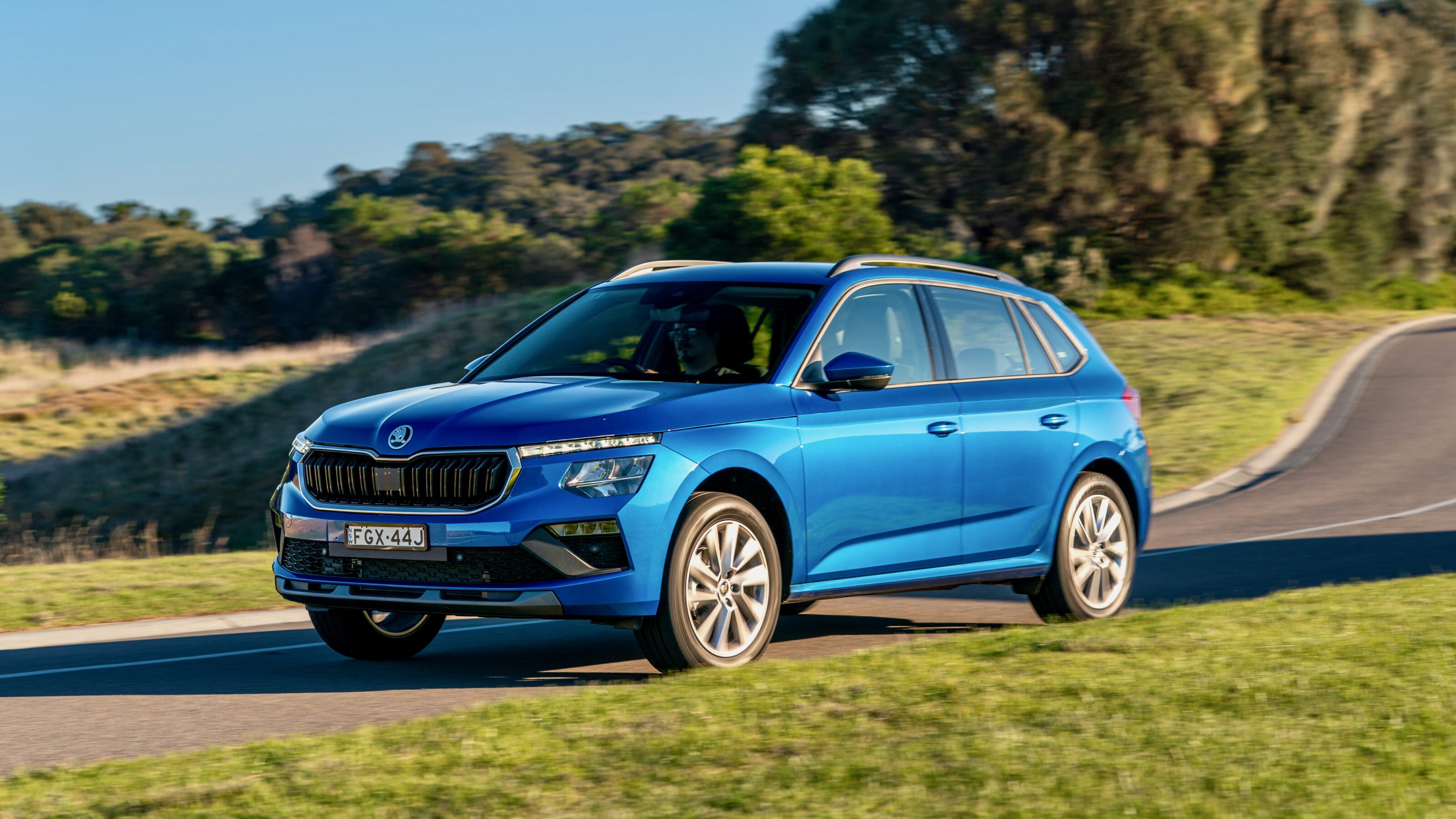
The Skoda Kamiq has been on sale in Australia since 2020 and in that time has earned itself a loyal base of buyers, though we think it deserves to sell better. As with pretty much every other modern era Skoda, the Kamiq is far more practical than its modest sizing might suggest – even though it’s only 4,241mm long or 34mm shorter than a Mazda CX-3, its 400-litre boot is much larger than the Mazda CX-30 and the 1,375L when the seats are folded is impressive for its size.
Priced from $33,990 drive away, Skoda also includes a lot of its ‘simply clever’ features in the Kamiq range too, like an umbrella in the driver’s door and various storage spots throughout the cabin to ensure that you’re never left wanting for a place to store your stuff. The spaciousness of the Kamiq is also impressive, especially the headroom thanks to its tall roof, which is almost class-leading.
The front cabin of the Kamiq is high quality – more so than a lot of rivals – with a nice mix of soft touch plastics and quality fabrics like on the dashboard fascia, while the leather steering wheel is lovely. The available touchscreens are easy to use and feature wireless smartphone mirroring, and even the base model Select uses a digital driver’s display.
There are two turbocharged petrol engines available in the Kamiq: either an 85kW/200Nm 1.0-litre three-cylinder unit or a larger 110kW/250Nm 1.5-litre four-cylinder unit, with a surprisingly minimal difference in claimed fuel consumption (5.3L/100km for the 1.0L versus 5.5L/100km for the 1.5L). Both use a seven-speed dual-clutch automatic transmission, and both are refined and gutsy.
Skoda is the only European manufacturer to cover its new products with a seven-year/unlimited km warranty and while service pricing isn’t cheap at $3,650 for a seven-year/105,000km plan, it’s less expensive than its Volkswagen cousin and we like that it can be bundled into the car’s price. Overall, the Kamiq deserves more attention from buyers because it’s a well accomplished overall package that does little wrong.
| Driving | |
|---|---|
| Interior | |
| Practicality | |
| Overall value |
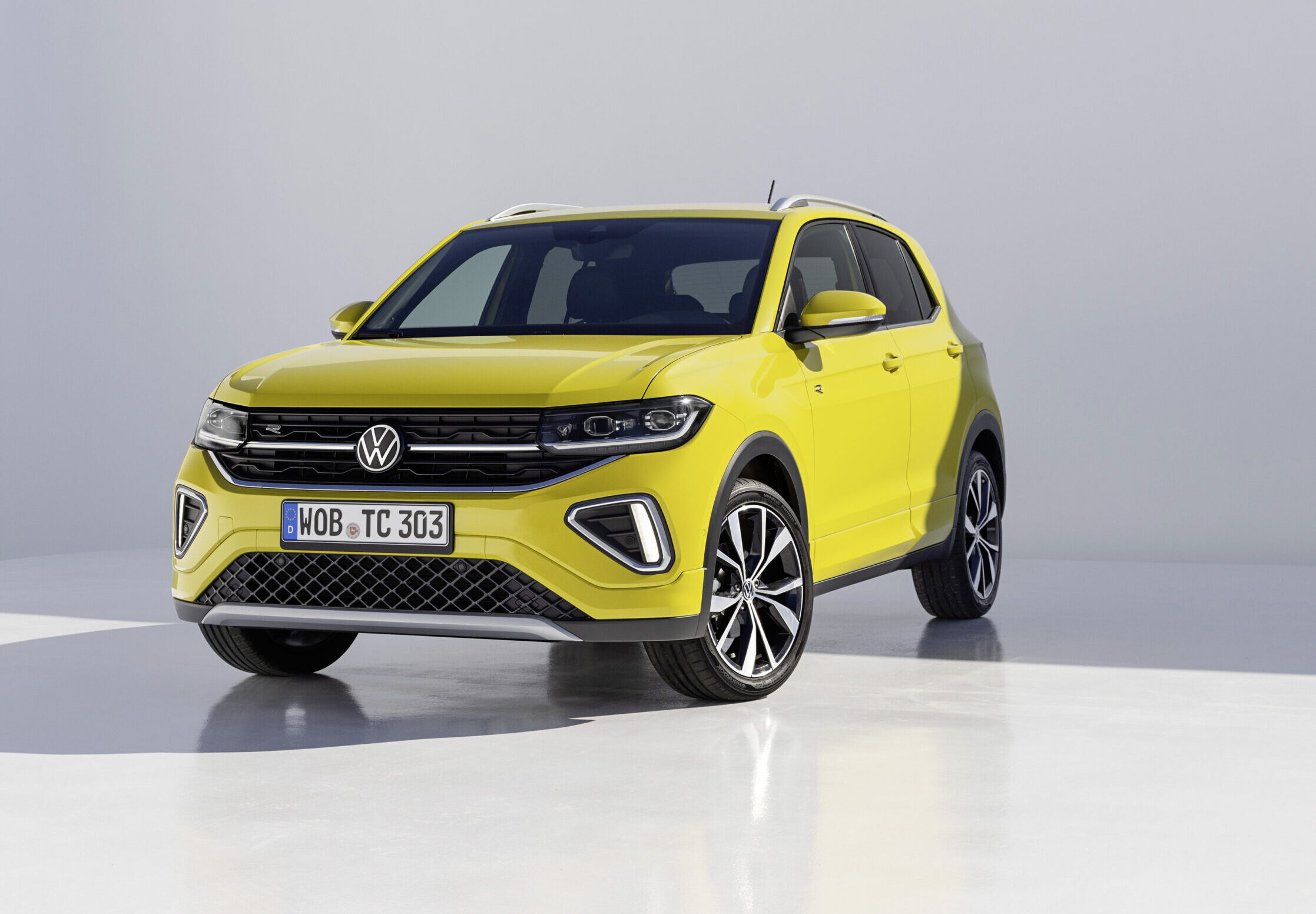
Volkswagen’s smallest SUV is the T-Cross and it received a mid-life facelift last year with more equipment, higher-quality interior materials and a refreshed model line-up with the formerly-optional R-Line package now its one model at the top of the range. The updated T-Cross range is priced from $33,990 plus on-road costs.
Unlike its Skoda Kamiq cousin, the T-Cross is only available with the smaller 1.0-litre turbo-petrol engine in Australia – buyers wanting more ‘go’ must buy the Czech or the T-Cross’ larger T-Roc sibling. But we think the peppy 1.0L donk in the T-Cross is more than grunty enough for most buyers and despite needing premium unleaded, it will be quite efficient in the real world.The T-Cross drives quite nicely and is refined and mature, as you’d expect from a Volkswagen.
The T-Cross’ cabin is not quite as good quality as the Kamiq but it’s still plusher than a Kona or Seltos. It’s also ergonomically excellent with all major features represented by buttons and not buried in the touchscreen. Speaking of the touchscreen, it’s a breeze to use and is bright and quick. The front of the T-Cross’ cabin is also practical with big door bins, a box underneath the armrest and a big tray underneath the centre console.
The rear seat is comfortable and spacious too, which is further helped by the sliding rear seat to open up the boot a bit more or save more legroom for rear passengers. There are also USB ports for device charging, door bins and map pockets, though unfortunately no air vents. The T-Cross’ boot measures 385 litres with the rear seat up and slid all the way back, though this opens up to 455L when slid forward, though to the detriment of rear legroom.
Like the Kamiq, the T-Cross’ servicing costs aren’t cheap – in fact, at $696 per year for the first five years, they’re quite expensive, though thankfully, buyers can lessen that cost slightly by opting for a service pack at $2,850 for a five-year pack. That – and the typically-indecisive dual-clutch transmission – are the only issues with the T-Cross: it’s well-rounded, as you’d expect, and is a good option in the small SUV segment.
| Driving | |
|---|---|
| Interior | |
| Practicality | |
| Overall value |
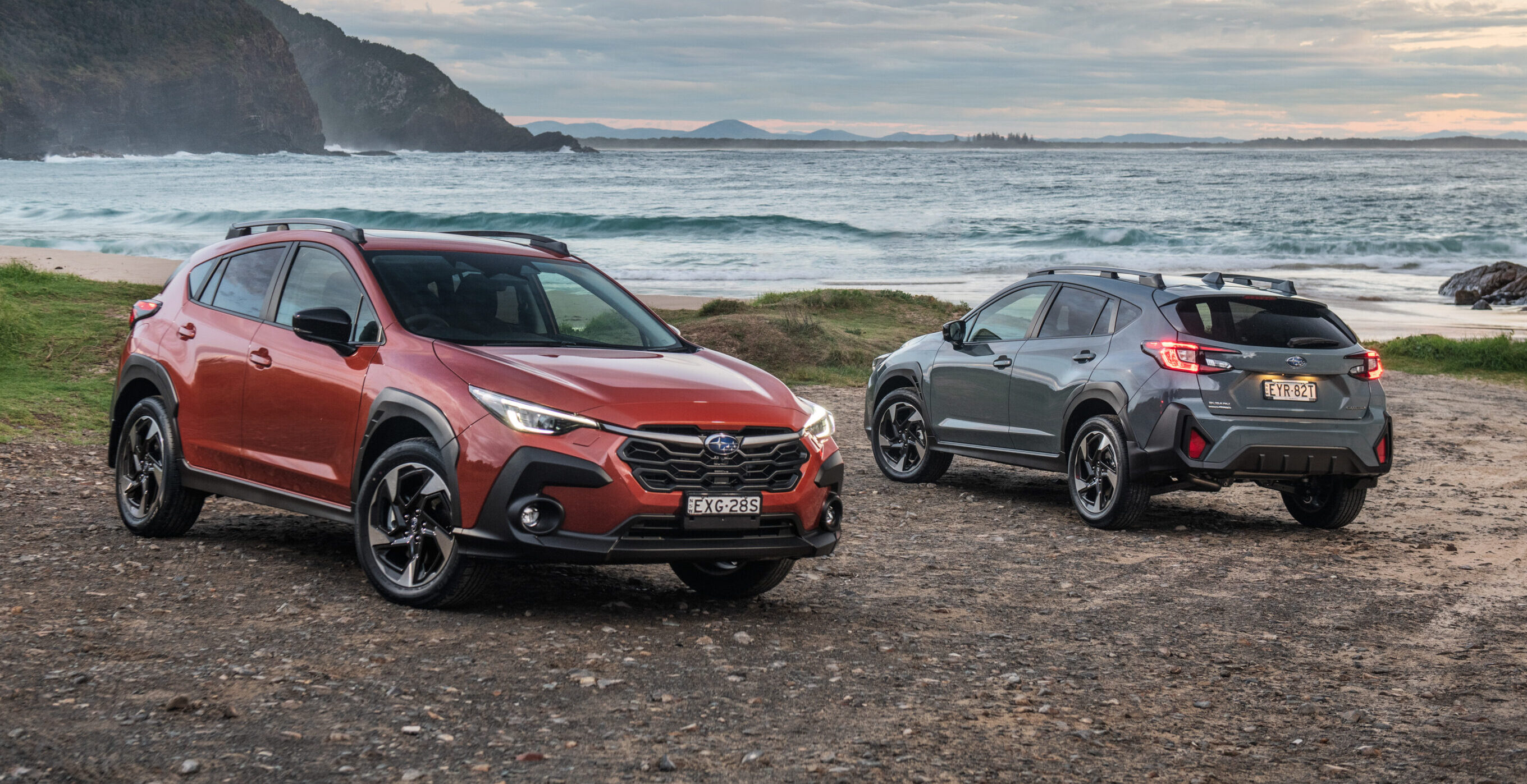
If you’re looking for the best all-round small SUV that can comfortably go off-road, the Subaru Crosstrek is the car to choose. With the company’s famous ‘symmetrical’ all-wheel drive system, 220mm of ground clearance and its ‘X-Mode’ off-road modes, the Crosstrek can go much further than all its rivals – bar the hardcore Suzuki Jimny, though that’s much smaller and way less practical and refined.
Off-road chops aside, the Crosstrek is a solid offering in the segment. Its interior offers reasonable quality and a huge 11.6-inch touchscreen with features like sat-nav, digital radio and wireless smartphone mirroring. The seats are comfortable and as we’ve seen with many Subarus for this century, it’s packed with safety features like nine airbags, AEB, lane keeping assistance and adaptive cruise control.
Under the bonnet is a 2.0-litre four-cylinder ‘Boxer’ engine with or without hybrid assistance. While the engine can feel a bit sluggish, we’d still not bother with the hybrid as it only reduces the fuel consumption by 0.7L/100km to 6.5L/100km, but feels no different on the road and its battery location removes the spare wheel. Later in 2025 will be a more powerful and more efficient 2.5-litre ’strong hybrid’ version of the Crosstrek, and if you’re set on a hybrid, we’d wait for that.
The Crosstrek is otherwise quite nice to drive with a comfortable ride, good visibility and reasonable refinement as well. Likewise, Subaru’s five-year warranty is reasonable for the industry, though its service pricing isn’t cheap. While we’re moaning, the Crosstrek’s 291-litre boot is small and while the rear seat is roomier than you’d expect, it doesn’t feature air vents.
Overall, the Subaru Crosstrek is a popular offering in the small SUV segment. Its cabin is more spacious than you might expect, the whole range is well equipped and it offers an enjoyable driving experience – plus, it will go much further off-road than almost all of its rivals. Its lacklustre drivetrains could be better, as could its small boot, but it’s an overall solid offering in the segment.
| Driving | |
|---|---|
| Interior | |
| Practicality | |
| Overall value |
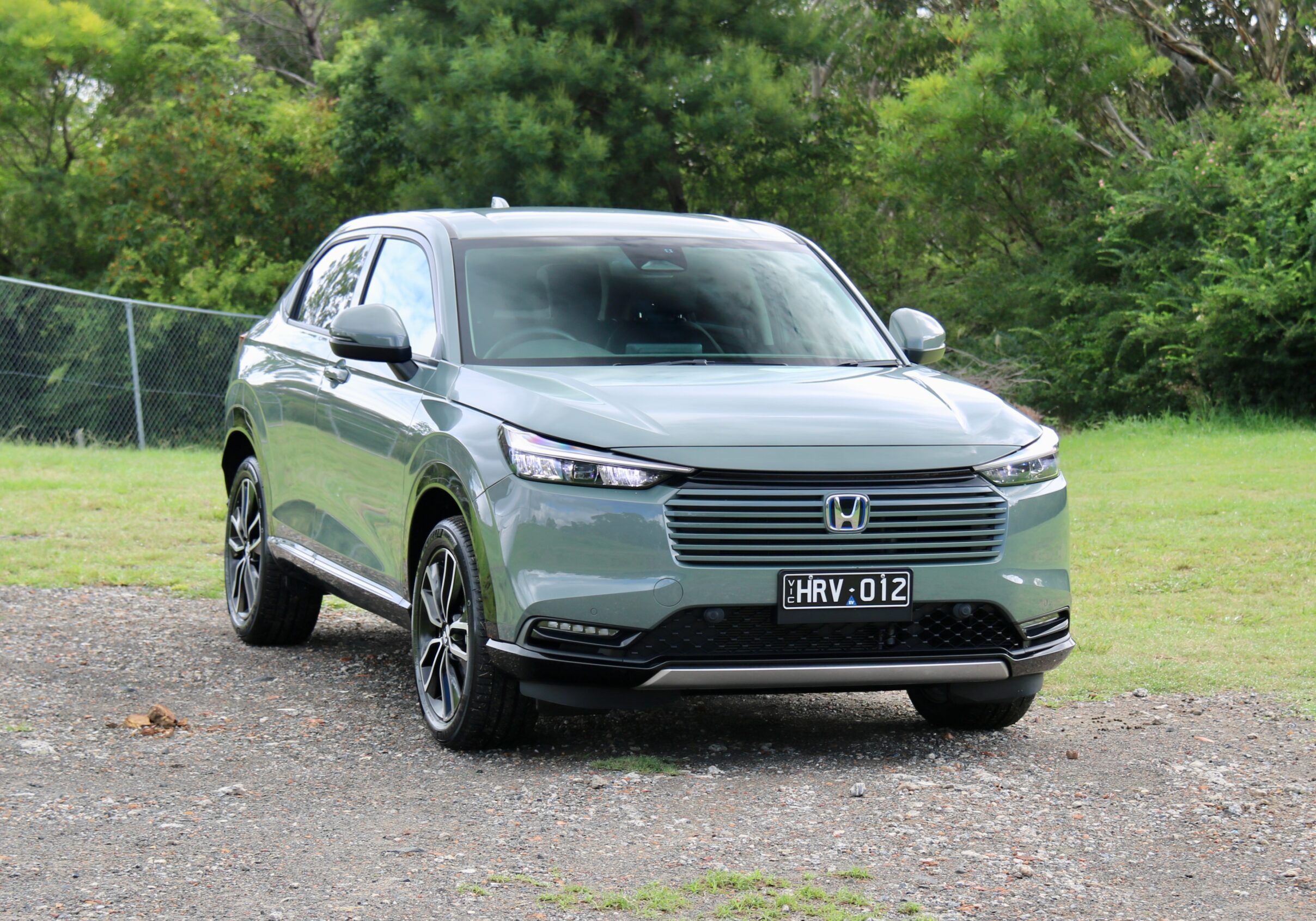
Standing for “high-riding revolutionary vehicle”, the Honda HR-V small SUV was originally introduced in 1999 and two generations later, the HR-V has just been given a mild update with styling tweaks, some new equipment and a new mid-spec model. Pricing starts at $32,900 drive away, though for the better equipped hybrid, you’ll be spending at least $39,900 drive away.
The interior of the HR-V is typically Honda good quality, with cool touches like the climate control knobs lighting up blue or red when turning the temperature up or down, and side air vents that can be set to direct airflow towards the roof. The central touchscreen is a breeze to use, and features sat-nav, DAB+ and wireless smartphone mirroring across the range.
Turning to the back seat reveals the HR-V’s party piece in the small SUV segment: its excellent packaging. The rear seat is one of the roomiest in the segment with excellent legroom and headroom, while two adults will be quite comfortable – and that’s all you’re getting in there, because the HR-V is only a four-seater in Australia.
Making up for that slightly are Honda’s ‘Magic Seats’, which allow for a completely flat loading bay for when the rear seats are folded, but the cool trick is that the seat base folds up to rest against the backrest, allowing for taller items to be carried in the rear cabin. The boot is not massive at 304 litres, though that extends to a large 1,274L with the rear seats folded. Annoyingly though, there’s no spare wheel.
The driving experience of the HR-V is positive – the petrol engine feels a bit underpowered in anything other than urban driving, but the hybrid is noticeably better and far more efficient, rated at just 4.3L/100km for fuel consumption. It’s also refined and reasonably fun to drive, and quite comfortable. Honda’s five-year warranty can be extended to eight years in total, while the $199 cost for each of its first five services is quite cheap too.
| Driving | |
|---|---|
| Interior | |
| Practicality | |
| Overall value |
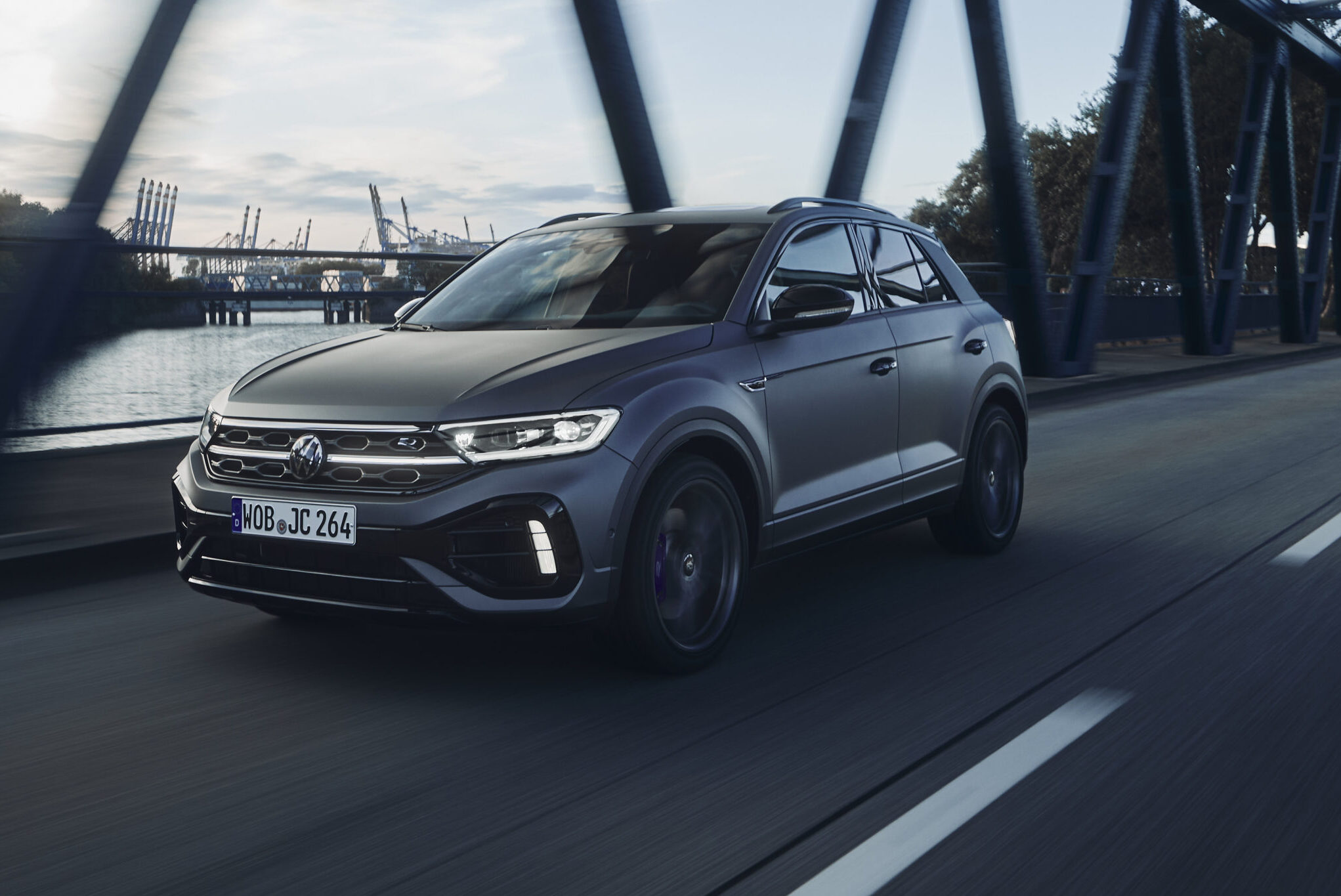
A previous winner of Wheels Best Small SUV in 2023, the Volkswagen T-Roc has a lot going for it and in typical Volkswagen fashion, is a great all-rounder. With almost 8,000 sold in 2024, the T-Roc was the brand’s best-selling vehicle behind only the Amarok ute, and it’s easy to see why.
With pricing starting at $38,990 plus on-road costs with a recent equipment upgrade across the range, and a wide variety of models, there’s a T-Roc model for a variety of tastes: the CityLife and Style are refined and comfortable, while the R-Line is quick and sporty and the R quite fast.
Regardless of model chosen, the T-Roc’s quality is solid and it’s practical as well, with plenty of interior storage space. Though the interior is dark and not as airy as a Hyundai Kona, it’s still spacious enough for four adults. The infotainment systems are a breeze to use and unlike some rivals, the physical AC controls are ergonomically excellent. The 445-litre boot is large for the segment, and opens up to almost 1,300L with the rear seats folded.
The driving experience of the T-Roc is mature, as you’d expect for a Volkswagen. The 110TSI engine in the CityLife and Style is refined and punchy, with the larger 2.0-litre units in the R-Line and R adding even more grunt – the R’s 4.9-second 0-100km/h sprint time is evidence of that. The base models are relaxing to drive, but can put a smile on your face, a smile that grows to a grin with the R-Line and R – this is a fun small SUV to drive.
While the engines can be quite efficient, the T-Roc range does fall a bit with service costs: up to $677 annually is more than double that of some rivals. But overall, the T-Roc is typically Volkswagen: mature, refined, nice to drive, practical and good quality.
| Driving | |
|---|---|
| Interior | |
| Practicality | |
| Overall value |
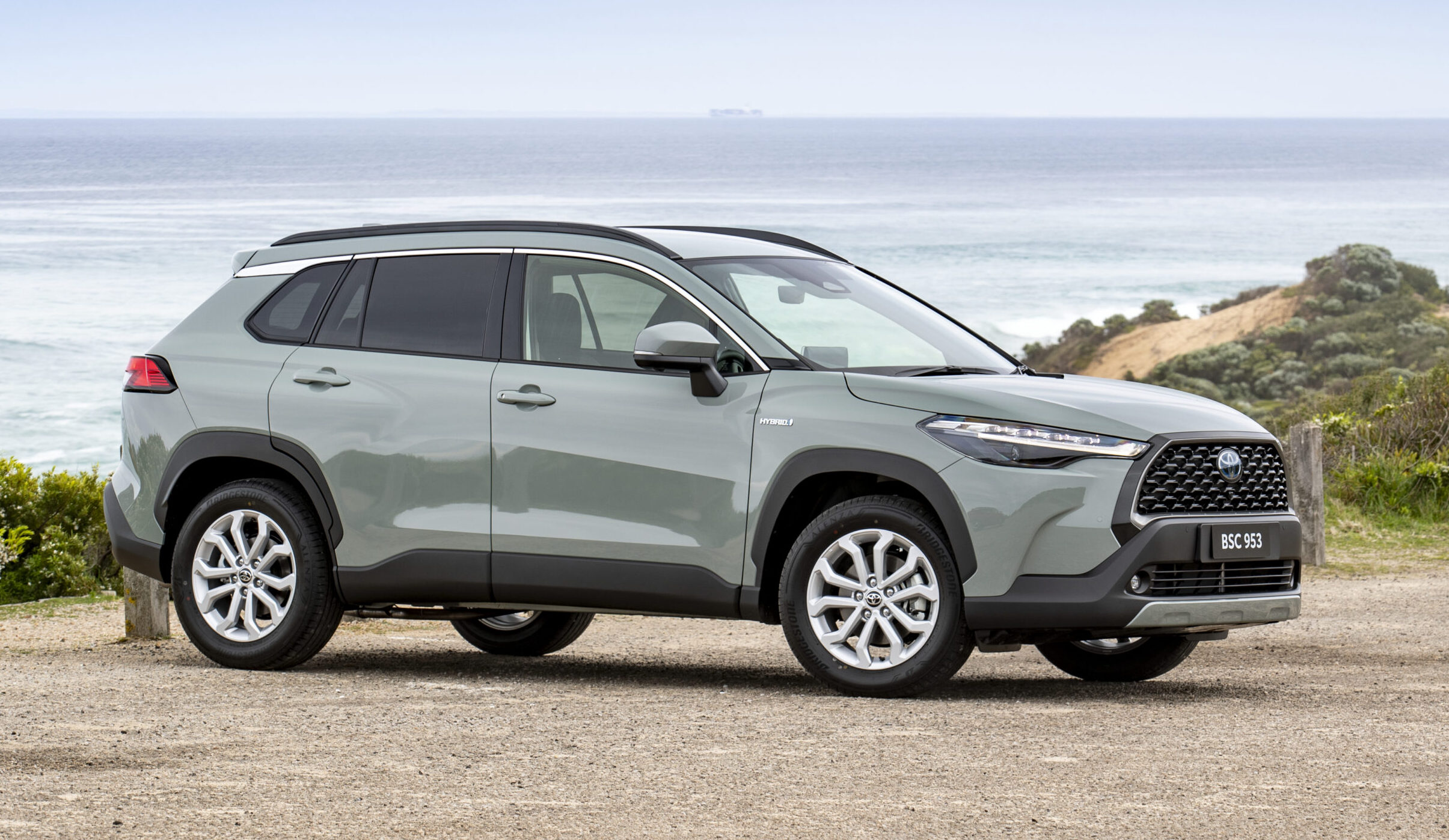
It’s not unusual for manufacturers to offer multiple models in the same segment and Toyota is one such manufacturer: in the small SUV segment, it offers not only the Yaris Cross and C-HR, but also the Corolla Cross, the latter of which is the largest and most practical Toyota small SUV offering.
Priced from $36,480 plus on-road costs for the entry-level GX, like its siblings, the Corolla Cross is hybrid-only and in this case, is only available with the larger 2.0-litre hybrid drivetrain, making a healthy 146kW – or the same power as the turbocharged 1.6L Kia Seltos. Both front- and all-wheel drive are available on the mid-spec GXL and top-spec Atmos as well.
The cabin of the Corolla Cross is quite similar in look to the regular Corolla with an almost identical dashboard layout, though the lower centre console is taller and more practical. There’s plenty of cabin space in the Corolla Cross too, particularly in the rear, while the boot measures from a small 380 litres in the top-spec Atmos AWD to a healthier 425L in the GX and GXL 2WD models.
The driving experience of the Corolla Cross is not the most refined, but the ride quality is compliant and mature on higher-speed roads, while the handling – particularly in the AWD models with their multi-link rear suspension set up – is enjoyable as well.
As you’d expect for a Toyota, the servicing is cheap at just $1,275 for the first five years and servicing at a Toyota dealership extends the mechanical warranty to seven years in total, and the battery warranty to 10 years in total if annual battery checks are performed. It’s clear that while the Corolla Cross’ pricing is not cheap, its running costs are low and that’s in addition to its other attributes: it’s practical, good to drive and a great all-rounder.
| Driving | |
|---|---|
| Interior | |
| Practicality | |
| Overall value |
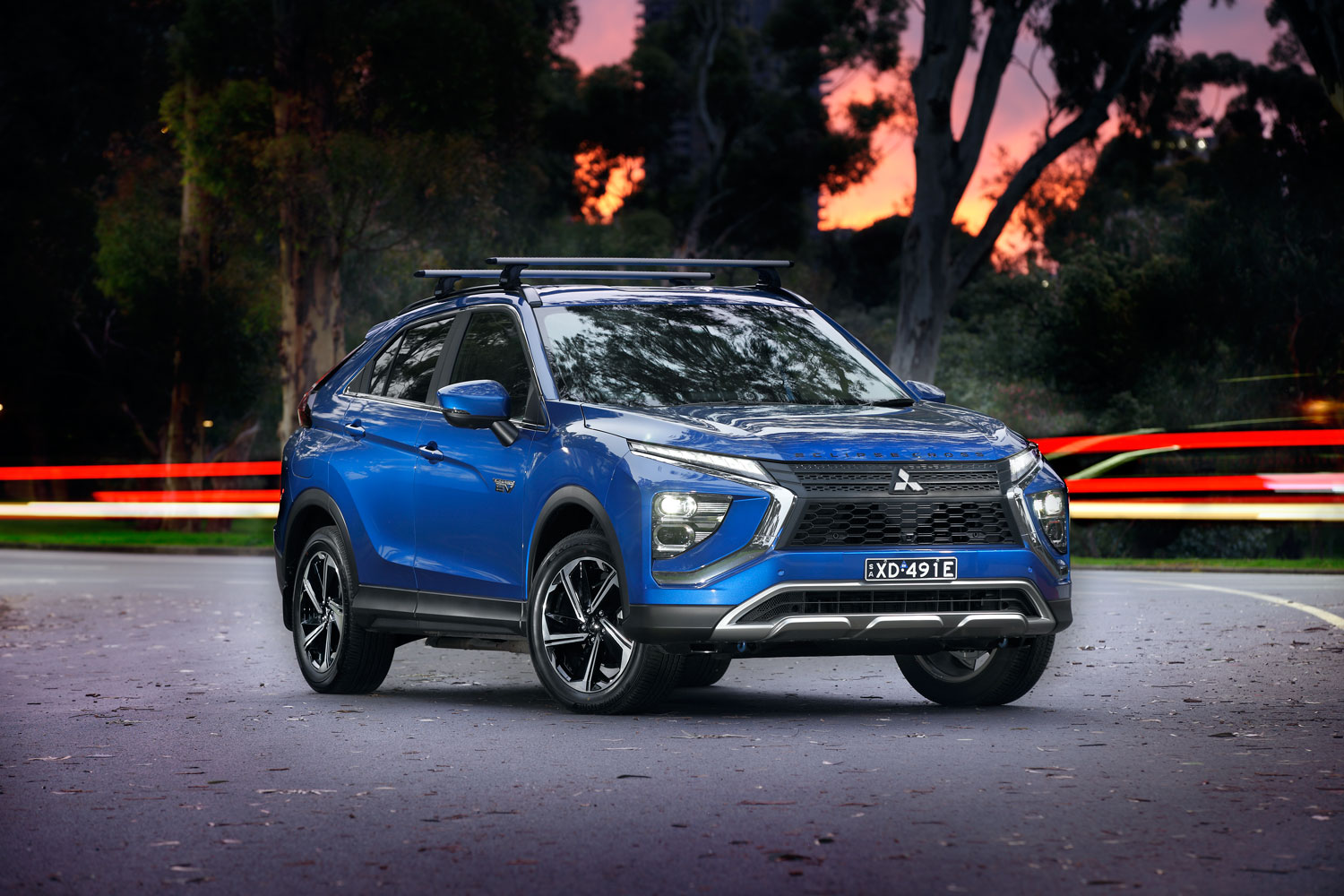
Production for Australia has already stopped but the Mitsubishi Eclipse Cross still has appeal for small SUV buyers. Launched in 2017 as the slightly larger and more premium sibling to the big-selling ASX, the Eclipse Cross features a practical cabin that can comfortably carry four adults and their luggage.
The cabin of the Eclipse Cross feels a bit dated in parts like the basic touchscreen, but it’s ergonomically sound and the seats are comfortable. The quality is reasonable, with lots of soft touch points, and it’s certainly more upmarket than the ASX that sits below it in price. Its 405-litre boot is a good size for the segment as well.
Pricing starts at $31,990 plus on-road costs for the entry-level ES, and buyers can choose from not only multiple models but also different drivetrains, including a plug-in hybrid that’s priced from $47,790 +ORC.
The turbocharged 1.5-litre petrol engine in the Eclipse Cross range is refined and gutsy, though it can be a touch thirsty and the CVT zaps power out of the engine. The driving experience is softer and less well damped than a lot of rivals, but it’s still comfortable enough. It’s not sporty like the Eclipse name suggests, but the plug-in hybrid and its cool all-wheel drive system can be fun to drive.
Where the Eclipse Cross has more appeal is in its aftersales program with a five-year warranty that can be extended to 10 years in total with dealer servicing. Add in low capped price servicing and it’s easy to see with the Eclipse Cross has appeal to small SUV buyers.
| Driving | |
|---|---|
| Interior | |
| Practicality | |
| Overall value |
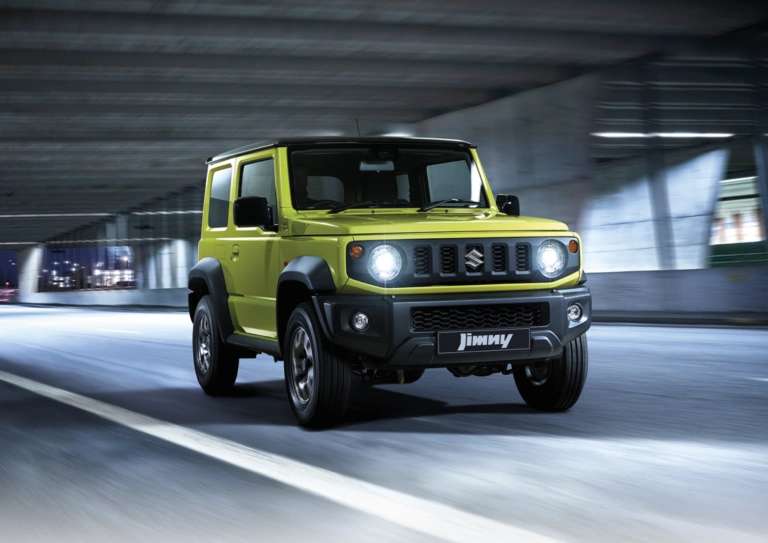
If you’re looking for a small SUV that will be able to take you literally anywhere, the Suzuki Jimny is your only option. The Jimny is an icon and if you want cheap off-road thrills, it’s the car to buy. But if you’re after a small SUV with no off-road credentials, there are much better options.
Under the bonnet of the Jimny is a 75kW/130Nm 1.5-litre four-cylinder petrol engine mated to either a five-speed manual or four-speed automatic, and a full-time four-wheel drive system. It’s this 4WD system that gives the Jimny its go-anywhere ability and you’ll find that it’s able to go way further off the beaten track than even a Subaru Crosstrek.
But on the road, the Jimny is less than impressive thanks to poor handling, a choppy ride and a general lack of refinement. In anywhere other than city-speed commuting, the Jimny’s lack of performance is noticeable and it feels sluggish – especially the five-door Jimny XL. Likely because of how hard you have to work the engine to get anything but basic progress, it can be quite thirsty.
The Jimny’s cabin is – as you’d expect for its sizing – pretty small and while Suzuki has tried to use up every bit of room inside the boxy body, it’s still not what you’d call huge. There’s also a new five-door Jimny XL that adds length between the wheels, but the boot is no larger. The dashboard feels dated with its 9.0-inch touchscreen the one piece of technology inside, and storage spots are limited, but the materials are hard wearing and feel built to last.
Suzuki covers the Jimny with a five-year/unlimited km warranty and its service pricing is fairly expensive for such an old-tech engine. But overall, while the Jimny may feel old, it’s tremendously charming and capable off road. We wish it were just a bit better on the road as it would be more recommendable, but given how popular it is, many don’t have an issue with it.
| Driving | |
|---|---|
| Interior | |
| Practicality | |
| Overall value |
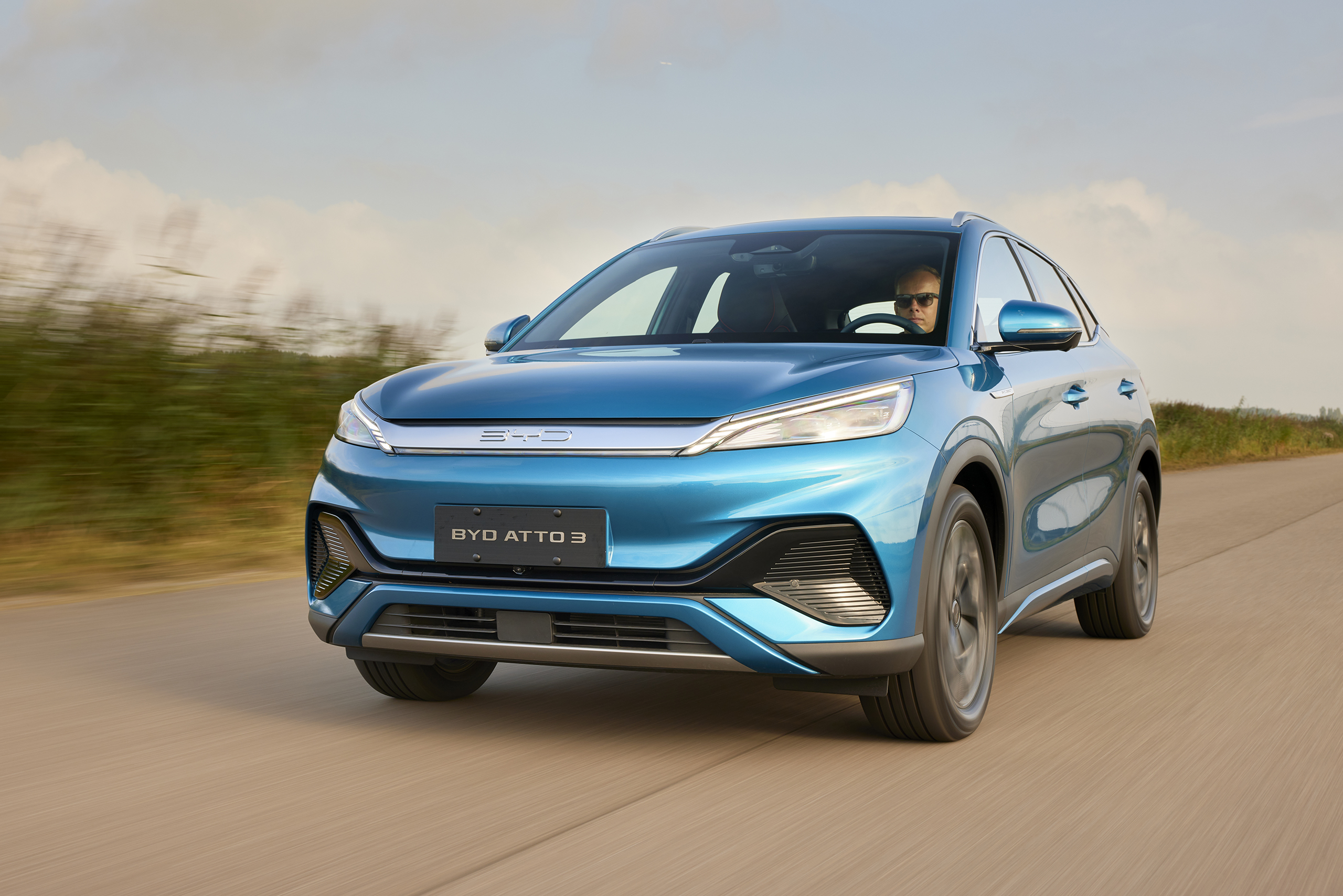
There’s a brand currently on sale in Australia making big waves, and this is the car that started it all for them locally. Of course, we’re talking about BYD and its Atto 3 small electric SUV, which has sold solidly since its introduction locally in 2022.
Since its launch, the Atto 3’s entry price has fallen to just $39,990 plus on-road costs for the new entry-level Essential model, and it’s pricing that attracted buyers to the Atto 3 in the first place. But there’s more to the model, including a long standard equipment list, an attractive and good quality cabin, and solid practicality.
The Atto 3 offers a choice of two batteries: a 49.9kWh one in the base Essential or a larger 62.2kWh unit in the upper-spec Premium. Range is WLTP-rated at 345km for the Essential and 420km for the Premium, with DC fast charging at up to 70kW in the Essential and 88kW in the Premium. Both variants use a 150kW/310Nm electric motor that drives the front wheels, and performance is peppy rather than brisk, but that’s fine.
The Atto 3’s driving dynamics aren’t incredible either, it must be said, which is something that would be better without the standard Atlas Batman tyres. But the Atto 3 is comfortable to drive and offers good bump suppression. The Atto 3’s cabin is also funky to look at, with a huge 12.8-inch touchscreen that rotates and the quality is pretty good as well.
Overall, the BYD Atto 3 is a solid entrant to the small SUV segment and it’s no surprise that it has sold well locally: it’s very well priced, good quality, reasonable performance, practical and covered by an above-average warranty. The new Essential trim has made it even better priced than before, yet it’s still well equipped across the range.
| Driving | |
|---|---|
| Interior | |
| Practicality | |
| Overall value |
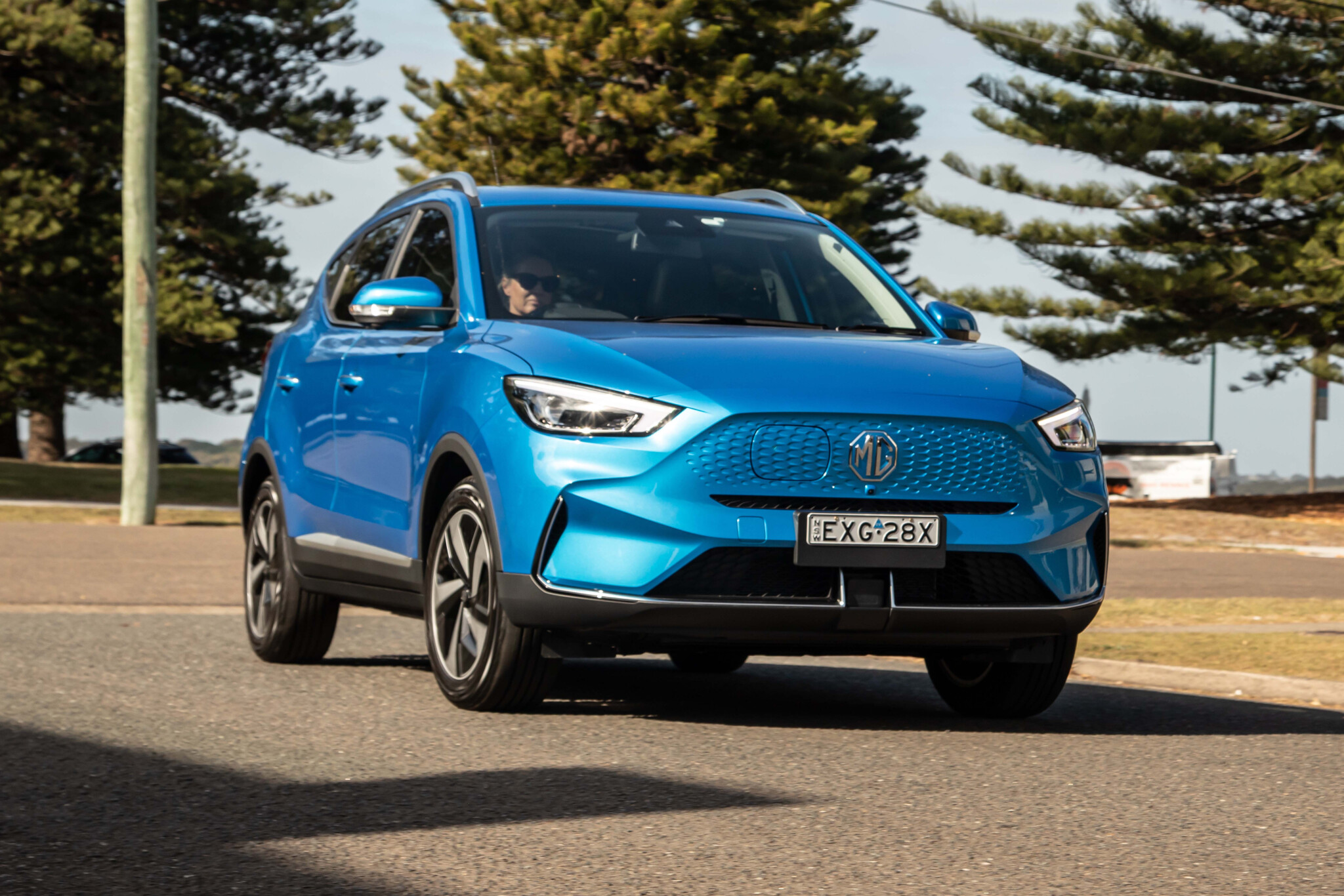
MG’s first electric car in Australia, the popular ZS EV, is not long for this world. Priced at a special $36,888 drive away for both the base Essence and upper-spec Long Range to clear stock ahead of a new model later in the year, the ZS EV is currently excellent buying at a bargain price.
The ZS EV models use a front-mounted electric motor, with the Essence making 130kW/280Nm, though the Long Range makes slightly less power at 115kW/280Nm. Both offer peppy performance, especially in urban situations. The ZS EV’s ride quality isn’t bad either, though it can feel a bit underdamped in larger bumps.
The cabin of the ZS EV is nearly identical to the ZS that debuted almost 10 years ago, so it doesn’t feel that modern, but the quality is reasonable and it’s practical as well. The 10.25-inch touchscreen is well equipped as well, with features like sat-nav, smartphone mirroring and even access to the brand’s ‘iSmart’ smartphone app.
The ZS EV’s cabin is also practical and can carry four adults comfortably. The rear seat is roomy enough for two, especially in headroom, and the 359-litre boot is reasonable as well. Covering the ZS EV is a 10-year/200,000km warranty and the service cost for the first six years costs just $1,998.
Overall, the MG ZS EV was a commendable first effort for the brand, and it’s no surprise to see that it’s sold well locally. Now in run-out at a bargain price, the ZS EV’s appeal is even stronger – especially now that the Long Range model is priced the same as the Essence with the smaller battery. While it’s not the newest car around, the ZS EV still offers a good range, a practical cabin and reasonable performance as well.
Looking to get into a brand-new small SUV? Our stories below will guide you to the model that best suits your needs!
There will always be a market for those looking for a good, reliable car under $30,000, particularly as many brands slowly creep up in price. And some of them are surprisingly feature-laden. Here’s our pick of the best small SUVs in the ‘budget’ category…
| Driving | |
|---|---|
| Interior | |
| Practicality | |
| Overall value |
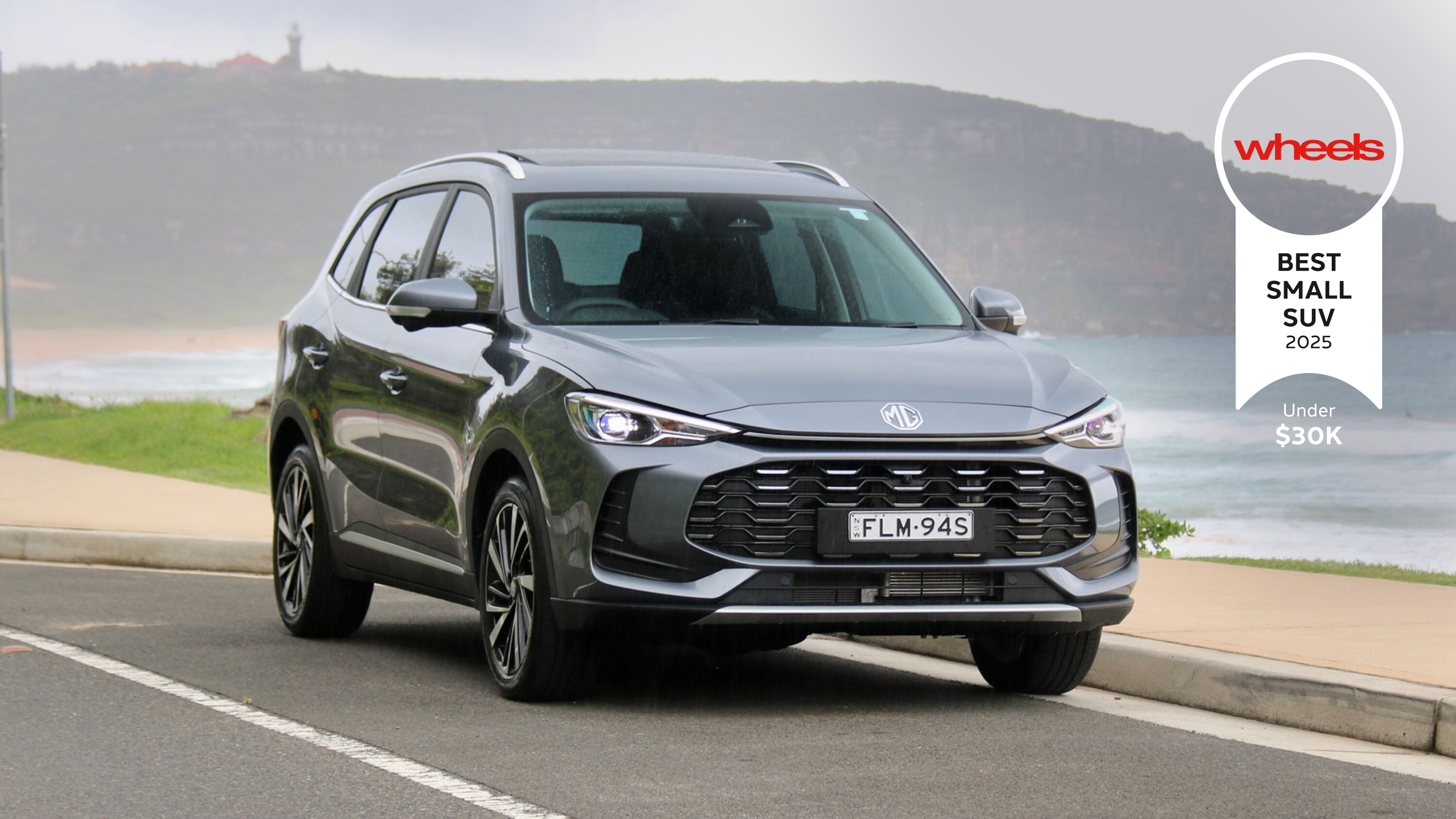
The second-generation MG ZS first launched in Australia in November 2024 in Hybrid+ spec priced from $33,990 drive away, but the petrol-powered models have just arrived and lower the price of entry significantly to just $26,990 drive away.
While not as cheap as the ZST, the new ZS is better equipped and it’s also larger and more refined. The cabin is more modern with higher quality materials, while the growth spurt has allowed for a larger rear seat and boot – the size has increased from a healthy 359 litres to a large 443L with the seats up, for example.
The infotainment system has upgraded to MG’s latest unit, which is much easier to use than the system in the ZST and while it doesn’t feature smartphone mirroring that’s wireless, it’s still got sat-nav, digital radio and access to the company’s ‘iSmart’ live services so that owners can lock and unlock the car, turn on the climate control to warm or cool the car before getting in and even check where the car is.
On the road, the new ZS presents a compelling option in the small SUV segment as it’s more comfortable than the ZST and CX-3, and is a generally relaxing car to drive. The naturally aspirated 1.5-litre petrol engine is not fast, but should give most buyers enough performance. The only annoyance comes from the lack of steering wheel reach adjustment – just like the ZST – and the overactive speed limit assistance, which makes a fuss if you travel even 1km/h above the speed limit.
But the new MG ZS is a big improvement on the car it replaces and in the sub-$30,000 small SUV segment, does quite well overall. It offers more space than most rivals, more equipment than a lot of rivals, an industry-leading warranty and although service pricing isn’t cheap, it now matches the class leaders at 15,000km intervals.
| Driving: | |
|---|---|
| Interior: | |
| Practicality: | |
| Overall value: |
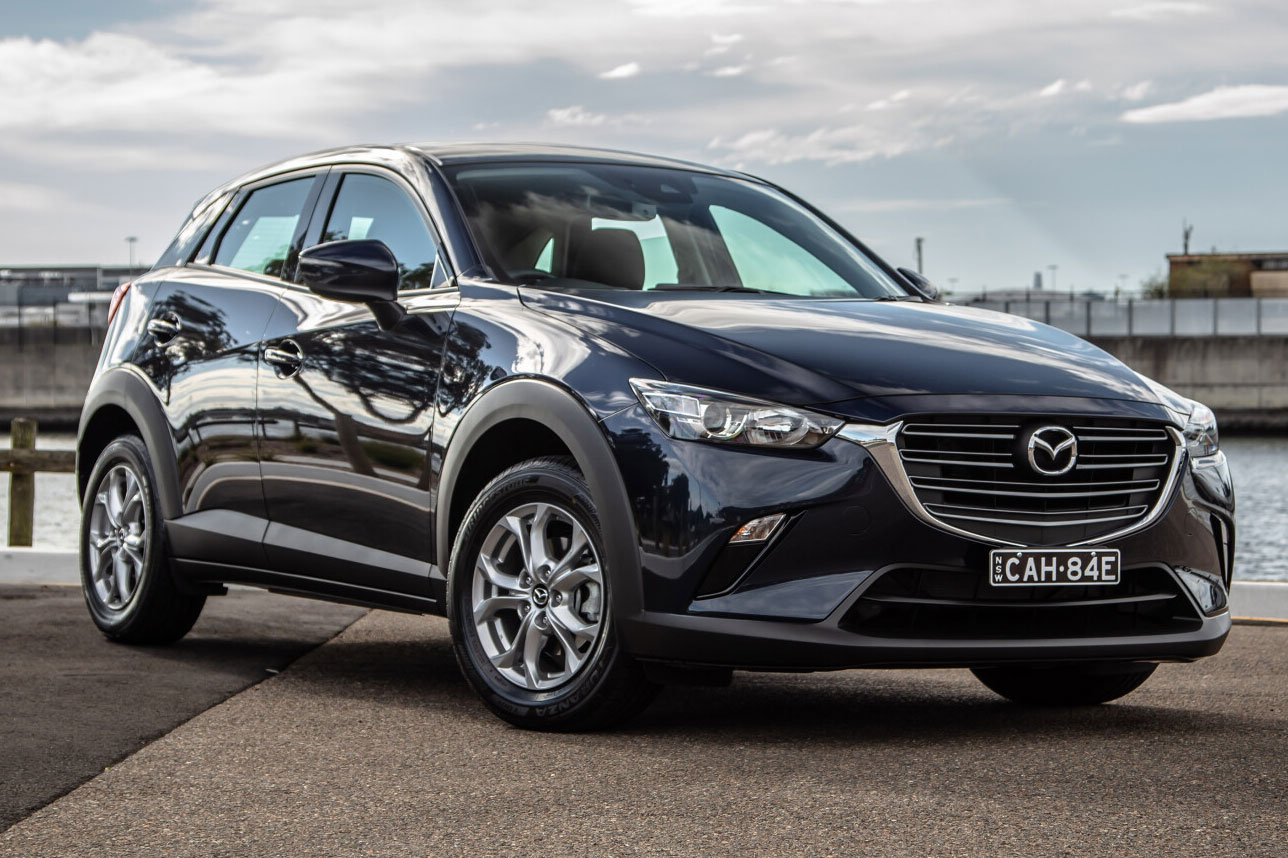
The Mazda CX-3 may be more than 10 years old, but age isn’t slowing it down. In fact, it’s selling better than it ever has in Australia – in 2024, 18,461 units were sold, a 17 per cent improvement on 2023. So why is the CX-3 so appealing to Australian buyers?
As we’ve seen with many Mazda products over the past 20 years, the CX-3 is fun to drive in a way that a lot of competitors aren’t, offering crisp handling and meaty steering that many competitors don’t possess. It’s also powered by a relatively big engine for the segment – while the Kia Stonic has a tiny turbocharged 1.0-litre engine, the CX-3’s engine is double the size (albeit without a turbo). That gives the CX-3 a good amount of performance for the segment, while fuel economy is reasonable.
The interior uses quality materials all over the cabin and fits more exotic trimmings the further up the range you go, like a beige and tan option in the mid-spec Evolve. But even on the entry-level Sport, the fit and finish is excellent and the switchgear is also typically lovely Mazda. The in-car tech is starting to feel a bit dated, however, with the 8.0-inch touchscreen using the company’s old ‘MZD Connect’ software instead of the newer system much of the Mazda range now uses.
The CX-3’s interior is also not massive and taller adults will struggle to fit in the rear seat. Its 264-litre boot is the smallest here, though it does at least feature a dual-level boot floor so that there’s a flat space when the rear seats are folded.
Mazda’s warranty is about average for the new car market and service pricing is not cheap either, but it could be worse. Overall, it’s not difficult to see why so many buyers choose the CX-3 each month. While it’s not the most practical option in the segment, it’s more fun to drive than most, well finished inside and reasonable value for money.
| Driving | |
|---|---|
| Interior | |
| Practicality | |
| Overall value |
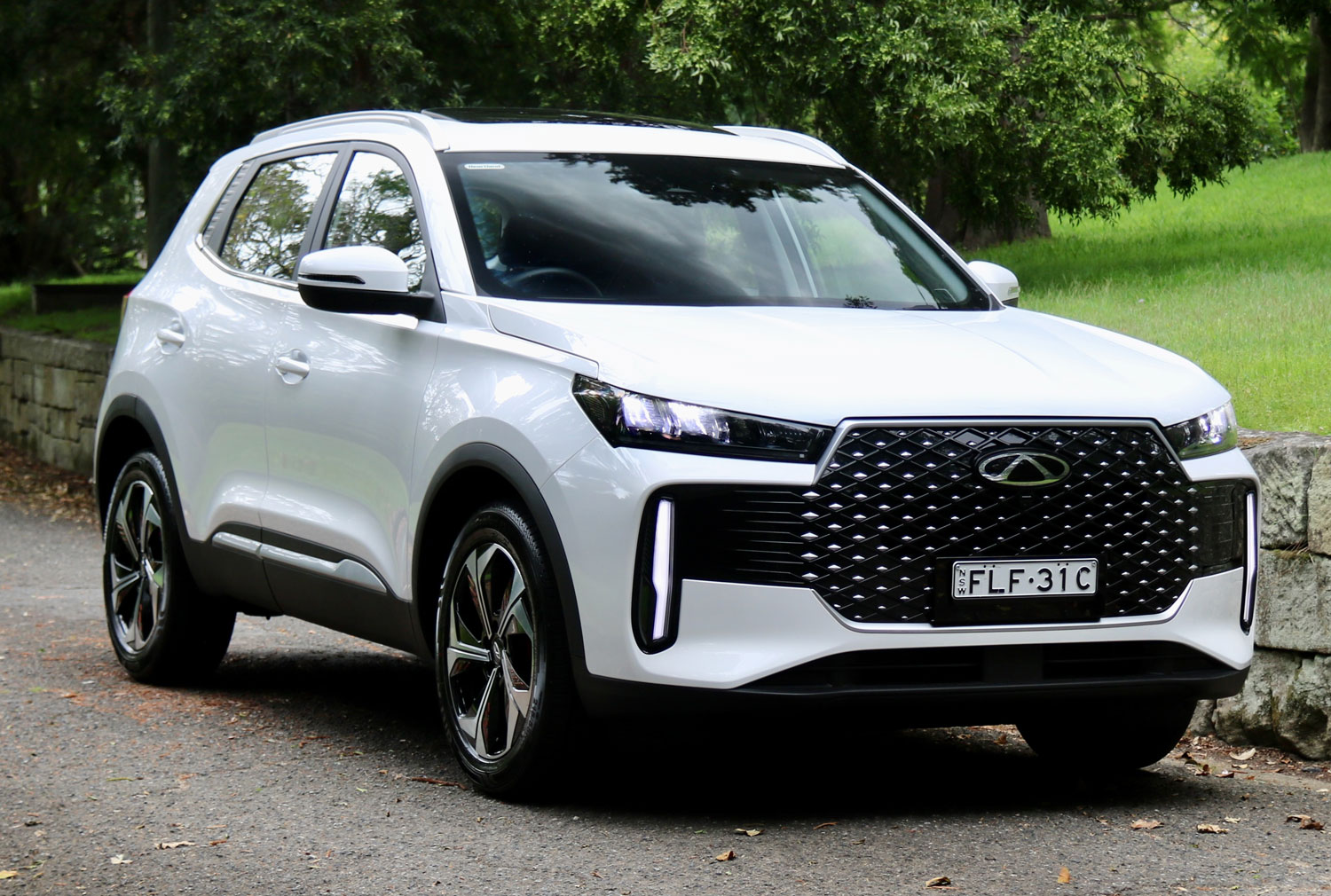
It’s only just been launched on the market, but the Chery Tiggo 4 Pro is already making waves in the Australian new car market, with 1,018 units of the Tiggo 4 Pro sold in January 2025 alone. That’s a little surprising given that January was only its second full month on sale in Australia. So what appeals to buyers about the Tiggo 4 Pro?
Well, it’s undoubtedly an excellent value-for-money proposition. Pricing starts at just $23,990 for the entry-level Urban – that’s drive away, as well – with the top-spec Ultimate adding only $3,000 to the price. Even with premium paint, the most expensive Tiggo 4 Pro is comfortably under the $30,000 threshold – and unlike the pricing of most rivals quoted here, that includes all on-road costs.
The Tiggo 4 Pro’s seven-year/unlimited km warranty with up to seven years of roadside assistance is long, too, while the first five years of servicing only costs $1,400. In addition to that, even the entry-spec car is well equipped with features like automatic LED lighting, a dual 10.25-inch screen layout and dual-zone automatic climate control.
Away from the value equation, there’s still lots to like about the Tiggo 4 Pro. Its cabin is good quality with lots of soft touch surfaces, it’s more practical than its small size suggests with a 380-litre boot (1,225L with the rear seats folded) and it’s powered by a gutsy turbocharged 1.5-litre engine. It was also recently awarded a five-star ANCAP safety rating with impressive scores in each category.
Only the Tiggo 4 Pro’s overactive safety assist, too-soft driving experience and thirsty drivetrain count against it. But if you’re value focused, the Chery Tiggo 4 Pro is a great option and we expect even larger sales numbers from it this year.
| Driving | |
|---|---|
| Interior | |
| Practicality | |
| Overall value |
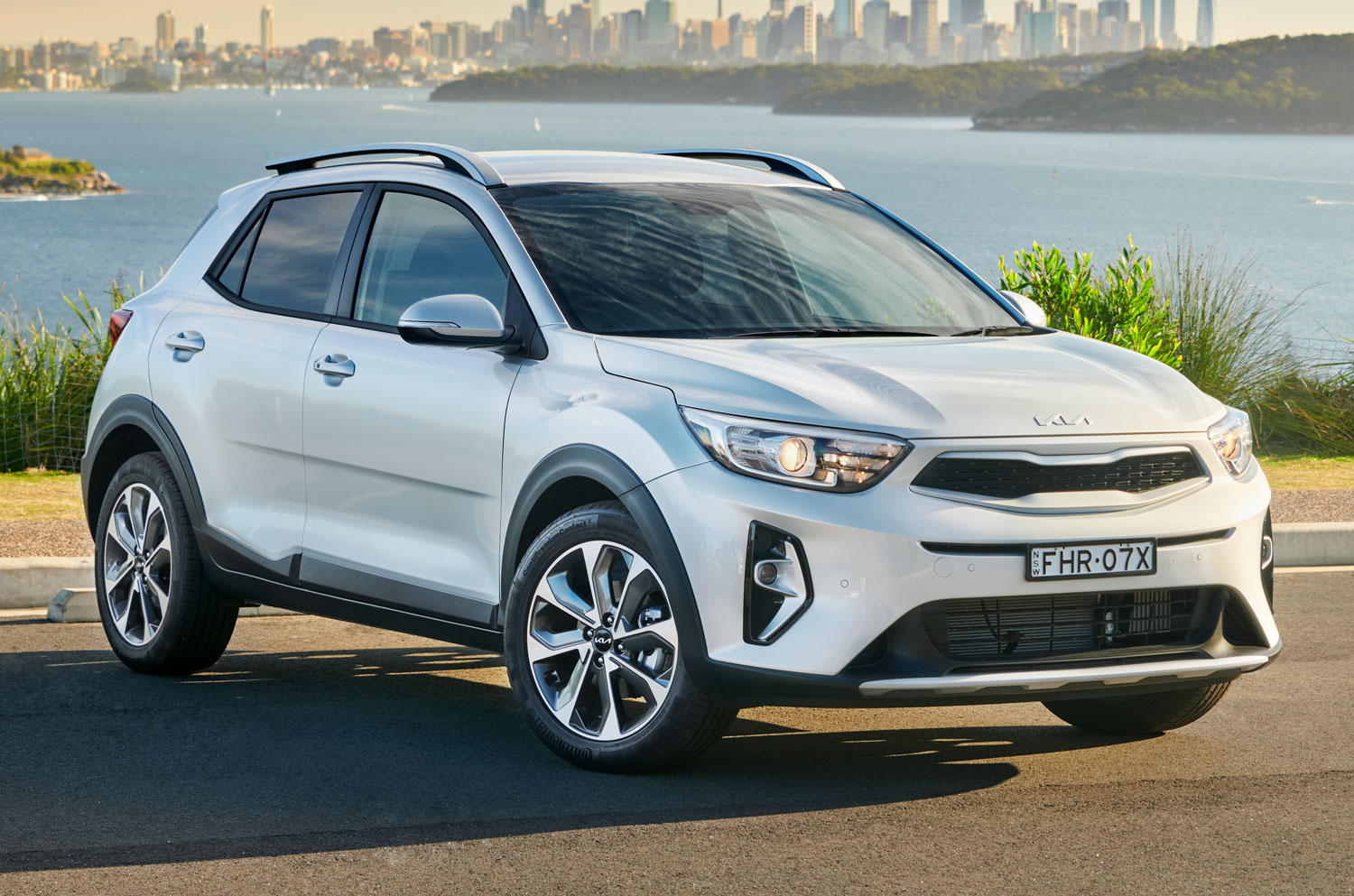
With over 6,100 sold in 2024, the Kia Stonic is a solid sales performer in the small SUV segment. It recently had an update which turfed the earlier naturally aspirated 1.4-litre petrol engine in the base and mid-spec cars for the characterful and far more efficient turbo three-cylinder engine that was once exclusive to the top-spec GT-Line, as well as adding more standard equipment across the range.
By doing so, Kia increased the Stonic’s value considerably, and features like blind-spot monitoring with rear cross-traffic alert, alloy wheels and heated/auto-folding mirrors are now standard on the entry-level Stonic S. Add in the gutsier and more efficient turbo three-cylinder engine and the Stonic is far more recommendable than before.
The interior of the Stonic, based on the last-generation Rio, is handsome to look at and reasonable quality. Its 8.0-inch touchscreen is well featured with wireless Apple CarPlay and Android Auto – plus inbuilt sat-nav in upper specs – and is very easy to use.
The rear seat and boot of the Stonic are roomier than you first think, with excellent packaging and a healthy 352-litre boot that expands to 1,155L with the rear seats folded – though there’s still a noticeable lip when done. The Stonic’s transmission is also a bit indecisive at low speeds, while its engine could also do with more power and torque and the 10,000km service intervals are short.
The recent update has done a lot to enhance the Stonic’s appeal: it’s better equipped, more refined and more efficient than before, but still remains good to drive, practical for its size and features easy-to-use technology, making it good value for money.
| Driving | |
|---|---|
| Interior | |
| Practicality | |
| Overall value |
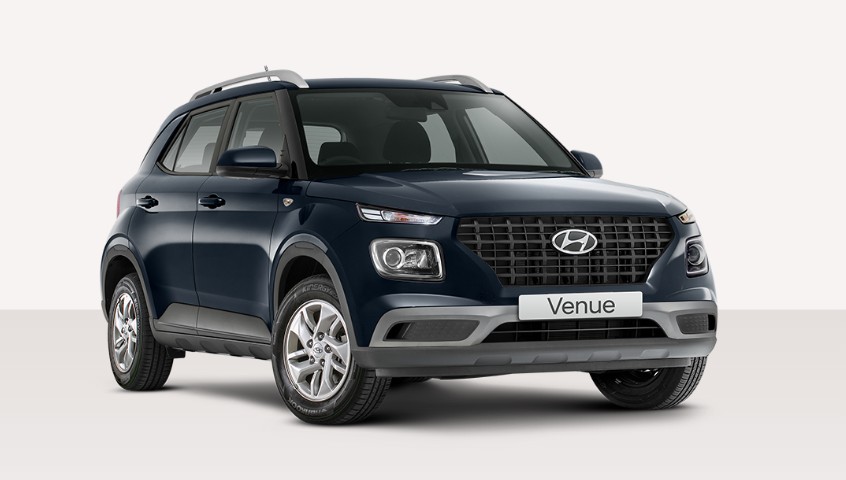
The Hyundai Venue replaced the Accent as the brand’s least expensive car locally upon its release back in 2019 and has sold well since then – last year’s result of almost 7,000 units sold was up 13 per cent on its 2023 result and third place in the segment.
The Venue has clear appeal as the entry point to the Hyundai range. The base model is currently available for just $25,990 drive away and even the mid-spec Active is around the $30,000 mark once on-road costs are included. Plus, its warranty is a lengthy five years and if it’s serviced through a Hyundai dealership, earns roadside assistance for life.
In addition to the value equation, the Venue’s strong practicality earns it brownie points. Its 355-litre boot is bigger than you’d expect and features some clever touches like a dual-level boot floor. The rear seat, although largely featureless, is roomy for the size and even taller adults will be fine thanks to excellent headroom within its boxy dimensions.
On the road, the Venue’s ride quality is excellent – soft but taut so that bumps don’t unsettle it, and it’s reasonably fun to drive as well. The engine could be gutsier and a bit more refined but at least it offers the choice of a manual transmission on the entry-level model.
Overall, the Hyundai Venue presents solid value for money in the small SUV segment. While its drivetrain could be better, it otherwise drives nicely, it’s quite practical and its service pricing is quite reasonable as well.
| Driving | |
|---|---|
| Interior | |
| Practicality | |
| Overall value |
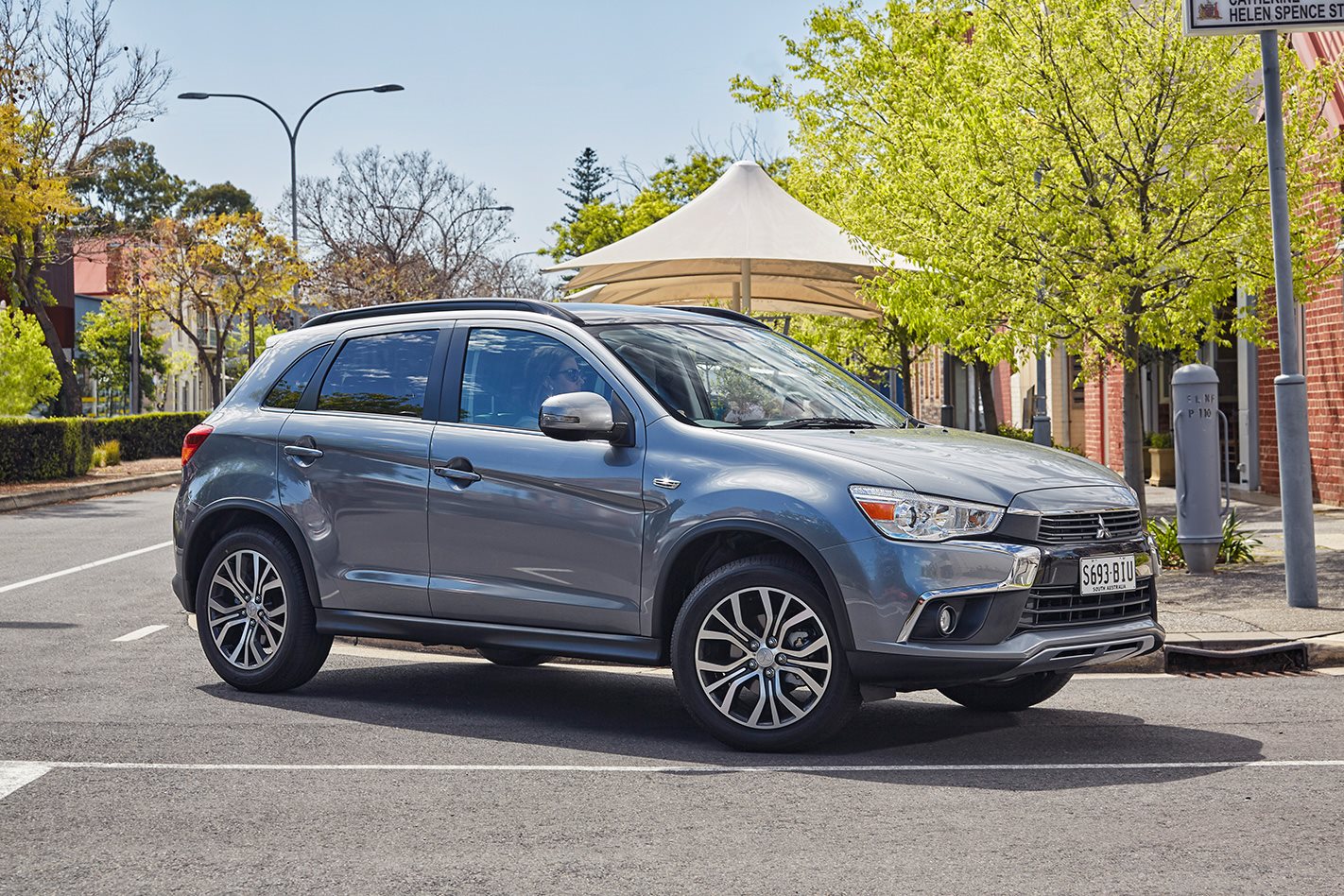
It’s not the newest kid on the block, but the Mitsubishi ASX has been massively successful for its maker. Released in 2010, and continuously updated since to keep relevant, the ASX sold over 12,300 units locally last year – enough for fifth place against newer rivals. Mitsubishi Motors Australia has also confirmed that a new generation of ASX will go on sale sometime in 2025.
Key to the ASX’s success in Australia is its value for money. While many rivals have become more expensive over the years, the ASX has stayed in roughly the same $25,000 to $35,000 pricing point. Plus, buyers get a solid five-year warranty that’s extendable up to 10 years/200,000km in total if serviced through a Mitsubishi dealership, and with a $389 average annual cost over the first five services, why would you not?
Another highlight of the ASX is its practicality, because it is larger on both the inside and outside than key rivals like the Mazda CX-3. Fitting child seats and luggage is much easier in the Mitsubishi than the Mazda thanks to its 393-litre boot, which is 129L larger than the CX-3. Its size helps it feel more solid on the road as well.
In some ways, the ASX can’t hide its age though – even the larger 2.4-litre engine is unrefined and slow, with the 2.0-litre worse in both counts, and its interior feels dated through its instruments and touchscreen. Thankfully, the ASX range includes Apple CarPlay and Android Auto, as the native system is a bit slow to use.
Still, the cabin is reasonable quality and while the driving experience isn’t the sportiest, it’s still comfortable. We would like to see more safety features in the entry-level models however, with equipment like lane keeping assistance, blind-spot monitoring and rear cross-traffic alert limited to the mid-spec LS and up.
Overall, there’s much to like with the ASX range. Some rivals feel newer and include more safety equipment across the range, as well as featuring more refined drivetrains. But Mitsubishi’s big-selling small SUV gives buyers a spacious cabin for the segment, an excellent warranty program and an easy and comfortable driving experience.
| Driving | |
|---|---|
| Interior | |
| Practicality | |
| Overall value |
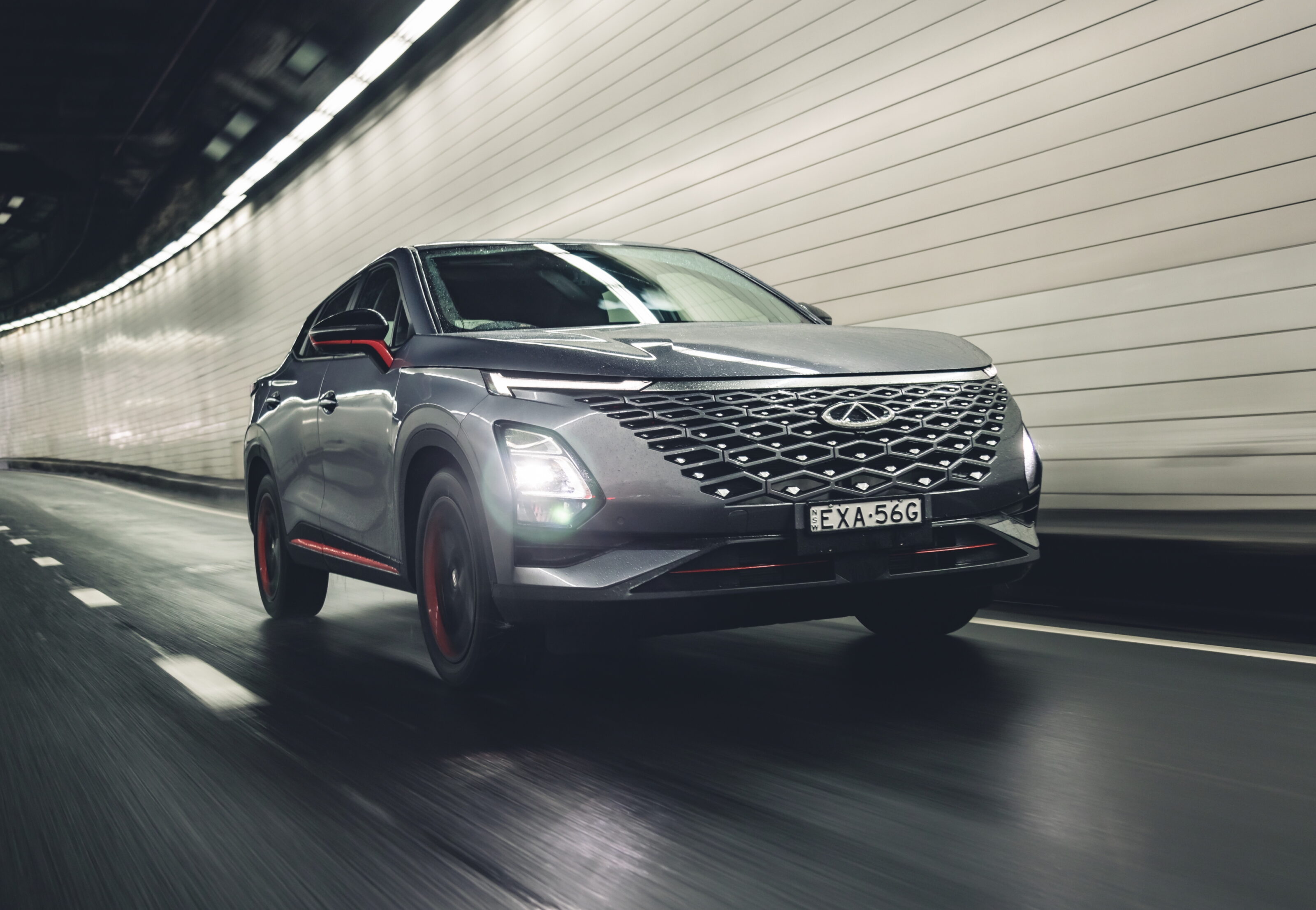
The Omoda 5 was the product that Chery utilised to re-launch in Australia in early 2023. The brand’s first truly global product, the Omoda 5 is what you’d expect from the Chery brand: well priced, well equipped, contemporary styling and covered by a long warranty. And with over 6,100 sales in 2024, clearly Australians agree.
Since it was released, the Omoda 5 has seen a range shuffling with extra value added in the form of a new entry-level FX model, which is priced from $24,490 plus on-road costs. It keeps the upper-spec models’ turbocharged engine and safety features, including autonomous emergency braking, lane keeping assistance, adaptive cruise control and blind-spot monitoring with rear cross-traffic alert.
Like the smaller Tiggo 4 Pro, the quality inside the Omoda 5 impresses with plenty of soft touch materials used throughout the cabin, and the dashboard layout is modern as well. In-car tech is handled through a dual-10.25 inch set up for the infotainment and driver’s display, and while both systems can take some getting used to, the screen quality is good.
What’s not so good about the Omoda 5 is the intrusiveness of the active safety systems such as the lane-keeping assistance and active speed monitoring. Plus, the steering is very light, which accentuates the indecisive lane keep assist. While it’s well planted, the ride quality can also be a bit too jumpy thanks to the soft suspension set-up. Plus, its 360-litre boot isn’t that big and is otherwise featureless, while the rear seat is tight for taller folks.
Still, the Omoda 5 is excellent value for money. It’s well equipped, cheap to service, covered by a long warranty, looks exotic and is reasonably practical as well. No wonder so many have found favour with Australians.
| Driving | |
|---|---|
| Interior | |
| Practicality | |
| Overall value |
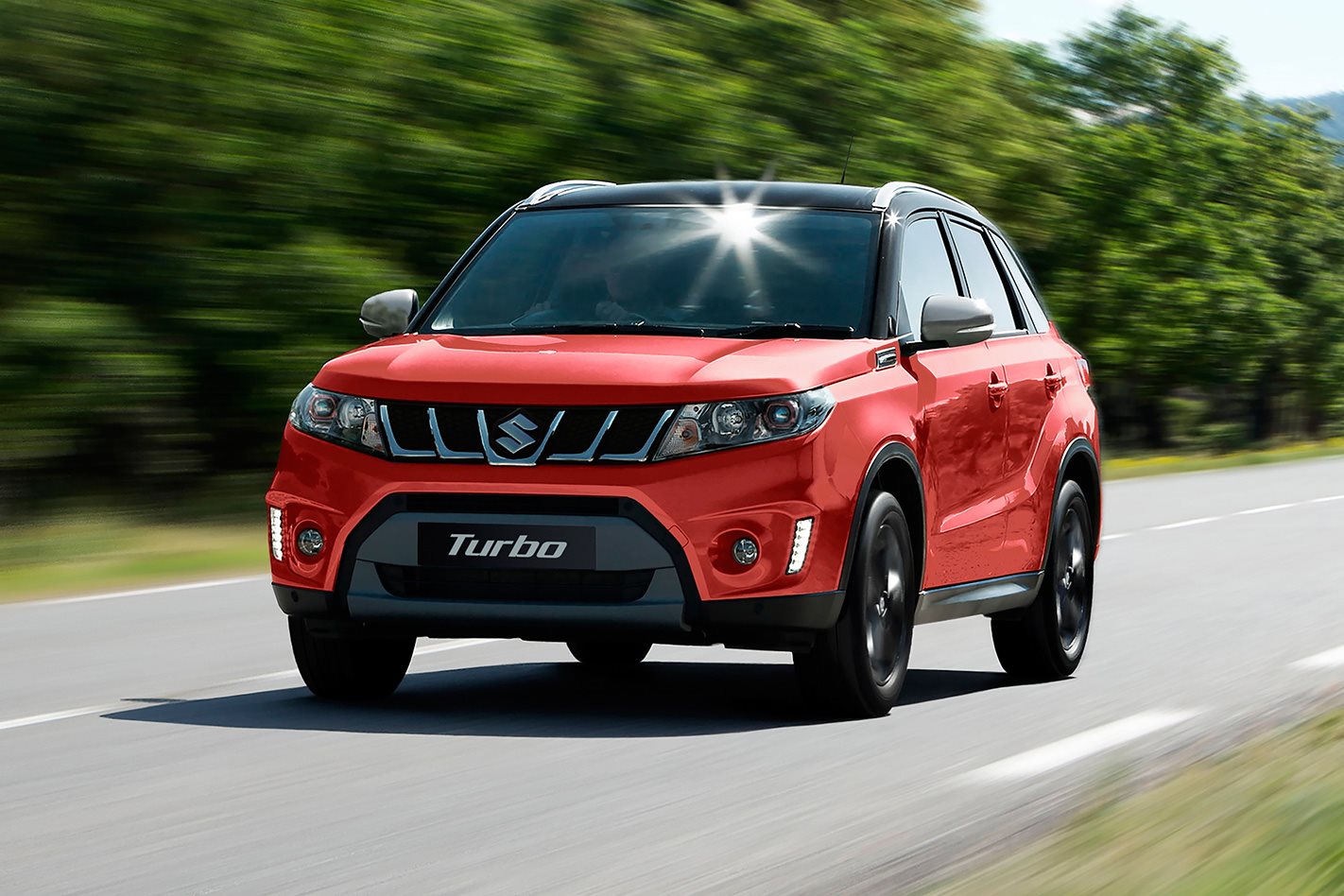
As far as nameplates go, the Vitara is one of the oldest in the segment as its name has been used in a few different forms since 1988, though the current model has been on sale since 2015 and received a light update in 2018 to freshen it up.
It’s reportedly about to get another update later this year, but the Vitara currently offers three models to choose from and a choice of two drivetrains: a naturally aspirated 1.6-litre engine or a smaller but turbocharged 1.4-litre unit. The 1.6-litre is only available as a base model, with the 1.4-litre turbo standard in the Turbo and Turbo Allgrip models.
The Vitara range is reasonably well equipped with features like a leather steering wheel, inbuilt satellite navigation and Apple CarPlay and Android Auto smartphone mirroring, but the base model disappointingly misses out on features like autonomous emergency braking, lane keeping assistance and blind-spot monitoring. In 2025, we think that’s unacceptable.
The Vitara’s ride and handling balance is positive however, and from behind the wheel, it’s fun to drive with a light on its feet feeling and – if you choose the turbo engine – a grunty little motor that can be quite efficient. Less impressive, however, is the dated interior with hard plastics and that it’s not the most practical option in the segment.
Overall, the Suzuki Vitara is feeling a bit dated and hopefully the incoming facelift will change that. For now, there’s good buying in the turbo models but with no hybrid options and no active safety kit like AEB across the range, there are better options in the segment.
| Driving | |
|---|---|
| Interior | |
| Practicality | |
| Overall value |
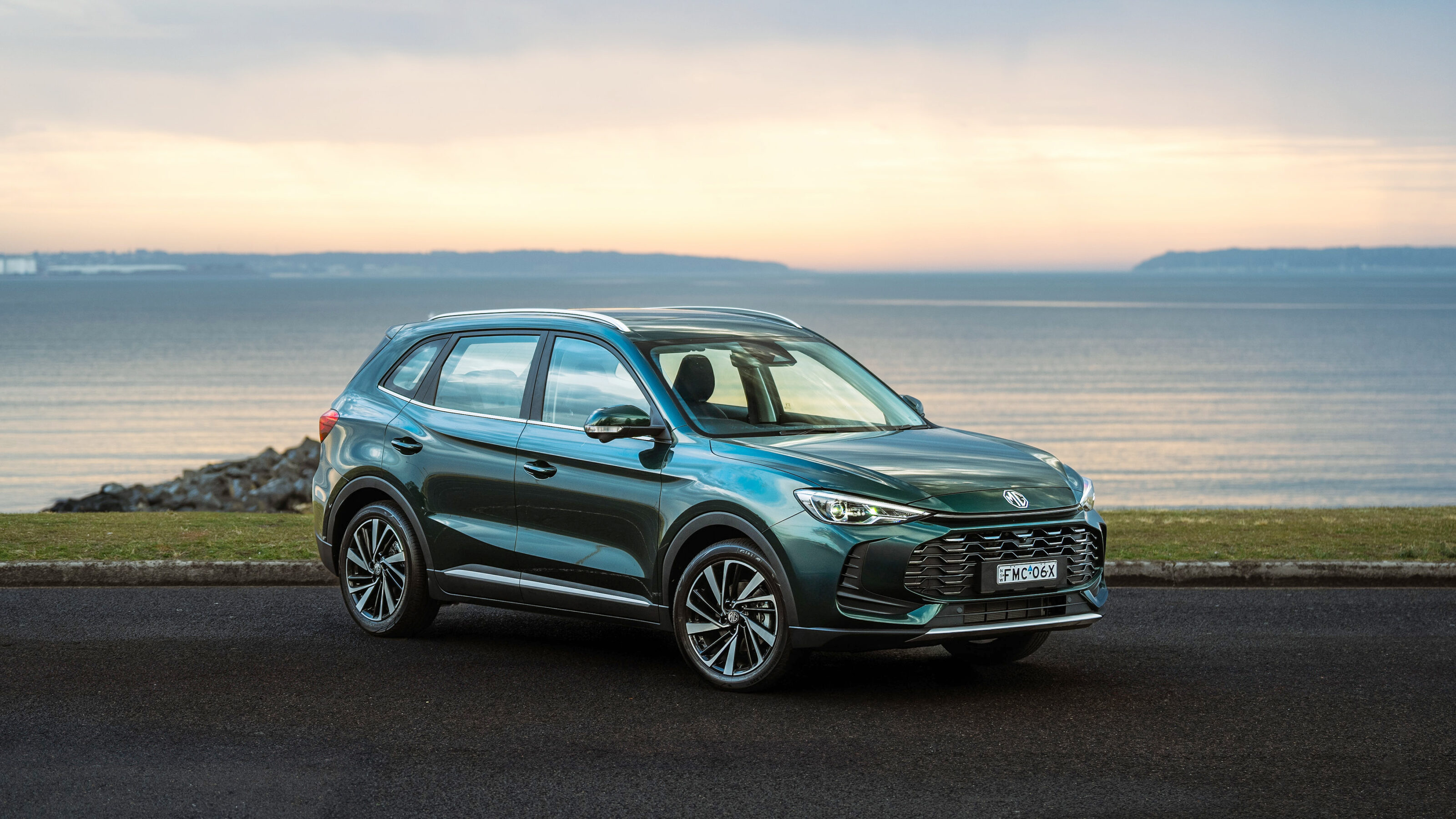
The MG ZST debuted locally in 2017 as the ZS and after a few years, the facelifted ZST joined the range with more features, revised styling and a more powerful 1.3-litre turbo-petrol engine at the top of the range. The ZS remained on sale and together, they’ve outsold every other small SUV in Australia since 2021.
Value is undoubtedly the key to the ZST’s success in Australia. Not only is it cheap to buy – especially now in run out – but its 10-year warranty is industry leading and its service pricing is cheap as well. Plus, even the entry-level Vibe is well equipped with features like automatic LED lighting, a 10.1-inch touchscreen with Apple CarPlay and Android Auto and a full active safety suite.
The ZST’s interior is not the most up-to-date but it’s well featured and the material quality is good for the price with a lot of synthetic leather trim around the cabin. Both variants use a 10.1-inch touchscreen that features smartphone mirroring and satellite navigation. It’s not the easiest or fastest system to use, but the screen quality is good.
The driving experience of the ZST is comfortable, though it could be a bit quieter for road noise and the driving position is hampered by a lack of reach adjustment for the steering wheel. The naturally aspirated engine in the ZST Vibe is not the punchiest engine in the world, but it’s fine among the competition for the price – the turbo unit in the Essence is much livelier, if that’s what you’re searching for.
Overall, it’s not difficult to see why the MG ZST has been so popular in Australia. Now that it’s in run out, its pricing is even sharper and it’s one of the few new cars available for under $25,000 drive away. Add in a 10-year warranty, a long list of equipment and a relaxed driving experience and it’s easy to see why it’s been so popular since its release.
| Driving | |
|---|---|
| Interior | |
| Practicality | |
| Overall value |
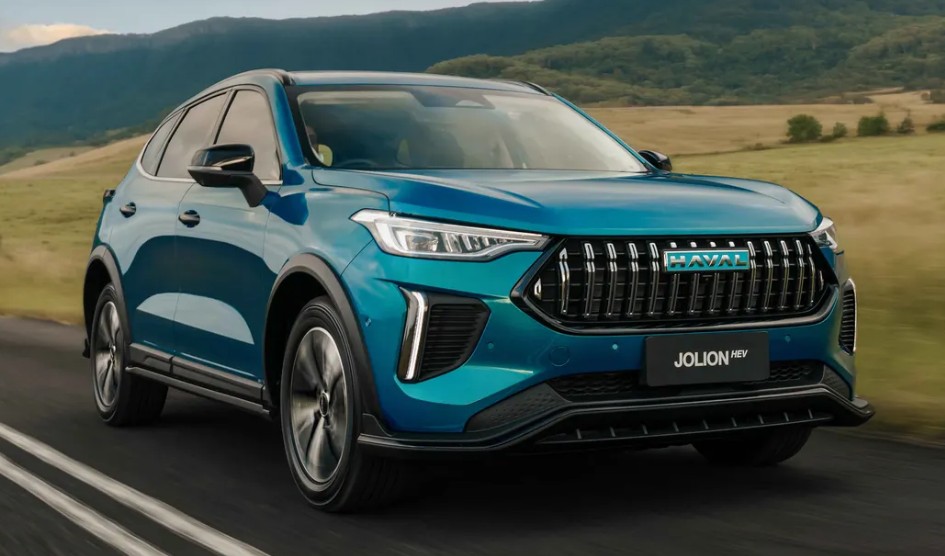
With 14,238 sales in 2024 alone in Australia, the GWM Haval Jolion was the third-best selling small SUV and it’s easy to see why. Priced from just $26,990 drive away and sporting larger dimensions than a lot of competitors, the Jolion offers a lot of features and metal for the money.
Under the bonnet is a 1.5-litre turbocharged petrol engine that drives the front wheels using a seven-speed dual-clutch transmission. It makes reasonable 105kW and 210Nm outputs, though its 8.1L/100km claimed fuel consumption is the highest of the sub-$30k entrants – and in our experience, it’s likely to be even higher in the real world as well.
The Jolion’s cabin is a mixed bag. The quality is good for the price, and it’s also quite practical and spacious for its size. Though the infotainment screen is good quality, trying to turn the intrusive active safety features off can be difficult at speed thanks to the confusing menus.
The Jolion’s ride and handling balance also trails the class leaders – it’s too softly sprung at times, giving lacklustre body control. The driving position is also compromised thanks to the lack of reach adjustment for the steering wheel and under-thigh angle adjustment for the driver’s seat, which makes you feel as though you’re sitting on the seat, rather than in it.
Still, the Jolion’s value equation is excellent and that’s not just from cheap purchase pricing but also from cheap servicing and a long warranty. It’s easy to see why so many people have bought a Jolion, but as always, make sure you do your research before committing.
Looking to get into a brand-new small SUV? Our stories below will guide you to the model that best suits your needs!
BYD drew plenty of eyeballs at Auto Shanghai 2025 with the launch of the Seal 06 DM-i – not least because it’s a wagon.
Aimed at families, the Seal 06 DM-i wagon follows on from the Chinese launch of the sedan version last year and is a more spacious addition to BYD’s electric vehicle line-up. A panoramic sunroof creates a bright and airy cabin, while the LED headlights and taillights add a touch of high-tech flair to the exterior.
The interior is minimalist and functional, with a large, curved OLED touchscreen controlling the vehicle’s connectivity, infotainment and driver assist systems.
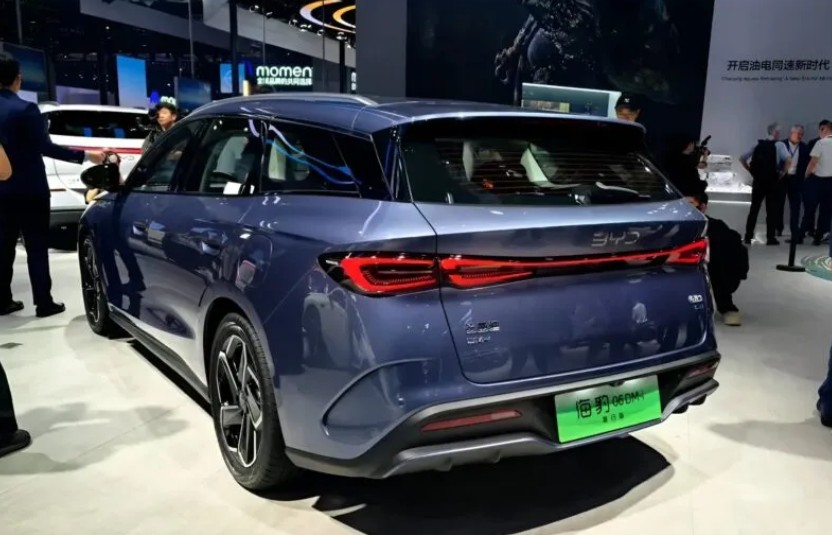
Under the hood, the Seal 06 DM-i wagon runs BYD’s next-generation DM-i hybrid technology, offering a claimed driving range of more than 1000km on a single tank. The hybrid powertrain also delivers an estimated combined fuel economy of 1.9 litres per 100km.
The vehicle’s tech includes the latest in smart driving features, including Level 3 autonomous driving capabilities and an AI-powered voice assistant that can control the car’s functions, entertainment, and navigation, as well as interact with smart home devices for a seamless transition between home and travel.
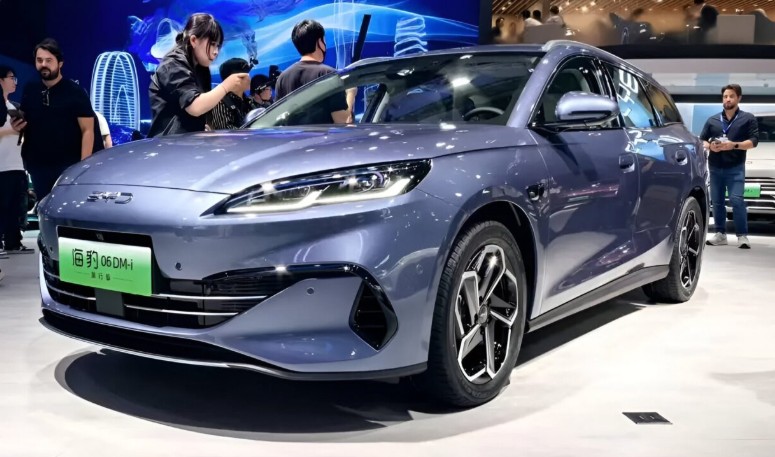
The Seal 06’s safety suite includes forward collision warning, lane departure warning, adaptive cruise control, and a 360-degree camera system. The vehicle also features an advanced air purification system that not only filters out pollutants but also monitors the air quality inside the cabin, ensuring a healthy environment for passengers.
As a family-oriented product, seating and cargo are configurable. The third row of seats can be folded flat to create a large luggage area, while the second row seats can slide and recline, providing maximum legroom and comfort.
BYD says parts of the Seal 06 DM-i have been constructed using recycled materials and it employs a bi-directional charging system, allowing it to act as a mobile power source for the home or other electric devices during emergencies.
No word as yet on whether it will be offered in Australia.
Welcome to the new Ford Falcon versus Holden Commodore. Both those cars, which filled so many pages of Wheels, are now obviously gone, left to haunt places like the eerily quiet high-speed bowl of the old Holden Lang Lang Proving Ground… or, dare we say, your local taxi rank. However you want to remember the old Aussie sedans, there’s no escaping the fact they were the nation’s top-selling vehicles. For decades.
But there is nothing permanent except change, and a quarter of the way into this century, the old Falcon and Commodore sales race has morphed into this: a fierce battle between dual-cab utes. As hotly contested now as it was then between the old rear-drive four-doors, three of the top four selling vehicles in Australia in 2024 were dual-cab utes. And today, in a sunny carpark in the tiny town of Clarkefield just north of Melbourne, we’re seeing how they compare.
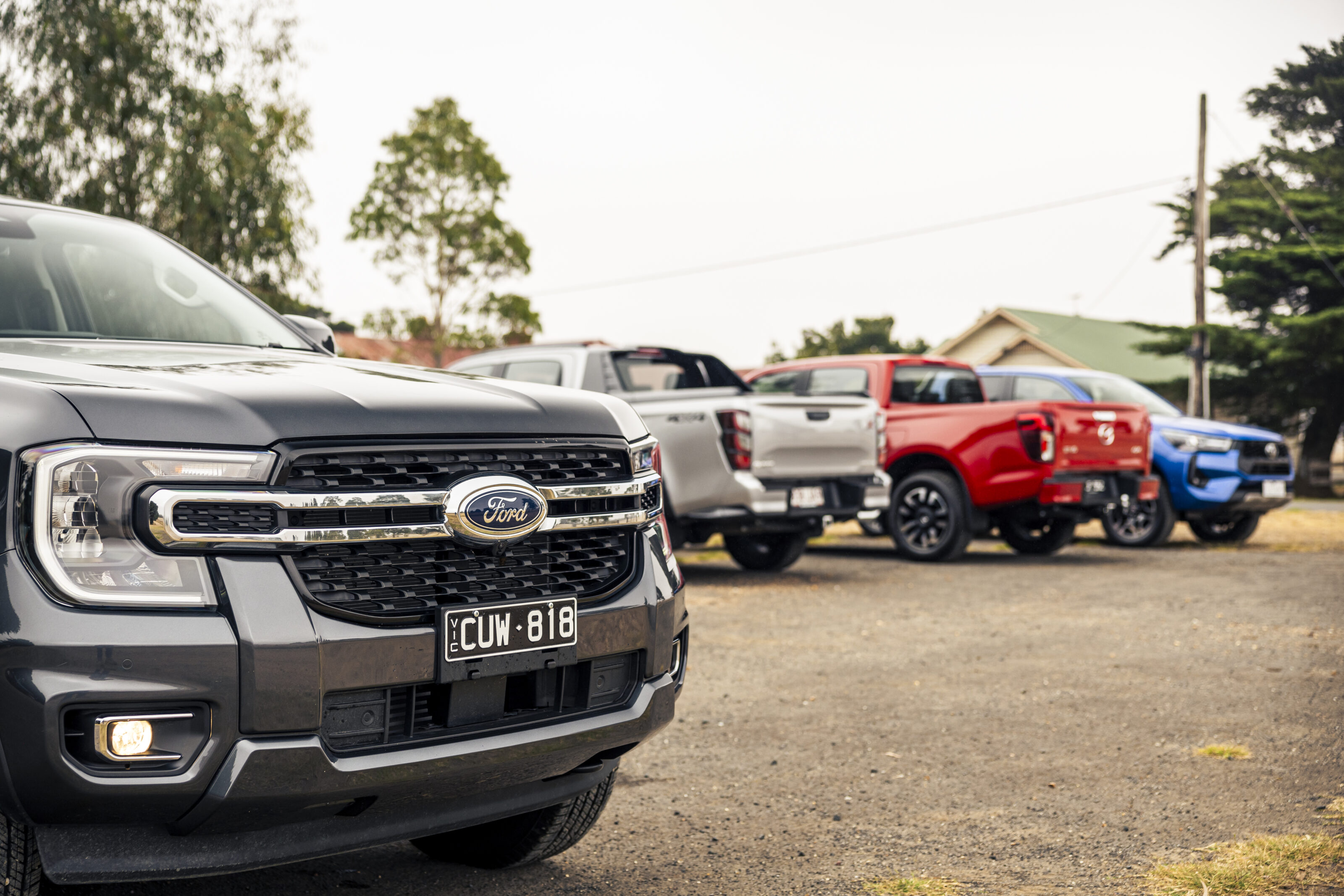
Hitting bitumen and gravel roads in Victoria to see if the existing front-runners are still worthy of their best-seller status, leading our contenders for this test is Ford’s best-selling Ranger – Australia’s most popular new vehicle. If the Australian sales race was an actual championship, the Ford Ranger would wear the number ‘1’ loud and proud on its side.
In 2024, the Ford Ranger topped the local new car sales charts with 62,593 examples sold, ahead of the Toyota RAV4 – followed by the third-placed Toyota HiLux on 53,499 sales, and then the fourth-placed Isuzu D-Max with 30,194 units sold.
As close a spiritual successor to the Falcon as you could hope, many of the Ranger’s designers and engineers are the same people who worked on generations of Ford’s much-loved four-door. The Ranger was also developed at Ford’s You Yangs Proving Ground west of Melbourne and on many of the same roads as Falcon and Territory before it. If a Falcon ute pinched the metamorphic pills of a Marvel superhero and swallowed them all at once, you’d basically just have a Ranger.
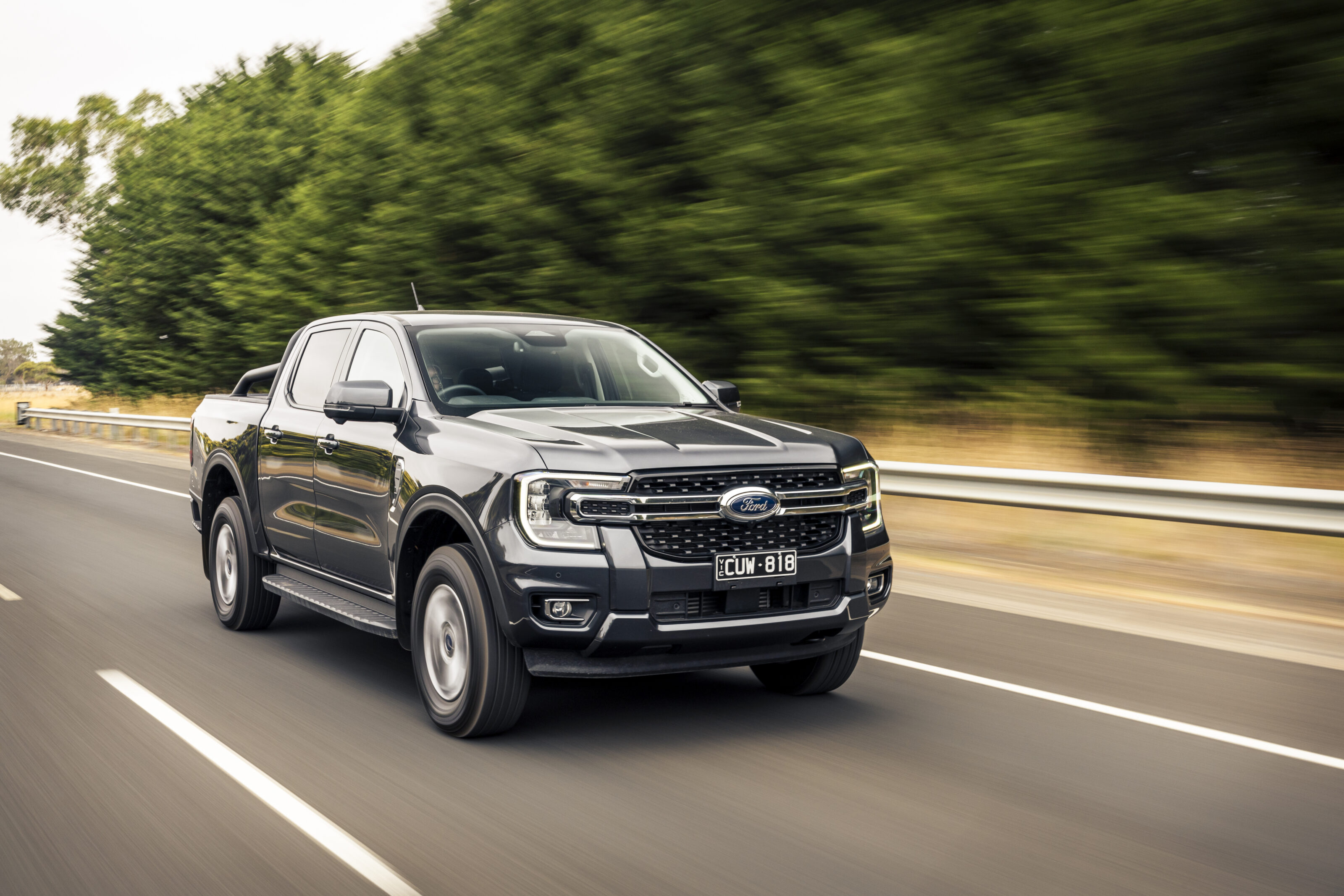
Of course, Ford also effectively moved its factory from Broadmeadows to Thailand, but given its locally-developed DNA, there is something just right about the Ranger being Australia’s most popular vehicle.
Akin to the Holden Commodore, although only in a sales sense, is the evergreen Toyota HiLux. Built like a cast iron griddle, the HiLux was Australia’s new car sales champion seven years on the trot from 2016 to 2022, before being usurped by the Ranger – and, more recently, the RAV4.
Much like that car, the HiLux is now a hybrid – although a much milder one. With a 48-volt architecture, the recently revised HiLux now bolts a motor-generator to its 1GD 2.8-litre turbodiesel four-cylinder, the motor-generator mounted high in the engine bay to keep it dry during water crossings, or so says Toyota.
The unit itself produces 8.4kW/65Nm and is paired with a 48-volt battery, able to scavenge energy under braking and redeploy it – such as in enabling long periods of engine-off time, in traffic – with its start-stop system. The 48-volt HiLux idles at just 600rpm and Toyota claims the system saves around nine per cent fuel. With the New Vehicle Efficiency Standard (NVES) now looming large over the Australian new car market like a storm cloud, every drop of fuel saved will count.
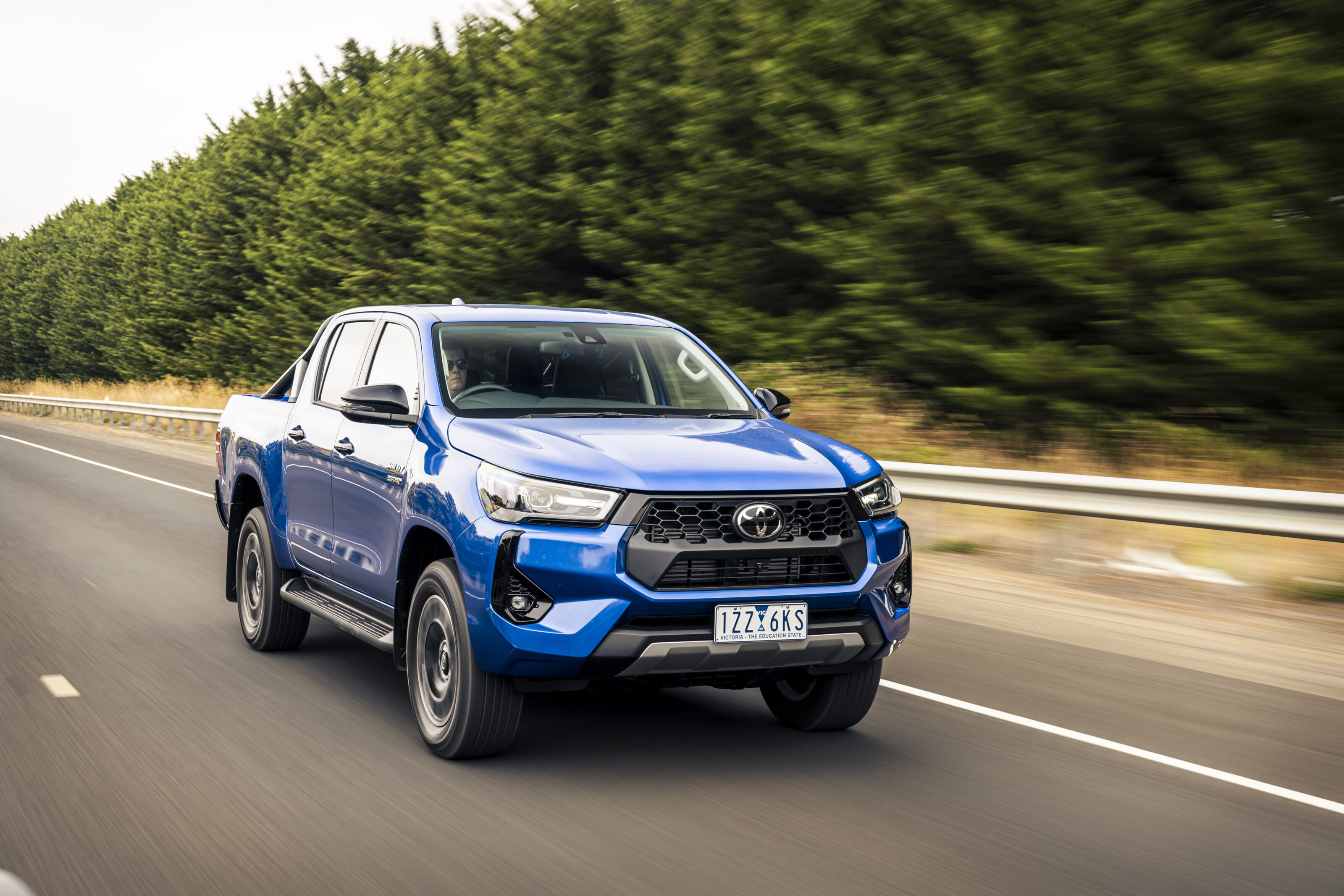
There’s no shortage of competitors keeping Ranger and HiLux on their all-terrain toes and the parched, thirsty, straw-coloured hills of today’s ute shootout testify to a lack of rain around Melbourne in recent months – but it is raining dual-cab rivals.
While BYD has launched a Shark 6 attack against Ranger and HiLux with its superbly priced hybrid ute, and other newer Chinese manufacturers such as JAC and GWM pile on the pressure, the Australian ute buyer still prefers products from established brands for now. Brands like Isuzu and Mazda.
Powered by the venerable 3.0-litre 4JJ3-TCX four-cylinder turbodiesel, and with a six-speed auto, Isuzu’s D-Max has earned a reputation for reliability as if the engine itself is ready to become a sealed unit.
Coupled with value, the D-Max is one of the surprise performers on the Aussie sales charts at present, and was Australia’s fourth best-selling vehicle in 2024. It’s fresh from a facelift last year which saw revised exterior styling and a new infotainment system, along with additional active safety features.
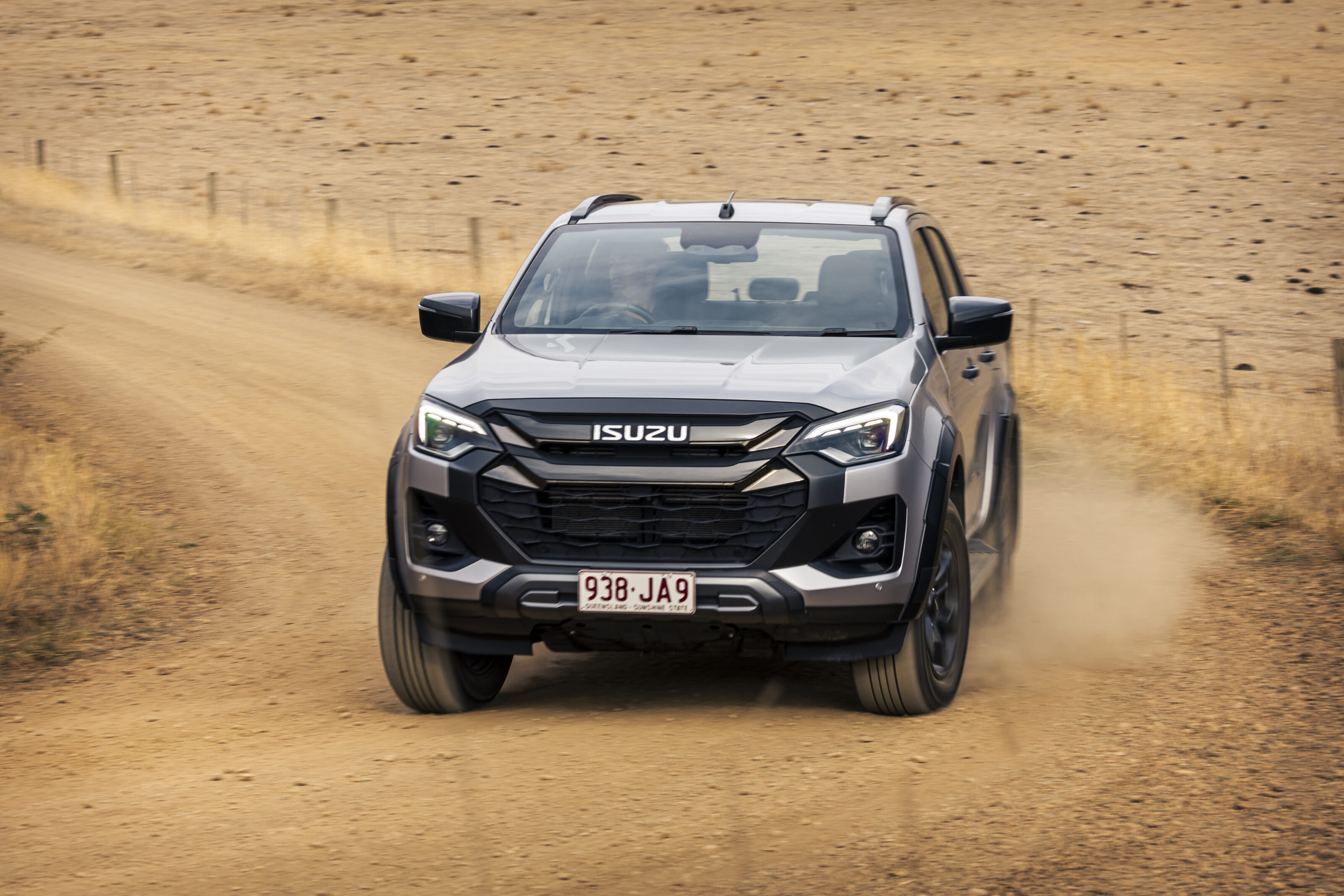
That same update has now arrived for Mazda’s BT-50, the catalyst for today’s test and looking the freshest vehicle here in its new Red Earth Metallic. The BT-50, of course, is to D-Max what Amarok is to Ranger – but on another level again. While the BT-50 was once twinned with the Ranger, these days it’s built by Isuzu for Mazda, an identical twin to the D-Max – just with a different haircut. As well as a fresh new face with CX-5-like headlights and grille, the BT-50 gets three new colours, a new infotainment system and additional safety equipment such as stop-and-go traffic jam assistance, rear cross-traffic alert with braking, and updated autonomous emergency braking that can now detect motorcycles.
It’s an update that couldn’t come soon enough. At 15,164 sales for 2024, the BT-50 was getting lapped in the proverbial sales race by the other utes here and was not even in the top 20 new car sales for 2024.
While SUVs are the focus for the brand that brought us generations of rotary-powered sports cars, the BT-50 remains just as important to Mazda Australia – especially as it hopes to eclipse the 100,000 local sales mark yet again.
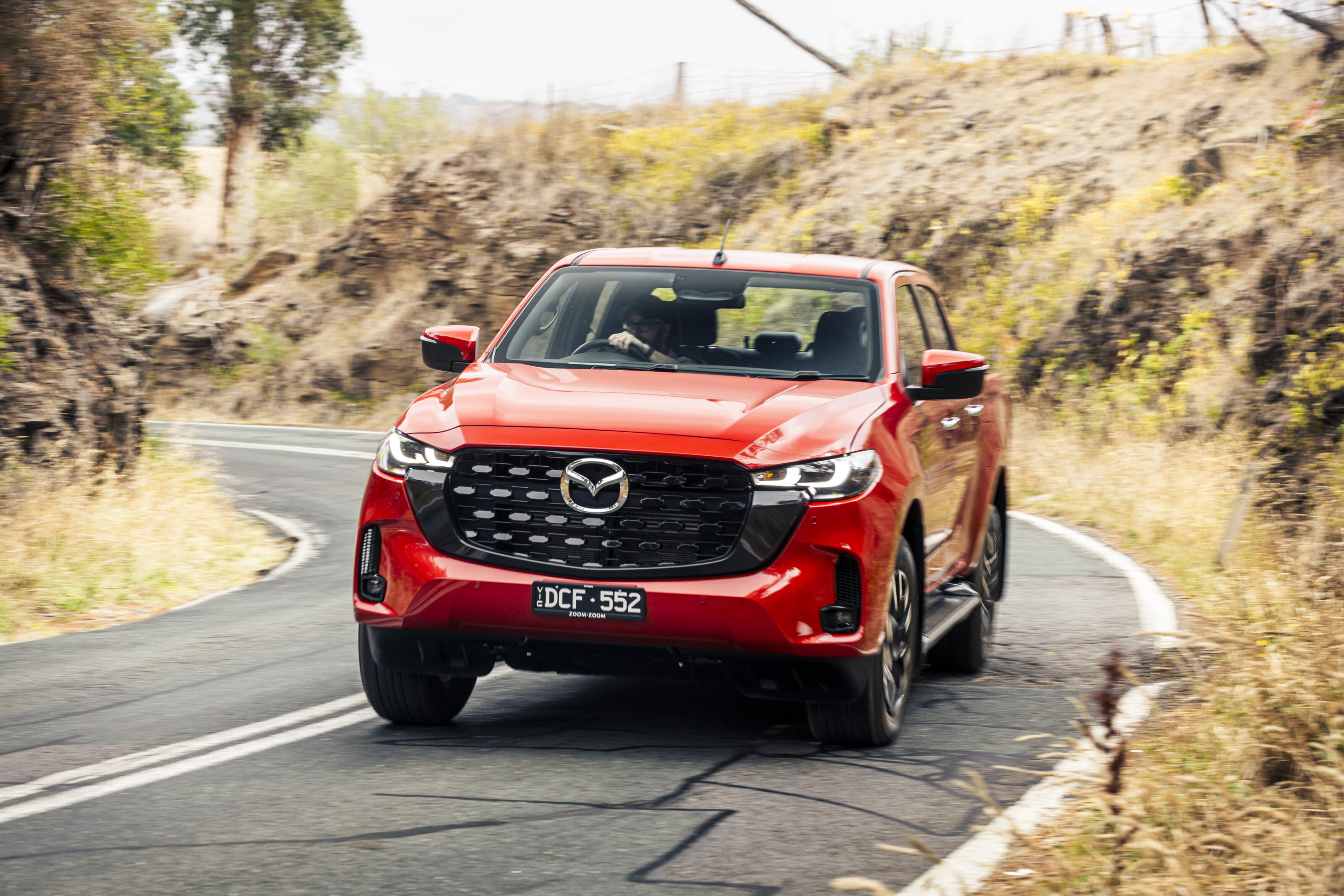
In today’s four-ute shootout, we’ve set a target retail figure around the reasonable mid-range of $66,000 (before on-roads) and grabbed the grades around this price. In the Ranger’s case, that’s the $66,140 Sport – with a twin-turbo 2.0-litre turbodiesel four-cylinder mated to a 10-speed automatic. (Ford mistakenly supplied this test with an XLT with the same powertrain and a bit less equipment; from a value perspective, we will pretend it’s a Sport.)
For the HiLux, we’ve got the $63,260 SR5 and added the $2500 Premium Interior for a retail price of $65,760. The Premium Interior adds a power-adjustable driver’s seat, front seat heaters and leather-accented seat trim.
From Isuzu, we wanted the $65,500 D-Max LS-U+ but got the $70,500 X-Terrain instead. While the X-Terrain adds minor equipment like front parking sensors, they’re more or less the same. In our on-paper value analysis, we’ll be looking at the LS-U+.
Mazda meanwhile supplied the $66,170 BT-50 GT which basically matches the standard equipment of the equivalently priced D-Max LS-U+, Ranger Sport and HiLux SR5 with Premium Interior. That means at least a power-adjustable driver’s seat, leather appointed upholstery, 18-inch wheels and dual-zone climate, as well as Apple CarPlay and Android Auto connectivity.
They all cost about the same and give you about the same standard equipment – no huge outliers here. But what the brochures and spec sheets don’t give you is how you feel sitting in each vehicle. And boy, are they different.
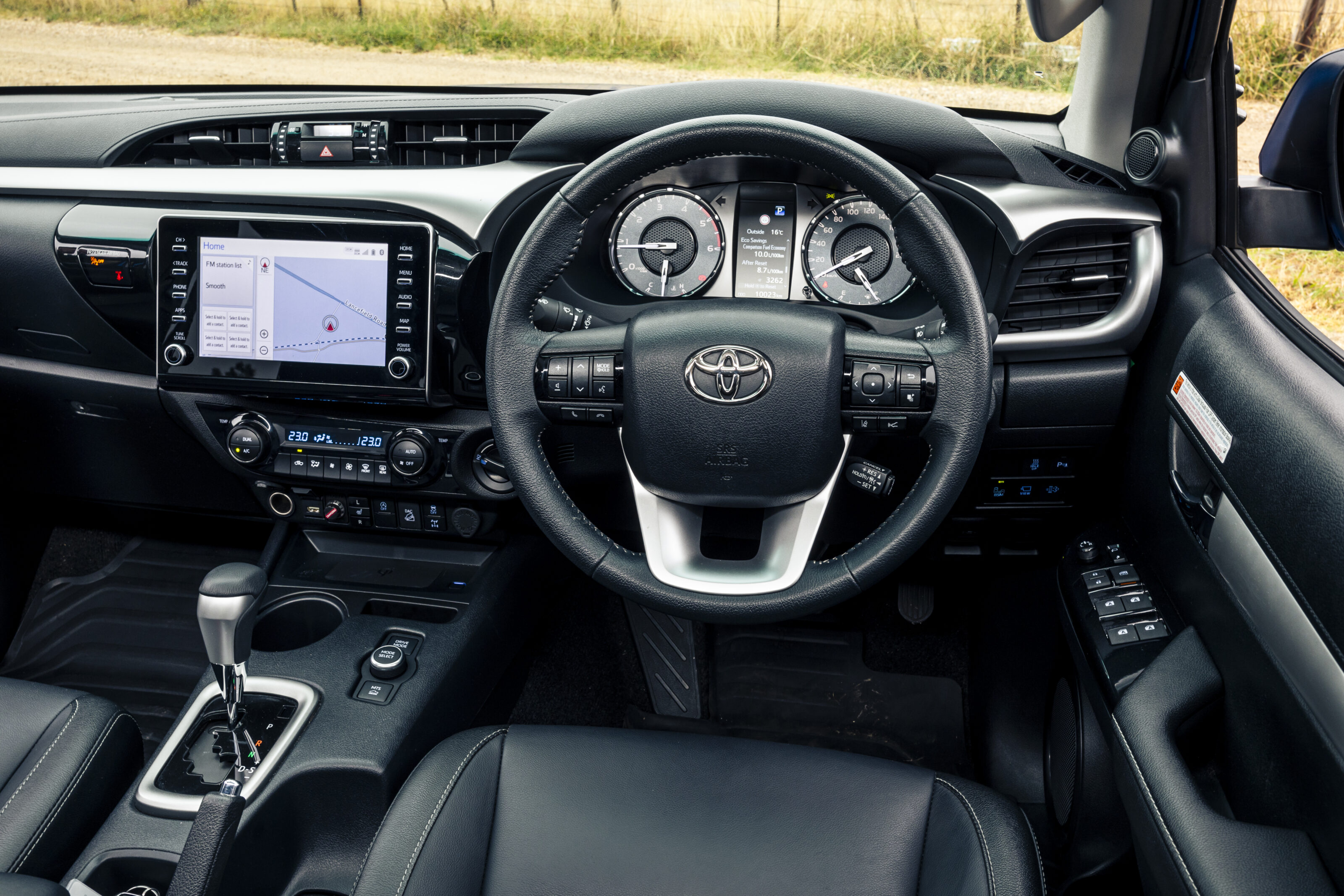
Getting into the HiLux is like going back to when Barack Obama was US President, Malcolm Turnbull had just knifed Tony Abbott for the Australian prime ministership and COVID-19 did not exist (i.e. a much simpler time).
With fundamentally the same dashboard design from 2015, the HiLux feels ancient inside compared with the other vehicles here; Toyota has taken the ‘if it ain’t broke, don’t fix it’ philosophy to new levels. We’re sure the digital dashboard clock, with buttons for ‘H’ and ‘M’, will still be keeping time long after the earth has been absorbed into the sun, but in 2025 it couldn’t date a new car’s interior more. Same for the old cruise control stalk which looks 20 years old.
Toyota has at least tried with the fitment of a wireless phone charger, but pairing it with wired Apple CarPlay for its small 8.0-inch infotainment screen seems silly. How hard is it to offer wireless phone connectivity? There are a million aftermarket replacement infotainment systems with wireless CarPlay capability on eBay, and for not much.
And if a Chinese-made vehicle had the same resolution of the HiLux’s reversing camera, we’d be giving it a right bollocking.
The Premium Interior does add some niceties, but the steering wheel looks like leather, feels like urethane. Cheap, in other words.
At the very least, the HiLux interior is comfortable enough, everything works well and there’s no wondering if it’ll all still work in 10 years. Or 20, or 30, for that matter. It will probably still look brand new. And at least the HiLux gives you one-touch electric windows on each corner – you can’t say the same about the D-Max and BT-50 which reserve that for the driver only. Little things like this count.
Jumping from the HiLux to the Isuzu D-Max, however, is like you’ve just driven your old car down to a new car dealership to check out the latest car interior from 2025.
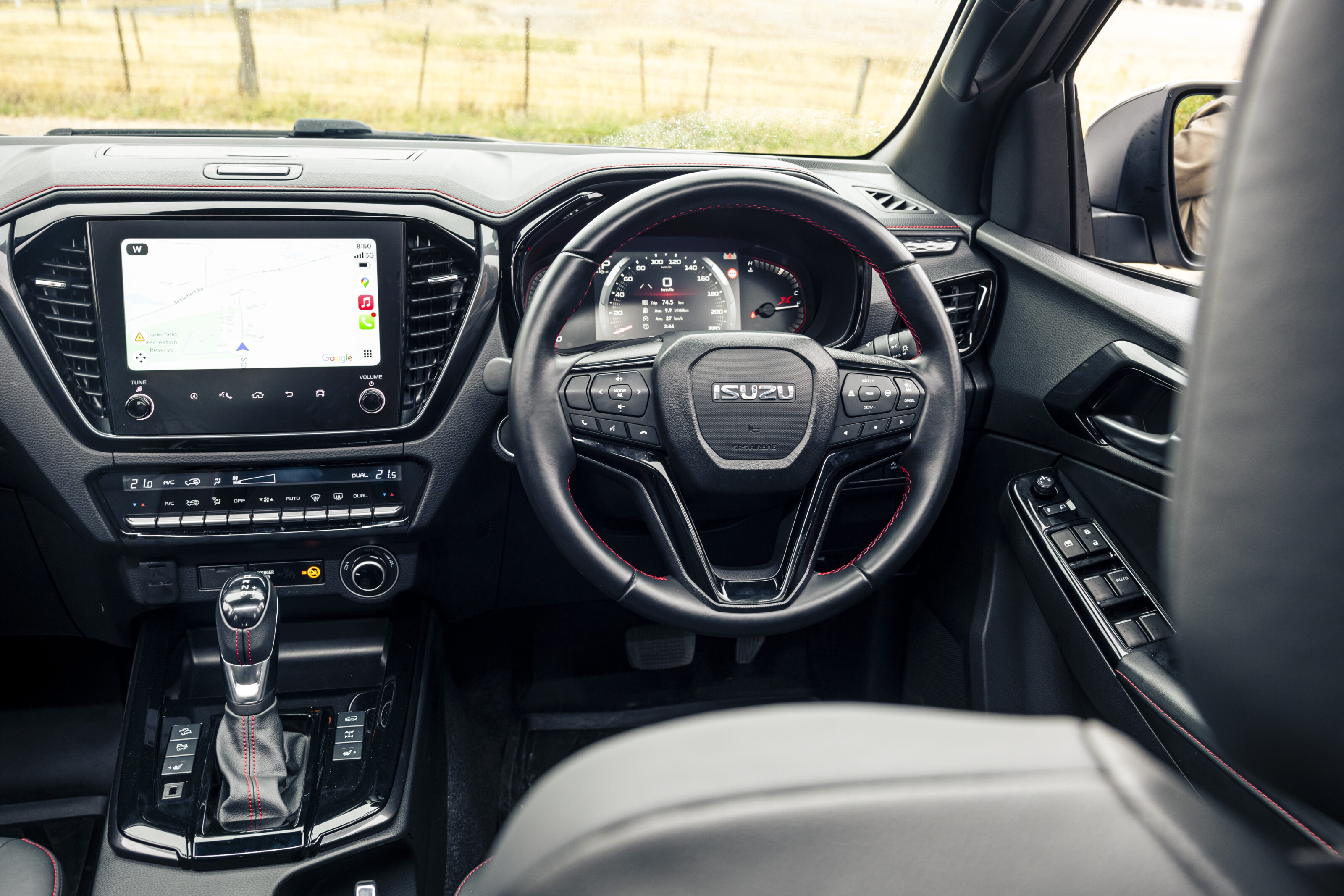
While our test car is the pricier X-Terrain with a flash interior including red stitching, all D-Max interiors have the same pleasing, contemporary straight dashboard lines and from LS-U grades and up, a lovely, crisp 9.0-inch infotainment display (with wireless CarPlay and Android Auto). Unlike the HiLux’s screen, which looks retrofitted into its dash, the D-Max screen is much better integrated. The slim row of heating and cooling controls also looks much nicer and smarter. You don’t get a wireless phone charger but you do get a 7.0-inch digital instrument cluster display (nestled between some analogue items), just another element which helps make the D-Max’s interior feel like it’s for the modern age.
Blindfold someone and shift them from the D-Max into the BT-50 and if it wasn’t for the dirty-big Mazda badge on the steering wheel, they’d simply think they’d slipped into another D-Max. That’s not necessarily a bad thing.
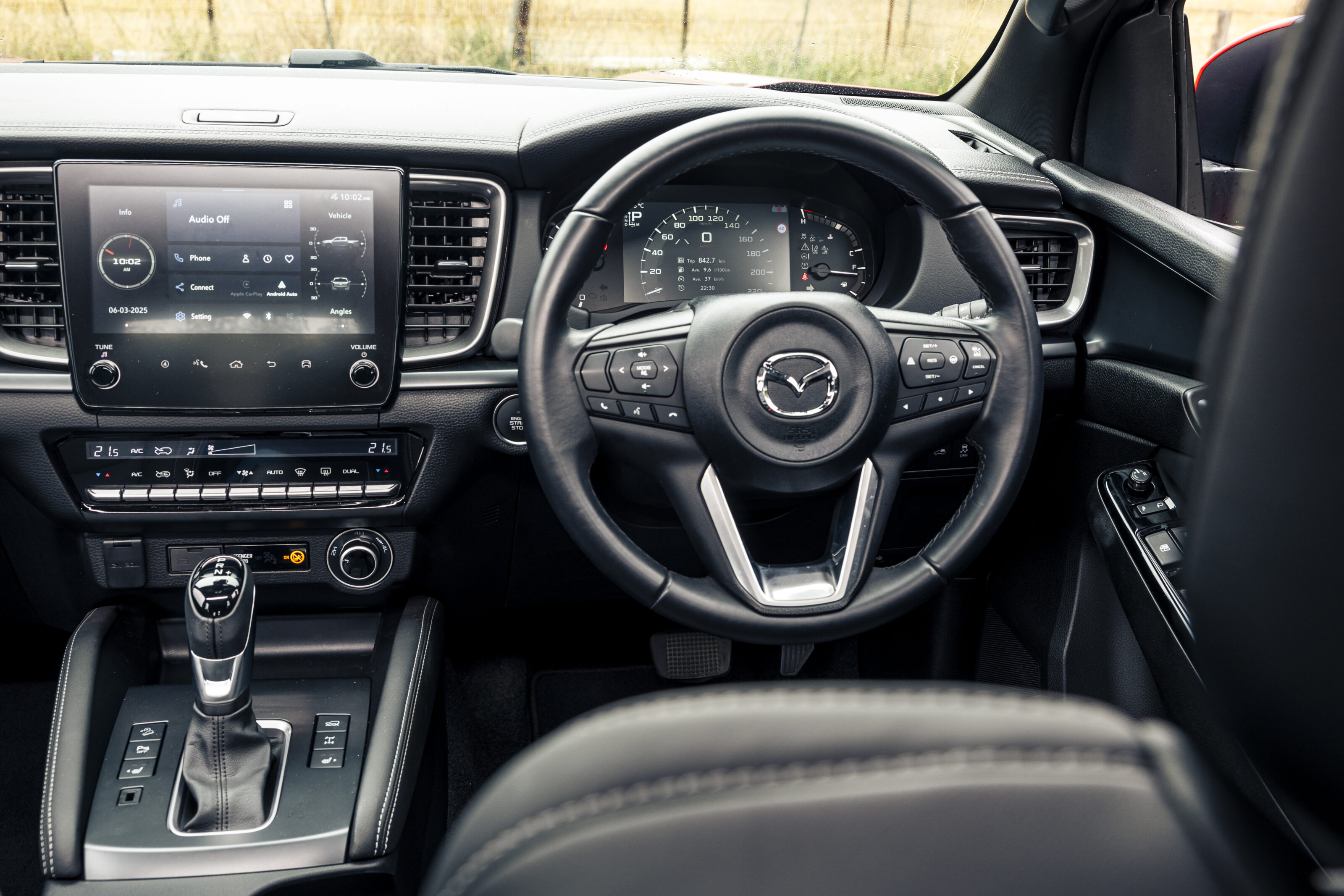
While the steering wheel and some of the button fonts are the same, the Mazda’s infotainment and digital dashboard benefit from more grown-up font choices and general display graphics. That alone makes the BT-50’s interior feel like it’s for a 40-year-old, not a 25-year-old in the case of the D-Max. (Although a lot of that could be its just-downed-a-can-of-Monster, X-Terrain interior styling.)
None of these utes, however, feel as modern as the Ranger, whose fundamental interior layout and design feels a generation newer.
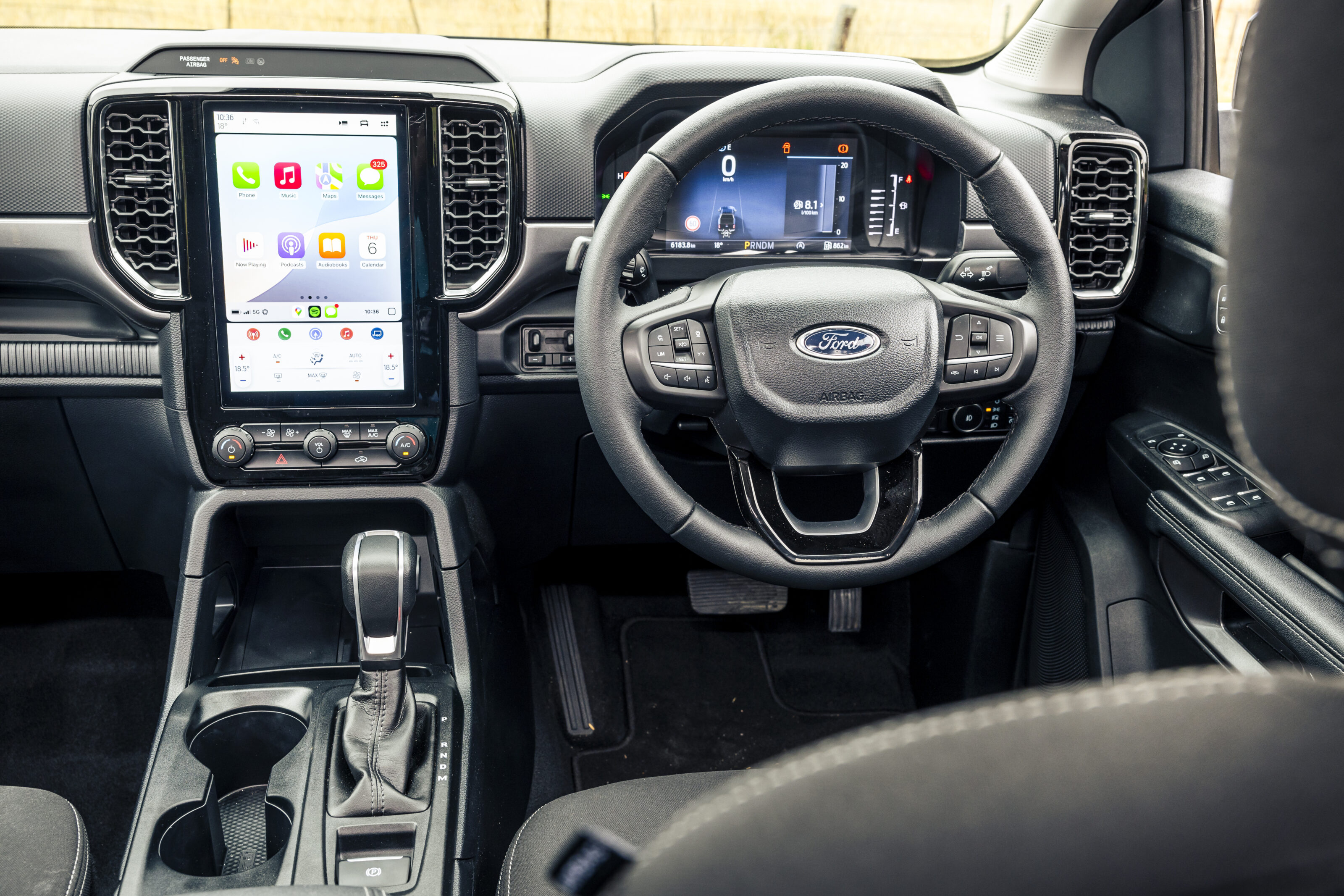
It’s the only vehicle with an electric park brake, while gone are the analogue dials of the other vehicles; in its place a smart, standard 8.0-inch digital instrument cluster with a no-frills vibe. The 10.1-inch portrait infotainment touchscreen also dwarfs that of the other vehicles, and gives it the most contemporary feeling interior here. It feels like the ute you buy when you’re finally all grown up.
The Ranger also has the best driving position – the most SUV-like – placing you tennis-umpire-high but in proportional perfection relative to the steering wheel and pedals (as close as you could hope in a dual-cab, anyway). Like slipping into a sports car with a thoughtful driving position, this sets up certain expectations for how it might drive.
That bit starts in the urban surrounds of Melbourne where, for all their four-wheel-drive with high- and low-range, 3.5-tonne towing capacities and circa-one-tonne payloads, this is most likely to be
the real natural habitat of these vehicles, for better or worse.
From the outset, the Ranger is simply pleasant to drive. Despite its size, light steering makes it reasonably manoeuvrable at low speeds while the 10-speed auto does a terrific job of keeping the 2.0-litre engine in its torque sweet spot at all times. This engine packs 154kW and 500Nm (from 1750rpm), which is more than enough to hustle along a portly 2296kg of ute in traffic.
In fact, the 10-speed auto is so smooth and adept at keeping you in the middle of that vein of turbodiesel torque, it’s almost like a CVT – but with lots of lovely little gears, and no soul-sapping sensation of a constantly variable ratio.
While it’s still obviously a ladder-frame vehicle with a live rear axle, the Ranger drives with a maturity we’ve rarely felt from a vehicle of this configuration. The ride quality is decent enough that you’re not tempted to carry a tonne in the tray as simple ballast; while the steering has a car-like directness to it, even in the city.
It’s a hard act to follow, and next up is the Toyota.
Anyone who’s driven a HiLux in the last 10 years will find the Toyota familiar, beginning with its heavy hydraulic steering. That makes it more of an effort in car parks, but once you’re underway it’s no concern, contributing to an easy, relaxed driving experience.
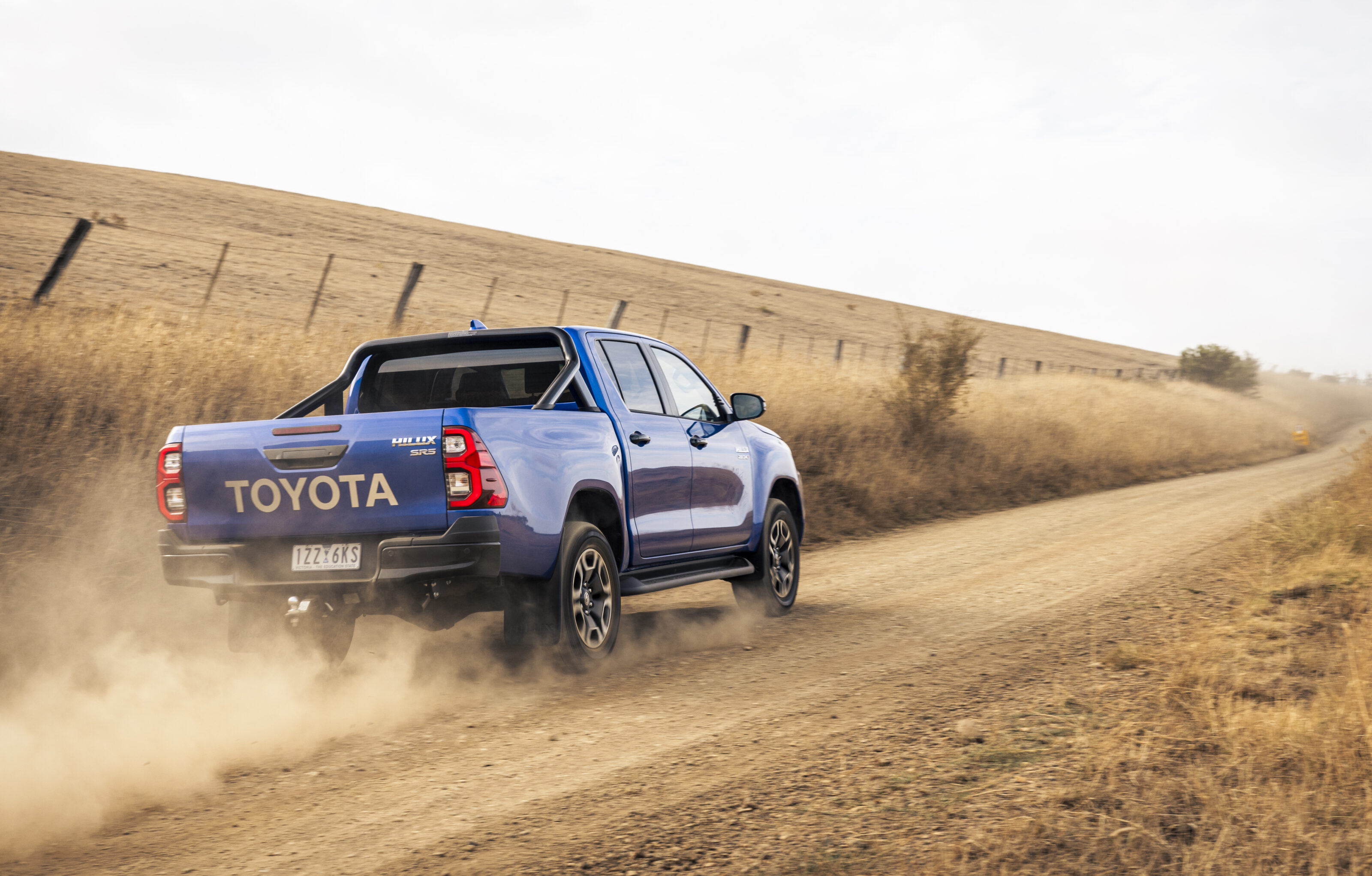
Toyota has also done a decent job with the ride quality – while there’s an unladen firmness to the rear-end, there’s the sense the damping has been polished over many years to offer something at least half-comfortable.
With 150kW and a fat 500Nm (from 1600rpm), the HiLux also puts plenty of turbodiesel muscularity under your right foot – including, presumably, a bit of electric motor assistance at times. That bit is harder to tell, but what is most impressive is the HiLux’s laser-fast start-stop system which might just be the best example of this setup we’ve experienced in any car. No joke; you’ll want to leave it on just to admire how good it is.
Jump from the HiLux into the D-Max or BT-50 and immediately both those vehicles feel like they’re working a little bit harder at all times. The engines are louder and the progress doesn’t feel quite as effortless. With lower outputs of 140kW, and 450Nm (from 1600rpm), it’s as if Mazda and Isuzu have tried to compensate with more aggressive throttle maps.
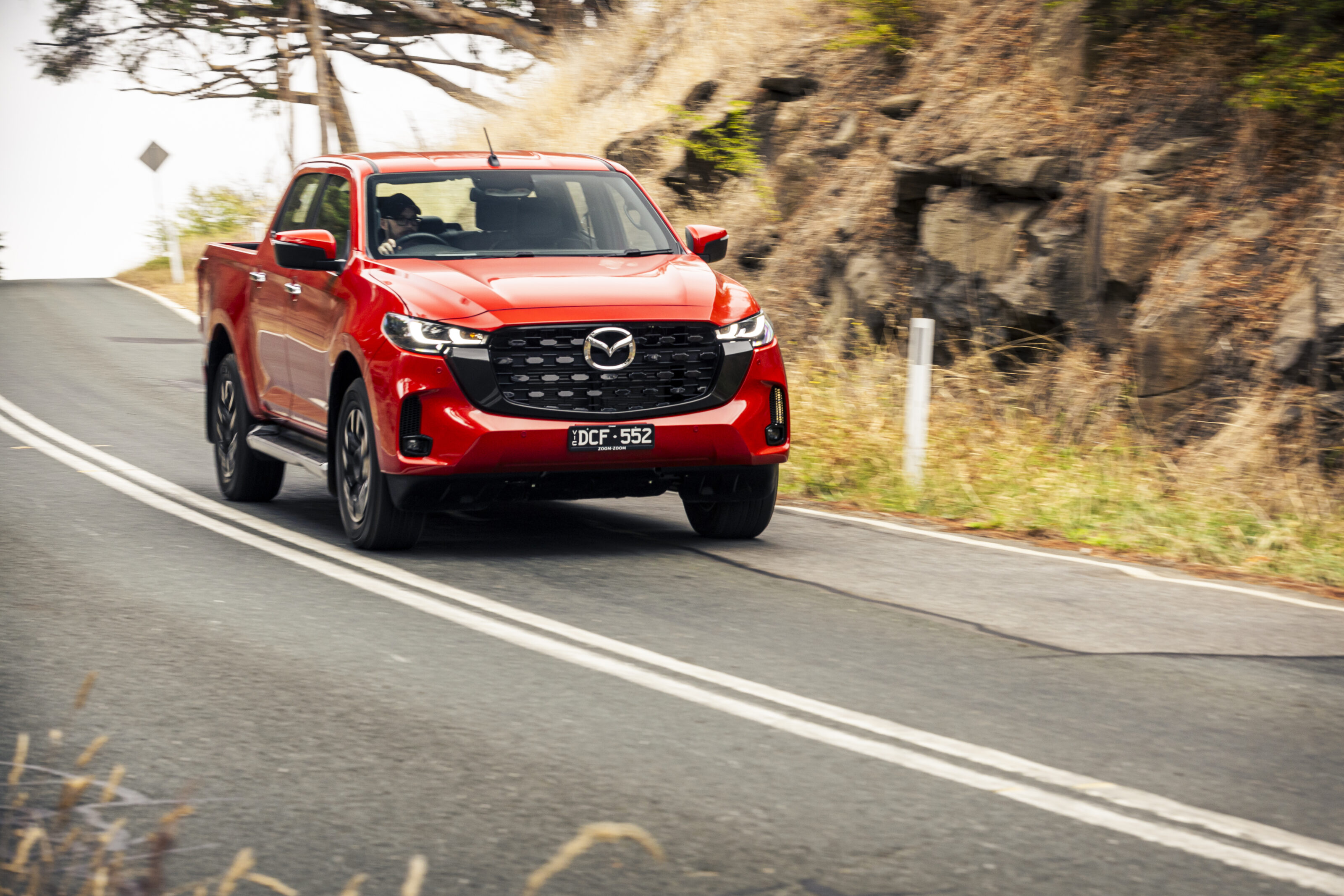
Compared to the old-school, heavy hydraulic steering of the HiLux, however, both Mazda and Isuzu offer breezily light electrically-assisted steering at reduced speeds, making them just that little bit easier to drive at the lowest of speeds. That’s even if they don’t ride quite as well as the Ford or Toyota, bumping around with a bit more leaf-sprung aloofness.
For the varying outputs, weights and number of gears, however, a very unscientific test revealed that of all four vehicles here, the HiLux, D-Max and BT-50 are about level-pegged from zero to 100km/h, with the Ranger just a little bit quicker. And once you’ve reached triple figures, as we experienced on the open, country-like roads north of Melbourne towards Lancefield, it’s the Ranger you’ll want to be in. By a long way.
Where the other utes bounce about, jiggle through their ladder frames and experience bump-steer over the biggest bumps and road cambers, the Ranger is most unperturbed on an Aussie 100km/h country road. The other utes feel they need constant steering supervision as the road surface shifts and changes, but the Ranger’s steering tracks straight and confidently across road impurities in such a way that would make long country trips much easier.
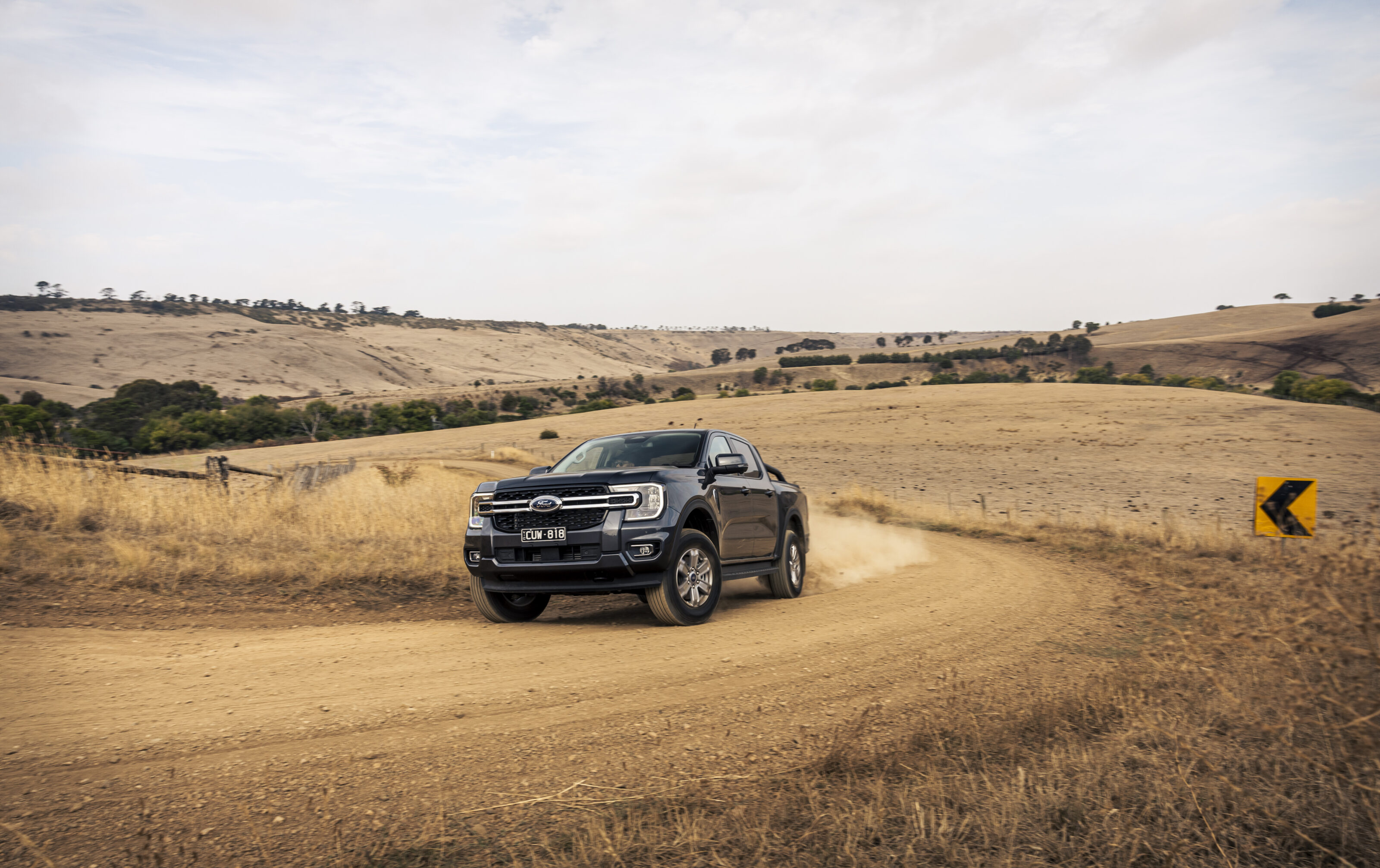
Even on some winding bitumen roads, the Ranger showed off steering and dynamics that, while not going to win any Performance Car of the Year awards, offered at least some semblance of driver engagement. You might almost have fun in the Ranger on a twisty road, whereas the other utes would simply tire you out. A Raptor version of a HiLux, D-Max or BT-50 would simply not work, but drive even a 2.0-litre Ranger and you can tell there’s a platform here capable of a performance variant. As is the case.
By comparison, the Toyota, Mazda and Isuzu feel heavy, awkward and unsure when punted through a bitumen corner at any speed not considered pootling. Driver appeal, they have little.
Perhaps most telling for this road-tester, personally, is that towards the end of our driving I found myself in the Ranger and uninterested in getting back in the other vehicles.
Of course, things might have been different if today’s test involved any towing or off-roading (it didn’t, save for some photography on an unsealed road). All utes here claim 3.5-tonne braked towing capacities although interestingly, it’s the Ranger that could be best set-up for towing to this weight with its generous 6350kg gross combined mass (GCM). The HiLux’s is a potentially skinny 5850kg while the Isuzu and Mazda, a more forgiving 6000kg. They are also slightly lighter vehicles.
The Ranger also has the most usable tray, the most spacious back seat (just), and could be the cheapest ute here to run. The 2.0-litre bi-turbo claims 7.2L/100km but from our test, we would estimate fuel use closer to 8.2L/100km combined. Five years of servicing is $2550.
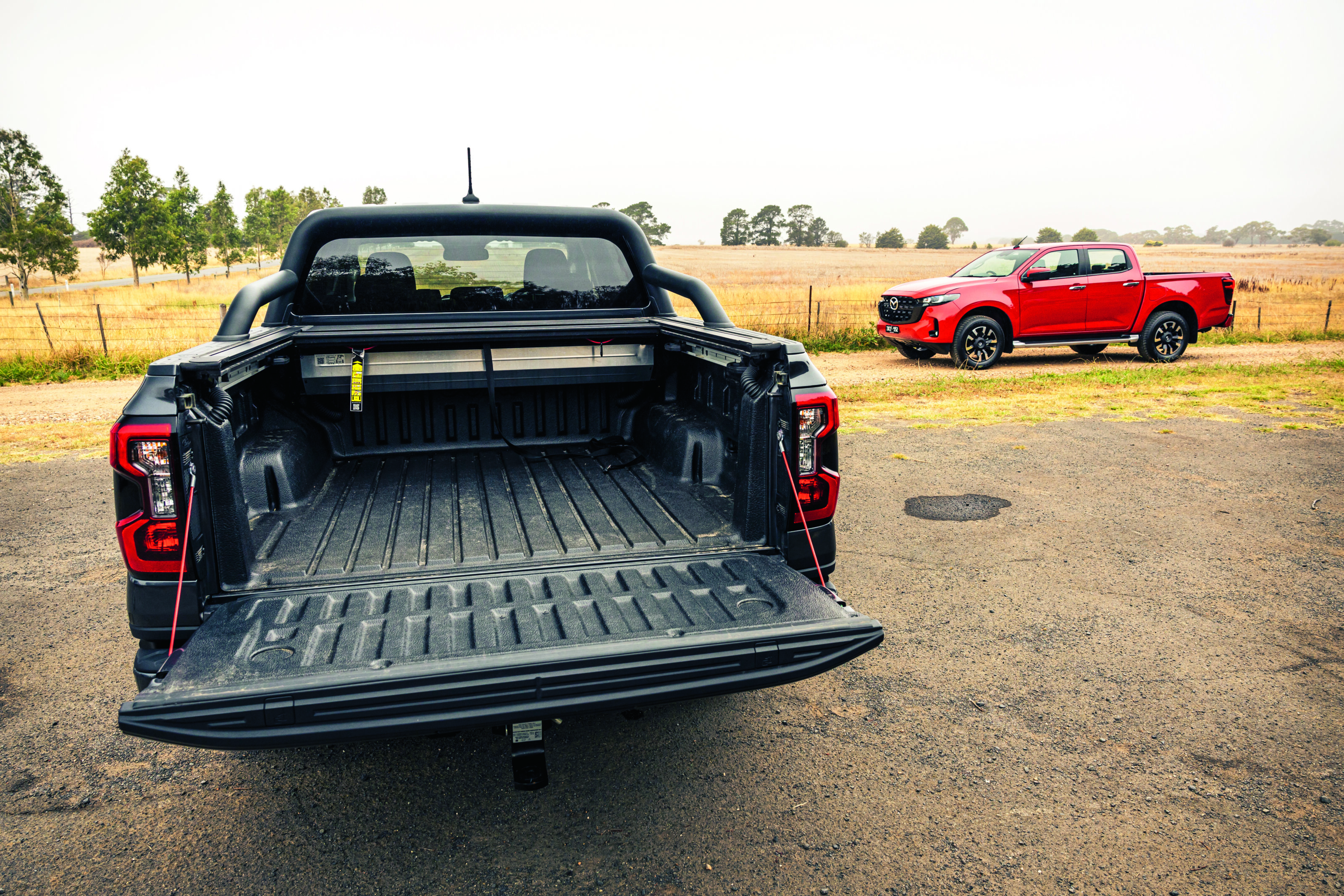
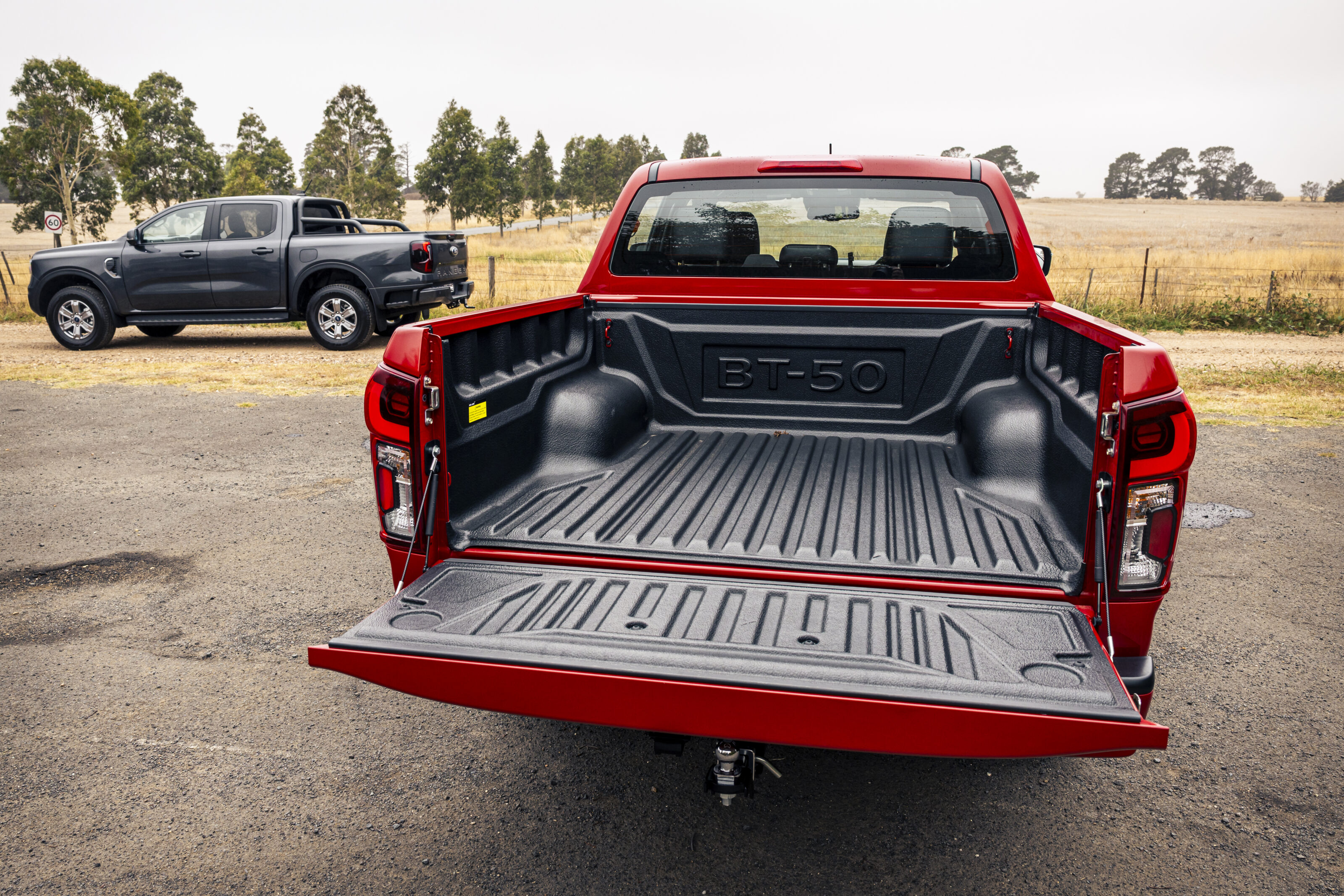
Our Mazda test vehicle was recording around 9.5L/100km, and the Isuzu 8.7L/100km, but we’d attribute this to a ghost in the system somewhere. Both claim 8.0L/100km and both could be expected to use the same amount of fuel in the real world. At $2345, the Isuzu is slightly cheaper to service over five years than the Mazda, which is $2498.
While the Ford, Mazda and Isuzu all have reasonably standard 15,000km/12 month service intervals, you’ll want to live close to a Toyota dealership with HiLux ownership, given the brand stipulates servicing every 20,000km or, somewhat annoyingly, six months. That means after five years, you’ll have visited a Toyota dealership twice as often as the other vehicles here. And at an eyebrow-raising cost of $3985.
For fuel efficiency, it seems Toyota should have fitted a 10-speed transmission before it bothered with the 48-volt system given you could be expected to use around 8.7L/100km in the real world. Toyota claims 7.2L/100km.
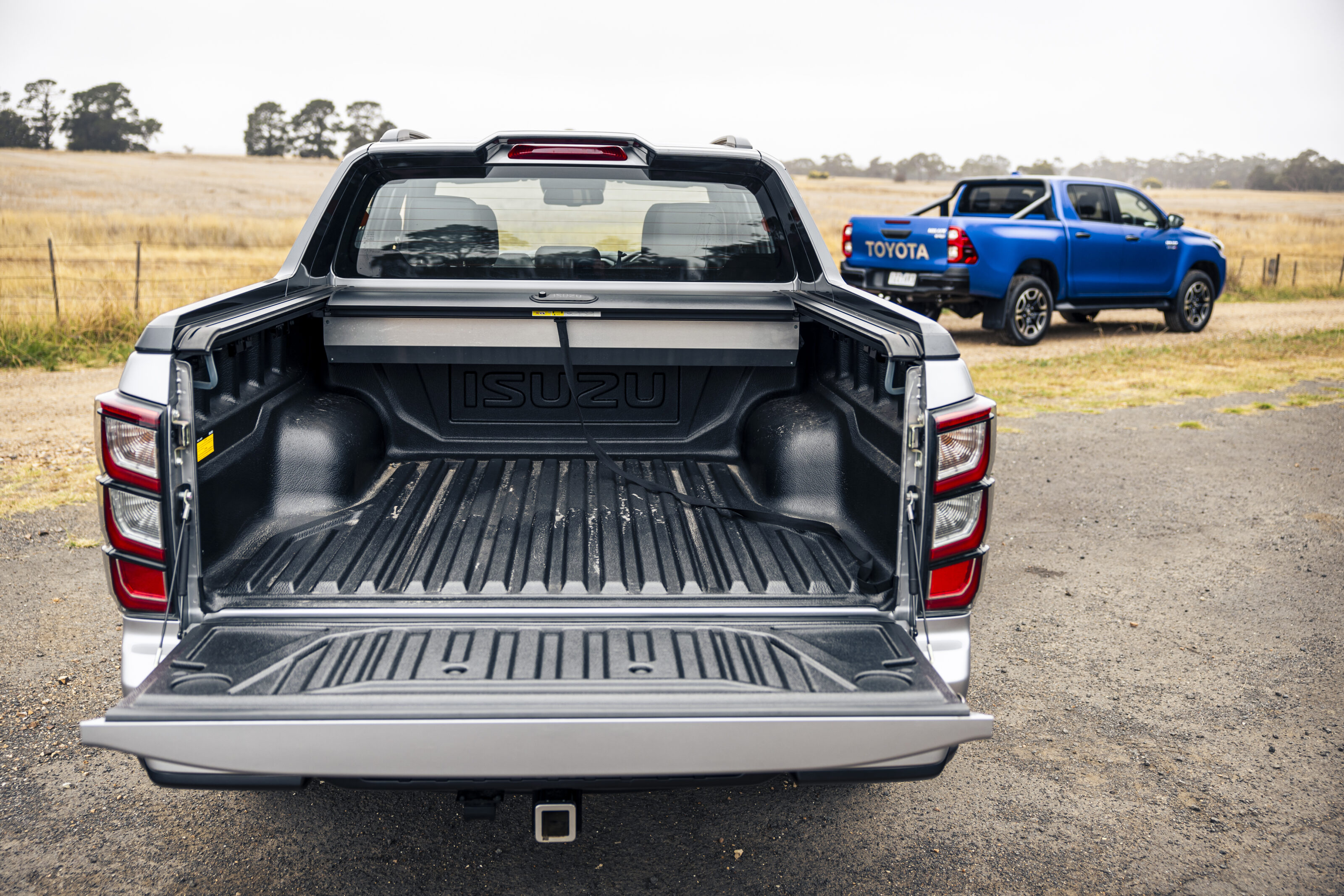
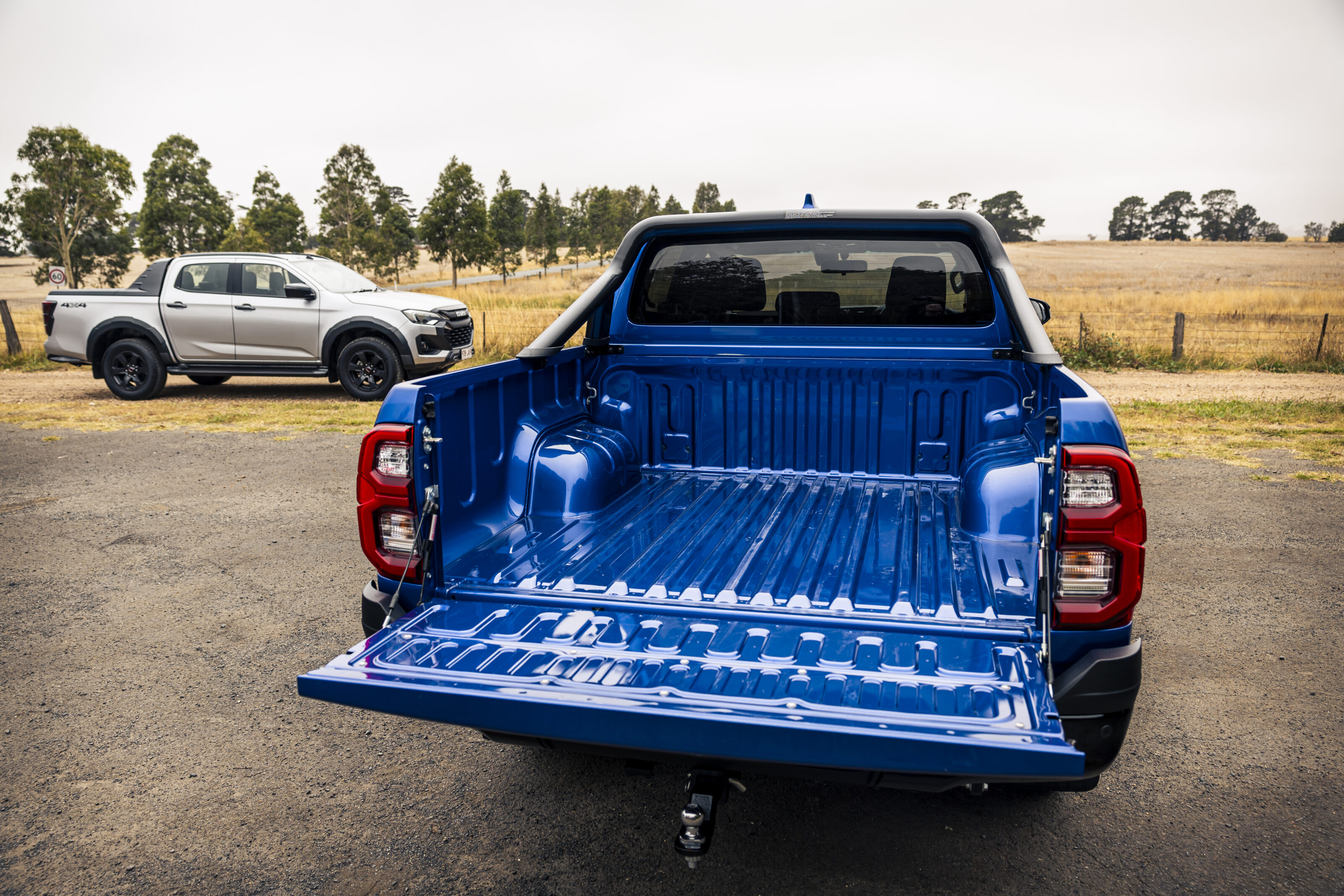
In the final reckoning, then, it’s perhaps unsurprising to see the Toyota HiLux cruise home in fourth place. While it remains a stalwart of the dual-cab ute world, only improved by the new 48-volt system, the HiLux’s interior hasn’t fundamentally changed in 10 years. Even with the optional Premium Interior, it just feels very last decade.
A new HiLux, due next year with presumably a totally new interior, is overdue.
It’s also pricey to service and hasn’t been crash-tested by ANCAP since 2019 (the others were tested in 2022).
This is still the ute you’d get if you wanted to buy a new vehicle and never have to replace it. It feels built to do a million kilometres. If you don’t care for the new 48-volt system, you may as well just buy a second-hand one. A new car warranty is worth little on a HiLux.
Third place goes to the Mazda BT-50. While it’s the freshest-feeling vehicle here – and we think the prettiest – it’s just a smidge pricier than the Isuzu ($670 more), a little bit more expensive to service ($153 more) and for most people, Isuzu’s six-year, 150,000km warranty will trump Mazda’s five-year, unlimited kilometre warranty.
The honest D-Max gets second place in this test, but depending on your personal circumstances it could easily swap finishing positions with the Mazda. If you were interested in either of these utes, and weren’t fussed by the styling differences, go to each dealer and ask for the best deal. That just might determine this bout of quasi-sibling rivalry in your own individual case.
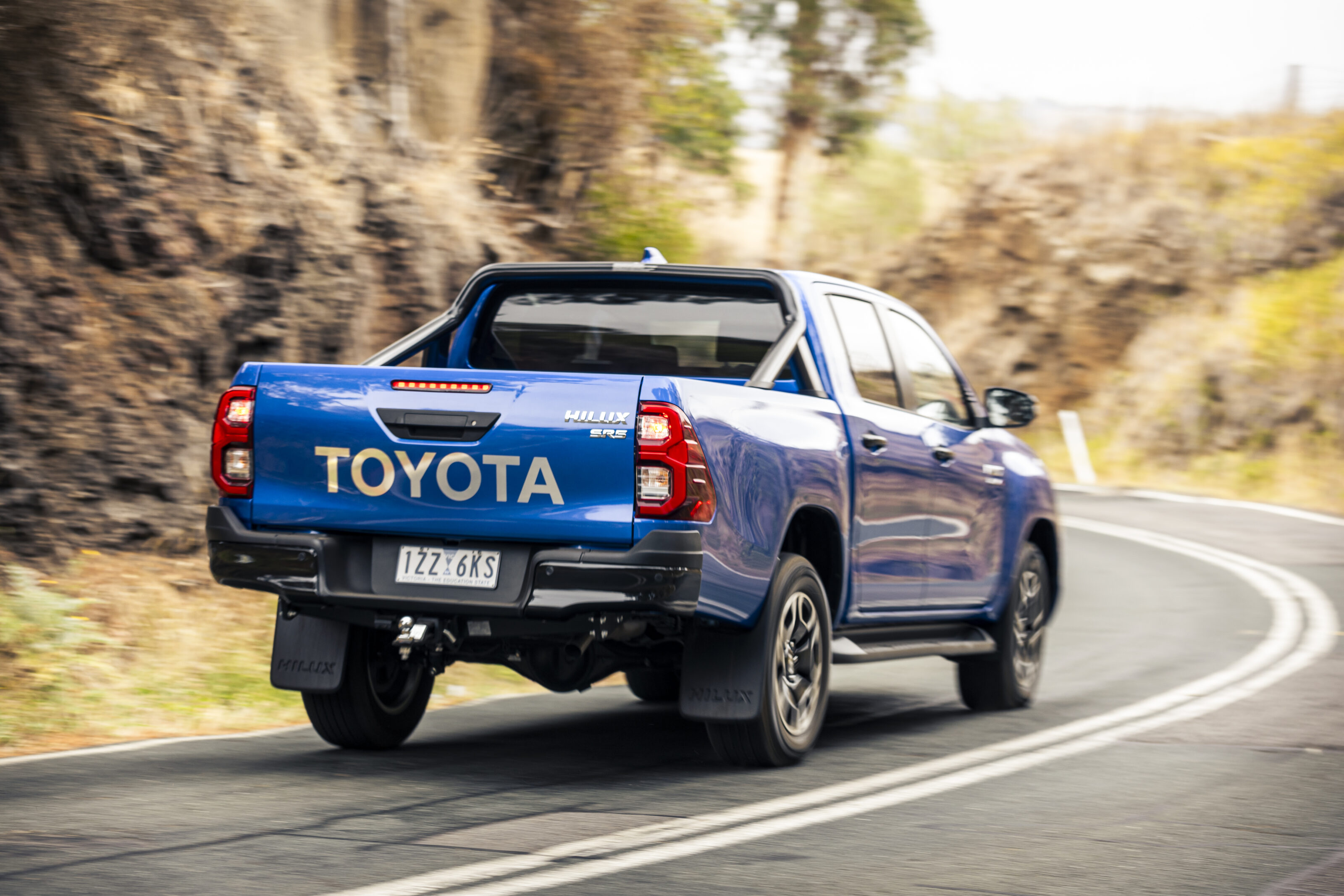
That leaves, of course, the Ford Ranger.
If the HiLux just feels like an older vehicle, the BT-50 and D-Max at least feel like vehicles with modern exteriors and interiors (if old underneath). The Ranger, however, combines a modern exterior and interior with modern engineering.
The T6.2 is so much more mature a vehicle to drive than the others here, that this would have been a fairer test using the last-generation Ranger. Its interior feels fundamentally newer, we love the 10-speed auto and it drives in an almost SUV-like way that makes the HiLux, D-Max and BT-50 feel like light commercial vehicles.
Not just in sales, but in the way it drives, particularly in Australian conditions, the Ranger keeps the number “1” loud and proud on its door today.
A new twin-turbocharged V8 engine has been revealed at Auto Shanghai 2025 by Chinese giant GWM. To be used in a range of products, the new V8 has been in development for more than three years and will debut in a new special edition Tank 300.
Displacing 4.0-litres and combined with twin turbochargers, the new V8 engine will be paired with a plug-in hybrid system to both boost performance and reduce emissions – the latter a big reason as to why we haven’t seen an all-new V8 engine from any car maker for a long time.
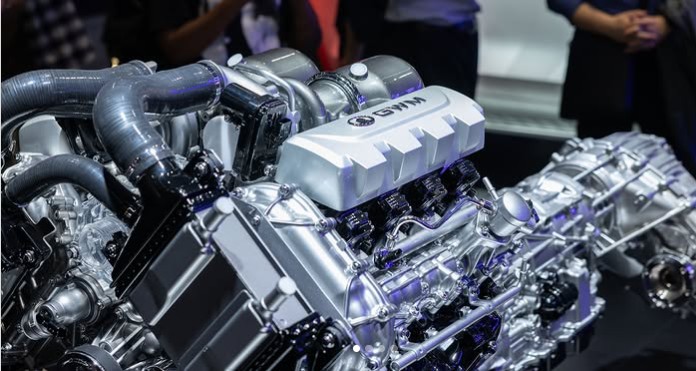
According to GWM executives at the Shanghai show, it’s designed to run electrically in the city and then provide V8 performance for situations such as towing.
The company is yet to reveal any power or torque figures for the engine, but it will rev to 8000rpm and features dual fuel injection and oil pumps. The electric motor is sandwiched between the engine and transmission.
What it will power is also unknown at this stage, though it’s reportedly designed for a new range of luxury cars being developed, as well as future models in the Tank 4WD brand – potentially the new limited edition Tank 300 Hooke revealed at the Shanghai show.
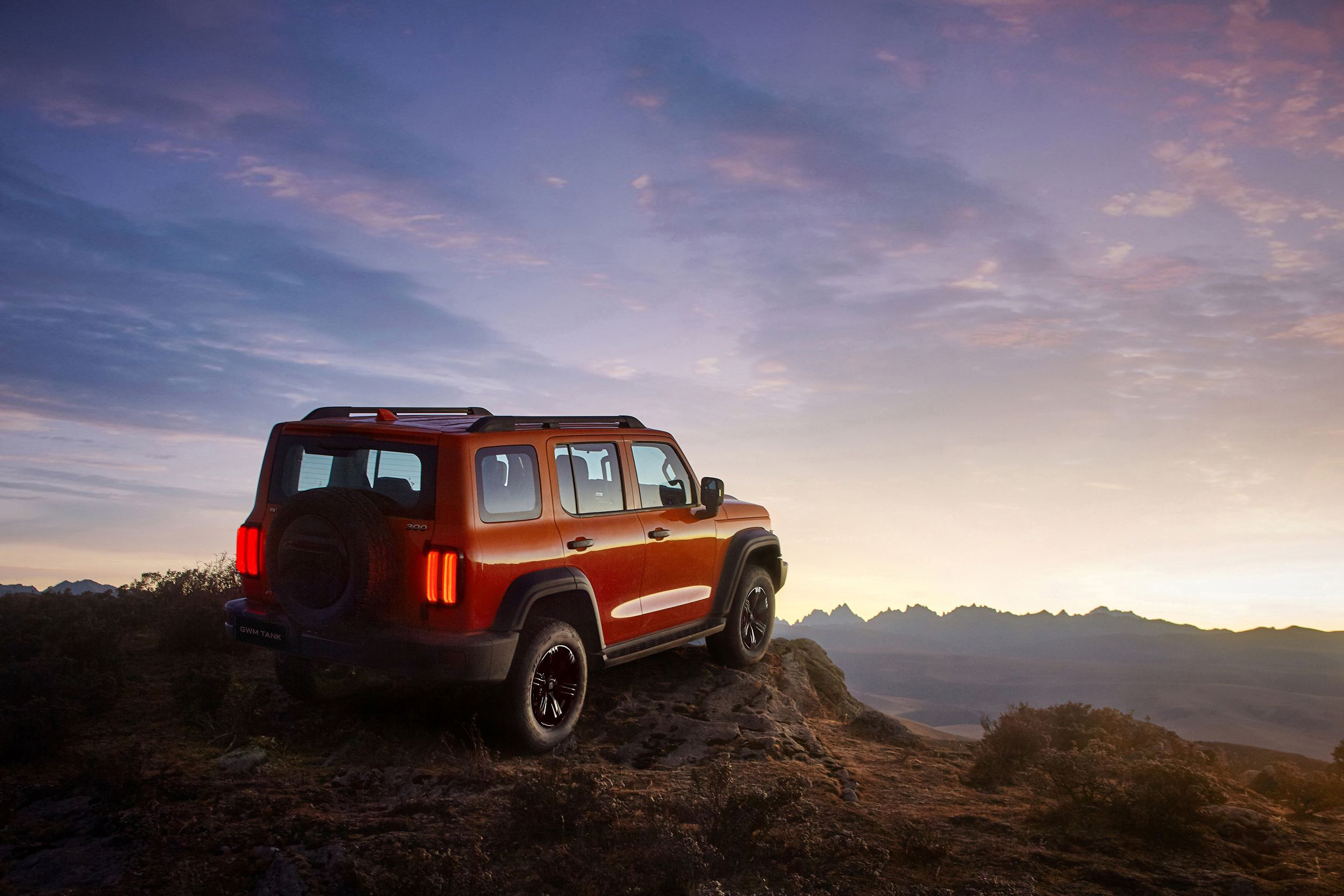
But the V8 PHEV system will even go into the rumoured full-size truck that GWM reportedly wants to enter the North American market with, though the current US political climate has reportedly stalled those plans.
GWM is yet to announce formal plans for the new V8 PHEV for Australia, though considering the speed at which the company develops products, it’s likely not far away.
MG Motor Australia has launched a new variant of the Cyberster electric roadster, which has traded the dual-motor all-wheel drive drivetrain for a rear-drive one with a lower starting price of $99,900 plus on-road costs.
Removing the front motor has reduced the Cyberster’s outputs from 375kW/725Nm to a still-healthy 250kW/475Nm, while the 0-100km/h sprint time has increased by two seconds to 5.2, which is still quick.
Using the same 77kWh battery as the AWD car, the RWD Cyberster’s range increases from 500km to 552km (NEDC) thanks to its 135kg lesser weight.
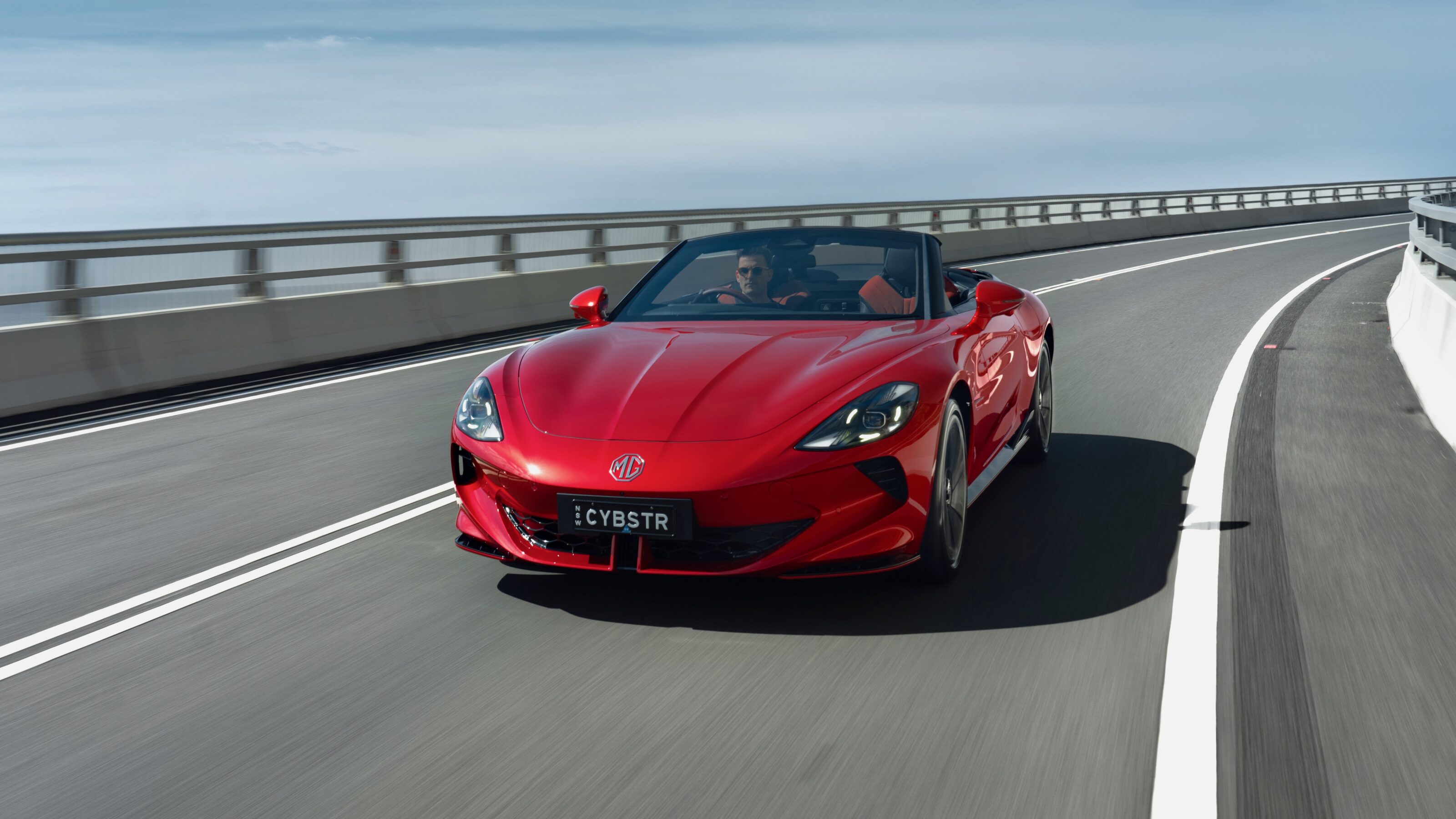
Aside from the drivetrain, there have also been a few changes to the RWD Cyberster: its wheels are now an inch smaller at 19-inches, and the AWD’s suede interior has been replaced with Nappa leather trim.
The company has also added a new ‘Mayfair Blue’ colour, which is available across the Cyberster range joining the already-available ‘English White’, ‘Sterling Silver Metallic’, ‘Camden Grey Metallic’, ‘Royal Yellow Premium’ and ‘Diamond Red Metallic’.
Otherwise, the MG Cyberster range remains the same: it can be charged from 10 to 80 per cent in as little as 40 minutes using a 150kW DC fast charger.
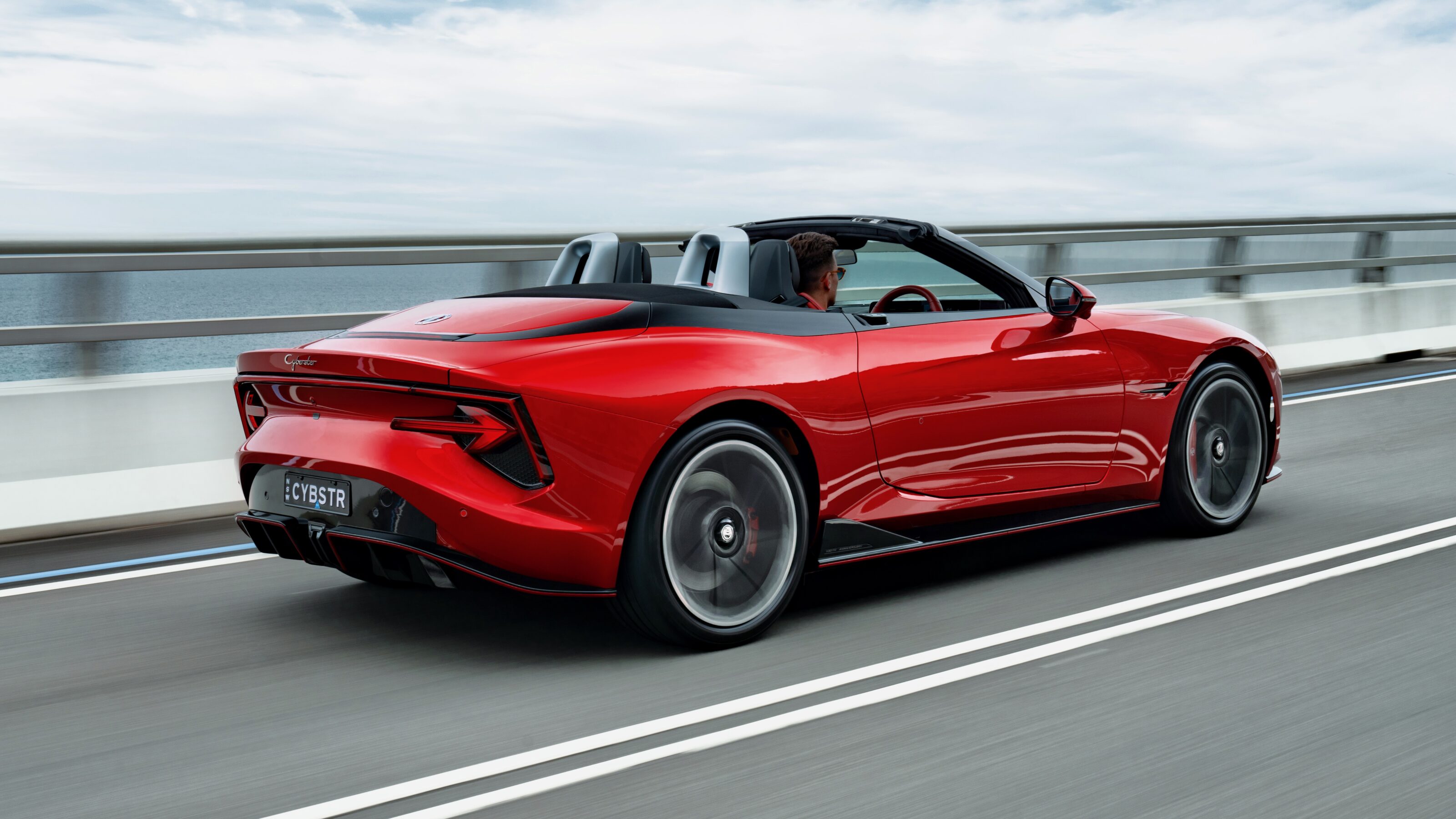
Standard equipment includes automatic LED exterior lighting, an eight-speaker Bose sound system, a 7-inch touchscreen with two 7-inch touchscreens either side of the steering wheel, electric seats with heating, Apple CarPlay and Android Auto and 12 months’ access to the company’s ‘iSmart’ remote smartphone app.
The ‘MG Pilot’ suite of active safety features is also standard, including autonomous emergency braking, adaptive cruise control, adaptive lane guidance, blind-spot monitoring, rear cross-traffic alert, lane keeping assistance, auto high beam and a 360-degree camera.
| RWD | $99,900 |
|---|---|
| AWD | $115,000 |
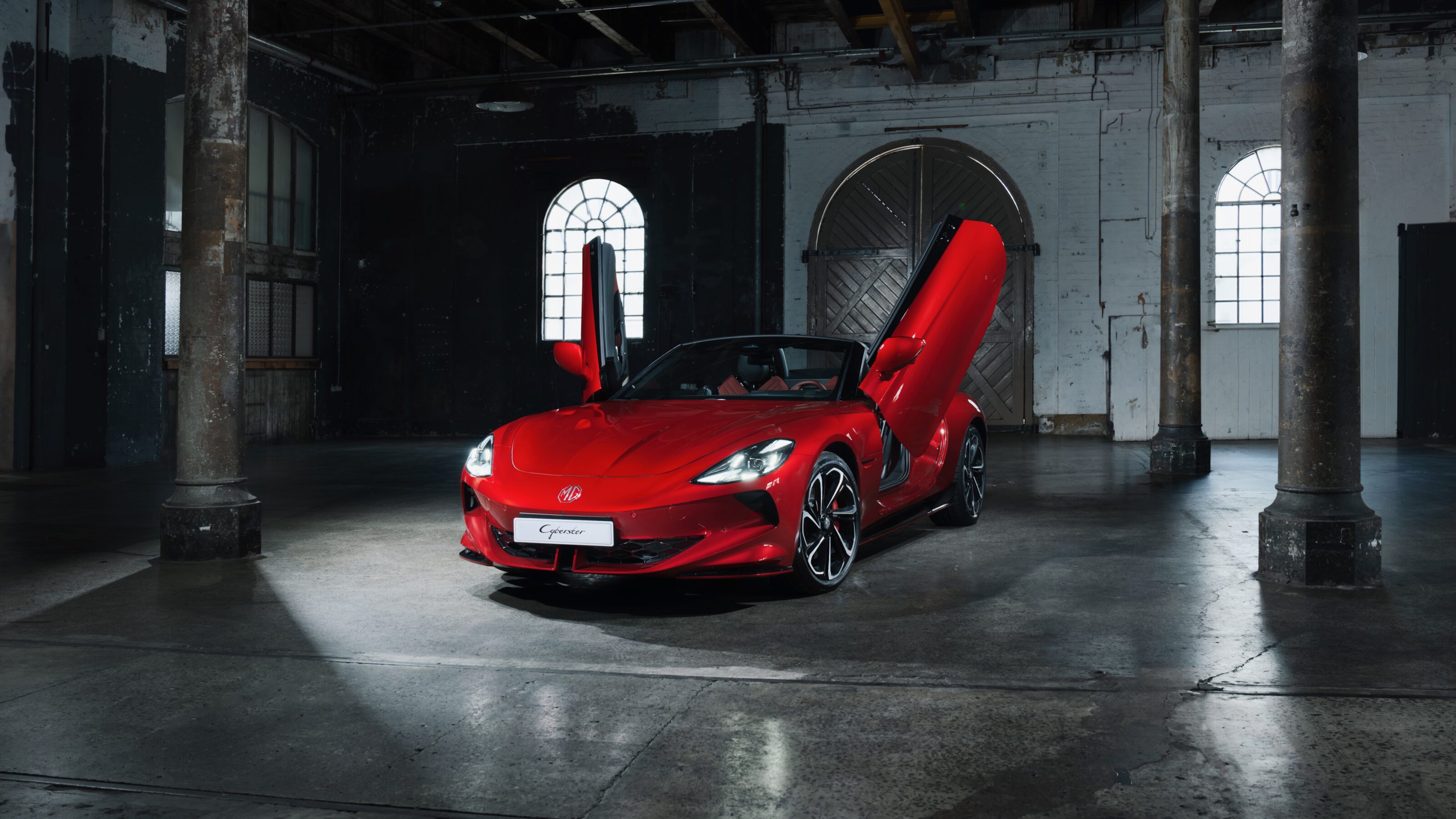
The new MG Cyberster variant is now available to order and will enter local MG showrooms soon. The Cyberster was a contender in the most recent edition of Wheels Car of the Year.
The BYD Yangwang U8L has been revealed at Auto Shanghai 2025 as the new flagship of the BYD range. Measuring a huge 5.4 metres long, the U8L is even larger than Range Rover, Toyota LandCruiser and Nissan Patrol rivals.
Shown in a distinctive gold and black two-tone paint job and huge 23-inch wheels, the U8L also features 24-carat gold badging.
Yangwang, BYD’s premium brand, launched the U8 in China in 2023 priced at around A$220,000 while the U9 battery-electric supercar joined the line-up in 2024.
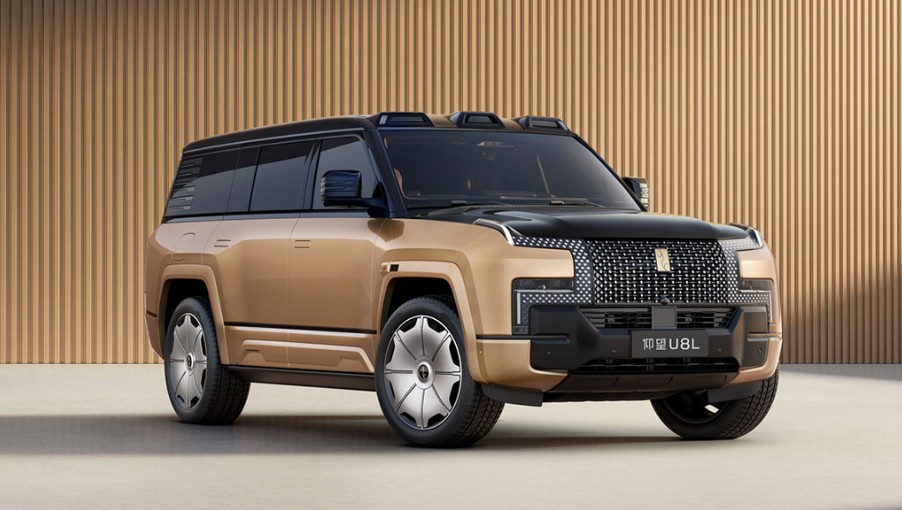
Under the bonnet of the U8L is a plug-in hybrid drivetrain combining a 2.0-litre turbo-petrol engine with four electric motors making a total of 880kW of power and 1280Nm of torque. The standard U8 hits 100km/h in just 3.6 seconds and it hits a limited top speed of 200km/h.
The claimed driving range for the U8 on the Chinese cycle is 1000km with 180km under electric power alone from its 49kWh battery. It can be DC fast charged up to 110kW, and supports vehicle-to-load functionality as well.
The U8L features the same emergency water flotation system as the U8, as well as the ability to perform at 360-degree tank turn on the spot.
The U8 has a maximum wading depth of 1000mm, which is extended to 1400mm in the Master Edition that also features a snorkel. Despite its huge 3460kg weight, the U8 can remain afloat for up to 30 minutes in deep water.
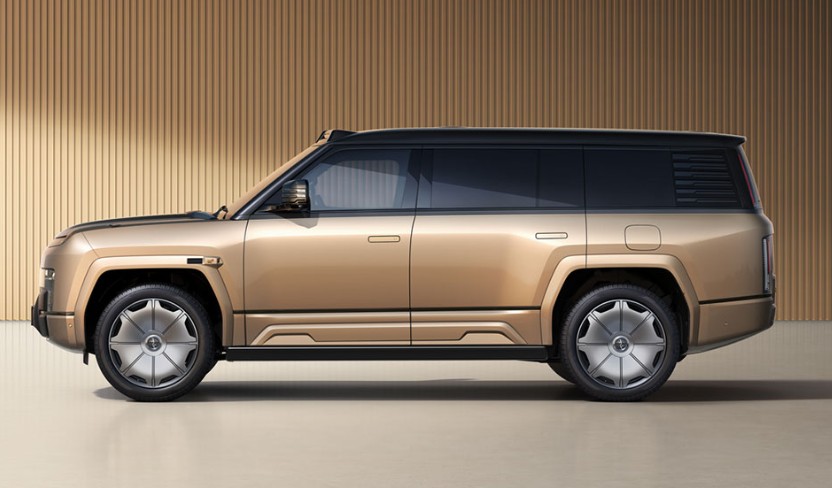
The U8L features the ‘God’s Eye A’ driver assistance system (ADAS). Utilising a three-LiDAR set-up, it supports functions such as Highway and Urban Navigate on Autopilot (NOA), automated parking, remote parking, and an automatic parking system.
While BYD is yet to reveal the U8L’s interior, it’s likely to be quite similar to the standard U8 with features such as Nappa leather upholstery, six screens – including a massive 23.6-inch screen for the front passenger, a 12.8-inch touchscreen and a 70-inch head-up display. Audio is handled by a 22-speaker Dynaudio sound system.
BYD is yet to confirm if the U8L will be headed to Australia, though it is produced in right-hand drive for the Thai market.
Struggling manufacturer Nissan has hosted two important product reveals at the 2025 Shanghai Motor Show with the Frontier Pro plug-in hybrid ute and N7 electric sedan.
Using its joint venture with Chinese car maker Dongfeng, Nissan will take on BYD in its home market with the new vehicles aimed straight at current BYD products like the Shark ute, and based on products already sold in China but with different styling and features.
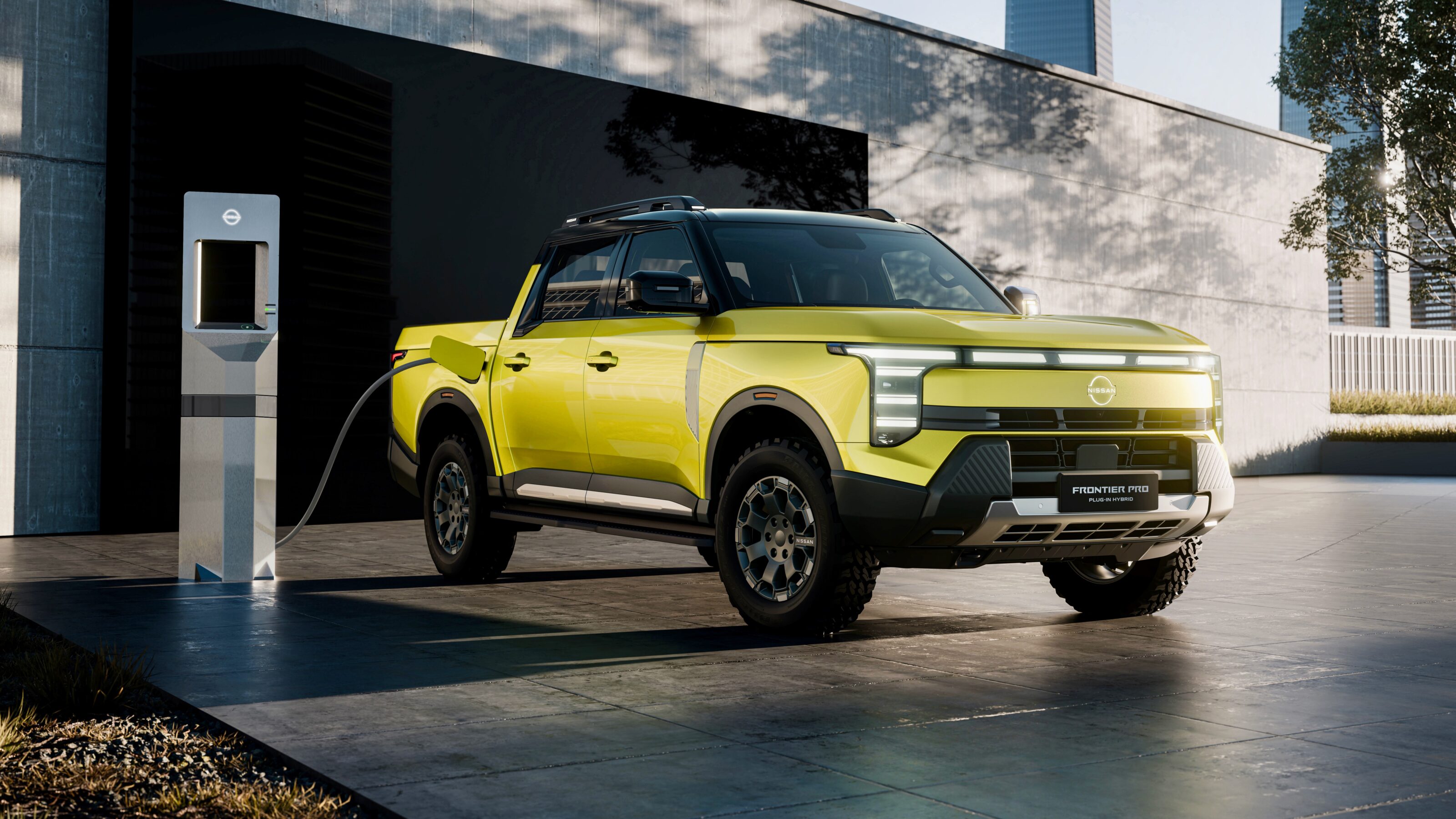
To only be offered as a plug-in hybrid, the Frontier Pro uses a turbocharged 1.5-litre petrol engine with an electric motor integrated into the gearbox for outputs of “over” 302kW/800Nm.
Featuring a 33kWh battery, the Frontier Pro is reportedly capable of travelling 135km on electric power, 1,046km on hybrid power and offering the crucial 3,500kg capacity.
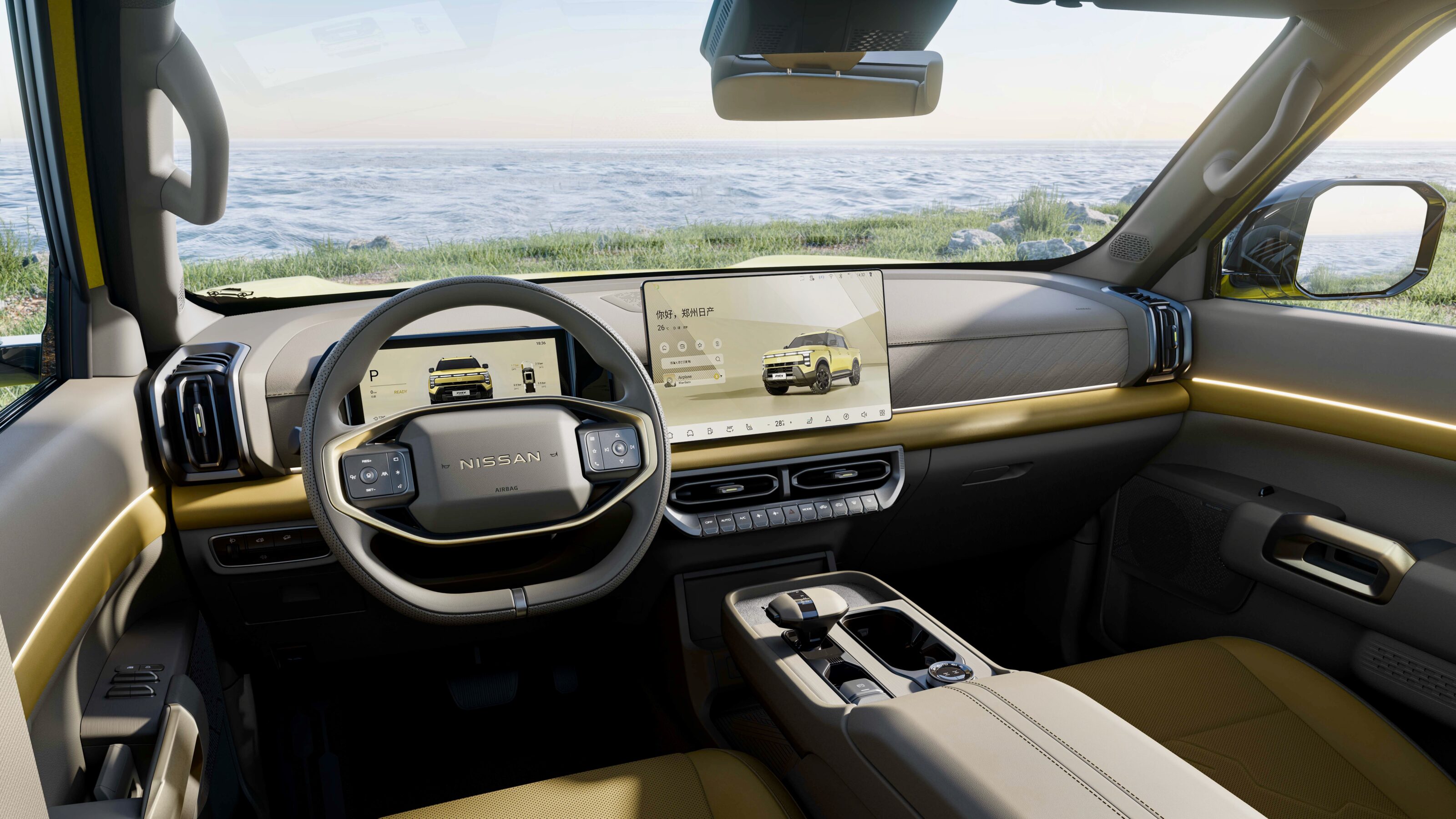
But while the Frontier Pro was revealed in China, Nissan executives have confirmed that it will be eventually sold in more global markets – possibly including Australia, where it will be differentiated from the more heavy duty next-generation Navara.
The Frontier Pro’s interior looks luxurious in comparison to the current Navara with a lemon-coloured leather-covered interior with a 14.6-inch touchscreen.
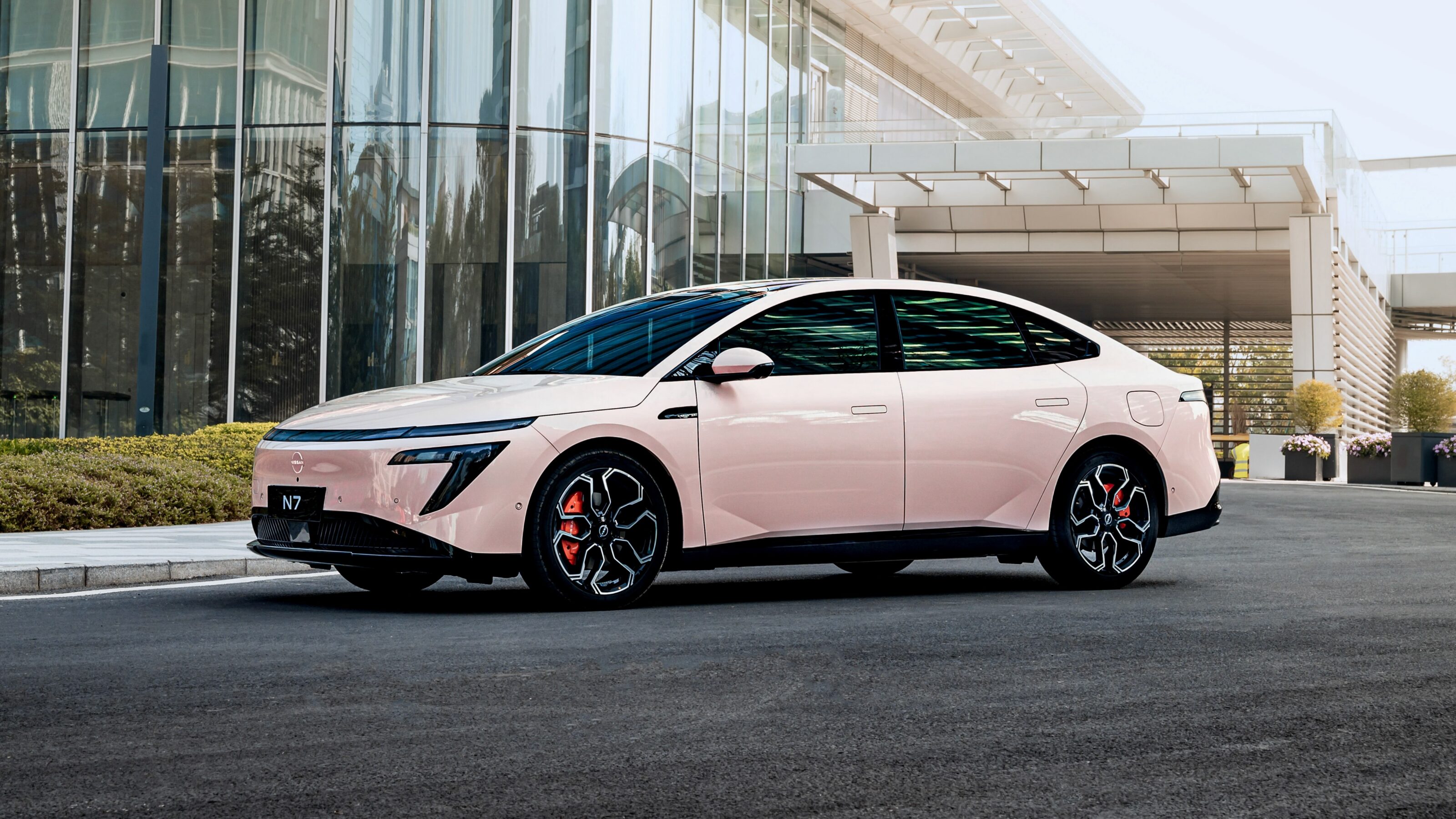
Another joint venture with Dongfeng based on one of its models, the Nissan N7 is the brand’s first electric sedan and will rival cars such as the Tesla Model 3 and Hyundai Ioniq 6 in the critical Chinese new car market. Unlike the Frontier Pro, global sales plans for the N7 are yet to be announced.
Measuring almost five metres long, the N7 is a large sedan that offers up to 635km of electric driving range on the Chinese cycle and features a coefficient of just 0.208.
Two lithium ion phosphate (LFP) batteries will be available: 58kWh and 73kWh, both with a 400-volt architecture for a claimed 10 to 80 per cent charge in as little as 19 minutes. All N7s are front-wheel drive and 160kW and 200kW power outputs will be available.
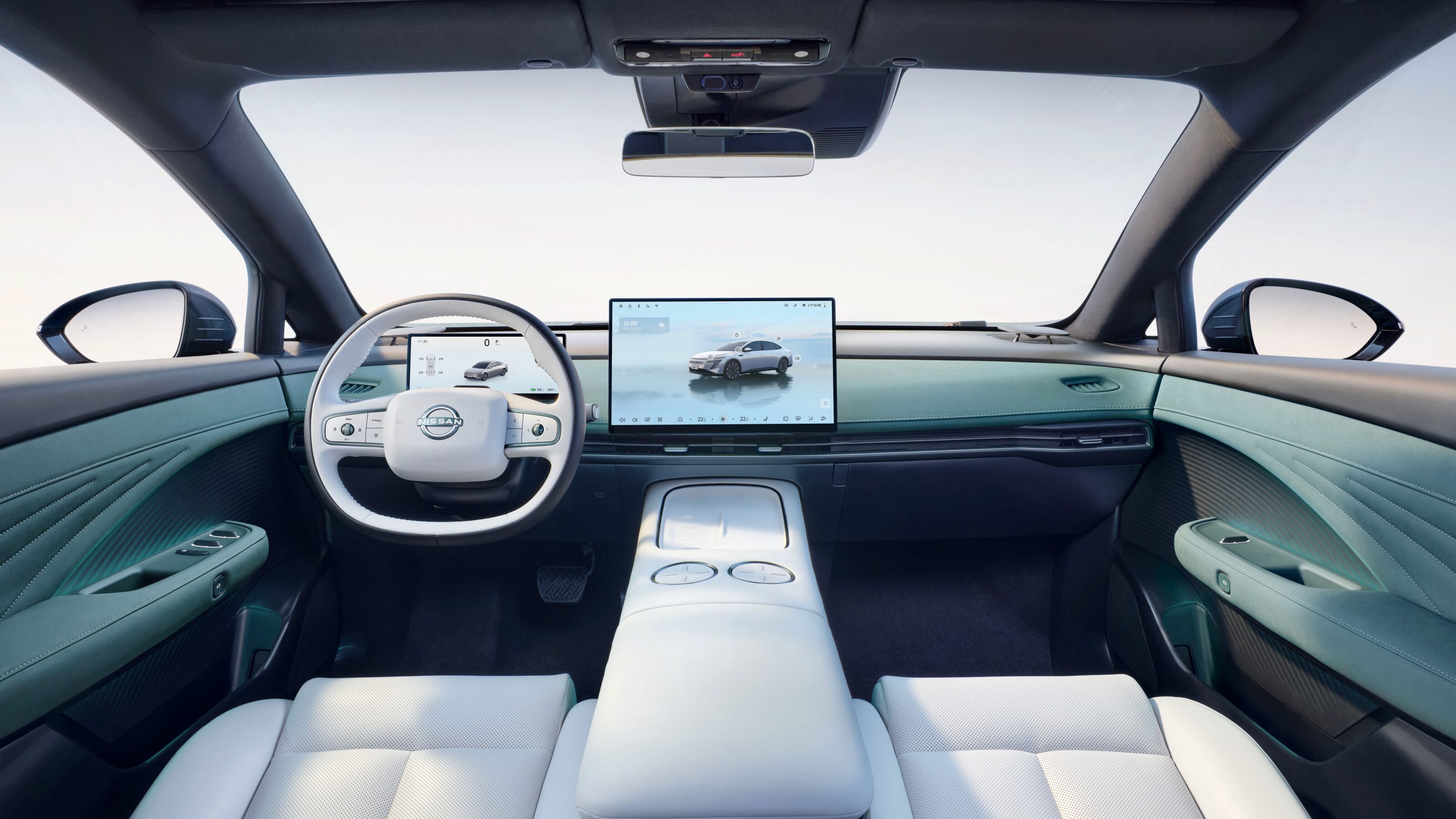
Inside the N7 is a luxurious cabin with lots of leather trim and futuristic design elements. The front seats use an adaptive AI-based posture system and 12-point massaging functionality, while a 15.6-inch touchscreen features a Qualcomm Snapdragon processor and 14 speakers.
The Nissan Frontier Pro will go on sale in China and other markets later in 2025 and 2026, with local plans yet to be confirmed.
Ever dreamed of owning a true Aussie classic?
How about this fully restored 1974 Ford XB Falcon Hardtop 429 Stroker? These XB Falcon Coupes are iconic Aussie muscle cars and this one has been neatly restored and fitted with a bunch of great upgrades to make it a tough street car.
This stunning restoration is valued at $200,000 (excl. GST and govt. charges) and is the latest car being given away by Classics as part of our mission to support Aussie veterans.
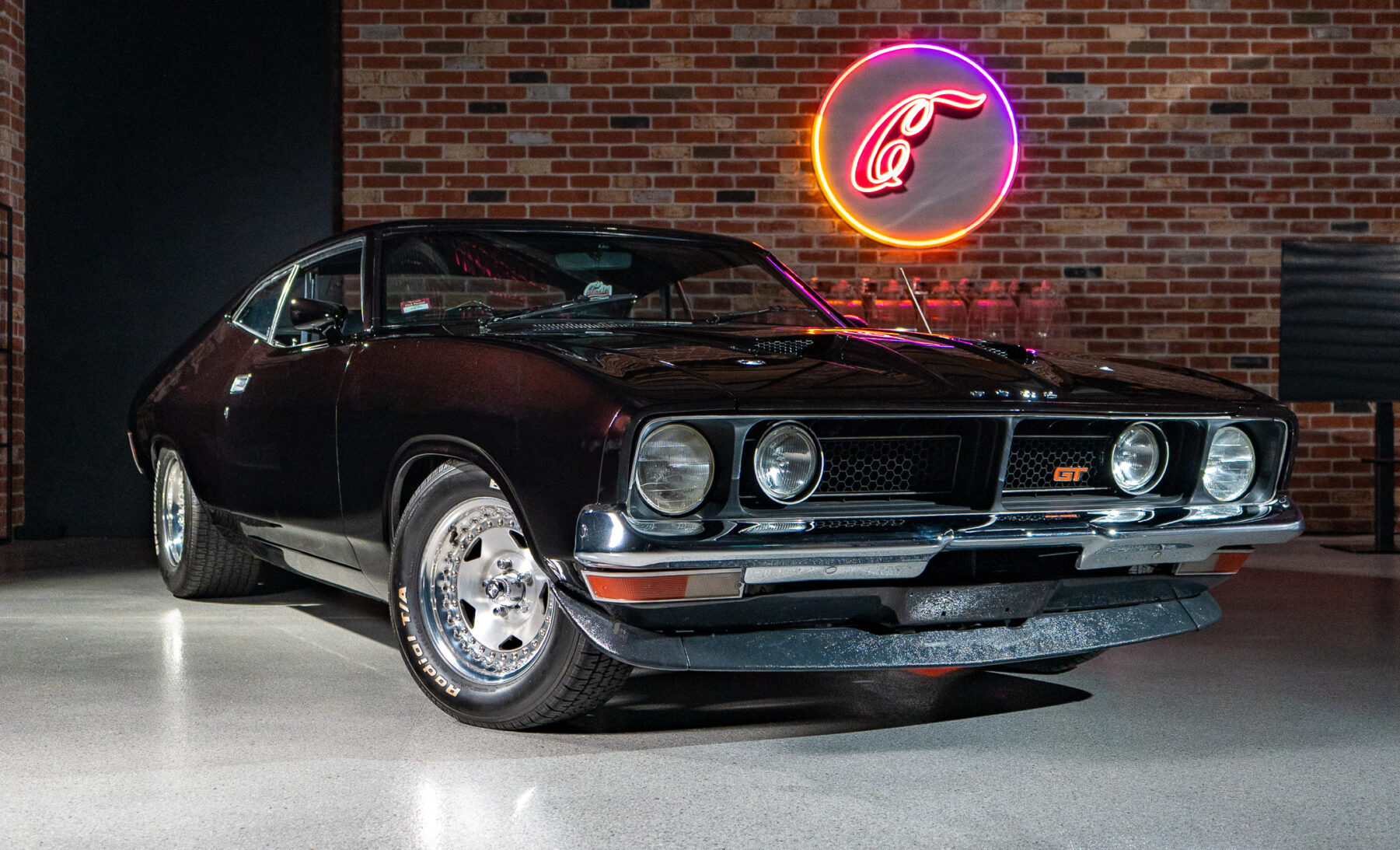
By signing up as a member of our Classics Retro Rewards, you automatically go in the draw to win this fantastic car, with more chances to win depending on the package you take. Membership packages start at just $30 and offer discounts on a huge range of products and services Australia-wide – discounts you won’t find anywhere else. A VIP option gives you access to additional benefits and even more chances to win.
To find out more, go to: classicsforacause.com.au

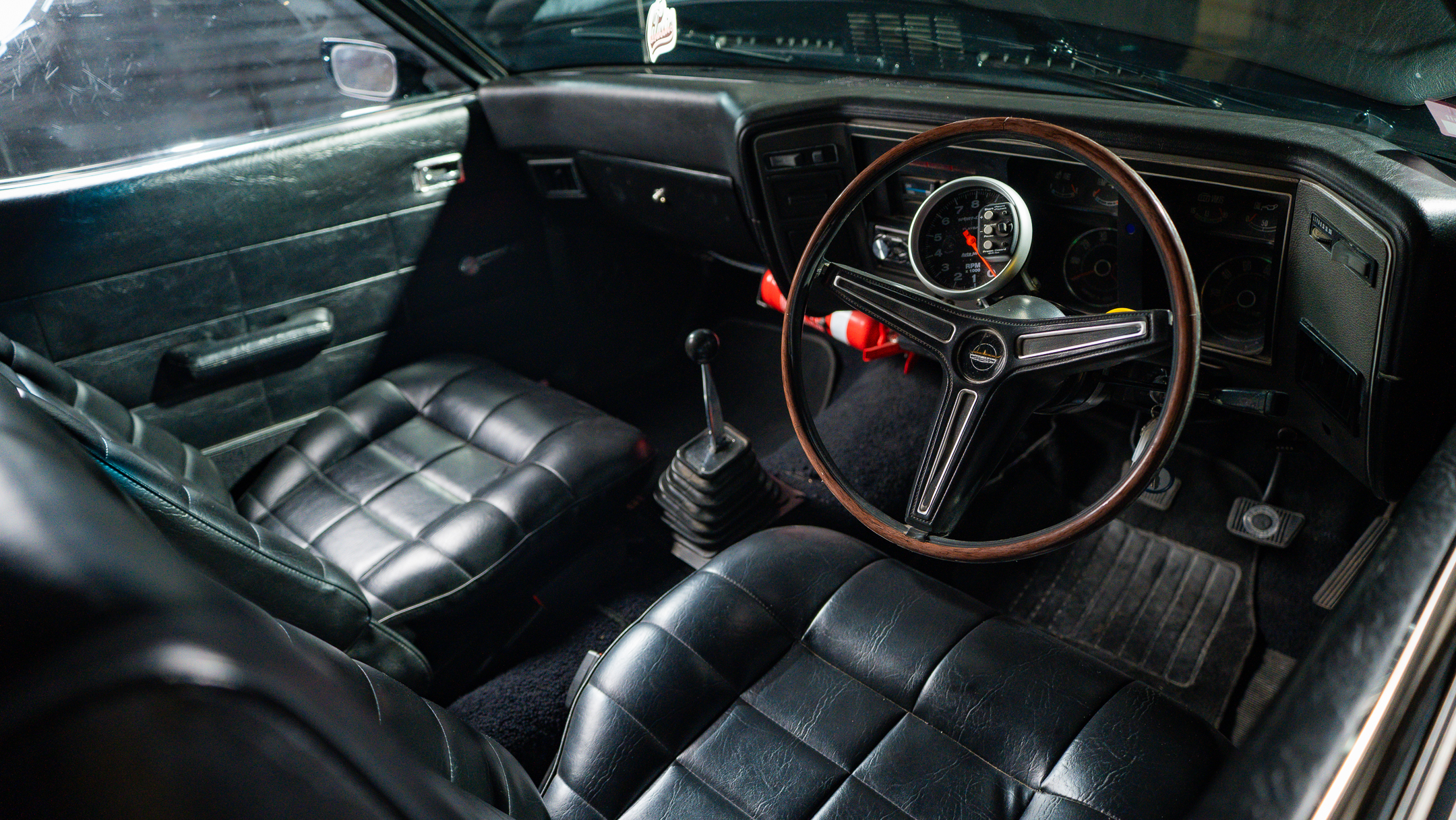
The car was purchased by the current owner as a bare shell back in 2010 before it was stripped to bare metal in 2011 and all rust removed. The replacement panels were actually sourced from a Mercedes Benz 560SL as it was the same gauge metal and better quality than anything new at the time.
The car is fitted with a GT-style vented bonnet with bonnet pins. The car has been flow coated with
three coats for a deep lustre, the colour being a unique Coca-Cola custom based off Mercedes Obsidian Black with a very slight red/brown pearl in the light. The chrome was all refinished at the same time and triple plated by Sterling Plating in Melbourne. There is a GT grille and spotlights, GT Badges and front spoiler.
To complete the mild custom look, the car sits on a set of new 15” Centreline Convo Pro wheels in the widest fitment available for an XB Coupe and wrapped in BF Goodrich white lettered tyres. Open the door to discover a refinished interior to match the exterior, trimmed to factory GT specs in black vinyl by Reservoir Motor trimmers in Melbourne.
There is an AutoMeter Monster Tacho mounted to the steering column with shift light to make sure you nail the gear changes. There are three pedals on the floor with a Hurst manual shifter poking up through the floor. An aftermarket stereo system has been fitted for tunes, including an amplifier and subwoofer in the boot.
Pop the bonnet to find a tough built 429ci Cleveland V8 engine built by Powerheads Engineering in the USA in 2013. The car makes 456 hp at the rear wheels (560hp at the fly) and is good for a mid-12 second quarter mile. The engine is paired to a four-speed Top Loader manual transmission that has been blueprinted with all steel gears, and new synchros in 2019 by Trans gears and diffs in Melbourne.
Power is fed to the rear wheels through a Ford nine-inch diff with Eaton Trutrac centre, 3.55 gears and 31 spline billet axles. The suspension and steering components were all rebuilt to GT specs. The brakes are fully rebuilt and are power boosted four-wheel discs.
To be in the draw to win this amazing 1974 Ford XB Falcon Hardtop 429 Stroker, join Classics Retro Rewards at classicsforacause.com.au before 6pm, May 16, 2025.
For this draw, Classics are also offering 200 runner-up prizes that include 100 Gold memberships worth $100 each and 100 1-month VIP trial memberships.