Features

Gallery 1
The last time Australia faced a fuel crisis of the magnitude that it has in 2026 was in 1979 during the second oil shortage of that decade. The result of revolution in Iran, combined with prolonged industrial action at the Caltex Kurnell oil refinery in Sydney, it left motorists in a state of uncertainty.
If you’re too young to have experienced it, chances are you have relatives who remember it well and will tell you stories of how rationing worked, and how the government had decreed that consumers could only buy fuel every second day, based on car number plates. Exemptions were granted for essential workers like doctors, nurses and emergency service personnel. In short, though, the measures which lasted for several weeks were effective in reducing fuel use and seeing Australia through the crisis.
The message then was simple. Drive as little as possible, use public transport if you can, carpool if possible, and be as smooth behind the wheel as you can in order to use as little fuel as possible.
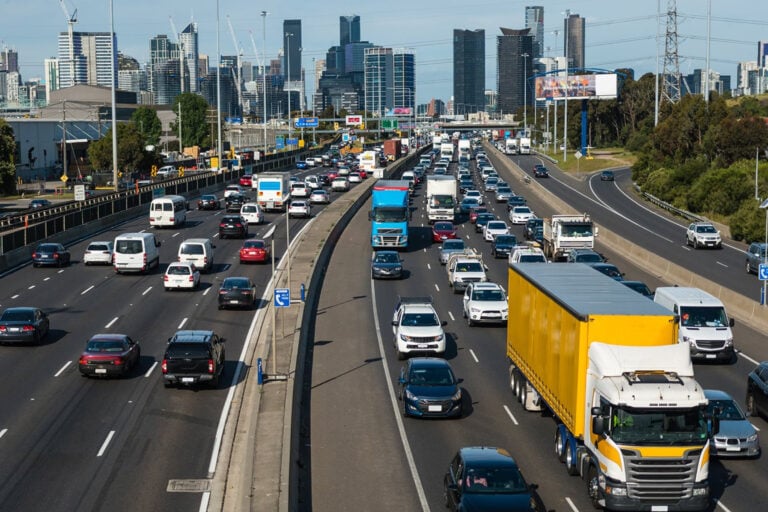
The reality in 2026 is very different, with significantly more Australians on the road on any given day, many of whom have to travel long distances in their car just to get to and from work. On its own, the sheer volume of cars is a huge difference from the late ’70s. And in many instances, we rely on the motor car more now than we did then.
As such, the ways in which you can save fuel extend well beyond how you drive and when you drive. Now, the type of car you own is effectively your gateway to using as little fuel as possible, and that’s what we’ve decoded here this month.
If you’re driving an electric vehicle for example, you’re currently smiling, using no fuel at all to go about your life as normal. The next step from there is the plug-in hybrid (PHEV), which is a clever part-time EV allowing you to drive for up to 120km (in some cases) on pure electric power alone. Cover the regular commute of most Aussies and you’ll be driving to and from work not using any fuel at all if you own a modern PHEV.
Many of us now, though, are driving incredibly efficient hybrid vehicles, technology popularised by Toyota more than two decades ago, thus using half as much (or even less) fuel to do the same work. In the 1970s the concept that you could drive the family car while using less than 5.0L/100km, for example, would have been a pipe dream. Yet that’s exactly what the likes of hybrid Camry, RAV4, Tucson or Sorento can do in 2026.
The concept of saving fuel is still as simple as it was in regard to your driving behaviour and the way you treat your vehicle. However, the options at your disposal are broader, more complex, and more capable than they’ve ever been.
Here, then, is Wheels’ guide to the best way to save fuel – and money – while still covering your essential driving needs.
Hybrid passenger cars
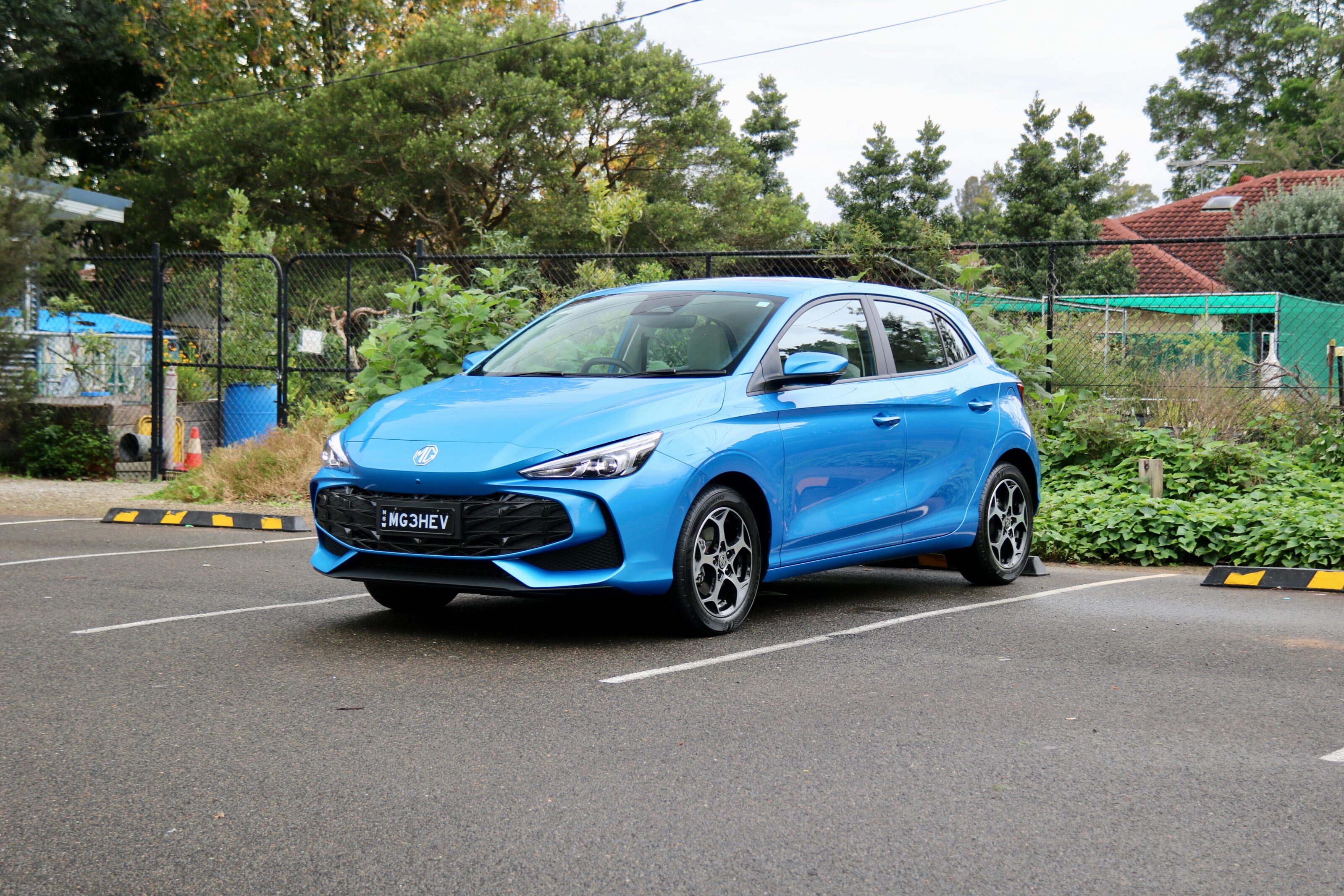
MG 3 Hybrid+
1
Price: From $27,990 plus on-road costs
Drivetrain: 1.5-litre four-cylinder petrol-hybrid
Transmission: 3-speed auto, front-wheel drive
Power: 155kW (combined petrol-electric)
Torque: 128Nm
Fuel: 95 RON premium unleaded
Fuel tank: 36 litres
Fuel consumption (claim): 4.3L/100km
Theoretical range from a single tank: 837km
Australia’s most affordable full hybrid (forget about the minimal benefits, if any, of mild hybrids) makes good use of its 1.5-litre naturally-aspirated petrol engine, especially when paired with a 100kW electric motor driving the front wheels. Combined total outputs of 155kW provides punchy acceleration from standstill, especially when on the move.
Laboratory testing has decreed the MG 3 will sip 4.3L/100km of the more premium 95-octane unleaded, offering a theoretical driving range on a single tank of around 837km. Our real world testing has previously returned 4.8L/100km, dropping that range to 750km, still a decent return on investment. The only downside, of course, is the MG 3’s thirst for more expensive premium unleaded.
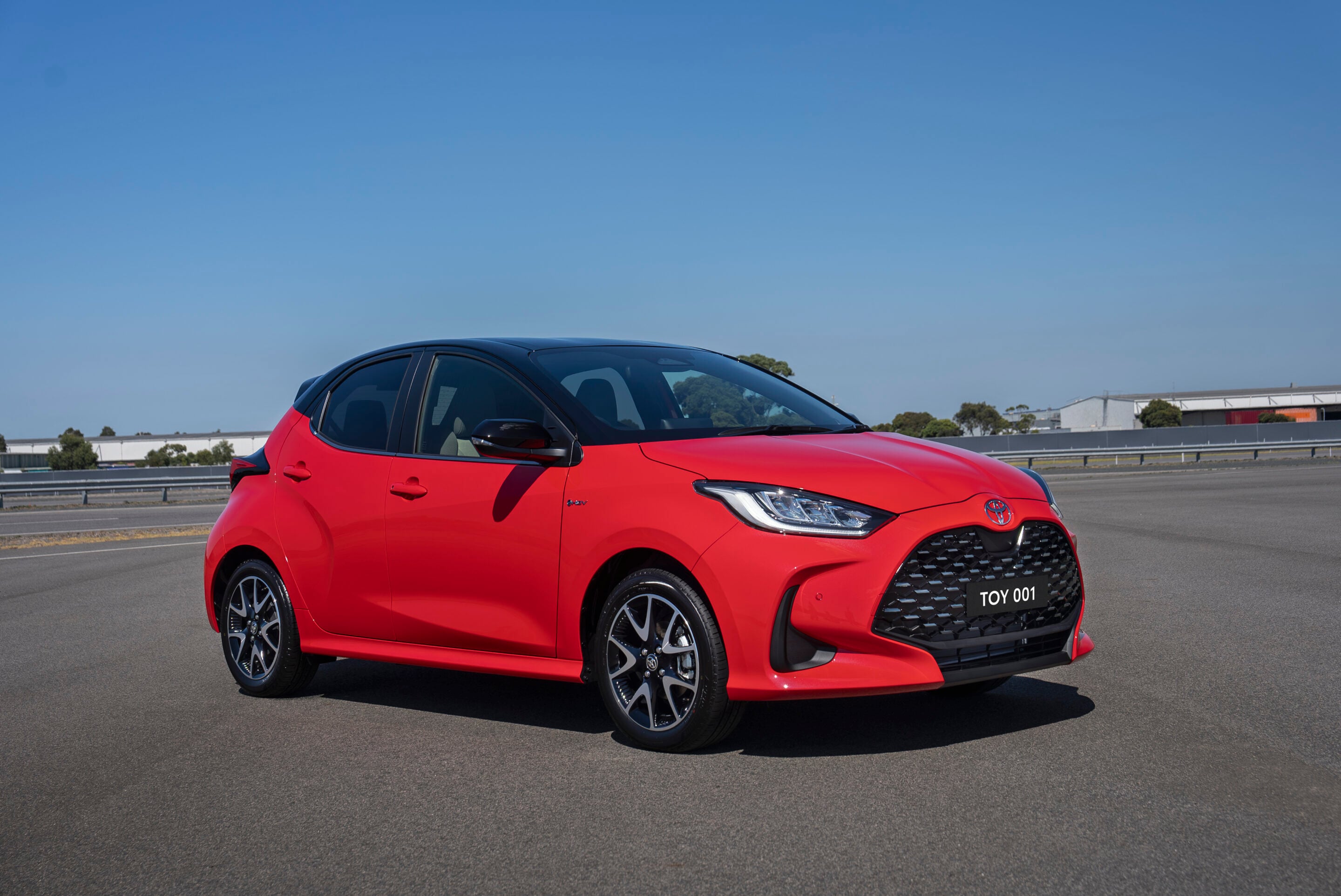
Toyota Yaris
1
Price: From $28,990 plus on-road costs
Drivetrain: 1.5-litre three-cylinder petrol-hybrid
Transmission: CVT auto, front-wheel drive
Power: 85kW (combined petrol-electric)
Torque: 120Nm
Fuel: 91 RON unleaded
Fuel tank: 36 litres
Fuel consumption (claim): 3.3L/100km
Theoretical range from a single tank: 1090km
The headline act here is Toyota’s claim of a miserly 3.3L/100km of regular unleaded on the combined fuel cycle. Real world testing by Wheels, however, returned a more realistic 4.1L/100km. That’s still an excellent number, and one that will provide around 878km of driving between refills.
It’s not the most powerful hybrid hatchback on the market – its combined output of just 85kW dwarfed by some of its rivals. But the raw numbers belie the Yaris’ peppy nature, especially in an urban environment where, let’s face it, most Yaris’ will spend the majority of their time.
Quick to move away from standstill and eager enough when on the move, the Yaris makes good use of the extra oomph provided by its single electric motor. And bonus points for only needing regular unleaded.
Hyundai i30 Sedan hybrid

1
Price: From $33,250 plus on-road costs
Drivetrain: 1.6-litre four-cylinder petrol-hybrid
Transmission: 6-speed dual-clutch, front-wheel drive
Power: 104kW (combined petrol-electric)
Torque: 147Nm
Fuel: 91 RON unleaded
Fuel tank: 42 litres
Fuel consumption (claim): 3.9L/100km
Theoretical range from a single tank: 1076km
Hyundai took its time joining the hybrid party but when it arrived (unfashionably) late, it did so with aplomb.
The i30 sedan brings practicality, interior space and comfort in a way most hatchbacks can only dream of, its 474-litre cargo area a case in point.
The driving experience is refined, with the i30 happy to chug on electricity alone at anywhere up to 50km/h in traffic, providing you exercise circumspection with your right foot.
That helps the i30 sedan achieve a real-world fuel number of just 4.3L/100km (against a claim of 3.9L) which we have previously done in testing. And that means a range of around 976km between visits to the servo is achievable. Not bad.
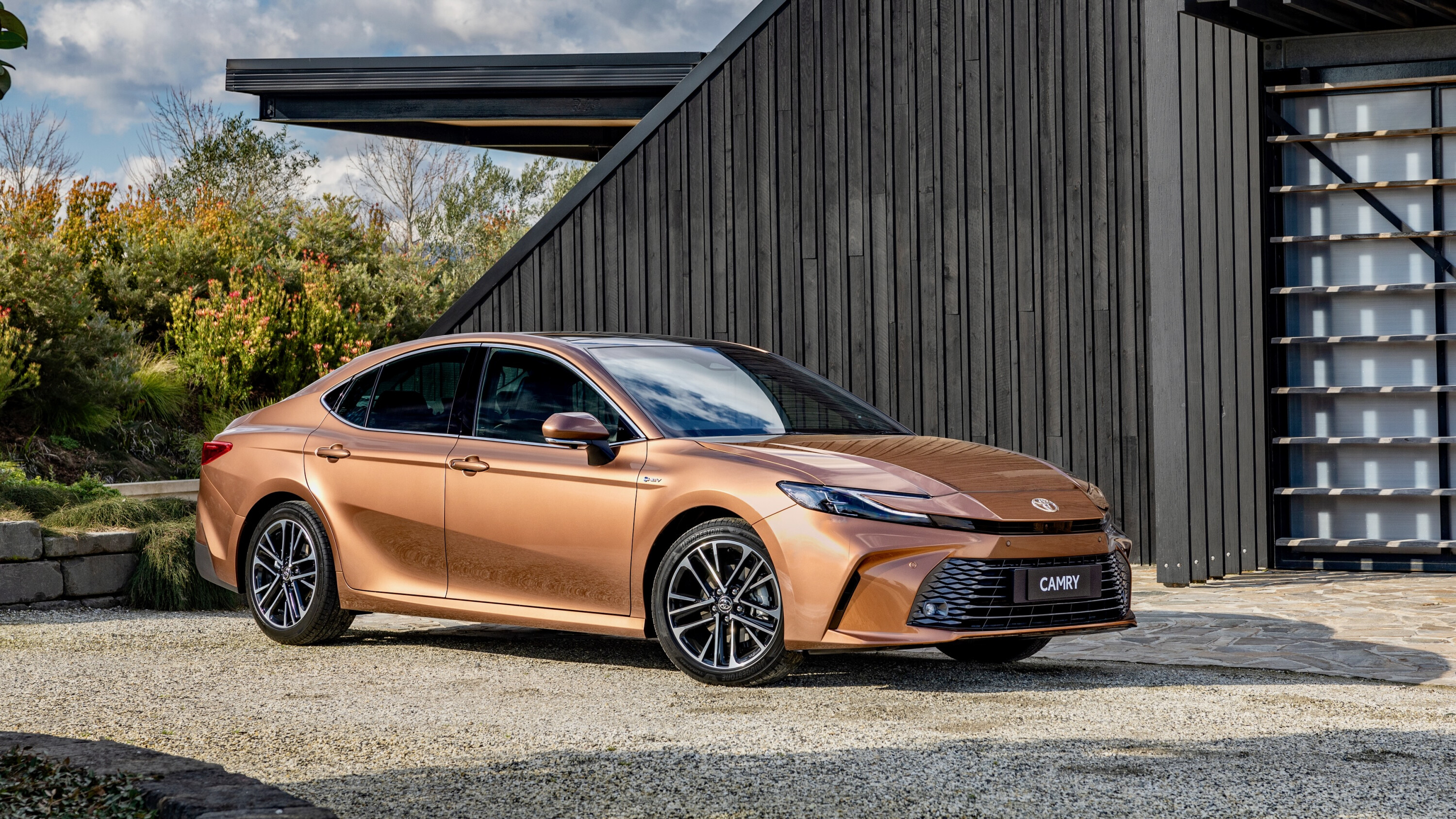
Toyota Camry
1
Price: From $39,990 plus on-road costs
Drivetrain: 2.5-litre four-cylinder petrol-hybrid
Transmission: CVT auto, front-wheel drive
Power: 170kW (combined petrol-electric)
Torque: 221Nm
Fuel: 95 RON premium unleaded
Fuel tank: 50 litres
Fuel consumption (claim): 4.0L/100km
Theoretical range from a single tank: 1250km
It’s impossible to leave out the Camry, a stalwart on our roads since 1983. But the Camry’s true calling came with the introduction of the first hybrid model in 2006, bringing previously unparalleled fuel economy to more families than ever before.
Today, the Camry remains the best-selling medium sedan with an engine (Tesla’s electric Model 3 is number one) and for good reason. While a quoted fuel economy of just 4.0L/100km looks good on paper, out in the real world mid-5s are more realistic. A recent Wheels road test returned 5.6L/100 over a week, giving a projected driving range of 892km between visits to the local servo.
The only downside is the Camry’s thirst for more expensive premium unleaded, something to consider in today’s oil shock climate.
Hybrid SUVs
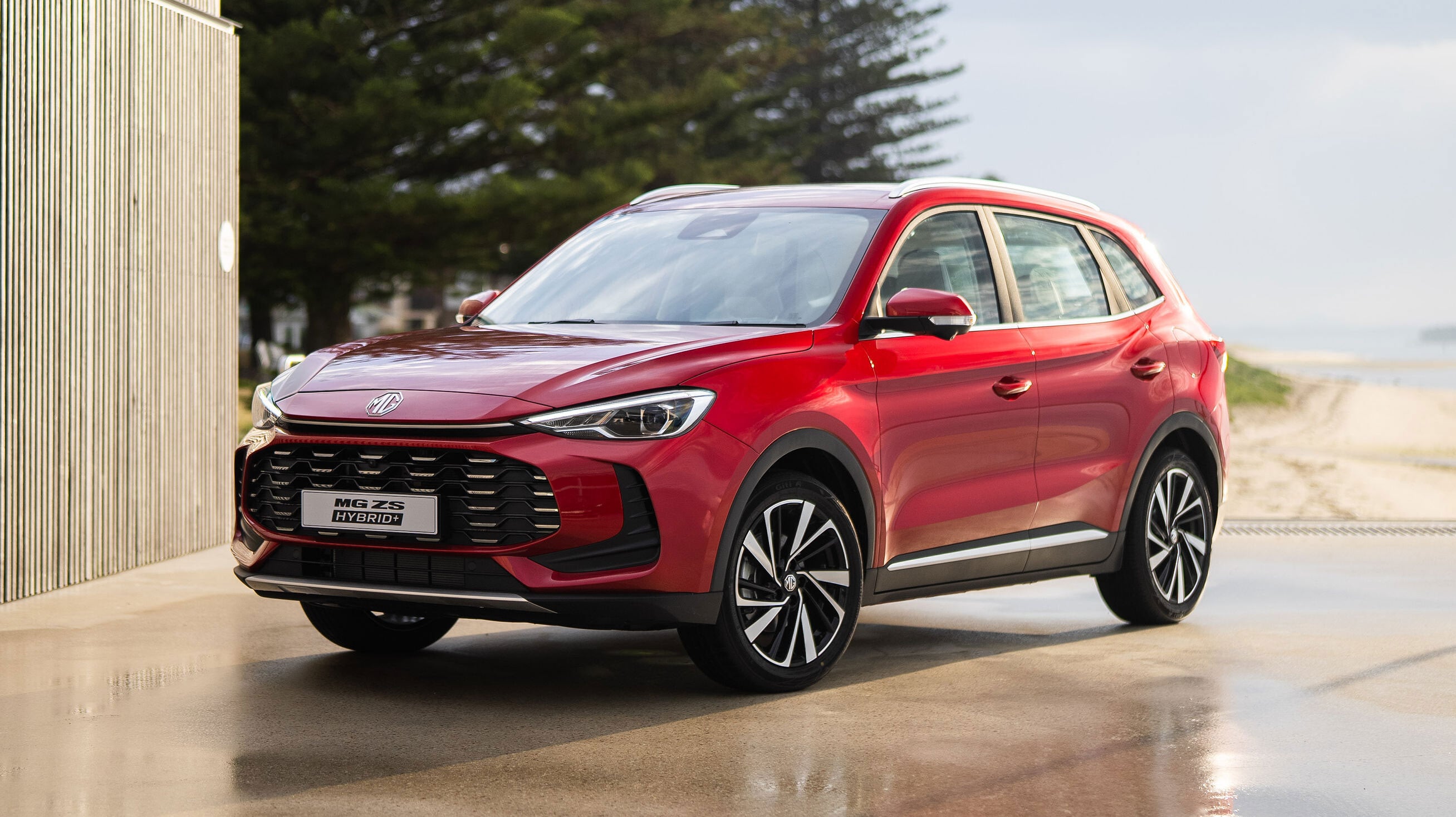
MG ZS Hybrid+
1
Price: From $30,990 driveaway
Drivetrain: 1.5-litre four-cylinder petrol-hybrid
Transmission: 3-speed auto, front-wheel drive
Power: 158kW (combined petrol-electric)
Torque: 250Nm
Fuel: 95 RON unleaded
Fuel tank: 41 litres
Fuel consumption (claim): 4.7L/100km
Theoretical range from a single tank: 872km
A Wheels Best Small SUV 2025 category winner, the MG ZS Hybrid+ was lauded for its spacious cabin, long list of standard equipment and accessibly low pricing.
Under the bonnet, a peppy 155kW 1.5-litre petrol-hybrid is perfectly suited for most driving conditions, the star attraction its claimed 4.7L/100km fuel use.
Realistically, you can expect numbers in the low fives, which is still decent and will provide around 780-800km of driving before needing a drink of premium petrol – the latter fact really the only blot on its copy book.
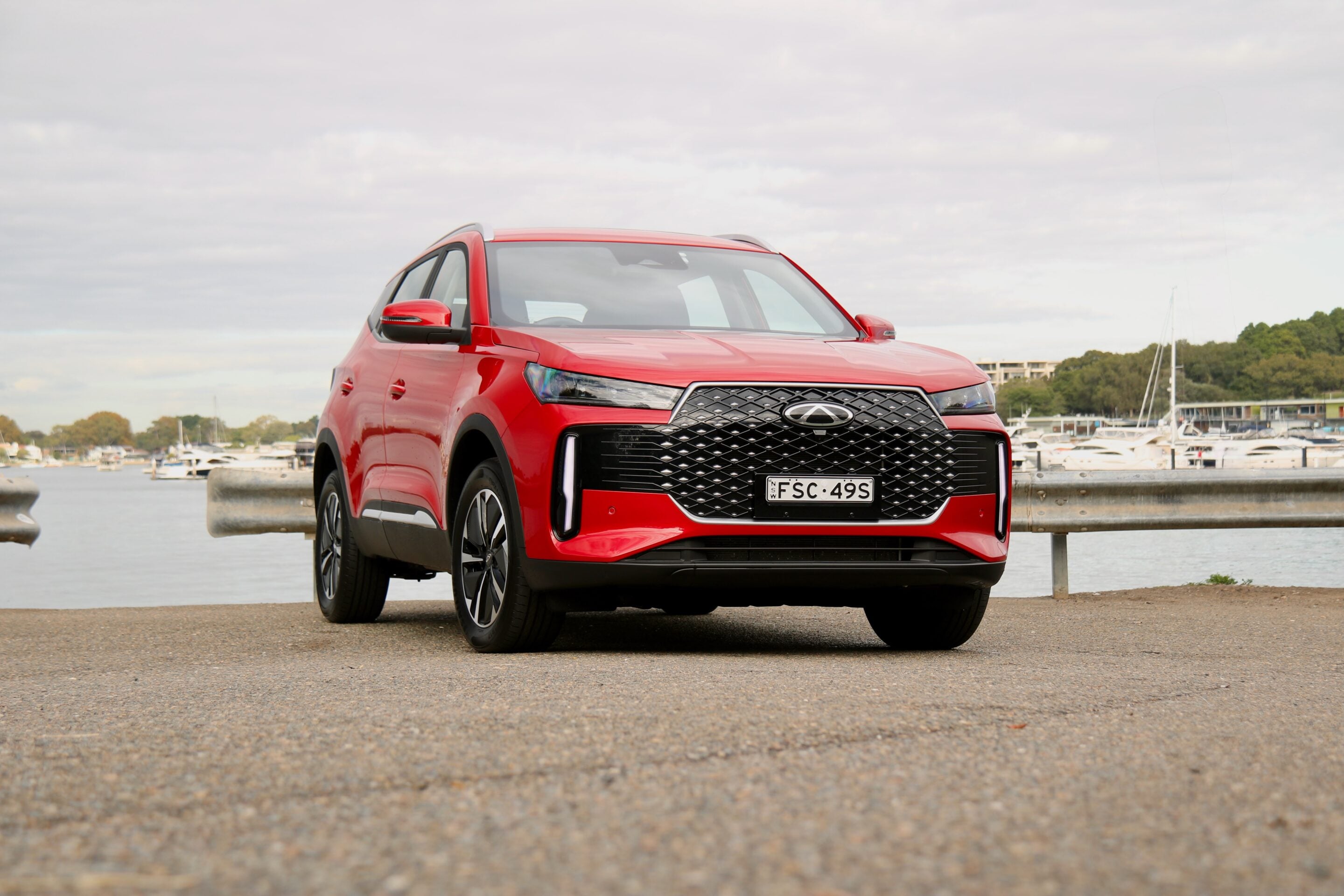
Chery Tiggo 4 Hybrid
1
Price: From $29,990 driveaway
Drivetrain: 1.5-litre four-cylinder petrol-hybrid
Transmission: CVT auto, front-wheel drive
Power: 150kW (combined petrol-electric)
Torque: 310Nm
Fuel: 91 RON unleaded
Fuel tank: 51 litres
Fuel consumption (claim): 5.4L/100km
Theoretical range from a single tank: 944km
Australia’s most affordable hybrid SUV is a decent option for buyers on a budget. A perky 150kW drivetrain offers enough performance for most situations, the Tiggo 4 never feeling sluggish. Inside, a practical cabin offers plenty of modern tech to keep most buyers happy.
A claimed fuel economy figure of 5.4L/100km seems ambitious, although we’ve yet to test the hybrid version of what has become – in petrol-only form – Australia’s number one-selling small SUV. Our experience with a vast armada of hybrids from a wide range of manufacturers, suggests a number in the low-sixes is more realistic, offering a theoretical range of around 830-850km between refills. Underscoring its appeal, the Tiggo 4 is happy to drink regular 91-octane unleaded.
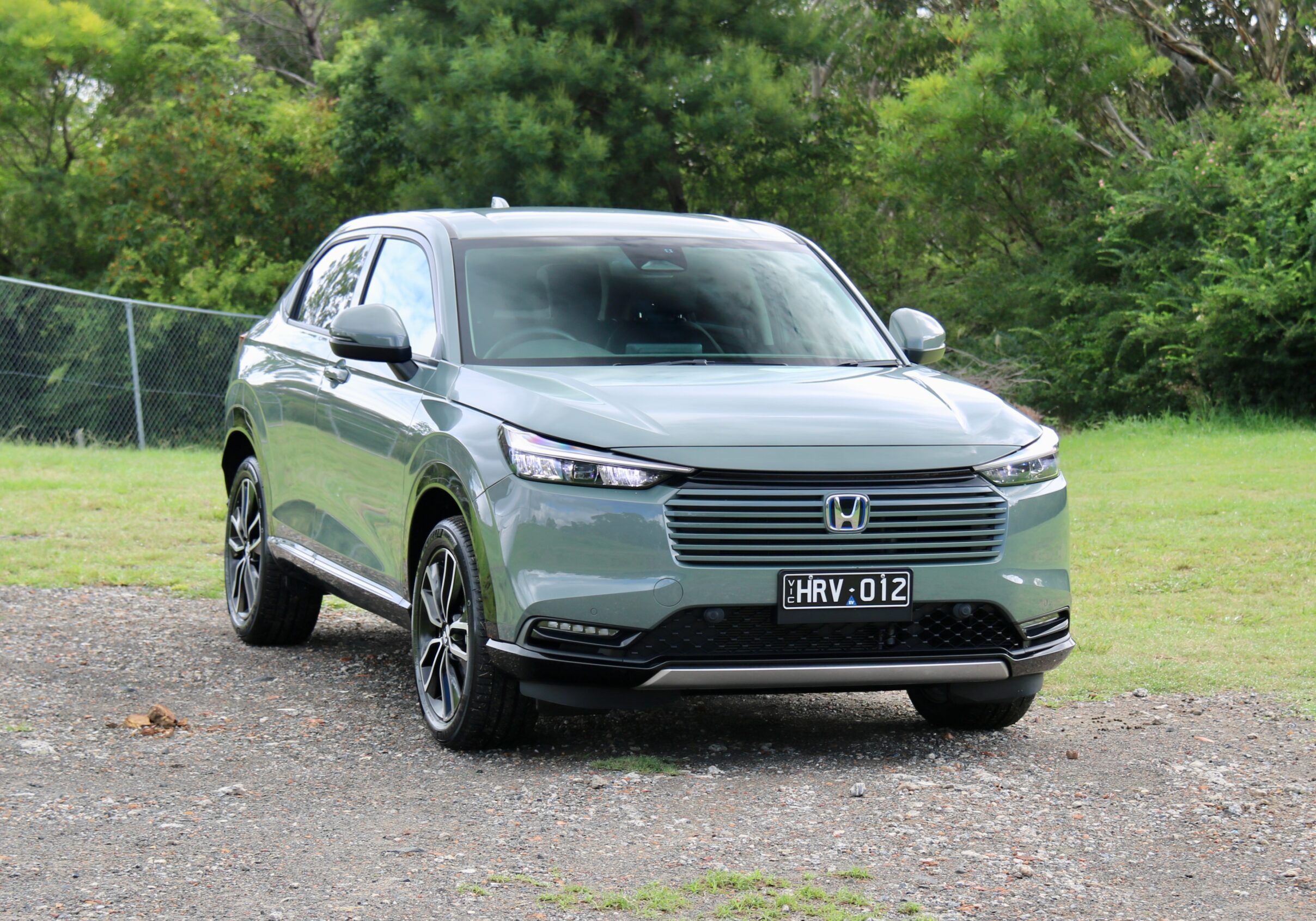
Honda HR-V e:HEV
1
Price: From $39,900 driveaway
Drivetrain: 1.5-litre four-cylinder petrol-hybrid
Transmission: CVT auto, front-wheel drive
Power: 96kW (combined petrol-electric)
Torque: 253Nm
Fuel: 91 RON unleaded
Fuel tank: 40 litres
Fuel consumption (claim): 4.3L/100km
Theoretical range from a single tank: 930km
In a sea of new cars from Chinese challenger brands, the Honda HR-V brings a familiarity that will appeal to many buyers. So too its claimed 4.3L/100km fuel economy number which isn’t too far off the real world, Wheels achieving 4.7L/1200km over a week of testing. That’ll provide around 850km of driving between trips to the servo for some 91-octane regular unleaded.
Combined power outputs of 96kW might seem meagre on paper, but the HR-V has enough in the tank to ensure the driving experience is perfectly suitable to today’s motoring landscape. Bonus points for practicality too, with Honda’s ‘Magic Seats’ turning the compact SUV into a cargo carrier belying its compact dimensions. Buyers will love its $199 per visit servicing costs too.
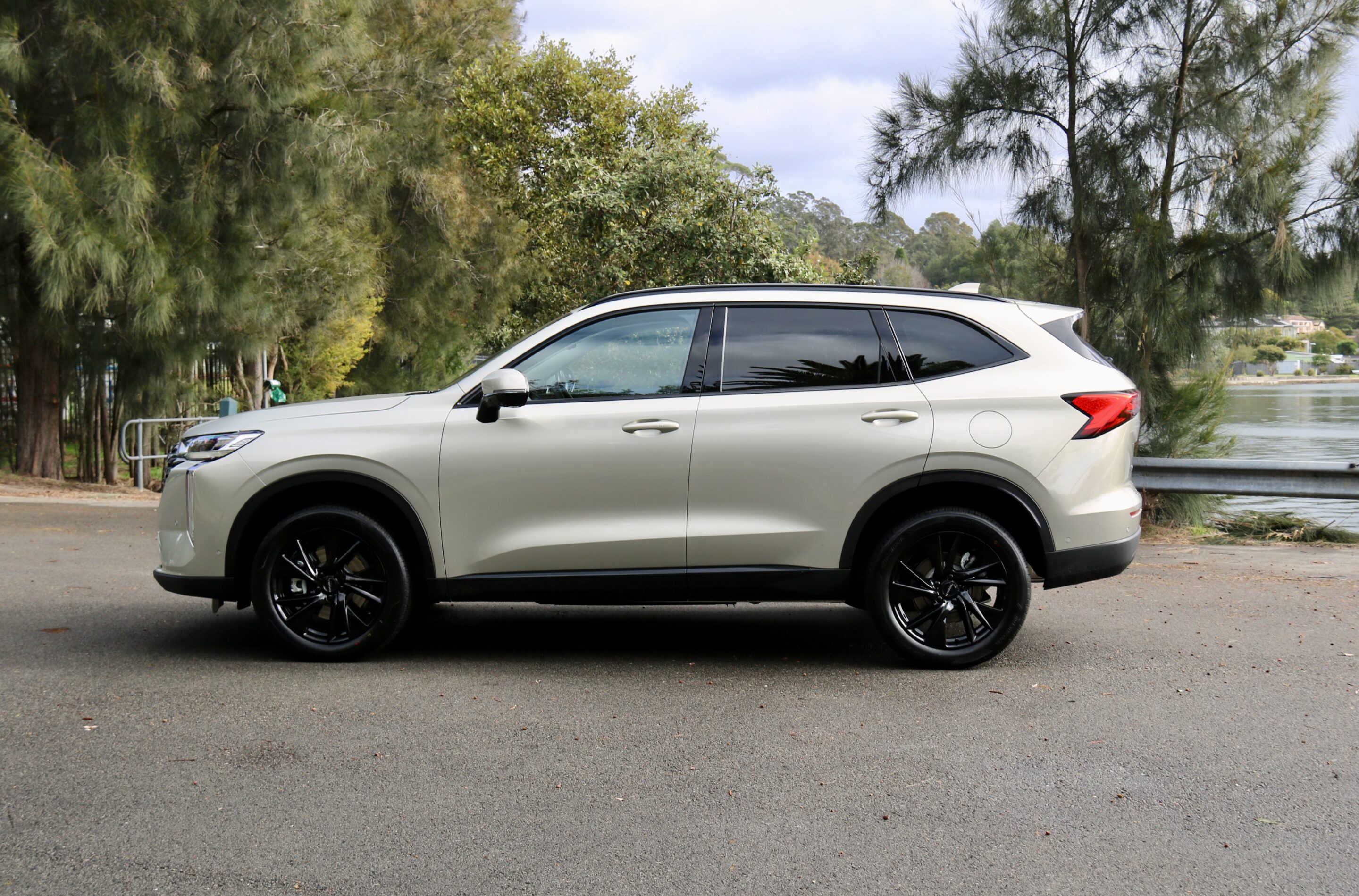
GWM Haval H6 Hybrid
1
Price: From $35,990
Drivetrain: 1.5-litre four-cylinder petrol-hybrid
Transmission: 2-speed auto, front-wheel drive
Power: 179kW (combined petrol-electric)
Torque: 300Nm
Fuel: 91 RON unleaded
Fuel tank: 61 litres
Fuel consumption (claim): 5.2L/100km
Theoretical range from a single tank: 1173km
The GWM Haval H6 medium SUV was given a comprehensive makeover in the second half of 2025 which improved its styling and dynamics, gave it a new touchscreen system and improved its value equation.
A punchy hybrid system translates to willing performance on the road although ride comfort is a little on the firm side. A claimed fuel number of 5.2L/100km doesn’t stray too far from reality, with recent Wheels testing seeing a return of 6.1L/100km, good for a range of around 1000km per tank. The Haval H6 is happy to drink 91-octane unleaded.
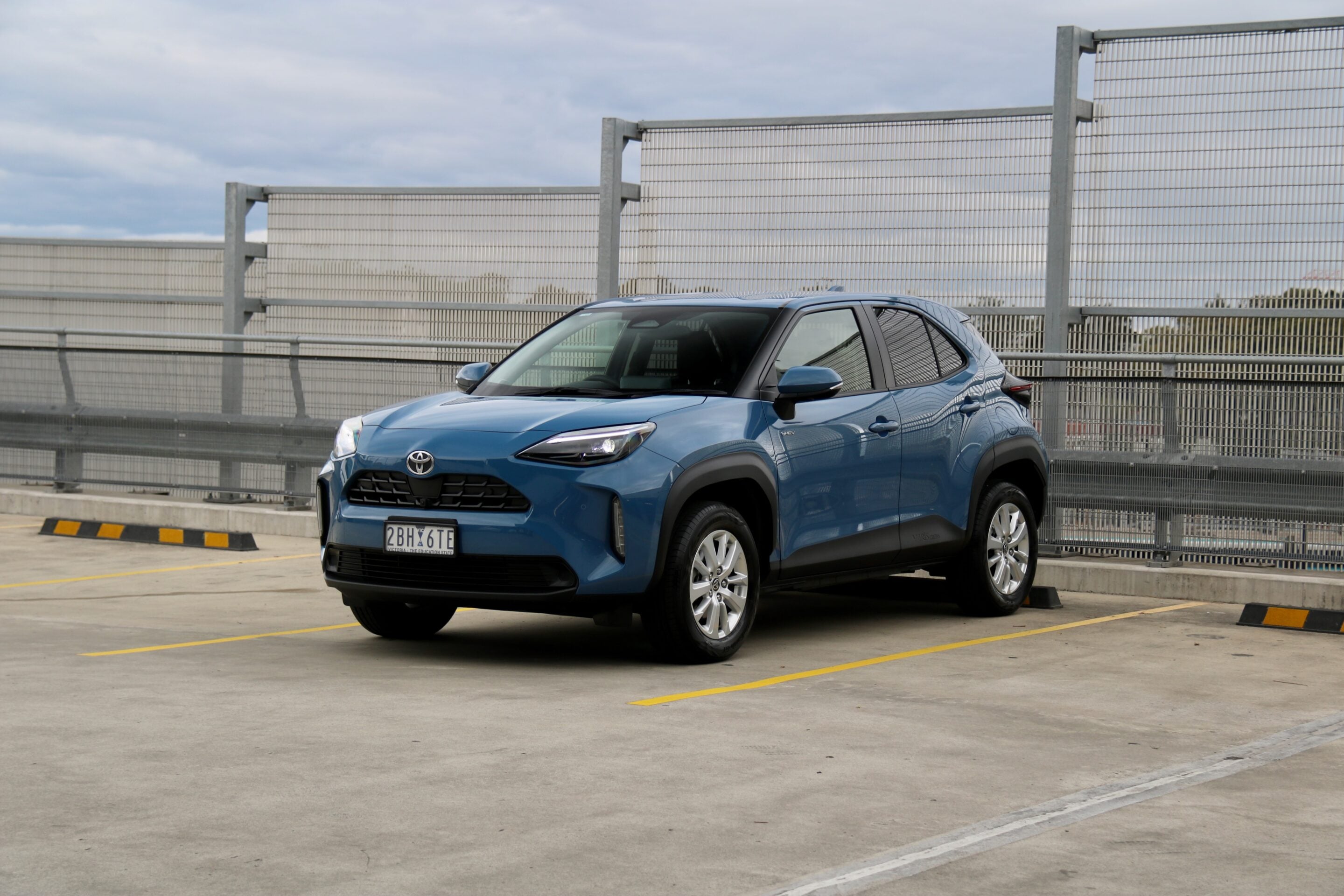
Toyota Yaris Cross
1
Price: From $31,790 plus on-road costs
Drivetrain: 1.5-litre four-cylinder petrol-hybrid
Transmission: CVT auto, front- or all-wheel drive
Power: 85kW (combined petrol-electric)
Torque: 141Nm
Fuel: 91 RON unleaded
Fuel tank: 36 litres
Fuel consumption (claim): 3.8L/100km (FWD) / 4.0L/100km (AWD)
Theoretical range from a single tank: 947km (FWD) / 900km (AWD)
A Yaris hatchback on stilts, Toyota’s Yaris Cross blends city car dimensions with the high-riding comfort more and more buyers are demanding. On paper, the Yaris Cross is the most fuel-efficient SUV currently on sale in Australia, although its 3.8-4.0L/100km lab-tested claim is slightly ambitious, with previous Wheels testing seeing 4.7L/100km out in real-world driving conditions.
With a relatively small 36-litre tank, that’s good for around 765km of driving between refills of cheaper regular unleaded.
Plug-in hybrids
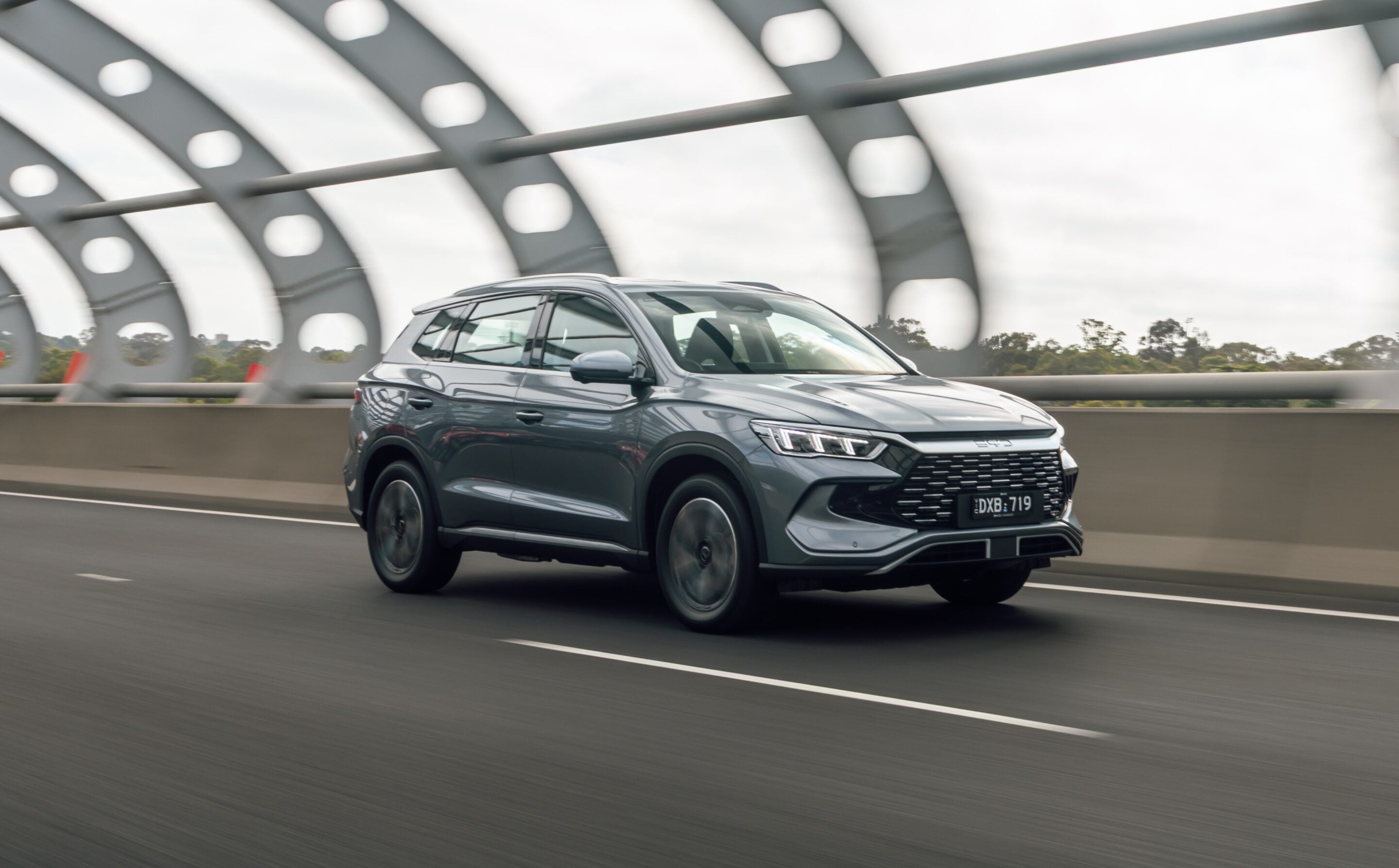
BYD Sealion 5
1
Price: From $33,990 plus on-road costs
Drivetrain: 1.5-litre four-cylinder petrol plug-in hybrid
Transmission: CVT auto, front-wheel drive
Power: 156kW (combined petrol-electric)
Torque: 300Nm
Fuel: 91 RON unleaded
Fuel tank: 52 litres
Fuel consumption (claim): 1.2L/100km (full charge) 4.5L/100km (low charge)
Battery size: 12.9kWh
Electric range (claim): 71km (NEDC)
Currently the most affordable plug-in hybrid SUV in Australia, the BYD Sealion 5 brings some impressive stats, like a low $33,990 +ORC starting price, an efficient plug-in hybrid drivetrain with 71km of NEDC-tested electric driving range in a practical mid-size SUV body.
Keeping the battery topped up is key to achieving excellent fuel economy but BYD has engineered its plug-in hybrid system to act like a regular hybrid once the battery’s state-of-charge drops below 25 per cent. That means its quoted 4.5L/100km fuel economy is achievable, and a match for some of the best regular hybrids in the segment.
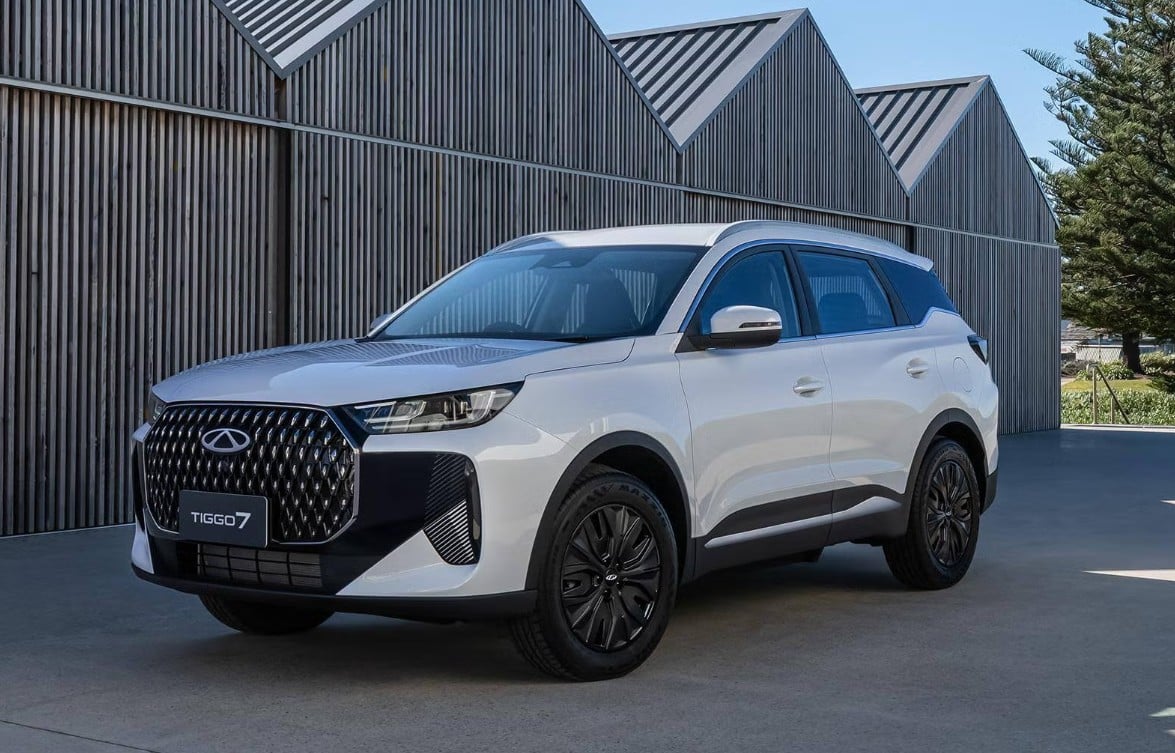
Chery Tiggo 7 Super Hybrid
1
Price: From $34,990 driveaway
Drivetrain: 1.5-litre four-cylinder petrol plug-in hybrid
Transmission: CVT auto, front-wheel drive
Power: 150kW (combined petrol-electric)
Torque: 310Nm
Fuel: 91 RON unleaded
Fuel tank: 60 litres
Fuel consumption (claim): 1.4L/100km (full charge)
Battery size: 18.4kWh
Electric range (claim): 93km (NEDC)
Currently priced at $34,990 drive-away (until June 30), the Chery Tiggo 7 Super Hybrid (Chery-speak for plug-in hybrid) blends fuel efficiency with the sweet-spot medium SUV segment.
The Tiggo 7 makes up for its slightly frumpy looks with a decent list of standard equipment, including all the in-car tech buyers want, with real-world efficiency of around 4.0L/100km. Of course, ensuring the battery is always fully charged at the start of the day should allow most Australians to cover their daily commutes on electric power alone, leaving petrol in the tank for those rarer, longer drives.
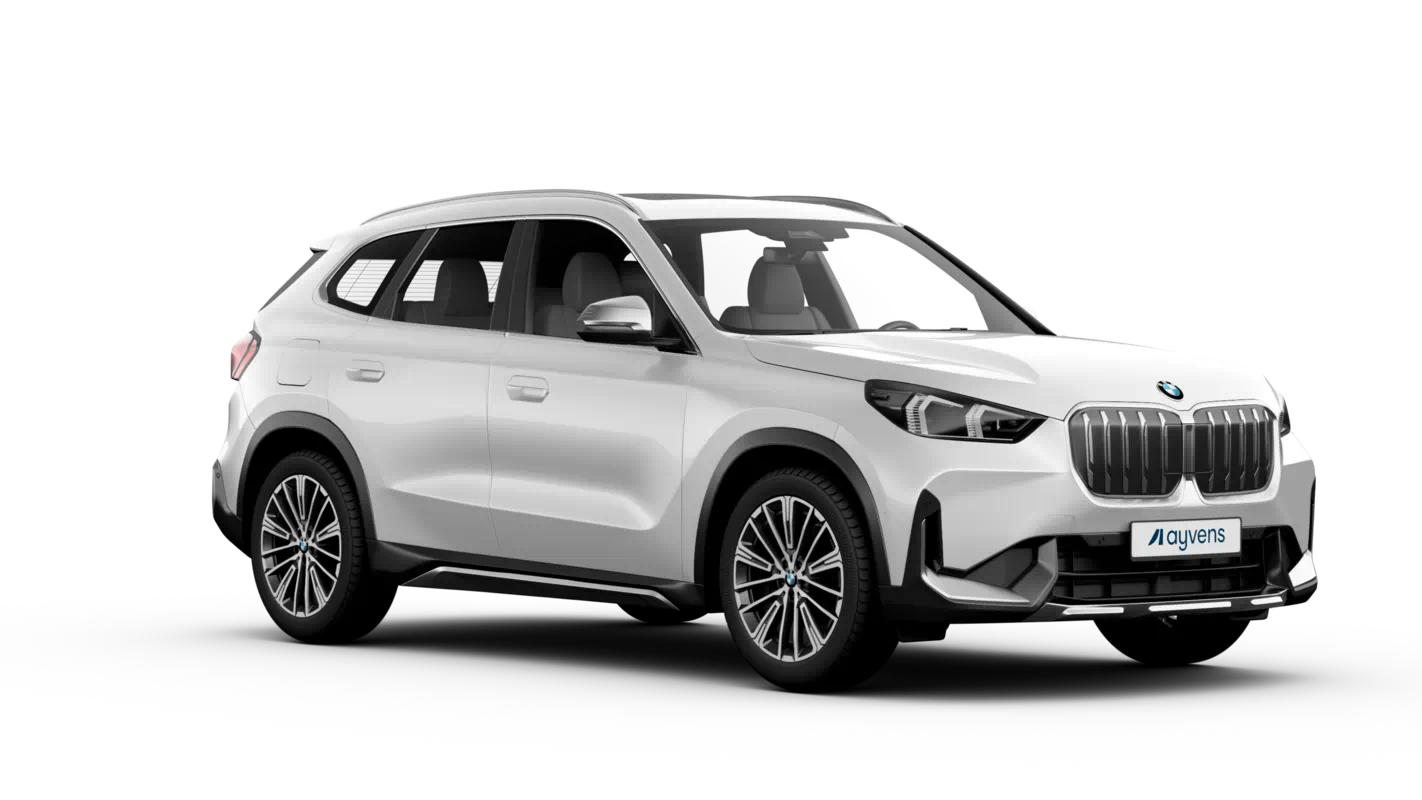
BMW X1 xDrive 25e
1
Price: From $79,500 plus on-road costs
Drivetrain: 1.5-litre four-cylinder petrol plug-in hybrid
Transmission: 7-speed dual-clutch, all-wheel drive
Power: 180kW (combined petrol-electric)
Torque: 470Nm
Fuel: 95 RON premium unleaded
Fuel tank: 36 litres
Fuel consumption (claim): 2.1L/100km (with charge) / 6.3L-7.1L/100km (no charge)
Battery size: 14.2kWh
Electric range (claim): 78km (WLTP)
The X1 plug-in hybrid is a decent option for those lucky enough to play in the luxury space. In regular ICE trim, the X1 is already one of the best small luxury SUVs on the market.
A claimed 78km range (WLTP claim) covers the daily commute. Things get interesting when the battery is depleted and the small SUV is hauling around a lot of extra (dead) weight. Here, BMW quotes 6.3L/100km which, when combined with a small 36-litre tank, combines for a range of around 570km. The lesson here? Keep your battery’s state-of-charge in the usable range, easy enough to do at home overnight.
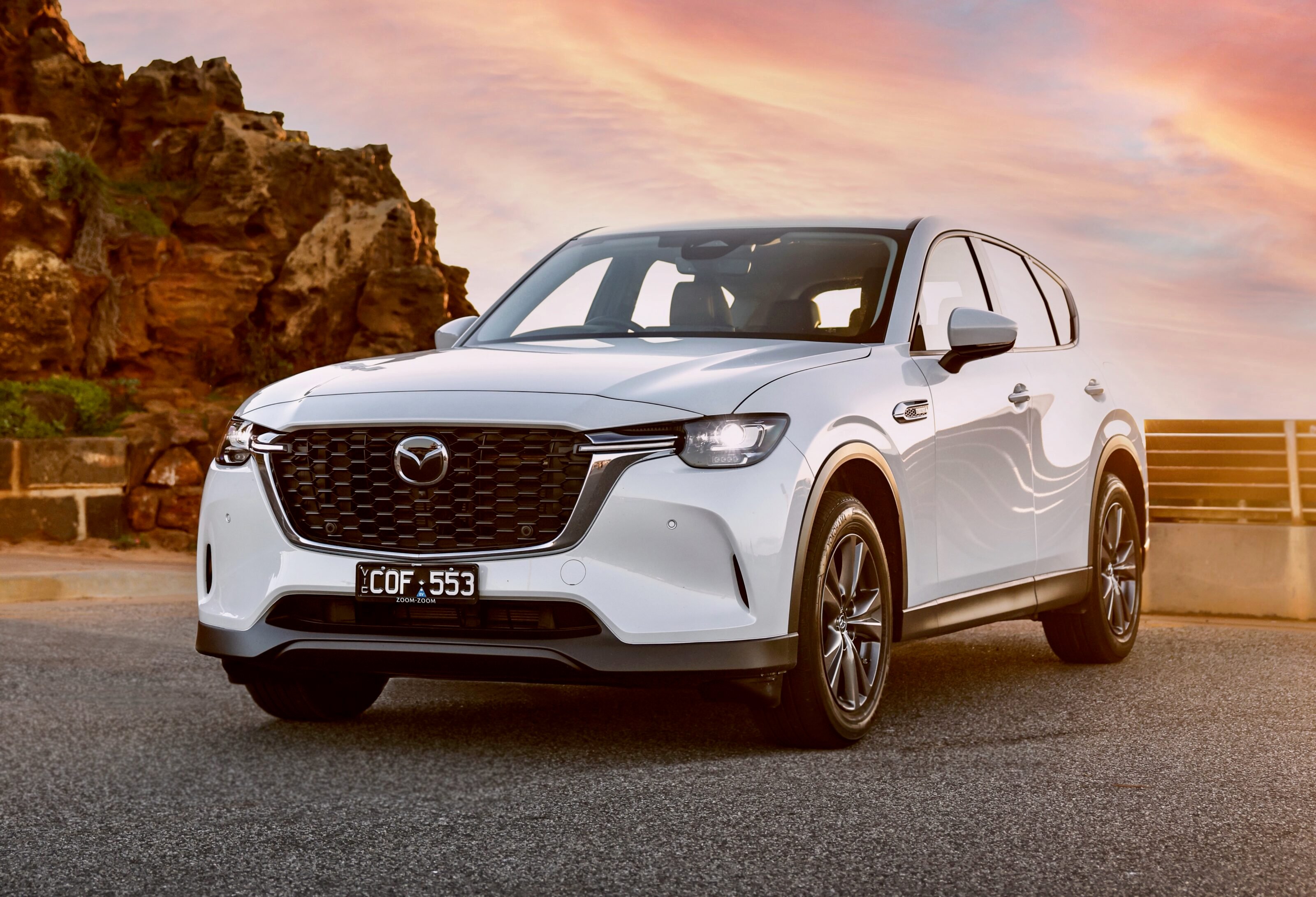
Mazda CX-60 plug-in hybrid
1
Price: From $63,790 plus on-road costs
Drivetrain: 2.5-litre four-cylinder petrol plug-in hybrid:
Transmission: CVT auto, front-wheel drive
Power: 241kW (combined petrol-electric)
Torque: 250Nm
Fuel: 95 RON premium unleaded
Fuel tank: 50 litres
Fuel consumption (claim): 2.1L/100km (full charge)
Battery size: 17.8kWh
Electric range (claim): 78km (NEDC)
Mazda’s CX-60 is the first plug-in hybrid from the Japanese brand in Australia, blending PHEV technology with the brand’s semi-premium philosophy.
Mazda claims its first PHEV can cover up to 78km, but a more realistic figure – based on real-world testing – is around 50km.
Once the battery is depleted and the 2.5-litre petrol kicks in, consumption does climb rapidly, returning around 8.0L/100km. As a kicker, the CX-60 gulps 95-octane premium unleaded at
a minimum.
Still, Mazda’s cabin execution remains amongst the very best in this semi-premium space while the brand’s inherent sporty DNA will satisfy those who enjoy a decent drive.
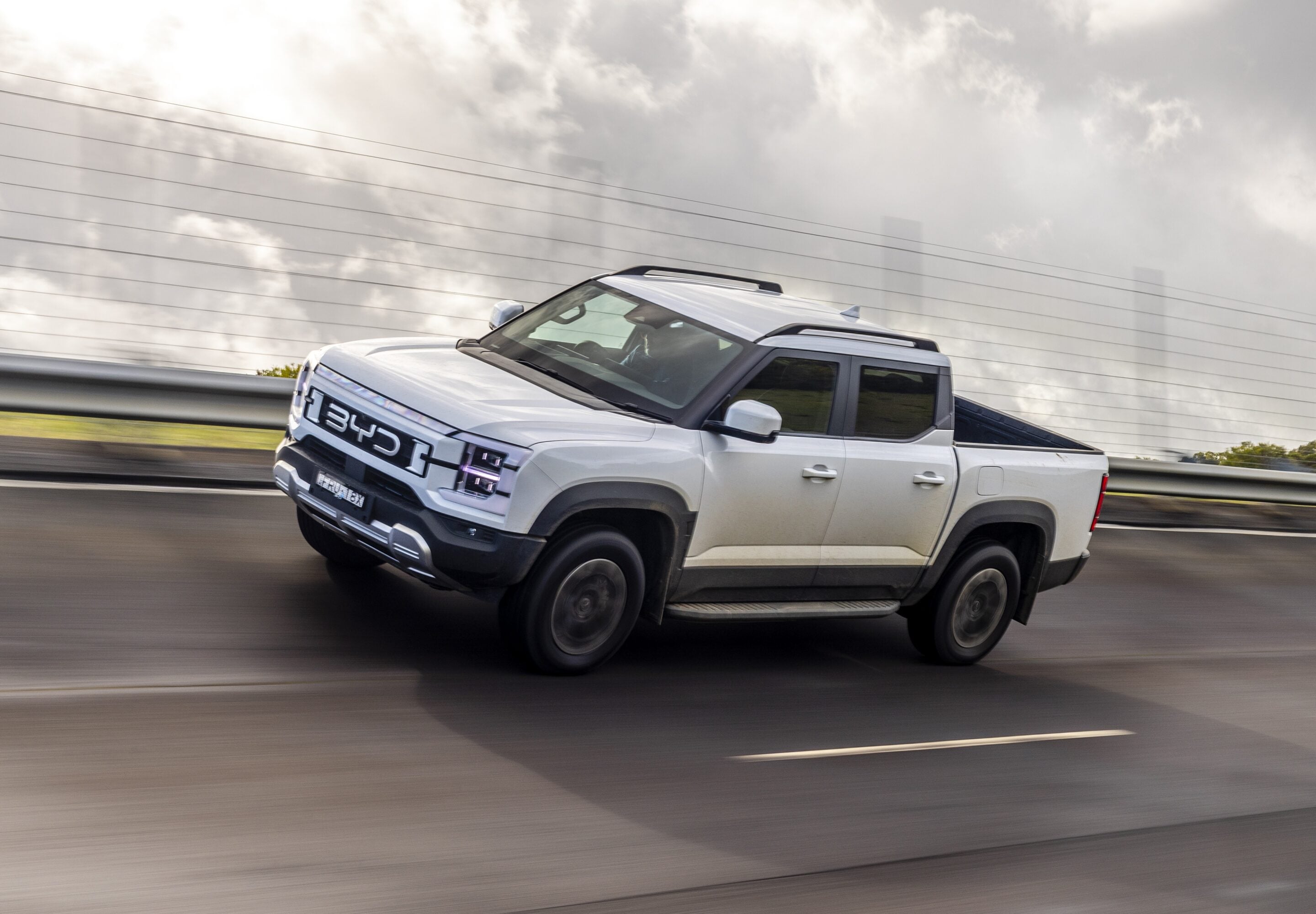
BYD Shark 6 plug-in hybrid
1
Price: From $57,900 plus on-road costs
Drivetrain: 1.5-litre four-cylinder petrol plug-in hybrid
Transmission: Automatic, all-wheel drive
Power: 321kW (combined petrol-electric)
Torque: 650Nm
Fuel: 95 RON premium unleaded
Fuel tank: 60 litres
Fuel consumption (claim): 2.5L/100km (full charge)
Battery size: 29.6kWh
Electric range (claim): 100km (full charge)
BYD sent shockwaves through the dual-cab ute segment when it launched its plug-in hybrid Shark 6. And it’s been effective too, sitting third on the sales ladder for dual-cabs, behind only the rusted-on Ford Ranger and Toyota HiLux.
Wheels lauded the Shark 6’s take on the segment, awarding it the 2025-26 Wheels Ute of the Year gong. And while we acknowledged it wasn’t a ute for everyone, it did tick a lot of boxes for ute owners who have no need to tow or venture too far off-road.
Instead, with around 85km of real-world EV driving and a fuel economy number in the low 5s (forget the 2.5L claim), the Shark 6 is one of the most economical dual-cabs available today. Bonus points for having a petrol engine, unusual in the ute sphere, and something critics decried when diesel was around $1.20 per litre cheaper than it is today. Shark 6 owners are laughing all the way to the bank now.
Electric vehicles
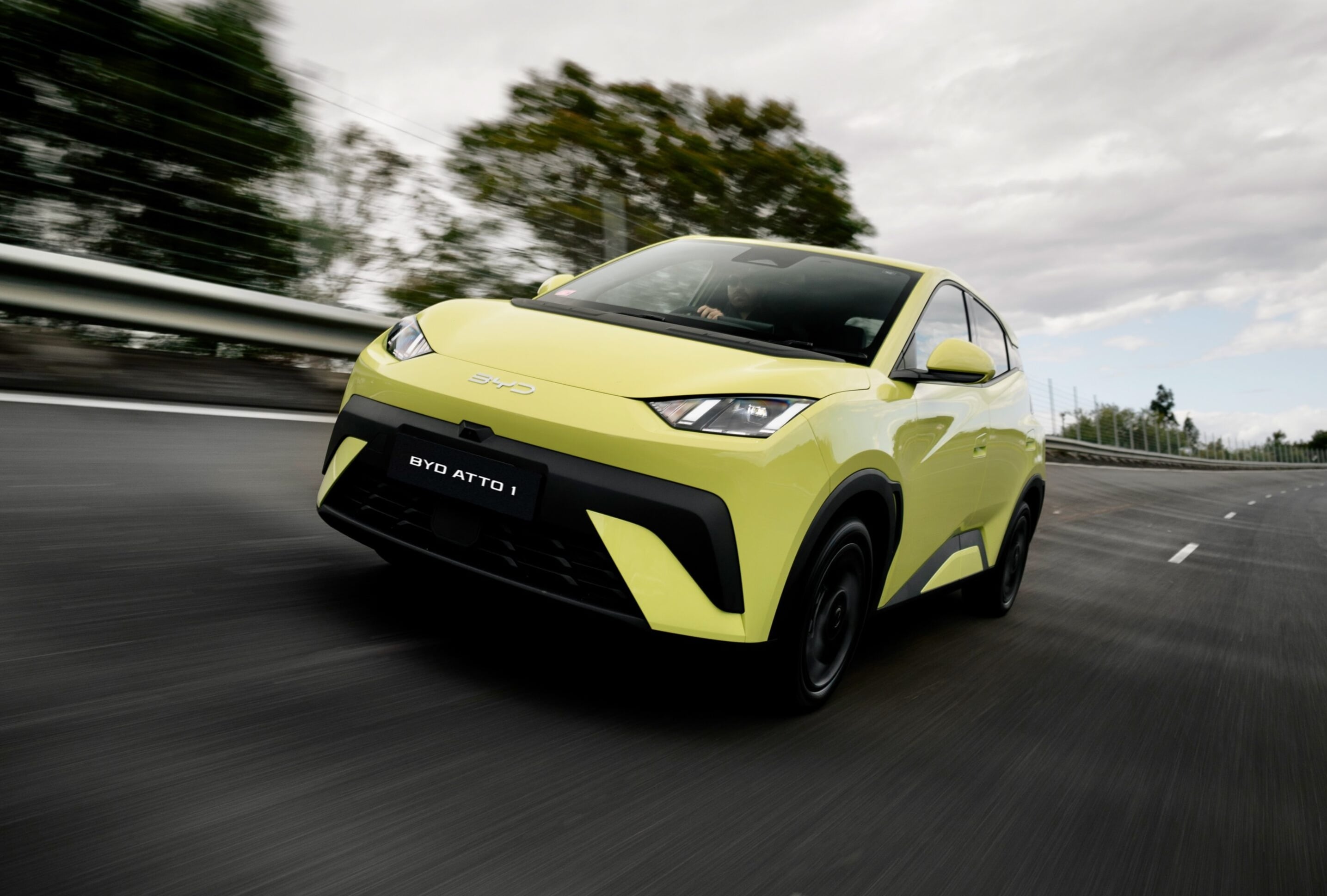
BYD Atto 1
1
Price: From $23,900 plus on-road costs
Drivetrain: Single electric motor
Transmission: Single-speed, front-wheel drive
Power: 65kW
Torque: 175Nm
Battery size: 30kWh
Electric range (claim): 220km (WLTP)
Maximum DC charge rate: 65kW
DC charge time: 34 minutes (10-80%)
AC charge time: 7kW 4.2 hours (0-100%)
BYD shocked the nation launching not just the cheapest electric car in Australia but one of the cheapest cars, period. Priced from just $23,990 plus on-road costs, the BYD Atto 1 is priced similarly to other light cars such as the Kia Picanto and MG 3, but it’s fully electric instead.
The entry-level Atto 1 Essential uses a small 30kWh battery for a claimed 220km of range, as well as a 65kW electric motor, which is more than enough for most urban-dwelling buyers – but those wanting more range and grunt can jump up to the Atto 1 Premium, which features a 115kW motor and a larger 43kWh battery for a healthier 310km of range. Regardless of the drivetrain, the Atto 1 is a well equipped, practical and darty city runabout.
BYD Atto 2

1
Price: From $31,900 plus on-road costs
Drivetrain: Single electric motor
Transmission: Single-speed, front-wheel drive
Power: 130kW
Torque: 290Nm
Battery size: 51.1kWh
Electric range (claim): 345km (WLTP)
Maximum DC charge rate: 82kW
DC charge time: 39 minutes (10-80%)
AC charge time: 7kW 8 hours (est. 0-100%)
Launched late in 2025, the BYD Atto 2 has taken the mantle of Australia’s most affordable electric SUV. It’s priced from $31,990 plus on-road costs for the entry-level Dynamic and $35,990 (before on-road costs) for the better-specified Atto 2 Premium.
Both variants share the same drivetrain, a 130kW/290Nm electric motor driving the front wheels, fed by a 51kWh battery that’s good for a claimed WLTP-tested 345km range. Real-world testing by Wheels came close to achieving BYD’s claimed range, a feather in the Atto 2’s cap in a market where lab-tested range numbers are often a touch on the ambitious side.
Well-equipped for the money, the Atto 2 is a decent EV for urban dwellers.
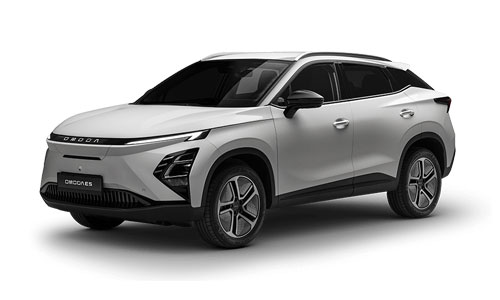
Chery E5
1
Price: From $37,900 drive-away
Drivetrain: Single electric motor
Transmission: Single-speed, front-wheel drive
Power: 155kW
Torque: 280Nm
Battery size: 58.9kWh
Electric range (claim): 430km (WLTP)
Maximum DC charge rate: 80kW
DC charge time: 28 minutes (30-80%)
AC charge time: 7kW 8.5 hours (est. 0-100%)
Buyers looking to get into an affordable small electric SUV will be well-served by the Chery E5. Sharp driveaway pricing ($37,990 until June 30), is more expensive than some of its rivals but it does bring better driving range (430km on the WLTP testing cycle, translating to around 400km in the real world) and decent straight-line performance from its single electric motor.
The cabin is generously proportioned and brimming with technology while its seven-year warranty brings peace of mind for buyers. Its road manners could use some polish but as a daily urban runabout, the Chery E5 is worth considering, especially with that sharp driveaway deal currently on offer.
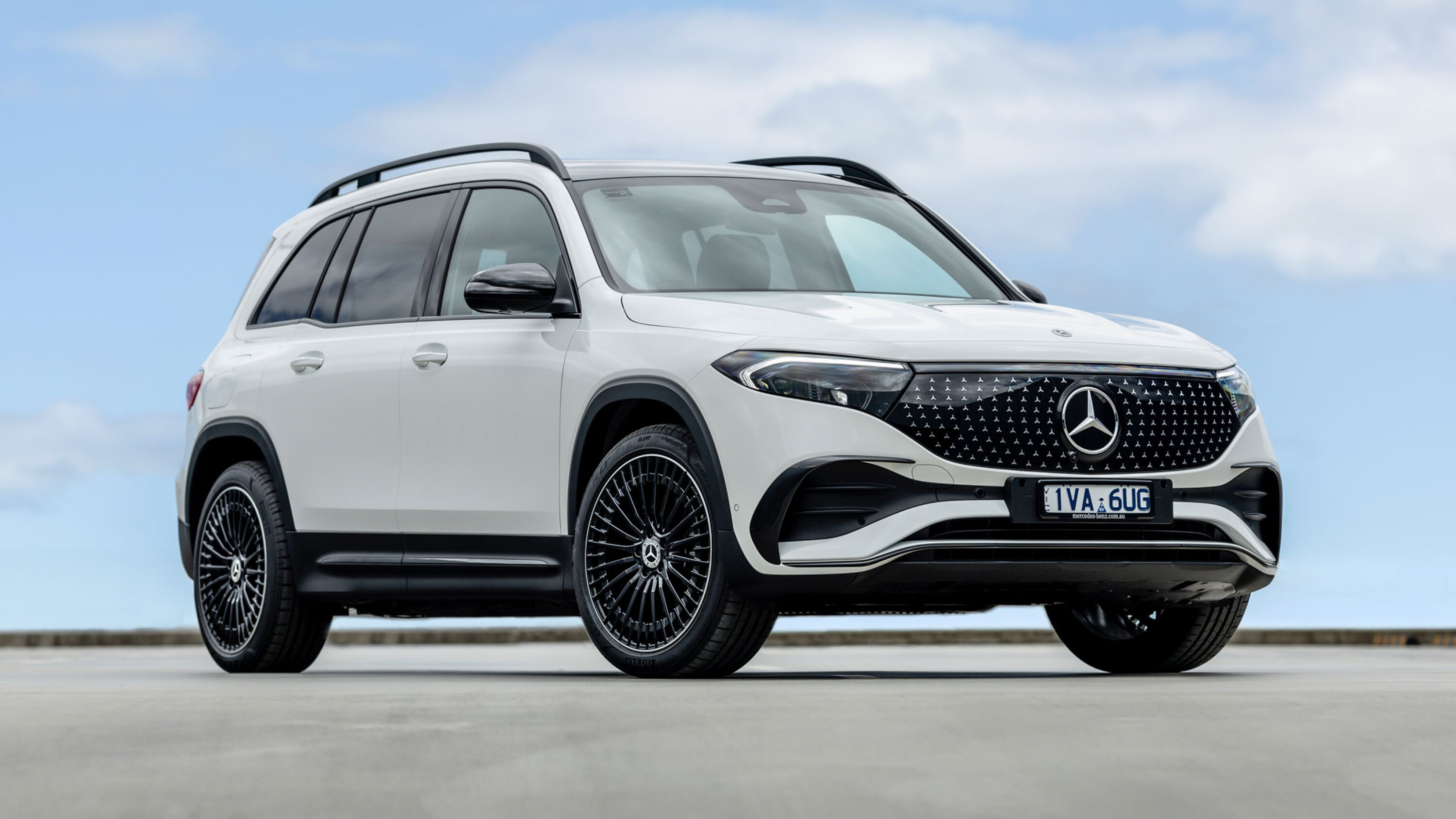
Mercedes-Benz EQB 250+
1
Price: From $89,100 plus on-road costs
Drivetrain: Single electric motor
Transmission: Single-speed, front-wheel drive
Power: 140kW
Torque: 385Nm
Battery size: 70.5kWh
Electric range (claim): 536km (WLTP)
Maximum DC charge rate: 102kW
DC charge time: 35 minutes (10-80%)
AC charge time: 7kW 10 hours (est. 0-100%)
The Mercedes-Benz EQB 250+ is the answer for those after a seven-seat electric SUV, one of the few currently available in Australia.
Driving range is decent at a claimed 536km, however, real-world testing reveals a figure closer to 450-500km, depending on driving style and whether Merc’s SUV is loaded up with seven people.
Performance from the single 140kW/385Nm electric motor (FWD) is decent but the star of the show is undoubtedly the cabin where typical Mercedes-Benz flourishes and equipment elevate it above the mainstream. But, that third row isn’t the most practical, certainly not for adults. One for small kids only.
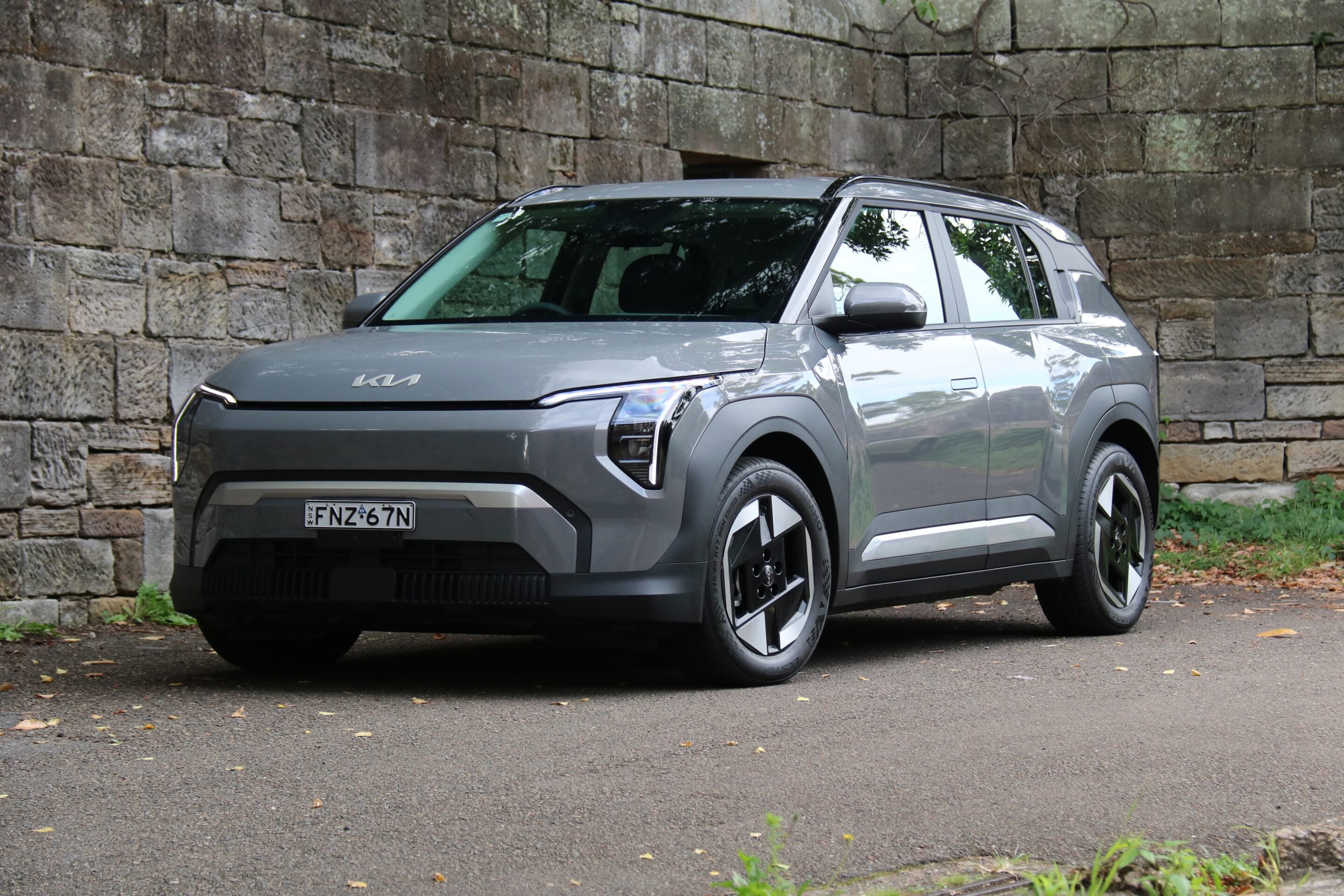
Kia EV3
1
Price: From $46,990 driveaway
Drivetrain: Single electric motor
Transmission: Single-speed, front-wheel drive
Power: 150kW
Torque: 283Nm
Battery size: 58.3kWh
Electric range (claim): 436km (WLTP)
Maximum DC charge rate: 100kW
DC charge time: 29 minutes (10-80%)
AC charge time: 7kW 8h20m (est. 0-100%)
The Kia EV3 is the Korean brand’s cheapest EV in Australia, but it’s also one of its best. Prices currently start at $46,990 driveaway for the entry-level Air.
Its 58.3kWh battery offers a claimed WLTP range of 436km, translating to around 400km in the real world. That’s more than enough for city driving.
The Kia EV3 is nicely equipped across its line-up, decent to drive, and with a useful driving range. Buyers who want to banish range anxiety to the rear-view mirror could look at the EV3 Long Range, its 81.4kWh battery bringing a claimed 604km to the table. Expect a more realistic 520-550km in the real world. Kia’s seven-year warranty is a plus, too.
This story first appeared in the May 2026 issue of Wheels magazine, now on sale. Subscribe here and gain access to 12 issues for $109 plus online access to every Wheels issue since 1953.
Follow WhichCar/Wheels on Google
Click the button below to make WhichCar by Wheels a preferred source for your news.

We recommend
-
 Advice
Essential fuel-saving tips and tricks during current Middle East conflict
Small changes behind the wheel and beyond could make a bigger difference than you think, as rising fuel costs force drivers to rethink everyday habits and routines.
-
 News
NewsAustralian government relaxes fuel standards for the next 60 days
Lower sulphur limits were enforced in December last year as part of the government’s directive to clean up Australia’s fuel supply, but now higher sulphur fuel will be allowed for the next two months in an effort to ease supply issues.
-
 News
NewsOne-off rego discount launched as fuel prices surge amid global tensions
One-off 20 per cent discount in one state aims to ease cost pressures as motorists face rising fuel bills.