
Here are the latest cars from Grays that have appeared on our radar.
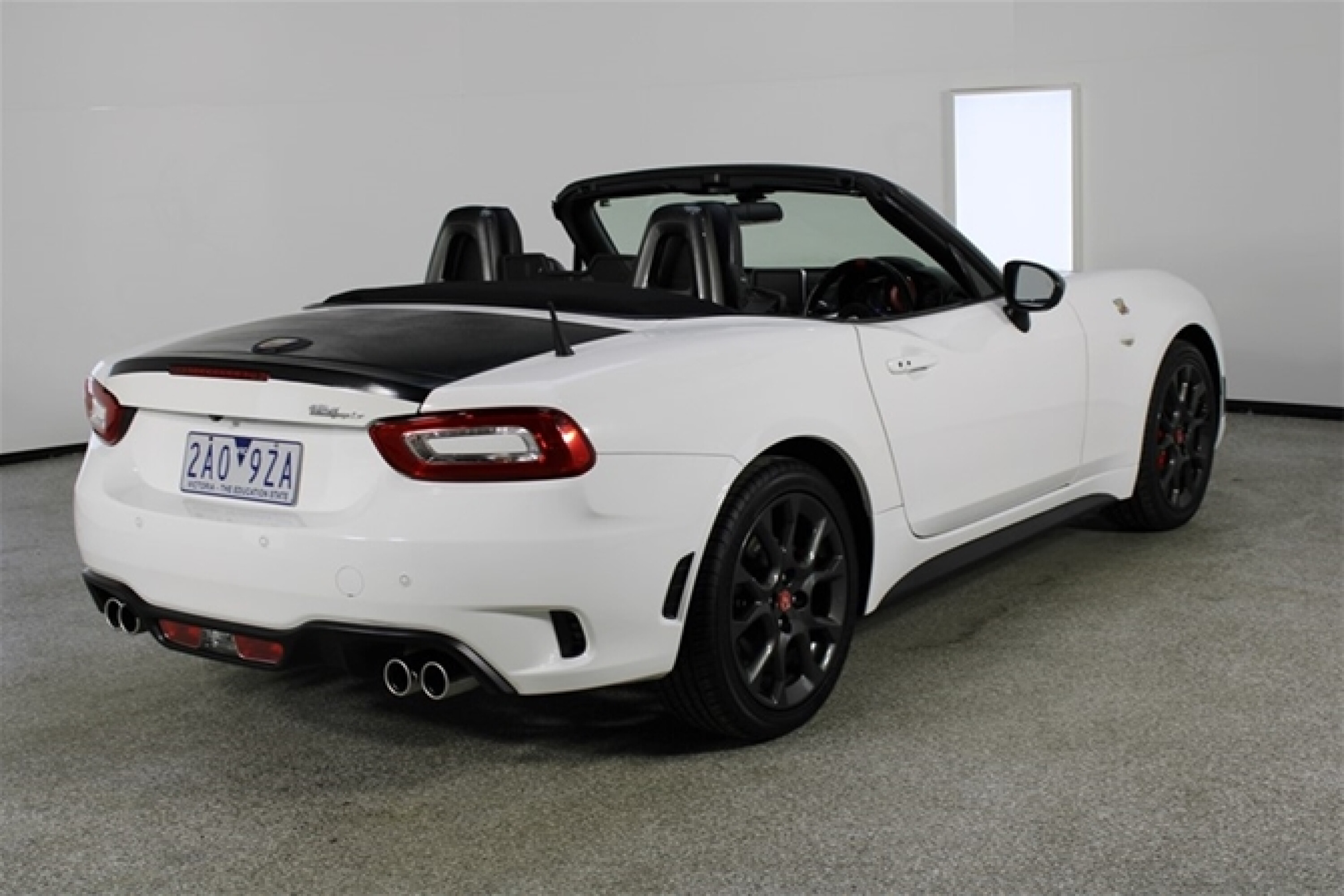
2017 Abarth 124 Spider Manual
The market for an open road stormer has many options, with one of the more unique choices being Abarth’s 124 spider – the stylish adaptation of Mazda’s fun MX-5.
This sub-80,000km example should scratch any manual driver’s itch.
2
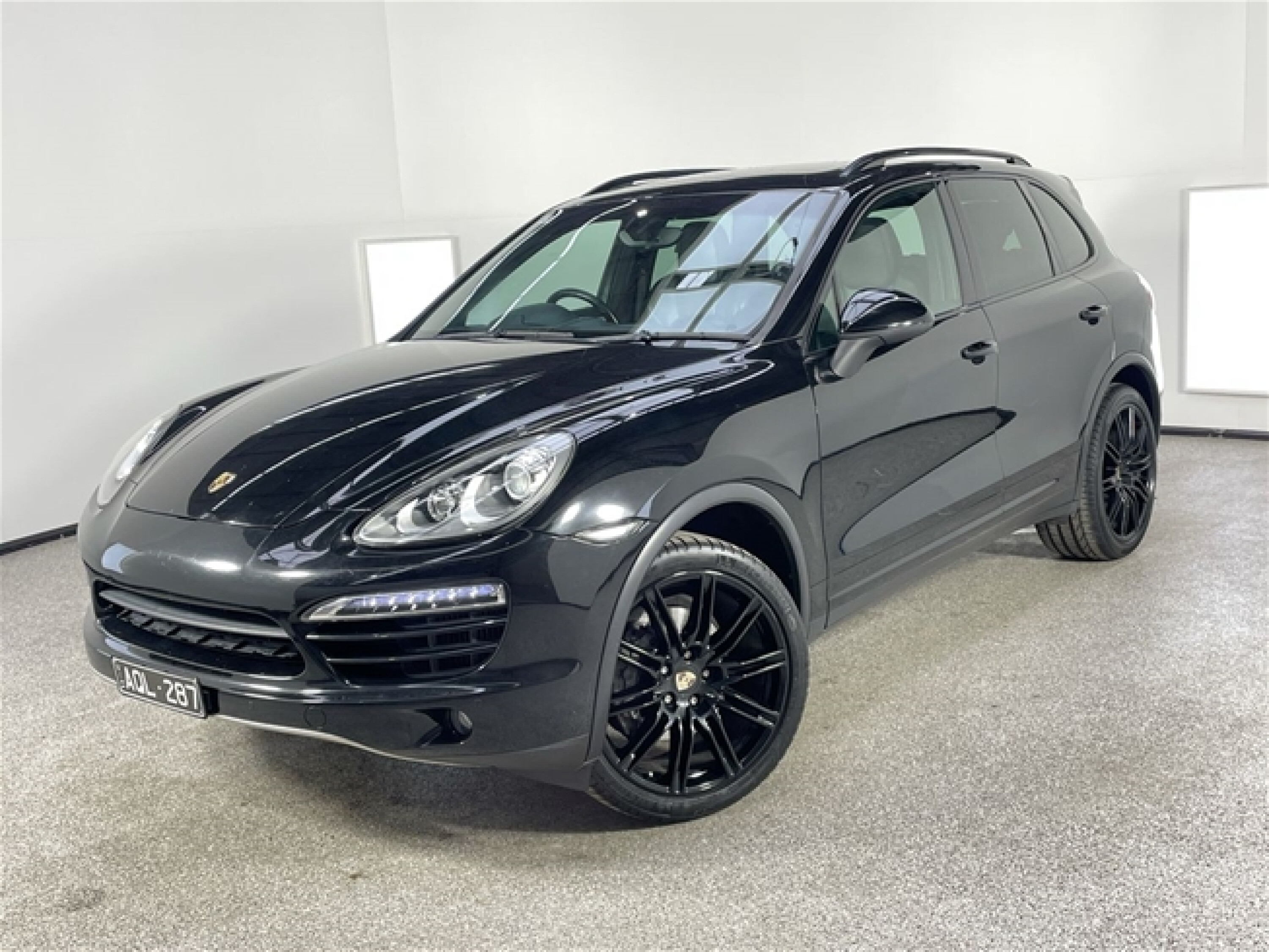
2011 Porsche Cayenne Diesel
Porsche’s Cayenne saviour has always offered a good balance of practicality and brute force.
Being over a decade old has allowed for the depreciation demons to complete their work, potentially allowing for a bargain pick-up
3
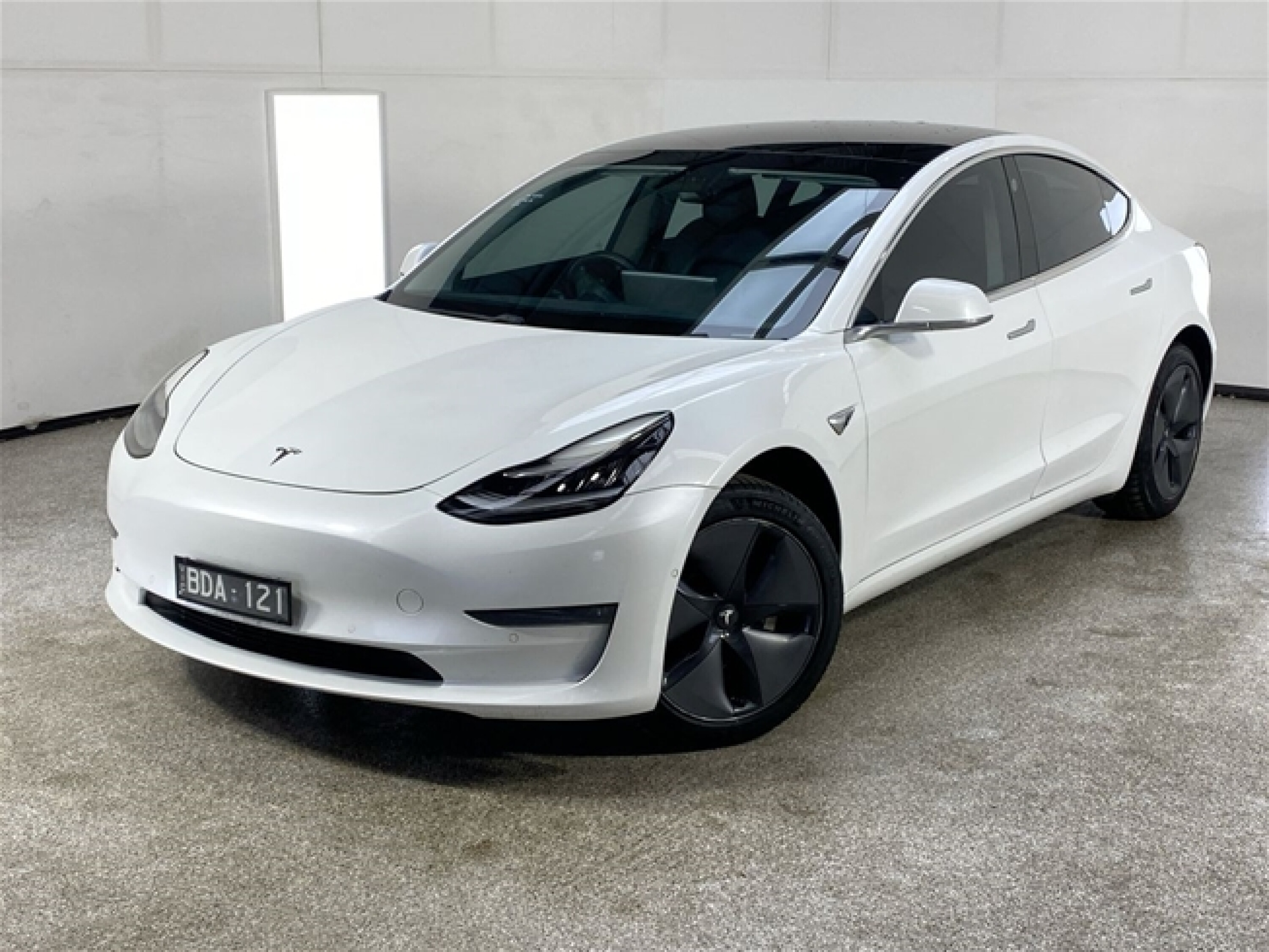
2019 Tesla Model 3
The introduction of the new Highland Model 3 has taken a lot of attention from the previous generation Tesla sedan.
This example has over 250,000km on the odometer, placing its battery well outside Tesla’s 192,000km warranty, but it could be an opportunity to find an affordable entry into the EV world.
3
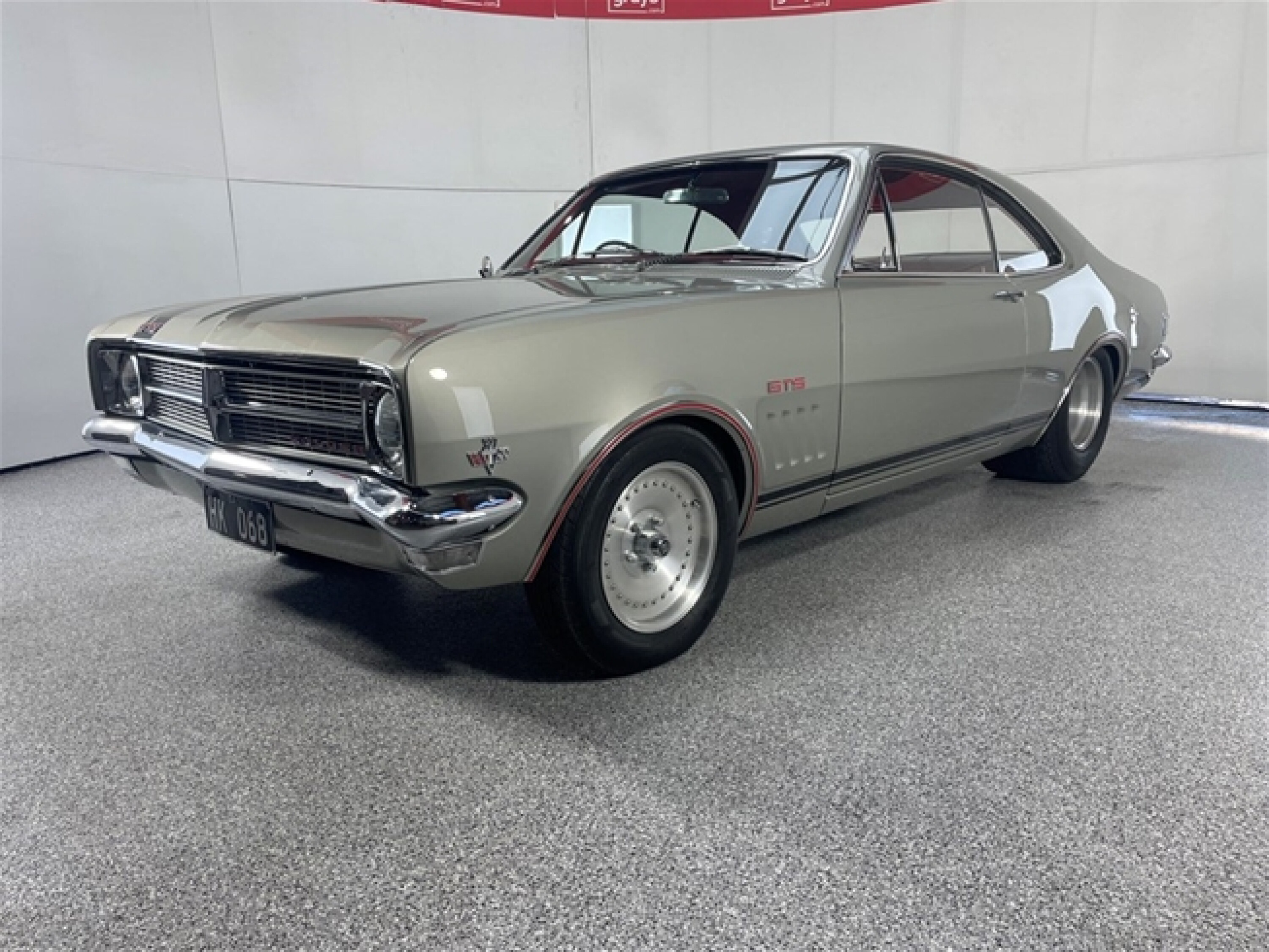
1968 Holden HK GTS Monaro
Classic Australian muscle is vying for your attention with this clean and tough Monaro.
Surely a potential collectible here.
3
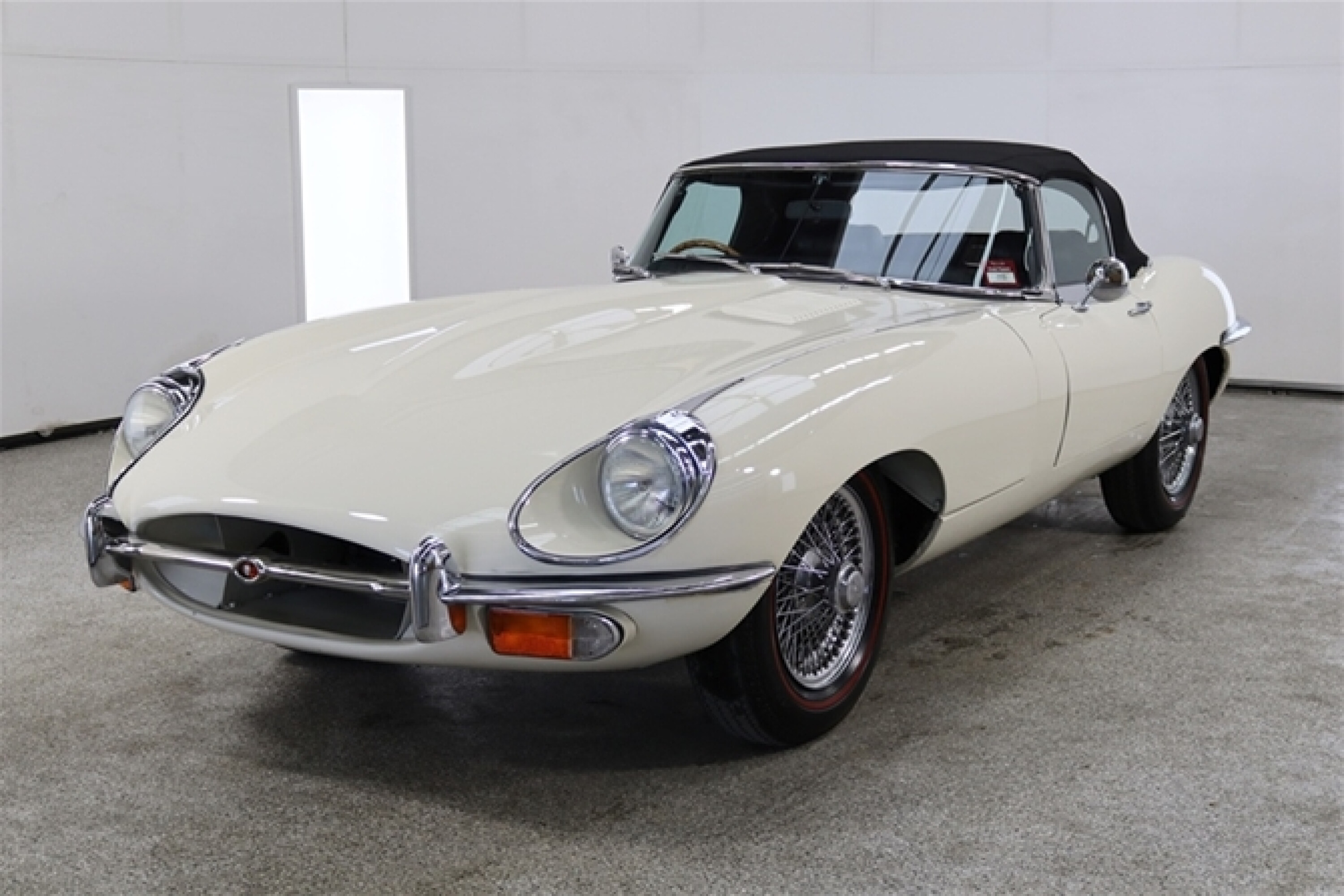
1970 Jaguar E-Type Series 2
Continuing with collectible classics is this Series 2 Jaguar E-Type convertible.
This import has been converted to right-hand drive and retains the elegance and beauty that has made the E-Type a classic.
3
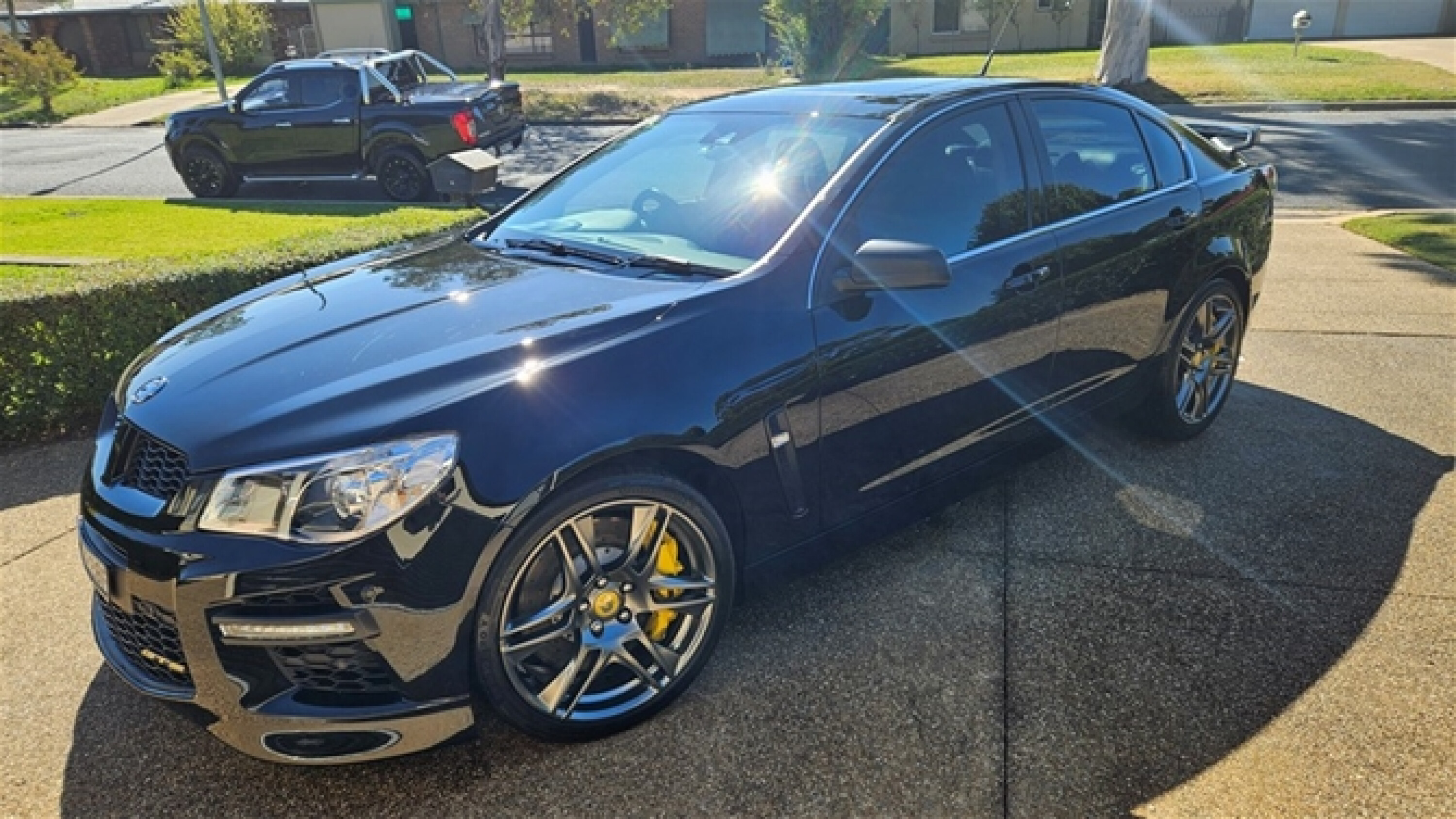
2015 HSV GTS sedan
And finally we have more Aussie muscle that garnered the attention of speculators after Holden’s shuttering.
This 6.2-litre V8 HSV GTS has fewer than 12,000km on the odometer, being a very low-kilometre example that should quirk an eyebrow for a potential V8 fan.
MORE
HSV GTS at Grays
3
Take a look at Grays’ entire listings here [↗]
AdBlue is essentially a marketing term for a fluid used in the catalytic convertor fitted to the exhaust systems of some diesel cars.
It is injected into the exhaust gases and burnt at very high temperatures to break down harmful nitrogen oxides. Some diesel engines need AdBlue to help them meet tough Euro 6 emissions standards that regulate what level of harmful emissions can exit a car’s exhaust.
Which cars use AdBlue?
AdBlue is common in trucks and is now used in a number of late-model diesel cars and SUVs produced by a growing number of manufacturers including Renault, Citroen, BMW, Audi, Volkswagen, Ford, Mazda and Toyota. Mercedes-Benz calls its AdBlue systems BlueTEC, and you’ve probably seen that badge around.
What is AdBlue made from?
AdBlue is composed of deionised water (67.5%) and high-purity urea (32.5%).
What’s urea?
Urea is a chemical compound that is widely used in a variety of applications, including fertilisers, animal feed, and the production of plastics and other industrial products.
Urea is in urine, can you use that instead?
We’d (sorta kinda) love to say yes, but no, you can’t. Your pee is only about 3.0 percent urea (the rest is mostly water), which is well short of the 32.5 percent needed for AdBlue to do its thing.
1
How does AdBlue work?
Firstly, AdBlue isn’t mixed with the diesel fuel. So don’t do that.
Instead, it works with the exhaust gases after they come out of the engine. It is stored in a separate storage tank with its own inlet, and is sprayed into the exhaust stream in measured doses. It then reacts with the nitrogen oxide in the exhaust gases and, via the catalytic converter, is transformed into nitrogen and water.
So, let’s say somebody added AdBlue to the fuel tank… what then? Asking for a friend.
If you your friend accidentally poured AdBlue into the fuel tank, don’t start the car.
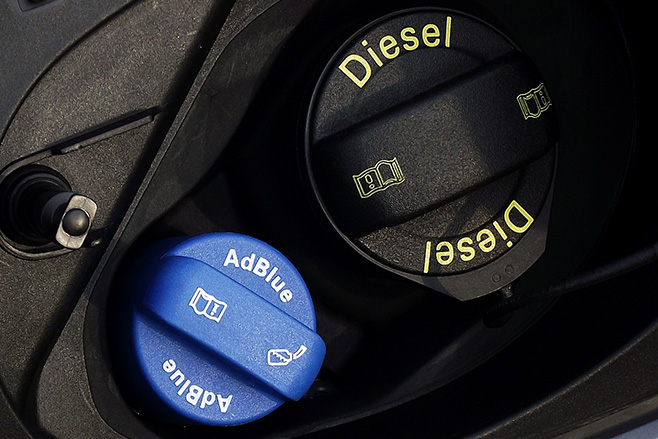
The fuel tank will need to be drained, as it could damage the engine and corrode fuel lines. Despite the harm caused by pouring AdBlue in the fuel tank, most cars have the two inlets next to each other – though you can clearly tell them apart, as the AdBlue cap is generally blue and the pipe is too small for a fuel filler.
Do I need AdBlue for the car to run?
Mechnically, AdBlue isn’t required for the engine to work. However, because it keeps emissions within legal requirements, the car’s engine is programmed to stop working if there is insufficient AdBlue, or another liquid in the tank. You should get sufficient warning via your car’s multi-function display before this occurs.
How much AdBlue does a car use?
The average car uses about five percent of AdBlue as it does diesel fuel, which is about a litre for every 1000km travelled.
The storage tank is designed to be big enough so the AdBlue lasts within scheduled service intervals. If you run low before your next service, you can top it up yourself.
Is it easy to top it up?
Topping up is as simple as refilling your window washer reservoir. However, while AdBlue is considered a non-hazardous liquid, it is corrosive – so be sure to wash any part of your body and the car paintwork affected by a spill. And don’t forget the above warning about getting it in your fuel tank.
How much does AdBlue cost?
It’s relatively inexpensive when compared with something like motor oil.
That said, the price can fluctuate based on the cost of urea production, which requires plenty of energy, mostly in the form of natural gas. Prices can vary, but for a ballpark figure, a 2.0-litre bottle costs up to $30 from a car dealership, but for just $2.50 more you can get a 10-litre bottle.
It’s also available at auto accessory stores from a range of brands, some which you’ll recognise from their engine oils. Be sure to check if they’re suitable for your vehicle. If in doubt, buy it from your car manufacturer.
AdBlue has a shelf life of at least 12 months so you could get a couple of top-ups out of it.
MORE
All Advice stories
Earlier AdBlue coverage
“So where did you land?” I asked a friend when he said he’d put an order on a car.
He knows me well and we’d been talking about a decent-sized SUV for him and his family for months. “Mitsubishi Outlander,” he almost muttered behind his hand. I congratulated him – he thought I’d shout at him, but we had spoken about the now familiar current-generation machine. It was a good choice, I assured him.
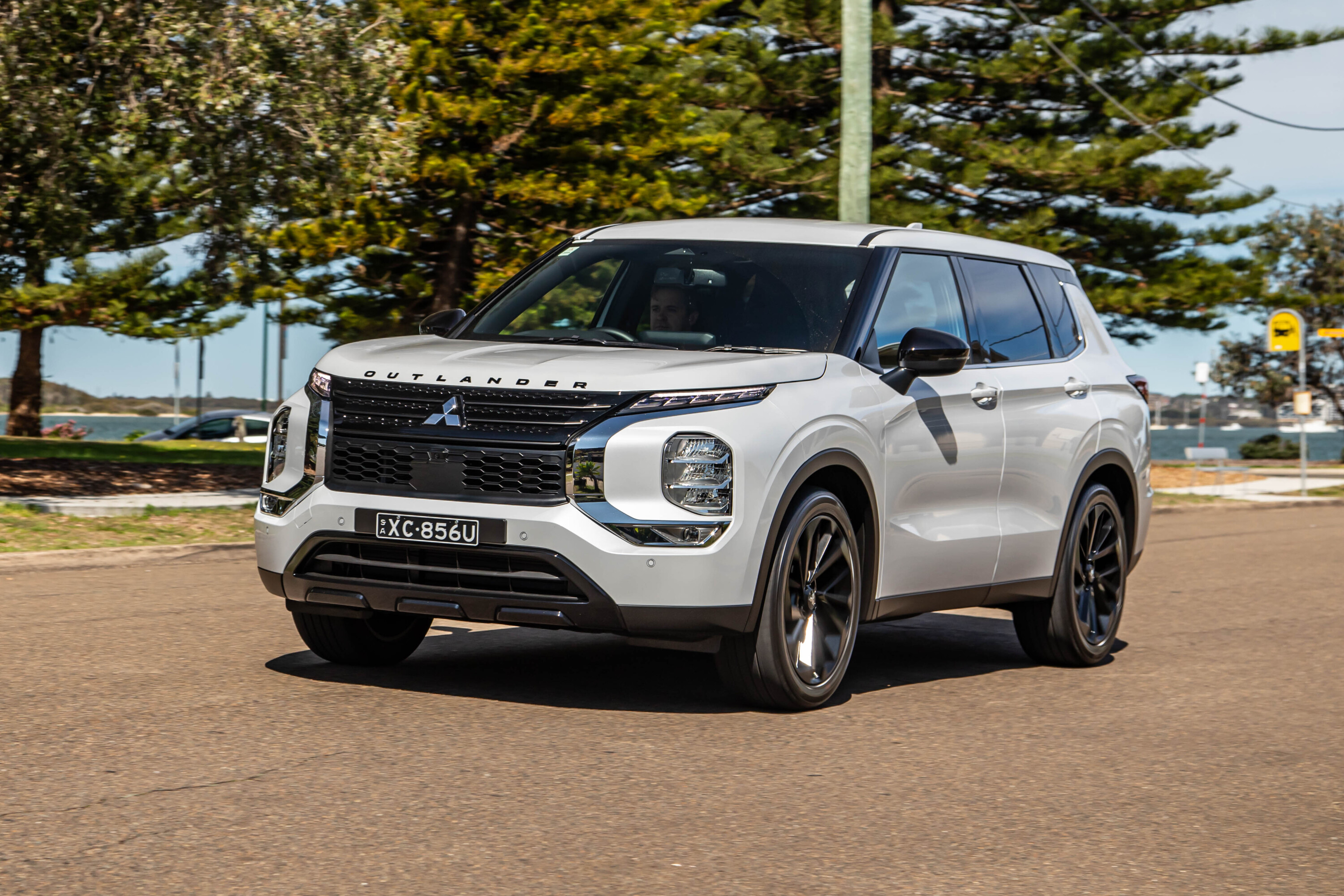
The times are gone where it was a “well it’s cheap” choice and now it’s competitive rather than bargain basement. So competitive that customers are asking the Japanese company for a bit of variety in its line-up on the styling front, which it has duly delivered in the form of the LS Black Edition.
JUMP AHEAD
- How much is it, and what do you get?
- How do rivals compare on value?
- Interior comfort, space and storage
- What is it like to drive?
- How is it on fuel?
- How safe is it?
- Warranty and running costs
- VERDICT
- Specifications
How much is it, and what do you get?
The Black Edition kicks off at $42,490 before on-road costs and is based on the second step in the Outlander range, the LS.
It’s a front-wheel drive seven-seater, so promises pretty decent bang for your buck before you even get going.
| 2024 Mitsubishi Outlander LS Black Edition standard features | |
|---|---|
| 20-inch alloy wheels | Dual-zone climate control |
| 9.0-inch touchscreen | Second-row air vents |
| Wireless Apple CarPlay | Wired Android Auto |
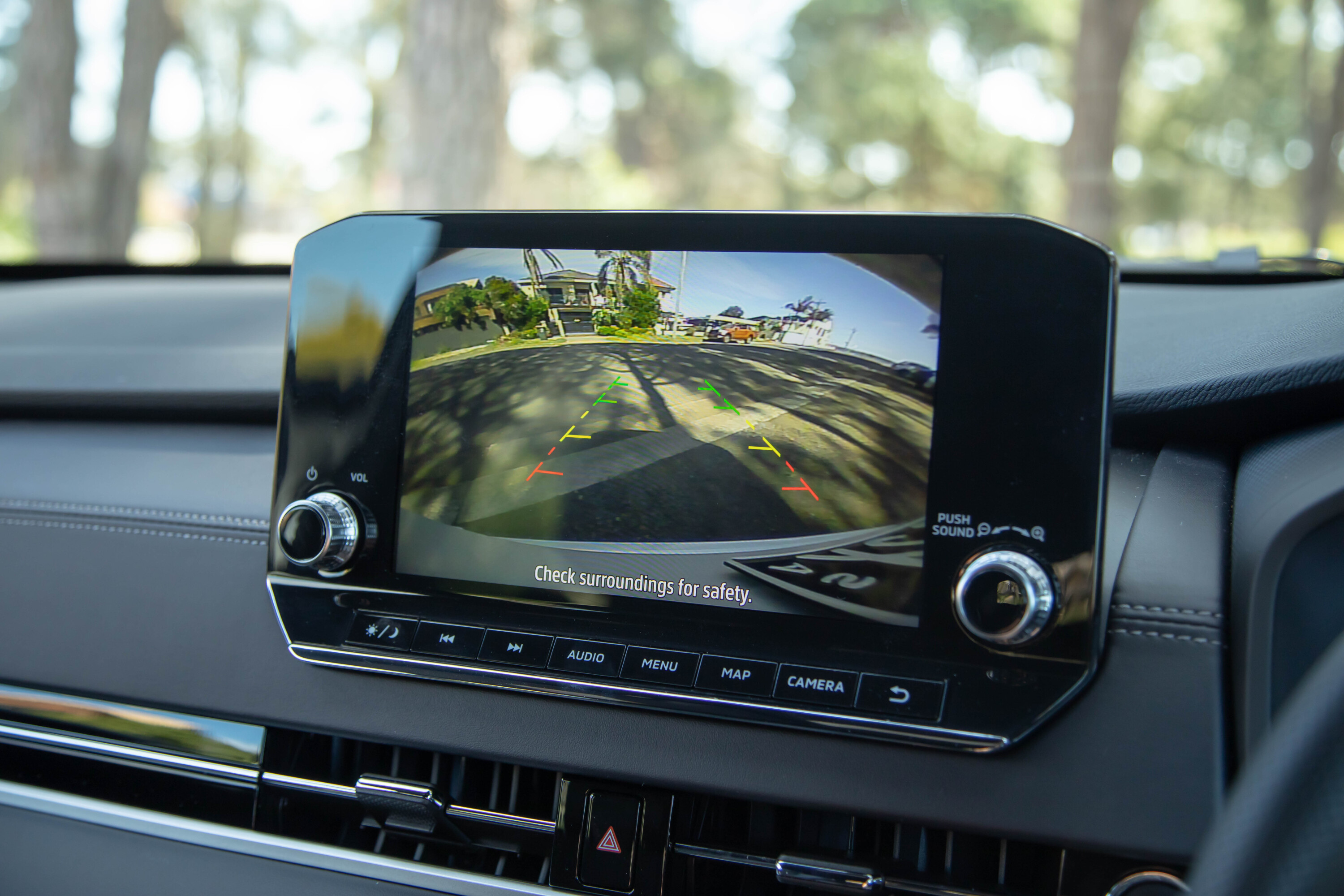
| Reversing camera | Cloth upholstery |
| Front and rear parking sensors | Heated folding side mirrors |
| Keyless entry and start | Auto LED headlights |
| Auto wipers | Leather wheels nad shifter |
| Space-saver spare | Blacked out grille, centre console, mirrors and bumper parts |
| Satellite navigation | Wireless phone charger |
1
The LS picks up wireless Apple CarPlay and the larger touchscreen – making the wireless charger useful for around half of us – while the Black Edition drops the roof rails for a black roof, free metallic paint and bigger, black-painted alloy wheels. It’s a lot of car for the money.
You also get third-row seating (the Outlander isn’t a true seven-seater but a 5+2), which means the full-size spare is swapped for a space-saver.
1
How do rivals compare on value?
The Outlander belongs to the medium SUV segment but its physical size verges on the next segment up.
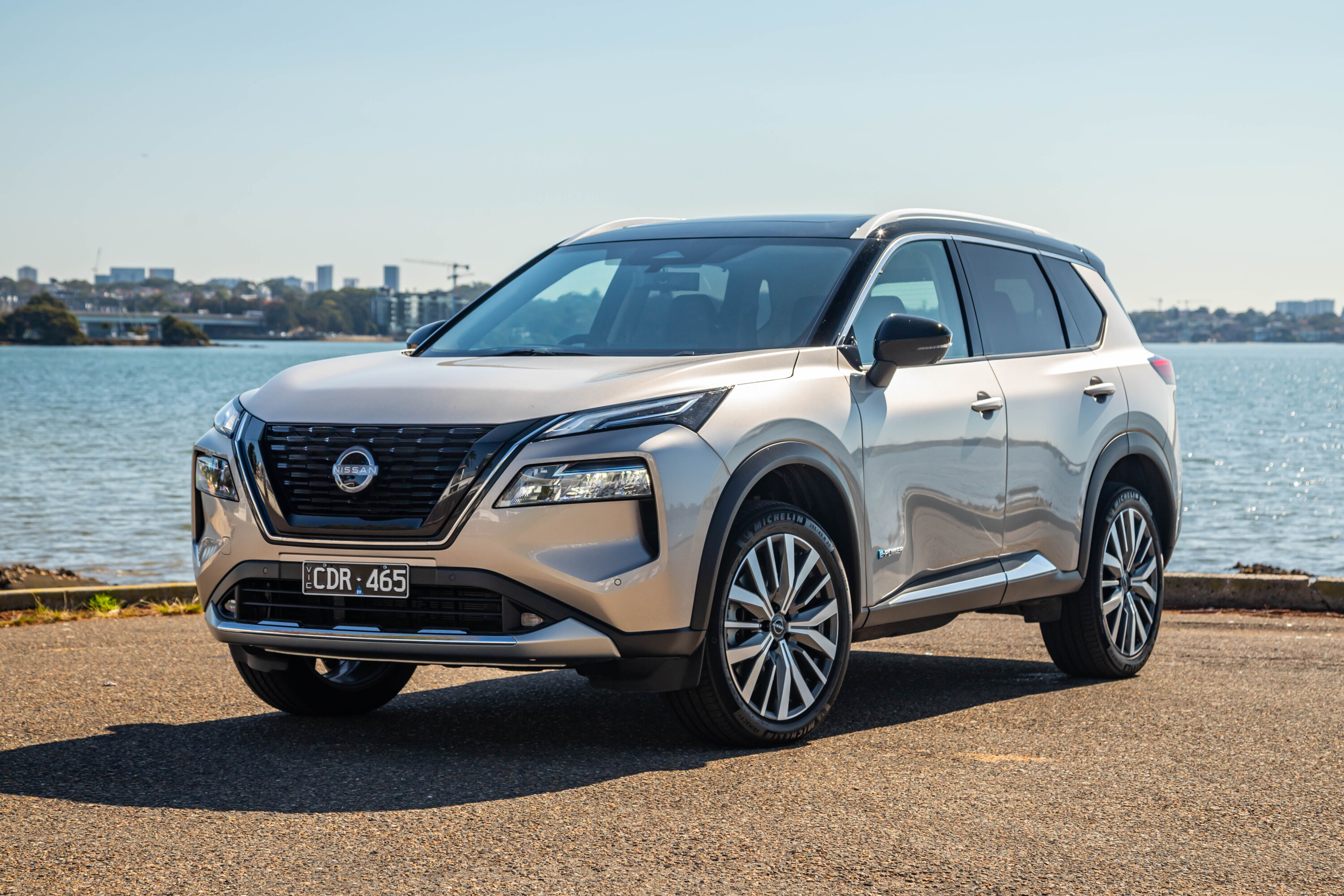
A couple of other contenders match that description. The first and most obvious is the Nissan X-Trail which is based on the same platform and shares the same engine and transmission. It’s a nicer – but more expensive – car, with a more comfortable attitude to its ride and an even better interior.
1
There are even little tricks like wider-opening rear doors that make it that little bit easier to live with. Servicing is more expensive than the Outlander, however, and it doesn’t have a 10-year warranty.
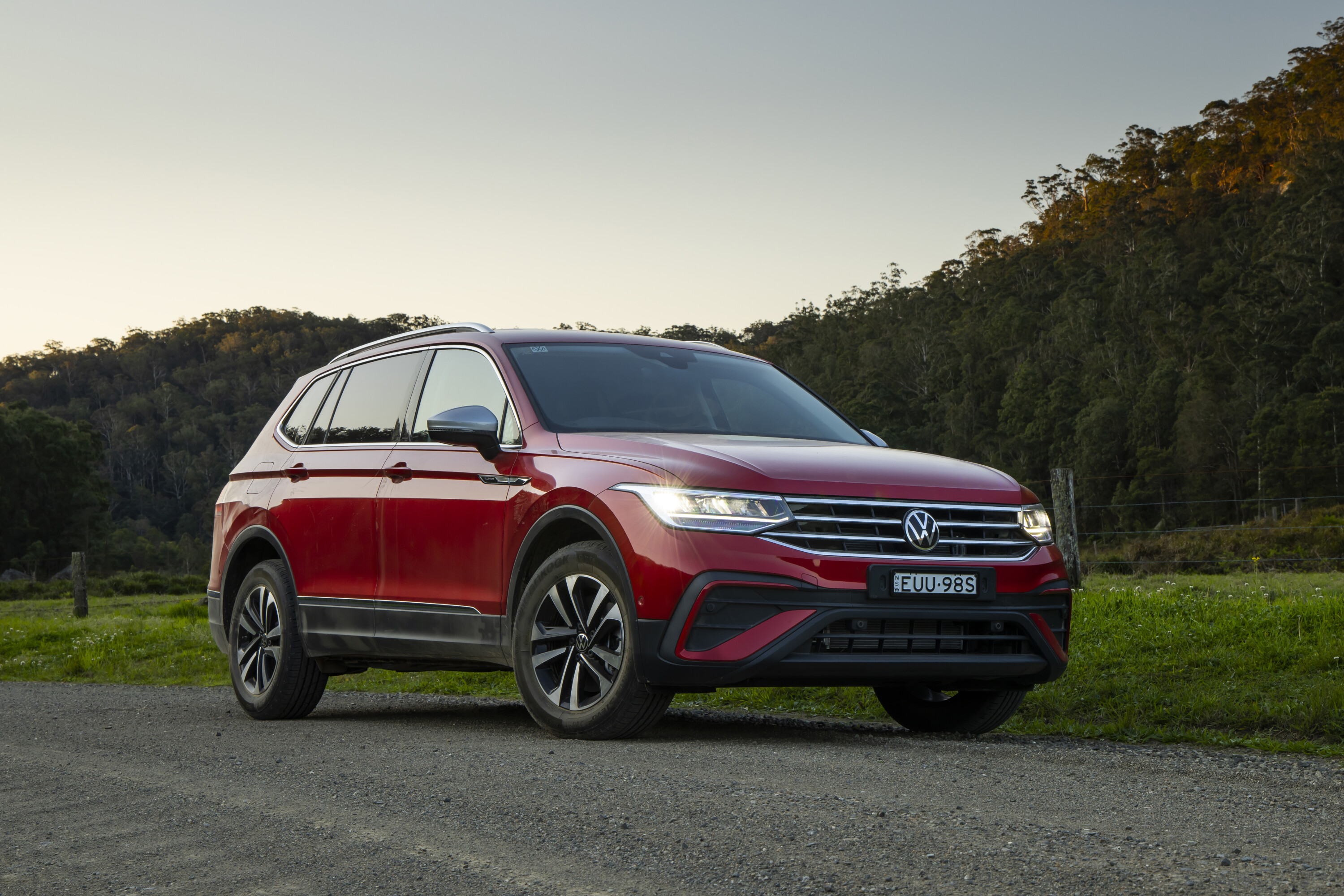
A Volkswagen Tiguan Allspace fits in well here too. It is also more expensive than the Outlander and the front-wheel drive 110TSI – while my pick – is a bit sparsely appointed compared to the Outlander. It’s also slightly costlier to service and doesn’t have a long warranty either.
1
Interior comfort, space and storage
One of the main reasons the Outlander is a good choice is the vast interior space afforded by its growth in size.
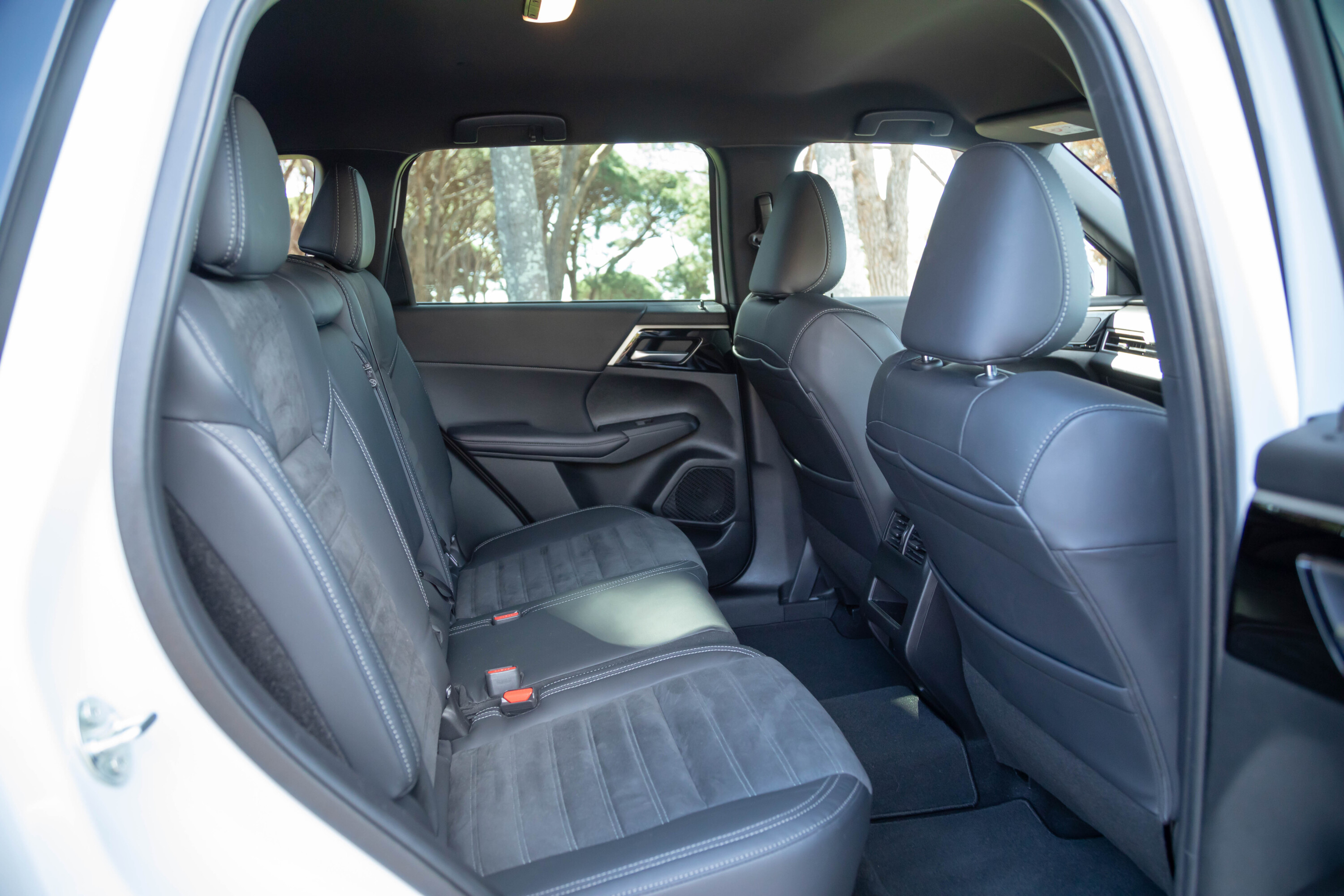
The middle row is expansive in all directions and one of the reasons the LS is a decent idea for families is that the sunroof doesn’t make teenagers miserable (upper versions lose a lot of headroom to the glass roof, so best avoided if you have taller folks to carry around).
You get rear air vents, bottle holders in the doors and cup holders in the fold-down armrest. The third row is really just a pair of folding jump seats, which are a bit of a Lego challenge.
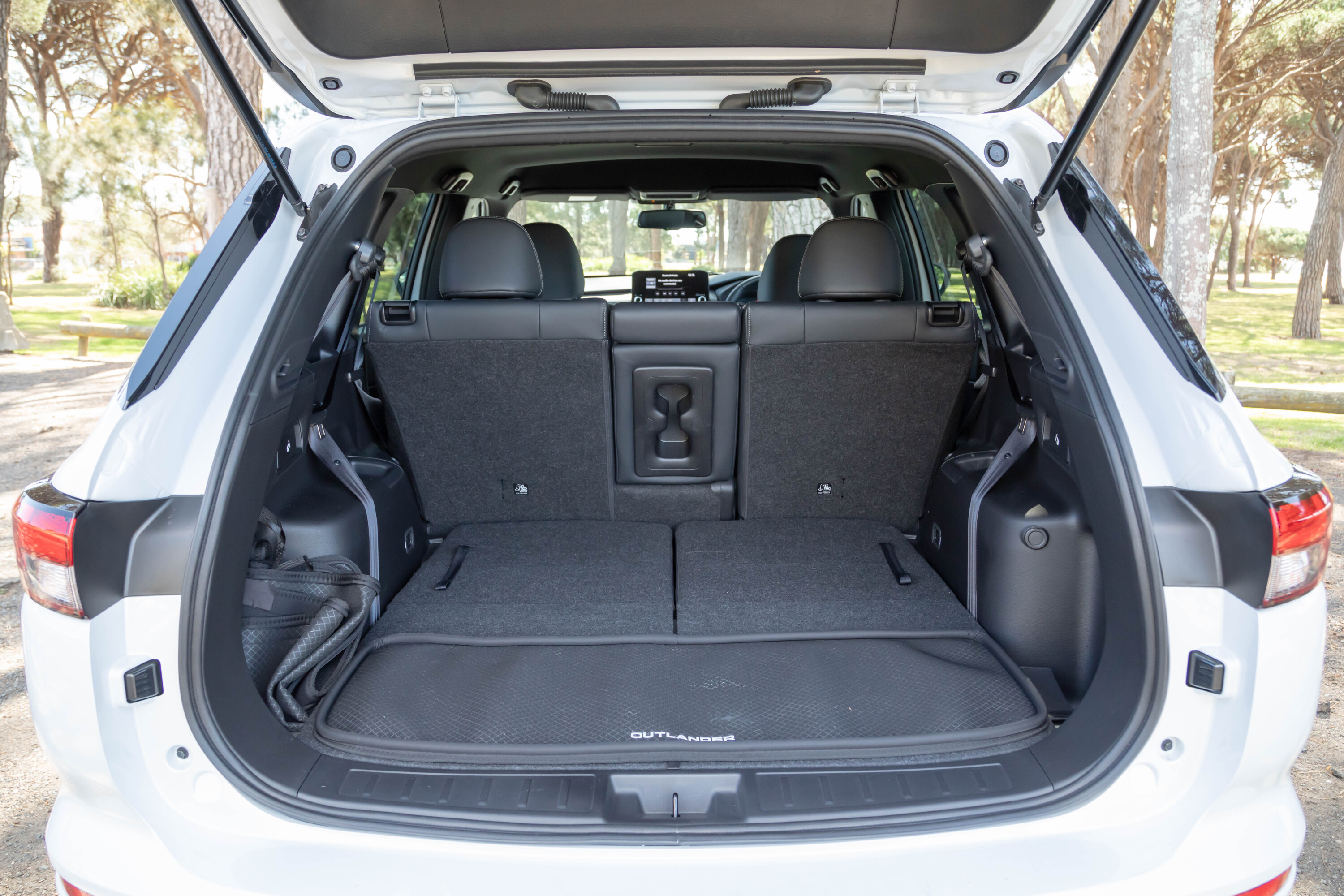
To ensure the third-row seats can fully fold, their long narrow headrests are stored separately under the boot floor in an admittedly very sensible packing spot that means they won’t roll around. The seatbacks are short and you’re relying on the middle row’s sliding ability to fit anyone human-sized in.
Every direction is marginal for anyone really and the windows are tiny. I’m not certain of the point of these seats but at least Mitsubishi is honest in calling the Outlander a 5+2.
1
Maximum boot space with the rear row folded is 478 litres, rising to 1466 with the middle row also out of the way. With all three rows in play, the boot is a 163L proposition, which is okay, but will only hold a few bags of shopping or a pile of beach towels or whatever.
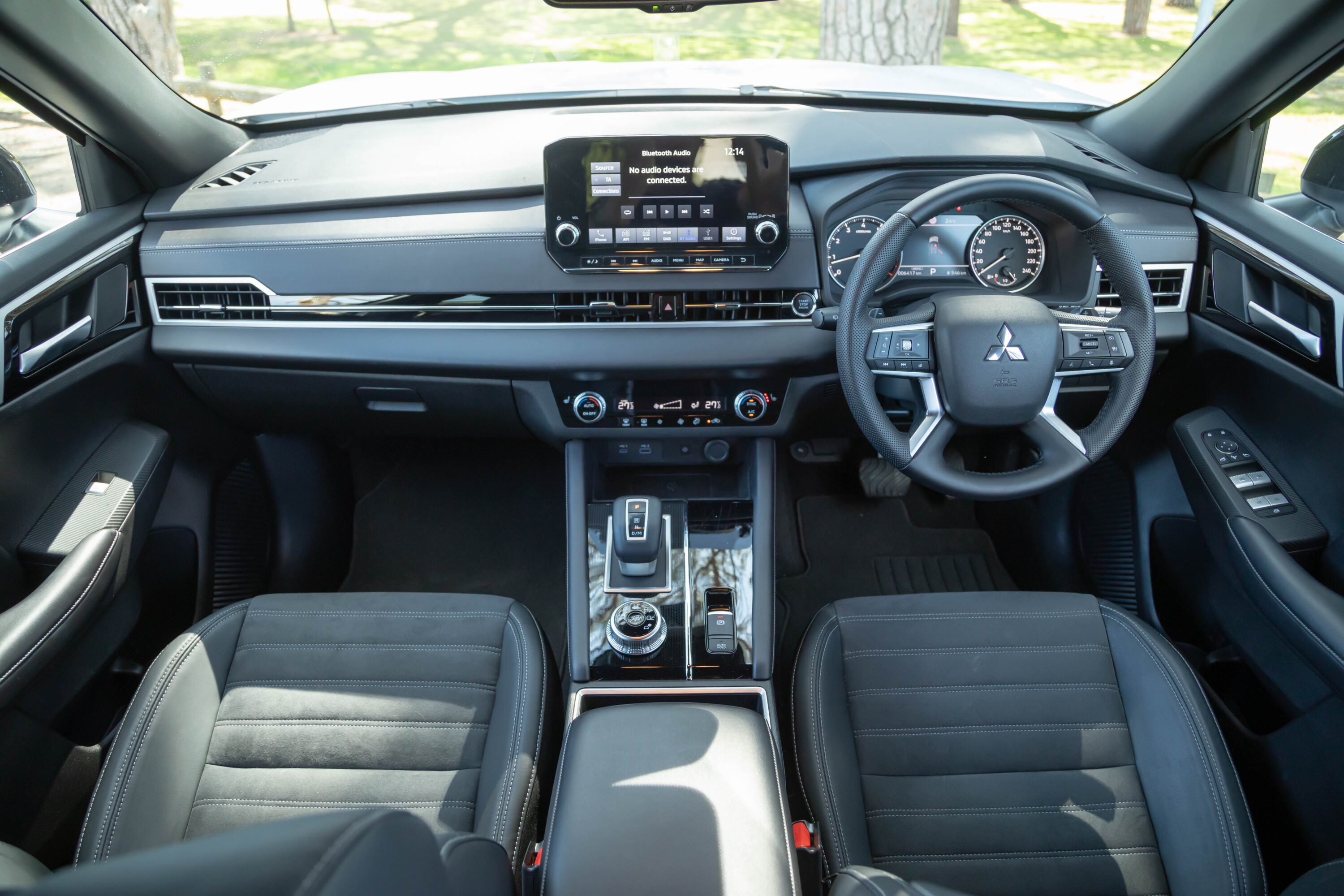
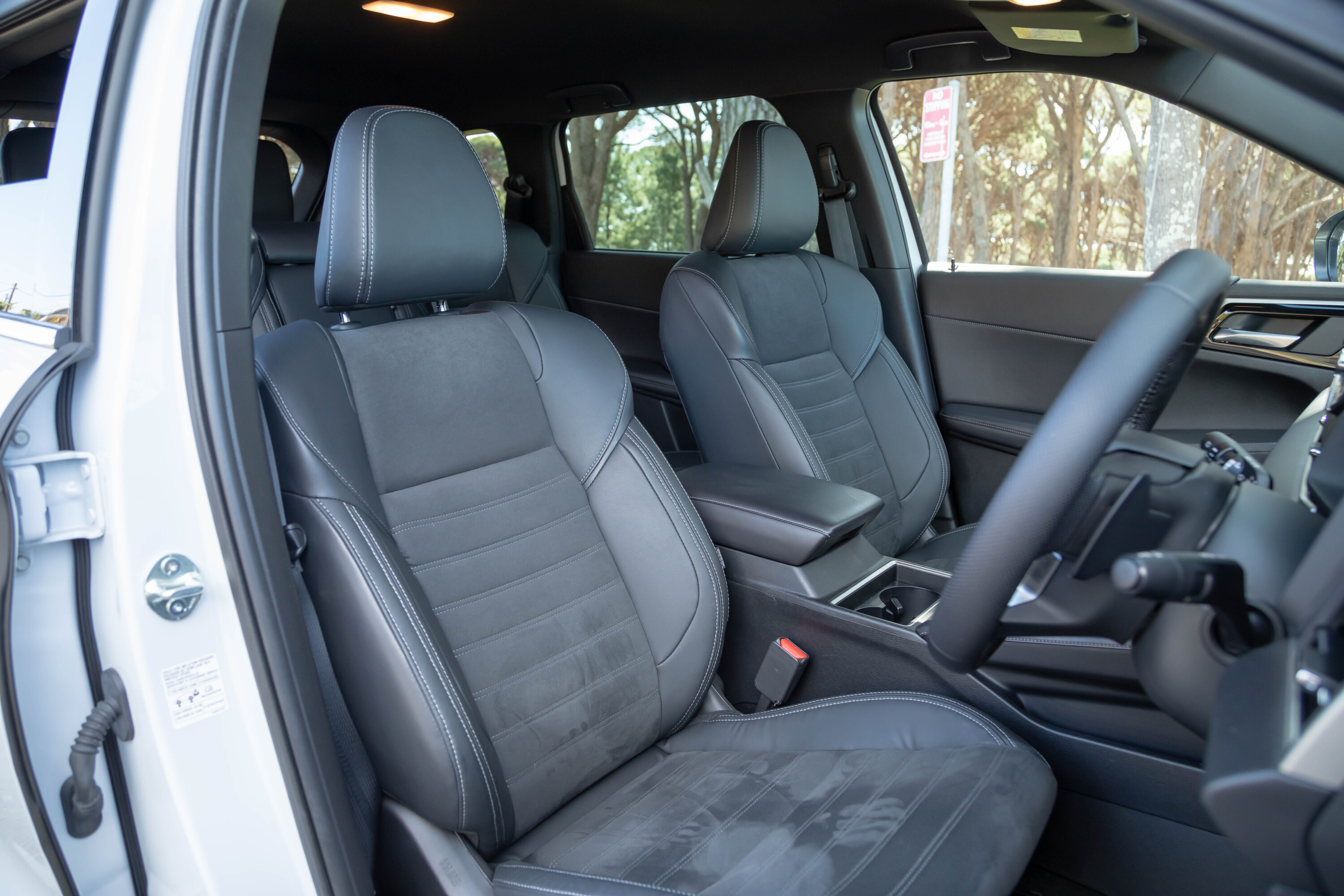
Up front, you have a comfortable pair of manually adjusted seats with a quite fetching mix of fake leather and fake suede, neither of which are objectionable. I actually quite like this mix because the seats hold you in and don’t get too hot but seem easily cleaned.
1
There’s a big wireless charging pad for your phone plus USB slots, a console bin and two cup holders. The door bins also hold a bottle each. It’s very spacious and the view out is excellent.
Here in the cheaper seats it’s a fairly blandly coloured cabin but has all the things that make this a good interior – it’s hardy and well made and only the slightly chintzy volume knob is a misstep.
3
What is it like to drive?
Another major thing about the Outlander is that it’s actually quite nice to drive.
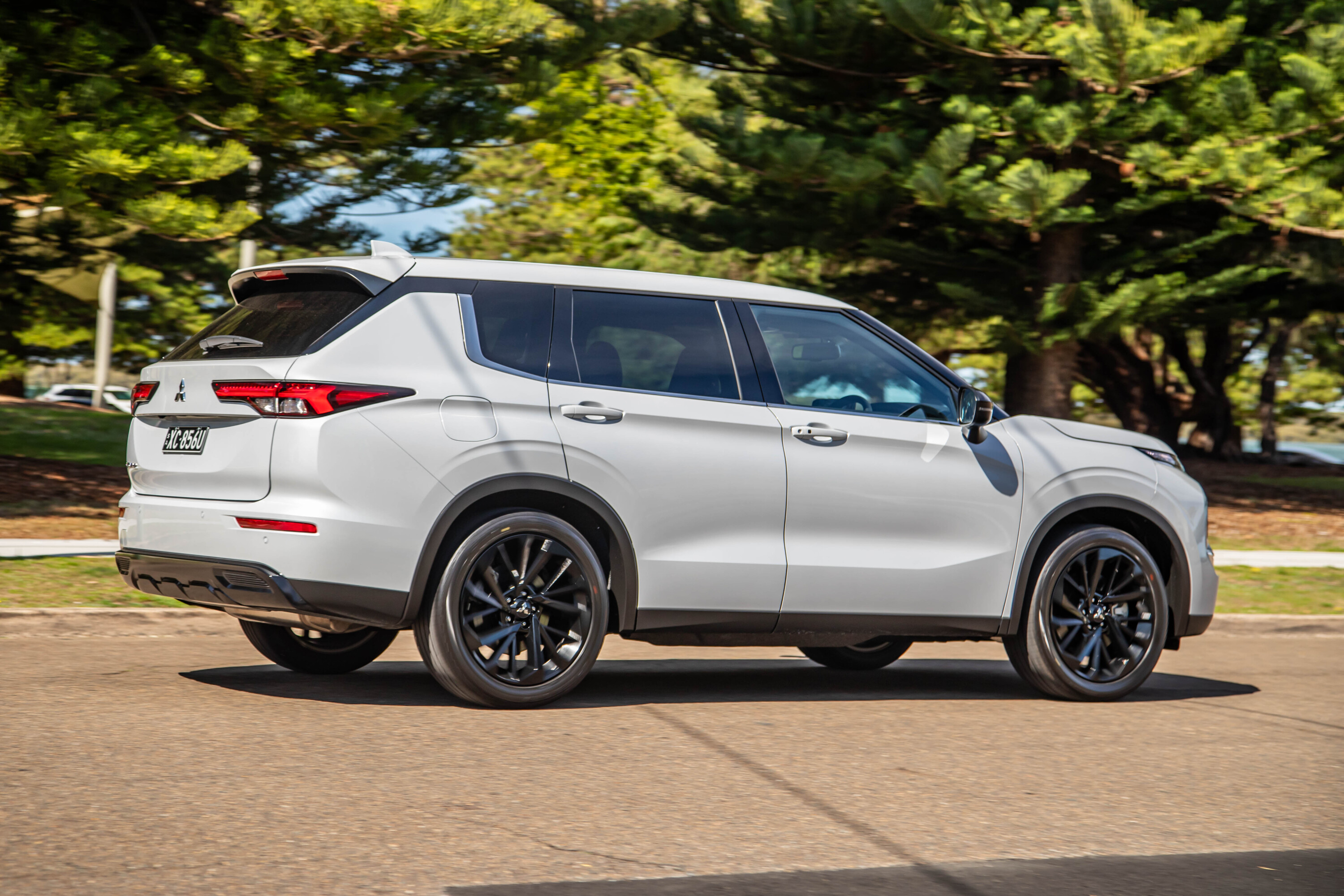
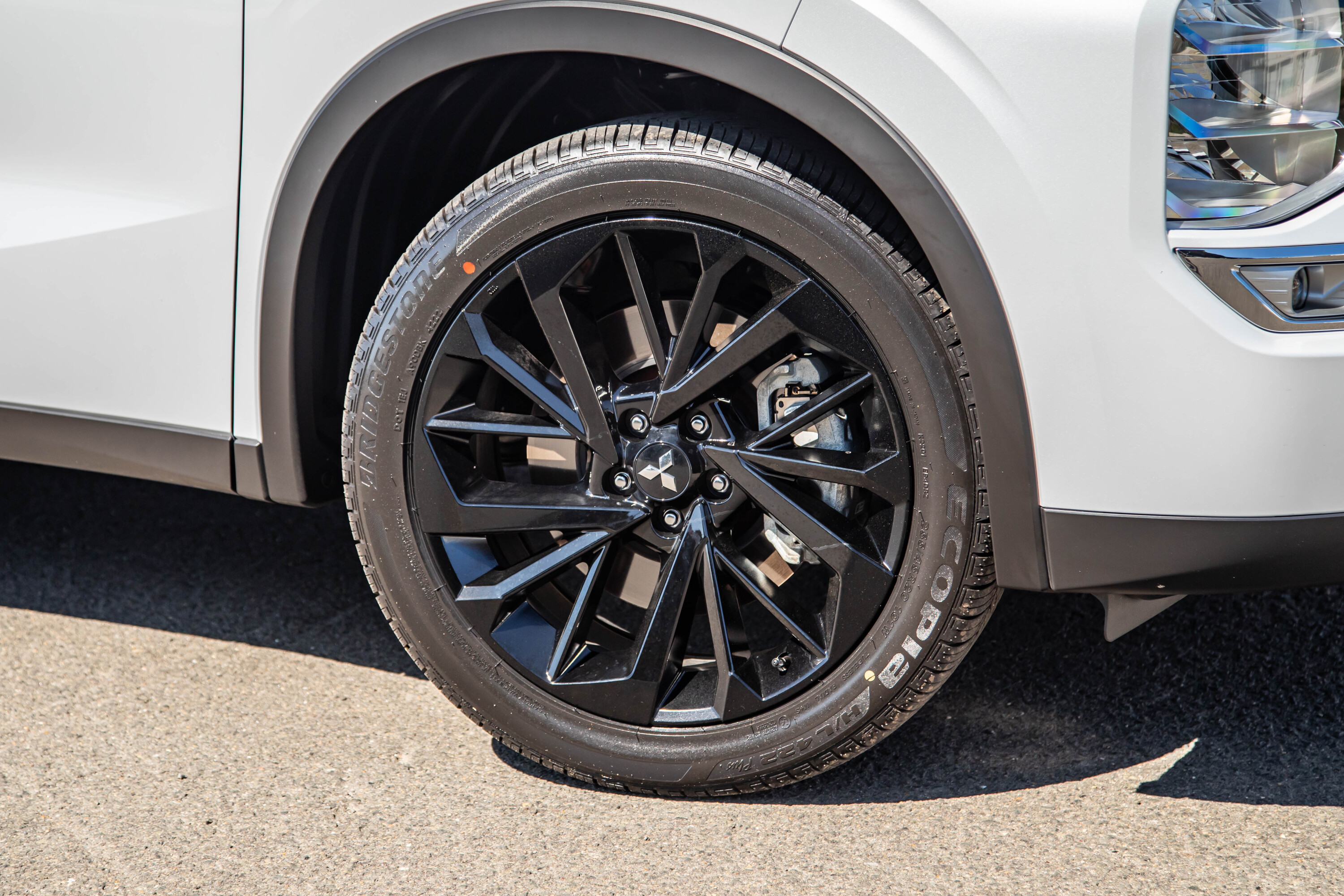
There aren’t really any duds in this segment, but the Outlander’s ride and handling balance is mostly very impressive. It can get a bit niggly on poor urban surfaces and isn’t a big fan of concrete roads, but I think the blame for both of these shortcomings can be sheeted home to the 20-inch alloys of the Black Edition as the regular LS’s 18s are a bit more comfortable and a bit quieter.
| 2024 Mitsubishi Outlander LS Black Edition drivetrain | |
|---|---|
| Drive | front-wheel |
| Engine | 2.5-litre naturally-aspirated four-cylinder |
| Transmission | continuously variable |
| Power | 135kW @ 6000rpm |
| Torque | 245Nm @ 3600rpm |
1
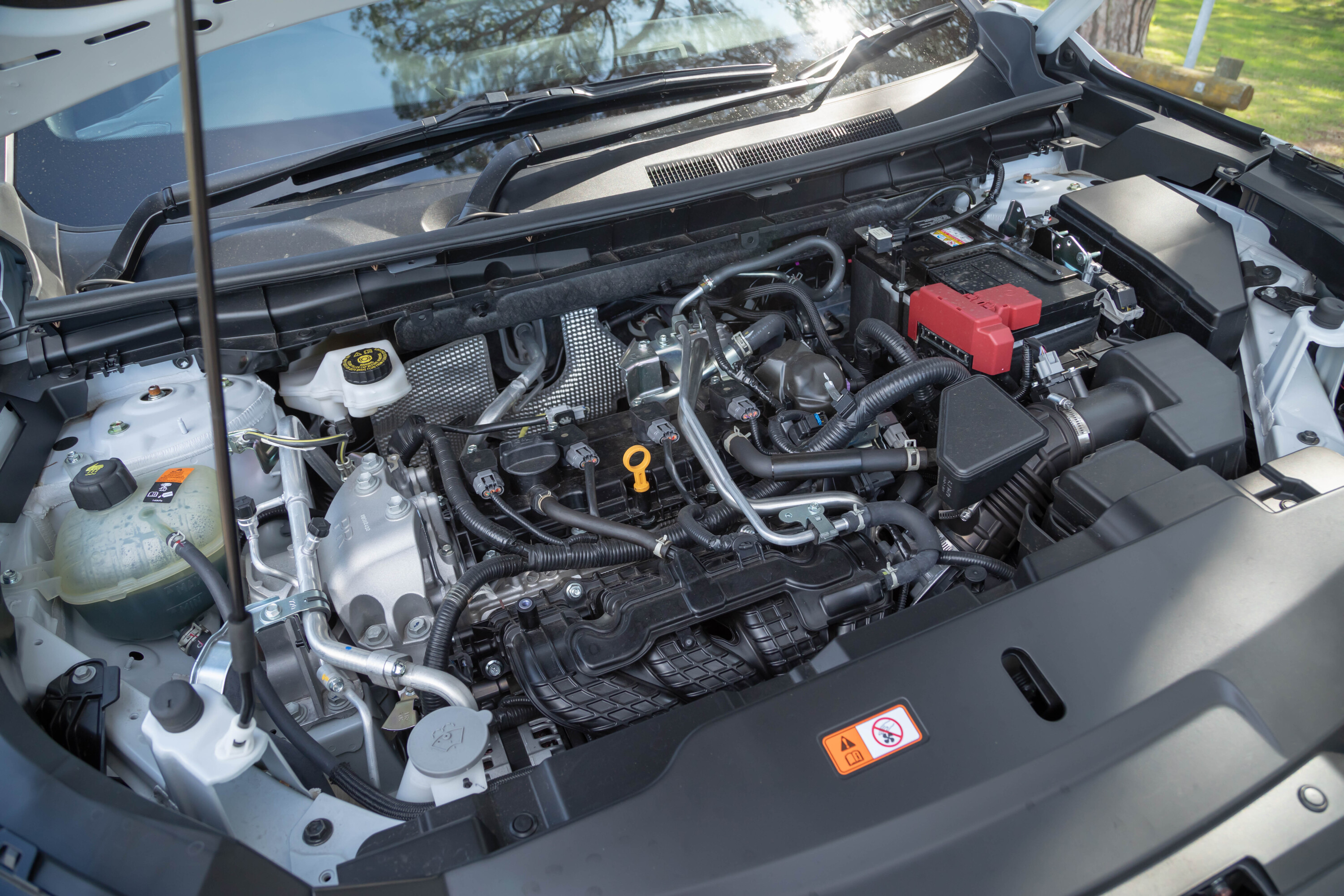
It’s not what you’d call powerful, however. The 2.5-litre four-cylinder petrol spins up 135kW which is okay but 245Nm isn’t a lot more than you find in many compact SUVs.
Driving the front wheels through a continuously variable transmission (CVT), it actually does alright because that type of transmission is pretty good at extracting the most out of modest torque outputs and in fact almost revels in it.
Throwing more torque at a CVT is usually a recipe for flaring and droning, both of which the Outlander is mostly immune to. As CVTs get better I have to leave behind my formerly well-founded prejudice against them.
1
It’s a good car to drive over long distances, too, with a cabin that settles down into a pretty quiet sort of place.
The steering and brakes also work really well together, with sensible weight in the former and a positive feel to the latter. While the engine might struggle a little with a fully loaded car on top of a nearly 1800kg kerb weight, the brakes are more than up to the job.
1
- What is a Powertrain or Drivetrain?
- Power vs torque
- Car suspension explained
- Automatic transmissions (‘gearboxes’) explained
- Chassis control systems explained
- Car vs Ute vs SUV: How the vehicle you buy should guide the way you drive
Mitsubishi claimed 7.7L/100km on the combined cycle, which I initially thought was a bit brave.
| 2024 Mitsubishi Outlander LS Black Edition fuel economy | |
|---|---|
| Claimed fuel consumption | 7.7L/100km |
| On test (indicated) | 8.3L/100km |
| Fuel tank | 55 litres |
| Real world range | 662km |
| Fuel type | 91 RON |
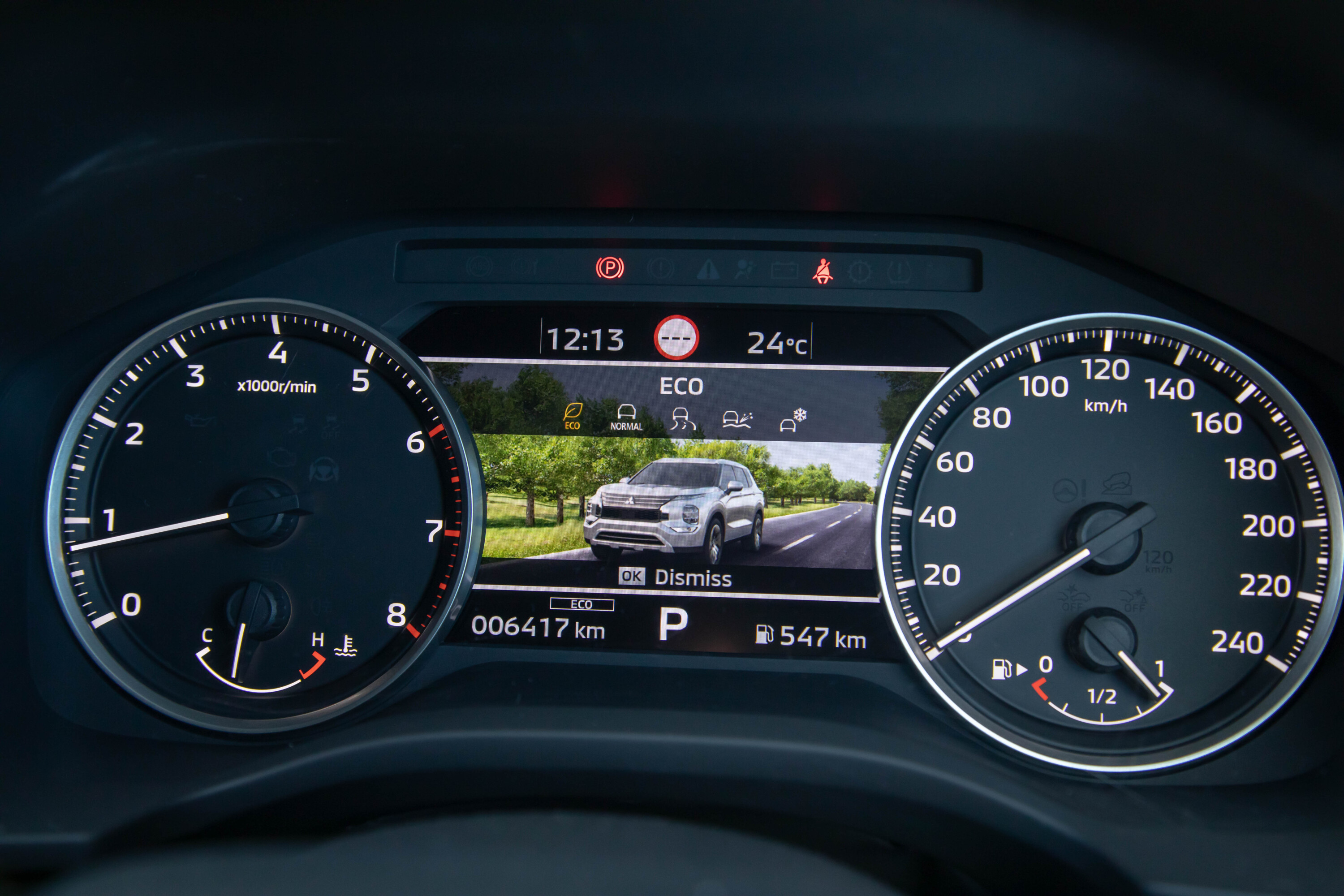
That 8.3L/100km on-test figure is not a bad result for such a big fella and it’s not the first time I’ve got a low-eight result on a petrol Outlander. It would be nicer if the tank was a bit larger, but given the vast majority of these will never/rarely leave the city, it’s probably not a big deal.
1
How safe is it?
The current-generation Outlander scored a five-star ANCAP safety rating in 2022, which will expire in 2028.
| 2024 Mitsubishi Outlander LS Black Edition safety features | |
|---|---|
| 8 airbags | ABS and stability controls |
| Rear cross-traffic alert | Lane departure warning |
| Lane-keep assist | Forward AEB with pedestrian and cyclist detection |
| Driver attention detection | Traffic sign recognition |
| Forward collision warning | Reverse AEB |
The airbag count includes a driver’s knee airbag and a front-centre airbag that deploys between passengers when the system thinks you might clash heads.
In the second row are two sets of ISOFIX points and three top-tether anchors. The third row does not have top-tether anchors, nor do the curtain airbags reach that far back.
1
Warranty and running costs
Mitsubishi offers the longest new-vehicle warranty in Australia, a 10-year/200,000km affair that reverts to five years/100,000km if you break any of the conditions.
One condition of the warranty is that you keep servicing at Mitsubishi. Pricing isn’t outrageous but isn’t Toyota cheap, ranging from $299 through to $849 per interval (every 12 months or 15,000km).
More of them are $299 or closer to it than $849, which is the last hurrah at service number 10. Five years of servicing will set you back $1595 while the full decade is $4340, a big jump on the yearly average of the first five years.
Also, the capped-price servicing offer lasts for 150,000km rather than the warranty’s 200,000km.
1
VERDICT
The Outlander LS Black Edition is just like every other Outlander – pretty good.
Whether you think an extra couple of grand is worth it for the looks and the bigger wheels for a bit of toughness is entirely up to you, but you can know that either way you’re getting a lot of car for the money.
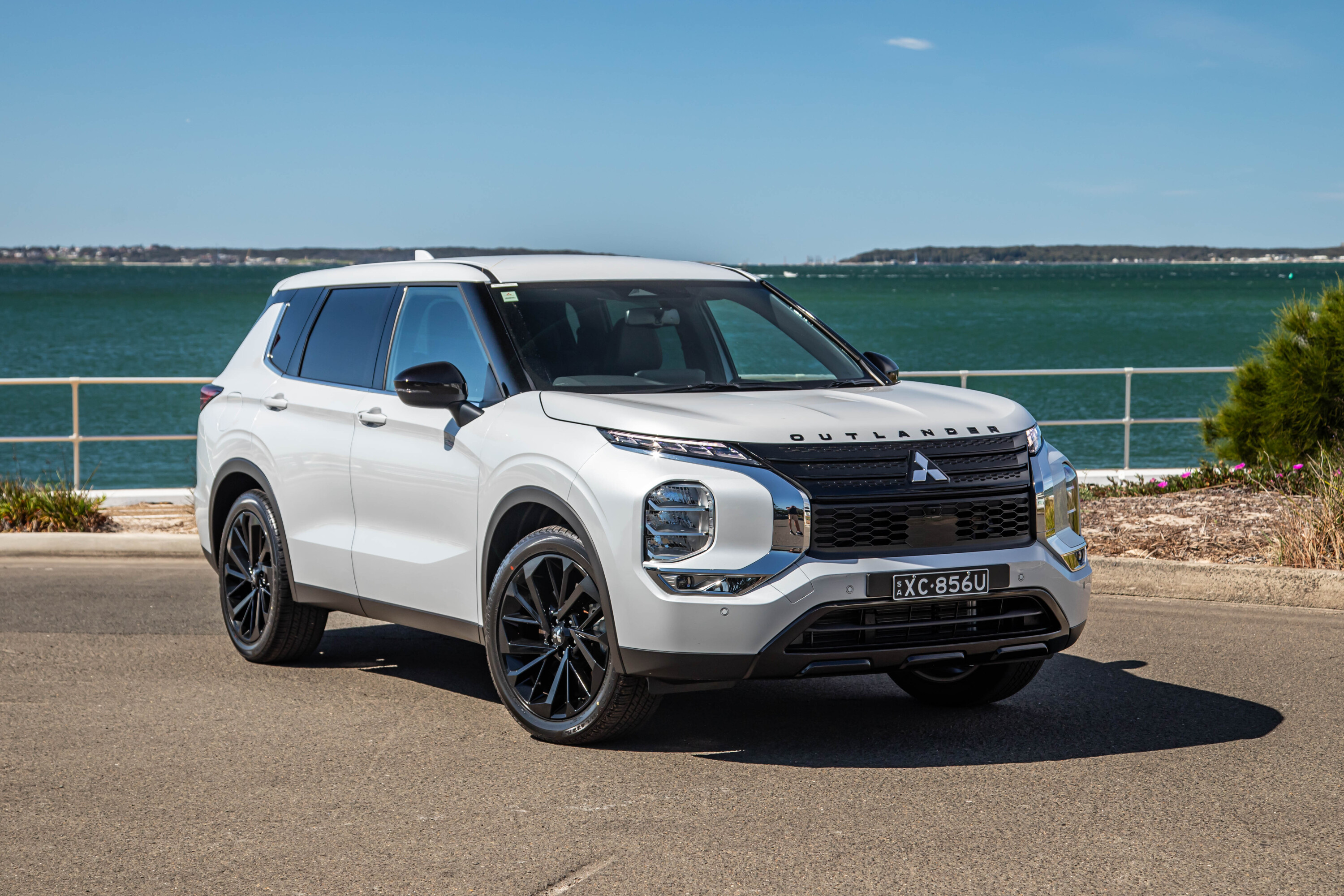
1
MORE
Midsize SUVs
| 2024 Mitsubishi Outlander LS Black Edition specifications | |
|---|---|
| Body | 5-door, 5+2-seat medium SUV |
| Drive | front-wheel |
| Engine | 2.5-litre naturally-aspirated four-cylinder |
| Transmission | continuously variable |
| Power | 135kW @ 6000rpm |
| Torque | 245Nm @ 3600rpm |
| 0-100km/h | 10.5 secs (claimed) |
| Bore/stroke (mm) | 89 x 100.0 |
| Compression ratio | 12.0:1 |
| Fuel consumption | 7.7L/100km (claimed) |
| Front suspension | struts, coil springs, anti-roll bar |
| Rear suspension | multi-link, coil springs, anti-roll bar |
| L/W/H | 4710mm/1862mm/1745mm |
| Wheelbase | 2706mm |
| Towing | 1600kg (braked) |
| Front brakes | 350mm ventilated discs, single-piston calipers |
| Rear brakes | 330mm solid discs, single-piston calipers |
| Tyres | 255/45 R20 Bridgestone Ecopia |
| Wheels | 20-inch alloy (space-saver spare) |
| Price | $42,490 + on-road costs |
JUMP AHEAD
It’s Wheels trivia-night time! What does the second-generation Volvo XC90 have in common with the likes of a 2002 Ford BA Falcon, 2004 VW Golf Mk5, 2007 Hyundai FD i30, 2008 Jaguar XF, 2010 Kia Sportage, and 2017 Toyota C-HR?
I’ll avoid making you read the answer upside-down at the bottom of this page… The XC90 started a product renaissance for its brand.
Upon its 2014 reveal, the successor to Volvo’s first-ever SUV heralded a completely new design language for the brand while also, not insignificantly, introducing the company’s SPA scalable large-car platform, along with drivetrains limited to just four cylinders.
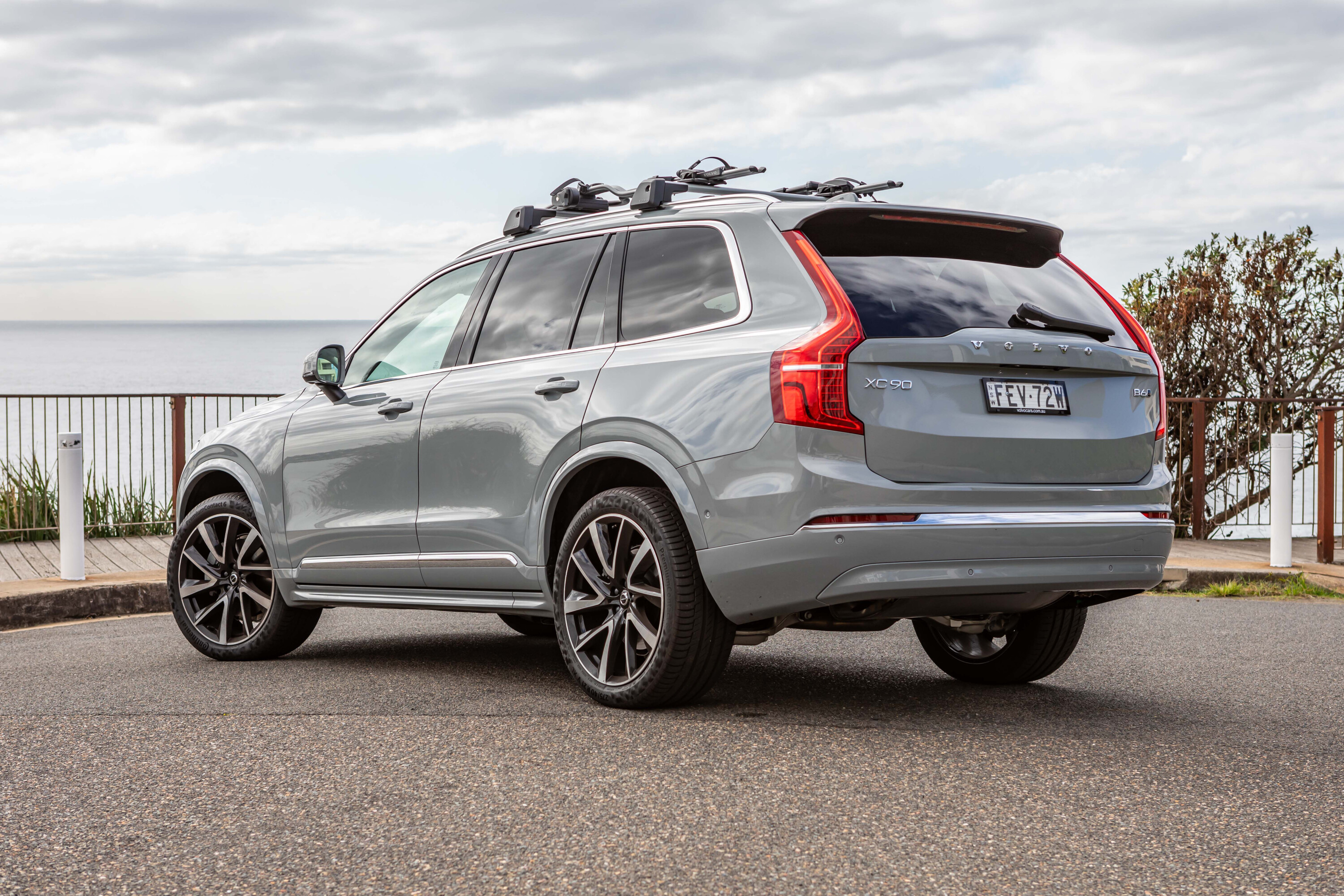
1
The XC90’s elegant yet muscular styling led to equally successful reboots of Volvo’s sedans and wagons, the second-generation XC60 medium SUV and the first-ever XC40 compact SUV arguably the pick of the designs.
In just a few years, Volvos had transformed from vehicles that were merely admirable to being genuinely desirable.
There was also greater sophistication about the way they drove. The XC90 was embraced by judges to be rated a Finalist at the 2016 Wheels Car of the Year, and the XC60 and XC40 would take unprecedented consecutive wins for a brand across 2018 and 2019.
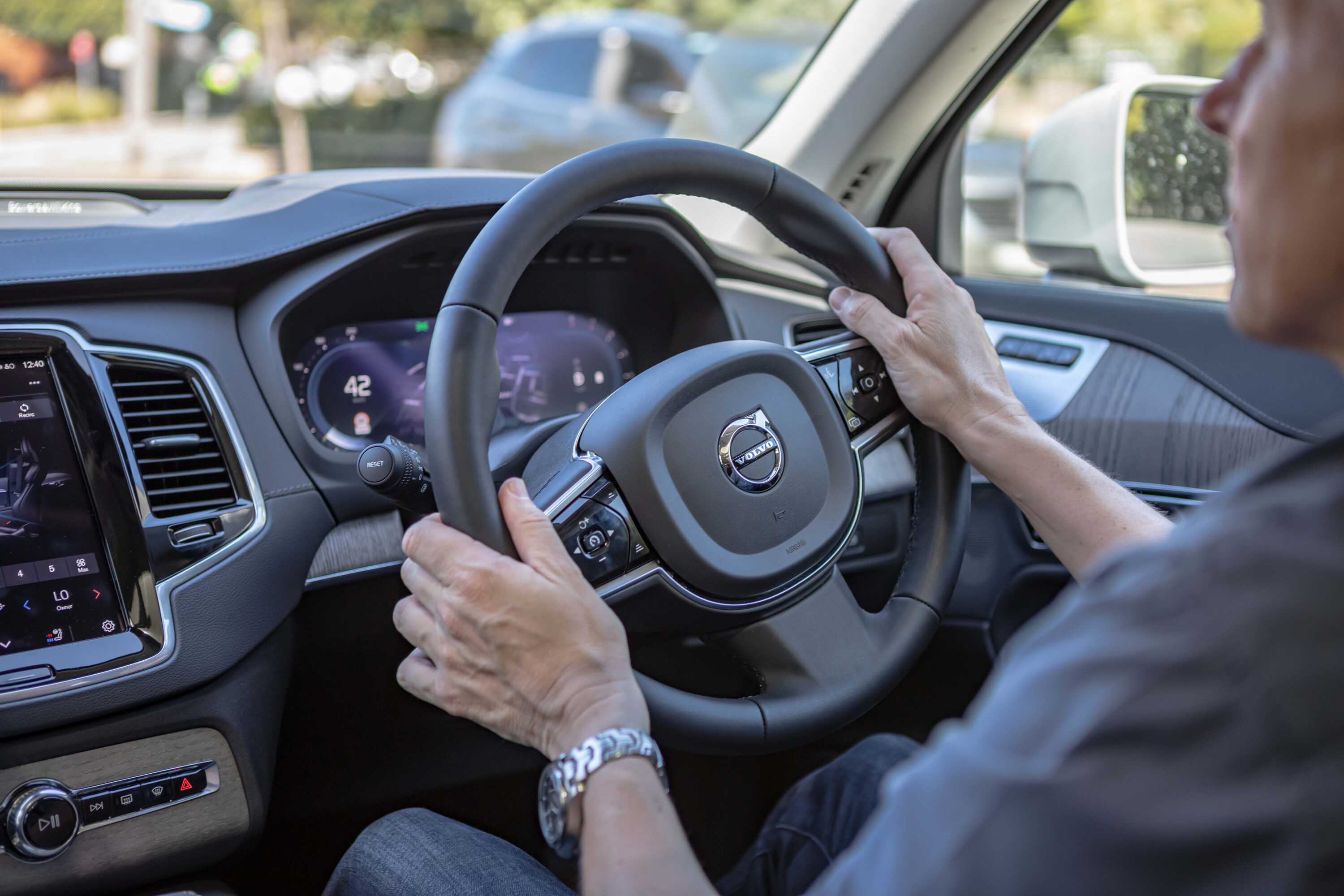
1
Question two: Why has Wheels chosen a nine-year-old vehicle for its long-term fleet?
If you answered, ‘Because the XC90 late last year won the Wheels Best Large Luxury SUV award’… give yourself a tick and a big pat on the back.
“The brilliant, beguiling XC90 … has matured like a fine cabernet sauvignon,” we said in our comparison as the XC90 triumphed over established rivals such as the BMW X5 and Lexus RX, the GV80 from Hyundai’s still-new luxury brand Genesis, and upmarket challengers from mainstream brands in the form of the Mazda CX-90 and Volkswagen Touareg.
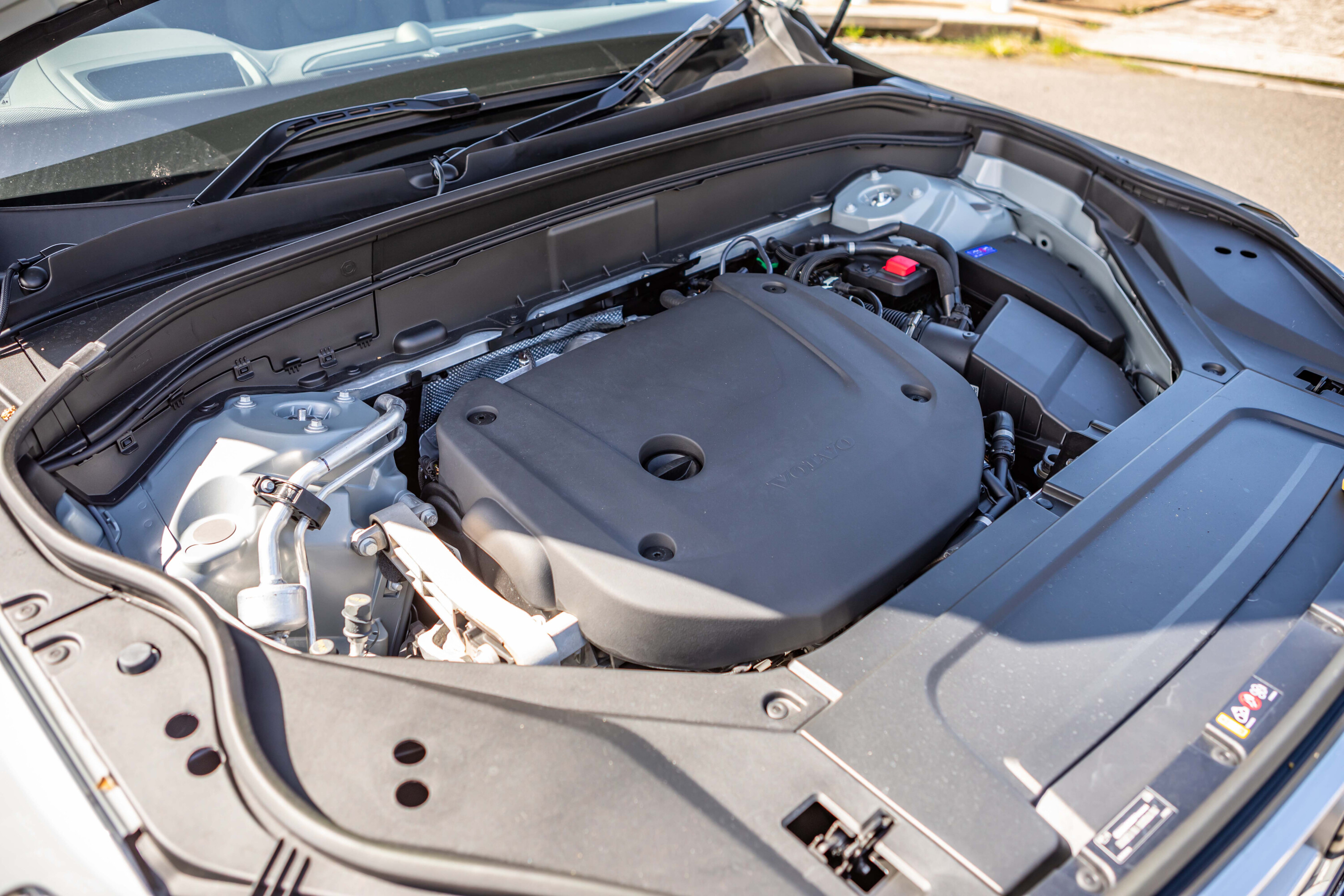
1
The B6 sits between the $100,990 Ultimate B5 Bright and the $128,990 Recharge Ultimate
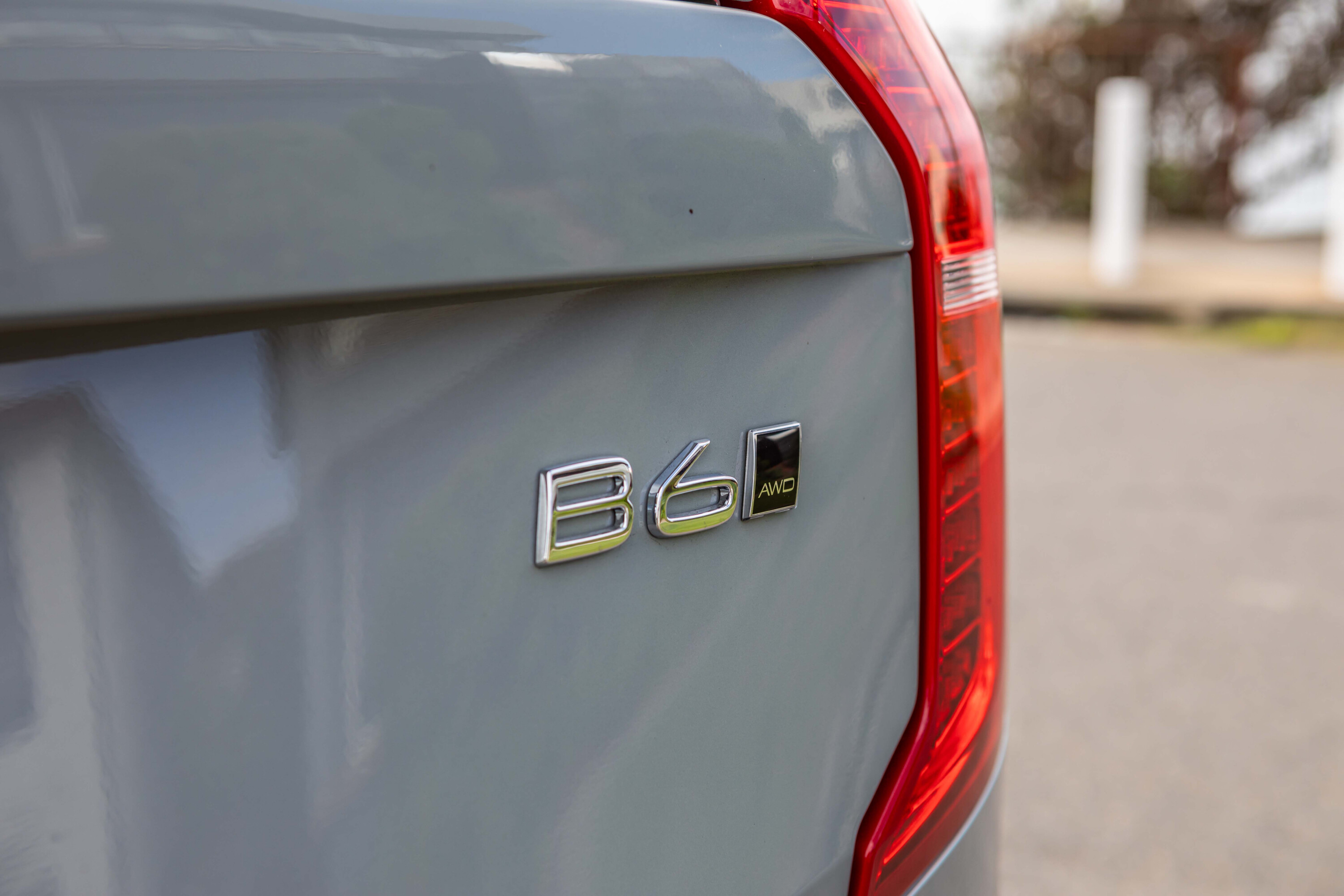
Our long-term tester is the same mid-range XC90 – the $108,990 (before on-road costs) Ultimate B6 Bright powered by a 220kW turbocharged four-cylinder petrol engine that’s supplemented by an electric supercharger.
The B6 sits between the $100,990 Ultimate B5 Bright (with a less powerful petrol engine) and the $128,990 Recharge Ultimate (with a plug-in petrol-electric drivetrain).
Options taking our as-tested price to just under $120,000 – and a drive-away price of about $130,000 – include $3750 air suspension (which we recommend over the standard steel springs for the best all-round driving experience), a $1100 massage function for the front seat, and a $4700 Lifestyle Pack that adds a panoramic sunroof and Bowers & Wilkins audio system.
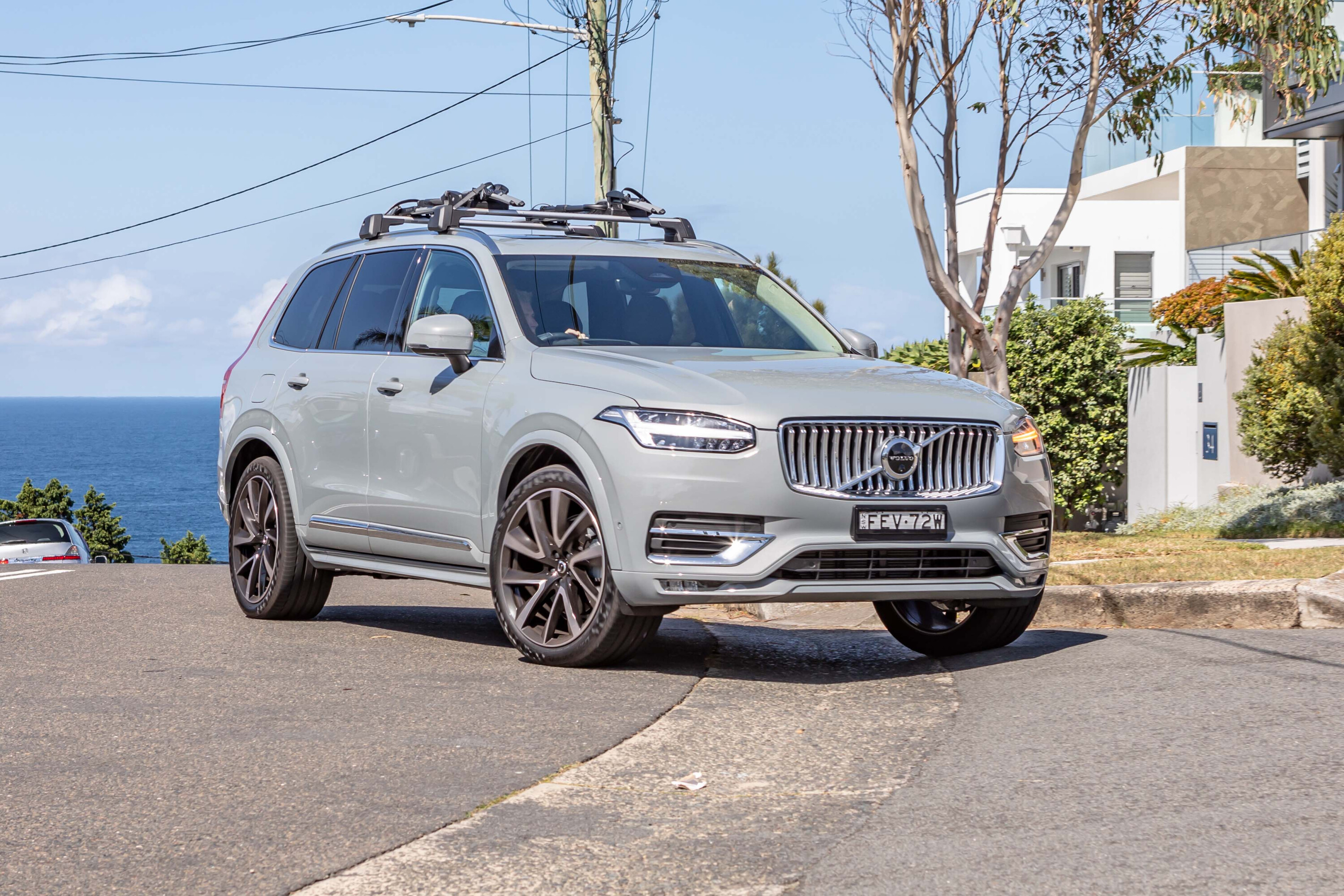
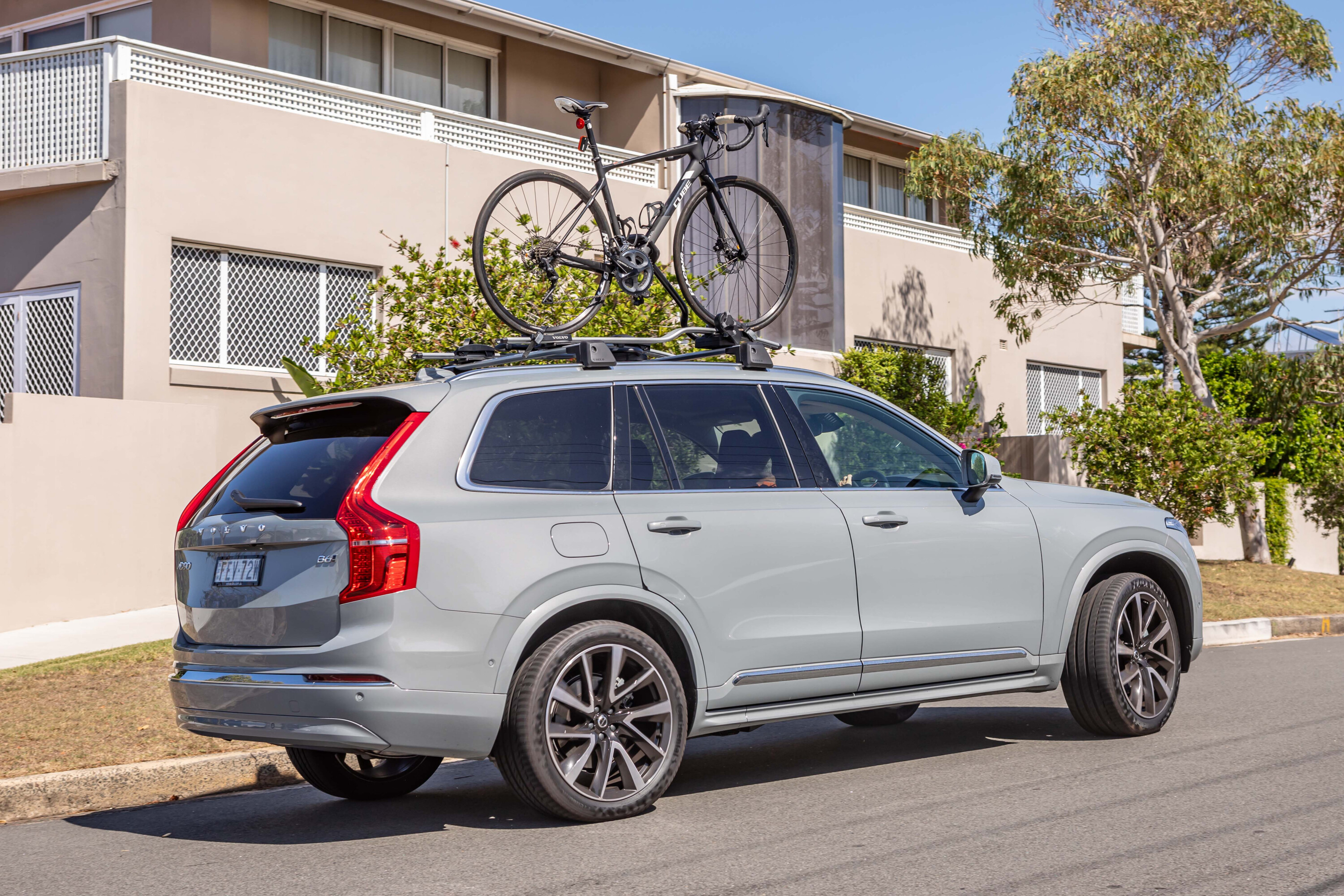
You may have noticed one other extra in the pictures. We asked Volvo if they would kindly fit a Volvo Accessories bike rack to help us give it a true family-lifestyle ownership experience.
1
As the ‘Ultimate’ part of the model name indicates (and applies to all XC90 models), there’s a high level of standard equipment.
Headline items are 21-inch black ‘diamond cut’ alloy wheels, 12.3-inch digital driver cluster, head-up display, Nappa leather upholstery, electric multi-adjust front seats with heating and ventilation, heating for outboard rear seats and steering wheel, second-row blinds, four-zone climate control, surround-view camera, and hands-free tailgate operation.
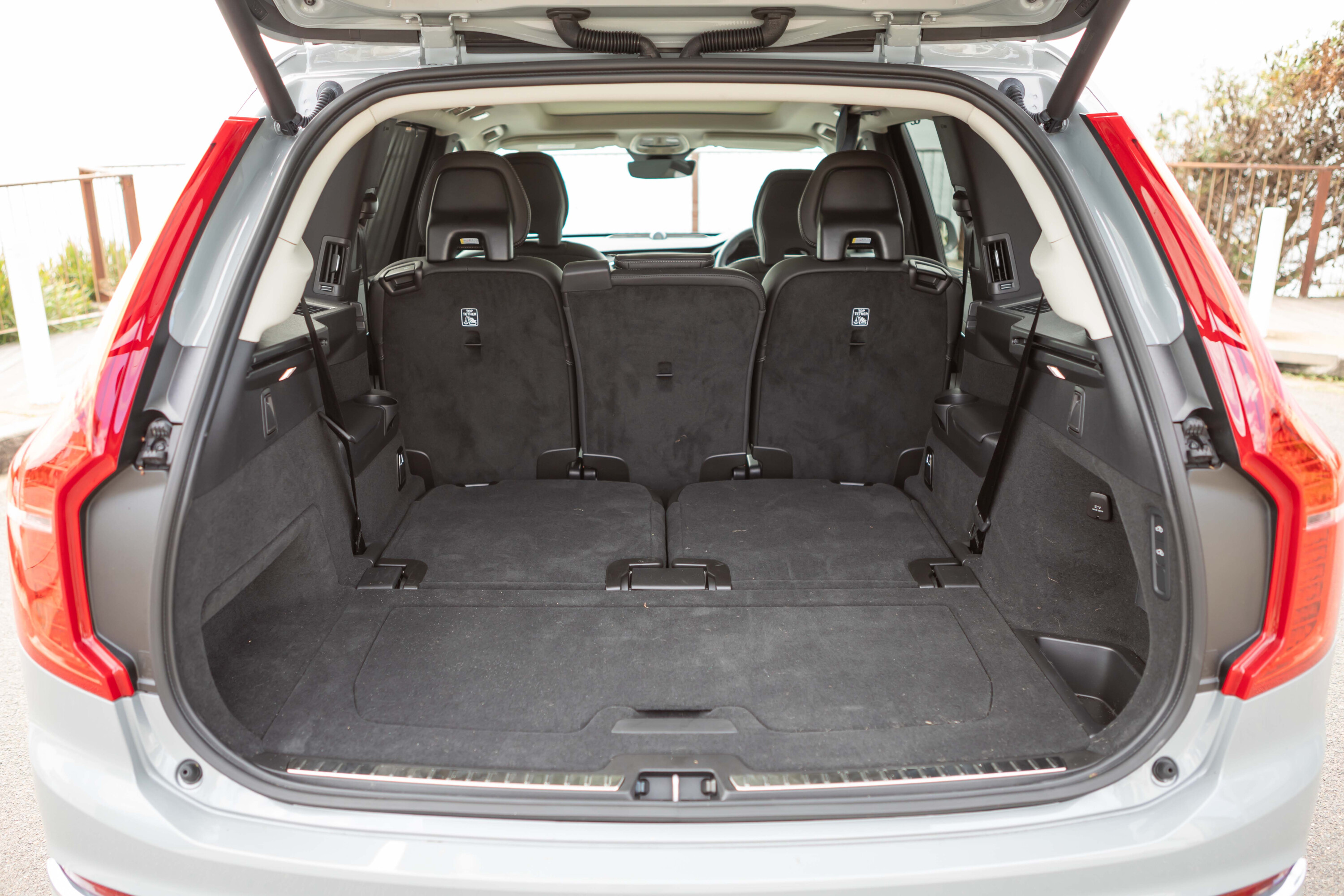
As it has been since 2002, the XC90 is a seven-seater in classic 2-3-2 configuration. The middle row’s centre seat continues to offer a clever, integrated booster seat – which seven-year-old Eddy has his eyes on already.
The neighbours – long accustomed to the amazing assortment of press cars that change regularly on the Spinks driveway – have also been over for a sticky-beak. Most are owners of seven-seater SUVs, which include a Skoda Kodiaq RS, Mitsubishi Pajero Sport, and Land Rover Discovery Sport (but with a Defender 130 on order).
1
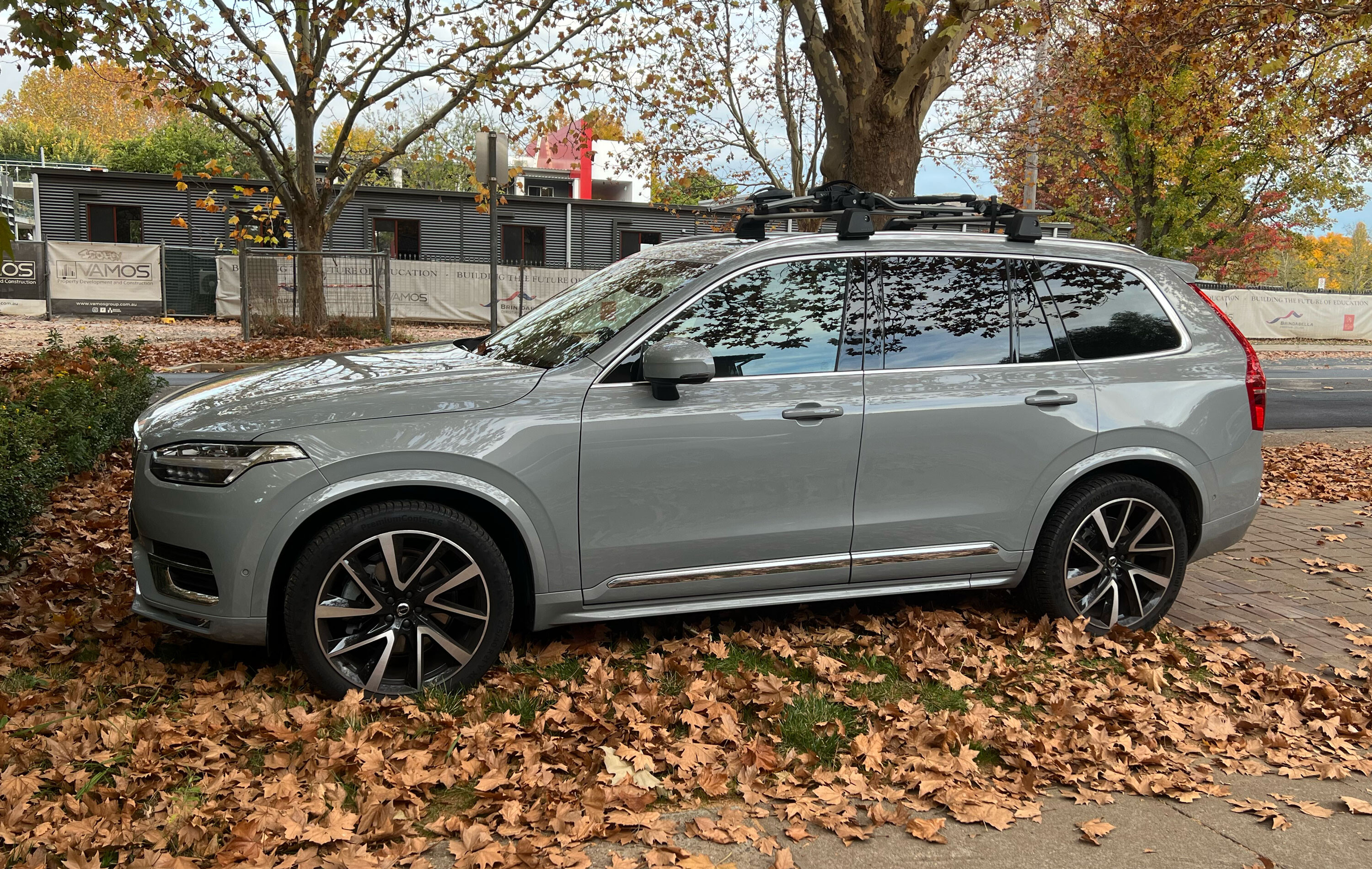
There’s unanimous love for the Vapour Grey solid-effect metallic, described elaborately by Volvo as a “neutral grey with a misty touch, inspired by windswept Scandinavian limestone houses”.
If we were configuring our own XC90, it would be a close decision between this and Denim Blue.
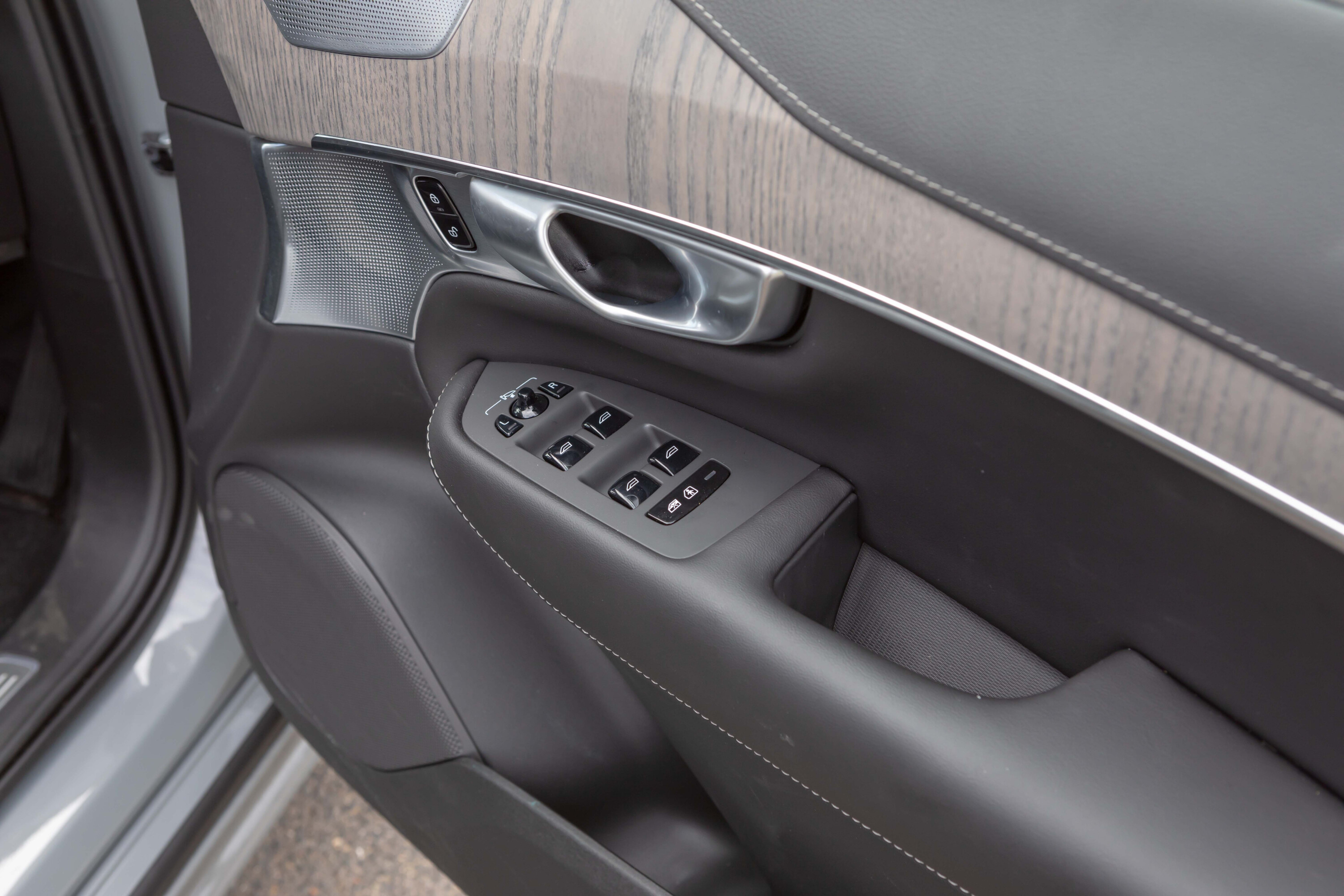
Our test car’s interior palette is a combination of off-white ‘Blond’ and dark ‘Charcoal’ with grey-ash wood trim, with ‘Amber’ another two-tone option featuring tanned upholstery. Or there’s the heavily black monotone ‘Charcoal’ cabin, which is possibly the most kid-friendly choice.
1
Every choice is embellished with an Orrefors crystal gear selector.
So, a decade after it was first unveiled – and with Volvo’s electric EX90 alternative arriving later this year – does the Swedish seven-seater SUV remain relevant for family life in 2024?
We’ll discover the answer to that biggest of questions over the coming months.
On yer bike!
XC90 ditches its training wheels; straps on roof rack
It’s one of those cherished, proud-parent moments when your child starts to ride a bike for the first time without either stabilisers or your guiding hand. The next milestone is venturing onto the open road, followed by longer rides (which don’t threaten any “I’m tired and wanna go home, Dad” protests).
For a few years, we simply lobbed our boys’ two bikes into the back of our Mazda CX-5 (now sold), of course taking extra care if my prized racing bike was also in the cargo mix.
With Seb now 10 and on a bigger bike, and seven-year-old Eddy also stepping up in size by taking Seb’s previous bike (as the youngest of three brothers, I finally get to enjoy the upsides of hand-me-downs!), our long-term Volvo XC90 was an opportunity to test the benefits of a bike-rack system for the first time.
1
Offered a choice of roof-mounted or towbar-mounted arrangement, we went with the former – the ‘classic’ bike-transport option in our eyes.
There are three Volvo Accessories components involved, not including the XC90’s standard roof rails. These are the Load Carrier bars and two Bicycle Holders (sold individually).
The carrier bars, made from 30 percent recycled materials, have been shaped to help reduce wind noise and wind resistance, while they have maximum roof loads of 100kg for driving or 300kg when the vehicle is static (most applicable for roof tents).
Volvo also offers a fork-mounting option for bikes, which brings two advantages: a bike is a little bit lighter to lift without one wheel attached, and it is better at limiting swaying or the rattling of a bike frame in its holder. The keep-all-wheels-on Bicycle Holder seemed far more appealing to us, however. Especially with its theoretically easier mounting.
1
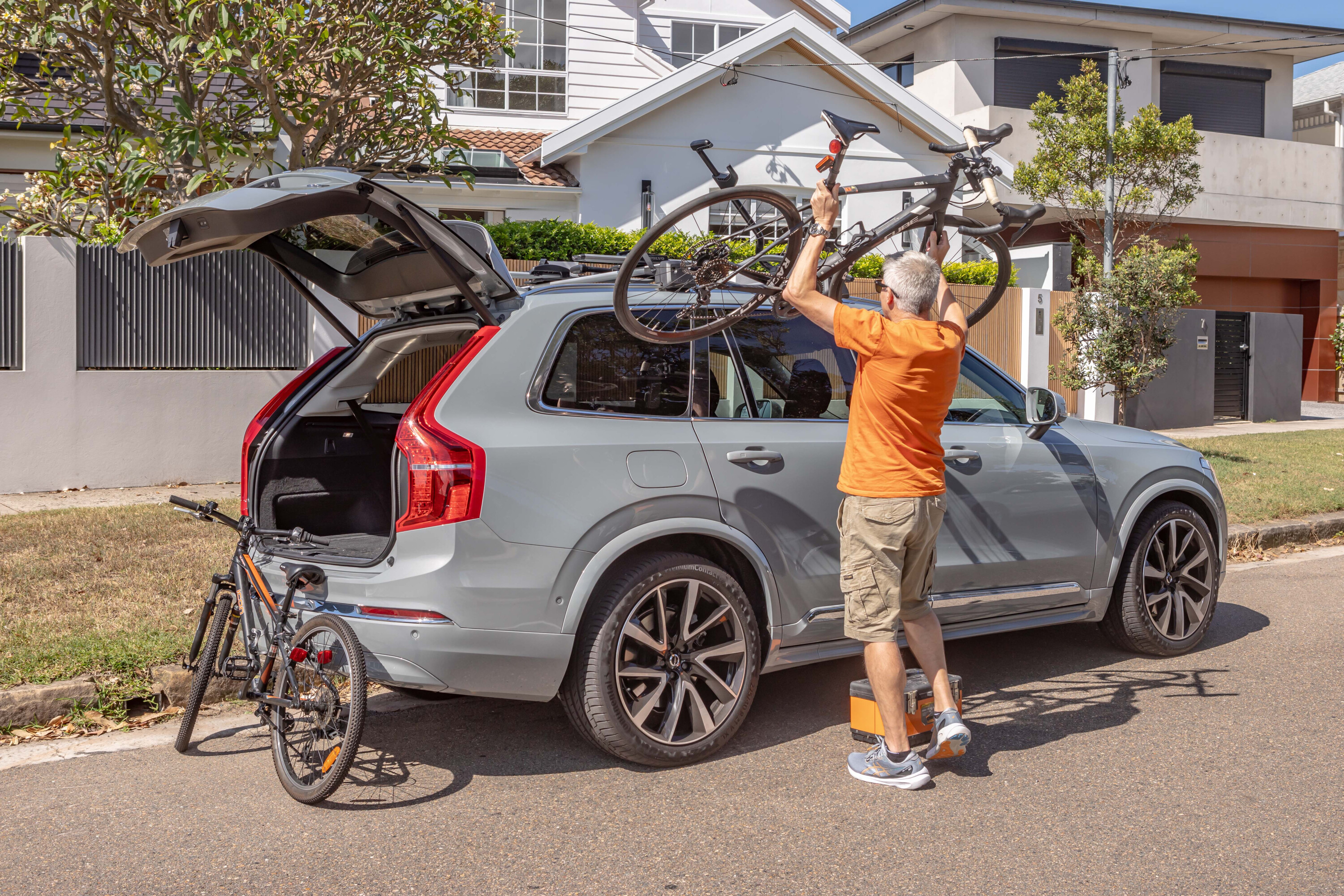
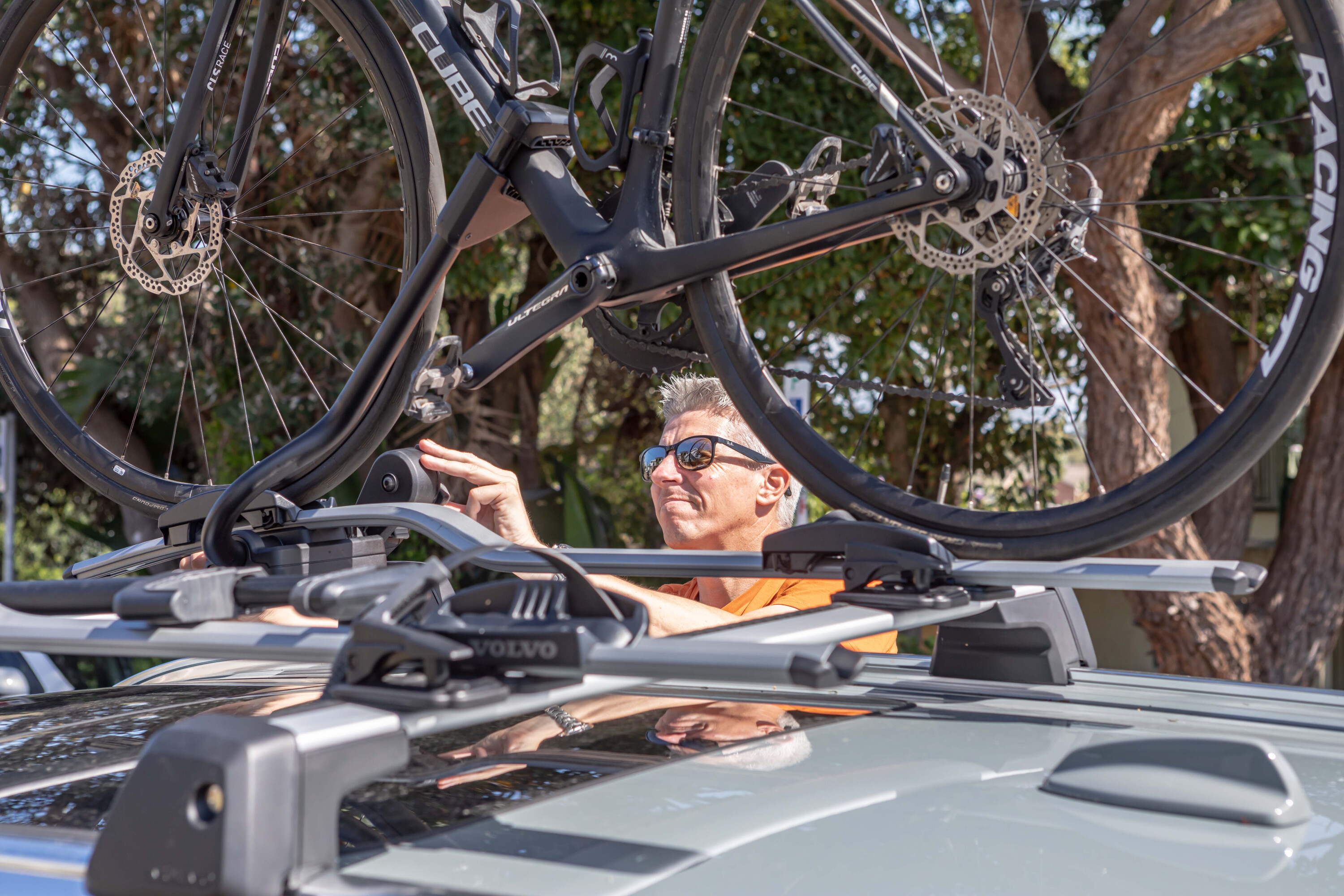
The key to the mounting simplicity is a grapple arm, which you lift to a 45-degree angle – then lift the bike until its lower frame rests into the grapple.
Rest the front and back wheels into the adjustable holders, then you twist a torque-limiting knob to close the grapple’s ‘hand’ and secure the wheels with diagonal quick-release straps.
Something I hadn’t considered, though, is my average height of 5ft 8in – virtually lineball with the XC90’s 1776mm height. With my footballer’s arms (i.e. my strongest muscles are in my legs), it makes for a challenging reach even with my 8.8kg racer, and more so with Seb’s 12kg mountain bike. Our angled driveway doesn’t help.
Perhaps I should have asked for a V60 Cross Country wagon (just 1.5 metres tall), though my solution is to increase ‘my’ height by stepping onto a sturdy toolbox, positioned approximately in line with the raised grapple. It just means taking the toolbox on trips.
1
There’s still the odd fumble in my first few mounting attempts, one a particular scare when I almost drop Seb’s bike onto the XC90’s glass roof. Dismounting the bikes is consistently the easier part.
As a roof-cargo newbie, it takes me a couple of drives – and regular glances upwards through the XC90’s panoramic ceiling – to trust that I’ve secured the bikes properly.
One successful transport drive south of Sydney takes Seb and I on our first big bike adventure, joining a mate and one of his daughters for a long, sunny morning ride along the mix of bike lanes and promenades from Kyeemagh to San Souci’s Captain Cook Bridge.
1
After 20-odd return kilometres, there’s no moans, only smiles, from Seb. The next test will be taking Eddy.
If cycling isn’t your thing and you’re more of a winter-sports bunny, the Volvo Accessories range includes two types of roof holders for skis/snowboards – one offering the convenience of slide-out accessibility.
There’s an even greater assortment of roof boxes if, somehow, the XC90’s gigantic boot isn’t sufficiently commodious for all your gear.
Our next adventure will take us closer to the Snowies, with a visit to Canberra to see family. No bikes for this one – we’ll be sticking steadfastly to four wheels.
Greaster!
Jez’s fuel figures? 12 galaktobourekos per 100km
It’s greaster time! Or Greek Easter, as the more religious members of my expanded family would prefer I call it. This means an annual pilgrimage down to Canberra, where much of the Greek side of the family resides.
With small- or medium-sized SUVs we’ve taken for the three-hour drive to the nation’s capital from Sydney, the boots would typically have little space once packed with luggage and kids’ paraphernalia. Naturally, the latter occupies most space. Such is the XC90’s voluminous cargo compartment, however, we’re able to pack our long-weekend belongings into the rearmost area without needing to fold the third-row seats.
1
Not that either of the boys plans to sit right at the back for the journey. Eddy occupies what has become his favourite spot in the Volvo – the clever centre middle seat with its integrated booster cushion. It gives him a great view through the windscreen.
The inset seat that pops up by pulling a handle predates even the original XC90, launched in 1990 as another safety world-first by the Swedes. The fold-down-and-out set-up in the 850 and 900 series was more basic than today’s design, though.
It epitomises the big Volvo’s impressive cabin versatility. The second row comprises three individual seats that slide fore/aft so families can balance luggage/ occupant space, while also allowing parents to have a smaller child within closer reach of the front seats.
Each seat can be folded flat, while the outboards feature a tilt-slide handle on the top of the seat for access to the third row.
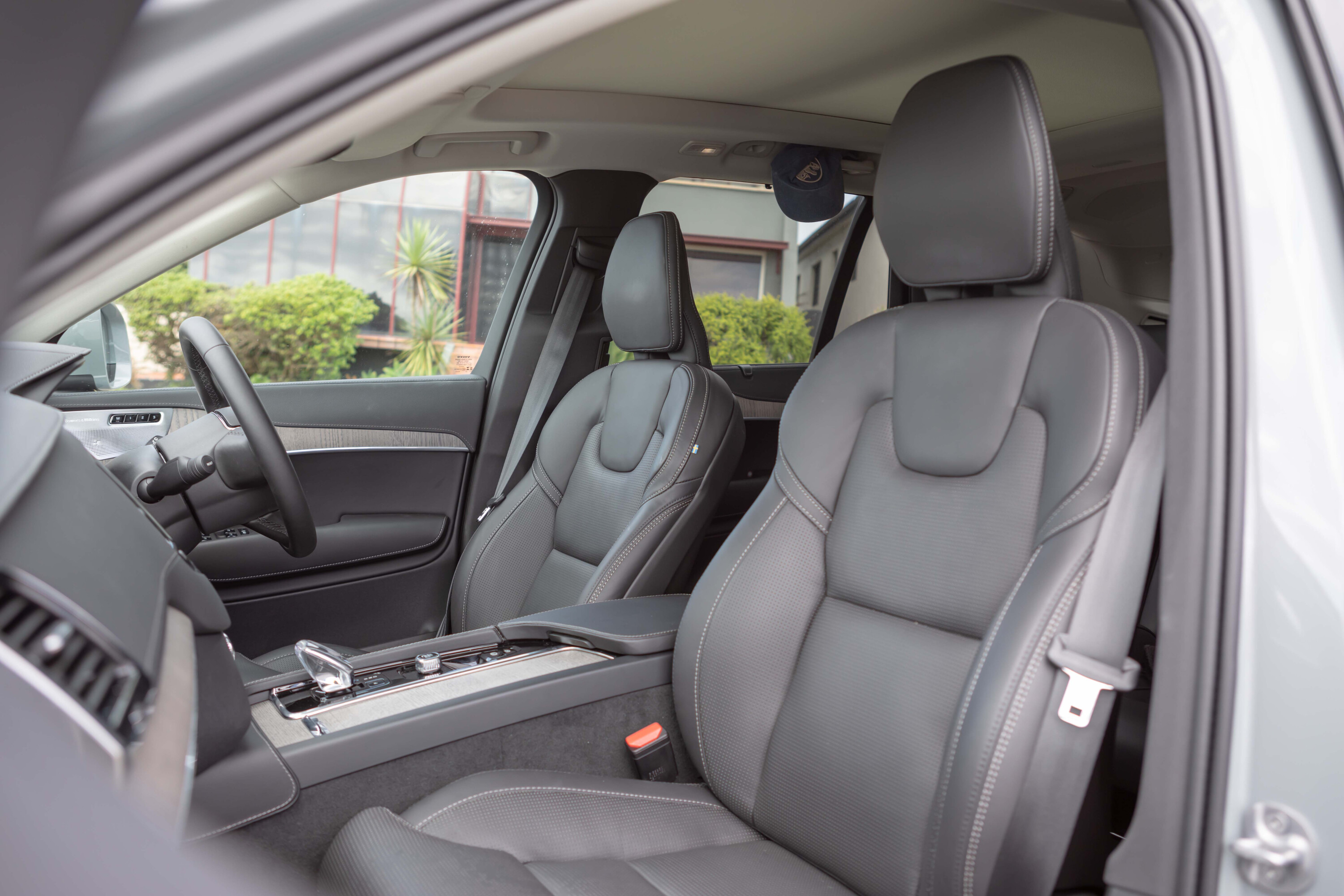
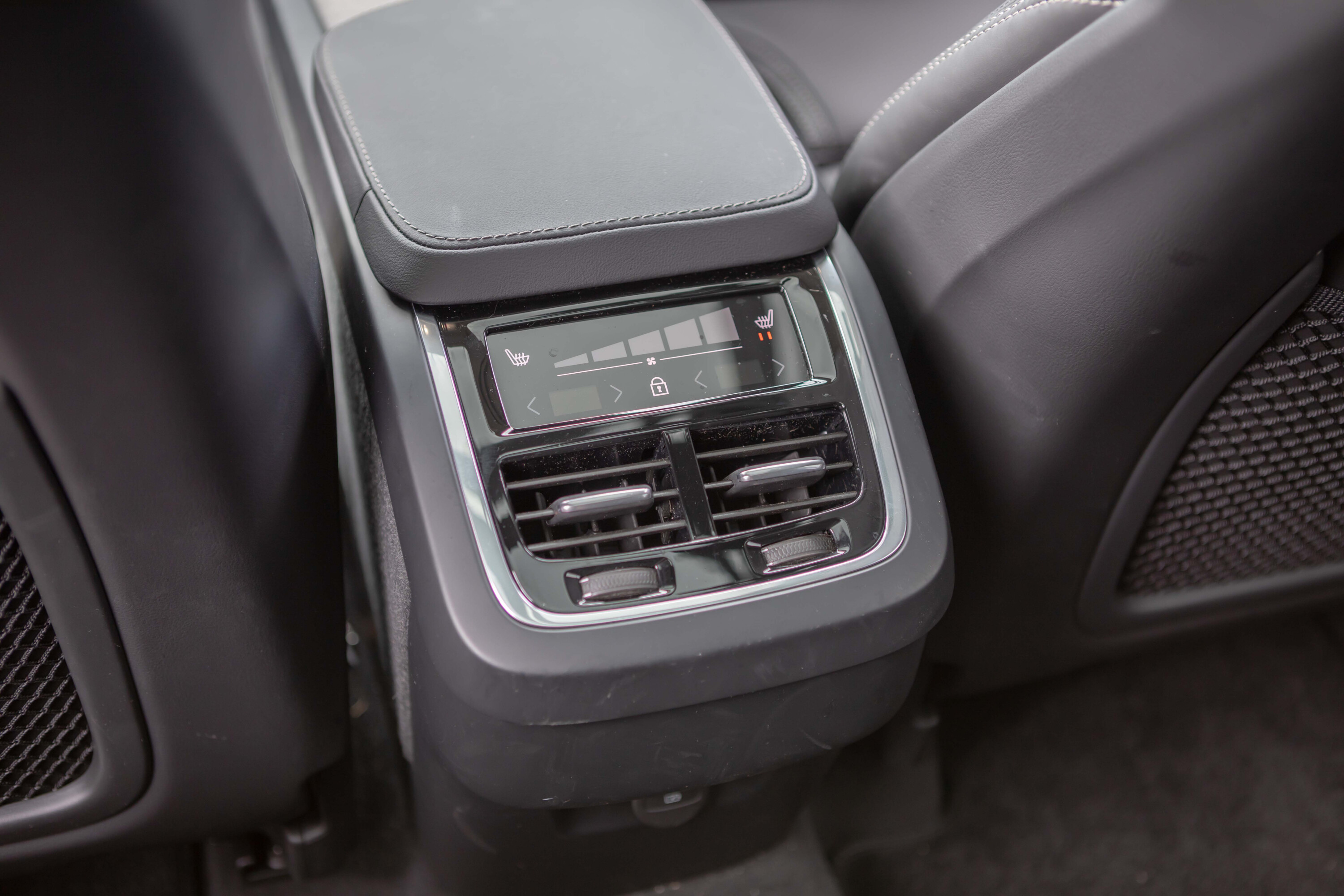
Twin USB-C ports hide behind a flip-open cover, one of the signs of how the XC90 has been updated over the years, while second-row passengers are also treated to window blinds, netted storage pouches, a centre armrest with concealed popup cupholders, and ventilation is directed not just from the rear of the centre console but also the (smartly trimmed) B-pillars. The boys like the panoramic roof blind to be retracted so the cabin has more light.
Our whole family gets to appreciate the benefits of the XC90’s optional air suspension, an extra that Wheels has said is a worthwhile purchase for the improvement it brings to ride quality and body control over the standard steel springs.
1
It especially excels on freeways, where the ride feels at its most relaxed without any unwelcome bounciness. The light steering that aids urban manoeuvrability remains linear at higher speeds, with on centre accuracy adding to the effortless long-distance motoring.
As does the four-cylinder petrol engine, which provides energetic performance when needed and always sounds civilised.
As with all long trips, we have Waze activated via Apple Carplay (wired rather than wireless) for warnings or proposed route changes. There’s one sandwiched section of enjoyable respite from the largely dull run down to Canberra – from where a left turn detours from the Hume Highway onto the Federal Highway and past Wollogorang before eventually straightening up ahead of Collector.
Less freeway, more dual carriageway (as us Poms would call it), the snaking two-lane has a mix of fast, constant-radium corners and S-bends. It’s an average-speed monitoring zone for trucks only, and mobile speed cameras don’t seem as common lately.
The XC90 may be a big, heavy SUV, but excellent body control delivers confident cornering. It has nothing to do with any enthusiasm here that the rear seat of the Volvo is a right old mess when we arrive in Canberra. Empty chip packets, tissues, pillows and kids’ shoes and magazines are strewn across the second row; there are pictures, though they probably need a ‘Censored’ warning.
1
Far more pleasing to the eye is Canberra in May. Autumn brings beautiful, thinning trees of assorted colours as well as gardens and pavements thickly carpeted with fallen brown and golden leaves.
A quick check of the trip computer before we start unloading the car indicates we’ve used 9.4 litres of premium unleaded for the 280km, circa-three-hour journey down.
That’s respectable efficiency … and less than we’re about to consume over the next three days in a Greek gorge-fest of koulouria, spanakopita, tsoureki, and other foods that taste as wonderful as they sound.
Departing for home, it’s not just a farewell to Canberra. The trip is a sign-off for our XC90 long-termer. It may well be the last time we ever drive one, with the upcoming EX90 large electric SUV set to replace it.
It only need look at its predecessor for the blueprint on how to execute a highly practical and amply luxurious seven-seater family SUV.
MORE
Everything Volvo
The previous generation of the Nissan X-Trail medium SUV was a favourite of buyers around the world – so, when the new model arrived in time for 2024, it had big boots to fill.
- Introduction
- Pricing
- Body styles
- Key features
- Optional features
- Safety
- Comfort & practicality
- Boot space
- I like driving, will I enjoy the X-Trail?
- Which X-Trail engine uses the least fuel?
- Towing capacity
- Warranty & servicing
- Which version of the Nissan X-Trail does Wheels recommend?
- Key rivals
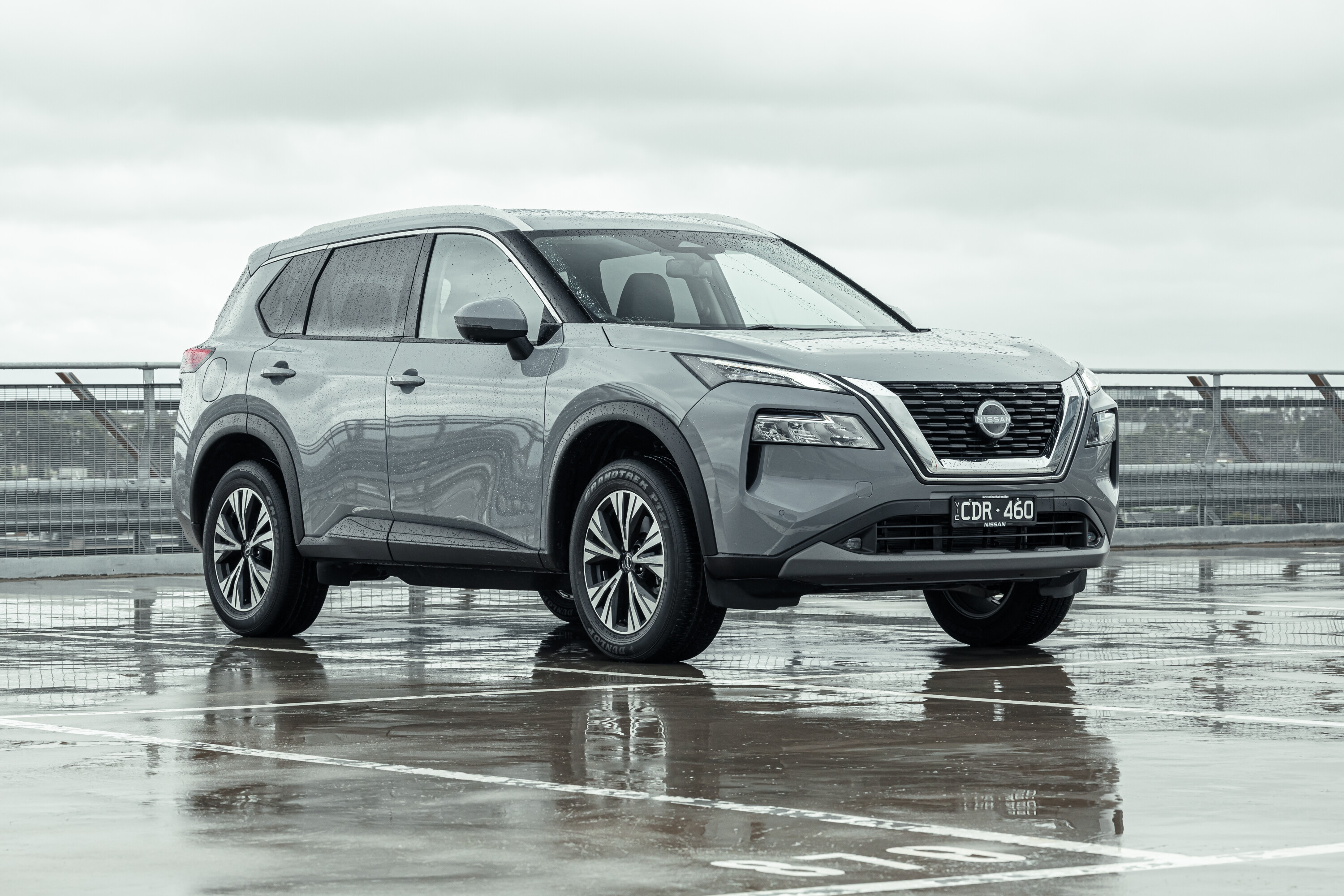
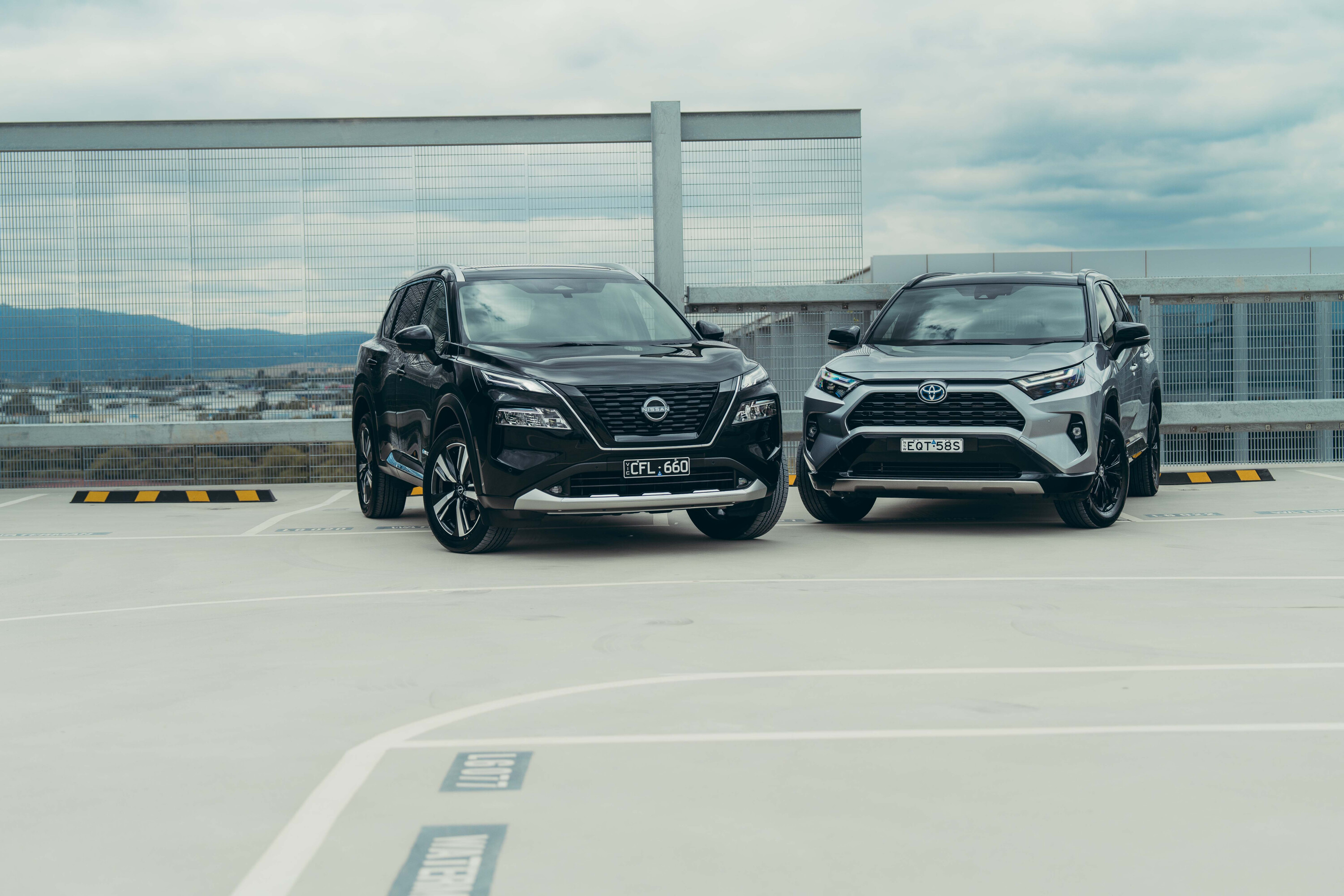
Early signs show the new X-Trail is having no trouble living up to expectations, having already won key comparisons first in petrol form when it defeated all-comers in our Best Medium SUV 2023 test, and then again in E-Power hybrid form against the popular RAV4 Hybrid.
It also achieved a top-four finish at 2023 Wheels Car of the Year, fending off not only its direct segment rivals, but most of the market’s newcomers in every class.
1
Nissan X-Trail pricing
Depending on which of the five available models you choose, the X-Trail is available with five or seven seats, a choice of two engines, and an off-road variant.
Engine choices include a 2.5-litre petrol engine, available with front-wheel- (FWD) and all-wheel-drive (AWD) drivetrains, or the new E-Power 1.5-litre three-cylinder petrol-electric hybrid with ‘E-4orce’ AWD.
| 2024 Nissan X-Trail pricing | |
|---|---|
| ST five-seat FWD | $37,250 |
| ST seven-seat AWD | $40,290 |
| ST-L five-seat FWD | $43,690 |
| ST-L seven-seat AWD | $46,790 |
| N-Trek five-seat FWD (new) | $47,290 |
| ST-L E-Power five-seat AWD | $49,990 |
| N-Trek seven-seat AWD (new) | $50,390 |
| Ti five-seat AWD | $50,490 |
| Ti-L five-seat AWD | $53,490 |
| Ti E-Power five-seat AWD | $54,690 |
| Ti-L E-Power five-seat AWD | $58,490 |
| Prices exclude on-road costs | |
What body styles are available with the X-Trail?
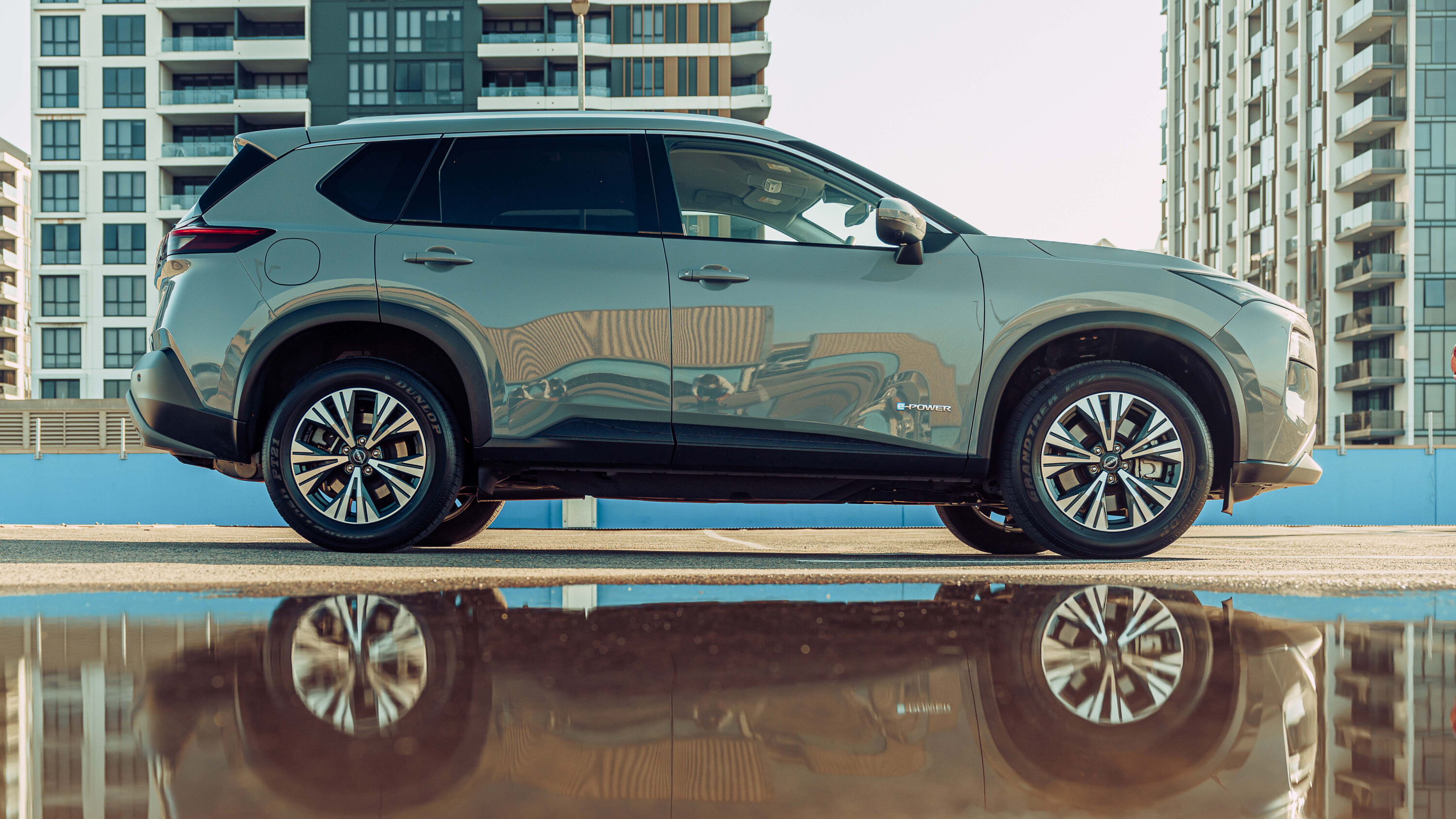
Like all of its rivals, the X-Trail is a five-door SUV only. But, as noted, it can be had in five- and seven-seat forms.
The X-Trail drives either its front wheels or all four wheels, depending on the version. It is classed as a medium SUV, in the volume-selling segment.
1
What features are there in every X-Trail?
The features listed below are standard in the entry-level model and will appear in higher-grade models, unless replaced by more premium equivalent features.
What key features do I get if I spend more?
Entry level: X-Trail ST
The most affordable X-Trail is the five-seat X-Trail ST with the 2.5-litre petrol engine coupled with a continuously variable automatic transmission (CVT) and front-wheel drive. Spending around $3040 more will bring the seven-seat ST with the same powertrain, plus all-wheel-drive.
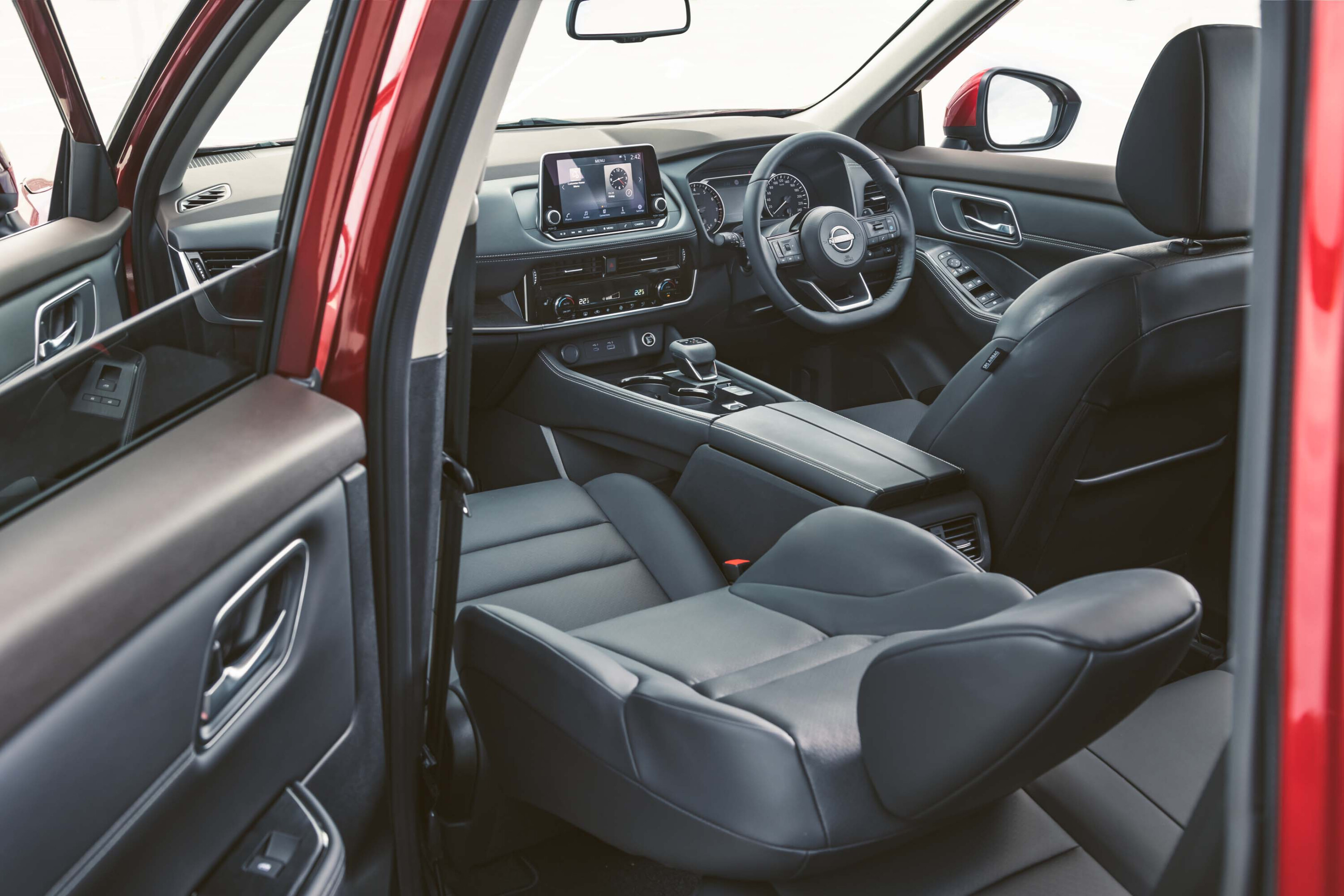
1
X-Trail ST-L
Stepping up to the X-Trail ST-L brings a choice of five or seven seats, which come trimmed with black synthetic leather, heated front seats and a driver’s seat with eight-way power adjustments.
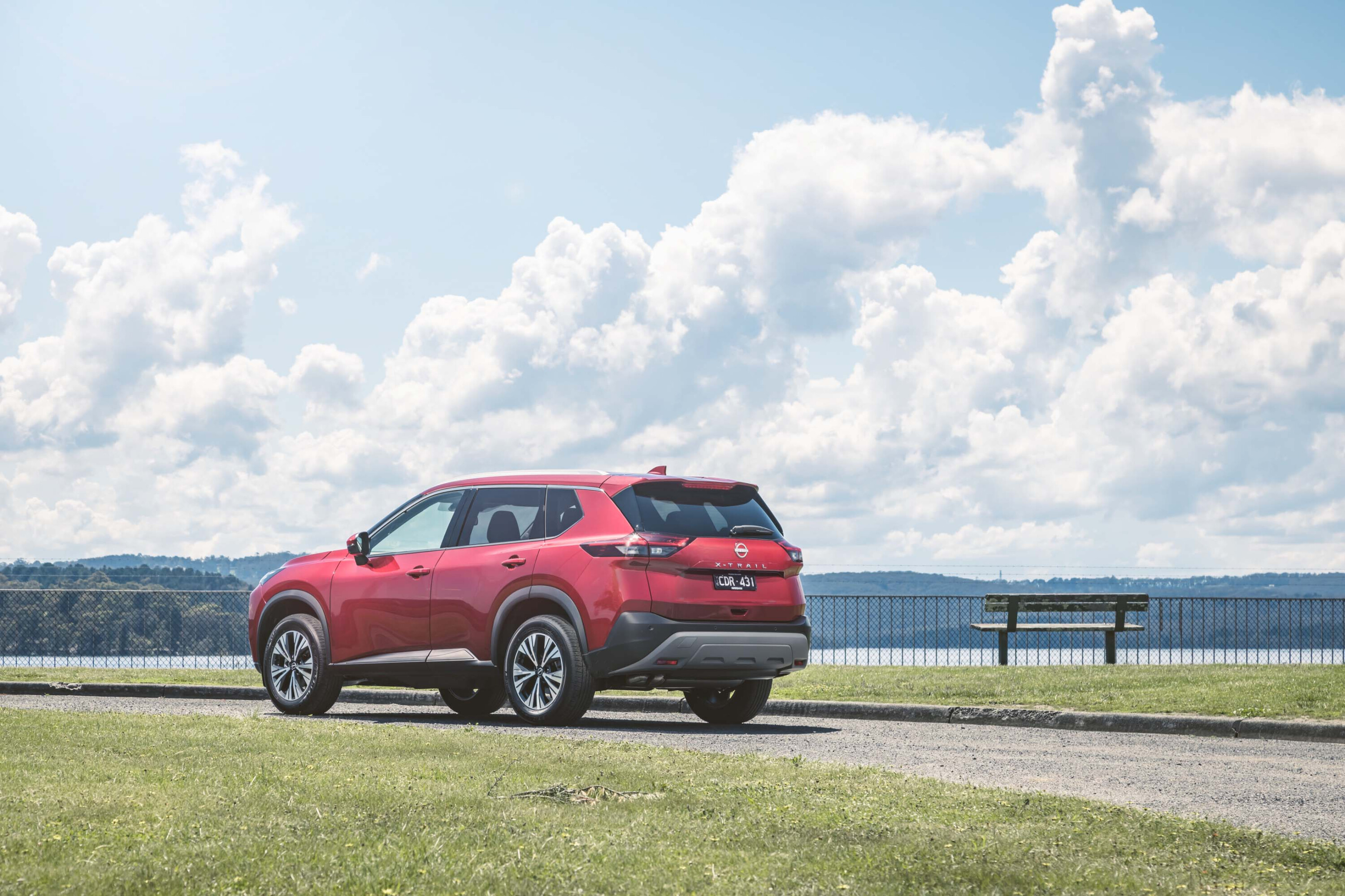
11
The five-seater comes with Nissan’s Divide N Hide cargo system, featuring an adjustable boot floor that allows for flexible storage options – and hiding your valuables.
The ST-L also comes with a choice of E-Power hybrid powertrain and e-4orce electronic 4×4 system, which is a five-seat-only configuration. Unlike the five-seat petrol variant, it misses out on the Divide N Hide cargo system and a spare wheel – if you get a flat you’ll have to make do with a ‘goo’ puncture repair kit.
The E-Power does bring a couple of extras though, including active noise cancellation to reduce cabin noise and conversely, an acoustic vehicle alerting system that lets pedestrians hear you when creeping around in EV mode.
9
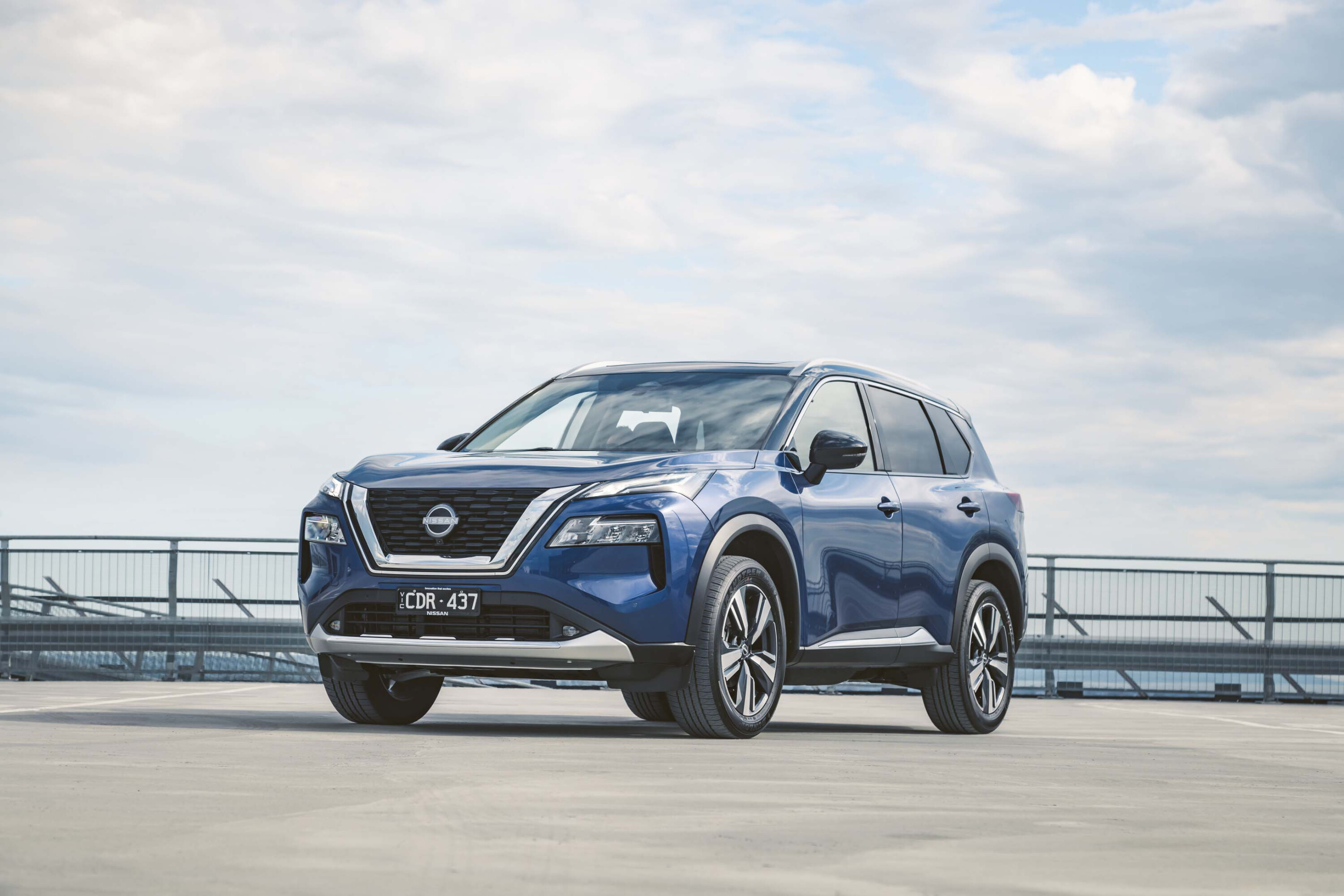
X-Trail Ti
Higher up the chain, the X-Trail Ti comes with both powertrains, but drops the 2.5-litre petrol with front-wheel-drive. Unfortunately, it also comes without the option of a seven-seat configuration.
7
The Ti stands out with chrome side moulding, and silver front and rear lower fascia.
8
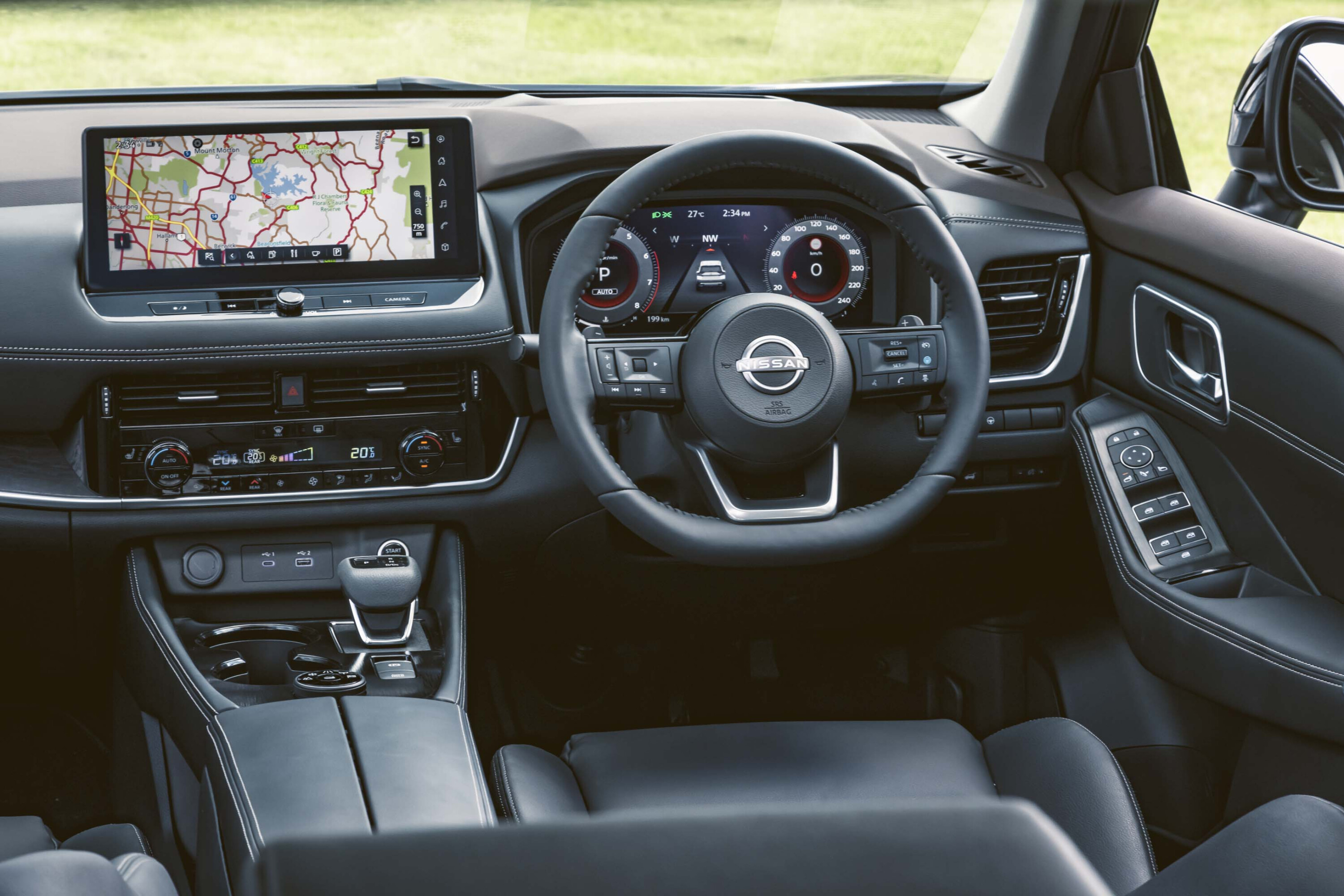
X-Trail Ti-L
The range-topping X-Trail Ti-L brings about $3000 worth of extras to the Ti spec.
| 2024 Nissan X-Trail Ti-L features | |
|---|---|
| 5 seats only | Remote engine start |
| Quilted Nappa back or tan leather upholstery | Door mirrors that tilt in reverse gear |
| Driver’s seat and mirror position memory | Hands-free powered tailgate |
| Heated steering wheel | 10-speaker BOSE premium audio system. |
| Heated outboard rear seats | |
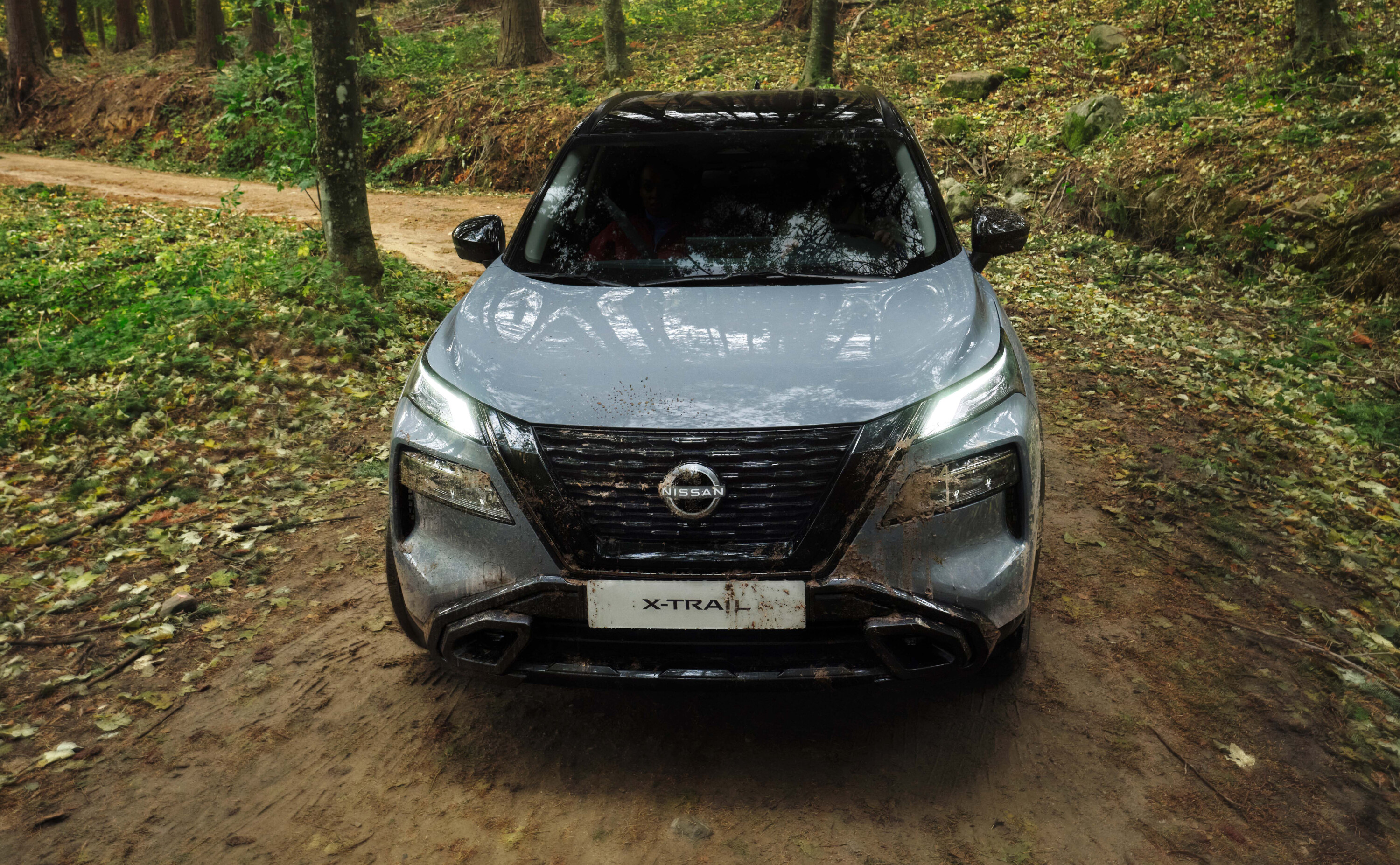
X-Trail N-Trek
The recently released X-Trail N-Trek adds off-road focused features to the range. The N-Trek is $3600 more expensive than the equivalent ST-L variant, yet cheaper than the Ti AWD by $100.
Note: At the time of this review, the N-Trek variant had not yet been released.
13
How safe is the Nissan X-Trail?
1
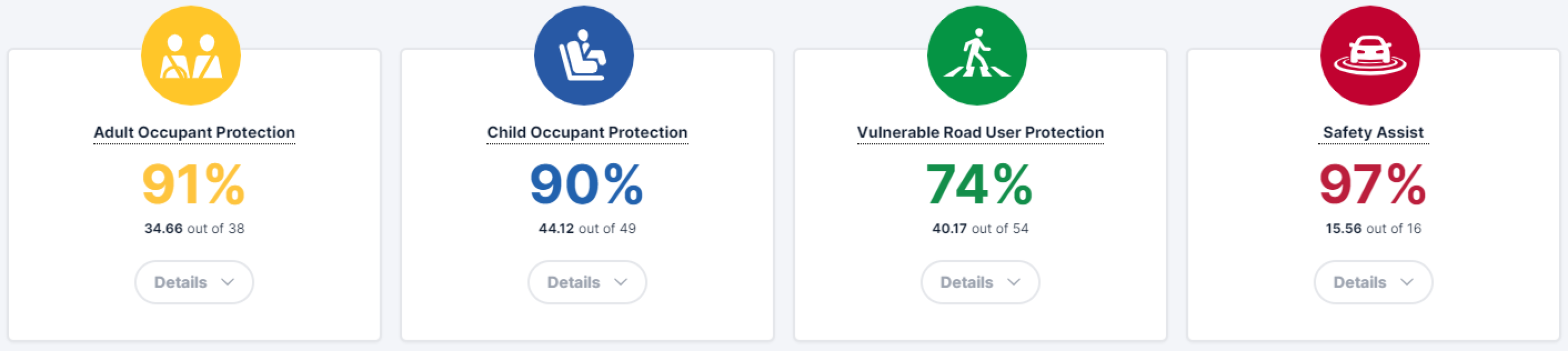
The 2024 Nissan X-Trail was awarded a five-star ANCAP safety rating, scoring 91 and 90 per cent for adult and child occupant protection categories respectively.
In the crash-test assessment for child occupants based on six- and 10-year-old children, the X-Trail scored 23.3 points out of a possible 24.
It also did well in the safety assist tests, gaining a 97 per cent pass rate.
However, it scored significantly lower in the vulnerable road users’ rating, notching up a 74 per cent score.
10
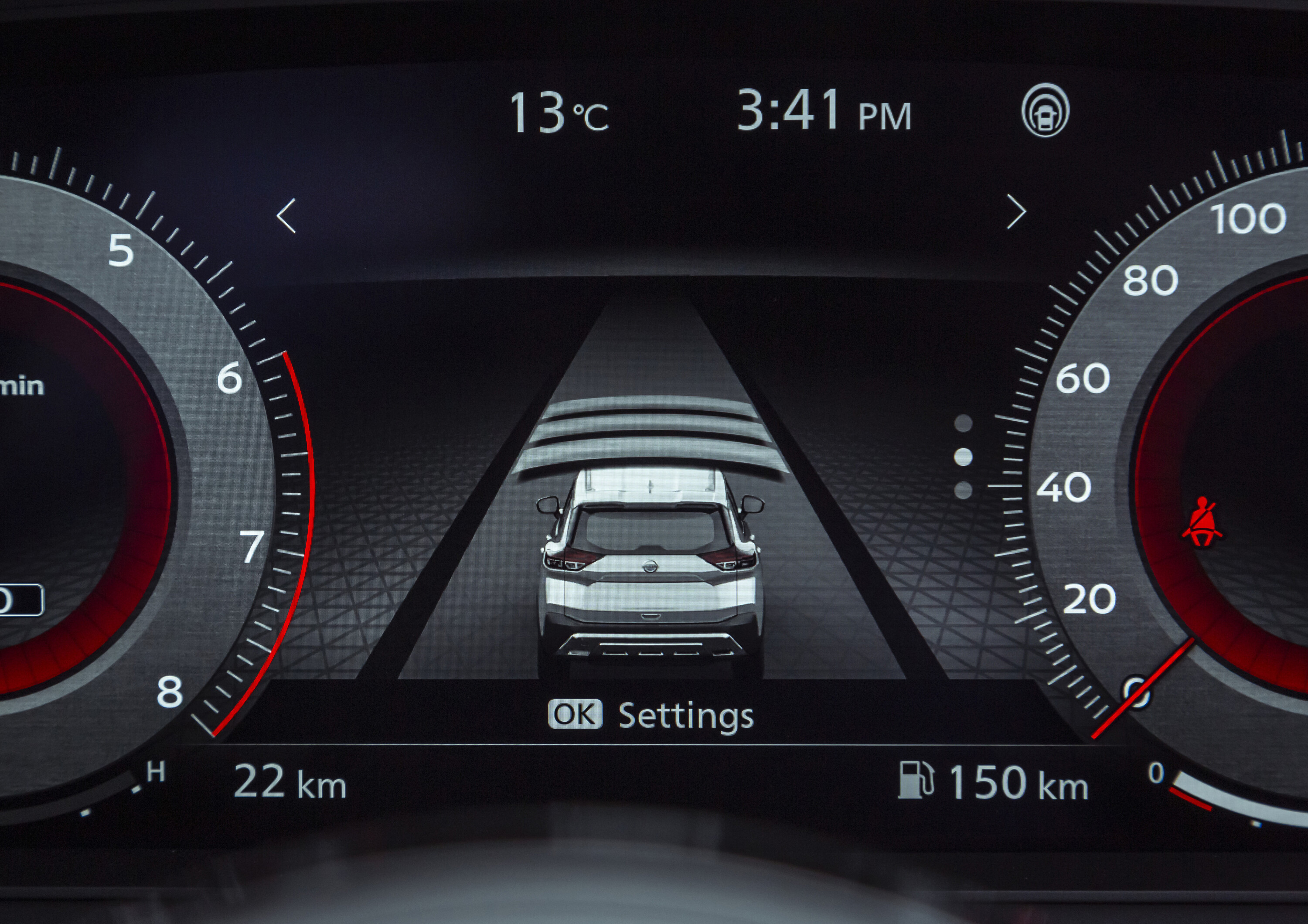
Seven airbags (dual front, side, curtain, and front-centre) feature across the X-Trail range.
ST-L grades and above also include Nissan’s ProPilot+ safety suite, allowing semi-autonomous highway driving in certain situations.
How comfortable and practical is the Nissan X-Trail?
Capable as the previous model X-Trail was, it spent the latter half of its decade-long lifecycle feeling a tad uninspiring whenever you hopped into the cabin.
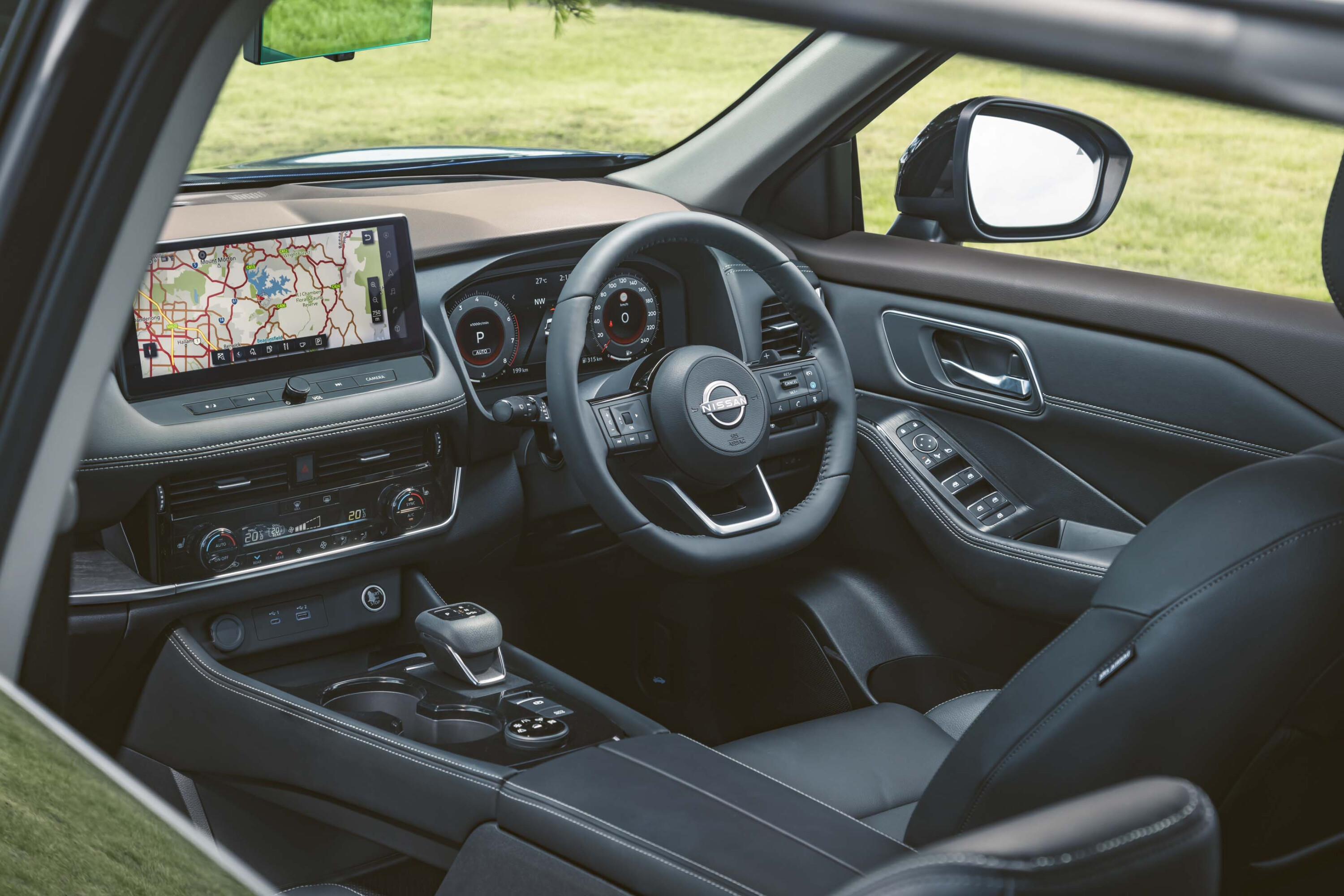
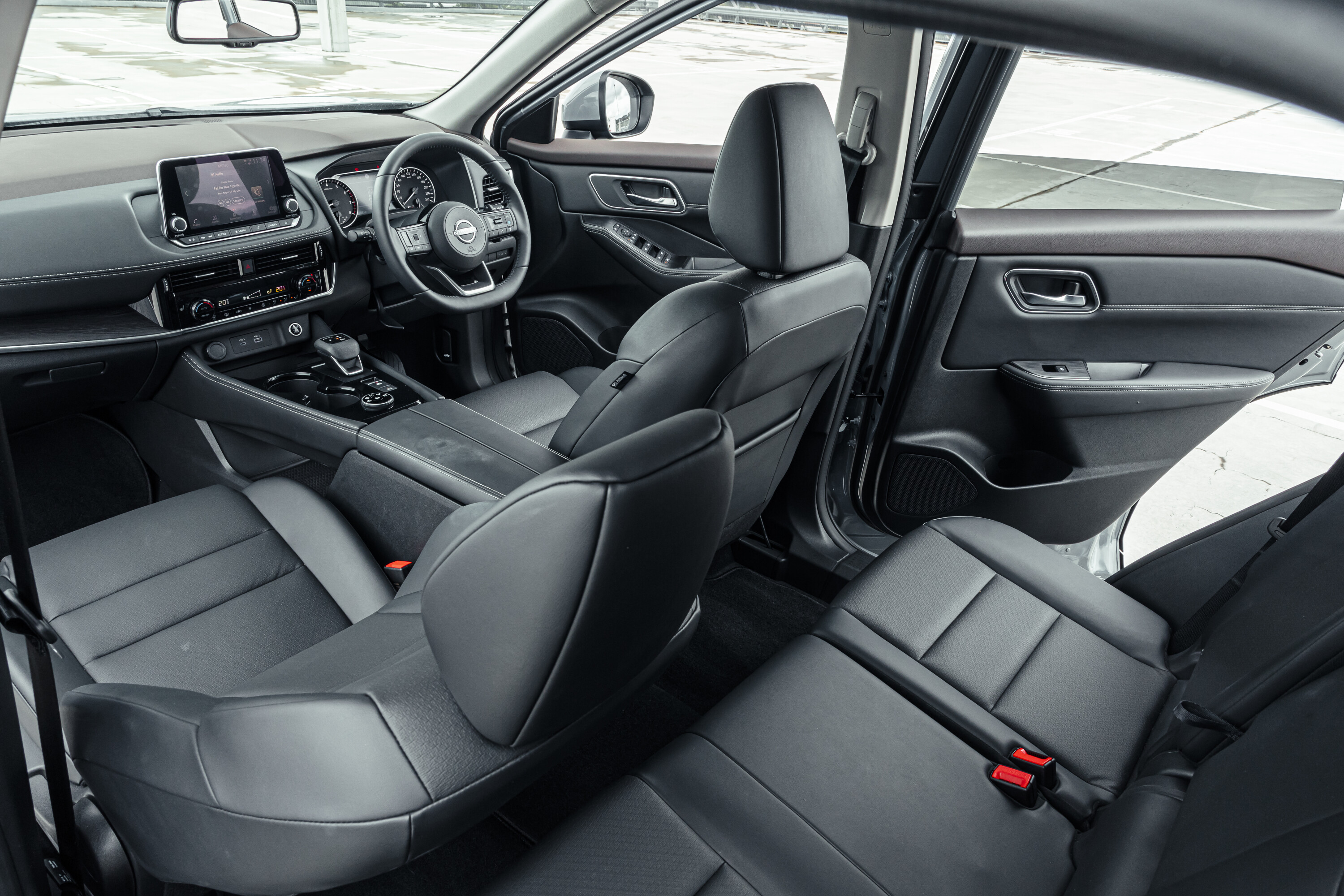
This new model oozes showroom appeal, with nice materials and features that seem well put together.
Plenty of thought has gone into the design and practicality, with a host of little bins and compartments around the cabin, intuitively laid out switches and dials.
4
The entry-level ST is comfortable, while the ST-L spec’s faux leather seats bring a sense of elegance and a couple more seat adjustments for the driver.
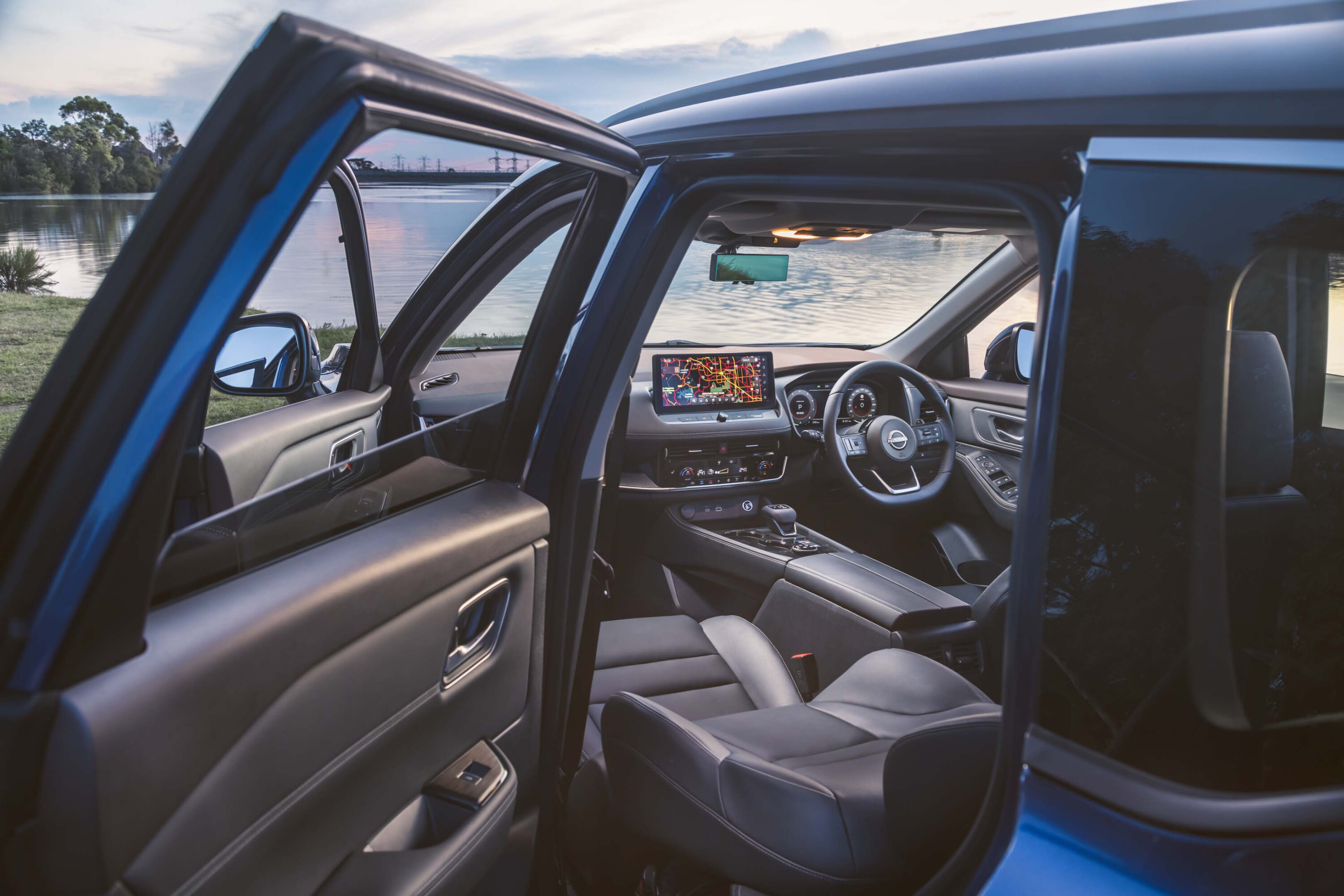
Stepping up to the Ti and Ti-L adds a more premium feel with leather upholstery, including plush Nappa leather in the range-topper, a panoramic touchscreen, LED mood lighting and a full-size sunroof that makes the cabin feel more airy.
9
Front seat occupants in each variant benefit from two USB ports (one USB-A and one USB-C) to charge their phones or sync music, with the upper spec Ti and Ti-L gaining a wireless phone charger and wireless Apple CarPlay – but only wired Android Auto.
Two cup holders feature in the textured centre console, located above a rubberised storage tray that is perfect for small bags or notepads. Good-sized door bins and a deep central cubby with a butterfly-opening lid finish the up-front practicalities.
Rear space and comfort
The X-Trail’s rear pew is raised to offer a stadium view to the windscreen over the front occupants.
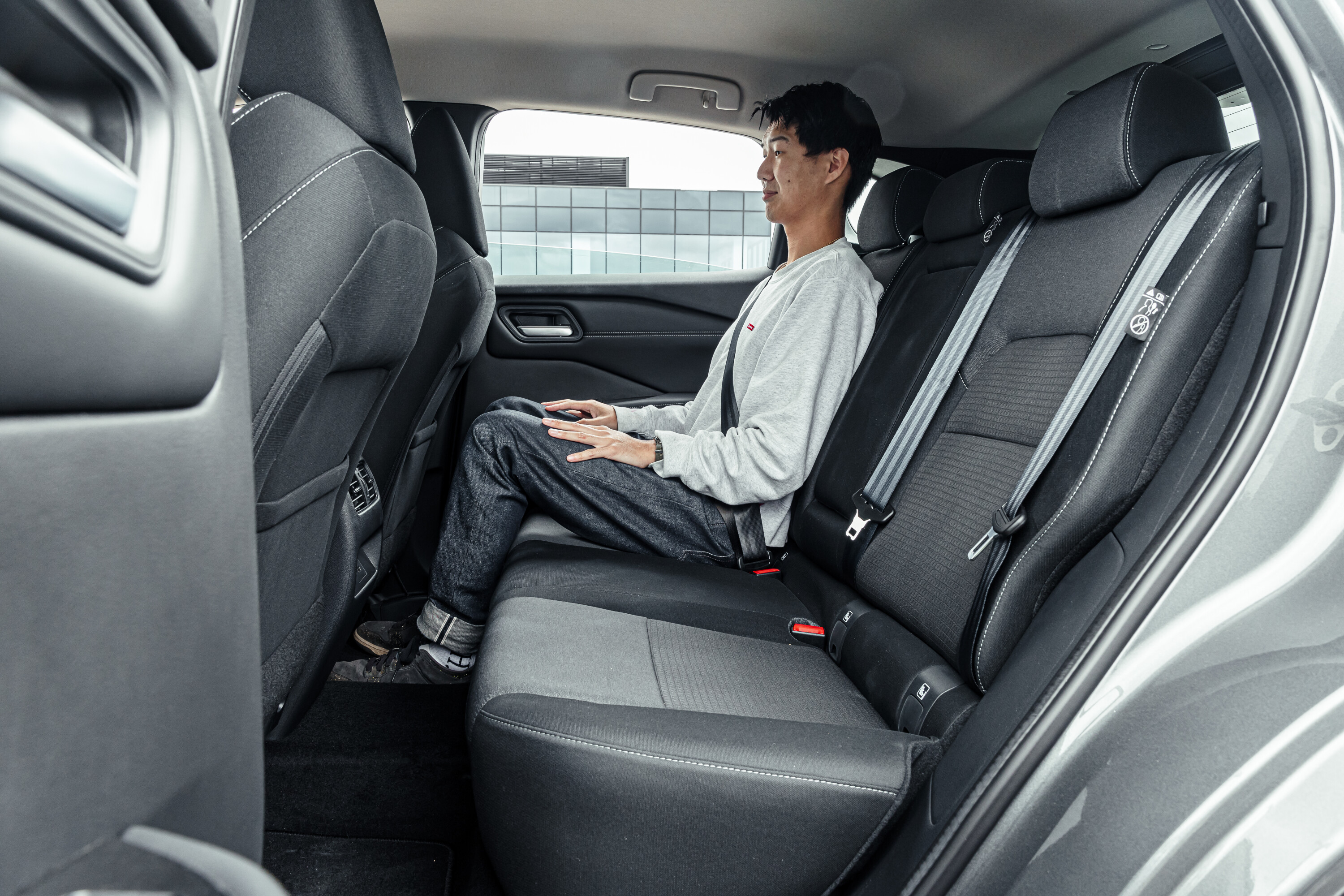
It’s easily wide enough for three across the bench, and those over 180cm tall have good leg, and headroom even with the sunroof installed.
Apart from the entry-level five-seat ST, whose rear bench splits 60:40, the X-Trail’s rear seats split 40:20:40, can recline little and feature a centre armrest and a centre pass through to the boot.
Rear seats can slide back and forth and recline a little, but the bench itself is a little narrow and lacks under-thigh support for those with longer limbs.
12
But it’s wide, which means three adults can sit in relative comfort. Whoever draws the short straw to sit in the middle will have enough room to put their feet on either side of the transmission tunnel.
Rear-seat accoutrements include map pockets behind both front seats, two more USB ports (one USB-C and one USB-A), door bins with bottle holders, and two cupholders in the fold-down centre armrest.
There are also air vents back there, and passengers in the Ti and Ti-L can set their own temperature.
2
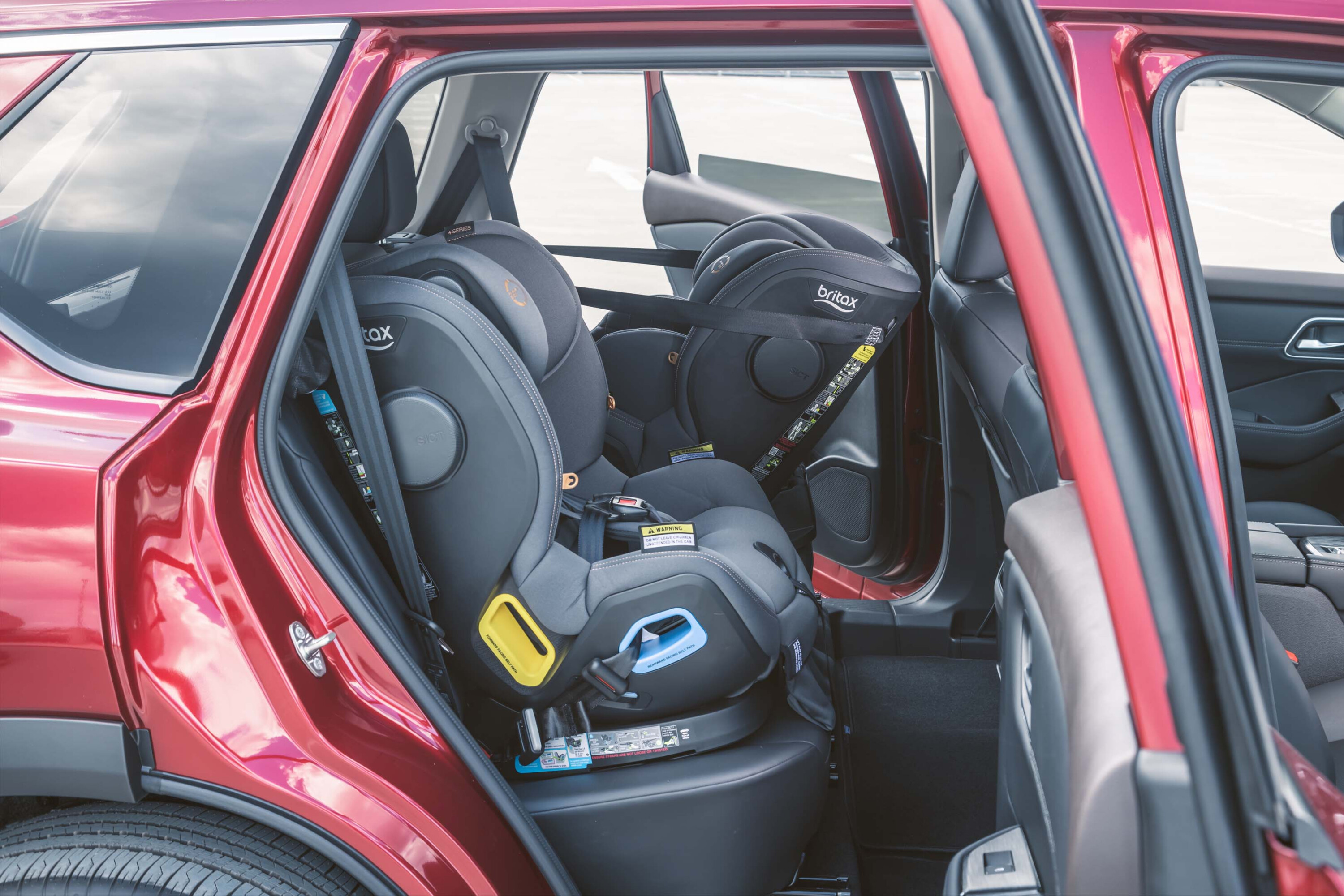
The X-Trail has cast metal door hinges that allow for the rear doors to open out to 85 degrees, which makes life easier for folk with young children who need to load car seats and the kiddies who sit in them – speaking of which, there are outboard ISOFIX anchors and three seat tethers.
The wide-opening door also makes it easier for adults to get in and out without groaning.
That said, few adults would be able to gracefully climb into the third row of the seven-seat X-Trails, which is quite cosy and only really suitable for small children – or, if adults, very short and uncomfortable trips.
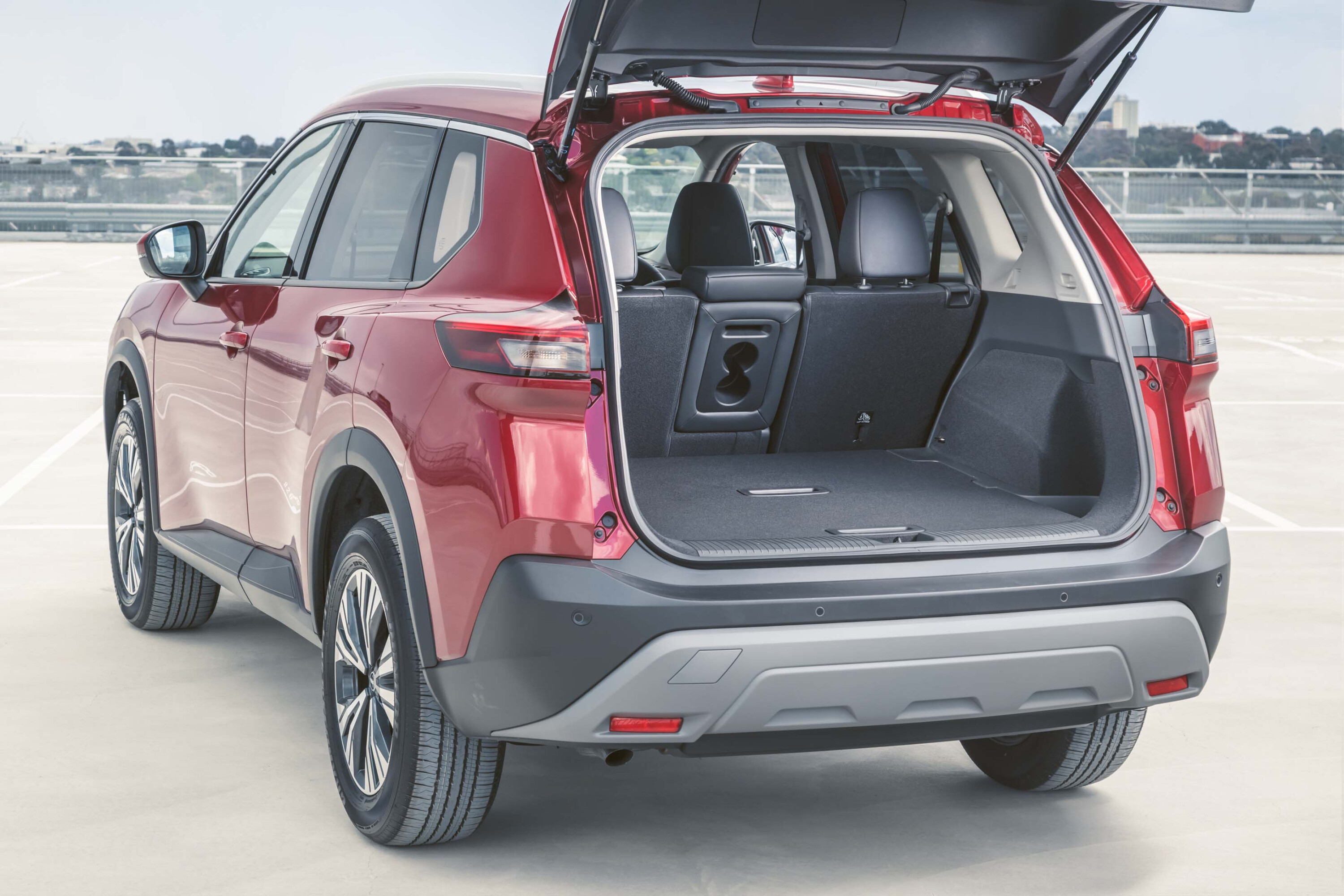
7
How much boot space does the Nissan X-Trail offer?
Five-seat petrol versions have the largest boot capacity at 585 litres, while the E-Power hybrid is listed at 575 litres.
The seven-seat option, available for the ST and ST-L, reduces space to 465 litres with the third-row folded flat.
That does put the X-Trail ahead of key five-seat rivals like the Toyota RAV4 (540L), Mazda CX-5 (442L) and Kia Sportage (543L) for load-lugging ability.
The five-seat 2.5-litre petrol X-Trails come with Nissan’s modular boot dividers that allow two carpeted sections to be arranged in 16 different configurations to secure bags, hide valuables or store longer items.
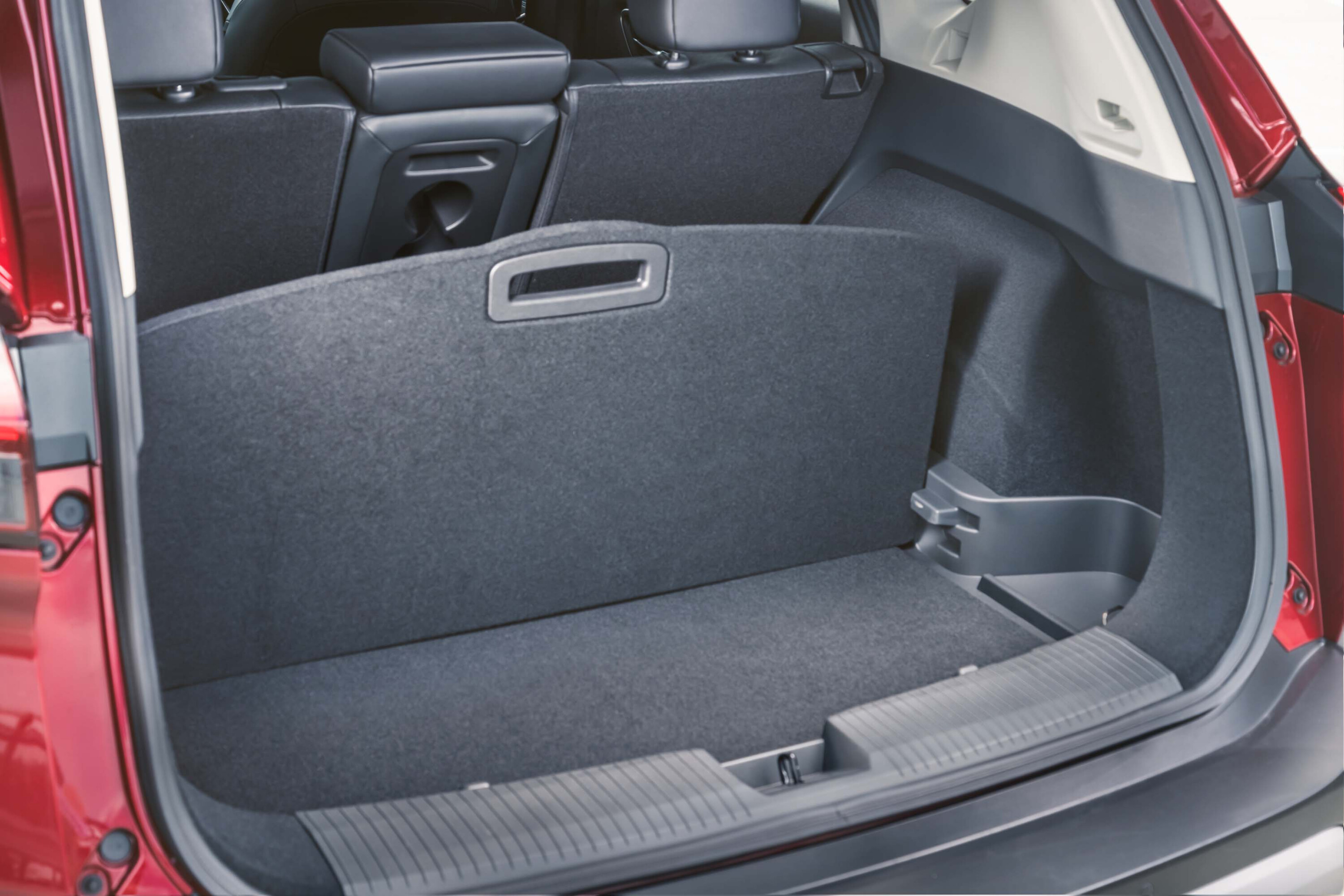
3
The 2.5-litre X-Trails come with a space-saver spare wheel under the boot floor, while the E-Power versions have a tyre repair kit.
The 40:20:40 split seatback provides a centre passthrough, the retractable cargo blind has its own storage spot under the boot floor, and there’s a 12-volt power outlet.
No bag hooks or seatback release handles are two notable omissions,
A power tailgate is standard on the Ti and Ti-L grades.
Dimensions
The Nissan X-Trail has a wheelbase of 2705mm and is 4680mm long, 2065mm wide and 1725mm tall.
I like driving, will I enjoy the X-Trail?
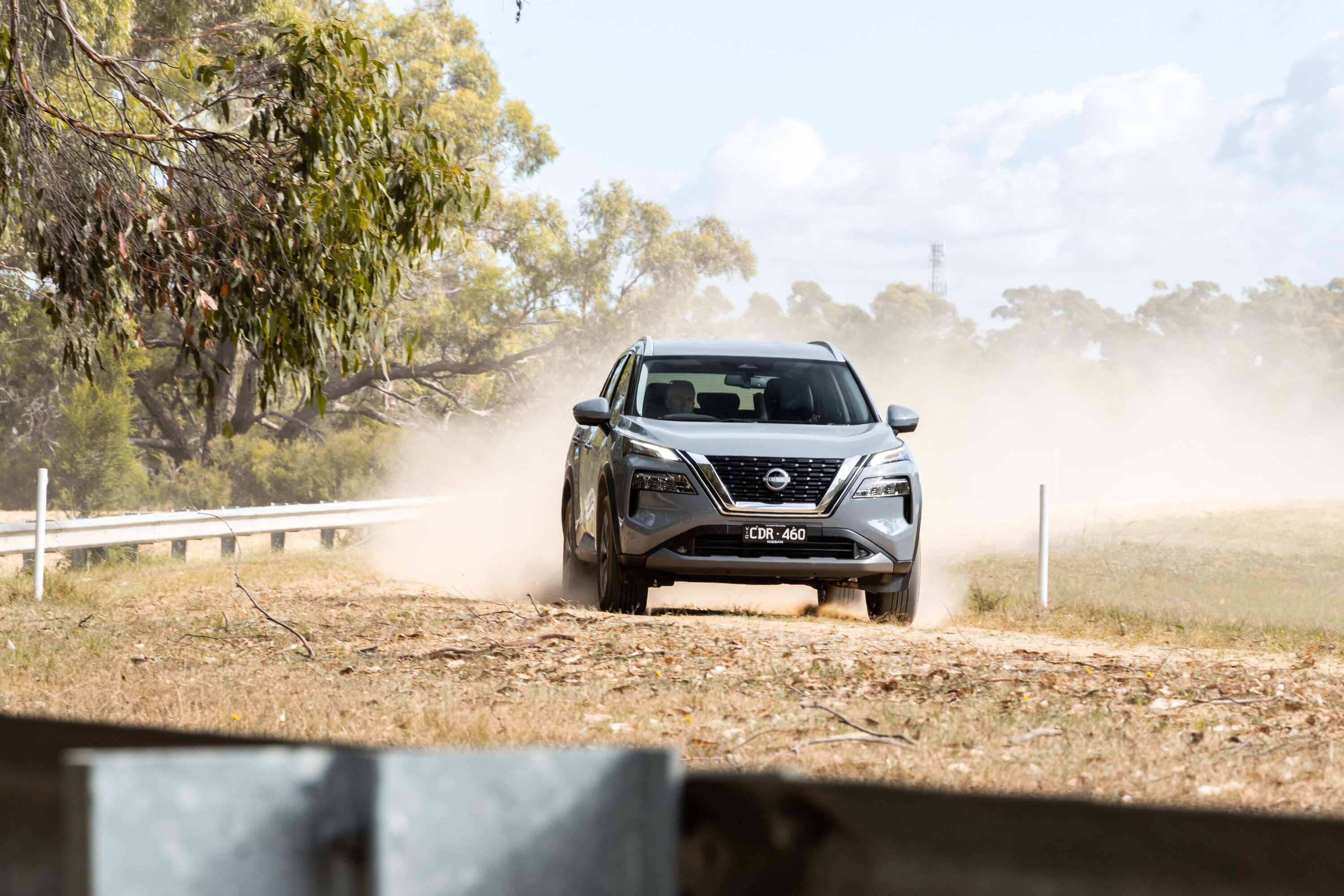
In this regard, the X-Trail is solid rather than excellent. Nissan has opted for a ride/handling balance that favours comfort over agility – but that doesn’t mean it’s entirely lacking in dynamic ability.
The ride is significantly better than with the previous model, thanks to a complete overhaul of the chassis and suspension tuning. The new X-Trail is both confident on its feet and comfortable, and road noise is notably low.
But ride comfort comes at the expense of handling, and on more demanding roads the X-Trail is prone to body roll – significantly more than rivals such as the Mazda CX-5 or Volkswagen Tiguan. The light steering can also feel aloof, so it feels like there is a disconnection between the steering wheel and the road.
4
On the Ti’s bigger 19-inch rubber, the ride can be brittle over sharp, low-amplitude road imperfections and corrugations.
A driver’s SUV it is not, but what the X-Trail gives away in outright dynamics it makes up for in day-to-day comfort and refinement around town and on highways.
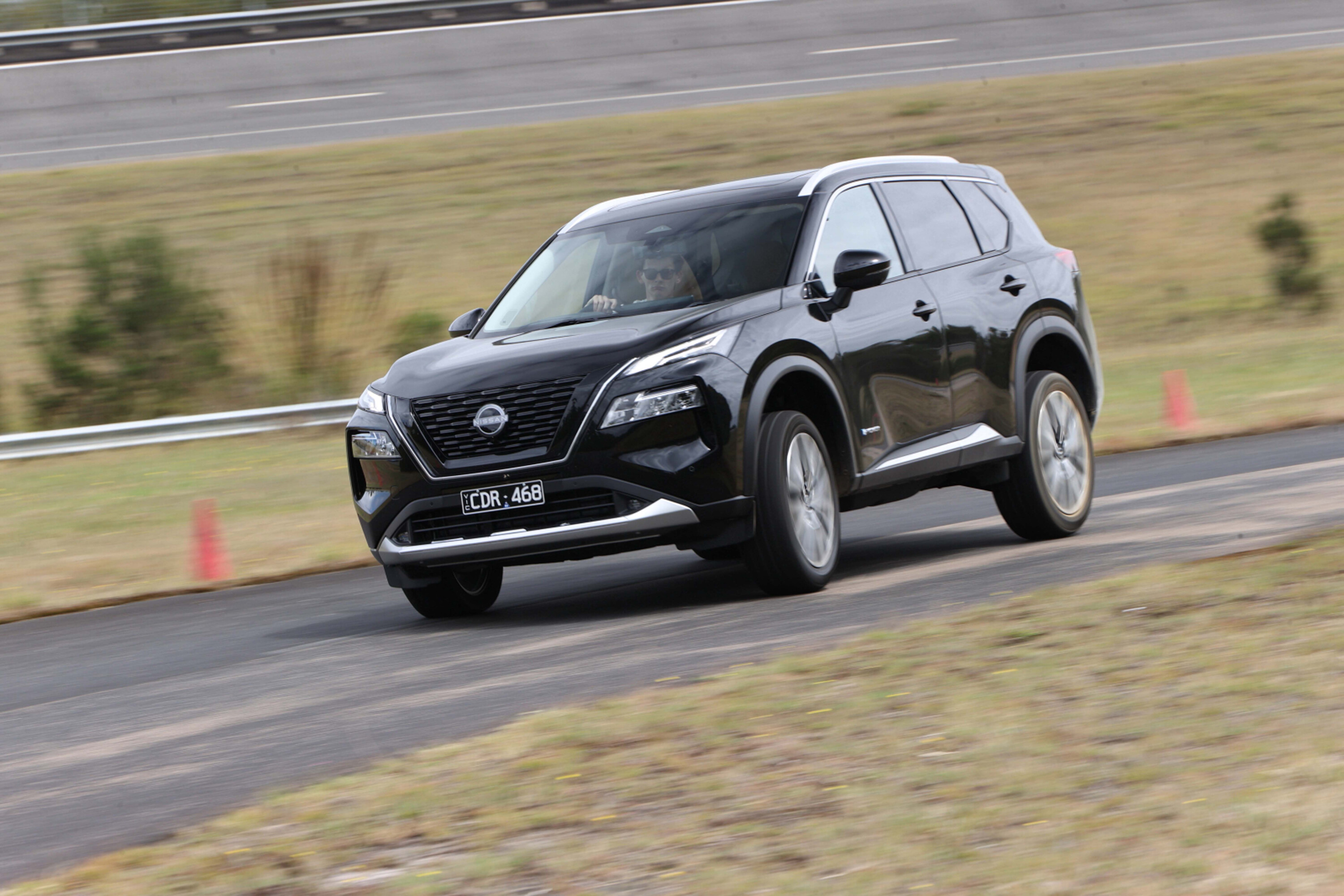
Performance-wise, the 2.5-litre petrol engine and continuously variable transmission (CVT) combo is similar to the previous model, but with just a hint more power and torque.
AWD versions also have a revised system with five drive modes: Off-road, snow, auto, eco and sport.

2
The carry-over CVT has the same droning nature that you’ll either dislike or not notice at all.
The engine, however, is a free-revving unit that is more refined and less thrashy than the previous version with reduced levels of noise, vibration and harshness making their way into the cabin.
Without a turbo (and there’s no diesel option either), low-down torque is a little lacking and, while initial acceleration is strong off the mark, the performance drops off quickly unless the engine is revved hard.
But for most day-to-day duties, the combination of a revised petrol engine and CVT auto will be happily adequate for most owners.
6
The E-Power hybrid powertrain offers punchier and more responsive performance.
It differs from other hybrids in that the combustion engine lacks a mechanical link to the driven wheels, so power is delivered to the road purely through the electric motor – like an EV.
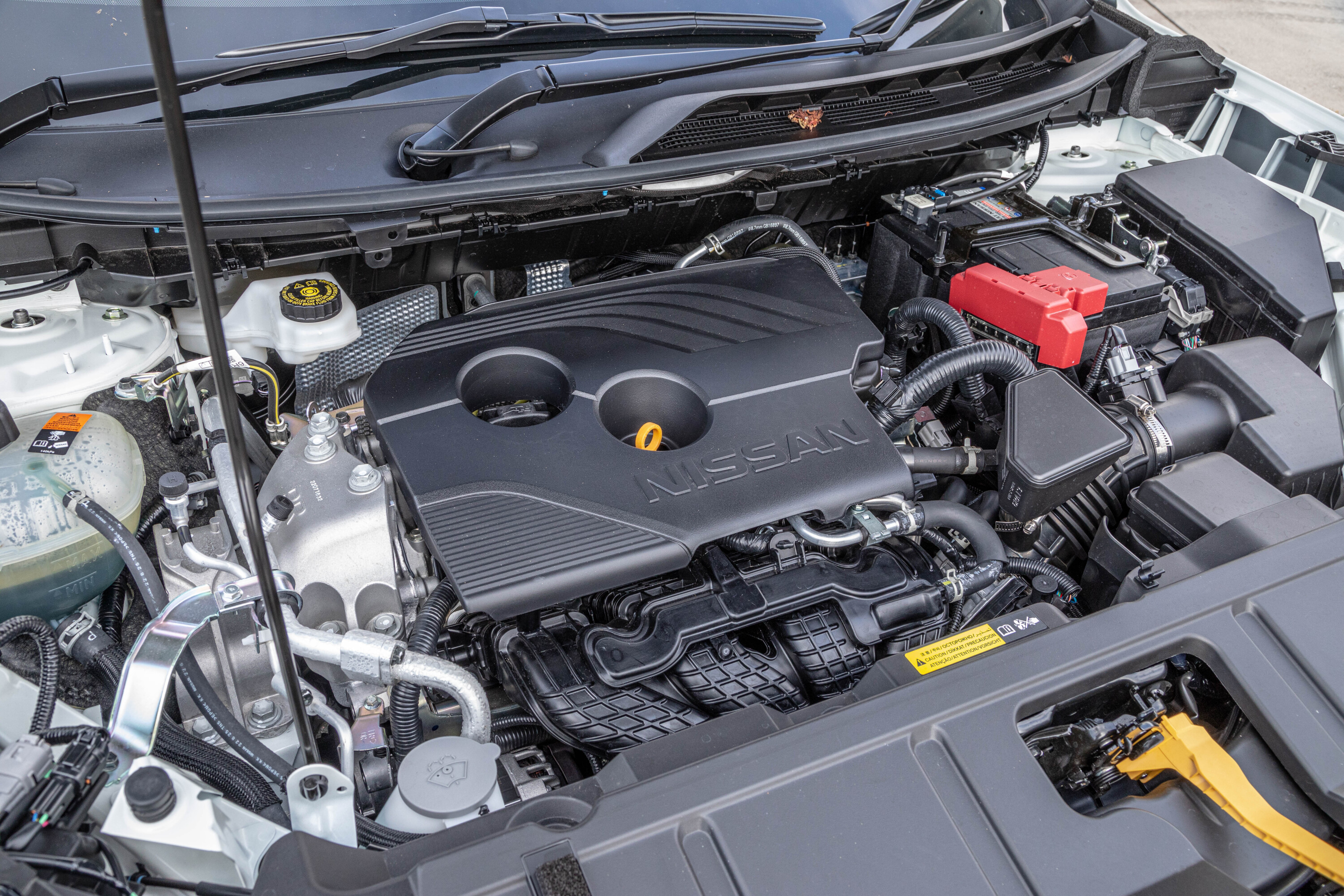
On batteries alone in ‘EV-mode’, the X-Trail can accelerate and travel beyond low speeds for up to four kilometres, thanks to its slightly larger 2.1kWh battery (versus 1.5kWh of the Toyota RAV4 hybrid).
The downside to the e-Hybrid concept is, at 100km/h on flat ground, the petrol engine is constantly humming away to keep the small battery topped up.
2
This means higher fuel consumption than a standard hybrid, although our comparison with the RAV4 Hybrid shows it is not far off the best in the segment.
Officially, Nissan claims 6.1L/100km for the X-Trail E-Power on the combined cycle, which isn’t too bad for a medium SUV – particularly if you value punchy turbocharged performance.
Though weighing in at 1880kg empty, the X-Trail E-Power provides well-judged steering and a willingness to take corners at speed, though its ride typically struggles to deal with rougher road surfaces.
Which X-Trail engine uses the least fuel?
The X-Trail E-Power hybrid is the more efficient of the two available powertrains, with an official combined fuel economy of 6.1L/100km.
Our testing bettered this claim, with 6.0L/100km achieved in a week of urban and highway driving.
Unlike conventional hybrid systems, which use a battery until dead or under heavy load and then switch to combustion-powered drive, Nissan’s innovative E-Power with e-4orce system is made up of a high-output 1.8kWh battery pack that is constantly charged by the turbocharged variable compression petrol engine. The result is constant electric power to the twin electric motors (150kW front, 100kW rear, outputting a combined 157kW/330Nm).
1
The wheels are driven purely by electric motors, with the combustion engine only used to charge the battery with energy not salvaged from regenerative braking.
Nissan recommends using RON 95/98 petrol for the E-Power engine, though you can fill up with cheaper RON 91, which results in a slight increase in fuel consumption.
1
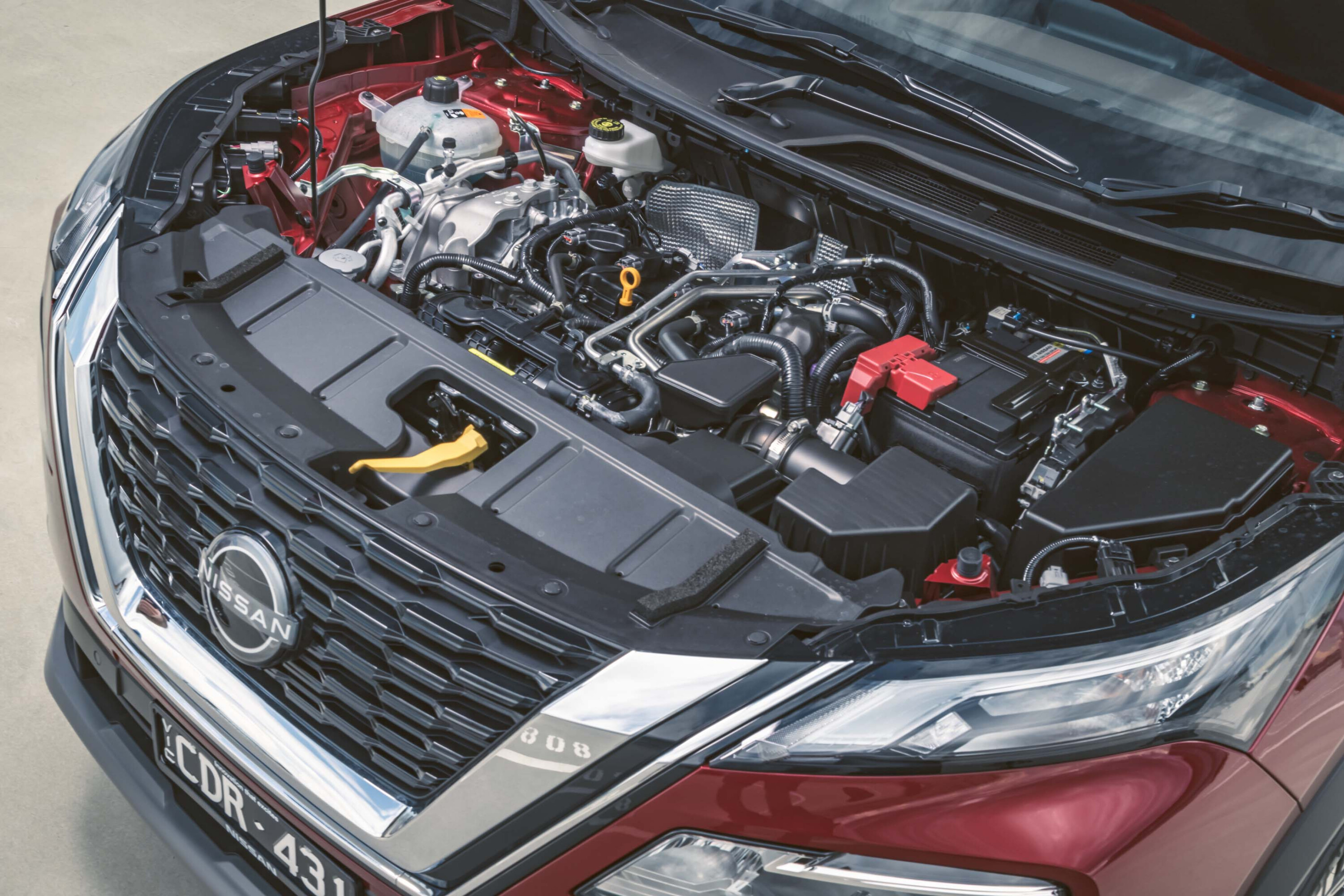
The X-Trail’s standard naturally-aspirated 2.5-litre four-cylinder engine is a revised version of the old model’s petrol engine.
It’s paired exclusively to a CVT automatic and produces 135kW/245Nm, which is a 9kW/19Nm improvement over the old model.
Official combined fuel economy is 7.4L/km for the five-seat FWD variants, and 7.8L/100km for the seven-seat AWDs.
What is the X-Trail’s towing capacity?
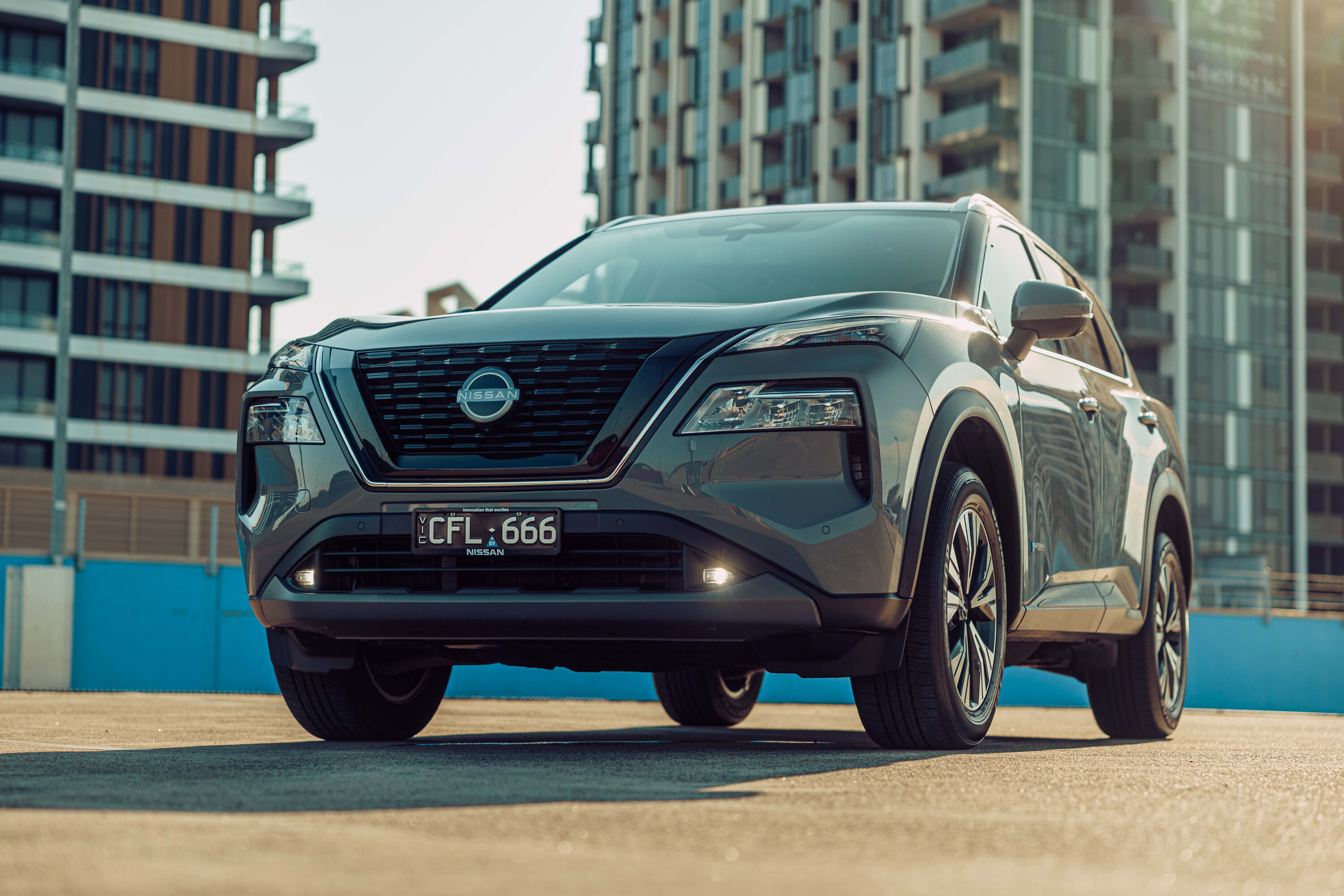
Towing has been improved across the X-Trail range, with 2.5-litre petrol versions now capable of towing 2000 kilograms braked – 500kg more than before.
The hybrid X-Trails can tow up to 1650kg braked. All versions can tow up to 750kg unbraked.
1
How long is the warranty and what are the Nissan X-Trail’s servicing costs?
As per the wider Nissan range, the X-Trail is covered by the brand’s five-year/unlimited-kilometre warranty, with complimentary roadside assistance across the same period.
Maintenance is required every 12 months or 10,000 kilometres, whichever occurs first.
Capped-price servicing is available for the first five years, at the following cost:
- 12 months/10,000km – $363
- 24 months/20,000km- $469
- 36 months/30,000km – $504 (AWD: $532)
- 48 months/40,000km – $587
- 60 months/50,000km- $657 (AWD: $696)
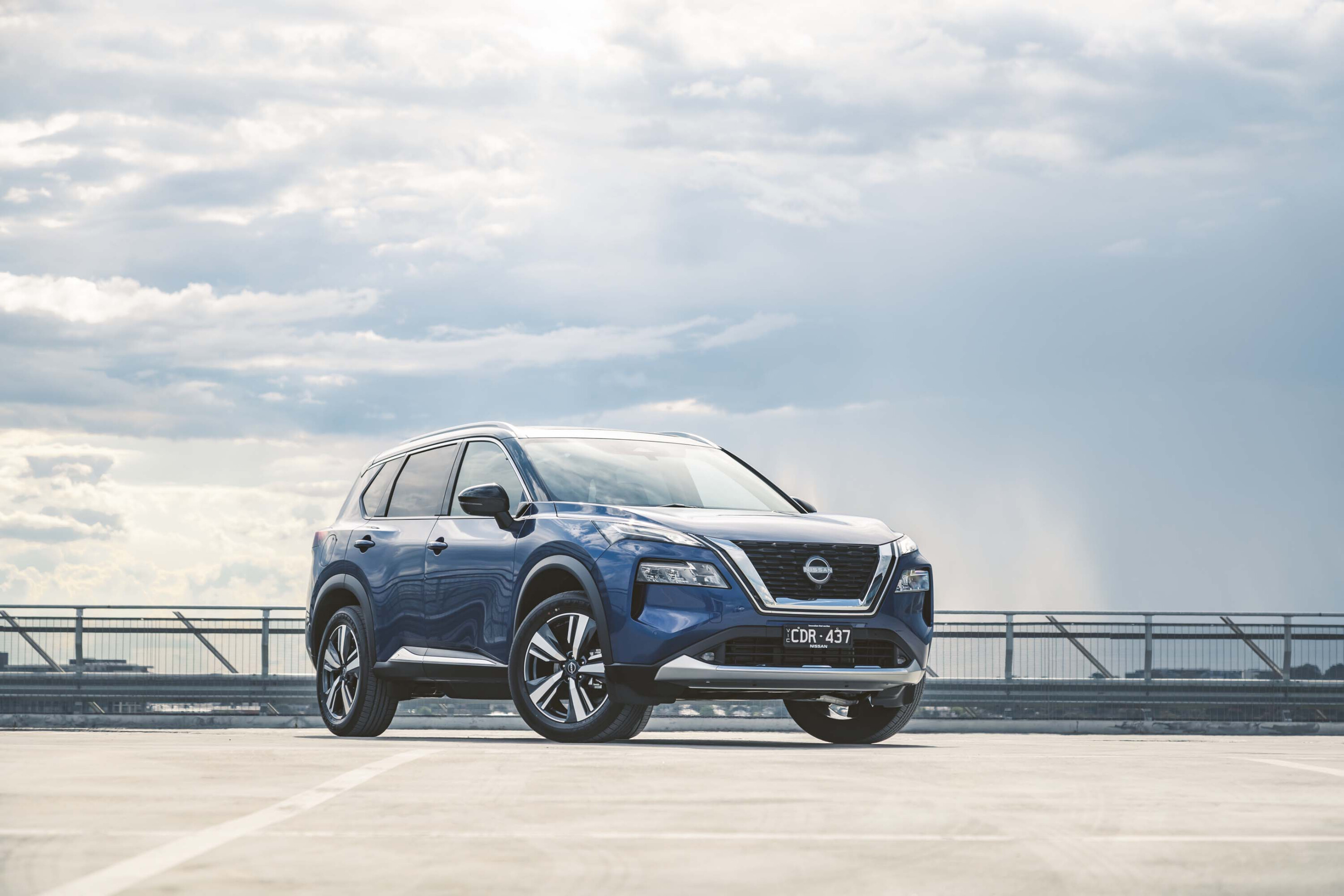
8
Which version of the Nissan X-Trail does Wheels recommend?
The X-Trail ST-L spec has everything you need, but the 2.5-litre AWD X-Trail Ti is the pick of the range.
For about $3700, you get a heap of desirable extras over the equivalent ST-L that make it feel a lot more premium than its near-$50,000 retail price tag suggests.
You do lose the third row of seats, but the X-Trail is best suited as a five-seater – if you really need a seven-seater you’re best looking at its Pathfinder sibling. Or our three favourite full-size seven-seaters: the Kia Sorento, Toyota Kluger, and Hyundai Palisade.
And while the E-Power hybrid provides better performance and refined ride, the improvements to the 2.5-litre petrol powertrain have made it a good all-rounder for town and highway duties.
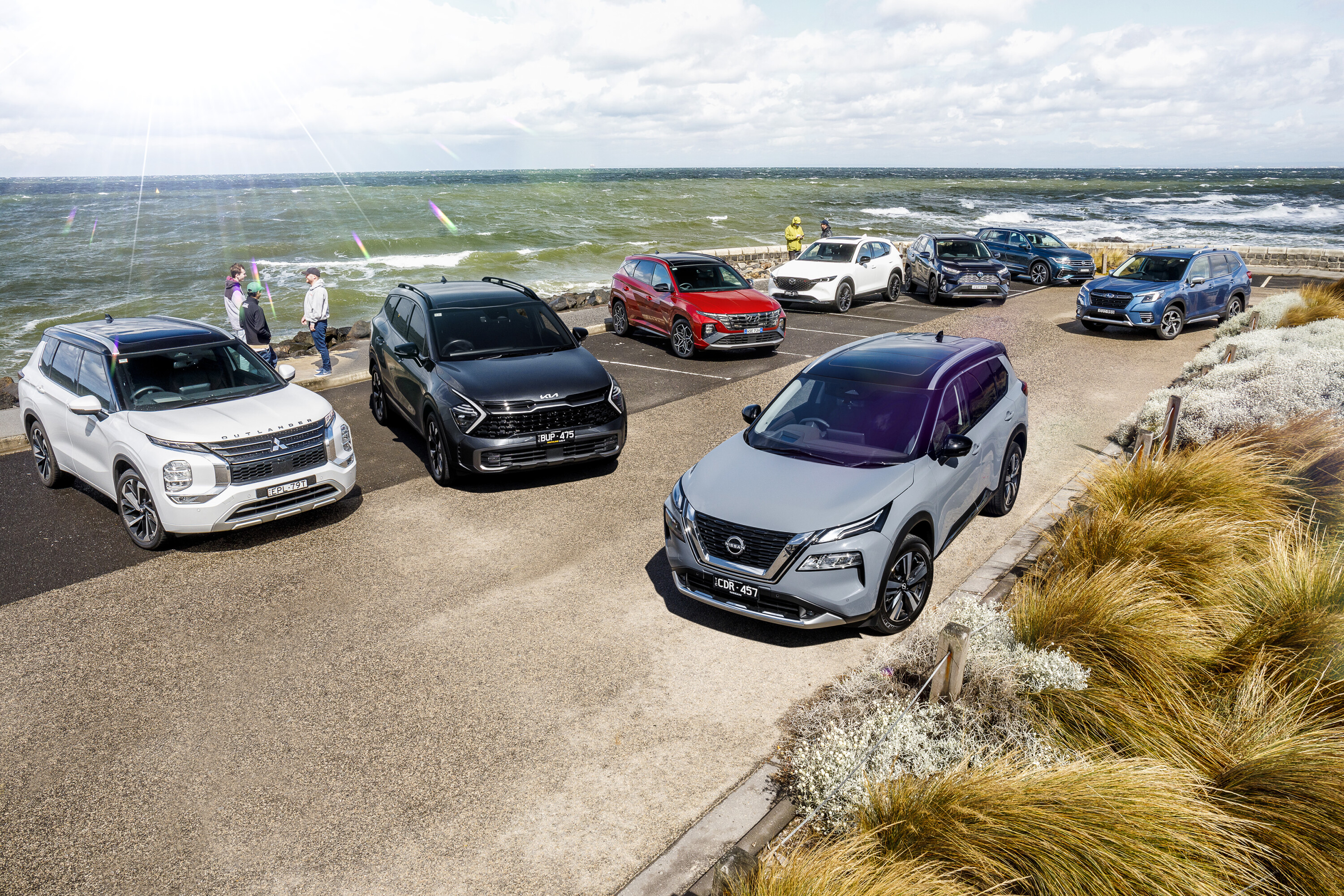
1
What are the Nissan X-Trail’s key rivals?
The new X-Trail finished on top against all of the above rivals in our Wheels medium SUV ‘Family Car Comparison‘.
MORE
SUV Buyers Guide
The Toyota Corolla Cross should have been one of the simplest decisions for Toyota’s product team.
Yet, it took the Japanese giant until October 2022 to bring this lifted and restyled Corolla to Australia’s SUV-hungry shores.
And the wait has been worth it. The Corolla Cross may not be the most exciting new launch for enthusiasts, but it’s a small SUV that has repeatedly shown its dominance in regular group tests and against its rivals at Wheels Car of the Year 2023.
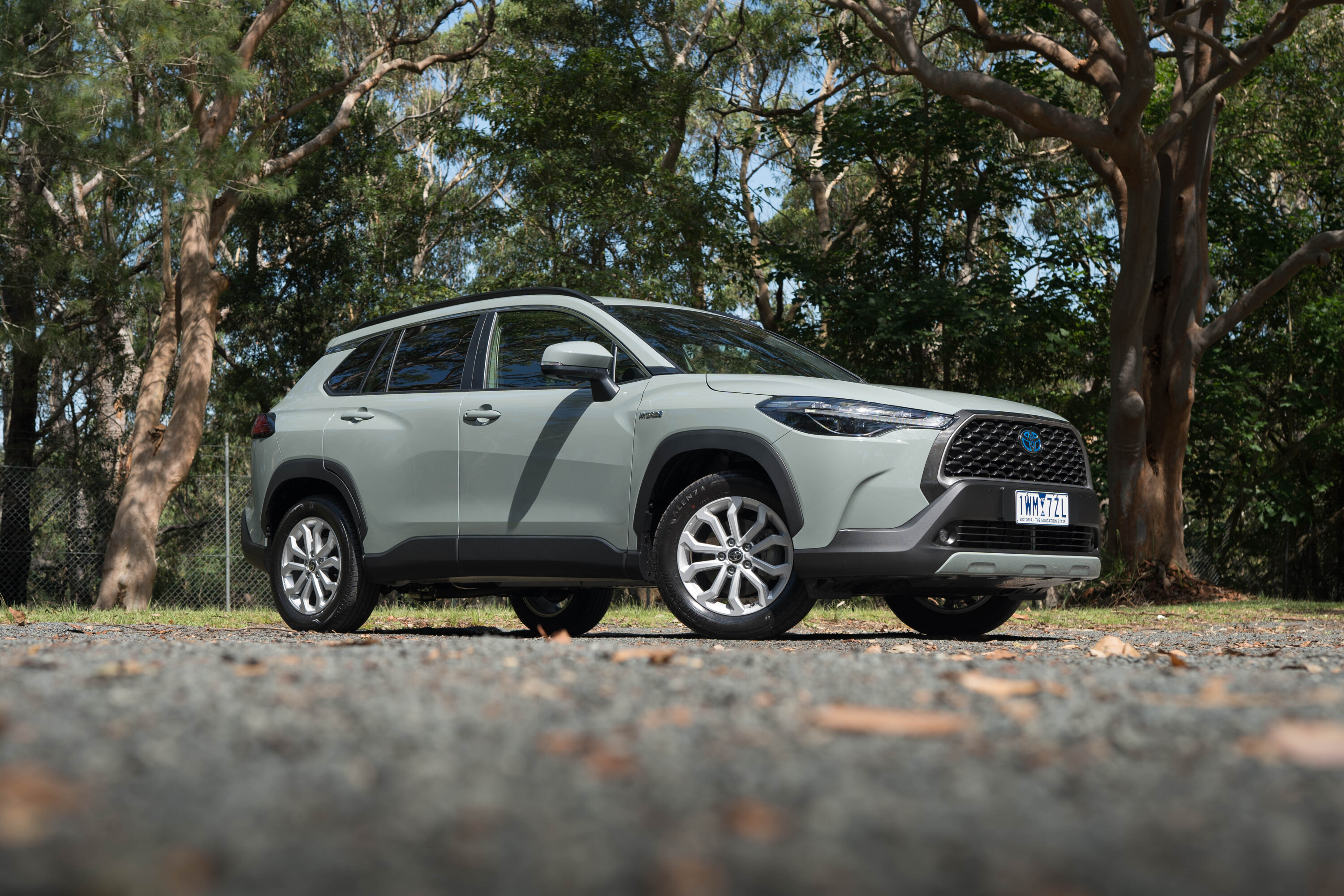
1
Of course, the quirky C-HR hung around as Toyota’s small SUV of choice, but that is a vehicle focused more on coupe-like style than practicality, so it doesn’t offer comparable cabin space to the new Corolla Cross.
The Corolla hatch has likewise become less practical in its current generation, making the Corolla Cross the obvious choice for those needing more room, with nearly as much interior space as the medium-sized RAV4 on a footprint not far from the Corolla sedan. It’s built on the same TNGA platform and has a similar engine range to the familiar non-lifted Corolla.
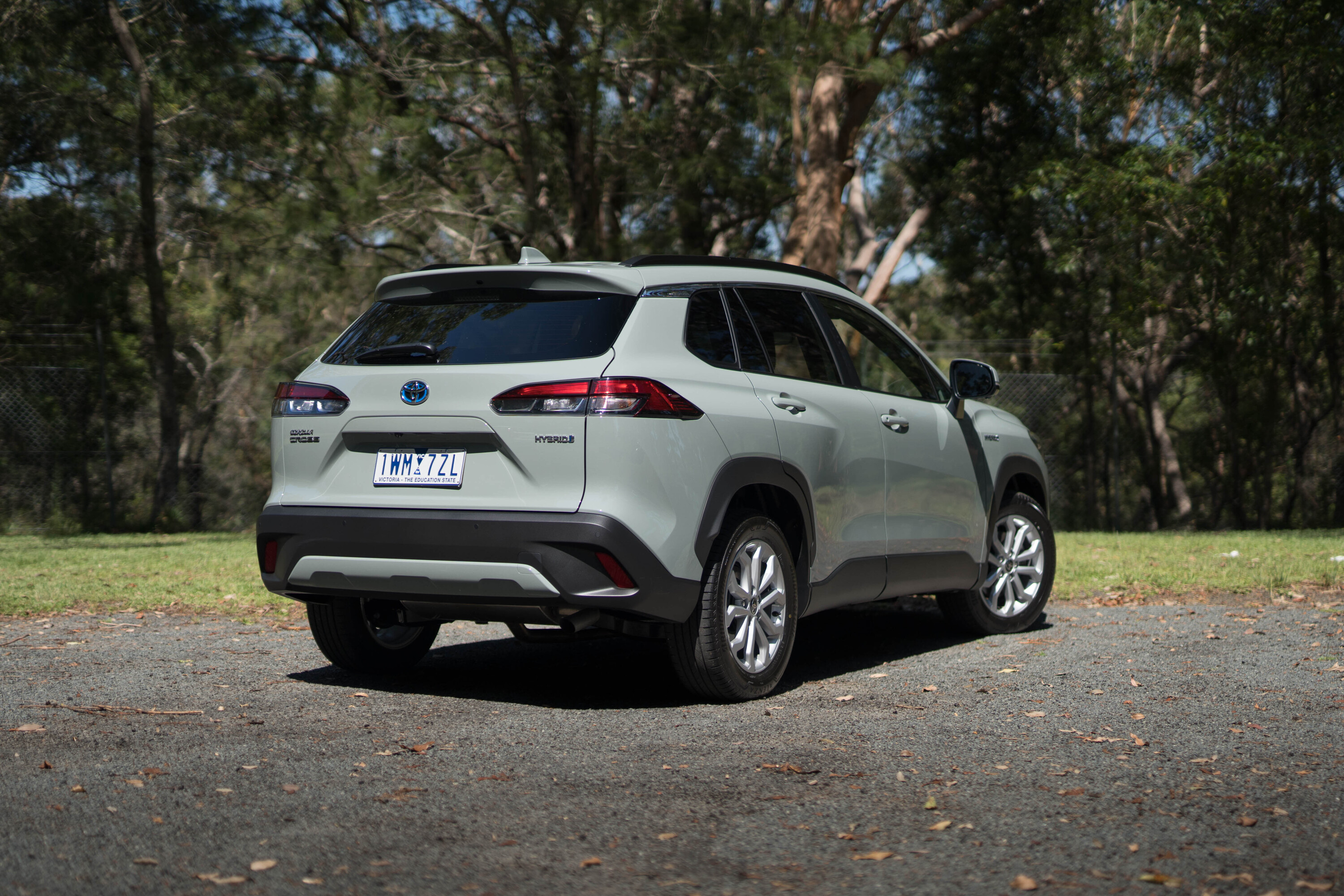
1
JUMP AHEAD
- Pricing
- What body styles are available for the Corolla Cross?
- What features are standard in every Corolla Cross?
- What key features do I get if I spend more?
- How safe is the Corolla Cross?
- How comfortable & practical is the Corolla Cross?
- How much boot space does the Corolla Cross offer?
- I like driving, will I enjoy this car?
- Which Corolla Cross engine uses the least fuel?
- What is the Corolla Cross’s towing capacity?
- How long is the warranty & what are the Corolla Cross’s servicing costs?
- Which version of the Corolla Cross does Wheels recommend?
- What are the Corolla Cross’s key rivals?
- What might annoy me?
- What might I miss that similar cars have?
- What’s the infotainment system like?
- Where does Toyota make the Corolla Cross?
- Are there plans to update the Corolla Cross soon?
Pricing
| 2024 Toyota Corolla Cross pricing | |
|---|---|
| Corolla Cross GX Petrol FWD | $33,980 |
| Corolla Cross GX Hybrid FWD | $36,480 |
| Corolla Cross GXL Petrol FWD | $37,730 |
| Corolla Cross GXL Hybrid FWD | $40,230 |
| Corolla Cross GXL Hybrid AWD | $43,230 |
| Corolla Cross Atmos Petrol FWD | $44,530 |
| Corolla Cross Atmos Hybrid FWD | $47,030 |
| Corolla Cross Atmos Hybrid AWD | $50,030 |
| Corolla Cross Atmos Two-Tone Hybrid AWD | $51,380 |
| Prices exclude on-road costs. | |
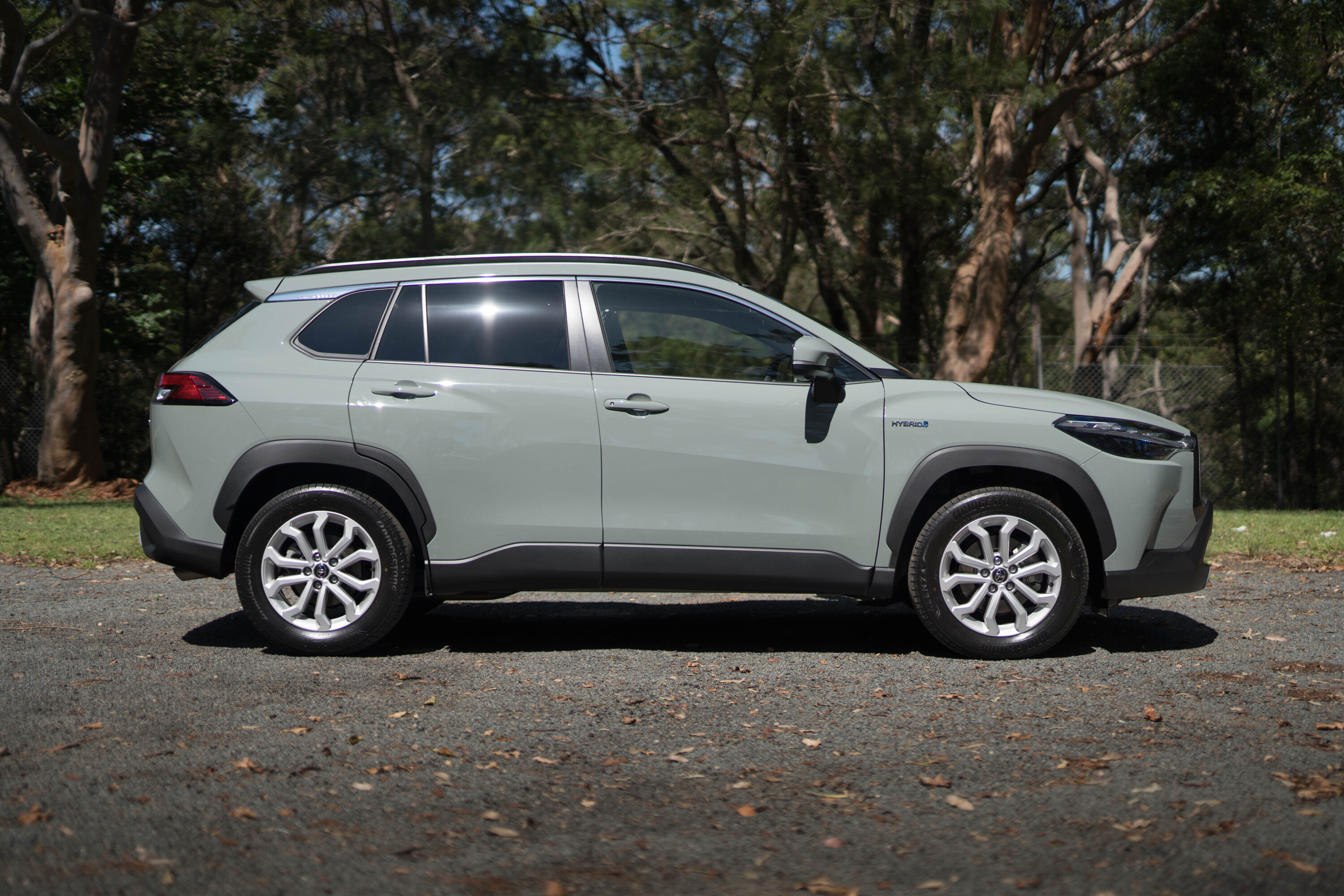
1
What body styles are available for the Toyota Corolla Cross?
The Toyota Corolla Cross is a five-door, five-seat small SUV.
What features are standard in every Toyota Corolla Cross?
The features listed below are standard in the entry-level model and will appear in higher-grade models unless replaced by more premium equivalent features.
| 2024 Toyota Corolla Cross GX Features | |
|---|---|
| 17-inch alloy wheels | Fabric upholstery |
| Manual adjust seats | 8.0-inch multi-information display |
| Wireless Apple CarPay / wired Android Auto | Six-speaker sound system |
| Push-button start (hybrid only) | 7.0-inch multi-information display |
| Over-the-air software updates | Heated, power-folding side mirrors |
| Polyurethane steering wheel | Automatic air conditioning |
| LED Headlights | Halogen daytime running lights |
| Keyless entry and push-button start | 60:40 split-folding rear backrest |
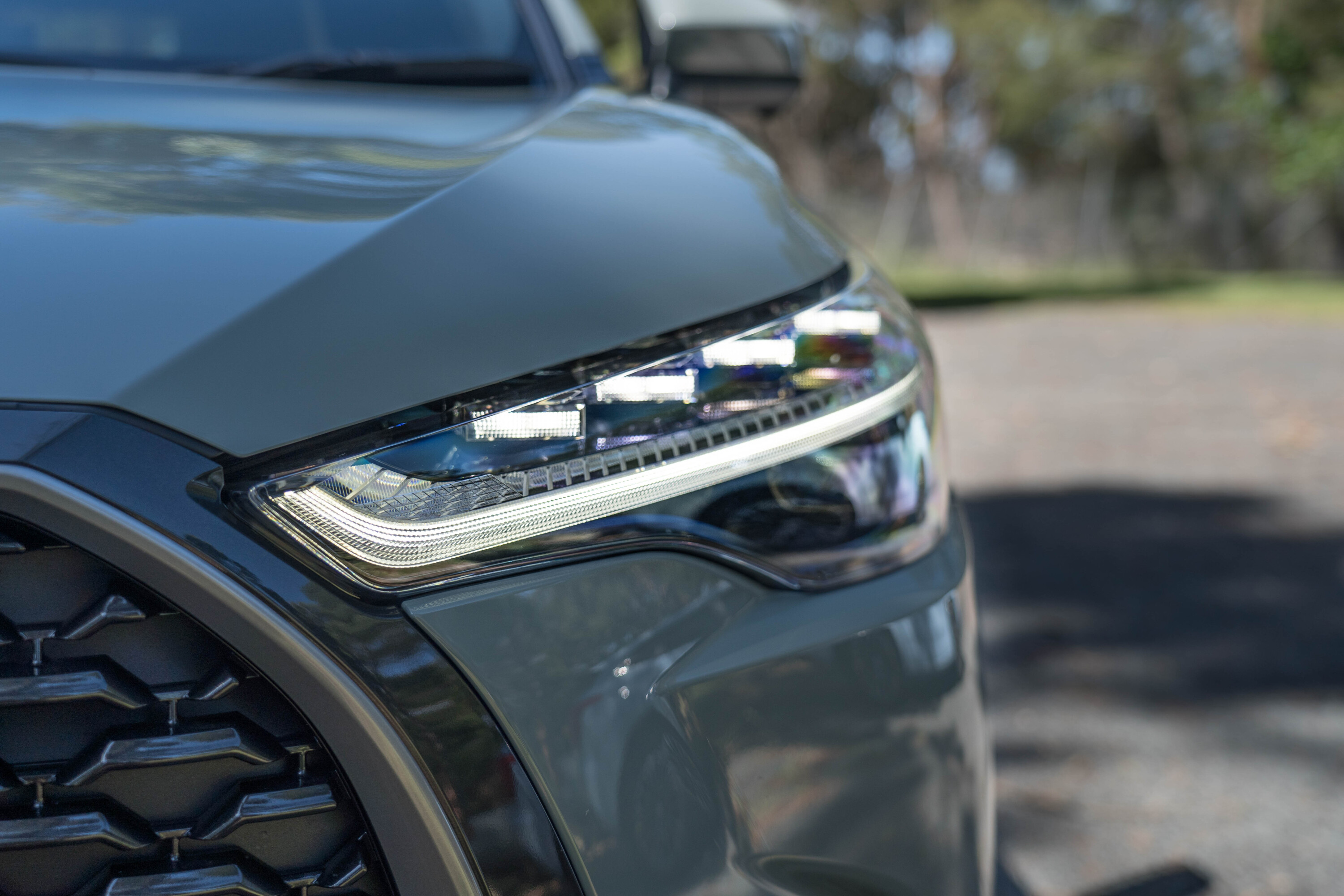
1
What key features do I get if I spend more?
Walking up through the range brings higher-class upholstery, more connectivity features, and larger touchscreens.
It’s also worth noting the significant differences between the powertrains – the AWD GXL and Atmos, for example, are the only variants fitted with independent rear suspension.
The mid-spec GXL adds:
| 2024 Toyota Corolla Cross GXL | |
|---|---|
| Leather-accented upholstery | 10.5-inch touchscreen |
| Satellite navigation with live traffic updates | Dual-zone climate control |
| Rear privacy glass | 360-degree monitor |
| High-grade LED headlights with sequential indicators | Front foglights |
| Leather-appointed steering wheel | |
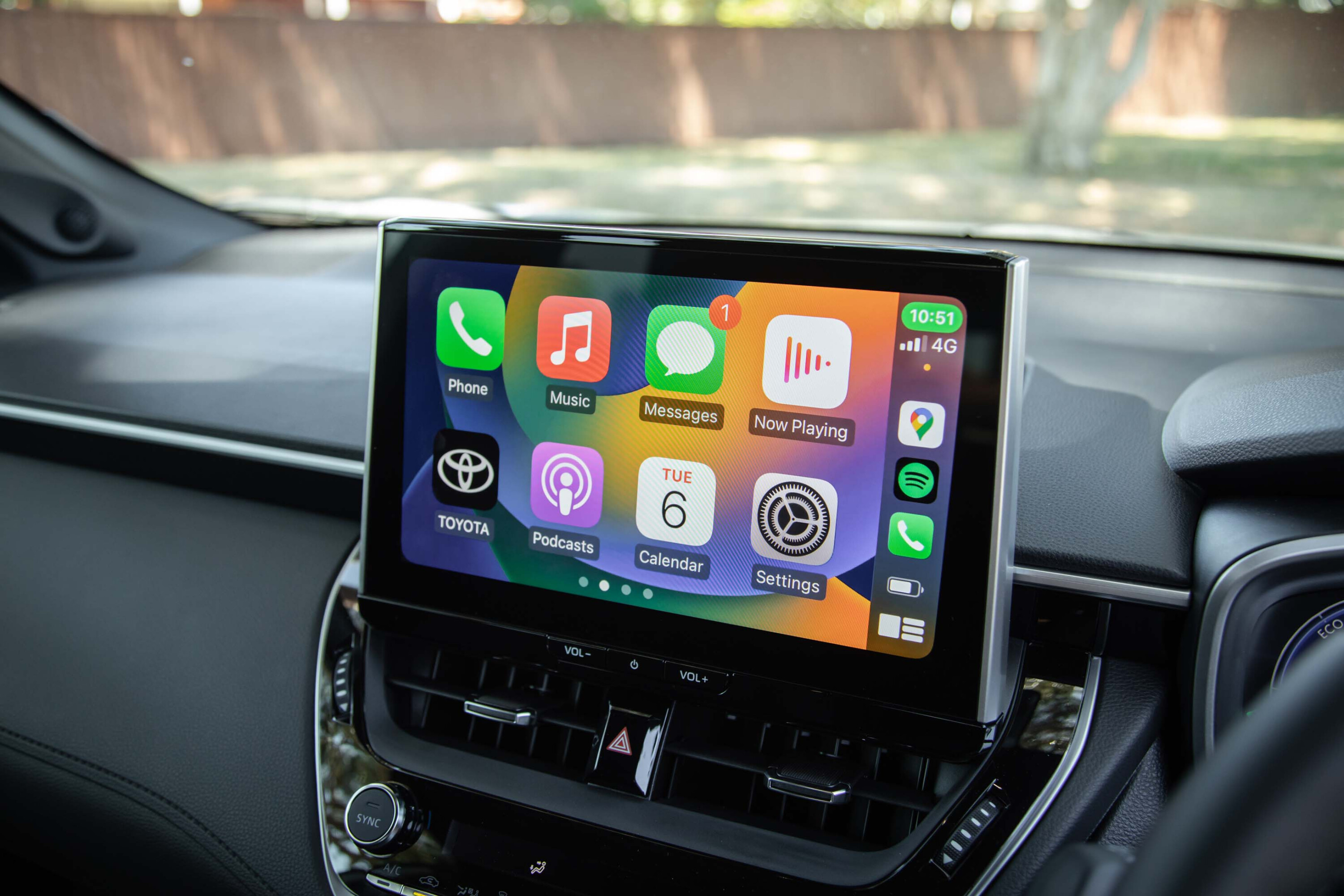
1
As a luxurious range-topper, the sunroof-equipped Atmos also gets:
| 2024 Toyota Corolla Cross Atmos | |
|---|---|
| 18-inch alloy wheels with Michelin Primacy tyres | Premium leather-accented upholstery with front seat heating |
| 8-way power driveru2019s seat | Qi wireless charging |
| Qi wireless charging | 9-speaker JBL sound system |
| Automatic wipers | Kick-to-open power tailgate |
| Panoramic sunroof | Heated steering wheel |
| See-through moving view for 360-monitor (hybrid only) | Automatic park assist (hybrid only) |
| Two-tone paint option ($1,350 extra) | |
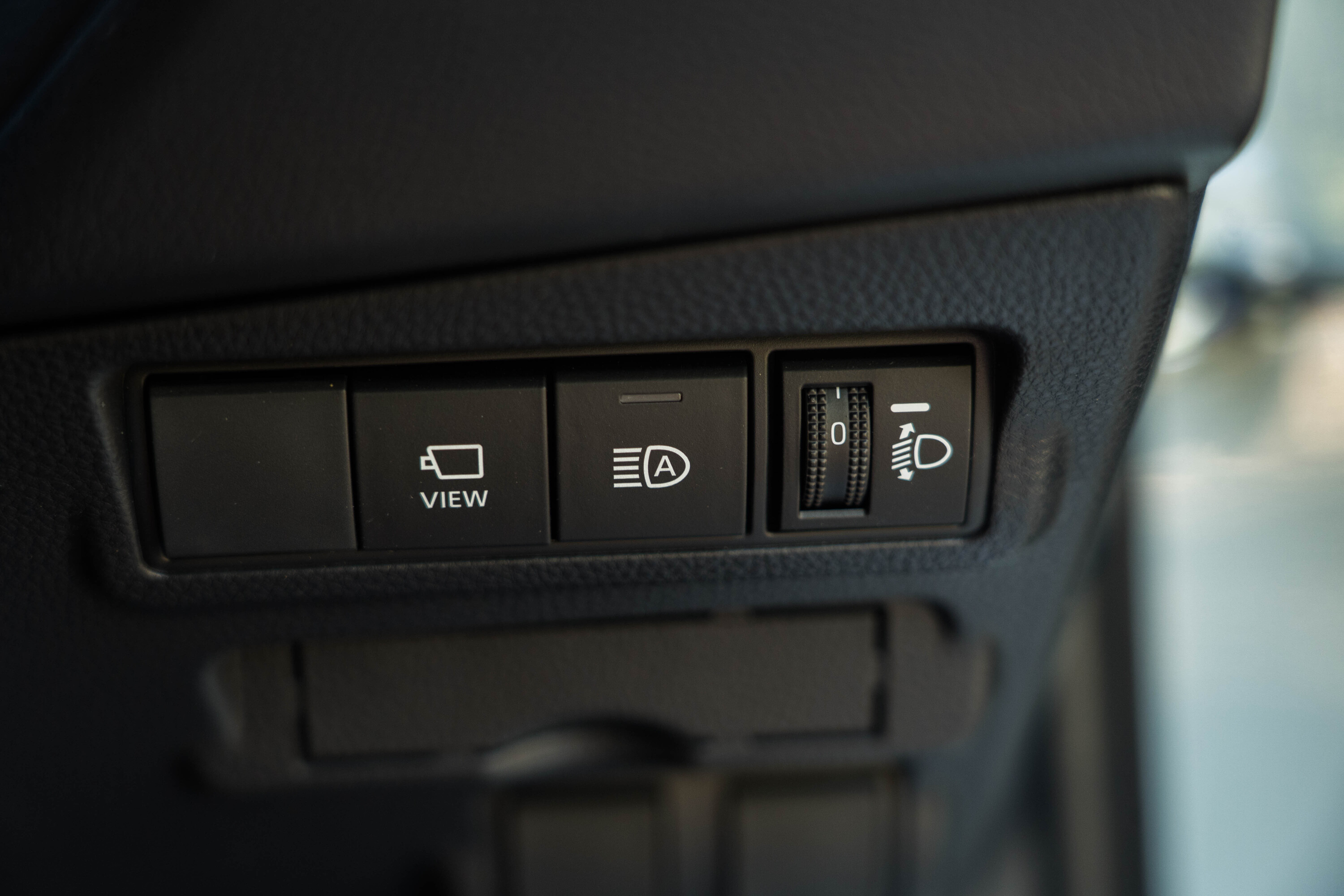
1
How safe is the Toyota Corolla Cross?
The Toyota Corolla Cross has been rated five stars by ANCAP under the 2022 testing protocol.
Expected safety features such as eight airbags, ABS and ESC are supplemented by a raft of relatively modern driver assistance aids.
If there’s one nail in the Corolla Cross hybrid, it’s an ABS tune that triggers too soon and impedes confidence on wet and bumpy surfaces.
| 2024 Toyota Corolla Cross standard safety features | |
|---|---|
| Forward autonomous emergency braking (vehicle, pedestrian, cyclist, junction) | Eight airbags |
| Lane-keep assist | Adaptive cruise control |
| Lane departure warning | Traffic sign recognition |
| Rear seat belt reminder | Toyota connected services SOS functionality |
| Rear cross-traffic alert | Blind-spot monitoring |
| Parking reverse AEB | |
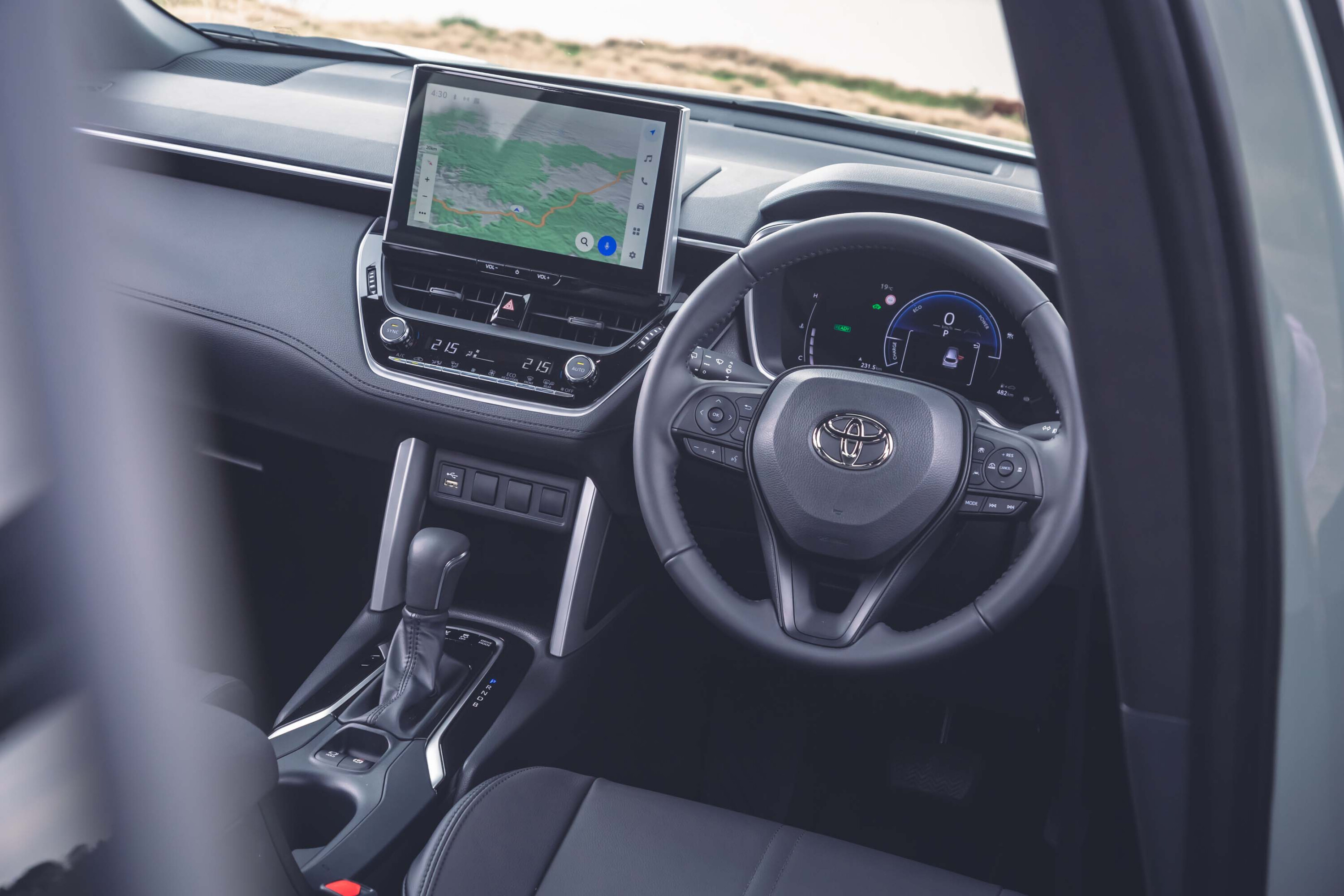
The GXL and Atmos are both equipped with 360-degree camera systems, and the Atmos has the ability to show a higher-quality picture and predict objects beneath the vehicle.
1
How comfortable and practical is the Toyota Corolla Cross?
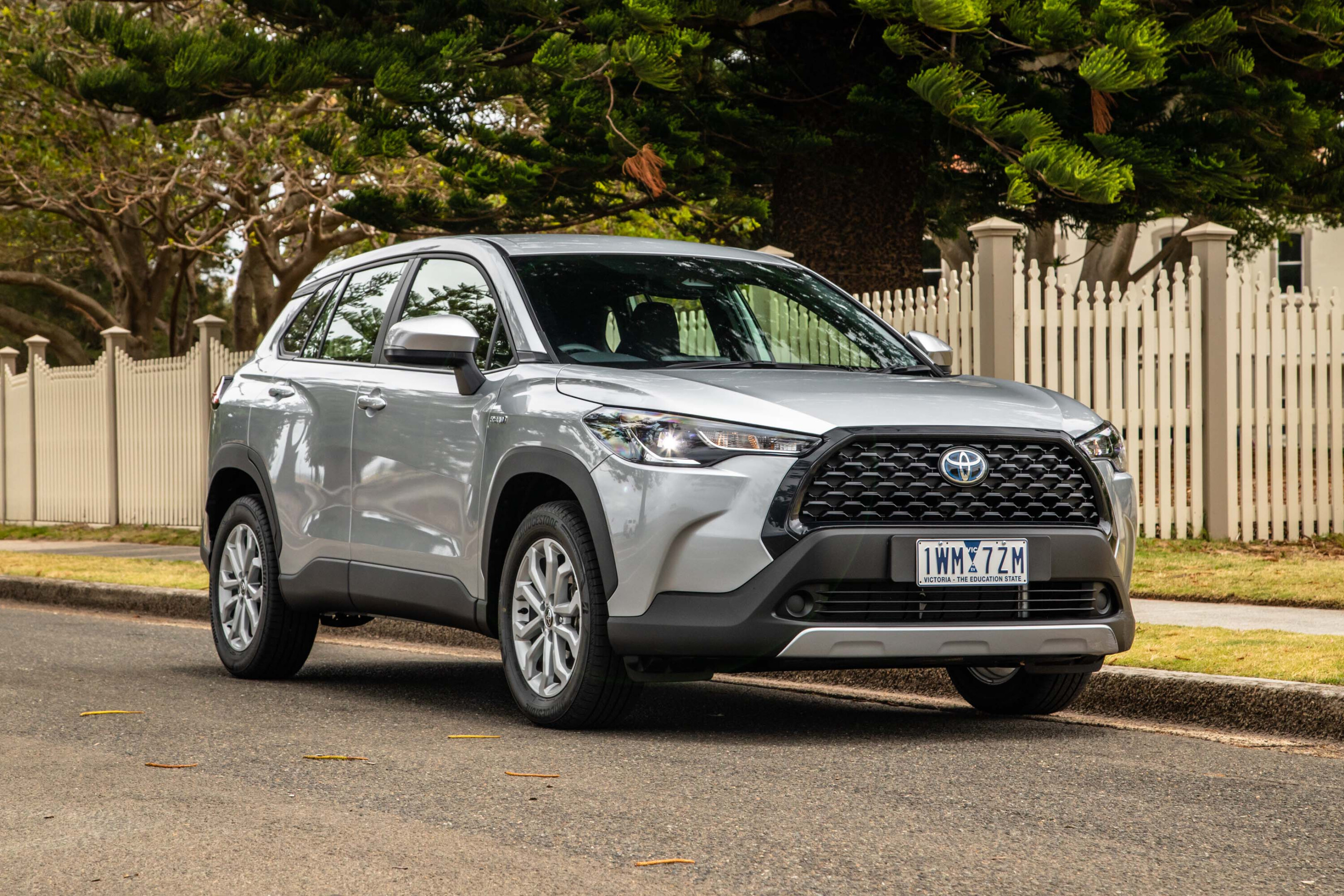
The Corolla Cross’s cabin is a dreary affair; montaged grey and black plastics leave it bereft of any colour.
You’ll find a more premium vibe in rivals such as the Mazda CX-30 and Honda HR-V but, that said, it is very functional and the plastics are hardwearing.
As with design, there isn’t much in the way of clever storage solutions in the Corolla Cross, though the basics are covered: cup holders, console bin with 12-volt socket, smartphone tray (that lacks wireless charging capability until you get to Atmos), decently sized glovebox and door pockets with sizeable bottle holders.
The GX leans into the unadorned Corolla Cross aesthetic with switch blanks and a polyurethane steering wheel that you could forgive the base model until you look at the $30K price tag – the Kia Seltos has a nicer cabin at this price.
1
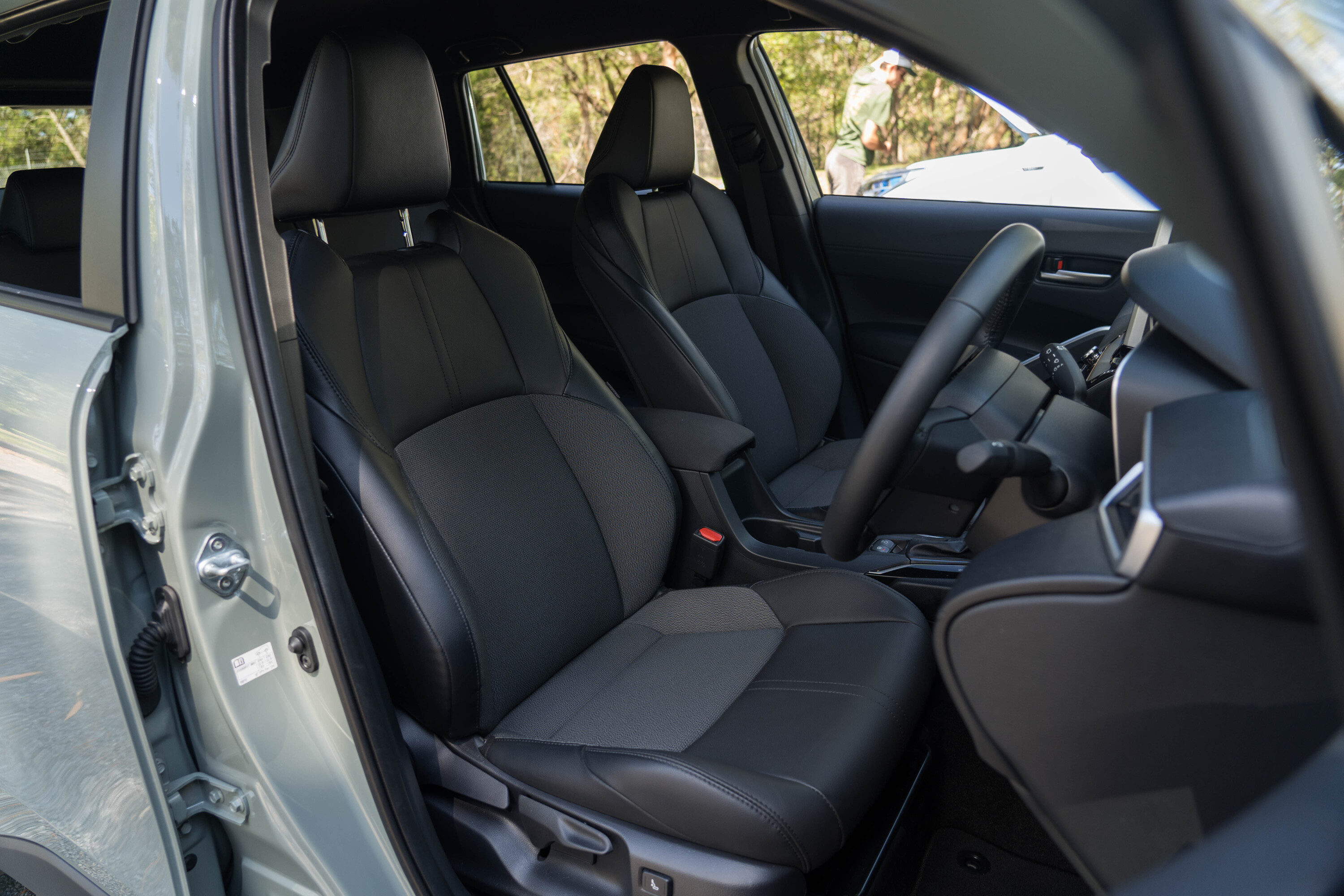
Impeccable assembly must be noted, as should the very comfortable manual-adjust chairs appointed in black cloth.
Although there’s no height adjustment for the passenger, even the base car gets welcome power in-out lumbar support.
Walking through to the GXL may bring more pleasant upholstery but the bargain basement headliner and switch blanks remain, making it hard to justify the $3750 upcharge, even if the 10.5-inch screen and dual-zone climate control are appreciated.
Although the Atmos gets ‘premium’ leather-accented upholstery (that certainly feels like vinyl), a power-adjustable driver’s seat and front seat heating to fill up the switch blanks, it falls short of the Nissan Qashqai in material quality.

1
Adults will find more legroom than in a C-HR or Corolla hatch, though the Cross’s rear quarters are, as expected, short of a RAV4.
The Atmos adds a wireless phone charging pad, which isn’t rubberised so phones tend to slide off under brisk acceleration but at least helps bolster the sole USB-A port for front occupants and make wireless Apple CarPlay (Android Auto is wired) a neater experience.
Neat bottle holders are integrated into the rear doors, but with only one map pocket pouch and no centre armrest (even in the flagship Atmos), the Corolla Cross isn’t the most well-thought-out in the segment.
Oddly, contemporary USB-C ports are located in the rear cabin along with two rear air vents. Adults will find more legroom than in a C-HR or Corolla hatch, though the Cross’s rear quarters are, as expected, short of a RAV4.
1
How much boot space does the Toyota Corolla Cross offer?
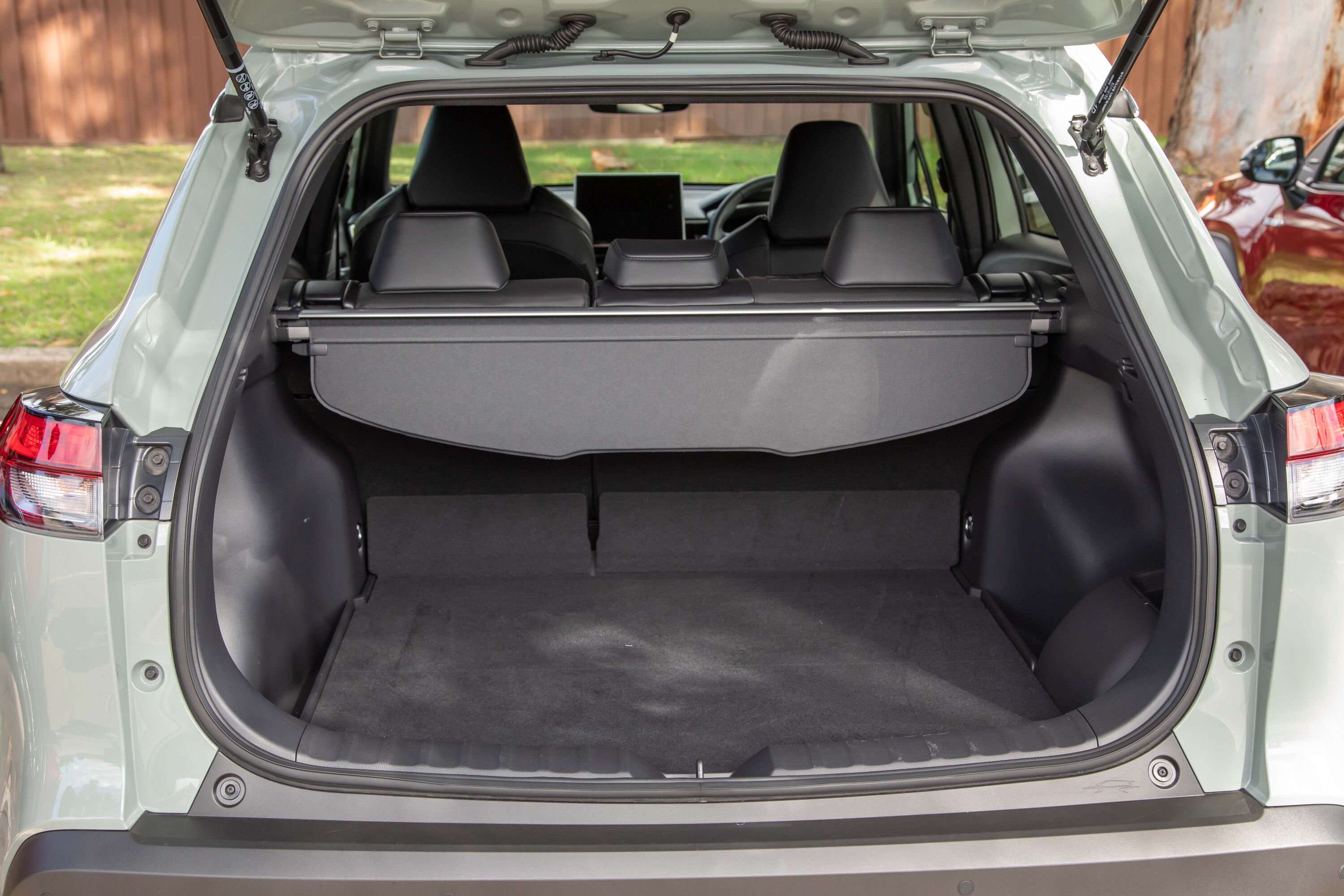
Cargo capacity ranges from 380L in the hybrid AWD Atmos model fitted with a tyre mobility kit, up to a generous 436L in petrol GX and GXL trims.
Clever features are minimal, with no net or shopping bag hooks, and only a little extra storage beneath the floor. The Corolla Cross may not have the most excellent boot, but it’s a hell of a lot better than the tiny Corolla hatchback.
1
I like driving, will I enjoy this car?
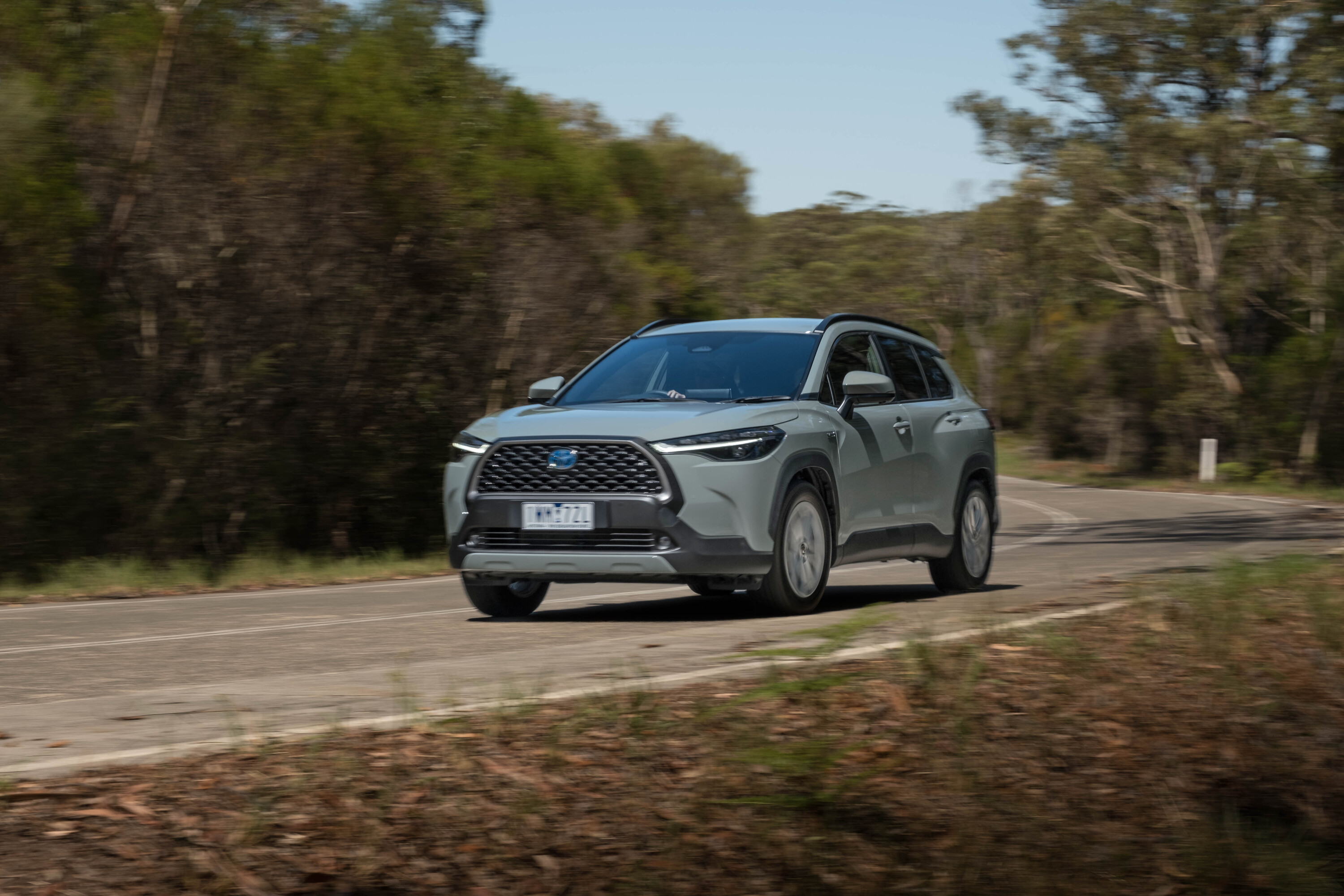
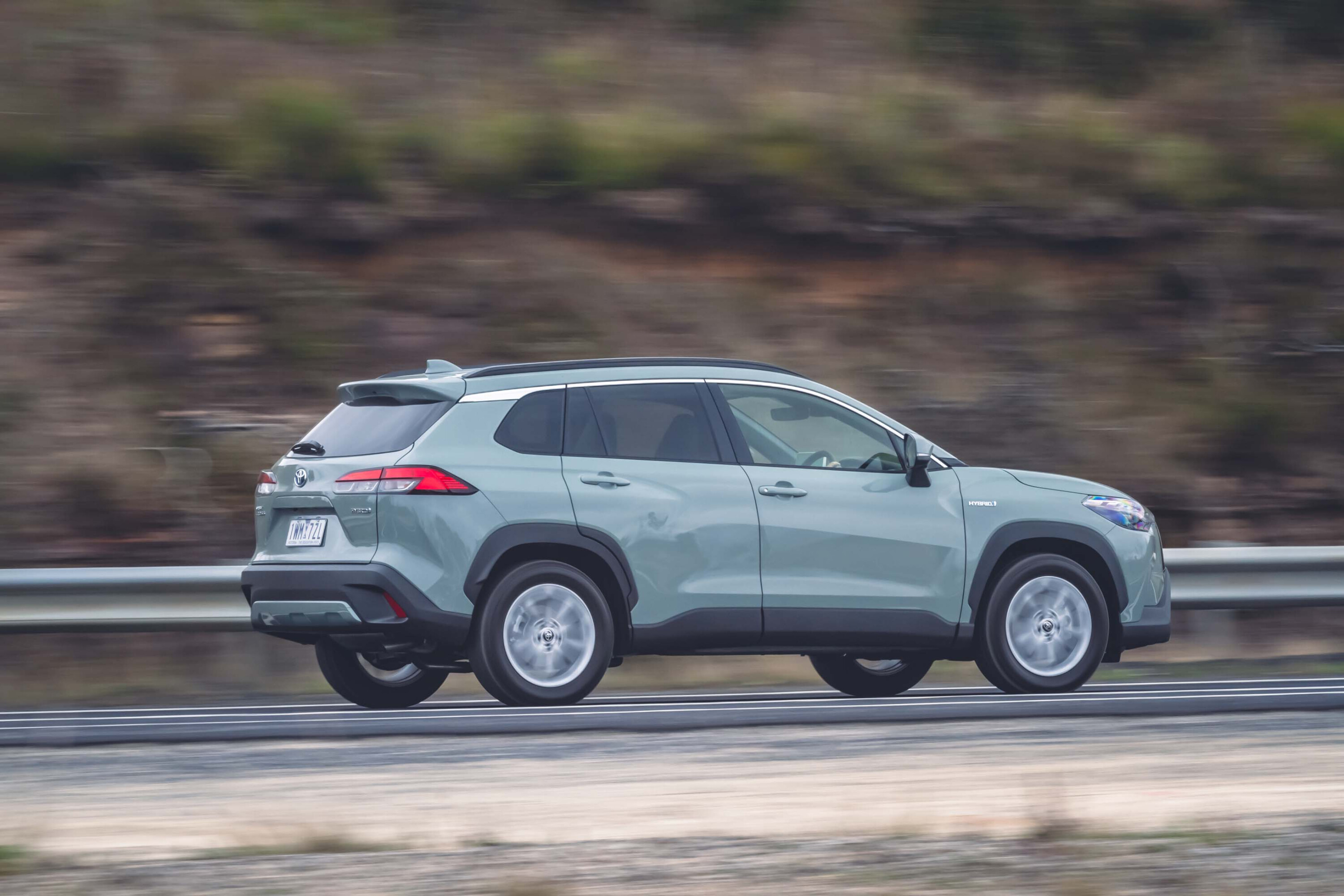
Inspiring might not be the right word, but the Corolla Cross exhibits a level of polish and chassis fluidity (especially the AWD variants) rarely seen in this class.
This all starts with Toyota’s much-lauded global architecture, which has transformed the Japanese giant’s products across the board, and the Corolla Cross benefits from the underlying excellence.
Up front are MacPherson struts, and – unlike the Corolla hatch and sedan – out back is either a torsion beam in FWD models (that you can tell Toyota has worked hard to refine) or a multi-link independent set-up in the AWD hybrid.
1
The result is a smooth and compliant ride around town and confidence in the country.
Handling may not be the defining yardstick of a small SUV, but a vehicle that balances great roadholding with comfort deserves praise.
Its steering system (2.7 turns lock-lock) aids enjoyment being light and easy around town but accurate enough in the country. The Corolla Cross is a cohesive drive, and almost surprisingly so given the mushy, granular brake feel seems to do everything it can to erode confidence.
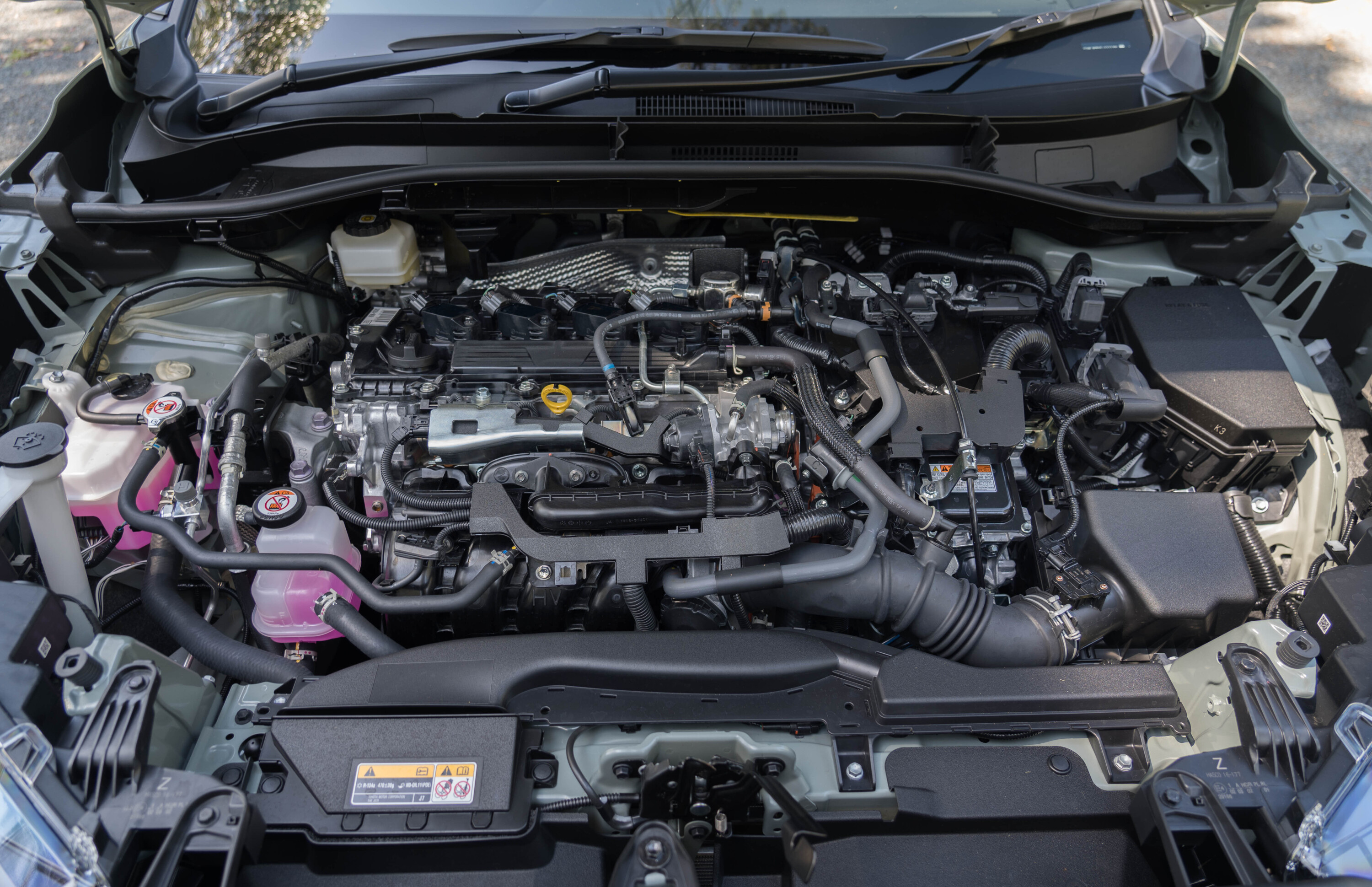
As for engines, Toyota expects the base GX fitted with the 126kW/202Nm 2.0-litre petrol four-cylinder (revised with a new timing chain case, valve covers and slicker oil specified) to be the volume-seller. It’s an advanced four-cylinder but lags behind downsized turbo rivals in mid-range punch. The automatic continuously variable transmission (CVT) also holds the engine’s RPMs high under heavy acceleration.
1
It is worth spending an extra $2500 on the front-drive hybrid if you can.
The extra punch of the electric motor raises output to 146kW (Toyota doesn’t list combined torque), equalling a 2.0-litre turbo Volkswagen T-Roc 140TSI.
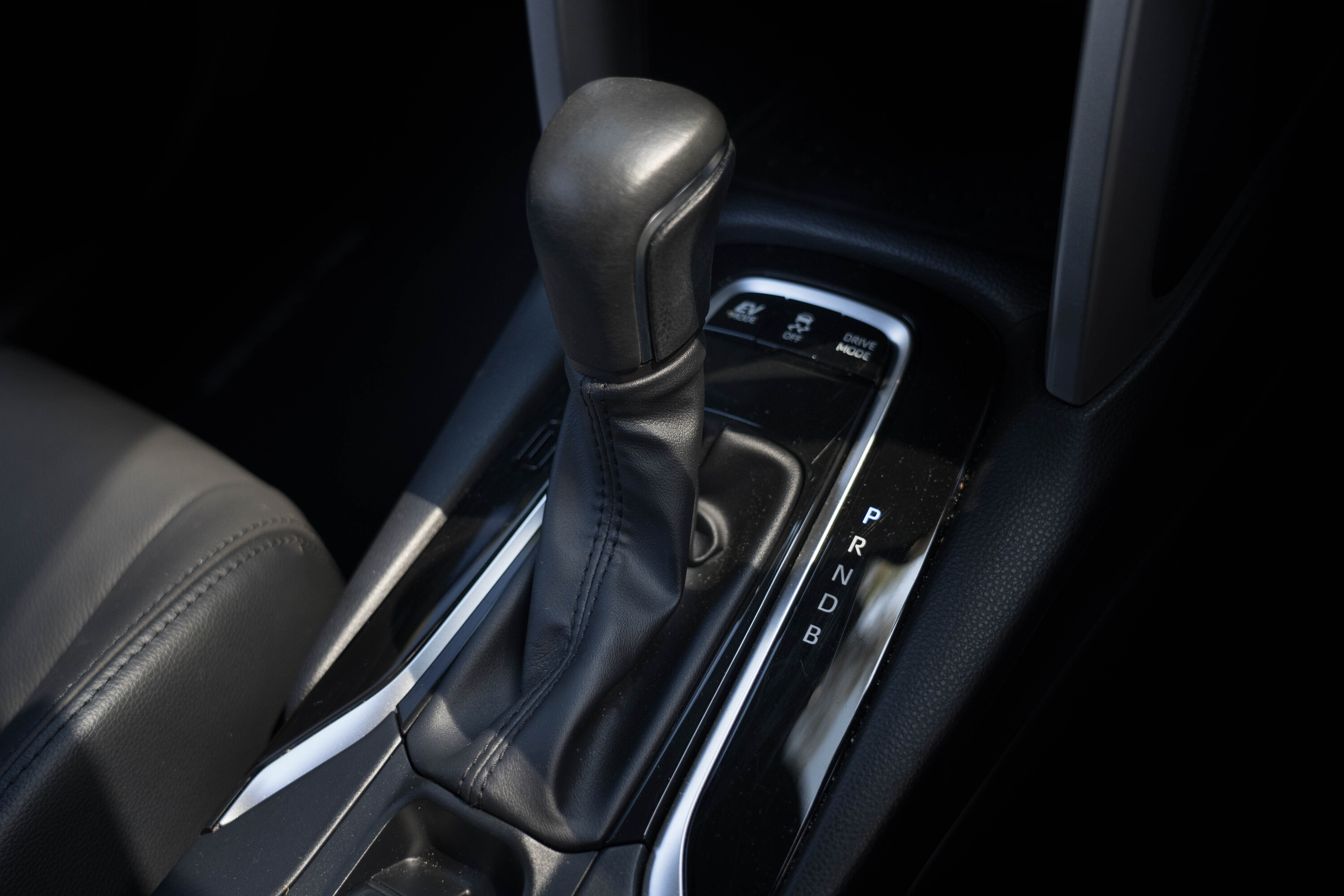
The latest hybrid tech packs a lithium-ion battery and promises a sportier, more responsive drive. There are three drive modes: Eco, Normal and Power, with the latter sharpening throttle response and subtly increasing steering weight for a more athletic feel.
Another $3000 for the AWD, though, is harder to justify. In Atmos trim, the multi-link rear end helps polish the bump-thump introduced by its 18-inch alloys, but the GX and GXL’s squishy Bridgestones don’t need the extra sophistication. There’s no extra power on paper, either, despite the 30kW electric motor on board.
If any of the terms in this section have left you scratching your head, these articles will help bring you up to speed!
1
- What is a Powertrain or Drivetrain?
- Power vs torque
- Car suspension explained
- Automatic transmissions (‘gearboxes’) explained
- Chassis control systems explained
- Car vs Ute vs SUV: How the vehicle you buy should guide the way you drive
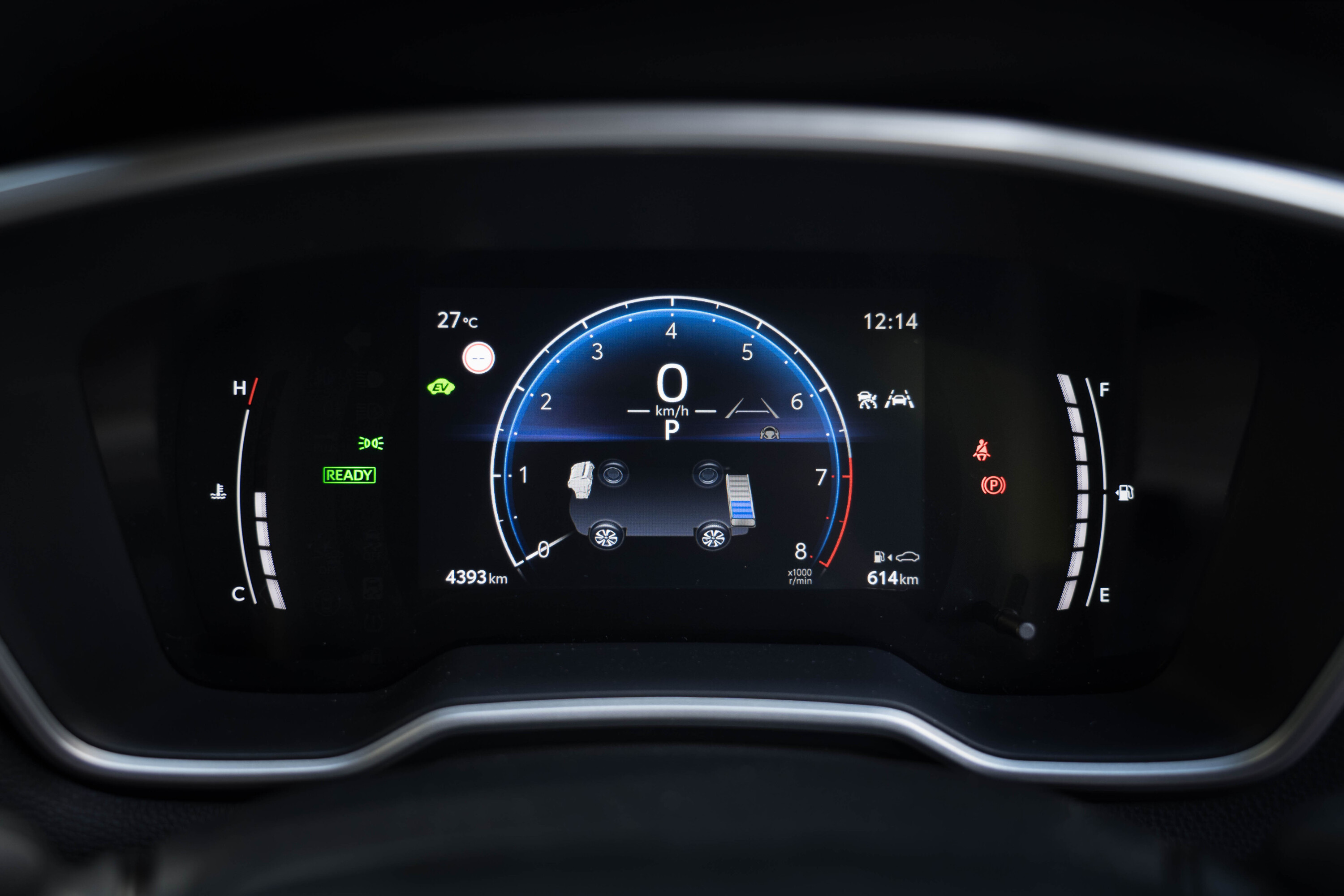
The front-wheel drive Corolla Cross hybrid uses the least fuel on the ADR 81/02 combined cycle, averaging 4.3L/100km.
While we haven’t managed to match this exactly in testing, the Corolla Cross FWD hybrid got closer to its official figures than most cars do, returning repeatable stints in the 4-5L/100km range.
Every Corolla Cross will accept 91 RON or E10 unleaded petrol.
| Powertrain | Claimed fuel economy | CO2 emissions |
|---|---|---|
| 2.0-litre hybrid FWD | 4.3L/100km | 97g/km |
| 2.0-litre hybrid AWD | 4.4L/100km | 101g/km |
| 2.0-litre petrol FWD | 6.0L/100km | 136g/km |
What is the Toyota Corolla Cross’s towing capacity?
None can tow more than 750kg, braked or unbraked.
The 2.0-litre petrol variants can only tow 725kg (GX, GXL) and 735kg (Atmos) unbraked.
1
How long is the warranty and what are the Toyota Corolla Cross’s servicing costs?
The Toyota Corolla Cross is backed by a five-year/unlimited-kilometre warranty. Keeping your servicing up to date at a Toyota dealer will see this extended to eight years for the hybrid powertrains.
Servicing is due every 12 months or 15,000km – whichever comes first – and with visits capped at $230 each for the first five years, a scant $1150 is needed to keep your Corolla Cross service book stamped up.
1
Which version of the Toyota Corolla Cross does Wheels recommend?
It’s a tricky conundrum, as there are benefits and drawbacks to each model.
If you’ve got money burning a hole in your pocket then an Atmos AWD feels fully-featured owing to its cabin-lifting light headliner, filled-in switches and power-adjustable driver’s seat. But, at more than $50K on the road, it’d be hard to walk past a RAV4 Cruiser and into a Corolla Cross.
The GXL is, truly, all most will need but it’s odd how obvious Toyota made the mid-spec’s omissions. It’s a struggle, and this is probably why Toyota expects the pared-back GX to be its volume seller.
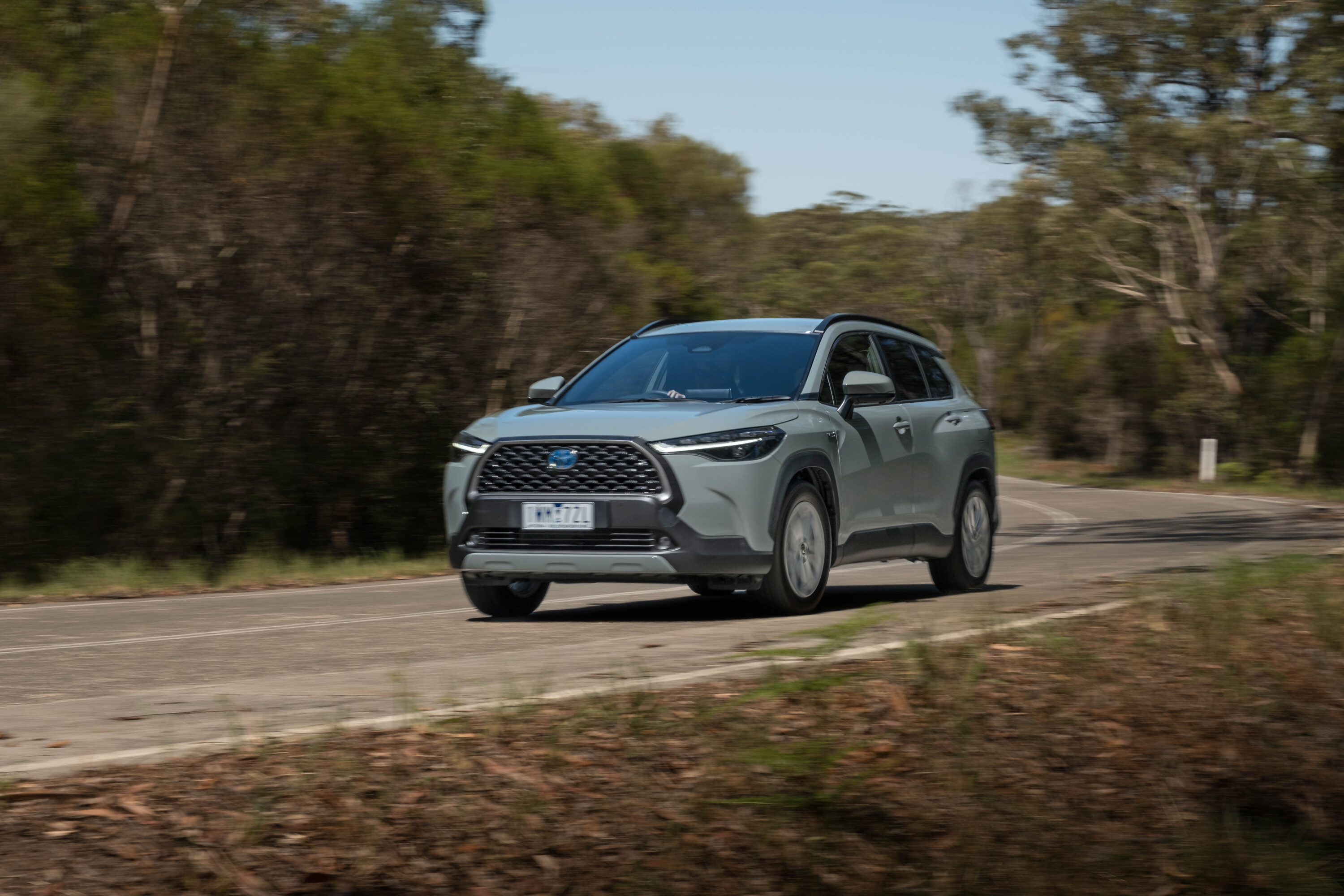
Despite its shortcomings, the GX hybrid FWD is the best value Corolla Cross you can get – it’s a solid runabout and you needn’t spend much more on a Corolla Cross.
1
What are the Toyota Corolla Cross’s key rivals?
- Mitsubishi ASX
- Nissan Qashqai
- Hyundai Kona
- Kia Seltos
- Mazda CX-30
- Honda HR-V
- Kia Niro
- Subaru XV
- Skoda Kamiq
- Volkswagen T-Roc
- Chery Omoda 5
- MG ZST
What might annoy me?
The Corolla Cross is an inoffensive vehicle for most and therefore isn’t likely to cause major dramas during ownership.
We have found some grievances, though.
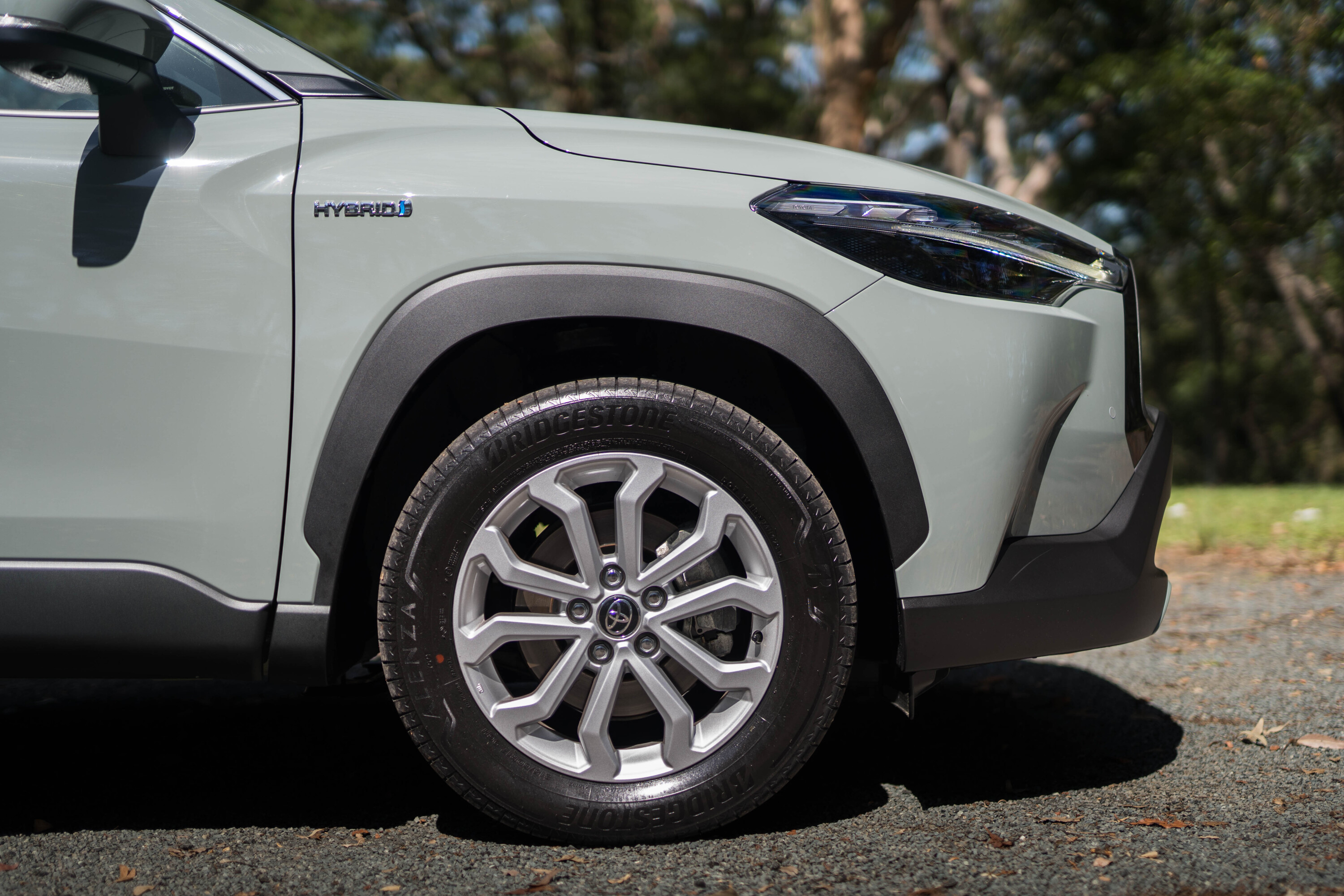
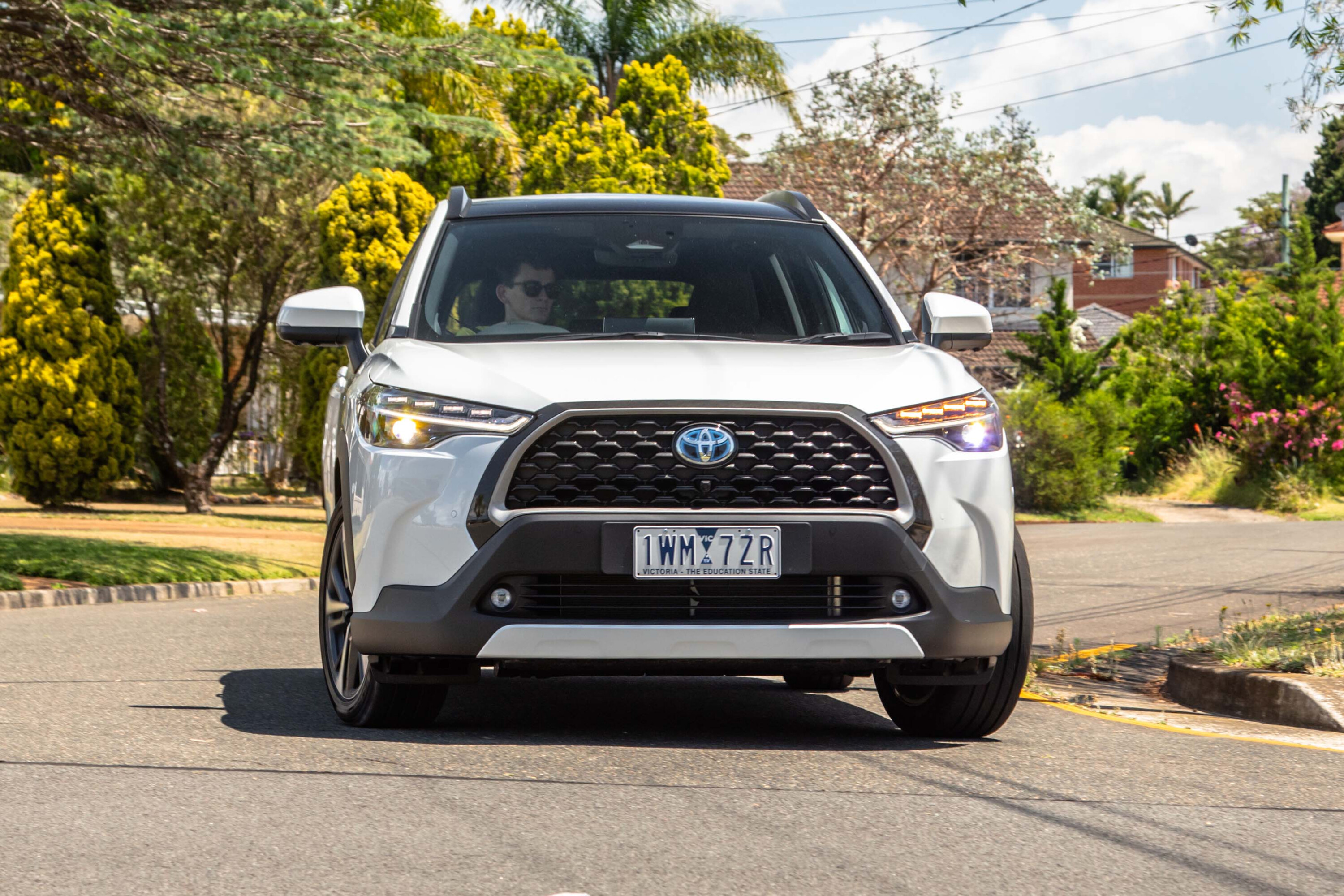
Its brake pedal feel makes this a tricky car to drive smoothly at low speeds, and the hybrid’s excessive ABS intrusion can be alarming. It also seems cheap of Toyota not to offer the multi-link suspension on the front-drive Cross variants – the Japanese giant does it for the Corolla hatch and sedan, so why not the Cross?
1
What might I miss that similar cars have?
Mostly in the boot.
As much of a step up as the Corolla Cross is for practicality over a Yaris Cross or Corolla hatch, next to rivals with such niceties as…
- The Volkswagen T-Roc’s adjustable rear bench
- The Skoda Kamiq’s clever nets and interior solutions
- The Nissan Qashqai’s ‘divide-n-hide’ boot storage system
1
What’s the infotainment system like?
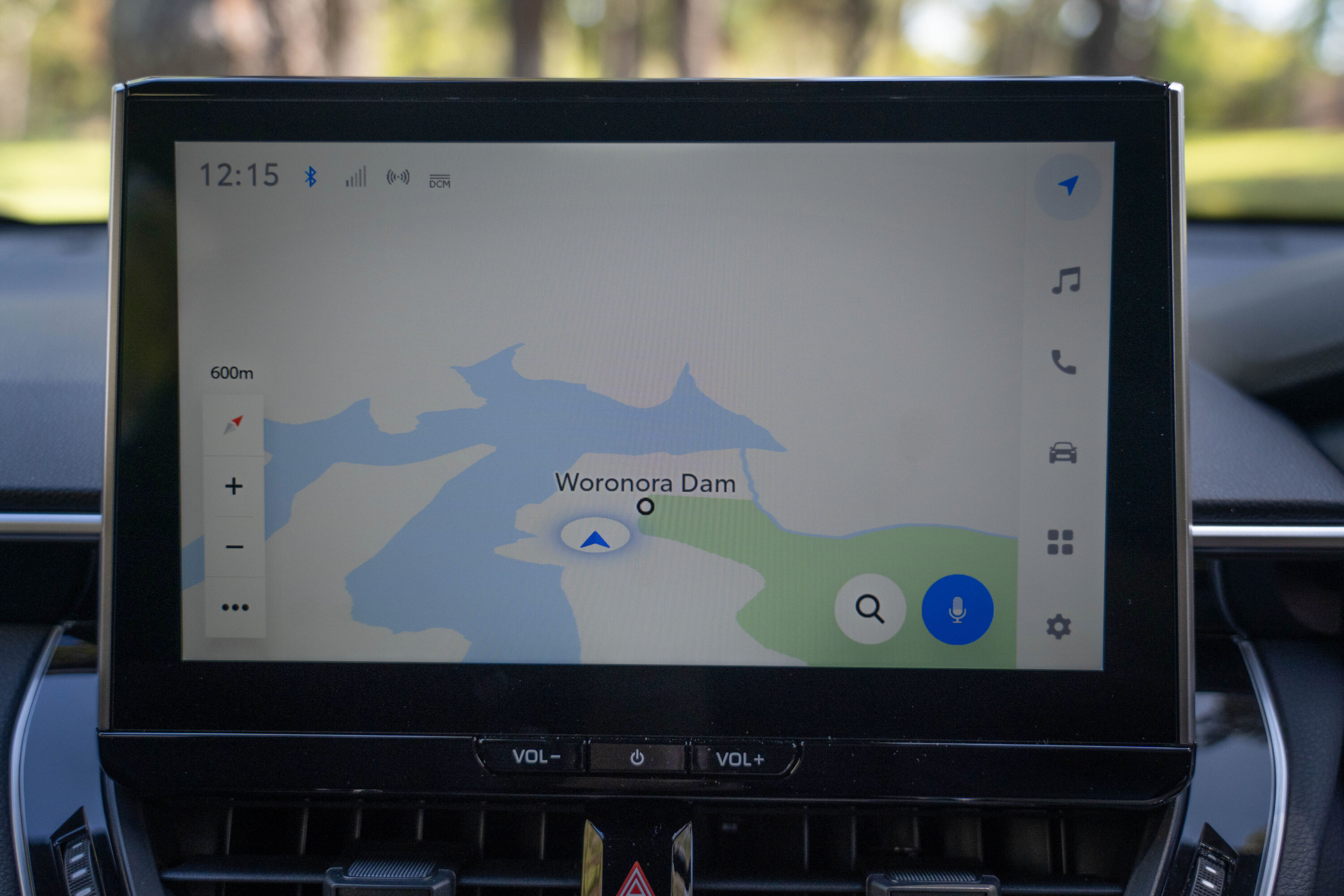
The Corolla Cross debuted Toyota’s new-look infotainment system in Australia.
The base car gets an 8.0-inch screen with wireless Apple CarPlay and wired Android Auto, while the GXL and Atmos get a 10.5-inch unit with in-built navigation with live traffic.
Its interface presents better than before, but the colours are still washed-out compared to high-contrast rivals. The boot-up time has also been drawn out, the Atmos taking 20-22 seconds to become responsive.
1
Along with the new multimedia system comes a 12-month subscription to Toyota Connect – a phone app that offers remote control features as well as telematics that can automatically call emergency services if needed when things go awry.
However, Toyota will charge you $9.95/month after the first year for the basic package, while the more involved telematics service including send-to-car navigation directions and theft tracking is $12.50/month on top of that.
It’s worth noting that Kia and Hyundai offer their connected services free for the duration of their warranty periods, but neither has defined a post-warranty pricing plan yet.
Where does Toyota make the Corolla Cross?
The Toyota Corolla Cross is built in multiple configurations for different countries – including in close-to-home Thailand – but all Australia-bound examples originate in Japan.
1
Are there plans to update the Corolla Cross soon?
As the Corolla Cross is new to the market and launched with the brand’s newest telematics features, expect it to hang around for a little while yet. We’d wager two-four years before a significant facelift comes along.
MORE
Everything Toyota
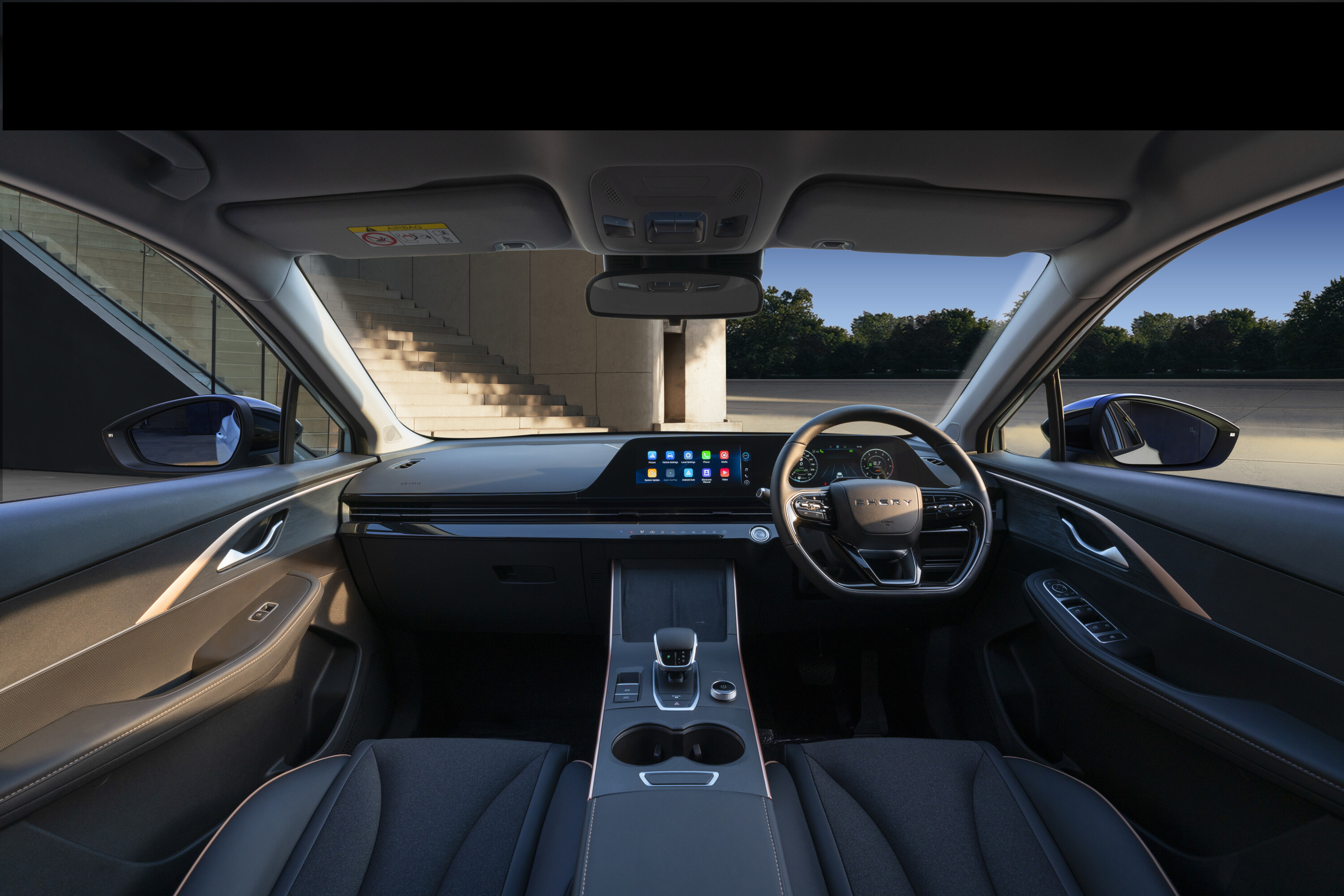
Chery has added a new entry-level Omoda 5 variant to its Australian line-up, with the Omoda 5 FX arriving with a driveaway price tag of $27,990.
It replaces the Omoda 5 BX as the new entry-level variant, utilising the same 1.5-litre turbo-diesel engine that produces 108kW and 210Nm. It includes many of the same features to be found in the BX, but the FX does get 17-inch alloy wheels; fabric seats with synthetic leather bolsters; single-zone air conditioning; a six-speaker Sony sound system; and Halogen projector headlights.
“The FX model is a welcome addition to the Omoda 5 range, offering consumers more choice, whilst maintaining our focus on value for money” said Lewis Lu, Chief Executive Officer at Chery Australia.
The Omoda 5 received a five-star ANCAP safety rating when it was tested in 2022. It also includes Apple CarPlay and Android Auto within its modern infotainment system.
Chery’s small SUV was introduced locally in 2023, after the Chinese brand took a break from selling here in 2014. Since its re-entry, it has notched up a healthy sales figure of more than 7000 units.
1
An all-electric variant has also been mooted to join the Australian line-up this year.
Omoda 5 FX features
- ‘Hello Chery’ voice control
- 10.25-inch digital driver’s display
- 10.25-inch touchscreen
- 17-inch alloy wheels
- 6-way power driver’s seat
- Fabric seats with synthetic leather bolsters
- Single-zone air conditioning
- Six-speaker Sony sound system
- Halogen projector headlights
- Acoustic windscreen
- Ambient lighting
- Tyre Pressure Monitoring System
Omoda 5 BX adds
- 18-inch alloy wheels
- 8-speaker Sony audio system
- Dual-zone climate control
- LED headlights
- Vinyl upholstery
- Wireless Apple CarPlay, wired Android Auto
- Wireless smartphone charging
Omoda 5 EX adds
- 360-degree camera
- Heated steering wheel
- Opening sunroof
- Power adjust passenger seat
- Power tailgate
- Puddle lights (logo)
- Red accented wheels, mirrors, brake callipers
- Seat heating
MORE
Everything Chery
Whether it’s brand-new, an exotic, or one you’ve owned for a while, there’s nothing worse than returning to a car park to discover that someone else has carelessly slammed their door into your beloved car, leaving an unwanted dent that could devalue it.
Sometimes, it’s impossible or impractical to find a decent car park that appears to be risk-free. This is where an accessory like Dent Guard could come in handy.
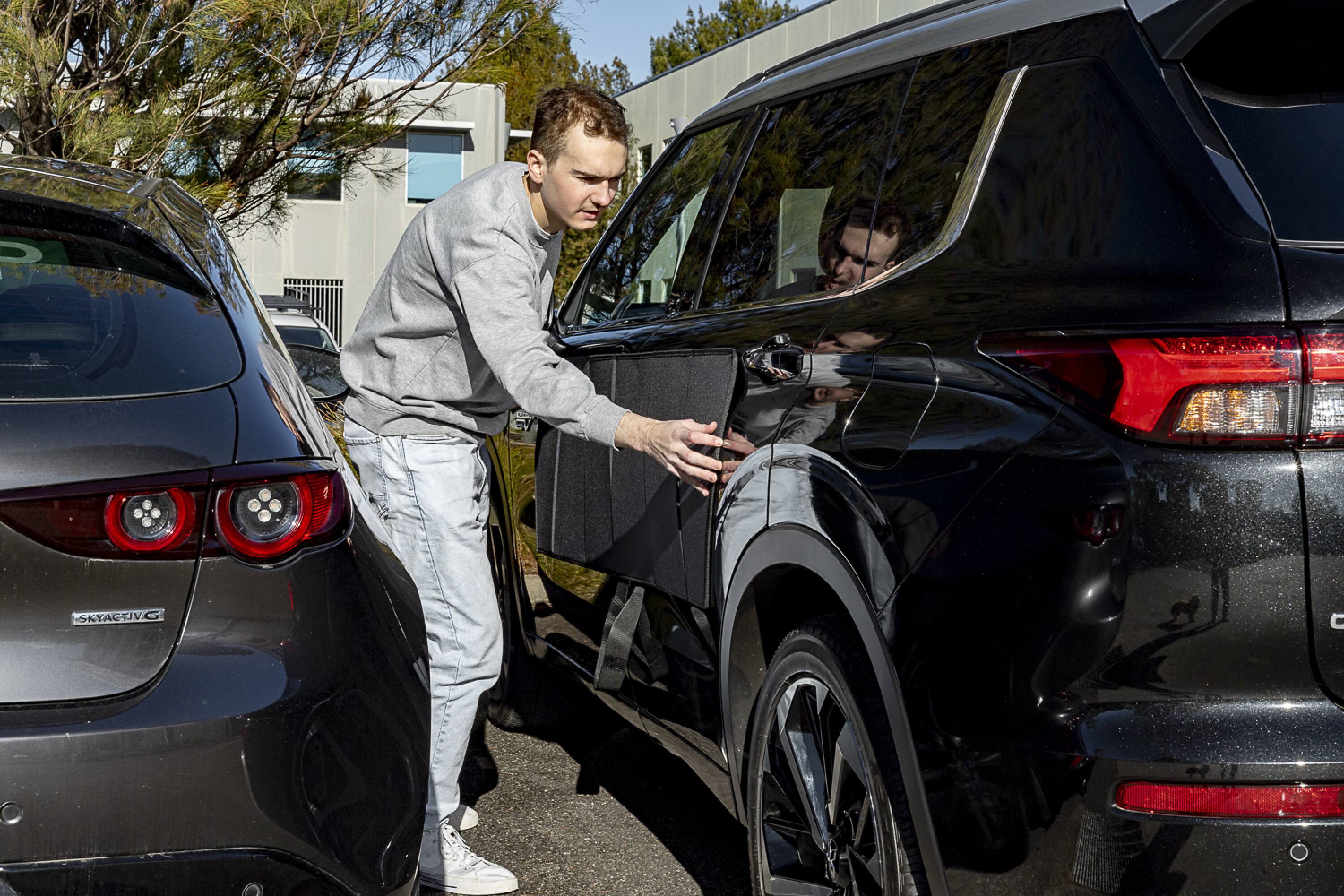
Dent Guard is an Australian-owned company that offers magnetic or suction-cup side protection panels meant to prevent dings and scratches from people opening their car door into yours or from a shopping trolley bumping into your car.
1
The magnetic product is suitable for most small to medium-sized vehicles with steel doors, while the suction-cup version, also priced at $199, is intended for cars with aluminium doors, like the Tesla Model 3 and Model Y.
We had the opportunity to test the magnetic Dent Guard product to see if it’s something you should consider for your car.
At $199 for a two-pack, the Dent Guard is 100 per cent Australian-made and has been developed with our climate in mind. The softly padded material developed for Dent Guard also attaches to the car to avoid scratching the paint.
1
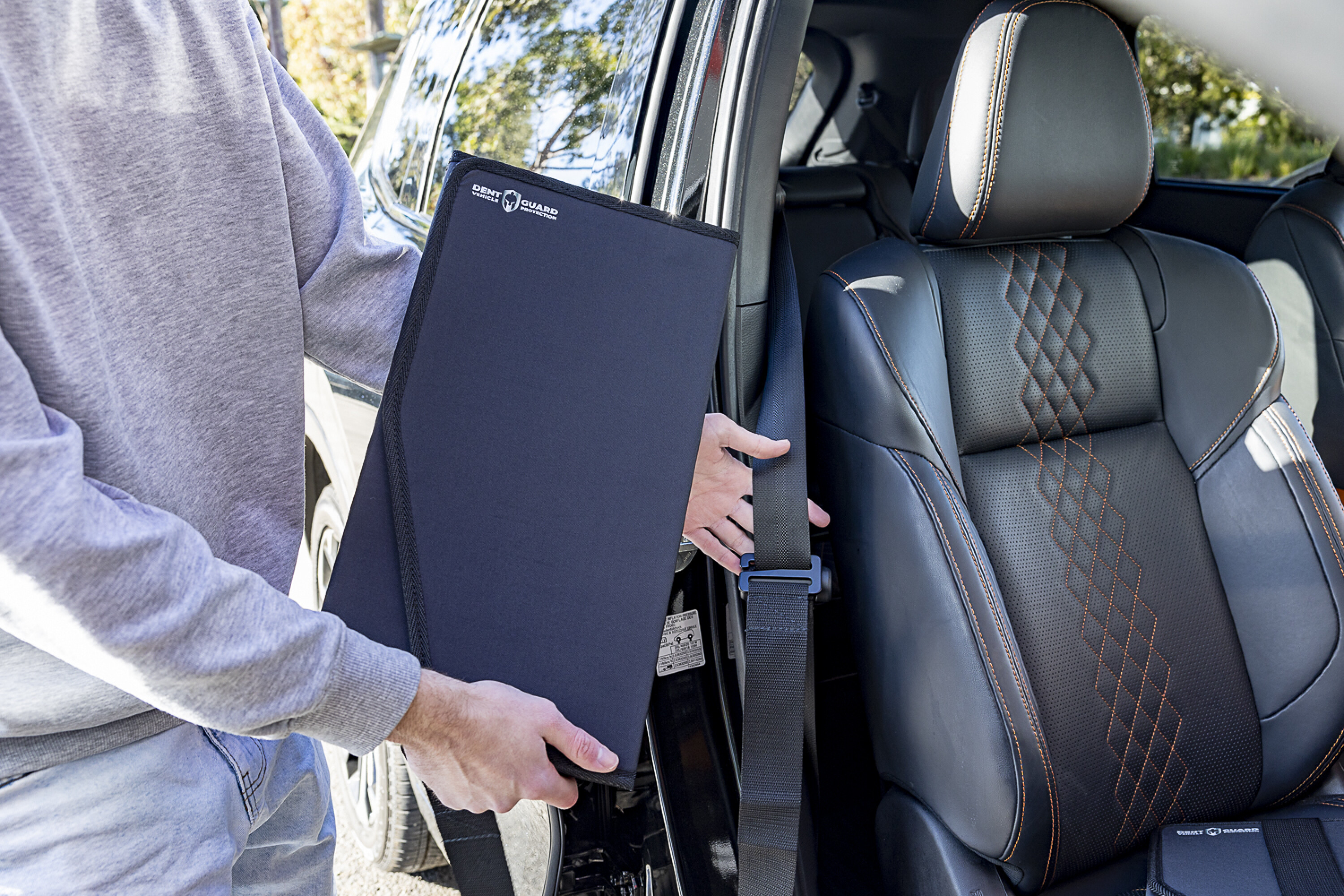
Attaching Dent Guard to a car is a relatively simple process, taking less than a minute once you’re accustomed to the process.
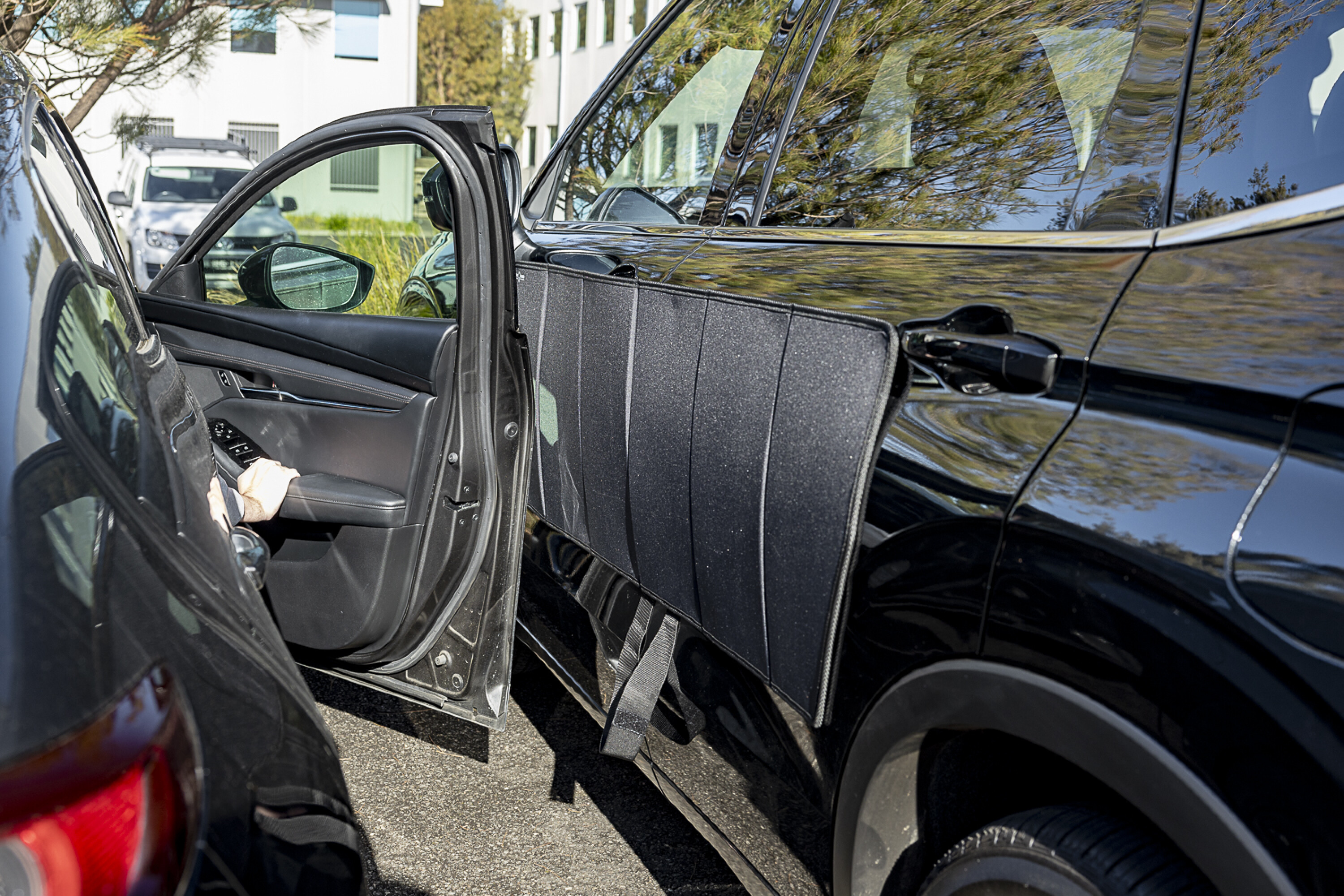
It’s as easy as attaching the strap above the seatbelt buckle, and then shutting the door after making sure the strap isn’t tangled up. It’s thin enough that the door will still open and shut as usual. However, it could be more difficult to install in a tighter space where other objects are closer than usual, which is where the product should be used in the first place.
With the strap in place, you can then fold out the Dent Guard to cover the side of your car. We tested it on one of Australia’s favourite SUVs, the midsized Mazda CX-5, and found that it does a decent job of covering the lower part of the door with protection in the areas where another car door could impact.
1
If you own a bigger SUV or a dual-cab ute, the current size of the Dent Guard might not be adequate. The brand says a larger size option is “coming soon,” along with a full-colour range and customisable prints to complement the current black, charcoal, silver and white versions.
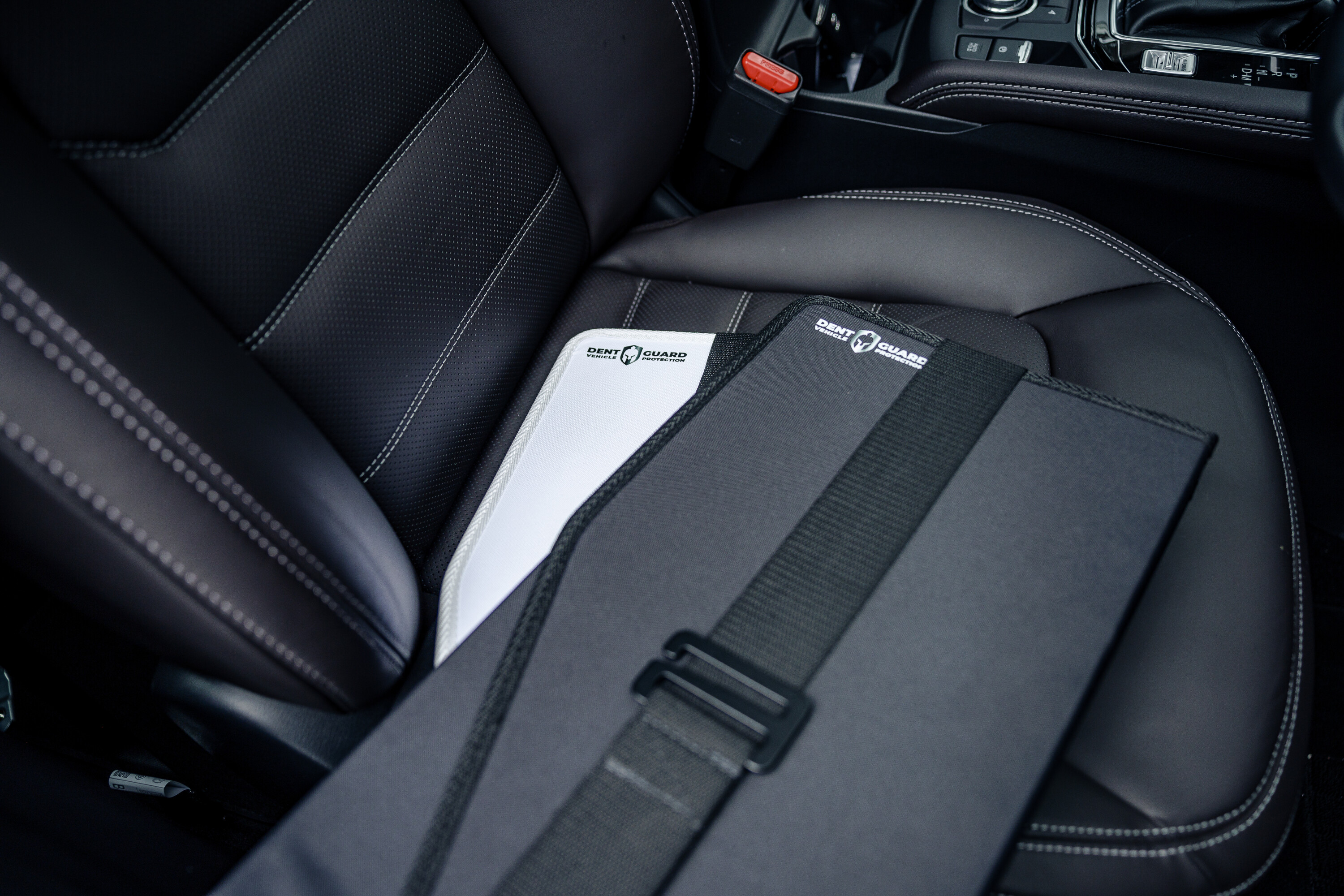
Once you return, it’s as simple as reversing the installation process, with the side panel folding down neatly – a similar process to a windscreen sun shade but not as cumbersome – for storage in the boot.
There were some concerns expressed that a person could come along and cut the security strap with a sharp object to steal or tamper with an attached Dent Guard set, but that seems like an unlikely (and unfortunate!) scenario – albeit one that is not impossible.
1
The soft material of the Dent Guard is said to be “scratch-resistant” to avoid damaging the vehicle’s paint. We’d still recommend trying to install it on a relatively clean car, rather than one that is dirty to avoid this risk altogether (the target market for a product like this probably likes to keep their car clean, anyway…).
Overall, the Dent Guard is worth considering if you want to protect your car from pesky dents and scratches in busy and tight car parks. Note the “busy” and “tight” parts. It’s not something we’d recommend using during your weekly grocery shop at the local supermarket.
Instead, it should really be considered in riskier situations, like if you frequently visit a busy shopping centre – especially during the Christmas rush – or a narrow inner-city parking garage. It’s also a good option if you’re leaving your car at the airport often or for an extended period of time where there would be frequent car and people movements nearby.
Pricing: $199
MORE
All car news
MORE
All car reviews
As our world becomes increasingly fractured, so too does the electric-vehicle line-up of Volvo’s sporty-premium offshoot, Polestar.
Each new Polestar model introduces a fresh consecutive number, and while that numerical nameplate strategy might make parts-ordering or vehicle chronology relatively easy, it ain’t so simple out in the real world.
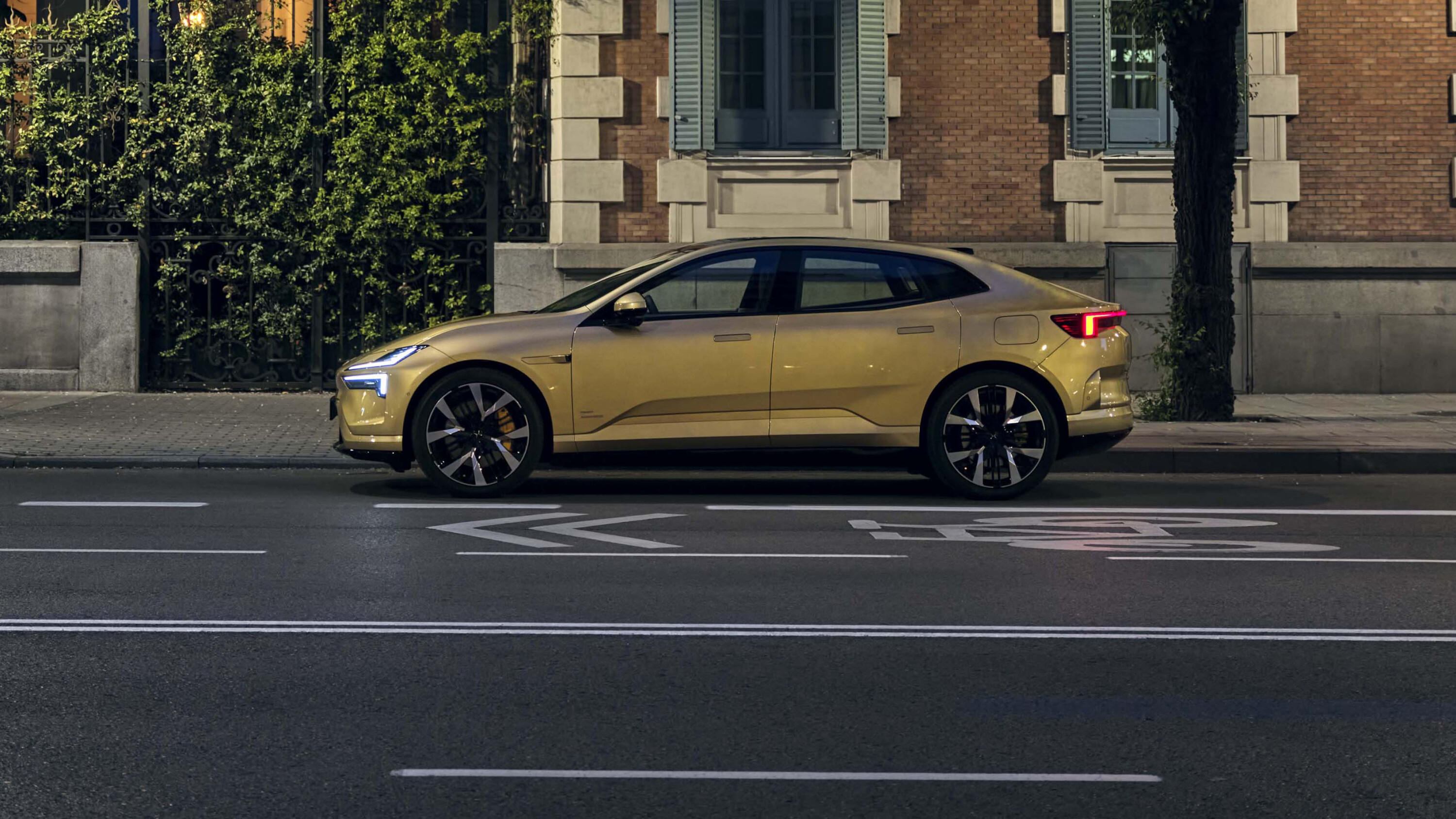
After Polestar 1 (rare, expensive, high-performance coupe), 2 (medium EV liftback-sedan) and 3 (large premium SUV) comes the 4 (upper-medium coupe SUV), the supposedly imminent 5 (expensive, performance-focused four-door GT) and the potential 6 (a two-plus-two performance roadster, based on a shortened version of the 5’s aluminium platform with shared 800-volt architecture).
1
Of those undoubtedly appealing models, however, only the now five-year-old Polestar 2 (which has just been updated for MY25) and the all-new 4 (tested here in early-production form) will be able to generate significant sales volume for the beleaguered Swedish EV brand.
Struggling? How so? Back in early 2022, CEO Thomas Ingenlath (who styled the Polestar 2 and was once the SVP of Design at Volvo) communicated hopes of the brand selling 290,000 units annually by 2025. But with the Polestar 3 and 4 only recently going on sale internationally, the volume reality was 54,600 units last year, with revised hopes of achieving 155,000-165,000 units in 2024.
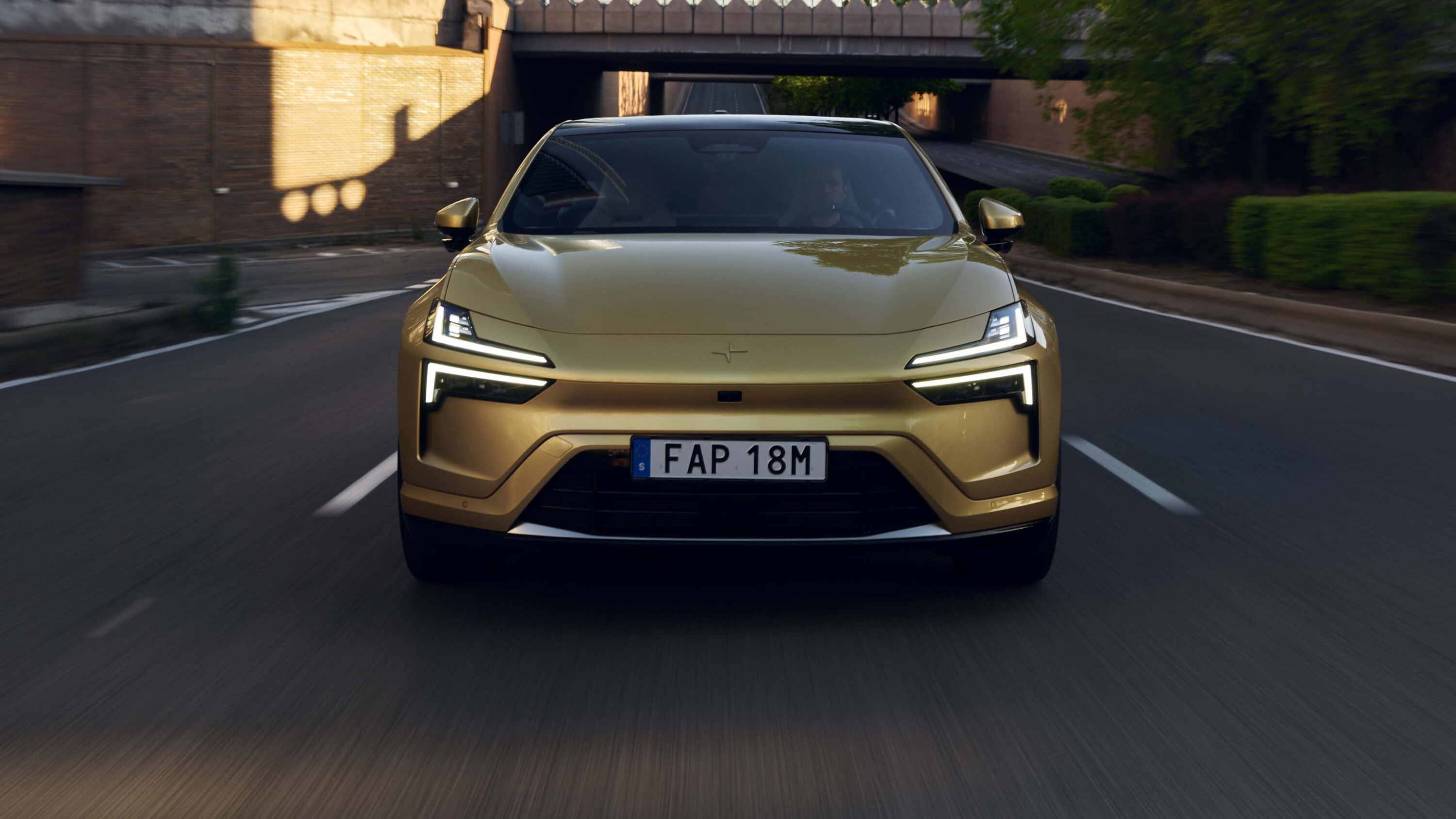
A good majority of that total rests on the crisply rendered form of the Polestar 4. Underpinned by a relatively fresh, Geely-developed ‘SEA1’ bespoke EV platform, the 4 measures a considerable 4840mm in length (234mm longer than Polestar 2!) and 2008mm wide, stands 1534mm tall and rides on an enormous 2999mm wheelbase.
1
Track widths are also substantial – 1703mm front, 1716mm rear – giving the Polestar 4 both a unique proportion and a four-square stance.
Compared to the upmarket SUVs the Swedes expect it to compete against (BMW iX3 and Porsche Macan E, among others), the Polestar 4 is longer, lower and wider – giving it a substantial foundation from which to achieve its sporty, techy, and undoubtedly fancy aspirations.
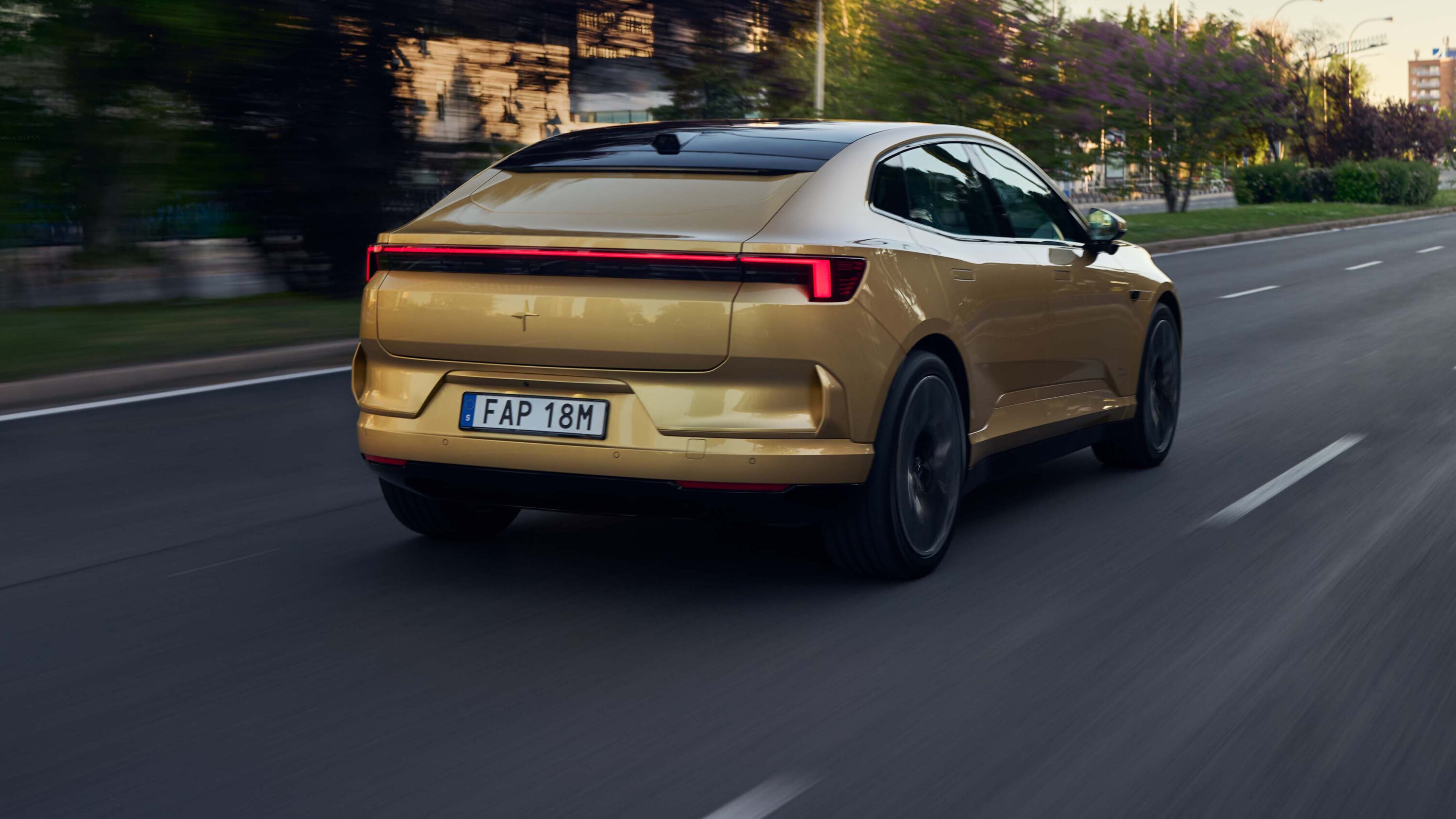
Launching in Australia in two varieties (Long Range single-motor and Long Range dual-motor, with a Performance Pack available for the latter), the rear-drive 4 starts at $81,500 RRP ($10,100 more than its Polestar 2 equivalent), though the drive-away price of the Gold AWD Performance Pack fitted with zinc Nappa leather by Bridge of Weir, as well as a Plus Pack ($8000) we tested in Spain, extends to a slightly unnerving $134,500.
1
JUMP AHEAD
- Is the 2024 Polestar 4 worth my attention?
- What about inside?
- What powers the Polestar 4?
- How does it drive?
- Is it worth waiting for the 2024 Polestar 4?
- Specifications
Is the 2024 Polestar 4 worth my attention?
For that sum, you get a very rapid and nicely tailored designed-in-Sweden, made-in-China EV.
With a 0-100km/h claim of 3.8 seconds, the dual-motor 4 is also the fastest-accelerating Polestar up to this point, so it certainly has the performance to support its price tag.
From a design perspective, there’s a lot to like. The short-nosed, grilleless front is relatively unexceptional but the rest of the 4’s shape (with a 0.26Cd) is quite distinctive – in particular its shell-like, windowless rear.
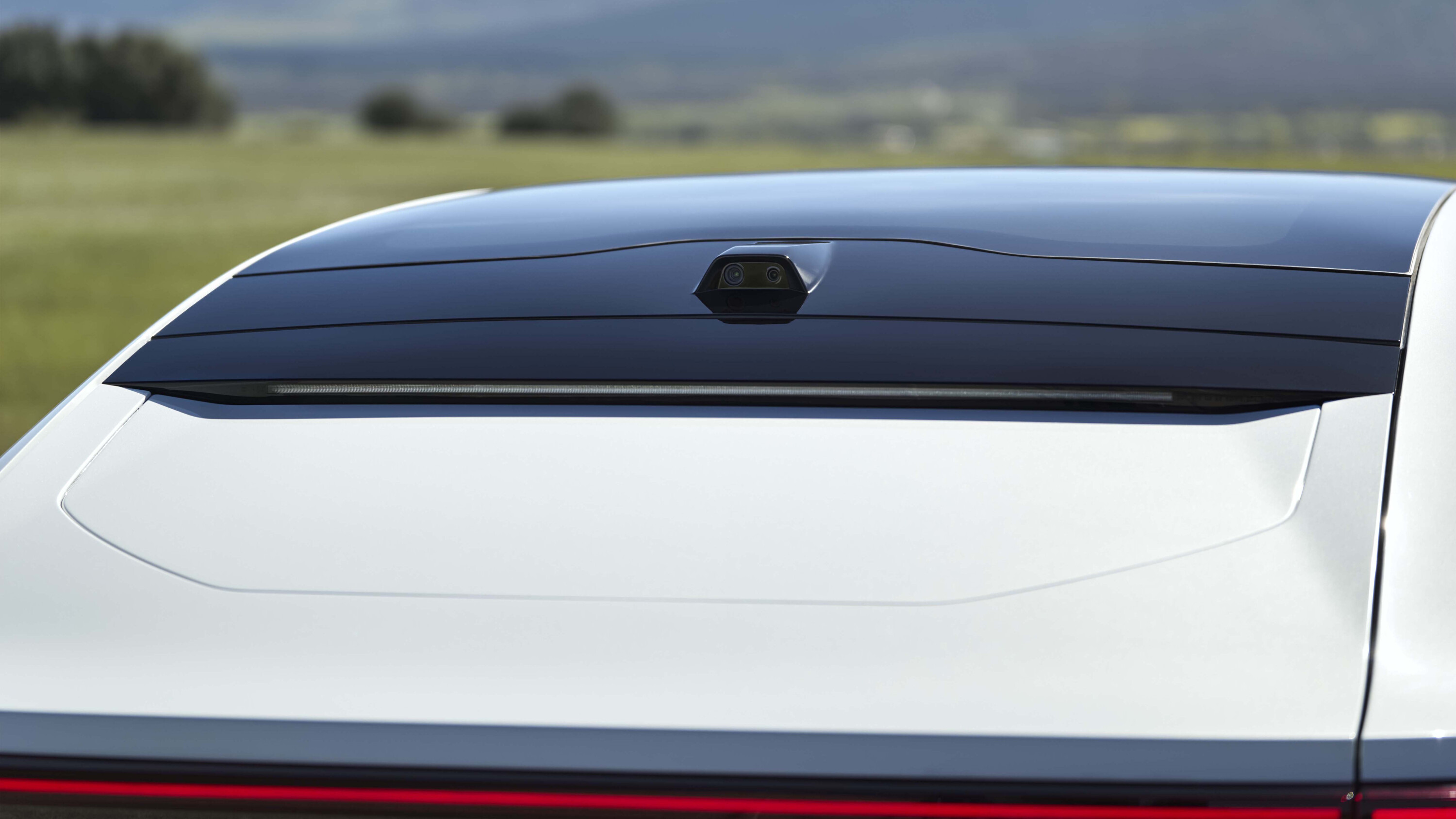
Not having to accommodate a tailgate window – replaced by a Gentex rear camera system with digital rear-view mirror – meant the designers could shift the header point of the roofline rearward, creating a lounging, club-like space in the rear seat that feels both private and limousine-worthy.
1
From rear-on, the Polestar 4’s stubby overhang completely disguises its overall size, and successfully distinguishes it from the wagon-shaped Polestar 3 and fast-back Polestar 2.
It also gives it a unique presence thanks to the absence of any glass, as well as a generously sized boot beneath its rear tailgate – capable of swallowing 526 litres of cargo, which is 42 litres greater than a Polestar 3’s.
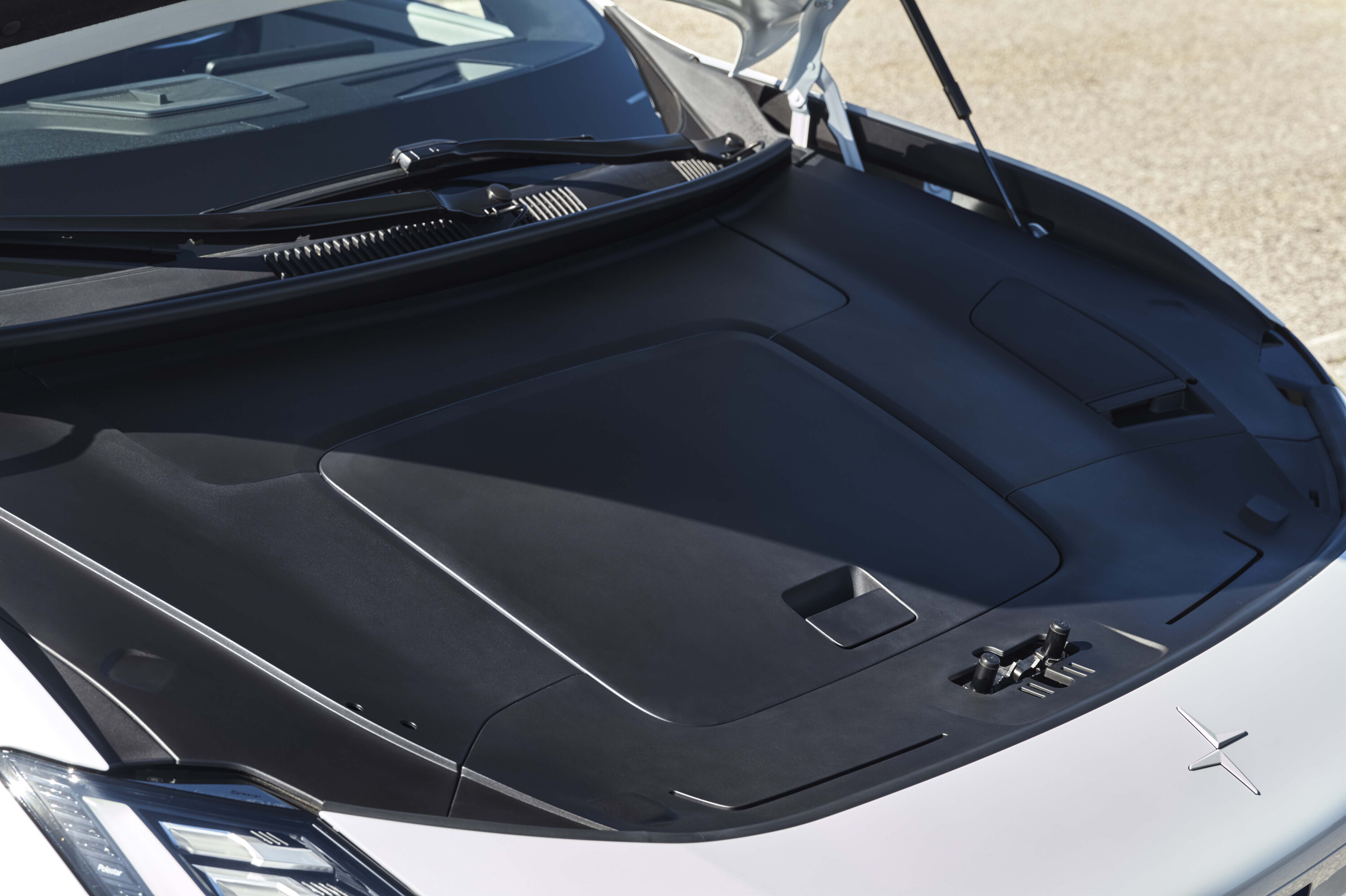
Frameless door glass is also a feature – as it should be with anything ‘coupe’ in its title – as well as retracting door handles, and even the base 4 wears 20-inch alloy wheels. Our Performance Pack test car sported very handsome 22s fitted with 265/40R22 Pirelli P Zero tyres – a wheel design that also debuts on the flagship 2025 Polestar 2.
2
What about inside?
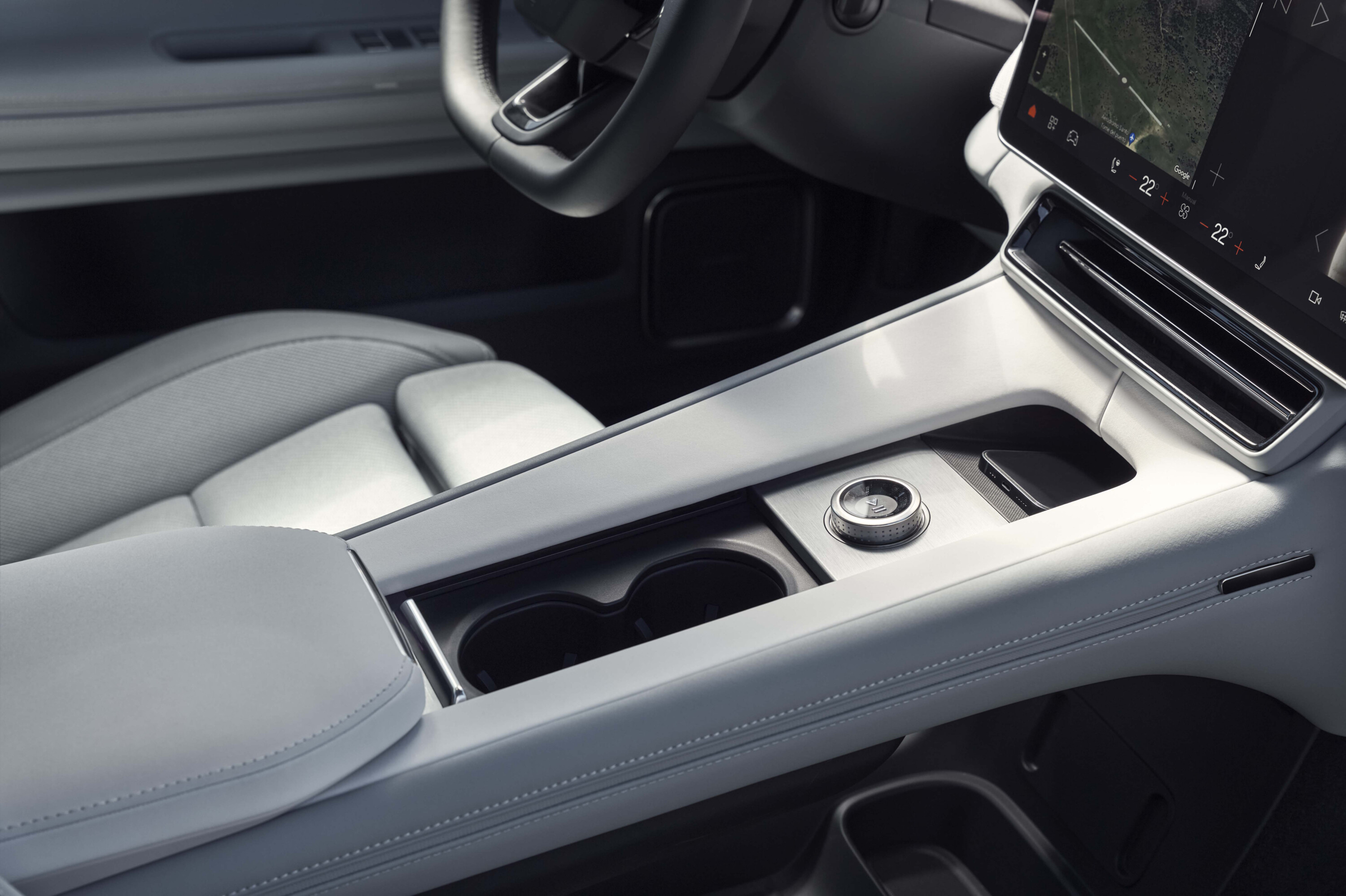
Yet it’s inside where the Polestar 4 really makes its mark. It has a Tesla Model 3 vibe in its general layout, but the execution is much warmer, classier and more premium.
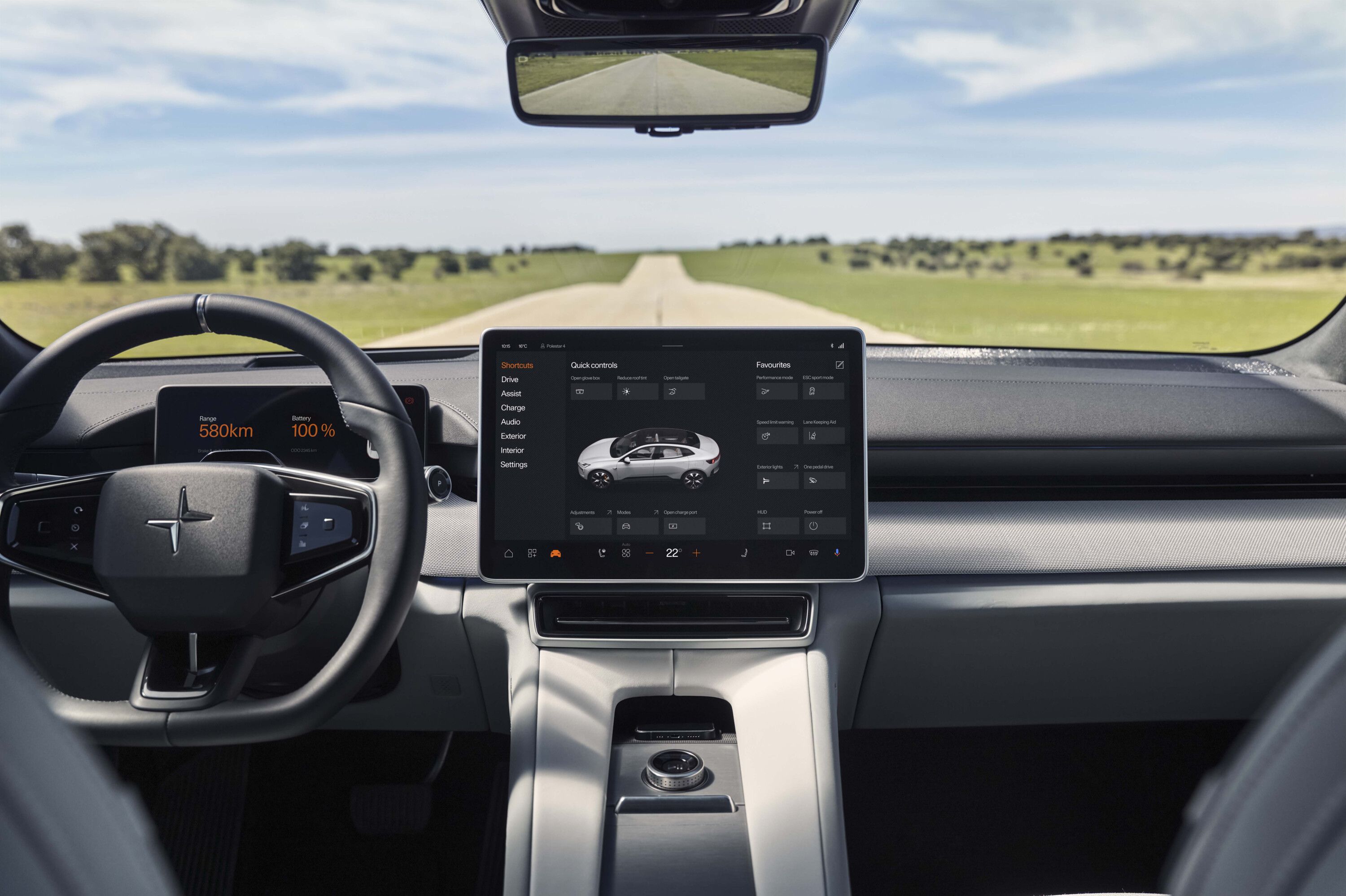
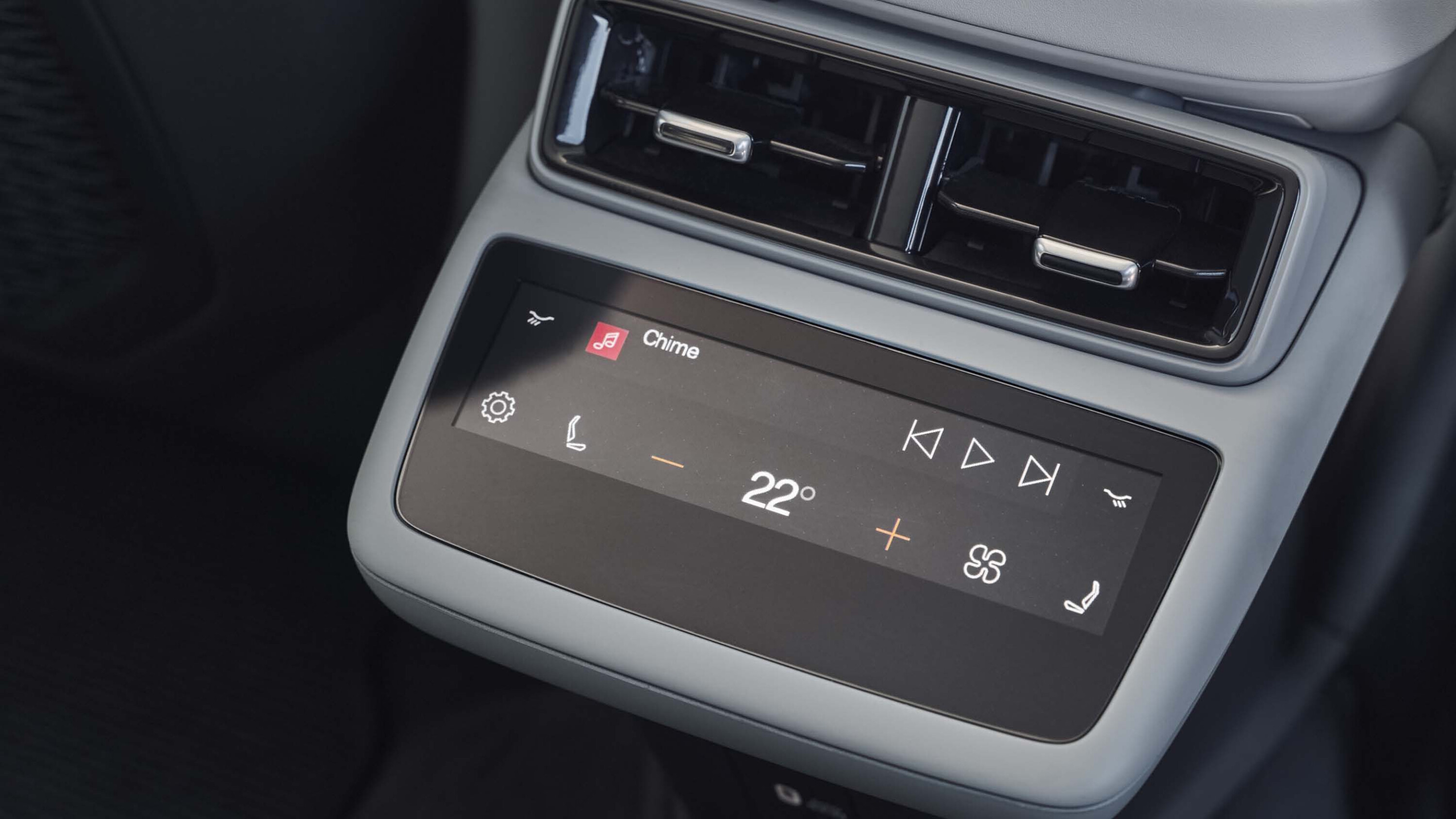
The 4 is the first Polestar to debut a vast landscape centre screen that operates virtually all functions, including the directional adjustment of the air vents (which is far less rubbish than it sounds).
While it takes a bit of time to set up short cuts and favourites, once all that is done, the overall functionality is superior to that of the Volvo-derived portrait set-up in the Polestar 3.
1
The 4’s multimedia touchscreen is simpler, quicker and more intuitive, though its top-spec 16-speaker Harman Kardon audio set-up can’t match the superlative sound production of the 25-speaker B&W system in the pricier Polestar 3.
It presents a more minimalist environment than the 3, yet retains the pricier Polestar’s quality of materials, including available Bridge of Weir Nappa leather, as well as three other classy upholstery types including a Tailored Knit made from 100 percent recycled PET bottles.
A full glass roof that extends behind the heads of the rear passengers is standard, as is a high-definition rear-view screen that displays a real-time feed with an impressively wide field of view, though it does take some time to get used to.
1
It works particularly well in tunnels, though – much like the glass roof which feeds heat and glare into the cabin in direct sun, and will demand the electrochromatic feature (to switch between opaque or transparent) in Australia, especially in summer.
Cabin detailing is interesting, too, including embedded ambient lighting radiating from all the trim inlays across the dash and doors, which makes the vast rear seat area feel a bit like a nightclub in the dark.
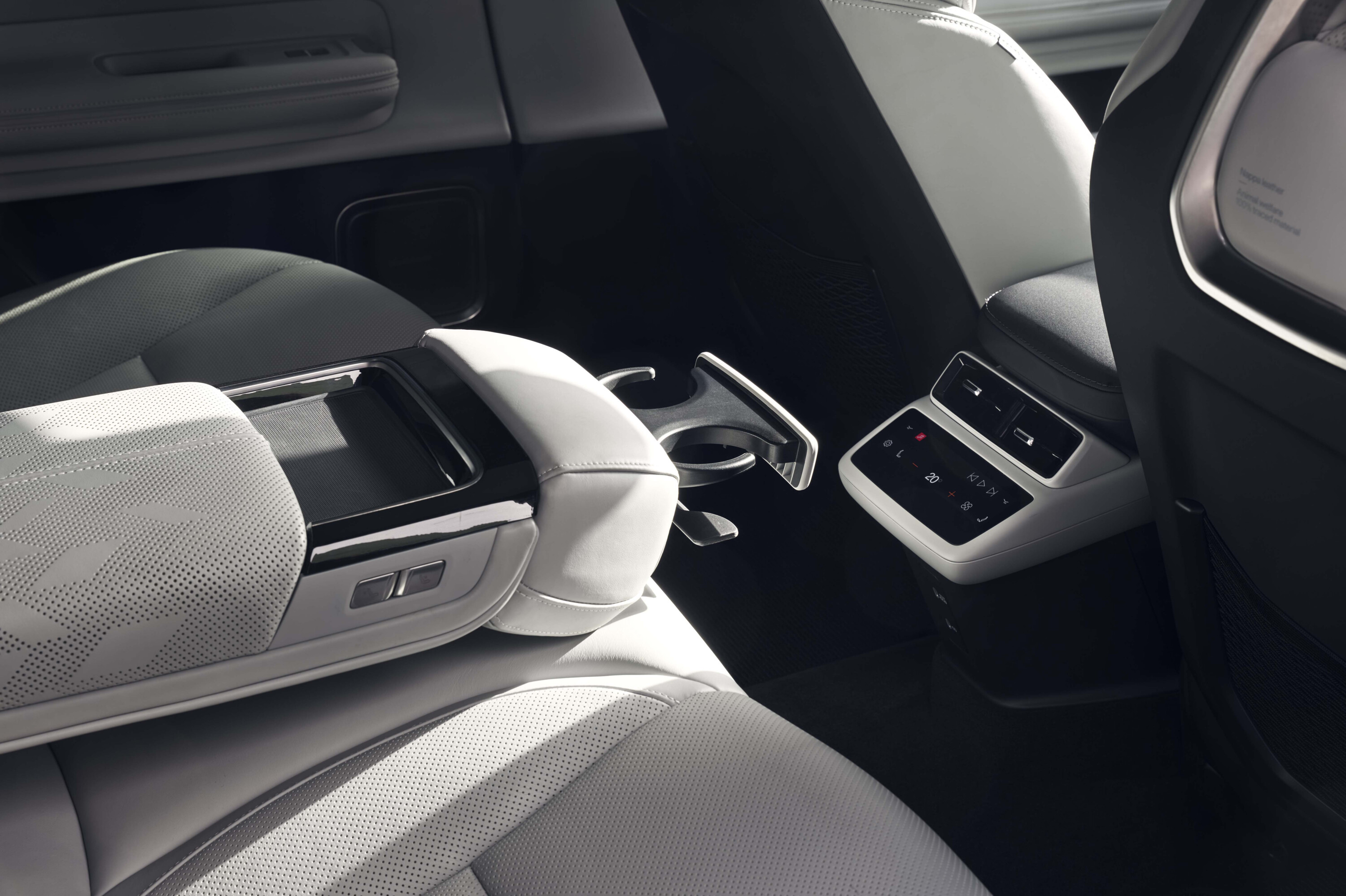
Back there, occupants enjoy a deep cushion and adjustable backrest rake, as well as loads of leg and foot room (providing the amply supportive front pair aren’t jammed all the way back) and a great view around the tombstone-shaped front buckets, making what is essentially an upper-mid-sized SUV (of sorts) feel like a limousine.
1
What powers the Polestar 4?
Flatten the right pedal in the Long Range dual-motor and that limousine impression will rapidly transform into a sports-car feeling.
With a claimed 0-100km/h time of 3.8 seconds, the top-spec 4 is almost a second quicker than the flagship Polestar 3, which is a more powerful EV but also carries around 300kg of additional weight.
The 400-volt electrical architecture consists of a 100kWh NMC battery in both single- and dual-motor versions, capable of up to 200kW DC charge capacity and a 10-80 percent charge time of 30 minutes.
1
Polestar says the 200kW/343Nm Long Range single motor is good for up to 620km of WLTP range (as well as 0-100km/h in 7.1sec) whereas the AWD dual-motor with double the outputs (400kW/686Nm) can travel up to 590km WLTP.
In our enthusiastic testing through Madrid’s urban sprawl and up the through the mountains skirting this superb Spanish city, the Polestar 4 Long Range Performance Pack AWD averaged 22.4kWh/100km, which translates to a real-world range of 420km based on a useable battery capacity of 94kWh.
1
How does it drive?
That energy-consumption figure may not entirely reflect what the Polestar 4 Performance Pack is capable of once it finds itself on Australian soil, and the same is true of the car’s dynamics.
Firstly, Spain’s mountain roads are beautifully surfaced, with (mostly) wide roads and well-cambered corners … which does not apply to Australia, other than perhaps our major eastern freeways and urban tunnels.
Secondly, the early-production Polestar 4s we drove on the international launch didn’t quite feature the full European suspension spec (which is what we’ll get in Australia). Instead, the AWD Performance Pack models we drove were fitted with Chinese-market adaptive dampers and suspension top mounts, combined with European tyres and software – something that wasn’t communicated until after we’d driven the car.
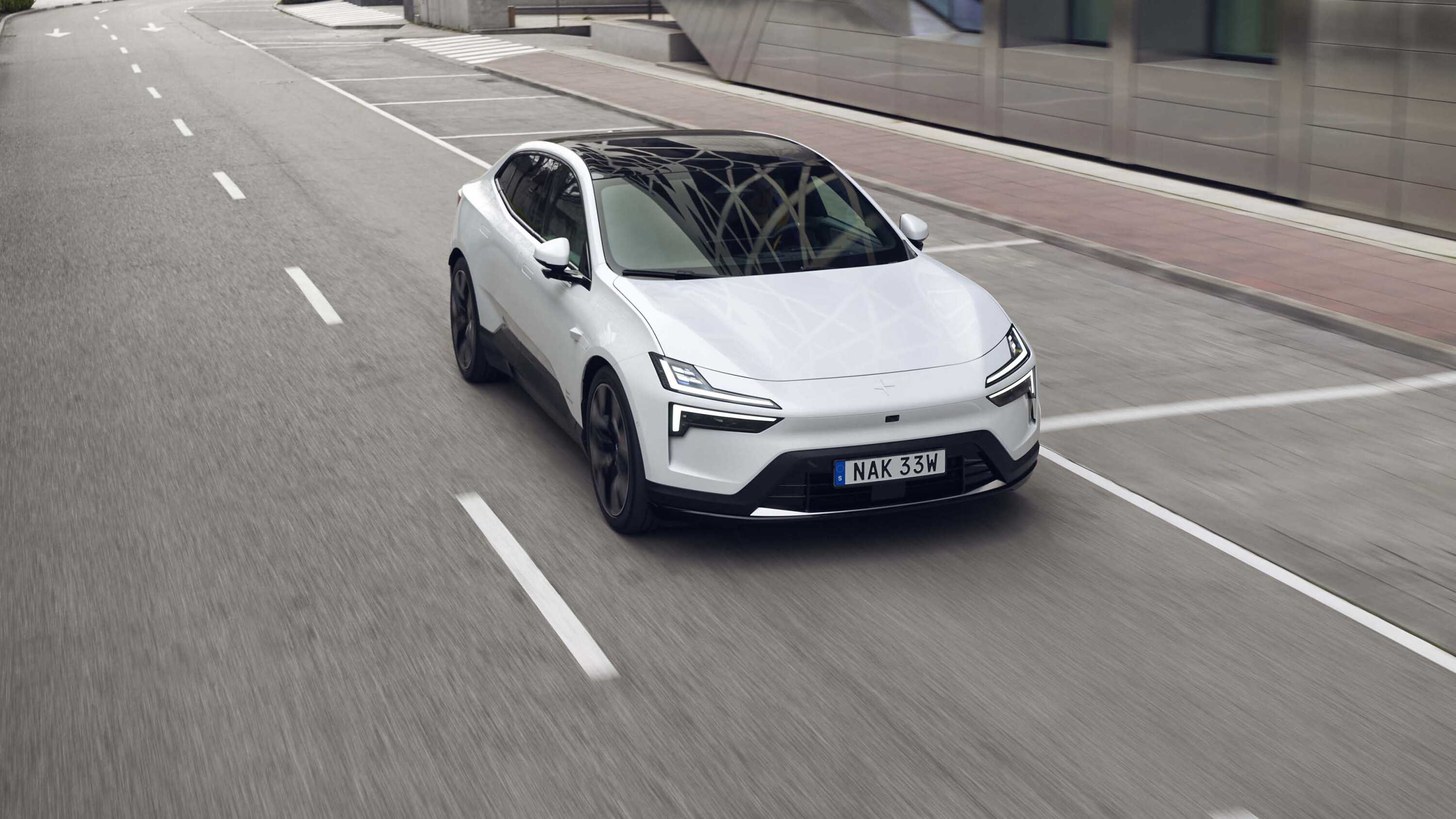
1
According to Polestar: “the difference in the rear top mounts and the shock absorber valving contributes to a more relaxed response from the car, as desired from comfort-orientated markets like China.
During your drive you would likely have felt a difference – between the Long Range Dual Motor with Performance Pack and Long Range Single Motor with EU-spec hardware – in small initial steering wheel movements resulting in less precise steering feel around the straight ahead position.
The rear suspension mounts play a significant role in influencing steering feel … so what you experienced in this regard may not have been what you would have expected for our Performance Pack model.”
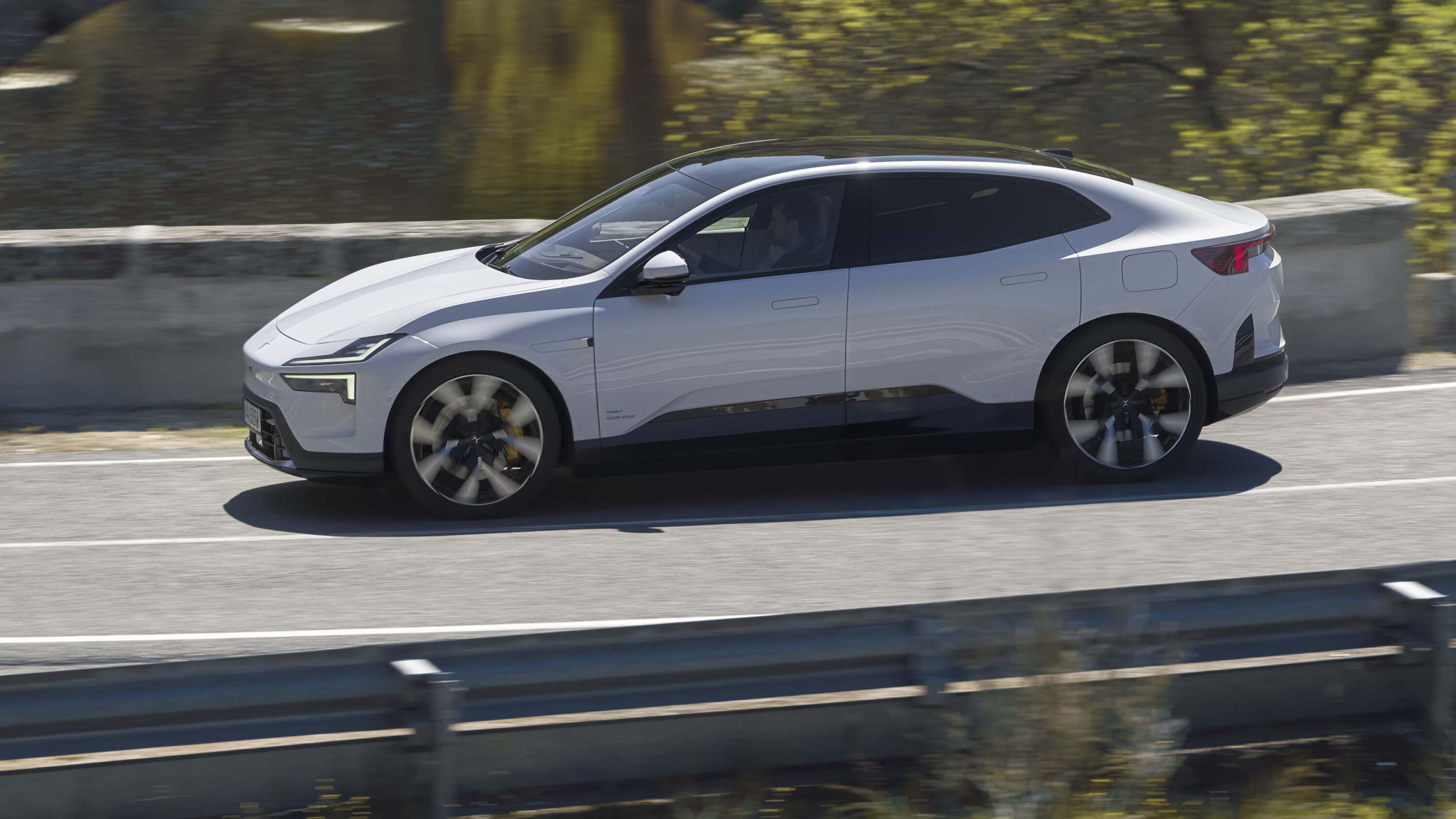
1
Indeed, while the Performance Pack hung on gamely in corners – its neutrality helped by its 50:50 weight distribution – it felt relatively inert in its overall driving feel, and offered nothing in the way of adjustability.
And its ride quality – while well-controlled and quiet on smoothly-surfaced tarmac – completely disintegrated on rough sections, feeling choppy and jiggly. And that’s in Standard mode. A brief sample of the adaptive damping in the Nimble and Firm settings almost demanded a kidney belt.
That said, during lunch we managed to squeeze in a brief taste of the rear-drive Long Range single-motor wearing 255/45R21 Michelin Pilot Sport tyres and it felt noticeably different.
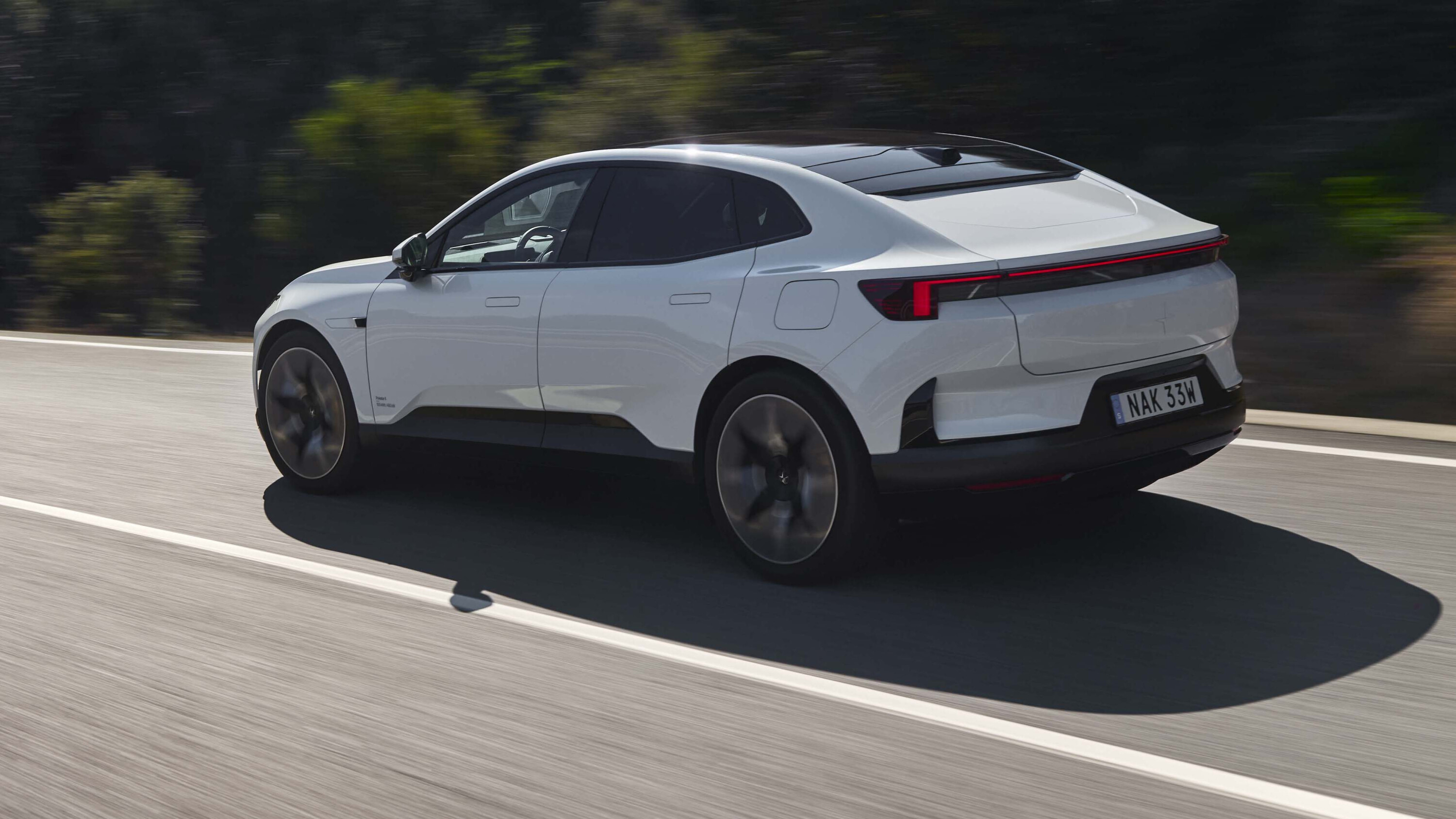
1
With the full EU suspension and software spec, it offered crisper steering, a much more composed ride (on fixed-rate dampers!), a degree of adjustability and nuance in its handling (no doubt aided by its 48:52 weight distribution), and a far more satisfying dynamic experience.
Everyone who drove the rear-drive Polestar 4 preferred it to the bells-and-whistles Performance Pack, and even its far less urgent acceleration felt more than adequate and entirely liveable.
There’s a chance the properly-specced Performance Pack will be the sweet spot in the range, given its standard adaptive damping and serious braking package with Brembo four-piston front calipers and huge ventilated discs at both ends. But, much like the reconfigured Polestar 2, the entry-level rear-driver may prove to be the more involving, more appealing, and definitely more affordable option.
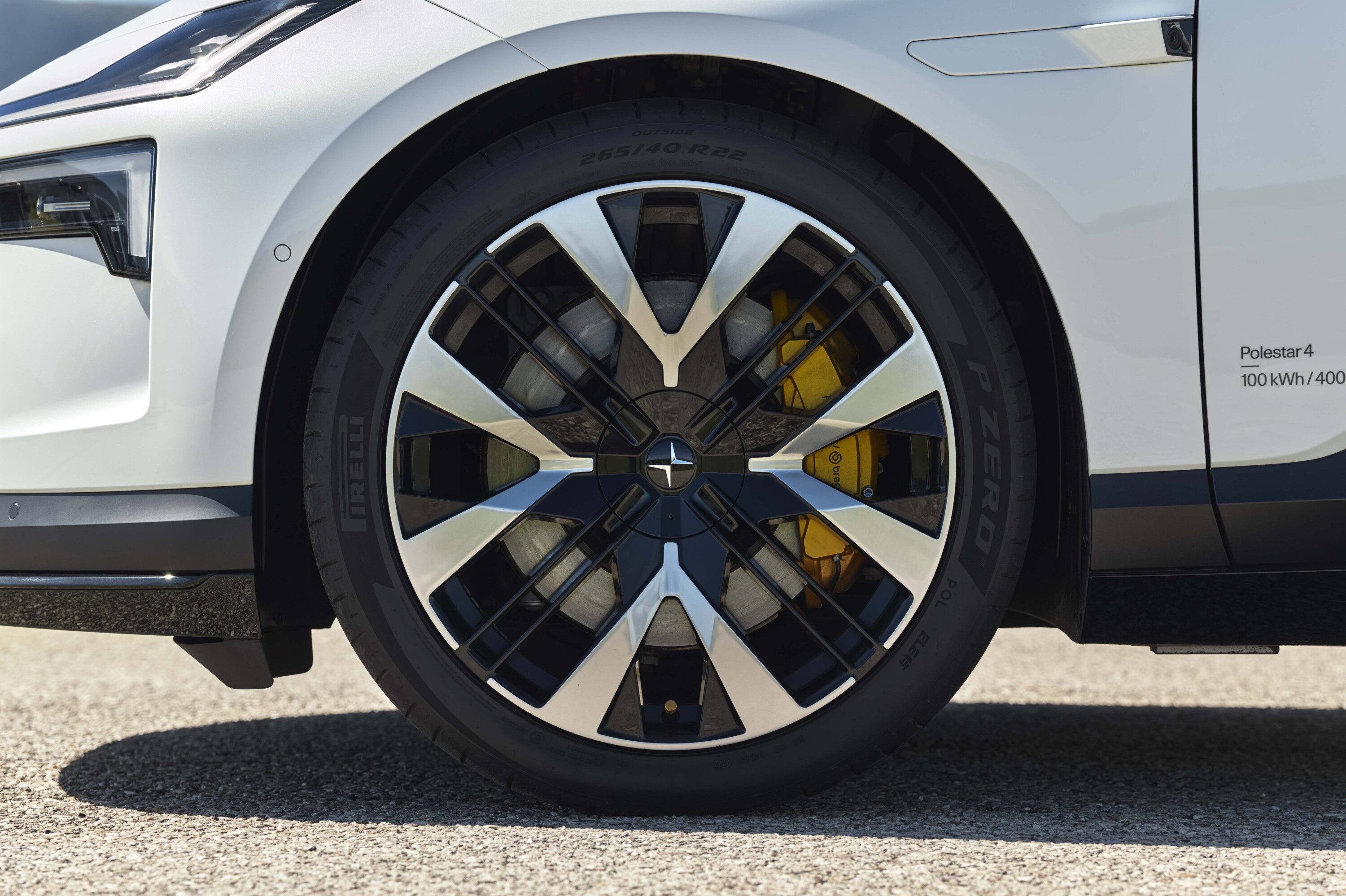
1
Is it worth waiting for the 2024 Polestar 4?
There’s no doubt the all-new Polestar 4 has design excellence on its side, given the unusual treatment of its exterior and the lavish space of its interior.
It has more than a hint of the luxuriousness and specialness of its pricier Polestar 3 sibling for a cost saving of more than $50K when you compare entry-level pricing.
But, based on our first impressions, this is also a less sophisticated and less polished EV to drive than the larger, wagon-shaped Polestar 3.
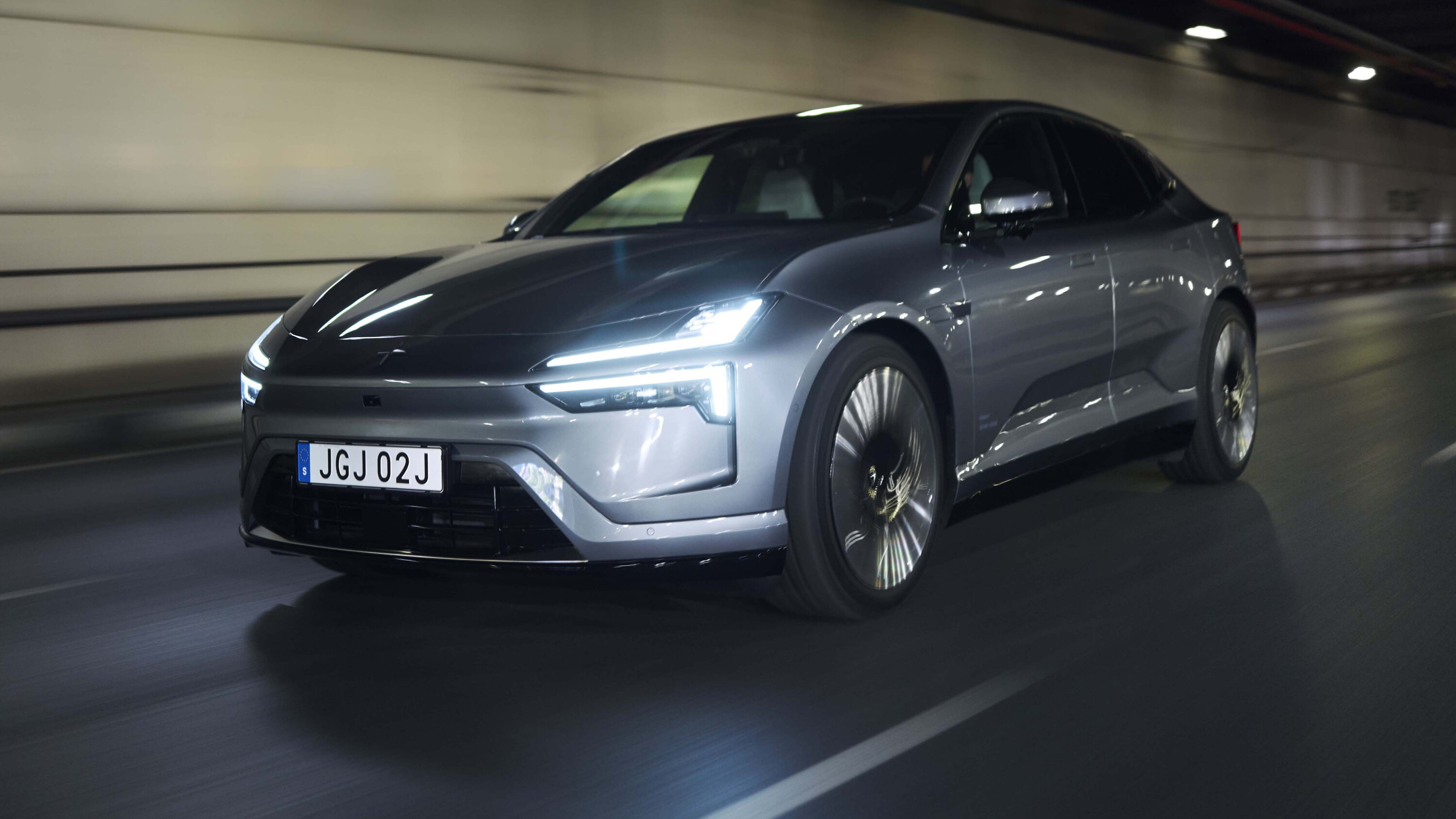
1
It doesn’t have that car’s ride isolation or refinement, and while the Performance Pack model we drove wasn’t representative of the full-production version we’ll see, I suspect that the base rear-drive Polestar 4, wearing the smallest wheels, without all the optional razzle-dazzle that can send its price soaring skyward, will be the one to go for – costing roughly $89K drive-away in NSW.
Yet not everyone views cars the way we do. And if your idea of a style-focused Swedish EV is one dripping with boast-worthy equipment – including optional Luminar LiDAR autonomous functionality in the future – then the Polestar 4 provides you with the potential to go massive.
MORE
Everything Polestar
MORE
Electric SUVs
| 2024 Polestar 4 Long Range Performance Pack specifications | |
|---|---|
| Price | $92,150 (before on-road costs) |
| DRIVETRAIN | |
| Electric motors | two permanent magnet synchronous |
| Battery | 100kWh nickel-manganese-cobalt |
| Drive | all-wheel drive |
| System power | 400kW |
| System torque | 686Nm |
| Transmission | 1-speed reduction |
| CHASSIS | |
| L/W/H | 4840/2008/1534mm |
| Wheelbase | 2999mm |
| Track (f/r) | 1703/1716mm |
| Weight | 2280kg |
| Boot | 526 litres + 15L front |
| Range | 590km (WLTP) |
| Efficiency | 22.4kWh/100km (tested) |
| Suspension front | double A-arms, coil springs, adaptive dampers, anti-roll bar |
| Suspension rear | multi-links, coil springs, adaptive dampers, anti-roll bar |
| Steering | electric power-assisted, 11.6m turning circle |
| Front brakes | ventilated disc (392mm) |
| Rear brakes | ventilated disc (364mm) |
| Tyres | Pirelli P Zero |
| Tyre size | 265/40R22 |
| SAFETY | |
| NCAP rating | Unrated |
| 0-100km/h | 3.8sec (claimed) |
The Tesla Model 3 is an electric medium sedan, boasting high-tech features, a minimalist interior, and an efficient design.
It was launched in Australia in 2019, but has been sold overseas since 2017. The model was updated in 2021 with features such as a redesigned interior centre console, matte black exterior trims, an electric tailgate, and larger battery packs.
In late 2023, a more comprehensive update was launched in Australia with a more upmarket design, new technology and slightly better driving range.
The popular Model 3 sedan is currently offered in three variants. These include the rear-wheel drive (RWD) with a ‘standard range’ battery, while the more expensive Long Range and Performance versions feature a ‘long range’ battery. The Model Y electric SUV is based on the Model 3 platform.
Unlike other car brands, Tesla does not disclose specific powertrain and battery specifications. Some figures in this article are estimates from the EV Database [↗].
JUMP AHEAD
- Pricing
- What body styles are available for the Model 3?
- What features are standard in every Model 3?
- What key features do I get if I spend more?
- How safe is the Tesla Model 3?
- How comfortable & practical is the Tesla Model 3?
- How much boot space does the Tesla Model 3 offer?
- I like driving, will I enjoy this car?
- Which version of the Model 3 provides the longest range?
- What is the Model 3’s towing capacity?
- How long is the warranty & what are the Model 3’s servicing costs?
- Which version of the Model 3 does Wheels recommend?
- What are the Model 3’s key rivals?
- What might annoy me?
- Does any upgrade have a downside?
- What might I miss that similar cars have?
- What’s the infotainment system like?
- Where does Tesla make the Model 3?
- Are there plans to update the Model 3 soon?
Pricing
We endeavour to keep this review up-to-date, but Tesla prices have a tendency to fluctuate periodically with little warning. Make sure to check out our Model 3 pricing story for the most up-to-date figures.
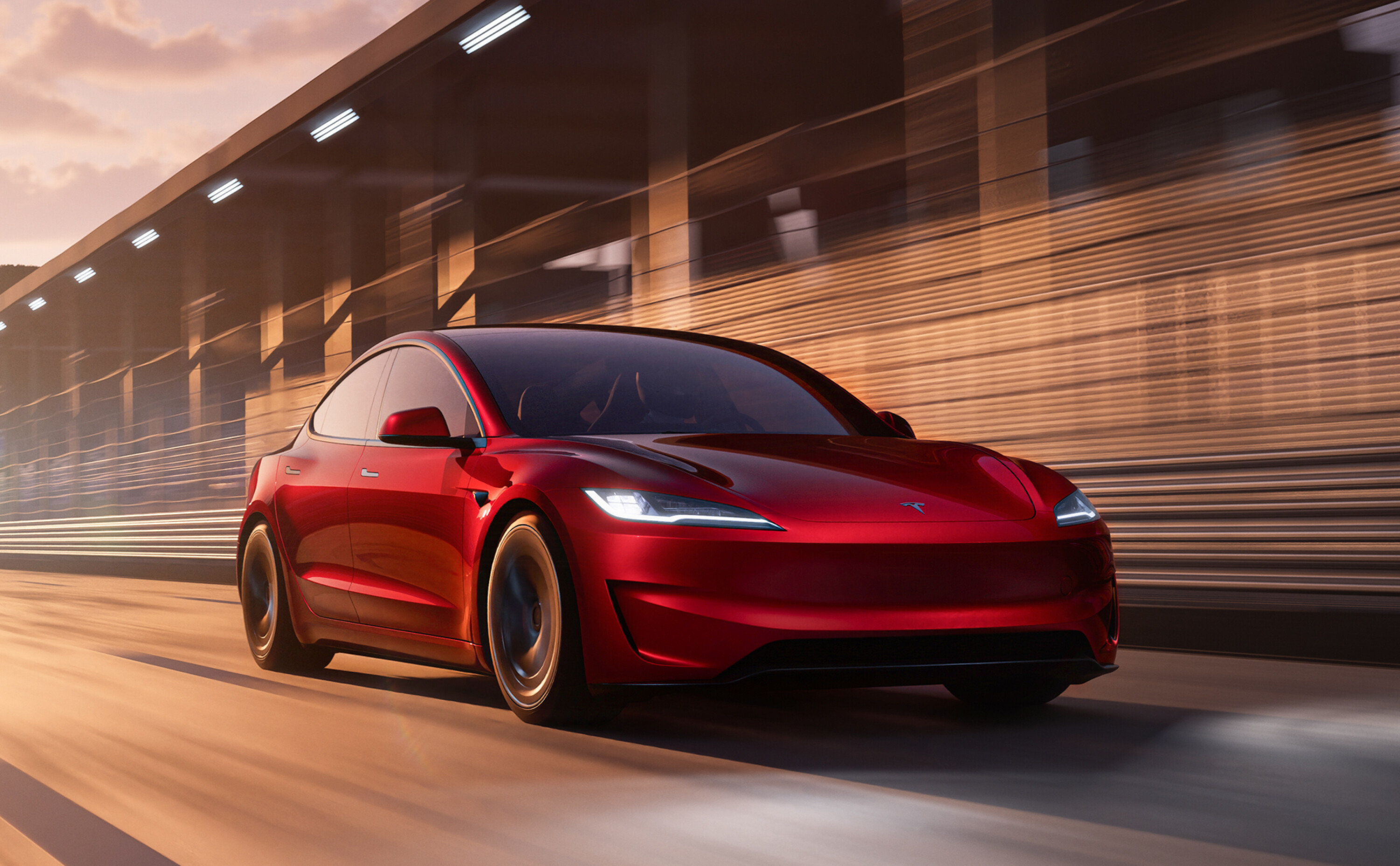
1
What body styles are available for the Tesla Model 3?
Five-door, five-seater sedan only.
It is classed as a medium sedan, even though its length is closer to that of a Hyundai i30 Sedan that sells in the small segment than that of a Toyota Camry that occupies the medium segment.
Officially competing in Australia’s passenger cars above $60K segment, the Model 3 is priced in line with petrol-engined sedans from luxury car brands.
What features are standard in every Tesla Model 3?
We endeavour to keep this review up-to-date, but Tesla tends to make minor ‘running changes’ without notice and public disclosure compared to other brands. The features below are correct as at the time of publication.
The base Tesla Model 3 RWD features much of the available equipment as standard, with a single electric motor and a 57.5kWh usable lithium-iron-phosphate (LFP) battery (according to EV Database). It includes:
| 2024 Tesla Model 3 Rear-Wheel Drive standard features | |
|---|---|
| 18-inch u2018Photonu2019 aero covered alloy wheels | Fixed tinted panoramic glass roof |
| Animal hide-free black interior | Acoustic glass (front, side and rear) |
| 15.4-inch touchscreen with over-the-air (OTA) software update capability | Ambient lighting dashboard and door strips (200+ colour combinations) |
| 8.0-inch rear passenger climate and entertainment touchscreen | u2018Tesla Visionu2019 camera-only u2018Basic Autopilotu2019 active safety assistance features |
| Built-in Google Maps with automatic Supercharging stop planning | Reversing camera with blind-spot view side cameras |
| Music and video streaming apps, arcade games, Bluetooth, and voice control | Heated and ventilated front seats |
| Tesla mobile app connectivity with ultra-wideband (UWB) support for phone key | Heated rear seats |
| Standard Connectivity for up to eight years, Premium Connectivity trial for first 30 days | Heated steering wheel |
| Built-in Dashcam and Sentry Mode recording (128GB USB stick included) | Electrically adjustable driver and front passenger seat |
| Nine-speakers with amplifier | Full LED headlights with auto high beam and integrated fog lights |
| Dual Qi wireless charging pads | Full LED tail-lights with rear fog lights |
| 65-watt USB-C charging ports | Auto power folding, dimming, heated wing mirrors |
| Dual-zone climate control with hidden front and rear air vents, Keep Climate On, camp mode and dog mode | Power tailgate |
| Pedestrian warning u2018Boomboxu2019 external speaker | Camera-based automatic wipers |
| Flush exterior door handles with matte black exterior trim | |
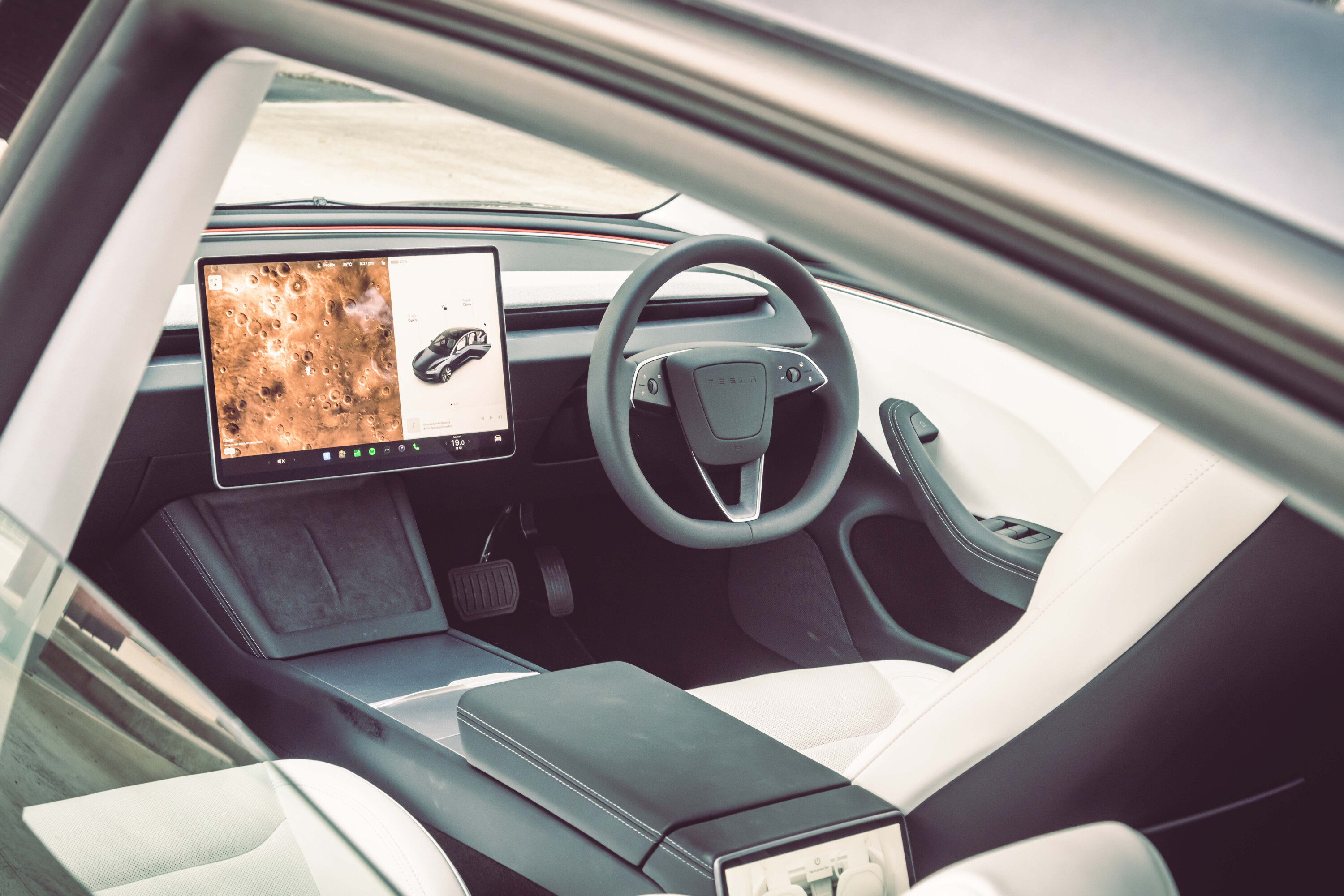
1
What key features do I get if I spend more?
We endeavour to keep this review up-to-date, but Tesla tends to make minor ‘running changes’ without notice and public disclosure compared to other brands. The features below are correct as at the time of publication.
The mid-pack Long Range also gains a larger 75kWh usable nickel-manganese-cobalt (NMC) battery (according to EV Database), dual electric motors and all-wheel drive traction, plus:
| 2024 Tesla Model 3 Long Range features (In addition to Rear-Wheel Drive) | |
|---|---|
| 17-speakers with dual subwoofers and amplifiers | Black artificial suede interior door material |
The flagship Performance gets a more powerful dual-motor tune, and:
| 2024 Tesla Model 3 Performance features | |
|---|---|
| 20-inch u2018Warpu2019 alloy wheels | Unique front and rear bumpers |
| Performance front brakes, red-painted brake callipers | Carbon fibre rear spoiler |
| Lowered adaptive suspension | Carbon fibre-look interior trim |
| Alloy pedals | Track mode |
| Sports seats | Increased top speed to 262km/h |
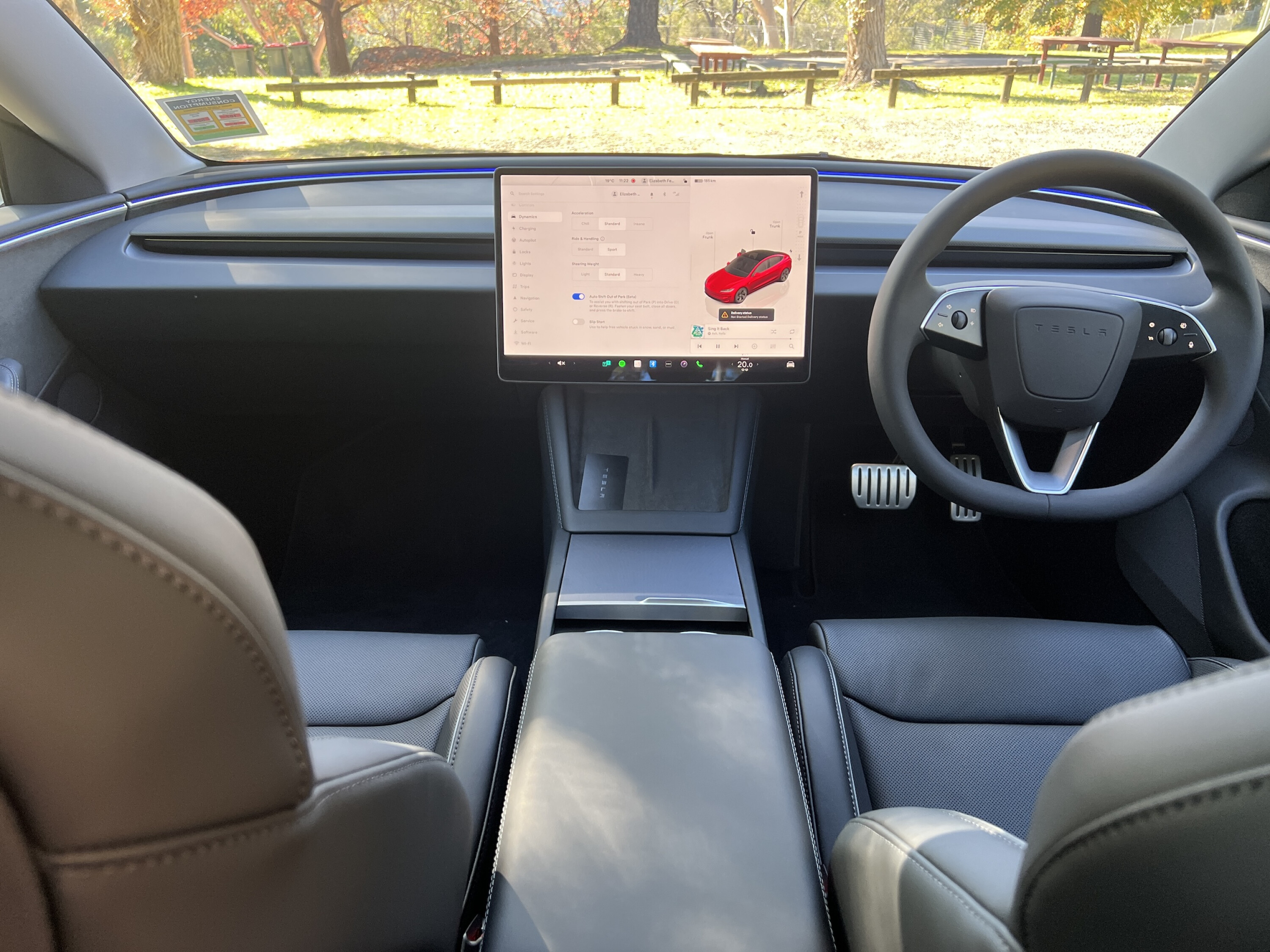
1
| 2024 Tesla Model 3 options | |
|---|---|
| 19-inch u2018Novau2019 alloy wheels (RWD and Long Range only) ($1800) | Enhanced Autopilot ($5100) |
| White interior ($1500) | u2018Full Self-Drivingu2019 Capability ($10,100) |
| Premium Connectivity ($9.99/month) | Tesla Mobile Connector trickle charging cable ($550) |
| 2024 Tesla Model 3 colours | |
|---|---|
| Pearl White Multi-Coat | Standard |
| Solid Black | $1500 |
| Deep Blue Metallic | $1500 |
| Stealth Grey | $2300 |
| Ultra Red | $2600 |
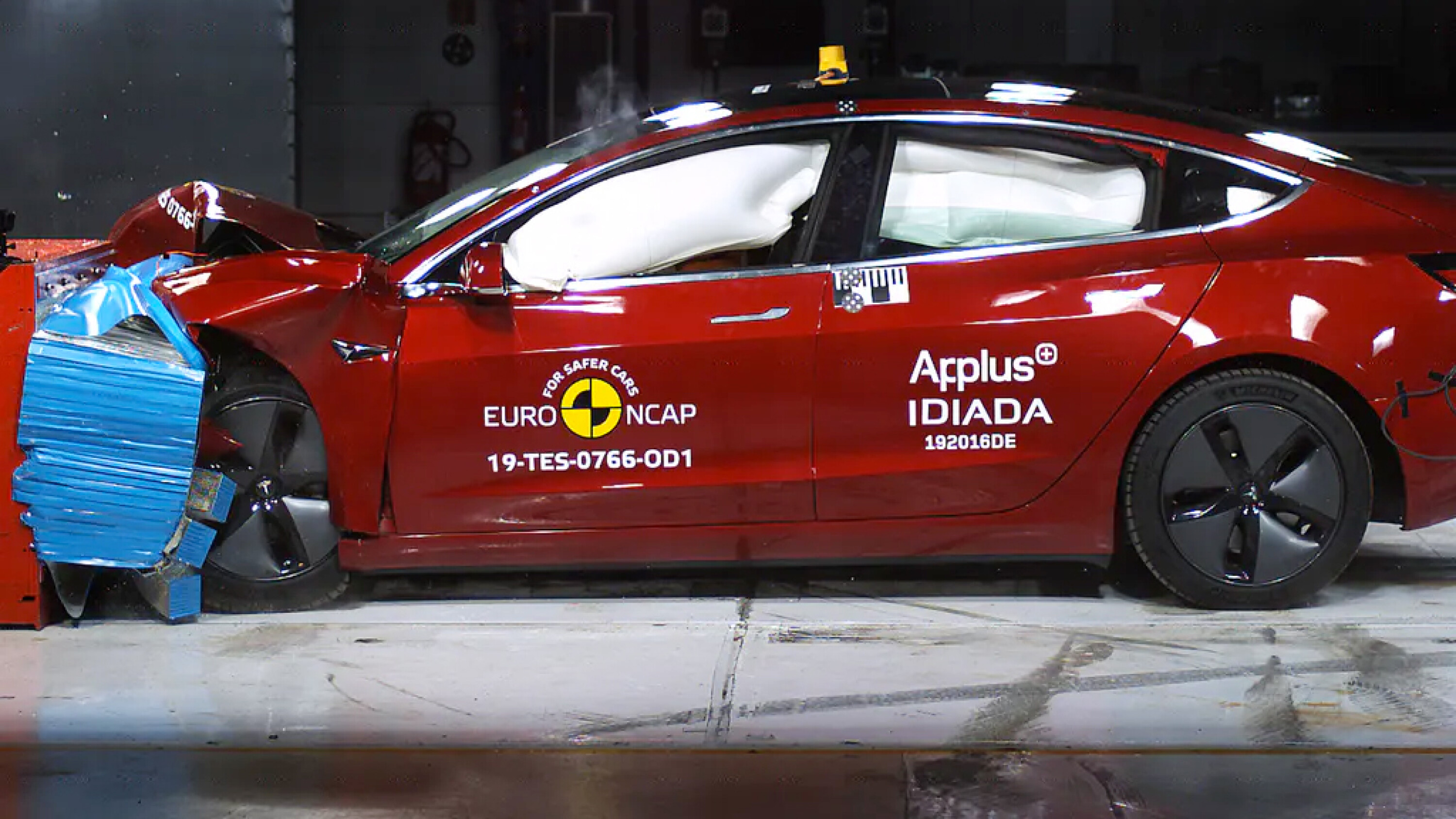
1
How safe is the Tesla Model 3?
The updated Tesla Model 3 remains unrated by the Australasian New Car Assessment Program (ANCAP).
Pre-facelift models received a five-star ANCAP safety rating under older 2019 testing criteria.
Assessment scores included: 96 per cent for adult occupant protection, 87 per cent for child occupant protection, 74 per cent for vulnerable road user protection, and 94 per cent for safety assist systems.
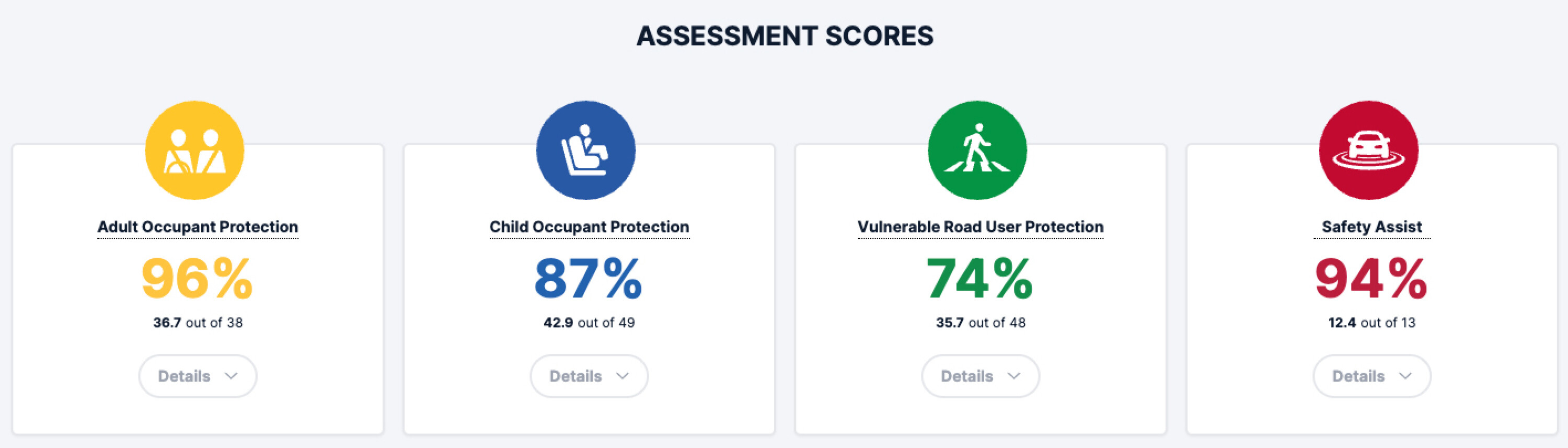
1
The electric sedan uses camera-only active safety assistance technologies. It features ‘Basic Autopilot’ as standard, including front auto emergency braking (AEB) with vehicle/pedestrian/cyclist/junction detection, rear AEB, adaptive cruise control with lane-centring assist, lane-keep assist, and blind-spot monitoring.
A reversing camera, blind-spot monitoring, and blind-spot view cameras come as standard.
About those ultrasonic sensors…
According to Tesla [↗], it is phasing out ultrasonic parking sensors globally in favour of camera-only based systems.
However, at the time of publication, Australian vehicles from the Shanghai Gigafactory appear to still be delivered with physical sensors, with Tesla not specifying an end date.
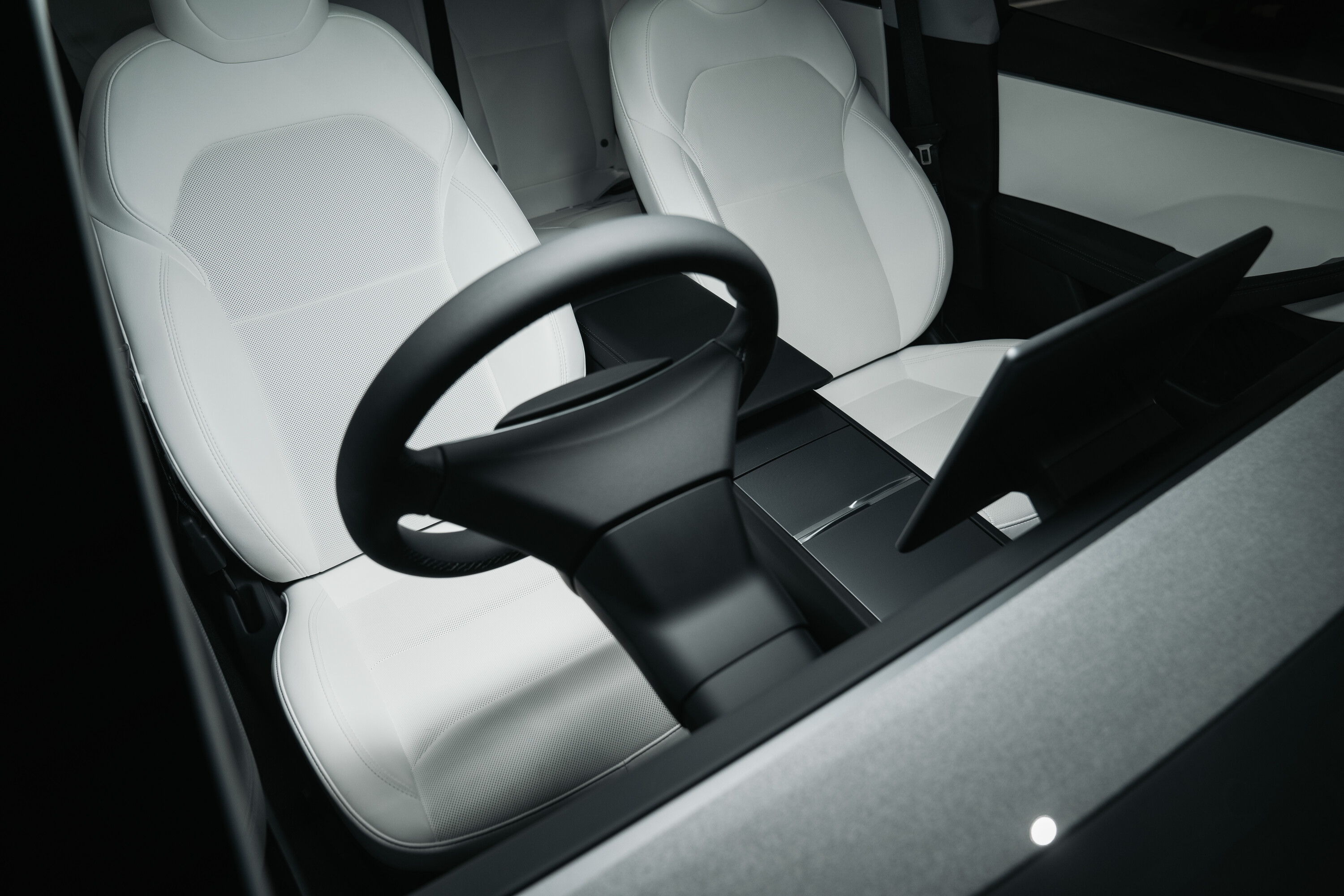
1
How comfortable and practical is the Tesla Model 3?
The Model 3 sedan includes an interior made from animal-free black trim as standard on all variants. However, in our experience, the black vinyl seats can become sweaty on hot days.
Potentially alleviating this issue is the option of an all-white cabin design, available for an extra $1500.
Keeping the cabin cool on warm days isn’t helped by the fixed panoramic glass roof either, which doesn’t come with a built-in sunshade – despite Tesla’s strong ultraviolet protection claims (after all, glass is glass).
The rear seats offer good legroom, with the ground-up EV platform enabling a flat floor. However, the higher floor (needed to accommodate batteries) and low-slung bench result in a knees-up seating position. Foot space is also limited and the sloping rear roofline restricts headroom.
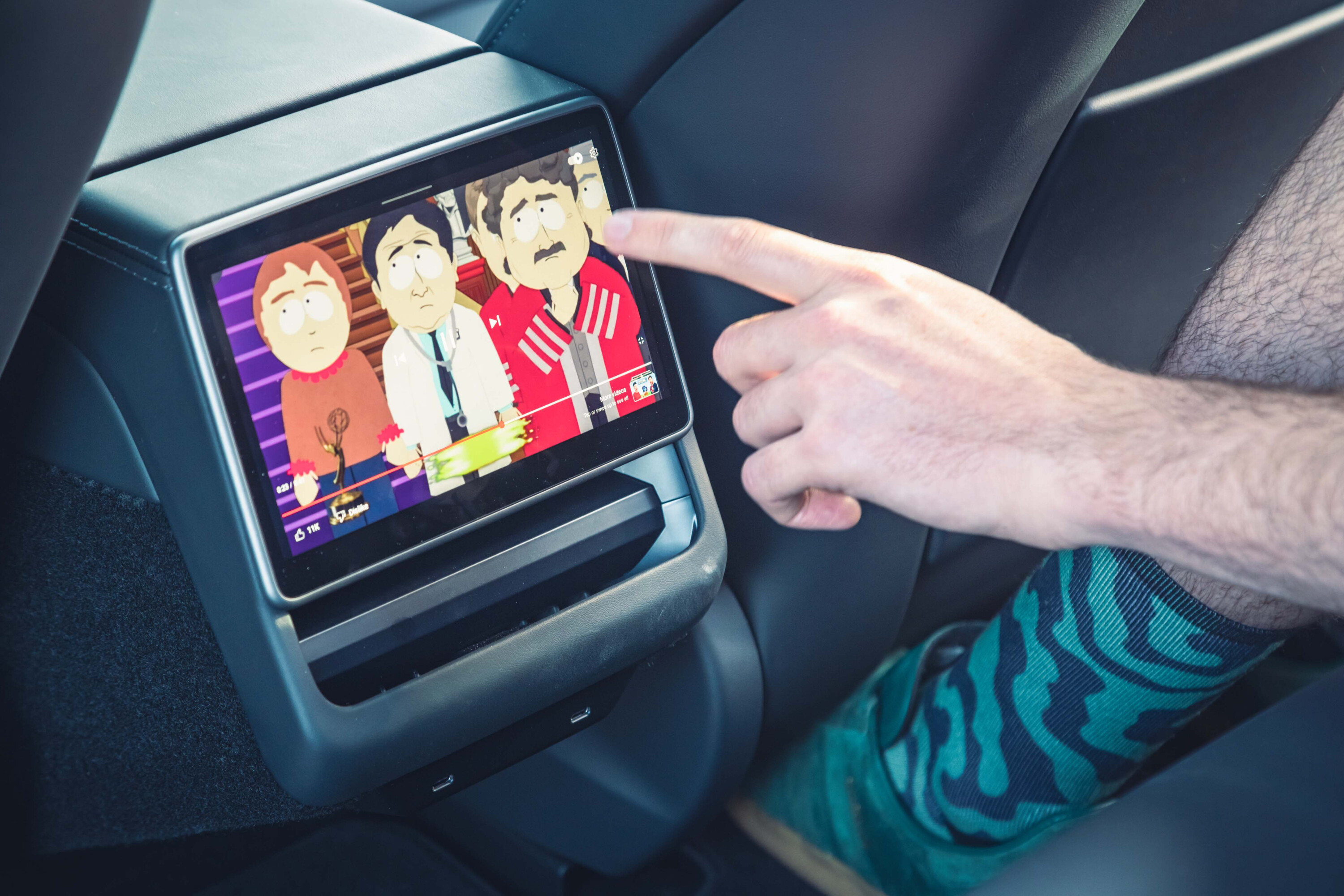
1
The rear bench has two ISOFIX child seat anchor points in the outboard seats and three top-tether points.
All seats (including the rear middle seat) feature three-stage heating functionality as standard. Air ventilation is offered for the front seats.
The Model 3’s dual-zone climate control is powered by ‘invisible’ air vents across the front dashboard that must be adjusted via the central touchscreen, while rear passengers have physical centre console vent controls.
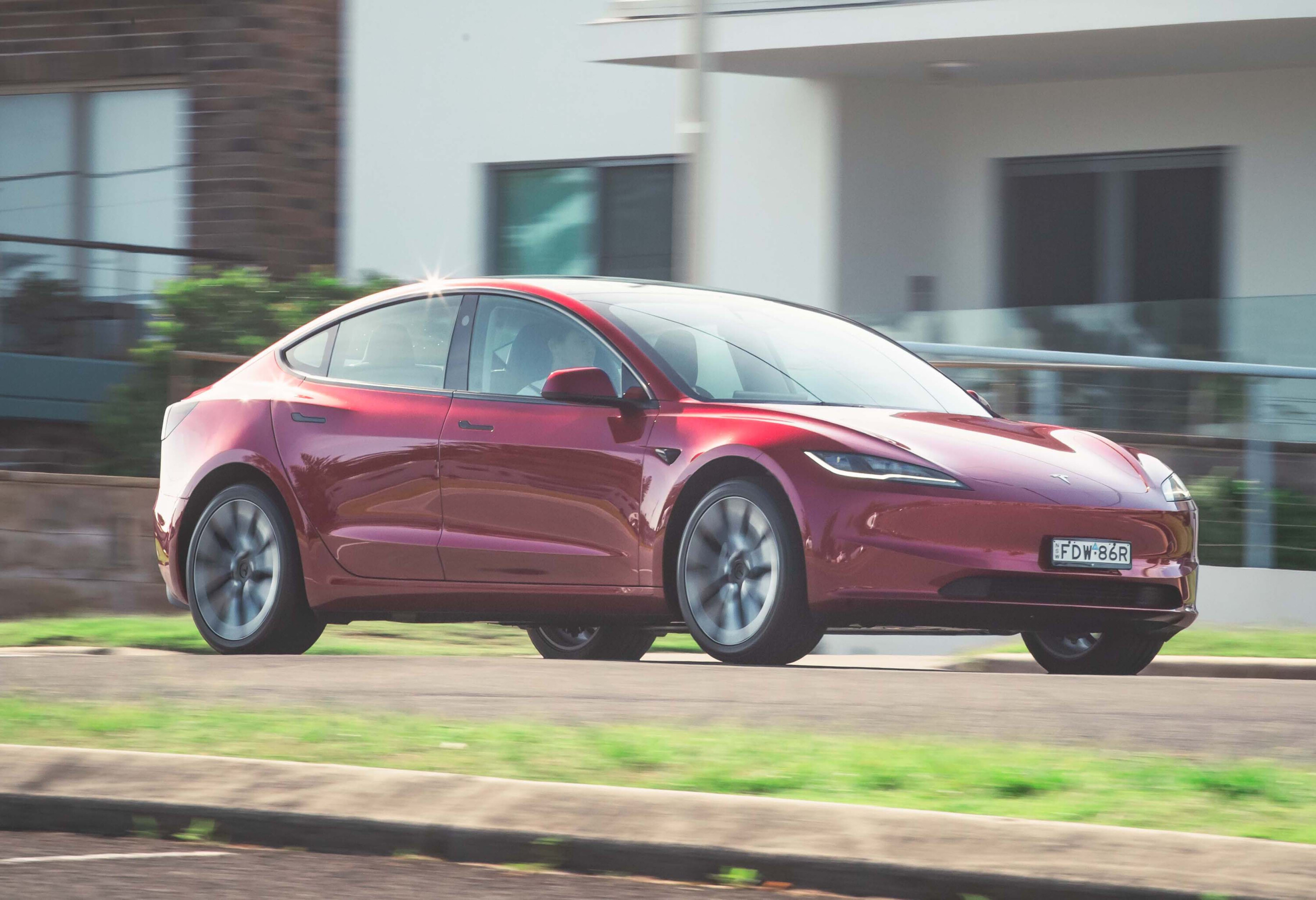
1
Tesla’s cabin overheat protection function automatically activates the climate control to cool down the interior when the temperature exceeds 40ºC, but it doesn’t operate when the battery is below 20 per cent charge.
Further related benefits include ‘Keep Climate On’, camp mode, and dog mode operation that all run the air-conditioning system while the vehicle is stationary and locked – features still rarely found in other EVs today.
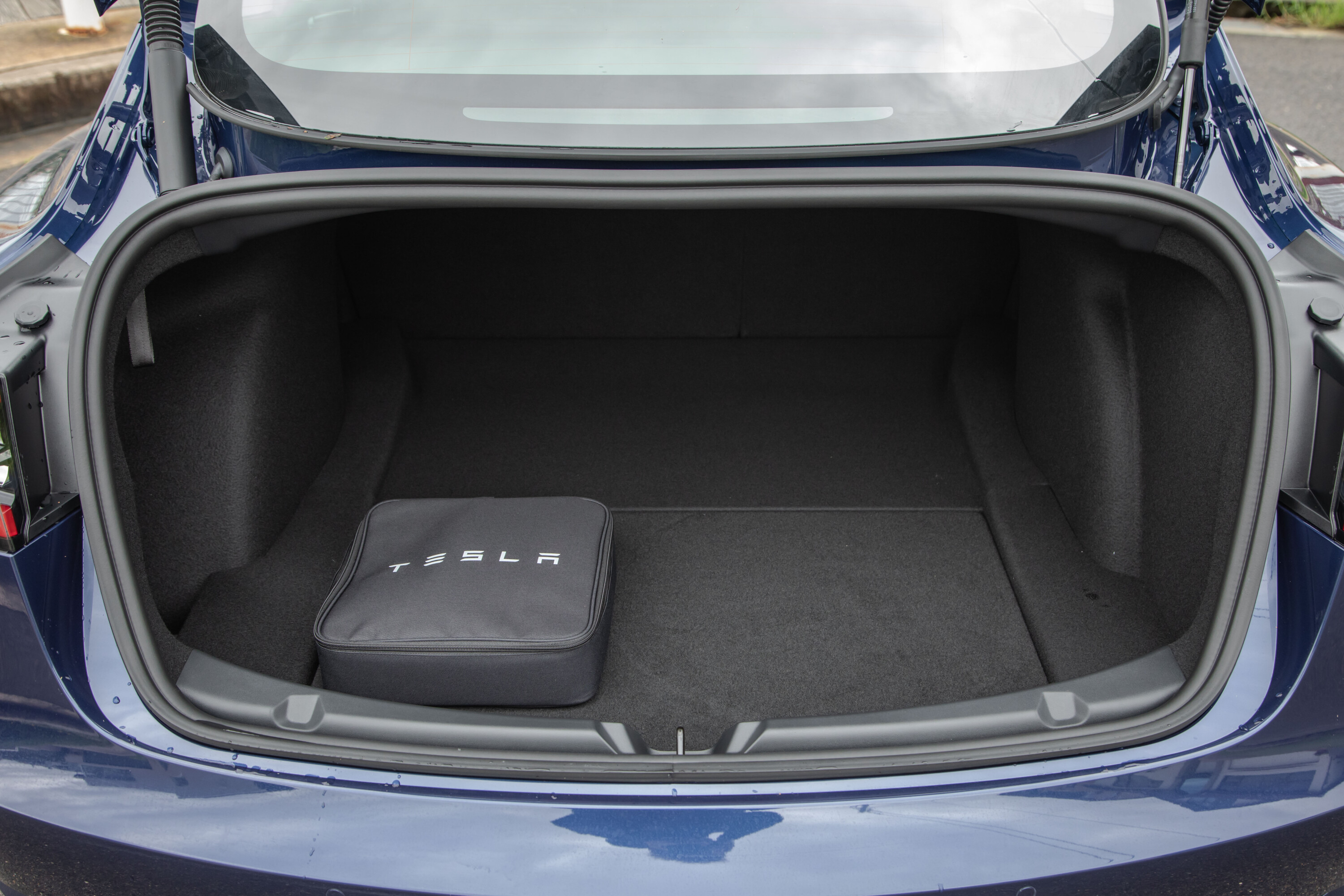
1
How much boot space does the Tesla Model 3 offer?
The Tesla Model 3 sedan has a 561-litre boot volume, which includes the underfloor well, and a sizeable 88-litre ‘frunk’ (front trunk) storage space under the bonnet.
However, the company doesn’t specify a cargo capacity figure for when the rear seats are folded down via their 60:40 split.
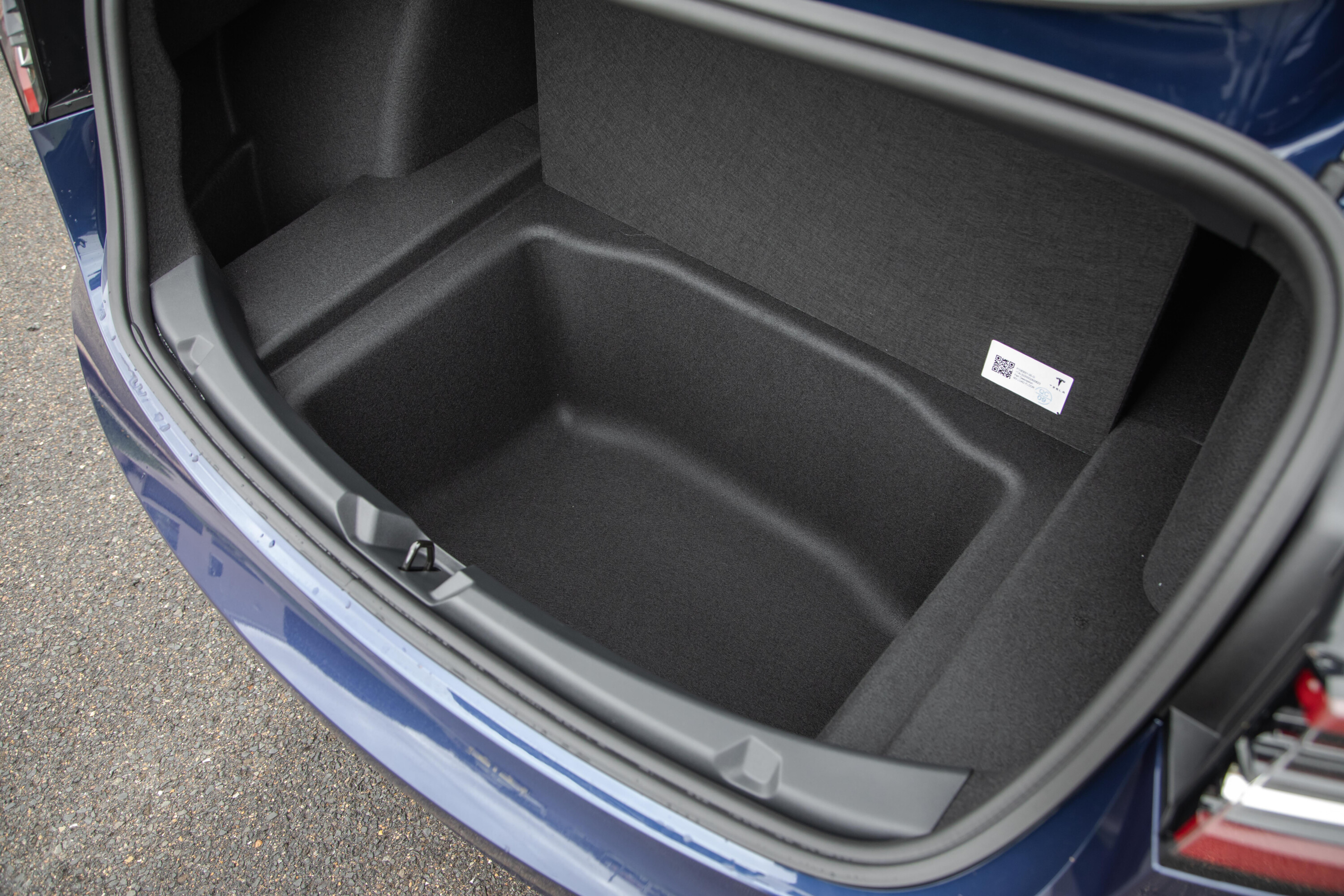
1
The Model 3’s boot aperture is more restricted than that of its Model Y SUV counterpart, but the space is usefully long and has a decent width.
The underfloor storage is generously deep, a space where the rear motor and speaker hardware would usually limit storage capacity in other EVs.
Electric boot opening and closing is operated via the boot lid button, the touchscreen inside, or the Tesla smartphone app, but it lacks an automatic hands-free function.
Will I enjoy driving the Tesla Model 3?
Drivers will be pleased with the Model 3’s quick and precise steering, responsive front end, and low centre of gravity across all variants.
Even though the entry-level variant is only rear-wheel drive, it maintains grip and traction in damp conditions, with more-forgiving Hankook tyres than the Michelin Pilot Sport 4S sports rubber used previously.
According to EV Database, the single-motor rear-wheel drive Model 3 generates 208kW of power and 420Nm of torque, with Tesla claiming a 6.1-second 0-100km/h time.
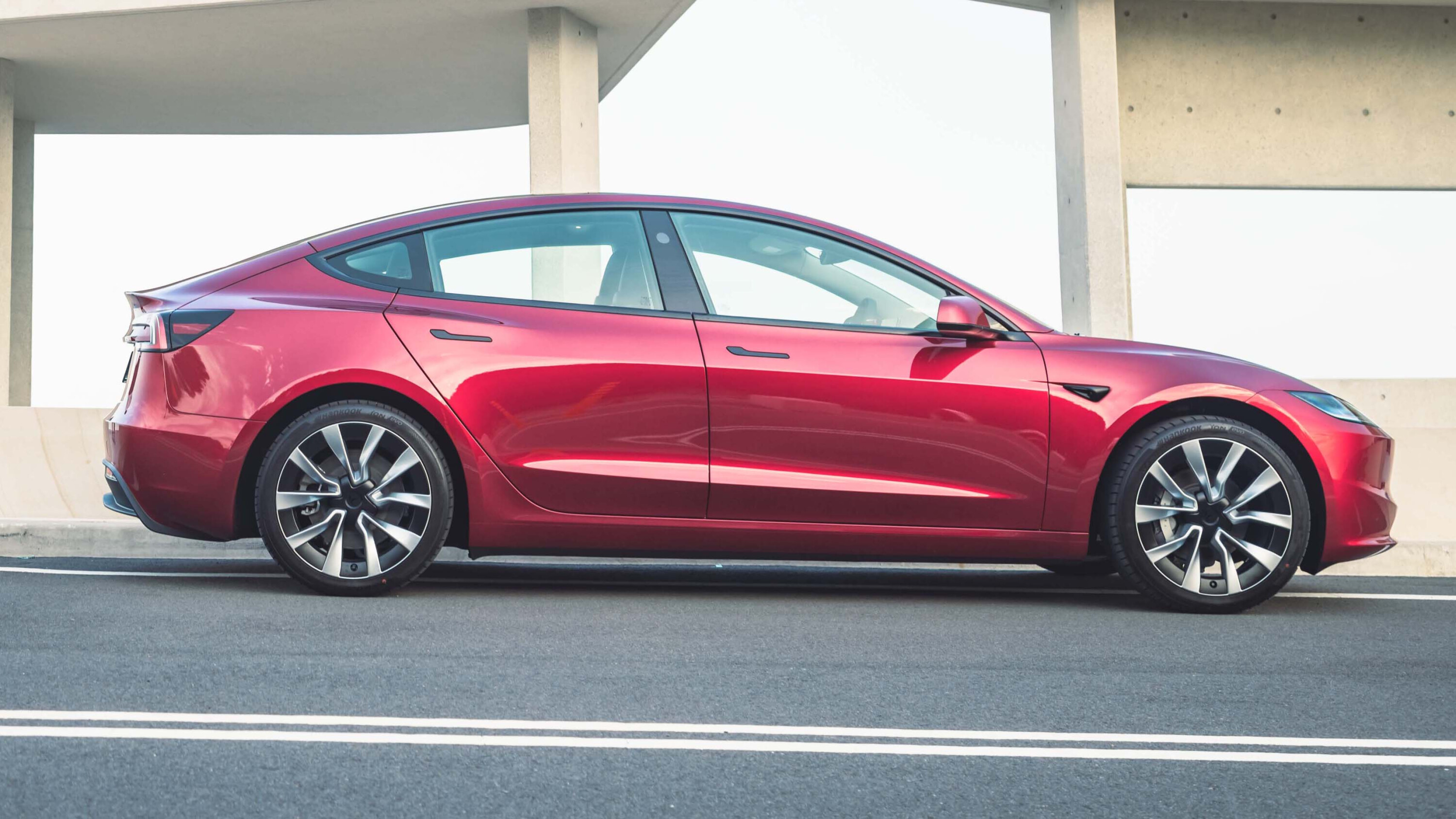
1
The base model already provides satisfyingly strong and smooth acceleration, outperforming most combustion-engined cars at the lights.
Stepping up to the all-wheel drive Long Range introduces dual electric motors, producing a combined 366kW and 493Nm. Tesla claims a 4.4-second 0-100km/h acceleration time for this model.
Meanwhile, the Performance variant increases the output to 461kW and 741Nm, achieving a 3.1-second 0-100km/h time. However, it isn’t entirely realistic because Tesla subtracts a one-foot rollout.
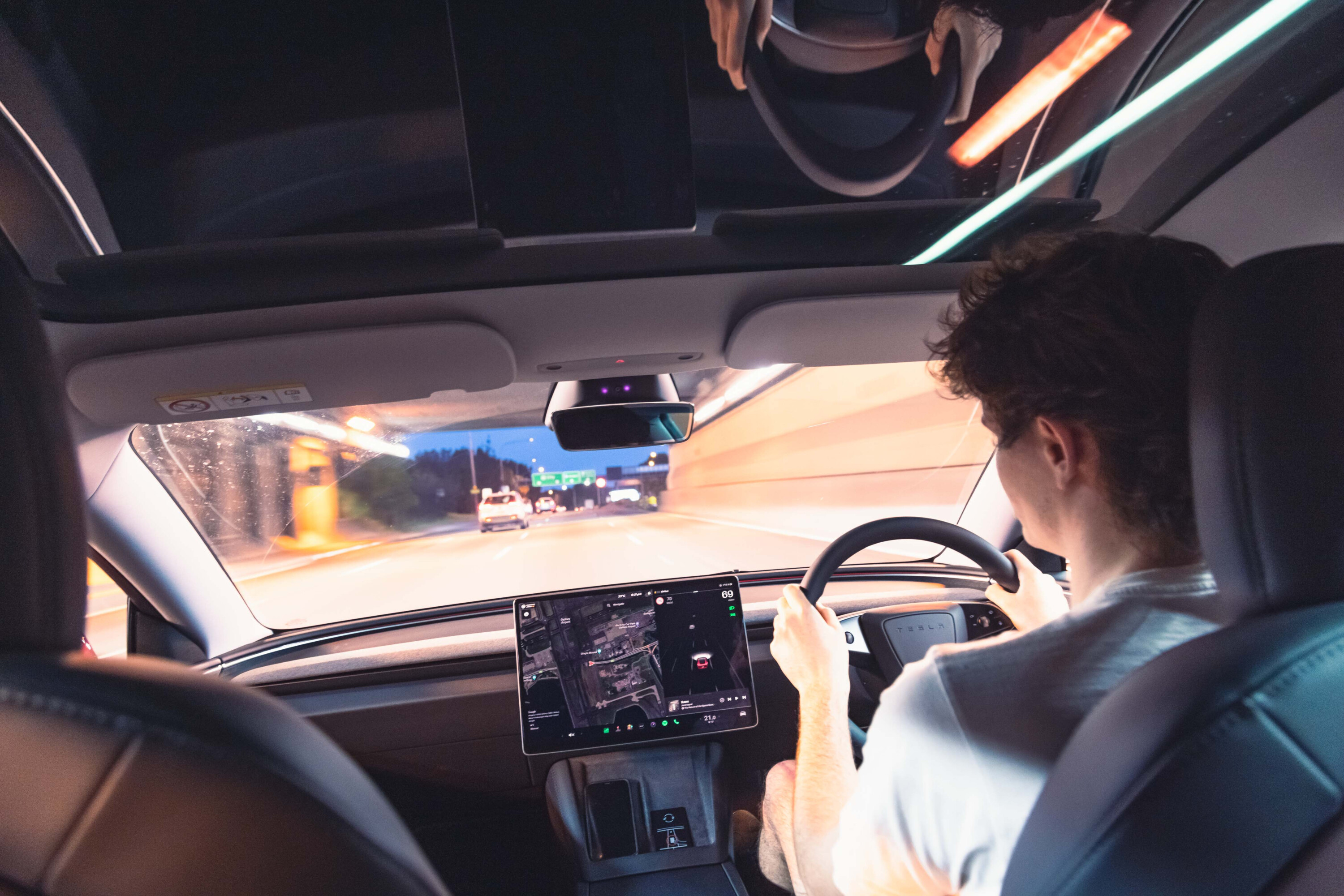
1
This variant also raises the top speed to 262km/h (not that you’ll reach this on most Australian public roads) and includes performance front brakes, lower-profile 20-inch wheels, lowered suspension, and a dedicated Track drive mode.
For a more relaxed drive, Tesla provides a ‘Chill’ drive mode to dampen the intensity of the acceleration.
Conversely, Tesla’s regenerative braking system quickly becomes intuitive to drivers, enabling them to slow down or stop by only modulating the accelerator pedal.
1
If any of the terms in this section have left you scratching your head, these articles will help bring you up to speed!
- What is a Powertrain or Drivetrain?
- Power vs torque
- Car suspension explained
- Automatic transmissions (‘gearboxes’) explained
- Chassis control systems explained
- Car vs Ute vs SUV: How the vehicle you buy should guide the way you drive
Unsurprisingly, the mid-spec Model 3 Long Range offers the greatest driving range, boasting up to 629 kilometres on a full charge based on the combined WLTP testing cycle.
This impressive figure equates to an energy efficiency claim of 11.9kWh/100km.
However, it’s worth noting that Tesla recommends regularly charging the Long Range and Performance models’ NMC long-range battery to 90 per cent to maintain its health, whereas the RWD’s LFP standard range pack can be charged to 100 per cent.
Remarkably efficient, the base Model 3 RWD offers a claimed WLTP range of 513 kilometres, with an even lower energy consumption of 11.2kWh/100km.
Meanwhile, the flagship Model 3 Performance claims a WLTP range of 528 kilometres from a 14.2kWh/100km efficiency rating.
All Model 3s benefit from a more aerodynamic sedan body shape compared to the Model Y SUV, and Tesla’s in-house-developed electric drive units that offer both power and efficiency.
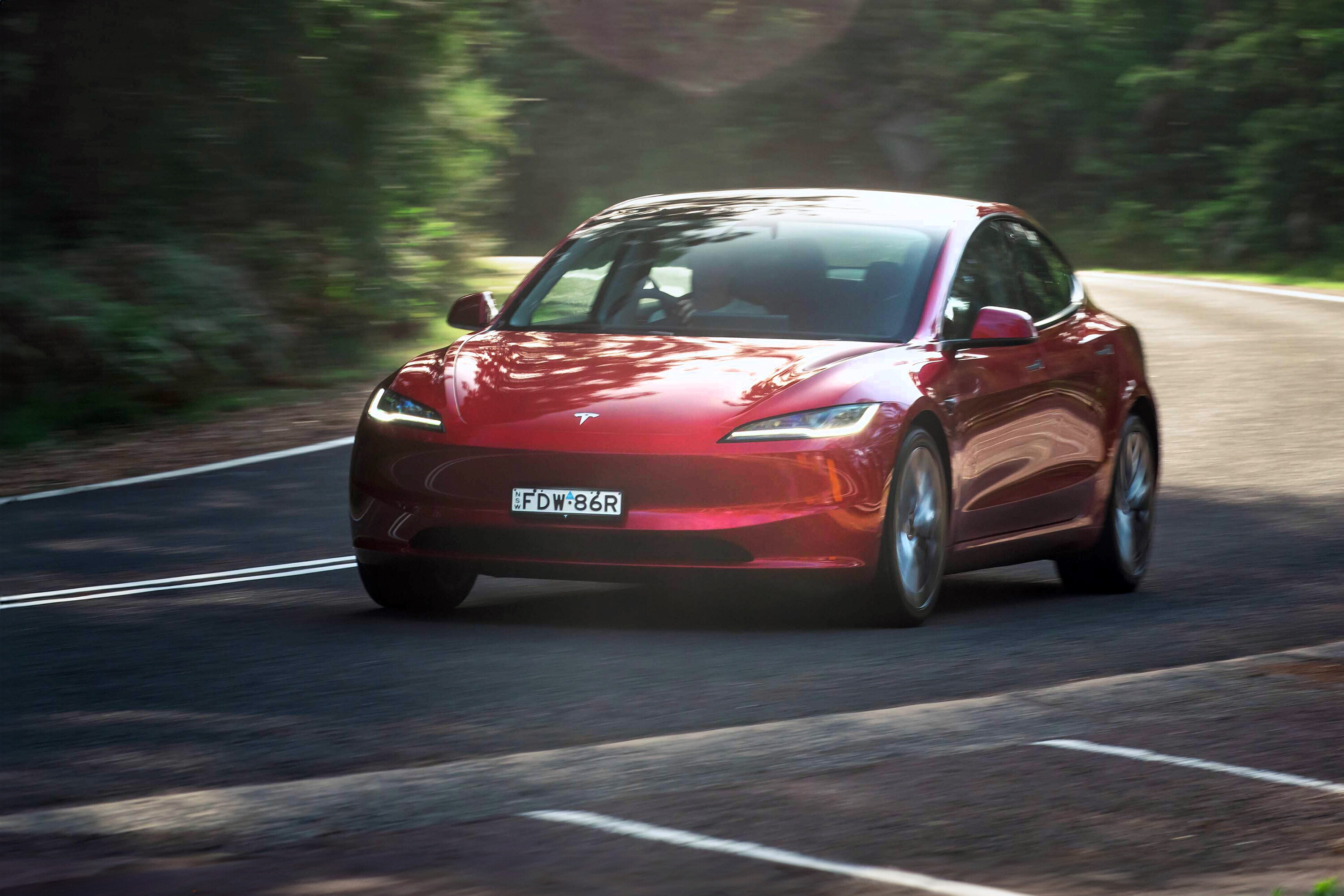
1
What is the Tesla Model 3’s towing capacity?
Tesla Model 3 EVs fitted with a towing package are rated to tow up to 1000kg braked or 750kg unbraked.
Tesla recommends using an approved roof rack, and it sells a first-party accessory in Australia for $705, capable of carrying up to 68kg.
All Tesla Model 3s have a maximum payload of 439kg. Remember that the more weight in the vehicle (including the tow ball download), the less the towing capacity is.
1
How long is the warranty and what are the Tesla Model 3’s servicing costs?
The Tesla Model 3 is backed by a four-year/80,000km vehicle warranty, which is shorter than some competitors.
Not everything is covered by this warranty; the touchscreen and media control unit come with a two-year/40,000km warranty, while the seatbelts and airbag system have a five-year/100,000km warranty.
The base Model 3 RWD carries a standard eight-year/160,000km battery and drive unit warranty, whereas the warranties for the Model 3 Long Range and Performance extend to eight years or 192,000km.
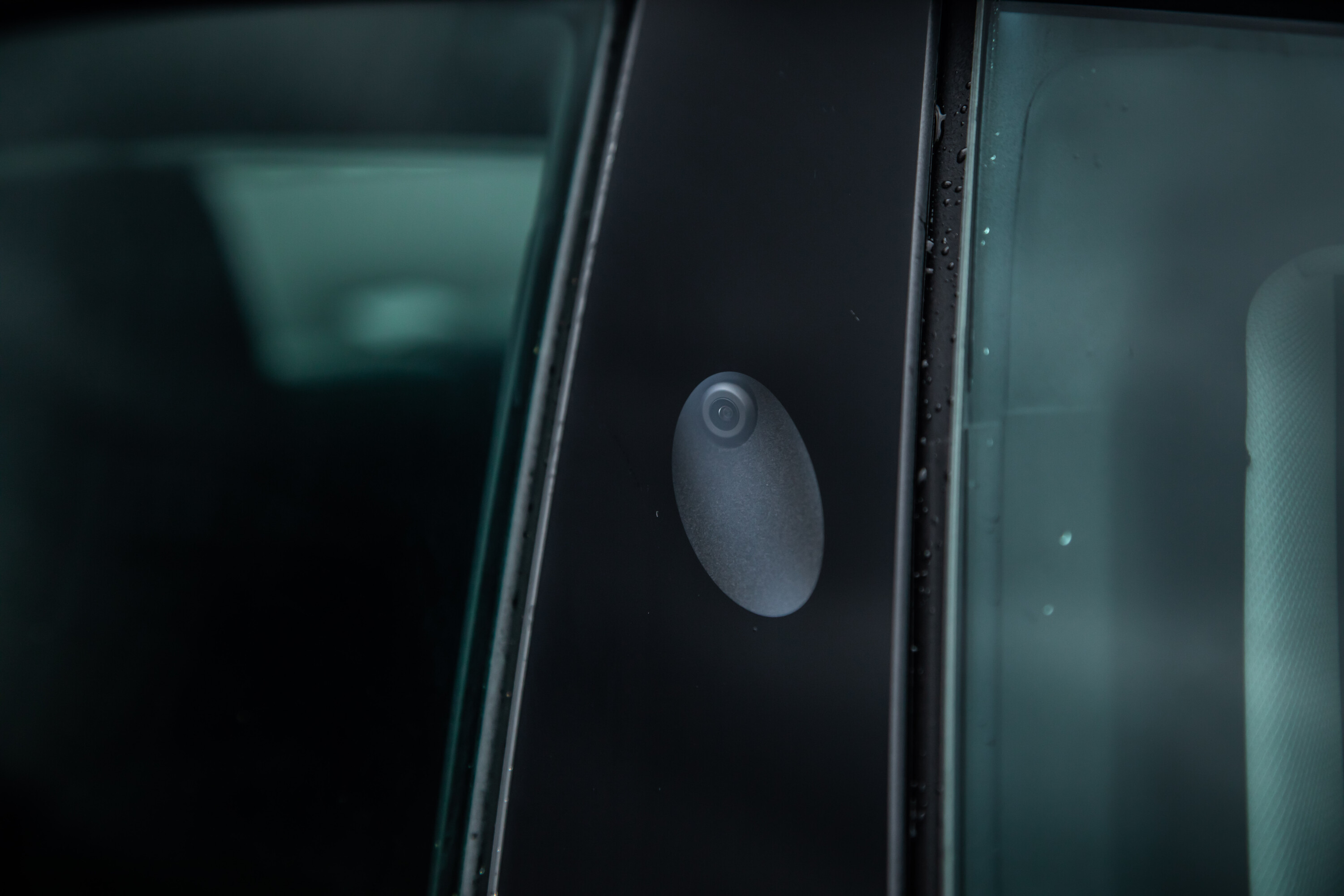
1
Tesla also provides coverage for battery degradation, promising that all Model 3s will retain at least 70 per cent of their battery capacity within the warranty period.
Under Tesla’s condition-based servicing scheme, the vehicle’s sensors detect when specific parts need maintenance based on usage. The vehicle then notifies the owner via the touchscreen or mobile app to schedule a checkup.
Tesla also recommends a range of routine maintenance tasks, listed here [↗].
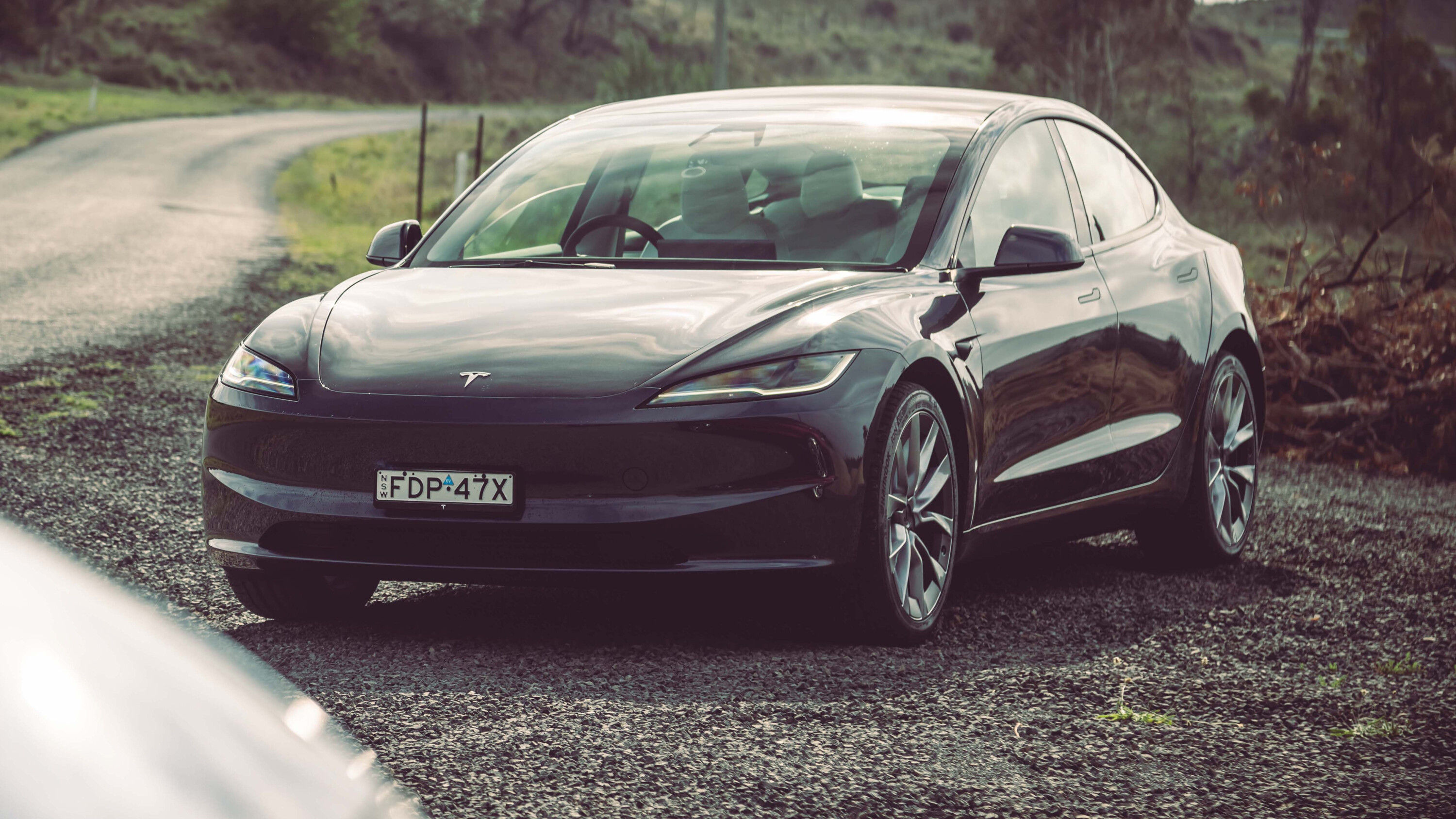
1
Which version of the Tesla Model 3 does WhichCar recommend?
We would recommend the entry-level Model 3 RWD.
It offers the best all-round value with almost all features included, boasts the most efficiency with a longer-lasting LFP battery, and provides sufficient power for everyday driving.
The differences between the Long Range and Performance models are marginal, as they are essentially distinguished by battery sizes and electric motor count.
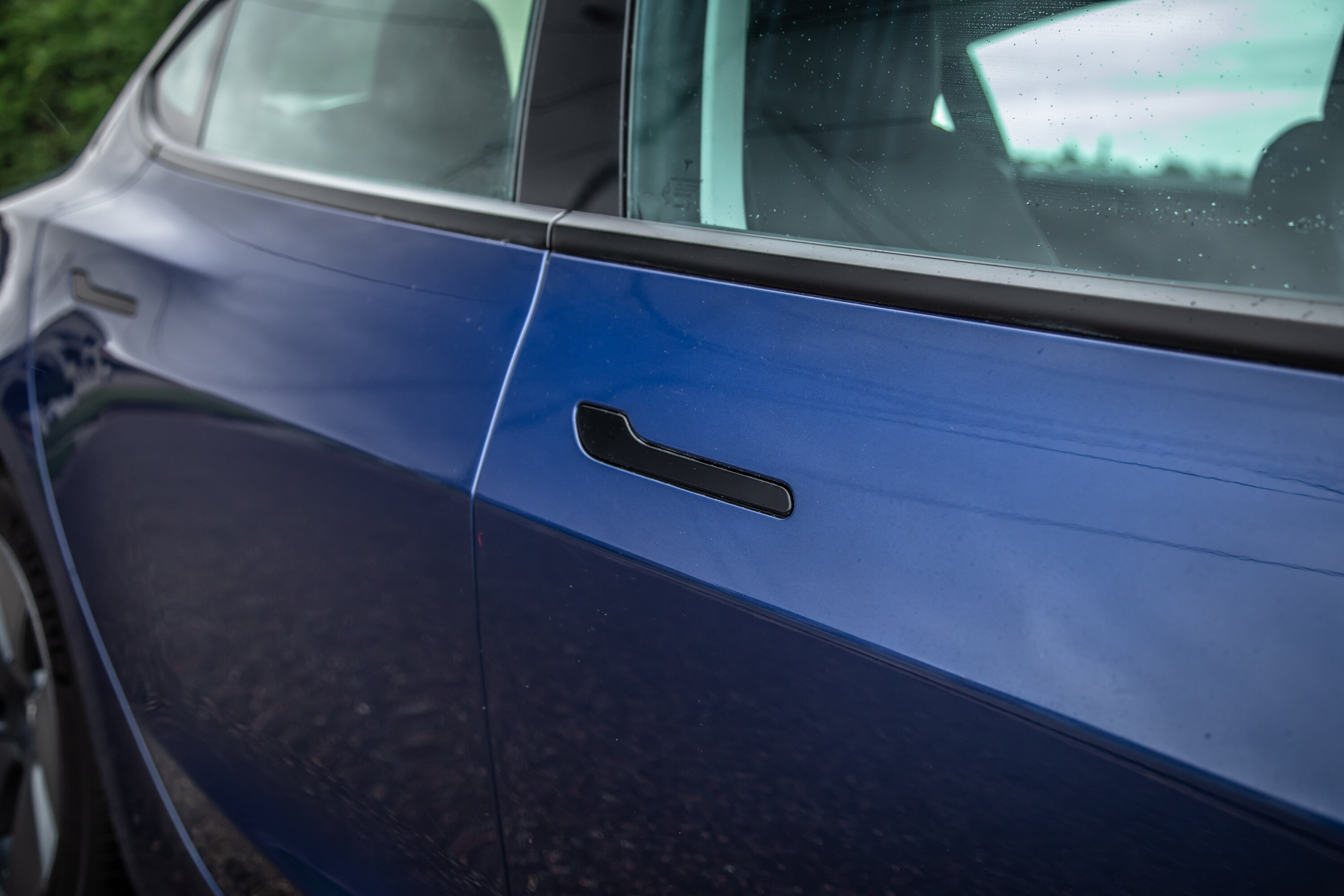
1
The Performance model does include additional cosmetic and hardware features, but fundamentally, it remains largely the same car; it looks and feels the same from the inside.
For buyers who place a premium on practicality and prefer a more commanding seating position, the slightly pricier Tesla Model Y is worth considering.
What are the Tesla Model 3’s key rivals?
The top-selling Tesla Model 3 finds itself competing with a burgeoning number of small electric cars, including:
ud83dudd3c Back to topWhat might annoy me?
The Model 3‘s passive damping setup can be firm, tending to feel a bit uneasy over uneven bitumen when travelling at low speeds.
However, it does become more comfortable as the speed increases.
As well as being controversially named, Tesla’s ‘Autopilot’ (essentially a marketing term for adaptive cruise control and lane centring assist) is known for its occasional ‘phantom braking’ in some situations.
The Model 3 also lacks an instrument display directly in front of the driver, meaning you’ll need to glance to the left at the central touchscreen for essential information, including the speedometer, drive direction selector, and safety assist visuals.
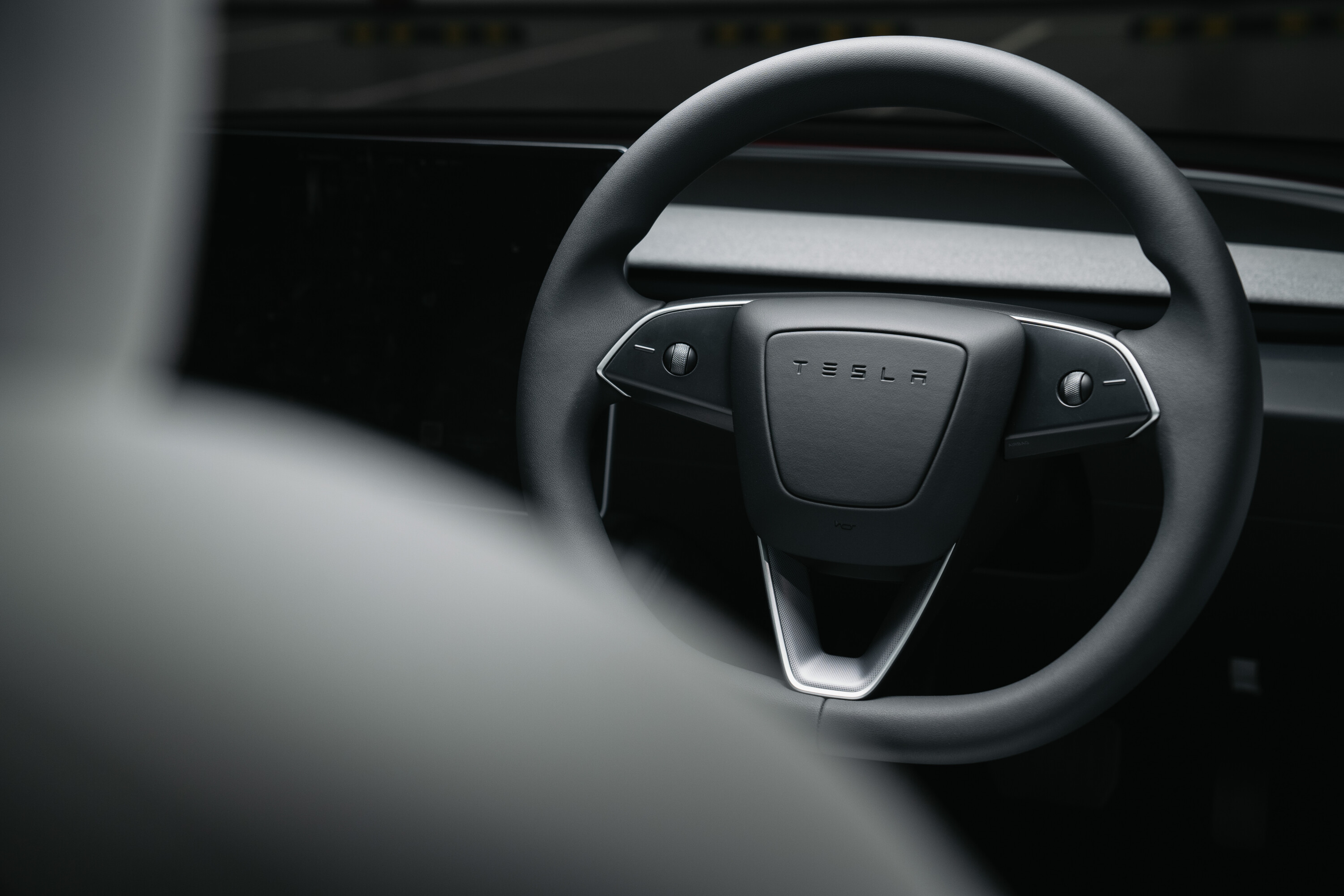
1
The removal of steering wheel stalks in the updated Model 3 has been controversial. The left and right indicators are now found on the left side of a new-look steering wheel, which can take some time to get used to.
Another change that requires some adjustment compared to other cars is the new touch-based gear selector. The driver now scrolls up or down a ‘transmission bar’ on the right side of the central touchscreen for Drive or Reverse, respectively. Or, alternatively, there are PRND buttons overhead between the sun visors.
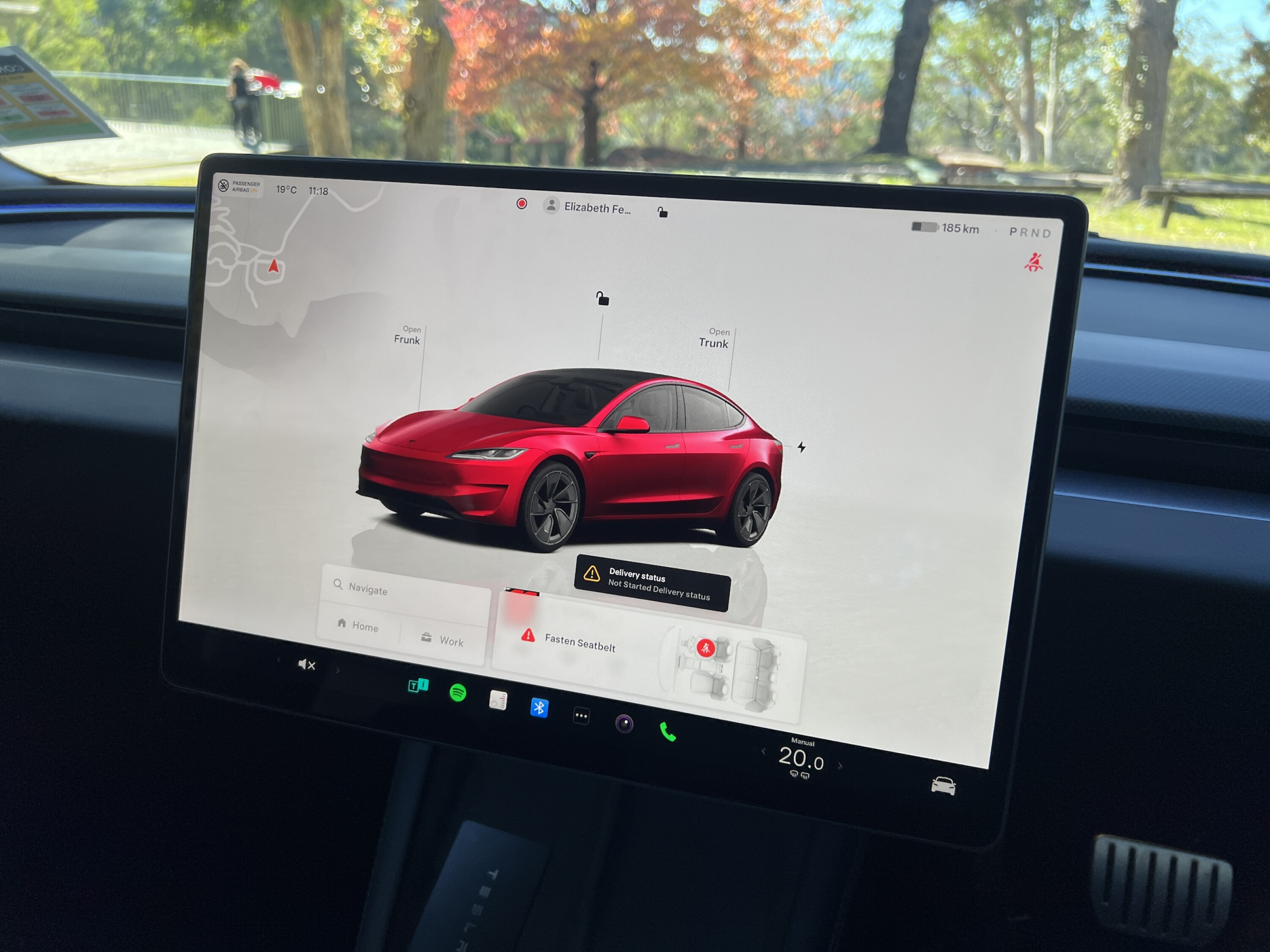
1
Does any upgrade have a downside?
Typically for all cars, the ride becomes harder and the interior is noisier when fitted with the larger, lower-profile optional 19-inch wheels, and the 20-inch rims standard on the Performance model.
Going for the $5100 Enhanced Autopilot package brings a suite of features: Navigate on Autopilot (which assists with steering towards highway off-ramps), automatic lane-change assist, automatic parking assist, Summon (which remotely moves the car forwards/backwards), and Smart Summon (which remotely drives the car to the user).
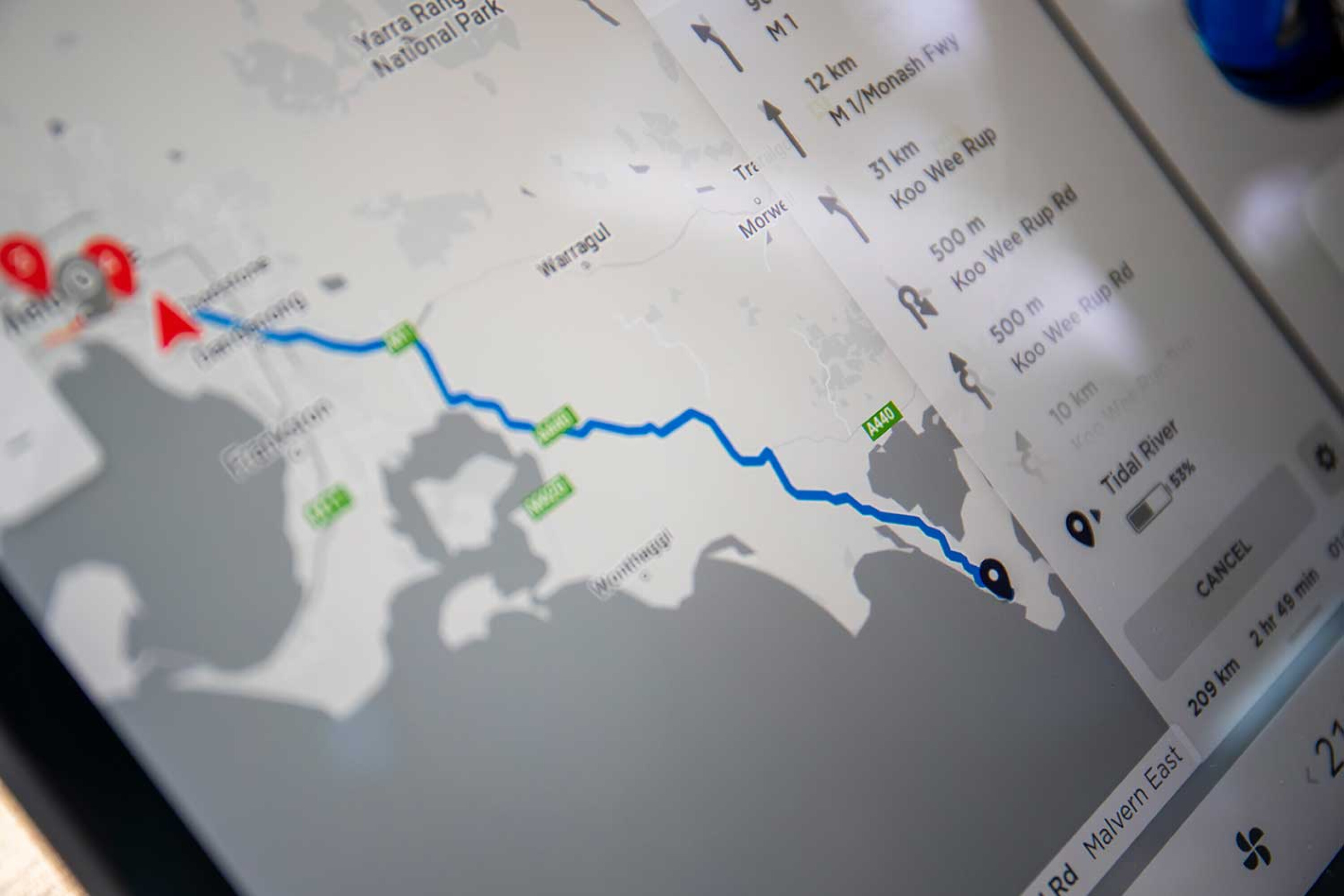
1
However, these features aren’t essential and haven’t proven to be fully reliable, with Navigate on Autopilot and auto lane-change assist sometimes gratuitously changing lanes.
The $10,100 ‘Full Self-Driving Capability’ package only adds traffic light and stop sign control while in adaptive cruise control (it can still detect them without this option). Tesla has long promised to deliver a game-changing autonomous driving future via this software-enabled pack, but the beta has been unreliable overseas and could be seen as an unnecessary expense.
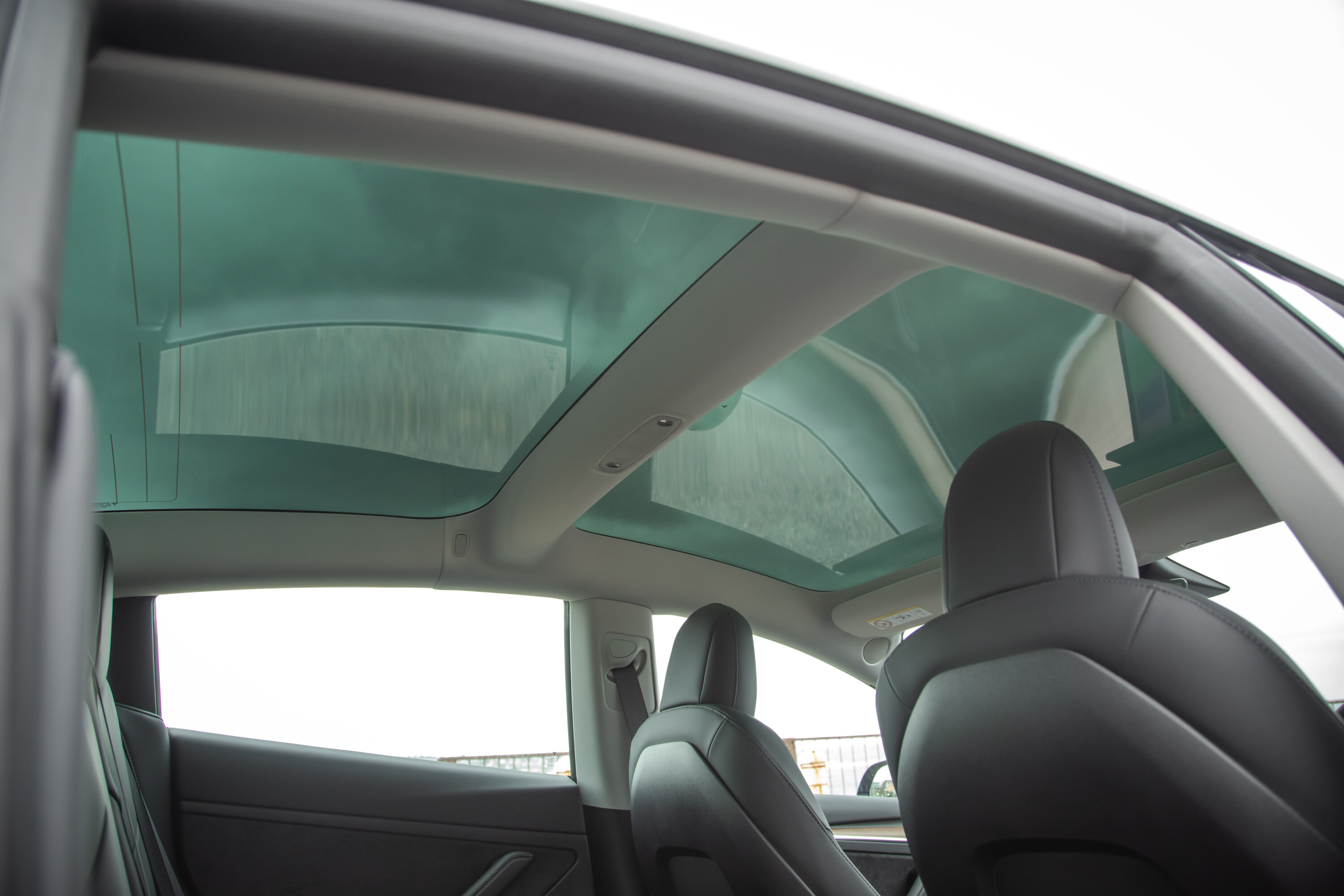
1
What might I miss that similar cars have?
Unlike many other rival EVs, the Model 3’s minimalist interior lacks an instrument cluster display directly in front of the driver.
Tesla’s touchscreen forgoes the use of Apple CarPlay and Android Auto smartphone projection systems, favouring its own built-in software and applications instead.
Additionally, the Model 3 lacks a rear bumper radar, meaning it’s missing rear cross-traffic assist. It does, however, use side-facing cameras for blind-spot indicators built into the upper speaker grilles, along with a blind-spot camera view.
The latest Model 3 does not use front and rear ultrasonic parking sensors in Australia, instead relying on camera-based distance estimations.
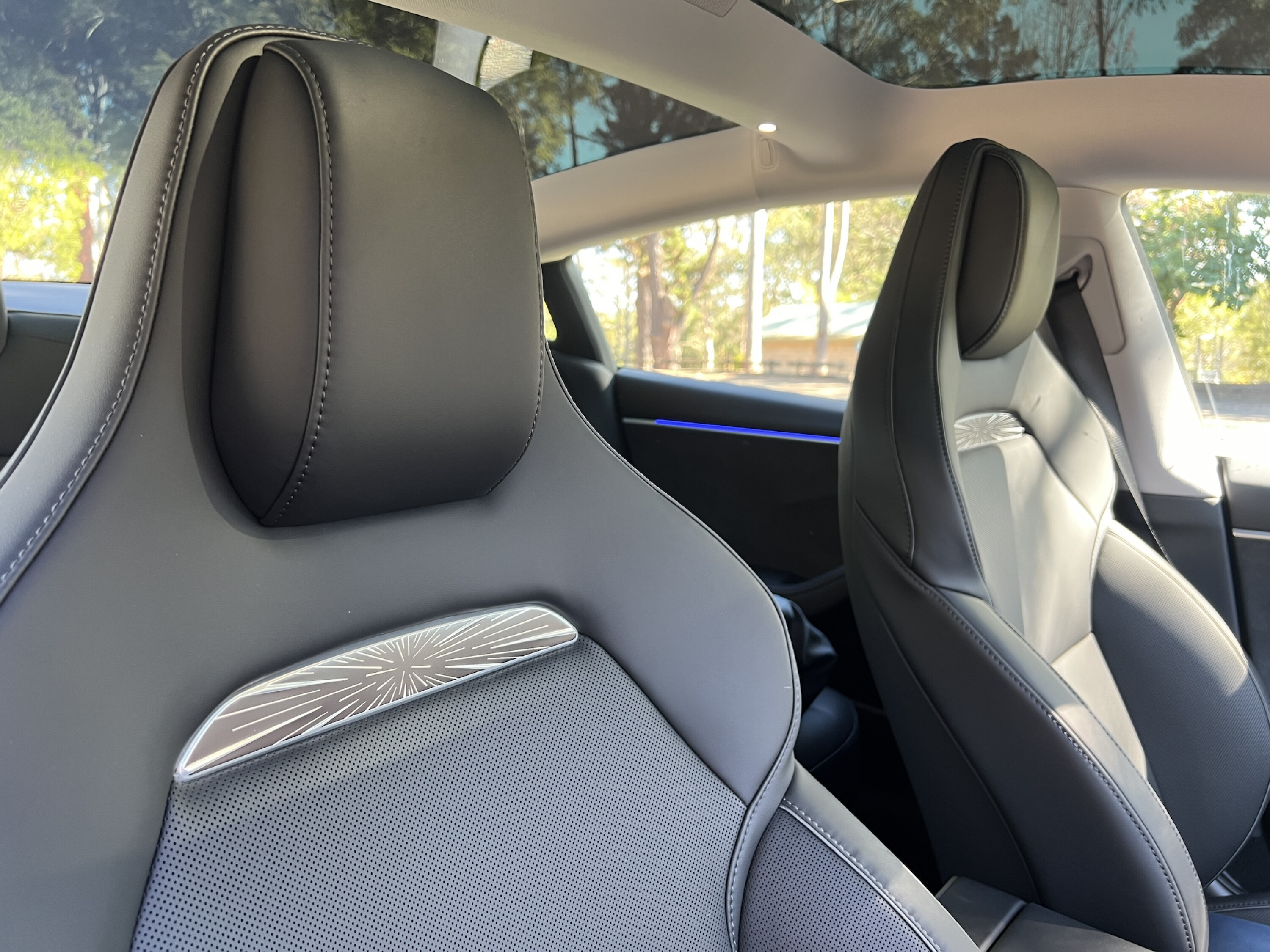
1
Compared to the related Tesla Model Y SUV, the Model 3 doesn’t have a centre crossbar interrupting the fixed panoramic glass roof and it boasts a stronger high-efficiency particulate filter (HEPA) for the cabin.
Additionally, all newly-delivered Model 3s no longer include a three-pin home trickle charging cable. This means you’ll need to purchase it separately from Tesla for $550, buy from a third party, or opt for a higher output AC wall box installation instead.
What’s the infotainment system like?
The Model 3’s 15.4-inch horizontally-oriented touchscreen uses Tesla’s proprietary operating system, capable of receiving over-the-air (OTA) software updates.
It features built-in Google Maps navigation, including automatic Tesla Supercharger stop planning, as well as music and video streaming apps such as Apple Music, Spotify, and Netflix. Arcade games and built-in voice control are also included.
1
Tesla’s software remains unmatched in the automotive industry, boasting a modern and intuitive user interface, slick animations, and power from a fast AMD Ryzen processor. After all, Tesla is known first and foremost as a technology company.
However, the Model 3’s interface is more crucial than in most cars because it’s responsible for about 95 per cent of the vehicle’s controls and functions. This includes adjusting the steering wheel and wing mirrors, as well as directing the airflow from the air vents.
There is a learning curve involved, and we initially found ourselves distracted for longer periods while trying to figure out various functions.
1
Where is the Tesla Model 3 made?
The Tesla Model 3 for the Australian market is produced in Shanghai, China, at what is referred to as ‘Giga Shanghai’ or ‘Gigafactory 3’.
Are there plans to update the Model 3 soon?
The Tesla Model 3 recently received a significant update.
Following a subtle refresh in 2021, the electric sedan now features a revised exterior design, a stalkless steering wheel set-up, higher-resolution ‘Hardware 4.0’ camera, and improved driving range.
Unlike traditional car brands, Tesla tends to make frequent ‘running’ hardware changes to its cars, often without notice, in addition to delivering consistent over-the-air (OTA) software updates for existing owners.
More EV stories to help you choose the best car for your needs
- ? EV news, reviews, advice & guides
- ❓ Short & sweet: Your EV questions answered
- ⚡ New EVs: Everything coming to Australia
- ? Australia’s EVs with the longest driving range
- ⚖️ Best-value EVs by driving range
- ? How much do EVs cost in Australia?
- ? How much more expensive are EVs?
- ⚖️ Number crunching: Is it time to switch to an EV?
- ♻ Should you buy a used EV?
- ?️ Are EVs more expensive to insure?
- ? Costs compared: Charging an EV vs fueling a car
- ? EV charging guide
- ? Are there enough EV chargers in Oz?
- ?? EV servicing explained
- ? EV battery types explained
- ? When do EV batteries need replacing?
- ? Hydrogen v EVs: What’s best for Oz?
- ? How sustainable are EVs, really?
MORE advice stories to help you with buying and owning a car
MORE
Everything Tesla
MORE
Electric Cars
