
The wraps have been pulled off the Cerato-replacing Kia K4 hatchback after the K4 fastback sedan was shown at the New York Auto Show.
Snapshot
- K4 hatchback follows fastback sedan unveiling
- Expected to offer more space than Hyundai i30 Hatchback twin
- Large digital display taken from Kia EV9
An official launch date hasn’t been set for the hatch, but it’s expected to follow the sedan’s release scheduled for Australian showrooms in early 2025.
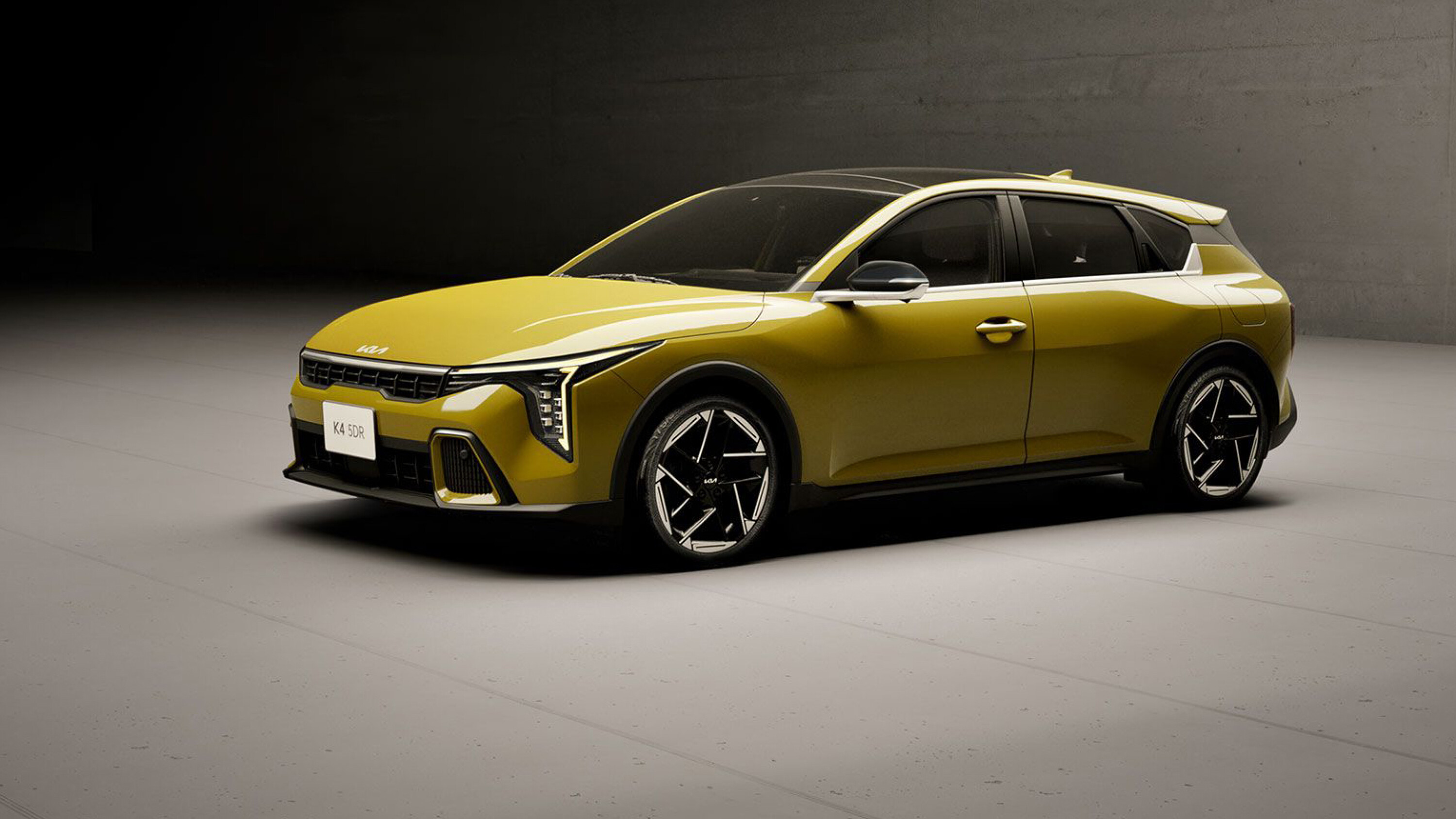
The K4 hatch features the same front-end styling as the sedan – inspired by the flagship EV9 electric sedan – but sees a fresh bodywork from the b-pillar and back.
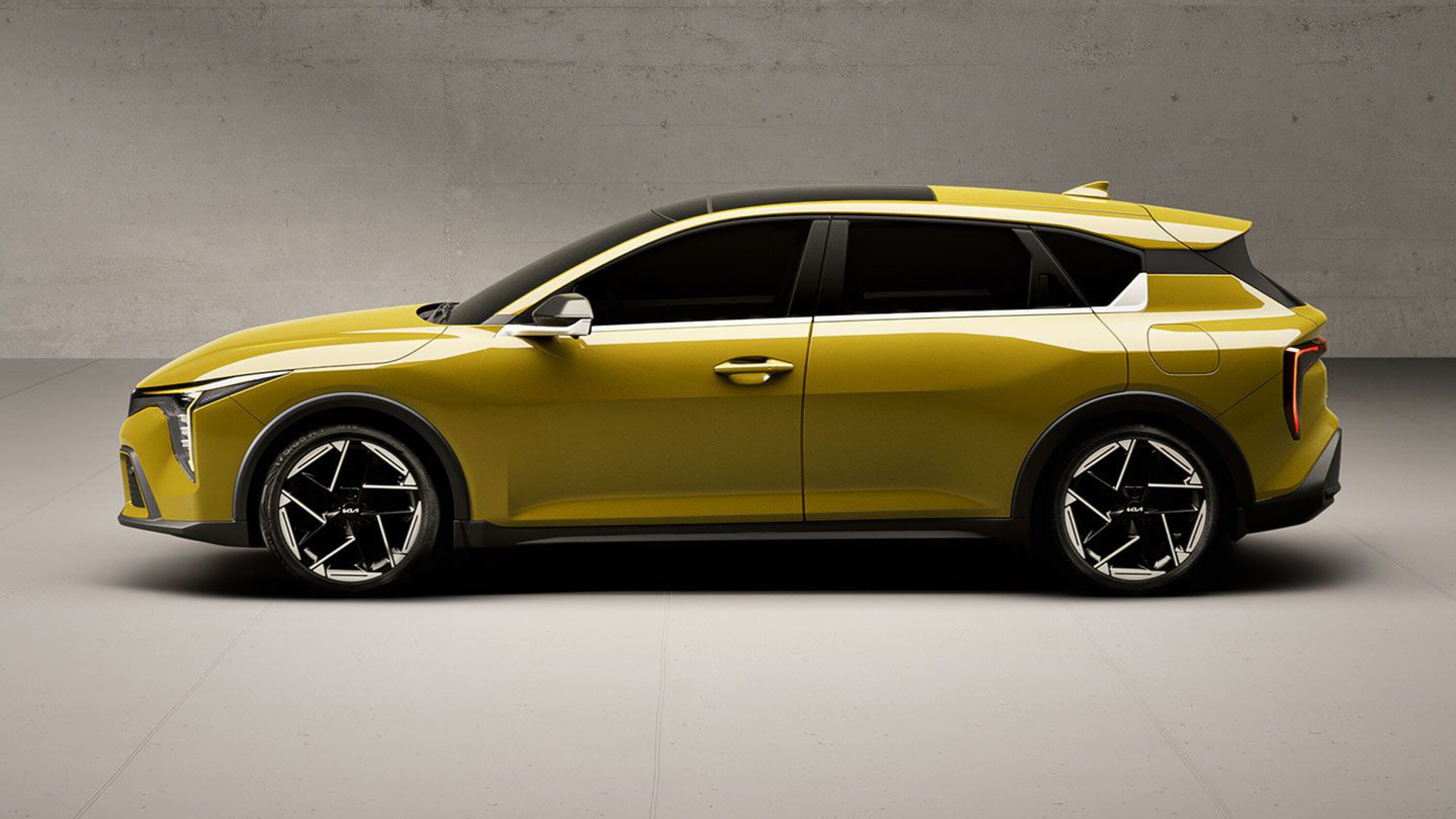
The distinctive design uses the same gloss black detailing and 18-inch alloy wheels up front, but does away with the pseudo-coupe roofline used on the sedan.
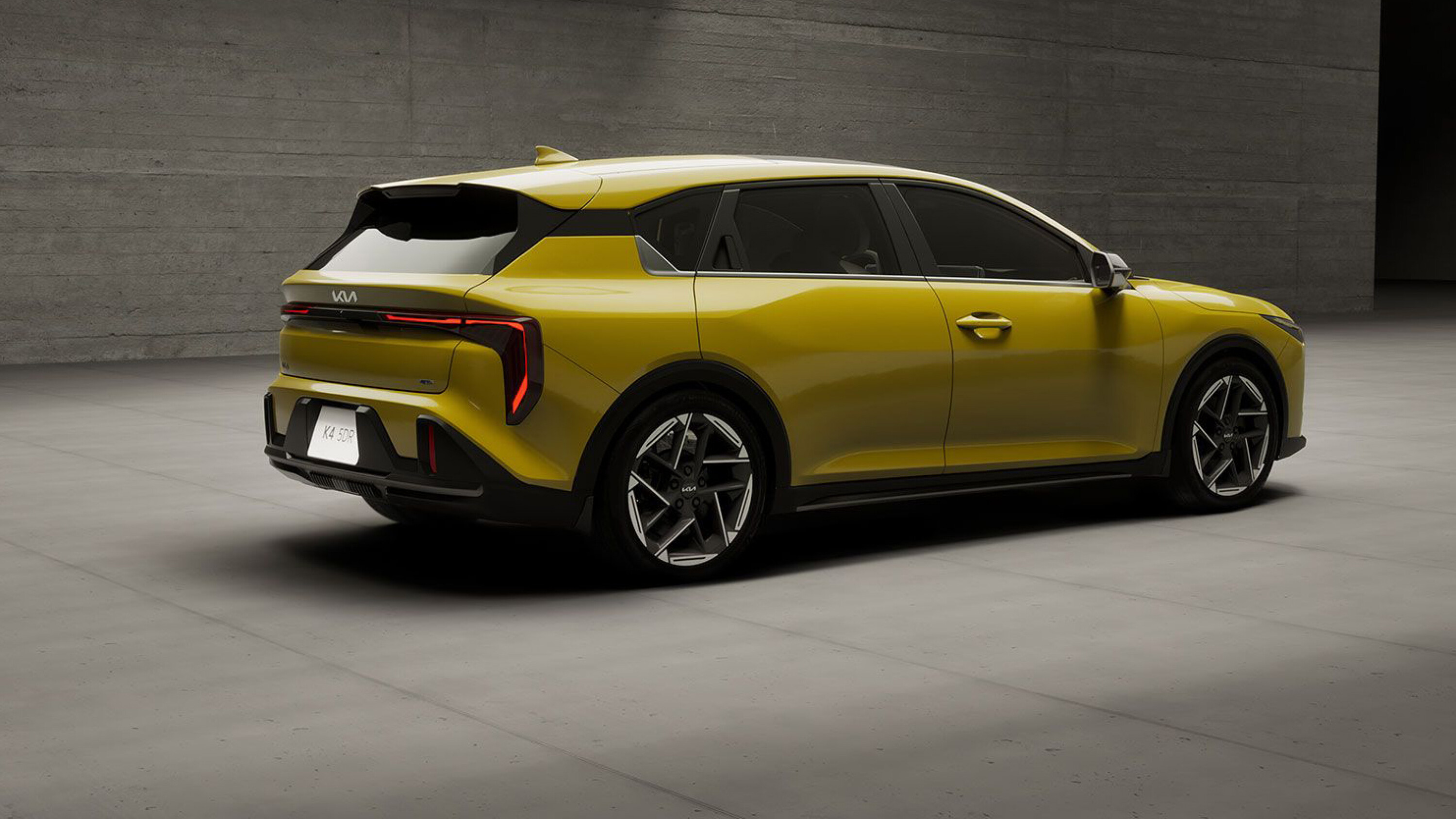
While using the extended glass roof, the hatch roofline leads into a blacked-out D-pillar for a ‘floating roof’ effect and more upright hatchback tailgate including an integrated roof-top spoiler.
The five-door hatch’s side glass appears largely the same – with minor revisions to accommodate the hatchback – while the same hidden rear passenger door handles and identical taillights carried across from the four-door.
1
1
The rear bumper, including the aggressive diffuser-style lower section and number plate provision, also appears the same as the K4 sedan’s.
Like the Cerato they replace, the K4 hatch and sedan are twinned with the Hyundai i30 Hatchback and Sedan, meaning similar dimensions and technology throughout.
Based on what we know of the i30, the K4 hatchback should offer greater space than the outgoing Cerato sedan, with the carmaker claiming class-leading rear legroom for the K4 Sedan, and potentially a larger boot area than the K4 sedan.
1
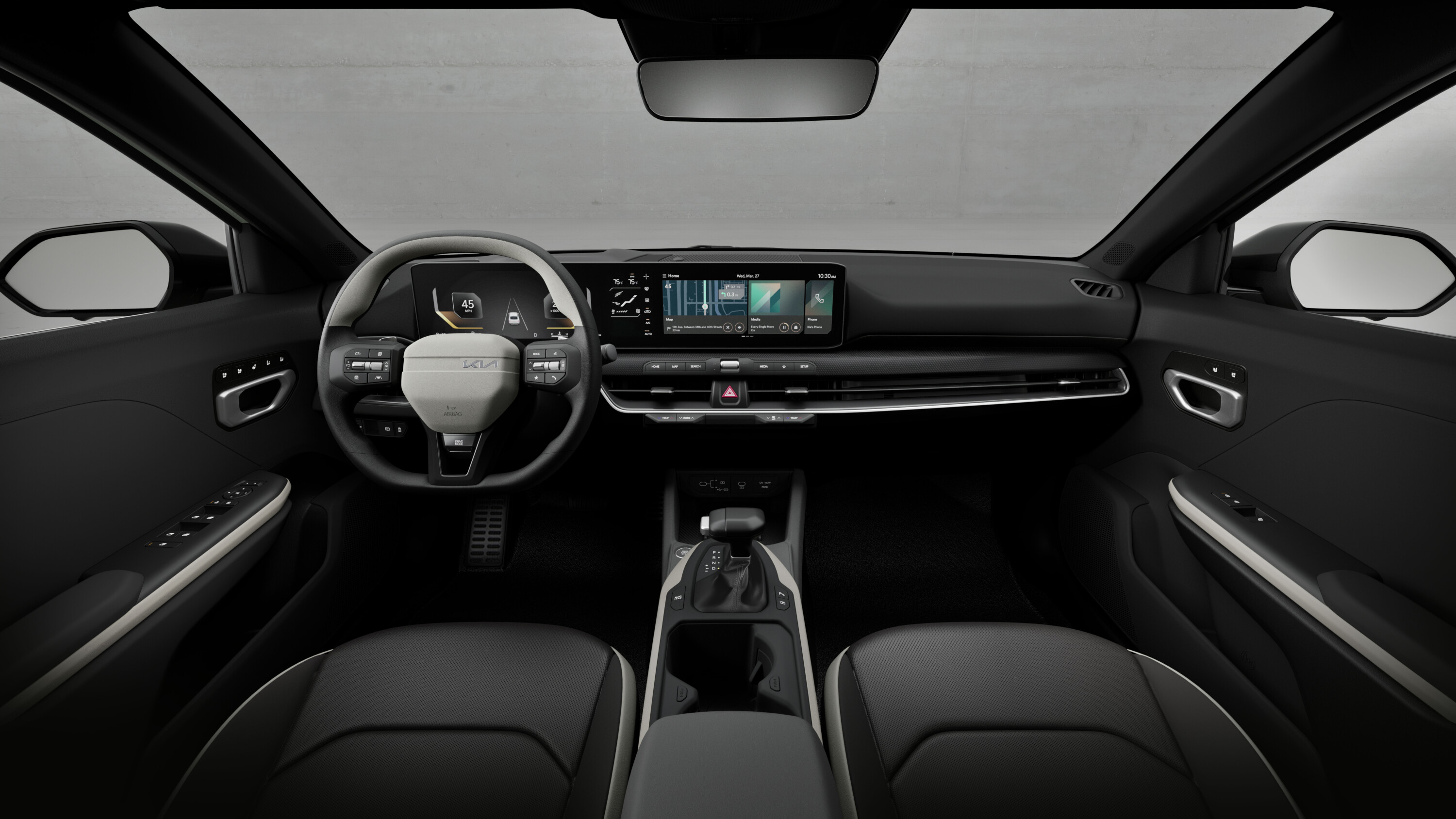
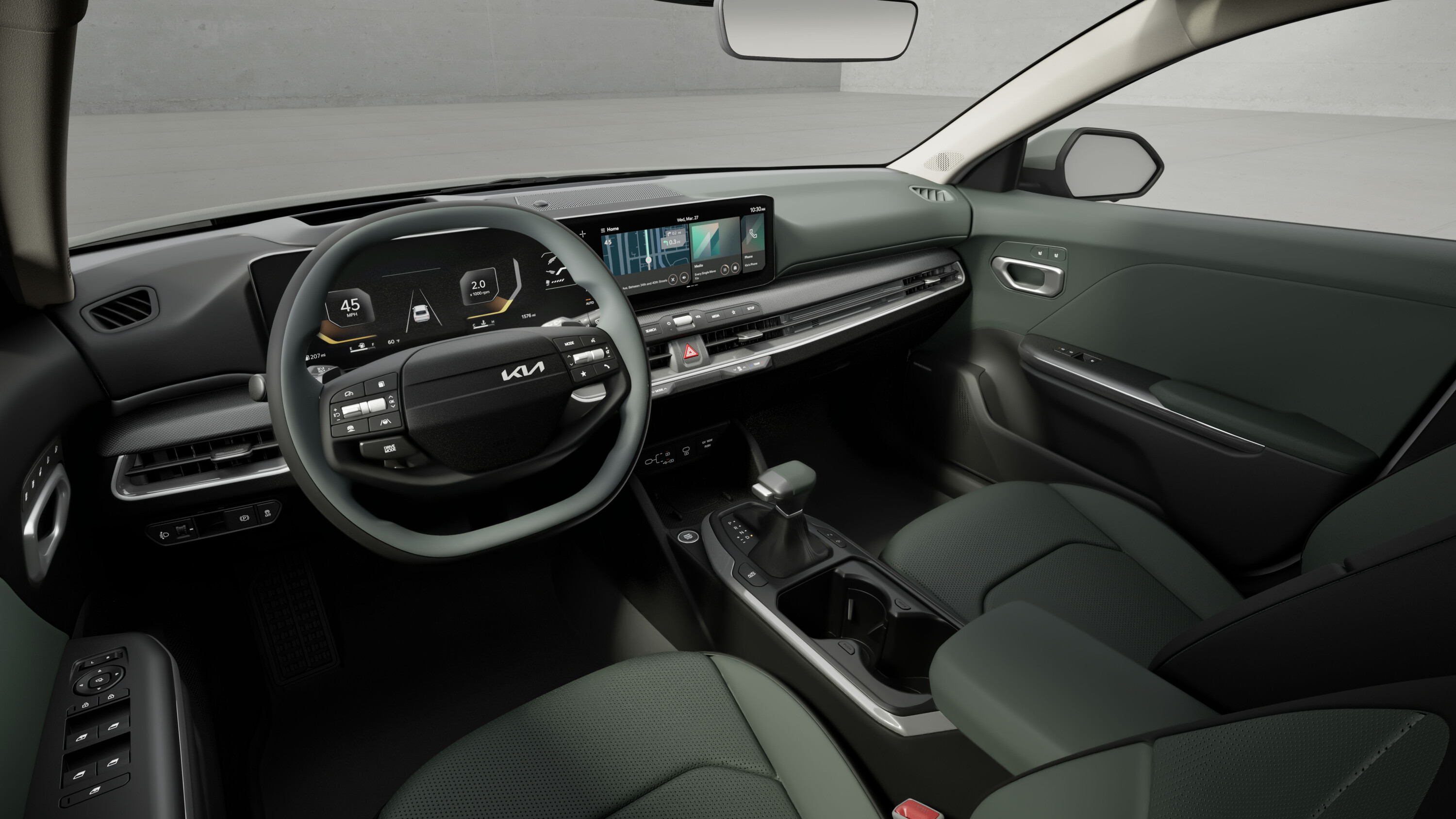
The US-spec sedan details confirmed that model will use the Kia EV9 panoramic triple display, including a 12.3-inch instrument cluster, 5.0-inch climate control area and another 12.3-inch infotainment screen.
Also on offer in the US-spec sedan is Harman Kardon audio and Digital Key 2.0 – a system enabling owners to lock/unlock and drive their K4 using a smartphone or via an NFC-enabled smart card.
The entry-level grade sedan will use torsion beam rear and a 110kW 2.0-litre petrol engine with CVT auto shared with the base i30 Sedan.
1
Higher-spec GT-Line and GT-Line Turbo models in the US are fitted with multi-link rear suspension.
The Turbo uses a 1.6-litre turbo petrol engine and eight-speed auto, expected to make the same 150kW/265Nm as it does in the Hyundai i30 Sedan N-Line already on sale in Australia.
Driver Assistance technology is expected to mirror the K4 fastback sedan’s, which includes adaptive cruise with stop-go functionality, haptic steering wheel alerts, intersection collision warning, blind-spot view monitor, and surround view camera.
MORE
Everything Kia
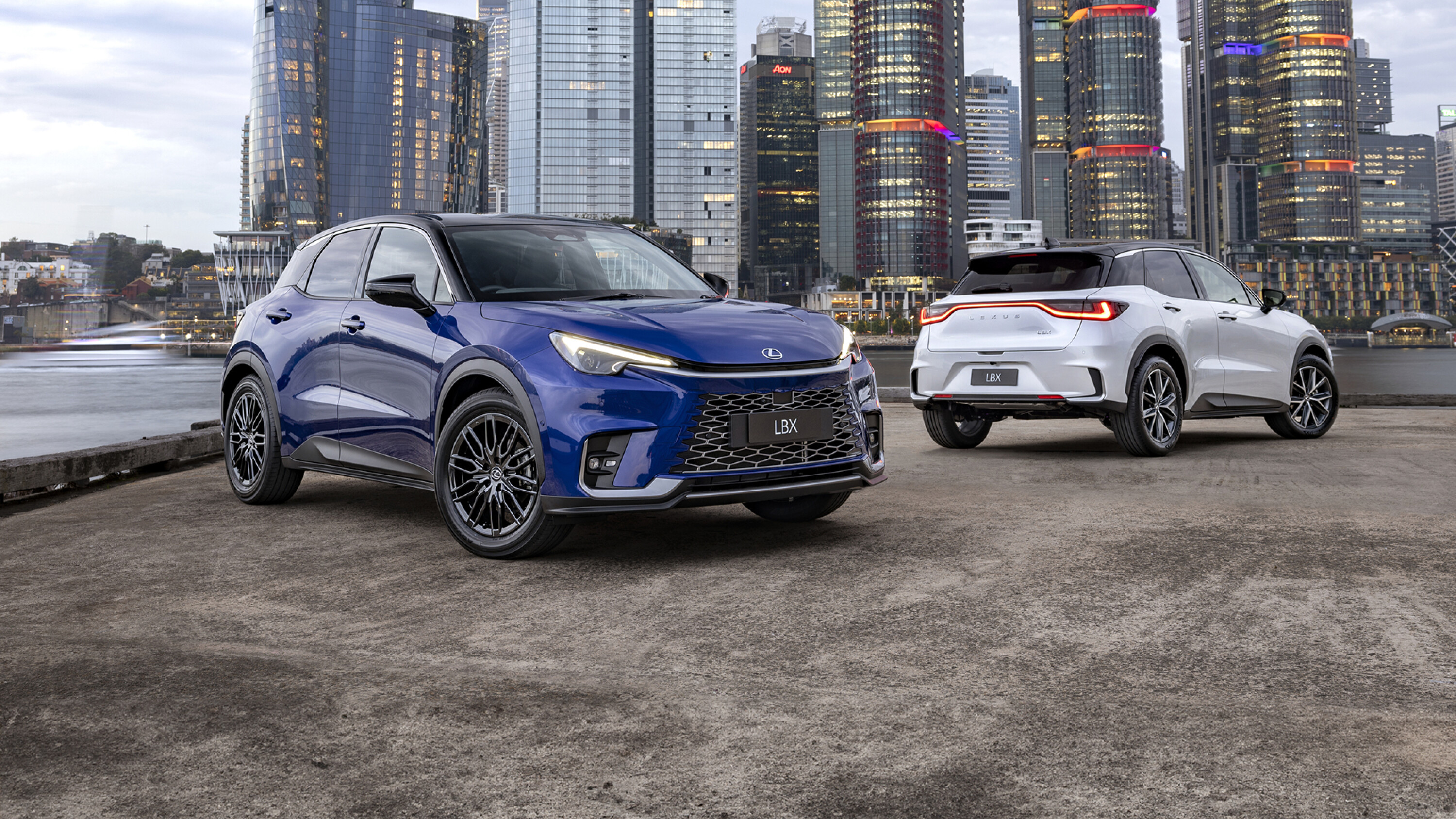
Lexus Breakthrough Crossover. That’s what the LBX badge on the back of this shapely new small SUV stands for. Coincidentally – following the LFA supercar – the 2024 LBX is only the second production Lexus to wear a three-letter badge.
Where the LFA supercar was a chest-beating demonstration of the best ideas Lexus engineers had to offer, the LBX is a ‘breakthrough’ in the sense it represents a new entry point for the Japanese luxury brand. It also happens to be Akio Toyoda’s current daily driver.
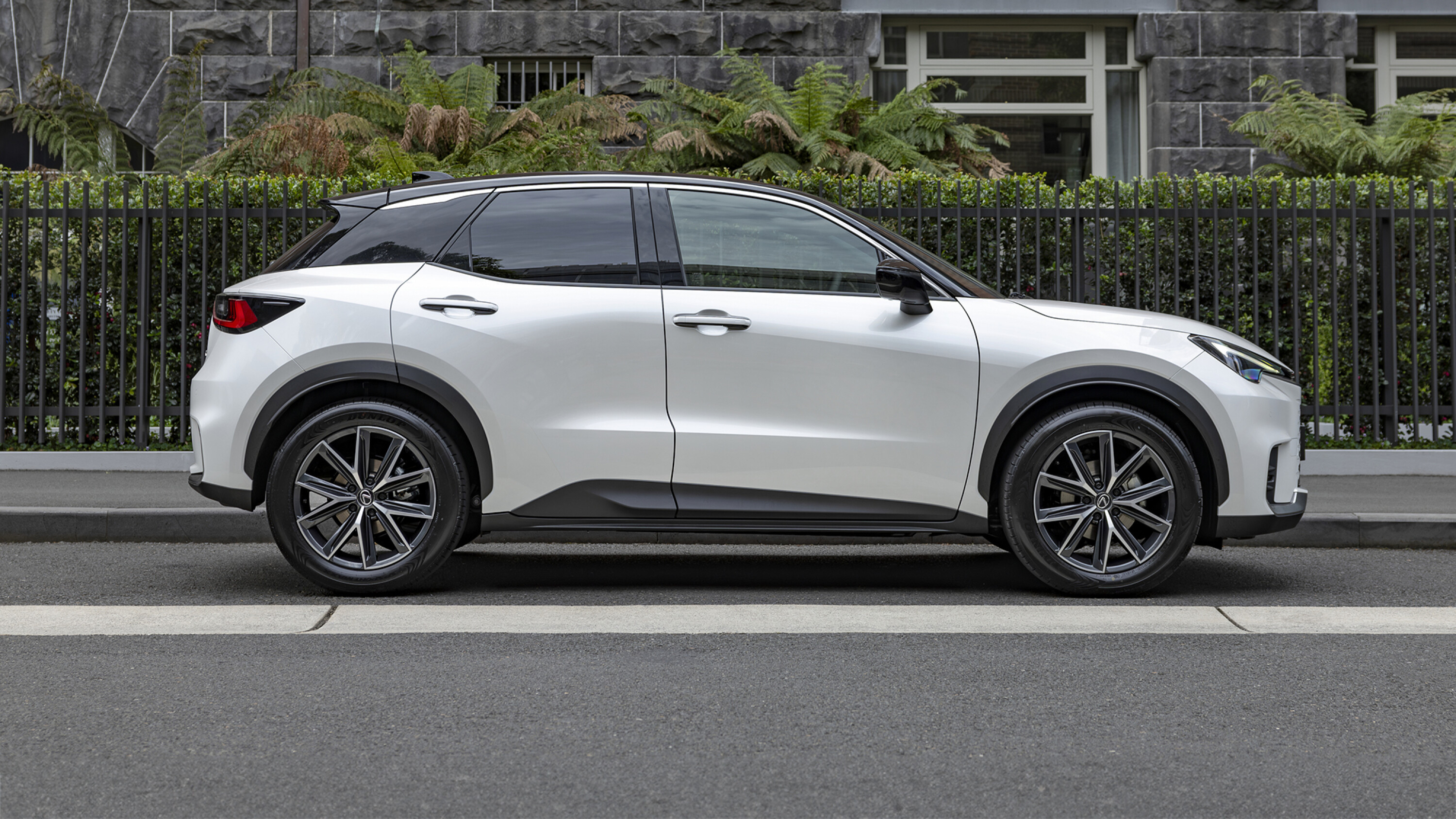
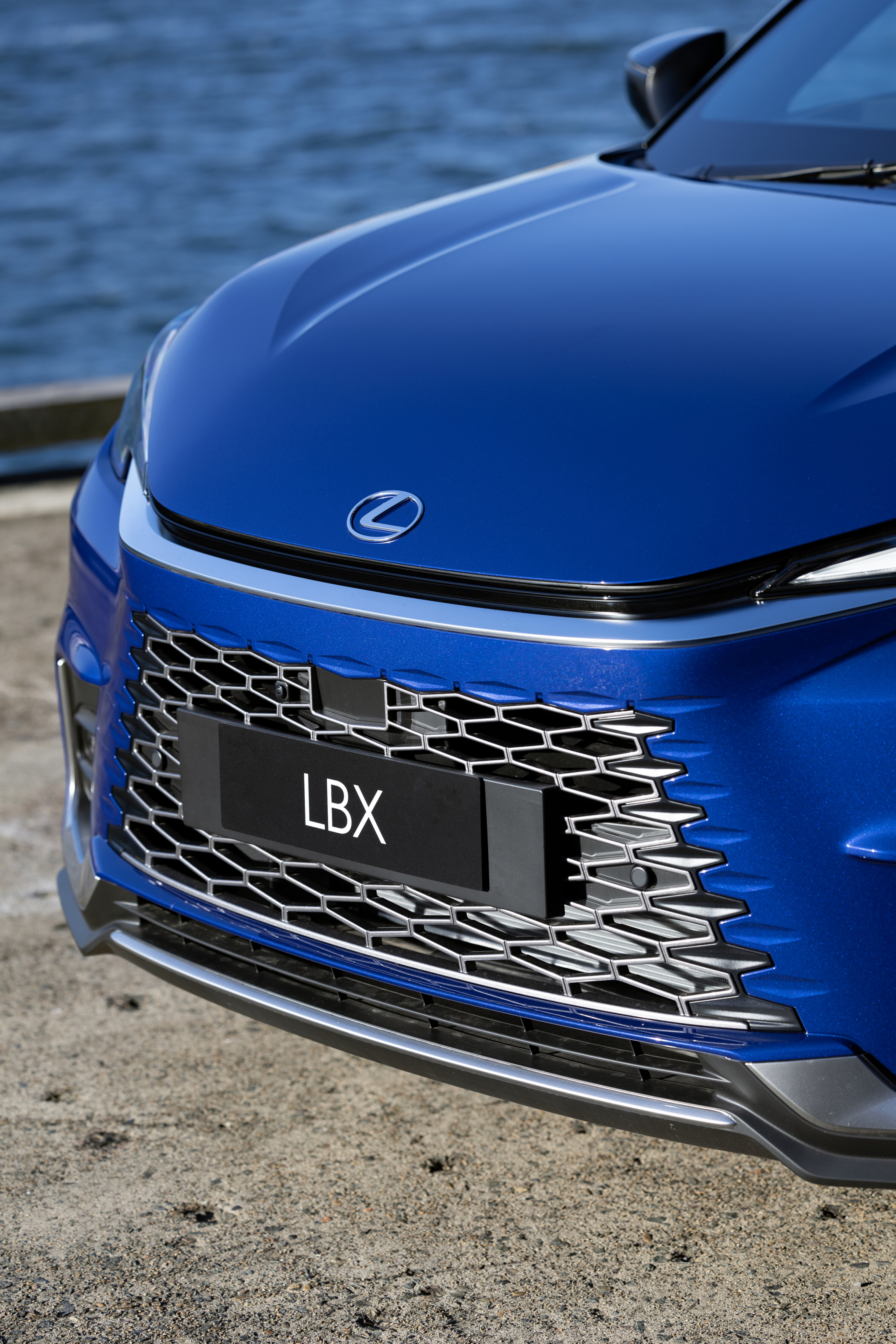
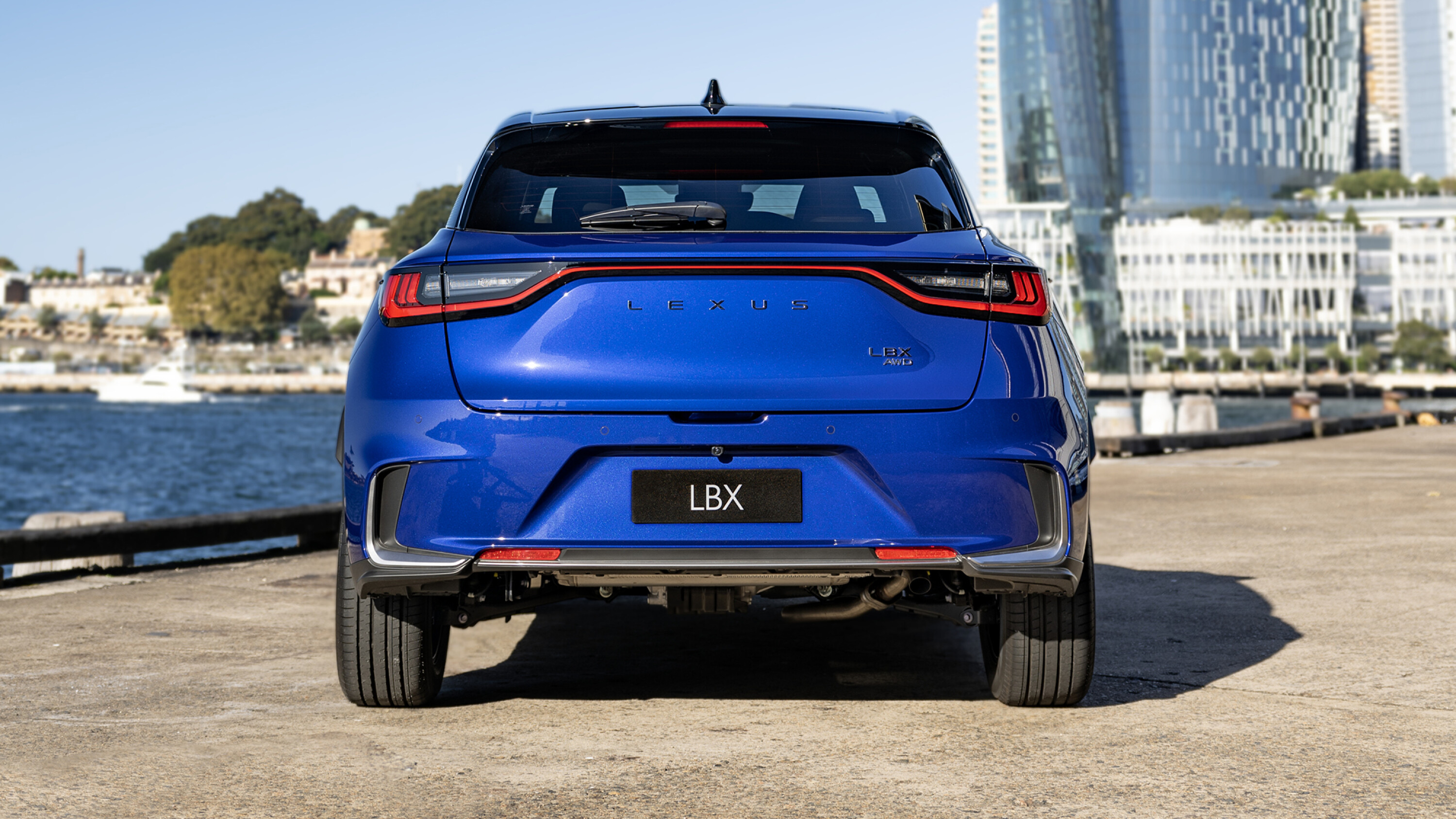
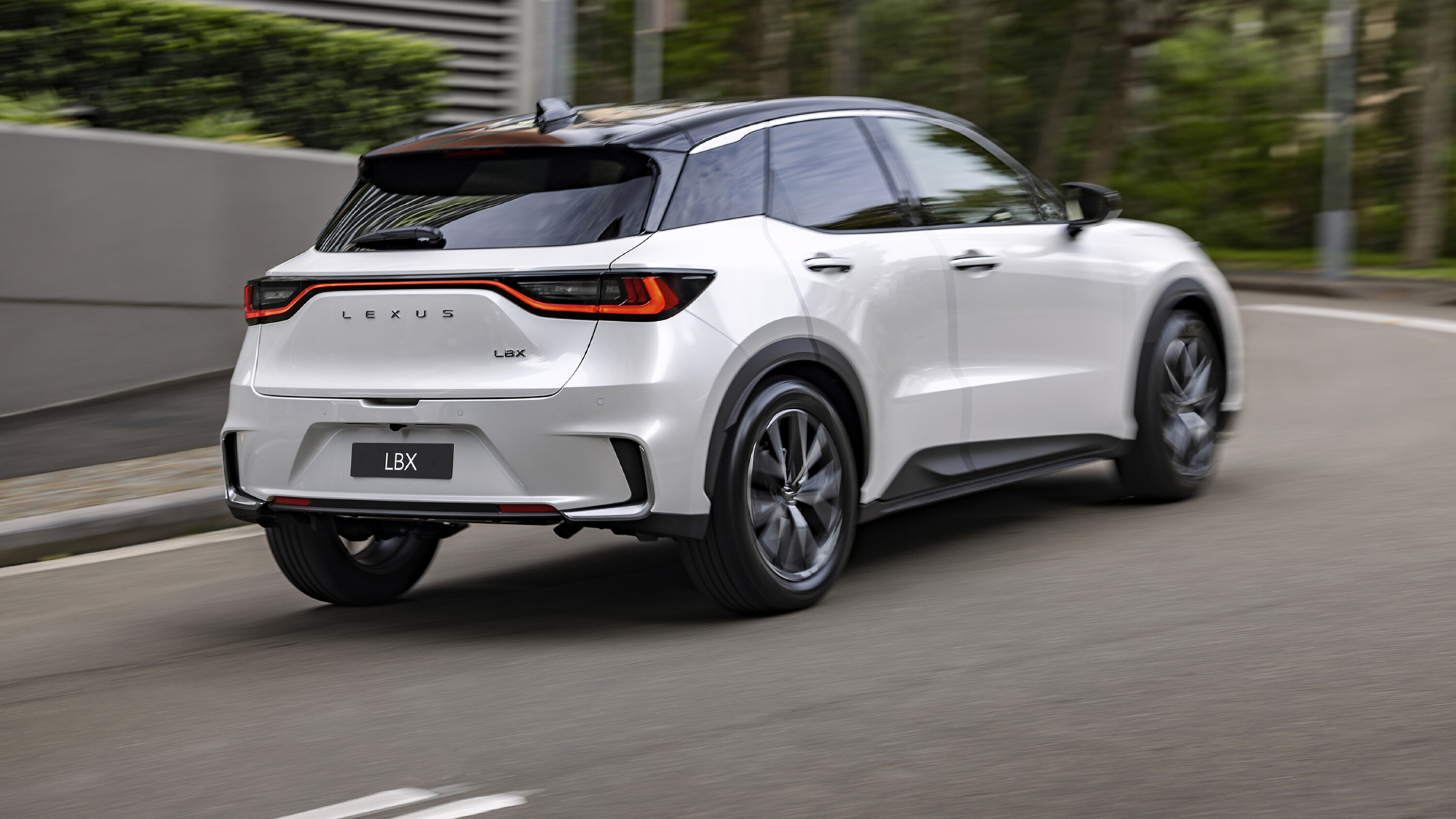
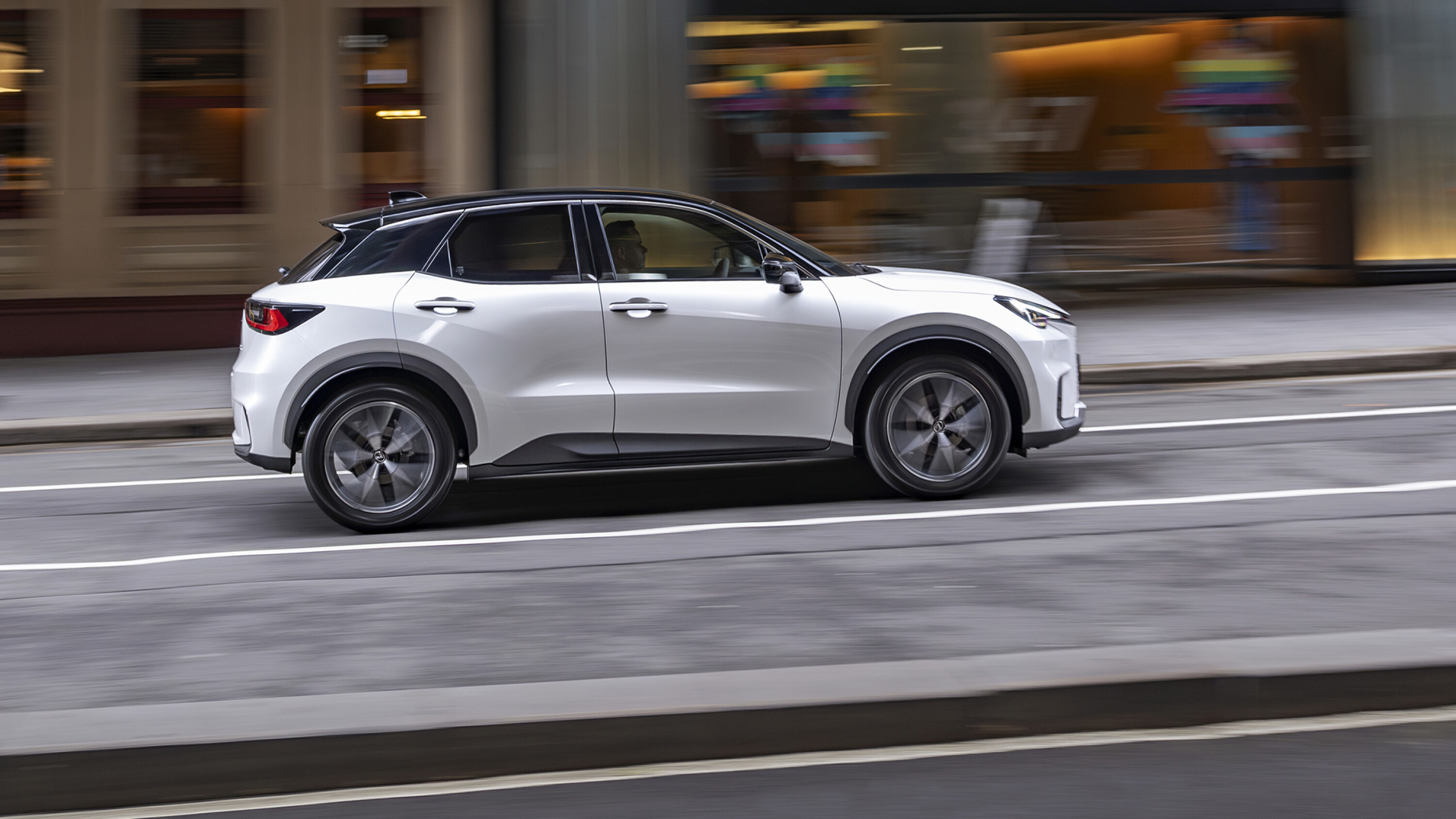
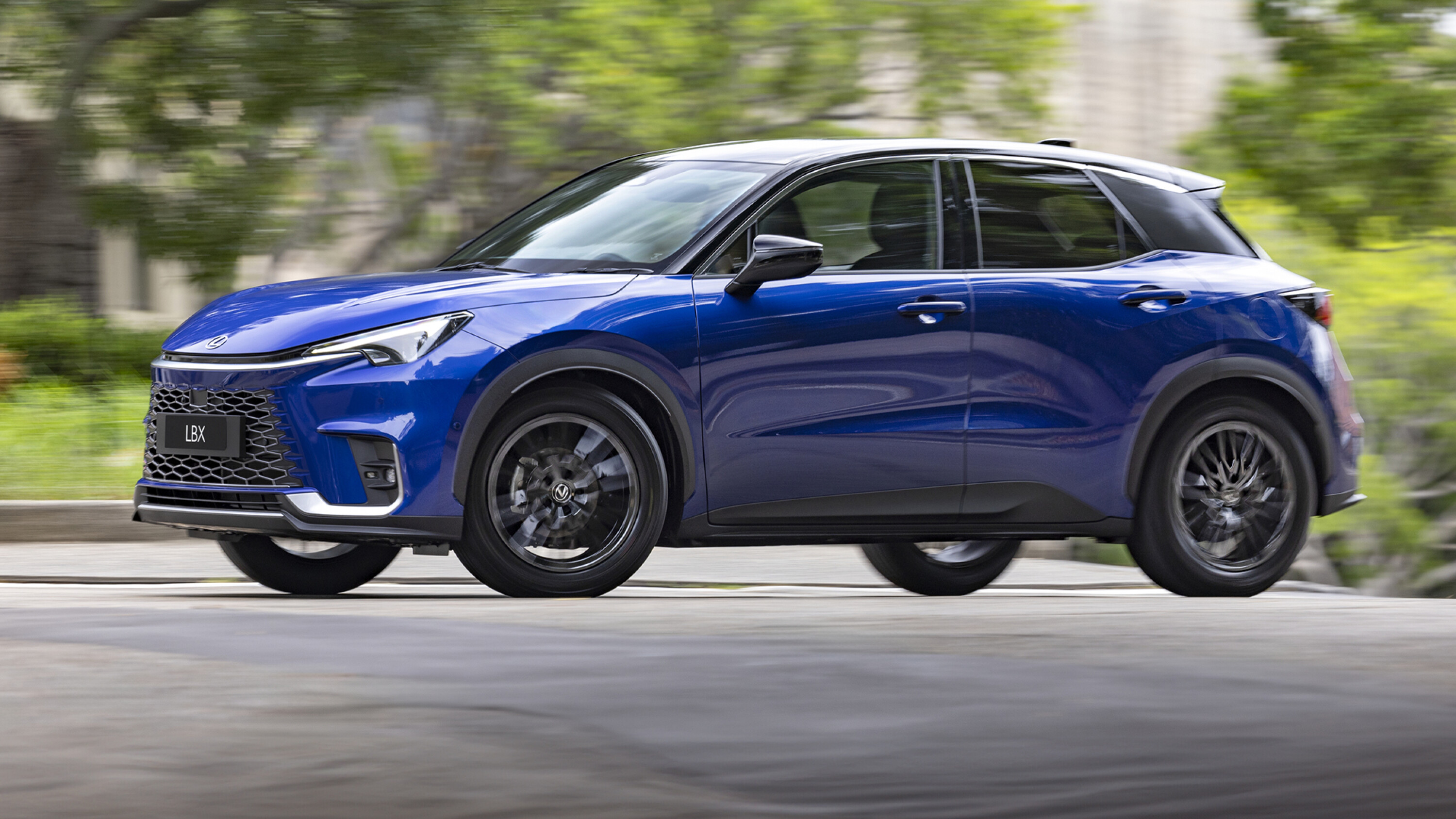
This hybrid-only SUV is based on a modified version of the Toyota Yaris Cross’s GA-B architecture, but that’s pretty much where the similarities end. The body panels are all new, with minimal overhangs and a sporty coupe-like stance (and just a hint of Mazda CX-3). It is handsome in the flesh and, like the LC Coupe, comes in a range of loud hues including Rich Ruby and Citrine Flair.
Lexus has worked over the three-cylinder hybrid powertrain with higher output batteries and motors as well as active sound deadening on the top trim to make a luxurious light SUV.
The brand promises the LBX is more than a leather-bound once-over of a Yaris Cross, and we’ve got a drive from Gosford back to Sydney’s CBD to assemble some impressions.
JUMP AHEAD
- How much is it, and what do you get?
- How do rivals compare on value?
- Interior comfort, space, storage
- What is it like to drive?
- How much fuel does it use?
- How safe is it?
- Warranty and running costs
- VERDICT
1
How much is the Lexus LBX, and what do you get?
This is the most affordable Lexus with an entry-level Luxury trim commanding $47,550 before on-road costs.
For that, you get a modified version of Toyota’s 1.5-litre hybrid powertrain developing 100kW and 185Nm – or 15kW more than it does in other applications. Front-wheel-drive versions are equipped with torsion beam suspension at the rear, while AWD models upgrade to an independent setup of trailing arms with dual-link wishbones.
It’s about the same size as a Volkswagen Golf outside, though sits slightly higher. Compared to the UX, the LBX is 305mm shorter, 15mm narrower, 25mm taller and unlike its larger sibling, there’s no electric version offered.
| 2024 Lexus LBX Luxury features | |
|---|---|
| 18-inch alloy wheels | Heated front seats |
| 9.8-inch multimedia touchscreenu00a0 | Driver’s seat memory |
| Wireless Apple CarPlay and wired Android Auto | Electric tailgate |
| 12.3-inch digital instrument cluster | Rain-sensing wipers |
| Artificial leather upholstery | 360-degree camera system |
| Power-adjustable front seats | Two-tone paint |
1
For a very big $5440 leap, Lexus will upgrade you to Sports Luxury specification with a few luxurious extras.
Even at that upper end, though, you miss out on a sunroof, seat ventilation, and full leather upholstery. The Sports Luxury variant is also available with a second electric motor and AWD for $56,990 before on-road-costs.
| LBX Sports Luxury in addition to Luxury | |
|---|---|
| 13-speaker Mark Levinson sound system | Automatic parking system |
| u2018Ultrasuede’ and leather-accented seats | Active noise cancellation |
1
How do rivals compare on value?
Audi’s Q2 35 TFSI may cut a more coupe-like silhouette but it’s much the same size and, starting at $49,400 before on-road costs, pretty close in cost.
Where Audi’s base Q2 feels like a de-contented vehicle, the entry-grade LBX Luxury has more kit thrown and materials that – at least above the belt line – feel more luxurious.
Other premium marques’ SUVs, such as the Mercedes-Benz GLA 200 ($68,900) and BMW X1 18i ($66,015, both before on-road costs) are both dearer and bigger propositions than the LBX.
Lexus wants the LBX to “attract affluent younger customers”, while also providing another option for existing Lexus loyalists to downsize or add a compact city-friendly luxury car to their fleets.
This may see the LBX steal business from the VW T-Cross Style loaded with accessory packs ($38,290) and Yaris Cross Urban AWD ($39,300, both before on-road costs) – especially given the quantum quality leap you experience in even the entry-grade LBX Luxury’s cabin.
Interior comfort, space and storage
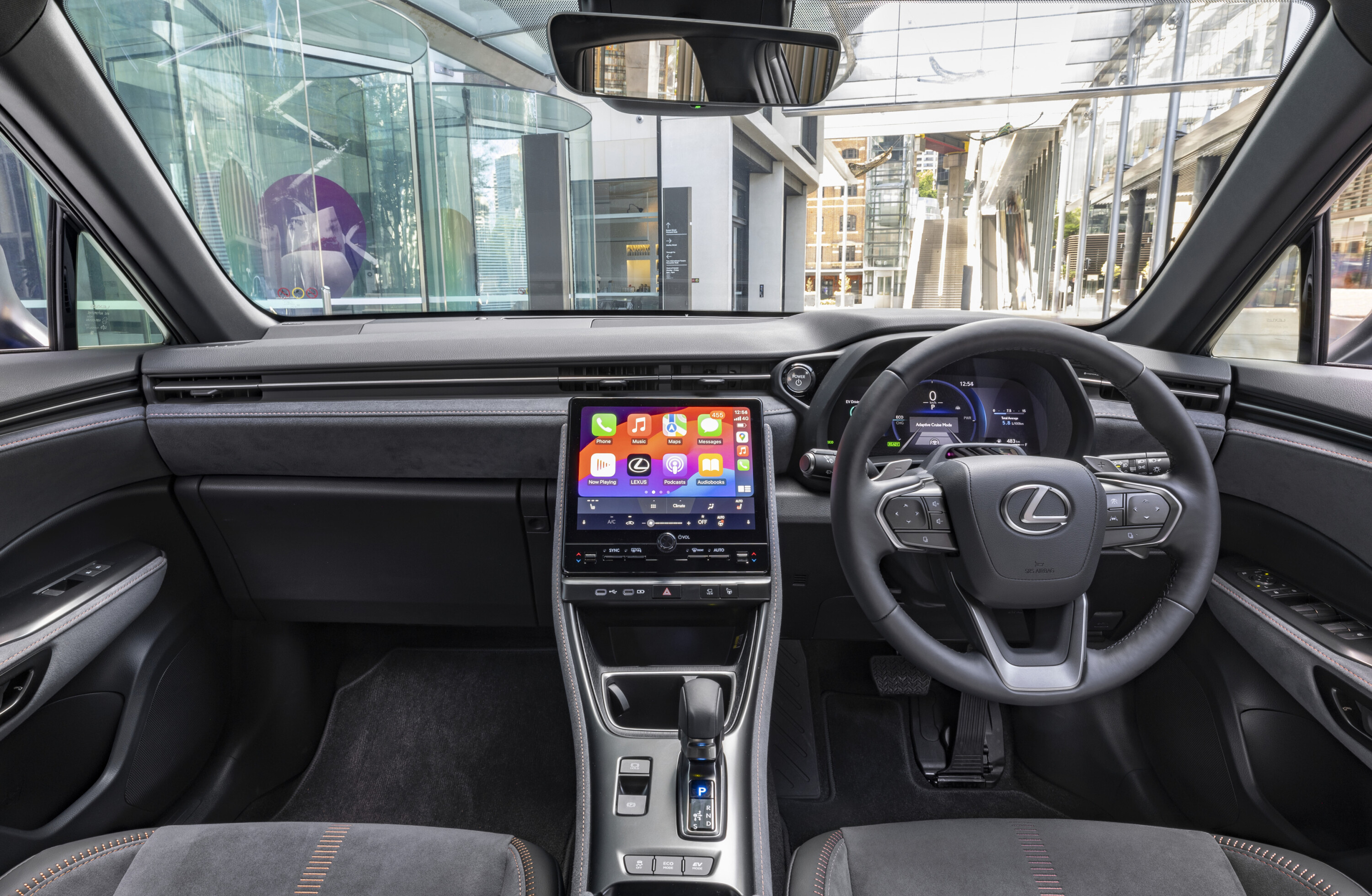
From the meaty ‘handles’ with their electric actuation to the sturdy doors and thoughtfully appointed high-traffic touch points, the LBX appears a convincingly Lexus product.
Inside, the layout is logical and conforms to Lexus’ ‘Tazuna’ philosophy, that of horse’s reins and rider, with all controls designed to keep your eyes on the road and hands on the wheel.
A deeper look unearths a few shortcomings, though, such as the coarse plastic below the belt line and Yaris Cross trim panel below and to the right of the steering wheel where the LBX’s three memory settings for the power driver’s seat are found and a similar material covering the shallow glovebox.
1
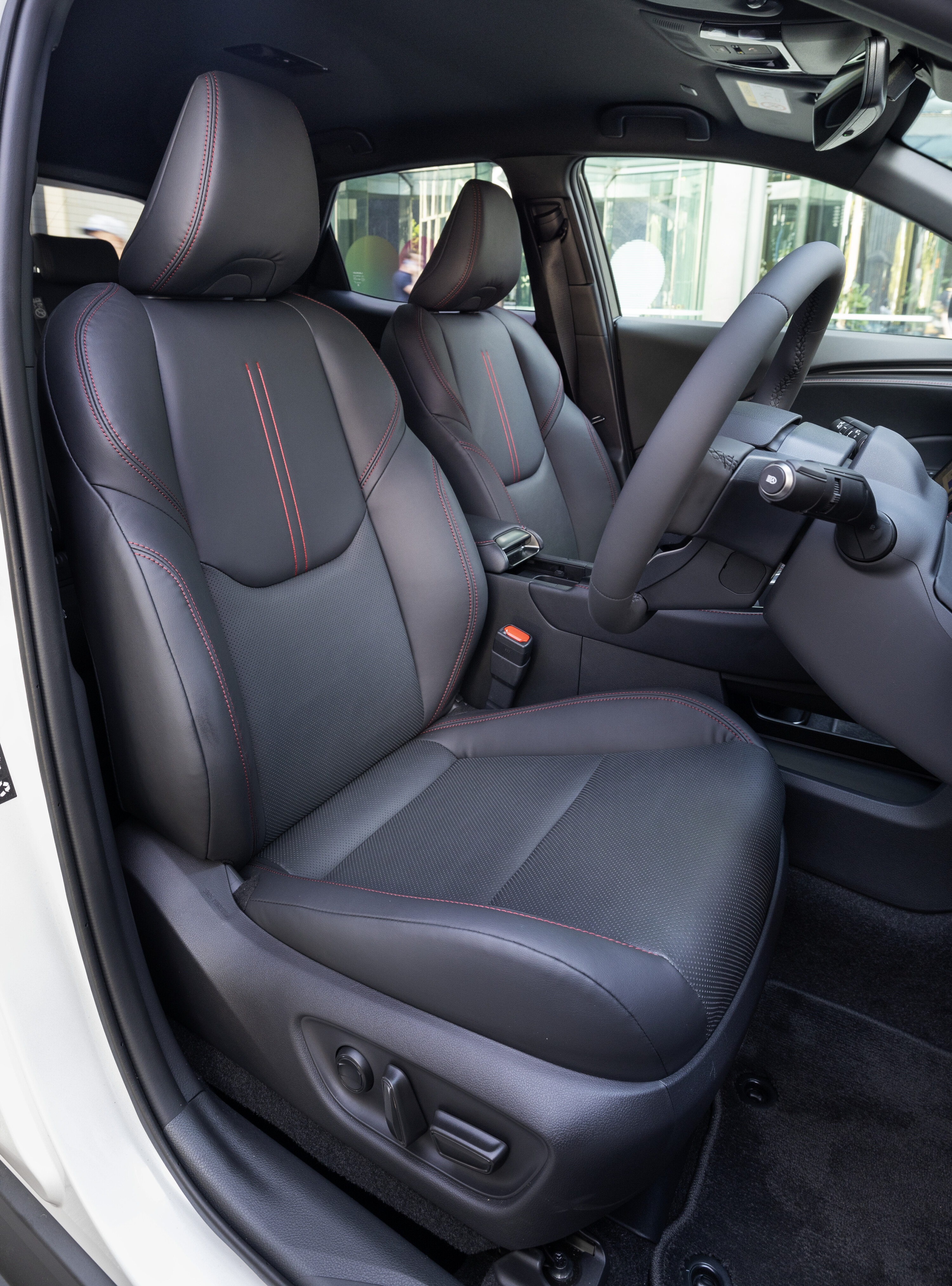
The front passenger’s seat is manual adjust only and the position is compromised by an intrusive floor panel. At least the pews themselves are comfortable and supportive, with the power driver’s seat also getting adjustable lumbar.
The Sports Luxury upgrades from ‘NuLux’ synthetic leather to a suede cloth centre and leather-accented combination teamed with bronze contrast stitching.
Both grades are equipped with seat and steering wheel heating, yet Lexus does not offer the option of a sunroof, seat ventilation, or any enhancement packs for the LBX.
Build quality is mostly predictably sturdy and we detected no squeaks or rattles.
The centre console is narrow (it’s a skinny car, after all) though there’s still thoughtful storage with a tray beneath the touchscreen and two cupholders (the rearmost is under the flimsy slide-back central cubby cover, like a Polestar 2). The door bins snuggly fit 600mL bottles.
A flourish of interesting material is found on the centre console with what Lexus calls a ‘Tsuyasumi’ finish that involves multiple layers of film to create a charcoal-like effect. We wish there was a little more muttered around the cabin.
1
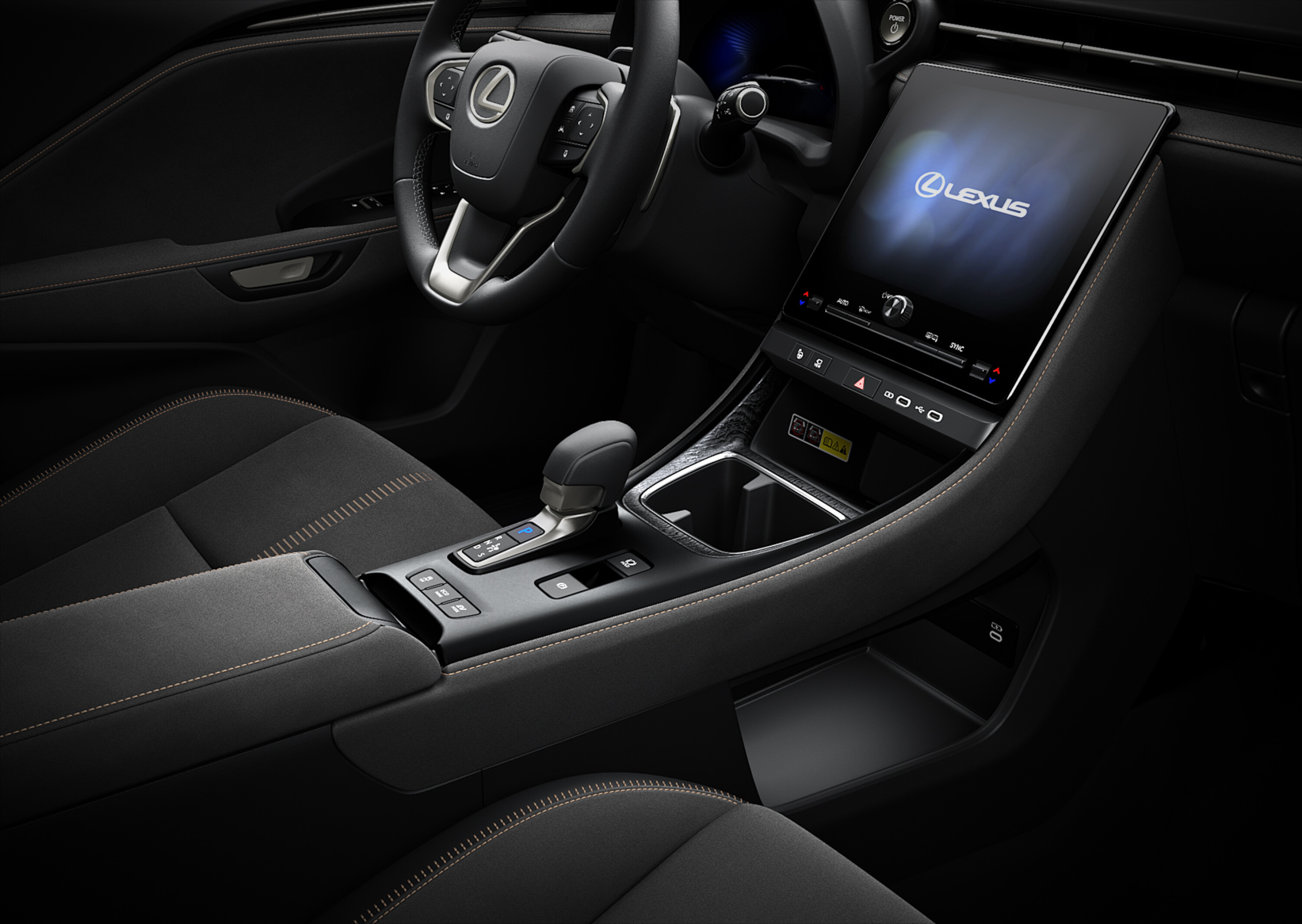
The LBX uses a 9.8-inch multimedia touchscreen that’s powered by now-familiar software. Without the old touchpad, it’s a hint less clunky, yet the low-contrast graphics don’t look high quality.
There are connected services and live navigation that, at this stage, are included in the package for life.
Apple CarPlay and Android Auto are wireless, and there are four USB-C charge points (two front, two back). The standard HiFi is a six-speaker system which is entirely acceptable. Moving up to the Sports Luxury’s 13-speaker Mark Levinson stereo adds surround sound and power yet we found its timbre a little bright.
Interior space is respectable for such a small vehicle and is honestly preferable to the larger UX thanks to more thoughtful packaging. The rear bench is upright and supportive but anyone over six feet will still feel pretty cramped. There’s no fold-down armrest, either.
1
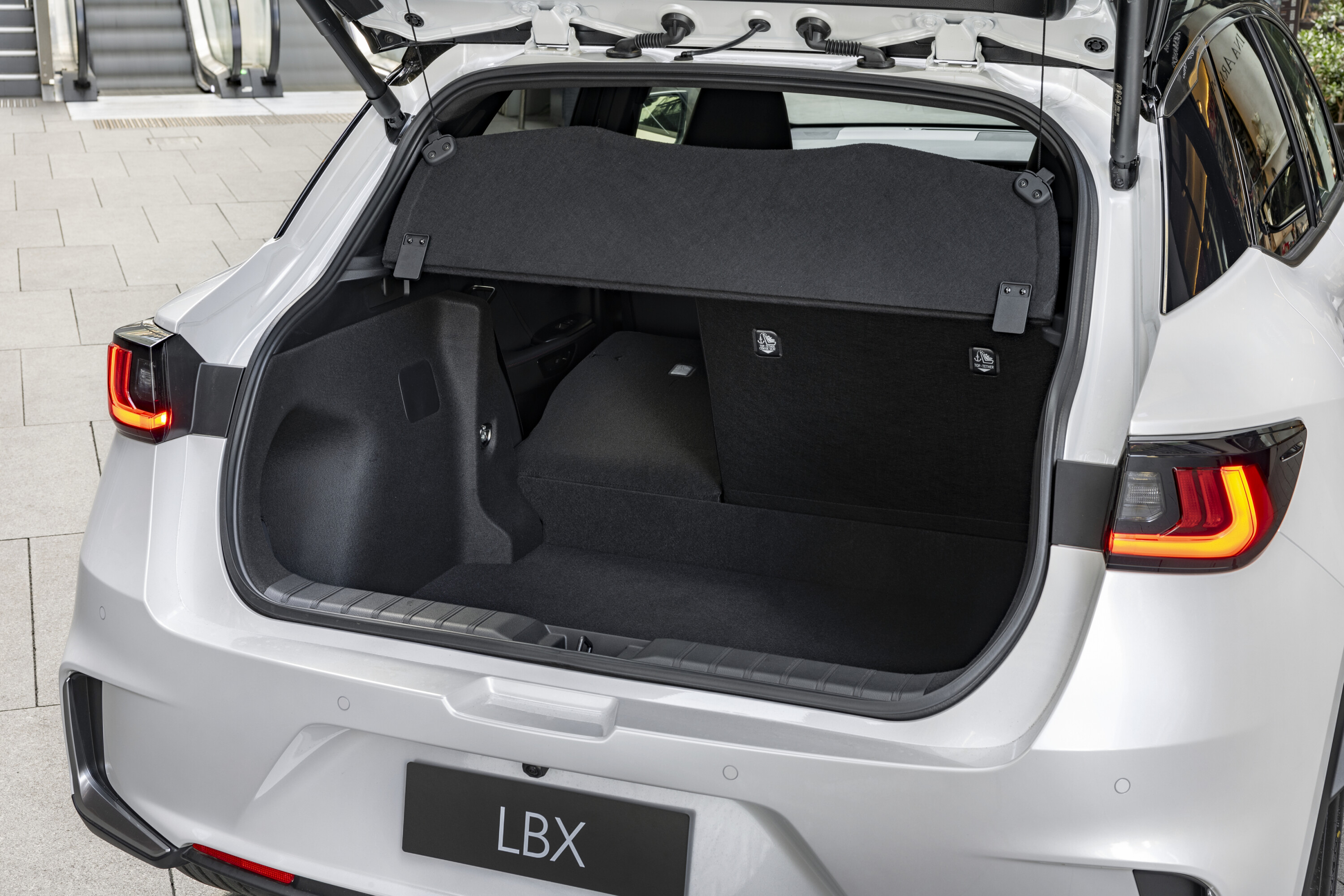
Lexus LBX boot space
The LBX’s boot is pretty stellar. Lexus lists capacity at 402L (VDA) for the front-wheel drive with the AWD at 315L.
Clever touches are few and far between and there’s no spare tyre but having a power tailgate is pretty spiffy.
1
What is it like to drive?
Lexus is keen to emphasise the LBX’s sporty nature in the product presentation, despite there being no F-Sport trims on sale.
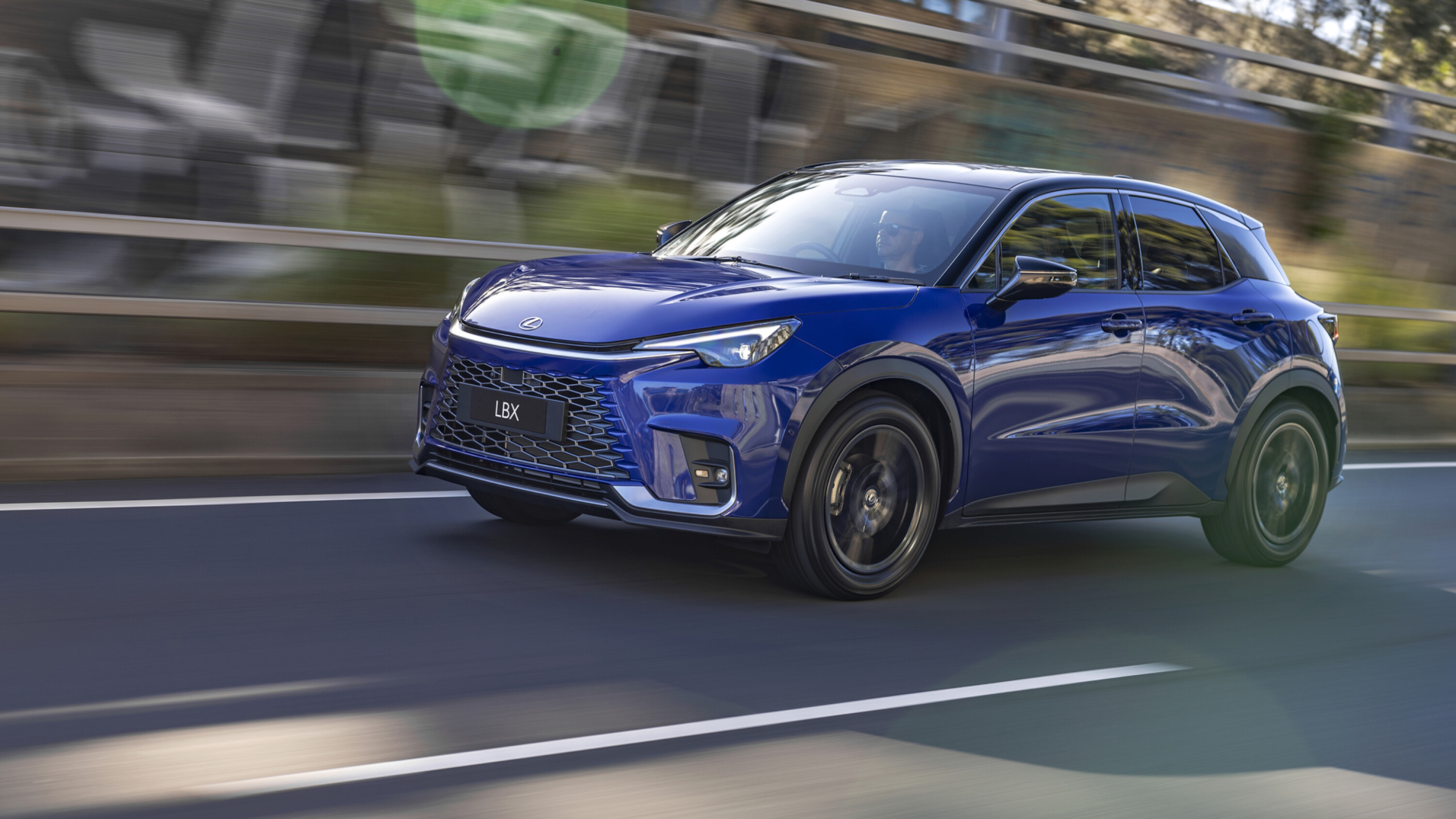
From experience in the soft and wafty UX small SUV, how flat and planted the LBX Luxury FWD felt came as a surprise. This suited the first part of the drive program – down the Old Pacific Highway just north of Sydney – very well indeed.
The quick, firm steering (2.73 turns lock-lock) inspires confidence in the front end straight away. Flowing through a set of corners, the LBX’s incisive turn-in invites you to push the chassis harder. It relished the challenge of an off-camber left hander with wonderful balance and throttle adjustability to trim the line when needed.
1
It’s helped by a natural brake feel (Lexus says the pedal ups assistance on-demand) that makes it a cinch to drive smoothly in town as well. There’s no kickback from the steering over bumps and grip levels are strong from the 225/55R18 Advan V61 tyres.
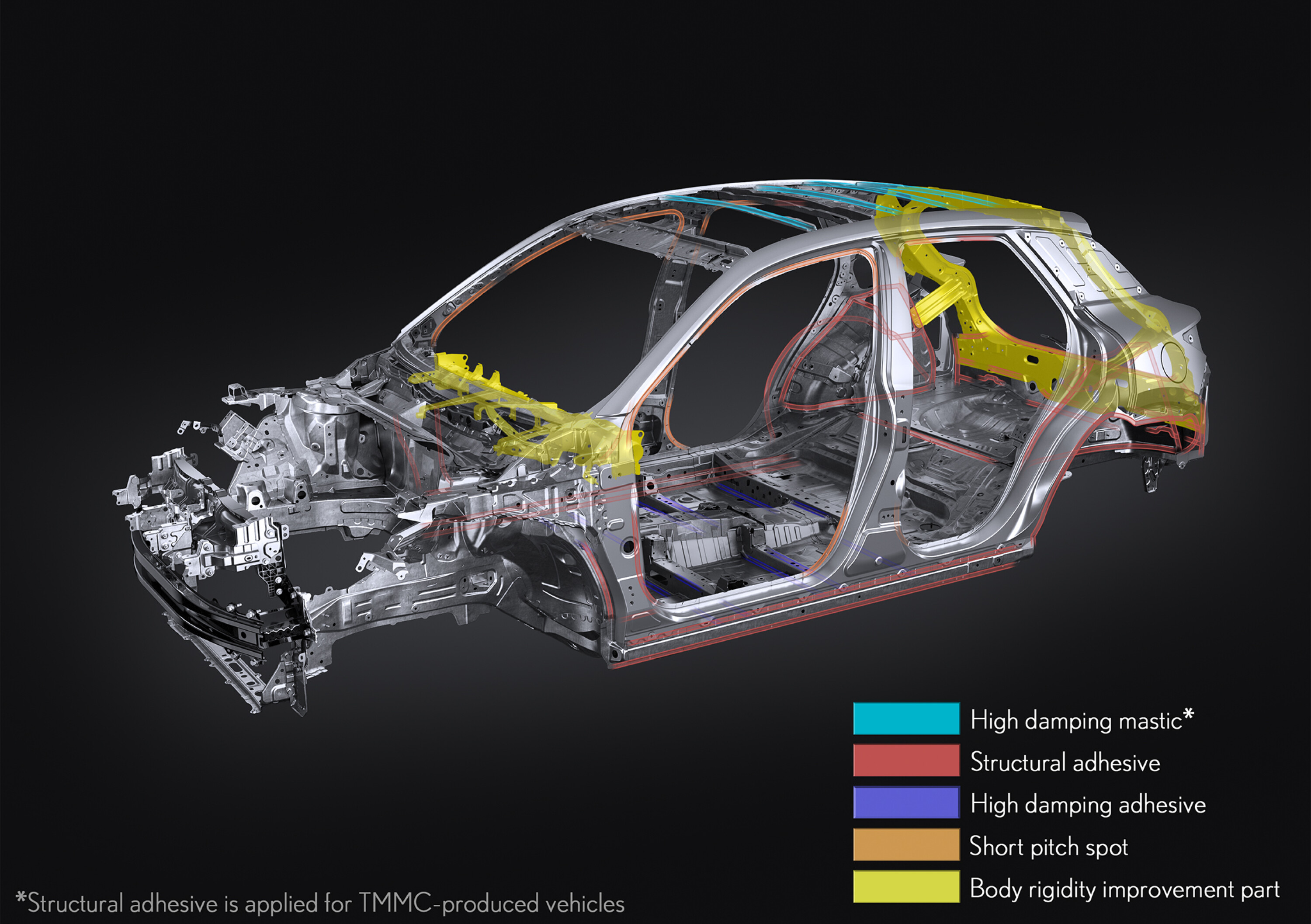
Beneath the LBX’s body, Lexus has made some very peformance-oriented moves with a new front strut design and low friction dampers that keep body roll to a minimum. Then there’s the track widths, at 1570mm its stance is not only 45mm wider than a base Yaris Cross but also broader than the GR Yaris (1535mm F/1565mm R).
Having this much fun on twisty roads isn’t a Lexus calling card – it feels very much like Mr Toyoda has been involved in this vehicle’s dynamics. An LBX F production version of the Morizo RR concept revealed at Tokyo Auto Salon can’t come soon enough.
1
But we should get back to the Lexus-ness of this SUV because, although the base car rides admirably at speed on its torsion beam suspension, there’s detectable thump into the cabin over potholes. Tyre noise was pronounced on coarse chip surfaces even with the active noise cancellation engaged.
The Sport Luxury AWD with its independent rear suspension maintained better control of the back axle but didn’t noticeably improve the ride quality on Sydney’s scabby roads. Whichever grade you choose, beware that the urban ride quality is jiggly.
Most of the time, the powertrain is like a silent partner. The new BiPolar NiMh battery chemistry (first seen in the Japanese-market Toyota Aqua) gives more instant power flow than the Yaris Cross Li-Ion item making the LBX convincingly zippy in EV mode.
1
When you demand a little more grunt, the 1.5-litre ‘M15-FXE’ three-cylinder petrol takes a moment to kick in and drive the front wheels through a CVT automatic.
At around 70km/h up steep grades the off-beat grumble is pronounced and in no way is the LBX ‘fast’, 0-100km/h taking 9.2 or 9.6 seconds depending on whether you go for front- or all-wheel drive.
It’s no straight swap of the Yaris Cross powertrain, with further upgrades to the transaxle and electric motors to lower friction. The rear motor is a little 4.7kW/52Nm item, so any increase in outright pace is offset by the extra weight. It does add security on loose surfaces, though.
1
- What is a Powertrain or Drivetrain?
- Power vs torque
- Car suspension explained
- Automatic transmissions (‘gearboxes’) explained
- Chassis control systems explained
- Car vs Ute vs SUV: How the vehicle you buy should guide the way you drive
- What is the WLTP emissions and range test?
The Lexus LBX is yet to be evaluated by independent safety bodies such as ANCAP or Euro NCAP.
It is equipped with all the usual features, including forward collision warning, front AEB with pedestrian and cyclist detection, rear cross-traffic alert, lane-keep assist, blind-spot monitoring, and eight airbags.
The lane-keep and adaptive cruise control features showed promise in initial testing, as did the car’s progressive and helpful stability control tune.
How much fuel does it use?
The Lexus LBX’s ADR combined fuel consumption rating is 3.8L/100km and its 36-litre fuel tank requires 91 RON fuel.
During the test route, our AWD Sports Luxury trim was showing 4.7L/100km on the trip computer. We do not doubt that in more typical use cases, that will drop much closer to the ADR rating.
1
Warranty and running costs
The LBX is covered by a five-year unlimited-kilometre warranty.
The small SUV is the first Lexus to introduce capped-price servicing, at $595 for the first five services due at 12-month/15,000km intervals.
Lexus has also rolled out a full-service lease option for perspectives. With this, you don’t own the car but pay to use it for a set period of up to five years.
The monthly payment covers the car, servicing, insurance, registration, and optionally a fuel card. At time of writing, Lexus has not given indicative full service-lease pricing and it depends on many variables.
1
VERDICT
Lexus has succeeded in making the LBX more than just a Yaris Cross for yuppies.
There’s a depth to the chassis engineering that runs deeper – that gentleman race driver Akio Toyoda picked one of these as his daily driver over other Lexus models is probably all you need to know.
There’s little point spending more on the Sports Luxury when the base variant offers so much. Our pick is the front-wheel drive Luxury – equipped with plenty of lavish touches for a relatively reasonable price. Though the LBX does feel a little confused, it’s certainly a unique offering.
Its not for everyone, but the LBX’s definite slant towards youthful sportiness above Lexus’ traditional leather-bound luxury may ver well do the job of pulling new customers into the brand – for now, we’re waiting for Lexus to announce a hi-po LBX F.
MORE
Everything Lexus
JUMP AHEAD
Pricing and features
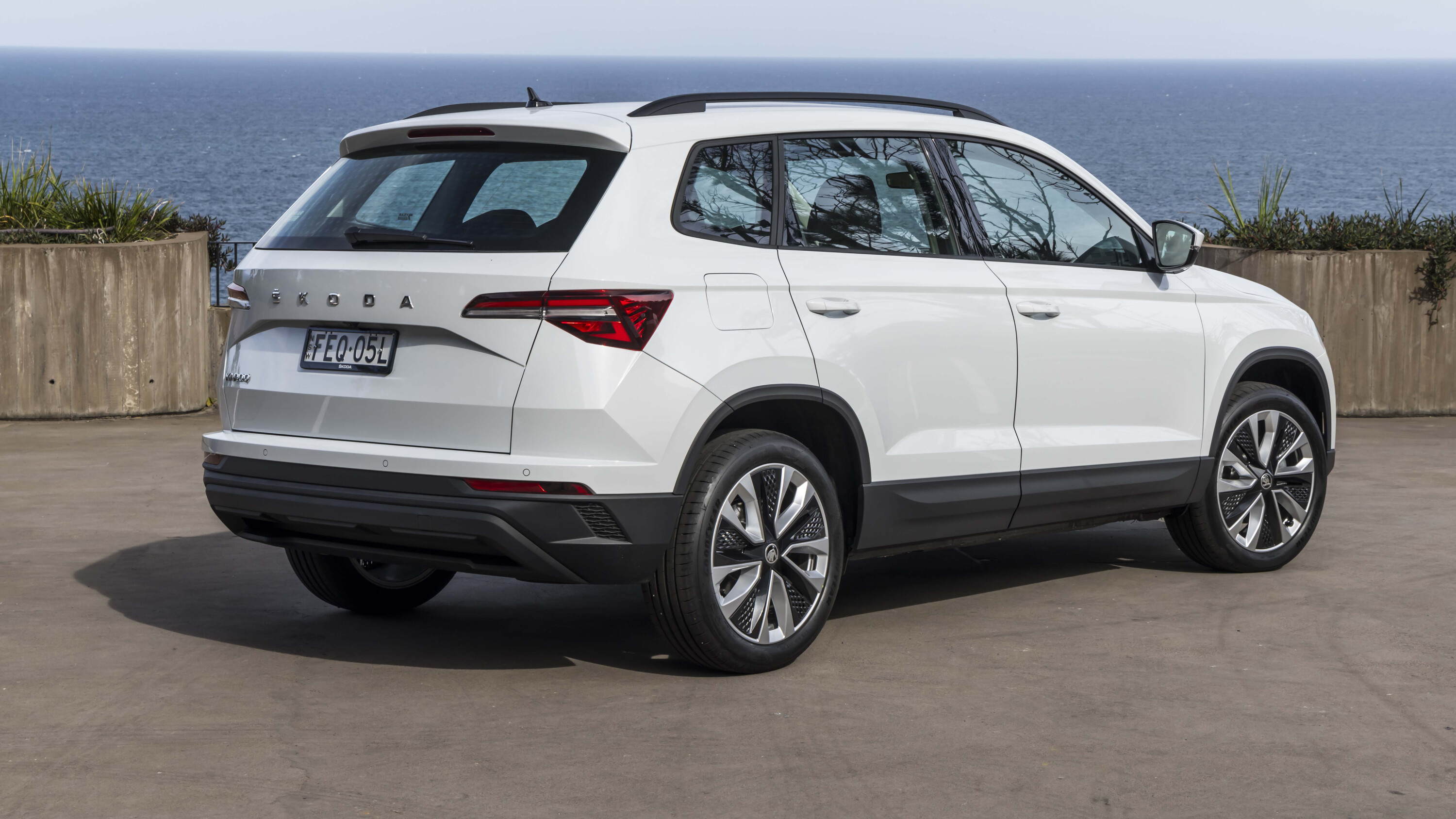
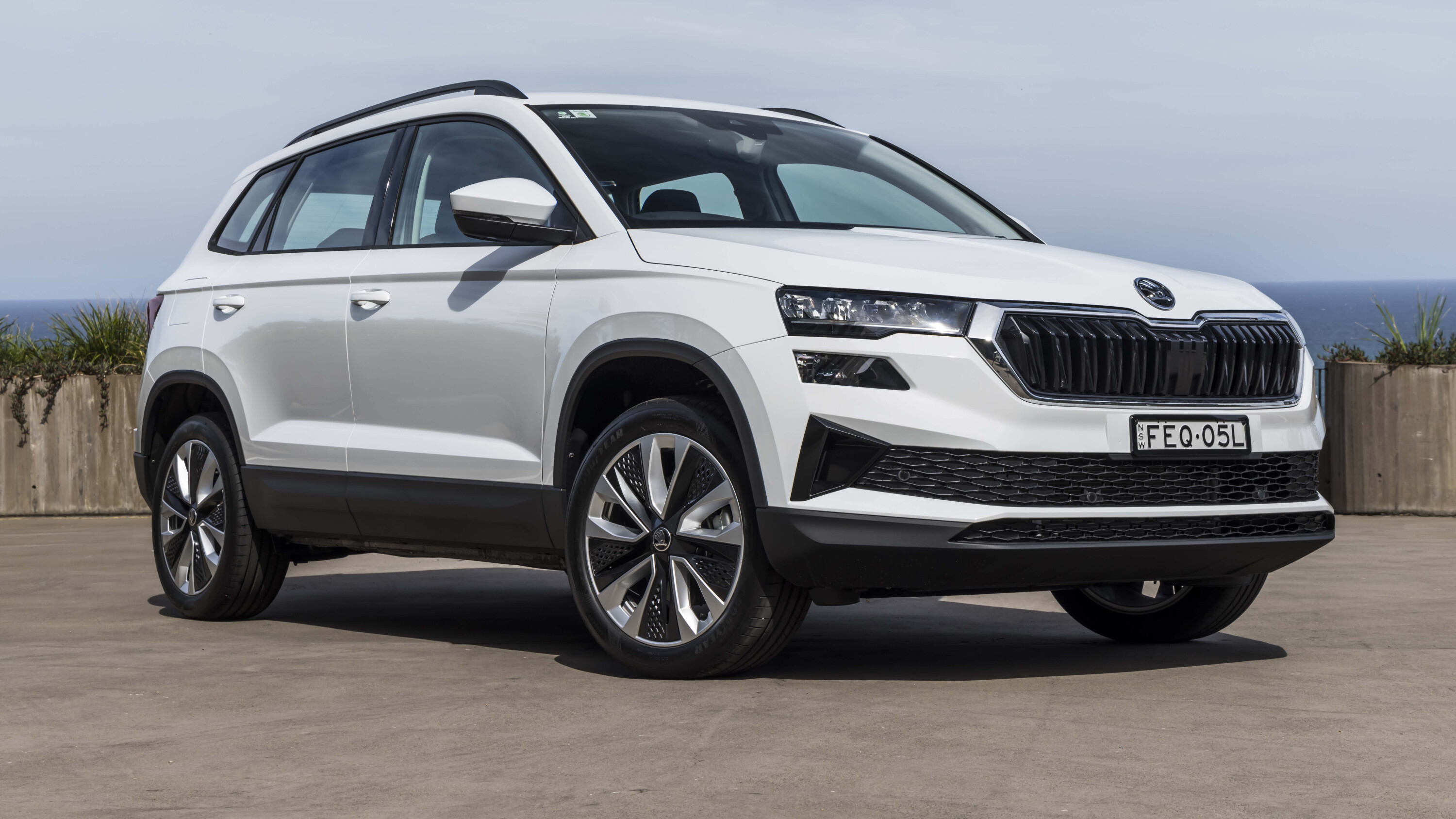
The Skoda range has crept up in price over recent years but the brand’s Australian boss says it hasn’t forgotten its roots. And that’s where cars like this new Karoq come in.
At $39,990 drive-away, it’s more than just a sharp starting price – there’s also a seven-year/unlimited-kilometre warranty plus the possibility to prepay (or bundle into your finance) the servicing costs – which are low for a Euro at $2750 for a seven-year plan – and that means if you move it on after five years, there’s like to be some resale benefit.
Skoda also offers a guaranteed future value, so if you want to take up finance for your purchase, you’ll know what the car is worth at the end (depending on your repayments and loan period).
1
And when it comes to standard kit? It’s pretty well equipped if you’re okay with cloth seat trim and manual seat adjustment, or don’t mind missing out on the Skoda VarioFlex removable seats because they’re gone from this base model.
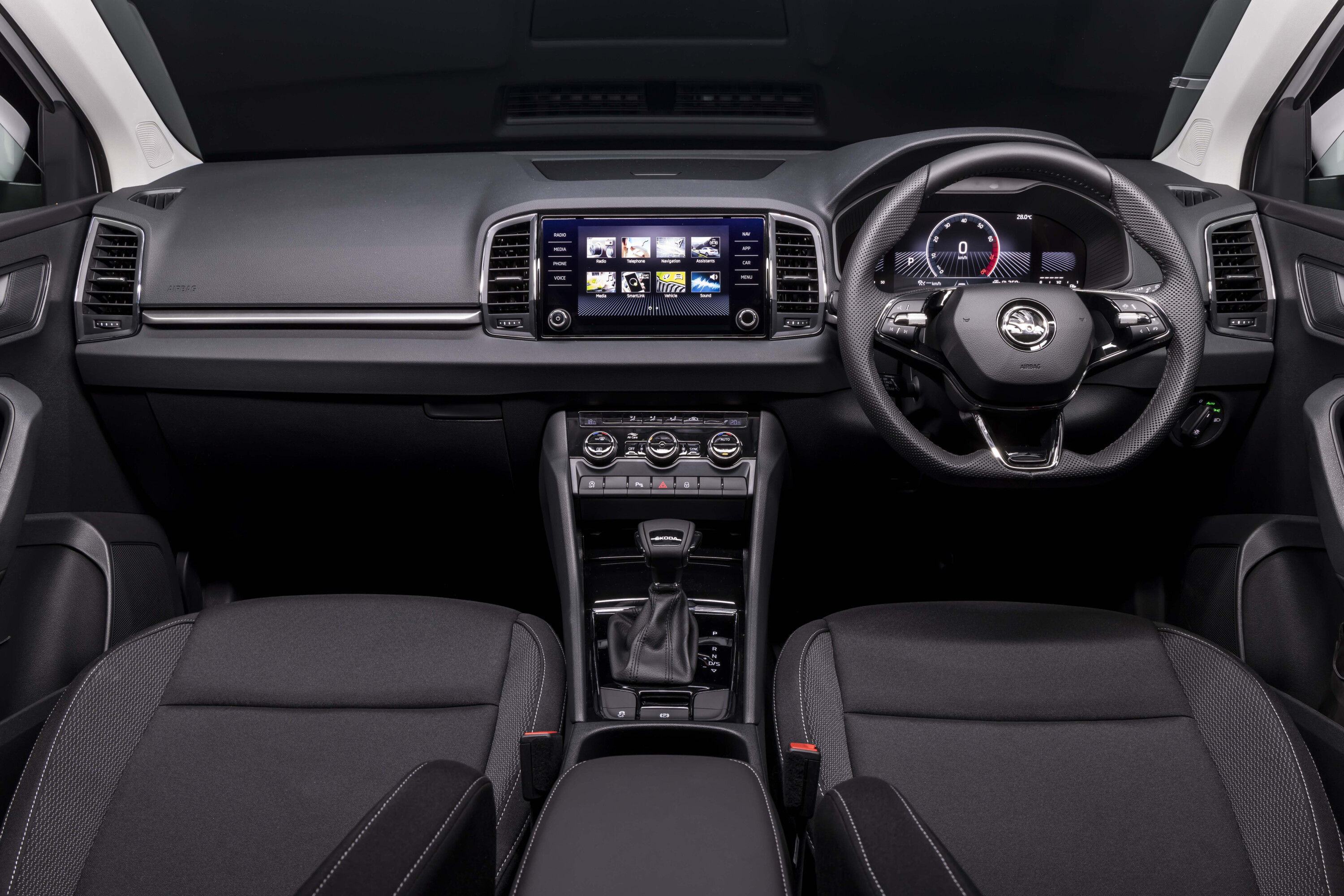
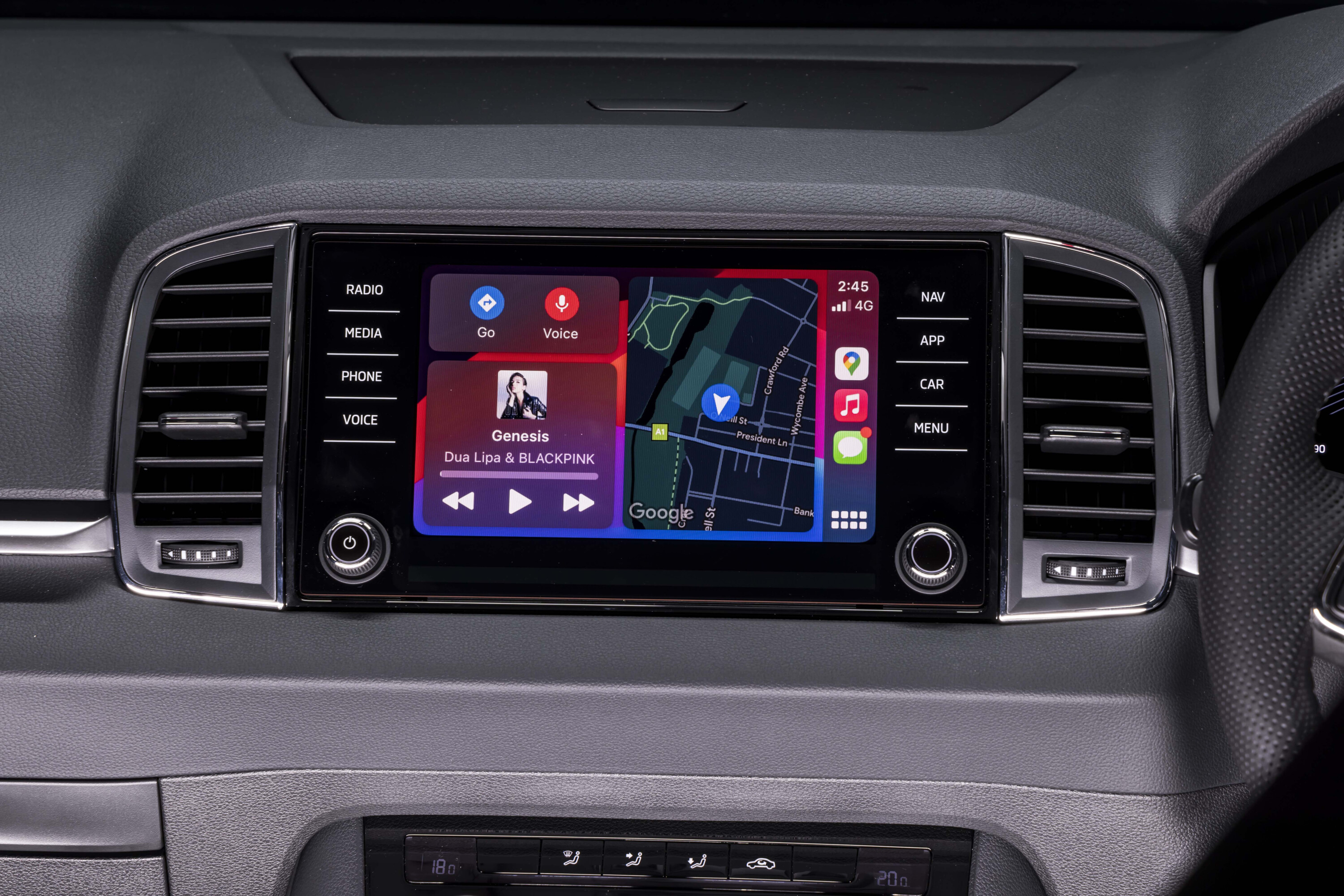
You still get nice interior features like an 8.0-inch touchscreen media system with Apple CarPlay and Android Auto, climate control air-con, an auto-dimming rearview mirror, keyless entry and push-button start.
There are also auto lights and wipers, LED daytime running lights, headlights and tail-lights with dynamic rear indicators, and 18-inch alloy wheels with a full-size steel spare.
1
Safety
There was an ANCAP rating for the Karoq, but it expired at the end of 2023.
Standard safety tech includes autonomous emergency braking with pedestrian detection, adaptive cruise control, lane-keep assist, blind-spot monitoring with rear cross-traffic alert, front and rear parking sensors, a reversing camera, and seven airbags. Impressive.
1
Interior
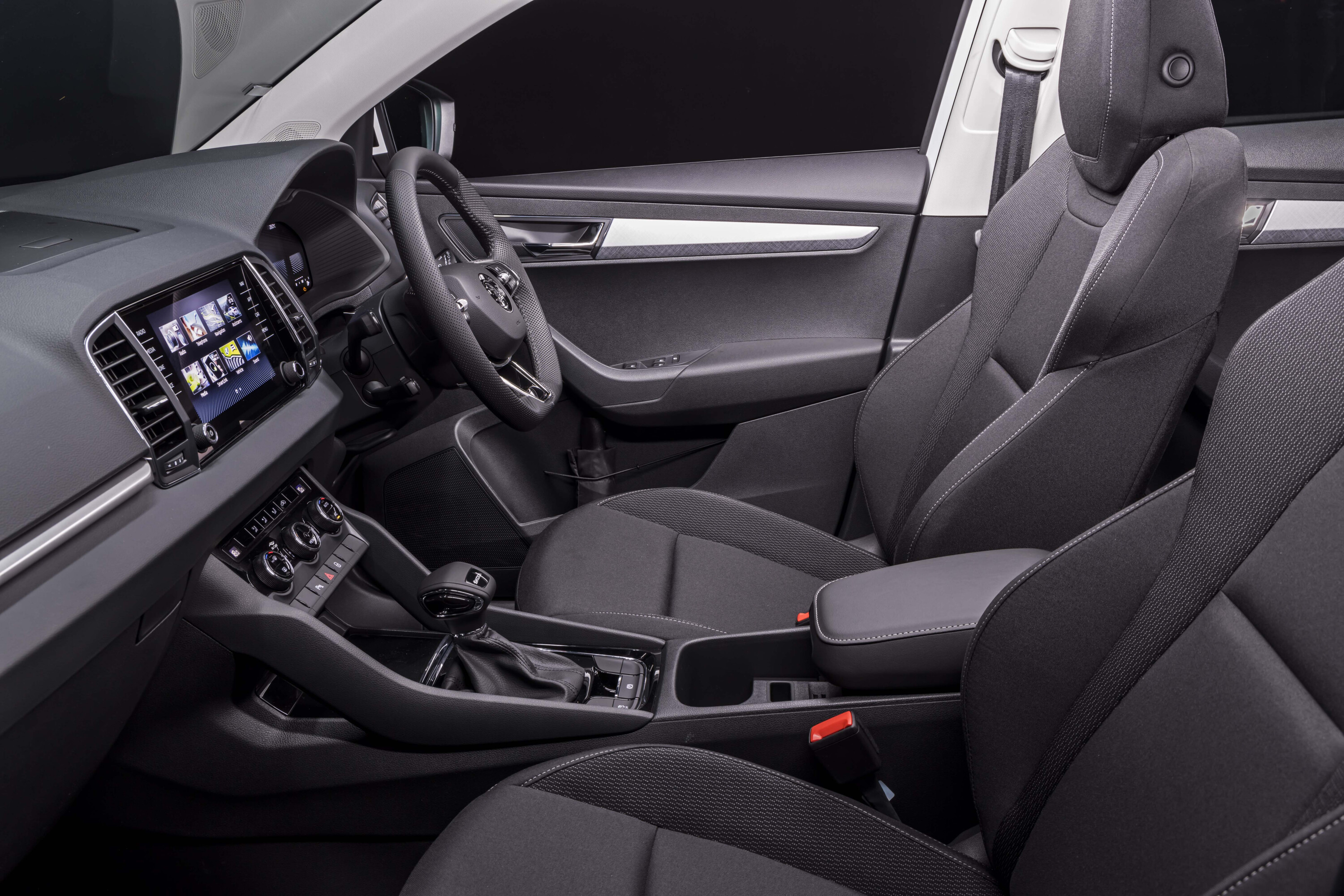
To understand how good the interior space is, you first must pay attention to the dimensions: A Karoq is only 4390mm long (on a 2638mm wheelbase), but its boxy body (1841mm wide, 1603mm tall) means it’s far more spacious inside than swoopy rivals.
As a result, it has an airy feel to the cabin, with ample headroom in the first and second rows, and a tall glasshouse making it a good choice for those with carsick-prone kids.
The cockpit isn’t exactly special by today’s standards – this car launched in Europe in 2017 – but while it lacks a bit of pizzazz, it has pragmatism and ergonomics at its core. There is ample storage in the doors and dash, a cup holder section between the seats that can flip into a shelf, and yes, there’s an umbrella hidden in the driver’s door.
1
Neither the media system nor simple driver info display set any benchmarks, but they do the job admirably.
Backseat space is fine, but legroom is tight. The fact this variant has a fixed bench rather than the clever sliding/removable seats of higher-spec Karoqs could be a dealbreaker for some, but Skoda claims there’s a bit more on-road noise suppression in this spec.
There are rear vents and a 12-volt outlet, as well as bottle holders, map pockets, a flip-down armrest and even a ski port, but no rear USB ports.
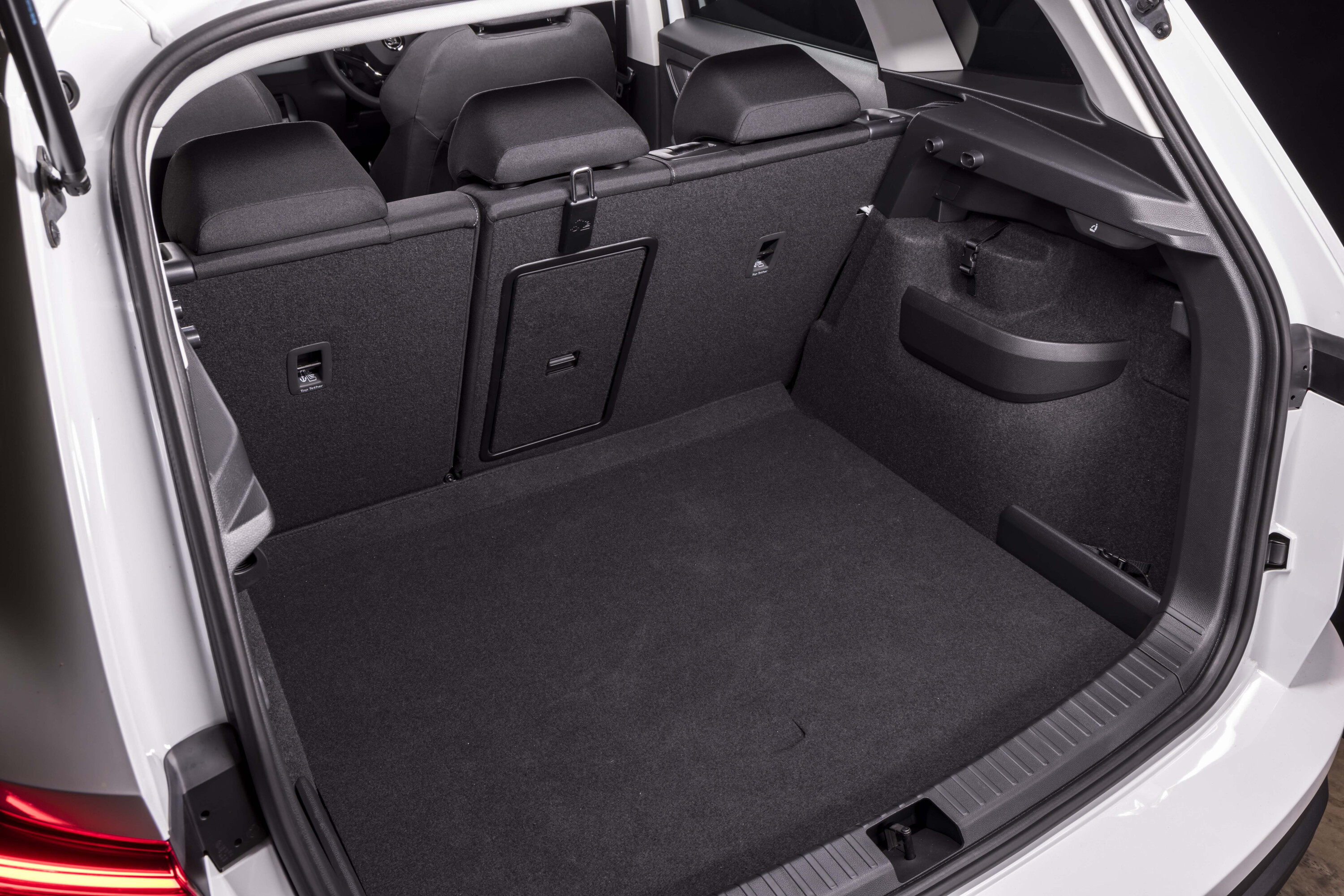
Boot space is excellent, with 521 litres of cargo capacity when the seats are up, and 1810L with the backrest folded down. Unlike some other Skodas, there’s no flippable cargo mat, and no nets either.
2
On the road
The 1.4-litre turbo-petrol engine in the Karoq is a familiar one, having been employed here and in VW products, too. It’s a good engine, with a refined character and easily enough punch for a small family SUV.
Skoda pairs it with an eight-speed auto – yes, it’s a standard torque converter transmission rather than a dual-clutch (DSG) unit – that isn’t quite as snappy as it could be. It does a decent job, and certainly removes the low-speed hesitation that blights some DSG Skodas, but it also flares a bit at times and can be busy jumping between gears in different situations, too.
I also noted a moment or two where the front tyres were somewhat overwhelmed by the torque while taking off from a standstill.
1
Whether you’re pushing through hairpins or negotiating parking spaces, it is very easy to judge what’s going to happen next
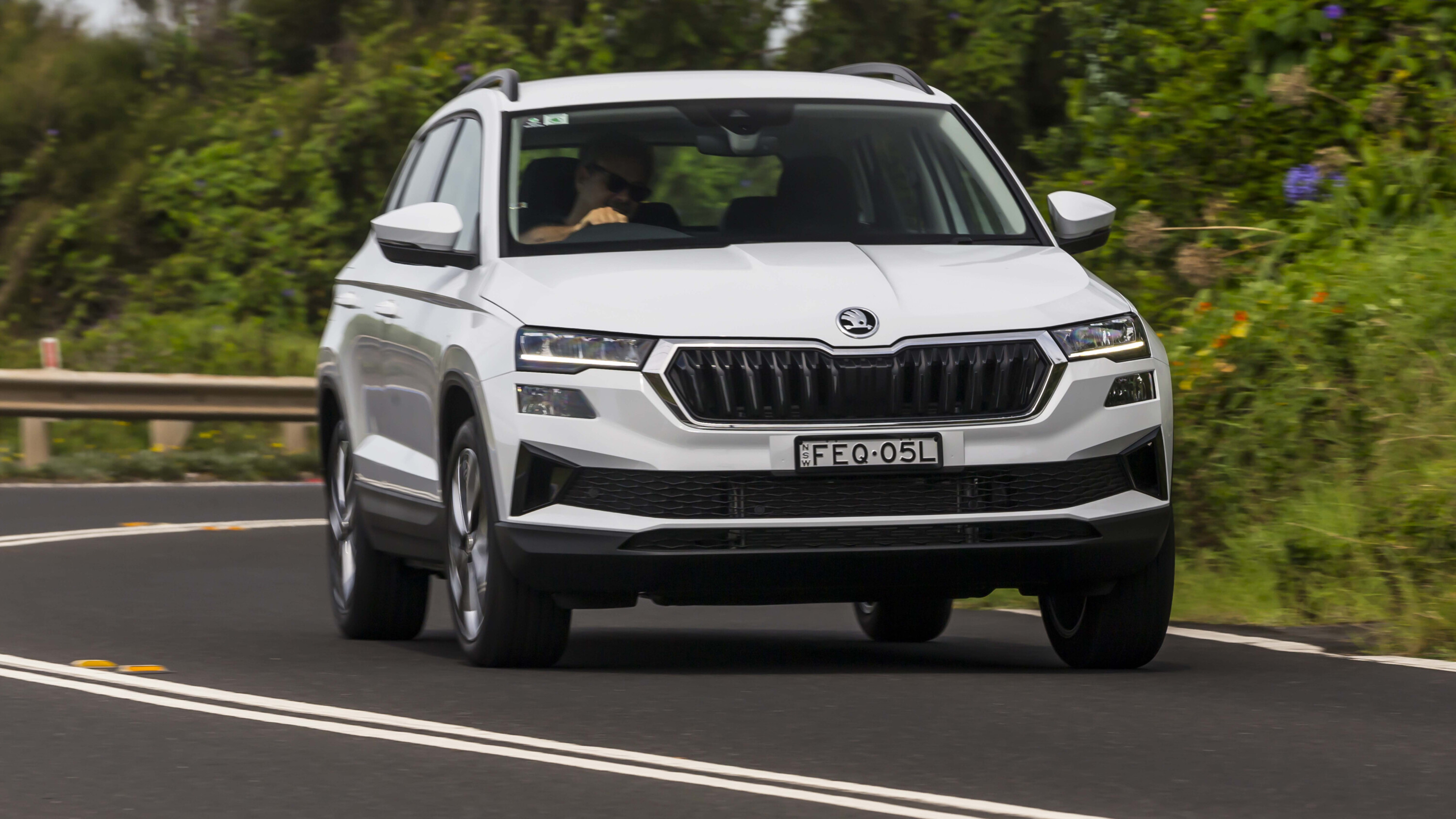
The Karoq generally drives nicely, being based on the MQB A1 platform, with a supple suspension tune that allows more comfort than some rival SUVs do, yet still with some deft handling to it in twisty situations that inspires confidence, even with the torsion-beam rear suspension of this front-wheel-drive model.
Likewise, the steering is accurate and enjoyable, and whether you’re pushing through hairpins or negotiating parking spaces, it is very easy to judge what’s going to happen next.
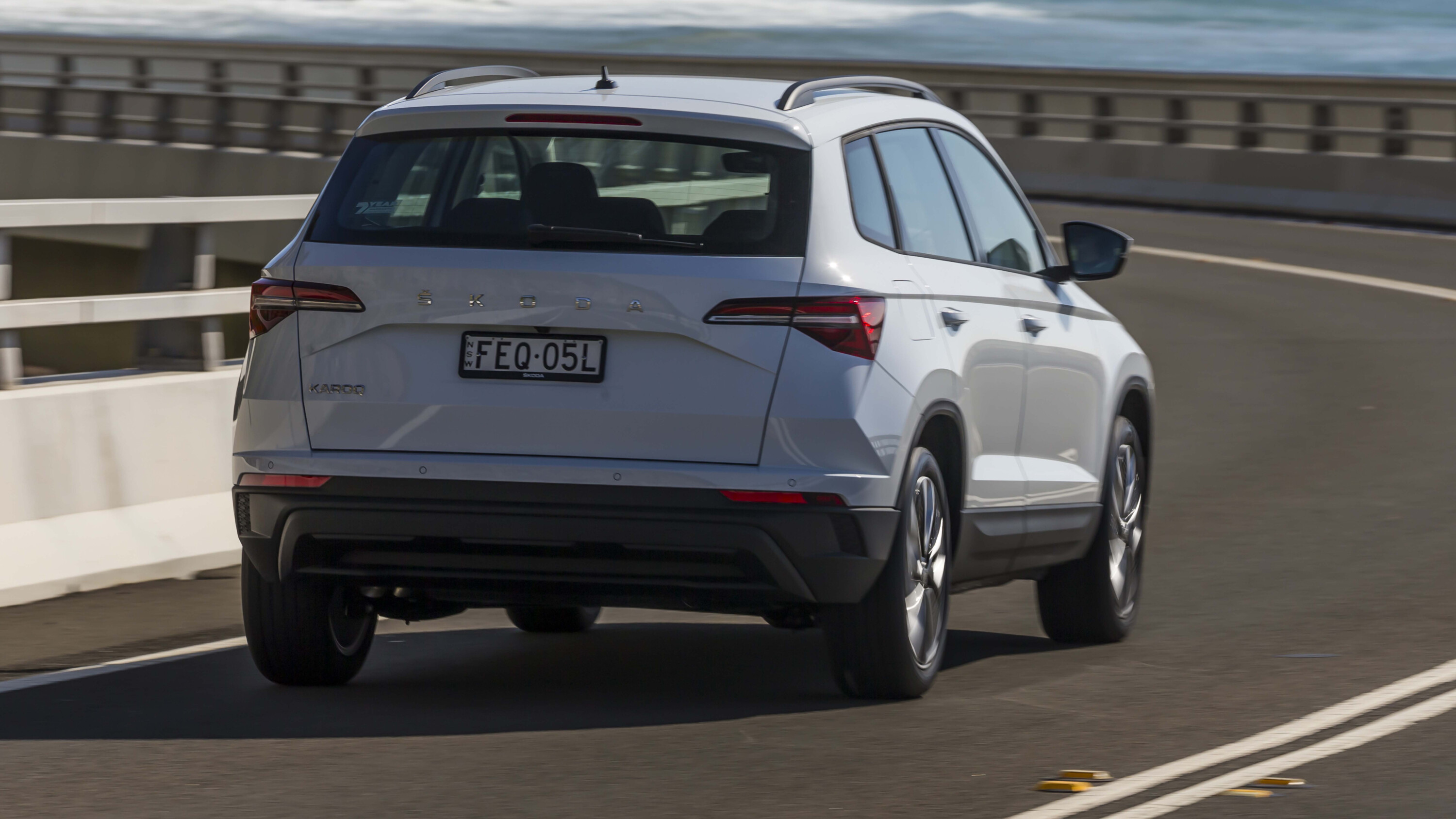
As with many products from the VW Group, there is a bit of road noise intrusion on rougher surfaces.
1
Key rivals
Spending $40K on a decent-sized SUV is more difficult than you’d think. But you should consider the Honda ZR-V (from $40,200 drive-away), because it’s a bit smaller outside, but still spacious.
Not sure if you’re sold on the whole SUV thing? Check out the Skoda Scala. It’s brilliant and starts at just $33,990 drive-away.
1
Should I put it on my shortlist?
For those prioritising practicality and a pinpoint price, the Skoda Karoq makes a very strong argument. Go drive one!
MORE
Everything Skoda
MORE
SUV Buyers Guide
| 2024 Skoda Karoq specifications | |
|---|---|
| Powertrain | 1.4L turbo-petrol 4-cyl |
| Max power | 110kW |
| Max torque | 250Nm |
| Drivetrain | Eight-speed auto, front-wheel drive |
| Fuel consumption | 6.5 litres per 100km |
| Price | from $39,990 drive-away |
March 28: K4 sedan and hatch revealed in New York
The new Cerato-replacing Kia K4 has now been unveiled to visitors at the New York motor show, in both sedan and hatch form. Which do you prefer?
Get the full details of the hatch at the linked story below, and keep reading here for more on the sedan.
STORY CONTINUES: Cerato sedan detailed
The Kia K4 will end the Cerato nameplate’s 20-year run when the fastback sedan arrives in early 2025.
Snapshot
- K4 here in Q1 2025
- Now more than 4.7 metres long – same as i30 Sedan twin – though wider again
- 30cm-wide triple digital display borrowed from EV9 large electric SUV
- GT-Line range-topper features most sophisticated suspension, includes option of turbo engine
Kia Australia confirmed the news in tandem with the K4’s full reveal at the New York motor show overnight.
The K4 name becomes the global name for the Korean brand’s small car, which has used various names including Forte, K3 and Cerato depending on country.
Kia unveiled the K4 in both sedan and hatchback forms.
1
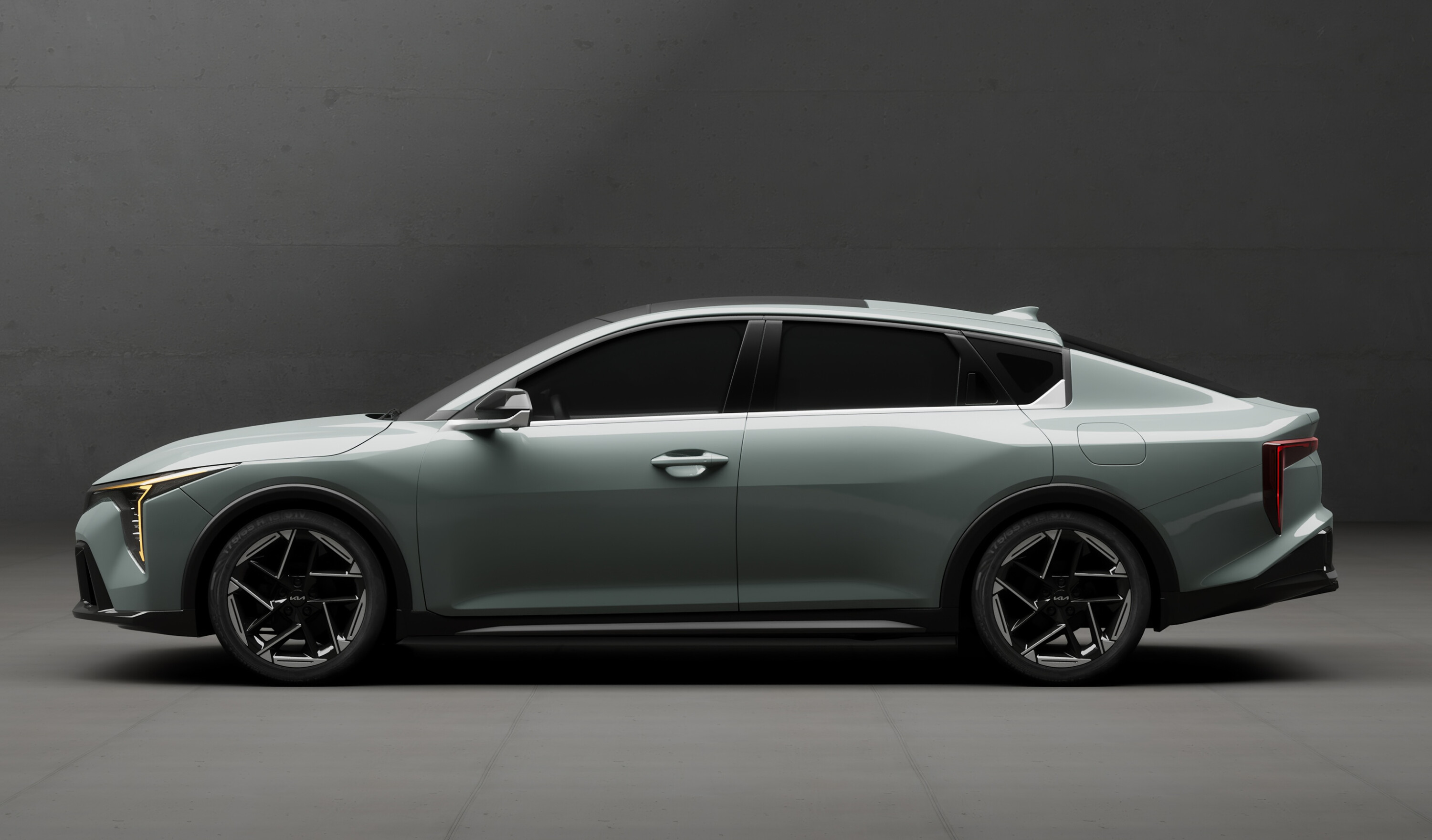
The K4 is longer and wider than the Cerato, extending by 69mm to virtually match the length of its Hyundai i30 Sedan twin (4709 v 4710mm). An extra 49mm of width makes it wider than the Hyundai (1849 v 1825mm).
Kia hasn’t released the K4’s wheelbase but it would be expected to be virtually identical to the 2720mm of the i30 Sedan.
The K4’s fastback-style design is a dramatic departure from the conventional-looking four-door Cerato.
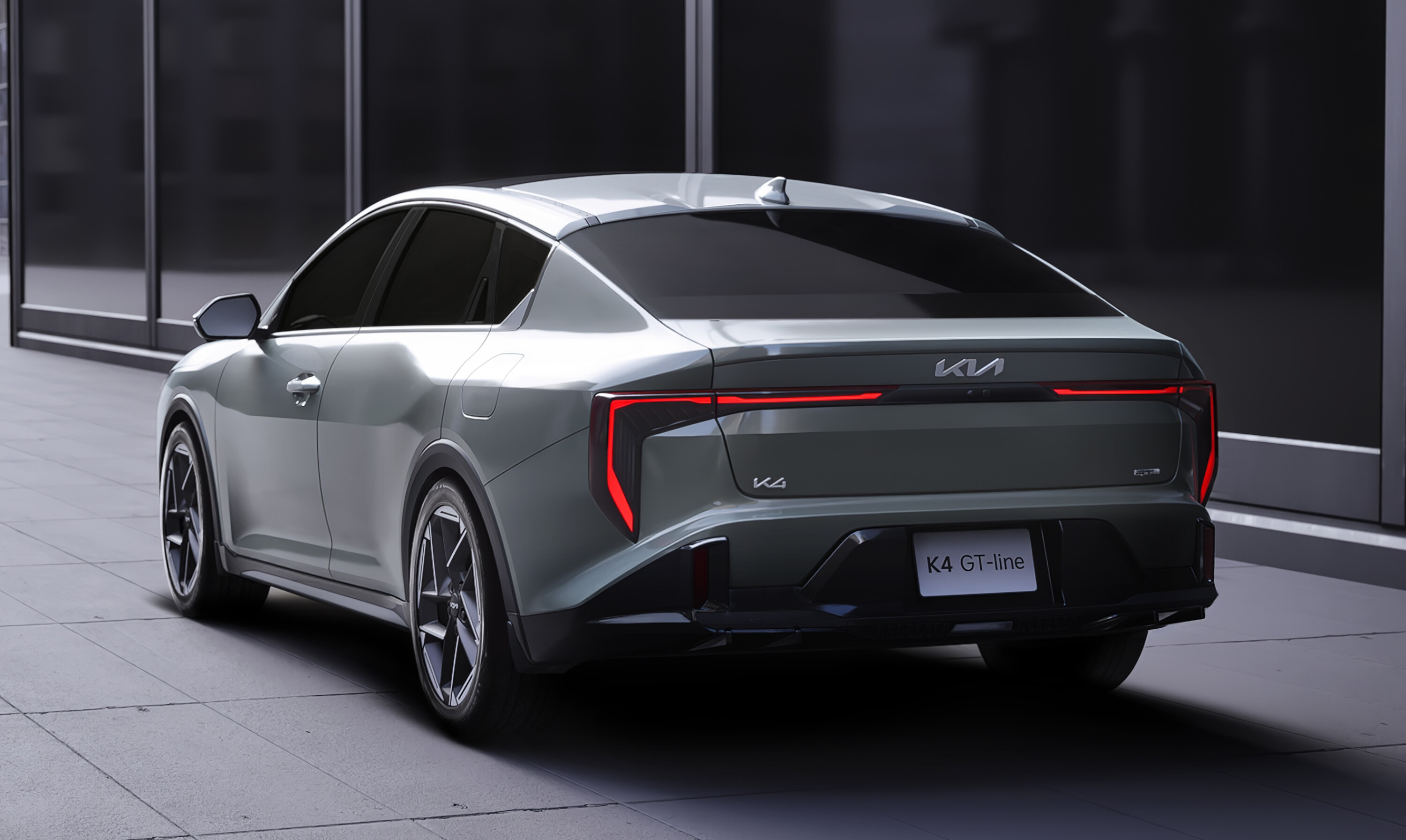
A pseudo-coupe look is created with hidden rear door handles, while the overall styling brings the midsized sedan into line with the design language successfully implemented in recent years across Kia’s range, including its electric EV models such as EV6, EV9 and upcoming EV5.
1
Kia says the K4’s vertical-style headlights and tail-lights are also inspired by those of the EV9 large electric SUV.
Inside, it borrows the EV9’s panoramic triple digital display, which spans nearly 30cm by comprising a 12.3-inch instrument panel, 5.0-inch climate control section, and 12.3-inch infotainment touchscreen.
The company is also claiming benchmark rear legroom and headroom, though this is essentially shared with the i30 Sedan – there’s just 1mm in it for the former and identical for the latter.
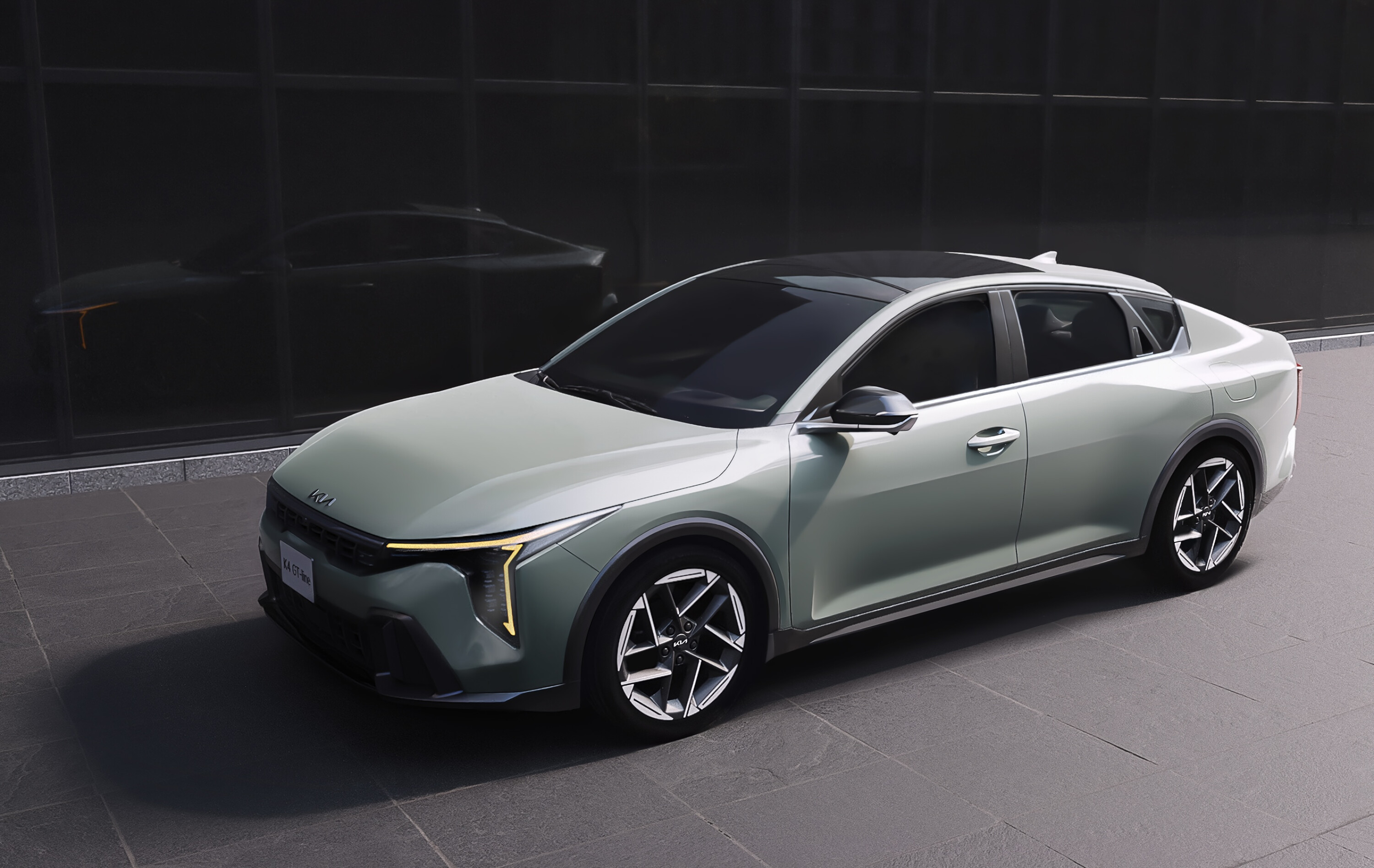
For the US, GT-Line models (featured in all images) feature gloss-black exterior elements, 18-inch alloy wheels, heated front seats and a three-spoke steering wheel design as standard, with ventilated seats an option.
1
Other interior options include a Harman Kardon audio, wide sunroof, and Digital Key 2.0 with Ultra Wideband that, as with a Tesla, allows owners to lock/unlock and drive their car using either a smartphone or NFC-enabled smart card.
Kia Connect options in the US include “Hey Kia” voice command assistance and a Digital Features and Services set-up for accessing over-the-air updates/features (for extra cost in some cases).
The US market will feature five K4 variants, with LX, LXS and EX grades utilising a more basic torsion-beam rear suspension and a simple 110kW 2.0-litre petrol engine with CVT auto as per the base i30 Sedan.
The GT-Line and GT-Line Turbo models mirror the i30 Sedan N-Line with a multi-link rear suspension, with the Turbo model swapping out the 2.0L for a 1.6-litre turbo petrol engine and eight-speed auto.
1
1
US specs quote 190hp (142kW) for the turbo engine, though it would be a surprise if the Australian K4 GT-Line Turbo didn’t match the 150kW/265Nm outputs of the i30 Sedan N-Line.
It’s unknown at this stage whether Kia Australia will get to offer the K4 with the 1.6-litre petrol-electric hybrid drivetrain that joined the i30 Sedan line-up in early 2024.
Kia could also theoretically retain the GT badge for the GT-Line Turbo that essentially uses the same drivetriain as the outgoing Cerato GT, though the company has also previously discussed reserving the sporty letters for proper high-performance models as with Hyundai’s N models.
Numerous driver aids for the K4 include adaptive cruise with stop-go functionality, haptic steering wheel alerts, intersection collision warning, blind-spot view monitor, and surround view, though not all features are standard in the US.
Kia Australia says it will reveal pricing and specification details “in due course”, sometime ahead of the K4’s local arrival in early 2025.
MORE
Everything Kia
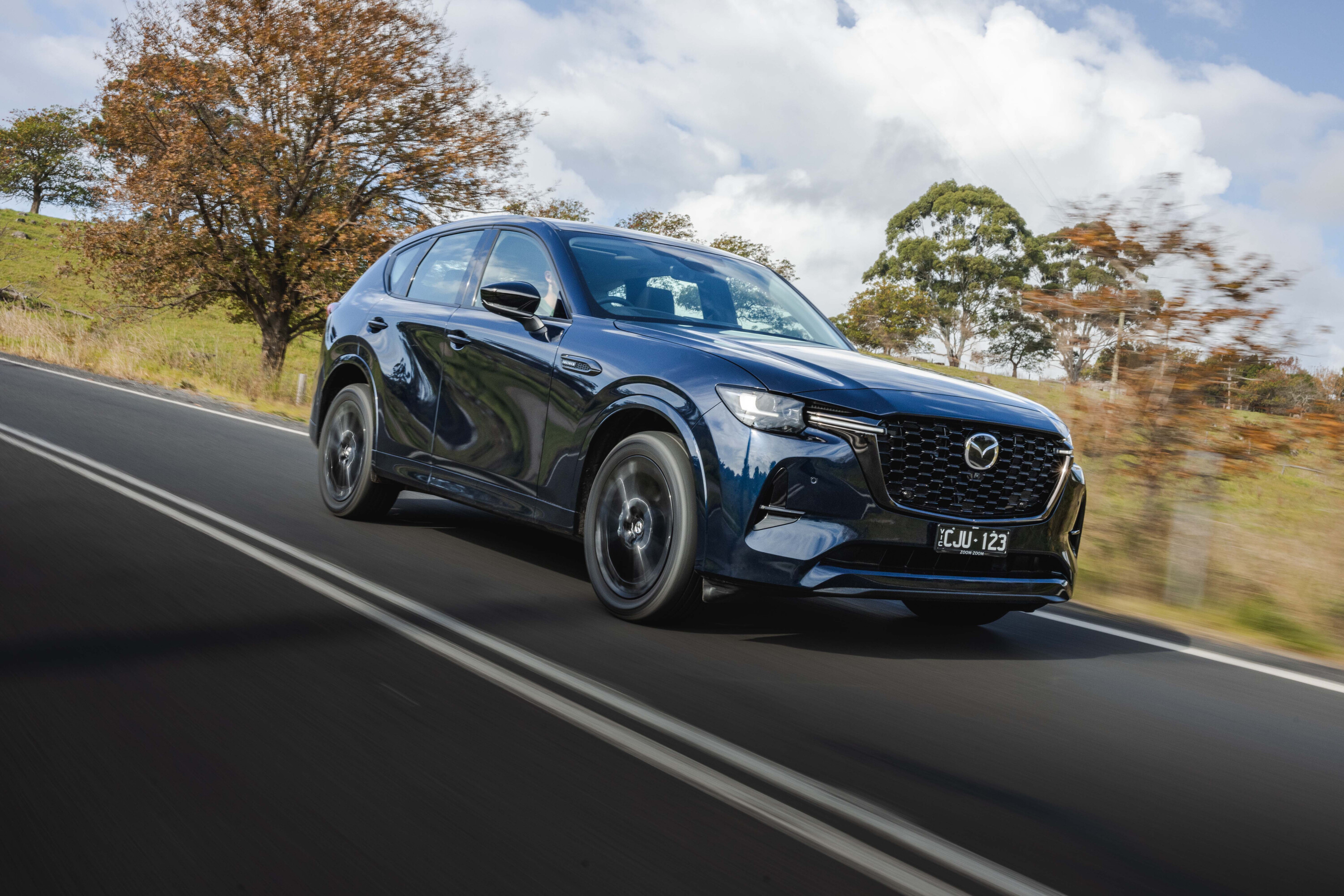
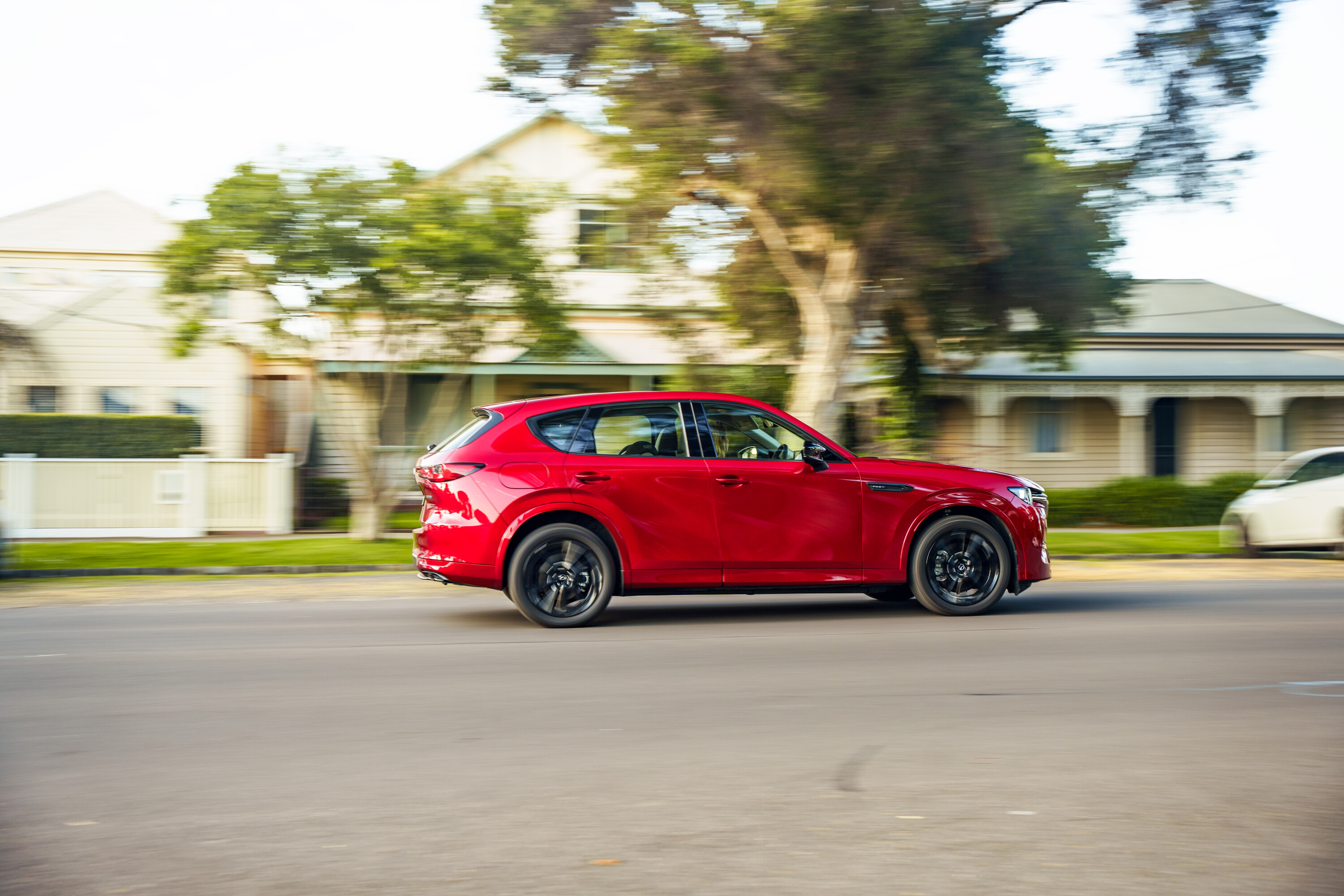
Early adopters of the Mazda CX-60 mid-size SUV will be eligible for a revised rear suspension design, the brand has confirmed.
A dealer technical service bulletin released on March 25, 2024, confirms owners of CX-60 vehicles built between March 28, 2023, and September 30, 2023, can return to their local Mazda dealership for revised rear shock absorbers and updated powertrain control module software at no cost.
It’s understood the updated rear shock absorbers have arrived in Australia, with some owners reporting their vehicles are booked in to receive the fix as soon as next week.
1
“This is a running change available to CX-60 owners allowing early customers to align their vehicle with the latest factory specification,” said a Mazda Australia spokesperson.
“This option includes a revised rear shock absorber fitted at no cost through the Mazda dealer network.
“As CX-60 makes its way into more markets, we continue to study the vehicle and review customer feedback.”
The option to install revised rear shock absorbers on select CX-60 examples follows ride quality concerns noticed by local and international media, as well as some customers.
1
It is unclear if further improvements are planned to address low-speed transmission niggles identified with the CX-60 and the related CX-90.
In Europe, Mazda has released a technical service bulletin for the CX-60’s eight-speed automatic transmission to address concerns it would “feel jerky when shifting gears and driving at low speeds”.
In January, Mazda Australia boss Vinesh Bhindi told Wheels the brand was aware of these comments about its Large Platform architecture vehicles – but no immediate product updates were planned.
“We’ve seen those comments not just from customers, but some of your [media] colleagues. And as always, we ensure every comment – plus or minus – does go back to the program team because they’re excited to hear about their product; the evaluations, especially from [the media]” he said.
“In the end, when we launched CX-60 and CX-90, we had the program manager for both of them here with us in Australia and their ambition and desire was sportiness and a firm ride, to deliver the jinba-ittai [‘horse and rider as one’] feeling, and they believe they’ve met all the targets they set for themselves.
“But like any other product, there’s a constant evolution, improvement, changes, tinkering, et cetera that goes on behind the scenes – and this will be no different. What that is and when that is, is something I really can’t comment on because I don’t have the knowledge.”
Mazda has indicated it could fit adaptive dampers – which alter the extent to which suspension resists movement – to the CX-60 and CX-90 in future to further address the firmer ride of both models.
MORE
Everything Mazda
Three stand-out electric vehicles, one simple question: which is the best under $80,000? An outright comparison this is not – we’ve judged this trio as we would Car Of The Year entrants.
Performance of intended function and innovation are the two crucial criteria for these three after proving their mettle in value, comfort, and driving excellence against direct rivals.
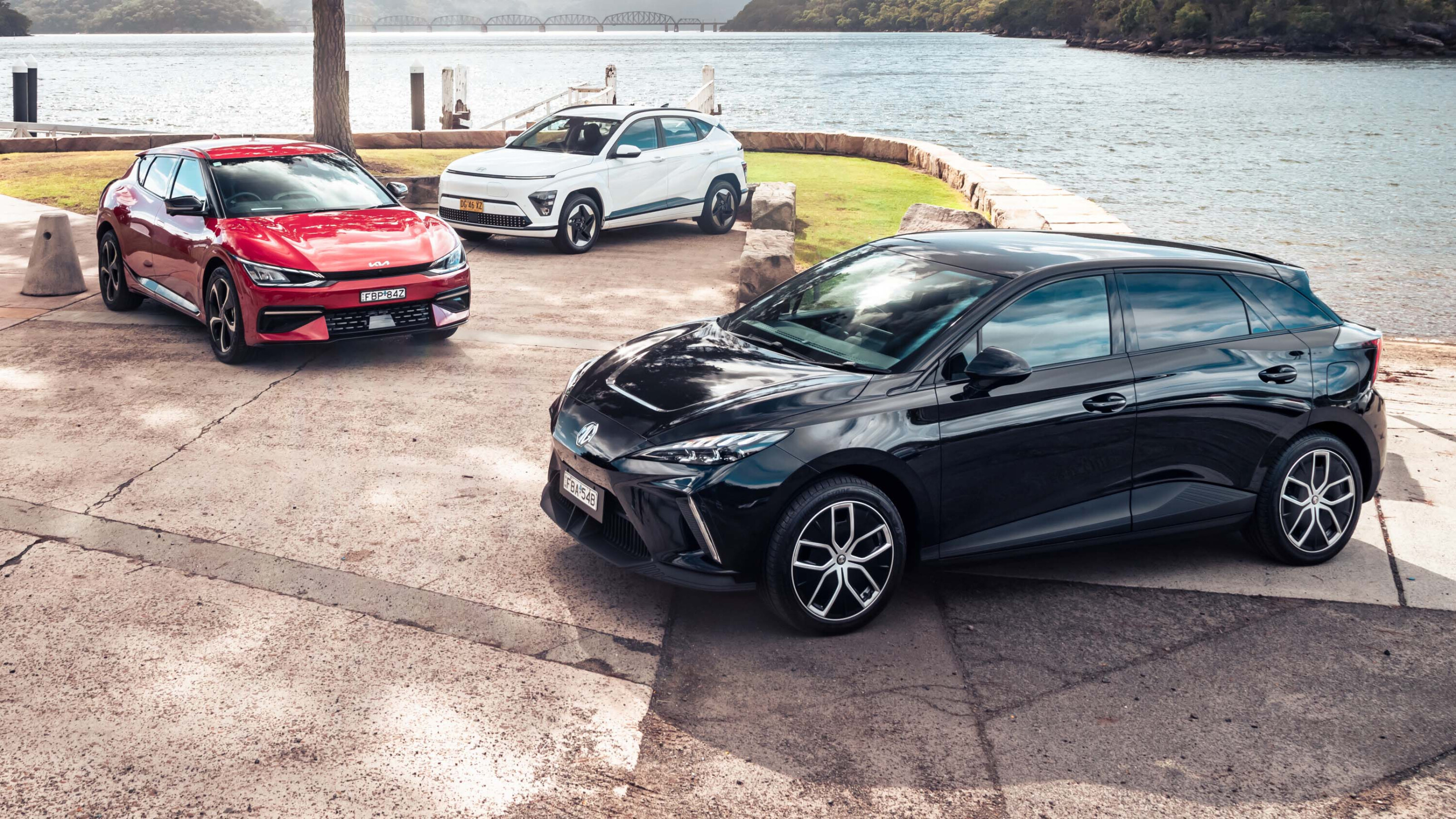
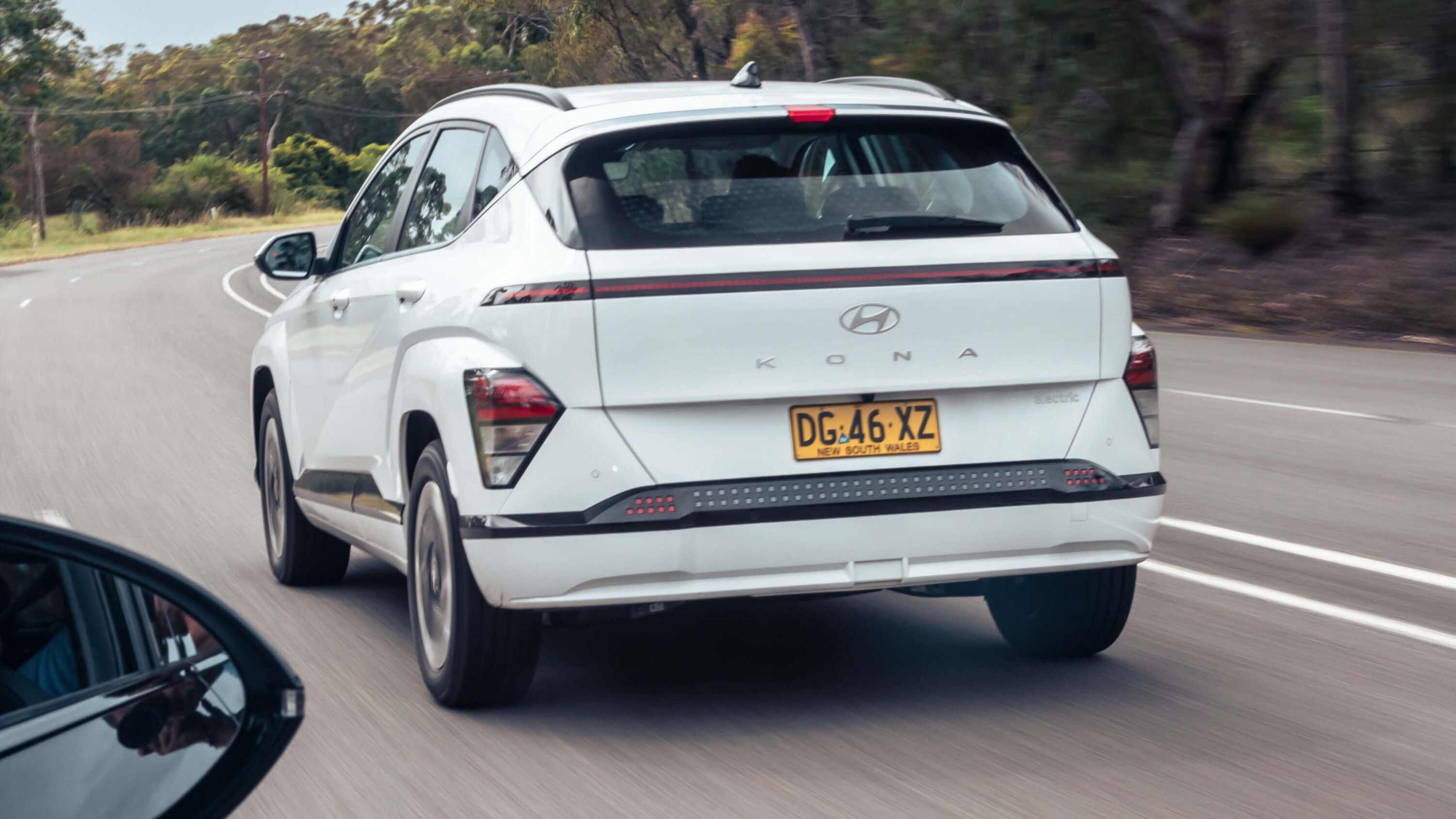
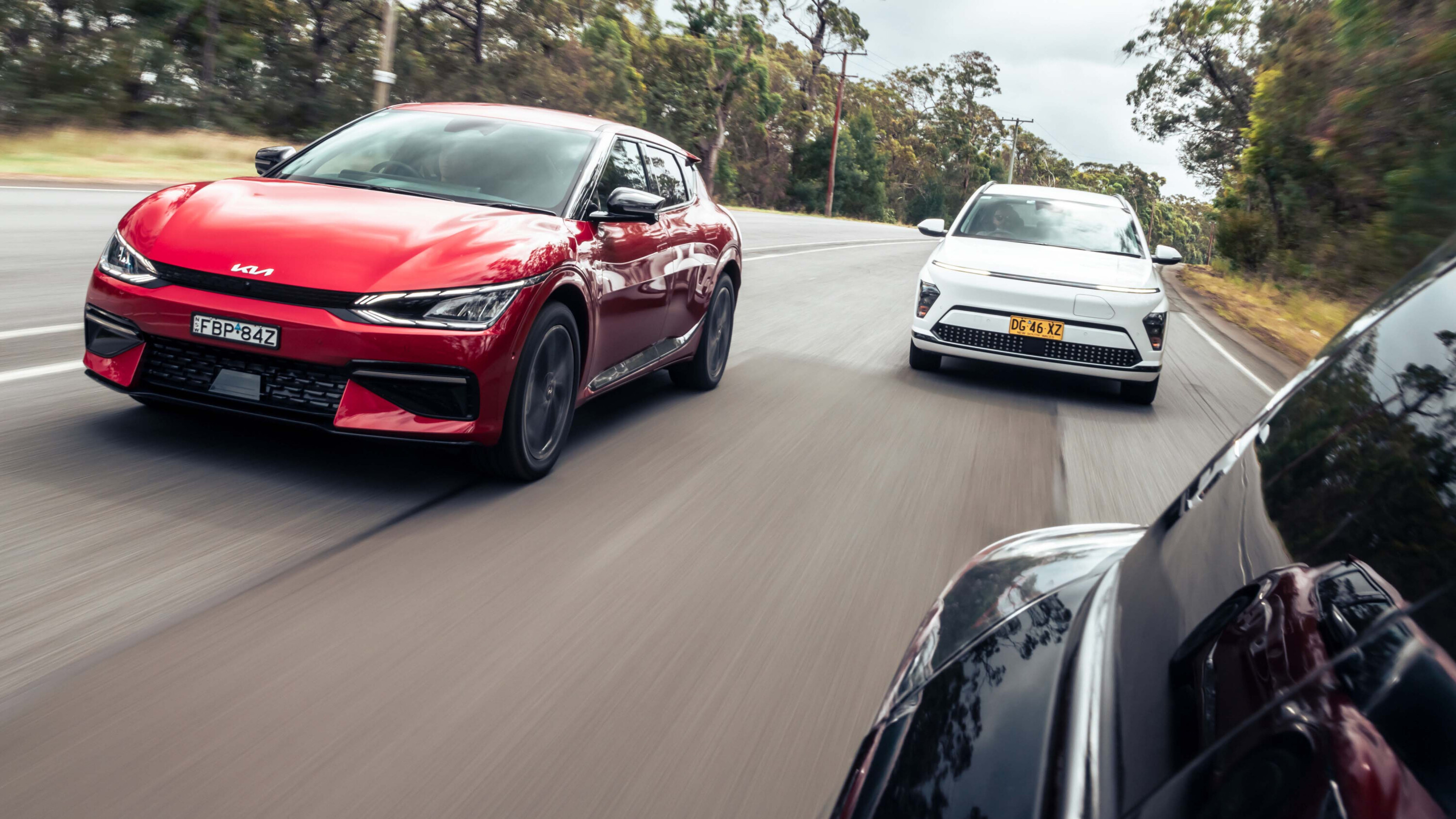
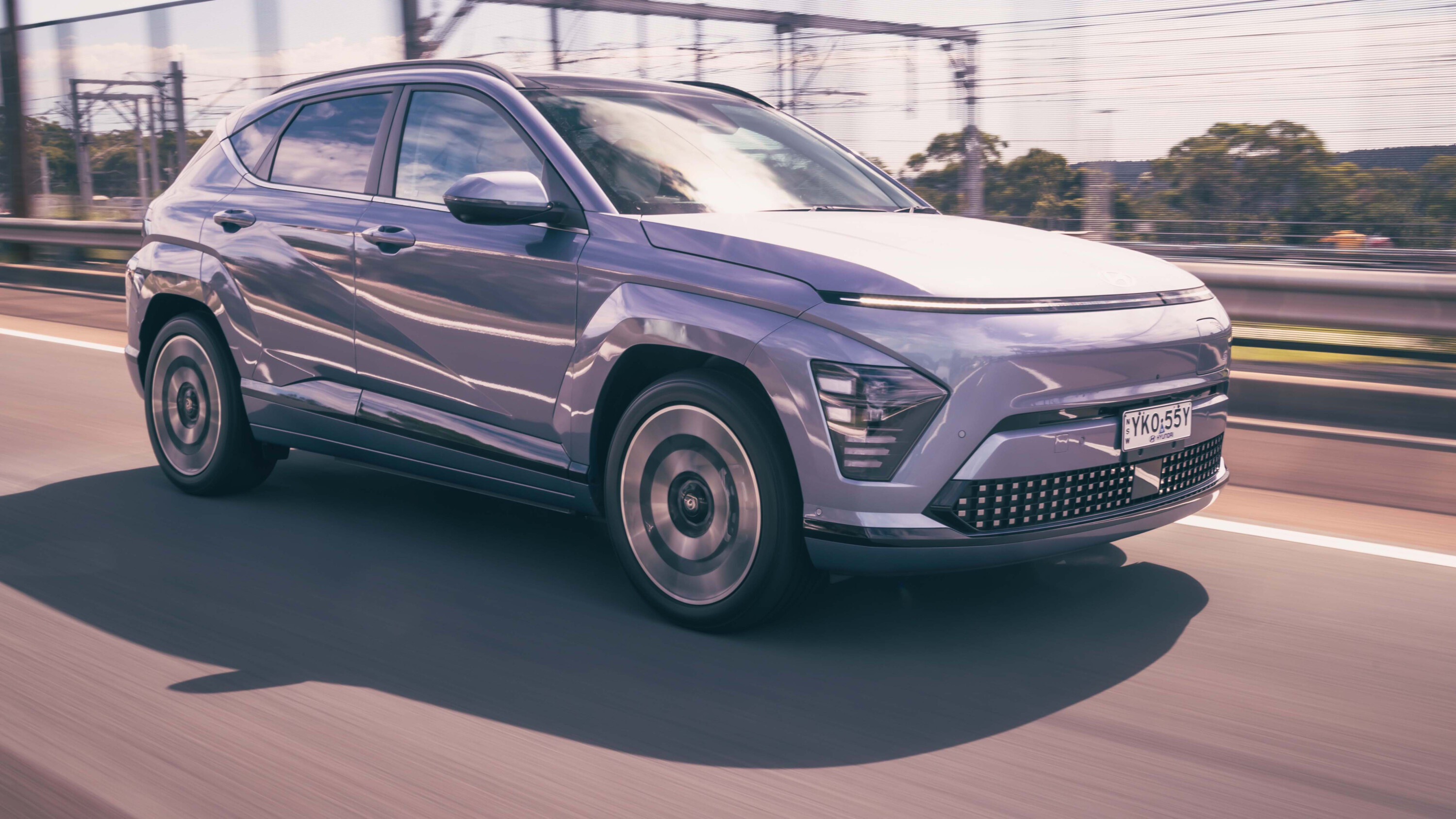
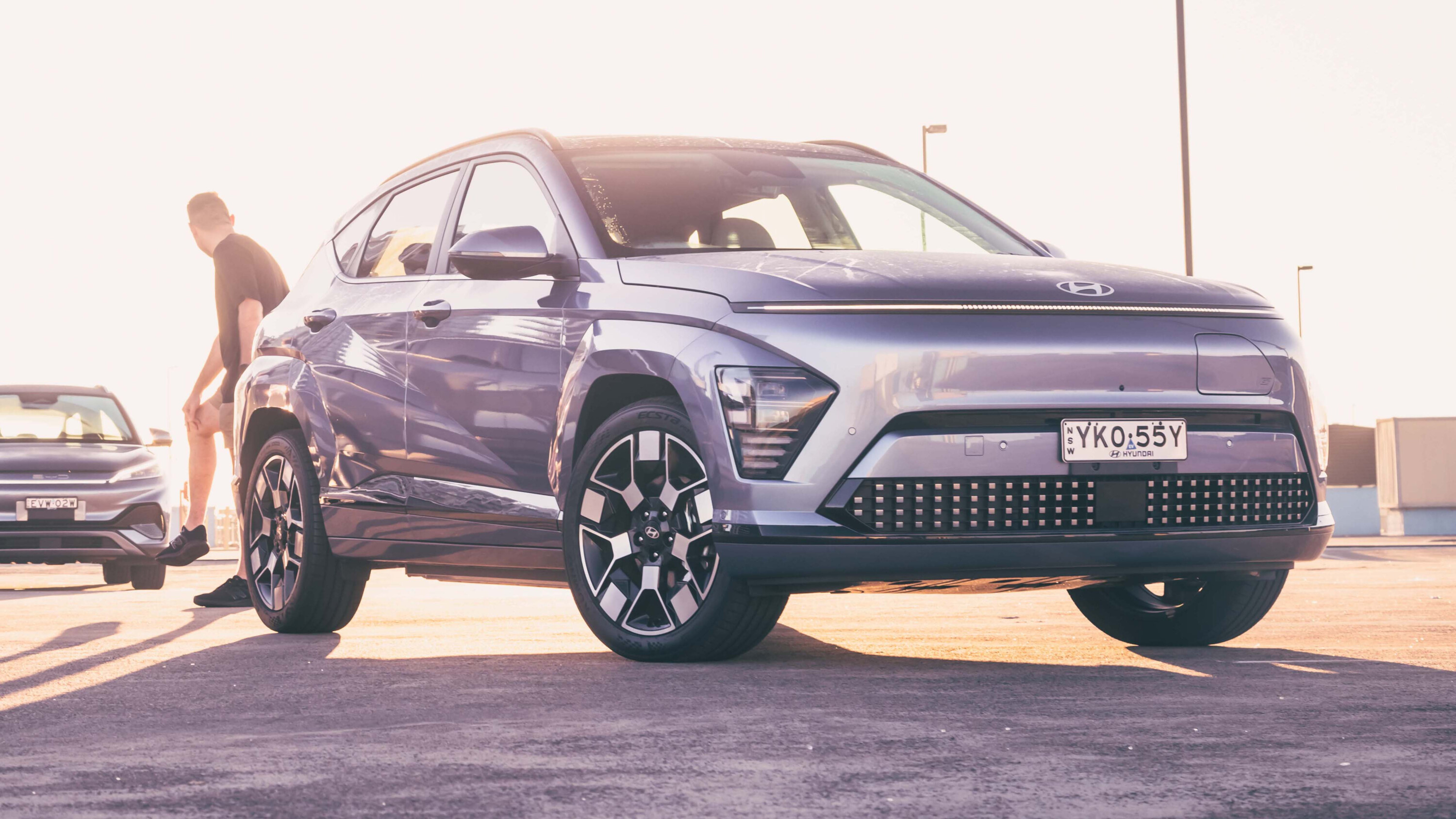
The second-gen Hyundai Kona has matured significantly and is now a family-sized vehicle that puts its EV foot first. The Kona earned its place here in top-spec Premium guise, but we chose the $10K cheaper Extended Range variant to sample a greater slice of the range.
1
Like the Kona Premium, the Kona Extended Range is well screwed together and boasts connected services, along with wireless Apple CarPlay and Android Auto.
Unlike the Premium, it has small 17-inch alloys that only aid how well the electric Kona steers; it’s engaging yet comfortable. The Kona is very much fit for purpose as a family SUV, legitimately big enough to compete with a Mazda CX-5 thanks to clever packaging, a big boot, and no transmission tunnel.
Inside, there are a few conspicuous missing features: heated seats and power adjust would’ve been nice, however, it’s the cheap scratchy upholstery and lack of padding on the armrest that confirm this Kona’s fleet intentions. You’d put up with these shortcomings in a base small SUV but a $58,000 pill is tougher to swallow.
1
It probably doesn’t help the car was supplied in parking inspector white with standard-issue NSW yellow plates. (Is there a less tasteful number plate hue in existence?)
If you bought an Extended range you’d covet thy neighbour’s Premium. Its charging capabilities aren’t particularly spectacular, and although it’s an easily-recommendable vehicle the Kona doesn’t push the genre of electric cars quite as much as the other two vehicles.
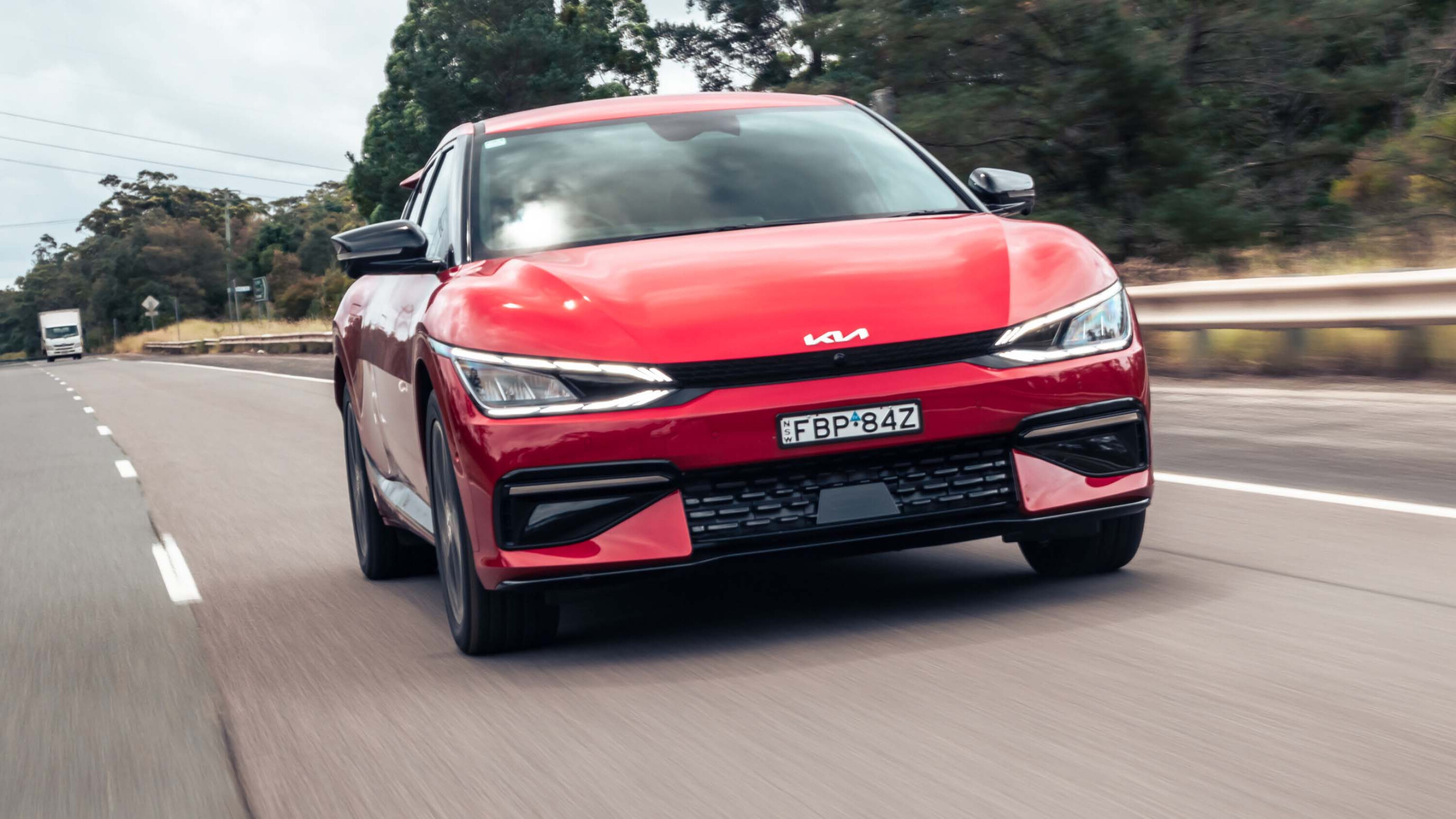
Things get trickier with the Kia EV6 and MG4, not least because they exist at disparate ends of the price spectrum. The MG4 is one of only three BEVs with an RRP below $40K, while Kia’s rear-wheel drive EV6 GT-Line just barely scrapes into our $80K ceiling with two variants above it. Yet if the Kia justifies its price here (as it did winning COTY 2022) then overall honours are on the table.
1
Initially, it looks like Kia’s excellent SUV might romp away from the MG with victory.
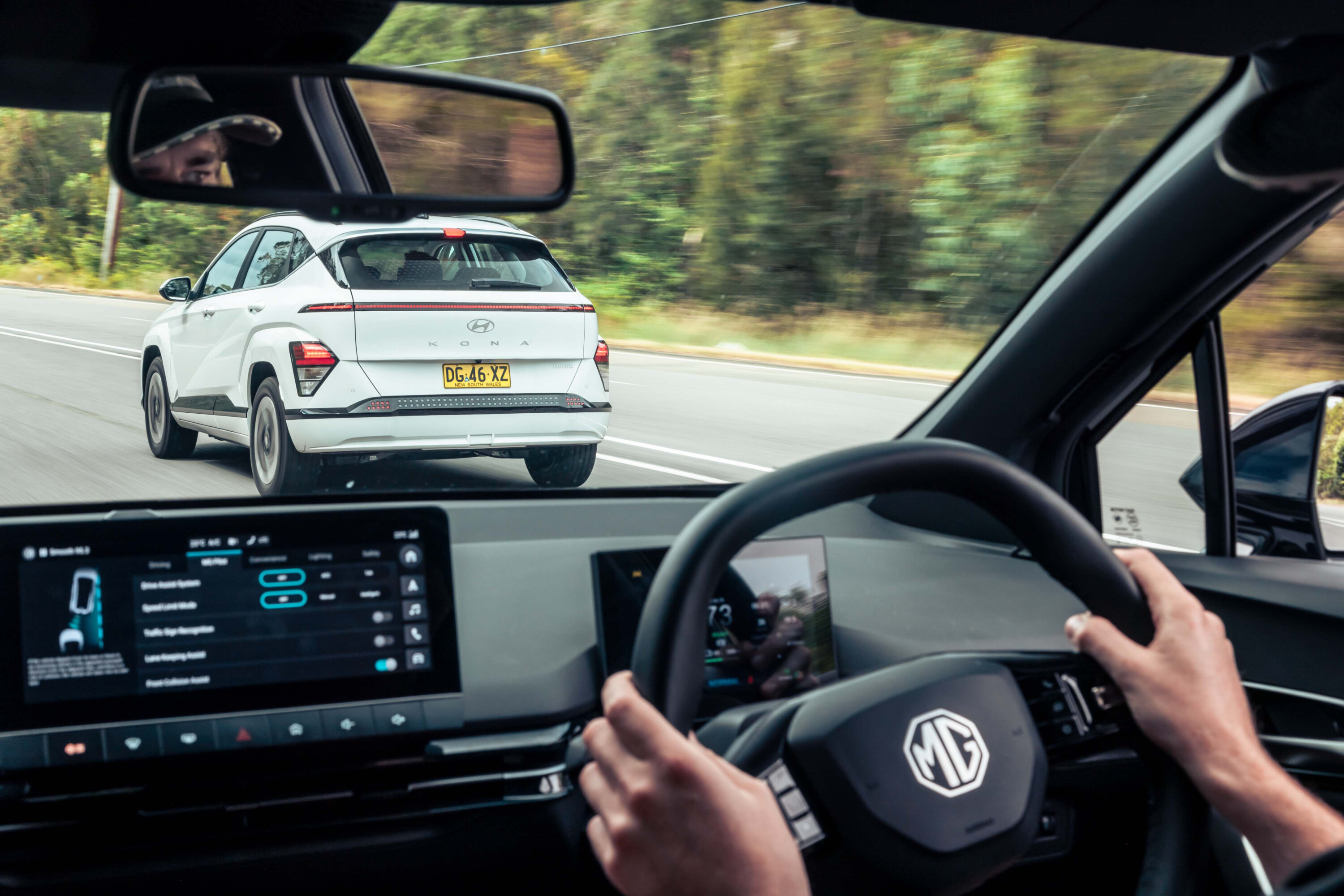
The MG4’s media system can be clunky, the cabin controls are unlabelled, and starting/stopping can be an awkward process. Although the turning circle is excellent and the finger-light steering is nice around town, it doesn’t faithfully load up to communicate grip as well as we’d like.
Then there’s the efficiency, which has been one of the MG4’s repeated shortcomings. It reported 17.7kWh/100km over our 300km test to the front-drive Kona’s more reasonable 15.2kWh/100km figure.
1
Returns diminish exponentially as you spend more on the MG4, too.
With its 77kWh battery pack on board, for example, the small car is heavier on the road and not priced so competitively. The contrived XPower isn’t worth consideration – even by driving enthusiasts.
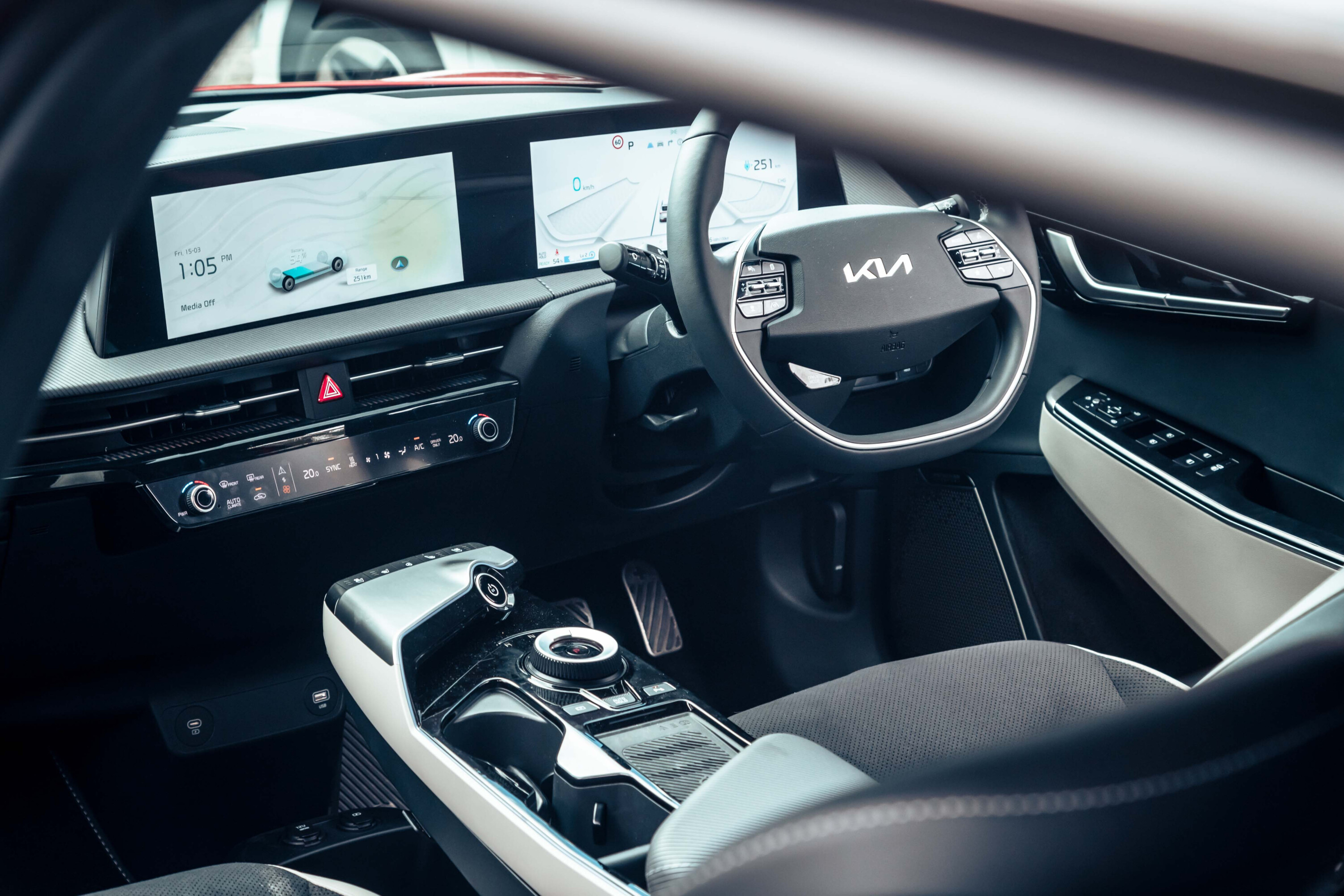
The EV6 doesn’t suffer from any of these issues. It’s as efficient as its rivals while charging incredibly rapidly and has a logical cabin layout with a traditional start procedure.
The EV6’s cabin is a little dark thanks to its coupe-inspired lines yet it never feels claustrophobic. Ponch described the trims as ‘gorgeous’ and there’s no doubting its heated and ventilated seats are brilliant.
1
The exterior no longer fits Kia’s EV design language and is due for a facelift next year. If it scores some of the EV9’s cabin detailing and attractive front mask, it’ll only get better.
While the GT-Line RWD we included in testing is somewhat of a sweet spot – and very much worth the $7K premium over the Air – every grade in Kia’s line-up feels justified in existing and the more you spend the more you get. It’s a classically complete range.
Did we mention how good the EV6 is to drive? A stiff EV-only E-GMP platform with 800-volt electrical gubbins, rear-wheel drive, trick frequency-selective dampers, and a little bit of Australian know-how in the final chassis and steering tuning delivers a car that’s at once engaging for keen drivers, comfortable in town, and secure on the road.
1
More than just being the best electric SUV to drive, the EV6 is better than any other mainstream medium SUV.
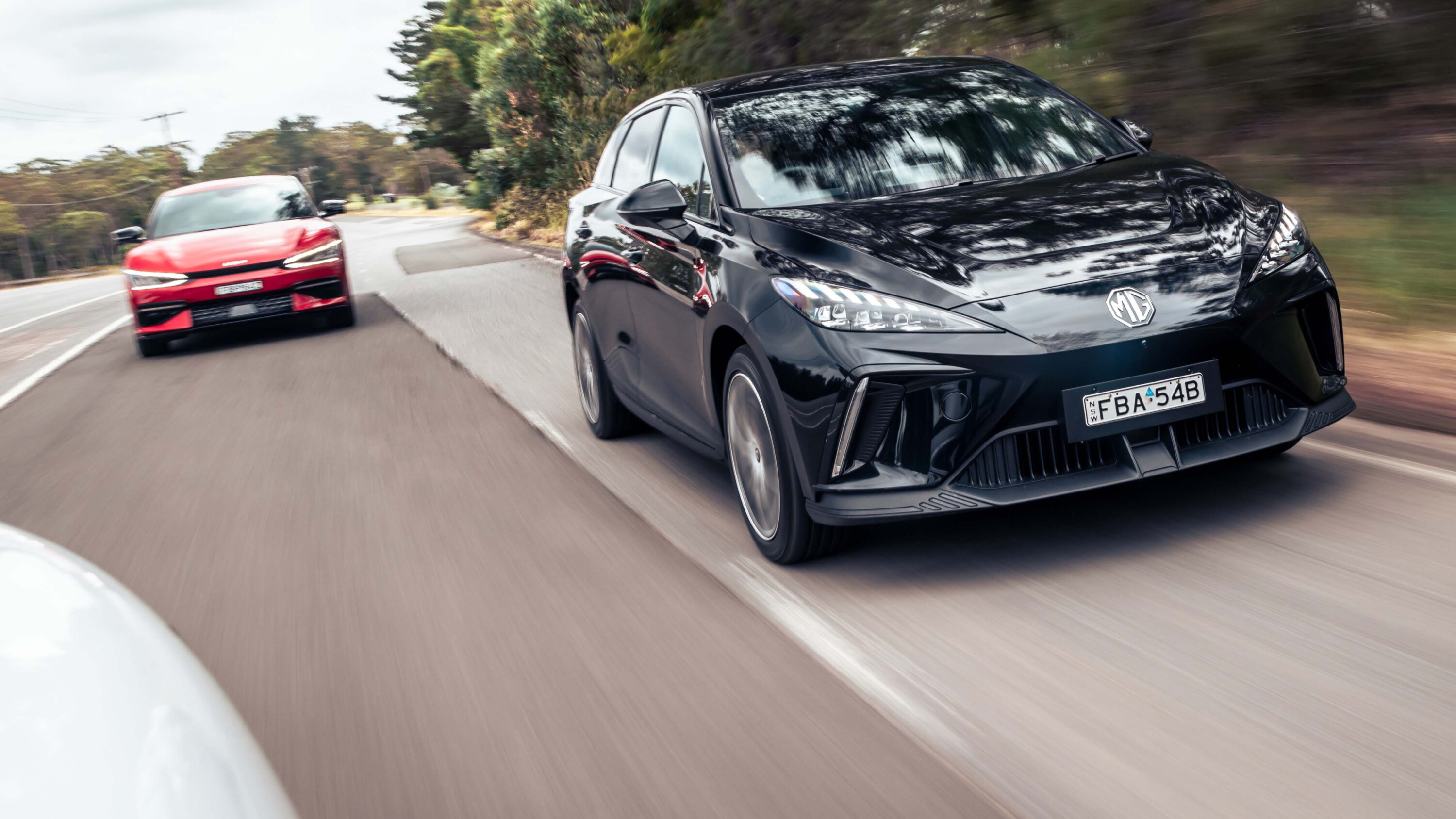
The MG4 is an excellent steer, too. Not quite as slick and consistent as a VW Golf or Cupra Born, MG’s rear-drive hatch is unique with a character all to its own.
You can feel the work of deeply talented engineers in the MG4’s chassis balance. It’s fun to punt, especially with the Excite’s 17-inch alloys and low-grip rubber. The natural throttle calibration, brake feel, and ability to adjust regeneration efficacy – including a one-pedal driving option – aren’t taken for granted.
1
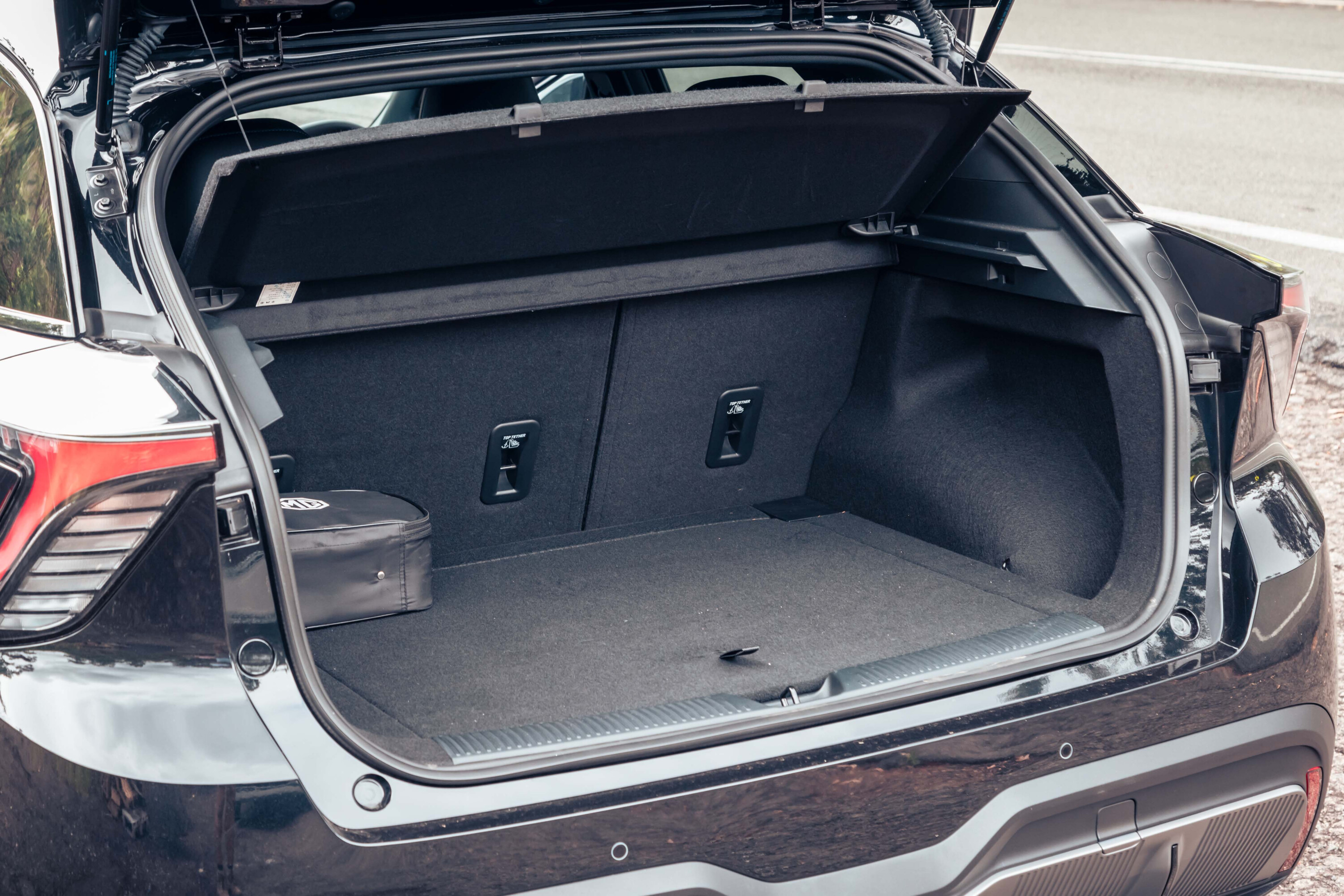
Inside, the MG4 is a genuinely spacious hatchback that could be used as family transport.
There may not be the whizz-bang electronics of BYD but it is comparable with a Golf and beyond the Mazda 3 or Toyota Corolla. Material quality is a shade below Mark 8 Golf standards, too.
Importantly, the MG4 annihilates its price-point rivals. The BYD Dolphin and GWM Ora don’t come close to the completeness of MG’s little hatch and we reckon it’ll be quite some time before European, Korean, or Japanese manufacturers even think about playing in the sub-$50K realm.
3
The Wheels team of testers has worked tirelessly to get to this point and preconceptions have been challenged.
It’s perhaps not a huge surprise the Kia EV6 made it to the top three, but with the raft of medium SUV launches, it could be taken as an upset. As for the MG4, its inclusion might come as a shock to someone who hadn’t spent time behind the wheel.
Both would make worthy winners, but there’s one key criterion that separates the top pair: which moves the game on? The EV6 already shifted EV expectations and rivals continue to fall short of its excellence. But the Kia doesn’t make electrification any more attainable. It’s not putting bums on seats in significantly greater numbers.
1
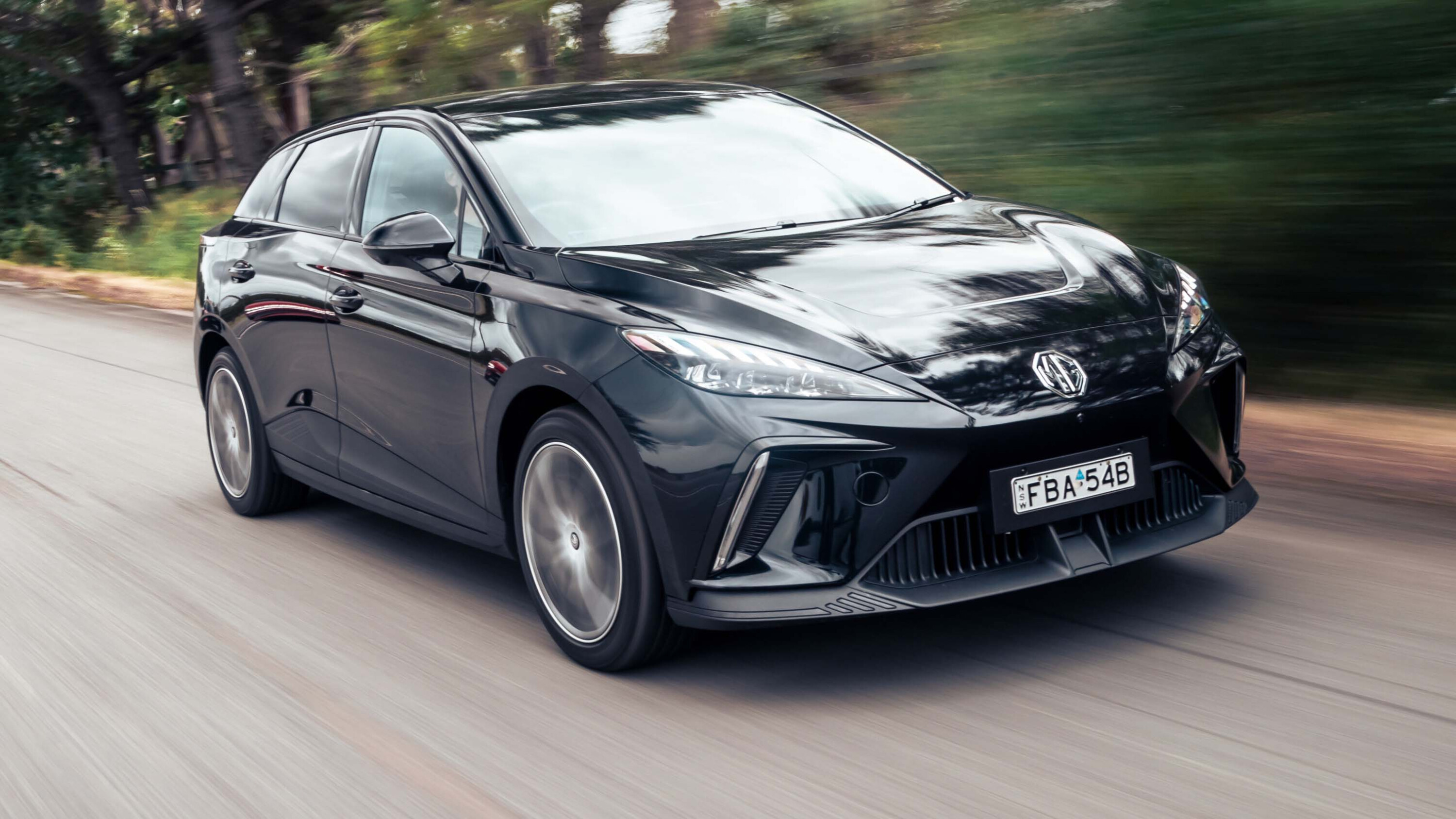
WINNER: MG4
Not only has MG constructed an engaging and rewarding hatchback that drives with the maturity of long-standing European nameplates, but also one that’s affordable to the masses.
It proves price parity with combustion cars is coming, and that’s enough to cement the MG4’s status as our best electric vehicle under $80,000.
⚡ 2024 Wheels Best EVs
Looking for an EV in a different size or price category? Visit our full Wheels Best EVs series at the links below.
? Wheels Best EVs
- Best Small Electric Car Under $40K
- Best Small Electric Car $40-50K
- Best Small Electric Car $50-60K
- Best Electric Small SUV
- Best Electric Midsize SUV
- Best Electric Midsize Sedan
? OVERALL WINNER: Best Electric Car Under $80K
COMING SOON
- Best Electric Large SUV
- Best Electric Small Luxury SUV
- Best Electric Midsize Luxury SUV
- Best Electric Luxury Sedan Under $100K
- Best Electric Luxury Sedan Over $100K
- Best Electric Performance Car
? OVERALL WINNER: Best Electric Car Over $80K
One of the persistent questions around electric cars – and fairly so – has asked when they might be properly affordable.
MG is one of only a few brands to answer the call, with its new MG4 hatchback that’s priced from $39,990 drive-away (after a recent move to national pricing). It’s among a trio of bargain-hunter battery vehicles from China priced below the $40,000 threshold, mixing it with the BYD Dolphin (from $38,890 before on-roads) and GWM Ora (from $39,990 RRP).
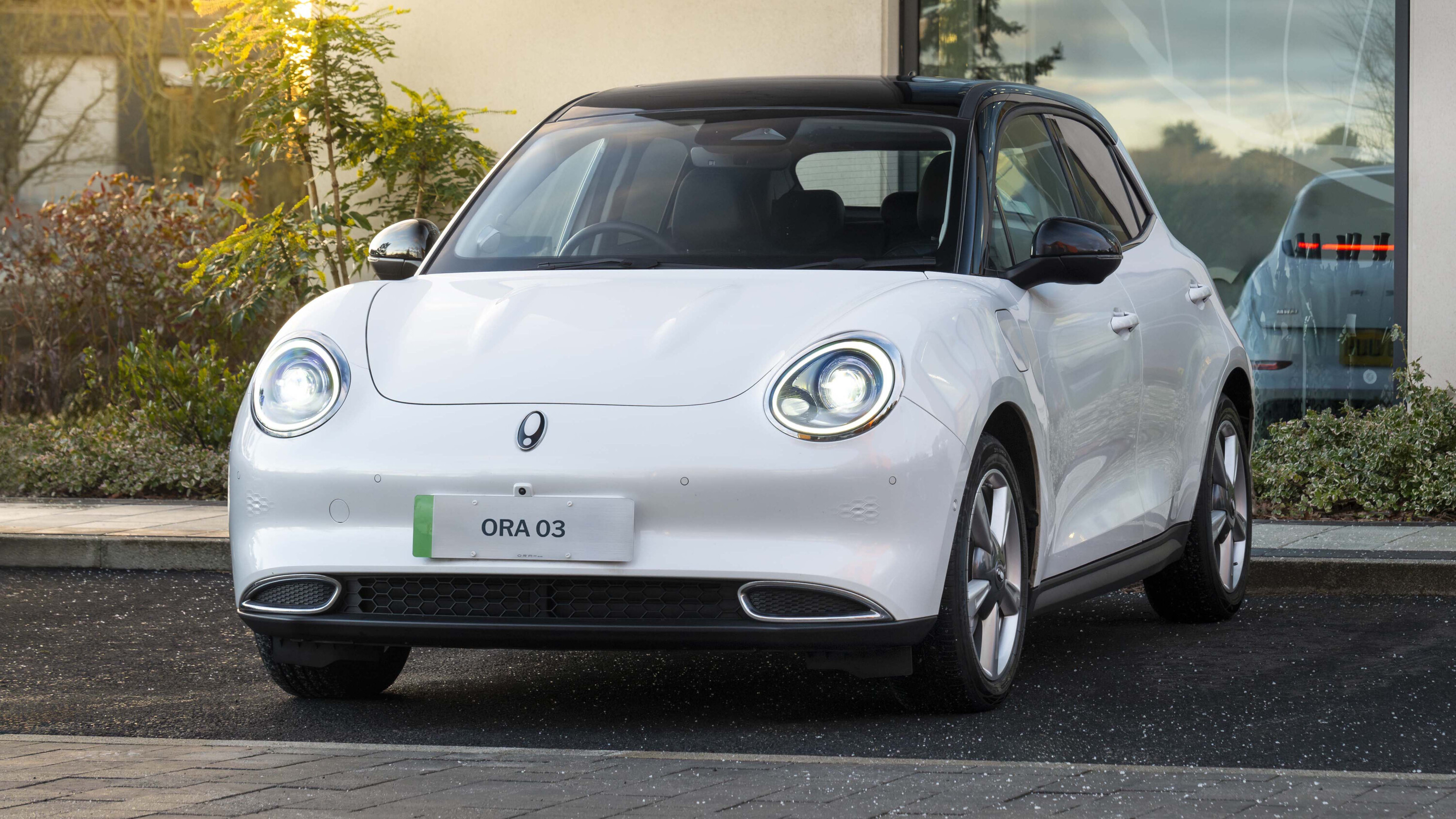
All are five-door hatchbacks, though only the MG4 looks as though it may have been imported from Europe. The cheekily styled Ora, complete with Mini-style round headlights, brings the most left-field exterior design.
Great Wall Motors’ EV in its most affordable Standard Range guise also comes with the shortest WLTP-rated maximum driving range of the group, with 310km compared with 340km for the Dolphin Dynamic and 350km for the base MG4 Excite 51. Each is a single-motor EV, with the MG 4 powering its rear wheels where the Dolphin and Ora are front-drivers.
1
There’s similar power and torque for the MG and GWM, which share 250Nm and have just one kilowatt separating them (MG4’s 125kW versus the Ora’s 126kW).
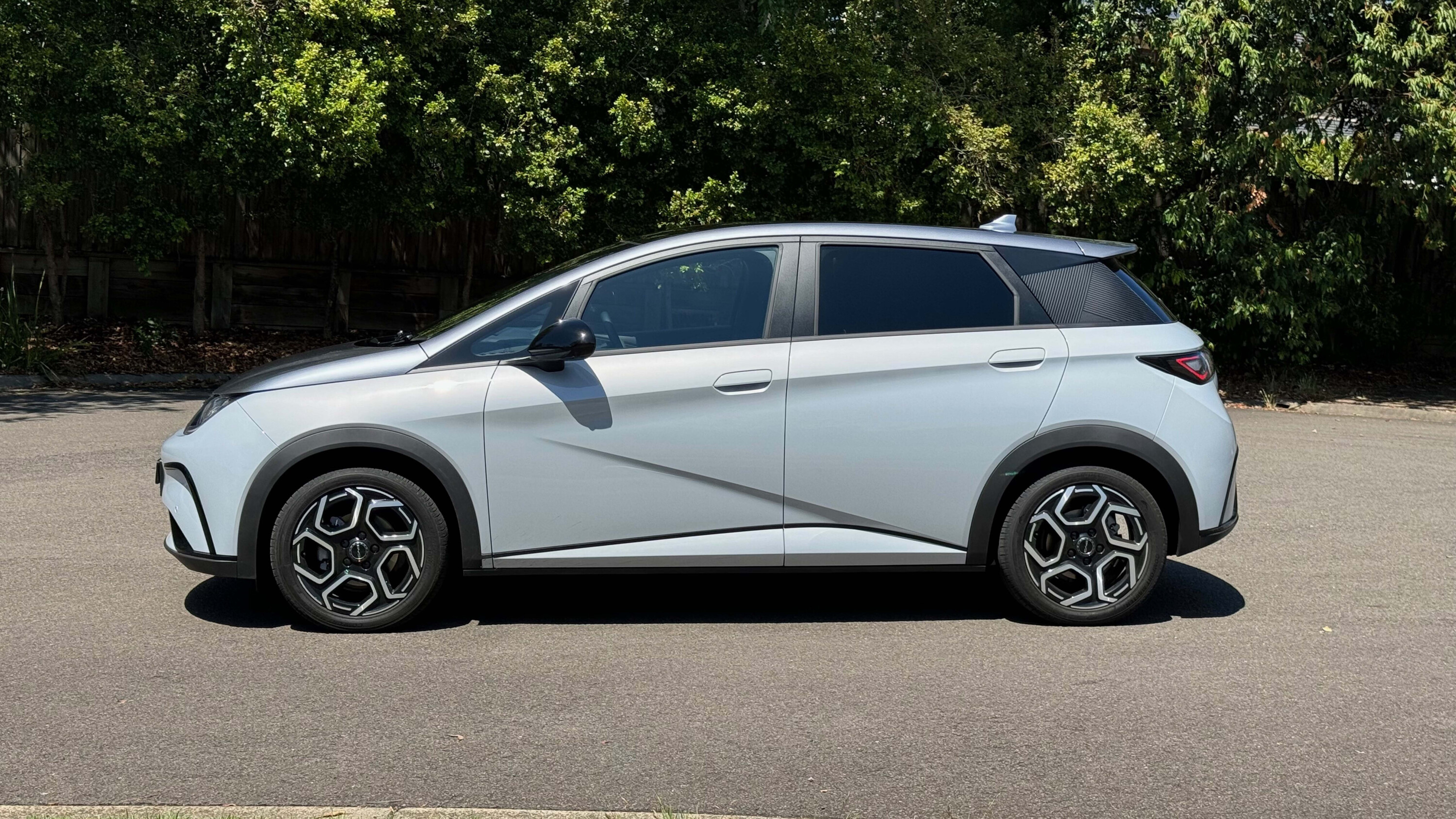
The Dolphin not only features the smallest battery, at 45kWh, but also trails in electric-motor outputs at just 70kW and 180Nm. Value is evident elsewhere, though, as the BYD is impressively equipped for its price.
Heated front seats with electric adjustment, a 360-degree camera, wireless charging, heat pump (for improved driving range when cold), panoramic glass roof, and the largest infotainment display here (12.8 inches) are all standard.
GWM’s base Ora can’t match the front radar or pano-roof but otherwise is very similar for equipment, and even throws in bigger wheels (18-inches versus the Dolphin’s 16s).
1
The MG4 promises the quickest performance, fastest charging, the longest range, and the biggest boot
The MG4 Excite 51 features cupboard looks a little barer in comparison. Although it sits on inbetweener 17-inch alloys, it’s missing the likes of wireless phone charging, surround-view camera, blind-spot monitoring and the related rear cross-traffic alert which are only available by upgrading to the $44,990 drive-away Essence 64. The seats also adjust manually and only the driver’s window has one-touch control.
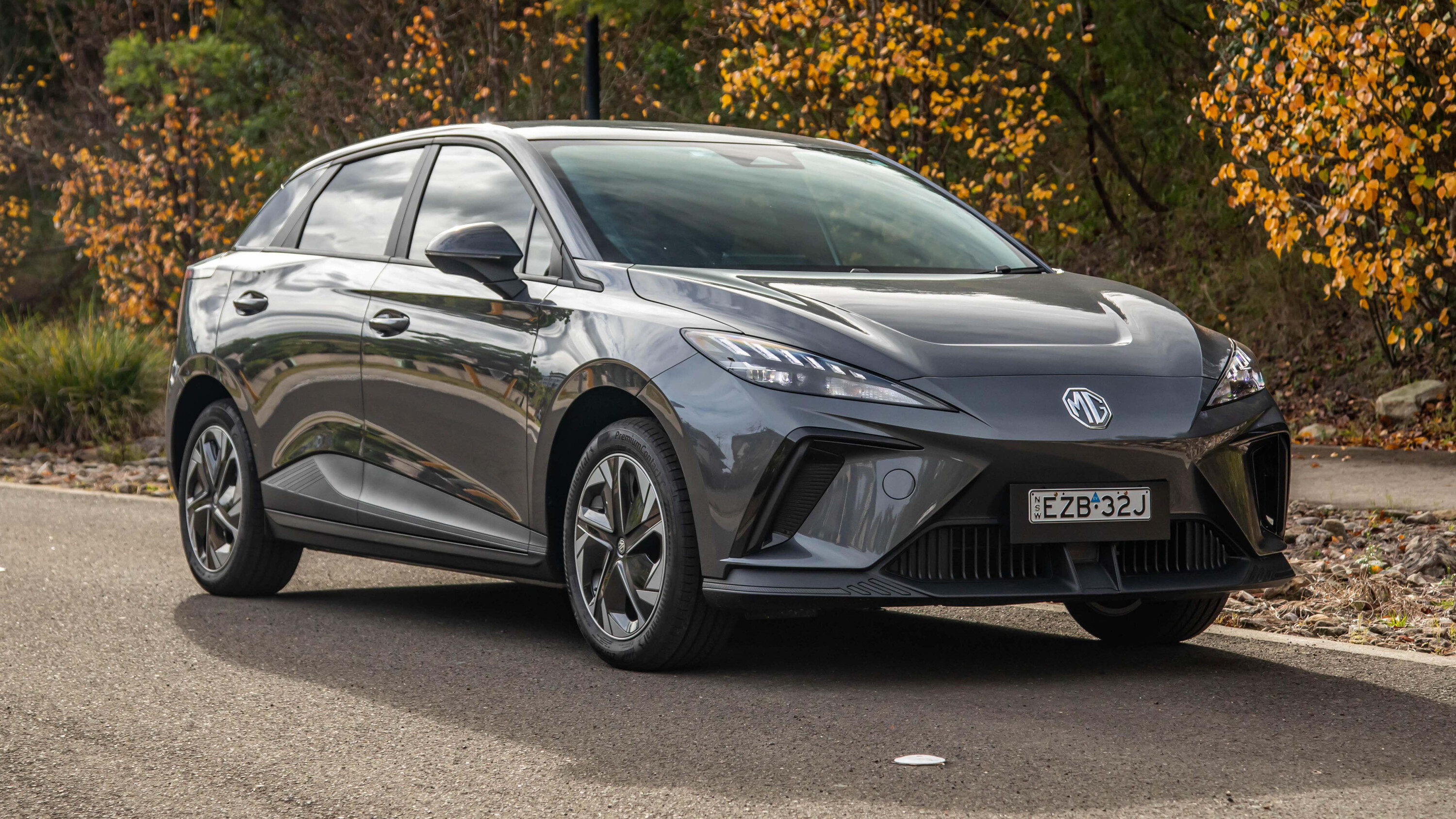
On paper, though, the MG4 promises the quickest performance, fastest charging, the longest range, and the biggest boot, while its chassis should also benefit theoretically from a more sophisticated multi-link rear suspension where its rivals have a cheaper torsion-beam arrangement.
And in practice the MG is the clear leader for driving manners. There’s a firmness to the ride, even on relatively small 17-inch wheels, but the MG is generally comfortable for daily duties, its light and accurate steering works particularly well in the suburbs, and the turning circle is turn-on-a-dime tight.
1
In contrast, the Dolphin and Ora steering set-ups are both flawed – inconsistent weighting blighting the BYD’s tiller and a vague on-centre feeling spoiling the precision of the GWM’s steering.
Neither impress for body control, either. The Dolphin’s suspension behaviour is particularly clumsy over potholes, while both exhibit plenty of lean through corners.
The Dolphin is the only member of this trio that doesn’t offer genuine one-pedal driving where the car can come to a complete stop purely by the driver lifting off the accelerator pedal.
1
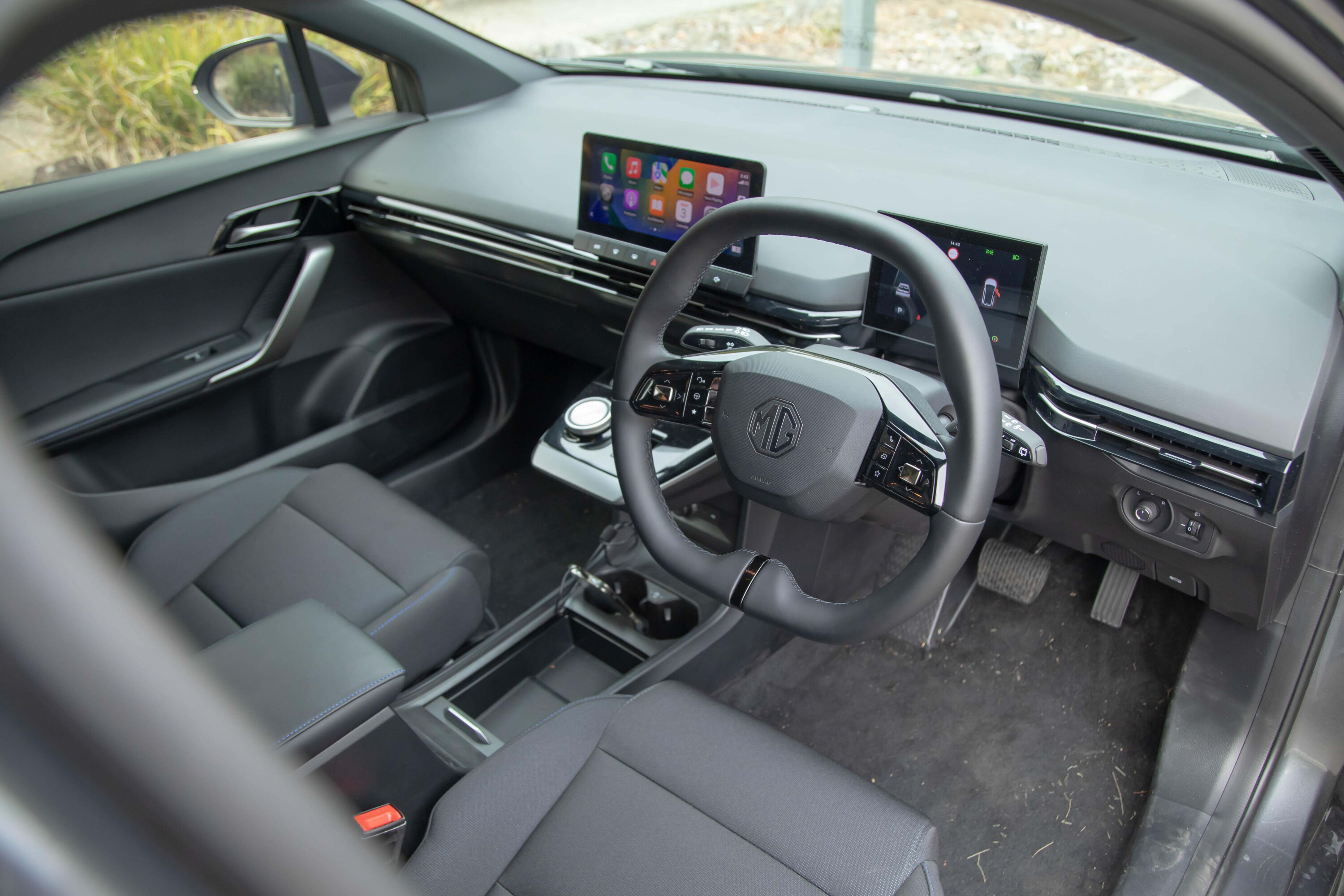
The MG4 offers four regen modes with varying response when you lift off the throttle, with the One Pedal mode selectable via the touchscreen. (The MG has the most natural brake-pedal feel here when you do need it, though.)
Although the Excite 51 is the slowest MG4 variant, it offers plentiful performance for most buyers – and its instantaneous, linear power delivery is highly satisfying.
The Dolphin is comparatively glacial with its 12.3 seconds for the 0-100km/h sprint. The Ora doesn’t feel that brisk for an EV, either, even if its 8.4sec time on paper is less than a second behind the MG 4’s 7.7sec claim.
As with BYD’s bigger hatch, the Atto 3, the Dolphin has a creative interior design. The MG4’s cabin is simpler and cleaner but it’s certainly not boring, and while the seats look basic they provide a good level of cushioning and bolstering support.
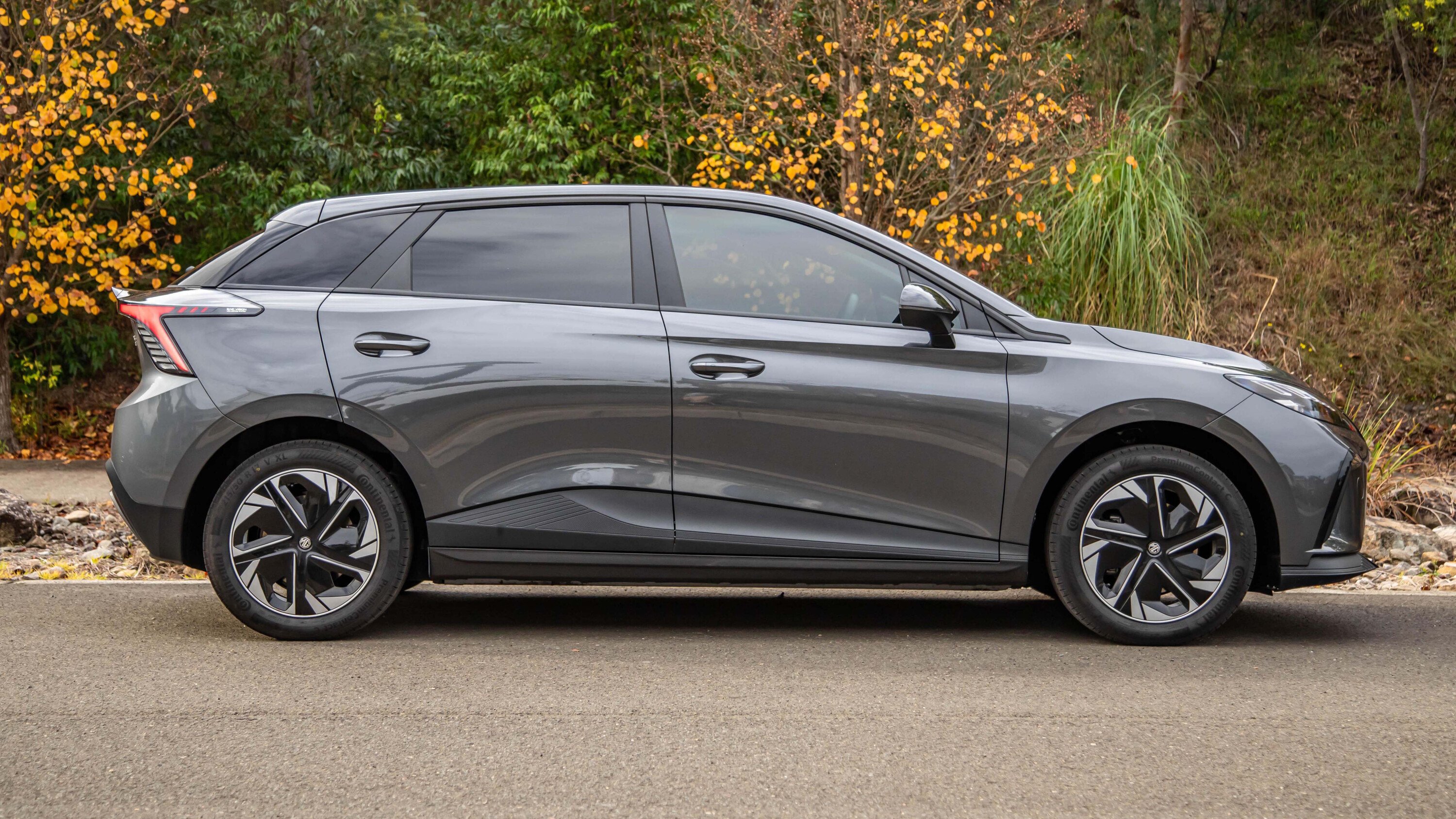
1
Rear-seat space is surprisingly good in all three of these compact hatchbacks. The Dolphin’s headroom isn’t great, though, and the MG4 looks a bit sparse in the back.
The Ora’s boot is tiny at just 228 litres and compounded by a high loading lip. Nearly 20 litres separates the MG4 (363L) and Dolphin (345L) for luggage volume. There’s a wider margin of victory in this category, though.
While loading a car up with features and giving it an attractive price point is to be applauded for giving buyers value, creating a (relatively) cheap car that drives with the maturity of a more expensive one is a vastly harder exercise.
And the MG4 Excite 51 is currently the only EV priced below $40,000 that nails the formula.
⚡ 2024 Wheels Best EVs
Looking for an EV in a different size or price category? Visit our full Wheels Best EVs series at the links below.
? Wheels Best EVs
- Best Small Electric Car Under $40K
- Best Small Electric Car $40-50K
- Best Small Electric Car $50-60K
- Best Electric Small SUV
- Best Electric Midsize SUV
- Best Electric Midsize Sedan
? OVERALL WINNER: Best Electric Car Under $80K
COMING SOON
- Best Electric Large SUV
- Best Electric Small Luxury SUV
- Best Electric Midsize Luxury SUV
- Best Electric Luxury Sedan Under $100K
- Best Electric Luxury Sedan Over $100K
- Best Electric Performance Car
? OVERALL WINNER: Best Electric Car Over $80K
Ed’s note: since this test, MG has dramatically dropped the price of the MG 4 77 Long Range to $52,990 drive-away. That’s almost a $7000 reduction once on-road costs are taken into account. The price drop does impact the value comparisons in the test below, so please keep that in mind.
Until now, an EV with 500km+ of range and a relatively affordable price tag has been frustratingly elusive – yet that’s exactly the promise offered with both of our circa-$60K hatchback contenders here.
Okay, neither is exactly ‘cheap’ — you can nab yourself a lower-spec MG4 Excite 51 for just $39,990 drive-away — but the appeal here is a package that strikes a strong balance between value, big real-world range, performance and equipment.
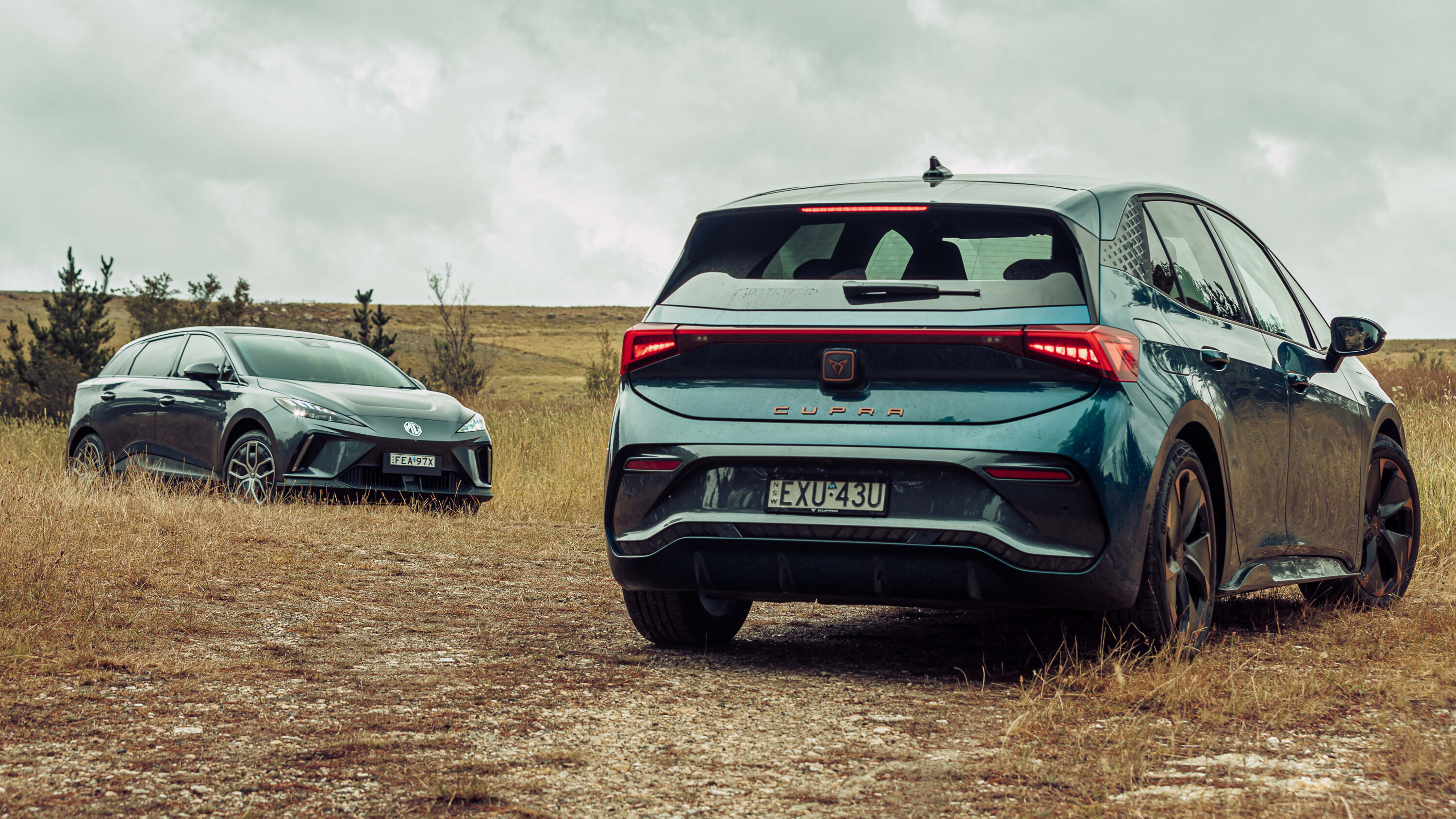
And on paper, it’s the MG that draws first blood. Our test car is the top-spec Long Range 77 which has just benefited from a substantial price drop and offers a WLTP range of 530km from a 77kWh battery. Performance is brisk, thanks to a 180kW/350Nm electric motor and a 0-100km/h claim of 6.5 seconds.
1
That’s half a second quicker than the Cupra, which is no surprise given the Spanish car is 10kW/40Nm down on the MG4 and weighs 210kg more due to a rather portly 1960kg kerb weight. A two tonne hatchback? Welcome to the electric age.
The Cupra is also costlier with a starting price of $59,990 before on-road costs but our test car is armed with the optional interior package, which blows the price difference out even more.
The Born’s five-year / unlimited-kilometre warranty is also shorter than the MG’s seven-year / unlimited-kilometre coverage, and its 511km of claimed WLTP range from an 82kWh battery is shorter than the MG4’s official figure. On paper, then, the MG has a sizeable advantage.
1
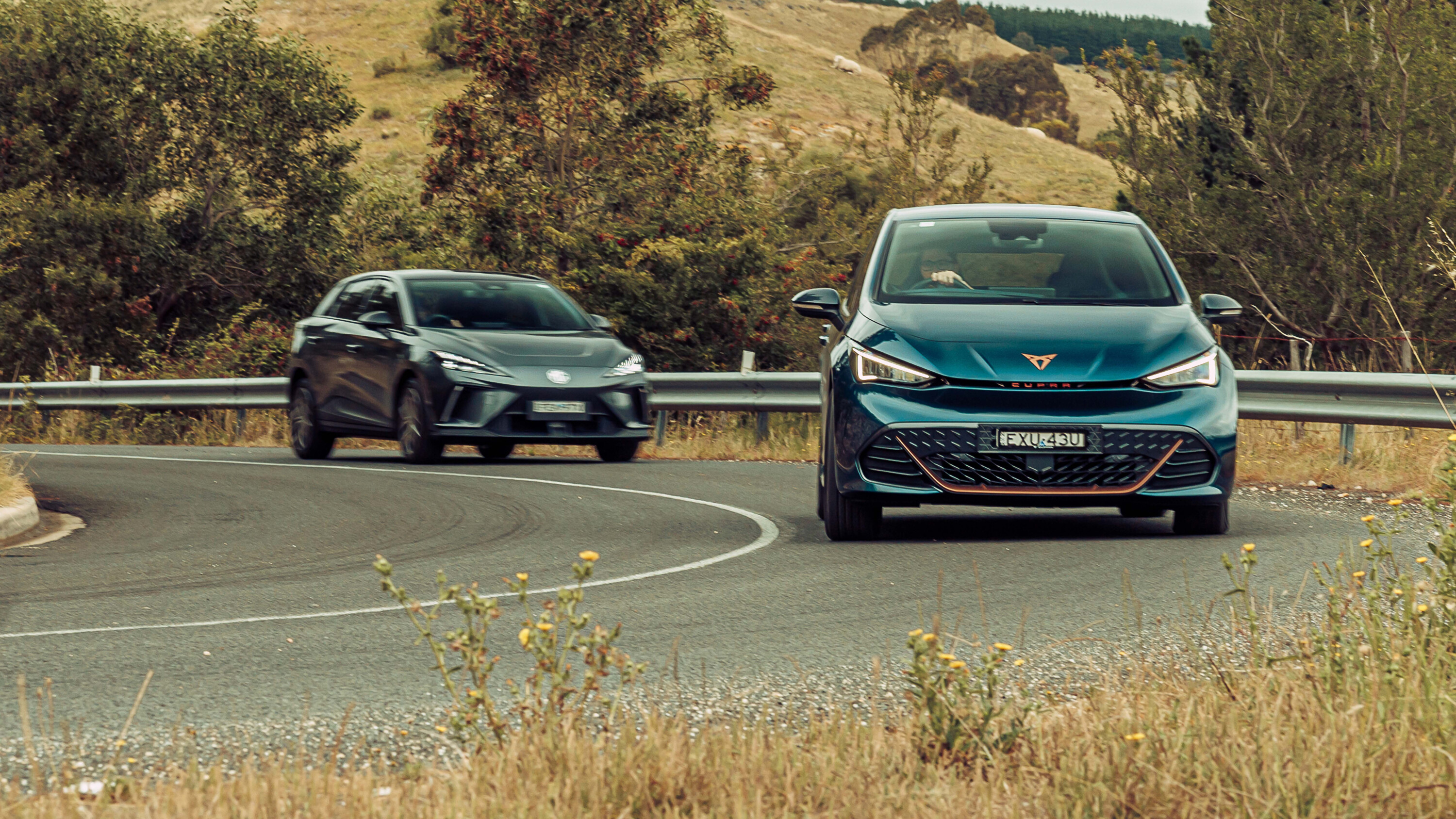
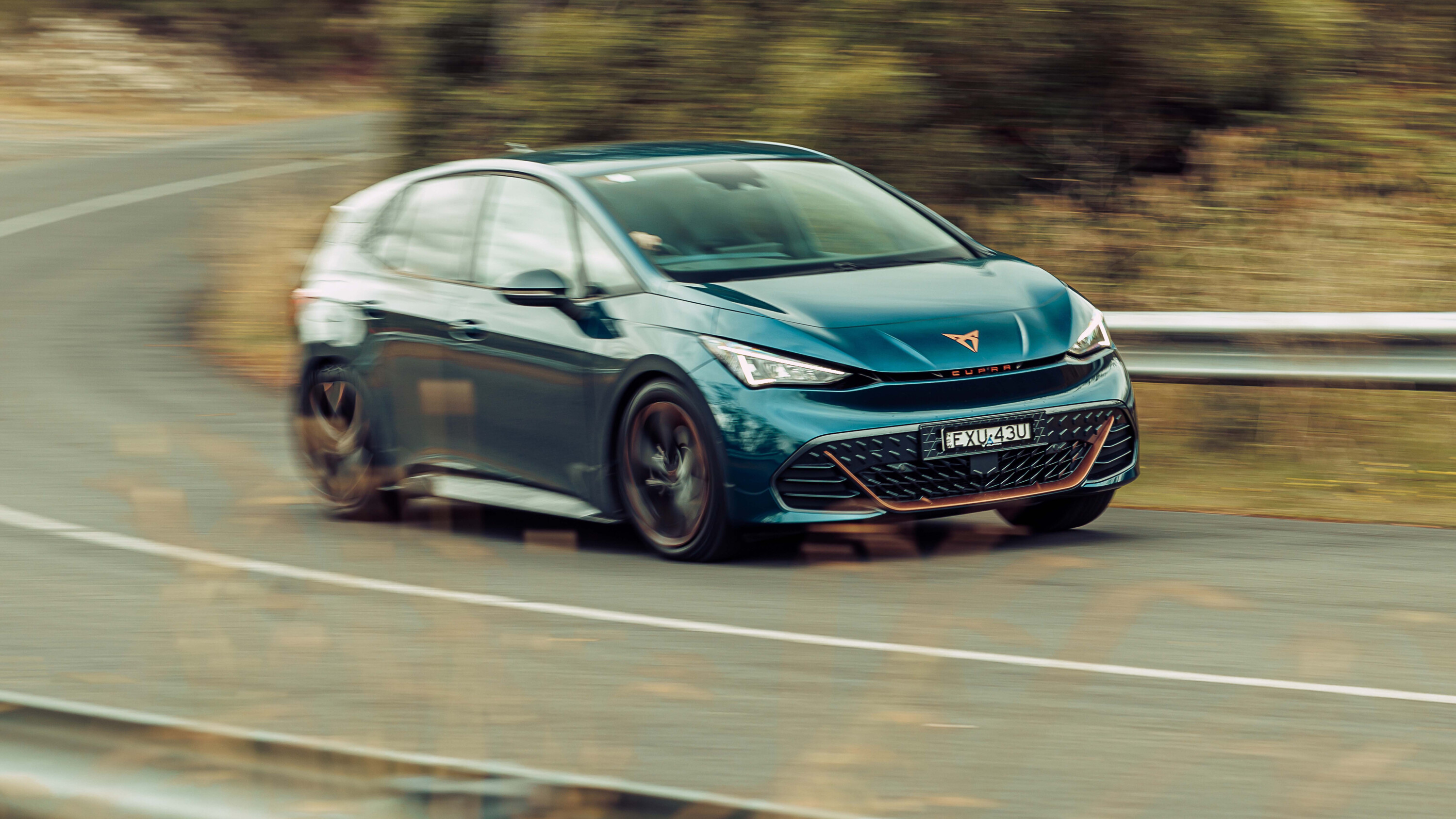
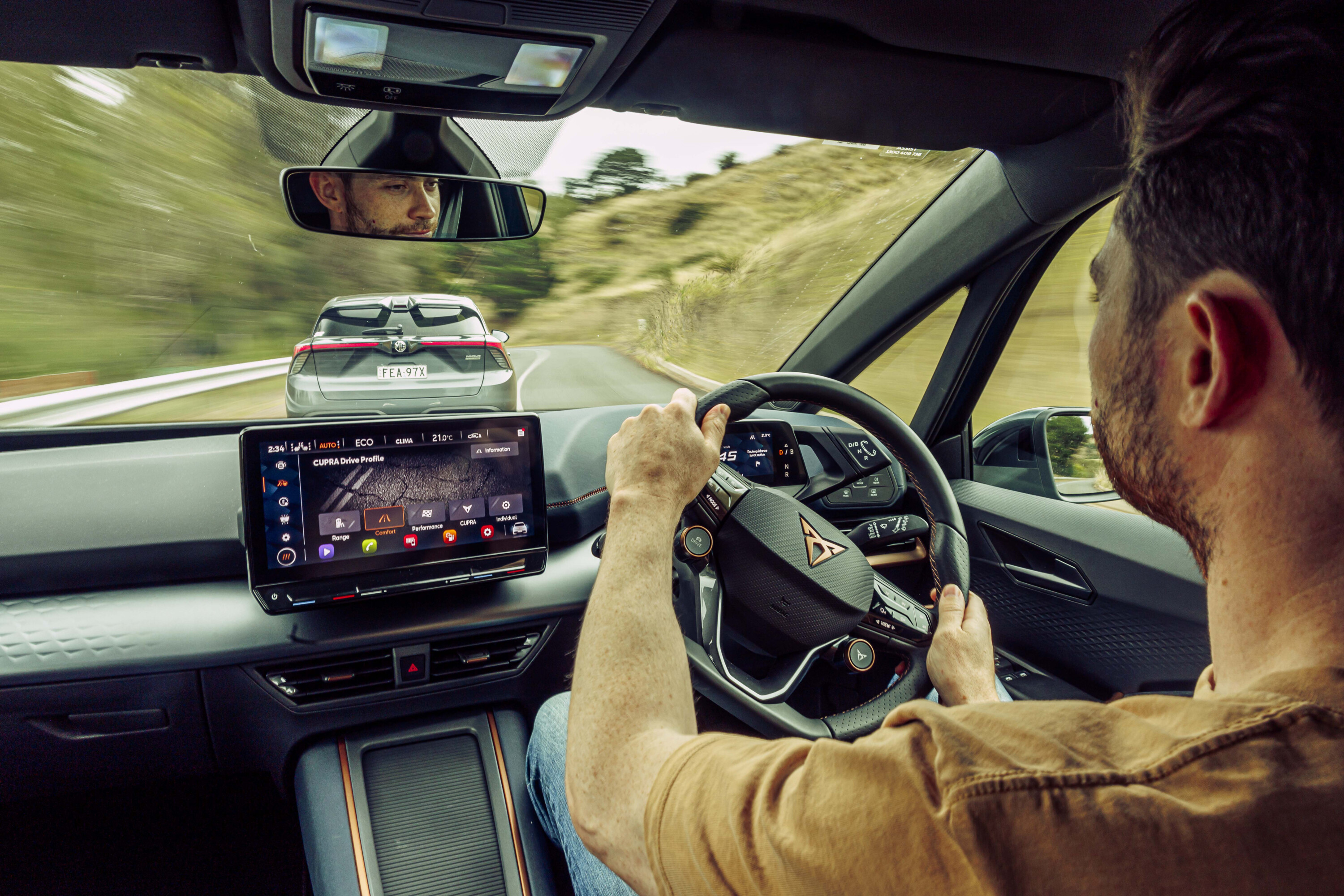
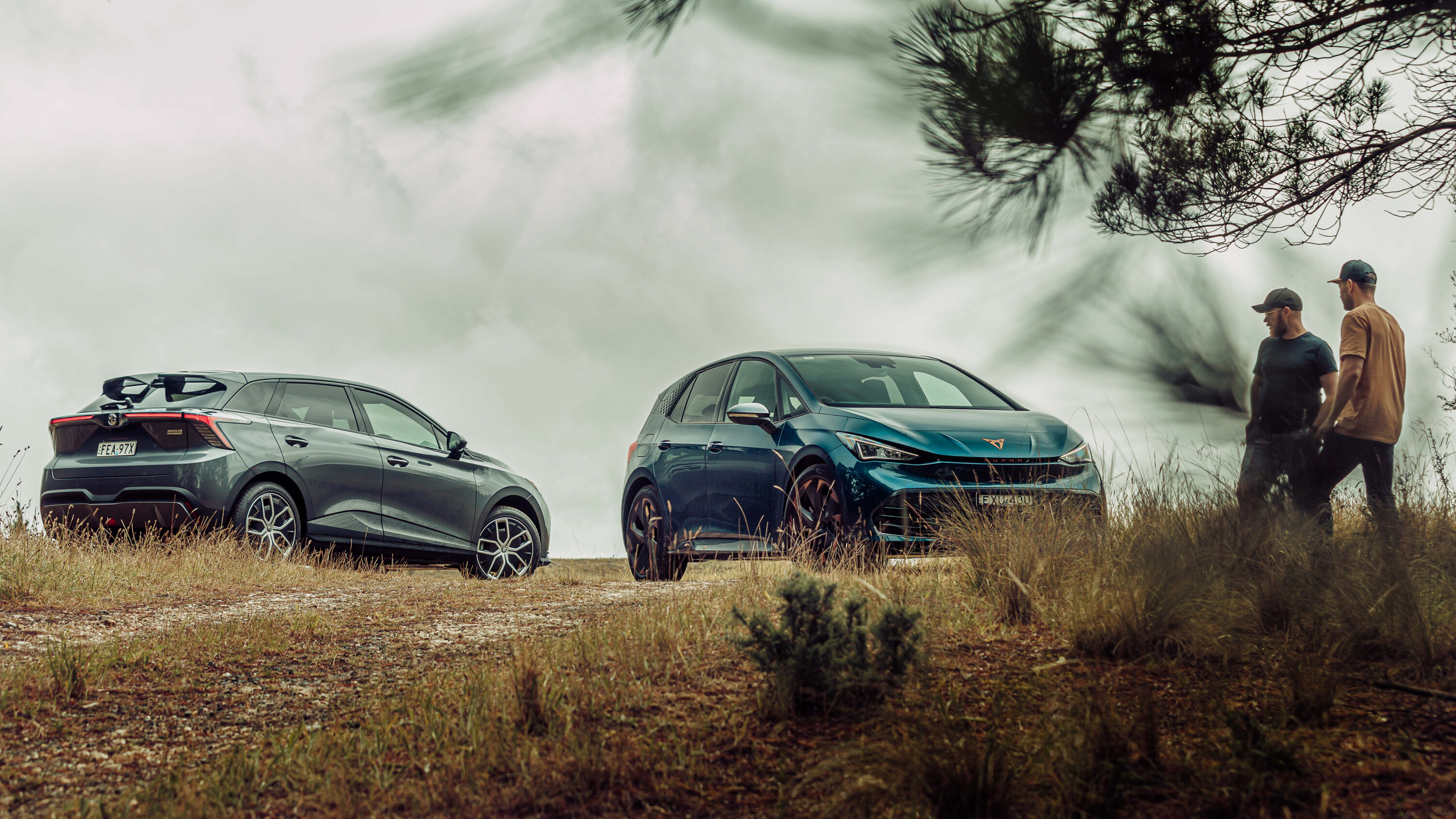
Where the Cupra hits back, however, is when you spot one in the metal. Both of these cars are attractive, yet to our eye it’s the Cupra that’s better looking – or at least the more creatively styled. Bronze highlights abound and nearly every surface and panel has been finessed to gift the Born a level of visual appeal that’s missing in the MG4.
1
It’s the same story inside. While the MG is impressively minimalist and functional, the Cupra’s cabin feels more special thanks to a richer mix of materials and more attention to detail.
The Cupra also holds the advantage when it comes to recharging. On DC power the Cupra can accept up to 170kW while the MG taps out at 144kW. Things are more even on AC power, where both cars max out at 11kW providing you have a three-phase socket.
With both contenders showing just shy of 500km of claimed range from our morning recharge, we buy a dodgy servo sandwich and head for greener pastures. We’re aiming for some twisty roads about an hour away, so I slip into the Cupra for the transit leg.
1
It’s immediately obvious the Cupra is a better car to cruise in. Tyre noise and road roar are less noticeable, the cabin ambience feels cosier and the optional, suede-trimmed seats are cosseting and supportive.
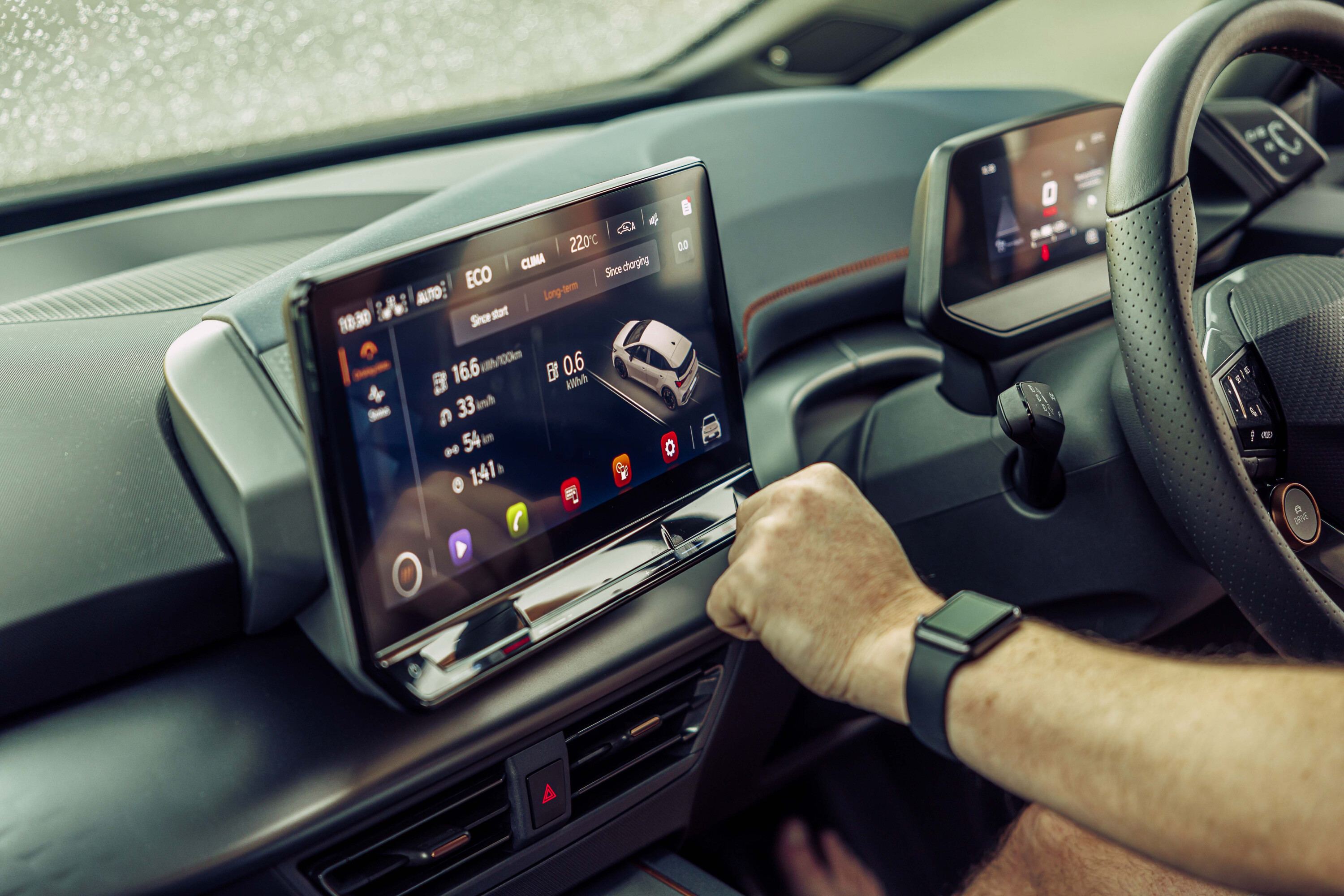
There’s not much to seperate them when it comes to the layout of their dashes and digital screens, though. Both cars employ a twin-screen layout, with a large centre touchscreen and a smaller digital driver display above the steering wheel.
The Cupra’s centre screen is bigger (12.0-inches plays 10.25-inches), and it’s also angled towards the driver, so Apple CarPlay displays more clearly. The Born’s reversing camera is also larger and the resolution of the 360 monitor is better than the fuzzy and occasionally laggy feed you get in the MG.
1
But while the Born’s cabin and tech feel a cut above, it squanders its advantage with some frustrating ergonomic issues.
The steering wheel is festooned with haptic buttons that are inconsistent to use, and the HVAC system is plagued by touch sensitive sliders that make fine adjustments annoyingly difficult.
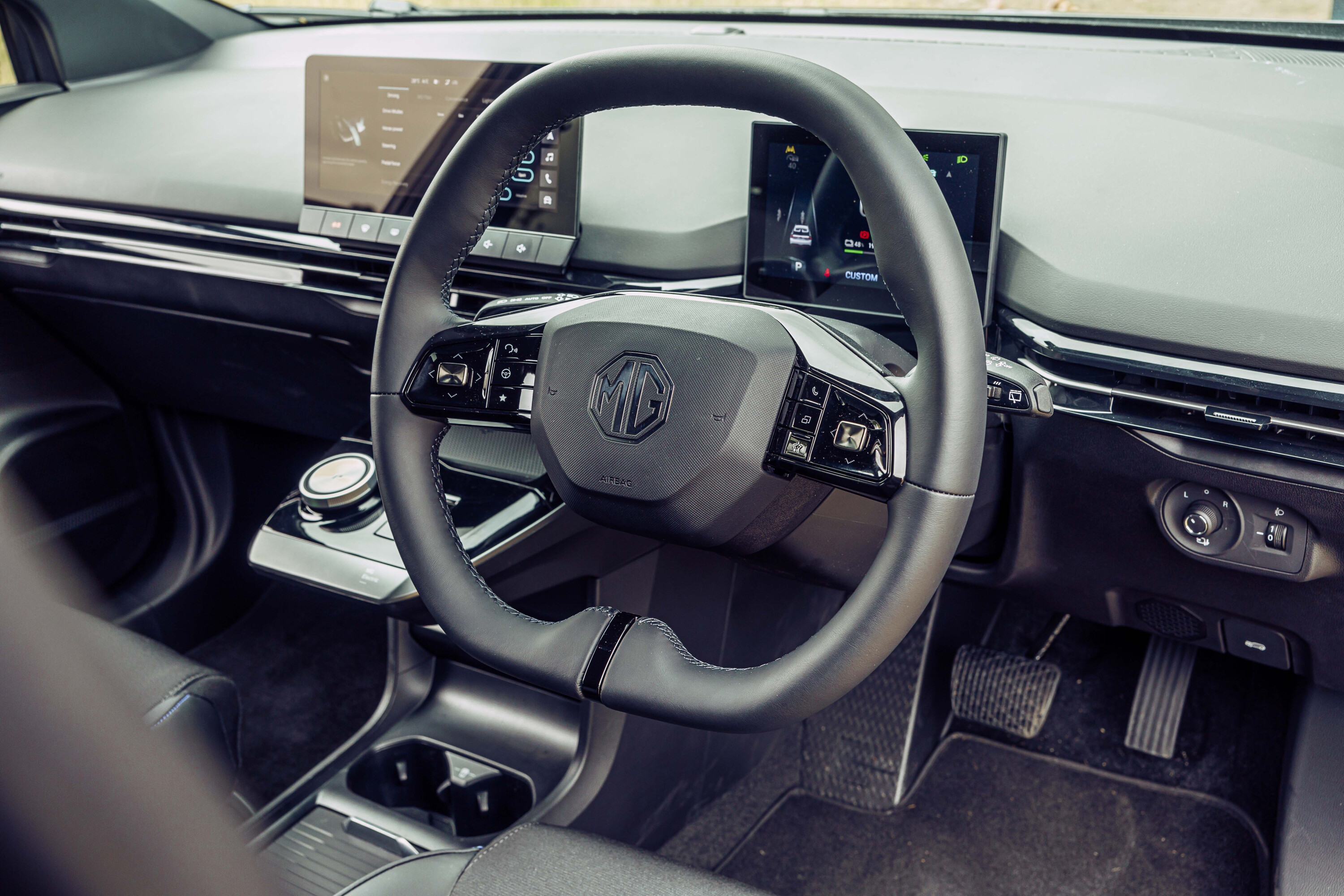
Happily the MG is far more functional. Despite an obvious effort to keep things minimal, MG’s design team has kept a row of useful physical buttons below the centre screen. And while you need to dive into the touchscreen to adjust the HVAC, it’s still a much simpler process than in the Cupra. The steering wheel also has programable hot keys that act as shortcuts for your favourite functions.
1
The MG’s cabin has its own quibbles, though. The strip of buttons below the screen are big and mark easily from the oil in your fingers. The cabin materials also feel cheaper compared to the more luxe Cupra.
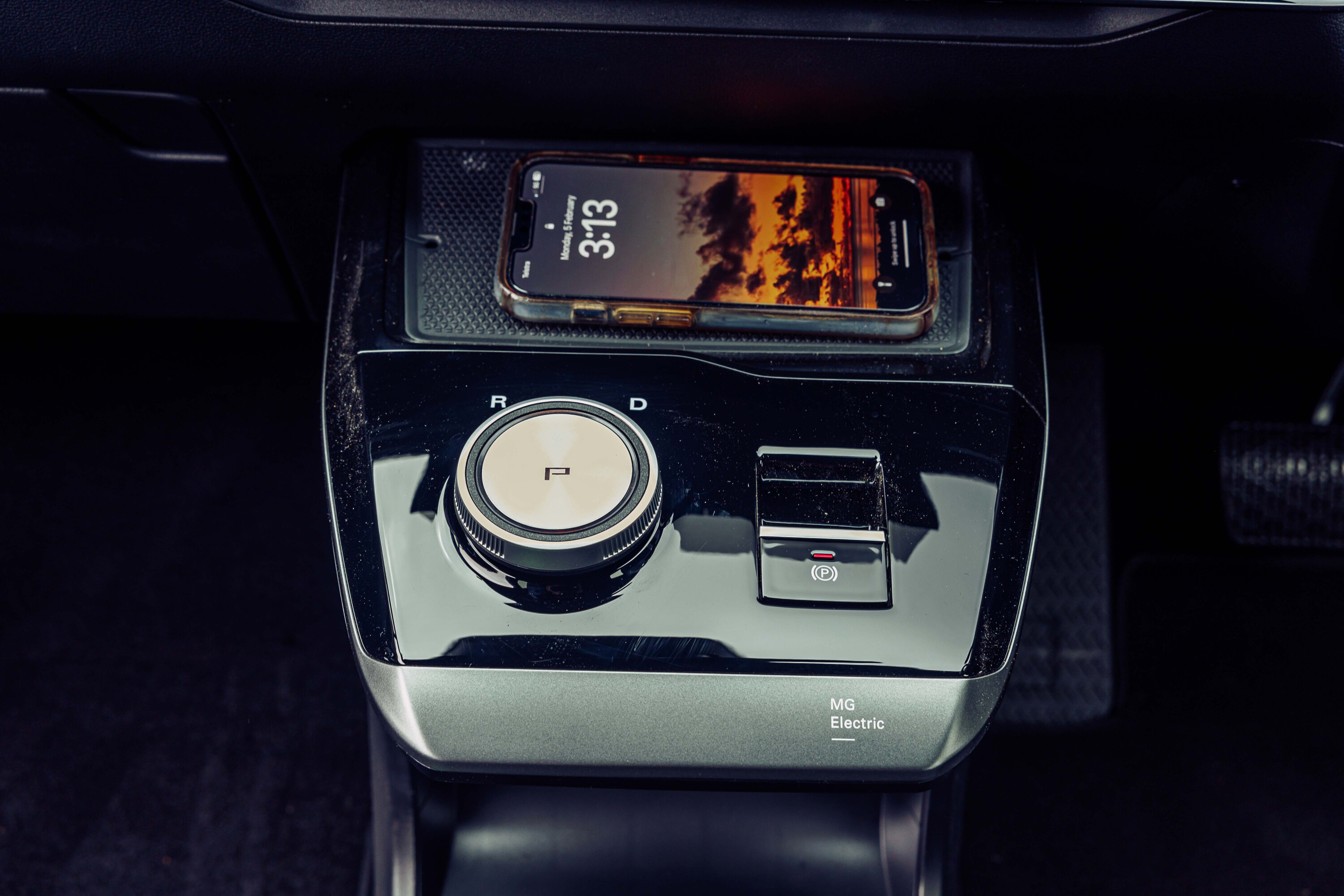
Both cars are evenly matched for phone connectivity, with wired connections for Apple Carplay/Android Auto and wireless charging pads. Things are fairly even for cabin storage, too, thanks to generous central storage cubbies and roomy door pockets.
We soon notice some strange equipment omissions, however. The MG has no auto wipers, for example, which feels stingy when you’re spending this much on an electric hatch. Neither car has an auto tailgate either, or rear air vents. Wired CarPlay connections also feel off the pace in 2024 and the MG’s connection was frustrating unstable during our time with the car.
1
Still, with the road starting to twist and turn, we switch our attention to one thing these cars do have in spades: driver appeal. Both are rear-driven and with good amounts of power and torque available, the promise of some hot hatch-esque thrills awaits.
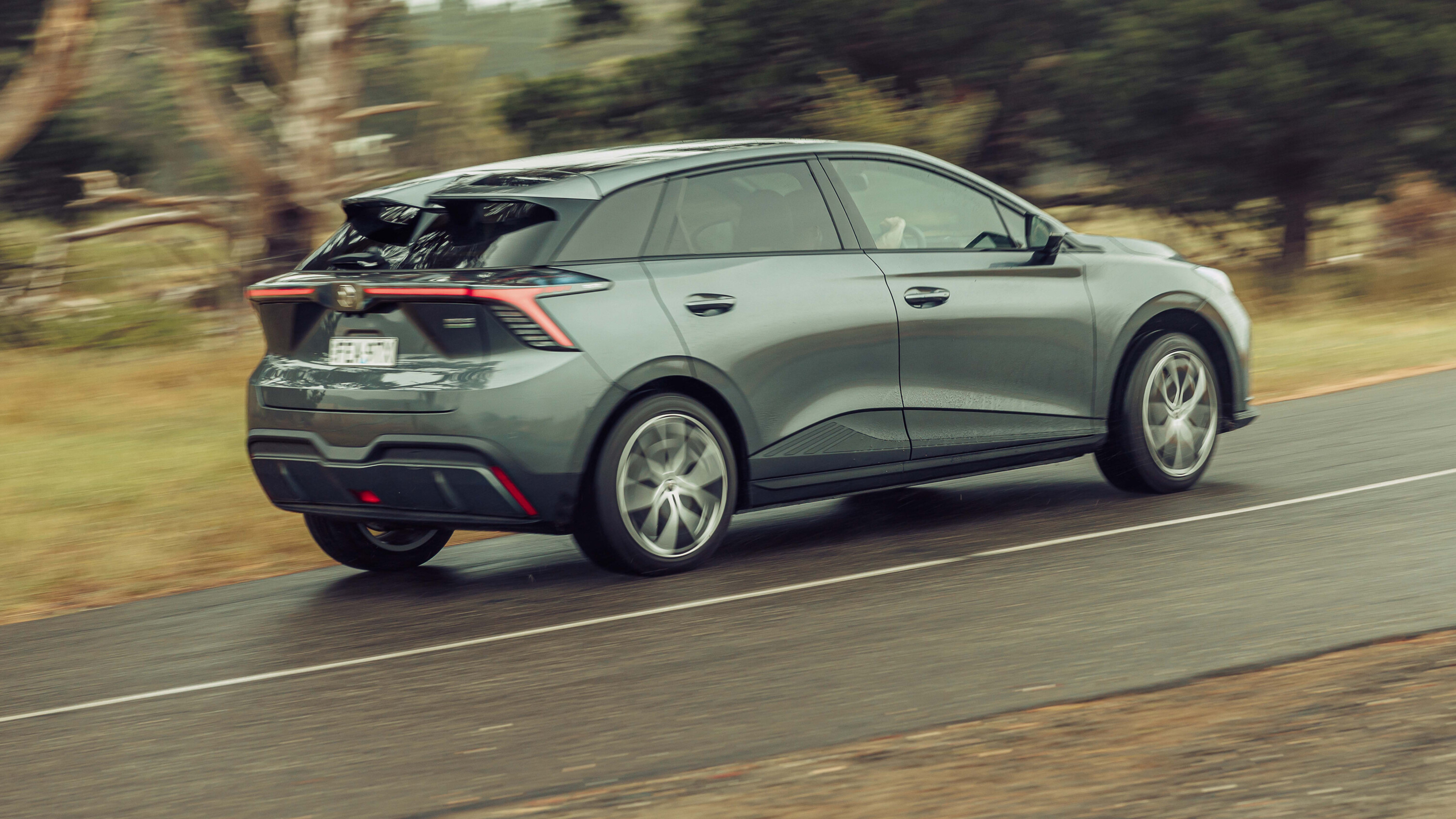
I start in the MG and it’s immediately clear this is the Chinese brand’s best shot yet at driving dynamics. The basic setup is nicely judged: the suspension is controlled and has a sporty edge, body roll is kept nicely in check and the steering (2.8 turns lock-to-lock) is light and reassuringly accurate.
There’s a good amount of grip available from its 235/45 R18 Bridgestone Turanza rubber and there are four levels of regenerative braking, including one for one-pedal driving.
1
And while performance is perky rather than outright fast, the instant response from the e-motor means this is a fun and predictable little car to hustle.
One feature that requires more work, however, is the MG’s driver assist systems. On narrow country backroads it’s easy to spook the lane keep system and for the steering assist to make an unsettling intervention.
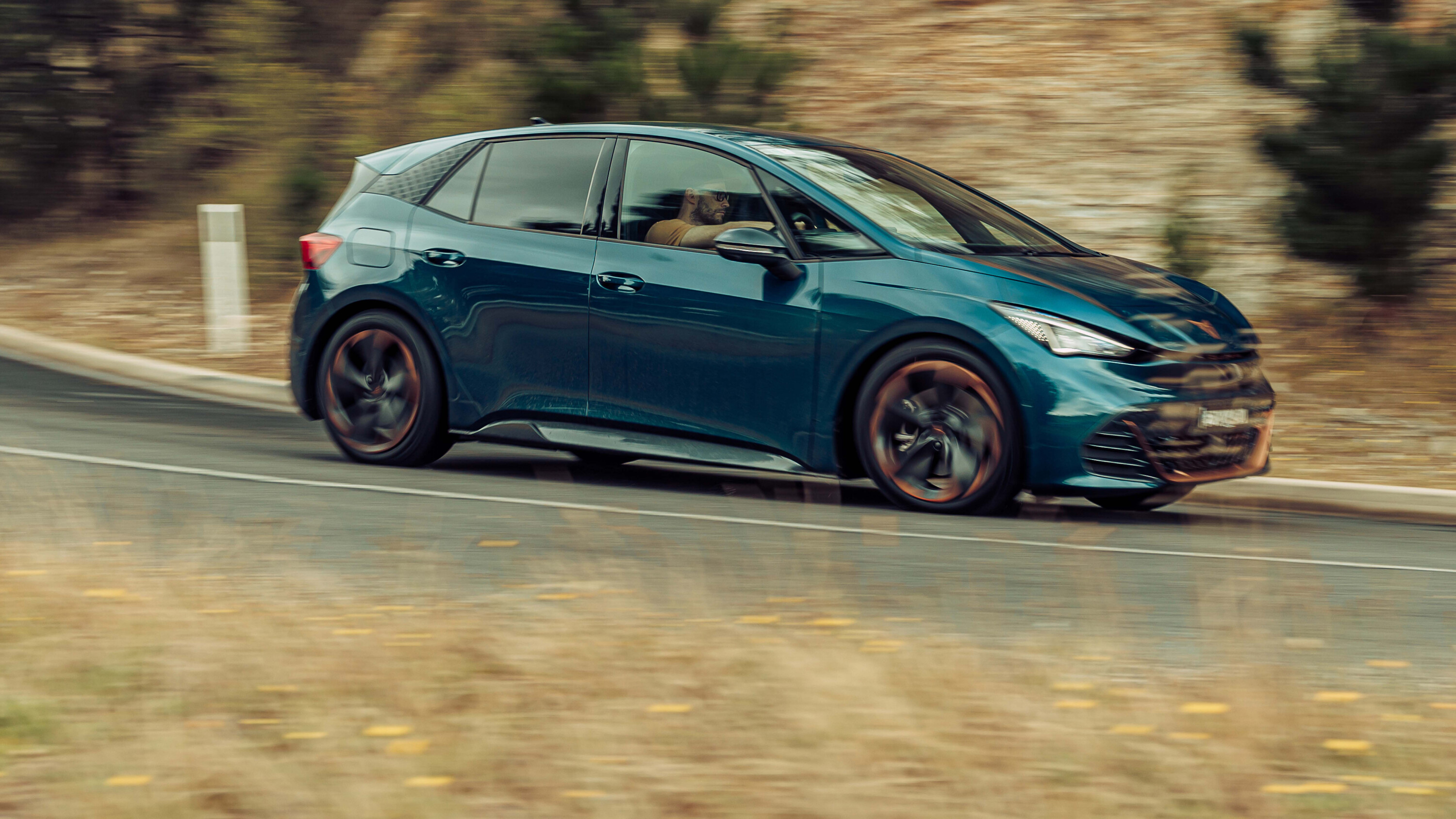
If it’s truly engaging handling you’re chasing, though, you want the Cupra. Where the MG is quick, capable and enjoyable, there’s something more analogue about the Born’s chassis, as though there’s some Golf GTI DNA lurking in there somewhere.
The steering is fluid and slightly quicker (2.5 turns lock-to-lock) and while the suspension is marginally firmer, which makes for a bumpier urban ride, it has greater control and superior damping at speed.
1
The Born also has an ‘ESC Sport’ setting that allows you to better exploit the balance and to revel in some controlled, rear-driven thrills.
Again, the Born feels quick rather than fast, but despite its power and weight deficits to the MG, there’s actually very little to separate them in terms of real-world pace.
Undermining the Born’s dynamic appeal are fewer settings for the regen braking (there’s no one-pedal option and only a B mode for stronger resistance) and a brake pedal that can feel inconsistent in its travel despite a good amount of initial bite.
1
Both cars offer decent rear room for six-foot adults, but the MG’s softly padded bench lacks under-thigh support. There’s no centre arm rest either, only a single USB-A port compared with the Born’s twin USB-C arrangement, and the MG’s rear window line is also higher which makes rear passengers feel more hemmed in.
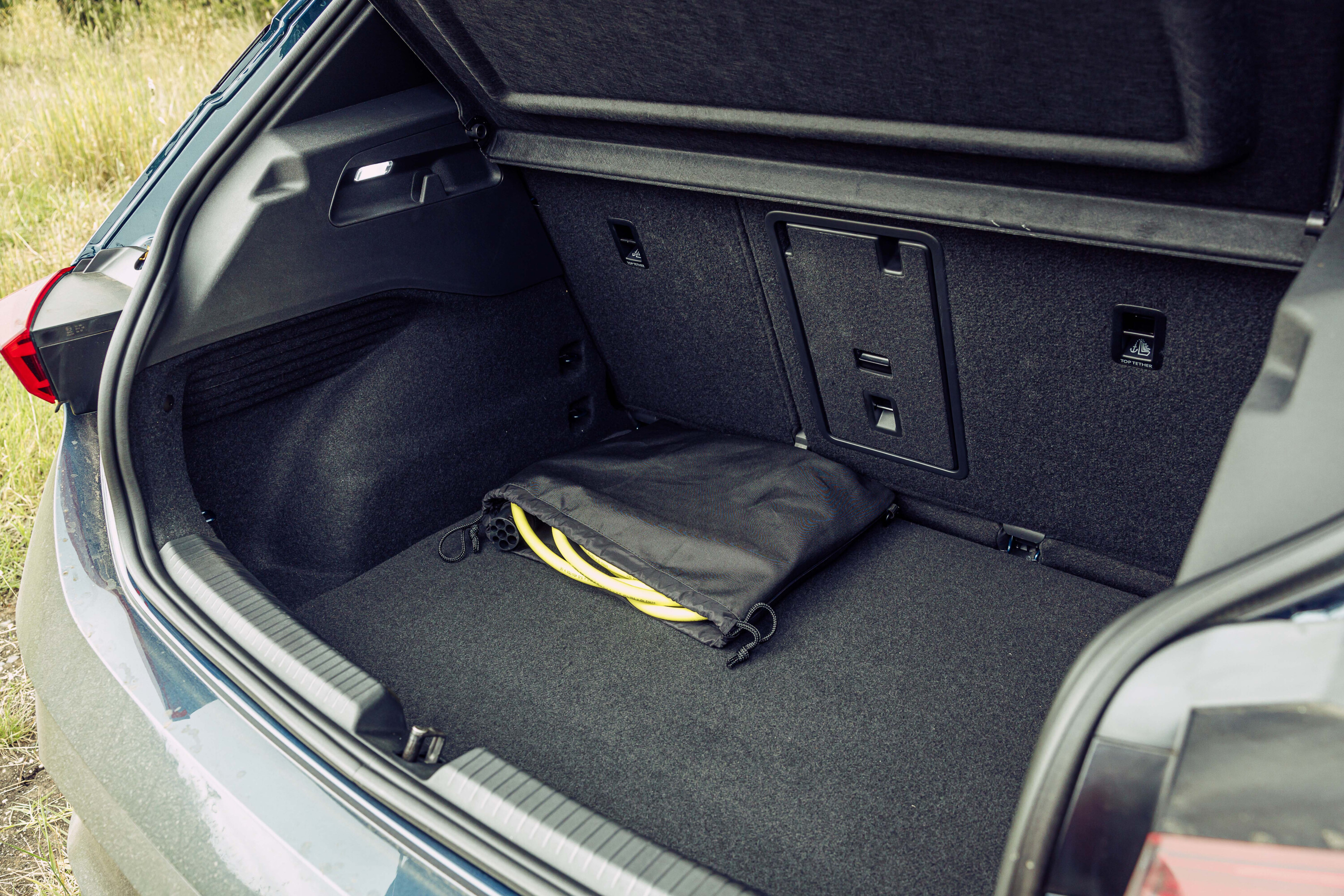
The Born also edges ahead for boot space. Outright literate is greater in the Cupra (385L versus 350L in the MG) and it beats the MG for amenity with more bag hooks, tie down points and a 12V socket.
3
Another notable omission in both cars is the lack of a spare tyre of any sort. The MG at least offers a puncture repair kit, whereas the Cupra rolls on ‘self sealing’ tyres.
So in most metrics, it’s the Cupra that just has its nose in front. It feels more premium, is better to drive, is quieter and more refined, and it also proved to be more efficient on test.
Over our 300km loop of highway and dynamic driving, the Cupra ‘drank’ 19.1kW/100km, giving it a theoretical range of 403km in our hands. In contrast, the MG used 21.5kW/100km, meaning it could travel about 315km.
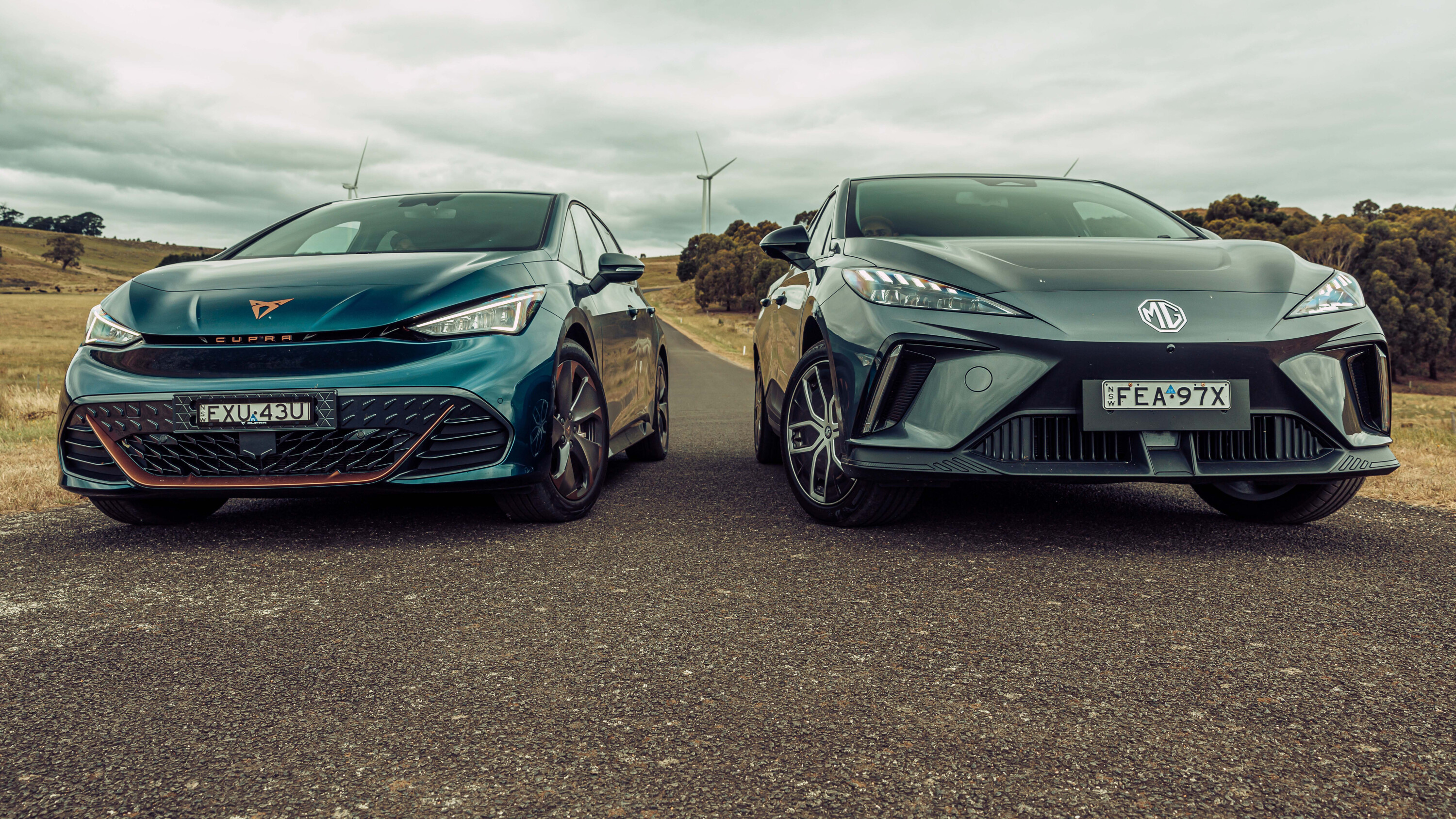
1
For some, the MG’s value advantage over the Cupra will be enough to sway them (though we think the Excite or Essence 64 are the MG4 range sweet spot).
Even with its recent price drop from $55,990 RRP to $52,990 drive-away, the Long Range 77 doesn’t quite deliver the improvement in range, equipment or cabin ambience over lower-spec MG4s to justify its price premium.
The Cupra Born feels the more expensive car here, even if its value is put into harsher perspective by a $61,900 Tesla Model 3 RWD.
Summing up how the Cupra ends up denying the MG4 a hat-trick of Best EV wins, fellow tester and former ed Dylan Campbell said: “It’s more stylish, better engineered and feels better built, and it also eats fewer electrons. Although the haptic controls could be a deal-breaker…”
VERDICT
Cupra Born: 8/10
Things we like
- Sharper, more driver-focused dynamics compared with MG4
- Superior real-world range and recharging times
- Roomier backseat and larger boot than MG4
- Greater focus on design + higher quality cabin
Not so much…
- Infuriating infotainment and haptic controls
- No spare tyre of any sort
- Some key equipment missing on a $60K car: no electric tailgate, no wireless CarPlay/Droid Auto, no rear air vents
- Brake pedal is oddly inconsistent which robs driver confidence
MG4 Long Range 77: 7.5/10
Things we like
- Grippier and slightly quicker than Cupra
- Well sorted (if unexciting) dynamics
- Cabin feels airier and more spacious than Cuprau2019s
- Better brake-pedal feel and inclusion of u2018one pedalu2019 regen
Not so much…
- Flaky CarPlay/u2019Droid Auto connectivity
- Battery efficiency isnu2019t as good as the Cupra
- Active safety features need finessing
- Interior not as premium as Cuprau2019s
Specifications
| MG4 77 Long Range | Cupra Born | |
|---|---|---|
| Body | Five-door, five-seat hatch | Five-door, four-seat hatch |
| Drive | Rear-wheel drive | Rear-wheel drive |
| Motor | 1 x rear axle | 1 x rear axle |
| Battery (net/usable) | 77/74.4kWh (net/usable) | 82/77kWh (net/usable) |
| Max power | 180kW | 170kW |
| Max torque | 350Nm | 310Nm |
| Claimed range | 530km (WLTP) | 511km (WLTP) |
| Transmission | Single-speed reduction | Single-speed reduction |
| 0-100km/h | 6.5sec (claimed) | 7.0sec (claimed) |
| L/W/H | 4287/1836/1516 | 4324/1809/1540mm |
| Wheelbase | 2705mm | 2766mm |
| Boot space | 350L | 385L |
| Weight | 1748kg | 1960kg |
| Suspension | MacPherson struts, coil springs, anti-roll bar | MacPherson struts, coil springs, anti-roll bar |
| Steering | Multi-links, coil springs, anti-roll bar | Multi-links, coil springs, anti-roll bar |
| Brakes | Discs (f/r) | Ventilated discs (f) drums (r) |
| Tyres | 235/45 R18 | 215/50 R19 |
| Price | $55,990 | $59,990 |
| Warranty | 7yr/unlimited | 5yr/unlimited |
| As tested consumption | 21.5kWh | 19.1kWh |
| Price | $54,990 | $59,990 |
| On sale | Now | Now |
⚡ 2024 Wheels Best EVs
Looking for an EV in a different size or price category? Visit our full Wheels Best EVs series at the links below.
? Wheels Best EVs
- Best Small Electric Car Under $40K
- Best Small Electric Car $40-50K
- Best Small Electric Car $50-60K
- Best Electric Small SUV
- Best Electric Midsize SUV
- Best Electric Midsize Sedan
? OVERALL WINNER: Best Electric Car Under $80K
COMING SOON
- Best Electric Large SUV
- Best Electric Small Luxury SUV
- Best Electric Midsize Luxury SUV
- Best Electric Luxury Sedan Under $100K
- Best Electric Luxury Sedan Over $100K
- Best Electric Performance Car
? OVERALL WINNER: Best Electric Car Over $80K
Browsing beyond base grades is an Aussie pastime, but does increasing your budget by $10K change our choice of best small electric car?
Beyond the $40,000 barrier the MG4, BYD Dolphin, and GWM Ora all offer more range, equipment and colour choices that their cheaper variants covered in our Under $40K category. On paper, that makes each model more complete.
Nissan’s ageing Leaf is priced from $50,990 to just miss this category’s cut-off, which leaves us with just three main vehicles in the segment starting with the Ora Extended Range ($45,990 plus on-road costs).
Compared to the cheapest Ora model, it scores a larger 59.3kWh NCM lithium-ion battery with the same 126kW/250Nm front-mounted electric motor. Known as the Funky Cat in the UK, its endearing styling lives up to that promise with vibrant colours to capture a bit of Mini’s pop-car magic.
1
That image comes at the cost of practicality, however. Despite similar exterior dimensions to the Dolphin and MG4, the Ora’s boot is small and the rear seat is tight.
Its funky velour upholstery doesn’t feel that classy and the driving position is compromised. The higher-spec Ultra (still under our $50K ceiling at $48,990 RRP) gets a heated steering wheel, power tailgate, sunroof, power driver’s seat, and heating/ventilation and massage functions for both front chairs.
The Ora offers a smooth ride around town, although the calibration of its acceleration, brake pedal and steering could do with a little bit of work. It’s not the sort of car you’ll want to drive great distances and feels best suited to light-duty urban work – in that sense, it’s not a complete vehicle.
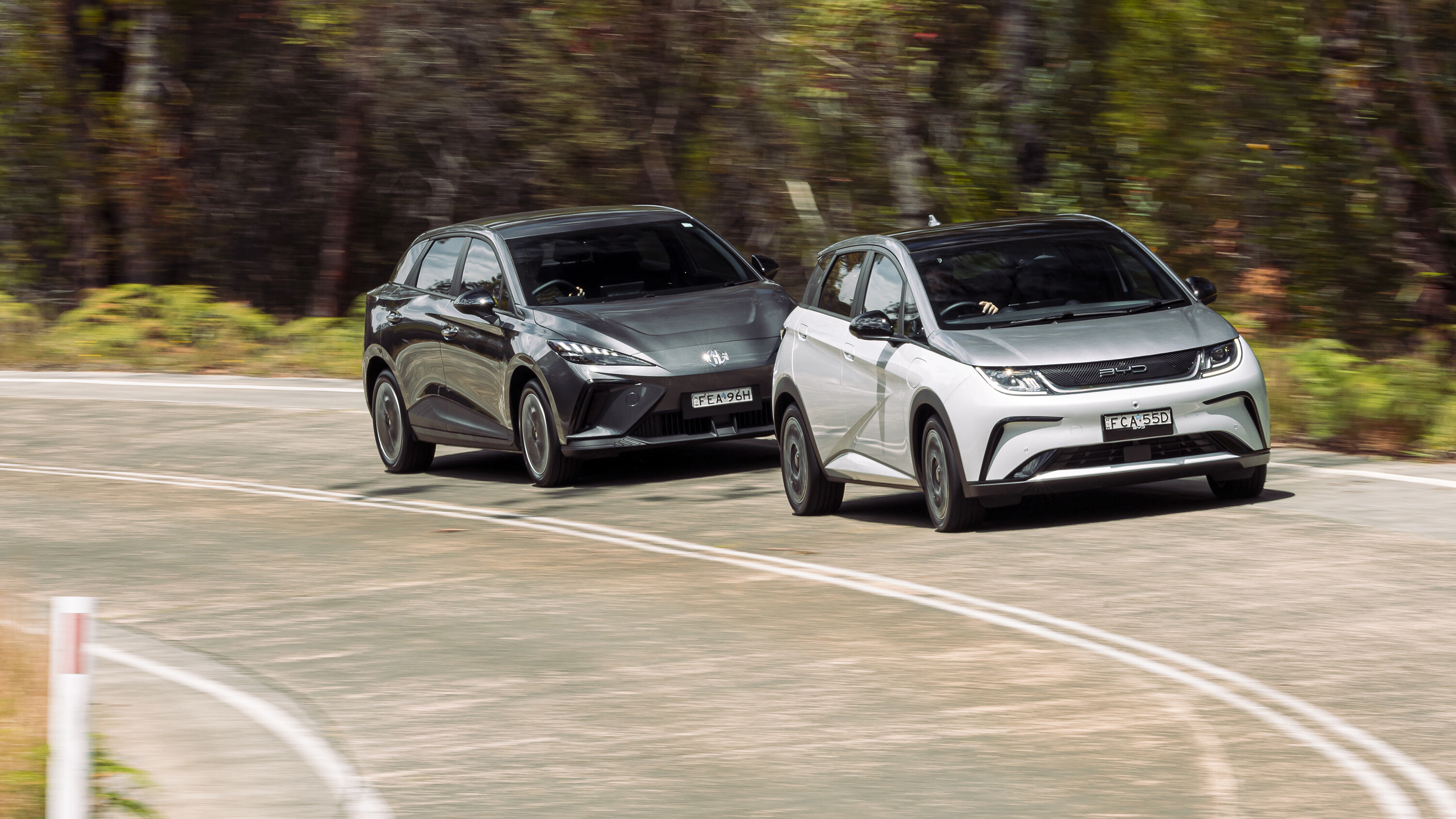
1
BYD’s Dolphin suffers from a similar fate. Soft springs and dampers, vague steering and unpredictable handling mean it’s best kept as a suburban companion.
This makes the $44,890 Dolphin Premium’s 87km extra WLTP range and faster DC charging compared to the Dynamic base model largely moot.
And the base car already has a heat pump, heated seats, adaptive LED headlights, a 360-degree camera, wireless smartphone charging, and vinyl upholstery so the Premium’s only real upgrade is multi-link rear suspension. And in our testing, we didn’t find the different suspension to be particularly sophisticated on the road.
There’s no upgrade to the Android-based software that runs through a vast 12.8-inch rotating touchscreen or other interior features for the $5800 extra charge. Outside you’ll be able to spot the Premium with different two-tone paint options and bigger 17-inch alloy wheels. The upholstery matches the technicolour paints, which some will find fun and funky.
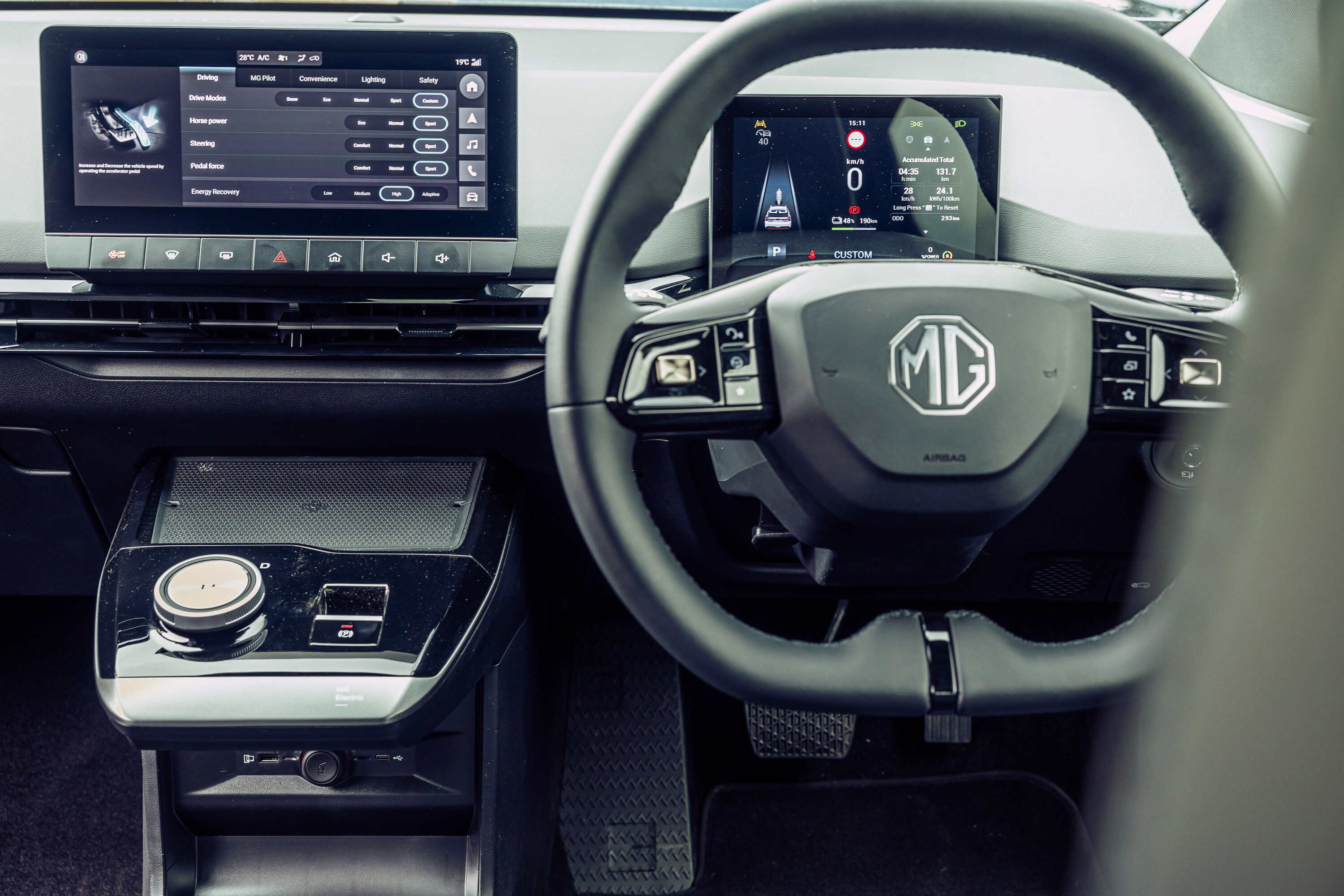
1
The result is a small car that feels at its best value in base guise rather than dearer, longer range Premium. (The hotter Sport variant was cancelled before it even had a chance to land.)
With a more accommodating rear seat and larger boot, the Dolphin jumps ahead of the Ora for desirability.
Today’s MG bares almost no resemblance to the one that constructed iconic sports cars and the bonkers Metro 6R4 Group B special. The MG4 proves that a passion for vehicle engineering remains in the now Chinese-owned company.
The brand offers two trims in this price bracket: the $44,990 Excite 64 and the $46,990 Essence – both driveaway figures after MG dramatically cut prices across in range in late March in a move to nationwide pricing.
Both use a 62.1kWh battery and have respective WLTP driving range figures of 450km and 435km.
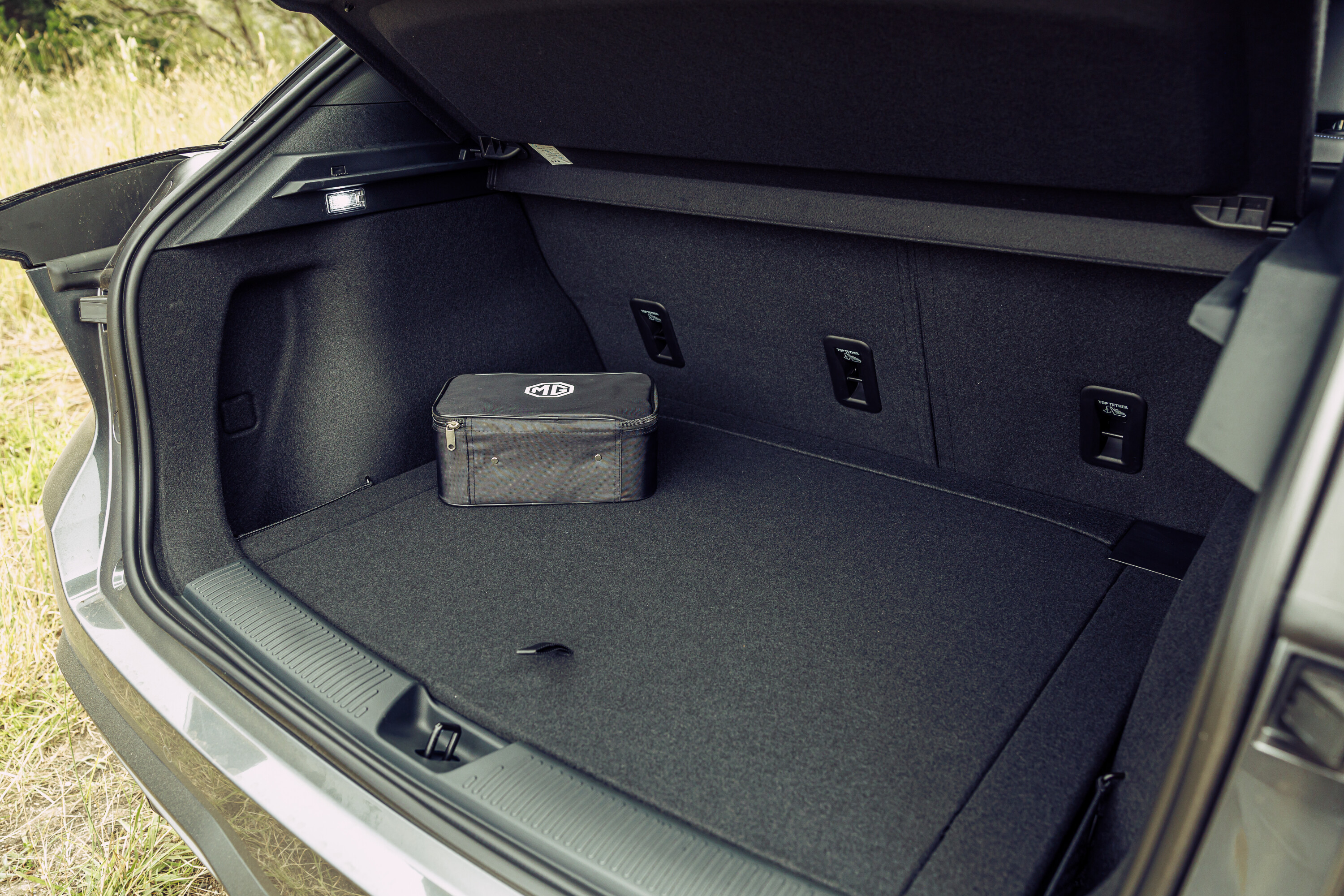
1
And they both extend the appeal of our favourite electric small car, the Excite 51. The Excite 64 adds more range; the Essence 64 further adds equipment.
The Excite gets a little more range than the Essence thanks to 17-inch alloys and lower rolling-resistance rubber, which also give a bit more cushion to the ride.
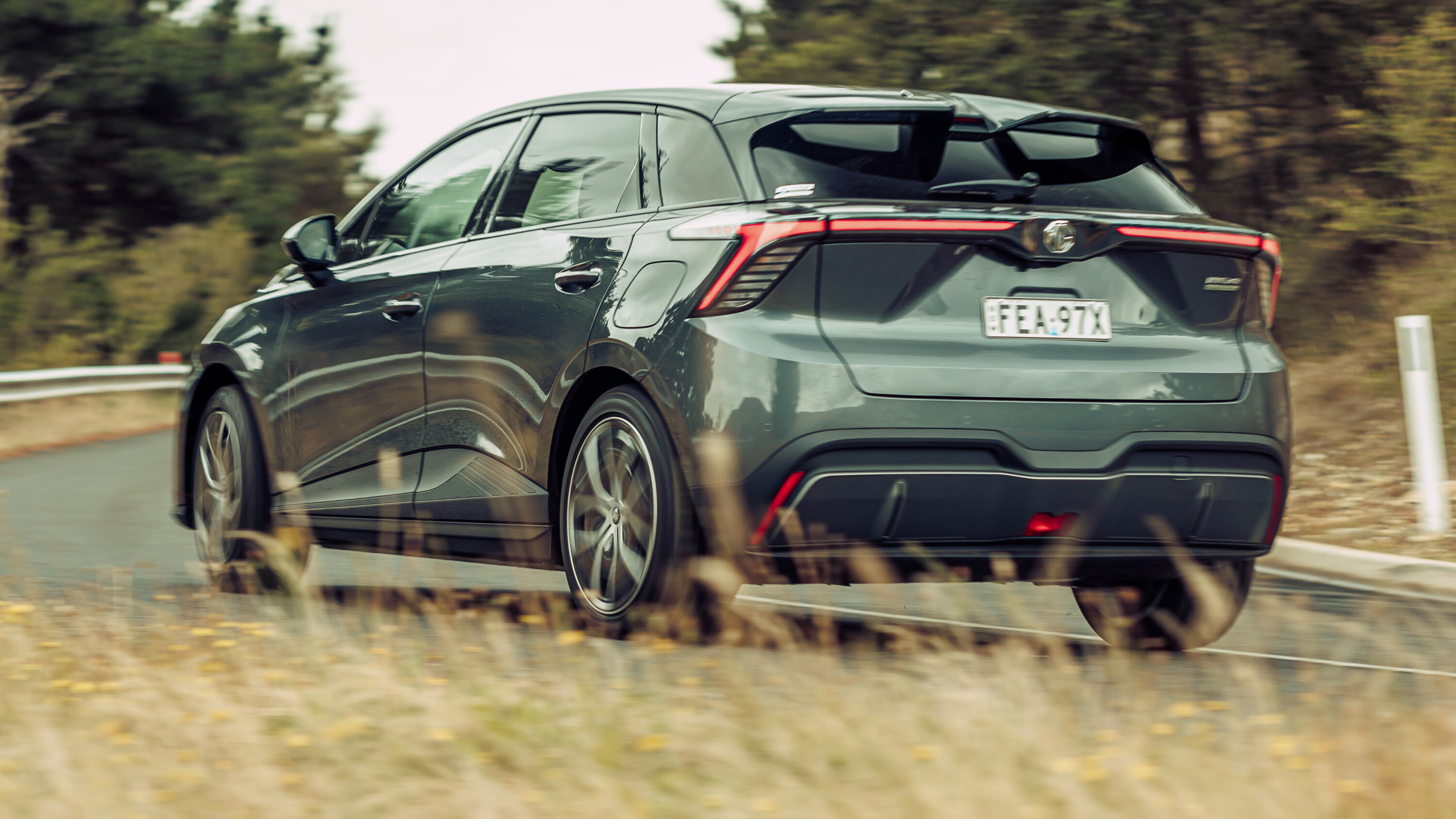
The MG4 is as spacious as a Volkswagen Golf in the rear seat and boot and it has a great driving position, even with the base Excite’s manual-adjust seats. The specification is complete with few frills. It also drives beautifully on the narrower tyres, with an adjustable rear-drive chassis that has hints of excellent British small cars of old.
Power is plenty adequate (150kW/250Nm) up to 100km/h, though on motorways and highways efficiency does suffer. It’s still more capable of dealing with Australian back roads than the other two cars here.
1
Additionally, the MG4’s DC rapid charging is comfortably the fastest at 140kW, allowing it to race from 10-80 per cent charge in 28 minutes.
The BYD takes 40 minutes for the same interval and the GWM a fairly glacial 50 minutes at public infrastructure. Both have 80kW peak DC charging rates.
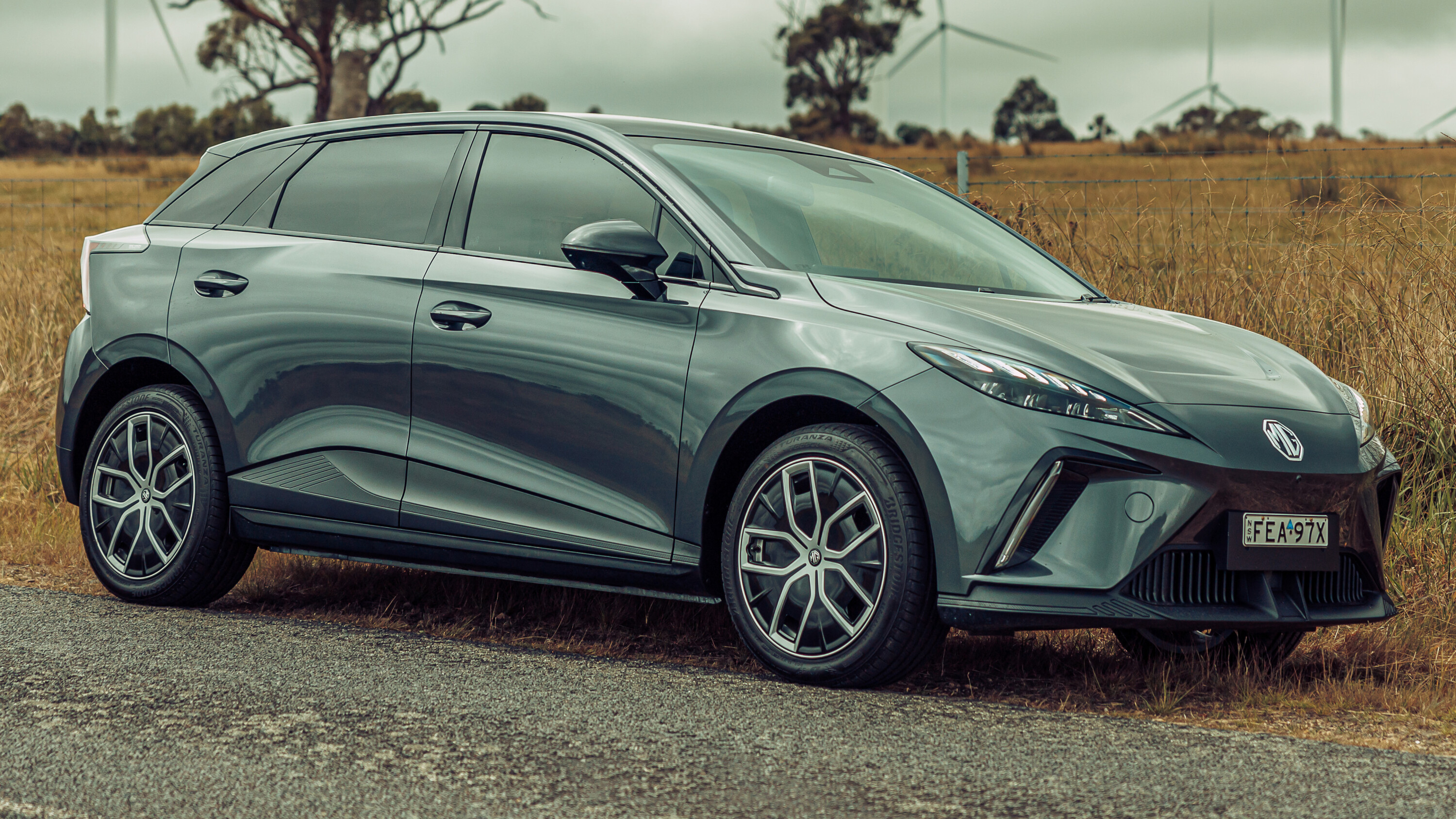
The real question is, which MG4 is the better trim? The $2K-dearer Essence adds a six-speaker stereo, roof spoiler, wireless phone charging, vinyl-accented upholstery, power driver’s seat, 360-degree camera, rear cross-traffic alert, blind-spot monitoring and one-touch windows.
1
All nice-to-haves, sure, but going up to the 18-inch alloys equipped with Bridgestone Turanzas does introduce a little more ride harshness.
Also, in having more contact patch, the Essence loses some of the Excite’s handling delicacy.
Sales figures show the higher-spec Essence is more popular with buyers and, given its extra comfort and safety equipment, we can see why.
But with the more affordable price tag, plusher ride and marginally more engaging chassis, there’s no need to move beyond the Excite when looking at an MG4. We’d save the money and put it towards fitting out your home with charging gear.
⚡ 2024 Wheels Best EVs
Looking for an EV in a different size or price category? Visit our full Wheels Best EVs series at the links below.
? Wheels Best EVs
- Best Small Electric Car Under $40K
- Best Small Electric Car $40-50K
- Best Small Electric Car $50-60K
- Best Electric Small SUV
- Best Electric Midsize SUV
- Best Electric Midsize Sedan
? OVERALL WINNER: Best Electric Car Under $80K
COMING SOON
- Best Electric Large SUV
- Best Electric Small Luxury SUV
- Best Electric Midsize Luxury SUV
- Best Electric Luxury Sedan Under $100K
- Best Electric Luxury Sedan Over $100K
- Best Electric Performance Car
? OVERALL WINNER: Best Electric Car Over $80K
Of all the burgeoning electric car segments, the small SUV category is easily one of the most competitive and cut throat.
Small SUVs are big business in Australia, meaning there’s a huge opportunity here for brands to convert customers away from combustion power and into an electric future. If they can offer the right product, that is…
Price, size, equipment levels and packaging are all crucial ingredients to get right in a segment where owners use their cars for multiple tasks. City transport, weekend adventures, family duties and shopping runs: a small electric SUV needs to do it all.
Here we have four of the best on offer right now.
JUMP AHEAD
- 4️⃣ Peugeot e-2008
- ? 3rd: BYD Atto 3
- ? 2nd: Renault Megane E-Tech
- ? 1st: Hyundai Kona
- VERDICT
- Specifications
The contenders
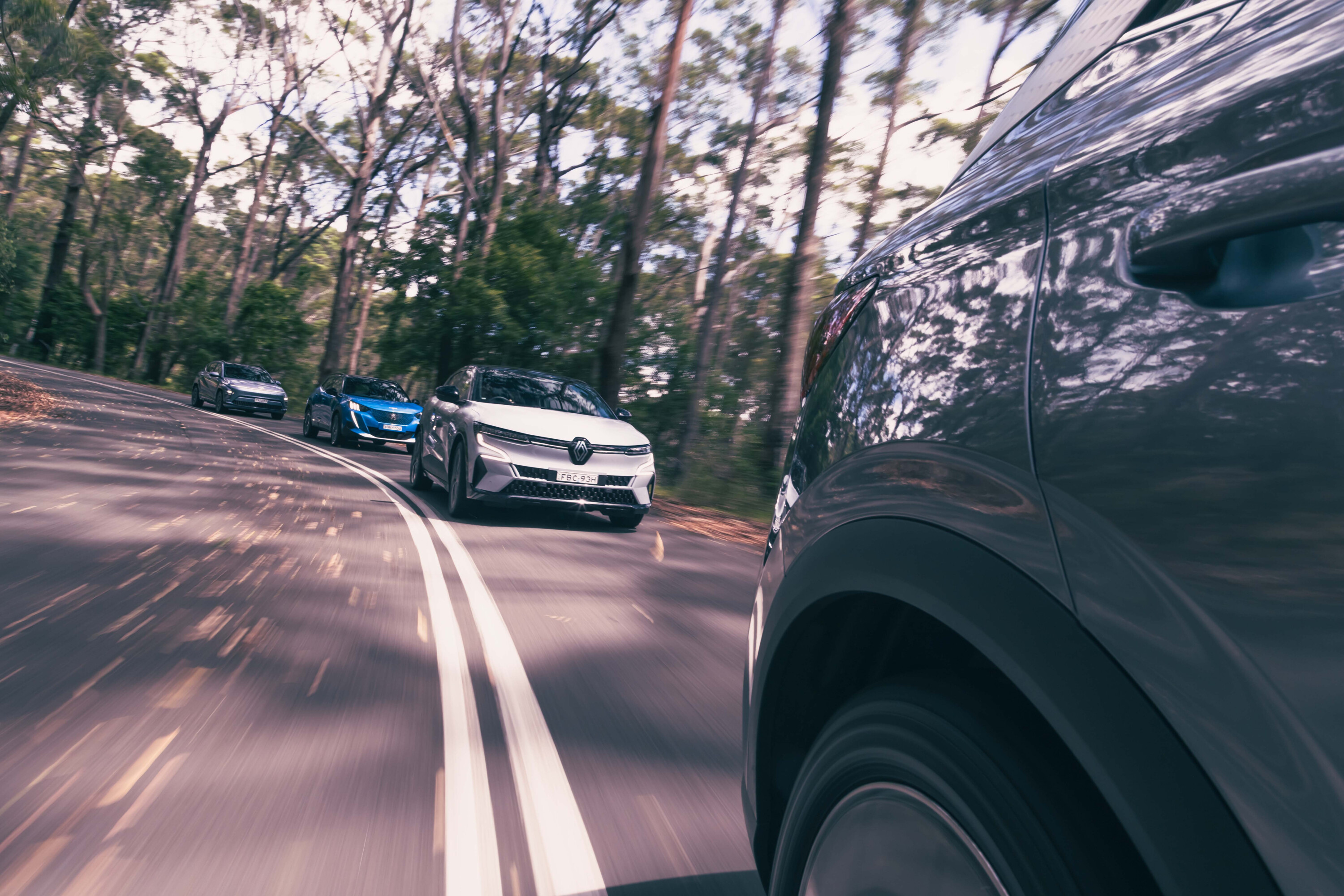
BYD’s Atto 3 is one of the best-value electric vehicles on sale today and a rare example of (near) price parity.
While a little smaller outside, thanks to the skateboard-style EV construction the Chinese-made SUV has more space than a Volkswagen T-Roc R-Line and bang up-to-date cabin technology.
It’s this competitiveness that might make the case for families to swap into the BYD from combustion-engined vehicles, especially with tantalising loan deals available for electric vehicles under the luxury car tax threshold. The Atto 3’s sales speak for themselves and, it’s safe to say the BYD arrives in this four-way as a favourite.
1
It comprehensively beat the MG ZS EV in a twin test (Wheels December 2022) and is the most affordable here at nearly $9000 less than the Peugeot e-2008 GT ($59,990).
Speaking of, the French small SUV is the only vehicle developed as a combustion vehicle first and EV second and the lone flag-flyer of torsion beam rear suspension in this test.
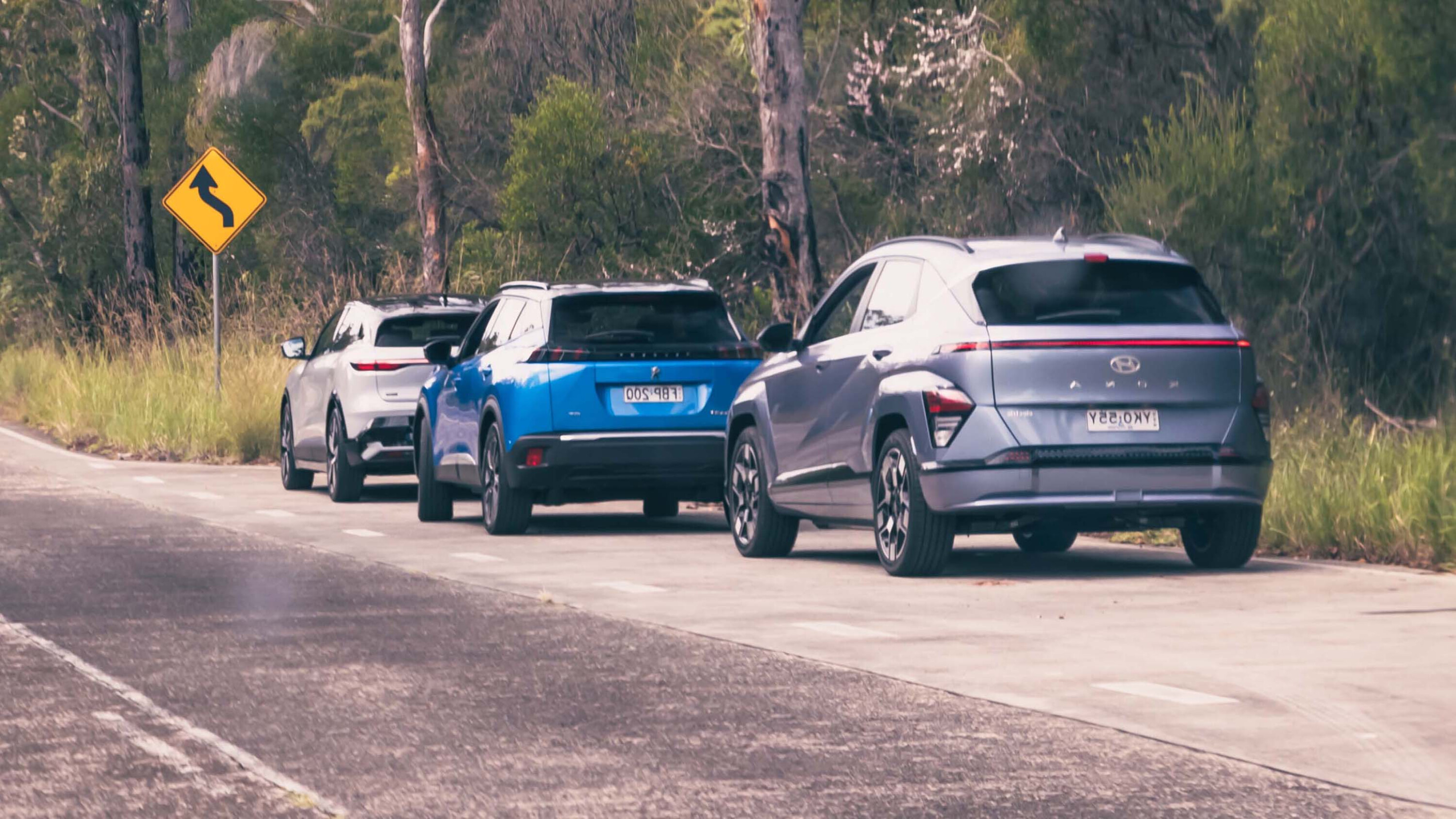
The Hyundai Kona launched in January this year and we have the richest grade – Premium Long Range, $68,000 before on-road costs – for our testing. The $10K-cheaper Extended Range was our ideal candidate though Hyundai did not have one to supply for our testing dates.
1
Like the e-2008, Renault’s Megane E-Tech Techno EV60 ($65,000 before on-road costs) is old news in Europe but has taken its time to arrive down under.
You may note a few key small SUVs are missing, the most crucial being Volvo’s EX30. A combination of factors have delayed its local arrival by several months. Similarly, the Chery Omoda 5 EV wasn’t yet available for testing.
The Kia Niro – a twin to the Kona – didn’t impress enough on Wheels’ last EV megatest to warrant inclusion (though that’s not to say it shouldn’t be a buyer consideration over one or more of the models featured below).
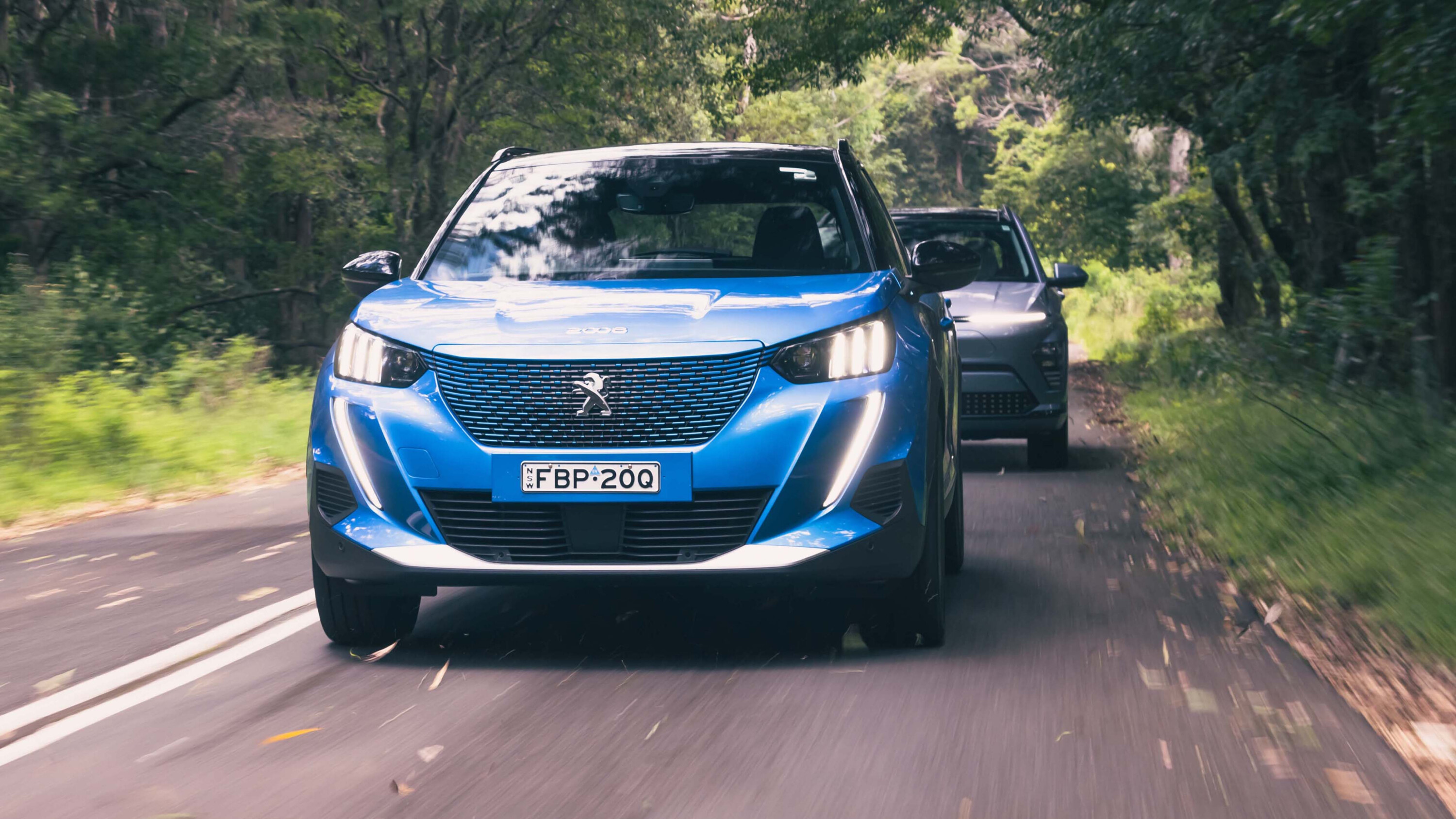
1
4th: Peugeot e-2008: 5.5/10
Things we like
- Small and chic
- Fast charging for a compact EV
Not so much…
- Clumsy ride and poor body control
- Expensive for such limited range
- Cramped cabin
Youthful looks and daring LED lighting details mean that, on appearance alone, the e-2008 is off to a great start.
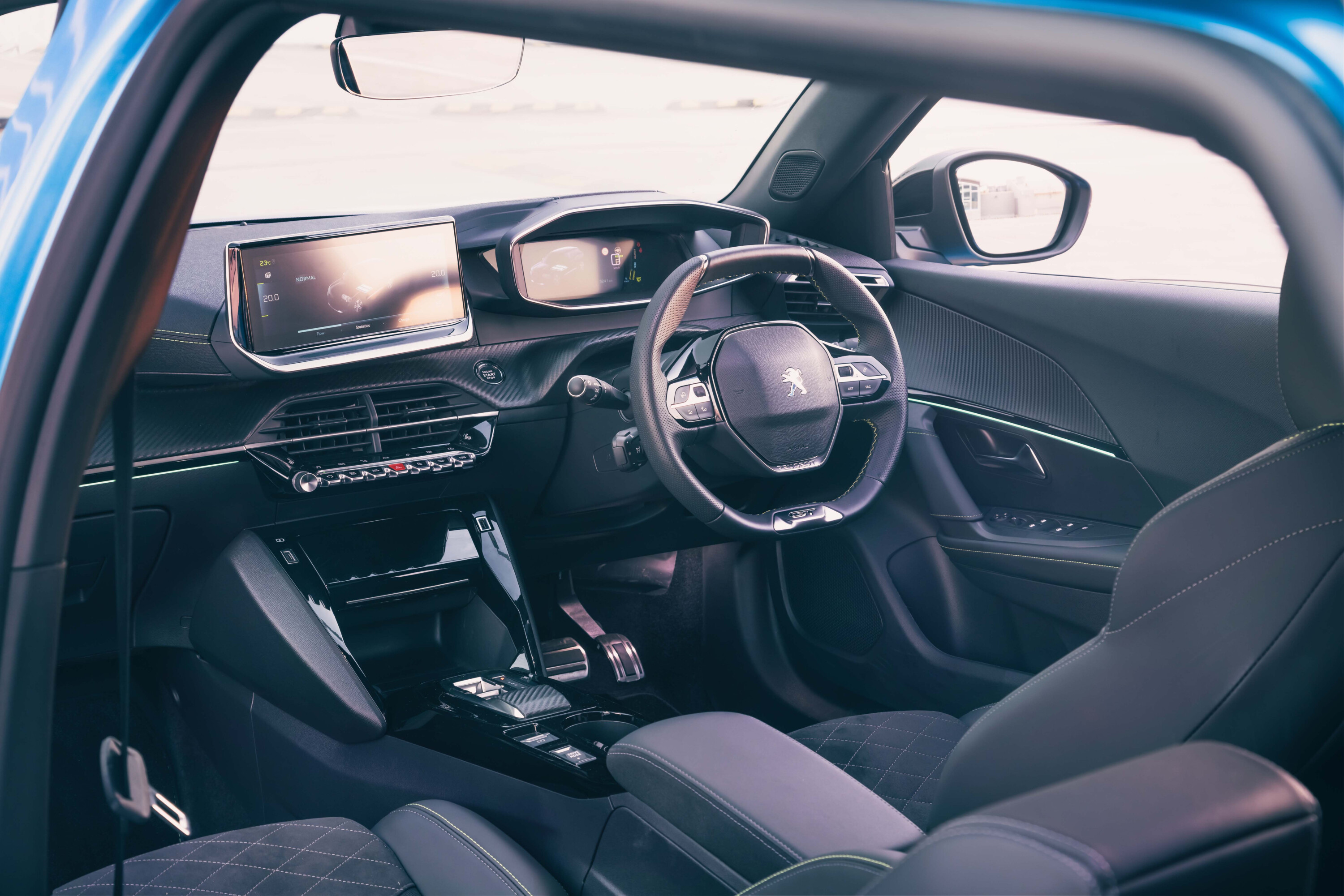
The cabin continues this theme with clever capacitive touch buttons for seat heating to complement the signature row Lion’s claw switches. It has the best interior door pulls on test, too.
Practicality is good with generous door bins, two cup holders in the centre console, a slick hidden phone tray, and both USB-A and C ports for device charging. Quality soft materials and contrast stitching in obvious places fail to justify the Pug’s steep price – digging deeper reveals some less-than-stellar fit and finish, especially around the dash.
1
The Peugeot’s unique driving position divided testers. Its small squared-off steering wheel has to sit low so you can view the dazzling 3D digital driver’s display.
With the driver’s power seat adjusted (featuring massage function!) I found the position agreeable though Jez struggled to get comfy.
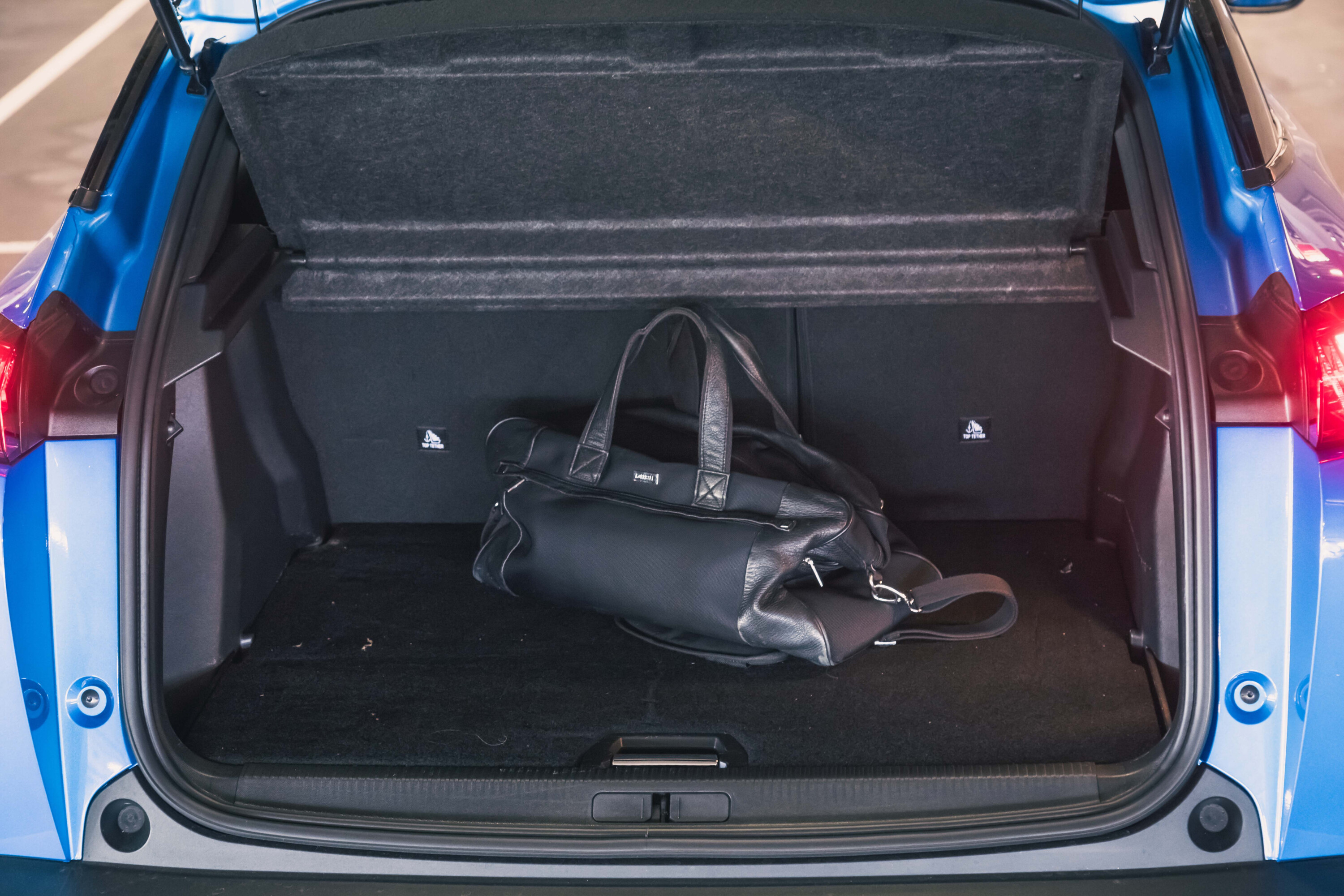
The compact rear seat has twin USB charge points, though is compromised by the remains of a transmission tunnel, hard seat backs, no centre armrest or vents, and a restricted view out. The Peugeot has the smallest boot but smart touches like shopping bag hooks, a bright light, space beneath the false floor for charging cables, a minimal load lip, and seats that fold nearly flat.
1
Off the mark, the e-2008 was surprisingly nippy considering there’s only 100kW and 260Nm to propel 1548kg worth of small SUV.
It struggled beyond 50km/h, though, ending up 15km/h slower than the other three in a rolling acceleration test.
It was the least efficient in the suburbs at 14.7kWh/100km between our sunrise rendezvous and photo spot number two. Regen is either off or on, and it doesn’t come to a full stop.
Consumption increased in the country to a point where we the Peugeot had to limp to a fast-charger with the air-con off. Still, thanks to the smaller 46.3kWh battery it’s the quickest to replenish with 101kW DC capability.
1
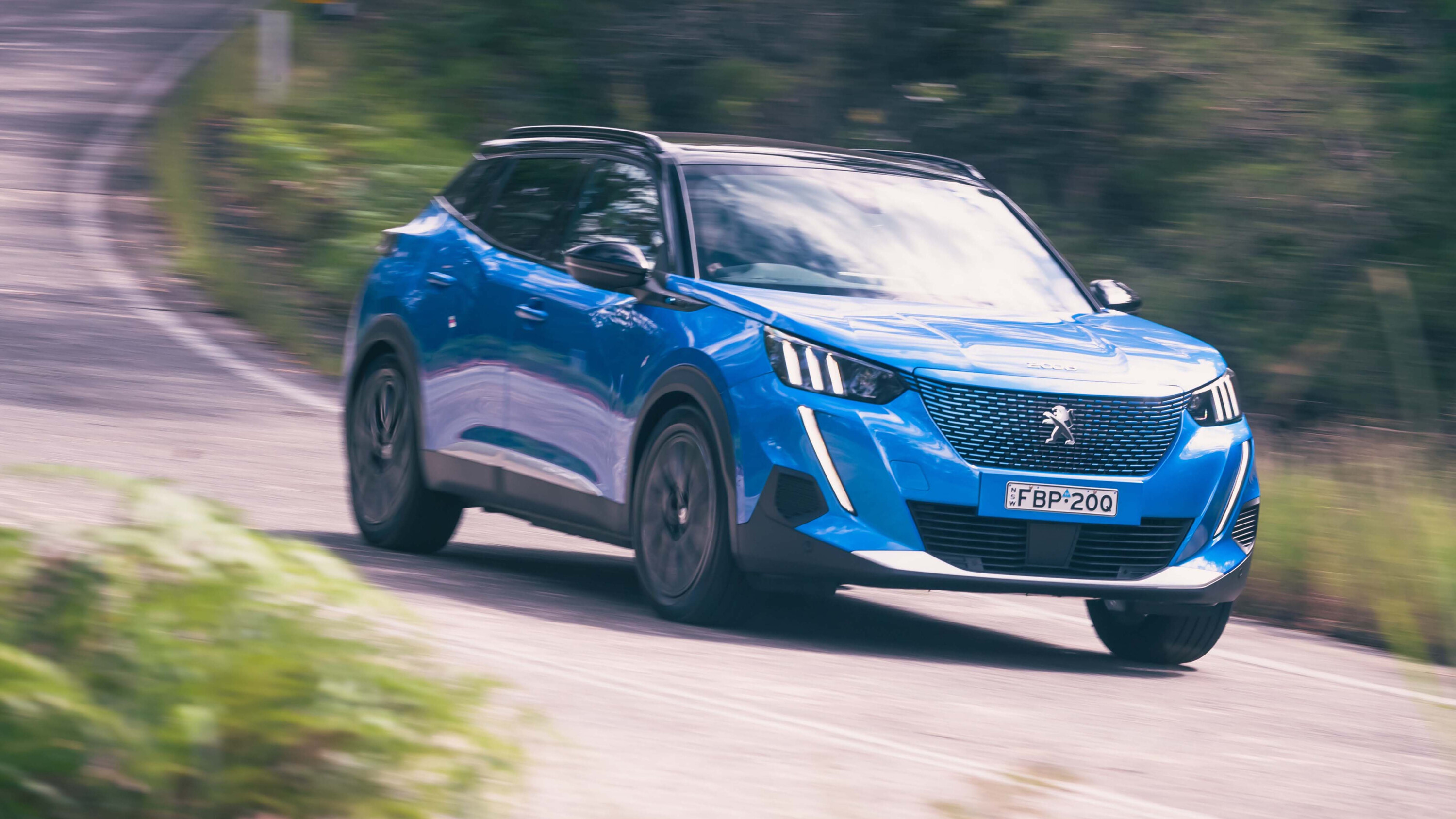
Suburban roads reveal a soft if slightly lumpy ride that could do with improvement.
The e-2008 was noisy with low-frequency suspension boom over bumps and tyre roar from coarse chip surfaces. Although the lightest, the Peugeot felt leaden on country roads and freeways – perhaps because it’s 301kg heavier than the featherweight petrol 2008 GT on which it’s based.
Where French cars typically step up to the challenge of a technical road, the e-2008 floundered. A lack of body control and vague steering eroded any confidence during turn-in and, despite a total lack of feedback, the wheel kicked back strongly over mid-corner bumps.
It’s a ragged ride at speed yet not one that improves when you slow down to find a flow. As Ponch noted, the e-2008 experience lacks rhythm and groove.
MORE
Everything Peugeot
1
? 3rd: BYD Atto 3: 7.5/10
Things we like
- Affordable
- Spacious interior
- Decent ride comfort
- LFP battery tech
Not so much…
- Poor tyre choice
- Chassis localisation would improve road holding
- Slow charging
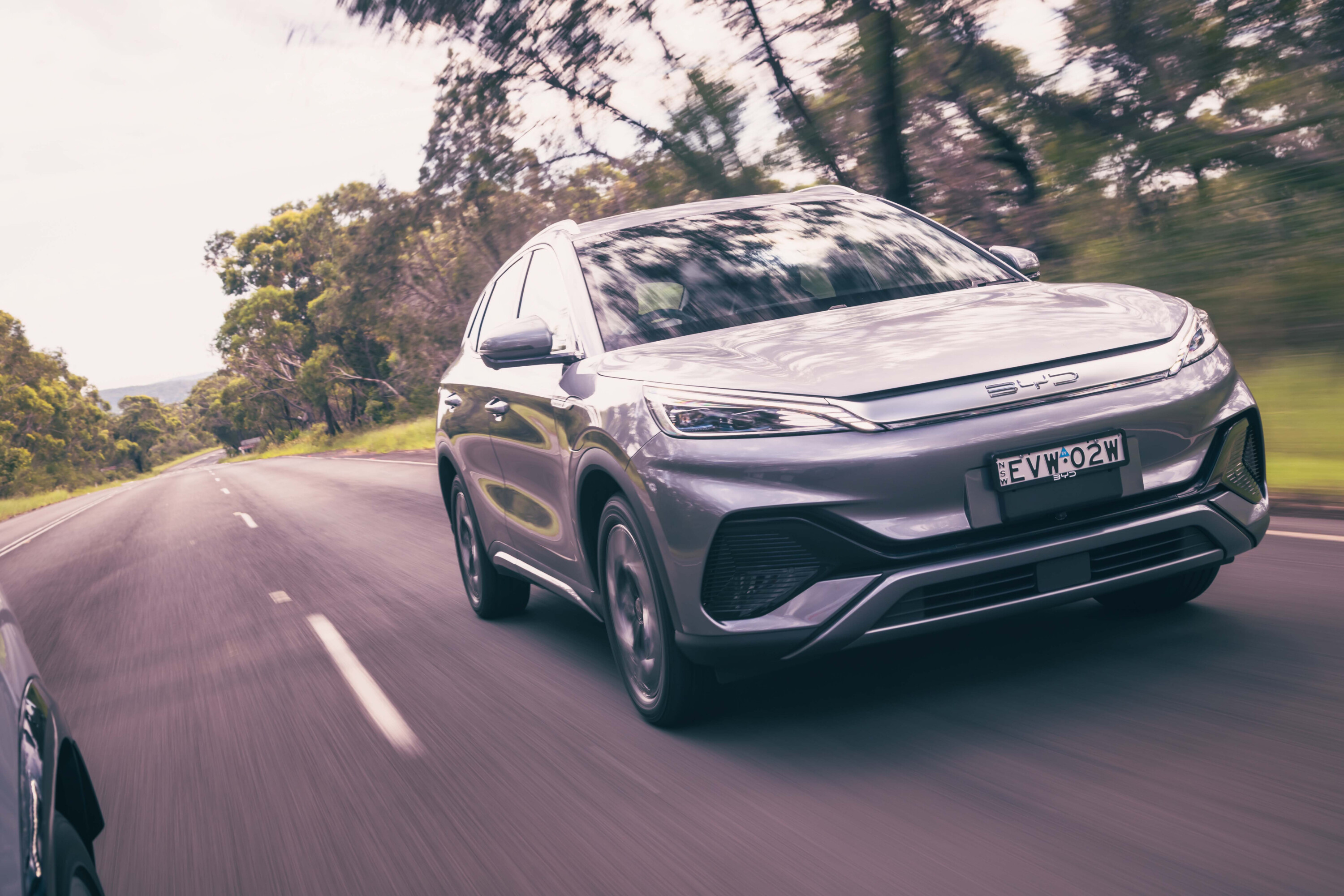
Every other vehicle allowed us to reset the trip computer to track consumption but the Build Your Dreams stubbornly shows its overall lifetime figure or what’s happened in the last 50km. A frustrating quirk that tells the tale of a great value vehicle a little light on for maturity.
Calculating efficiency using charge lost vs kilometres saw the BYD finish last, recording 19kWh/100km. Its more stable LFP battery chemistry is slower charging (80kW) but you can regularly charge to 100 per cent without accelerating battery degradation, unlike the others.
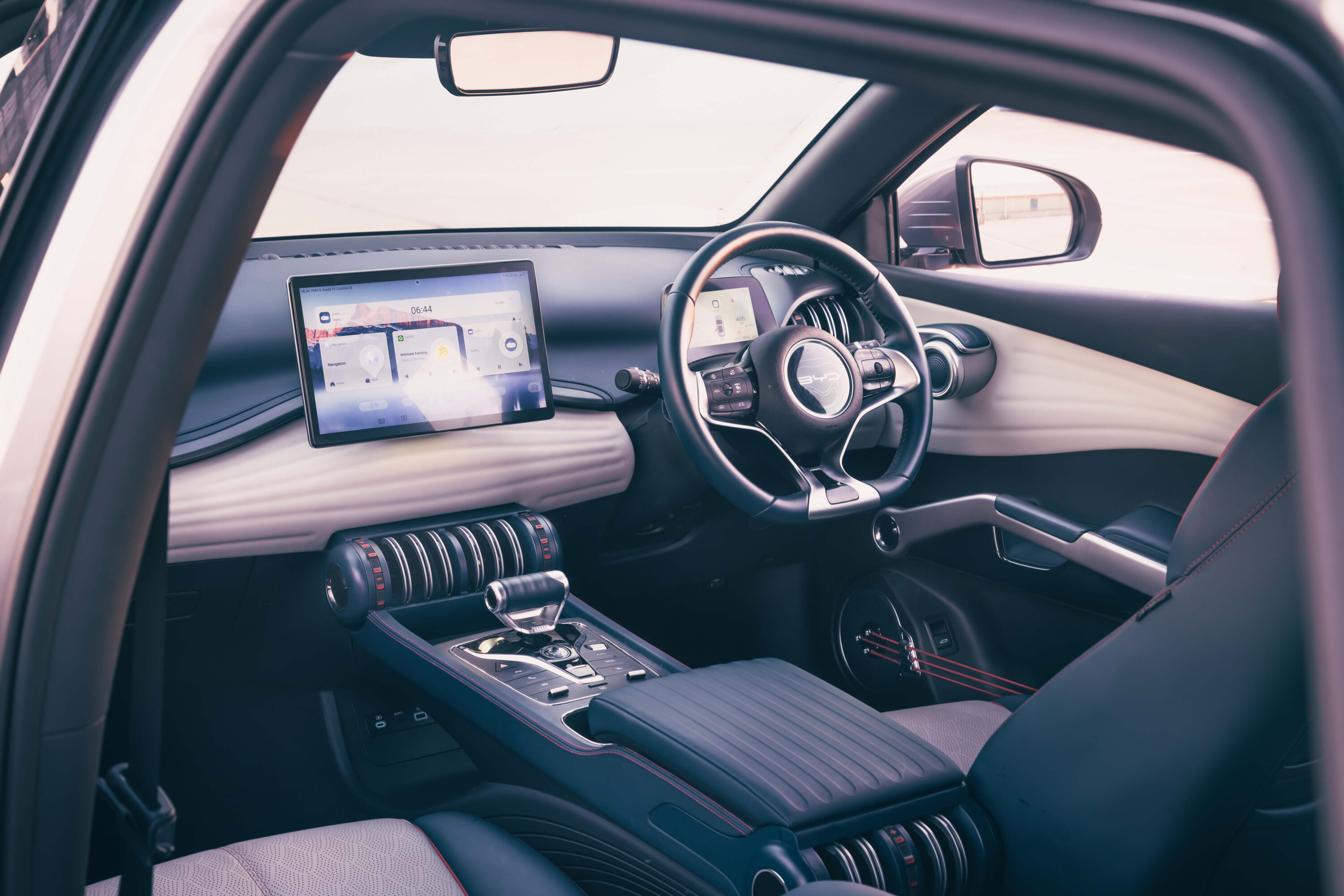
The BYD is also handily the cheapest here, undercutting the short-range Pug despite more modern equipment like a rotating (why?) 12.8-inch touchscreen, technicolour ambient lighting and connected Android Automotive-based software that allows you to run Spotify natively.
1
Its internal mapping is the closest in vibe to Google/Apple Maps, and like the Peugeot, a cable can be employed for Apple CarPlay/Android Auto phone mirroring.
The small digital driver’s display feels half-baked compared to the centre screen and the cabin materials are best described as strange. Design solutions for problems no one had? The BYD has ’em: guitar string door bins and vege-chopper vents to name a few. These quirky features seem odd given BYD’s head of design Michele Jaunch-Paganetti spent 18 years at Mercedes-Benz’s Italian Advanced Design studio.
Back seat space is equal best with Kona – that means generous width and leg room. Snags include the bulky bucket seats (that aren’t particularly supportive or comfortable for front passengers) that impede the view out and sticky vinyl upholstery that gets hot and sweaty in summer.
1
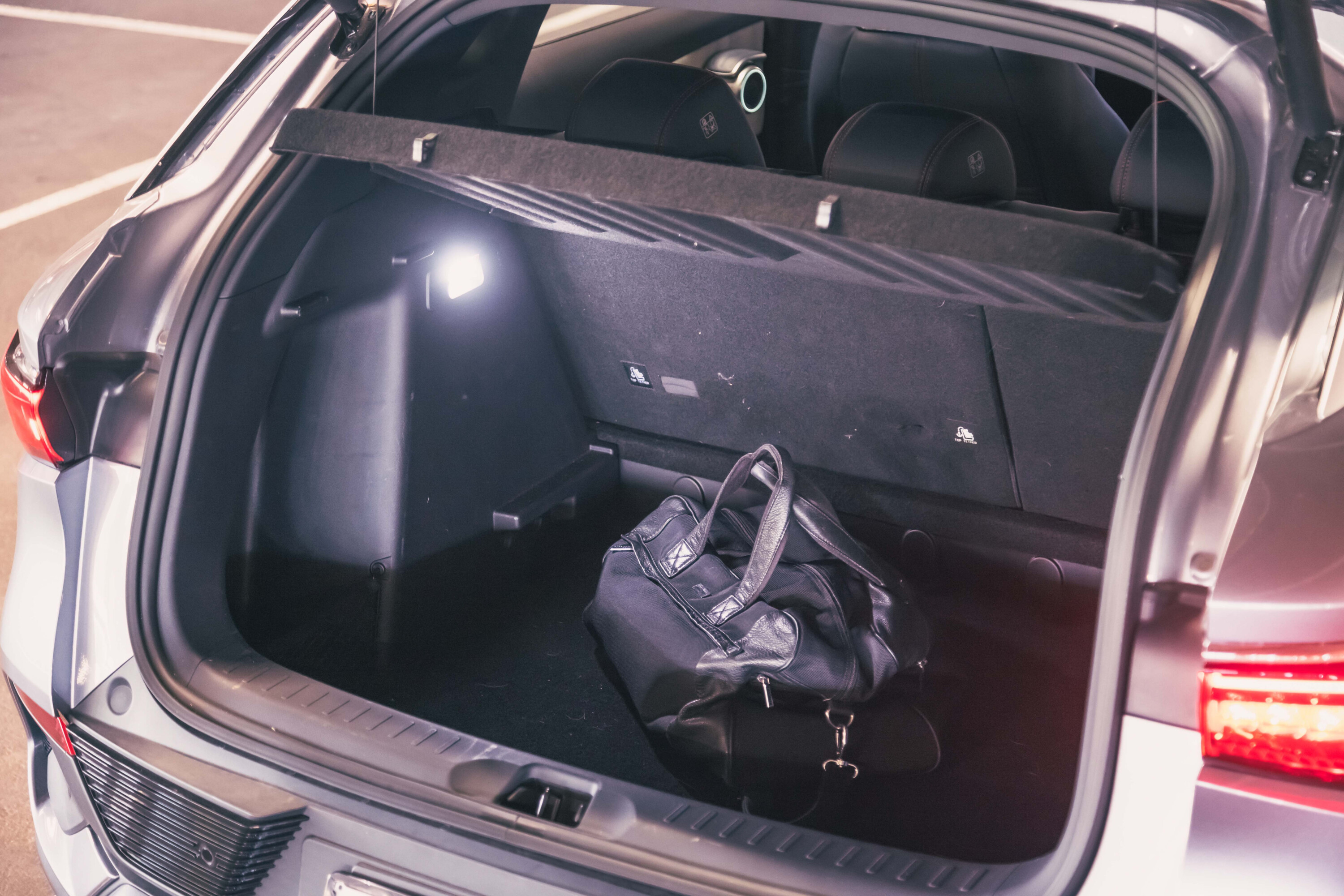
Under the power tailgate, the BYD is a winner with 440L of VDA-approved space, 40:60 split seats that fold flat, a twin-level boot floor, two storage pockets off to the side and a tyre repair kit.
Our test car (not a press car but a customer demo vehicle) suffered from some build anomalies like a creaky A-pillar trim and door cards, as well as unreasonably weak air conditioning.
The Atto’s lane-keep assist was intrusive at times, too.
1
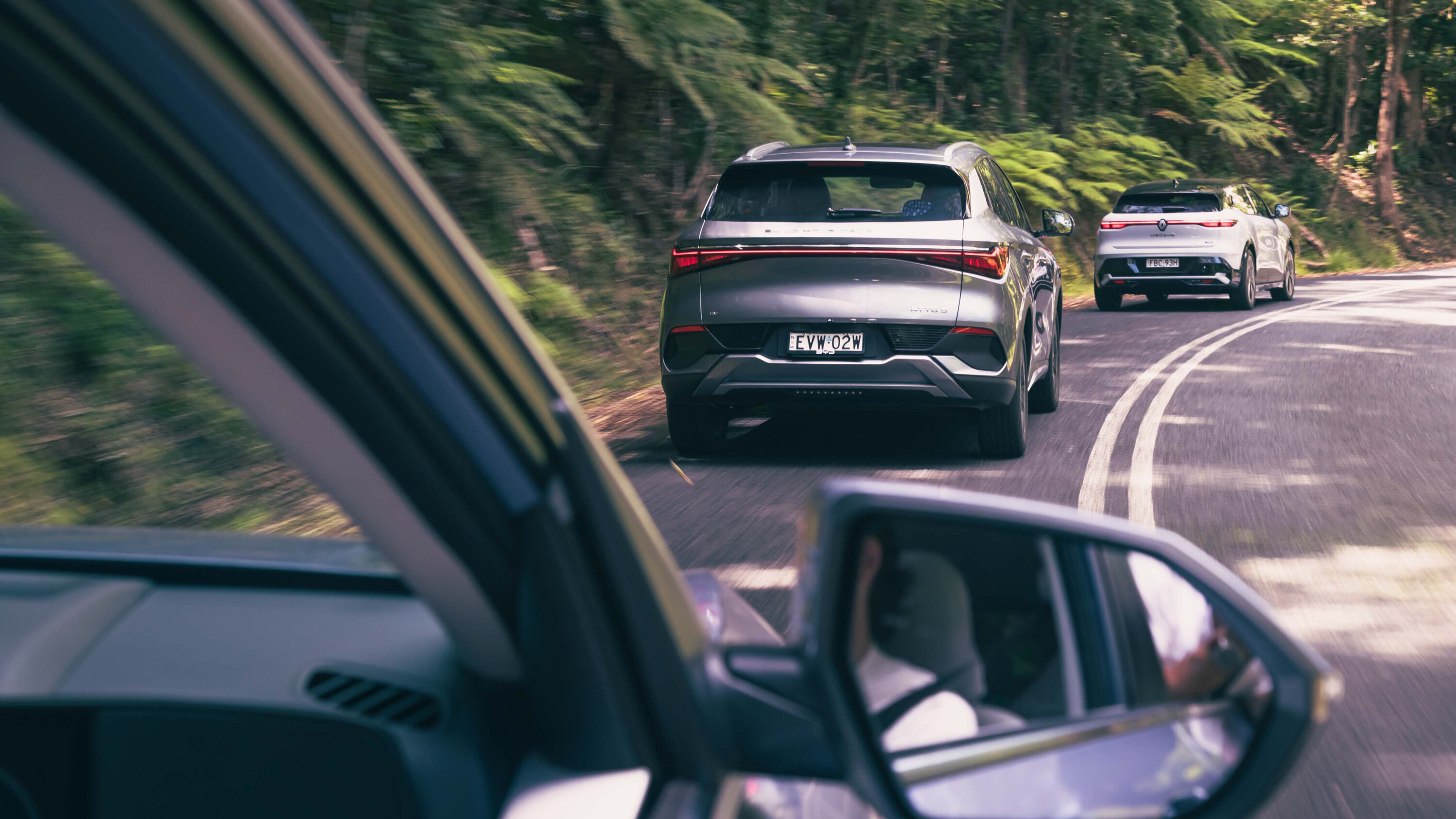
We suspect the 0-100km/h claim of 7.2 seconds wasn’t set with the Atlas Batman tyres. The budget rubber is all too easily overcome by the Atto’s 150kW/310Nm front-mounted electric motor.
More adjustment for the regenerative braking and a firmer feel to the brake pedal are two things for BYD engineers to work on for the facelift.
Yet it came as a surprise that the BYD was more sophisticated than the Peugeot. Put that down to its multi-link rear end and underpinnings designed to carry the battery’s weight. Occasionally spooky lateral body movements and lifeless steering aside, the plenty comfy BYD ticks most boxes for a family vehicle.
MORE
Everything BYD
1
? 2nd: Renault Megane E-Tech: 7.5/10
Things we like
- Concept car style
- Slick drivetrain calibration
- Responsive steering
- Efficiency and charging
Not so much…
- Cramped back seat and lacklustre boot
- Kilometre-limited warranty
- Not cheap
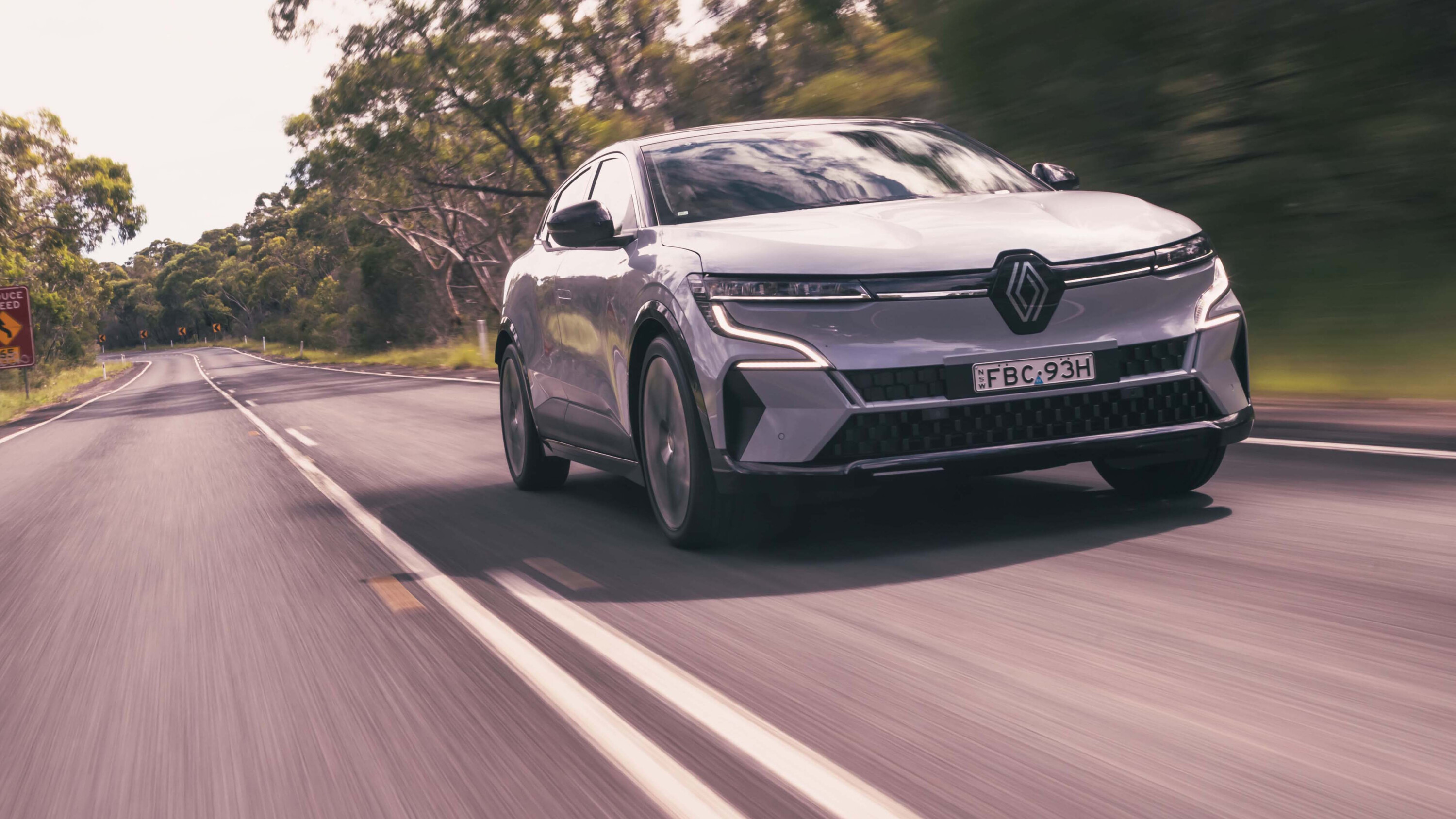
Attractive the Peugeot may be, Renault’s design team – led by Laurens Van Der Acker – managed to bring the 2020 eVision concept to life.
Sitting squat with an almost impossibly low roof line and caricature 20-inch alloy wheels, the E-Tech appears to have escaped the motor show. Any ties to Meganes of old are strenuous – perhaps there’s some Megane I and III coupe influence in the E-Tech’s organic lines – meaning this is Meg’ redefined.
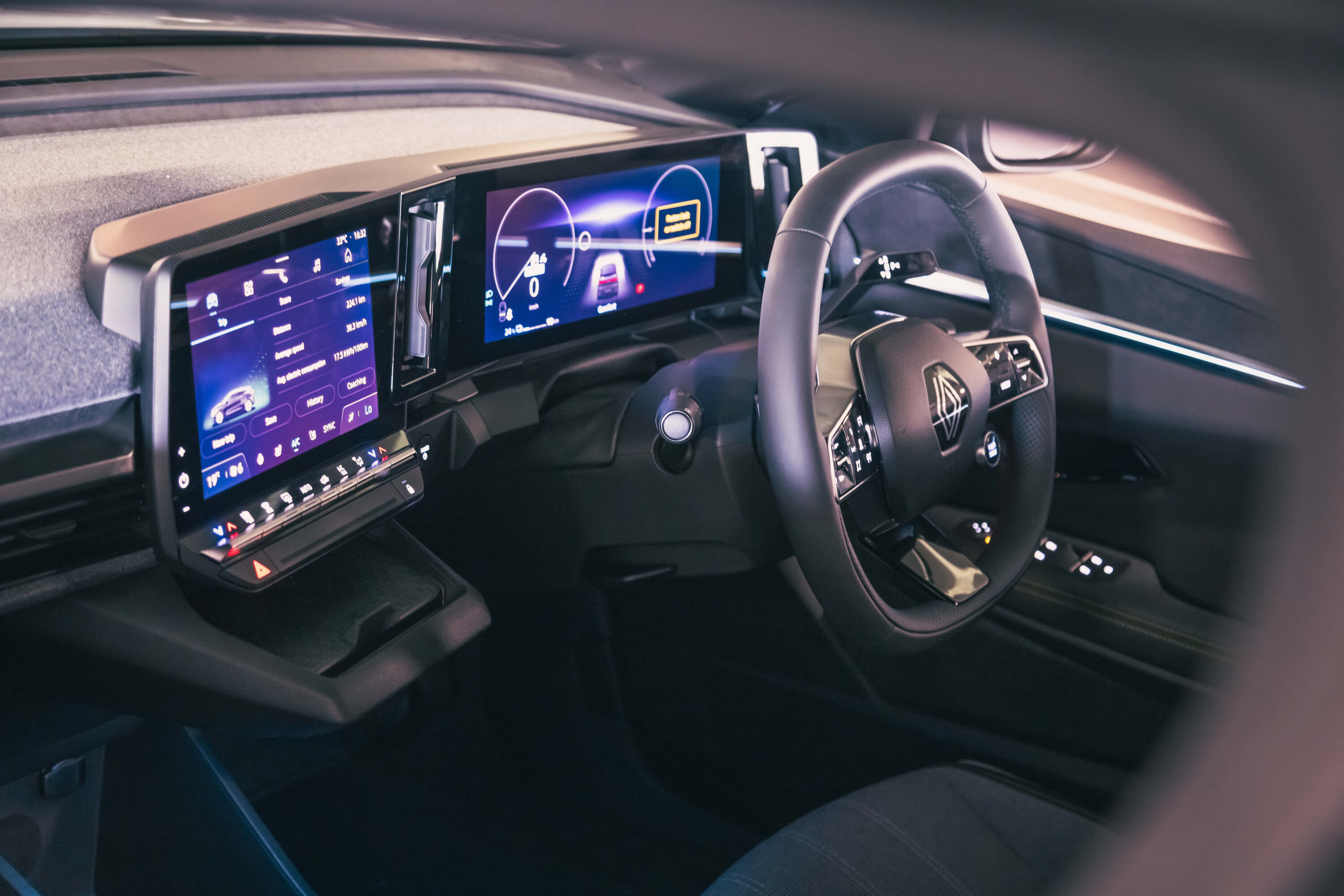
Inside the shapeliness is highlighted by tactile recycled materials that are far above the biscuit-tube plastics of yesteryear’s Renaults. The 12.3-inch digital driver’s display has beautiful graphics and there’s a prominent wireless charging pad to support cable-free phone mirroring.
1
Right hand-drive models get a small (in present company) 9.0-inch touchscreen for the R-Link HMI and if you go hunting there are scratchy plastics.
The airy console provides plenty of storage options with configurable bottle holder/odds and ends storage. Typically generous door bins and a comfy centre armrest with covered storage finish it off. Manual seat adjust is all you get and there’s no chair ventilation or leather upholstery.
These things didn’t bother testers as the fabrics are very agreeable, the driving position excellent, the seats supportive, and the square steering wheel pleasing… but at $65K the E-Tech’s family value equation isn’t outstanding.
1
That’s before you arrive at the back seat, which suffers from the small rear windows that don’t let much light in and no sunroof to help. The Megane features vents and two USB-C charge points but space is tight.
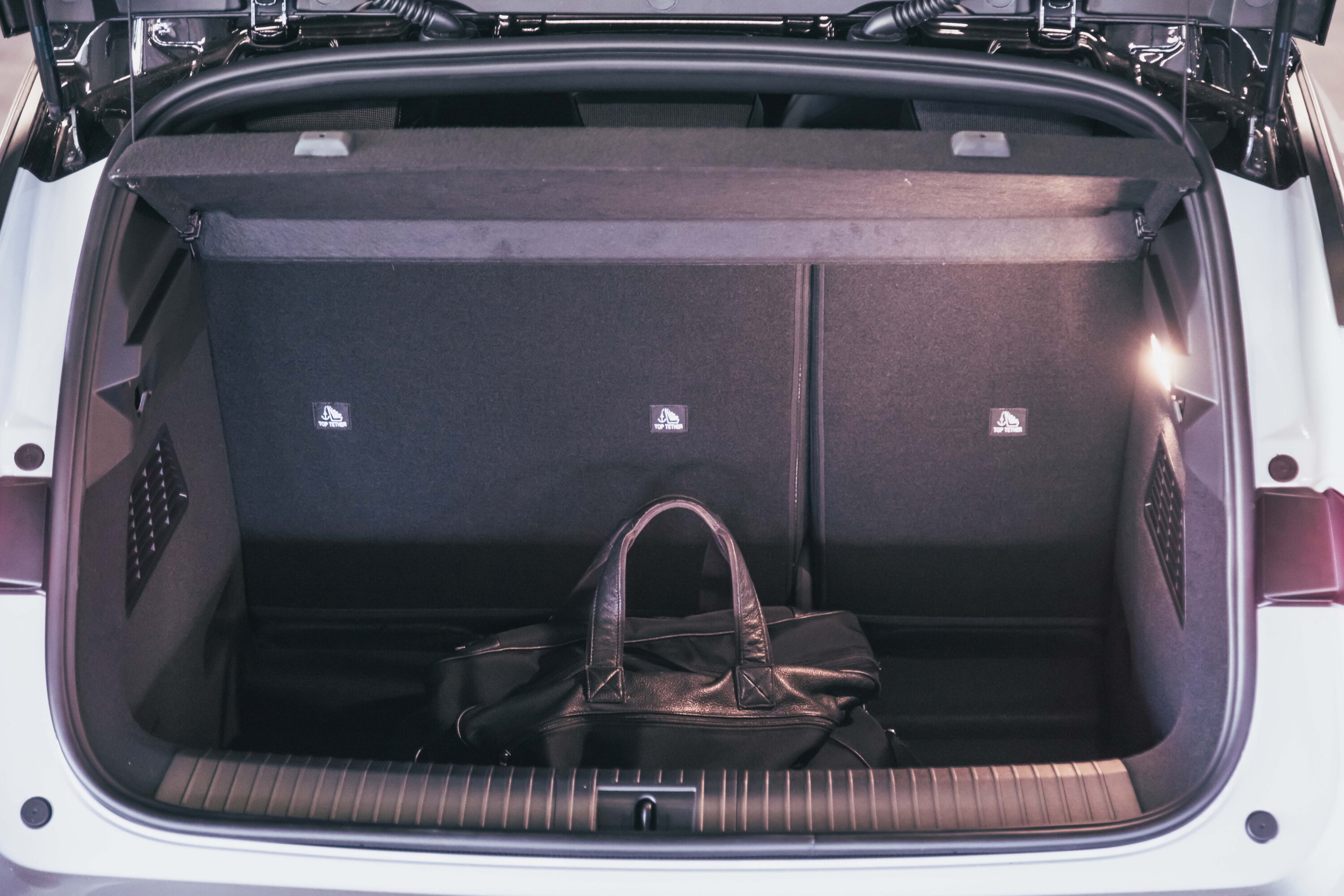
Renault promises a 440L boot but it’s short and tall with a pronounced load lip and cyclists won’t like that the load bay doesn’t flatten out with the seats folded. The awkward opening button suggests a power tailgate but it’s all manual here.
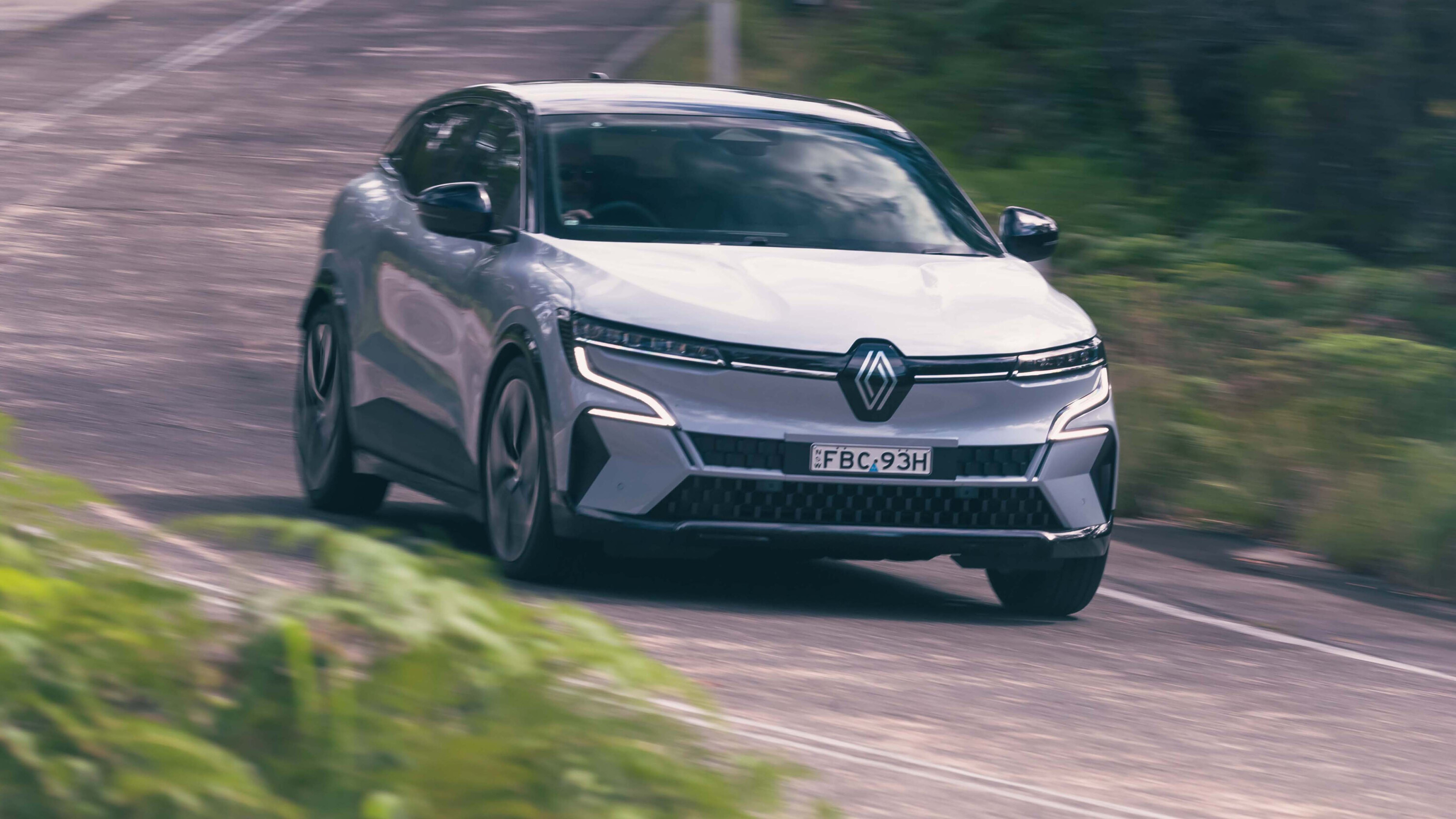
The Megane E-Tech’s ride is beautifully resolved. Firm and athletic, no doubt, but sharp edges are rounded off by the springs and dampers. This translates into the most dynamic car on a good backroad though we were found wanting for a bit of extra steering weight for the delightfully accurate 2.2-turn lock-to-lock rack even in Sport mode.
1
The front-mounted 160kW/300Nm e-motor never felt lacking in punch and drivetrain calibration is up there with the Kona.
Four drive modes manipulate steering weight, regen management and drivetrain response with a ‘Perso’ configurable setting.
There’s no one-pedal option (it creeps like an auto) but the Renault’s wheel-mounted pedals mean you can adjust regen power between four settings on the go. The Megane was comfortably the most efficient giving it almost the best real-world range. Its fast 130kW DC charging rate would make it most usable on a trip as well.
MORE
Everything Renault
1
? 1st: Hyundai Kona: 8/10
Things we like
- Excellent all-rounder
- Comfortable ride
- Power and response
- Spacious cabin
Not so much…
- Nannying safety aids
- Price crossover with bigger Ioniq 5
Lining up this comparison we had the mid-spec Kona Extended Range ($58,000) in mind but only the Premium was available for our dates.
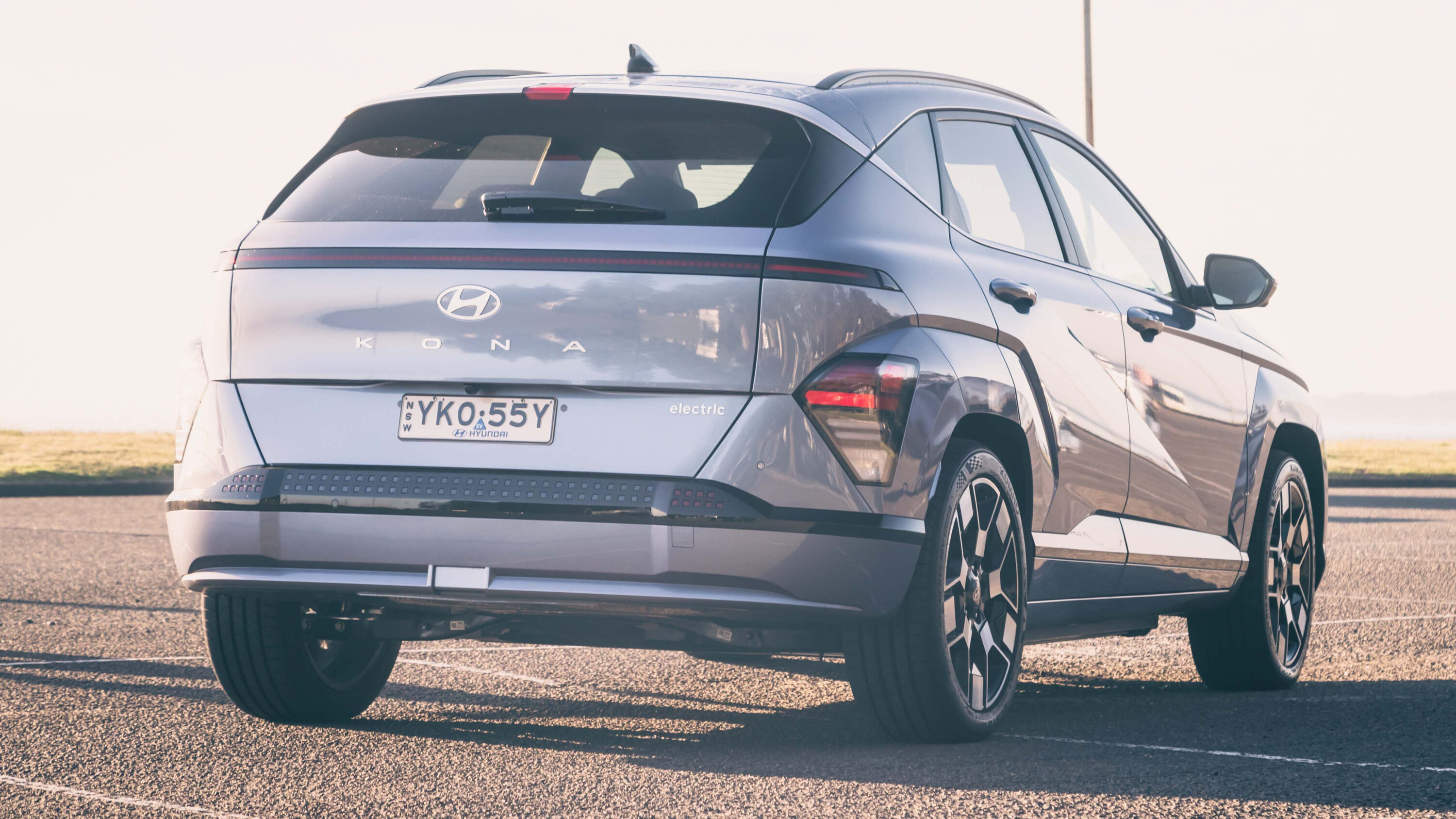
The Premium’s biggest problem comes not from this quartet, but the cheaper base Ioniq 5 which is bigger and uses a bespoke EV platform with faster charging.
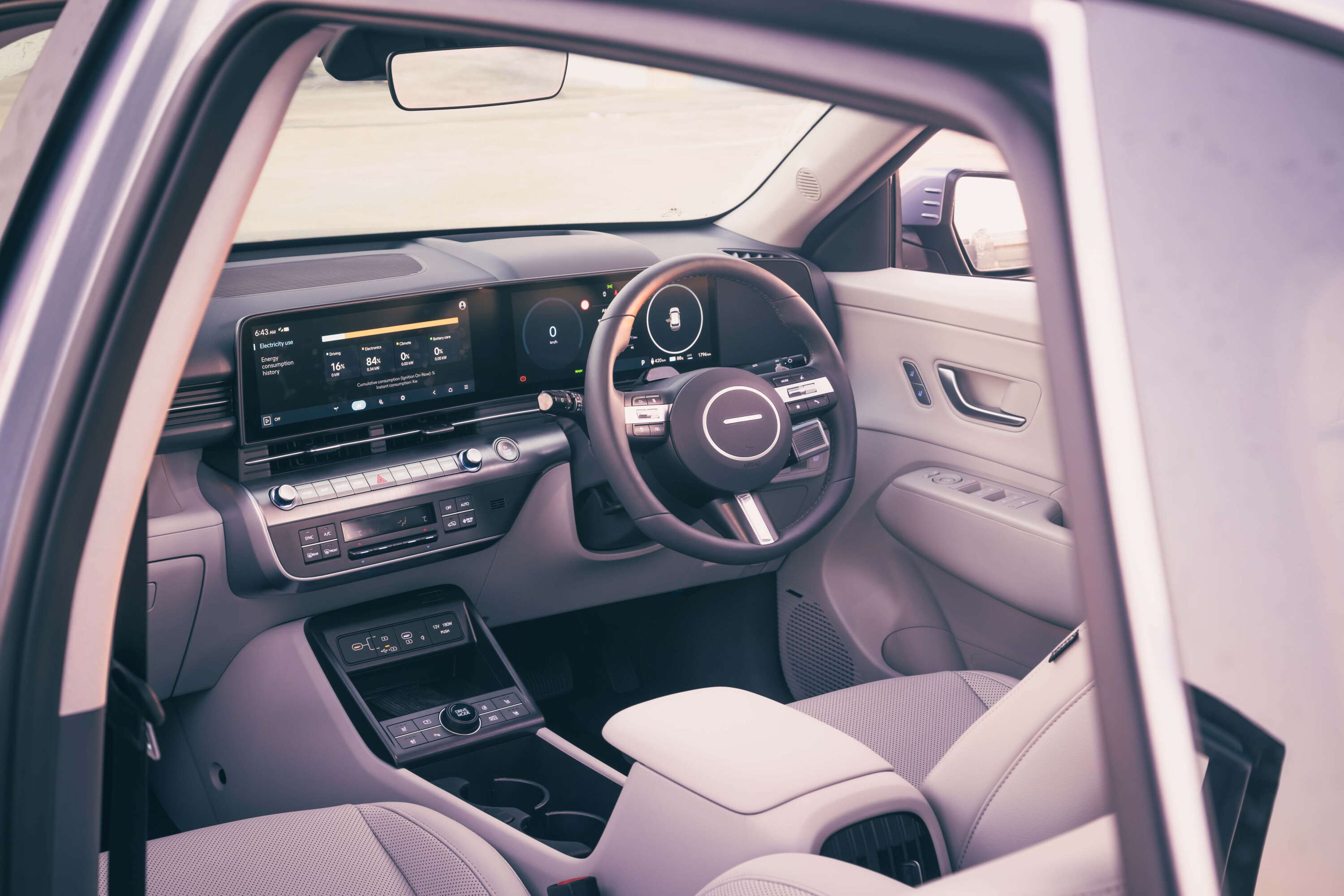
Yet the new Kona has a convincing response for (nearly) every question it’s asked. An interior that feels remarkably premium for a small SUV (yes there are hard plastics if you go looking) headlined by soothing light leather upholstery and heated/ventilated seats for front occupants.
1
Technology is sharp with twin 12.3-inch displays and attractive graphics that are distinctly Hyundai.
Wireless CarPlay wasn’t enabled in our car but an over-the-air software update promises it shortly. Storage solutions abound just like the Renault, there’s the expected wireless charging and myriad USB ports from front and rear passengers as well as a three-pin socket.
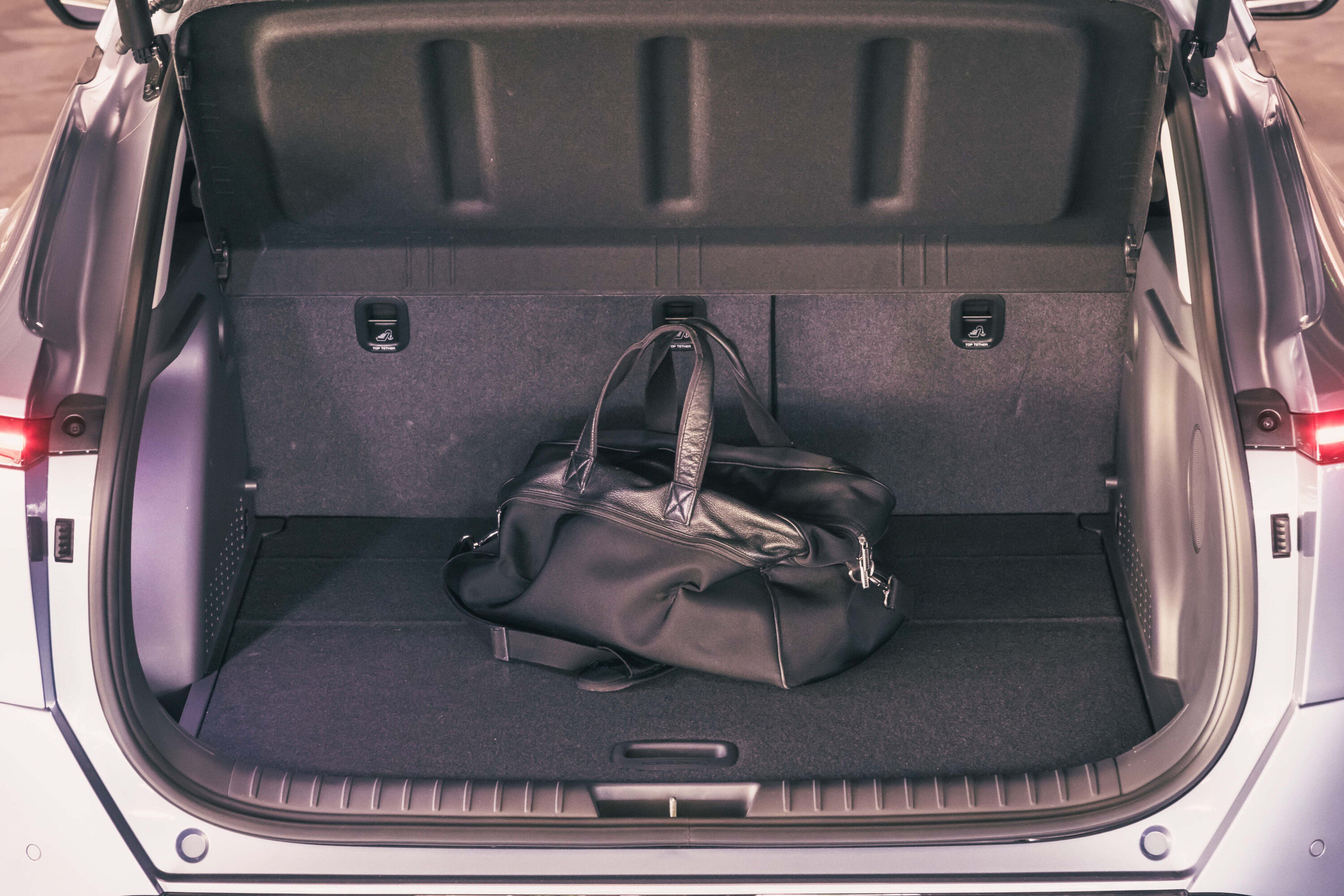
In the second row, it’s a matter of preference whether the BYD or Kona is best. A fold-down armrest, wide bench, flat floor, and air vents make this a genuine family vehicle. The boot is biggest on test (507L) with a twin-height floor and bag hooks. It’s the exclusive carrier of a temporary spare tyre in this company, too.
1
On the road, the Kona’s well-documented nannying driver attention and speed sign monitoring continue to annoy.
You can now shortcut to the menu using the configurable star button but it’s still not good enough. That four-star ANCAP rating needs mentioning, too, though the Kona was knocked down due to driver assist scores rather than crashworthiness.
Aside from those niggles, the Kona is the star all-rounder here. Even on the Premium’s 19s (that sap 61km WLTP range compared to the Extended Range’s 17s) it rides well. Cabin noise suppression is right up there with the Renault and there’s minimal audible suspension intrusion.
1
It feels very familiar behind the wheel with the paddles to adjust regen efficacy from coasting to ‘i-Pedal’ model that can bring the Kona to a full stop.
It’s brisk away from the lights without the scrabbliness of the old Kona (thanks to the torque-restricted front motor). Visibility is the best of the lot and Hyundai’s 360-degree camera quality matches the BYD’s.
The Hyundai doesn’t fall over on a testing road either. Its brake feel and steering aren’t as sporty as the Megane’s, but the chassis is still plenty talented and – crucially – safe. The reassuringly weighty tiller adds confidence to proceedings.
MORE
Everything Hyundai
VERDICT
Leaving price out of the equation it’s easy to pick the all-round excellent Kona as a winner, but saddled with an ask north of a basic Ioniq 5 and Tesla Model Y the tested top-spec small SUV had a tougher time when it came to sifting through spec sheets.
The Peugeot’s status as a quirky curio best suited to the suburbs was reached unanimously, though splitting the Renault and BYD was more difficult.
The BYD drives well enough and is cracking value, yet its gimmicky styling, asterisk-filled warranty (four years for lights and suspension, three years for the infotainment and so on) and slow charging are detractors.
1
The Renault’s five-year/100,000km warranty is shorter but it does cover all components.
It’s also a more pleasant car to drive with better efficiency and faster charging giving it the edge over the BYD. That it’s a desirable object does it no harm.
Ultimately, it’s the Hyundai that emerges with first place honours. The Premium probably would have won on its own but taking into account the broad range that kicks off at $54,000 is what sealed the deal. It’s undoubtedly the most complete and well-engineered electric small SUV on sale today.
Restricted movement
As more buyers consider EVs, we’re duty-bound to educate on charging and driving etiquette. Despite WLTP being closer to real world, we rarely match the consumption figure on Australian roads either.
Charging most EVs beyond 80 per cent is not advised. The exception is LFP chemistry batteries as found in the Atto 3, as well as base Teslas and MGs, where 90 per cent is safe.
That means your functional range on a trip is much shorter than the quoted WLTP range, especially leaving 10 per cent in the tank as a safety margin. Our results revealed functional ranges of 179km for the e-2008, 244km for the Megane E-Tech, 254km for the Atto 3 and 256km for the Kona.
Specifications
| Model | BYD Atto 3 Extended Range | Hyundai Kona Electric Premium Extended Range | Peugeot E-2008 GT | Renault Megane E-Tech Techno EV60 |
|---|---|---|---|---|
| Motor | Front mounted single permanent magnet synchronous motor | Front mounted single permanent magnet synchronous motor | Front mounted single motor | Front mounted single synchronous with wound rotor |
| Max power | 150 kW | 150 kW | 100 kW | 160 kW |
| Max torque | 310 Nm | 255 Nm | 260 Nm | 300 Nm |
| L/W/H/W-B | 4455 / 1875 / 1615 / 2720mm | 4355 / 1825 / 1580 / 2660mm | 4300 / 1815 / 1550 / 2605mm | 4200 / 1768 / 1505/ 2685mm |
| Cargo space | 440-1340L | 507-1241L | 434-1467L | 440-1332L |
| Weight | 1750kg | 1795kg | 1548kg | 1642kg |
| 0-100km/h (claimed) | 7.3 seconds | 7.8 seconds* | 9.0 seconds | 7.4 seconds |
| Battery size (usable) | 60.48 kWh, LFP | 64.8 kWh | 46.3 kWh | 60 kWh |
| Consumption (tested) | 19.0kWh/100km | 17.7kWh.100km | 18.1kWh/100km | 17.4kWh/100km |
| Driving range (WLTP/tested) | 420km / 318km | 444km / 366km | 328km / 256km | 454km / 348km |
| DC fast charge | 80kW / 35 minutes | 100kW / 45 minutes | 101kW / 26 minutes | 130kW / 30 minutes |
| ANCAP | 5 * 2022 | 4* 2023 | 5* 2019 (petrol / diesel only) | 5* 2022 |
| Price | $51,011 | $68,000 | $59,990 | $65,000 |
⚡ 2024 Wheels Best EVs
Looking for an EV in a different size or price category? Visit our full Wheels Best EVs series at the links below.
? Wheels Best EVs
- Best Small Electric Car Under $40K
- Best Small Electric Car $40-50K
- Best Small Electric Car $50-60K
- Best Electric Small SUV
- Best Electric Midsize SUV
- Best Electric Midsize Sedan
? OVERALL WINNER: Best Electric Car Under $80K
COMING SOON
- Best Electric Large SUV
- Best Electric Small Luxury SUV
- Best Electric Midsize Luxury SUV
- Best Electric Luxury Sedan Under $100K
- Best Electric Luxury Sedan Over $100K
- Best Electric Performance Car
