What is the Climate Council?
The Climate Council is an independent organisation that advocates for lower emissions. It wants to see emissions drop quickly from 2025, with a 74 per cent reduction by 2030 and net zero by 2035.

The MG4 is a small electric car making waves in Australia.
Built on a dedicated electric vehicle (EV) platform, the hatchback is gaining praise for its sharp price-point, making the swap to electric a tempting choice.
In August 2023, it debuted in Australia, available in two models – Excite and Essence – and with three choices of battery sizes.
The MG4 introduces the company’s first electric vehicle (EV) utilizing the dedicated Modular Scalable Platform (MSP), aimed at delivering a sporty feel. Additionally, the high-performance MG4 X-Power electric hot hatch is set for its Australian release later this year.
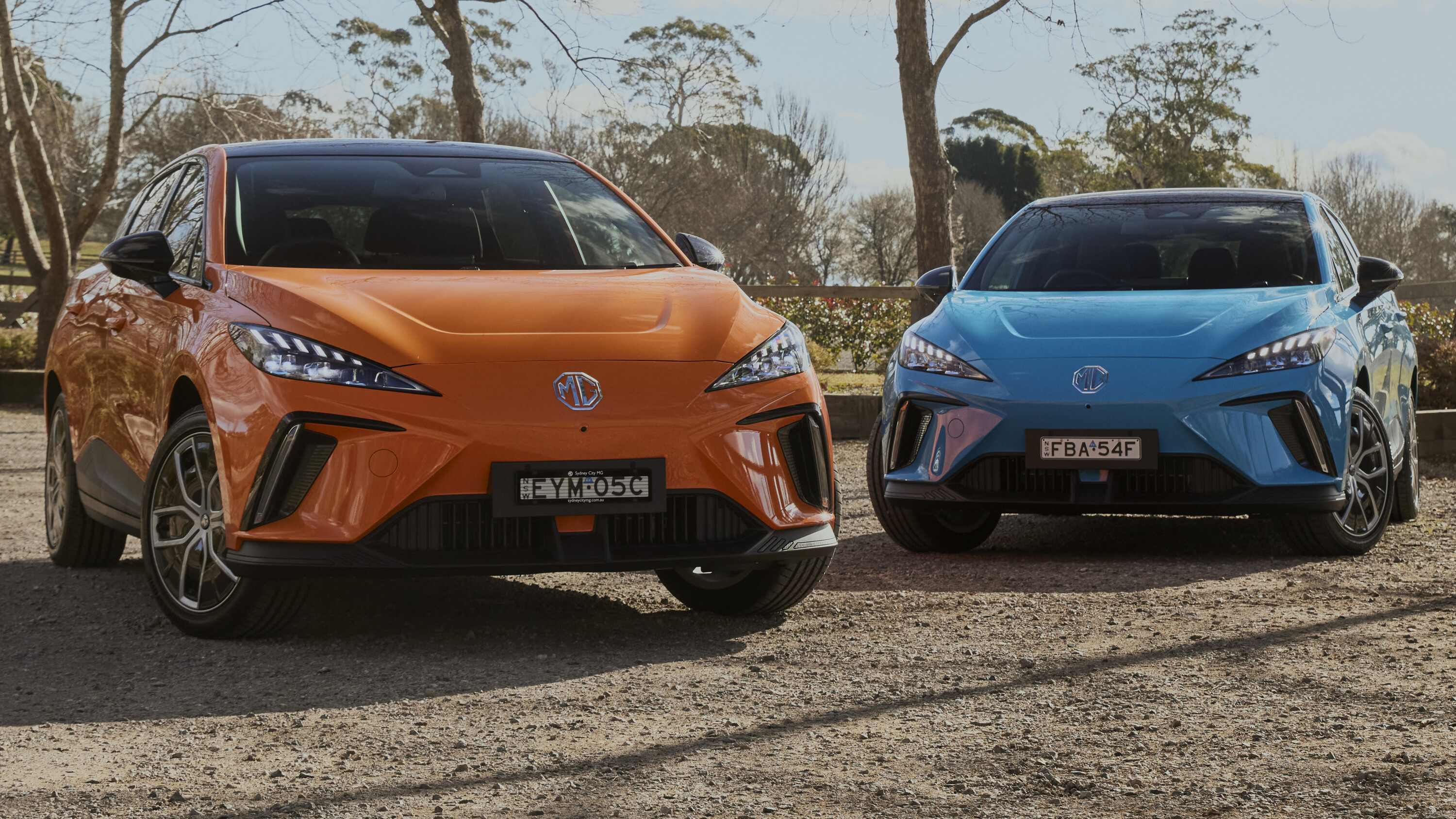
The MG4 Excite 51 is a five-seater small hatchback, and dimensionally is similar to petrol-counterparts like the Hyundai i30 and Toyota Corolla.
It comes equipped with a 50.8kWh usable lithium-iron-phosphate (LFP) battery pack, a single electric motor and is a rear-wheel drive.
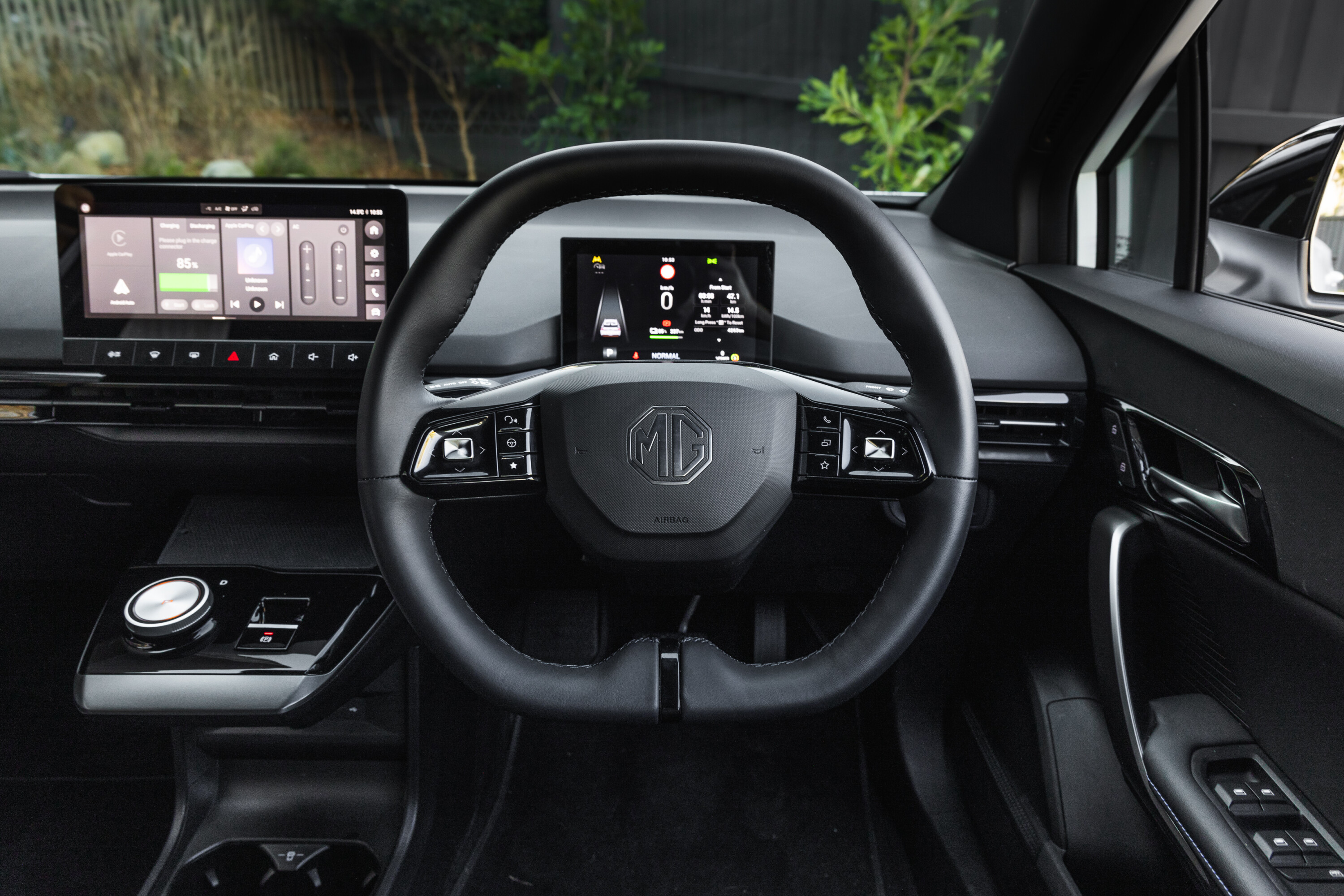
| 2024 MG 4 Excite 51 standard features | |
|---|---|
| 17-inch alloy wheels with aero covers | Fabric seats |
| 10.25-inch touchscreen | Six-way manually adjustable driver seat |
| Wired Apple CarPlay and wired Android Auto | Single-zone automatic climate control |
| 7-inch driver instrument display | Proximity key with auto start/stop |
| MG iSmart Lite mobile app connectivity | Electric park brake with auto hold function |
| Four-speaker audio | Overhead sunglass storage box |
| 10.5-watt USB-A and USB-C charging ports | Electrically adjustable wing mirrors with heating |
| Exterior vehicle-to-load (V2L) capability (separate accessory purchase required) | One-touch up/down driveru2019s side window |
| Auto LED and incandescent combination head- and tail-lights | Rear spoiler |
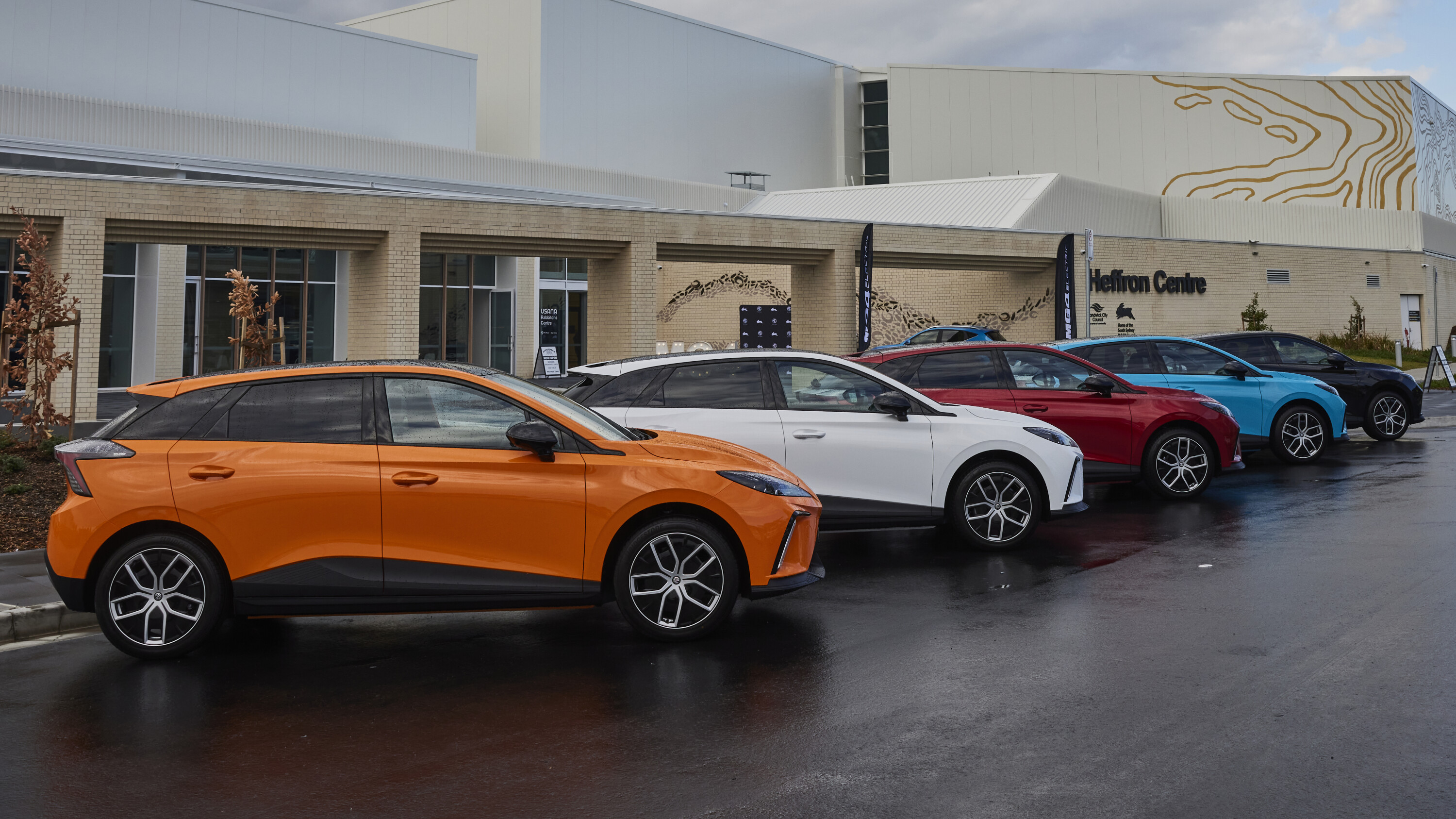
Excite 64, Essence 64 and Long range 77 variants – as the names imply – all have larger battery capacities meaning they provide additional driving range.
| 2024 MG 4 exterior colours | |
|---|---|
| Dover White | Standard |
| Black Pearl | $700 |
| Camden Grey | $700 |
| Sterling Silver | $700 |
| Brixton Blue | $700 |
| Volcano Orange | $700 |
| Diamond Red | $700 |
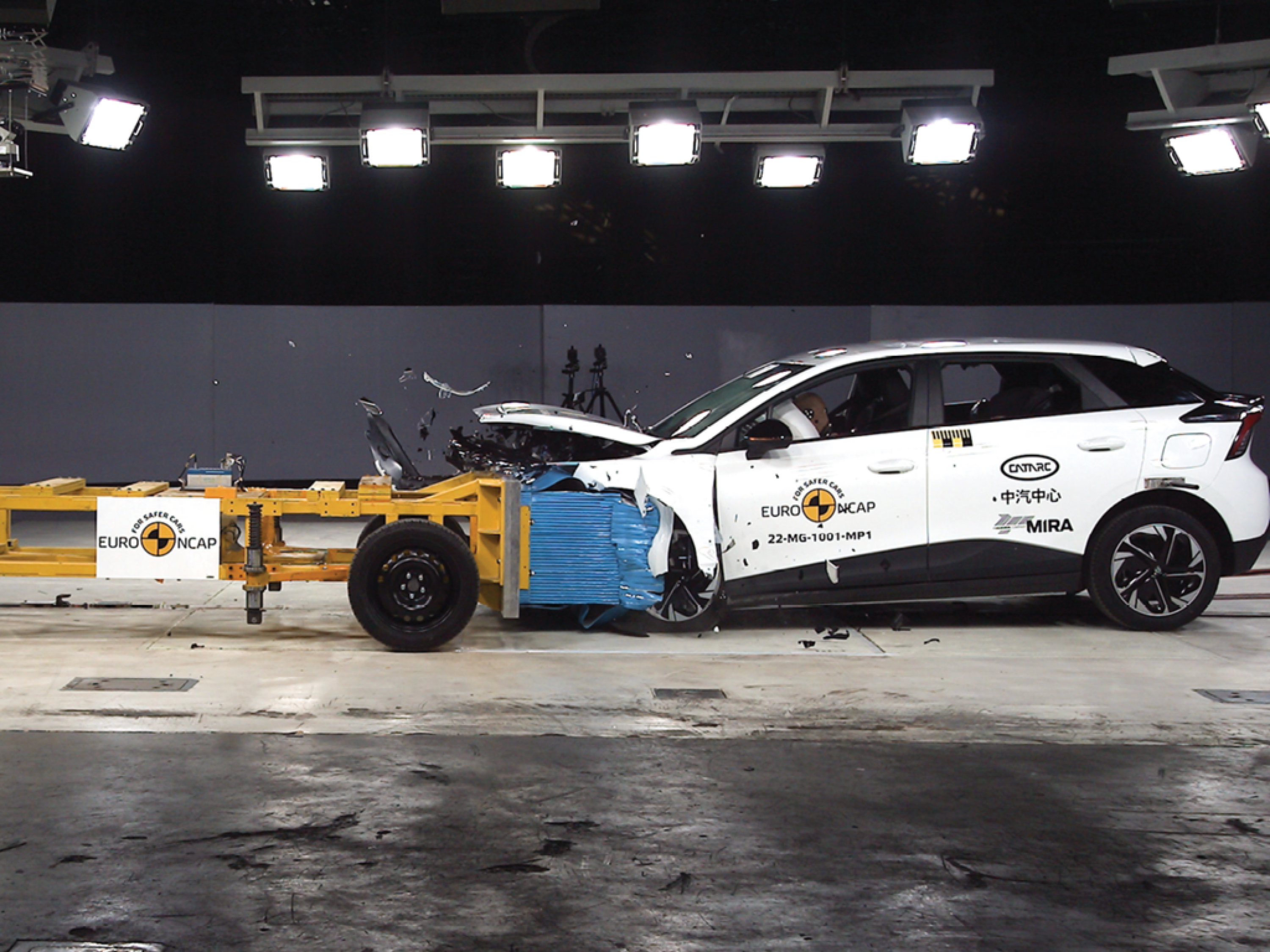
The vehicle comes equipped with a suite of collision prevention technologies, such as autonomous emergency braking, active lane support, and fatigue monitoring systems.
It demonstrated strong performance in tests for autonomous emergency braking, notably in situations involving turning across the path of an oncoming vehicle. However, it showed variable outcomes in tests for AEB Pedestrian scenarios.
As one of Australia’s cheapest electric cars, the MG4 Excite faces competition from other budget-friendly electric hatch, sedan and small SUV options, including:
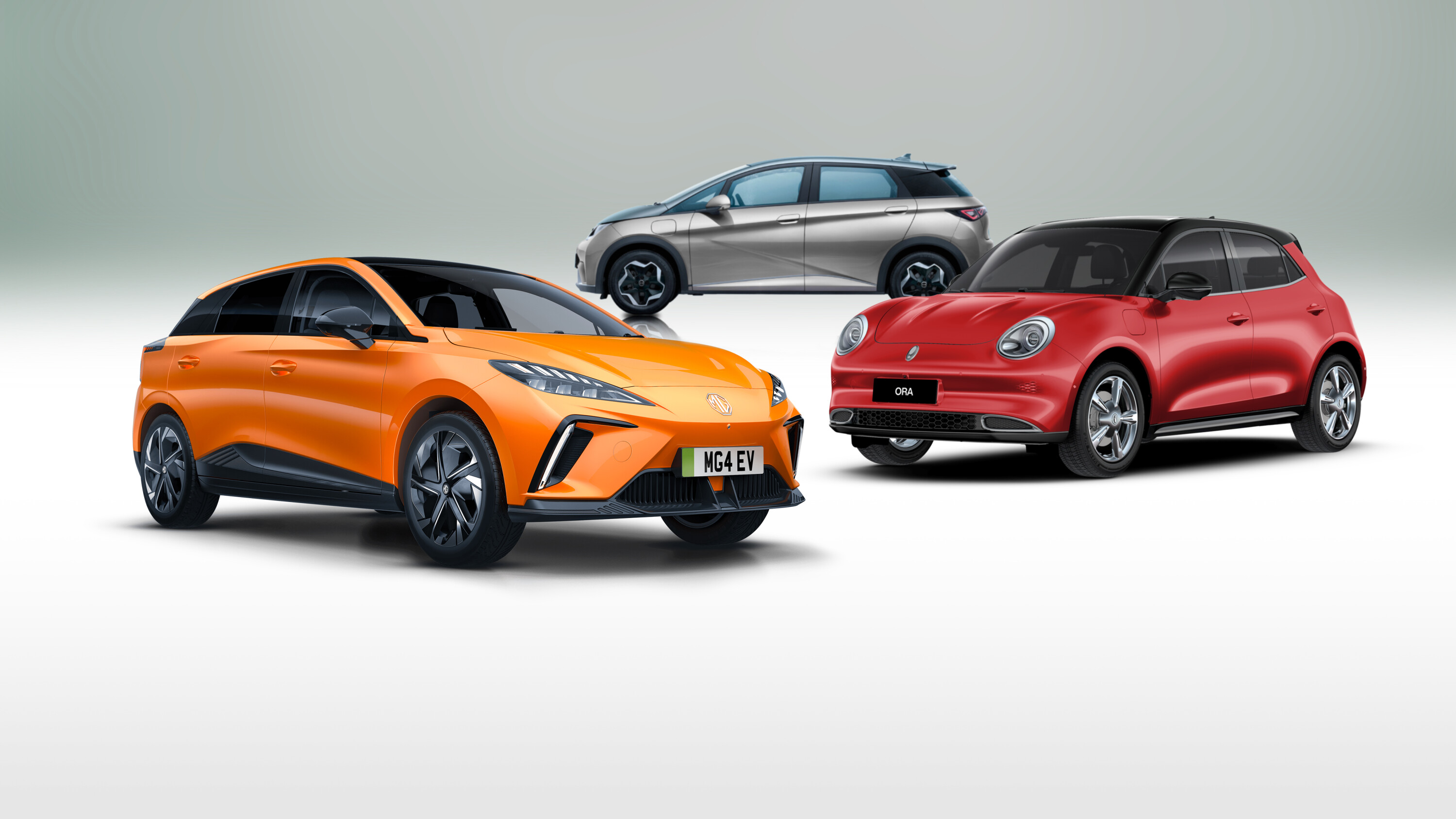
Within MGs EV line-up, when compared to MGs current ZS EV, the MG4 highlights the new model’s distinct advantages. It’s not only more affordable but also improves upon its predecessor in nearly all aspects. While it’s not without its flaws, there’s a lot to appreciate, particularly its price point.
However, at this price there are other options to consider. The GWM Ora starts at a competitive $39,990 before on-road costs and the BYD Atto 3 has already made a lasting impression on our shores.
The MG4 Excite 51 offers a good driving experience, decent economy all with plenty of power a good amount of power. This could be the car you need to make the switch to electric.
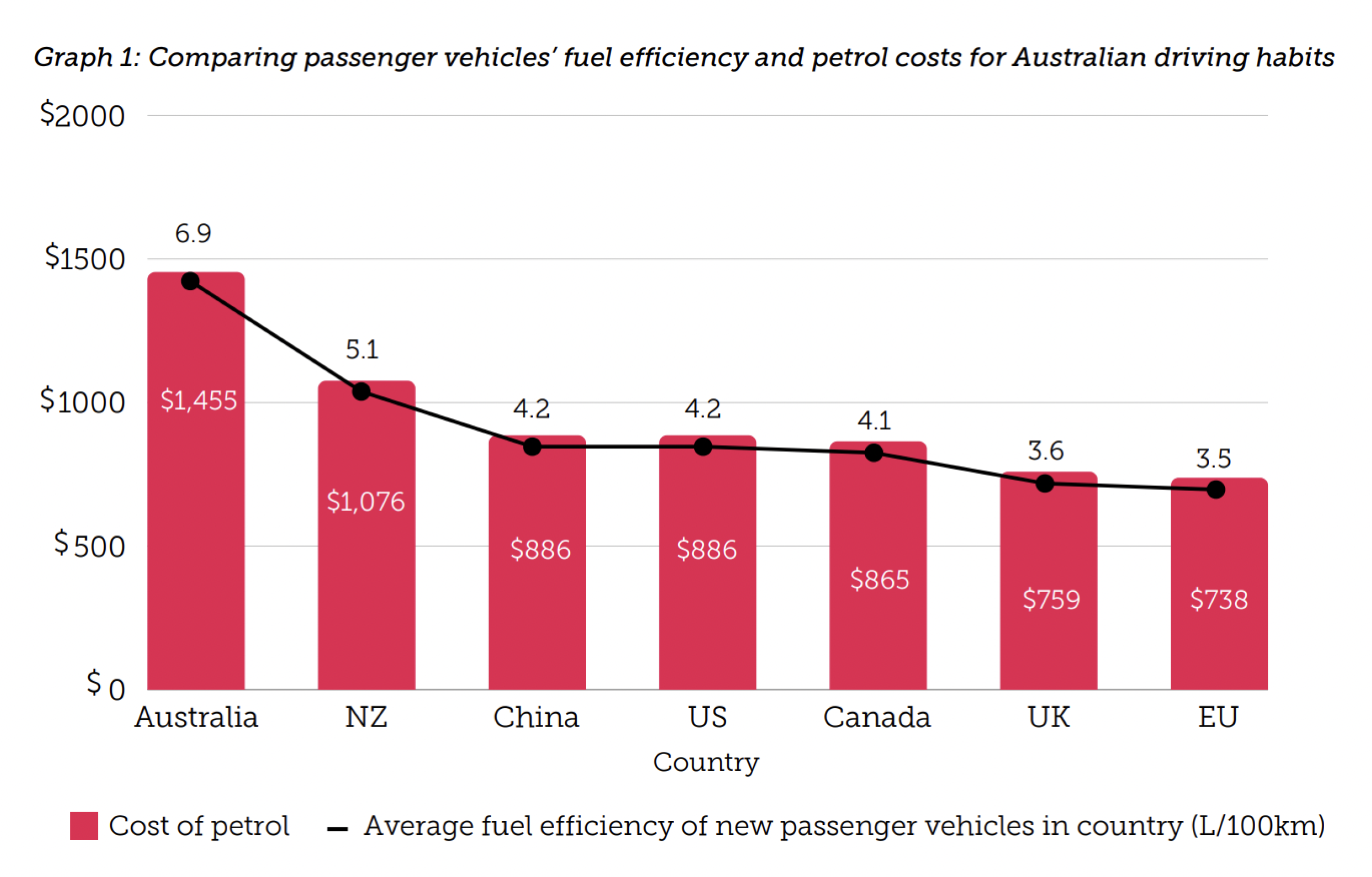
One of the benefits claimed is savings on fuel, with more efficient vehicles proposed to save an average of $5710 over five years and $17,000 over the life of a vehicle, according to the government which has yet to release its modelling.
The Climate Council [↗] has investigated the potential of more fuel-efficient cars in Australia and found that buyers could save big on fuel bills, but perhaps not quite as much as the government is promising.
The Climate Council is an independent organisation that advocates for lower emissions. It wants to see emissions drop quickly from 2025, with a 74 per cent reduction by 2030 and net zero by 2035.
In the government’s preferred middle ground, new car sales here will be at that figure by 2027 and is better than the softest standard’s final goal of 99g CO2/km.
The Climate Council notes Aussies could save $720 per year if we match Europe’s fleet average while catching up with the US saves a still-significant $520 annually on fuel.
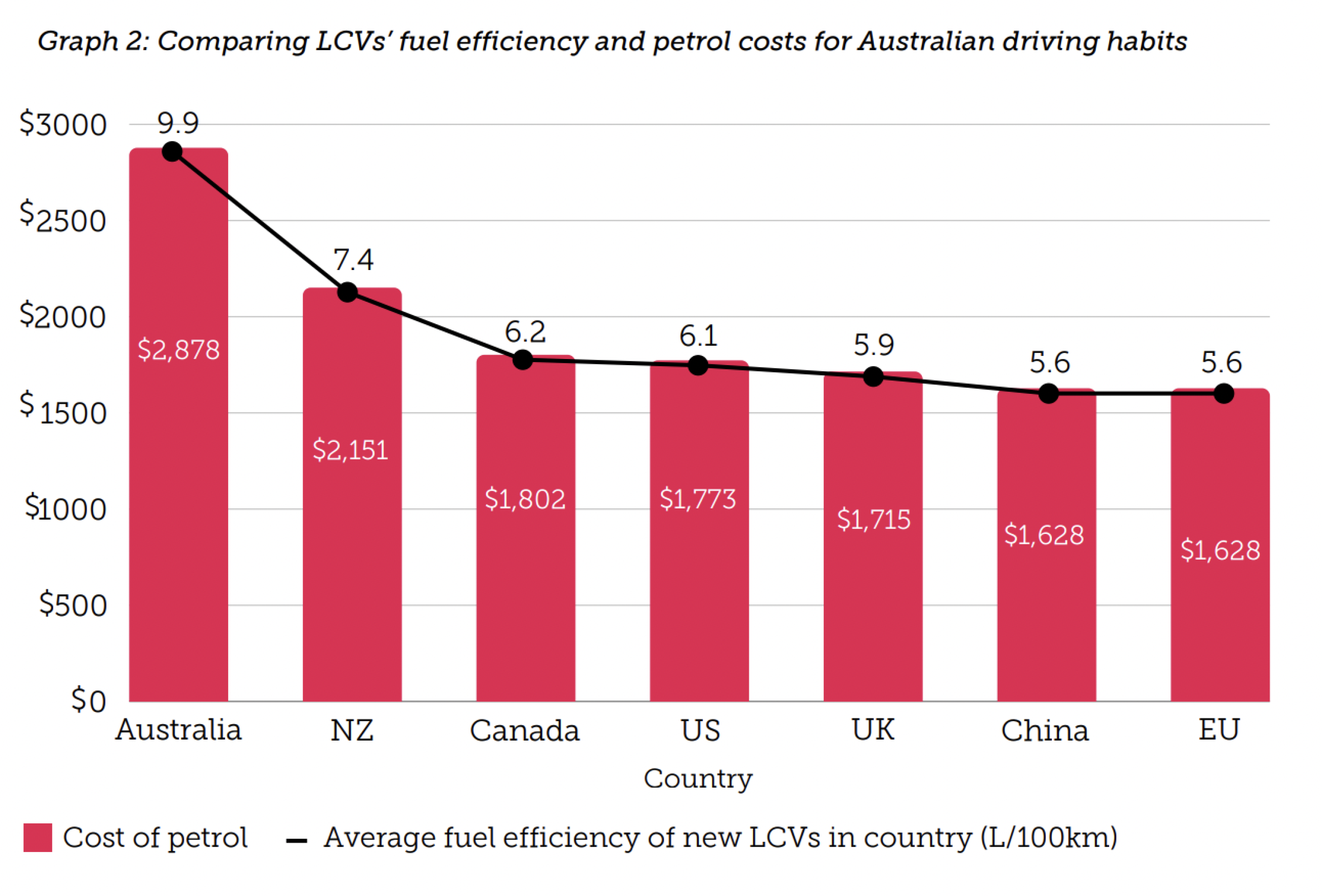
The modelling promises even bigger savings for light commercial vehicles, with the Climate Council calculations showing a $1105 saving for matching the US fleet (6.1L/100km) and $1250 for equalling the EU (5.6L/100km).
The Climate Council sites the Isuzu D-Max as an example, as the ute only sold in the UK and Europe with an ‘RZ4E’ 1.9-litre engine that achieves 6.7L/100km.
This is a skewed comparison as to get the 3500kg towing capacity Australians demand, buyers need to opt for the 3.0-litre ‘4JJ3-TCX’ mill that consumes 8L/100km, emits 207g CO2/km and makes up the lion’s share of Aussie sales.
Still, it’s damning that Australia remains so far behind the United States considering that market’s best-selling vehicle is the Ford F-150 full-size pick-up.
The FCAI warns that penalising emissions will therefore increase the price of vehicles that are popular today, such as utes and petrol family-sized SUVs.
However, the Climate Council denies this quite fiercely and notes that vehicle emissions standards have been in place the world over for years. In a global sense, then, manufacturers are well-versed in making more efficient vehicles including 4x4s and commercial vehicles.
The FCAI represents companies that distribute new vehicles and motorcycles in Australia.
Brands with ranges concentrated on utes and SUVs or without significant hybrid offerings, such as Isuzu and Subaru, may struggle to meet targets initially.
Some, such as Volvo, have already made their promises while Volkswagen (also in a good position) will focus mostly on EVs and existing powertrains, choosing not to offer efficient new-gen plug-in hybrid and three-cylinder powertrains in its Golf small car range locally.
Yet Volkswagen is launching a heavily revised Mark 8.5 Golf this year and Honda’s excellent new Civic has been lauded for its chassis poise and grown-up cabin.
Subaru hasn’t been quite as ambitious in developing the 2024 Impreza. This sixth-gen hatch shares an engine and the Subaru Global Platform with its predecessor – though it’s 10 per cent stiffer thanks to more structural adhesive. There’s no more sedan, even in the United States, so an Impreza hatch is your only choice.
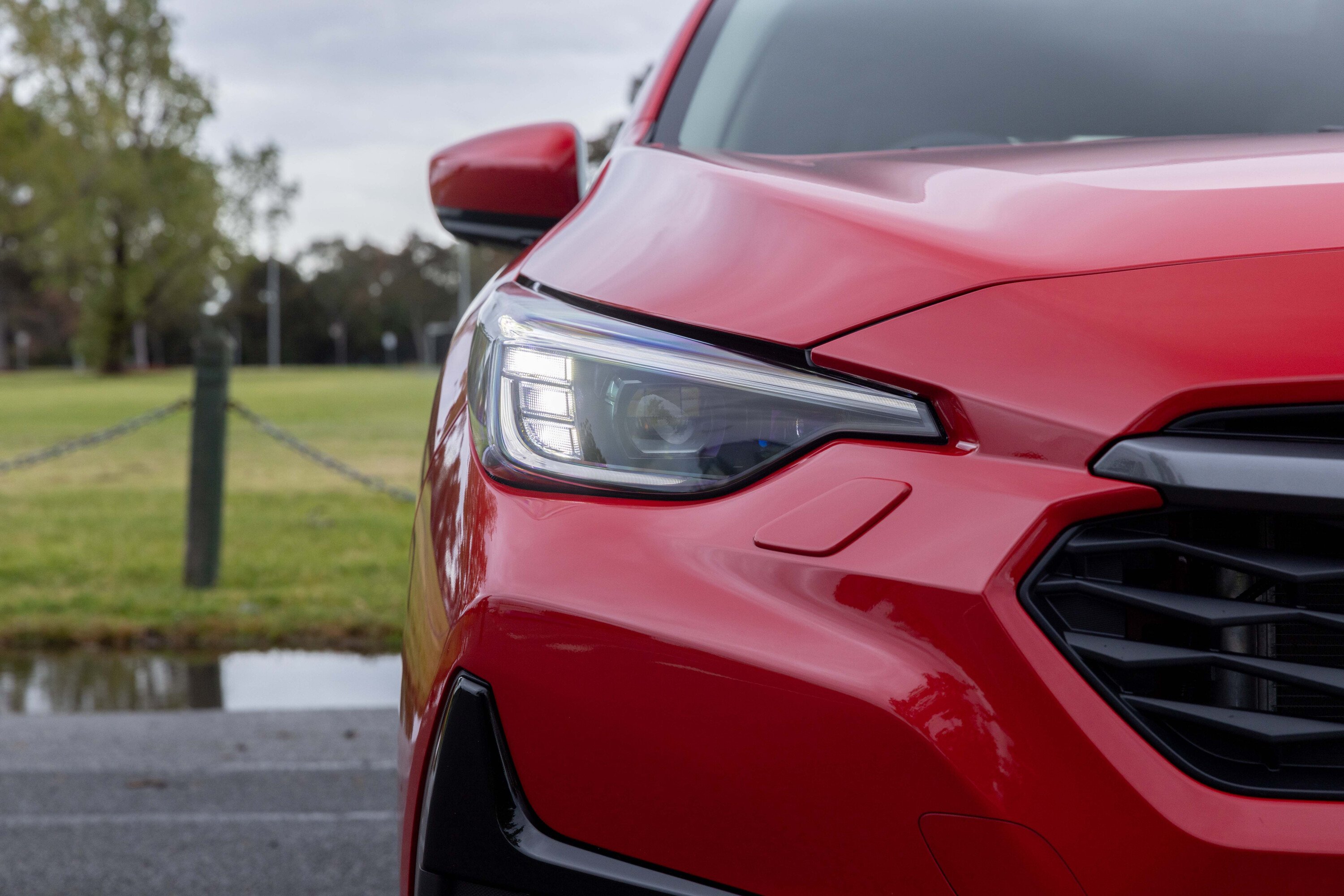
The Japanese-built Impreza is a more handsome car than before, sporting new bumpers with a broad front intake and neat lower valance.
Subaru has tidied up the side profile with a single confident swage line encapsulating the glass, while at the back, smaller LED tail lights and a more pronounced roof spoiler lend it a sportier look. Evolution, not revolution, then.
To justify the price increase, Subaru has focused on enhancing technology and crafting more premium cabin vibes, with lashings of soft-touch materials and supportive seats.
We’re driving the mid-spec $34,990 (before on-road costs) 2.0R which replaces the Premium. While it misses out on the leather upholstery, premium Harman Kardon sound system, sunroof, and built-in navigation of the range-topping 2.0S (pictured), the R is equipped with about everything else you could reasonably want, making it the range’s sweet spot.
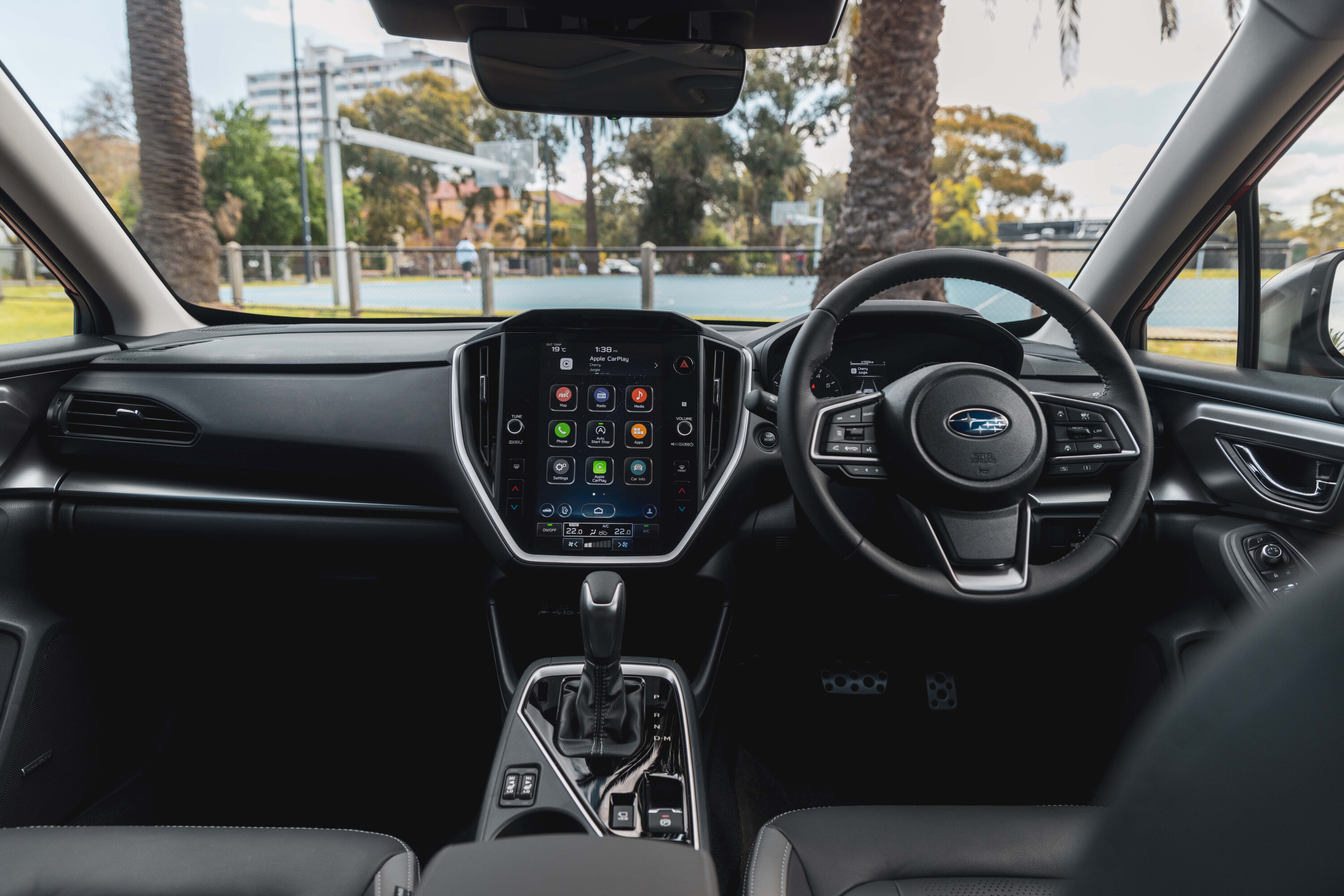
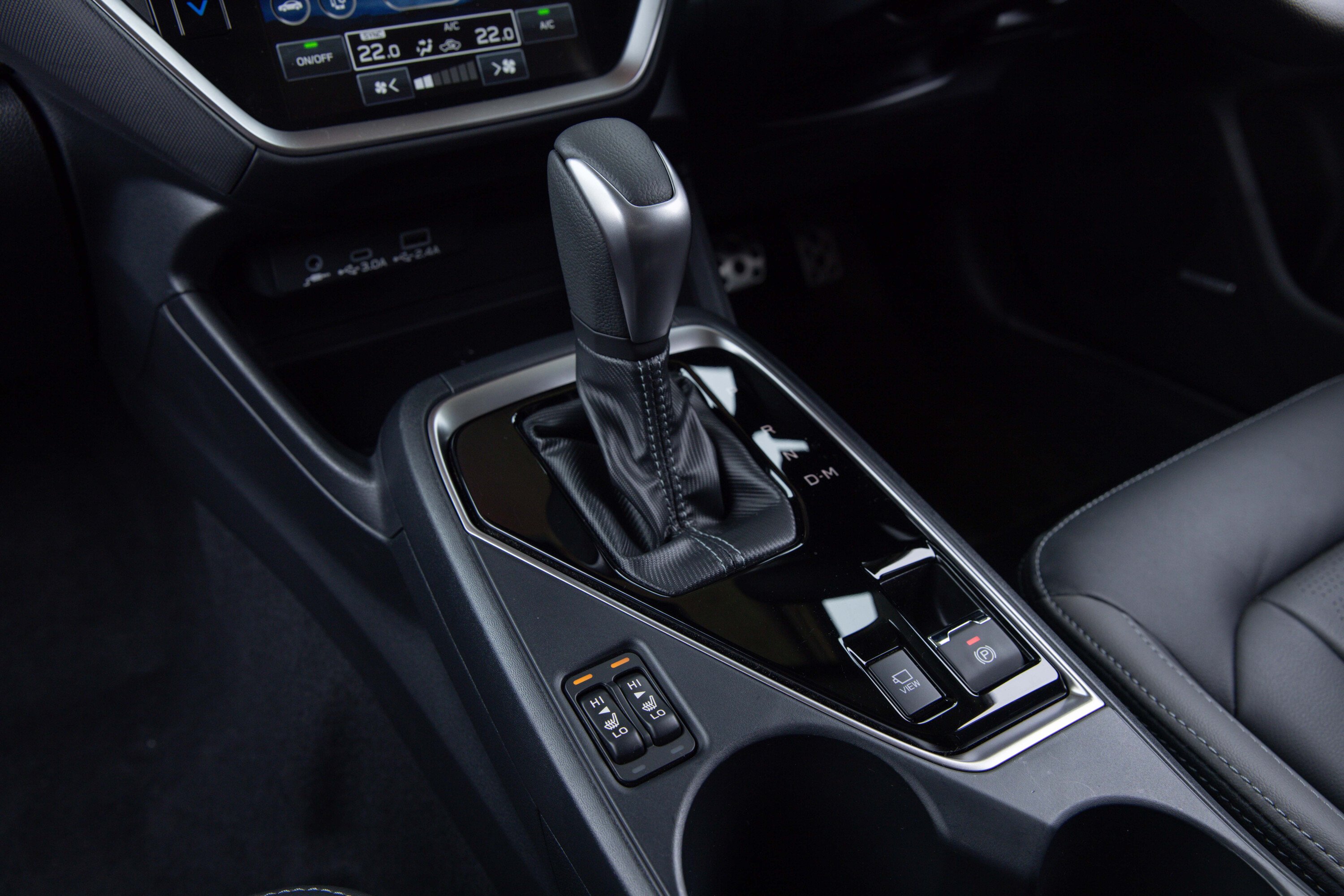
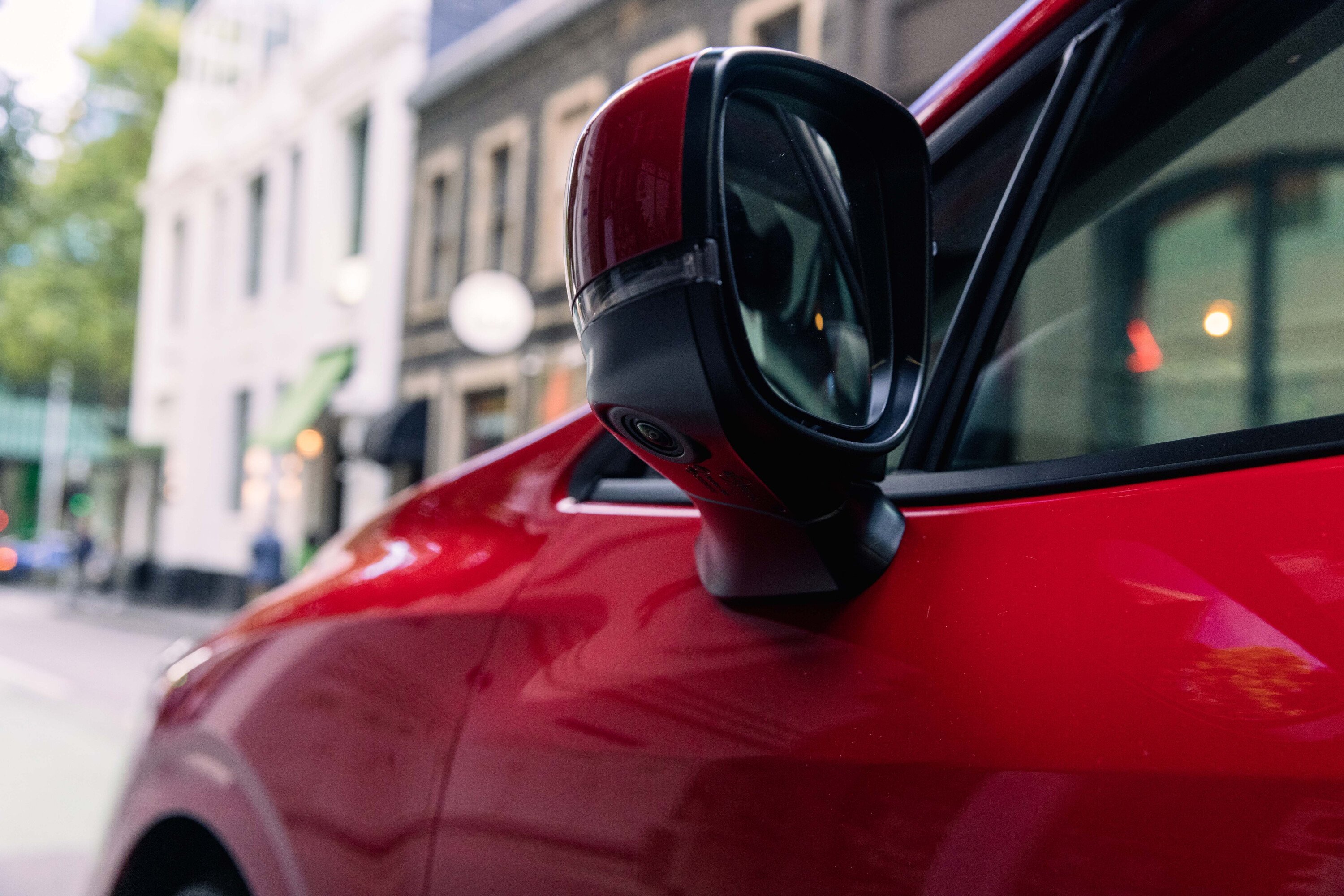
Cloth-appointed front seats are heated and the driver gets eight-way power adjustment. There’s even a nifty camera system that displays a top-down view or close-up angle of the front near-side wheel so you don’t kerb the machine-faced 18-inch alloys.
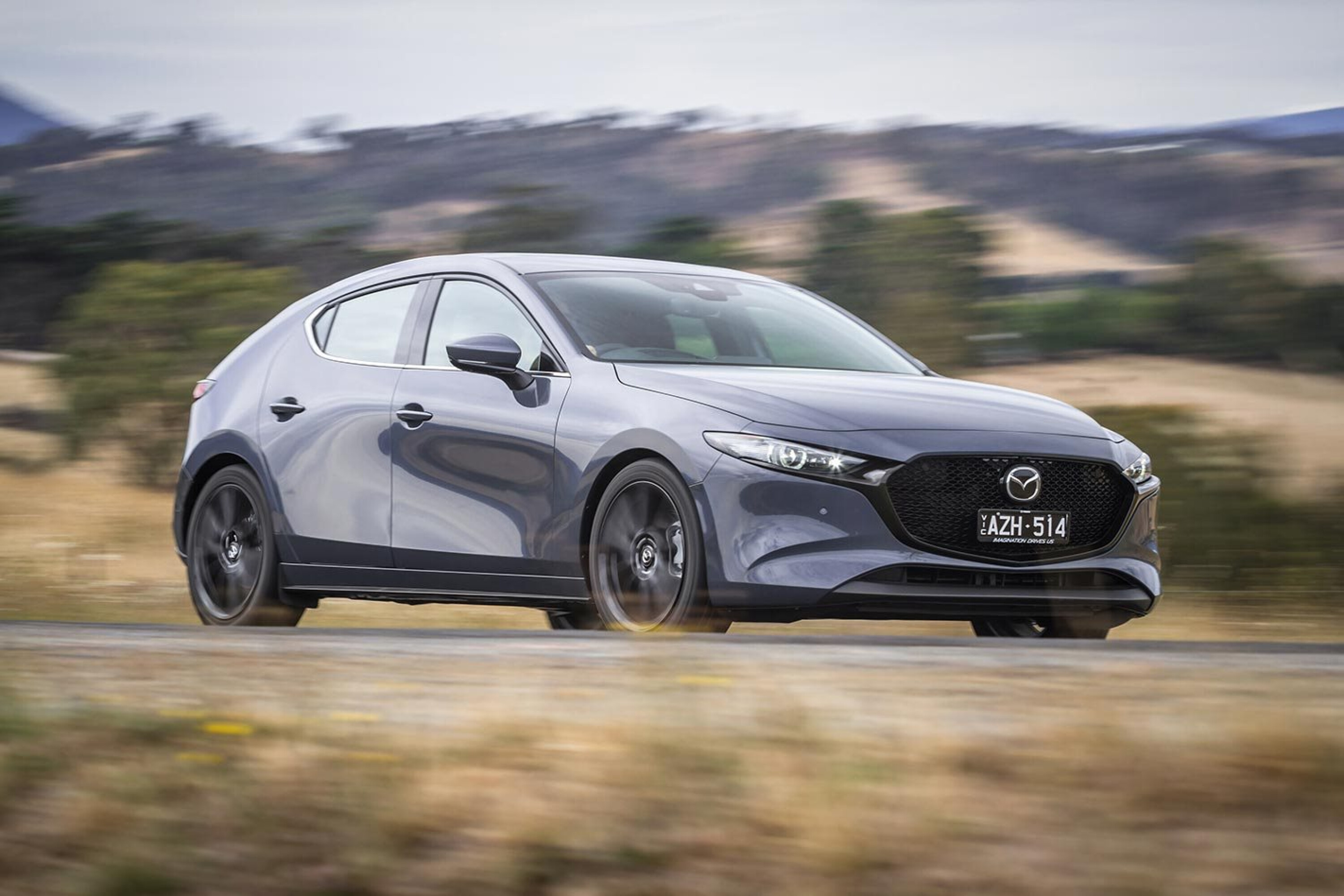
A Mazda 3 G25 Evolve SP (at $35,670 before on-road costs) is perhaps the 2.0R’s most deadly rival, with a punchier engine and suave cabin presentation.
There’s even another Subaru to consider, the Crosstrek 2.0R ($38,490 before on-road costs), that ups off-road capability at the expense of boot space.
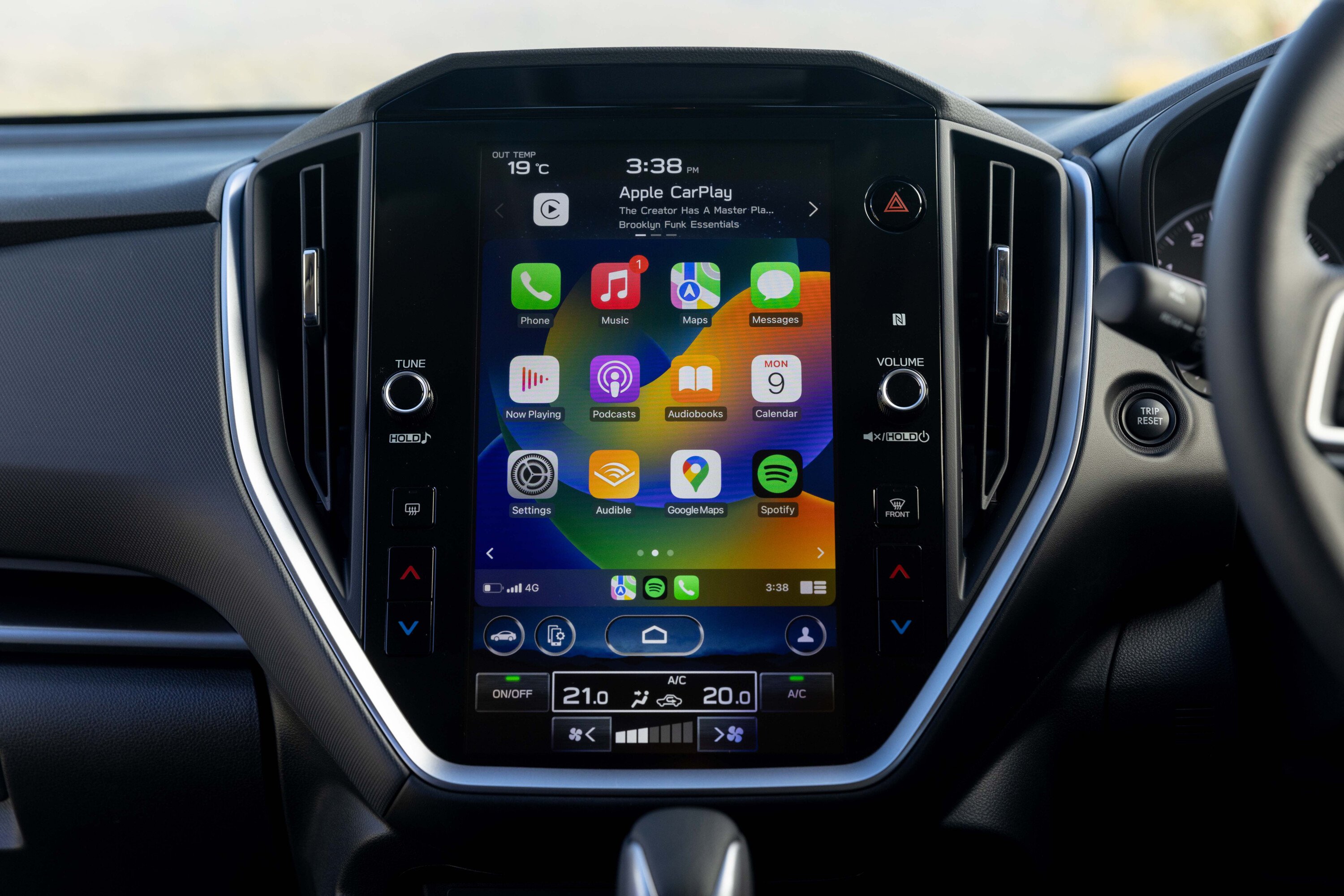
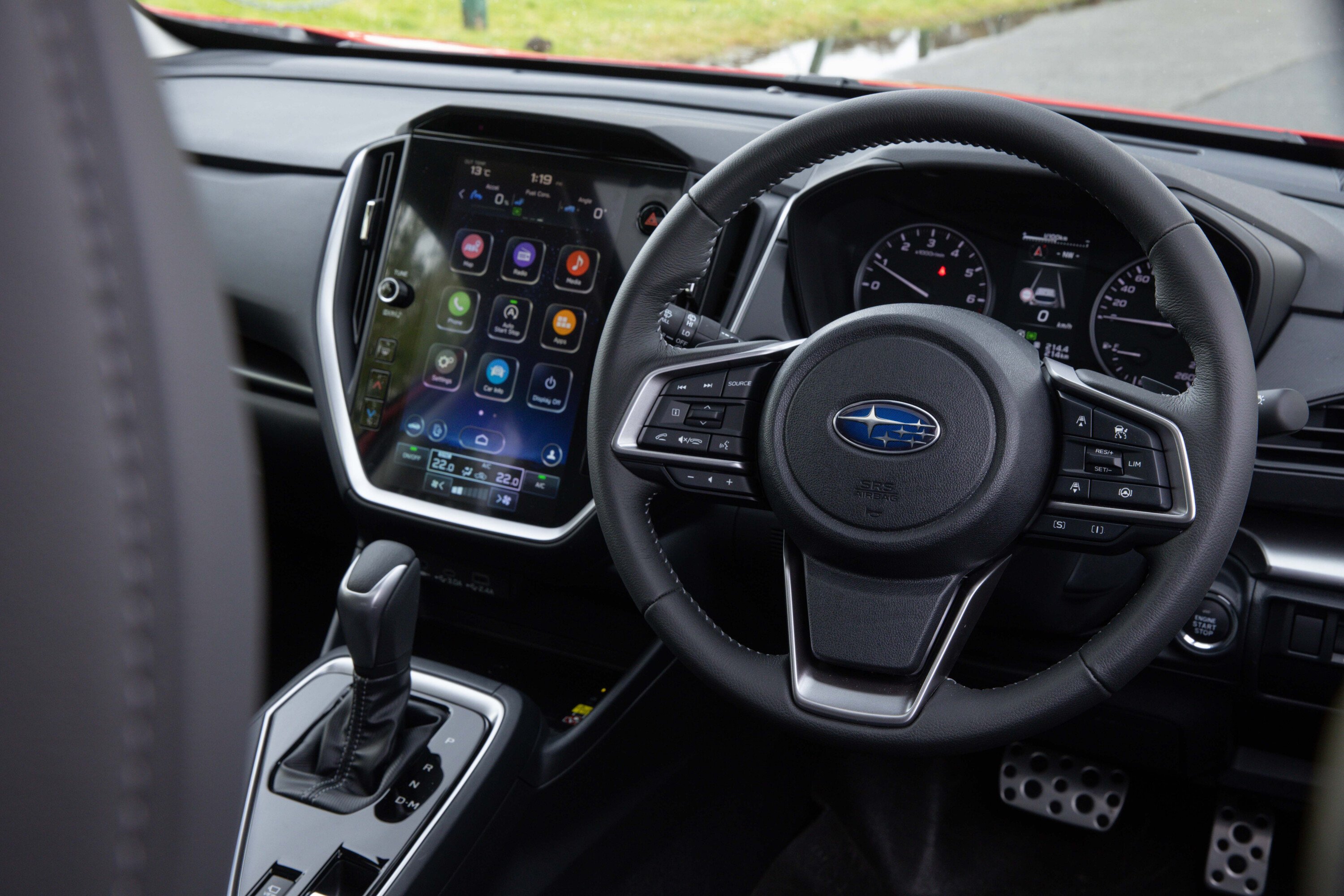
The cabin’s crowning glory is an 11.6-inch portrait touchscreen that’ll be familiar to Outback owners. It’s backed by Subaru’s latest Starlink operating system with large touch targets and smooth operation.
Wireless Apple CarPlay and Android Auto are allied with a strong six-speaker sound system. There are myriad ways to keep devices charged, including an inductive charging pad, a 12-volt socket, and both USB-A and USB-C ports (2x each) accessible to front and rear passengers.
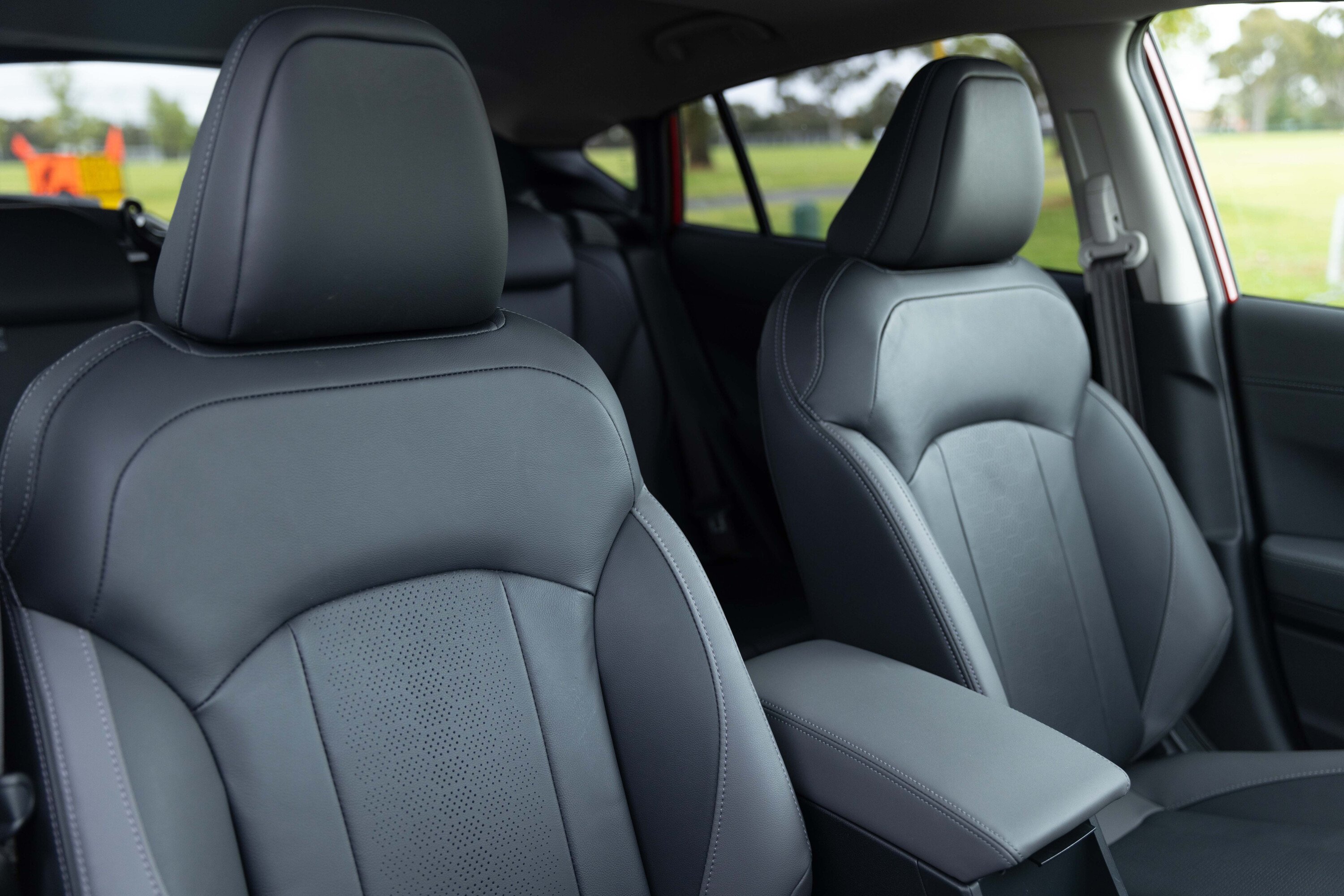
It remains one of the most spacious cars in its segment, ahead of the Mazda 3 and Toyota Corolla for head and leg room, as well as width for three at a pinch. A supportive fold-down armrest caps off the rear quarters.
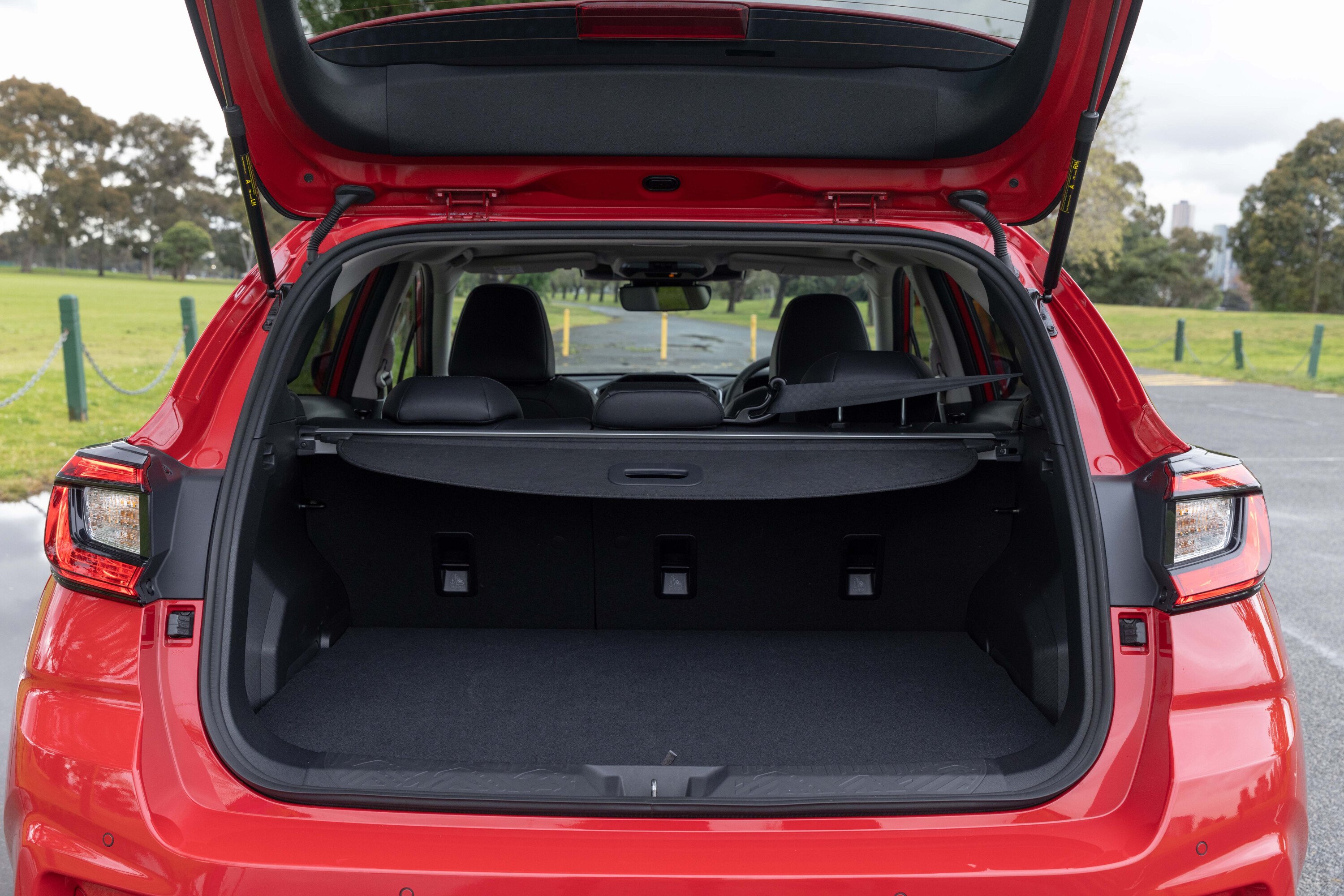
Unfortunately, the boot is no better than before. Still having to package double wishbone rear suspension, rear differential, and full-size spare beneath the boot floor means only 291L of VDA capacity. The floor is quite high, and while there are wet storage zones on each side, a Hyundai i30 offers greater space.
There’s little excitement from the four-banger and standard automatic continuously variable transmission (CVT). Although ‘S’ mode (accessible using steering wheel buttons) brings a sportier throttle response and holds higher engine speeds than the default ‘I’ setting, it barely improves the Impreza’s unhurried acceleration.
During testing the Impreza was able to reach 100km/h from rest in 10.8 seconds, which is a fair way off a front-drive Toyota Corolla petrol hatch (we timed one at 9.6 seconds in 2019) and that tardiness is noticeable when accelerating away from junctions and joining motorways.
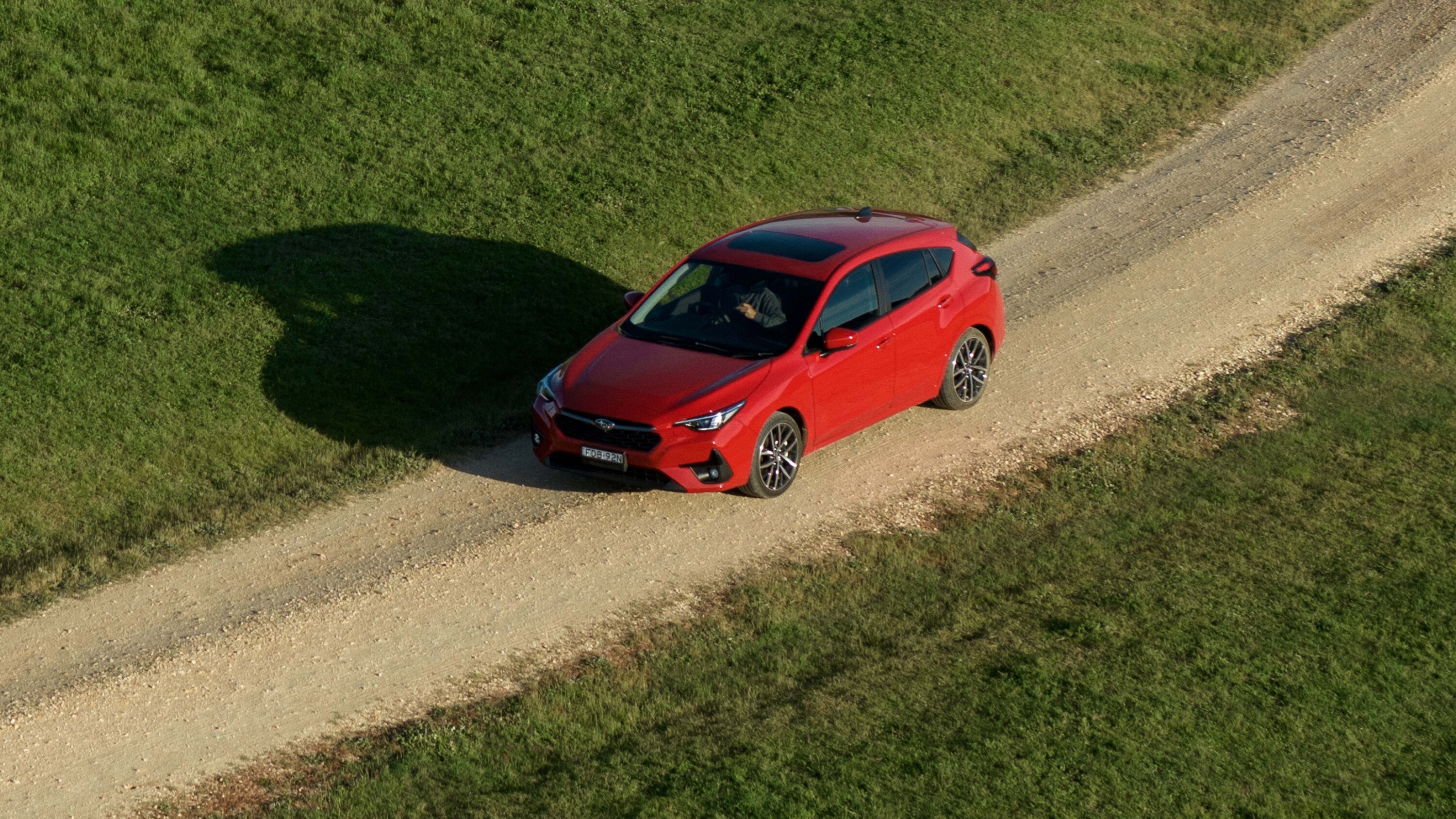
Although the sporty 225/40 18-inch Yokohama Advan V105 tyres can be vocal on coarse-chip country roads, they do quieten down on smoother asphalt. Those 18-inch alloys also tend to get hung up around town on expansion joints and sharp-edged bumps, despite the Impreza’s plush primary ride.
Equipped with sticky tyres and a symmetrical all-wheel drive system, the Impreza is gripped up through smooth bends. The sharp 2.6-turn lock-to-lock steering (with a version of the WRX’s dual-pinion rack) helps it feel athletic.
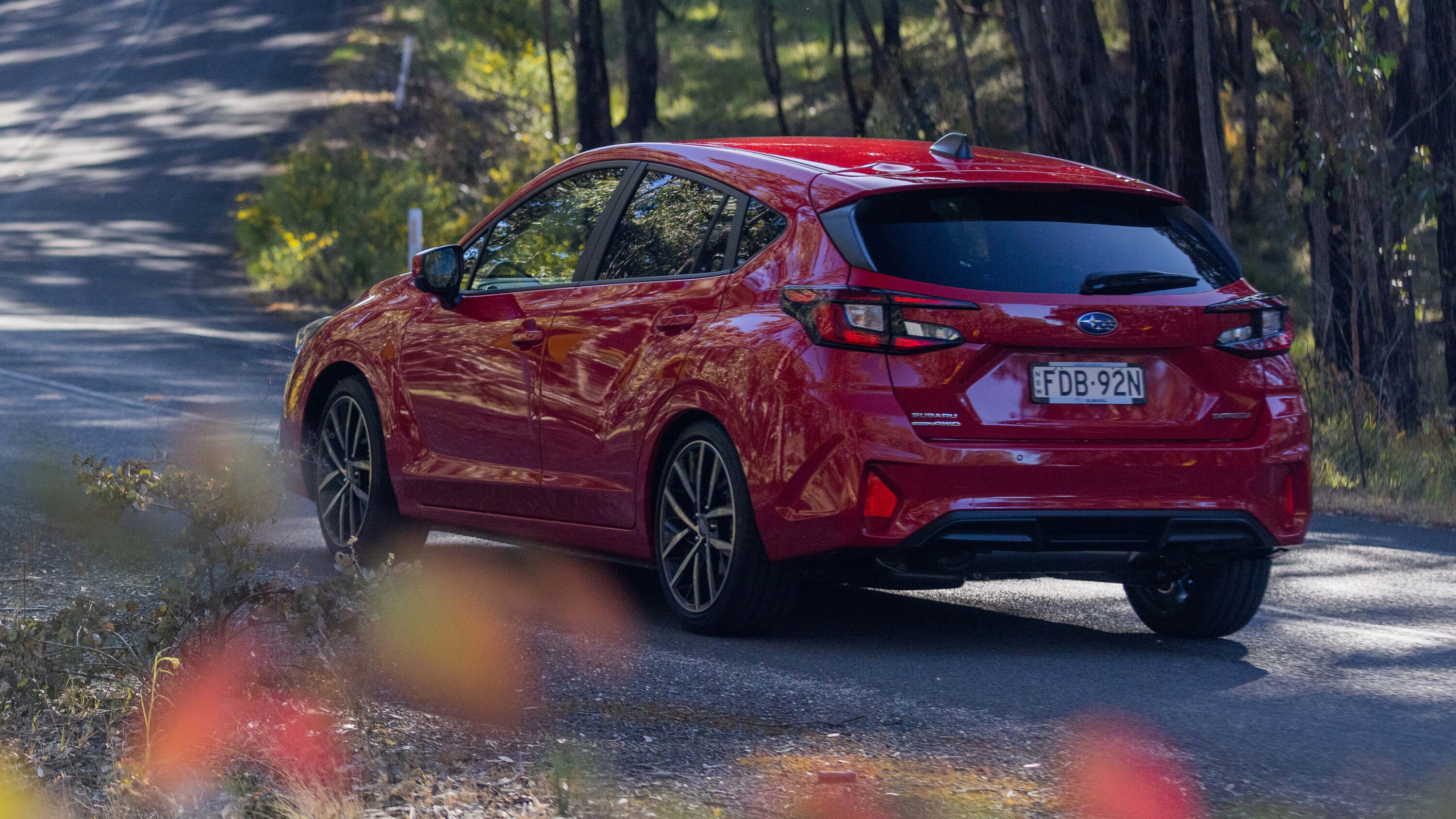
So while there’s plenty of tyre grip on testing roads, mid-corner bumps leave the 2.0R flummoxed. It also fidgets constantly, finding bumps and lumps in the road where rivals such as a Golf or Civic iron out imperfections.
The Impreza has gained some weight, which could play a part in its softer edges, and although some of that has gone into a stiffer body shell the doors don’t shut with a satisfying clunk. The new 2.0R weighs 1435kg (tare), some 52kg more than the old Premium.
Front AEB, adaptive cruise control, rear cross-traffic alert, blind-spot monitoring, driver attention monitoring and nine airbags (two more than before) are all present.
Most are well integrated, save for the lane-keep assist which is overly sensitive and weights the steering up when it detects you drifting towards lane markings, making it difficult to adjust the Impreza’s trajectory smoothly.
The driver attention monitoring system can be helpful, recommending a coffee break after time spent behind the wheel.
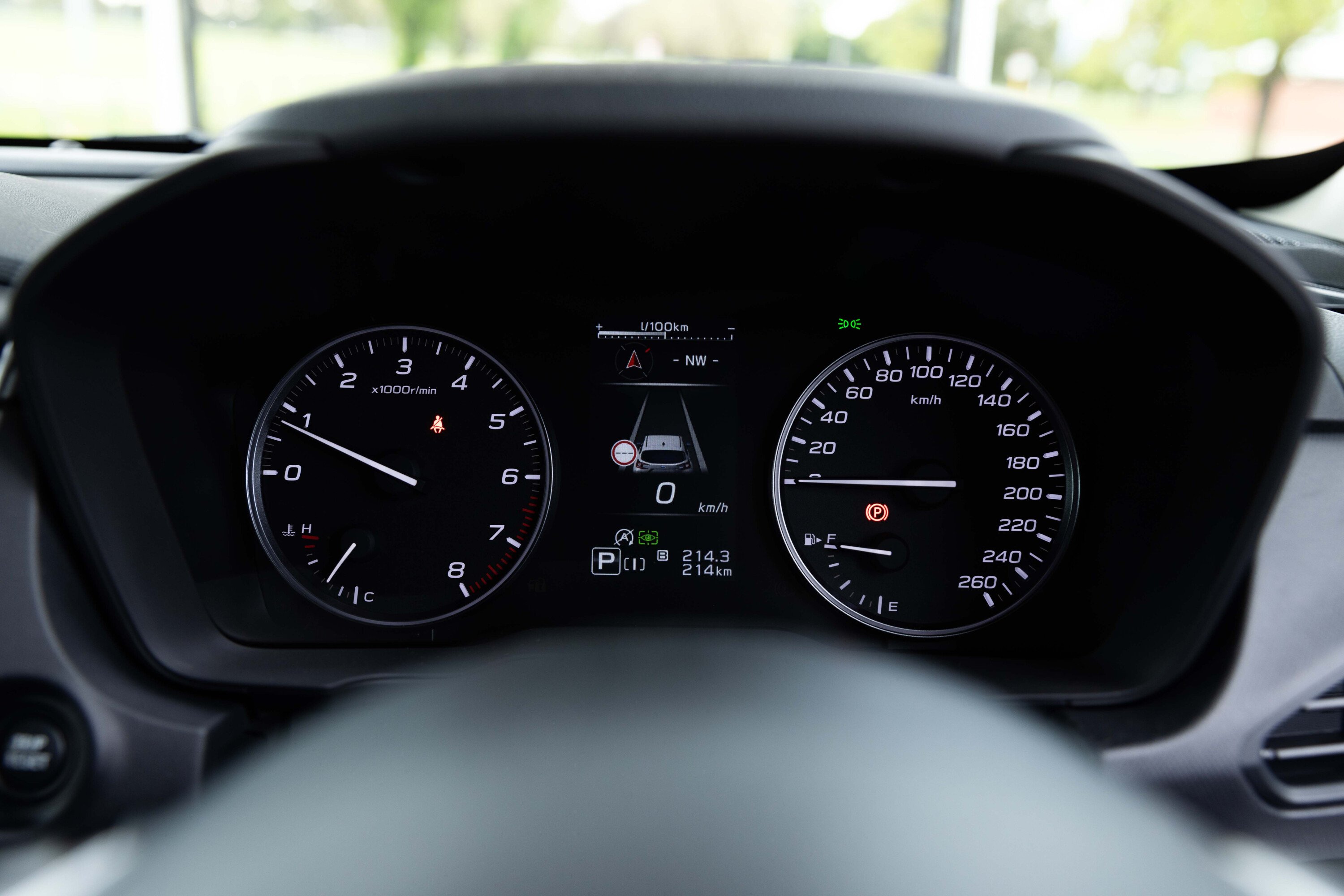
However, fuel economy isn’t the Impreza’s strong suit – it’s a long way off a Toyota Corolla or Hyundai i30. We saw 10L/100km in typical suburban driving, where front-drive rivals would be closer to 7.0L/100km.
On a 200km country run the Impreza’s fuel consumption improved, with the trip computer showing 8.2L/100km. By week’s end, the trip was showing 8.8L/100km.
It only requires 91 RON petrol, which will save some money at the bowser, and the 50L tank gives a decent cruising range.
The Japanese brand stipulates service intervals of 12 months or 12,500km, costing you $2373 over five years. That averages out to $474.60 annually.
For this hatch, that’s an even bigger problem – with no sedan, the popularity of the closely related Crosstrek, and the WRX performance variant being a break-out model of its own, the conservative Impreza’s unique selling point is more diluted than ever.
It’s telling that Subaru chose to quietly release this latest-gen Impreza (which feels more like a deep facelift in truth) without the fanfare of a media launch.
With a more presentable and connected cabin than ever before, the unique draw of all-wheel drive and Subaru’s proven track record of manufacturing fit-for-purpose cars, the Impreza is worth a look and test drive.
But we’d suggest taking a close look at rival hatches, or even other options in the Subaru showroom, before taking the plunge.
| 2024 Subaru Impreza 2.0R specifications | |
|---|---|
| Price (drive-away) | $34,990 before on-road costs |
| Drivetrain | |
| Engine | 4cyl, horizontally opposed, 2.0-litre, direct-injected |
| Compression ratio | 12.5:1 |
| Drive | Symmetrical all-wheel |
| Power | 115kW (@6000 rpm) |
| Torque | 196Nm (@4000 rpm) |
| Gearbox | CVT automatic |
| Chassis | |
| L/W/HB | 4490/1780/1480mm |
| Wheelbase | 2670mm |
| Track (F/R) | 1540/1545mm |
| Weight (tare) | 1435kg |
| Boot | 291/8832L |
| Fuel/tank | 91 RON/50L |
| Economy (combined ADR81/02) | 7.5L/100km |
| Suspension | Front: Struts | Rear: Double wishbone |
| Steering | Electric power-assisted steering, 2.6 turns lock-lock |
| Front brakes | Ventilated disc |
| Rear brakes | Ventilated disc |
| Tyres | Yokohama Advan Sport V105 |
| Tyre size | 205/40R18 |
| Safety | |
| ANCAP rating | Unrated |
| 0-100km/h | 10.8 seconds (tested) |
When it comes to that ultimate status symbol – the luxury car – you should make sure the three models below are high on your list of cars to consider.
Most modern luxury cars from prestige brands you wouldn’t want without a warranty, which is why we recommend a vehicle big on value, big on luxury, and one safe for those who want to own it for the long-term: the Genesis GV80.
While it can’t compete with the Germans for ultimate brand prestige, nor is its interior quite as fine, it’s still a very pleasing place to be – an SUV that tries hard to make you feel spoiled.
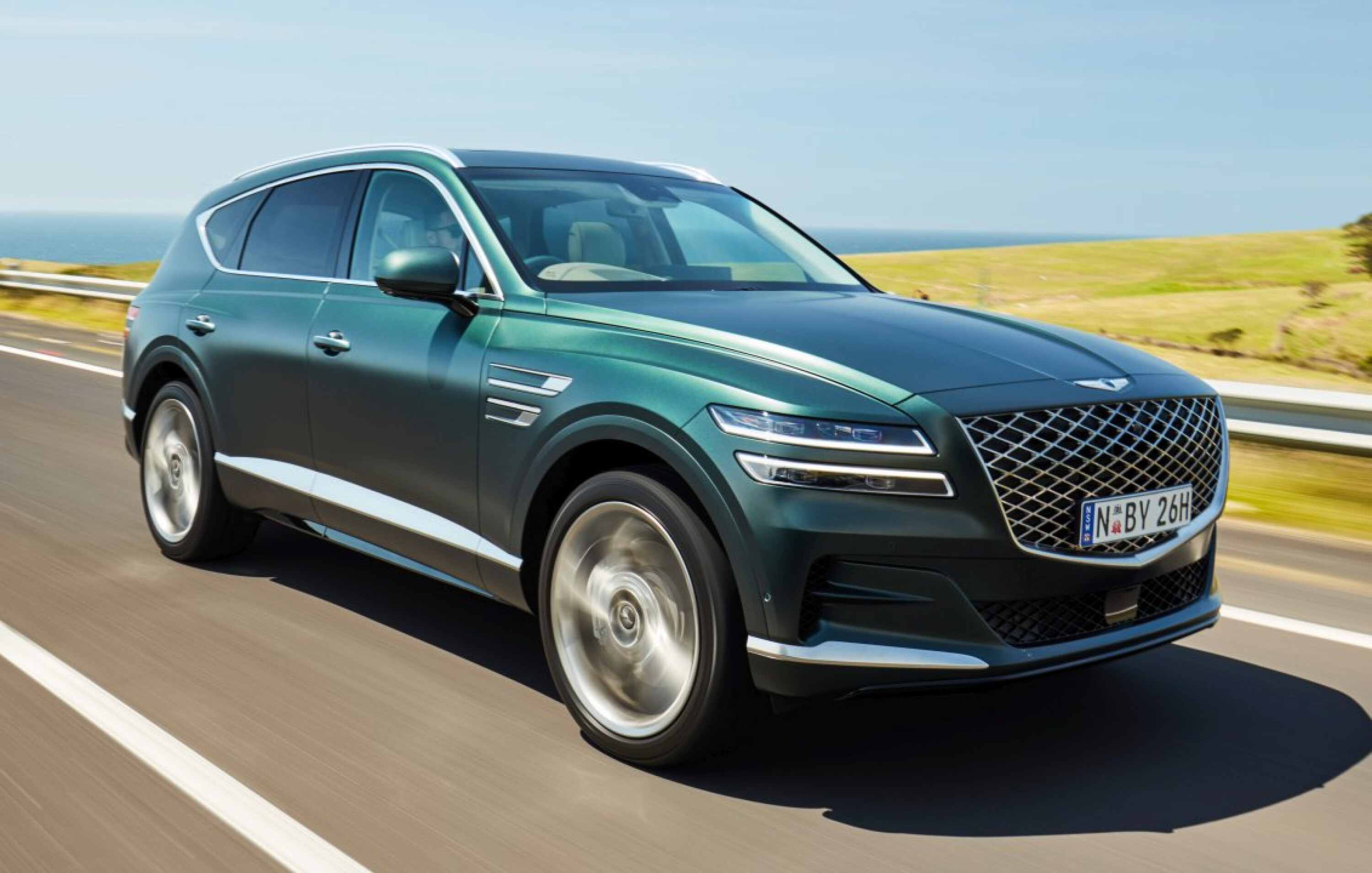
With tonnes of space, we especially like the twin-turbo V6 and recommend one with the optional Luxury Package – granting equipment such as Nappa leather trim, soft-close doors, suede headlining and a driver’s massage seat.
Described as a Korean rip-off Bentley Bentayga, there are certainly worse cars you could imitate.
We could have included any number of Audis, BMWs, Mercedes-Benzes and Jaguar–Land Rovers in our second-hand luxury-car picks, but the idea of owning most of them without a warranty makes our heart rate increase slightly, and our eyes a bit glassy. We like you too much, dear reader, to inflict such financial harm upon you.
While the Infiniti Q50 with its wacky steer-by-wire system hardly garnered the love of road-testers when it was new, in 2024 you stand to benefit from one of its most impressive features: depreciation. Nobody’s heard of an Infiniti, let alone a Q50, so they’re cheap as chips.
Our pick would be the S, which comes with a 268kW/546Nm hybrid rear-drive V6, and with a circa-2014 build, can be had for as little as $25,000. It’s quiet, comfortable, there’s leather, a sunroof, heated seats and electric everything – and unlike most of the aforementioned Euros, it will go for miles without too much hassle.
If you’re shopping for a luxury car on a budget, resist the temptation to buy that suspiciously cheap V12 Rolls-Royce and get a vehicle that is much more likely to provide years of trouble-free, cosseting motoring: a Lexus.
As the S-Class or 7 Series of the Lexus range, it’s hard to go past a range-topping LS. Produced between 2006 and 2017, you can get yourself an XF40 fourth-generation LS for between $20,000 and $60,000, depending on age and mileage, and that rewards you with tonnes of space, deep-pile carpets, quietude, all manner of mod-cons that you don’t have to worry too much about breaking, and a 4.6-litre naturally aspirated V8 paired to a buttery-smooth eight-speed torque converter auto. Plenty of safety features, too.
Best of all, you can sleep at night long after the warranty has expired, as 300,000km of effortless motoring is possible so long as you look after it and service it.
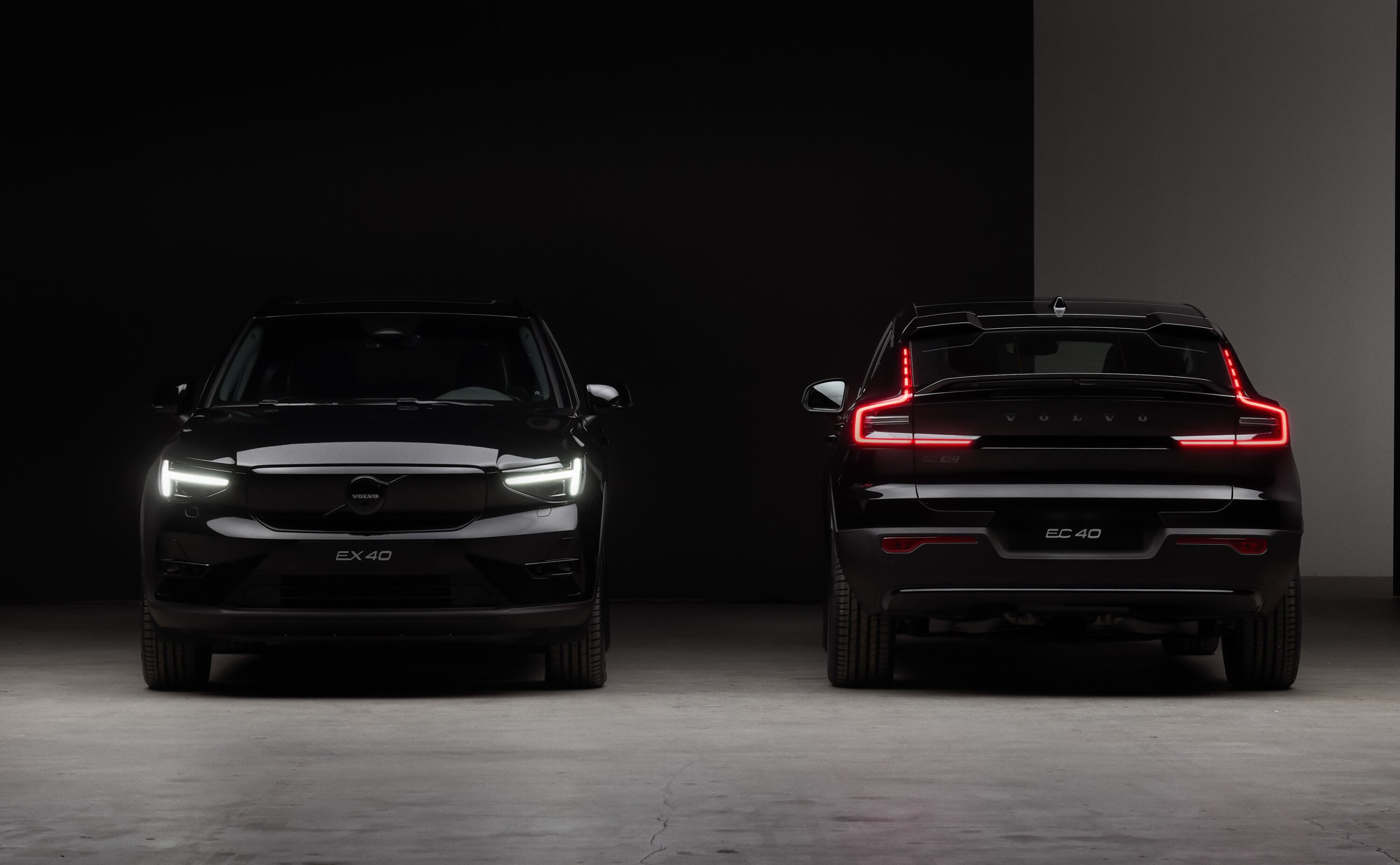
Previously known as the XC40 Recharge – an all-electric variant of the XC40 small SUV – and the C40 Recharge, Volvo has standardised the names of its most popular electric cars to EX40 and EC40, respectively, to match its newest models.
This includes the EX30 light SUV and the EX90 large SUV, both due in Australia this year, along with the China-only EM90 people mover.
Volvo plans to become an all-electric brand in Australia by 2026 with the launch of five new models – including the EX30 and EX90 – ahead of the Chinese-owned Swedish brand’s global mandate to be fully electric by 2030 and entirely carbon neutral by 2040.
The latest update to Volvo’s nomenclature also sees the ‘Recharge’ branding dropped from its plug-in hybrid vehicles, which are now solely denoted by a ‘T6’ or ‘T8’ suffix depending on power outputs.
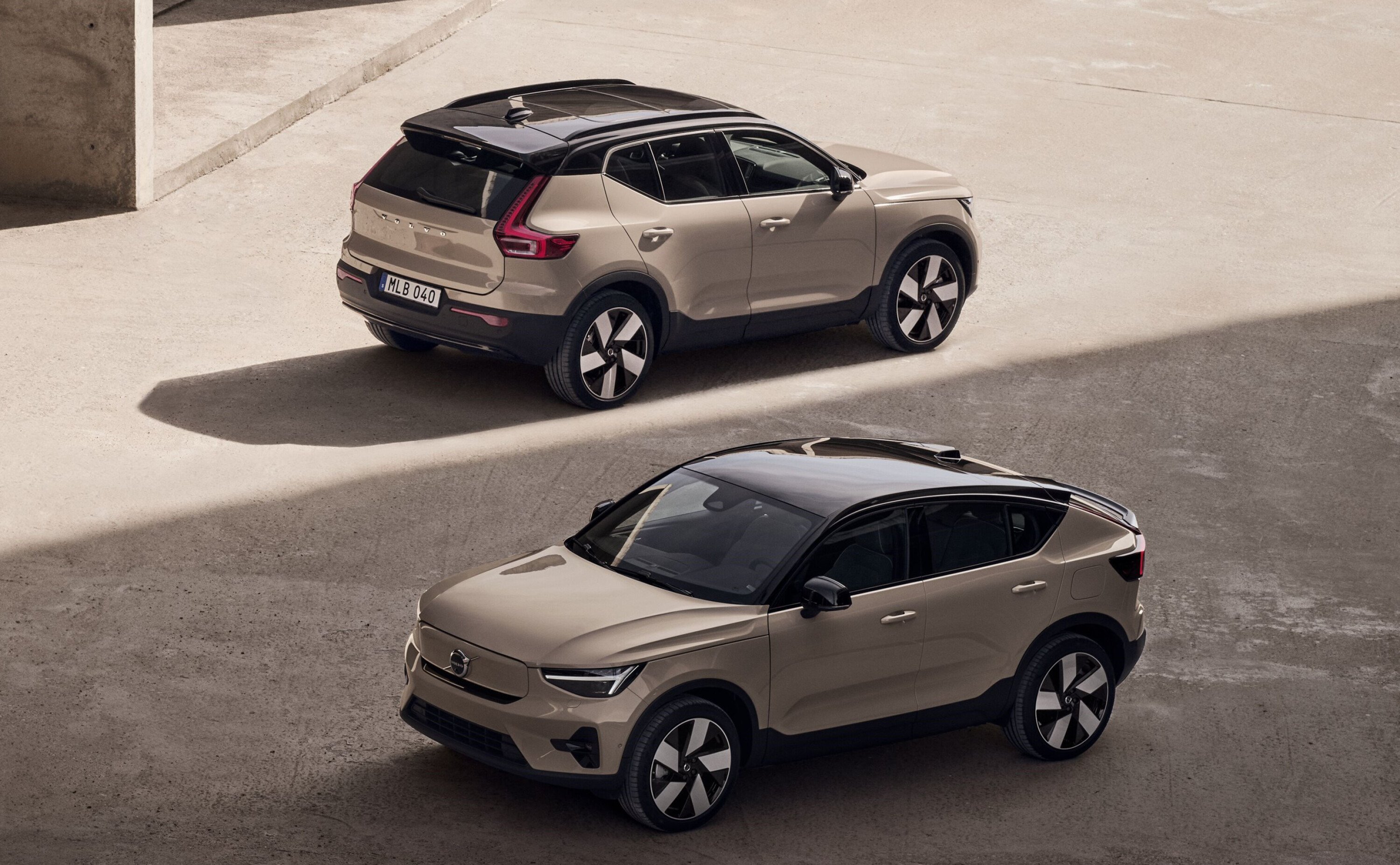
“By aligning our trailblazing first electric models with the rest of our electric car portfolio, we simplify choice for consumers as we continue to electrify our line-up and refresh our hybrids,” added Volvo chief commercial officer and deputy CEO Björn Annwall.
Model-year 2025 updates for the EX40 and EC40 are limited to a new Performance software package for dual-motor variants, which will also become available as an upgrade for 2024 models in selected markets.
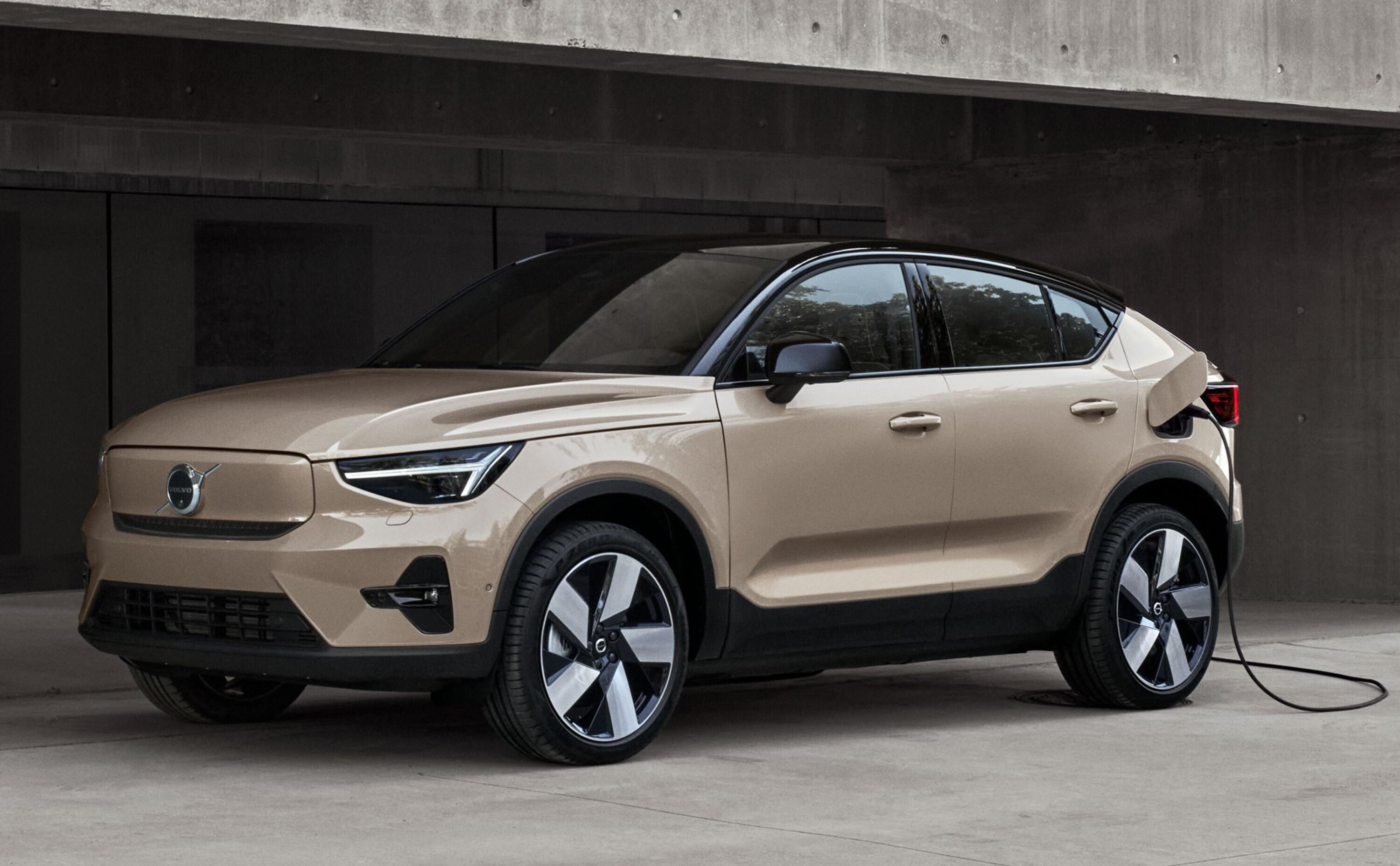
Volvo is also introducing Black Edition variants for the EX40 and EC40 – along with the internal-combustion XC40, which retains its nameplate.
These variants are exclusively painted in onyx black, matched with high-gloss black trim, 20-inch five-spoke alloy wheels, and microtech or textile charcoal interiors.
Volvo has also developed a more efficient combustion cycle for the XC60 and XC90 B5 mild-hybrid petrol variants, which should result in CO2 emissions reduction and a four per cent fuel consumption reduction for the XC60 or two per cent for the XC90.
A Volvo Australia spokesperson said the 2025 Volvo EX40 and 2025 Volvo EC40 should arrive in Australia around July or August, pending any production delays.
When it comes to the hugely popular large SUV, you should make sure the three models below are high on your list of cars to consider.
Toyota’s Kluger Hybrid applies the RAV4 Hybrid’s excellent 2.5-litre petrol/electric powertrain to answer a question few large seven-seaters can. Namely: How do you haul a big family without a thirsty big petrol or turbo-diesel?
With a 6.0L/100km city consumption figure (5.6L/100km combined), Kluger Hybrid is massively more frugal than the now-discontinued 3.5-litre V6 petrol, which officially used 11.8L/100km(!) in city driving.
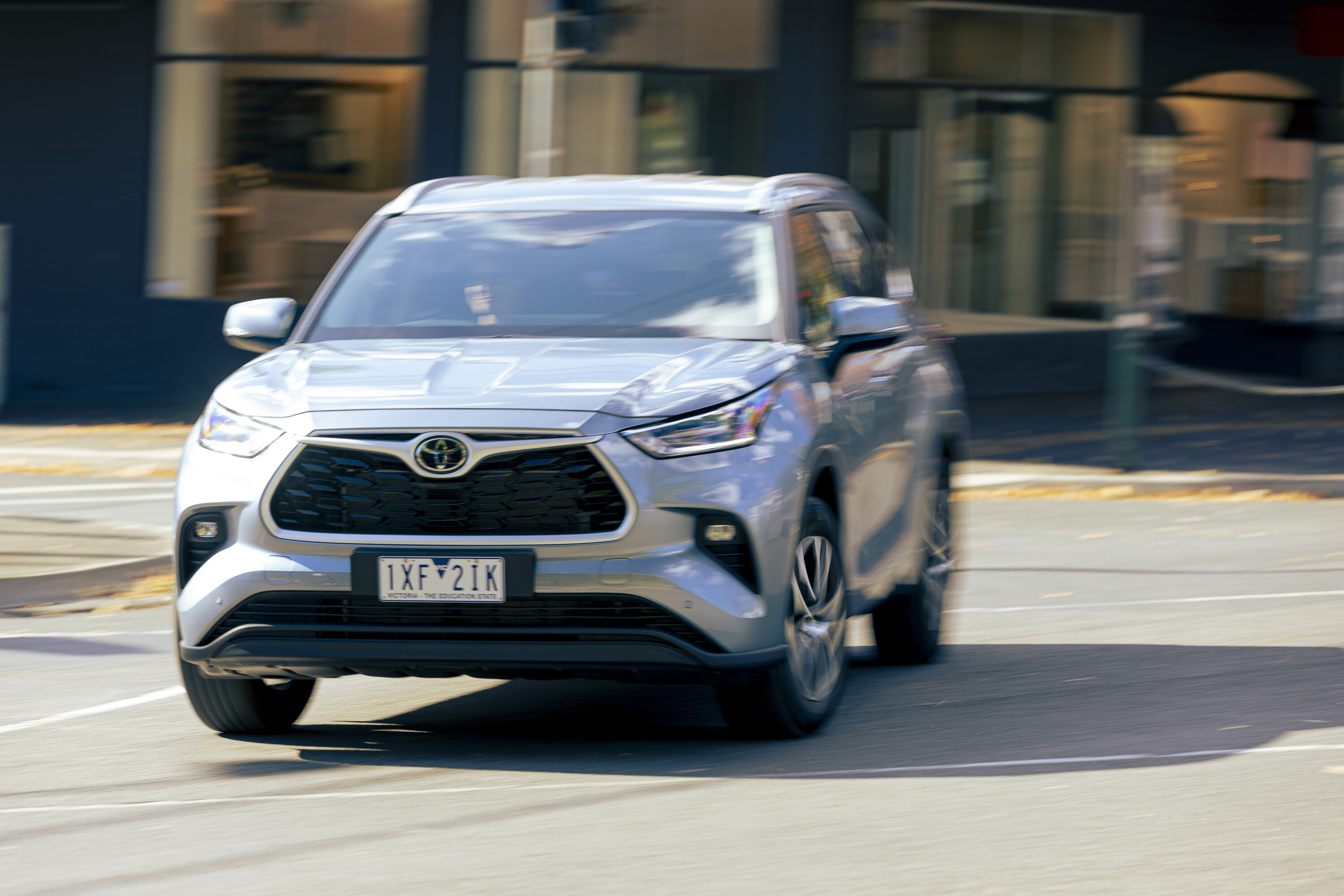
As with many Toyotas, there’s a substantial wait time for a new Kluger Hybrid so while used prices are high, at least you could drive away today in a ’22 model with manufacturer’s warranty.
Pay around $50K for a base GX or spend about $5K more on a Kluger GXL eFour, which brings nav, powered and heated pews, three-zone climate and a powered tailgate, though if you’re averse to clammy artificial leather, stick with the cloth-seated GX.
Thirty five thousand bucks buys you a low-kilometre, low-to-mid grade Hyundai Santa Fe as recent as 2021, or even a higher-mileage Highlander, which represents a fine way to haul a large family in comfort and style.
But which powertrain to choose? With a robust 440Nm, we reckon the 2.2-litre turbo-diesel best fits the job, as did the vast majority of new buyers. Helpfully, the oiler’s better buying used than the 3.5-litre petrol V6, too.
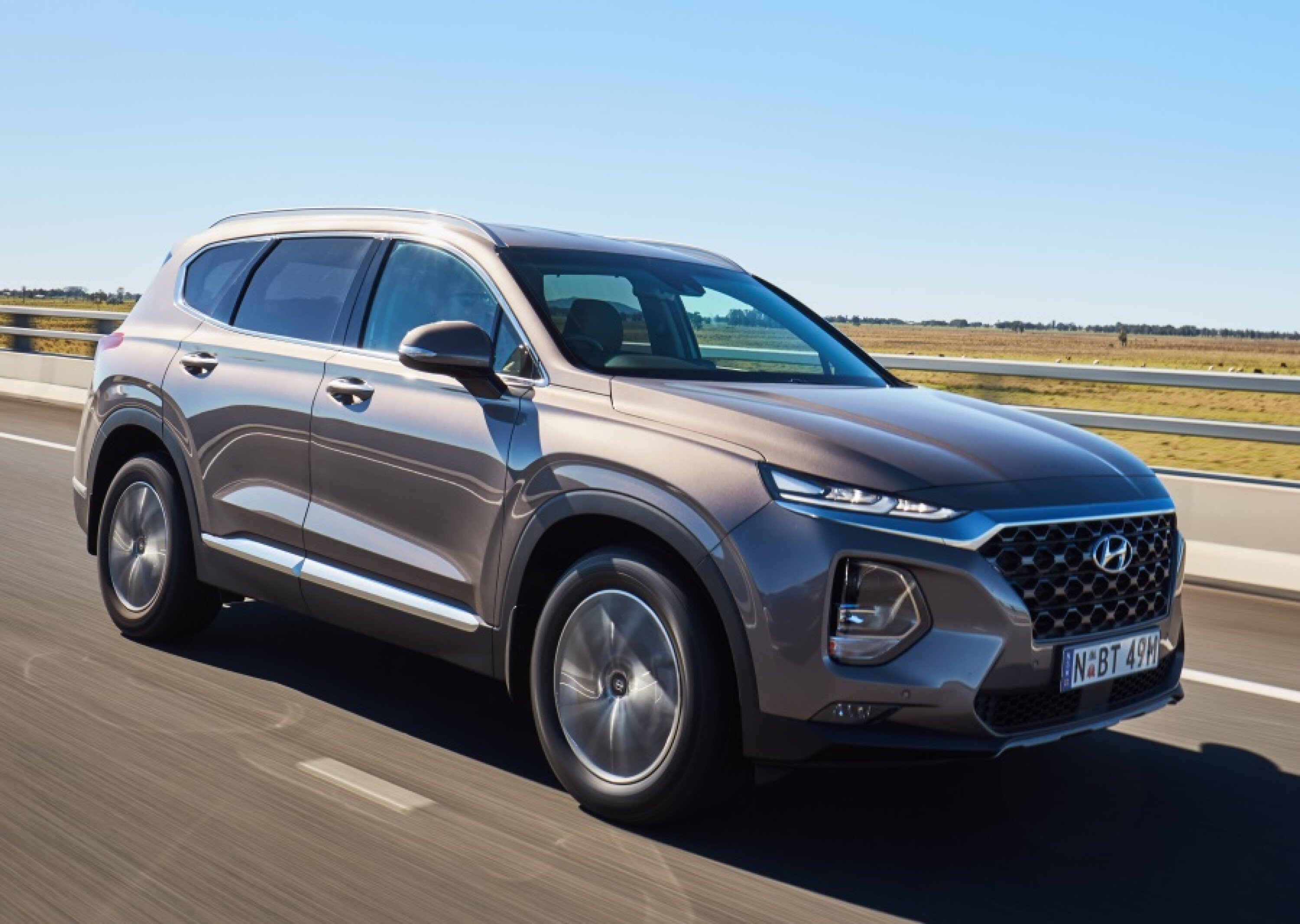
Target an Elite grade, which comes standard with the 2.2 diesel, eight-speed auto and AWD, and get niceties such as leather, powered front seats, 8.0-inch multimedia/nav, Infinity audio, dual-zone climate, proximity keys, a power tailgate and 18-inch alloys.
Alternatively, forego some fruit and opt for a newer, lower-kilometre Active (or Active X, if you can find one).
A 2017/18 Kia Sorento with a year’s warranty left is a shrewd buy for seven-seat family-wagon shoppers looking to stretch a $25K budget as far as humanly possible.
Resist the allure of GT-Line and Platinum grades because, while you’ll find some in the $25-30K range, you’ll get far more mileage from a well-maintained, low-kilometre Si, Sport or SLi. You can take your pick of V6 petrol FWD or turbo-diesel AWD, which both feature an eight-speed automatic transmission.
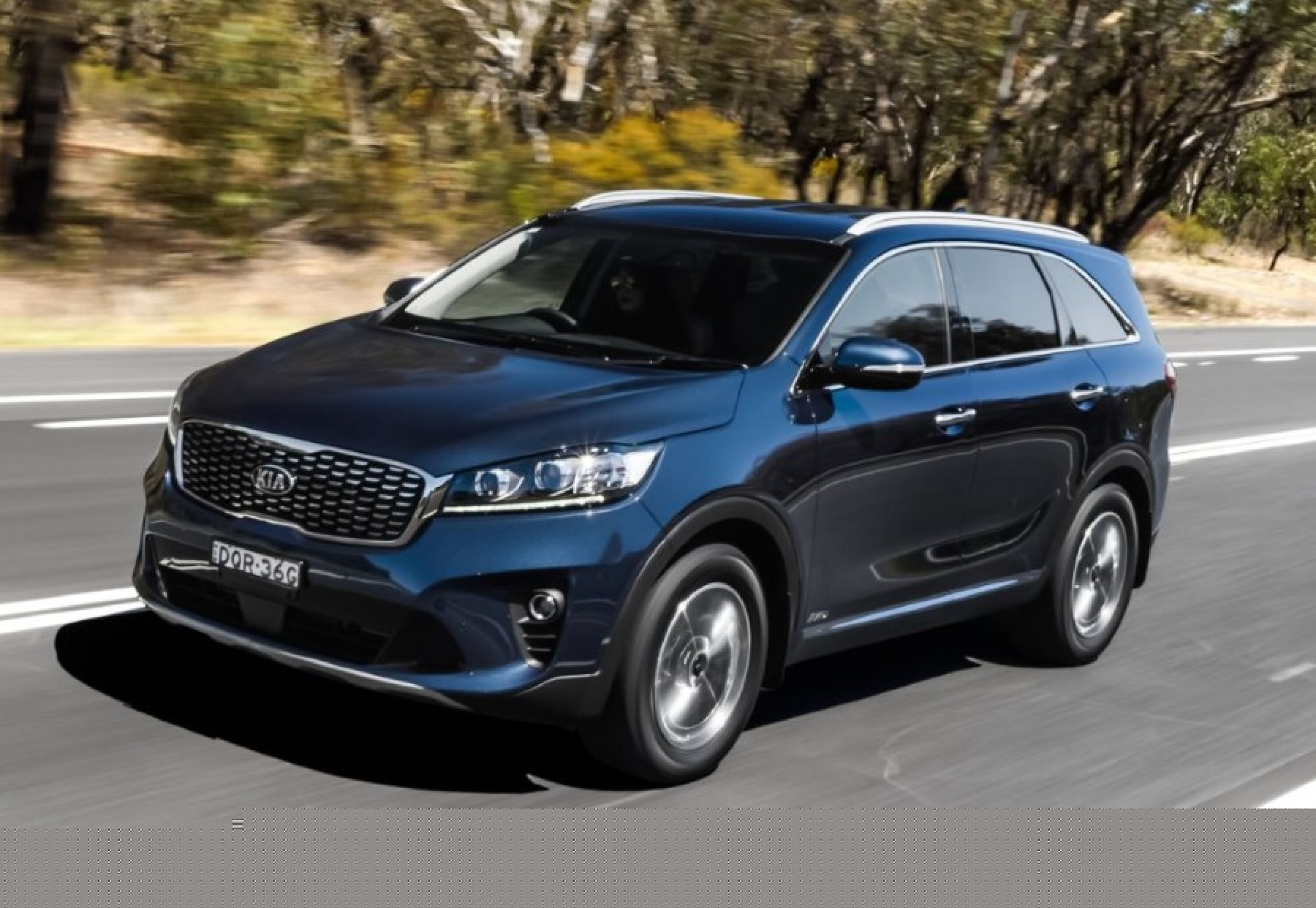
On the safety front, you get AEB, lane-keeping assist and adaptive cruise, which is great.
The Sport adds leather and 18s – nice – while the SLi adds 10-speaker Harman Kardon audio, proximity keys, powered front seats, and a powered tailgate – nicer, still.
With the Arkana face-lifted arriving imminently, with a hybrid option likely, we take a look at the current generation offering until the switch across.
Future revisions will add Renault’s new logo, an updated grille, black accents replacing chrome, a minor update to its LED tail-light signature, and wireless Apple CarPlay and Android Auto.
Until this, let’s check out whats available today at Renault.
The Renault Arkana is an SUV coupe introduced to Australia by the French manufacturer in August 2021, shortly after the retirement of the Kadjar.
Although not a top-ten player for sales volume, Renault Australia has well-known models such as the Megane RS, Captur and Koleos in the passenger car and SUV segments. Additionally, Renault offers commercial vehicles like the Kangoo and Trafic, which are well-regarded for their reliability and practicality in professional settings.
One of the standout features of the Arkana is its coupe-like silhouette, which sets it apart from traditional SUVs in its class, with a sporty. This distinctive design not only gives the Arkana a sporty and dynamic appearance but also enhances its aerodynamic efficiency.
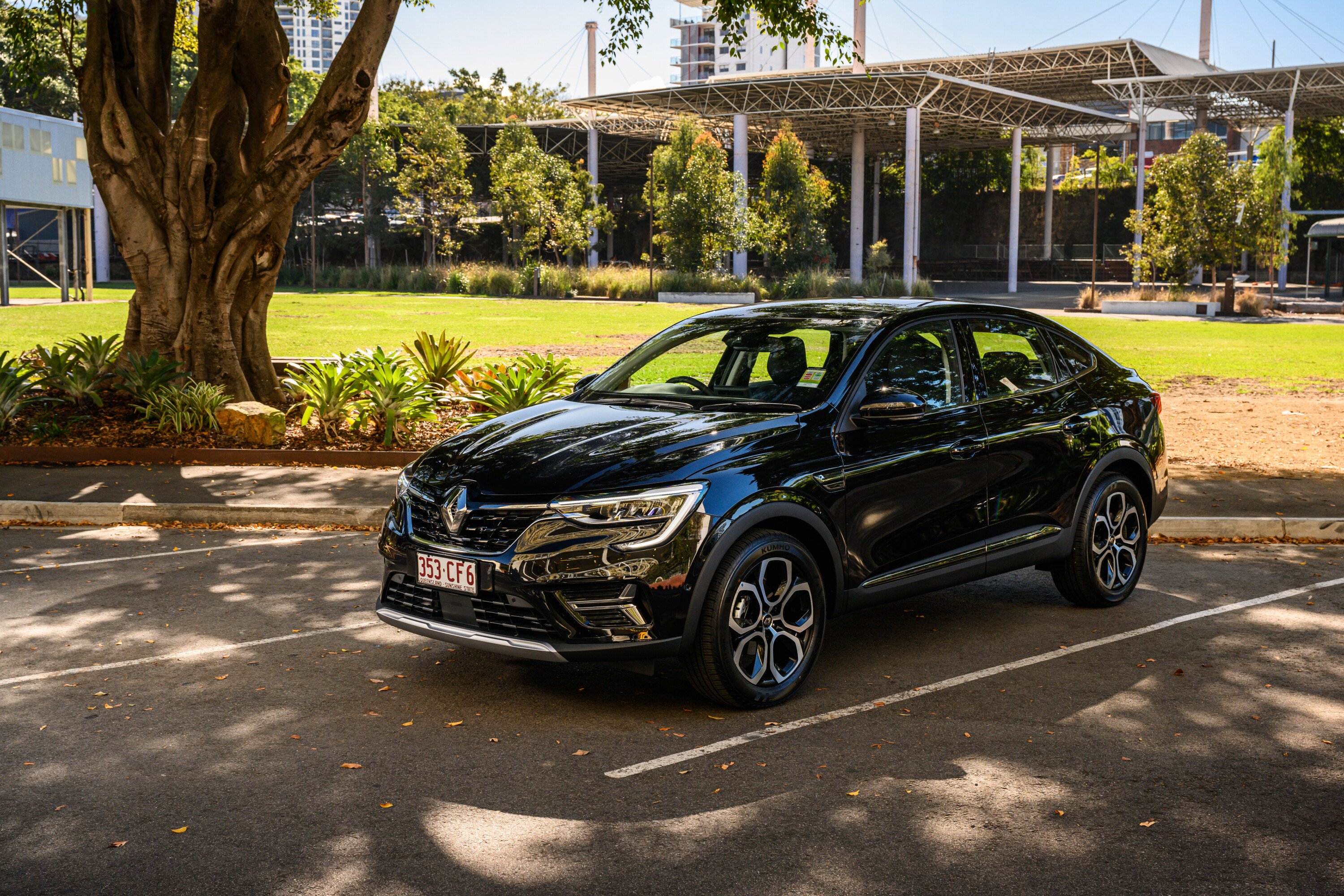
Starting off the Arkana range, the Zen is priced at $37,500 before on-road costs.
Its exterior is characterised by a bold front fascia, sleek lines, and a dynamic silhouette that differentiates it from traditional SUVs. Inside, the Arkana Zen provides a sporty and edgy cabin, with quality materials and a straighforward traditional layout designed for ease of use.
A 1.3-litre turbo petrol engine powers each variant in the line-up, which outputs 115kW and 262Nm, using a quoted 6L/100km on a combined cycle.


The small SUV scored an impressive 96% for adult occupant protection, and 85% for child occupant protection.
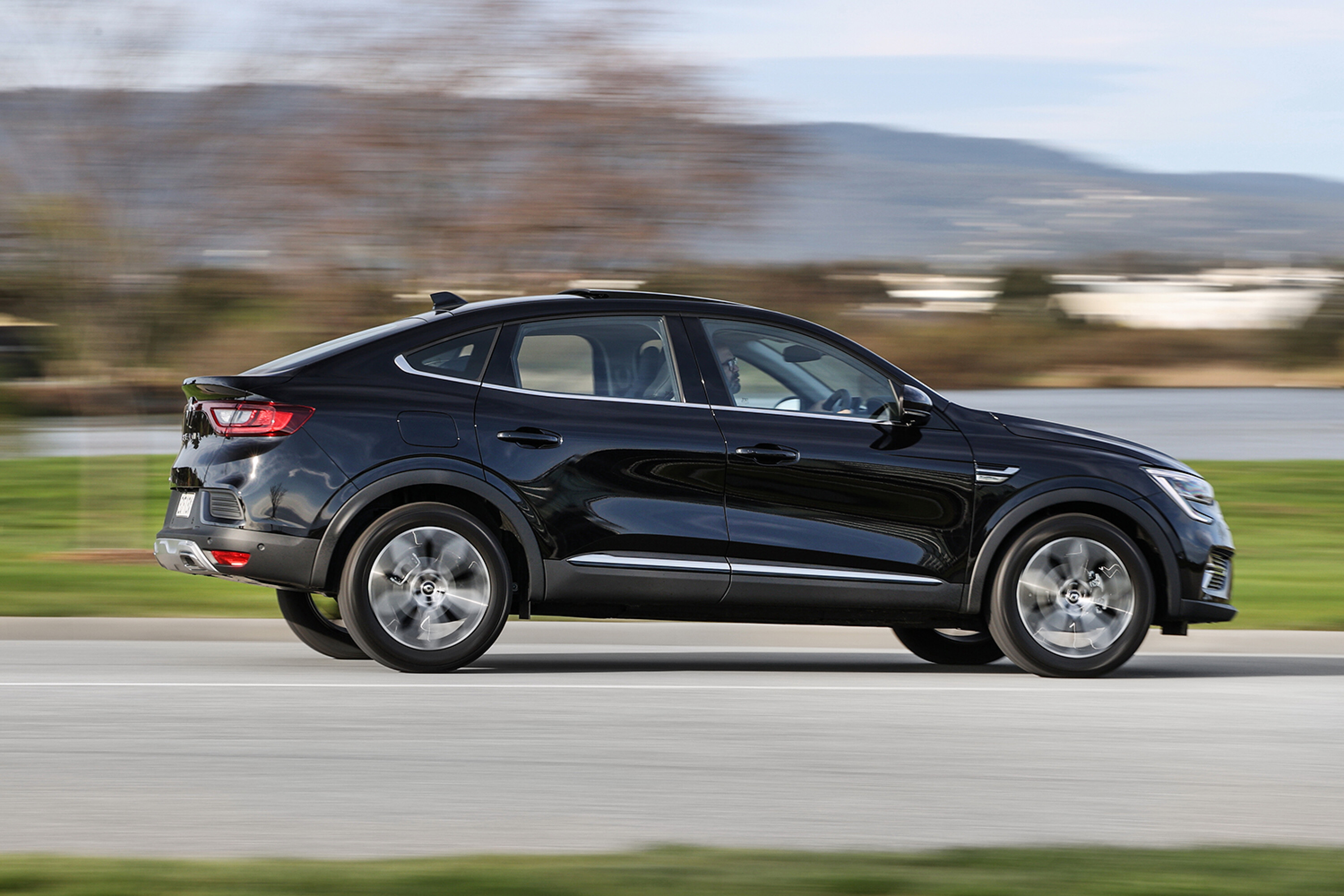
With its design the Arkana competes with the likes of pricier but equally sleek coupe styled competitors such as:
However at its price point is is comparable to certain trims from the likes of: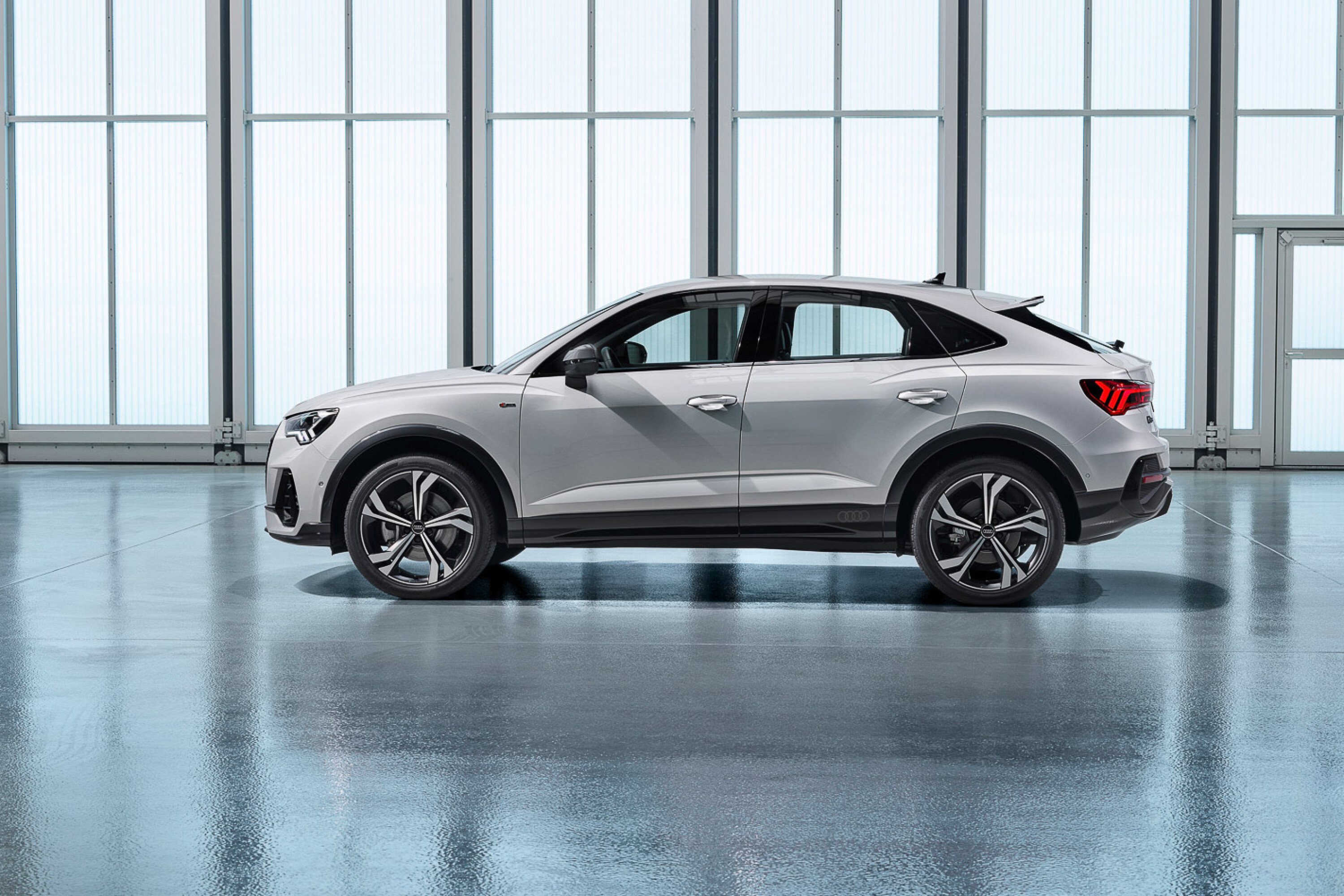
Despite Renault’s reputation for producing engaging hot hatches, the Arkana elevates the driving experience even further, partially owing to its streamlined shape, which serves purposes beyond mere aesthetics.
The Arkana proves to be a versatile SUV as well, striking a fine balance between practicality and driving pleasure. This could position it favourably in the Australian market, especially the Intens model, which offers additional features over the Zen, positioning it as a particularly appealing choice in the lineup.
When it comes to heading off-road, you should make sure the three models below are high on your list of cars to consider.
Despite its commercial ute underpinnings, the Ford Everest possesses a civility that defies its roots. In fact, the Everest has shaped up as a great three-row rig for which to do some long-distance touring with, whether with or without a trailer attached.
It also shapes up as a very compelling alternative to a Prado, a vehicle that remains heavily impacted by Toyota Tax thanks to raging demand. The crazy prices that followed the Everest into the market after its Wheels COTY win have eased slightly and it’s now possible to pick up a 2023 Everest 2.0-litre Ambiente with all-wheel drive for just over $60K.
Prefer the 3.0-litre V6? You’ll need to pay from $75K for a lightly used Sport version. Yes, that’s still not far off list, but context is key here. It’s about the same price as a used 2023 Prado GXL and the Ford is more modern, drives better, has a stack more equipment, and isn’t about to suffer the depreciation wallop of imminent replacement.
We miss the FJ. Its eye-catching design was a breath of fresh air in a segment dominated by dull two-box wagons, and while its suicide doors were a pain for passengers, they certainly oozed cool factor.
But from an off-roading point of view, the FJ Cruiser’s biggest ace was what was hidden beneath its radical bodywork – an evolution of the three-door Prado’s hugely competent ladder frame chassis, suspension, and grunty 4.0-litre petrol V6 engine.
Nowadays, FJ Cruisers offer a great bang-for-buck package. Prices hover around $25K, and with all of them being 4.0-litre petrols with a five-speed auto and switchable 4WD, there’s no range complexity to contend with either. A low-grade Prado GXL of a similar vintage will cost slightly less and also give you the option of a diesel engine. But think of the FJ Cruiser like this: it’s just like a Prado but, you know, for people with a personality.
If you want the cheapest gateway into off-roading, but also wouldn’t mind something that still carries some semblance of reliability and competency, the previous-gen Jimny is your steed.
However, hitting the trails in the lil’ Zook will require you to be tolerant of its shortcomings, such as in power, torque, creature comforts and, if you’re carrying a passenger, personal space.
It’s also horrifically old-fashioned, with this generation of Jimny being a retro throwback to ’90s-era Japanese design.
That works in your favour though, as the more affordable older models are largely identical to later-build vehicles and Suzuki’s famously unburstable engineering means age shouldn’t necessarily be a handicap.
Accordingly, finding presentable examples in either auto or manual (note that autos are particularly soggy, performance-wise) is no great challenge if you have $10-15K to play with,
It might be slow and basic, but on a smile-per-dollar quotient, the humble Jimny scores highly.
Quick bit of mental calculation. I live 40km from the office, so how many kilometres would the commute alone eat up over three months? 4800. Oh dear. That might present a bit of an issue.
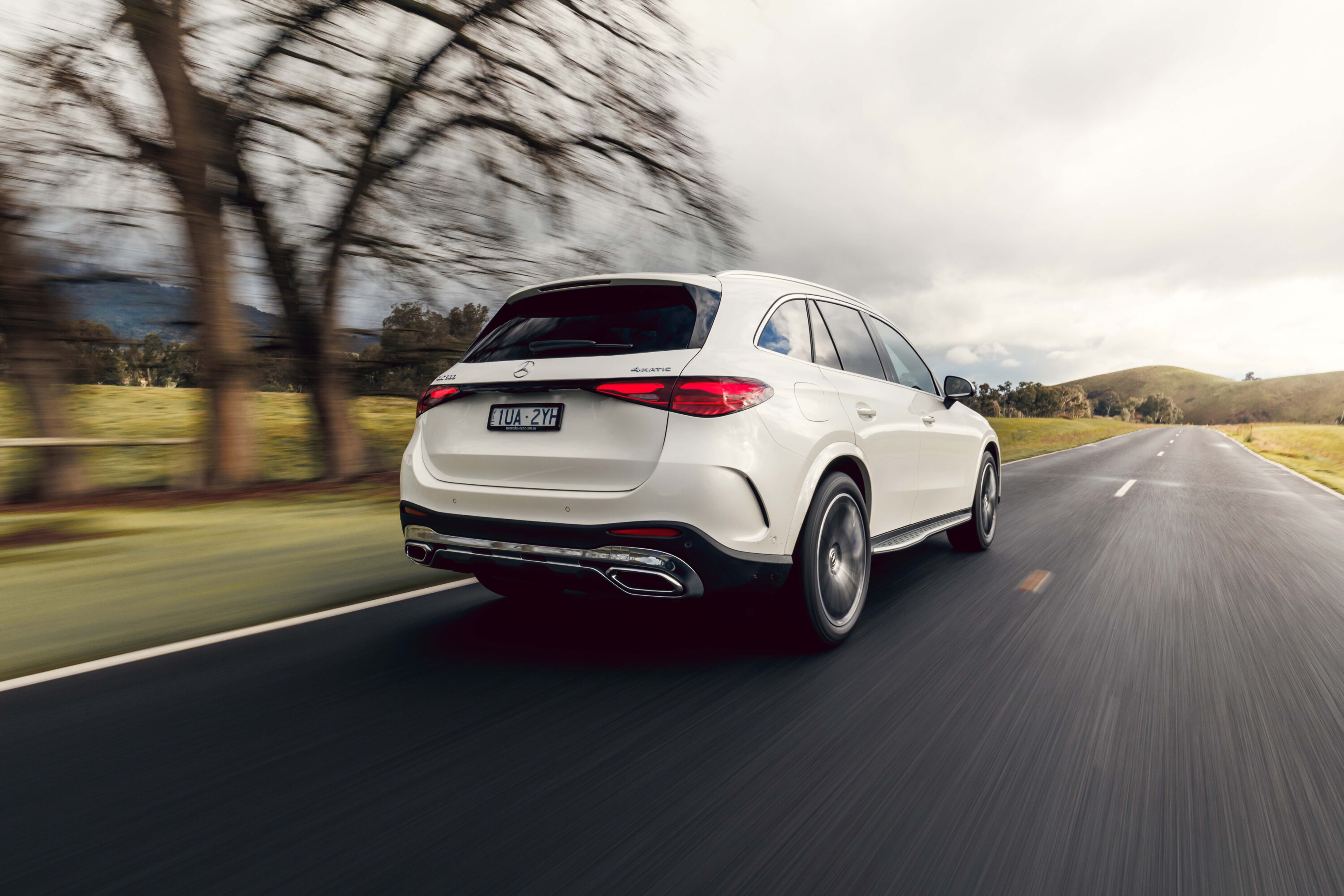
Sales people the world over must recognise the particular symptoms. The prospect claps eyes on the car and suddenly they lose all basic rationality. They just have to have it and will concoct all manner of warped justifications in order to do so. The white GLC300, hunkered low over its multi-spoked 20-inch alloys, had me looking for a dotted line to sign on. Limits, schlimits.

Despite the badge, there’s no longer a large capacity six beneath the bonnet of this one. Instead it’s a humble 2.0-litre four pot, albeit one that can hawk up a very respectable 190kW and 400Nm.
It wasn’t so long ago that 190kW was what you got with the big 3.0-litre V6 in the GLC350d, which was the flagship diesel variant and, it has to be noted, wasn’t markedly more efficient.
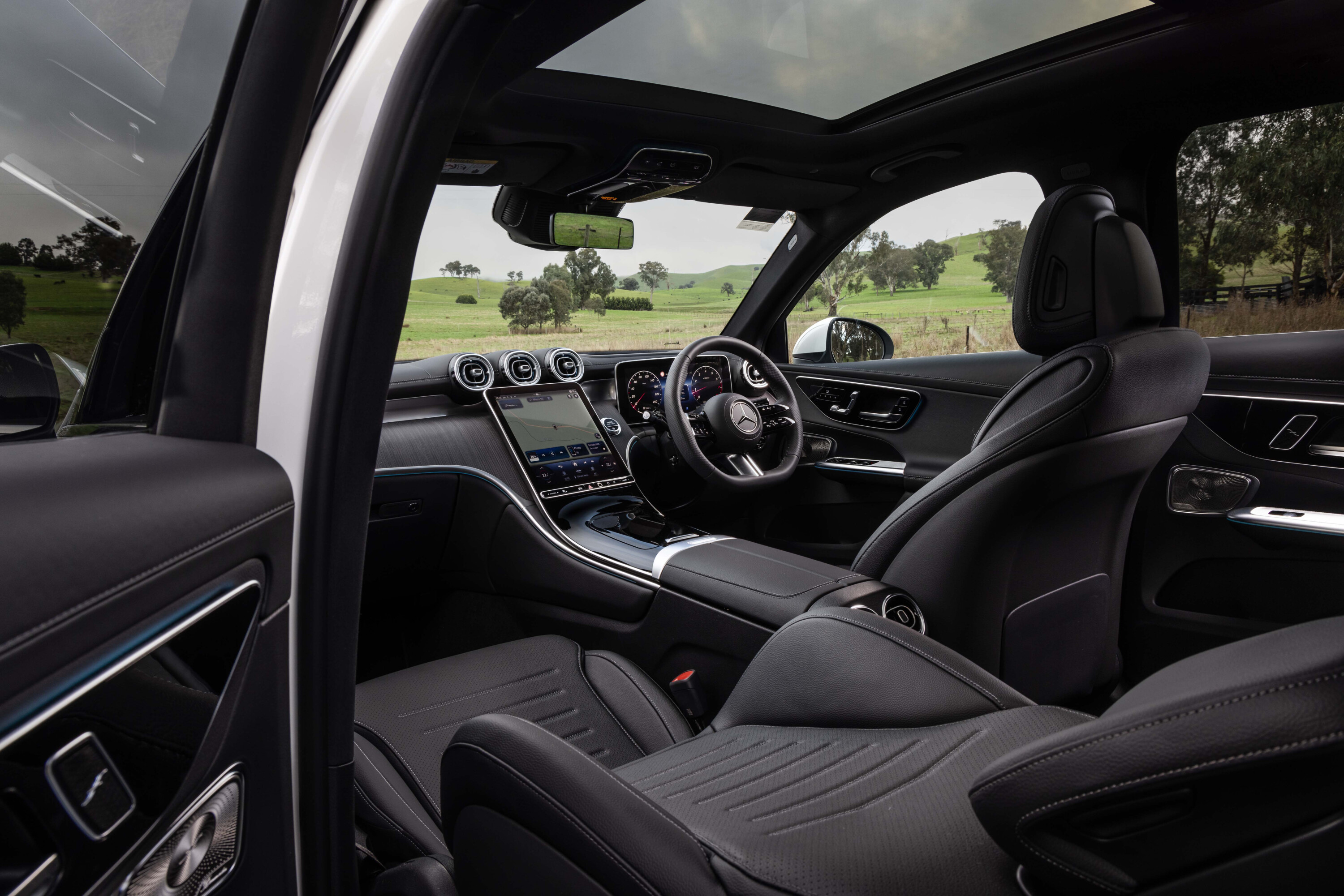
You’d hardly know it was the ‘cheap’ one when you drop inside.
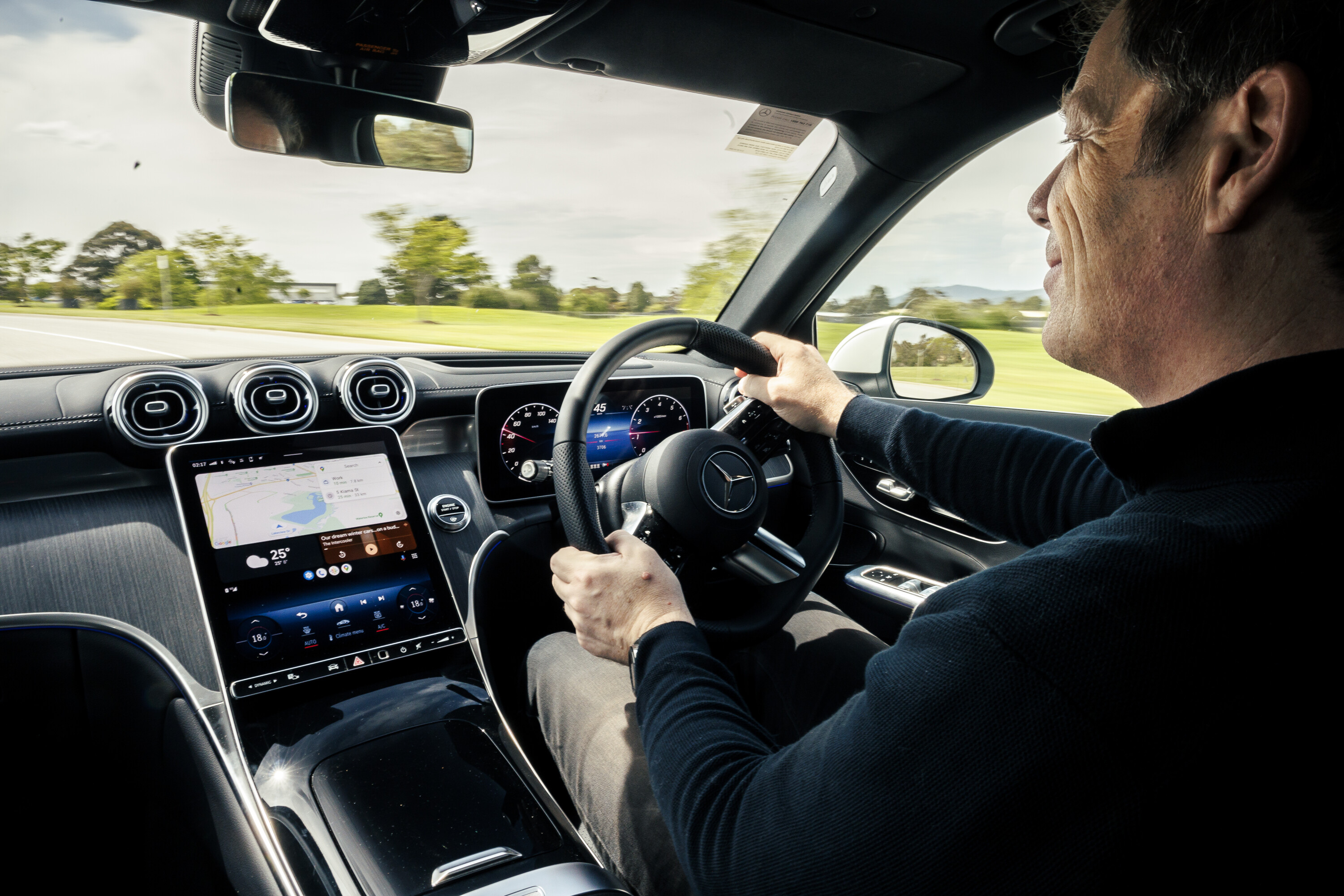
The impression of initial quality is good. The biggest concern I had was that the new GLC might have regressed somewhat in terms of fit and finish; that it might feel like the MFA2 chassis cars like the GLA and GLB.
Instead, both materials quality and body integrity feel a good deal more senior, as it should for a vehicle that rides on the C-Class’s MRA2 underpinnings, making it a bigger car than the old GLC.
Perhaps that comparison is odious. Virtually everything would feel stiffer in ride than the Subie, and the Merc counters with cornering agility that’s closer to a BRZ than an Outback.
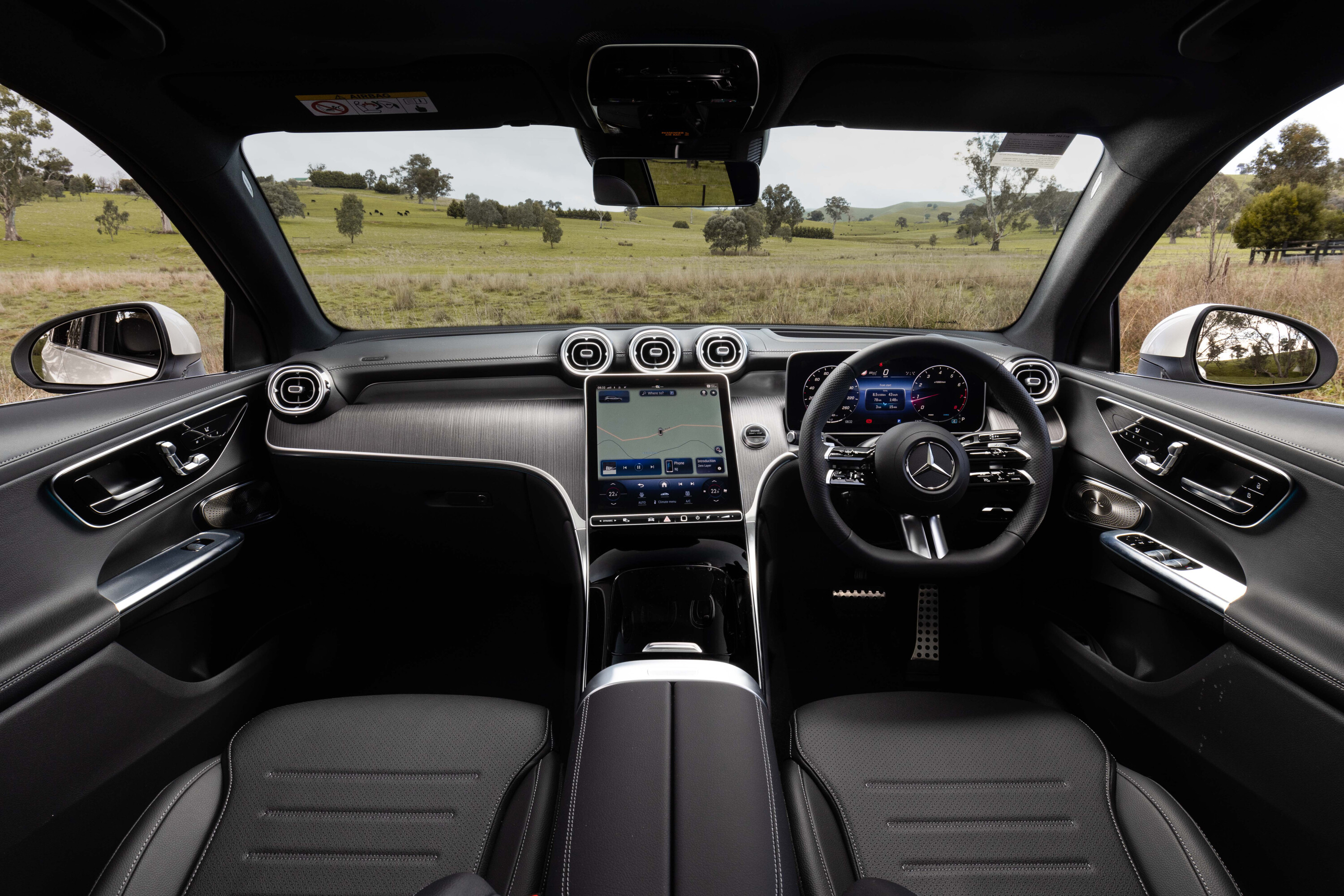
I can’t claim to have mastered the GLC’s infotainment system having only covered a few hundred kilometres in it thus far, but the 11.9-inch portrait touchscreen features both wireless Android Auto and Apple CarPlay connections coupled with the obligatory wireless charging pad.
In fact, it’s about the only car I’ve driven lately where I don’t have too much of a preference whether the phone mirroring is switched on or not.
Drawbacks? Few so far. The black vinyl seats feature heating elements up front, but can become wickedly hot if the car’s parked towards the sun.
A set of seat coolers wouldn’t have gone amiss. Somewhat surprisingly, despite offering a stack of drive modes, the GLC 300 rides on a passive damper, so there’s no option of switching into a more pliant suspension setting. Yet it’s fair to say that it’s created a favourable first impression. Next month we’ll stretch its legs a bit.
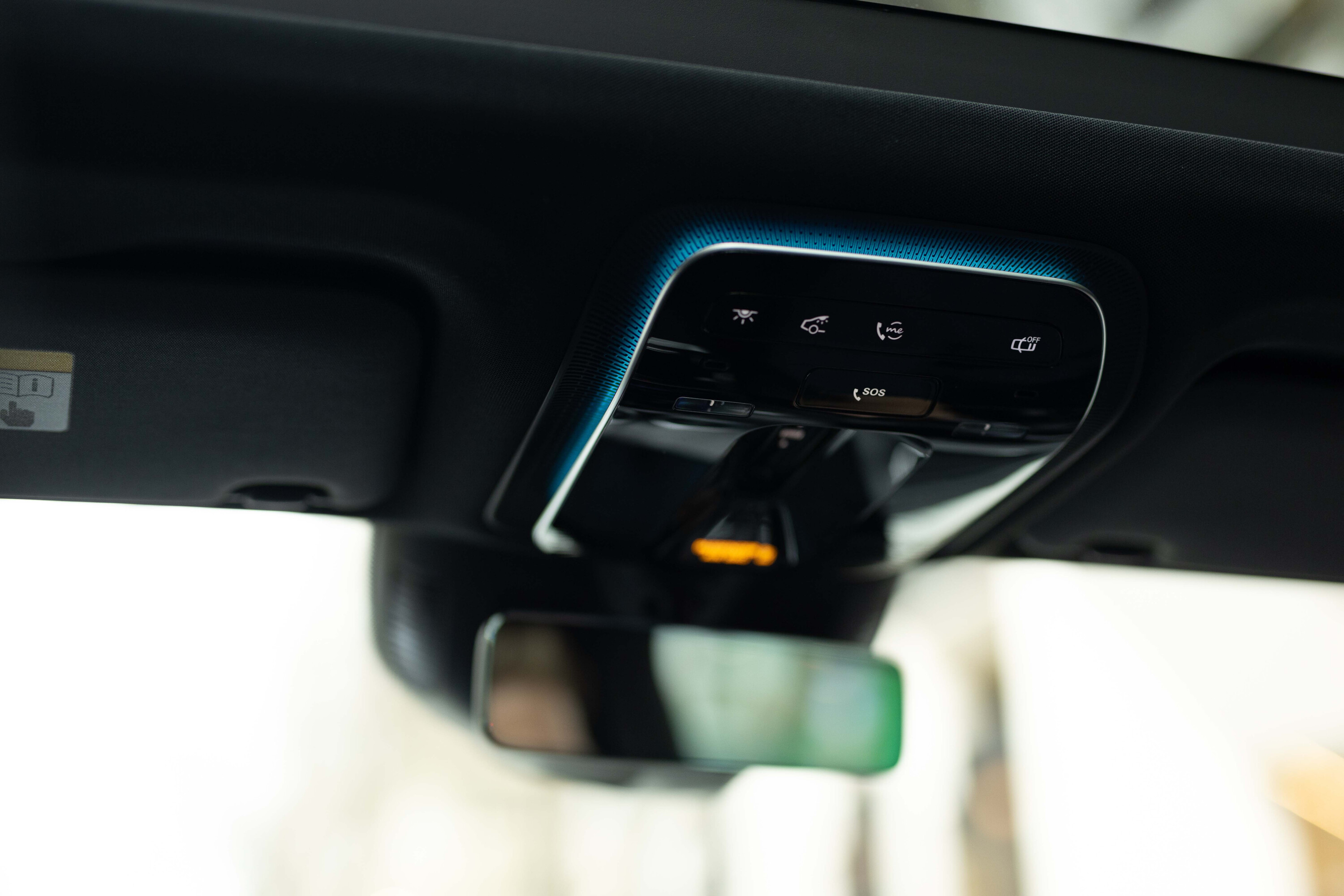
I’m starting to get used to the GLC speaking to me as I exit the car. I mean, it’s all very polite, but after a while “Just a moment – you’ve forgotten your phone” begins to get a bit wearing.
The problem, as I see it, is that the phone resides in one of two places, both of which are hidden from the driver. It’s either in the centre box where the USB-C slots are or it’s buried in the bowels of the dash where the wireless charger resides. Maybe that’s deliberate.
Other issues? Surprisingly few. The GLC has a very odd characteristic whereby in heavy rain, the driver’s side wiper can’t clear the water off the screen and pulls a sheet of water back on the return stroke, making a semi-opaque addition to the already chunky A-pillar.
Other than that, the GLC 300 is endearing itself to everyone who’s travelled in it. The ride is extremely well judged. It’s sporty enough to have a bit of fun with on a challenging road without becoming tiresome on an everyday basis. If it was pasta, you’d call it al dente.
The ride height is similarly clever, having enough clearance to never worry about grounding the nose on sharp driveways or gutters, but retaining a sleekish profile. In fact, the overall height of 1640mm is 40mm lower than the Subaru Outback wagon I had run previously.
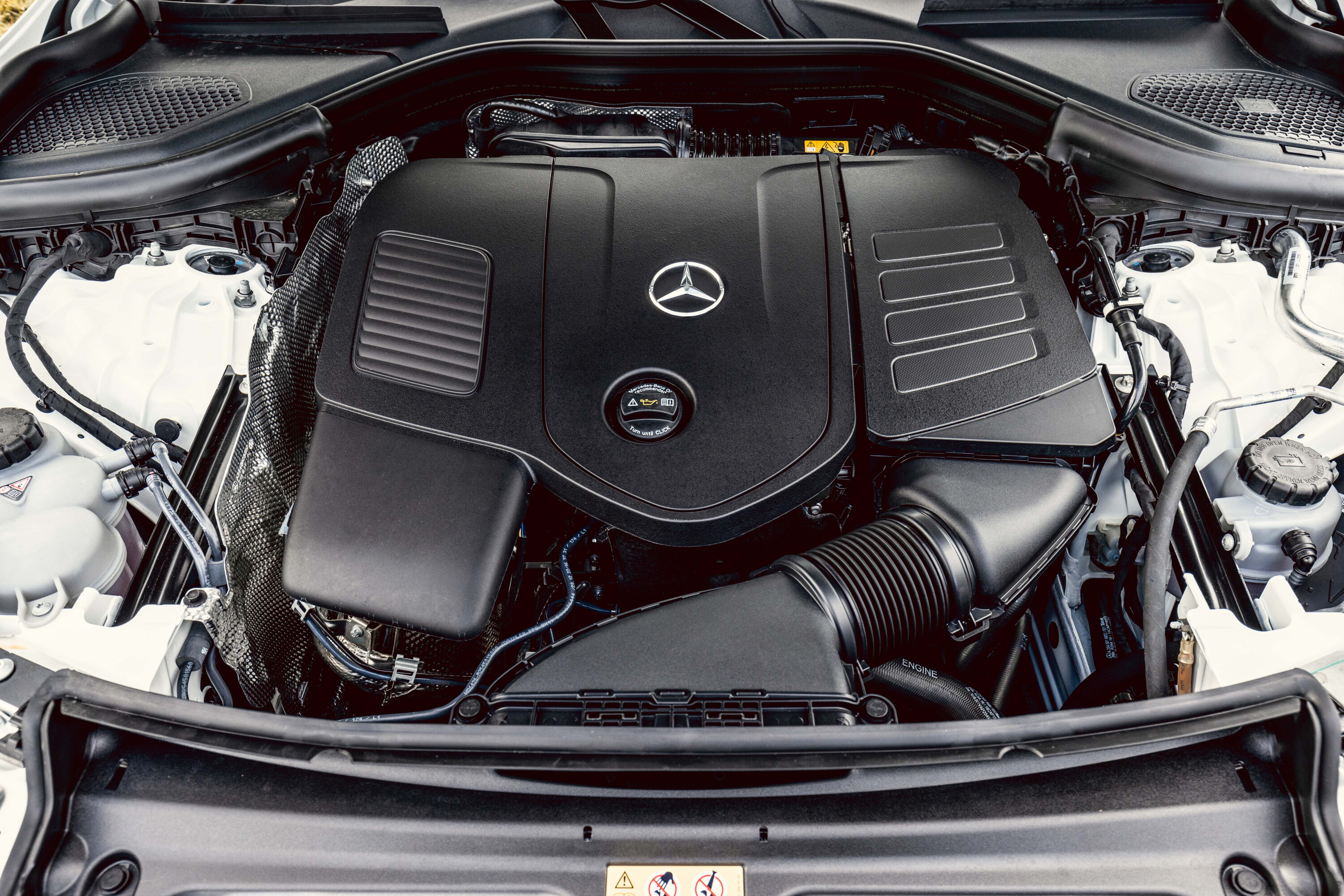
These can stay on for a little too long when you’re pulling away and I’ve taken to turning off autoplay in my podcast app because of this, as my passenger’s not really keen on hearing 20 seconds of Chris Harris blathering on about the glasshouse to bodywork proportioning of a BMW E39 wagon before I can hit pause. I latterly figured out that pressing the middle of the volume button on the steering wheel pauses audio too.
I must confess to not being any great fan of the Mercedes column-mounted gear shifter. Not only does it represent a safety issue (unfamiliar users can easily knock the car into Neutral when trying to indicate back in from the outside lane if they flick up on the wrong stalk) but it also means that lights, front wipers, rear wipers, wash functions and indicators are all shoehorned onto the left-hand wand, which compromises utility.
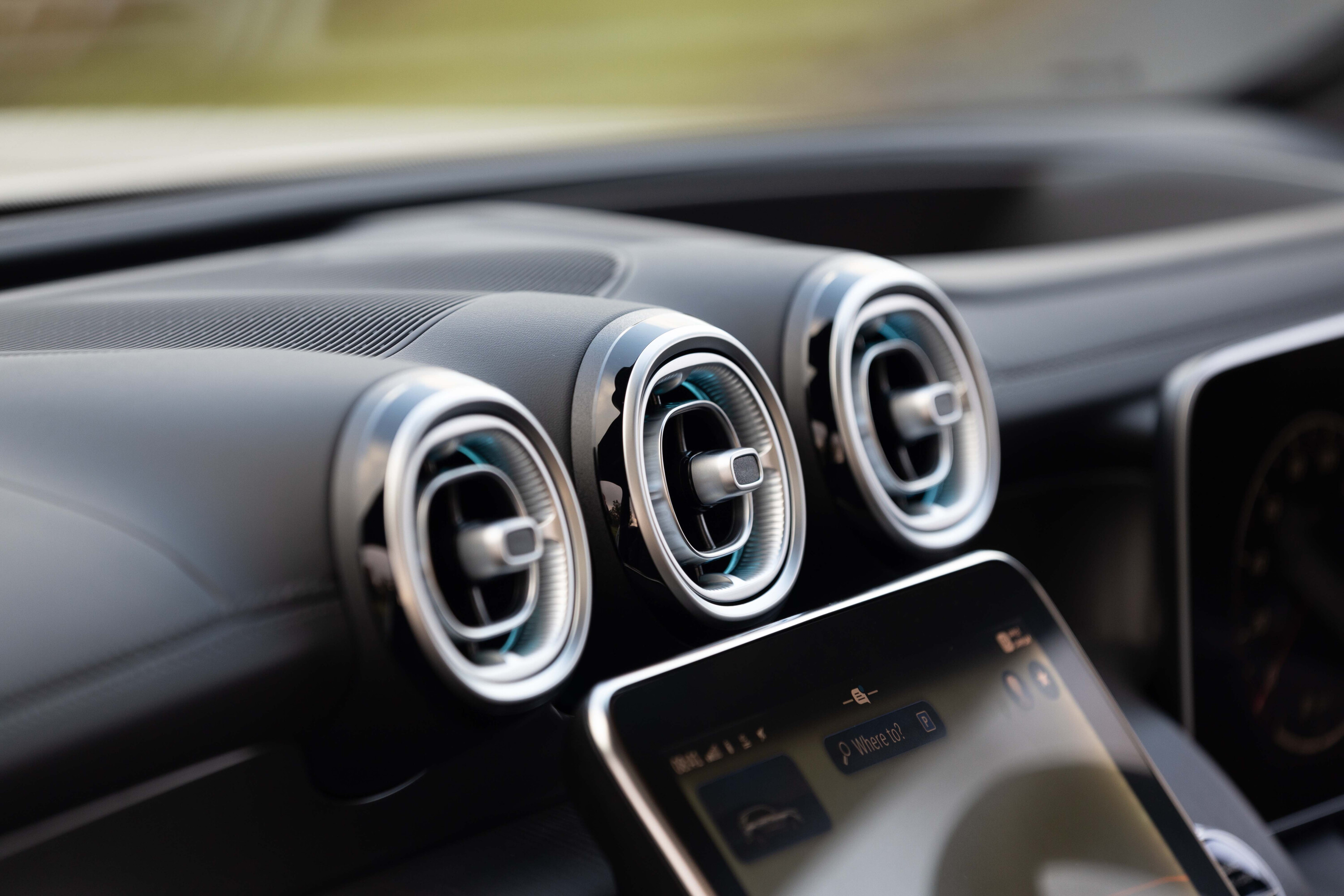
The big-ticket items that Mercedes needed to get right, such as styling, ride quality, engine response, and safety are well addressed. And I still get a kick out of opening the door on a wet night and seeing a massive three-pointed star projected onto the road surface, the bitumen glinting like jewels.
It’s exactly this level of otherness that Mercedes-Benz traditionally did so well; that feeling that here was a car built differently to others. That feeling had been lost at some points in the company’s recent history, but it feels as if Stuttgart now realises the corrosive effect that cost-cutting had on its brand equity and has resolved to rediscover it. Hopefully we’ll be able to probe a little further and discover whether that’s more than superficial sleight of hand.
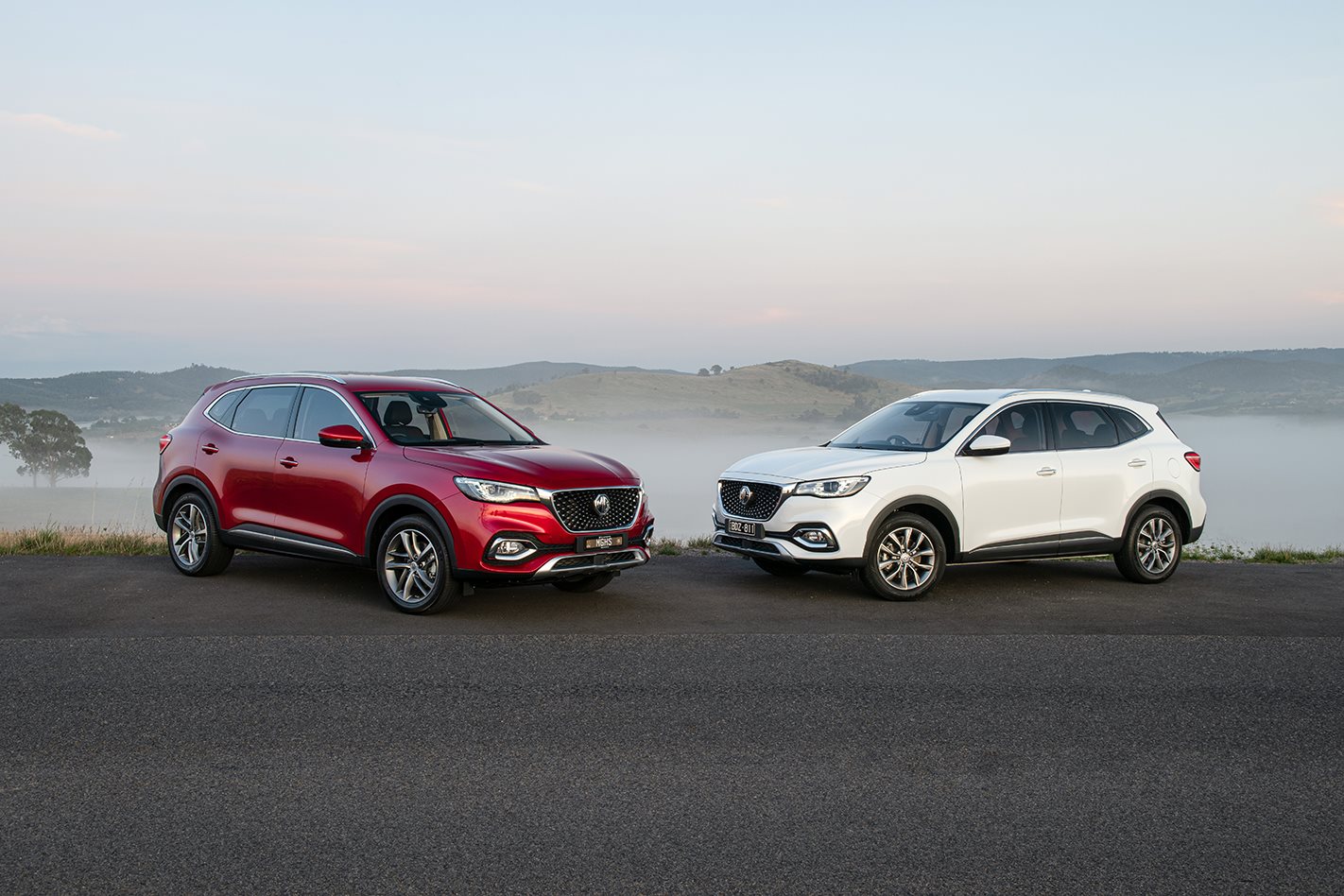
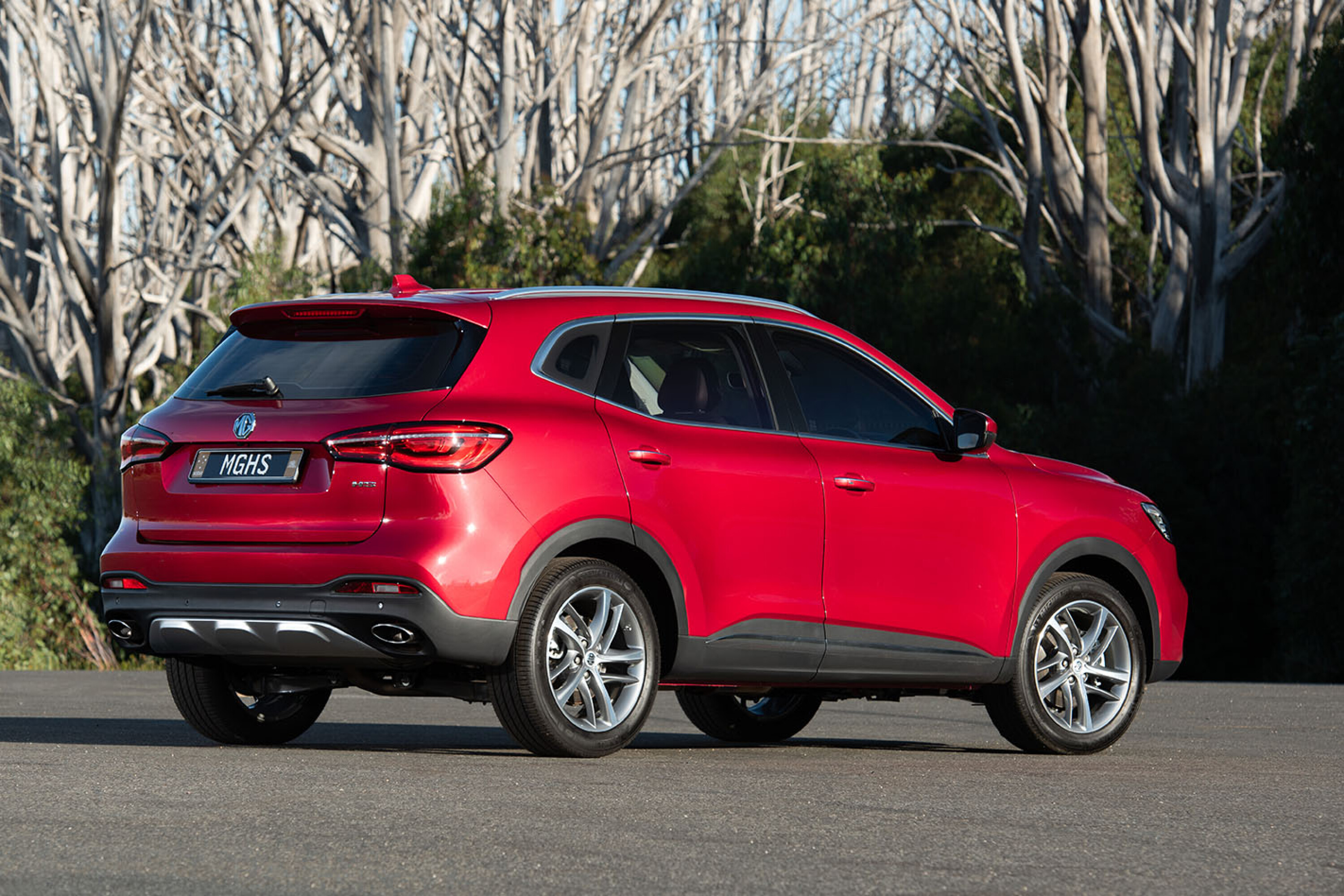
Its sharp drive-away pricing aligns the affordability of this medium SUV with many small SUV ranges and while some things need improving, build quality doesn’t seem to be one of them.
Neither is performance; the HS comes with a punchy 1.5-litre and 2.0-litre turbocharged powertrains, including Australia’s cheapest plug-in hybrid.
| Model | Drive-away pricing |
|---|---|
| HS Vibe FWD | $32,990 |
| HS Excite FWD | $35,990 |
| HS Essence FWD | $39,990 |
| HS Essence X AWD | $43,990 |
| HS Plus EV Excite FWD | $49,690 |
| HS Plus EV Essence FWD | $53,690 |
| 2024 MG HS standard features | |
|---|---|
| 10.1-inch infotainment system | Apple CarPlay and Android Auto (wired only) |
| Semi-digital instrument cluster | Six-speaker audio system |
| Reverse camera | Rear parking sensors |
| Four USB-A ports (2x front and rear) | Air conditioning |
| Synthetic leather upholstery | Leather-wrapped steering wheel and gear shifter |
| Front centre console with cooling | Rear air vents |
| Halogen headlights | Front fog lights |
| LED daytime running lamps | LED tail lights |
| Keyless entry with push-button start | Heated, electrically-operated door mirrors. |
| Alloy wheels | Sharkfin antenna |
| MG Pilot Driver Safety Suite | Adaptive cruise control |
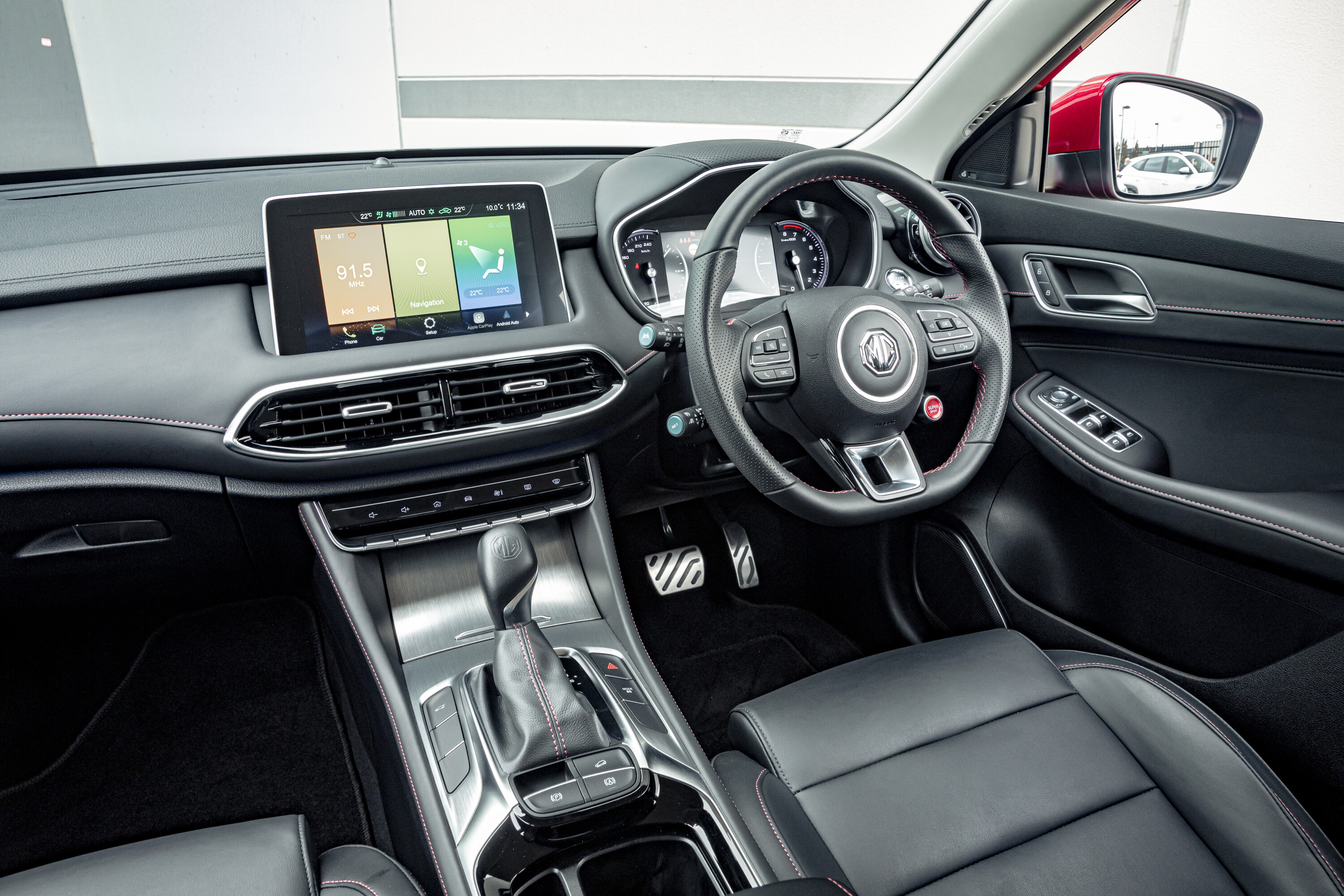
| 2024 MG HS Excite additional features | |
|---|---|
| LED headlights | Dual-zone climate control |
| Satellite navigation | Alloy pedals |
| Rain-sensing wipers | u2018Super Sportu2019 drive mode |
| Electric tailgate | Paddle shifters |
| Sequential rear indicators | Ambient interior lighting. |
| 18-inch alloy wheels | |
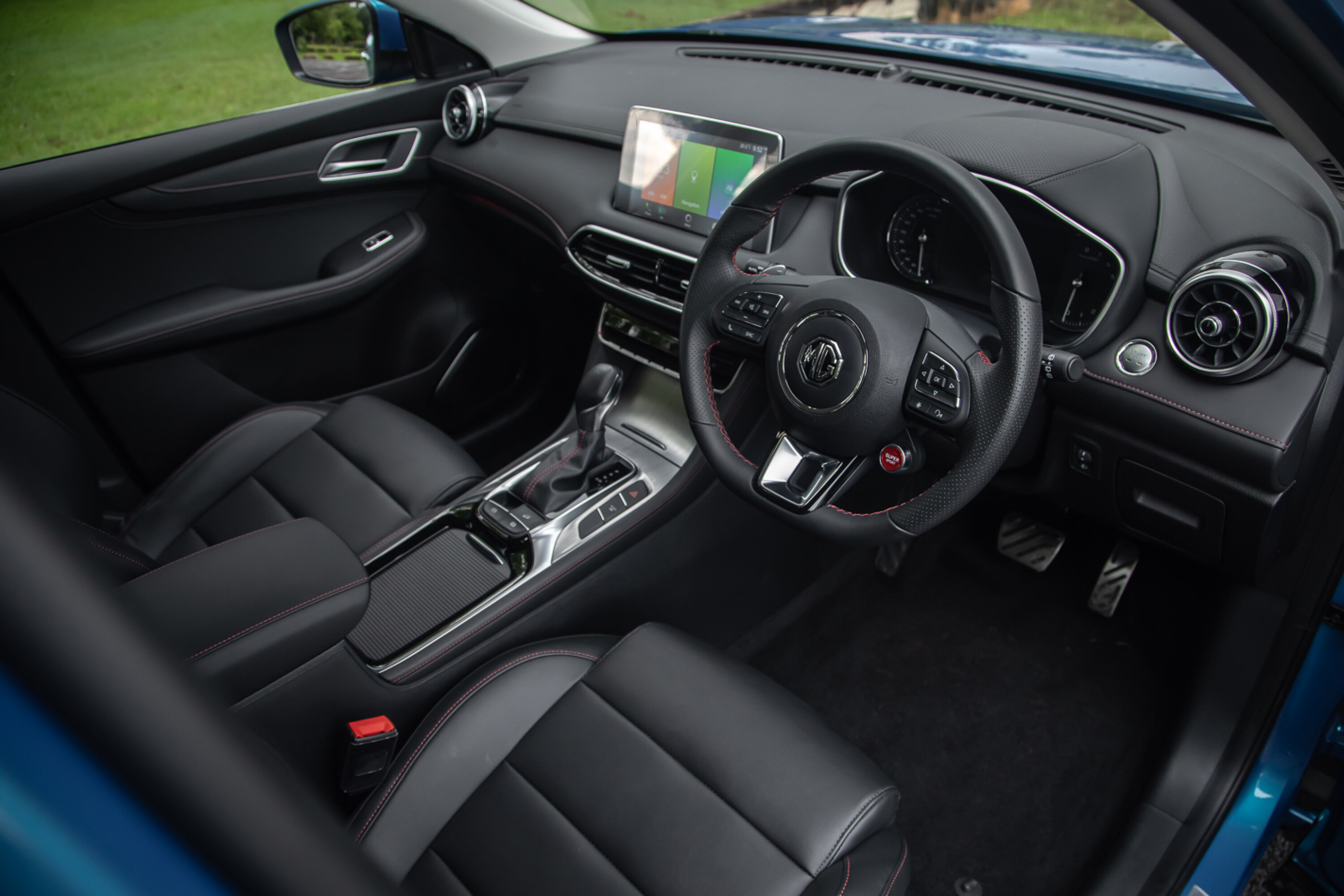
| 2024 MG HS Essense additional features | |
|---|---|
| 360-degree camera | Panoramic sunroof |
| Two-tone leather sports seats | Six-way power-adjustable driveru2019s seat |
| Heated front seats | Four-way power-adjustable passenger seat |
It has most of Excite’s features but has smaller 17-inch wheels and a manually-operated tailgate and, for some reason, old-school halogen headlights which seems an odd choice in a high-tech electrified vehicle. But it gains the 12.3-inch digital instrument cluster found in the Essence.
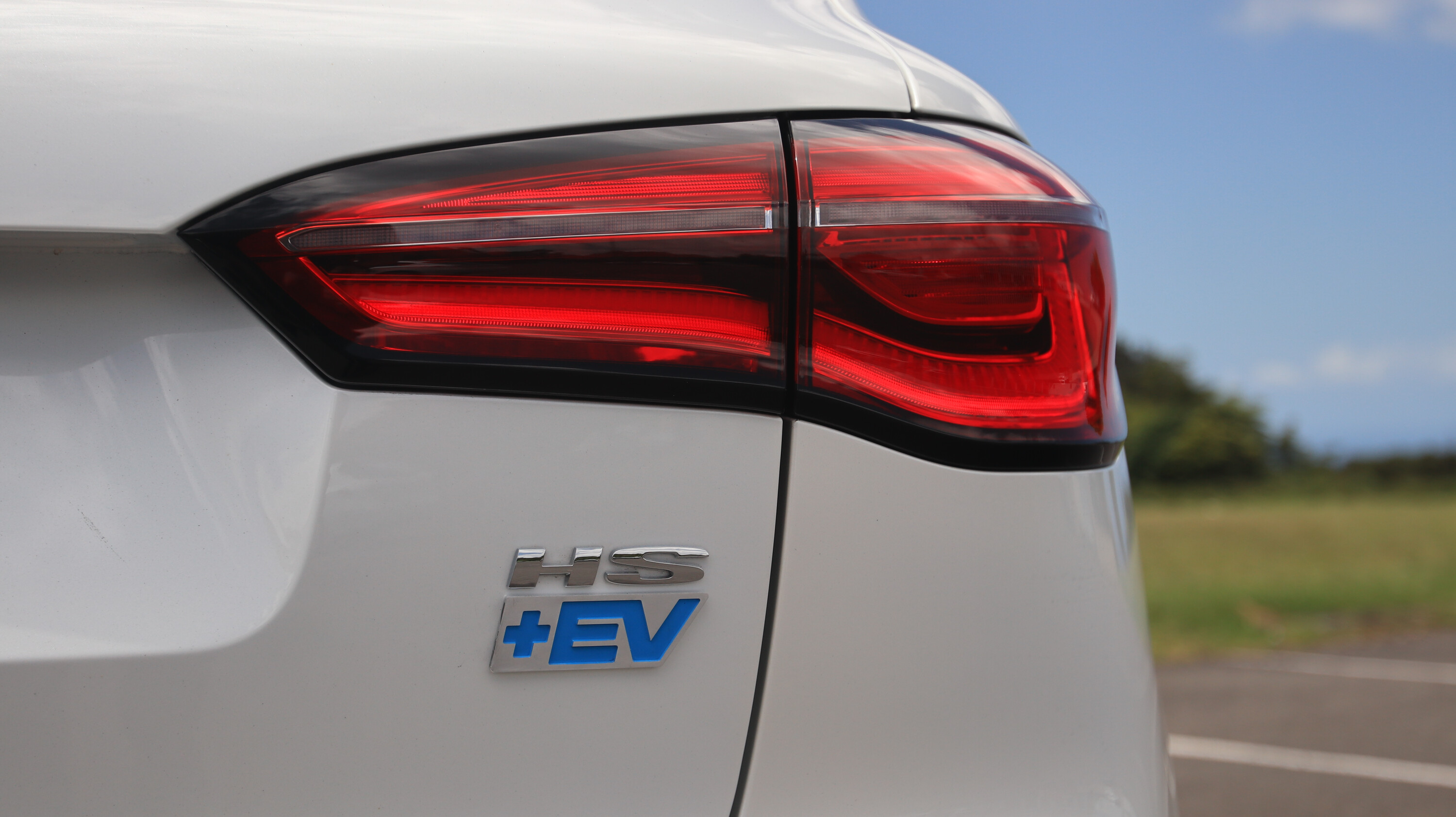
The HS Plus EV Essence shares much with its petrol Essence and Essence X counterparts – including the 18-inch wheels and LED headlights – while gaining the digital dials and leather trim.
Plug-in hybrid variants remain untested and unrated.
Six airbags (dual front, dual side and dual curtain) feature across the range.
Each variant comes with the MG Pilot driver safety suite, which brings the following active safety equipment as standard:
| 2024 MG HS safety features | |
|---|---|
| Autonomous emergency braking | Lane-keep assist |
| Forward collision warning | Adaptive cruise control |
| Traffic jam assist | Blind-spot alert |
| Rear-cross traffic alert | Traffic sign recognition |
| Auto high-beam | Door opening warning |
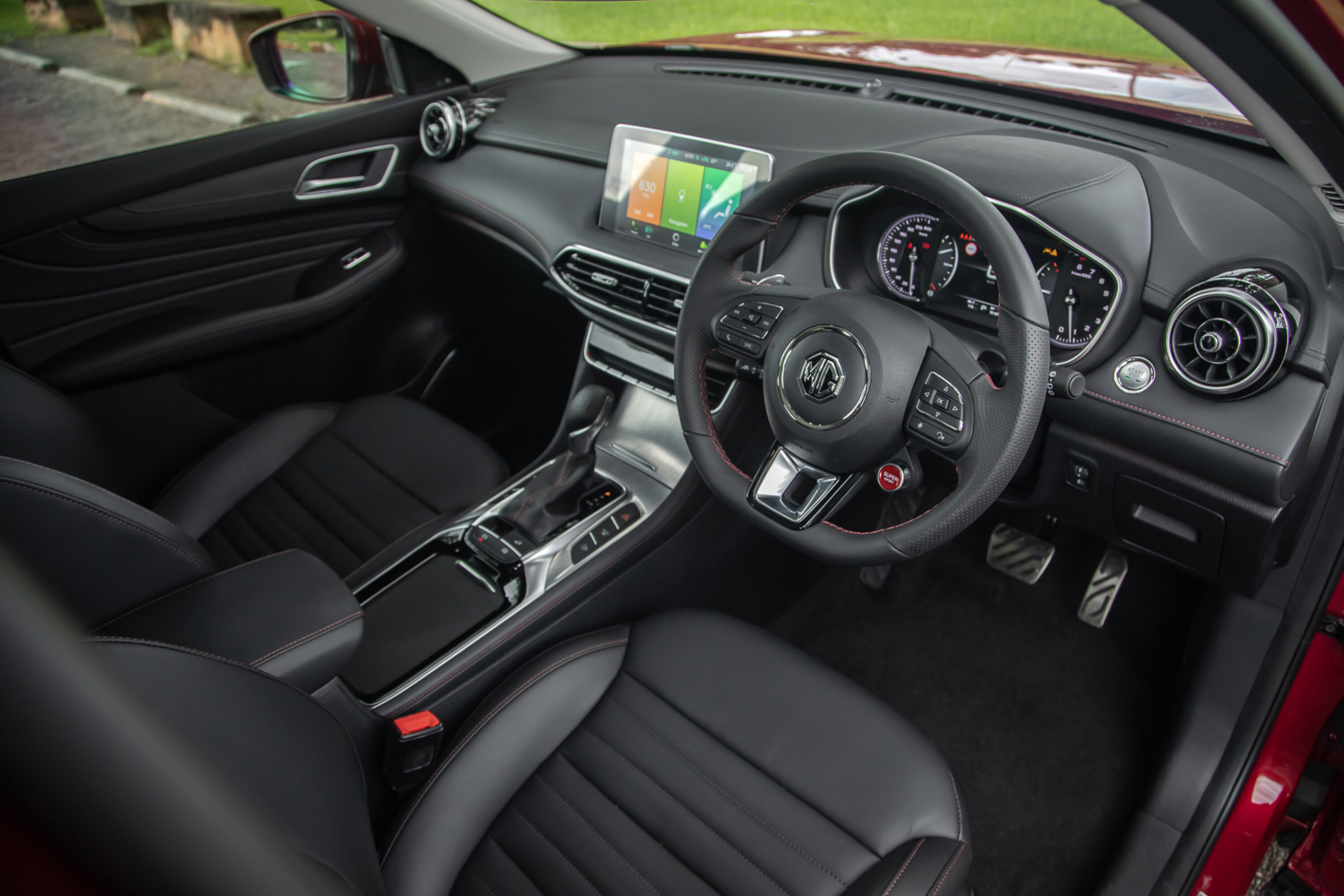
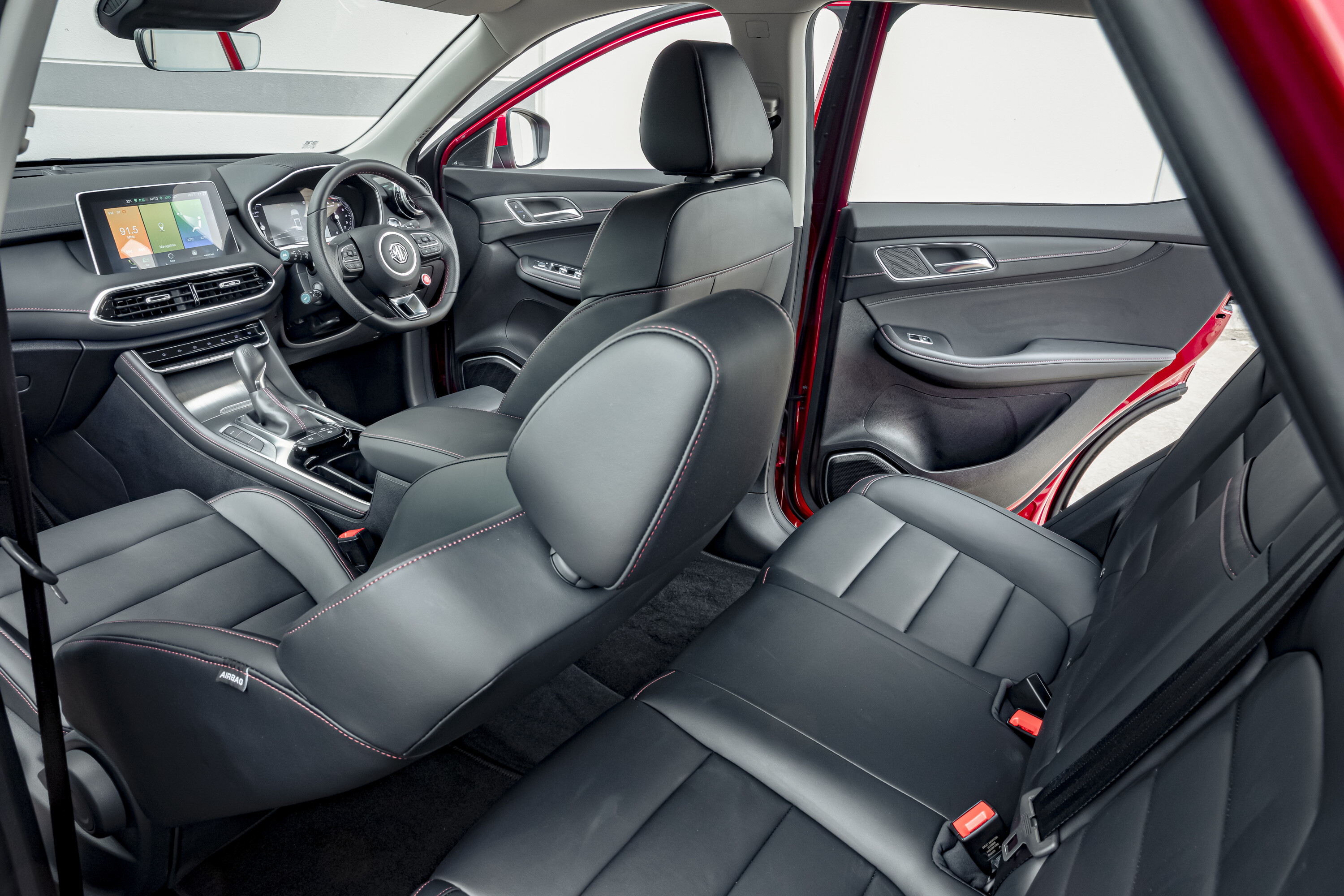
All variants feature plenty of soft-touch materials, supportive front seats, a 10.1-inch touchscreen and a leather-wrapped steering wheel that wouldn’t be out of place in a European rival.
The fit and finish of trims, carpets and switchgear is also pleasing and the cabin is well insulated from road and wind noise, contributing to a quality feel inside.
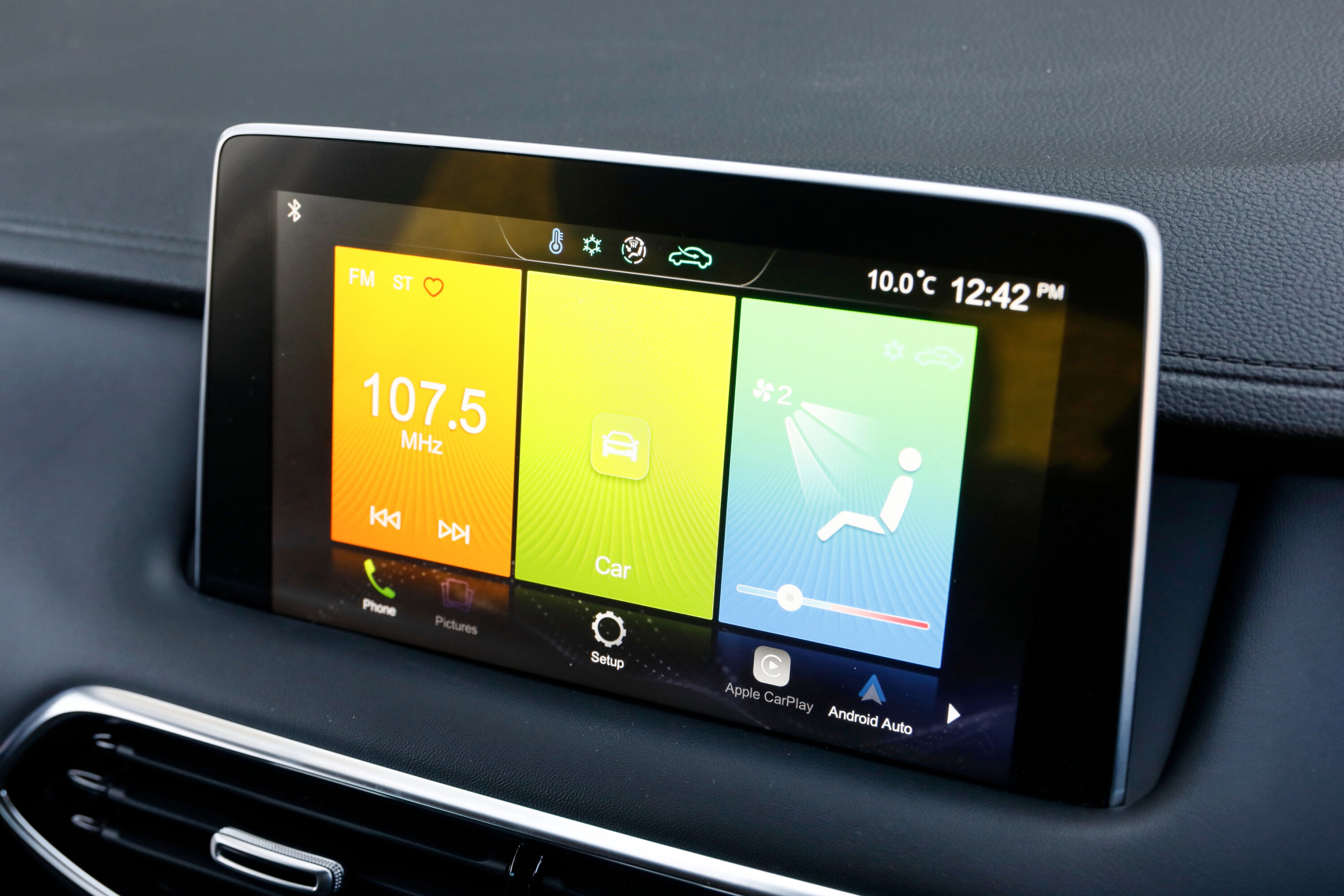
The Apple CarPlay and Android Auto interface connects and works well, but there are a few niggly issues with the infotainment system such as the interplay between the touchscreen and the buttons below that isn’t always intuitive or speedy.
A bunch of functions that would have physical buttons in other vehicles are also hosted within the touchscreen, including climate control, which can be difficult to adjust while on the move.
To make things a little easier, there is a shortcut button on the main menu to go straight to the climate control display.
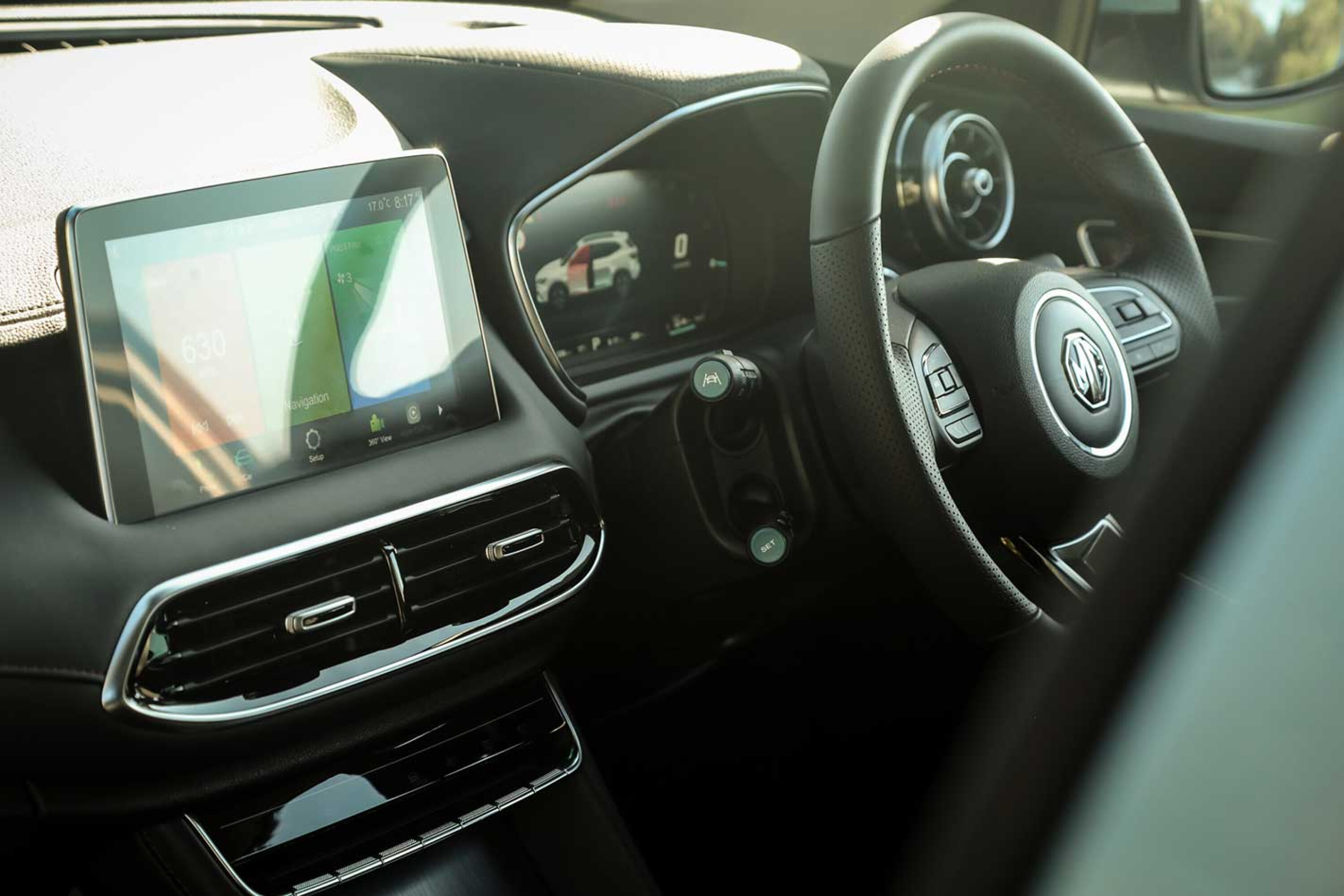
In front of the driver are clear dials, complemented by a central digital screen that displays the fuel and temperature gauges along with all manner of vehicle information that is easily navigated using the steering wheel buttons.
The leather-trimmed steering wheel feels comfortable to hold and looks like it was lifted from a Mark 6 Volkswagen Golf.
In the hybrids, the driver’s 12.3-inch digital instrument display can be configured to provide various info pages showing fuel and energy consumption, motor and engine speeds, or energy flow.
There is ample legroom but a lack of under-thigh support – not just for long-legged occupants.
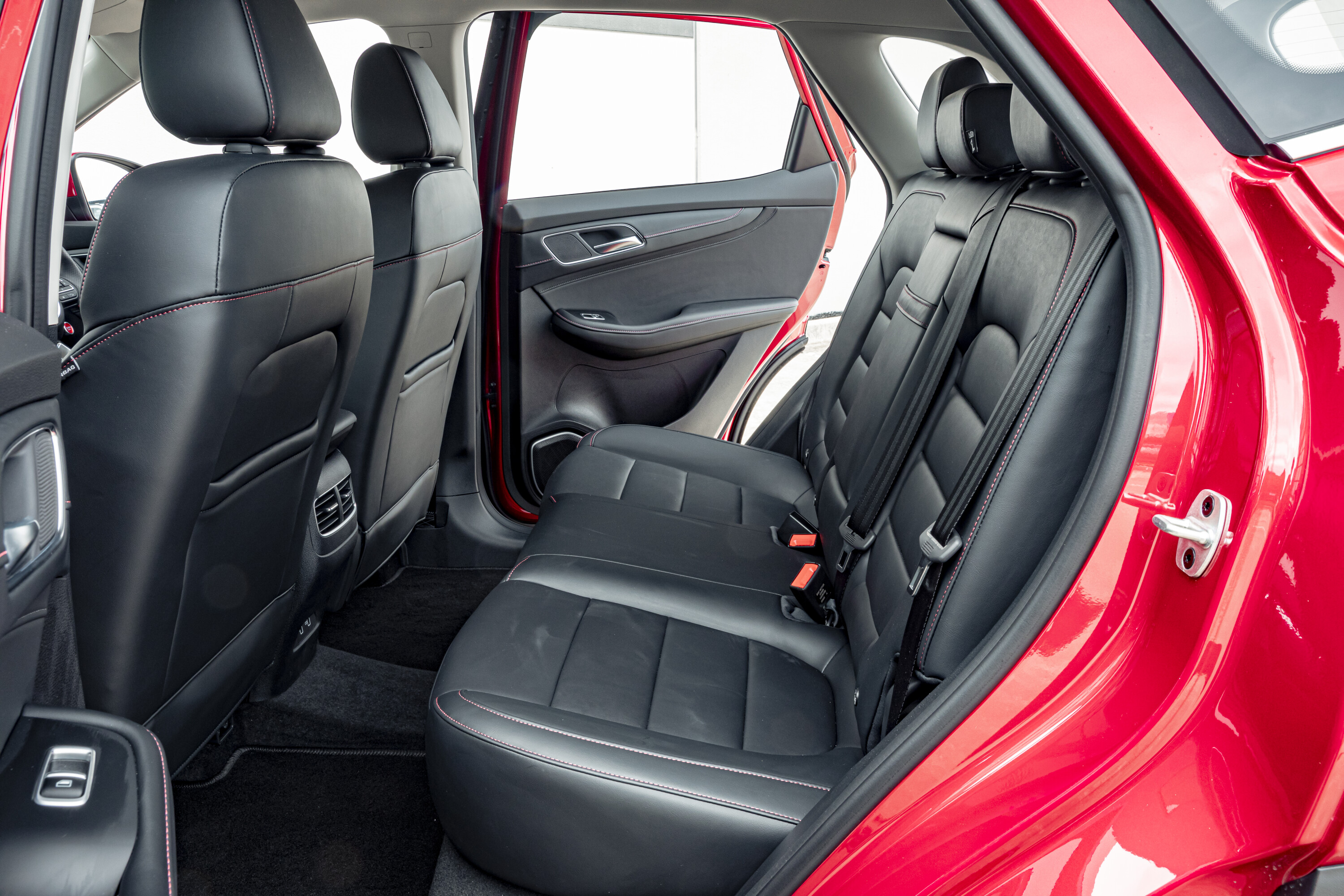
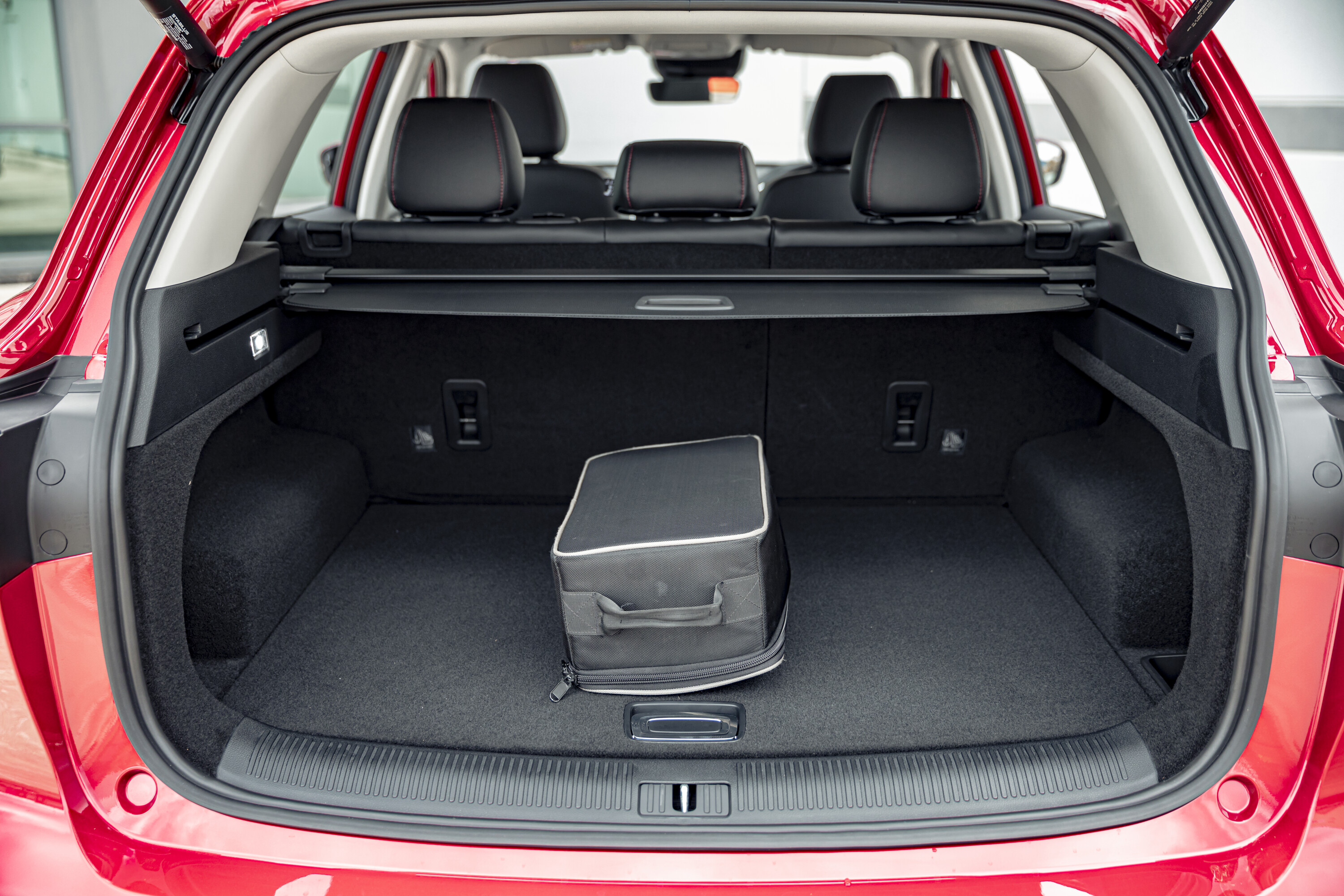
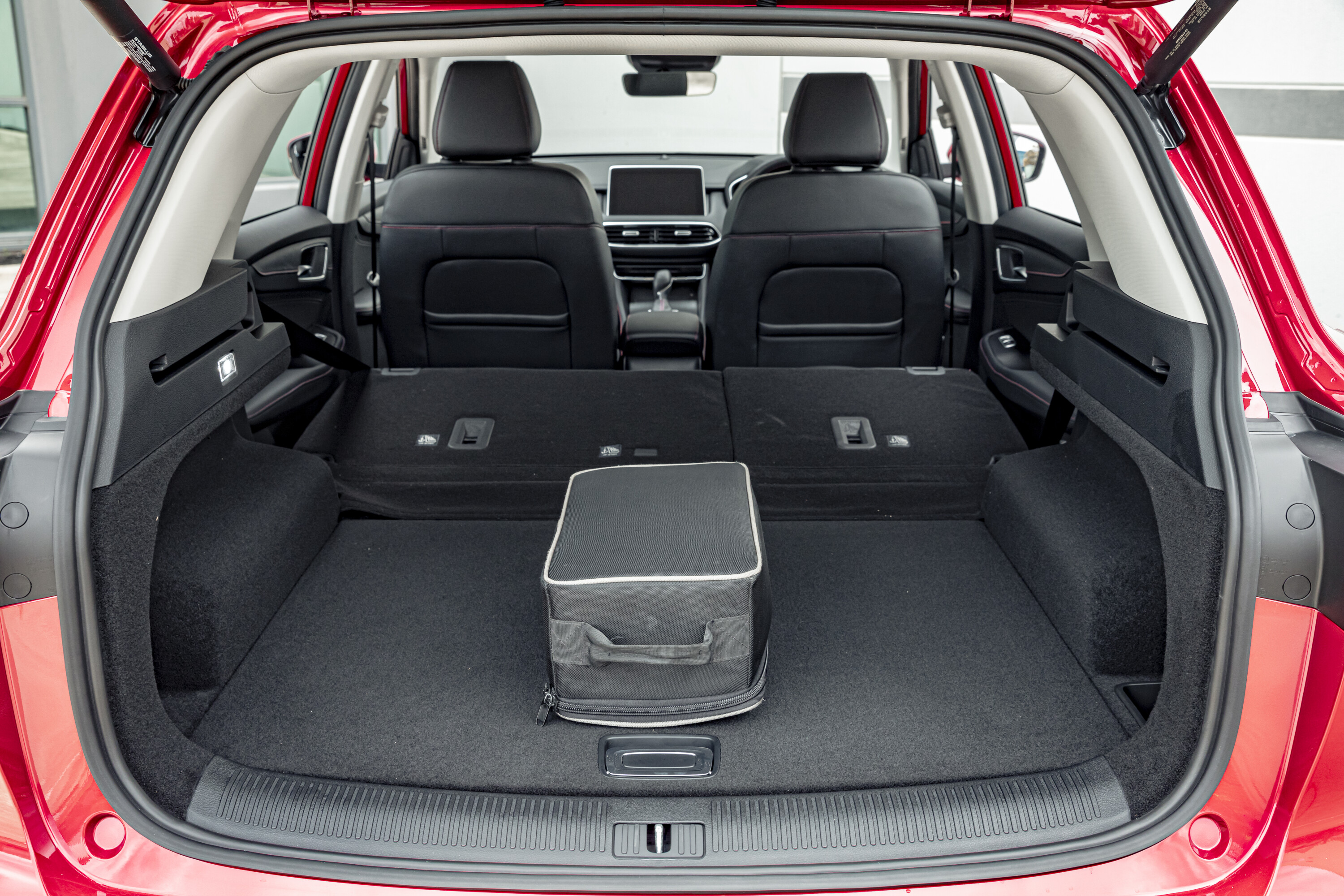
Folding the rear seats down can net you up to 1287 litres of space.
Each variant comes with a storage compartment and luggage cover.
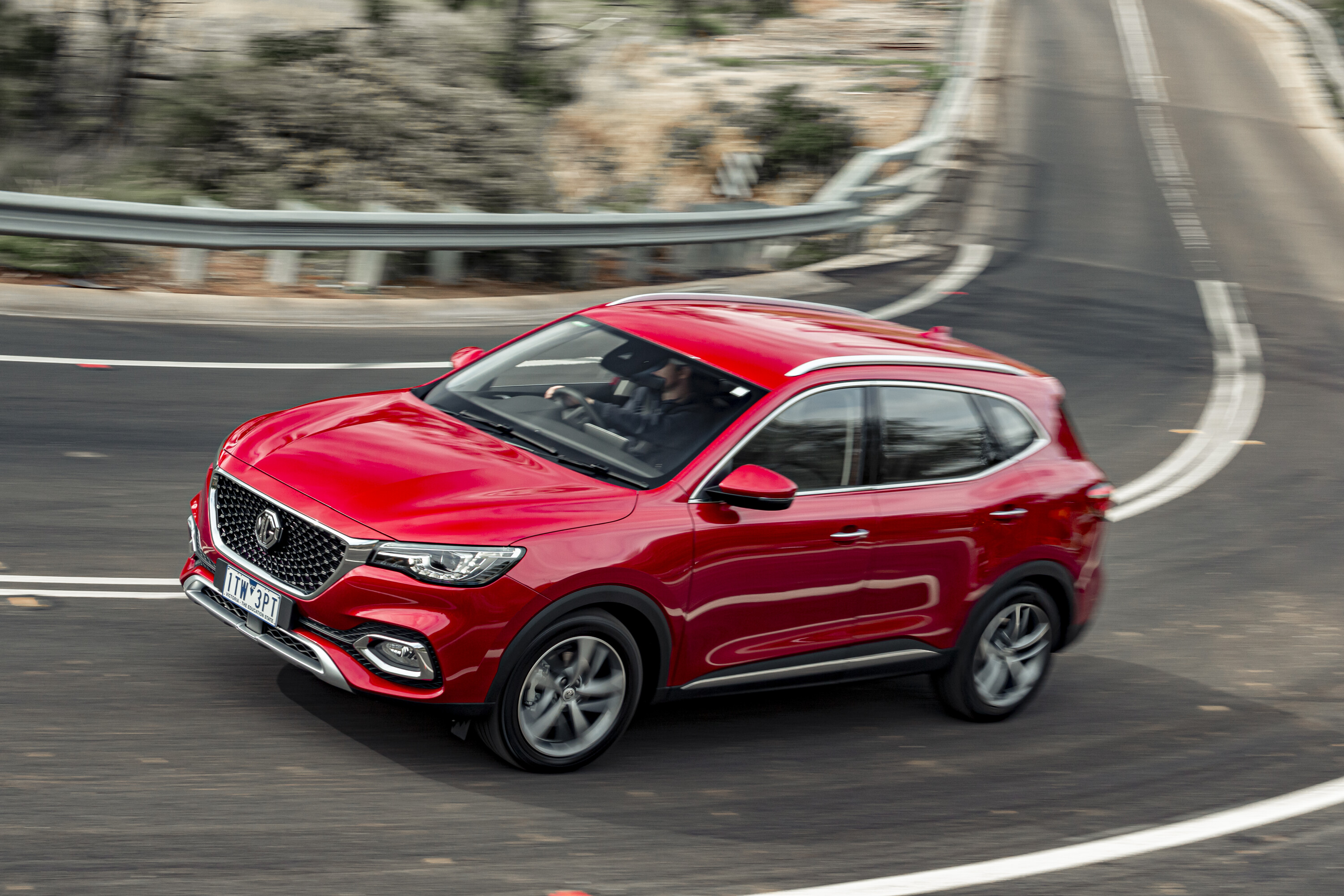
That said, it was a big step up from the GS model it replaced, with the steering, braking and handling all as solid as they need to be in a family SUV.
Ride comfort is improved too, although some harshness on less-than-perfect surfaces betrays the need for further development work if the HS is to match the class leaders.
Although the seven-speed dual-clutch automatic transmission can be indecisive and typically lacks polish, particularly at lower speeds, it’s preferable to the less-sophisticated continuously variable transmissions (CVT) found in rival SUVs.
The 168kW 2.0-litre turbo-petrol in the all-wheel-drive Essence X has a six-speed dual-clutch auto, which brings the same issues as the smaller engine’s seven-speed DCT.
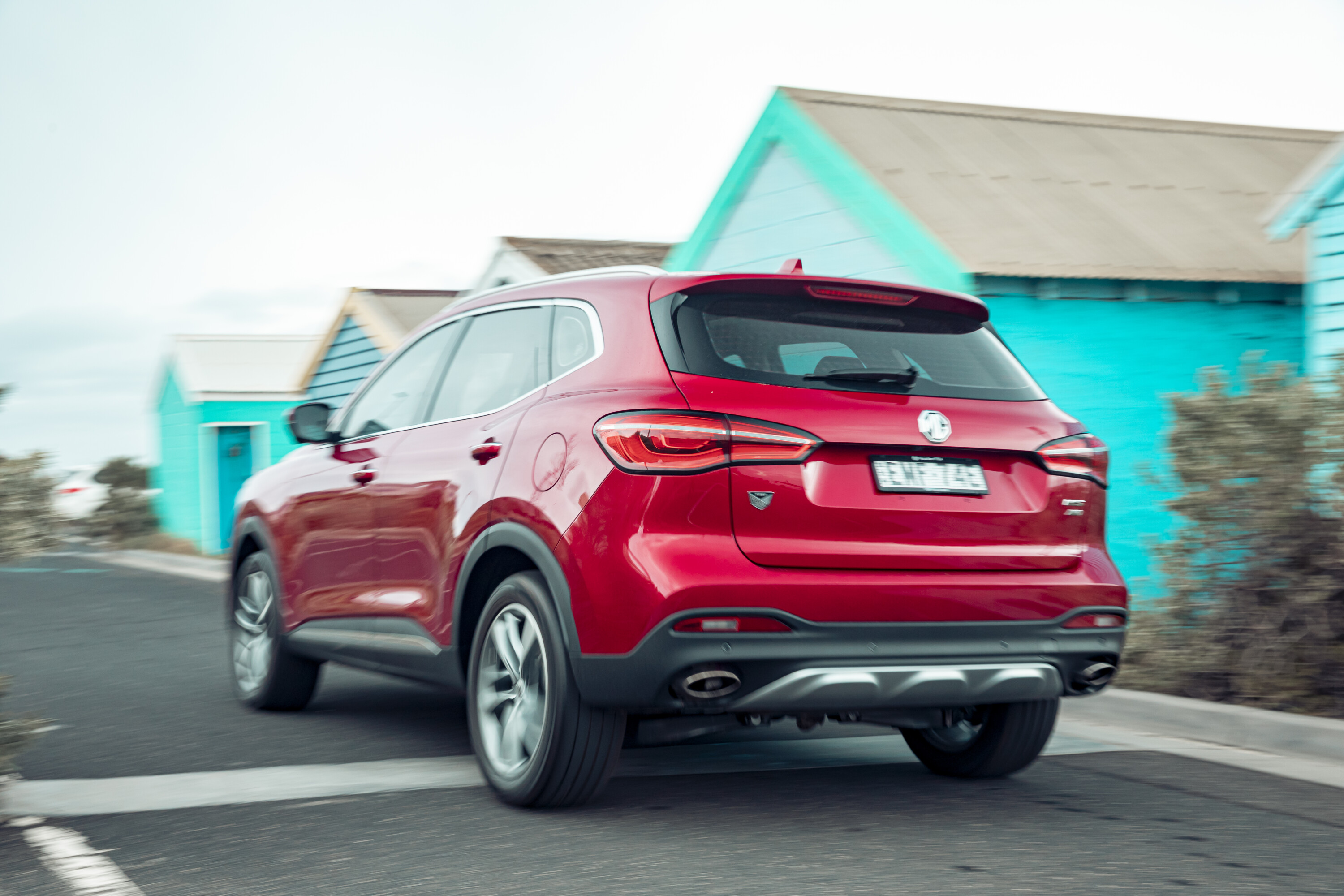
The Excite, Essence and Essence X variants allow for more engaging driving with paddle-shifters to give you more control over gear ratios, and a Super Sport drive mode that tightens the steering and boosts acceleration by allowing for higher revs between gear changes.
Plug-in hybrid Excite and Essence HS Plus EV variants feature the same 1.5L engine as front-wheel-drive variants, connected to a 90kW/230Nm electric motor and 16.6kWh lithium-ion battery pack for combined outputs of 189kW/370Nm, sent to the front wheels.
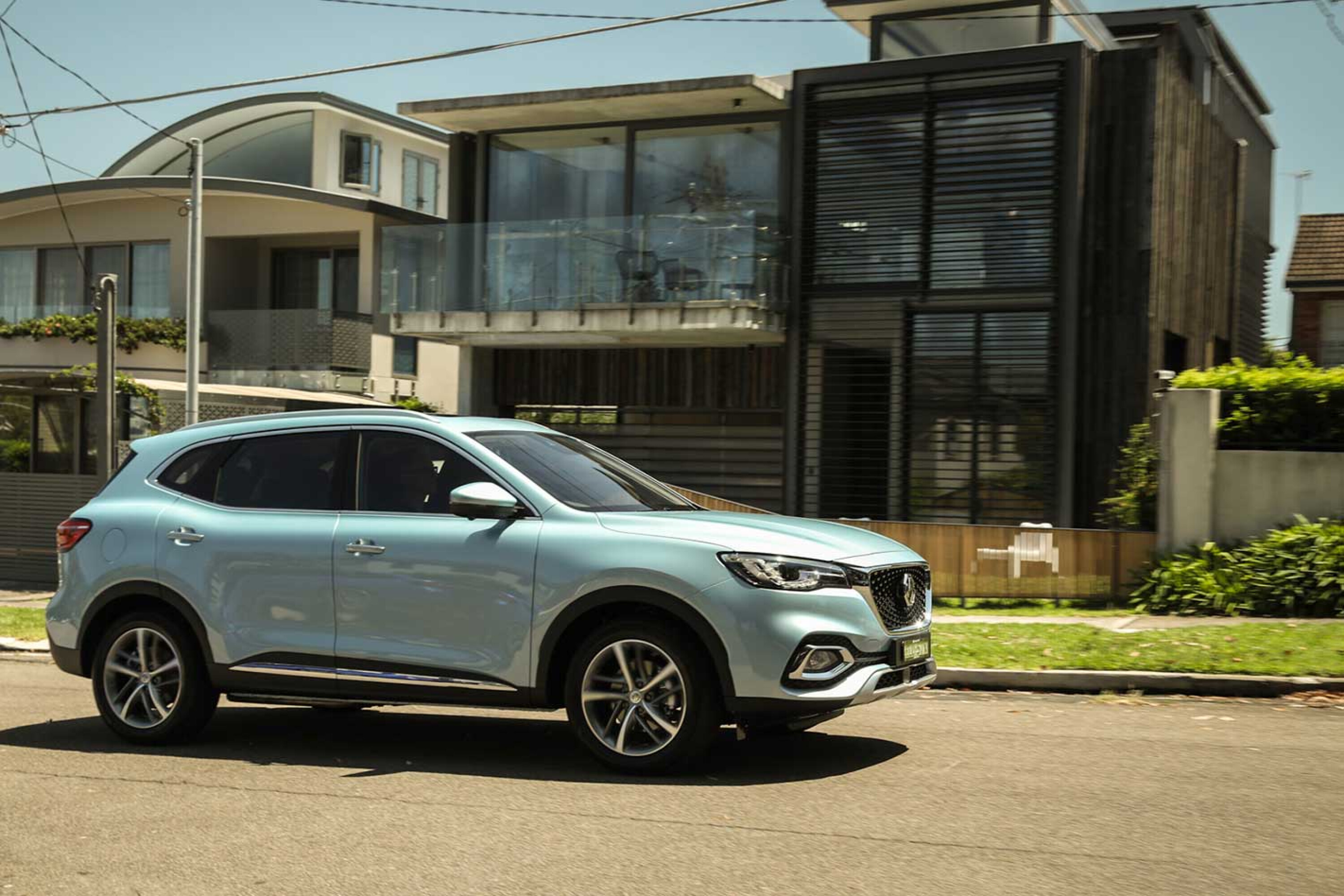
Its 10-speed automatic transmission – split between a traditional six-speed unit for the petrol engine and a four-speed electronic drive unit for the electric motor – offers smoother gear changes at low speeds than the DCT boxes.
Low-speed acceleration is sufficiently strong in Hybrid mode but on the open road, there’s often a weird hesitation when cracking open the throttle to accelerate from say, 70-110km/h, as if the transmission is caught napping and the electric motor can’t quite deploy its instant hit of torque.
Acceleration is swift in EV mode, with only a subdued whine and tyre noise disturbing the otherwise tranquil cabin, with a fair bit of wind noise around the mirrors at motorway speed.
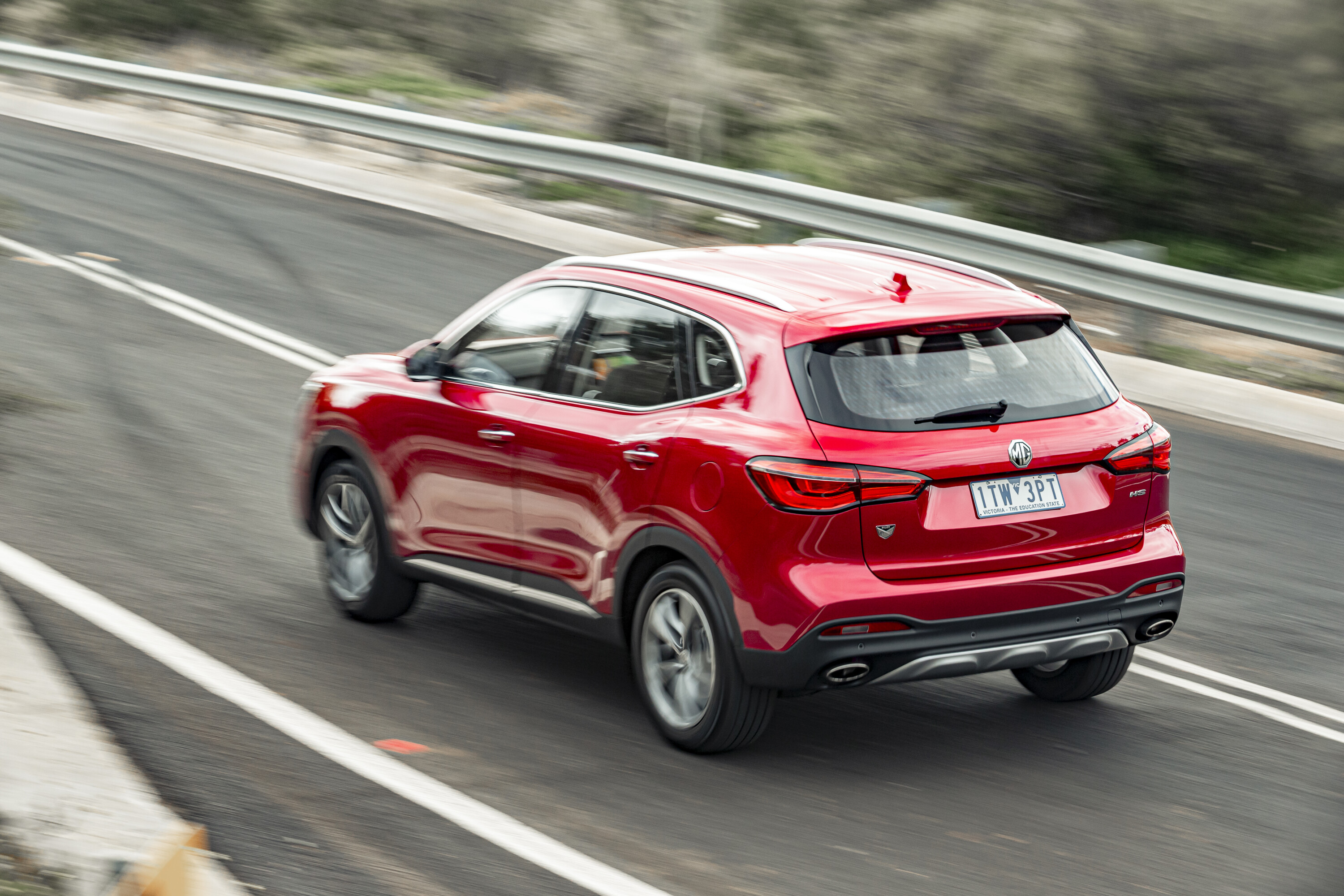
Drive the HS hybrid on petrol only and that figure will shoot up, with the hybrid components including the motor and battery adding 225kg over the standard petrol front-wheel-drive variants.
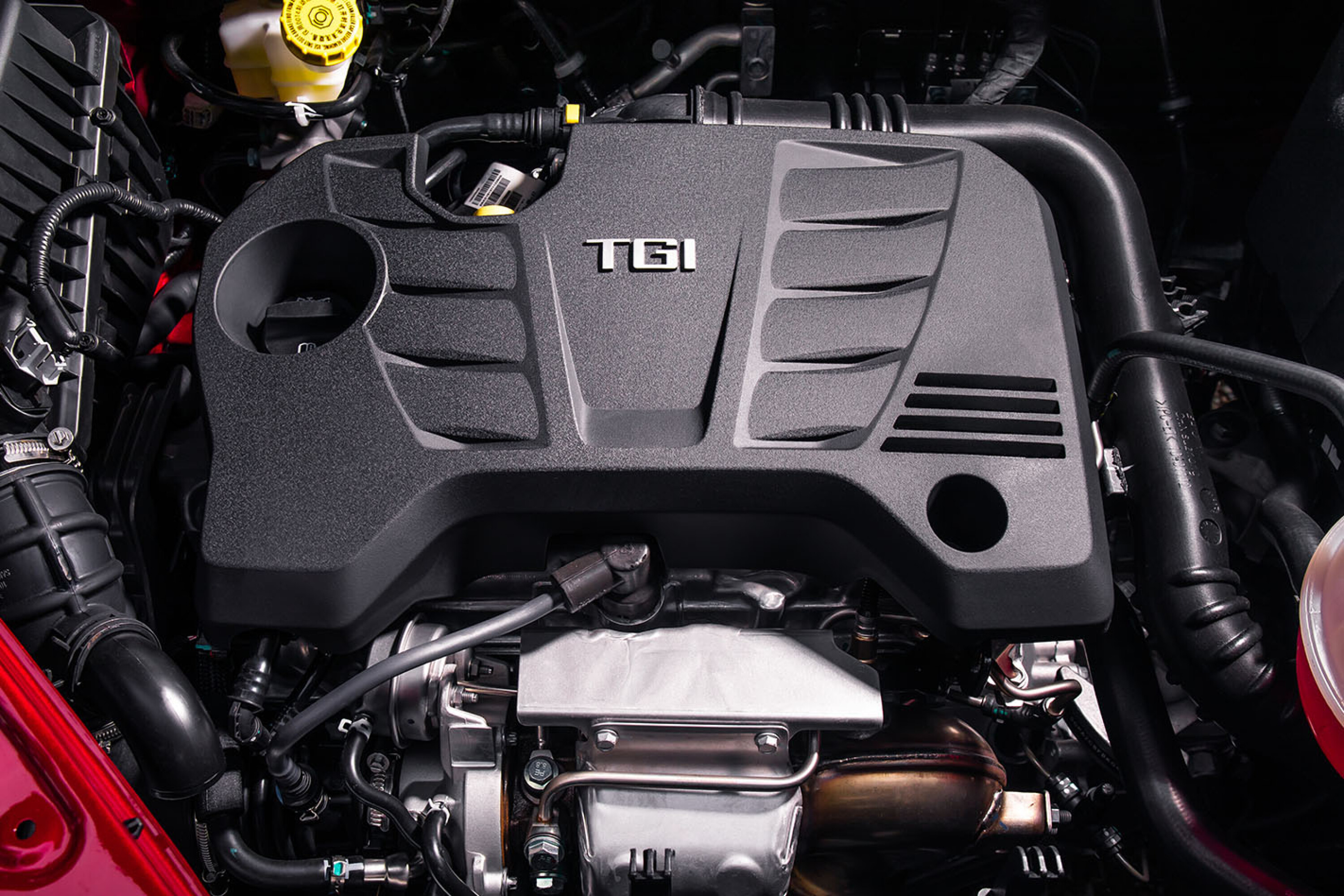
The 1.5-litre petrol engine with seven-speed dual-clutch auto consumes 7.3L/100km according to official testing.
All-wheel drive and a punchy 168kW/360Nm 2.0-litre turbocharged petrol engine with six-speed transmission conspire to make the Essence X thirstiest of all at 9.5L/100km.
Each engine is specified to run on pricier 95 or 98 RON premium petrol.
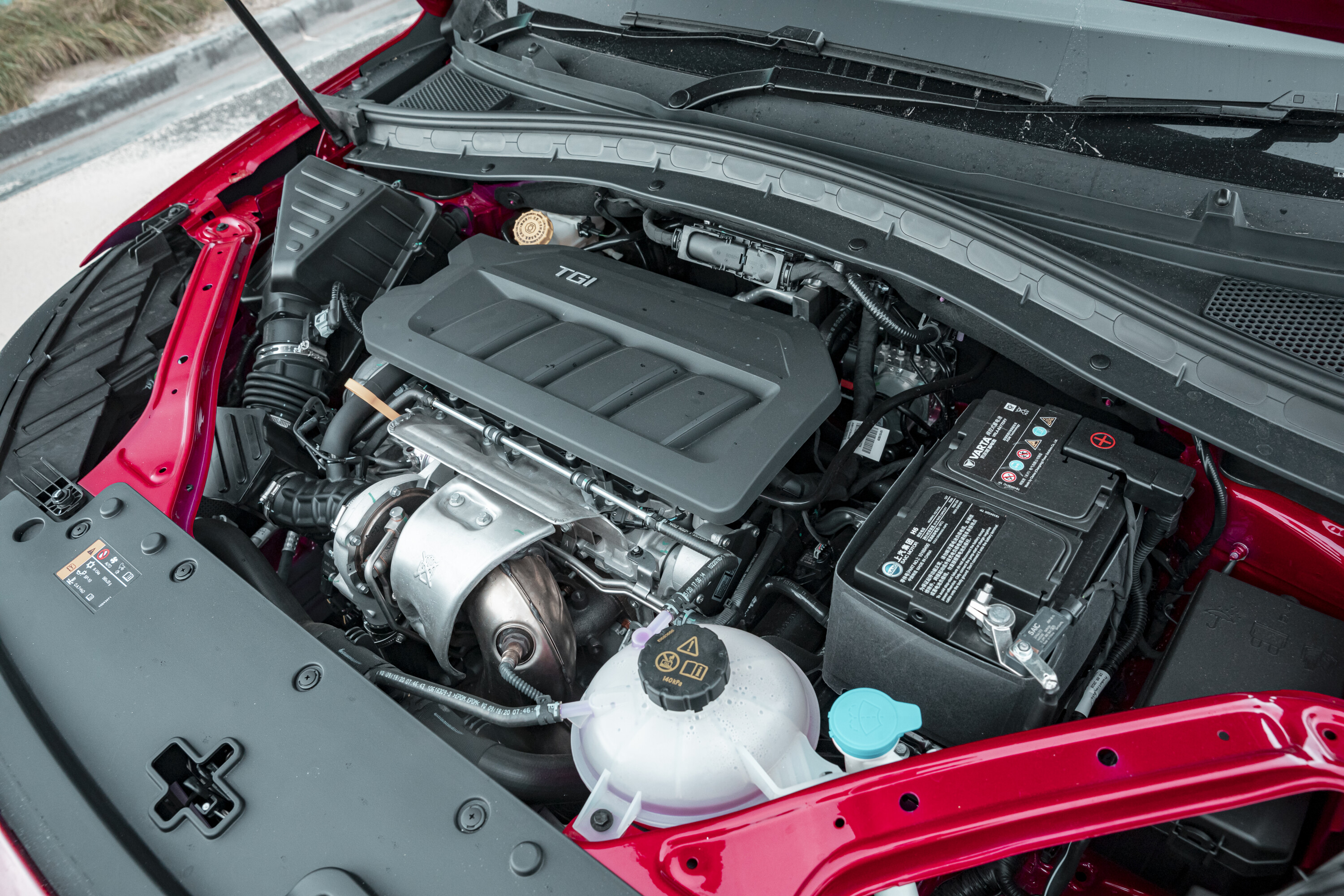
Combining the engine and motor creates a maximum of 189kW and 370Nm.
The motor is fed by a 16.6kWh battery to provide a claimed electric-only range of 52km, which would allow many people to get to work and back on electrons alone.
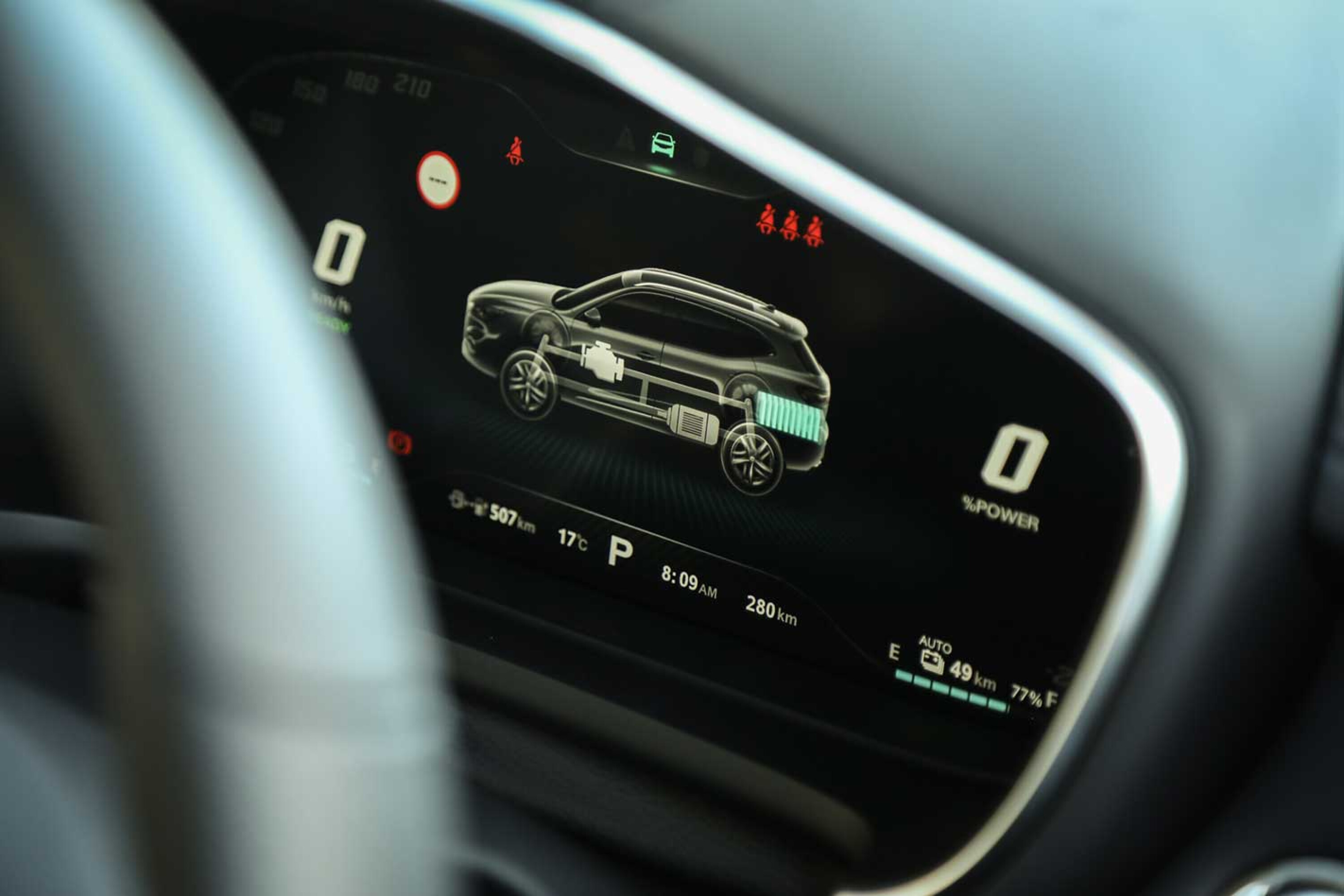
It is a relatively basic hybrid system with just two modes: EV, which locks out the petrol engine, or the default Hybrid mode, which uses a mix of petrol and battery power depending on a bunch of parameters including throttle position, road speed, and gradient.
Unlike the Mitsubishi Outlander PHEV, it lacks a ‘recharge’ mode that boosts the battery on the move for later electric-only running, instead relying on regenerative braking to replenish the battery after its plug-in charge is depleted.
Unless you’re travelling long distances downhill, this won’t be enough to charge the battery for electric-only travel beyond speeds of 30km/h.
That said, this is an honest, uncomplicated plug-in hybrid that gets enough of the basics right; easy overnight recharging from a domestic outlet, enough range for typical daily duties, and economical longer-haul running with zero range anxiety.
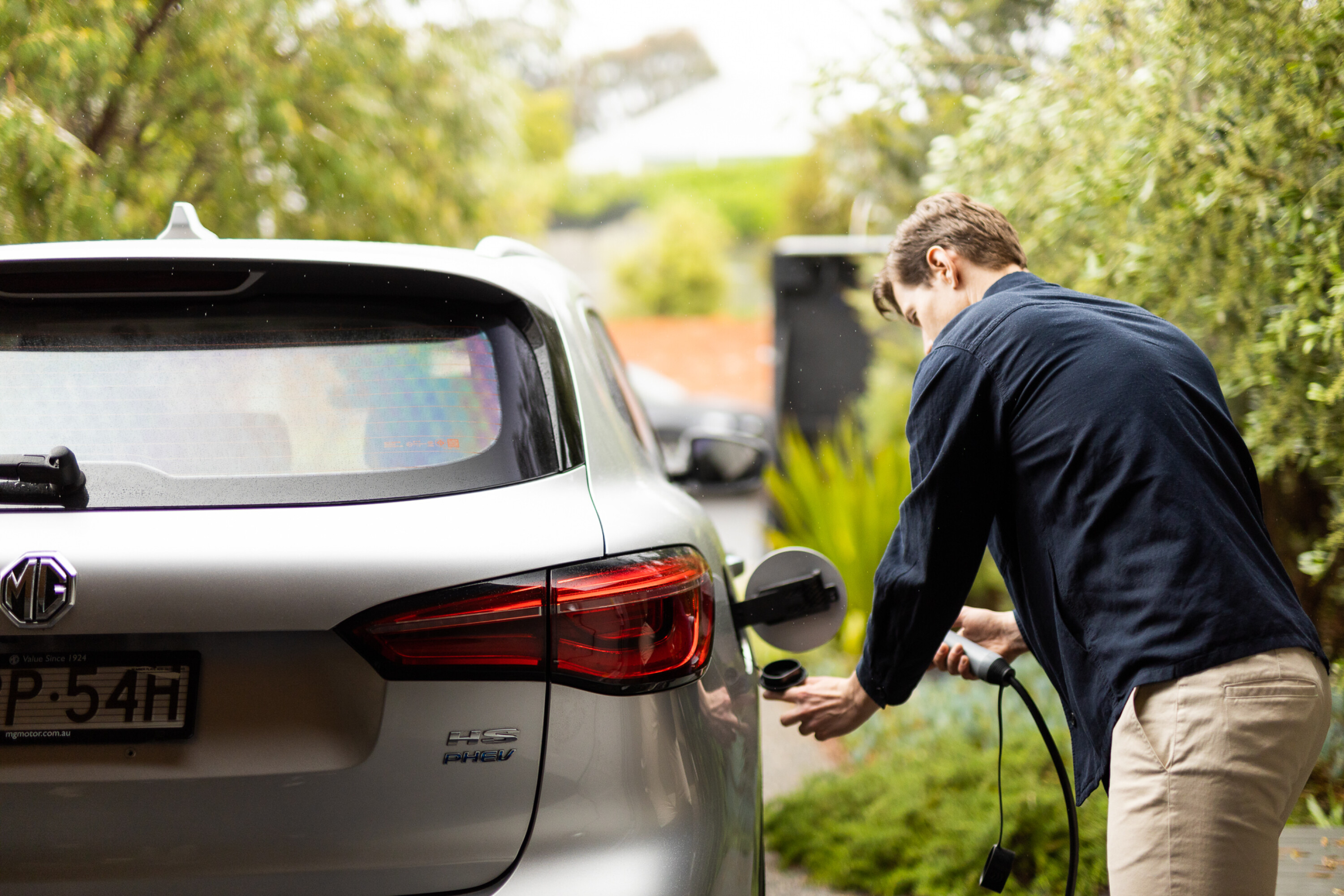
Charging is through a Type 2 plug, meaning you should have no trouble finding a suitable AC charger should you want to top up on the road. A 22kW public AC charger can top up the battery from empty in three hours.
Replenishing the battery from flat to 100 per cent charge from a standard 240-volt socket will take about seven hours, meaning you’ll have few issues with overnight charging.
MG sells single-pase 7kW and three-phase 11kW charging hubs priced at $1990 and $2090 respectively (excluding installation); using the 7kW unit gets the full charging time down to five hours.
| 2024 MG HS efficiency | |
|---|---|
| Electric-only driving range | 52 km |
| Combined fuel consumption | 1.7L/100km |
| CO2 emissions (combined) | 39g/km |
| Charging time 2.4kW (240v) | 7 hours |
| Charging time 7kW | 5 hours |
| Charging time 22kW | 3 hours |
They can tow unbraked loads of up to 750kg.
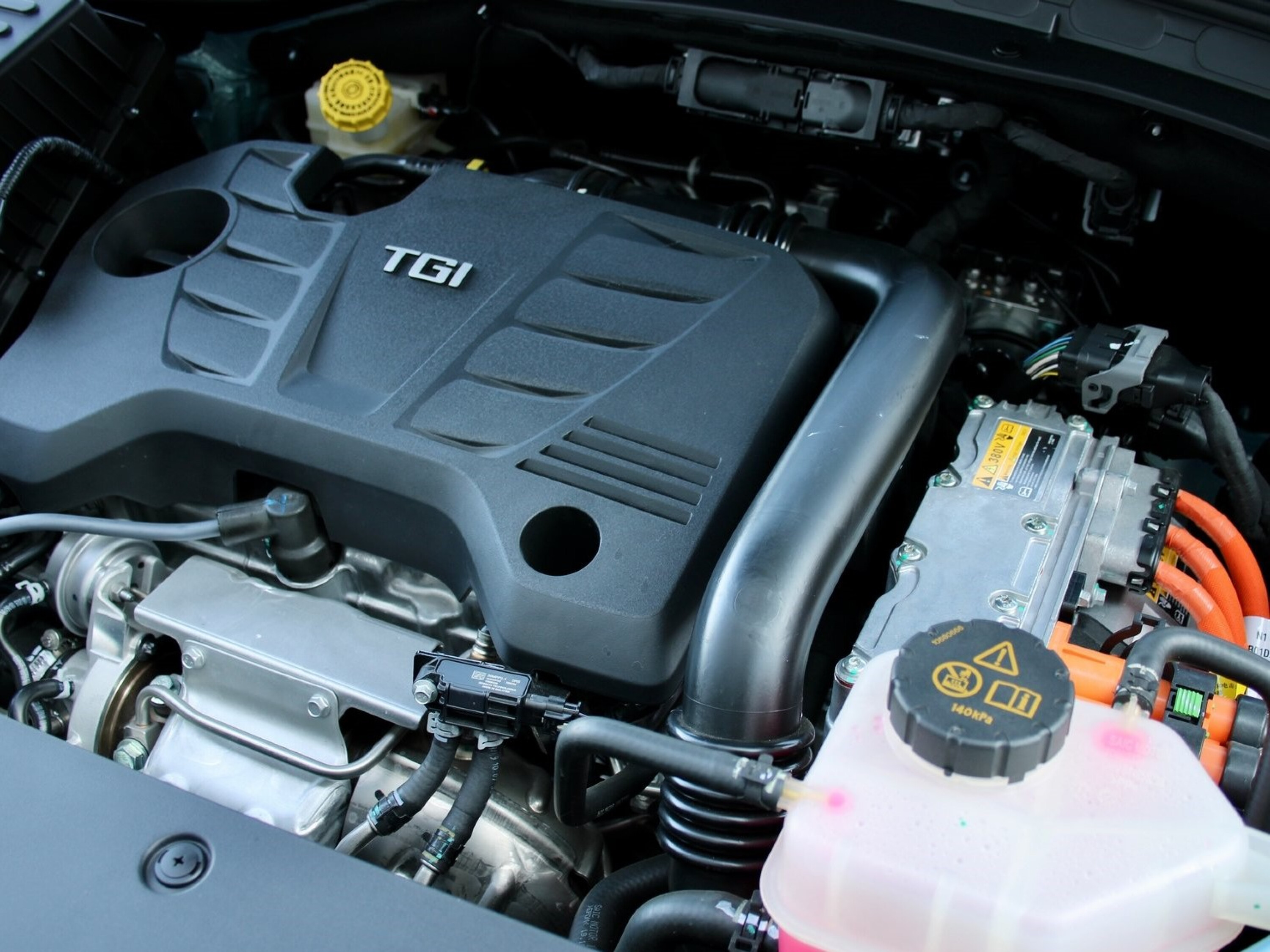
Service intervals are a short 10,000km or 12 months, with MG offering capped-price servicing or seven years across the HS range.
| Service interval | Price Petrol/PHEV |
|---|---|
| 10,000km/12 months | $279/$279 |
| 20,000km.24 months | $345/$399 |
| 30,000km/36 months | $332/$279 |
| 40,00km/48 months | $403/$456 |
| 50,000km/60 months | $279/$279 |
| 60,000km/72 months | $845/$1012 |
| 70,000km/84 months | $279/$279 |
MG rewards customers who service their vehicle at an authorised service centre with an extra year of free roadside assistance.
Plug-in hybrid variants are also good value if you generally travel short distances and can keep the battery charged.
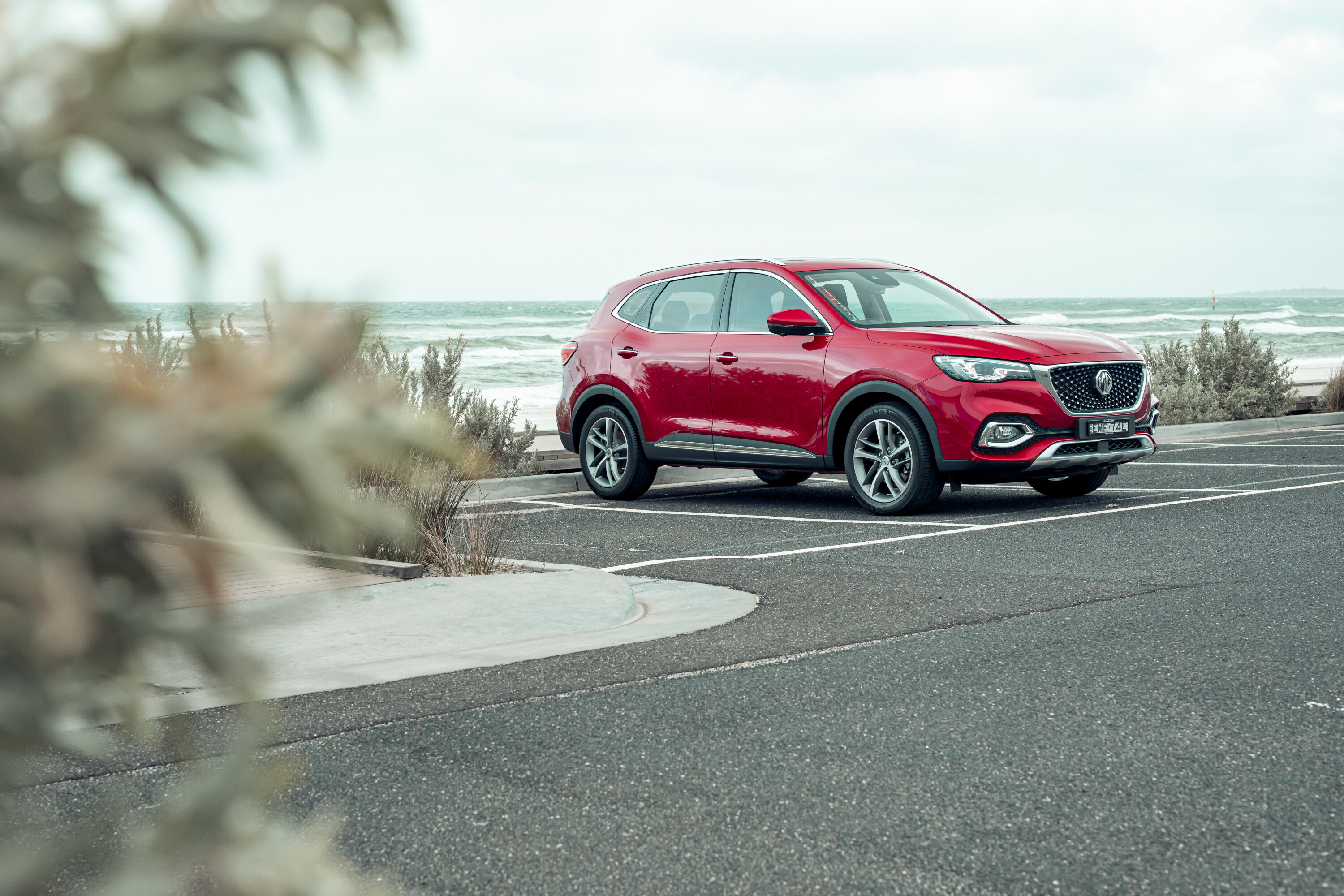
You might also cross-shop the HS against lower-spec variants of popular Japanese and Korean alternatives such as:
Electrified medium SUV rivals to the HS Plus EV include the RAV4 hybrid and Mitsubishi Outlander PHEV, though the slightly smaller Mitsubishi Eclipse Cross comes closer in terms of pricing.
