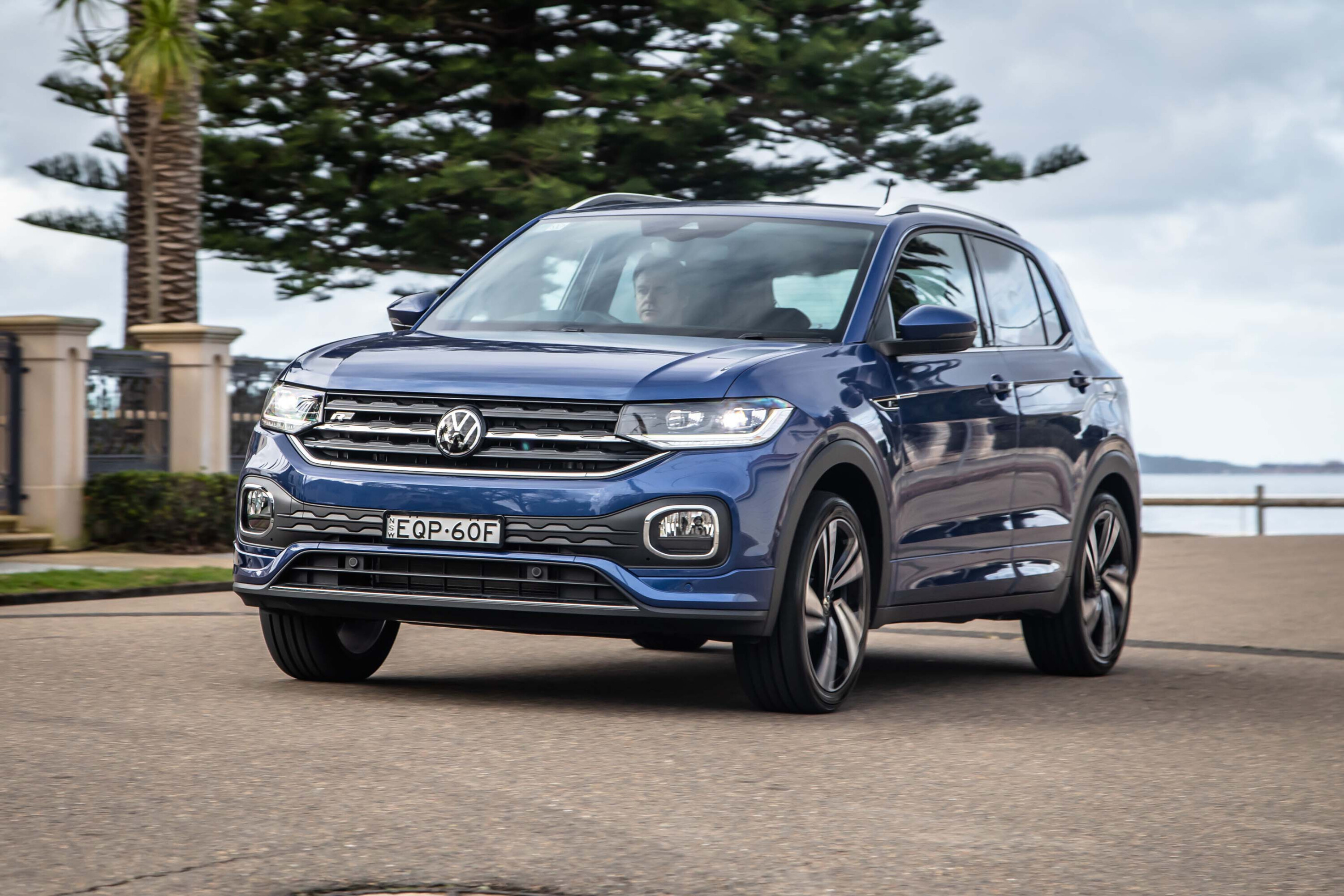
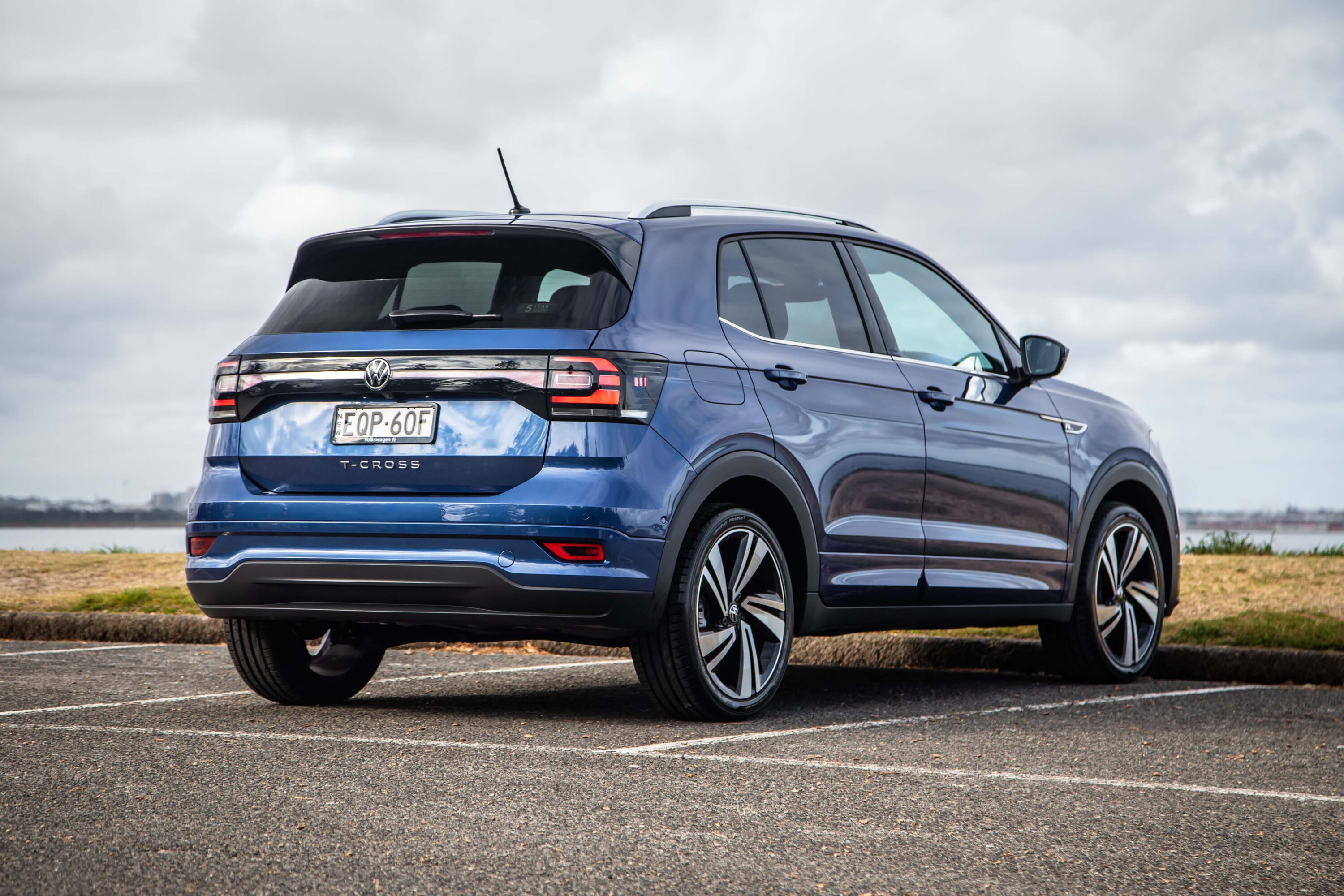
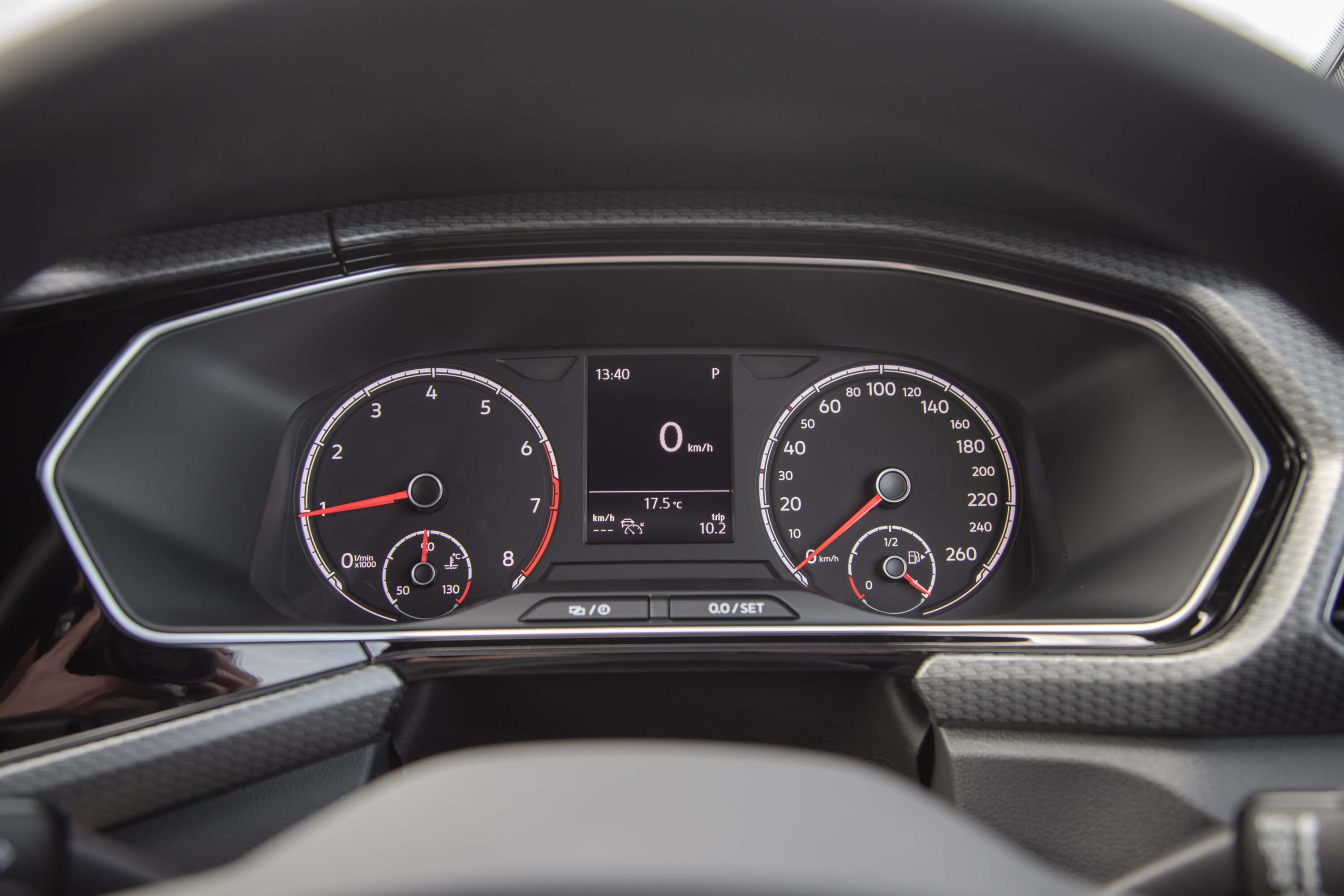
The Volkswagen T-Cross entered the competitive light SUV market based on the popular Polo hatchback.
As a newcomer– having only landed in 2020– it aims to make a mark with its unique blend of fresh looks and urban agility.
A late 2024 update is expected for the model in the third quarter of next year.
But in a booming segment with so many emerging options, let’s see what VW has introduced to compete.
1
Pricing and Features
The T-Cross is positioned as an accessible entry into the Volkswagen SUV family, offering only two variants – Life and Style. Both are automatic, front-wheel drive configurations.
The Life is priced from $30,990, and the Style grade additions will set you back (an extra $2500) at $33,490 before on -roads.
Both grades adopt the same teeny 1.0-litre 3-cylinder petrol engine making s 85kW of power and 200Nm of torque, with the only choice as a 7-speed automatic transmission.
On a combined cycle, the T-Cross uses 5.4 litres of fuel which is perfect for those doing their daily commutes.
Volkswagen T-Cross standard features
8.0-inch touchscreen
Apple CarPlay/Android Auto
Six-speaker sound system
CD player
Bluetooth
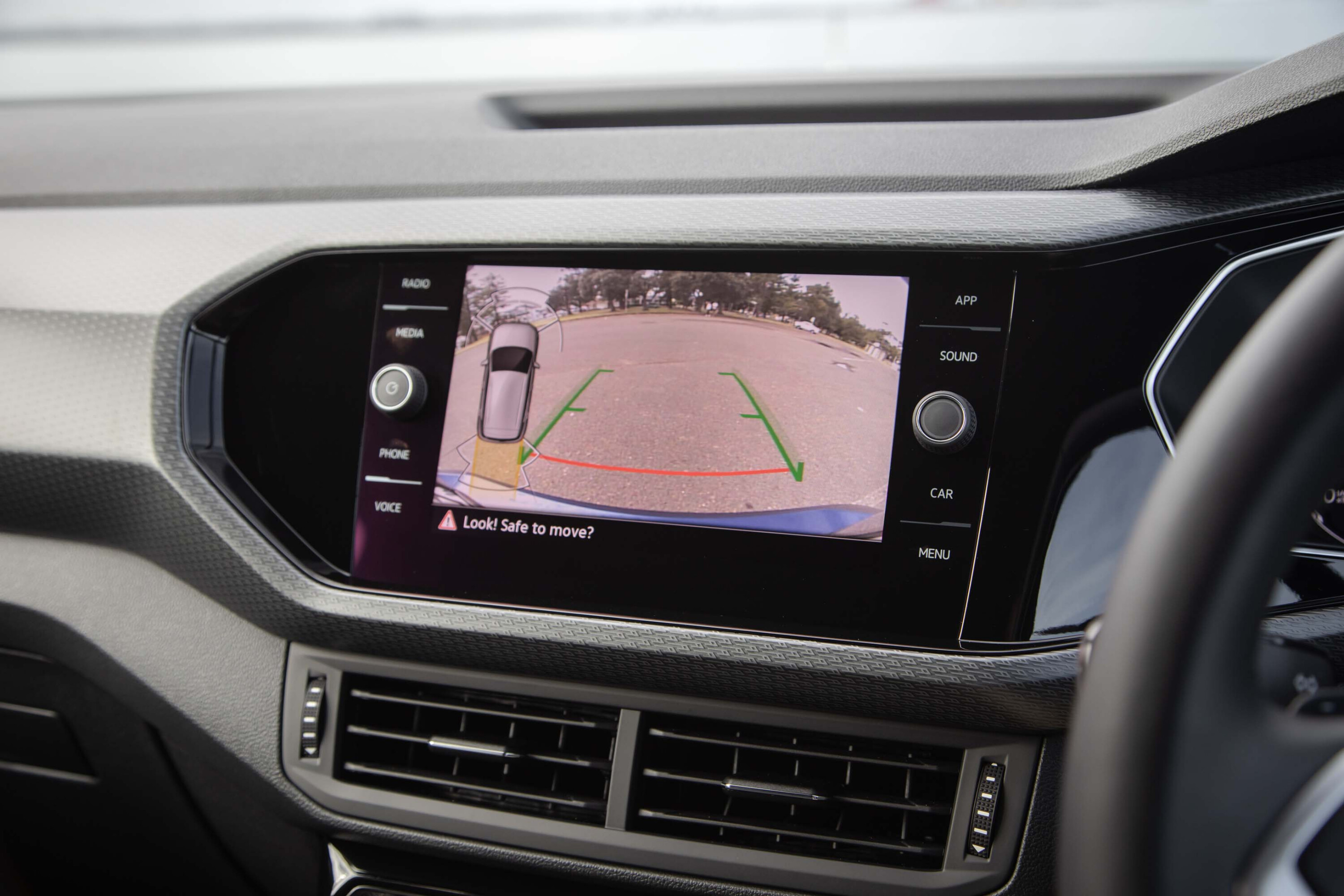
Reversing camera
Front and rear parking sensors
Autonomous emergency braking
Lane-keep assist
Lane departure warning
Driver fatigue detection
Vehicle distance warning
Cruise control with speed limiter
Tyre pressure monitoring
Rain-sensing windscreen wipers
Dusk-sensing headlights
Auto-dimming rear-view mirror
Air conditioning
Leather wrapped steering wheel
1
The exterior design of the T-Cross is one of its strongest selling points, featuring bold lines, a charismatic front fascia, 16-inch alloy wheels and LED Daytime Running Lights that gives it a modern edge.
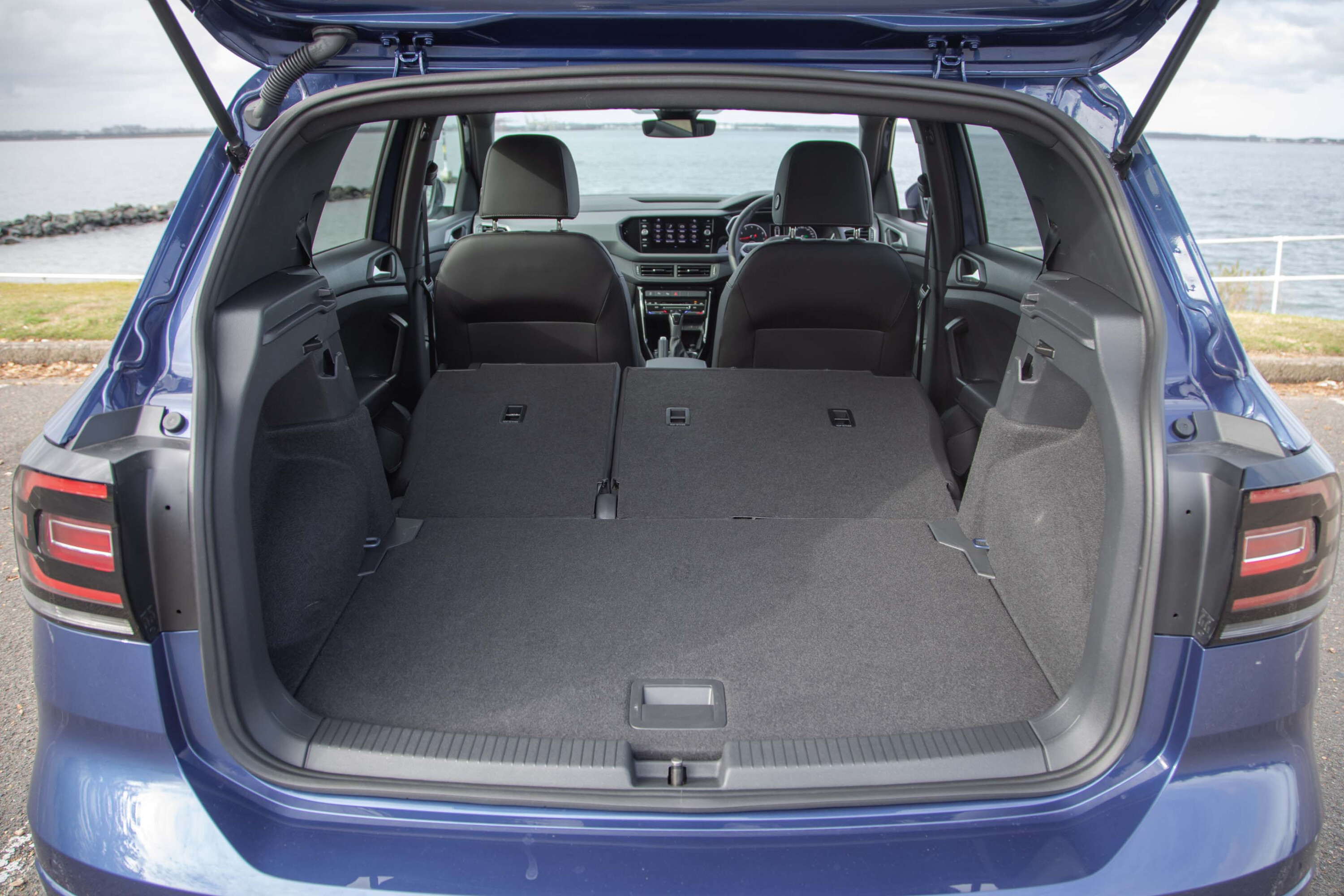
Inside, the T-Cross surprises with its clever use of space. Despite its compact dimensions, the interior feels roomy with one of the segments best cargo capacities from 385L to 455L when the rear seats are on the forward position.
The dashboard is ergonomically designed, featuring an 8-inch touchscreen infotainment system that supports Apple CarPlay and Android Auto.
1
Spending the extra $2500 on the Style variant will add:
17-inch alloys
Dual-zone climate control
Keyless entry and start
LED headlights
Auto high beam
Extra driver assist tech
Premium cloth upholstery
Front and rear carpet floor mats
LED ambient dashboard lighting
Paddle shifters
For an additional $2200, you can add the Sound and Vision Package.
Sound and Vision Package
Beats premium sound system
Upgraded infotainment system
Digital instrument cluster
Satellite navigation
Voice controls
Wireless phone charger
1
Solid white is the only no-cost paint choice, while other solid, pearl and metallic colours as $600-$900 options.
And lastly, an R-Line Package is available for $2600, which includes:
R-Line package
18-inch alloy wheels
Dark tinted rear glass
Black headlining and pillar trim
Front and rear bumpers in R-styling painted in body colour
Carbon Flag sports cloth and microfibre upholstery
R-Line scuff plates in front door sills
Carpet floor mats
Race decorative dashboard panel
Safety
The Volkswagen T-Cross boasts a five-star ANCAP safety rating and includes a variety of standard driver assistance features.
These include front and rear parking sensors and manoeuvre braking, which helps prevent collisions with unseen objects or people.
The vehicle also features standard cruise control, driver fatigue detection, autonomous emergency braking with pedestrian and cyclist detection, and lane-keep assist.
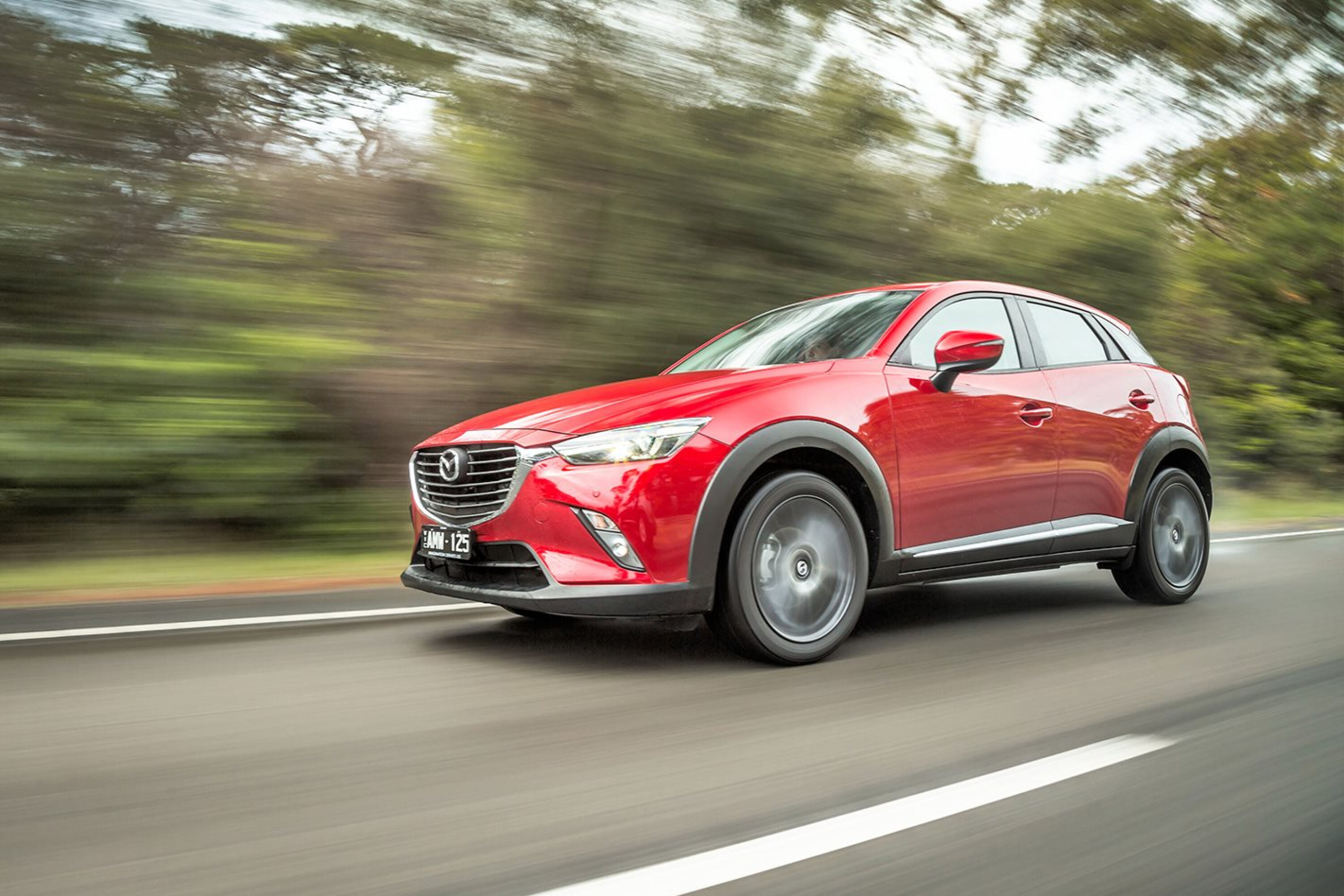
Like others in the segment, manufacturers are using light SUVs as alternatives to previously popular light cars that are slowly declining like the Mazda 2 and Toyota Yaris.
1
Should I Put It On My Shortlist?
The 2024 Volkswagen T-Cross Life is an excellent choice for those seeking a compact and economical SUV for daily driving.
If you’re looking for a vehicle that’s well-suited for city living and offers great value, the T-Cross Style is definitely worth considering.
Both the 85 TSI Style and Life are quite similar, but the Style makes the proposition of moving up a variant an easy proposition with notable additions.
These extra features, such as adaptive cruise control and more active safety technologies, account for a significant part of the price difference.
So if you’re looking for the extra luxuries and safety, the $2500 jump builds a very strong case for itself.
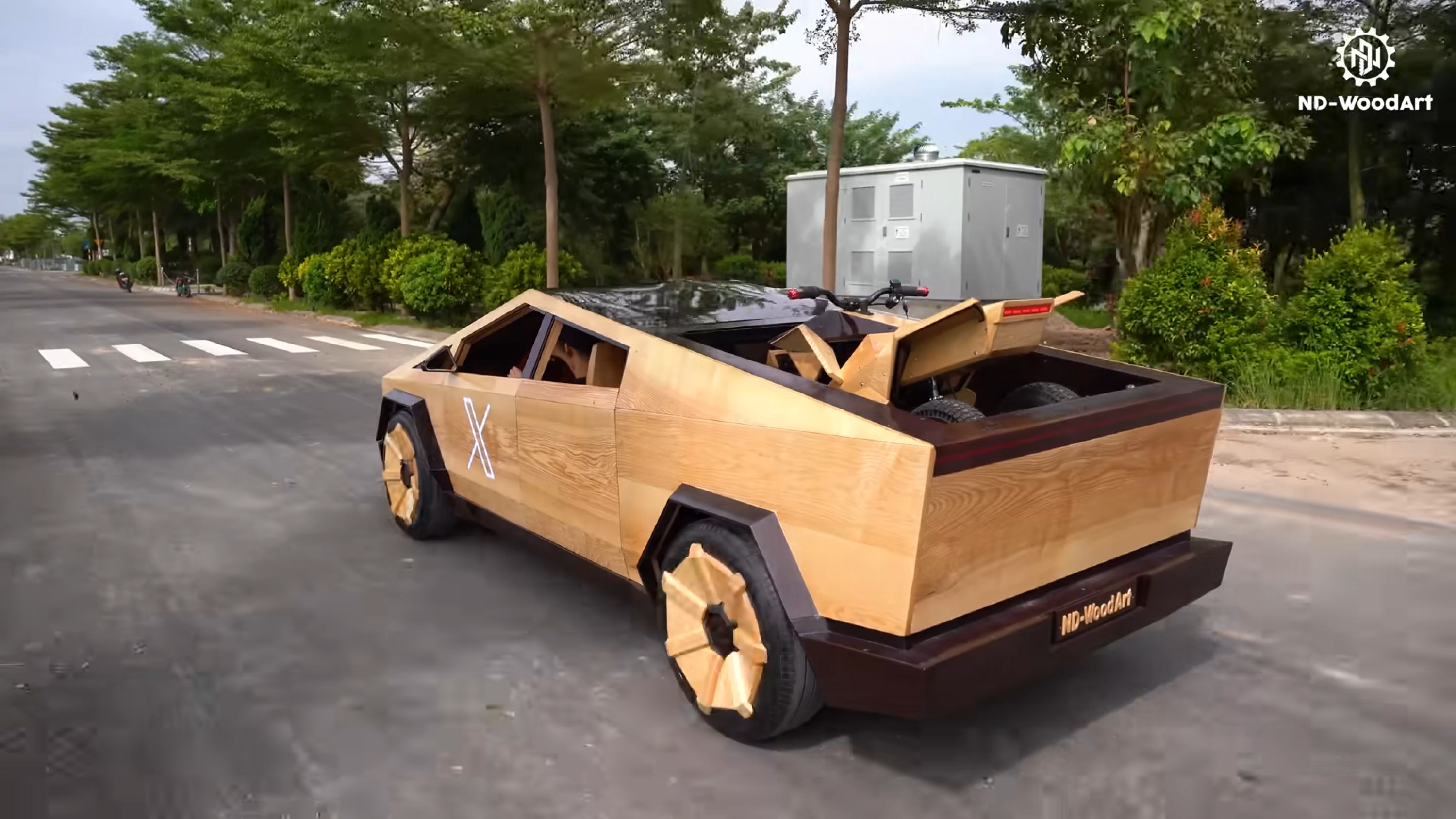
Popular YouTuber ‘ND-WoodArt’ has hand-crafted a scaled-down Tesla Cybertruck in his garage, built almost entirely from wood.
Crafted for his son and daughter, but clearly also as a love letter to Tesla and his hero Elon Musk, the wood-panelled Cybertruck looks to be a fully functional, driving EV about the size of a Fiat 500.
The video below shows the 100-day journey’s highlights, with ND first welding together a platform and installing the electrics, before moving on to crafting the rest of the ‘fun-sized’ Cybertruck in wood.
December 2023: Cybertruck pricing and specs
You might be glad, or you might’ve hoped it wouldn’t happen – but Elon’s teenage wet dream, the Cybertruck, is actually real and finally in customer hands.
Story continues…
And, frankly, the fit and finish is better than anything I’ve seen from Tesla so far…
As you can see in the video, the wooden Cybertruck has LED lighting at both ends, an infotainment system in the dash, and single-arm window wiper just like the real thing, and functioning doors – including the tailgate and ramp at the rear.
And of course, the job wouldn’t be complete without a wooden version of the Cyberquad, which Tesla currently sells for kids in the US, from AU$2870. You can watch the build of that below.
The 2024 Hyundai Santa Fe will launch in Australia with a hybrid all-wheel-drive powertrain initially, creating a starting price likely be more than $20,000 higher than the current entry point.
The Korean car maker has ditched the outgoing model’s four-cylinder turbo diesel and V6 petrol engines to focus on four-cylinder petrol models, including carry-over hybrid and plug-in hybrid variants.
1
Pricing trends point to the hybrid Santa Fe moving closer to $70,000 before on-road costs. The outgoing petrol-electric variant costs from $63,000 in base form, though the latest Santa Fe brings an increase in size and features.
Hyundai Australia is pursuing an entry-level powertrain, though it’s unclear how close it would bring the Santa Fe’s start price closer to the current $46,050 kick-off point.
The company is yet to confirm which engine out of three options available elsewhere, though Wheels believes the target powertrain is the 2.5-litre turbo petrol four-cylinder also found in the Sonata midsize sedan.
1
It produces 207kW and 422Nm, offering extra power and torque over the hybrid that produces combined outputs of 169kW and 350Nm – though it is naturally more economical.
The hybrid features a six-speed torque converter auto compared to the turbo-petrol that’s linked with an eight-speed dual-clutch transmission.
Hyundai Australia would likely prefer the turbo petrol with all-wheel drive as well rather than front-drive, making for a more even distribution of those healthy outputs.
2
Fuel economy figures have yet to be confirmed for Australia.
The Santa Fe’s aerodynamics have notably improved despite a dramatic design shift to a blocky, rectangular shape, though kerb weights have also increased significantly for the bigger model.
The Santa Fe now exceeds 4.8 metres after a 4.5cm stretch to its length, while height increases by 3.5cm.
Five-, six-, and seven-seater versions are again available globally. Hyundai Australia will ignore the five-seater again and is expected to stick with seven-seater layouts only. It currently offers a six-seater in the Santa Fe hybrid with middle-row captain’s chairs.
1
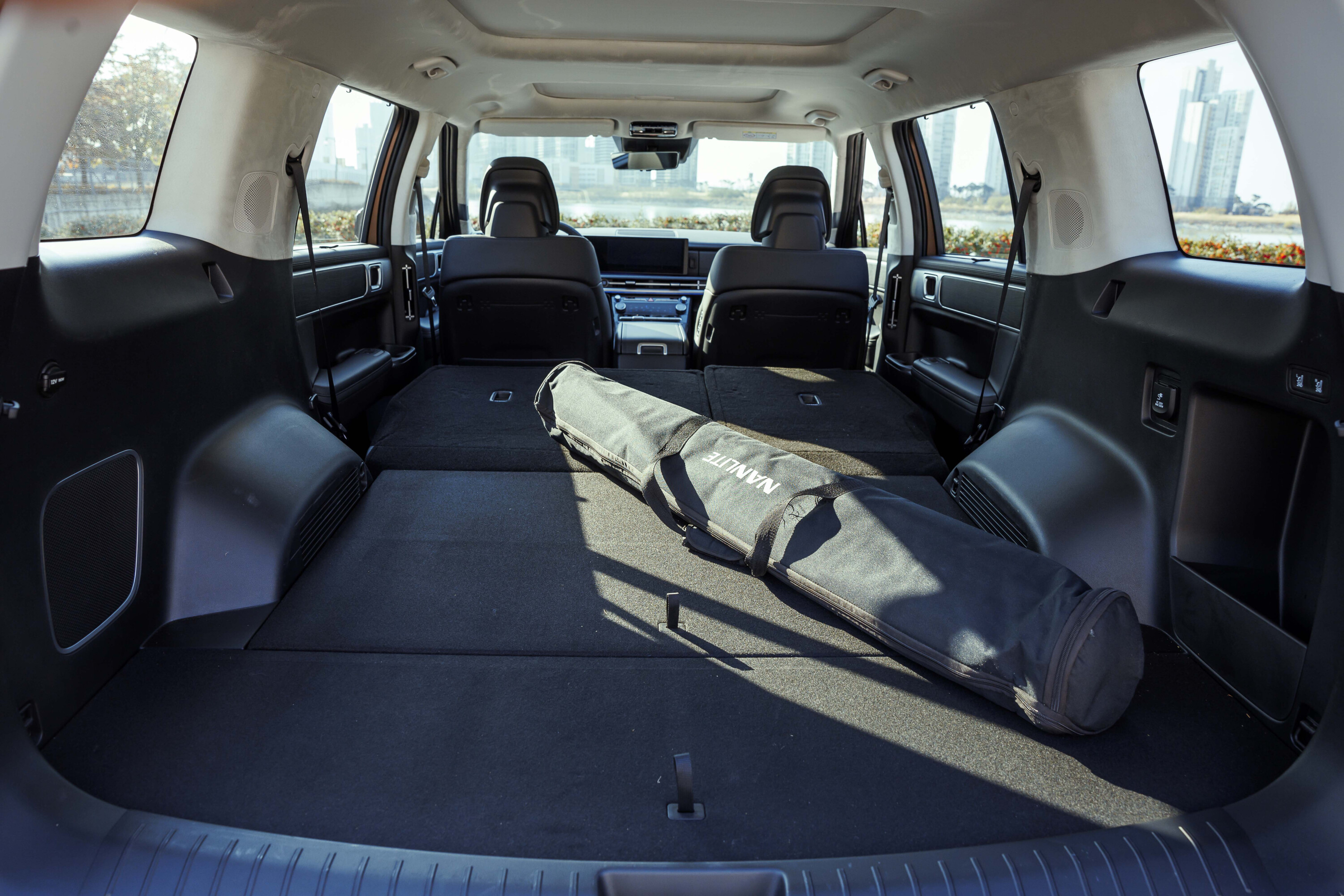
Hyundai is claiming improvements in legroom and headroom to both the second and third rows, mostly thanks to a five-centimetre increase in wheelbase, while boot space increases by 91 litres.
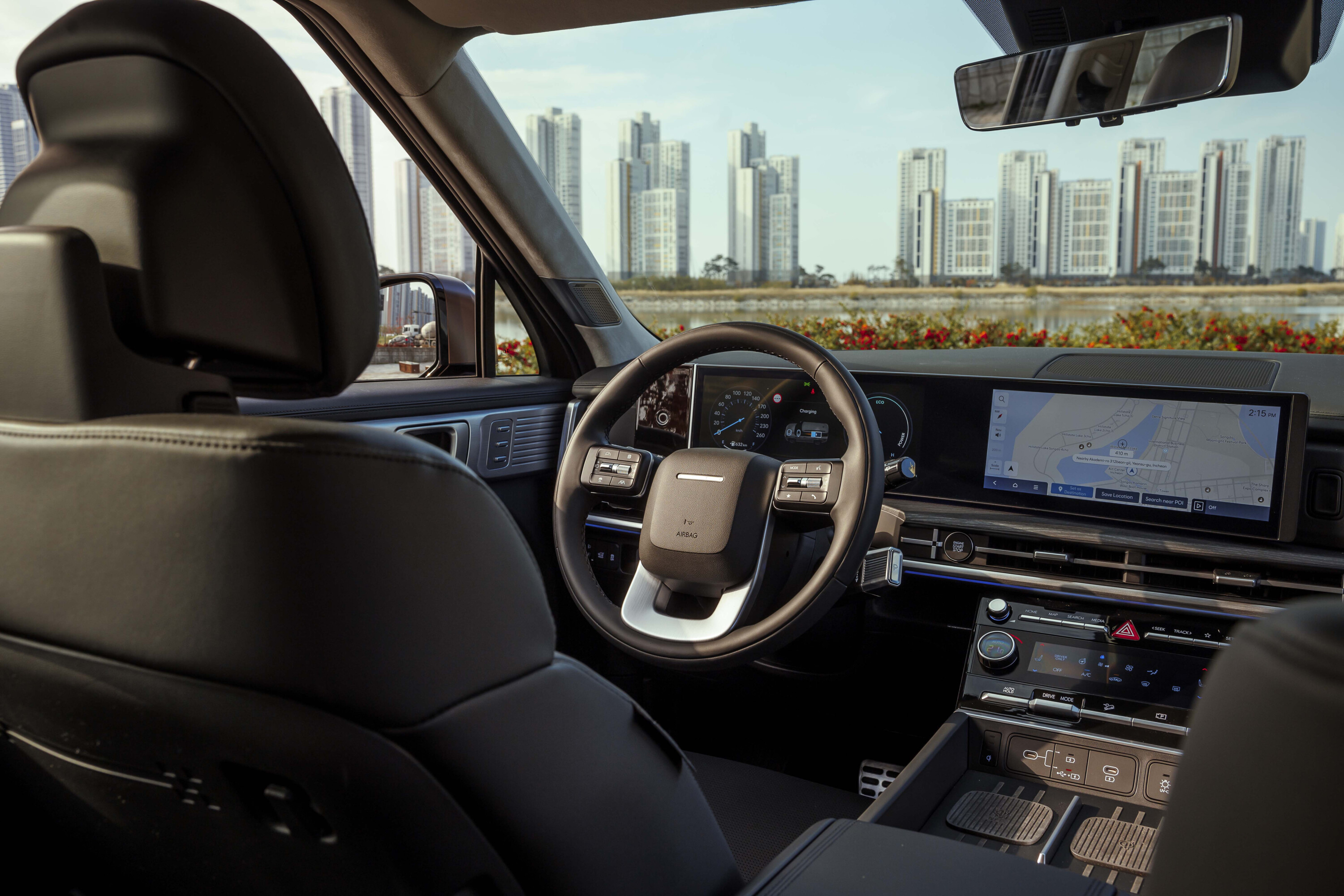
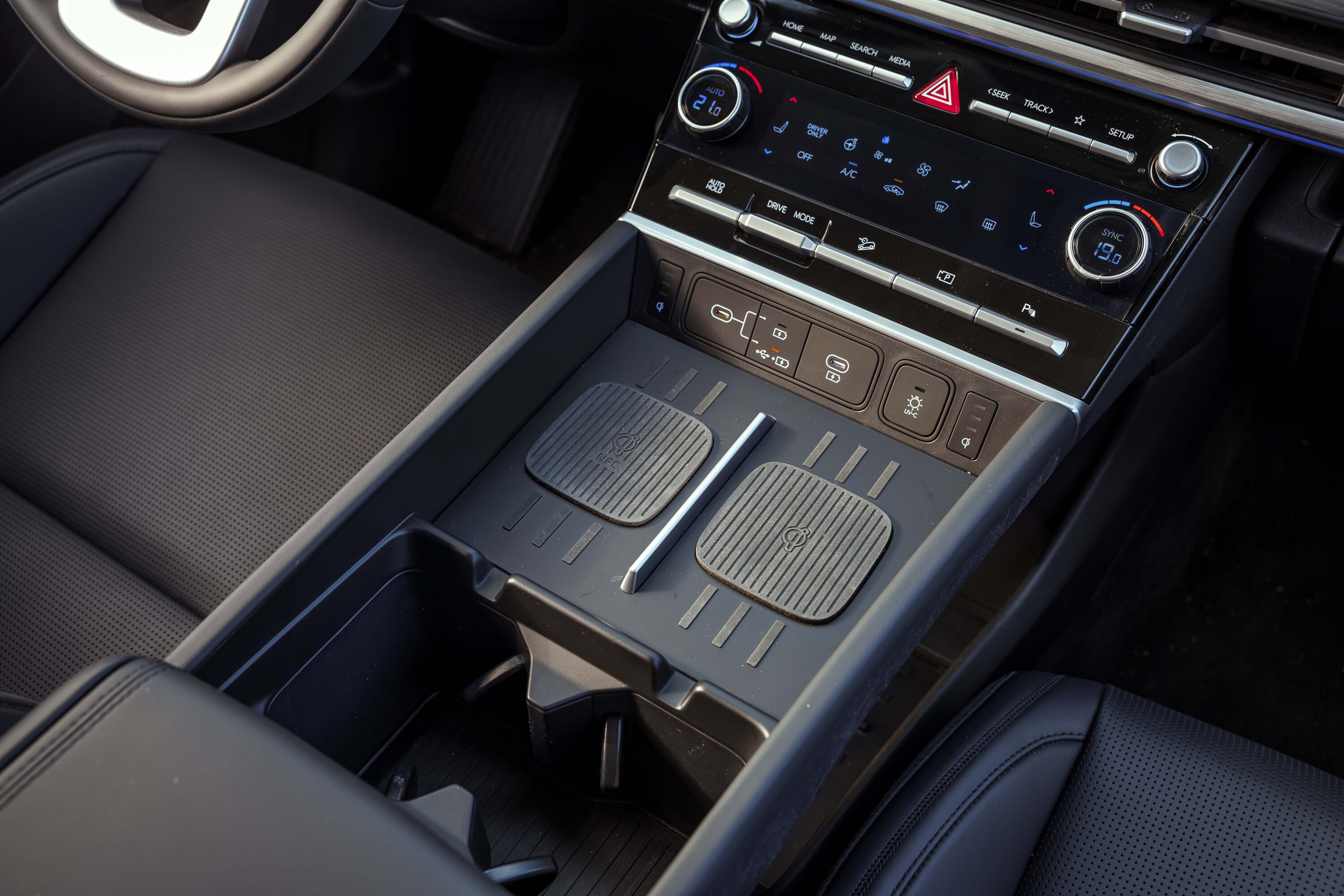
Stand-out new features for the Hyundai Santa Fe include a panoramic curved display that incorporates 12.3-inch digital driver screen and infotainment screen, digital rear-view mirror, over-the-air software updates, a digital key that allows your smartphone to lock/unlock the vehicle among several functions, a UV-C sterilisation glovebox, dual phone-charging pads, and a bilateral centre console cubby that can be opened from both the front cabin and middle cabin.
Safety improvements include curtain airbags that now cover the entire third row. The third-row seats also gain top-tether anchor points to allow for the fitment of child seats.
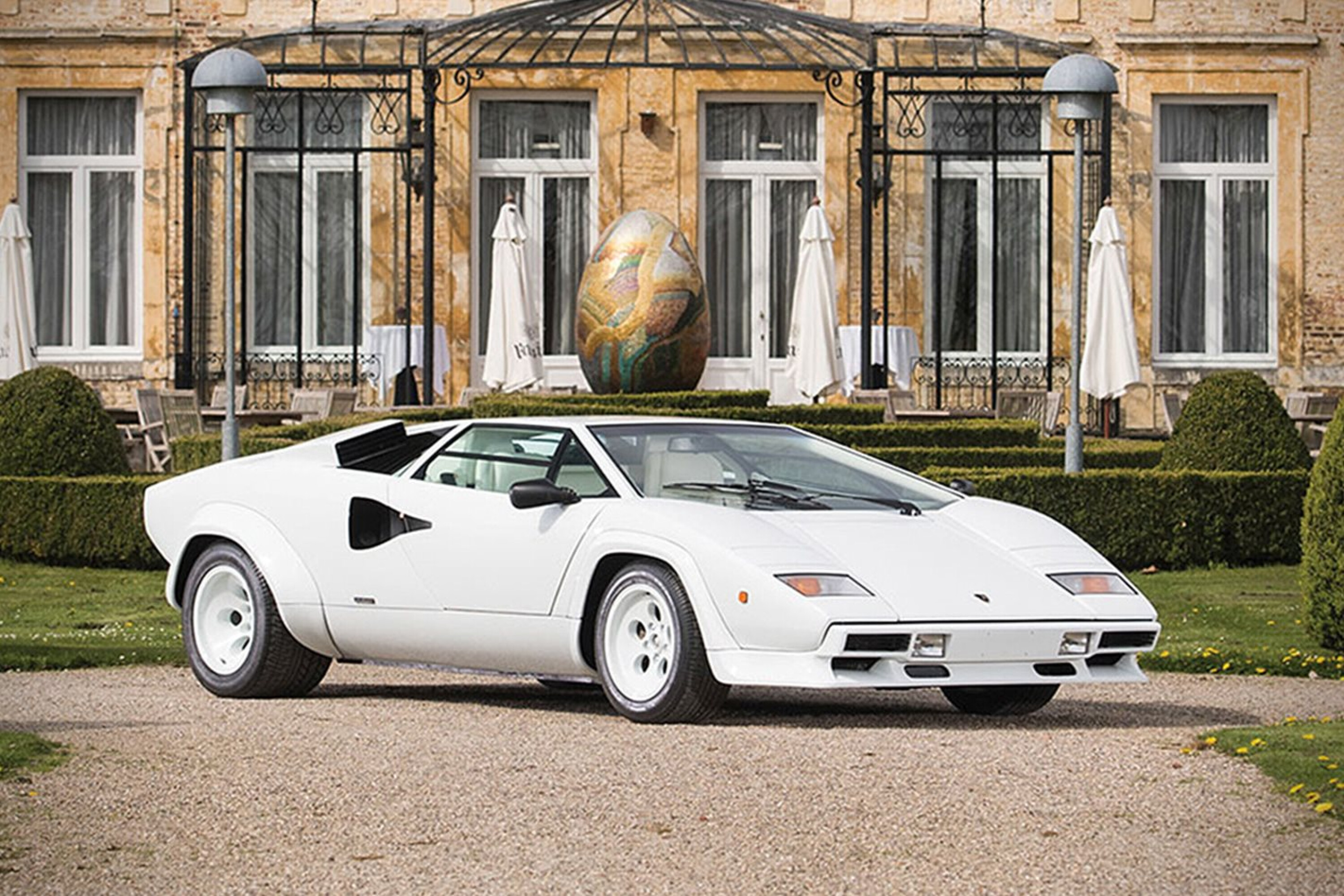
An example of the iconic Countach has sold at auction for a cool $2 million in Australian dollars – comfortably shading the previous best auction result of AU$1.17 million, set in January 2023.
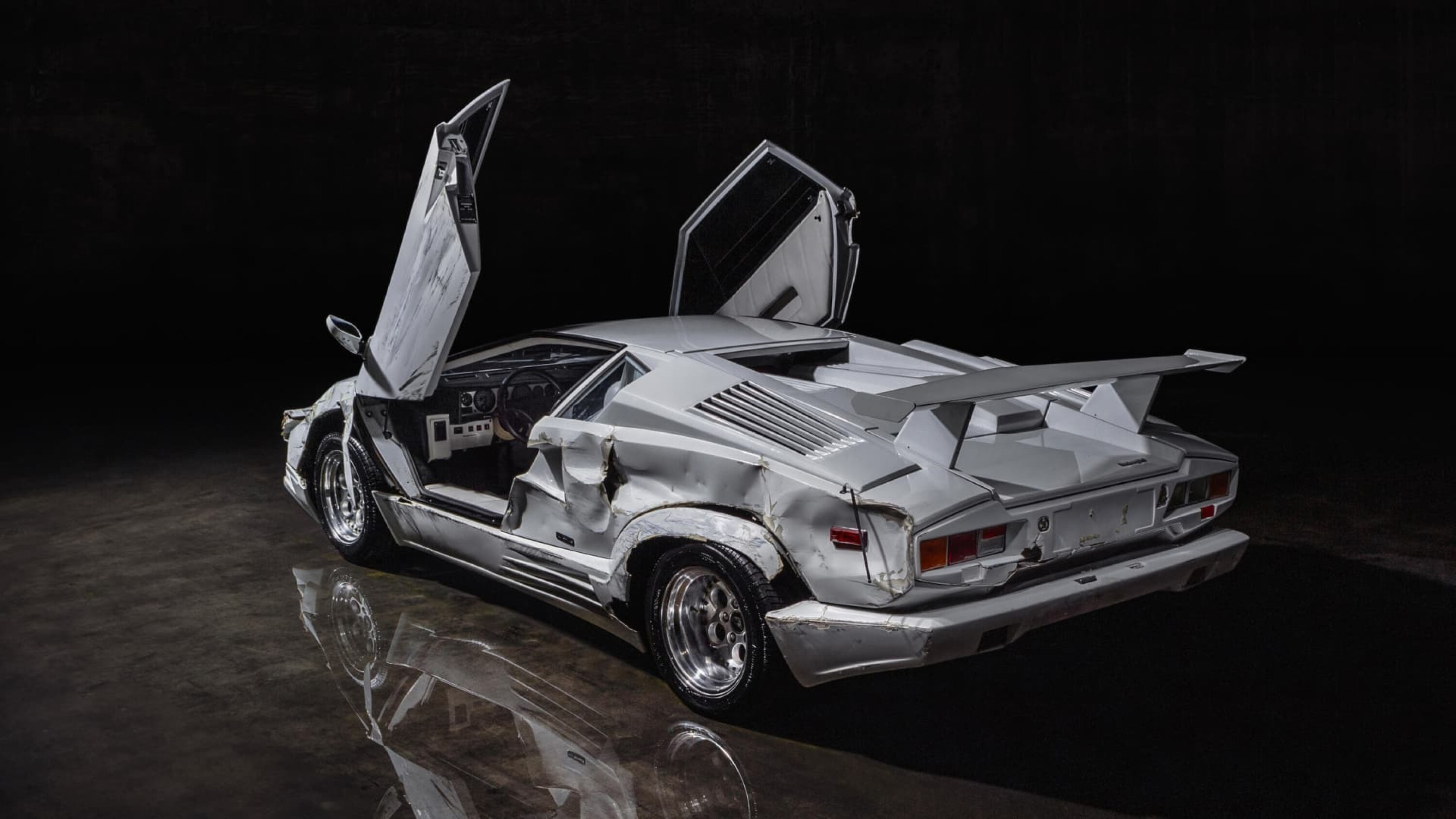
The twist here, though, is that the new record holder is the deliberately and properly wrecked Countach that starred in the modern classic, Martin Scorsese’s The Wolf of Wall Street.
9
If you’ve seen the film, you’ll recall the scene.
If you haven’t, this is no great spoiler: Leonardo DiCaprio’s character, stockbroker Jordan Belfort, speeds off in his Countach after sucking down a metric ton of illicit party tricks and proceeds to drive it into everything he can and probably can’t see.
To be fair, even in its wrecked state, this very authentic – not a mock-up – Countach 25th Anniversary would make one hell of a centrepiece in a grand foyer somewhere.
As for its price, well, I imagine its connection to the film, its legendary director and popular cast would’ve helped push it to that new record figure.
The other of the two Countachs used in the film – an undamaged example – will also go to auction in December, so it’ll be interesting to see what number it achieves…
By the way, does anybody know how much that gold-plated Countach sold for, back in 2017? Struggling to find a result! (Scroll down ?)
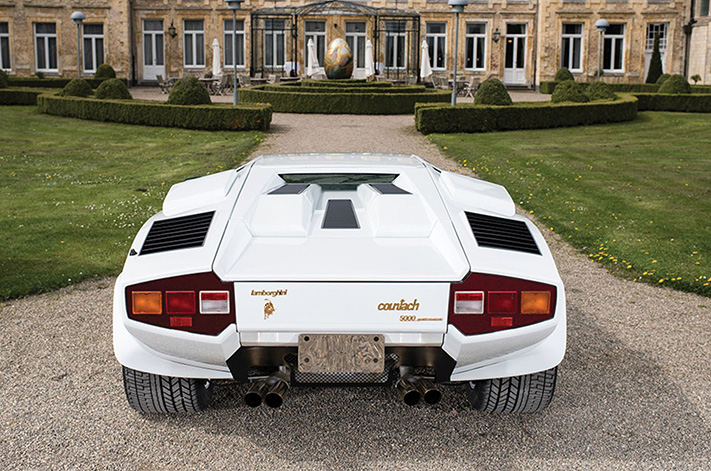
2017: Lamborghini Countach for sale with gold-plated interior
RM Sotheby’s Villa Erba auction is the very acme of refined good taste.
The 19th century mansion, set on the shore of Italy’s Lake Como, plays host to some of the most elegant classic cars once a year, where immaculately groomed guests can pick at unpronounceable finger food, guffaw conspicuously and wear red trousers without fear of public ridicule.
“Cocaine seats, all white like I got the whole thing bleached,” as Mr Z might say if he hadn’t been rapping about a Rolls Royce Corniche instead.
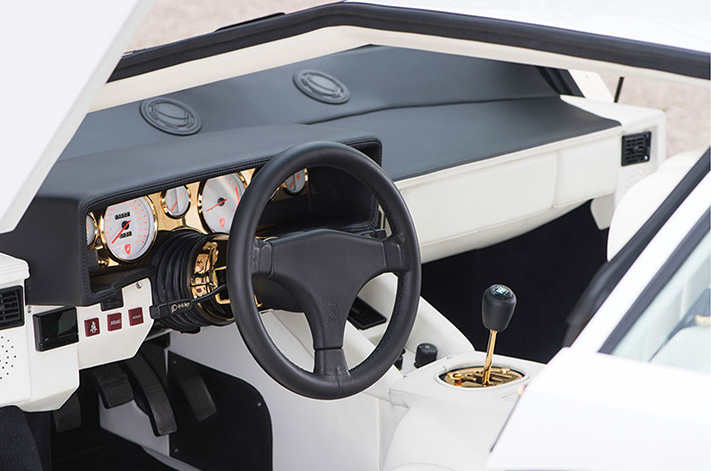
And then you look inside and recoil with horror as you realise that the dashboard, steering column and gated gearshift has been plated in 14-carat gold.
It probably hasn’t escaped your attention that the Countach has often attracted a certain clientele. Rod Stewart owned one. Mike Tyson was a customer as was Duran Duran’s Simon Le Bon. Then there’s Prince Jefri of Brunei, a man with a superyacht called Tits and twin tenders on the back called Nipple 1 and Nipple 2. These are not men encumbered with an excess of refined taste.
1
Countachs are cars that you had on your bedroom wall as a kid, when you thought that you could live solely on a diet of foam banana lollies and that you’d be rendered irresistible to the opposite sex if you actually owned a functional lightsaber.
There are exceptions, but Countachs are usually bought by people who haven’t progressed far beyond this worldview.
It’s hard to understand quite where the motivation to gold plate the Lambo’s cabin came from though. With typical understatement, RM Sotheby’s simply claim that the car’s Dutch owner sent it to Lamborghini Polo Storico for a bare metal restoration that included the gold work inside. Dutch. Gold. It could really only be one person.
1
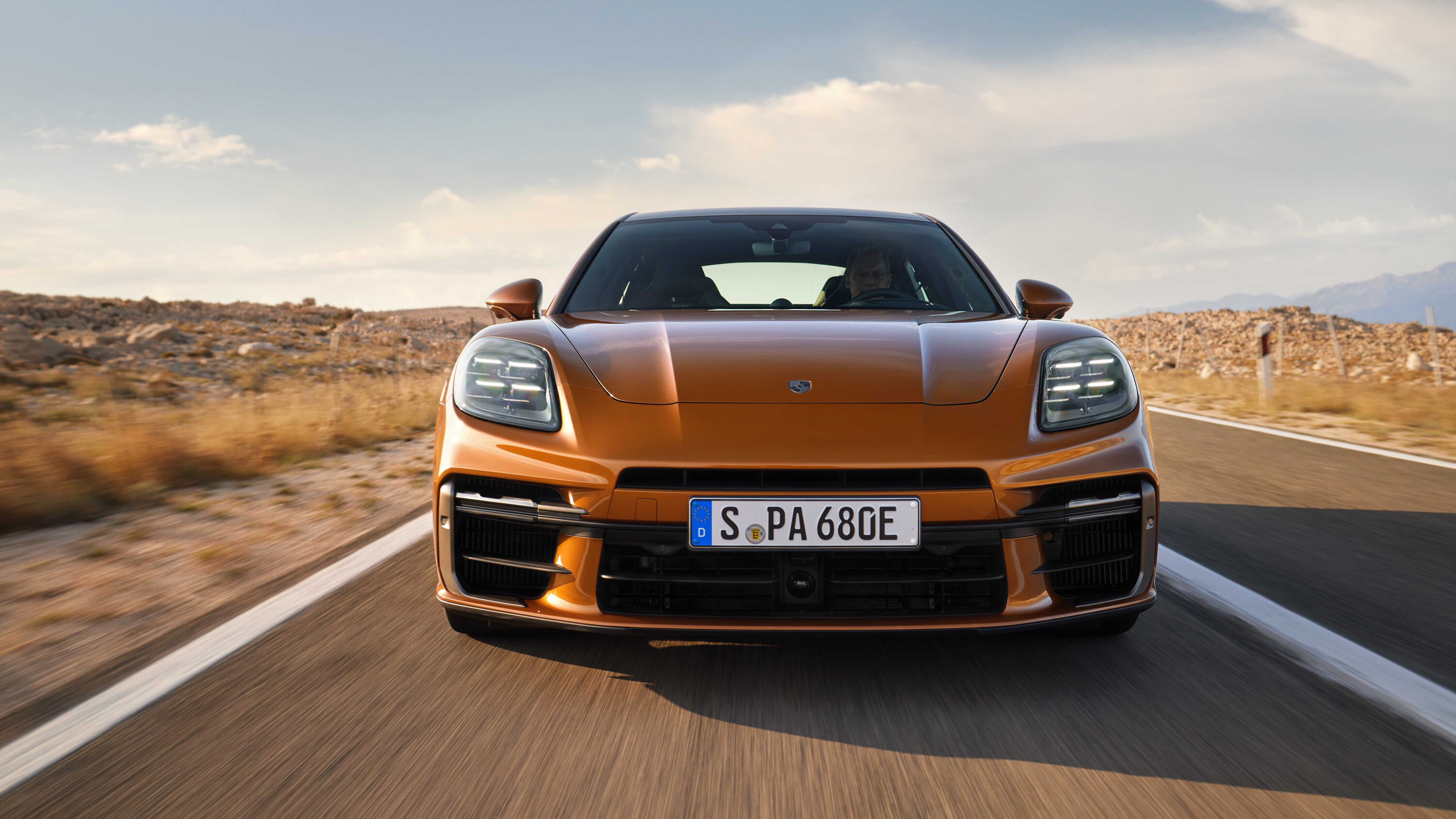
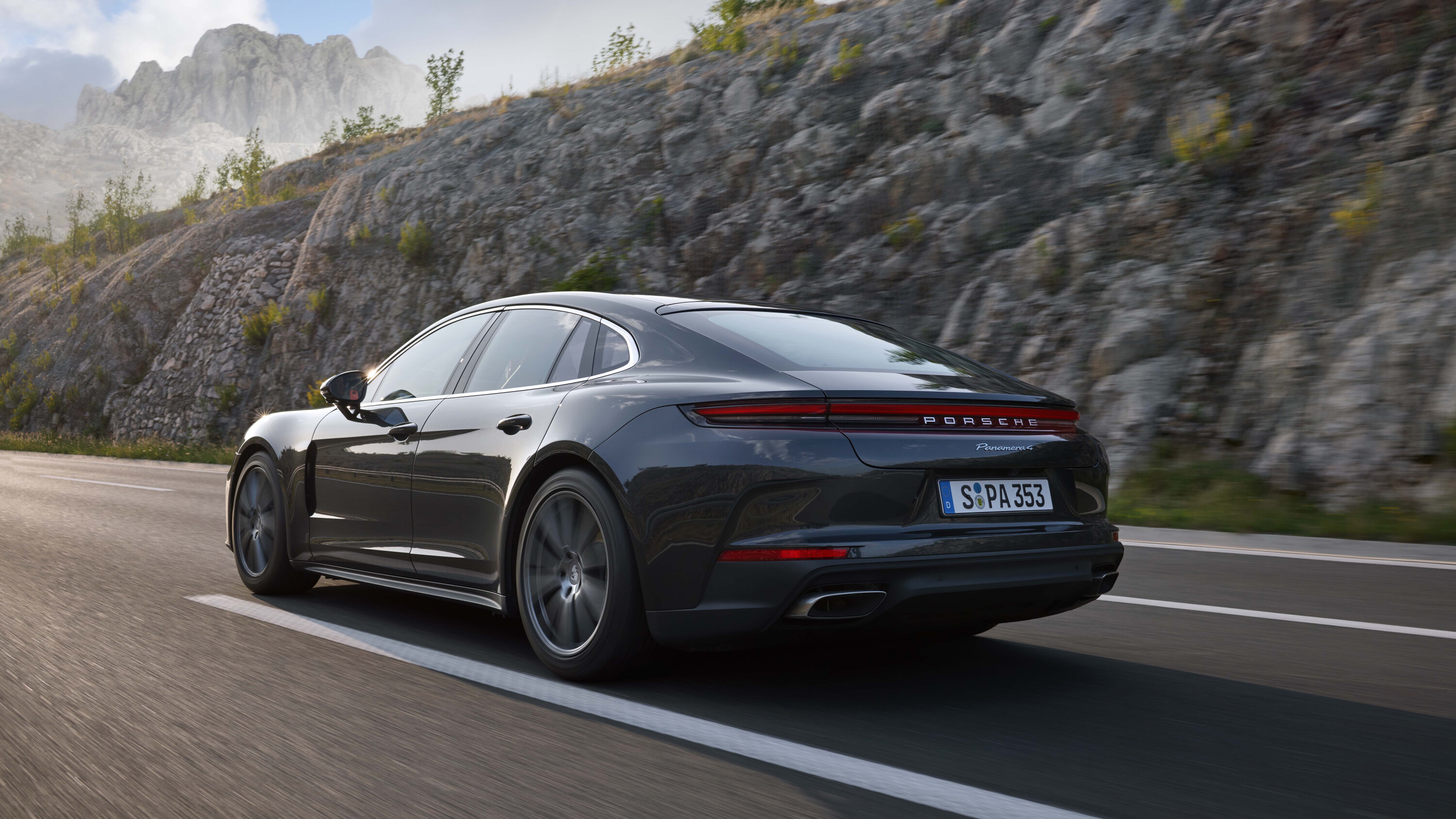
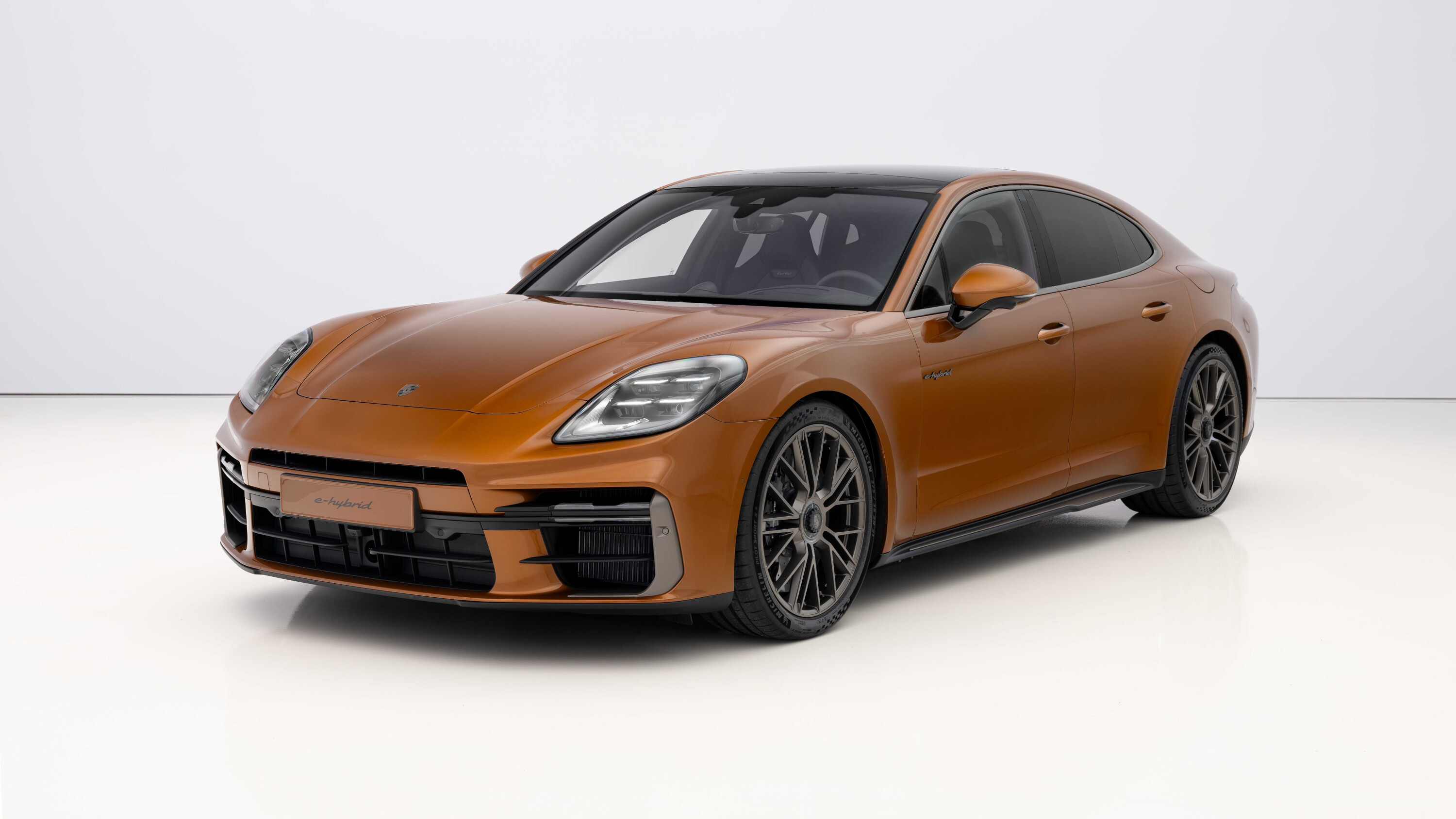
Porsche’s flagship Panamera range has come in for a major update.
When was the last time you saw a Panamera? Could you say which generation it was? That’s a bit of a trick question, because they all sort of look the same, but it’s fair to suggest you’d see ten Cayennes and two or three Taycans for every late model Panamera.
It’s a critical model for Porsche, though, given the breadth of its customer base, and so now we have a new one. Yes, it looks much the same – and it largely is, with near identical measurements of 5052 mm in length, 1937mm wide and 1423mm tall – but there’s little to complain about on that front.
1
Third-gen Panamera, or v2.1?
First thing’s first: the Panamera is once again a liftback sedan only. We liked its styling as a wagon – er, Sport Turismo – so it’s a shame that style has been stricken from the range.
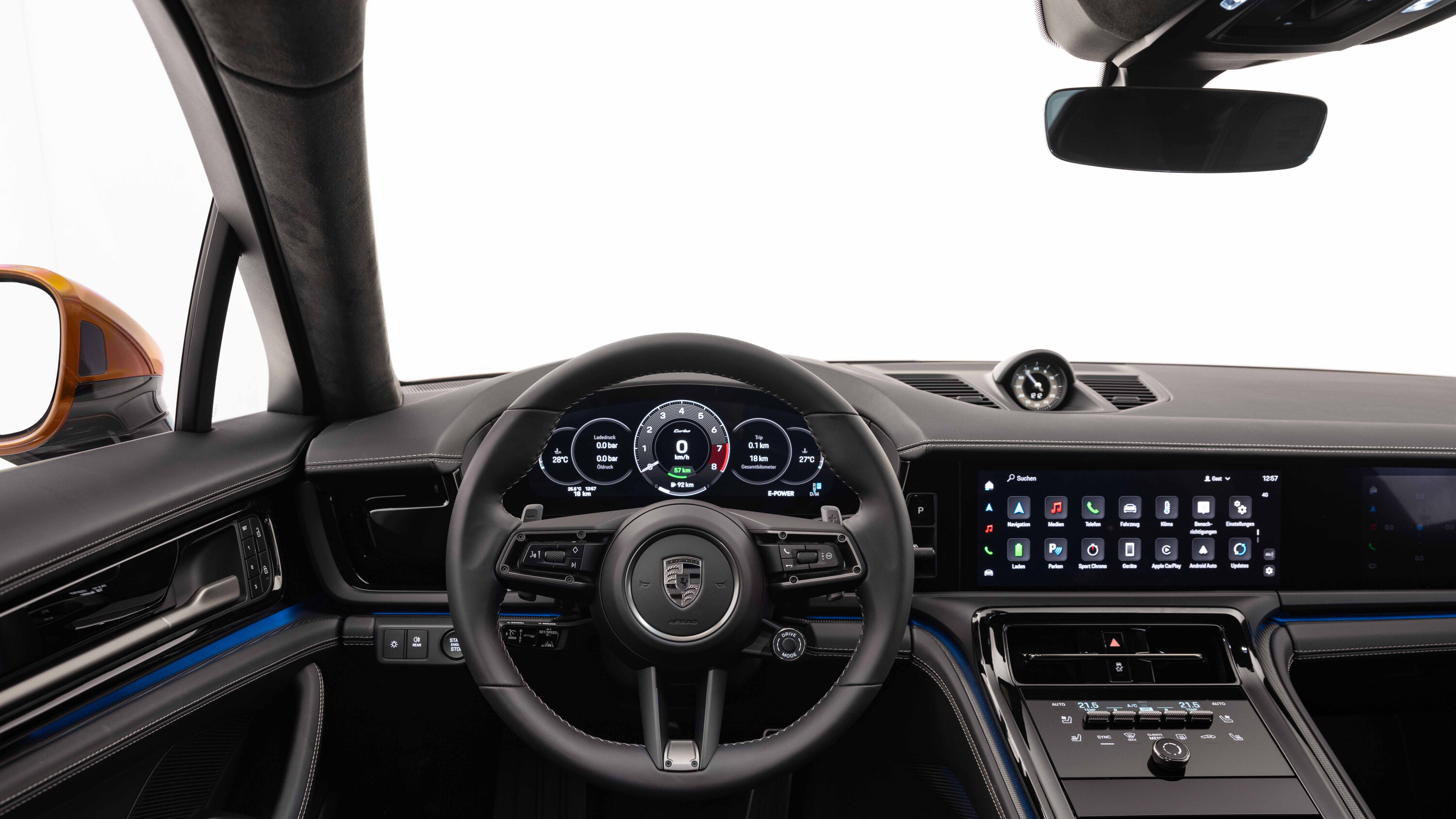
Even from the distance of mere photos, the 2024 Panamera’s interior looks the business. Yes, it’s a lot like the last one, but as that was a largely spot-on style, we’re not expecting complaints.
As with the Taycan and a number of other new models, the Panamera’s design team clearly felt more screens would improve things, so now there’s a 10.9-inch display ahead of the front passenger.
1
Priced from $227,000, all 2024 Panamera models come as standard with a panoramic roof, 14-way ‘Comfort’ seats, soft-close doors, a cooled smartphone compartment with inductive charging function, and an “improved fine dust filter with GPS-supported, automatic air-recirculation function”.
Step up to the $402,300 Turbo E-Hybrid and you get rear-wheel steering, Porsche Torque Vectoring Plus, ioniser including carbon fine-dust sensor, and electric roll-up sunblinds for the rear side windows.
2024 Porsche Panamera features: all models
Panoramic roof system
Seat ventilation front
Privacy glass
Side airbags in rear compartment
Lane Change Assist with Rear Assist
Four-zone automatic climate control
Active Parking Support including 3D Surround View
Soft-close doors
Adaptive Cruise Assist including Traffic Jam Assist
Digital radio
1
2024 Porsche Panamera features: select models
14-way Comfort seats including memory package (Panamera only)
Wide selection of exterior colour options up to the Dream range (Panamera only, already standard on Turbo E-Hybrid)
Rear-axle steering (Turbo E-Hybrid only)
HD-Matrix LED headlights (Panamera only, already standard on Turbo E-Hybrid)
Porsche Torque Vectoring (PTV) Plus (Turbo E-Hybrid only)
Comfort Access (Panamera only, already standard on Turbo E-Hybrid)
Ioniser including Carbon fine-dust sensor (Turbo E-Hybrid only)
Head-Up Display (Panamera only, already standard on Turbo E-Hybrid)
Electric roll-up sunblind for rear side windows (Turbo E-Hybrid only)
BOSE Surround Sound System (Panamera only, already standard on Turbo EHybrid)
1
The Turbo E-Hybrid features a revised 4.0-litre V8 turbo engine backed up by a 140 kW electric motor for combined outputs of 500kW and 930Nm, transferred to the road through an eight-speed PDK transmission.
Porsche claims 0-100 km/h in 3.2 seconds. (Any faster and we’d imagine the air-con can’t maintain a link to the GPS satellites…)
Battery capacity for the plug-in hybrid is now 25.9 kWh, and a new 11kW on-board AC charger shortens the charging time to 2 hours and 39 minutes.
1
The ‘base’ Panamera is powered by a 2.9-litre turbo V6 producing 260kW and 500Nm, representing a bump of 17kW and 50Nm over the previous model.
In this form, the Panamera lists a claimed 0-100km/h time of 5.1 seconds – still enough to blow most passengers’ socks off.
The Porsche Active Suspension Management system has also been revised, the dual-chamber two-valve air suspension separating the rebound and compression stages of the damper control – targeting a greater distinction, and capability, between comfort and sports modes.
“The system noticeably dampens impacts from transverse joints and road damage while at the same time ensuring more body stability in dynamic driving situations,” Porsche says.
1
For the E-Hybrid, buyers can also option the Porsche Active Ride system, with new active shock absorbers.
Again, to quote Porsche: “This generates a volume flow in the damper according to demand and can therefore build up forces between the body and wheels in a lightning-fast, highly precise and targeted manner, which counteract and almost completely compensate for the forces resulting from the road excitation. A weight-saving single-chamber air-suspension system complements this technology.”
An exclusive colour of Turbonite is featured on models bearing the Turbo name, serving as a contrast on the side window strips, and elsewhere on the steering wheel badge.
Pricing & availability
New Panamera deliveries in Australia are expected to begin late in the first quarter of 2024.
US giant Costco is now offering discounted cars to its members
Vehicles are available to members for immediate pick-up in store or online
The program kicks off on Australiau2019s east cost this week
Soon your next trip to the supermarket could include eggs, milk, bread and a brand new car.
That’s the vision of US retail giant Costco who will this week offer its 1.5 million Aussie members the chance to buy a new car at discounted prices.
Costco currently has 15 warehouse locations around Australia with each location frequented by 25,000 Aussies every week. Shopping at Costco requires a membership, which is $65 per year, and that provides access to cheaper, wholesale pricing on a wide range of products.
1
Costco already sells cars at its stores in America, where it moves around 775,000 vehicles each year. The initiative is also in Costco stores in the United Kingdom and Canada.
The Aussie operation, which is called Autoconnect, will see Costco partner up with Aussie company Autoreviewa and has been four years in the making.
Discounts on new cars purchased from Costco tend to range between $700 and $2750, with most cars being $1500-2500 cheaper than if purchased directly from a dealer.
1
The Aussie program will see Costco allocate space for between one and three vehicles in each of its warehouses, with individual dealers and manufacturers both able to apply for the space.
Importantly, the cars displayed in Costco stores will be available to purchase that day without the need to order or endure lengthy waiting periods. Nissan, Suzuki, Renault and Ford are just some of the brands currently being promoted for Costco purchase on the Autoreviewa website.
Test drive events are also expected to be part of the Costco program and car brands will also be able to man their displays to engage with customers.
The new initiative will be rolled out on Australia’s east coast this week before expanding to all of Costco’s 15 Aussie outlets. More Costco stores are also planned for Australia.
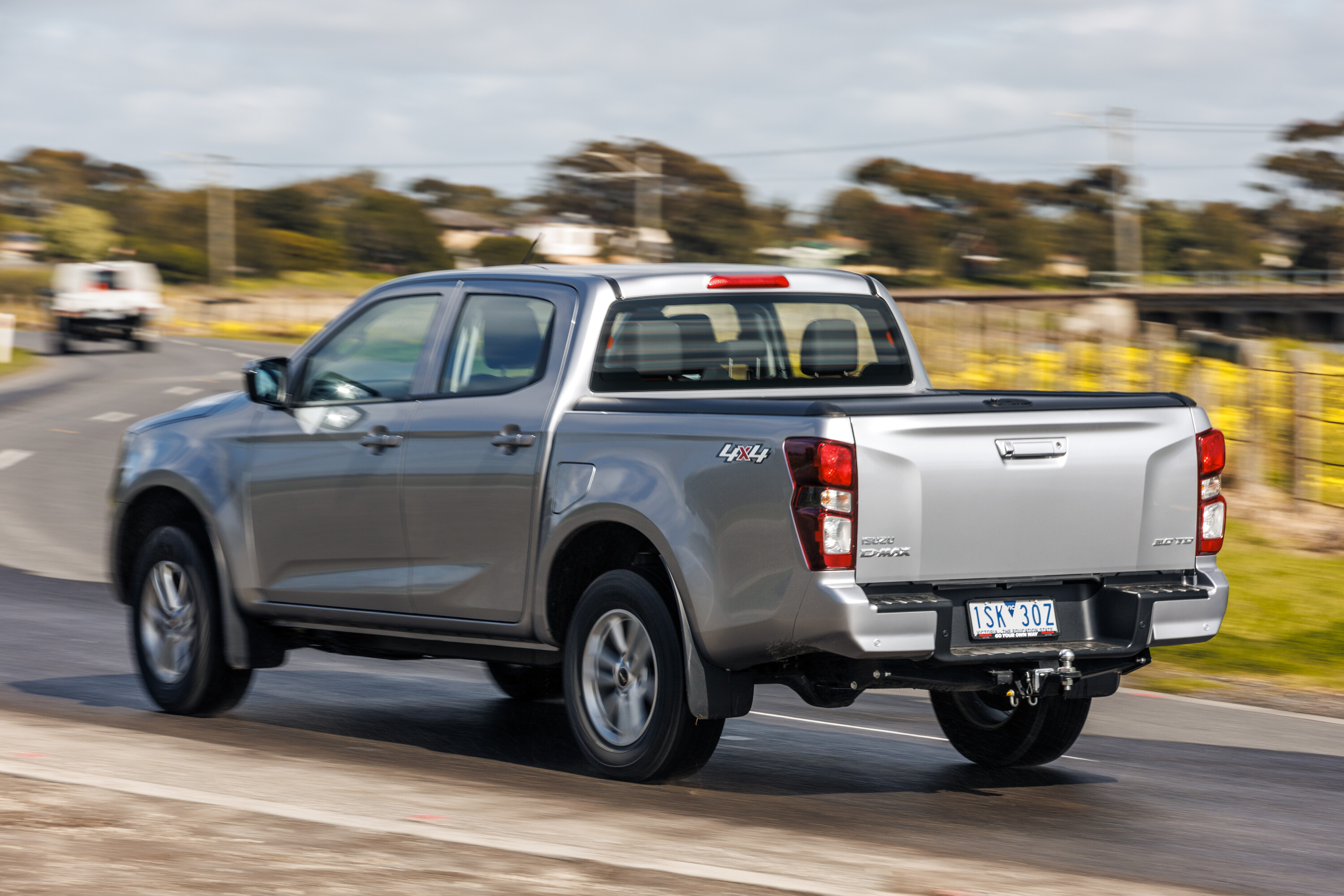
Due to a manufacturing issue, the fuel hose may chafe against the engine oil level bracket and become damaged. If this occurs, fuel may leak in the presence of an external ignition source resulting in a vehicle fire.
What are the hazards?
A vehicle fire could increase the risk of injury or death to vehicle occupants, other road users or bystanders and/or damage to property.
What should consumers do?
Owners of affected vehicles can contact their nearest authorised Isuzu UTE dealer service department, to schedule an appointment to have the fuel hose and retaining clips replaced free of charge.
Supplier details
Isuzu Ute Australia Pty Ltd
Who should owners/operators contact for more information?
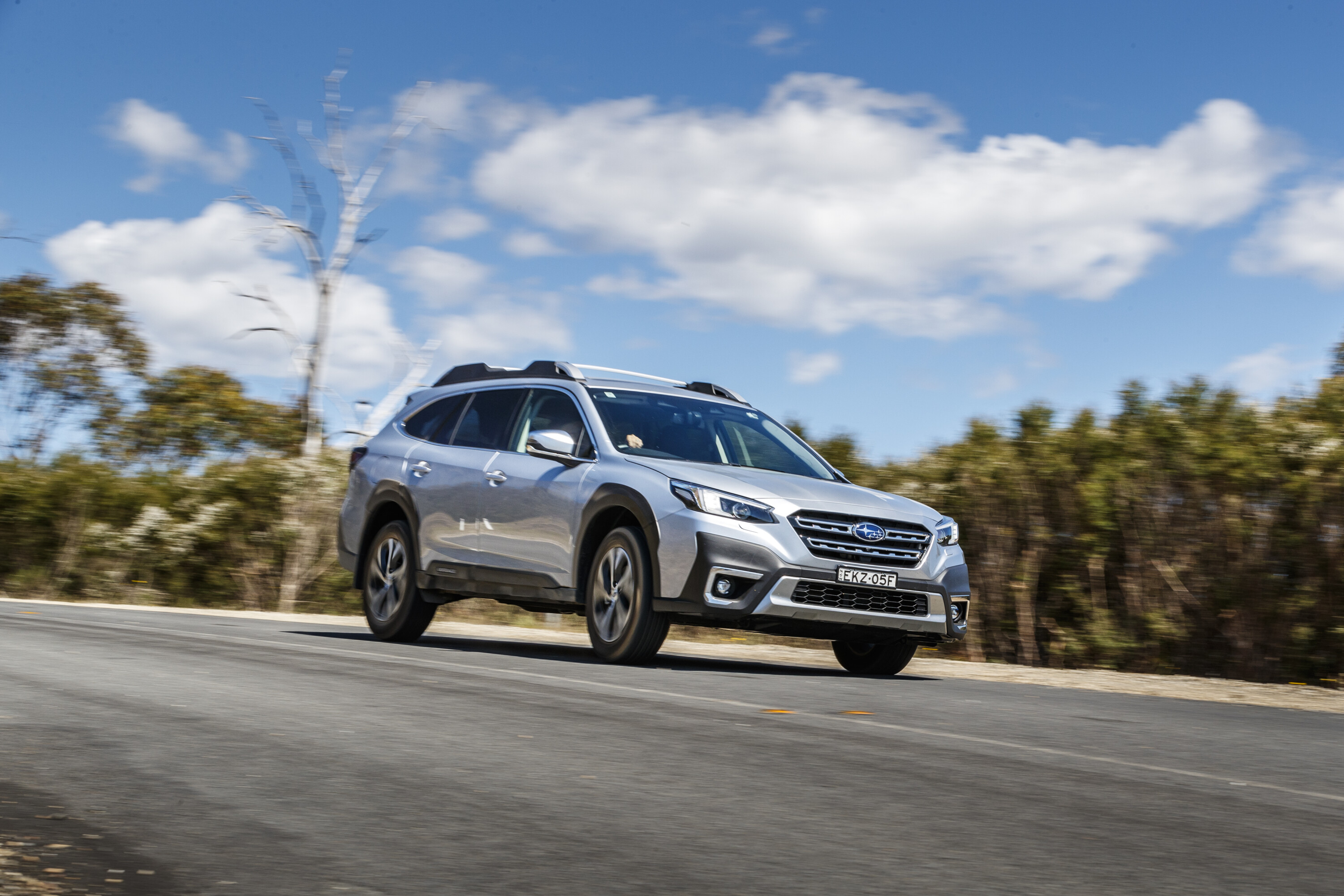
Due to a manufacturing issue, the Continuously Variable Transmission (CVT) inhibitor switch may not be sealed sufficiently allowing moisture to enter potentially causing corrosion of the circuit board. As a result, the reverse lamps may not illuminate and/or the rear-view camera may not display the rear-view image whilst reversing as intended.
What are the hazards?
If the reverse lamps and/or the rear-view camera do not operate as intended, it may impact the safety of other traffic, or any persons located behind the vehicle increasing the risk of an accident-causing serious injury or death to vehicle occupants and/or other road users.
What should consumers do?
Owners of affected vehicles can book their vehicle for a free rectification at any authorised Subaru Service Centre Australia-wide or book online by visiting our website at subaru.com.au/retailers [↗] and simply enter your postcode and select “Service” from the Department drop down menu.
Supplier details
SUBARU (AUST) PTY LTD
Who should owners/operators contact for more information?
Due to an incorrect software configuration, the driver’s seat belt reminder chime and visual indicator will not activate as intended below 20 km/h. This may result in the driver not being reminded to ensure their seat belt is buckled when operating the vehicle below the speed of 20 km/h. The correct system functionality is always guaranteed above this speed.
What are the hazards?
In the event of an accident if the driver’s seat belt is not securely buckled the occupant may not receive the full protection of the seatbelt system. This could increase the risk of injury to vehicle occupants.
What should consumers do?
Owners of affected vehicle can contact their authorised Lamborghini dealer for an appointment to update the software, free of charge.
Supplier details
Automobili Lamborghini S.P.A.
Who should owners/operators contact for more information?
The front drive shaft may not meet manufacturing specifications and the outer race of the front driveshaft may crack. If this occurs, the vehicle will stop operating while in motion.
What are the hazards?
If the vehicle stops operating while in motion, this could increase the risk of an accident, causing injury or death to vehicle occupants and/or other road users.
What should consumers do?
Owners of affected vehicles can book their vehicle for a free rectification at any authorised Subaru Service Centre Australia-wide or book online by visiting our website at subaru.com.au/retailers [↗] and simply enter your postcode and select “Service” from the Department drop down menu.
Supplier details
SUBARU (AUST) PTY LTD
Who should owners/operators contact for more information?
The Santa Fe is one of only two enduring, continuous nameplates since Hyundai made things official locally in 2003 with an Australian subsidiary.
(In case you haven’t guessed, the other is Sonata; while Tucson still exists, it was interrupted between 2010 and 2015 by the ix35.)
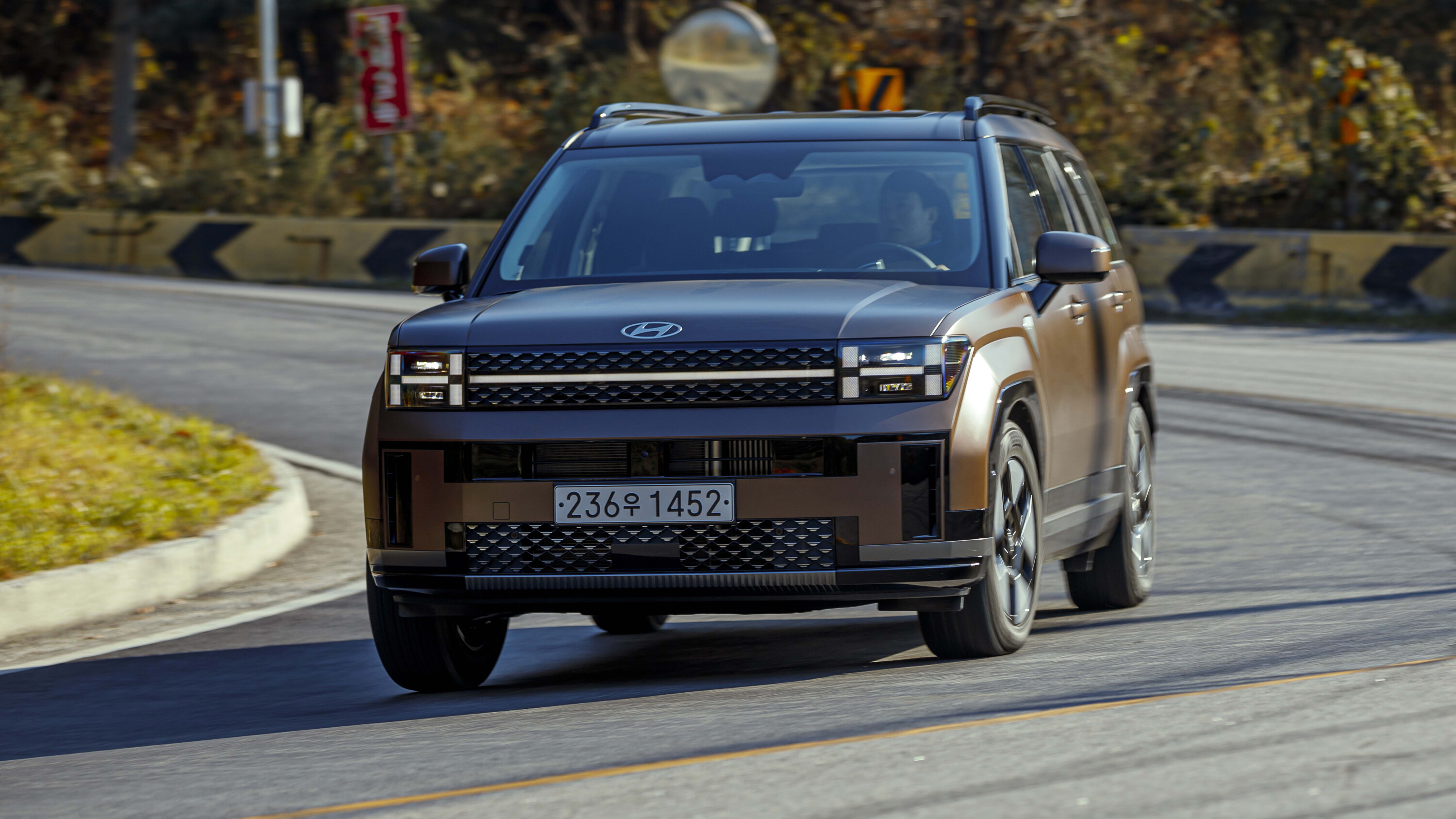
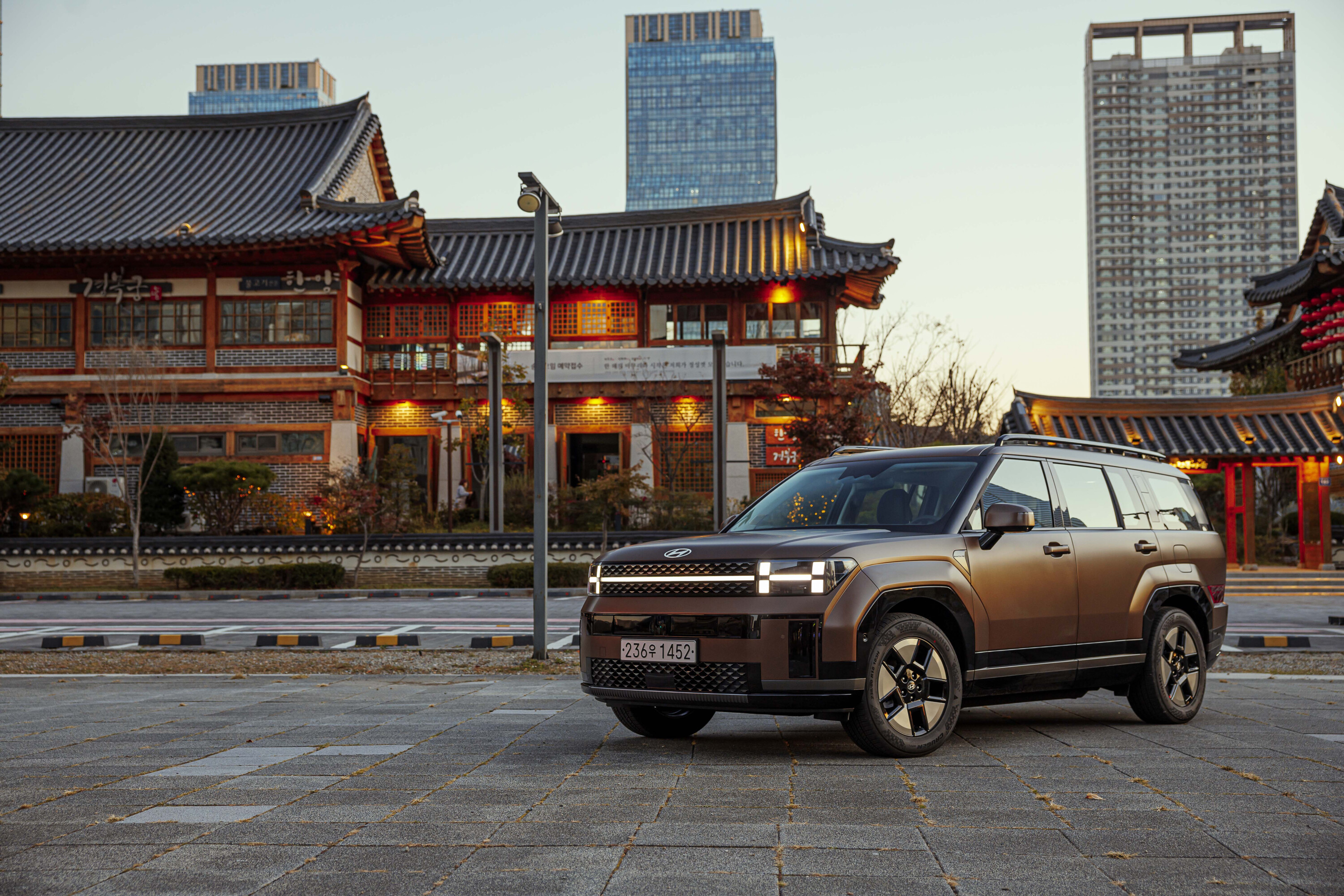
Looking like a big SUV that’s just escaped from Minecraft into the real world, the rectangular, fifth-generation Santa Fe is the latest Hyundai to demonstrate just how far the Korean brand’s confidence has come in a couple of decades.
The fifth-gen Santa Fe is 4.5cm longer than the outgoing model (which is still selling strongly), including a 5cm stretch to the wheelbase, and height is up by 3.5cm.
It brings more interior space to a large SUV that Hyundai says is better equipped than ever before for transporting families around the suburbs and into the great outdoors. There’s extra practicality before even jumping inside, however.
1
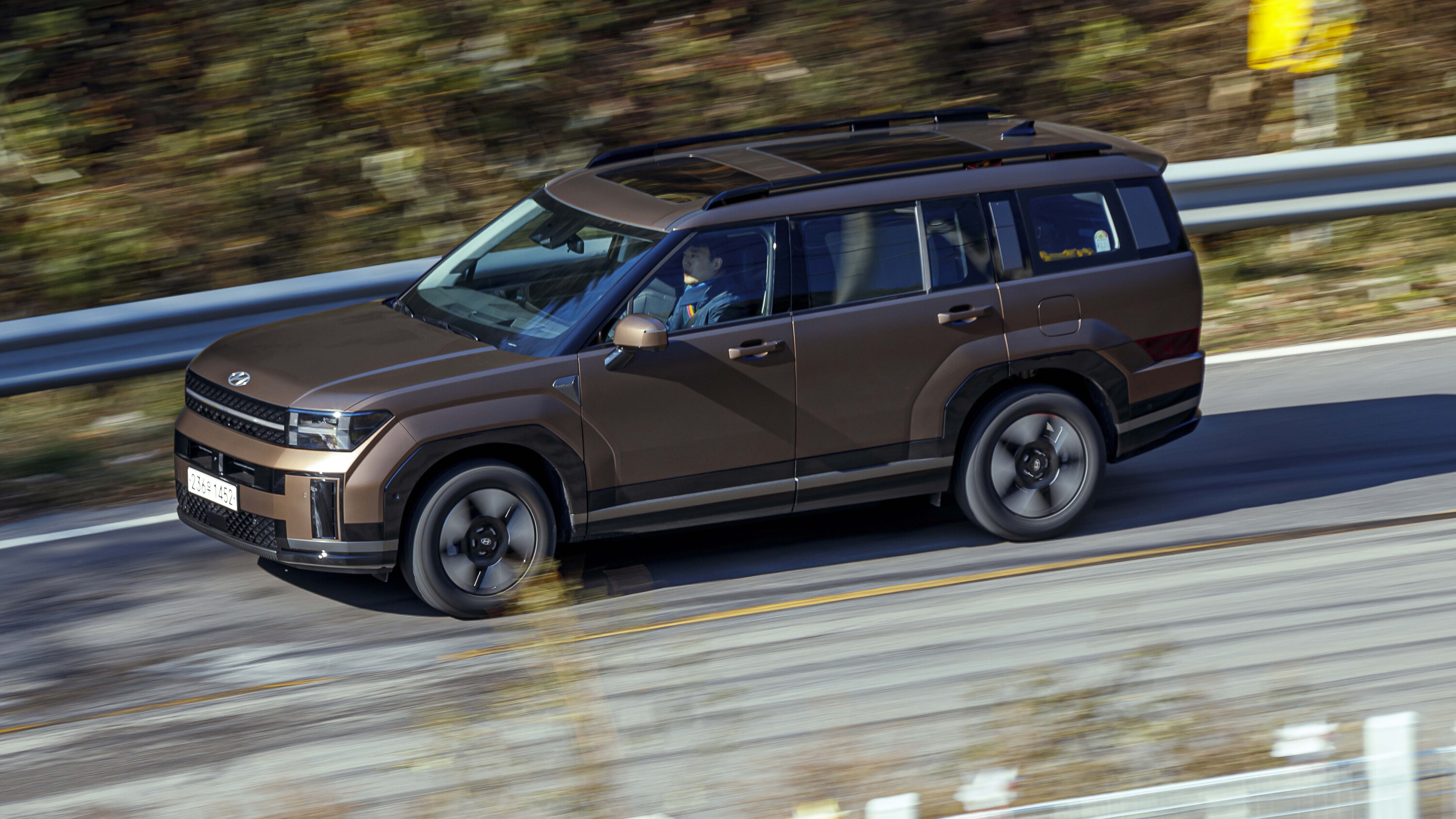
To the side of the rear doors, a small panel can be pushed inwards to create a handle to lift yourself up onto the rear tyre to better access the roof rails or roof stowage.
At the rear, although vehicle width is unchanged from before, the tailgate has – through cleverly packaged, upright struts – been widened by 12.5cm for significantly improved boot access. Boot space increases by a useful 91 litres with the third-row seats down.
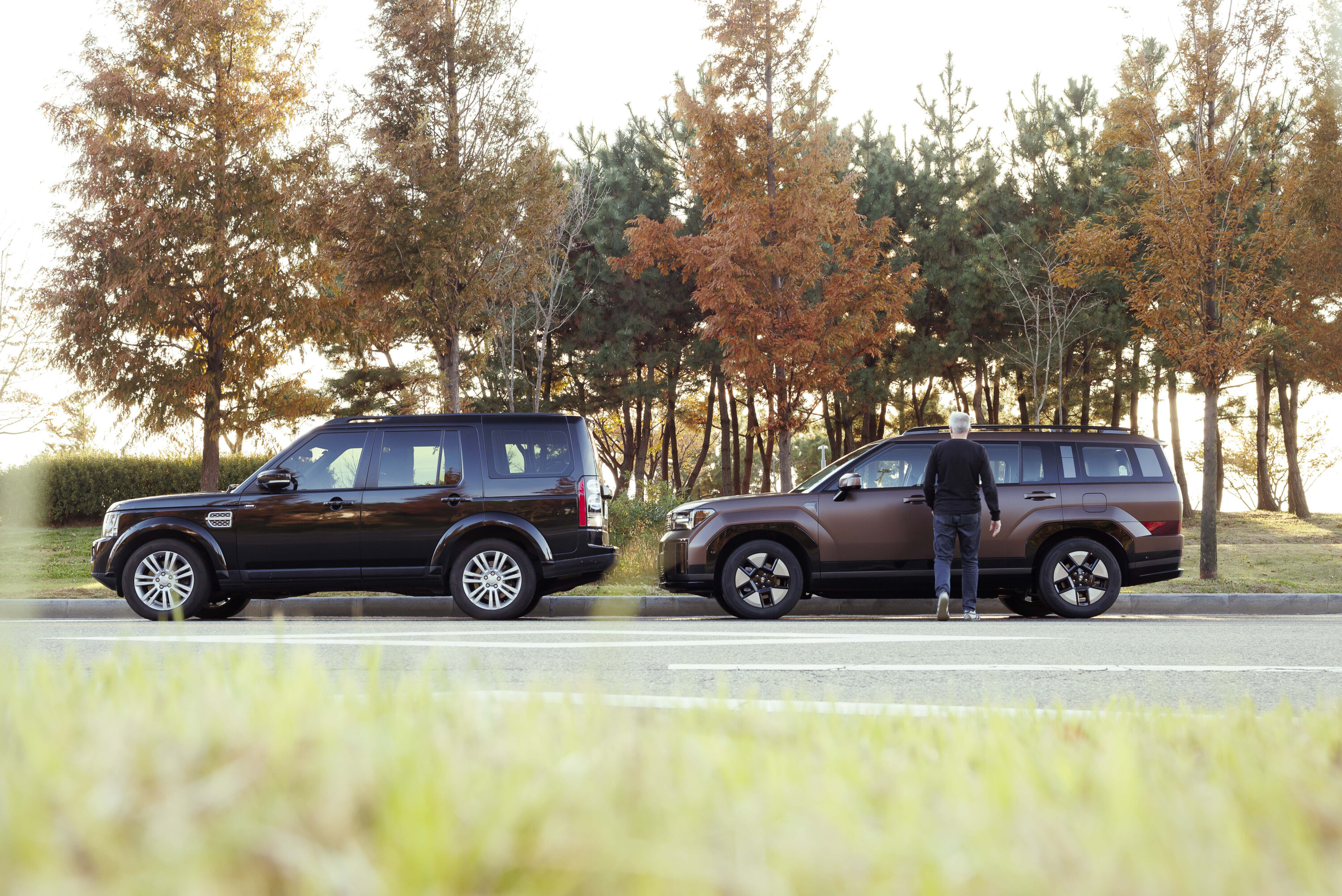
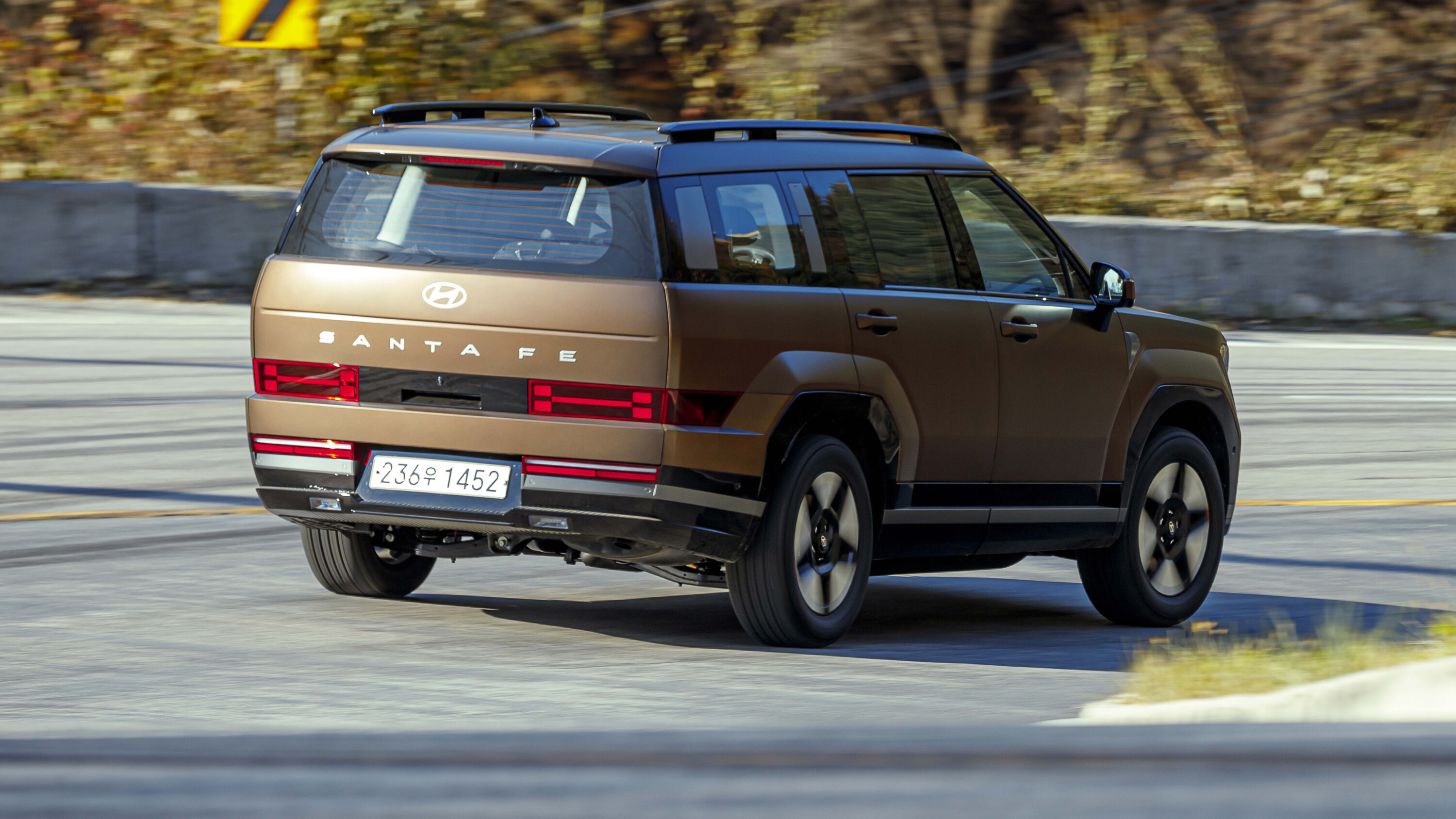
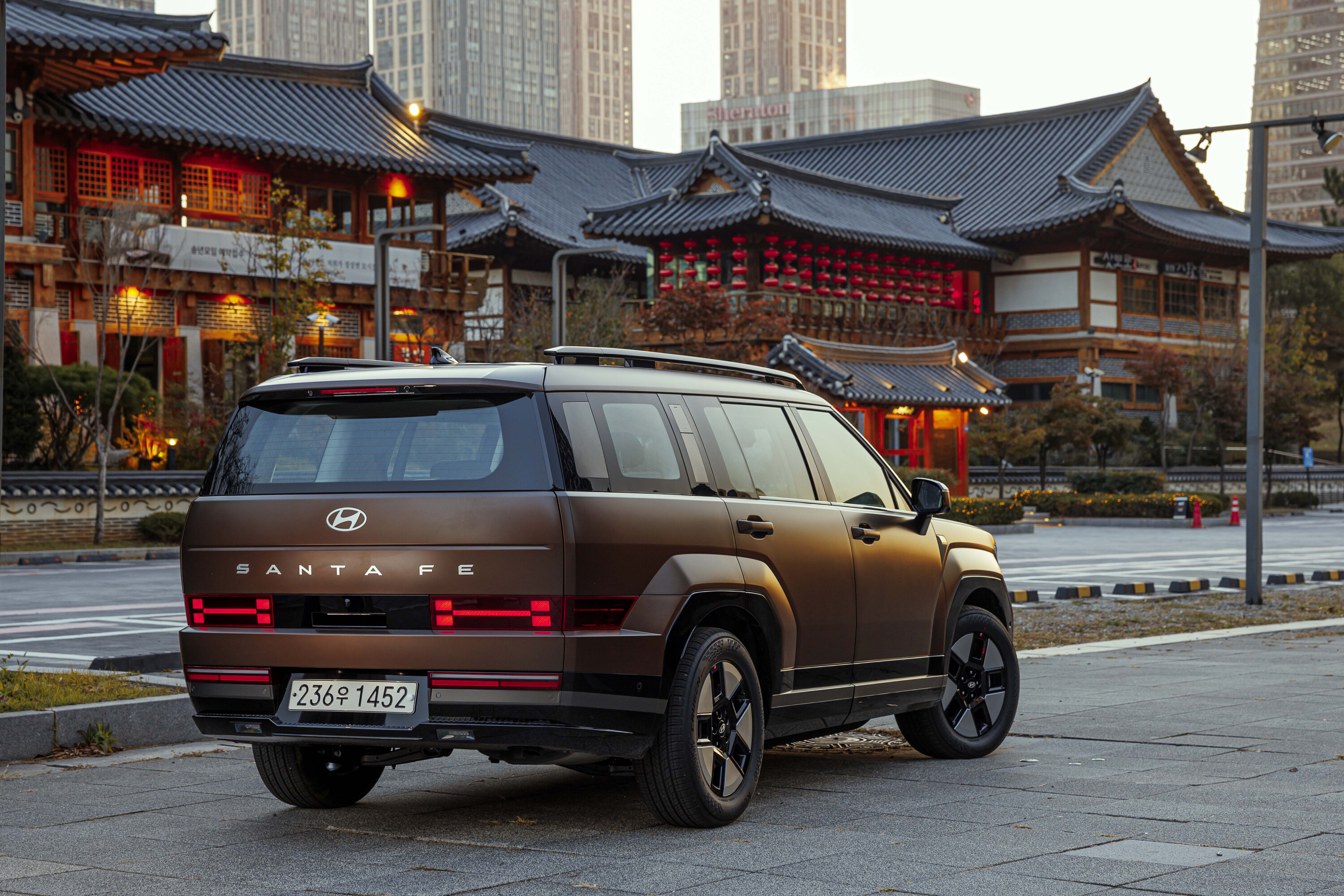
The latest Santa Fe, now 4.83m long, doesn’t look as large in the metal as it may in pictures, but the Land Rover Defender inspiration feels just as strong. (Make that borderline copycat if you consider the Santa Fe XRT concept unveiled in August.)
There’s plenty of original thought, however, to Hyundai’s second-largest SUV after the Palisade – not least the H-pattern LED headlights and tail-lights.
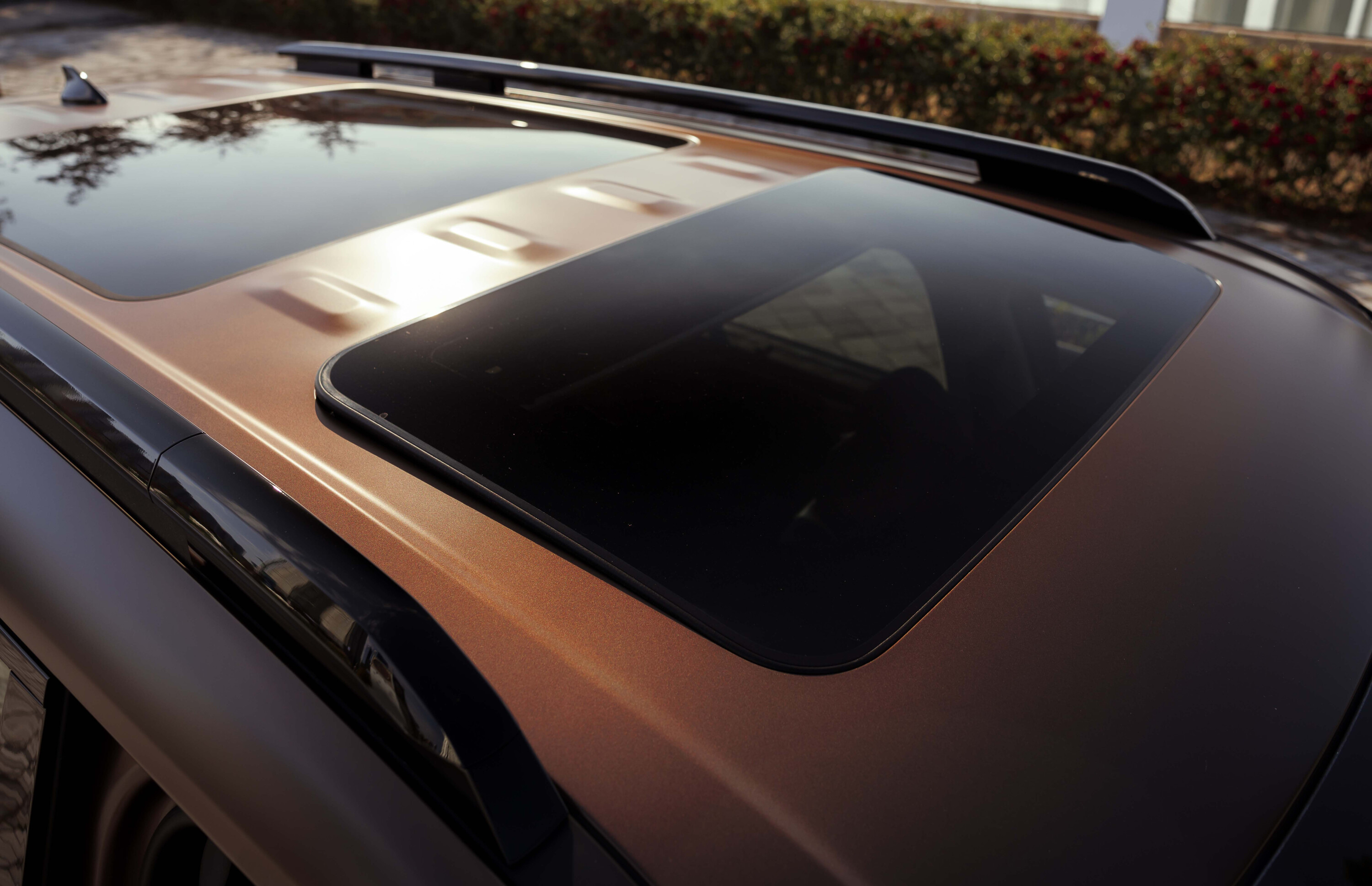
Our test car for a few days in Korea is finished in a new bronzy metallic hero colour called Earthy Brass. It’s a top-spec model that may retain the Highlander badge in Australia but could follow the Palisade’s switch to Calligraphy for its flagship nomenclature.
The powertrain is a hybrid that will return to Australia, though our market will take it in all-wheel-drive ‘H-trac’ form rather than the front-drive set-up currently offered and found on our tester.
Another key element missing from our Korean example: it’s a five-seater only, where all Australian Santa Fe models will continue as seven-seaters.
That rules out assessing a claimed improvement to third-row space, an area where the Santa Fe certainly trailed the rival Toyota Kluger.
Hyundai says 2024 Santa Fe legroom has increased by 1.5cm, while benchmark headroom is claimed through a 6.9cm increase – helped by that taller roofline as seating height has increased by 3cm. There’s a little extra shoulder room, too, we’re told.
1
The rear doors open wide for convenient ingress/egress, and there’s increased legroom – 2cm for the petrol-electric Hybrid and 3.5cm for petrol-only models.
A sliding 60-40 bench enables tailoring of legroom/boot space.
There’s decent headroom even with the dual-pane sunroof of our ‘Highlander’ spec, the floor is almost flat in the middle to help comfort for middle-seat occupants, the bench’s under-thigh support bodes well for long-distance comfort, and the seatbacks recline.
Each seatback incorporates coat hooks, elasticated map flap, and USB-C port. Two cup holders are integrated into the rear doors, above a large bottle pocket, in addition to the two available when lowering the centre armrest.
B-pillar vents deliver cool/warm air, while manual window blinds are another ‘Highlander’ feature.
1
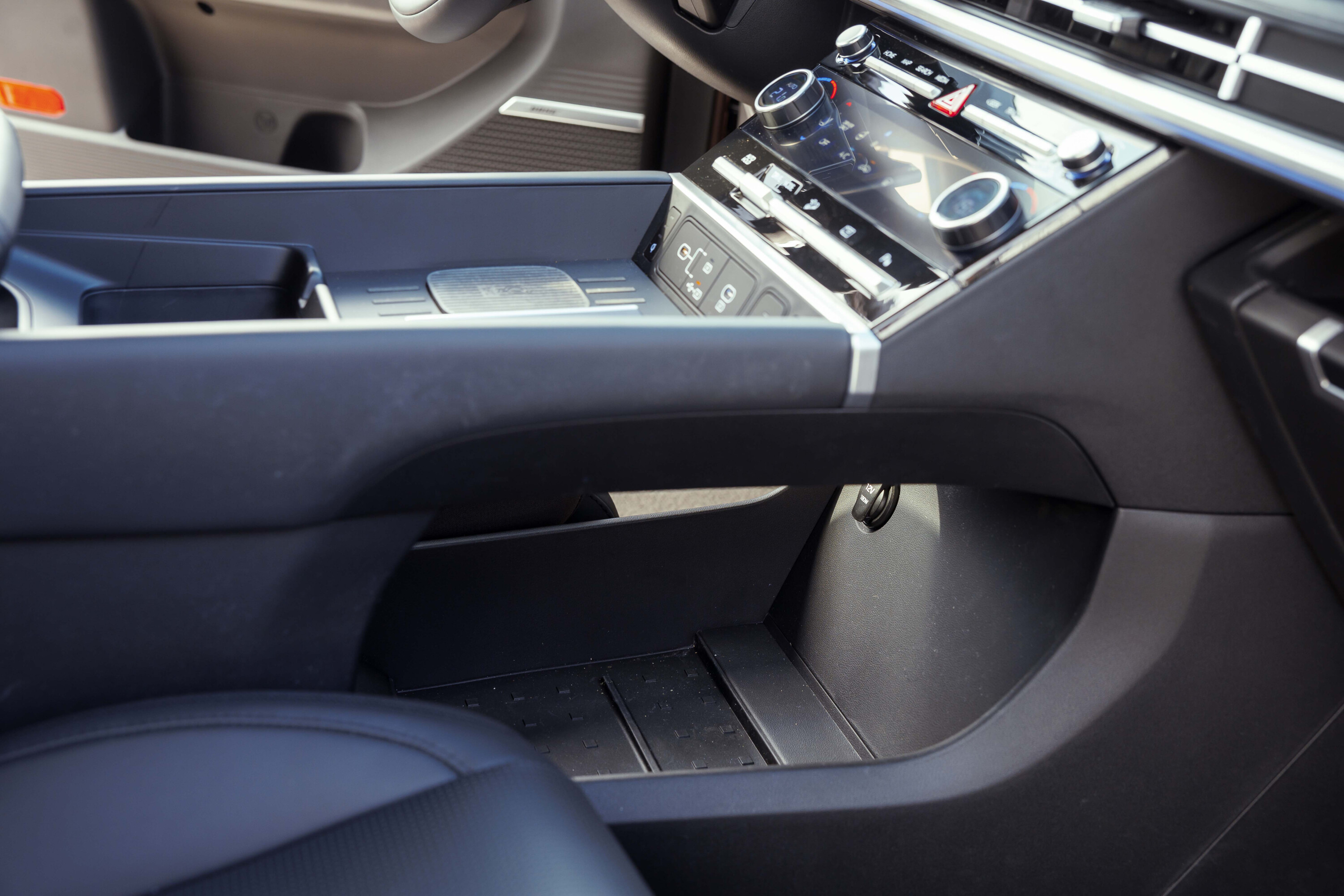
There’s one feature that most obviously highlights Hyundai’s extra consideration of middle-row passengers: a ‘bilateral’ centre console cubby with a lid that opens from the rear as well as the front.
A drawer gives those behind the front row another option for accessing contents in the cubby.
The most distinctive front-cabin feature must be the upper glovebox that doubles as a sterilisation compartment for items such as smartphones or wallets – which, at the touch of a button, bombards them with bacteria-battling UV-C light.
1
You can then place not just one but two smartphones on the dual charging and germ-eradicating pads in the console.
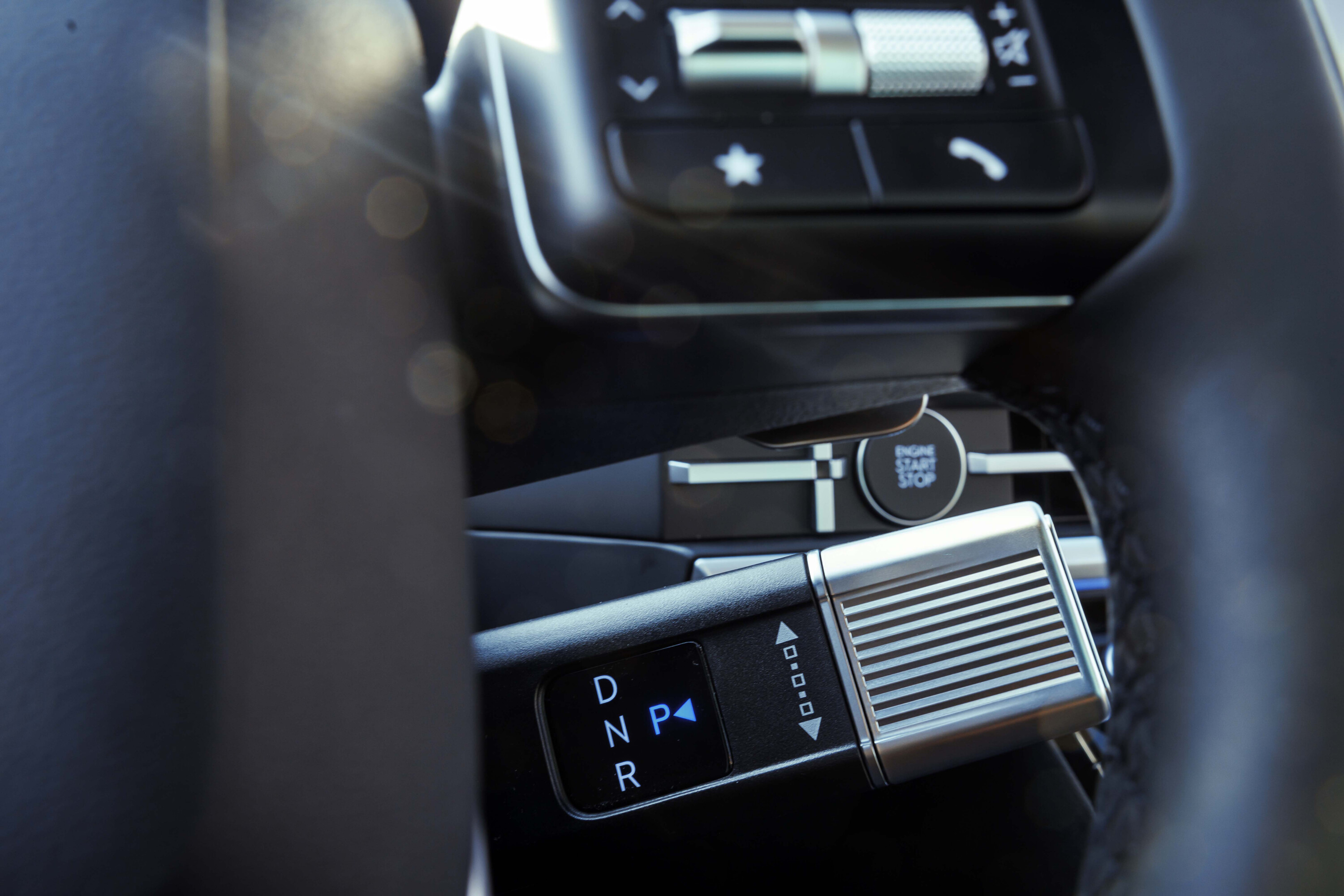
The flatter and more spacious centre console, with a large storage area beneath, is created by a more steeply raked climate control panel and a change from transmission dash buttons to a shift-by-wire steering wheel stalk.
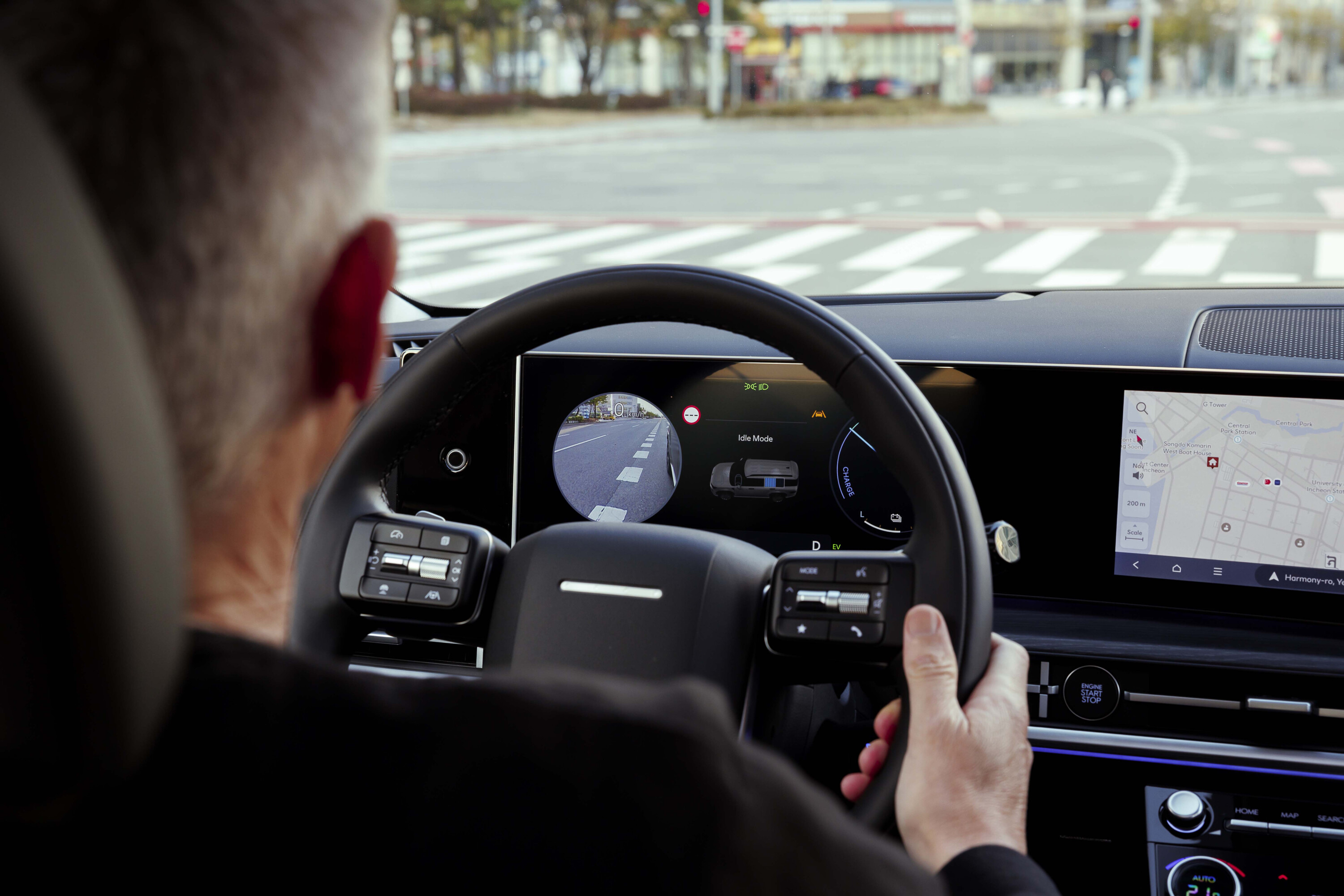
A completely horizontal dash with a curved (or bent, more accurately) display combining dual 12.3-inch screens – one for instruments, one for infotainment – does the hard yards in giving the Santa Fe a significantly more contemporary interior design.
Quality is a step up, too. At least in this high-spec model.
There’s a velvety trim for the pillars and headlining, soft sides for the upper centre console, thin LED strips spread across the dash, and horizontal brushed-metal upper door sections incorporate wood inserts, handles, and buttons for seat memory and (in this spec) massage functions.
Having spent a couple of days driving the Santa Fe, including more time than we’d like in horrendously jammed Korean traffic, we can attest to the comfort of the front seats. They also borrow the fully reclining ‘Relaxation seat’ feature first seen in the Ioniq 5.
Ride and handling assessment is trickier as the Australian-market Santa Fe will use a different suspension tune to the Korean-market setup.
The test car also featured relatively small 18-inch wheels, where they could be either 20s or 21s on the local Highlander/Calligraphy.
For what it’s worth, South Korea’s Santa Fe – already on sale with plenty about – generally rides well, getting jiggly only on the poorest of surfaces. We’ll be keeping our fingers crossed that the new hybrid retains the smoothness of the outgoing model.
A revised steering setup seems to have brought some extra accuracy around the straight-ahead position, while the turning circle is also excellent – making this 4.8-metre-long vehicle an absolute doddle to manoeuvre in tighter spaces.
Big news on the powertrains front: the current 2.2L turbo diesel and V6 petrol engines are out.
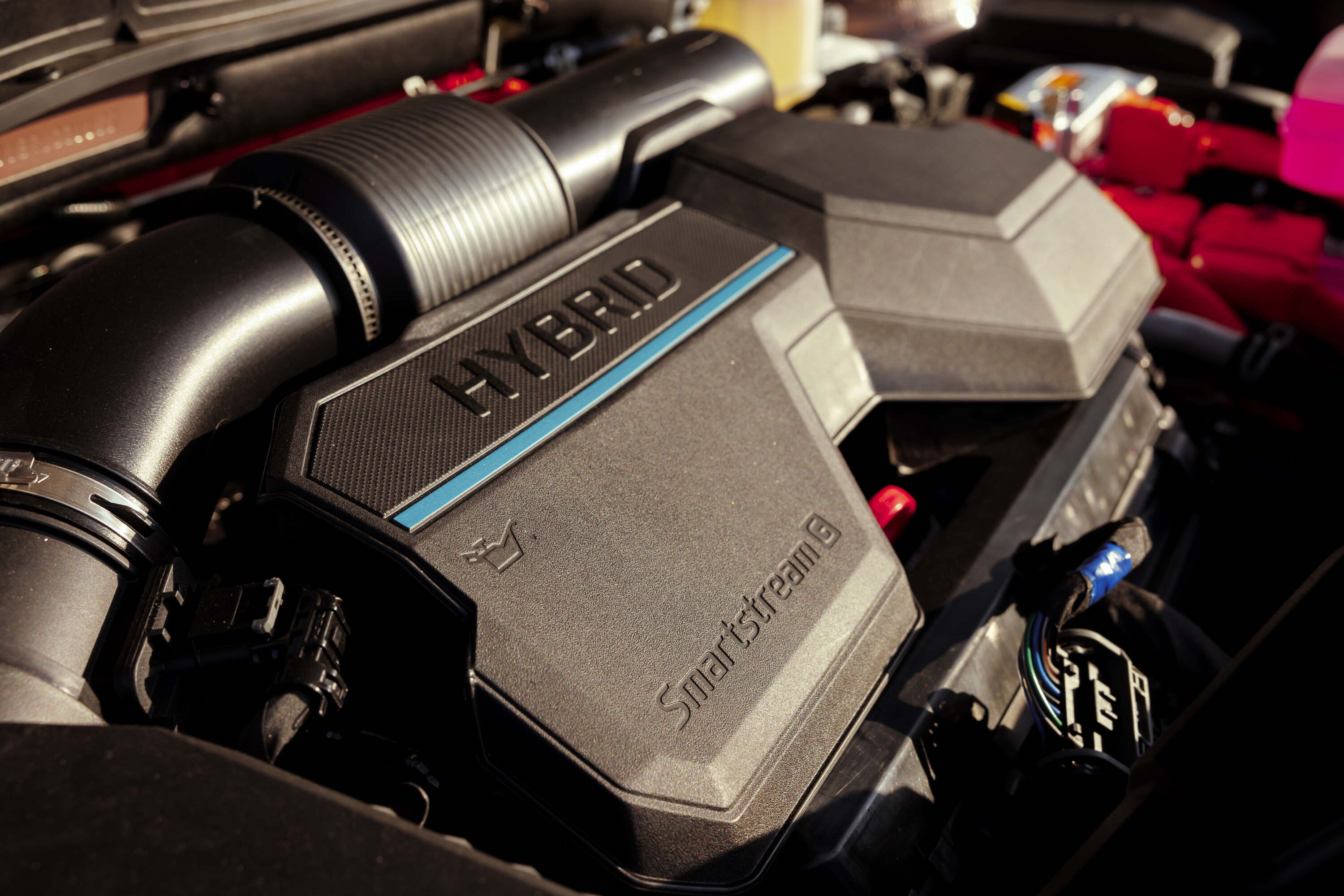
Our test car was a hybrid variant, which will be the sole drivetrain offering initially for the local launch – again combining Hyundai’s 1.6-litre turbo petrol engine with an electric motor, and again part-time all-wheel drive. Total output is 169kW and 350Nm.
Throttle response is doughy in Eco mode but can be sharpened with Sport mode that keeps the petrol engine permanently running. Sport might be preferable for twistier country roads, otherwise Eco makes sense as the default setting for a hybrid. An Energy Monitor is again available on the driver display to see when the petrol and electric motors are in action, and remains strangely addictive.
1
As with a Kluger Hybrid, it’s not difficult to keep the Santa Fe running around town solely on its electric motor only and, when the engine does kick in, it’s quite seamless.
Also promising is something we didn’t notice at all: Hyundai’s Lane Keeping system. This has so far proven at times to be an annoyingly intrusive bit of technology on the latest Hyundais (and Kias) in Australia, so the hope is that the group has finally found a fix for the calibration.
How much will the new 2024 Santa Fe cost in Australia, and what will it come with?
Current price trends are likely to push the Santa Fe Hybrid’s starting point from the existing $63,000 to nearer $70,000.
If so, plenty of Australian families will be hoping for quick confirmation of an entry-level powertrain to sit below the Hybrid. The Santa Fe range currently starts from $46,050 for the 3.5 FWD petrol model and $49,550 for the 2.2L diesel AWD.
The smart money for a more affordable entry model is on a 2.5-litre turbo petrol engine borrowed from the Sonata midsize sedan, already planned to be available in other markets.
Producing healthy outputs of 207kW and 422Nm, it would also, ideally, send power to all four wheels rather than just the front tyres. The auto is an eight-speed dual-clutch auto, where the hybrid utilises a six-speed torque converter automatic.
1
2024 Hyundai Santa fuel economy figures are yet to be confirmed, and they may be one of the areas where the big family SUV doesn’t improve.
The bigger SUV has piled on the pounds – up by about 240kg to 2225kg for the Hybrid. Balancing that, however, are more slippery aerodynamics despite the Santa Fe’s blockier shape. The coefficient of drag is improved from 0.33Cd to 0.29Cd.
This all leaves some important questions hanging for Australia next year: pricing, fuel economy, and third-row experience.
But, even without those points known, the fifth-generation Hyundai Santa Fe undoubtedly feels like a step up over the outgoing model in more than just size.
Masahiro Moro told Fortune that Tesla accounts for more than half of America’s electric car sales and that other brands are struggling due to low demand and a lack of charging infrastructure.
“EV is absolutely an important technology and we are developing it,” said Mr Moro. “But [in the U.S.] EVs last year [were] about six percent of the market. This year it is eight percent. And out of the eight percent, 57 percent was Tesla. Other EVs are not taking off, inventory is piling up.”
1
Moro’s comments follow reports earlier this year that Ford was struggling to move units of the Mach-E and F-150 Lightning in America as demand for its EVs started to cool.
Reports of heavy discounting for the F-150 Lightning also emerged and there was talk that Ford planned to cut production at its Dearborn factory from three shifts down to two. Ford has also scaled back its plans for a $3.5 billion battery plant in Michigan due to slowing demand and rising labour costs.
Analysis of US EV sales data by Reuters also support Moro’s comments that EV makers outside of Tesla are competing for a tiny slice of the pie. According to Reuter’s figures, Tesla outsold its next 19 competitors by 10 to one in the first half of 2023.
1
There are striking parallels between America’s emerging EV market and electric car sales here in Australia.
Like the US, electric cars make up around eight percent of total Aussie sales and Tesla is the dominant player with around 55 percent of that market.
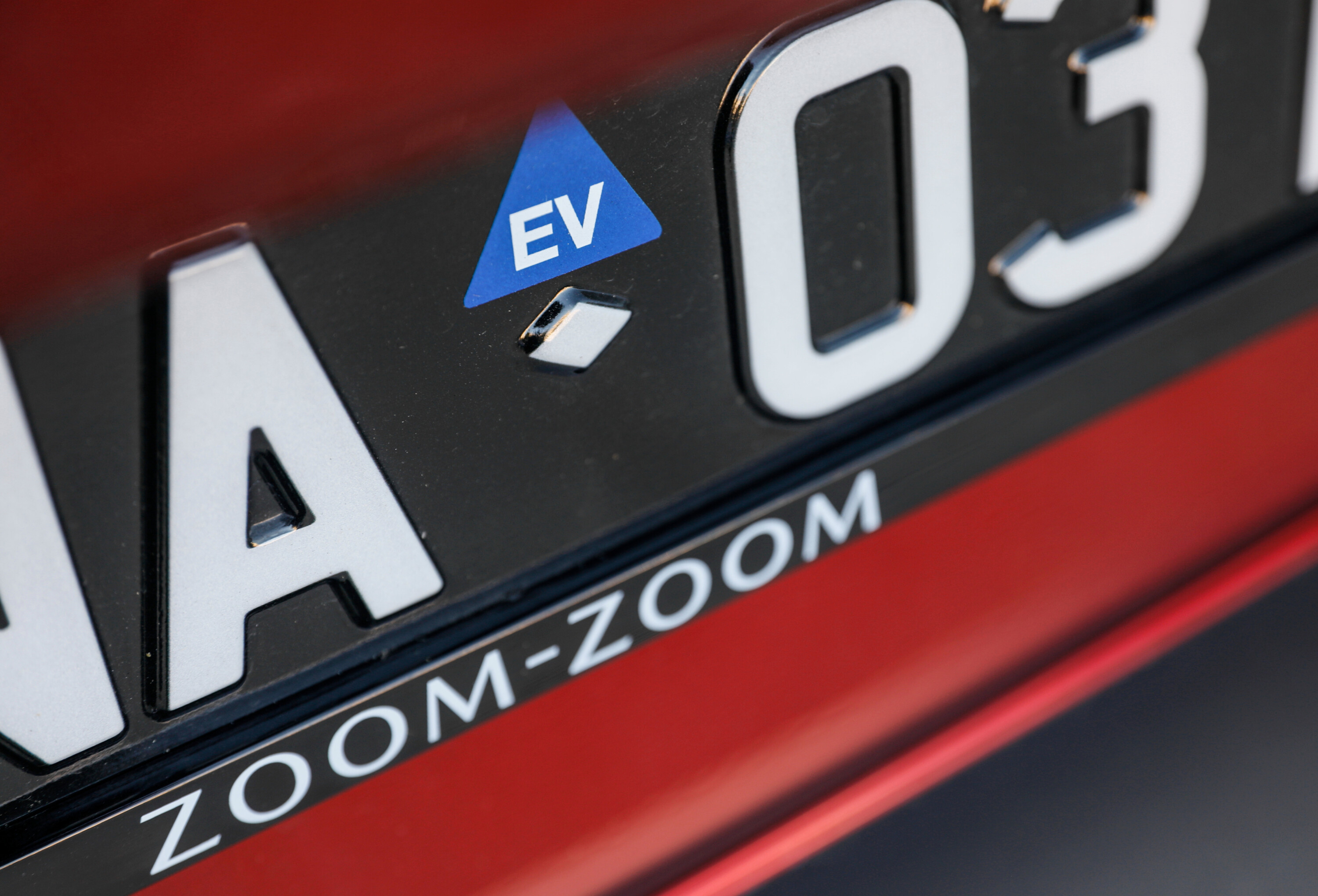
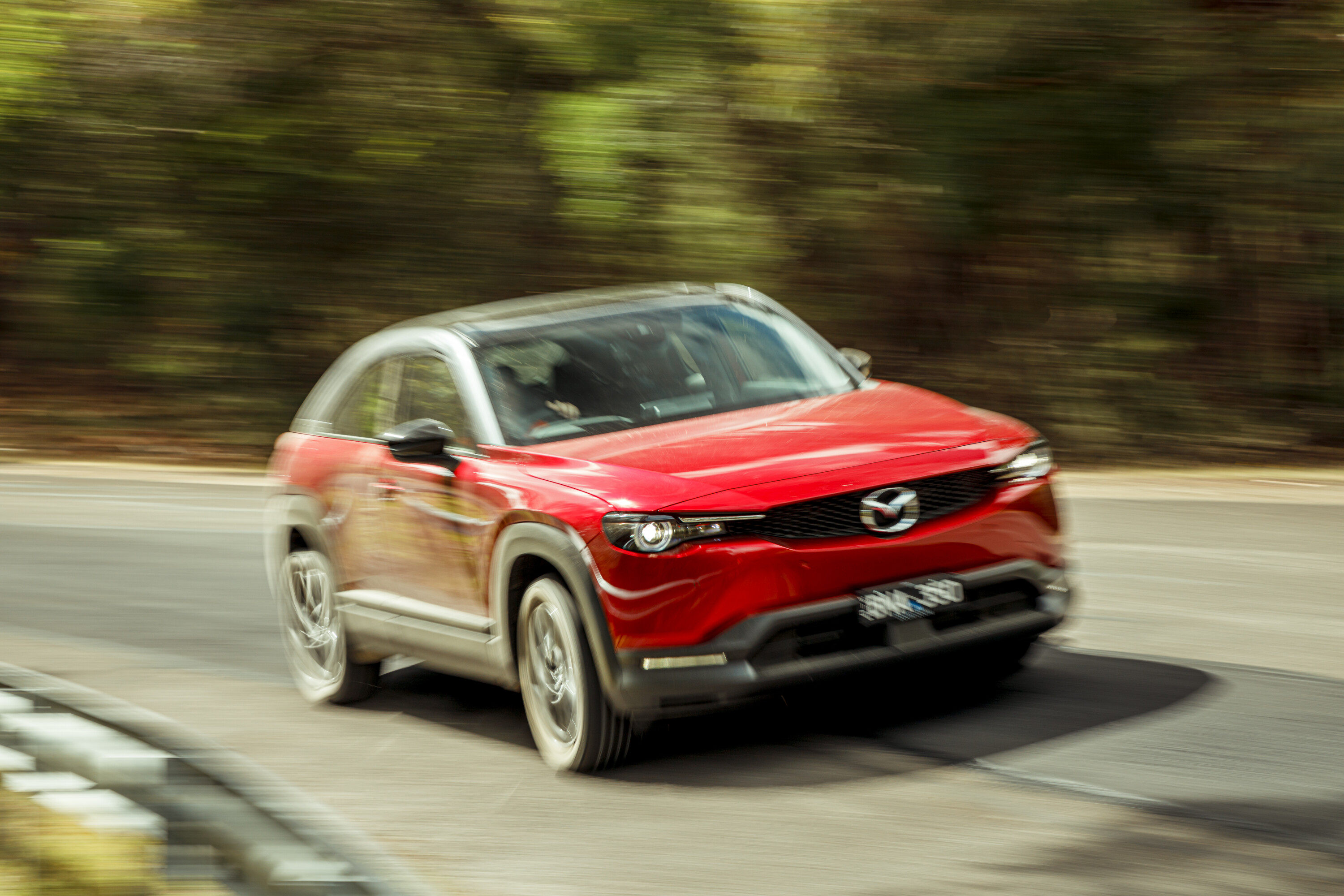
Mazda currently only offers one electric car in Australia, the Mazda MX-30, which had notched up 12 sales so far this year to the end of October. Tesla, meanwhile, is on track to deliver almost 50,000 units in Australia this year.
1
Mazda doesn’t sell any electric cars in America currently.
Tesla’s domination isn’t stopping other brands from investing heavily into electric cars Down Under, however. MG, GWM and BYD are all gaining sales momentum In Australia and other more established brands like Toyota, Volkswagen, Polestar and Subaru all have major EV launches planned over the coming months.
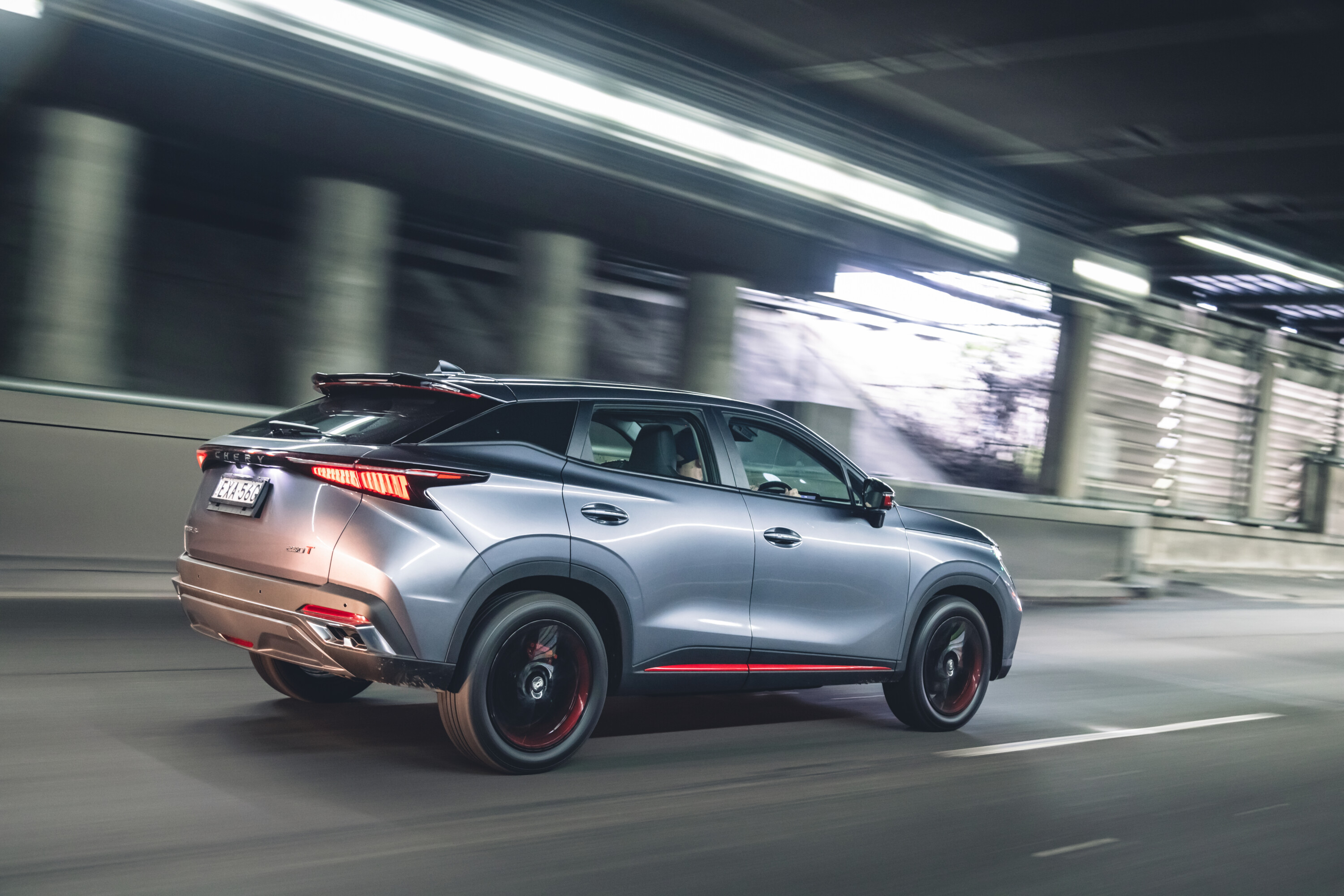
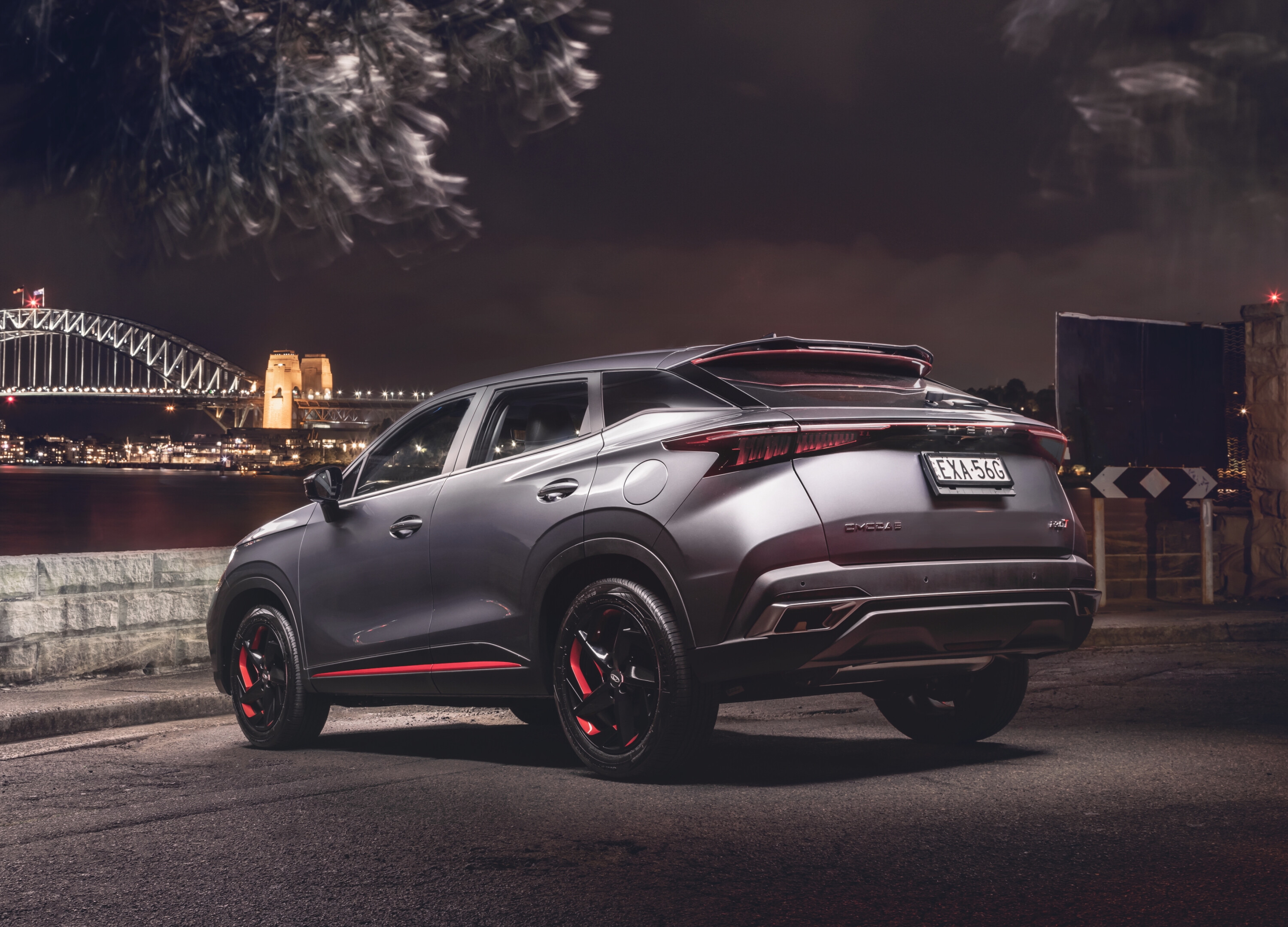
But it wasn’t all plain sailing for the Omoda 5. In our initial road test, we noted multiple problems with driver-assistance systems, including the lane-keep assist, adaptive cruise control, and driver monitoring.
Chery says it’s been hard at work ironing out kinks in the Omoda 5’s systems – though we’re yet to verify those claims – and will continue with incremental software updates to improve the driver-assistance systems for Australian roads.
There’s more in the pipeline, though, as Chery looks to Australia as an in-market proving ground that’ll aid in increasing global success. That means Aussie suspension tuning – as Hyundai, Kia, and now Mitsubishi carry out – is in the works.
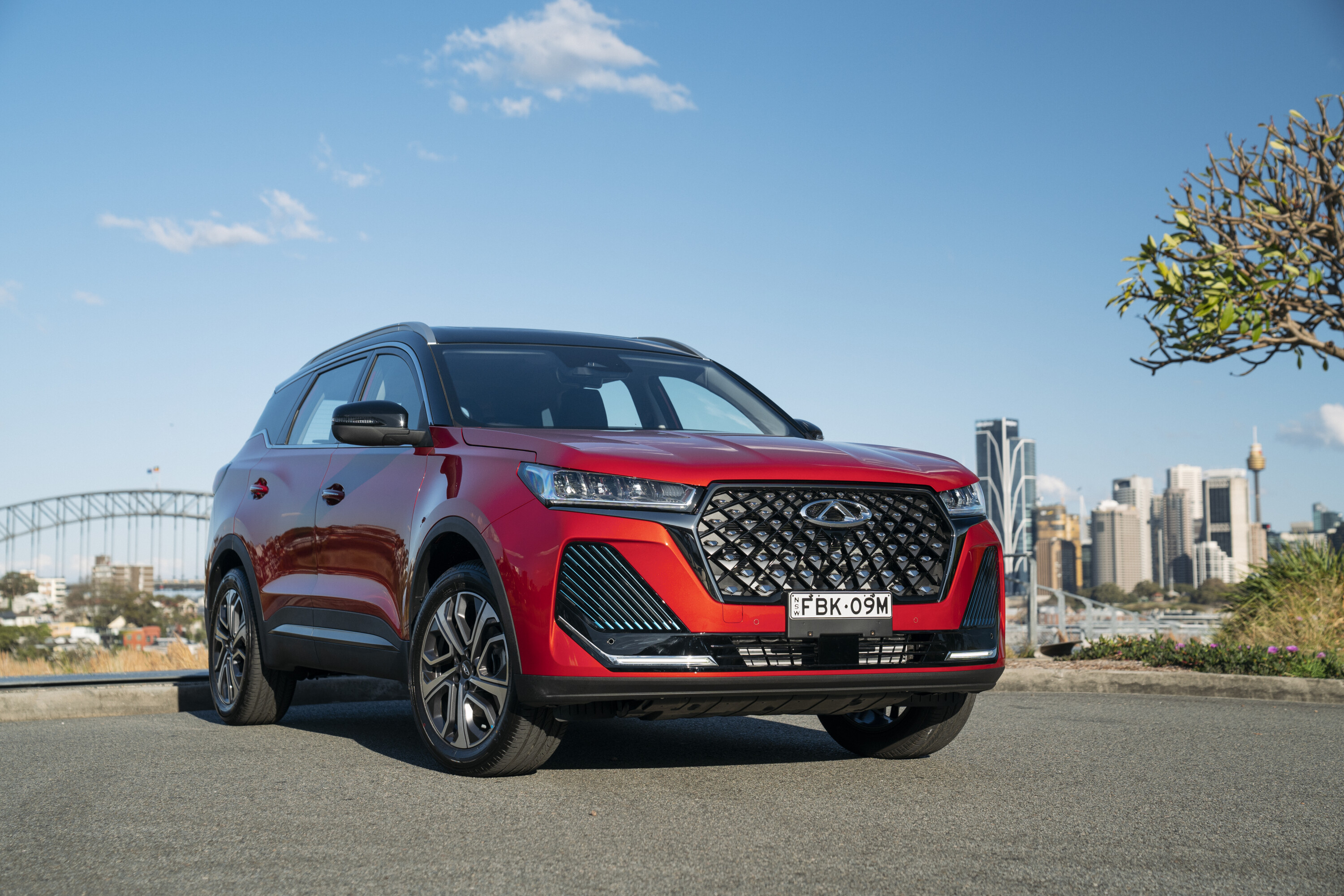
Chery aftersales and product director Lucas Harris – previously the national service operations manager at Subaru Australia – told Wheels that we’ll have to wait for Omoda 5 and Tiggo 7 Pro facelifts to see these changes implemented.
“It’s unlikely that any of our first MYs of the models we launch will have that dynamic handling tuning applied to them, really just because of the rate that we’ll be launching those cars”, said Mr Harris.
1
In the short term, Chery will continue to work on niggles that are present in its current models using software updates.
“Some of the obvious [work] is around the local adaptability and verification that we’ve been doing… we’ve put a renewed focus and effort into that to try and step it up another level and we’ll keep doing that and taking feedback that we get from external sources and see what we can do with it”, Mr Harris told Wheels.
He also described the almost alarming rate at which the engineers from China will address these issues. If there’s an urgent fix needed, two teams of engineers split time into day and night shifts to work around the clock identifying and implementing solutions, says Lucas.
1
In the medium-term (think mid-life facelifts), Lucas confirmed we could see changes to tyre specs, damper and spring settings, and steering calibration to make the vehicles safer and more rewarding to drive on Australia’s give-and-take roads.
“Fortunately, our friends at headquarters in R&D are incredibly open-minded. So it’s really going to be based on feedback from local experts as to what is needed”, said Lucas. “Some things might come out of the box pretty close to the mark or, exactly what we need, so we’ll focus on the areas that could do with some improvement to suit our conditions.”
Since March, Chery has shifted 4335 Omoda 5s, with its October sales just nine short of the Kia Seltos. While Chery didn’t name a sales target for the Tiggo 7, brand and marketing director Mark Vujoka indicated that the brand will be in full swing when it increases its dealer count from the current 60 to the target 100 across Australia.
“We could have sold more cars had we had the number of dealers. But obviously also brand equity; we’re new back in this market a lot of people haven’t heard about [Chery] so it’s about creating a promise and then delivering on that promise – and getting people to try our products as well”, said Mr Vujoka.
Mark added that Chery dealers have noted a test drive-to-sale conversion rate of around 50 per cent, with current owners trading in more European vehicles than expected.