
Rear-drive layout, light weight, revvy twin-cam inline-4 and near 50/50 weight distribution from the factory: it’s no real surprise Toyota’s AE86 Sprinter came to be adored by any and all who loved driving. Drifters in Japan, rally nutters in Finland and circuit racers around the world all employed to good effect the AE86. The adoration even extended to comic book fans, the little Toyota’s giant-killing reputation a central theme of the hugely popular Japanese manga Initial D.
The small and compact AE86 slayed plenty of real giants on the world motorsport stage, too. From 1985 it dominated the under-2.0-litre class of the Australian Touring Car Championship with a best finish of ninth outright at the 1985 Sandown 500 (with John Faulkner and Ray Cutchie). Overseas, between 1985 and 1986 Toyota AE86s claimed class victories and titles in major touring car championships – and national gravel rallies – from Europe, to Japan and the UK.
In Japan, “Hachi Roku”, as it was nicknamed (Japanese for “eight six”), were cheap and plentiful, and helped catapult drifting from an oddball pursuit to the world stage.
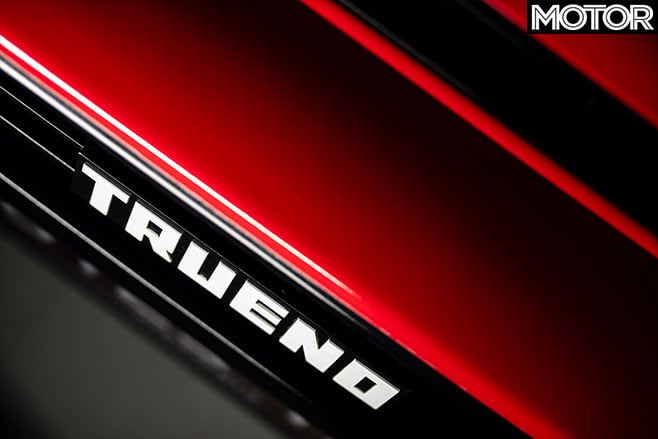
As a road car, the AE86 demonstrates the enjoyable rear-drive balance that has made it so popular with rally drivers and drifters, even if the engine is a bit dull in stock form. AE86s are best bought via the auction houses in Japan, although with many crashed or rusted into oblivion, good, clean examples are becoming rarer – and so prices are starting to skyrocket, $25K to $30K now becoming the norm to buy one and get it to Australia. And that’s before putting it on the road.
The AE86 came as a three-door hatchback or two-door coupe, as a fixed headlight version (the Levin) or one with pop-ups (the Trueno). While the cheapest ticket to AE86 ownership is an Australian-delivered version, unless you plan on substituting the grandpa-spec carburettor SOHC 1.6-litre, best aim for a Japan-only model. The more ‘driver-focused’ GTV had quicker steering and a sportier suspension tune but the more common, higher-grade GT-Apex is probably the pick with a nicer interior and more features.

Toyota AE86 body and chassis
Check everywhere for rust, including less-obvious areas like under the spare wheel in the boot and the rear three-quarter pockets. Look for signs of poor repair. A paint thickness gauge may be handy. External door handles fail with age and can be hard to replace. Doors sag. Check under the sills for damage from the car being hoisted incorrectly. If it’s an import you can check auction and registration records online.
Toyota AE86 engine and transmission
The stock 4AGE was a 1.6-litre injected inline-4 that utilised a twin-cam, 16-valve head co-developed with Yamaha, able to rev to 7700rpm straight from the factory. It’s a very tough engine able to rack up three or four hundred thousand kilometres if looked after, but not without obviously slowly wearing out. Check for oil leaks as seals perish; and exhaust smoke.

A compression test is not a bad idea. If the engine needs a rebuild, parts are relatively cheap and easy to get. Third- and second-gear synchros often wear out in the five-speed manual (don’t bother with any autos). Try to find a car with a factory fitted limited slip diff.
Toyota AE86 suspension and brakes
Check bushings, tie-rod ends, ball joints, wheel bearings, etc. All wear out, but are easily replaced. The AE86 uses MacPherson struts up front and a four-link live rear axle with coil springs. Stock springs and dampers were on the softer side but almost every AE86 has at least stiffer/lower aftermarket springs. JDM models used a four-disc brake set-up. Owing to the modest power and light weight, the four discs are barely taxed on stock AE86s but still check pad and disc wear. Calipers can seize from under-use.
Toyota AE86 interior and electrics
The interior was on the economy side even when new and is far from the last word on hardiness. If you find a car with a good interior, it’s a good sign. Dashboard cracks are common and the stock seats get clapped out easily.

The clock surround often cracks but is easily replaced. Every car has faded interior door handles. Good condition AE86 parcel shelves look great in any investment portfolio.
Toyota AE86 modifications
Tuning is important to bring out the motorsport DNA of the AE86 and even today it remains very well supported with new products from the aftermarket. You’ll want to install coil-overs (look no further than Aussie outfit Shockworks) and aftermarket wheels – 14s for ‘period correctness’, 15s for better tyre selection.
Extra power is no unwelcome thing in an AE86, with 110kW from the 4AGE within relatively easy reach via intake, exhaust and cam. Up to 150kW is possible from the 16-valve but you’re talking 9000rpm and a lot of time and money.
Engine swaps are common and every engine imaginable has at some point gone in an AE86 – LSs, rotaries, the Honda S2000’s F20C – but you should most aspire to the “BEAMS” 2.0-litre 3SGE inline-4 from the Japan-only 2002 Toyota Altezza RS200, making 147kW. In a 950kg car, 150kW is besting a Porsche 981 Cayman for power-to-weight. You’ll probably want bigger brakes by that point. And a roll-cage.

Toyota AE86 Sprinter specs
Body 3-door, 5-seat hatchback Engine 1587cc inline-4, DOHC, 16v Power 96kW @ 6600rpm Torque 149Nm @ 5200rpm Transmission 5-speed manual Weight 940kg Used range $10,000-$50,000
Toyota AE86 alternatives
1.Toyota MR2 (AW11)
Not too keen on blowing $30K on an AE86? Get an AW11. Same 1980s style, if slightly less-friendly mid-engine handling. Lighter 4AGE (Australian-delivered) the sweeter pick but imported supercharged 4AGZE has lovely torque.

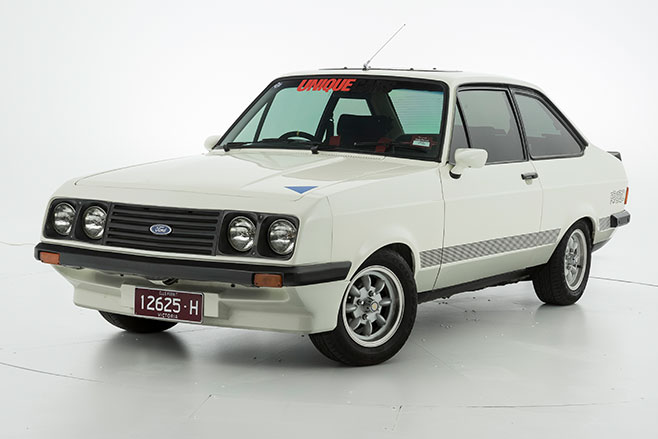
2. Ford Escort RS2000 (Mk2)
Buy the car that possibly inspired Toyota to make the 4AGE-powered AE86. Rarer, more expensive, but same light weight rear-drive feeling and atmo 2.0-litre inline-4 performance. Made 70kW/149Nm; weighed about 1000kg. Comes alive with tuning.
3. Mazda MX-5 (NA)
Sportier silhouette, similar performance and feel behind the wheel and with top-down appeal. A lot cheaper than an AE86 (and not going down in value either) leaving plenty of money to spice up engine, suspension and wheels/tyres.

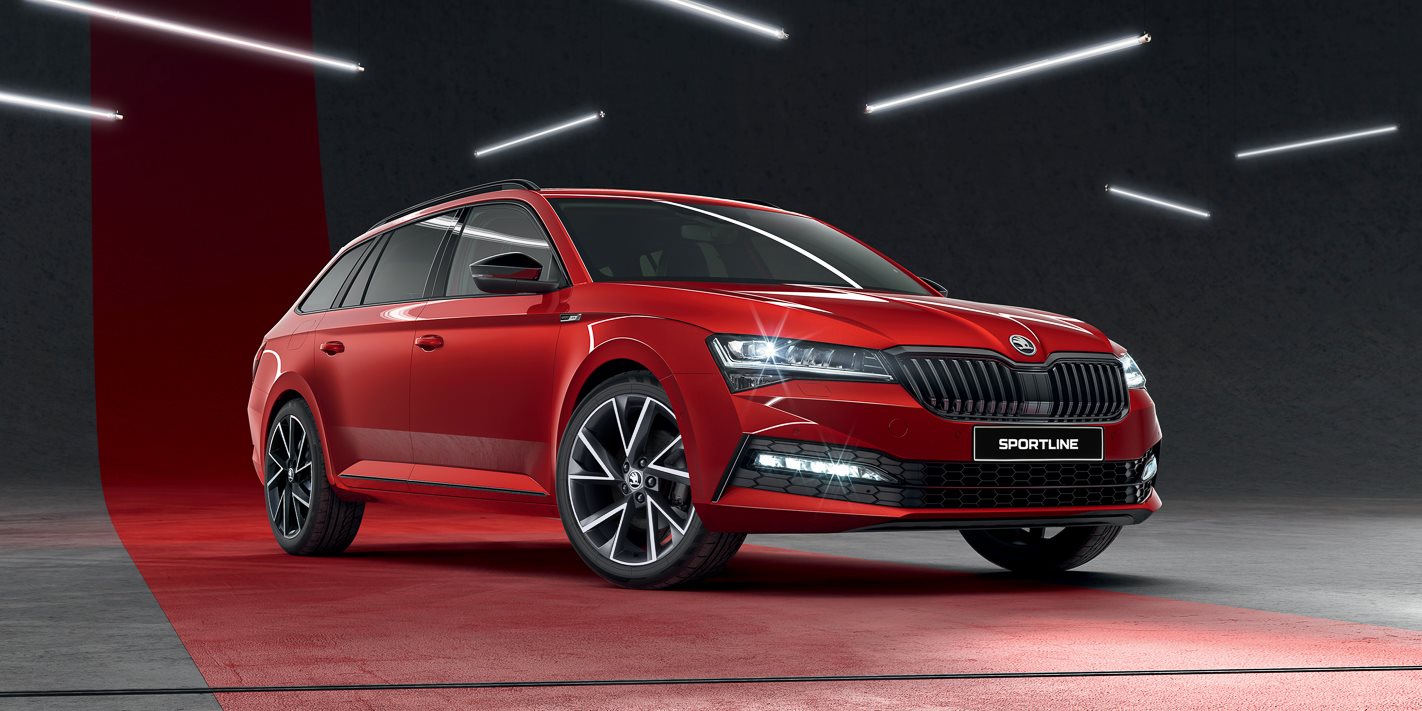
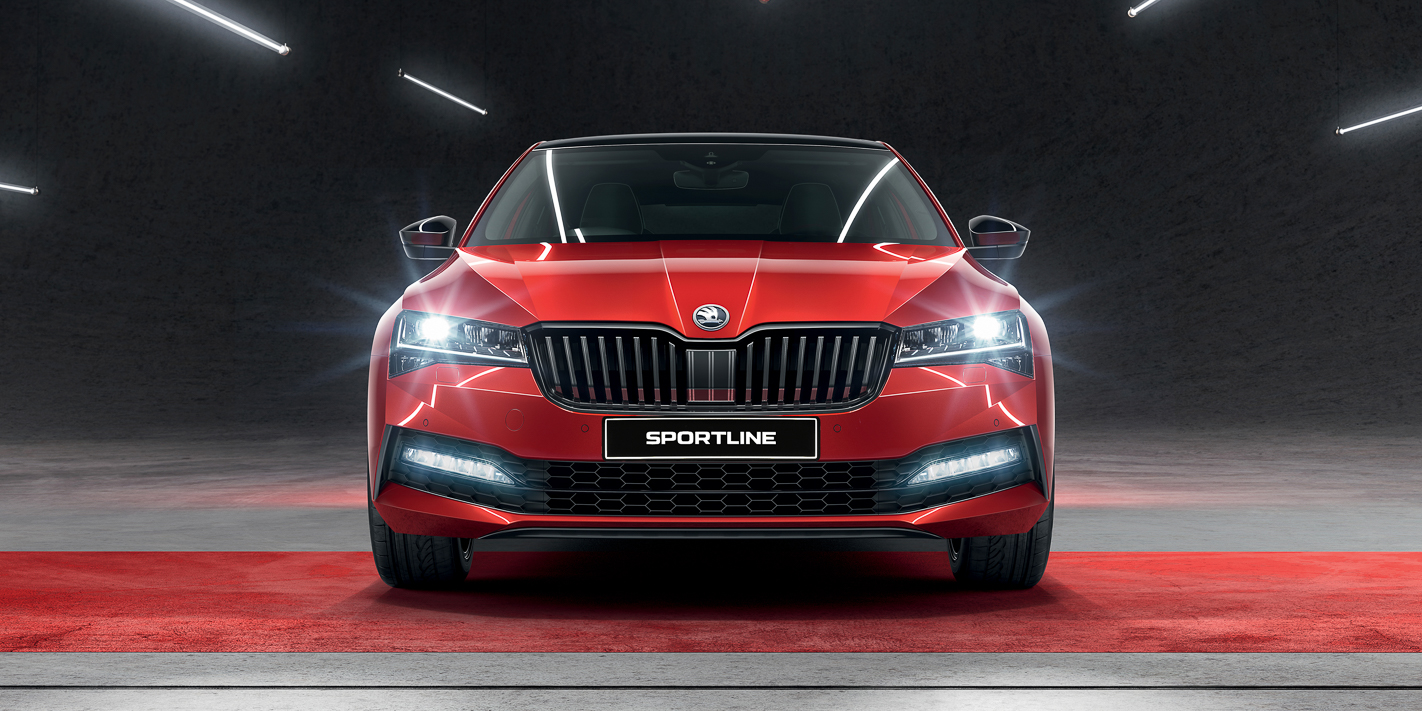
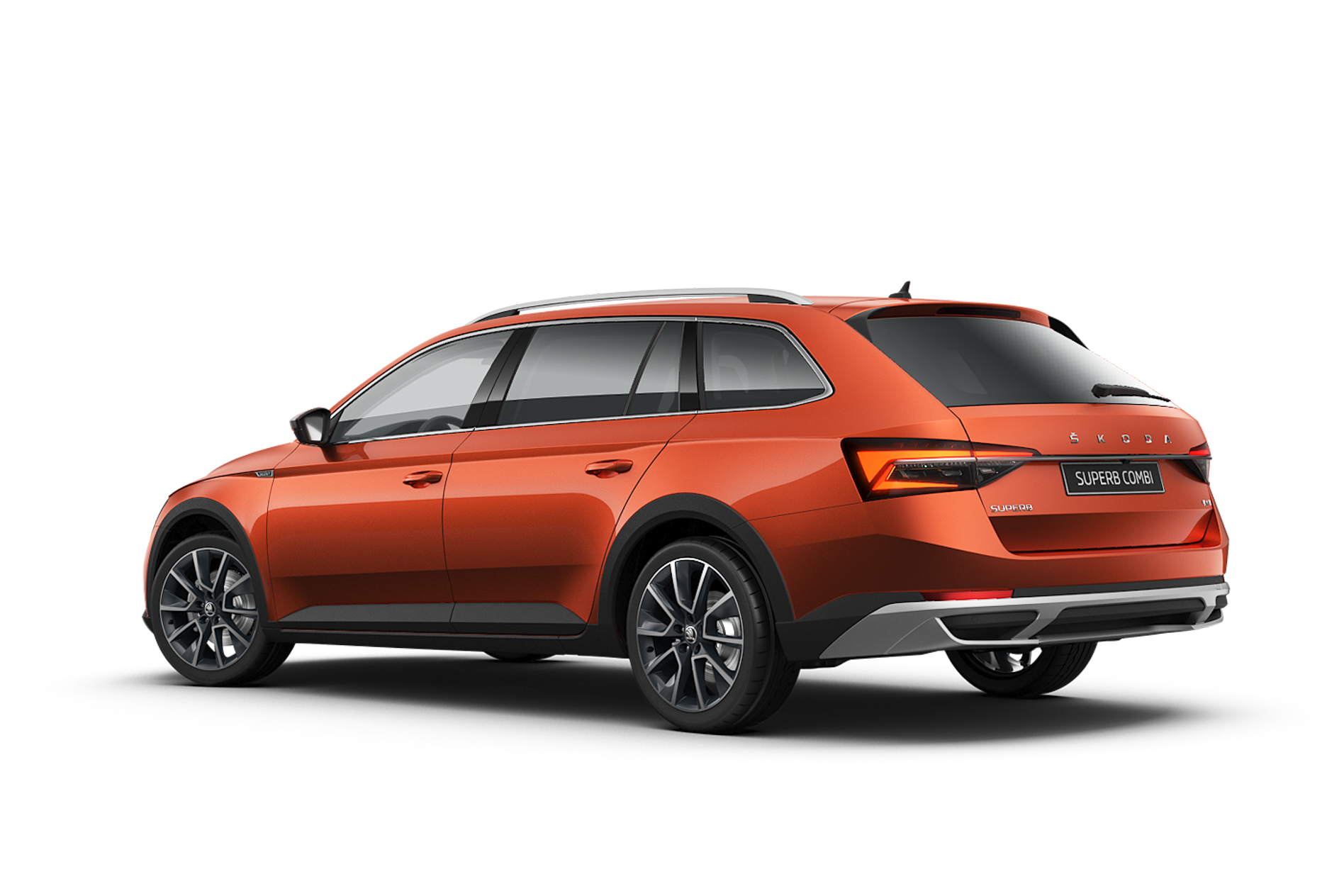
Skoda Australia has padded-out its local Superb range, adding a Sportline sedan and wagon variant to the pre-existing Superb Scout rugged off-road wagon.
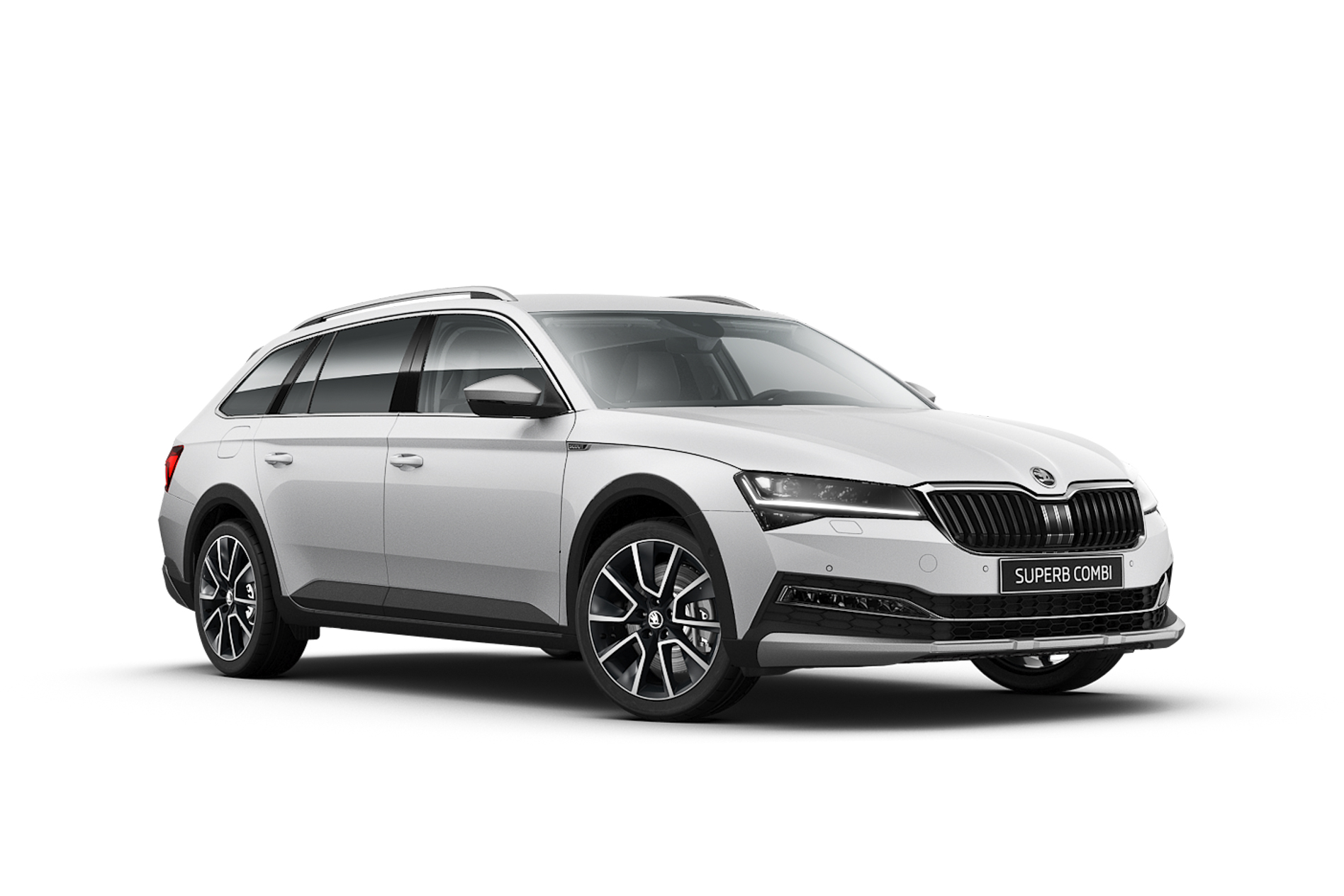
Skoda also confirmed that the Skoda Superb Scout (originally intended as a limited edition) will stick around for 2021, though the price has jumped from $59,490 (plus on-road costs) to $61,990 plus ORCs.
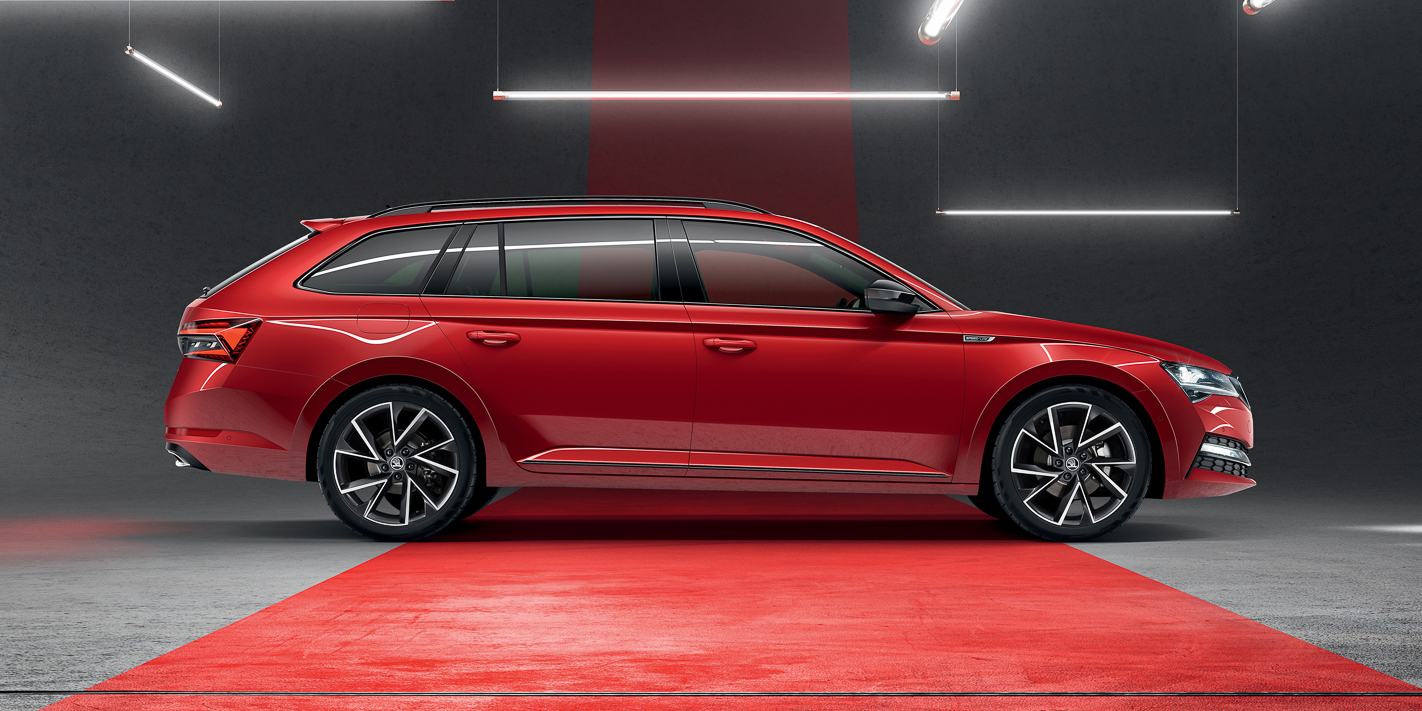
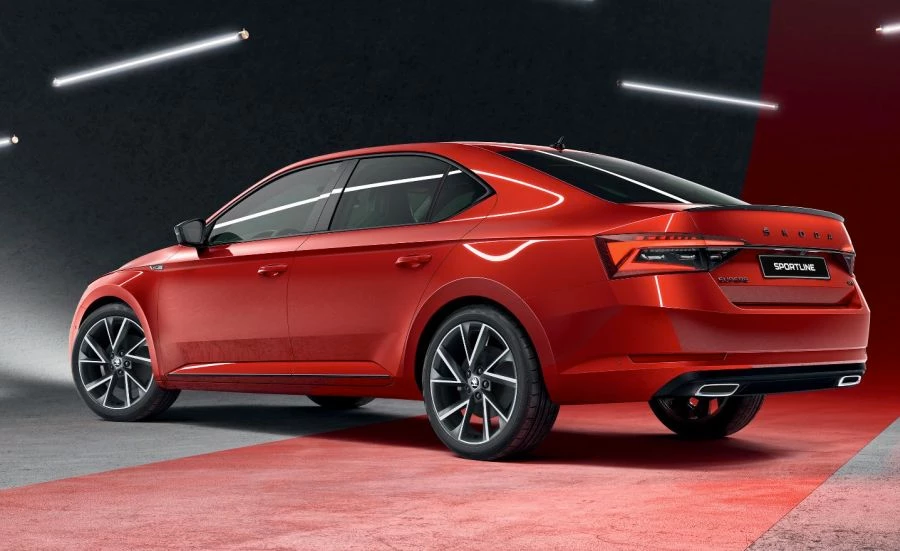
The new Superb Sportline sedan will cost $60,390 (plus ORCs) and the wagon will set you back $62,090 (plus ORCs).
Though prices have risen, Skoda says the added cost has been amortised by extra equipment including an upgraded infotainment system with wireless Apple CarPlay as standard.
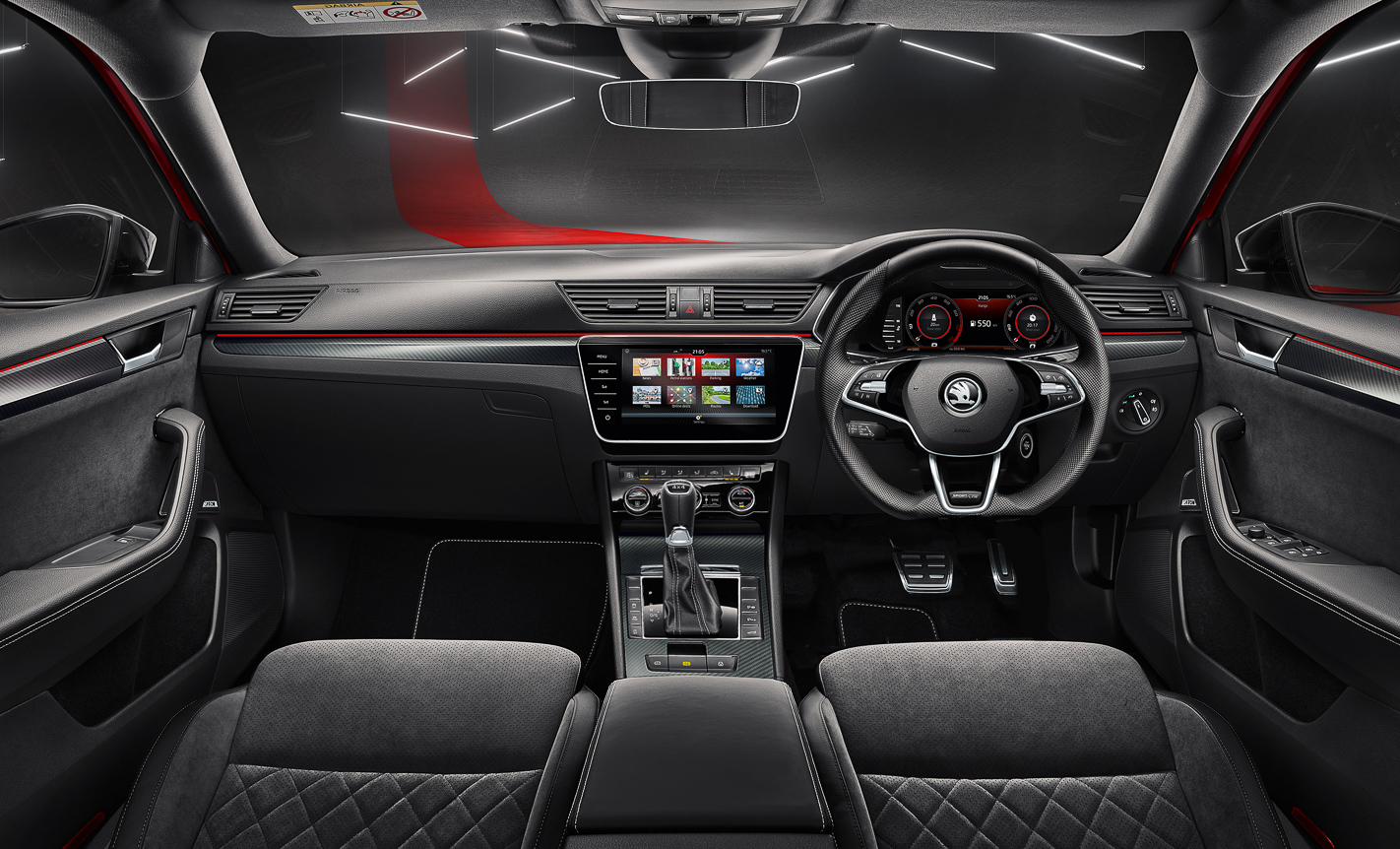
Both cars use a 2.0-litre turbocharged four-cylinder petrol engine; the Superb Sportline receives a 206kW/350Nm tune and the Superb Scout receives a 200kW/350Nm version. Each features a drivetrain that sends power to all four wheels.
For the Superb Sportline sedan and wagon variants, added kit includes a fully digital instrument cluster, Matrix LED headlights, wireless charging, dynamic rear tail lights and a new-design steering wheel.
The Superb Scout receives a new flat-bottom steering wheel, wireless Apple CarPlay and detachable tow bar.
Notable options for the Sportline and Scout are a $1900 panoramic sunroof and $770 metallic paint, while different alloy wheel designs and upholstery are available.
The Skoda Superb range will grow again in the first quarter of 2021 when entry-level 162TSI variants join the range. More detail regarding pricing and specification will be supplied closer to that launch.
2021 Skoda Superb Australian pricing
- Superb 206TSI Sportline sedan – $60,390 ($62,990 driveaway)
- Superb 206TSI Sportline wagon – $62,090 (64,990 driveaway)
- Superb 200TSI Scout wagon – $61,990 ($63,990 driveaway)
Known as the Superb Scout, it’s based on the mid-grade Sportline and sports a 2.0-litre turbocharged four-cylinder engine that makes 200kW and 350Nm, which is sent to all four wheels via a seven-speed double-clutch gearbox.
In a first for both Skoda and the Volkswagen brand, the Superb’s EA888 engine is fitted with a petrol particulate filter, which is designed to decrease emissions at the tailpipe. It drops six kilowatts of power as a result, and a steady diet of 95 RON fuel or better is mandatory, rather than advised.
This is down to the poor quality of Australian petrol, which is burdened with the highest sulfur count of any fuel in the developed world at 50 parts per million (PPF).
“This particulate filter can withstand petrol with 50 parts per million of sulfur, but it must be understood that these cars can run only on premium unleaded,” says Skoda Australia’s managing director Michael Irmer.
“While that’s also true of all our non-filtered petrol cars, which will not run to their full capability on basic unleaded petrol, ‘underfuelling’ accidentally or to save money at the pump will rapidly require the costly replacement of the filter.”
Mr Irmer said the brand will try and source engines for its cars that are not fitted with the PPF, but points out that better quality fuel would mitigate any risks.
“Our view is that all motorists would benefit by the immediate introduction of a higher quality petrol – as used in most first world countries – with less than 10ppm in place of current ‘Premium’,” he said.
Unfortunately, local petrol standards are currently locked in place until at least 2027.
The Superb Scout differs from its Sportline brethren by way of a 15mm lift in its suspension, an additional off-road mode in its driver-adjustable settings and underbody protection for the engine and gearbox.
It boasts a long list of standard inclusions like a digital dashboard, a Canton stereo linked to an Apple CarPlay/Android Auto compatible multimedia system, leather upholstery, heated seats front and rear, a heated steering wheel, nine airbags, AEB with city assist and pedestrian detection, inductive phone charging, electric tailgate, 18-inch alloys and LED exterior lighting.
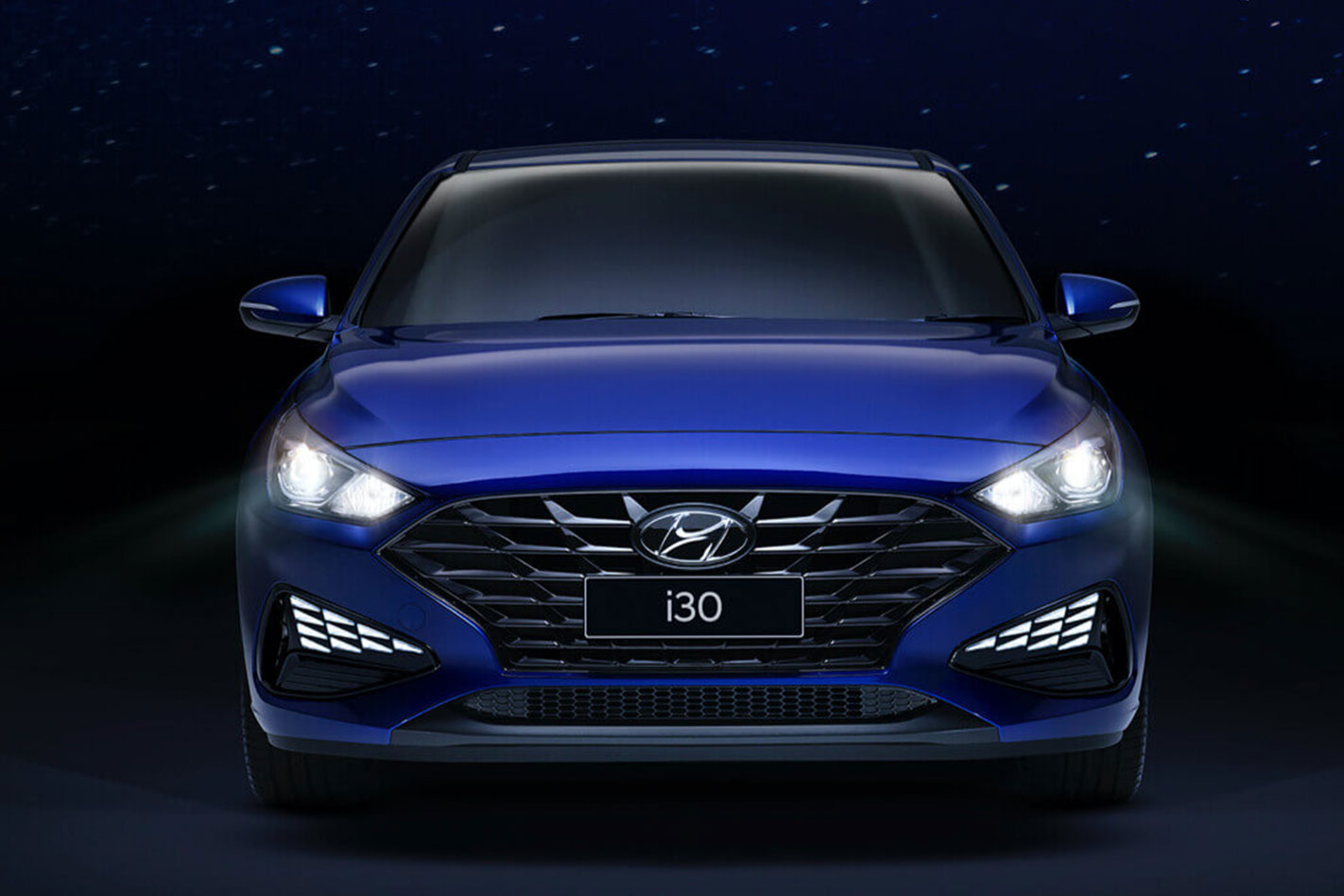
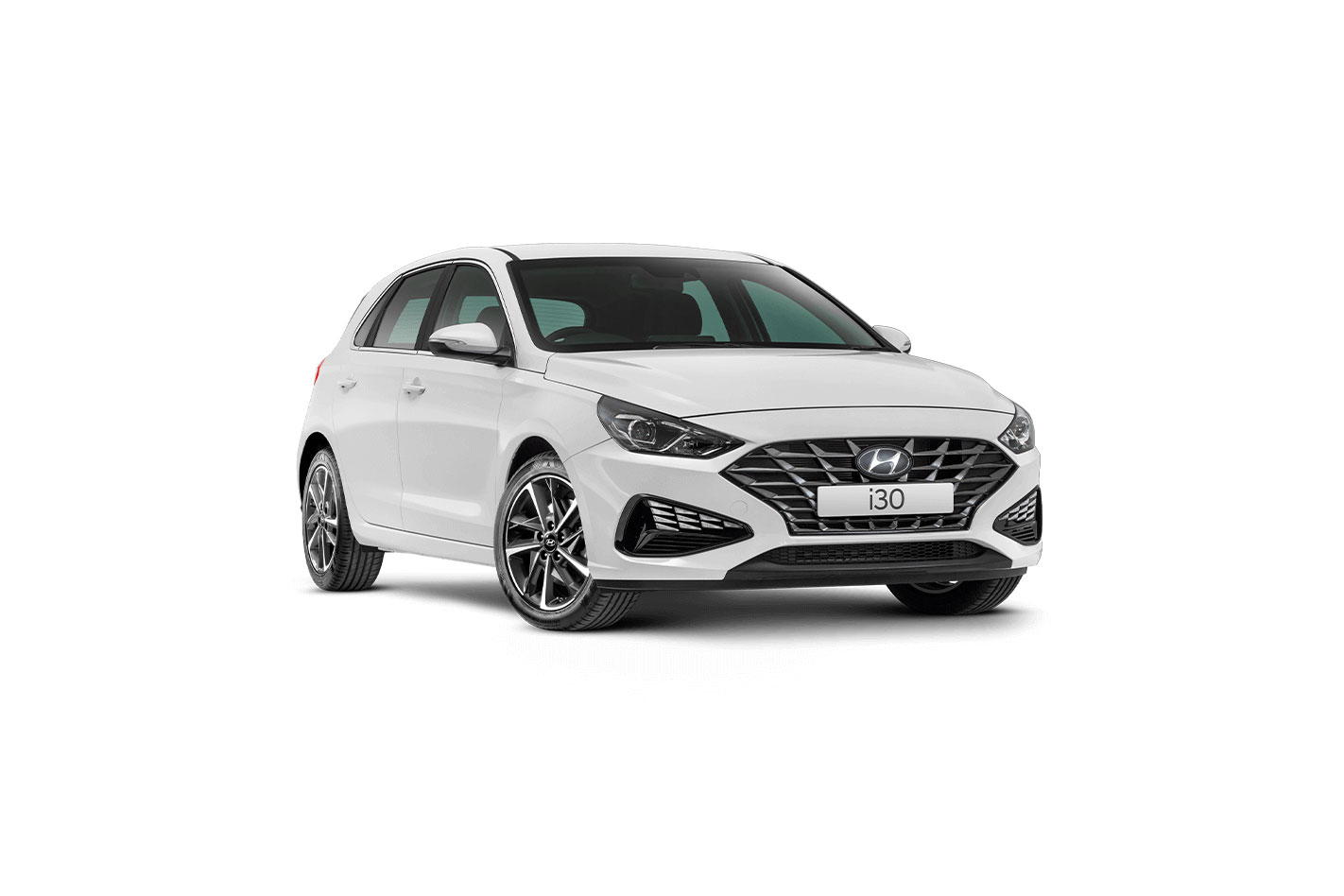
Hyundai has shared pricing and specs information on the updated i30 hatchback as it readies for battle in Australia’s small hatch segment in the coming weeks.
Sporting a new face and slicker interior, the big news is the updated third-generation i30 prunes its engine line-up of diesel power and sticks with two petrol powertrains, while broadening the standard equipment list that complements an updated interior.
This is due to production limitations with Australian i30s built in South Korea, while the omitted engines are fitted in Hyundai’s Czech Republic factory and destined for European markets.
Local price and features
The increase in equipment has inflated the price on the base model, which has dropped the Go name, to $23,420 before on roads. This now lifts it above the Elantra and closer to rivals like the premium-focused Corolla.
That’s almost three grand more expensive than the Go but now also includes Hyundai’s SmartSense safety pack to justify the difference, comprising forward collision assist, lane keeping assist and smart cruise control with driver attention warning.
The hatchback also features two ISOFIX child seat anchor points on the outboard rear seats, as well as top tether points across the whole rear bench.
Entry level variants are powered by Hyundai’s well-known 2.0-litre petrol four driving the front wheels and can be optioned with a six-speed automatic for an extra $2000, while the auto is fitted exclusively to the Active and Elite trims.
The i30 Active commands another $1500 on top of the base car with an automatic (totalling $26,920), adding key features such as 17-inch alloys, leather seats while also upgrading to a the same 7.0-inch LCD instrument cluster and front LED indicators as the base i30.
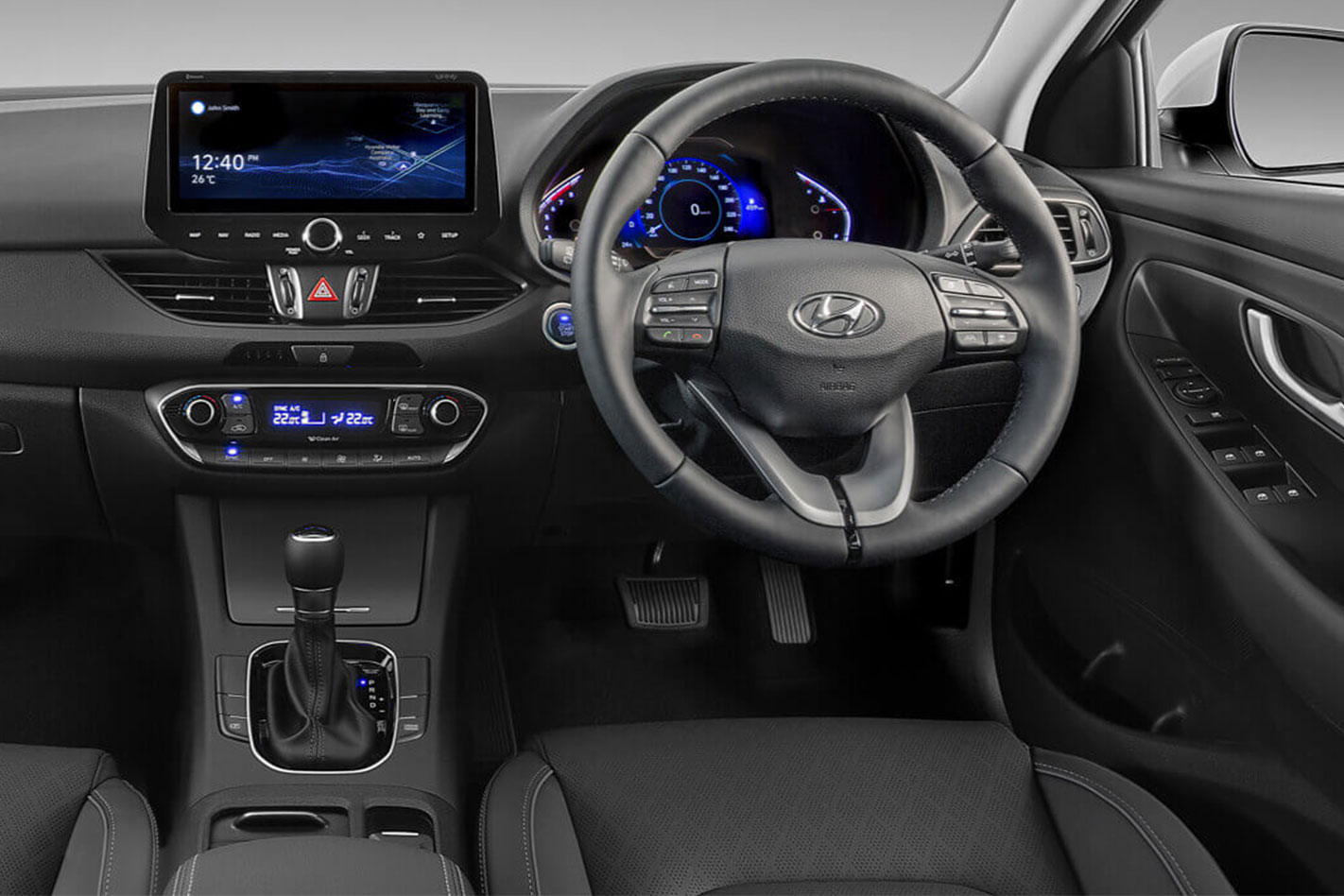
Add $3300 on top of an Active and you’ll arrive at the i30 Elite, the most expensive 2.0-litre atmo model that costs $30,220 before on-roads. It brings a new, larger 10.25-inch multimedia display in the centre console and an Infinity premium sound system.
The baby N
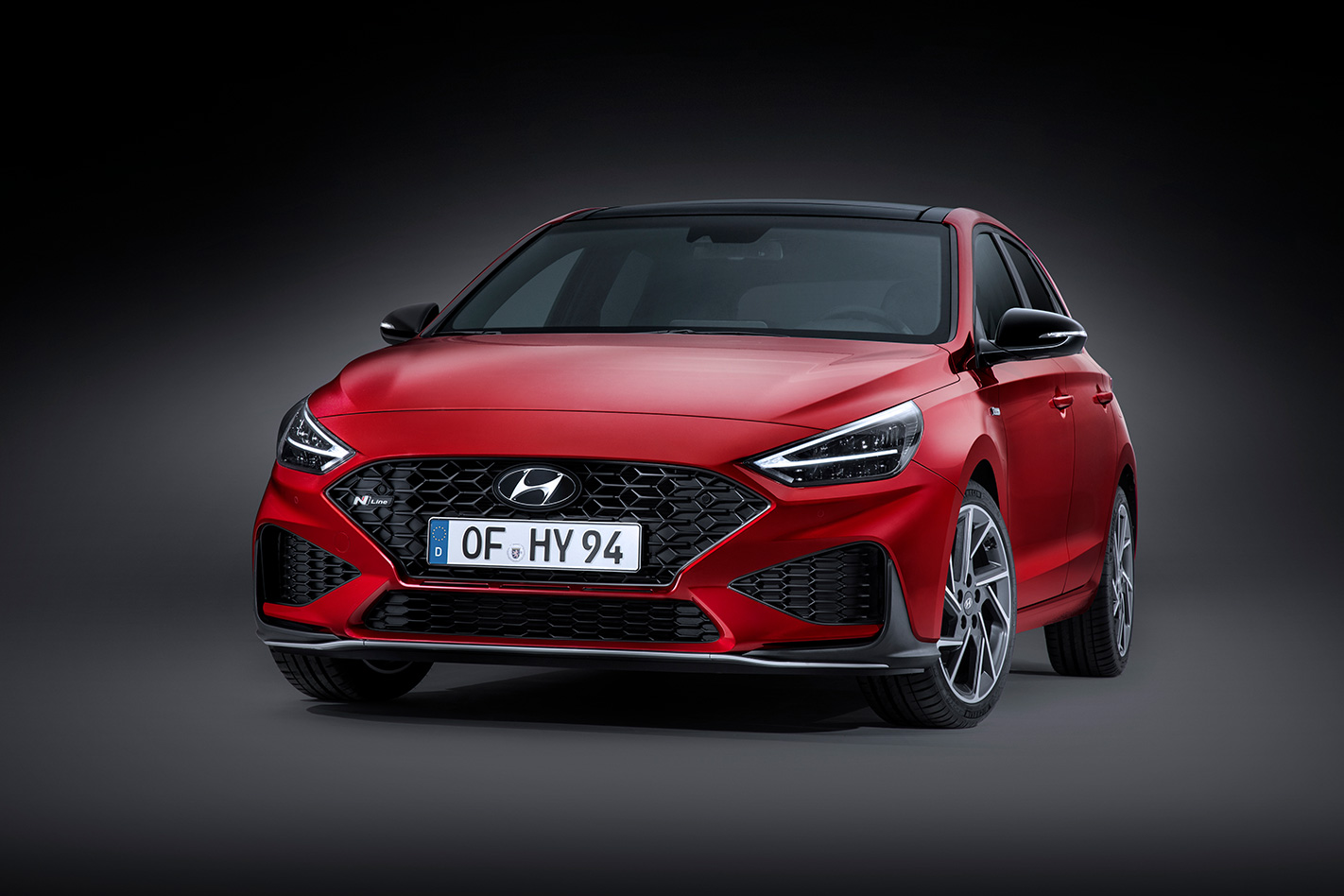
But at the new i30 Elite’s price point, buyers can emulate Hyundai’s sportiest offering with the N-Line hatch, styled on the full-blown N variant which has also been recently updated and is due to arrive early next year.
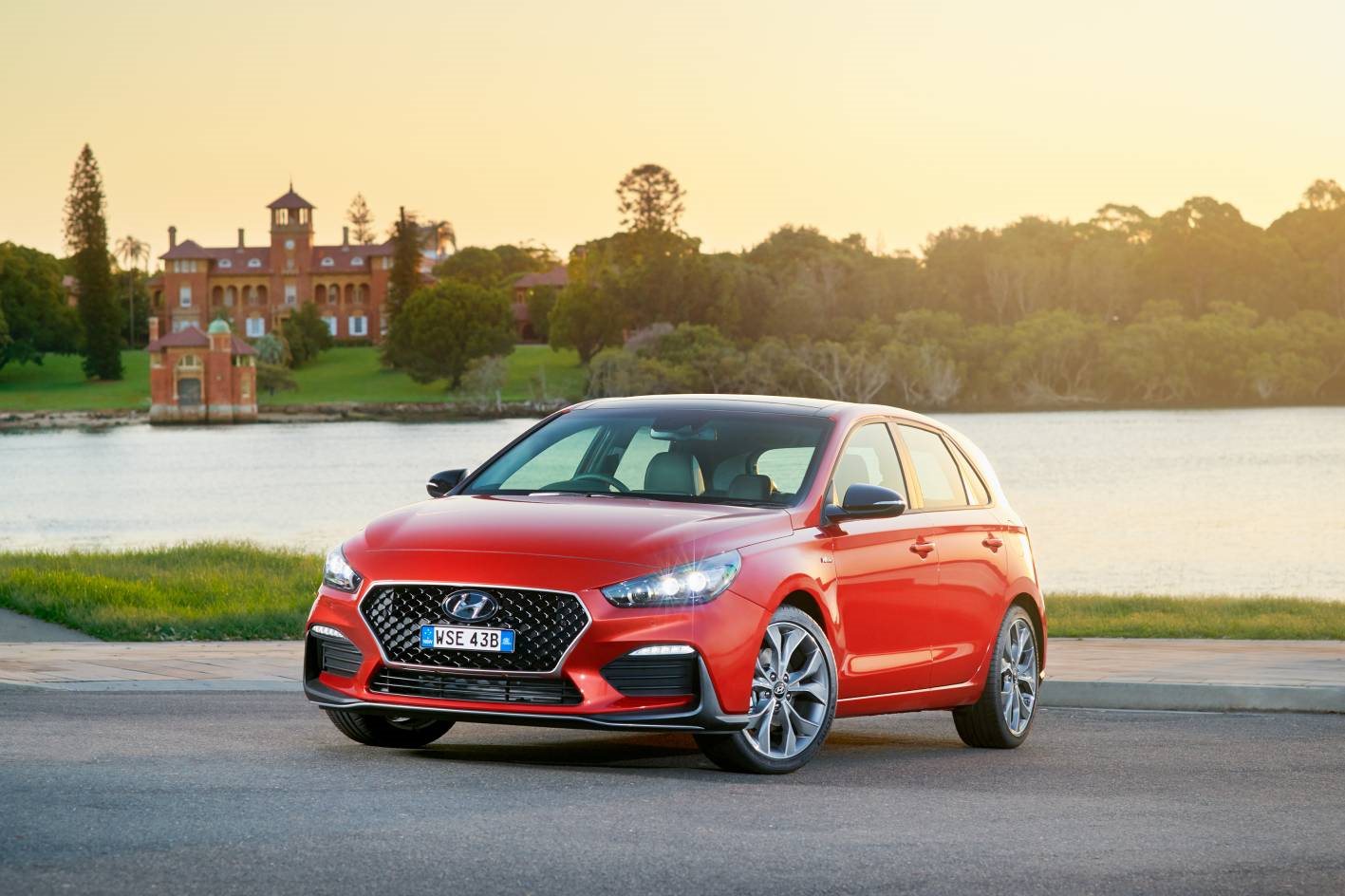
But it still suffers price increases on both the standard N-Line and N-Line Premium variants, justified by the new standard digital cluster, as well as LED headlights and the larger touchscreen in Premium cars.
As well as this, Hyundai has added the six-speed manual transmission to the N-Line Premium trim, while its 1.6-litre turbo four remains available with a seven-speed dual clutch ’box.
2020 Hyundai i30 retail pricing:
Maserati has a plan. A new one. This one will work – it has to.
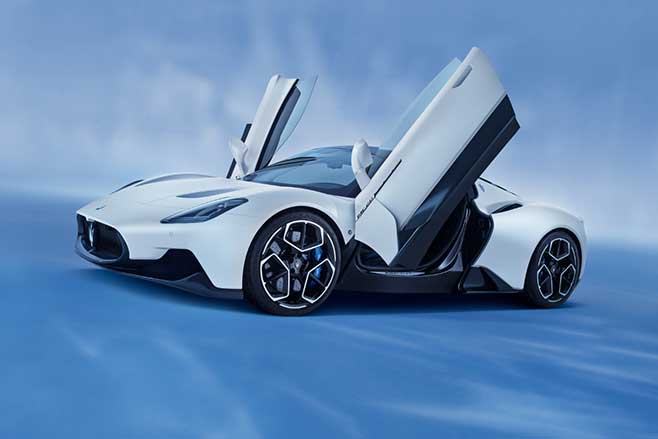
There’s a revamped factory at its Modena home, a wide-ranging electrification strategy, another SUV in the wings, the Fuoriserie personalisation program and, at the heart of it all, the new MC20 supercar.
Maserati, it seems, has rediscovered its identity.This identity was lost during the implementation of the previous five-year plan, announced at FCA’s Capital Markets Day in 2014.
This awesome feature appears in MOTOR magazine – grab it now by subscribing at a great rate right here!
Initially, all seemed well: sales ballooned from 15,393 in 2013 to 36,448 in 2014 and continued to climb to 42,100 in 2016 and 51,500 a year later. This spike flattered to deceive.
Demand for the Ghibli and Levante dried up, the Alfieri project was canned and the promised new-generation GranTurismo never appeared, the previous version soldiering on as it had since 2007 before production finally ceased in December 2019.
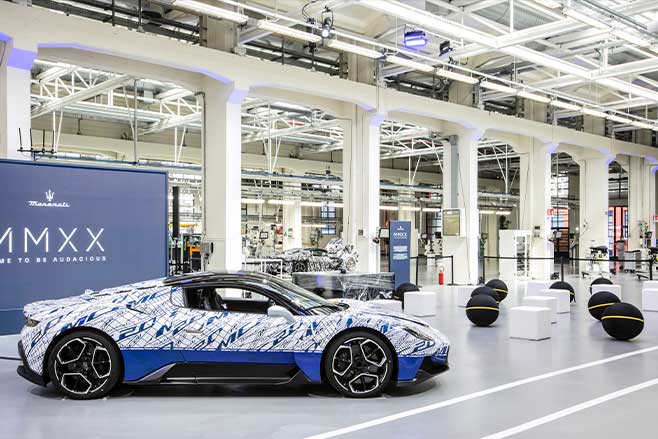
There’s even a new badge. The cessation of GranTurismo production enabled the historic Viale Ciro Menotti plant to be revamped in anticipation of the MC20, which will spearhead Maserati’s reinvigoration.
The evolution of the MC20
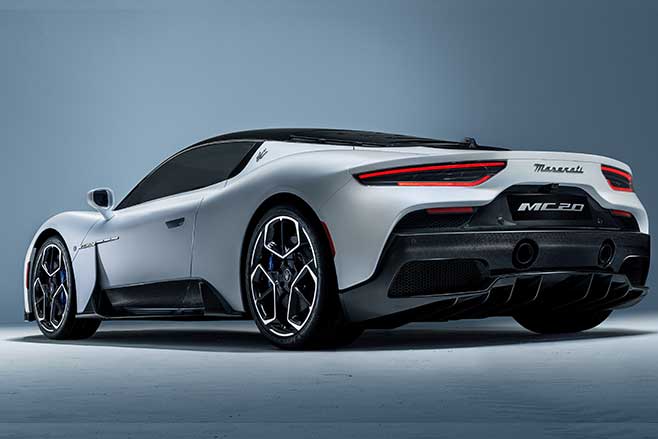
It’s Maserati’s first proper supercar since the Bora of 1971.
The MC12 that influences the name and styling of its successor was heavily based on the Ferrari Enzo, but the MC20 is deliberately and exclusively the work of Maserati – and its price may surprise.
FCA sold its 80 per cent stake in the Prancing Horse as part of the latter’s public flotation in 2016 and Maserati is in the process of weaning itself off the Ferrari engine supply deal that has provided propulsion for the last two decades.
Key to that process will be the all-new 3.0-litre twin-turbo V6, dubbed Nettuno, that debuts in the MC20 and will spread throughout the Maserati range.
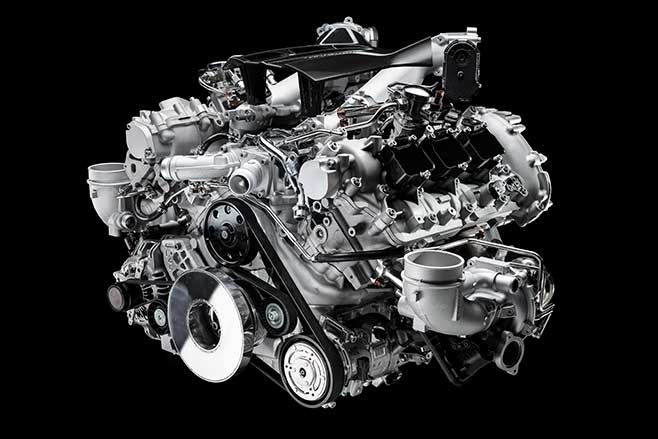
Inside the MC20’s Nettuno V6
Producing 463kW and 730Nm from just 2992cc, the Nettuno V6 has a spectacular specific output of 155kW/litre. It’s dry-sumped with an 11:1 compression ratio, a combination of port and direct injection and a turbocharger hanging off each cylinder bank.
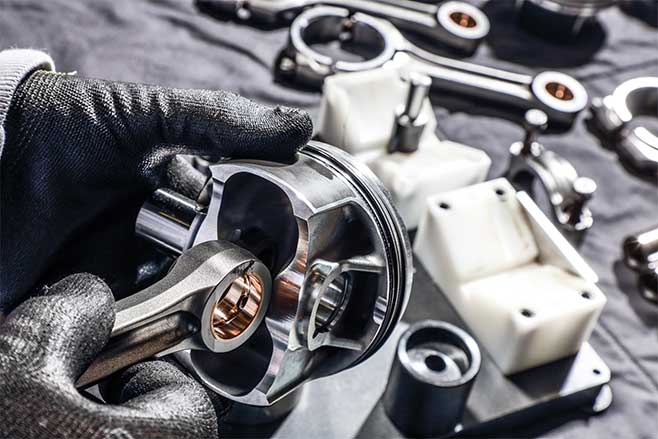
So far, so good, but where the Nettuno changes the game is its use of pre-chamber ignition. While not a new concept, this is the first modern application in a petrol-powered production car.
Pre-chamber ignition is one solution to the problem posed by forthcoming emissions regulations that will force manufacturers to use ideal or ‘stoichiometric’ 14.7:1 air-fuel ratios.
Deprived of this, engineers need to get clever. The tiny pre-chamber (about 1.5cc) incorporates a second spark plug and sits above the cylinder.
As the piston compresses that ideal fuel-air mixture is forced into the pre-chamber, the second spark plug ignites and the mixture is burned quickly and completely: good for power, good for emissions.
Maserati claims the pre-chamber system is worth around an extra 95kW/130Nm while also reducing fuel use by three per cent, but there are drawbacks.
While great for full-throttle power, keeping the engine stable at low load, by far the most common scenario for a road car, is very difficult and having a spark plug firing in such a small, enclosed space generates enormous heat.
Problem one was solved by installing a traditional combustion system that works in conjunction with the pre-chamber ignition at low loads, while specific cooling channels surround the pre-chamber.
Cost is also an issue.
“Because we need six extra spark plugs on six cylinders, six extra coils to activate the plug, more wiring, component numbers increase,” says Ettore Musu, Maserati’s head of powertrain innovation
In an industry where carmakers fight for every cent, that’s a huge amount.
How fast is the Maserati MC20?
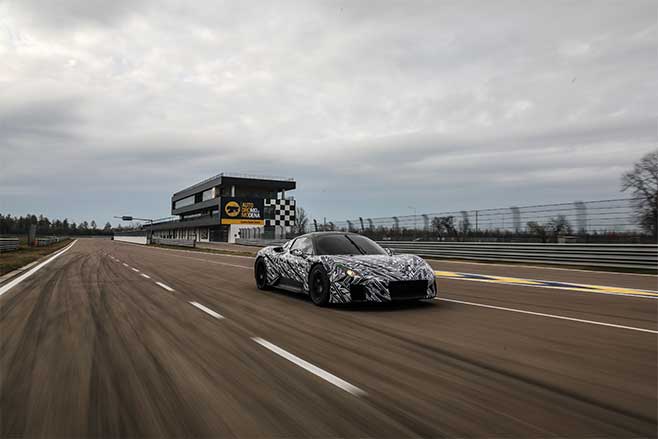
The investment is worth it: the Nettuno revs to 8000rpm and develops peak power at 7500rpm. It’s attached to an eight-speed dual-clutch gearbox and rockets the MC20 to 100km/h in 2.9sec and 200km/h in 8.8sec.
This gives a second away to the likes of the McLaren 720S and Ferrari F8 Tributo but is still hair-raisingly quick by any standard. Top speed is “over 325km/h”.
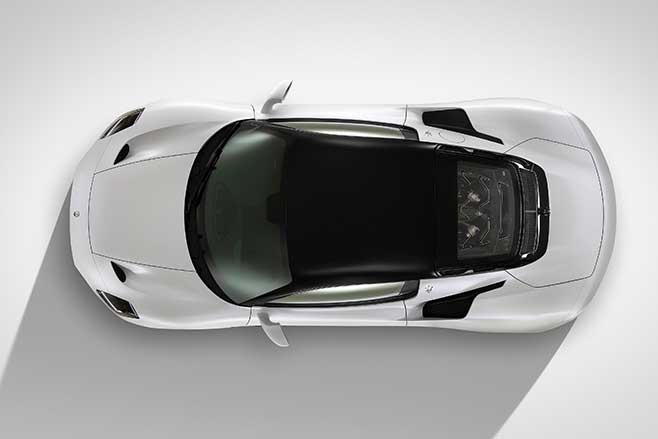
But this isn’t the fast one. There will be three variants of the MC20: this coupe, a Spyder with a retractable hardtop and an all-wheel-drive, all-electric version that will be the real trident missile.
Maserati’s electric future
An 800v electrical system will allow 300kW charging (Tesla’s current fastest supercharger is 250kW) while a tri-motor setup will enable four driven wheels and independent control of each rear wheel.
All Maserati’s battery needs will be catered for by the Mirafiori battery plant in Turin and its EV supercar won’t be a silent drive, the brand saying even its electric models will have “a unique, distinctive growl.
“After all, anyone on board a Maserati must hear the unmistakable sound of its engine,” says the company. Even if it doesn’t have one.
Light, fantastic for the MC20
All MC20s use a common carbon fibre monocoque designed in collaboration with Dallara but the construction of each variant’s differs.
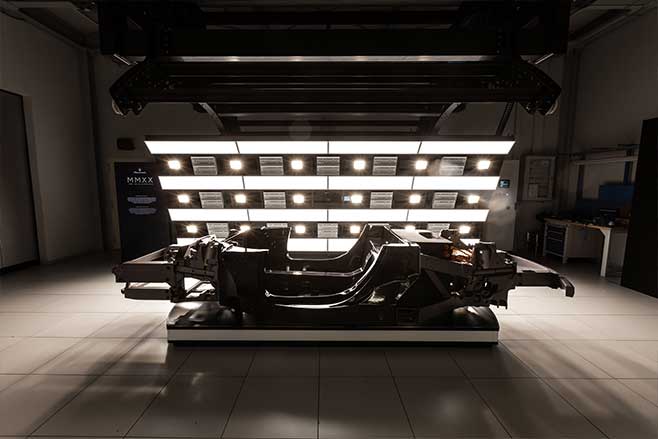
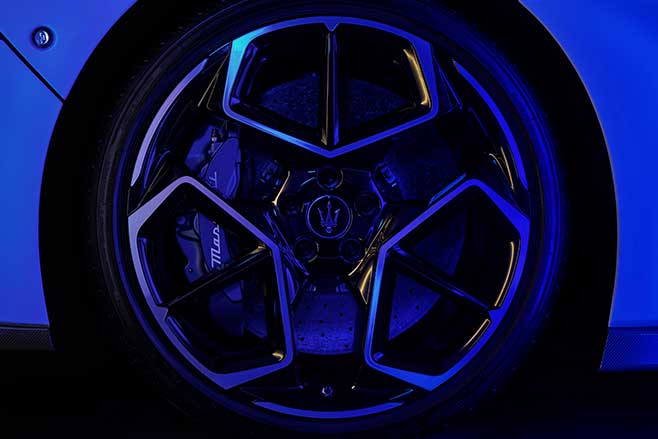
Weight is claimed to be less than 1500kg, with that weight controlled by double-wishbone suspension with adaptive dampers, while the 20-inch rims wear 245/35 tyres at the front and 305/30 at the rear.
Somewhat unusually for this segment, the MC20 wears Bridgestone Potenza rubber, rather than the more common Pirellis or Michelins.
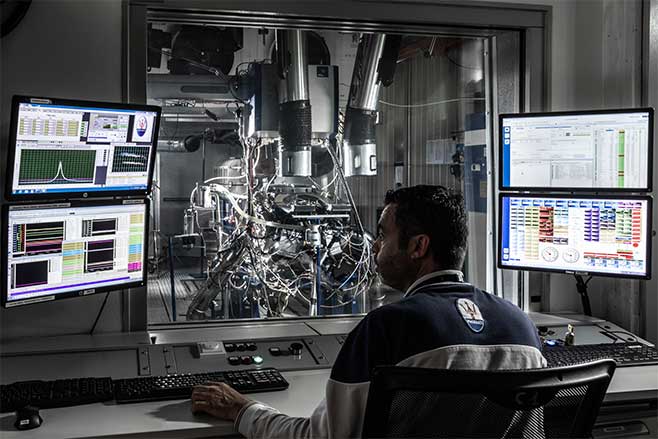
Operated by Maserati’s chief test driver, highly accomplished GT racer Andrea Bertolini, the simulator uses nine actuators that gives its upper platform three degrees of movement and the lower platform six in an attempt to replicate a vehicle’s dynamics and the whole thing is isolated on a very thin cushion of air.
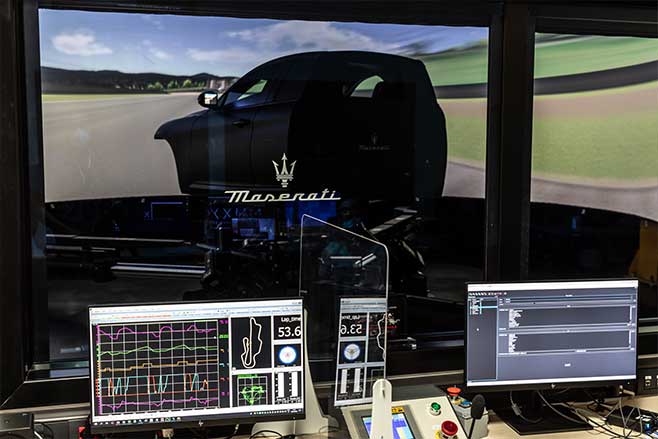
Maserati claims this approach results in a 50 per cent reduction in time-to-market and 40 per cent fewer physical prototypes.
It certainly speeds up the development process.
Vehicle Line Executive Federico Landini uses the example of the Levante SUV, for which virtual development was used minimally, testing three physical steering racks would typically take three days.
Maserati now uses those three days to test 50 virtual steering racks, each change completed with a few clicks and the same goes for tyre compounds, aerodynamics, suspension settings and more.
Aerodynamics of the MC20
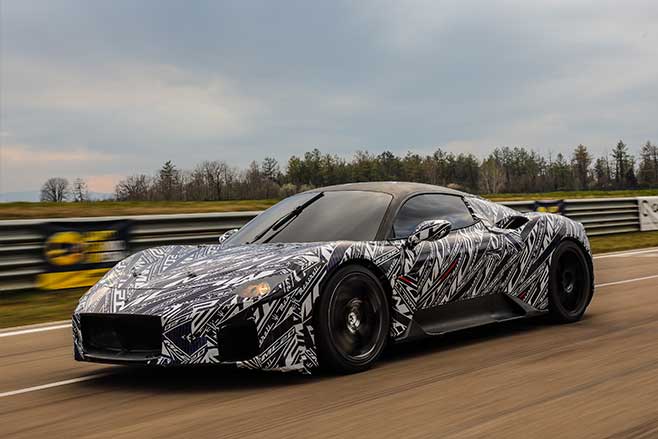
Aerodynamics played a crucial role in shaping the MC20, both dynamically and stylistically. By generating all the downforce from the lower section of the body, (represented by naked carbon fibre) and the floor, the engineers gave design chief Giovanni Ribotta and his team flexibility with the upper surfaces, free from the need to add aerodynamic devices.
Vortex generators shape the underbody airflow through the fully enclosed floor where it is removed by ducts, fed into intakes or forced through the diffuser, the result of over 2000 hours in Dallara’s wind tunnel and over 1000 CFD simulations.
Ribotta: “The form is very pure in the upper part of the car because all the aerodynamic load is generated by the underside. This was a great advantage for us in terms of styling, it meant we could avoid aerodynamic appendages that would have detracted from its style.”
The ‘gentleman’s brand’ defined
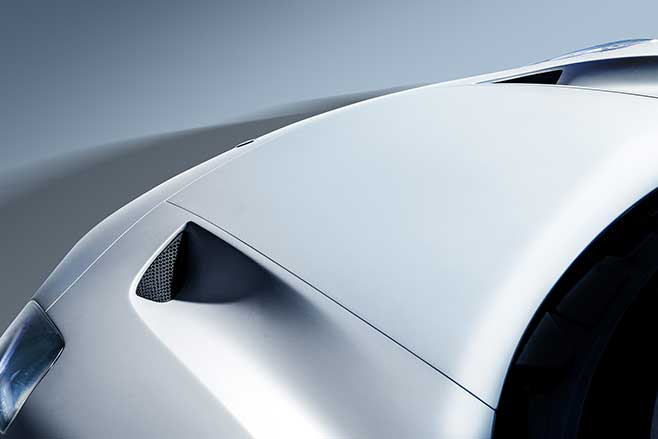
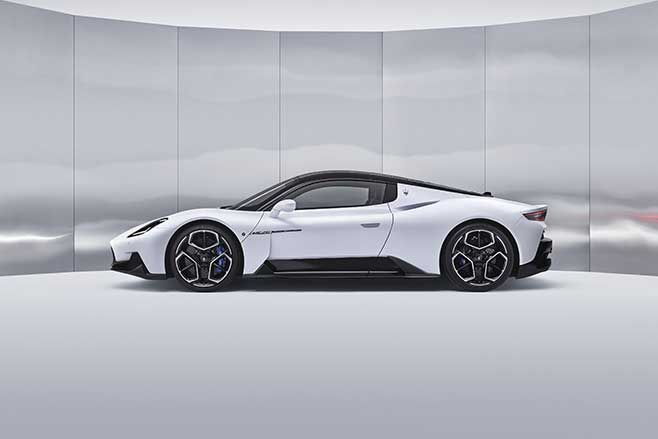
Compared to its creased, confident supercar competitors, the MC20 looks simple and perhaps a bit plain, particularly in its ‘Bianco Audace’ launch colour, but that remains true to Maserati tradition.
Back in the 1970s, Italdesign issued a press release following its styling of the Bora saying: “The brief called for a car that was modern but devoid of the exotic look that unnecessary decorations can create, strikingly sporty but not inordinately aggressive.” The release could equally describe the MC20.
The interior is minimalist in its design but drenched in Alcantara and carbon fibre, the materials deliberately dark to minimise reflections. A pair of 10.25-inch digital displays handle the instrument and infotainment duties while the rear-view mirror is digital.
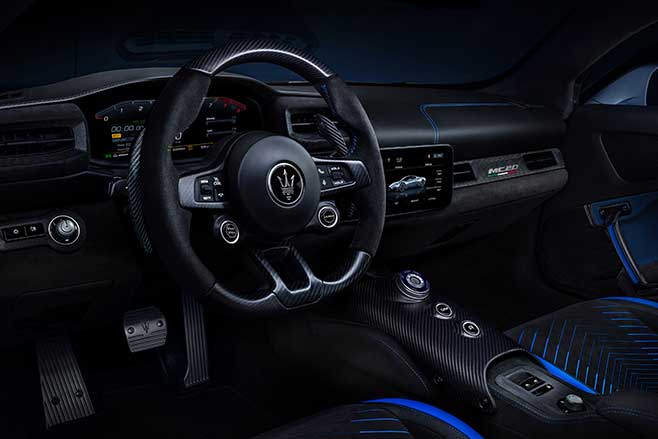
As with Ferrari, a separate button in the middle allows the suspension to be softened independent of the drive mode selected.
Nanometer-perfect
No jibes about Italian build quality, either. Each MC20 is inspected after assembly and its dimensions compared to the Mountability Master, an MC20 custom-built as precisely as possible, the acceptable deviation 400 nanometers (0.00004mm).
Another set of robotic arms, meanwhile, performs three-dimensional scans of the body and compares the results to the original CAD drawings.
The final inspection is a human one by the quality control staff.
The price of the Maserati MC20
At $438,000 the MC20 enters a crowded supercar segment with a presence that sets it just a little bit apart from the pack.
While it’s in direct competition with cars like the Audi R8, the Lamborghini Huracan, and the Porsche 911 Turbo, it can be regarded in the same breath as more fancied opponents like the $485,000 Ferrari F8 Tributo.
Not that it matters, as Australia’s initial allocation is all spoken for. The plan, for now, is working.
This awesome feature appears in MOTOR magazine – grab it now by subscribing at a great rate right here!
Renault is previewing its next steps in electrification with the new Megane eVision concept car that previews a real Renault model due to arrive at the end of 2021 to take on rivals like the VW ID.3 and Tesla Model 3.
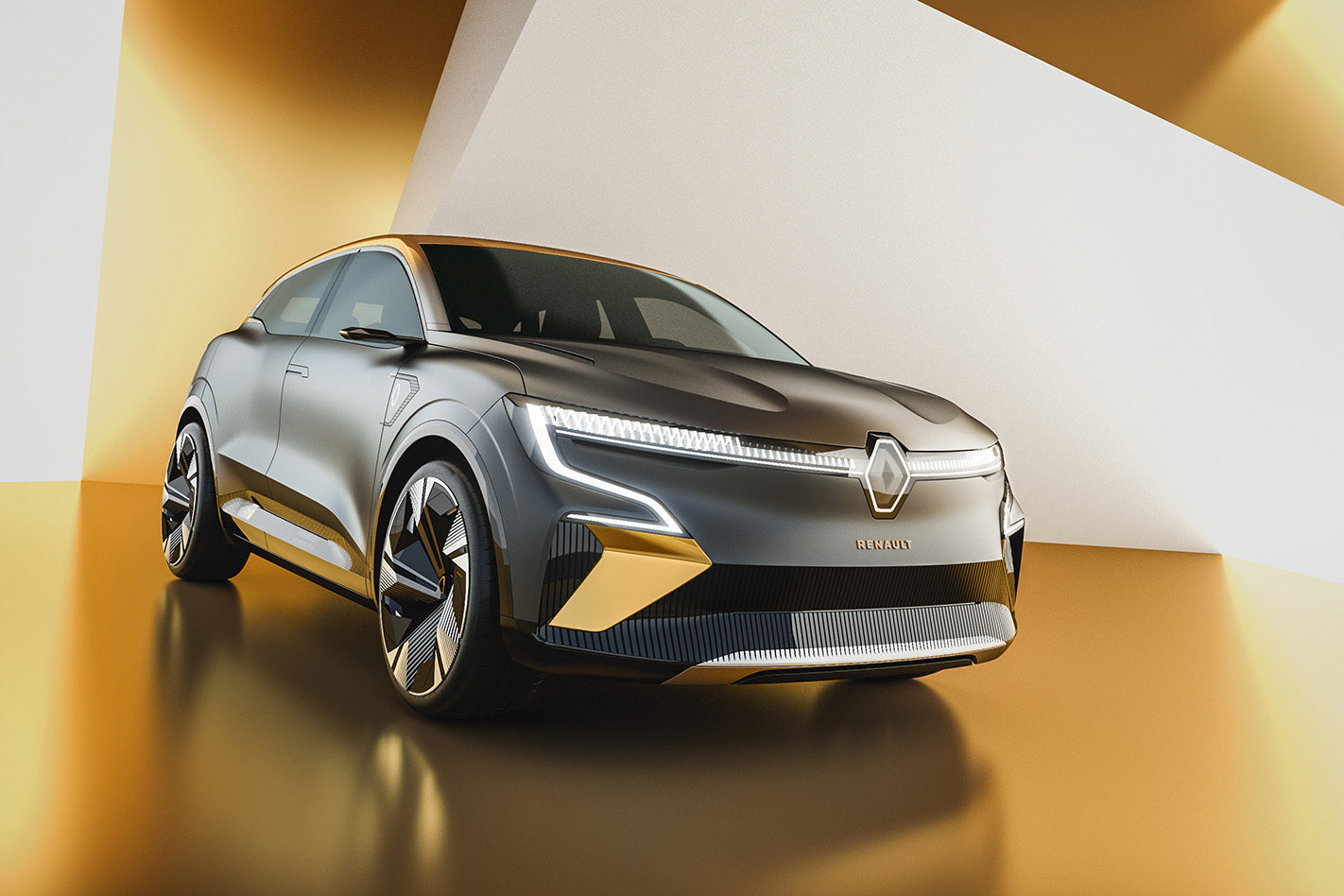
The Megane eVision previews a new design direction for the brand, with details like a muscular clamshell bonnet, floating roofline and slim grille vents front and rear.
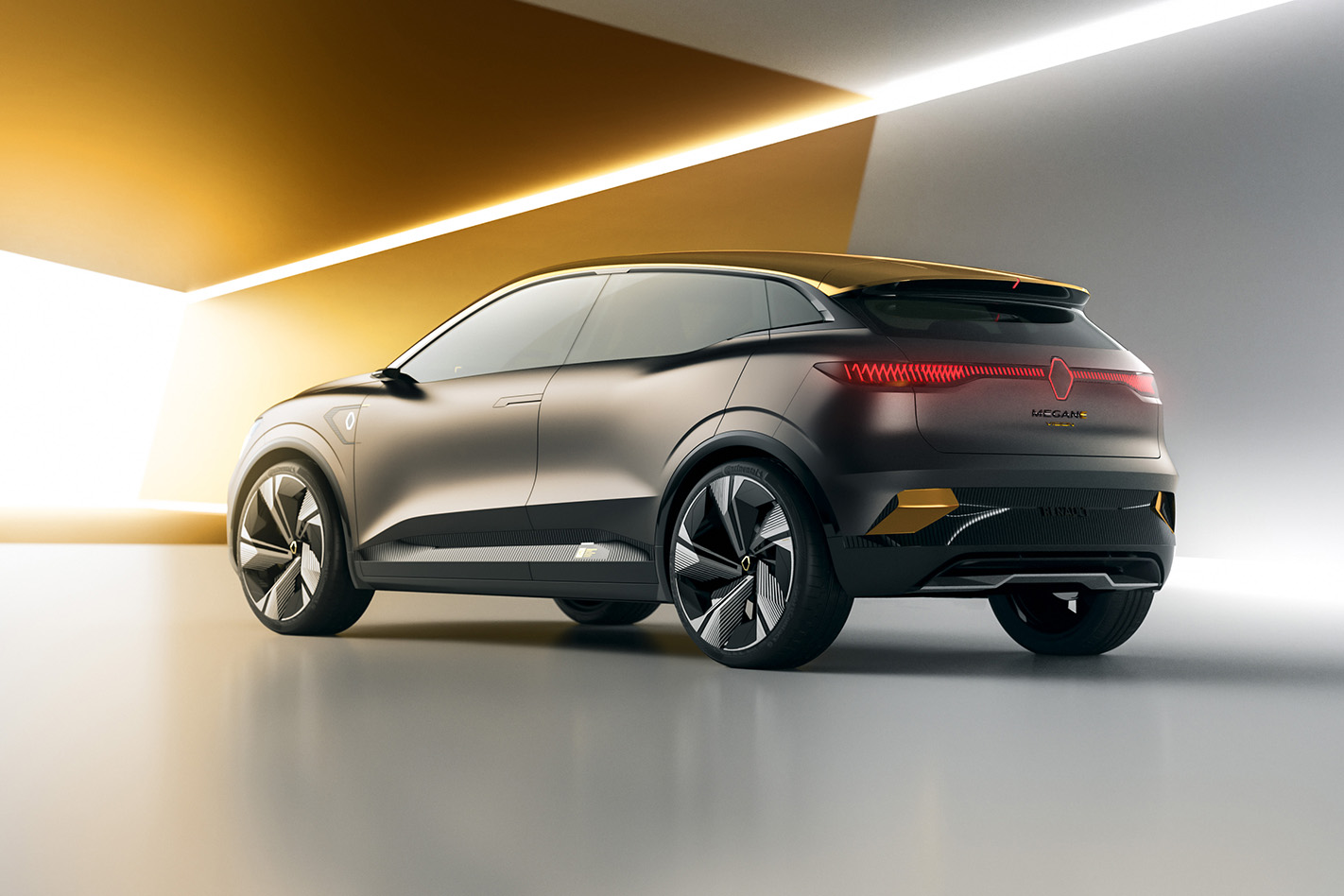
According to Renault it is shorter than a conventional family hatchback at 4.21m, mainly due to the platform underneath that we’ll get to in a moment.
Lighting plays an integral role here, too, with entirely joined-up light bars featuring front and rear.
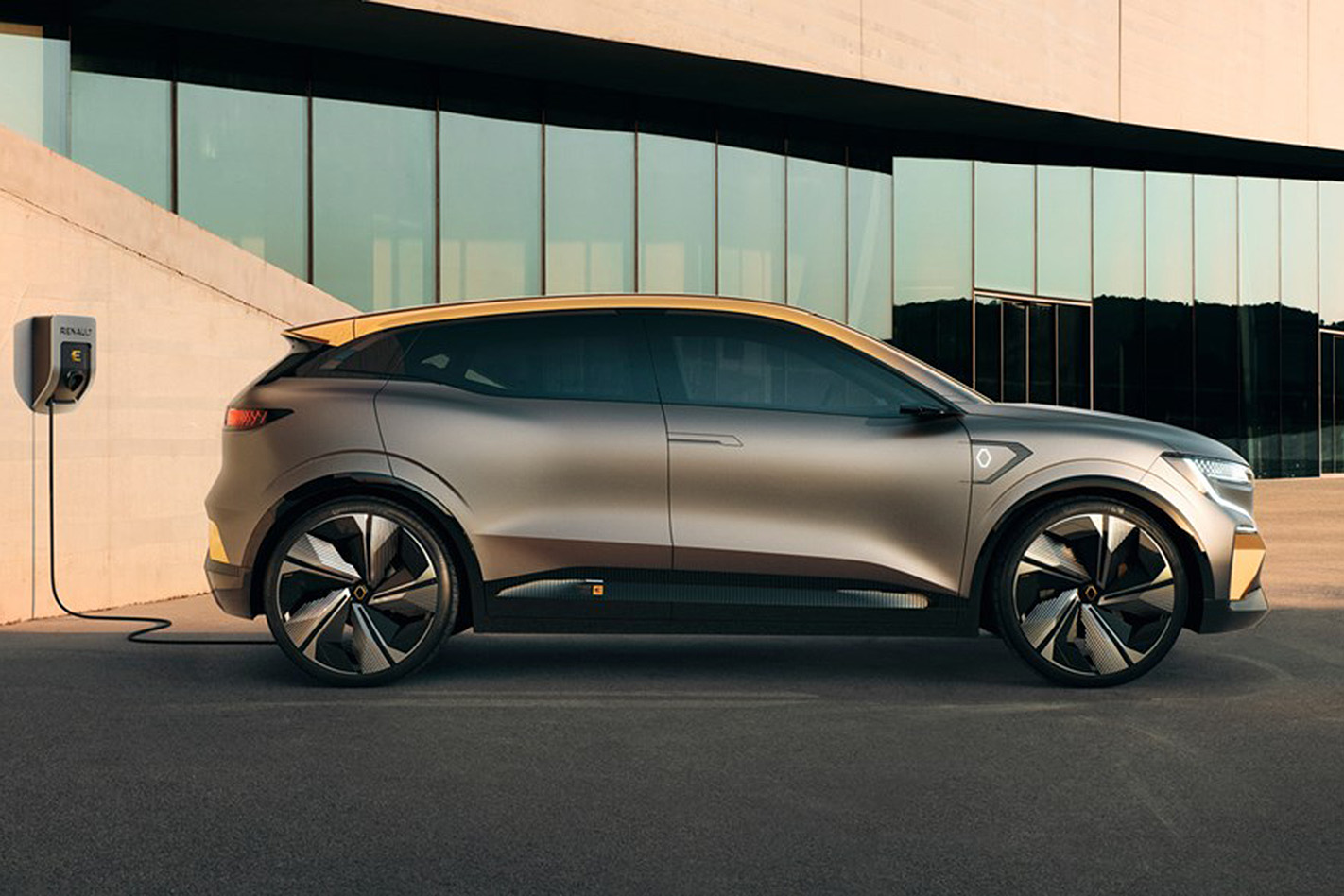
The transparent charging point highlights the charge at a glance, and Renault says novel use of ambient lighting inside injects some serious theatre to the cockpit.
Not just a concept
The Megane eVision isn’t just some far-flung, pie-in-the-sky preview. Renault says it will put this model into production next year – to highlight that fact, the concept seen here uses the new Alliance CMF-EV platform.
New Renault boss, Luca de Meo, said at the debut of the new concept that the platform has ‘broken the rules of size, use and design.’ He adds that ‘a whole family of new vehicles will be based on this new platform’, and that’s not just from Renault. Given it’s an alliance platform, which has already debuted the Nissan Ariya SUV that uses the same underpinnings.
Vital statistics
The Renault Megane eVision contains a 60kWh battery pack under the floor and a single 160kW e-motor driving the front wheels – a power figure Renault claims is one of the most powerful engines on sale – and a range of around 450km.
These specs put the Megane eVision squarely up against the VW ID.3.
This story first appeared in Car UK.
Plus & Minus
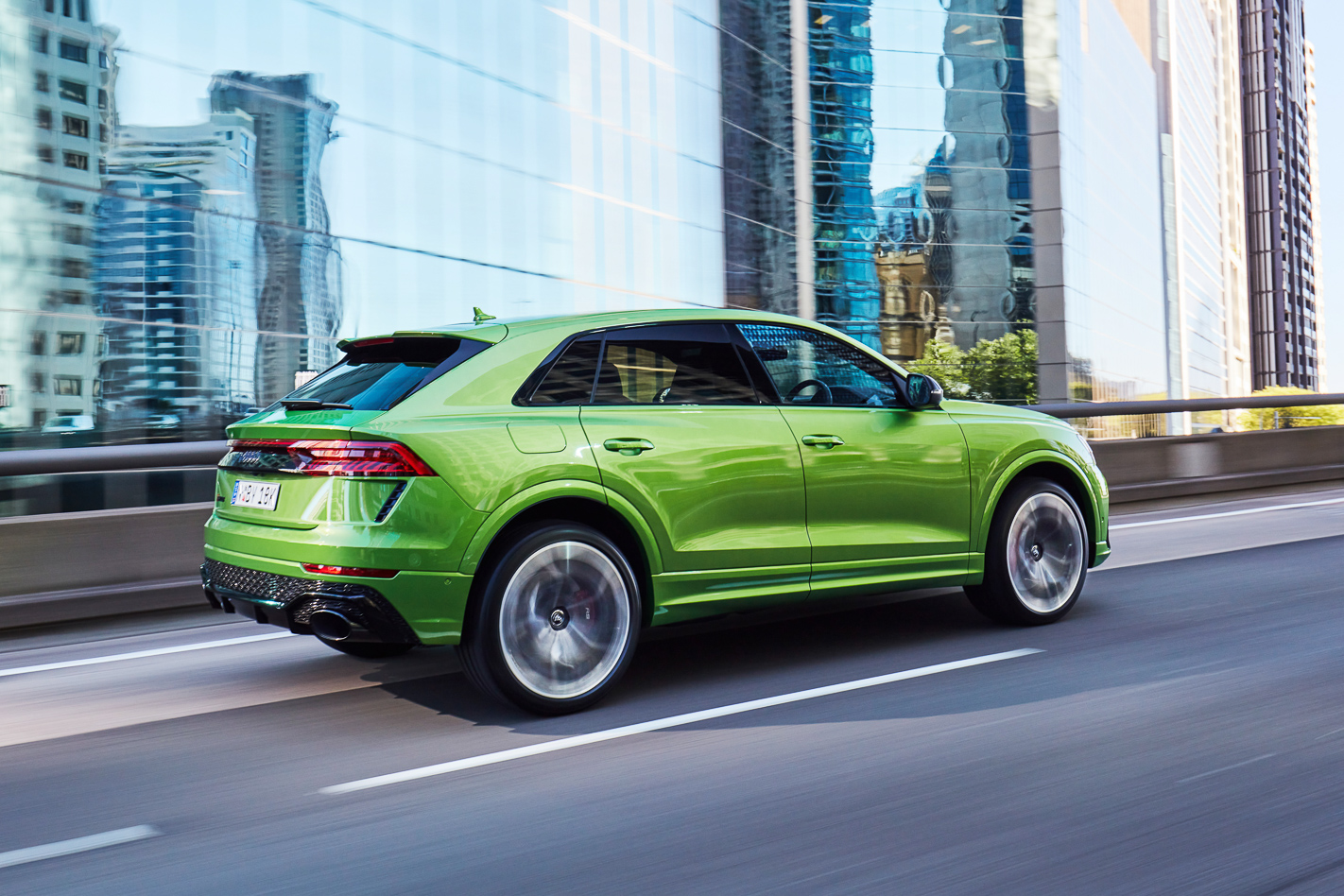
WHAT IS THE AUDI RS Q8?
The Audi RS Q8 is the flagship SUV of the line-up. A large five-seater with sloping roofline, and current class record-holder around the Nurburgring.
WHY WE’RE TESTING IT
This was our first chance to drive the RS Q8 on Aussie roads, and consider its abilities relative to rivals, as well as the $43,000 cheaper Audi SQ7 stablemate.
THE AUDI RS Q8 REVIEW
WHEN CAN you mount an argument that a super-sports SUV priced at $208,500 is decent value? Actually, probably never, but that’s not about to stop me trying.
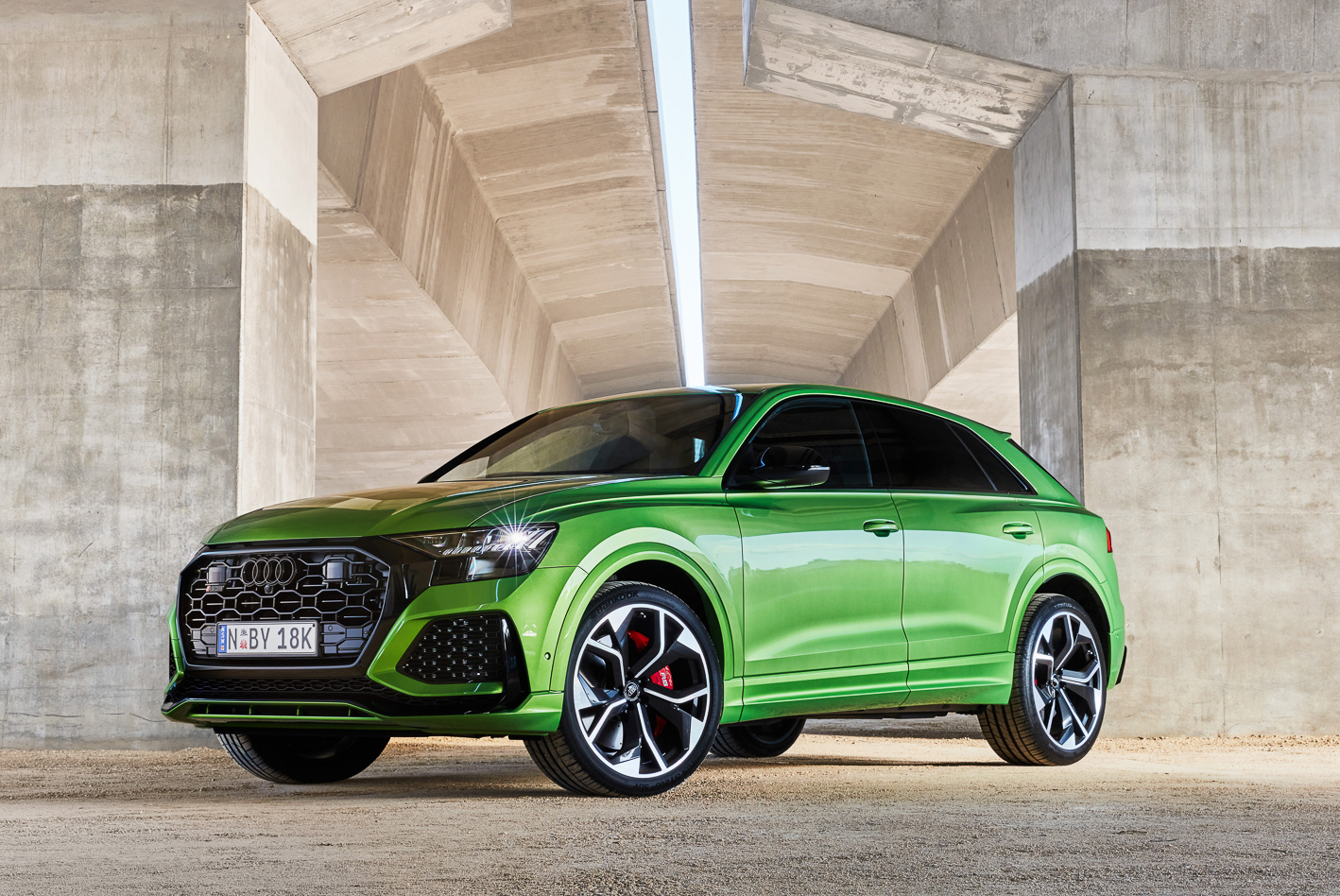
Here’s the rationale: Audi’s RS Q8 is the German brand’s flagship, built on a phenomenally well-sorted version of the VW Group’s MLB Evo platform.
It packs a corking twin-turbo 4.0-litre V8 punching out 441kW and 800Nm, and delivers a beautifully crafted and richly specced interior.
Future of the supercar is safe thanks to SUVs
It is, plenty would agree, all the large hi-po SUV any sane person could desire, if your heart leans in this slightly bonkers direction.
Price and features
Meanwhile, the Lamborghini Urus SUV runs fundamentally the same engine (albeit in a slightly higher state of tune), is underpinned by the same platform, and features an interior that charges extra for some of the equipment the RS Q8 includes as standard.
To wit: the Urus costs $390,000, or close to half a big one by the time you’ve ticked some options and paid the on-roads.
Still not convinced? Even within Audi’s own stable, the RS6 and RS7 run the same V8 as the RS Q8 in exactly the same tune; yet at $216,000 and $224,000 respectively, both are appreciably more expensive than the SUV.
Driving the Audi RS Q8
Okay, so with that sorted, let’s look at what the bargain price of $208K actually buy you. Well, a shed load of speed, for starters. The official 0-100km/h claim is 3.8sec, or 0.2s slower than the circa-200kg lighter RS6.
The hot-vee layout that sees the turbos in the valley of the bent eight is intended to cut lag, as is the extra torque boost of 60Nm delivered by having the 48v starter/generator assist the crank under wide-open throttle.
All very admirable, but from a standing start there’s still a moment of hesitation as all 2240kg agrees to be mobilised.
Once up on its toes, though, the big unit is capable of sucking up the straight bits at an eye-widening rate, even if the soundtrack, while polished and very pleasant, never sounds quite as bat-shit angry as you may expect.
So far, so predictable. What may really surprise, delight, and seal the deal, though, is just how cohesive and confidence-inspiring the dynamic package is.
The steering, unlike so many models in the regular Audi range, has nuance and tactility either side of centre, and a well-judged return rate.
Not quite as feelsome as the rack in a Porsche Cayenne Turbo, but still, with such reassuring messages coming from the front end, you instantly hare off to sniff out the limits of grip, which, on the standard 23-inch rubber, are prodigious.
Roll is kept in tight check by an active, electro-mechanical anti-roll system that works brilliantly, keeping the body largely flat when being flung around, yet retaining a mystifyingly pliant ride when the adaptive air suspension is set to comfort mode.
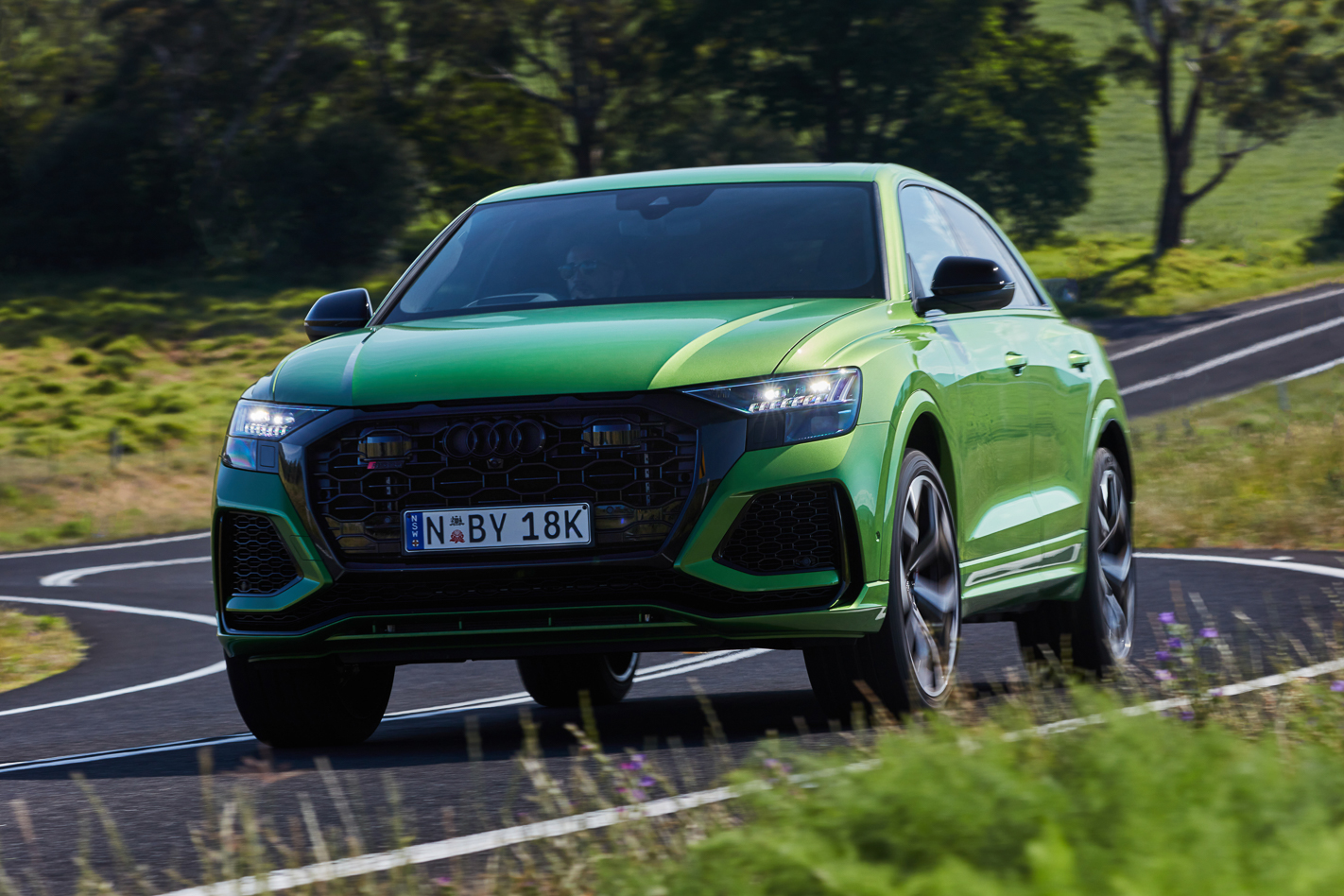
It’s a super polished chassis which, thanks in part to all-wheel steering, almost has one trotting out the “defies physics!” line, right up to the point you start carrying big speed into the braking zones of some tight terrain, as we did on the launch drive over the iconic Putty road north-west of Sydney.
Only then do you become acutely aware of just how much stopping force is needed to reign in a large SUV travelling at this sort of clip.
Our car was fitted with the optional carbon-ceramic brake package, which provides monster 440mm front discs clamped by huge ten-piston calipers at the front.
“Biggest discs fitted to a production car!” crowed the man from Audi, but I hardly heard that because I was choking on the fact they cost an extra $19,500.
The pedal feel is a bit dead, but the fade-resistant stopping power makes them worth considering if your pockets are deep.
Oh, and they also bring an ECU-uncorking of the top speed to 305km/h, although we did find that harder to verify on the Putty.
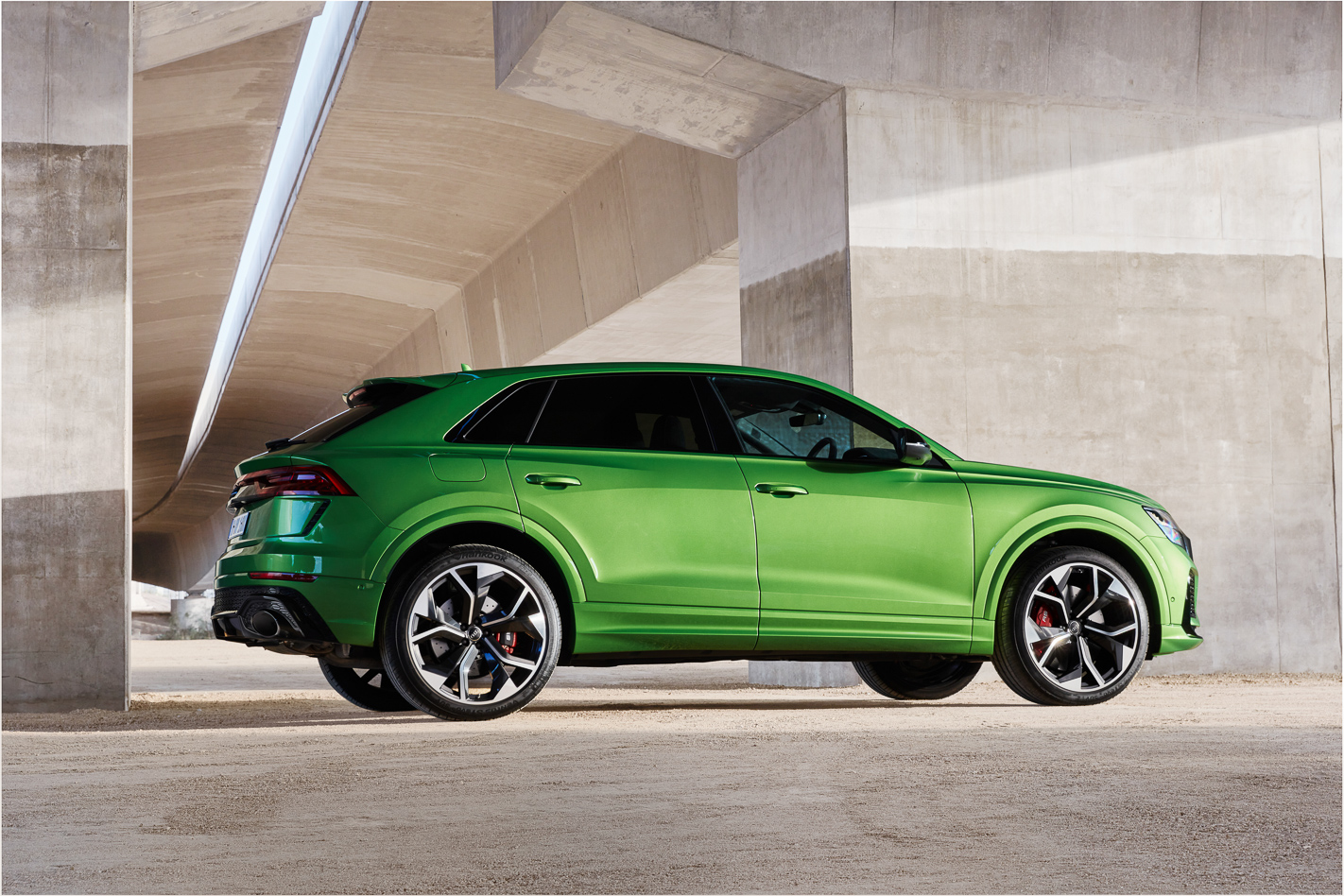
Living with the Audi RS Q8
But even if you only tapped into the performance envelope once in a blue moon, you could argue the case for the RS Q8 purely on packaging, equipment and cabin aesthetics alone.
We tend to scoff at the non-purist vibe of SUVs, but fact is the world seems to love the elevated ease of entry and exit, and the height adjustability of the Q8 would allow you to carefully navigate off-road terrain that would likely stop an RS6.
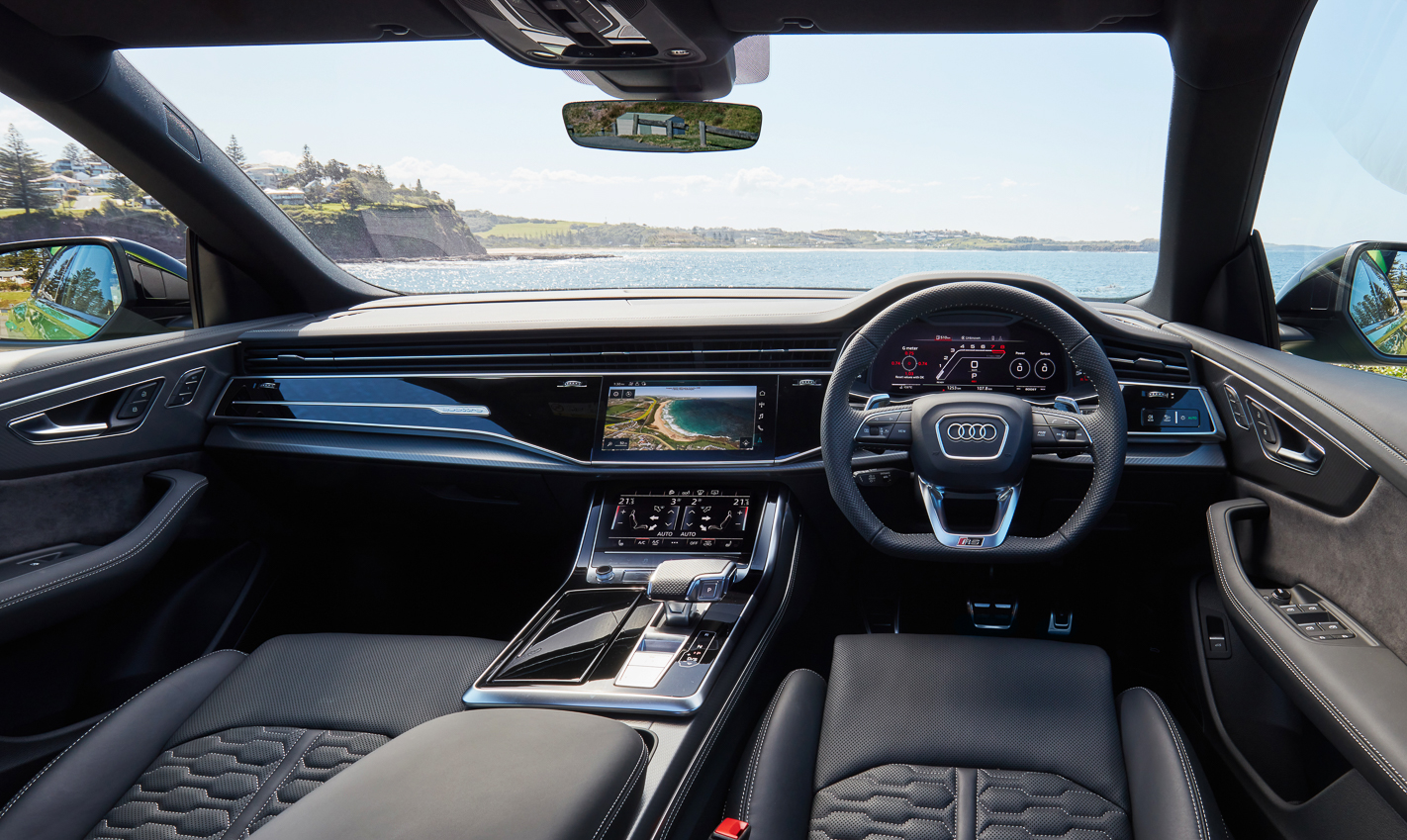
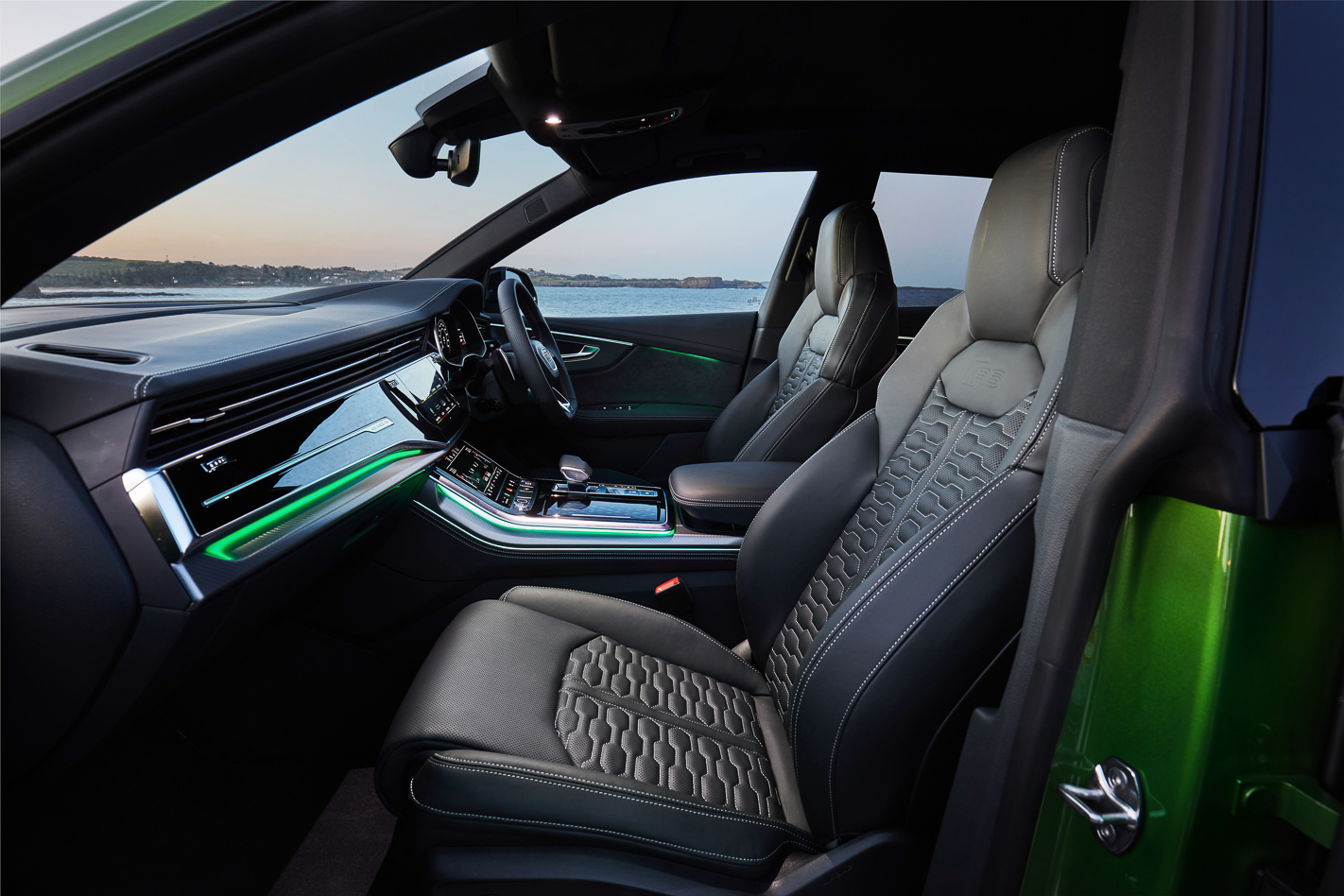
Then there’s the superb comfort and support of the heated and ventilated front seats, the high-res beauty of the twin touchscreens with their haptic feedback, and tasty bits like matrix LED headlights and 16-speaker Bang & Olufsen audio system.
Which, incidentally, can be upgraded to a truly stupendous reference system for an extra $9700.
Hey, just remind your significant other how much you’re saving by not buying a Lamborghini Urus and tick the box, okay?
Verdict
It could be argued that buying a large, ultra-fast SUV is possibly one of the most pointless and profligate purchases anyone could make, but we’re not here to judge.
Fact is, it’s easy to be seduced by the space, pace, comfort and daily liveability of the Audi RS Q8.
And judged in context with other models within the VW empire which use this platform and drivetrain, it actually stacks up as pretty fair value.
Specs
Model Audi RS Q8 Engine 3993cc V8 (90°), dohc, 32v, twin-turbo Max power 441kW @ 6000rpm Max torque 800Nm @ 2200-4000rpm Transmission 8-speed automatic Weight 2240kg 0-100km/h 3.8sec (claimed) Economy 12.1L/100km Price $208,500 On sale Now
NEW! 2023 Corolla range review
Looking for more details on the very latest Corolla line-up? Our full 2023 range review has everything you need to know.
2021 Corolla review
What stands out?
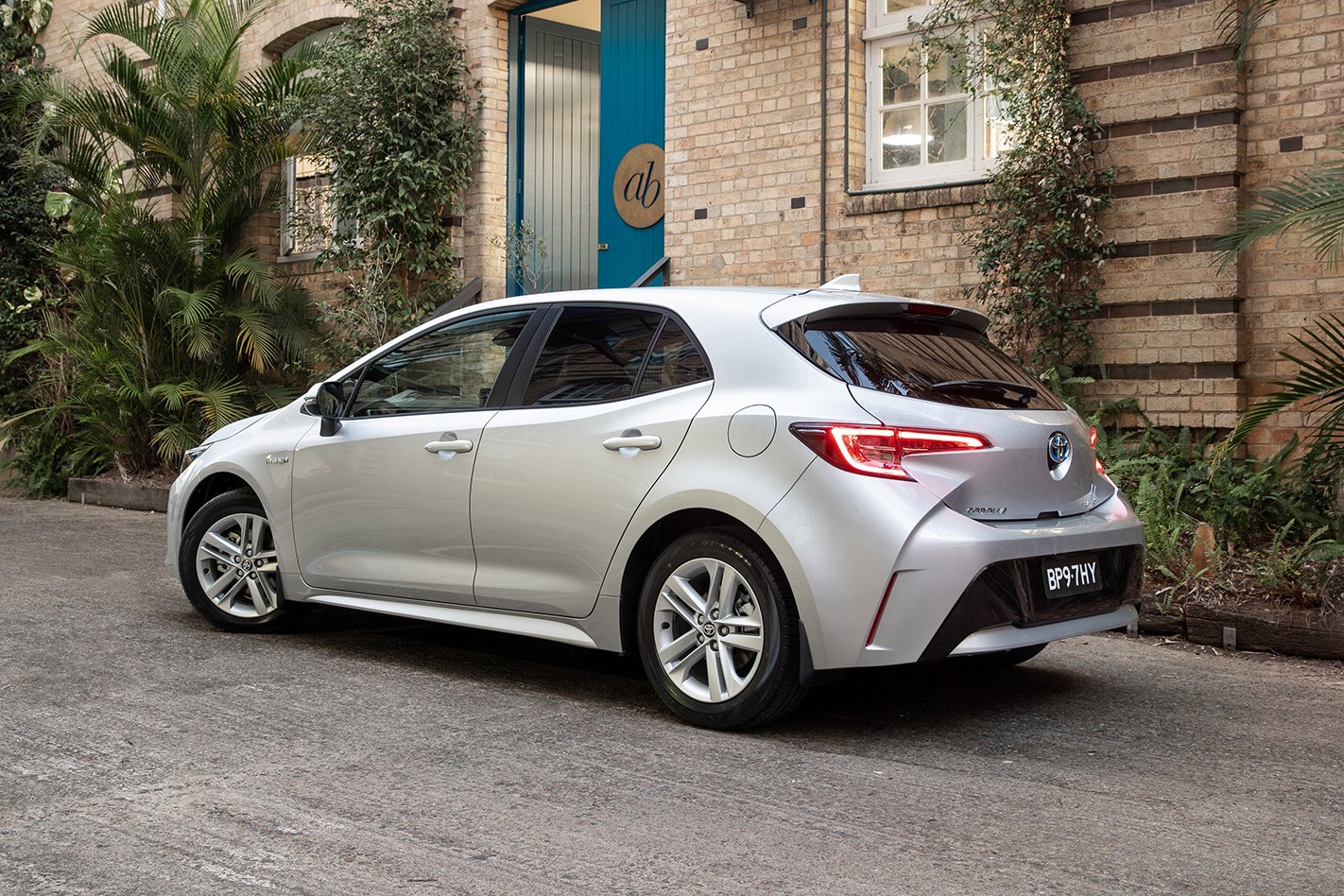
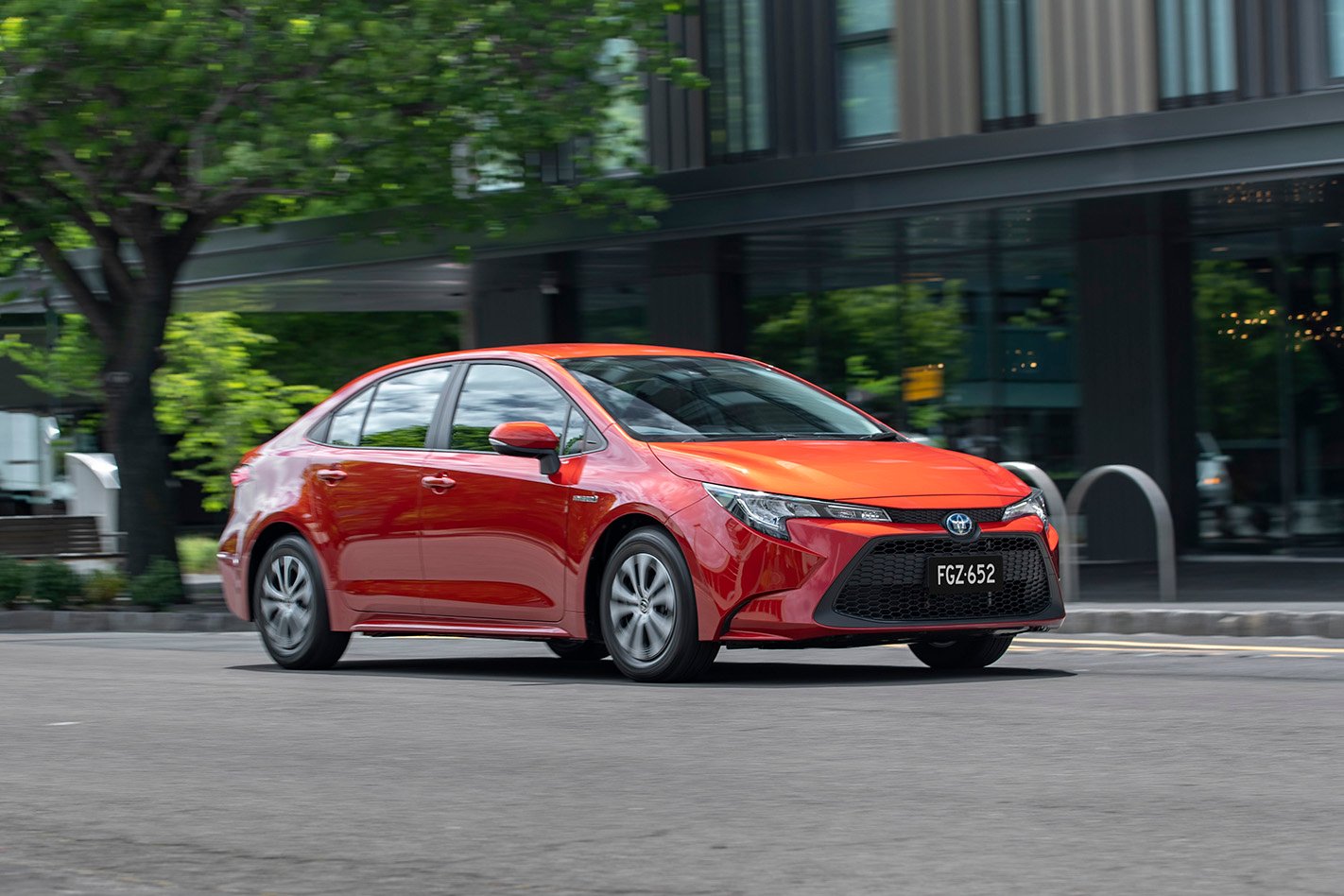
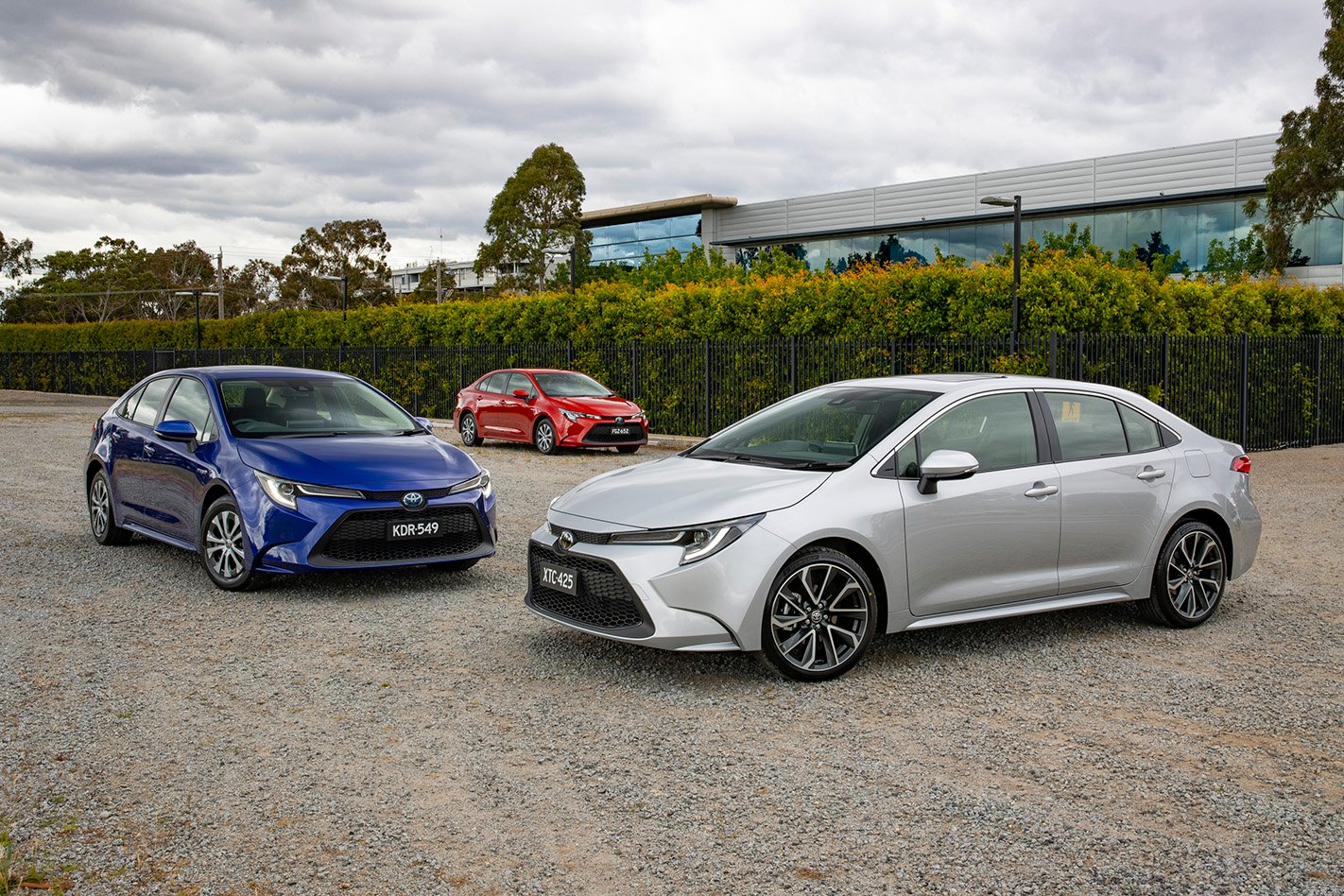
The 12th-generation Toyota Corolla brings all the necessary ingredients that have long made it the world’s most popular car but in a stylish package that’s considerably more fun to drive than its ‘beige’ predecessor thanks to a dynamic chassis and locally tuned suspension.Available with a punchy 2.0-litre petrol engine, and optional 1.8-litre hybrid powertrain, the Corolla hatchback and sedan versions come standard with advanced driver assist technology including autonomous emergency braking and active cruise control.
What might bug me?
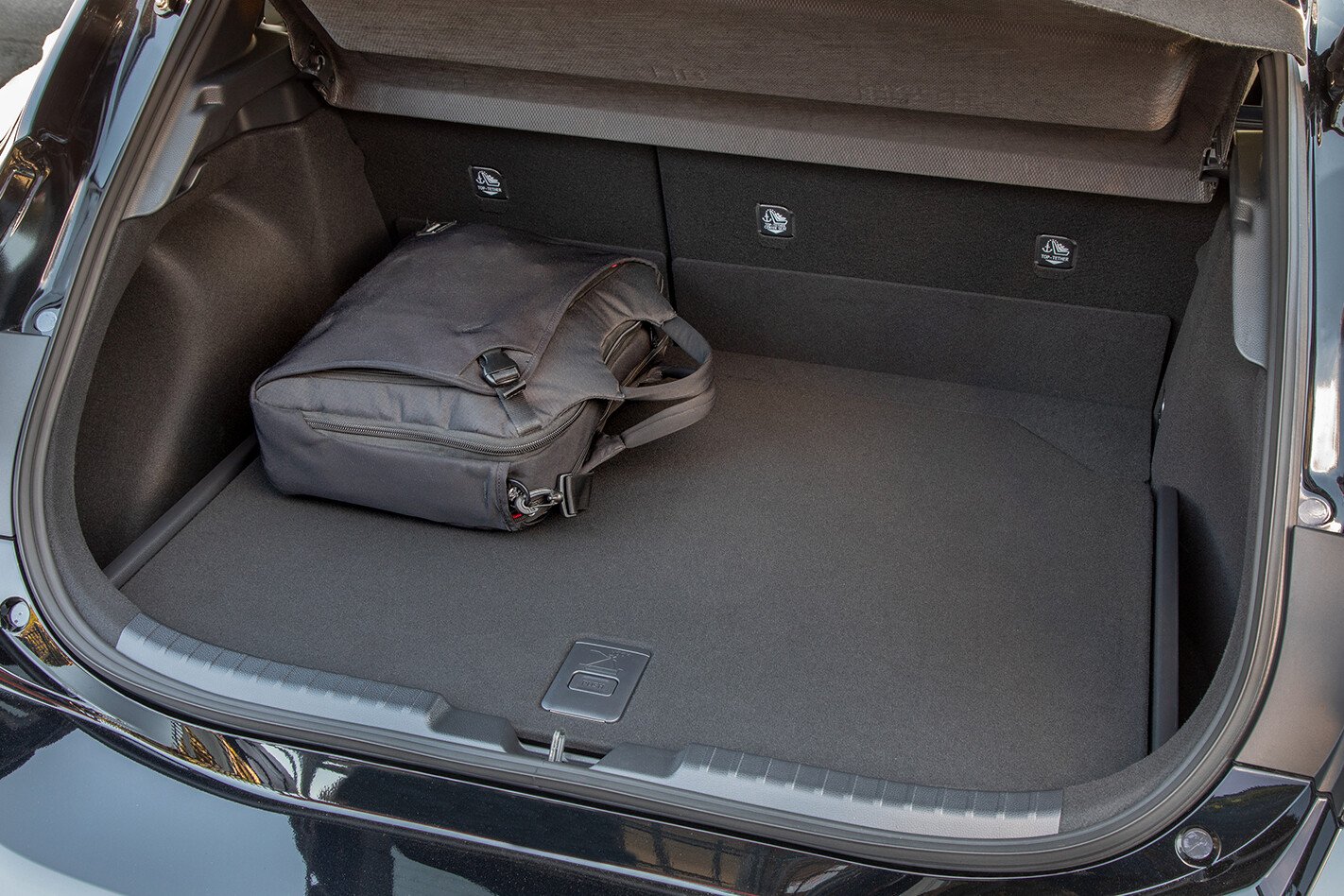
Having to pay more for an entry-level Corolla. The Ascent spec grade, which kicked off the previous model range, has been deleted with the line-up now starting with the Ascent Sport that costs about $2700 more.Not being able to fit much in the hatchback’s 271-litre boot, which holds less than most smaller light-segment hatches including the Toyota Yaris. The sedan has far more useful 470-litre boot space.
What body styles are there?
Five-door hatchback and four-door sedan with front-wheel-drive.The Corolla is classed as a small car, lower priced.
What features do all Corollas have?
- Active cruise control, and autonomous emergency braking with pedestrian and cyclist detection.
- A reversing camera with fixed guidelines, lane-keeping assist and speed-sign recognition.
- 8.0-inch touchscreen with voice recognition. An MP3 compatible sound system with an AM/FM radio, and Bluetooth connectivity for phone calls and music streaming.
- Android Auto and Apple CarPlay smartphone pairing.
- Height and reach adjustment for the steering wheel, with controls on the wheel for operating the sound system and your phone.
- LED headlights with auto high beam, LED tail-lights and LED daytime running lights.
- Rear fog-lamps, power-folding heated exterior mirrors.
- Air-conditioning, and electric park brake.
- Aluminium-alloy wheels.
- Seven airbags. Electronic stability control, which helps you recover the car from a skid. All new cars must have this feature.
- All Corollas are covered by a five-year, unlimited-kilometre warranty.
Which engine uses the least fuel, and why wouldn’t I choose it?
The hybrid Corollas naturally use the least fuel. On the official test, the hybrid consumes just 4.2 litres/100km (city and country combined) in the hatchback and just 3.5 litres/100km in the sedan.The hybrid augments a 1.8-litre, four-cylinder petrol engine with a battery-driven electric motor. When you brake, it reclaims energy that is normally wasted, using it to recharge the battery and hence to propel the car. That makes a big difference to fuel use, and particularly around town where you’re braking a lot.
What key features do I get if I spend more?
The least costly hatchback, the Ascent Sport, with the 2.0-litre engine and manual gearbox rolls on 16-inch alloy wheels, has cloth seats, manual air-conditioning and a six-speaker sound system. The petrol Ascent Sport is also the only Corolla with a full-sized alloy spare wheel option.
Spending $1500 more brings the CVT auto.
The Ascent Sport Hybrid has all of the features found in the petrol Ascent Sport, plus dual-zone air-conditioning, and smart keyless entry that doesn’t require you take your key fob out of your pocket or bag. The Ascent Sport hybrid has a space-saving temporary spare wheel.Spend more for the SX and you gain satellite navigation, digital radio (DAB+), and a fancier steering wheel, wireless phone charger and blind-spot monitoring.
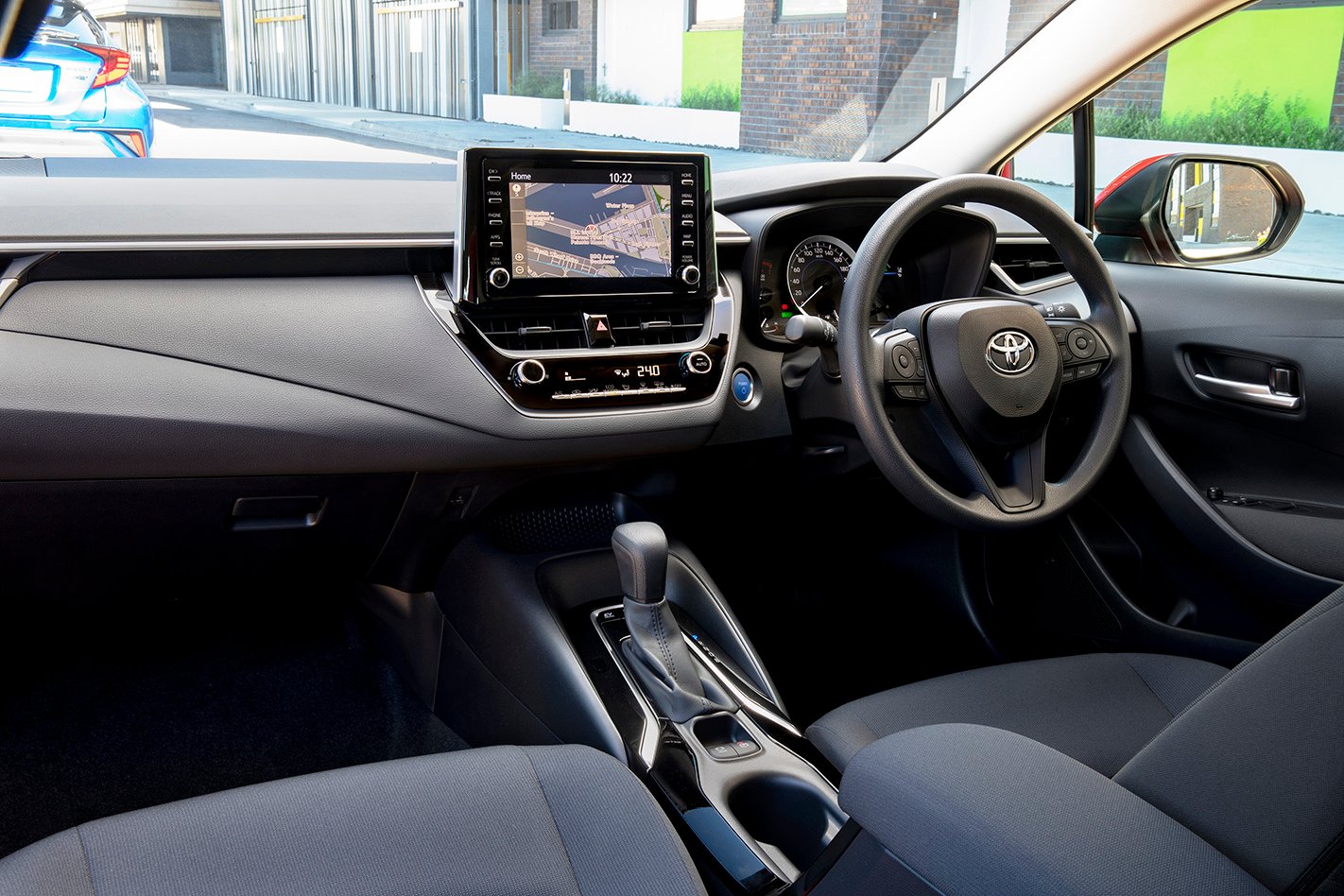
Both petrol and hybrid SX Corollas have dual-zone climate control air-conditioning, smart keyless entry and start, and space-saver spare wheel.
The range-topping Corolla ZR brings sportier 18-inch alloy wheels with lower-profile tyres. The petrol ZR has a space-saver spare wheel, the ZR Hybrid hatchback has a puncture repair kit – the ZR Sedan only comes with the petrol engine.The most expensive Corolla, the ZR brings sportier 18-inch alloy wheels with lower-profile tyres. The petrol ZR has a space-saver spare wheel, the ZR Hybrid a puncture repair kit.The ZR’s seats are trimmed in a combination leather and fake suede. The sports front seats are heated, with the driver’s seat equipped with lumbar support.The ZR also has a head-up display that shows information like your speed and sat-nav directions on the windscreen at eye level. Music is more enjoyable via an eight-speaker JBL sound system.
Does any upgrade have a down side?
The lower-profile tyres fitted to the ZR hatchbacks ride a little more roughly than those on the other Corollas and may cost more to replace.The best-equipped sedan, the ZR, does not have a hybrid option.
How comfortable is the Corolla?
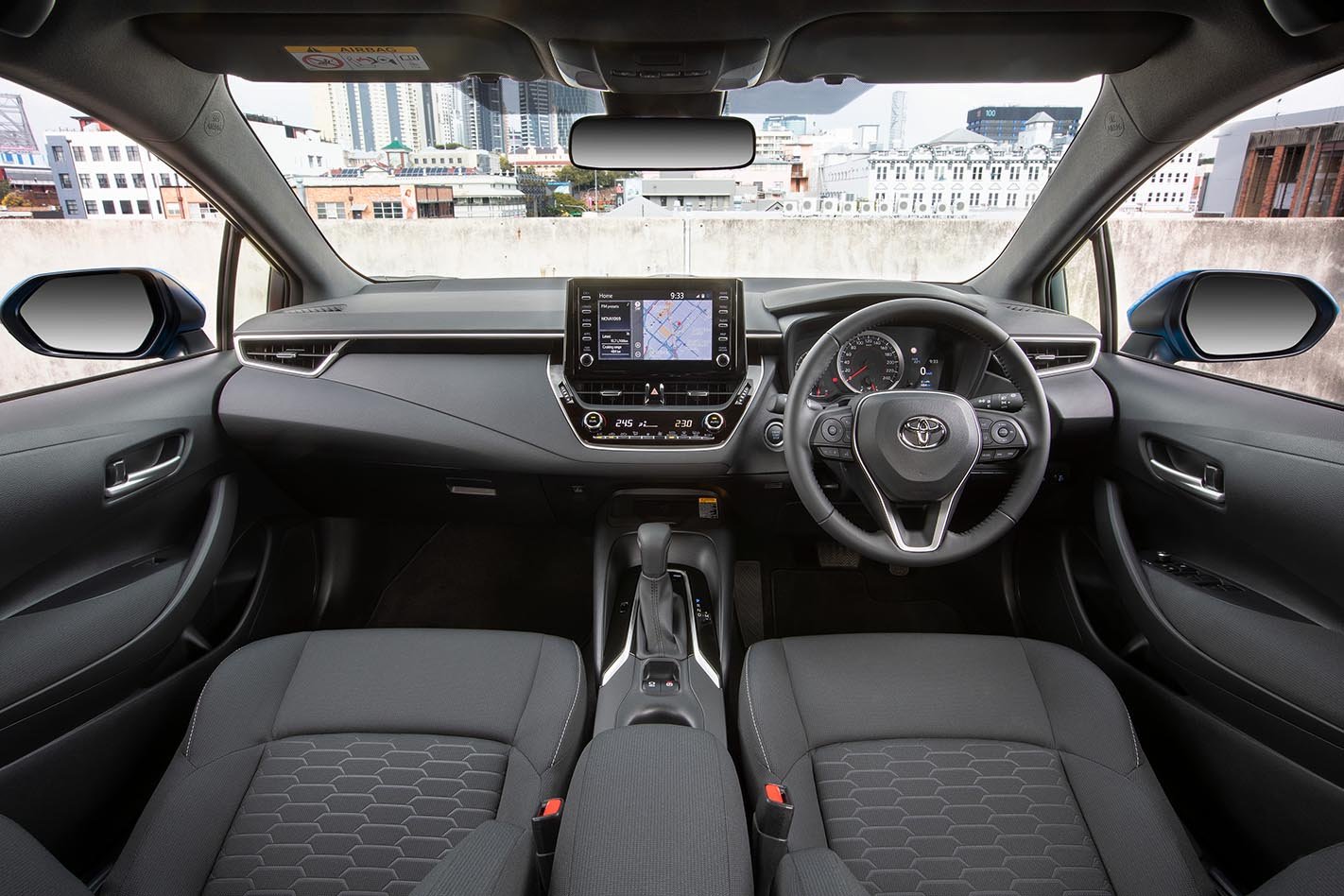
Toyota has put a greater emphasis on cabin design with its 12th-generation Corolla. The design is clean, handsome and ergonomically sound. Build quality is hard to fault and the materials used also have a high quality feel – even the harder plastics of the most affordable Corolla, the Ascent Sport. The cloth upholstery also feels durable and comfortable.That said leg and headroom is pretty tight in the back seats of the hatch, despite this Corolla having a 40mm longer wheelbase than its predecessor. The sedan, on the other hand, is quite roomy for a small car, with plenty of head and legroom in all seats for adults.
What about safety in a Toyota Corolla?
Seven airbags, stability control, a reversing camera, and rear parking sensors, contribute to a respectable safety picture in any Corolla.There are two airbags directly in front of the driver and front passenger; one beside each front occupant to protect their bodies from side impacts; and a curtain airbag down each side of the car at head level to protect occupants front and rear from side impacts. Finally, there is an airbag at knee level for the driver.
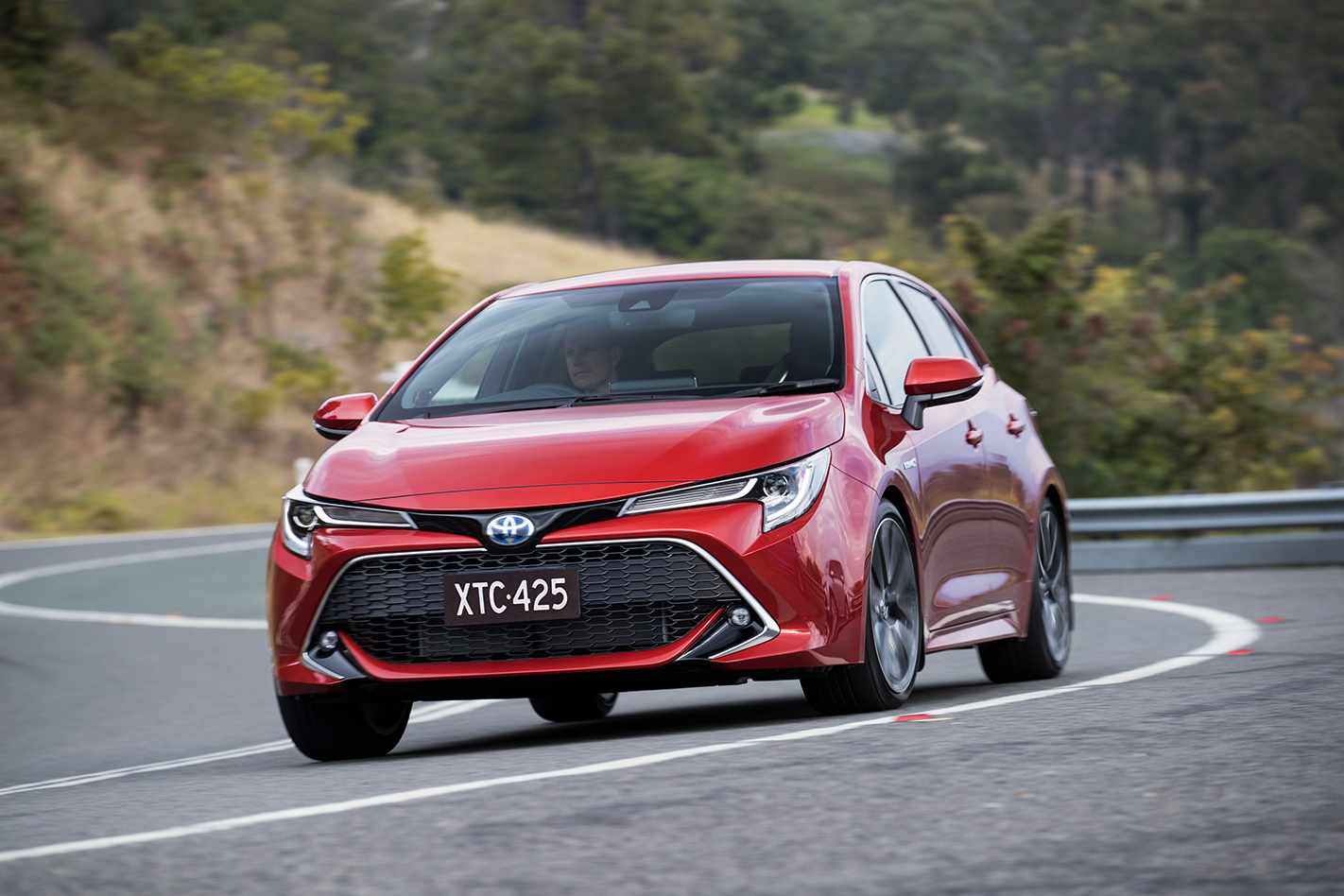
I like driving – will I enjoy this car?
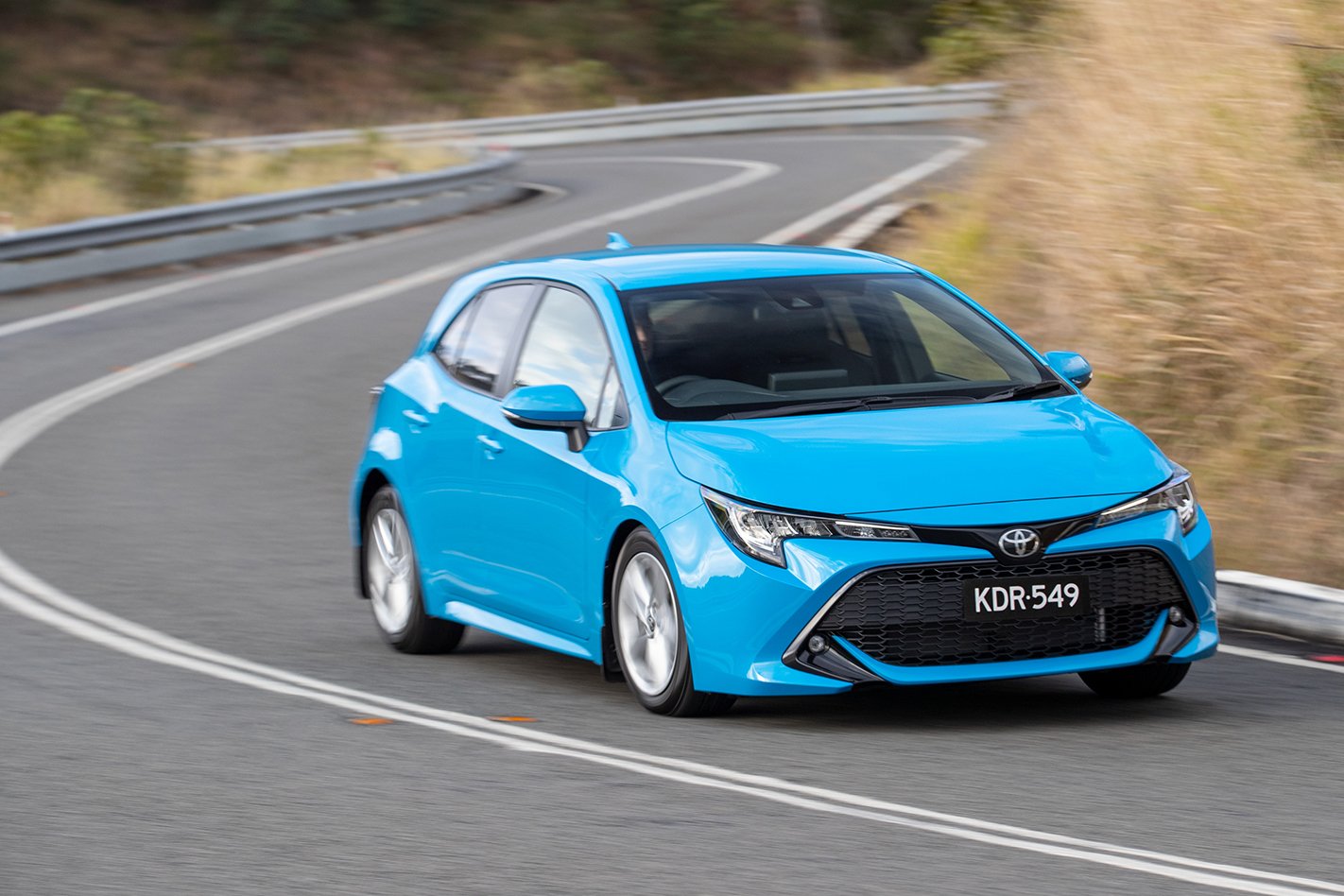
The Corolla’s reputation for bland driving dynamics doesn’t apply to this model. It has been re-built from the ground up on a new longer and wider and stiffer chassis with a sophisticated new multi-link rear suspension.The well-balanced chassis combined with nicely-weighted and direct-acting steering to make cornering surprisingly good fun.The highly-efficient 2.0-litre petrol engine is the most powerful engine for its size without a turbo and, coupled with the CVT automatic, is the pick of the Corolla’s powertrains. While CVT autos usually have a sluggish rubber-band feel, the Corolla’s has a ‘launch gear’ that steps through the gears like a traditional automatic gearbox. This helps the Corolla take-off sharply from a standstill, while also providing any urgent demand for acceleration while on the move, such as when overtaking.
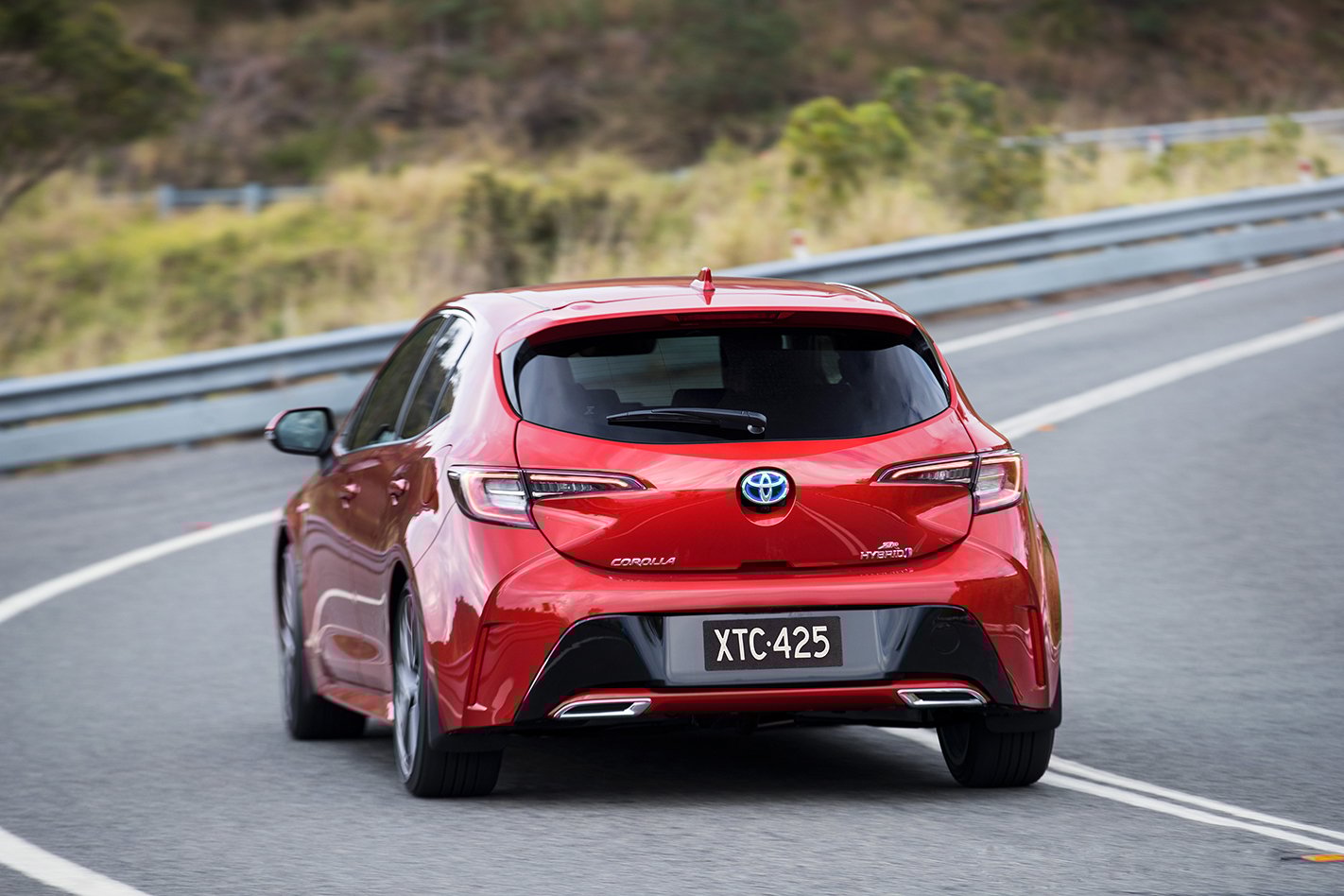
How is life in the rear seats?
The Corolla hatchback has a 40mm-longer wheelbase than its predecessor, which would normally translate into a significant improvement in legroom. Unfortunately, that’s not the case in the back row. While the front seats are spacious and deliver superb comfort, the rear seats lack knee room and headroom. That’s a shame because the rear bench is actually shaped very well and offers good support for a pair of adults.The sedan, on the other hand, is impressively spacious, with plenty of head and legroom in all seats for adults.
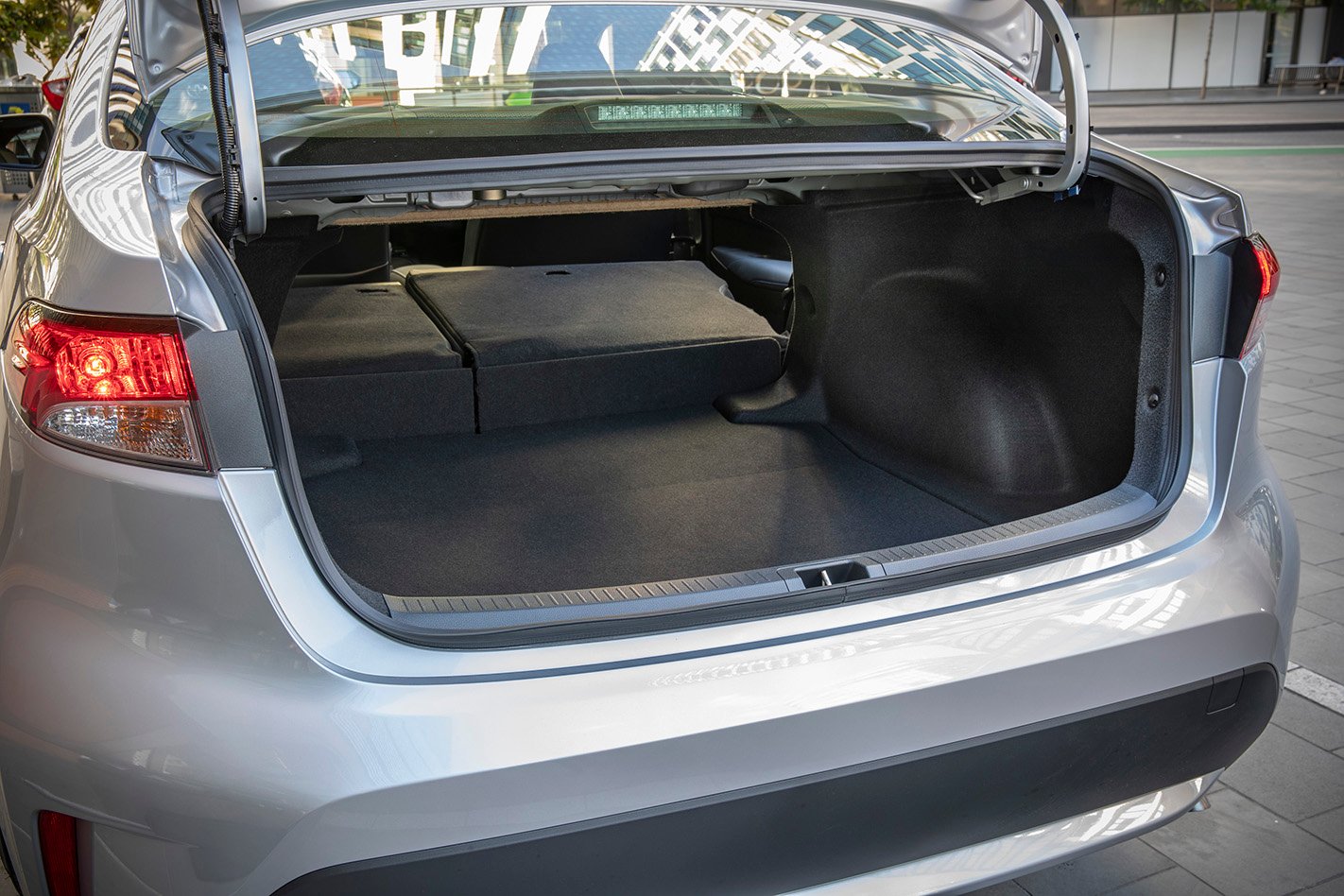
How is it for carrying stuff?
The Corolla’s hatchback’s superior driving dynamics seems to have been achieved at the expense of practicality. Opening its lightweight plastic hatch reveals a tiny boot measuring just 217-litres in all but the Ascent Sport with tyre repair kit, and ZR Hybrid.
That’s less boot space than the smaller Toyota Yaris!
And you’ll be stuck for a while if you get a puncture.The Corolla sedan has no such issues has a much more practical 470-litre boot, which is the same as the previous model. That’s a massive jump of 253 litres on the Corolla hatch and only 25 litres less than the bigger Camry. Plus, you’re not disadvantaged by going hybrid, either, as both engine types gain the same litre count and 60/40-split rear seats.
Where does Toyota make the Corolla?
Corolla hatchback and sedan models – including the hybrids – are built in Japan.
What might I miss that similar cars have?
Perhaps swifter overtaking from a turbocharged engine. The Volkswagen Golf, Ford Focus and Renault Megane offer this, for example.A bigger boot and more rear legroom as found in the Golf, Astra, Focus and Hyundai i30, Honda Civic, and Skoda Octavia.
A more practical wagon version, as available with the Focus, Golf and Octavia.
Possibly the all-weather security of all-wheel drive, standard on a Subaru Impreza.
Other small car rivals you may want to consider include the Mazda 3, and Kia Cerato.
Are there plans to update the Corolla soon?
The 12th-generation Corolla Hatch went on sale in July 2018 with the 2.0-litre petrol and hybrid versions.Apple CarPlay and Android Auto were added to the Toyota hatchback’s infotainment system in October 2019. Current model Corollas purchased before then can have the system retrofitted.Toyota introduced the Corolla Sedan in November 2019.Don’t expect an update before 2021.
I like this car, but I can’t choose which version. Can you help?
Unless performance is at the top of your list, it’s hard to go past the economic hybrid versions, with the mid-priced SX being our pick of the bunch in terms of value and features.The sedan is your best bet if you require a practical boot space and need to ferry people around – we reckon it looks pretty good too.
NEW! 2023 Corolla range review
Looking for more details on the very latest Corolla line-up? Our full 2023 range review has everything you need to know.
When Chaz Mostert and Warren Luff take to Mount Panorama in the number 25 Walkinshaw Andretti United Holden Supercar for the 2020 Bathurst 1000, the car will likely have a nervous new owner following its every move.
No, it wasn’t listed with an ad reading ‘only driven on weekends’ or ‘carefully maintained by a trusted workshop’, though neither statement would be far from the truth. Nonetheless, Chaz Mostert’s first-ever Holden Commodore Supercar is up for auction right now with online seller Lloyds.
The WAU racer is set to take on The Mountain this weekend, with Mostert and Luff looking to be strong odds to end up on the podium after The Great Race, so the car has the chance to add some significant prestige for its new owner.
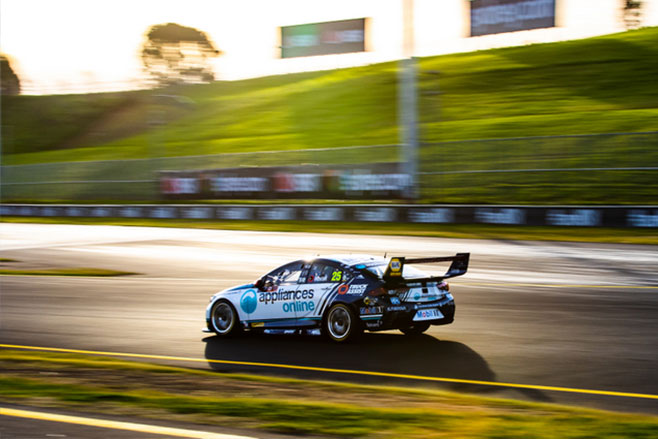
They’re fifth in fact, on Bet365’s list of highest chance winners behind defending Supercars champ Scott McLaughlin and Slade, Whincup and Lowndes, van Gisbergen and Tander, and Waters and Davison.
Of course, the bookies don’t decide the results of the Bathurst 1000, and drivers like David Reynolds have proven good form at Panorama.
We asked Warren Luff how the team was feeling about the weekend after some practice on Thursday afternoon, and Luff said the team was optimistic despite some intermittent rain expected.
“We’ve got a bit of homework to do overnight to make sure the car’s ready for Chaz to put in his best qualifying lap, but really it could come down to the weather on the day.
“It’s been beautiful and sunny today, but rain here at Bathurst is one of those situations where if it bites, it bites hard. Chaz and I have both seen that first-hand here.”
But if Mostert and Luff find their way to the top step, someone could be looking at a racecar bargain.
At the time of writing, the racer had a bid of $142,000, with the auction due to end on Friday afternoon before race weekend kicks off. Building a Supercar is estimated to usually cost north of $600,000, and paying anything less for a Bathurst winner could be someone’s dream.
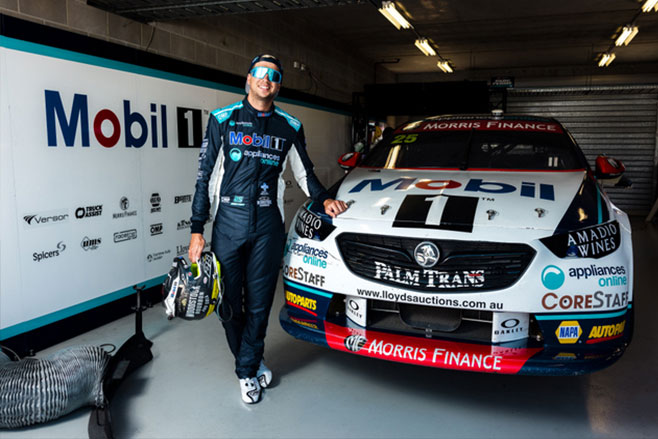
“To own a Walkinshaw Andretti United built and prepared car is a rare opportunity, but to own Chaz Mostert’s first with our team, and then have the opportunity to watch it compete in the Great Race a few days later is very special,” says WAU team principal Bruce Stewart.
Mostert’s time at WAU has been relatively short, and his tenure as a Holden driver with Walkinshaw is limited to the 2020 season.
Having driven Fords for almost a decade prior, starting in the Dunlop support series before graduating to drive for DJR in mid-2013, Mostert has raced with several teams, his most recent being Tickford during the transition from Falcon to Mustang in 2018 and 2019.
With a couple of podiums under his belt this year, Mostert is at the pointy end of the championship as Bathurst approaches, and his first Holden – also one of the last to be run by a team with such close ties to Holden under Walkinshaw – could prove a suitable talking point for the well-heeled race fan.
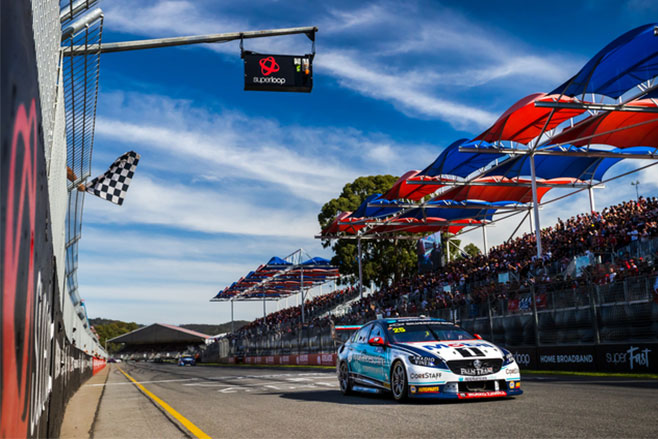
The owner won’t get an engine with the car, but will have the option to dress it up in any livery from the 2020-21 Supercars season, as well as special paddock access through the 2021 season, hot laps, signed body panels, and WAU hospitality at the 2021 Bathurst 1000.
Unfortunately, said owner must wait until the end of the 2021 season when the car will be retired from racing until they can actually take delivery, giving Mostert plenty of time to rack up a few more kilometres on the odometer.
Actually, Supercars don’t even have odometers. We even asked Luffy to make sure.
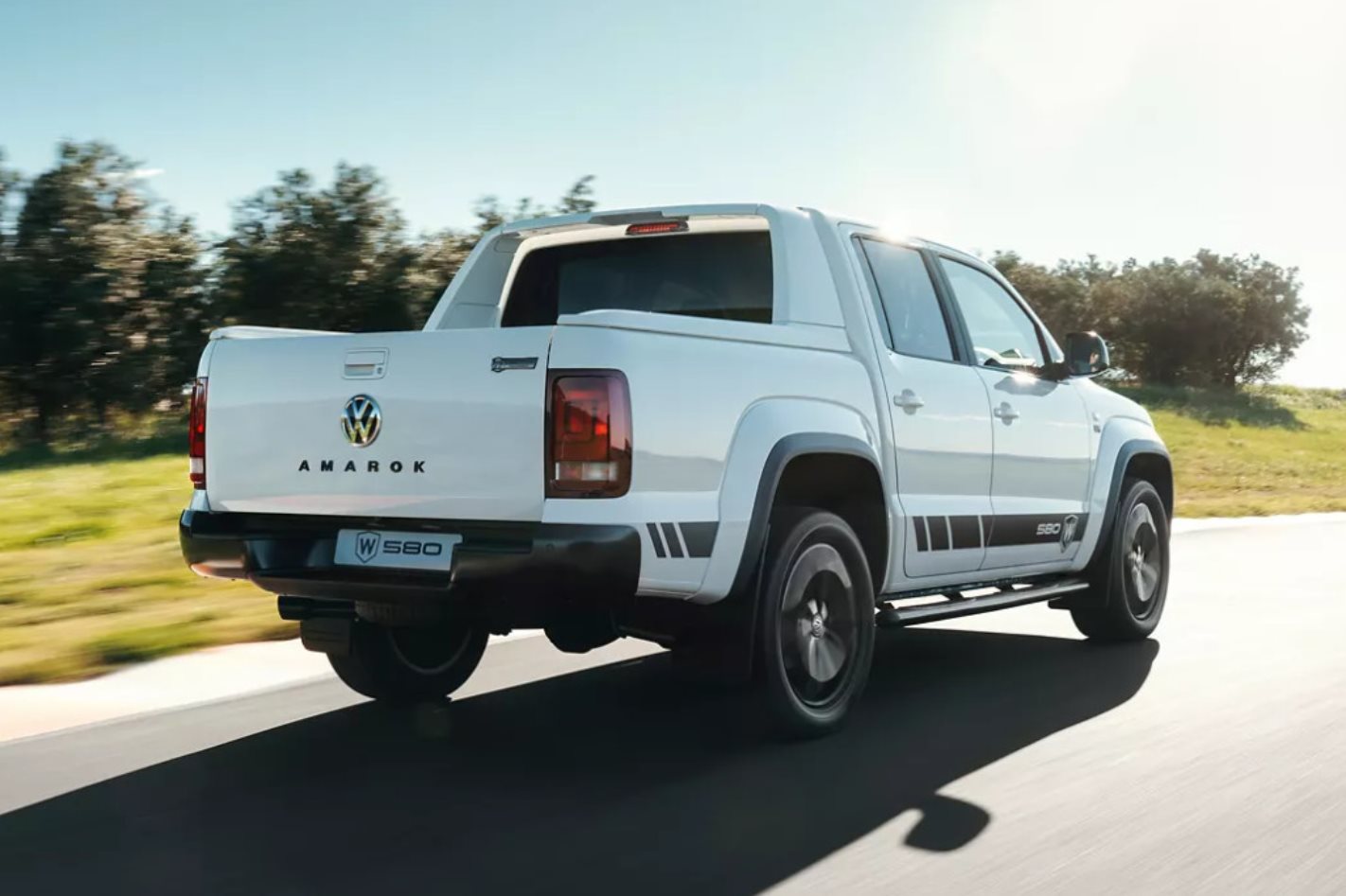
Volkswagen has joined forces with high-performance authority Walkinshaw to produce a sharpened version of its outgoing Amarok one-tonne ute dubbed the W580.
The special edition of Volkswagen’s popular tradie truck has been 12-months in the making in close partnership with the Melbourne modifier, and introduces a number of enhancements for a ‘GT’ version of the model, says its maker.
Suspension has been completely retuned with 40mm of height dialed into the front end and the overall ride height is boosted by larger diameter tyres.
Pirelli Scorpion rubber is wrapped around unique 20-inch Clayton alloy wheels, which have been designed by Walkinshaw and named after the company’s home suburb – the same part of Melbourne in which Volkswagen built its Australian factory in 1953.
There’s no bigger turbo bolted to the Amarok’s V6 as part of the Walkinshaw transformation, with the Porsche-sourced 3.0-litre turbo diesel untouched by the tuner, but some expert fabrication has gleaned a little extra power from the unit.
A bespoke tuned twin exhaust system complete with side-exit pipes has bumped the power up to 200kW from the 190kW offered by the standard Amarok Highline 580, while torque output remains unchanged at 580Nm.
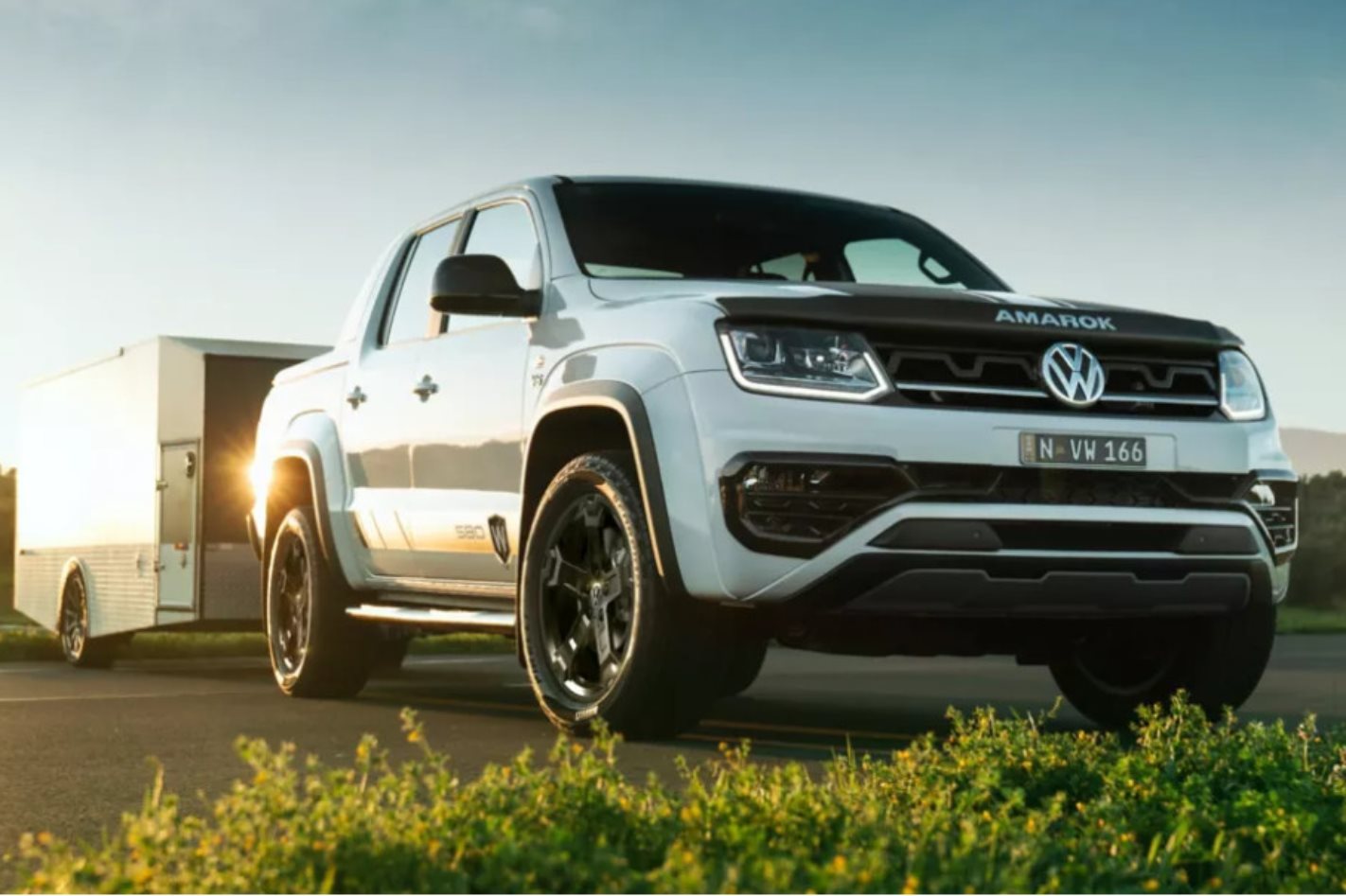
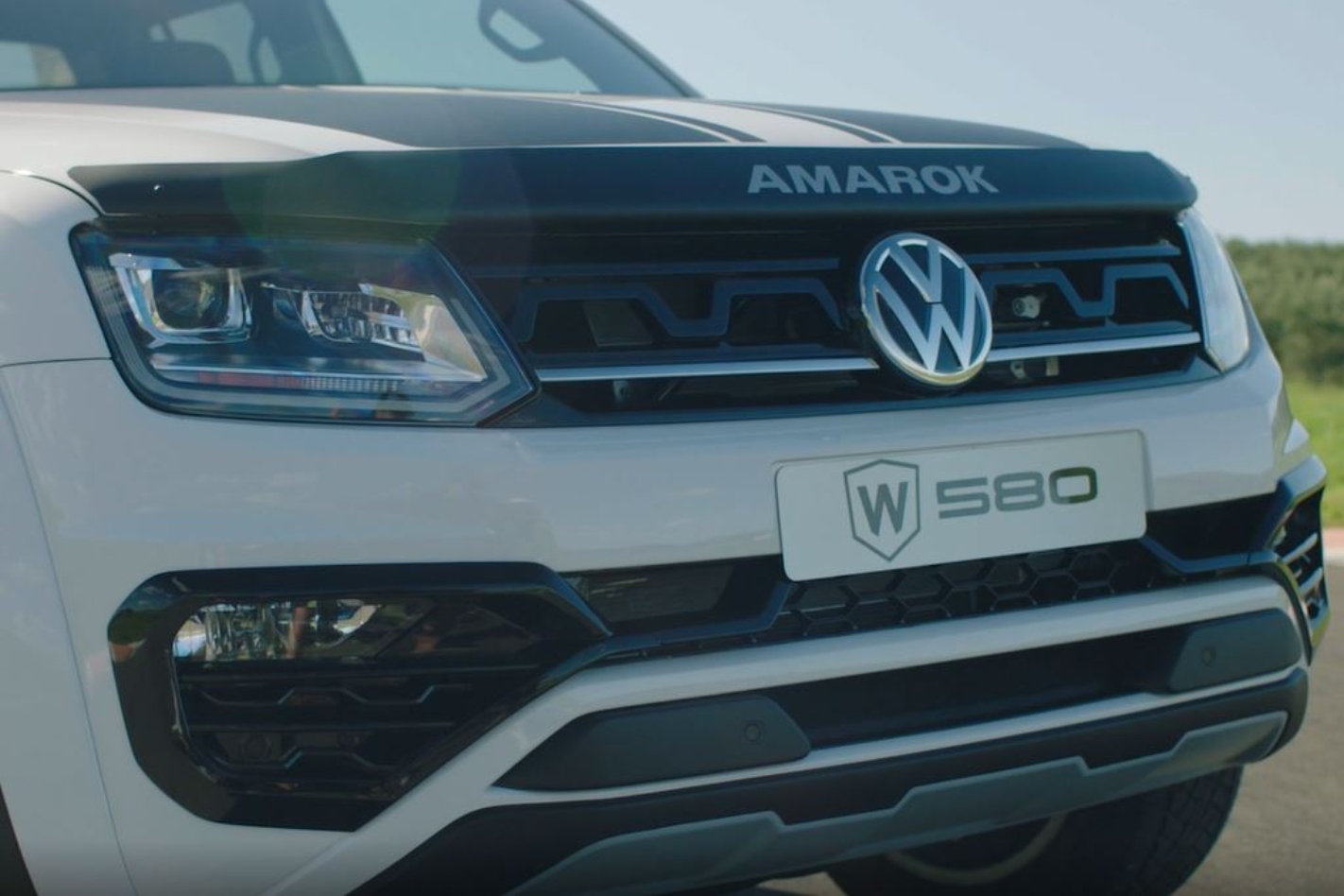
On the outside, Walkinshaw fettled Amaroks are distinguished by their Bi-xenon headlights, LED fog lights, fatter wheel arch extensions and a moulded sports bar.
The conversion is capped off with the obligatory badges, side and bonnet decals.
W580 owners will be reminded of their more exclusive Amarok status each time they hop aboard by the build-number plaque displayed in the cabin, although Volkswagen has not said if the special will be a limited run.
The German car maker has not revealed pricing at this stage but promises the all-important dollar figure to be available on December 1 when the order books open.
The current Amarok range – now produced in Argentina rather than Germany – tops out at more than $70,000 and it’s unlikely the new W580 version will be priced cheaper.
VW will retire this version of the Amarok over the next 18 months or so, with the second-generation Amarok coming via a hook-up with Ford, which will provide the updated Ranger as a base.
The change should herald welcome safety upgrades, including full-length curtain airbags, to match the latest standards set by rivals like the Isuzu D-Max.
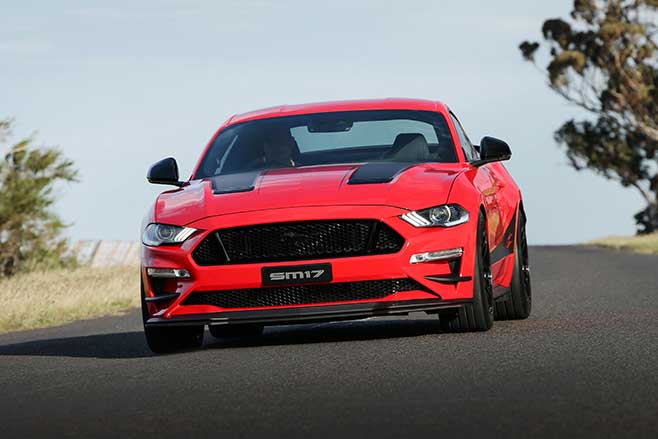
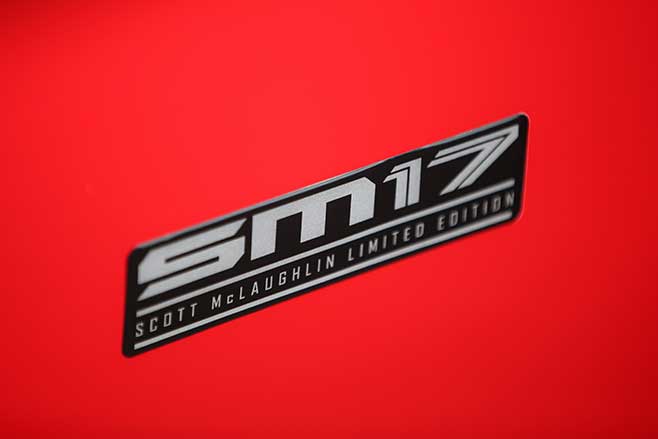
Scott McLaughlin has his name written on two Ford Mustangs. One of them he drove to his third straight Supercars title this year. And then there’s the really powerful one.The Scott McLaughlin Limited Edition by Herrod Performance, or SM17 for short, might have number plates and leather seats instead of sponsor decals and a roll cage, but it’s the best part of 100kW up on its circuit-dwelling sibling. The gulf in torque is even wider.All in all, 578kW and 810Nm are sent to the rear wheels courtesy of a monster 3.0-litre supercharger nestled in the vee of the otherwise standard 5.0-litre Coyote V8.
But what is an SM17 and how did it come about? The car’s creator, tuning legend Rob Herrod, has the answers.
“And then with the R-Spec [program] going on, I said ‘It’s a bit hard for me to do a McLaughlin car, I’ve only got time to do 30 [Dick Johnson] cars.’“Wayne McLaughlin, who’s Scott’s father, and I hang out at Supercars rounds and he’s been on my back to do a car, so with the lad looking like winning his third championship we decided ‘let’s do it’.”
Left unsaid and unconfirmed is that with McLaughlin expected to head Stateside to Indycar next year, the SM17 was somewhat of a ‘now or never’ proposition.
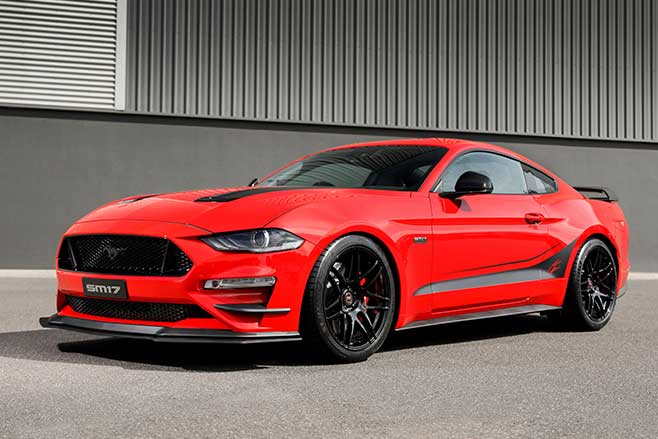
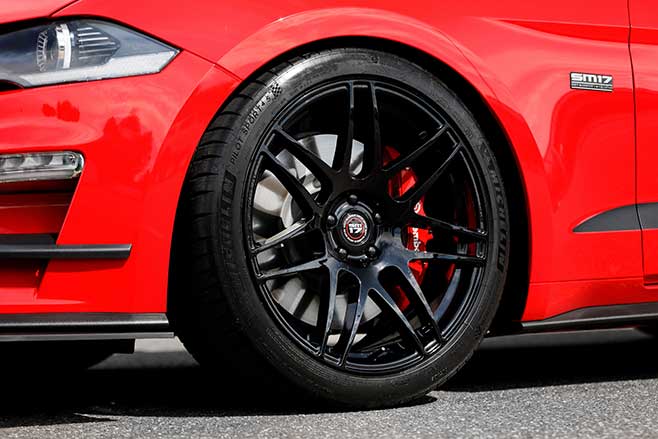
These wear Michelin Pilot Sport 4S tyres measuring 275/35 and 305/30 respectively, making the SM17s front boots as big as a standard Mustang GT’s rears.
Adjustable anti-roll bars and recalibrated Magneride dampers round out the suspension changes.
Those massive rear boots, that sit snugly in the Mustang’s arches thanks to the bespoke wheel design, do a heroic job of turning nearly 800bhp into forward motion.
Driving the SM17 in the wild
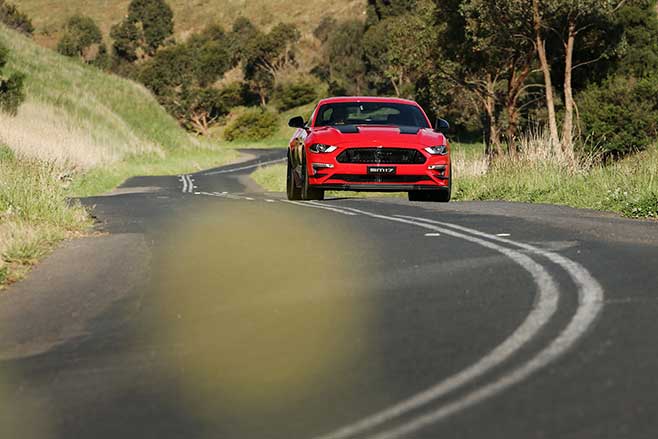
In the dry the SM17 has to be actively encouraged to break traction; its typical full-throttle behaviour is to just surge towards the horizon, gulping through its gears like Pac-Man munching cookies.Unsurprisingly, much greater circumspection is needed in the wet as the rear wheels can and will spin through to fifth gear, but it requires respect, not fear.
The SM17 sits flat and generates remarkable lateral forces in the corners; I haven’t driven a Shelby GT350 but it must surely be in the ballpark, especially if you switched the standard Michelin PS4s for more focused Cup 2s.There’s better communication than in a standard Mustang, the steering telegraphing when the front tyres have had enough and only at the very limit does the car’s weight make itself apparent.
At this point point you’re travelling fast enough to need a racetrack, but that’s not an environment the SM17 should fear; Herrod claims to have completed dozens of consecutive laps at Winton during development.
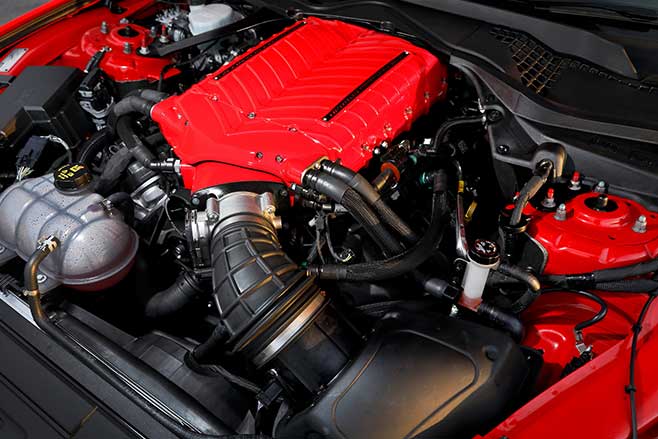
Think of the supercharger as adding displacement, turning the Coyote into a rev-happy 8.0-litre V8, rather than injecting boost in the traditional sense with a massive slug of torque.It’s loony fast and the digital speedo a blur, especially if you lock the transmission in fourth or fifth and ride the wave. Melbourne’s lockdown rules meant our usual performance testing wasn’t possible, but the bum VBox extrapolates a quarter-mile speed about the 205km/h mark and that feels about right.
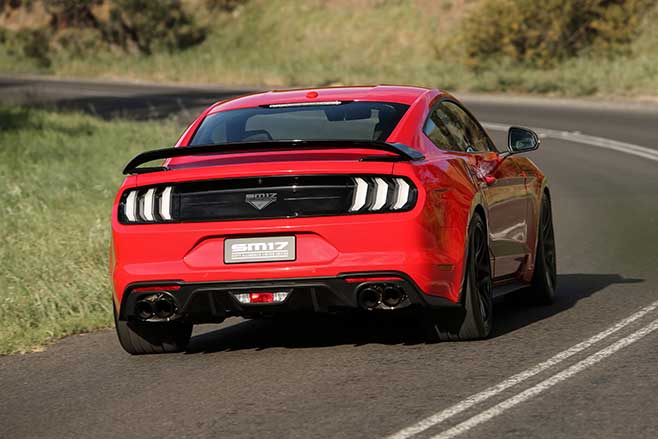
There is a bit of exhaust boom in the cabin under certain cruising conditions – tenth gear, 90km/h – and the big tyres create plenty of road noise, but the MagneRide suspension soaks up most bumps for a firm but fair ride.Gearbox choice is a tough one. Herrod’s automatic calibration is very good, the transmission crisper and more decisive in its shifts, a little theatrical nudge in the back accompanying each one at slow speeds.
However, there’s still a slight delay between throttle application and engine response, particularly if there’s a series of inputs in quick succession, and in a car this fast and powerful, accuracy is everything.
The manual might be the pick, as the SM17 certainly has the grunt to pull the long gearing.
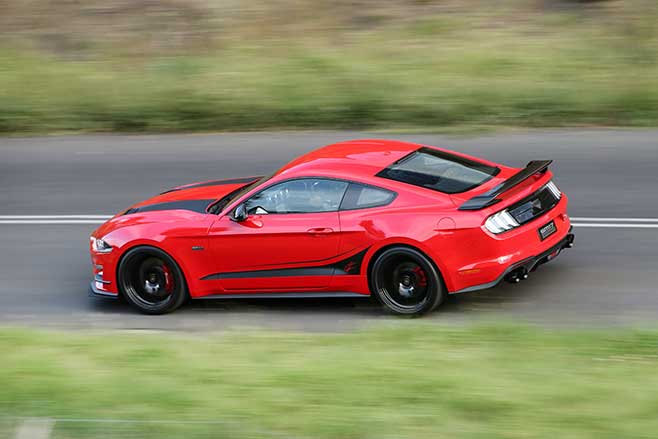
“With everything I’ve learnt through the first compliance pack through the R-Spec and all the other cars we’ve built, I knew I had everything in place to build a really, really good car,” Herrod told us.
Having been fortunate enough to drive all of Rob’s Mustang creations, I agree; the SM17 is his best yet.
It has all the aggression you’d expect from a modified car while retaining its factory manners in terms of ride, response and reliability. It’s a fine tribute to a fine racing driver.
Rating: 4.5/5Likes: Eye-watering power; retains its manners; improved dynamics; looks tough Dislikes: Road noise; auto can struggle to keep upSpecificationsEngine: 5038cc V8, DOHC, 32v, supercharger Power: 578kW @ 7500rpm Torque: 810Nm @ 4800rpm Gearbox: 6-speed manual; 10-speed automatic Weight: 1784kg 0-100km/h: 4.4sec (claimed) Price: $125,000 (approx)
