
I’m not even sure why I was seeing the six o’clock TV news on a commercial channel. Past experience has demonstrated only too clearly that what is in the public interest and what the public is interested in are two, distinctly different things. And yet here I was – somehow – plonked on the couch as Kent Brockman dialled up ‘outraged-and-disgusted’ on the facial-expression-o-meter.
“Two hoons have left a path of destruction in an overnight rampage,” said Kent. “The pair escaped police, nanoseconds after officers called off the chase, only to crash the stolen car they were driving into a roundabout”. Hold the weddin’, Judge. Are we talking hoons here, or car thieves? Surely, the telly-prompter should have read: Two car thieves have left a trail of… blah, blah, blah. You get the point.
Since when did being a hoon become a crime more foul than being a car thief? And define hoon. I’ll start you off by defining car thief. It’s somebody who steals cars. Now your turn: What exactly is a hoon, and how did this act of hoonery become more significant than the fact that some poor bastard is, this morning, standing in an empty driveway where their car was sitting last night? And is it not possible that the hoon act was the result of a couple of bobble-heads panicking when Plod switched on the cherries and berries and kicked it down three gears out of a side-street?
Dave Morley’s best columns of 2019
Of course, I should know better than to be surprised at the idiocy of mainstream TV news reporting. In fact, mainstream TV anything. You know the stuff. TV shows based on watching grumpy chefs filling their pockets with money while they cook things that (a) I can already cook myself, or (b) I wouldn’t feed the yappy dawg two doors up. And under-paying the wait-staff at their overpriced restaurants in the meantime. Yeah, nah. But then it got worse. Oh yes.
You will, of course, recall the horrendous crash on a Melbourne freeway earlier this year where four police officers were killed doing their job. Yes, how could we forget?
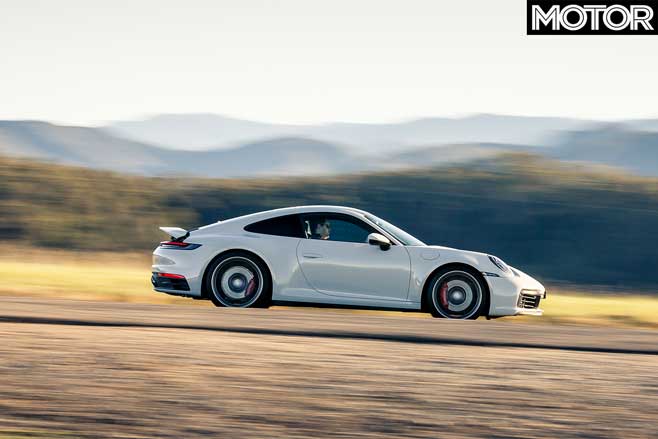
But here’s where it gets stupid: The driver of the car involved in the original stop-and-search on the side of the freeway was allegedly travelling at almost 50km/h over the limit on a busy arterial, was allegedly off his scone on meth, was allegedly carrying ice in his car (the drug, not the beer-and-prawn preservative) was allegedly driving while disqualified and then allegedly taunted a dying officer, videoed her and then shared the video with his allegedly dickhead mates. He then allegedly fled the scene without offering potentially life-saving assistance despite being trained as a registered nurse. Oh, and he was on bail while all this was going on.
Opinion: Stop the hoon beatups, ACA
So how do the news services refer to him? As the drugged driver? The speeding driver? The disqualified driver? The driver who ran away rather than help a dying cop? The driver who shared his snuff videos? Nope, pretty much every media outlet identified the alleged tool as ‘The Porsche driver at the centre of the tragedy’. FFS.
If I was Porsche, I’d be sooling the lawyers on to the lot of them. What if the bloke had been driving a Camry? Would he be ‘The Toyota driver at the centre of the tragedy’? Of course not. This is just one more example of weasel words and double-speak being used to bring innuendo into a news service that should be factual and unbiased, not emotive and calculated to put a slant on the facts.
Why does it happen? I reckon in the first instance – the People versus Hoons – the broad idea is to further vilify anybody who likes to drive a car. In the second example, there’s a clear intention to make pariahs of anybody who has worked hard and made sacrifices to own a Porsche (by associating them with Old Mate shit-heels) and drive an even bigger wedge between what’s perceived as the haves and have-nots. Mightn’t do much for the art of reportage, but it sure as hell glues the dummies to the idiot-box.
- Spotted at Volvo’s proving ground
- Looks to be electric resto-mod
- P1800 turns sixty next year
New pictures of a camo’d Volvo P1800 outside the brand’s Hällered proving ground suggest an all-electric restomod is underway.
The car shown looks like a P1800 on the surface, but a beefed-up front apron, wheels and tyres suggest something slightly different. And the biggest clue? There are no exhaust pipes on this P1800, either.
What’s going on?
There are two possible options. The P1800 turns sixty next year, so both brands could be planning an electrified restomod to mark the occasion.
After all, it’d be a great way of combining the past, present and future of the Swedish brands. This could be done as a series of cars, or a headline-grabbing one-off.
Additionally, a scan of the car’s ownership means this could also be an internal job. The P1880 snapped is owned by Mattias Evensson, the head of engine development at Cyan Racing AB.
Before that, it was owned by the current CEO of Cyan Racing, Jonas Christian Dahl. That Cyan name should be familiar because it’s the team that powers Lynk & Co’s touring car program – another Geely brand.
Internal project or show car, we’re interested in an electrified take on a Volvo classic. We’ll update this article when we know more.
Filling my ears is the deep burble of what can only be a V8 engine, the rear vision mirror lets me glimpse a large practical tray, and ahead of me is a straight, empty drag strip. It’s all oddly familiar, with images of Australia’s home-grown Holden and Ford V8 utes at the front of my mind. The mental picture is nothing but a cultural ghost of Australia’s lost manufacturing, with those car-based utilities now dead and long buried.
What I’m experiencing is a new era (for Australians at least) of pick-up performance, and it comes in a package that’s as subtle as a bald eagle holding a shotgun. Australia, meet your new V8 ute overlords: the Chevrolet Silverado 1500 and Ram 1500 Laramie.
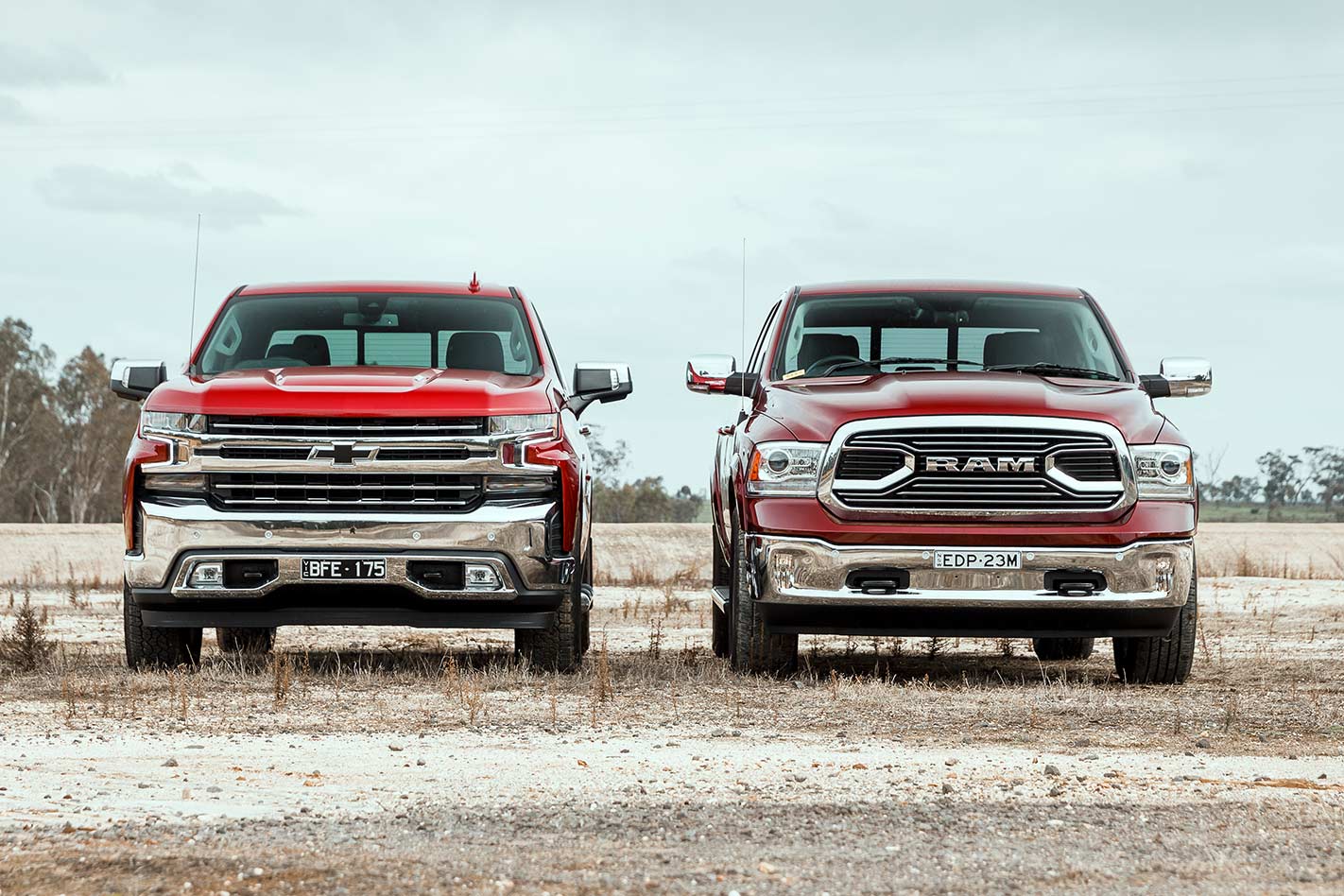
Representing the GM faithful is the Silverado, sold by the soon-to-be rebranded HSV in a single high-specification LTZ grade for $113,990. Ford doesn’t have an officially licensed F Truck in the country so taking its place in the blue corner is Fiat Chrysler’s Ram brand, distributed locally by Ateco with approval from North America. We have the top-spec Laramie specification on test which carries a sticker price of $99,950. Both pick-ups are delivered to Australia as they would be sold in the US and then undergo a ‘re-engineering’ process at Walkinshaw’s Clayton facility at the hands of skilled Aussie workers.
While both 1500s are substantially larger than our traditional dual-cabs (roughly 100mm taller, 200mm wider, and a full half metre longer) they still sit beneath the truly gargantuan 2500 offerings from both Chevrolet and Ram that have been sold locally. But it’s not just size that differentiates these powerhouse pick-ups from your usual worksite fare. You won’t find any turbo diesels here; both have atmo V8 petrol engines under the bonnet.
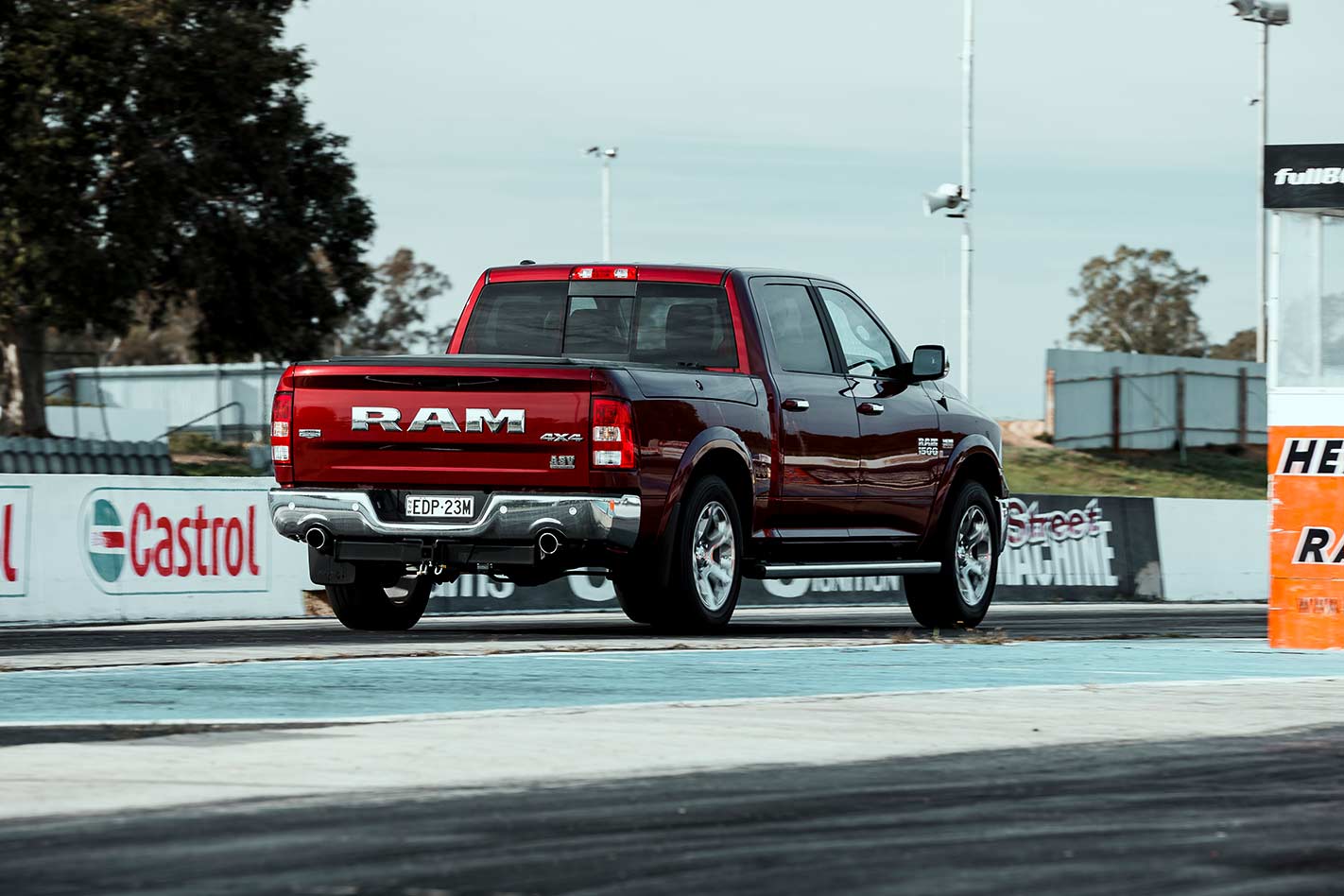
Dep ed Enright and myself have brought both behemoths to Heathcote Raceway for what surely has to be one of the strangest (if not heaviest) performance testing exercises in Wheels’ recent history. Enright has just finished recording numbers, so I’ve jumped into the Chev for a familiarisation run.
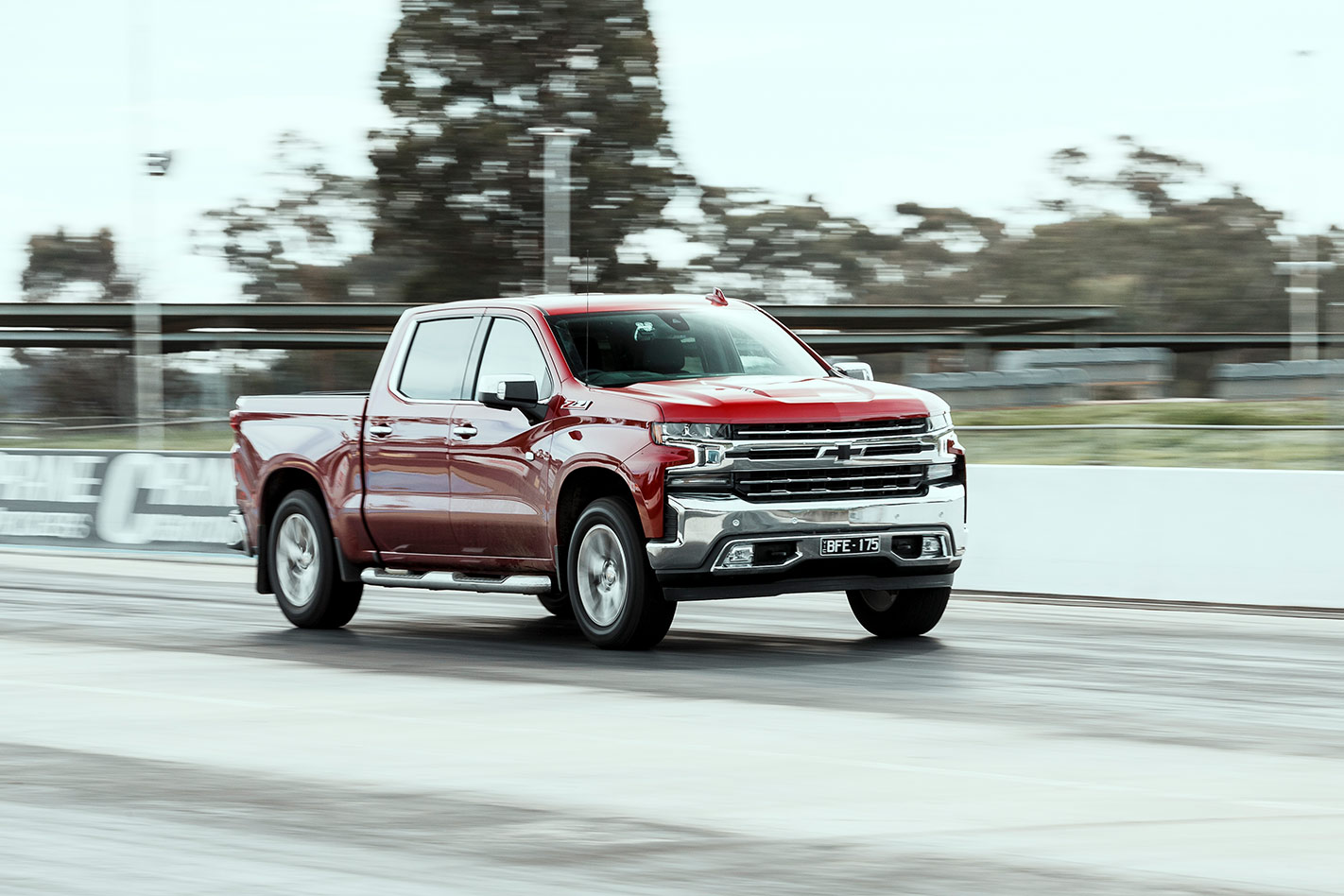
The 6.2-litre petrol V8 builds revs gradually as I load it up against the torque converter. Side-step the brake and there’s a brief squeal from the Goodyear Wrangler Trailrunner all-terrain tyres as they use 313kW/624Nm to get the 2588kg mass moving, the central diff transferring power fore and aft as required. It’s an impressive middle finger to physics as the big beast squats and then lunges forward. The 10-speed automatic slurs through the ratios but it’s surprisingly quick: in 14.5sec I’m past the 400m mark and travelling at a licence-incinerating 150km/h. The 0-100km/h sprint takes 6.4sec. There’s currently no ute on sale that can beat it in a straight line.
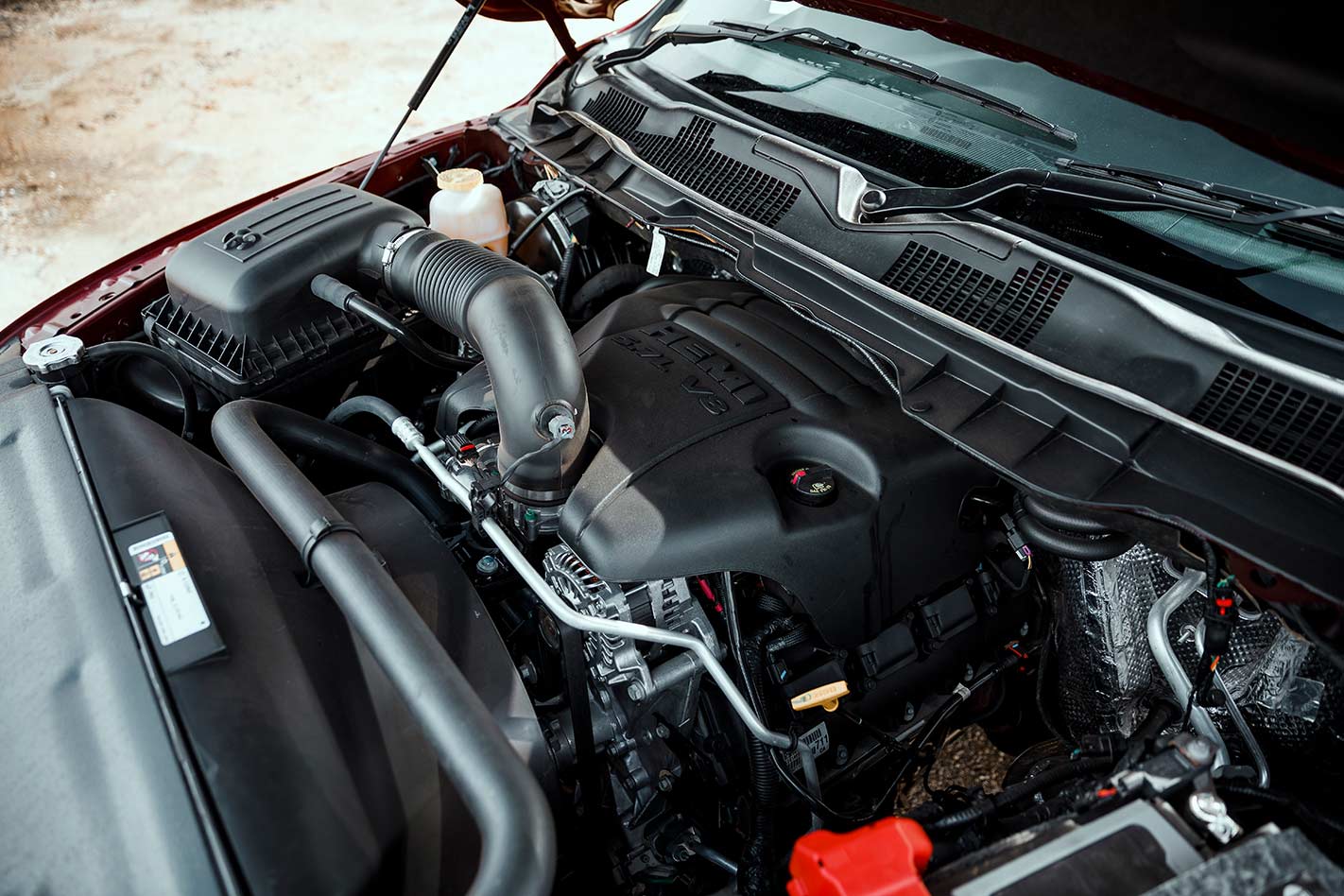
The Ram isn’t far behind. Its 5.7L V8 is down on capacity and performance compared to the Chev, yet it still runs a respectable 6.8sec to 100km/h and is only three tenths shy to 400m.
While the Ram is the less powerful of these two, its engine has more character. It has a hearty engine note and it builds revs more readily, which makes it feel more energetic. And its eight-speed auto (controlled by a dash-mounted dial) is less prone to short-shifting compared to the Chev, so you get to enjoy more of that bent-eight burble as you build speed.
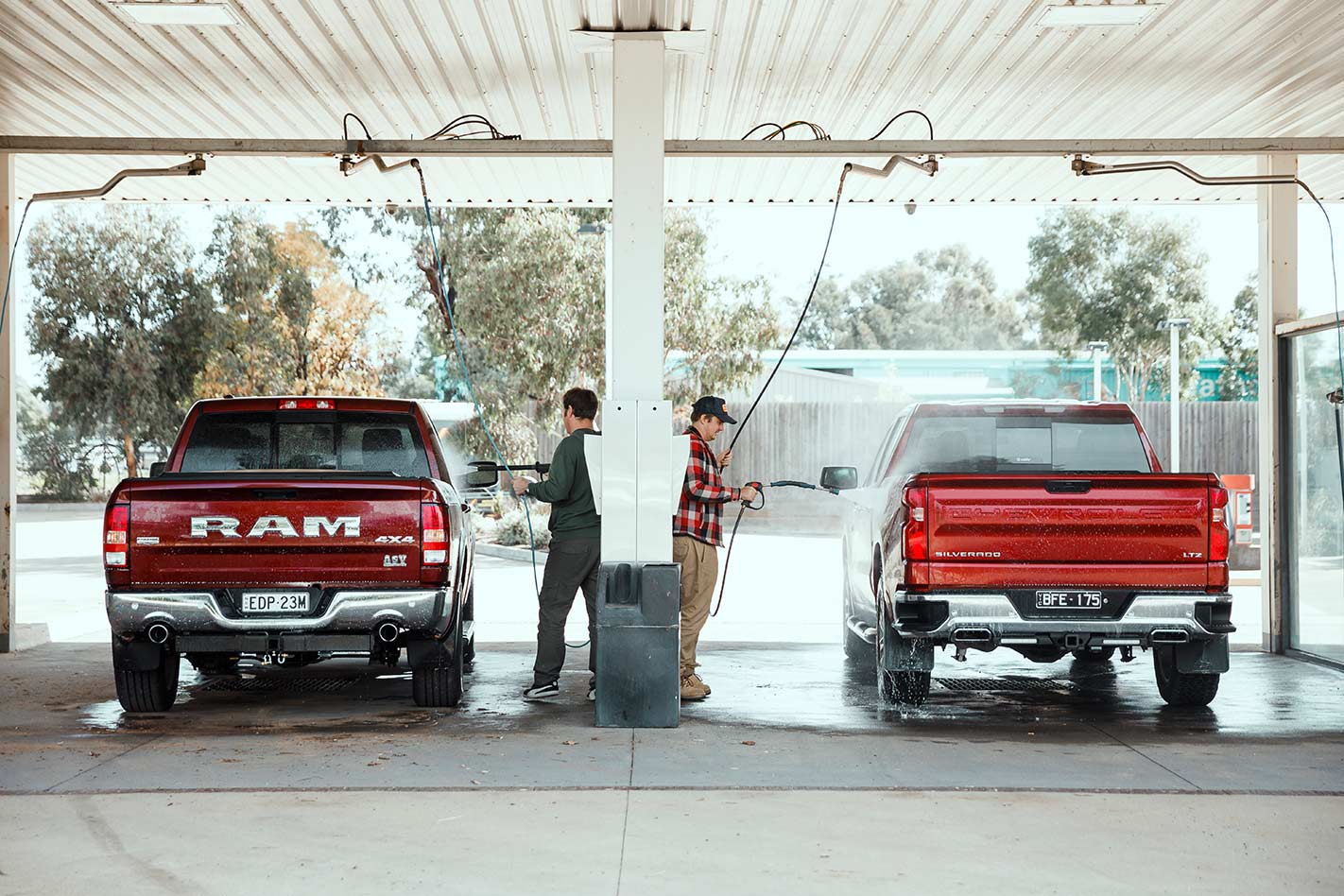
Despite the slightly smaller capacity, the Ram is thirstier, drinking 14.5L/100km during our test compared to the Silverado’s 13.5L/100km. We had a VW Amarok 580 along as a benchmark and turbo diesel V6 drank 9.8L/100km. Going big has its consequences.
Peeling out of Heathcote, it’s easy to see the appeal of these large pick-ups. Both boast impressive towing capacities (a claimed 4500kg braked each is a full tonne more than the best dual-cab), making them prime targets for people with regular heavy hauling duties. Ram provides trailer brake assist, but the Silverado goes the extra-mile with a specific towing drive mode and sway control.
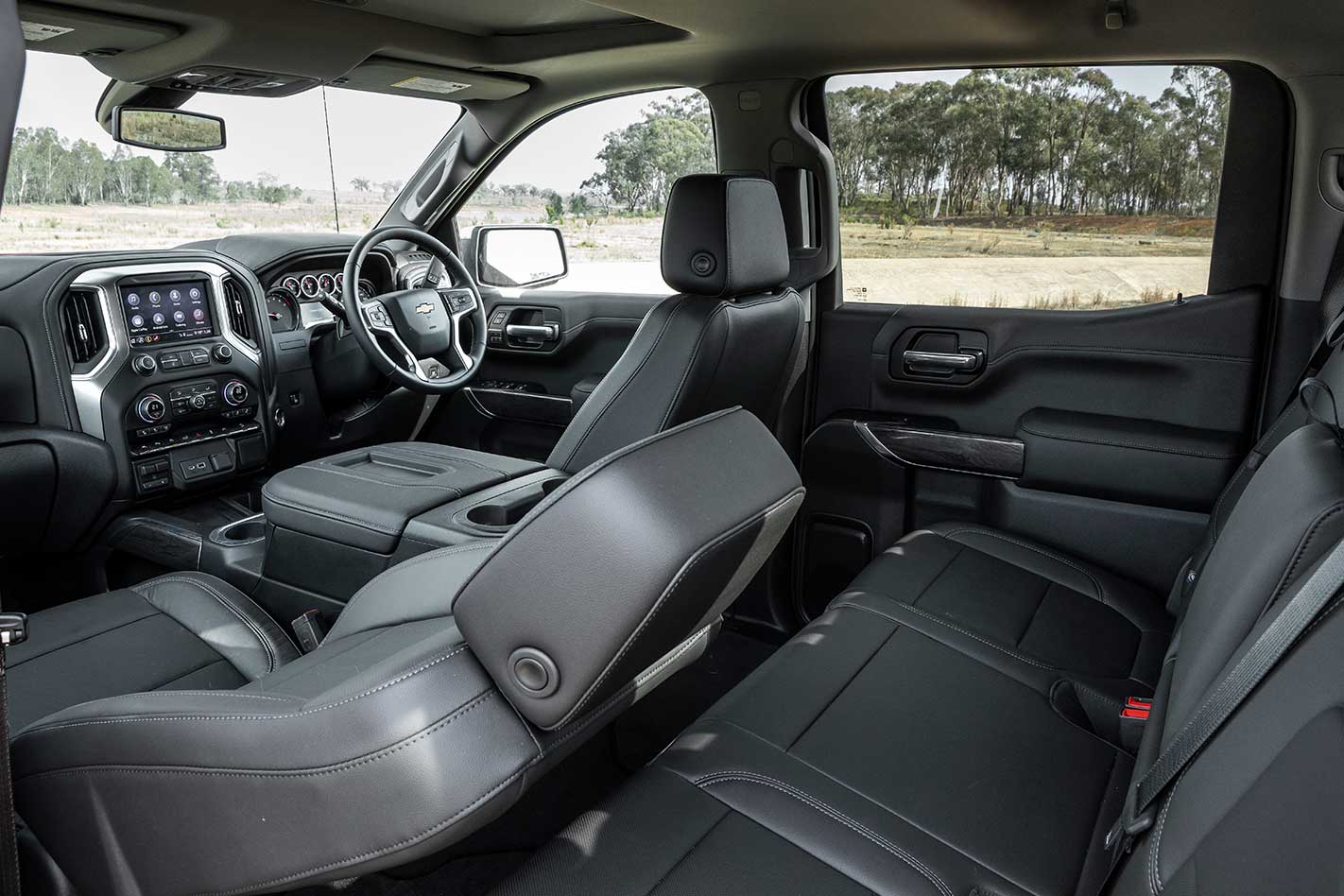
But where they really raise the bar compared to more traditional dual-cabs is their luxury and refinement. Interior room rivals that of the largest SUVs, with both featuring more cup holders than a cinema, vast centre consoles, heated steering wheels, heated and cooled leather-trimmed electrically adjustable front seats, sunroofs, and smartphone mirroring.
While there is plenty of American chintzy plastic inside, both pick-ups are comfortable with plush seats in both rows. There are ergonomic quirks, though, like the Chev’s hilariously over-sized column-mounted shifter that loves sliding straight past drive into low range, or the Ram’s foot-operated hand brake which sits on the right of the footwell. Ironically given its size, the Ram’s headroom is limited for anyone taller than six foot.
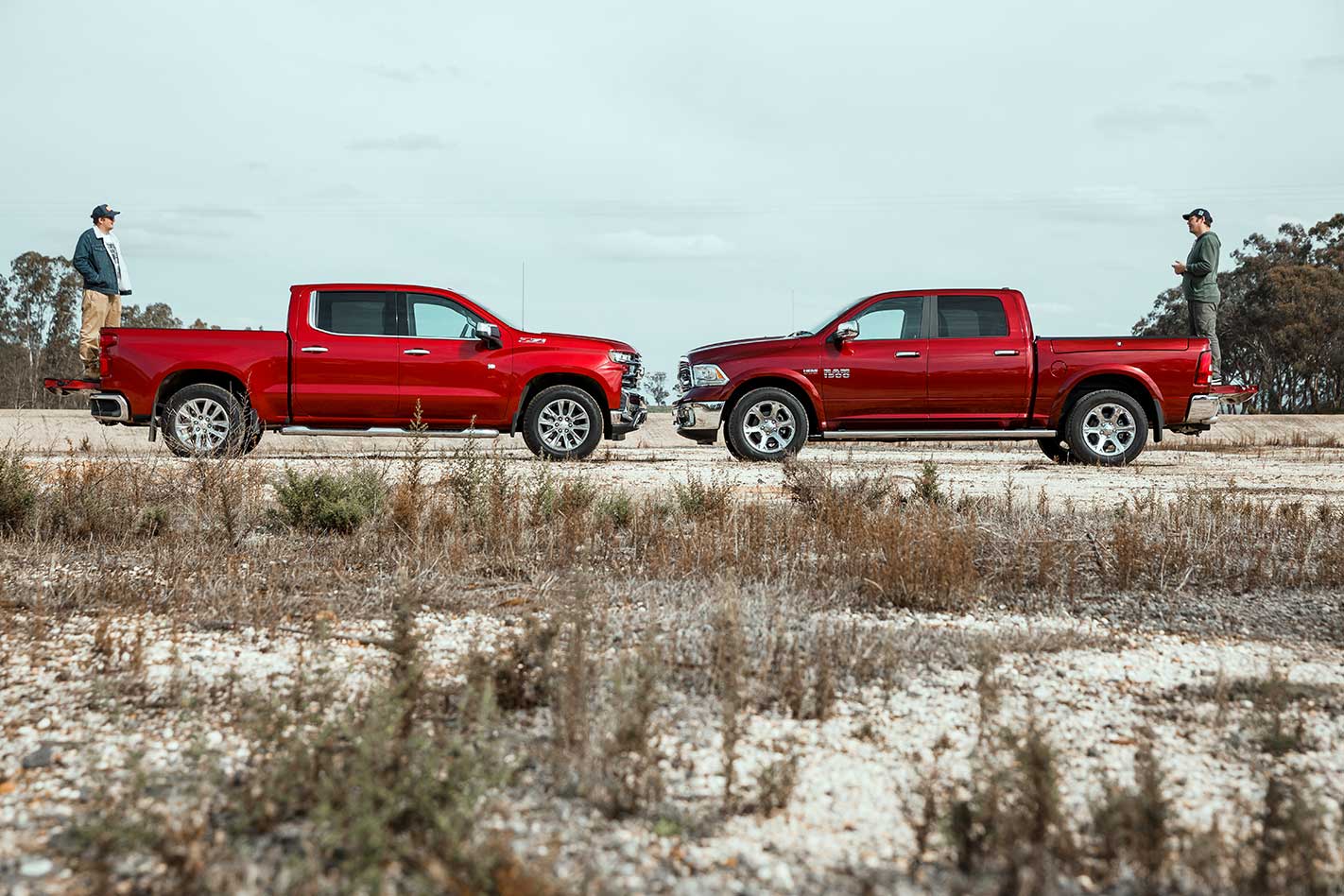
Even with impressive blind-spot vision and excellent rear-view cameras, extreme care is needed when parking, mostly due to sheer physical size. While initially intimidating around town, the Ram more readily shrinks around the driver thanks to the softer edges of the bonnet. The Silverado feels a sizeable beast at all times and side-steps are a must for entering the cabin.
Both conversions are expertly done and we didn’t experience any squeaks or rattles. Despite high bonnets, and large wing mirrors, neither generates significant wind noise. The exterior noise suppression is top notch.
From the driver’s seat, the biggest difference is the way these two pick-ups travel down the road. If you only ever traversed smooth highways, the Silverado and its floating waftiness would be quite pleasant. However, on bumpier roads the ride feels underdone. There’s a disconnect between how the front coils and rear leafs deal with imperfections, resulting in a jostling pitch-and-roll that can be quite unsettling. HSV is working on a local suspension tune, but our tester was running the stock US set-up. Experience with this car tells us that adding weight to the tray settles its leaf-sprung rear-end substantially.
The Ram’s suspension is much more modern and is fitted with an independent coil-sprung rear-end. As a result, it has a clear advantage in terms of refinement, while still matching the Silverado’s claimed towing ability (and besting it for payload). The Laramie sits confidently on the road and it feels well suited to the pockmarked bitumen of rural Australia.
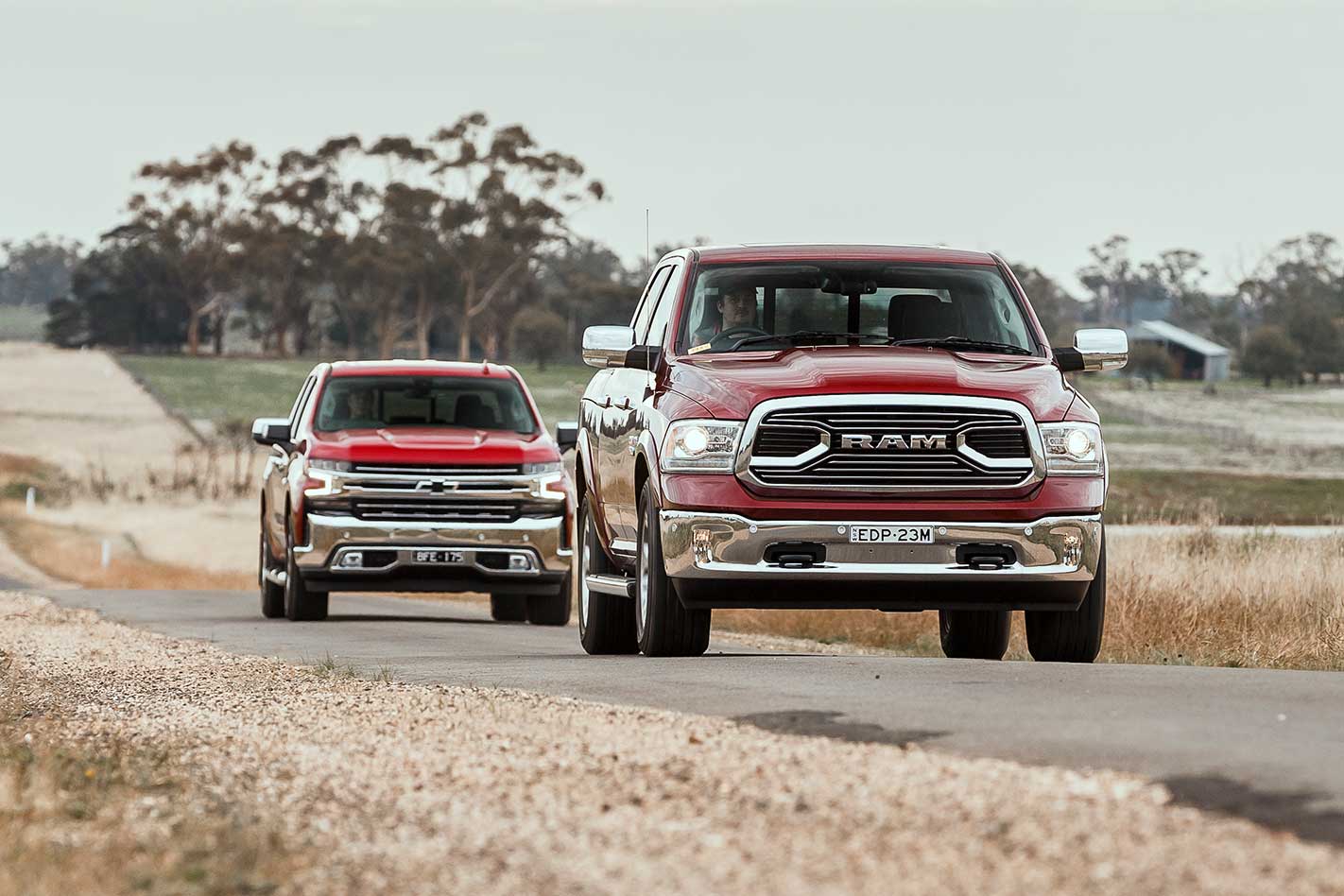
Neither are what you’d call great handlers. The Ram’s steering is vague off centre and while the Silverado’s tiller is confident and well-weighted at the straight-ahead position, it lacks feel as you progress through a corner.
Then there is the sticky issue of value. Even the more affordable Ram is almost $30,000 more than the most expensive dual-cab on the market. That premium can be justified to an extent given the Ram’s notable increase in hauling ability, luxury, and road presence. But adding almost $14,000 to the equation for the extra few tenths of acceleration in the Silverado is harder to justify. You’ll also need to set aside $3000 each year for insurance, and then there’s the fuel bill to consider…
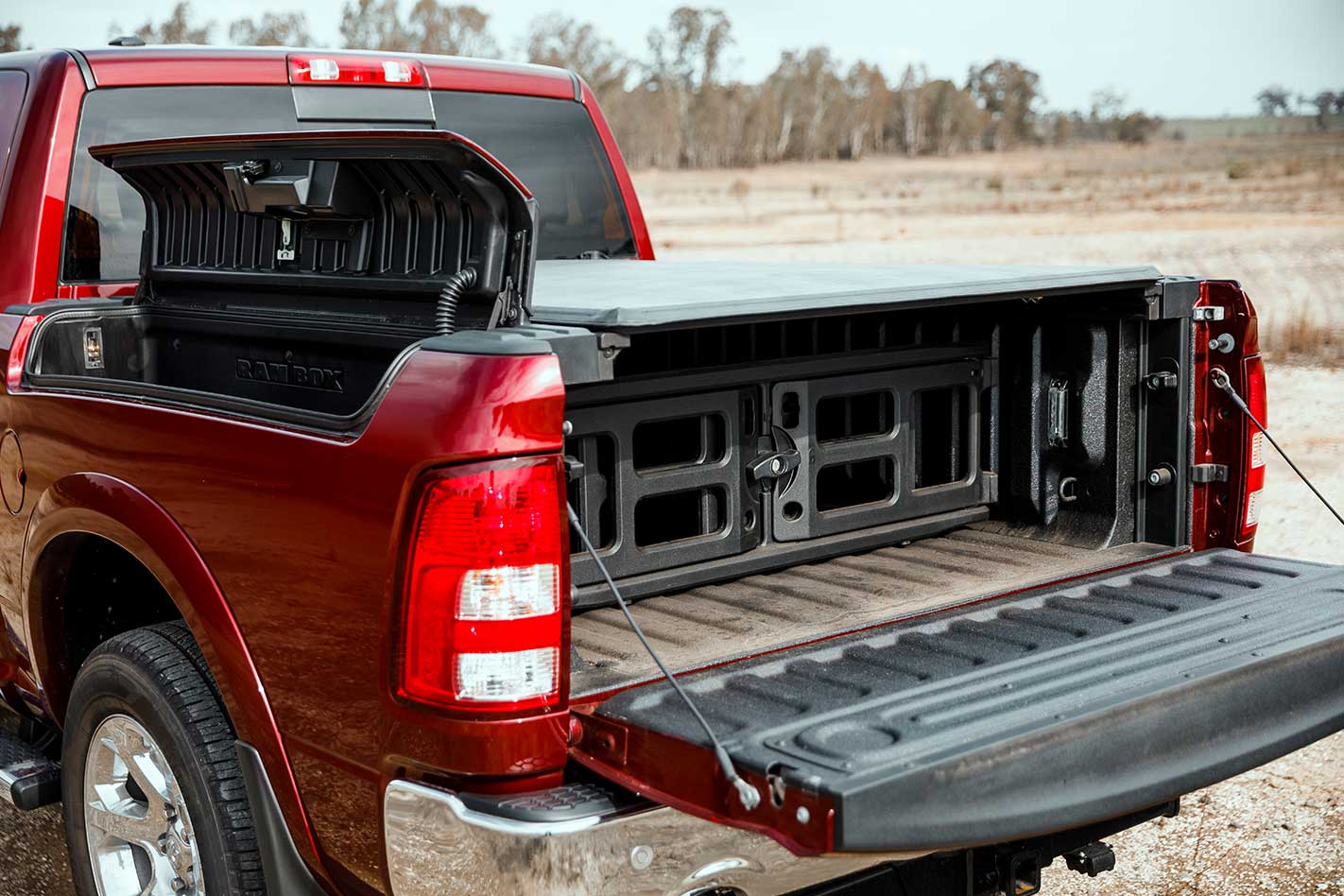
While it might not make your accountant happy, there is an undeniable coolness about the Silverado. It encapsulates the pulling-power of a large American pick-up with giant globs of grunt and a luxurious interior. However, its queasy ride and high price tag means it falls shy of the top spot.
The Ram can’t match HSV’s hero product for tech, but the cheaper pick-up offers better value for money without sacrificing spec levels. It also slightly better to drive, rides more comfortably and has, perhaps most importantly, a more characterful engine. The Hemi pulls your face into a wry smile with every throttle application, while the Chev’s 6.2-litre is more subdued. You don’t buy a monstrous V8 ute to be subdued.
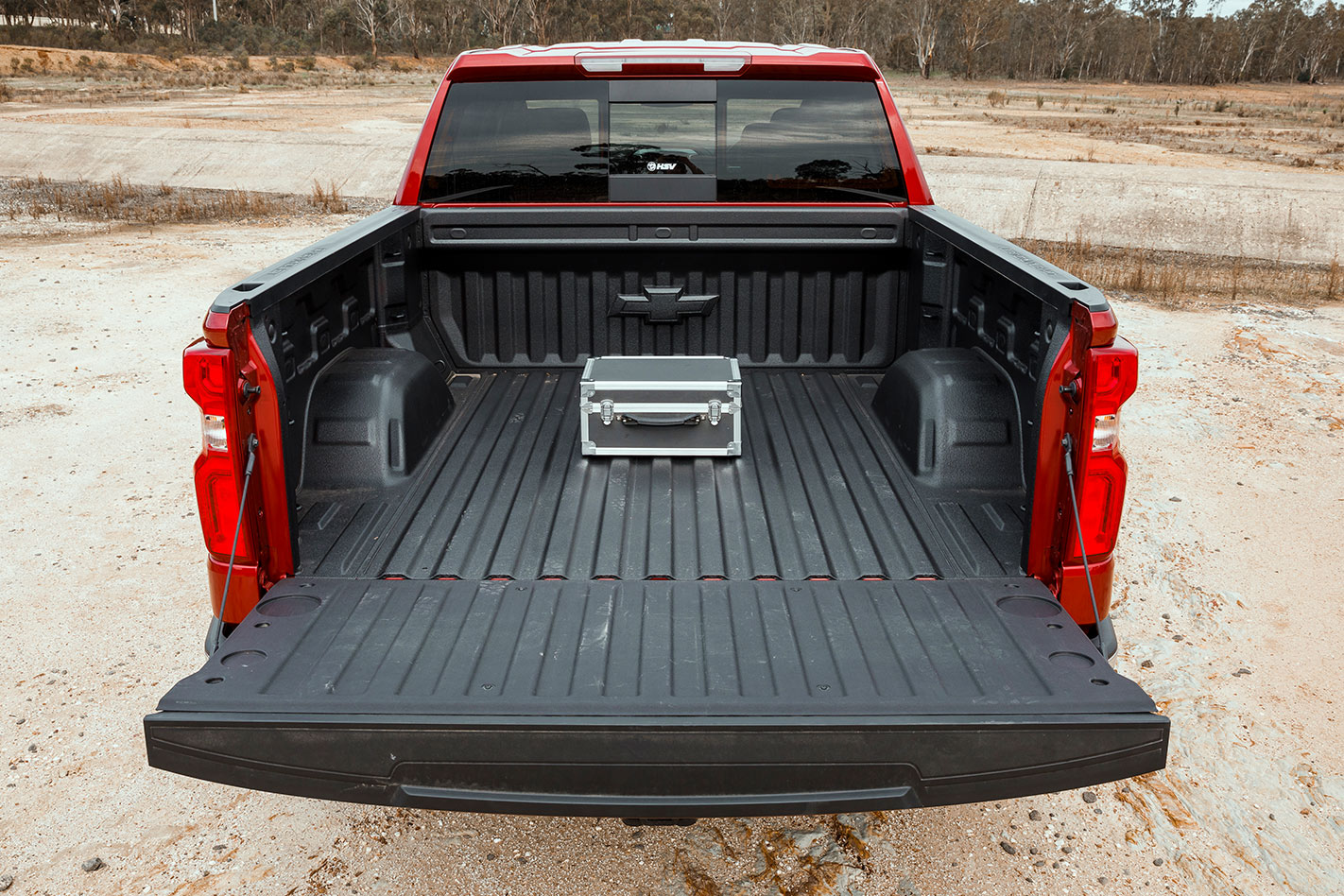
These brutes are clearly not a like-for-like replacement for the Falcon and Commodore utes, but push your right boot to the firewall and it’s clear they share a part of that same special V8 workman spirit. The fact they are prepared for Aussie customers by Aussie workers sounds pretty fair dinkum to us.
VERDICT
- 1st: Ram 1500 Laramie: 7.5/10
- 2nd: Chevrolet Silverado 1500 LTZ: 7.0/10
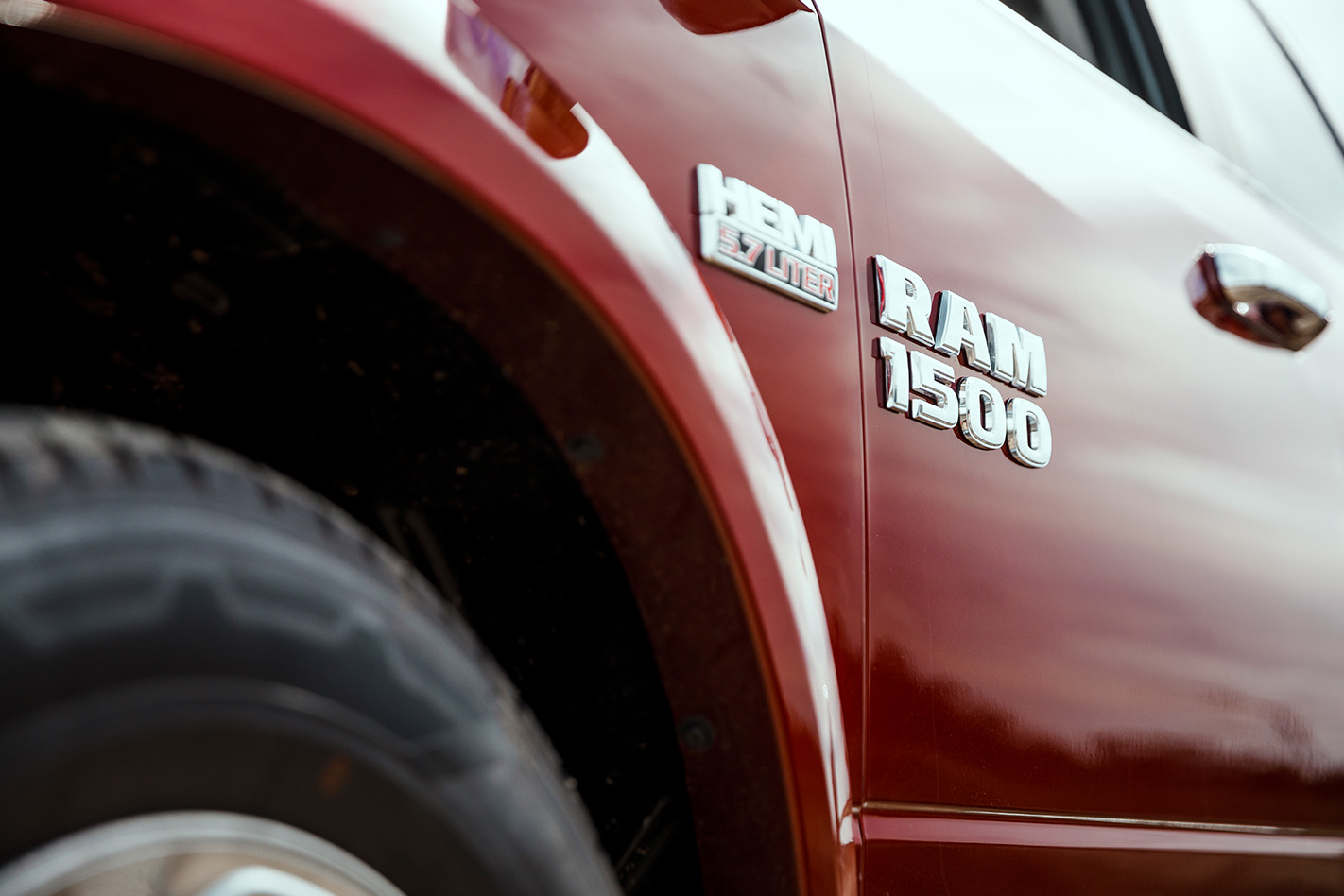
RAM 1500 LARAMIE SPECS
Price: $99,950 Engine: V8 (90°), ohv, 16v Layout: front engine (north-south), 4WD Capacity: 5654cc Power: 291kW @ 5600rpm Torque: 556Nm @ 3950rpm Gearbox: 8-speed automatic Body: steel, 4 doors, 5 seats L/W/H/W–B: 5833/2080/1917/3569mm Track (F/R): 1742/1727mm Weight: 2650kg Payload: 800kg Fuel/tank: 91 octane/98 litres Economy: 14.5L/100km (test average) Front suspension: struts, A-arms, coil springs, anti-roll bar Rear suspension: live axle, multi-links, coil springs Steering: electric rack-and-pinion Turn circle: 12.1m (3.5 turns lock-to-lock) Front brakes: ventilated discs (336mm) Rear brakes: solid discs (352mm) Tyres: Hankook Dynapro HT Tyre size: 275/60R20 114T Warranty: 3yr/100,000km Service interval: 12 months/12,000km AAMI Insurance: $3331.59 pa Power-to-weight: 110kW per tonne Redline/cut-out: 7000/5800rpm Speed at indicated 100km/h: 98 0-20km/h: 0.8sec 0-40km/h: 1.7sec 0-60km/h: 3.0sec 0-80km/h: 4.7sec 0-100km/h: 6.8sec 0-120km/h: 9.0sec 0-140km/h: 13.0sec 0-400m: 14.8sec @ 148.5km/h 80-120km/h: 4.3sec 100km/h-0: 40.2m
CHEVROLET SILVERADO 1500 LTZ SPECS
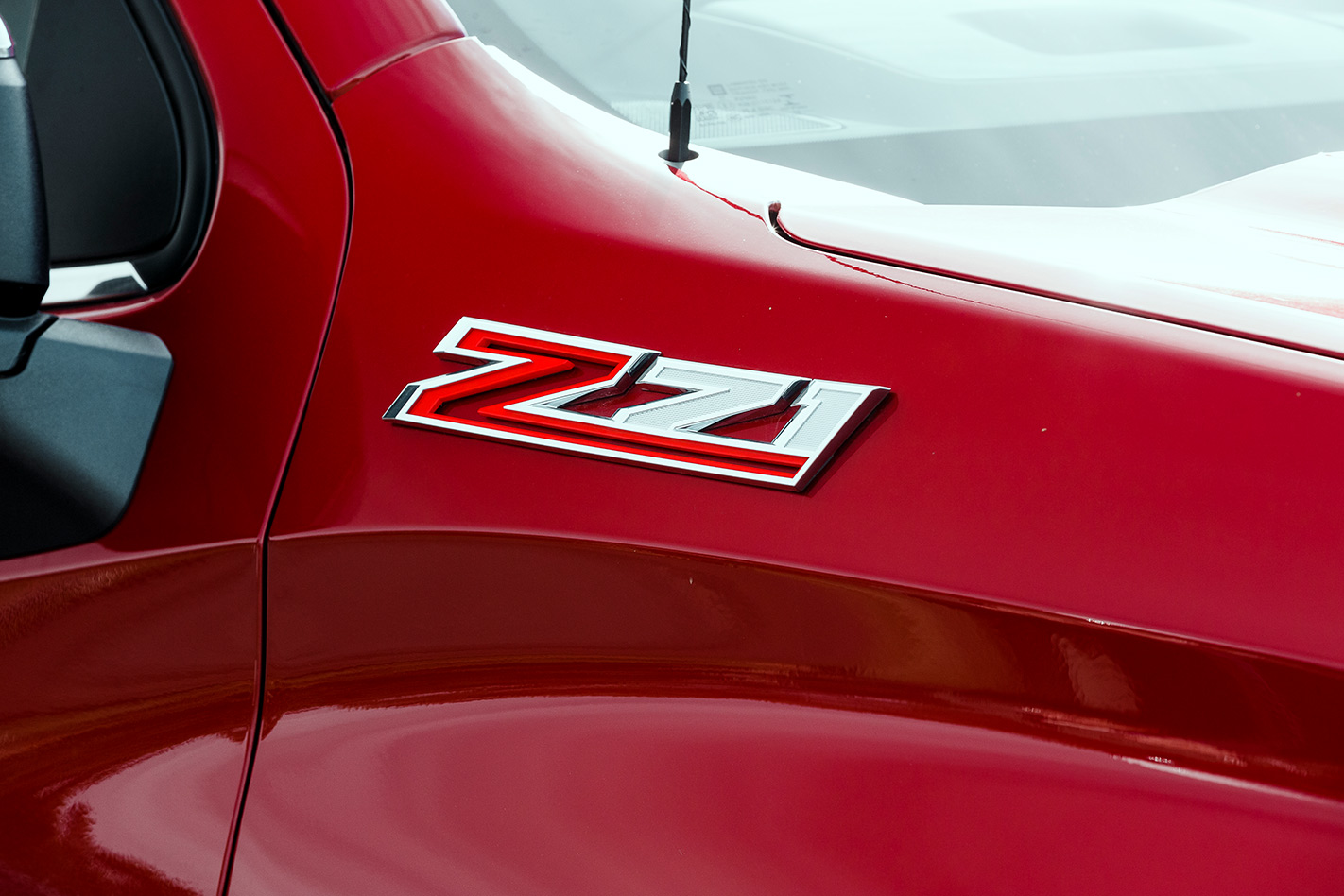
Price: $113,990 Engine: V8 (90°), ohv, 16v Layout: front engine (north-south), 4WD Capacity: 6162cc Power: 313kW @ 5600rpm Torque: 624Nm @ 4100rpm Gearbox: 10-speed automatic Body: aluminium, 4 doors, 5 seats L/W/H/W–B: 5885/2063/1915/3744mm Track (F/R): 1743/1728mm Weight: 2588kg Payload: 712kg Fuel/tank: 91 octane/91 litres Economy: 13.5L/100km (test average) Front suspension: struts, A-arms, coil springs, anti-roll bar Rear suspension: live axle, leaf springs Steering: electric rack-and-pinion Turn circle: 14.1m (3.1 turns lock-to-lock) Front brakes: ventilated discs (345mm) Rear brakes: solid discs (360mm) Tyres: Goodyear Wrangler Trailrunner AT Tyre size: 275/60R20 115S Warranty: 3yr/100,000km Service interval: 9 months/12,000km Glass’s 3-year resale: N/A AAMI Insurance: $3415.31 pa Power-to-weight: 121kW per tonne Redline/cut-out: 6600/6600rpm Speed at indicated 100km/h: 96 0-20km/h: 0.8sec 0-40km/h: 1.8sec 0-60km/h: 3.1sec 0-80km/h: 4.6sec 0-100km/h: 6.4sec 0-120km/h: 8.6sec 0-140km/h: 11.4sec 0-400m: 14.5sec @ 158.0km/h 80-120km/h: 4.0sec Braking distance 100km/h-0: 40.4m
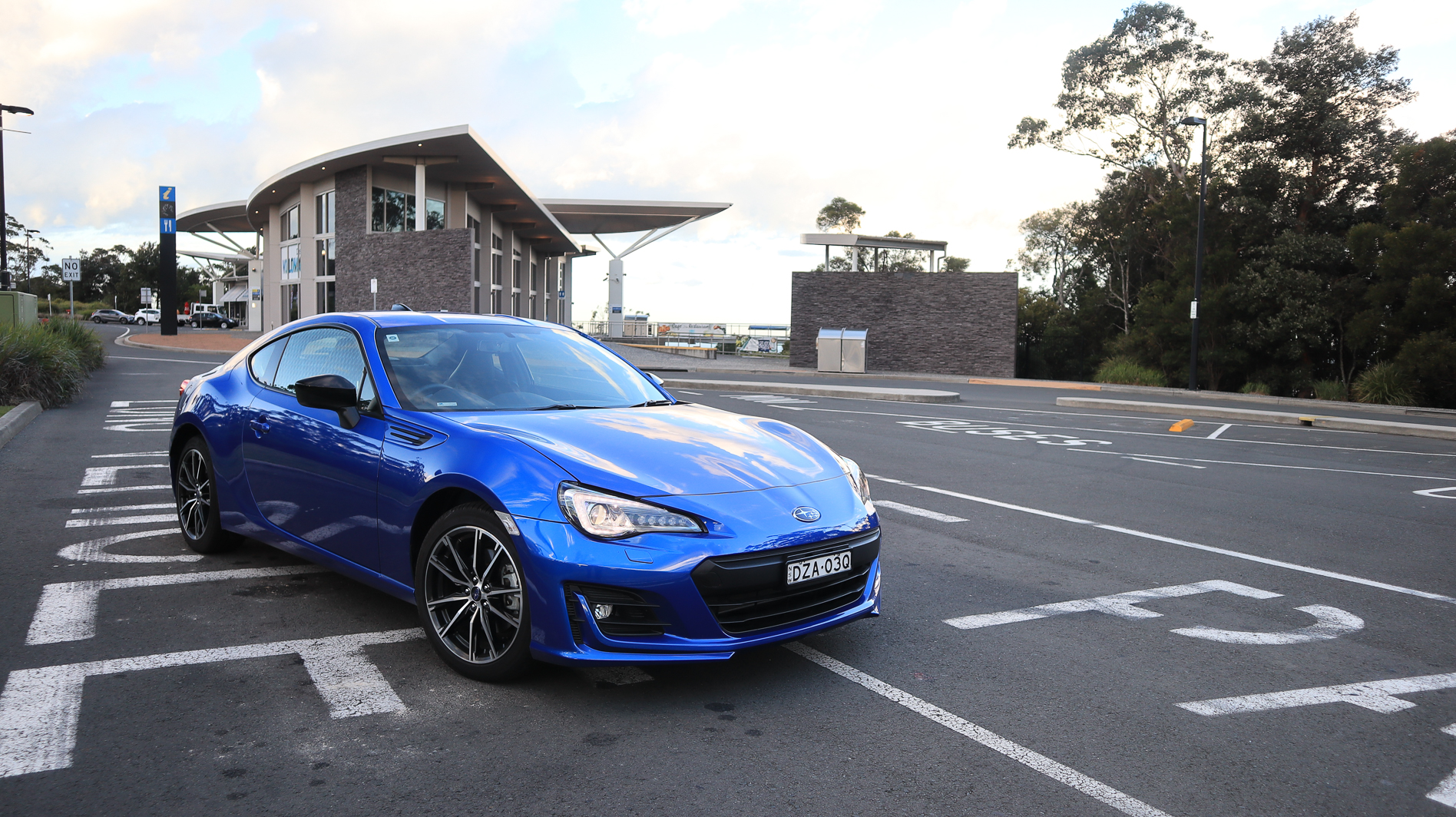
It’s been a great run, but the current Subaru BRZ will soon end production in Japan. Released in 2012 in partnership with Toyota, production of the rear-wheel-drive coupe has ceased at the Gunma plant in Japan, where it was built alongside the identical 86.
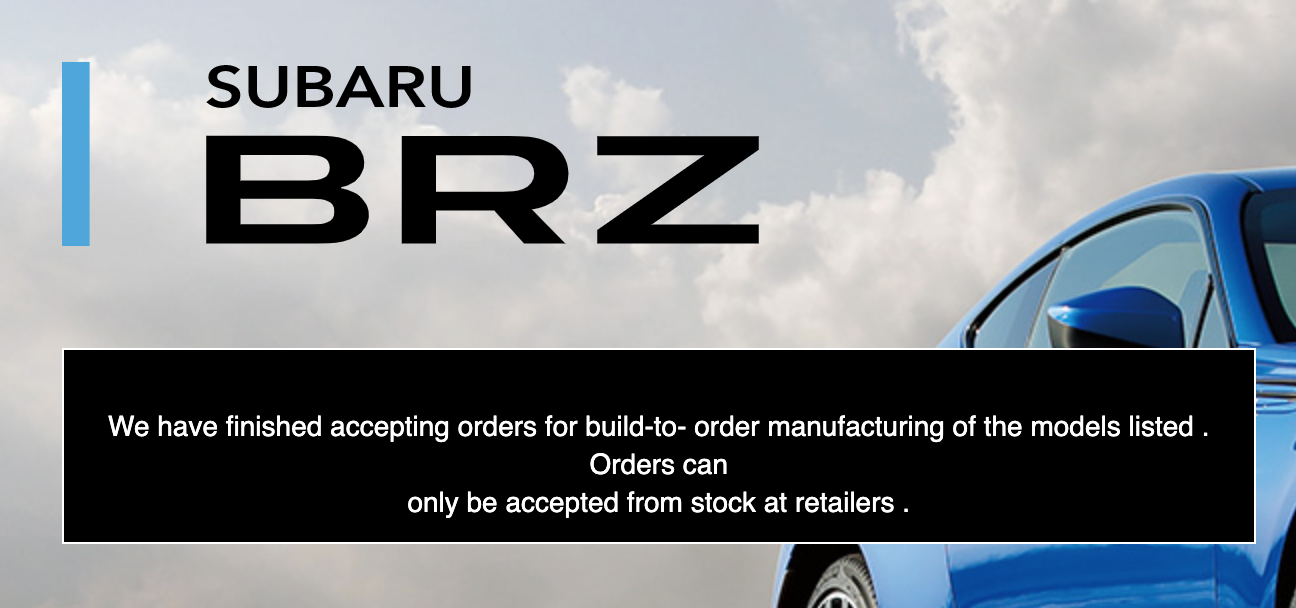
The news was revealed on Subaru’s Japanese consumer website.
“We have finished accepting orders for build-to-order manufacturing of the models listed,” the translated page says. “Due to stock availability at retailers, we may not be able to meet customer requests for body colours and options.”
At a local level, a Subaru Australia spokesperson said it was awaiting clarification from the factory in Japan.
“But currently, from an Australian perspective, we have plans for several more months of BRZ production,” the spokesperson confirmed.
The BRZ adds around 30-35 sales to the local Subaru ledger each month, a number that’s matched by the 86.
Subaru’s best-seller at the moment is the Forester, which finds around 1500 homes a month here in Australia.
The news comes as little surprise; sales for the BRZ (and the 86, for that matter) have slowed significantly, while the car itself – a mash-up of a Subaru platform and engine block and Toyota cylinder head and injection system – can’t be updated with modern driver safety aids like AEB and adaptive cruise control.
Though Toyota confirmed to MOTOR magazine last year that a new 86 program was being researched, the trail has gone cold as to how a second-generation 86/BRZ might look.
Both companies now have modular platforms in their portfolios, but it appears that neither can be reconfigured to – affordably, at least – to accommodate a small rear-wheel-drive two-door layout.
Toyota partnered with BMW to produce the Supra on the German company’s Z4 platform, while the imminent release of the Lexus IS rear-wheel-drive sedan on an updated version of its old platform – not the new TNGA one – also indicates that the economics don’t stack up.
Subaru revealed to WhichCar last year that it “didn’t have any visibility” on a second-generation BRZ, and it appears not much has changed.
“The factory has yet to share any details, but given its success and appeal in the Australian market, we’re excited about its future prospects,” confirmed the spokesperson.
Current speculation suggests that Toyota could potentially join forces with Mazda to co-develop the second-generation 86, and Subaru – which is part-owned by Toyota – could benefit from that union.
The current COVID-19 pandemic is reframing the game for many car companies around the world, though, especially when it comes to research and development costs in light of declining sales.
What’s obvious is that the current BRZ is entering the twilight of its days, and if you want to own a piece of motoring folklore, now’s a good time to buy one.
BMW Australia has uploaded the M2 CS into its online configurator, previewing what may be local specification and options months ahead of the local launch this October. You can find it here.
It’s good news for anyone with an eye on the new special edition that takes the lauded M2 Competition, itself a hard puncher at our own Performance Car of The Year, to new heights with an upgraded 331kW S55 engine, adaptive dampers as well as carbon-fibre for exterior bits like the roof and bonnet.
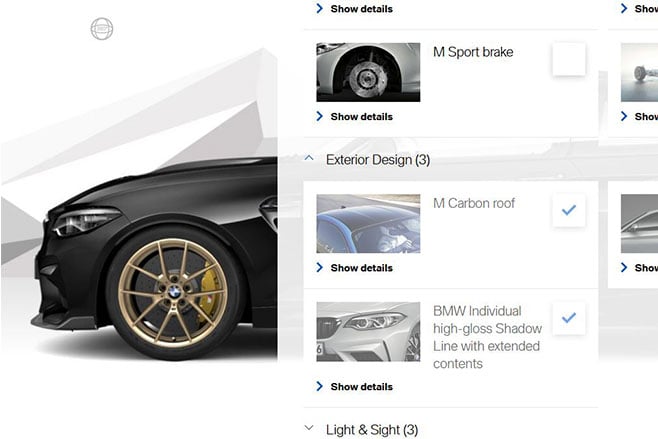
The configurator allows you to preview your CS in four exterior colours, two wheel colours and peek at the short-but-meaningful options list including: carbon ceramic brakes, “track tyres” and a six-speed manual transmission. Hooray. We’re not sure how long it’s been live given international markets have uploaded theirs since 2019, but we’re glad to find it in Lockdown 2.0 for Victorians.
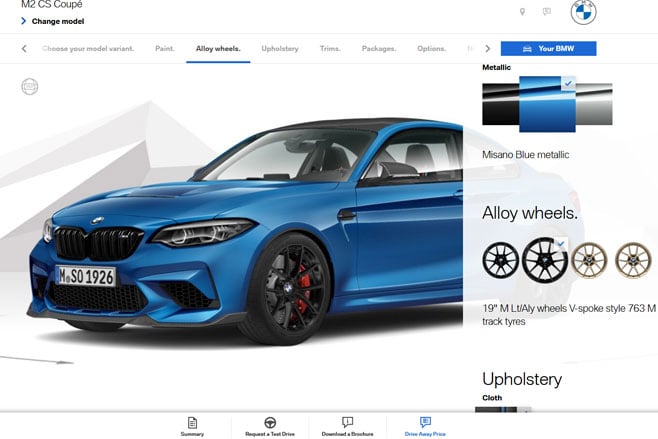
You can then select the M2 CS’s gorgeous 763 M style 19-inch wheels in either Jet Black or Gold matt. The configurator also allows you to tick the box on what it calls “track day” tyres. As for their brand, our international drive report indicates Michelin Pilot Sport Cup 2s will serve as the king coefficient while Pilot Super Sports will be standard.
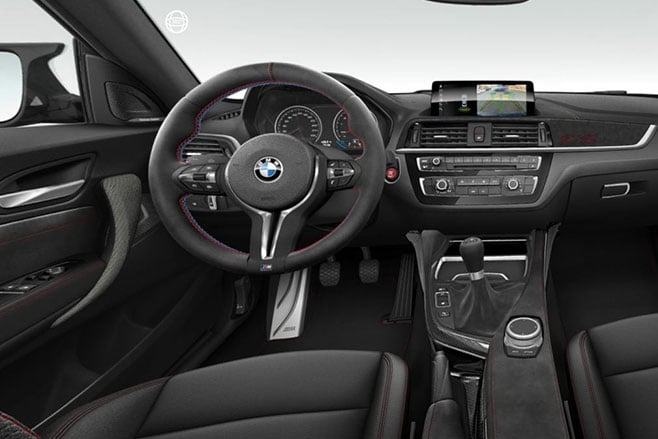
There’s nothing to change inside, the M2-style interior already garnishing CS-style Alcantara around the steering wheel, along the dash insert, door trims, and centre console. Carbon fibre also features down the interior spine, while an M Performance dead pedal stands in the footwell. Specification and equipment is seemingly full-fruit with all infotainment, driver assistance and comfort options ticked – except for sun glazing.
Mercedes-Benz has dropped details of its all-new second-generation GLA small SUV, which competes in the same space as premium crossovers like the Audi Q3 and BMW X1.
It will be sold here in three variants, and starts at $55,100 before on-road costs for the GLA 200.
Based on the same modular underpinnings that debuted under the A-Class in 2017, the Mercedes-Benz GLA features more interior space, more tech smarts and a better driving experience than its polarising predecessor.
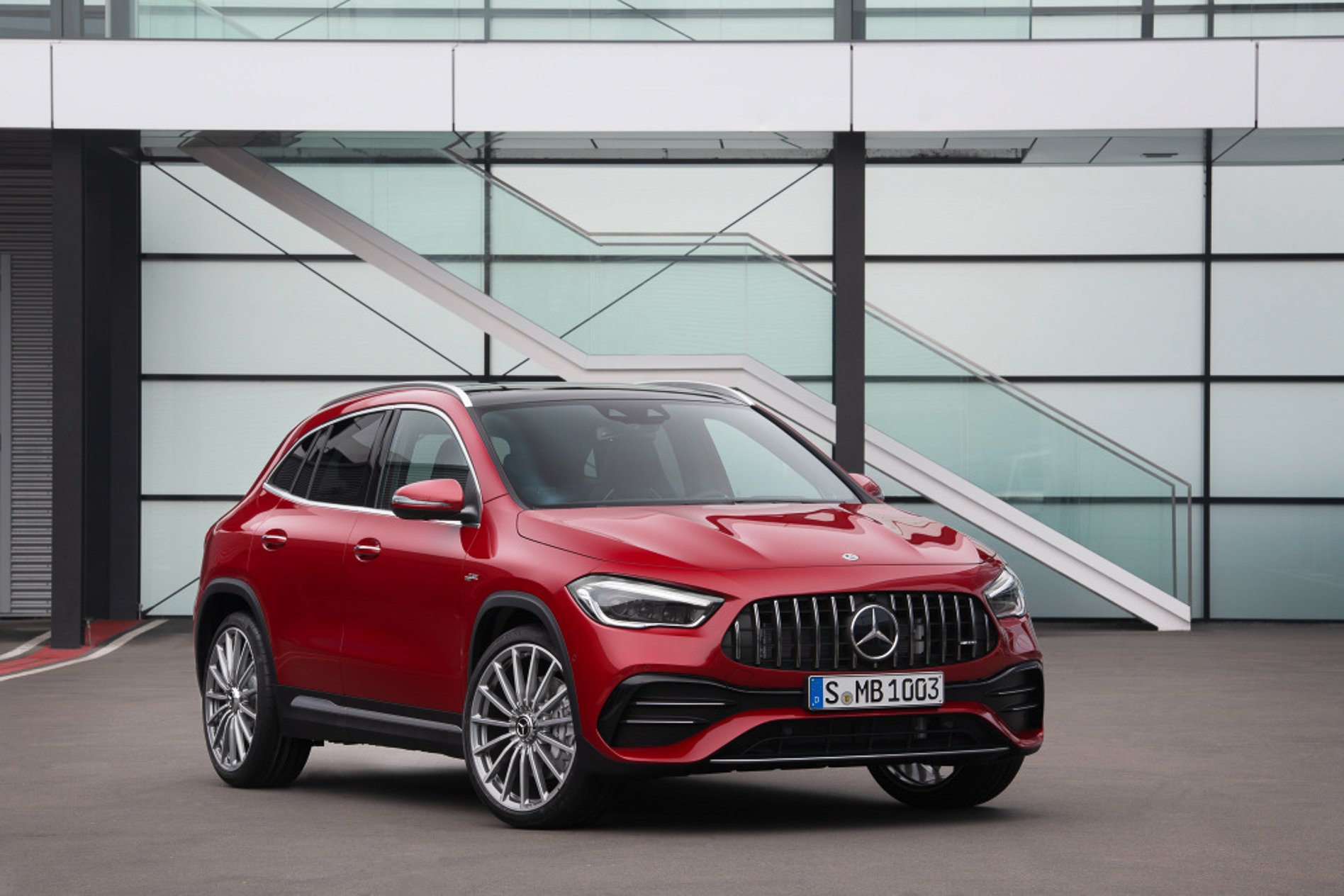
While it actually comes up shorter by 14mm, it’s grown in width and wheelbase by a crucial 30mm, and it’s more than 100mm taller as well.
This gives the GLA much more rear legroom – 116mm to be exact – as well as more boot space, which is a key criticism of the current car. It grows from 421 litres with the seats up to 435L, while the second row of seats is now mounted on rails for more flexibility.
It also gives the GLA a boxier look, moving the GLA away from the ‘A-Class on stilts’ appearance of the current car. Expect LED headlights and taillights, a bold grille and big wheels, as is the fashion for small, more expensive crossovers of the modern era.
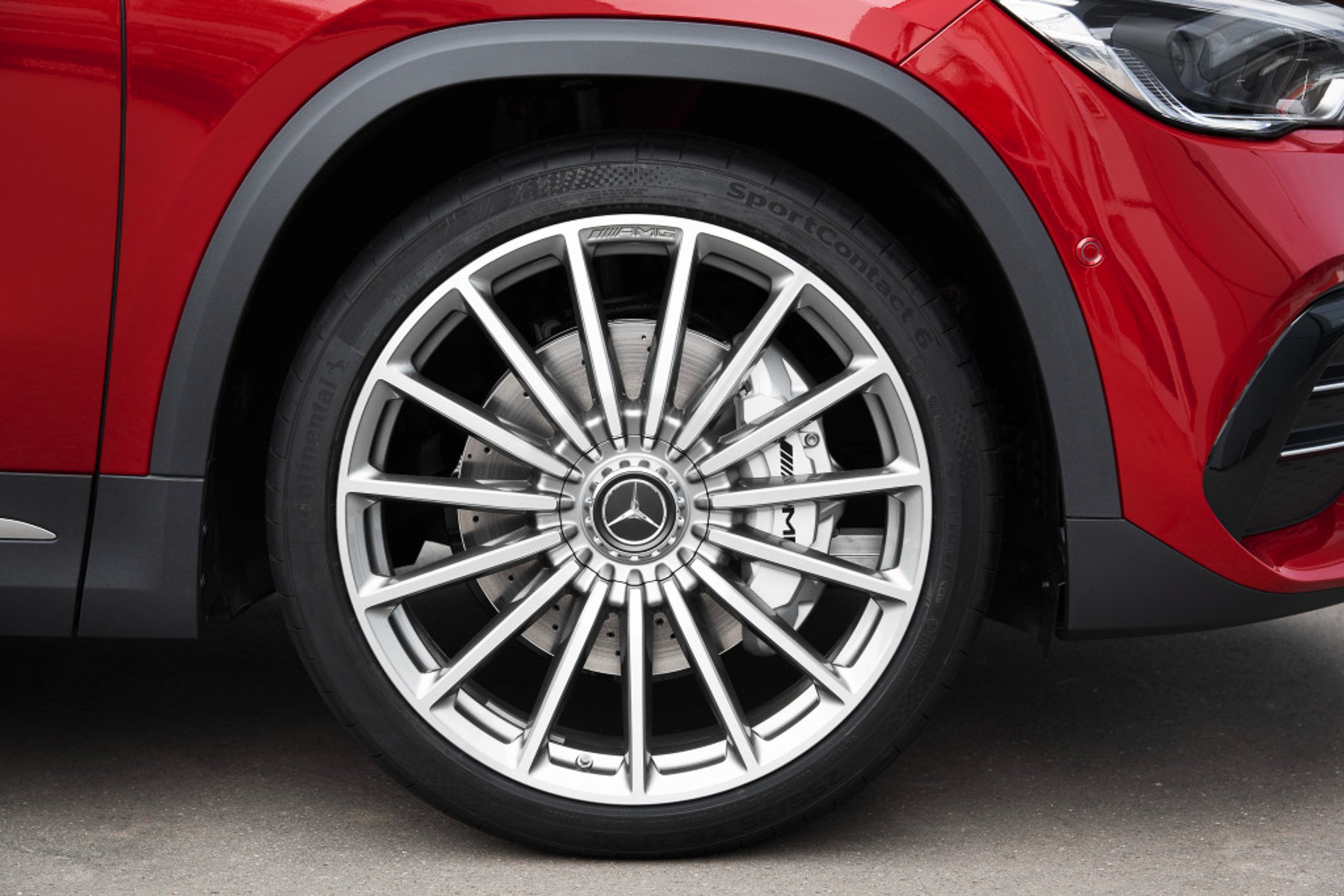
Take, for example, the GLA 35; it wears 21-inch rims as standard (below).
The GLA will score Mercedes-Benz’s twin-screen MBUX multimedia system, and wireless Apple CarPlay will be part of the mix, along with upgraded Android Auto capability. It also features Merc’s cool three-dimensional sat-nav system that hovers street names over a camera image of the route you’re negotiating.
It’s also set to receive the brand’s ‘energising comfort’ package, which is an odd mix of scents, temperature control, seat heating and massaging as well as audio to alternatively freshen, warm, bring vitality or joy to the driver. Quite.
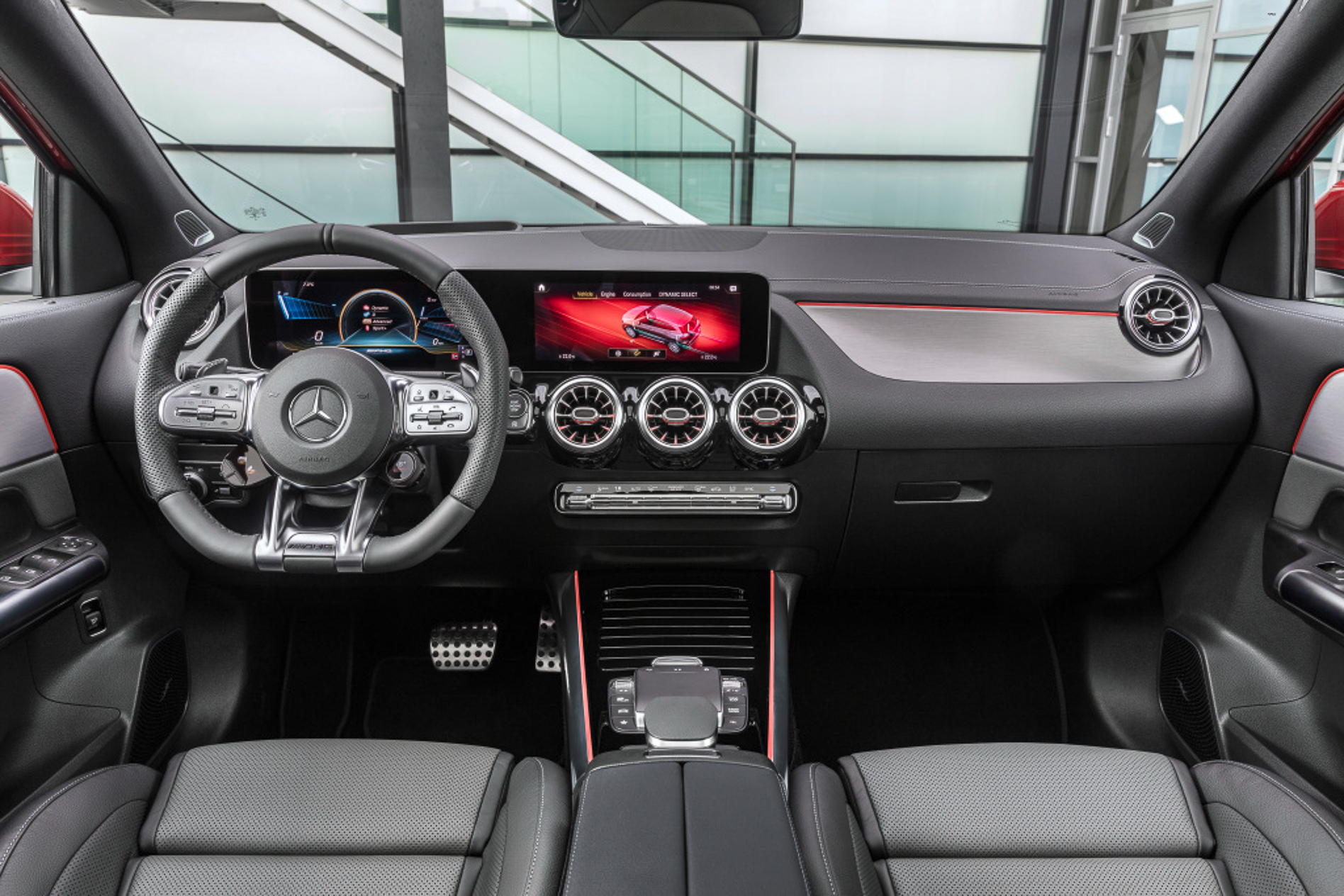
If you opt for the 35, there are AMG-badged niceties like steering wheels and digital instrument displays (above), as well as a Track Pace app.
Safety tech will be a big part of the GLA’s pitch, and it’ll offer AEB with evasive steering assist, traffic sign recognition and an intelligent autonomous braking system that can slow the GLA as it approaches traffic or corners.
When it comes to engines and drivetrains, the entry-level GLA 200 is equipped with a 120kW/250Nm 1.3-litre turbocharged petrol engine sending power to the front wheels via a seven-speed dual-clutch transmission (DCT).
Cloth seats, keyless entry, powered tailgate, climate control, MBUX multimedia system combined with satellite navigation, reversing camera, Apple CarPlay and Google Android smartphone integration and wireless device charging for compatible devices are all included.
Selectable driving modes, ambient interior lighting, rain-sensing wipers, DAB+ digital radio, active parking assist, blind-spot assist and active lane-keeping assist, traffic sign assist, adaptive high beam assist, LED fixed headlights and 19-inch multi-spoke alloy wheels also feature.
The GLA 250, meanwhile, costs $66,500 and is powered by a 2.0-litre, turbocharged four-cylinder petrol engine making 165kW and 350Nm via an eight-speed DCT eight-speed auto and all-wheel-drive.
A panoramic electric sunroof, heated electric front seats with memory function, lowered comfort suspension and sports-direct steering, Off-Road Engineering Package, remote engine start via the Mercedes me Connect app and 19-inch five-spoke rims are included.
The aforementioned GLA 35 will cost $82,935, and will use Merc’s 2.0-litre four-cylinder turbocharged petrol engine and will send 225kW and a healthy 400Nm through all four wheels via an eight-speed DCT.
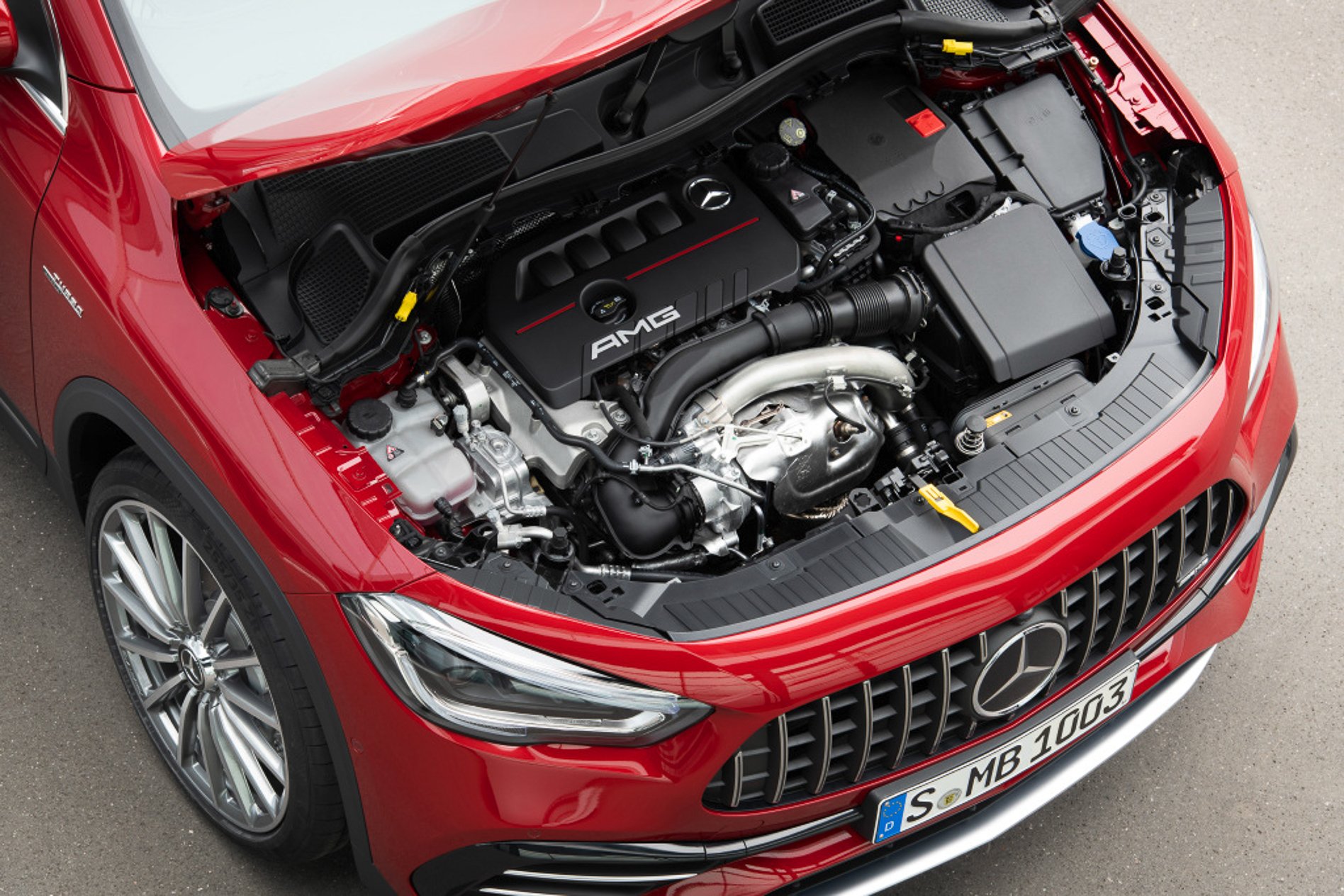
It also gets bigger brakes, chassis bracing and a variable steering rack, along with additional drive select modes. And because it’s all-wheel-drive, it will also get Merc’s off-road package as standard, including specific headlight modes, traction control maps and more on-screen data.
Not hot enough? How about the GLA 45 S? For $108,035, it packs an astonishing 310kW and 500Nm from a 2.0-litre turbocharged four-cylinder engine linked to an eight-speed DCT auto and all-wheel-drive.
An AMG Driver’s Package (with top speed increased to 265km/h), AMG Performance steering wheel in Dinamica microfibre with contrasting top-stitching, leather seats with contrasting top-stitching, route-based speed adaptation, automatic parking (including a 360-degree camera), LED headlights and AMG-specific body styling including a roof-mounted spoiler and rear diffuser are all standard.
An AMG exhaust system with two round tailpipes, six-piston calipers, AMG Torque Control, bodyshell stiffening and speed-sensitive electromechanical steering with AMG-specific front steering knuckles and rear axle subframe is also part of this potent little package.
The GLA 200 and GLA 250 4MATIC arrive in August, while the GLA 35 and 45 S go on sale in later this year.
Mercedes-Benz GLA 2020 Pricing
Mercedes-Benz GLA 200 $55,100 (MRLP)
Mercedes-Benz GLA 250 $66,500 (MRLP)
Mercedes-AMG GLA 35 $82,935 (MRLP)
Mercedes-AMG GLA 45 S $107,035 (MRLP)
Edition 1 Package $6990 (GLA 200), $5990 (GLA 250 4MATIC) (MRLP)
A Honda plant in the US has called on its back-office staff to pick up tools on the factory floor as COVID-19-related staff shortages take hold in the pandemic-riddled United States.
The manufacturing plant in Marysville, Ohio has emailed its staff, including personnel in purchasing, quality assurance and accounting, with a request to “work temporarily in the production area”.
“The COVID pandemic has created many challenges, but Honda will continue to work to overcome them” read an email to the staff.
It’s understood plant officials initially asked for volunteers to hit the assembly lines, before making it a formal requirement. The plant makes Accords and CR-Vs for the US market.
Line workers – or ‘associates’ as Honda calls them – have been falling ill with COVID-19, or have been exposed to those who have been diagnosed, forcing them into quarantine.
It’s understood many of the white-collar workers who have been ordered to take up manufacturing roles have been working from home during the pandemic.
While absent workers are partly to blame for the shift of white-collar workers to the factory floor, the US government’s version of JobKeeper – known as the CARES Act – is also impacting labour forces, with Honda unable to attract casual workers to fill the slots.
Honda’s sales in its biggest market fell by nearly 200,000 cars in the first half of 2020, but an increase in demand has caught the company by surprise.
It’s a similar tale across the global automotive industry, with the world’s largest companies posting some staggering losses.
Volkswagen, for example, posted a A$5 billion loss in the second quarter of 2020 and is staring at yet another large loss next quarter as it grapples with a potential A$20 billion judgment against it over the Dieselgate fiasco.
The Renault Nissan Mitsubishi Alliance, meanwhile, posted huge losses for the first six months of the year, with Renault losing $14 billion and Nissan $8 billion.
Mitsubishi also announced it would withdraw from Europe and the UK after posting its own $3 billion loss.
UPDATE: The woman who broke through a police block last week has been arrested after trying the same stunt a second time.
Police broke Eve Black’s Toyota LandCruiser window after she refused to wind it down to supply her name and address, her licence and an explanation for where she was headed.
Ms Black, who is from Warrandyte and was arrested in Carlton yesterday afternoon, caught the ire of social media last week after footage showed her arguing with a police officer at a checkpoint. She might have escaped arrest the first time but wasn’t so lucky on Thursday.
“During the arrest, police were forced to break the woman’s car window as she refused to speak to them, wind down her window, or step out of the vehicle,” a Victorian police force spokesman said.
The 28-year-old has since been released pending summons for traffic-related offences, failing to produce a licence, failing to produce name and address, and breaches of the Chief Health Officer’s directives.
A Melbourne woman’s behaviour has been called “unnecessary and childish” after she filmed herself circumventing a roadblock in COVID-19-ravaged Victoria, after allegedly sourcing a list of instructions from social media.
The video, circulated widely on social media platforms and on commercial television, shows the woman, identified in the media as Eva Black, approaching a roadblock and refusing to answer questions about her destination or whereabouts.
Upon stopping at the roadblock, a police officer is heard asking Black her reason for travelling, to which she responds “Have I disturbed the peace?”
“No,” the police officer answered. “I’m just asking what your reason for travelling is.”
“Well, I don’t need to tell you that. I don’t know you,” said Black.
“So where have you come from today,” the officer responds, to which Black says: “I don’t need to answer your questions”.
She is then seen to celebrate the encounter as she drove away.
A still from the video
“Victoria Police is aware of a video circulating on social media involving a woman who refused to tell police her purpose for travelling when stopped at a vehicle checkpoint,” read a statement from Victoria Police late on Friday.
“Police have confirmed the woman’s identity and are aware of the time, date and location where this interaction occurred.”
With Greater Melbourne currently under Level Three travel restrictions, police confirmed that Black will be investigated for breaking the Public Health and Wellbeing Act.
“Enquiries are currently taking place to determine whether there was any breach of the CHO’s directions and if any other criminal offences have taken place,” said the statement.
“Police will continue to use the powers available to them under the Public Health and Wellbeing Act 2008 to ensure community safety. Likewise, they will enforce any offences identified at the time or at a later stage.”
Regulation breaches in Victoria can attract hefty fines, and Victorian police appear to be in no mood to tolerate further breaches of this nature.
“People are required to produce identification if they are stopped at a checkpoint or on the street. Police are working incredibly hard to keep the community safe and this type of behaviour is just completely unnecessary and childish.”
What’s on WhichCar TV this week?
Street Machine special!
This week it’s all things skids as we take a special look at the world of Street Machine.
Street Machine at Summernats
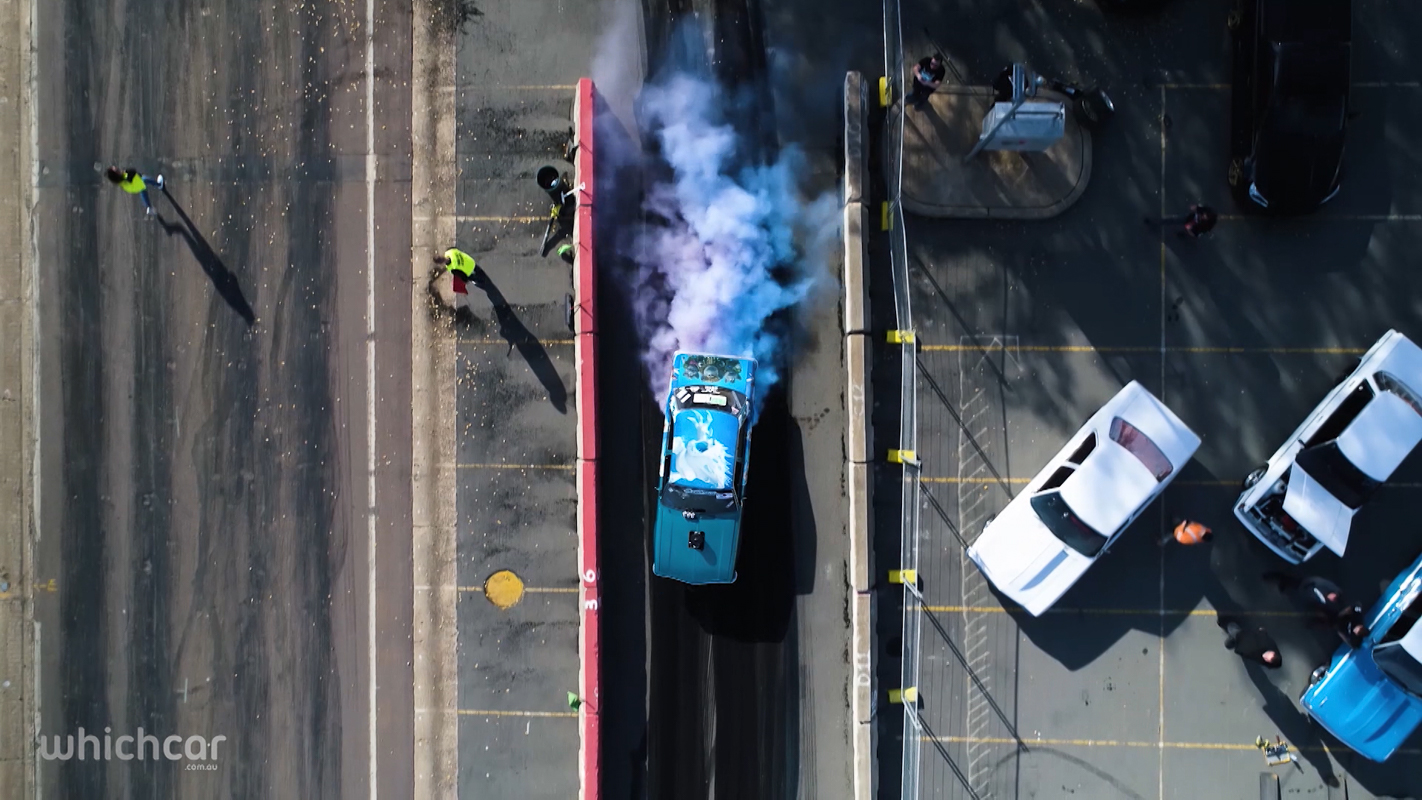
It’s the biggest automotive festival in the country, but who are the people that make up its annual 100,000-person attendance? We chat to a few die-hards to find out what makes Summernats the place to be.
What makes a Street Machine?
Think Street Machine is all V8’s and muscle cars? You’d be wrong. We take a look at what Street Machine culture is all about by analysing some of the builds that grace the pages of Street Machine magazine.
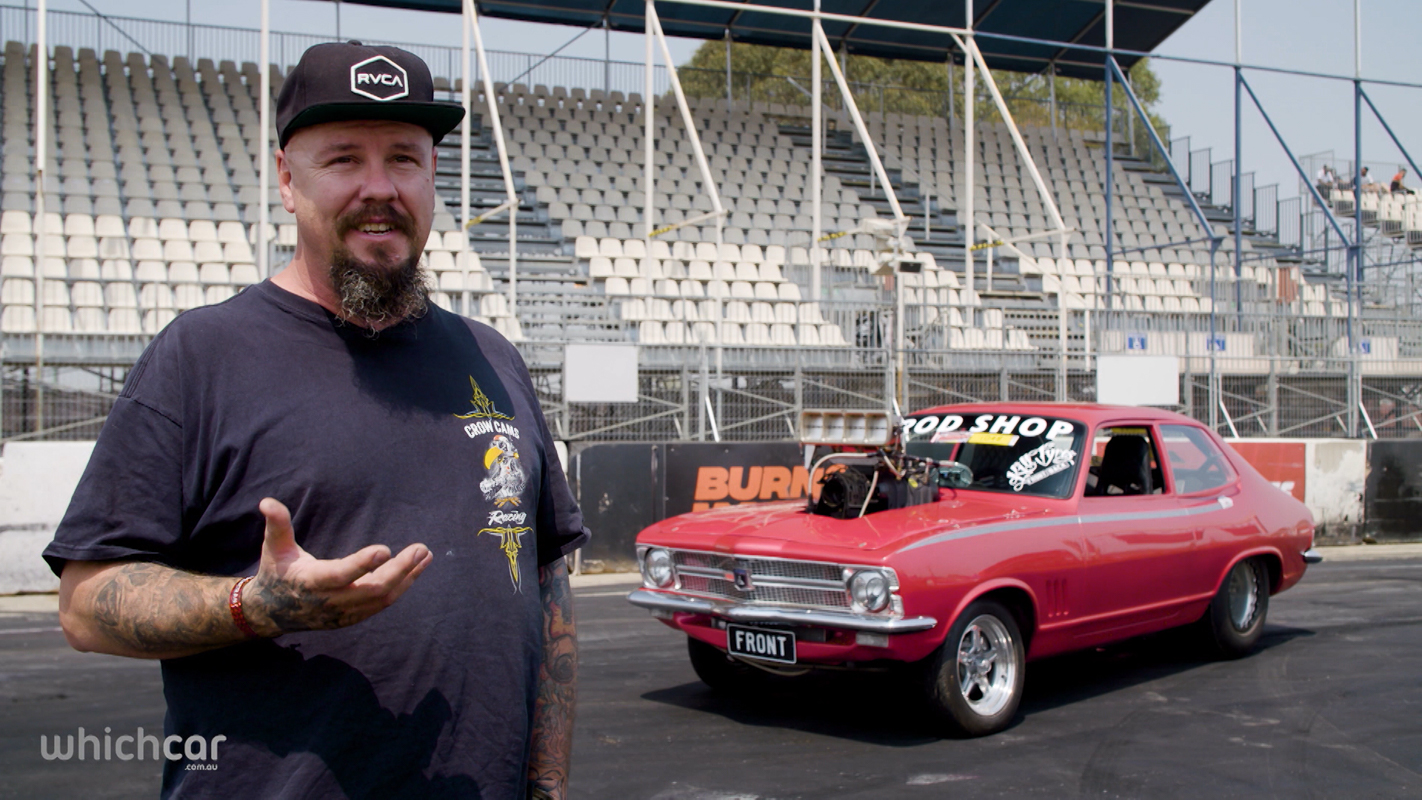
Developing the hobby
For some people, the modifying cars can turn from an interest to a career. We hear from industry experts who turned their passion into an income.
Street Machine builds
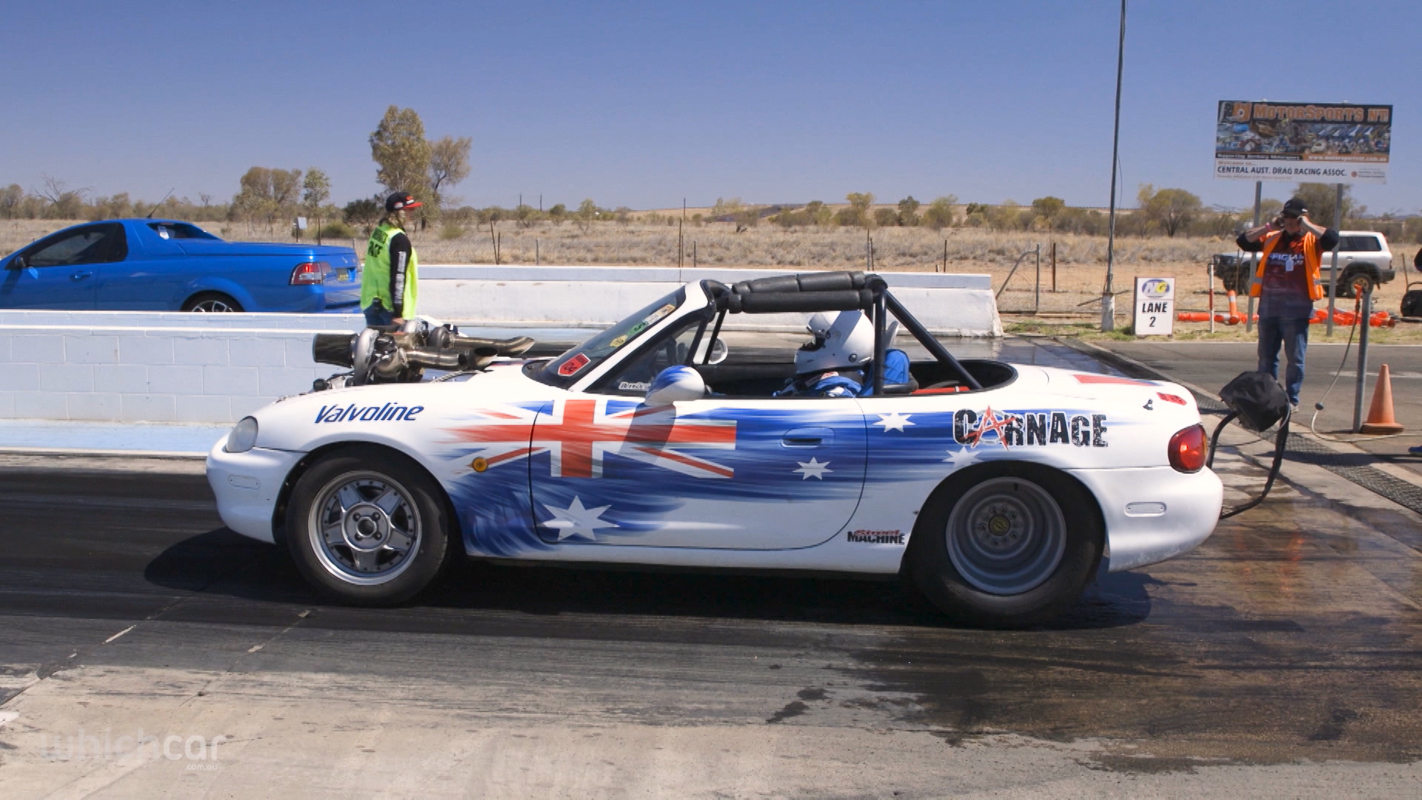
Not only does the Street Machine team document some of the world’s most impressive builds, they also know how to spin a spanner.
Continental Car Lab
This week on Car Lab we explain how a tyre pressure monitoring system works.
WhichCar TV Season Two Episode 24
4:00pm Sunday August 2, Channel 10
WIN A TRIP TO THE MALDIVES WITH WHICHCAR
For season two, we’re also offering an amazing prize for our viewers. How does a trip to the Maldives sound? Pretty awesome, right?
The competition is open NOW so make sure you tune into WhichCar TV on Channel Ten at 4pm Sunday AEDT.
And, if for some reason you can’t (and it had better be a good reason!) then there’s a host of ways to catch up on the show, check out behind-the-scenes stuff and find out more about the cars Aussies want to buy.
For example, our weekly podcast, our Facebook page and our YouTube channel are standing by 24/7.
MISSED THE SHOW? Catch up at Ten Play
We don’t mean to toot our own horn, but the August 2020 issue of MOTOR is worth tooting about.
As well as the M2 CS first drive we nabbed before the car has even hit out shores, we’ve got plenty to keep you reading your lockdown away (or whatever it is you’re doing if you don’t live in Melbourne).
Along with that are a plethora of other awesome features and stories, plus the reviews and news you’ve come to expect from us!
You can find MOTOR at retailers around Australia. Or you can subscribe and save yourself some cash, there’s even a (cheaper!) digital subscription option.
Subscribers often receive their mags earlier, so you’ll get to see what MOTOR has to offer before anyone else.
Follow us on Facebook, Twitter, and Instagram to interact with us, give us feedback, and get a peek behind the scenes.
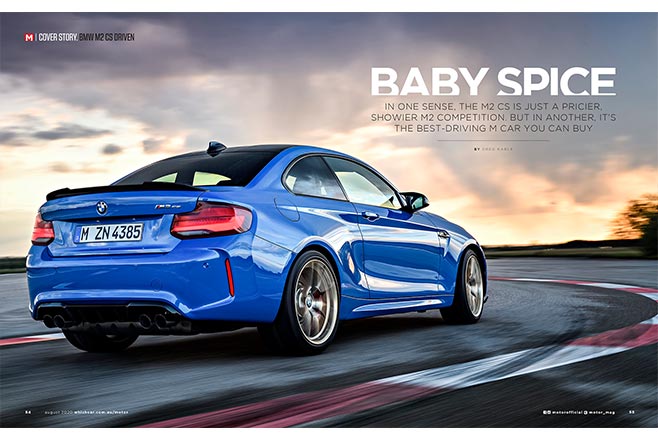
FIRST FANG: BMW M2 CS
Expensive, but it also might be the best BMW driver’s car you can buy
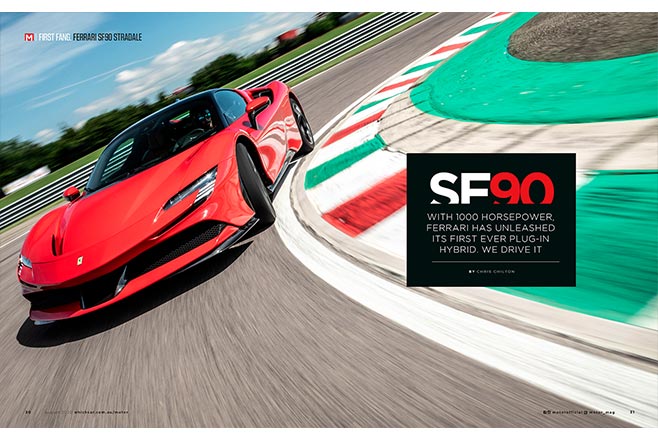
TRACK TEST: FERRARI SF90
We dig the stirrups into Ferrari’s 1000 horsepower plug-in hybrid
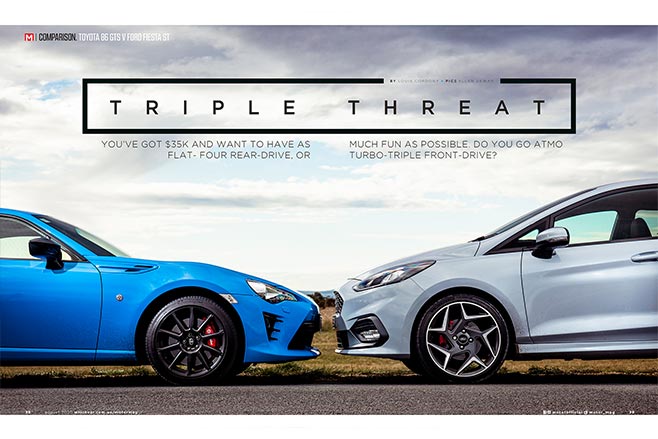
TOYOTA 86 VS FORD FIESTA ST
The kings of cheap thrills face off as the Fiesta enters its new generation
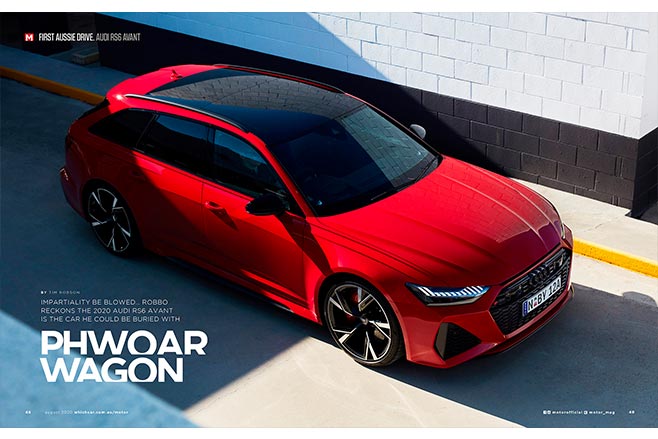
FIRST AUSSIE DRIVE: AUDI RS6
Robbo really loves the RS6, but then again, who wouldn’t?
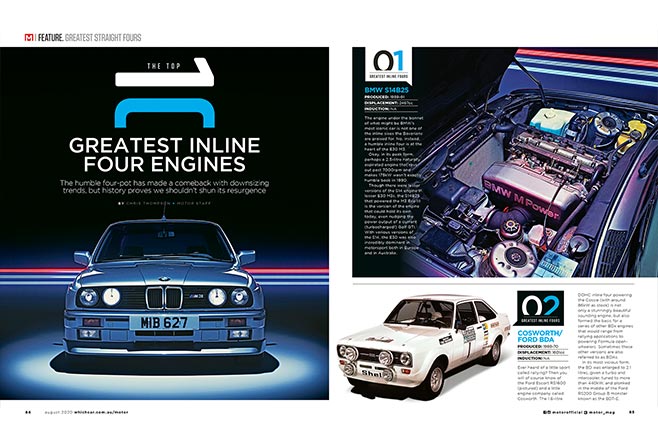
GREATEST INLINE FOURS
The humble four-pot gets a chance to prove it’s not just milk and juice that should come as 2-litres
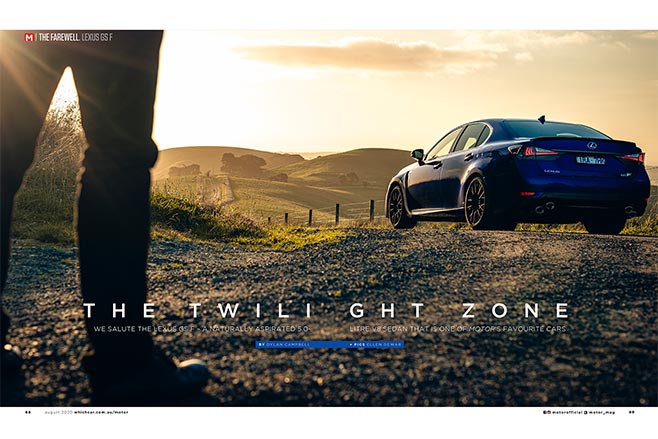
FAREWELL LEXUS GS F
We put an F in the chat for one of our favourite cars
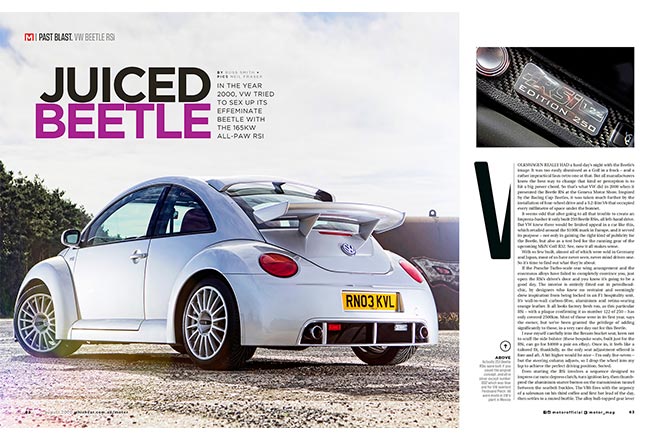
PAST BLAST: VW BEETLE RSi
Back when VW decided to ditch the dashboard flower and give its Bug some balls
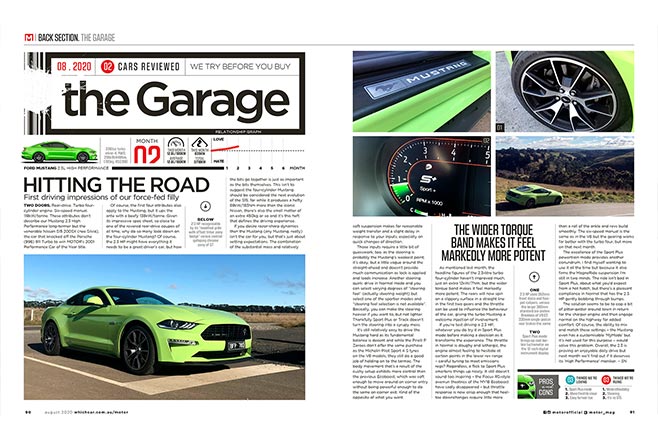
GARAGE: FORD MUSTANG 2.3L; AMG C63
The four-pot Pony hits the road; Our Affalterbach amigo says ‘tchuss’ and leaves us
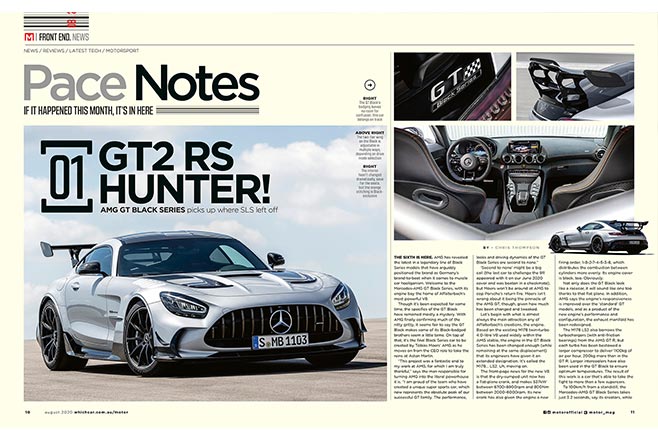
NEWS: AMG GT BLACK AND MORE!
Plus all the features, regulars, columns, and other nonsense you’d expect from us. Enjoy!
