
Everyone is – or should be – aware of the obvious distractions when driving a car. Using your phone, for example, eating or drinking and dealing with kids are the obvious ones.
But what about the more subtle ones? Chris Thompson and Emma Notarfrancesco set up a unique experiment to quantify just how much the simple act of conversation can be when driving.
Chris set a 53sec time around a pretty standard motorkhana course and Emma scored a similar time, all without distraction.

Then they started to ask each other some tricky questions…

Driving around the secure confines of a large skid pan with only cones in the way doesn’t seem like much of a challenge, but it proved to be a very enlightening experiment in more ways than one.
MORE CONTINENTAL CAR LABS
- Caring for your performance tyres
- How fast can you go in reverse?
- How much do roof racks hurt fuel economy?
- Why driving on space savers is a bad idea
- What do car seat laws actually mean for parents?
- Does air-conditioning affect engine power?
- How hot can it get inside a locked car?
- Warming up the engine – fact or fiction?
WhichCar TV
4:00pm Sundays, Channel 10 (check local guides)
MISSED THE SHOW? Catch up at Ten Play
Despite modern fuel economy technology and design, even the most efficient combustion engines waste a surprising amount of energy with each drop of fuel. Even in the best cases, only approximately 30 percent of the energy in petrol is actually used to propel the vehicle, with a majority lost though waste heat.
Under normal circumstances, the cooling system dumps all of the unwanted energy to the atmosphere via the radiator, but wouldn’t it be better to put that precious heat to good use?
During a trip to Stradbroke Island, we explored if it was possible to cook using the heat produced by the Isuzu MU-X’s diesel engine.
A potato was wrapped in foil and placed behind the power steering pump, a fillet of fish sat at the back of the engine bay on top of the rocker cover, and a sausage was wedged behind the turbo and catalytic converter.
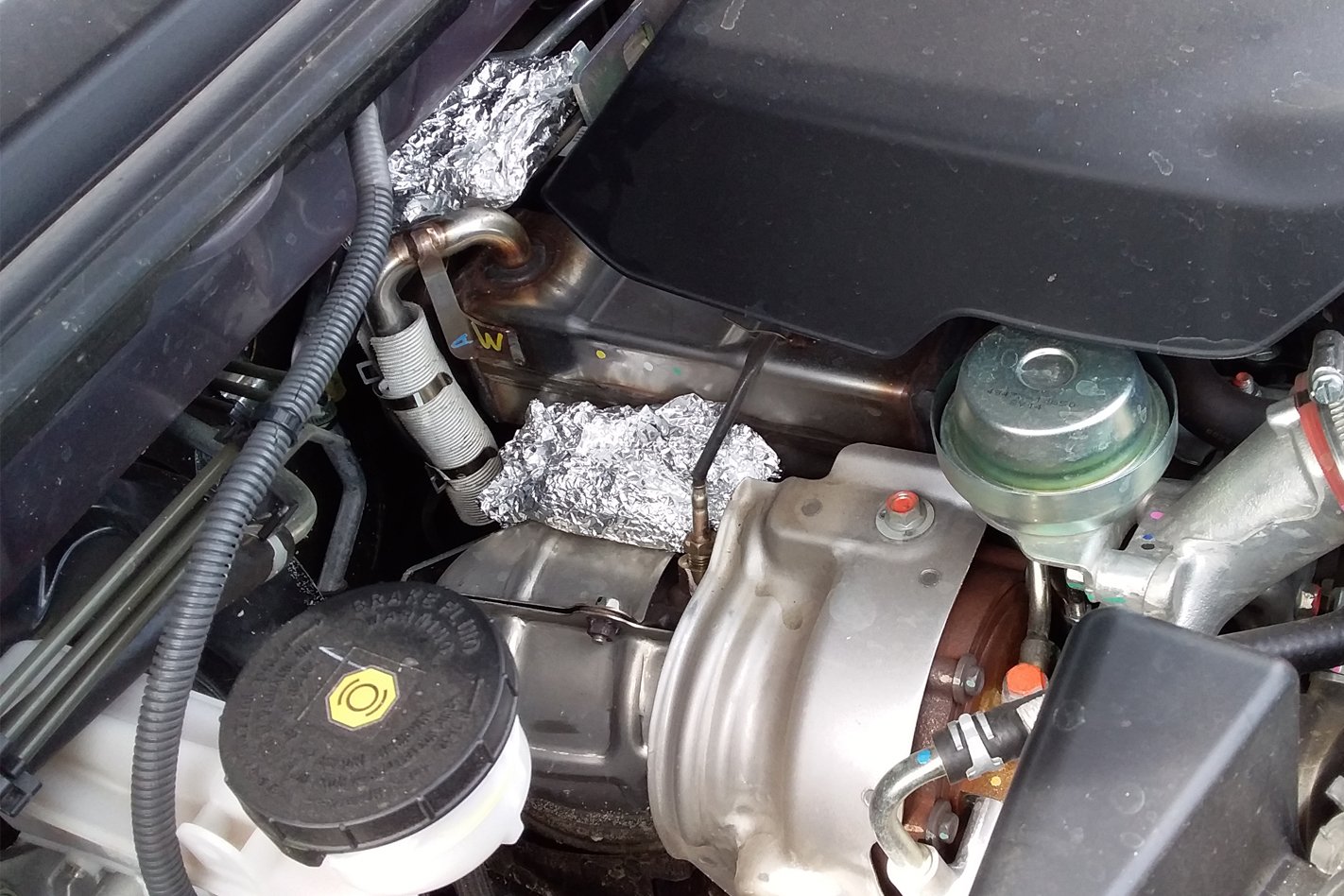
Then the engine was flicked to diesel-mark 5 and we set off for a blast along the incredible Queensland beaches.
After about 40 minutes there was zero progress with the potato due to its relatively cool location, however, both the sausage and fish were showing promising signs of heat exposure, so a little more oven-time was prescribed.
Another inspection 20 minutes later after some steep hill climbing and the results were genuinely encouraging.
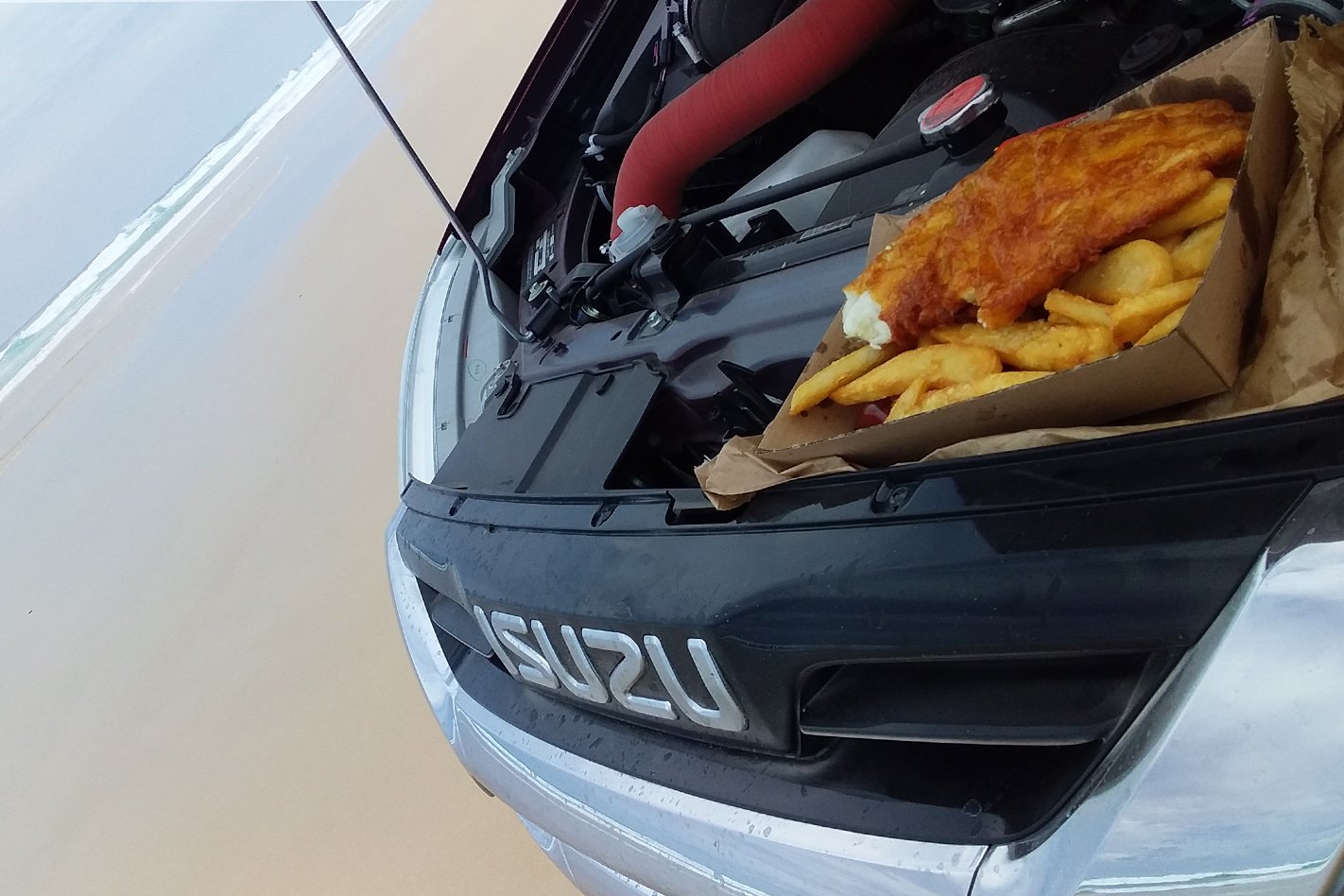
In its foil wrap, the fish had steamed using the same principle you might employ at home – albeit with an oven that doesn’t have four cylinders and an alternator. It was a little overdone but no worse than your nan’s traditional nuked Friday fish dish.

The sausage was, to be fair, a bit weird. It too had, sort of, steamed so there was no crispy skin or browned morsels. It was however, completely cooked through and quite safe to eat. As if I was going to resist!
I can’t imagine cetane-steamed bratwurst catching on any time soon, but it was certainly food, quite literally, for thought.
No trickery or cheating was used in this Car Lab experiment and I was delighted with the outcome, and we learnt a lot about the not-at-all fine art of under bonnet cuisine. A-la carte is probably an exaggeration, but this initial exploration has certainly made us want to go back for a second course. Watch this space
MORE CONTINENTAL CAR LABS
- Caring for your performance tyres
- How fast can you go in reverse?
- How much do roof racks hurt fuel economy?
- Why driving on space savers is a bad idea
- What do car seat laws actually mean for parents?
- Does air-conditioning affect engine power?
- How hot can it get inside a locked car?
- Warming up the engine – fact or fiction?
- Driving distracted is as dangerous as it sounds
WhichCar TV
4:00pm Sunday, Channel 10 (check your guides)
MISSED THE SHOW? Catch up at Ten Play

Today on Car Labs –the true power of air!
Have you ever heard the myth air conditioning slows you down? Maybe your uncle turned it off when overtaking trucks on family road trips.
Or maybe you had a mate who swore his Hyundai Excel could not climb a hill with it on!
There is a theory behind this. Air conditioning relies on a belt attached to your engine to drive its systems, and that’s why many believe it saps precious power.
But if it’s only a kilowatt here or there, then it probably isn’t worth worrying about. So we’re tackling this myth with some real-world science…
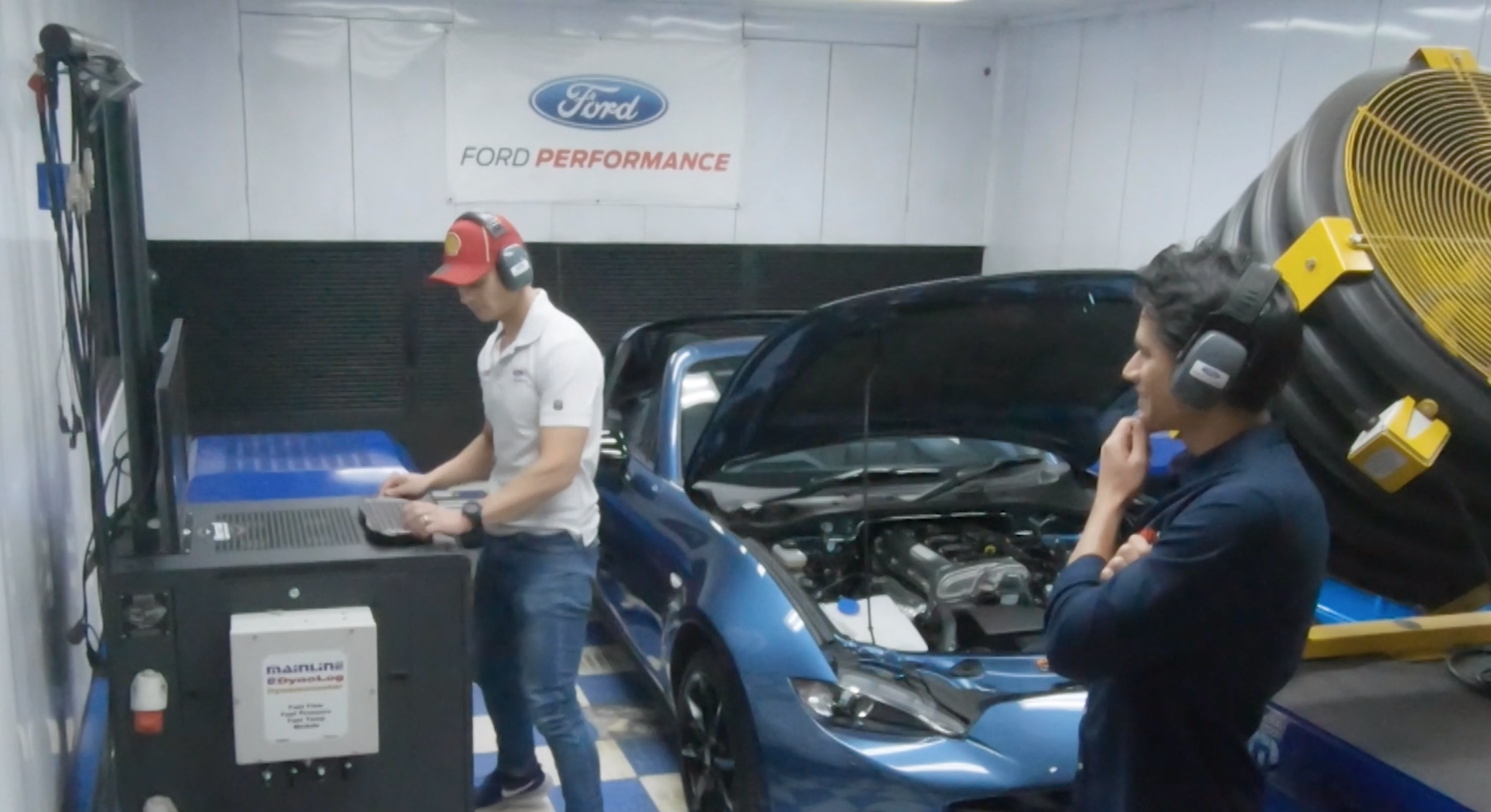
We headed out to Herrrod Performance’s dyno room. It’s where expensive and complicated equipment measures a car’s engine power.
So, that’s what we’re going to do with this Mazda MX-5. It’s a bit slicker than a Hyundai Excel, but its small capacity engine should make any power drain obvious.
We’ll run three times with air con off and then another three times with it on, then compare the averages to see if the theory is all just hot air!
Now, dynos work in different ways, but they all apply some resistance to the car’s wheels and then measure how easily, or slowly, the engine overpowers it.
Given that the myth suggests air conditioning robs power, our MX-5 should make more when the air conditioning is turned off. So, let’s find out…
Before I reveal the results, it’s worth mentioning that the most advanced hybrids today run air conditioning off battery power – costing the engine nothing!
But for the majority of cars like this MX-5, well, there is a difference.
With the air conditioning on its highest setting the car lost 2.5kW, or around 2 per cent of its overall power.
That might not sound like much until you look at its torque figure, that shows a much larger five per cent difference. And that’s something you’re going to feel in the tight and twisties – especially in your mate’s Hyundai Excel…
MORE CONTINENTAL CAR LABS
- Caring for your performance tyres
- How fast can you go in reverse?
- How much do roof racks hurt fuel economy?
- Why driving on space savers is a bad idea
- What do car seat laws actually mean for parents?
- How hot can it get inside a locked car?
- Warming up the engine – fact or fiction?
- Driving distracted is as dangerous as it sounds
- Cooking on a car engine – is it possible?
WhichCar TV
4:00pm Sunday, Channel 10 (check your guides)
MISSED THE SHOW? Catch up at Ten Play
Is there truth to the rumour that you need to warm up the car engine before driving? Do you listen to your uncle on Christmas Day when he swears blind that you need to warm the car motor up every morning?
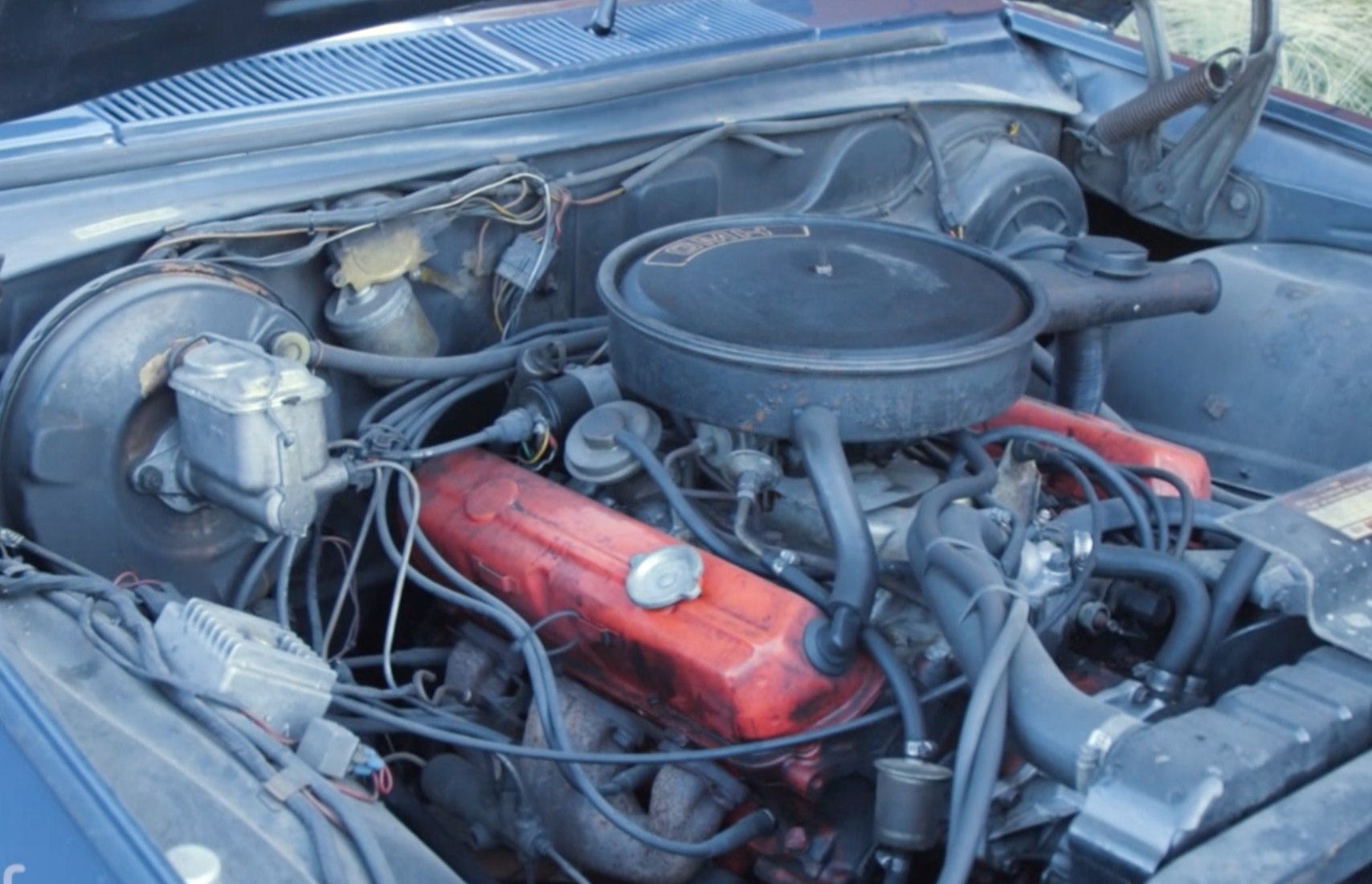
There’s truth and fallacy in the statement, and it comes down to age. Simply put, the older the car, the more there’s substance to the story of giving your engine a warm-up.
Older cars ran very simple cooling systems which simply needed more time to come up to temperature.
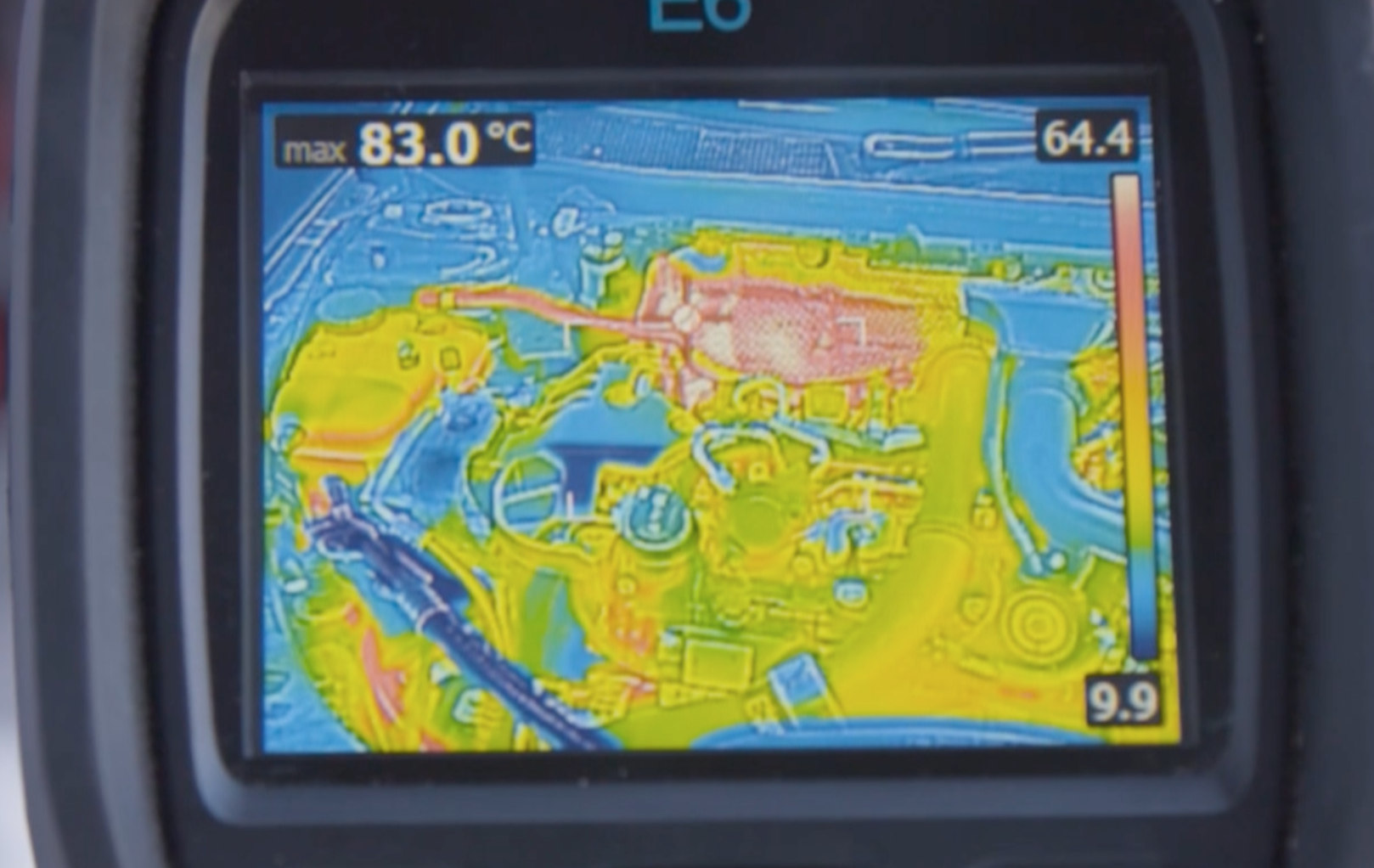
With a more modern car, the same doesn’t hold true, thanks to sophisticated cooling circuits that negate the need to warm up the car engine before setting off.
Watch the video for more!
MORE FROM THE CONTINENTAL CAR LAB
- Caring for your performance tyres
- How fast can you go in reverse?
- How much do roof racks hurt fuel economy?
- Why driving on space savers is a bad idea
- What do car seat laws actually mean for parents?
- Does air-conditioning affect engine power?
- How hot can it get inside a locked car?
- Driving distracted is as dangerous as it sounds
- Cooking on a car engine – is it possible?
WhichCar TV
4:00pm Sundays, Channel 10 (check local guides)
MISSED THE SHOW? Catch up at Ten Play
Well, well, well. Liberty Walk is back at it again with another installment of How to Upset the Purists, this time with the Toyota GR Supra as its easel.
The new Supra, now a 285kW offering thanks to an update by BMW to its Z4-sourced engine, was already a contentious car, with many deciding Toyota’s decision to source its engine from BMW to remain an inline six was blasphemy.
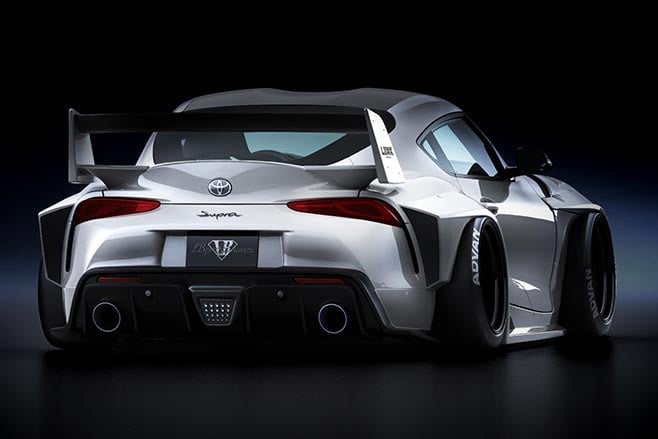
But Liberty Walk cares not for the opinions of purists, instead deciding to whack a huge wing onto the bootlid, while also adding front and rear diffusers, and a widebody kit fitted along the entire side of the car. The bolt-on look and the fat wheel arches are complimented by a set of deep, cambered wheels on the car Liberty Walk has released imagery of.
While this kit is available for USD$15,950 (AUD$23,000) if specified in carbon fibre reinforced plastic, Liberty Walk also has a slightly modified version of the bonnet lid on offer, which adds actual vents in the bonnet as well as USD$3080 (AUD$4445) to the price.
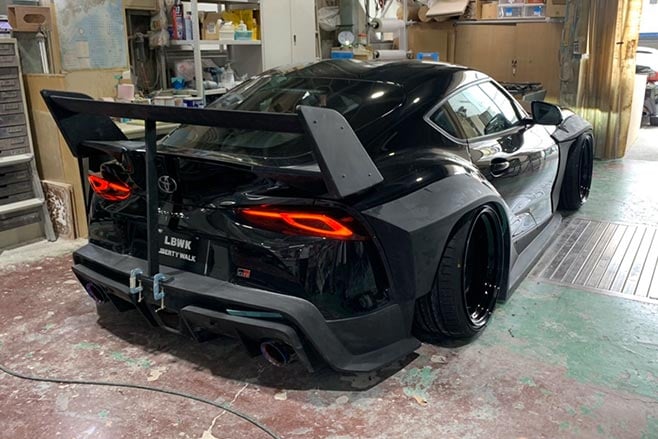
Available separately is an air suspension kit which allows the Supra to be just about lowered onto the ground (to its widebody, anyway) when stationary.
Toyota 86 gets the Liberty Walk Treatment
We’re sure the extent of this modification would essentially render an otherwise excellent sports car much less capable (especially as it took silver at PCOTY 2020), but for those who are into Liberty Walk’s modification ethos, we’re sure they won’t care.
We’ve all opened a car door in high summer and recoiled from the intense heat – but have you ever wondered just how hot it gets inside your car in summer?
Tony O’Kane and Jade Pummeroy risked hydration and complexion in a supervised experiment that puts some real science around the myth of car interior temperature.
With first aid standing by, the two endured searing heat and terrible puns, but at least they got to enjoy a cooling ice cream before things got too hot to handle.
You’ll also hear from St Johns Ambulance about just how dangerous it can be for a child stuck inside a hot car, and the surprising number of times that ambulances are called out every day for kids stuck in a car.

MORE CONTINENTAL CAR LABS
- How fast can you go in reverse?
- How much do roof racks hurt fuel economy?
- Why driving on space savers is a bad idea
- What do car seat laws actually mean for parents?
- Does air-conditioning affect engine power?
- Warming up the engine – fact or fiction?
- Driving distracted is as dangerous as it sounds
- Cooking on a car engine – is it possible?
WhichCar TV
4:00pm Sunday, Channel 10 (check your guides)
MISSED THE SHOW? Catch up at Ten Play
If there is a natural enemy of the tyre, it’s the performance test. Which, to be fair, is code for ‘kill all tyres’.
For the last couple of decades, MOTOR magazine has been killing tyres in the name of performance, and as part of the team, I’ve dealt with my fair share of wrecked rubber.
Tyres live and die via their heat cycles – every time a tyre is brought up from cold to hot then back again, that’s a heat cycle, and repeated heat cycles ultimately spell the end of the tyre’s life.
As well, physical distortion and abrasion – usually at the hands of MOTOR’s faster, slidier team members – also shortens a tyre’s life.
One way to ensure you’re getting all that you paid for is to ensure that your tyres are set to the correct pressure for every adventure, and this video does a good job of explaining that.
MORE CONTINENTAL CAR LABS
- How fast can you go in reverse?
- How much do roof racks hurt fuel economy?
- Why driving on space savers is a bad idea
- What do car seat laws actually mean for parents?
- Does air-conditioning affect engine power?
- How hot can it get inside a locked car?
- Warming up the engine – fact or fiction?
- Driving distracted is as dangerous as it sounds
- Cooking on a car engine – is it possible?
WhichCar TV
4:00pm Sunday, Channel 10 (check your guides)
MISSED THE SHOW? Catch up at Ten Play
One of the reasons Porsche’s two-wheel-drive 911 is so fast off the mark is because it positions the weight of the engine directly over the driven wheels which, critically are at the back of the car. It’s the perfect recipe for grip and acceleration from a standing start.
Surely then, you could effectively simulate (perhaps even fake) the same formula by reversing a front-engined, front-wheel drive? In this Car Lab we asked the question – can front-wheel-drive cars accelerate faster in reverse?
For the test we chose Honda’s blistering Civic Type R firstly because it has a manual gearbox which is more durable in reverse than CVT and auto transmissions. Secondly, its reverse gear is about the same ratio as first (forward) gear so there would be no gearing advantage in either direction.
Finally, the Type R is equipped with sticky tyres and is a high-performance model designed to get up and go.
To set a benchmark, Dan managed the best launch he could using only first gear with warm tyres and on dry asphalt. The result of 51km/h in exactly 3.0 seconds aligns with the Civics’ 0-100km/h acceleration of 5.7s with a little slip off the mark.
Amazingly, when the same test was conducted in reverse, the same terminal velocity was achieved in just 2.8 seconds. An improvement of 7.0 percent.
Turns out front-wheel-drive cars can be faster in reverse but the experiment also revealed that it’s much easier to use the forward gears if you’re looking to get somewhere in a hurry.
MORE CONTINENTAL CAR LABS
- Caring for your performance tyres
- How much do roof racks hurt fuel economy?
- Why driving on space savers is a bad idea
- What do car seat laws actually mean for parents?
- Does air-conditioning affect engine power?
- How hot can it get inside a locked car?
- Warming up the engine – fact or fiction?
- Driving distracted is as dangerous as it sounds
- Cooking on a car engine – is it possible?
It’s no secret that Ford and Volkswagen are building a ute together, but the companies have revealed more details about the program that will see the next-generation Ranger donate its services to the second-gen Amarok.
The firms signed an agreement in early 2019 to share key technology across the commercial vehicle and electric vehicle spaces, with Ford adopting VW’s new electric platform and Volkswagen co-opting its relatively small stake in the pick-up market to take advantage of Ford’s mass-market penetration.
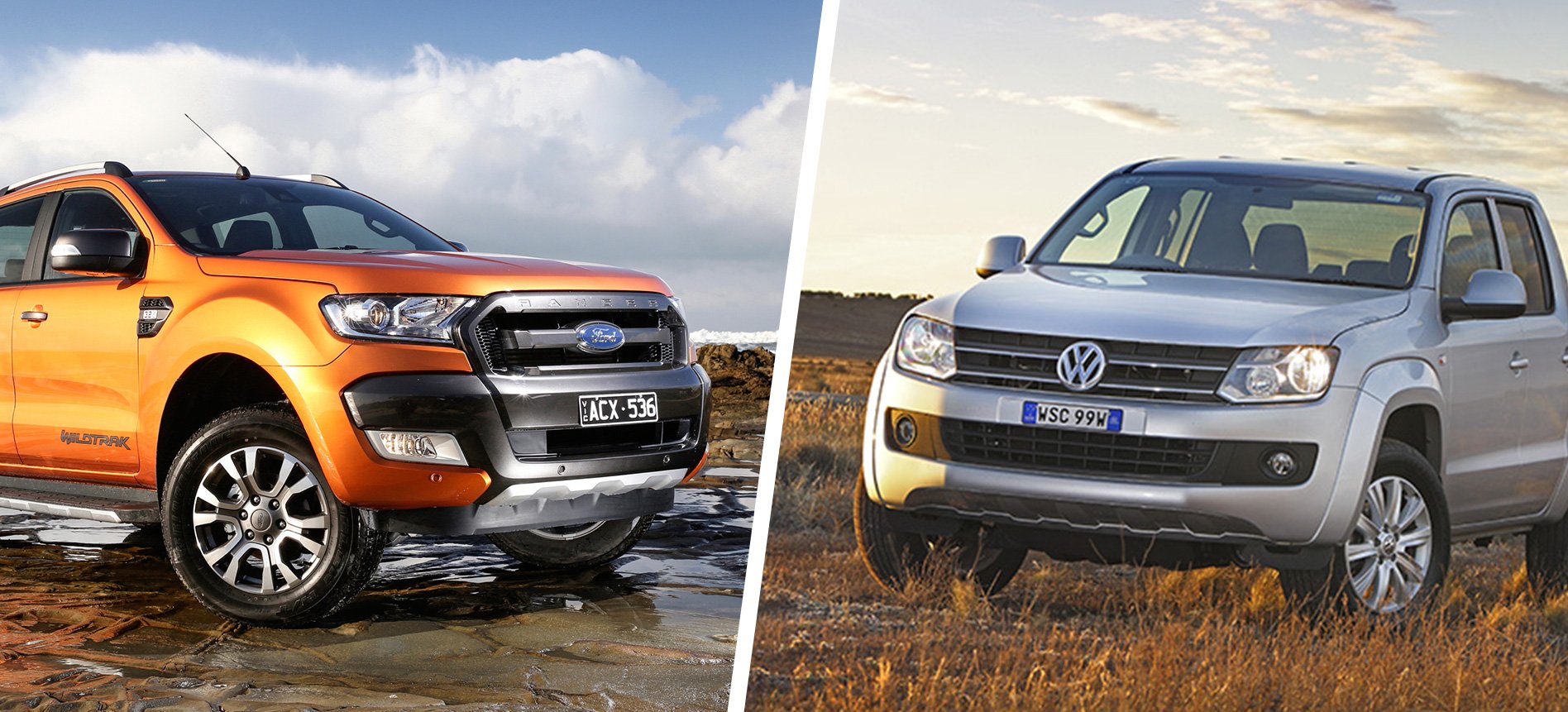
The commercial vehicle side of the deal has been extended further, with Ford agreeing to take a version of the small Caddy van from VW as early as next year, while a one-tonne Ford-built van will be developed for Volkswagen, positioned alongside the Transporter and beneath its Crafter ranges.
Volkswagen reckons the deal will result in a combined total of eight million commercial vehicle products produced by the two companies over the course of the respective cars’ life cycles.
“Commercial vehicles are fundamental to Ford today and an area where we will accelerate and grow, and working with Volkswagen on these platforms will provide both of us significant financial advantages in things like engineering, and plants and tooling,” said, Ford’s chief operating officer Jim Farley.
“Separately, Ford will add battery-electric versions of Transit and F-150 in the next 24 months for commercial customers who increasingly need zero emissions and the power of connectivity, data and artificial intelligence.”
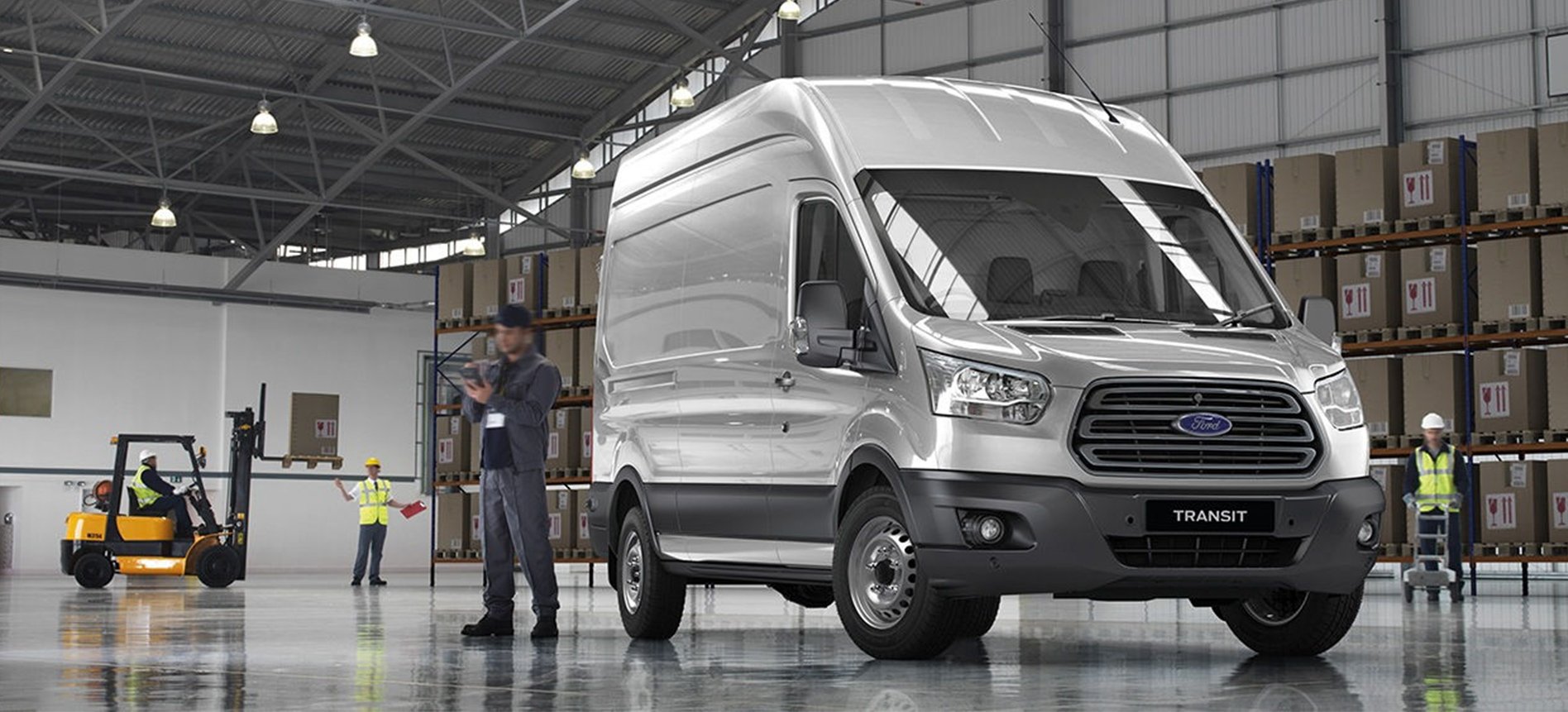
Ford Transit
“The collaboration with Ford is a key building block of our GRIP 2025+ strategy and part of the current transformation of Volkswagen Commercial Vehicles,” said Thomas Sedran, chairman of the board of management Volkswagen Commercial Vehicles.
“This long-term cooperation with Ford will strengthen our very good position in area of light commercial vehicles, especially in our core European markets, and is proof that we are successfully implementing our plan, step by step.”
WhichCar understands the next-generation Ranger and Amarok will be built in South Africa representing a significant advantage for Australia, given South Africa’s large right-hand-drive market for pick-ups.
Volkswagen insiders are adamant, too, that the second-generation will have its own individual character, especially when compared with other share projects including the Isuzu D-MAX/Mazda BT-50 partnership. “It won’t be just a rebadged Ranger,” our source told us.
At first glance, the mention of a new one-tonne van – arguably based on the successful Ford Transit – would appear to put the future of Volkswagen’s long-running Transporter line under the spotlight.
The Transporter series, which is now up to its sixth generation, dates back to the 1950s, and is an integral part of the brand’s identity.
WhichCar understands that the future of the Transporter is unlikely to be affected by the addition of a Ford-based product. A mid-life update for the Transporter series – known internally as the T6.1 – is due to hit Australia late in 2020, while the company is also planning to re-introduce factory-built campers to the line-up.

The ID Buzz electric van, too, could be considered as a forerunner to the next-generation T7. The Buzz (above) is slated for production in 2022, and will be built on the same MEB platform that VW is sharing with Ford (which also might provide a clue about the make-up of that one-tonne van).
This article was first published in Wheels Yearbook, 2002
“Mate, what if it’s wet?” The culturally confused transTasman tones coming down the line belong to Greg Murphy, the rapid Kiwi V8 Supercar racer.
“Mate, this is Wheels, it’ll be fine, don’t worry,” I reassure him, as rain pours down in Melbourne. ”I’ll see you at the proving ground at 9am.”
Tomorrow, Murphy is to attempt to drive an HSV GTS around the highspeed loop at Holden’s proving ground faster than anyone in history
Our goal is to exceed 270km/h. Murph’s up for it, but he only has three hours to spare because this particular Saturday, you see, is the AFL Grand Final day and he’s got tickets.
Saturday 7am, and the sun is shining in Melbourne. But Holden’s proving ground is at Lang Lang on the eastern edge of Western Port Bay, and anyone who’s been to a race at Phillip Island knows what that can mean – four seasons in one day. Fifty kays down the South Gippsland Highway, the sky blackens and it starts to rain – hard.
When I pull up behind Murph’s yellow HSV GTO at the proving ground security gate, he gets out and gives me a look normally reserved for a V8 protagonist who’s just shunted him off the track. I put on a brave face. “It’ll be okay, we’ve got three hours and we only need one lap.”
“Yeah, right,” he sneers and then grins, “piece of piss”.
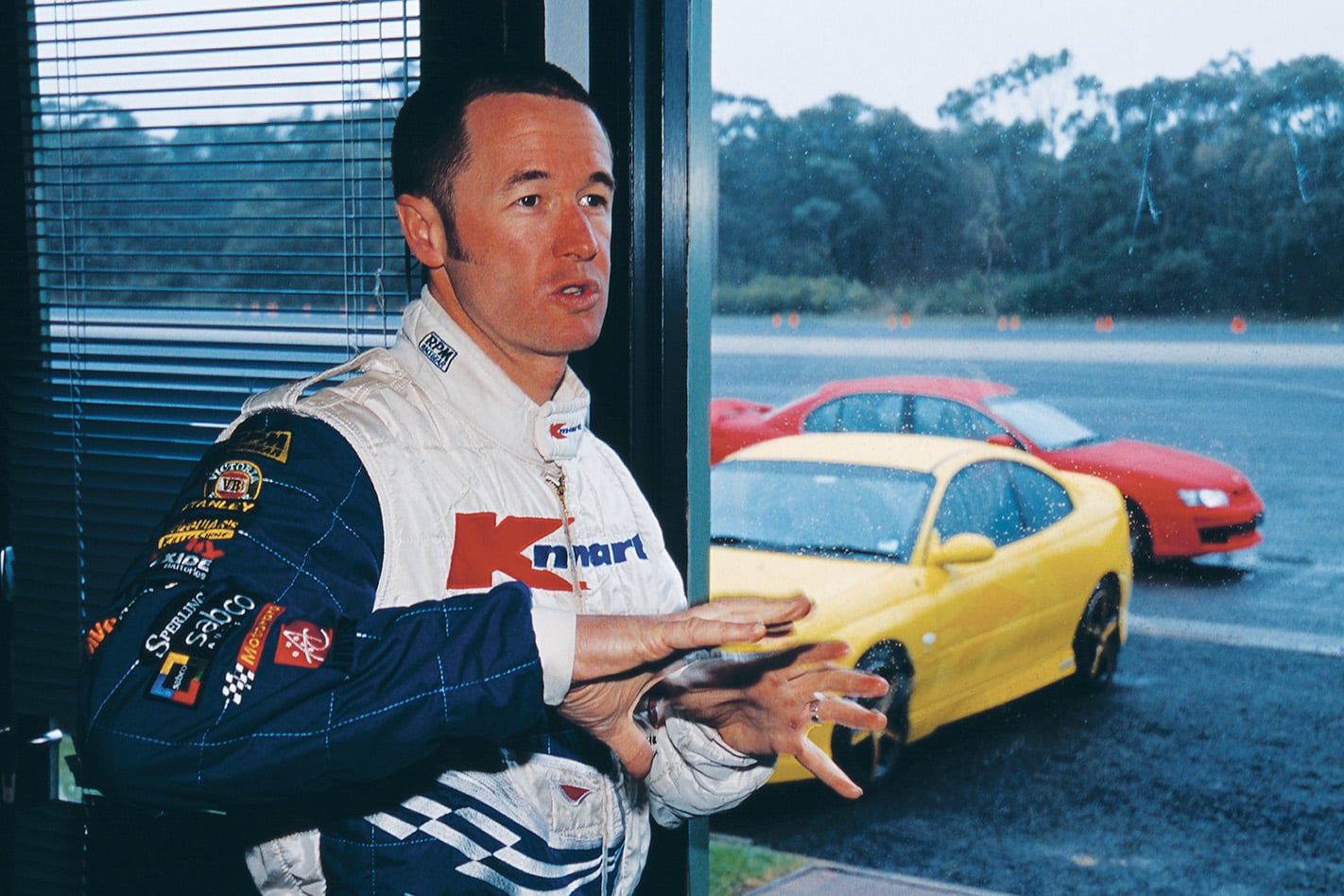
We meet HSV powertrain engineer Sam Davis at the skidpan and decide to wait and see if the rain will ease. The GTS is exactly how Wheels left it after the Y Series launch at Lang Lang several days earlier. All Davis has done is a spanner check and pumped the front tyres up to 2.6bar (38psi).
We’ve elected to use an auto because it has a taller 3.46:1 diff ratio (the manual is 3.91:1), and, if the 300kW Gen III engine can pull the required revs, Davis has calculated Murph should crack 273km/h – in a perfect world.
After about 30 minutes there is a lull in the weather and Murphy suits up. Speeds of 270km/h in the rain are normally nothing to the fearless Kiwi, but he usually does it sitting in a carbonfibre race seat, with a fivepoint safety harness, and surrounded by a full roll-cage. This is new territory for Murph in more ways than one, but at least he has airbags.
“I haven’t done much highspeed work around here,” he says nonchalantly. “The fastest I’ve done was 250 on a (customer) drive day.”
Murph cranks the C4B over, turns off the traction control, and slithers gracefully across the skidpan to the 4.7km-long high-speed oval.
We race out and huddle under umbrellas at the usual radar ‘sweet spot’, right on the low, two-strand armco. Below us, the 21-degree banking falls away like the view from the crest of a rogue wave. It’s pouring again. The plan is for Murphy to feel his way around and judge if it’s safe to go for big numbers.
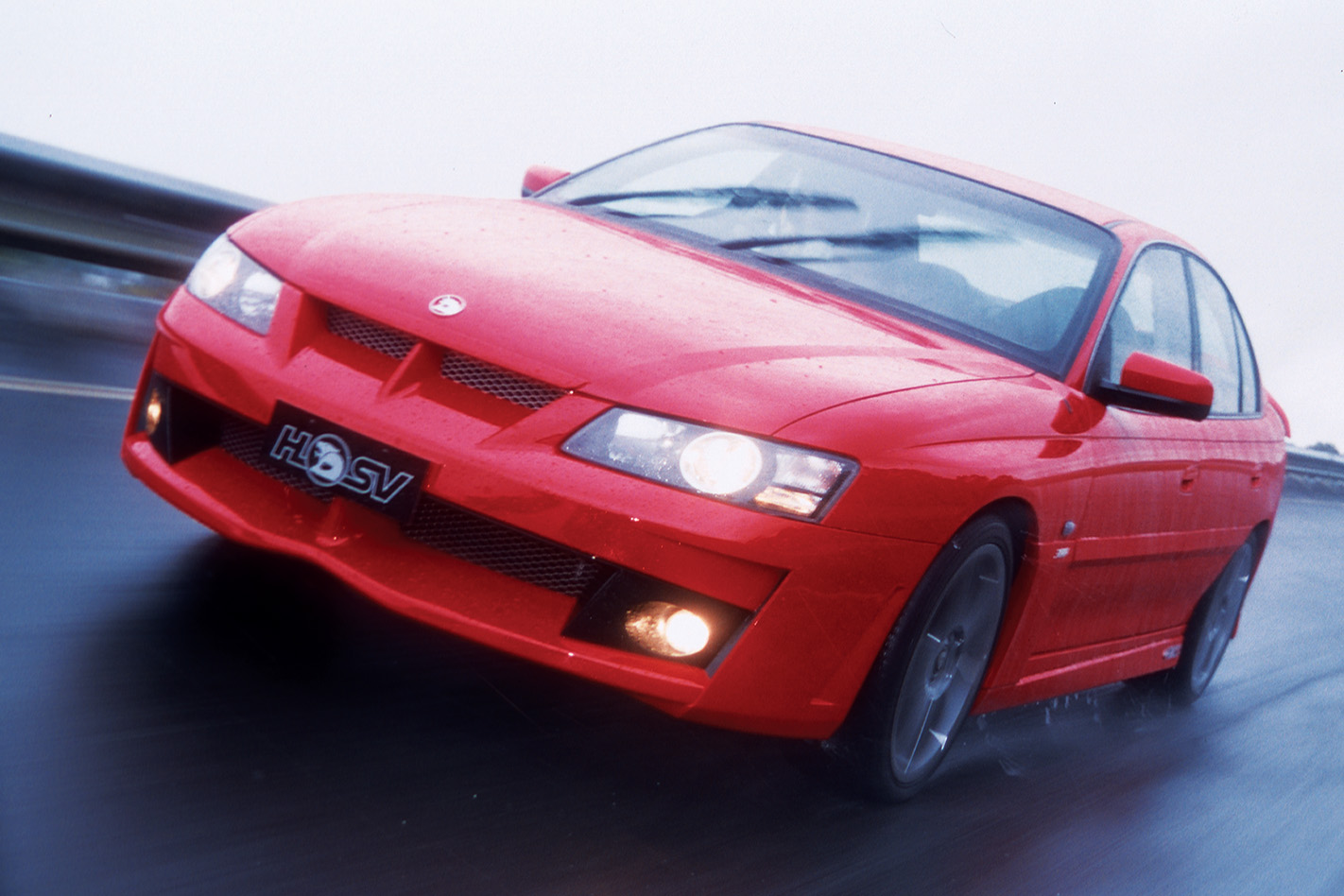
You hear the GTS well before you see it. The sound it makes as it punches through the wet air is like a jet fighter in clouds – a sort of muffled typhoon.
The car appears about a kilometre away and arcs around towards us on its warm-up lap. It’s moving fast, but nowhere near top speed. The radar digits lock on at 201km/h.
The next time the GTS hoves into view it is obviously travelling substantially faster. It blasts past only a metre or so from us at 267km/h, and we are buffeted by its slipstream and the following cloud of fine mist. After only two laps, Murph’s already knocking on the door of 270 clicks, but he’s worried.
“The visibility got really bad and then the wipers decided to stop at 220, so I couldn’t actually see,” he frowns. Talk about brave, he’s just driven blind for five kays at 267km/h. How did it feel?
“Quite comfortable, but a little bit twitchy. The car feels quite funny in this weather, but was still sitting flat; it doesn’t feel flighty. The speedo was off the clock, but I wasn’t looking at the rpms. The wet road isn’t a problem; it’s just trying to focus through the rain on the windscreen to see the road. I think it’ll go quicker than 267.”
We adjourn to the warmth of ‘the chalet’, the meeting room next to the skidpan. Rain is still lashing the proving ground and time is ticking away. Murph’s getting edgy. He wants a result, but he also has to be at the footy by 2.30pm. Then he has – pardon the pun – a brainstorm, and drives off with Davis. Twenty minutes later he’s back with the windscreen smeared with water-repelling Rainex, the same product used on race cars.
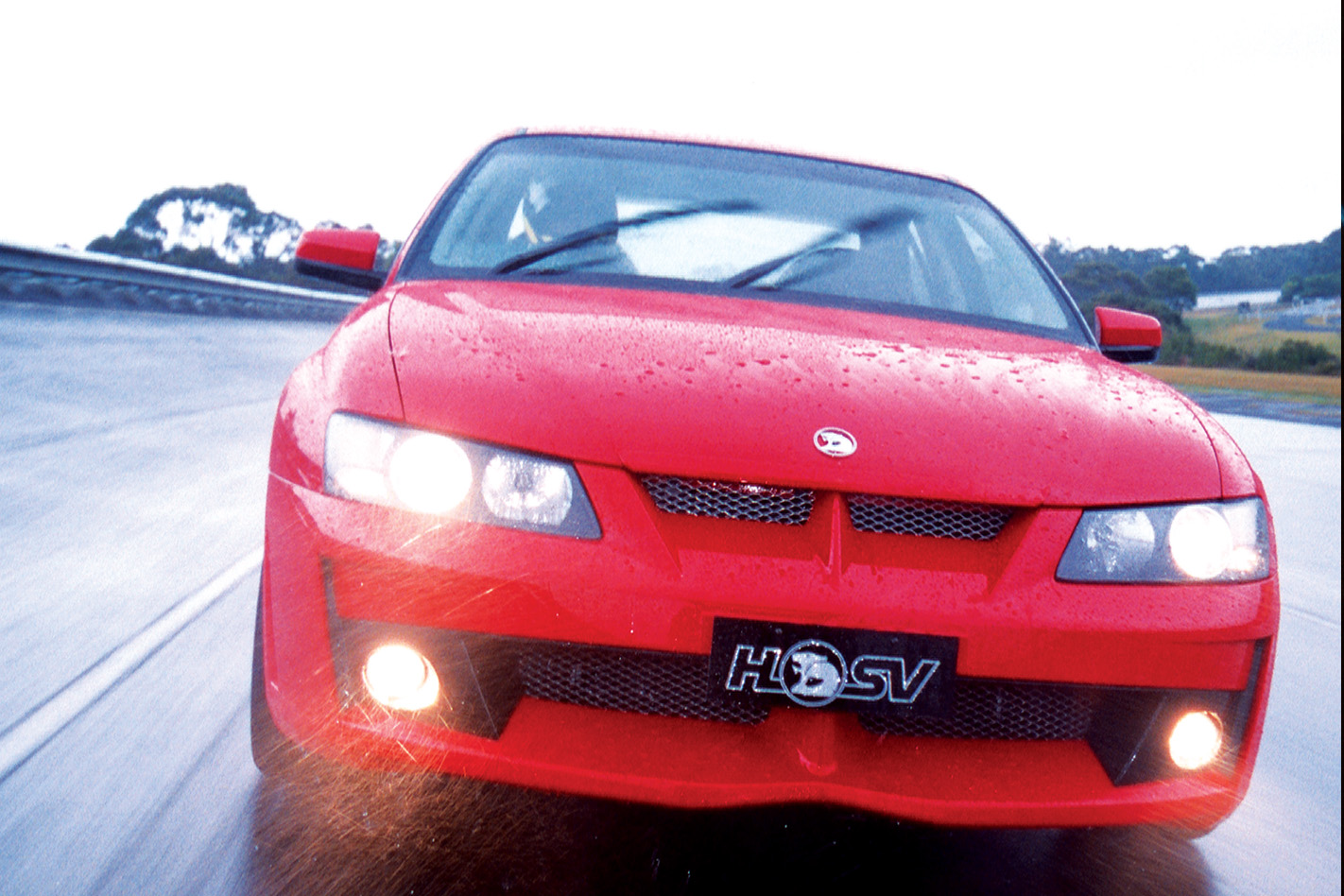
Visibility was Murphy’s only impediment to going faster, but with no standing water on the banking and the g-forces on the constant loop pinning the GTS to the road, Murph is now a lot more confident
We’ve wired him for sound now and, listening to the recording later, we hear the Gen III max out in first, second, and third, then hear Murph pop it into drive.
The GTS screams towards us, trailing a huge rooster tail of spray, and as it roars by, even closer to the armco now, Murph gives us the thumbs up. He can see!
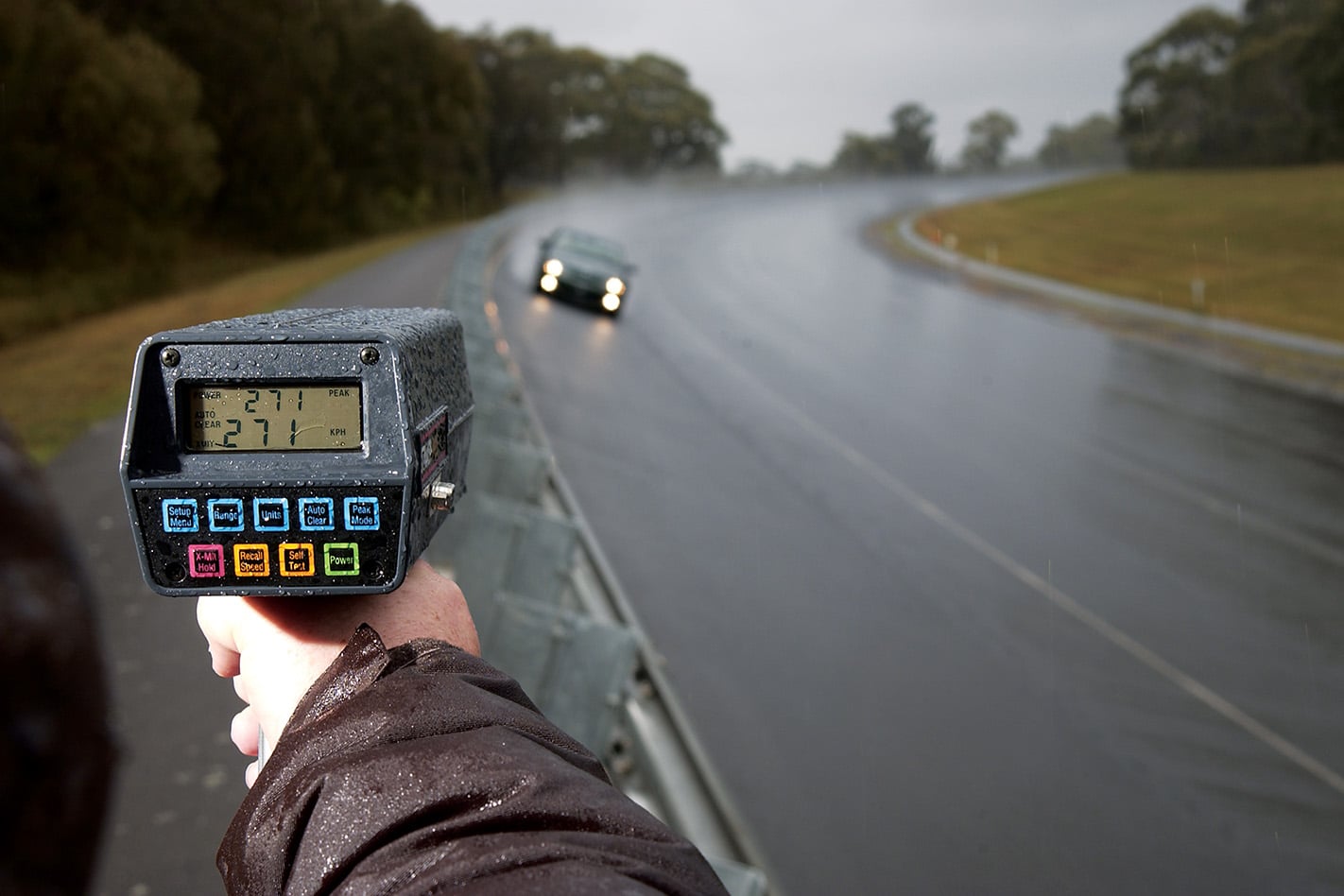
His first lap is 266km/h, then he hits 270, then 260, and then 270 again. We jump up and down excitedly.
Murph parks and we show him the radar gun. The Rainex worked?
“It’s like flying a star fighter in Star Wars with the stars coming through at light speed,” he marvels. “Pretty awesome. It’s as clear as. It makes it a lot more comfortable and I can just focus on trying to get the speed.”

The target rpm is 5500. That’s the theoretic maximum the engine will pull in top with the GTS’s gearing. Murph hasn’t hit it yet, but he’s close. He and Davis have a pow wow.
Murphy: If we can get to 5500 it might pull a bit more speed.”
Davis: “Peak power is at 6000, so maybe the gearing is a tiny bit too tall.”
Murphy: “If the gearing was slightly shorter and it could pull up to 6000, I reckon it would do over 280.”
Davis: “I was going to suggest we fold the mirrors in, but I did a run the other day and at about 180 they actually folded back out!”
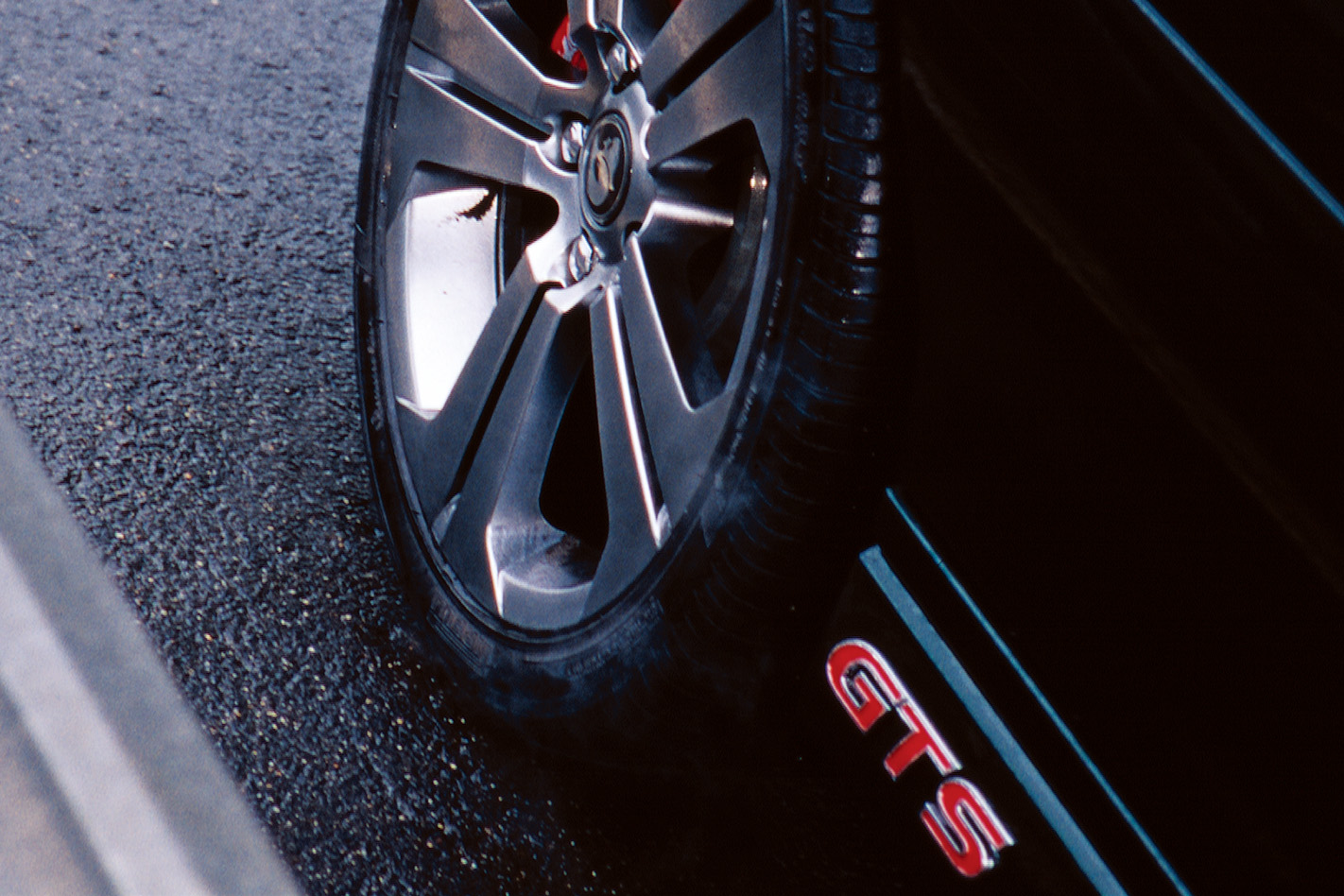
The GTS had fuel surge on Murph’s last lap, so he heads off again to fill it up. Gassed up and ready, Murph charges out again with new purpose, but this time he can’t crack 270. The GTS rockets straight up to 250km/h, but then the power-versus-drag-versus-gearing equation starts to kick in, and, from there, further acceleration is frustratingly incremental.
Wind direction has also changed slightly, but this is when Murph’s racing skill takes over. He has noticed the revs creep up the extra 50 rpms to 5500 a few seconds after he passes the radar, and he gets us to move a bit further around the bowl.
We’ve got time for one more attempt. His first flyer is 269km/h, then he thunders past at 271km/h, then repeats that stellar number before pulling in.
Murphy is elated.
“All right, 271!” he yells. “Around the back it just dropped off and the rain was really belting, and just as I got around to where you guys were it just started to come back up again. It might be 20 or 40rpm, but it’s enough.”
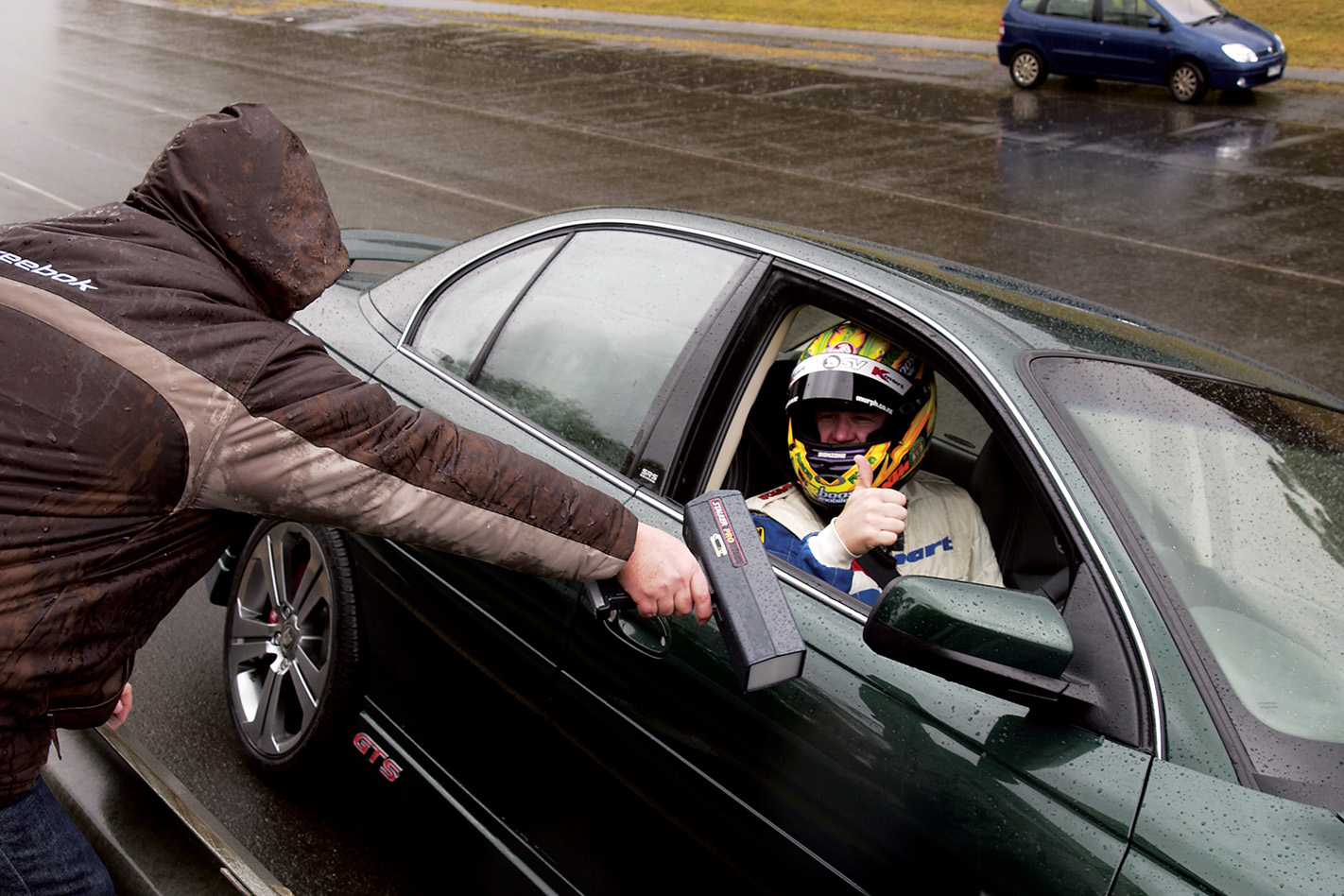
Photographer Paul Muir asks how much faster Murph’s Kmart V8 Supercar is on Conrod Straight.
“Not much,” Murph says, “another I5 kays. It’s fair going, isn’t it?”
Fair going, indeed. Greg Murphy has just become the fastest HSV driver in the country, and he did it in the wet.
