
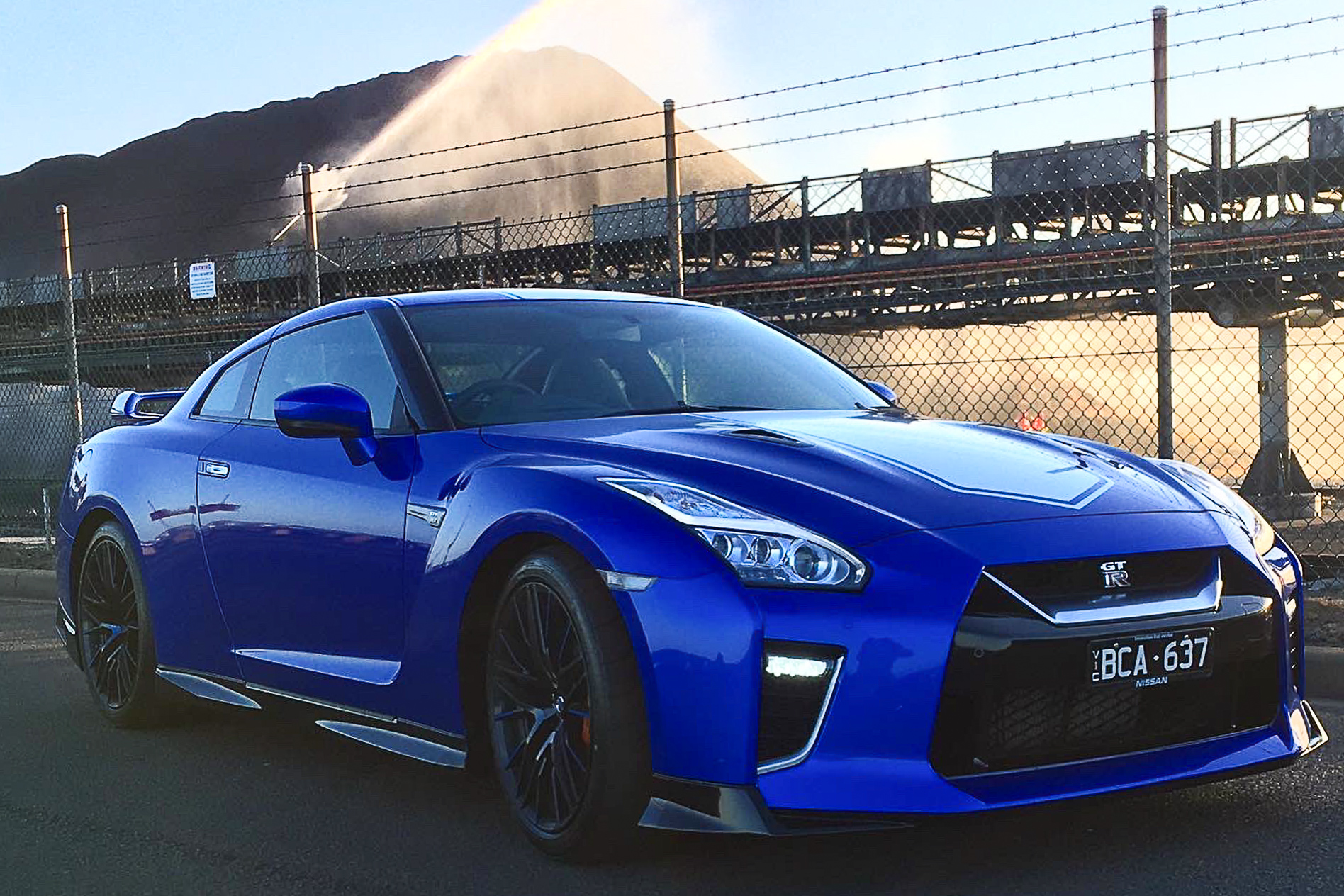
The very fact that the Nissan GT-R 50th Anniversary Edition is as good as it is really defies convention. It’s been a case of improvement by a thousand tweaks over the course of 12 years, but the 2020 GT-R is, finally, an affordable supercar that has shaken off the majority of its foibles.
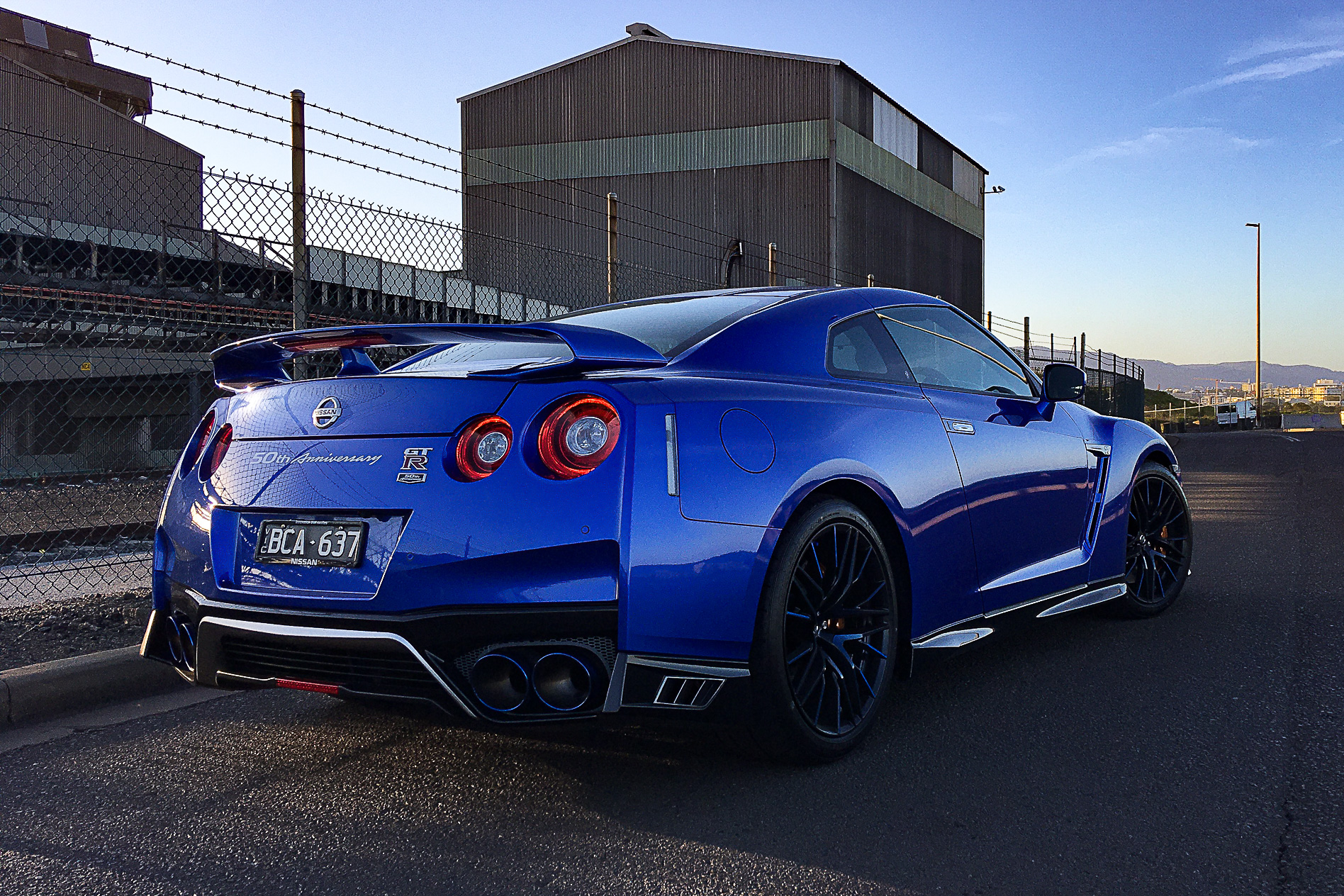
But for how long?
In the Beginning
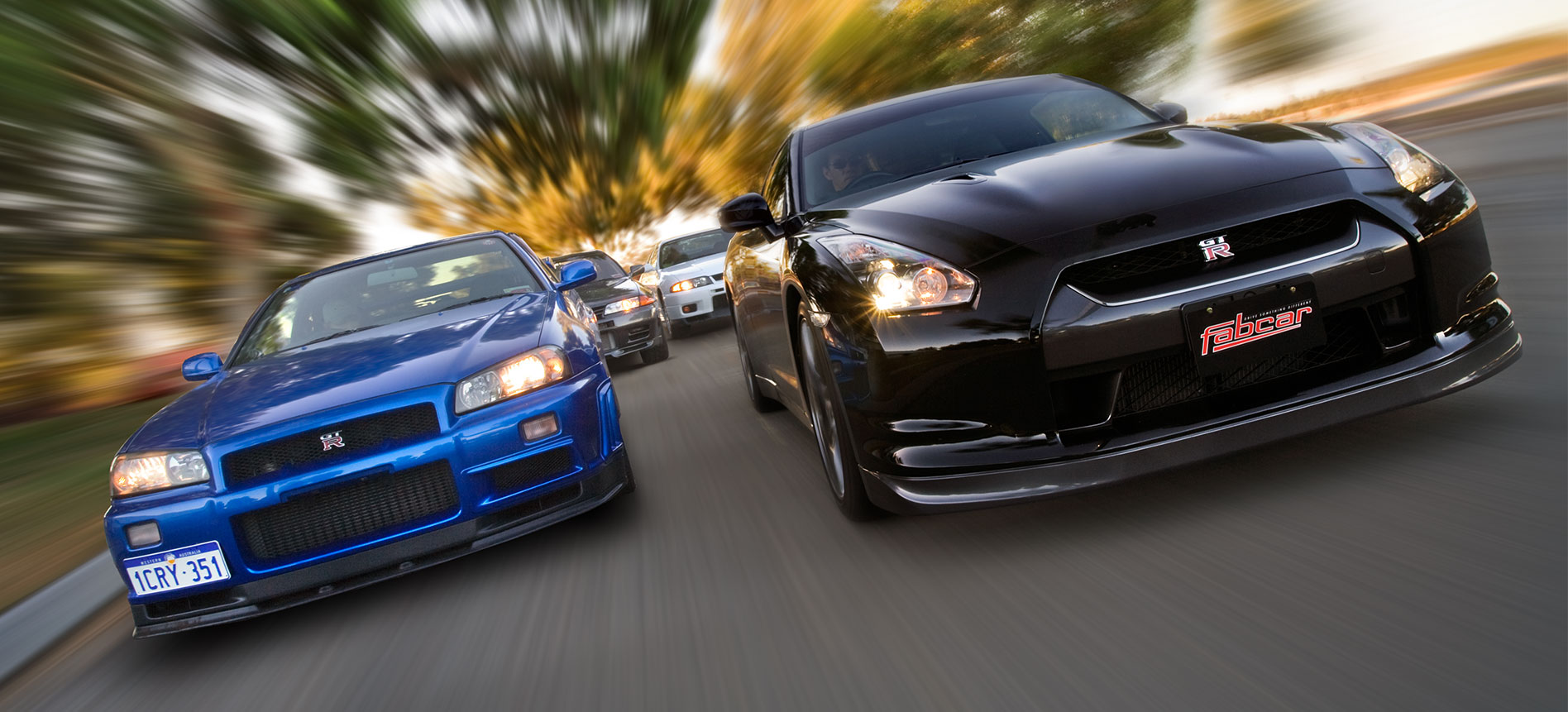
The GT-R’s legend has burned long and hot, though its journey in Australia has been a broken one. From the arrival of just 100 R32s in 1991 through to a generation of potential petrolheads learning all about R33s and R34s via Gran Turismo games, the GT-R hasn’t really needed masses of metal on the road to prove its point.
So when the so-called R35 arrived – it’s not actually called that, but the nomenclature stuck – in 2008, the anticipation was palpable.
A slender opportunity of grey importation for 2007 GT-Rs from Japan meant that the first few cars that landed here were pure JDM porn, destined for Targa stages and racetracks across the country.
And boy howdy, did they stir the loins.
And when the GT-R did arrive properly, it arrived with a bang. Quite literally for me, actually – a caliper bolt wasn’t nipped up on my first ever press tester and flung itself into the rim at Eastern Creek’s turn four. But I digress… the GT-R could do no wrong.
Its price undercut… well, everything with even a little bit of performance, and by a long way. It matched vaunted weapons like the Porsche 911 Turbo and Audi R8 V10 for pace and smashed them for affordability.
And it was sold in showrooms next to Pulsars and Navaras.
Bit by GT-R Bit
Over the next 12 years, the GT-R was minutely honed and fettled, eschewing major changes to its 3.6-litre V6 AWD layout in favour of tiny performance tweaks.
To wit… the 2010 version scored stiffer front springs and shocks, and stiffer rear torsion control arm bushings. That’s pretty much it.
Nissan’s theory? The GT-R is good enough. And they were right.
Come 2016 and the GT-R scored a more serious brace of changes that quietened some of the interior racket and made it a smoother daily proposition, but didn’t blunt its devastating cross-country performance.
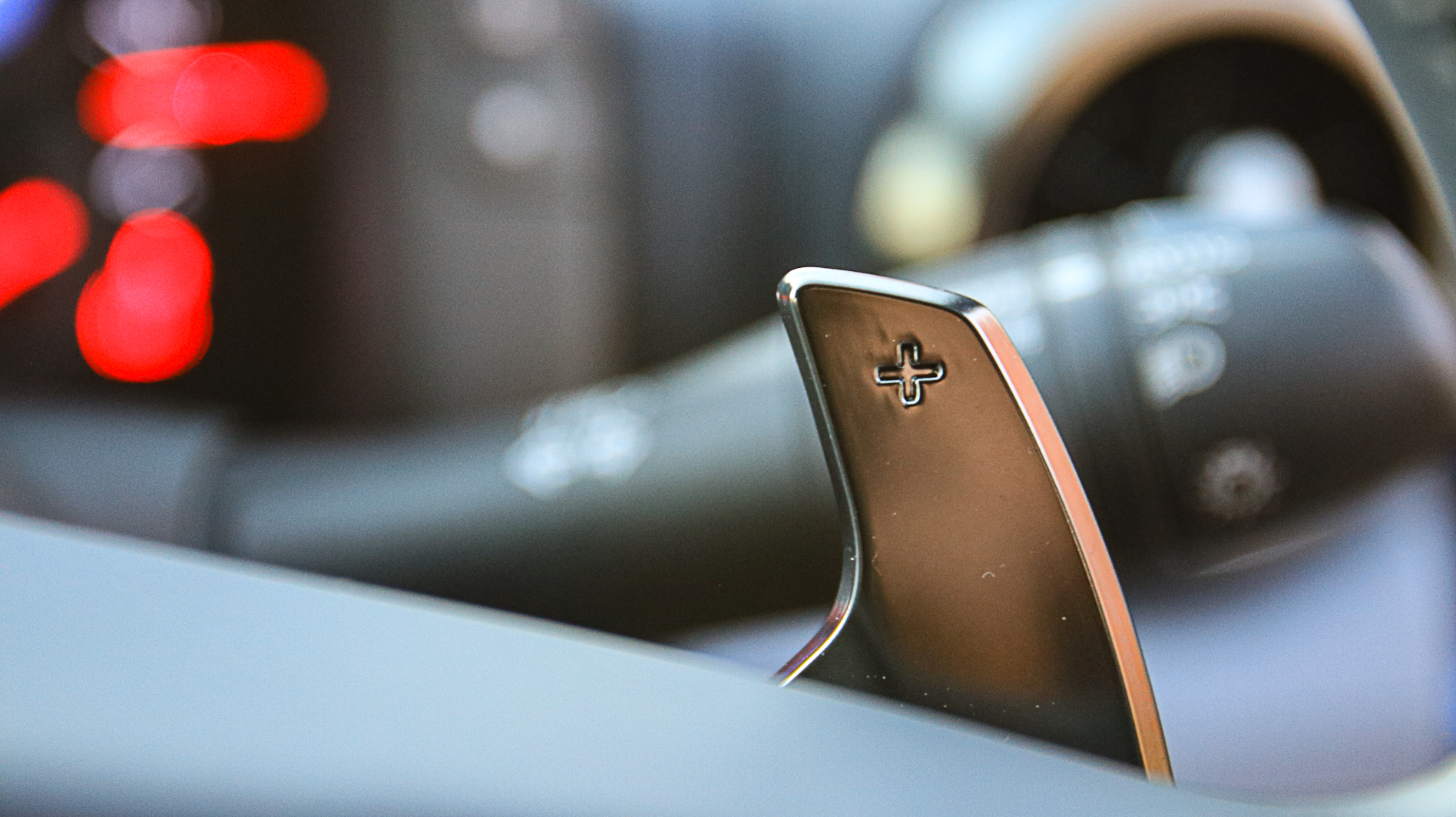
Which will make its demise all the more bitter.
The Troubles
Despite its age, or maybe because of it, Nissan is actually not that good at being a car company. It still manages to sell more mid-sized SUVs than anyone else in the world, but the X-Trail is a rare gem in a sea of ageing products – and if a decade-old midsized SUV is your high point…
Now part of the ill-fated and trouble-plagued alliance with Renault and Mitsubishi, it feels as if Nissan has lost its identity.
The idea of multiple cars sprouting atop just a handful of cross-brand platforms seems like a good idea on paper – and combining the forces that have produced cars like the Megane RS hot hatch, the Evo X rally rocket and the formidable GT-R should have been a match made in hot rod heaven.
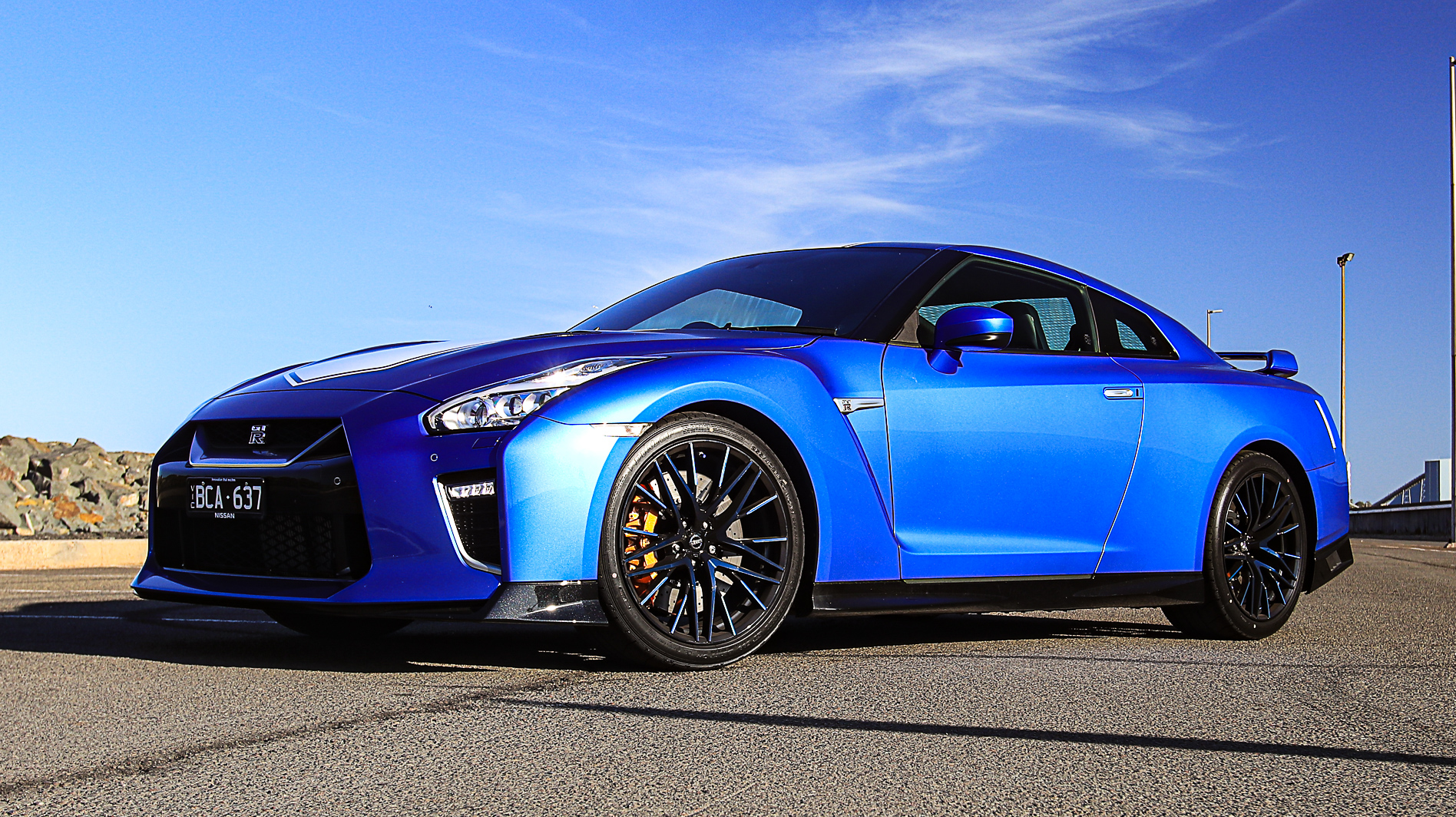
However, the decline in car sales over the last couple of years, the farcical case of its boss Carlos Ghosn and now the devastation of the coronavirus on industries across the globe will all combine to push a hapless Nissan right to the very edge of existence by the time this mess is all over.
In its home market, for example, it’s set to cut production in its main plant in Kyushu – home of the X-Trail – by a staggering 70 per cent in May, and 40 per cent in June.
Its largest market is the US, but after years of slumping sales and stagnant product lines,
it will be a miracle unto itself if the company makes it to the end of the year there.
Facing the Facts
When sales aren’t going well, then the first department to get a knock on the door from the accounting department is R&D. If there’s money to be saved by canning an engineer’s dream, consider it canned.
The GT-R is not a big seller for Nissan. It’s a halo product, and it’s done its job admirably.
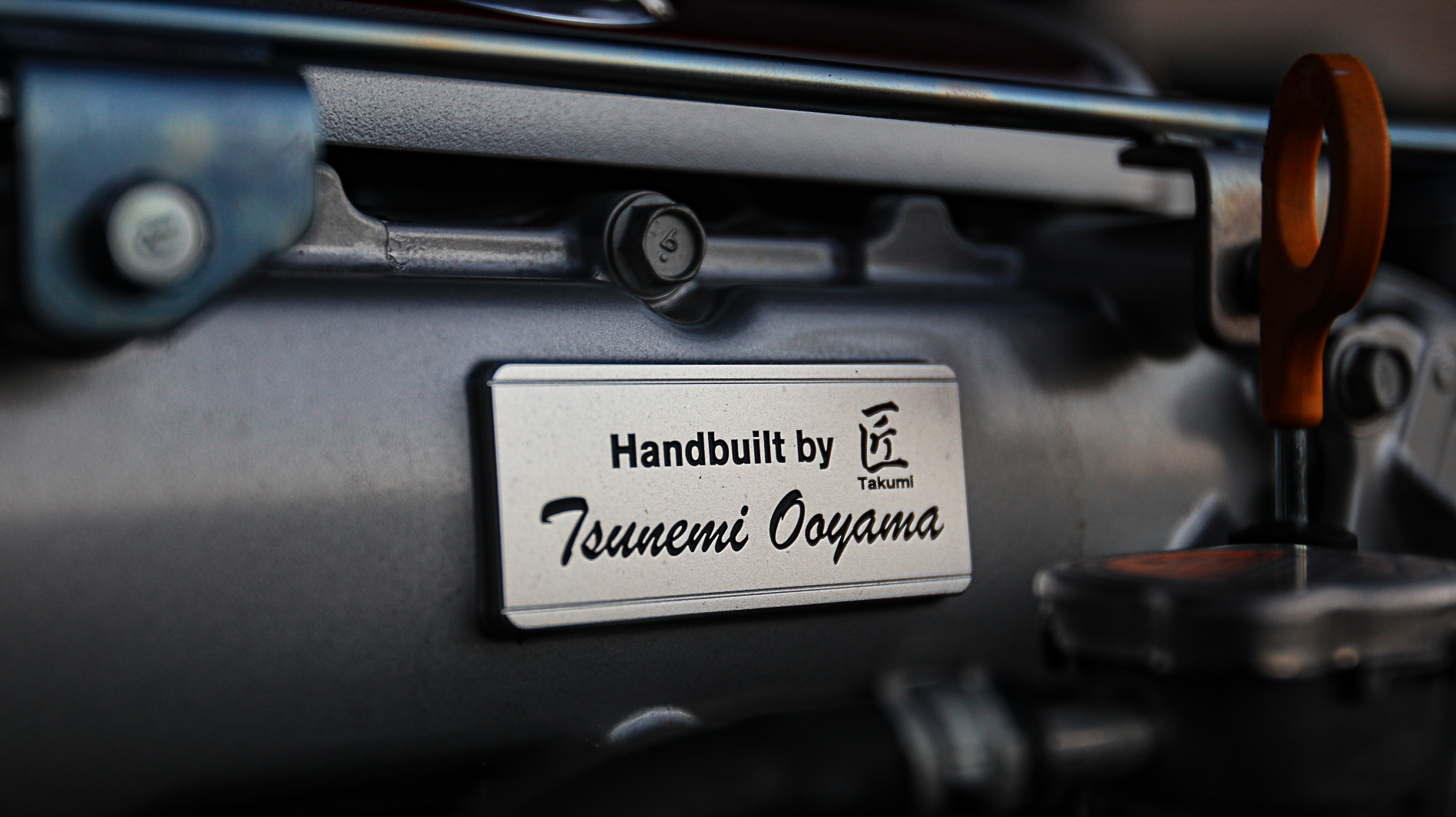
History, too, shows that the GT-R has traditionally lived a long life, but 12 years and counting with a single body style and an orphan platform, all coming from a bespoke factory that still hand-builds engines, is a big, tempting line on a profit-and-loss statement to draw a red stroke through.
Add to that the fact that future performance propulsion will have to come with a side-order of electricity. Nissan’s electric program – aside from the equally ageing Leaf – is, unfortunately nowhere.
If there is an area where the alliance could have slain all comers, it’s here… but rumours of disbanded cross-brand projects and empty offices tells the true story.
The next hot Nissan also has to live in a world where the Porsche Taycan, the forthcoming Audi eTron GT and other electric upstarts will roam, while ever-tightening emissions regulations mean that skipping the hybrid assistance step is no longer an option if the GT-R is to retain a fossil fuel-fed heart.
And that all costs money. Lots and lots and lots of money.
Farewell, you magnificent beast
Sure, there’s a bit of idle PR chat from various Nissan outlets around the world about the future of the car, but this is the key; where’s the concept for the next iteration of the GT-R?
Even if it’s a ground-up rework of the current car, where are the mules? Where are the strategic leaks?
Answer – there have been none. The next car is likely to be a made-over version of the 370Z, but early indications make it seem like even that is a back-of-the-lounge-change job for a company that is bleeding money on a daily basis, and which needs to look at its money-making SUV line before indulging in a high-performance two-door.
On the upside, there may well be forces within Nissan’s exec group with a soft side for the GT-R legend, and quite frankly, the company would be stark raving mad to ditch more than 50 years of performance legacy that transcends race wins and lap times.
But we live in perilous times, and it seems even the boss of the GT-R program is unsure of the car’s status.
“I am just the GT-R lead conductor for the orchestra. The company will show me the members of the orchestra. They need to decide who will play the violin and who will play the trumpet,” chief product specialist Hiroshi Tamura told motoring.com.au last year.
That’s not the tone of a man who knows which way he has to go…
What stands out?
The Ford Focus is one of the most rewarding small cars to drive, with excellent accelerator response, quick steering and great handling. Hatch and wagon versions are available, all of which are equipped with autonomous emergency braking. The range includes hatchbacks, wagons including the SUV-inspired Active, and the powerful ST hot hatch.
What might bug me?
Forgetting what gear you’re in when using the fiddly rotary-dial shifterDriving at 80km/h on the space-saver spare until you can fix your full-sized flat tyre.Seeing other small cars and realising your Focus has a relatively bland interior finish.
What body styles are there?
Five-door hatch and four-door wagon.Every Focus but drives its front wheels.The Focus is classed as a small car, lower priced.
What features do all Focuses have?
An 8.0-inch colour central screen. Satellite-navigation, with voice activation (that actually works).A sound system with an AM/FM/Digital (DAB+) radio, CD player, USB and iPod inputs, Bluetooth connectivity and at least six speakers.Voice controlled phone calls and music selection, via Ford’s excellent SYNC3 infotainment system. Support for Apple CarPlay and Android Auto, which allow you to display some smartphone apps on the touchscreen and control them from there.A 180-degree reversing camera, and rear parking sensors.Cruise control, with a speed-limit function (which allows you to set an upper limit that avoids speeding fines).Autonomous emergency braking that also stops to prevent or mitigate impact with pedestrians and cyclists.Lane-keeping assist and lane departure warning.A leather-wrapped steering wheel that is adjustable for height and reach and carries paddle shifters to manually change gears, and buttons for operating the cruise control, the sound system and your phone.LED daytime running lights, headlights that can automatically turn on when it gets dark, and rain-sensing windscreen wipers.Wheels made from aluminium alloy, which look nicer than steel wheels with plastic covers and usually are lighter (and hold the road better).Hill launch assist, which controls the brakes automatically to help you start from rest on a slope.Electronic parking brake that frees up space on the centre console, and a space-saving spare tyre.Electronic stability control, which can help control a skid. All new cars must have this feature.
Which engine uses least fuel, and why wouldn’t I choose it?
All Focus versions except for the ST hot hatch are powered by a highly efficient 1.5-litre three-cylinder turbocharged petrol engine that coupled with an eight-speed automatic transmission.It has one less cylinder than the 1.5-litre petrol engine in the previous-generation Focus, however the turbocharger means it has about the same power.This powertrain consumes as little as 6.4 litres/100km on the official test (city and country combined).The Focus has stop-start system that cut fuel use in the city. It switches off the engine when you come to a halt, and restart it when you press the accelerator to drive away.The main reason you wouldn’t choose this engine is you want significantly more performance as offered by the Focus ST that boasts a powerful 206kW/420Nm 2.3-litre four-cylinder turbocharged petrol engine, which has an official fuel consumption of 8.8 litres/100km.This engine is a modified version of the one found in the four-cylinder Ford Mustang High Performance, and comes with a choice of six-speed-manual transmission or seven-speed auto.
What key features do I get if I spend more?
The least expensive Focus is the Trend, which rolls on 16-inch alloy wheels and has cloth seat trim.Spend more for the Focus ST-Line and you get bigger and arguably more stylish 17-inch wheels, and firmer suspension for more stable handling.Available as a hatch or wagon, the ST-Line also has dual-zone climate control (which allows the driver and front passenger to choose different cabin temperatures), a wireless phone-charging pad, LED fog- and tail-lamps, auto-folding and heated door mirrors, puddle lamps, tyre-pressure monitor, and a smart key that allows you to unlock and start the car without removing the key from your pocket or bag.The ST-Line is also features sporty exterior trim features including a body-kit with side skirts, chrome twin tailpipes, while the interior gains a flat-bottomed steering wheel, metal foot pedals.The ST-Line wagon costs about $2000 more than the hatch, and comes with roof rails and easy folding rear seats. It also has more advanced independent rear suspension.The SUV-inspired Focus Active wagon is similarly equipped to the ST-Line wagon minus the sporty garnish. It has a higher ride height and is equipped with Trail and Slippery driving mode to help negotiate rougher surfaces and roads with poor traction due to snow and ice.Opt for the Titanium, and the wheels grow to 18 inches and are fitted with significantly wider tyres of a lower profile, adding grip and sharpening steering response. The driver’s seat is power-adjustable, and all seats are trimmed partly in leather and heated. You also get chrome exterior trim, adaptive LED headlights, 10-speaker premium sound system with subwoofer and variable colour LED ambient interior lighting.The Focus Titanium also offers additional active safety features including adaptive cruise control with ‘stop and go’ function that works in heavy traffic, blind-spot warning, and rear cross-traffic alert. These are available in the other Focus versions as part of an optional Driver Assistance Pack that costs about $1250.If it’s performance that you’re after, the Focus ST adds the more powerful four-cylinder turbocharged engine that comes with a six-speed manual gearbox, or a seven-speed auto as a no-cost option.The ST is similarly equipped to the ST-Line with the addition of a the Driver Assistance Pack, heated and powered adjusted steering wheel, sliding centre-console armrest, and the 10-speaker premium audio system found in the Focus Titanium.Performance extras include a body kit, rear spoiler, 19-inch alloy wheels, launch control, red brake calipers, sports suspension with adaptive dampers and selectable drive modes with normal, slippery, race track and sport settings.Unlike the ST-Line, the ST only has single-zone climate control.
Does any upgrade have a down side?
The lower profile tyres on cars with bigger wheels can ride more roughly because there is less cushioning air between the wheel and the road. This is particularly noticeable on the Titanium’s 18-inch rubber.Only one colour, Frozen White, comes for no additional cost. The rest all bring a premium of about $650.
How comfortable is the Ford Focus?
The roomy interior design is clutter free and intuitively designed. The dashboard design is a big improvement over the previous model, with the bulky central head unit replaced by a floating 8.0-inch touchscreen that display’s Ford’s very user-friendly Sync3 infotainment system.The smaller dashboard frees up interior space, which gives the Focus excellent leg room. It all looks a little bland though, unless you like everything black, and the gauge cluster looks like it was borrowed from a truck.The cloth front seats are pretty basic but are comfortable enough with good back support. You’d expect more sporty seats in the ST-Line, but apart from some red stitching the seats seem exactly like the Trend’s and lack decent side bolstering as found in other sporty hatches.On the plus side the ride is generally comfortable, even on the ST-Line hatchback’s firmer sports suspension. The decision to give the ST-Line relatively small 17-inch wheels instead of the 18s that most of its rivals roll on pays off with a smooth and quiet ride.It’s a different story in the Titanium whose 18-inch wheel and (quality Michelin Pilot Sport) tyre package results in an unwelcome, uncharacteristic firmness that brings lumpiness at odds with its upmarket aspirations.The ST’s Recaro sport seats support the body well through corners and are comfortable for long drives. The ride is firm but not overly so, with the adaptive dampers able to flex its muscles for sporty driving but soften up for around town. Still, you know you’re driving a hot hatch.
What about safety in a Ford Focus?
Six airbags, autonomous emergency braking, lane-keeping assist, a 180-degree reversing camera, and rear parking sensors, provide a solid safety platform for every Focus.The Focus Titanium and ST come as standard with a Driver Assistance Pack that adds adaptive cruise control that automatically slows down to match the speed of a slower vehicle in front at high and low speeds. The pack also comes with blind-spot warning and rear-cross traffic alert – blind-spot warning flashes a light to let you know when there is a vehicle alongside and behind, in a blind spot. And rear cross-traffic alert helps you avoid driveway and carpark bingles, acting when you are reversing to warn of other vehicles crossing behind you.The Driver assistance pack can be fitted to the other Focus variants for about $1250.The Focus’s six airbags include two front and two side inflators to protect the driver and front seat passenger, and side curtain bags on each side to provide side impact protection for all occupants.The Australasian New Car Assessment Program (ANCAP) awarded the Focus its maximum five-star safety rating in December 2018.
I like driving – will I enjoy this car?
Very likely you will. The Focus has a well-deserved reputation as a car that delights in the corners in this latest-generation model is no different. Steering is accurate and communicative, and the body settles confidently after bumps.Grip levels on the ST-Line, Active and Titanium versions are high. That is helped by their lower profile tyres, and suspension that reduces leaning in bends compared with the softer Trend.The 1.5-litre turbo petrol engine is full of life and is rarely found wanting. There’s little turbo-lag when you put the foot down and the eight-speed auto does a nice job shifting through the cogs, with Sport mode holding the revs more.The ride in the Trend feels controlled but comfortable around town or on the highway, which makes for an enjoyable ride whether it’s a quick trip to the shops or a weekend road trip.In the ST-Line hatch, the sports suspension provides more dynamic ride and handling that doesn’t come at the expense of comfort around town or on the highway, which makes this a nice all-rounder.The Focus ST It has been engineered to be an enjoyable everyday performance car, with track-day potential but excellent road manners.
How is life in the rear seats?
The rear seats in the Focus are comfortable, but lack a centre armrest and their own air vents or USB sockets (though there is a 12-volt socket for device charging).
How is it for carrying stuff?
The Focus hatch carries up to 375 litres, or 273 litres if measured below the cargo cover. Folding the rear seats down frees up a total of 1354 litres.The wagon’s cargo capacity is a very handy 575 litres, which stretches to 1620 litres with the rear seats down. Wagon versions have easy-fold rear seats that drop the backrests with the flick of a lever.
Where does Ford make this model Focus?
Ford makes the Focus in Germany.
What might I miss that similar cars have?
Perhaps the all-weather security of all-wheel drive – the Subaru Impreza has this, for example.If you plan on doing a lot of country-road driving, maybe better fuel-efficiency from a diesel engine. The Hyundai i30 and Peugeot 308 offer diesels, for example.Or possibly a fuel-saving petrol-electric hybrid drivetrain. Toyota offers an excellent hybrid Corolla, and Hyundai with its Ioniq that’s also available with an all-electric version.Rear air vents for additional passenger comfort, as featured in cats like the i30, Impreza, Kia Cerato and Volkswagen Golf.A sedan version as with the Mazda 3, Corolla, Hyundai Elantra, Honda Civic, Mitsubishi Lancer, and Cerato.
I like this car, but I can’t choose which version. Can you help?
The Focus ST-Line is a very entertaining car if you want something a little sporty.It gets more aggressive looks and has better balance of ride and handling, making it both liveable and entertaining on a daily basis. Throw in features such as the smart key entry, push-button start and leather-wrapped steering wheel and it justifies the price premium. And it’s the only Focus available in both hatch and wagon body styles.The Focus Active wagon is similarly equipped and great if you want something a little more practical for travelling around.
Are there plans to update the Focus soon?
The current generation Focus went on sale in December 2018 so no facelifts are expected until at least 2021.The Focus Active was added to the range in mid-2019, with the more powerful Focus ST following in February 2020.Ford has confirmed that there will be no new version of the Focus RS hot hatch.
Whether it is Holden, Porsche, or Toyota. Running at the head of the pack, or butting heads in the back, there nothing like team spirit. Add some colour with these cool motorsport-themed gear that have just hit the market.
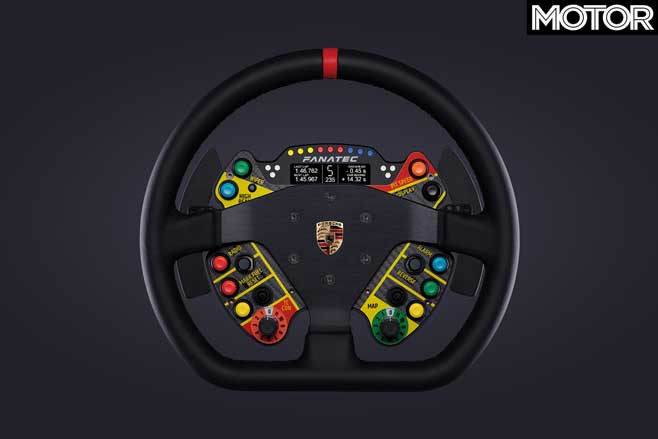
01 | FEATURED “PRODUCT OF THE MONTH”: Porsche 911 GT3 R sim racing wheel ($899 from fanatec.com) Fanatec’s replica Porsche 911 GT3 R steering wheel is made from aluminium and comes in leather or suede. Features real toggle dials, LED lights and OLED display. Requires Fanatec wheel base.
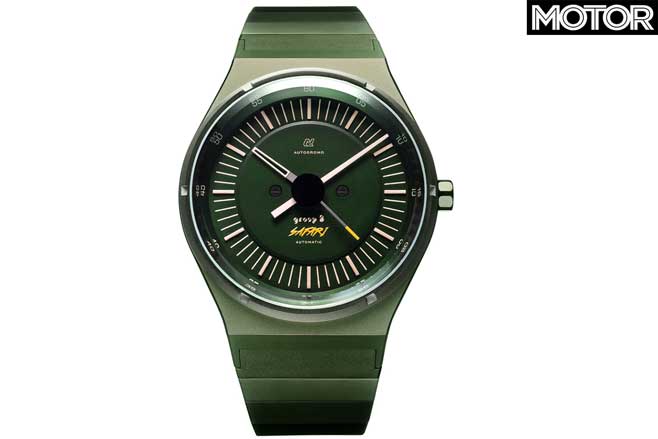
02 | Group B safari watch ($1711 from autodromo.com) Autodromo honours the gruelling Paris-Dakar rallies that trekked through Africa with this green-tinted Group B Series 2 watch. It has a Miyota automatic movement and resizeable bracelet.
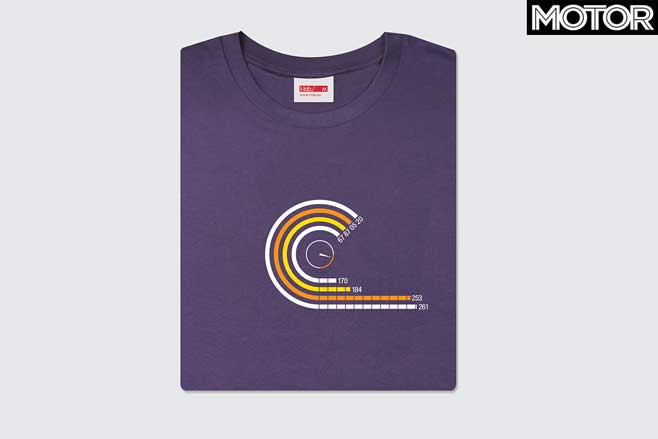
03 | Top Speed tee ($60 from t-lab.eu) This purple shirt from UK company T-Lab compares the production-car top-speed records from 1967, 1985, 2005 and 2020 in its graphic. Offered in sizes small to extra-large, all tees are 100 per cent cotton.
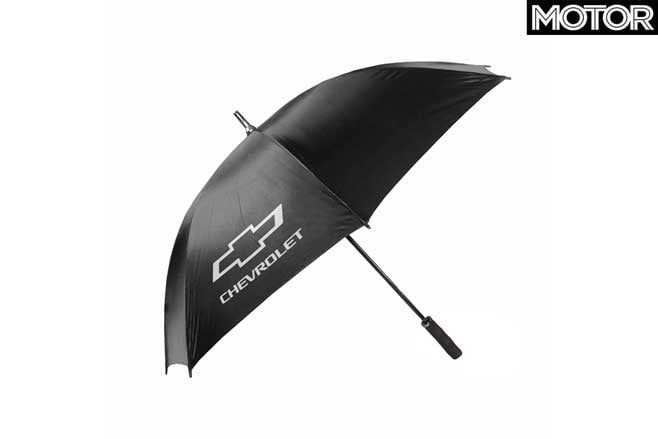
04 | Chevrolet umbrella ($45 from shop.hsv.com.au) Bag HSV’s Chevrolet umbrella, which boasts full fibreglass construction and rustproofing for rainy days in the pits. Spans 132cm when opened. Have it in any colour so long as it’s black.
05 | Gazoo racing beanie ($40 from toyotagazooracingstore.com) Brace for winter with this Toyota Gazoo Racing beanie, finished in the team colours you’ll find on its WRC cars. One size fits all.

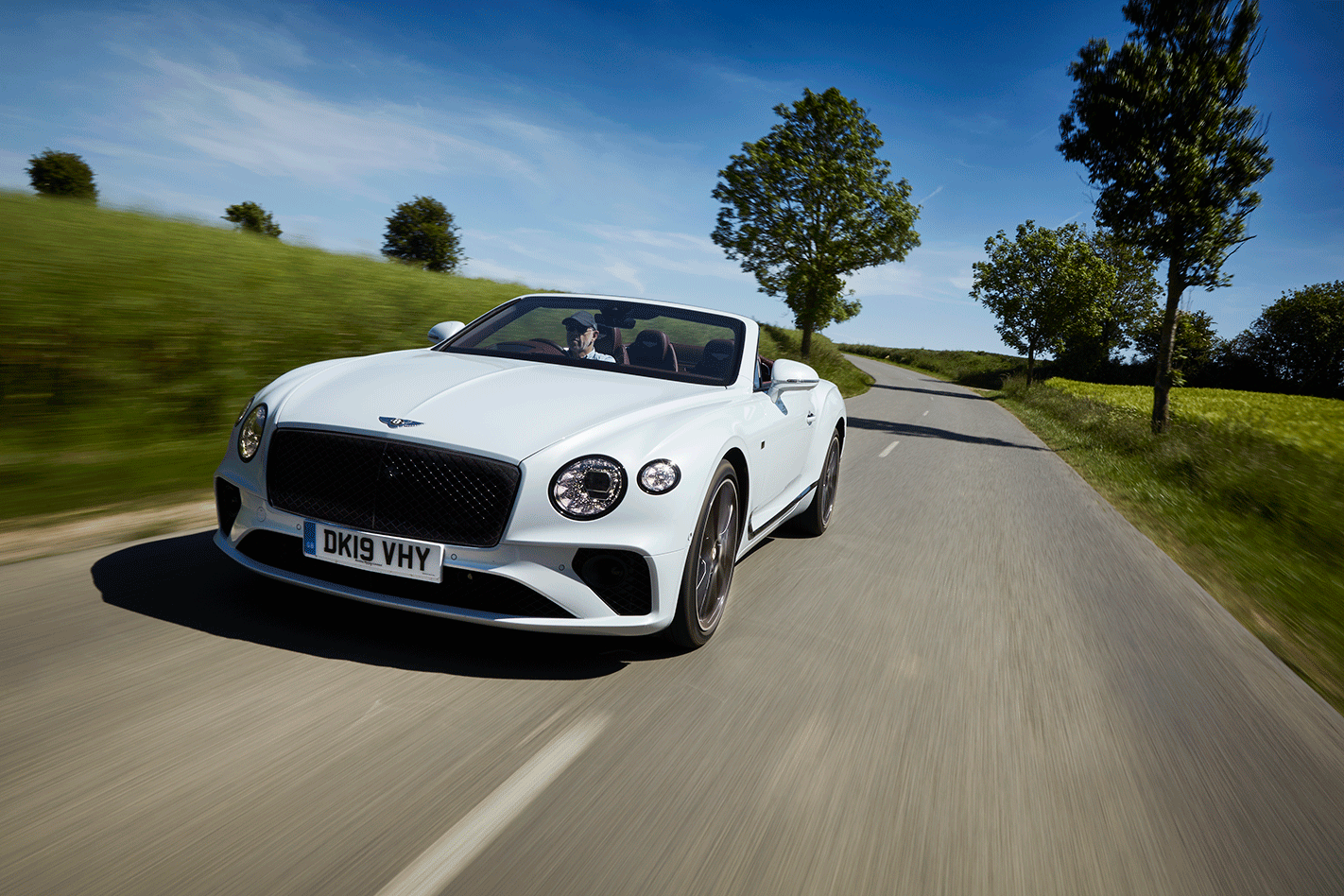
THE D1 IN NORTHERN France is one of those perfect roads. It lopes across the plains above the River Somme, at the heart of the WWI battlefields. It’s open, inviting, and flows to the horizon with just a few kinks that won’t impede your progress. If you’re in a fast car like the Bentley Continental GT Convertible, you can let it rip here.
But then, heading east towards Bray-sur-Somme, you crest a rise and an imposing, grey stone cenotaph bearing a Rising Sun emblem looms beside the road. If you’re Australian, it will stop you in your tracks.
It commemorates the First Australian Imperial Force’s Third Division. It is one of the emotive memorials that honour the Diggers who so distinguished themselves in France between 1916 and 1918. As you drive this country – and it is pleasant country to drive, now – they’re constant reminders of the enormity of what happened here and, most especially, of the Australians’ crucial role in the battles that led to Germany’s defeat.
Photo boards around the pillar’s base tell you why the Third Division chose this spot for the memorial to its 6220 men killed and more than 24,000 wounded on the Western Front. The city of Amiens, a crucial transport hub 24 kilometres west, was a key target in the Germans’ massive 1918 Spring Offensive. Capturing it would grab the Allies’ vital supply base and split the British Empire armies and incoming Americans from the French. As battered British battalions were shoved back, Australian divisions – with many of the troops crammed into cattle trucks – were rushed down from Belgium to plug the gap. On March 28, the Third Division dug in here, on the heights above the Somme at Sailly-le-Sec. Two days later the Germans attacked. And were stopped. One of the display boards tells the story:
Three times that day, waves of German infantry tried to come up the valleys and slopes east of the Third Division memorial. Each time they were beaten back with heavy losses caused by intense rifle, machine-gun and artillery fire. No further attempt to break the Australian line here was ever made. To the Third Division, this was the place for their memorial.
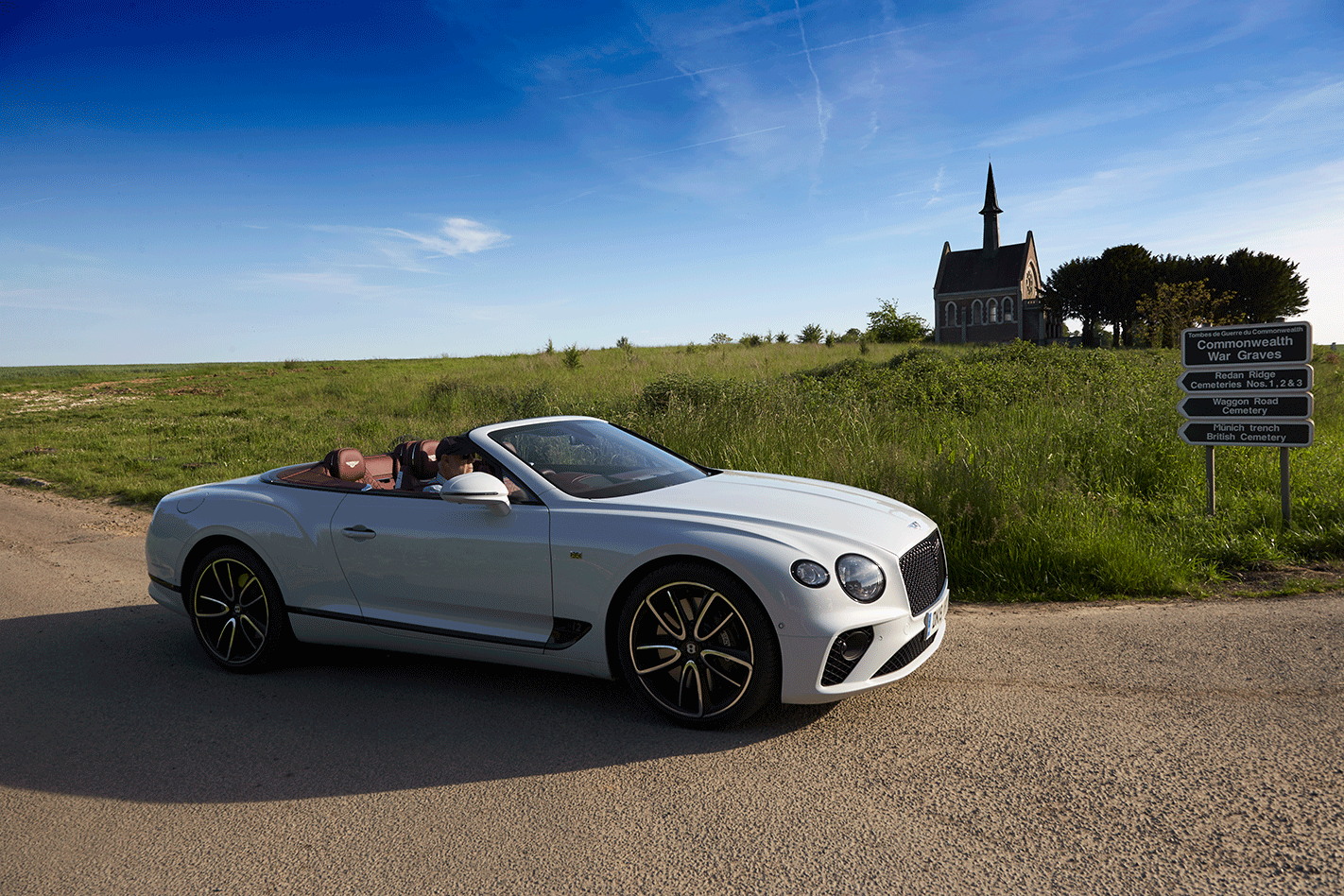
As you gaze around now, the farmland looks much the same as it had been then: unfenced fields rippling with ripening wheat and barley; woods ranged like dark green caterpillars on the horizons; the tip of a village church steeple pricking the skyline; gentle slopes falling to the meandering Somme two kilometres south; and the folds dropping to its sister river, the Ancre, 2.5 kilometres north. But every hectare, in every direction, holds a story. Over the slope to the south-west, Sydney-born carpenter Sgt Cedric Popkin of the Fourth Australian Machine Gun Battalion fired the burst that’s believed to have done for Baron Manfred von Richthofen and brought the Red Baron down in a field beside the D1 a little way back…
Dipping into a book as good as ANZACS on the Western Front brings to life the tragedy and heroism etched into this soil. It’s a masterful guide, written for the Australian War Memorial by Peter Pedersen with Chris Roberts, that divides the Aussies’ and Kiwis’ Western Front battles into 28 chapters with maps and itineraries that show you how to drive and walk the battlefields.
Gliding quietly on in the Bentley along the thin roads across the high fields, I follow their map to a railway embankment in the village of Dernancourt. It’s an ordinary-looking bank between the trainline and a farm track. But to a Tasmanian like me, it’s momentous. Here, on March 28, 1918, the 47th Battalion’s Sergeant Stanley McDougall, a 27-year-old blacksmith from Recherche Bay, south of Hobart, stopped a German breakthrough. He killed seven Germans with his rifle and bayonet and many more with an enemy machine-gun he snatched and fired from the hip. He ran out of ammo, seized a bayonet and killed another four before grabbing a Lewis gun and killing still more. His daring saved many comrades and captured 33 prisoners. He won the Victoria Cross, and eight days later the Military Medal for another fearless Lewis onslaught. His VC was one of the 53 awarded to Australian soldiers on the Western Front (of 64 in WWI).
It’s easy to get to the Somme from major centres like Paris, Brussels or Amsterdam – and particularly London. Going there in a Continental GTC seemed apt. Bentley was born out of the Great War. Captain Walter Owen Bentley started his car company in 1919, 70 days after the armistice and fresh from designing the notably reliable BR1 and BR2 nine-cylinder radial engines for the Sopwith Camel and other aircraft. While visiting a squadron in France he was strafed by von Richthofen and had to leap into a canal where, neck-deep, he met Nobby Clarke whom he later hired as his chief mechanic.
We pass under the Channel on the 35-minute Eurotunnel train, and from Calais are at the battlefields in an hour and a half’s easy autoroute motoring. You’d expect a car of the GTC’s price and mind-boggling specification to excel at ‘motoring’, but the new GTC goes way beyond that. It drives. Its extraordinary refinement, best expressed in an impeccable ride and hush, top up or down, is obvious from the outset. But as we start driving the loops around the battlefields that my WWI historian friend Rich Hughes and I had planned, I learn how sublimely that ride is mixed with sharp handling and imperious cornering ability.
Feed in searing acceleration – 0-160km/h in 8.0 seconds – and you have an opulent four-seat convertible with the pace of a supercar. All that weight – 2865kg gross in a car 4850mm long – doesn’t impede the performance that the 5950cc twin-turbo W12 petrol engine is keen to deliver. It switches in an instant from easing along on six cylinders in deactivation mode to delivering all 12’s 467kW and 900Nm. That thrusts the car from 0-100km/h in 3.8 seconds, near-enough 911 and Mercedes-AMG S63 Cabriolet territory. And a swanky convertible this heavy that will do 333km/h? Something to contemplate.
But as we follow the network of flowing main roads and narrow lanes between historic sites, and the GTC chews up kilometres of the very ground that armies fought over metre by metre, what surprises and delights me most is the way it stays amazingly flat in corners while still delivering its consummate ride. It’s reassuring for passengers and driver alike. Extravagant it might be but ponderous it isn’t. It’s lithe, confidence-inspiring and, apart from its coupe sister, I can’t recall anything with this combination of silence, ride quality, lack of roll, precise handling, and grip.
The ride quality – even on the optional front 275/35 and rear 315/30 ZR22 bespoke Pirelli P Zeros on our car – stems from Bentley’s new continuous damping control system which constantly measures the wheels’ velocity and distance from the body and fiddles the air in the 60 percent bigger three-chamber springs. All the while, a 48-volt roll-control system tweaks actuators on the multi-link suspension’s active anti-roll bars. That’s what kills bodyroll and keeps the tyres upright to deliver the turn-the-wheel-and-it-goes-there handling. But there’s another factor: Pirelli engineers spent 1000 hours alongside Bentley’s, evaluating six batches of tyres at a time in seven development stages, to find the optimum grip, response, comfort, quietness and durability.
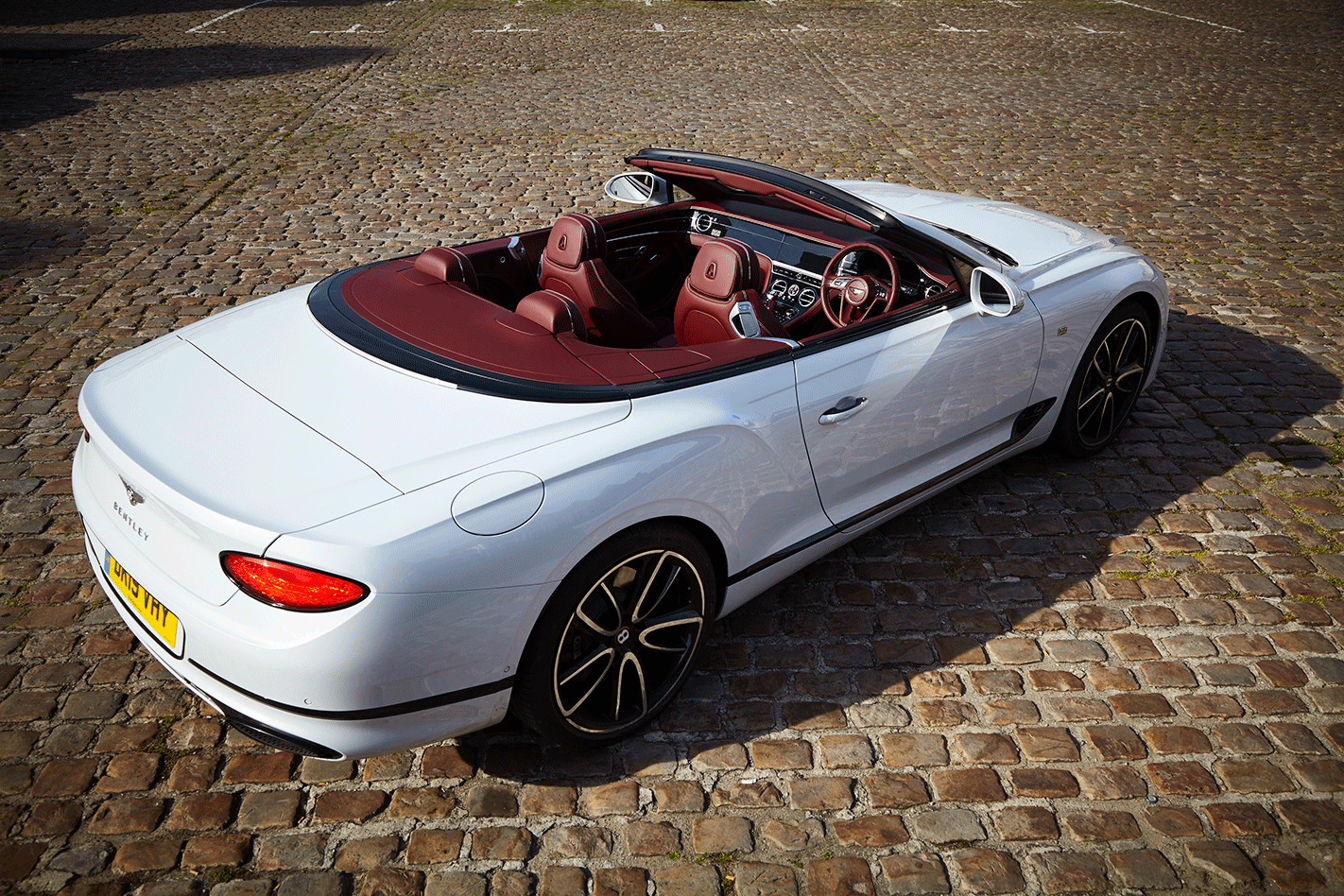
While the GTC is fast, svelte, impeccably mannered and luxurious, this third-generation model is also beautiful. It is longer, and moving its front wheels 135mm further forward let the designers drop the engine to draw a lower, more sultry body with divine lines. It’s a pleasure to look at the light playing along those creases running from its front guards onto the doors, and along the haunches. When the roof goes up, in 19 seconds, it’s surprisingly slim and harmonious, too – and drops cabin noise 3dB to the level of the previous Continental coupe.
All the sumptuousness and technology of its hand-made cabin wouldn’t matter if the driving position were flawed. But it too is perfect. The seats adjust 20 ways – there’s an optional massage facility – and include warmers that waft hot air around your neck, pleasant on an evening drive. The rear buckets cosset too, but there’s not quite enough legroom for adults for long distances. The 235-litre boot, better than before because the roof folds more compactly, will serve two adults and children with small bags. And, with a 90-litre tank, how pleasing it is to see the fuel display saying the range is 850km (in reality closer to 660km if you push on; I logged 13.5L/100km). If, as part of the $141,835 worth of options on our $606,435 First Edition and Centenary spec GTC, you’d included the $17,296 2200W 18-speaker Naim audio system, I think you’d be pleased. It’s as serene as the rest of the car.
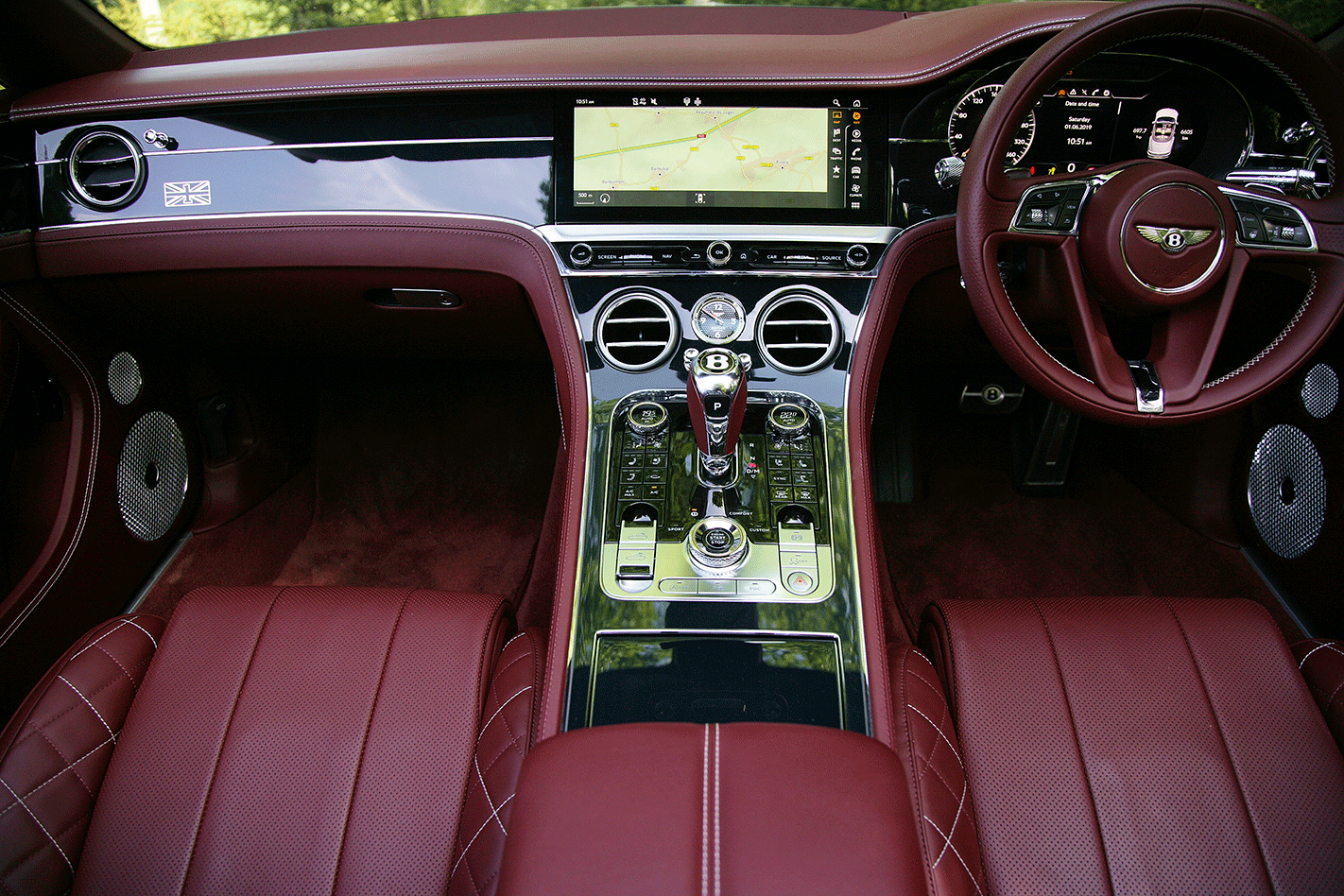
One thing occasionally disrupts the GTC’s dignity. As it slows for traffic lights, for example, the ZF eight-speed dual-clutch transmission picks up first gear with a bit of a jolt. Developing a gearbox to be ever-smooth with such torque is a big ask, and Bentley admits improvements are due. It says distance helps: the ECU is constantly learning and adapting to improve shift quality.
As we roam the pretty country of the Somme, roof-down in 30-degree heat, we’re awed by the number of cemeteries visible from almost every road. Each headstone tells its own story; Aussies alongside Kiwis, Brits, Canadians and French, often interspersed with Germans. As tour guide Michael McKernan wrote in The Age: “It still clutches at us, the Great War; it can still summon powerful emotions. Why, travellers ask, did those in charge keep doing this to decent young Australians? Five thousand five hundred lost at Fromelles; 27,000 seven weeks later by the end of Pozières and Mouquet Farm. Too much death, too much terrible injury and suffering. Why?” All told, 46,000 died on the Western Front.
I find some cheer in starting to understand how the war changed in 1918 when, with the Australian divisions at the forefront, the British Empire forces gained an efficiency, capability and technology that stopped the Germans’ last offensive, and in the final 100 days beat them in battle after battle until they capitulated. I think about the start of that turnaround as I stand beneath the flags at the Australian Corps Memorial on the ridge above Le Hamel. The Battle of Hamel, fought on July 4, 1918, was over in just 93 minutes with all its objectives gained. It was a triumph for Australian Corps commander Lieutenant General John Monash and became the template for the Allied attacks that won the war. With painstaking planning, Monash specified unprecedented cooperation between infantry, machine-guns, artillery, tanks, aircraft and signals. Two innovations played a major role: the powerful new Mark V tank, and dropping ammunition from aircraft to forward troops. It was the first time Americans fought alongside Australians too, the start of a century-long alliance.
Peter FitzSimons’ fast-paced book Monash’s Masterpiece: The Battle of Le Hamel and the 93 Minutes that Changed the World tells the story, including the incredible tales of how Private Henry Dalziel of Irvinebank, Queensland, and Lance Corporal Thomas Axford of Coolgardie, Western Australia, won VCs.
We drive a little way west to the main Aussie shrine, the Australian National Memorial near Villers-Bretonneux, site of another crucial AIF victory. Spectacular twin white stone pavilions sit either side of the entrance to the cemetery that fans up the slope to the great tower and wall of remembrance. Last year, the $100m Sir John Monash Centre museum and multimedia centre opened there to tell the AIF’s story in France.
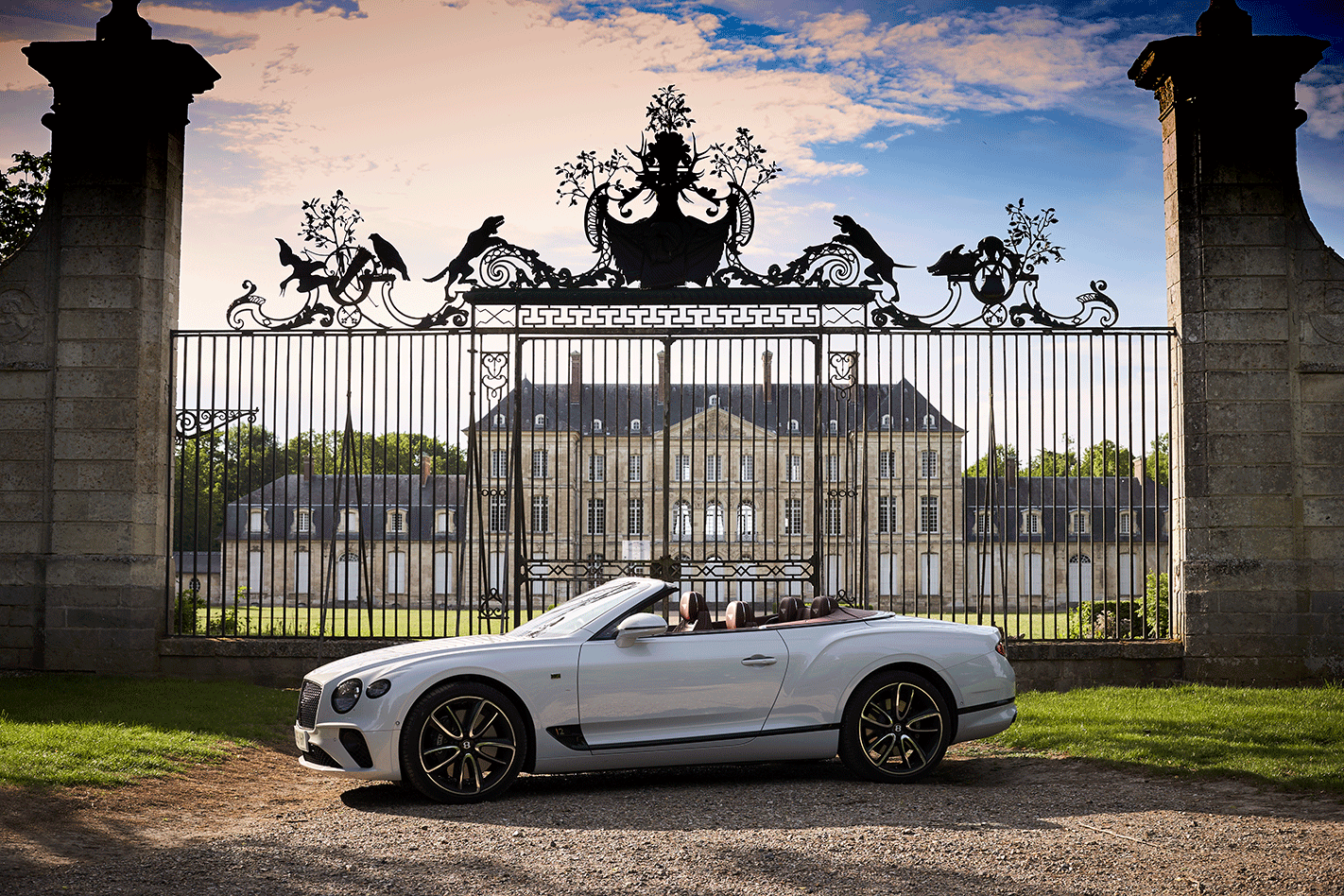
Finally, to pay homage to Monash, we drive 23km west to Château de Bertangles, just north of Amiens, where he planned the battles of Hamel and Amiens. We peer through the grand gates and imagine the front lawn of his HQ packed with captured German guns, past which King George V walked on August 12, 1918 when he came to knight Monash on the château’s steps – the first time in 200 years a British king had knighted a commander in the field. He was in no doubt about Monash’s worth. Sir John’s impeccable campaigns are still closely studied in Australian and American military colleges. Former Governor-General Sir Peter Cosgrove is among those calling for Bertangles’ significance to be more widely celebrated.
It’s an hour and a half back to our hotel north-east at Arras. On the quiet side roads of a Sunday evening, I dial the GTC from the well-judged ‘Bentley’ drive mode to ‘Sport’. The suspension stiffens without diminishing the composure. The active four-wheel-drive system shifts 83 rather than the usual 62 percent of the torque to the rear wheels so that when I ask the silken W12 for big dollops out of corners the car feels tauter and more tail-driven but never gets out of line. The steering isn’t very involving but its accuracy and consistency are enough. The transmission works faster and its changes are as instant as they are seamless, giving me as much speed as each bit of road can handle. Blasting into the bends, I’d initially worried about all that weight, but the vented iron discs – 420mm at the front and 380mm rear, with 28 pistons across their four calipers – do the job. On the over-run, the tailpipes’ basso profundo wafts up over the tail but is no more intrusive than the warble at the loftier end of the rev range on the way up. So it is as fast and inspiring a drive as it is unruffled.
Over a drink in the great square at Arras, where buildings still show pockmarks from German shelling, I think about something a Dutch boat skipper had said earlier in the day. We were parked by the River Somme for a picnic lunch and he was mooring his boat nearby. “That’s a wonderful car,” he called. “But it’s not British, is it?”
I doubt that he appreciated how much of the Bentley’s design, engineering and development – and not just its hand-crafted manufacture – is done at Crewe; or that while it shares its MSB platform with Porsche’s Panamera, Bentley’s requisites were present from the start. That included engineering for a drop-top, which is why the body is uncommonly rigid and the roof takes so little space. It seems to me that Volkswagen’s money has married the profound abilities of two nations capable of great achievement as well as great destruction to produce something magnificent.
Bentley says the GTC represents all it knows about creating the world’s definitive grand tourers. A few days on the road will leave you in little doubt that its collective knowledge is unsurpassed.
DATE WITH DESTINATION
A personal quest to remember
I’d long wanted to visit the Somme battlefields. My great uncle George Nichols, from Bothwell, Tasmania, was there with the 38th Field Artillery Battery, my wife’s grandfather Bert Sainty, from Gordon, NSW, was a signaller with the Fourth Battalion and my friend Peter Robinson’s grandfather Frank Robinson, from Box Hill, Victoria, fought with the Third Pioneer Battalion.
I had a particular reason to go this June. I’d recently discovered that a WWI compass I own had belonged to a 21-year-old British Army captain called Edward Astley. It was with him when he was killed by a German shell on June 1, 1918. I wanted to take the compass, and a little map that he’d hand-drawn and tucked into its case, to his grave in Warlincourt Halte British Cemetery near Arras on the anniversary of his death.
In the same Commonwealth War Graves Commission cemetery lies 2nd Lt Frank Beechey, 30, from Lincolnshire, England. He was one of five brothers killed in the war.
Inspired. It’s the only word that does justice to the idea of a reborn Lancia Stratos based on a Ferrari F430. Think about it. Ferrari’s mid-engined supercar built between 2004 and 2009 is in plentiful supply, is blessed with a wickedly sharp engine, and treads that fine line between modern performance, control and excitement and old-school involvement, feel and delicacy.
To start with such a sound basis, shorten the wheelbase and then pour some Stratos styling fairy dust on top should result in something spectacularly agile, overwhelmingly evocative and effortlessly cool. This car might not be a pureblood, but I’m not sure I can think of a more exciting project anywhere in the world.
The story of the reborn Stratos is long, winding and really rather extraordinary. It starts in the 1990s, when a teenager named Chris Hrabalek discovered that Lancia had allowed the rights to the Stratos name to lapse. Hrabalek registered the trademark (his father was a Stratos owner and enthusiast) and around ten years later, by then a design student at the Royal College of Art, decided his final project should be a Stratos for the 21st Century.
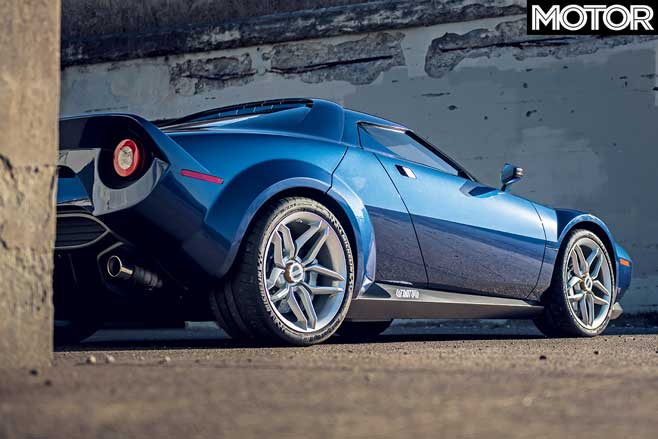
Usually such a project would comprise a few sketches, some CAD data and maybe a scale model, but Hrabalek showed incredible tenacity to realise his dream in full-sized, rolling form. By approaching ten owners of original cars and securing funding from them, he managed to build the Fenomenon Stratos concept car and display it at the Geneva Auto Salon in 2005.
It was a huge hit, and one of those initial investors, a German named Michael Stoschek, decided to press ahead and turn the show car into a road car, with plans to build a run of 25. Based on a Ferrari 430 Scuderia, re-engineered by Pininfarina’s special projects department and subtly restyled in places but still true to Hrabalek’s Fenomenon, the New Stratos was finally ready in 2010.
The reception from the media was rapturous, and Ferrari chief Luca di Montezemolo drove the car at Fiorano and seemed extremely happy with the project… Shortly afterwards he killed it stone dead by refusing to supply the parts necessary to build further examples and ensuring that Ferrari suppliers knew that stepping in to do so would be very bad news for the future of their businesses.
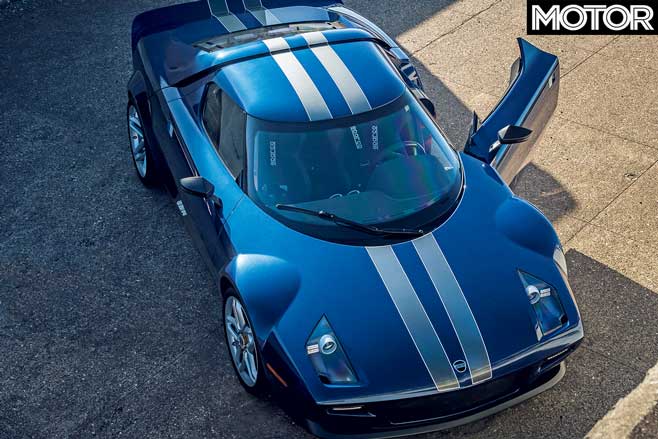
And yet here it is. An early customer car from a small production run of this reborn icon. Of course, Ferrari F430s and 430 Scuderias are no longer current models and Ferrari can’t really control what happens to cars from a decade or more ago.
But the stars really aligned when Paolo Garella, who had headed up Pininfarina’s special projects department back when New Stratos was first developed, found himself looking for an opportunity after his relationship with Jim Glickenhaus ended and production of the SCG003 racecar and road car, plus the many new Glickenhaus projects, was moved to the US. Garella approached Stoschek about reviving the Stratos, formed Manifattura Automobili Torino and now they’re finally delivering on the 25 cars that were promised all the way back in 2010.
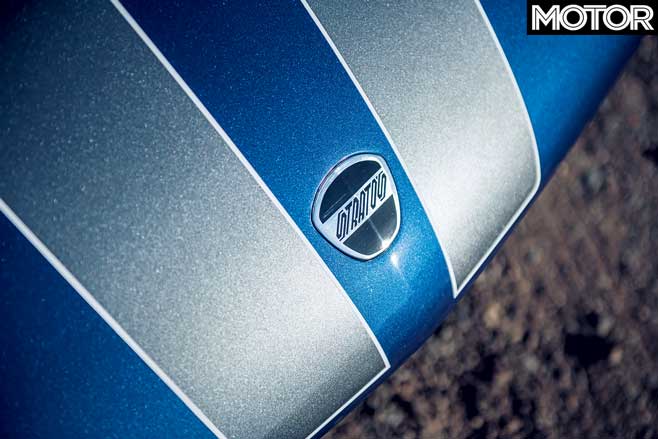
Even putting aside the amazing styling, the Stratos history and the fact this is a hand-built, limited-run car made by the same team behind the Enzo-based P4/5, you’re still left with a tantalising proposition. The MAT Stratos builds on the F430’s 4.3-litre V8 with a few choice tweaks and a Larini titanium sports exhaust to deliver 397kW; it has a six-speed open-gated manual gearbox; at just 4181mm long and with 201mm chopped from the donor car’s wheelbase, it’s extremely compact, and, thanks to a full carbonfibre body, it weighs 1350kg.
Even better, when painted dark blue like this car, it can almost slip quietly into the background. Sure, it’s different, but it doesn’t scream its value and rarity like most bespoke supercar creations. And while there’s appeal in the outlandish shape and scale of a modern hypercar, something small, light and handsome rather than wilfully extrovert is arguably cooler and much more useable. Incidentally, the hypercar comparison is valid because the MAT Stratos costs around $1m plus a donor car.
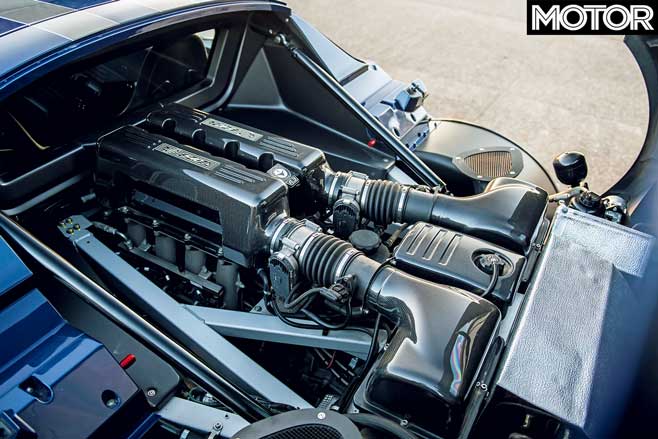
MAT is happy for you to start with either a Scuderia or a standard F430 and will even convert a car with an F1 paddle-shift gearbox to a manual should you so desire. Usually I’d say that’s a very good idea, but the Scuderia’s ’box – capable of changes in 60 milliseconds – is actually pretty fantastic and might suit the reinvented Stratos rather well. This particular car is based on an F430 with the F1 ’box that’s been retrofitted with an open-gated gearshift. I guess we could call it the purist spec.
It’s uncharacteristically drizzly in California when I’m first handed the key, but it really is a special moment. There’s so much natural drama in the shape and sawn-off dimensions. Can it possibly deliver a drive to match the promise?
The door feels incredibly light as it swings open, the glasshouse pinching inwards as it meets the roofline, just as it did on the original, and you drop low into a simple, carbonfibre-shelled seat. The Stratos might have money-no- object coach-built pedigree, but inside it’s stripped back, plain and, to be honest, a little underwhelming. I appreciate the bare floors, the lightweight material that shrink-wraps every surface and the integral rollcage.
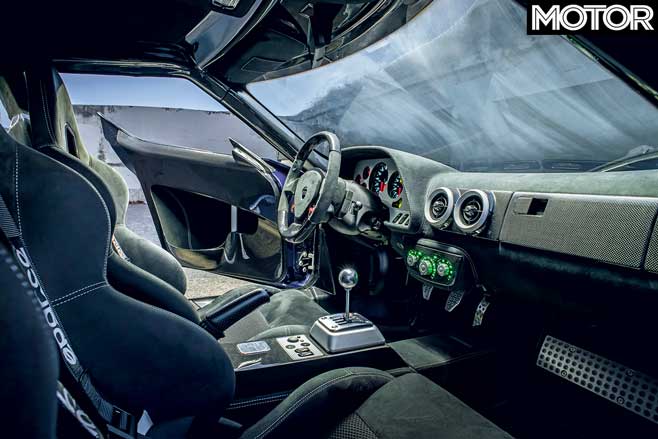
It’s consistent with the Stratos’s competition car roots. But the steering wheel, heater controls and instruments (lifted straight from the F430) and the rudimentary design of the binnacle are disappointing. Not to mention the burnished, mucky-looking aluminium gearshift knob. Surely for more than $1m a shiny new shifter is a given? I’d hoped the New Stratos would be minimalist but meticulously detailed. It actually feels a little home-brewed.
You’ll forgive it pretty quickly, though. Twist the key, hit the starter button and the 4.3-litre V8 starts with a trebly, thin-sounding howl and the whole car shimmies and shakes to its fast idle. It’s like the engine is in the cabin with you. It’s not a big, booming sound, but there’s a restless energy that pervades every fibre of the Stratos and subconsciously it seems to prime you for a busy, hyper-alert driving experience.
One thing’s for sure, you don’t jump into the Stratos and immediately relax. It feels as though you could reach out and touch all four wheels from the driver’s seat and yet this tiny buzzsaw of a car conveys full-scale intimidation. Very Stratos.
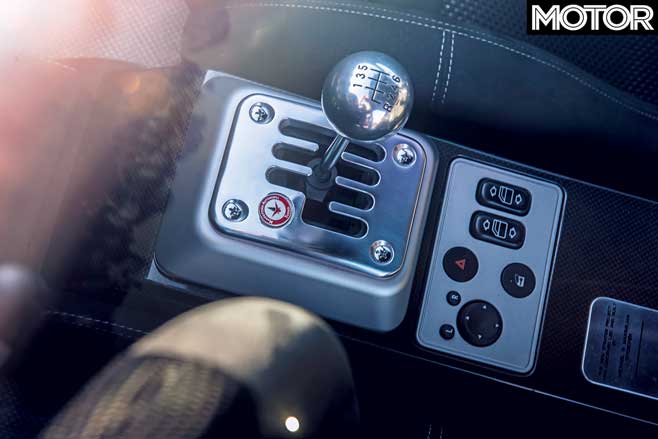
The first few miles are oddly haunting. Like visiting a place you knew well many years ago that’s been transformed with new roads and buildings. Familiar yet disorientating. The steering feels like an F430’s in weighting and feedback, but the car reacts so much more quickly to it. It’s as though it has lost 250kg of flab and gained a huge amount of rigidity.
All the slack has been eradicated – and you barely knew the F430 had that much slack to chase away – replaced by razor precision. But what’s really appealing is that, unlike with some modern Ferraris, the dazzling agility feels real rather than conjured up by an artificially quick steering rack. That short wheelbase might present problems later, but here and now I love it.
The neatest trick the Stratos plays is to feel extremely nimble, light and stiff but to never descend into nervy edginess. You can quickly make the car flow. Even so, I don’t want to paint a picture of calm fluidity. It’s a raw and pretty extreme experience.
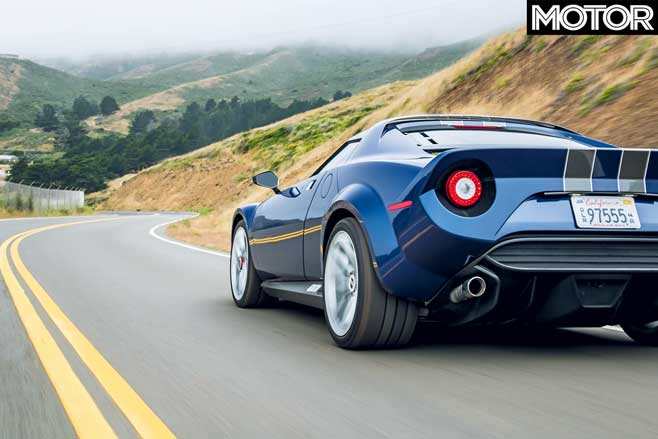
New Bilstein dampers provide much more resistance to roll than a standard F430’s, the bare interior reverberates to the thwack of suspension impacts and tingles to the sounds of the highly strung V8, and the six-speed manual is physical and sometimes quite awkward. I’d suggest buying a donor car with a manual ’box already fitted if that’s the end result you want to achieve. This converted F1 ’box is acceptable but doesn’t feel fully dialled-in just yet.
That the awkward gearshift is the only dynamic element that doesn’t feel properly sorted is testament to Pininfarina and latterly MAT’s engineering skills. Okay, so I remain unconvinced by the general fit and finish of the interior, but the way the Stratos takes an F430 dynamic experience and makes it so much more aggressive and responsive yet avoids creating any snappiness or unpredictability is really very impressive.
Start to sneak up on the very high limits of the Michelin Cup 2 tyres and the car does everything you want of it, just starting to push into understeer on turn-in and then remaining pretty neutral through the middle of a turn.
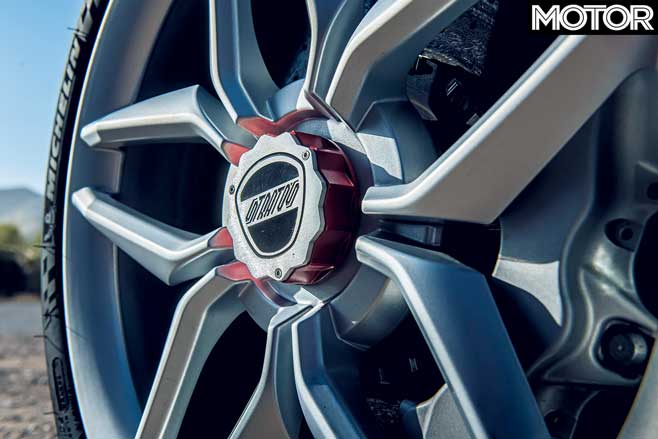
I’d love to tell you how the savagely sharp engine can then start to overwhelm the rear tyres and let you steer the Stratos from the rear like the old rally hero on its way to yet another victory. Sadly, the electronics of the MAT Stratos aren’t fully operational and the manettino won’t switch between modes nor let me disable the traction control. It’s a huge frustration and just another niggle on this car that oozes so much potential.
For all the irksome little details, the Stratos can deliver moments of pure magic. That 4.3-litre V8 loves to rev right out and really flings the Stratos along. I’m not sure it’s quite kicking out 397kW but if you can keep it spinning over 5500rpm it feels wonderfully sharp and grows in stature as your commitment increases. The noise is everywhere and the response is so faithful it’s almost like it reads your thoughts. The combination of that extreme agility, iron-fisted body control and the shrieking engine makes for almost overwhelming sensory overload.
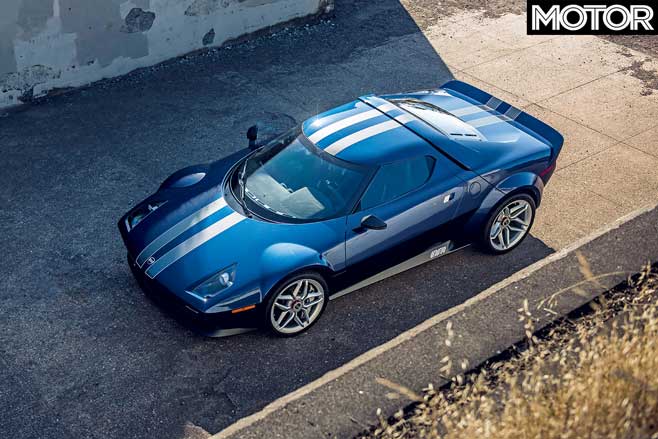
After several days in the company of the MAT Stratos it’s inevitable that the initial ‘oh my god, I’m driving this concept car made real’ wears off just a little. But I continue to enjoy its size, the natural athleticism, which doesn’t tip over into hair-trigger on-limit behaviour, and the fact that people seem to like it but aren’t falling over themselves to take videos on their phone. It’s only natural that it has an old-school sensibility about it, but I’m surprised by just how appealing the whole package is.
Dare I mention the Porsche 911? Love it or hate it, the 911 has been so successful because it offers so much performance and communication in a relatively small, light and useable package. The Stratos does something similar, but with the sense of concept-car cool and Italian glamour jacked up to irresistible levels.
It’s a long way from perfect, and MAT needs to refine and polish the execution to justify the entry price, but the reborn Stratos is an inspired idea that could be inspiring to drive, too.
I hope they find a way to fulfil its incredible potential.
MAT New Stratos Specs BODY: 2-door, 2-seat coupe DRIVE: rear-wheel ENGINE: 4308cc V8, DOHC, 32v BORE/STROKE: 92.0 x 81.0mm POWER: 397kW @ 8500rpm TORQUE: 520Nm @ 3750rpm WEIGHT: 1350kg PRICE: AUD$1m (plus donor F430)
Introduction: Two to tango
Last year we had the opportunity to drive the Renault Megane RS280 back-to-back with our incumbent hot-hatch champ, the Hyundaii30 N.
“Drive the Megane at absolute ten-tenths and it probably has a veneer of talent beyond even the i30 N,” I wrote. “A hot hatch that goes straight into the top drawer of current contenders,” I also opined. I even said: “One really good suspension setting always trumps a selection of so-so calibrations, and the Renault’s is a gem.” So it’s fair to say we liked it.
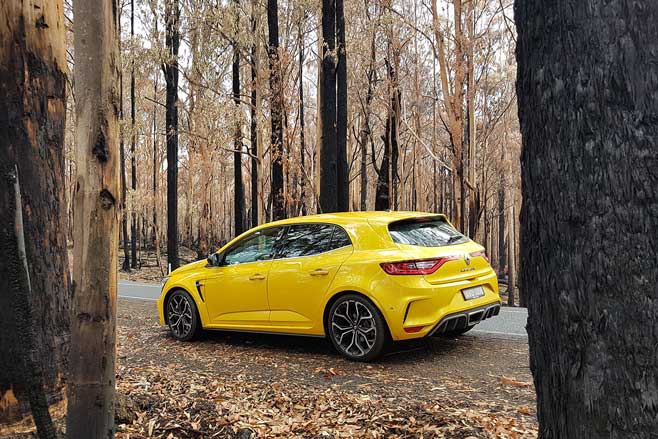
That car was the manual model, so Renault decided I needed to try the dual-clutch EDC version. We welcomed AVO006 into the Wheels garage last month with 9491km on the clock – and they’ve been some heavy kilometres.
This car has been used as a circuit hack at the Melbourne GP and has been through countless comparison tests by other motoring outlets. The rims are a bit chewed, there’s a 10-cent-sized dint in the bonnet and the gear shifter feels as if somebody’s smashed it into Drive with a post maul.
I don’t mind a bit. After treating the McLaren 570GT with absolute kid gloves, it’s great to jump into a car that demands to be given a pasting.
To the list price of $47,490, this car adds Liquid Yellow paint at $1000, Bose audio for $500 and R.S. Alcantara and leather upholstery that tacks on another $1190. Not that I have long to get used to all that. Next month I’ll be back in a manual version of the RS 280 Cup, so for the time being I’m savouring the EDC ’box’s smooth shift on the more choked parts of my commute.
It’s a great installation. Some have complained that the paddle shifters are too small, but the transmission calibrations through the Comfort, Neutral, Sport, Race and Perso modes offer something to suit most moods, so I’ve rarely had recourse to bother flapping at one of the metal lugs.
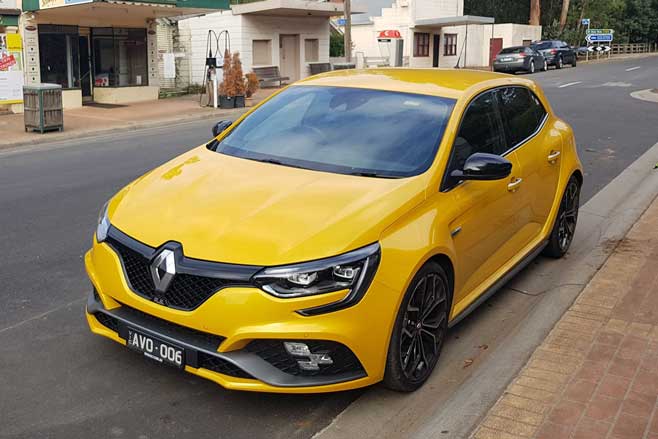
I won’t go back over too much of the car’s dynamic repertoire right now, because you probably know much of that already. What’s been refreshing is how easy the Megane is to live with. The seats are supportive and the seat heaters warm up quickly in the cold weather. The air-conditioning is exemplary, with a rapid demist and big, easily accessible dials.
The dehumidifying effects of the air-con were put to the test this month due to a curious quirk of this particular car. On several occasions, either one or both of the front doors has failed to close properly. This has resulted in my returning to the vehicle to find it unlocked, which can be a worry.
After a typically wet Melbourne evening, I parked my fundament into a driver’s seat that felt like a sphagnum bog due to the chubby door rubbers doing their thing again. After much hilarity in the office, which included being exposed to some fascinating retail opportunities for geriatric diapers, I’ve started to slam the doors like a character from GTA Vice City.
The Megane RS280 is so much fun that after a while, you just won’t care that strangers will think you’ve lost control of your bladder function. Instead you’ll look for opportunities to drive it on the twistiest roads you can find.
Read all the latest Renault content including news, reviews and specs
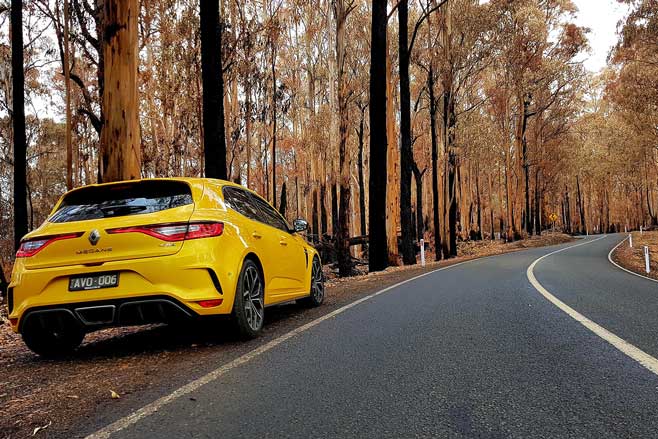
So far this month, it’s been to the top of Lake Mountain twice, Mount Baw Baw once and deep into the forests north of Noojee on another occasion. Reefton Spur, the Black Spur, Split Rock Road – I’ve been unable to resist the lure of some seriously tortuous tarmac.
That’s exactly what a great hot hatch should do. It should render you freewayphobic, instead longing for that weighting up of the wheel, the feel of the front end keying into the bitumen and the sound of exhaust crackle on the overrun. The Megane delivers that in spades, and for that it’s forgiven any petty peccadilloes. As AVO006 heads off after a month in its absolute element, I’m keen to see whether three pedals and a stick will prove quite so immersive. Check back next month.
Update #2
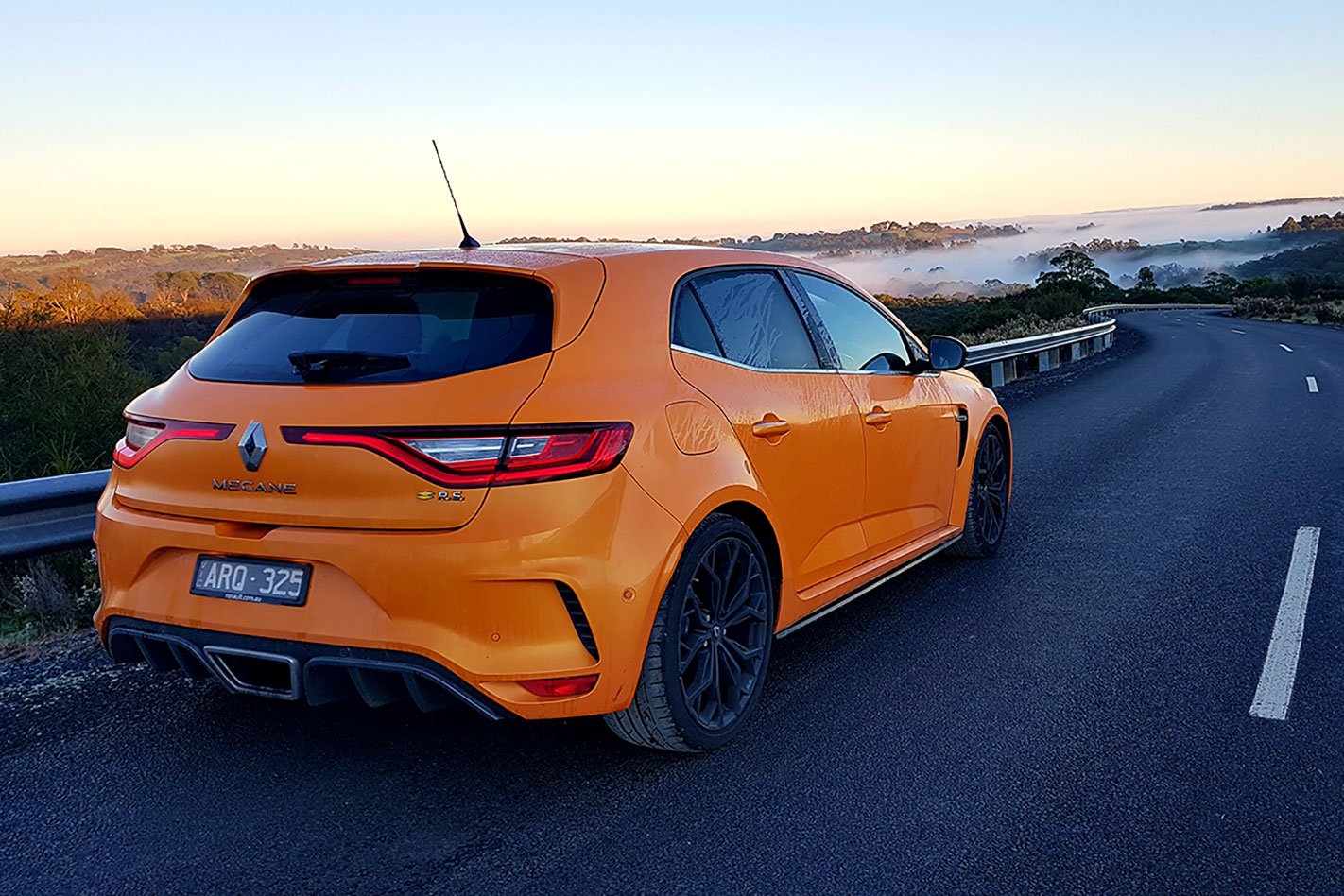
IT TOOK ALL of 10 seconds to have me doubting. The yellow twin-clutch Megane RS280 you saw here last month had gone back to Renault and in its place had arrived this tangerine-hued RS280 with a manual gearbox and the firmer Cup chassis, neither of which had created a positive first impression. The gearchange travel is long and the action noisy and clunky, while the ride can best be described as terse. It felt like I’d been downgraded.
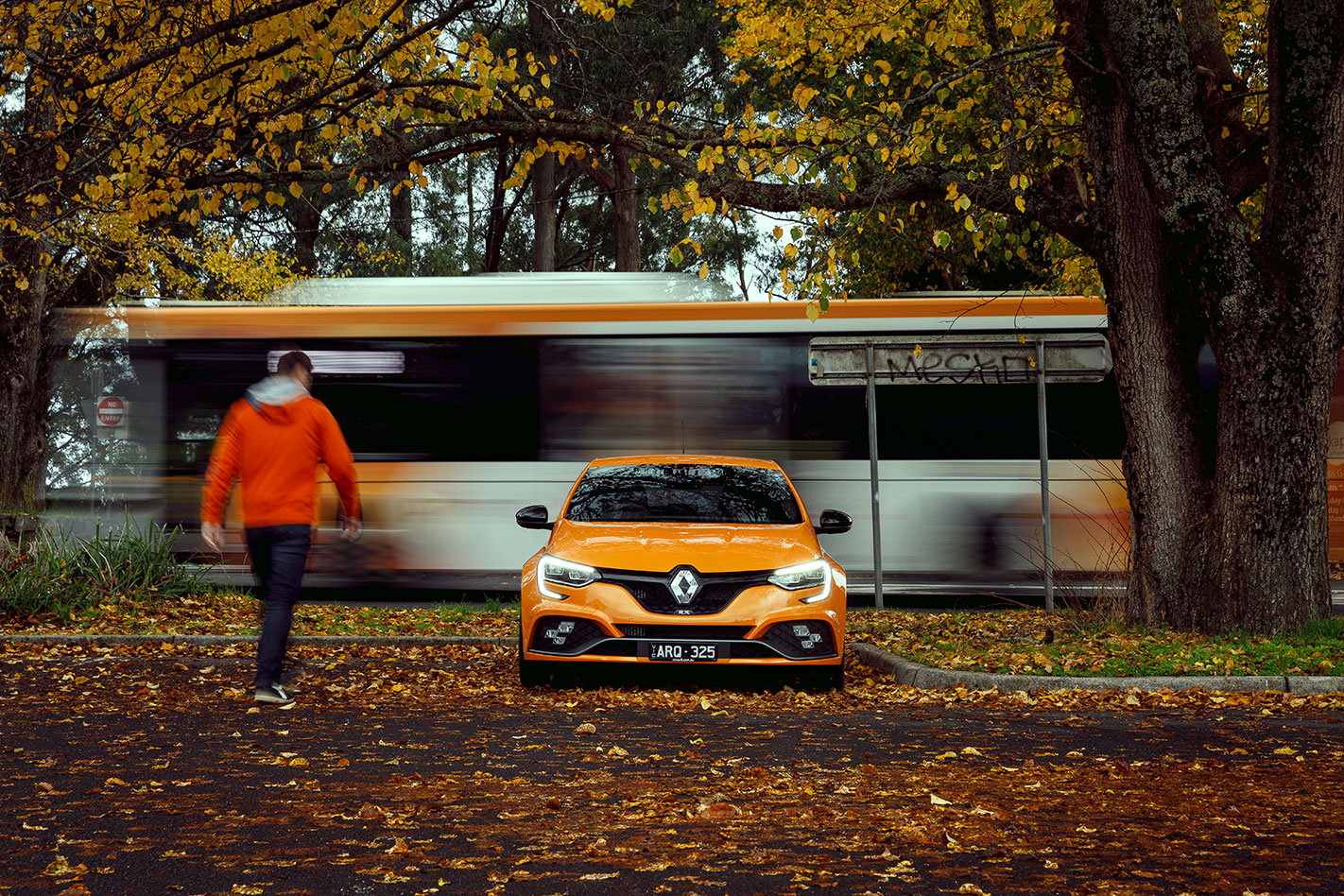
Since then I’ve gradually warmed to the Cup. I still don’t rate the shift action, but there’s a certain agricultural pleasure to clogging in a big boot of heel and toe in order to get round the awkward pedal positioning. The Torsen limited-slip differential that’s part of the Cup package also brings the steering to life when you’re really on it, tugging the car into a bend and adding to the excitement. On an allied note, I’ve also realised that there’s a certain cadence where the suspension starts to glide rather than jostle, but I’m not about to mention what it is in print.
In order to house the gearshifter and manual handbrake, the entire centre console of the car has been redesigned. The centre cubby with the sliding lid featured in the EDC-equipped RS280 Sport is replaced by a pair of open cupholders that look undersized but do a fairly decent job with most things. You can’t quite stand a smartphone up in them though, which, admittedly, isn’t their primary design criterion.
I’ve noticed a theme with the long-termers I’ve run thus far. The better the fuel economy versus manufacturer figures, the less I’ve enjoyed the cars. In other words, it means that I’ve been driving them sedately on highways rather than seeking out the twisty back roads and giving it some jandal. It’s seen 13.5L/100km on one tank against a published figure of 7.5L/100km, so the Renault has enjoyed some exercise.
This might also be one of the highest kilometre readings for a ‘month one’ car, at 3280 klicks, so rest assured that the Megane isn’t one of those cars that ends up resigned to the office car park over a weekend. I’m still not convinced that this represents the sweet spot in the RS280 range, but it’ll be fun establishing that one way or another.
Update #3
Or what not to do with keyless start
- Price as tested: $50,180
- This month: 1566km @ 8.8L/100km
Realising that the car had spontaneously unlocked itself and switched the parking lights on, my enterprising colleague walked out of range, locked the car using the fob and then rushed it into the box. It seemed to work. The Meg stayed locked.
Next morning, having performed electronic handshakes with the fob all night, the car’s battery was not reporting for duty, requiring a bit of jump lead action.
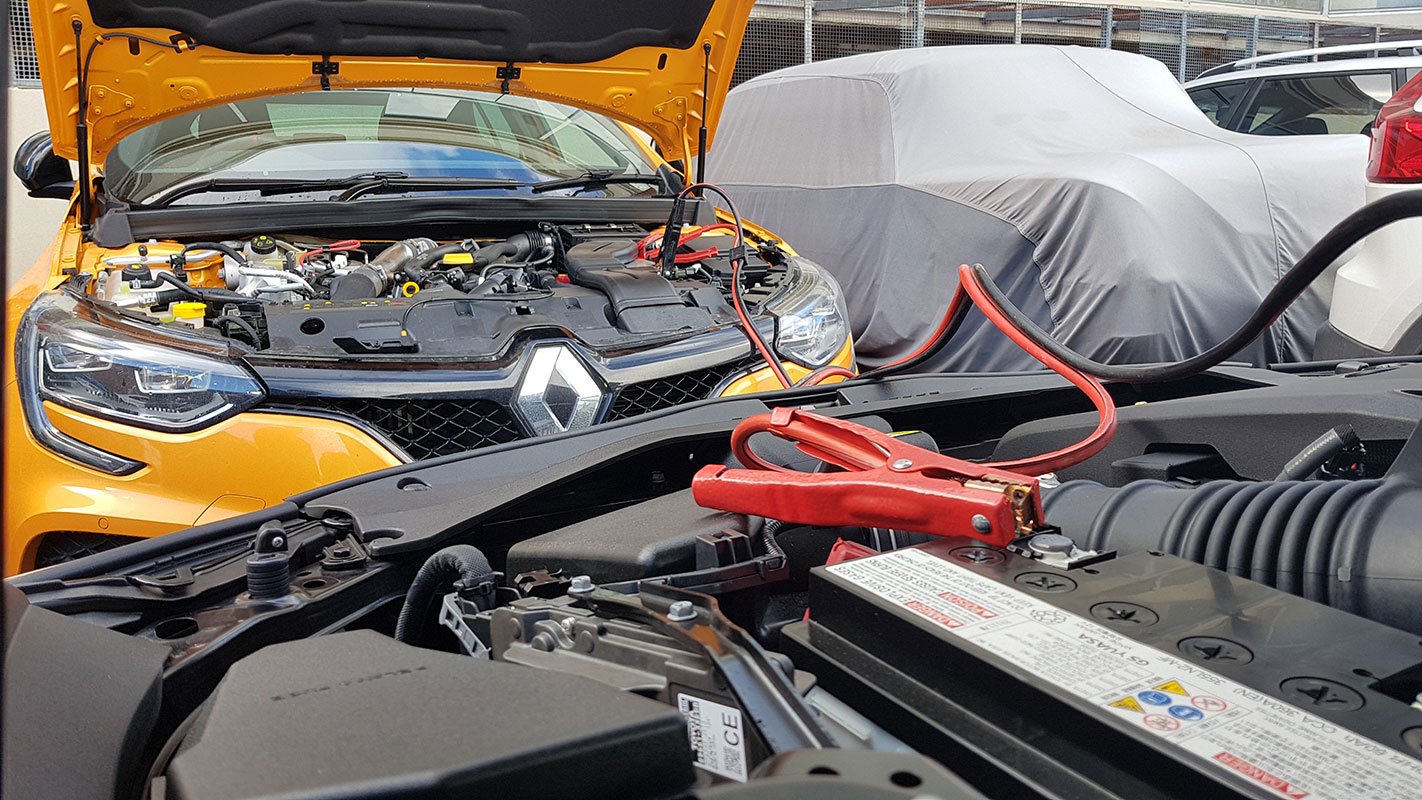
This all got me pondering the merits of keyless go. In fairness to Renault, it was on us this time, and the keyless system does otherwise work brilliantly, but there are caveats. I once swapped cars with another work colleague somewhere in Belgium, and drove into France while he headed south into Germany. It was only when he stopped to refuel that he realised he was stranded as I had his key and vice versa. Sometimes technology creates more problems than it solves. It could be the case that just when a manufacturer comes up with an idiot-proof system, life finds a way to create superior idiots.
I’d been slightly concerned that the RS280’s front boots were nearing the end of their useful life. Melbourne’s frankly horrible winter weather has resulted in them slithering around a bit both when cornering and under power, the latter giving me a connoisseur’s appreciation of axle tramp. Strange thing is, upon inspection they’re nowhere near their wear bars. The Polish-made Bridgestone Potenza S001 tyres get a whole lot better when warmed up, but the roundabout 200m from my door represents an interesting test at 7am.
One thing the Renault can never be accused of is being boring or vanilla in any way. Yes, it has its foibles, but there are delights, too. Its hellion personality can be wearing, but when you’re in the mood it’s laugh-out-loud hilarious. It’s one of those cars that takes quite a while to key into its frequency but the reward is well worth the effort.
Update #4
Pressure drop – Enright goes for a lap of the ring but fails to find air apparent
- Price as tested: $50,180
- This month: 1287km @ 7.4L/100km
A Sunday when my partner was overseas and nothing particular needed doing raised exactly that opportunity for me, so I juiced the Megane RS up the previous night and pointed it at the Reefton Ring.
You might know this drive loop, even if you’re not a Melburnian. It’s a 124km jaunt that runs through Warburton, Healesville, Marysville, Reefton and back to Warburton accessible from any point on the circuit.

It includes open, flowing roads, the temperate rainforest of the Black Spur, a bit of altitude up past Lake Mountain and the seemingly endless twists of Reefton Spur. Go clockwise to descend Reefton Spur or anti-clock for an ascent of the bends. You’ll get it done in comfortably less than two hours without unduly endangering your licence, and it’s a great test of a car’s ride and handling.
The former isn’t a forte of the Megane RS with the Cup chassis, but this Renault never saw a corner it didn’t like, and the Reefton Ring is chock full of ’em. Early on a Sunday morning at a decent clip is a great way to blow away a few cobwebs and really put the Megane into its element.

I took a break to ponder the finer points of the handling envelope over a vanilla snot block the size of a steamer trunk from the Beechworth Bakery in Healesville. Once the tyres are warmed up, it understeers far less and the Perso drive mode lets you tailor the dynamic settings. I mentioned at one point previously that the car’s pedals weren’t very well set up for heel and toeing. That judgment may have been premature. In the more comfortable modes, the throttle travel is too long for an effective blip. Dialling it into Sport or Race sharpens the throttle mapping and then you can give the loud pedal a crisp jab with your right clog.
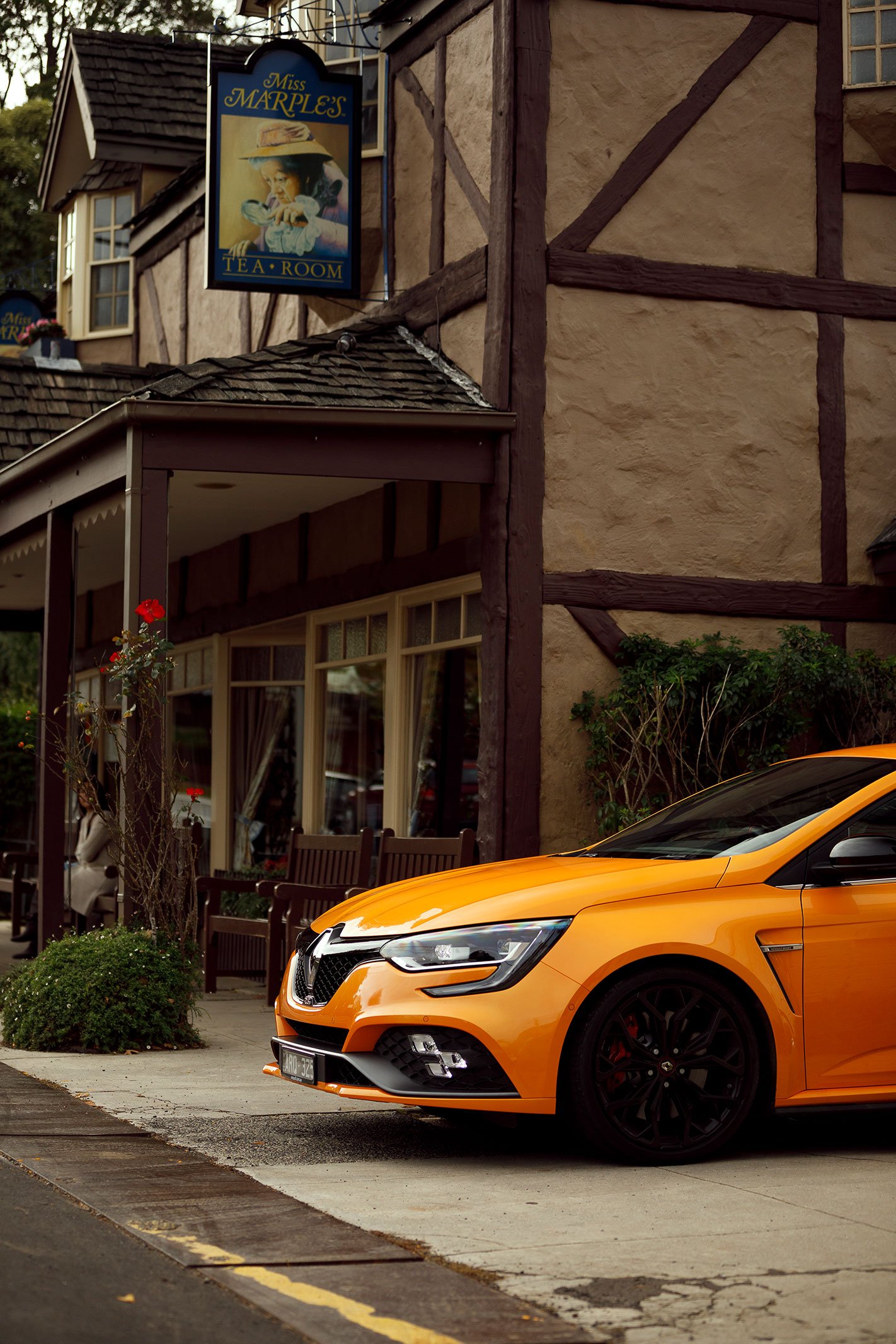
Not quite so much fun is the Megane’s strange predilection for tyre deflation. On a few occasions I’ve hopped into the vehicle, often after travelling away for a week, and been greeted by a low-tyre-pressure warning. The strange thing is, it’s rarely been the same tyre twice, so returning it to 33psi front, 30psi rear is becoming a fairly regular occurrence. I’d be keen to hear from any other owners who’ve experienced similar apparently random deflations. Other than that, I’m already looking forward to the next quiet Sunday and another lap of the Ring.
Update #5
The RS280 starts its run for our garage reliability champ of 2019
FAR BE IT from me toperpetuate national stereotypes, but French cars haven’t always had the most unblemished record of reliability. Let’s just say that they can keep you involved, such are their often novel engineering approaches.

Paul Magès, the inventor of Citroen’s fiendishly complex hydropneumatic suspension, had a plaque on his desk which read, ‘Everyone thought it was impossible, except an idiot who did not know and who created it.’ Yet this month, the Megane seems to have soldiered on indefatigably. Even the insidiously deflating tyres seem to have waved the white flag and started behaving. So, a clean bill of health – which can’t be said of all the long-termers in the Wheels garage. Looking at you, Mercedes-Benz A250. Okay, so the Merc had fallen victim to editor Inwood’s obsessive-compulsive lugholes, but sometimes you have to wing in an outrageous claim and hope it sticks.
Also praying for a certain level of adhesion were our video team, who co-opted me and the Megane for a training day demonstrating camera rigging techniques to our newer hires.
I trust that they didn’t actually review the footage shot on the day, because the Renault’s not the ideal camera car. The Cup chassis is so firm that any takes would probably look like something the Blair Witch Project would reject as too jumpy. Still, it was huge fun to pedal around in pursuit of a fast subject, the Megane being the only car in the Wheels car park that could have kept up with a supercar on a properly challenging road.
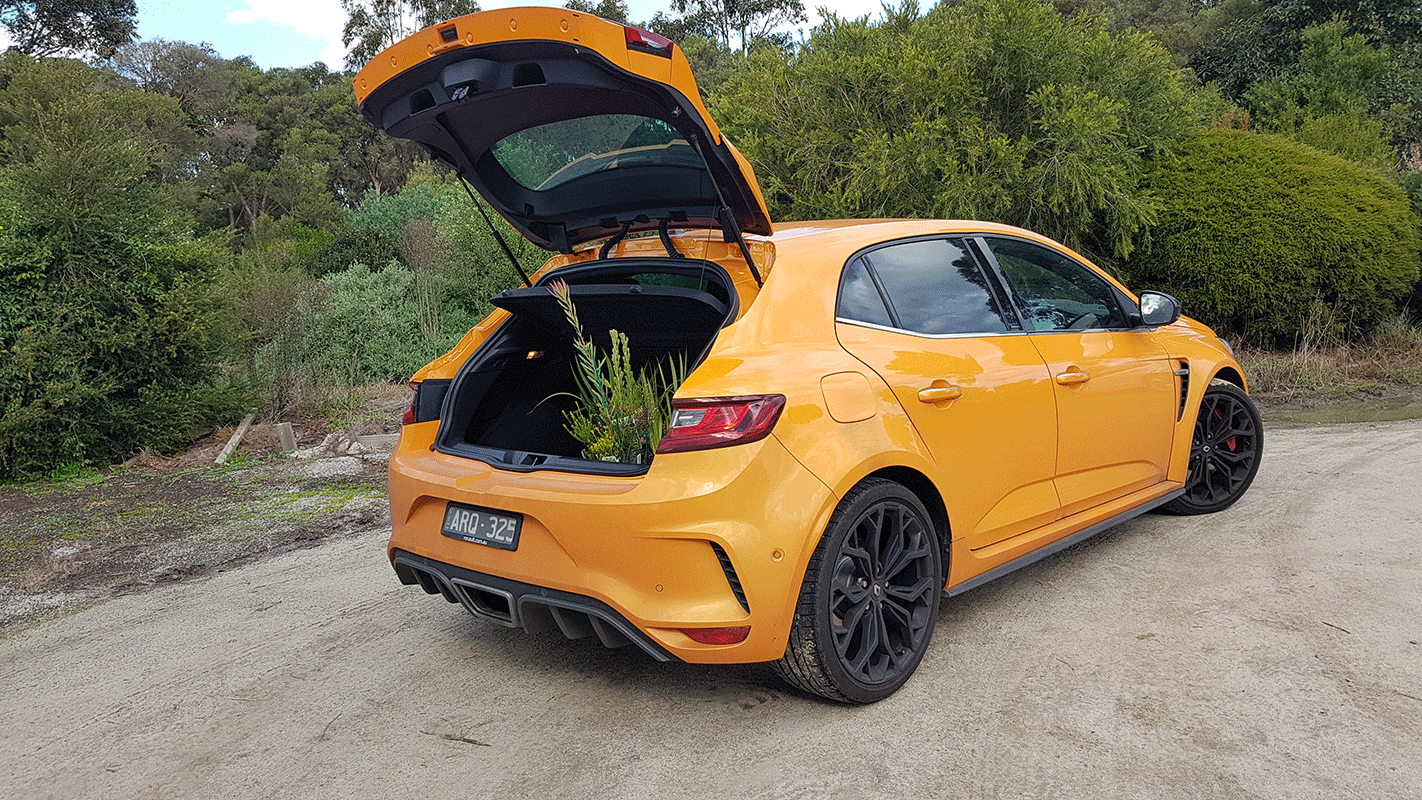
The Meg’s also been pushed into service as a bit of a load lugger this month. Running repairs to the gardens at home have seen it loaded to the gunwales with bags of paver sand, mulch and potting mix. This has revealed an unexpected bonus. With the rear seats folded down, the cabin is far, far noisier, and noisier in a good way. The pops and crackles from the exhaust sound that much sharper and there’s a more purposeful resonance about the newly enlarged cabin. They’re staying folded from now on.
I’m now looking towards the end of my stewardship of ARQ325 and I’ve got to formulate an opinion on it for the farewell piece next month. It’s not going to be easy. If it was couched in terms of a relationship, you’d have to say ‘it’s complicated’. Nevertheless, I owe it to the orange Renault to see it go out on a high, so check back here next issue, because I’m going to subject it to something a bit special for its send-off. One thing’s for sure. Life’s rarely dull with a Megane RS.
Update #6 – Farewell
Perspective’s a lovely thing. If you’ve been keeping tabs on my stint with the Renault Megane Cup, you’ll know that we haven’t really bonded. I admire the car and will freely admit that it can be a lot of fun, but it’s one of those cars that you need to be in the right mood for. It’s like that friend that never stops cracking jokes: sometimes it’s just what you need, while at other times you feel the growing urge to go postal.
Feeling that I needed a break from the Megane’s always-on personality, I borrowed editor Inwood’s Ranger Raptor for a week. It was bliss. A diesel engine, an automatic ’box and a pillow-top ride was just what the doctor ordered.
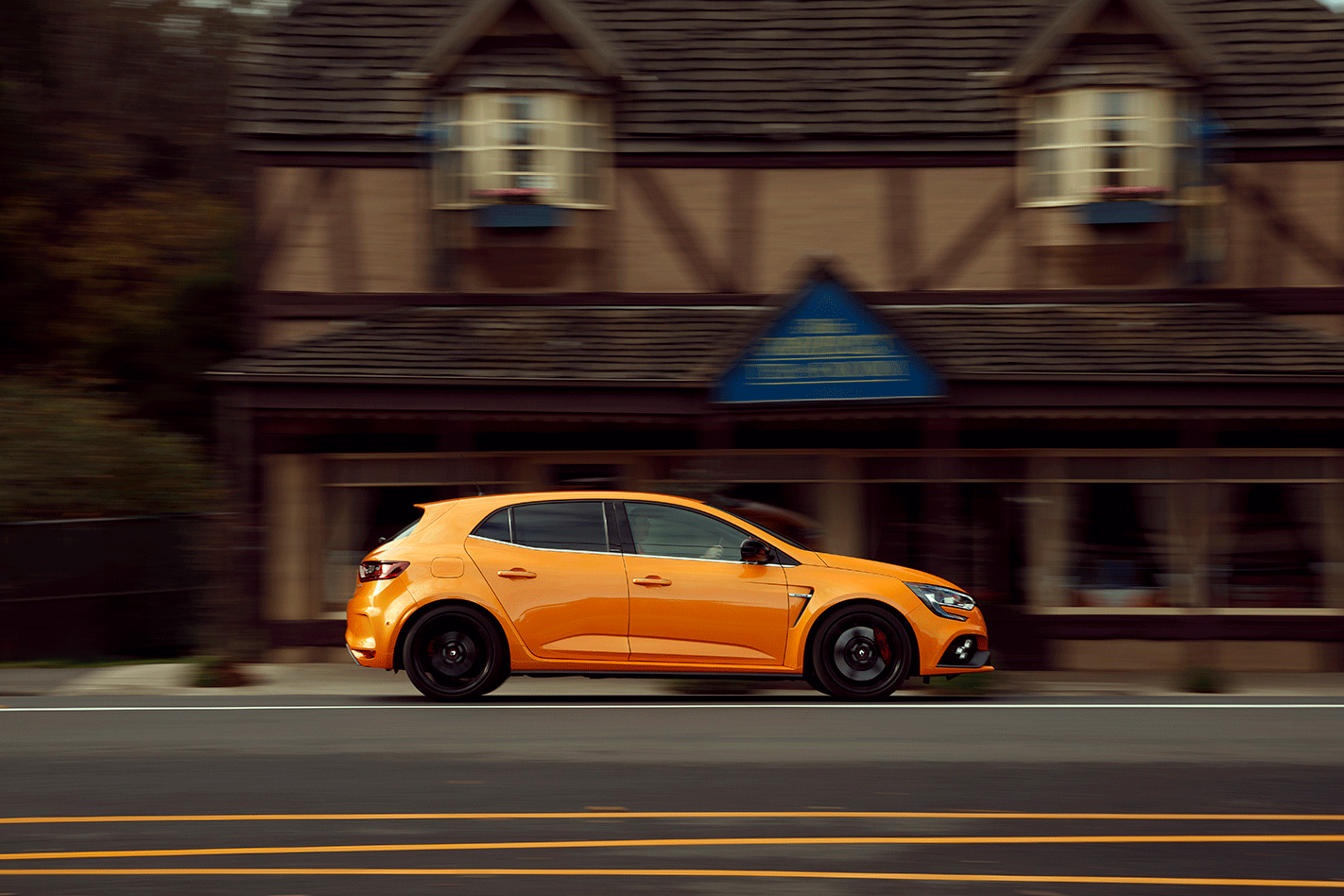
I figured that getting back into the Renault would remind me of why we hadn’t hit it off but, quite remarkably, it made me warm to the RS280 all over again. After the baggy, vague steering of the Raptor, the Megane’s four-wheel steering felt hyper-direct. It was almost as if you could feel what every individual tread block was doing. The lazy roll oversteer characteristic of the ute was banished in favour of an apex-targeting missile. In short, it made me search out one of my favourite roads and enjoy the Renault’s ferocious dynamics with a fresh sense of appreciation.
I’d become accustomed to searching out long dirt roads in the Raptor and curiosity got the better of me with the Megane. I wanted to see if the little Euro hatch would sink or swim when taken a long way out of its comfort zone. As long as you avoided the most egregious potholes and switched the car into Race mode, the Renault was a blast, although it does prefer fast, flowing tracks to those that are so tight that sending 205kW to the front boots becomes a significant issue. Just like on road, there’s a speed on dirt where the suspension tune makes a lot of sense, but it is reasonably ambitious and the result of clouting an errant macropod would be consequential. Not a dawn or dusk sort of thing, then.
There are other things that the Megane does well too, that you really appreciate when living with the car. The capless fuel filler is one of them. You don’t need to hunt around on the floor or under the dash to pull any sort of fuel flap tab, nor do you need to unscrew a cap. You just pull up at the bowser, press the flap to open the filler and insert the nozzle. The tank is relatively small at 50 litres and on a B-road blast you can easily average 17L/100km, which sees the fuel light come back on after about 240km.
The keyless go system is one of the best I’ve encountered, letting you know when the car has self locked or unlocked, and the main beam LEDs are bright enough to alert alien civilisations to our presence.
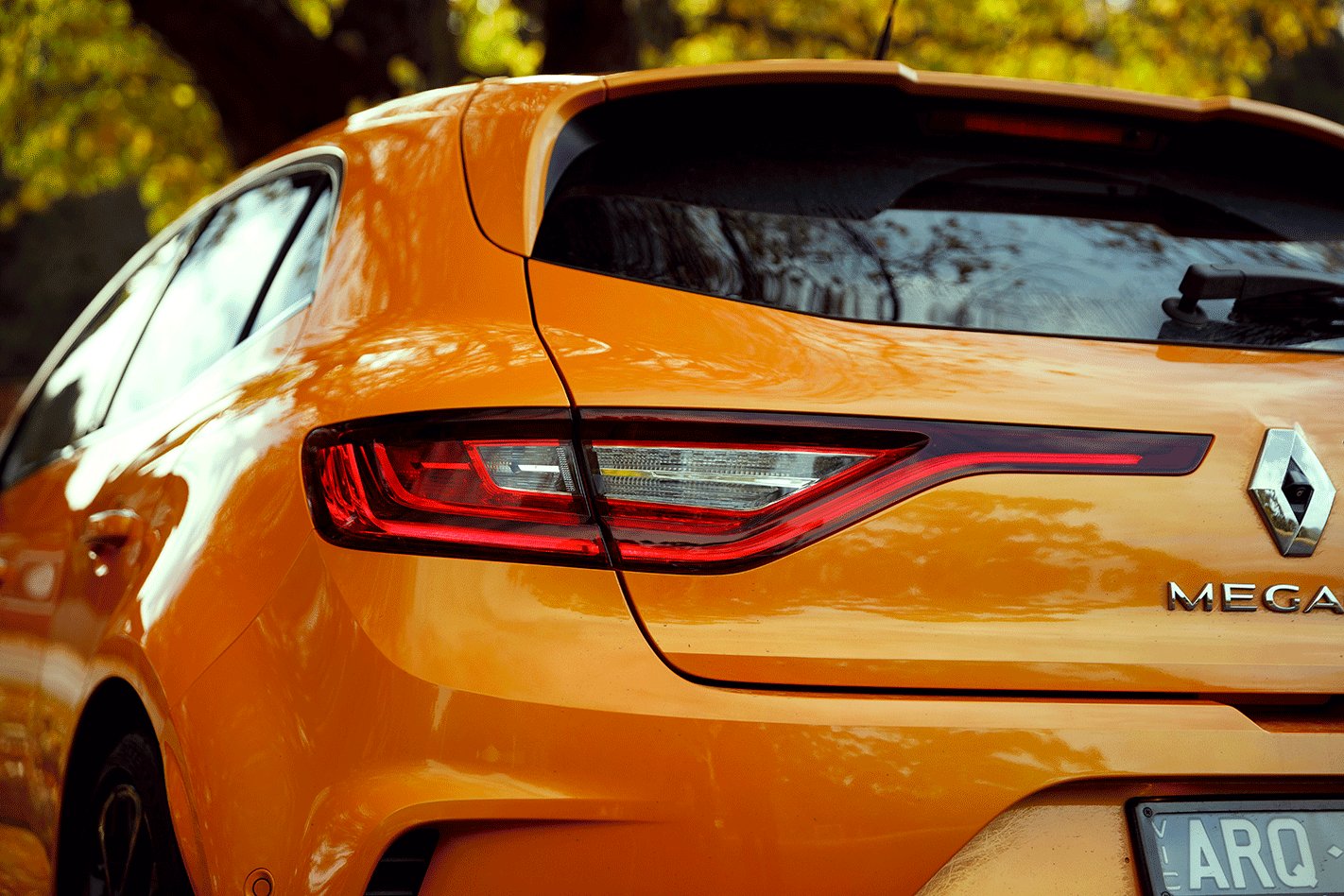
Follow a Megane RS up a challenging road and it looks outrageous – wide, chunky, purposeful, and with what appears to be functional aero. The handlebar moustache rear light signature is also undeniably cool. Initially I wasn’t too sure about the styling of this car, perhaps because the five-door shape came as a departure from the lithe coupe body of the previous Megane, but over five months it has wormed its way into my affections. It strikes a great balance between the buttoned-down sobriety of a Golf R and the juvenile excesses of a Civic Type R.
The conclusion I’ve arrived at is that this car is a grower. It still wouldn’t be my first choice, as I maintain that the Sport chassis with EDC transmission makes a superior road car and the Trophy a better track option, but if you’re going to do a bit of both and a manual gearbox is a non-negotiable inclusion, we could make a case for it.
Ultimately, that’s a pretty minuscule sliver of the Venn diagram to be chasing, and if you were after a manual hot hatch in this price bracket that can do dual roles, I can think of a few I’d prefer. On the right road, at the right time, in the right conditions, however, the Megane RS280 Cup is an absolute hoot. Perspective and all that…
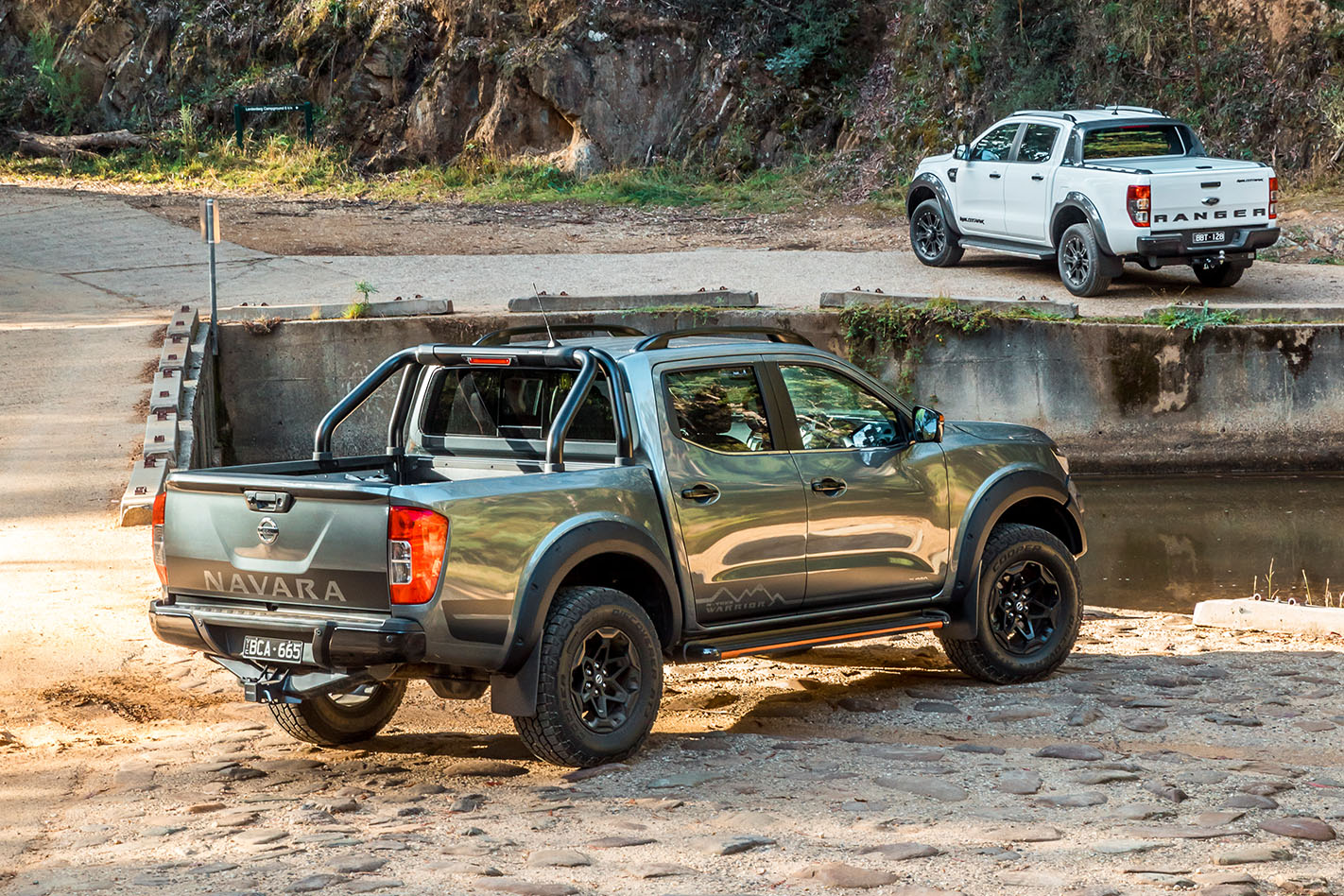
In the dual-cab war that’s currently dominating the sales charts here in Oz, few offerings serve much up more than mere sticker and accessory packs for high-line models. However, the Nissan Navara N-Trek Warrior is a little different with thanks to fettling by Aussie company, Premcar. It aims to be a Ford Ranger Raptor lite for a lot less cash. And in that sense, the Ranger Wildtrak X presents as a better combatant to represent the Blue Oval given its similarity in price. But which is best?
VALUE AND EQUIPMENT
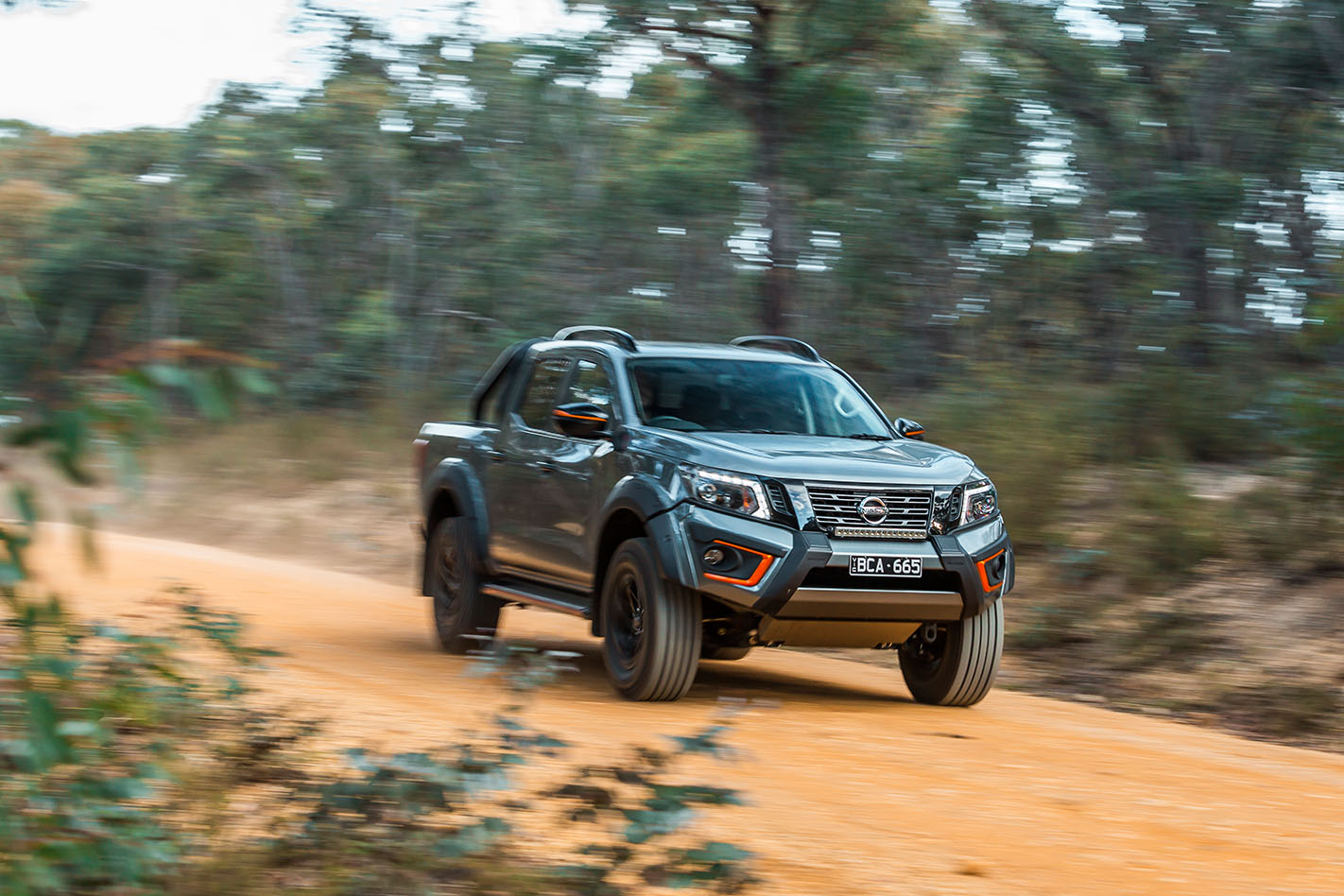
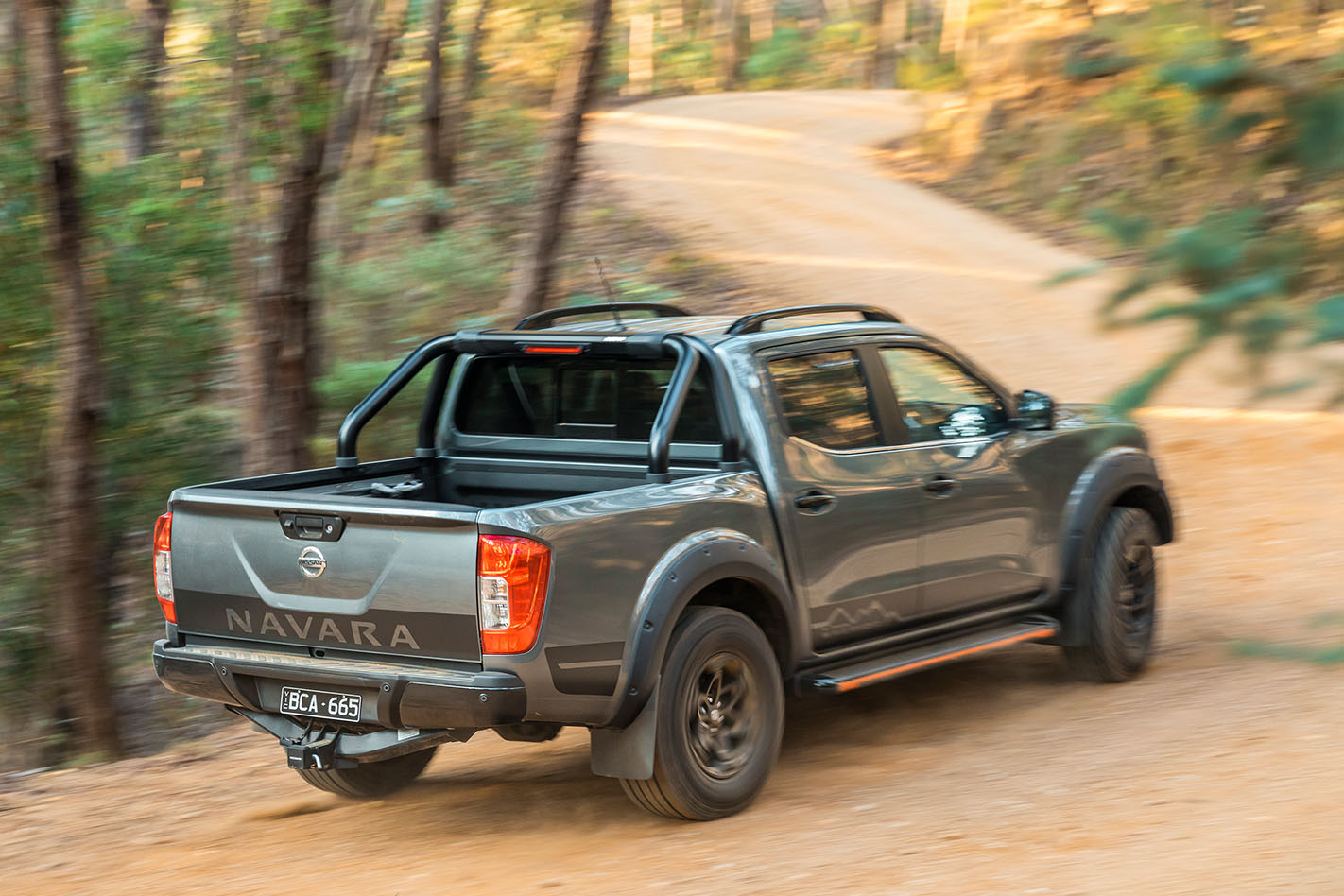
The $65,990 sticker makes the Nissan fractionally more expensive of the pair, but the N-Trek Warrior is the pinnacle of the Navara range. So what makes it a Warrior over the standard dual cab? Aussie company Premcar was tasked with upgrading the suspension package, a bone of contention with the Navara. Visually it also gains a steel bumper bar and a sizeable bash plate, new wheels, chunky tyres and flares. It’s covered by a five-year/unlimited-kilometre warranty.
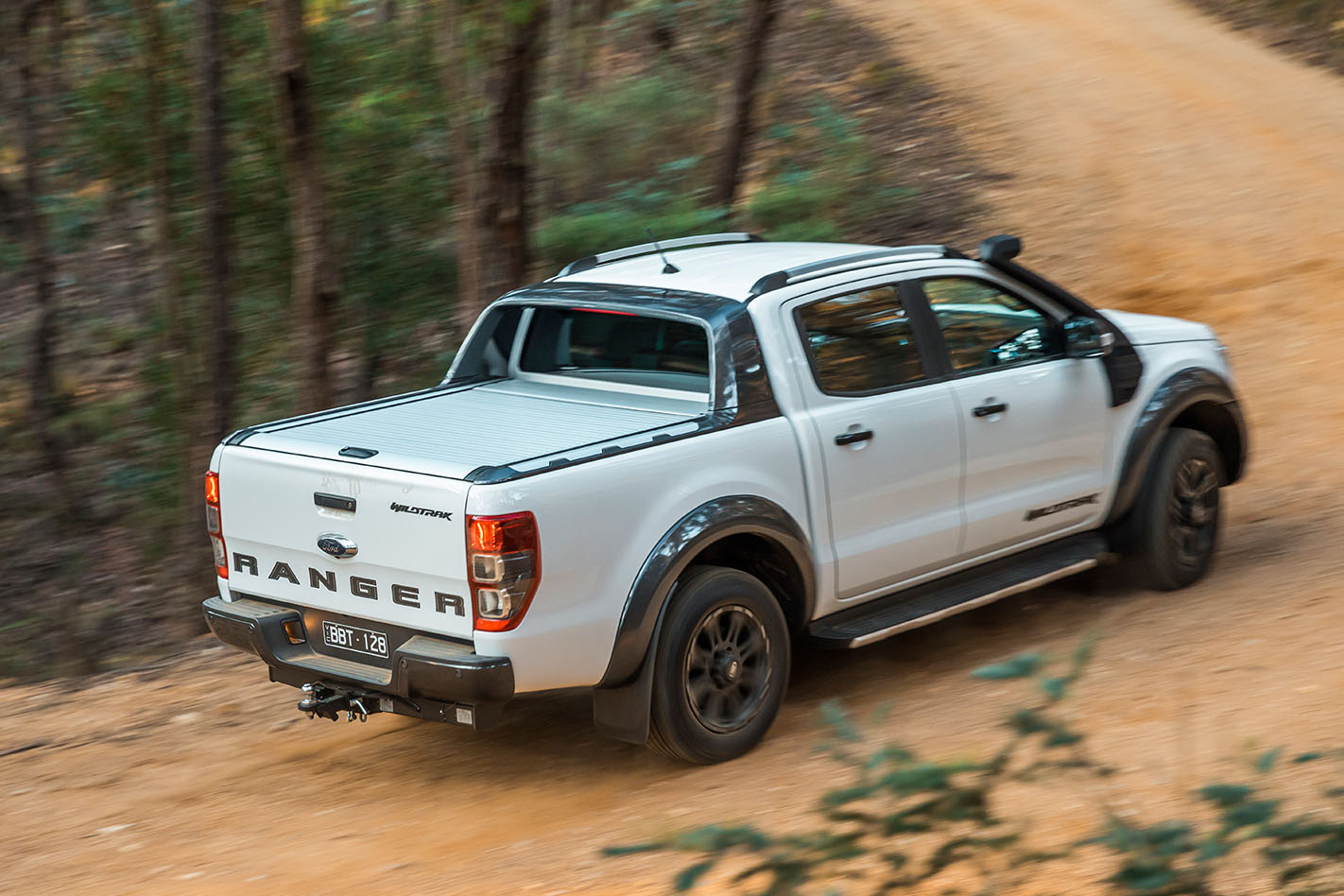
At $65,890, the five-cylinder is the cheaper of the two Wildtrak X versions (the other is the 2.0-litre turbo-diesel four). So, what do you get for the extra spend? The pack includes black 18-inch alloys, wheelarch flairs, front nudge bar with LEDs and a snorkel. AEB with pedestrian protection, active cruise control and lane keeping are standard, but aren’t offered in the Warrior. The Ranger is also covered by a five-year/unlimited-kilometre warranty.
WINNER: Ford Ranger Wildtrak X
SPACE AND COMFORT
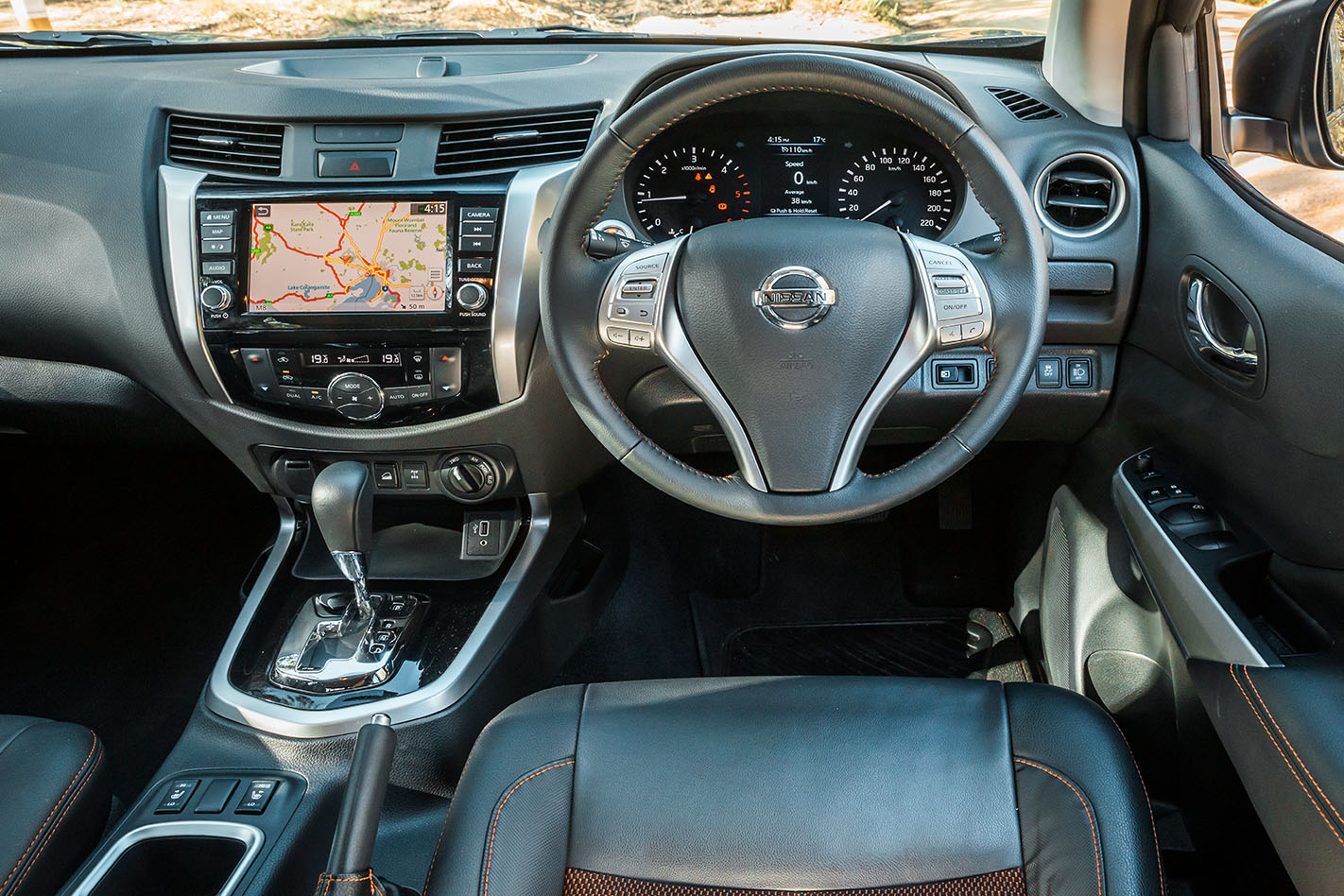
Apart from the orange highlights and embroidered headrests, there isn’t much visually to tell you you’re in a Warrior. There is an 8.0-inch infotainment display (with dated graphics), and it’s enabled with Apple CarPlay and Android auto. Overall cabin space is generous, just not as giving as the X, and there is no reach adjustment for the steering wheel and the off-road-based tyres create roar inside. The nifty electronic rear window is a quirky/handy addition.
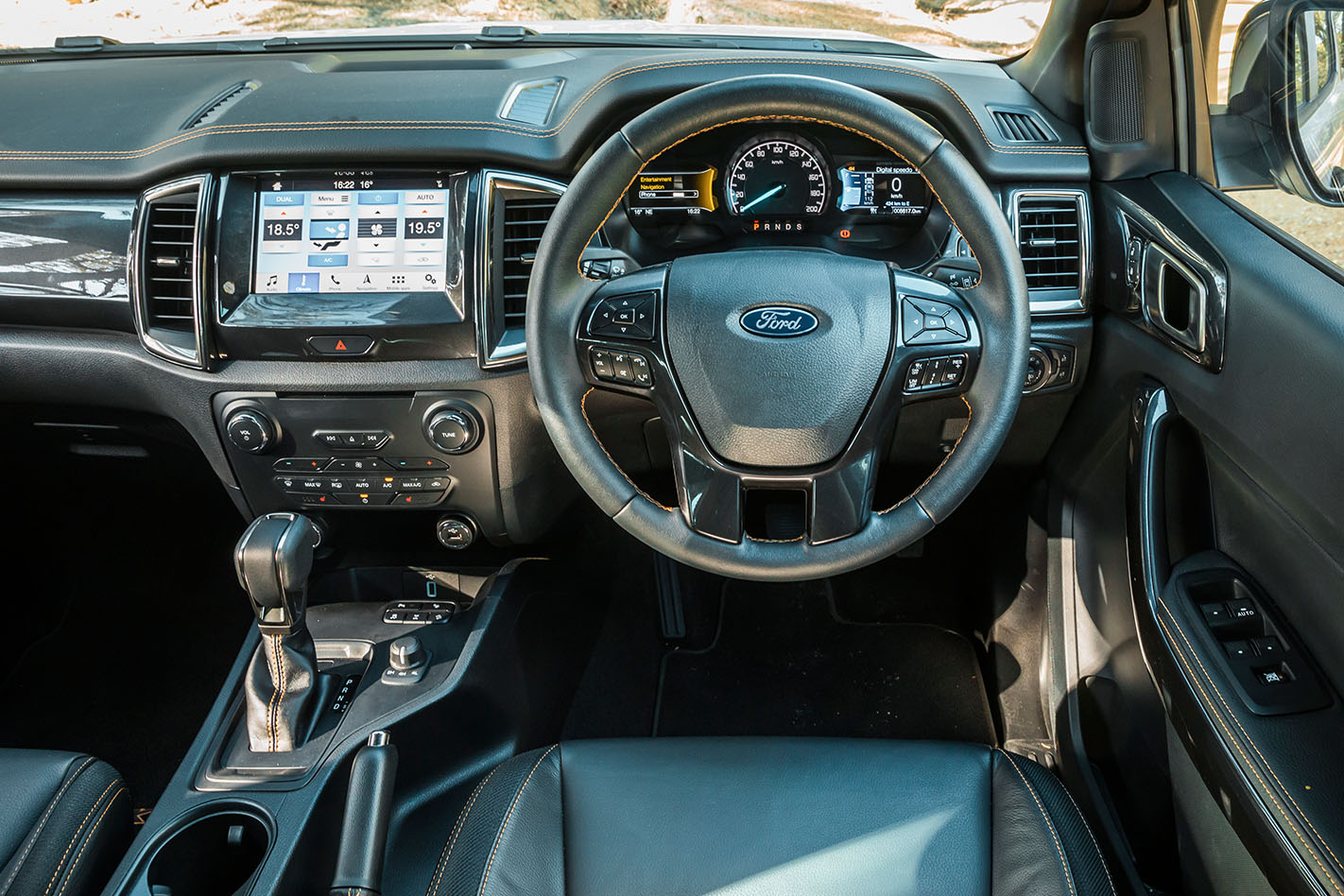
The design and feel of the Ranger’s cabin is much more car-like than the Navara, which will appeal to some. It’s a cleaner, more ergonomically friendly style. Yet, there is also no reach adjustment for the steering wheel. The 8.0-inch touchscreen houses Ford’s SYNC3 infotainment and it’s vastly better than Nissan’s system. Space all round is a touch more generous than the already spacious Warrior, while NVH levels are reduced over its rival, too.
WINNER: Ford Ranger Wildtrak X
RIDE AND HANDLING
Premcar focused on making the Warrior softer with progressive bump stops as well as larger diameter shock absorbers and dampening rods for firmer control. Yet, it’s easier to upset over ruts and corrugations and remains a stiffer set-up. The suspension tuning includes a 15mm overall lift, while the Cooper Discoverer tyres add another 25mm. They mean business in the bush, but they offer a distinct lack of traction in the wet in RWD mode.
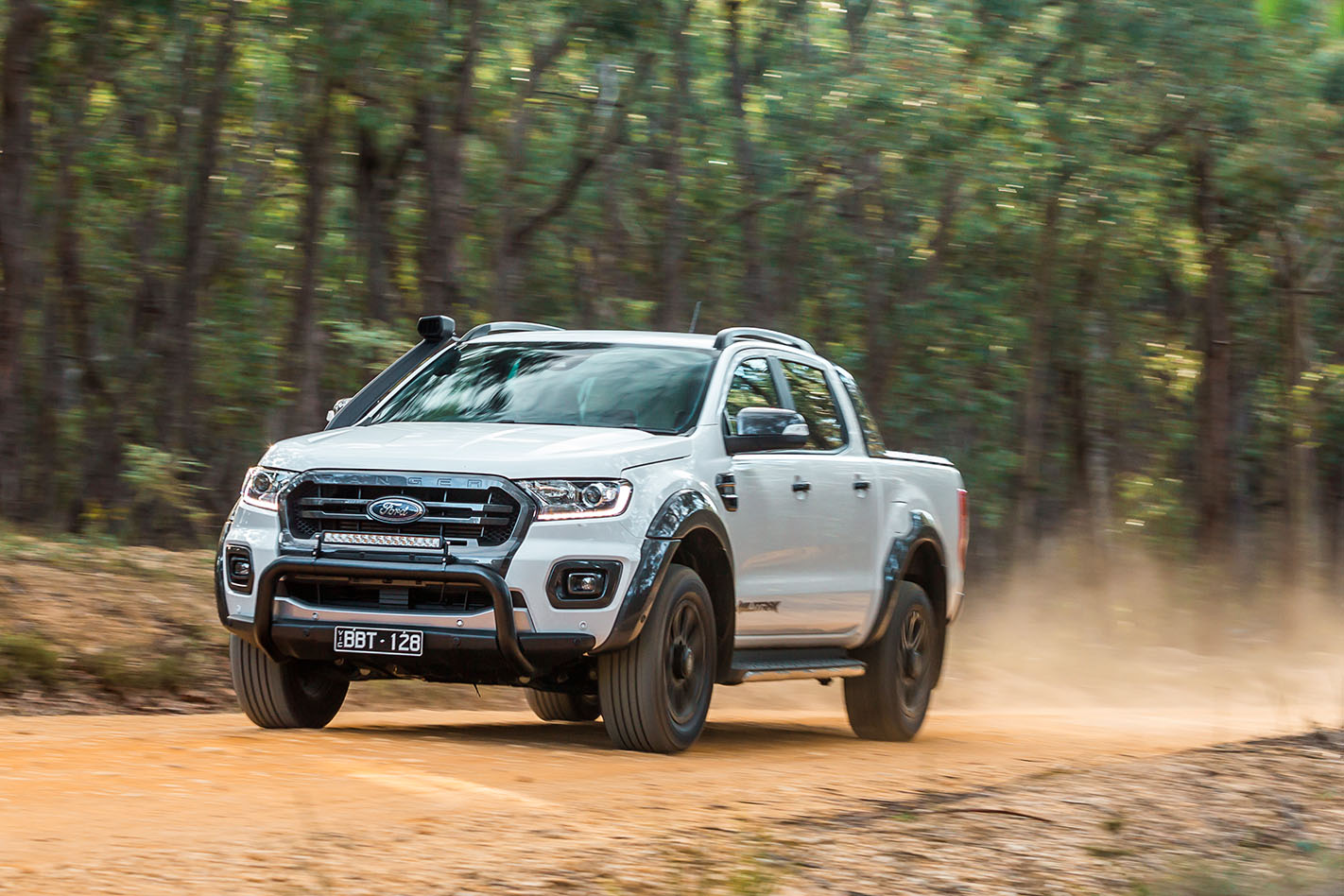
The Wildtrak X doesn’t have the Raptor’s sophisticated Fox shocks and it uses leaf springs, so you’d think it isn’t going to be as talented as its range-topping sibling. Yet it returns a more settled ride quality than the Warrior. It doesn’t jump or skip quite as much, while its lighter, and somewhat benign, steering seems more in-tune with off-road driving. The Ford uses road-focused Bridgestone Duelers and is the one to pick if you’re sticking largely to bitumen.
WINNER: Ford Ranger Wildtrak X
PERFORMANCE AND ECONOMY
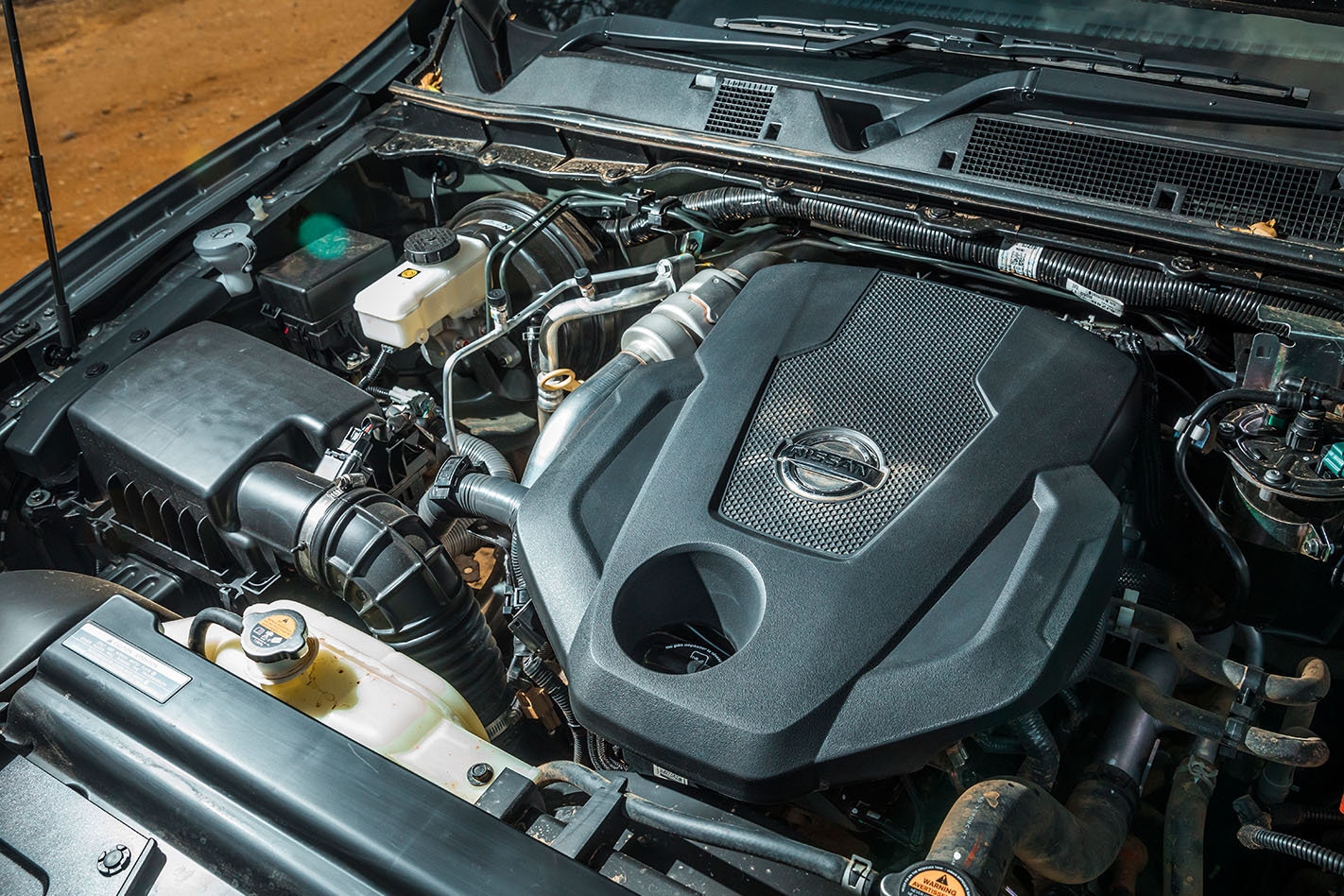
Despite all the changes made to the Warrior, the 2.3-litre twin-turbo four-cylinder unit is unaltered. It offers up decent grunt with 140kW and 450Nm for hauling loads, and its seven-speed automatic behaves amicably. It has a towing capacity of 3.5 tonnes, which is the same as the Ranger. However, the Warrior’s trump card is its fuel economy, which is rated at 7.0L/100km; that’s 1.7L/100km better than the brawnier Wildtrak X’s five-pot oiler.
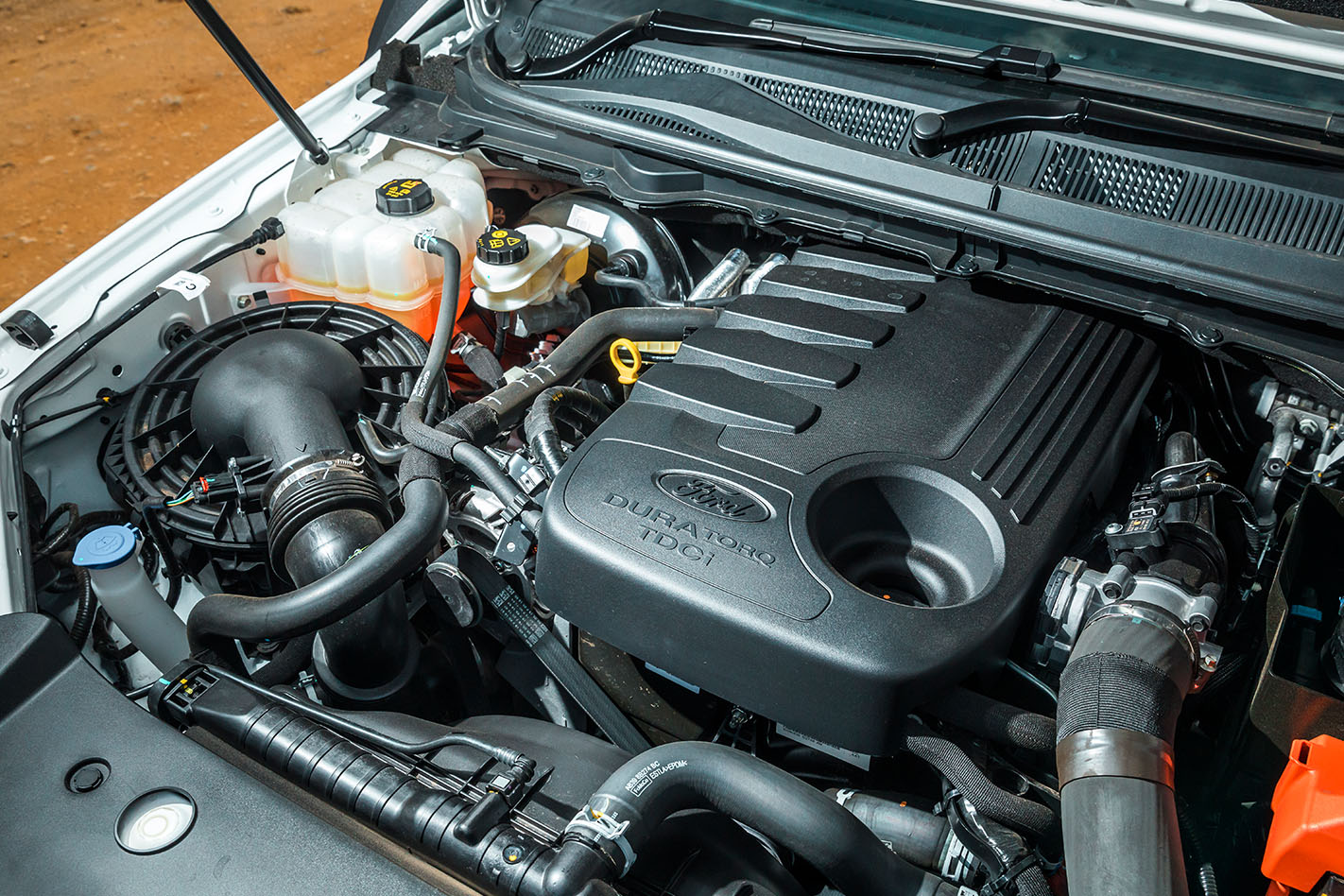
Okay, it’s not the newer, higher-output 2.0-litre twin-turbo four-cylinder diesel. However, as a towing workhorse, the single-turbo 3.2-litre five-pot diesel is the engine of choice due to its extra cubic capacity (and the tough six-speed auto). It’s the stronger unit here with ample mid-range oomph, while it also delivers 7kW and 20Nm more than the Navara. Although its claimed fuel consumption is far higher at 8.7L/100km.
VERDICT: CASE OF THE X
It’s got the looks, bulging wheelarches and chunky off-road tyres to boot. It’s not a mere sticker pack, thanks to genuine Aussie engineering built into the Warrior package. However, it still isn’t enough to snaffle victory out of the Ranger’s tub. The popular Ford dual cab deserves all the plaudits it garners, and while it isn’t as rough and tumble as the Warrior, the X adds proper off-road kit to the Wildtrak spec. The Ranger delivers a more car-like cabin, better ride quality and an overall dynamic edge that renders it the winner in this test. The Warrior still looks tough, though.
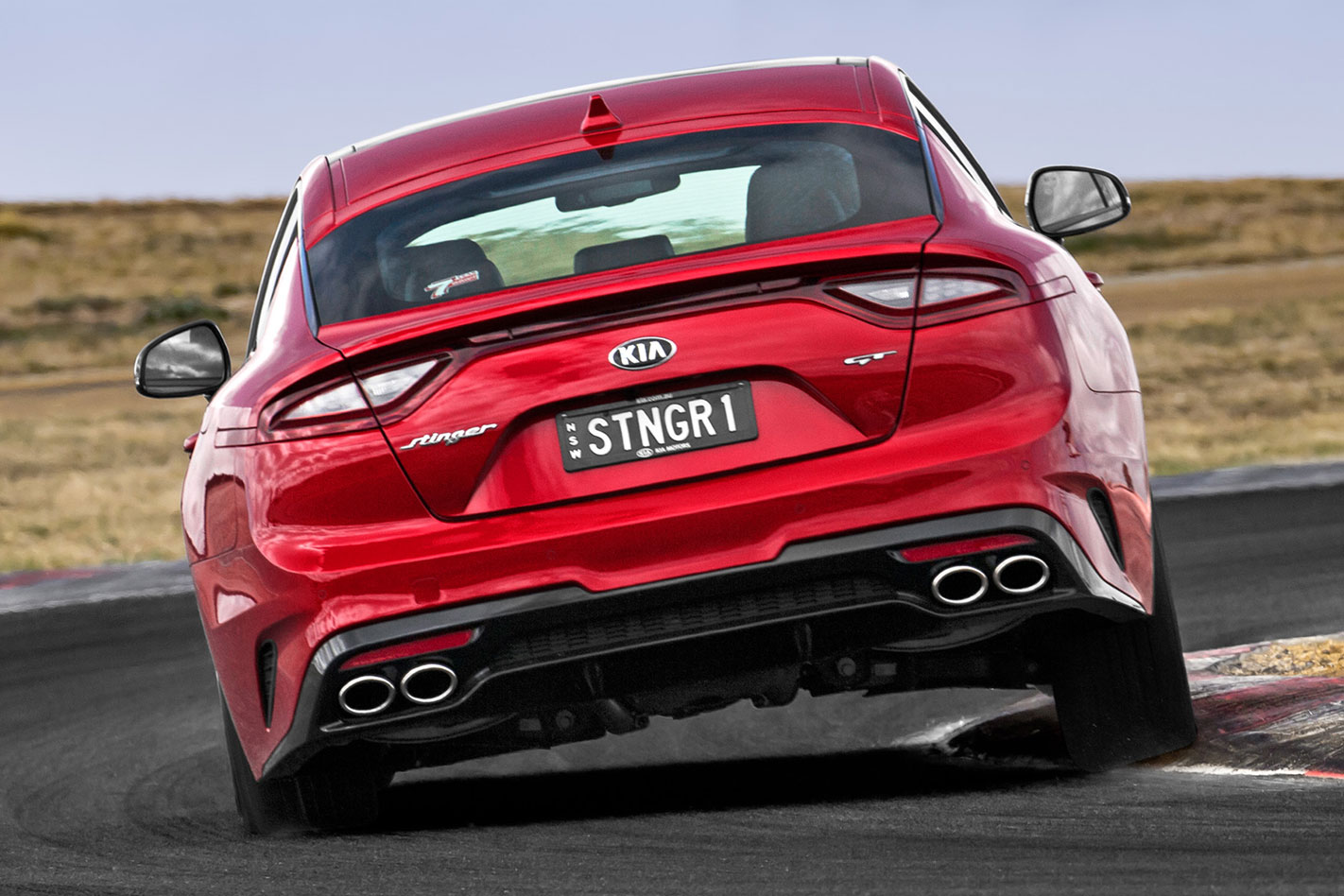
Korean media is reporting that the axe is set to fall on the rear-drive, five-door liftback after the current generation’s impending update.
Speaking with Wheels, Kia Australia Communications Manager Kevin Hepworth said that the Australian arm hasn’t been informed of such a decision.
While there’s speculation on the Stinger’s future, the update (due by the end of Q3 this year) has also come under the microscope, with reports suggesting that the rear-drive sedan could switch to a boosted 3.5-litre V6 found in the Genesis G80.
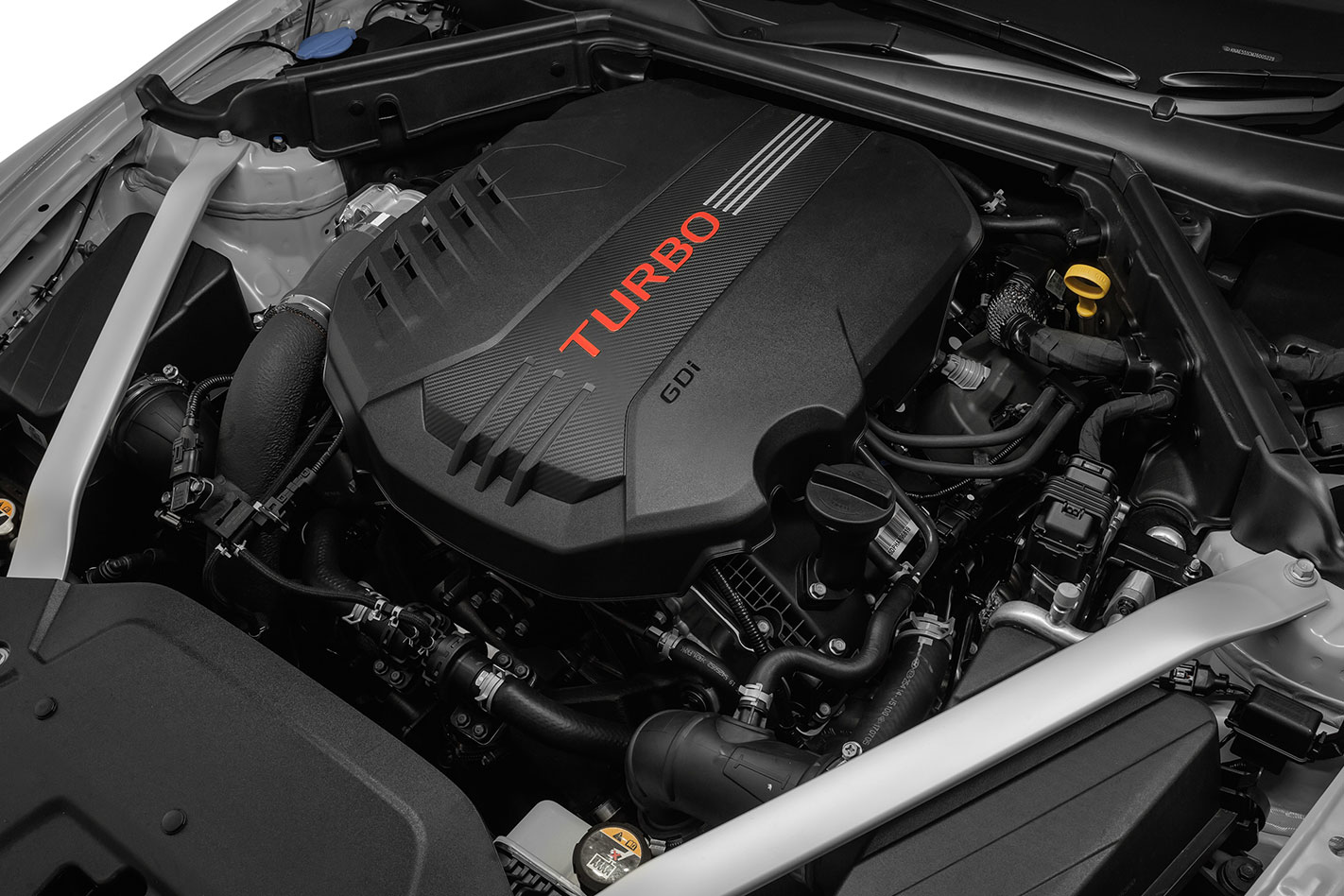
“We are getting no changes to powertrain, be that the gearbox or power outputs … there won’t be anything different to the actual engine,” he said.
“There may be a change to the headers or exhausts … but there is definitely no change in engine size or specification.”
However, improved handling, increased interior tech and exterior design changes are on the cards.
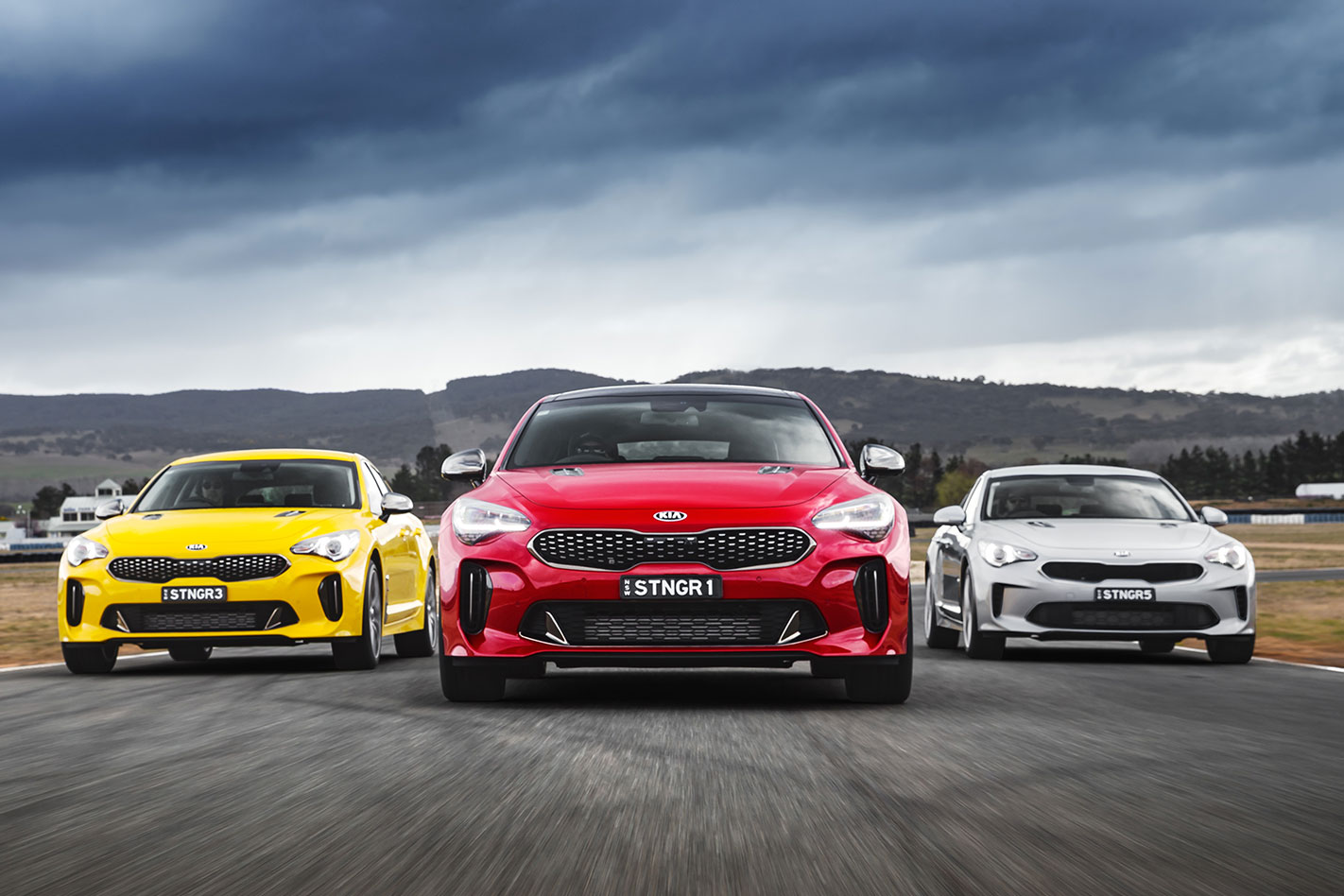
Hepworth added that Kia Australia is eager for a second generation of the halo model to be developed as the company sold 1773 Stingers in 2019.
“Absolutely – there’s no reason why we’d change. We’re doing 125-150 a month, and that’s not disappointing in any way, shape or form,” he said.
“We’re very happy with what that car’s doing month in, month out; 1200 to 1500 cars a year – there’s nothing wrong with that.
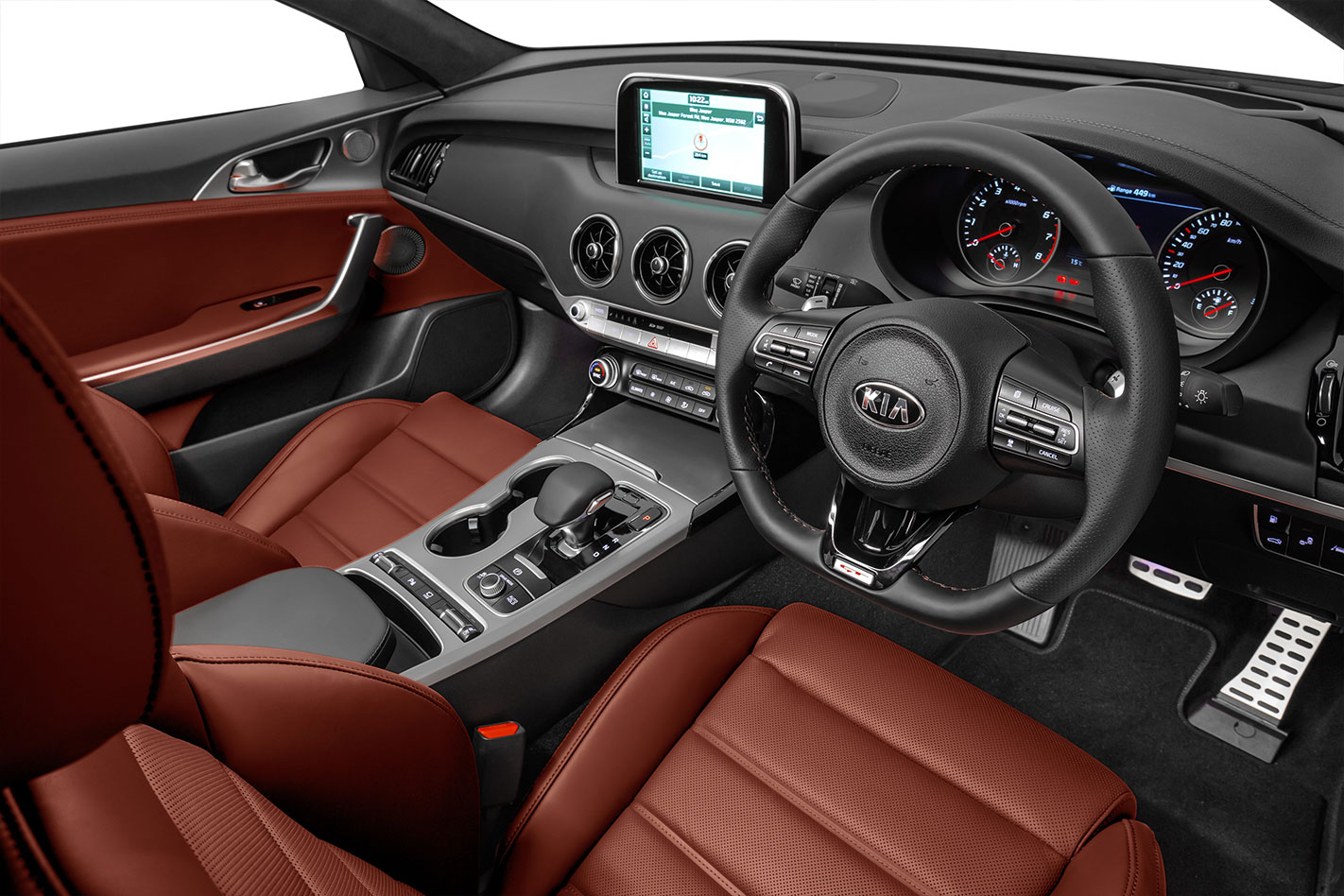
However, the fate of the Stinger has been under threat since its inception, with its success in Europe especially important to its survival.
“We are in a company that even if they understand the potential value of this brand-building object, we still have to be economically successful with that vehicle – it’s very, very difficult in Europe with a car like that,” Kia chief designer Gregory Guillaume said at the 2018 Paris motorshow.
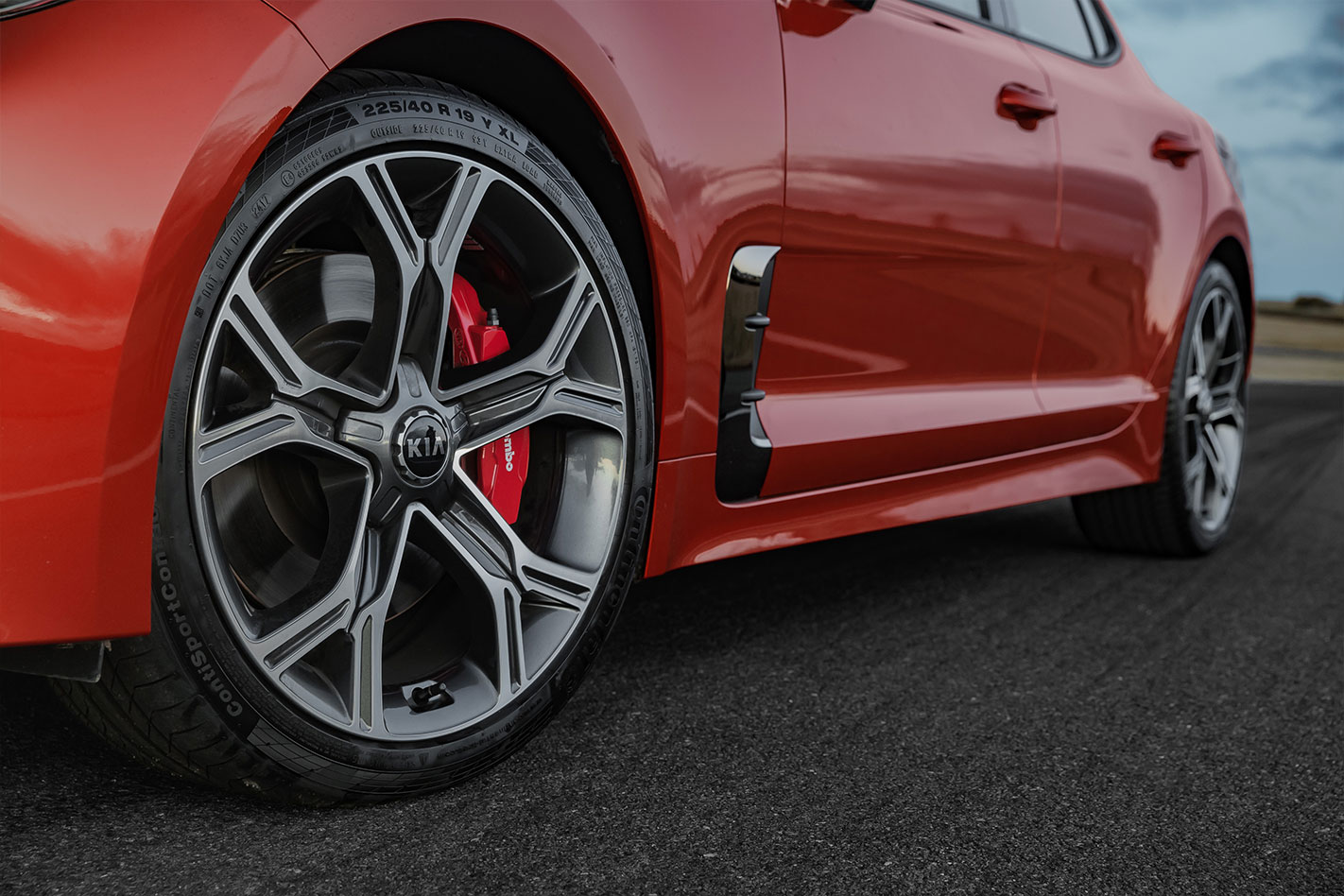
The figures seem to not be stacking up in America, with Stinger sales falling to 13,861 in 2019 compared with 16,806 in 2018. Initial numbers for 2020 are also taking a downward trend.
Interestingly, around 80 percent of Stinger sales in Australia are for the top-spec GT version, which comes in at $60,790 and proves that our market is willing to pay for the performance offering.
Lotus Australia is acknowledging its cars’ success in Australia’s Targa rally events with the release of a limited-edition Lotus Exige Sport 410 Targa Edition
For $174,990, buyers can get into the top-spec Exige with 305kW/420Nm (thanks to a Toyota-derived supercharged V6) and potentially be part of the brand’s future success on tarmac rallies in Australia.
For the extra cash, the Targa gets carbon side air intakes and rear wing, while inside is a pair of carbon fibre race seats, a harness bar, a four-point driver harness, and fire extinguisher. This setup makes the car, appropriately, already set to race in a Targa event.
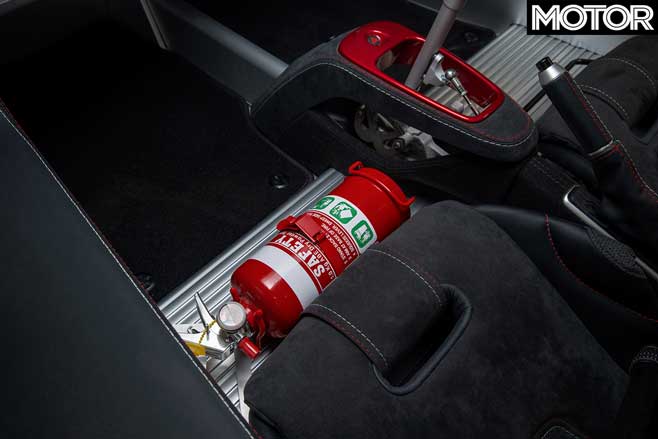
Lotus Australia CEO Lee Knappett says the Exige’s success in Targa during 2019 in particular prompted the brand to release the Targa Edition, which is limited to only 10 units.
“Having won the Australian Targa Championship back to back in 2018 and 2019, it seemed fitting to pay tribute with a limited-edition car” says Knappett.
“2019 was an extremely successful year, with Lotus owners winning the Targa championship in all four classes that our cars were eligible – TSD, GT Sports, GT2 and Outright.”
“Some of our customers have been doing Targa for a long time, but our relationship with Targa at a manufacturer level really started in 2015 when we supported four cars competing in Targa High Country. Since then, our involvement has expanded to include an official Lotus Tour group, and we regularly have over 25 cars in the field at each event.”
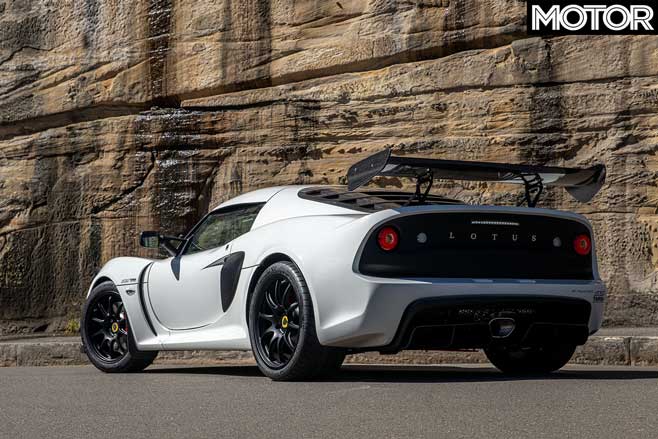
The Lotus Exige Sport 410 contested PCOTY 2020, and took 6th place of 10, though it was universally liked, if not loved.
“We are delighted to pay tribute to our involvement in the Targa events and our success in competition with this Limited Edition run of the Exige Sport 410,” Knappett continues.
“The Exige V6 has proven its credentials as a Targa car, so it seems fitting that it be the platform chosen for the Limited Edition.”
The new Mercedes-AMG GLE53 4Matic+ has been confirmed with pricing and specification for Australia.
With Mercedes’ new-ish inline six nestled under the bonnet, the GLE53 marks a step forward for Mercedes in terms of moving its ever-expanding SUV range into the future of powertrain tech.
While it’s still expected to be joined by a newer, V8-powered GLE63 eventually, the ’53 nicks the engine from its E Class cousin, a mild hybrid, twin-turbo, 3.0-litre straight six with 320kW and 520Nm. Another 16kW and 250Nm comes from the EQ Boost (mild hybrid) system on overboost, and Mercedes claims a 0-100km/h run is possible in in 5.3 seconds.
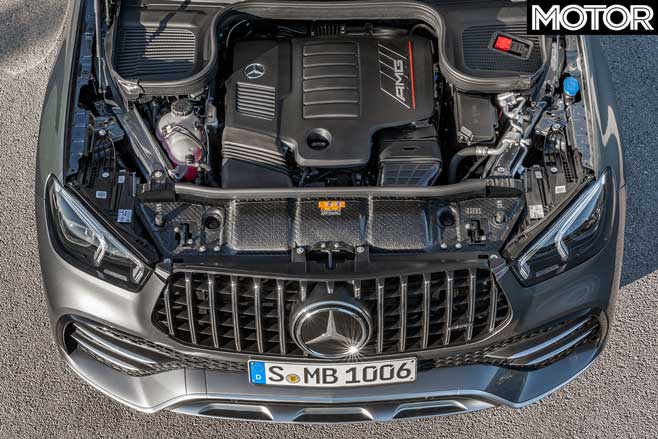
Here in Australia, pricing for the AMG GLE53 starts at $166,700 (MRLP, before on-roads), though expect a ‘coupe-SUV’ shape to arrive eventually for a few dollars more.
The rest of the GLE53’s features are fairly standard AMG menu items: 9-speed TCT automatic; AMG active exhaust; 400x36mm ventilated and perforated discs at the front axle with 345x25mm at the rear.
Of course, Mercedes’ newest infotainment system, MBUX, also comes standard with the GLE53.
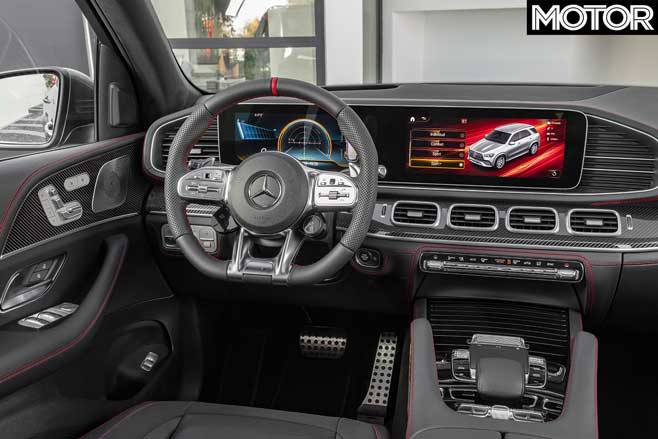
AMG head honcho Tobias Moers says the GLE53 is a large step forward for Mercedes’ performance SUV lineup.
“As the inventors of the performance SUV, it is important to us to continue to be at the top with the new generation of the GLE when it comes to innovations, driving dynamics, individuality and design,” says Moers.
Moers is referring to the Mercedes-Benz ML55 AMG as the first performance SUV, which was introduced in 1999.
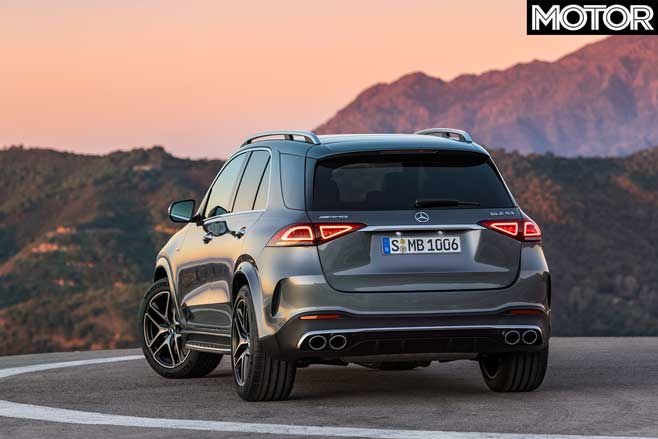
“The first step here is the new Mercedes-AMG GLE 53 4MATIC+, with which we offer our customers more power than the predecessor model as well as our fully variable all-wheel technology.
“Not least of all, its striking radiator grille shows our new GLE 53 as a fully-fledged member of the AMG family.”
The GLE53 is available to order now in Australia.
