
The fastest and most technologically advanced road car in the mid-1950s? Probably some Ferrari, maybe a Maserati – or perhaps even a Jaguar, given its Le Mans successes?
The automotive pinnacle of the mid-1950s was indeed based on a dominant Le Mans racer and equally on a two-tonne limousine. And it was a Mercedes-Benz.
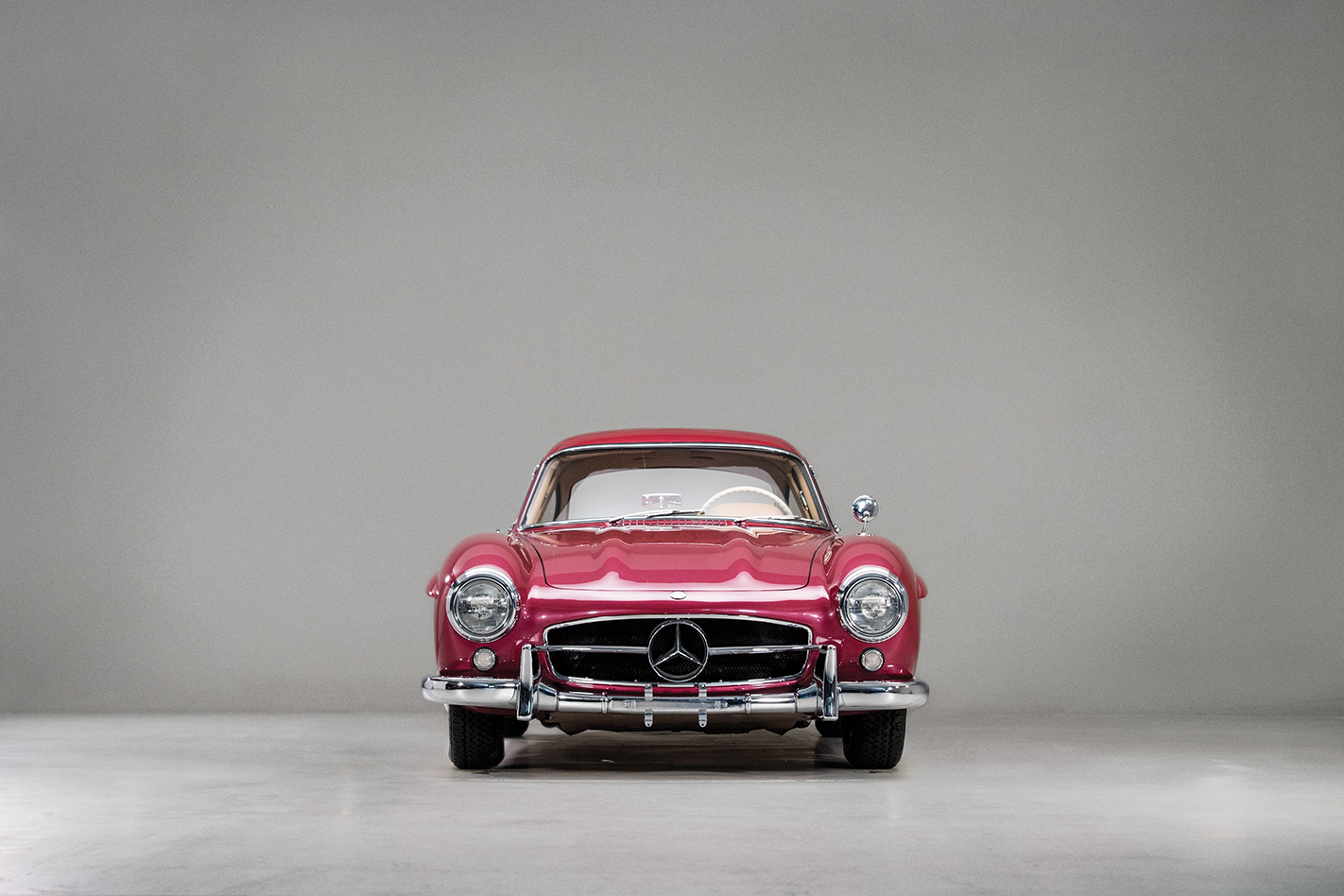
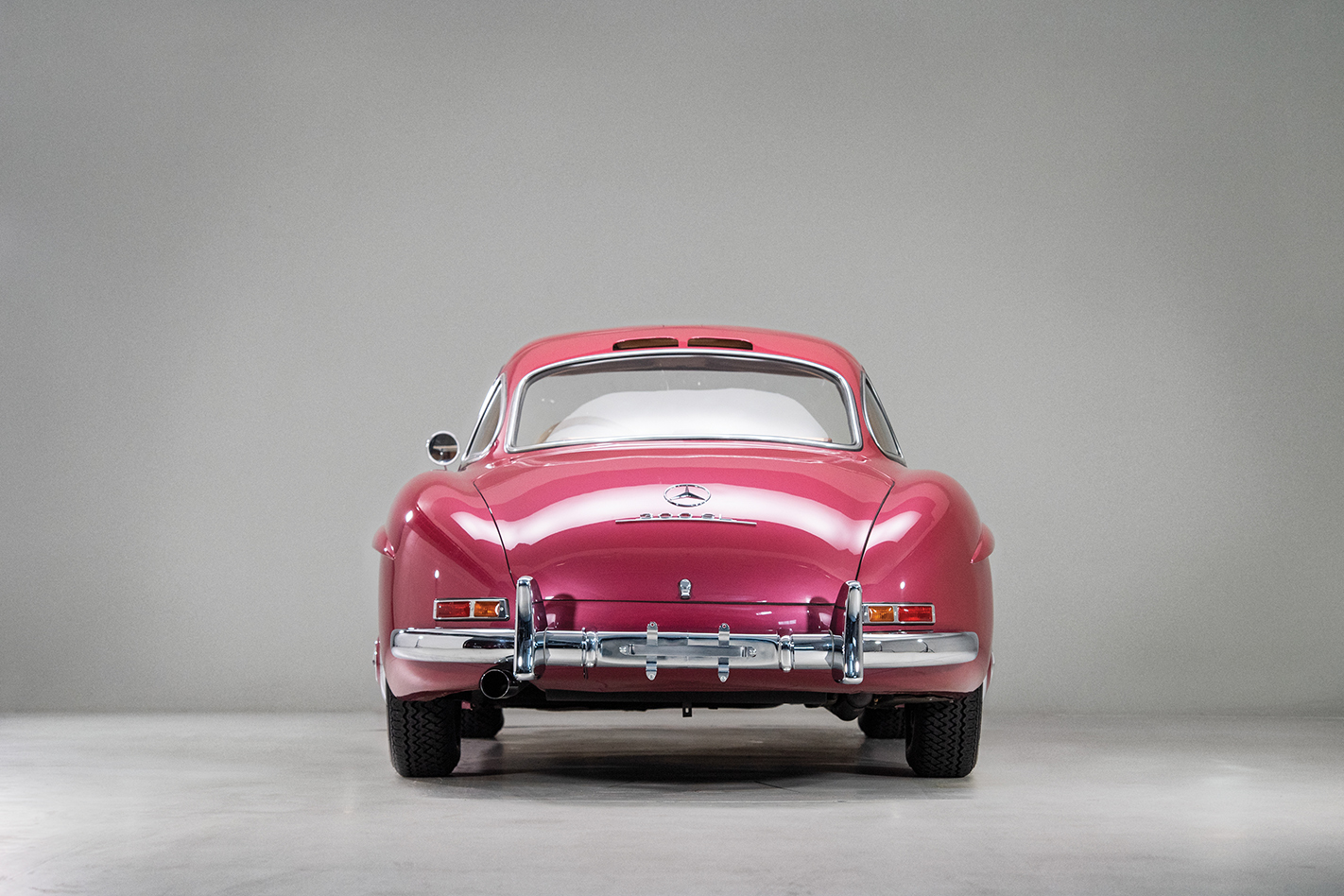
One of the world’s most recognised cars with its roof-hinged gullwing doors, the W198 300 SL (‘super-light’) touched down in February 1954 at the New York motorshow. The venue betrayed its links to US car importer Max Hoffman, whose influence also spawned 1950s roadsters from BMW, Porsche and Alfa Romeo.
Mercedes-Benz’s engineering had reached peak geek with its Silver Arrows machines, but its post-WWII return to racing in 1952 was under tight financial constraints. Team manager Alfred Neubauer and engineer Rudolf Uhlenhaut, inspired by Jaguar’s 1951 Le Mans-winning C-Type, proposed a lightweight sports-racing coupe that parts-pillaged the new W186 300 limousine.
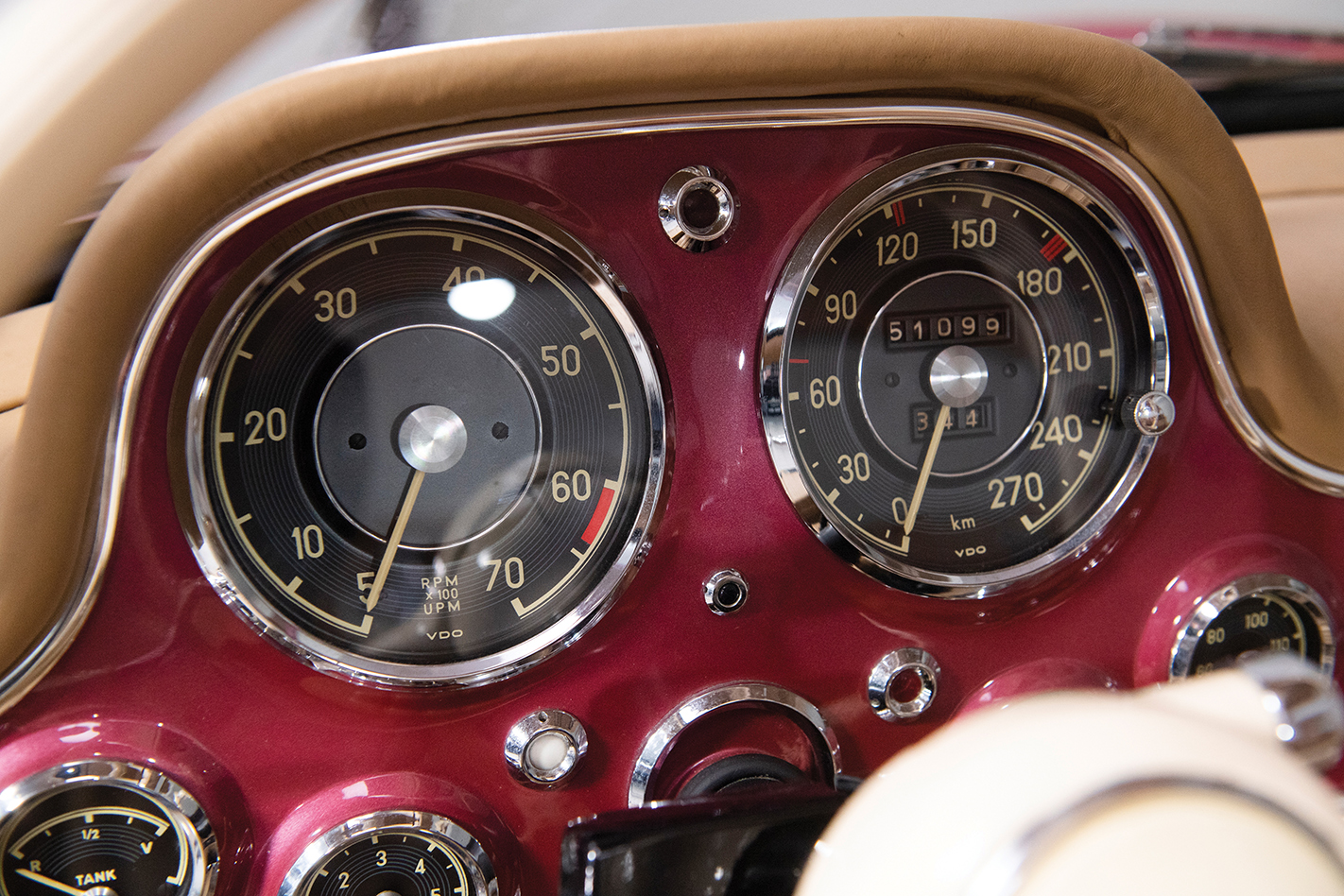
The limo – favoured ride of the first German Chancellor, Konrad Adenauer – donated its 3.0-litre, sohc in-line six M186 engine, four-speed manual transmission, all-independent suspension, 260mm drum brakes and other components.
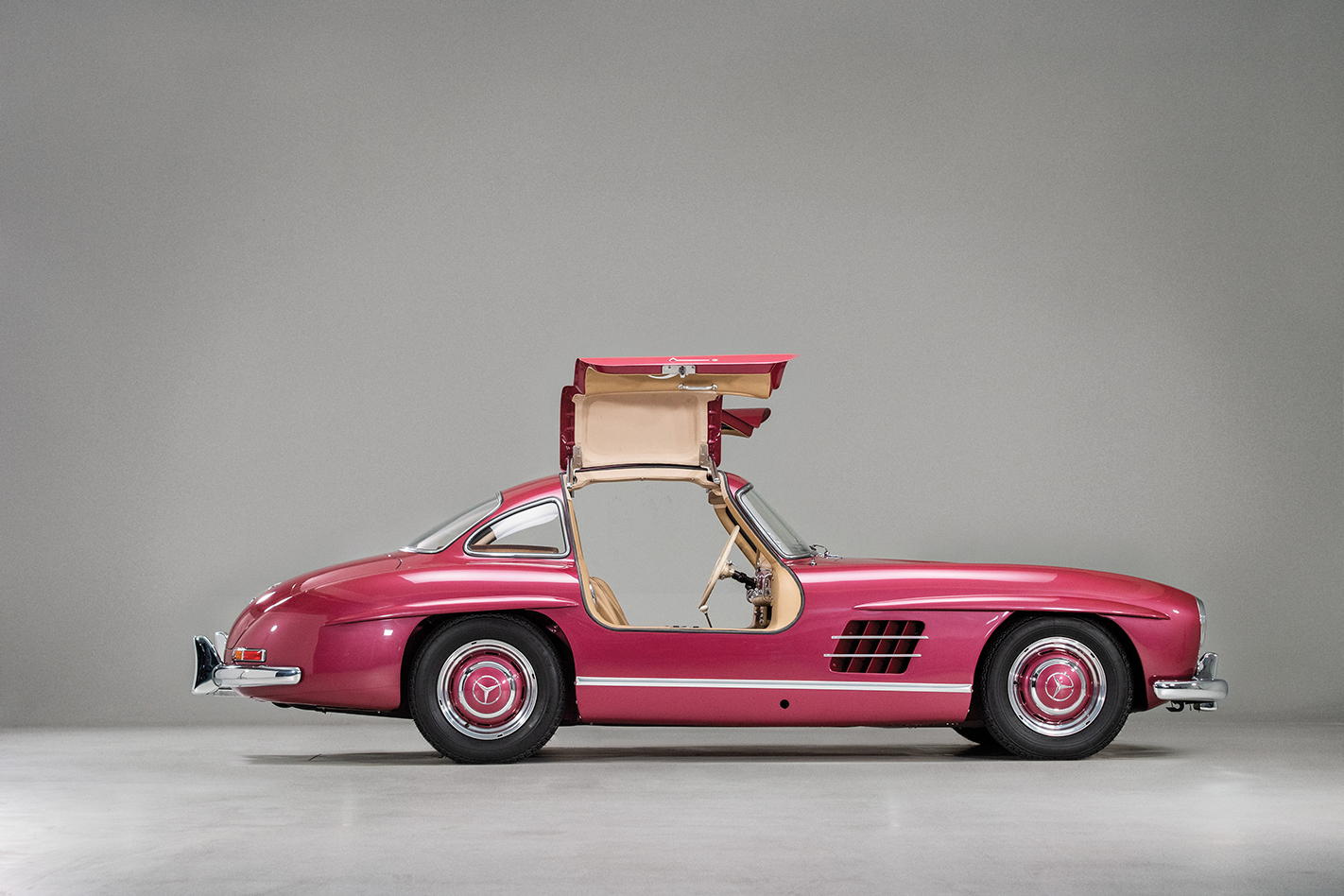
Uhlenhaut designed a ridiculously light (50kg) aluminium spaceframe chassis which, for torsional rigidity, had side sills initially right up to the waistline. These gave rise to the distinctive gullwing doors. Kerb weight was just 870 kilograms.
The W194 300 SL racers swept to 1-2 finishes at the 1954 Le Mans 24-Hour and the Carrera Panamericana.
Hoffman was so convinced of the potential US market for a road-going 300 SL that he offered to place orders for 500 each of a coupe (W198 I) and roadster (W198 II). Two New York show cars were ready in just five months. The coupe’s US$6800 sticker was almost double that of Chevrolet’s new-beaut Corvette.
Retaining a spaceframe chassis, the more stylised bodywork was now mainly steel (with aluminium doors, bonnet and boot), and with a comfortably appointed interior, amounted to a kerb weight of 1300kg. The sohc six-cylinder engine had gained Bosch mechanical direct fuel injection (a production first), producing 22 percent more power and a higher top speed (260km/h) than its W194 racing predecessor.
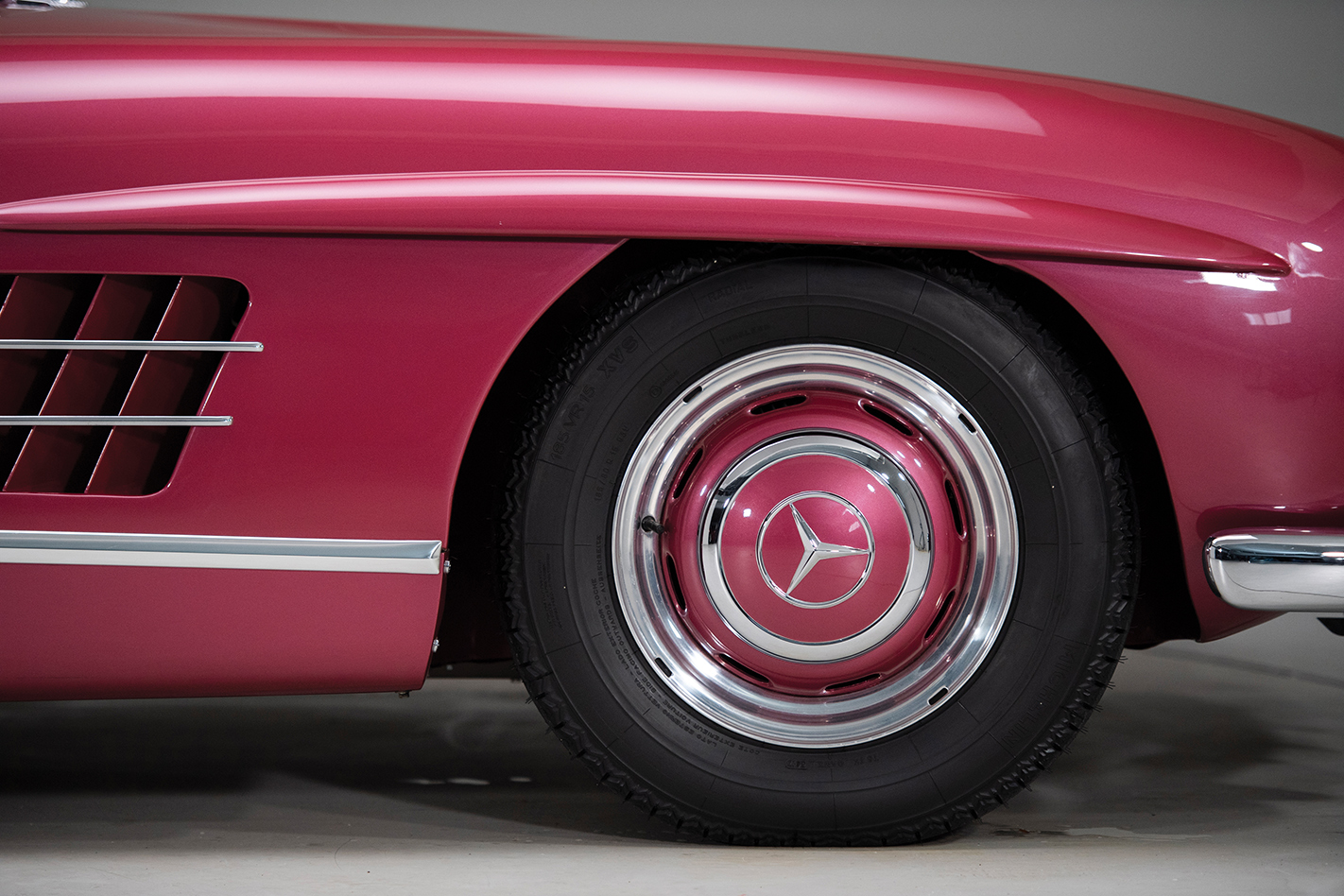
The 300 SL coupe was superseded in 1957 by the better roadster, with its revised spaceframe, redesigned rear suspension and, from 1961-’62, four-wheel disc brakes and an all-alloy engine.
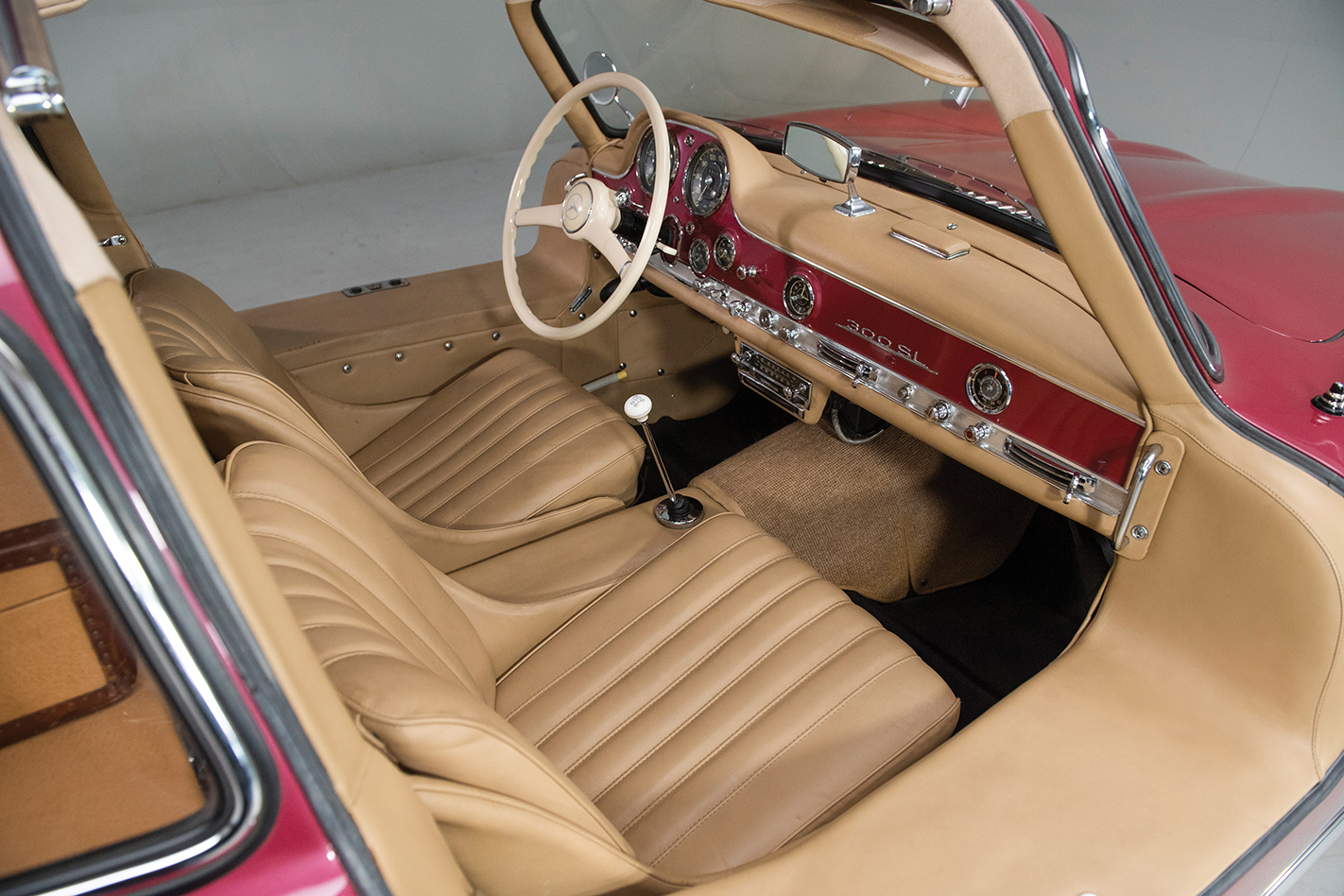
SOME LIKE IT HOT
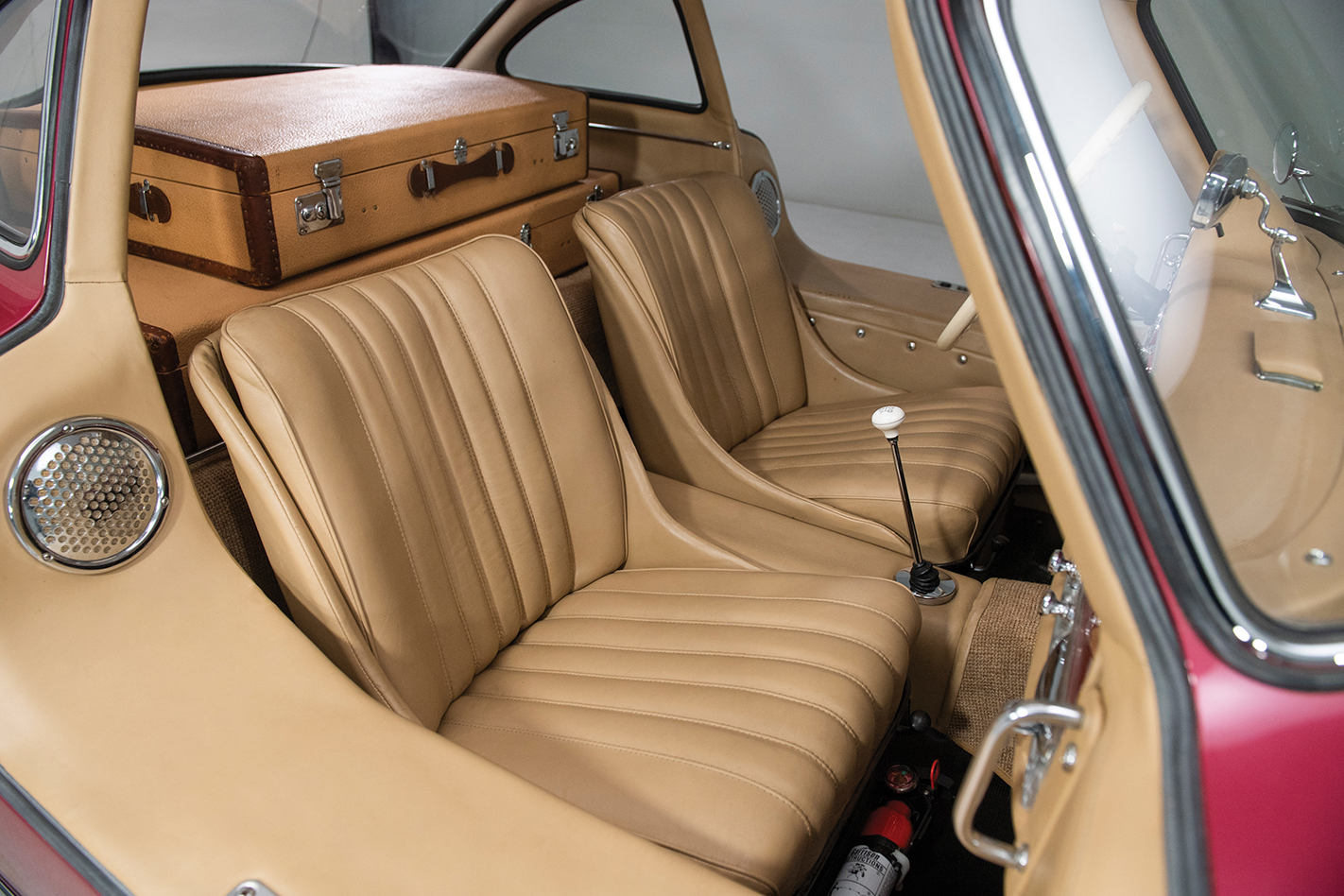
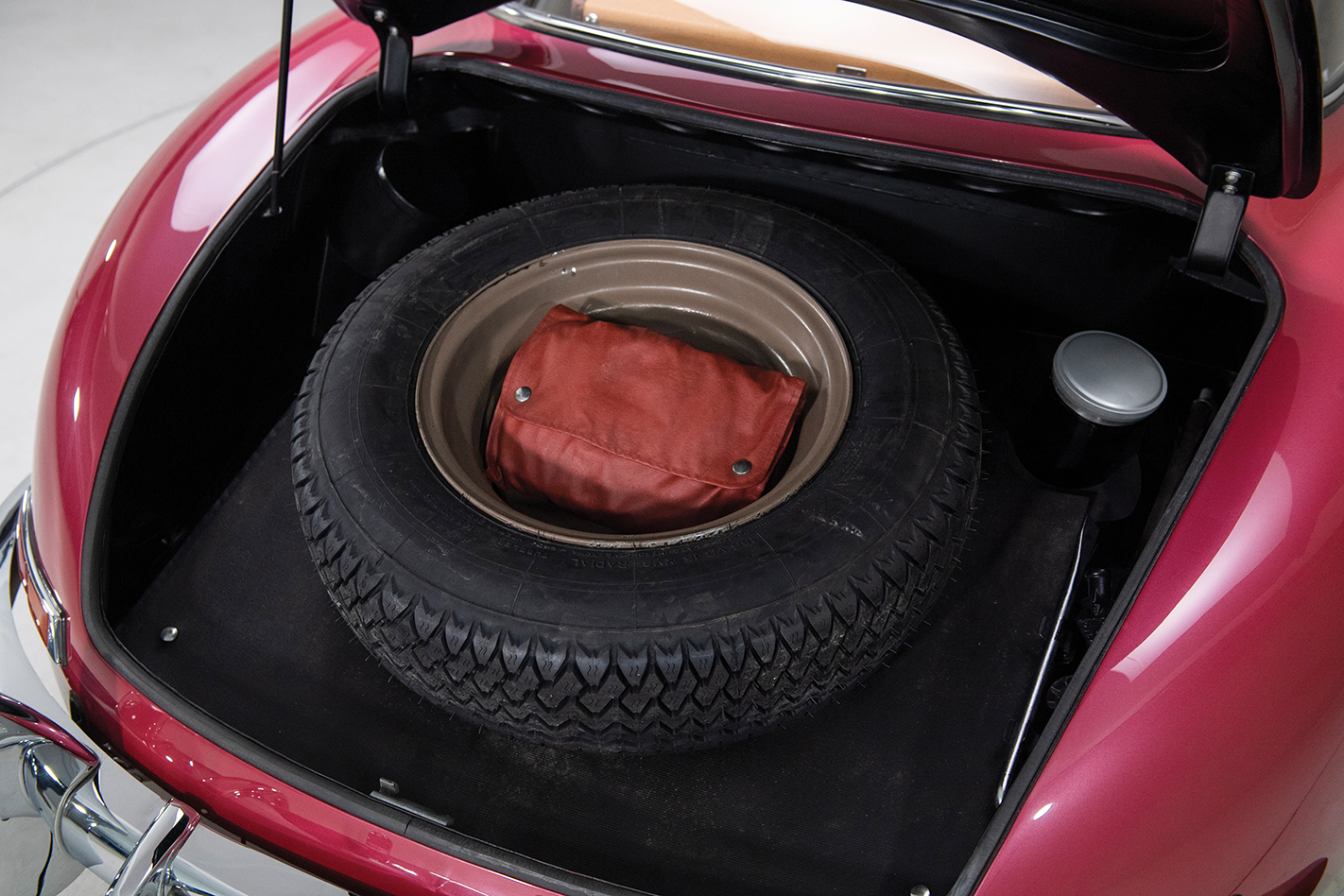
The 300 SL coupe’s stratospheric price tag brought a sports-luxe interior with tartan fabric or leather on the one-piece buckets, a drop-hinged steering wheel, trimmed alloy dash and comprehensive ventilation. But its racing roots couldn’t be ignored: access was awkward, a large glass area and fixed windows made it a hothouse, and the spare took all the boot space.
POWER PLAY
The 2996cc, sohc iron-block straight-six weighed 265kg and made 85kW in its original M186 300-limo spec. The dry-sumped W194 racer’s triple Solex carbs (and 129kW output) gave way to the W198 300 SL’s Bosch mechanical direct injection, producing 148kW at 5800rpm and 275Nm at 4600rpm. 0-100km/h took 8.8sec.
- Baby seat fails during testing, ejecting baby dummy
- First-ever ejection during testing
- Joie seats being voluntarily recalled
It’s the first time a crash-test dummy has actually been ejected from a child seat during independent testing carried out by the Child Restraint Evaluation Program (CREP).
The seat’s manufacturer Joie has issued a voluntary recall of the i-Travvel car seat, urging owners to “immediately stop using the product and return it to its place of purchase for an exchange, credit or refund”.
The Joie i-Travvel convertible baby seat for babies up to 2.5 years was tested in both seatbelt and ISOFIX mode, with the latter resulting in the dummy being ejected when the seat was facing forward.
The seat scored one star from a maximum of five, but the result has led to an overhaul of the test protocol so that a zero rating can be given.
CREP has contacted the ACCC and Standards Australia to notify it of the result.
The recall covers i-Travvel car seat with model numbers ranging from C1209BANOR-600 and C1209BATBK600 and purchased since February 2019.
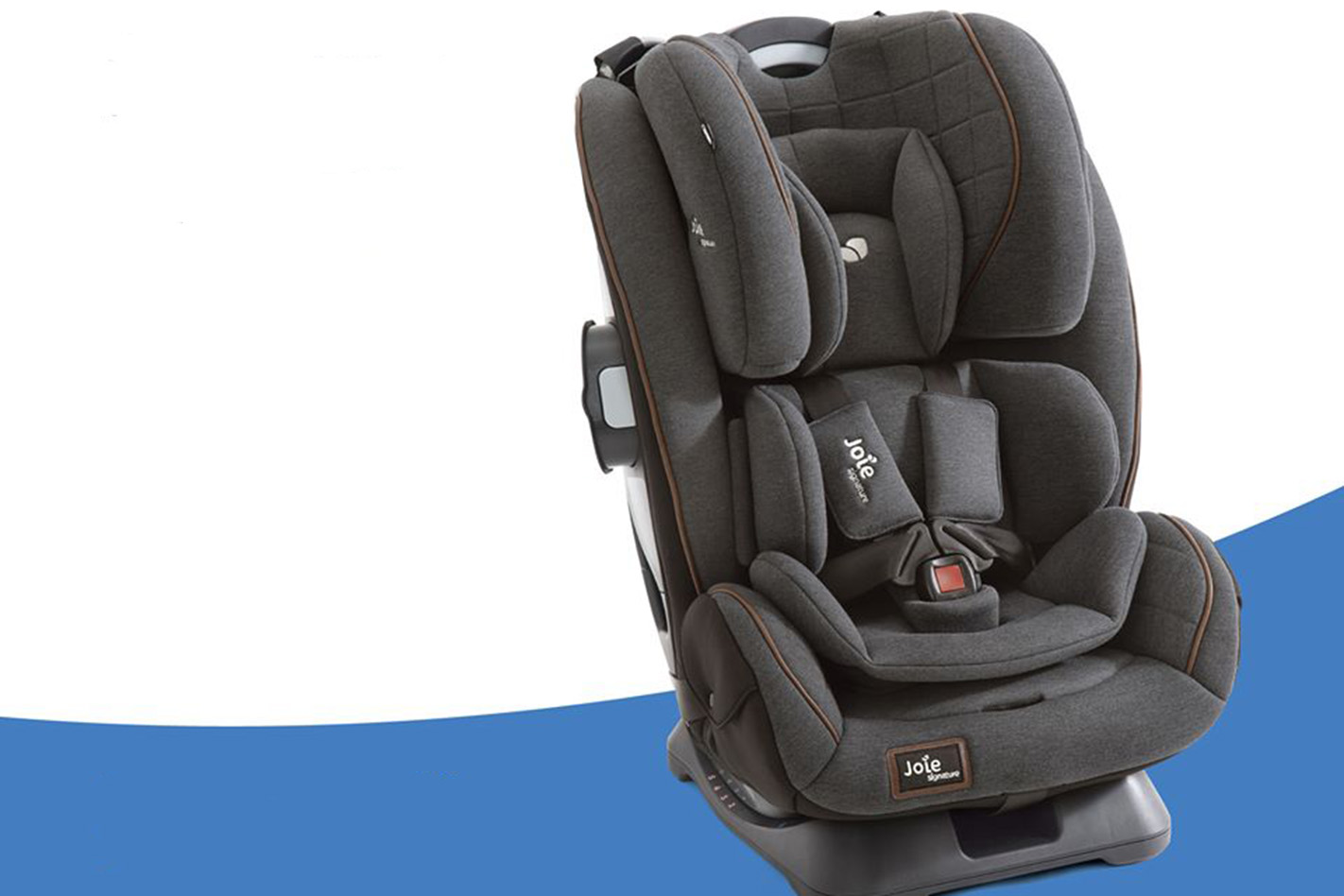
In its recall notice, Joie Baby Australia said the seat complies with Consumer Protection Notice No. 3 of 2014 and Australian Standard AS/NZS 1754 Child Restraint Systems for Use in Motor Vehicles, “however recent tests under extreme conditions revealed product performance concerns”.
“Safety is our number one priority. While our product meets all Australian standards, we were shocked and saddened by the performance of our product under CREP testing conditions. After reviewing the video footage and the test results, we are announcing a voluntary recall of the i-Travvel car seat,” said the company’s chief marketing officer Jerry Ingraham.
“We apologise for any inconvenience to customers, but can assure them we are learning from the results and plan to produce a car seat that will stand up to the more rigorous testing undertaken by CREP.”
Consumers can contact their place of purchase or contact the Joie Baby Consumer Helpline on 02 8197 9962.
The i-Travvel, which scored a more credible four stars in rear-facing mode, was one of six child restraints tested this month. Not one scored five stars; while only two finished with four stars.
The seats tested included: the Safe-N-Sound Cabrini II which scored three-stars for rear-facing and two stars for forward facing; the Infa Secure Quattro Astra, which scored four stars for both rear and forward facing, and the Babylove Easy Grow forward-facing seat (two stars).
The other two products were booster seats; the Baby Love Easy Move (three stars) and the Safe-N-Sound Tourer (four stars).
Research before you buy
The alarming test results have led the NRMA, which partially funds CREP, to urge parents to do their research and shop around when buying a car seat for their child.
“These tests demonstrate once again that not all car seats are created equal and the manufacturer needs to lift its game,” the NRMA’s Road Safety Expert, Dimitra Vlahomitros said.
“This is the first time a restraint failed to the extent that the dummy was ejected. Choosing the correct child seat could be a lifesaving decision, so it is critical parents make their purchase based on performance and ease of use rather than price or aesthetics.”
CREP is a not-for-profit consortium of government agencies and motorist organisations including Transport for NSW, NRMA, RACV, RACQ, Transport Accident Commission (TAC), VicRoads, and KidSafe Australia, which aims to provide consumers with independent information to help choose and use safe child car seats. It also applies commercial and public consumer pressure on car seat manufacturers to only market seats that perform well beyond the requirements of the Australian Standard.
HSV has ended local production of the Chevrolet Camaro 2SS but the iconic muscle car may return under the new General Motors Special Vehicles (GMSV) banner.
An HSV spokesman confirmed to MOTOR that the company had converted its last MY19 Camaro 2SS but said limited stock still remained in dealers for purchase.
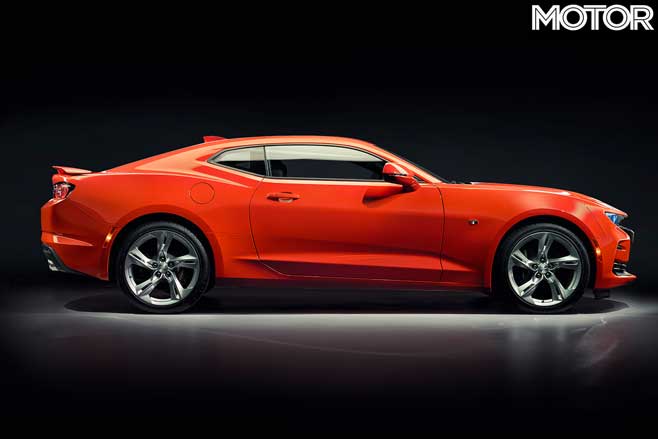
An MY20 Camaro is available in the US but not confirmed locally, HSV saying only that it is one of a number of models under consideration as it transitions to GMSV.
It’s not the end for Aussie Camaros, though, as the supercharged ZL1 model will continue as normal for the rest of 2020.
In total, HSV has converted 1500 Camaros since the model debuted in 2018. Initially available only as a six-speed automatic, the arrival of the facelift in 2019 brought with it the option of a 10-speed automatic or six-speed manual as well as the range-topping ZL1.
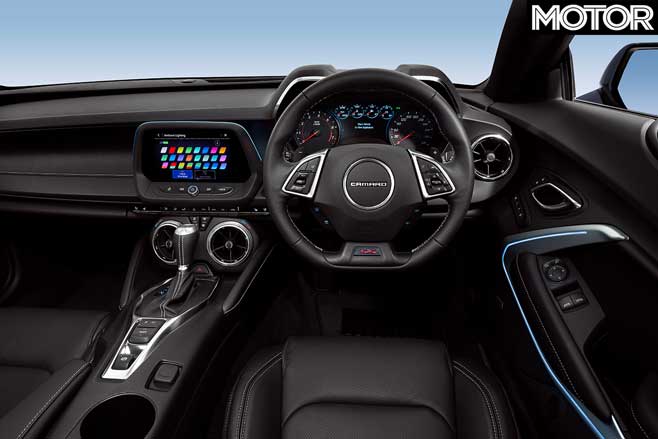
The 2019 2SS facelift was controversial and poorly received in the US, leading Chevrolet to hurriedly introduce an MY20 update that moved from the ‘bow-tie’ badge back to the grille rather than being a cut-out in the bodywork dubbed ‘flow tie’ as well as reverting back to a body-colour grille separation instead of all black.
Chevrolet’s director of passenger car and crossover, Stever Majoros, said at the time: “Customers spoke and we listened. The overwhelmingly positive reaction to the Shock’s (a SEMA 2018 concept that previewed the MY20 looks) helped prompt its transition from concept to production.”
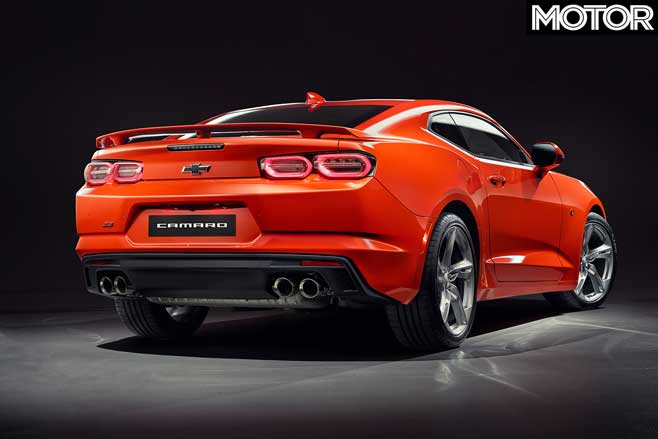
HSV is currently in discussions with GM about which vehicles will appear Down Under courtesy of GMSV. The C8 Corvette and Silverado, including the newly launched 1500 model, are likely to make the cut with other models, such as the Camaro muscle car, Tahoe SUV and Silverado Heavy Duty currently under consideration.
Every Mercedes-Benz car, van, and ute sold from April 1 will be covered by a five-year manufacturer’s warranty.
The German manufacturer is the first luxury-car brand outside of Tesla to extend its warranty period beyond the industry-standard three years, and now puts it in line with mainstream brands such as Toyota and Mazda.
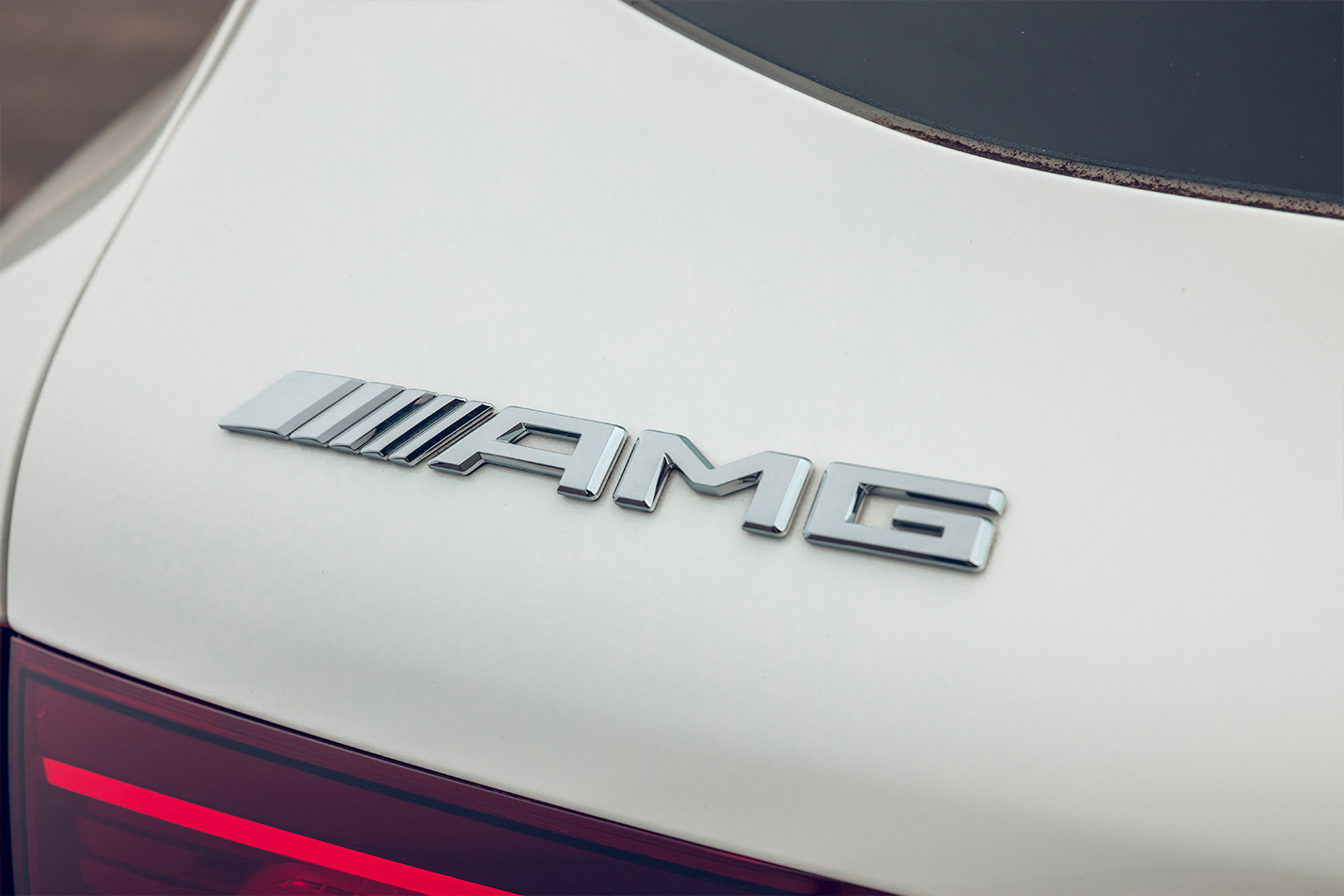
Every model within Mercedes’ range is included in the five-year/unlimited-kilometre coverage, including the Wheels Car of the Year 2020 winning EQC, and high-powered AMG variants.
Mercedes-Benz’s complimentary roadside-assistance program will also be extended to the same five-year period.
Passenger cars that are being used for commercial applications such as ride-sharing will be covered by a five-year/200,000km warranty.
“With a five-year manufacturer’s warranty across our entire Cars and Vans range supported by our existing Capped Price Servicing and Service Plan portfolio, customers can have increased flexibility and certainty throughout their journey with Mercedes-Benz,” Mercedes-Benz CEO and Managing Director, Horst von Sanden said.
The move to a five-year warranty makes Mercedes-Benz a class leader in the segment, with most luxury car manufacturers retaining a three-year warranty period.
Last year the mainstream segment moved almost universally to a five-year warranty period, while Kia remains the industry leader with a seven-year warranty offered to customers.
Call me a train-spotter (all right, you’re a train-spotter – Ed), but I reckon you could blindfold me and sit me in any Holden Commodore from VT through to VZ and I’d be able to tell you what it was just by sitting there and firing up the engine.
This feature was originally published in MOTOR’s September 2006 issue
And you know what? The Commodore VE is new and different, but I swear it still smells like a Commodore. New, but familiar. Does that make sense? Whatever.
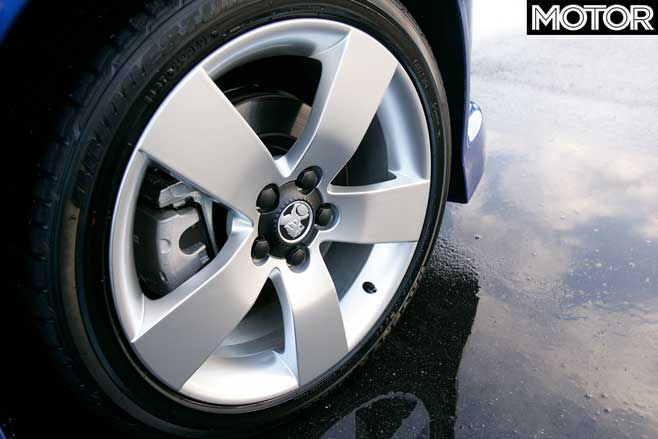
First impressions of the SS V – think of it where SS used to sit in the range before it got all hopped up on optional extras, and you’re close to the mark – are a bit of a mixed bag. After all, it’s the first time in nine years I’ve gotten to walk around something from the Commodore box that wasn’t merely a tickle-up of something that’s gone before. I like the overall presentation; its bulldog-on-steroids front-end and severely arched guard-filling 19s are a big improvement over the VZ with better visual balance. And, in SS form, it’s less plasticky, too.
There’s an amalgam of the modern automotive world on show, both inside and out, but strike me pink and call me Beryl if the thing still doesn’t look like a Commodore. I can see a bit of Saab in the gauges and centre console and maybe even a bit of Audi in the door cappings.
I don’t like the park-brake handle; the button on top is in the wrong spot ergonomically even if it allows the handle to more or less disappear when the brake is released (a la Saab 9-3, as it happens). The boffins tell me it’s a cinch to swap the lever over to the other side of the tunnel for left-hooker production, and that the workings are actuated by a tricky combo of forged alloy linkage bias, but I’m still not that impressed.
I’m not rapt with the speedo either, which uses smaller increments as numbers get bigger, but it looks confusing around the 130-140km/h area to me. Ditto the digital oil pressure and voltmeter high up in the centre binnacle.
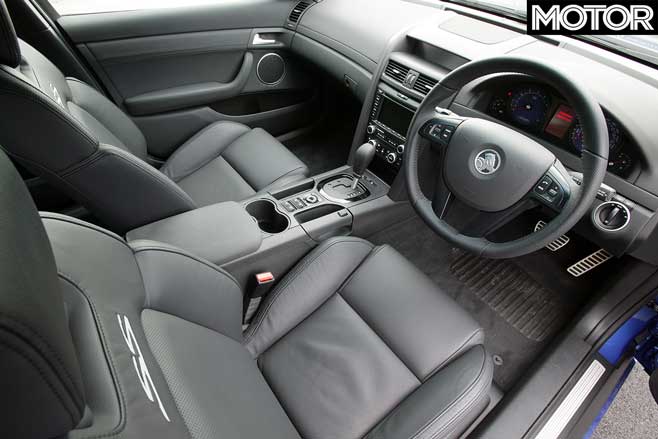
I’m told that the deep red glow of the SS’s dials are in contrast to the ice white of the more luxurious models (such as Calais), while the base-level stuff retains the good ol’ ET-green glow. Differentiation, I know, but I’m not a fan of red anything on the dash. I keep glancing at them and thinking something is wrong (bright red lights on the dash will do that to a bloke who builds his own engines).
But the SS’s seats are tremendous. Better even than the Calais’ chairs, they offer loads of lateral grip and plenty of support. Brilliant. We’re told they’re also lighter than the previous more slippery iterations, too, and the side bolster is primed with a thorax bag to protect yer gizzards. There are also curtain bags (standard on the SS V, optional on the other models) to complement the pillows up front.
The redesigned tiller sits nicely in the palms and the thumb rests fall well for my digits, but I reckon those with smaller hands might have a different opinion. There are also Audi-style rolling buttons on the spokes for stuff like the trip computer and stereo.
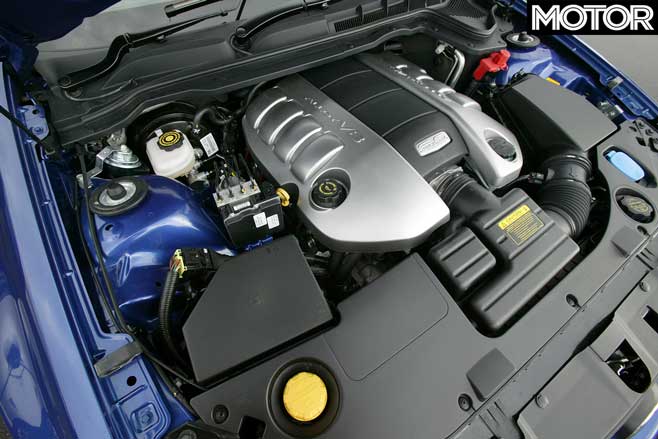
Fire up the six-litre L98 V8 (yep, it’s a new designation for the motor that came on stream towards the end of the VZ) and the starter motor makes familiar noises before the bugger flips into life. They’ve worked hard on noise and vibration control, taking advantage of the rejigged front-end to fit the motor with a larger, stiffer oil pan as well as a new engine cover that sports a decent layer of noise insulation on its underside. In all, there have been 39 changes made from the VZ Euro II-compliant spec L76 it replaces.
However, they haven’t muffled the character, and there’s a decent burble on the over-run. Even with the windows-up, the engine is audible, almost HSV VZ audible, in fact. That’s the all-new twin-system exhaust for you. The twin-branch set-up has also yielded a little less back pressure.
Slip her into D for Drag and there’s little or no torque reaction to be felt, provided you’ve got a firm foot on those big new front brakes to clamp the SS to the spot.
The new 6L80E six-speed autos tiptronic function is controlled via the T-bar as it bleeding well should be. Tiller tabs are okay for race-cars where you never take your mitts off the wheel but in a road car, they’re about as useless as a condom machine in the Vatican.
It’s probably one of those issues like whether you pronounce your Haitches or not but pulling the stick back for upshifts and forward for downshifts makes perfect sense to me.
What makes even more sense is that you get full manual over-ride should you be bothered to pluck your own ratios. Too often, gearboxes think they know more than me and refuse to comply with my instructions. Maybe they are smarter, but I’m paying for the fuel, so they can do as they’re told in my book.
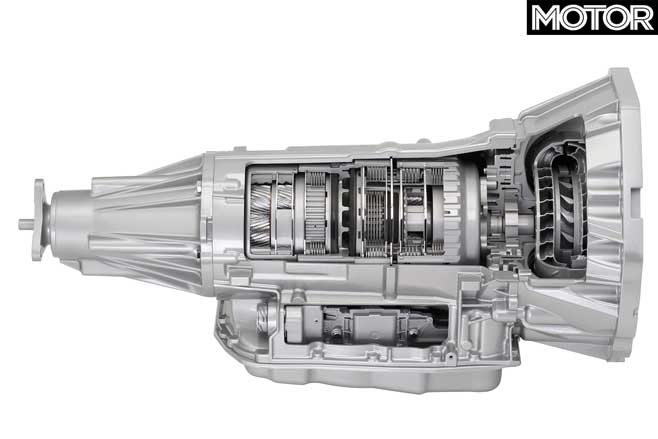
The 6L80E does another neat party trick: in full auto mode, it’ll detect whether you’re up to shenanigans by measuring throttle-lift inputs, and will hang onto the relevant gear for as long as required. Hard to explain, harder to believe it actually works, but it does as promised. Nice touch, in my book.
But the big question is whether the new Holden six-speed slusher is as good as the one fitted to performance and luxury Fords right now. Hmmm. We’ll need a proper comparison sometime down the track, but for now, seat of the pants says no.
Not that the new GM box isn’t good, because it is when stacked up with what went before it, but it just doesn’t seem as convincing, especially when you start using it in manual mode.
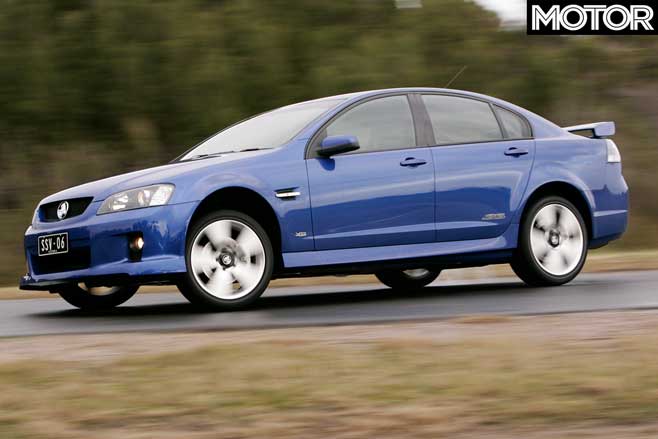
For a start. it doesn’t seem as keen to upshift In auto mode as it should be. Small throttle lifts by the driver should be enough to instigate pretty much instant shifts from an auto box, but the Holden unit never seems to get the hint. A bigger lift-off will do the trick, but intuitive it ain’t.
And the Holden unit isn’t on its own here, but it can’t seem to remember what you’ve asked it to do on a longer-term basis. Order up a downshift heading into a corner at a speed that would redline the engine if it did shift down, it won’t shift. Fair enough, but it can’t remember the request and make the shift once the speed has dropped to the point where the shift is viable. Nope. you have to prod her again and that’s all a bit too much when you’re having a big go (which is exactly when the situation is most likely to occur).
Shifts themselves are smooth enough but not as instant as I’d like and, when all is said and done, the ‘box just doesn’t seem as smart as the ZF slusher in the fast Fords. It has to be pointed out that we are driving early build protos here, and the computer nerds were still running frantically through terabytes of shift mapping data on the run up to the car’s release.
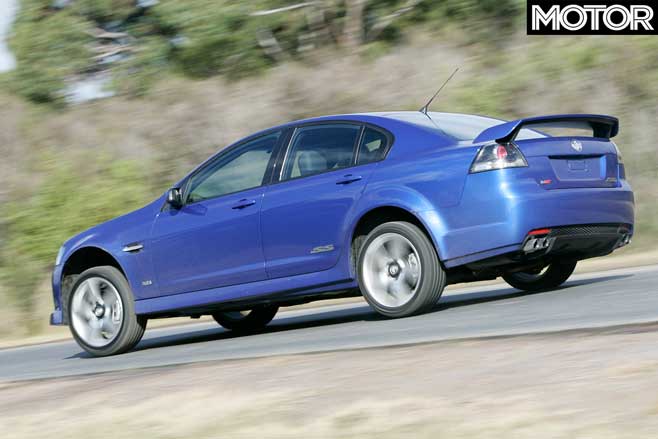
It’s something that they’ve nailed with the fly-by-wire throttle fell and response, though. Ever have I driven a ‘Dore that’s more spritely in the upper regions of its throttle travel. The engineers lost count of the number of throttle
maps they’ve flashed straight into evaluation mules, but with a focus on the first 20 percent of throttle travel (“Let’s face it, that’s how everyone drives for the vast majority of the time,” says chief engineer Tony Hyde), it’s really liven things up.
Steering feel was never a Commodore long suit but the VE seems to have addressed this reasonably comprehensively. The tricky offset steering arm geometry surely helps – as does the fact that the steering rack is now, at long last, positioned in front of the axle line – but there’s still a bit of a dead patch at the straight ahead. That evaporates as soon as you haul in some lock, though, and from there it starts to feel pretty darn communicative.
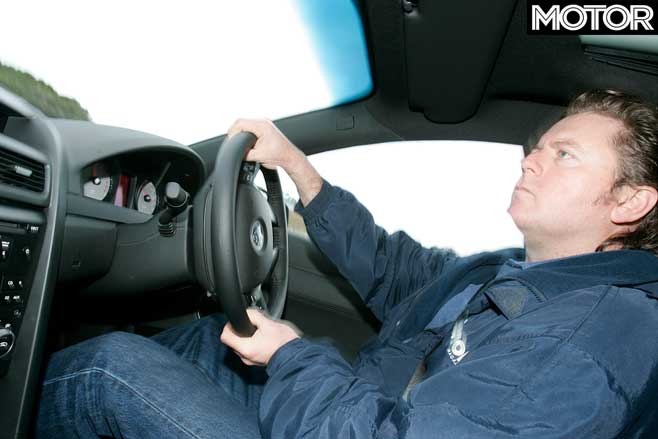
More importantly, the front end feels a whole lot more composed. Where the VT to VZ models used to lean heavily on their outside front tyre, the VE feels like it’s keeping its outside front flat on the road and using the whole tread. Oddly, it doesn’t mean there’s no body roll rather that the car is leading with its front end, not the other way around.
A quick gander at the tyres at the end of a hard day is telling: nice, even wear across the shoulders of both the front and rear tyres with minimal feathering and degradation apparent, as opposed to the carnage we’ve wreaked on many a VT-VZ front hoop in days gone by.
With its four-and-a-half-bar linkage rear-end, and some pretty serious stabs at engineering a lot of stiffness and stability into the whole kit and caboodle (triple lateral ball joints on each side of the front-end; and adjustable camber, castor and toe all ’round on a passenger vehicle really is commitment to the cause), the net gain is a car that is taut and up for a bit of nonsense. It helps that the new bodyshell is impressively twist-free, and the revised rear LSD is a bit of a sweetie, too.
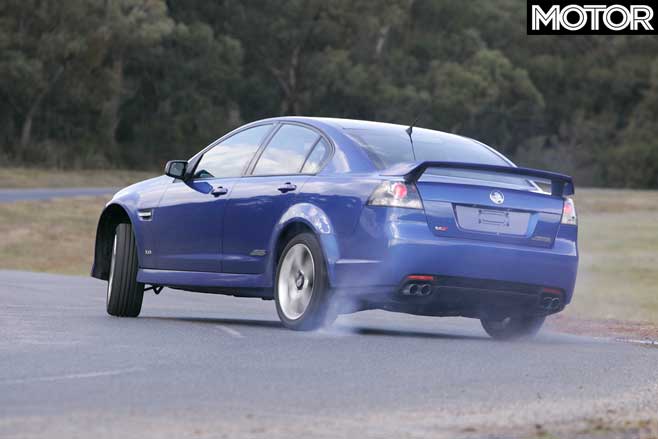
The exception is a level of rack rattle and kickback through the wheel we weren’t expecting. To be fair, though, these are very early pilot-build cars and the automatic exhibited the rattle while the manual we sampled didn’t.
Interesting, too, that the suspension techos pointed out that minimum tyre pressures across the range are now in the vicinity of 36PSI. That adds sidewall stiffness to the uber-low profile 245/40 R19 rubber, but keep an eye on your pressures.
With 270kW and a ballsy 530Nm of torque at 4400mm to work with, the six-litre V8 is fitter than ever and the VE, regardless of the extra weight it’s hauling, is the quickest yet. The SS V auto reeled off a 0-100km/h time of 5.69secs and stormed the quarter mile in 13.90 at 167.7km/h.
And that, Josephine, is not mucking about.
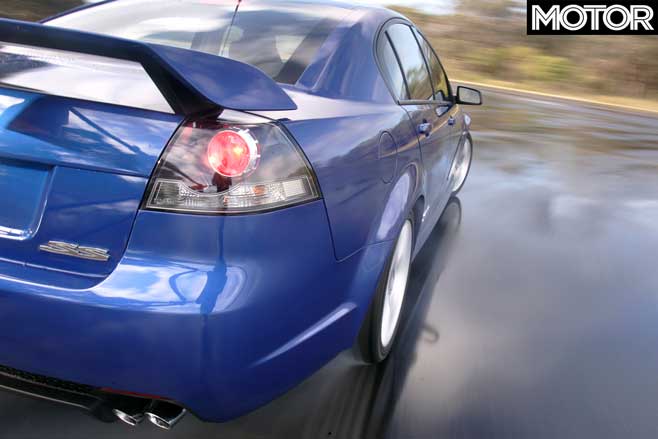
But the manual is even fleeter of foot with 100km/h coming up from a standing start in 5.35 and the first 400m reeled off in a bugger-me 13.63 with a terminal velocity of 170.7km/h.
Consider that all this happened on a damp track (between showers as it happened) and you can believe that there’s a fraction more speed to be had. Even so, those times mark the VE Commodore SS as the fastest Commodore ever.
Oh, and you read it here first.
2006 HOLDEN COMMODORE SS V SPECS Engine: 6.0-litre V8 Power: 270kW @ 5700rpm Torque: 530Nm @ 4400rpm Bore/Stroke: 101.6mm x 92mm Weight: 1690kg Power/Weight: 160kW/tonne Transmission: Six-speed automatic Suspension: MacPherson strut, coil springs, anti-roll bar (f); four-link, coil springs, anti-roll bar (r) Brakes: 321mm ventilated discs, two-spot calipers (f); 324mm ventilated discs (r) Tyres: Bridgestone Potenza; 245/40R19 (f & r) Price: $69,990
Holden Commodore VE Range Finding
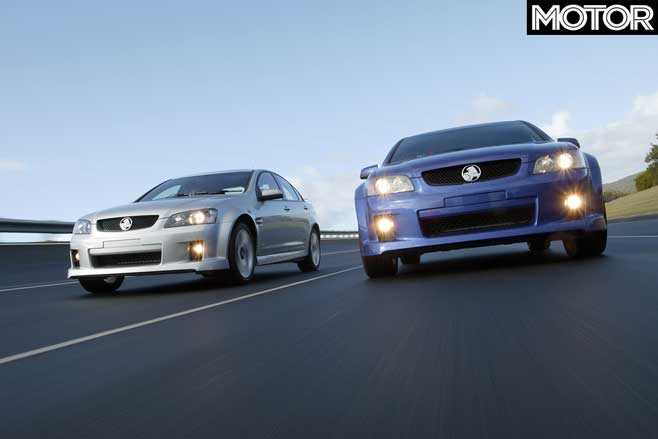
The SS V (priced at around $52,000-$54,000, depending on your options) is, according to Holden’s literature, celebrates the first new Commodore in nine years. Or something. The standard SS is more keenly priced – much more keenly priced, in fact, at $44,990 in manual and $46,990 in auto guise. It’s some $6800 cheaper than the outgoing model in self-shift form.
You do get 19-inch rims, a multi-function dash display, curtain airbags, dual-zone air conditioning, a fully sick 230W stereo and other odds and sods on SS V for your eight grand. What would we do? Well, eight grand buys a lot of tyres….
What’s on the Box?
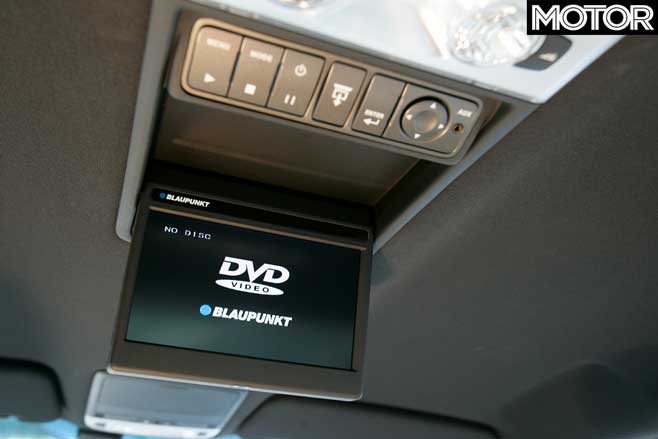
If you need to drag the family interstate to visit the rellies – and let’s face it, that’s what these big buggers are best at – then this’ll get your attention. Holden’s design gurus have worked bloody hard to come up with a modular interior design that will ‘plug and play’ much more easily throughout the car’s life cycle, and one of the neatest features is the roof-mounted DVD module.
Not only can it be combined with a smaller, lighter sunroof, it can also be retrofitted to all VEs. Interior space was modelled off VZ dimensions, and has been improved in a few key areas, notably in rear ingress (getting in and out, ya nong).
Holden Commodore VE manual review
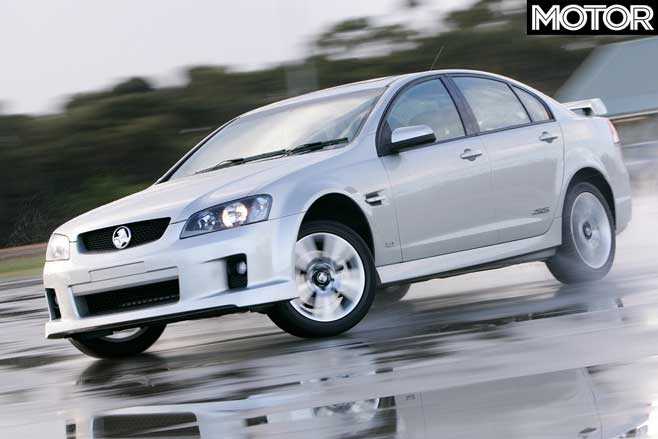
While Morley buggered off in the top-spec SS V auto, I spent my time lapping the ride and handling loop of the Lang Lang proving ground in a manual SS. In fact, I spent so much time lapping the proving ground that I ran out of fuel…
In addition to a stiffer chassis with an almost 50/50 weight distribution, the VE’s powertrain guys have taken the Tremec manual and gone to town on it. A vastly revised linkage arrangement has shortened and stiffened the lever throw, first, third, and fifth gears are shorter and there’s triple synchros on first and second. Linear bearing replace selector fork bushings and a new high-grade oil has been specified. They’re not mucking about.
A lighter-action, shorter-throw clutch pedal combines beautifully with the vastly improved ‘box for an entirely satisfactory manual interface. Combined with much-improved PBR-sourced brake hardware, a low key Bosch ESP map, EBD and lashings of feelsome mechanical grip, I reckon the SS is a bit of all right. – Tim Robson.
If you’re looking for a time attack car, then break open the piggy bank and search the sofa for change, as Top Fuel’s Honda S2000 Type-RR time attack machine is headed for auction in Japan.
Hosted by BH Auction and held in conjunction of the 2020 Super GT season, the S2000 was built by Japanese tuning garage Top Fuel to participate in the Tsukuba Time Attack.
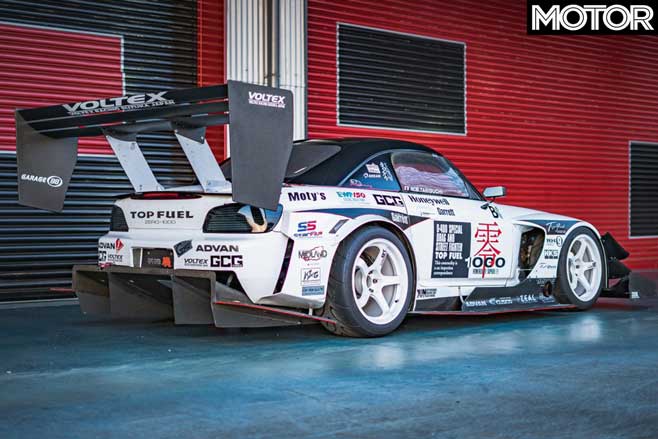
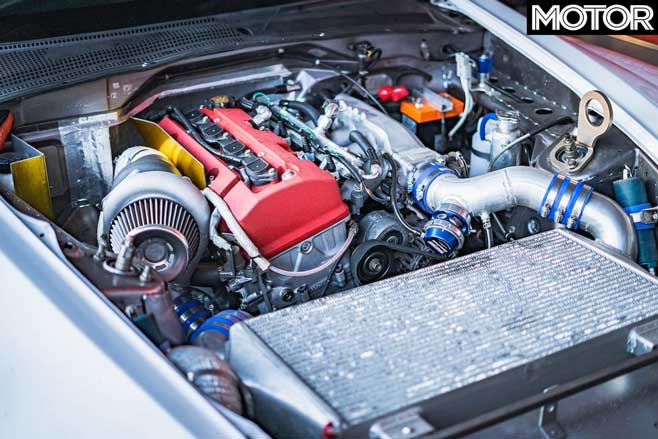
Rather than squeezing in a Toyota 2JZ inline-six engine, as other tuners are wont to do with the S2000, Yasuji Hirano of Top Fuel opted to stick to the roadster’s F20C engine.
Initially the engine was bored out to 2.2-litre and turbocharged to produce around 520kW, however Hirano didn’t stop tinkering with the engine.
As it heads to auction, Top Fuel says the engine now boasts an increased displacement of 2450cc and produces 597kW, with the auctioneers claiming that its turbocharger boost could be cranked up to produce over 745kW.
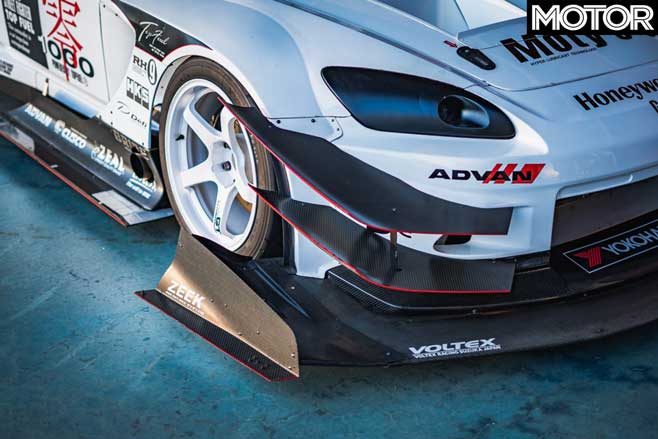
Aside from the engine, the car beneath the massive VOLTEX bodykits and wings is a reinforced S2000 chassis, and not a tube-frame race car construction with a plastic facsimile on top.
According to Hirano of Top Fuel, the S2000 held the title of the fastest rear-wheel drive car around Tsukuba for three years, with records made at Japan’s Fuji Speedway, Suzuka Circuit, Okayama International Circuit, and Autopolis.
The car was rebuilt in 2012 to participate in the World Time Attack Challenge in Australia where it finished fifth in the Pro Class. It would return in 2013 to finish fifth, and 2014 where it made its best finish n fourth.
According to BH Auction, the auction is set to be held in the northern summer (winter here) of 2020, and a price estimate has yet to be placed on the S2000 Type-RR.
The Lotus model range in Australia has a new top dog, with the Lotus Evora GT410 now sitting above the rest of the British sports car maker’s other models and badges.
With two versions, the standard GT410 and the ‘GT410 Sport’, Lotus brings four new choices to its local showrooms – each version is available in either manual or with Lotus’ Intelligent Precision Shift (IPS) six-speed auto.
The new model starts from a MRLP of $189,990 for the manual Evora GT 410, with the manual version of the Evora GT410 Sport at $194,990. Optioning IPS adds $4000 to the pricetag.
2019 Lotus Evora GT410 driven!
All four versions run the same midship supercharged 3.5-litre V6 engine, producing 306kW and 410Nm fed to the Michelin Pilot Sport Cup 2-shod) rear wheels (with Sport 4S tyres if you don’t option the Sport pack via your gearbox of choice.
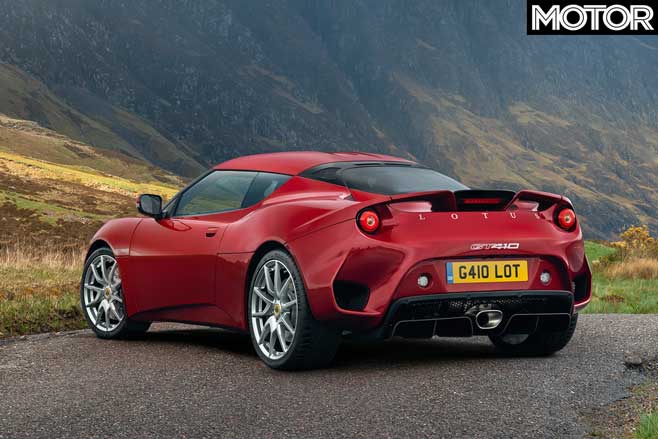
Manual cars also have a Torsen limited-slip diff, though will hit 100km/h in a claimed 4.2 seconds with either transmission.
Pulling up is handled by a set of four-piston AP racing callipers all round, clamping cross-drilled 370mm discs at the front and 350mm discs at the rear.
Celebrating the Lotus Elise as a proper driver’s car
The Sport features a focussed suspension setup with Bilstein dampers and Eibach springs, but the standard GT 410 comes with a setup called ‘Touring’ by Lotus, which employs “Bilstein dampers to ensure compliance without sacrificing handling.”
Lotus at PCOTY 2020: Exige Sport 410 takes 6th
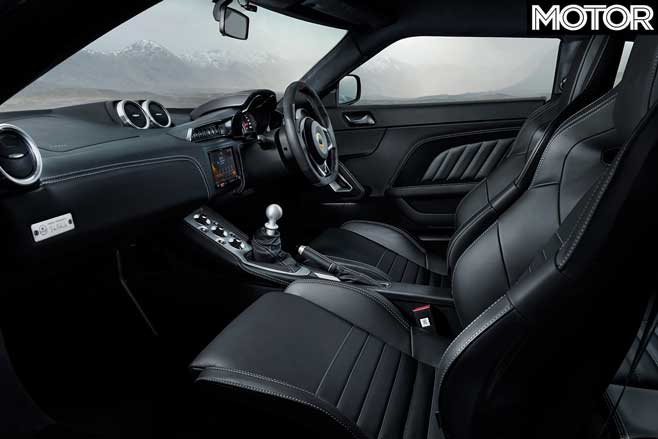
Of course, as the ‘comfy’ Lotus, the Evora GT is designed to be able to be driven regularly, and thus features a pair of heated Sparco seats, trimmed in leather matching that of the steering wheel.
An infotainment screen draws a line of difference from Lotus’ more track-oriented models, while a reversing camera and navigation provide some creature comforts.
“The new Evora GT 410 brings a two-tiered Evora lineup to the Australian market, giving customers more options to design an Evora to suit their needs,” says Lotus Cars Australia CEO, Lee Knappett.
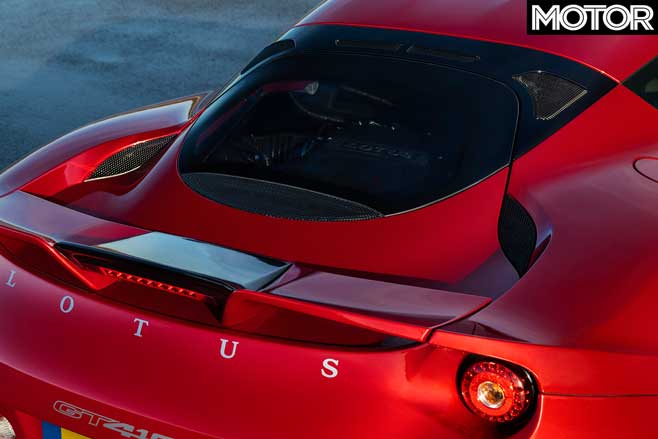
“While it retains the exciting dynamic qualities of the GT 410 Sport, the GT 410’s strength is in its enhanced grand touring and daily drive capability.
“With the Touring suspension package, more road-oriented tyres and a focus on interior comfort, the Evora GT 410 is a car you can enjoy as much on the work commute as the race track.”
The Lotus Evora GT 410 and 410 Sport are available to order now from Lotus Cars Australia.
Have you heard of Mansory? If you haven’t you’re about to have some strong reactions to images of modified cars. Consider this a content warning.
Since the start of March, Mansory has revealed five builds, all modifications of cars you could consider rather extravagant even on their own. Maybe you could give one a pass as a bit of a ‘sleeper,’ you’ll know which one we mean.
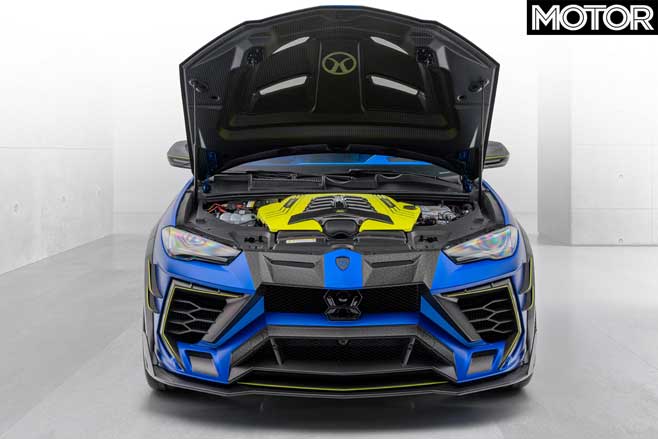
But what Mansory does is looks at these cars and, apparently, thinks “how could this be more ostentatious?” before then proceeding to carry that out in the form of visual modification.
Before writing this article, we ran a casual poll for each of the cars on our Instagram story, and we’ll add the results below.
Mansory’s Lamborghini Urus
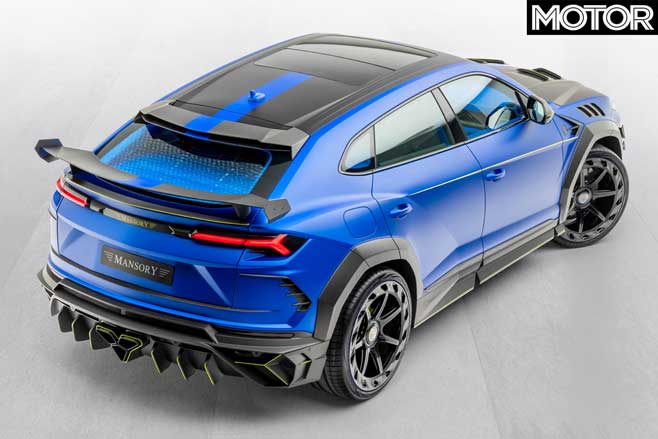
The twin-turbo V8-powered Urus was already bumptious, so adding a wing, massive aggro wheels, and a glut of lines and vents was hardly necessary.
At least that’s what 81 per cent of voters on MOTOR’s Instagram thought, making it the most disliked of Mansory’s five creations we’re covering here. Why not start with the bottom of the barrel?
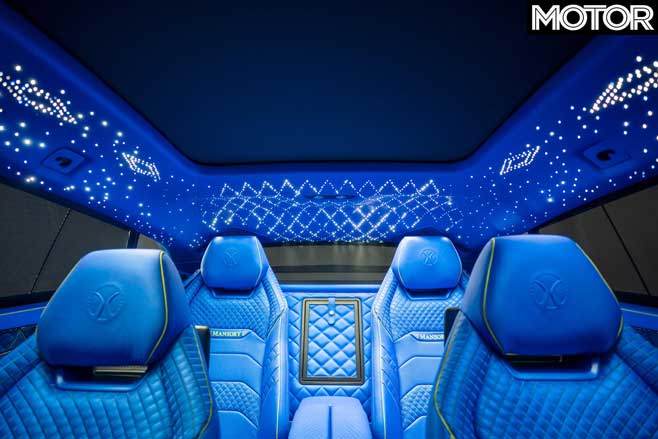
All of the carbon fibre parts here are available with or without clear coat, but we wish we could clear our memories after seeing that interior.
Mansory’s Audi RS6
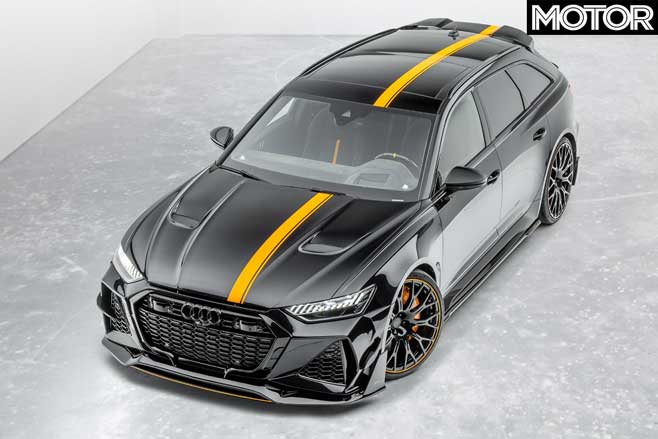
We were surprised to see that 77 per cent of MOTOR’s voting IG followers actually liked the RS6 with Mansory’s mods, but we can see why after looking at the Urus for too long.
While the RS6 is normally a sleeper-type performance car, preying on unsuspecting drivers thanks to its twin-turbo V8, here it’s seen in the hostile guise Mansory saw fit to bestow it.
While we can abide the exterior treatment, some of its interior elements leave much to be desired.
Mansory Bentley Continental GTC V8
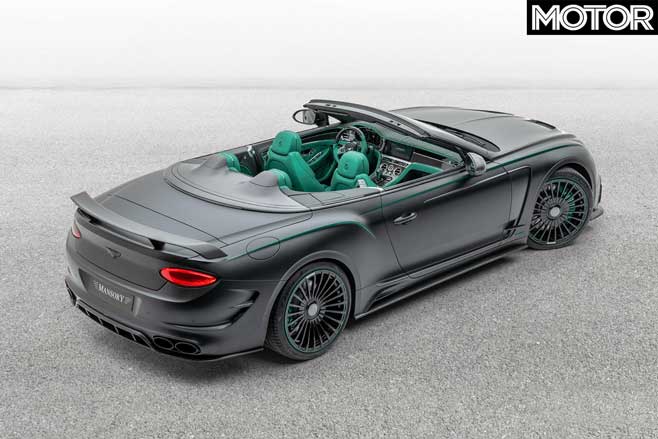
In response to this particular build, MOTOR’s long-time driver of choice Warren Luff used the phrase ‘Gold Coast-spec’, and that sums it up pretty well, we reckon.
All up, 74 per cent of our followers who voted aren’t into it, likely thanks to the very visible interior colour choice. That or the wing… lose that and choose a darker colour for the upholstery and maybe we’ve got something to work with.
Mansory Rolls Royce Cullinan
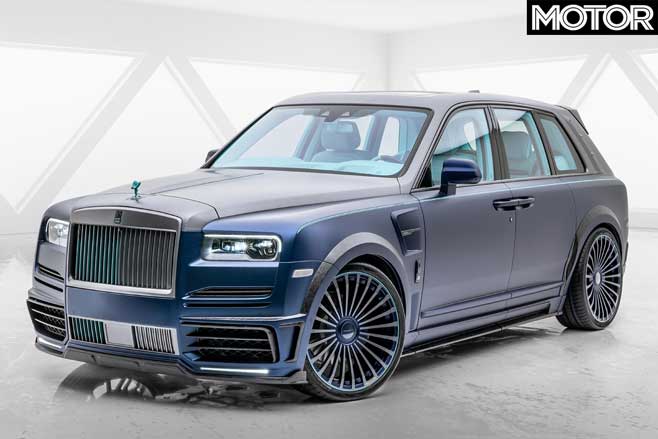
The Cullinan drew a bit of flak upon its reveal for ‘going against the RR ethos’ or for bowing to the SUV trend, but it makes logical sense for Rolls Royce to offer a product its customers will actually buy.
Mansory, on the other hand, has created a product which 79 per cent of our voting audience can’t see themselves in.
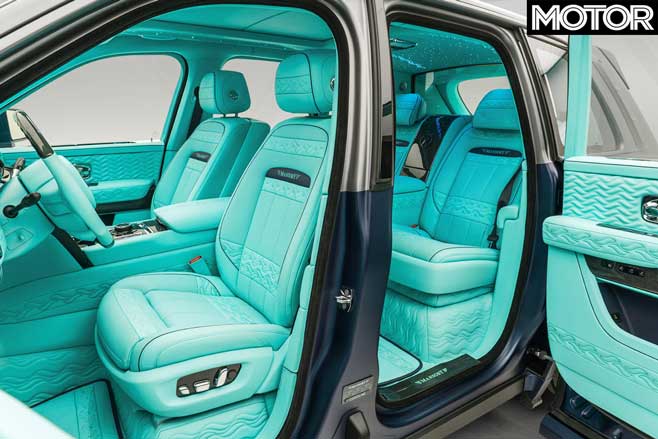
The lowered and widened ‘high-riding car’ (Rolls’ way around calling it an SUV is suddenly redundant) features carbon panelling pretty much all over, doors aside, and an interior that rivals that of the previously discussed Urus in terms of immoderation.
Mansory Mercedes-AMG G63 pick-up
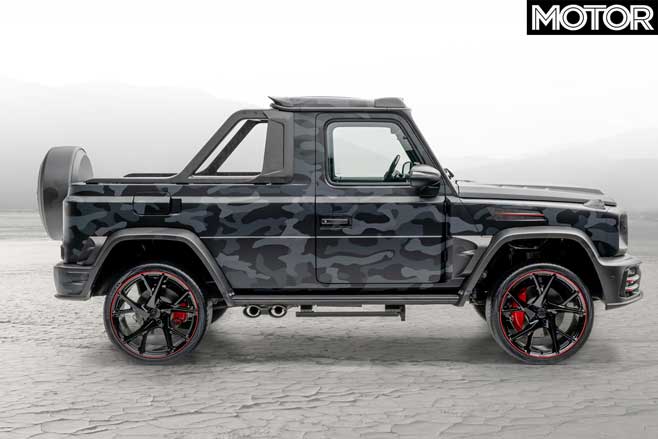
The most divisive of the Mansory cars we had out followers vote on, the ‘Star Trooper Pickup Edition’ saw a 57/43 split… but not in favour of the overcooked G.
In urban camo, with a tray in ‘forged carbon fibre’, and wheels that look as far from offroad-friendly as we can imagine, the G63 worked by Mansory looks… well, pretty much what you’d expect a modified G-Wagon to look like in the hands of someone with an abundance of wealth and unchecked imagination.
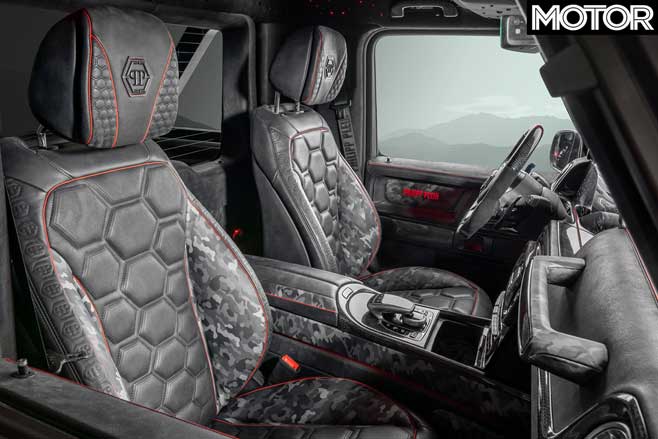
But inside, the red glow from its roof lining lights and the odd upholstery (also in camo) seem a little overdone.
So, what do you think of Mansory? Dream or meme? Let us know in the comments below!
It all started innocuously enough. Reader Trevor Newman sent a picture to Unique Cars magazine back in 2016 with the note ‘taken in Modena in 1986’.
I pored over that picture, took it to some of the smarter minds in the Bauer motoring hub and everyone drew a blank on it.
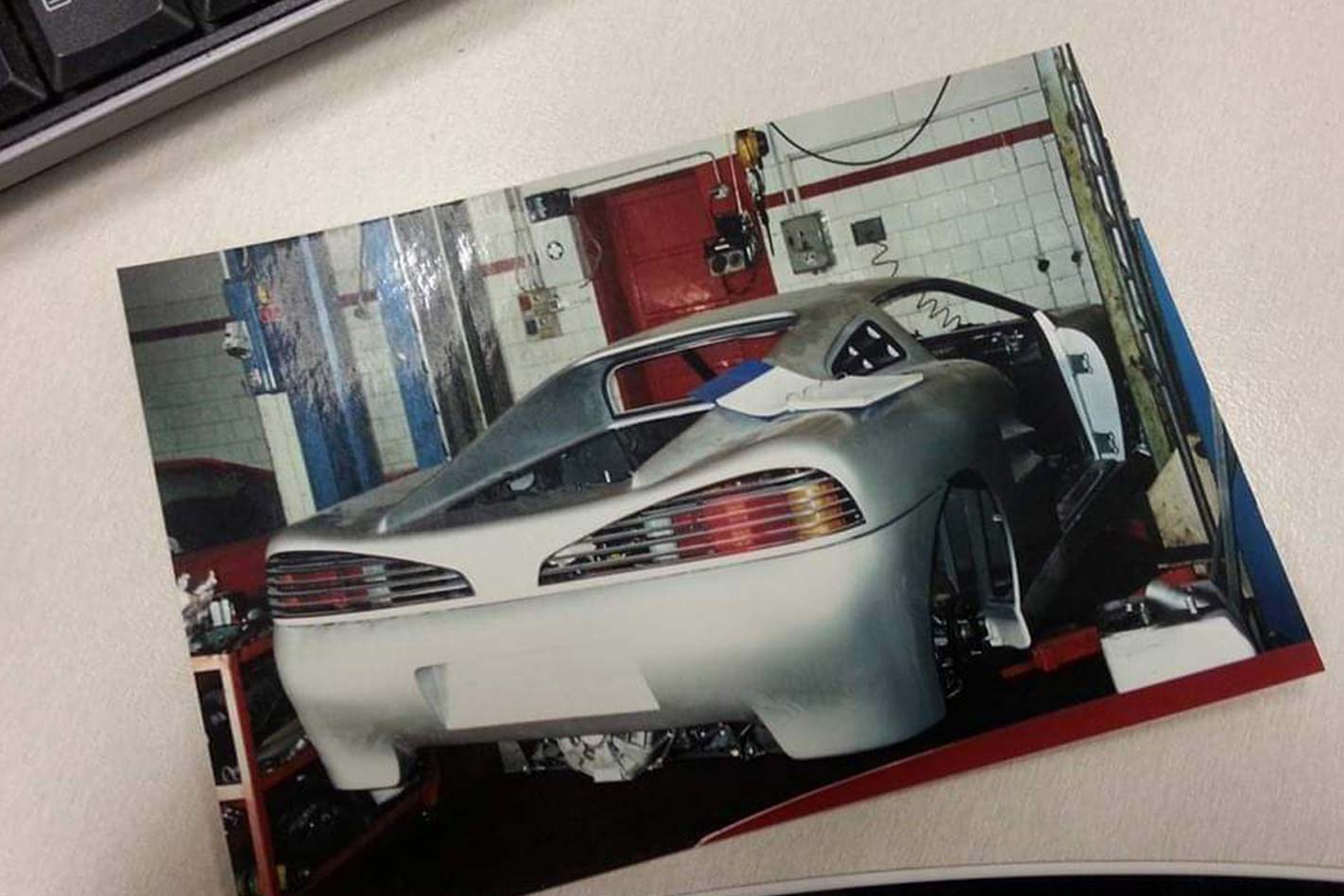
There was precious little to go on. Yes, it looked instantly distinctive, but I’d never seen huge rear light housings like that on any Ferrari prototype and the date, well that was a mystery.
If it truly was 1986, then it pointed to the fact that this could be a development mule for the Ferrari 348. Yet the rear mechanicals looked like no 348 I’d ever seen and besides, that far ahead of launch, the car probably wouldn’t have engine, suspension and driveline ready.
It also looked a little too rough and ready for a one-off Ferrari special commissioned for a customer like the Sultan of Brunei. Yes, things were done a little differently back then at Maranello, but this looked a long way removed from a kid gloves commission.
More clues about the mystery Ferrari emerge
I’d posted an image of the car online and come back with some informed speculation but no concrete leads.
When it popped up as a Facebook memory a couple of weeks ago, I decided to try again, this time tagging in Ed Callow, the comms guy behind Collecting Cars and possessed of a brain the size of a planet, especially on all things Ferrari.
He’s the guy who can tell you that a given Fez has been sprayed Blu Medio when in fact that paint colour wasn’t offered for that model year.
But, even Ed was stumped.
The great thing about the internet is its ability to reach out to the hive mind of experts across the globe almost instantly. And yesterday, it delivered, in the form of @Mike_M_Klotz on Twitter.
“HOLY CRAP I FOUND IT!!!!!!!!!!!!!” came his response. I could tell he was excited by the fourteen exclamation marks.
Nobody casually drops the big bomb of fourteen exclamation marks without feeling one hell of a sense of achievement.
What is the mystery Ferrari?
Michael had realised that the date supplied with the image was dodgy, reasoning that the transaxle pictured was only introduced in 1989.
A search for “Ferrari prototype 1992” yielded gold. Designer Fabrizio Ferrari’s Toni Auto GT project (1992-93) was the result.
A look at some of Mr Newman’s other photos showed a time stamp on the prints of 1996. Mystery solved.
Toni Auto is a garage on Via Abetone Inferiore in Maranello that specialises in restoring classic Ferraris. It was founded in the 1960s by Franco Toni, an ex-employee of the Ferrari racing department, the building of his garage overseen by Enzo Ferrari himself.
So the car we see here is a Toni Auto GT, designed by Ferrari in Maranello but not that Ferrari in Maranello.
We’ve reached out to Toni Auto for the backstory on this fascinating bit of automotive curiosity and we’ll keep you posted of their response. In the meantime, Michael Klotz, we salute you.
Putting the scale of Michael’s discovery into perspective is the fact that the two videos he uncovered (above) have a grand total of 18 views between them at the time of writing.
Now that’s some automotive sleuthing!
The Wheels Verdict: Sneer at the notion of a performance SUV all you like… people want them and people are buying them. This isn’t a cynical exercise in bunging the M5 motor in an SUV, either; it’s a cohesive, convincing, engaging and entertaining rig with a modicum of practicality and a hint of hoon about it.
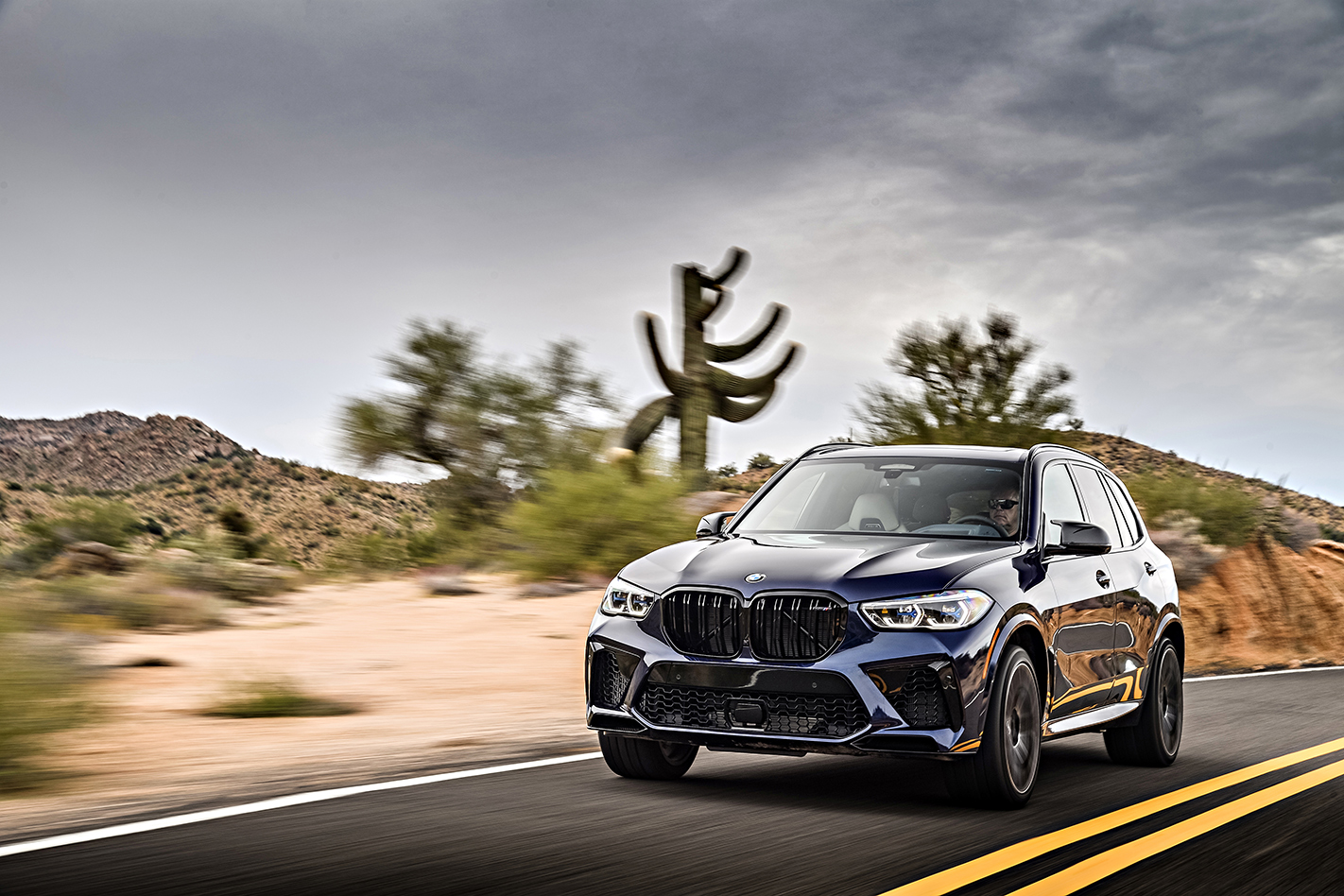
WHAT IS THE BMW X5 M?
BMW’s original SUV turns the wick all the way up, thanks to a brace of go-fast bits built around Munich’s mighty twin-turbo V8 engine.
WHY WE’RE TESTING IT
Inbound for Australia this May, the X5 M – once considered a bit of an oddity – takes its spot amongst a growing roster of high-performance premium SUVs, and the combination of space and pace is a hard one for power-mad Aussies to resist.
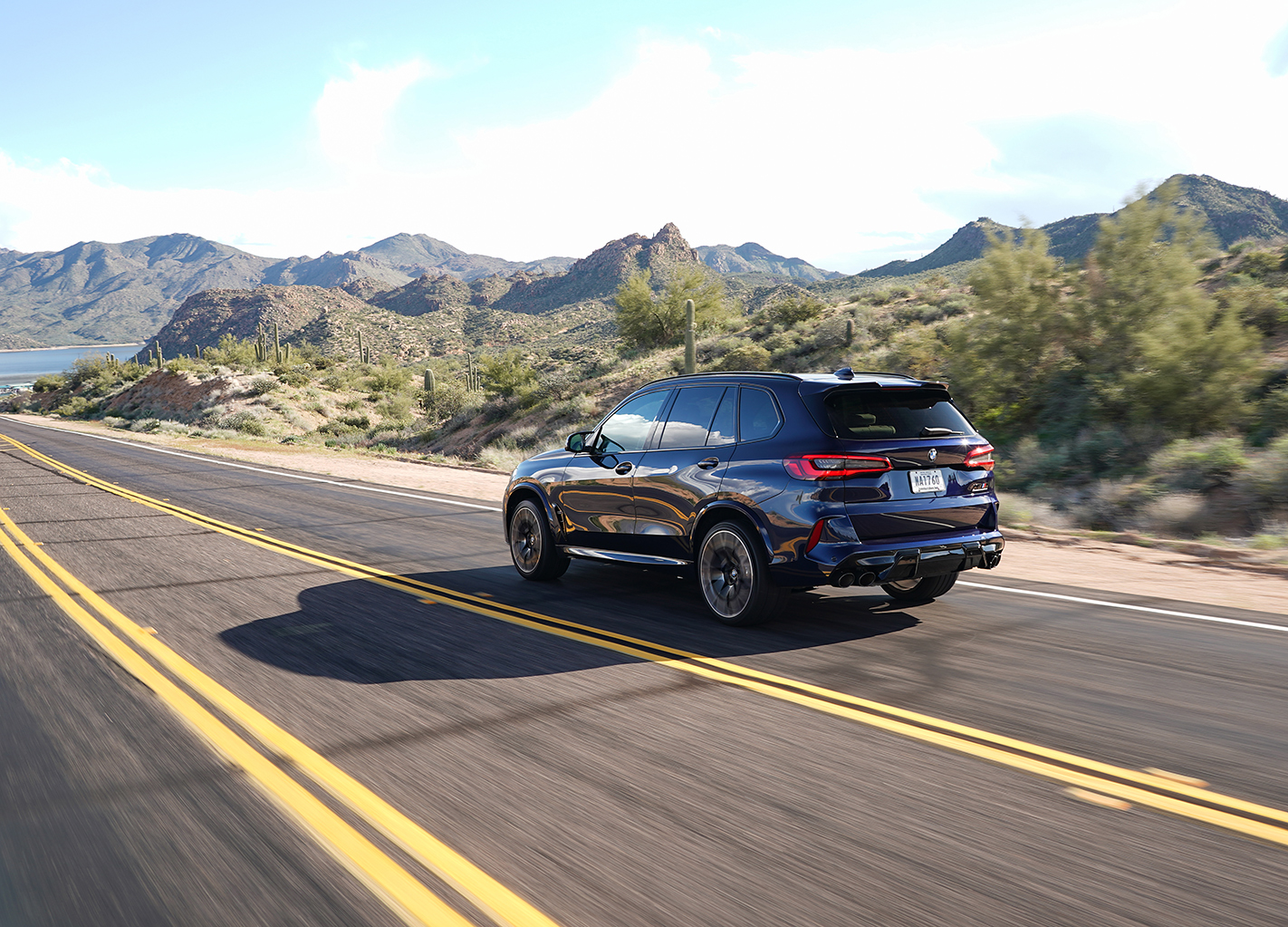
BMW X5M REVIEW
“We like to call this section the roller coaster,” says our German host, pointing to a set of squiggles on a map. “We would say that this is the best place to try the car.”
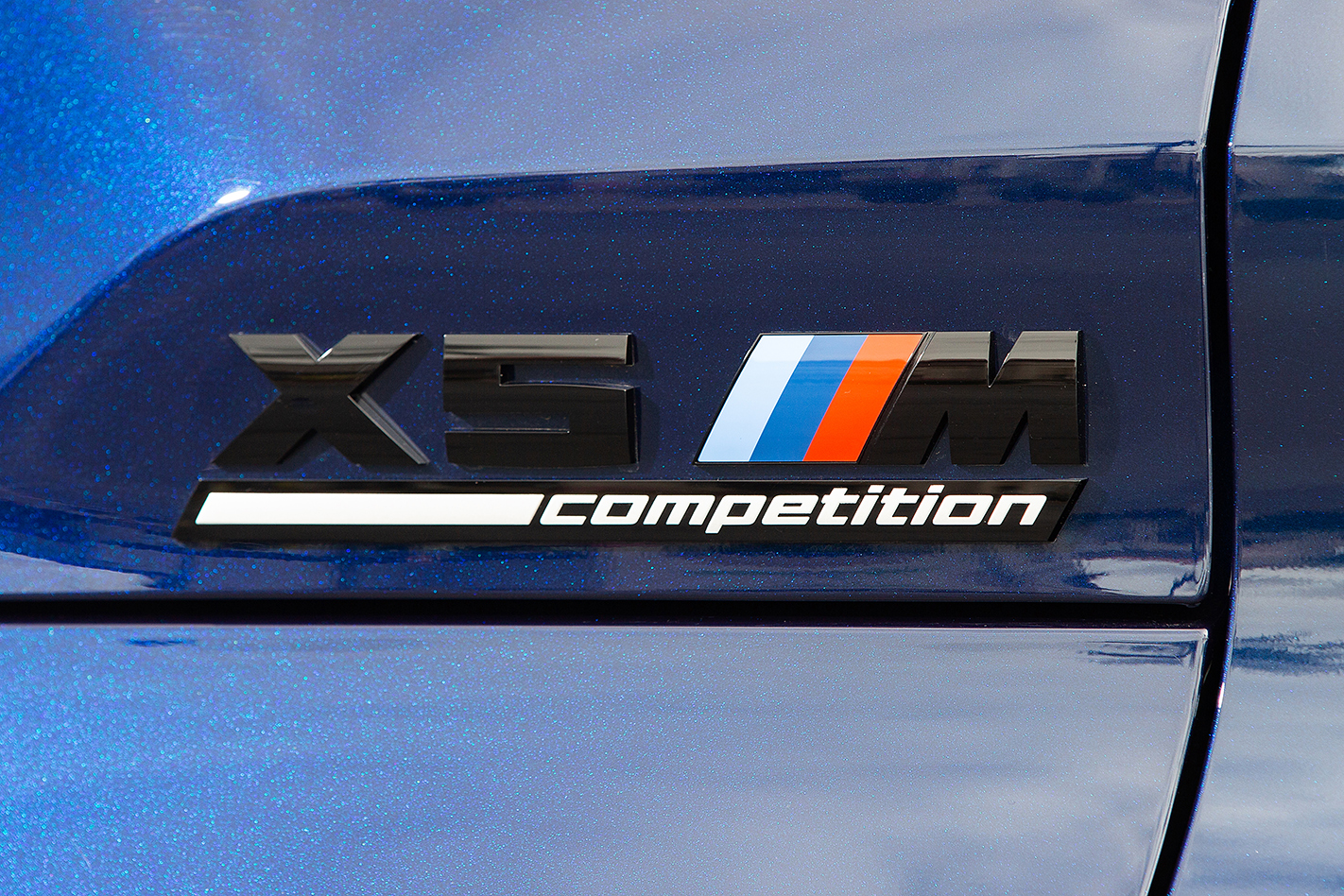
The car in question is BMW’s mid-sized SUV bruiser, the thoroughly overhauled X5 M. Due in Australia in May, only the full-fruit Competition version will be offered, priced at $209,900. The X5 M will face down rivals like the Mercedes-AMG GLC 63, while Audi’s incoming RS Q7 will be bigger but no less fearsome. Throw in the usual suspects like the Porsche Cayenne, and there’s suddenly a glut of potent high-riders in the game.
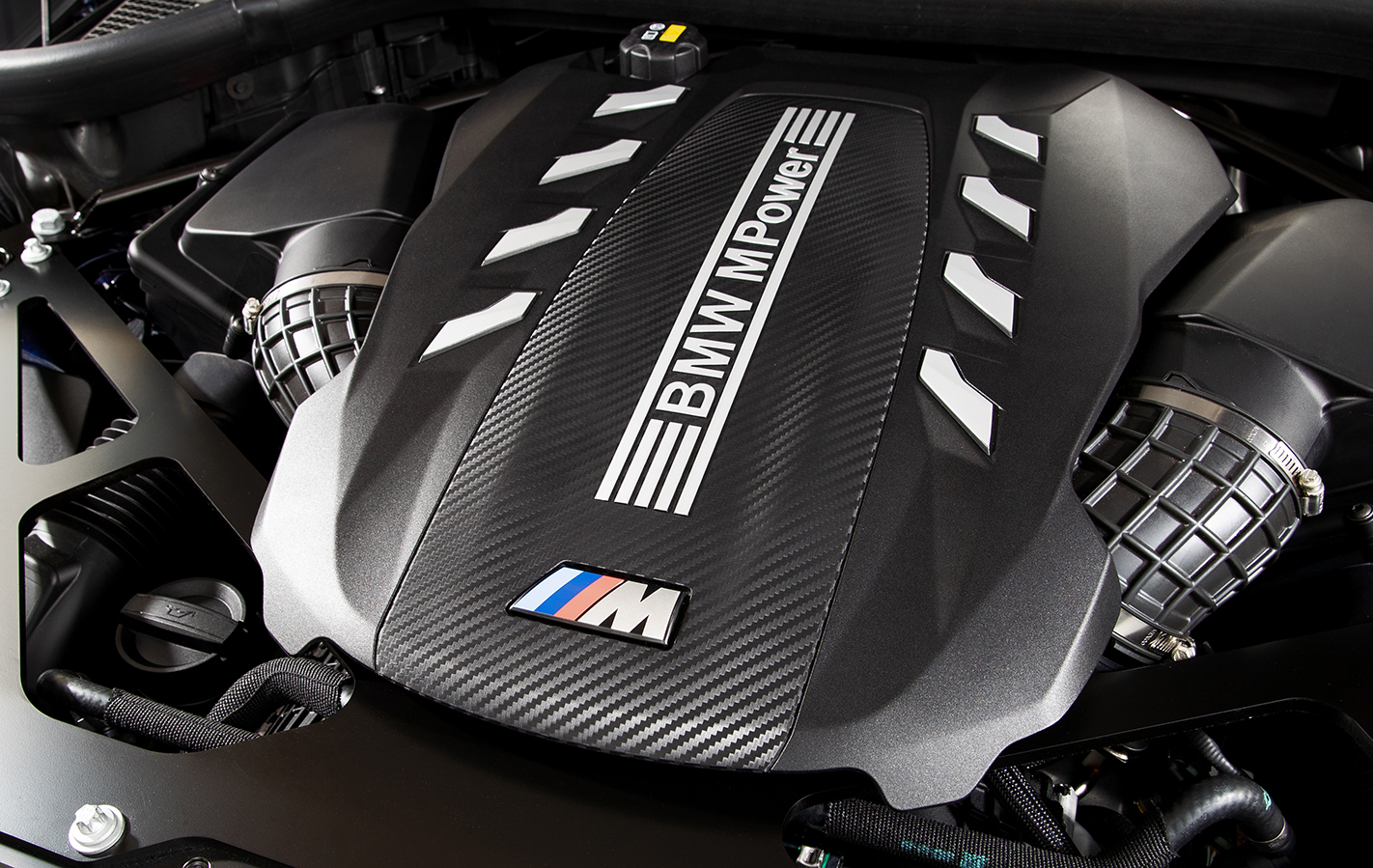
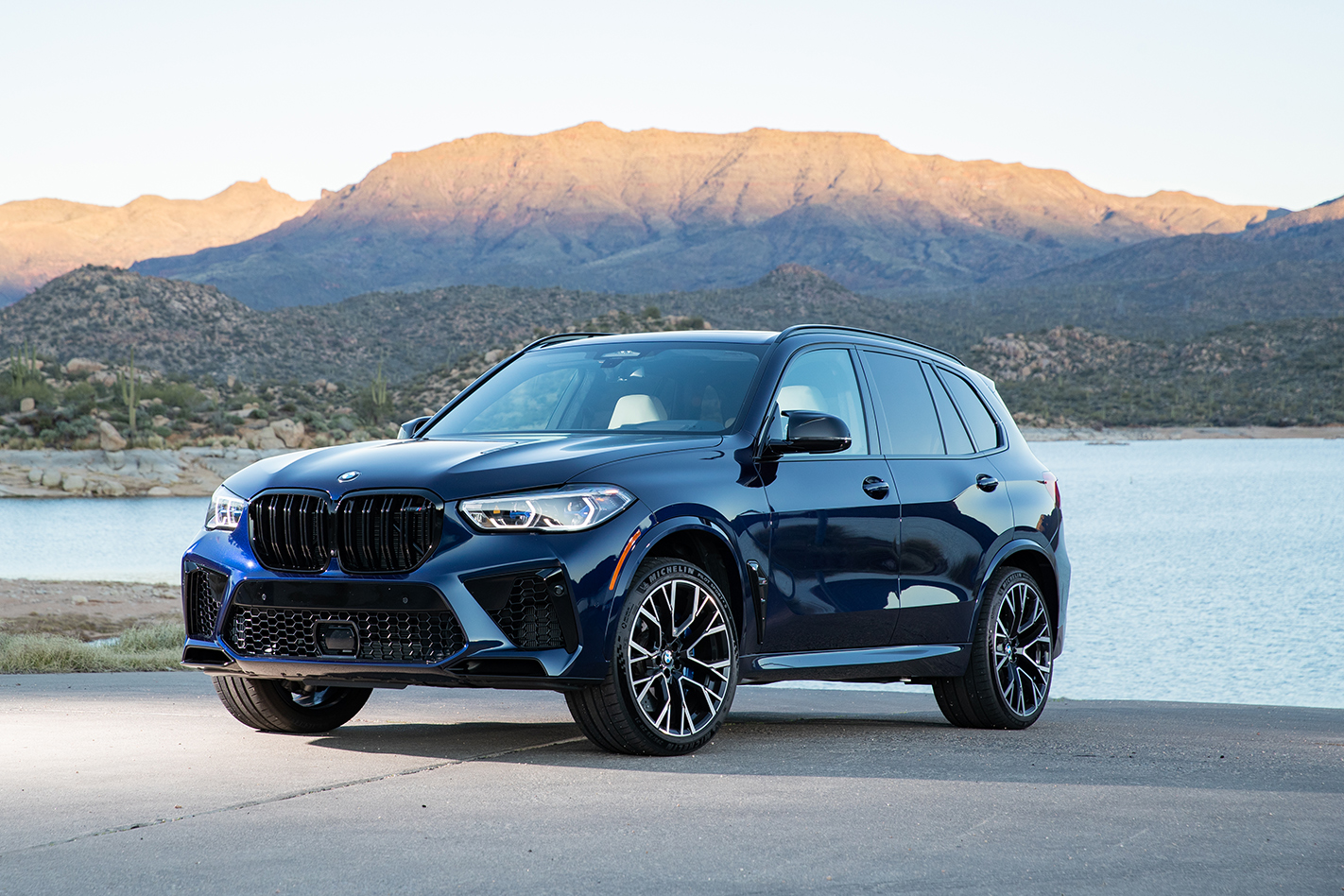
Based on the 2018 CLAR-platformed X5, the X5 M scores BMW M’s 460kW/750Nm S63 4.4-litre twin-turbocharged V8, backed by a ZF eight-speed auto with adjustable shift feel and an M-fettled version of BMW’s xDrive all-wheel-drive platform. This gives it a 70kW advantage over the previous king of the X5 hill, the M50i, while eschewing the 50i’s air suspension for steel springs all ’round.
It’s got big brakes – six-piston front calipers mated to huge alloy-hatted steel rotors up front – that nestle behind staggered 21-inch alloys, with 295mm wide tyres up front and 315mm boots out back, while an M Active diff nestles between the rear wheels.
Capable of a claimed 0-100km/h dash of 3.8 seconds, the 2385kg claimed unladen weight of our test machine is hampered by a solid 400kg of passengers and video gear, but the thrust peeling onto Arizona freeways gives credence to the claim.
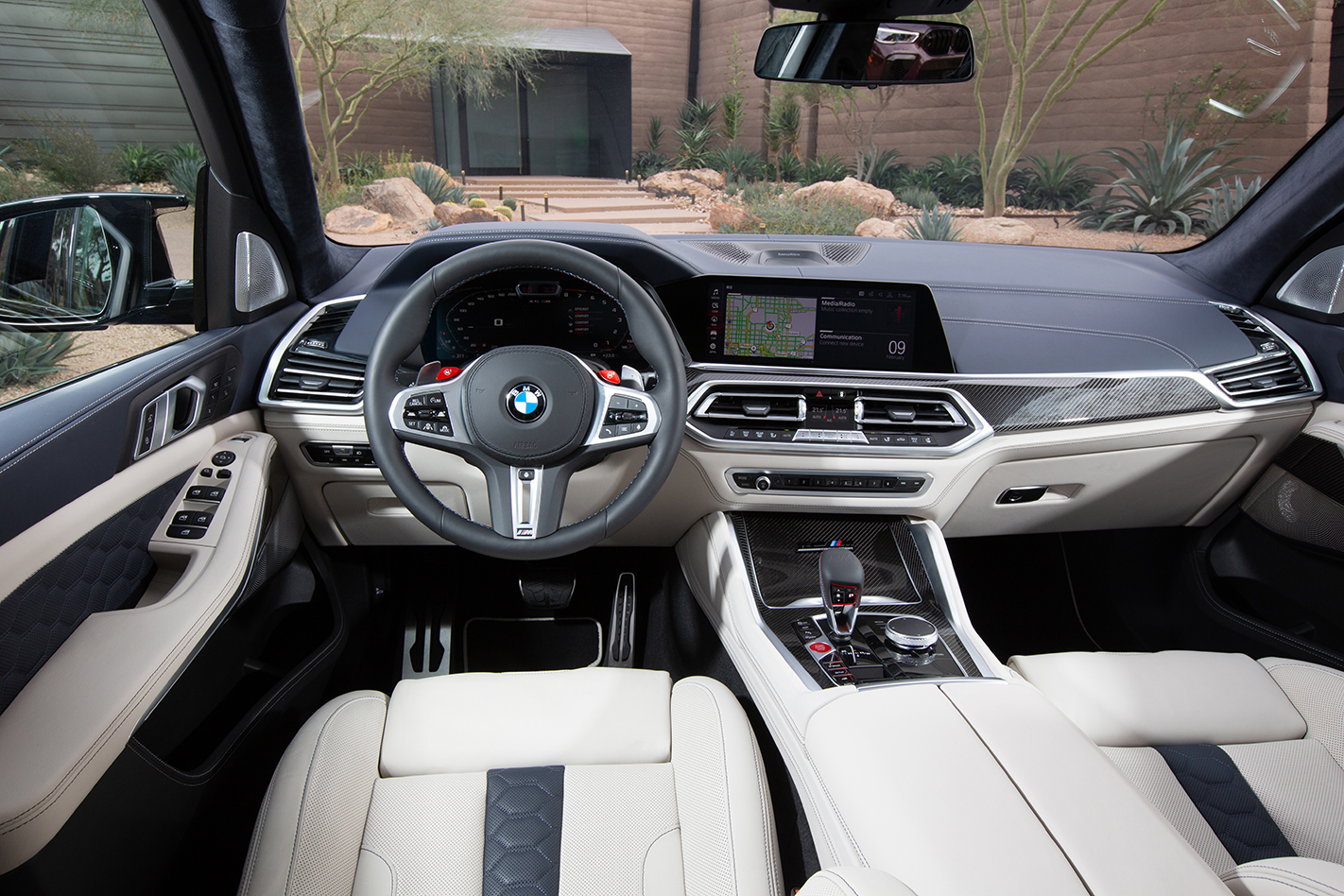
A long freeway stint reveals a comfortable and reasonably roomy SUV. The driving position feels a little tall but the M-spec wheel is a chunky delight, but the z-pattern auto stick is frankly very irritating.
Tall rear-seaters struggle a little for knee room while the rear seat backs don’t recline much, but toe and headroom is adequate. A lack of rear USB ports in our US-spec tester is an annoying oversight, though, while the onboard nav is stubborn and uncooperative.
Upon finding the roller coaster, though, much is forgiven. A short, very sharp blast through kilometres of perfectly manicured, deeply cambered corners is both thrilling and surprising. The V8’s low-down response allows the X5M to punch hard on corner exit, while the huge brakes – adjustable for feel within the M Mode menu a la the M8 – wash speed off with aplomb. Steering feel is faithful if a little feathery, but the front end absolutely refuses to push wide. Its ride quality is surprisingly compliant, too, with the active anti-roll bars playing their part to keep a flat platform. We suspect it will eat tyres at a rapid rate, but out of the box, the X5M impresses dynamically.
Our rougher road surfaces may change the picture, but the BMW X5M has certainly stepped it up a number of notches. Dismiss it as a top-hat marketing gimmick at your peril – the X5M has the potential to claim some serious scalps.
RIVALS
Audi RS Q7 (when it arrives), Mercedes-AMG GLC 63, Jeep Grand Cherokee Trackhawk, Porsche Cayenne Turbo
SPECS
- Model: BMW X5 M Competition
- Engine: 4395cc 8cyl 90deg V, dohc, 32v, twin-turbo
- Max power: 460kW @ 6000rpm
- Max torque: 750Nm @ 1800-5800rpm
- Transmission: 8-speed automatic
- Weight: 2385kg (estimated)
- 0-100km/h: 3.8sec (claimed)
- Economy: 13L/100km (ECE)
- Price: $209,900 plus ORCs
- On sale: May 2020
