
What is the Subaru Outback 3.6R?
An all-new Subaru Outback is on the horizon but this current model still feels fresh in its sunset year. And while the 3.6R’s flat straight-six cylinder engine seems a little archaic in this age of turbocharged and hybrid SUVs, it provides the Outback with a welcome power boost that manages to increase both practicality and driveability.
What’s the Subaru Outback 3.6R like to drive?
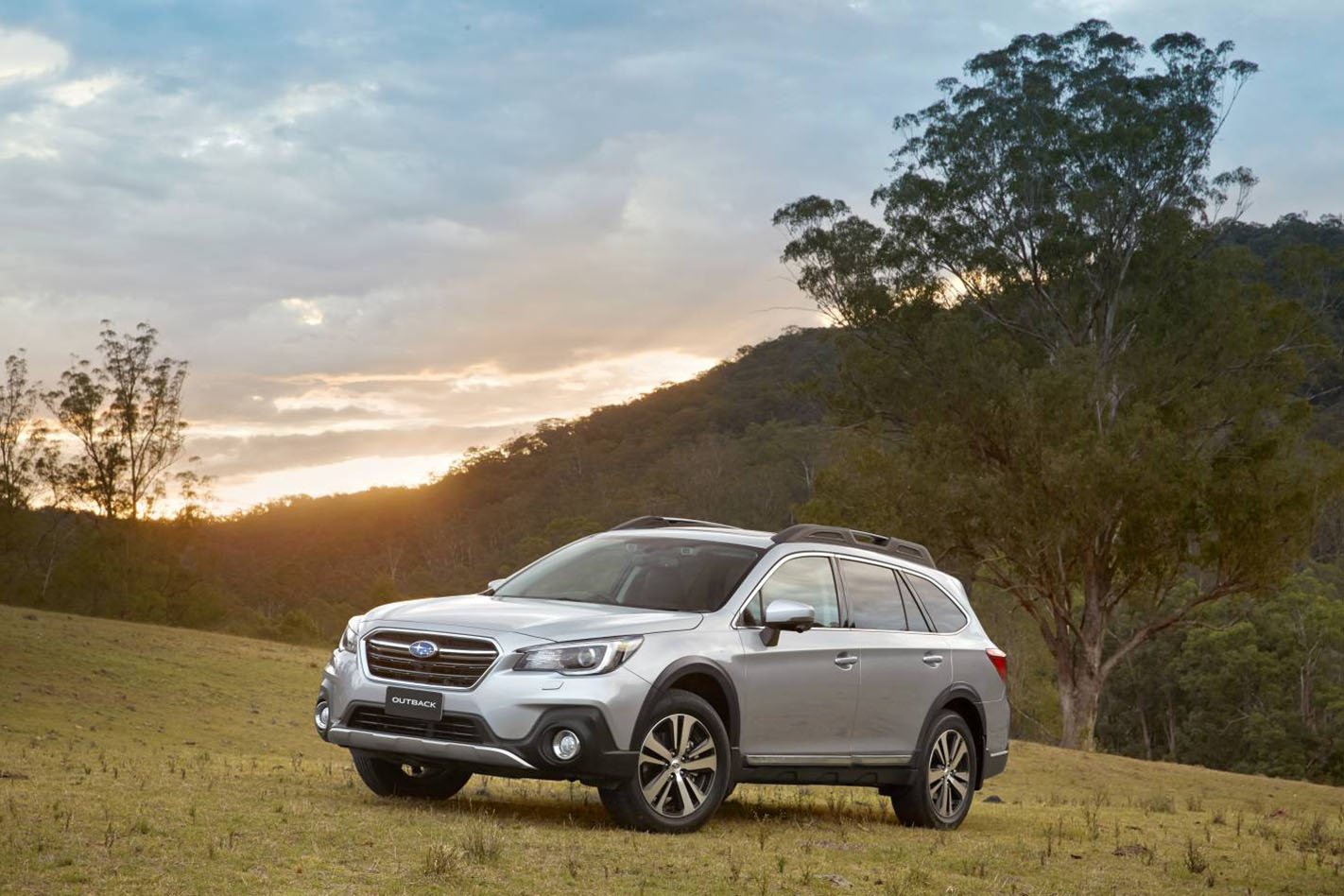
It’s when you’re comfortably seated behind the wheel where you question if it’s right to categorise the Subaru Outback as a large SUV.
The Outback is actually based on the Subaru Liberty and, even with its handy 213mm ground clearance, it corners in kind, thanks to its relatively low overall height and flat boxer engine that contribute to a lower centre of gravity than your average SUV.
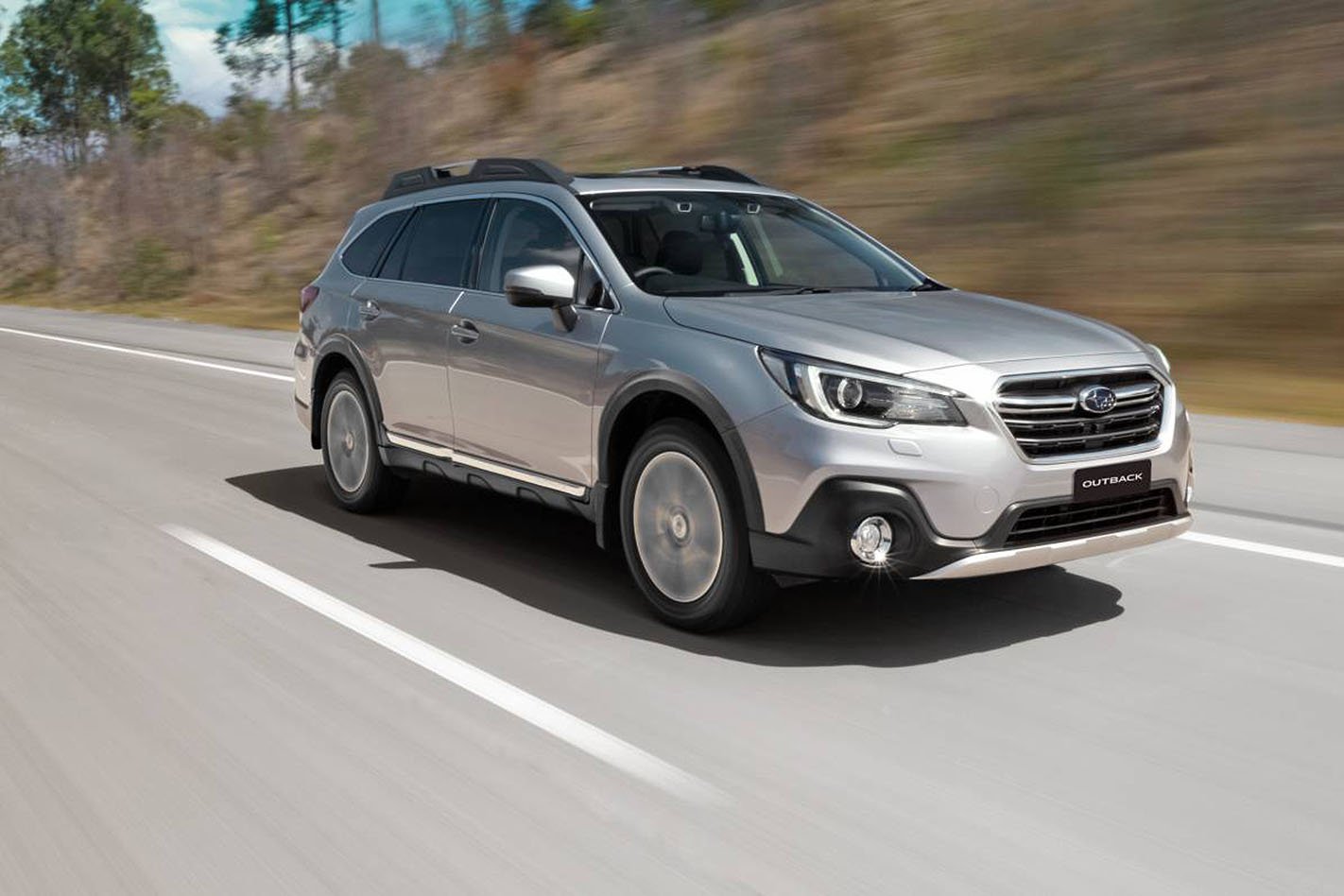
Handling is also helped by light steering, a smooth ride and taut suspension that’s firm to cater to a variety of road surfaces, but rides over imperfections with little fuss.
The all-wheel-drive system even splits the engine’s power to the front and rear axles, and you can tackle some pretty tricky terrain with Subaru’s X Mode system that helps safely negotiate slippery surfaces and inclines by constantly monitoring the traction available to each wheel and controlling the engine, transmission, brakes and other components accordingly.
With heaps of air between the ground and the Outback’s underpinnings, it’ll take you reasonably far off the beaten trail too.
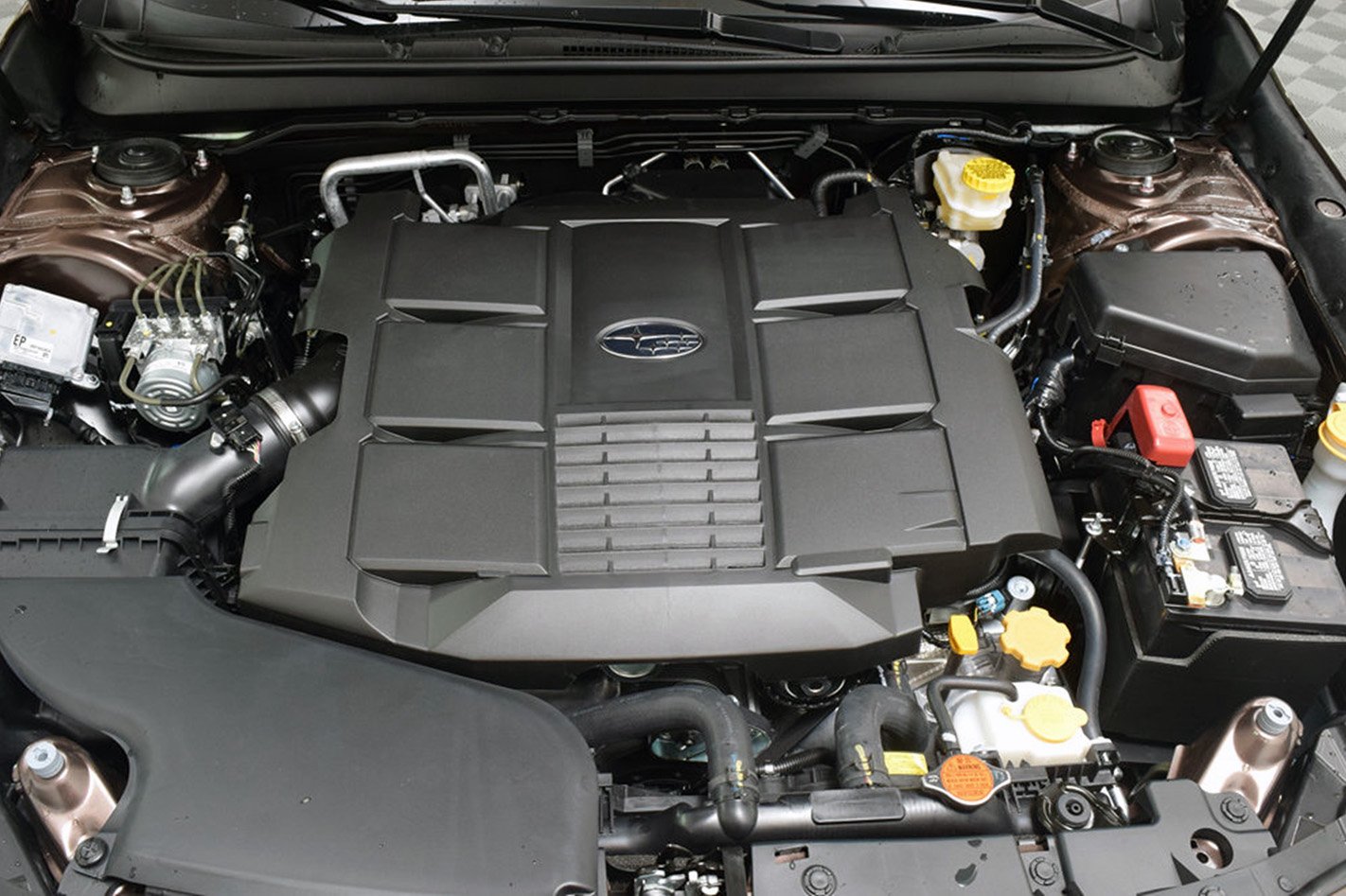
The 191kW/350Nm 3.6-litre six-cylinder engine provides about 50 percent more power than the 2.5-litre four-cylinder petrol, which means you rarely feel like you’re running out of puff. Like the sporty Subaru WRX, it has a three-mode SI-Drive that allows you to set the transmission to provide a ‘Short Sharp’ rev burst on take-off instead of the more gradual standard acceleration.
That 350 Newtons of torque contributes to a 1800kg maximum braked towing capacity, which is 100kg more than the diesel Outback.
What’s the Subaru Outback 3.6R like to live with?
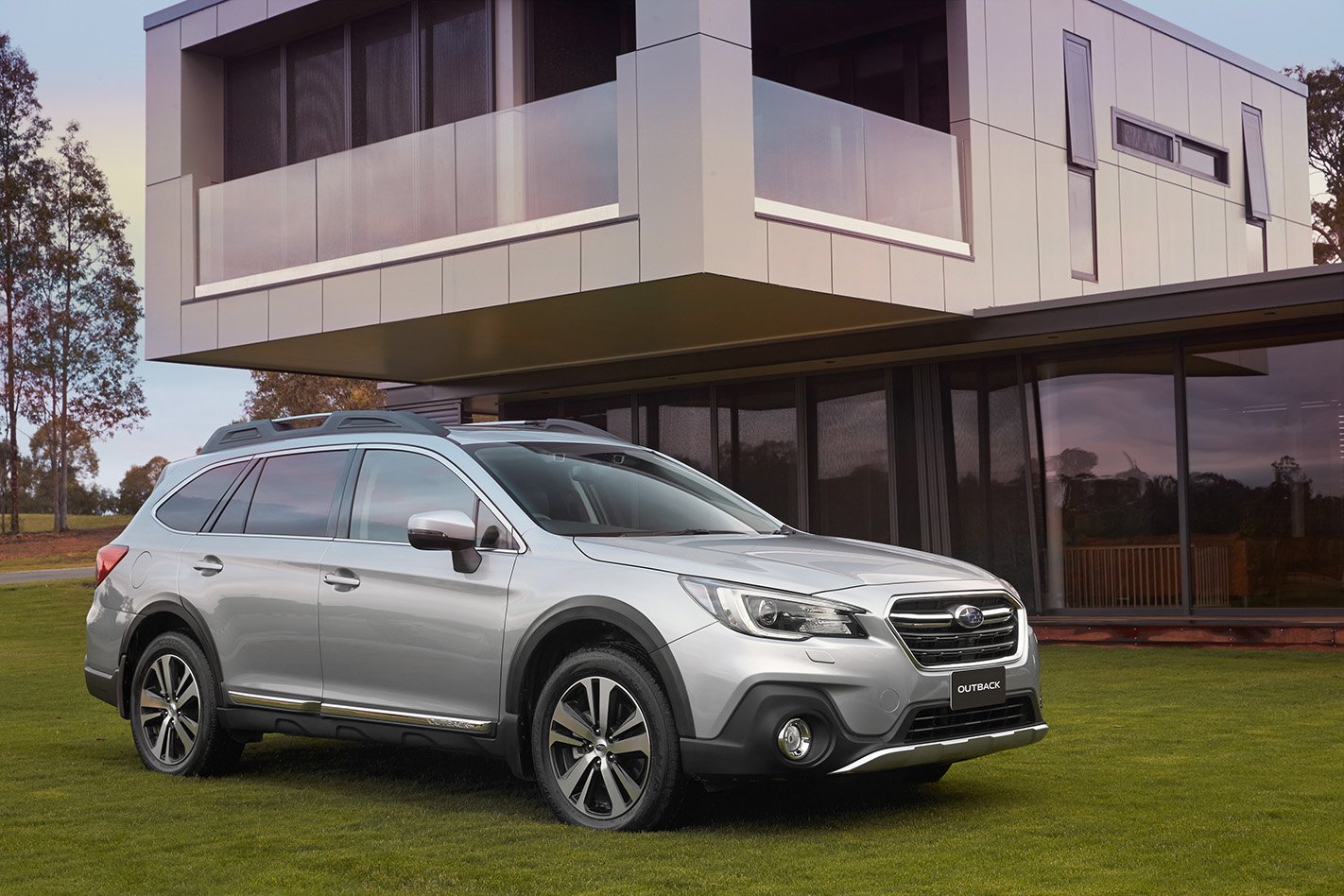
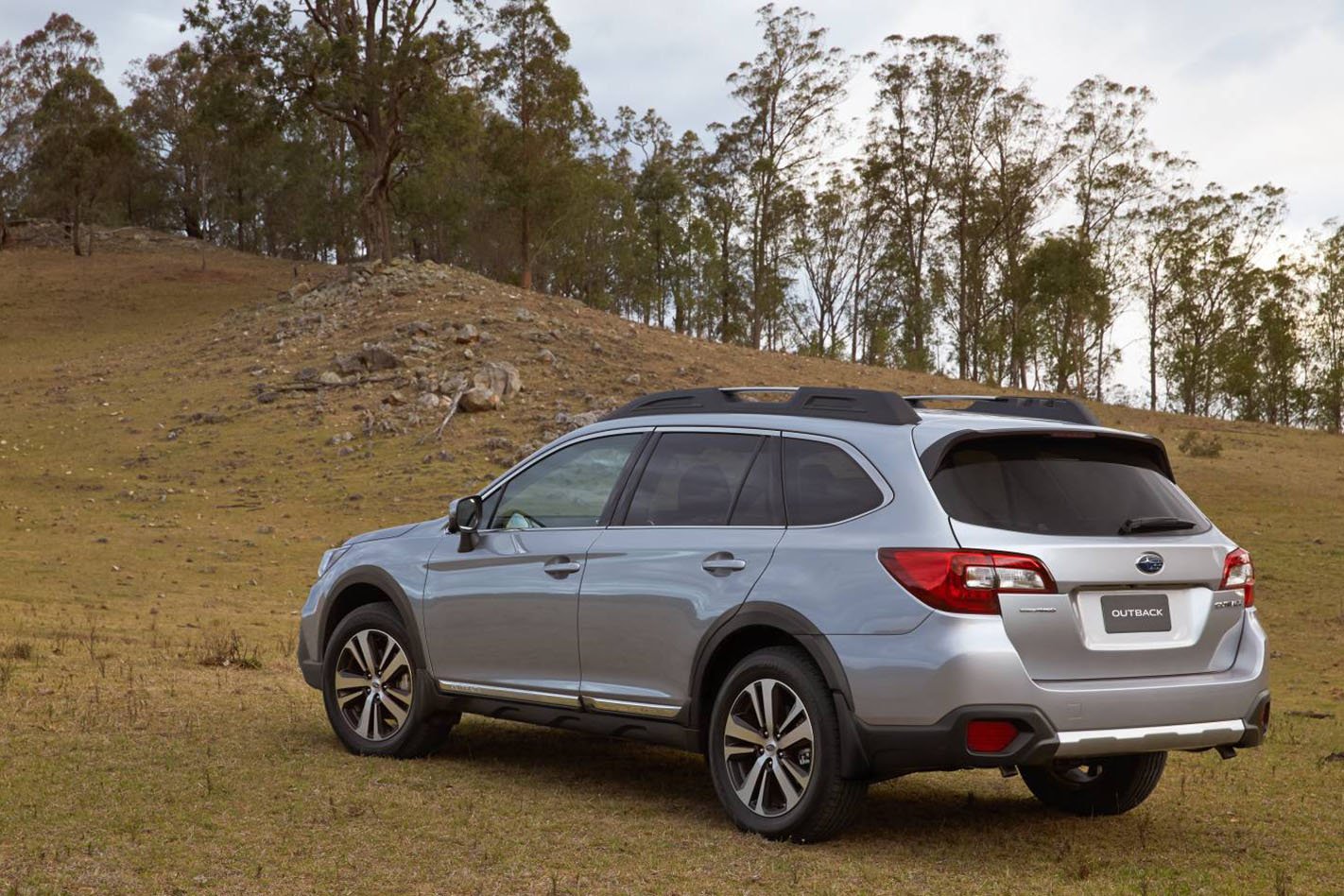
The term crossover tends to be applied small SUVs these days, but the Subaru Outback is one of the truest interpretations of the term. It looks like a high-riding wagon, like a Skoda Superb 4×4 or Holden Calais Tourer, but is deceptively large. which gives it a best-of-both-worlds mix of wagon dynamics, AWD traction, and large-SUV practicality and ground clearance – albeit without a third row of seats.
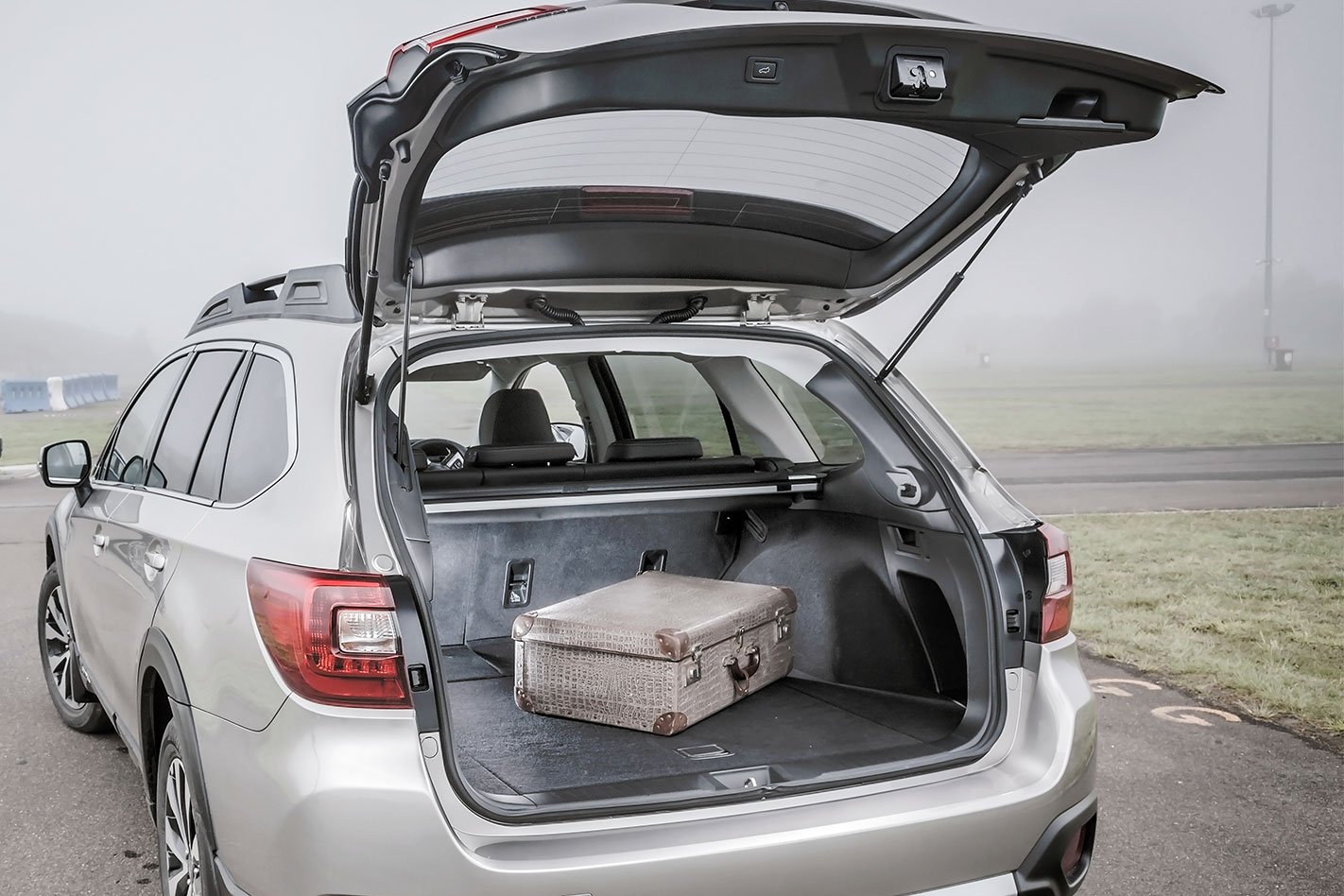
The Outback makes use of its interior expanse well to provide a good blend of cabin comfort and cargo area. The 512-litre boot space is less than most large SUVs because of its lower roof height, but it’s wide and long, with 1.04m from the tailgate to the rear seats.
Put the seats down and you can fit 1.6m-long loads, though I managed to fit a 1.9m buffet in there by pushing the front seat forward a little. This brought my average frame a little closer to the steering wheel, but not uncomfortably so.
The boot floor is also lower than other SUVs which helps make loading and unloading a little easier.
The Outback 3.6R sits at the top of the range with a $50,440 retail price that brings all the Premium-spec features including leather trim. It costs $6500 more than the four-cylinder petrol 2.5i Premium, and $3500 more the turbo-diesel 2.0d Premium, with the extra cost bringing an 11-speaker Harman Kardon premium sound system as well as the more powerful six-cylinder engine.
You also get: An 8.0-inch touchscreen with satellite navigation and Apple CarPlay/Android Auto, reversing camera with side and front views, roof rails, dual-zone climate control air-conditioning, rain-sensing windscreen wipers, 18-inch alloy wheels, powered tailgate, push-button start, smart key entry and power-adjusted and heated front seats.
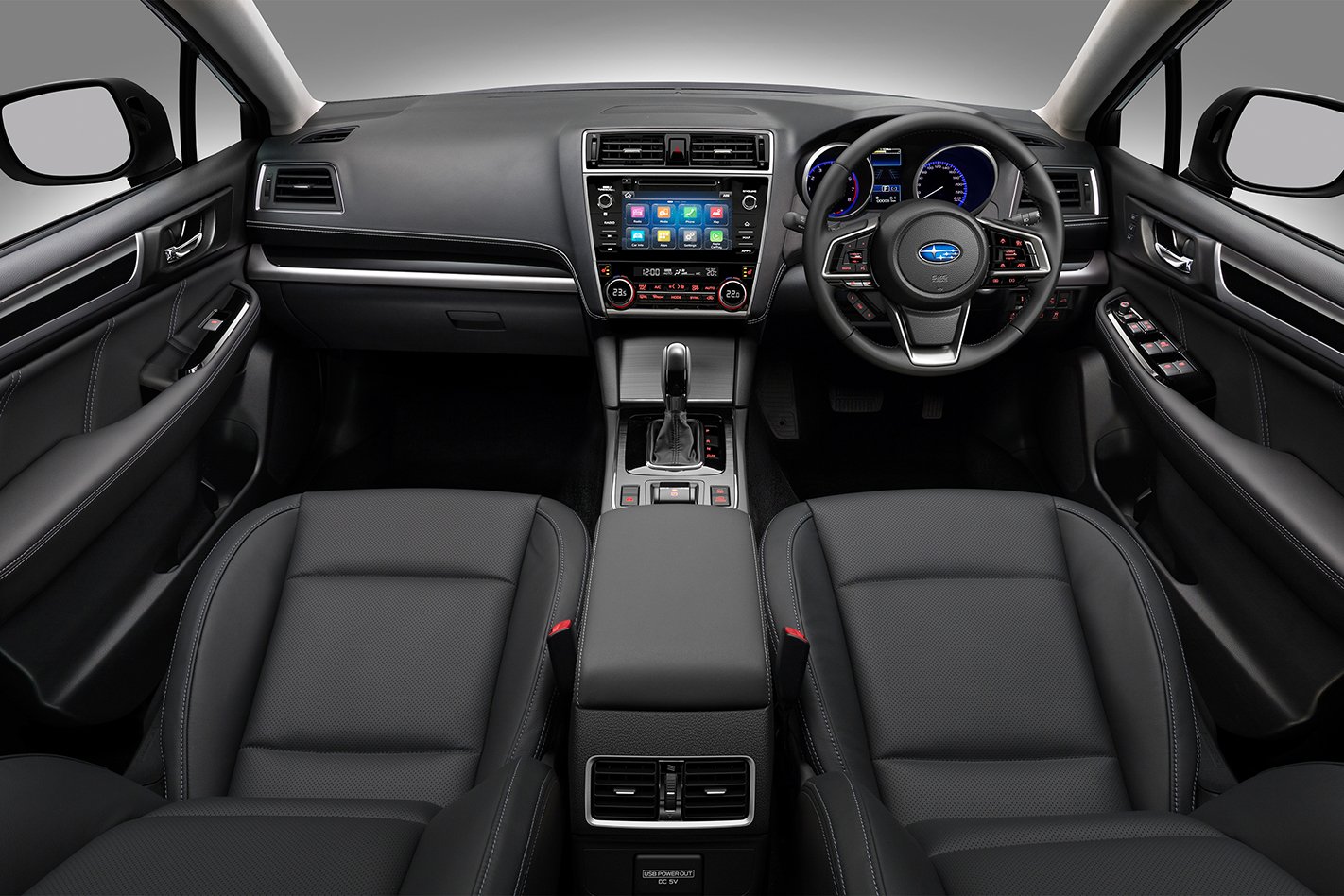
Then there’s Subaru’s EyeSight active safety system that brings adaptive cruise control, lane-keeping assist, autonomous emergency braking with pedestrian detection. Blind-spot monitoring and rear cross-traffic alert are also included.
The Outback’s interior is nicely laid out, with plenty of functions easily accessible on the steering wheel. The touchscreen is embedded in the dashboard, which is a little old-school these days, but it’s big and has sharp graphics.
I had an issue where Apple CarPlay occasionally didn’t connect even though the phone was charging via the USB connection, though I can’t say if this is a problem in all Outbacks.
The front seats are broad and comfortable and the rear bench can recline slightly and easily accommodate three adults who’ll have no issue with leg- or headroom.
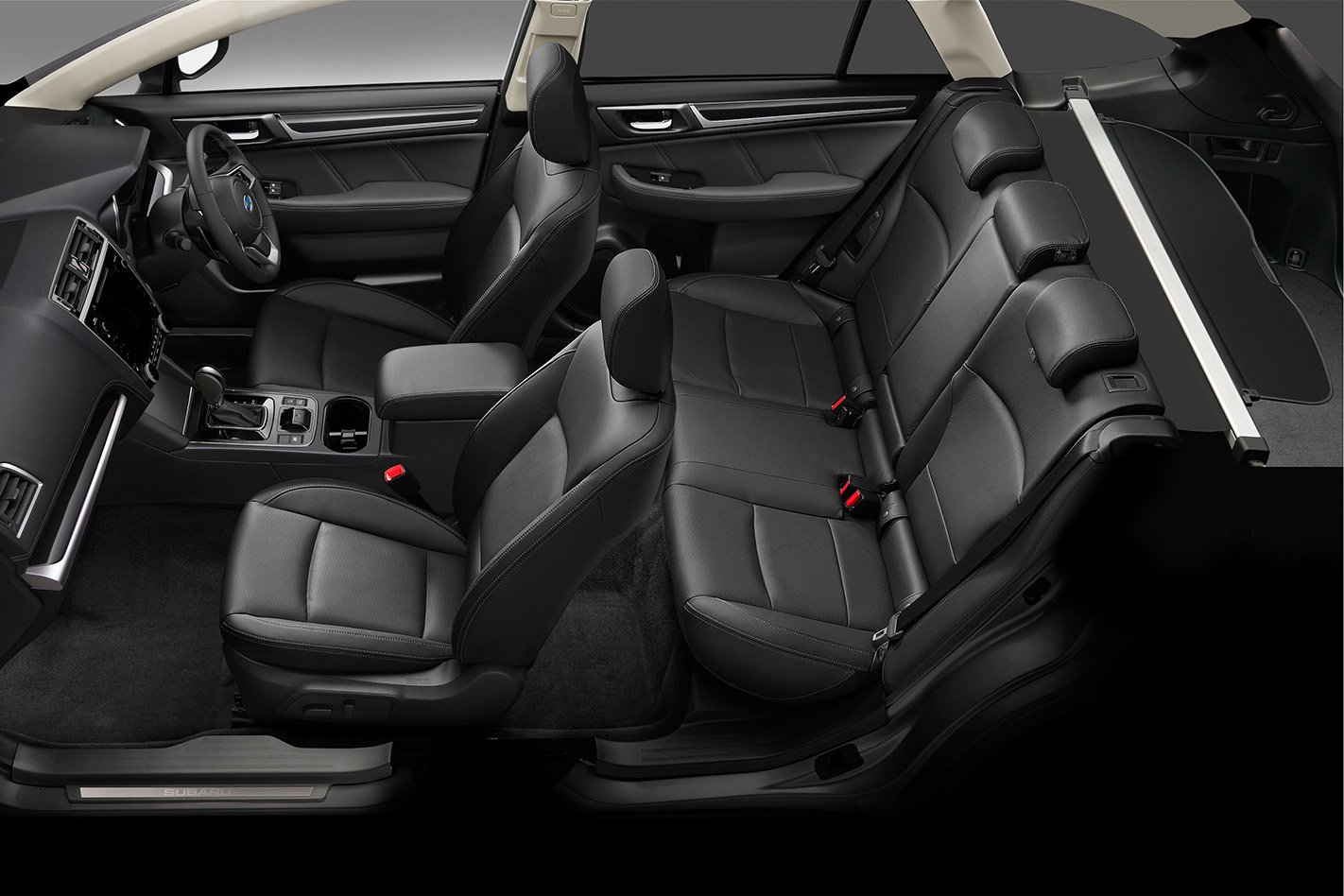
Three child seats can be fitted across the rear seat using the standard top-tether anchor points, or you can fit up to two using ISOFIX anchors. The rear doors open wide, which helps with putting children in their seats.
Rear-seat amenity is further improved with air-conditioning vents, two USB ports and a folding centre armrest.
The Outback 3.6R’s additional oomph comes with an official combined fuel economy of 9.9L/100km which is on a par with other six-cylinder large SUVs.
That said, I found myself averaging around 8.7L/100km without leaving town. By comparison, the 2.5-litre four-cylinder version uses 7.3L/100km combined.
The six-cylinder engine costs a bit more to service, though, like all new Outbacks it’s covered by five years/125,000km capped price servicing.
The Subaru Outback is also covered by a five-year, unlimited-kilometre warranty.
Is the Subaru Outback 3.6R worth it?
The Subaru Outback doesn’t do much wrong and while it doesn’t have knockout showroom appeal, it’s likely to win you over on points once you start ticking boxes.
Its $50,000 retail price is good value when you consider it includes the permanent AWD system and Eyesight active safety, and that you’d be hard-pressed to find a similarly-equipped and sized SUV for under $55,000.
But is it worth paying $6500 more than the four-cylinder 2.5i Premium? If most of your driving is around town than the smaller engine should do the trick, but the big six will rise to any occasion and provide you with an additional 300kg of towing power. Whatever you spend on a Subaru Outback you get what you pay for so you can be confident that you’re getting good value.
Another thing worth considering is the Outback will be replaced by a new generation model within 12 months. While this is often cause to hold off your purchase, it’s highly likely the six-cylinder version won’t carry over so, if this engine is right for you, get in there while you can.
Need for Speed Heat developers Ghost began hinting at fresh content and cars soon after Heat’s initial release late last year, and we finally have our first taste.
The NFS Heat ‘Black Market Deliveries’ update provides two new available cars, new challenge sets, customisation items and “vanity” items. It arrives not long after that last update that brought paid DLC and new functionality – including the much-requested gaming wheel support.
The Black Market update sees players meet a new NPC named Raziel – an underground car dealer who imports two types of cars: variants of already existing in-game cars, and all-new models (read: free and paid options).
The first pack includes an Aston Martin DB11 Volante, a roofless version of the DB11 coupe already found in game and – for a fee of $4.99 – players can also gain access to the iconic 1993 McLaren F1 – an all-new addition to the Need For Speed Heat vehicle list.
You can expect ongoing automotive additions to be rolled out in similar fashion. Free options will introduce reworked variants of already in-game cars, while desirable new vehicles will be offered up to those willing to pay for them. Yes, loot box mechanics may be gone from NFS, but microtransactions are here to stay. At least you’ll be getting what you paid for.
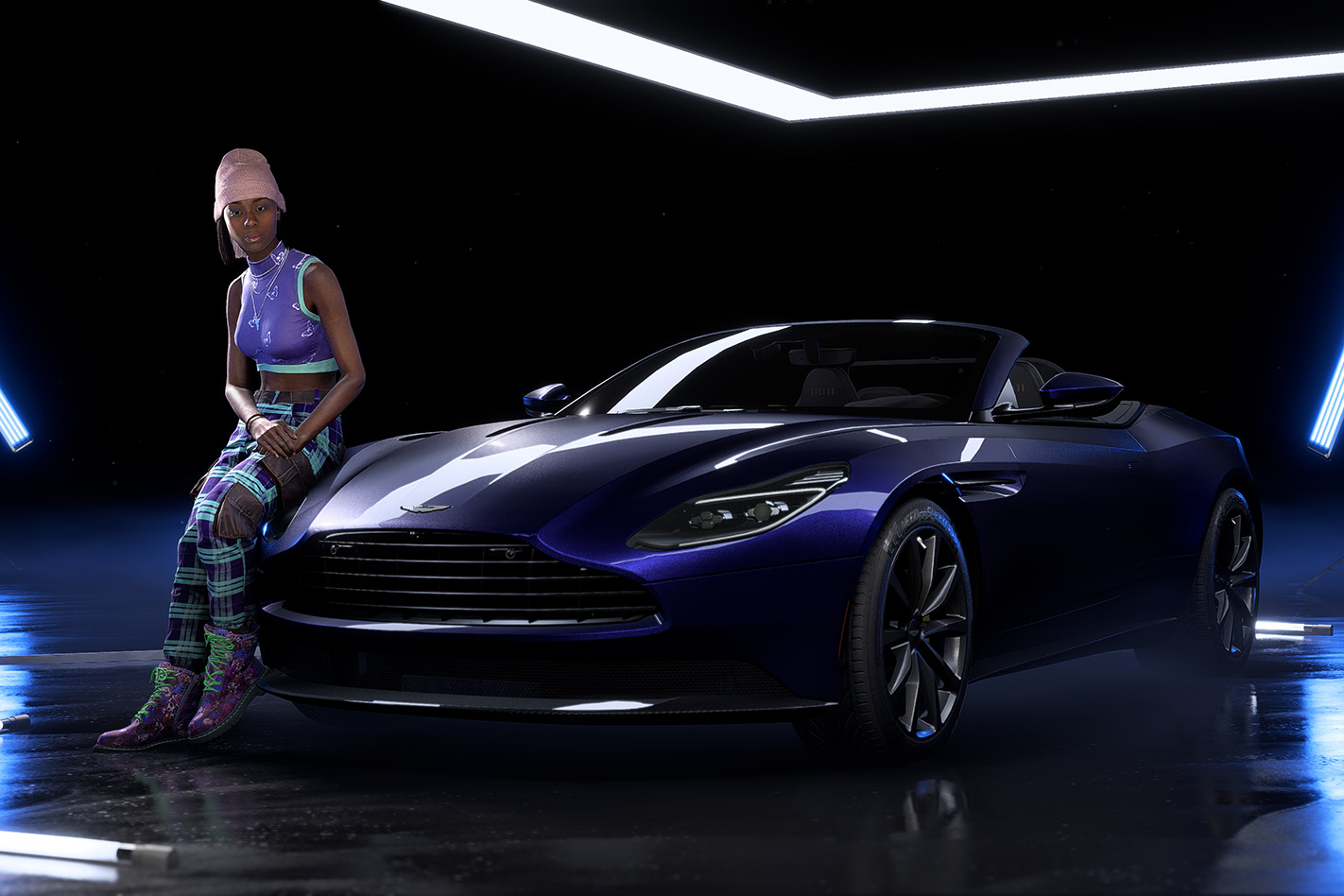
To get behind the wheel of either car, players simply head down to Port Murphy and retrieve them from a shipping container. This then opens a small narrative arc (said to add 3-5 hours of gameplay) for each car, where Raziel will ask the player to complete a few tasks and favours in order to receive a reward.
Complete the challenges to gain new visual customisation parts, character outfits and vanity items such as underbody neons. The outfits additions may sound a bit naff, but with character customisation largely hinging on the gear your avatar wears we reckon new threads will help bulk out the fairly limited variety of virtual clothing in the standard game.
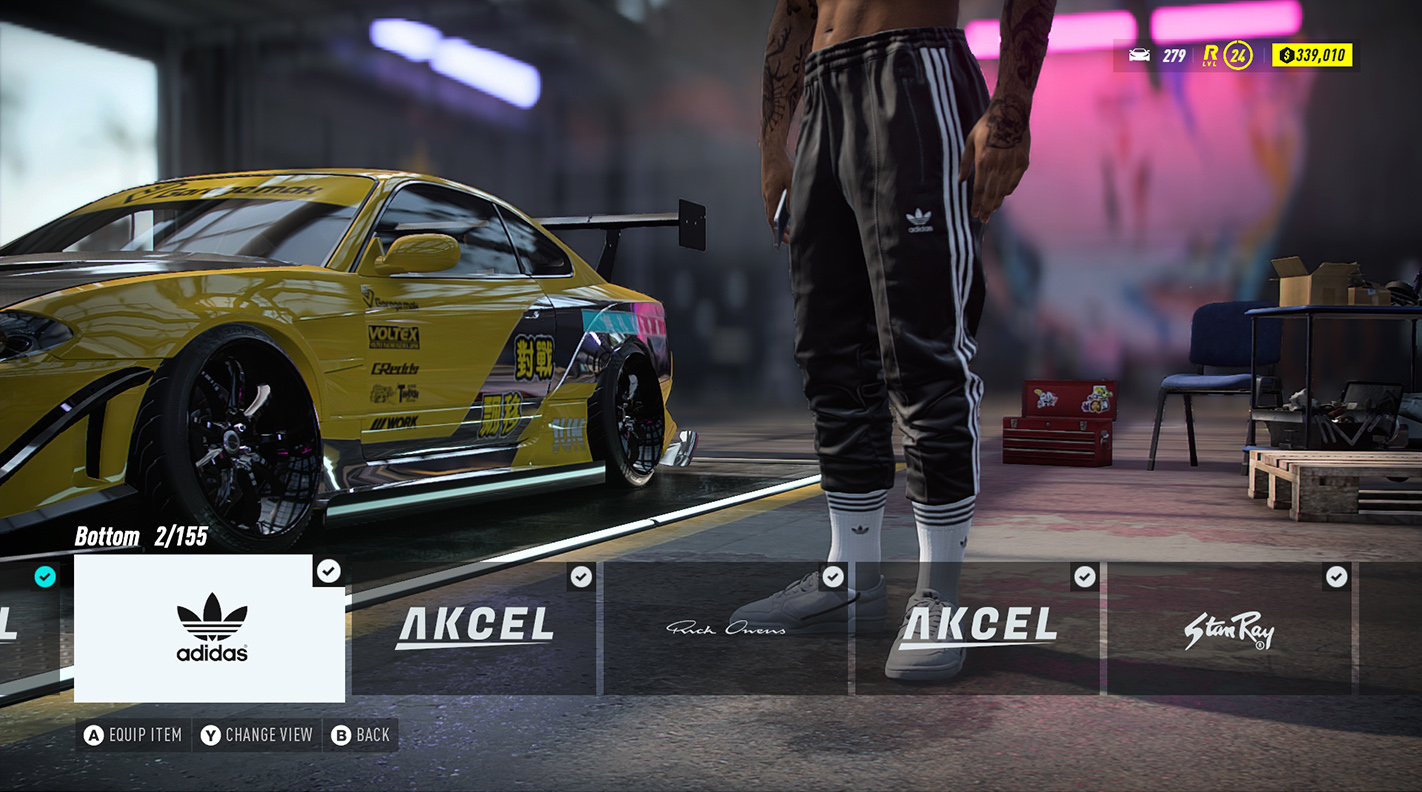
The Black Market Car Pack #1 includes:
- Free – Aston Martin DB11 Volante (2018)
- Narrative setting with VO
- 6x Challenge Sets for the player to complete (3-5 hours of gameplay) featuring both recycled (activities) and new content (exclusive new events)
- Character outfits
- Customisation items
- Vanity items
- $4.99 – McLaren F1 (1993)
- Narrative setting with VO
- 6x Challenge Sets for the player to complete (3-5 hours of gameplay) featuring both recycled (activities) and new content (exclusive new events)
- Character outfits
- Customisation items
- Vanity items
What stands out?
The Mazda CX-8 bridges the gap, in size and price, between the CX-5 and CX-9, and offers three-row seating, fastback styling, an elegant and quiet cabin, enhanced handling and a choice of petrol and diesel engines. Autonomous emergency braking is standard.
What might bug me?
How often you have to drop the car off for service. It’s every 10,000km (or 12 months), which could mean twice a year if you drive a lot.Dealing with a flat tyre when you’re out of town. All CX-8s have a space-saver spare tyre, which limits the recommended top speed to 80km/h. It is skinnier than the regular tyres on the car, and so has less grip.No longer having an option to buy a FWD diesel CX-8 which was cheaper and slightly more efficient than the AWD version.
What body styles are there?
Five-door SUV-style wagon only.Petrol CX-8 versions only drive their front wheels, the diesels drive all four wheels.All-wheel-drive CX-8s use an on-demand AWD system. Most of the time it sends most of the engine’s power to the front wheels, to optimise fuel economy. When the sensor-based, predictive system thinks the front wheels are about to slip, it sends a greater proportion of power to the rear wheels.The Mazda CX-8 is classed as a large SUV, lower priced.
What features do all Mazda CX-8s have?
- An 8.0-inch central screen, sound system with AM, FM and Digital (DAB+) radio, Aux and USB inputs, Apple CarPlay/Android Auto smartphone mirroring, Bluetooth connectivity for phone calls and audio streaming, and at least six speakers.
- Satellite navigation, a reversing camera, and rear parking sensors.
- Rear cross-traffic alert, which looks to either side behind you when you are reversing, and warns if a vehicle is approaching.
- Seven seats.
- Aluminium alloy wheels.
- Six-speed automatic transmission.
- Adaptive cruise control, with slow-speed stop-and-go function.
- Active safety suite which includes autonomous emergency braking that works at low and medium speeds, forward obstruction warning, blind-spot monitoring, lane-keeping assist, rear-cross traffic alert and driver attention alert.
- A head-up display that projects information on the windscreen near your line of sight, including speed, blind-spot, sat-nav directions and Mazda’s Traffic Sign Recognition, which displays the last speed-limit sign you passed.
- Leather on the gear handle and steering wheel, and controls on the wheel for operating the cruise control, the sound system, and your phone.
- Three-zone climate control with second-row control and vents
- Headlights and tail-lights illuminated by LEDs, which are brighter than conventional halogen bulbs and last much longer.
- Rain-sensing windscreen wipers, and windows tinted against sun penetration.
- Auto-dimming rear-view mirror.
- Keyless entry and push-button start
- Roof-rack rails.
- Electronic stability control, which can help you control a skidding car. All new cars must have this feature.
- Six airbags. (For airbag placement, and for more on CX-8 safety systems, please open the Safety section below.)
- The CX-8 is covered by a five-year warranty, with no limit on distance.
Which engine uses least fuel, and why wouldn’t I choose it?
The 2.2-litre SKYACTIV-D turbocharged diesel engine that’s shared with the smaller Mazda CX-5 and wagon is the most efficient engine in a CX-8, consuming just 6.0 litres/100km on the official test (city and country combined).The diesel pulls well and is well-suited to country driving, though it also accelerates smartly around town.This was the sole engine option in the CX-8 when it was introduced to the Australian market to provide a diesel alternative to Mazda CX-9, which only comes with a 2.5-litre turbo petrol engine.In 2020 Mazda introduced a to the range, a 2.5-litre Skyactiv-G petrol engine that’s also available in the CX-5. It’s not turbocharged like the CX-9’s so is less powerful. The petrol CX-8 has a combined fuel economy rating of 8.5L/100km.The main reason you wouldn’t choose the diesel over this is that you want to pay less for your CX-8. The diesel powertrain adds $4000 to the price of a CX-8. One of the reasons for the price hike is that all diesel CX-8s have AWD, while the petrol versions only drive the front wheels.All four CX-8 specification grades have a FWD petrol and AWD diesel version.
What key features do I get if I spend more?
The least costly CX-8 is the Sport FWD which comes with the petrol engine front-wheel drive, cloth seats, 17-inch alloy wheels, six-speaker audio system, and the features common to all CX-8s. Spend more money and you can have a Sport diesel AWD. As with the other CX-8 variants, you’ll pay about $4000 more for the diesel AWD version.The CX-8 Touring brings a few additional features such as black-leather trim, heated power-adjustable front seats, front parking sensors, front fog-lamps, second-row USB ports, advanced keyless entry, and one-touch switch to lower second-row cushions for easier third-row access.Paying more again for a CX-8 GT brings LED headlights/daytime running lights, sportier 19-inch alloy wheels, sunroof, second-row heated seats, third-row USB ports, power-operated tailgate, and a 10-speaker BOSE premium audio system.The most expensive CX-8 version, the Asaki, brings more premium Nappa leather upholstery, and a more appealing dashboard finish, LED ambient lighting, ventilated front seats, heated steering wheel, and a 360-degree parking monitor.
Does any upgrade have a down side?
Seven colours are available on a CX-8, five of them at no extra cost. Soul Red Crystal and Machine Grey attract a $300 premium.
How comfortable is the CX-8?
This CX-8 uses classy looking materials, with Mazda placing more emphasis on presentation and refinement.Even the less-costly CX-8 Sport uses metal-look finishes prominently, and supplies a chunky leather grip for the height and reach adjustable steering wheel. Both front seats are height adjustable too, and the steering is pleasantly light.Seats are very comfortable, with good upper body support. While the leather trim feels plush, the less slippery cloth seats hold you in place more effectively around corners.The cabin whilst driving is noticeably quiet thanks to Mazda’s ongoing war on noise, vibration and harshness (NVH) levels. The CX-8 has extra sound proofing applied to the inner of the rear guards and at the base of the D-pillar to make things quieter in the third row. And the tailgate is better sealed to help cut wind noise. Road noise is also low, even on the GT and Asaki’s 19-inch low-profile tyres, and diesel clatter is a lot less noticeable than in the CX-5.The CX-8’s suspension is tuned for comfort and takes most road surfaces in its stride, with occasional jarring over modest-sized ruts. Ride-handling balance also sensibly prioritises keeping the occupants comfortable and relaxed, rather than the ability to enthusiastically negotiate bends.
What about safety in a CX-8?
The CX-8 was the first car to be tested under the tougher Australasian new Car Assessment Program (ANCAP) testing regime, and passed with the top 5-Star safety rating.Every CX-8 has the mandatory stability control, a reversing camera, rear parking sensors, autonomous emergency braking, blind-spot monitoring, a rear cross-traffic alert, and six airbags. It is a comprehensive package, focusing jointly on crash protection and crash avoidance.Two airbags protect the driver and front passenger from a frontal impact; two more are placed outside these front occupants at chest level to protect from a side impact; and curtain airbags, extending down each side at head level to protect occupants in all three rows from side impact.Mazda calls the CX-8’s auto braking Smart City Brake Support [Forward/Reverse]. It operates over a broader speed range than the similarly named system in the outgoing CX-8, using camera-based sensors to scan the road ahead for obstacles – typically a car that has slowed unexpectedly, but also a pedestrian. It can apply the brakes automatically in an attempt to avoid a crash, at speeds up to 80km/h. The system works in the same way, albeit only up to 8km/h, when you’re reversing.Meanwhile Smart Brake Support system uses radar sensors and a forward sensing camera to monitor vehicles and obstacles ahead, helping avoid front-end collisions from 15km/h or more and includes support for highway speeds.Blind-spot monitoring uses rear-facing radar sensors to check for vehicles at your rear corners that might not appear in your mirrors, warning you of them if you attempt to change lanes.Rear cross-traffic alert uses the same sensors when you’re reversing, checking for vehicles crossing behind you and telling you if you’re about to back into danger.Lane-keep assist warns that you have started to drift out of your lane (perhaps from distraction), also providing gentle steering assistance to bring you back. And a Driver attention alert checks your control inputs over time, warning you to take a break if they become erratic.
I like driving – will I enjoy this car?
Mazda’s CX-8 drives more like a heavier, slighter softer-riding CX-5, rather than a more nimble CX-9.The upgraded 2.2-litre diesel is strong and frugal.We’re yet to drive a petrol version but, if similarly-powered CX-5s are any guide, the engine will probably have to work quite hard in the heavier CX-8 at highway and overtaking speeds.The CX-8’s steering feels nicely weighted and responsive around town, but increase the pace to country cruising, though, and you can feel a little play in the wheel from centre. Expect the petrol versions to handle a little better because of the lighter engine.Overall, the body control and general dynamics are good, but arguably more noteworthy is the ride comfort and quietness in the cabin, even on the GT and Asaki’s bigger 19-inch wheels.The CX-8 mostly just cruises along with ample compliance and a general imperviousness to the road surface that would make some higher-priced Euro SUVs look stiff-legged and restless by comparison.
How is life in the rear seats?
The third row is designed to accommodate occupants up to 170cm tall, which makes it a little tight for most adults. Once they squeeze in though, most people will cope with a 20-minute run across town. Kids, meanwhile, won’t have too much to gripe about in terms of leg and shoulder room, although visibility for shorter bodies is not brilliant, and there are no dedicated air vents back there.If there’s only a sixth passenger to be accommodated, the third row can be split to allow extra luggage space over the folded seventh seat.The third-row seats in the GT and Asaki versions have their own USB ports.The second-row seats are much roomier, can recline 22- and 30-degrees from vertical, and have a fold-down centre armrest with storage and two USB sockets in all but the Sport variant. The middle-row has dedicated heating/cooling vents and independent air-conditioning controls. The two outboard seats in the GT and Asaki are heated.The CX-8’s rear doors open out to 80-degrees to make getting into each row easier, and to help with loading items through the side, or placing infants in child seats or capsules.
How is the CX-8 for carrying stuff?
With the third row in use, the Mazda CX-8 holds 209 litres of luggage space, which Mazda reckons is enough to hold two golf bags. There is also a sub-boot below the main boot floor with a large opening and a depth of 100 mm, offering 33 litres of underfloor storage space, which is especially useful for valuable or fragile items.With the third-row seatback folded away, the available luggage capacity increases to a sizeable 742 litres. Folding down both the second and third-row seatbacks brings a capacious 1727 litres and creates a flat floor space large enough to hold two bicycles.The entire luggage area, including the sub-boot space, is covered in a hard-wearing, non-woven material.The GT and Asaki versions come with a power-operated tailgate.Petrol FWD CX-8s can tow up to 1800kg braked loads, while the diesel AWD versions can tow up to 2000kg. Each has a 750kg unbraked towing capacity.
Where is the CX-8 made?
All CX-8s are produced in Japan.
Are there any rivals I should consider?
The CX-8’s main diesel seven-seater SUV competitors include the Hyundai Santa Fe, Kia Sorento, Mitsubishi Outlander, Peugeot 5008, Skoda Kodiaq and new Volkswagen Tiguan Allspace.The Ford Endura and a Subaru Outback are also worth a look if you’re not after seven seats.If you’re not too fussed whether your SUV has a diesel or petrol engine, all of the above models have petrol versions as do the Holden Acadia, Nissan Pathfinder, Toyota Kluger and of course the Mazda CX-9.
I like this car, but I can’t choose which version. Can you help?
The CX-8 range now has more choices and the new Touring spec offers great value in terms of price and upper-spec features.Petrol FWD or diesel AWD is up to you, but considering the CX-8 was always meant to be a diesel alternative to the CX-9 we’d go with the latter, which offers more power, fuel economy and AWD traction.If you prefer petrol power we’d be inclined to go with a CX-9 Touring, however, if you spend most of your time driving around inner-city areas the narrower CX-8 could prove more convenient in tight streets and parking spots.
Are there plans to update this model soon?
The CX-8 first went on sale in Japan (where the bigger Mazda CX-9 isn’t available) in late 2017 and entered the Australian market in June 2018 with Sport and Asaki variants.It received a slight update in March 2019 that brought improved handling, Apple CarPlay/Android Auto, tyre-pressure monitoring, a revised air-conditioning control panel.In February 2020 Mazda added the 2.5-litre petrol engine to the range and added mid-spec Touring and GT variants.Don’t expect any upgrades until early 2021.
‘Q’ is Aston Martin’s customisation service, but Q has now built an entire car – the Aston Martin V12 Speedster.
Upon its reveal, Aston boss Andy Palmer called the Speedster the brand’s “most exciting special model.”
“The V12 Speedster is an incredible demonstration of the breadth of capability and determination from the ‘Q by Aston Martin’ team, who have worked tirelessly to create this stunning, two-seat sports car aimed at our most demanding and enthusiastic customers.”
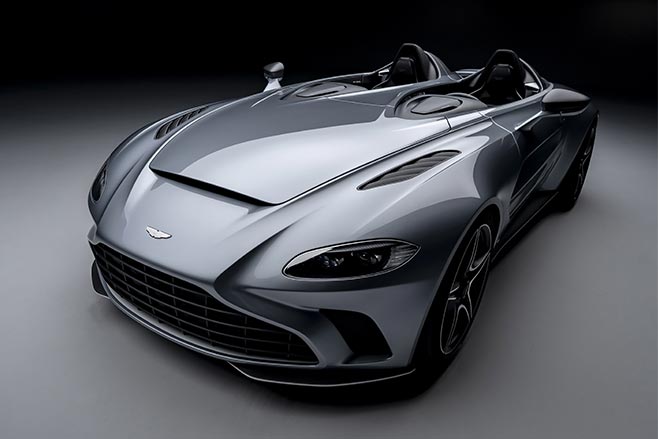
Those enthusiastic customers will be treated to uninterrupted auditory access to the 5.2-litre twin-turbo V12 (coupled to a ZF 8-speed automatic) as it makes 522kW and 753Nm, peaking on the way to 100km/h in just 3.5 seconds. Aston Martin claims it’ll then go on to hit a top of 300km/h.
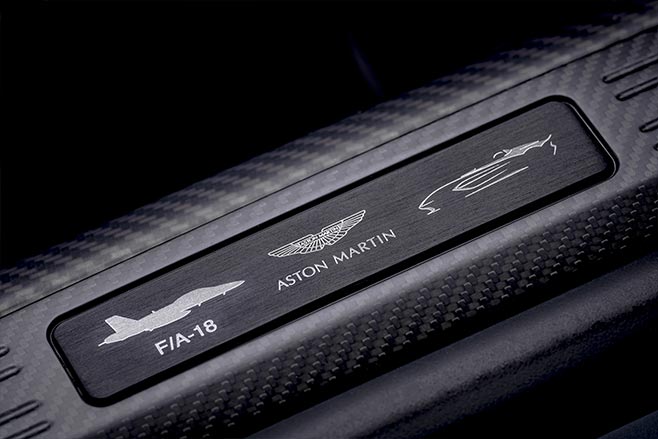
The two-seater was inspired by both Aston’s racing history, and by aeronautical design. The livery seen at its launch is called the F/A-18.
The Aston Martin V600 and Le Mans
On top a bonded aluminium chassis architecture, the body is constructed “almost entirely” from carbon fibre, taking elements from Aston Martin’s design language and blending them into a unique style.
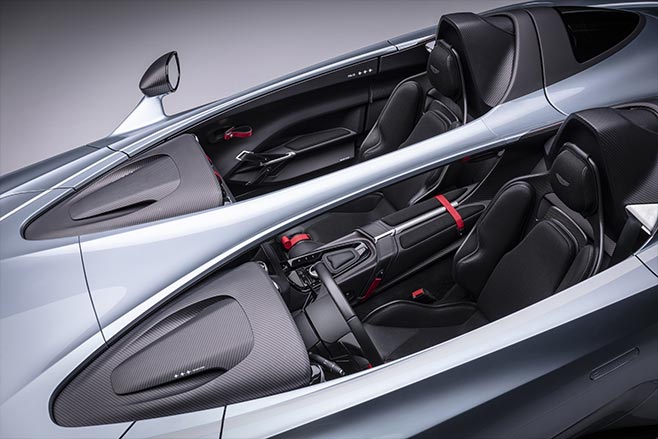
Aston Martin Lagonda’s design chief Miles Nurnberger says it’s part of the “forward-looking” imagery Aston’s cars have taken on since DB11 was introduced.
“There’s clear lineage from the 1959 Le Mans winning DBR1 to our Centenary celebratory CC100 Speedster Concept in 2013.
“There is also a bit of 1953 DB3S in the mid-section, so it really is our latest incarnation of the Speedster concept. It’s also inspired by fighter jets as much as it is by our history.”
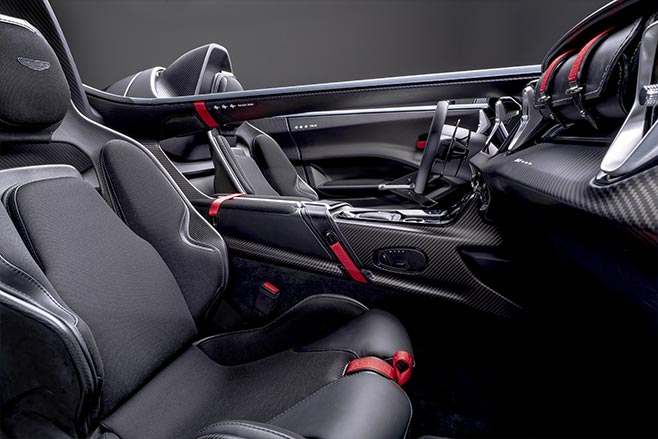
Aston’s engineering chief Matt Becker calls the V12 Speedster the purest driving experience Aston Martin offers.
“For raw, driving thrills the V12 Speedster is unparalleled, the fully open element of the car adding a new dimension to the experience,” says the former Lotus chassis engineer.
“It engages on every level, delivering a precise, involving driving experience, with agility and poise backed by abundant power from Aston Martin’s twin-turbo 5.2-litre V12.
“Driving doesn’t get any purer than this.”
Customers who’ve paid the £765,000+ base price (plus customisation costs, of course) will start to receive their V12 Speedsters in early 2021.
If you still use your phone at the wheel or allow yourself to be distracted by something other than the task of safe driving, you’re unfortunately part of a majority among Australian drivers.
An independent study commissioned by comparethemarket.com.au has revealed that a staggering three out of four Australian drivers admitted to multi-tasking while in control of a car.
The survey asked 1000 Australian drivers if they had attempted to carry out a variety of tasks while either driving or stopped in traffic including the heavily punishable mobile phone use.
See how many of these potentially deadly tasks average Australians admit to doing at the wheel – and if you’re one of them.
Mobile device use in cars
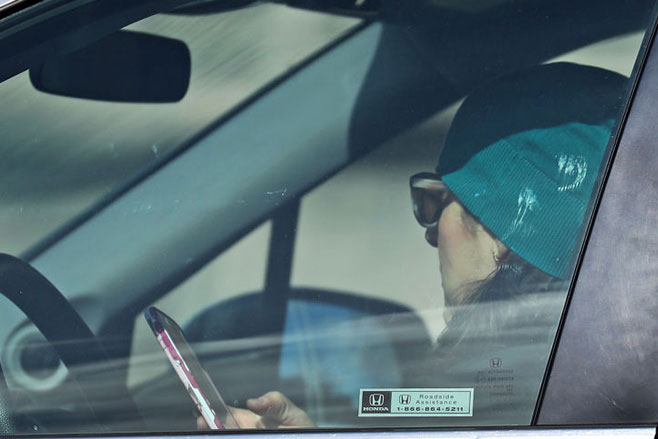
Just 8.0 percent of motorists admitted to using a mobile phone while actually driving, but nearly a quarter said they do pick up their device when stopped at a traffic signal or in stationary traffic.
Regardless of whether the vehicle is moving or not, holding or touching a phone while in control of a car can land you a hefty fine. Queensland recently pumped its maximum phone fine to $1000 and other states are following suit to cleave four demerit points from your licence, while in New South Wales the offence can now cost up to five, and ten on double-point weekends.
And it’s not just the driver who can be busted. Passengers who have been deemed to have distracted the drivers have been fined, as well.
Back seat distraction
Almost one in ten drivers said they had been distracted by something in the second row of seats while driving, including trying to retrieve an object or to tend to a child. Paying too much attention to adult passengers in the rear seats is another source of distraction.
A far greater number (43 percent) admitted to leaning in the back while stationary. Of those interviewed, some said they removed their seatbelt to allow easier access to the rear seats – which is also punishable by law.

Eating and drinking
While there is no specific law forbidding consuming food or drink at the wheel, drivers who are deemed to not have proper control of a car or driving without due care and attention can be punished with fines even higher than those for preventing phone use.
Get nabbed in South Australia for eating or drinking at the wheel, for example, and you could be hit with up to $2500 in fines.
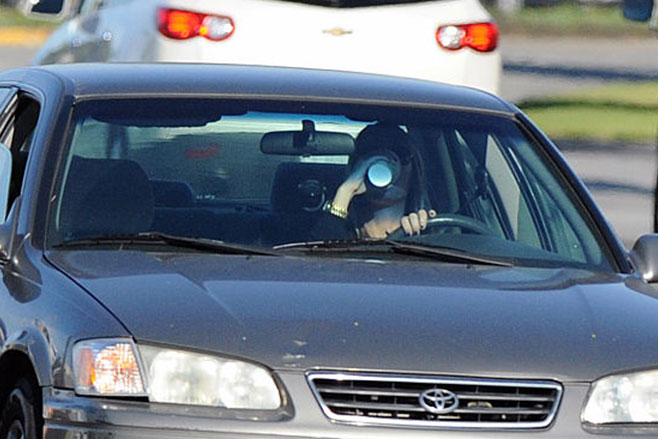
Of the 1000 Aussies surveyed, 35 percent said they had eaten while driving, while 40 percent had consumed a drink while driving.
Personal grooming while driving
The statistics also confirmed a high number of drivers that use the rear-view mirror to check hair and makeup. According to the survey, 15 percent had applied cosmetics while stationary in traffic.
While some of the offences may seem somewhat mild, the study also highlights research by the National Roads and Motorists’ Association, which claims the risk of a collision or near-miss doubles if the driver is distracted from the road for just two seconds.
The distraction study also identifies the highest-risk demographic with drivers in their 30s most likely to be distracted while driving. 48 percent of motorists between the ages of 31 and 40 admitted to eating while driving, and nearly half said they had used a phone while in stationary traffic.
While the law is clear on mobile phone use in cars, the legislation surrounding other distractions while driving is more open to the discretion of the police officer. To avoid getting slapped with a hefty fine for driving without proper attention or even negligent driving, always pay attention to the road and definitely leave that phone alone.
Are you one of the distracted majority? Dob yourself in below!
The announcement of Holden’s planned exit from the Australian new-car market has had an instant impact on sales with the venerable marque falling outside the top 10 brands.
According to the Federal Chamber of Automotive Industries (FCAI) February VFACTS report, the numbers are damning
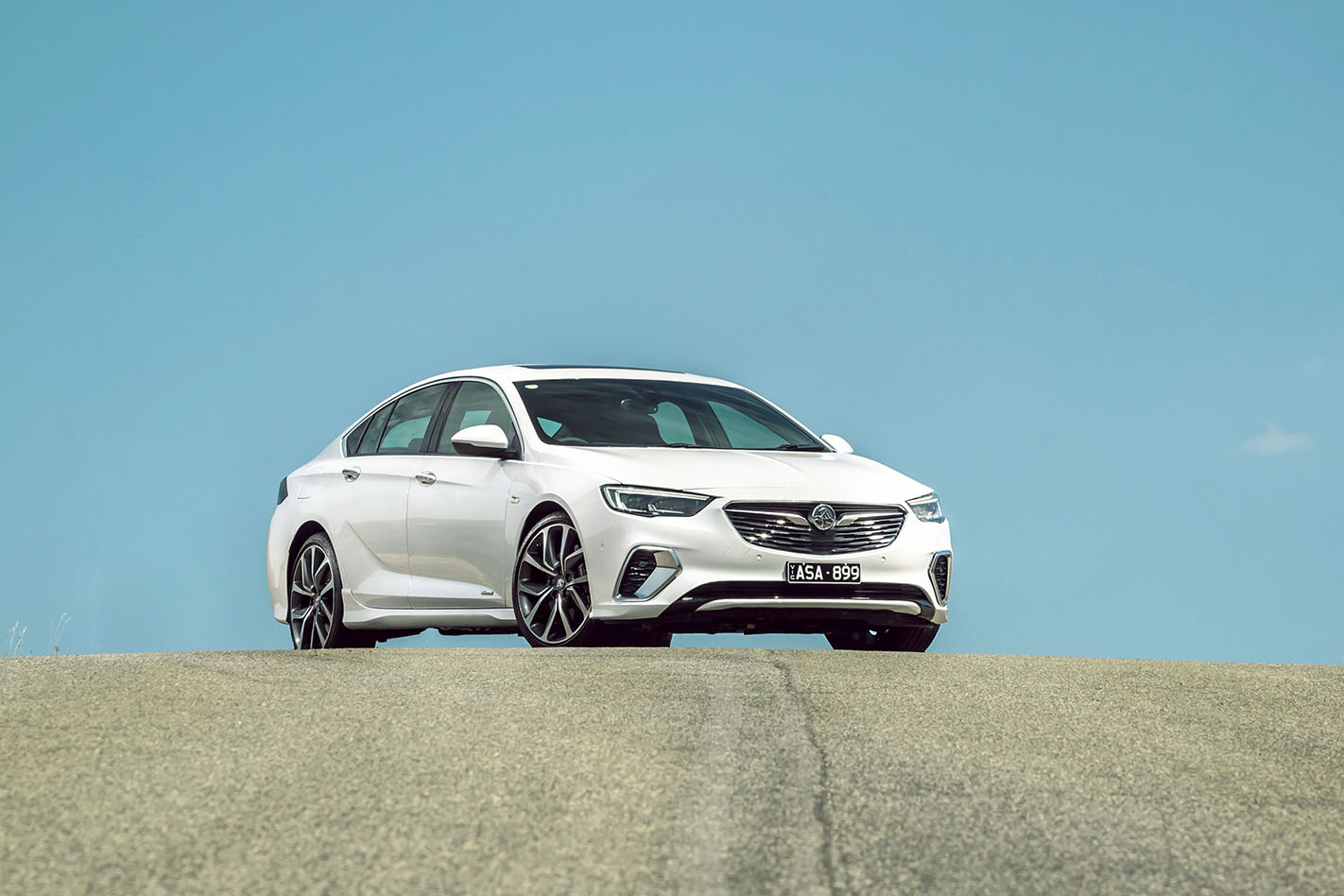
With 4008 recorded registrations this year to date (YTD), Holden has fallen to position 12, sandwiched between German giants Mercedes-Benz (4531) and BMW (3950).
It’s a far cry from the days when the Red Lion challenged the likes of Toyota (32,488 YTD) and Ford (9025 YTD) for top-brand billing.

While chief executive of the FCAI, Tony Weber, said that the market has seen a downturn for the past 23 months, the Holden result is significant.
“There is no doubt that this is an extraordinarily difficult time for the automotive industry – a situation sadly underpinned by the recent announcement of Holden’s withdrawal from the Australian market,” Weber said.
More pointedly, Holden’s February figures means that sales have plummeted by 49.8 percent (to 1367) compared to the same month in 2019.

Commodore sales have collapsed, with just 132 units finding owners in February 2020, which is in stark contrast to its heyday, where Holden sold 10,028 VTs in March 1998.
However, the traditionally strong Colorado is also facing tough times, with registrations falling from 1152 in January 2020 to just 598 in February (4×2 and 4×4 variants combined).
Despite the market lapping up SUVs, with high-riders making up 49.2 percent of the entire market according to the FCAI, the Equinox (111), Acadia (115) and Trailblazer (115) all sold in small numbers.

Behind the Colorado, the Trax was the next highest-selling Holden with 233 registrations.
These incredibly small sales figures are despite the fact that Holden dealers have begun to slash prices across the entire range as they attempt to clear stock.
Bargain hunters wanting a new car would be well advised to head to a Holden dealer as some models have had several thousand slashed off their prices.

HOLDEN SALES BREAKDOWN FEBRUARY 2020
Astra – 63
Commodore – 132
Trax – 233
Equinox – 111
Acadia – 115
Trailblazer – 115
Colorado – 598
TOTAL – 1367
TOP 10 BRANDS YEAR TO DATE 2020
Toyota – 32,488
Mazda – 13,925
Hyundai – 11,388
Mitsubishi – 10,621
Kia – 9825
Ford – 9025
Nissan – 7248
Honda – 6958
Volkswagen – 6879
Subaru – 4853
What is the BMW X6M Competition?
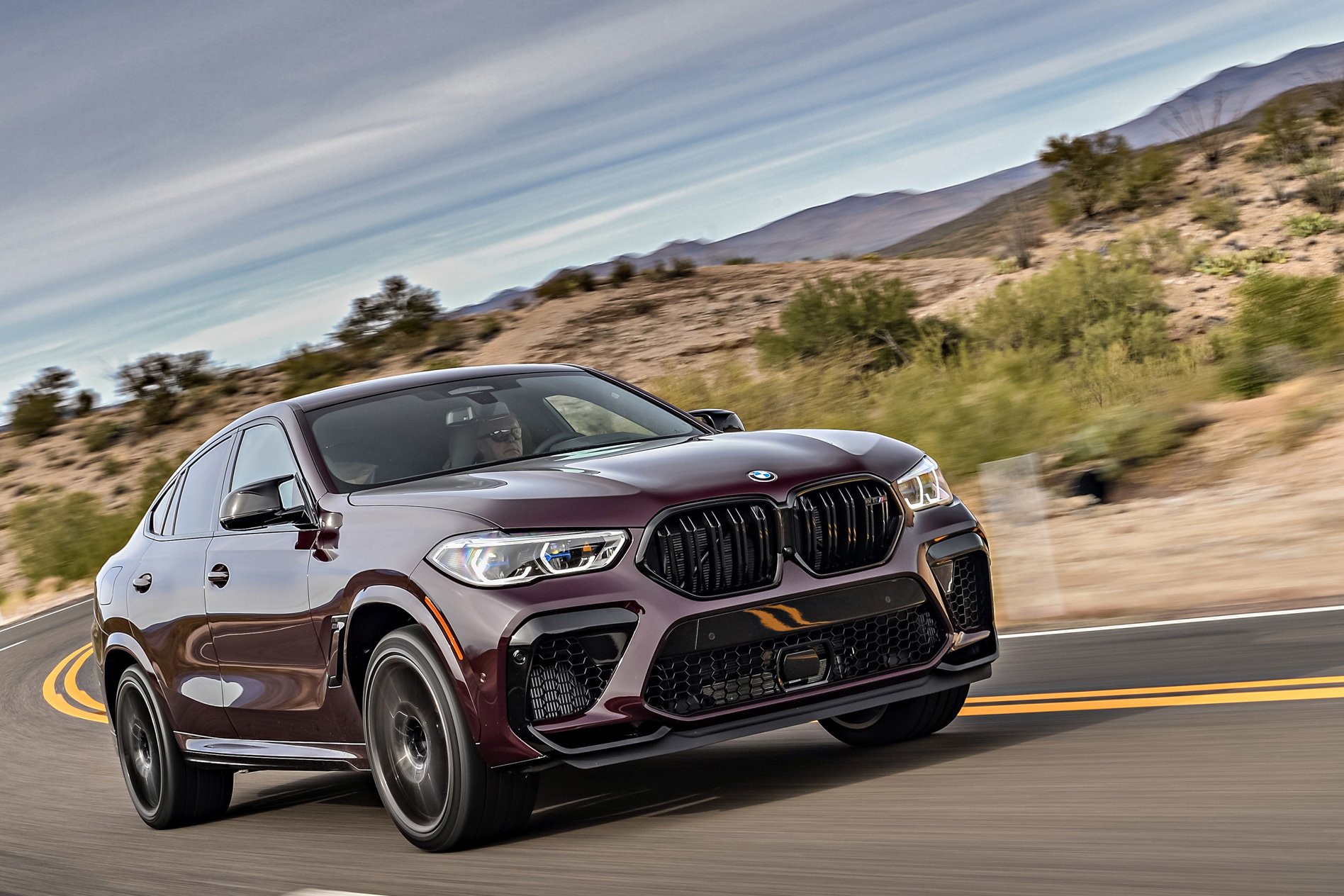
One of BMW’s most famous big bruisers is the sublime M5 sedan, and the X6M Competition is a direct albeit taller, wider and heavier relative. It also sports BMW’s polarising coupe-esque roofline that sets it apart from its otherwise-identical X5M twin.
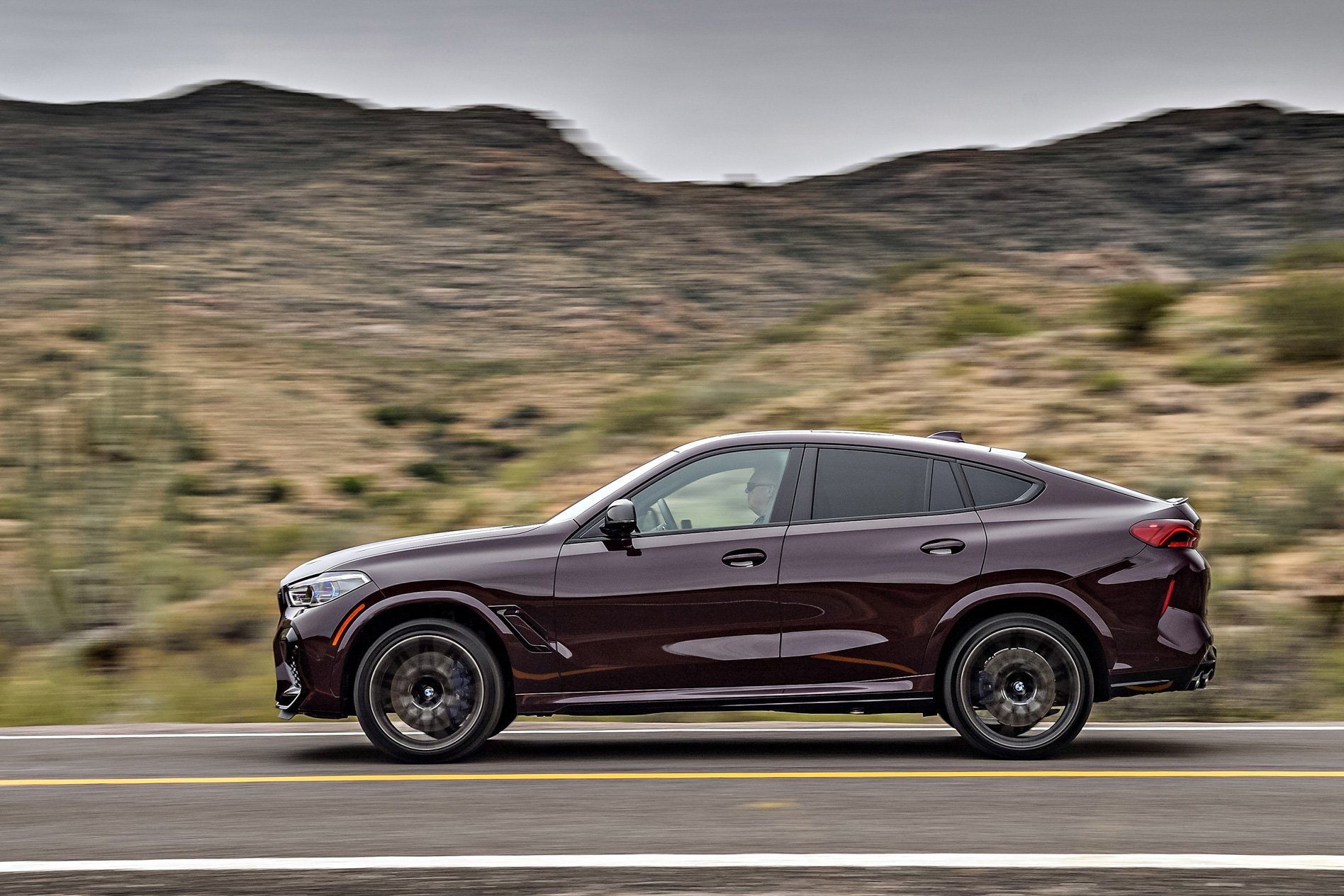
If you’re looking for five seats, lots of power and looks to… get the neighbours talking, let’s say, the $213,900 X6M could be your cup of tea.
What’s the BMW X6M like to live with?
It’s a strange rig, the X6M. BMW reckons the alternative body shape makes up 40 per cent of the sales mix across the X5 and X6 body shapes, but is that a little hard to believe? I mean… just look at it.
The X5M is less confronting, sure, but the X6M just doesn’t sit right in my eyes. Is it the pronounced rear hump aft of the c-pillar? Is it the 21-inch rims that don’t quite fill the wheel arches? Whatever it is, the X6M design is, in my opinion, an acquired taste.
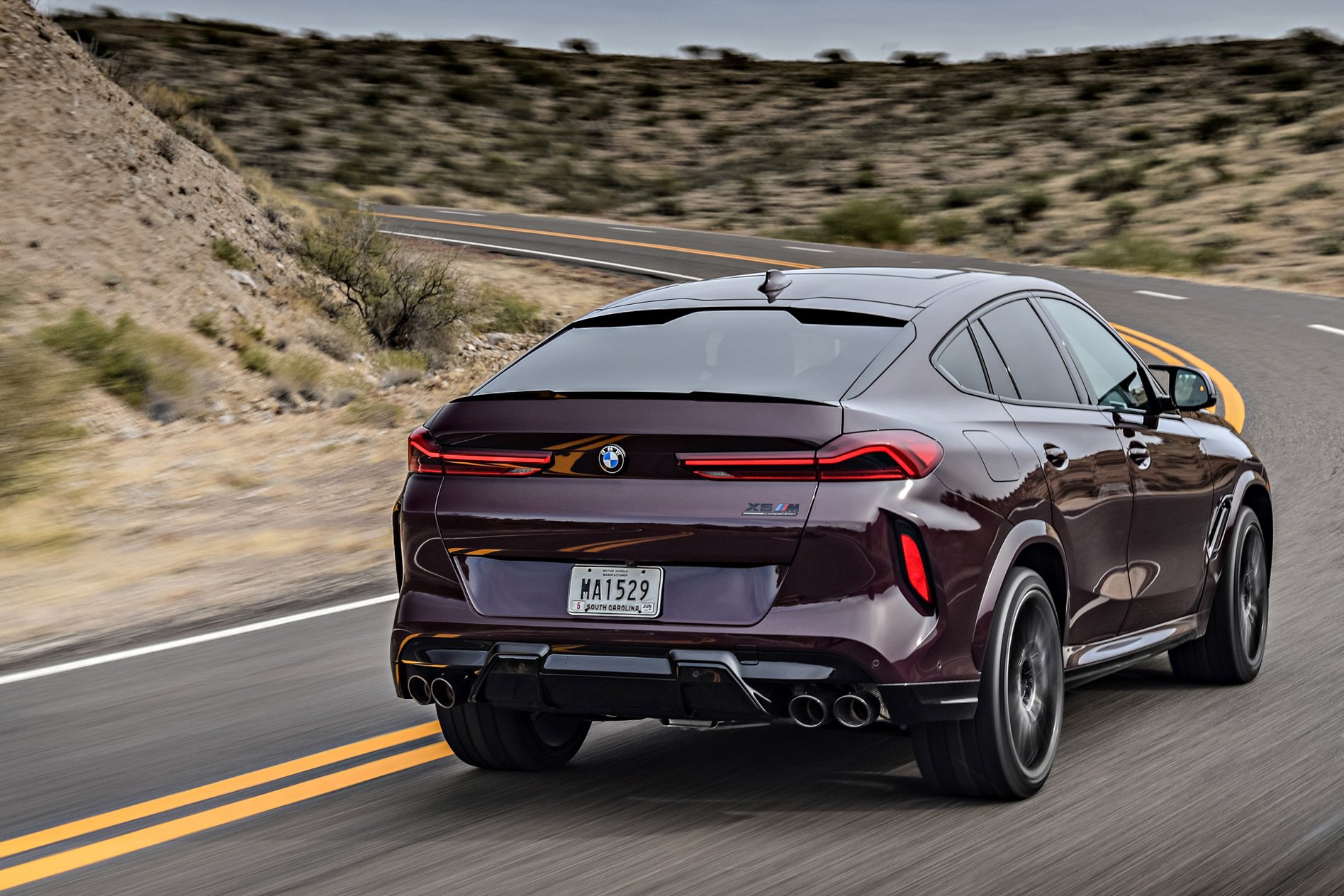
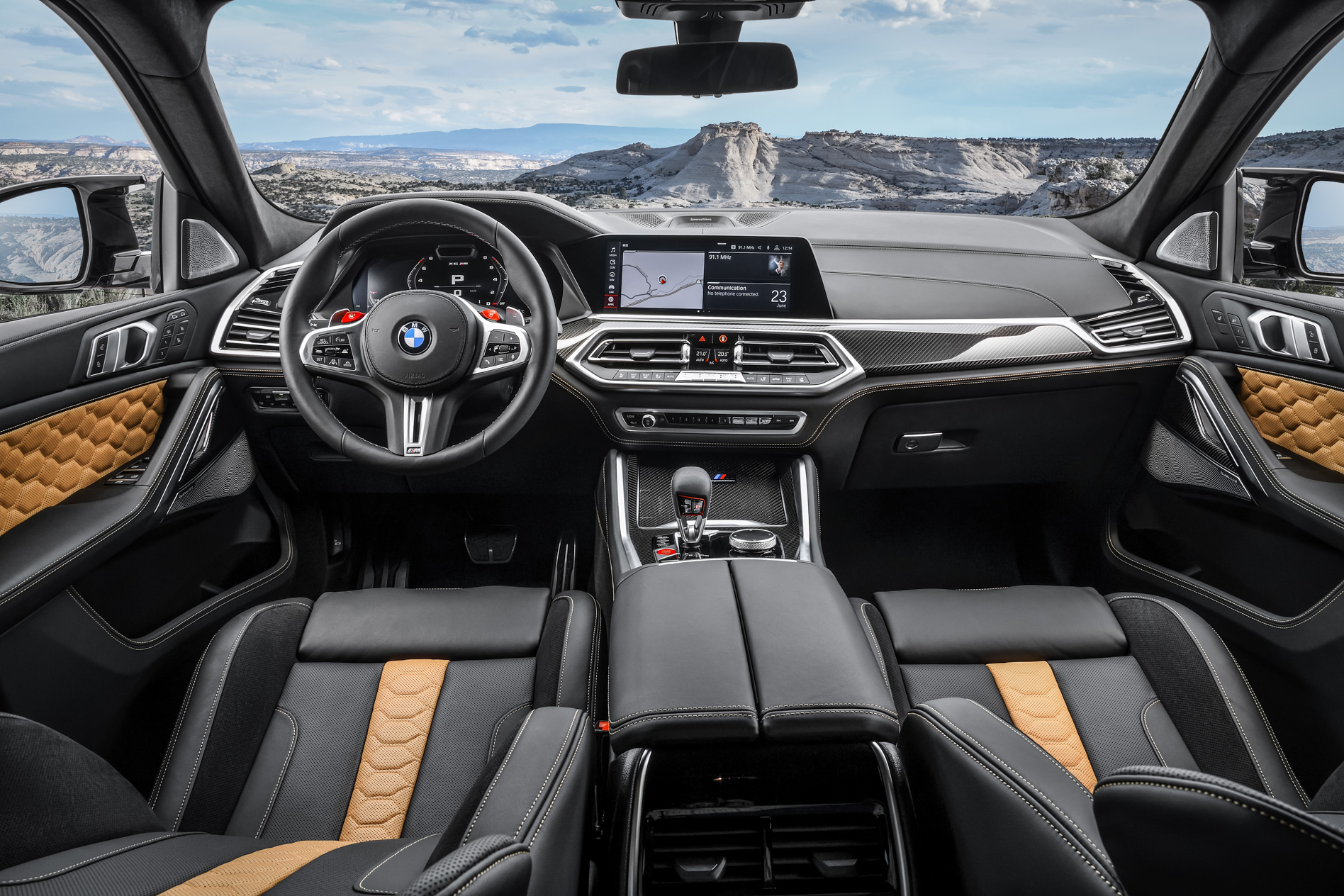
Thankfully, it’s a different story inside the car. Packing the mighty 4.4-litre twin-turbo V8 made famous by the M5 sedan and M8 coupe, the X6M Competition – the only spec coming to Australia this April – is a ferociously fast SUV with a civilised side.
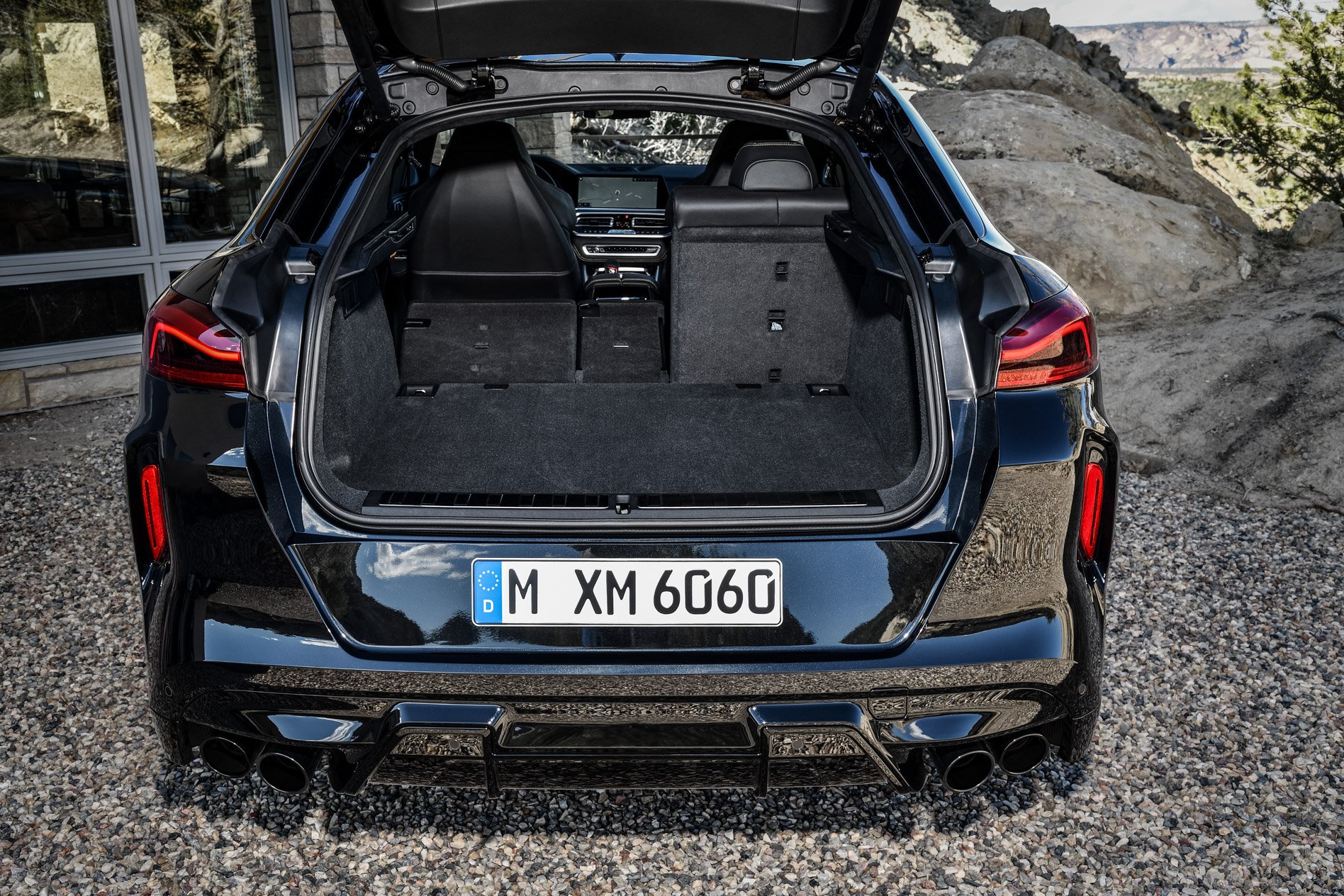
We traversed a 650km drive program with four sizable chaps and their luggage aboard, and while it’s not as roomy as, say, an X7, the X6M coped pretty well. The leather seats were comfy and there was enough room front and back to reach a decent legroom compromise, though a reclining rear seat back arrangement would have helped.
Cargo space is compromised for height when compared to a more traditional SUV, and the higher floor that hides the X6M’s rear-wheel-drive gubbins doesn’t help. For reference, the 580L boot gives away 70L to the X5M when the seats are up, and its 1580L figure with the seats laid flat is a 200L drop over the X5M.
The onboard satellite navigation set-up wasn’t much chop, though, proving difficult and unintuitive in use. Luckily, Apple CarPlay and Android Auto can take up the slack.
What’s the BMW X6M Competition like to drive?
In short, the BMW X6M is fast. Not just 3.8 seconds-to-100km/h fast, but properly, confusingly fast for a 2.3-tonne SUV.
Its 460kW and 750Nm are transmitted to all four wheels via an eight-speed auto, clever rear diff and a smart AWD set-up, but thanks to a well-thought-out suspension set-up that actually props up the opposite side of the car in hard cornering, its prodigious speed never feels unwieldy.
Its steering is a little light and lacking in feel, but the X6M’s ability to pile into a corner at breakneck speed, hustle through and rocket out the other side has to be felt to be believed. The gearbox takes a little coaxing to downshift, but the huge brakes are more than up to the task.
BMW’s much-vaunted two-mode braking set-up is available only in the most extreme driving mode, and the difference in feel between the two is perceptible but marginal – but overall braking performance is excellent.
The fuse in the system is the excellent Michelin tyres, which we suspect will die quick and unpleasant deaths should you decide to take your X6M out to the track. For every action of speed, there’s an equal and opposite reaction in tyre wear, unfortunately.
That pace is offset by excellent manners at more pedestrian speeds, with a pleasantly compliant yet controlled ride over all but the nastiest of square-edged hits. Even when the adjustable dampers are at their firmest, BMW has used roll control instead of stiff springs and shocks to keep the body of the X6M on the straight and narrow.
In practical terms, rear three-quarter vision is non-existent and the z-shaped automatic shifter takes some getting used to, but there are plenty of cameras on board, as well as paddles behind the steering wheel.
It’s also a thirsty jigger, with our spirited driving netting us an average of 18.0L/100km against a claimed combined fuel economy average of 12.7L/100km. Modify your driving style away from ‘excitable motor journalist on an overseas launch’ and you’ll most likely get closer to the claimed figure.
Is the BMW X6M Competition worth the money?
Interesting question… at $214k, it’s the second-cheapest way to access the same 460kW V8 that graces the M5 Competition (the $110k X5M is the cheapest)… but it’s still a pretty solid wedge of cash for a large SUV.
Something like Alfa Romeo’s carbon fibre-clad, 375kW Stelvio Quadrifoglio NRING competes on price at $189,900, but something as left-field as the 522kW Jeep Grand Cherokee Trackhawk presents as better value at $134,950 if it’s space and pace you’re after.
Of course, neither of those cars is a genuine M, complete with the cachet that it brings. BMW reckons that the split between X5 and X6 is about 40 percent to the X6, and we reckon those customers will love the X6M for its looks as well as its performance largesse.
It’s hard to fathom just how drastically the Australian public’s driving abilities change at the first sight of rain. Traffic banks up, stopping distances aren’t adhered to and the oft-mentioned mantra of ‘drive to the conditions’ is thrown out the window.
Driving in the wet can substantially change how car behaves, how other road users behave and impact stopping distances as well. If your car’s tyres don’t have a sufficient level of tread then that could also be exacerbating its pitfalls in terms of wet weather handling.
There are some simple ways to ensure that you, your passengers and your car are at their safest when rain does start to fall on the road, but most importantly we want to drill home the importance of ‘driving to the conditions’.
GET YOUR CAR SERVICED
No matter what time of the year, it’s important to have your car serviced and in roadworthy condition in order to have the best chance in wet weather conditions. It’s an important step in ensuring you suffer as few issues on the road as possible.
USE YOUR HEADLIGHTS
You should regularly check your car’s headlights are working at the front and the back.
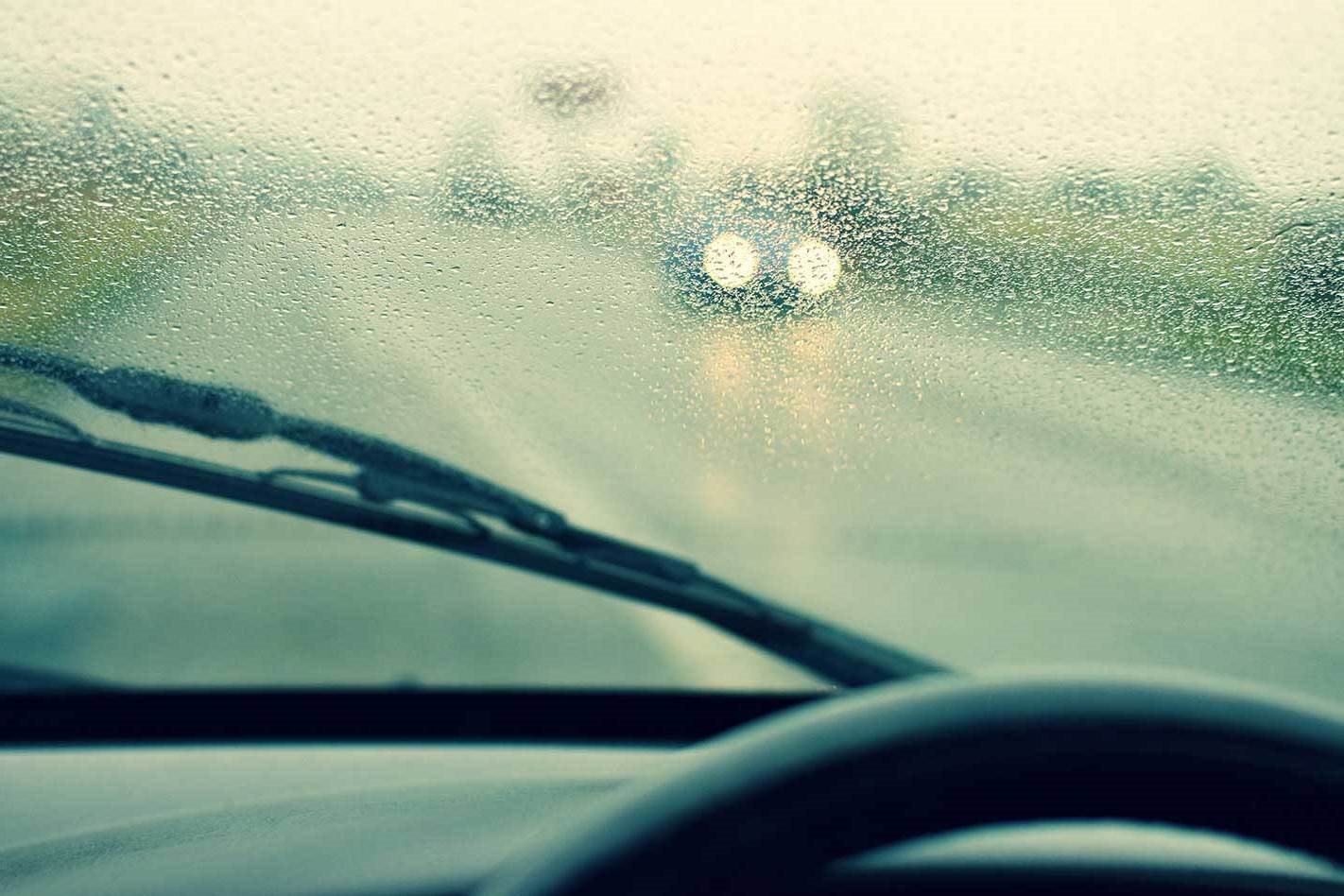
When storm clouds cover the sun and things start to get a little bit dark, your beams should be on. So when it starts to rain, and visibility is low, you know which way you should flick the switch – on. Most new cars come with automatic lights these days, but flick them on manually if you’re unsure they’re working.
Depending on the level of fog or visibility, also consider using fog lamps.
ALLOW MORE TRAVEL TIME
There’s no point risking an accident to rush to a destination while the roads are slippery. The propensity for accidents is higher during the rain, and people are generally driving slower, so everything will take a bit longer than usual. Allowing enough time will mean you can account for the rainy traffic and also take it slow to avoid ending up in an accident.
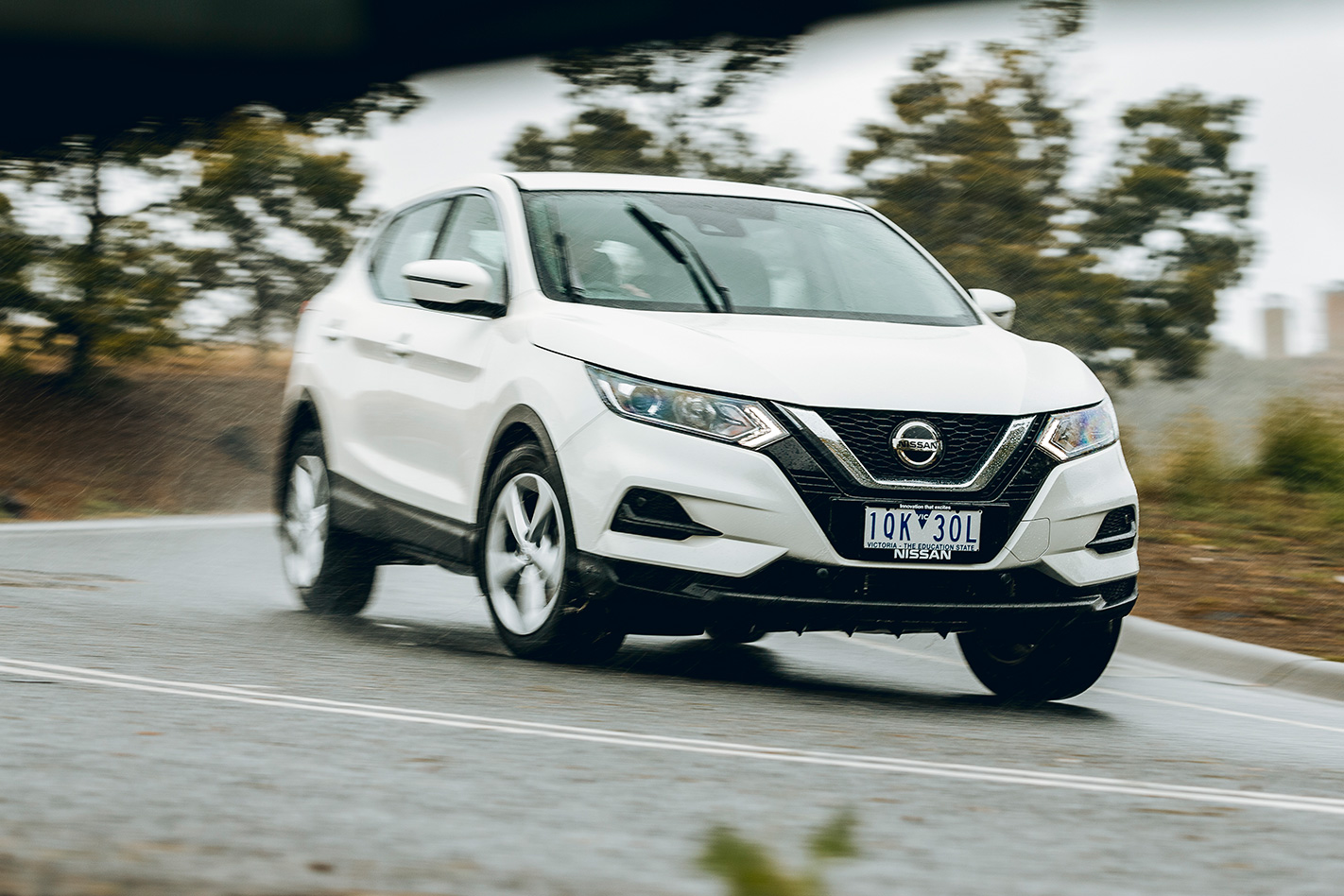
MAINTENANCE
Even if your car has been serviced recently, you should check things like brakes for performance, tyre pressures and washer fluid levels.
Slippery conditions take their toll on a car’s brakes. If your car makes noises when you plant the anchors, or if the pedal feels like it’s going all the way to the floor, get them checked by an expert as soon as possible.
You’ll also need to make sure windscreen wipers and washers are in good order. If the wipers leave streaks across the windscreen replace them. Anti-water protector will help rain water bead up and roll off your windshields and mirrors like it does off the proverbial duck’s back.
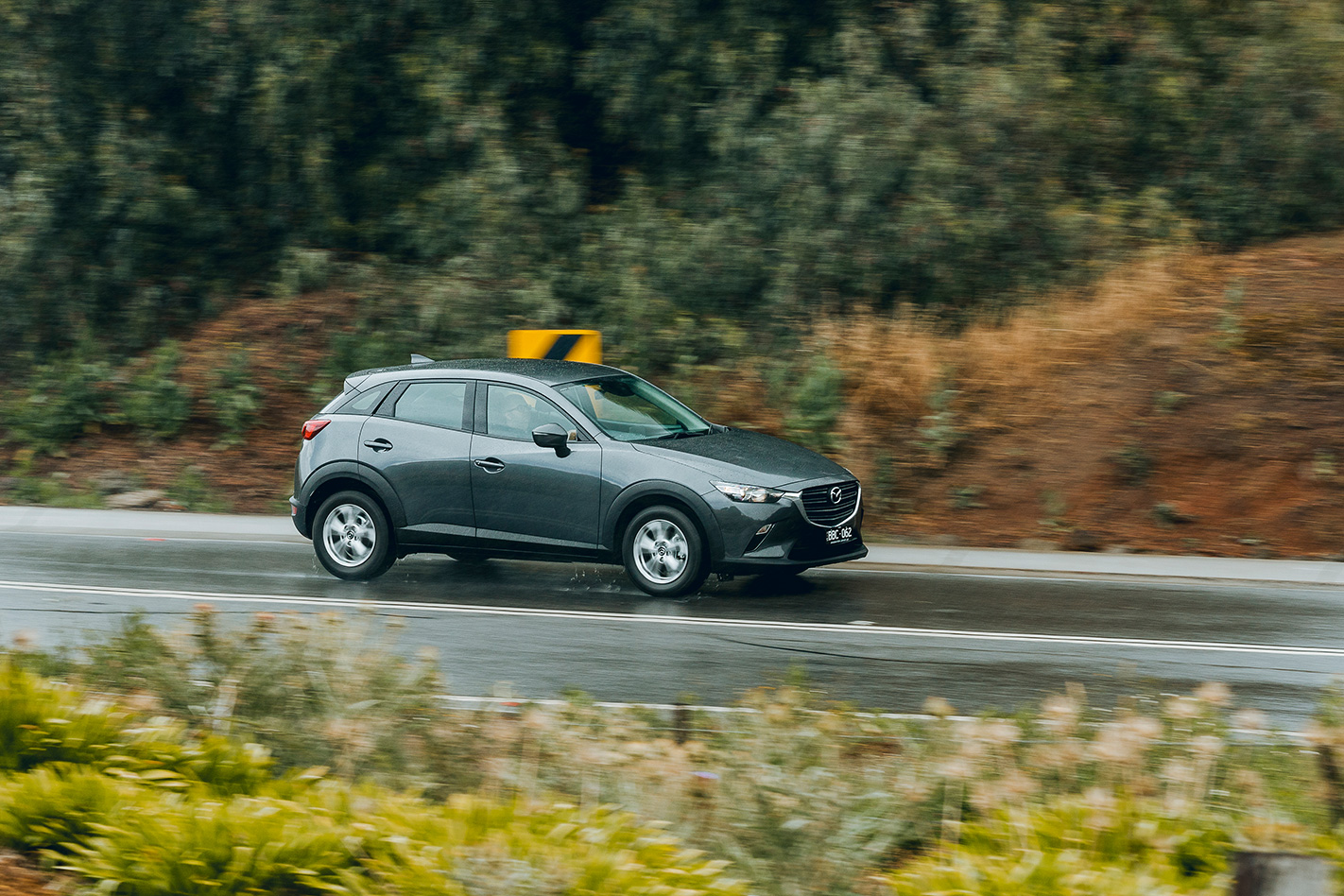
KEEP YOUR DISTANCE
Your stopping distance increases dramatically during wet weather. In fact, it’s almost double. On dry roads, stopping distance should be measured at two seconds. In the wet, it is recommended that you double your gap between you and the car in front.
Also, try following tyre tracks of the car in front of you. It’ll avoid you creating your own path in slipperier parts of the road. The same thing should be done through mud and snow.
TYRES
Good tread is essential for grip on wet roads and you need a minimum of 1.5mm of tread depth across the face of the tyre. Keep your tyre pressures at the recommended PSI, as underinflating them will use more fuel.
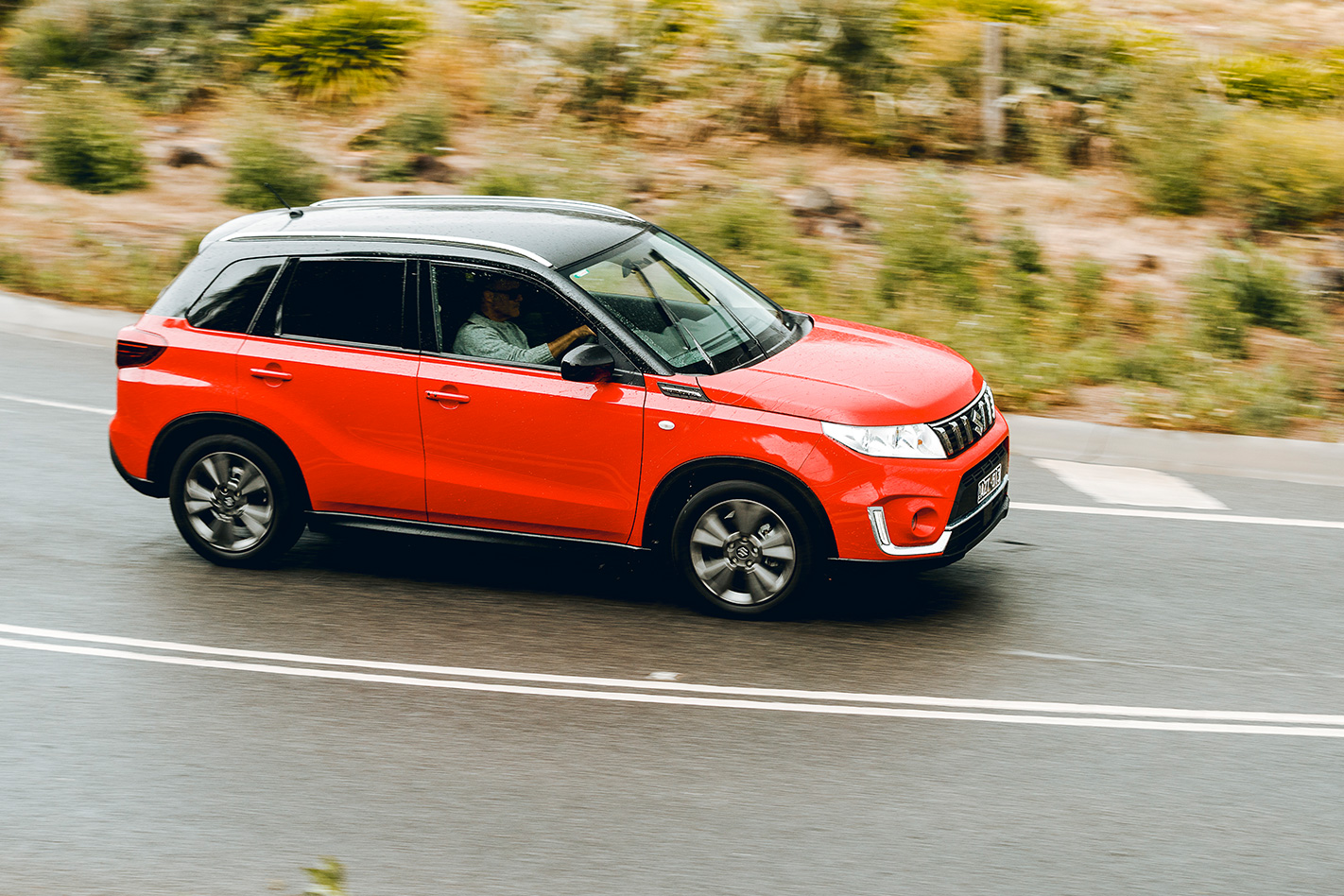
Ensure your spare tyre is inflated and your jack and associated kit is in working order should you need to change a tyre. It’s also a good idea to carry something to kneel on should the roads be wet or hot.
PLAN AHEAD AND AVOID FATIGUE
No matter what time of the year you plan on travelling, it’s always important you plan head and check if there will be any interruptions to your road trip. Things like road works can delay time, but weather related obstructions can become risky, particularly during wet season when floods become a threat or felled trees which can block roads. It’s also a good idea to have places to stop, including service stations, planned on your map, so you can grab any refreshments you need, but you’ll also know where to stop if you need any help.
Regular stops as well as keeping hydrated are important to your safety. Driving over long distances is fatiguing at the best of times, let alone during rainy weather.
This story was originally published by David Bonnici.
So, this is it. Koenigsegg has revealed the car to end its efforts in the search for more speed, the Koenigsegg Jesko Absolut.
While the original Jesko revealed last year is set for track duty, the Absolut is the variant built to go as fast as possible.
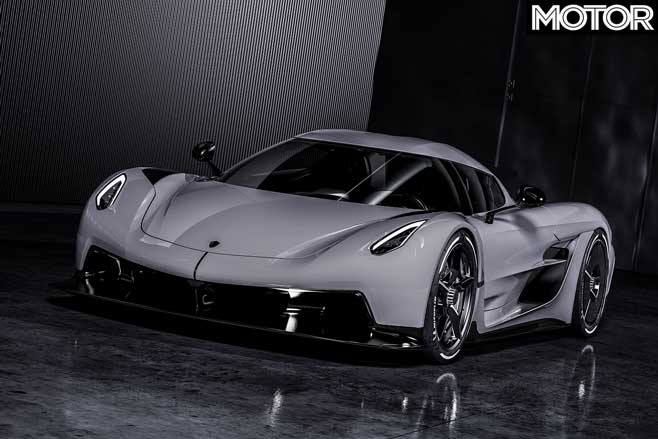
“It is the fastest Koenigsegg ever made and the company will never endeavour to make a faster series-production road car – ever,” Koenigsegg says,
This means if Koenigsegg ever tries to go faster, the car it builds won’t be a regular model.
So, where does the separation between the standard Jesko and Absolut lie? It’s all in the aerodynamics. Koenigsegg says the Absolut is “just as powerful,” with a minimum 1193kW output from its twin-turbo V8, but the car is noticeably more flowing in its aero design.
For a start, the massive wing is no longer present, though the strakes which remain are reminiscent of the wing mount. Downforce drops significantly because of this, from 1400kg to 150kg, but this allows the Absolut to achieve a drag coefficient of just 0.278Cd… when the designers and engineers were aiming for 0.28.
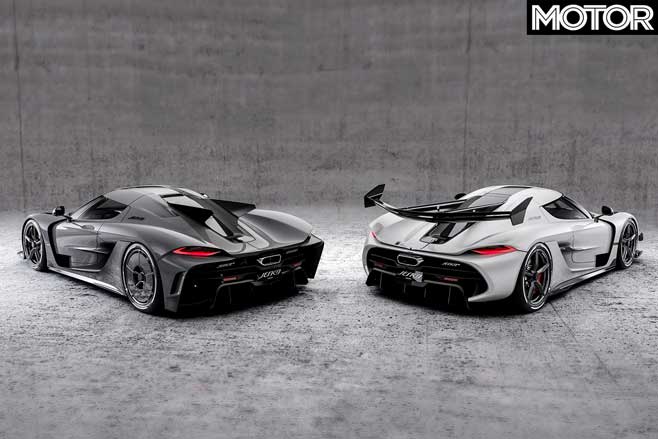
The Absolut’s lead designer Marcello Raeli says the car reminds him of a “land-based rocket,” and the data shows he’s not wrong.
According to a quote from Top Gear, Christian von Koenigsegg says the Jesko should top 500km/h quite easily: “the limit is tyres, location and sanity.”
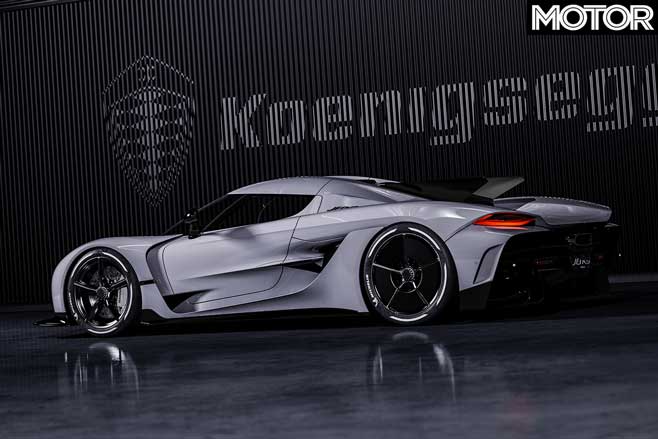
The Absolut retains the Jesko’s ‘Light Speed Transmission’ which acts like a dual-clutch, but with the ability to choose whichever gear best suits the moment “at near light speed,” rather than needing to travel through the gears sequentially.
Underneath, the Jesko Absolut employs “the industry’s longest front and rear wishbones,” which it says are closer to F1 cars than road cars, which create stability, coupled with Koenigsegg-tuned dampers supplied by Öhlins for a suspension setup appropriate for extreme high speed.
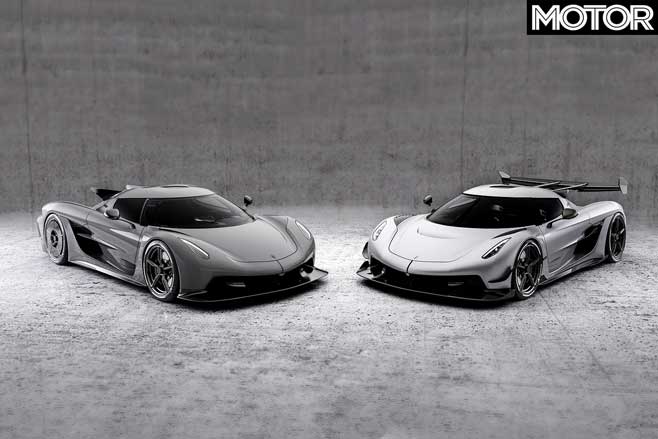
“The top speed of the Jesko Absolut is extremely high. How high depends on the conditions and location of a possible high-speed run,” Koenigsegg says.
“If the opportunity arises the Jesko Absolut will be ready to take the crown, regardless who holds it.”
Four Koneigsegg Jeskos are already set to come to Australia, the local dealer told MOTOR last year, so whether any of these will be optioned as Absoluts will be seen in time.
20 years ago today, Sony launched the Playstation 2. A sixth-generation console, the PS2’s new dedicated graphics chip unlocked rich (for the time) 3D visuals that made it a superb platform for a new generation of racing games – and sparked something of a renaissance in the genre.
And with that computational power, a new era of driving games arrived. The list of notable titles is long, but we’ve boiled it down to ten of the best. Happy birthday, PS2, thanks for all the memories.
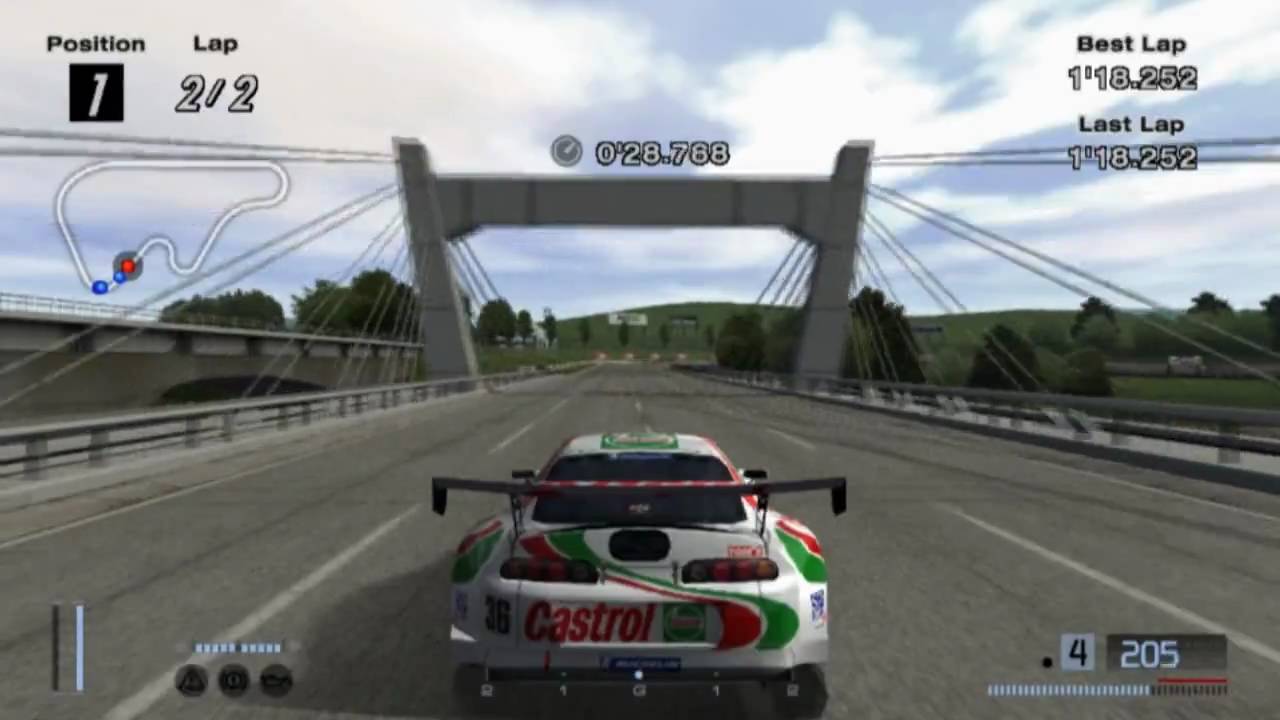
Gran Turismo 4 – 2004
Sure, Gran Turismo 3 A-Spec arrived in 2001 and was the first Gran Turismo game to grace the PS2 platform, but it was the arrival of Gran Turismo 4 which really unlocked the power of the PS2. With more than 700 cars and 51 tracks there was much more variety compared to A-Spec, and alongside a superb selection of fictional street tracks from New York to Tokyo, Hong Kong and Paris, there was also the Japanese cult favourite of Tsukuba and the mighty Nurburgring Nordschliefe.
Eventually becoming the third highest-selling PS2 game (behind GT3 A-Spec and Grand Theft Auto: San Andreas) GT4 was the most comprehensive Gran Turismo title on that platform and one that had serious longevity: it wouldn’t be succeeded until Gran Turismo 5 arrived in 2010, with the Playstation 3. It was also the first to gain some semblance of online multiplayer (albeit only in Japan), something that would become a core part of the franchise in 2017 with Gran Turismo Sport.
Auto Modellista – 2002
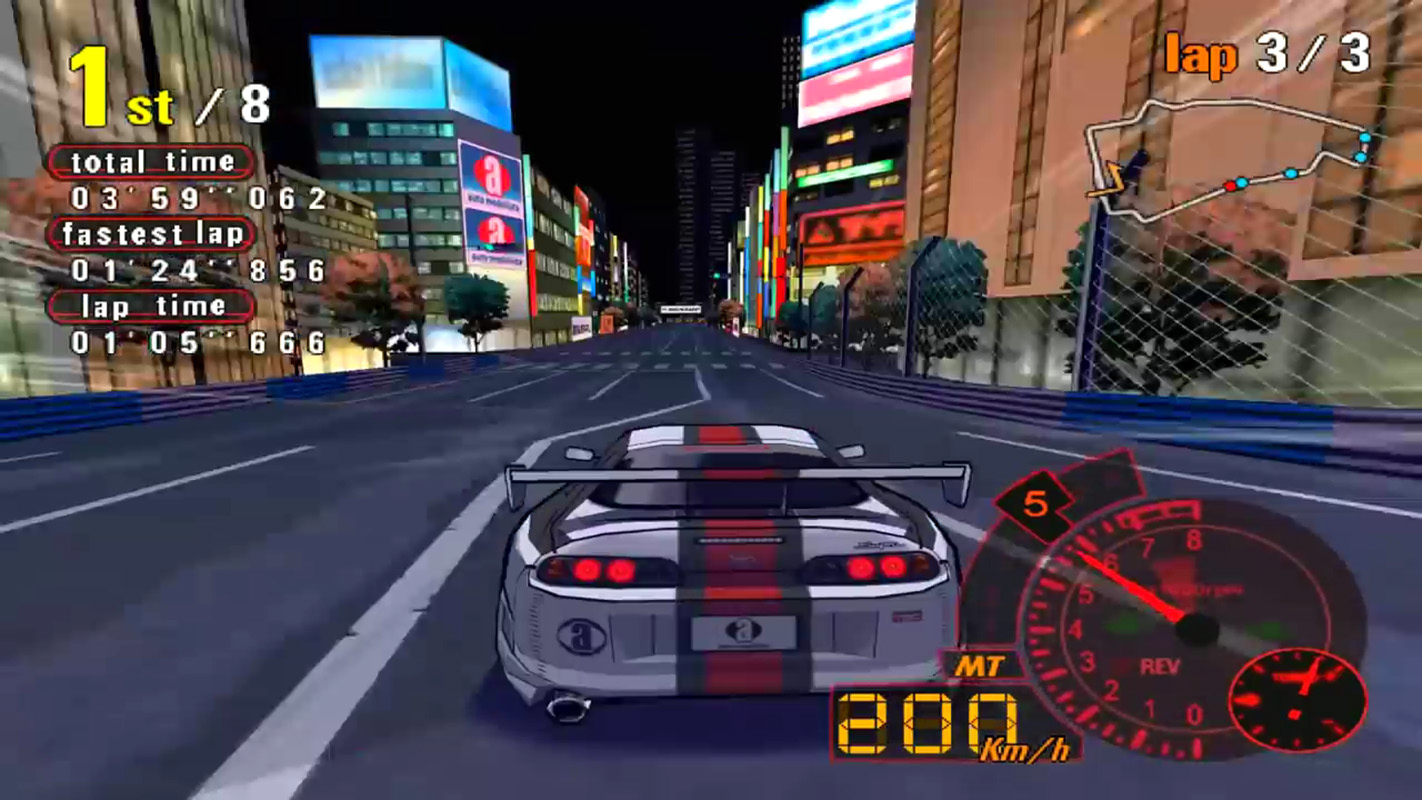
Capcom is a company known best for its fighting games, and if you’ve ever played Auto Modellista you’ll know why – it sucked at making racing games.
Its terrible physics engine made winning races a frustrating exercise, while oversimplified drift dynamics meant it wasn’t even challenging for keen drivers. However, there was one good reason to persist with the racing: it earned you the credits needed to take advantage of its awesome customisation options.
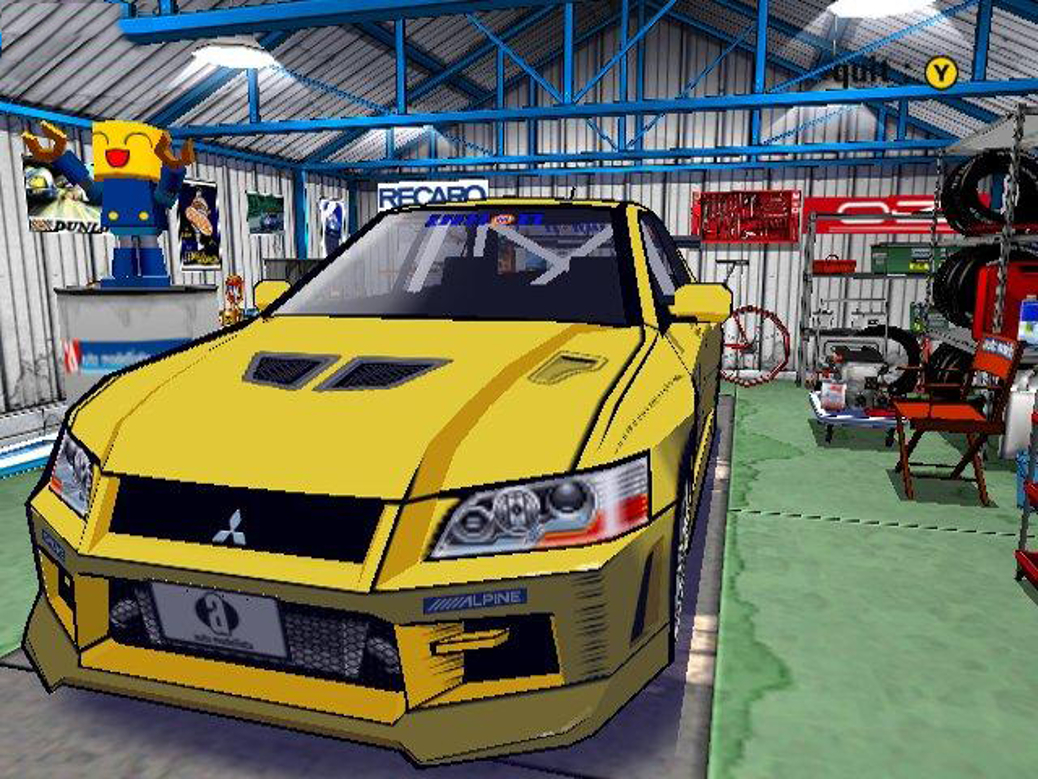
It was a Japanese car freak’s wet dream, with plenty of JDM sports cars all able to be modified with brand-name aftermarket parts AND visual upgrades too. Not only that, but the virtual ‘garage’ that housed your collection could be customised too, which was just plain cool back in the early noughties. The cel-shaded graphics also imparted an anime aura to the whole thing, and made it more than just another ho-hum racing game.
We hated the actual driving, but we sure loved the rest of the Auto Modellista experience.
Enthusia Professional Racing – 2005
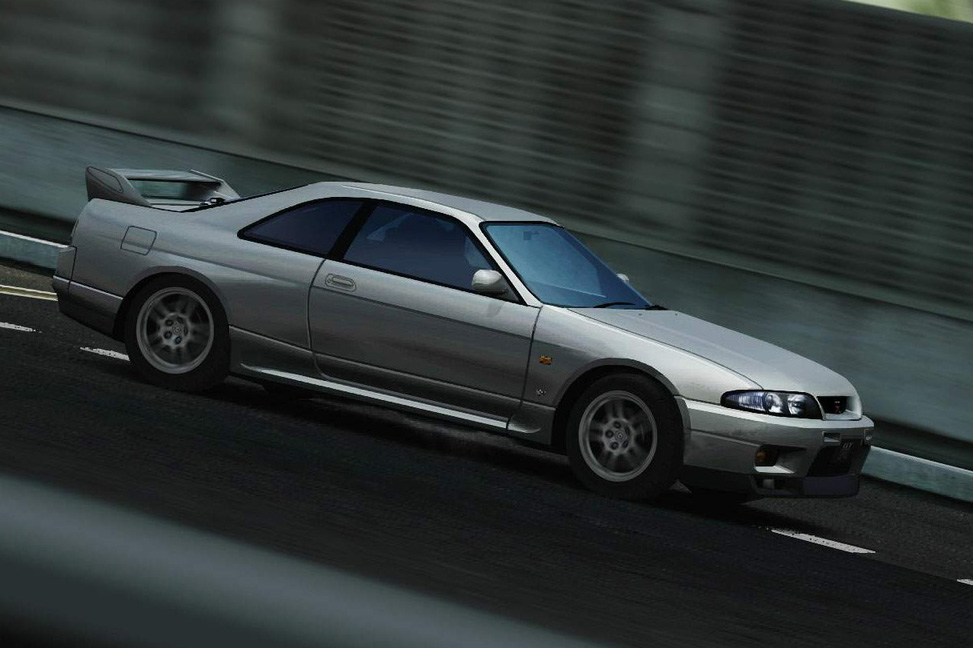
Being a fairly obscure Playstation exclusive, not many will remember this one. Those that do, however, will know that Enthusia came remarkably close to offering a Gran Turismo-beating driving simulator experience.
With a Japan-centric car lineup and a surprisingly accurate physics model, Enthusia was definitely one for serious driving enthusiasts. Cars behaved realistically and challenging dynamic traits like lift-off oversteer were simulated faithfully.
You’d even get a post-race breakdown of sector-by-sector performance to help you analyse your driving style, giving data nerds plenty to digest. The storyline and career progression mechanics were a bit unusual, but as a realistic racing game Enthusia was one of the best on the PS2 platform.
Test Drive Unlimited – 2007
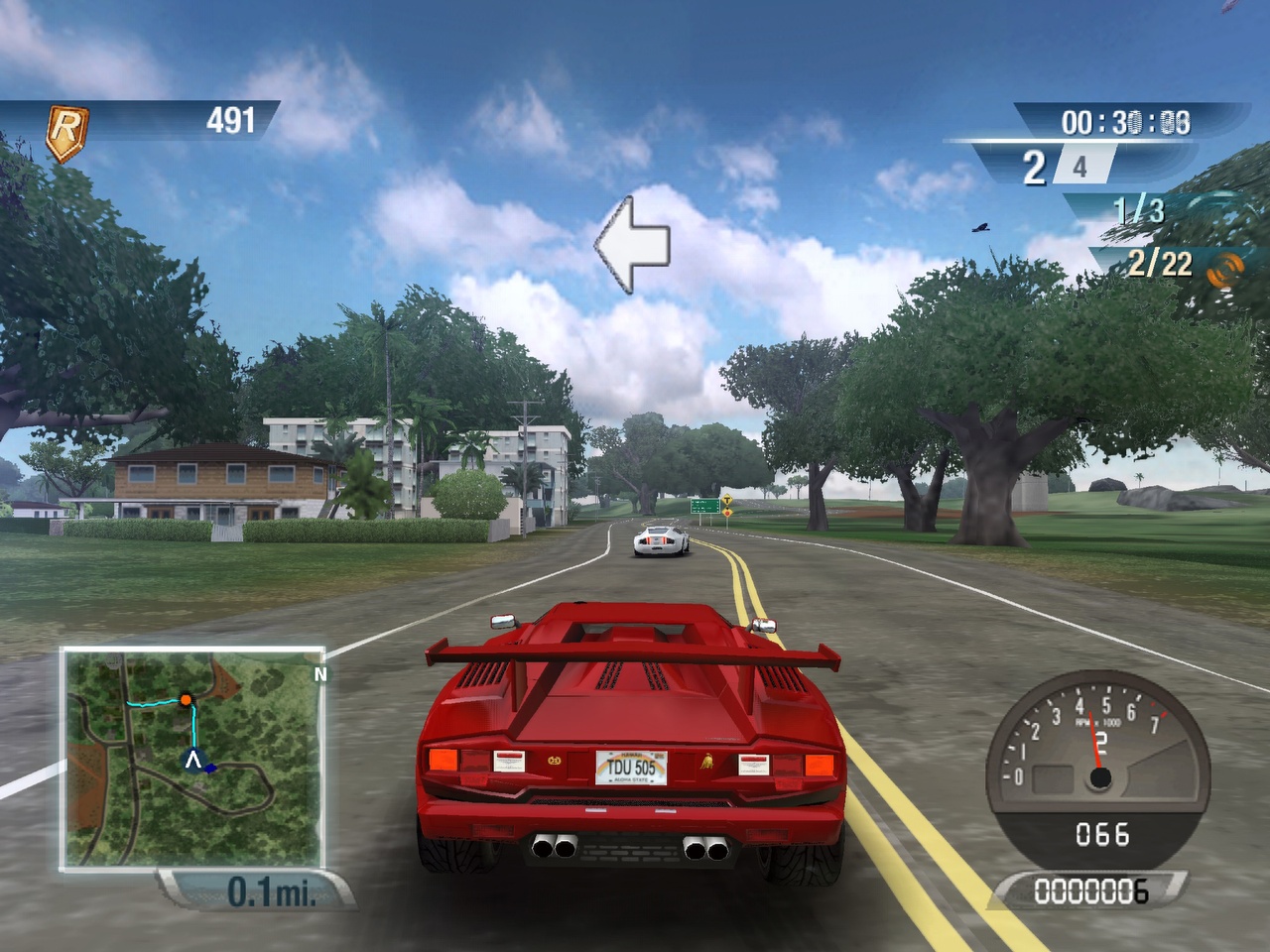
Test Drive Unlimited’s main attraction was its expansive open-world environment modelled after satellite images of Hawaii’s O’ahu island, and allowed players to explore almost 1,600kms of open roads and highways. From dense rainforest to sandy beaches, TDU straddled the line between an open-world racing game and The Sims; with players able to buy houses to store their cars, and visit each individual dealership throughout the island to purchase new vehicles.
It was truly a game to get lost in, with just as much entertainment to be found in exploring and cruising the island under the speed limit as you would in challenging other real-life online players in free-roam. Fun fact: the PS2 version of the game was heavily aided by Melbourne-based game studio, Krome Studios (formerly known as Melbourne House), some of whose Beta testers were gifted naming rights to prominent NPCs in the PS2 game.
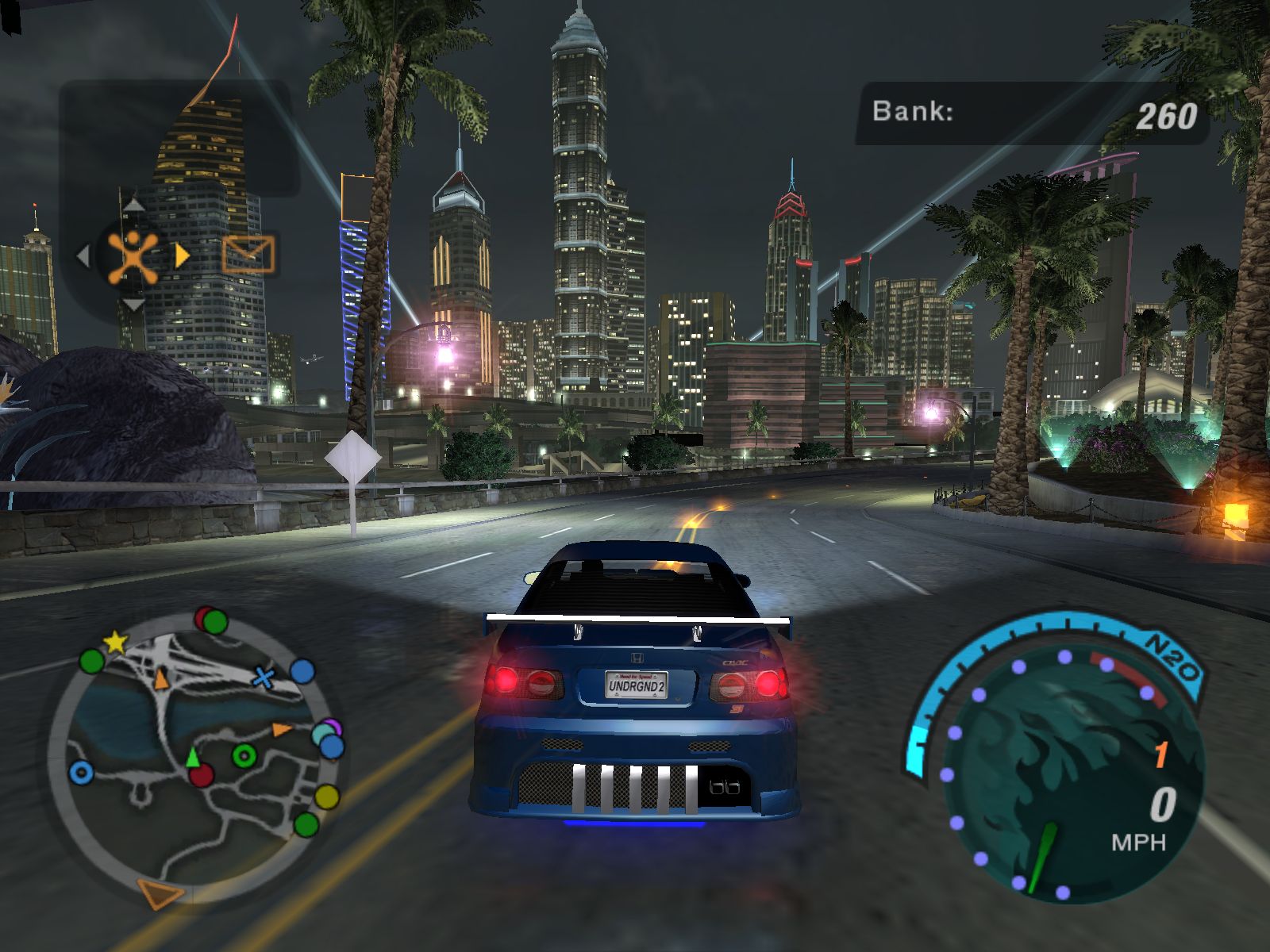
Need for Speed: Underground 2 – 2004
There’s a reason that NFS:U2 is frequently held as the definitive high-point for a franchise which has suffered a tremendous fall from grace over the past decade for faithful fans. A pioneer for open-world street racing games; this was the last time Electronic Art’s premiere racing game truly and faithfully tapped into the then-popular modified car culture.
This was the game we looked forward to getting home and firing up after school back in 2004. And while underbody neons, tribal graphics and scissor doors haven’t exactly aged well, this award-winning instalment of NFS hasn’t lost any of its nostalgic appeal. We’re still waiting for a remaster, EA!
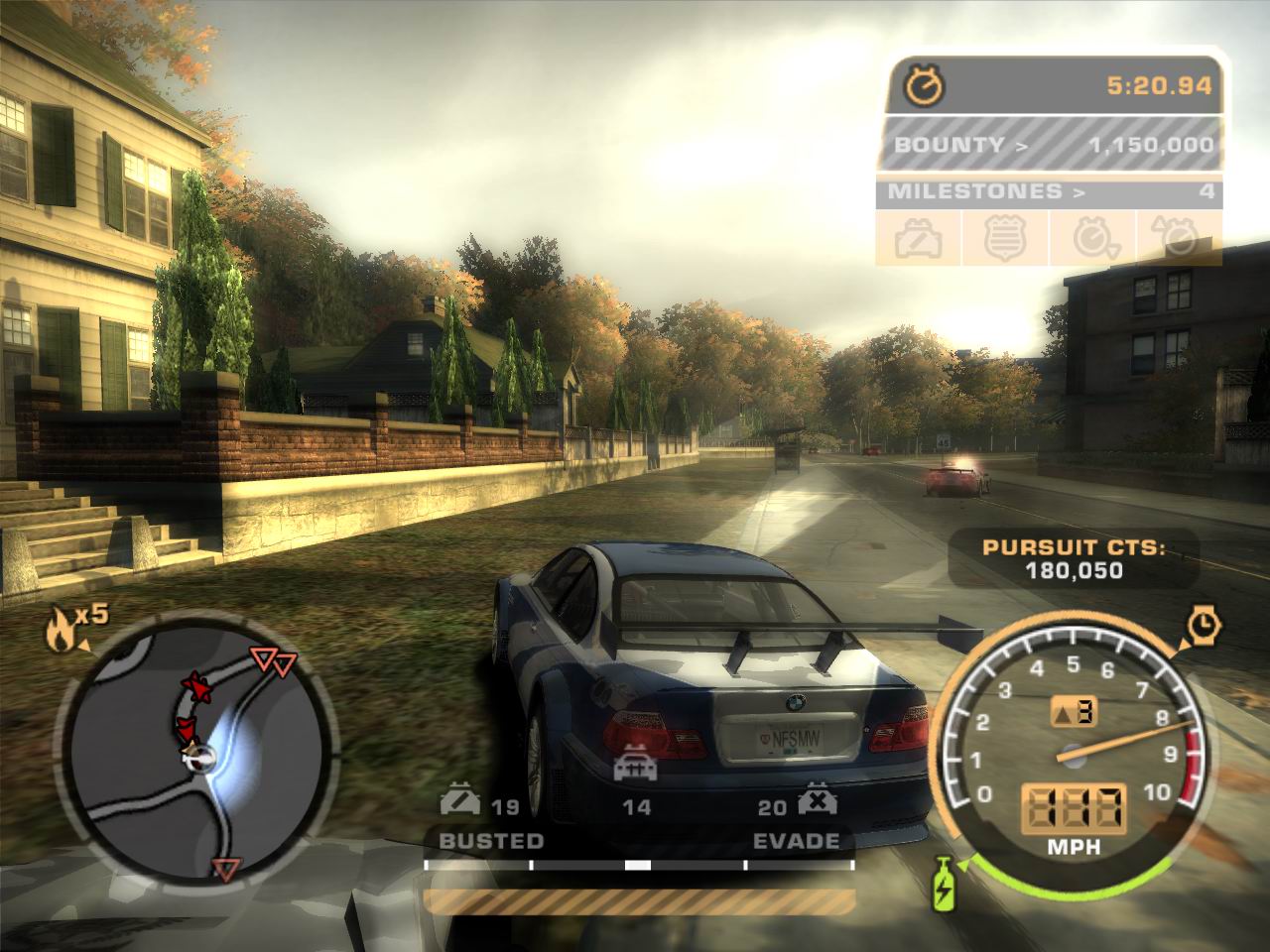
Need for Speed: Most Wanted – 2005
While Need For Speed: Most Wanted lost much of its one-track focused street racing appeal, Most Wanted was a grimier narrative that blended much of the beloved car customisation established in the Underground series, and re-introduced the signature police chase mechanics of the original Need for Speed Hot Pursuit. Its campy semi-live-action cutscenes were cutting-edge at the time, and hours and hours were at-times-frustratingly spent wilfully engaging in the most daring police chases to complete in-game ‘milestones’.
For younger generations, this is the most polished example of NFS’ signature police chase system and delivered a tangible sense of thrill and excitement… until you worked out you could simply go AFK while parked on top of the buses in the depot, and watch the police AI trip over itself at ground level.
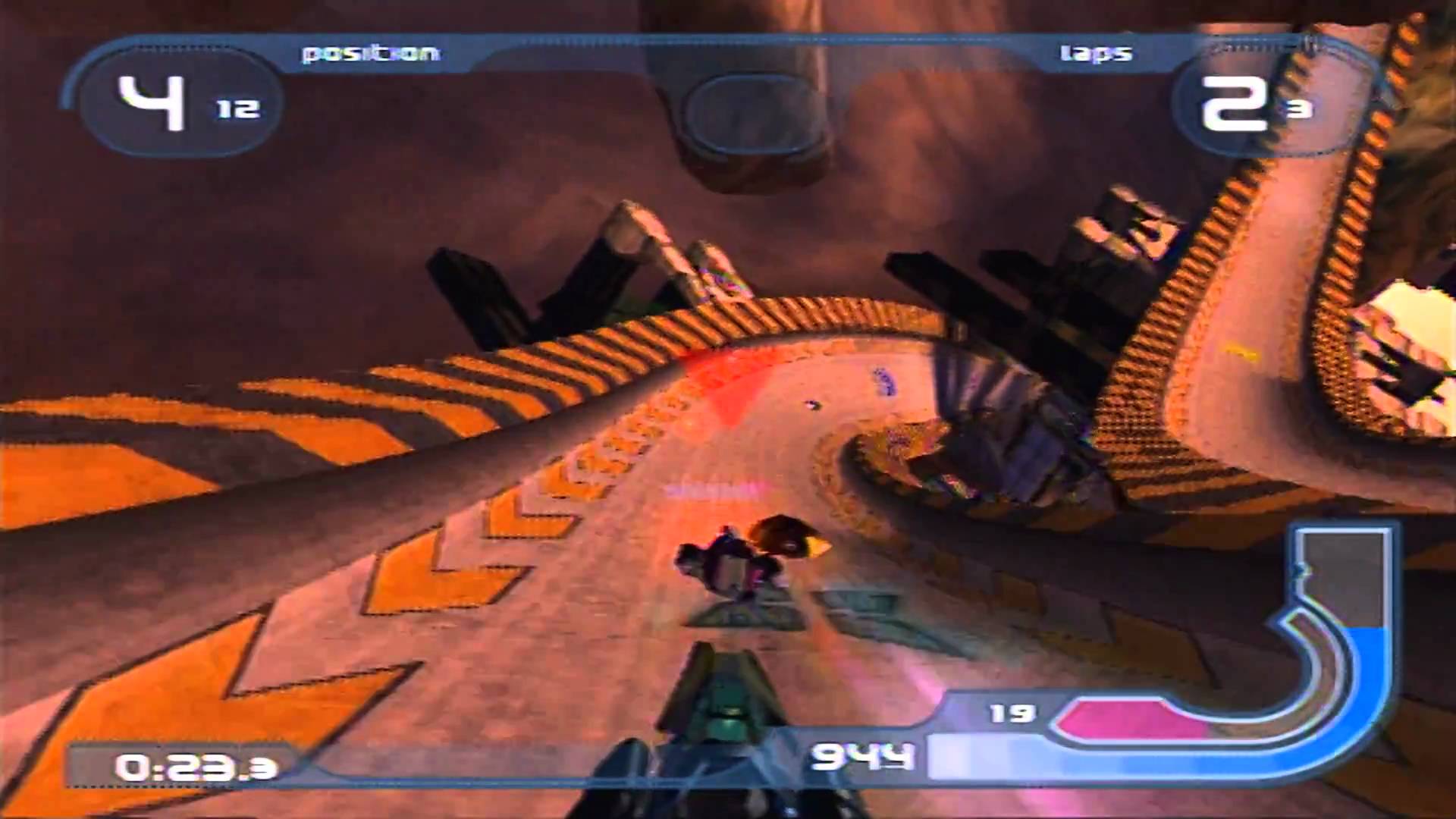
Wipeout Fusion – 2002
You don’t need wheels to have fun. The original Wipeout was a high-intensity futuristic racing game that won many fans on the first-gen Playstation, and Fusion continued that legacy into Sony’s second console.
Big, bright graphics, fast-paced racing and one of the best game soundtracks of its era, Fusion was huge fun. And, being a Playstation exclusive, it was one that could be only enjoyed on the PS2.
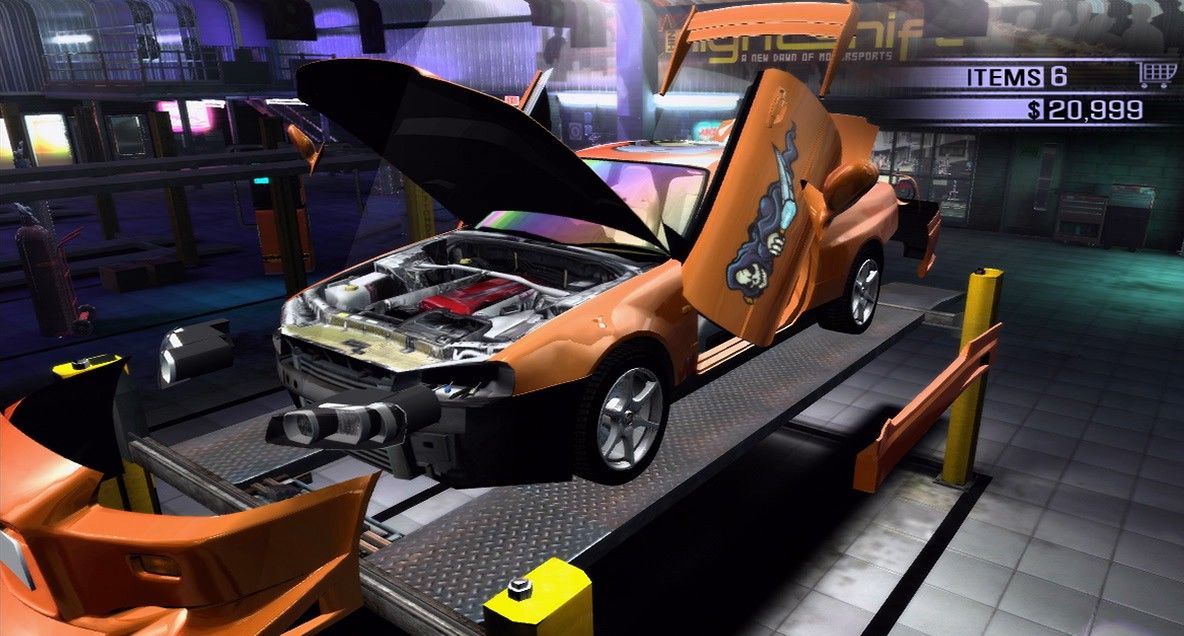
Juiced 2: Hot Import Nights – 2007
Did you read Speed Magazine and go to Autosalon shows around the turn of the century? Well imagine if that scene of sex-spec chrome wheels, neon lights and gratuitously scantily-clad women was put into a video game. That’s Juiced 2.
The game starts with your character and car selection… in a nightclub, because of course it does. The gameplay was horrid and the visuals laughable, but you could modify your chosen car down to the side mirrors and steering wheel. And if you were plugged into the burgeoning internet-tuner scene, Hot Import Nights was the name to know in global modified car shows, and gave us a taste of the US sport-compact scene over here in Australia.
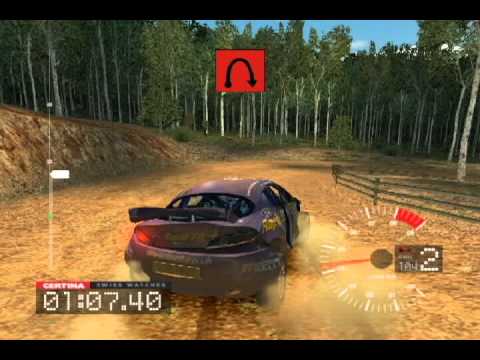
Colin McRae Rally 3 – 2002
Colin McRae Rally was a landmark game for the genre, introducing a fair whack of realism to a field that, prior to then, was mostly associated with the arcade-favourite that was Sega Rally. Colin McRae Rally 3 continued that and exploited the PS2’s processing power to increase the fidelity of the rally-racing experience even further.
The damage model was expanded, cars built up a realistic layer of dirt and dust as you progressed through each rally stage, bits would fall off your car if you crashed it, and the handling was profoundly affected by surface changes. The McRae series eventually morphed into the Dirt franchise, and today’s Dirt 2.0 is arguably one of the best rally sims around.
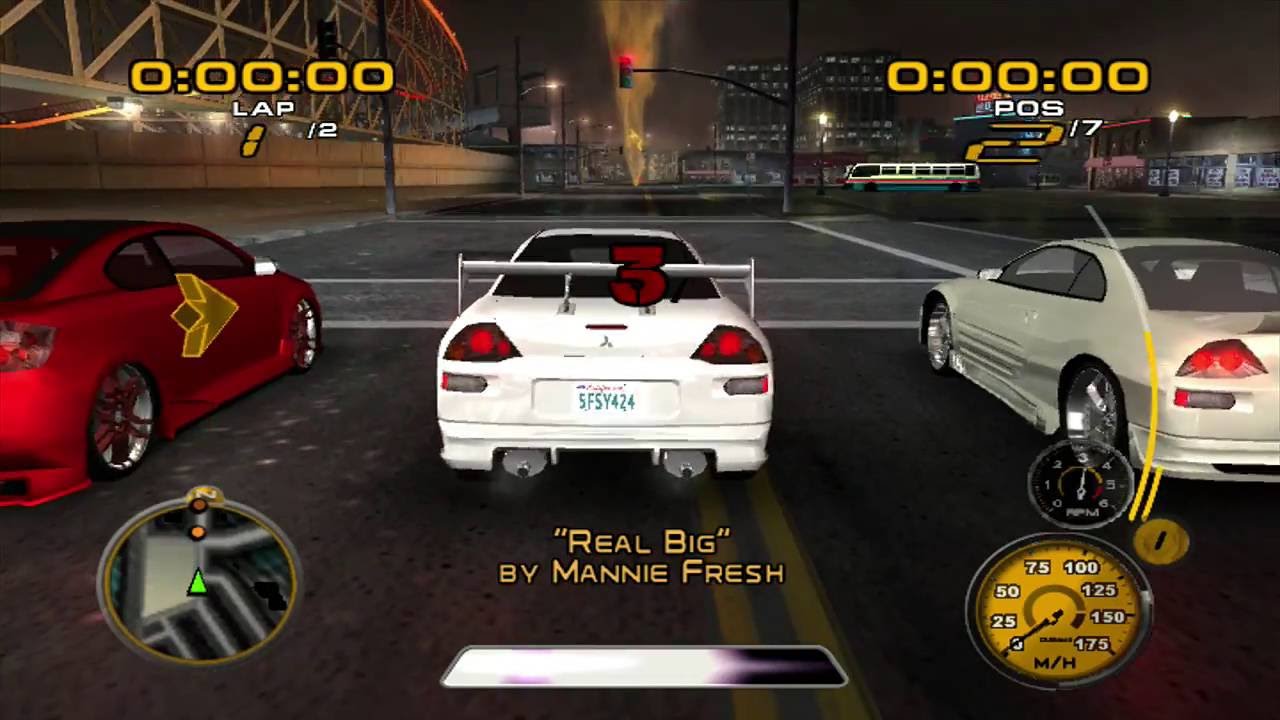
Midnight Club 3: Dub Edition Remix – 2008
Midnight Club 3: Dub Edition was a game far ahead of its time, bringing licenced cars and parts to the franchise for the first time, and a comprehensive car customisation (both visual and performance) system.
Through the game’s progression, players gain access to various new open world environments; San Diego, Atlanta, Detroit and Tokyo and offered players the choice to delve into a diverse blend of vehicles ranging from full-size 60s American lowriders, pimped-out Cadillac Escalades and all the compact tuners popularised throughout the early 2000s, as well as a selection of motorbikes. AI racers could be ludicrously difficult towards the later-stages of the game, but it was truly a pioneer of the modern open-world and customisation-heavy arcade racer formula.
