
What stands out?
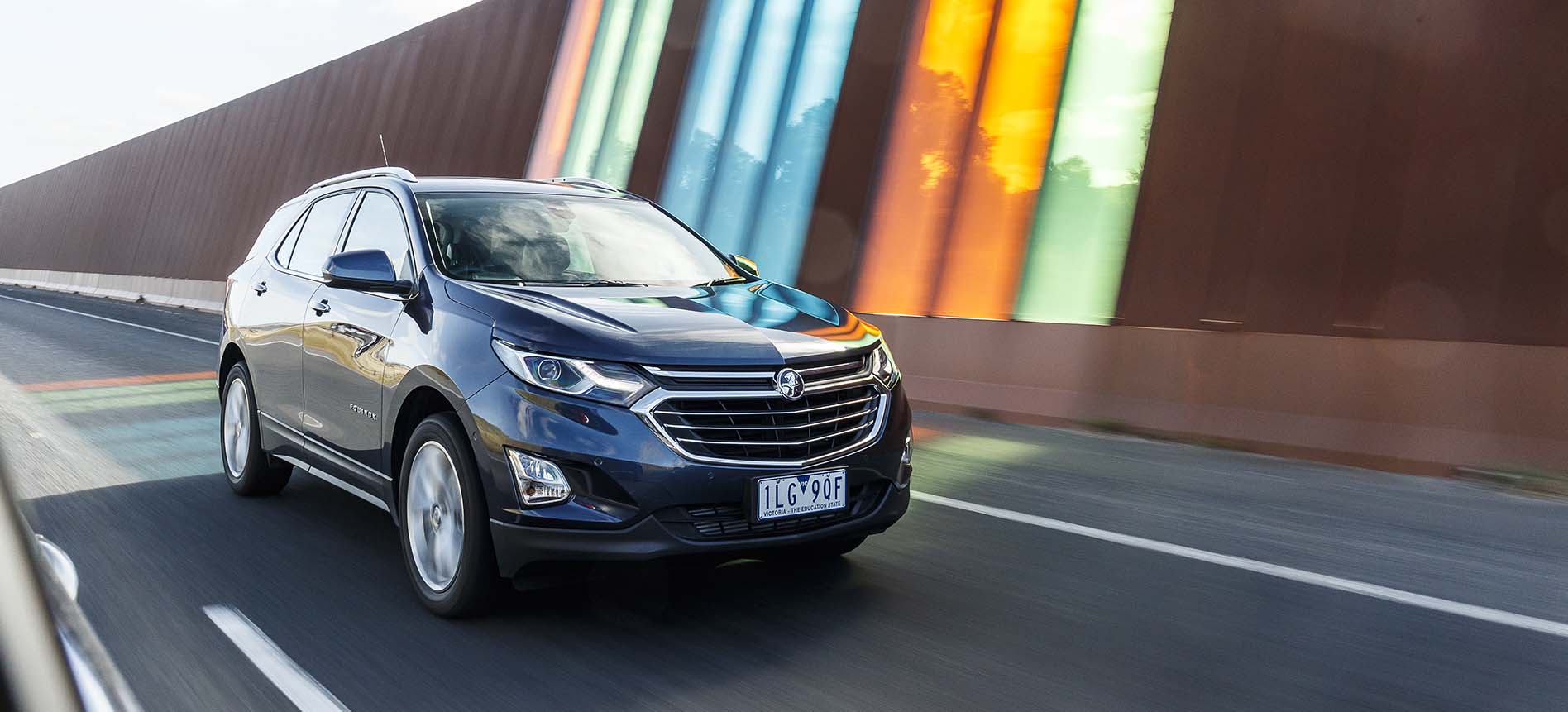
The Holden Trailblazer is an SUV-style wagon that is excellent for serious off-road driving and very good at towing. It seats seven, feels relaxed on the highway, and is strong on safety. The Trailblazer is a thoroughly revised and improved version of the Colorado 7, which it replaces, and is based on the Holden Colorado 4WD ute.The demise of Holden means you may be able to secure huge discounts on remaining models including the Equinox. For more details, read: Holden slashes prices as final fire sales begin.
What might bug me?
The alarm that beeps whenever you open the driver’s door to get out, unless you have removed the key from the ignition switch. The alarm sounds even if the gearbox is in Park, the handbrake is on, and the engine is off. Where’s the safety issue here?Having no easy way to play your favourite music, if you have not exported your CD collection to a phone (or similar device). The audio system doesn’t have a CD player.And of course, how Holden’s demise could have an impact on resale values. The good news is there should be no negative impact on your rights as an owner when it comes to parts, servicing, warranties and recalls.For more details about how Holden’s closure will impact Trailblazer ownership, see the ‘Is it safe to buy a new or used Trailblazer with Holden shutting down?’ section below.
What body styles are there?
Five-door wagon only.The Trailblazer has part-time four-wheel drive, and dual-range gearing. On sealed roads, it drives the rear wheels only. Once off-road, you can select four-wheel drive or low-range four-wheel drive. The low-range gears help you to drive very slowly in difficult off-road conditions.The Trailblazer is classed as a large SUV, lower priced.
What features do all Trailblazers have?
Cruise control, and Bluetooth phone connectivity. An audio system with a digital radio, at least six speakers, and auxiliary and micro-USB inputs for devices such as an iPod or phone.Smartphone integration via Apple CarPlay or Android Auto, which allows you to display and control some phone functions from the car’s touchscreen. For example, you can make calls, see text messages, and show on the touchscreen directions from a navigation app.A reversing camera, which displays on the touchscreen a view from behind the car, and rear parking sensors, which warn of the proximity of obstacles when reversing.Seven seats. Sidesteps, which make it easier to get in and out of the car.Headlights that come on automatically when it gets dark. Daytime running lights, which make the car more visible, and foglights.Shiny alloy wheels, which generally are lighter than steel wheels.Electronic Traction Control, which helps on slippery surfaces and allows you go further off road.Hill Start Control, which prevents the car rolling backwards when you are starting off on a steep hill.Hill Descent Control, which helps you control the car on steep off-road descents.Seven airbags, and Electronic Stability Control. (For the placement of airbags, and more on the Trailblazer’s safety systems, please open the Safety section below.)The Trailblazer comes with a five-year, unlimited kilometre warranty.
Which engine uses least fuel, and why wouldn’t I choose it?
There is only one engine available for the Trailblazer, a 2.8-litre turbo-diesel four-cylinder that has plenty of power.It is a significantly revised version of the modern engine that powered the Trailblazer’s predecessor, the Colorado 7. Among other improvements, it now uses less fuel, consuming just 8.2 litres/100km in the official test (city and country combined). In real-world driving, it averages about 10.0 litres/100km.This engine feels much smoother and quieter than it did in its previous form. What had been a generally unpleasant engine has been transformed for its role in the Trailblazer. It gets on with the job while making little noise and no fuss.A six-speed automatic is the only gearbox option.
What key features do I get if I spend more?
Walk past the least costly Trailblazer, the LT, and spend more for a Trailblazer LTZ and you get a lot more luxury and some active safety.The LTZ has an 8-inch touchscreen, instead of the 7-inch screen in the LT, and there is embedded satellite navigation, which means you don’t have to rely on your phone to get directions. The sound system is better, and uses an extra speaker.Leather upholstery replaces cloth, both front seats are heated, and the driver’s seat is power-adjustable in six dimensions.Automatic climate control holds a set cabin temperature, and a remote-start function allows you to warm up the engine and heat or cool the cabin before you get into the car.Windscreen wipers operate automatically when it rains. Taillights use brighter and very long-lived LEDs. Fancier-looking 18-inch wheels replace the 17-inch wheels of the LT, and a tyre-pressure monitor alerts you (via a dashboard display) if you have a slow puncture.Choosing the LTZ also brings you some sophisticated active safety features, namely Forward collision warning, Side blind-zone alert, Lane-departure warning, and Rear cross-traffic alert. (For more detail on these features, please open the Safety section below.)(In June 2017, Holden offered a Trailblazer Z71 alongside the LTZ, initially in a limited run of 400 vehicles. The Z71 is a Trailblazer LTZ with a different look and Z71 badging.)
Does any upgrade have a down side?
The 18-inch wheels and lower-profile tyres on the Trailblazer LTZ aren’t quite as good off road as the 17s on the LT, and they also make the LTZ ride a little more harshly (because there is less rubber and air between the wheel and the road). In addition, the 18-inch wheels limit your options when replacing tyres, especially if you want tyres designed for off-road use.White or bright red paint is standard. Other colours are an extra-cost option.
How comfortable is the Trailblazer?
The Trailblazer has a roomy and comfortable cabin, with well laid out and simple to use minor controls. The plastics used and the general fit and finish are much better than they were in its predecessor, the Colorado 7, and that gives the Trailblazer a feeling of quality that the Colorado 7 lacked.However, while the steering wheel is adjustable for tilt, you can’t adjust it for reach. That could be a problem for some drivers, especially those with long legs. As well, the front seats feel a little flat and hard. You might wish for more support from both the seatbases and the seatbacks.The sound system in the LTZ is clearly the better of the two but both sound good. Not everyone will be happy that neither version has a CD player.The Trailblazer is easy and relaxing to drive. The engine is smooth and quiet for a diesel and has good power, especially from low speeds or when you first press the pedal to accelerate on the highway, which makes for easy and safe overtaking. The automatic gearbox is very good at picking the right gear at the right time and shifts very smoothly.The Trailblazer is quiet inside and rides well at open-road speeds even when the roads become bumpy. However, on rough roads you need to correct the steering more than you would in an SUV with more car-like, independent rear suspension, because the Trailblazer has a less consistent, ute-style, suspension design with a solid rear axle.
What about safety in a Holden Trailblazer?
With seven airbags, electronic stability control, a reversing camera and rear parking sensors on both models, the Trailblazer is well served when it comes to safety. The more expensive LTZ has some additional features that can help you avoid crashes on the highway or when parking.The Trailblazer’s seven airbags begin with two each for the driver and front passenger: one directly in front, and one on the outer side to protect the upper body from side impacts. The driver has a third, knee level, airbag in front to help prevent leg injuries. Finally, full-length curtain airbags extending down each side of the cabin protect the heads of all those sitting next to a window from side impacts. That includes passengers in the third row of seats.The electronic stability control can help you bring a skidding car back under control. It is mandatory on all new cars.The Trailblazer also comes standard with Trailer sway control, which can help you settle a trailer that has begun to swing from side to side behind you.If you chose the more expensive LTZ, you gain Forward collision, Lane departure and Side blind-zone warnings, all of which help keep you safe on the highway.Forward Collision Warning monitors the road ahead and warns you if it senses a looming obstacle – typically another car that has slowed suddenly. It sounds an alarm and flashes small red lights in a heads-up display on the windscreen, prompting you to brake. (Note that this will not apply the brakes for you: it is not autonomous emergency braking.)Side blind-zone alert warns you of vehicles in the car’s blindspots – near a rear corner but not visible in your mirrors – via yellow lights on the side mirror and on the dashboard display.Lane departure warning uses a mild vibration at the steering wheel and a dashboard light to warn you that you are allowing the car to drift out of its lane – perhaps because you are tired or distracted.The LTZ also has a Rear cross-traffic alert, which is helpful when you are reversing out of a parking spot or driveway. It monitors the space to each side behind you, and warns you of an approaching vehicle by sounding an alarm and flashing a light in the reversing camera display.The Australasian New Car Assessment Program (ANCAP) awarded the Trailblazer five stars, its maximum safety score, in August 2016.
I like driving – will I enjoy this car?
The Trailblazer is built on a commercial vehicle platform that is robust enough for tough off-road driving but that does not prioritise sharp and precise on-road handling.However in creating the Trailblazer from the Colorado 7, Holden’s engineers have added electric power steering, which is light at parking speeds but weights up to preserve stability as speeds rise, and have tuned the suspension specifically for Australian roads. The result is a car that keen drivers will still find enjoyable to drive just about anywhere.The engine also offers enthusiastic performance. The automatic gearbox is sporty and forward-thinking in the way it selects gears, and shifts smoothly.The Trailblazer is very capable off-road, helped by its dual-range gearing (which allows you to drive comfortably at a very slow pace) and the truck-type rear suspension (which shines on rough terrain). It can get your family to camping locations and the like that would be beyond the reach of alternative SUVs designed mainly for on-road use (which tend to have independent rear suspension, less ground clearance and only single-range gearing).
How is life in the rear seats?
The main rear seat of the Trailblazer is good for two adults and a child but is on the tight side width-wise for three adults, and could do with more legroom for tall passengers. There is however good headroom. It has are attachment points for three child seats.The third-row seating is roomier than that offered in some similar vehicles and is good for children and small adults.The Trailblazer is a good height for helping small children in and out of child seats.
How is it for carrying stuff?
The luggage area is accessed via a single top-hinged tailgate. The cargo space is not as big as it seems from the outside the car, because the third-row seats, even when folded down, eat into it.On a more positive note, the three-person middle row of seats folds 60-40 and the two-person third-row folds 50-50. That adds versatility, allowing you to tailor the car’s interior for carrying people or gear or both.The Trailblazer has a 3000kg maximum tow rating with a 300kg maximum towball download, which is average for a medium-sized ute-based 4WD wagon and much better than most car-based SUVs. That is enough to legally tow a loaded two-horse float or a large tandem-axle caravan. The Trailblazer’s engine also feels well up to towing its maximum rating, and its gearbox is well suited to towing.
Where does Holden make the Trailblazer?
All Australian-delivered Trailblazers are made in Thailand.
What might I miss that similar cars have?
Perhaps full-time four-wheel drive, which means all four wheels are driven all of the time. That can make it safer to drive on wet or otherwise slippery sealed roads. The Ford Everest has full-time 4WD, for example, while the Mitsubishi Pajero Sport has the option of full-time 4WD. (The Trailblazer’s 4WD can only be used off-road, on very slippery unsealed roads, or on snowy roads.)Possibly a rear differential lock, which can help you go further off-road. The Toyota Fortuner has this feature, for example, as do most other ute-based SUVs.A CD player. You still get one of these increasingly rare devices with a Ford Everest, for example.If getting well off the beaten track does not attract you, and you do not have a need to tow big loads, you might also consider diesel-powered SUVs built more like cars, such as the Hyundai Santa Fe and Kia Sorento. These don’t have the off-road ability of the Trailblazer, but they ride and handle more smoothly on the road.On the other side, if you wanted a seven-seat 4WD that was even more capable off-road than the Trailblazer you could opt for the more expensive Toyota Prado.
I like this car, but I can’t choose which version. Can you help?
The Trailblazer LTZ is the better buy. If offers a lot more luxury and safety than the LT.
Is it safe to buy a Trailblazer now that Holden is closing down?
If you can get a good deal on a Trailblazer as part of the Holden fire sale, there is good reason to feel confident that parts will be available and that servicing and the warranty will be covered.Australian consumer law requires that a brand supports its products for at least seven years, while General Motors – the parent company of Holden who are behind the closure – have stated that it will extend warranty and service support for 10 years. The company says it will establish a national after sales network to support existing customers for at least the next 10 years. And remember, you don’t have to service your Trailblazer at a Holden dealership to guarantee warranty coverage.For more details, read: What does Holden’s axing mean for its customers.
In the wake of the shock announcement that Holden will disappear from the Australian automotive landscape, dealers are preparing to slash forecourt prices by more than $17,000.
The once-mighty lion brand will cease to exist by the end of this year, but dealerships are expected to bolt their doors for the final time far sooner, with massive discounts offered to clear out stock fast.
HOLDEN CLOSURE – THE LATEST
Massive price cuts for all Holdens
Reports emerging suggest that the Holden Colorado will be the pick of the buys, with alleged discounts of up to $17,500, while the Holden Astra 2019 model – discontinued earlier this year – has also had its price slashed by some $8500.
However, WhichCar has learned that those prices are not as cut-and-dried as many are reporting. According to a source inside Holden, the company will be applying discounts on a more case by case basis, assisting dealers to move all existing stock.
The largest figures will be applied to sweeten the deal in the hardest of sales, like high-mileage demonstrators or yard-damaged examples.
The message is clear – don’t expect to stroll into a Holden dealership and drive out in a new Astra for $12,000, while used examples are selling for $16,000.
That said, Holden will be offering “substantial bonuses on the entire range,” WhichCar was told.
The strategy appears to be working, with interested customers already approaching dealerships with inquires. Dealers are confident the aggressive discounting strategy will be effective in clearing all stock before the end of the financial year.
Holden plans for dealerships still under wraps
While discount information has made its way to dealerships, detailed compensation packages ave not yet been forthcoming. Holden assures affected parties that one is on the way which will be satisfactory, although it’s suggested that some dealers are still considering legal action if the proposal does not adequately support all of the circa-180 dealers.
Stiff penalties have previously applied if dealers wanted to back out of franchise contracts early, so the dealers are expecting similar compensation now the tables have been turned, said our source, with some dealers recently investing millions of dollars to secure long-term leases.
Holden is remaining tight-lipped on its exit strategy, including information on dealer compensation packages, but WhichCar understands most, if not all, dealerships will be shuttered by the end of August 2020. However, a statement by Holden executives on Monday suggested the 600 employees due for redundancy could be out of a job by June.
A complete cancellation of all local advertising is part of the media blackout, which is expected to cost media houses millions of dollars in revenue, while sports sponsorship deals with various sporting teams have also been cancelled.
Key Holden dealers affected include John McGrath Holden, Werribee Holden, Bay City Holden and Poyser Holden.
Either way, forecourts and showrooms around the country need to be emptied quickly, and customers in the market for a new car stand to be the ones benefiting out of Monday’s otherwise bleak announcement.
While prices for new Holdens will be at an all-time low, potential customers are advised to go in with a long-term ownership plan, as resale values will be impacted once the final pin is pulled. Don’t expect to make a killing by flipping the car soon after purchase.
Conversely, values of older and more desirable Holden models are now expected to rise as the reality of an Australia without Holden dawns on many lifelong fans.
A spike in the demand for V8 and ute models followed the announcement that local manufacturing would end in 2017 and a similar increase in demand is possible following the most recent revelations.
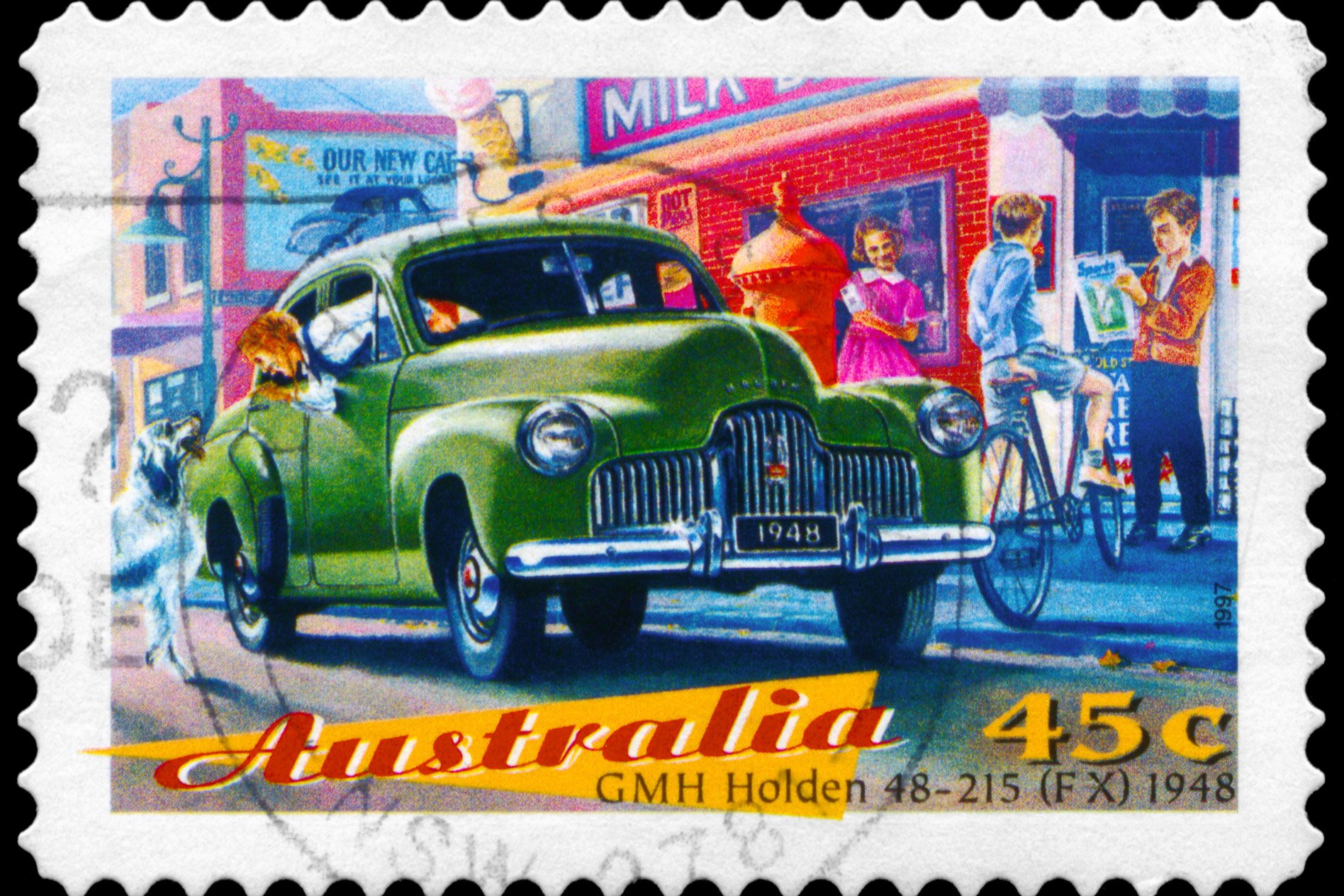
Customers who have recently bought a new Holden may also benefit from the discounts if they haven’t yet taken delivery. If that applies to you, get in touch with your sales consultant as soon as possible and renegotiate the pre-announcement price.
Listen to the WhichCar Weekly Holden special
While it is a risk to buy a new car that will essentially become an orphan, it’s unlikely that new car prices this cheap will ever be repeated.
READ MORE
- Holden’s factory closure statement
- Why did Australia fall out of love with Holden?
- Two years on from Holden’s factory closure
- The best performance Commodores
- Clay modelling at Holden’s design studio
- Holden halts production of Commodore and Equinox
- How Holden shaped a nation
If timing could ever be ‘good’ for a supercar to burst into flames, we’re not sure how… but it can certainly be bad. This Ferrari F40 burning to the ground on Enzo Ferrari’s birthday is bad timing.
Posted all over Instagram by local carspotters, the twin-turbo V8 poster icon went from a cruise through the wealthy streets to becoming the source of a huge plume of black smoke rather quickly.
Footage posted to Instagram shows its driver stepping out as the flames become worse, seemingly helpless to stop the fire. It’s not clear whether an extinguisher was on hand in the car, but the resulting blaze would suggest not.
https://www.instagram.com/p/B8tkZGtq9GD/?utm_source=ig_embed&utm_campaign=loading
A bystander on the balcony above is seen to be attempting to quell the inferno with a hose (in the video at the top of page) but to no avail.
Unfortunately, though firefighters arrived to put out the flames in the end, a gallery posted to Instagram shows the resulting shell of what was once one of Maranello’s crowing achievements.
https://www.instagram.com/p/B8uOi2wqP3A/?utm_source=ig_embed&utm_campaign=loading
It’s obviously not the first time we’ve come across video of a happening such as this, as supercars appear to burn to the ground semi-regularly, but we have investigated potential causes of events like this.
A workshop specialising in supercars and prestige Euros told MOTOR that, for the most part manufacturer fault is to blame, “with owners’ sometimes enthusiastic driving not likely to turn a fault-free supercar into a flambé fireball.”
Aftermarket modifications can also cause the balance of a finely-tuned mechanical ecosystem to collapse and spark a fire too.
It only dawned on me recently, but now I’m calling it. I’ve already bought my last new car with an internal combustion engine.
In case, you’re interested, it was a 2013 Golf 7, fresh off the back of its Wheels COTY win. Now gently meandering on the part of its depreciation curve you’d need a spirit-level to ascertain, the Golf will soldier on for 5000km a year until I buy something battery powered.

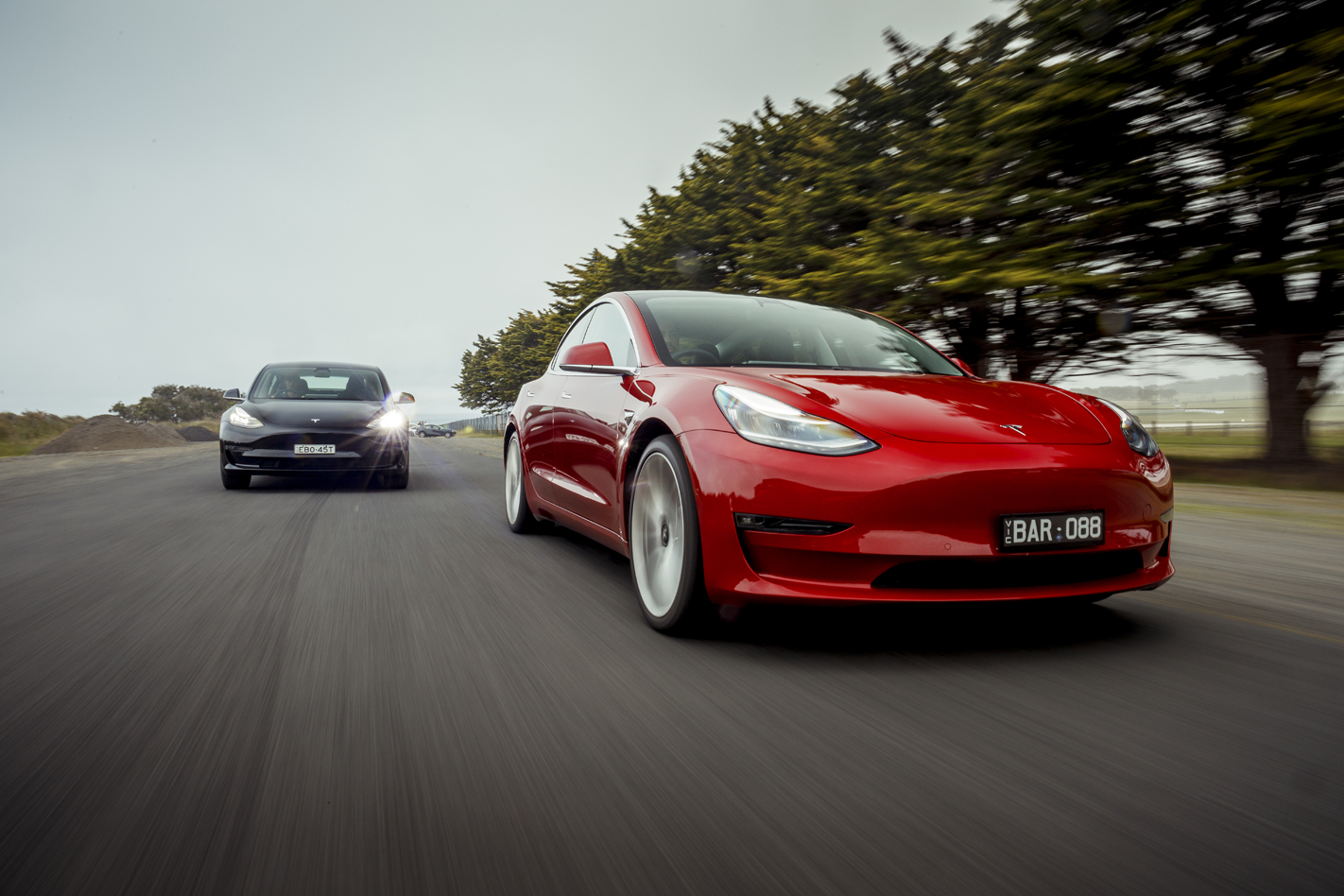
When that will be is a thornier question. I’m sure I’m not alone on this one, but I’m in that weird limbo where I don’t want to buy another new internal combustion engined (ICE) car but I don’t think the electric infrastructure is ready yet to make an EV purchase entirely practical, for me at least. I recently had a Tesla for a few days and it was a litany of out of action public chargers and fevered trip planning. Even a bit of desperate eking of range with no headlights and no air con. Things need to change.
And change they will. You only have to look at the UK to see how seismically things can shift on a macro scale. Jaguar Land Rover has ploughed nearly $2bn into the development of electrified vehicles, a significant percentage of which has gone into a range of hybrid tech. It’s one of the few beacons of good news in a motoring industry kneecapped by Brexit. Then, the government sprung a surprise on the industry by announcing that all new ICE cars would be banned from sale in 2035.
Not only did the date come forward by five years, but the previous wording allowed for ‘electrified’ vehicles, i.e. hybrids. Now Jaguar’s huge investment in hybrids has a maximum shelf life of fifteen years in its biggest market. That’s crippling. On the plus side, it focuses ongoing development in a very specific way.
Australia’s different, I hear you say. We’re a holdout nation of big distances with that peculiar quirk of low petrol prices, punitive electricity charges and a deeply ingrained love of a good V8. You’ve only got to look at some of the fury from online commenters at the latest COTY verdict to see what a good slug of Aussies think of EVs.
But with no domestic industry to protect anymore, the gloves are off. Last year, a 28-nation survey by Ipsos found that in Australia 44 percent of people ranked climate change among their three biggest environmental worries – 9 percentage points higher than the year before – and well above the international average of 37 percent. The recent bushfires have only served to sharpen that focus and the temptation to tax us into more efficient vehicles at the fuel bowsers could be a win-win the government is, eventually, unable to resist.
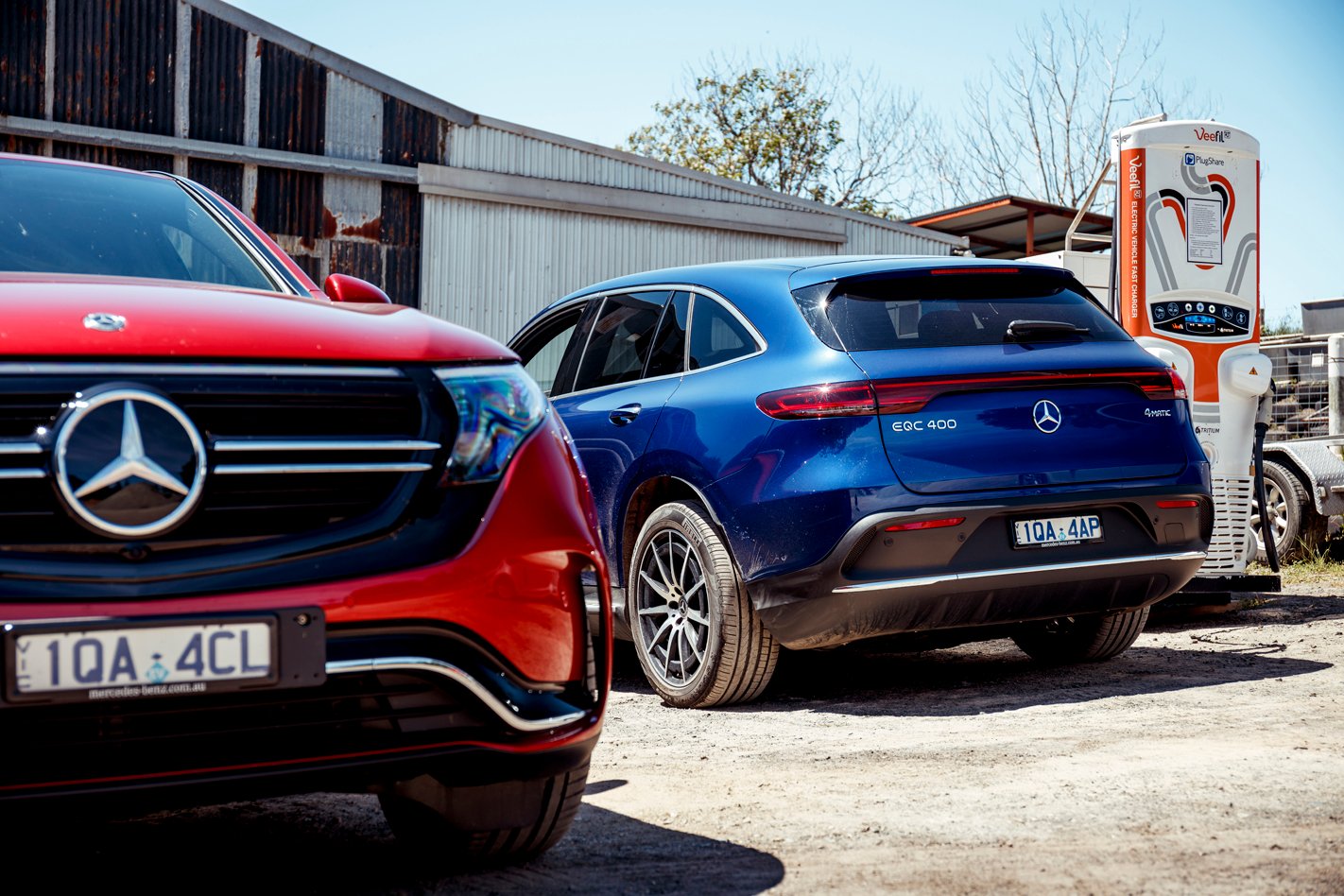
This change in focus manifests in different ways. Ask automotive CEOs about the new internal combustion powerplants their companies are working on and you’ll often get an array of mealy-mouthed evasions. Research and development into new ICE tech is down because they know that the tipping point where the manufacture of a vehicle with an internal combustion engine no longer makes any kind of financial sense is approaching. Granted, it’s not here yet and you’ll be hard-pressed to find an EV right now that’s not being sold at a loss, but the switch is an inevitability.
There are a number of reasons for this. The world’s largest car market is driving the change, with China steadily ramping up its mandatory new energy vehicle requirements. This year it’ll stand at 12 percent of sales, and will keep rising by 2 percent a year to 20 percent by 2025.

Lithium-ion battery density is increasing by 5-8 percent every year such that the range of electric cars could shortly outstrip that of many petrol-engined passenger cars. Also the cost per kilowatt hour of battery packs is tumbling at an astonishing rate. Back in 2010, it cost USD$1000 for one kilowatt hour. In 2017 it had fallen to $200. At Tesla’s shareholder meeting in June 2018, Elon Musk stated that within 24 months, that cost would be $100/kWh, widely perceived as the point at which battery-powered cars become more affordable to build than their ICE equivalents. It’s $155 right now.
While I could still countenance a fun project car (a $15k Toyota 86 with rally rubber, shocks and mudflaps for gravel roads appeals), tipping some serious coin into a new ICE car that could depreciate like a stone has me a little chary. My old man once came home triumphantly with the most expensive Betamax VCR in the shop.

With fewer moving parts, EVs are set to be more reliable, they carry less social stigma, will sidestep clean air legislation and, as the balance tips from fossil fuel usage, ask yourself if there will continue to be a servo every couple of kilometres for your legacy ICE vehicle. The Chiko Roll could be collateral damage.
So while I’m still the guy who sits there with headphones on and a goofy smile listening to raw audio of a miked-up 911 GT3 and laughs himself stupid driving a great V8, the pragmatist in me has already made up his mind. The problem for car manufacturers is that I’m not ready to take the EV plunge yet. Nor, I’m guessing, are you.
Sign-up here to get the weekly Wheels highlights
The Holden Camira isn’t necessarily something you’d read about on MOTOR’s section of the WhichCar website, but the VL Commodore BT1 might be. What we’ve got here is a mashup.
Remember the Suprakar, the Commodore dressed up like the Fast and Furious Toyota Supra? Well, guess who’s behind this little Canary Camira.
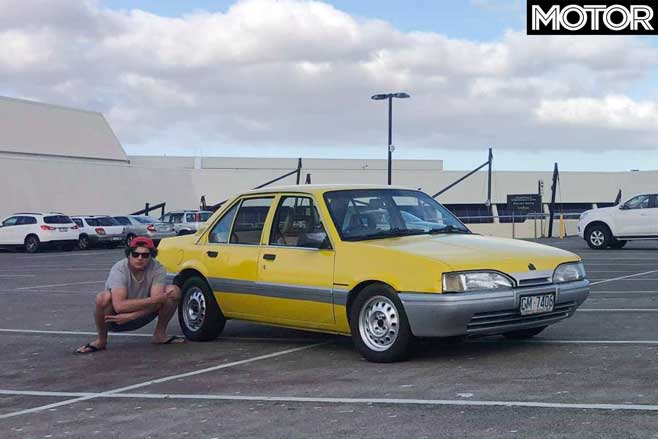
We spoke to the Tasmanian named Mohamad behind the build and asked why he decided to continue trolling Holden fans with this car he’s dubbed ‘BT-Wun’.
“I currently have an R31 GTS-2 and a Dick Johnson XE Falcon, both collectable cars. I wanted to add a Holden from the same ‘80s boxy, cool shape to my collection so I could have one of each make from that era.
“But! Have you seen the prices of VL BT-s? They have skyrocketed to serious dollars now. There’s no way in hell I could afford one anytime soon so I went with the next best thing and built one myself… out of a Camira. With the help of a few friends of course.”
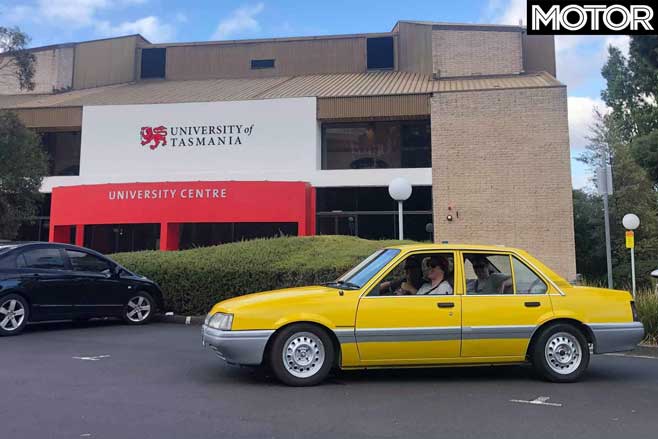
Mohamad says the car was up for grabs at the right time, and a friend alerted to him to the rather tidy ‘baby VL’ for sale.
“This car was mint. An elderly lady owned it, she said it had been in her family for many years and that it was also her daughter’s first car. The interior and engine are immaculate, very well looked after and a credit to the previous owners.”
Obviously, the car looked like a standard Camira, so Mohamad and his mates got to work undoing the decades of care and preservation the car had been though.
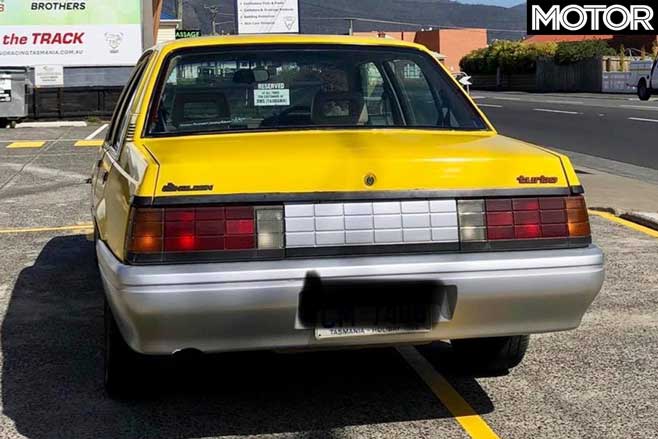
“We started off with buying the correct colour and the prep work began,” he tells us. The exterior changes make up the work so far, but unlike his previous build Mohamad says this one might end up sticking around with him.
“I don’t currently have plans to auction this car off for charity, but let’s not rule that out for now because a lot of people have been asking me if I’m going to raffle it off.
“I’ve actually also had a few people approach me and ask me to sell it to them, but the fun hasn’t even started yet so she’s not going anywhere anytime soon.”
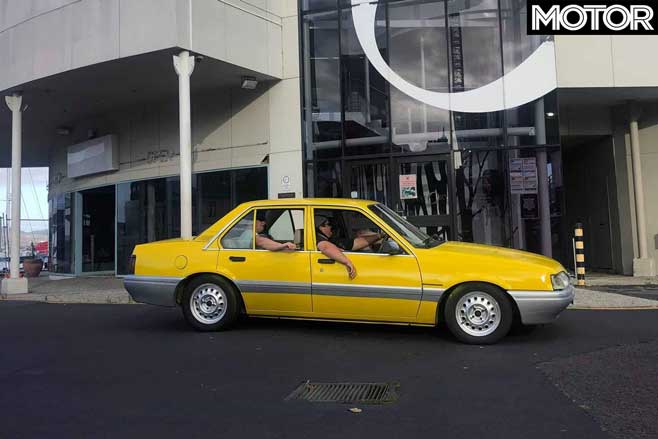
So far Mohamad has had the car photographed by his friends in several “iconic Tassie locations” including kebab shops, Centrelink, cop shops, and even a Holden dealership.
‘The BT-Wun was definitely built for laughs… everyone loves it. A lot of people think it’s the real deal which makes it even funnier. And I really enjoy how much people enjoy the piss-take.”
Mohamad says despite the fun reactions and the laughs he’s been causing, there are some who really aren’t happy with his efforts.
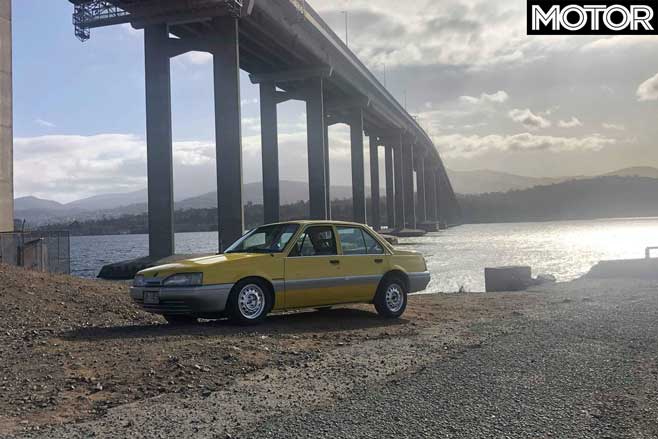
“I must admit a few Holden loyalists have been getting ‘butthurt’ by it, calling it a few names. But hey! Are they forgetting which country we live in?
“Life’s too serious sometimes so it’s great to create some fun.”
It’s an oft-quoted anecdote that the first thing a General Motors executive says upon waking is ‘how can we f*** Ford today?’ – and it’s no secret that the two titans of the automotive industry are always out for each other’s blood.
It manifested itself on Australian shores, too, with Holden and Ford scrapping it out decade after decade for the hearts, minds and wallets of Aussie car buyers.
Now, though, the war is over, not so much won by Ford as lost by Holden. With its nemesis of nearly 80 years now folding its tent and retreating from Australia at the behest of its GM owners, how does Ford Australia play it from here?
HOLDEN CLOSURE – THE LATEST
Genuine grief and respect from Ford
Just like soldiers from both sides playing soccer between the trenches, Ford and Holden’s intense rivalry also sparked firm friendships and a deep respect on both sides. Ford has felt the same pain, and it knows what its rivals are going through – after all, it’s been on the edge of the precipice a few times itself over the years.
“Holden is an iconic brand that holds a special place in the heart of many Australians and has done so much to shape the Australian automotive industry and the country,” read a statement from Ford. “Its vehicles have been worthy competitors both on-road and on the racetrack. To our friends at Holden, thank you for keeping us on our toes and inspiring us to keep aiming higher. We will miss you.”
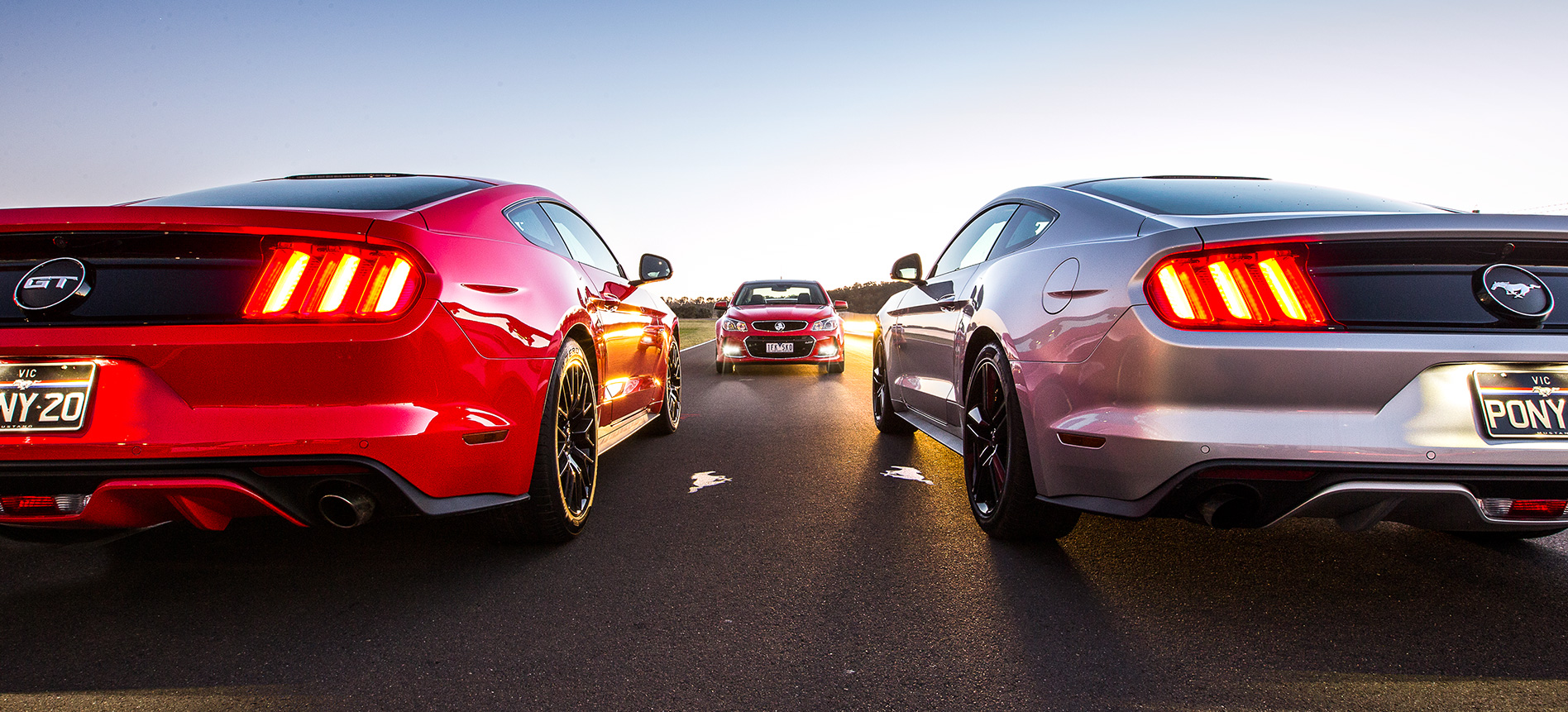
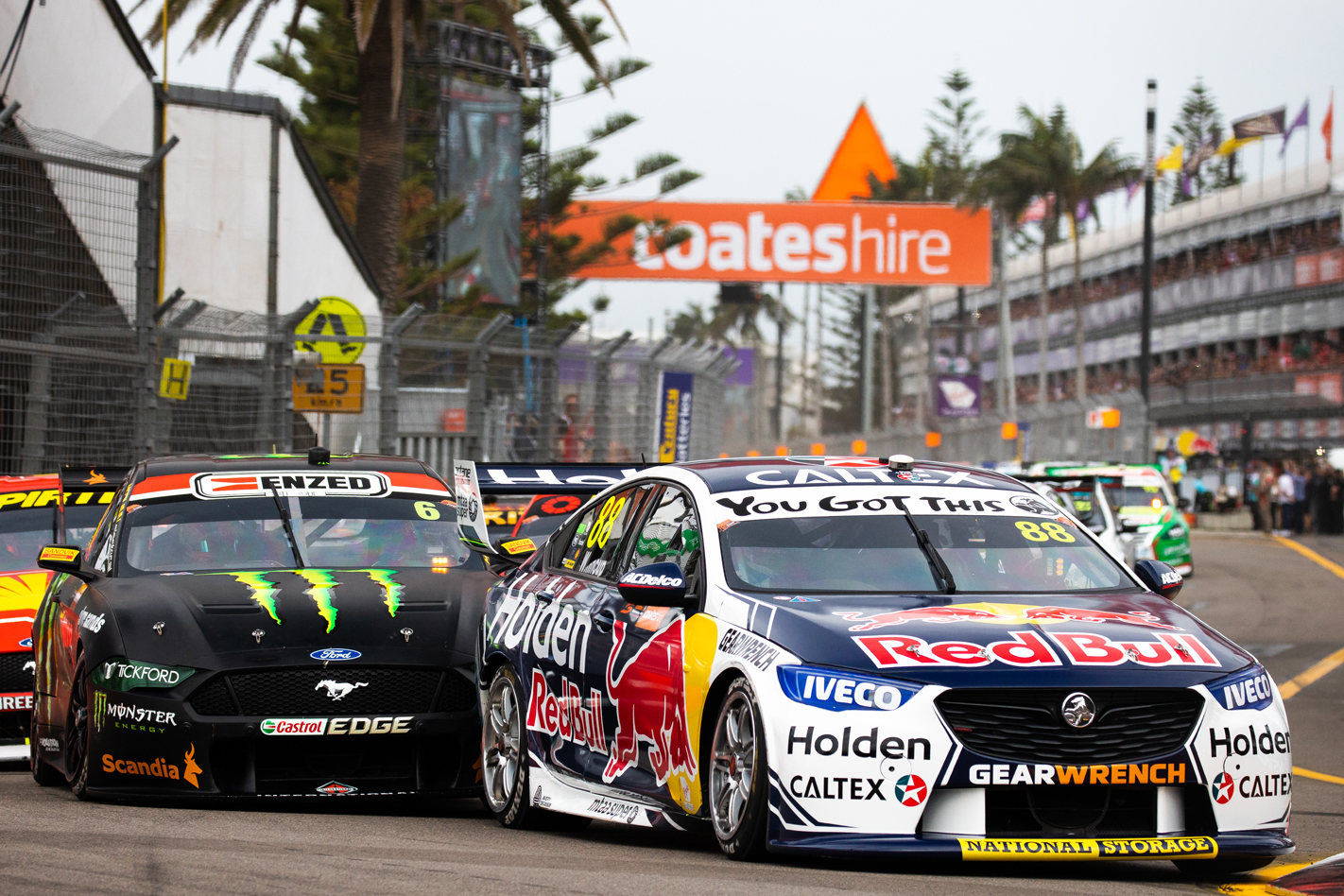
Despite the changing of the public’s tastes in cars, the two protagonists kept the fight going on the track; even though it was a Mustang that won the championship and the Bathurst 1000 in 2019, it was blue-oval flags waving on high, not a prancing pony.
While the Falcon/Commodore fight died back in 2017, Ford took the lead with its Ranger/Mustang double act, and Holden was unable to react to stay in the game. Nevertheless, the Broadmeadows squad will feel the loss.
“I work on the blue side of the fence these days, but I grew up a Holden man,” reflects a current Ford insider. “In many ways, I still am. Dad always drove Holdens. HR, LJ, LX, VK, VN, VS, VY. Mum had a Gemini, then a couple of Astras.
“The news that Holden is finished was not surprising, but it still hurt. We’ve always had Holden, and it’s hard to imagine a future without that brand in the market place. Ford has lost its arch rival, and I don’t know where that level of competition is going to be generated from in coming years. Time will tell, I ‘spose.”
About that $500m from Ford…
Ford Australia chief Kay Hart has been quoted this week around the fact that Ford will invest $500 million into its Australian operations in the wake of the closure. Well, that’s not quite the right way to look at it.
The company has invested solidly into its engineering and vehicle development programs in Australia; in fact, it’s spent $1.9 billion here in the last three years.
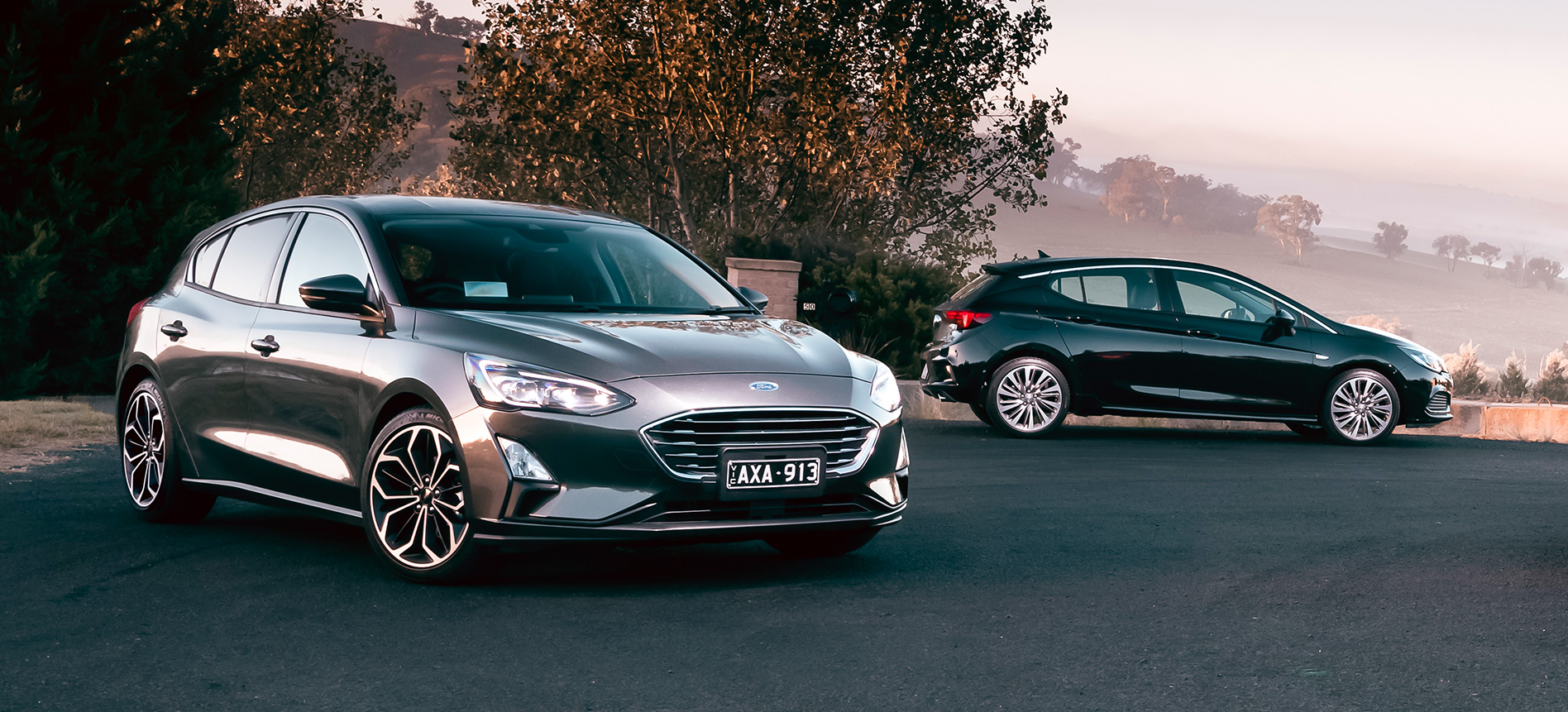
However, the $500m figure mentioned this week is part of that ongoing commitment, and not an extra amount prompted by the closure. Ms Hart has said that the 600-odd Holden employees who will be forced to leave the company could be in the frame for jobs at Ford “if skill sets match”, and that the company is actively hiring.
However, consider that Ford itself needs to dig itself out of a bit of a hole of its own making. While the success of the Ranger is well documented, the natural taper of Mustang sales and a raft of under-performers across its portfolio has put Ford under a bit of pressure, while the parent company’s focus on electrification and US-based truck production has put right-hand-drive projects under the spotlight.
Sound familiar?
“Ford continues to invest in its Australian operations and our 2,000-plus workforce of engineers, designers and other experts, as we design and develop vehicles for the world, including award-winning Ranger pickup and Everest SUV, sold in more than 180 markets,” said Ms Hart in a statement. “Our marketing, sales and service team works closely with our dealer network to serve customers nationwide.”
Watch this space
Ford has a renewed focus on pulling up its socks in Australia. The incoming Escape will give it a fresh tilt at the medium SUV segment, while the eagerly awaited 2021 Ranger – and V8 Raptor! – will also liven up a red hot segment.
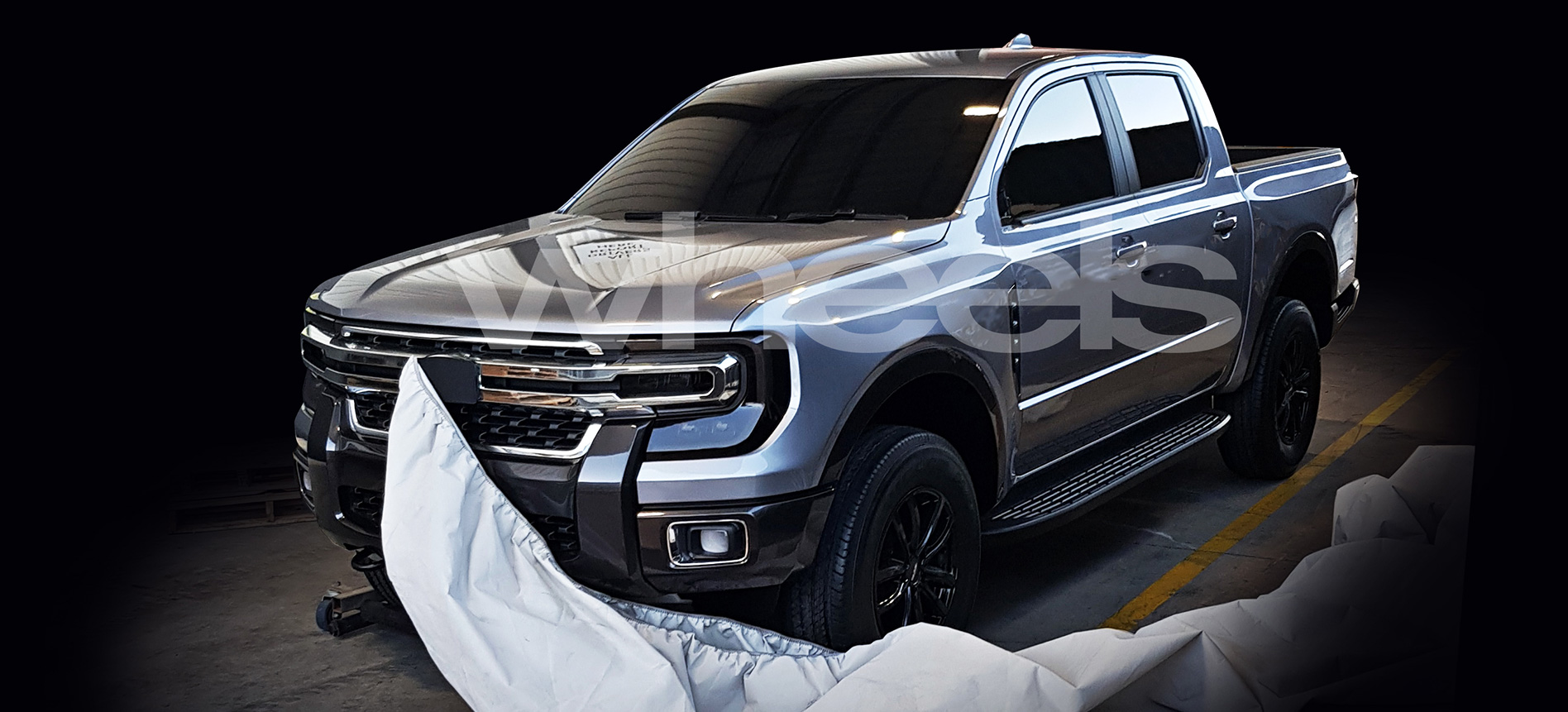
But as we’ve pointed out, a small shift in fortunes could tip the scales the wrong way for the Blue Oval. Could it go the way of the General? We don’t think so – its position as an engineering centre for the Asia-Pacific region gives it more pull in Dearborn than Holden had in Detroit.
But there will be some long, hard thinking going in boardrooms on both sides of the Pacific as the Holden news is digested.
READ MORE
- Holden’s factory closure statement
- Why did Australia fall out of love with Holden?
- Two years on from Holden’s factory closure
- The best performance Commodores
- Clay modelling at Holden’s design studio
- Holden halts production of Commodore and Equinox
- How Holden shaped a nation
Don’t let the model designation mislead you – the BMW M235i Gran Coupe is neither grand nor a coupe. Like the CLA and the four-door Audi A3, this 2 Series model is essentially a saloon with a go-faster roofline.
It shares the wheelbase with the 1 Series but is two handspans longer than the hatchback so it’s handicapped by excessive overhangs. Despite the larger footprint, rear legroom is only half a cigarette’s length more than the M240i, the back seats of which are admittedly even harder to access. On the credit side, the new arrival boasts a sizeable boot that holds 430 litres with the rear backrests in place.
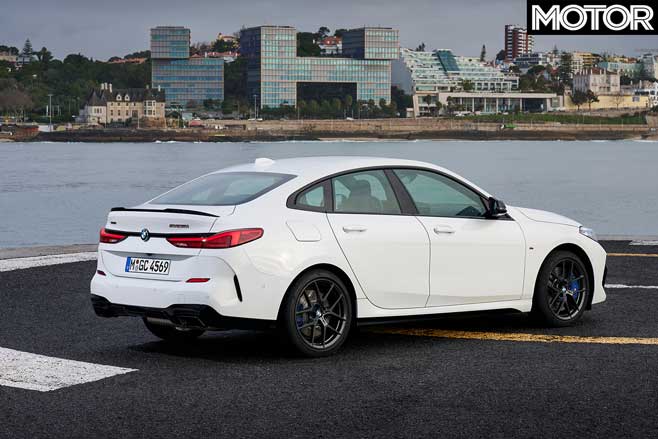
For a change, the BMW kidney is this time not a taste disruptor. What disturbs the eye instead is the absence of spot-on proportions the larger Gran Coupes convey so well. The stubby nose sticks out a tad too far, the rear end is tall and square, the high bonnet is anything but fetching and even the standard 19-inch rims (shod with 235/35R19 Pirelli tyres) look small. While the aero kit is part of the M treatment, one must pay an extra $2200 for the M Performance Pack, which features overboost mode along with loads of eye-catching gloss black.
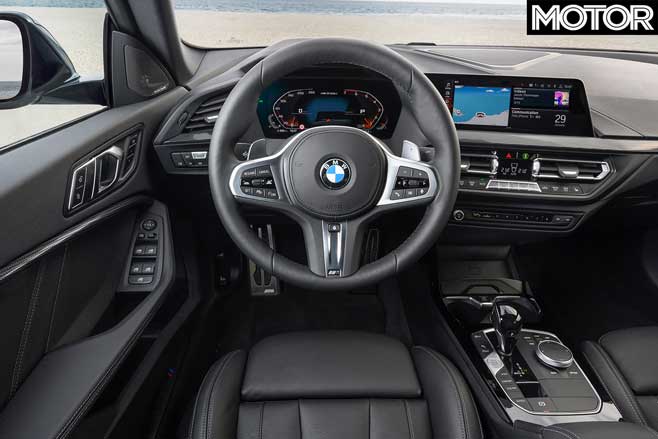
The cockpit is well laid out, well specced and well put together, though the messy instrument graphics were obviously designed under the influence, even essential goodies like sat-nav cost extra and the ergonomics are in part startlingly complex.
Unlike the six-cylinder M240i, the M235i is only available in xDrive guise and with the eight-speed automatic transmission, which bares its true dynamic nature as soon as you flick the lever from D to S and responds commendably briskly to paddleshift inputs. Dampers are of the two-way kind (Comfort or Sport), the steering was recalibrated for an even sharper response, and Sport brakes provide extra stamina.
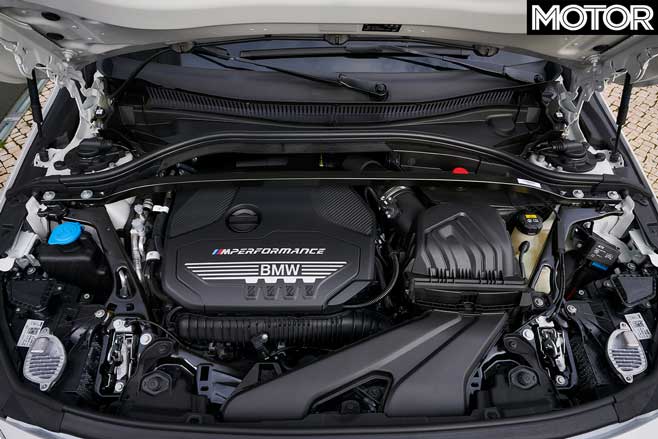
Now powered by a four-cylinder turbo producing 225kW and 450Nm, the crackerjack edition benefits from all-wheel drive to nip traction issues in the bud. Since the front-to-rear torque split won’t stretch beyond 50 per cent to the rear, the M235i is not a part-time driftmeister like the AMG A45 S or Focus RS, but a mechanical torsen diff lock is fitted to curb steering fight and a bunch of extra bytes optimise take-off traction, turn-in grip and wheel-selective torque vectoring.
In addition to launch control, DTC (dynamic traction control) and DSC, a new feature dubbed EDLC (Electronic Differential Lock Control) was added to smooth the cornering attitude by momentary brake actuation. Last but not least, there is ARB (wheel slip control), which operates up to ten times faster than the previous software application.
BMW says this high-tech package practically eliminates torque-steer and pronounced understeer, but on wet and slippery pavement you still experience a bit of both. When pushed, the nose tries to run wide and the front wheels briefly scrabble for grip.
In the hinterland of Lisbon, the M Performance version had ample opportunity to prove its dynamic worth, accelerating to 100km/h in a swift 4.9sec with launch control (4.8 with overboost) and maxxing out at an indicated 258km/h on the autobahn. So the M235i matches the CLA35, but loses half a second to its more potent yet much older namesake fitted with the coveted 3.0-litre engine. In real life, this difference is less significant than the 50Nm of torque the four lacks compared to the six.
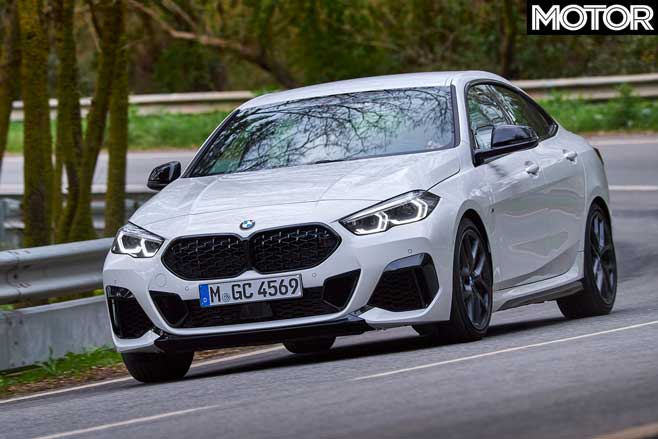
We would also prefer a faster-shifting transmission in Sport, a more relaxed steering action at speed, a less busy handling demeanour through fast esses and a more reassuring response to energetic brake pedal actuation.
Compared to the similarly priced two-door M240i, the four-door M235i Gran Coupe is clearly roomier, more comfortable, better equipped and more modern, and while its four-cylinder engine may be less smooth, muscular and melodic, it does the job. So the Gran Coupe is the more practical and pragmatic buy, but the appeal of its odd physique is entirely in the eye of the beholder.
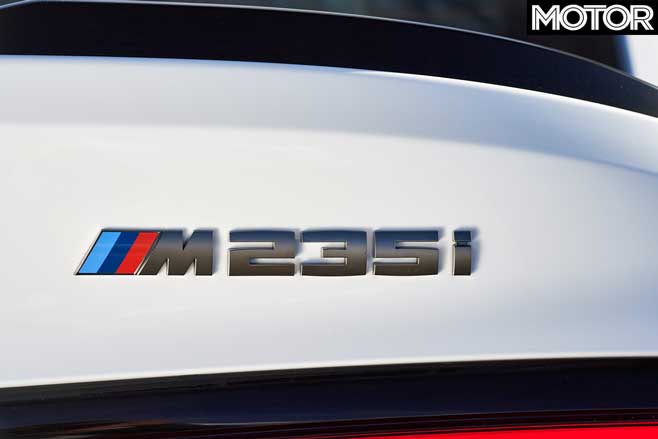
2020 BMW M235i xDRIVE GRAN COUPE SPECS Engine: 1998cc inline-4, DOHC, 16v, turbo Power: 225kW @ 5000-6250rpm Torque: 450Nm @ 1750-4500rpm Weight: 1570kg 0-100km/h: 4.8sec (claimed) Price: $69,990
The 2020 Audi RS Q3 Sportback sounds like half an R8 V10 supercar, looks like a baby Lamborghini Urus in its new Sportback body style and seems to have banished the front-heavy handling that has plagued five-cylinder quattro models in the past.
Although it must be said from the outset, our first impressions of the brand new, second-generation, warbling five-cylinder Audi RS Q3 were on snow and ice during the international launch in Sweden. Not very representative of Australian conditions at all, so it might be worth waiting for a more conclusive test on dry bitumen roads.
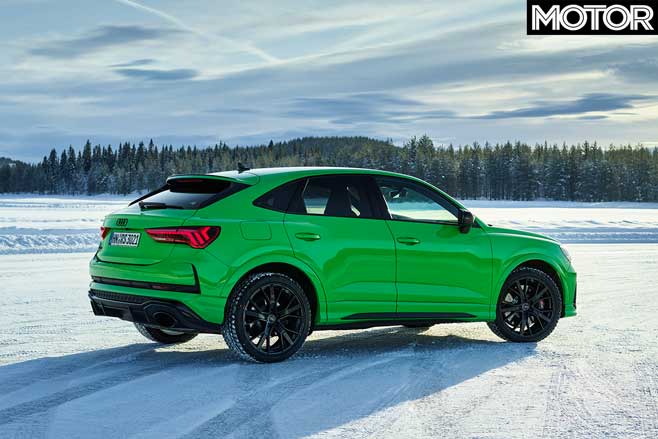
But certainly on snow and ice or of course dirt – and there’s plenty of that in Australia – the all-wheel drive RS Q3 is a total laugh. So fun, in fact, you forget you’re driving a tall and heavy, supposedly off-road vehicle.
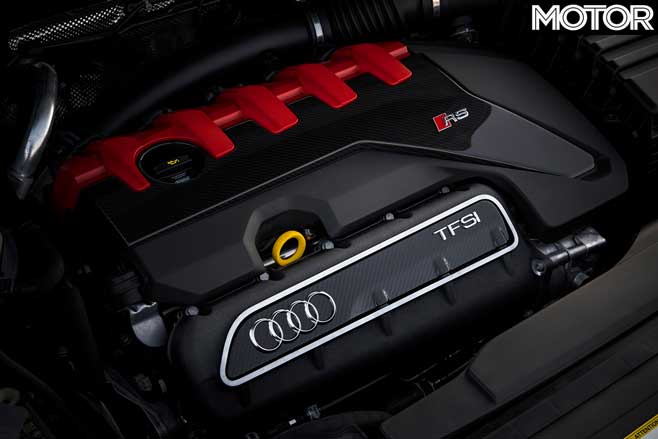
That’s got a lot to do with two things. First, thanks to the passion and persistence of Audi engineers, the RS Q3 retains the unique, east-west-mounted 2.5-litre turbocharged inline 5-cylinder engine. With its 1-2-4-5-3 firing order and odd number of cylinders, the RS Q3 produces a distinctive sound almost reminiscent of a V10, and one that makes any four-cylinder rival sound forgettable by comparison.
With 294kW and 480Nm it produces plenty of shove, too, gifting the 1775kg RS Q3 Sportback fairly sizzling acceleration for a car of its size, zero to 100km/h taking a claimed 4.5 seconds, also thanks to launch control.
We presume even on a wet bitumen road the RS Q3’s traction would be rock solid, courtesy of its familiar Haldex-based all-wheel drive system – but one that can realistically send up to 70 per cent of drive to the rear axle as the situation demands.
For us, that was on the snowy test routes and icy racetracks in a part of Sweden just 110km from the Arctic Circle, where temperatures dipped to minus 21 degrees.
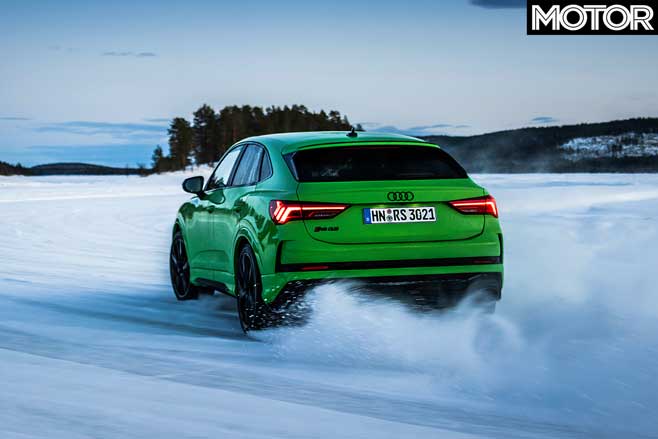
With the ESC off on these slippery surfaces, the RS Q3 happily indulged oversteer of every variety. With an undoubtedly high centre-of-gravity – but fairly low for a car of its type and height – the RS Q3 had a corner-entry softness and eagerness to rotate you certainly won’t find in an RS3. And it could be because of this weight-shifting chuck-ability the RS Q3 didn’t feel a bit front-heavy like it easily could have.
That’s been one drawback of past hot five-cylinder Audis, the relatively heavy engine causing headaches for engineers who’ve even fitted wider tyres front-to-rear (as they did the RS3) in an effort to overcome a stubborn understeer bias, not helped by the front-axle-favouring Haldex all-wheel drive.
Such a bias is not obvious in the new RS Q3, at least not on snow and ice. With the current generation five-cylinder engine, Audi managed to reduce weight by 26kg thanks mostly to a new crankcase made from lighter aluminium. Weight distribution is 55/45 front-to-rear, and in our test conditions the RS Q3 felt remarkably well balanced for a performance SUV making it feel like a heavy, tall, playful hot hatch rather than a cumbersome, confused off-roader.
Anyone who gets the RS Q3 on a low-grip surface will also find a responsive all-wheel drive system willing to join in the fun rather than shut things down; this is probably as sporting and dynamic a Haldex system has ever felt. The RS Q3’s all-wheel drive uses open differentials and brakes an inside spinning wheel to redistribute torque and manage traction, simulating the effect of a limited-slip diff, and fairly effectively. Pick up the throttle mid-slide and the all-wheel drive distributes power to promote, rather than tidy up, the slide.
Alternatively, boot it on corner exit and the rear end will hang out as if the front axle has turned a blind eye. But straighten the wheels, even while sliding, and sink the throttle and extra traction arrives as needed. Impressively calibrated, a boring all-wheel drive system this is not.
While hardly any RS Q3s are likely to be driven this way, it’s nice to know there is proper RS sporting DNA to be discovered, if you’re the type to go looking for it. The dynamic steering – which has its own little gearbox and quickens as you add lock – also works well, as does the twin-clutch paddle-shift transmission which is plenty responsive.
The bulk of customers however will be most interested in the styling, and on that front, while subjective, we think Audi has done a top job. In the new, bright Kyalami green and on the 21-inch wheels (standard in Australia) there is no missing the RS Q3, particularly in the new, optional Sportback body-style which joins the trend of ‘four-door SUV coupes’ first popularised by the BMW X6 in 2008.
Looking a bit like a miniaturised Lamborghini Urus from the rear three-quarter angle and featuring a sloping, 45mm lower roofline, the stance-y Sportback attracts a $3000 premium over its more conventional five-door sibling. Simply because you can charge extra for the more stylish version, says Audi.
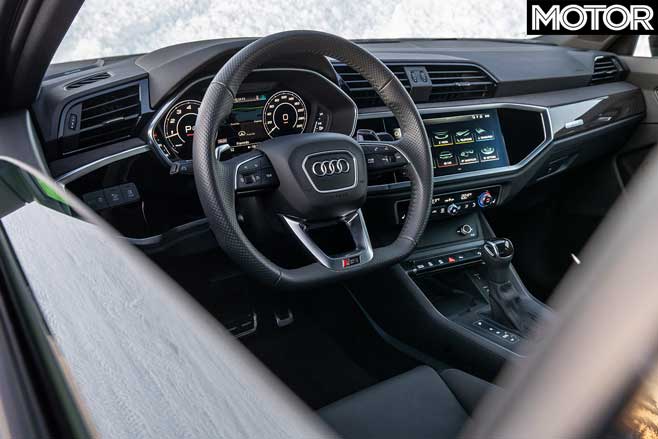
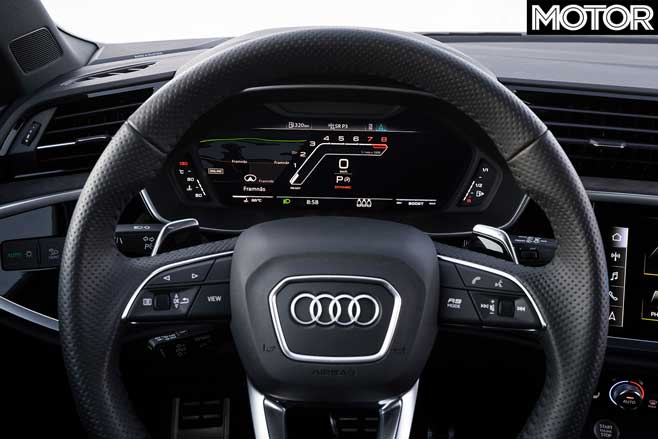
For the price, Audi has also done a solid job on the interior, which is identical between body-styles save for a little less headroom in the rear of the Sportback. Audi’s 12.3-inch Virtual Cockpit (digital instruments) catches your eye from behind the steering wheel and sports an attractive high contrast display that can be customised, including a cool, bar-like tachometer readout.
The rest of the interior feels classy and premium, even if one prominent element – the blanking panel beneath the air-conditioning controls – looks as if intended for a CD player that, come production time, perhaps ended up in a museum somewhere instead.
On the steering wheel there is now a new ‘RS Mode’ button which allows you to scroll between two new customisable driving modes, RS1 and RS2. Somewhat borrowing from BMW’s M1 and M2 mode concept, Audi’s allows you to quickly and conveniently select from two preset combinations of steering weight, adaptive dampers, powertrain aggressiveness and sound.
It has to be said again, we had a blast driving the RS Q3 exclusively on a low-grip surface but this absolutely worked to the car’s favour in showing off the aggressively-calibrated all-wheel drive and chassis electronics, and making it difficult to judge the car’s overall dynamic ability.
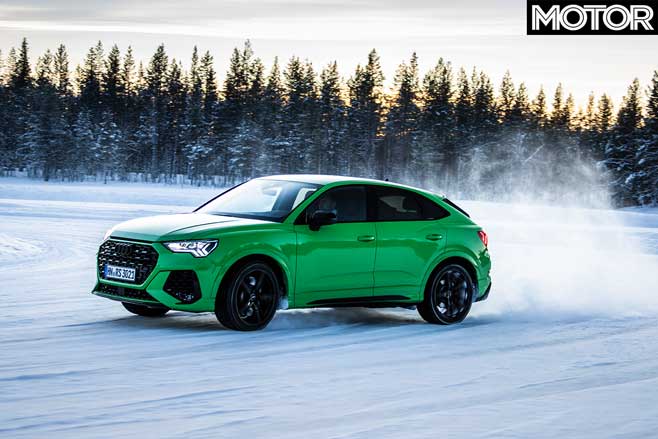
We suspect on a dry road the RS Q3 is like any other performance SUV, in that its handling – while impressive for a vehicle of its type – is still fundamentally limited by the fact it’s a tall, heavy car. For this, in our books, it loses marks. We champion ultimate handling ability and so should you, and so if we were the Audi salesperson we’d be directing you towards the lower, lighter RS3 hot hatch.
There’s also the omnipresent and inescapable hot-SUV fact that the handling performance is compromised to facilitate better off-road ability; but then the off-road performance is compromised by the low-slung front and rear bars, large wheels and low profile tyres – leading to ultimately a vehicle that excels at neither. Though to be fair, most people attracted to the RS Q3 will have no interest in hardcore off-roading or hardcore performance driving, or at best will keep separate vehicles for those tasks.
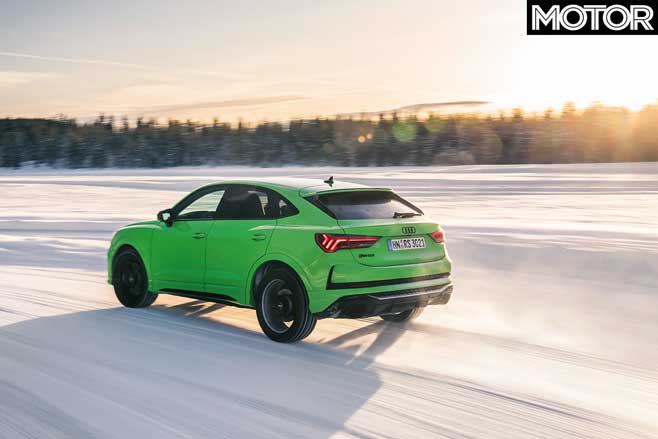
New EU regulations that limit exhaust noise have also seemingly impacted the new RS Q3. While the distinct five-cylinder warble is very much loud and proud, there seems to be a lot more of it coming from the interior speakers now and less from the somewhat muted exhaust. There is no crackle and pop on overrun to speak of, which is a shame.
It’s also possible the engine is a bit laggy and runs out of breath towards its 7000rpm redline, although it was hard to confirm this in the slippery conditions where all four wheels were, err, regularly spinning.
There’s a multitude of things we just don’t know about yet either. On a dry, bitumen road the new RS Q3 could very well be a heavy and languid understeer monster giving absolute hell to its front tyres and brakes. There could be a lot of road noise – we don’t know – and the ride quality could be sub-optimal. It felt okay over the bumps that we were able to hit.
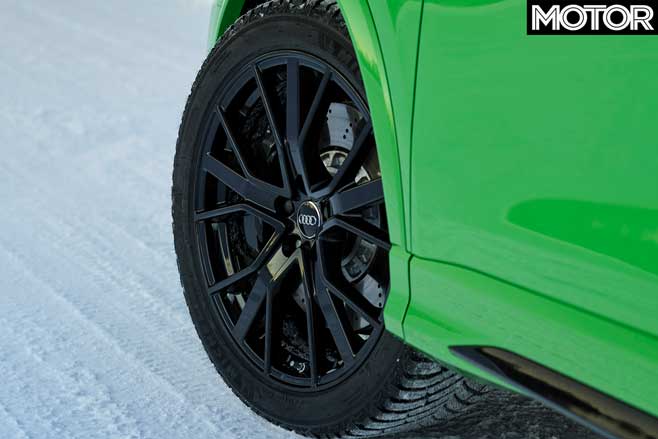
The standard 21-inch wheels are shod with thinly 35-profile tyres but Audi Australia also fits the adaptive suspension as standard. This suspension is 10mm higher than the fixed damper set-up of overseas – so there is an aesthetic cost – but seemingly this is a worthy trade-off as some of the overseas reviews have blasted RS Q3 test cars on 21s without adaptive suspension.
Carbon ceramic front brakes are available as a $10,600 option. At 380mm versus the 375mm steel items, they might seem like a no-brainer for anyone thinking of track days in their heavy RS Q3 (there’ll be someone) but this is another item we would reserve judgement on until a proper test back in Australia. Our experience has shown Audi’s carbon ceramic brakes to not withstand repeated track laps without fade on their heavier models.
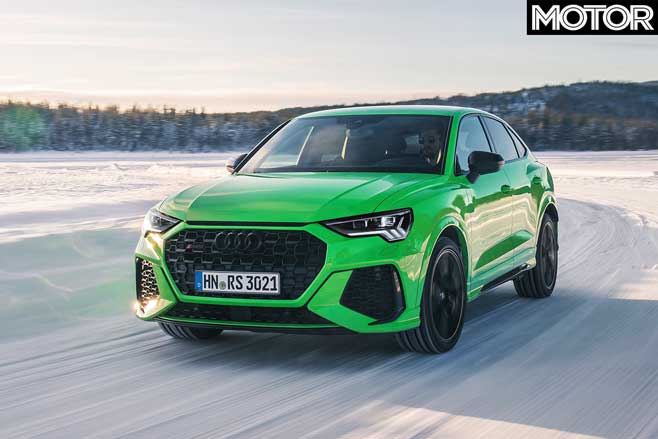
For track work you might be better off with the cheaper-to-replace standard steel items and somewhat paradoxically save the carbon ceramics for purely road-going cars as they have a longer service life – helping overcome their initial cost – and, let’s be honest, they look cool.
Which could also be justification for getting the entire car itself. And be in no doubt, it will be on that basis many, if not most, RS Q3s are sold.
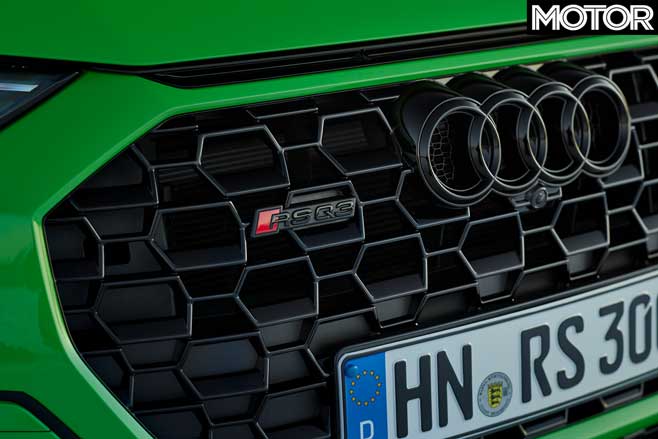
2020 AUDI RS Q3 SPORTBACK SPECS DRIVE: all-wheel ENGINE: 2480cc inline-5, DOHC, 20v, turbocharged POWER: 294kW @ 5850-7000rpm TORQUE: 480Nm @ 1950-5850rpm WEIGHT: 1775kg POWER-TO- WEIGHT: 166kW/tonne TRANSMISSION: 7-speed dual-clutch 0-100KM/H: 4.5sec (claimed) TOP SPEED: 250km/h (limited) PRICE: $92,900 ON SALE: now with first deliveries in August 2020
PROS: Looks cool, unique sound, some proper sports car DNA to be discovered CONS: Too heavy, too high, yet to drive it on actual roads
RATING: 4 out of 5 stars
Oh, boy… cue controversy. I’m having trouble recalling another car that has caused the haters to surface in such numbers. Naturally, those same name-callers are, in 99 per cent of cases, yet to drive the actual object of their fears and mistrust. Thanks for nothing, internet.
Allow me to address the topics of contention. The first seems to be that the new Toyota GR Supra was a joint development with BMW and, as such, has a BMW interior and a BMW engine. Boo-hoo. I’d rather a Toyota with a BMW interior than the other way round, and there’s nothing intrinsically wrong with the 3.0-litre inline turbo-donk provided by BMW. Apart from it not being a 2JZ, I guess.
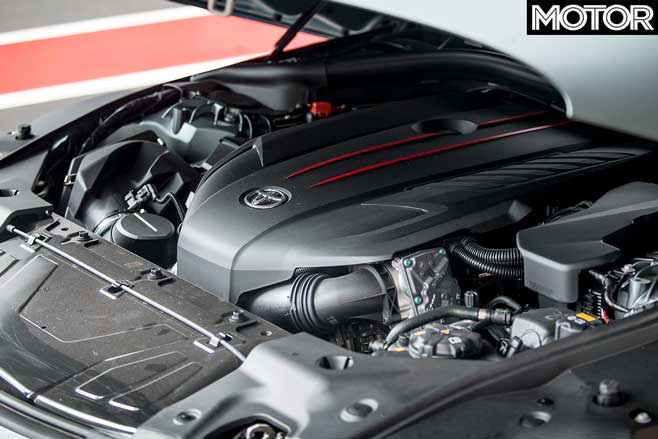
The other tear-jerker appears to revolve around the fact that the Supra is not a hardcore track-day weapon. Well here’s a heads-up, kids; it never was. Every Supra ever sold in Australia by Toyota was either a Celica with a bigger donk or a somewhat portly GT car.
Okay, the legendary Mk4 in twin-turbo form (only available here as a grey-import) muscled up substantially, but the new guy is quicker to 100 (by a tenth or two) and faster down the quarter (12.6 plays 13.1), and they weigh virtually the same. It is not, perhaps, huge progress, but the numbers is the numbers.
The point I’m making is that putting out your bottom lip because the Supra can’t lap Bathurst in under two minutes is maybe missing the point. If, however, you’re grown up enough to understand that the Tojo was always designed as a comfy, fast interstater that could also appeal to the tuning industry (and there are already tuner-Supras making north of 1000 neddies) then this thing bangs it out of the park.
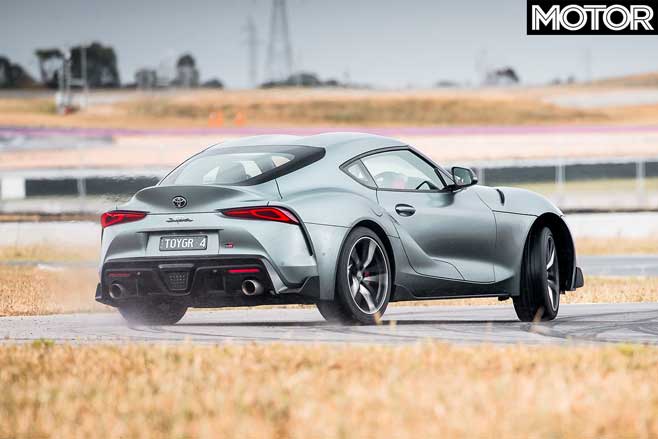
Speaking of comfort, this is a coupe with an absolutely brilliant combination of ride and roll-stiffness – not normally tremendous bedfellows. The damping is spot on and the Supra rides bumps and lumps like very few cars with the same degree of athleticism. Even in Sport mode, the ride is just lovely, and only a small amount of road noise intrudes.
Somebody has chosen the steering-rack ratio carefully too. It’s not darty but it is quick and super-accurate. Then there’s that silky inline-six and eight-speed ZF auto that, while it’s no manual, is about the best slushbox in the business in this type of application.
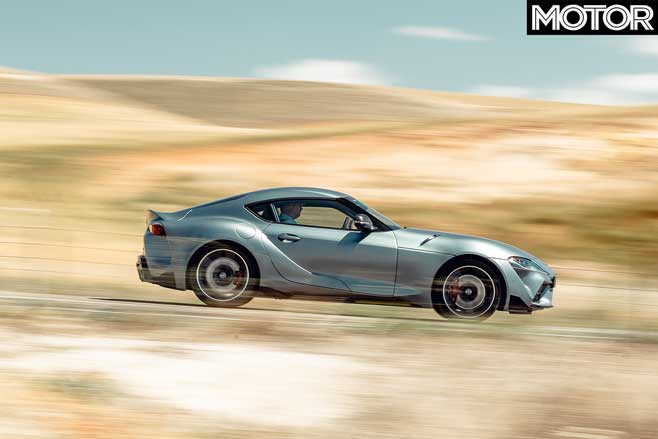
It all seems calculated to get you there quickly and without wearing you down physically in the process. It is, perhaps, the Supra’s ability to cover ground swiftly, entertainingly and without fuss that stamps it as something special. Again, that ain’t enough for the haters out there, but it does suggest the car is seriously on brand if you look at its original design brief.
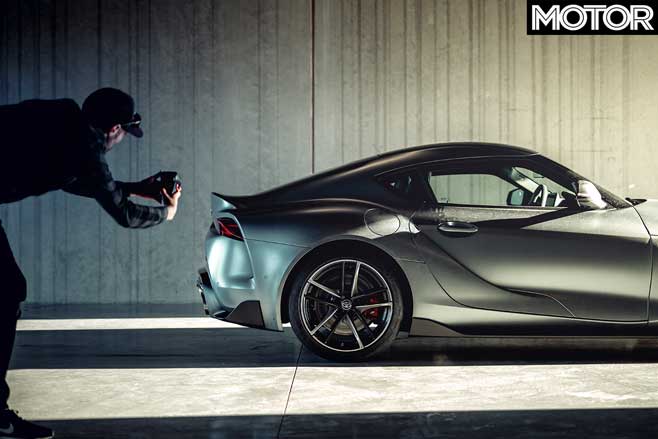
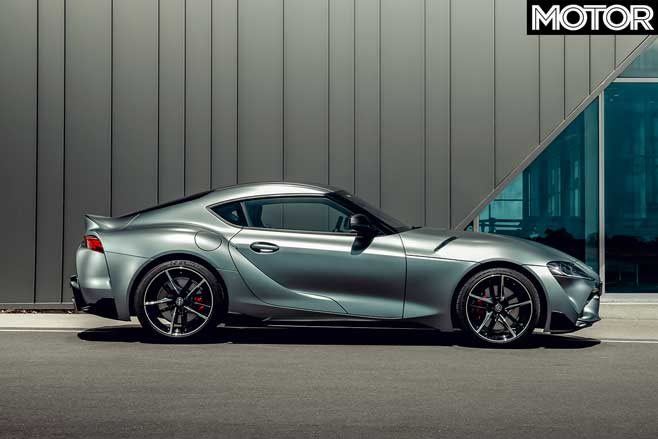
What don’t I like? A few things. For a start, I reckon the thing is a bit over-styled. The organic curves are one thing, but I counted no fewer than 10 blind vents (five down each side) that do nothing more than make the car harder to wash.
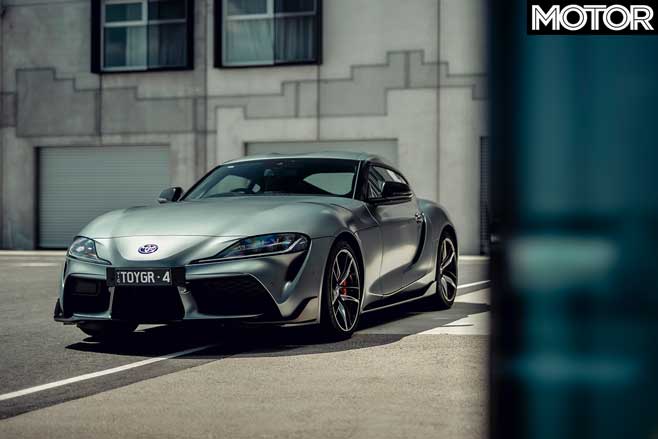
The cabin is pretty small for the car’s size, and the window sill is high. That’s okay for somebody like me who sits high, but I wonder about shorter dudes and dudettes. And why the hell is there no external hatch release in 2020?
At $94,900, the Supra is either expensive for a Toyota coupe or great value for something with the refinement and dynamism that the tie-up with BMW has resulted in. I know where I sit on that argument.
The Numbers
2020 TOYOTA GR SUPRA SPECS: Engine: 2998cc inline-6, DOHC, 24v, turbocharger Drive: rear-wheel Power: 250kW @ 7800rpm Torque: 500Nm @ 1600-4500rpm Transmission: 8-speed automatic Weight: 1495kg Power/Weight: 167kW/tonne 0-100km/h: 4.44sec 0-400m: 12.62sec @ 181.16km/h The Bend lap time: 1min 35.4sec Price: $94,900
Judge’s Rank
Dylan Campbell – 2nd “Objectively awesome, if you can get over the subjective confusion.”
Louis Cordony – 4th “Brand synergy at its best. Looks good in the metal.”
David Morley – =1st “Taylor Swift nailed it: Haters gonna hate. Let ‘em; it’s their loss.”
Scott Newman – 4th “Fast and fun, excellent everywhere without being brilliant anywhere.”
Tim Robson – 4th “I dig it. Feels a lot stronger than the numbers suggest, but styling already feels a bit dated for me.”
PCOTY 2020 Scoring
| Judges | DC | LC | DM | SN | TR | Total |
| Performance/20 | 17.5 | 14 | 17 | 16 | 17 | 81.5 |
| Dynamics/20 | 17.5 | 13 | 17 | 16 | 17 | 80.5 |
| Accessibility/10 | 8 | 5 | 9 | 8 | 8 | 38 |
| Liveability/10 | 8 | 7 | 8 | 7.5 | 5 | 35.5 |
| Value/10 | 8 | 6.5 | 8 | 8 | 5 | 35.5 |
| X Factor/10 | 8 | 6.5 | 8 | 7 | 6 | 35.5 |
| Total/80 | 67 | 52 | 67 | 62.5 | 58 | 306.5 |
Holden has announced it will cease to exist later this year.
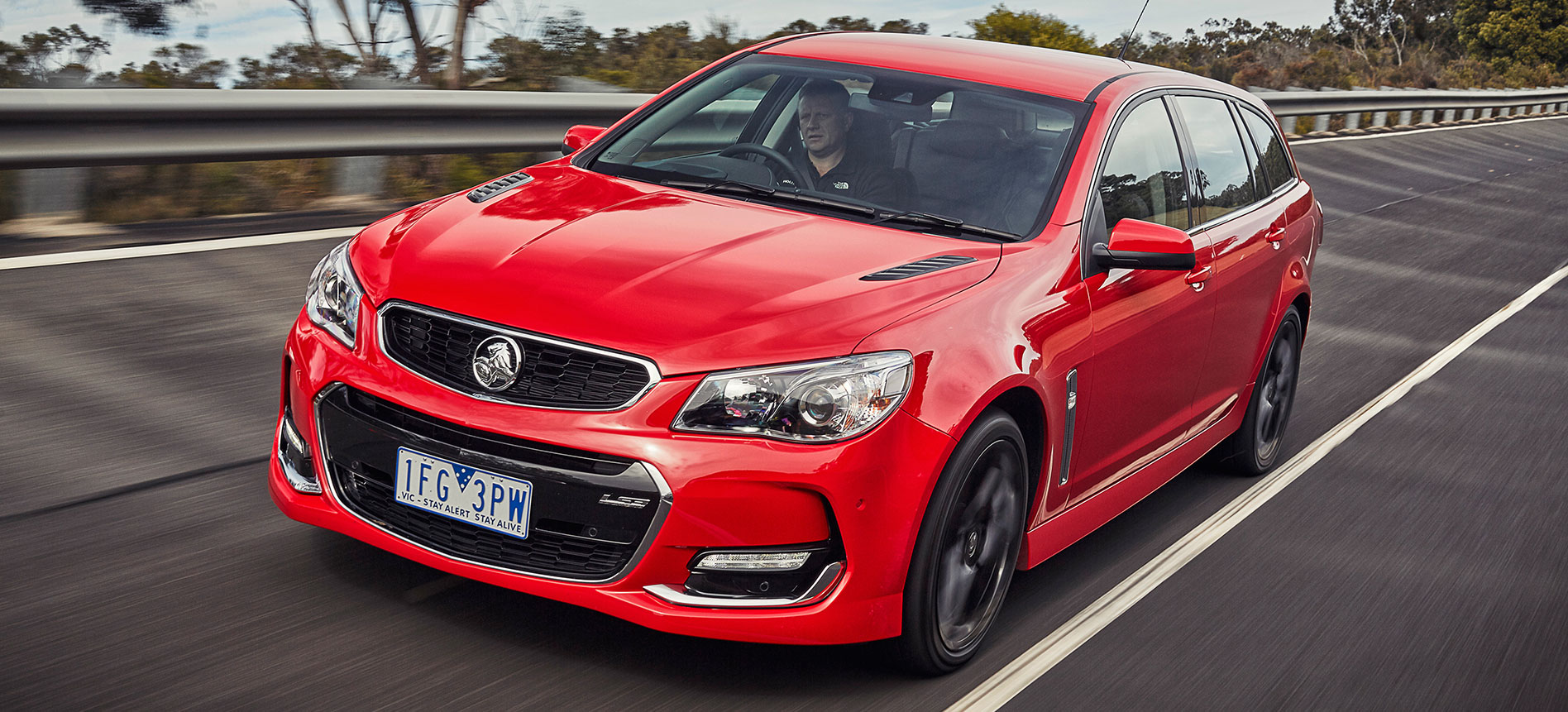
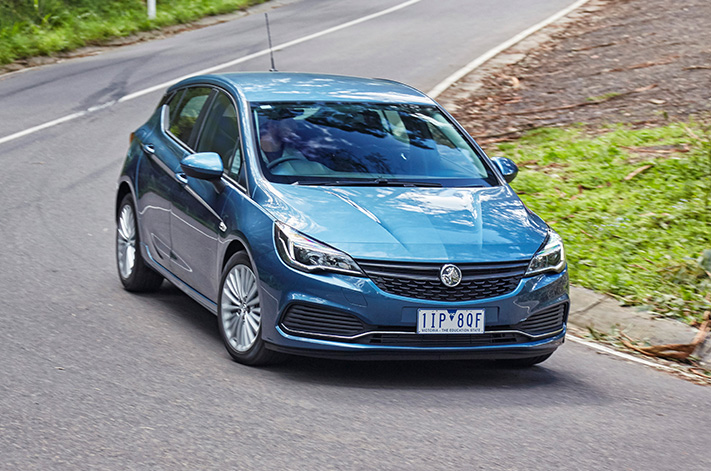
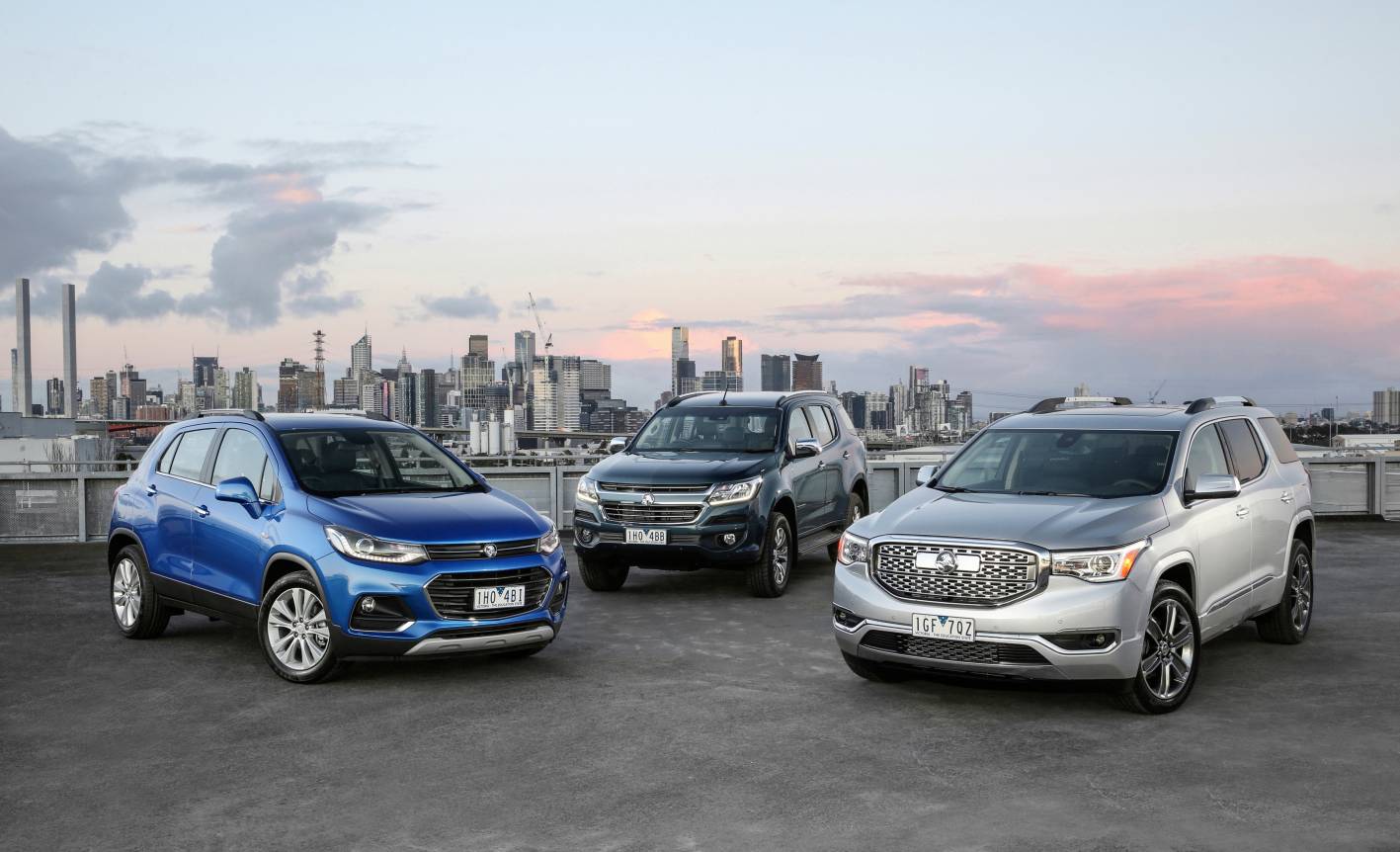
That will signal extremely enticing offers from dealers as they look to clear stock of nameplates like the Commodore, Astra, Colorado and Acadia. This is the end of the road for the brand, so dealers will have to clear stock no matter what – and in a hurry.
So does buying a soon-to-be-discontinued car leave buyers exposed to a vehicle that will no longer have parts available in the event of faults?
Despite ceasing Australian operations, General Motors’ – the parent company of Holden who are behind the closure – commitment to the long-term viability of Holden products is encouraging for prospective customers.
Australian consumer law requires that a brand supports its products for a “reasonable period” with no specific time frame mentioned. This isn’t much help but GM has stated that it will extend warranty and service support for 10 years.
Which car manufacturers offer the longest warranties?
It has insisted that 200 Holden staff will remain on the job to supply after-sales care for current owners of Holden products, but also those who are willing to buy a car from Holden now that the brand is gone.
For example, when Holden discontinued the Cruze, former Holden director of communications Sean Poppitt stated “Holden adheres to an industry best-practice 10-year commitment to stocking crucial parts and beyond that we have a long-term commitment all our customers.”
The story remains much the same now that the entire brand is being discontinued. “Holden will honour all existing warranties and guarantees, as well as all free scheduled servicing offers,” reads a statement in the wake of the closure.
What is unclear as yet is how this is all going to work. Holden’s decision comes as a shock to not only the Australian public, but also its own dealerships who Holden hasn’t organised a plan with yet. It is worth noting though that customers won’t have to service their cars at a Holden dealership to retain a warranty coverage.
For buyers unconcerned about owning a car that is no longer in production, or that has been replaced by a newer-generation model, there’s peace of mind to back those enticing run-out deals. This also applies with other brands as well as Holden.
It’s important to get as good a deal as possible, though, to help compensate for almost immediate decreases in value. That point should be kept in mind when buying too, the fact that these cars are being discontinued means that resale will likely take a nosedive. So make sure you go into the purchase of a Holden with long-term ownership in mind in order to get the best value out of the deal.
“You probably get about a five to 10 percent drop once after they stop selling the model new,” says Nick Adamidis, marketing and sales manager for Glass’s Information Services – a leading used car price guide. “And that’s probably because you don’t get that flow-on effect of advertising for the vehicle, which automatically gives interest to new vehicle, keeps it front of mind among decision makers.”
On that, Holden will begin to pull its millions of dollars worth of advertising from digital, television and billboard marketing campaigns, with the brand fading into insignificance relatively quickly.
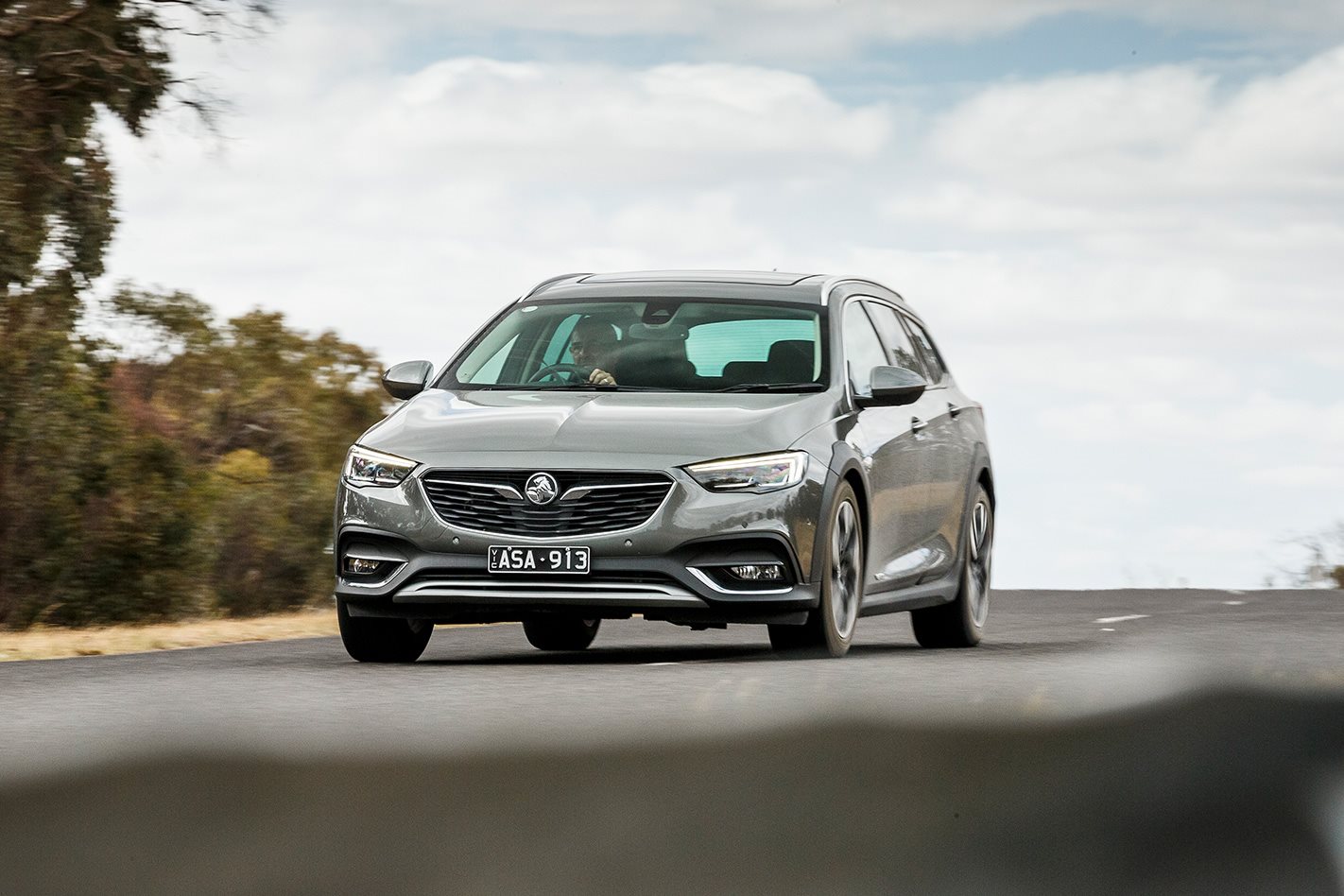
So for the time being, there will be great deals on Holden products until stocks run out – and rest assured you’ll be looked after with after-sales support. We’ll update this article when we get further information on how Holden will go about the servicing of its defunct models; whether they get another brand to take over their servicing or standalone service centres will step in to take on Holden owners.
MORE HOLDEN NEWS
Holden departure will cost $1.6 billion
