
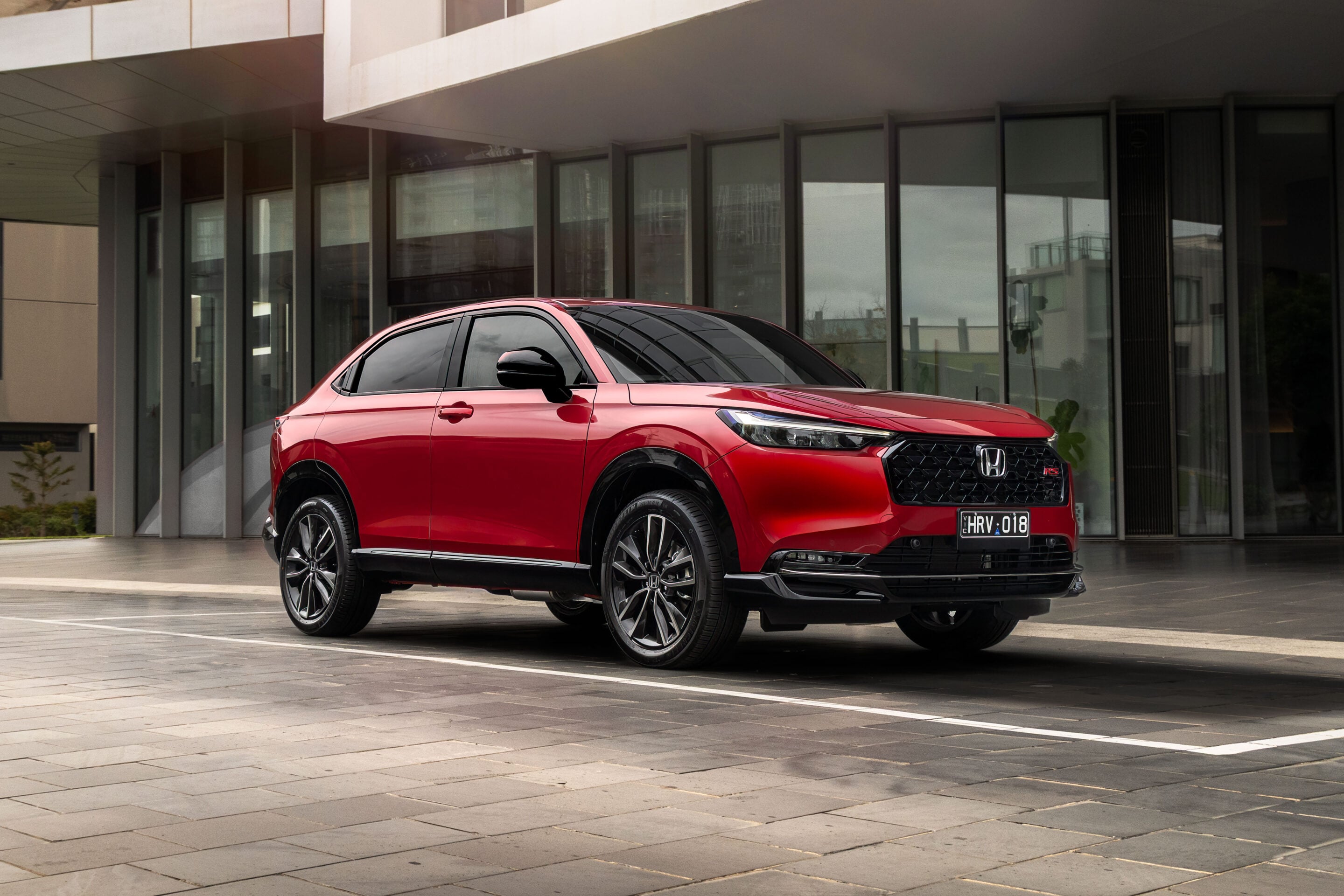
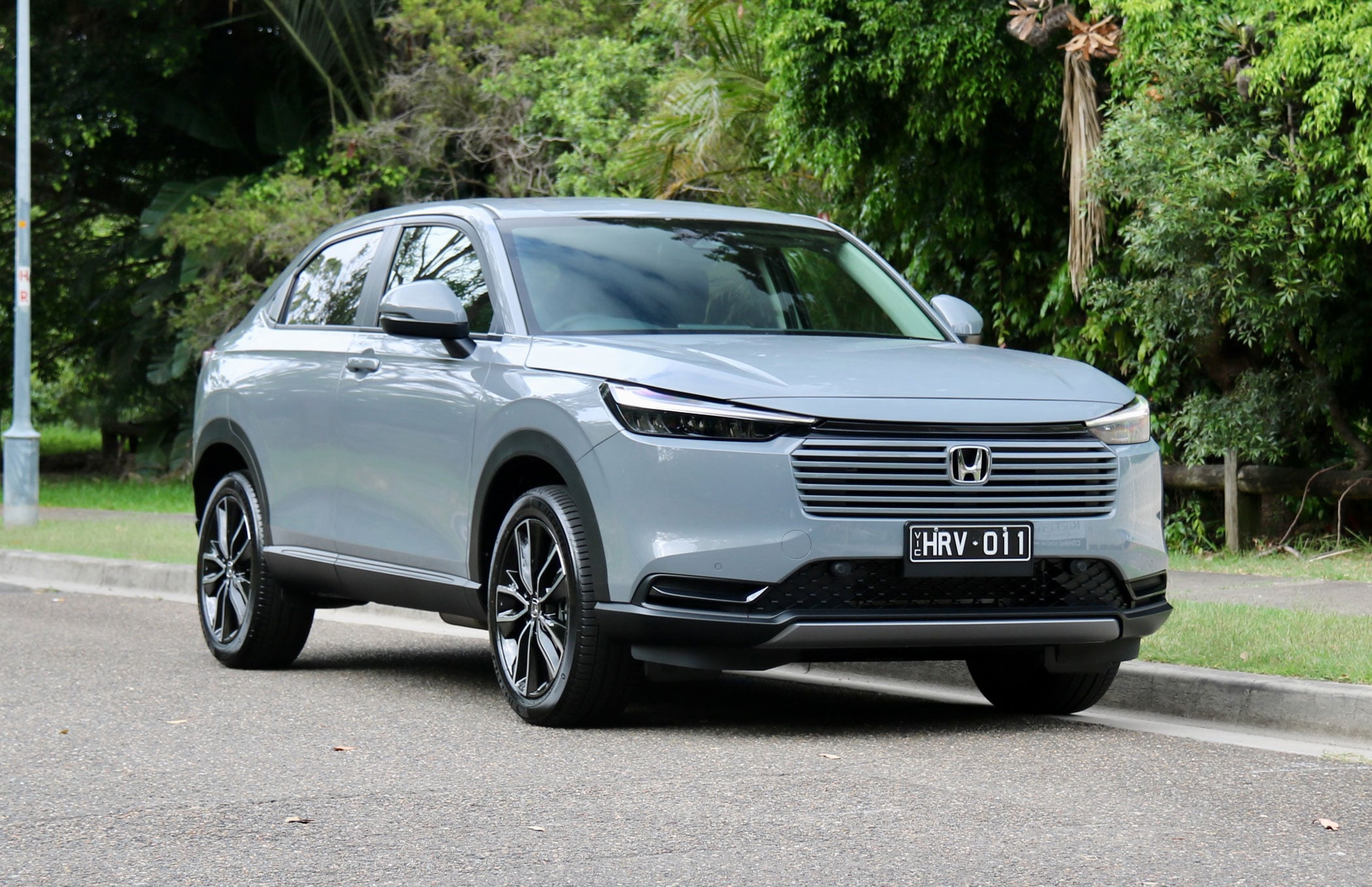
Honda Australia has announced that a new top-spec e:HEV RS model will be added to its HR-V small SUV range for the 2027 model year. Adding a number of sportier styling details such as gloss black exterior trims and red detailing inside, the e:HEV RS is priced from $44,400 driveaway, or $1500 more than the e:HEV L below it.
The 2026 HR-V e:HEV RS will launch with new features including RS badging, a black RS grille, door lower garnish, bumper lower garnish, 18-inch wheels and door mirror caps.
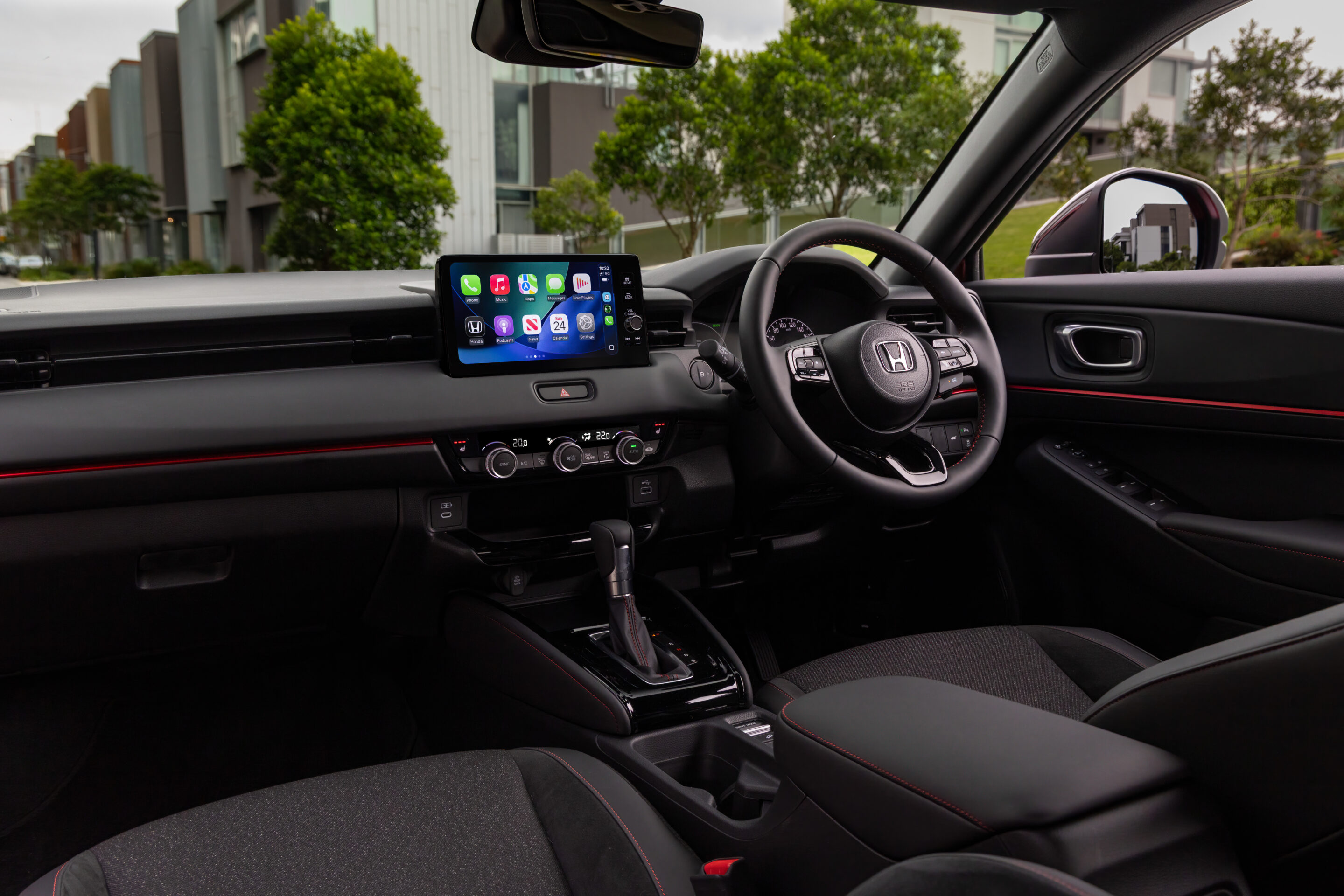
Inside, the HR-V e:HEV RS adds black synthetic leather, suede and cloth upholstery with red trimmings on the doors and lower dashboard, as well as red stitching dotted around the cabin.
That’s on top of features already offered in the e:HEV L model, including LED lighting with adaptive high beam, an electric tailgate, dual-zone automatic climate control, an 8.0-inch touchscreen with wireless Apple CarPlay and Android Auto, Honda Connect live services and safety features like autonomous emergency braking, adaptive cruise control, adaptive lane guidance, blind-spot monitoring, rear cross-traffic alert and a reversing camera.
The HR-V e:HEV RS will be offered in six colours, including Crystal Black (exclusively available on the RS grade), Platinum White, Premium White Silver, Slate Grey, Premium Crystal Red, Botanical Green and Crystal Black.
Under the bonnet, the RS uses the same 1.5-litre four-cylinder hybrid drivetrain as the e:HEV X and e:HEV L models, making 96kW of power and 253Nm of torque. Power is sent to the front wheels through an e-CVT automatic transmission, and combined fuel consumption is rated at 4.3L/100km.
Honda HR-V pricing (MY27):
| Vi X | $32,900 |
|---|---|
| e:HEV X | $39,900 |
| e:HEV L | $42,900 |
| e:HEV RS | $44,400 |
The Honda HR-V e:HEV RS will land in local Honda showrooms soon.
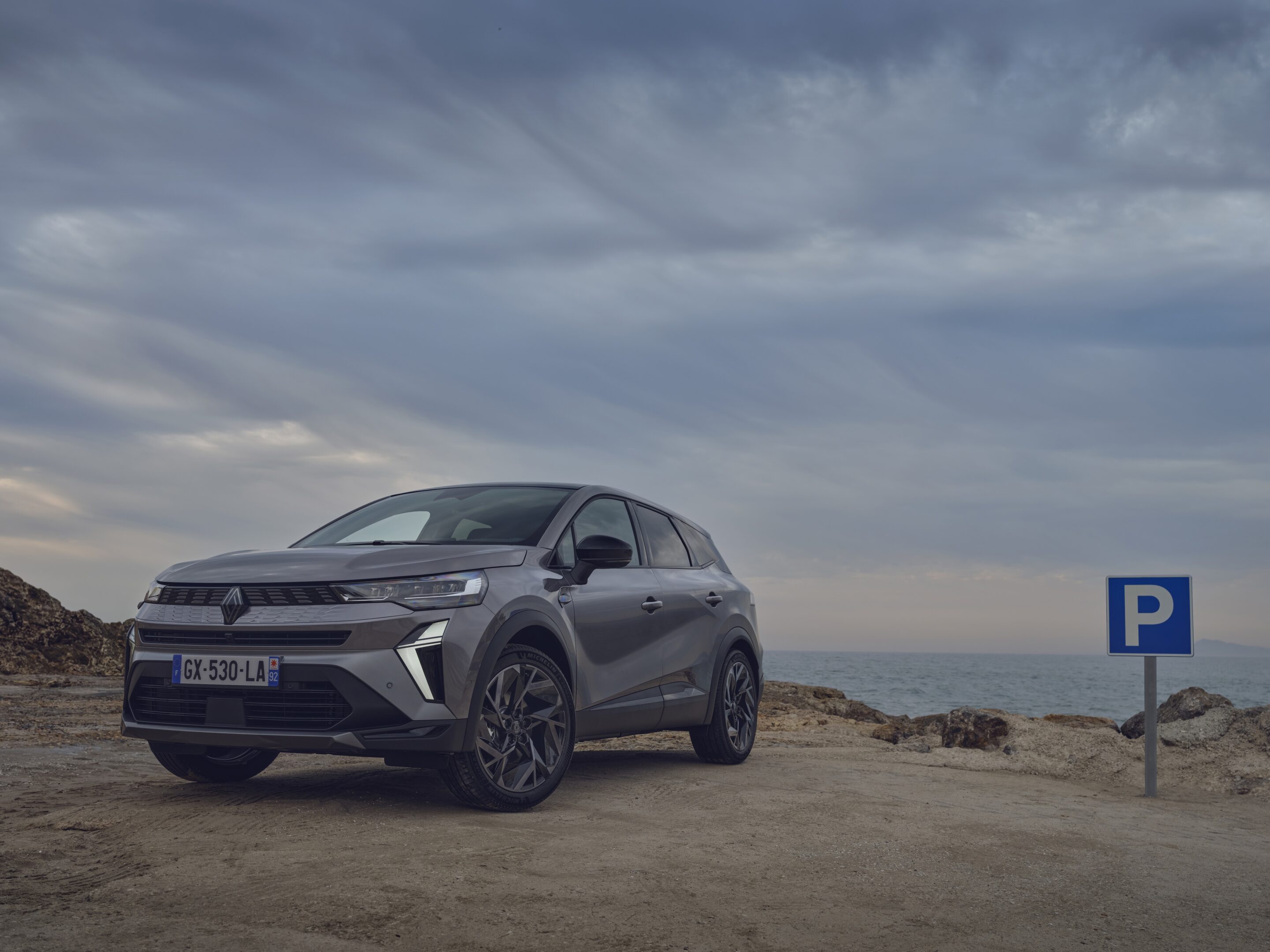
Local pricing and specifications for the new Renault Symbioz hybrid small SUV have been announced ahead of July 2026 arrivals. Priced from $36,990 plus on-road costs, the Symbioz replaces the Captur in Australia and will sit above the Duster already on sale. The Symbioz will be the first full hybrid product that Renault has offered locally, and it also features an available 12-volt mild-hybrid drivetrain too.
Based on the same platform as the Captur but larger, the Symbioz sits at the larger end of the small SUV segment. It measures 4412mm long, 1797mm wide, 1567mm tall and rides on a 2639mm long wheelbase, making it only 13mm shorter in length than the Nissan Qashqai.
The mild hybrid version’s boot measures 563 litres, though that increases to 695 litres with the rear seat slid forward and 1668 litres with them folded (the hybrid’s equivalents are 460L, 592L and 1546L respectively).
Two drivetrains will be available in the Australian Symbioz: Either a 104kW/245Nm mild-hybrid 1.3-litre turbo-petrol engine or a 116kW/265Nm naturally aspirated 1.8-litre full hybrid with a 1.4kWh battery. The mild-hybrid uses a seven-speed dual-clutch transmission and the hybrid a dedicated hybrid transmission incorporating a four-speed auto for the engine and a two-speeder for the electric motor. Both models are front-wheel drive.
For fuel consumption, the mild-hybrid is rated at 6.4L/100km with claimed CO2 emissions of 144g/km, and the hybrid at 4.7L/100km and 107g/km. The mild-hybrid launches to 100km/h in 9.4 seconds and the hybrid slightly faster at 9.1 seconds.
Pricing for the Australian Renault Symbioz range starts at $36,990 plus on-road costs for the Techno mild-hybrid, extending to $42,990 +ORC for the Techno hybrid and $45,990 +ORC for the top-spec Esprit Alpine hybrid.
“The new Renault Symbioz is well positioned to offer Australian motorists a choice of hybrid options in one of the most hotly contested segments of the new-car market,” said Glen Sealey, the General Manager of Renault Australia. “This is the first time Renault has offered a full hybrid vehicle in Australia and it means Symbioz is able to deliver genuine fuel savings at a time when there is significant pressure on petrol prices.
Renault Symbioz pricing (plus on-road costs):
| Techno mild hybrid | $36,990 |
|---|---|
| Techno hybrid | $42,990 |
| Esprit Alpine hybrid | $45,990 |
Renault Symbioz Techno standard features:
- 18-inch alloy wheels
- Automatic LED exterior lighting
- Automatic rain-sensing wipers
- Keyless entry with push button start
- Heated/auto-folding mirrors
- Rear privacy glass
- Automatic air-conditioning
- Heated leather steering wheel
- 10.25-inch digital driver’s display
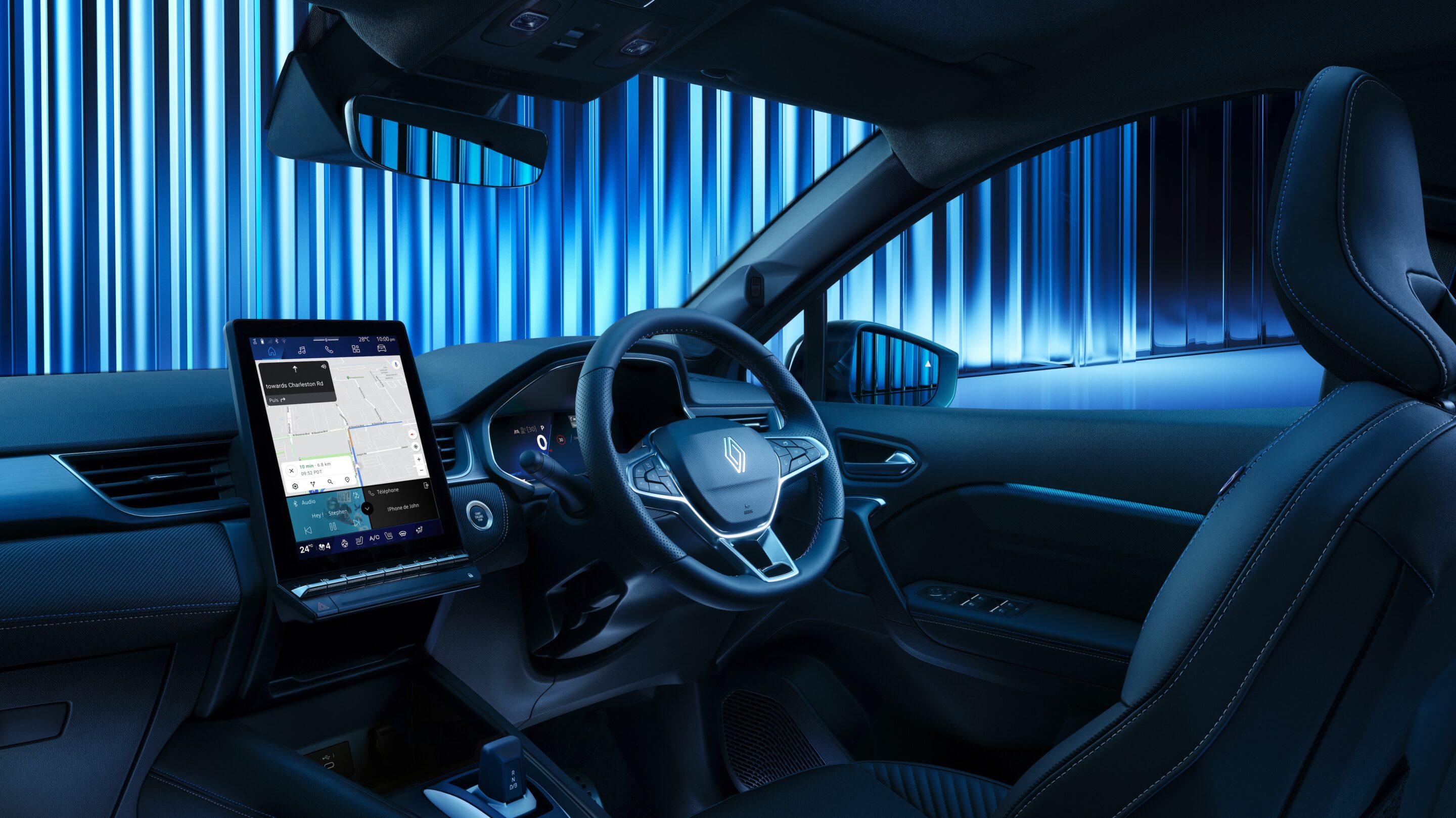
- 10.4-inch touchscreen with Google built-in and live services
- Google Maps satellite navigation
- Wireless Apple CarPlay and Android Auto
- Arkamys six-speaker audio
- 4x USB-C charging points
- Wireless phone charger
- Six airbags
- Forward autonomous emergency braking (with intersection detection)
- Reverse autonomous emergency braking
- Lane keeping assistance and lane change warning
- Blind-spot monitoring with rear cross-traffic alert
- Door exit warning
- Adaptive cruise control (with speed limiter)
- Traffic sign recognition
- Driver attention monitoring
- Front, rear and side parking sensors
- Reversing camera
- Tyre pressure monitoring
Symbioz Esprit Alpine adds to Techno:
- 360-degree camera
- Hands-free parking functionality
- Powered tailgate with hands-free opening
- Heated front seats
- Six-way electrically adjustable front seats
- Harman Kardon nine-speaker audio
- 19-inch alloy wheels
- Esprit Alpine exterior badging
- Darkened Renault badging
- Esprit Alpine performance seats
- Esprit Alpine logo (front seats)
- Esprit Alpine aluminium door sill covers (front doors)
- Seatbelts with blue highlights
- Steering wheel red, white and blue stitching
- Alloy pedal covers
Symbioz options:
- Panoramic sunroof: $2000
- Powered tailgate with hands-free opening: $600 (Techno only, already standard on Esprit Alpine)
- Premium paint: $900
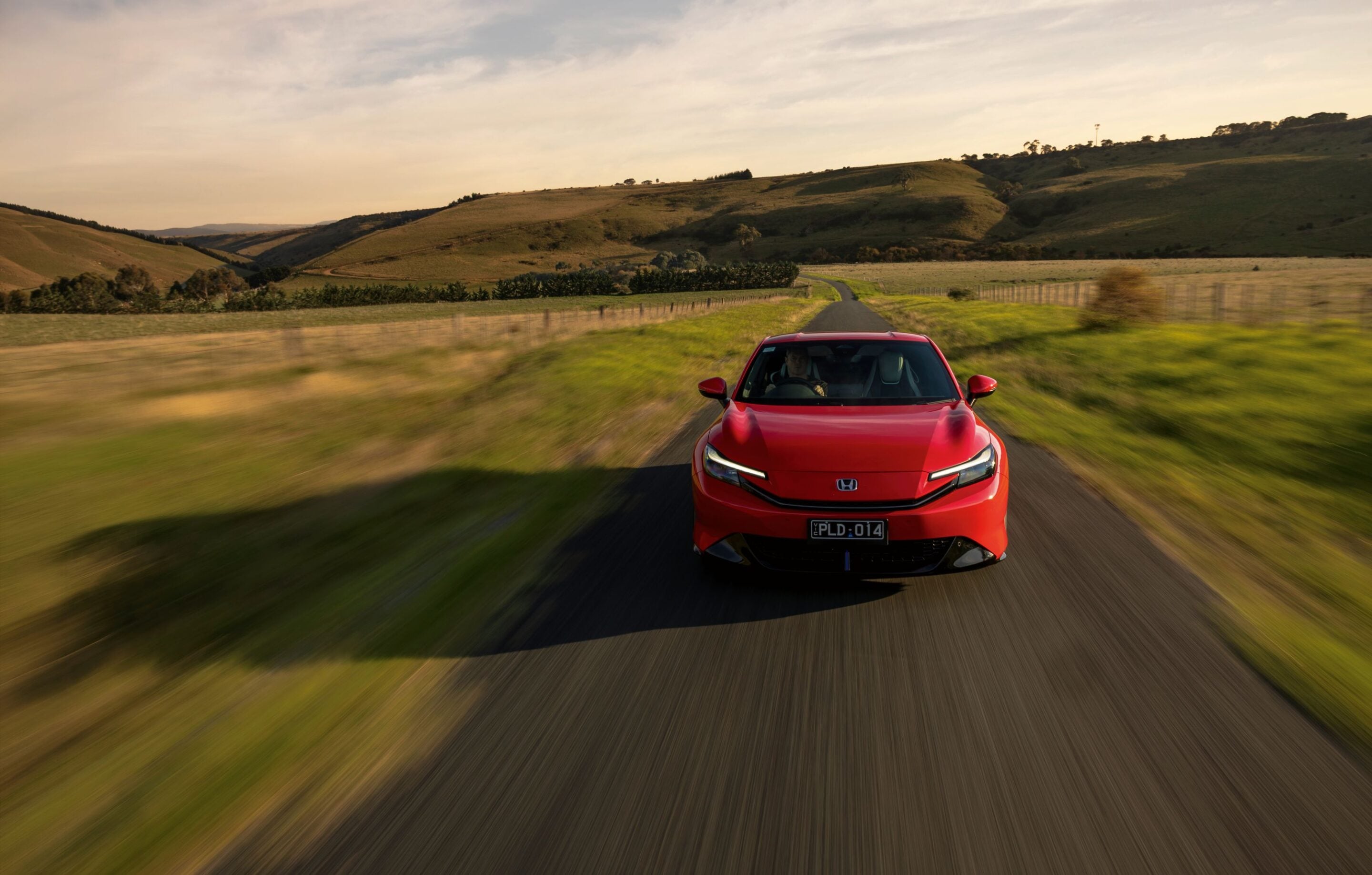
The June 2026 issue of Wheels has arrived, led by the return of one of motoring’s most iconic nameplates.
After months of anticipation, the Honda Prelude is back in Australia, and this month’s cover story takes an in-depth look at the reborn coupe. Wheels explores the model’s rich heritage, tracing its journey from cult favourite to modern hybrid sports coupe, before getting behind the wheel of the all-new Prelude to see whether it can live up to the reputation established by its predecessors.
Sharing the spotlight is one of the most comprehensive new-car buying guides of the year: Wheels Best Small SUVs 2026. With Australia’s appetite for compact SUVs showing no signs of slowing, we assess the standout contenders across the segment, including the overall award and winners in Urban, Value, Electric, Hybrid, Luxury and Performance categories. From affordable city-friendly crossovers and practical family haulers to premium electric options and performance-focused offerings, the feature highlights the best small SUVs available today and helps buyers navigate one of the industry’s most competitive categories.
Comparison testing this month sees the Mazda 2 and Toyota Yaris go head-to-head in a battle of efficient, affordable urban hatchbacks. Both have built reputations for reliability, fuel economy and everyday practicality, but only one can emerge victorious in our detailed assessment.
Elsewhere, Rob Margeit sits down with Mercedes-AMG executive Daniela Sigl for an insightful interview exploring the challenges and opportunities involved in preserving AMG’s unique performance heritage during a period of rapid industry transformation.
History enthusiasts will also enjoy a fascinating retrospective on BMW’s legendary Neue Klasse. With the German brand reviving the famous name for its next generation of electric vehicles, Wheels looks back at the original Neue Klasse models that helped reshape BMW’s future in the post-war era.
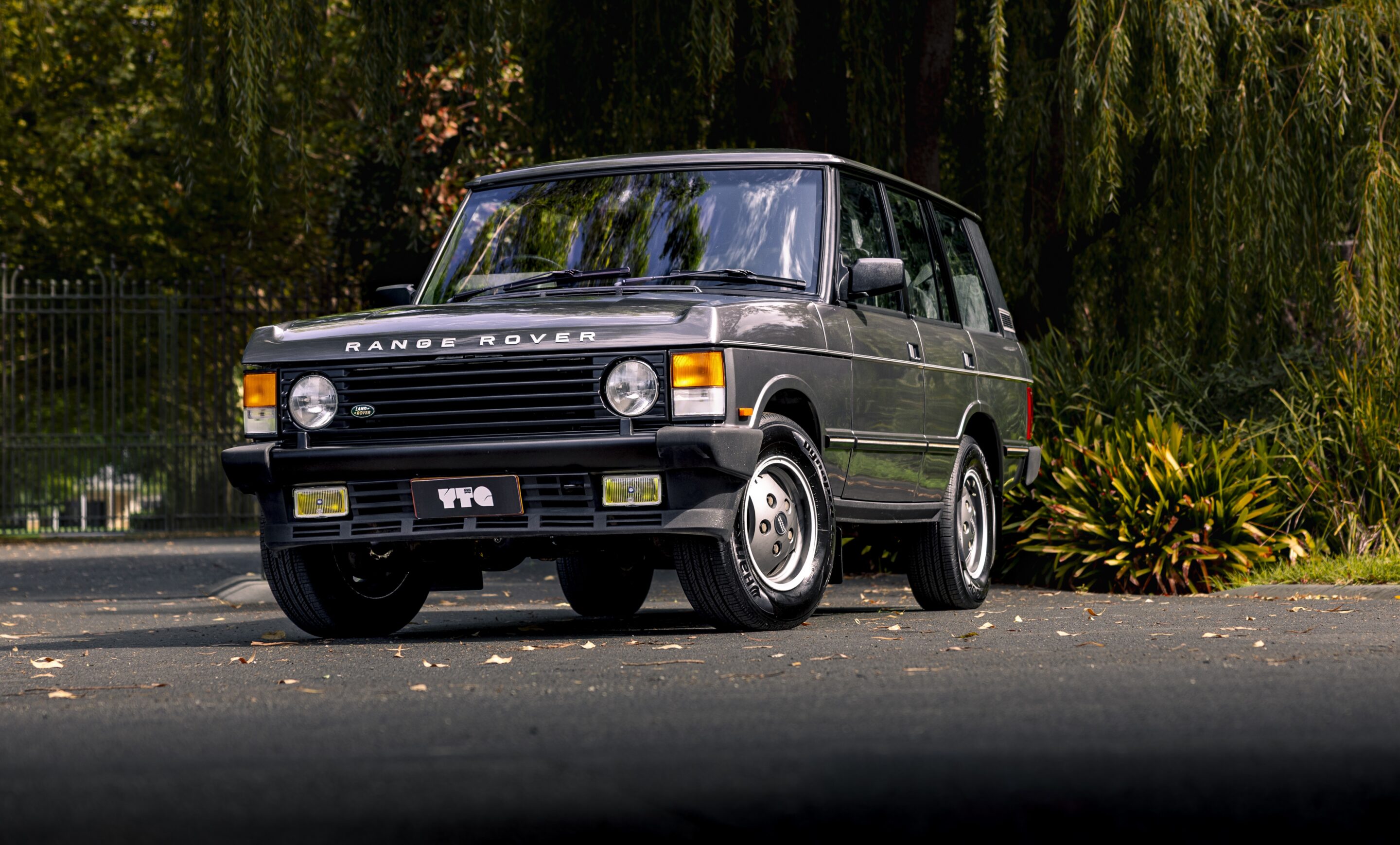
Our Modern Classic feature focuses on the Range Rover Vogue (above), examining how the luxury SUV became equally at home on remote properties and city streets.
The First Drives section is packed with fresh metal, including the GWM Tank 300 Hi4-T PHEV, Chery Tiggo 4 Hybrid, Hyundai IONIQ 6 N, Geely Starray EM-i and the updated Kia EV6 Air.
Rounding out the issue are Michael Stahl and Paul Gover’s regular columns, Garage long-term test updates, Marketplace industry analysis, the comprehensive Buyer’s Guide and Wayback Machine, which revisits the June 1996 issue and Mitsubishi Magna’s memorable triumph.
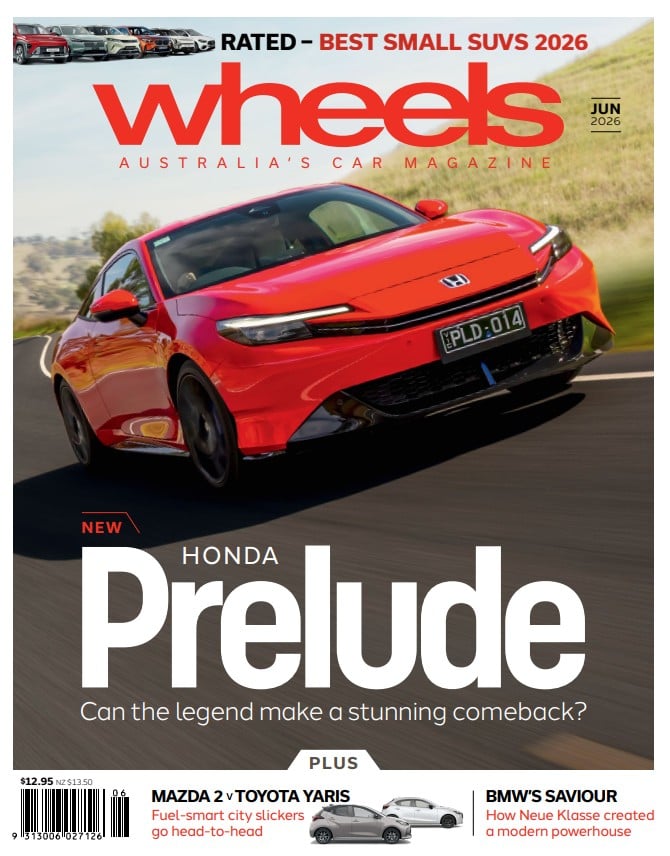
The June 2026 issue of Wheels is on sale now. Subscribe here.
Victorian motorists will be able to reduce the cost of vehicle ownership from June 1, with the state government introducing a one-off 20 per cent registration rebate as part of a broader cost-of-living relief package.
The rebate is expected to save drivers an average of up to $186 on vehicle registration costs during the 2025-26 registration period. Eligible vehicle owners with two registered vehicles could potentially save up to $372 under the scheme.
The initiative forms part of a $750 million cost-of-living package announced by the Victorian Government, aimed at providing financial relief to households facing ongoing budget pressures.
To qualify, motorists must claim the rebate before July 31, with eligibility limited to a maximum of two light vehicles registered in an individual’s name.
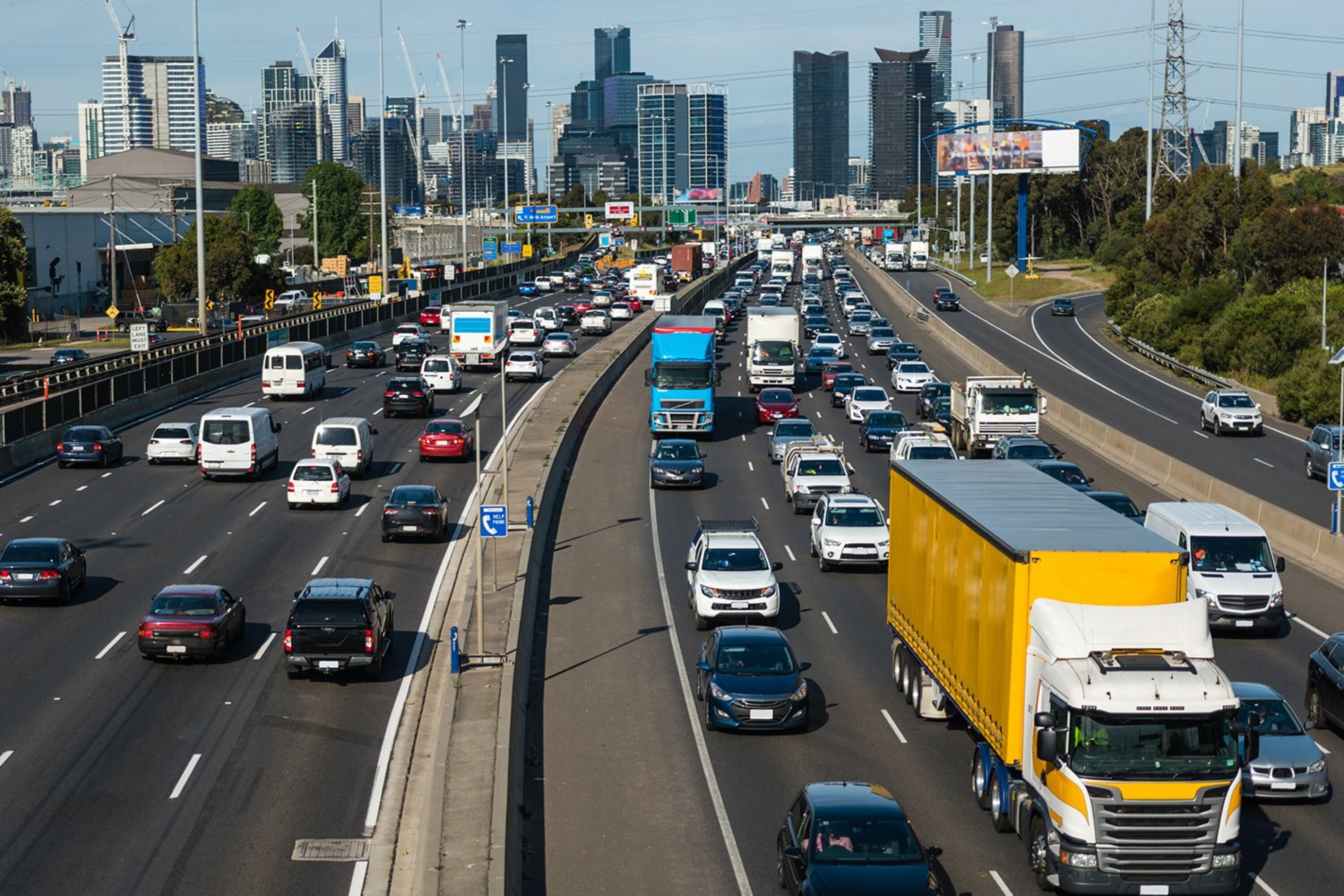
Eligible vehicle types include passenger cars, four-wheel drives, station wagons, motorcycles, utes, vans and light trucks. According to Service Victoria, the rebate applies to eligible vehicles registered between July 1, 2025 and June 30, 2026.
With annual registration costs reaching as much as $930 for some passenger vehicles, the rebate could reduce registration expenses by nearly $200 for many motorists.
Victorian Premier Jacinta Allan acknowledged the measure would not completely solve household financial pressures but said it would provide immediate assistance.
The registration rebate follows the conclusion of Victoria’s temporary free public transport initiative, which ended at the close of May. The government says both measures were designed to ease cost-of-living pressures for residents across the state.
While Victoria’s rebate is one of the most significant registration relief measures currently available in Australia, other states have introduced alternative support programs for motorists.
In New South Wales, eligible drivers can access toll rebates, while Western Australia recently announced a one-off fuel support payment for licensed drivers as part of its state budget. The Northern Territory continues to offer registration and stamp duty concessions for eligible electric vehicles, while Queensland’s heavily discounted 50-cent public transport fares remain a key transport-related cost-saving initiative.
For Victorian drivers, however, the registration rebate represents a rare opportunity to reduce annual motoring costs, provided claims are submitted before the July deadline.
Fuel prices may have eased noticeably in recent weeks – they’re down by around 60 cents per litre compared to the peaks we saw a few months ago because of the latest Middle East conflict. But understandably, running costs remain front of mind for many Australian motorists, even if they drive a fuel efficient hybrid vehicle.
Fuel efficiency is therefore, a key consideration for any new car buyer. With that in mind, what are the longest ranges for non-plug-in hybrid (where an electric motor works alongside the petrol engine) medium SUVs? Based on their combined fuel consumption and fuel tank sizes, we found out:
1) Toyota RAV4: 1222km
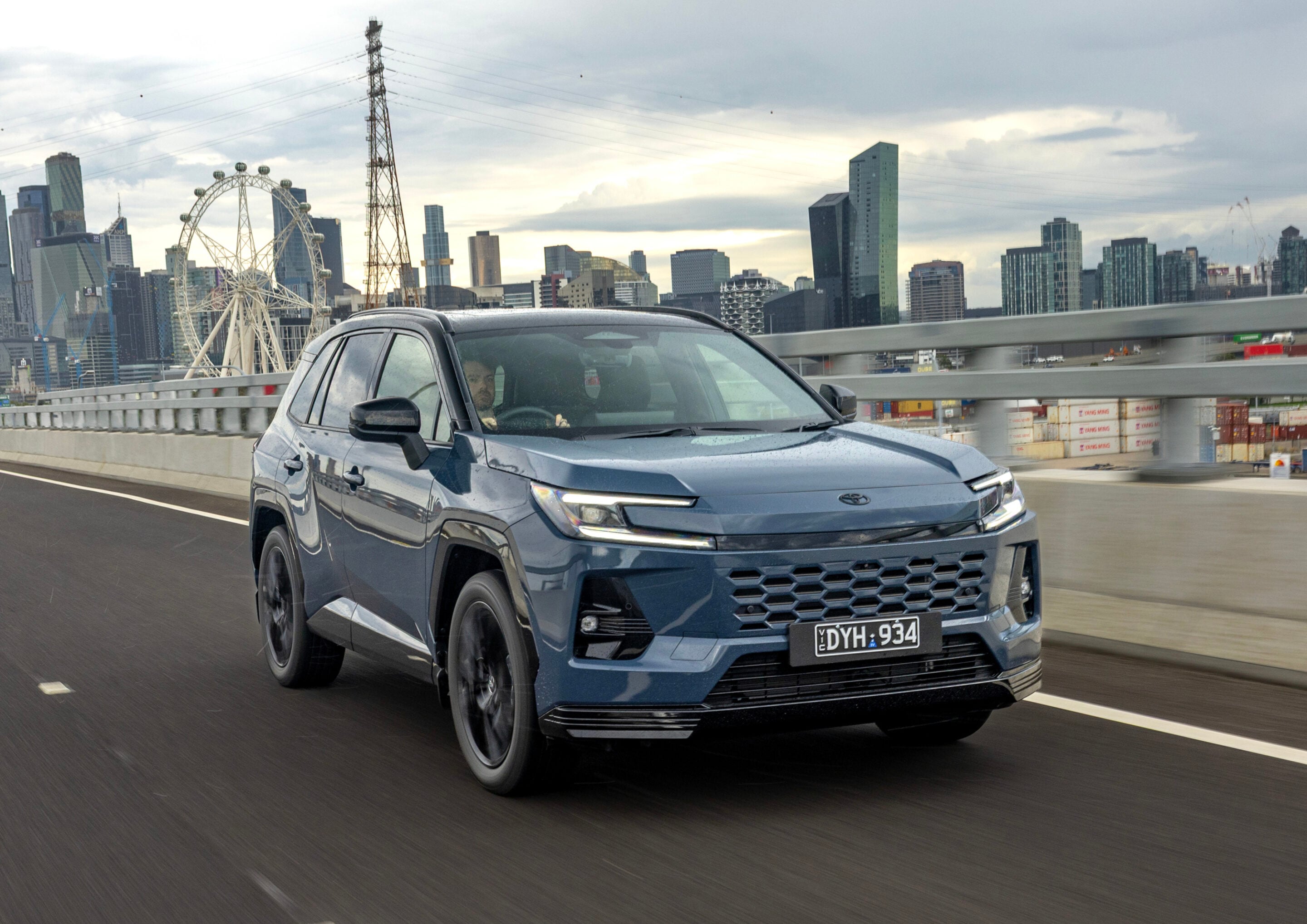
Price: From $45,990 plus on-road costs
Drivetrain: 143kW 2.5-litre four-cylinder hybrid
Claimed combined fuel consumption: 4.5L/100km
Fuel tank size: 55 litres
Perhaps unsurprisingly given its immense popularity, the Toyota RAV4 is not only the most fuel efficient hybrid medium SUV, but thanks to its 55-litre fuel tank, it can also travel the longest distance on said tank at a long 1222km.
Its 2.5-litre four-cylinder hybrid drivetrain, which was upgraded to Euro 6 compliance with the latest generation model, is very fuel efficient, rated at just 4.5L/100km. But making 143kW of power means that it’s no slouch either, and it has no trouble getting up to speed.
Add in its practical layout, comfortable cabin, long list of standard features and pleasant driving experience and it’s easy to see why the RAV4 has become such a global sales phenomenon.
2) GWM Haval H6 hybrid: 1192km
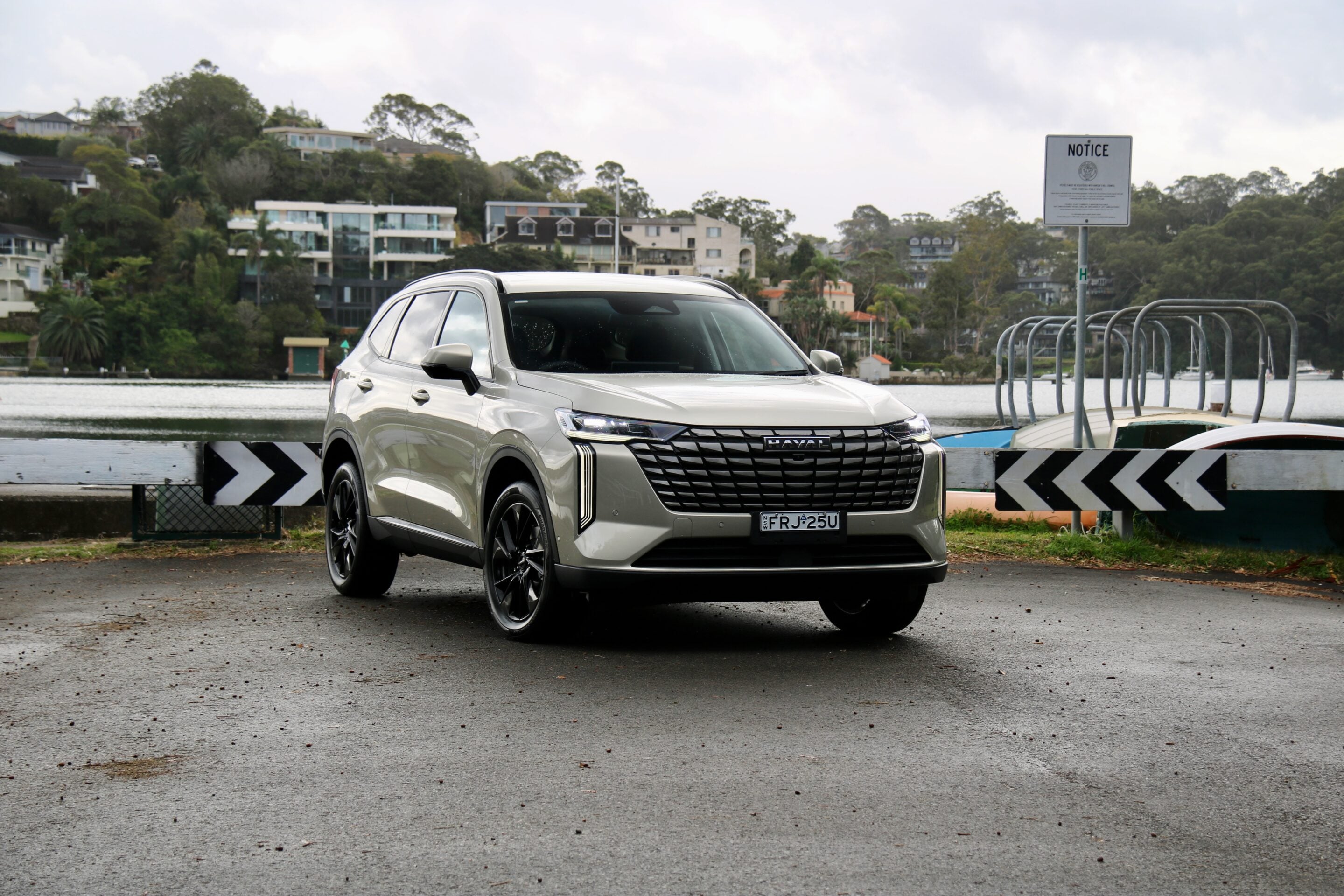
Price: From $40,990 driveaway
Drivetrain: 179kW 1.5-litre turbocharged four-cylinder hybrid
Claimed combined fuel consumption: 5.2L/100km
Fuel tank size: 61 litres
In second place, surprisingly, is the GWM Haval H6. It’s not quite as fuel efficient as the RAV4 at 5.2L/100km, but that’s still quite a low number and its large 61-litre fuel tank helps here, giving it a total range of 1192km.
The H6 is more powerful than the RAV4, making an impressive 179kW of power, and feels noticeably peppier in the real world. Like every other medium SUV on this list, the H6 is very practical for modern families, especially in the rear seat, which offers some of the best space on the market.
It’s also here that the H6’s keen value equation comes into play. Pricing starts at just $40,990 driveaway, which is $5000 less than the RAV4’s starting price… and that’s not driveaway, either, so all up you’re looking at an almost-$10,000 saving over the RAV4 with the H6. No wonder GWM sales have increased a lot in 2026.
3) Kia Sportage Hybrid: 1106km
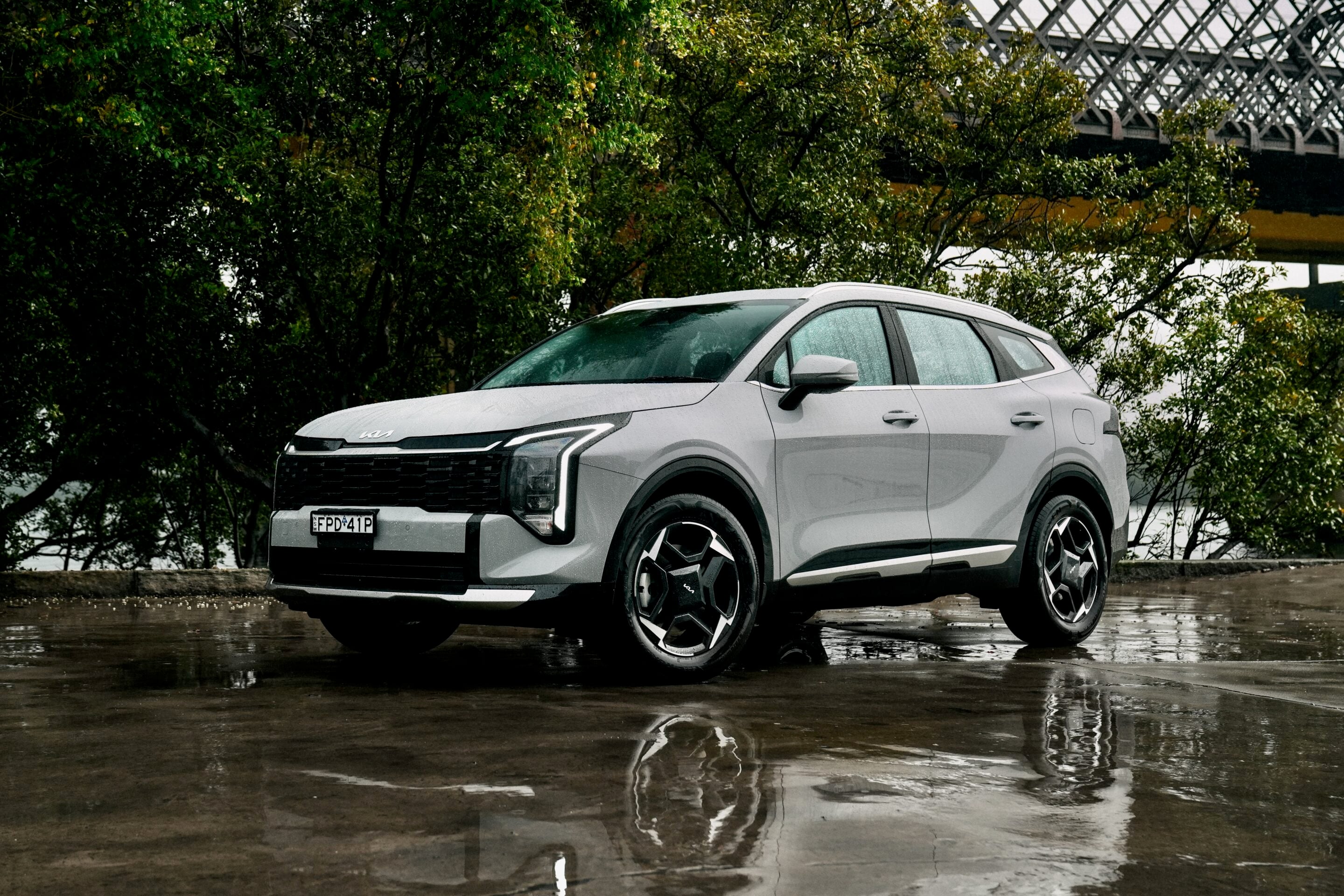
Price: From $44,450 plus on-road costs
Drivetrain: 173kW 1.6-litre turbocharged four-cylinder hybrid
Claimed combined fuel consumption: 4.7L/100km
Fuel tank size: 52 litres
Third on the list of the longest-range hybrid medium SUVs on the market is one of the best all-rounders: the hybrid Kia Sportage. Sharing its drivetrain with the Hyundai Tucson but somehow slightly more fuel efficient, the Sportage is able to eke out over 1100km from a single tank of fuel.
Its turbocharged 1.6-litre four-cylinder hybrid isn’t quite as efficient as a RAV4, but it does make 30kW more power and thanks to its real gearbox with six ratios and not an e-CVT, feels more natural to drive.
Prices for the Sportage hybrid start not far off the RAV4 at $44,450 plus on-road costs, and better equipped models like the SX and GT-Line sit above for buyers wanting more features. The Sportage’s cabin is good quality and quite practical as well.
4) Lexus NX350h: 1100km
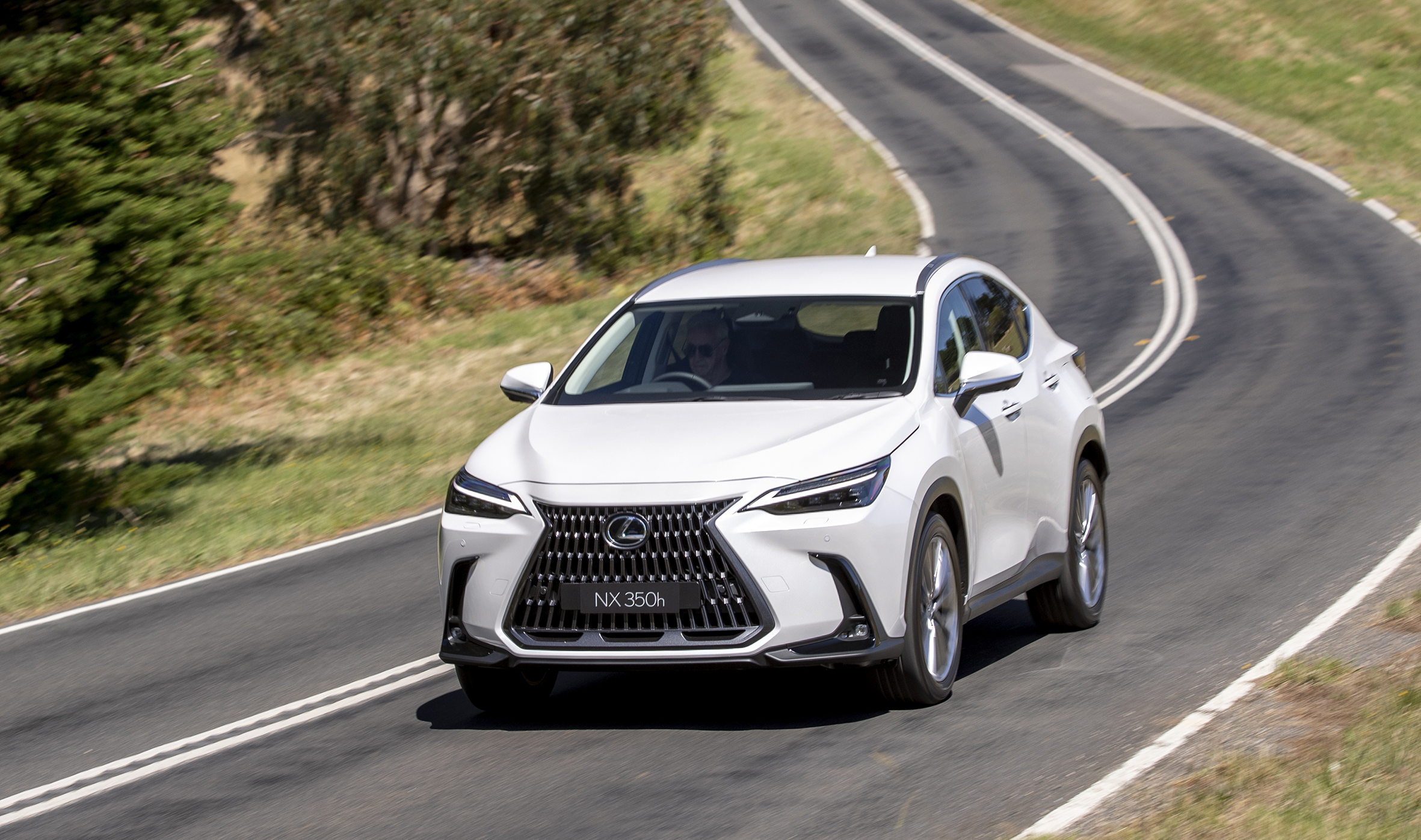
Price: From $71,700 plus on-road costs
Drivetrain: 179kW 2.5-litre four-cylinder hybrid
Claimed combined fuel consumption: 5.0L/100km
Fuel tank size: 55 litres
The only entrant on this list from the luxury segment of the medium SUV category, the Lexus NX350h shares a platform and even drivetrain with the RAV4, so it’s no surprise to see it also offering a great range. It’s not quite as fuel efficient as the RAV4, but the 5.0L/100km claim is still excellent, as its 1100km driving range.
The NX350h shares its 2.5-litre hybrid drivetrain with the RAV4, though it makes more power at 179kW versus the RAV4’s 143kW – that’s partly because the RAV4 is newer and had to comply with Euro 6 emissions upon release, unlike the five-year old NX.
Prices for the NX350h start at $71,700 plus on-road costs and that’s for the entry-level Luxury model. But it’s not an entry-level product thanks to its high quality interior, lots of useful in-car technology and pleasant driving experience that’s more refined than its RAV4 cousin.
5) Hyundai Tucson Hybrid: 1061km
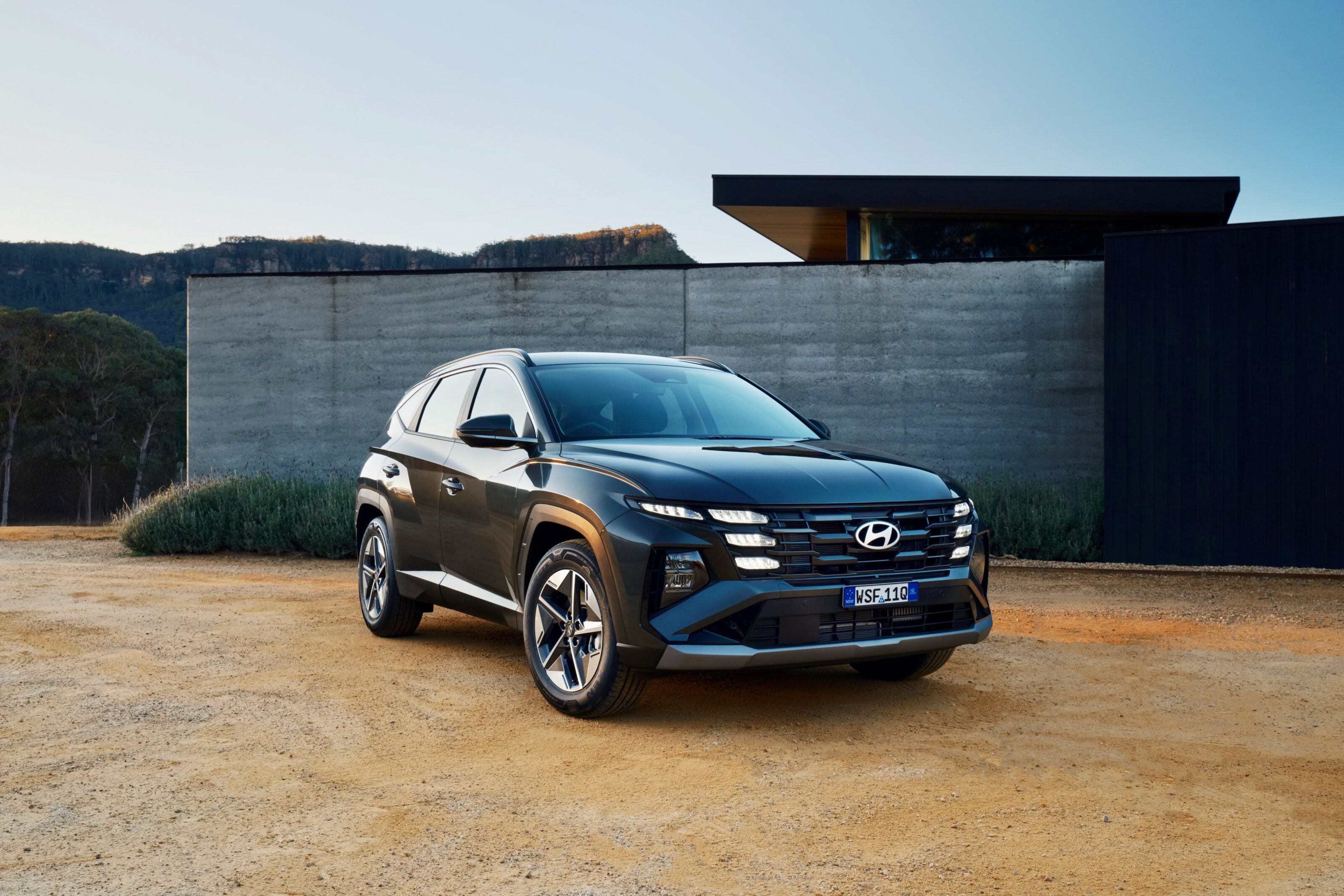
Price: From $42,850 plus on-road costs
Drivetrain: 172kW 1.6-litre turbocharged four-cylinder hybrid
Claimed combined fuel consumption: 4.9L/100km
Fuel tank size: 52 litres
Sharing so much with the Kia Sportage Hybrid, the Hyundai Tucson Hybrid is also a contender for the longest-range hybrid medium SUV in Australia. It’s not quite as efficient as the Sportage and is rated slightly higher at 4.9L/100km, but that’s still a very impressive result, as is its 1061km total range.
Further helping those working out overall cost, pricing for the Tucson Hybrid starts at $42,850 plus on-road costs, which is $1600 less than the Sportage. It also costs less to service over five years.
Like the Sportage, the Tucson is a good quality and very practical medium SUV – in fact, in hybrid guise, the Tucson’s boot is the largest in the hybrid medium SUV segment at 582 litres with the rear seats up and a massive 1903 litres with them folded.
How do the rest of the hybrid medium SUVs compare on range?
- MG HS Hybrid+: 1058km
- Honda CR-V e:HEV: 1036km
- Subaru Forester Hybrid: 1016km
- Nissan X-Trail e-Power: 902km
General Motors has unveiled a pair of striking GMC Hummer X electric vehicle concepts, offering a glimpse at how future off-road-focused EVs could evolve through new technology, modular design and sustainability-focused thinking.
Created to mark the opening of GM’s new advanced design studio in Pasadena, California, the Hummer X concepts arrive in both SUV and ute-inspired forms. While the vehicles are not intended for production, they have been developed as rolling testbeds for future innovations in design, capability and customer experiences.
The concepts draw heavily on the styling of the existing GMC Hummer EV, featuring squared-off bodywork, a commanding stance, slim window openings and a full-width LED lighting signature. However, the Hummer X package takes the formula further, with a more compact footprint designed to maximise off-road performance.
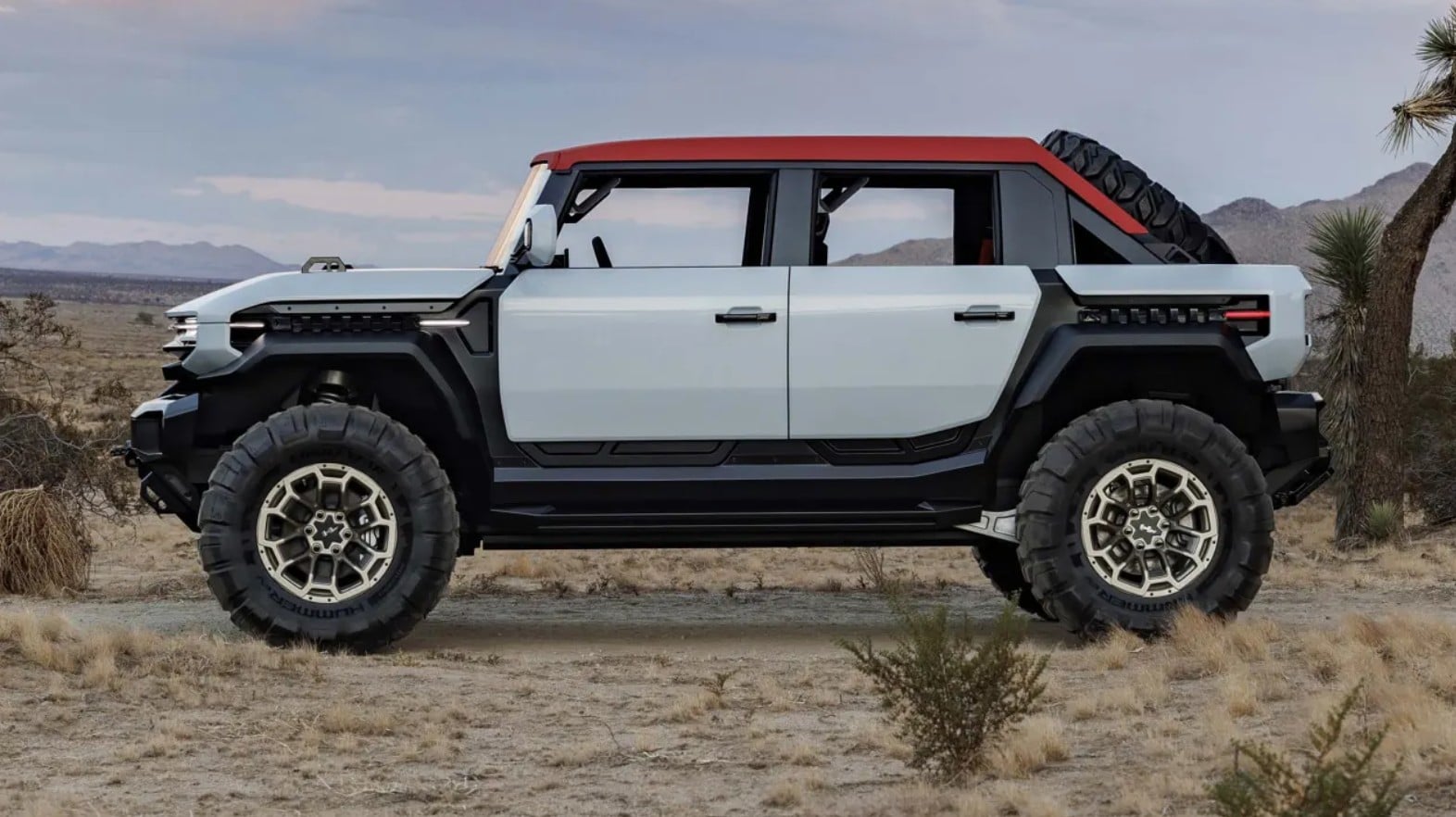
According to GM, the SUV concept is intended to challenge expectations of what a mid-sized electric off-roader can achieve. Its specifications certainly support that claim.
The vehicle rides on enormous 37-inch off-road tyres and boasts 334mm of ground clearance, figures that place it among the most capable four-wheel-drive concepts revealed in recent years. Approach and departure angles of 44 and 46 degrees respectively also exceed those of many established off-road vehicles currently available in Australia.
The ute concept features a longer wheelbase and body, making it better suited to carrying equipment and tackling longer journeys while retaining strong off-road credentials.
Both concepts feature serious hardware designed for demanding terrain, including beadlock wheels, bespoke suspension components, removable body sections and extensive underbody protection.
Inside, GM has taken an unconventional approach to digital technology. Instead of relying on a single large display, the Hummer X uses seven individual screens positioned throughout the cabin. The displays can be configured to suit different driving scenarios and user preferences.
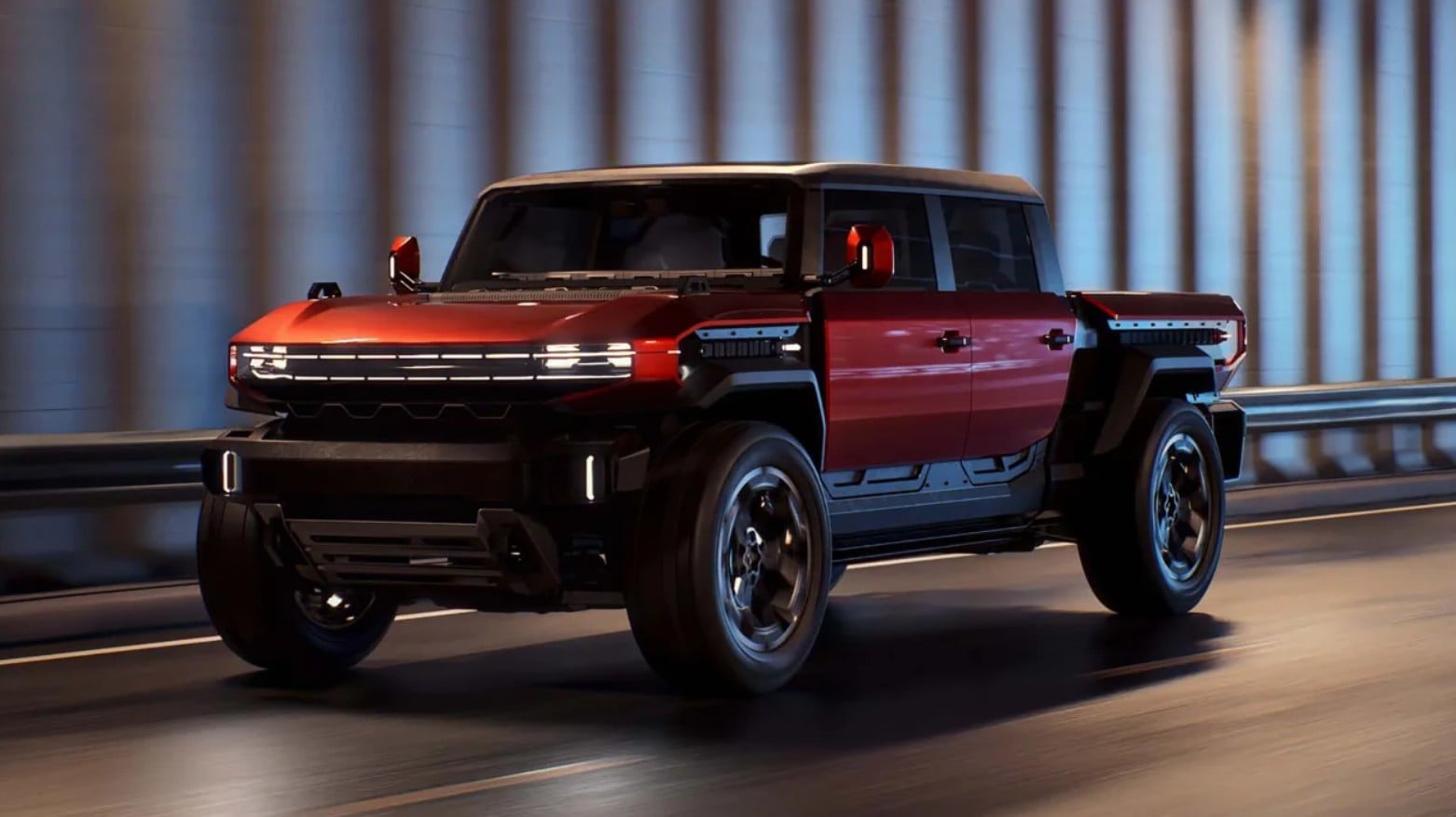
One of the more futuristic features is a deployable scout drone that can relay live terrain information back to the vehicle’s screens, potentially helping drivers navigate challenging off-road environments.
GM has not released performance or battery specifications for the concepts. However, the current Hummer EV is known for its massive battery capacity and impressive off-road capability, suggesting the Hummer X concepts could provide clues about the direction of future electric adventure vehicles.
While Australians are unlikely to see these exact models in showrooms, the concepts highlight the growing trend towards highly capable electric off-roaders that blend advanced technology with traditional four-wheel-drive capability.
BMW Group will begin deploying humanoid robots in one of its vehicle manufacturing plants this year, marking a significant step towards what the company believes could become the future of automotive production.
The German automotive giant plans to introduce the human-shaped robots at its Leipzig facility from mid-2025, following a series of successful trials in both Germany and the United States.
Speaking to the BBC, BMW’s head of process management and digitalisation, Michael Nikolaides, said the technology has the potential to work alongside people in a wide variety of production environments.
“This will be the future of automotive production,” Nikolaides told the BBC. “If you have a humanoid form, you can pretty much set it to any workplace where a human is working today because it has the same size and the same capabilities.”
Unlike traditional industrial robots that are typically fixed to a single location, humanoid robots are designed to move through existing factory spaces and perform tasks in areas already built around human workers.
BMW says the primary goal is not to replace employees, but to assist with repetitive, physically demanding and potentially hazardous jobs.

“The focus is on understanding where this technology can support tasks that are repetitive, physically demanding or safety-critical,” a BMW spokesperson told the BBC. “The aim is to relieve employees in suitable areas and learn how Physical AI can support future production processes.”
The robots, developed by Swiss technology company Hexagon Robotics, stand approximately 1.65 metres tall and weigh around 60 kilograms. Known as AEON, the machines are capable of lifting loads of up to 15 kilograms for shorter periods and around 8 kilograms continuously.
BMW says the robots will initially be used in high-voltage battery assembly and component manufacturing, areas that are becoming increasingly important as the industry transitions towards electrification.
The introduction follows earlier testing at BMW’s Spartanburg facility in the United States, where engineers assessed how the machines could integrate into existing production systems.
While humanoid robots may sound futuristic, automation has long been a cornerstone of modern vehicle manufacturing. Robotic welding systems, automated guided vehicles and advanced quality-control technologies are already widely used throughout the industry.
Other manufacturers are also exploring human-like robotics. Earlier this year, Renault showcased a robot designed to transport heavy electric vehicle tyres around its production facility in France.
BMW has not revealed where the technology could be deployed next, but the company confirmed it continues to evaluate robotics across its global manufacturing network.
For Australian consumers, the move offers a glimpse into how future BMW and MINI vehicles could increasingly be built with the assistance of advanced artificial intelligence and humanoid robotics, helping improve efficiency while supporting workers on the factory floor.
A look around any Australian suburban carpark will reveal a sea of unextraordinary utes, SUVs and hatchbacks. Nothing out of the ordinary, all very safe resale-protecting choices.
But it wasn’t always like that. From time to time, a car brand might be brave and bold and try something a bit different.
While not every oddball could make the cut, here are some of the more unusual models that brands took a punt on from the last 50 years.
Bullet Roadster SS
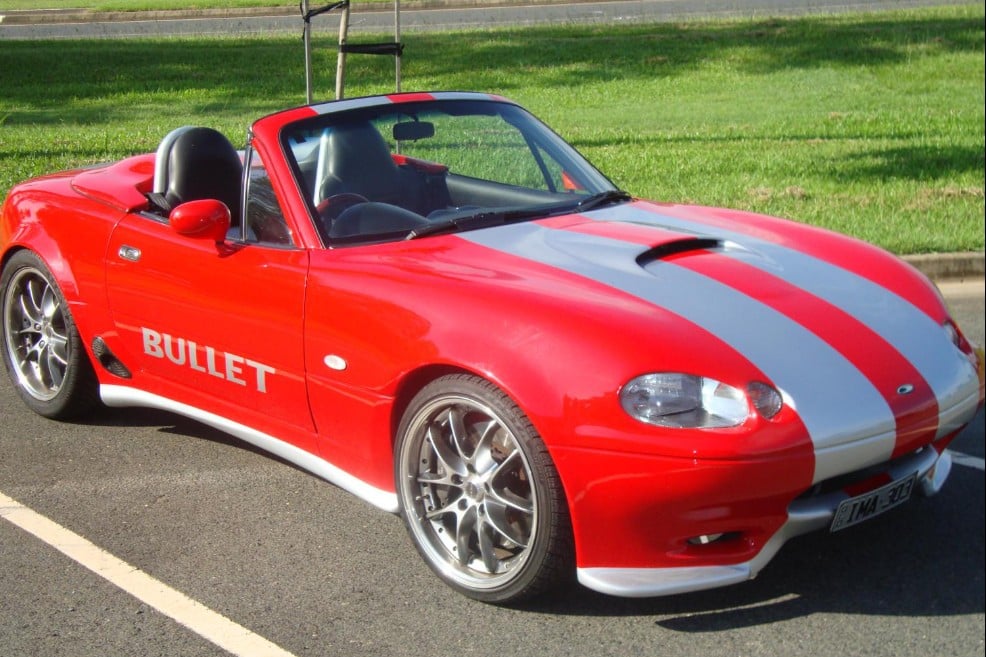
Unbridled Australian innovation took the humble Mazda MX-5 and mated it with the quad-cam V8 from a Lexus to create a formidable sports car that provided big power and minuscule weight.
While some of the MX-5 DNA is obvious in the styling, a spaceframe underneath braced the body, and the most powerful option saw a 4.0-litre Toyota V8 with a Sprintex supercharger deliver a claimed 320kW/575Nm.
The extent of changes and reengineering meant Bullet became a manufacturer of its own, achieving low-volume ADR compliance and offering something utterly unhinged that looked familiar, but came with carbon composite bodywork and a full set of performance and handling upgrades.
Suzuki Mighty Boy
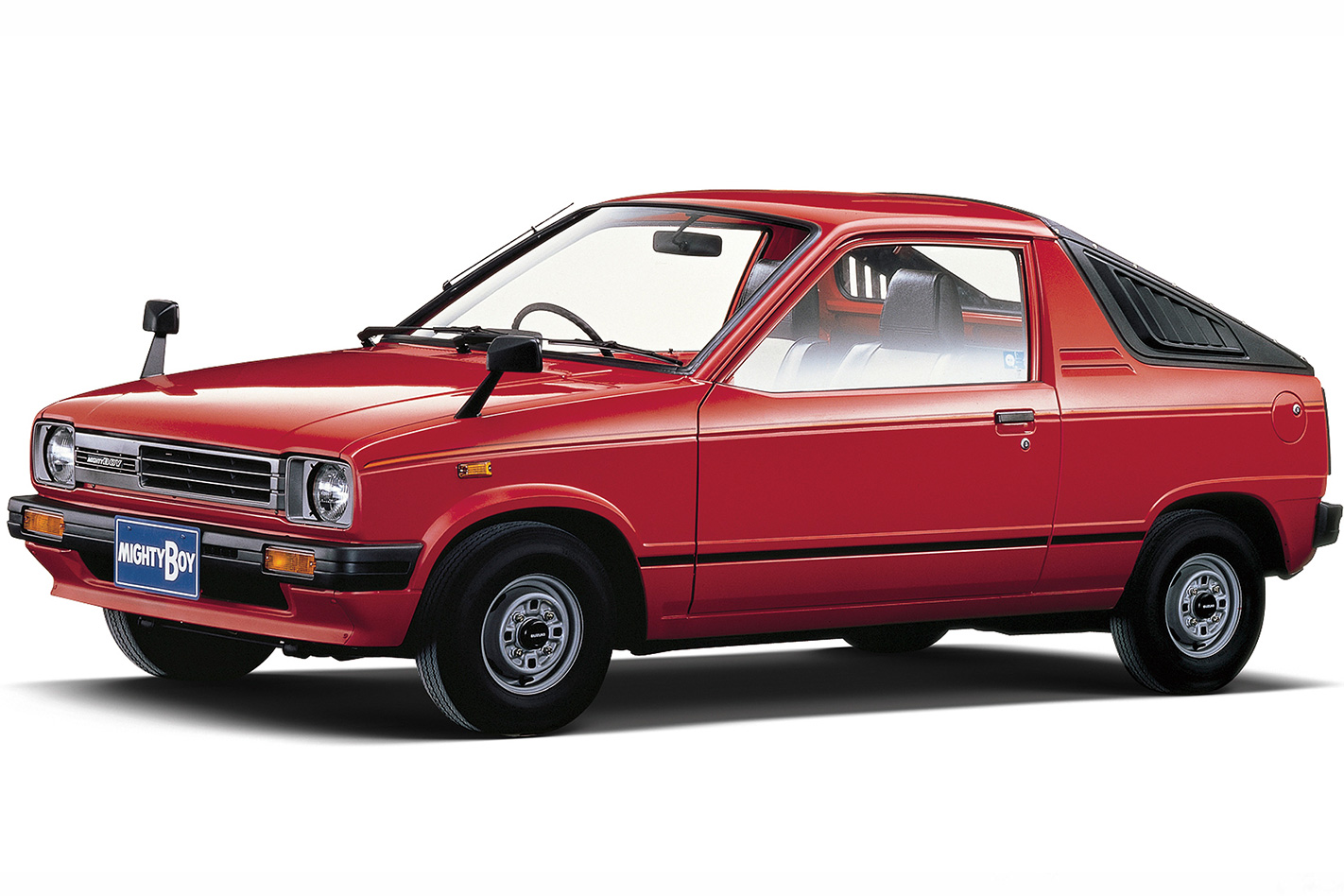
Aussie utes have taken many forms, but by the 1980s, they were mostly either based on full-size Holden and Ford sedans, or dedicated workhorses from Japan, similar in size, if not performance. That didn’t stop Suzuki from having a crack at something very different in the mid-80s.
The Mighty Boy was a tiny ute, designed to meet Japan’s compact kei class regulations, with a 550cc engine and unusual proportions that made the cabin longer than the bed, thanks to its close relationship with the Cervo hatch.
The rise of more practical vans, which put the driver over the engine instead of behind it, sealed the Mighty Boy’s fate in Japan, and while it developed a cult following in Australia, sedate specs and limited practicality stopped it from being a widespread success.
Smart Roadster

Smart’s entire Australian line-up felt like it was fighting with one arm tied behind its back, thanks to compact dimensions, tiny engines, and frustratingly dimwitted automated manual transmissions. While the City-Coupe range found favour with businesses as a quirky mobile billboard, the Smart Roadster was something else entirely.
Almost 74 per cent more expensive than the City-Coupe, the Roadster offered the same cramped cabin, but a longer body that blended classic sports car cues with the ability to complete a 0-100km/h sprint in a drowsy 10.9 seconds.
With your bum so close to the ground, its 60kW 698cc turbo engine almost felt swift, and the absolute need to rev the ring out of it gave it a fizzy feeling from behind the wheel, but cartoonish interiors and a lack of any substance made it incredibly niche.
Blade Electron
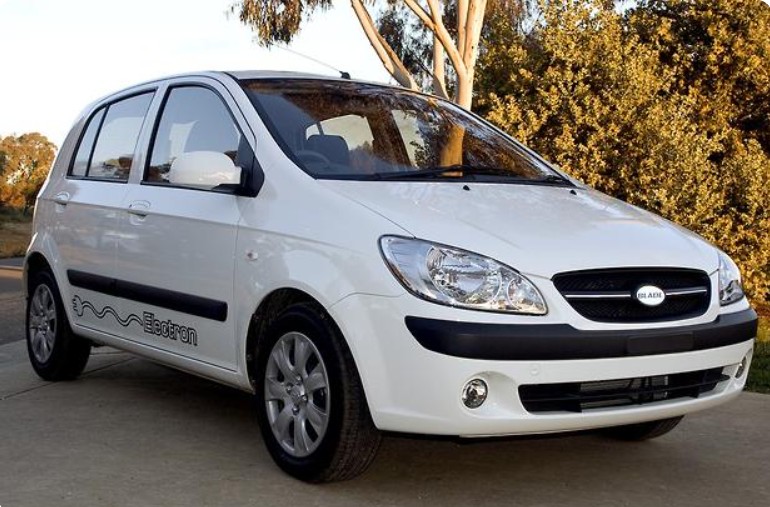
If the idea of a Hyundai Getz with lower performance and crippled range for three times the price of the cheapest Getz sounds like your cup of tea, then the Blade Electron was for you.
Based on the body of a Getz, the Electron swapped out Hyundai’s 70kW 1.4-litre petrol engine for a 40kW electric motor, taking the price from Hyundai’s attractive $14,990 all the way to $48,000 with a claimed 100km range thanks to a 16kWh battery.
The Electron was a bold attempt to spark EV innovation, using funding available under the Australian government’s ‘green development’ fund at the time, but a limited audience, and competition from the more resolved Mitsubishi i-MiEV and Nissan Leaf saw demand dwindle quickly.
Bufori Madison
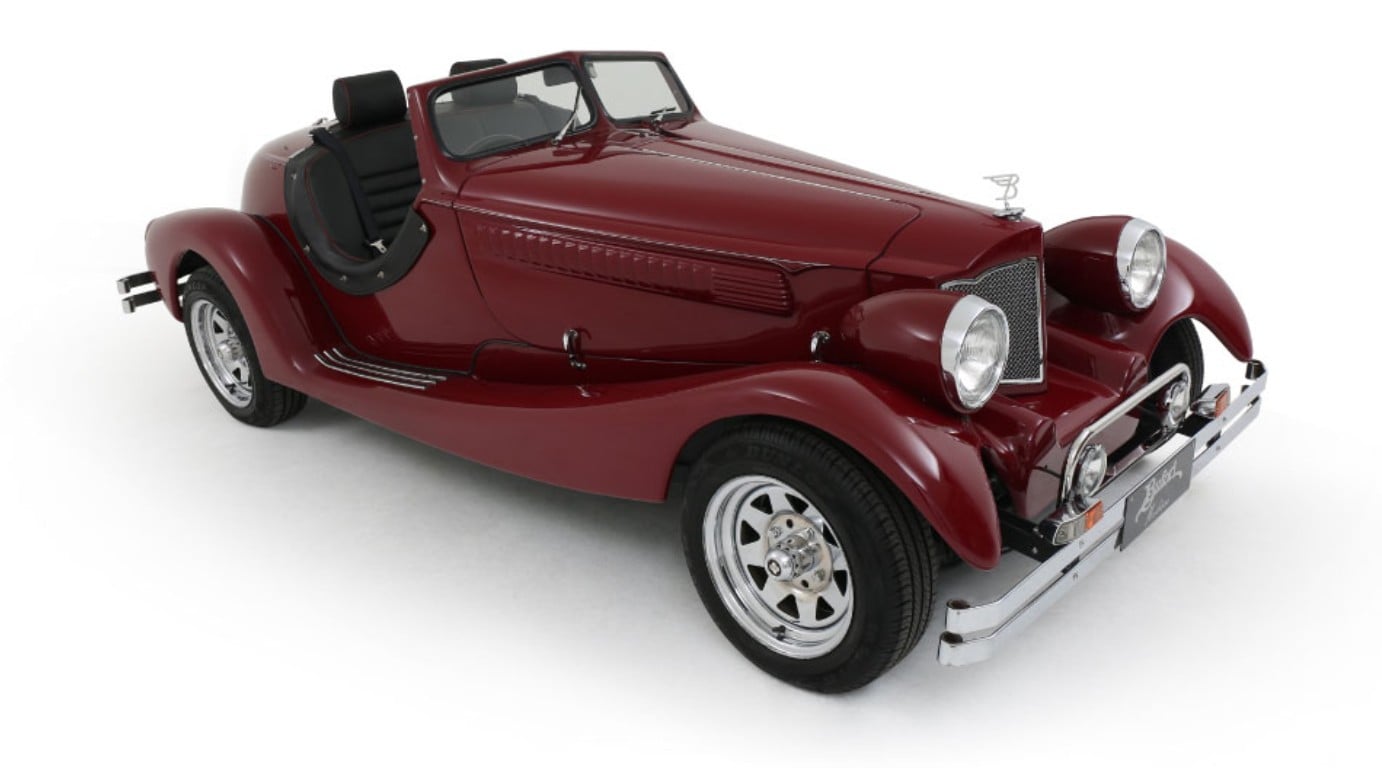
Think of Australian car brands, and you’ll likely think of Holden first, but Bufori was an Australian brand with an entirely different ethos. Their first model, the Madison, was hand-built in Sydney with a neoclassical design that wrapped the look of a 1920s roadster around Volkswagen mechanicals.
An emphasis on craftsmanship and hand-assembled coachbuilding techniques kept Bufori’s production volumes low, but the company grew to a point where exports kicked off, and eventually production was shifted to Malaysia, where it continues to this day.
Toyota Corolla Sportivo Levin
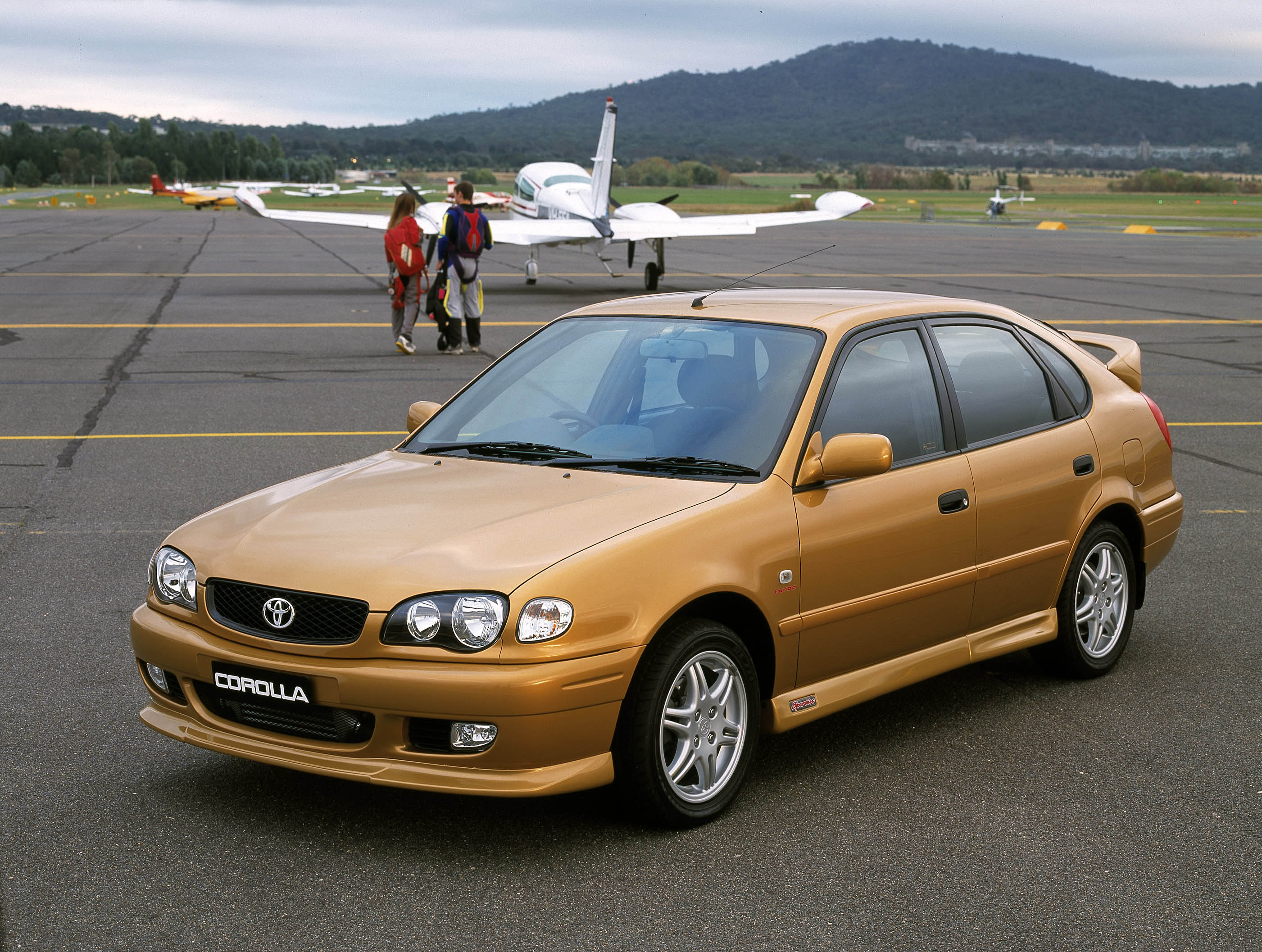
Corolla and weird don’t usually belong together, with Toyota’s small hatch about as mainstream as they come. In 2001 Toyota Australia tried something a bit different, bolting a turbo on for kicks and creating a low-volume sleeper.
Looking more like a Corolla dressed from Toyota’s accessory range, with a Sportivo front bumper chin, sills, spoiler risers, and wheels, the best bits were hidden from view.
The turbocharger boosted power from 85kW to 115kW, and torque jumped from 154Nm to 237Nm. A five-speed manual was the only transmission, and suspension was stiffened to keep handling in check.
In the world of performance, the 115kW Corolla outgunned a Mk 4 Golf GTI of the time by 5kW, but was also priced higher than a base Commodore with a V8, meaning numbers were limited to just 110 units from an intended run of 150.
Suzuki X-90
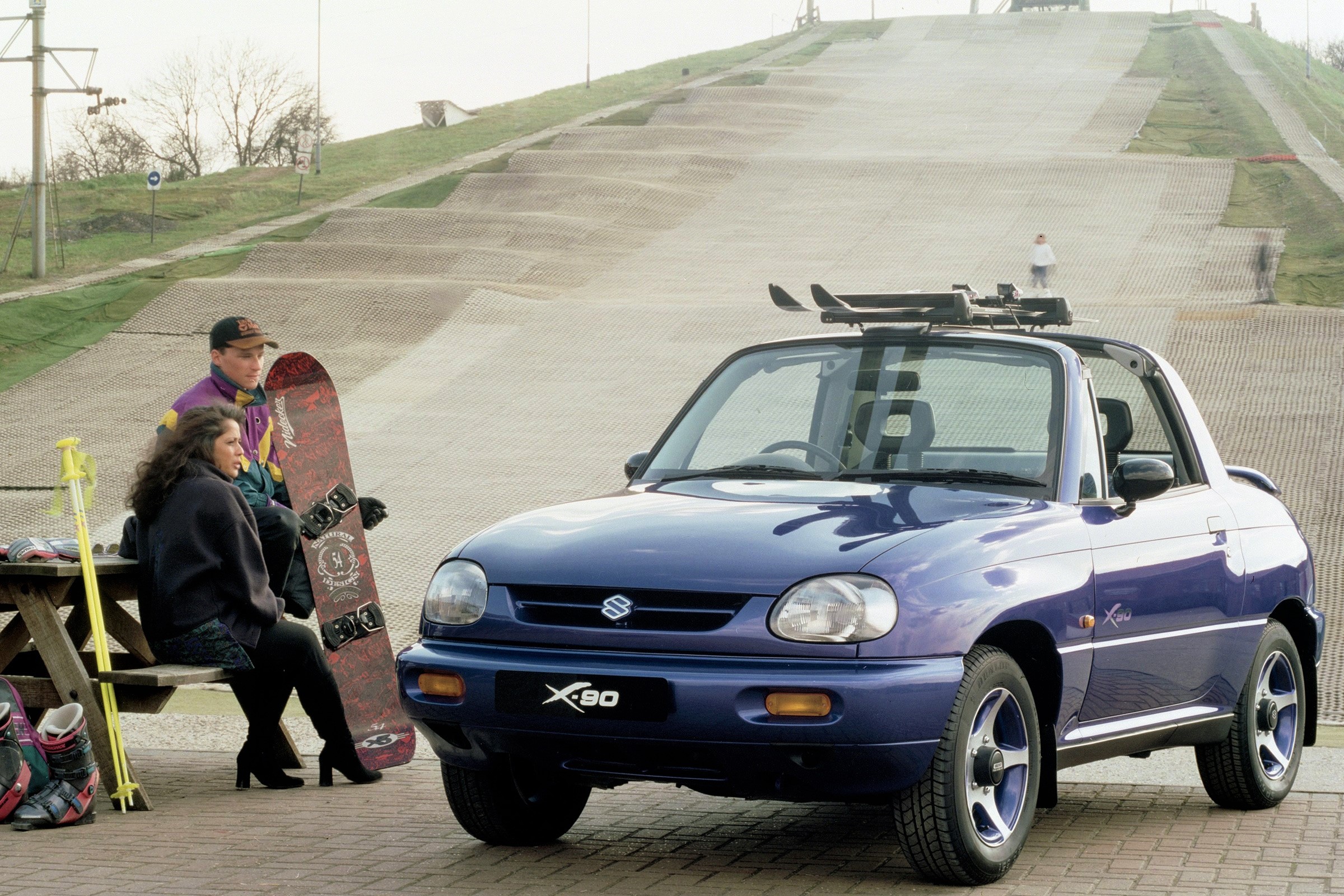
Suzuki helped pioneer the compact SUV craze with the Vitara in the 1980s, but by the mid-90s, it may have gotten a little cocky with the two-door X-90.
Unlike anything else before it, or since, the X-90 took the Vitara’s ladder-frame chassis and draped it in an upright two-door coupe body. With a boot, not a tailgate. And with a removable targa-style roof.
Off-road enthusiasts avoided it for its lack of practicality, and the kinds of trendy young urban buyers Suzuki was targeting opted for the more spacious and practical RAV4 instead
Lada Bizivan
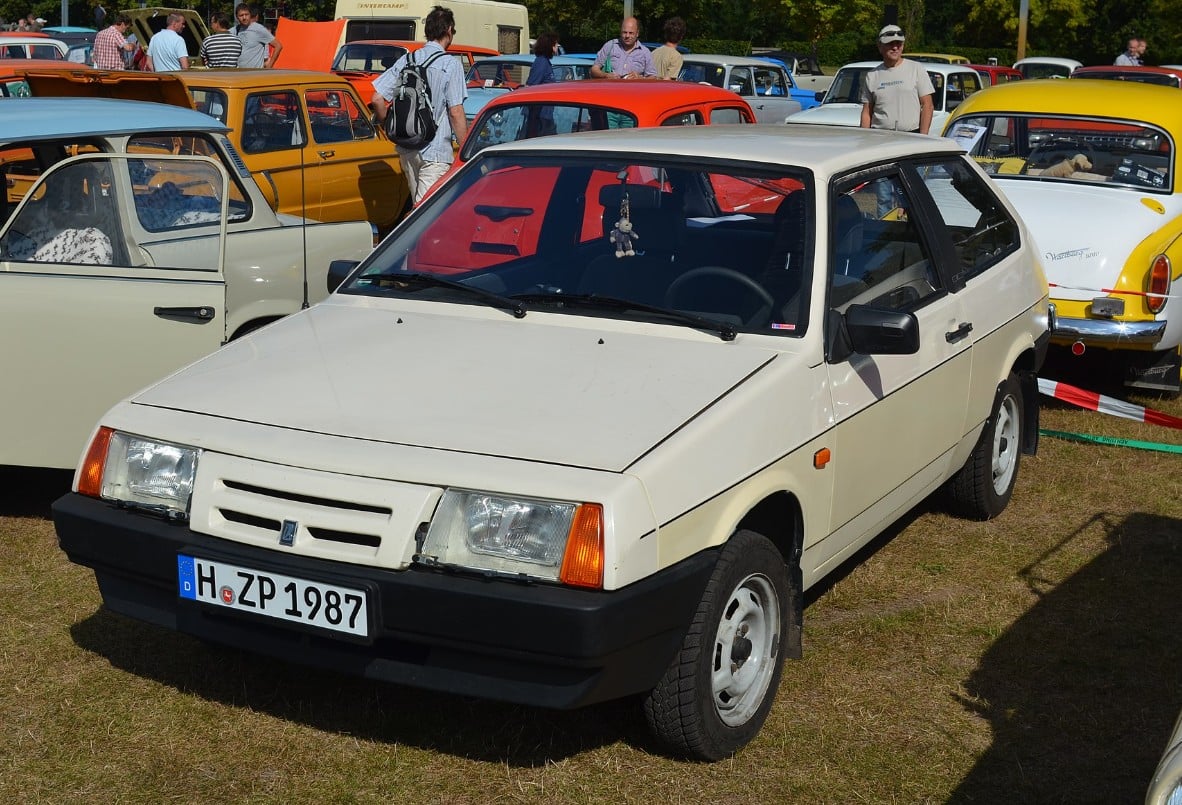
Every attempt Lada made in the Australian market could land on this list, probably the best-known of which were those modified by racing legend Peter Brock, with handling and styling revisions that did little to spur on the Soviet hatchback’s success.
Weirder still, by the late ‘80s, Lada introduced the Bizivan. A three-door version of the Samara hatch, but with no rear seats and a focus on the commercial vehicle market.
A wooden floor, optional side windows with bars, and a 425kg payload made it cargo compatible. Priced from $10,655 when new, the Bizivan was over 20 per cent cheaper than a base model Corolla, while matching it for power and including a five-speed manual – one up over the four-speed Corolla.
Ssangyong Chairman
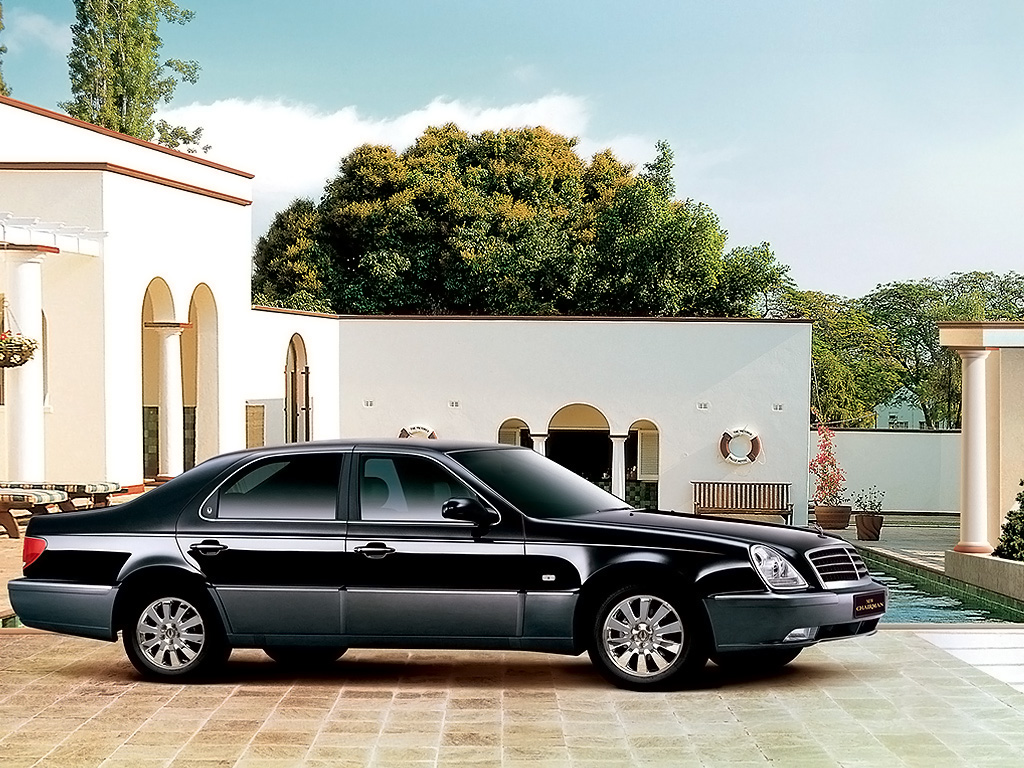
Ssangyong, now KGM, is best known for its SUVs and utes, and perhaps little known for its tilt at the full-size prestige sedan market.
The Mercedes-Benz look-alike styling was no coincidence. Stemming from Benz’s investment in the Korean brand at the time, the chassis was derived from the much older W124 E-Class, and even the styling blended rejected elements proposed for the W202 C-Class.
The 3.2-litre inline six engine was, you guessed it, a Mercedes design, built under license. The combination of unusual bug-eyed looks, a two-generation-old chassis, and a $57K price when new – which could have got you a larger, more powerful Ford Fairlane – not to mention Ssangyong’s less-than-favourable reputation, meant the Chairman was a certified oddity on Aussie roads.
FSM Niki
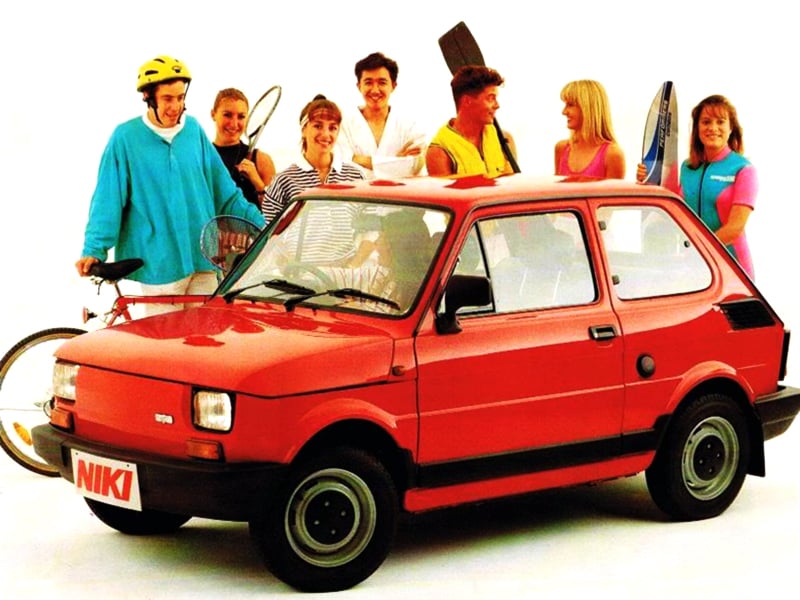
As late as 1993, you could buy what was essentially a Polish-built, air-cooled, two-cylinder Fiat 126, first designed in 1971. The back story is a bit more complicated than that, but FSM (which stood for Fabryka Samochodów Małolitrażowych, literally ‘small car factory’) offered Australia’s cheapest new car in the 1990s.
The $6000 price when new came with some compromises. No power steering, arguably not needed with so much weight at the back, no automatic transmission, no air conditioning, and with only 18kW, no real performance to speak of.
Despite petering out in Australia in 1993 as consumers demanded cheap compact cars with, well, anything at all, the FSM Niki – known by its original Fiat 126 moniker, made it to the year 2000 in overseas markets, by which time over 3.3 million units had been built in Poland.
First published in the October 1971 issue of Wheels magazine, Australia’s best car mag since 1953. Subscribe here and gain access to 12 issues for $109 plus online access to every Wheels issue since 1953.
HQ Monaro 350 is a better car than HG 350 ever was.
The contentious points in the HG model that journalists and owners complained about have, with one or two exceptions, all been dealt with competently and the result is a fine high performance machine.
And yet something is missing. It’s something the old car had in abundance. Something which is entirely subjective and something we can only put under the heading of – character.
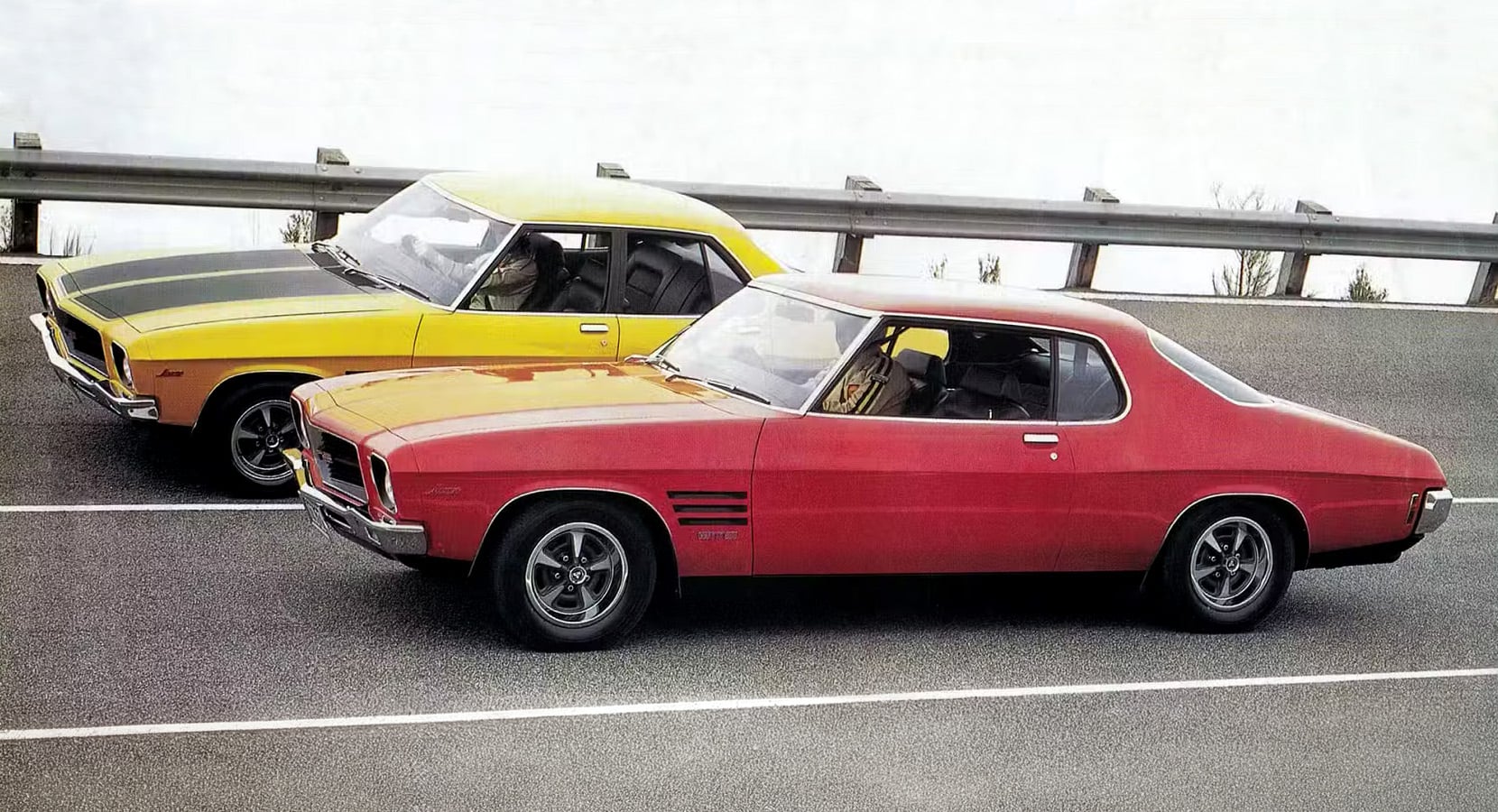
The HQ is a vastly superior car, make no mistake about that. But the old 350 was more than just a car. It was GMH’s nose-snub at the international General Motors’ edict of “no-racing”. It was a brute, subject to symphonic transmission tunes, uncomfortable at ordinary speeds, overbearing, a real masochist’s machine.
But it saved everything for those who drive quickly and intelligently. It made all the right engine noises, handled superbly above the speed limits and ran straight and true at two miles a minute in a fashion normally reserved for Italian exotic cars. It was an uncompromising production version of a genuine road racing machine. Carol Shelby would have understood, his first Shelby Mustangs were like that, before Ford added the effeminate touches.
Now the GM board room has got at the big Monaro. The engine’s rich bellow has gone, the ride is soft, the transmission is quiet and the handling is easier even if the roadholding is worse. But ultimately the new 350 is in a no-where-land between the luxury of the new LS 350 and the sportiness of the old model.
But for all but one tiny per cent of a percentage of buyers HQ 350 is a better car and you can be sure there will be a sizeable increase in its overall share of the very healthy Monaro sales charts.
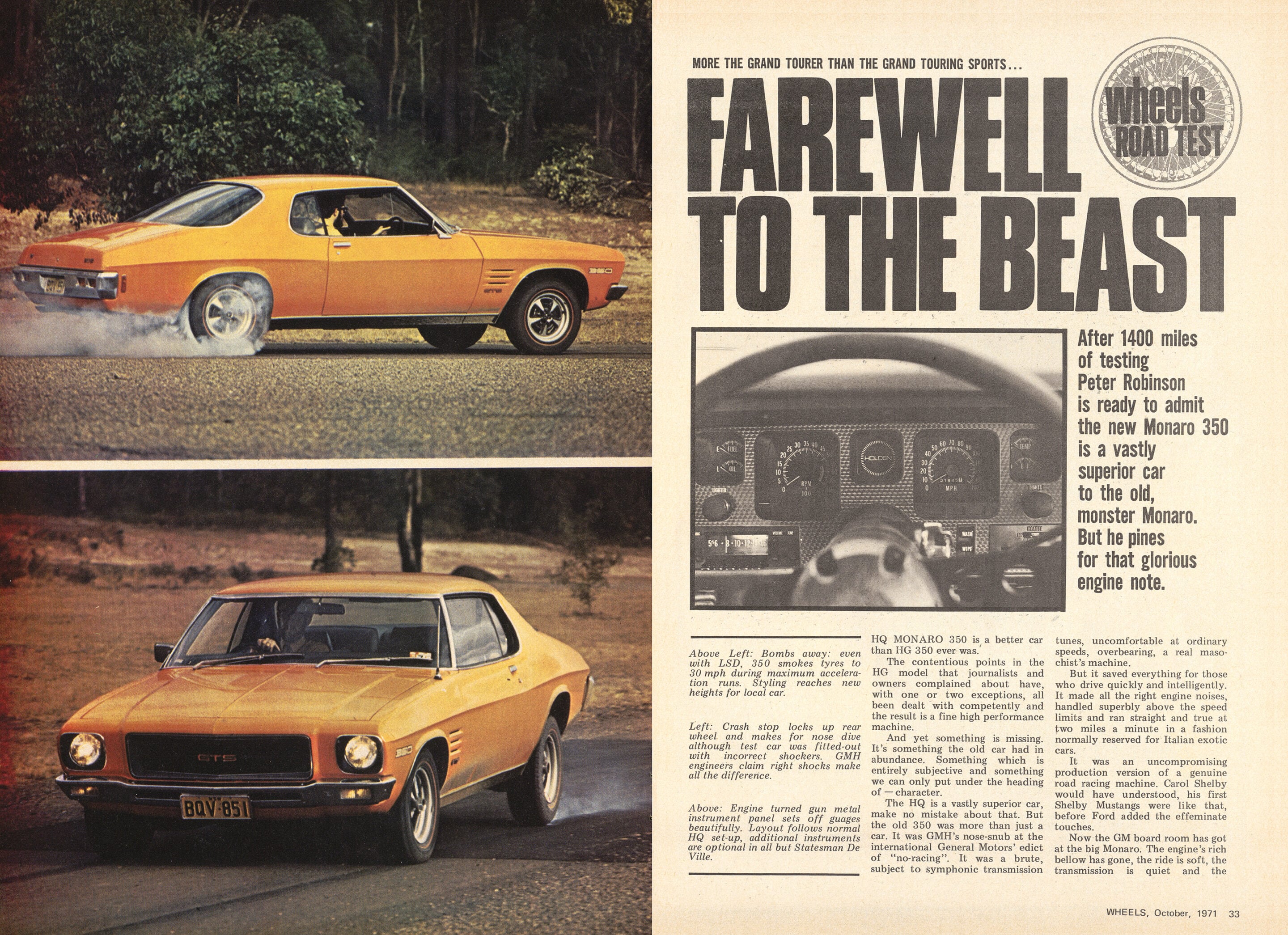
If GMH had never built the old 350 the HQ would have seemed the greatest car the company could ever sell in Australia. And forgetting the “Command Performer” the HQ 350 is a damned fine motor car. It has all the performance anybody could ever want, it is quiet, smooth, fairly comfortable and built around the best looking body to come from a large Australian car manufacturer.
Where the old Monaro body was an obvious compromise between the four-door sedan and a genuine coupe the new car looks as if it was designed first. So instead of being a two-door version of the sedan it is the sedan which ·is a four-door version of the Monaro.
The lower roofline of the Monaro and the beautifully integrated rear window blend so well with the overall styling it is hard to suggest any areas which could be improved. The wider wheels and big radial ply tyres, fitted to the test Monaro, give it the wide track look which is missing from the sedans.
The only problem with the styling is that stones thrown up on to the lower edges of the curved body are likely to chip off most of the paint in that region. Nasco is going to do a great trade in mudflaps for the HQ range. Even with its great looks GMH is deliberately shifting the sports emphasis away from the Monaro range to the Torana XU-1. The “S” in GTS is rather smaller than it was.
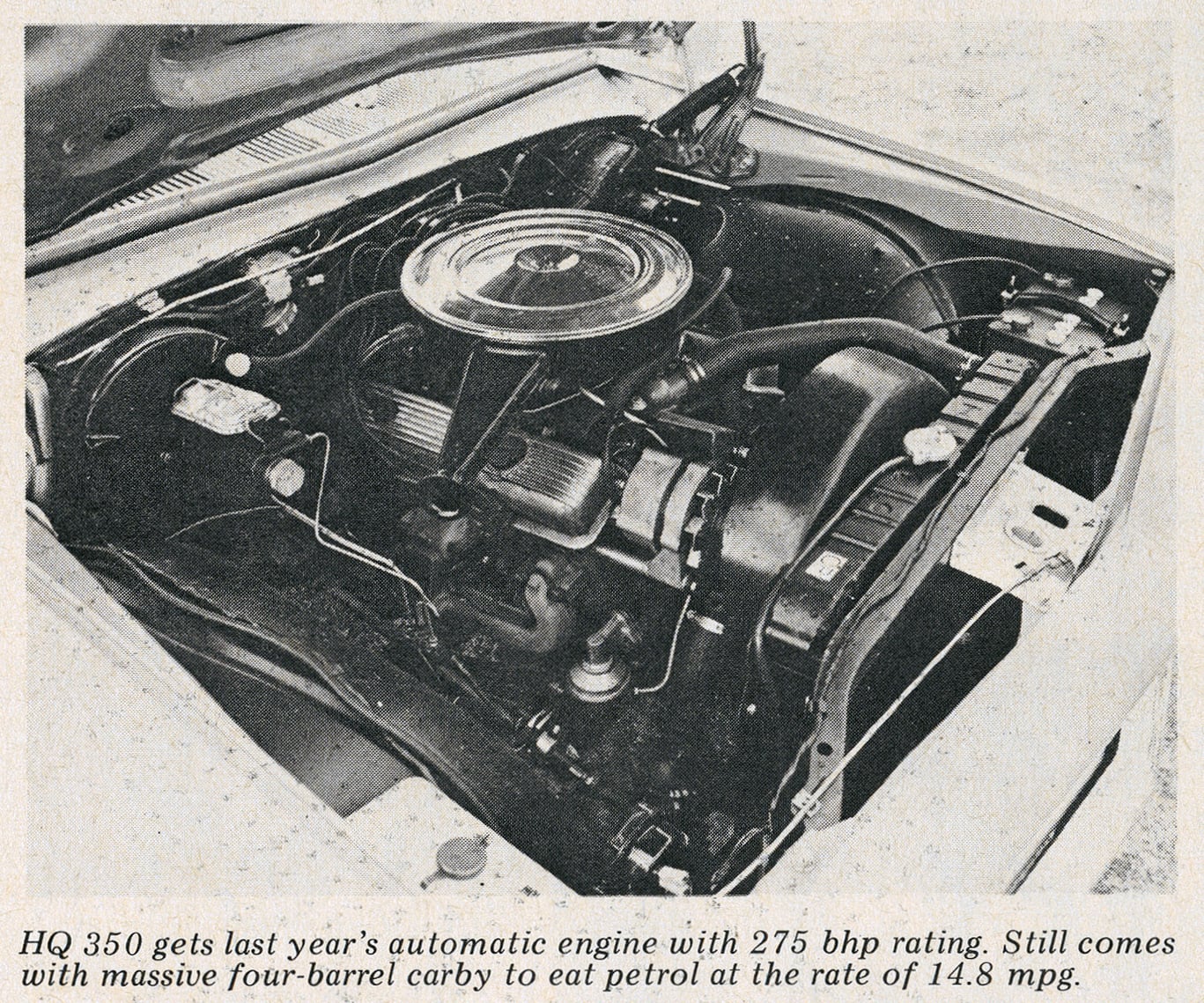
As part of this plan, the new 350 gets the old 350 Automatic engine, which is rated at 275 bhp, compared with the old manual car’s 300bhp. The performance drop is small really until you get above the ton – the difference to 100mph is marginal and the top speed has dropped about five mph to a 122mph average although it will pull 125 one way.
Above 100 there isn’t the lift of old when you boot the car in fourth gear. This is academic really for few people will ever want or need more acceleration than this Monaro offers.
Our best standing quarter-mile time of 15.7 seconds required savage treatment with wheelspin and axle tramp up to 30mph. Smoother driving with less wheelspin and slightly slower shifts took this to 16 seconds dead but the difference in wear and tear on the car was enormous.
The engine is redlined at 5500rpm but it will run out beyond this in the indirects. For a big V8 it is a high-revving engine with a very smooth flow of power from as low as 500rpm in fourth. In fact, it can be used as a two-gear car around town.
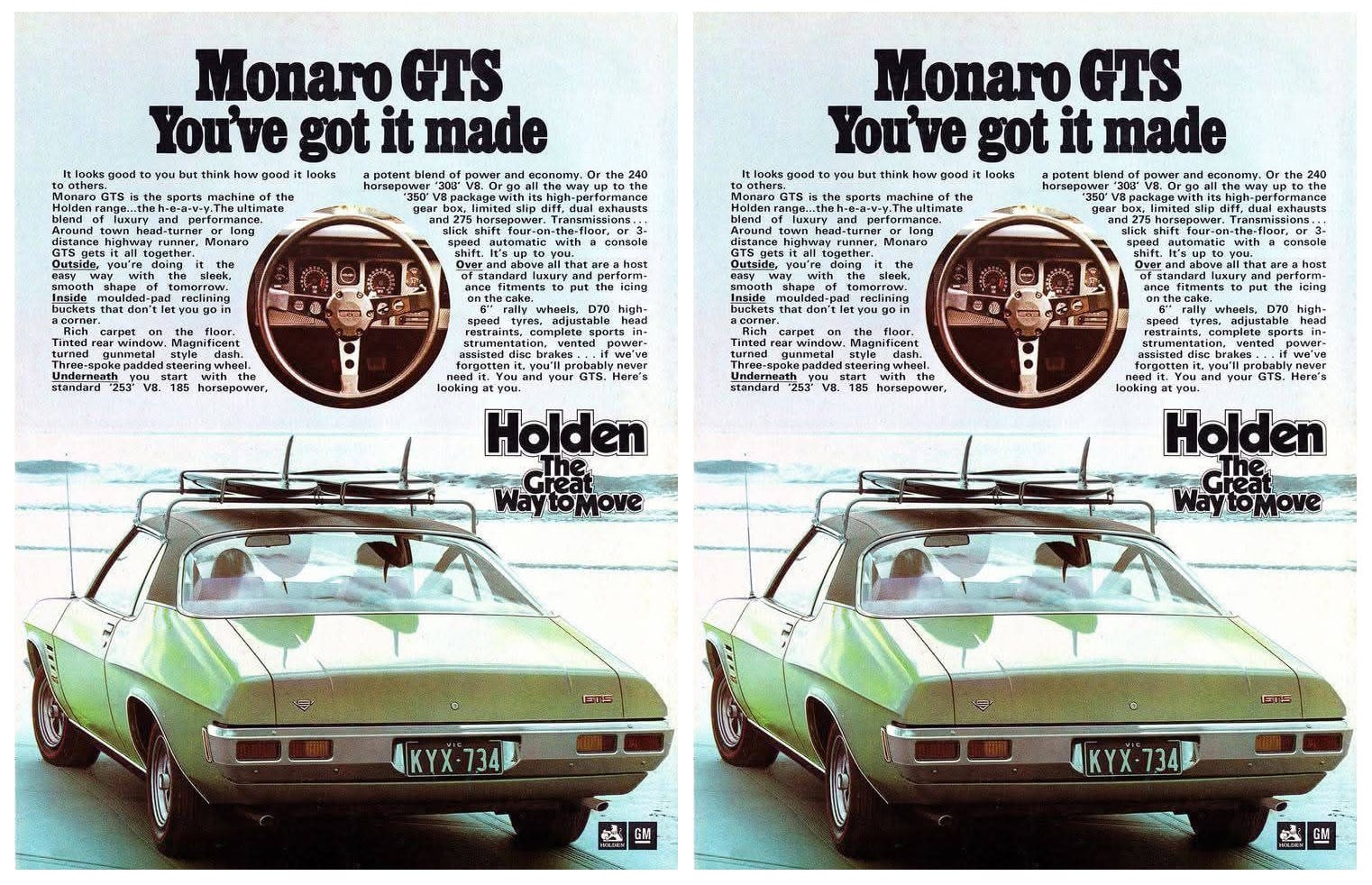
To get to the maximum speed requires a build up over three miles but 5000rpm (just under 125mph) is possible in fourth so there is no chance of over-revving the engine in top gear. Cruising at 100mph is a perfectly relaxed 4000rpm.
What really limits the Monaro’s value as a track car, for series production racing anyway, is the fitting of the standard Holden 16.5 gallon petrol tank instead of the 25 gallon tank used on all previous 350 Monaros. With the average fuel consumption during our 1400 mile road test working out to only 14.8 mpg – in racing conditions and during our performance testing it dropped to around 11 mpg – the touring range is inadequate considering the 350’s ability to put away the miles.
A full tank can be only two hours’ driving and to make things worse the fuel gauge reads in the red danger area when only 12-13 gallons have been used. It’s a brave man who will take a punt on reaching the next town before filling up.
And then there is the car’s handling and roadholding. The softer, almost European type ride has been won at the expense of roadholding. It is a compromise most Monaro owners will be willing to pay to get rid of the harsh, bump-ridden, truck-like ride of the old car. Certainly at town speeds the new 350 is so smooth and relaxing it is hard to believe it has any association with the old model at all and up high the stability and firmness are just right.
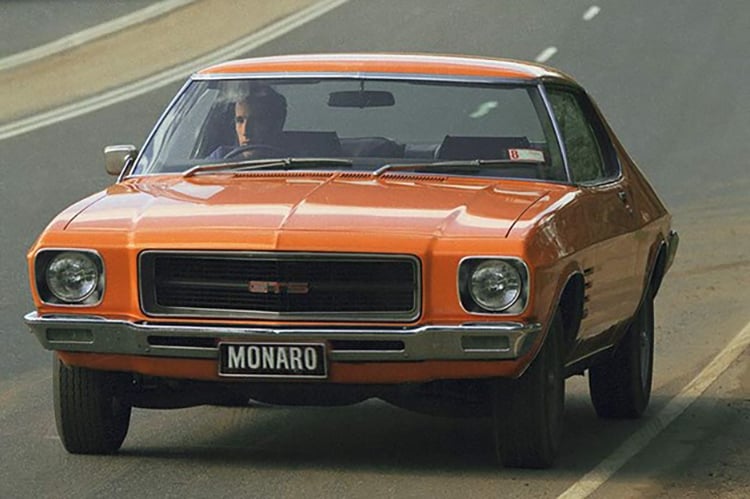
But such is the grip provided by the rear suspension and tyres that it is only possible to break the tail loose on tight corners with full throttle acceleration in first or second gears. In every other condition it is the front wheels which run wide and a 60mph bend taken flat out in third sends the front end into the opposite lane. No amount of steering lock will combat the vast understeer, lifting off the accelerator tightens up the corner a little but the car is so stable it doesn’t even require an oversteer correction. Fiddling with the tyre pressures doesn’t alter the basic characteristics.
The old Monaro was a virtual neutral-steer car in such conditions. The new found understeer which is evident in the entire HQ range, might make things safer for the average driver, but, together with the lower power output and the small petrol tank, effectively kills the Monaro as a race car.
Everyone will appreciate the new gearbox though. It’s a fully imported American Muncie close-ratio box – where the old one moaned and sang on the over-run it is virtually noiseless. The shift is better, too, although it is still notchy but it is set-up so that the actual change is angled away from the horizontal movements of old. It is rather like a heavier version of the Escort Twin Cam change.
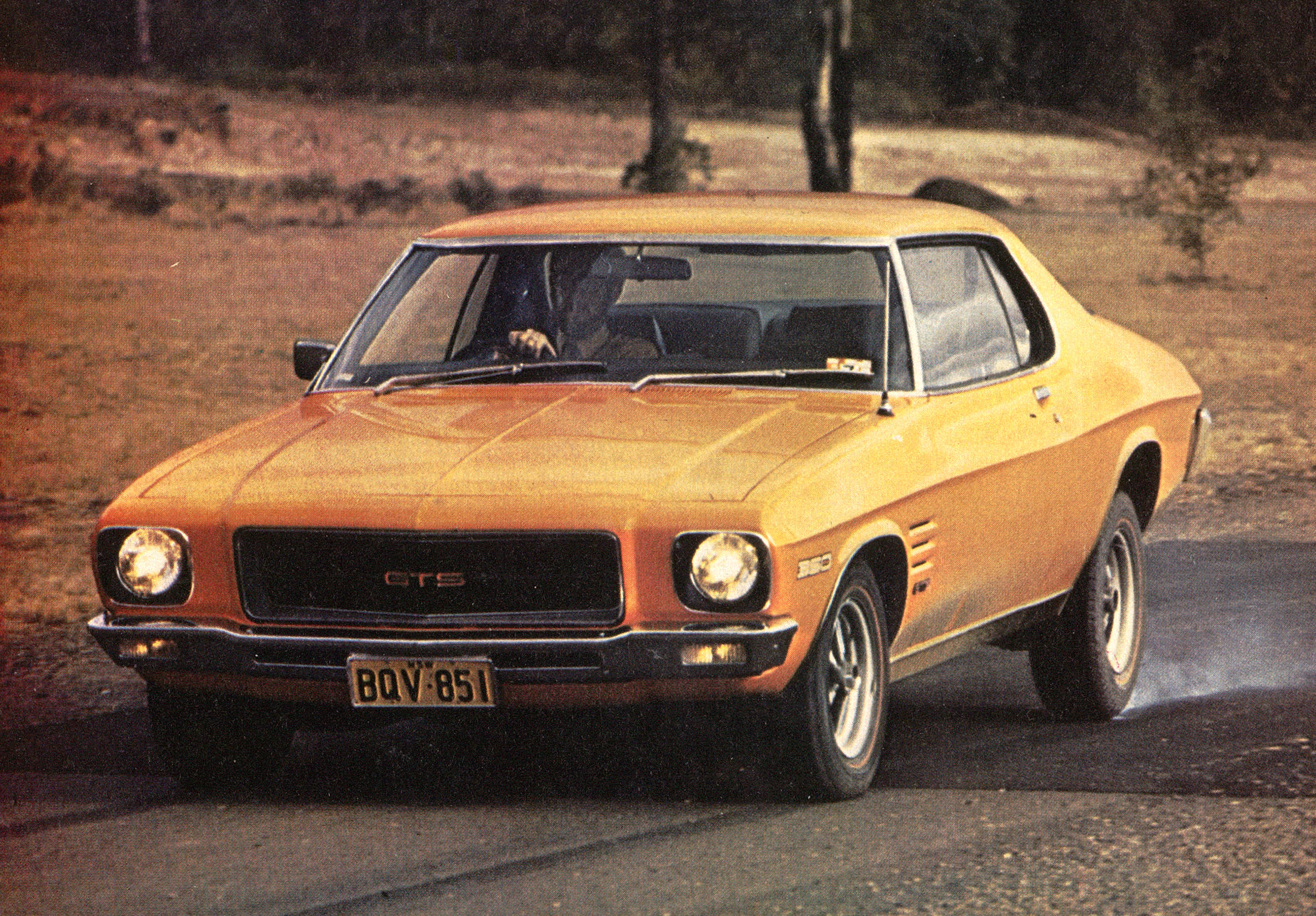
If the old Monaro fell down anywhere from a competition point of view it was in braking. The brakes always seemed just adequate for the car’s performance and tended to pull after a couple of quick stops. We expected great things of the new 11-inch vented discs. In normal driving they are more pleasant to use with a very progressive feel, but a single stop from 100mph had our test driver wondering if the car was going to pull up at all from 20mph. Fade is a very real problem with the present brake linings.
In crash stops, too, the rear axle tramps and if the brakes are applied in anything but a straight line the tail starts to follow the front around. Nose dive is also one of the penalty’s which must be paid for the softer suspension.
In theory, the sophisticated rear suspension should, with its upper and lower control arms and coil springs, be free from any tramp but we are dubious about its ability to absorb the punishment it is likely to get with the 350 manual. The problem won’t occur with any other engine/transmission combination, there just isn’t enough power or torque, but during a full-blooded acceleration run the right rear shock absorber, which is mounted behind the axle and spring assembly, fractured.
In all of GMH’s testing this never happened and the company’s engineers were disturbed at our findings, to say the least. It turned out our Monaro was the first 350 built and because of some mistake on the assembly line it was fitted with the wrong shock absorbers.
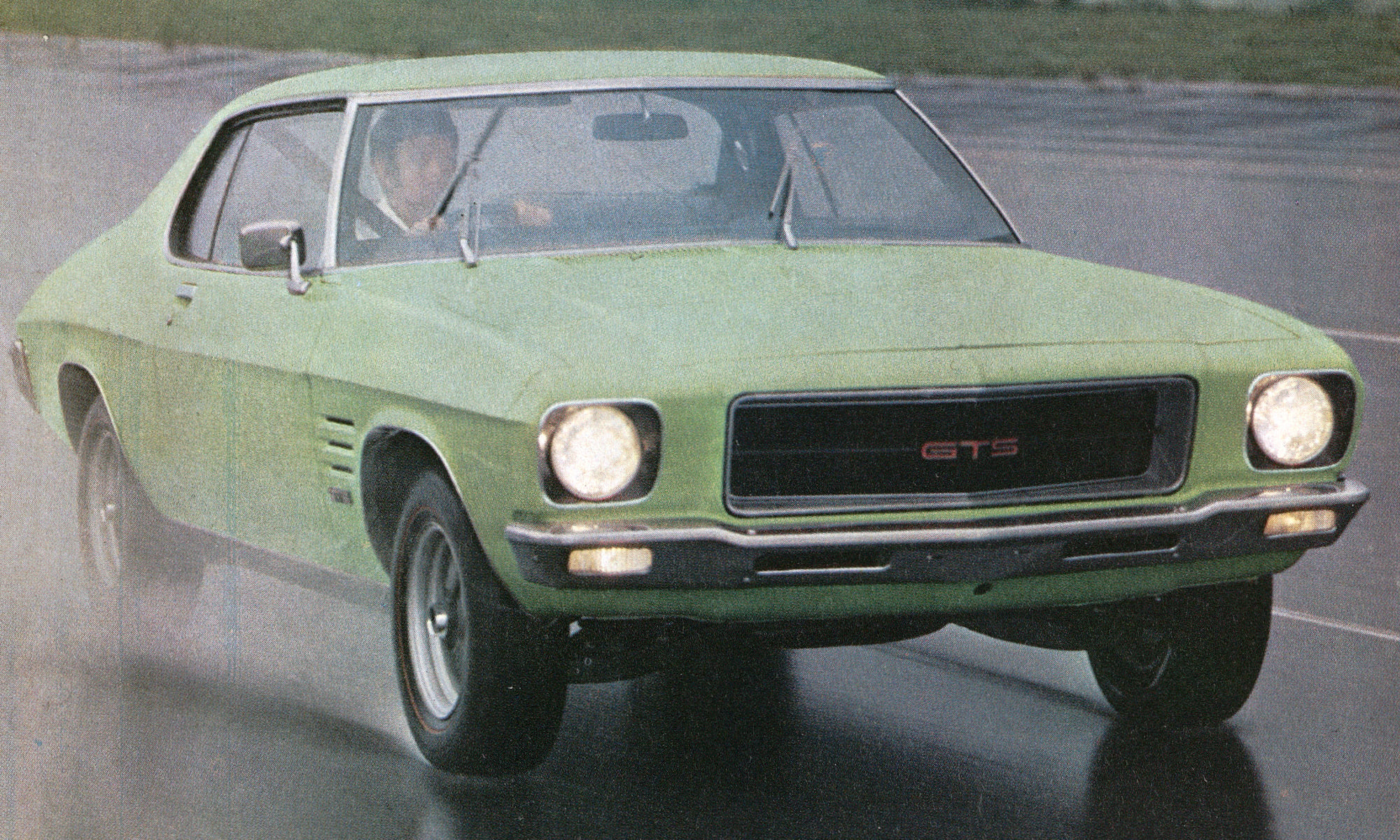
The tramp was caused because the Kingswood shockers fitted simply ran out of travel and began rebounding with the inevitable result. The Monaro 350 shockers have another 1.4 inches of travel and are slightly firmer and, according to GMH engineers, this cures all the tramp problems. Time prevented us from conducting any further tests on the car but we intend making exhaustive tests soon and will report back in a future issue.
Like everything else about the car the interior is all-new. It is exciting visually and dramatic enough to deserve the often used “jet-plane like” tag.
The instruments and controls are set into an engine-turned gun metal panel. Numerical calibrations have been deleted from the minor gauges but the 140mph speedometer and 7000rpm tacho are set-up for rapid read-out.
Indirect lighting, from the padding above, shows up the controls but it lacks the subtle brilliance of the old, behind the instruments lighting. The basic interior layout follows the pattern set by all the HQ models. The thin rim and sharp spokes of the old sports steering wheel have been replaced by an impressive three-spoke wheel with a thicker diameter, oval-shaped, rim which is much more pleasant to use. However, at the straight ahead two of the spokes hide the radio (with the standard transistor markings instead of the actual stations) and heater controls.
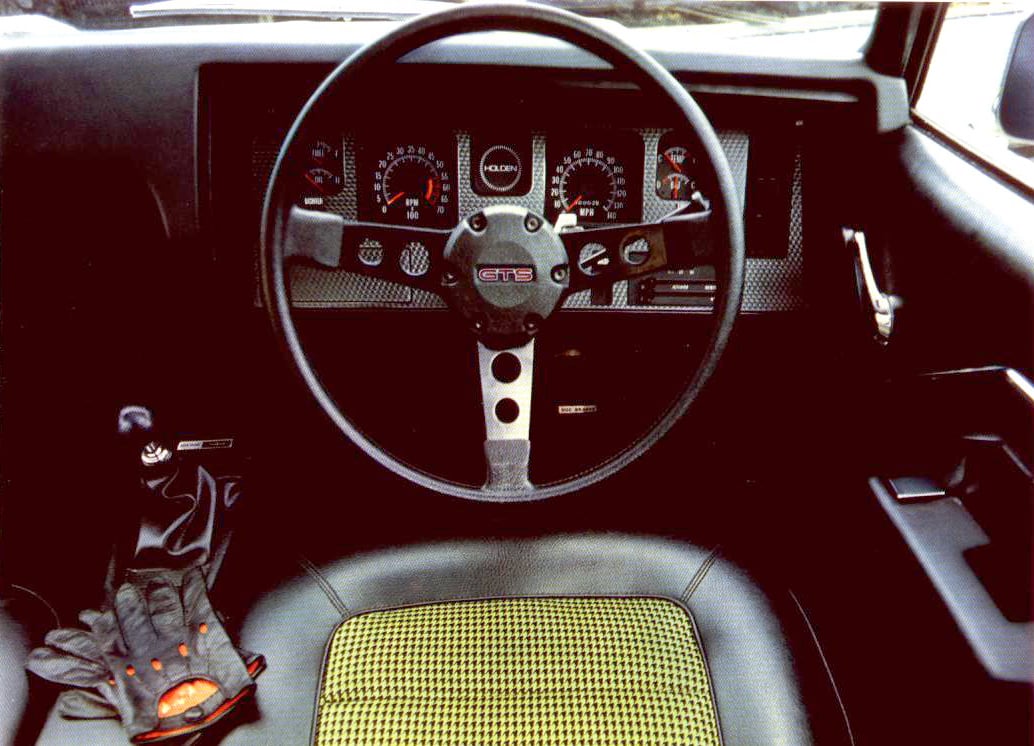
Sadly the driving position isn’t as good as before. The new bucket seats, which look just great, are mounted too low and too close to the steering wheel. Tall drivers can find a reasonable position by reclining the squab a little but shorter people will discover that to reach the pedals they will be too close to the wheel.
The cushion is too soft on its leading edge and lacking in padding at the base of the squab so there is a tendency to slide forward. The squab itself is much taller than before for added shoulder support but its adjustment is no longer infinite and there is a lack of real lateral support.
After spending some time in a Kingswood with reclining buckets we have no hesitation in saying they were more comfortable, and better placed in relation to the steering wheel and controls, than those on the 350.
The pedals are slightly offset to the right but the brake and accelerator are correctly located for heel and toe changes. Most drivers will find the gear lever requires a long reach, especially if they try for a long arm driving position. The console luggage bin, even further forward of the gearlever, is almost impossible to use when belted in.
The lower roofline and more sharply raked windscreen of the Monaros places the driver further away from the control panel so, where on the Kingswood all the controls are easy to reach, those on the Monaro require a deliberate reach. Strangely the Monaro windows require 5.75 turns while those in the Kingswood need only four turns. There is still no headlight flasher or trip meter – both are considered essential on the cheapest European GT cars but GMH has yet to come around to this idea.
Visibility, of course, is excellent through the wide windscreen and huge side windows and the two rear vision mirrors keep the driver informed about happenings rearward. There is very little wind noise except from around the external mirror and none of the whistle which comes from the old style quarter vents. Above 60mph the wipers, which cover virtually the entire screen, make a slight swishing noise which develops into a booming sound at 110 as the right hand blade approaches the windscreen pillar and begins to lift off. This would make an interesting study in aerodynamics.
The new flow-through ventilation system is excellent once the car is moving but it doesn’t work in conjunction with the fan. Stop-start traffic in hot weather requires a lowered window. The heater, too, does a fine job but the distribution set-up favours the driver’s left and passenger’s right leg.
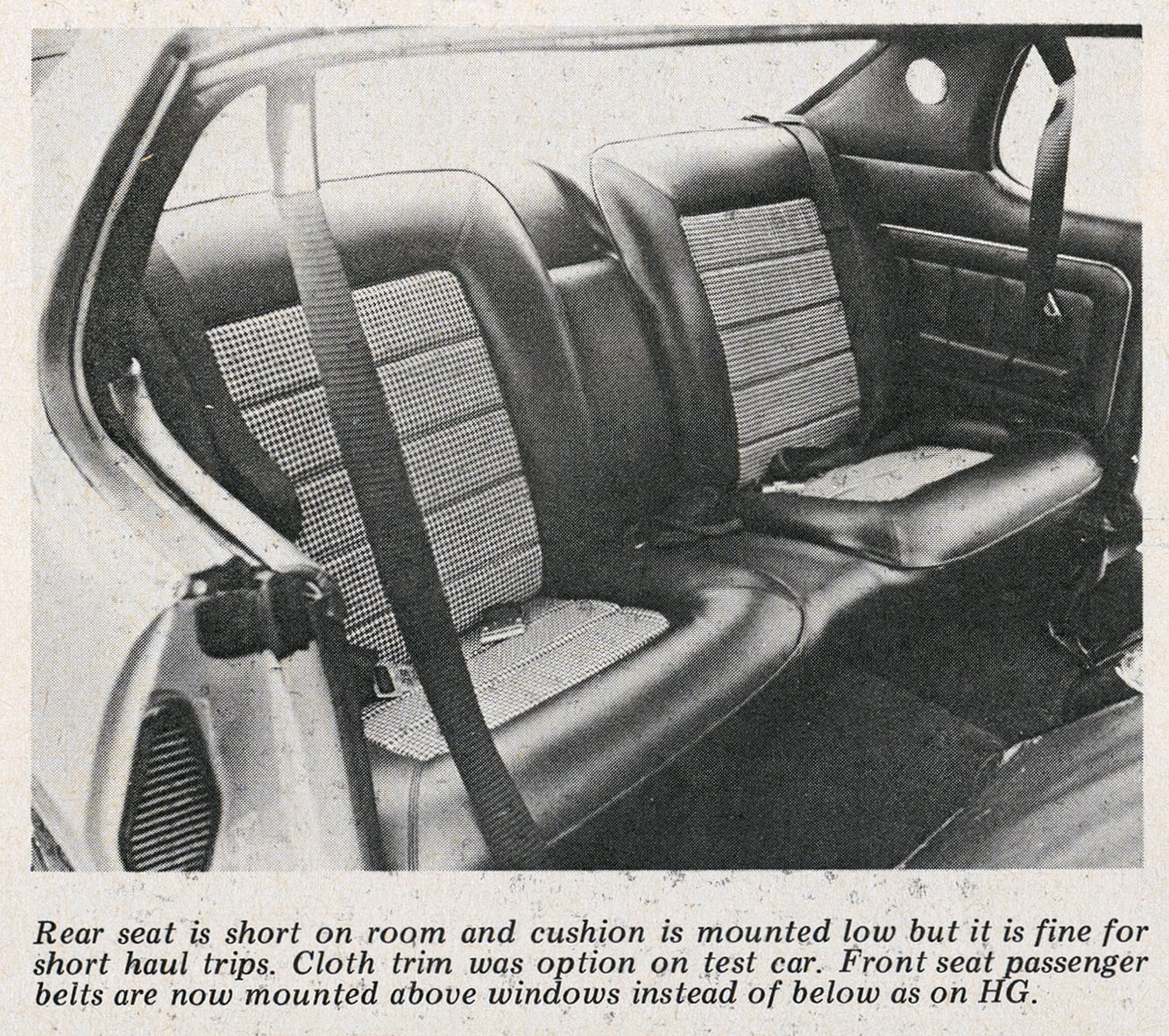
There is room enough in the back seat for two adults, but only on short journeys, unless they can come to some arrangement with those up front. The rear seat cushion is short and close to the floor for reasonable head room. The big rear window is tinted to prevent sunstroke.
Two old Monaro problems – propping doors and water leaks around the rubber window seals – again reared their ugly heads in our 350. The massive doors are so long and heavy you can see the hinges quiver under pressure when the doors are opened. But the car as a whole feels enormously strong and solid.
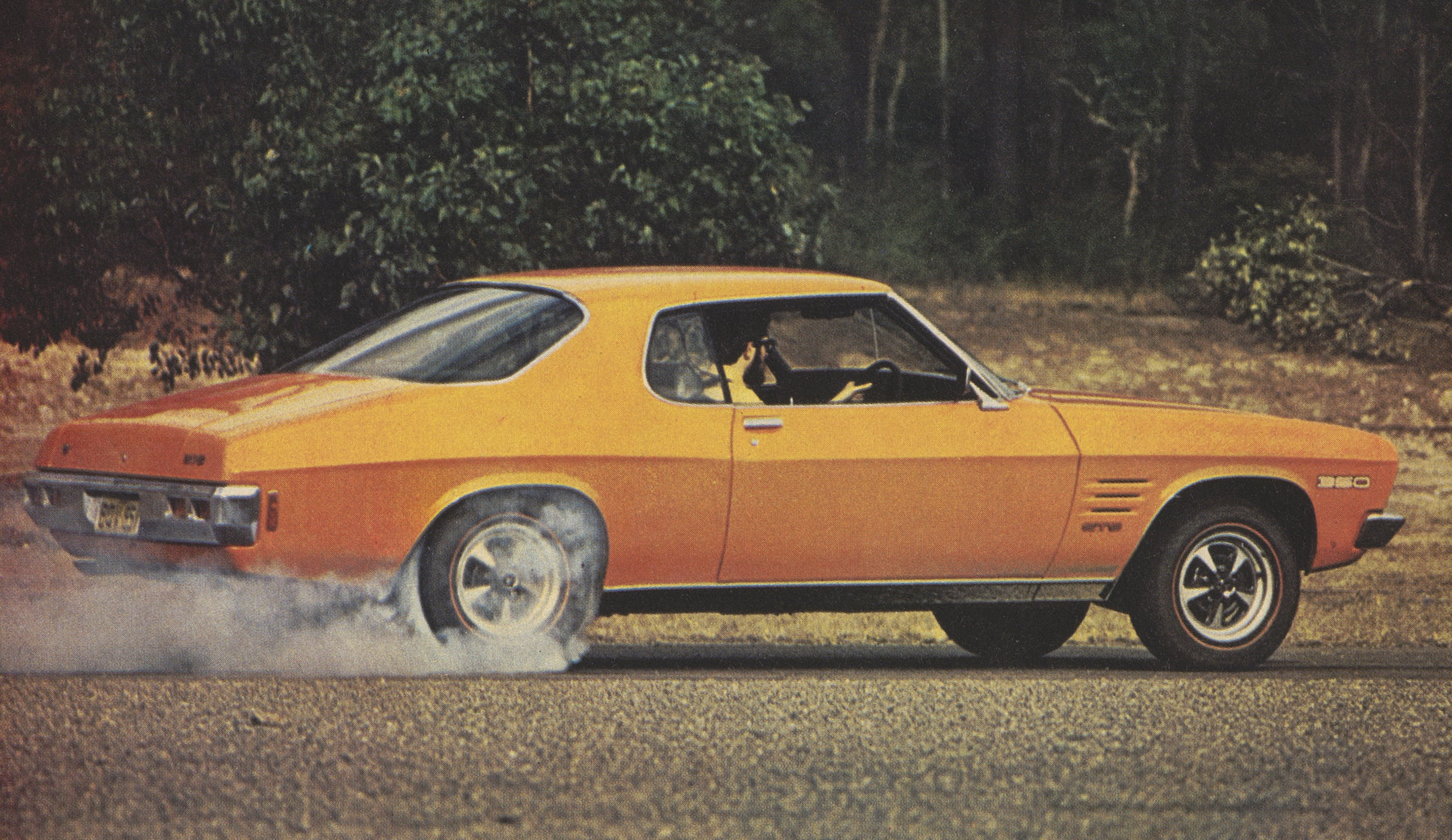
So the HQ Monaro makes it as an all-round high performance car with built-in pose value. As a comfortable, quiet, GT car it comes much closer to the very successful Falcon GT concept and as a town car it leaves the old Monaro way behind.
But the edge has gone off the handling and performance. Rumours of a 400 cube mill for a Bathurst special have been heard, but it is just a tale, nothing more.
With the suspension fiddled to give neutral steering, the old 350 engine and the current Kingswood seats the Monaro would have all the charm of the old car with the superb ride and beautiful body styling of the new.
In a market where sub-$25,000 new cars are rare, the Kia Picanto stands out as one of the last genuinely cheap cars you can still buy in Australia. It’s small, simple and city-friendly, which is at odds with how many new cars are larger, more advanced and more expensive than ever before.
The Picanto offers a refreshingly accessible entry point for anybody wanting low-cost motoring but still includes many modern features that we expect from a new car. In saying that, it’s also more expensive than it’s ever been before, so does the Picanto still deliver the value that made light hatchbacks so popular in the first place?
How much does the Picanto cost to buy?
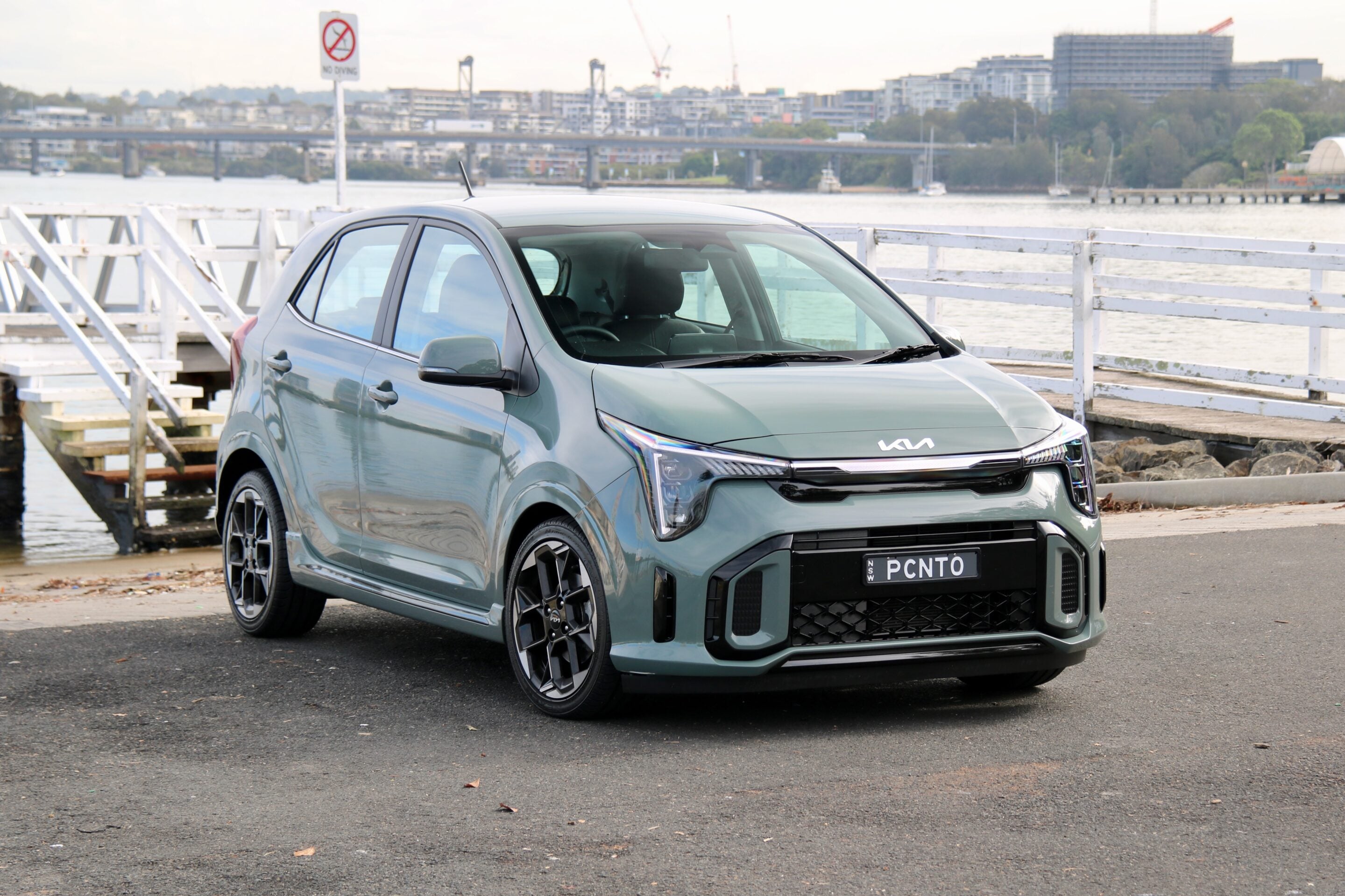
If you’ve got a budget of around $25,000 to spend on a new car, your choices are unfortunately slim, but all Picanto models fit under that price point. The entry-level Sport starts at $19,190 plus on-road costs for the manual and the now-automatic-only GT-Line sitting above the Sport priced from $22,590 +ORC.
2026 Kia Picanto pricing (excluding on-road costs):
| Sport manual | $19,190 |
|---|---|
| Sport automatic | $20,790 |
| GT-Line automatic | $22,590 |
Once on-road costs are included in the price, our GT-Line auto test car in cool ‘Adventurous Green’ paintwork retails for $25,800 driveaway in New South Wales.
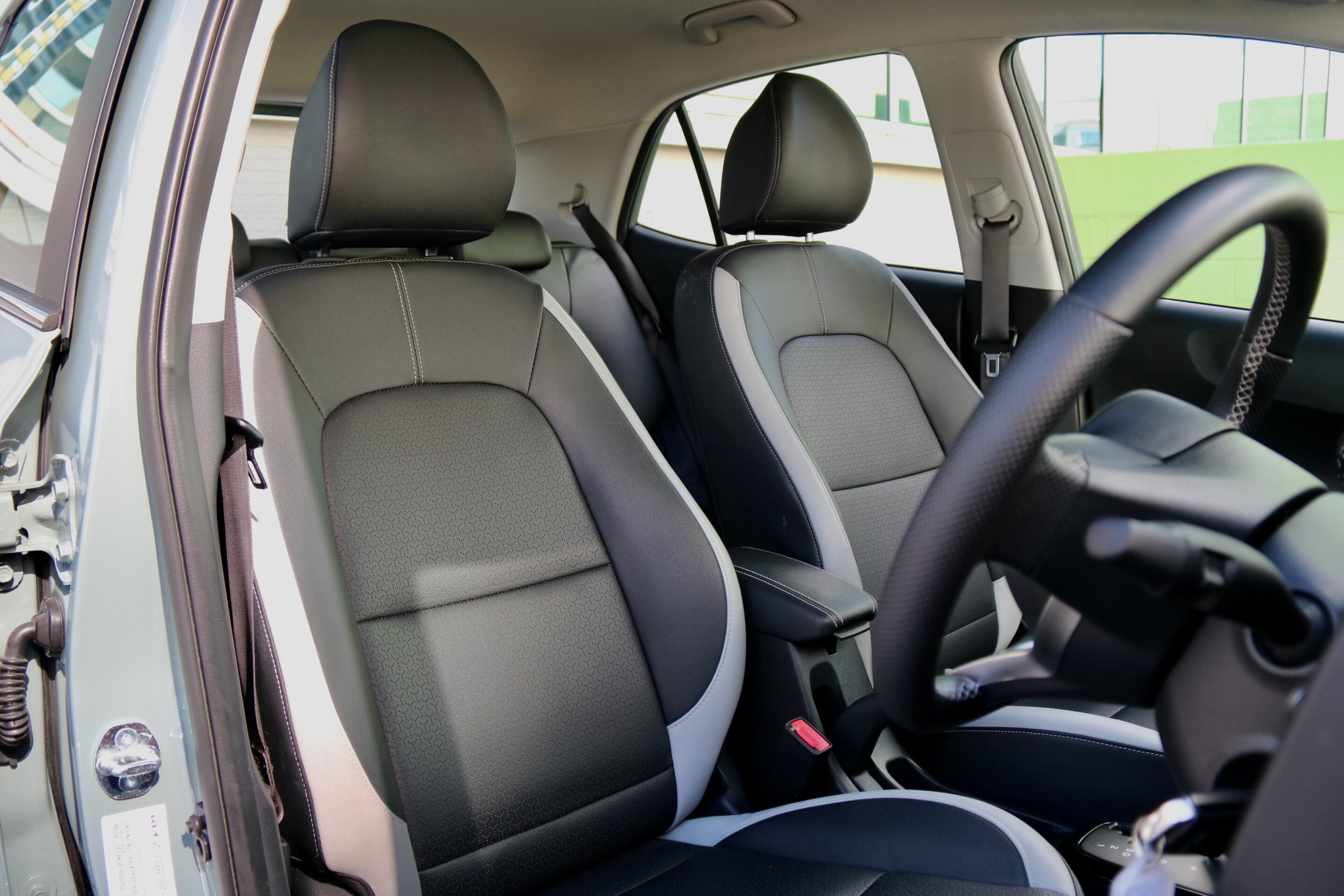
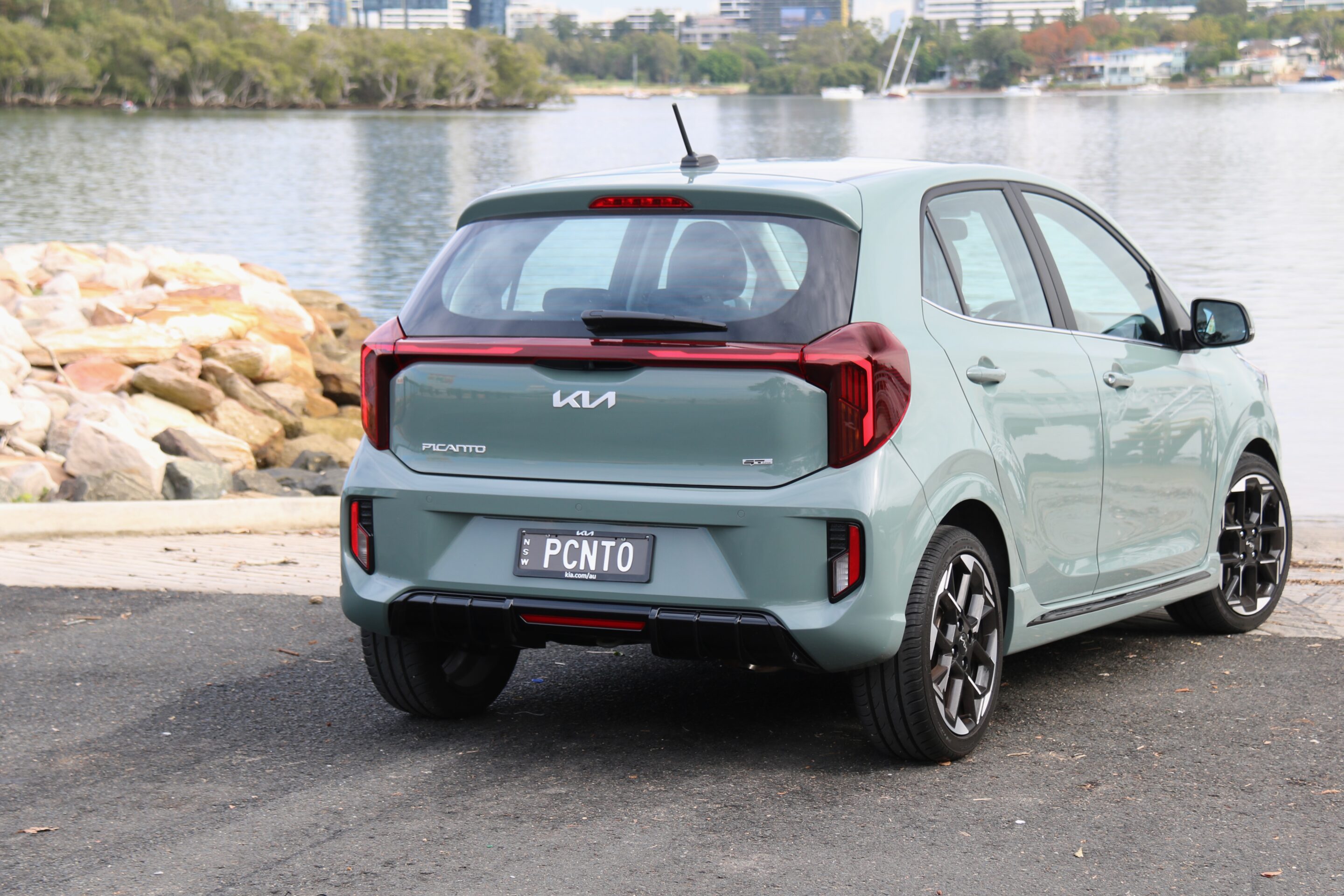
While stepping up to the GT-Line model adds cool features like the handsome 16-inch wheels, LED lighting and synthetic leather – ‘Premium’ in Kia jargon – upholstery, almost $26,000 driveaway for such a small car isn’t that cheap. Therefore, we think the entry-level Sport (around $23,500 driveaway for the auto) is better value for money as it shares most of the GT-Line’s equipment, including its lengthy standard safety feature list, but keeps pricing lower.
It’s well known that competitors to the Picanto are few and far between these days, but buyers still have options such as the MG 3, Mazda2, or if an EV makes sense to you, BYD Atto 1.
How fuel efficient is the Picanto?
Reasonably, though probably not as efficient as you might expect. Rated at 6.0L/100km on the combined cycle, a Yaris hybrid this is not, and that’s thanks to the old 1.2-litre naturally aspirated four-cylinder petrol engine under the bonnet. Making just 62kW of power and 122Nm of torque, the Picanto is not a firecracker off the line. In fact, while Kia doesn’t provide an official 0-100km/h time, we’d guesstimate it to be around 13-14 seconds.
It’s an adequate engine for around town driving, and the four-speed automatic is fine, though could be smarter in its shifting. It must be said that the former Picanto GT’s turbocharged 1.0-litre three-cylinder was punchier and more fuel efficient than this engine. We miss it dearly but it’s no longer offered in the Picanto globally. If that engine made a comeback, the Picanto would be quicker, more refined and more fuel efficient.
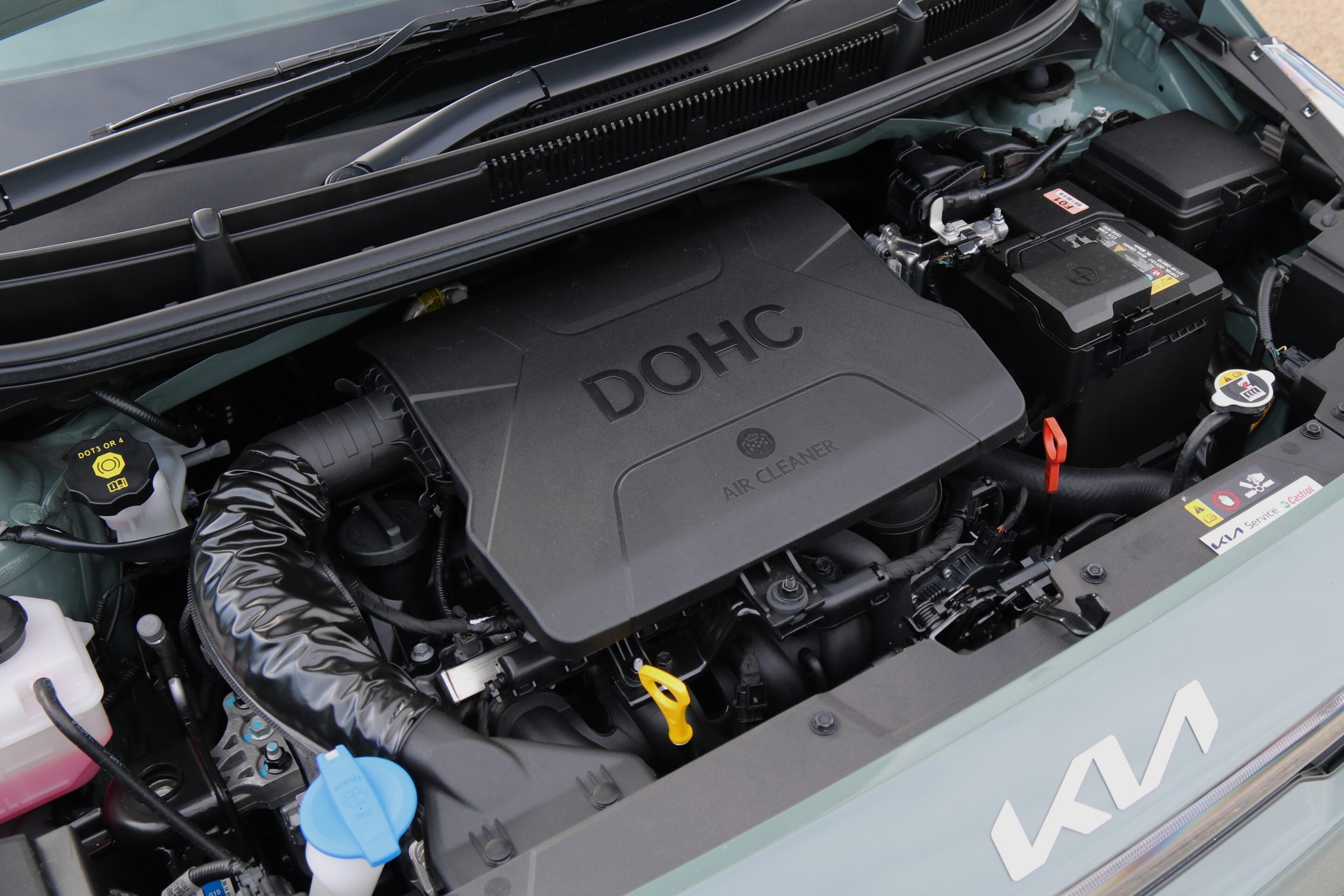
There is a superior five-speed manual available, though Kia has killed that in the GT-Line model for the next model year, so if you want features like LED headlights, you’ve got to get the auto. Frustrating for some.
For fuel consumption, the Picanto auto is rated at 6.0L/100km, and in driving skewed towards urban, we achieved a somewhat high 6.7L/100km. The Picanto’s larger Stonic small SUV sibling with the aforementioned 1.0-litre turbo three-pot making 88kW/172Nm outputs is not only more powerful, but it’s rated from just 5L/100km, so you can only imagine how efficient a Picanto with that drivetrain would be.
Is the Picanto fun to drive?
In a zippy, darty, tiny car sort of way, yep. It’s quite agile, and the steering offers a good amount of feel too, making it fun to drive. The visibility is excellent thanks to thin pillars, and its active safety systems are refined enough too, especially the helpful adaptive lane guidance. There’s no adaptive cruise control, however.
In our test car at least, the ride of the GT-Line is quite firm. We actually had to check the tyre pressures to see if they were set too high, but alas, they were set to manufacturer specifications. In our time with it, we felt every bump that graced the Picanto’s wheels, and bigger ones were certainly a bit terse. At higher speeds, the ride settles down nicely, though more noise insulation would be great.
How practical is the Picanto?
Look, you’re not buying a Kia Picanto for its practicality alone… a Volvo this is not. It’s a light hatchback after all, but it can just about carry four adults reasonably well as rear headroom is good for six-footers. Legroom is tight, but it’s more practical than you’d first think, while there’s also a map pocket and USB-C charging port covering amenities, though nowhere to hold a bottle.
The boot measures 255 litres with the rear seats up and 1010 litres with them folded, which is surprisingly reasonable for such a small car. The boot is deep, though that means that there’s a big lip to lift luggage over and also a big lip once the rear seats are folded. We wish that Kia Australia offered the dual-level boot floor featured overseas to fix both issues. The boot is also largely devoid of features, though unlike the BYD Atto 1, at least there’s a light so you can see in there in the dark.
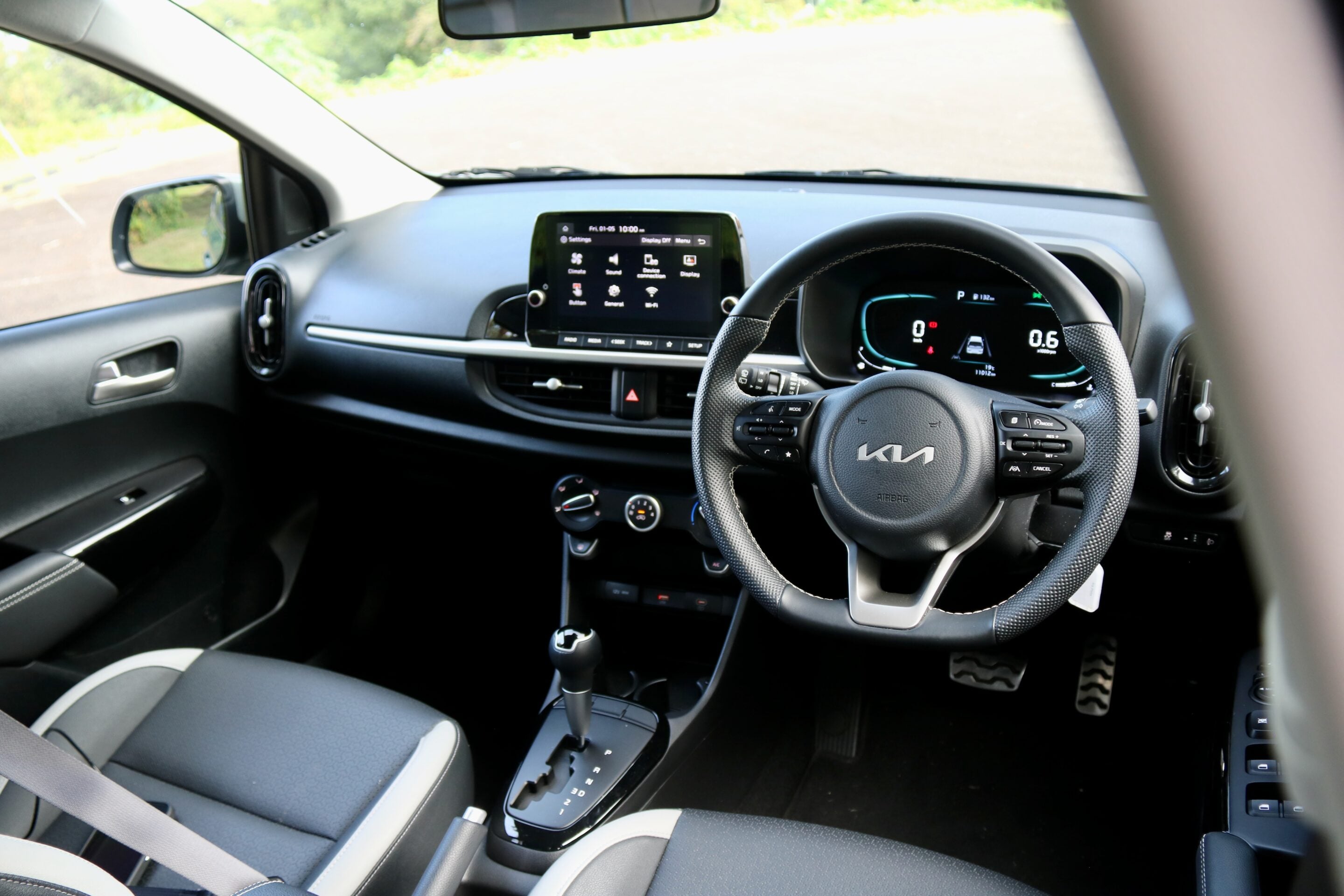
Moving to the front cabin, the Picanto offers a pleasing amount of tech and practicality for a car of its type. There’s a relatively modern 8.0-inch touchscreen in the centre, a 4.2-inch driver’s information display and plenty of places to store life’s trinkets, including covered storage in the central armrest. Both BYD and Mazda could learn from that last fact as both the Atto 1 and Mazda2 don’t feature any covered storage.
The 8.0-inch touchscreen is basic compared to newer Kia models, but at least it offers wireless Apple CarPlay and Android Auto smartphone mirroring. Screen quality is a bit grainy, but it’s quick and insanely easy to use. Sound quality from the six-speaker audio system is reasonable too.
An updated Picanto in South Korea recently launched with more recent software from the Stonic and a 10.25-inch digital driver’s display to make the cabin look more modern, so hopefully it launches locally soon. While we’re moaning, we also miss out on features like heated front seats, automatic climate control and a sunroof. Perhaps a GT-Line+ model, Kia?
Practicality features include configurable cup holders and a tray under the dashboard, reasonable door bins, a few trays in the centre and a small box underneath the sliding central armrest. A huge car the Picanto is not, but its in-car storage solutions are thoughtful.
How much does the Picanto cost to service?
A surprisingly high amount, actually. Five years/75,000km of servicing the Picanto costs $2079, or an average of $416 per year.
Helping that cost is the Picanto’s standard seven-year/unlimited km warranty. There’s also 12 months of roadside assistance, which is extended by a further 12 months with each dealer service up to eight years in total.
Picanto GT-Line standard features:
- 16-inch alloy wheels with a space-saver spare wheel
- Dusk-sensing automatic LED exterior lighting
- LED daytime running lights
- Intermittent manual wipers
- Heated and auto-folding mirrors
- Remote keyless entry
- Synthetic leather steering wheel and gear knob
- Synthetic leather seat upholstery
- Height-adjustable driver’s seat
- Manual air-conditioning
- Electric windows with remote open/close for the driver’s window
- 4.2-inch driver’s display
- 8.0-inch touchscreen
- Wireless and wired Apple CarPlay and Android Auto
- AM/FM radio
- Bluetooth calling and audio streaming
- Six-speaker sound system
- 3x USB ports + front 12-volt socket
- Cruise control with a manual speed limiter
- 6x airbags
- Autonomous emergency braking
- Lane keeping assistance with adaptive lane guidance
- Blind-spot monitoring with rear cross-traffic alert
- Safe exit alert
- Rear occupant alert
- Driver attention alert with lead vehicle departure alert
- Auto high beam
- Rear parking sensors
- Reversing camera
- Anti-theft alarm
Should I buy a Kia Picanto GT-Line?
There’s definite appeal to the Kia Picanto GT-Line. From its sporty styling to its darty dynamics, it’s got a cheeky character that so many other cars are missing. It’s also quite simple to operate, which is refreshing in today’s market, it’s reasonably practical and it’s also covered by a long warranty.
Counting against it is the firm ride quality, old engine tech that makes it somewhat thirsty and slow and that its pricing has crept up to the point where the GT-Line auto no longer looks like the bargain it once was. But overall, we still quite like the Picanto and wish there were more cars like it in Australia.
Kia Picanto GT-Line specifications:
| Price | $22,590 plus on-road costs ($25,190 driveaway in NSW at the time of writing) |
|---|---|
| Engine | 1248cc naturally aspirated four-cylinder petrol |
| Power | 62kW (@ 6000rpm) |
| Torque | 122Nm (@ 4000rpm) |
| Transmission | Four-speed automatic, front-wheel drive |
| Claimed fuel consumption | 6.0L/100km |
| Claimed CO2 emissions | 140g/km |
| Fuel type/tank size | 91 RON regular unleaded, 35 litres |
| Dimensions (l/w/h/wb) | 3595/1595/1485/2400mm |
| Boot capacity | 255 litres (rear seats up), 1010 litres (rear seats folded) |
| Tare mass | 993kg |
| Warranty | Seven-year/unlimited km |
| Five-year service cost | $2079 ($416 per year) |
| On sale | Now |
