
If you need to transport seven people in relative luxury at a rather swift rate there are actually a few options now, but AMG’s latest entrant into the ring is the new Mercedes-AMG GLS63.
The headline for this new version of Affalterbach’s opulent Toorak tractor (also acceptable: Mosman minivan; Teneriffe troopcarrier; Portsea people mover; etc) is that it shares the mild hybrid 4.0-litre twin-turbo V8 with the GLE63 S, also revealed today.
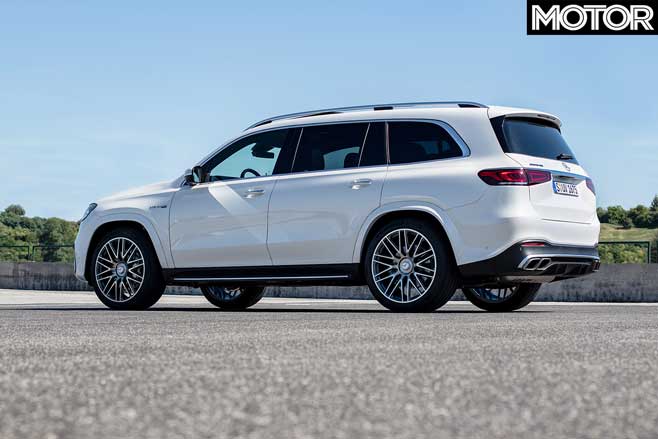
This grants the GLS63 the same 450kW and 850Nm as its smaller sibling, plus the extra 16kW from the EQ Boost hybrid unit, though the luxo-barge is almost half a second slower to 100km/h at 4.2 seconds. In Sport+, the EQ Boost system also increases engine idle speed to allow faster acceleration from a standstill.
The rest of the drivetrain is also essentially the same, a 9-speed TCT dual-clutch and AMG-tuned 4Matic+ all-wheel drive with variable torque distribution. Top speed is 250km/h, though with AMG’s driver package that increases to 280km/h.
Underneath, variable air suspension and active roll stabilisation work in tandem to keep the ride suited to whichever mode the driver has selected. In Comfort, the ride height remains normal (though lowers by 10mm above 120km/h) and the stabilisation system keeps imperfections in the road surface from translating through into the cabin.
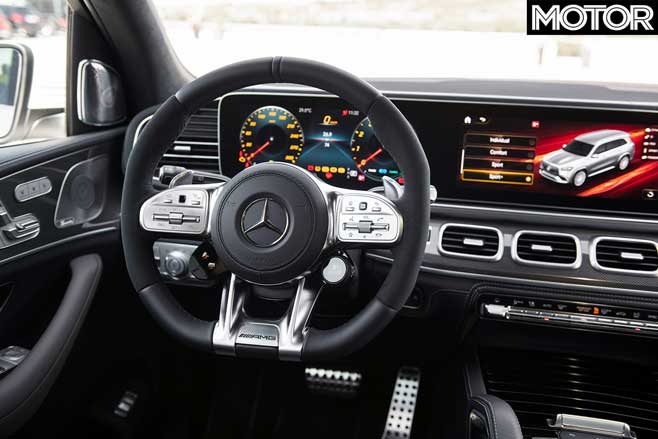
In Sport and Sport+, however, the GLS63’s ride height is lowered by 10mm and the suspension stiffens, creating a better setup for “agility, neutral cornering behaviour and optimum traction.”
In Australia, the GLS63 will likely land around, albeit probably north of, the $221K its predecessor sold for. Mercedes-Benz Australia has yet to confirm local pricing and availability.
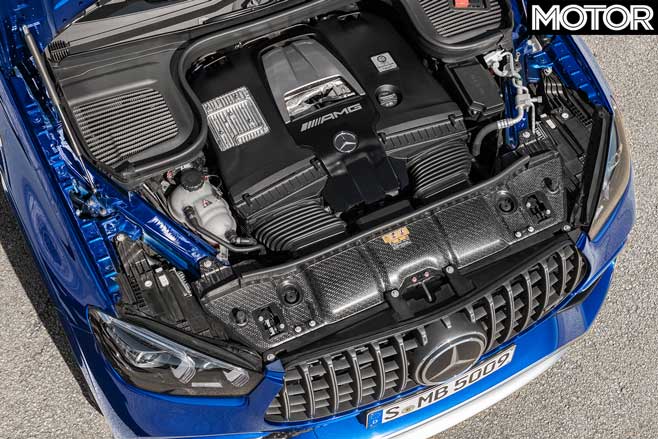
AMG has, for the first time, introduced mild hybrid to its 4.0-litre V8 with the introduction of the new Mercedes-AMG GLE63 and GLE63 S.
Incorporating Merc’s EQ Boost starter-alternator, the twin-turbo V8 now produces 420kW in GLE63 guise, or 450kW as the 63 S, with an additional 16kW from the EQ Boost unit. On top of that, AMG says the GLE has access to a temporary 250Nm torque boost from the unit to “enable more spontaneous moving-off characteristics.”
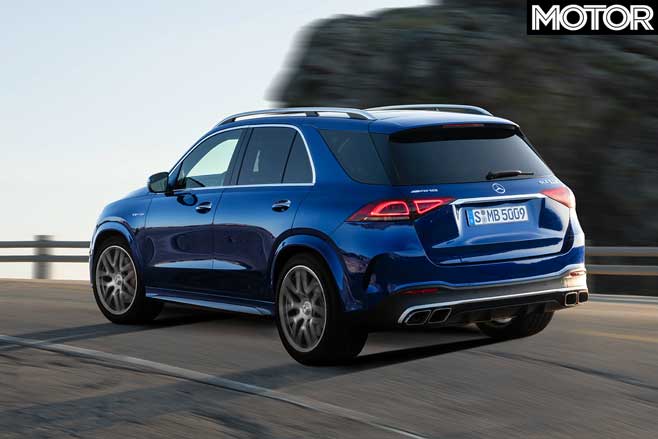
For the GLE63 S, this means a maximum output of 466kW and 850Nm with the EQ Boost active. The 0-100km/h sprint can be dispatched in just 3.8 seconds, or 4.0 flat in the standard GLE63. This is helped along by AMG’s 9-speed TCT dual-clutch gearbox and its 4Matic+ all-wheel drive system.
Though AMG touts the GLE63’s “first-class off-road characteristics,” it’s likely most will remain on the tarmac where its adaptive air suspension will be soaking up bumps in Comfort or keeping the GLE as planted as approximately 2.3 tonnes of SUV can be when in Sport or Sport+ modes.
Active ride control keeps the big SUV stable by compensating for body roll and actively resisting the forces set upon the suspension. AMG says this also makes straight-line driving more comfortable “because stimuli by one-sided road bumps are balanced out.”
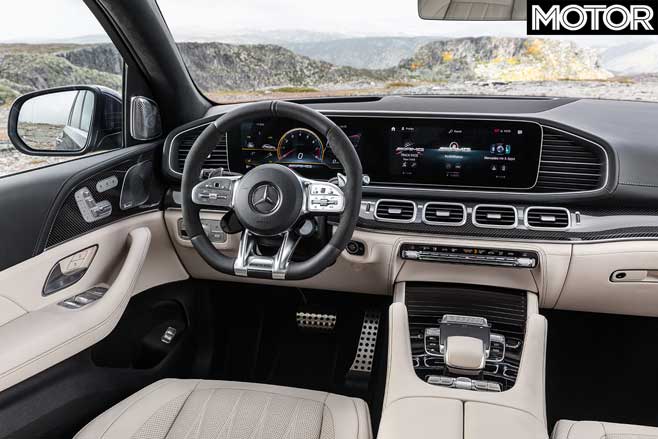
Stopping power for the GLE63 comes in the form of 6-piston fixed callipers on 400mm discs at the front, and single-piston floating callipers on 370mm discs at the rear.
Mercedes-AMG chair of the board Tobias Moers says the mild hybrid being introduced to the V8 is the next step in AMG’s performance ‘journey’.
“With our new GLE Performance models we are transforming a 20-year tradition into the future,” Moers says, referencing the two decades since the ML55.
“For the first time we are electrifying our well-proven 4.0-litre V8 biturbo engine with an EQ Boost starter-alternator and a 48-volt on-board electrical system.
“As such we are embarking on another new chapter of our drive technology, which we are also successively extending further to other model series as we move towards electrification and hybridisation.”
Australian pricing and expected arrival for the new GLE63 S (the ‘base’ GLE63 might not even show up) is yet to be confirmed.
Completing the box set of insanely batty Audi Sport cars coming down the pipe in the next two years is the Audi RS Q8, considered by the Audi Sport team to be the last word in performance SUVs.
It takes the stylised Q8 coupe-slash-SUV to new heights of frankly ridiculous performance, but without spoiling the abilities of the standard car.
“It’s our interpretation of a high-speed SUV coupe,” says Michael Binder, the product manager for the RS Q8. “It opens a new dimension of sporty perception within our RS family. It’s our most expressive, highest performing Q we’ve ever done at Audi.”
Big claims… and there were a few raised eyebrows in the halls of Ingolstadt when the request came down the pipe.
“We are talking about one of the biggest and heaviest cars we make. How could we make an RS model from a 2.3-tonne SUV?” says Michael Barma, the technical project manager.
“In general the Q8 is developed as a luxury SUV, so what we tried to do was increase its overall range to incorporate more sportiness. It’s possible to have the same off-road performance like the Q8, have the same daily driver advantage, and have it that it will still perform on track.”
The BMW X6 M and Mercedes-AMG GLE 63 coupe are considered its main competitors, but the Lamborghini Urus – which shares much of the RS Q8’s powertrain – and the Porsche Cayenne Turbo is not.
“Price-wise, the Urus is up here, and we are somewhere down here,” said Binder. “It’s a different brand; it’s more dynamic, more sporty, more extreme, so we tried to stay a little bit below this car. Same story [with the Porsche Cayenne Turbo]; we try not to compete with internal brands, of course. This is why we focus on BMW and Mercedes. [Our bosses] give us an area to play in, and this is the way we go with our RS models.”
The visuals for the honking great SUV follow the same ‘less is more’ and ‘make it blacker’ philosophy used for the other new and updated additions to the RS family, including the RS Q3 Sportback and the menacing RS7.
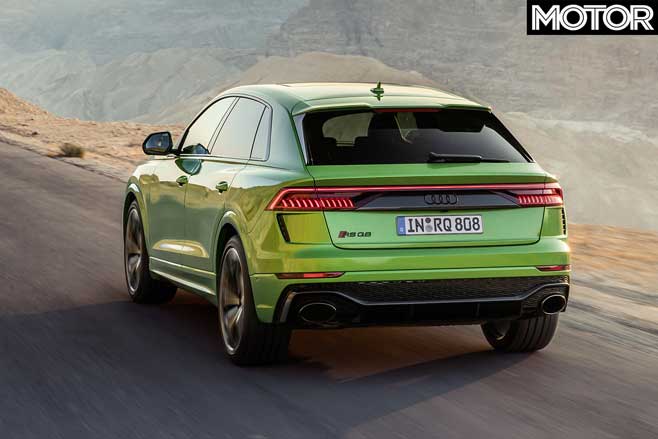
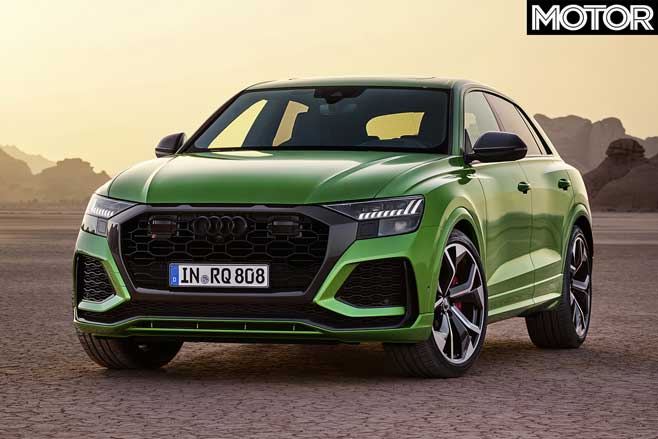
A massive blacked-out snout, reprofiled over-fenders and a new deeper, wider rear roof spoiler are just some of the elements that give the RS Q8 a whole new level of bad-ass.
Wheels are a simply nutty 23 inches in diameter and 10.5 inches wide, with 295/35 tyres stretched over them. Arch covers for the fronts are 10mm wider per side at the front and 5mm wider at the rear. The rear spoiler is bespoke to the RS Q8, and is longer and wider.
The 4.0-litre V8 turbocharged engine that graces the RS6 and RS7 is shovelled under the bonnet of the humungous SUV, and produces the same 441kW and 800Nm of torque thanks to its hot-v turbos, its eight pistons and its thoroughly bad attitude.
It pushes this behemoth from 0 to 100km/h in just 3.8 seconds. “It’s something we’re very proud of,” grins Barma. “It’s quite cool.” Top speed is the same as the RS6 and RS7 at 305km/h when combined with the brand’s dynamic package.
It can send 70 percent of that prodigious poke to the front end or up to 85 percent to the fun end, as well.
Chassis-wise, the RS Q8 rides on air suspension as standard, in order to keep elements like adjustable ride height – it can drop by up to 40mm when required, or can raise up to provide 200mm of ground clearance – and it also adds electrically activated anti-roll bars that are designed to counter body-roll during hard cornering.
These work via a small electric motor powered by the RS Q8’s onboard 48-volt electrical system, which is mounted in the middle of the two-piece anti-roll bar. When driving in a straight line, the bar is decoupled, which improves ride quality.
When you’re up on the wheel, though, the bars twist in opposite directions to resist roll. It’s clever enough, too, that it can even recuperate electrical energy and feed it into the car’s small onboard battery.
It’s also got all-wheel steering, which tweaks the rears up to five degrees in oppo to the fronts for slow-speed work, and up to 1.5 degrees in the same direction for high-speed stability.
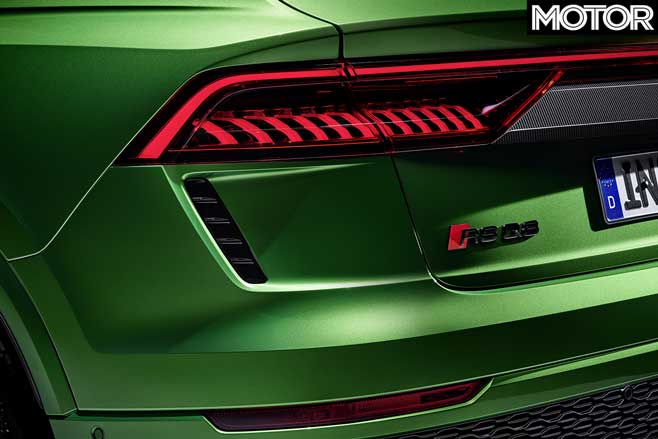
The brakes are monsters, too, with ten-piston front calipers pairing with 440mm carbon-composite front discs (available as an option), with 370mm rears.
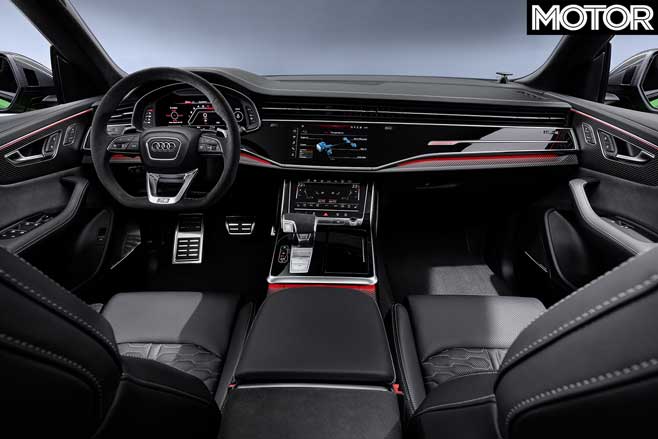
Inside, the RS Q8 is futuristic and impossibly stylish, with a large integrated multimedia screen that fades into invisibility when turned off. Top-quality Nappa/Alcantara-clad seats are offset by contrast stitching, extensive use of alloy and brushed metals and LED signature lighting throughout.
And it goes without saying that every driver aid available to Audi finds its way aboard the RS Q8, with more than 30 separate systems combined to keep occupants safe at otherworldy speeds.
Pricing? No indication yet, but figure on it clearing the $200,000 barrier when it touches down here in the third quarter of 2020.
Here it is, the Mini John Cooper Works GP, aka ‘the fastest Mini ever approved for road use.’
With its 225kW turbocharged four-cylinder engine, it’s as powerful as BMW’s new 1 Series-topping M135i, putting it 55kW clear of the next-fastest Mini hatch, the Mini JCW.
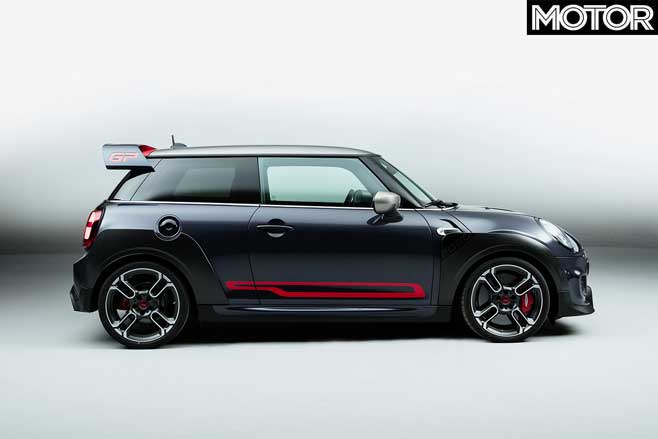
Mini claims a 5.2 second sprint to 100km/h, helped along by 450Nm of torque and a mechanical differential between the front wheels. An 8-speed Steptronic gearbox helps keep the engine in the right power band, with peak power between 5000 and 6250rpm, and maximum torque occupying the lower half of the rev range between 1750 and 4500rpm.
The engine’s oil supply and cooling is specific to the GP, with an increased-volume sump to ensure there’s always oil available to the engine.
Also model-specific is the exhaust system, which mini says is designed to produce an “emotionally powerful sound.” Low back-pressure in the system is said to create a tone which was “inspired by motor racing,” while a particulate filter within the exhaust means the GP meets the necessary European emissions standards.
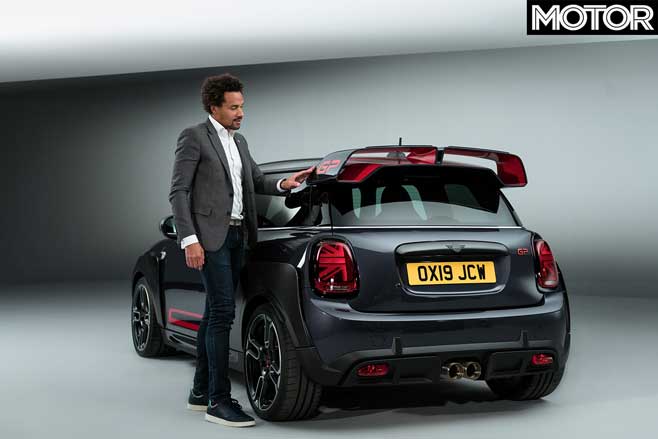
In fact, so much of the John Cooper Works GP is bespoke, the phrase ‘model-specific’ appears 24 times in the press pack released by Mini.
Thanks to Nürburgring testing, the GP also sports a racing-inspired suspension setup that creates “a whole new dimension of the characteristic go-kart feeling.”
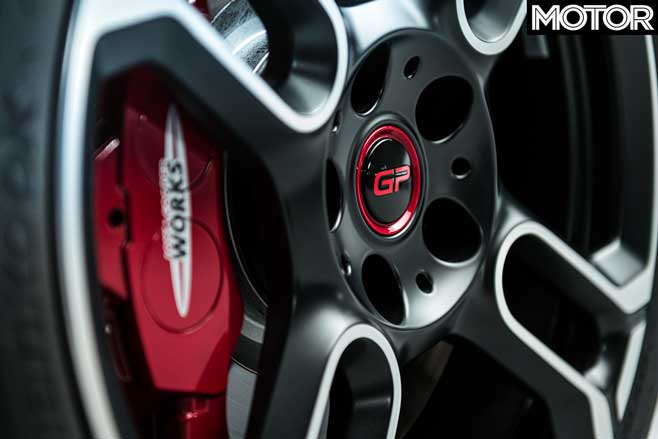
That testing also showed that the John Cooper Works GP is capable of a sub-8 minute lap around the Green Hell, a massive improvement over the last GP’s 8 minutes and 23 seconds.
Here in Australia it’ll be available for $63,900 excluding on-roads with Mini Australia stating most of its ‘small number’ of allocated cars have been spoken for with pre-orders. 3000 units of the GP are to be available worldwide.
It’s been a while since we’ve been able to drive an officially-licensed Toyota road car in a game other than Gran Turismo Sport or Project Cars 2, but the Big T is finally set to make a push back into the world of mainstream gaming.
Announced earlier today, the fourth-generation Toyota Supra will be added into the vehicle lineup of Forza Horizon 4 in an update scheduled for December 12. That means all of you long-suffering Supra fiends will be able to spend the bulk of your Christmas break hooning around a virtual England at the helm of one of Toyota’s most iconic sports cars.
Why is this big news? Well, Toyota has been largely absent from car games in recent years, and a rumoured deal with Polyphony Digital, creator of the Playstation-exclusive Gran Turismo Sport, is the likely reason why.
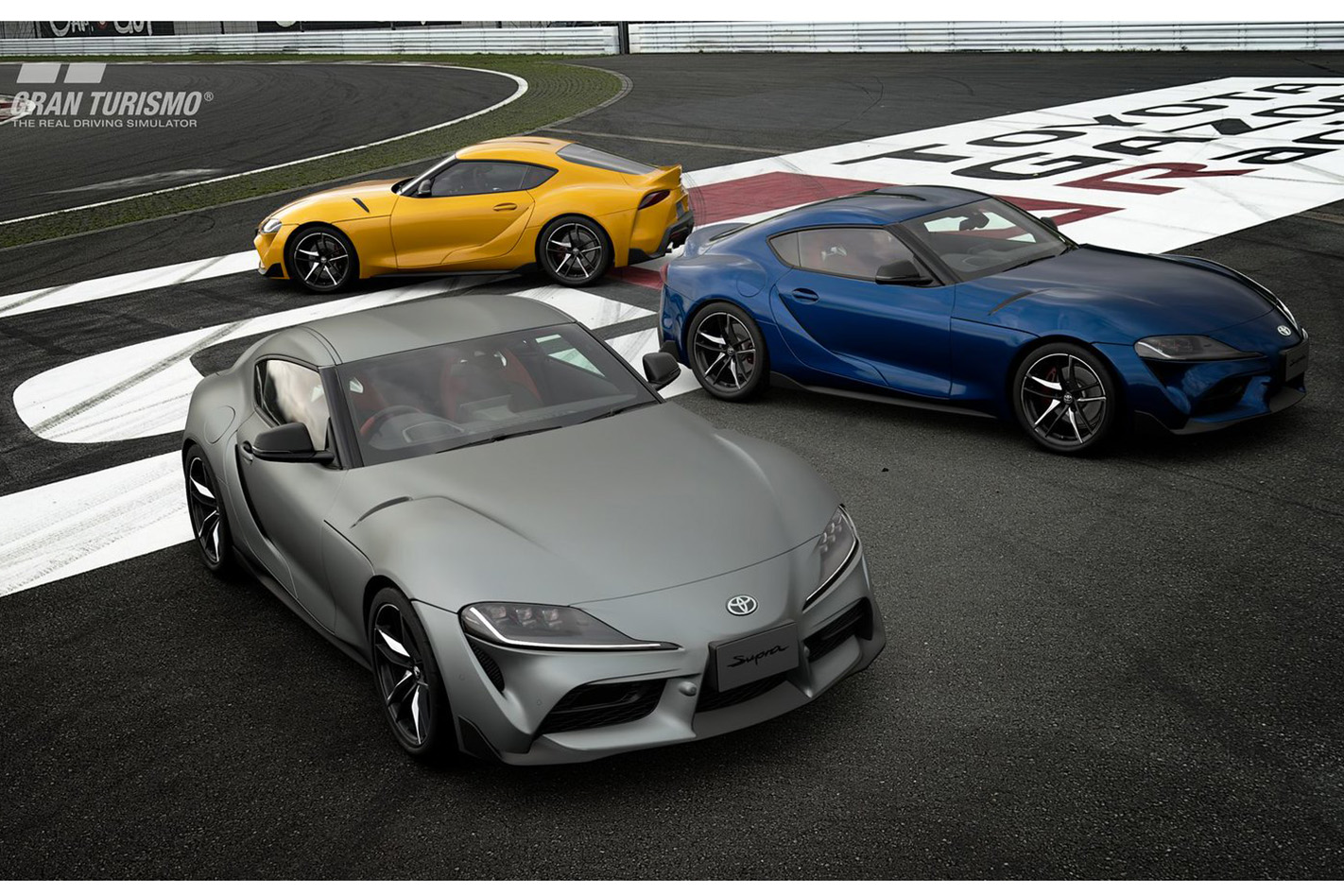
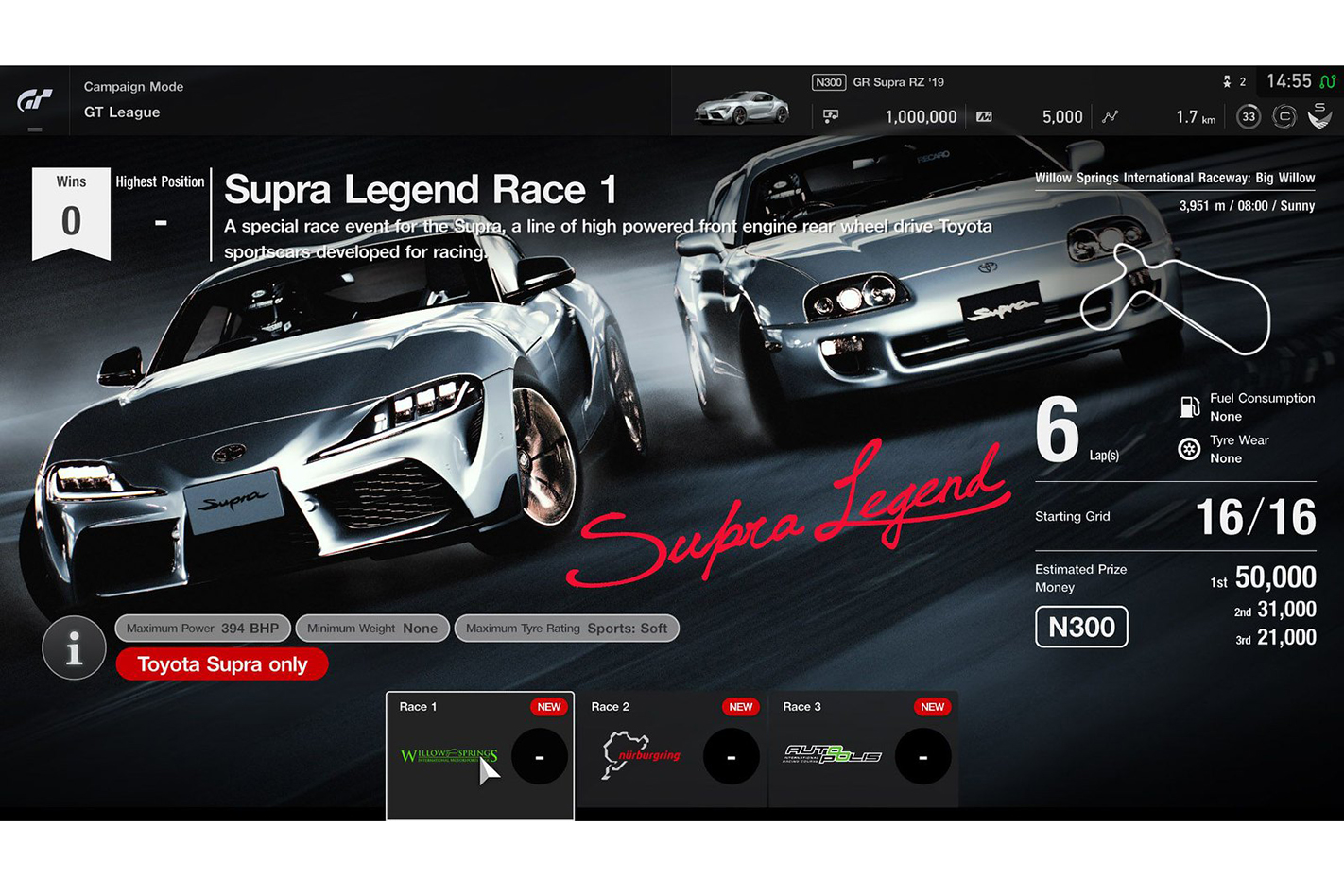
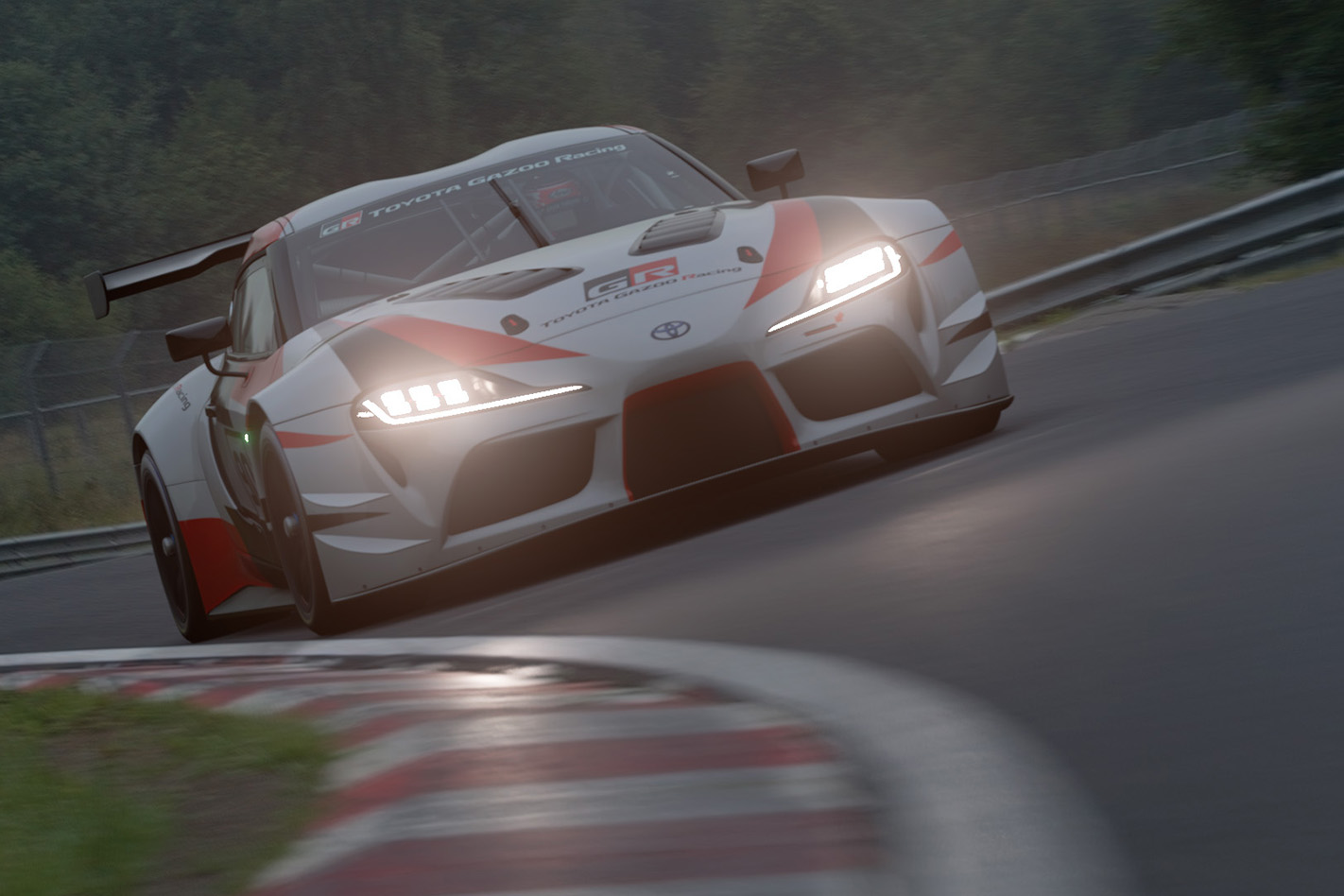
In GT Sport players are able to enjoy a bevy of notable Toyota vehicles, including the classic Toyota Sports 800 and 2000GT, the drift icon AE86 Sprinter Trueno, the Toyota 86 in various forms, the Mk4 Supra and the present-day GR Supra – not to mention a bevy of Toyota racecars.
Why did Toyota go gun-shy on gaming? After all, earlier titles like Need For Speed Underground 2 allowed you to drive and modify the Supra, Celica and Sprinter. A recent tweet by Toyota UK stated that the company didn’t condone games that “promote illegal street racing” (a response to a question about why the new Supra was absent from Need For Speed: Heat), but that tweet was retracted soon after.
The imminent addition of the Supra to Forza Horizon 4, a game entirely based around street racing, suggests that wasn’t the reason anyway, and the presence of the AE86 Sprinter in upcoming drift title Drift 19 also throws water on the “Gran Turismo exclusive” theory.
Does this mean we’ll soon see more Toyotas on non-Gran Turismo titles? Here’s hoping, but the question is which Toyota should they add next? Let us know.
Sign up here to get the free weekly WhichCar eNewsletter
Lexus has revealed the production version of the Lexus LC500 Convertible it recently teased as a concept at the 2019 Detroit auto show.
Limited to just 300 units from launch, the drop-top LC500 is only the third convertible in the history of the Lexus brand.
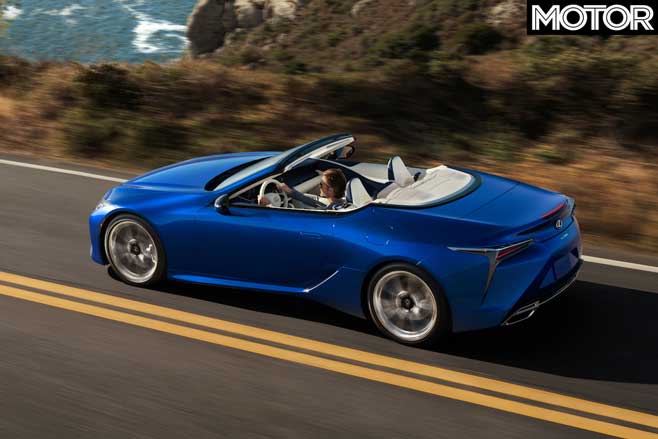
Finished in Lexus’ very special colour called Morphic Blue, which the brand claims took 15 years to perfect, the convertible will also be available here in Australia with arrivals expected in the second half of 2020, though pricing and availability hasn’t yet been confirmed by Lexus Australia.
Mechanically, the LC500 convertible retains the specification of the coupe, with a 5.0-litre V8 producing 351kW and 540Nm. While the engine sounds aggressive enough on its own, Lexus says the convertible features a generator which produces “sensual engine intake sound through the dash.”
Of course, the primary difference in the design revolves around changes made to accommodate the roof, which can retract in 15 seconds up to 50km/h.
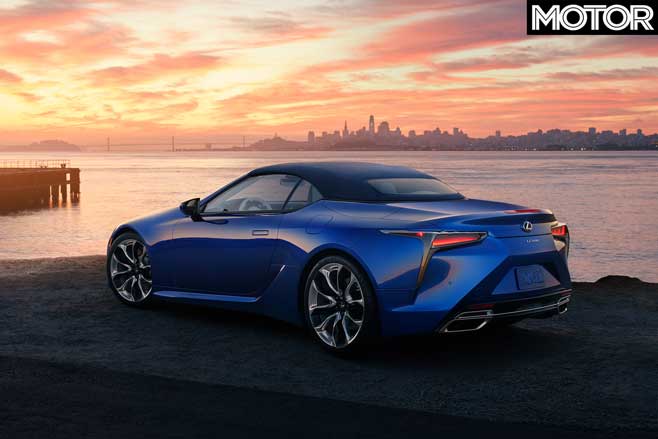
The soft-top was designed to blend with the shape of the bodywork, keeping sleek lines without the roof’s support frame being visible through the fabric.
The LC500’s body structure was also altered for rigidity, with components like the rocker panel and underbody given additional bracing. The front ‘roof’ frame and rear suspension tower brace were also lightened through use of different materials (magnesium alloy and die-cast aluminium respectively) to keep the convertible’s weight gain minimal.
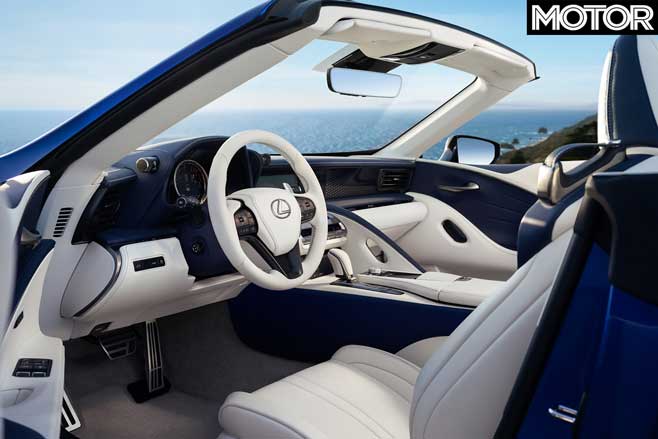
Lexus also says its 52:48 weight distribution is slightly more rearward than the coupe.
MOTOR has contacted Lexus Australia for confirmation of local pricing and availability.
It’s not unfair to suggest that MG – the English sports car brand bought by one of China’s oldest car makers in 2005 and still headquartered in the UK – has flown under the radar here in Australia.
A false start in 2013 didn’t help matters, and with just two models and a relative handful of dealers to its name, the brand needs to fight for every inch of ground in one of the most cut-throat car markets on the planet.
However, MG is one of the very few car companies recording a positive lift in sales in 2019 – granted, from a low base – with the brand set to triple its 2018 total of 3000 sales.
Now, the next pillar in MG’s strategy has been revealed… and it ought to catch the attention of older, more established players in the market.
Called the HS, MG’s new mid-sized SUV is pitched into one of Australia’s toughest market segments with a keen price ticket, decent looks and an interior that will make you look twice.
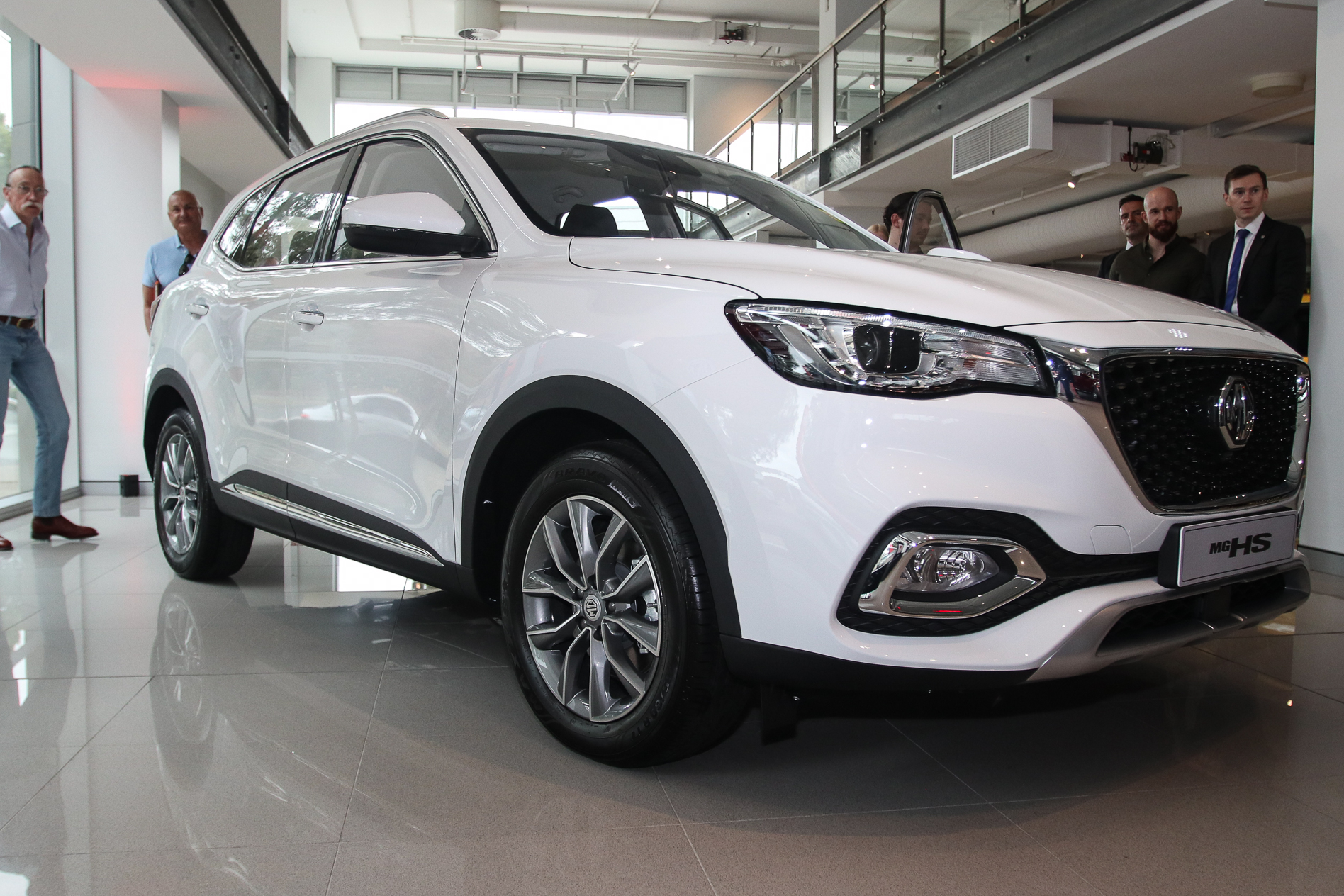
“HS is a big jump for us in terms of safety and quality,” said MG Australia CEO Peter Ciao, speaking at the brand’s new $1 million showroom on the outskirts of the Sydney CBD.
“MG is back, and it just wants to give people one more choice, and that they see it is a very good value choice. I hope that finally people will give MG a chance, and join the 10,000 people who have given it a chance. It is growing and learning.”
The HS will arrive in December in two variants; the entry-level Vibe will retail for $29,990, with a drive-away price of $30,990.
The upper-level Excite, meanwhile, will sell for $32,990 retail and a sharp drive-away price of $33,990. A seven-year, unlimited kilometre warranty is included, along with seven years’ roadside assistance.
The base pricing undercuts the entry-level Toyota RAV4 GX by $650, and the Mazda CX-5 Maxx by $890, though both these cars offer larger engines as standard. The similarly powered Holden Equinox LS is a full $2000 cheaper, though the better equipped LS+ jumps to $32,990.
Both HS variants use the same 124kW/250Nm 1.5-litre turbocharged four-cylinder engine that drives the front wheels via a seven-speed dual-clutch gearbox, along with a comprehensive suite of driver aids.
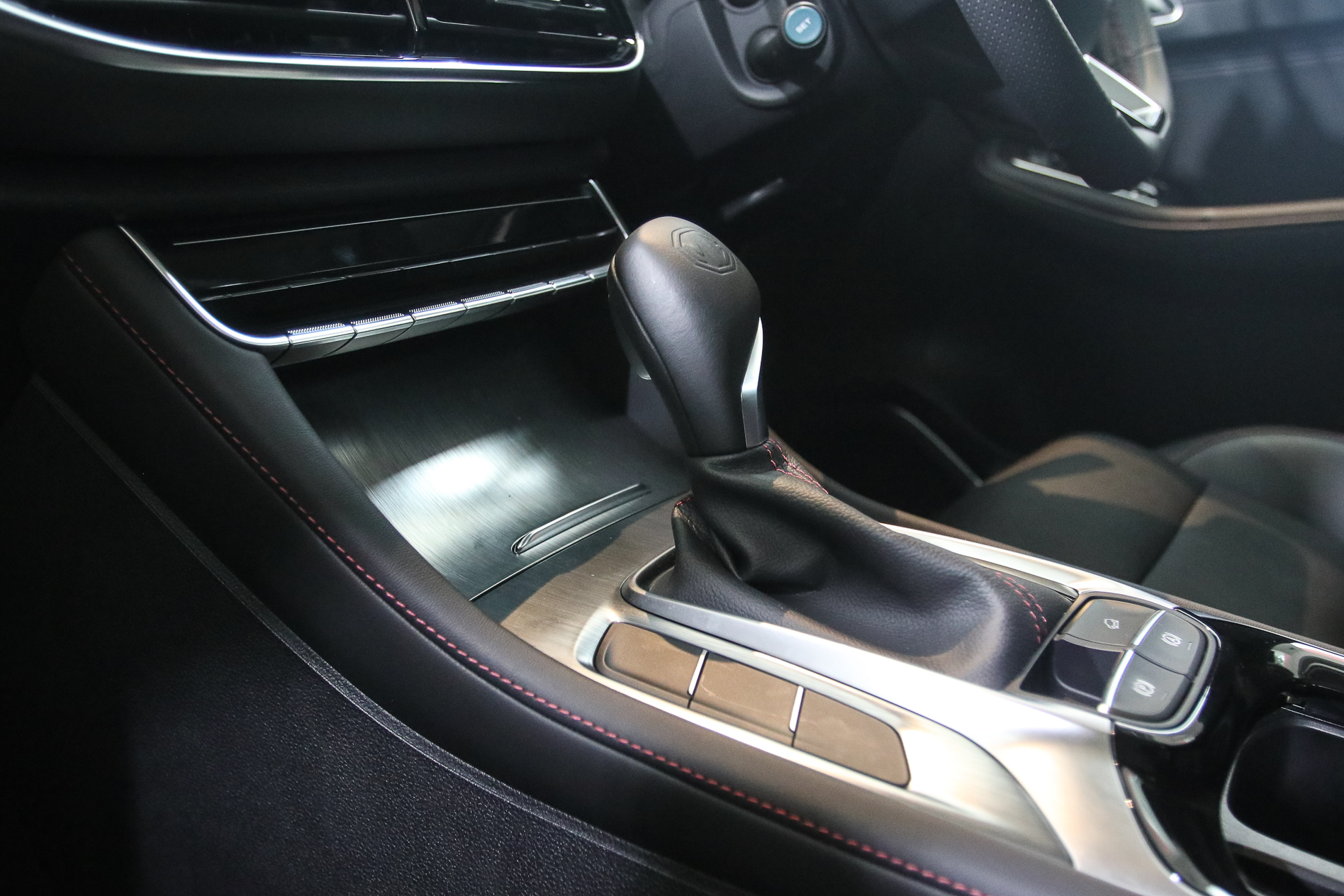
MG Pilot is the umbrella name for the standard-issue driver assistance system package on both cars. The system works via a grille-mounted radar and a windscreen camera and offers adaptive cruise control, AEB with pedestrian detection, lane departure warning (over 60km/h), intelligent cruise over 60km/h helps with lane assist and ACC.
Rear cross-traffic alert and blind-spot detection is also fitted as standard. Automatic headlights are also included, along with speed limit sign-reading tech.
LED daytime running lamps are standard on both, while the Excite scores LED headlights as standard, along with 18-inch rims which replace 17s on the Vibe. It’s interesting to note that the top-spec Excite gets Michelin tyres as standard, which isn’t something usually seen on SUVs at this price point.
Both cars score leatherette upholstery, automatic headlights, keyless entry and pushbutton start, LED interior lights, rear vents and twin chargers and two ISOFIX baby seat mounts.
A traditional pair of dash dials are complemented with a digital centre, while a 10.1-inch touchscreen-based multimedia system offers Apple CarPlay and Android Auto.
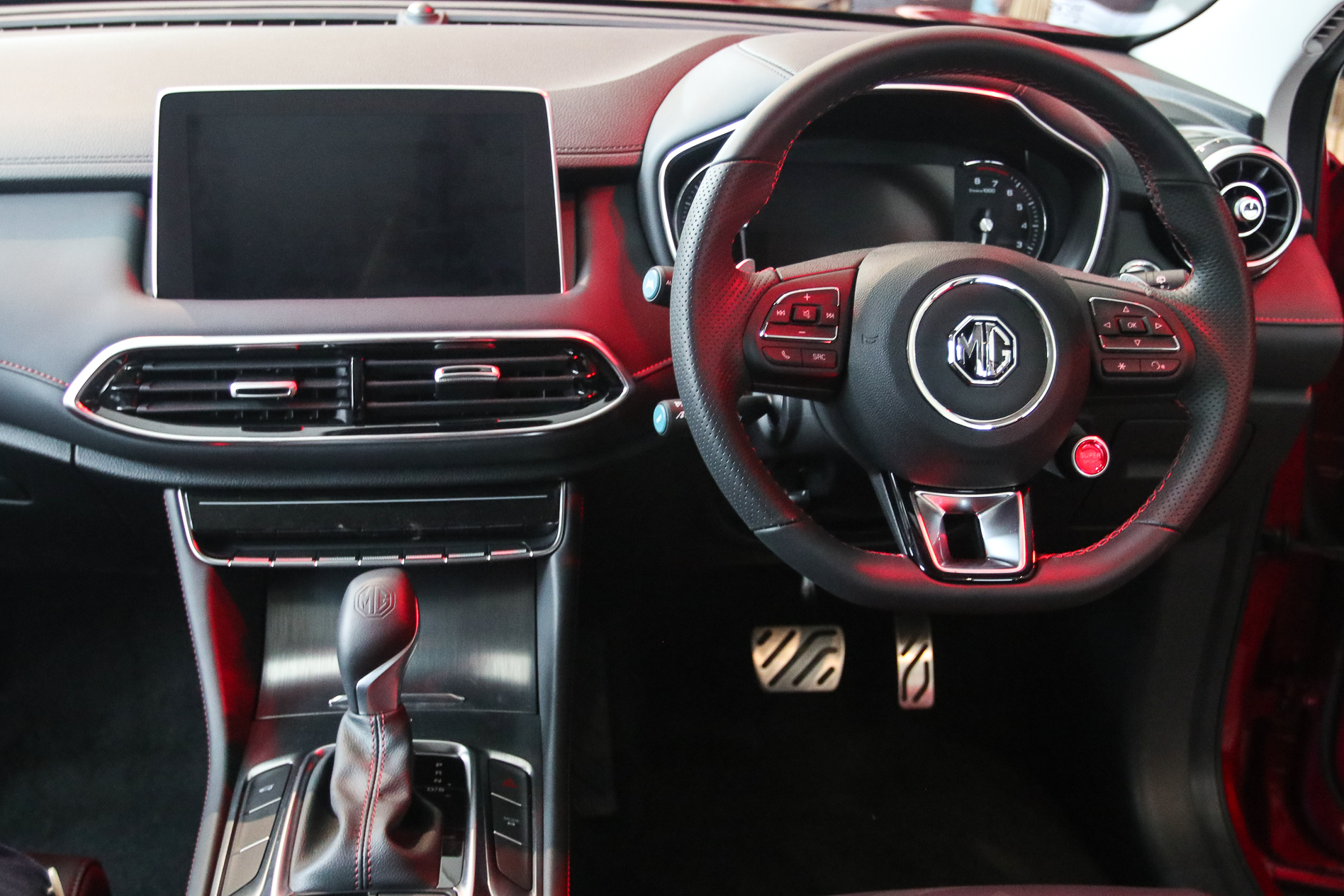
Rain-sensing windscreen wipers are standard only on the top-spec Excite, along with satellite navigation, sports mode for the dual-clutch transmission and an electric tailgate.
Size-wise, the HS- which replaces the GS – is 4574mm long, 1876mm wide and 1685mm high, with a wheelbase of 2720mm.
That makes it 24mm longer than the old GS, and 70mm longer in the wheelbase than the previous car.
Its interior space is impressive, too, with ample headroom and knee room for rear-seat passengers, and 463 litres of boot space with the seats up and 1287 litres with the 60:40 split/fold seats folded down.
The HS hits MG dealers in mid-December.
Do you reckon the MG HS could find its way onto your shopping list? Let us know in the comments below!
With the industry’s guns trained on Tesla’s Model S, the 353kW Model 3 Performance sits in a comfortable league of one, though not if BMW has anything to say about it.
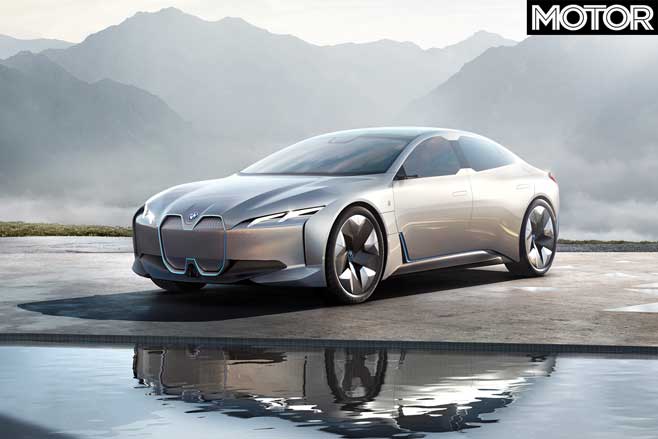
The Bavarian carmaker has released details of its upcoming i4 all-electric “four-door coupe”, which boasts a newly-developed electrical drive system that delivers a maximum output of 390kW.
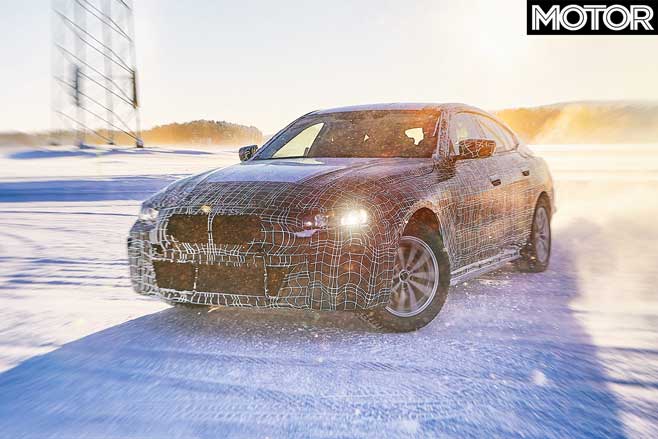
BMW says the 3 Series-sized i4 would be able to complete the 0-100km/h sprint in four seconds flat and hit a top speed of “more than 200km/h”.
Those figures are a little off the mark from our performance testing figures of 3.6sec for the Model 3 Performance, though comfortably ahead of the 375kW AMG C63 S coupe’s result of 4.4sec.
Set to enter production in 2021, the i4 is touted as the ‘i’ brand’s first Gran Coupe model and will feature BMW’s fifth-generation BMW eDrive system, which will be first debuting in next year’s iX3 and the upcoming iNEXT.
Like its electric motor and power electronics, the high-voltage battery and charging unit is entirely newly-developed by BMW.
According to BMW, the i4’s battery is “characterised by its extremely flat design and optimised energy density”. Tipping the scales at 550kg, the battery is said to have an energy content of around 80kWh, enough to give the i4 a projected range of 600km.
Adding to that, the i4’s battery is paired a charging unit that is designed for a charging capacity of up to 150kW, which would be able to bring the battery to 80 per cent charge in 35 minutes.
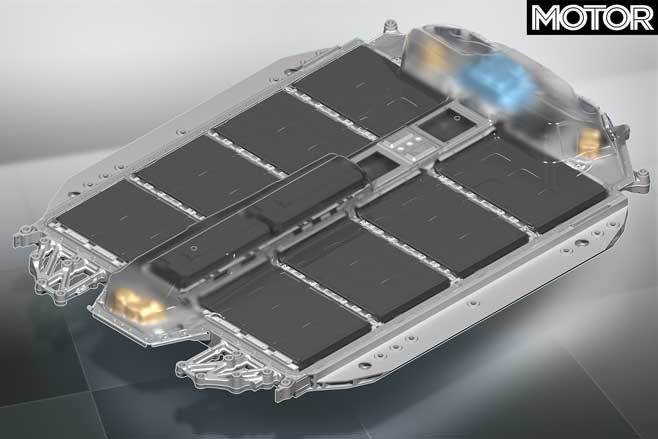
According to BMW, the fifth-generation eDrive system is designed to be modular and can be implemented in both plug-in hybrids and all-electric models with varying combinations of charging units, battery layouts, and hybrid and electric drive units.
BMW has demonstrated the potential of its electrical drivetrain systems with the BMW’s iX3 concept envisioned with a 200kW single electric motor, and the company’s ‘Project BEV’ prototype packing an M5-beating triple motor setup with 529kW and 1150Nm on hand.
THE CONTENDERS
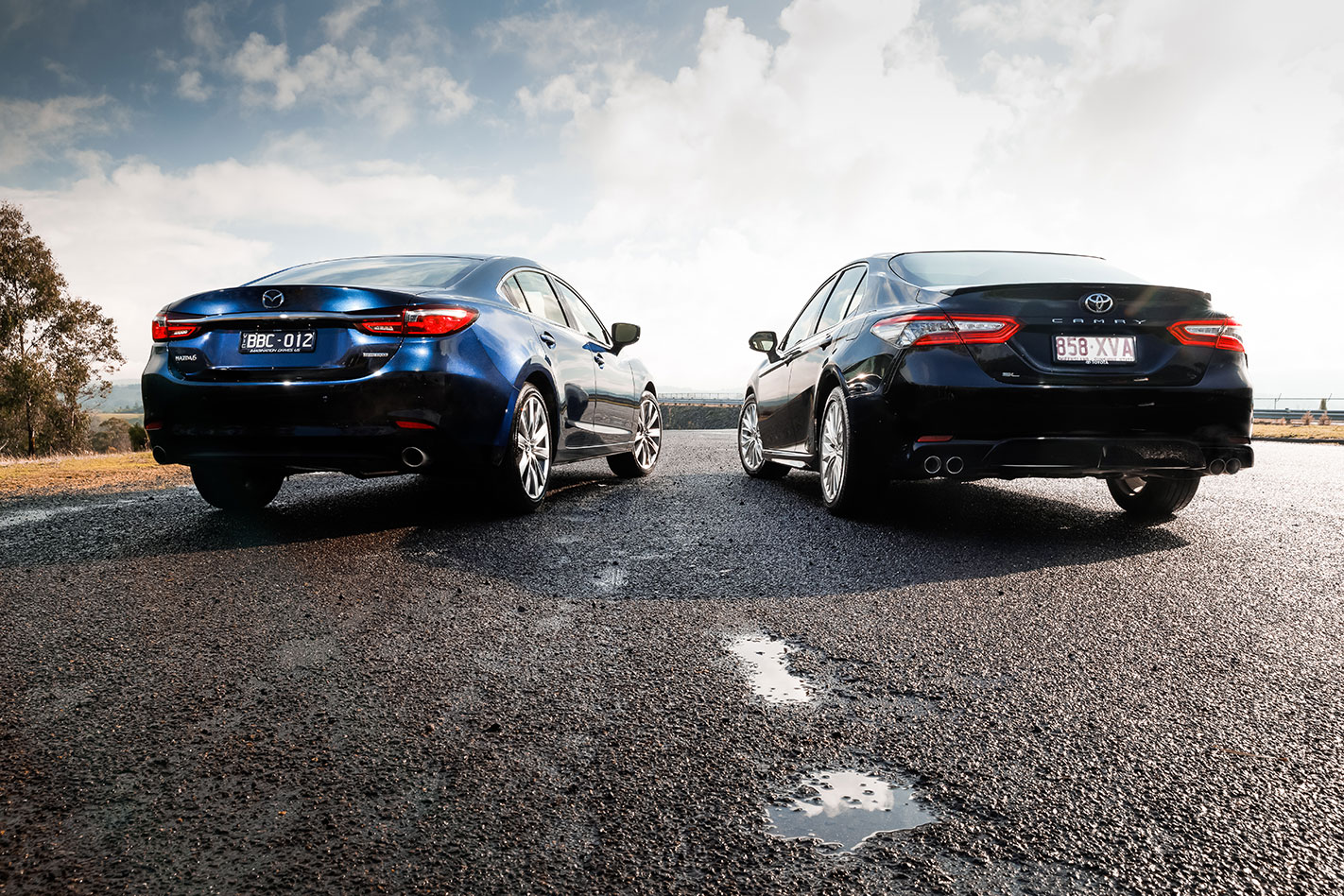
If you’re looking for a replacement to the large, Aussie-built six-cylinder sedan, then both the Mazda 6 and the Toyota Camry have plenty to offer. Officially classed as mid-size rivals both of these Japanese contenders offer loads of space, decent power and, believe it or not, keen dynamics. In terms of price, only two slabs of beer separate the $43,990 6 GT and $44,090 SL V6.
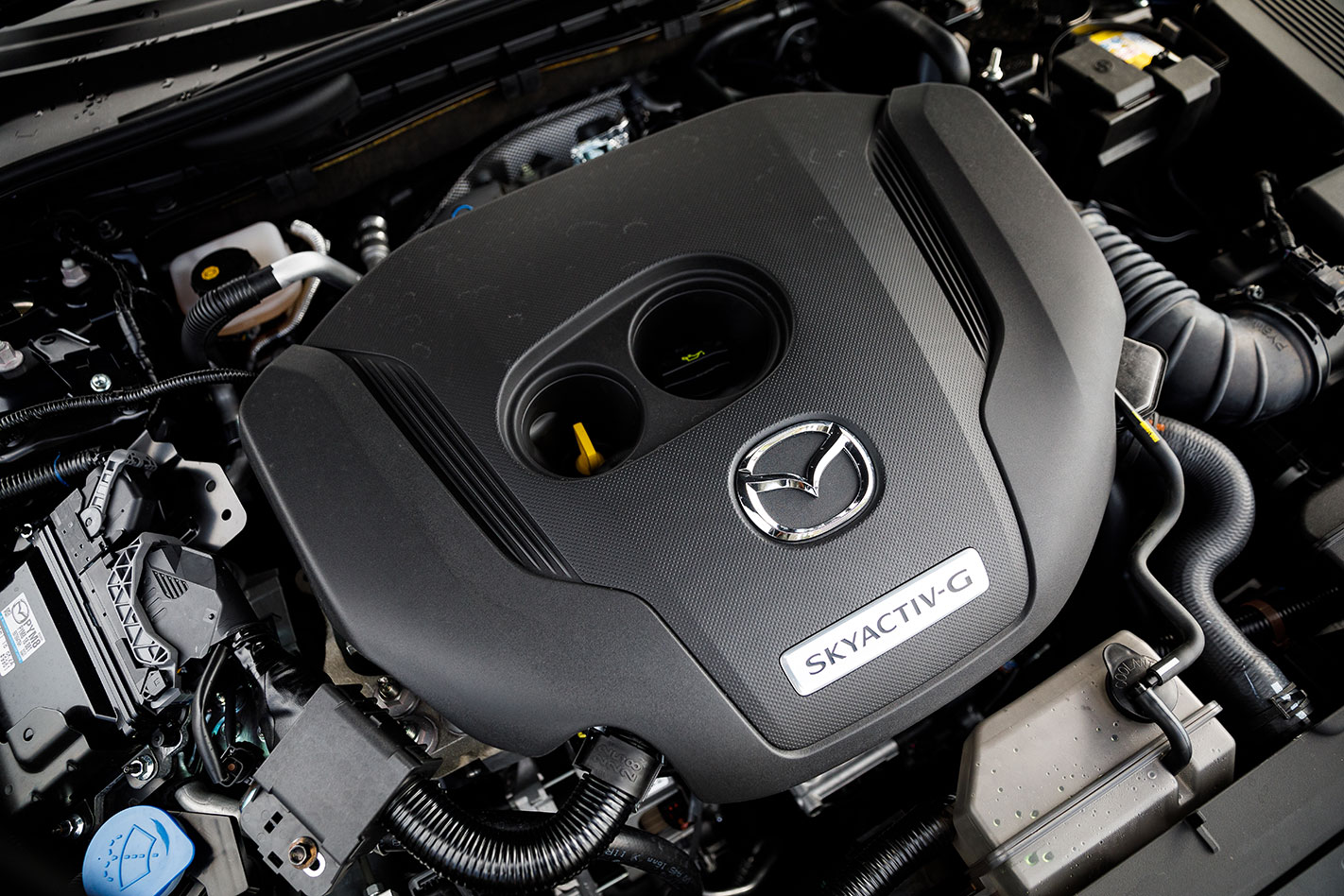
Mazda’s venerable 6 has long been a favourite in the Wheels office, especially since it dropped the ‘26’ from its badge. With a model refresh bringing a new interior and the turbocharged 2.5-litre four-cylinder from the CX-9, the perennial overachiever is ready to take on all.
The Camry, on the other hand, is a beacon of staid motoring and sales success. In this V6 guise, it’s missing Toyota’s appealing hybrid tech, though the 3.5-litre donk is surprisingly punchy and the ‘funkier’ exterior styling is certainly eye catching.
EQUIPMENT AND VALUE
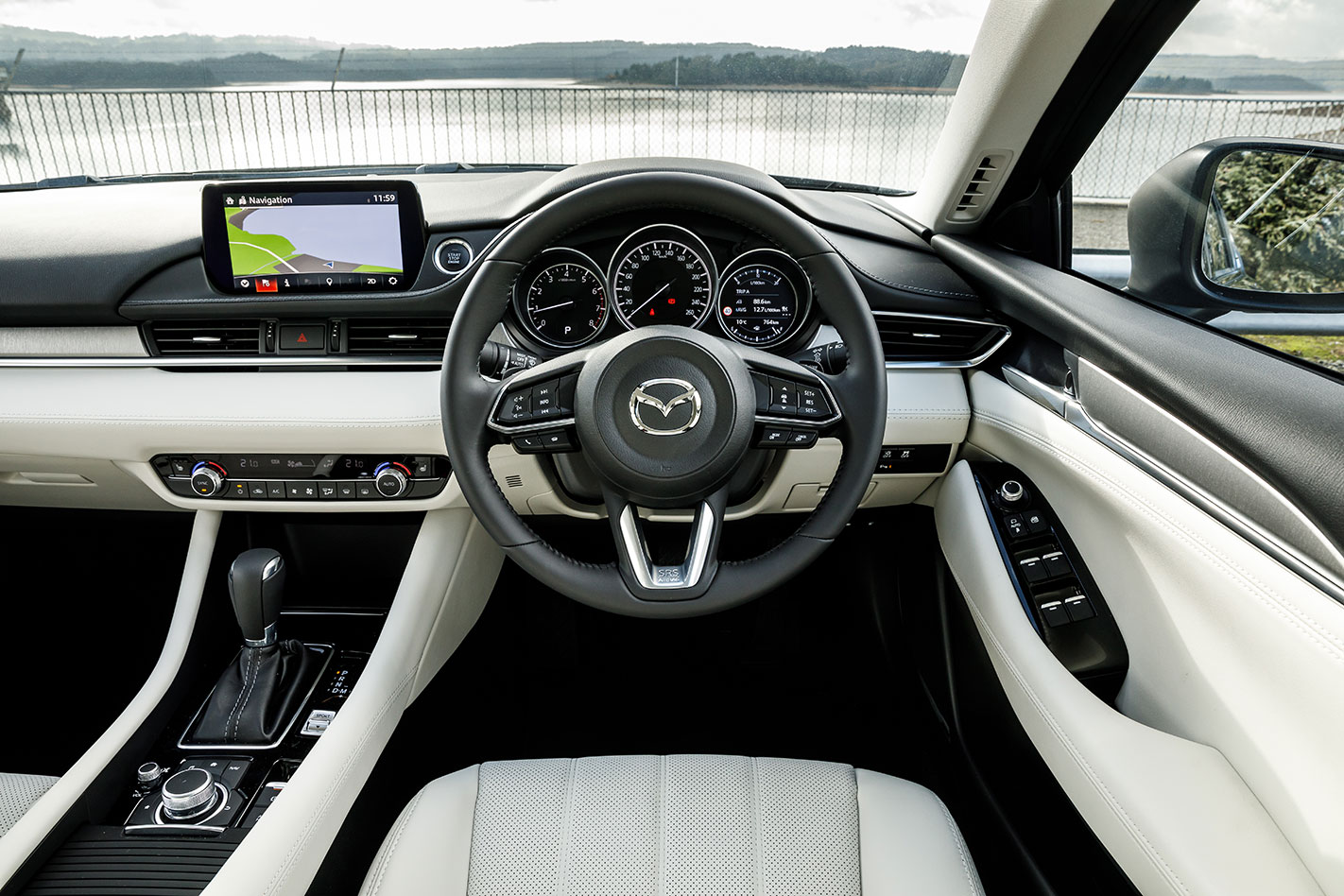
The GT-spec Mazda is left wanting for little in overall specification; about the only thing you don’t get are ventilated seats. Mazda’s own infotainment is antiquated, so good thing there’s Apple CarPlay and Android Auto. A few key standard features are the Bose audio system, head-up display, keyless entry, along with a vast array of safety kit, highlighted by Emergency Brake Assist.
Like the 6, the Camry is suitably kitted out and has electrically adjustable leather seats and a decent-size touchscreen. One glaring omission is the lack of Apple CarPlay and Android Auto. Instead you’re forced to use the Toyota infotainment, which looks and feels dated. Curiously, the Camry has ventilated but not heated seats.
Ultimately, both enter the $40K bracket, which isn’t exactly cheap. However, the 6 is the better deal given the equipment level for the price. It’s the one more private buyers will opt for, while the Camry goes to fleets.
SPACE AND COMFORT
In terms of overall space, the Camry offers slightly more room inside the cabin. Both have decent glasshouses but the Camry does offer greater head and toe room for rear passengers. However, despite the Toyota’s size advantage, it’s the 6’s cabin that feels lighter and airier.
If boot size is a priority, then the Camry offers the most capacious at 524 litres. Sans hybrid tech, the floor is flat and the opening is wide. However, at 474 litres, you’d hardly call the 6’s boot small. And if you need more space, Mazda has a wagon version.
Cabin ambience is an area where the 6 shines. It looks and feels like a more expensive product. The fit and finish, as well as the materials, are top-notch.
The Camry can’t match the level of quality in the 6. The Mazda’s high-end touch points and Audi-like design make it a space you really want to be in.
HOW THEY DRIVE
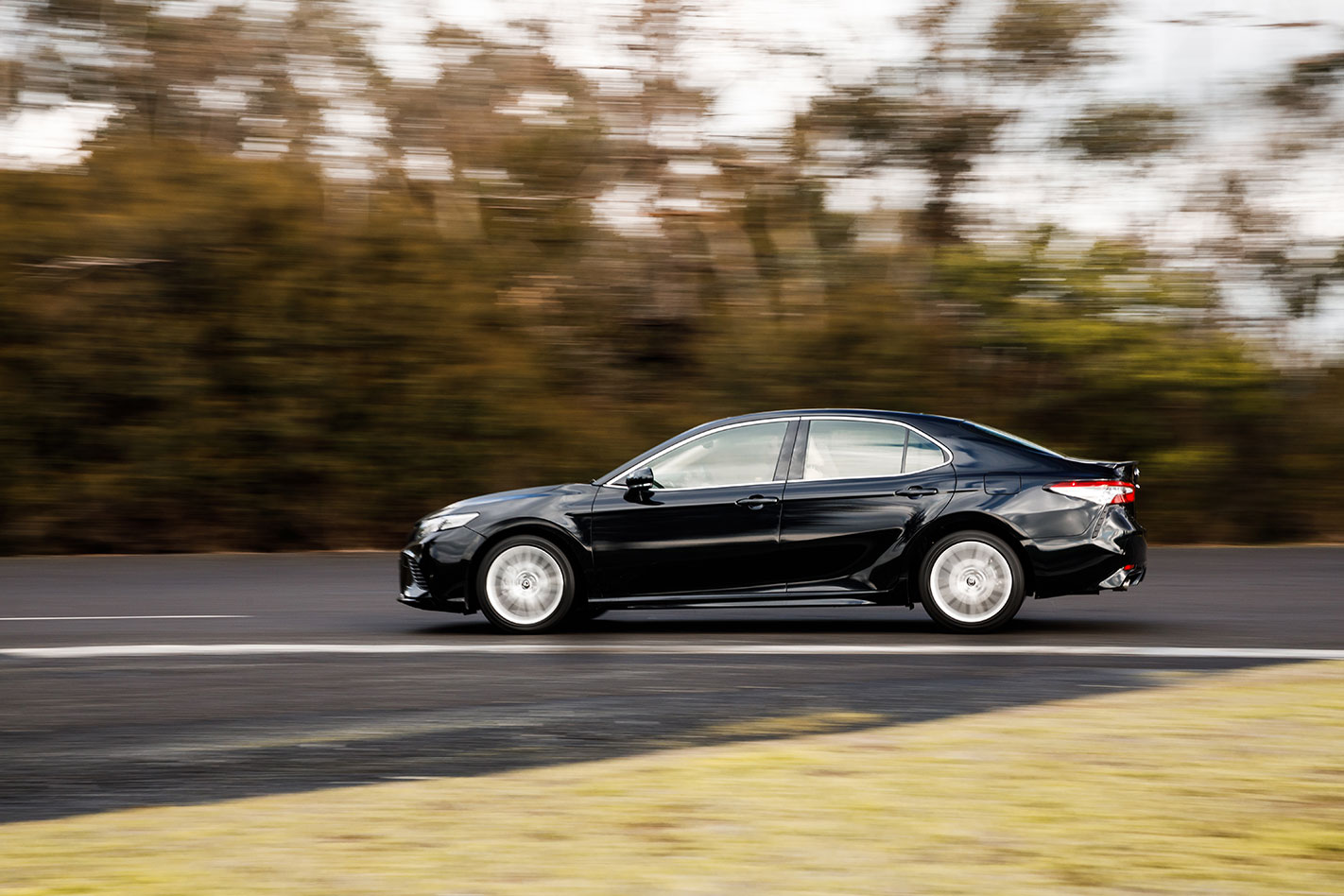
Both the 6 and the Camry have enough power for their respective front wheels. In some conditions there’s too much for the front axle – especially with Toyota’s 3.5-litre V6 feeding it all 224kW. Tied to a slick eight-speed auto, the Camry is surprisingly energetic. There’s also a level of dynamic ability that starts to contradict its cardigan-wearing reputation.
While the Mazda might be down on kilowatts, it makes up for it with a strong 420Nm, meaning the 6 feels almost as fast – although neither car is trying to be overtly sporty. The Mazda’s six-speed auto is intuitive and obedient, while the steering feel is more natural and road noise is better suppressed. The Camry has the tauter suspension, but the 6 remains engaging despite having a waftier nature.
Ultimately, both offer variants that are more fuel efficient, while the 6 is the more rewarding drive.
VERDICT: HIT FOR 6
Both the 6 and the Camry have enough power for their respective front wheels. In some conditions there’s too much for the front axle – especially with Toyota’s 3.5-litre V6 feeding it all 224kW. Tied to a slick eight-speed auto, the Camry is surprisingly energetic. There’s also a level of dynamic ability that starts to contradict its cardigan-wearing reputation.
While the Mazda might be down on kilowatts, it makes up for it with a strong 420Nm, meaning the 6 feels almost as fast – although neither car is trying to be overtly sporty. The Mazda’s six-speed auto is intuitive and obedient, while the steering feel is more natural and road noise is better suppressed. The Camry has the tauter suspension, but the 6 remains engaging despite having a waftier nature.
Ultimately, both offer variants that are more fuel efficient, while the 6 is the more rewarding drive.
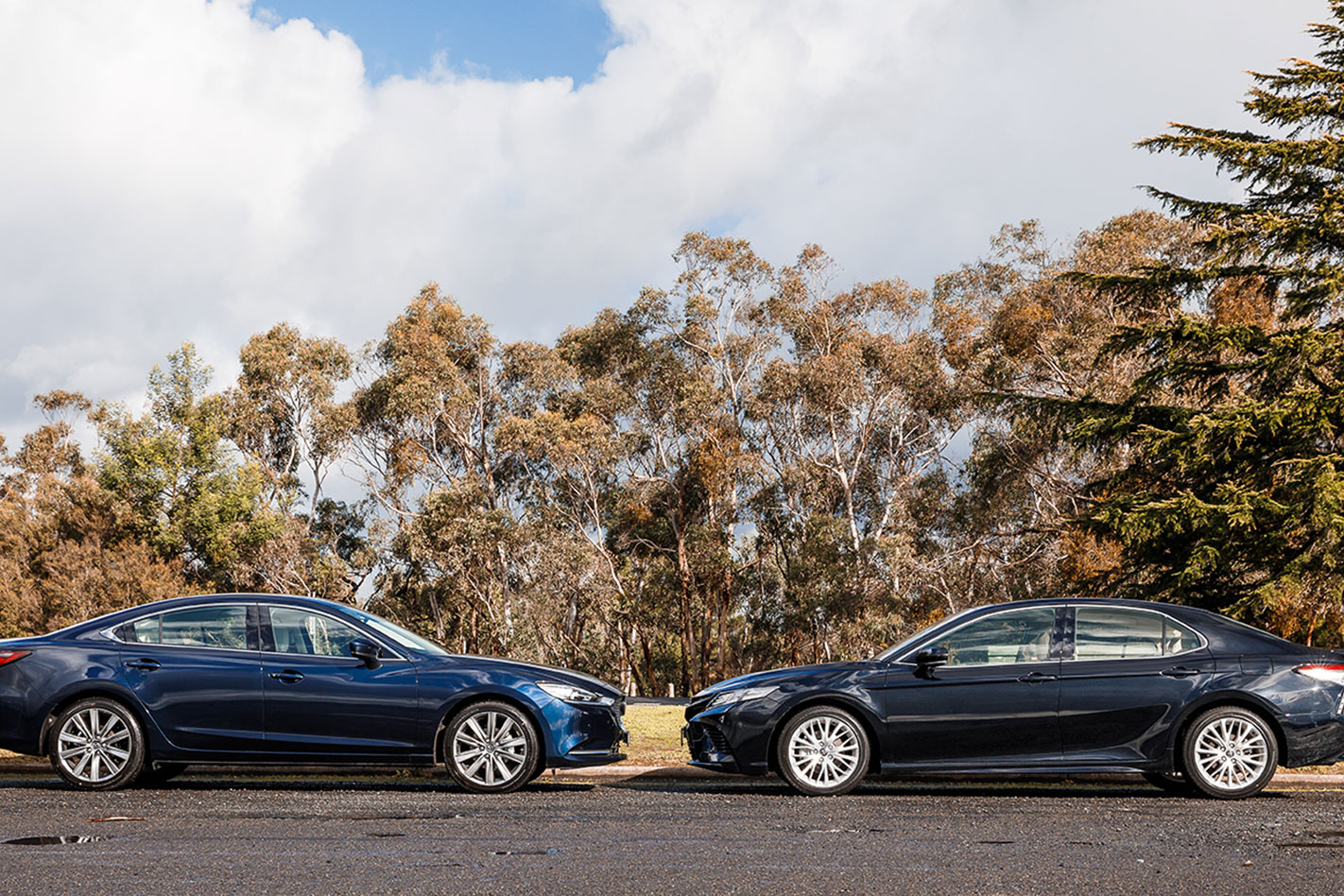
MODEL: MAZDA 6 GT SEDAN
Engine: 2488cc 4cyl, dohc, 16v, turbo Max power: 170kW @ 5000rpm
Max torque:420Nm @ 2000rpm Transmission 6-speed automatic Weight: 1607kg
0-100km/h:7.0sec (estimated)
Fuel economy:7.6L/100km
Price: $43,990
On sale: Now
MODEL: TOYOTA CAMRY SL V6
Engine: 3456cc V6 (600), dohc, 24v Max power: 224kW @ 6600rpm
Max torque:362Nm @ 4700rpm
Transmission:8-speed automatic
Weight:1625kg
0-100km/h:6.7sec (estimated)
Fuel economy:8.7L/100km
Price: $44,090
On sale:Now
Aston Martin has finally taken the wraps off its DBX, the car maker’s first-ever SUV and a car that’s mighty important for the brand.
It’s been a long time coming, with initial development stretching back to 2015, the DBX ushers in a new era for the British marque and forms a part of the company’s so-called “Second Century Plan” which, among other things, is meant to diversify the brand’s portfolio, with the manufacturer set to introduce seven new models by 2022.
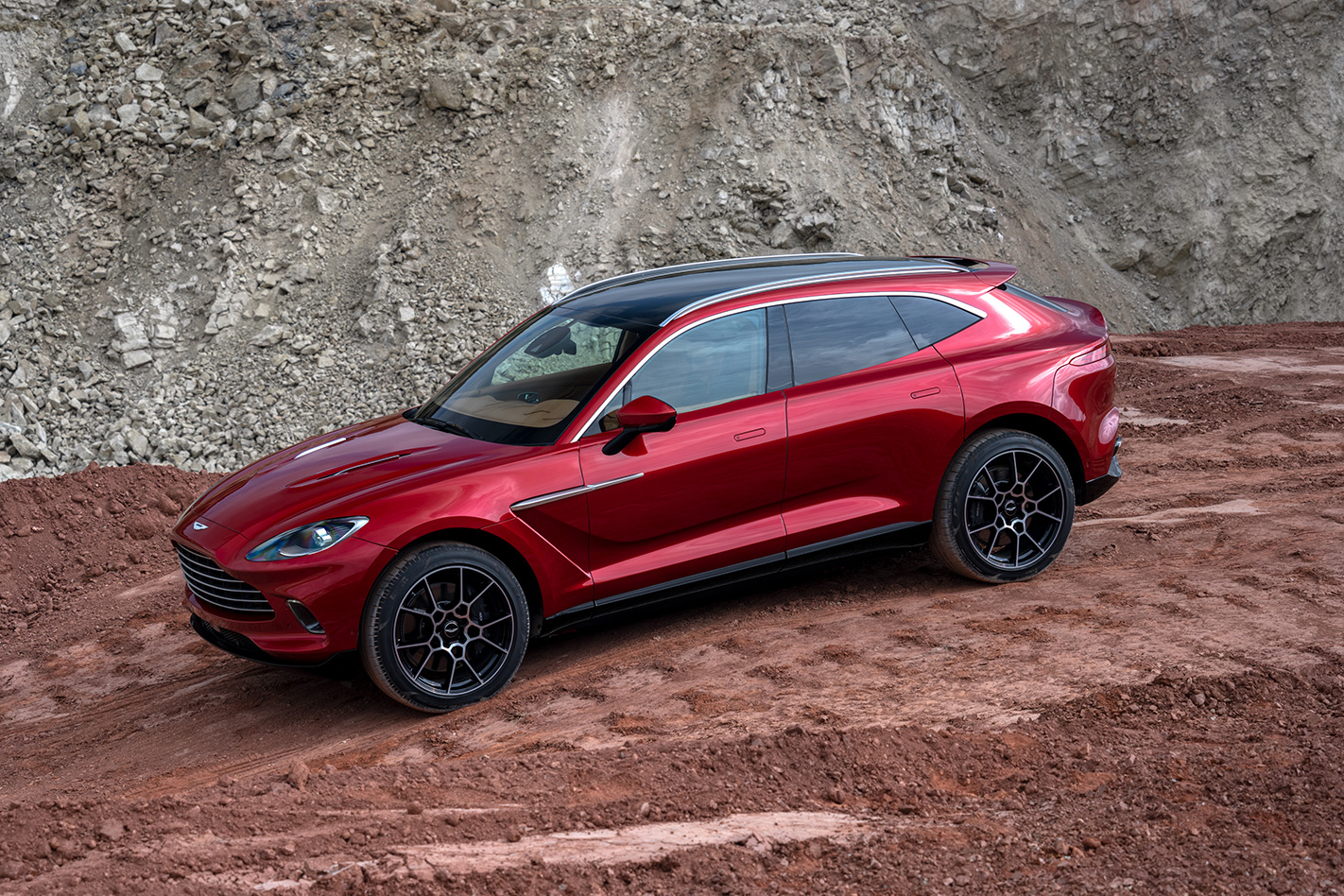
The DBX is one of those cars, and Aston Martin insists that although they’re in uncharted territory with an SUV, their core values will remain fully evident in DBX.
“DBX is a car that will give many people their first experience of Aston Martin ownership. As such it needed to be true to the core values established in our sports cars, while also providing the lifestyle versatility expected of a luxury SUV,” said Andy Palmer, Aston Martin CEO.
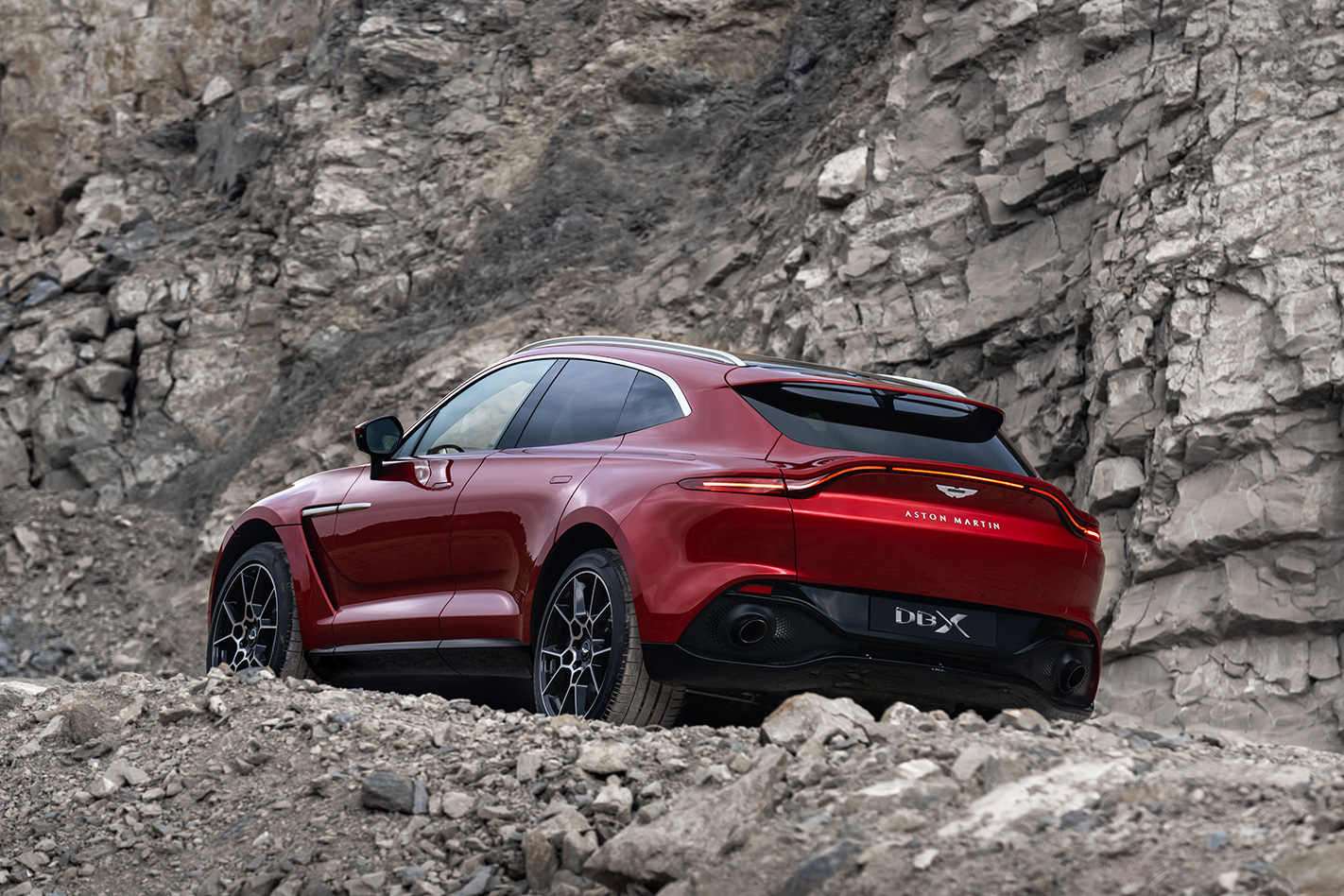
It’s a big promise, and one we’ve heard before from rival manufacturers who’ve gone the way of the SUV, but to back up their claims, Aston isn’t coming along unprepared.
It will receive a DBX-specific version of the 4.0-litre twin-turbocharged petrol V8 found in the DB11 and Vantage (borrowed from Mercedes-AMG), and will pack 404kW and 700Nm all the while delivering a sound characteristic that “is unquestionably Aston Martin” thanks to a revised firing order.
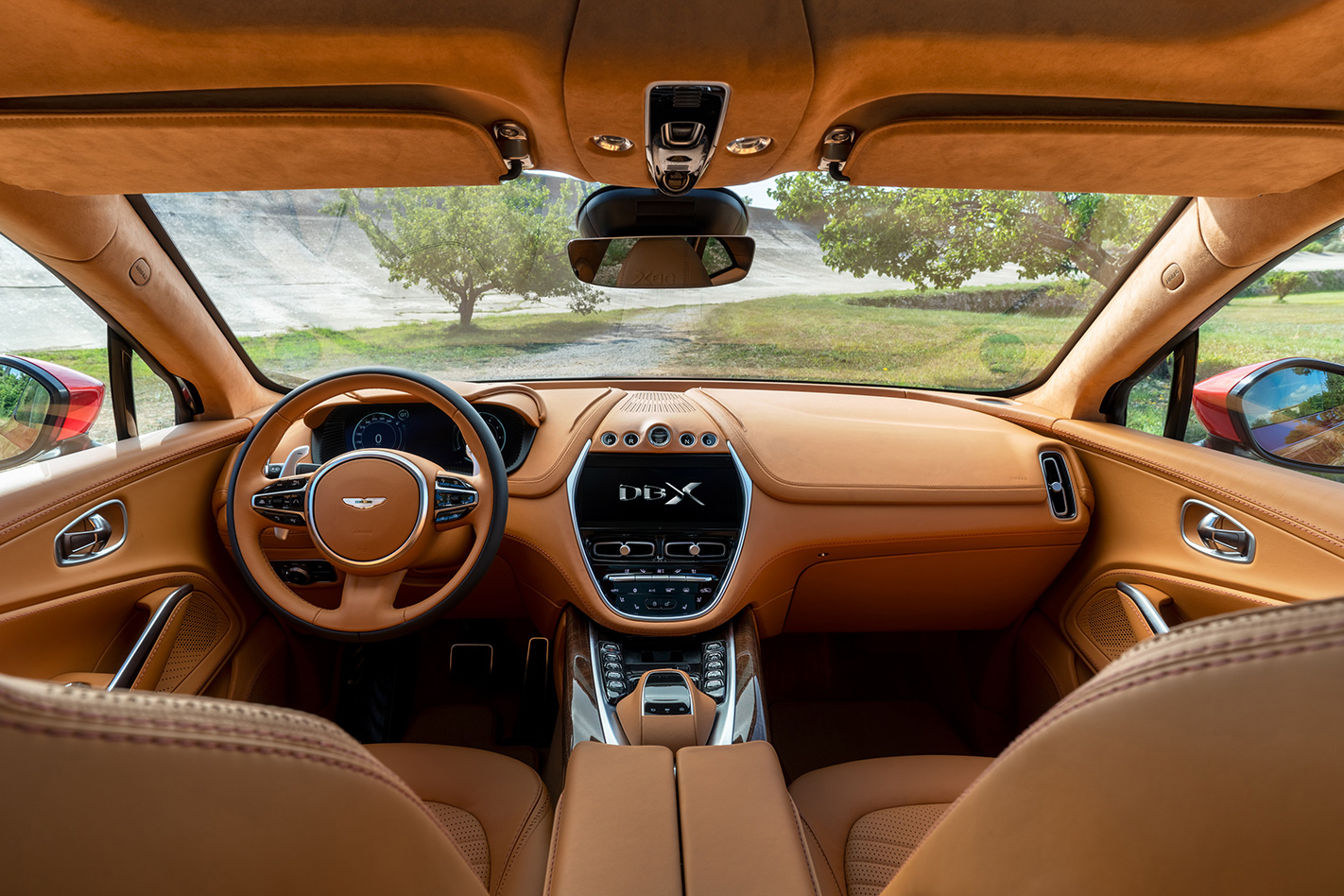
Aston Martin says those figures are good enough to launch the DBX from 0-100km/h in 4.5 seconds and on to a top speed of 291km/h.
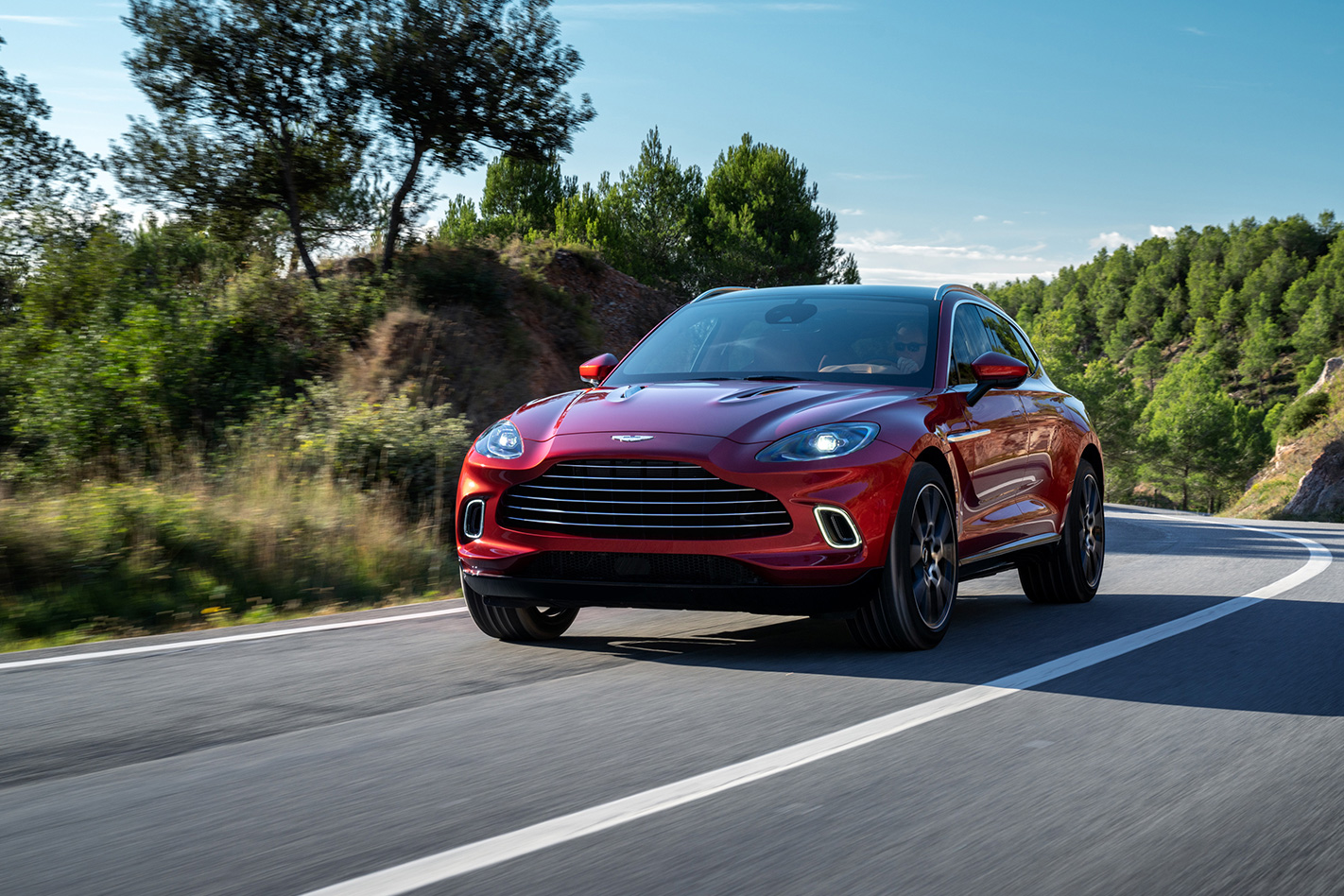
Helping turn that power into those claims is a nine-speed torque converter gearbox and an all-wheel-drive system with electronically-controlled centre and rear differentials.
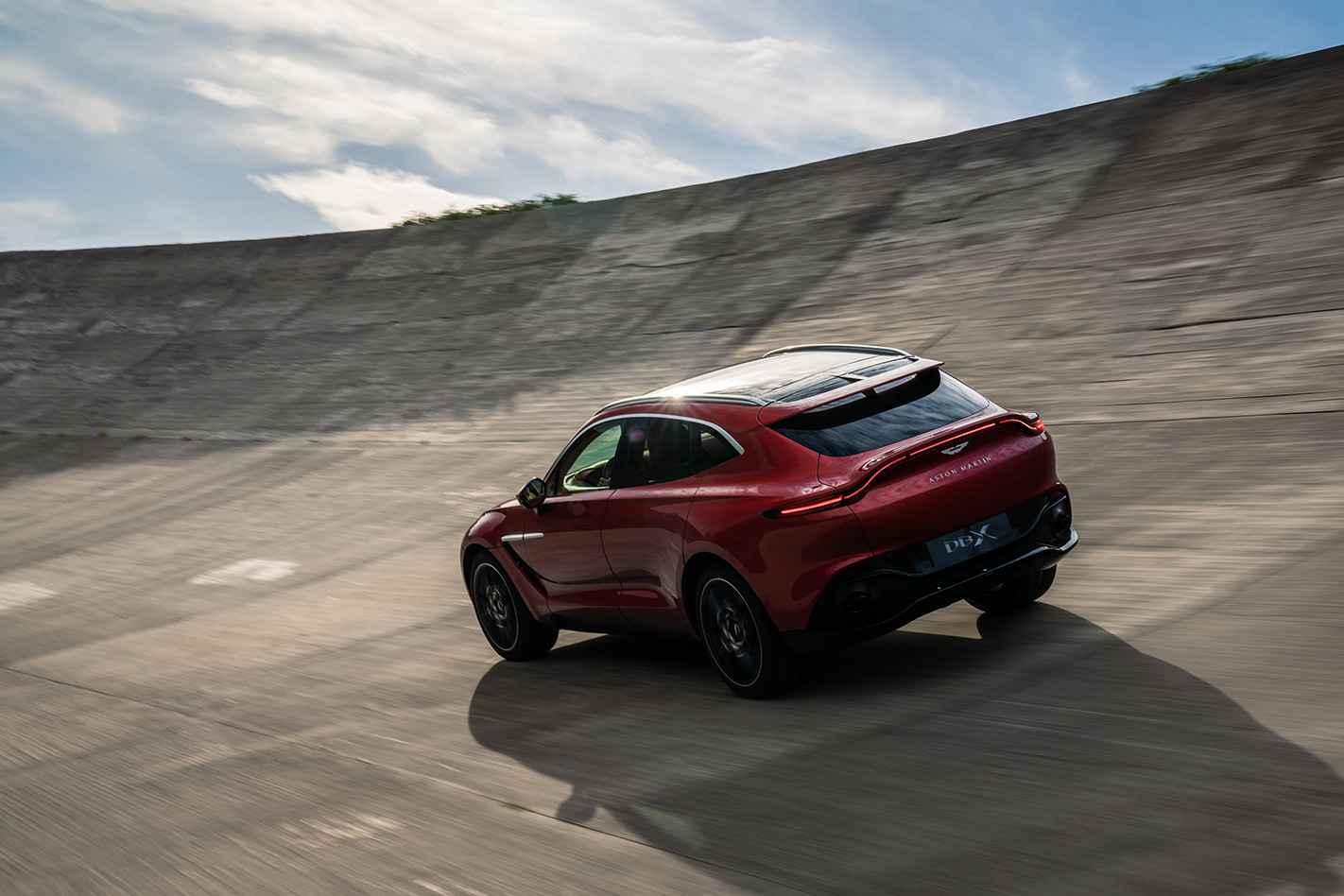
It will be built in Aston Martin’s newly-created second production facility in St Athan, Wales, and is said to be designed upon its own bespoke dedicated SUV platform, which is uncommon for the supercar-cum-SUV-maker posse. Aston Martin says this enables all departments a “clean sheet of paper” primed for “[innovation] and [to] push the boundaries of what British design and engineering can create.”
Aston also says the DBX will use some clever tricks to keep its 2245kg-heft agile, paying note to an air suspension system that will combine with a 48v electric anti-roll control system which, in addition to raising and lowering the ride height, does away with traditional anti-roll bars and can send up to 1400Nm of anti-roll force to each axle. The goal was to allow for an on-the-fly switch between superior ride comfort and handling ability akin to that of a sports car.
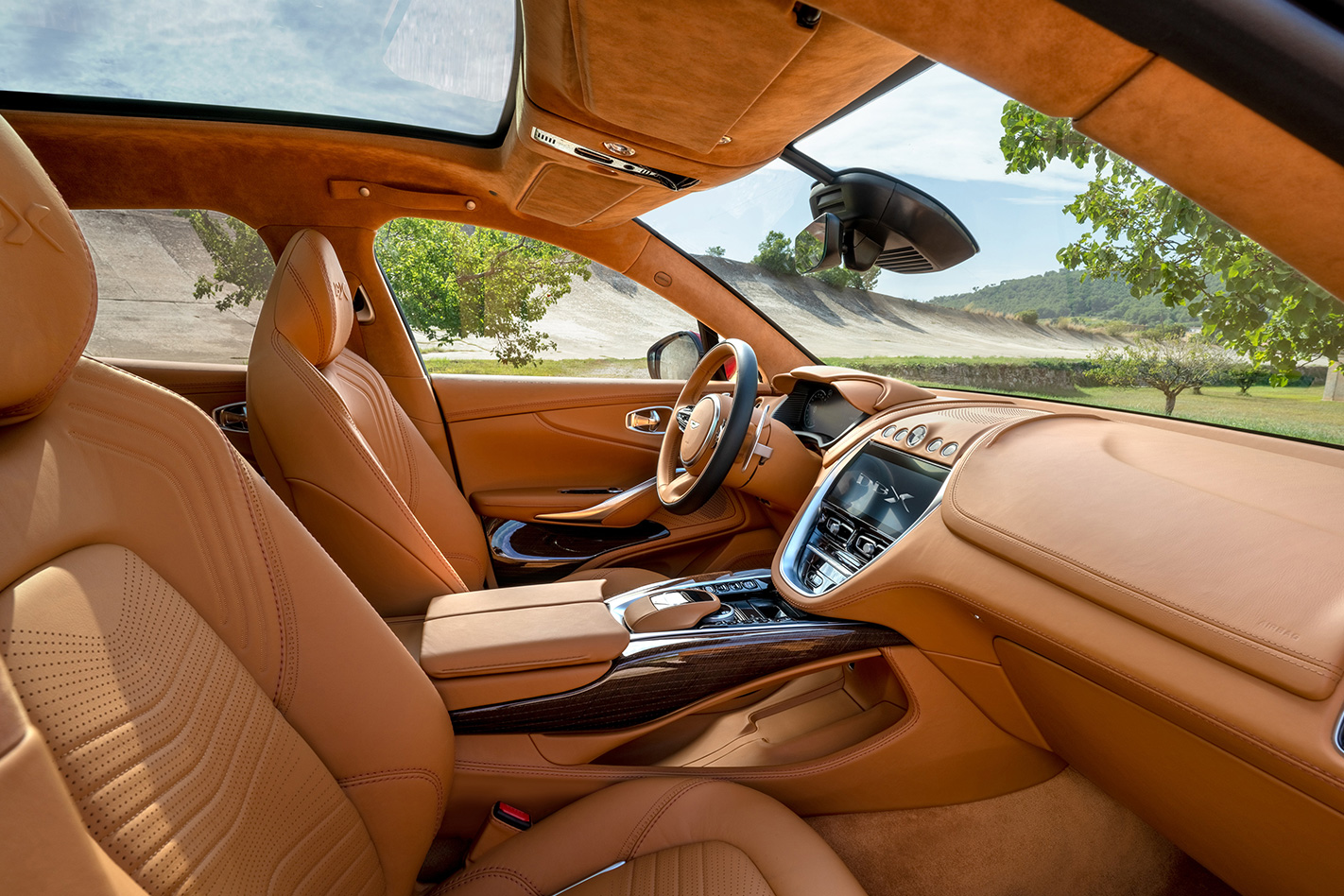
The five-seat, five-door model is said to offer class-leading interior space, and features a 632 litre boot. Up front, it will receive a 10.25-inch screen running a version of Mercedes-Benz’s infotainment system, paired by a 12.3-inch digital instrument cluster.
As expected, there are a number of packages that’ll be on offer including a Snow pack, a Pet pack, a Touring pack and even an Event pack, which brings a picnic basket, blanket and seats for an “impromptu al fresco lunch”. Oh, how the other half live…
What about Australia?
Locally, we can expect to see the brand new DBX SUV from midway through 2020, and Aston Martin’s local arm has priced the DBX at $357,000 before on-road costs and options.
Click the image at the top of this story to view more Aston Martin DBX SUV photos.
