
Despite constant ad campaigns and public safety crusades, Australian drivers just can’t seem to get their hands off it when it comes to phones and cars.
Adding to the culture of phone use while driving is confusion regarding what you can actually do with your phone when on the road.
Some take liberties, thinking that the safety net of ‘I didn’t know’ will save them should they get pulled over by police. But you can only (legally) use your phone within a very thin set of boundaries – for good reason.

It should be noted there are small variations on wording between states, so it is best to check your local laws, but overall, most Australian states are of the same understanding when it comes to phone use in the car.
Some think that as long as you are stationary at traffic lights, it is safe to fire off a text to your buddies, or check what is happening on Facebook. The reality however, is if the car is stationary but not parked, the Boys-In-Blue will be all too happy to hand you a fine. A handy rule of thumb to follow is if the car engine is on, no matter what gear your car is in, or how fast (or slow) you’re travelling, you can get pinged for using your mobile phone improperly.

Another easy mistake people fall into is thinking by resting the phone on their lap they are dodging a fine. The logic may stand up in your head – ‘I’m not touching it so it’s not a problem’ – but the law says otherwise. Legally speaking, having a phone rest on any part of your body is exactly the same as having it firmly in your palm and you will be pinged. The only loophole is to have the phone in your pocket, because, well… duh.
Those with the biggest restrictions are provisional and learner drivers. The simple rule here is that no matter what, drivers on their L and P-plates cannot use their phone in any way in the car. New drivers cannot even use hands-free, or touch their phone for music or navigation purposes – even if the phone is in a secured mount. This is a simple blanket rule while provisional drivers adapt to life behind the wheel.
For the rest of the driving public, there is limited use of phones allowed, but it comes with some very specific qualifiers.

Drivers can only use a phone while driving if: they have a full license; the phone is in a commercially designed holder fixed to the vehicle (that means no leaning it on your dash); and the phone can be operated without you touching it at all. So even though your phone is in a cradle on the windscreen, if you have to lean forward and use the phone to start a call, send a text or change the music, you will get fined.
The law is simple: Do. Not. Touch. The. Phone. At. All.
If your phone can be operated without being touched, then you may make and receive calls, use the audio/music functions, as well as use the device as a GPS. That is it. No texts, video calls, emails, or phone apps.
This where Apple CarPlay and Android Auto become useful. Both are designed to help the driver utilise the phone through a car’s infotainment system without touching it, via voice control.
Oh, and don’t think you can get around the laws with a smart watch either. If your watch can receive or make texts and calls, it also needs to be in a cradle while you drive.
The first rung of the new 911 ladder is now occupied with the reveal of the Porsche 992 911 Carrera Coupe and Cabriolet. All-wheel drive Carrera 4 models will be available shortly.
Mechanically it is very similar to both its predecessor and the more powerful Carrera S that’s already been revealed, powered by a 3.0-litre twin-turbo flat-six producing 283kW and 450Nm.
That’s 48kW/80Nm less than the Carrera S but 11kW more than the previous base Carrera. Acceleration from 0-100km/h is claimed to take 4.2sec for the Coupe, or 4.0sec when optioned with Sport Chrono, while top speed is 293km/h.
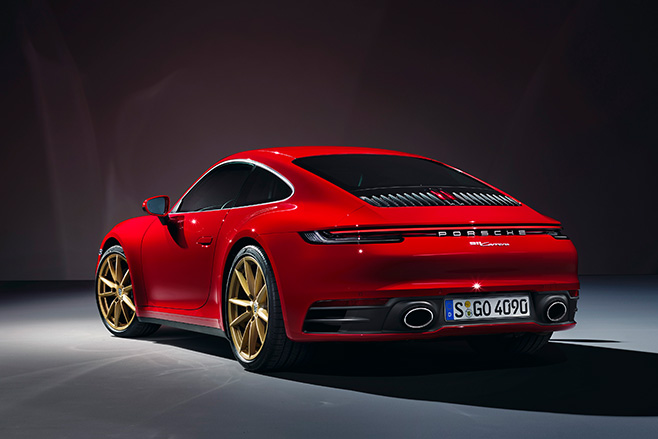
An eight-speed dual-clutch is currently the only available transmission, but we’d expect a seven-speed manual to appear at a later date for three-pedal fans.
Braking is provided by 330mm discs and four-piston calipers at both ends, while the wheels are an inch smaller than on the S, measuring 19s on the front and 20s at the rear wrapped in 235/40 and 295/35 tyres respectively.
Like its more powerful sibling, the 992 Carrera uses the widebody shell which allows for expanded tracks and a larger footprint on the road. Despite its extra size an increase in the amount of aluminium and high-strength steel makes the body lighter than its predecessor, though weight has crept up.
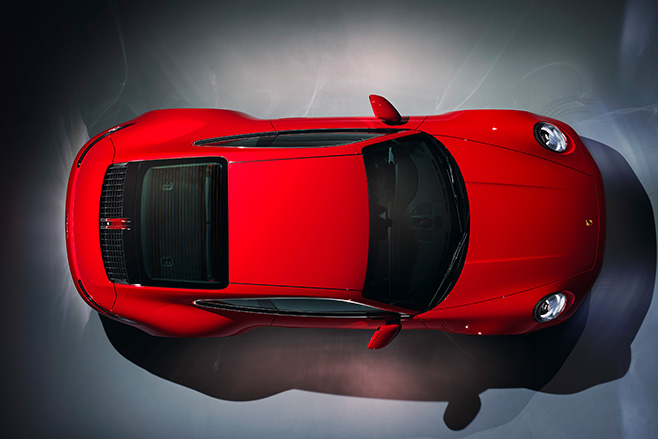
The biggest alterations have taken place inside, where the base Carrera apes the S by adopting a brand new interior design with substantially upgraded connectivity, a 10.9-inch touchscreen display and a pair of digital displays that flank the iconic central analogue tachometer.
The 911 Carrera Coupé starts from $229,500 in Australia, with the Cabriolet costing an extra chunk for $251,000. Porsche Australia says for that, customers get plenty as standard, including lane change assist, 14-way heated seats, a BOSE sound system, and metallic paint.
The new 911 Carrera is available to order locally now, with deliveries expected to commence in Q4 this year.
RM Sotheby’s, along with other auction houses like Gooding & Co or Mecum, has a big event coming up on its calendar in the form of the 2019 Monterey Car Week auctions.
Some of the rarest, most prestigious cars go under the hammer during the glamorous gathering of enthusiasts in the coastal California town of Monterey, a couple of hours south of San Francisco.
Rare McLaren F1 LM in RM Sotheby’s Monterey 2019 auction
We’ve had a look at the RM Sotheby’s catalogue for this year and picked out a short, and by no means exhaustive, list of some of the cars that caught our eye. Price estimates have been converted to AUD$.
2006 Ferrari FXX – AUD$4,125,000 to $4,704,000
One of the 30 original Ferrari FXXs is the crown in the group of cars to be offered from ‘The Ming Collection’ at this year’s Monterey auction, all of which are from Maranello.
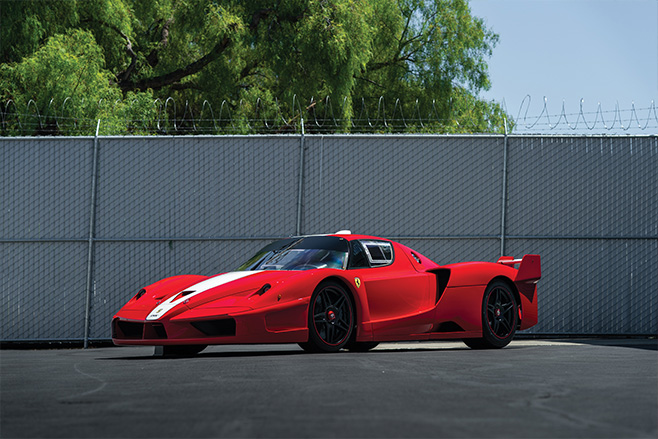
Impressively, the FXX is in ‘as new’ condition, with none of its accessories having been unwrapped or opened and has been kept in the private collection – undriven – since being shipped to the US from Maranello after its owner’s initial test drive.
Photos of FXX by Karissa Hosek.
1990 DeTomaso Pantera Si – $398,000 to $470,000
Did you know the De Tomaso Pantera has a younger, much rarer sibling? Only 41 units of the Si were built, with one living in De Tomaso’s collection and two having met their fate as crash test cars.
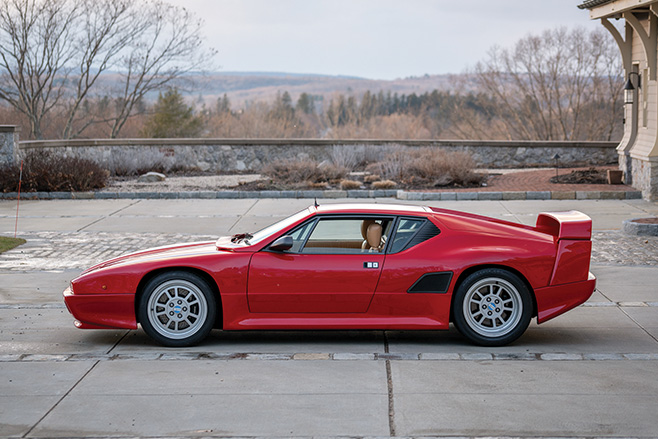
RM Sotheby’s says this is the first of the other 38 to go up for a public auction, so it’s probably going to also be the first many people have seen in the metal.
Photos of Pantera by Si Erik Fuller.
1974 BMW 3.5 CSL IMSA – $2,171,000 to $3,184,000
IMSA driver Henry Schmitt – also the owner of a BMW dealership, has offered up a few of his own cars to cross the block. Perhaps the most prestigious of these is his CSL IMSA racer, which is also the car that’s set to fetch the highest dollar amount of the four.
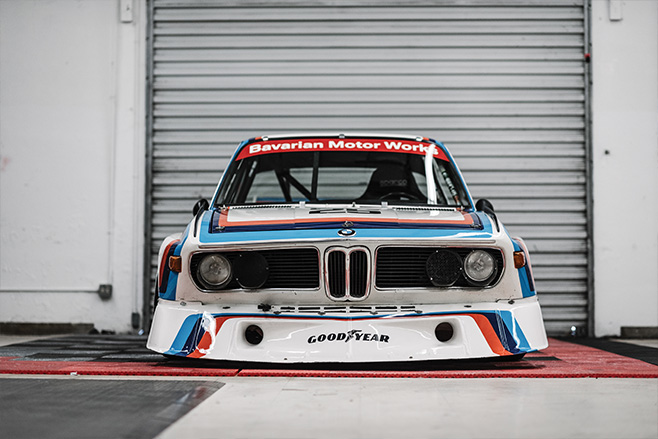
RM Sotheby’s says this car was driven by Sam Posey, Brian Redman, Hans-Joachim Stuck, and Allan Moffat, and used during the 1975 IMSA season.
Photos of CLS by Courtney Cutchen.
2005 Saleen S7 Twin Turbo – $796,000 to $1,013,000
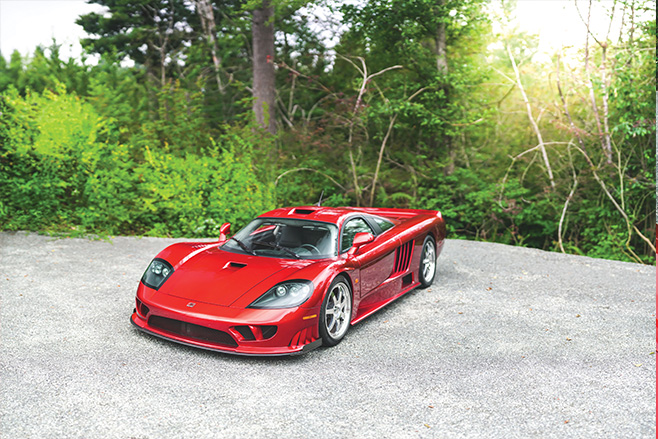
One of Steve Saleen’s V8-powered creations is going under the hammer, this S7 being a pristine example and one of only a couple of dozen with two turbochargers in its engine bay.
1996 Vector M12 – $362,00 to $434,000
The 1980s called, it wants its stereotypes back. There’s nothing about the whole Vector brand that doesn’t seem like it belongs in the original RoboCop film.
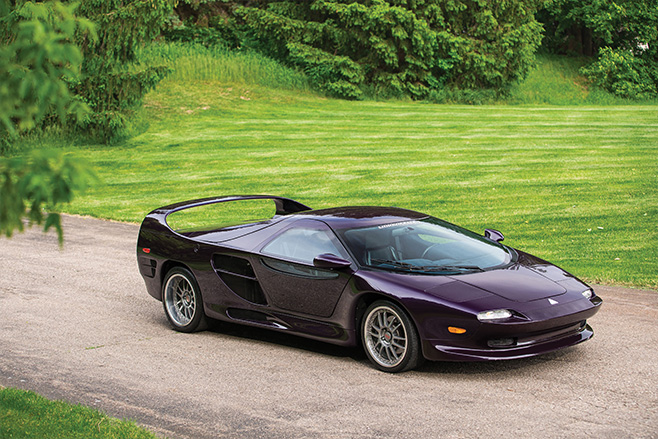
From its name, to the design, to the Lamborghini V12 nestled in its body. This one’s number 5 of only 14 M12s built.
M12 photos by David Bush.
1965 Aston Martin DB5 Shooting Brake by Radford – $1,447,000 to $2,026,000
Saving arguably the best until last, we bring you this factory DB5 shooting brake, one of only 12 built and only four exist in left-hook.
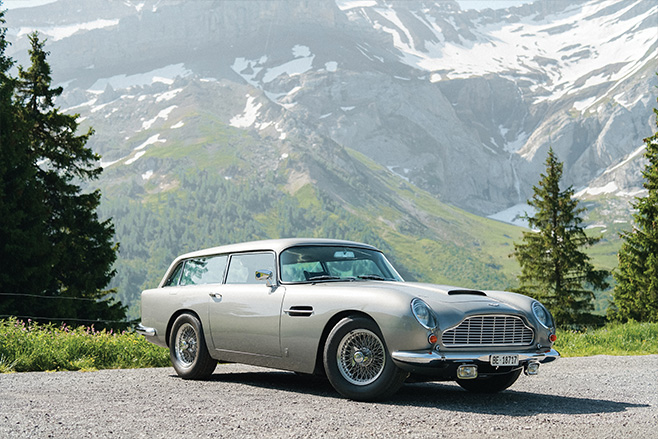
Since new, it has remained in Switzerland where its first owner lived, and has been under the custody of two others since.
Remember the airless tyre? First pitched by Michelin in the mid-2000s as the “Tweel”, an airless alternative that had better compliance and comfort than solid tyres and was immune to punctures, it wasn’t long before many got the idea that airless tyres would be a neat thing for cars.
And why wouldn’t it? The list of supposed benefits was extensive, but the one that got the most attention was the prospect of a tyre that would never, ever, go flat and leave you stranded. The Tweel concept’s other virtues included lower environmental impact, lower purchase cost and ease of maintenance.
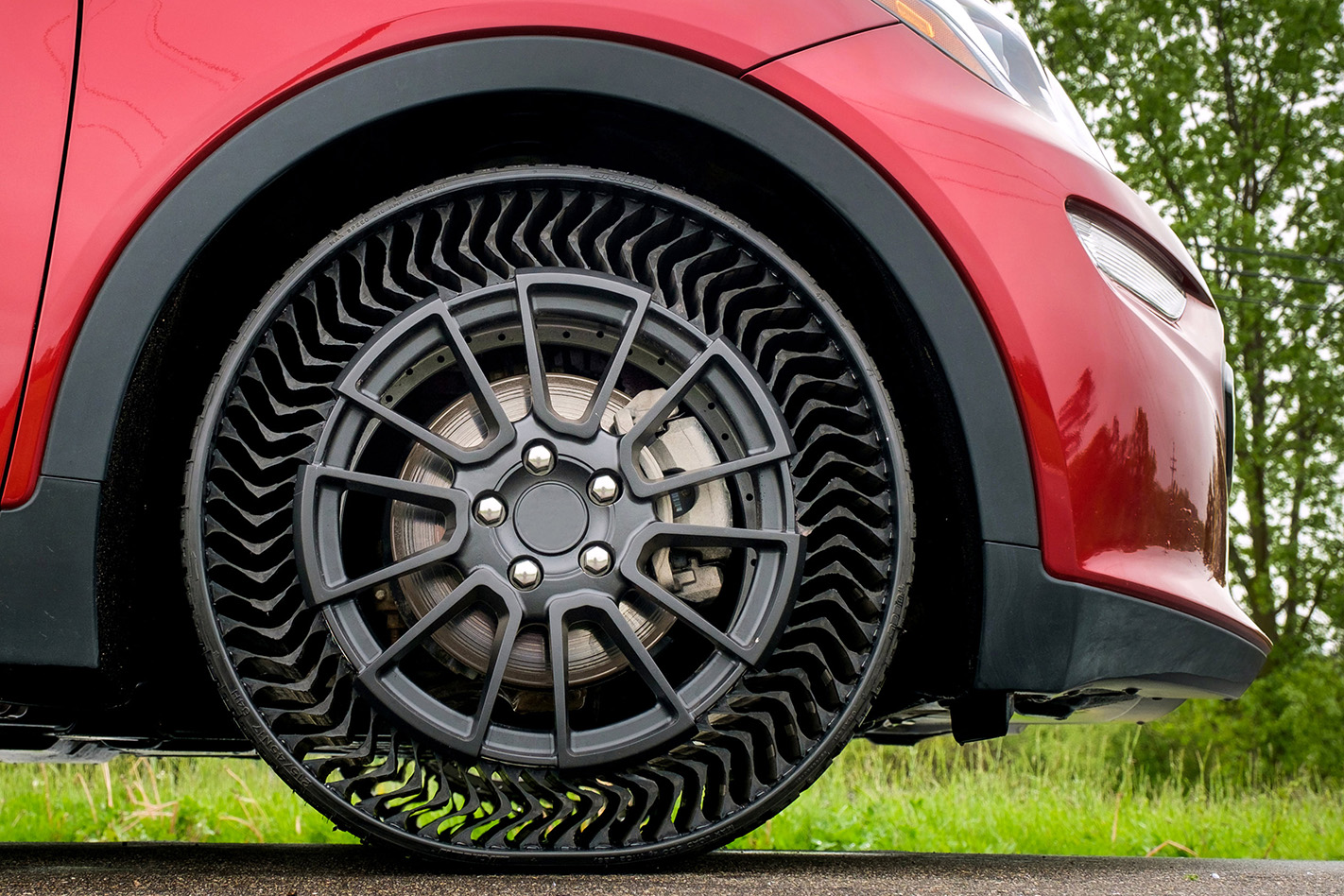
Eco-friendliness is still one of the concept’s greatest advantages. According to Michelin some 200 million conventional tyres are sent to landfill each year due to some kind of non-repairable puncture damage. An airless tyre would only ever need a thin strip of tyre tread to be replaced when it reached its wear limit.
At the time it seemed like a no-brainer, and that drivers would flock to the airless tyre en masse. That never became reality, and while airless tyres like the Tweel have indeed entered production, they’re only really used by industrial and warehousing equipment (below), and the occasional ride-on lawnmower or ATV (below).
Michelin has since followed it up with the Uptis (above), another airless tyre that’s intended for passenger cars, and one that it’s co-developing with the aid of General Motors. It’s only a prototype for now, though.

The pneumatic tyre’s future is safe for now, it seems. So safe, in fact, that German tyre giant Continental told the media earlier this year that it doesn’t foresee a future where airless tyres will supplant air-filled ones at all. So why is that?
It turns out that airless tyres are horrible at a lot of things.
“The pneumatic tyre will be the best concept in order to get better [rolling resistance]” said Continental’s vice president of passenger car tyres, Dr. Holger Lange.
Rolling resistance is critical to achieving good fuel efficiency – not to mention the rise of EVs. But it’s not the only reason pneumatic tyres aren’t under threat by plastic-spoked alternatives like the Tweel.
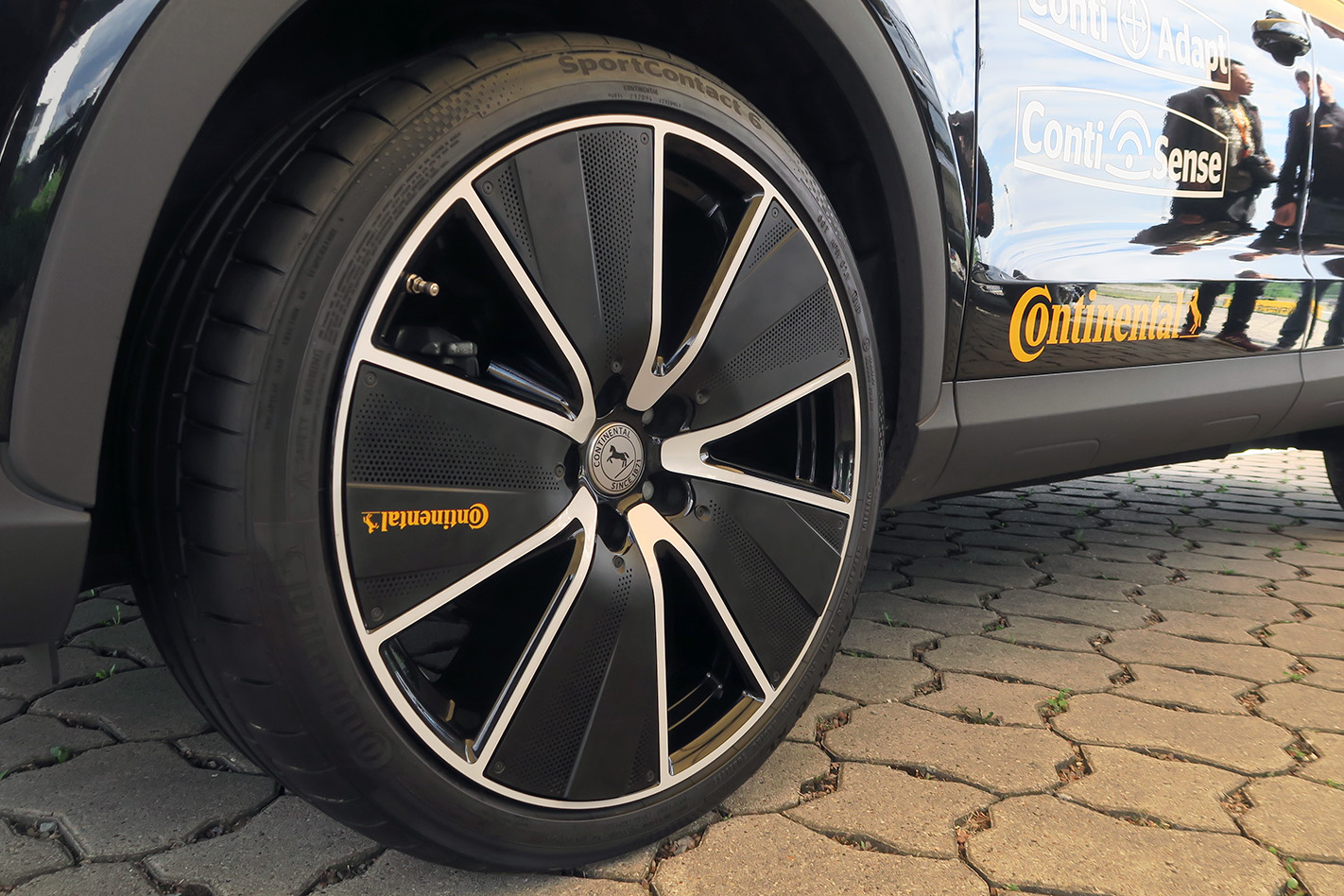
“Whenever you say something is dead, it wants to survive,” Lange said when asked if airless tyres were an evolutionary dead end as far as the passenger car is concerned.
“I would not say it’s dead, but I would say that for the airless tyre concept there are niche applications in areas where the focus on rolling resistance is not so prominent and where the focus on vehicle dynamics is not so strong, because those are the underlying disadvantages of airless tyre concepts.
“Whenever you exchange the air against rubber or even against steel, you have a disadvantage in energy consumption and thus rolling resistance. That is one part. From the practical point of view you also have some disadvantages in stability and durability.”
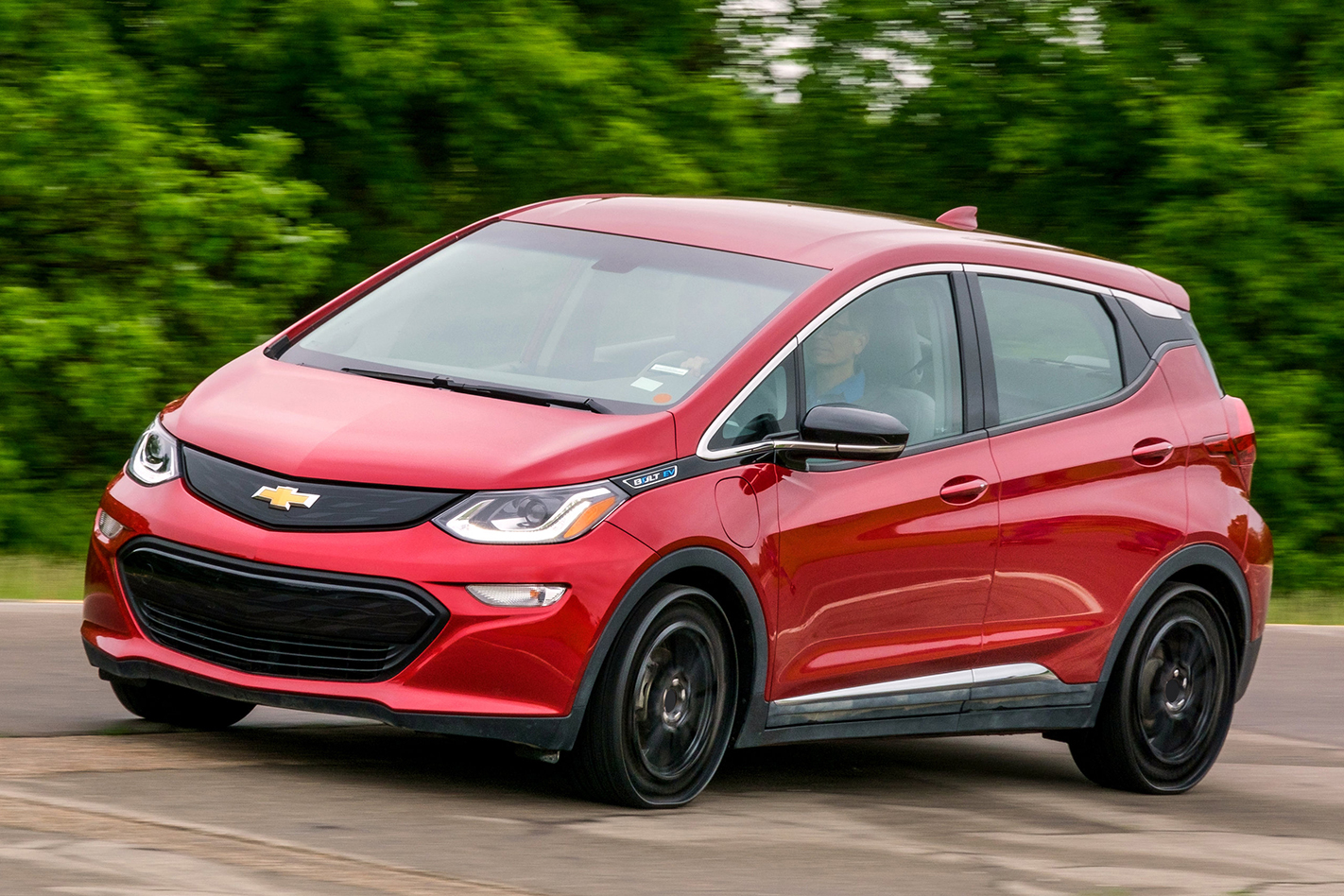
Stability is a big one. Anecdotal evidence suggests that Tweel-style airless tyres tend to resonate significantly at speeds above 80km/h, with the resulting vibration making highway travel quite unpleasant.
Then there’s also the airless tyre’s habit of transmitting plenty of that noise and vibration into the cabin, something it does more readily than a pneumatic tyre because the vehicle’s weight is supported by the spokes at the top of the Tweel which, when under such tension, act like solid rods rather than an air-cushioned rubbery sac.
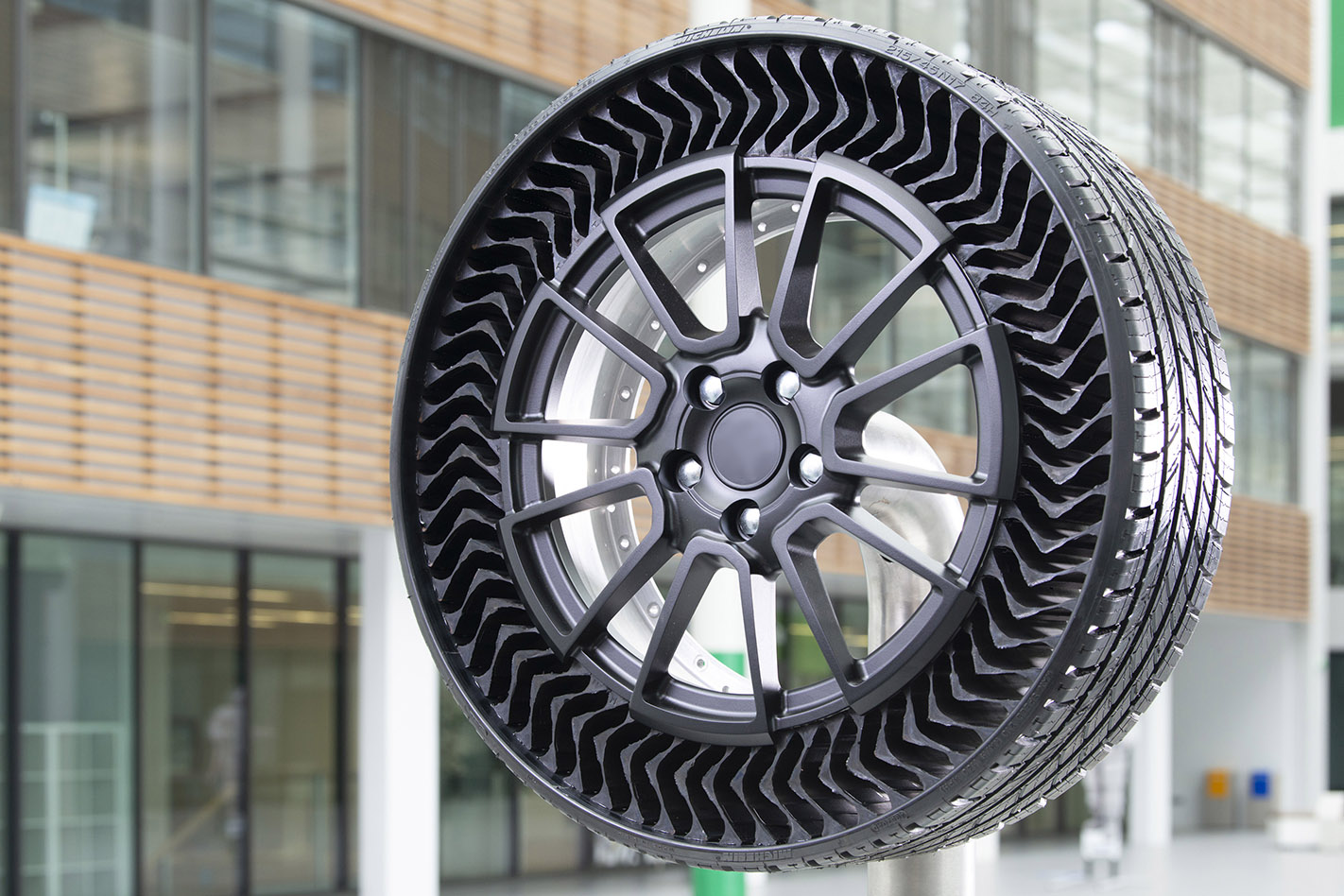
There is, however, one crucial use-case where an airless passenger car tyre makes sense: autonomous taxis. After all, with no driver operating the vehicle, what happens if a self-driving taxi gets a hole in a pneumatic tyre? Who changes it? Surely not the passengers, and that’s likely the main reason why Michelin has persisted with the air-free idea with its Uptis prototype.
Yet even Michelin acknowledges that air-filled radial tyres will be “the standard for a long time to come”.
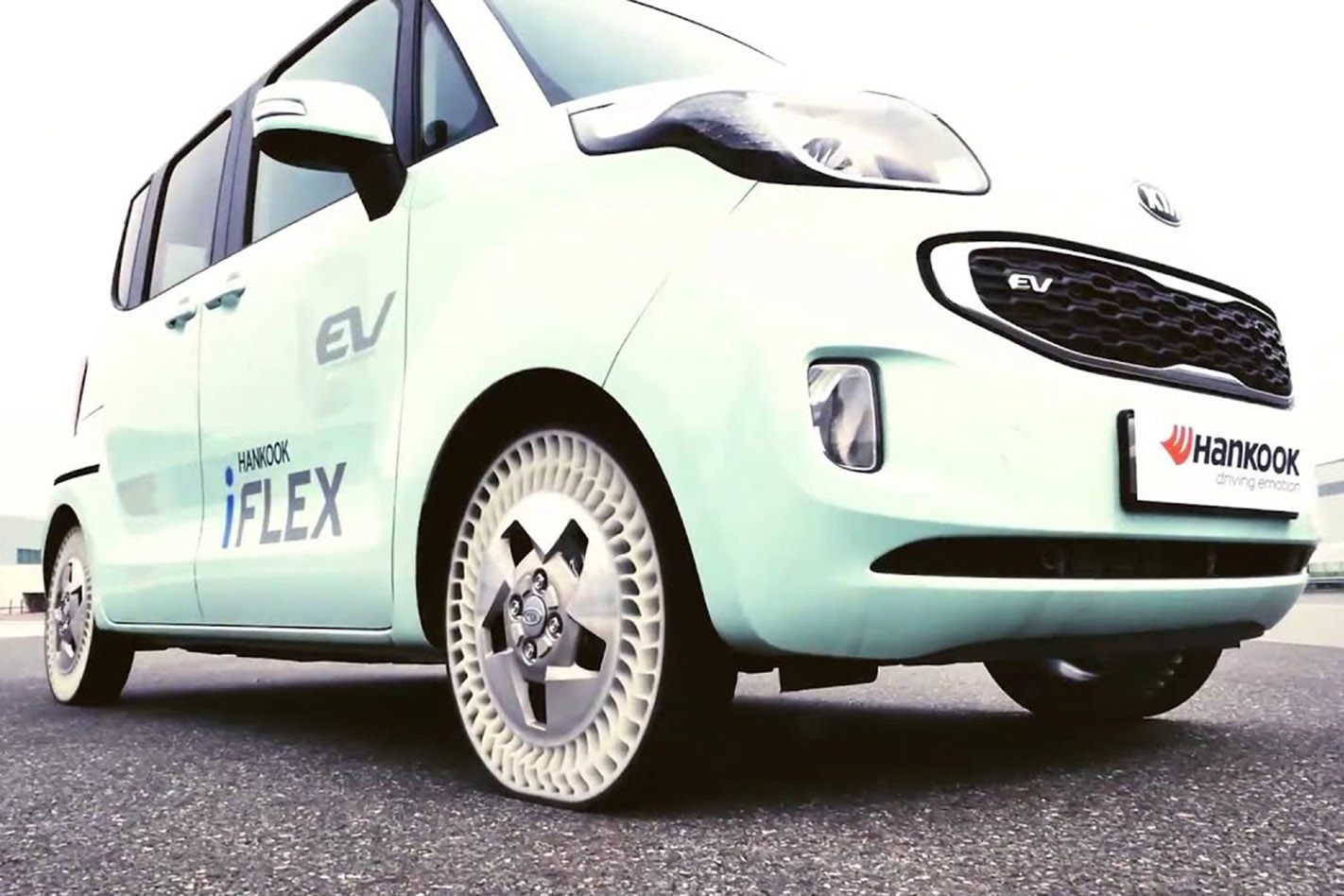
That hasn’t stopped Korean tyre brand Hankook from also pursuing an air-free passenger car tyre of its own, called the iFlex tyre (above) – arguably for the same reasons Michelin has persisted with the Uptis. Not only that, but the company says it’s managed to make its airless tyre sustain high-speed driving at speeds of 130km/h without any major problems.
However the iFlex is still in development and the Michelin Uptis is also a prototype for now, so if you were living in hope of a future where you’d never need to hop out of your car in the rain to replace a flat tyre, then we’ve got bad news. That is, unless you happen to commute to work on a train… or the back of a lawnmower.
As if electric vehicles needed any more scrutiny, a Canadian owner’s Hyundai Kona EV has caught fire and exploded in its garage, blowing through the garage door and roof.
Montreal firefighters were called to Piero Cosentino’s house on Friday after he heard an explosion and saw black smoke pluming from his garage.

“As soon as I saw that, I immediately turned off the [circuit] breaker,” Cosentino told CBC News.
He ran outside to find his garage door strewn across the street, a hole in the roof and his Hyundai Kona EV – purchased just months prior – on fire.
Cosentino said the car wasn’t charging, nor was it plugged into the household’s electricity, though some Canadian news outlets have reported that fire officials have noted that the car was attached to a charging point.
“If we were in front of the garage door, we could have been in hospital,” he said.
The Montreal Fire Department deployed around 30 firefighters to help douse the fire, with Division Chief Louise Desrosiers confirming that they couldn’t immediately see any cause for the fire other than the electric vehicle.
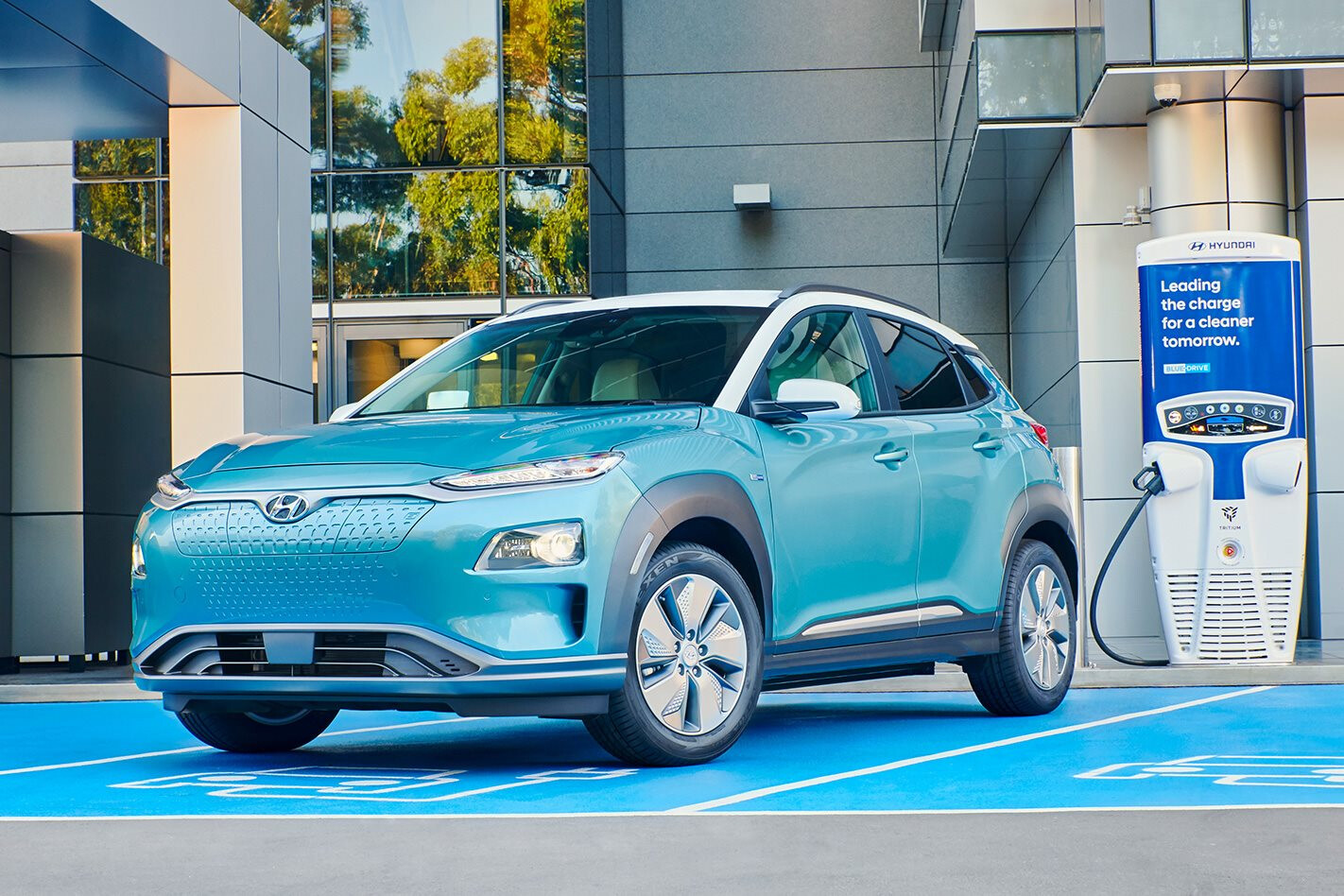
“It was a fully electric vehicle, and there was nothing around that could have caused the explosion,” she told Radio Canada. A full investigation will be completed by the local authorities.
As serious as this incident looks, the Hyundai Kona is apparently not alone. Just a few months ago, security cameras captured the moment a Tesla Model S spontaneously caught on fire in an underground garage.
Tesla says that the incident was due to a fault in a single battery cell and that it has implemented production line changes as a result.
While it’s unreasonable to assume electric cars are any more prone to catching of fire than internal combustion engine cars, lithium batteries can cause spectacular fires when damaged.
Such was the case a few months ago where a BMW i8 caught fire while stationary on a showroom floor and had to be dunked into a water bath by the fire department to be extinguished completely.
In the case of the Canadian Kona, it is possible that damage to the battery (including an intrusion by a sharp object passing under the vehicle) is to blame for the fire and the ensuing damage.
Internal short circuits caused by manufacturing defects are relatively rare by today’s standards, although they are not completely out of the question.
EV manufacturing is also in its infancy; Audi, for example, has had to recall its brand new e-tron to rectify a potentially dangerous water ingress issue.
Hyundai Canada has confirmed that it is investigating the fire, adding that the “the safety of our customers is our first priority and we will push to fully understand the issue as quickly as possible.”
Images: Mathieu Daniel Wagner/Radio Canada
It’s not due into the country until later next year, but already the Chevrolet C8 Corvette has tongues wagging, and GM fans saving their pennies.
As Wheels understands, the C8 Corvette will be priced between $150,000 and $170,000 when it arrives on our shores in right-hook form. This gives us a well-defined price bracket to play in when it comes to finding its natural rivals.
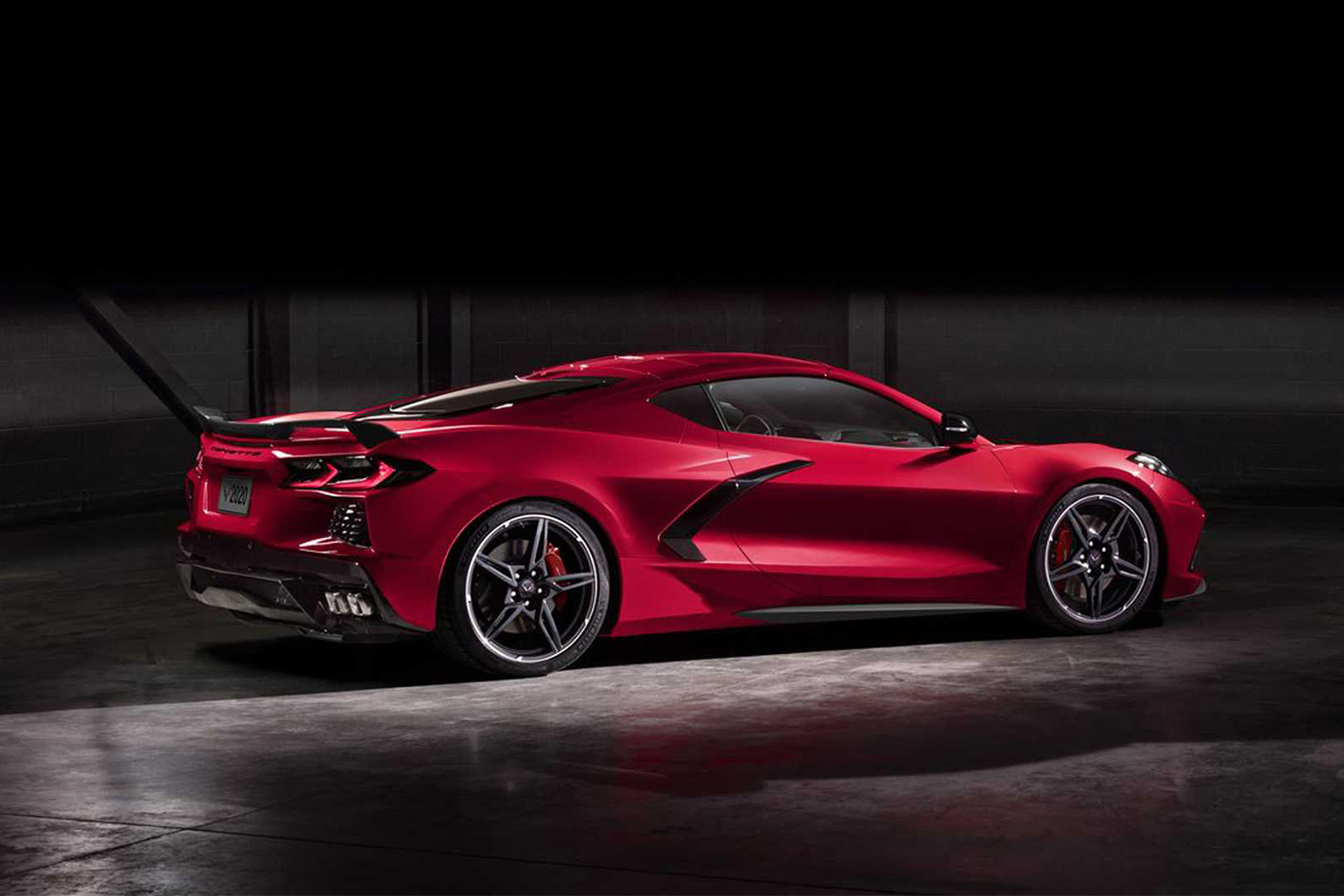
Before we get into some on-paper comparisons, we need to make it clear that the C8’s Australian price cannot be compared to what our American friends will be paying.
Vehicles touting a comparatively cheap price tag in the US have been a thing since, well, forever. Particularly when they are produced over there and need to be shipped and readied for our market. So comparisons to how much the C8 costs in North America are a tad redundant.
It’s expected just a single high-grade specification will be available in Australia, which is likely to include the optional Z51 performance pack as standard. This means claimed power figures come in at 369kW at 6450rpm and 637Nm at 5150rpm from the 6.2-litre naturally-aspirated LT2 V8. Mated to an eight-speed dual-clutch gearbox, all those kilowatts are sent exclusively to the rear wheels.
Right then, so what is it competing against when it comes to winning over Australian buyers?
Let’s start with one of Australia’s favourite V8 engines, the Mercedes-AMG M177. You can find the 4.0-litre twin-turbo V8 in Benz’s C63 S, which is available in sedan, coupe, and estate body styles.
The two-door coupe is the most likely rival to the C8, costing $165,900. For that money you get 375kW at 5500-6250rpm and 700Nm at 1750-4500rpm, which is bang on against GM’s LT2.
Getting that grunt to the ground can prove challenging, however, as we found when conducting performance testing in the C63 S coupe recently. The best we could manage to eke out of AMG’s brawler was 4.4 seconds 0-100km/h.
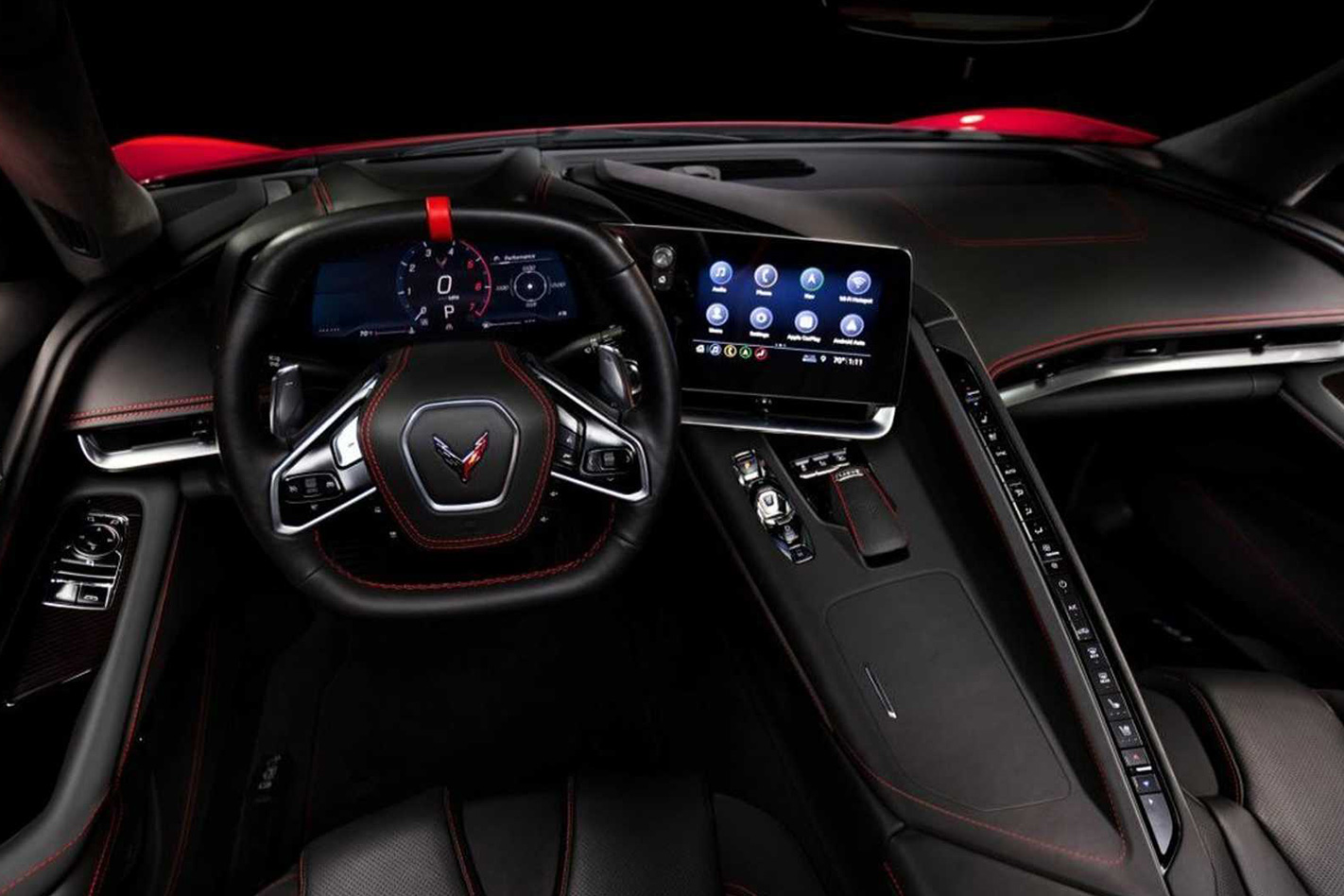
While Chevrolet is yet to release official performance figures for the C8, it claims the Z51 pack will result in a 0-60mph (97km/h) in under 3.0 seconds when using launch control. We conservatively estimate this to be in the region of 3.2 seconds when cracking 100km/h from a standstill.
In other words, it’s going to be very quick in a straight line.
Okay, so what if it’s not the V8 aspect of the C8 that appeals to you, but the mid-engine layout?
There are two more German options.
The first is Porsche’s Cayman, which is the mid-engine sports car benchmark right now.
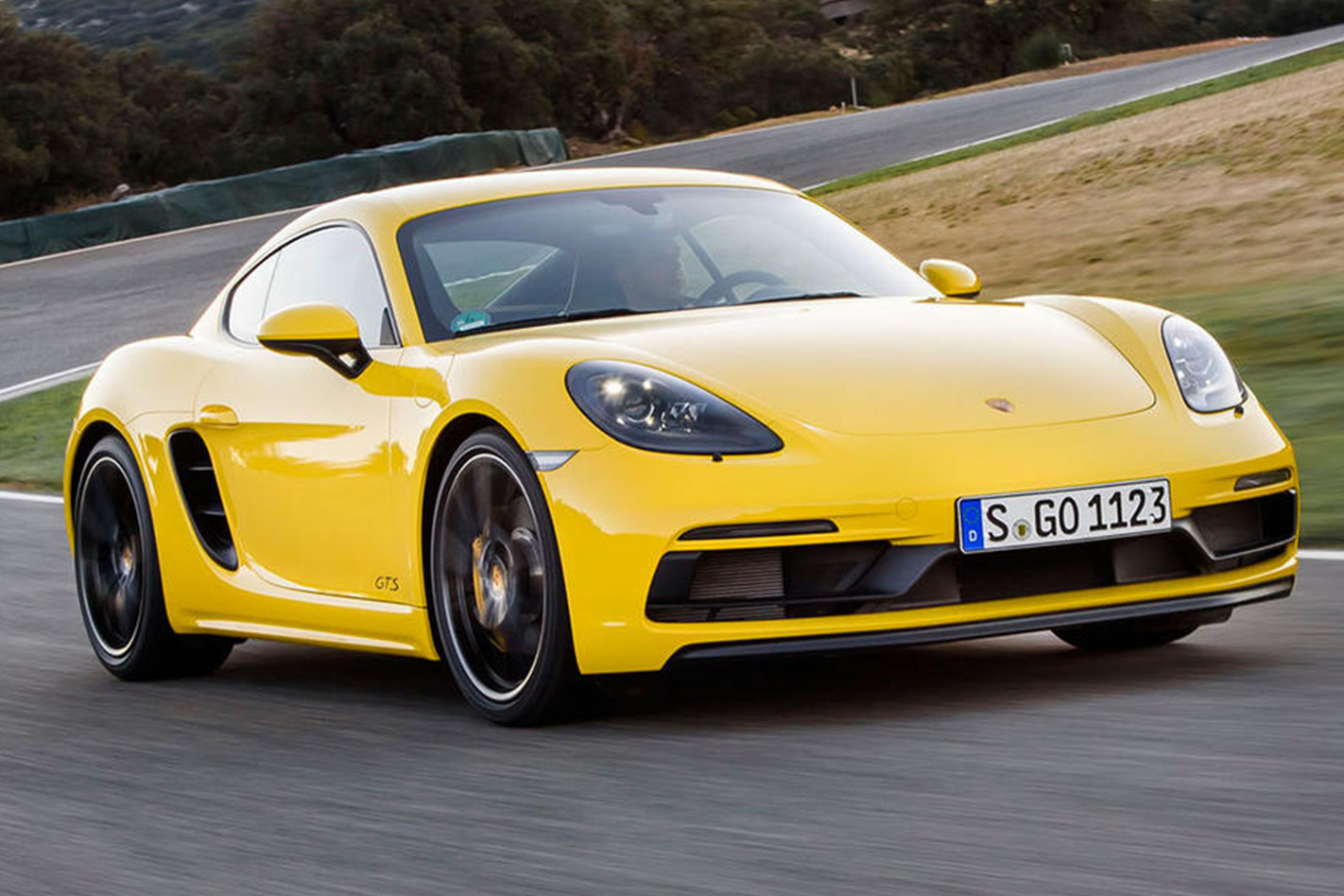
To find a Cayman that would rival the C8, you’ll need to pick the GTS, which wears a pricetag of $178,680 if you want the slick self-shifting PDK gearbox.
Power comes from a 2.5-litre turbocharged flat-four engine, with 269kW and 430Nm being sent to the rear treads, which Porsche claims will propel the baby sports car to 100km/h in just 4.3 seconds. Knowing Porsche, you could probably knock a couple tenths of a second off that claimed figure.
If you would prefer your sports car with four-rings on the grille and all-paw traction, Audi’s TT RS costs $137,611.
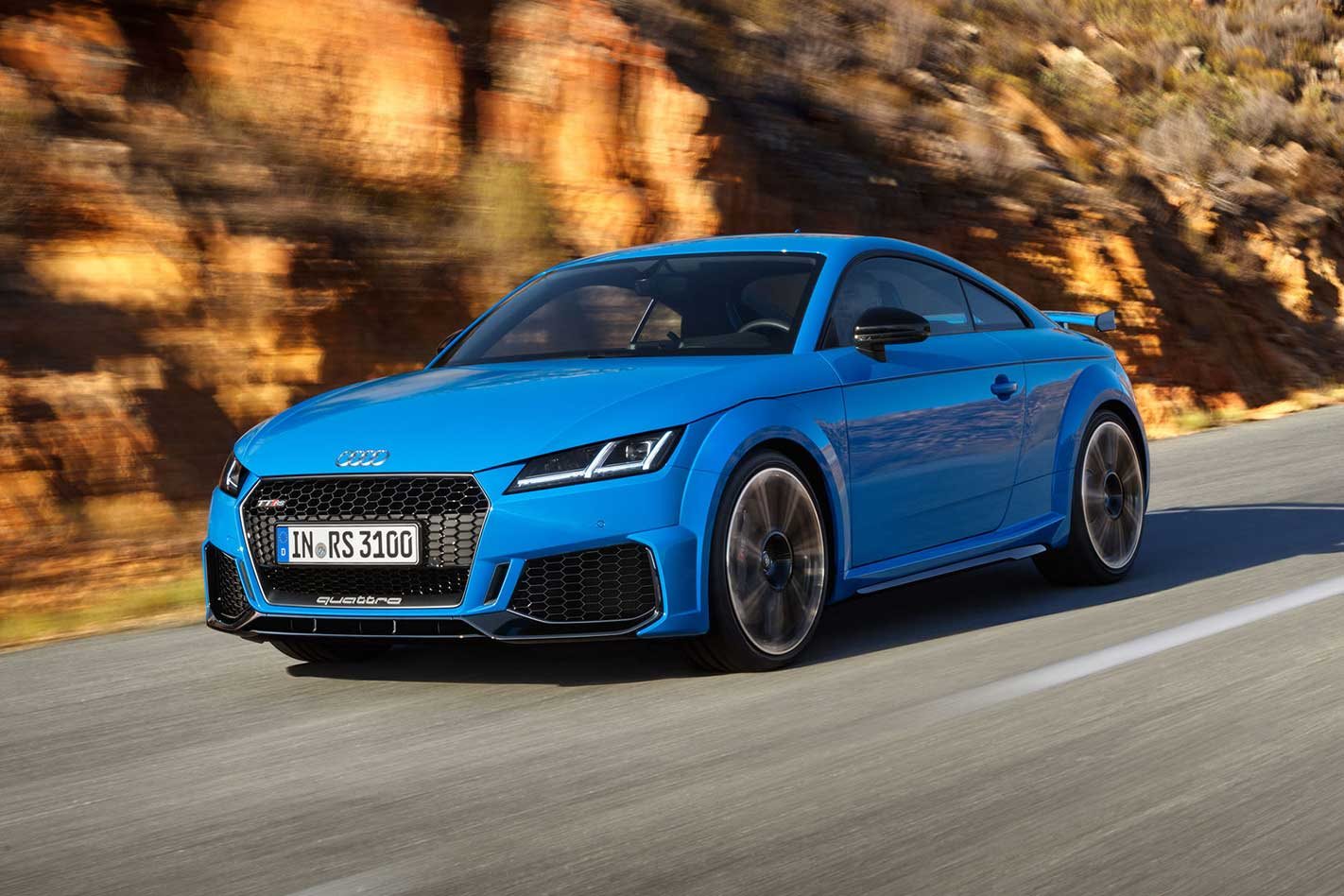
With a turbocharged five-cylinder producing 298kW and 480Nm, Audi claims its iconic sports car can crack triple digits in 3.7 sec. When looking at value for money, it’s a tantalising option.
If none of those take your fancy, GM has something else from within its own stables which could be an intriguing alternative.
HSV imports and converts the Chevrolet Camaro ZL1 for Australia, charging customers $162,190 for the supercharged V8 coupe when fitted with a 10-speed automatic.
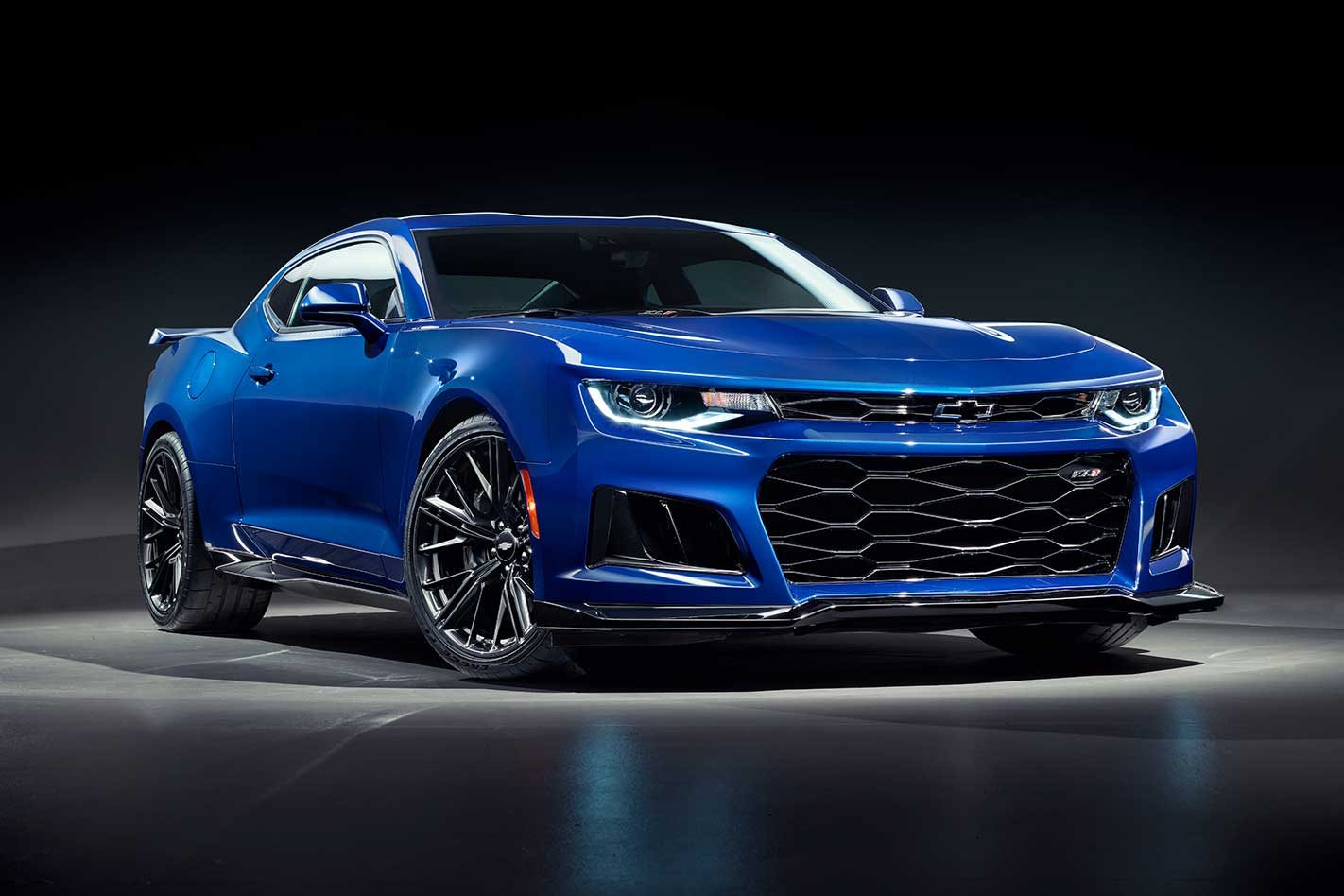
The ZL1’s LT4 V8 sends 477kW and 881Nm to the rear wheels, which are fitted with Continental Sport Contact 5s rubber as standard. We performance tested the ZL1 with standard rubber on a drying racetrack with Supercar ace Karl Reindler at the wheel, returning a best time of 4.9 seconds to 100km/h.
When fitted with the optional (standard in the US) Goodyear Eagle F1 rubber, our sister publication Motor managed to crack the ton in 4.3sec on an unprepped drag strip.
So far, nothing in the C8’s price range matches it for straight-line performance. But if you can stretch the budget a bit further, Nissan’s venerable GT-R enters the fray.
The cheapest iteration of Godzilla you can buy in Australia is the Premium variant, costing $189,000. Fitted with a twin-turbo 3.8-litre V6 engine it produces 419kW and 632Nm through a six-speed dual-clutch automatic to all-four-wheels.
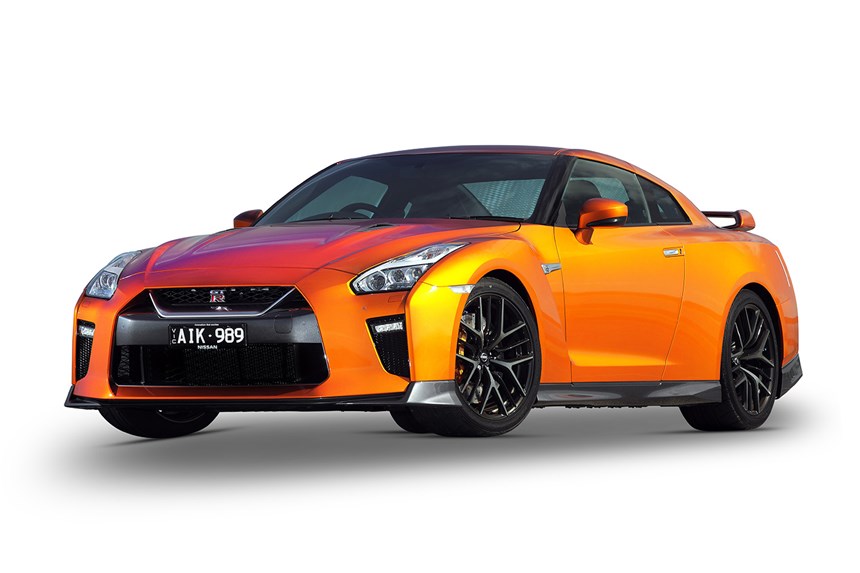
Motor performance tested the car at Winton Raceway, returning a verified 3.2 seconds 0-100km/h time. Bang on what the C8 is expected to achieve. This is likely to be the C8’s closest rival in Australia.
If you’d rather burn electrons than hydrocarbons, the Tesla Model S Performance with Ludicrous mode (previously known as the P100D), can now be had for $147,000 and is capable of dominating the traffic light grand prix with a sub-3.0sec 0-100km/h sprint.
When the C8 Corvette arrives in Australia, it won’t have any natural V8 mid-engine rivals, but it will be competing with a myriad of established, and popular, performance-orientated models.
Even though the $150,000-$170,000 price estimate had many bemoaning that it would be too expensive, it’s clear the C8 could be a genuine performance bargain.
How does the Chevrolet C8 Corvette compare to USA sports car pricing?
u00a0 | USA | Australia |
Chevrolet C8 Corvette Z51 (est.) | $70,000 | $150-170,000 |
Porsche Cayman GTS | $80,000 | $178,680 |
Mercedes-AMG C63 S | $76,450 | $165,900 |
Camaro ZL1 | $66,190 | $162,190 |
Audi TT RS | $66,900 | $137,611 |
Nissan GT-R Premium | $113,540 | $189,000 |
Which car would you choose in that price bracket? Let us know in the comments below.
IT’S FAIR TO SAY there’s been quite a bit of hype around the launch of the new Toyota Supra. What’s also true is that after hype usually comes disappointment. Well, it seems that the Japanese have, to a certain extent, insured themselves against rampant buyer expectation by dramatically understating the power and torque figures of their flagship coupe.
UK-based performance tuners Litchfield have strapped an A90 Supra onto their Maha dynamometer; exactly the same unit that Magna-Steyr uses in the Graz factory where the Supra and its close cousin, the BMW Z4, is built.
The key reason for doing so was to establish a baseline figure for power and torque from which Litchfield can then develop an upgrade package for the Supra. Indeed, the company claims thatafter doing so, it will also be producing its own lowering spring kit, with both Bilstein and KW offering complete suspension products. Litchfield is also working on in-house suspension bush replacements which will improve grip and steering feel. The company is also scanning in components that will introduce cosmetic upgrades and functional carbon body parts.
But it seems that there’s a fair amount of headroom in the BMW B58 twin-turbo lump for the team at Deerhurst Walton to work with. What’s more, the vehicle wasn’t making anything like the manufacturer’s stated figures of 250kW and 500Nm. It was developing considerably more.
When the Maha dyno spat out the final numbers, it was clear that this customer-spec car was, to put it mildly, rather healthy. Litchfield reported that it was good for 280kW peak power and a chubby 529Nm. This means that the Supra is, in reality, delivering considerably more oomph than a Porsche 991 Carrera (272kW/450Nm) costing three times the price. That sounds like decent bang for your buck straight off the bat.
Litchfield claims that there’s more good news in that the Supra’s ECU can be programmed simply via the OBD port using BFlash’s MG1CS024 TC298 protocol, and are hopeful that some seriously big numbers can be extracted from the three-litre powerplant. We’ve contacted Litchfield for details on how Australian Supra owners can take advantage of any future upgrades, so stay tuned here for updates. In the meantime, those waiting on deliveries of their new Supra can bask in the warm glow that they’ll be getting even more than they originally signed up for.
The bugbear of car ownership is usually the time it takes to get the car serviced. That and the fact no one enjoys a Soviet-inspired waiting room, sitting around on an old crusty pleather sofa located next to a broken water cooler and lunch box full of instant coffee mix.
Thankfully, UVeye might have the solution to retain our sanity.
The Israeli-based start-up has created a ‘drive-through’ service centre using specialised devices and software to assess the health of a vehicle quickly, so you can drive in and, if it ain’t broke, drive out.
Gaining further funding from Volvo and Toyota Tsusho – part of Toyota Group – the company now has $50 million behind it to move drive-through systems into dealership centres. Volvo and Toyota will begin rolling out the tech while UVeye has further commercial relationships with OEMs including Daimler and Skoda.
It also has backing from W.R. Berkley Corp, a large US insurance group that will benefit from being able to quickly and more accurately diagnose vehicle faults by driving a car past sensors.
UVeye can assess physical and mechanical flaws, as well as panel defects, by comparing images and scans taken with manufacturer specifications. Artificial intelligence crunches the numbers in minutes and lists any faults. Matched with condition-based servicing that uses sensors and driving data to log vehicle health, the two systems can work in tandem by making the usual vehicle inspection and service visit much more efficient.
CEO at UVeye, Amir Hever, is bullish that the tech will become standard in nearly all dealerships, as machines continue to replace humans in vehicle manufacture and maintenance.
“This latest investment including leading automotive strategic partners is an important signal that we believe paves the way for UVeye to become the standard of automotive inspection and safety,” said Hever.
“We are delighted to have world-class companies in their respective sectors endorse our game-changing auto scanning solution”.
Just as I have never met a politician I would trust or an SUV I would consider owning, neither have I ever – in just on three decades – driven a Mazda MX-5 I haven’t liked. Loved, even.
This track review was carried out in conjunction with MOTOR’s Bang For Your Bucks 2019
And nothing looks like changing there, because even in its latest, most sophisticated guise, the wee roadster with the big reputation still has what it takes to give a big, hairy, V8-lovin’ galoot like me a Serious Jones for same.
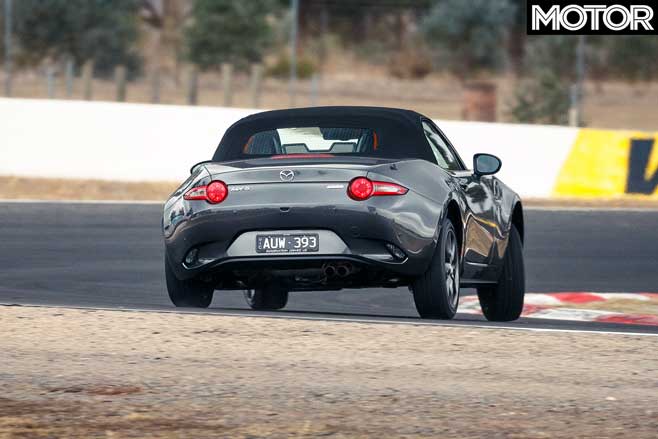
I’m never going to try to convince you that the MX-5 formula is perfect. Nope, even in today’s version there’s still nowhere to stash anything much more than a phone or prop a coffee. At least the steering column is now finally reach-adjustable, but trust me, with two grown-ups on board, the Mazda is full.
Meantime, the moderate power, super-linear delivery, skinny tyres, soft springs and built-in body roll (for some very handy weight transfer during the big wet of 2019) meant that the Mazda could be driven a lot closer to its potential than anything with 300kW and starched underdacks.
So the MX-5 was huge gobs of wet-track fun and it’s fair to speculate that this is the car whose wet and dry lap-times would feature the smallest difference.
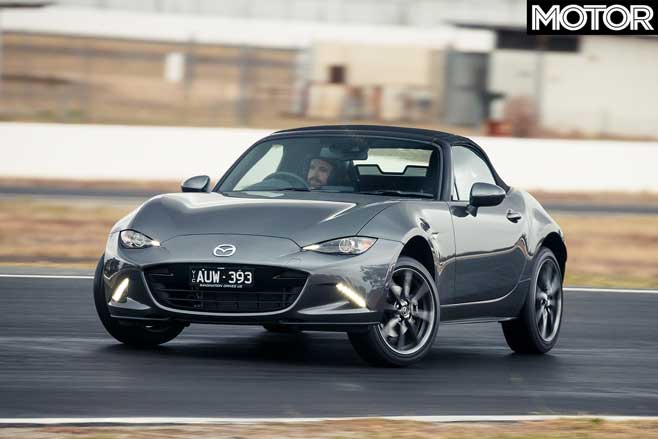
The steering can feel a little heavy at first, but before you’ve let it twirl itself back to on-centre the first time, you’re aware of just how tactile and responsive that front end is.
It’s not uncommon to throw an MX-5 into a group test and discover that the Mazda has the highest-fi when it comes to front-end feel and feedback, and BFYB 2019 doesn’t seem to me to have been any different there.
That degree of accuracy allows you to place the car exactly where you want it and, once you’ve calibrated yourself to its body-roll, you can push harder in the Mazda than just about anything else here. That philosophy of offering you a simple machine with which to go berko is carried through to the brakes, too.
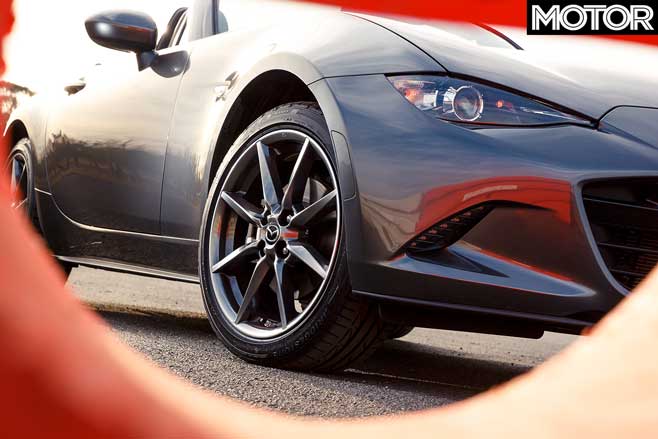
As well as being arranged by somebody within Mazda who can obviously heel-and-toe instinctively, the pedal is weighted just so and the feedback through your leg as crisp and accurate as I would be if you used your hand. Modulation? No problem, not even on the soaking surface we were using.
Okay, so the limits are lower and the actual lap time won’t be as sharp, but as a car that you can use more – more of the time – the Mazda is a glittering example. Which, I know, has always been the car’s schtick, but it doesn’t make it any less joyous just because you knew it would be.
Mazda MX-5 GT BFYB 2019 Results – 5th place
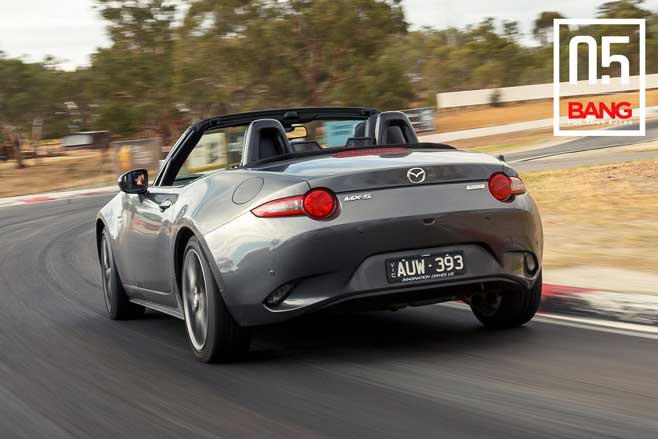
0-100km/h: 6.37sec 0-400m: 14.54sec Price: $41,960 Bang Index: 98.1 Bucks Index: 124.2 BFYB Index: 111.1
Bang For Your Bucks 2019 Judges’ Comments
Campbell – 8th “If fun is the only measure, a stock ND MX-5 is a seriously underrated track car.”
Cordony – 6th “This, people, is what driving’s about.”
Morley – 7th “Do you value purity and front-end feel? You’ll love this car.”
Scott Newman – 5th “The ultimate tool for learning to drive properly. A bit sketchy in the wet.”
Luffy – =4th “The MX-5 is always a great car to drive and it’s good to see that as the model gets older, it still hasn’t grown up. It is still a playful, lively, fun car to drive on the limit and it rewards driver ability. You feel like you have a lot of control over what is going on underneath you. It hasn’t been dumbed down by electronics.”
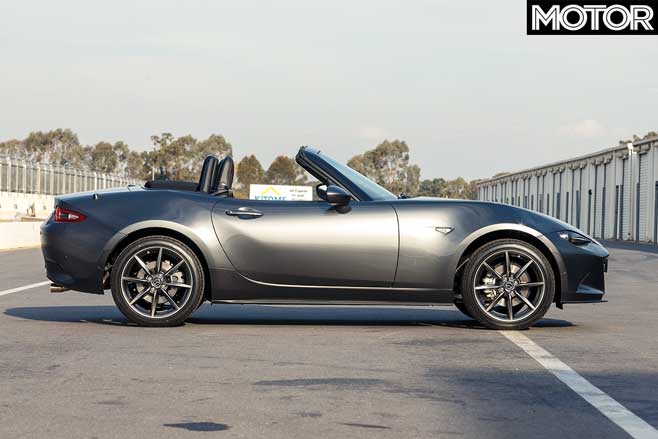
FAST FACTS 2019 MAZDA MX-5 GT SPECS BODY: 2-door, 2-seat convertible DRIVE: rear-wheel ENGINE: 1998cc inline-4, DOHC, 16v BORE/STROKE: 74.5 x 85.8mm COMPRESSION RATIO: 13.0:1 POWER: 135kW @ 7000rpm TORQUE: 205Nm @ 4000rpm WEIGHT: 1105kg POWER-TO-WEIGHT: 122kW/tonne TRANSMISSION: 6-speed manual SUSPENSION: A-arms, coil springs, anti-roll bar (f); multi-links, coil springs, anti-roll bar (r) BRAKES: 280mm ventilated discs, single-piston calipers (f/r) WHEELS: 17.0 x 7.0-inch (f/r) TYRES: Bridgestone Potenza S001, 205/45 R17 (f/r) PRICE: $41,960
Bang For Your Bucks 2019
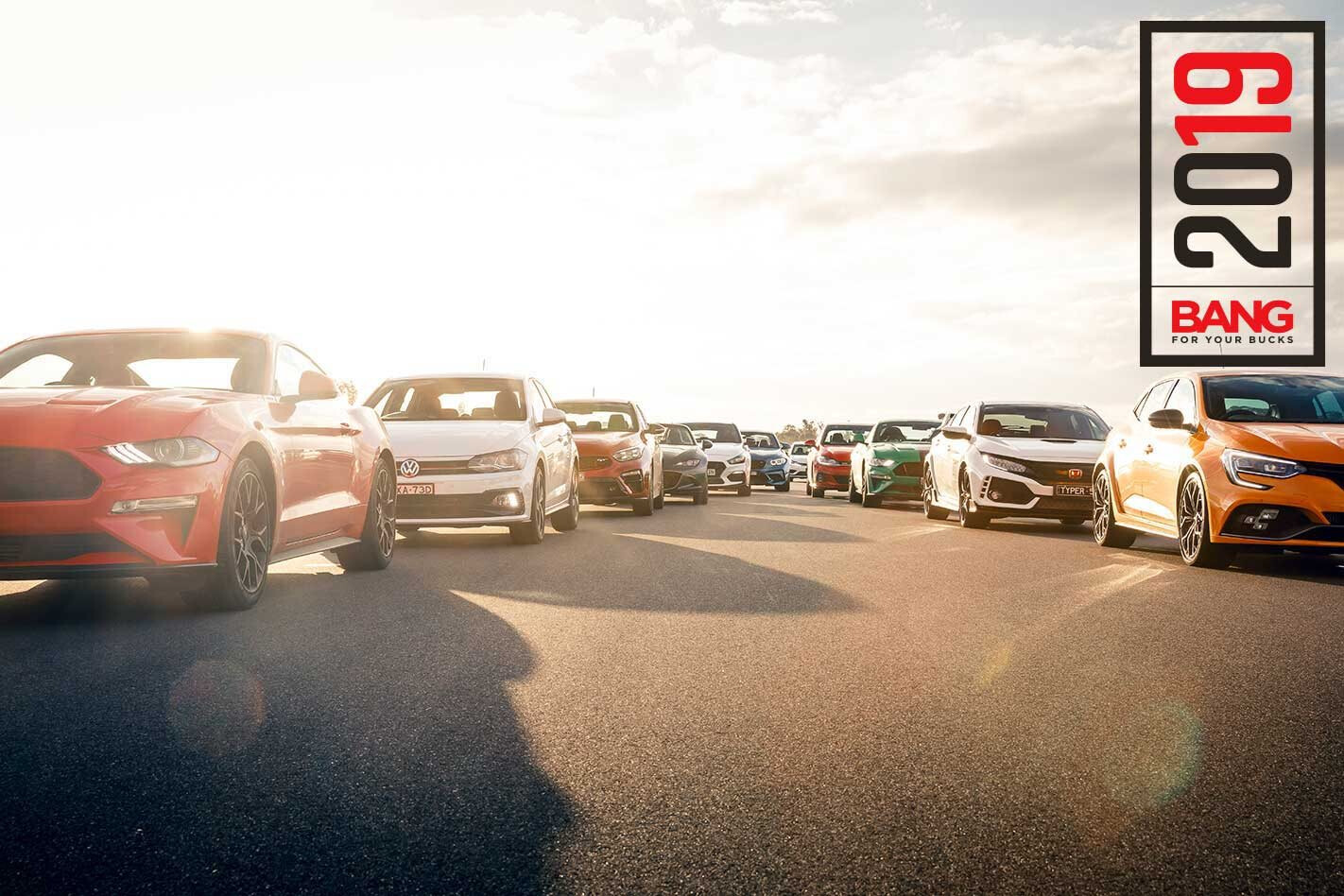 The Contenders, Judges & Criteria
11 of the hottest new fast cars under $100K roll up to take on our famous value-for-money formula. Which will be number 1?
The Volkswagen Golf GTI is the girl (or boy) you end up marrying.
This track review was carried out in conjunction with MOTOR’s Bang For Your Bucks 2019
You’ve had your fun with seductive sports cars that your parents weren’t sure about but by god they were fun. Maybe you messed around with something a little bit older – it felt special but regular breakdowns turned into a thing. And it made you broke. This may be triggering some readers.
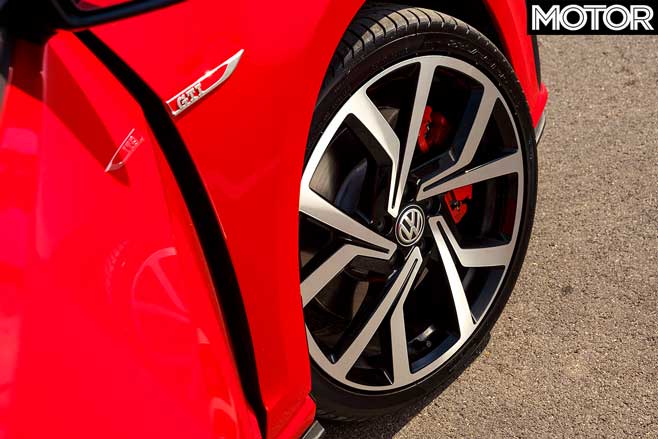
It’s visually modest – but with little splashes of sauciness – and it has an interior smart enough to solicit unsolicited compliments from your mother-in-law. Find yourself on a twisty road, though, and you’ve got enough power, and enough of a chassis, to scratch that itch that never seems to go away no matter how old you get.
And this one will scratch the itch very satisfyingly. Remember the GTI Performance? VW has basically taken the Performance badge off. Which means the GTI now has a very tasty 180kW/370Nm from the uprated 2.0-litre turbocharged inline-4, a mechanical limited-slip front diff, bigger brakes from the Golf R. Optional 19-inch wheels bring the price up to a slightly wincey – by historic Golf GTI standards – $46,190.
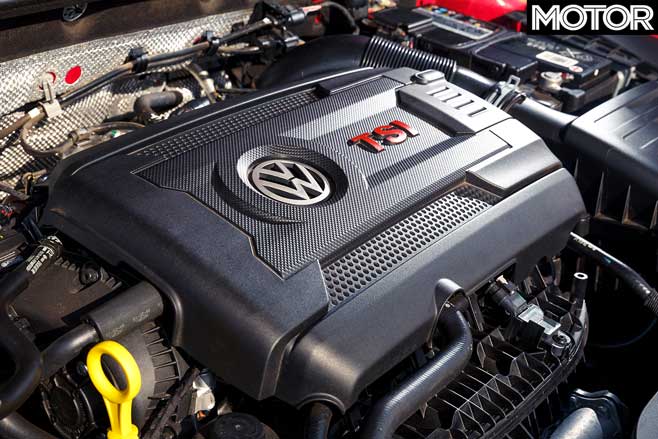
We often talk about duality of moods with a car, but how about triality? It’s a word, apparently, and the Golf GTI could be one of the few cars that has it. Docile, easy, enjoyable, comfortable at an urban amble, the GTI, with its pleasingly-weighted controls, can morph into a very eager, and quite fast, eight-tenths back-road weapon.
And on a track, now that the ESC can be turned off, while it’s no GT3 RS of hot hatches, the GTI can be hustled harder than ever before – and is even playful to a surprising degree. True, unlike say an i30 N, the ragged edge feels to be a place the GTI is still not entirely pleased to find itself at, preferring it wound back a click, but this is still a very fun car on a racetrack.
Great steering lets you know exactly what the front end is thinking and the diff is handy in meting out all those kilowatts, especially out of Winton’s tighter corners when they’re wet. Indeed, the way the Golf GTI drives feels very ‘right’.
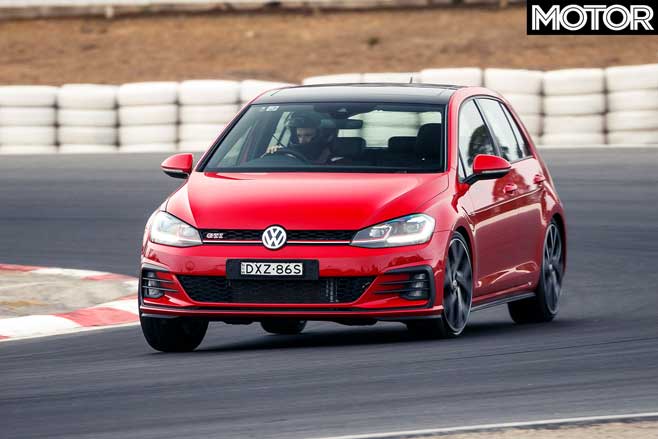
So why sixth? Well, much like describing the car to someone who doesn’t know, the Golf GTI is an impressive achiever across the board, but without letting its large amount of overall talent concentrate in any one area. As such, it was ranked fifth subjectively between the judges and the formula spat it out fifth for value, its total score putting it sixth.
If this was a test of most broadly capable car, the GTI might have won. But we’re not looking to get married just yet.
Volkswagen Golf GTI BFYB 2019 Results – 6th place
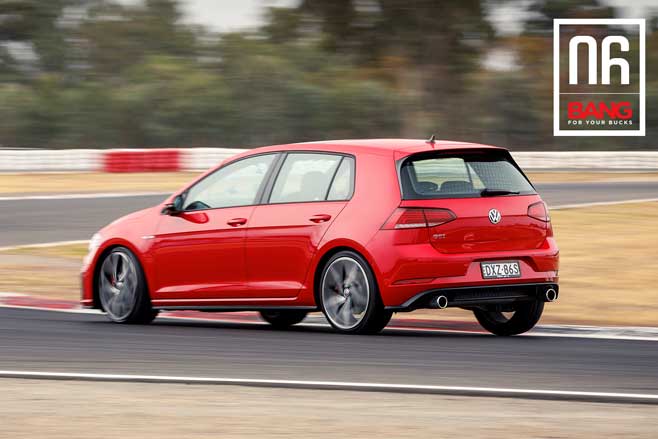
0-100km/h: 6.51sec 0-400m: 14.58sec @ 161.69km/h Price: $46,190 Bang Index: 101.7 Bucks Index: 112.8 BFYB Index: 107.3
Bang For Your Bucks 2019 Judges’ Comments
Campbell – 3rd “Honed over time; has a spread of talent and ability like no other car.”
Cordony – 8th “Very impressive. But also getting very expensive.”
Morley – 4th “Clever diff from the Performance model is a big leg up. Do I need the R?”
Scott Newman – 6th “Finally! A GTI freed from its electronic shackles and so much better for it.”
Luffy – 7th “It’s a fun car on the limit in patchy conditions, but the paddleshift transmission makes it feel like you’re playing on a simulator; it doesn’t respond as quickly as you want. And the paddle shifters feel very ‘plasticky’ – not a true reflection of the Golf GTI brand and history. It feels more like a toy than a car. Value for money, however, the GTI is the best of the VW lot. It’s cheaper than the R and has niceties that make it a bit better than the Polo GTI.”
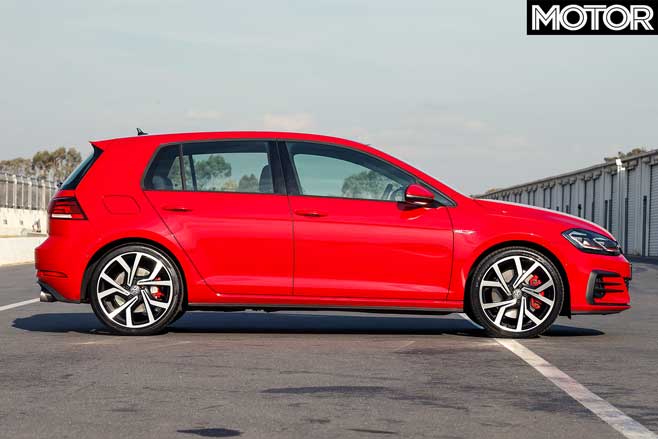
FAST FACTS 2019 VOLKSWAGEN GOLF GTI SPECS BODY: 5-door, 5-seat hatch DRIVE: front-wheel ENGINE: 1984cc inline-4, DOHC, 16v, turbo BORE/STROKE: 82.5 x 92.8mm COMPRESSION RATIO: 9.6:1 POWER: 180kW @ 7000pm TORQUE: 370Nm @ 4600rpm WEIGHT: 1352kg POWER-TO-WEIGHT: 133kW/tonne TRANSMISSION: 7-speed dual-clutch SUSPENSION: struts, adaptive dampers, coil springs, anti-roll bar (f); multi links, coil springs, adaptive dampers, anti-roll bar (r) BRAKES: 340mm ventilated discs, single-piston calipers (f); 310mm ventilated discs, single-piston calipers(r) WHEELS: 19.0 x 7.5-inch (f/r) TYRES: Pirelli P Zero, 225/35 R19 88Y XL (f/r) PRICE: $46,190
Bang For Your Bucks 2019
The Contenders, Judges & Criteria
11 of the hottest new fast cars under $100K roll up to take on our famous value-for-money formula. Which will be number 1?
