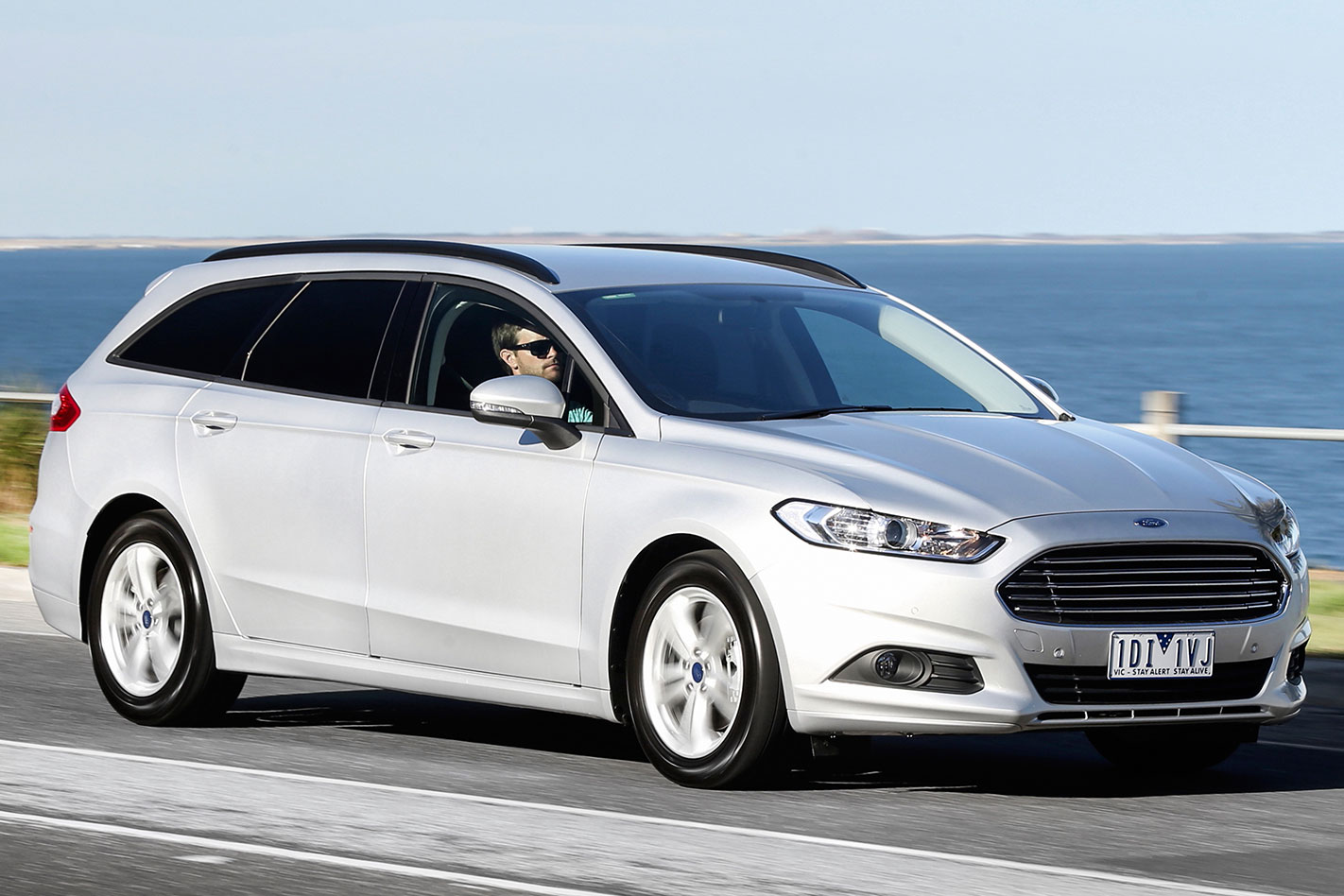
Every petrolhead is guilty of fantasizing about the what ifs. What if you could fit a 5.0-litre V8, six-speed manual, and rear drive into a Focus? Or, what if you could put a 427 side-oiler under the bonnet of a new Mustang?
The execs at Ford and their partner Multimatic have played that game, too, but they play it for real. And not with just any car, either. They’ve done it with their current supercar, the Ford GT.
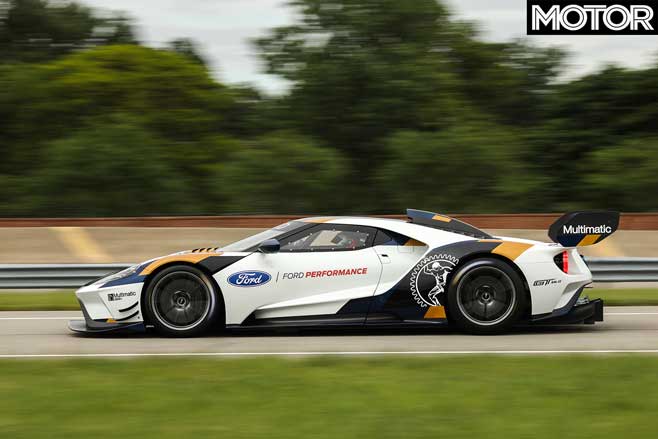
As Hau Thai-Tang, Ford chief product development and purchasing officer, told MOTOR about this Ford GT Mk II, “It’s the ultimate expression of performance for the Ford GT. It combines all of the learnings that we’ve had from our motorsports program with the Multimatic team, without any of the restrictions of balance of performance.”
The Ford GT Mk II is a track-ready, thoroughly optimized and de-restricted evolution of the GT road car, engineered without the constraints of a pro racing rulebook. It’s properly exclusive, with a limited run of 45 units being produced over the next three years and a price tag of $1.2 Million USD. Like the road car, the Mk II’s assembly is completed in Canada by Ford’s technical partner, Multimatic.
Each system within the GT was rethought for the Mk II. Power is up, weight is down, downforce is increased, and the interior is pure race specification. The result is a track day car with markedly superior performance to the road car and, on many circuits, capable of quicker lap times than its 2016 24 Hours of Le Mans-winning big brother.
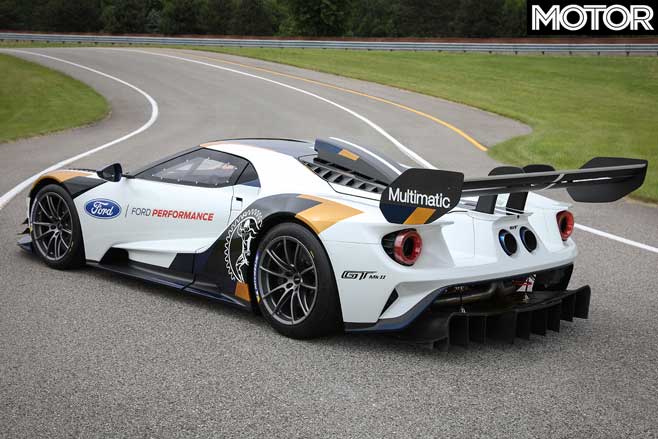
Consider that the roadgoing GT’s 3.5-litre EcoBoost V6 produces 485kW, but in professional race spec, it makes a modest 373kW. In the Mk II, however, the V6 has been uncorked and tuned to a healthy 522kW. (Torque figures were not available at press time.) Combine that a curb weight of 1,390 kilograms – over 100 kilos less than a standard GT road car – and you’ve got a recipe for a completely mad track car.
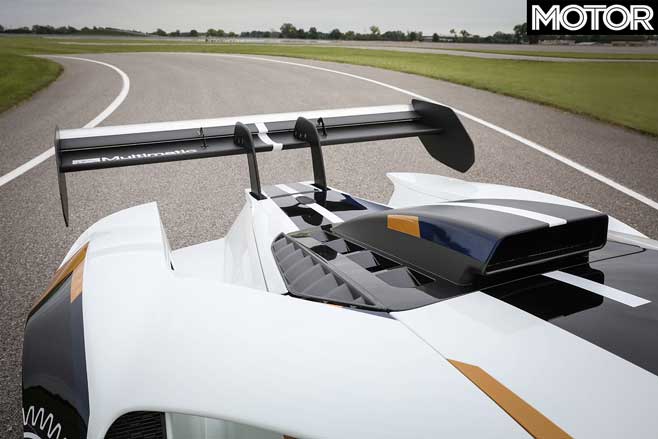
The Mk II’s roof scoop feeds auxiliary engine and gearbox coolers, plus there is an automatically activated water spray system for the charge air coolers. As Multimatic’s Chief Technical Officer, Larry Holt said with a grin, “We’ve got charge air coolers that allow it to be at that power (522kW) all day long. It’s got cooling that if you wanted to track day this thing all day long, if you had the stamina, you could.”
The Mk II’s unique aerodynamic package includes a massive fixed rear wing, large front splitter, GTE-derived diffuser, and front fender louvers. In total, downforce is well over 800 kilograms at 240 km/h, far beyond that of the GTE racecar.
The GT’s seven-speed dual clutch gearbox carries over to the Mk II, but is recalibrated for this car and it changes gear with the same sharpness as the racecar. The fact that it sounds like a racecar paints a clear picture about its intended purpose as the dominator of track days.
The basic construction of a GT road car includes a roll structure, but the Mk II goes further with occupant safety and adds a complete cage, a pair of bespoke, FIA-rated Sparco racing seats, and six-point harnesses. The road car’s air bags do not carry over, but the Mk II adds a MoTeC data acquisition dash unit with an integrated rear view camera display, necessary since the roof intake deletes the rear window.
Similar to the racing GT, the Mk II’s suspension is based around a set of Multimatic’s innovative DSSV spool valve dampers. They’re customer adjustable, but with a narrower range of adjustment than a pure professional damper. Brakes are Brembo carbon ceramics and the 19-inch slicks are supplied by Michelin.
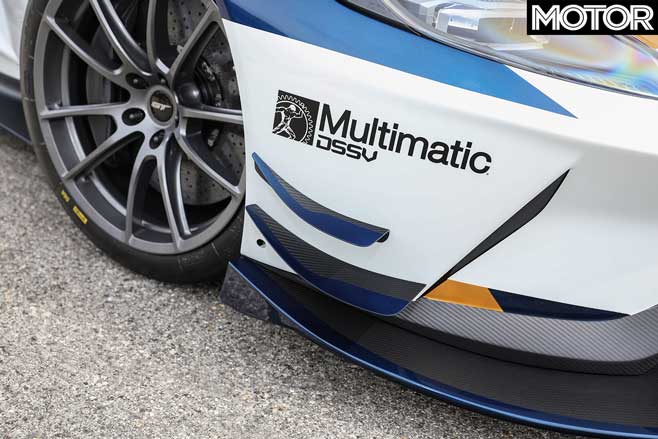
The Mk II is designed as to have racecar levels of performance and yet still be accessible for track day drivers. As Holt told MOTOR, “Our mantra is to reward the expert and flatter the novice. It doesn’t matter if you get into this, a regular Ford GT, a Shelby Mustang, that’s our goal.”
The GT Mk II debuts at the 2019 Goodwood Festival of Speed and customer deliveries begin later this year.
It’s easy to assume that the base-model Porsche Cayman is going to be an exercise in badge hierarchy, a model that plays on brand cachet at a relatively affordable price and not outright performance. However, assumptions can be misleading. The reality is that the cheapest Porsche sports car, one sans an S or GTS moniker, is every bit the real deal.
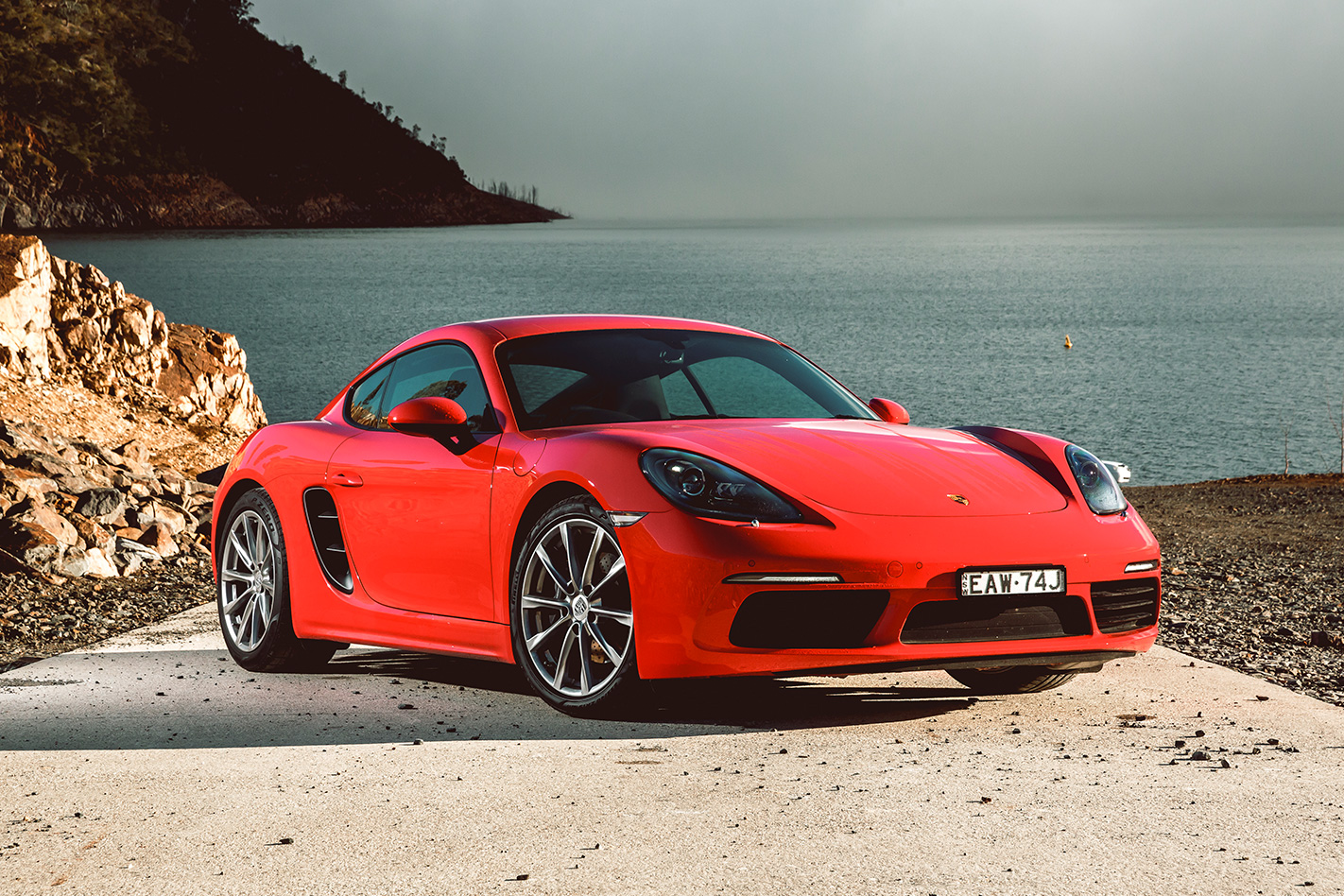
It is not, however, a straight cut equation, our test car is fitted with myriad options that take the base price of $114,900 to an as-tested sticker of $137,840. Therefore the value proposition is starting to look a little shaky. For that amount you could buy an Audi TTRS, which is demonstrably quicker in a straight line and comes with an epic five-cylinder soundtrack, but the trade-off is dynamic deficiencies. Despite the fact the Cayman receives only a 1988cc flat-four turbo, there’s substance here. Comprehending and letting go of the downsized displacement and culled cylinder count is key.
With 220kW and 380Nm, the entry-level Cayman isn’t a powerhouse. Still, with the slick seven-speed PDK and a high-rpm launch control, it hunkers down off the line, squatting and firing to 100km/h in 4.7 seconds during Wheels performance testing. What’s more, it goes on to a 13-dead quarter mile at 176.3km/h – suffice to say, with Sport Chrono optioned, the baby Porsche doesn’t hang about.
Away from the strip and the 2.0-litre feels a little keener to rev than its bigger 2.5-litre sibling. Once above a whiff of lag, it pulls hard to redline, meaning there’s real purpose taking it there before the seven-speed PDK ’box fires into a higher ratio. The four-pot has an inherently endearing work ethic, resulting in a 1365kg mid-engined coupe that’s genuinely exciting to steer. You’d be a harsh critic to feel overtly let down by the powertrain.
The glaring elephant in the room is, of course, the soundtrack. Yes, it doesn’t sound like a howling flat six – not even an offbeat Boxer from Subarus of the noughties. But the flat-four doesn’t quite deserve the vitriol it’s dished out. (Why do I feel the need to shield my face when saying that?) Punter reactions mean that Porsche has to carefully consider the next-gen’s powertrain, but the boosted unit isn’t as acoustically challenged as the online white noise it creates.
Dynamically, the ‘boggo’ Cayman lives up to Porsche expectations. Turn–in from the tactile steering is amazing. You can place the 718 where you want and it hooks in, vehemently sticking to your chosen line. You can carry exorbitant entry and mid-corner pace without hesitation, before mashing the accelerator past the apex without fear of the 265-section Pirelli P Zeros being overpowered at the rear. There’s something refreshingly rewarding about being able to use the car with abandon, without being reckless. It’s manageable power at its best. A sensation as liberating as it is rewarding.
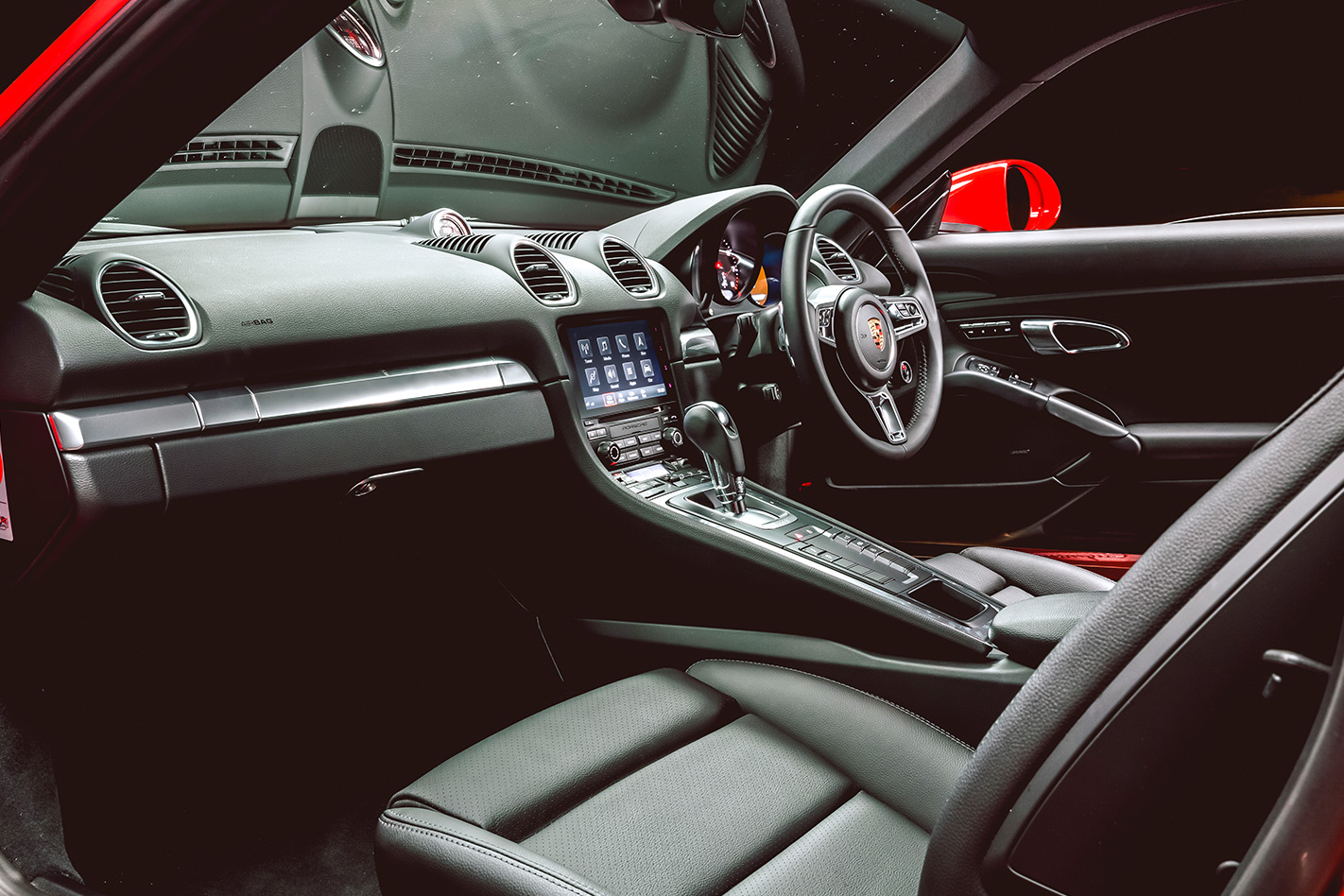
Where the Cayman is starting to fall behind is found inside the cabin. It’s still an inviting space to be, but up against the likes of the 992 911, the 718 is looking dated. The infotainment screen, while featuring Apple CarPlay and Android Auto, is small, the climate controls require myriad buttons and the cruise-control stalk looks as though it’s been nicked from a Mk V Golf GTI.
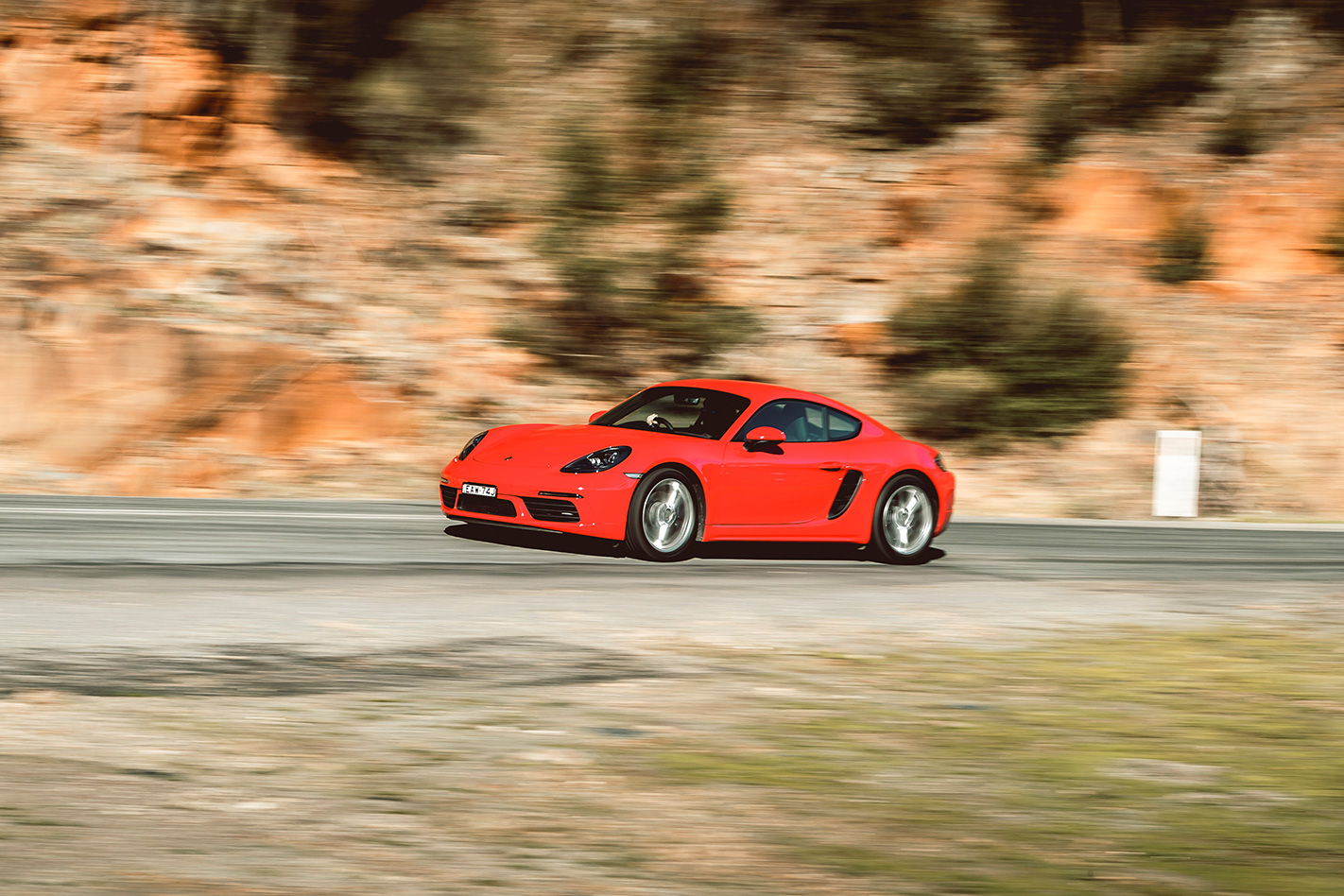
In terms of functionality it works; there’s a surprising amount of room for a diminutive sports car and the pop-out cup holders are a throwback worth keeping. There’s even genuinely useable luggage space, with the ‘frunk’ and traditional rear boot offering meaningful storage capacity for that weekend getaway – one you’re going to want to do more than once. That’s because road noise is well suppressed and, despite the optional adaptive suspension (10mm lower), the Cayman breathes with the road once the dampers are softened off and the tempo relaxes. There’s no discernible detraction to the body control for doing so, either.
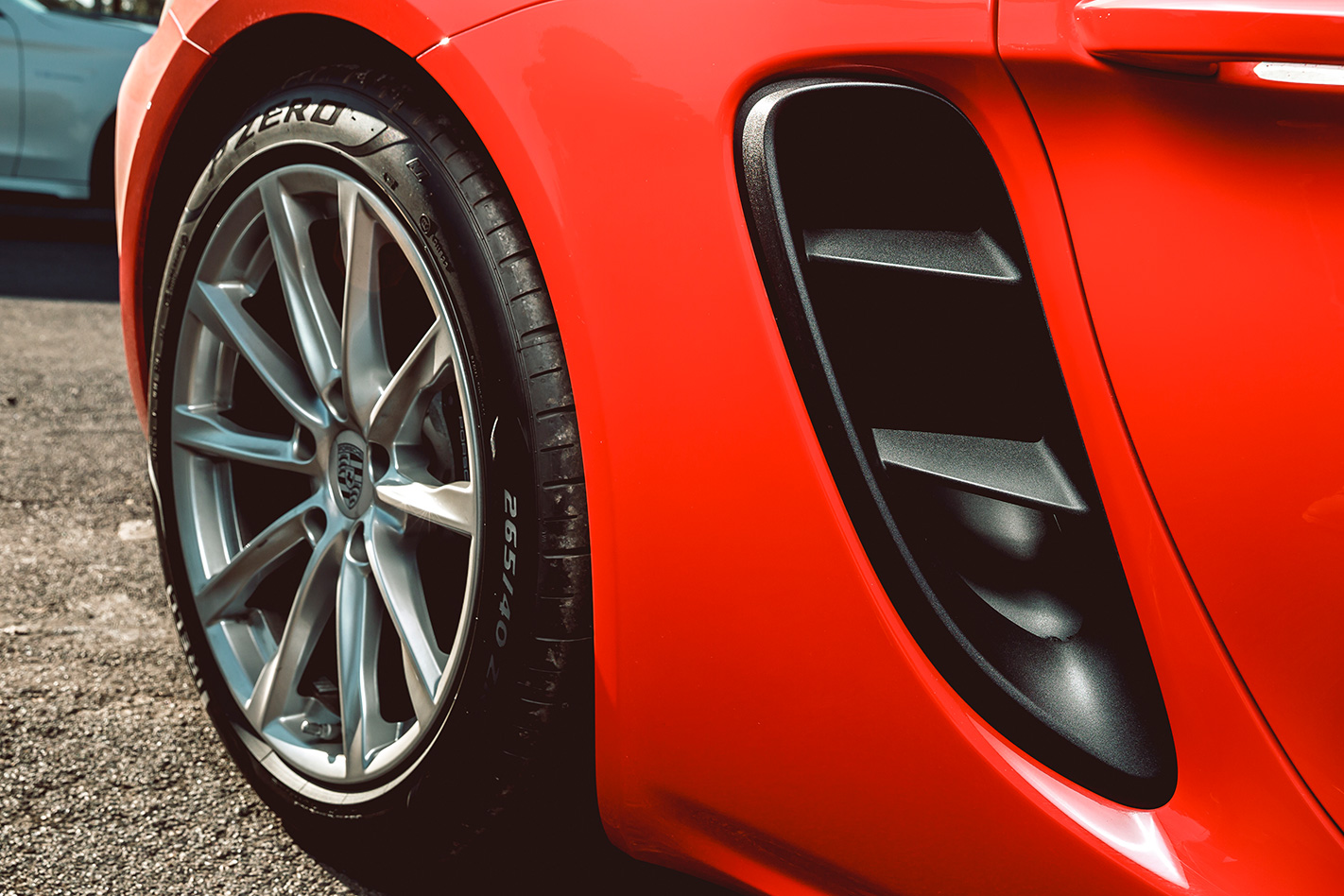
In truth it’s obvious that the Porsche range isn’t a case of diminishing returns – far from it. What we’re merely highlighting is the fact that this isn’t the poor man’s 911 or the poser’s 718. Ultimately, the base Cayman might not be the biggest or the most expensive Porsche sports car, but it has a purity and level of dynamic ability that warrants its company. Assume anything less at your own peril.
German tech giants Continental and Osram have revealed the first fruits of their lighting joint venture, a high-resolution all-LED array that has more in common with a projector than a mere headlamp, and one that promises to vastly improve safety when driving at night.
Lighting technology has evolved rapidly in the past 20 years. First it was the arrival of xenon high-intensity globes in premium cars during the 1990s, followed about a decade and a half later with the advent of energy-efficient light-emitting diodes or LEDs.
LEDs have since established themselves as the leading headlight technology, and the cost associated with simple versions has dropped to the point where they can be found as standard equipment on a mid-spec Honda Jazz. Continental and Osram’s “Smart Digital HD Headlamp”, however, is far more sophisticated.
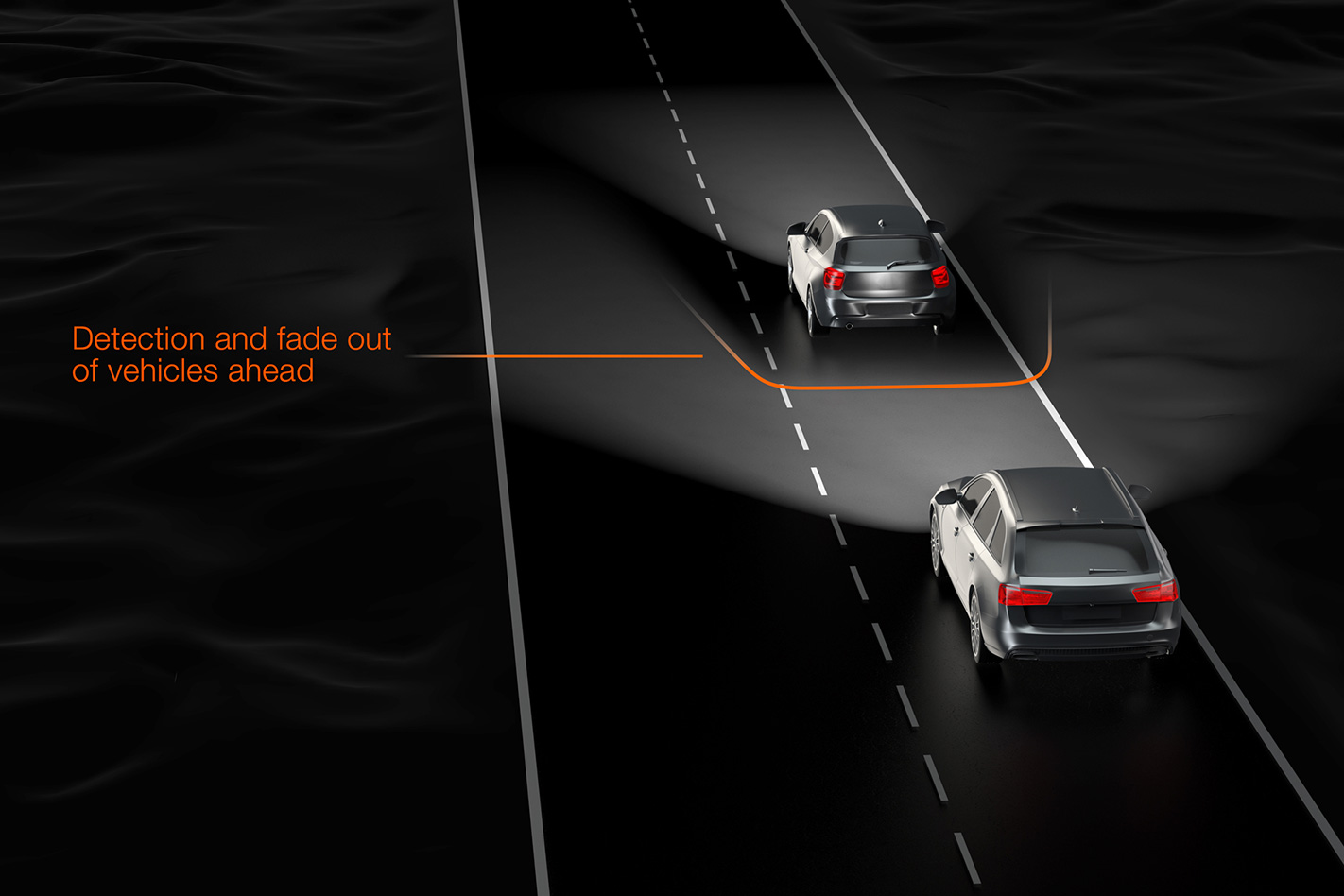
Instead of using one LED per unit, the HD headlamp arranges eight LED arrays (four per side) made up of 1024 tiny LEDs apiece. With all of the LEDs energised, a wide rectangle of light is projected, covering a much wider area than a conventional headlamp’s high and low beam.
But the innovation doesn’t require the full array to operate for full effect. Rather, with a 32-by-256 grid of individual LEDs, the system can shape the pattern of light projected in front of the vehicle on the fly to ensure maximum illumination, while also blacking out (or at least dimming) areas where there might be other drivers or pedestrians to avoid dazzling them.
It’s a similar concept used by Audi, Volkswagen and BMW with their higher-end headlights, but the main difference is the sheer number of LEDs used: while a Volkswagen Touareg uses 160 LEDs, the Continental/Osram system has a whopping 8192.
It’s the difference between your grandma’s CRT television and a state of the art 4K LED widescreen.
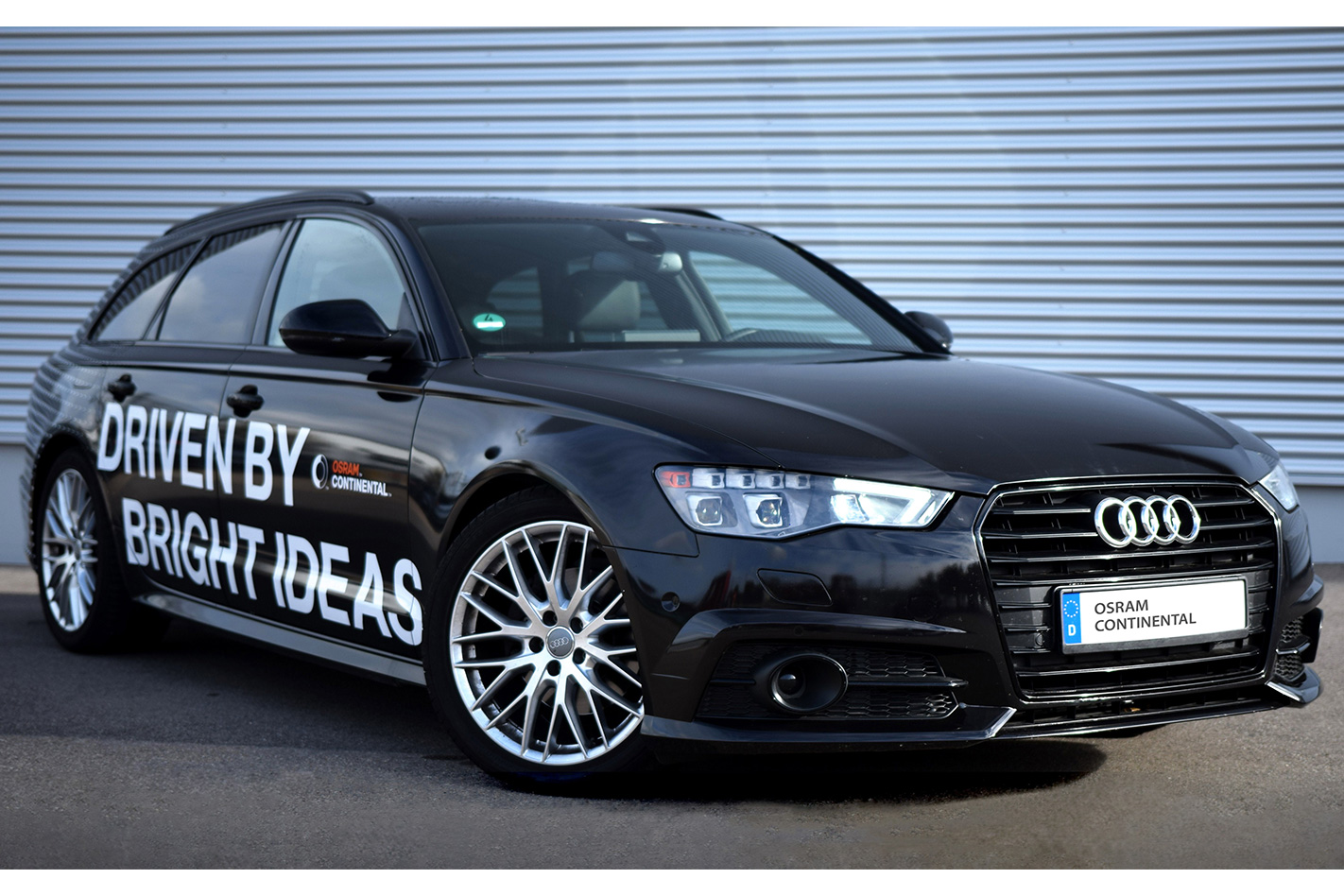
With such a high resolution and the ability to finely control the light output of individual LEDs, Continental and Osram’s cutting-edge headlamp – which was demonstrated to us in prototype form at the Continental Tech Show – can actually project animated graphics or messages ahead of the car.
Its maker says many manufacturers are interested in using the technology for future production models although it’s unclear whether adopters will utilise the full ability to project messages on to the road. One possibility would be displaying sharp images such as a turn arrow actually on the junction when using the navigation.
If that sounds similar to what Mercedes-Benz has been doing with its Digital Light technology, you’d be somewhat correct, however while Benz’s system is capable of far higher resolutions (and thus silky-smooth animated graphics), its complex hardware resembles a high-res office projector and can’t throw as much light as the system developed by Continental and Osram.
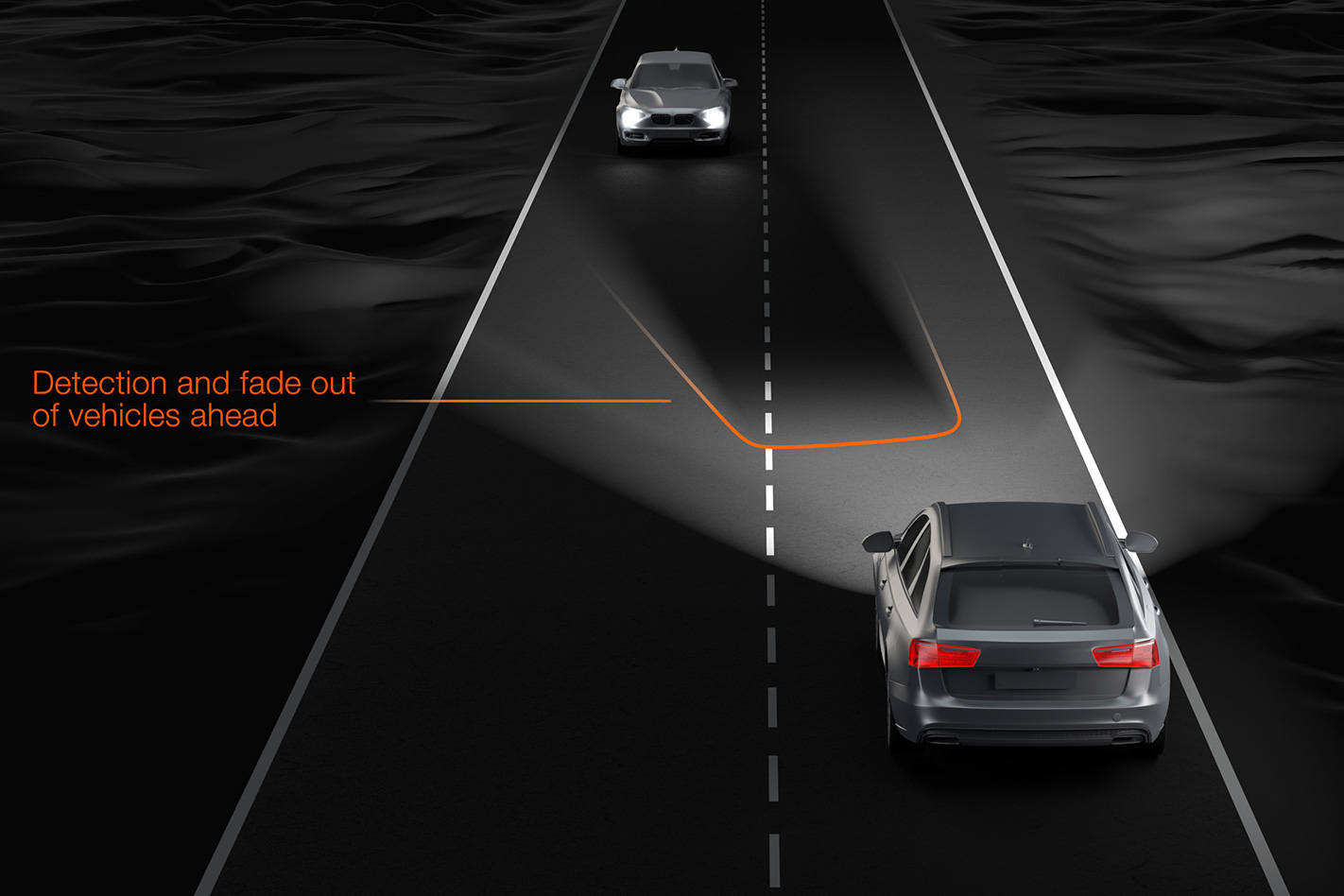
Neither company would talk about specific costs, but we’d guess that the simplicity of Continental and Osram’s system makes it easier and cheaper to integrate than Benz’s offering.
Need to see even further? A laser high beam augments the system, and lights up the road out to 600 metres. What’s more, the system is remarkably energy efficient, with the individual LED arrays (measuring just 4mm square) consuming a similar amount of energy compared with conventional LEDs of the same size. Despite their size, each array is capable of sending out up to 4000 lumens of power.
When will we see it? That’s down to the manufacturers who are looking to adopt it. That said, Continental and Osram are already working on a second generation with a whopping 25,000 pixel resolution per array, and the even more versatile system will be ready for the production line in around two years.
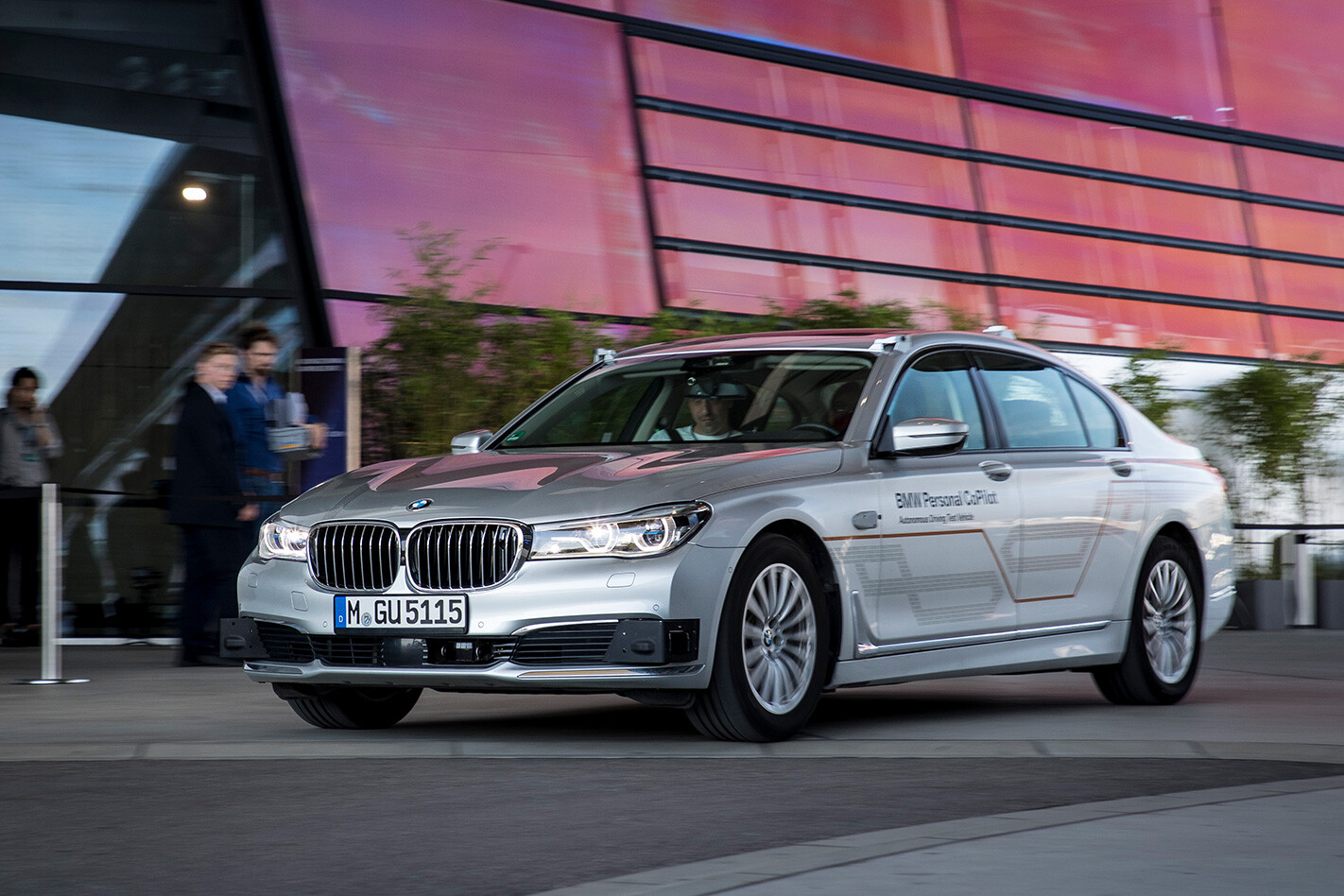
BMW has cemented yet another milestone in the fully autonomous vehicle story with a special 7 Series prototype that demonstrates level-four driverless capability.
The German car maker’s first production model with the level-three badge of honour will arrive in 2021 when the showroom version of the BMW iNext concept touches down, but the specially modified 7 Series is providing an early glimpse at the next step beyond that.
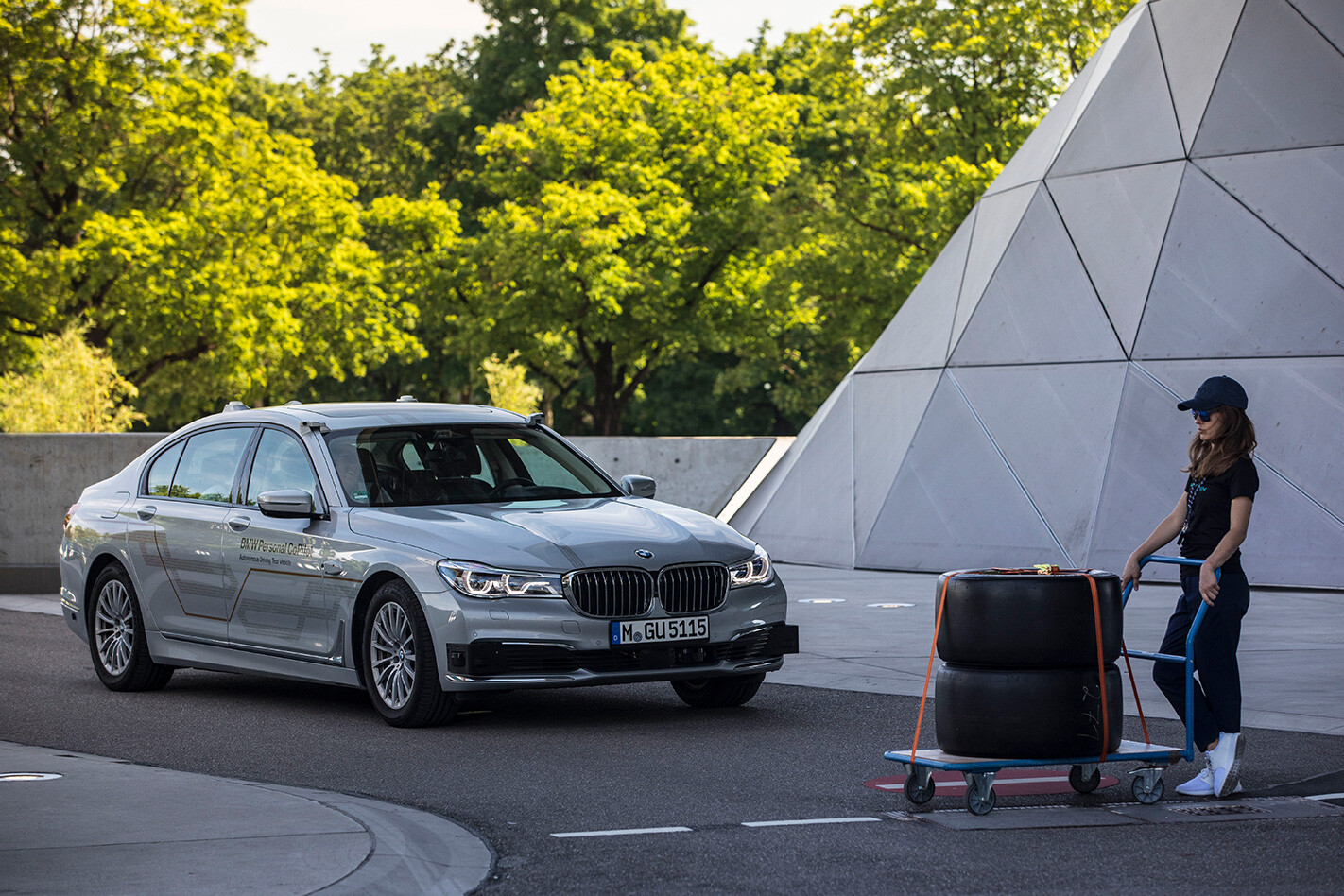
While the yet-to-be-named large SUV’s level-three systems will be able to negotiate freeways without intervention, a human driver will need to take the wheel once the vehicle re-enters more complicated suburban roads.
But level-four equipped models will not need to hand over control when the freeway ends for true door-to-door autonomy.
We jumped on board the revolutionary 7 Series during BMW’s NextGen technology event in Munich, for a first look at how the vehicles of the future won’t rely on a human to drive them at all.
Put simply, BMW’s Personal CoPilot system works exactly like Uber, minus the driver.
A smartphone application allows the user to summon the 7 Series to their location for the start of a journey. In our case, the pick-up point was in the shadow of BMW Welt in the south of Germany, with the prototype parked just a short distance across a courtyard.
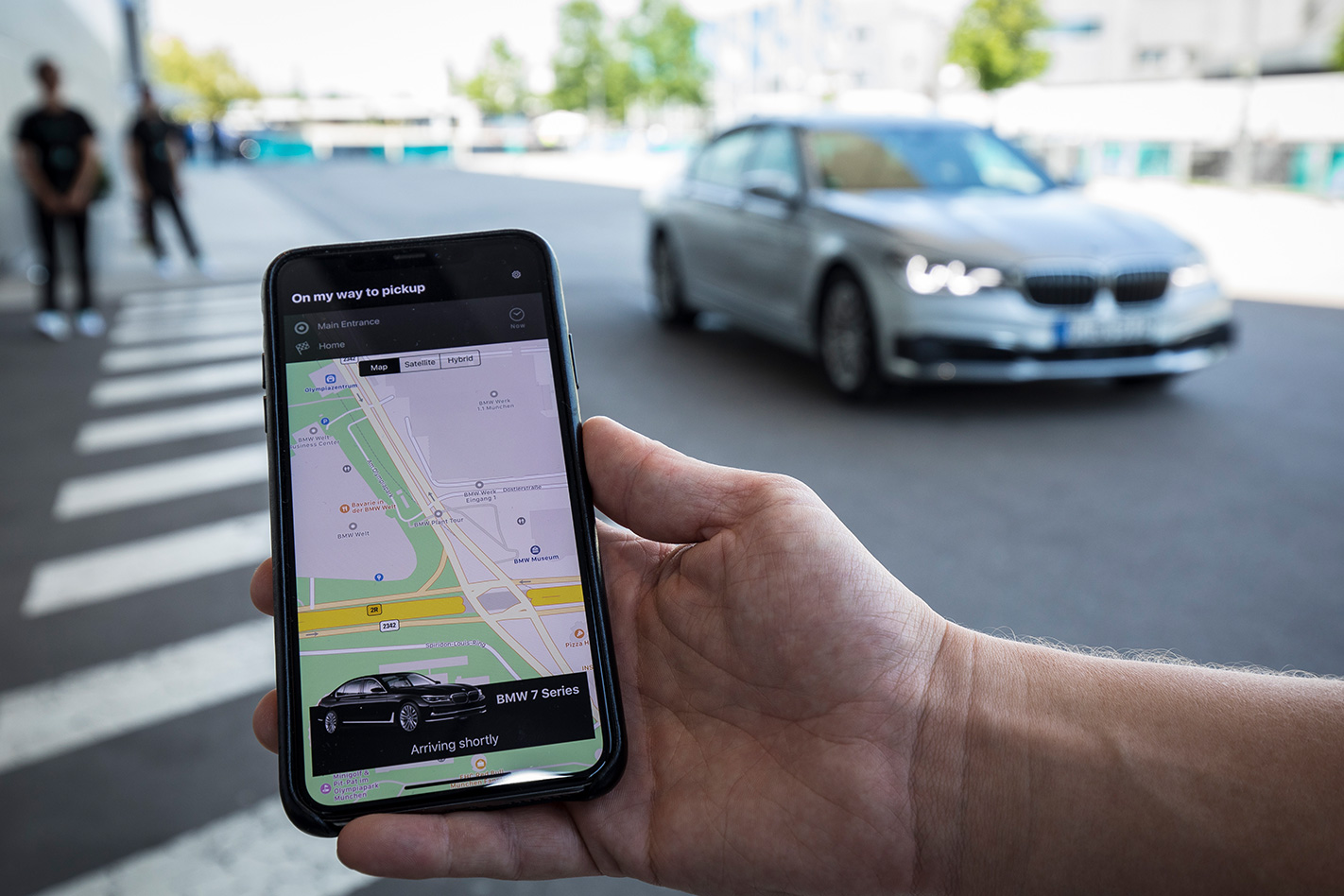
With the tap of a button, the hybrid limo glided across the concrete and sat obediently waiting for the application to tell it to unlock – again, with a tap of an onscreen prompt.
Then it was simply a matter of boarding and hitting the ‘start’ icon in the centre of a large central screen that had been added as part of the prototype kit. The car asks for no address information because it has already uploaded the destination from the initial application request.
For the purposes of this short demonstration, a lap of the building had been preprogrammed, and the 745Le quietly pulled away once it had established all occupants had fastened their seatbelts.
In the interest of allowing engineer Phillip enough time to explain exactly what was happening, the car had been asked to travel at walking pace, but its series of LIDAR, radar, cameras and GPS devices gather massive amounts of information from its surroundings, enabling the test to happen at much higher speeds if required.
The vast quantity of data is processed by the vehicle’s sophisticated systems, enabling it to build a picture of the world around it. Additional screens have been installed for the test allowed occupants to see a graphic representation of its vision or – “a window into its mind,” says Phillip.
Rather than simply following a predetermined route, the 7 Series has only the destination as its instruction, deciding the best way to get there all by itself using navigation information as well as its banks of sensors.
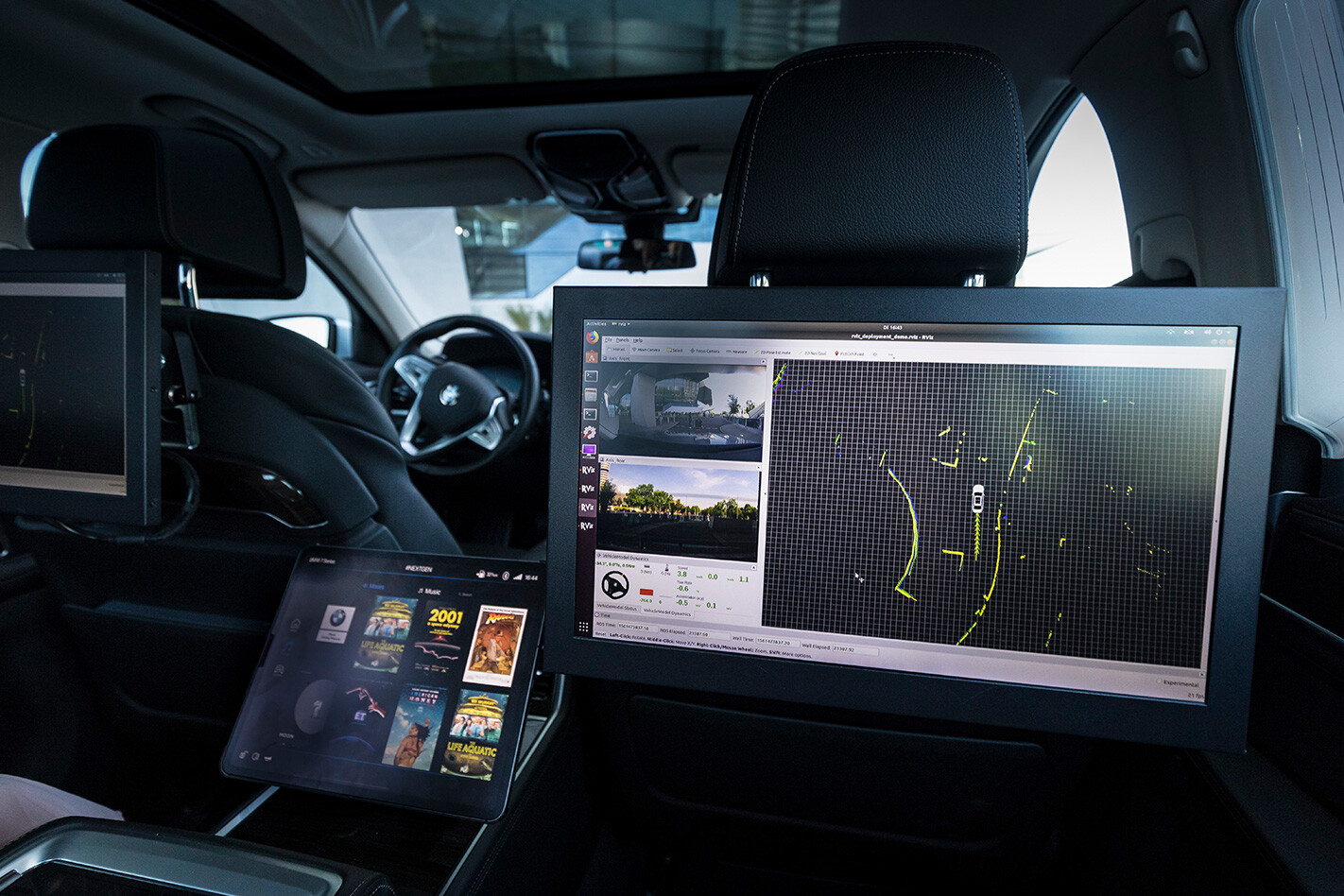
If anything unexpected or un-mapped should happen along the way, the Personal CoPilot system is able to adapt to the situation. Right on cue, a pedestrian wheeling a trolley steps out in front of the car, bringing it to a halt.
While this same demonstration had been carried out many times already, the car is not expecting the hazard and is simply responding to an event similar to what it may encounter on any given day in an unpredictable public environment.
And this is the key difference between level-three and level-four autonomous driving. A freeway is a far more controlled landscape with all traffic travelling in the same direction, at approximately the same speed, and with a lower likelihood of complex traffic or hazard scenarios.
But a suburban arena is immensely complicated by comparison, with pedestrians, cyclists, and traffic flowing in all directions, through traffic management lights and signs and at all different speeds including zero.
Understandably, a privately owned car with level-four autonomy is a while away yet but, speaking to WhichCar at the NextGen event, BMW member of the board of management, customer, brands and sales, Pieter Nota, confirmed that level-three will soon be a reality in a car you can buy.
“The iNext that we will launch in 2021 is already planned to have level three autonomous driving capability,” he said. “That means on highways you would be able to drive from Munich to Hamburg on the autobahn in autonomous mode. It will be able to completely take over from the driver.”
The only small caveat to level-four is that it reserves the right to ask for assistance if something presents too much of a challenge, and a driver must be ready to take back control in an emergency.
But even more distant than level-four is the self-driving holy grail in which a vehicle can negotiate the most challenging environments during all weather conditions, light levels and unforeseeable occurrences – level five.
“Level five is still quite far out,” admitted Nota. “My home town is Amsterdam, and the day that you can really drive fully automated in Amsterdam where there is a bike falling in front of your nose every other second, that is still quite far out. I don’t want to set up the illusion that we will be able to tackle that in 2021.
“We have to be realistic about the advancement of these capabilities, but what is important is that if, for example, cities engage in geofencing, of course these capabilities are much closer because you avoid that bike. It is separated.”
In the 7 Series’ inviting cabin, our test ‘drive’ has concluded. Despite having no one in the driver’s seat, the car has parked back at the pick-up point after a flawless lap of the impressive building.
After leaving the vehicle, one final tap of the smartphone sends the big BMW gliding off to its carpark, which could for all intents and purposes be your basement carpark or a new pick-up location.
There are still some serious hurdles to overcome before this technology will be offered to the public, including the legislation to allow these vehicles to operate without a driver – ironically, the limiting factor, as the Personal CoPilot demonstrates, is not the technology.
But a brief trip in the most advanced 7 Series to date does conclusively prove that what was once a fantasy limited to the big screen, will one day become a reality. Or will it?
Halfway through 2019, it looks like the top end of town is doing just fine if the June 2019 VFACTS new car sales report is anything to go by.
The market is dropping overall by a considerable figure, down by 16.4 per cent for passenger cars in the first six months of 2019 versus the same period last year, and by 4.6 per cent for the ever-popular SUV segment.
But the likes of Lamborghini, Porsche, and Bentley are doing fine by comparison.
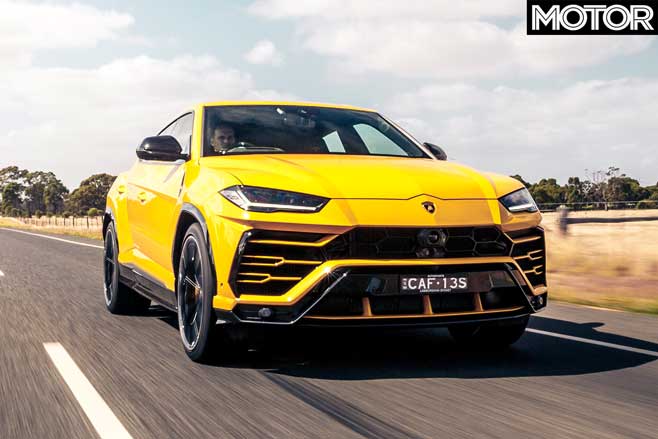
Not only has the first of those announced the new Lamborghini Urus as its sales wunderkind in a global sales record for the first half of 2019, but its local figures reflect that too.
VFACTS April 2019: Expensive sports cars fight back
On a year-to-date basis, Lamborghini is up overall 44.6 per cent for the first half of 2019 versus the same period in 2018, with 95 vehicles having been recorded in the VFACTS report. Of these, 49 were Urus SUVs.
The ‘Upper Large SUV’ segment for vehicles over $100k is up against the first six months of last year by a massive 41.6 per cent.
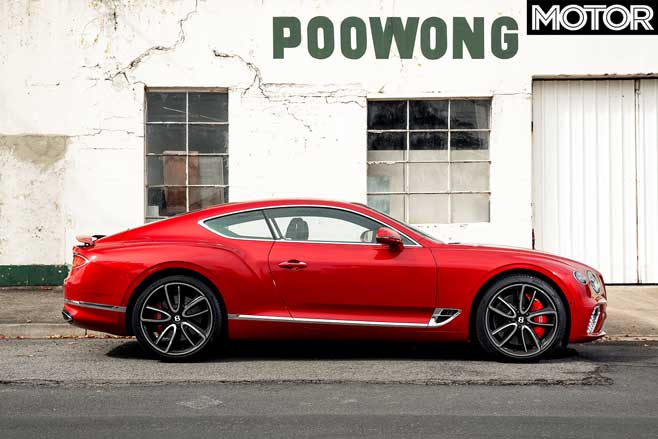
But while Lambo’s SUV was paying the bills, its Bentley cousin was down 40 per cent month-on-month, selling just nine in June versus 15 in May. Bentley managed to turn its Continental sales around, though, softening the blow with 13 sales. That’s 13 sales more than it made in May. It even sold a four-door. Just one.
2019 Bentley Continental GT review
Then, with the new 992 911 beginning to make a mark, Porsche dominated the $200k+ sports car segment with a 34.1 per cent share, consisting only of the 911. 58 of Stuttgart’s finest were sold in June, up from 46 in May and totalling 339 so far for the year.
With the 911’s help, its segment is up 8.3 per cent over last month, despite a 5.4 per cent drop in year-to-date sales versus 2018.
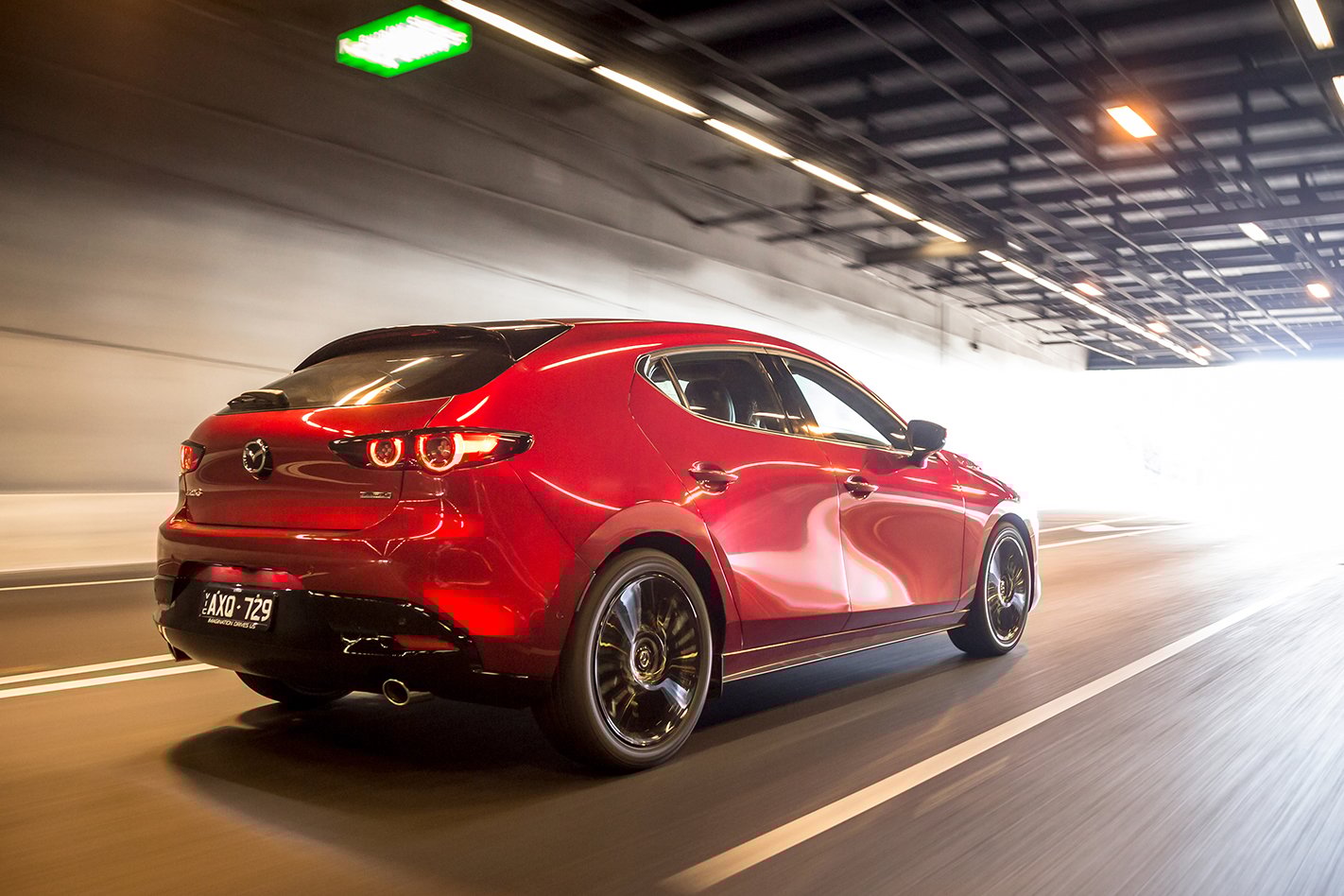
UPDATE The ACCC has released the Australian recall notice for the Mazda3. More than 3320 car’s VIN numbers are listed as affected; 2533 Mazda3s were sold in June, according to VFACTs.
“The stability of the vehicle may be affected, increasing the risk of loss of vehicle control and potentially resulting in an accident injuring vehicle occupants and other road users,” said Mazda in the statement.
The company is contacting all affected customers directly.
—
Mazda Australia has today confirmed it issued a recall notice for its new Mazda3 hatchback to rectify a potentially dangerous fault with its wheels.
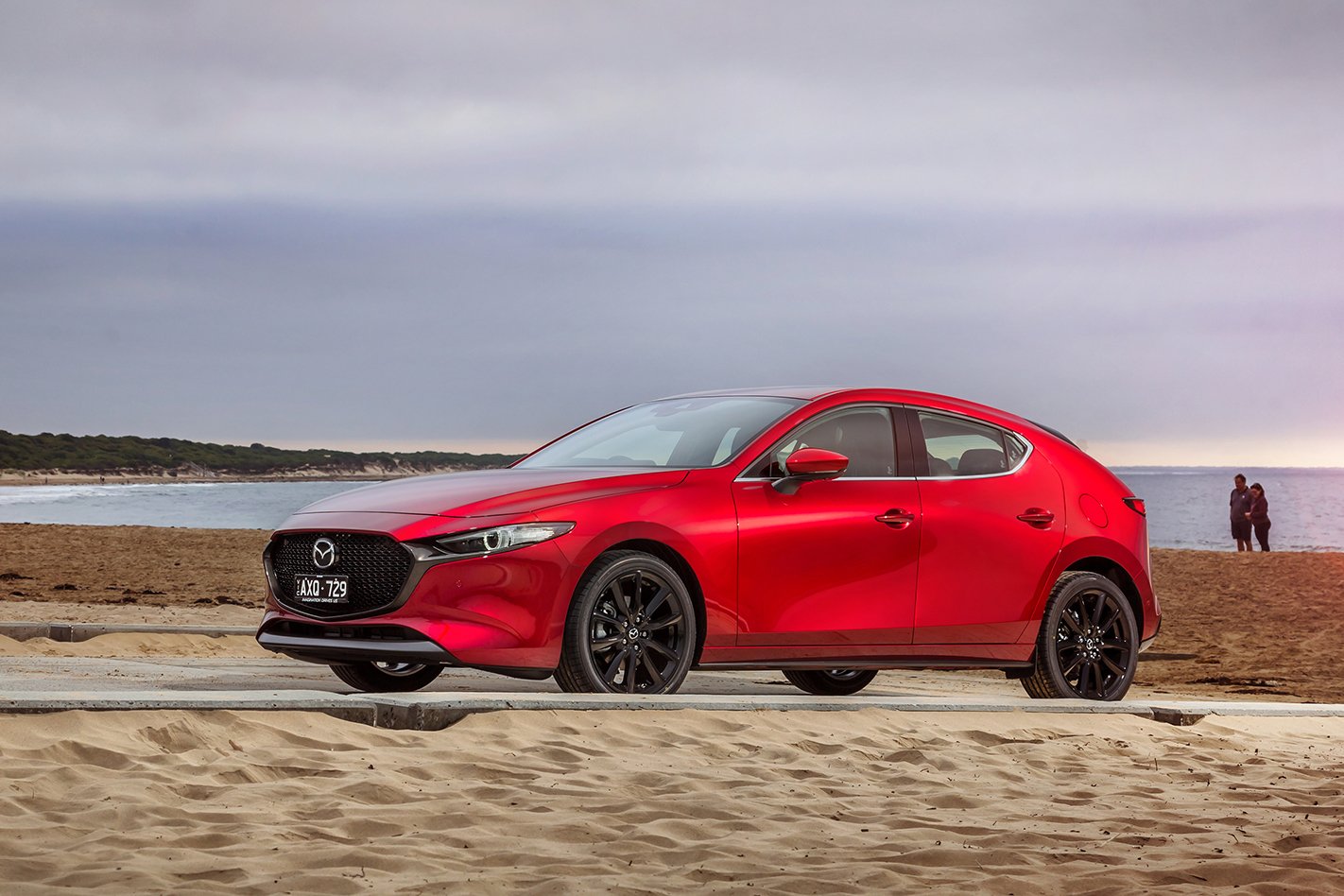
The company lodged a recall notice with the Australian Competition and Consumer Commission (ACCC) early last week for “certain models” (variants) of the new BP-coded Mazda3, according to a spokesperson.
“The wheel nuts loosening concern on Mazda3 BP hatch models does affect some Australian models,” confirmed the spokesperson.
The Japanese company has discovered that the wheel hub bolts on certain variants of the new Mazda3 haven’t been tightened sufficiently onto the hub flange during manufacturing.
A resulting gap between the bolt head and the flange could cause the wheel’s lug nuts to work loose, according to the company, even though the wheels were tightened at the factory.
This means that even if the wheel nuts were checked again – or even removed and replaced – prior to delivery to customers, they would still present as being correctly tightened.
The recall notice published in the US overnight points out that the wheel would make a rattling sound if it were to come loose. The fix is a simple one; the wheel nuts will be re-torqued by a Mazda dealer to ensure that the hub bolts are properly seated within the hub flange.
The US notice affects some 25,000 cars, with plants in Japan and Mexico both reporting the same manufacturing issue.
Whichcar has contacted the ACCC about the date of publication of the notice, which will contain the VIN numbers of the cars affected by the recall. The Mazda3 went on sale here in May.
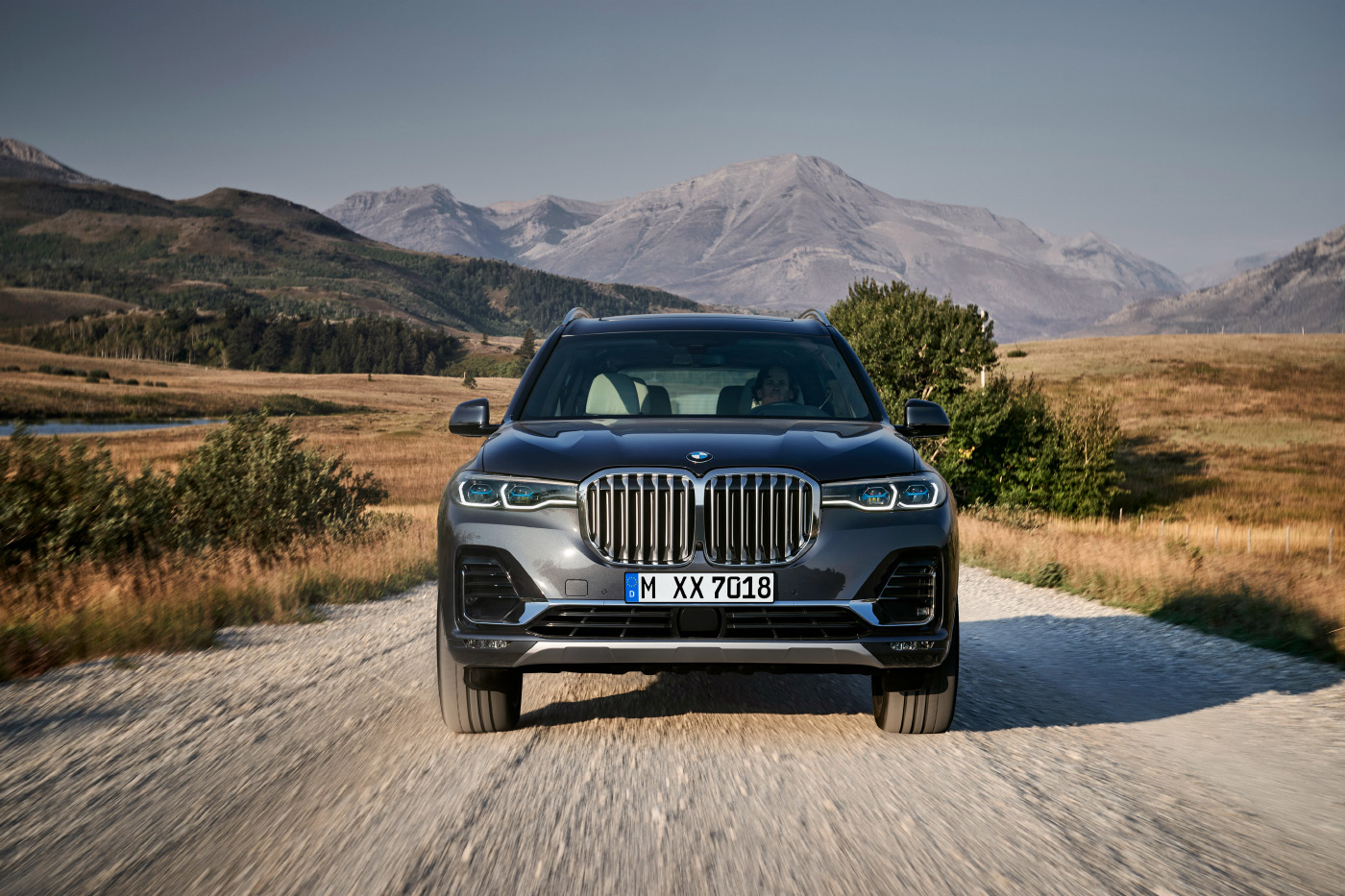
It’s not quite as gawky as the Hannibal Lecter-sniffing nose full of spindles found on the new X7, but BMW’s third-gen X6 has arrived with its own unique flair upfront.
Growing 26mm longer and 15mm wider (with a 44mm wider rear track), the X6 naturally felt pressure to also grow its nose. Now almost twice as large as before the new set of teeth can be illuminated, just so people can see that snarling snout in the dark.
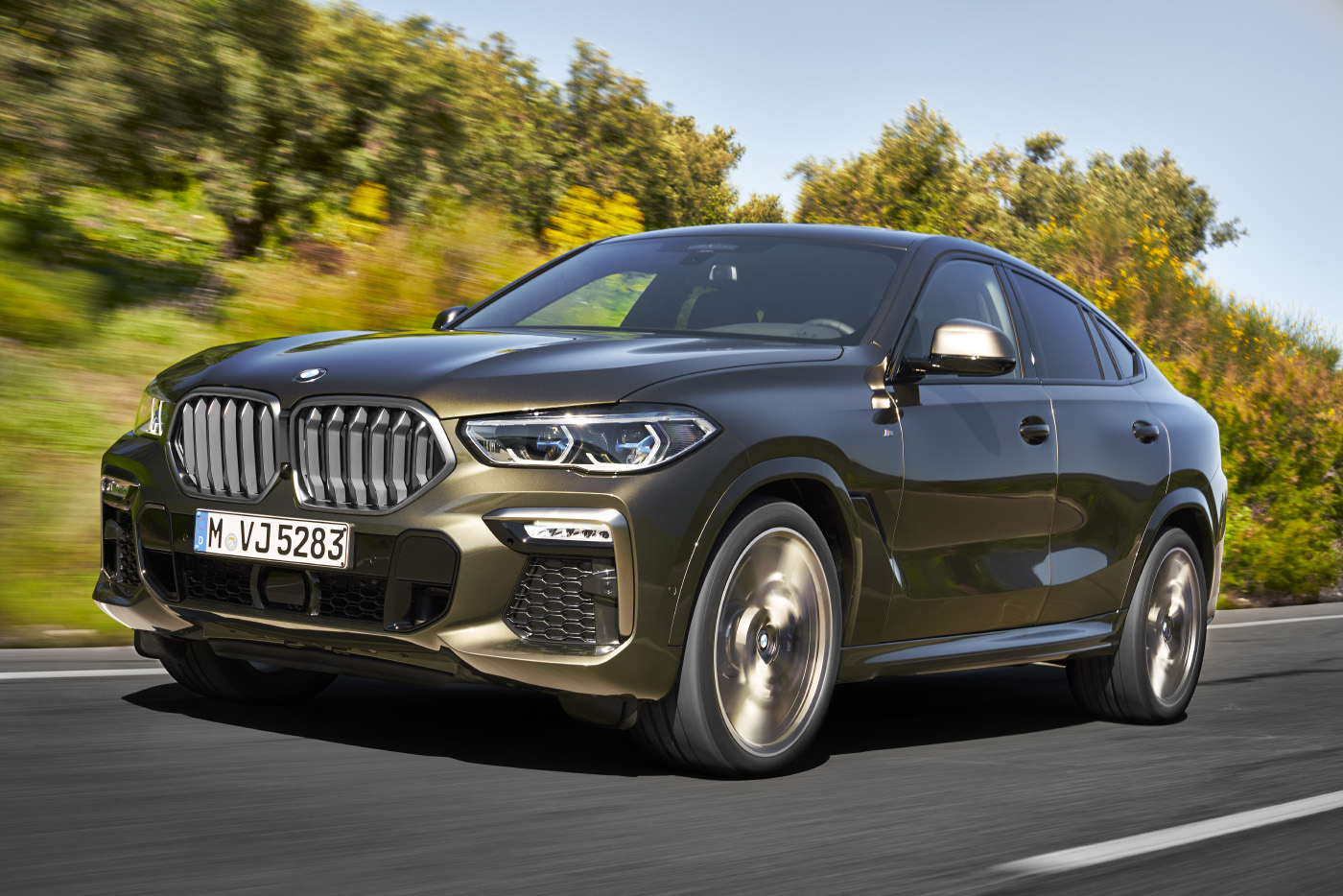
It is otherwise a similar cut and copy of its X5 sibling, sans the big bum that’s sculpted to look like a chubby coupe. Sitting on the German maker’s latest CLAR platform, the G06 X6 joins architecture with the recently updated X3, X4, X5 and X7 that are also built in the US.
Power is delivered from a variety of all-wheel-drivetrains mated to an eight-speed automatic; the 30d 3.0-litre diesel producing 195kW and 620Nm, 40i 3.0-litre straight-six turbo producing 250kW and 450Nm, M50i with a larger 4.4-litre V8 bi-turbo developing 390kW and 750Nm, and the diesel M50d developing 294kW and 760Nm.
Performance buffs will be swooned by the M50i and M50d that both hit 100km/h in under 4.5sec and come with important M bits such as adaptive M-tuned suspension with active anti-rollbars, M Sport rear differential and M Sport brakes with blue-painted calipers. They are also kitted with an M Sport bodykit with large 21-inch rims though 22-inch alloys are on the options list.
All models come with a swathe of tech such as a large 12.3-inch touch screen with iDrive 7 software, 20-speaker sound system, heated and cooled cup holders, massaging front seats, and a colour head up display. As expected, there are also plenty of semi-autonomous driving aids including steering assistance and adaptive cruise control that can combine for automated traffic follow assist.
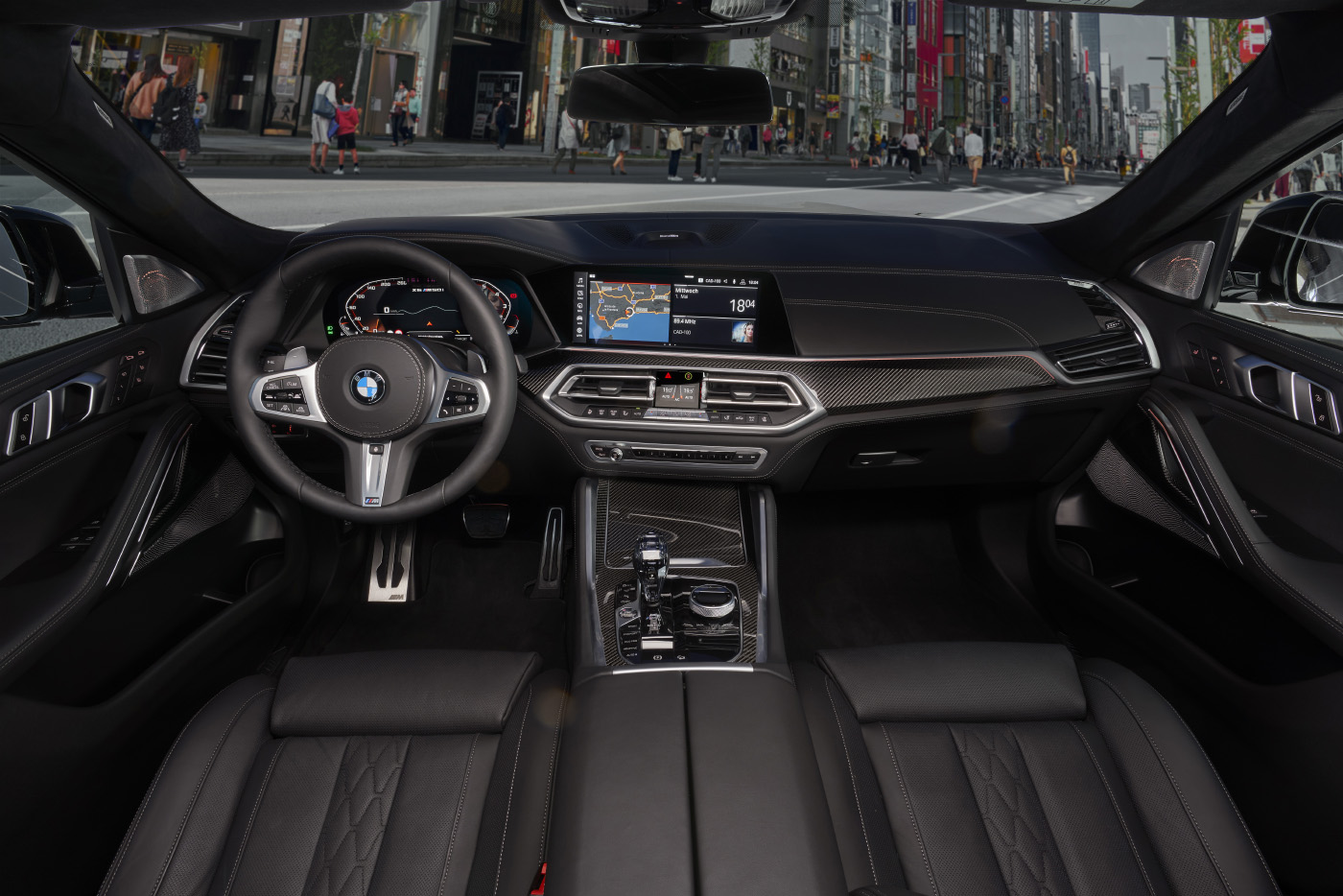
Swank factor comes in the form of Swarovski crystal inlays around the controls and gear shifter, and a huge panoramic sunroof that can be optioned with ‘Sky Lounge’ which projects over 15,000 points of light onto the glass to replicate the night sky. There is also a 1500W Bowers & Wilkins Diamond surround sound system on the menu.
Trendy bush types can further opt for the new xOffroad package which has adjustable air suspension, an e-diff with four driving modes (sand, snow, gravel and rocks) and underbody protection.
Australian deliveries are expected to commence late-2019, though pricing and specifications are yet to be confirmed.
The first example of the Shelby Mustang GT350 has landed in Australia, set to be converted by Melbourne outfit Mustang Motorsports.
A privately-imported 2017 model, the road racer is being converted to right-hand drive and will provide Mustang Motorsports with the knowledge it needs to convert other GT350s when/if Australia’s import laws change.
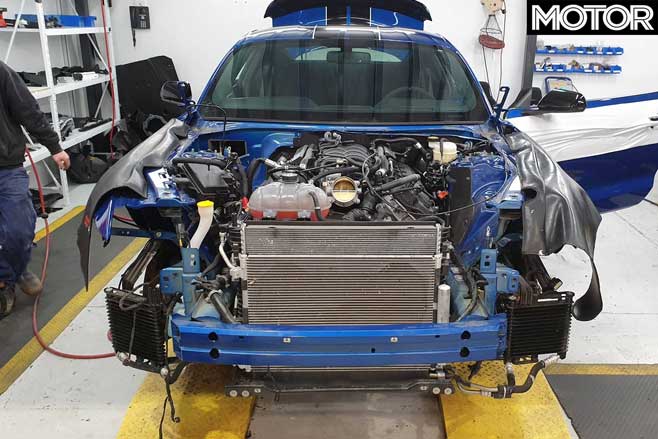
The Shelby GT350 isn’t offered in right-hand drive but while pricing hasn’t yet been confirmed – MM is keeping the final figure under wraps until it has an accurate assessment of the time/parts involved – it’s expected to be in the $200,000-250,000 range.
Unlike the regular Mustang GT, the Shelby GT350 uses a flat-plane 5.2-litre V8 – dubbed ‘Voodoo’ – to produce 392kW/581Nm while revving to 8000rpm. This translated to 335kW at the rear wheels on Mustang Motorsport’s dyno.
By way of comparison, a standard 2018 Mustang GT manual produced 306.4kW at the hubs on Herrod Performance’s dyno. While not a like-for-like comparison due to the wheel vs hub dyno – not to mention different temperatures etc. – it suggests the GT350 is one potent Pony Car.
Other changes include wider wheels – 19 x 10.5-inch front; 19 x 11.0-inch rear – wearing Michelin Pilot Sport Cup 2 tyres, larger brakes, a shorter 3.73:1 final drive (standard V8 Mustangs are 3.55:1) as well as exterior and interior upgrades.
The supercharged Shelby GT500 is also a possibility but MM told MOTOR that securing an example to import will be difficult due to demand far outweighing supply in its USA homeland.
Once in a blue moon there comes a car that stops us in our tracks, exerting lasting change on the car industry and making other manufacturers jealous.
Such special cars don’t come around too often, but history is dotted with certain debuts that have pushed the game on through new technology, smart engines, wild design or even creating a whole new segment.
Picking just 15 wasn’t easy, but rest assured, this crew (mentioned in no particular order) truly flipped the status quo, changing the car world for the better.
Flick through the gallery above and read the captions to learn more about what made each model so special.
Hello WhichCar,
I really enjoyed your deprecation article of the other day, and it’s got me thinking! We are looking for a new car, and the budget isn’t that high. My fiancé wants us to buy new so we get the whole warranty, but I really think we might get a better deal by shopping for a car that’s not super popular.
And also we are looking at brands that are not so popular to save even more money. But this is also causing an argument! What is wrong, for example, looking at Peugeot? It is a huge brand in Europe. Same for Skoda, too. Or even Jeep?
We don’t want to spend much more than $35,000, and there is only two of us at the moment. Do you think there is a good car for us?
Thank you!
Anton, Parramatta, NSW
Hey Anton,
There are pros and cons to buying from less popular brands, and a lot of it depends on where you live. Because you guys live in the heartland of Sydney’s new car kingdom, for example, you will have access to more brands – and crucially, their dealerships – than a couple who live outside of the city.
It can also depend on how you plan to use the car, as well. If your commute is short and parking is limited, for example, a smaller car may be an advantage.
If you do longer miles as part of your weekend travels, though, a small city car – say a Skoda Fabia – won’t be as suitable, and you might want something a bit more powerful and spacious.
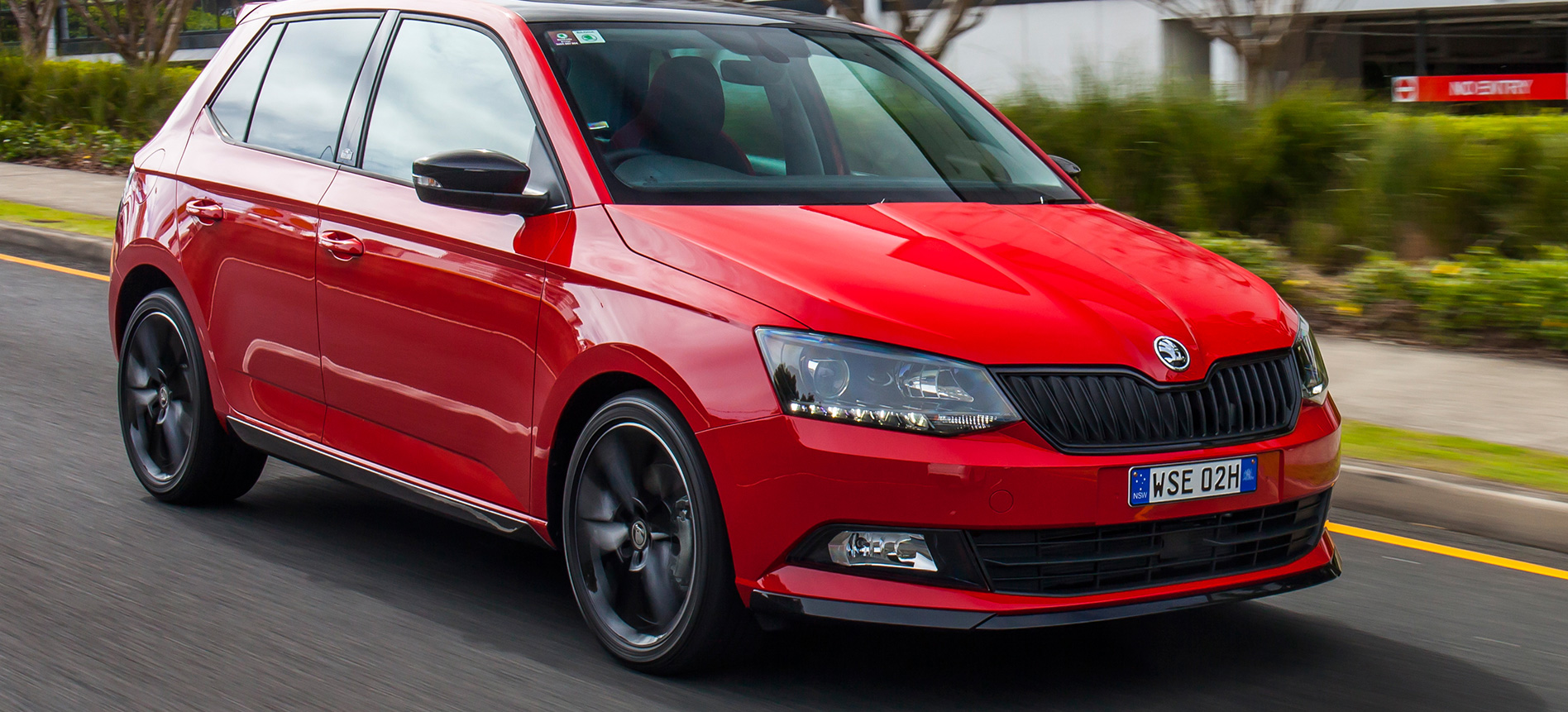
And just because the brands you mention aren’t especially popular, it doesn’t automatically follow that their cars will be cheap as a result. The cost of a car can’t, by dint of the low profit margin between head office and dealership, suddenly plunge in price on the showroom floor just because it doesn’t sell quickly.
Sure, you might save a couple of grand on a $35,000 car, but it will have sat on a showroom for a good long time before you’ll find a dealer desperate enough to lose every dollar he/she could potentially make on it.
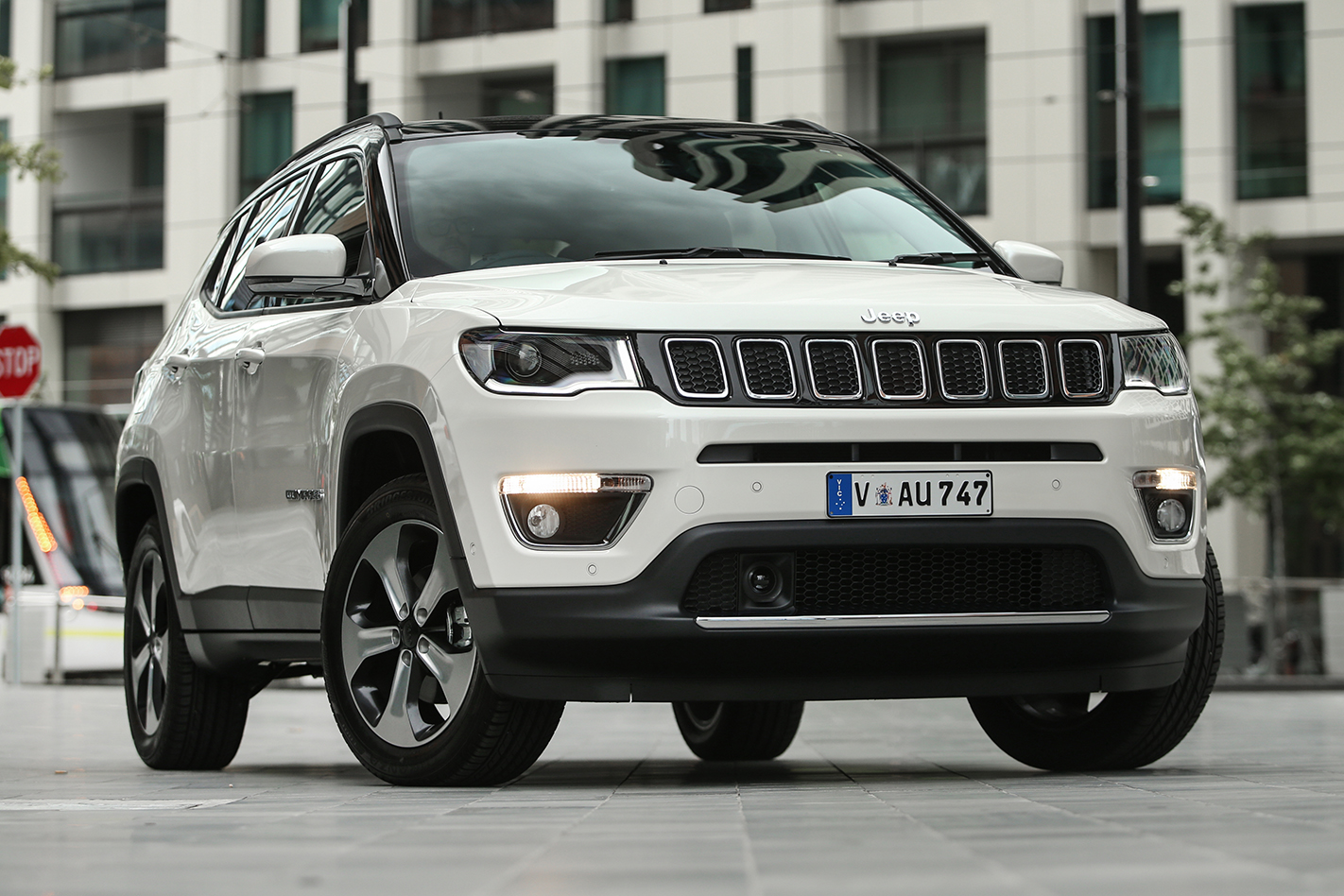
Of the brands you’re talking about, Peugeot’s 308 is a great five-door, five-seat hatchback that should sell better but just doesn’t. Jeep, too, should be doing better with cars like the small Compass SUV (which actually starts at less than $29,000 drive-away), while of the larger players, Holden’s Astra continues to offer brilliant value for a five-seat, five-door Astra hatchback.
If you need something larger, Ford’s Mondeo sales are through the floor this year, so there may be some stock on dealer’s floors out there in Parramatta that is keenly priced.
In terms of dealership support, all of those companies offer five-year warranties, and Jeep offers five years of capped price servicing to boot. Again, your location means that servicing at a dealership – often a prerequisite of getting a good deal on capped-price services – means that you have more choice when it comes to smaller, less popular brands.
But given where you live, we’d say sacrifice a Saturday, pull on your best walking sneakers and hit Parramatta Road. After another slow sales month, every yard is brimming with metal, and every salesperson is keen to make a deal.
Make sure you’ve read our guide on how to avoid the hard sell, narrow down what car (or at least type of car) you and your partner want, and start hunting.