
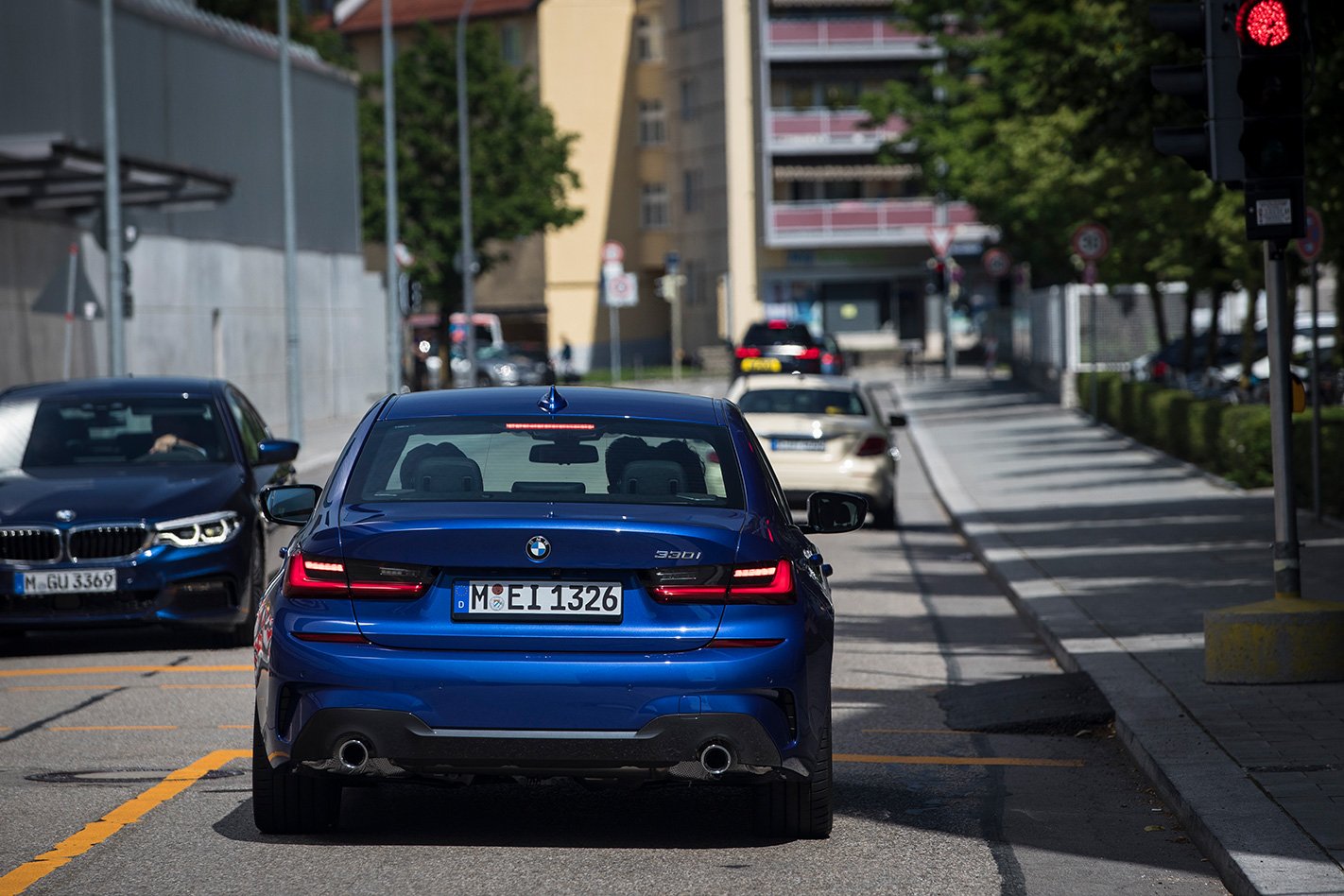
BMW’s evolutionary driving assistance technology will soon allow its vehicles to automatically stop at red traffic lights, bringing the reality of autonomous cars another step closer.
Unlike some other driverless technology, which is many years away from the options list, BMW’s red light recognition system is expected to roll out to European production cars in 2020, and is already functioning on public roads.
WhichCar understands that Mercedes-Benz is also working technology to achieve the same result, but that will not be included in its showroom cars until 2023, giving BMW a significant head start. As for an Australian debut, exact timing has not yet been confirmed but 2021 is the earliest indication at this stage.
During a visit to the German car maker’s headquarters in Munich we were taken on a demonstration ride to see the system in action.
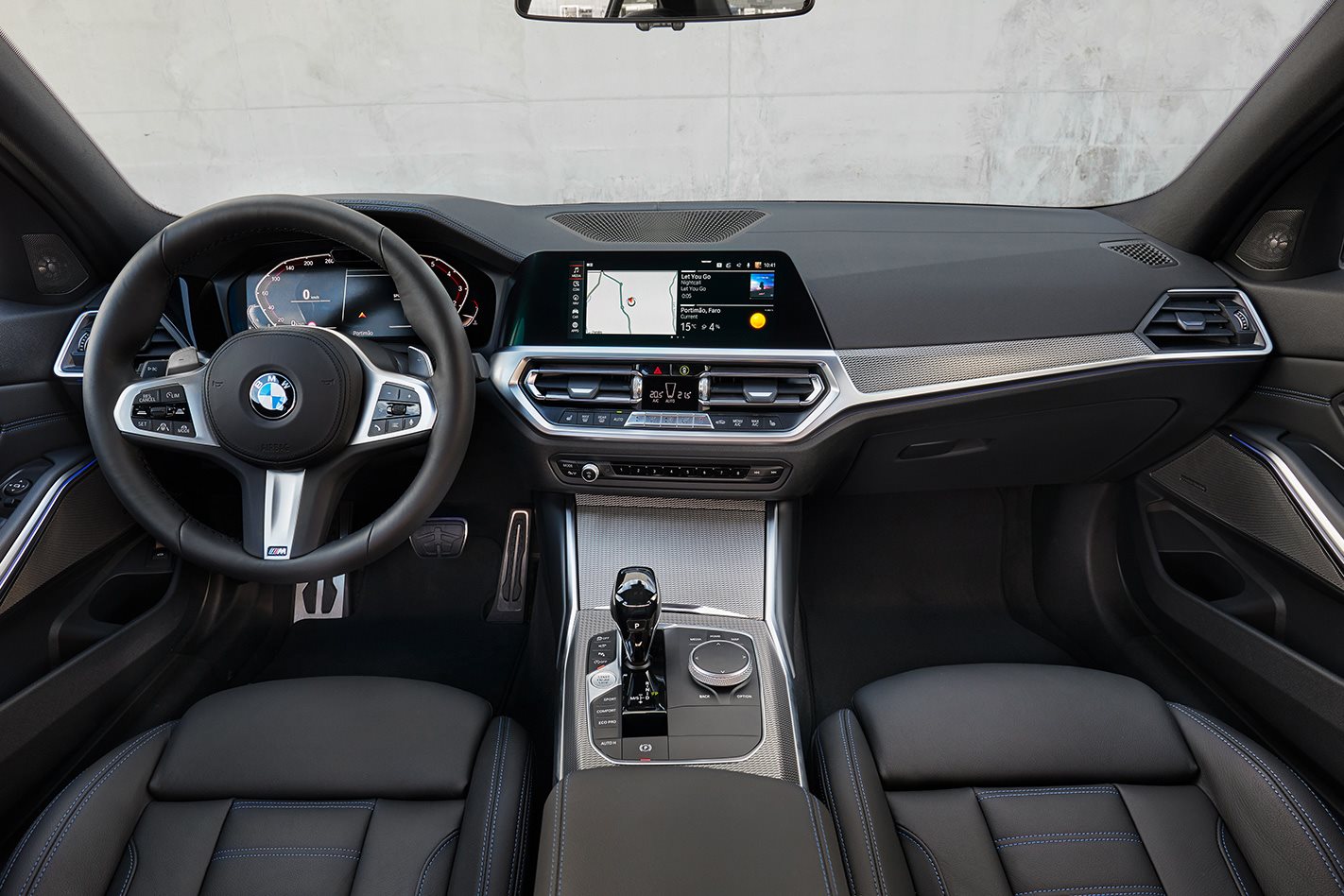
Inside the cabin of the completely normal looking G20 3 Series there were no wires taped to supplementary equipment and there were no engineers tapping away on laptops. Instead, the fleet of development cars has the new software fully installed and uses the hardware already standard on the recently introduced G20 version.
In fact, the only evidence that the car had any exceptional ability compared with a ‘standard’ 3 Series, was a small icon in the instrument cluster, which illuminates to confirm when it sees a traffic light.
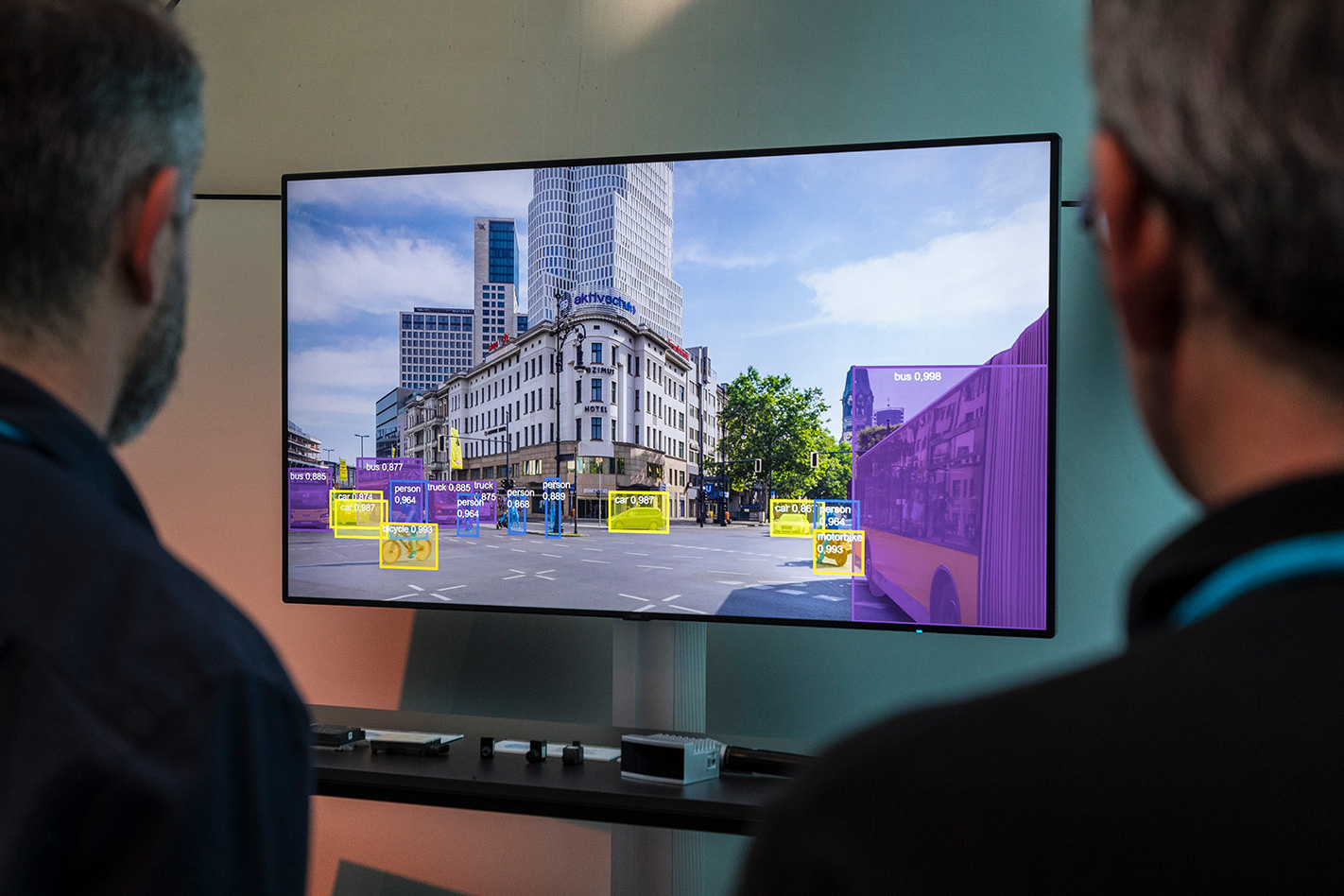
The new system has been added as part of the suite of autonomous functions along with lane-departure assistance, adaptive cruise control and emergency braking and is active as soon as the adaptive cruise control is activated.
As the lights turned amber, the BMW spookily started to slow and came to a complete stop at the traffic light, all without intervention from the driver. If the vehicle is the first in a queue of cars, a press of a steering wheel confirm button is required to coax the vehicle back into motion.
During our short test drive, the development car performed the quietly impressive trick several times without hitch and with a reassuring smoothness and competency.
When asked if the recognition system could be expanded into other mandatory road signalling such as give way signs, development engineer Bartono Adiprasito said simply “not yet”.
But as many vehicles including the 3 Series already have the ability to recognise road signs, you can expect the versatile technology to bundle more features as the company continues its development.
Interestingly, the traffic light recognition technology can be retrofitted to any new G20 3 Series that has the supporting forward-facing camera already installed, but whether BMW offers the option to existing owners remains to be seen.
You may have heard that Australia’s mobile network is getting a significant upgrade in the form of fifth-generation data transmission technology, but what impact will ‘5G’ have on the world of cars?
Arguably, the automotive effect won’t be immediately apparent – nor will it be for a number of years – but as cars increasingly become more data-reliant through internet-connected infotainment systems, remote-control apps, electrification and autonomous driving aids, the benefit of a 5G network will start to become critical.
What is 5G, and how is it different from 4G?
Compared to existing 4G networks, 5G technology has a number of key advantages. The biggest, at least from the point of view of smartphone users, is data transmission speed.
4G is fast, but 5G is even faster, with an expected minimum download speed of around 100Mb/s that’s roughly equal to what most people get out of an NBN connection. The expected maximum speed of 5G is a colossal 20Gb/s, which would enable a movie in ultra-crisp 4K resolution to be downloaded almost instantly.

But from an automotive standpoint there are more important attributes than sheer speed. The ultra-low latency of 5G, or the speed with which mobile devices are able to connect with each other over the network and begin transferring data, is the real game-changer here, with responsiveness measured in just a handful of milliseconds on 5G, compared to 60-plus milliseconds on 4G.
The amount of devices that can connect to a single 5G antenna is another huge benefit. 5G is able to support up to a million individual devices per square kilometre, versus just 100,000 devices in the same area on a 4G network. A tenfold increase in device density is nothing to sneeze at.
How does 5G benefit autonomous cars?
Right now, it’s utility isn’t really able to be exploited. It’s not like you’re able to watch movies from the driver’s seat while on the go, so unless you’re streaming videos to rear screens for your passengers to enjoy, a higher data transmission speed isn’t going to make your life as a driver much easier.
But when it comes to autonomous cars, 5G will be vital to making the driverless concept work in reality.
In the future, autonomous vehicles won’t actually be truly autonomous. Their on-board sensors will no doubt be able to keep the car a safe distance from obstacles and allow them to drive down a highway with little to no intervention, but for self-driving cars to operate at their optimum they’ll need to be in near-constant contact with servers over the internet.

Servers that can tell the car what the traffic conditions up ahead are like so it can adjust its route, or inform it of roadworks that may have changed the physical shape of the terrain, or weather reports so the car can change its speed to something more appropriate to the conditions.
Even communication with street-level ‘furniture’ like stop lights and pedestrian crossings will be vital, as they’ll be able to tell cars exactly how much time is left before the light needs to change – or conversely, perhaps hold the light green for a couple of extra seconds so the car can make it through if there’s no other traffic around.
But that kind of communication is only useful if the network is fast enough to get the info back to the car’s computer almost instantaneously. Thanks to the low latency of 5G, that becomes possible.
Remember how we said 5G is capable of latency of roughly one millisecond, while 4G only manages around 60 milliseconds? Well one millisecond is 0.001 of a second, while 60 milliseconds equals 0.06 of a second – the latter still seems virtually instant, doesn’t it? Not so, for if a car is driving along at 60km/h it is covering 16.67 metres every second.

In 1 millisecond it will have rolled 1.6 centimetres, but in 60 milliseconds it will have traversed exactly one metre, and that could make the difference between stopping for a red light in time or having a fender-bender.
And then there’s the device density advantage. Sure, there’s nowhere in Australia where you’d ever find a concentration of cars in excess of a million per square kilometre, but remember that this is a network that won’t just be shared between phones and cars, but other devices like office photocopiers, fridges, home PCs, televisions, CCTV cameras and municipal facilities too.
In the CBDs of Melbourne, Sydney, Perth and Brisbane, that kind of device density would be more ably supported by 5G, whereas 4G would surely struggle.
Keep in mind that though 5G has just arrived in Australia, its automotive relevance is still many years off. However rest assured that when the cars that need dependable data connections start arriving, our telecommunications network should at least be able to handle it.
One of the lesser-known of Subaru’s array of advanced safety features is its Driver Monitoring System, which debuted in 2018 in the latest generation Forester.
The infrared camera-based system, which Subaru says is the first to appear in a mainstream model, continuously scans the driver for signs of drowsiness or distraction.
If the camera, located under the binnacle of the Subaru Forester’s centre-mounted multi-function display unit (MFD), detects signs of fatigue or sees the driver’s eyes facing away from the road for too long, a warning sounds and illuminates in both the instrument cluster and the MFD to refocus the driver’s attention.
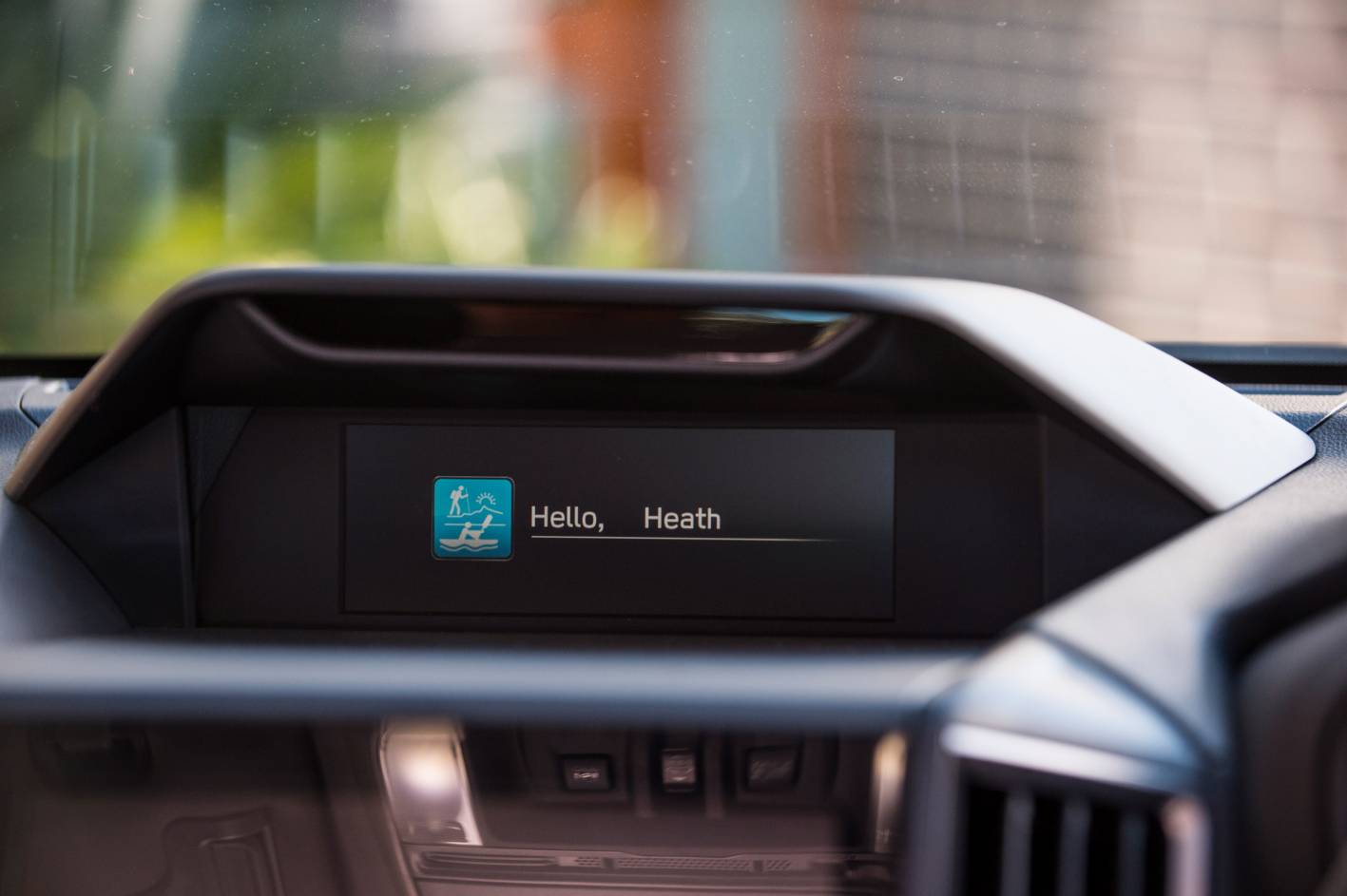
In the range-topping Forester 2.5i-S, the Driver Monitoring System (DMS) is also used to recognise the faces of different drivers and automatically set predetermined preferences such as seating position, door-mirror angles, air-conditioning settings, and trip computer info. It even greets you once it has completed its facial scan.
In the future, Subar’s DMS can even be used for other applications such as vehicle security, though Subaru is being naturally coy about what it has in the pipeline.
But it’s DMS’ driver distraction element that is the most significant, with driver distraction, particularly the use of personal devices while driving, now one of the leading causes of vehicle accidents.
This works by detecting if the driver continues to face in a direction other than straight ahead. If you think you can fool it by keeping your head pointing straight but flicking your eyes down or to the side, than don’t – it detects that too.
The dozing/drowsiness recognition is equally clever, and can provide an earlier warning than other systems that mostly work by analysing erratic steering inputs.
Subaru Australia engineer Hiep Bui told WhichCar the system gets used to the driver’s blinking pattern and can recognise when they’re start to close their eyes more frequently or for longer periods.
If you don’t like the thought of being monitored by your car you can switch DMS off. However Bui believed most drivers would appreciate having it looking out for them should their concentration lapse.
This relatively new technology does have some limitations. In order to work effectively, the DMS requires an unimpeded view of the driver’s face that can be reduced or completely blocked by a face covering or hat casting shade. And while the infrared camera can see through glasses, it can be affected by reflections or dark or polarised sunglasses.
Bui said DMS isn’t too dissimilar to smartphone facial recognition technology, which centres on security and personalisation.
“DMS personalises right now. It can set your seats and climate control, but in the future it might be that it will recognise you and start the car so you don’t need a key anymore.
He stressed that, while personalisation is a big part of future tech, it would be speculation to discuss where it will lead as far as automotive applications are concerned – which is a coded way of saying he can’t tell us about future projects.
So can it one day be used as ID to electronically pay for fuel, change the mood in the cabin based on how it thinks you’re feeling, or tell of someone is intoxicated simply by scanning their eyes?
“Obviously we will develop what the market demands,” Bui responded with a straight bat.
Australian tastes when it comes to new cars have drastically changed during the past two decades. Look back 20 years and you’ll see a very different market.
The year is 1998, Harry Potter and The Chamber of Secrets has just hit bookshelves and the Holden Commodore is king of the sales charts. Holden managed to move 94,642 back in 1998, almost double the number of sales the current chart-topper, the Toyota Hilux, managed in 2018.
SUVs occupied a tiny space in the new car market back then, accounting for only 12% of new car sales. The Toyota Hilux, which was considered a bare bones work ute in those days, found 20,820 buyers.
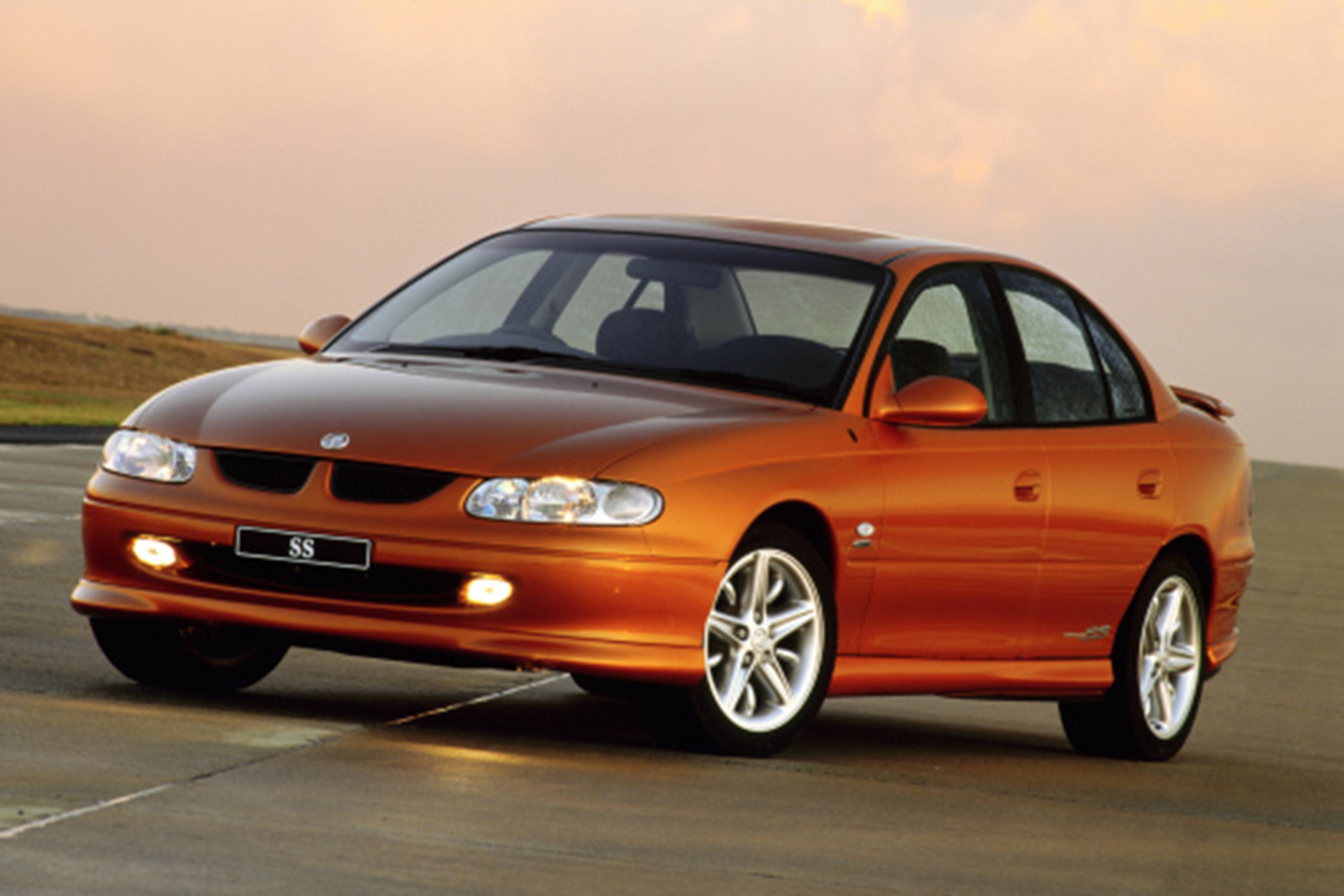
Moving forward 10 years and the market is already experiencing changes. The Commodore is still on top, but only managed just over 51,000 sales. A good 40,000 less than it did 10 years ago.
By 2008 SUVs have gained traction and are increasing in popularity, accounting for 19% of new car sales, but yet to truly explode in popularity.
Meanwhile the Toyota Hilux has almost doubled in sales, with Toyota moving over 39,000 units of its rugged light commercial throughout 2008. The ramp-up of the mining boom surely had a part to play, but the Hilux’s rising fortunes was also a reflection of how the ute was starting to become more of a family vehicle, thanks to increases in standard equipment and safety.
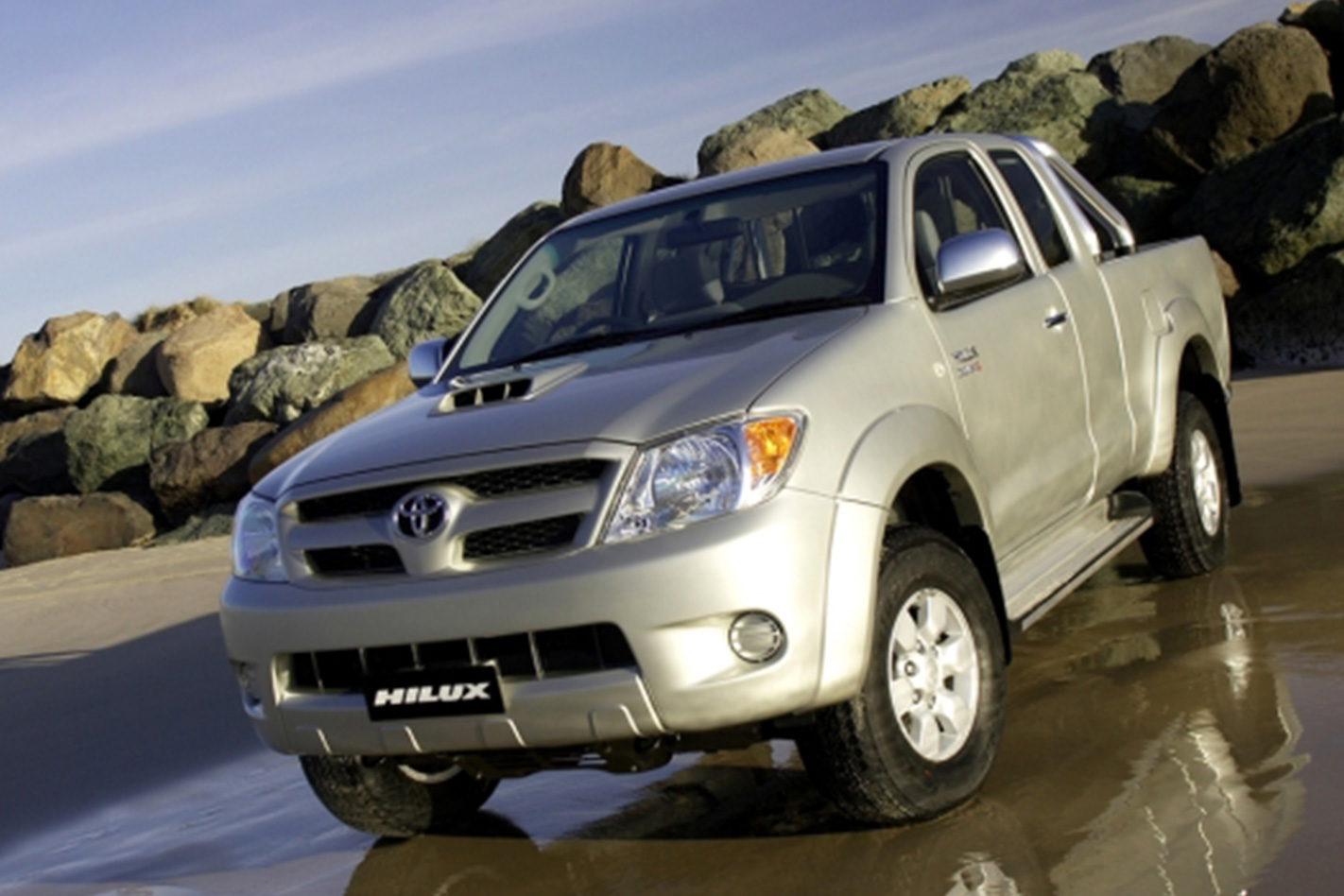
Yet it’s the last 10 years that have seen the biggest changes to the Australian new car market. Sales of passenger cars have plummeted. The most popular passenger car in Australia last year, the Toyota Corolla, only managed around 35,000 sales – 15,000 less than the leading passenger car in 2008, the Holden Commodore. In the middle of this decade the Australian-made Falcon, Commodore and Camry also disappeared, and while the latter two nameplates remain, they’re both selling at significantly lower volumes as fully-imported products.
At the same time ute sales have continued to increase, to a point now where the two best-selling vehicles in Australia are the Toyota Hilux (51,705) and Ford Ranger (42,144).
But by far the biggest change to the new car landscape has been the flood of new SUVs. In 2018 the best-selling SUV in Australia was the Mazda CX-5, which sold 26,000 units. But this number alone doesn’t give you the full picture. SUVs now make up 43% of the new car market, or 495,000 out of a total of 1,153,111 new cars and commercial vehicles.
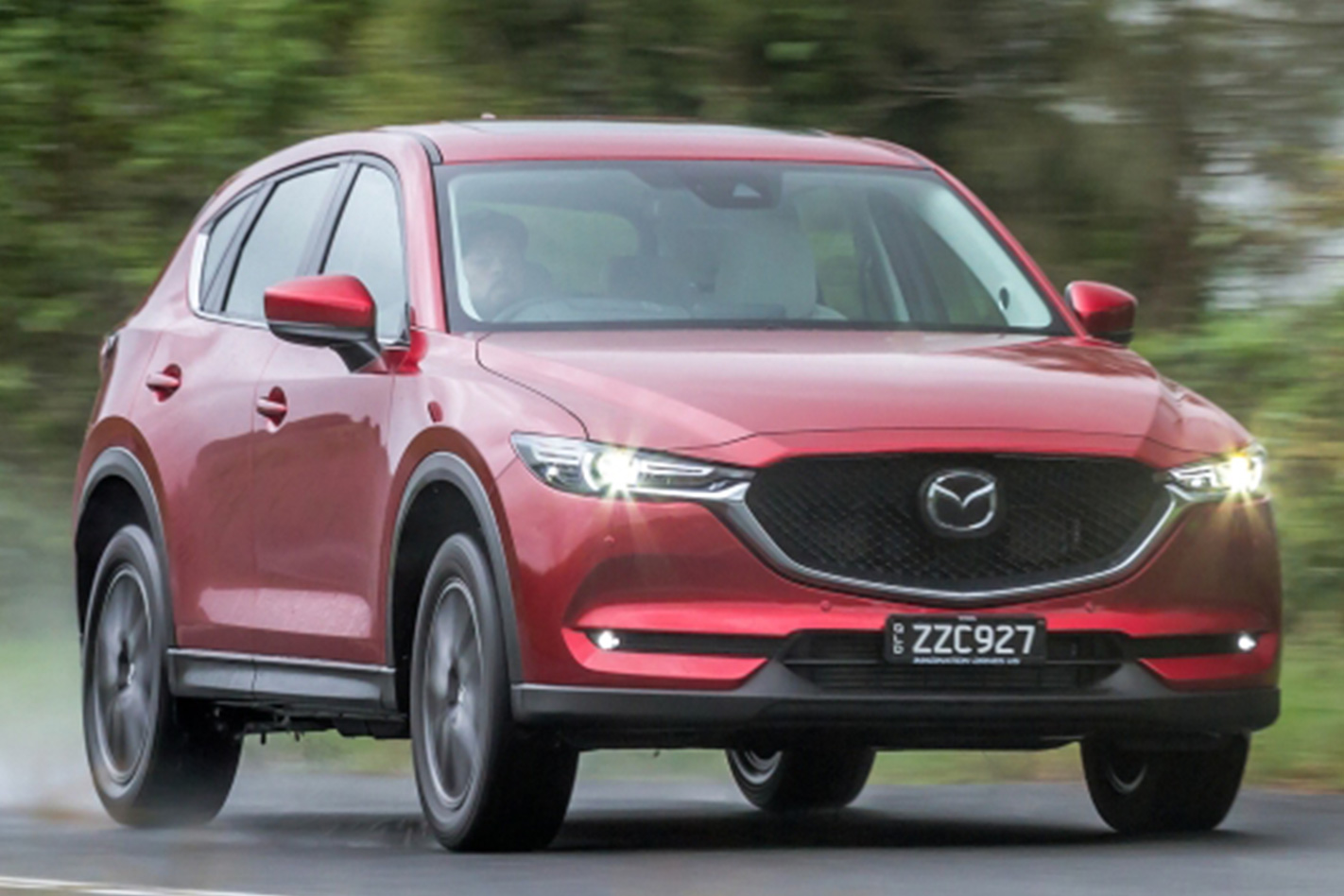
This shows the range and number of different SUVs on the new car market. The four best-selling brands in Australia – Toyota, Mazda, Hyundai and Mitsubishi – offer six, four, three and five distinct SUVs in their line up respectively.
Within the 25 top-selling cars, 12 were SUVs, seven were passenger cars and six were light commercial.
Whether you like it or not SUVs are here to stay, Aussie new car buyers are now more often than ever choosing SUVs over passenger cars.
Australians clearly love their SUVs, but why?
Unlike their more agricultural and off-road focused predecessors, today’s crop of SUVs are more likely to be front-wheel drive and mostly driven in and around city streets, with a gravel car park being the closest they’ll ever get anything resembling real off-roading. So it’s clear that their owners aren’t buying them with the intention of going bush-bashing.
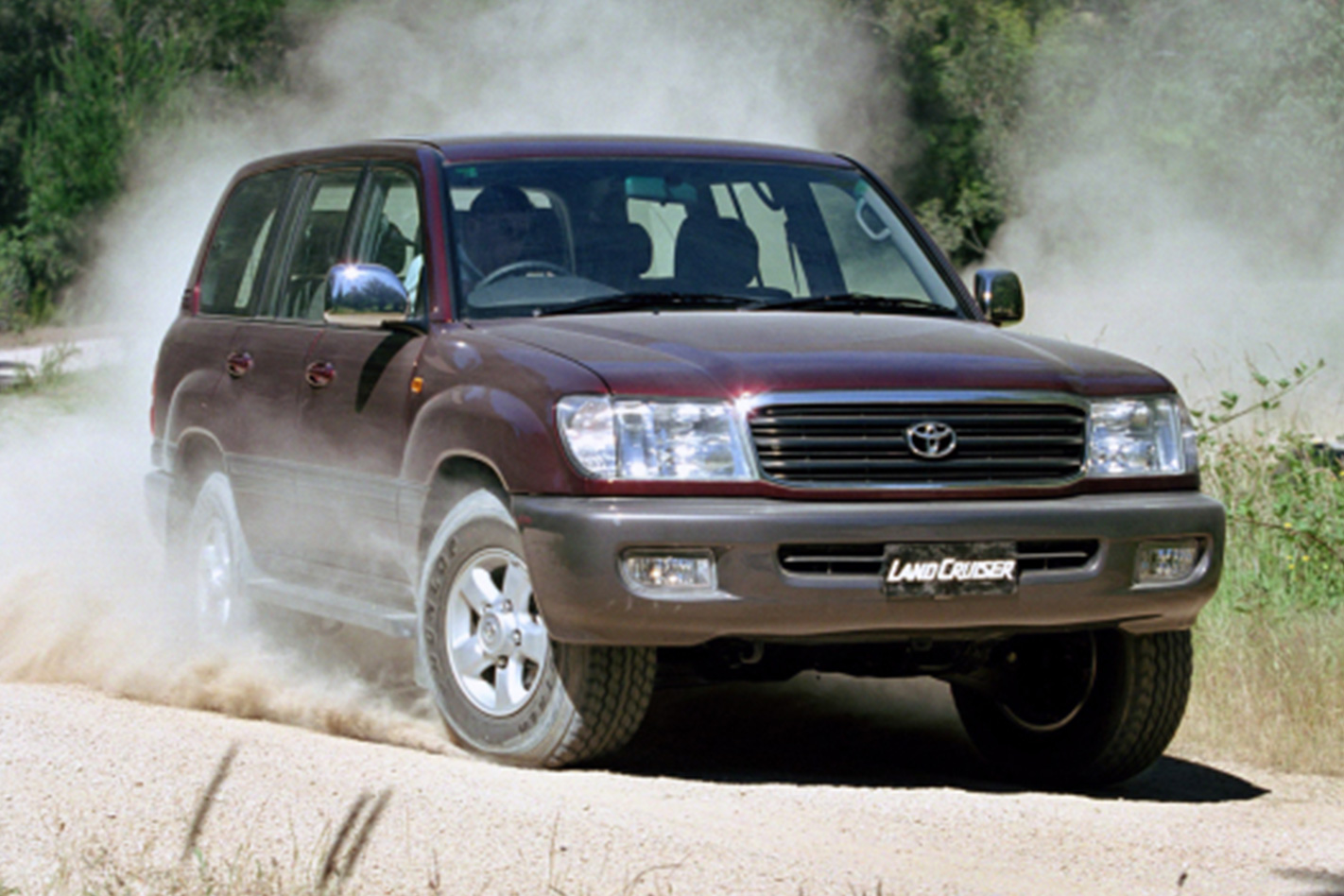
What they are being bought for is their space and ease of entry.
Most modern SUVs have the pragmatic combination of a high roof, low floor and wagon shape, giving occupants generous legroom, headroom and storage space.
Unlike sedans, the roof in an SUV doesn’t sweep down at the rear, also giving your backseat passengers headroom. That is unless you like coupe SUVs for some reason.
The growing popularity of SUVs can also be traced back to their ride height, and the ease of access that comes with it. The higher ride height allows for an ease of entry and exit that can’t be matched by a sedan or wagon. The taller doors and shorter sills mean less bending and squatting. This is a welcome relief for everyone, but especially the older generation and those with young kids.
The higher ride height also means improved visibility over a sedan or wagon. The higher ride height and longer suspension travel also helps protect your bumpers from kerbs and softens the blows of potholes, which on some of Australia’s roads are a common occurrence. Again, pragmatism dominates the list of SUV reasons-for-purchase.
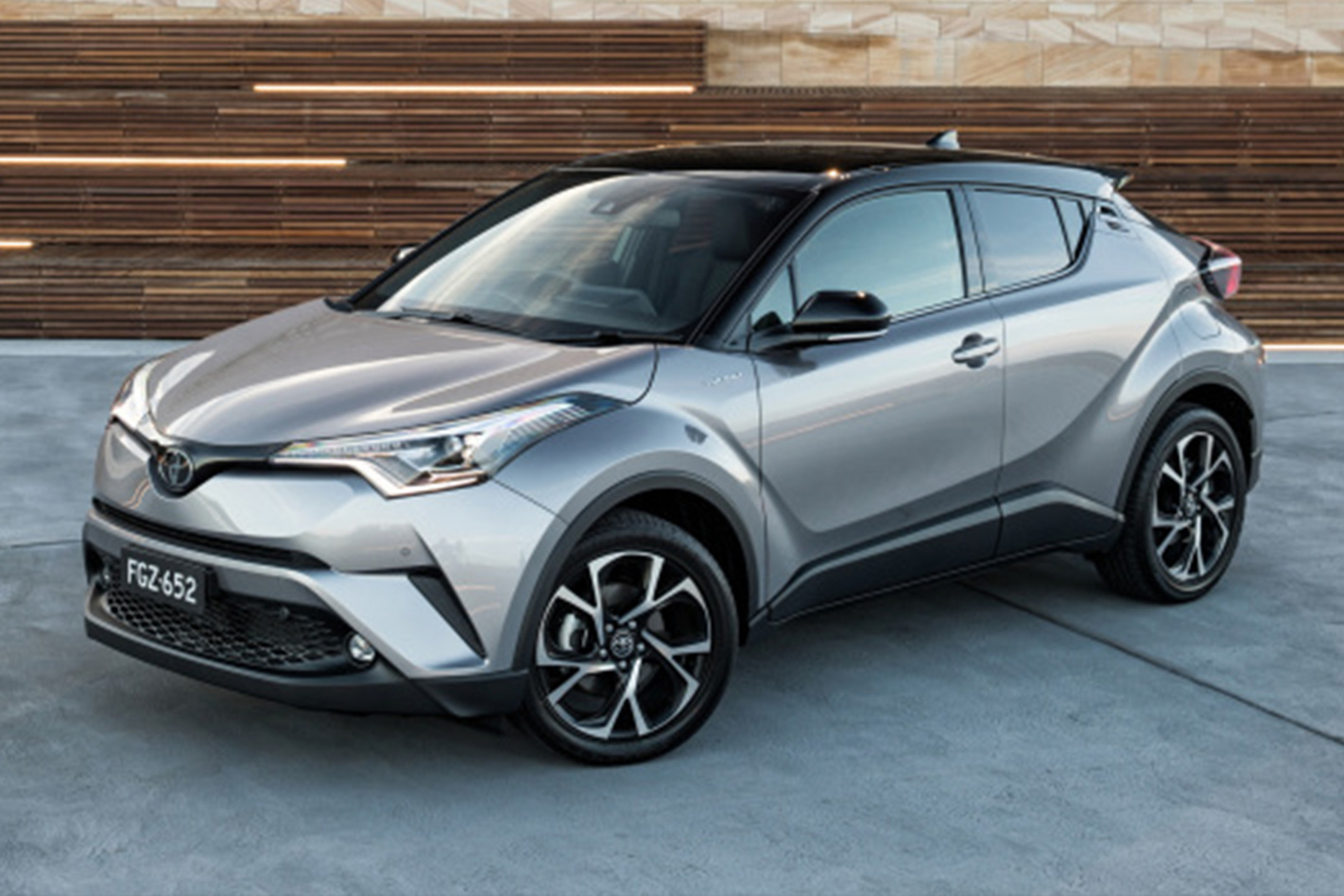
If it’s space you’re looking for, many would argue that a wagon would be your best choice. As wagons offer similar space to a SUV, but with superior fuel economy and generally better road manners thanks to less weight and a lower centre of gravity.
But the truth is the current range of new wagons is dwarfed by the sheer number of SUVs on the market, a number which is also constantly growing. Of the four most popular manufacturers in Australia, Toyota, Mazda, Hyundai and Mitsubishi, only the first two offer a wagon option – and even then it’s only one model apiece.
So it’s clear why Aussies love their SUVs and you can’t blame them. Thanks to their space, ease of access and sheer range of choices on the market, SUVs have shot to the top, killing the passenger car on their way.
But what will the next 10 years hold? Will EVs finally gain traction in Australia? Will millennials and Generation Z shun SUVs for regular passenger cars? Will Tesla still be around? We’ll find out in the next 10 years.
Audi has whipped the digital covers of its 2020 Q7 overnight, revealing a facelifted exterior as well as a reworked interior to bring the large SUV back in-line with the brand’s latest design language.
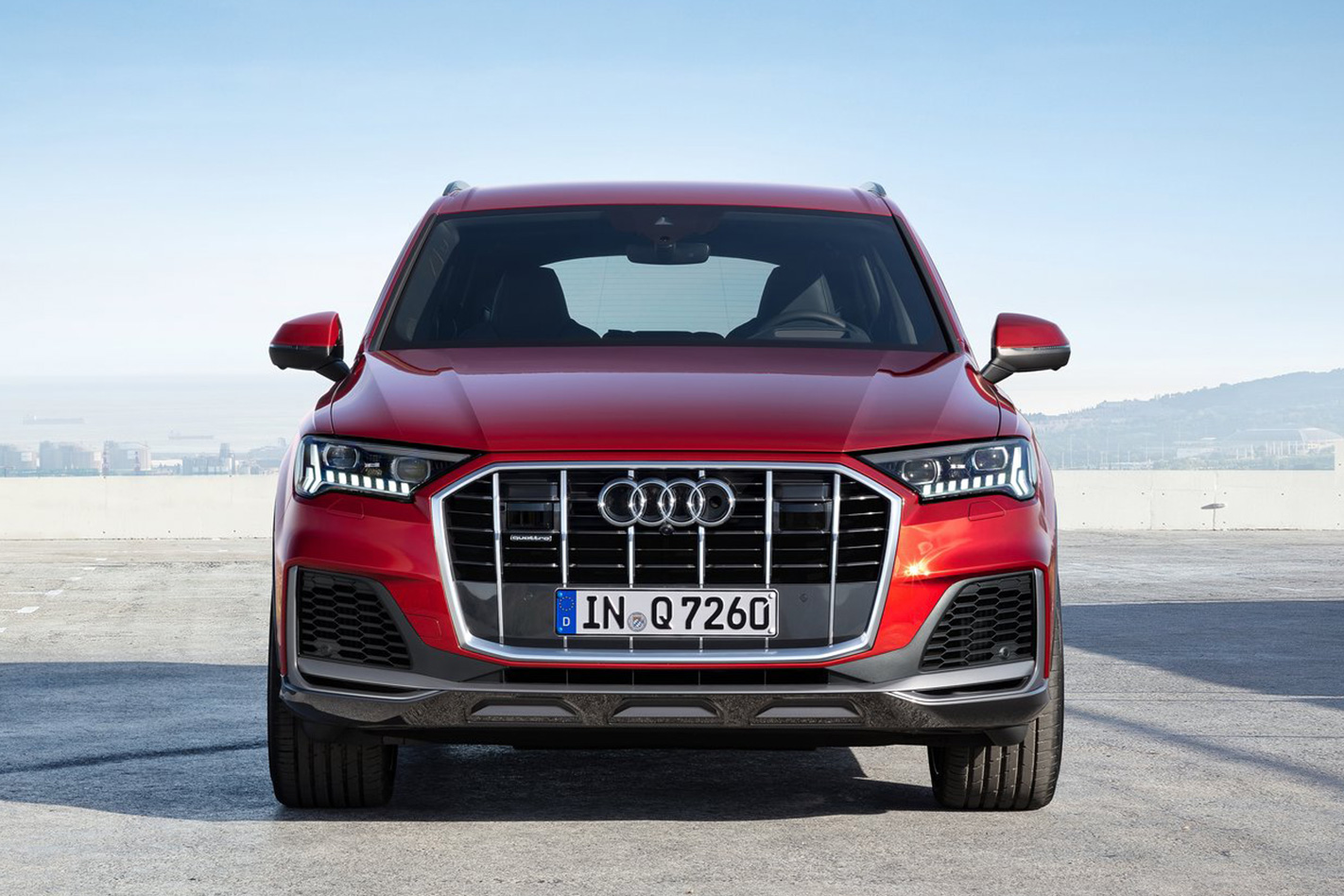
Featuring a fascia mimicking the one seen in the new Audi Q3, the 2020 Q7 has received a new set of headlights, a wide BMW X7-baiting Singleframe grille, larger air intakes, a tailgate that incorporates a full-length chrome strip and new tail lights. While the changes are small for a mid-cycle refresh, the design can certainly be told apart from the previous Q7.
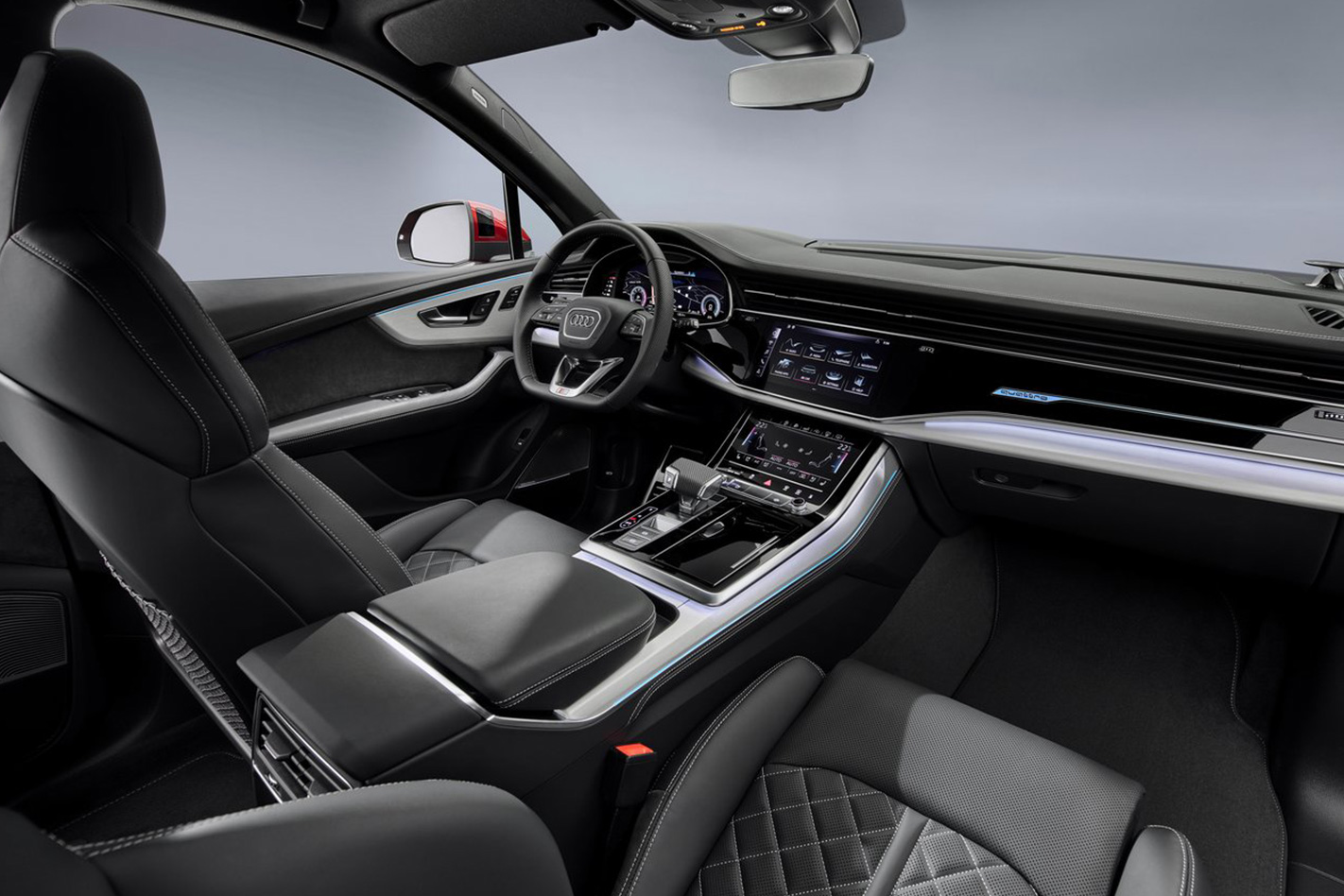
Inside, the new dash loses the floating pop-up infotainment screen, incorporating a lot of the Q7’s controls into a dual touchscreen infotainment system as seen on the A7 Sportback and Q8. The instrument cluster features Audi’s virtual cockpit screen which will include Car-to-X traffic light information which is being rolled out in some European cities.
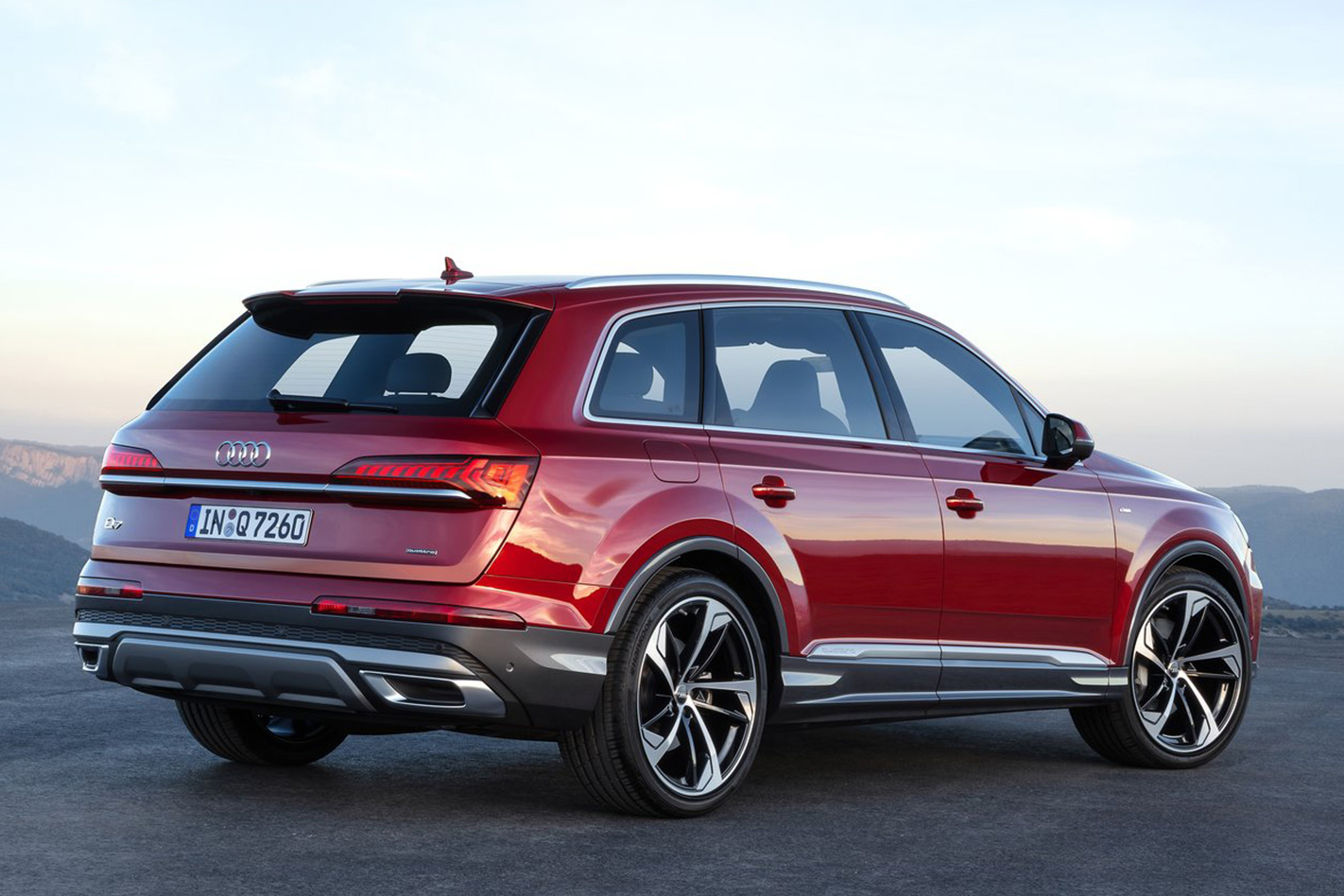
All powertrains of the updated Q7 range will utilise an eight-speed transmission and permanent all-wheel drive, and will also include mild-hybrid characteristics that Audi claims will reduce consumption by up to 0.70 litres per 100 kilometres.
The Q7 will receive active roll stabilisation which previously debuted on the sports-oriented SQ7, allowing the large SUV to compensate for body roll using electromechanical stabilizers during dynamic cornering. This will also improve ride quality in a straight line over uneven road surfaces.
There’s no news yet as to which powertrains will be in Australian dealerships, but it will likely be a range of 3.0-litre petrol and diesel engines, with a plug-in hybrid version to join the range down the line.
Dimensions remain largely the same, with the new car growing a mere 11 millimetres longer to 5063 millimetres overall. Five or seven seat interior configurations will be available (dependent on market), with an 865 litre boot for the five-seater, expanding to 2050 litres with a flat load area.
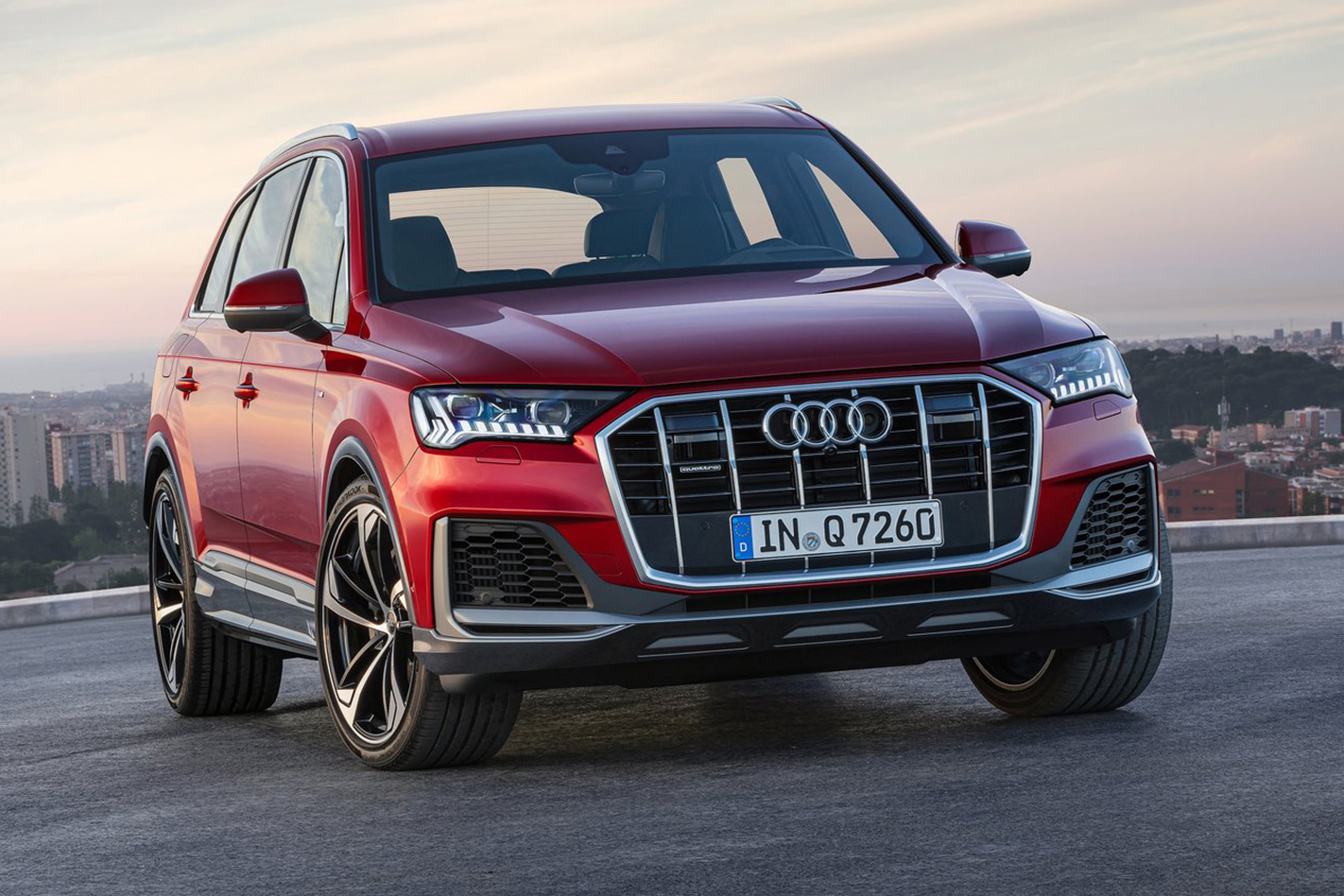
Optionable items include an ambient lighting package, Bang & Olufsen 3D sound system, adaptive cruise control, four-zone automatic climate control, all-wheel steering and LED Matrix Audi laser headlights. Of course, customers will be able to specify S-line design features that spruce-up the interior and exterior.
The Australian market can expect the new 2020 Audi Q7 to arrive within the first half of 2020, with the line-up and specification to be confirmed closer to that date.
What’s in the garage?
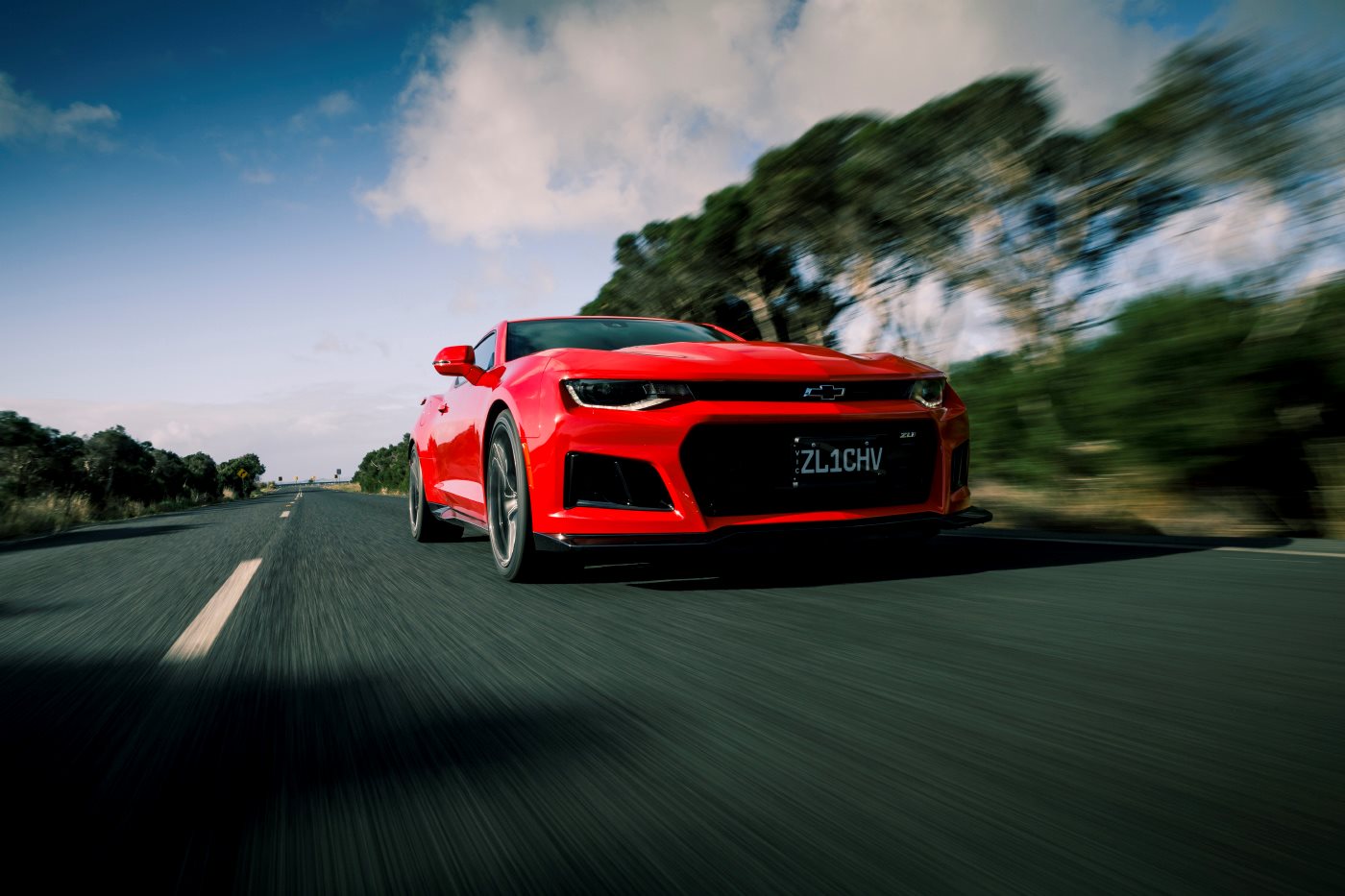
It’s hard to look past the numbers when preparing to drive the Chevrolet Camaro ZL1. In anyone’s book, 477kW and a monstrous 881Nm is a lot of grunt. Match that with a launch-control assisted claim of 3.5 seconds to 100km/h for the 10-speed auto and things are looking even juicier. There’s no doubt that the 6.2-litre V8, in all its whine-inducing supercharged glory, is rapid. And yes, the LT4 does make you all warm and fuzzy, rejoicing in the fact that such a hulking engine still exists.
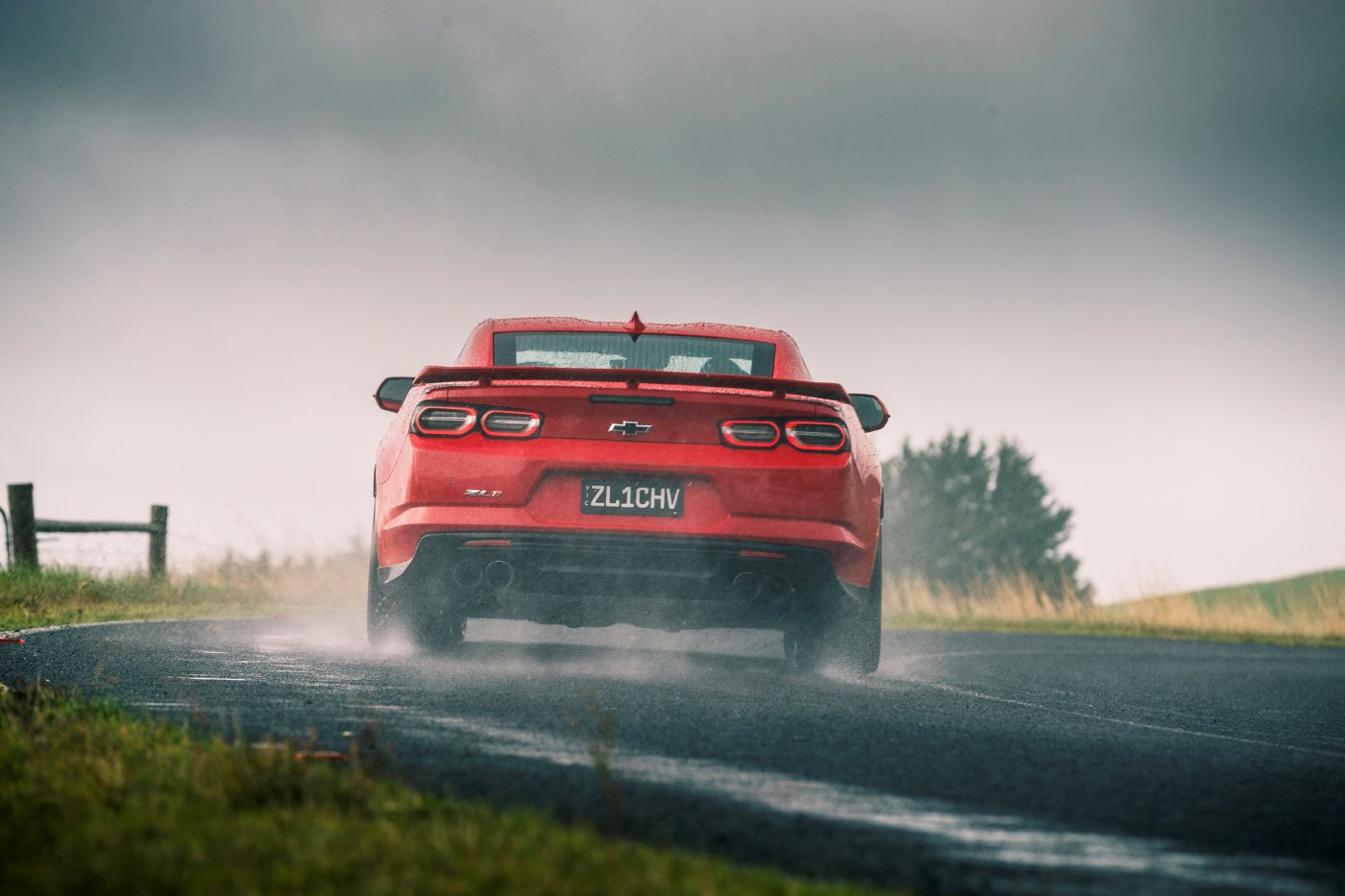
Thankfully, the rest of the $159,990 package comes to the fore, too. Magnetic Ride Control (MRC) adds a surprising duality to the ZL1, a world where performance and comfort mesh in an unexpectedly amicable marriage. Sadly the tarmac-tearing Goodyear Eagle F1 tyres aren’t fitted; instead the road-biased Continental ContiSport Contact 5P rubber has to suffice. But it’s time to see if on-paper prospects match the real-world reality.
What we reckon

Cameron Kirby
Staff Journalist
What a car, but more importantly, what an engine! The LT4 is an absolute beast of a thing. Tractable, powerful, and above all engaging. For me, it dominates the experience in the ZL1 in the best of ways. The 10-speed auto feels like it has two too many ratios personally, but it’s a smooth unit, and ensures power is on tap any moment you flex your right foot. Unlike the muscle cars of old, this piece of American iron can handle with the best of the Europeans, with the enormous front treads providing immense grip and feel. Its significant price over a Mustang becomes all the more understandable when you begin to turn up the heat.

Trent Giunco
Staff Journalist
My experience with the ZL1 was a little different to the rest of the Wheels team. I was lucky enough to drive it on largely dry, flowing country roads, something the strapping Camaro needs to get any form of meaningful traction despite still being shod with the ‘wrong tyres’. For me, it’s like Chev set out to make a mean, angry American muscle car and accidentally created a GT cruiser with a dynamite engine. Yes, it’s still a beast that needs to be managed in certain situations, but you can tone it down and enjoy the mostly cosseting ride, driving position, surprisingly polished dynamics and endless torque. That’s of course if you can shell out $160k to account for the asking price.

Andy Enright
Deputy Editor
I’m left a little perplexed by the Camaro ZL1. I know deep down that it’s a genuinely focused dynamic proposition, but we’re not seeing the best from it with the tyre it’s running on. Give us a hot day, a dry track and some sticky boots and I reckon it’d all come extremely good. The manual is also an interesting choice with a stubby lever and an old-school muscular action. That banshee engine buys it a whole heap of credit. If you ever thought modern sports cars were sanitised and dull, try this one for size. Check your ego and insurance first though.
Read: Chevrolet Camaro ZL1 and HSV GTSR W1 compared
Review
Power and Performance
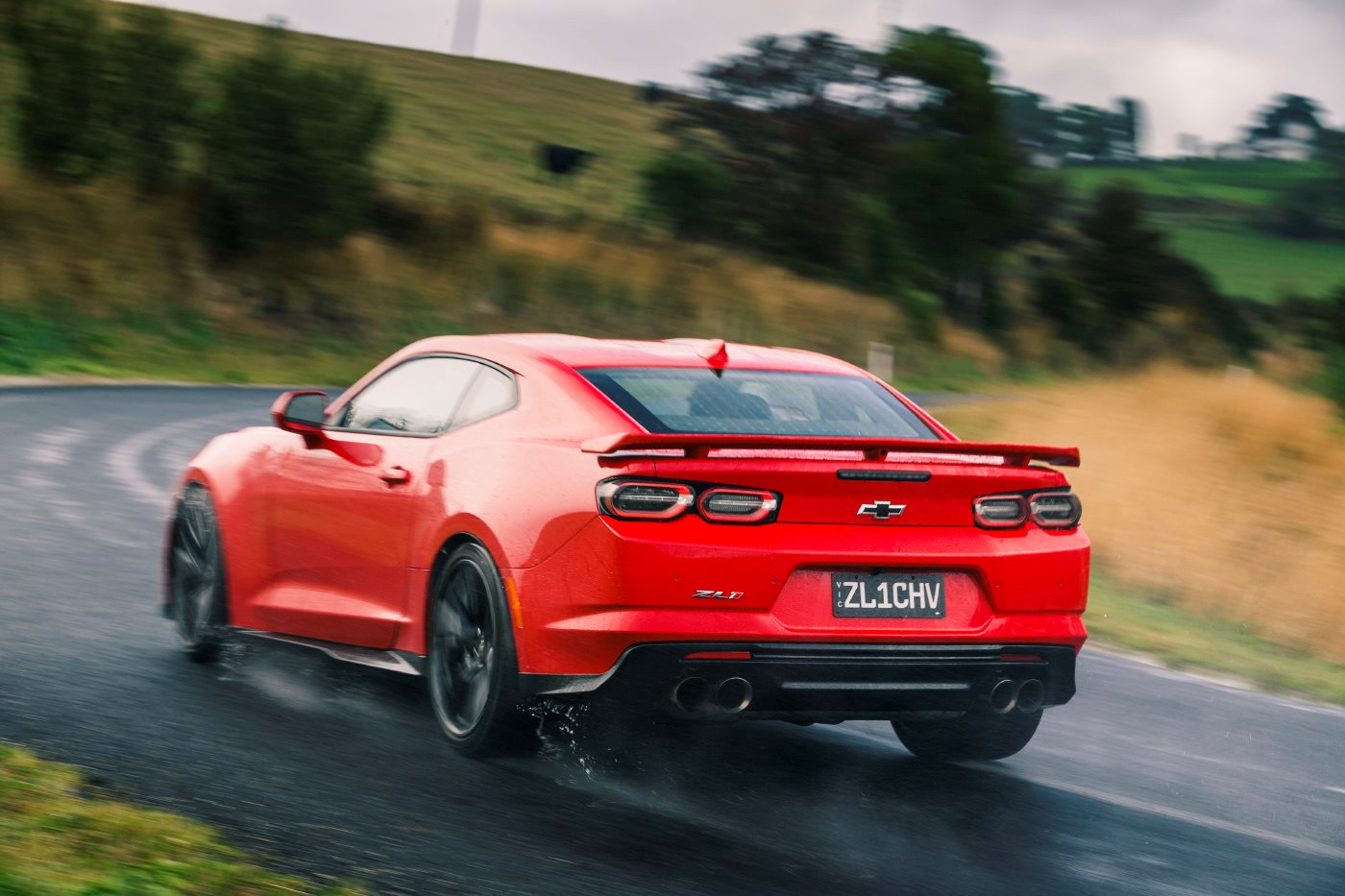
If the road is wet, strap yourself in and be prepared. Unlike most performance cars, you’ll find yourself searching for arrow straight bits. Anything verging on full throttle in the ZL1 will require precise tiller inputs and careful throttle management as the rear Continentals scramble for meaningful purchase. It is equal parts terrifying and fun. It’s also hard to ignore 881 of the finest Newtons – all of them demand attention.
Try the same on dry terra firma and the experience is somewhat more subdued, with the relatively unobtrusive electronic aids curbing acceleration only slightly. In gear, when traction limitations are largely no longer an issue, the LT4 catapults the ZL1 at the horizon at an alarming rate. It’s all about grip versus slip. Get the former and you’ll smile. End up with the latter and you might be in need of an undies pit stop.
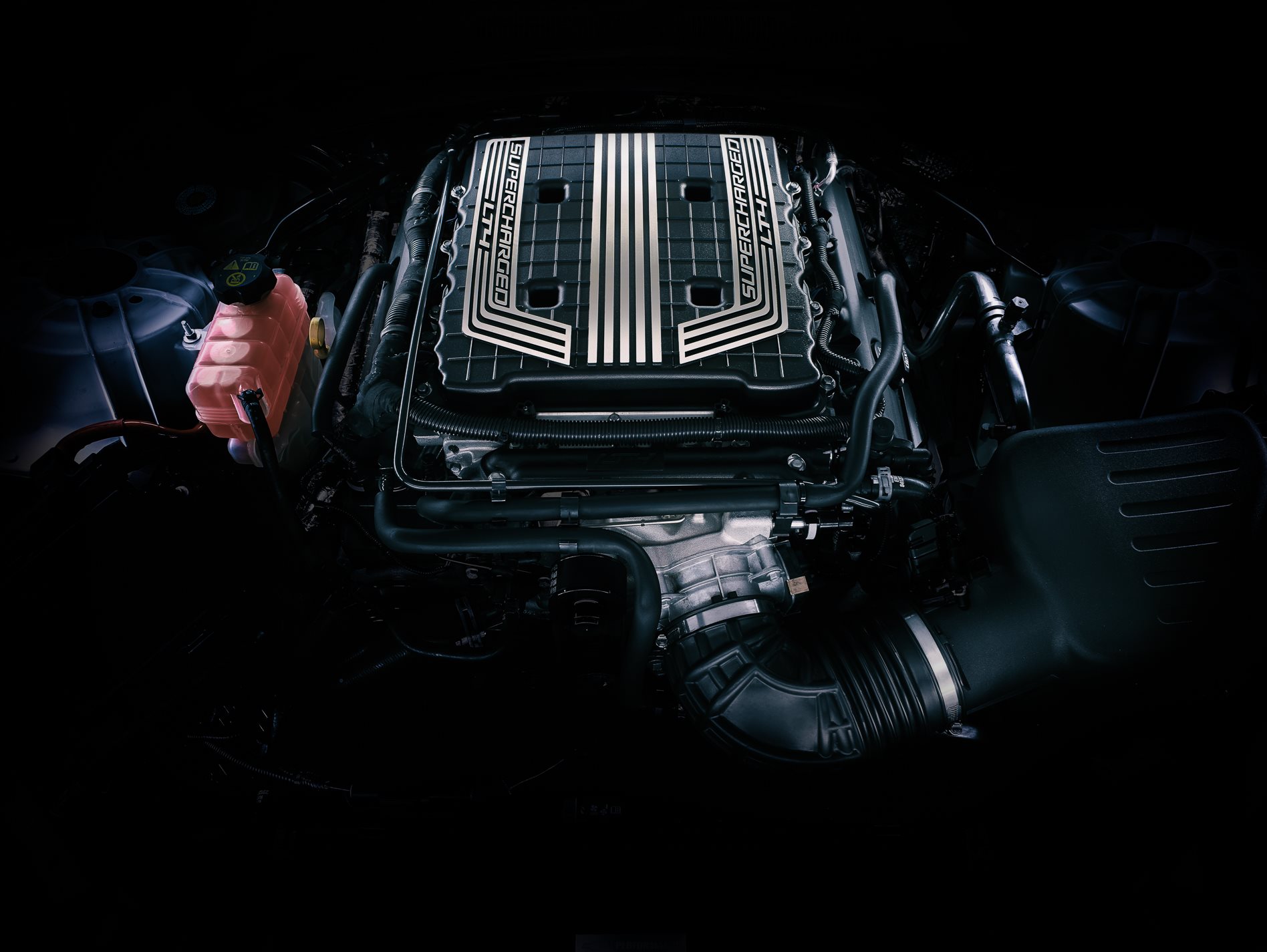
The refreshing part of the powertrain is the linearity of the delivery as the 6.2 builds to its 6400rpm crescendo. Trundling around city limits with the terrors of tramlines and pedestrian crossings isn’t a harrowing task. The 10-speed automatic helps here, proving an intuitive partner to the burly V8 in both sedate and aggro situations. The various drive modes also allow for everything from mild to wild. Sadly ADR laws have curtailed the V8’s bark a little, but there’s still enough supercharger theatrics and burble to satisfy any enthusiast.
Ride and Handling
This is where the ZL1 is a revelation. Despite not being the performance-orientated tread pattern of the Goodyear rubber, there’s still 285-section fronts (yes, that’s right, at the front) to offer ample front-axle grip. While the steering isn’t the last word in feedback, there’s a meaty weight and it’s direct. Hence getting into the apex is easy; exiting it requires managing 477kW/881Nm. It’s an exciting mix, but the revelation is the amount of mid-corner speed you can hold – it’s no point-and-shoot affair. The Brembos also offer meaningful modulation through the left pedal and arrest the speed proficiently.
Magnetic Ride Control accounts for much of the added composure. Wave goodbye to the red mist and turn the dial down from 11 and the ZL1 will, genuinely, offer an unexpected level of long-legged comfort. Yes, NVH could be better suppressed, but the Camaro fails to tramline despite the wide 20-inch wheels and you could feasibly use it on a long trip and not go crazy – there’s even a decent size boot.
Interior and Comfort
For the most part, it’s extremely hard to tell that the ZL1 was ever left-hand drive – HSV brings the Camaro to near OE-spec. The conversion largely escapes tell-tale signs of a previous life apart from the position of the centre console and the cup holders seemingly being on the incorrect side. Those who like the sensation of sitting low will enjoy the hyped-up Camaro’s cabin, a high beltline and rather small glasshouse which accentuate this. However, there’s a feeling of claustrophobia and vision is hampered thanks to the thick pillars. Overall there’s a performance-orientated ambience that doesn’t compromise comfort. You could do long trips in the ZL1 – not just to the track.
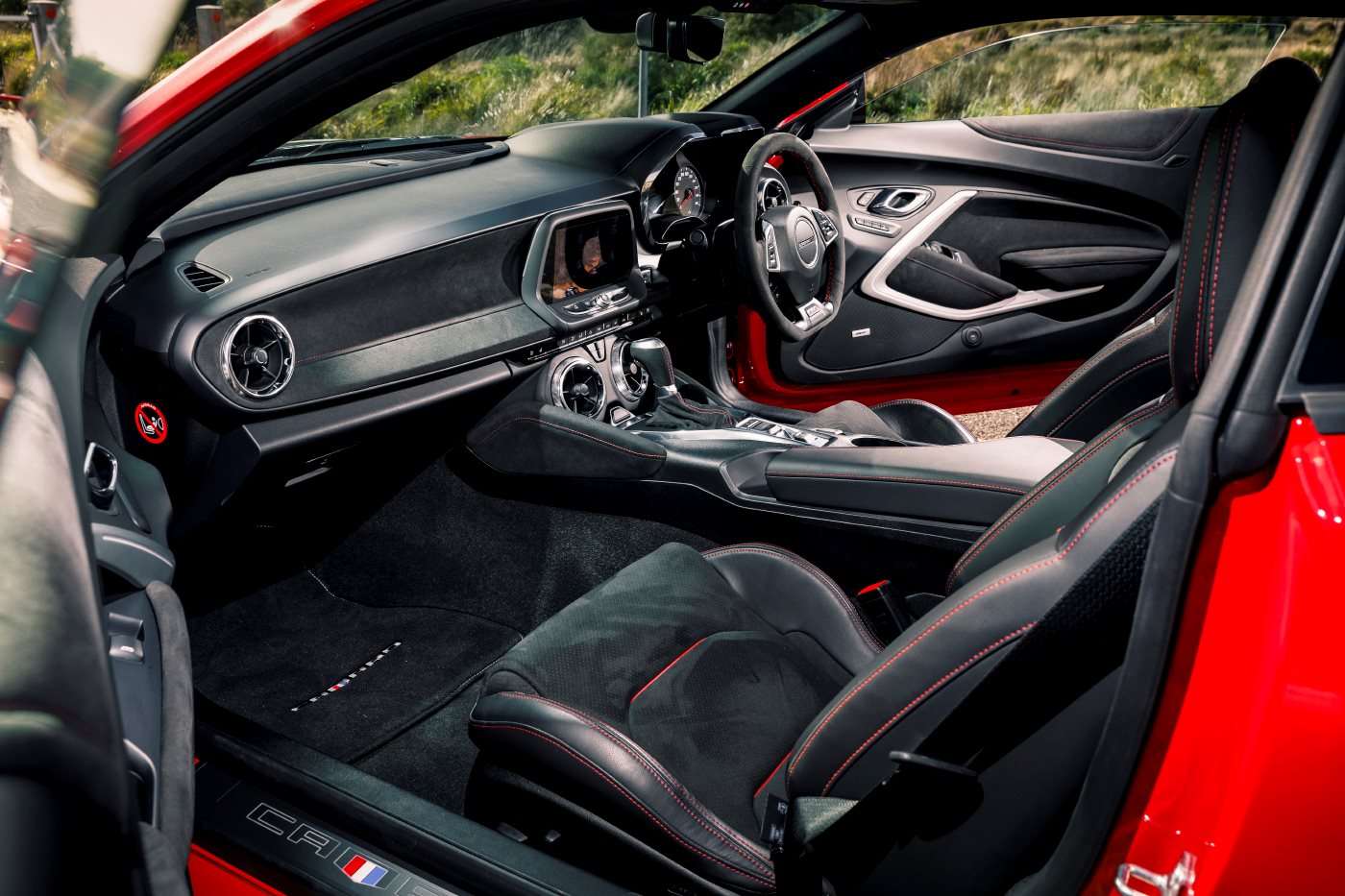
There’s suede a microfibre-wrapped steering wheel (which is oddly shaped, but heated) and gear shifter, alloy pedals, body-hugging Recaro seats and touch-screen infotainment (Apple CarPlay and Android Auto compatible) with a nine-speaker Bose audio system. Eight airbags, Forward Collision Alert, Blind Spot Warning, Rear-view camera and Head-up Display are some of the safety highlights.
Verdict
Perspective is key with the ZL1. If you enter into the experience looking at the LT4’s raw figures and expect it to dominate the experience, you might be a little disappointed. That’s not to say the supercharged bent eight isn’t an engineering feat, one that exudes muscle and offers ample stress for the 305-section rear hoops to cope with. However, it’s the fact that the go-fast Camaro manages to combine a compliant ride quality with such a high level of dynamic talent that truly impresses. The 6.2-litre engine is still a big part of the ensemble and deserves to take a bow at curtain call, but it’s not always the leading act you expect it to be. Still, it’s hard to be disappointed with the entire show.
CHEVROLET CAMARO ZL1 PRICING AND SPEC
Model: Chevrolet Camaro ZL1 Engine: 6162cc, supercharged V8, ohv, 16v Max power: 477kW @ 6400rpm Max torque: 881Nm @ 3600rpm Transmission: 10-speed automatic Weight: 1807kg 0-100km/h: 3.5sec (claimed) Economy: 15.3L/100km (claimed) Price: from $159,990 On Sale: Now
Big, heavy, and impervious, those are the words often used to describe the Bentley Continental GT… or tanks, which can explain the line of thinking that led to the creation of this, the Ultratank.
Based on a used first-generation Bentley Continental GT, the Ultratank is the brainchild of Russian YouTuber AcademeG.
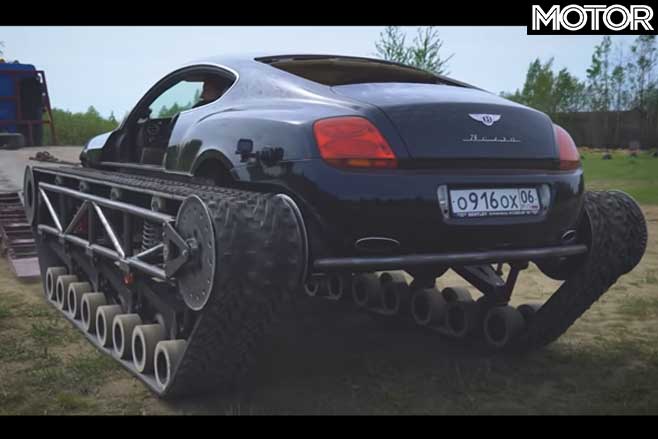
Hailing from a country that is famed for creating off-road track vehicles that are capable of taking on the country’s vast wilderness and suited for its sparse infrastructure, AcademeG claims that the Ultratank was meant to be more than just a showboating one-trick pony.
In a series of YouTube videos that chronicles the Ultratank’s build, AcademeG goes over all the planning and technical considerations that went into building a functional tracked vehicle that is able to work reliably, rather than just go from 0-100km/h in 5 seconds.
Impressed by the rigidity and toughness of the original Continental GT body and chassis, AcademeG kept much of its passenger cell intact, though parts of its front crash structure was lopped off to accommodate the tracks.
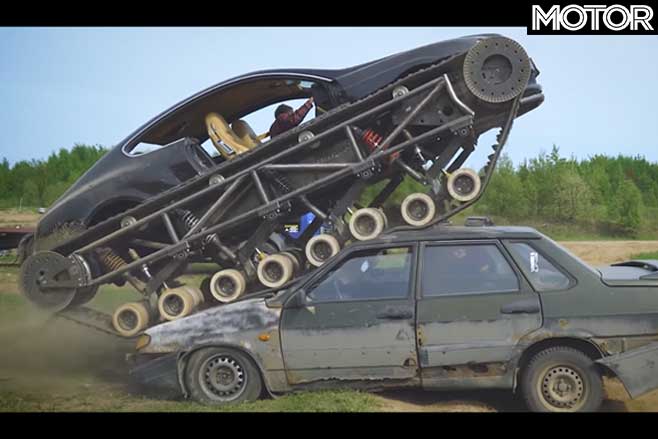
The same however can’t be said about the Bentley’s complicated running gear, which was quickly discarded for something more suited for rough and tumble life away from the comforts of the road.
In place of its sophisticated W12 engine, the Ultratank has adopted a Toyota 4.3-litre 3UZ-FE V8 engine that has been tweaked to produce power in upwards of 300kW.
Power from the engine is sent to “the biggest rear axle” they could source, a Dana 60 solid rear axle with an open diff, whereas the front axle is lifted off a UAZ and the transfer gearbox hails from a GAZ-66 military truck.
These drive components are attached to a fabricated spaceframe and suspension system, on which the car’s original body would sit. The construction and design of the tracks itself was said to have taken more than two months to complete.
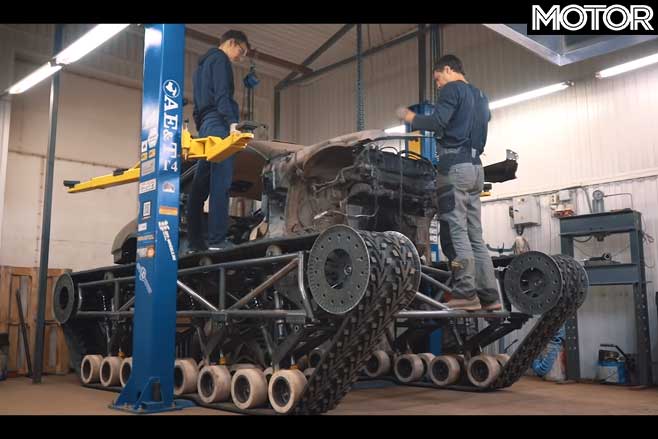
Put together the Ultratank tips the scales at 3100kg, a significant weight gain from the Continental GT’s already portly 2385kg mass. Nevertheless it is still able to hit an ‘electronically limited’ top speed of 60mph (97km/h) rather expediently.
All that work however seems worth it with videos of the Ultratank climbing effortlessly over obstacles, turning on a dime, and running over cars as tanks are meant to do. According to AcademeG, there are still some technical kinks to iron out and improvements to be made, with the Ultratank copping custom made doors in its latest update.
FOR a car that kicked off its segment in the ’70s, defined the decade of excess that followed, then matured respectfully with the sober ’90s while still being able to push the envelope right out with the otherworldly M3, the BMW 3 Series has lately been stuck in a rut while copycat rivals have risen.
Most pundits agree that the Bavarians lost their way around the mid-2000s, when the patchy E90 fell short of its now-fabled E46 predecessor. And though much improved, the F30 successor of 2012 couldn’t hit the old heights.
Is the reign of the 3 Series over for good?
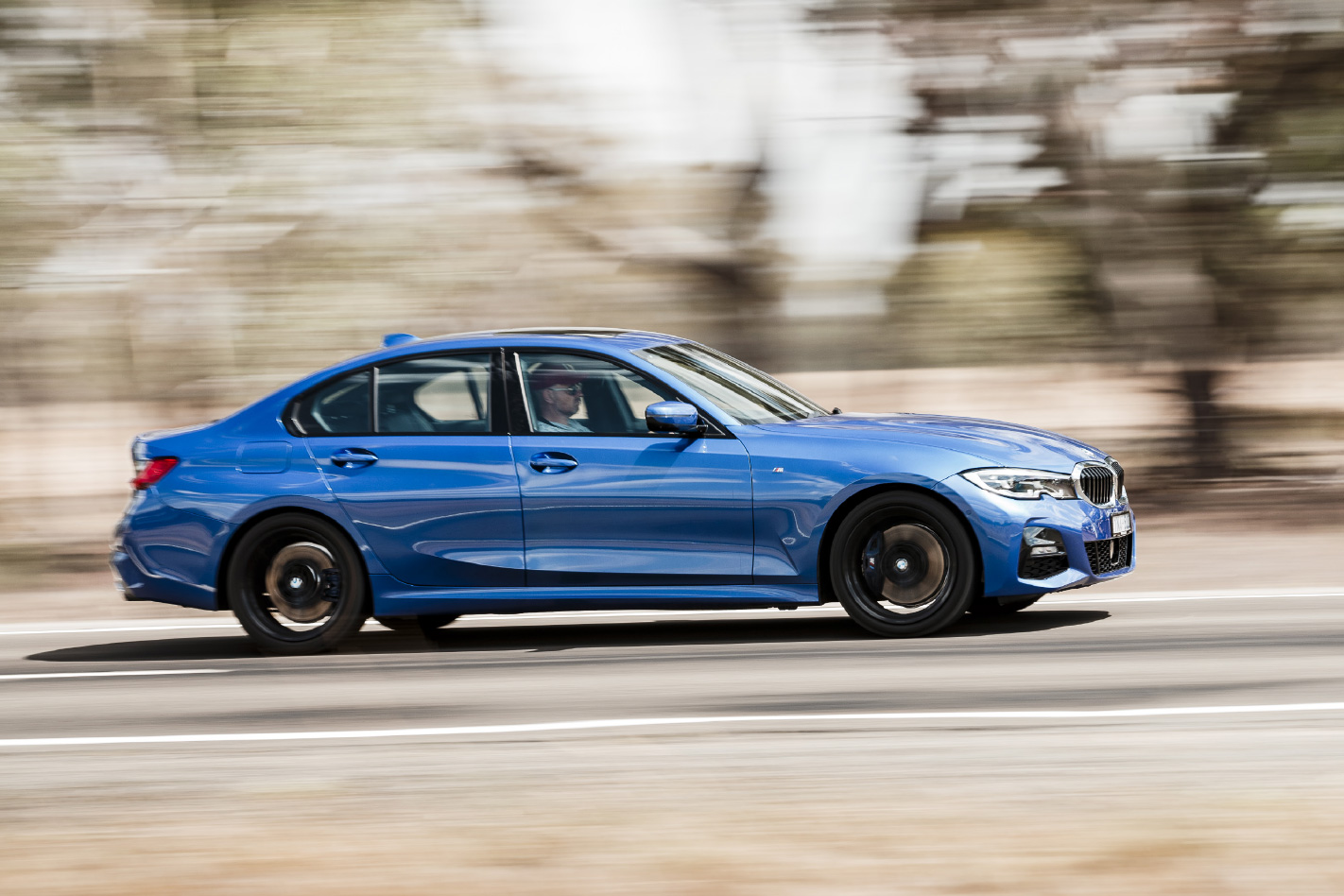
Not if Munich has its way. Pulling out all stops, the all-new G20 migrates to the marque’s ‘Cluster Architecture’ underpinning every other longitudinal engined/rear-drive-based BMW (and Toyota’s Supra).
Result? The 3 is significantly stronger, slipperier and bigger, with a corresponding wheelbase and track stretch to help improve proportions as well as dynamic prowess. Yet it’s lighter too.
Fresh yet familiar, Lexus ought to feel complimented by some of the handsome German’s more intricate detailing. And terrified by how emphatically changed new is from old. All of the BMW’s competitors should be.
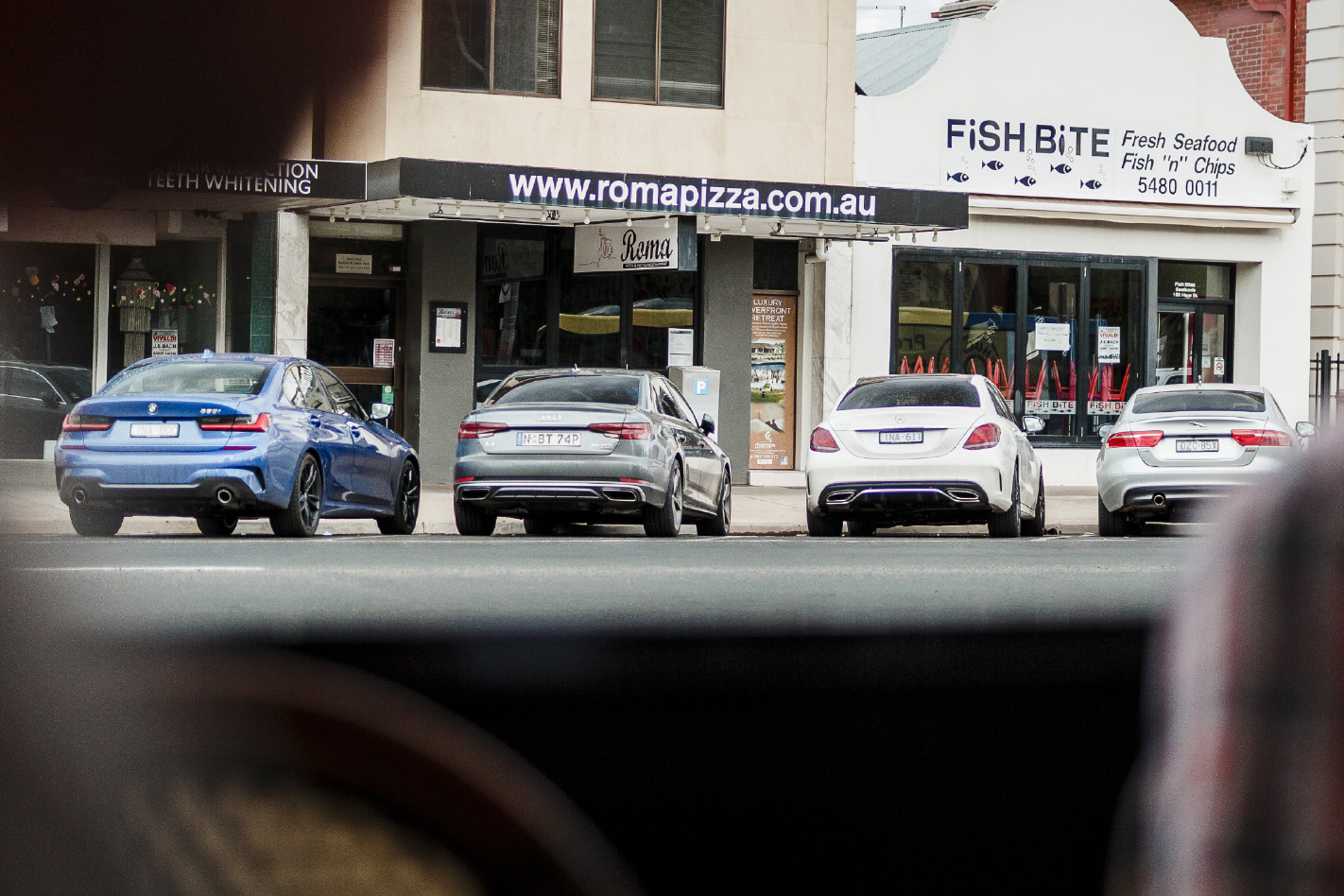
Time, then, for the seventh-gen 3 Series to meet its fiercest rivals, so we’ve selected the predicted popularity-queen 330i M Sport to take on the refined Audi A4 45 TFSI quattro, dynamic Jaguar XE 300 Sport and bestselling Mercedes-Benz C300.
Once, a ‘3’ in a badge usually denoted a 3.0-litre atmo six. Not now, though. To slash emissions, all combatants boast 2.0-litre four-pot petrol turbos, with just 14ccs between them, sub-six second 0-100km/h claims and circa-6.5L/100km combined averages.
Here are more numbers: $70,900 – the price of the latest 330i. The same as before, but with heaps more gear to go with the boosted oomph from its 190kW/400Nm heart. Leather, adaptive LED headlights with auto high beams, sat-nav, digital radio, digital instrumentation with head-up display, surround-view camera, three-zone climate control, wireless smartphone charging, powered front seats with memory, keyless entry/start, adaptive cruise, AEB, lane departure warning, lane-keep with steering assistance, blind-spot monitor, front and rear cross-traffic alert, speed limit recognition, park assist, powered boot lid, 19-inch alloys. Loaded.
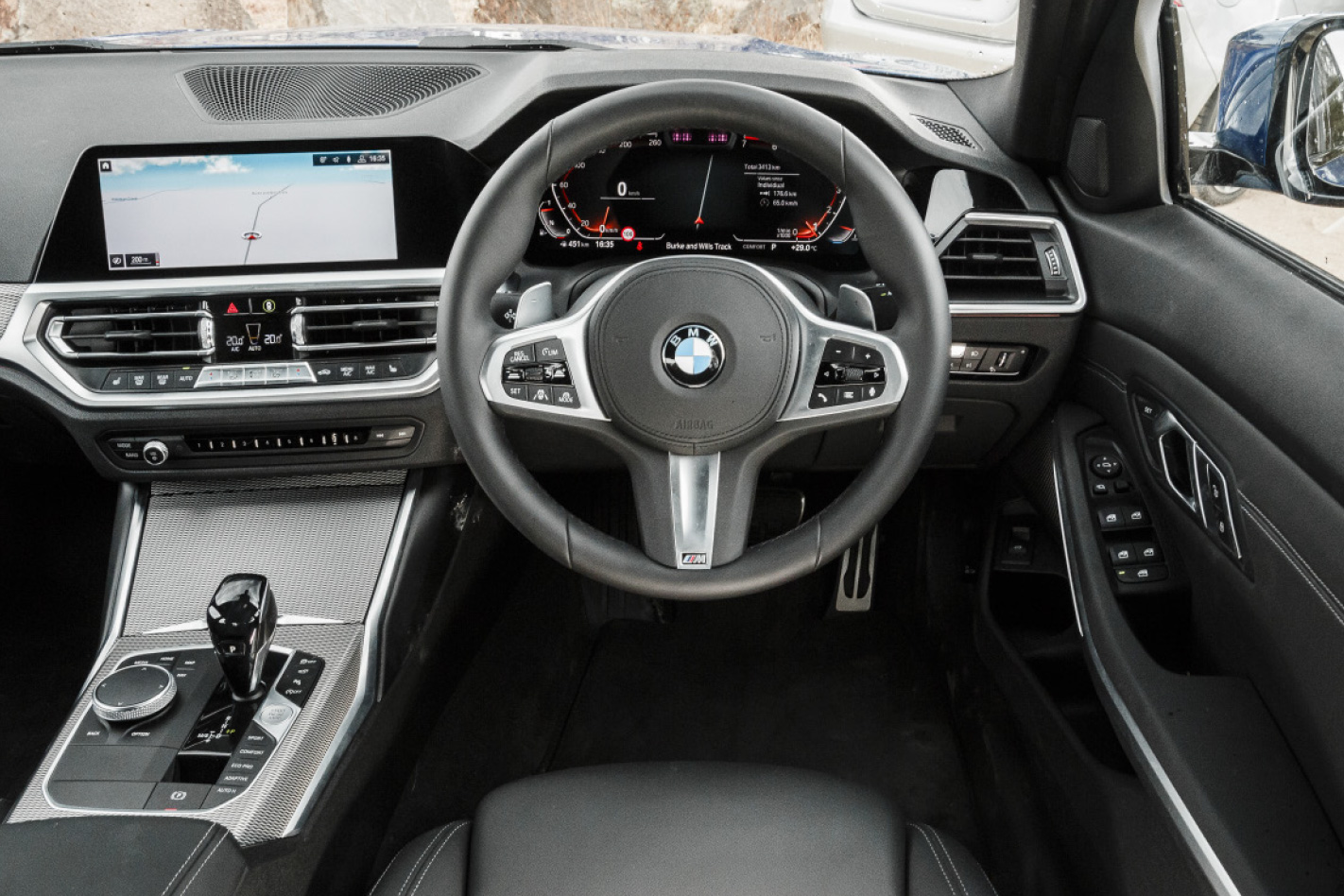
Being an M Sport also brings 10mm-lower sports suspension, adaptive dampers, beefier brakes, a bodykit, racier trim, chunkier steering wheel and moodier cabin materials. Still, metallic is a $2K gouge, while the sunroof, M Sport differential and other options bumped up our 330i to $80,100.
Is BMW’s newfound value spec enough to catch the C-Class?
The five-year-old W205 might be a segment favourite, but it hasn’t been a winner in our pages like the preceding (and COTY-winning) version from 2007. We’re keen to see if the Series II facelift out last September can remedy that.
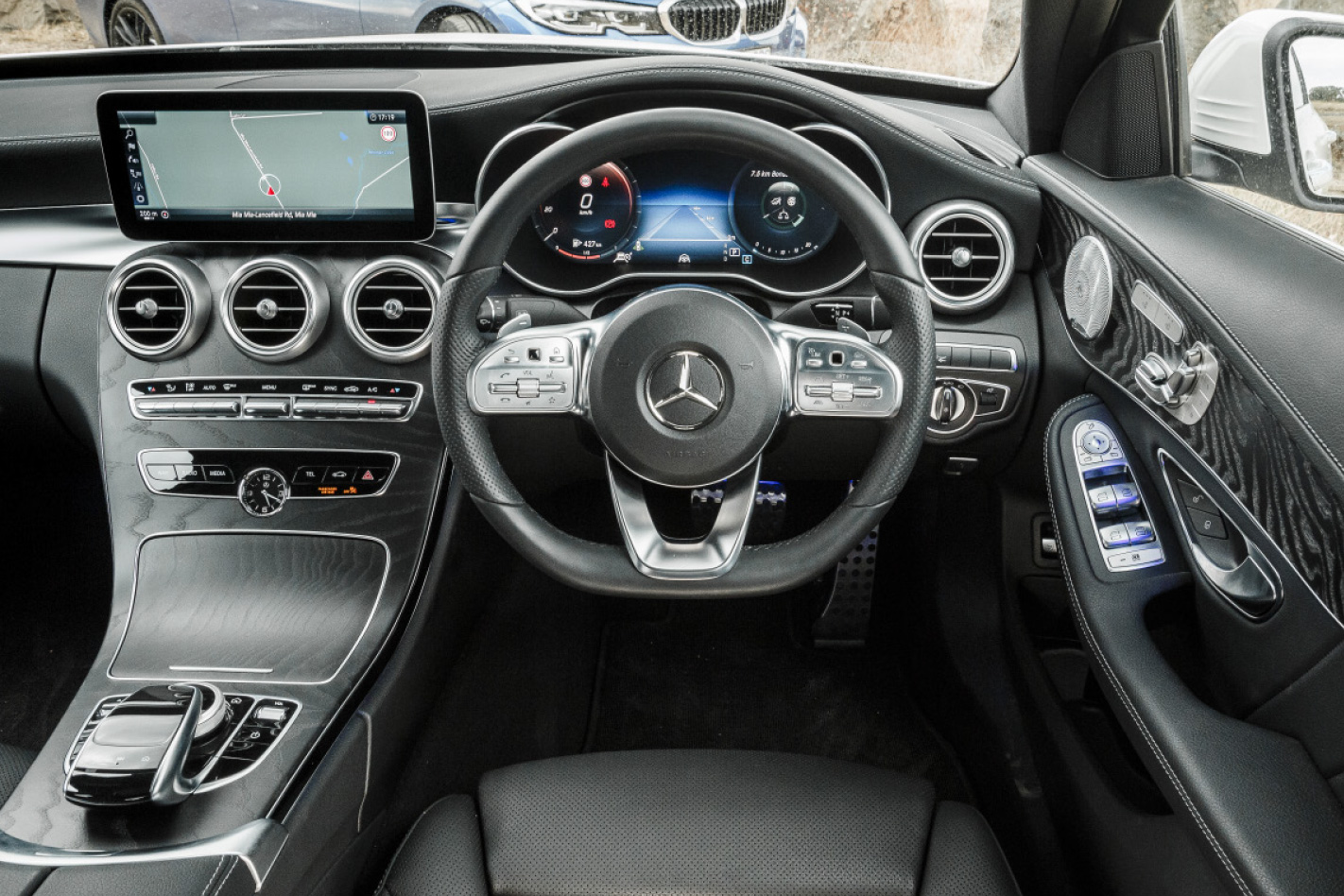
With a new nosecone, alloys, lighting elements and not much else, most of the advances have occurred under the South African-assembled Benz’s skin, with an overhauled electronic architecture resulting in updated multimedia systems, revised digital instrumentation and upgraded driver-assist tech nicked from the E-Class representing the headline mods. The C300’s outputs rise by 10kW to 190kW/370Nm too. However, adaptive dampers, leather, wireless charging and a few other niceties remain optional, and – together with a host of other items like enhanced seating, AMG Line visual titivations and Comand full multimedia packs – our Merc’s ask rockets to $100,113.
Conversely, while Audi, too, has been overly subtle altering the recent B8-series A4 makeover for 2019, this ninth-gen iteration (released in late 2015) has consistently impressed us with its value, quality, refinement and driveability. The only all-wheel-drive and dual-clutch transmission on test, the $70,300 45 TFSI S tronic quattro nevertheless undercuts the BMW by $600, but falls slightly short on power (185kW) and torque (370Nm). Plus, it requires a $2470 Assistance pack to match its compatriots in the driver-assist tech department and a $1300 S line Sport upgrade for more athletic aesthetics inside and out. Other 330i-equalling items like a head-up display and audio upgrade must be bundled in a $5600 Technik pack; likewise, the 360-degree camera and auto park features add $1235. These, along with similar options found on the BMW, raise the Ingolstadt sedan’s price to $89,680.
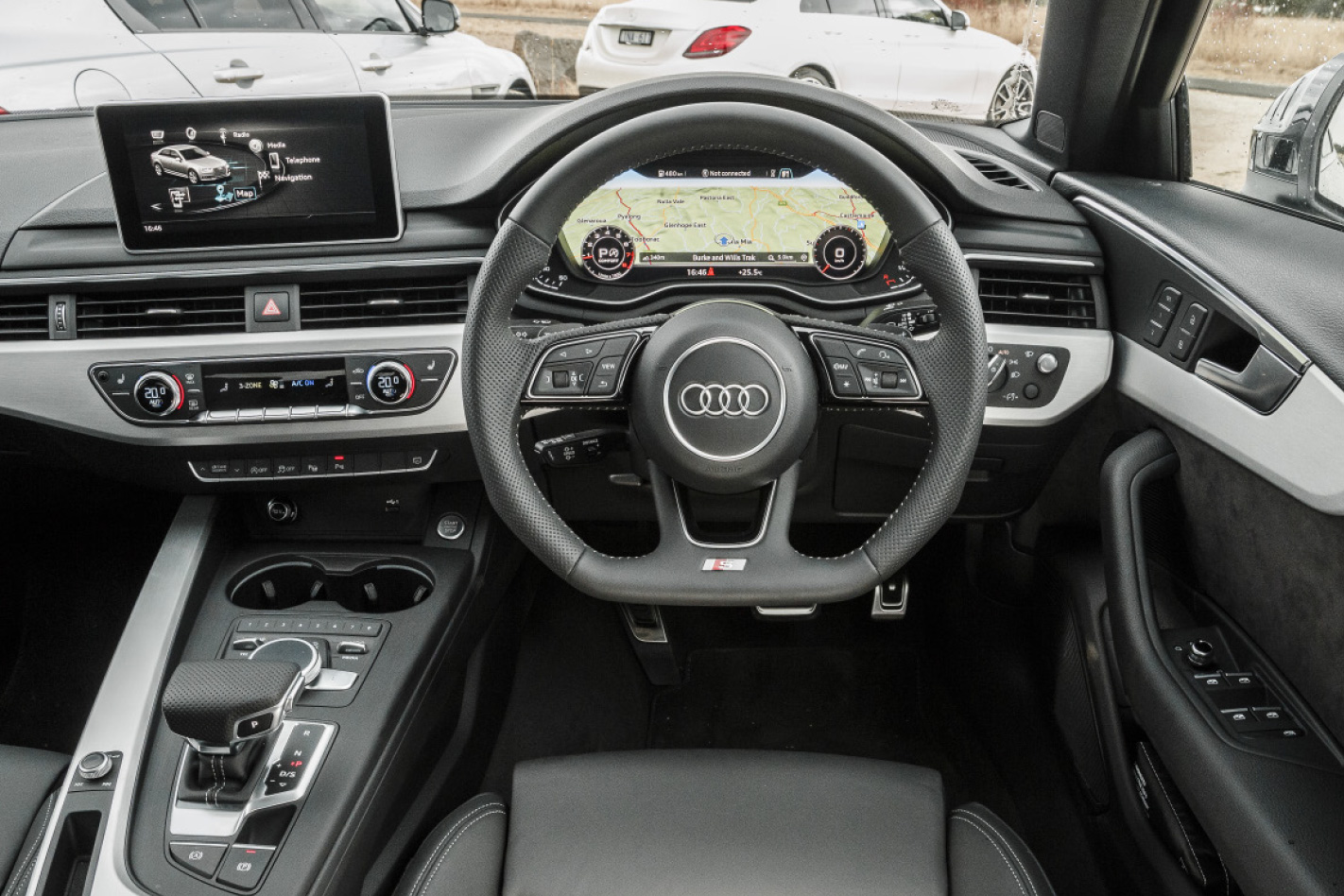
Finally, the XE. Perhaps one day historians will look back at the British mid-sizer as one of the unsung greats of the 2010s, finishing at or near the top of many road tests but rarely on top of customers’ to-test-drive lists.
Surfacing in mid-2015, the existing version has undergone steady improvements since (namely all-new in-house Ingenium engines and revamped multimedia two years ago), while a thorough facelift was announced in the UK just weeks ago. Our 221kW/400Nm 300 Sport started off as the quartet’s most expensive at $79,400, and still required $8K’s worth of options including a $3K Active Safety Pack, $2K adaptive dampers and $580 digital radio, to equal the Germans. All up, $87,650.
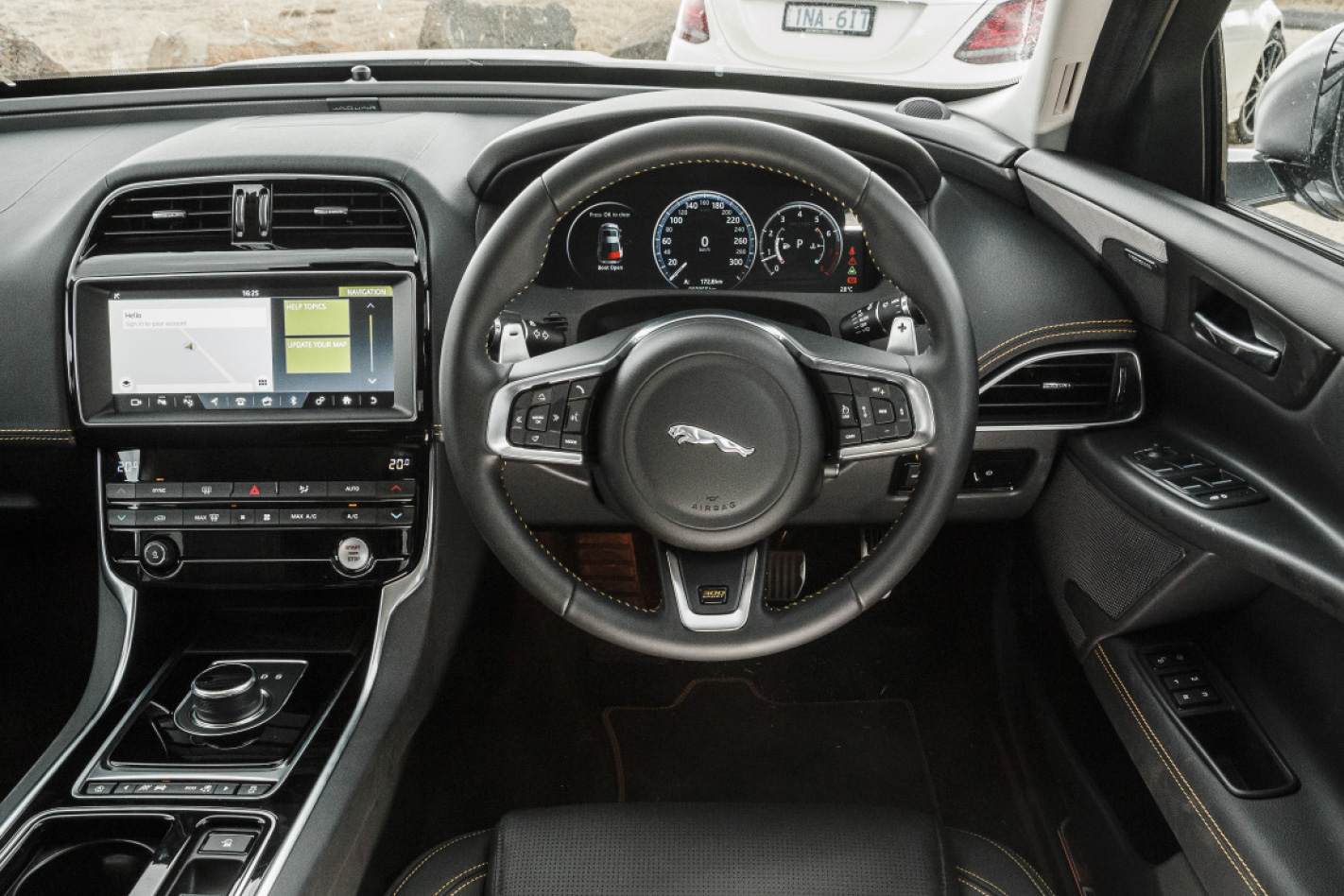
For Jaguar’s sake, fingers are crossed that the upcoming Series II cabin steps up, because in 2019 the outgoing item’s dated, heavy-handed dash seems the oldest and dourest of the foursome. Confusing switchgear, fiddly rotary transmission controller and frankly dull digitised instruments won’t convert browsers into buyers.
Yet the build quality is solid, seat comfort is superb, noise suppression is impressive and – actually – the user interface is logical once mastered. Plus, the XE’s nowhere near as tight in the back as the shallow windows and thick-set trim suggest.
The C-Class probably scores a sale the second most people sit inside it for the first time. Imposing and brash, the bulbous dash still looks expensive, with inviting (optional in our example) comfort seats and a commanding driving position aiding the Benz’s appeal. However, even years later, the messy multimedia interface, low-rent squeaky plastics and polarising column gear selector grate.
Finding serious fault in the vast, wide, spacious and exquisitely detailed A4’s cabin is a struggle, reflecting its maker’s obsession with quality, minimalism and sensory satisfaction. No surprises here – just reassuring craftsmanship that still sets the standard more than three and a half years since debuting globally. There’s a real sense of being in a 5 Series rather than a 3 Series rival, so complete is the 45 TFSI quattro’s alluringly rich interior execution. The classy class benchmark remains Ingolstadt’s greatest asset.
In M Sport trim at least, BMW really appears to have watched and learned from its compatriots. While still identifiably BMW, the G20 avoids the cookie-cutter syndrome by gently progressing design and presentation themes, introducing the latest iteration of the excellent iDrive controller, less infuriating gear lever functionality (finally!) and a very welcome step-up in material quality. Space, too, improves, with rear-seat passengers especially pampered by contoured backrests. There’s a newfound warmth and lightness of touch. Our only reservation is that BMW’s age-old analogue dials give way to a slightly fussy and endlessly configurable digital instrumentation.
Behind that resculptured snout is BMW’s most powerful production four-pot turbo ever. Matched to ZF’s brilliantly intuitive eight-speed auto, it’s marginally but consistently the strongest performer on test, providing fervid off-the-mark acceleration, especially in Sport mode.
Actually, this feels far livelier down-low than most of the classic in-line BMW sixes of yesteryear, and keeps the taps flowing well above the mid-range, nudging the 7000rpm rev max with effortless ease. If only it made the same evocative sound as the old 3.0-litres. That we averaged 9.7L/100km and six seconds flat to 100 over repeated runs in mid-30s temperatures further instilled respect.
Not that the Mercedes was far behind, almost mirroring its Munich nemesis – just 0.1s adrift in the 80-120km/h increments at just 3.7s – but never quite catching the fiery newcomer. Maybe it’s the less insulated cabin speaking, but the Benz sounded busier and buzzier than the Bimmer, so it felt at least as muscular. One thing’s for certain: subjectively, in Sport mode, the C300 takes off like a wounded wasp. Quite a rousing experience.
There’s a price to pay, however, for such rowdiness, even though the nine-speed 9G-tronic auto boasts a wide spread of ratios that promise tee-totalling parsimony – and that’s a disappointing 11.1L/100km.
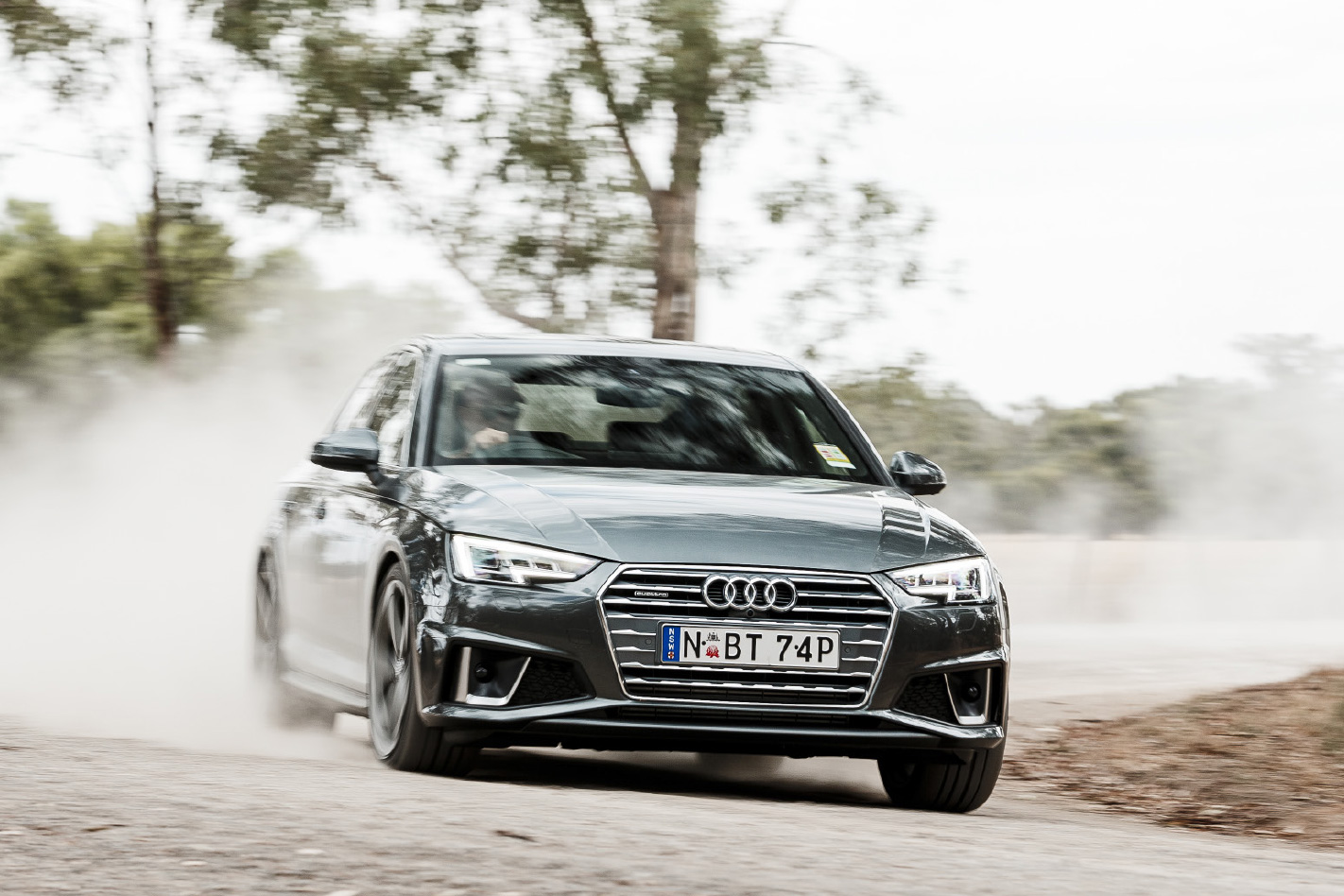
Completing the German performance domination in our sports sedan comparo, the A4 also stayed within a sniff of its countrymen, delivering brawn and might when the driver’s in the mood for some horizon-reeling pace. It seems indecently quick too, perhaps because of the low-slung, deep-windowed vistas of the scenery blurring by. The thing is, it’s also served up with grace as well, partly thanks to that planted all-paw engineering, and also due to the incredibly slick shifts from the seven-speed DCT dishing out all that torque.
Only past 120 clicks did the A4 start trailing off. Point the finger at the circa-80kg weight penalty of AWD – though the Audi more than made up for that indiscretion with pleasing economy, sipping the 98 RON brew at a remarkable 9.4L/100km.
So, the heat was really on the XE – and we mean literally, because the mercury suddenly soared above 40ºC. Combined with it being mis-fuelled with 91 RON octane, our Jaguar struggled, trailing the 330i by a 1.7s chasm to 100, and remaining comparatively lethargic against the clock. Indeed, it was a second slower than the 177kW/340Nm 25t previously tested, so things were definitely off. The worst for consumption too at 11.8L/100km.
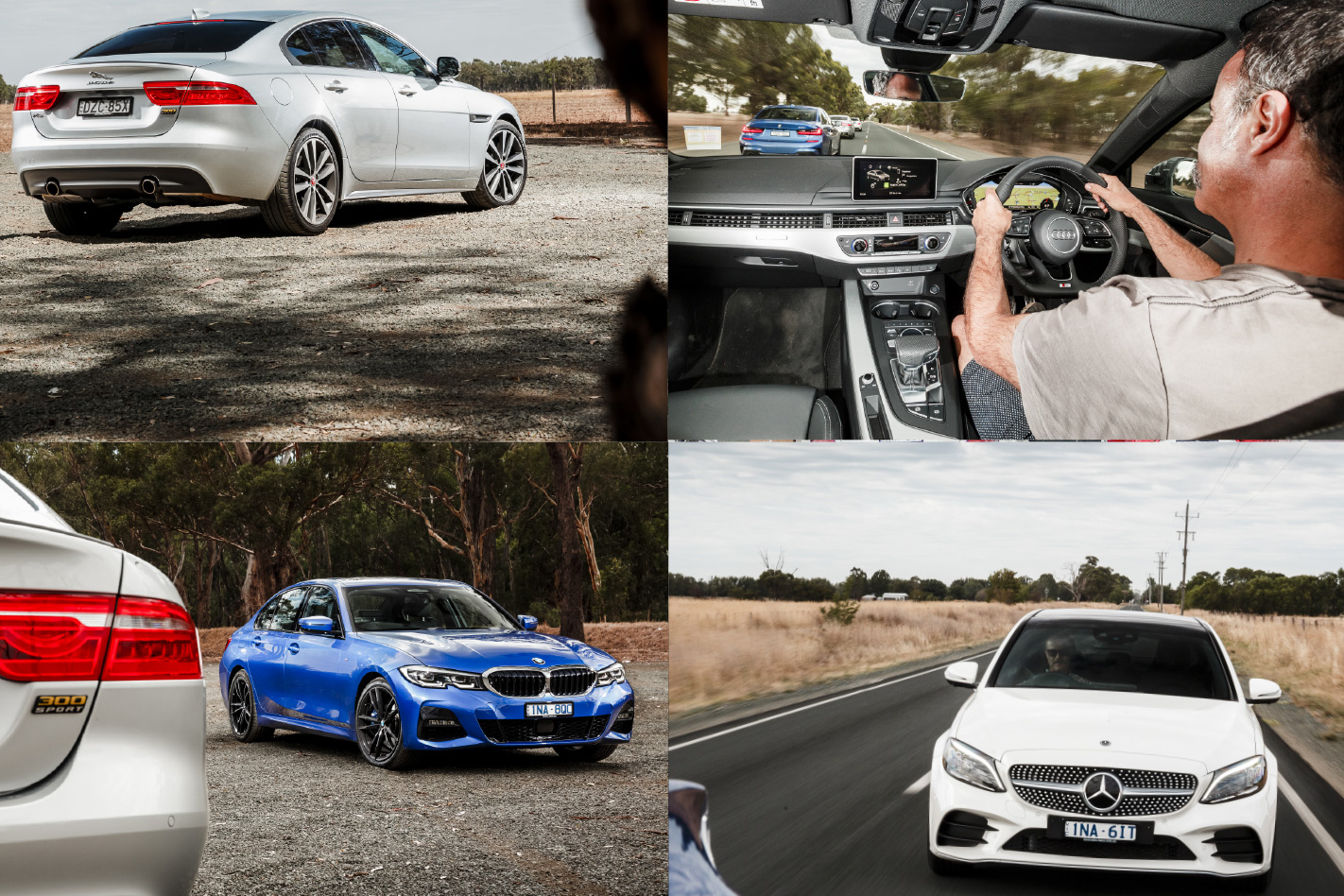
Strangely, things did improve on the road, where, in cooler conditions, the XE rediscovered its performance groove, providing robust acceleration and decidedly vigorous throttle responses.
It’s a shame, because the XE 300 Sport remains a paragon of superb dynamics, with the quartet’s most natural and immersive steering, a chassis that seems compulsively drawn to corners, urging the enthusiastic helmsperson to hustle the thing along with awesome confidence and control. Backed up by a soft, relaxing and quiet ride quality, we’re reminded why it’s one of our faves.
Yet, brandishing BMW’s adaptive M suspension with variable ratio steering, the 330i pushes the dynamic boundaries. Though not as tactile as the XE’s, the handling has an incredibly measured and fluent responsiveness that’s not too sharp, exquisitely balanced and full of feedback. Car and driver are as one, in the way that we remember the better E36s were back in the ’90s.
The extraordinary thing, though, is that the G20 feels glued to the tarmac at speeds well beyond what seems decent, revealing outstanding roadholding assurance.
There’s more too, for the BMW’s ride is – for most part – notably absorbent, only very occasionally being caught out by the odd big jagged rut. In this 330i M Sport spec at least, the 3’s dynamic leap seems two generations on from the F30. Only the roar on certain bitumen from its Bridgestones sullied an otherwise impressive return to form.
After that experience, the Audi’s steering seems a tad light, yet it’s still imbued with precision and poise that leaves the driver feeling confident. And that’s in the dry. A spell carving through fast, tight corners in torrential rain saw the AWD system elevate security to a whole new level, with the A4 impervious to the challenging conditions. The adaptive dampers also do their thing with aplomb, conveying an obviously softer set-up providing isolation from bumps yet without adversely affecting body control. Some road noise and wind rustle from the pillars are discernible, however.
The XE, meanwhile, is a lesson in agility and suppleness, offering a solid dynamic base, real driver appeal and anti-establishment desirability. Truly, there are no losers here as all four can be life-affirmingly joyful. Yet even forgiving our 300 Sport’s off-colour performance and fuel consumption, the Brit’s wrinkles are beginning to show.
And the Mercedes? Benz claims to have engineered 6500 changes for the Series II, and the results are mixed. The C300’s helm is almost perfectly realised, with crisp, reactive steering for beautifully measured handling and reassuringly planted roadholding – resulting in one of the most enjoyable sedans to punt around hard. And the way the Benz puts its power down to the road through switchback bends is a hoot. Great brakes, too – in the dry, certainly, the most effective here.
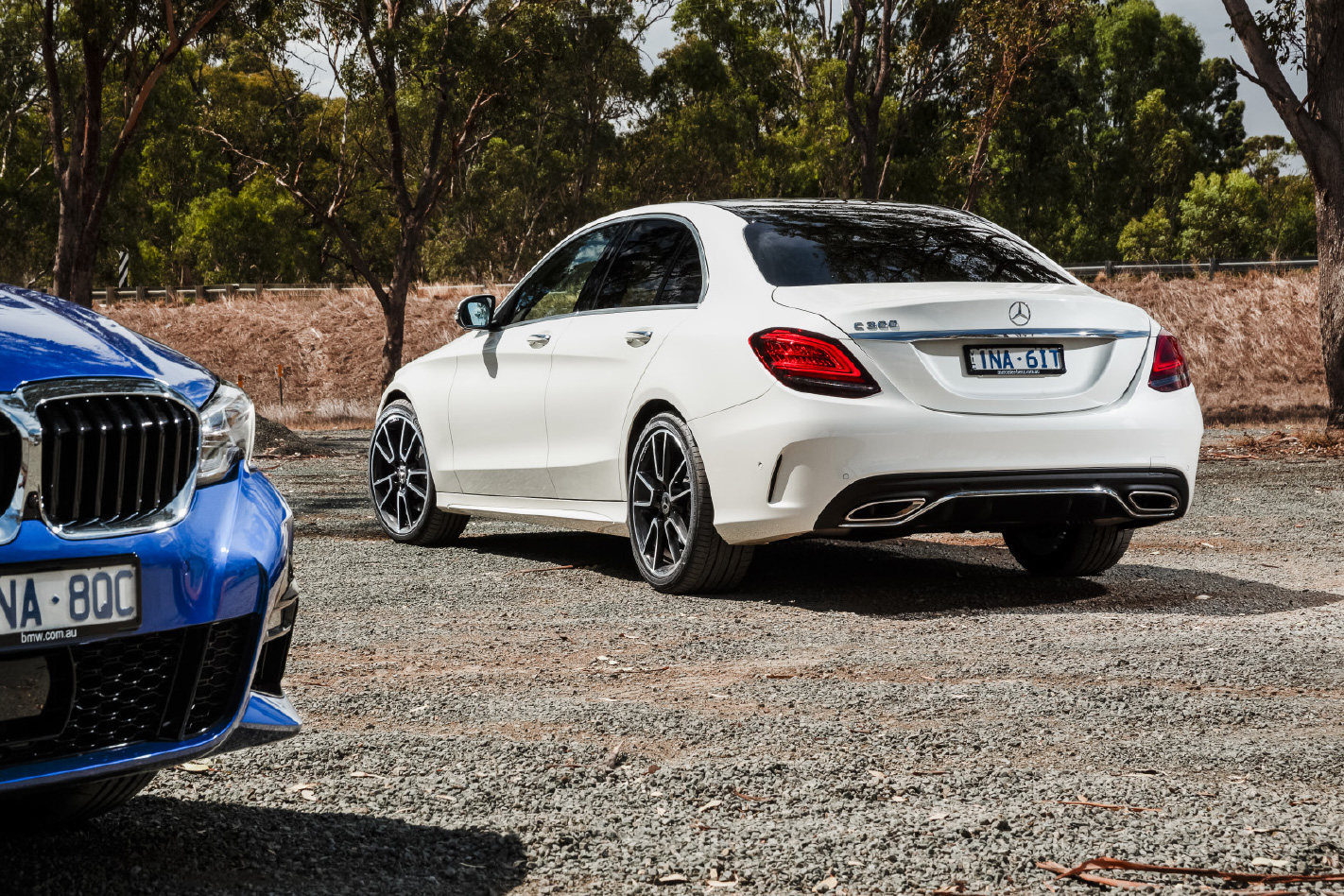
However, even with trick dampers, the ride can be unsettled, becoming fidgety and then thumpy and crashy as the surface worsens. In comfort mode, rear-seat occupants were shaken on our punishing test route to a degree unheard of in the rest.
It’s obvious the C300 is tuned to delight drivers and onlookers, but its comfort and refinement issues can’t be ignored.
The A4 simply hasn’t aged anywhere near as much because it was so progressive at launch. While the Audi may lack the charisma of the Merc and charm of the XE, the classy 45 TFSI quattro will make you feel great. It’s still so enticing.
That the 330i has leapfrogged the toweringly talented and sumptuously engineered Audi to top spot is a milestone – and not only because a win has eluded the 3 Series for years.
We’re witnessing a return to form unseen since the halcyon days of the iconic E46, as well as a true evolution of the sports sedan. The G20 is at the peak of its game and emphatic proof that BMW is back.
Ford has announced what’s likely to be a new version of the Ford GT supercar will be unveiled at the upcoming 2019 Goodwood Festival of Speed.
Teased via a vague press release accompanied by a shadowy image featuring the silhouette of a GT seen from the front.
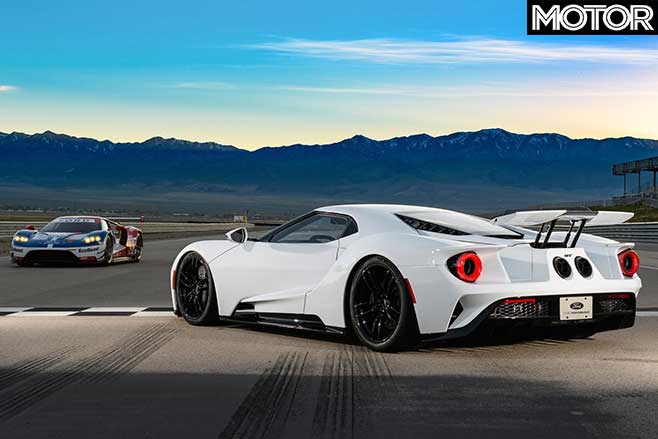
Clearly visible in the image is a large, seemingly race-inspired rear wing.
“Ford will make a special Ford GT supercar announcement during a dedicated press conference from 4:45 a.m. EDT, July 4, at the 2019 Goodwood Festival of Speed,” the press release reads.
Ford Performance global director Hermann Salenbauch and Multimatic CTO Larry Holt will be the ones to present the “news on the Ford GT ultra-high-performance supercar.”
While it’s been theorised that the new GT will be a sharper, track-focused version of the supercar, some have speculated that it could be Ford preparing to pave a way to the new WEC hypercar class due to be introduced for the likes of the Aston Martin Valkyrie and Toyota’s GR Super Sport racer.
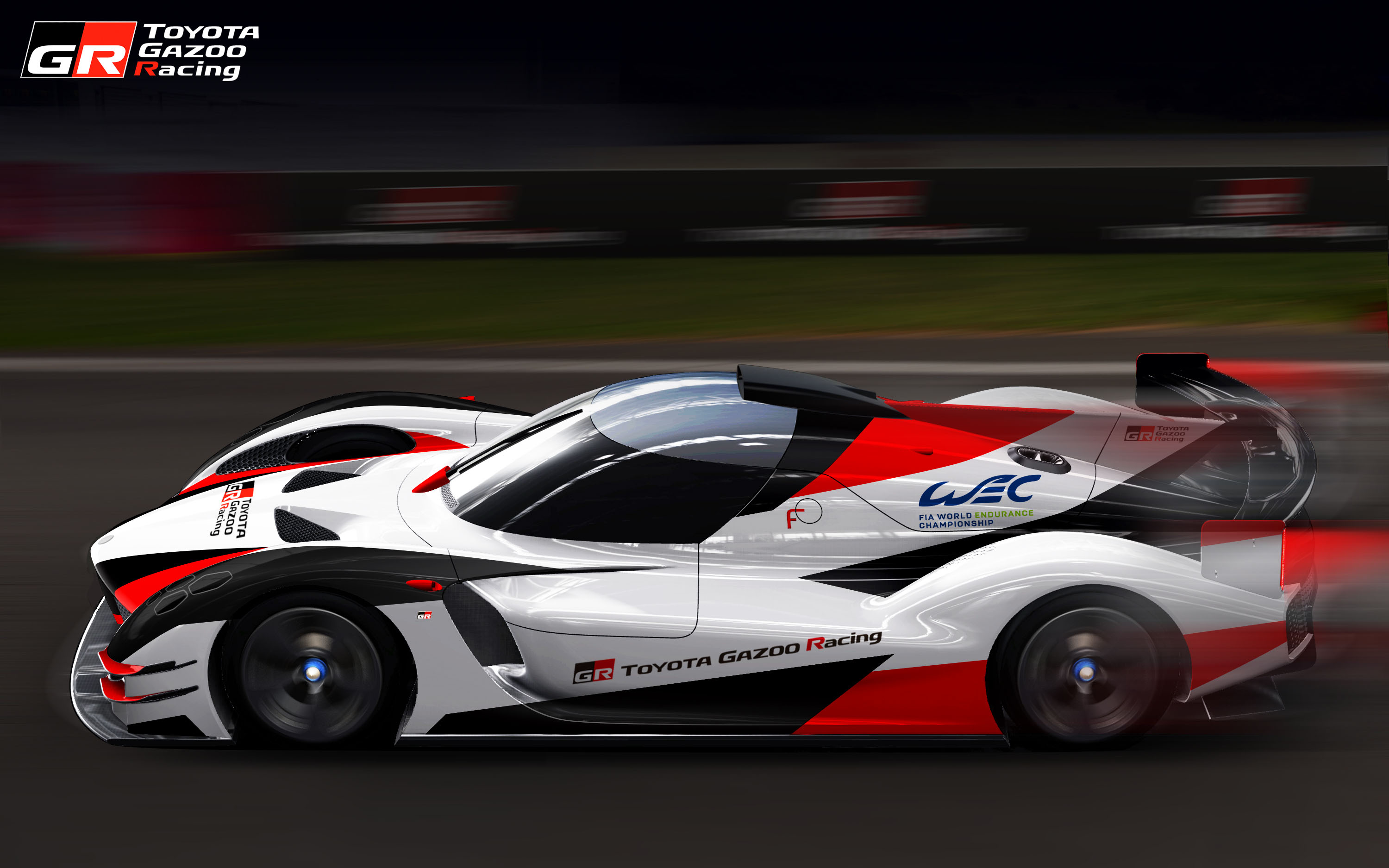
However, Ford Performance’s motorsport boss Mark Rushbrook recently told outlet Sportscar365.com that wasn’t the case.
“We won’t [pursue it] at this point because our principles are relevant, affordable and global. And while it’s global in WEC, it’s not global in allowing competition in IMSA,” Rushbrook is quoted as saying.
Stay tuned as we await confirmation from Ford when the Goodwood Festival of Speed rolls around.
The 2019 Mercedes-Benz GLE-Class is now officially on sale, with pricing for the large premium SUV beginning at $99,900 for the GLE 300d and topping out at $118,500 for the GLE 400d, with the petrol-powered GLE 450 sitting in the middle at $111,700 to complement the two diesels.
That represents a $7000 entry-level price bump compared to the outgoing model, whose GLE 250d range opener retailed at $92,900 but offered 30kW less power than the new 180kW/500Nm four-cylinder GLE 300d.
The cheapest Mercedes-Benz GLE-Class isn’t the only variant to get a mechanical shake-up, though, with the GLE 400d and GLE 450 also boasting brand-new powertrains under their bonnets.
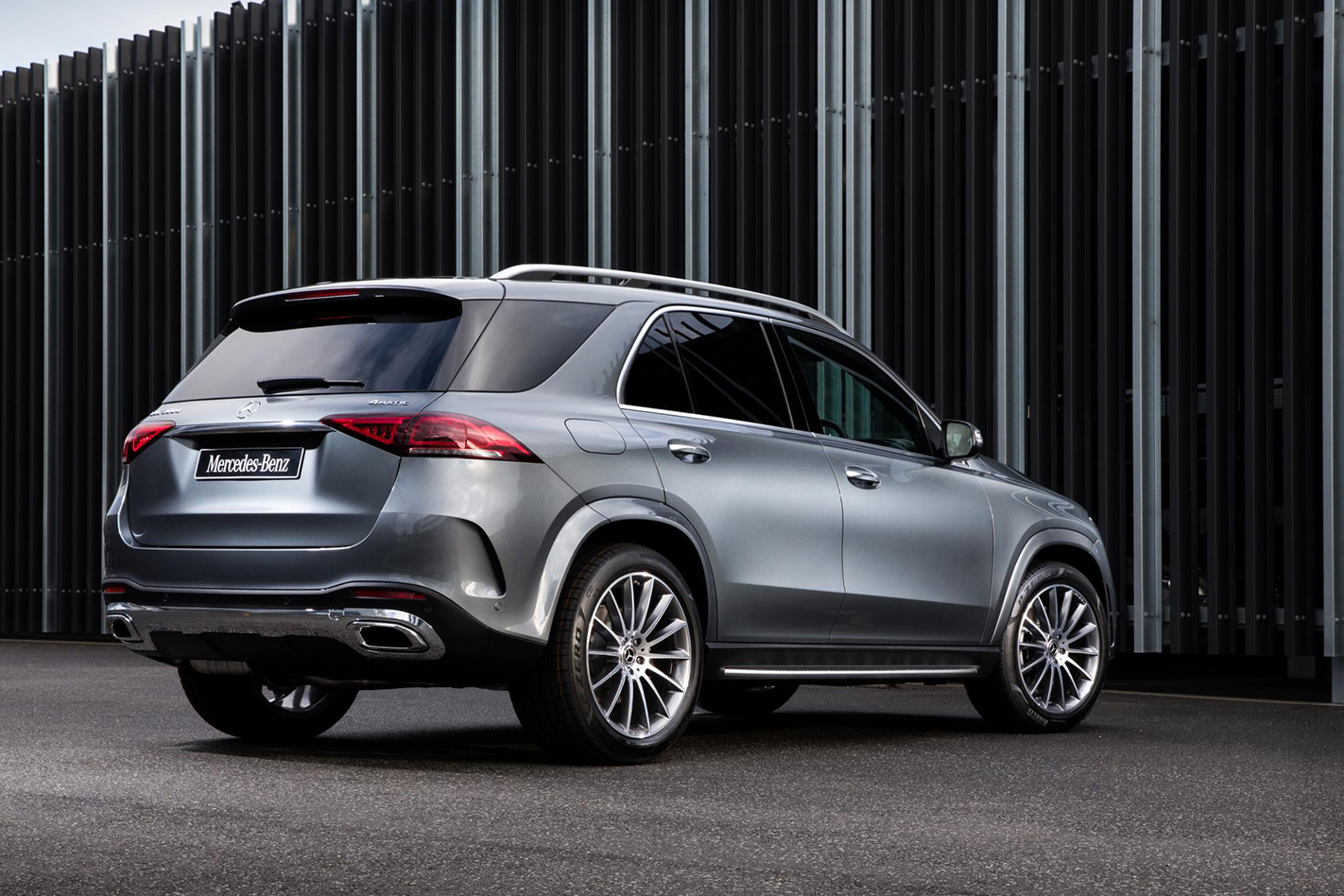
Both equipped with 3.0-litre turbocharged inline-sixes, the 400d sips diesel and produces a stout 243kW and 700Nm – a solid step on the previous-generation GLE 350d, which generated a more modest 190kW and 620Nm.
However it’s the petrol-electric Mercedes-Benz GLE 450 that’s the performance star until full-fledged AMG GLE variants arrive. Making 270kW and 500Nm from its turbo six-cylinder it already has plenty of muscle, but thanks to a 48-volt electrical system and an electric assistance motor it can pump an additional 16kW and 250Nm on top of those outputs to further boost performance.

That said, it’s not an eco-centric hybrid – the system, dubbed EQ Boost, does have a regenerative braking function, but it lacks a plug-in charging option and dedicated electric-only drive mode. A proper plug-in variant to take over from the departing GLE 500e may eventuate.
All GLE variants boast a maximum tow capacity of 3500kg when equipped with the factory-fit towbar (a $1900 option).

Now in its fourth generation, the GLE-class (formerly known as the ML or M-Class), is larger than before, sitting atop a wheelbase that’s 80mm longer than the previous generation and boasting up to 70mm more legroom in the second row. Headroom also grows by 33mm in the second row, further improving the GLE’s passenger-comfort credentials.

Crucially, the GLE can also now be had with a third row of seating, lifting the passenger capacity to seven for the first time since the first-generation M-Class. The lack of that capability has put the GLE behind its major rival the BMW X5 for many years, with the X5 having had a third row option since its inception.
Now, however, the tables have turned: the X5 is only available with six-cylinder powertrains for now, and its price of entry is consequently much higher at $112,990 for the X5 xDrive30d variant.

In five-seat configuration with the second row up, the GLE offers a generous 825 litres of cargo capacity, expanding to a huge 2055 litres with the second row stowed away.
And no matter which powertrain you opt for, all GLE variants are specced to the same level by default for now. A twin 12.3-inch screen setup is standard on all models, with one screen ahead of the driver displaying vehicle instruments and the centrally-mounted screen beside it being the primary infotainment display.

They all run Benz’s latest MBUX infotainment software, already seen on the new A-Class, and come equipped with Mercedes me Connect compatibility. The me Connect system enables owners to remotely start and warm up their cars via the app, as well as track their car via GPS, assign geofencing limits to restrict its movement, send addresses to the on-board navigation system, keep tabs on maintenance requirements and locate nearby parking spaces.
Voice commands, a DAB+ digital radio tuner and Android Auto/Apple CarPlay smartphone mirroring are also part of the GLE’s infotainment suite.

Other standard equipment includes climate control, a head-up display, synthetic leather upholstery, nappa leather on the steering wheel, heated and power-adjustable front seats, LED headlamps with auto highbeam, alloy roof rails, alloy side steps, a powered tailgate, a 360-degree parking camera array, parking assist, active cruise control, lane keep assist, blind spot monitoring, autonomous emergency braking and 20-inch alloys.

Adding the seven-seat package requires a $3900 outlay and also brings electric adjustment for the second row, while the AMG Sport Package imparts a sportier exterior treatment, wireless phone charger, real leather upholstery and a panoramic glass sunroof for an additional $9900.
Just want the phone charger and sunroof? The $4200 Vision package has those features and also rolls in a Burmester 13-speaker premium audio system.
For owners who want to maximise comfort, the E-Active Body Control – active suspension that scans road and adjusts suspension settings to pre-emptively soften the blow of lumpy tarmac or deep potholes is available, as are air suspension and adaptive damping. Not enough? Massage chairs and heated armrests can be yours as part of the Energising Plus package.

PRICING
The 2019 Mercedes-Benz GLE range is available for order now, with retail pricing as follows:
- Mercedes-Benz GLE 300d – $99,900
- Mercedes-Benz GLE 450 – $111,700
- Mercedes-Benz GLE 400d – $118,500
- Seven seat package – $3900
- AMG Sport package – $9900
- Night package – $4800
- Vision Package – $4200
- Energising Package Plus – $6200
