
French authorities are putting a drool-worthy garage of hypercars up for auction and not one of them has a reserve.
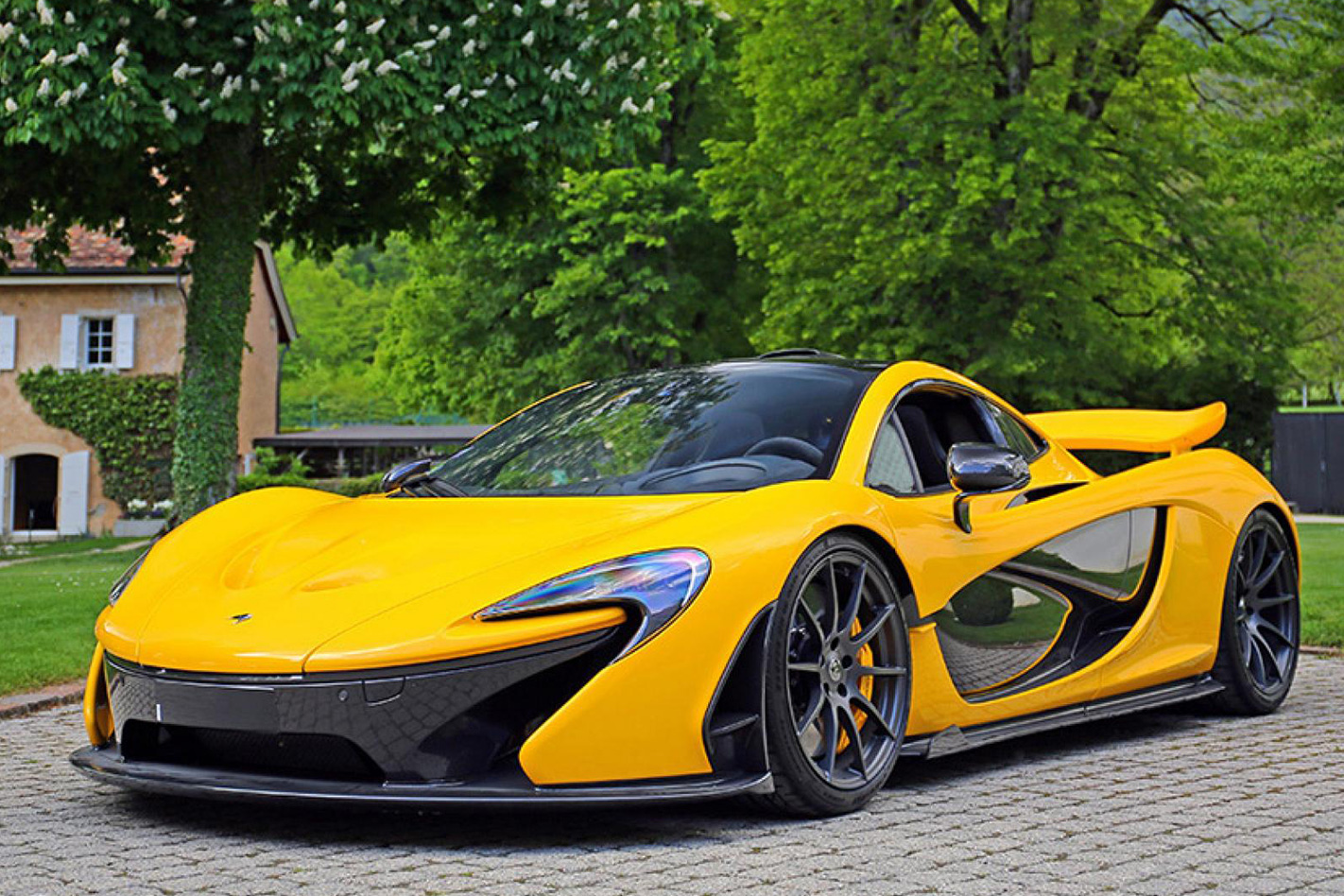
Seized three years ago, the vehicles are now being sold after their owner was found guilty of embezzlement.
The group of hypercars were seized by Swiss authorities in 2016, and were owned by Teodoro Nguema Obiang Mangue – the son of President Teodoro Obiang Nguema Mbasogo, who leads the impoverished but oil-rich West African state, Equatorial Guinea.
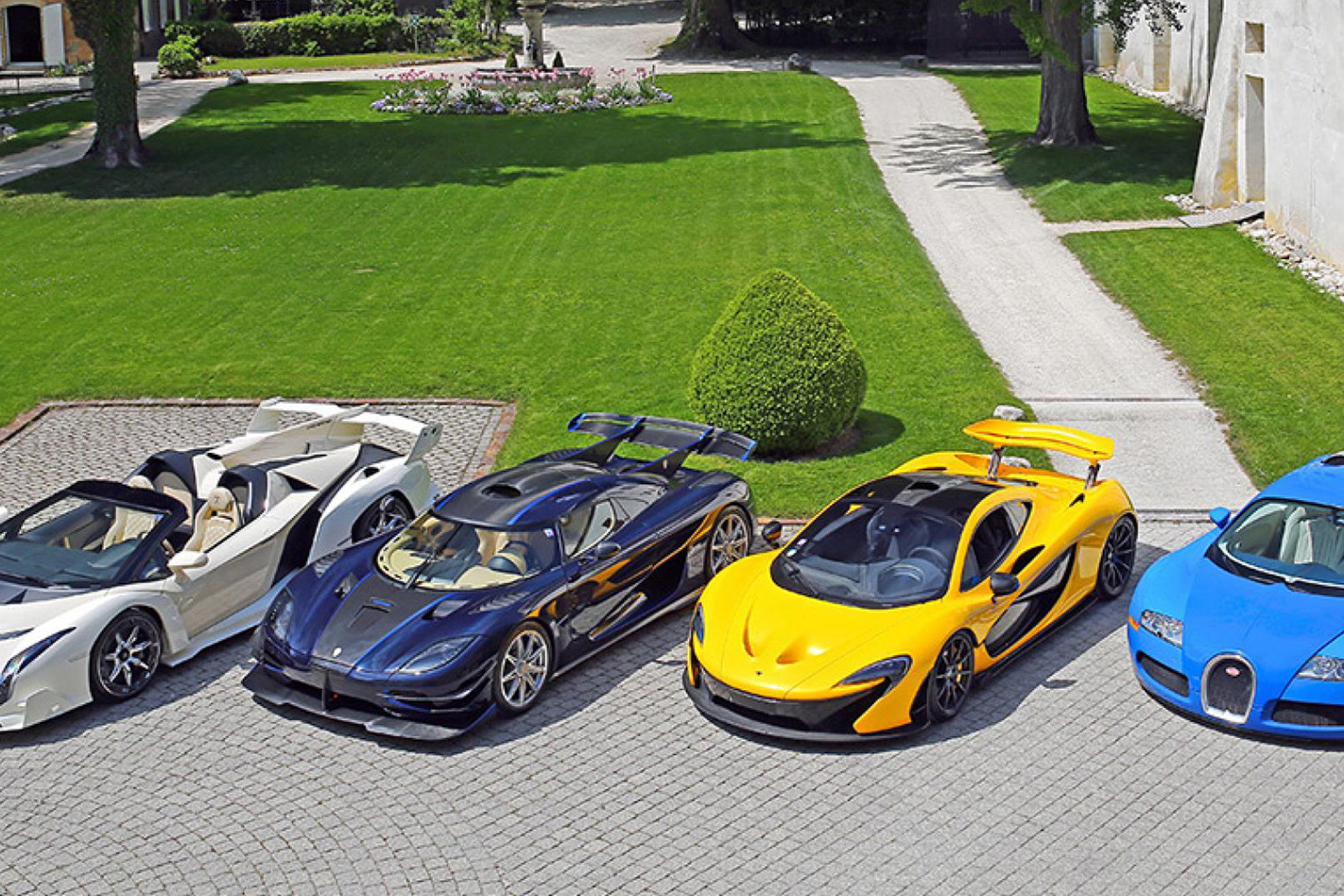
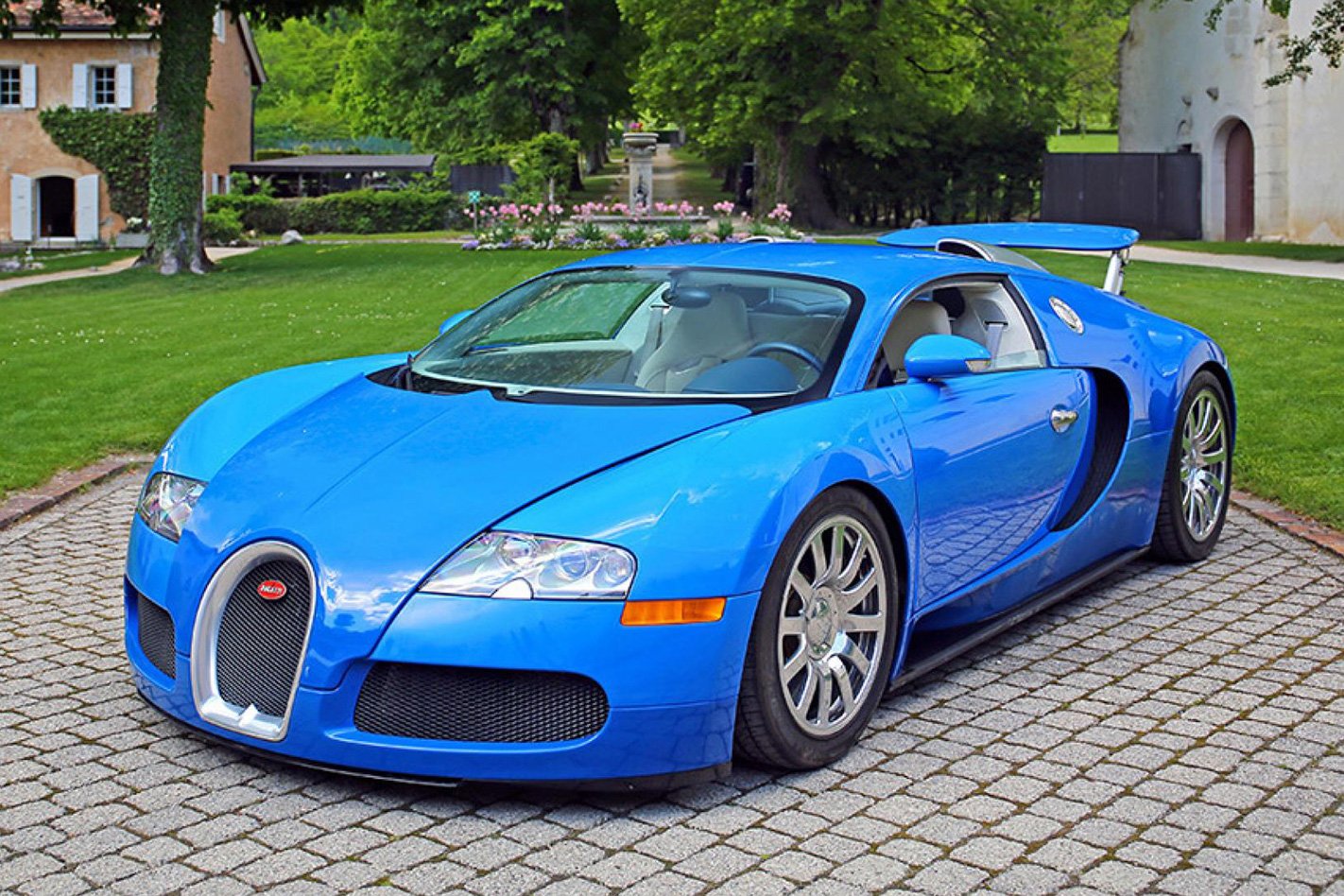
Included in the exotic bunch of 25 cars are an Aston Martin One-77, Bugatti Veyron, Ferrari LaFerrari, Koenigsegg One:1, Lamborghini Veneno Roadster and McLaren P1.
Of the group, the Koenigsegg One:1 is the rarest, being just one of six ever built, while only nine of the Veneno Roadsters ever rolled out of Lamborghini’s factory doors.
Dictator’s million dollar supercars seized, sold.
The hypercars are all million-dollar vehicles (some of them multi-million), and even just individually would be bucket list vehicles. To have them all – or at least to have once been – in a single garage is rather impressive. However, how Mangue came to own the group is by stealing from the country his father leads, which is renowned for corruption and is one of the most impoverished states in the world.
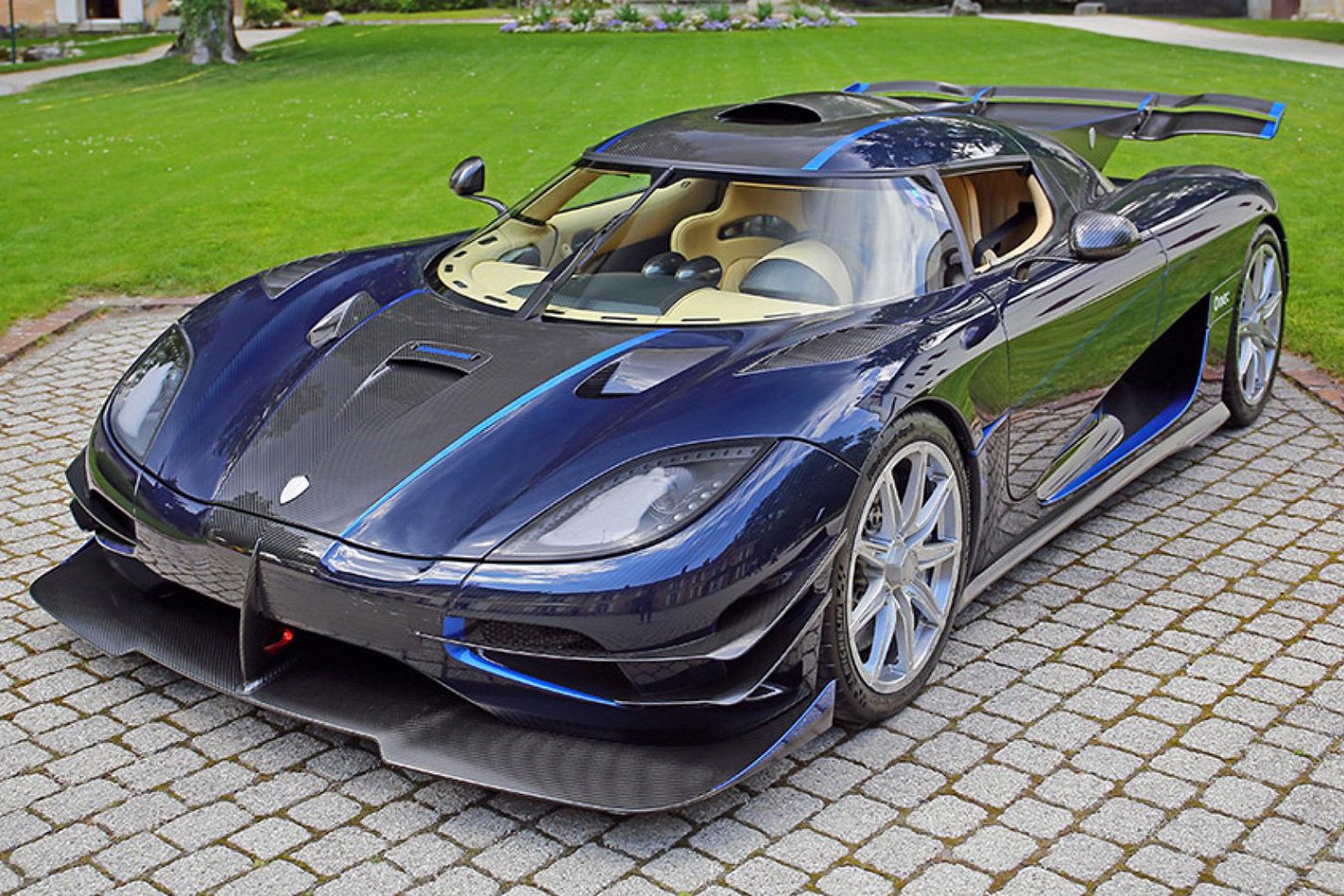
Mangue was found guilty of embezzlement in a French trial in 2017, and now auction house Bonhams is putting the seized cars under the gavel without reserve.
It’s not the first time Mangue has had big-value cars seized by authorities either. In 2012, French police seized a collection which included a Bugatti Veyron Grand Sport, Maserati MC12, Ferrari 599 GTO, Bugatti Veyron, Porsche Carrera GT, and much more.
The Australian Outback is one of the greatest Aussie road trips you can do, however, it’s also one of the most remote, harsh and dangerous places to visit. Doing some simple tyre checks can ensure that you eliminate extra stress, and most importantly keep you safe. See the video above for more.
London-based Charge Automotive has announced their intent to debut their all-electric first-generation Ford Mustang, known as the Charge Mustang, at the upcoming Goodwood Festival of Speed.
Based on officially licensed Ford Mustang shells and styled after the iconic “Eleanor” Shelby GT500 from the 2000 remake of Gone in 60 Seconds, the Charge Mustang is said to boast a peak power output of 350kW, 1200Nm of motor torque, and 7500Nm of wheel torque, all delivered through an all-wheel drive system.
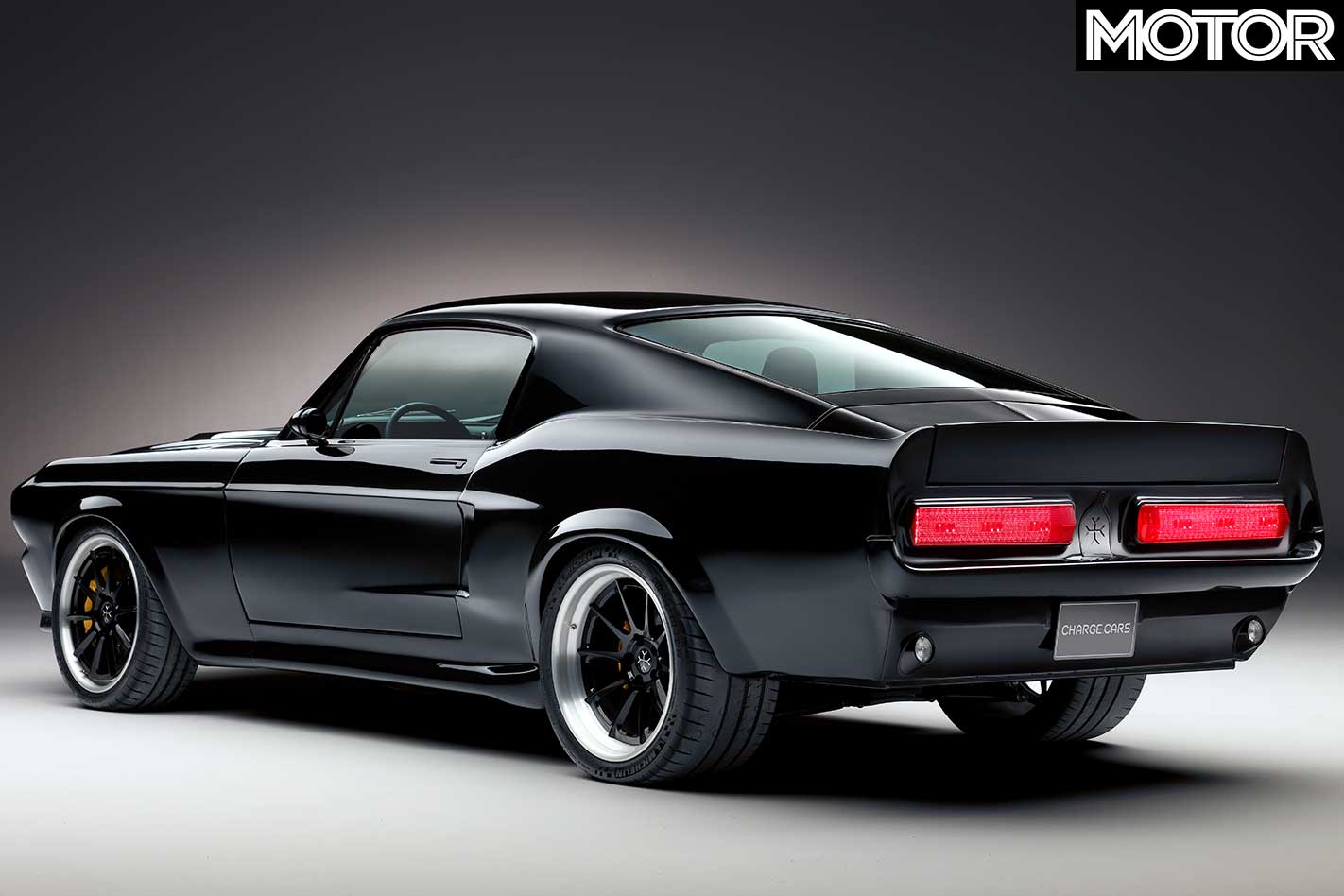
On paper, the Charge Mustang is said to be capable of sprinting to 60mph (97km/h) in 4 seconds.
Feeding the charge will be a 64kWh battery pack, which Charge Automotive says would be enough to give the car a range of around 320km, and able to be recharged with a 50kW DC charging system.
On the inside, the Charge Mustang will sport a modernised interior with a ‘digital interface’, which allows drivers to adjust several key characteristics, including switching between all-wheel drive and rear-wheel drive modes.
While details are scant on the engineering details that lie beneath the Charge Mustang’s body, such as the battery type and positioning, Charge Automotive claims that the car is designed by their own team of engineering talent that has worked in companies like Williams F1, McLaren Automotive, and Jaguar Land Rover, whereas its core components are sourced from a sister company, London-based electric vehicle maker Arrival.
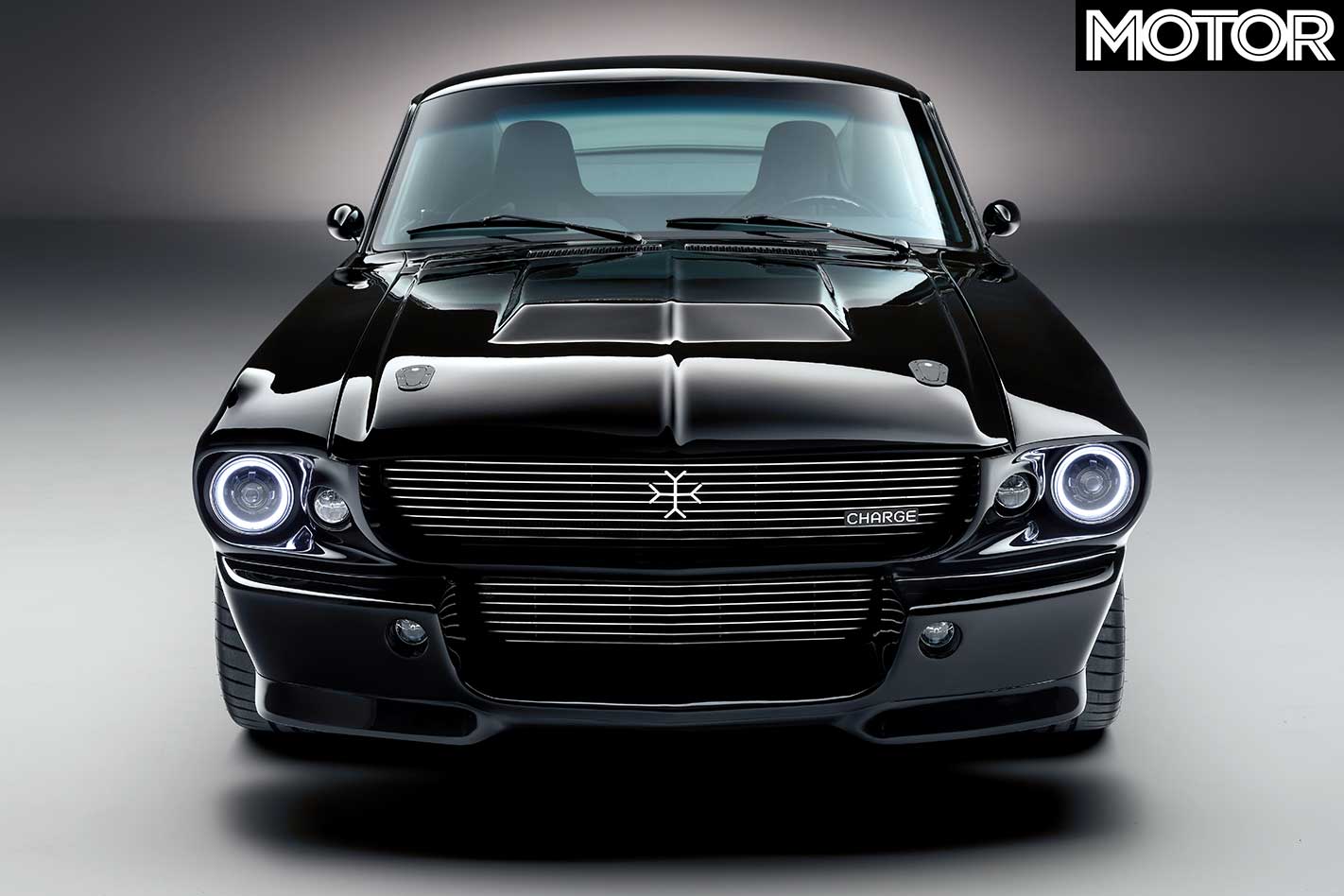
Charge Automotive plans to produce 499 examples of the Charge Mustang, each with a starting price tag of £300,000, and deliveries expected to start in September this year.
That being said, if proof of the pudding is in the tasting, the Charge Mustang’s “first tasting” will be at the 2019 Goodwood Festival of Speed, which takes place from 4th July to 7th July.
It was only a few years ago ( or months, even?) where supple leathers and high-quality plastics (and of course, carbon fibre) defined the level of luxury in a car. When it came to choosing an interior option, saying “Darling, let’s opt for the pleather” didn’t quite have the same seductive ring as being able to boast about sliding into a buttery-smooth cabin filled with Nappa leather calfskin.
In the same vein as fashion, food, furniture, jewels, travel and fuel, collective consciousness has meant the desire for eco-friendly materials or a more sustainable manufacturing process is rising. “Renewable” “Green Alternative” and “Sustainably Sourced” are the new luxury buzzwords and suddenly, boasting about a car full of dead cows is fait de malséant – and a quick google of “how many cows did it take to make [your car here]” might result in some shocking facts.
In the case of greenwashing – where it seems like we’re doing a good thing, but it is actually all hot air – the automotive industry has also been guilty. That vegan interior you thought you were so smugly using to offset your emissions? It might also be doing the opposite, as many plastics are made from highly toxic petrochemicals, derived from fossil fuels anyway. Thankfully, however, the ‘damned if you do/don’t’ times are changing.
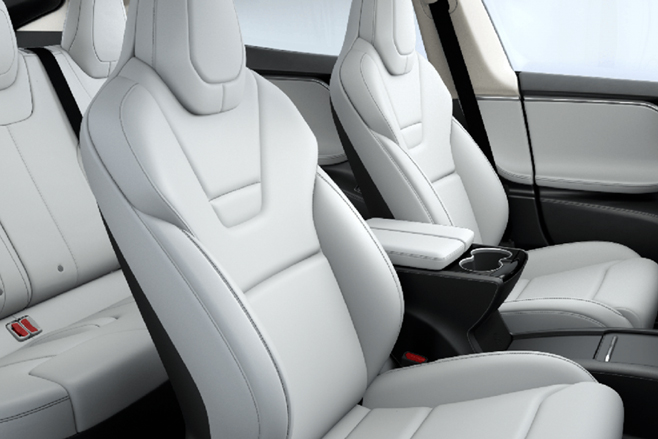
Tesla’s vegan seats
Of course, many marques have been going down this road for some time. In the luxury sector, Mercedes-Benz, have been offering alternatives to leather as an option for years, as has BMW and Mini, Porsche, Tesla and more – the catch being that some models still are only available with a leather steering wheel or the alternate leathers are not considered completely vegan, due to the dyeing process.
Even the king of synthetics, Alcantara, has been releasing an annual sustainability report for almost a decade and has achieved complete carbon neutrality, holding the title of the first Italian industrial product made sustainably (even though it’s not entirely made in Italy).
In fact, Alcantara’s latest report claims that the company has been moving away from petrochemicals to use more renewably sourced polymers and raw materials, including sugar cane, corn leaves, rice straw, general waste, recycled paper and wood derivatives. By 2020, Alcantara aims to have engineered a completely bio-based product.
Most recently, there has been a shift to ethically-sourced Eucalyptus, both as a cosmetic material (as seen in the BMW i3’s dashboard trim) and as a fibre for soft textiles, or as Jaguar Land Rover likes to call it, ‘Eucalyptus Melange’. The benefit of Eucalyptus is that it uses less water, grows quickly and requires less surface processing. Jaguar Land Rover claims that its Eucalyptus Melange seats even use less H2O than Alcantara and many other alternate leather materials.
Another supertree being put under the spotlight of late is the Jute-like Kenaf fibre, also found in the BMW i3 (actually, over 80 percent of the i3 is made from recycled materials or renewable resources, with zero petrochemical-based plastics and, though some trims are leather, they are tanned with olive leaf extract). When it comes to offsetting carbon, Kenaf is one of the most absorbent plants on the planet, soaking up 3-8 times more C02 from the air than a pine tree. It is also up to 30 percent lighter than the most common materials used in car interiors.
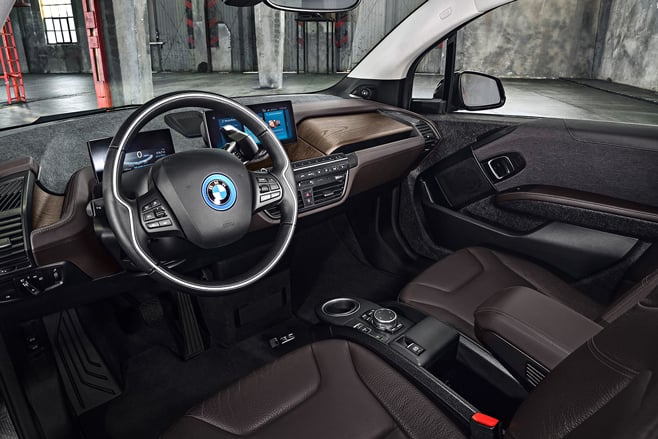
BMW i3
There are some manufacturers going above and beyond. Land Rover’s newest baby, the Range Rover Evoque contains 33 percent recycled materials and offers the aforementioned Eucalyptus Melange material option and an interior made by Danish textile company Kvadrat, which is a wool and synthetic suede cloth made from 53 percent plastic bottles (it’s also found in the Velar).
Audi’s incoming e-tron models boast carbon-neutral options that include seats made from recycled plastics, synthetic leathers or recycled microfibres and a floor carpet made from recycled fishing nets. Even Bentley, which most recently caused a PETA stir for the fact it’s Mulsanne mega saloon uses more than 15 cows for its leather-lined cabin, announced a vegan interior option for the 2020 Flying Spur, with more models to come.
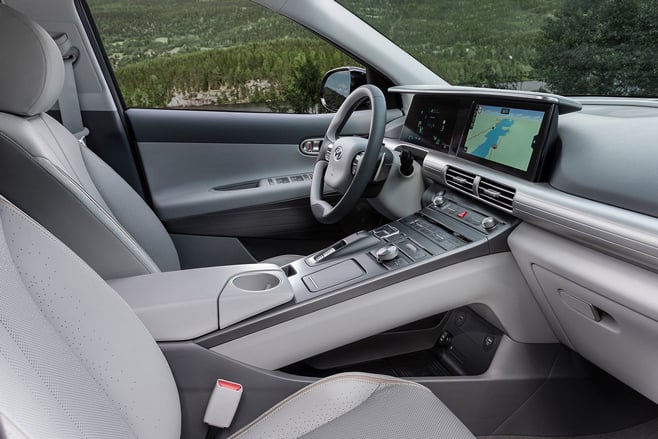
Hyundai Nexo
And then there’s Hyundai’s effort – the Ioniq and incoming Nexo both boast eco paints and cabin materials derived from bamboo mulch, soybean mulch and sugar cane mulch. A lot of this is a byproduct of harvest or agricultural waste and is incredibly hardy, fast-growing, uses little water and results in a strong fibre for car seats and cabins.
Hyundai also puts a lot of thought into the development of these “plastics”, enlisting a team of robot arms to spray and swab sunscreens, perfumes, moisturisers and hand sanitisers onto the newly developed materials, while also testing in extreme heat and cold to ensure longevity in the real world (and with that five-year warranty, they must).
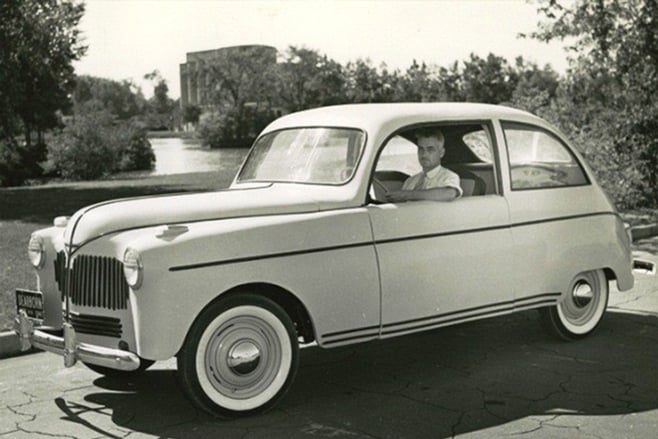
Ford’s Soybean Car
With many brands reacting to the enormous growth and interest in renewable textiles across many industries, the choices will only get more vast as the material engineering gets better, particularly as consumers cotton on to the impact small choices can make.
Those who might not be ready for an EV, for example, might still enjoy the option of carbon neutral, cruelty-free or earth-friendly interior as a gesture towards change.
After all, it was good enough for Henry Ford when he created the Soybean Car as a solution to a steel shortage during WWII and as an alternative to plastics… so, better now than never.
All stories in this series
Among the new features you see in today’s new car market, one of the most interesting ones is the fact you don’t have to use a key. Instead, your new car uses what’s known as a ‘passive keyless entry and start’ (PKES) device. It’s handy; if you hold down the unlock button all the windows drop, and you don’t need to even take the fob out of a pocket to open and start the car. How awesome is that?
Cars equipped with PKES periodically send out a low-powered signal, a sort of digital key that waits for a response from the key fob, called polling. The signal is broadcast about every 20 to 50 milliseconds, and if the fob responds with the correct response within a time limit, the doors will unlock. Sounds secure, right?
Not really. Criminals have worked out that they can take the periodic polling messages and retransmit them to wherever the fob is, and then sniff the response from the fob back to the car. The car will be none the wiser, so long as the response is within the expected timeframe.

These criminals have created a device that essentially amplifies the short one- to two-metre range signal that the car sends out to the key, while the signal the key sends back can travel hundreds of metres. If the key hears this amplified signal, it will transmit the open command, and the car will unlock.
The scariest part about this is that, since the criminals know that the owner can’t be more than a couple hundred metres away from the vehicle, it can now be opened as if the bad guys had the owner’s key fob.
Sure to make matters worse in coming years is the fact that you’ll also be able to open your car using your mobile phone. Apps that allow you to program certain functions within your car are exploitable and this is something criminals are acutely aware of.
In 2011, a group of security researchers from the Switzerland-based ETH Zurich University examined the protection of 10 car models across eight manufacturers.
Surprisingly, they were not only able to gain entry into all 10 cars, but were also able to drive away with them, simply by intercepting and relaying signals from each car and their PKES.
Although it was also possible for the researchers to relay signals from the PKES back to the car, they often didn’t need to as the key’s signal can travel a few hundred metres. It also worked no matter what protocol or cryptology the manufacturer used.
The keyless entry movement is only getting more popular. Companies like Bosch are working on technology to ensure you’ll never have to use a key again.
So what can you do to limit this risk? If you are really worried, you could always speak to the dealer about disabling keyless entry. Simply removing the batteries from the key fob also will render this form of attack useless. Utilising keyless entry systems that involve the physical press of a button allows for a bit of extra safety too.
When at home, it’s advisable that you keep the keys away from the exterior of the house, and placing them in a sealed metal box might block some of the relay signal out.
Manufacturers develop software patches to fix these exploits as they become aware of them, and are starting to use proprietary ciphers – effectively their own set of electronic keys – in new models. However, as new technology develops, vulnerabilities continue to surface as cars age, and guides to the technology used to exploit vulnerabilities find their way online.
It’s just the start of a very large problem.
Crack of Doom
AS CARS become more connected, a group of concerned software programmers has called on new vehicles to carry a similar “cyber-security” rating to the ones they wear for fuel use and crash safety.
Last year, a pair of hackers at DefCom, the world’s most recognised cyber-security conference, showed how they could hack into a car’s systems and play around with its settings – although no one has yet done this remotely.
Vulnerable points of entry that researchers point to are Bluetooth phone connections, in-car wireless internet hubs, and features that integrate smartphones into the car’s dashboard.
Andrew Tadros is a proud Toyota 86 driver, and an IT security observer/enthusiast. If he’s not breaking the Internet, he is on the track or back roads.
Sign up here to receive the latest round-up of Wheels news, reviews and video highlights straight to your inbox each week.
Kia Australia has watched with increasing agony the flurry of compact SUVs flooding the Australian market, as it patiently awaits a baby crossover contender of its own to drop from its Seoul headquarters.
The compact SUV segment now features players from virtually every company, including Mazda’s CX-3, the Mitsubishi ASX, Toyota’s C-HR and Honda’s HR-V. Even Kia’s parent company – and arch rival – Hyundai has the Kona.
Now, though, the first images of Kia’s baby SUV, the Seltos, have dropped, and it’s slated to arrive down under in October.
Few details are known, but it’s safe to assume that it shares underpinnings with cars like the Hyundai Kona and i30, and Kia’s own Cerato.
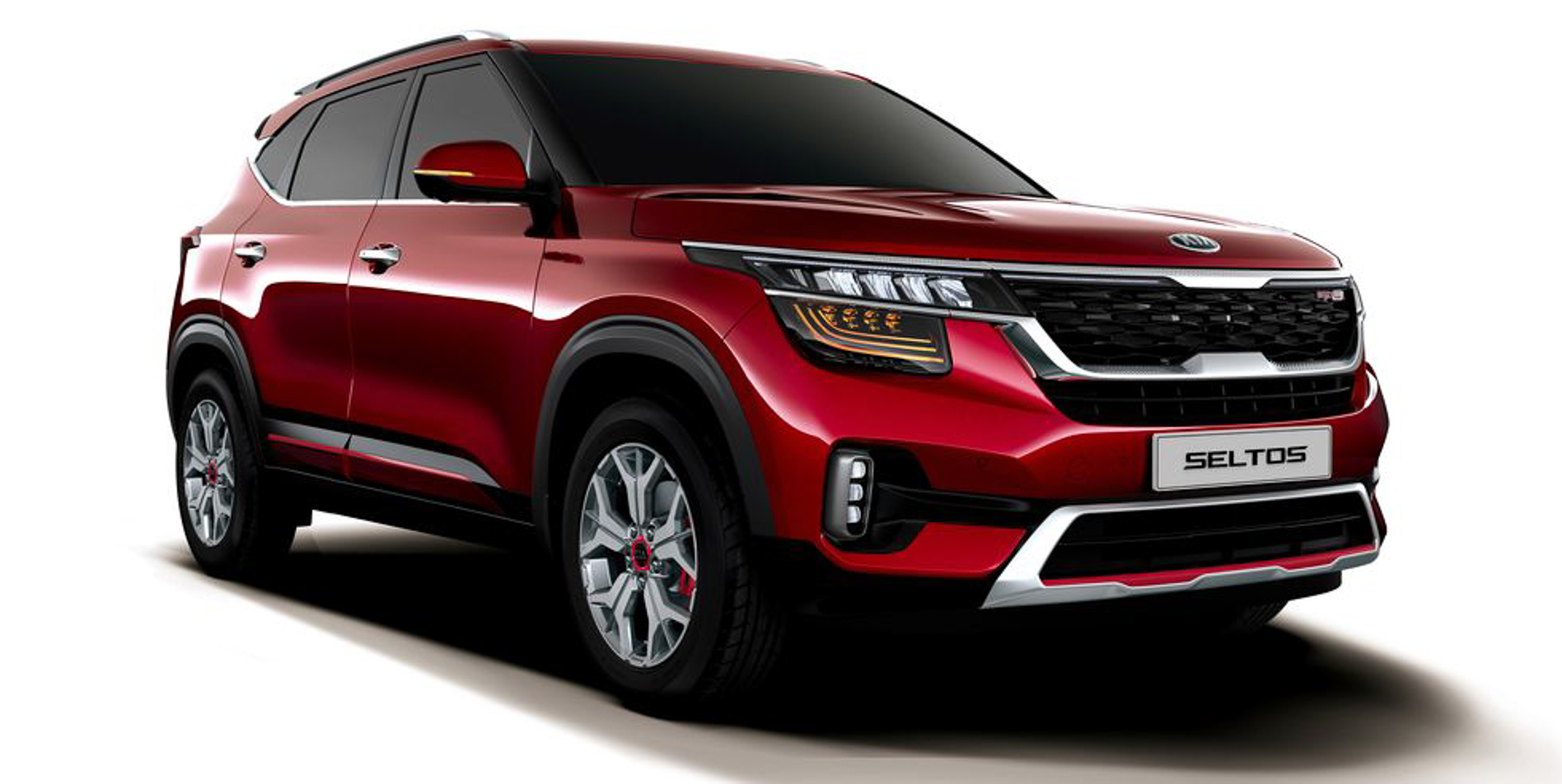
It also follows that the Seltos – derived from the name of the son of Hercules, Celtos, we’re told – will share similar engine and drivetrain combos with its platform buddies.
Expect a 2.0-litre naturally aspirated petrol engine driving the front wheels, along with a 1.6-litre turbocharged four-cylinder alternative. All-wheel-drive will likely feature on the options list, too.
Kia is fond of offering a base-level car with a manual gearbox, but we’d wager the majority of sales will be for automatic versions. Likewise, Kia offers a couple of diesel options across its SUV range, and there’s a suggestion that the Seltos will be available with an oiler.
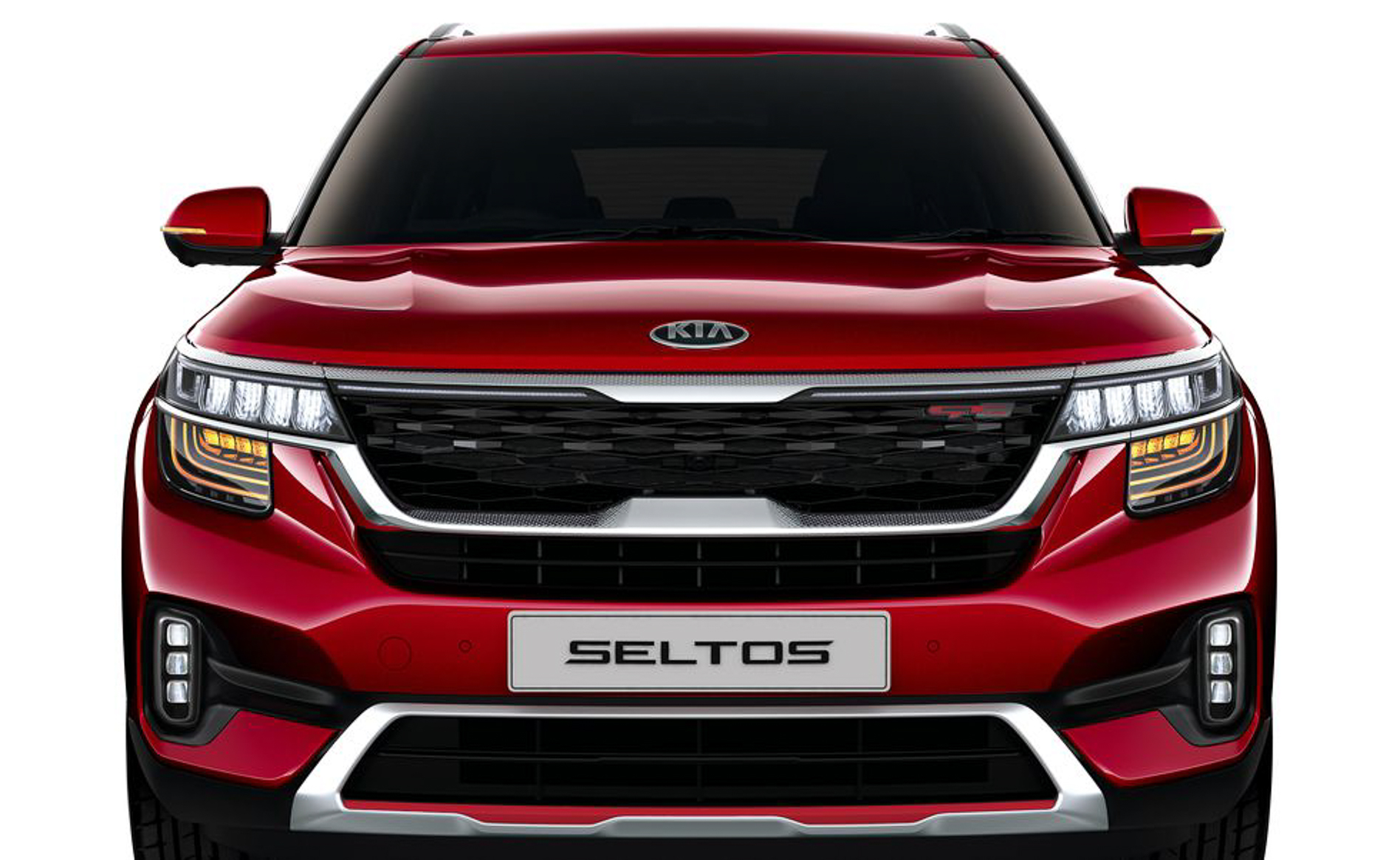
At the other end of the fuel spectrum, the Seltos’s underpinnings will allow Kia to offer both a hybrid and an electric version down the track.
On the inside, sketches reveal a 10.25-inch integrated multimedia system that will incorporate smartphone mirroring, while niceties like LED interior mood lighting, a digital dash, inductive phone charging and more will feature across the range.
Also expect a full suite of up-to-date driver aids like AEB, lane departure warning, front- and rear-cross traffic alert and 360-degree cameras.
Given its size, the Seltos will be a five-seat, five-door proposition only. The relatively horizontal roofline means that rear-seaters should have a bit of room, though the closing window line behind the c-pillar will likely reduce visibility and light ingress.
The Seltos will drop into Kia’s local line-up as its smallest SUV, thanks to the recent culling of the brand’s quirky but slow-selling Soul crossover. It will sit below the popular mid-sized Sportage, and there’s certainly a visual connection between the two, even given the Sportage’s relative age.
The local Kia SUV range is topped by the large Sorento SUV, which is offered in both diesel and petrol variants.
With the Seltos expected to land in Australia towards the end of 2019, there is room potentially underneath it size-wise to add a sub-compact SUV.
While Hyundai has made noises about such a vehicle, the jury is out as to whether it will actually emerge, and whether Kia will build such a beast.
Once the Seltos lands in Australia, Kia will then be looking to its Korean parent for a replacement to the Sportage, which launched in 2016, while an all-new version of the big Sorento is slated for launch in 2021.
What do you think of the new Kia Seltos? Let us know in the comments below.
The Wheels Verdict: We suspected that the Genesis G70 could be something well worth the wait and so it has proved. Well built, great to drive and with a stack of equipment for the money, the G70 will change the way you think about premium Korean cars.
WHAT IS THE GENESIS G70 3.3T?
Genesis is the relaunched luxury arm of Hyundai and the G70 is its sports sedan that aims to take on the likes of the BMW 3 Series, Mercedes-Benz C-Class, Jaguar XE, Lexus IS and Audi A4. We could mention more but you get the picture. It’s built using much the same platform and engines as the Kia Stinger but is a more compact and wieldy thing. Those might be lofty targets but, without issuing too much of a spoiler, Genesis has clearly put some thought into this one.
WHY WE’RE TESTING IT
We’ve waited a long time for the doubly-delayed G70 to make landfall here in Australia.
In the meantime, we’ve enjoyed the mechanically-related Kia Stinger but felt that it lacked the last few degrees of polish. Can the G70 address that issue and belatedly give the 3 Series something serious from Korea to contend with? That’s why we drove 1200km in one day to find out.
GENESIS G70 3.3T REVIEW
What we have here is a Kia Stinger that’s smaller, considerably more expensive, comes with a warranty that’s two years shorter and is from a manufacturer many will not have heard of. Couched in those terms, the Genesis G70 doesn’t jump out with the appealing value South Korea has become known for.
The numbers do indeed appear initially damning. The range-topping Stinger GT is, at $60K, more than twelve grand cheaper than the entry-level G70 3.3T. Opt for the flagship Genesis and you’ll be looking at a few notes off $80,000 before you start thinking about options. These are uncharted waters for a Korean car and tease at the very edge of Genesis’ nascent brand equity.
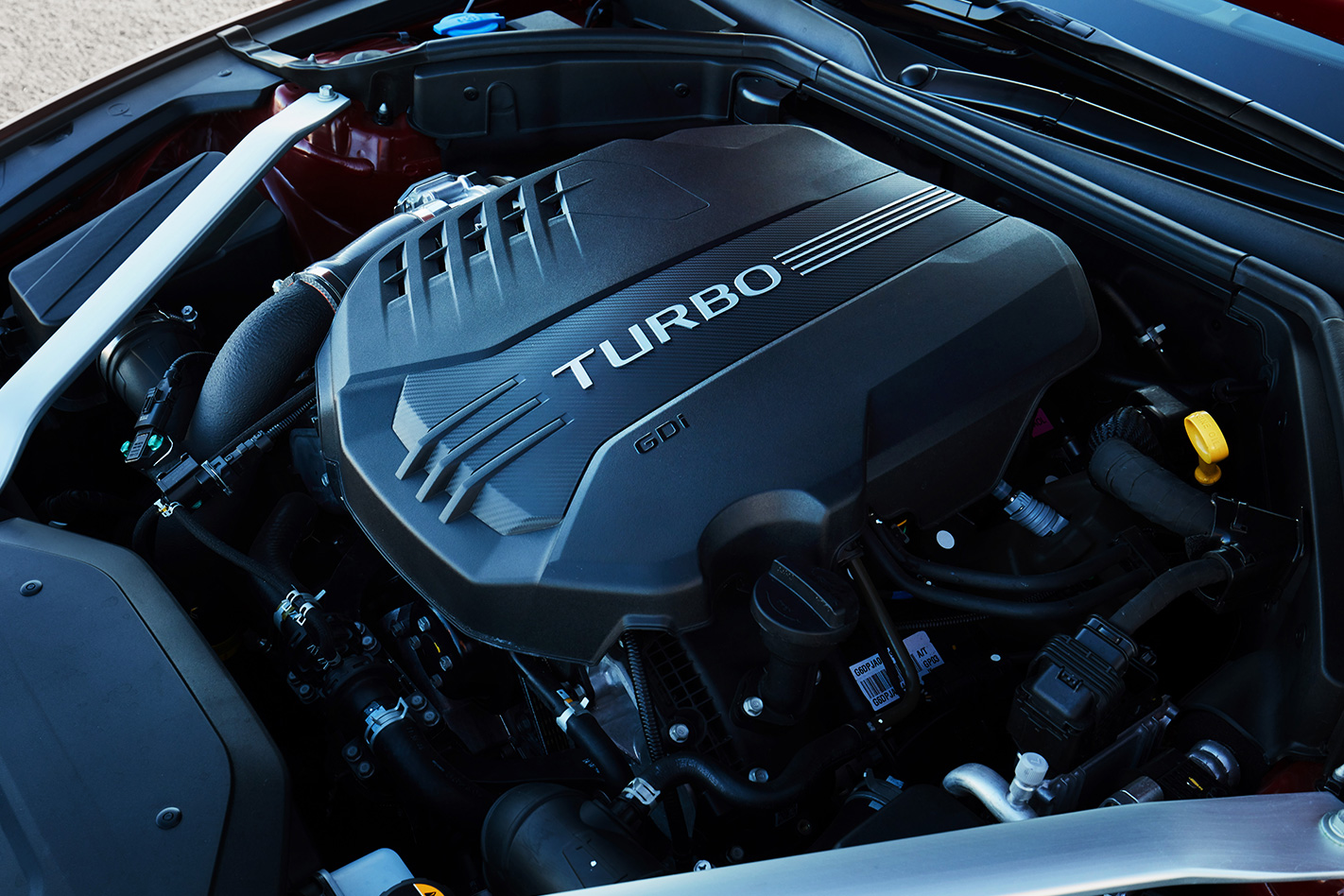
Like the Stinger, the G70 is offered in 179kW 2.0-litre turbocharged four-cylinder guise as well as the 272kW 3.3-litre twin-turbo V6. It’s the latter that we’re in today and it’s probably the car that has the most explaining to do, carrying as it does that hefty asking price. To lend some semblance of perspective, BMW’s all-conquering 330i wings in at $70,900. Granted, there’s only a 2.0-litre four-pot under its bonnet and the G70 3.3T is closer to an M3 than the 330i in terms of outright power, but that blue and white roundel nevertheless carries some clout, whether we care to admit the fact or not.
Readers of this publication will know our feelings on the Stinger GT. To summarise, it’s a car that feels great up to around 7/10ths, beyond which the dynamics feel ragged and unresolved. To ‘fix’ the Stinger it would need to be tauter, more all-of-a-piece on a challenging road. It would need to metaphorically shrink around you. A better quality interior wouldn’t go amiss either.
Congratulations, you’ve just described a Genesis G70.
Hyundai – Genesis’ paymasters – assembled a world-class team to develop the car. It consisted of luminaries such as BMW dynamics gurus Albert Biermann and Fayez Rahman; Bentley design alumni like Luc Donckerwolke and SangYup Lee; and Mercedes’ interior trim oracle Bozhena Lalova. If you’re looking for a more premium look and feel, step forward exterior designer of the Bugatti Chiron, Sasha Selipanov. Marshalling this crack team of troops is former Lamborghini branding boss, Manfred Fitzgerald.
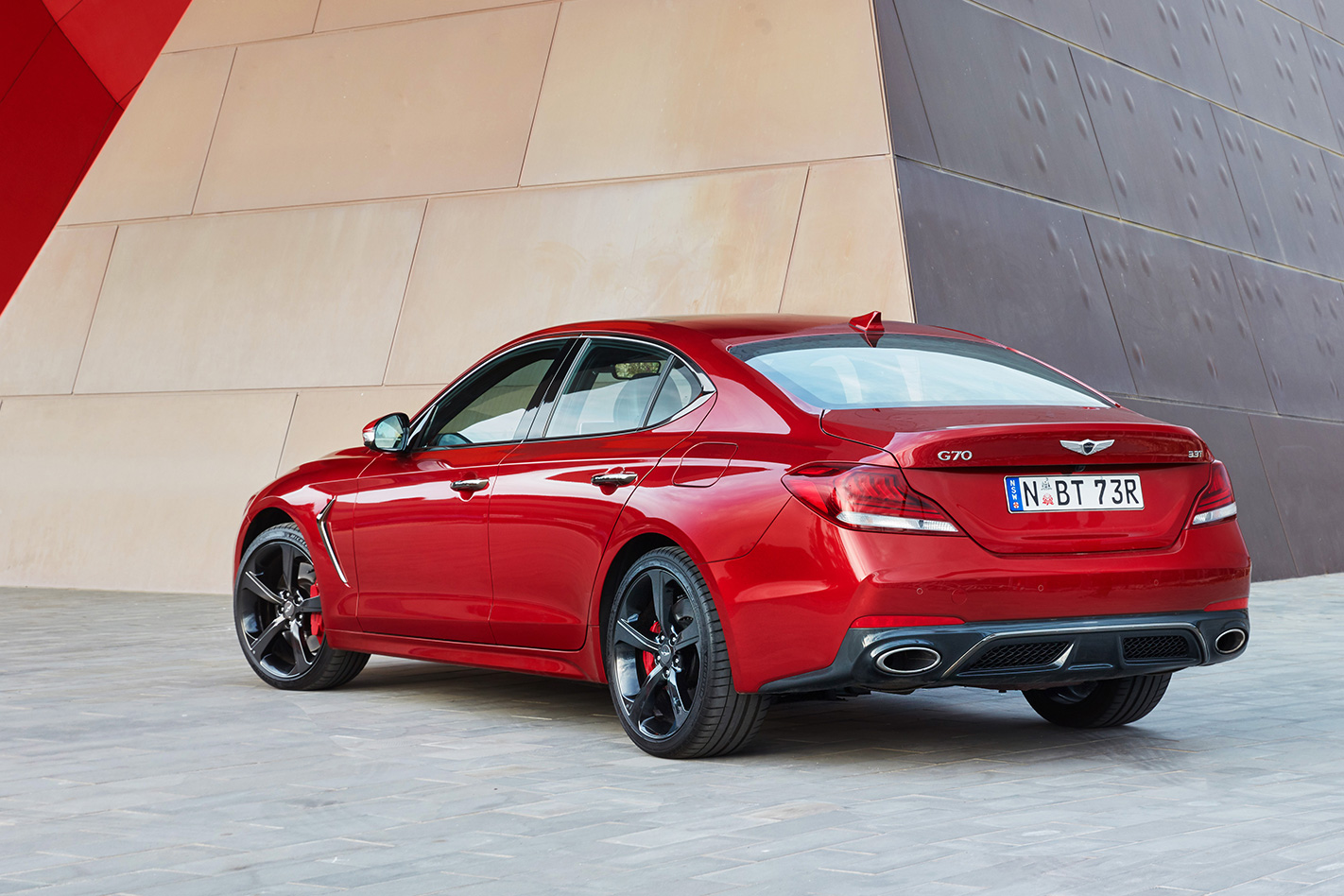
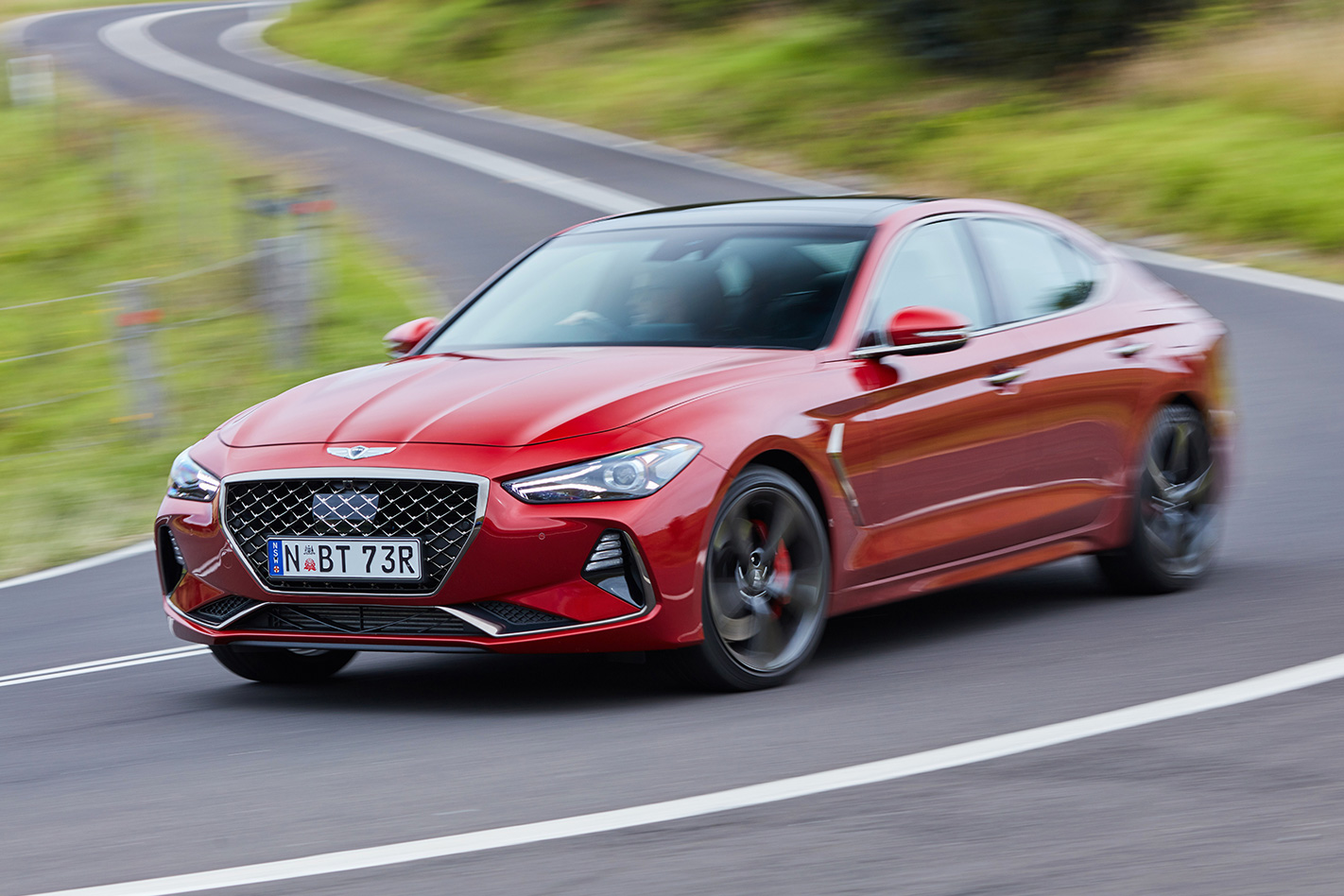
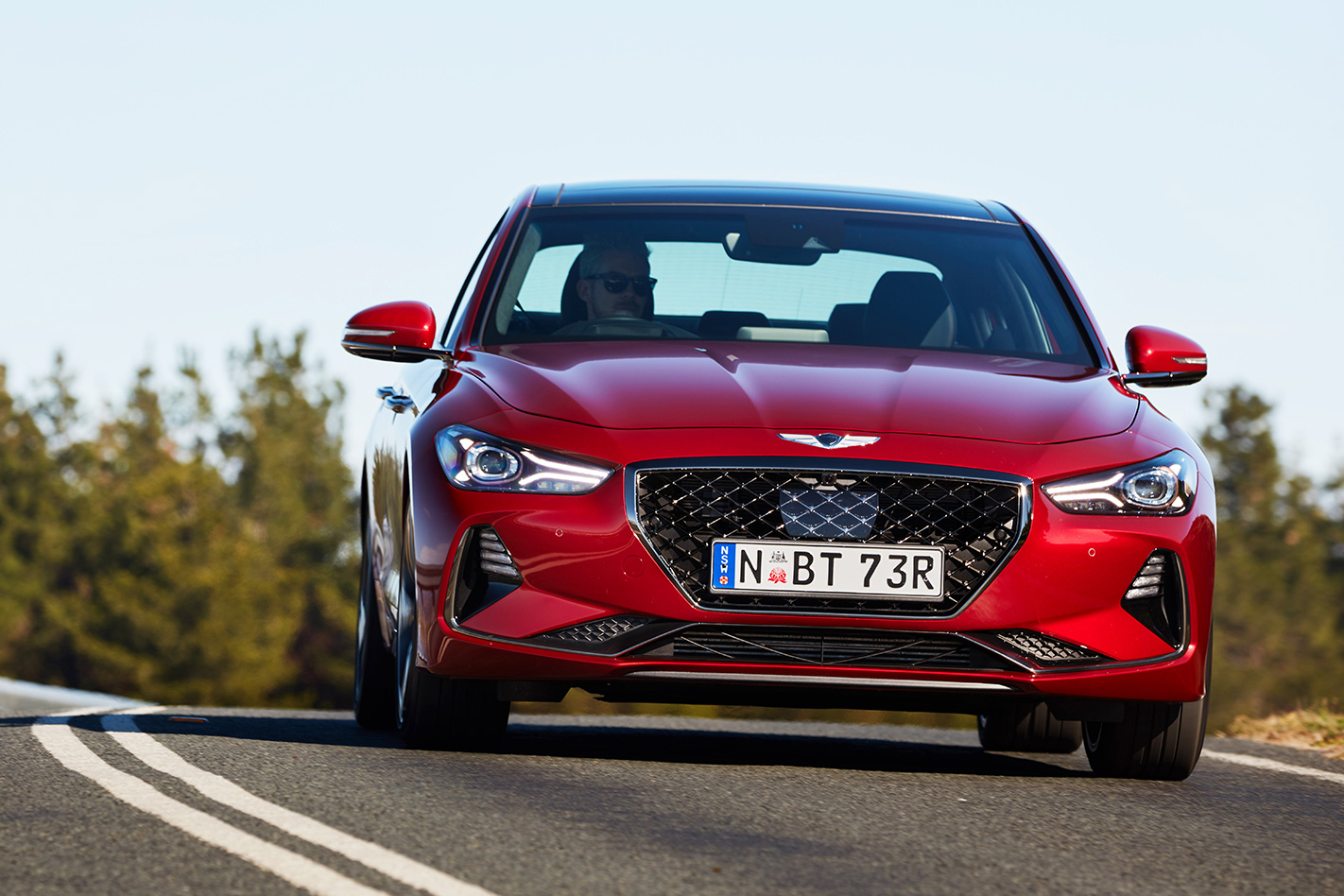
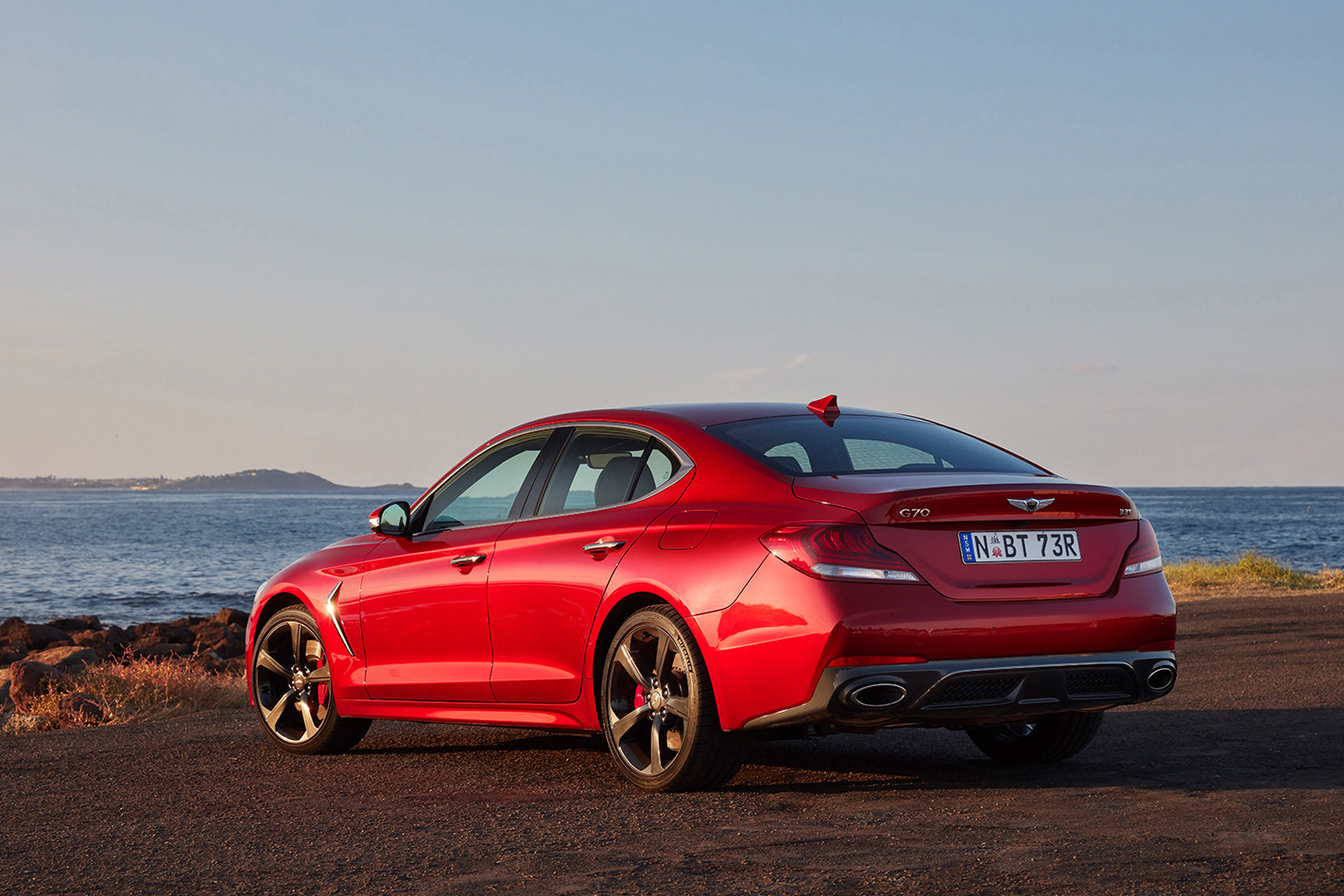
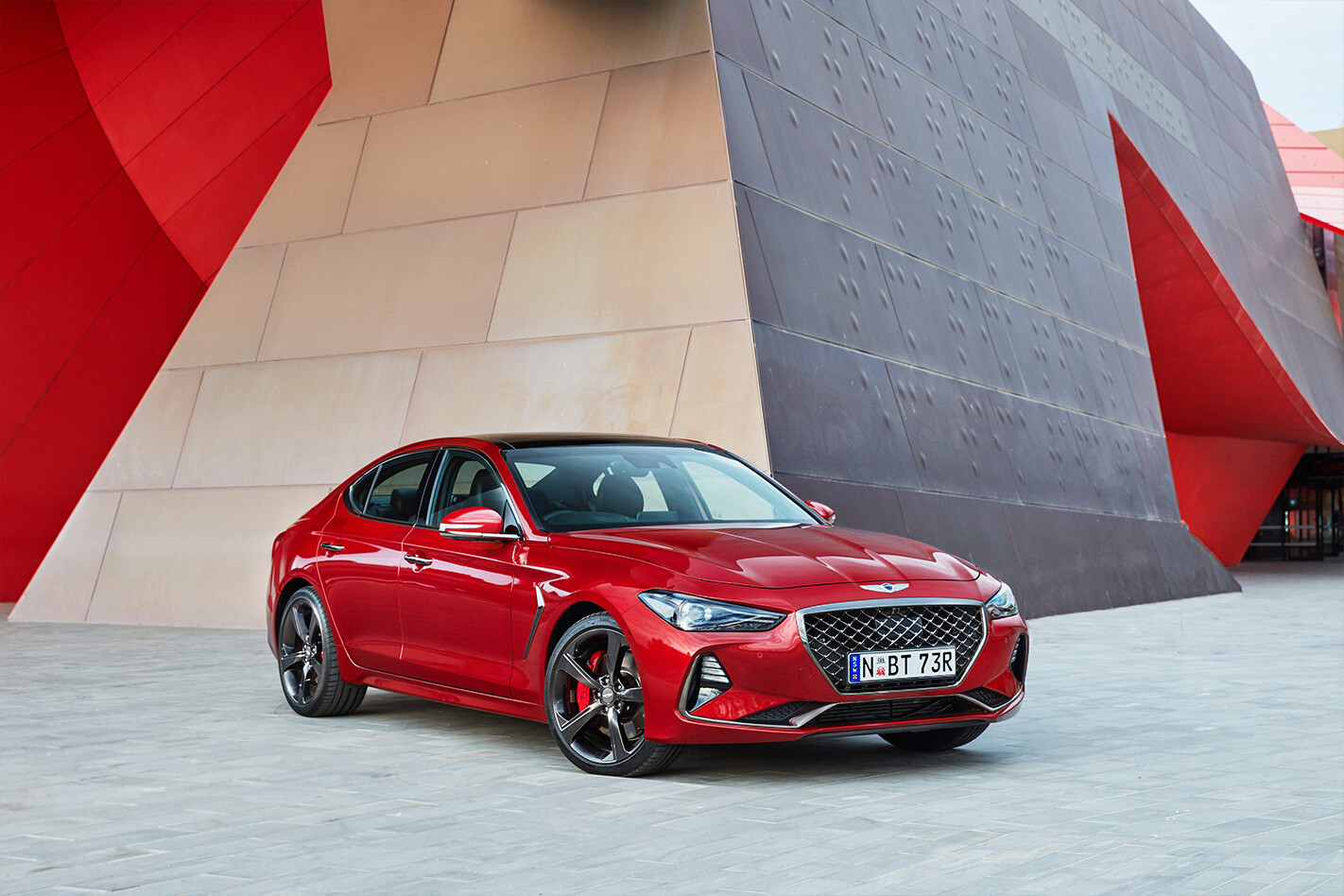
A slight surfeit of fresh air above the tops of its tyres aside, there’s little aesthetically to pick fault with the G70. There’s a fashionable amount of rake to it and the rear guards are subtly swollen. There’s real maturity in the exterior treatment, with each design element flowing gently and seamlessly into another. Some could see hints of Jaguar XE, while others thought Alfa Giulia, but, in truth, the overall execution is probably defter than either.
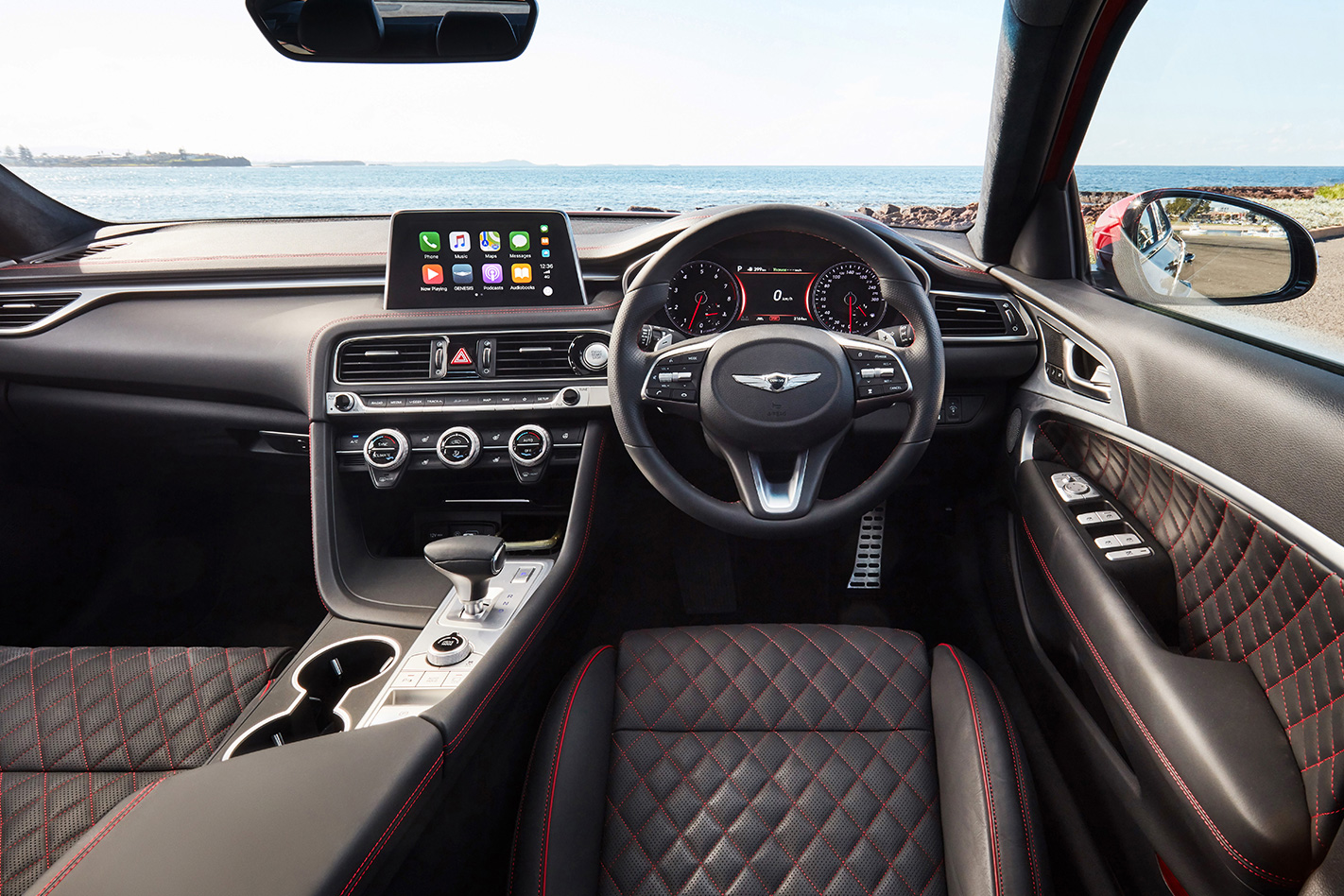
Drop inside and the good news continues. The cabin is beautifully finished. The G70 is offered in Sport, Ultimate and Ultimate Sport trims. While the trim walk-up might sound like wholesome Frisbee-based team games, the latter pair are priced identically at $79,950 which is a serious ask. The key difference is that the Sport makes do with an e-diff whereas the pricier cars get a proper mechanical LSD assisted by dynamic torque vectoring. Brembo brakes also give the Ultimate variants better stopping power.
There are some details that grate, such as the rather clunky infotainment screen that juts atop the dash like in a Hyundai i30 and features much the same graphics. The overall dashboard architecture also lacks an element of drama or design flair, but the detailing is extremely good. It’s the mark of a well-designed cabin when you can jump in and operate even the more complex controls without even considering recourse to the manual. There’s very little need to hunt and peck about the minor controls to get familiarised. This is clearly a car where the designers have thought long and hard about real-world usage scenarios.
Fire the engine up and it settles to a muted thrum. The 3.3T-GDi Kappa engine has never been the most musical of units, but it always feels as if it’s bursting with energy. The spec sheet says 0-100km/h in 4.7 seconds and we don’t doubt it. We achieved a 4.9s time from a Stinger V6, so this car, which is about 20kg lighter and on a better tyre would doubtless go quicker in perfect conditions.
The biggest revelation is the ride/handling compromise. Where the Stinger could get itself tied in knots, sometimes feeling as if the front and the back were talking to each other via Google translate, the G70 feels extremely well tied down. There’s a suppleness to it with the adaptive suspension set to its more comfortable mode. Switch into Sport doesn’t markedly affect body control, but will get the front end pattering into braking zones on typical Australian country roads. In other words, the adaptive suspension doesn’t actually do a great deal. You’d probably leave it in its softer guise all the time and sharpen up the steering and throttle map if required with the Custom drive mode.
Front end grip is strong, the electrically-assisted steering is better than average and the stability control seems better calibrated than in the Stinger, which would suffer from a strange ‘strike-slip’ juddering at the limit of grip. By contrast, the way the G70 starts ladling 510Nm at the rear boots is a good deal more honeyed. The Brembo stoppers are well up to the task of reining in 1762kg of car and 105kg of me, but the 8-speed transmission, developed in-house at Hyundai isn’t the sharpest tool in the box. Shift speed is fine, but even with the vehicle set into Sport mode, it can leave you with as little as 1800rpm on the clock just as you try to pick up the throttle mid-corner, whereupon it will kick down a gear or two and try to catch up.
That’s hardly the formula for a smooth transition onto the gas and while this problem is exacerbated in the smaller 2.0-litre turbo engine, the 3.3T could still benefit from a little better fluency here. Likewise, the ‘box could use a dedicated manual mode. You can take over the tiny wheel-mounted paddles to shift for yourself, and the transmission doesn’t do that annoying trick of the Stinger where it only gives manual control for fifteen seconds or so and then upshifts to D just as you brake into a corner. Strangely, it will only hold a gear to redline when you marshal the paddles and stability control is switched off.
Refinement is generally good, and the G70 makes a great long distance cruiser. There’s some wind rustle around the mirrors and the Michelin Pilot Sport 4 is a good tyre but not the quietest set of boots. The adaptive cruise control is first rate but the ultra-zealous lane-keep assist will grab at the wheel violently if you don’t begin a lane change without indicating. But it’s also not particularly good at keeping you in the lane if, for a moment, you take your hands off to try to assess how well it’s monitoring the white lines, pinballing to the side of the lane before lurching in the other direction.
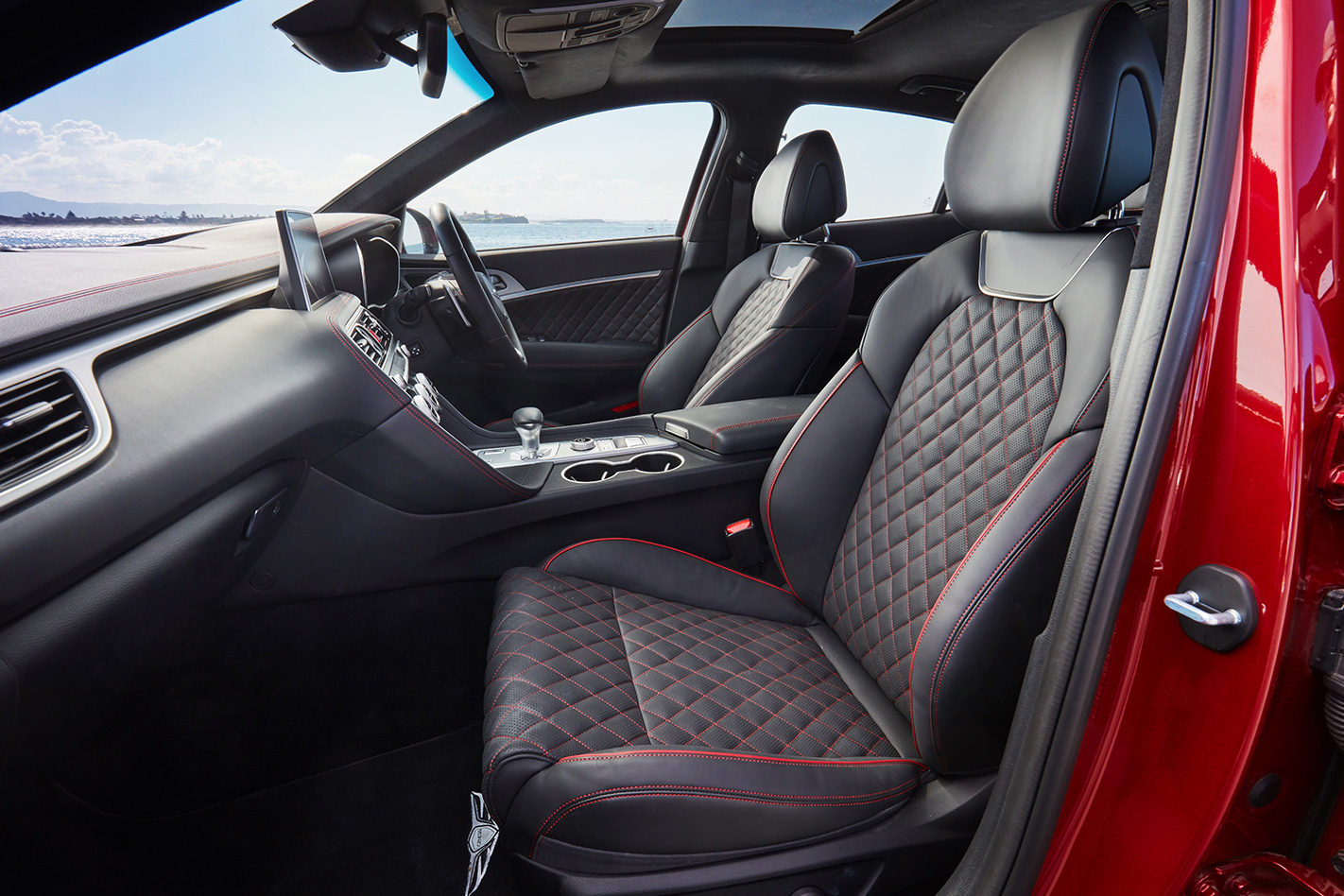
Packaging is about par for the course, with acceptable rear legroom and fairly so-so rear headroom. Space is fine up front, with good sightlines out of the vehicle and exemplary oddments storage and a well-designed Qi wireless charging pad. The quality of dash materials is also excellent, the cabin free of rattles and squeaks. The seats are big but supportive, with dynamic bolsters of upper spec models. Heated and cooled front seats and heated leather-trimmed steering wheel also take the edge off cold mornings.
The 330-litre boot is underwhelming. Compare that to the benchmark 480-litre figure you’d get in a BMW 3 Series or Audi A4.
Where the Genesis hits back is in pure ease of ownership. Whether it’ll be able to match the class average of 52 percent three-year residuals remains to be seen, but a five-year warranty, five-years of free servicing, no haggle pricing, a valet arriving at your house to deliver you a courtesy car and pick up your vehicle for scheduled services and all the garnish like five year mapping updates, five year roadside assist and a home delivery test drive service makes it easy to see why some buyers will be tempted by what promises to be a hassle-free ownership experience.
They’ll be rewarded with a sports sedan that looks great, goes hard, rides and handles beautifully and which delivers a level of build integrity at least as good as anything in its class. Yes, there are certain caveats but only the small boot could be perceived as a potential deal breaker. In short, it’s a class act. As good as the best of the Europeans? It’s in there swinging. Keep checking back here for a comparison where we find out once and for all whether Korea’s come of age.
GENESIS G70 3.3T VS RIVALS
Mercedes-Benz C-Class, BMW 3-Series, Audi A4, Jaguar XE
GENESIS G70 ULTIMATE SPORT PRICE AND SPECS AUSTRALIA
- Model: G70 3.3T Ultimate Sports
- Engine: 3.3-litre V6 twin-turbo petrol
- Max power: 272kW @ 6000rpm
- Max torque: 510Nm @ 1300-4500rpm
- Transmission: Eight-speed automatic
- 0-100km/h: 4.7sec
- Price: $79,950
- On sale: Now
It’s the final episode of WhichCar season one! Over the previous 19 shows and more than 50 adventures, our presenters have hit the far corners of the world, scaled mountains and sand dunes, crossed deserts, staged our own Olympics and even deliberately crashed a car to bring you the latest in everything auto.
Click the gallery above to view all four segments of WhichCar TV’s final episode
But it hasn’t always gone to plan. You wouldn’t believe how difficult it was to decide which gems made it into each episode over the last six months, but even harder was choosing what to leave out.
The clips and moments that fell by the wayside weren’t always repeatable on air, but we all certainly had an absolute ball making them.
Join Pete, Andy, Noelle and Daniel as they bring you their favourite moments from Season One, along with some of the action and mishaps you didn’t get to see … until now.
If you simply can’t live without the WhichCar team in your life, keep up to date with the WhichCar Weekly podcast, pick up a mag or jump on one of our many social media channels. And stay tuned for more exciting TV news soon.
Catch-up: Watch at tenplay.com.au (AU) or primetv.co.nz (NZ)
When life gives you lemons, make lemonade. Spare me. As a card-carrying realist, dopey, twee statements like that one make me wanna puke. Mind you, seems to me that the universe is handing out more lemons than ever before, so maybe it’s time to give the concept some consideration. Or at least stick ’em in your gin. Maybe.
So here’s how I see things panning out. While I’m never going to be convinced that autonomous cars ever really will take over the job of transporting humanity, I am reasonably convinced that we can’t go on as were are. Regardless of what fuels our personal transport modules or even who or what actually pilots them, congestion is eventually going to rub the shine off the whole concept. (Like, it hasn’t already?)
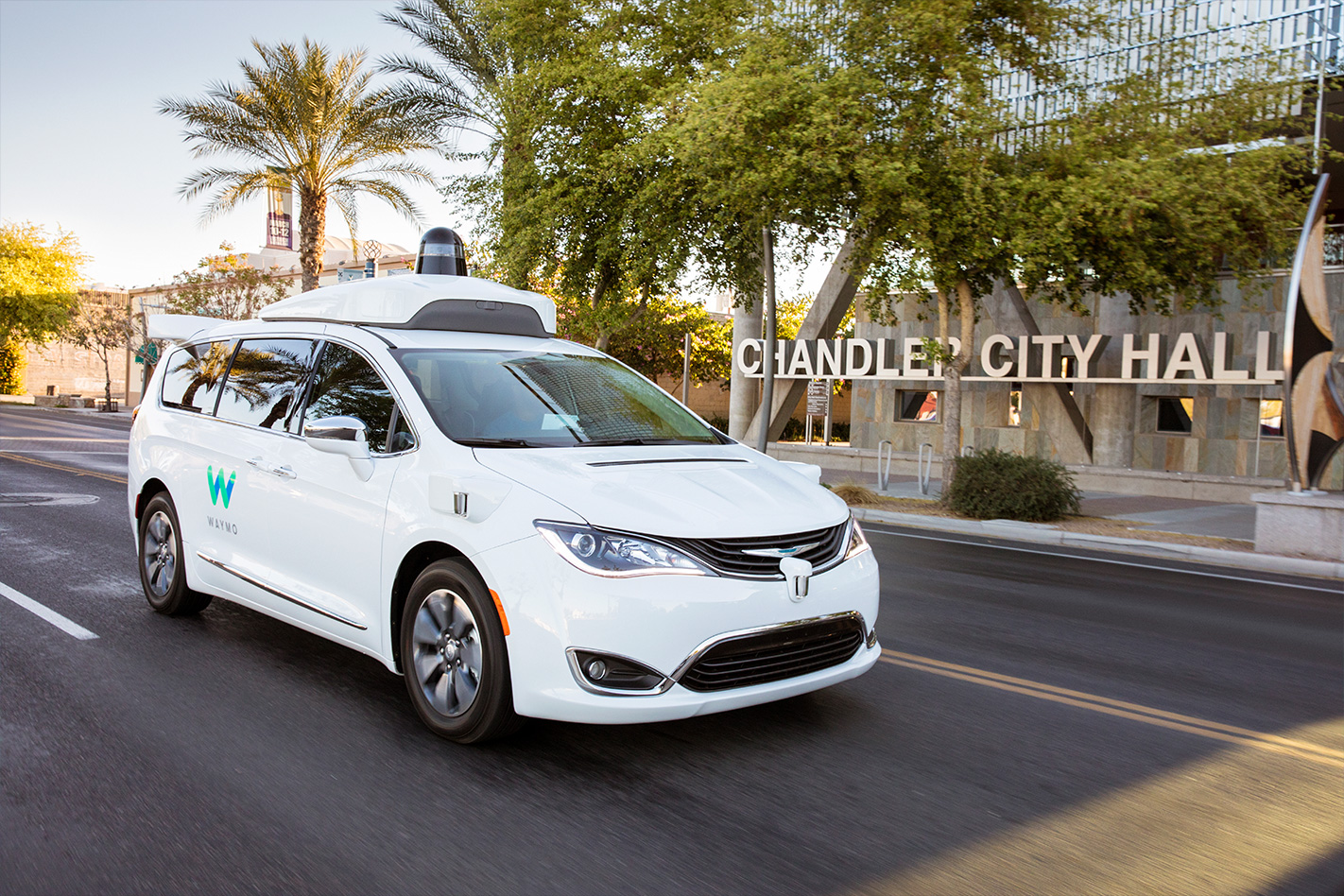
At some point, driving a car with just you in it is going to smell worse than the horse-exhaust our Monaros and Mustangs replaced all those years ago. By then, of course, the idea of burning fossil fuel in a car will be even more on the bugle than those horsey-farts.
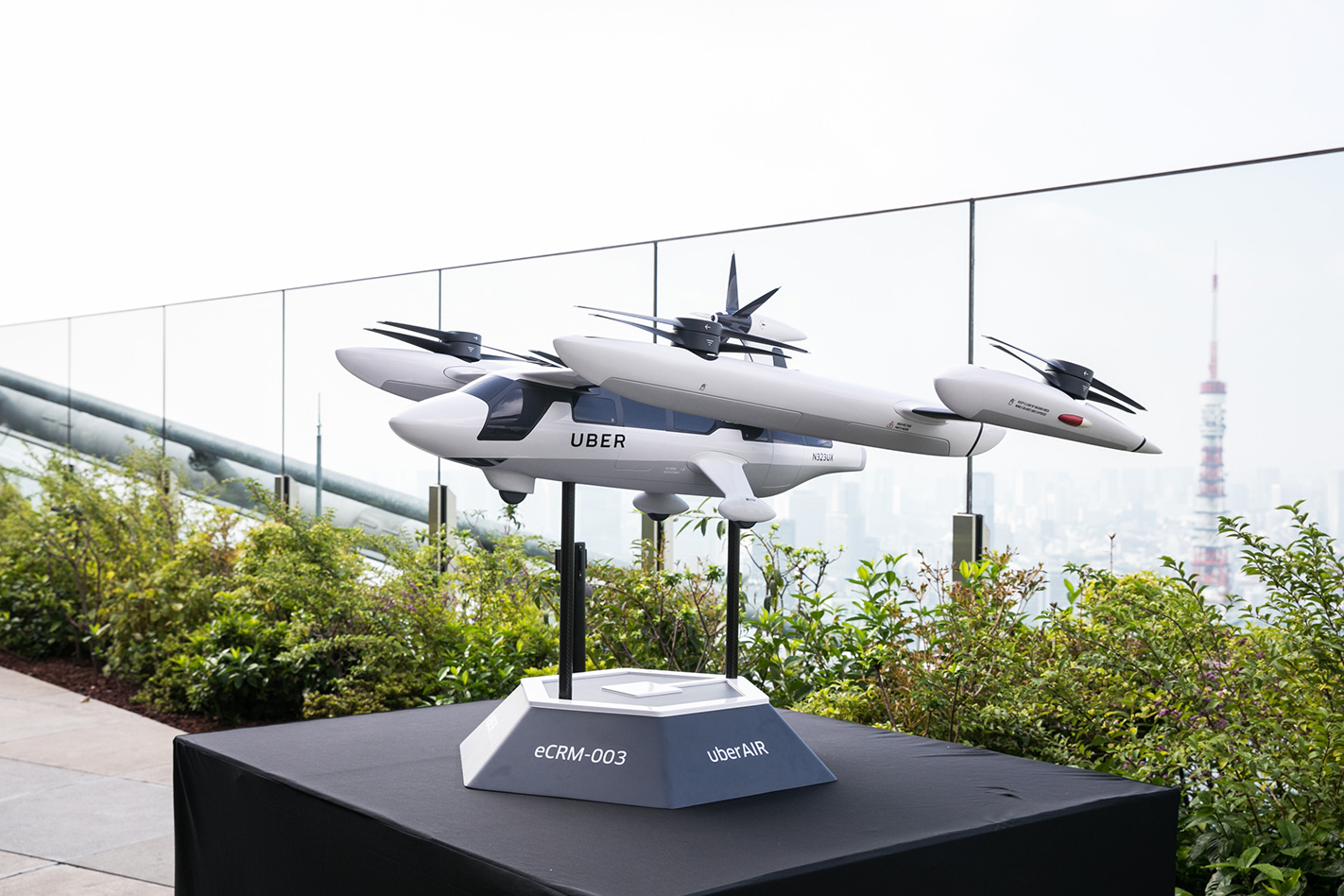
Which means we’re looking at an increase in mass transit. Okay, but just as cars won’t be fossil-fuelled, neither will the alternatives. Now, I’m no engineer, but when an electric car like a Nissan Leaf weighs about 25 per cent more than a Nissan Pulsar (batteries are heavy, okay) I have real doubts that air travel is going to switch to electrons in favour of Jet A1.
It’s hard to see how you could get an electric plane to perform at the same level as a jet engine at altitude, and range would have to be a problem. But even if that lot could be overcome, using the Nissan analogy, a 500-seat A380 Super Jumbo would become a 375-seater thanks to the reduced payload. Nope, air travel is destined to once again become a treat for the super-rich just as it once was.
That leaves us with trains for the bulk of moving people and stuff. The good news is that super-fast electric trains are already a reality. But here’s where my brilliant plan comes in. We continue to build fast trains, but we also make it more fun AND make use of all those scrapped cars that nobody is brave enough to drive in public any more.
Instead of a conventional train carriage, we use flat-beds and bolt abandoned car bodies onto them, three to a car. That way, you get to travel from place to place, sitting in a Lancia Stratos or a Citroen 2CV or a Rolls-Royce Silver Shower. Or whatever takes your fancy. No, you can’t walk up and down the corridor like a conventional train, but with a fast train, no journey takes too long. And anyway, we manage to sit in cars now for hours at a stretch, right?
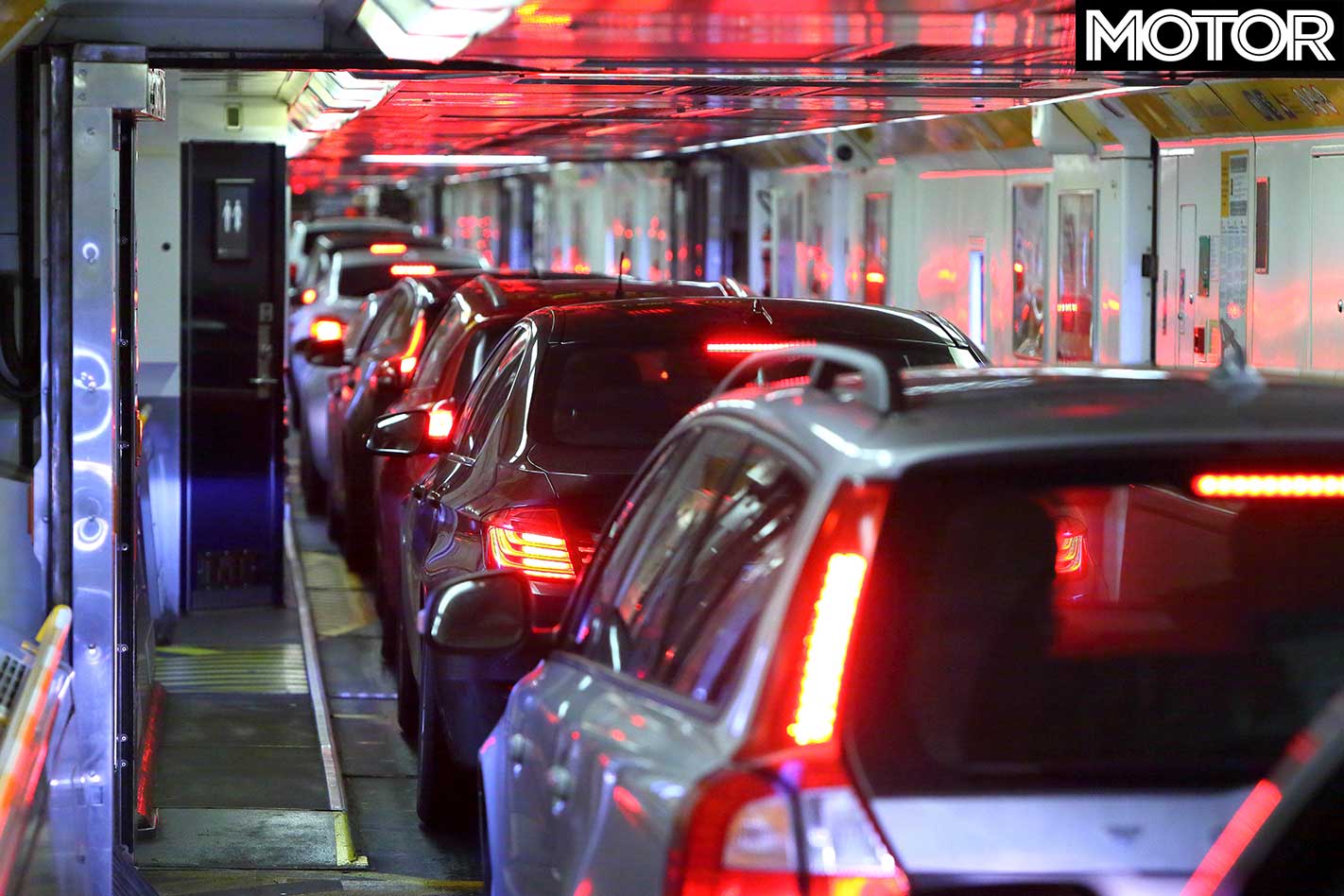
The experience can be enhanced by adding an electric steering-feedback generator and a soundbar in the back seat to reproduce an exhaust ‘note’ that’s matched to the train’s speed and acceleration (by satellite location). In fact, a synthesised steering feel and exhaust noise is already happening in production cars (not to mention simulators) so I’m not talking complete science fiction, am I?
Meanwhile, you’ll get some of the old driving-my-car experience by lowering the windows (interesting in a canvas-roofed 2CV at 400km/h) watching the dials and gauges and flipping the bird to the bloke in the car behind you.
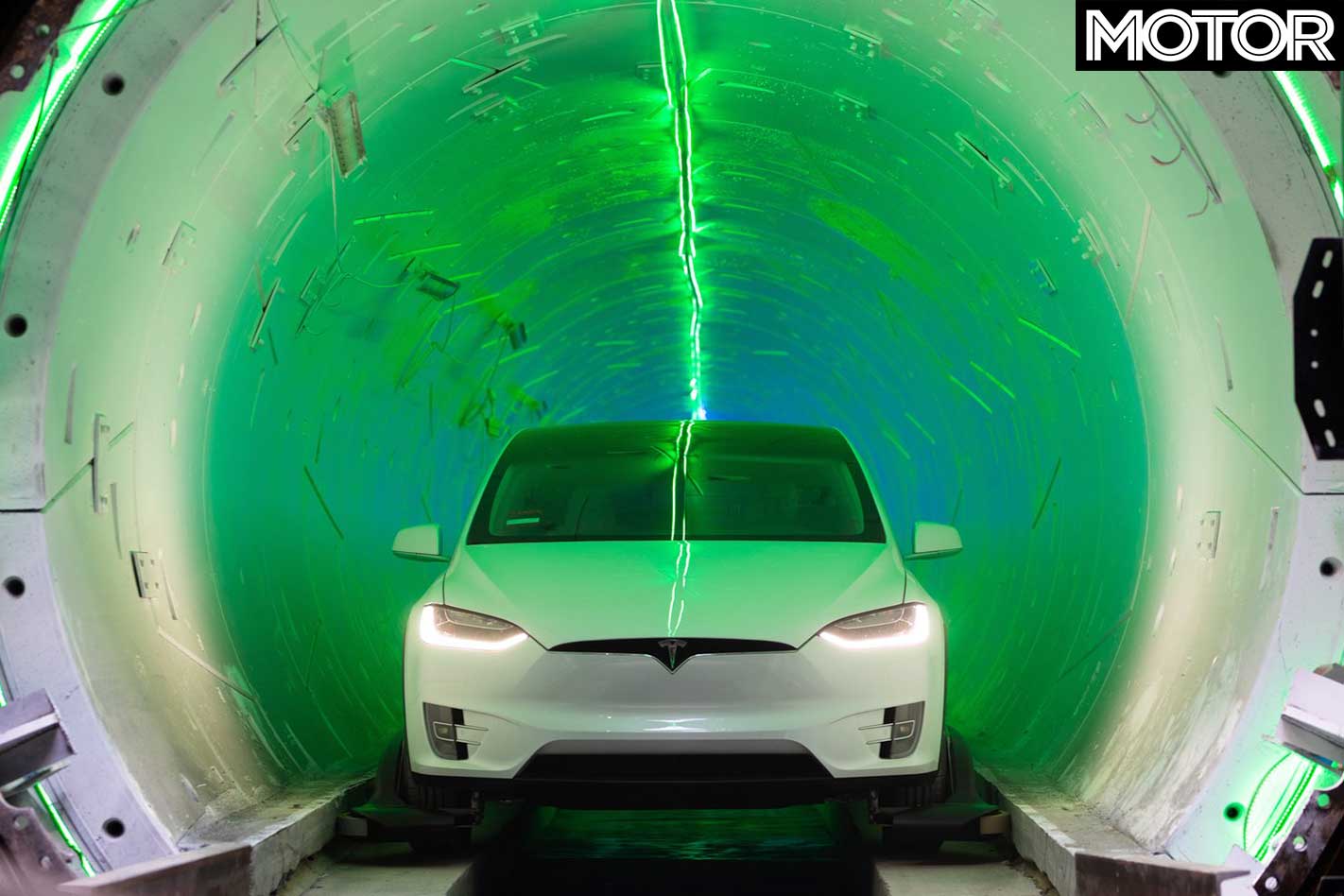
As time goes by, it’ll be an educational experience for young ’uns who missed the whole personal car experience by being born too late. Because everybody should experience how crap a Daewoo Nubira was. And by offering passengers a cabin of their own, you neatly get around the problem of being sat next to the weird-smelling guy who wants to talk Dungeons and Dragons with you.
Better than lemonade, eh? Might even give gin a run.
Hi WhichCar, I’m at my wit’s end about what our next car will be. My wife INSISTS we must have an SUV, though I don’t think we need one at all. Her reason is that she feels more secure in traffic sitting up higher, while I think that a smaller wagon or hatchback will be easier to park, cheaper to run and probably cheaper to buy.
We have had a Toyota Kluger for the last six or seven years, but we’ve also raised two children and lugged around a lot of sports gear during that time. Now the kids are older, we have access to a company car and we don’t cart the same stuff over the same distances we used to.
Help me! I get why the missus wants an SUV, but I think they’re stupid! What do I do?
Aaron, Mordialloc, Victoria
Hi mate,
Isn’t that funny… I’ve recently had EXACTLY the same conversation recently with my other half! She likes the fact that she has a commanding view in traffic as well, but she can’t give me one other single reason as to why we need a large SUV.
Similarly, our mob has grown and all but gone, and we just don’t need a hulking big car that burns more fuel, eats big expensive tyres and is tough to park in ever-shrinking parking spaces in our increasingly crowded cities. What to do?
Well, there are a couple of cars I’m leaning heavily towards as a bit of an SUV addiction breaker, with the (probably vain) hope that we can eventually downsize into something suitably tiny next time.
The Subaru XV brings the size of the SUV right down to a much more manageable level than the Kluger, but it still offers a higher seating position than, say, an Impreza from the same brand.
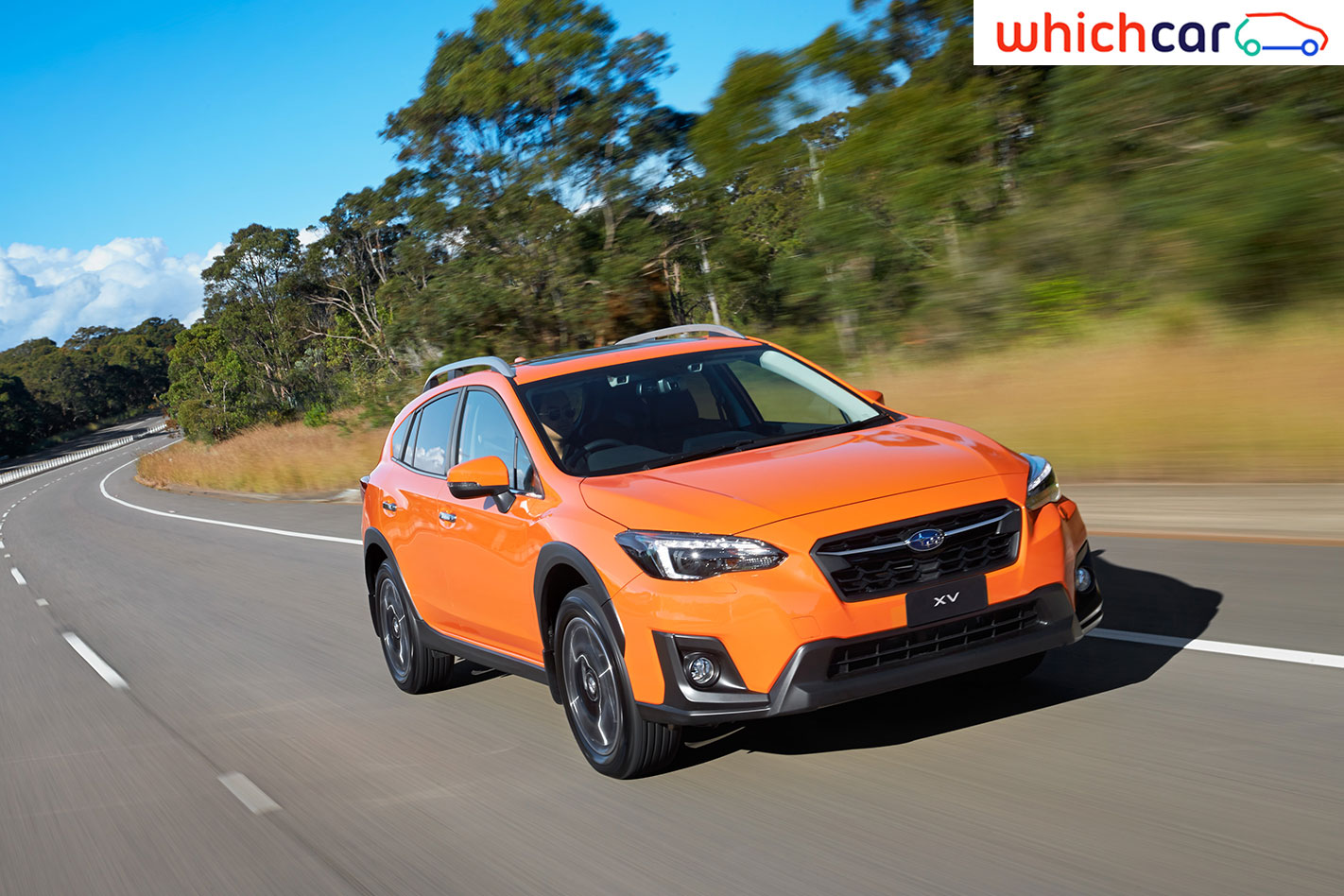
It also has a decent amount of boot room, and its plastic overfenders and chunky bumpers give it an SUV’s attitude. The non-turbocharged 2.0-litre petrol engine will feel lacking after the Kluger, though.
Likewise, the Hyundai Kona is based on an i30 but has a bit more ground clearance and a taller hip point (seat height in car industry speak) than the i30.
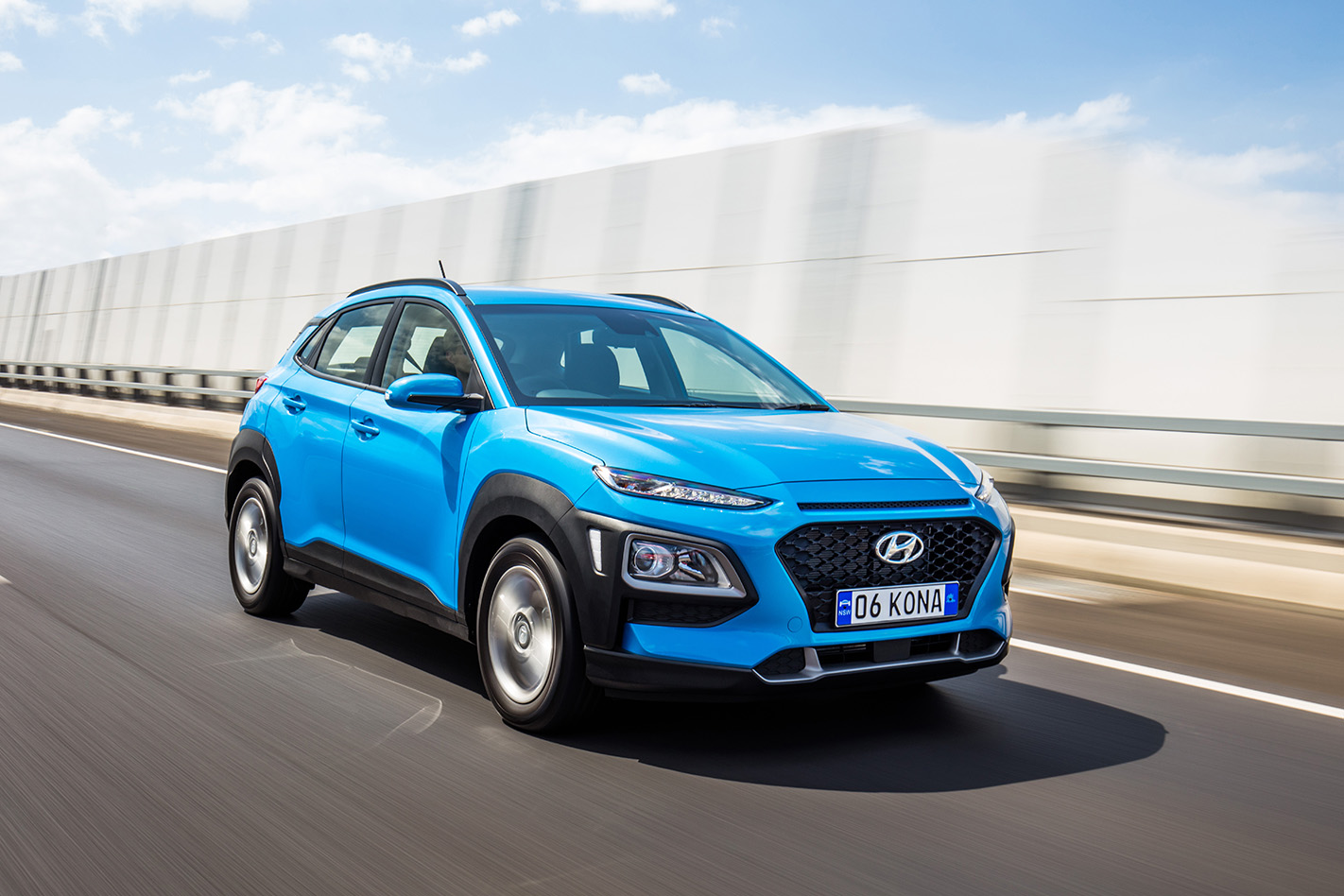
It’s also quite small in its footprint without giving up interior room (up front, at least; the rear is a little cosy).
Probably the poster child for an industry that’s looking to future-proof itself against any sort of SUV backtrack, though, is the Ford Focus Active.
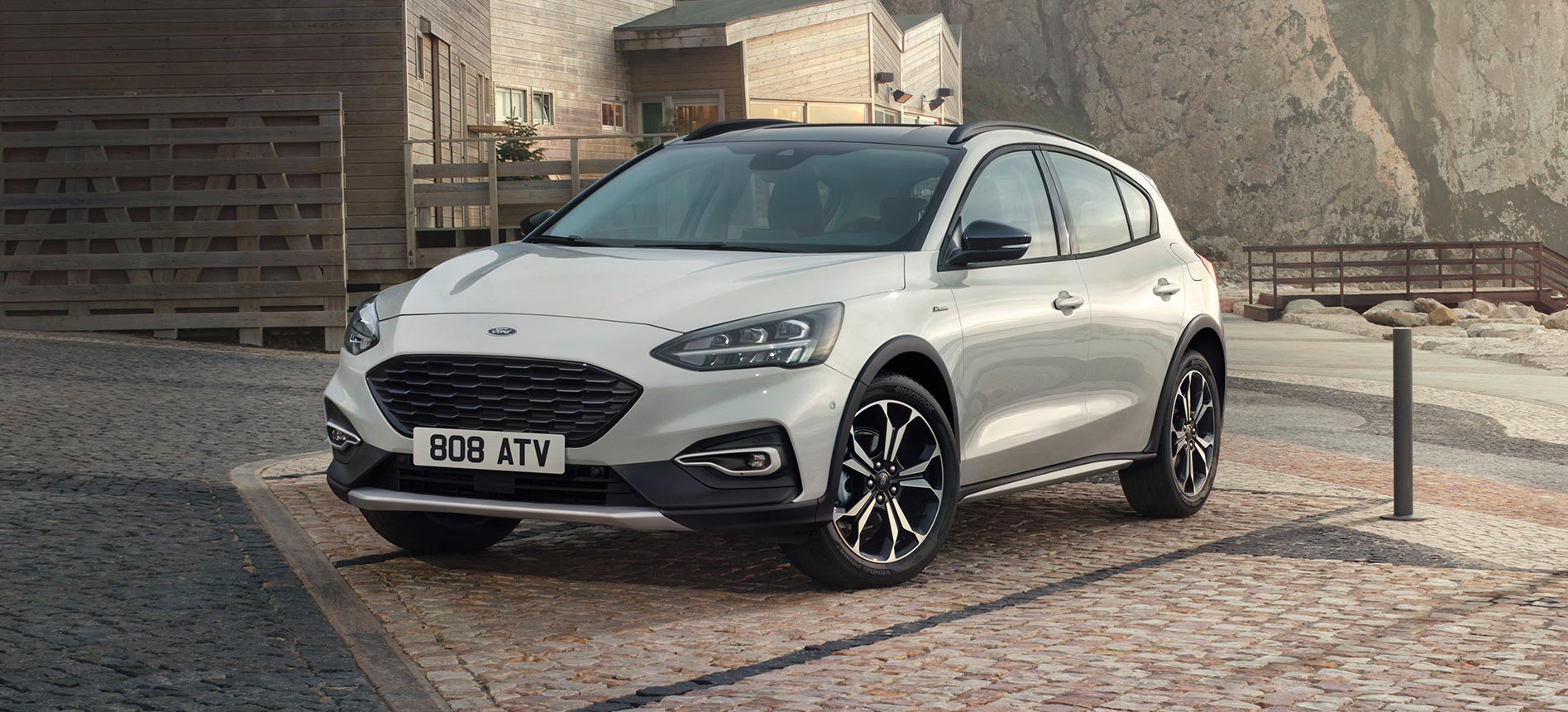
Described by the company itself as a ‘passenger car with increased capabilities’, it’s nothing more than a stock Focus with a 30mm ride height lift and a bit more plastic around the wheels.
However, it does tick the SUV box in terms of being taller, and it even offers a couple of quasi-offroad modes should you want to head to a beach spot.
A tiny three-cylinder engine and a front-wheel-drive layout keep things frugal and simple, multilink rear suspension gives it real character in the corners and the interior is… well, from a Ford Focus, so it’s comfortable and well-equipped.
All three cars can be had for around the $30,000 mark, as well, making them pretty accessible.
Verdict
If I was to bring one home, I’d have to pick the Subaru because it comes in bright colours (yes, that’s a stipulation from the Ministry of Finance), but I reckon the Focus is a great choice for a family who can’t quite shake the SUV bug.
