
WE’VE had the opportunity to drive the latest Mercedes-AMG GT range, which we’ll see in Australia later in the year. Although the powerhouse coupe’s silhouette remains familiar, the detail is intriguing. Here we take a look at exactly what’s changed with the facelift car, which models Australia will get and which ones get the red pen through them.
Word is that pricing will remain largely unchanged, so the good news is that there’s a lot of extra equipment coming at little cost to the customer. The bad news… well, you’ll just have to watch the video to glean that info.
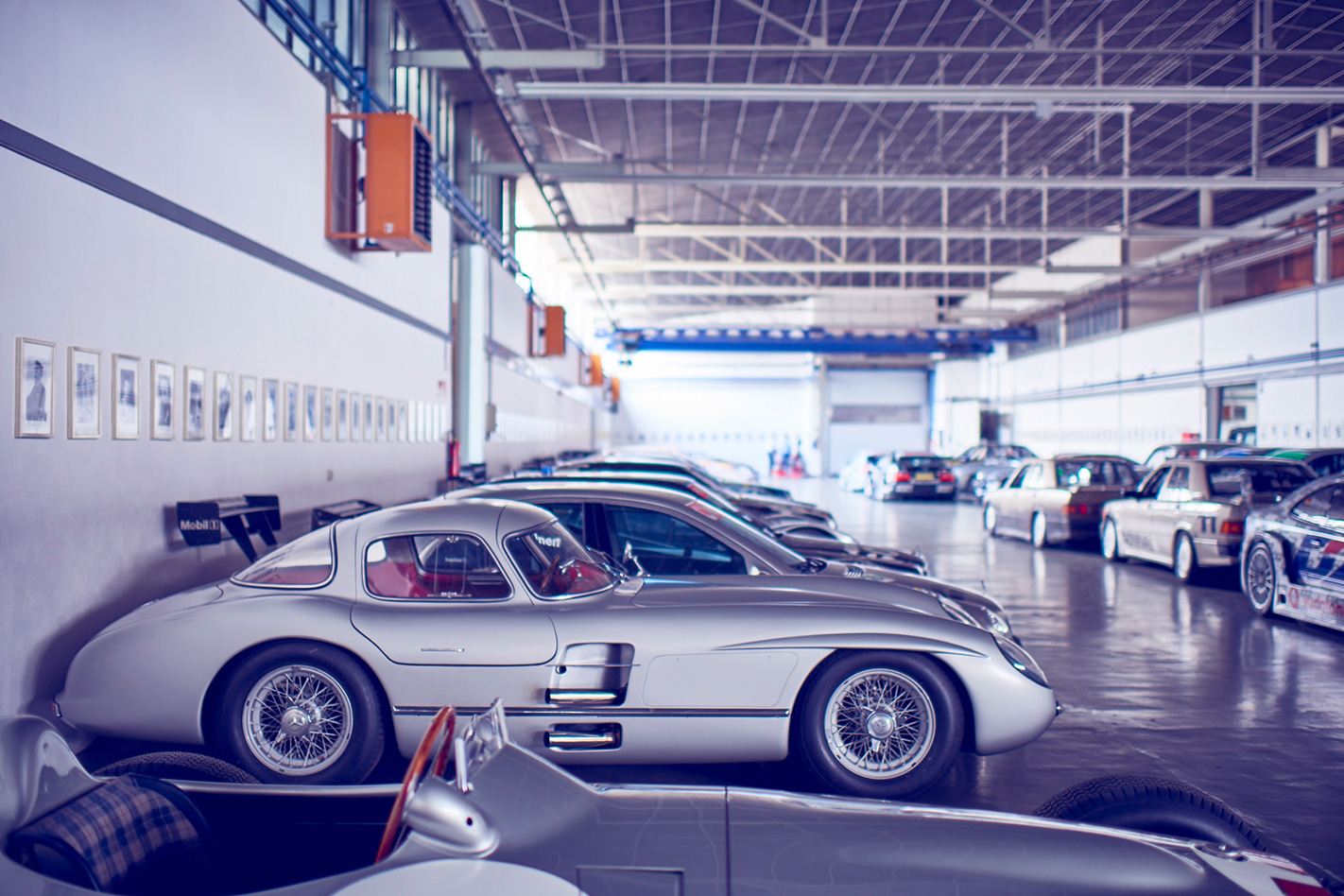
CURATOR Holger Lützenkirchen gazes at the faded pictures that line the walls, disappearing into the half-light at the end of this vast hall. He’s looking at ghosts and legends; long-passed Mercedes factory pilots, some with arms crossed defiantly, chins jutting, others smiling diffidently at the camera.
There’s Rudolf Caracciola, sporting a cravat, and Bob Burman wearing a giant jewel-encrusted crown. Christian Lautenschlager eyes the lens knowingly over his luxuriant moustache and a then relatively unknown Ayrton Senna stares ahead over the wheel of his 190E at the Nurburgring in ’84, minutes away from bursting onto the world stage.
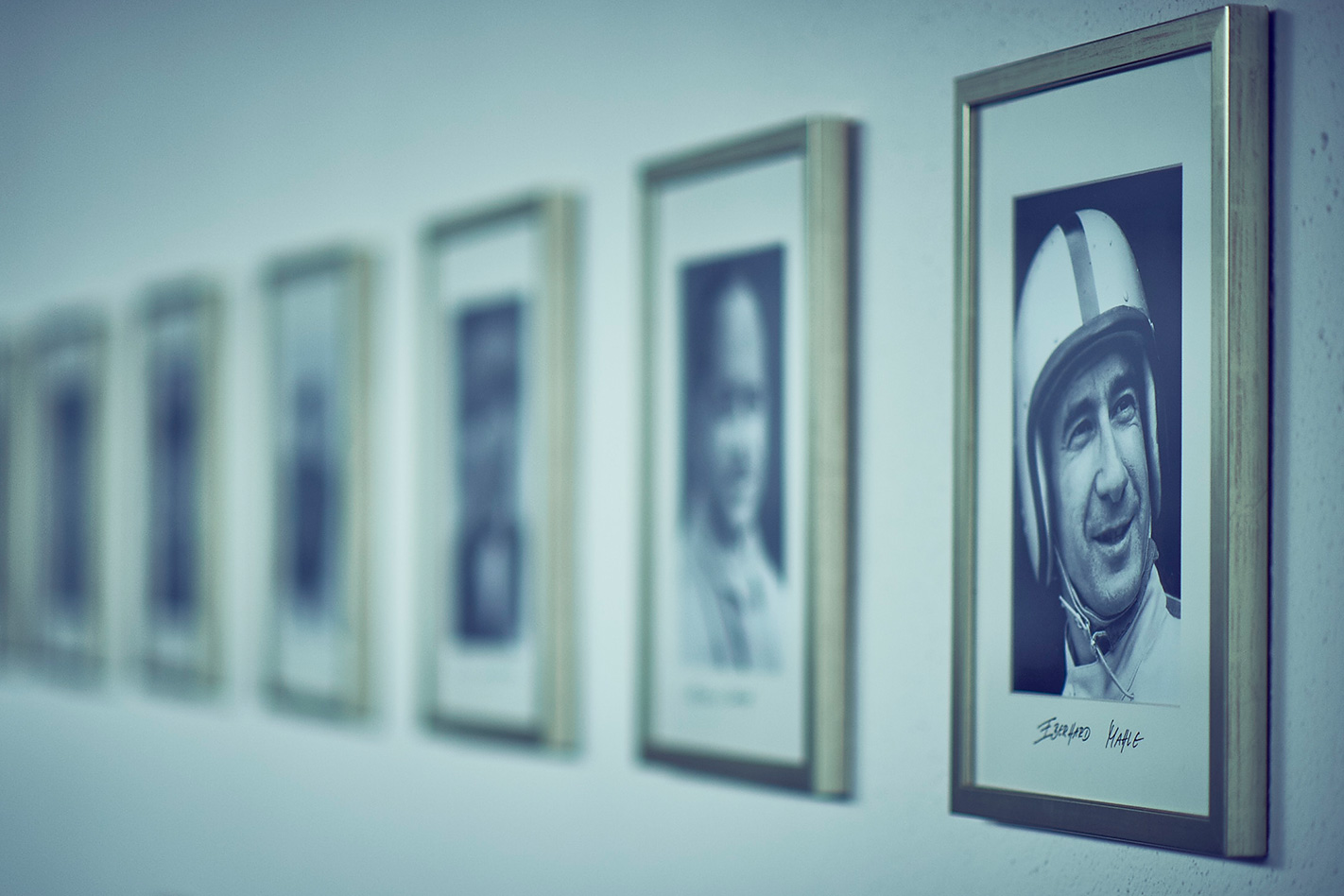
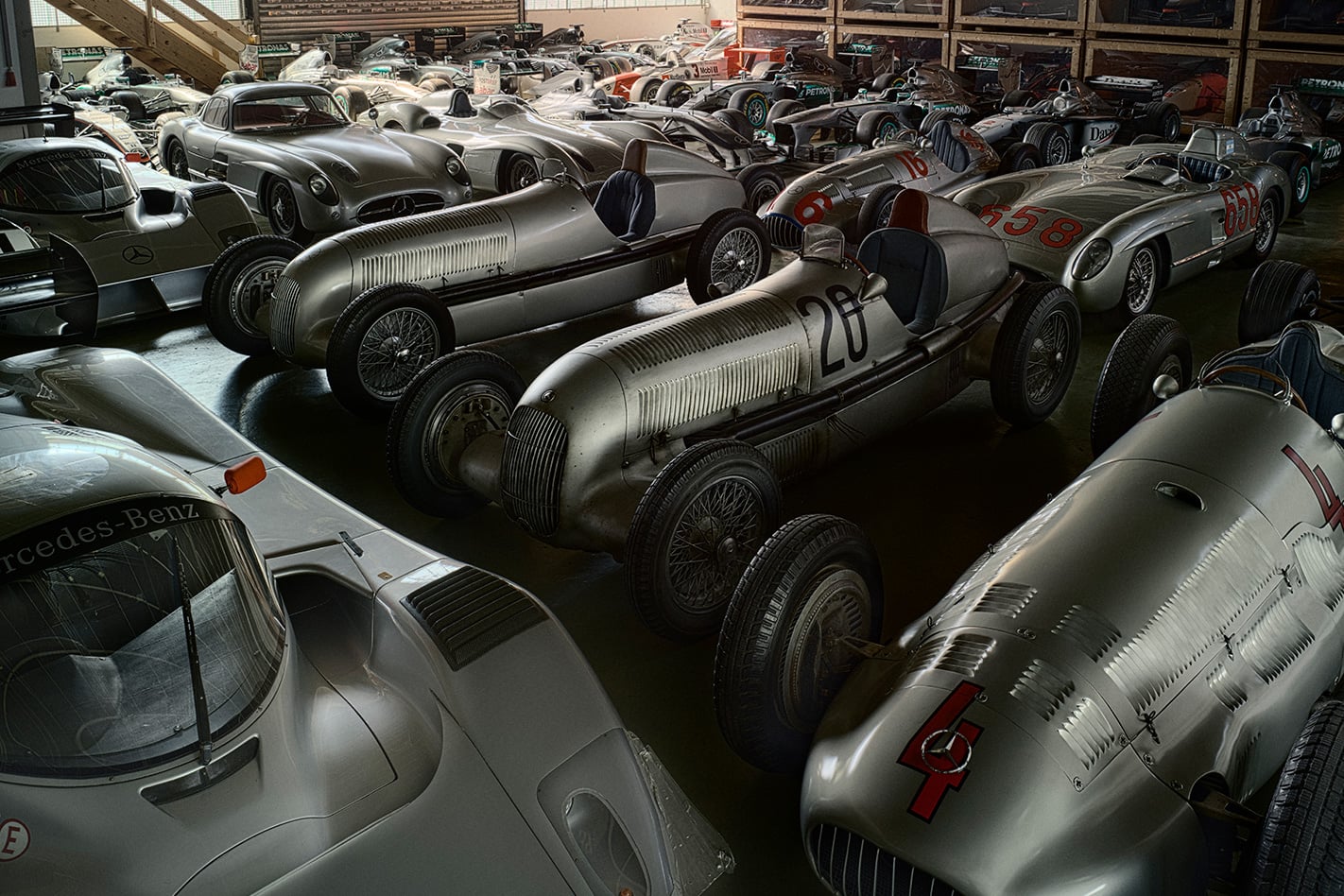
Below the pictures sit row after row of competition cars; Le Mans prototypes, DTM cars and, in the distance a wall of Formula One cars sealed into airtight glass-fronted hutches as if they’re in a Japanese capsule hotel. Lützenkirchen waves expansively, and then mutters quietly: “We are running out of heroes.” He explains that nobody can drive some of these cars anymore. Those with the talent to do so can’t be insured to drive many of the more extreme competition cars in this hall. So the cars sit here, in this nondescript building, hidden in plain sight in suburban Fellbach.
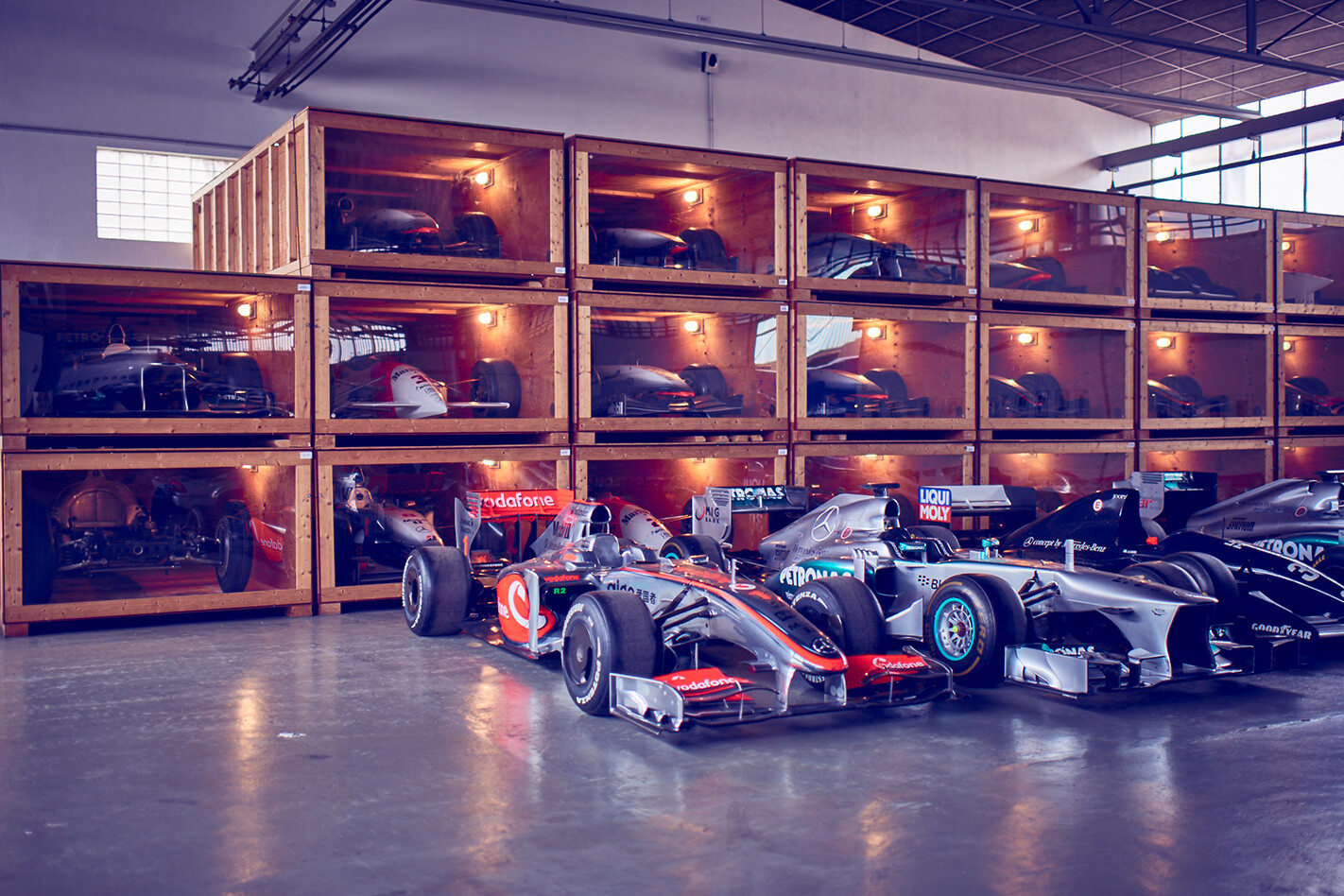
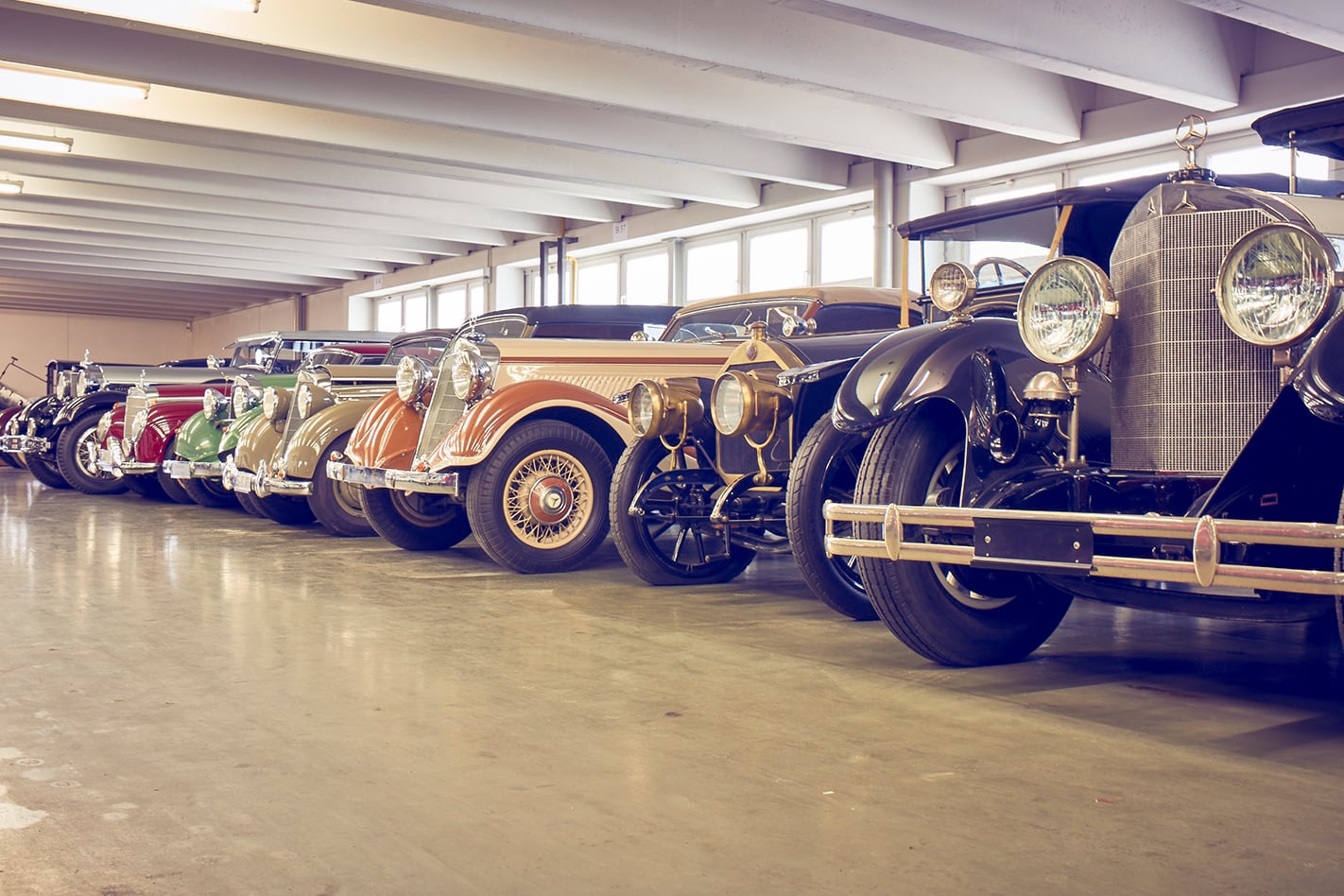
The Holy Halls are Mercedes’ crown jewels. Dotted about this unassuming north-eastern suburb of Stuttgart are 12 industrial units, unremarkable from the outside. Lützenkirchen asks us not to take any photographs with our phones because it’s possible that the geodata from the images could be used to pinpoint exactly which units house the priceless collection of cars. And priceless it is, because a good percentage of its contents are completely irreplaceable. In all there are 1176 cars here and that number grows all the time, the company assiduously saving the final example of every model’s production run, in its most typical guise, to slot into the collection.
The majority of cars that enter the collection now won’t be shown in the public museum for two or three decades. “It’s a generational investment,” admits Lützenkirchen. “The cars I put in here, I will never see in the museum, and the cars I see in the museum, I didn’t put in here.”
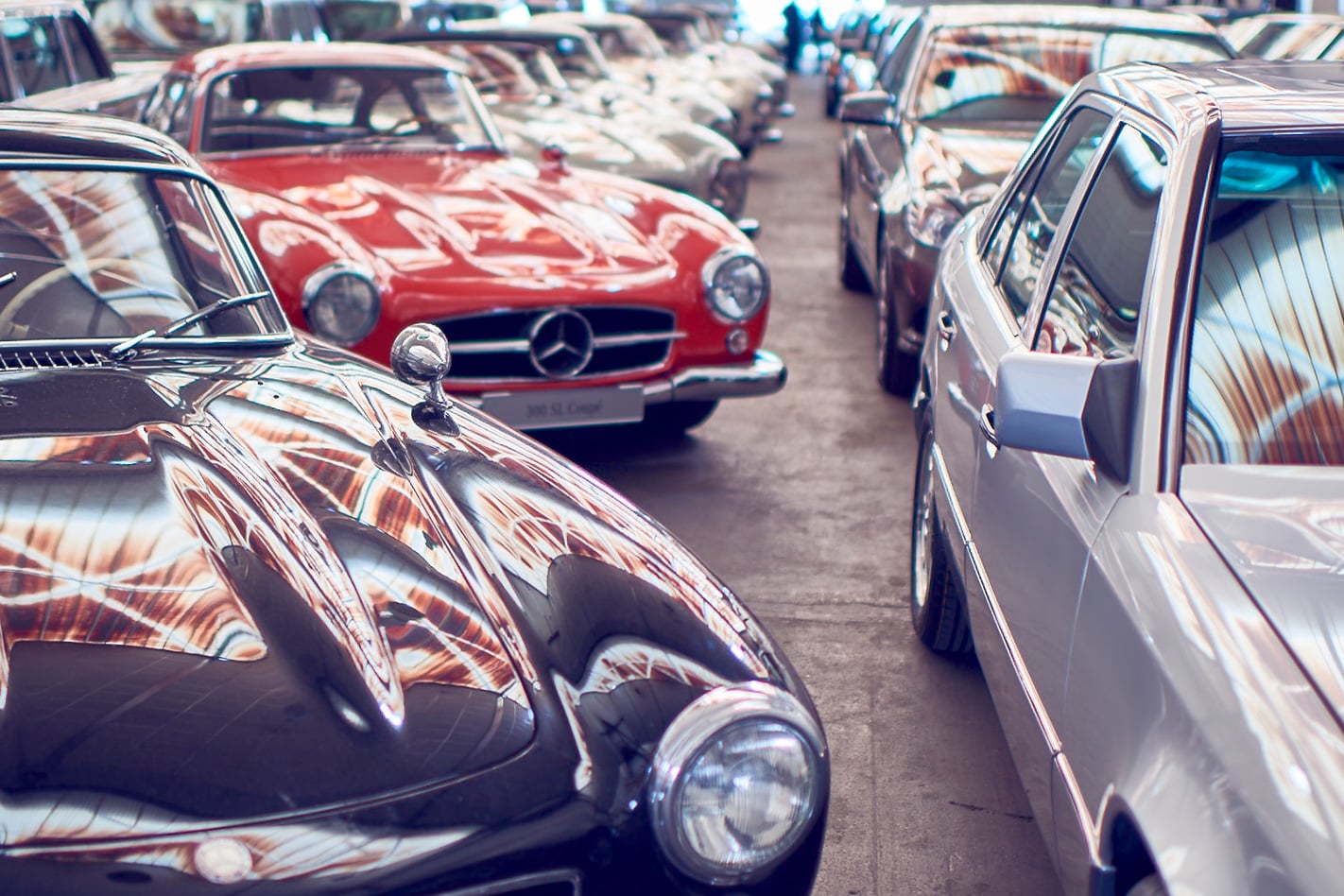
The collection stretches from the very first cars in the 19th century to the modern era, and while much of Mercedes-Benz’s history is well documented, it’s the oddities, the mongrels and the forgotten test mules that fascinate me. Who knew there was such a thing as a Mercedes SL 400 CDI diesel? Or that it was only after Mehmet Ali Agca shot Pope John Paul II that bulletproof glass was introduced on Popemobiles? Even then, there’s a grim economic at work. “We have the thick B6 glass for the pope and B4 glass for the driver,” says Lützenkirchen. Before we can ask why, he looks up, gives a wry smile and says: “More drivers than popes.”
The growth of the collection was put on hold after what Lützenkirchen describes as “an appointment in Poland” occurred, the cars dispersing into caves, bunkers and tunnels, with many moving east, out of the range of the RAF’s bombs. A number were sent to Dresden, only to be locked behind the Iron Curtain post-war until reunification in 1989. Even then, only 12 came back, the rest disappearing without trace.
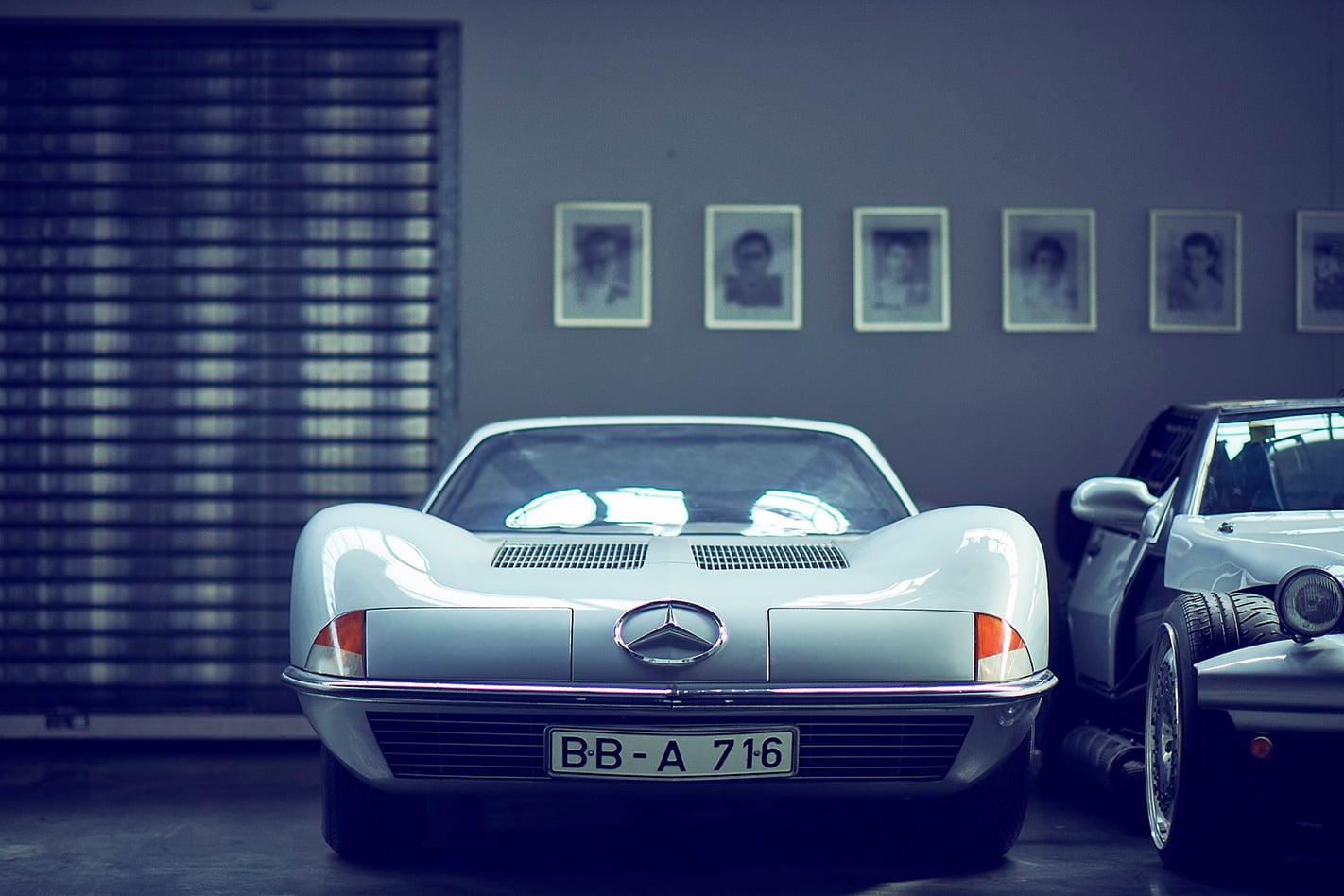
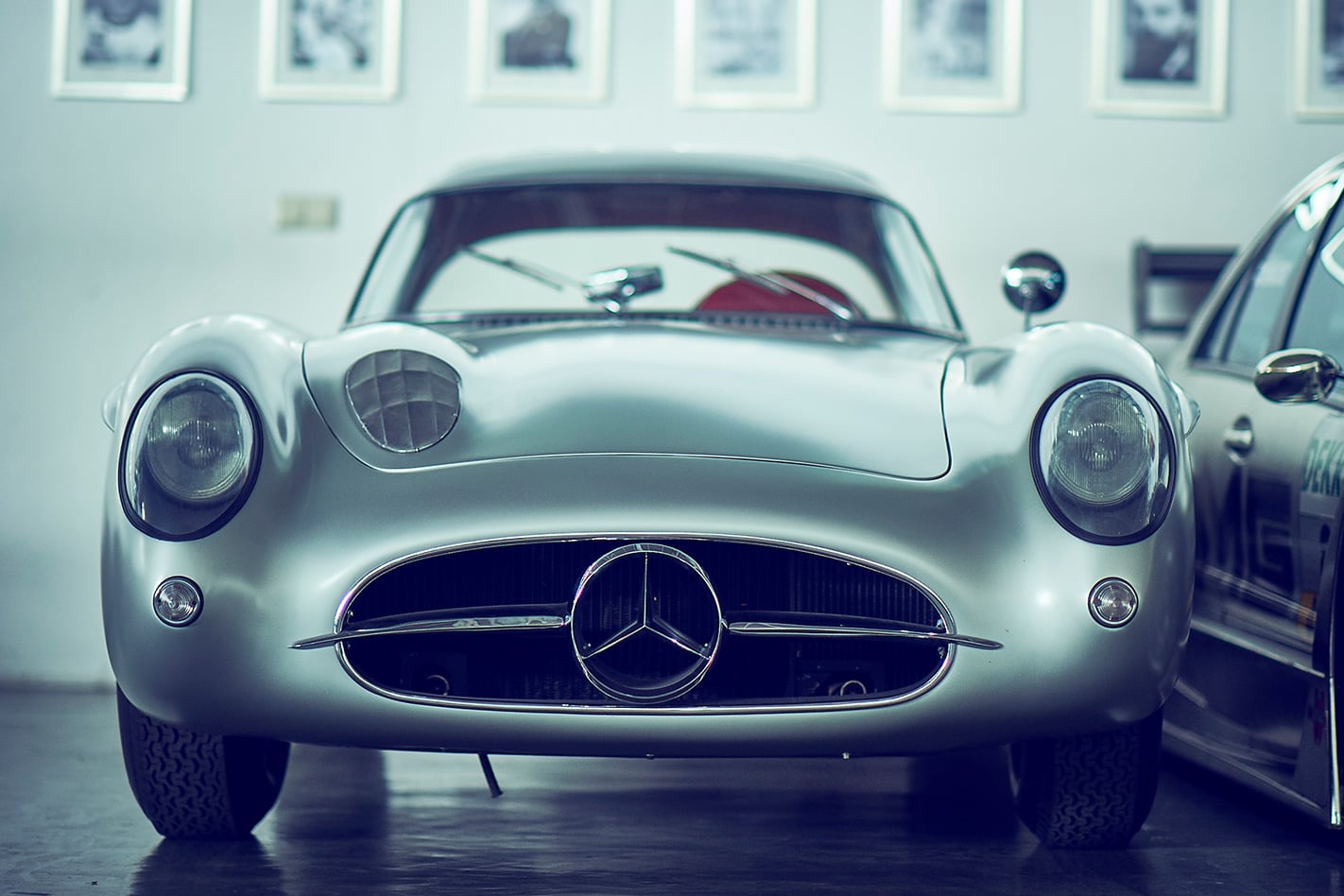
Everywhere you cast your eye, there’s something incredible. The world’s most expensive car, $135 million worth of 300 SLR Uhlenhaut coupe, sits without ceremony next to a CLK DTM car. Only two of these beautiful 3.0-litre straight-eight unicorns were ever built, the Le Mans disaster of 1955 curtailing engineer Rudi Uhlenhaut’s plans to campaign them in competition. The other sits a few kilometres across town in the gleaming Mercedes-Benz museum at Untertürkheim. This one was Uhlenhaut’s ‘company car’ for a while, the 220kW coupe able to hit 280km/h on autobahns of the day, when most contemporary cars would struggle to reach half of that figure. It must have seemed like something from another planet.
“You see that S-Class? Arnold Schwarzenegger,” grins Lützenkirchen pointing at a silver W140 with some gaudy gold detailing. He’s a goldmine of information, some of which is spectacularly nerdy. He’s an expert on how paints break down and tells stories of how the drying of oil paints was once the major bottleneck in vehicle production and how nitrocellulose paint spraying solved all that, itself a by-product of World War I bomb technology.
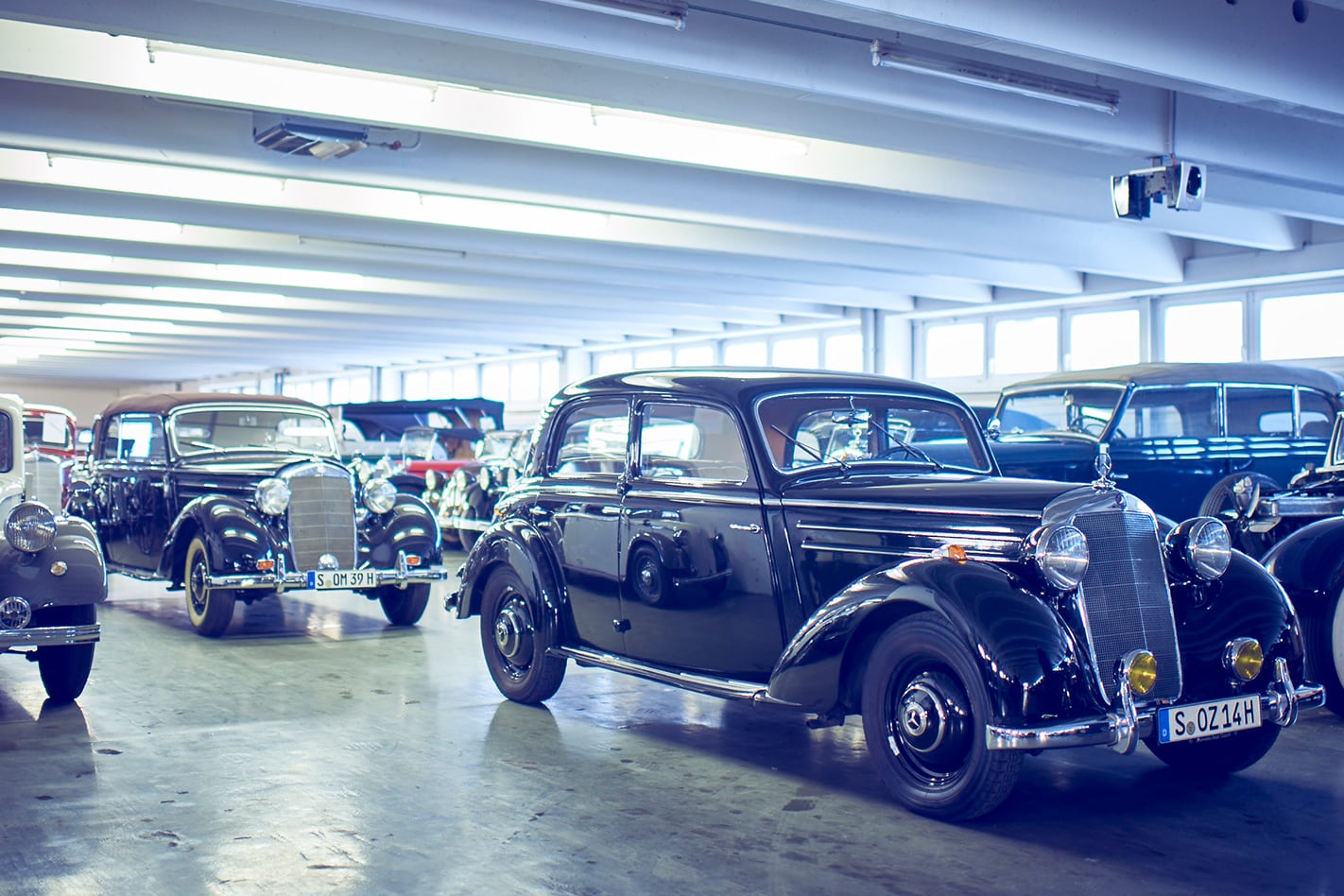
“This is a 1935 Bosch Diesel Einspritzpumpe,” he announces. “This is the first diesel.” Then a moment of contemporary introspection. “Bit difficult at the moment,” he shrugs. He flicks the lights on in the next hall, the sweet tang of seasoned engine oil hanging in the air. “Benz on one side, Daimler on the other until 1926. Best thing Deutsche Bank ever did,” he proclaims on the merger.
All of the halls are heated to 20 degrees Celsius with 50 percent humidity. Moths can be an issue and many of the cars have moth guards on the dash. “We used to keep them under covers, but it was no use,” admits Lützenkirchen. “Then we tried cooking the cars at 50 degrees to kill the eggs. That works but…” he trails off gazing across the huge expanse of cars. It’s a leviathan task. Fuel, coolant and hydraulic fluids are drained out of the cars as these agents are too aggressive for long-term storage. Unless a car really needs to turn its engine over, it doesn’t.
“The most difficult thing to maintain are the electronics,” says Lützenkirchen. “We thought it would be the plastics or rubber parts but we can easily get those fabricated. Same goes for wheels and tyres. The electrics are hard though. Capacitors dry out. We have to try to manufacture everything. Imagine trying to get spare parts for a 1980s stereo,” he says. “Some of the competition cars we need three laptops just to start them, then we need the software and the batteries. A laptop from 1998 isn’t easy to source. Fifteen years after the last car left the belt, the factory stops supplying spares. Then it’s up to us. Very expensive.” A separate building holds every tool required to maintain every one of the 1176 cars.
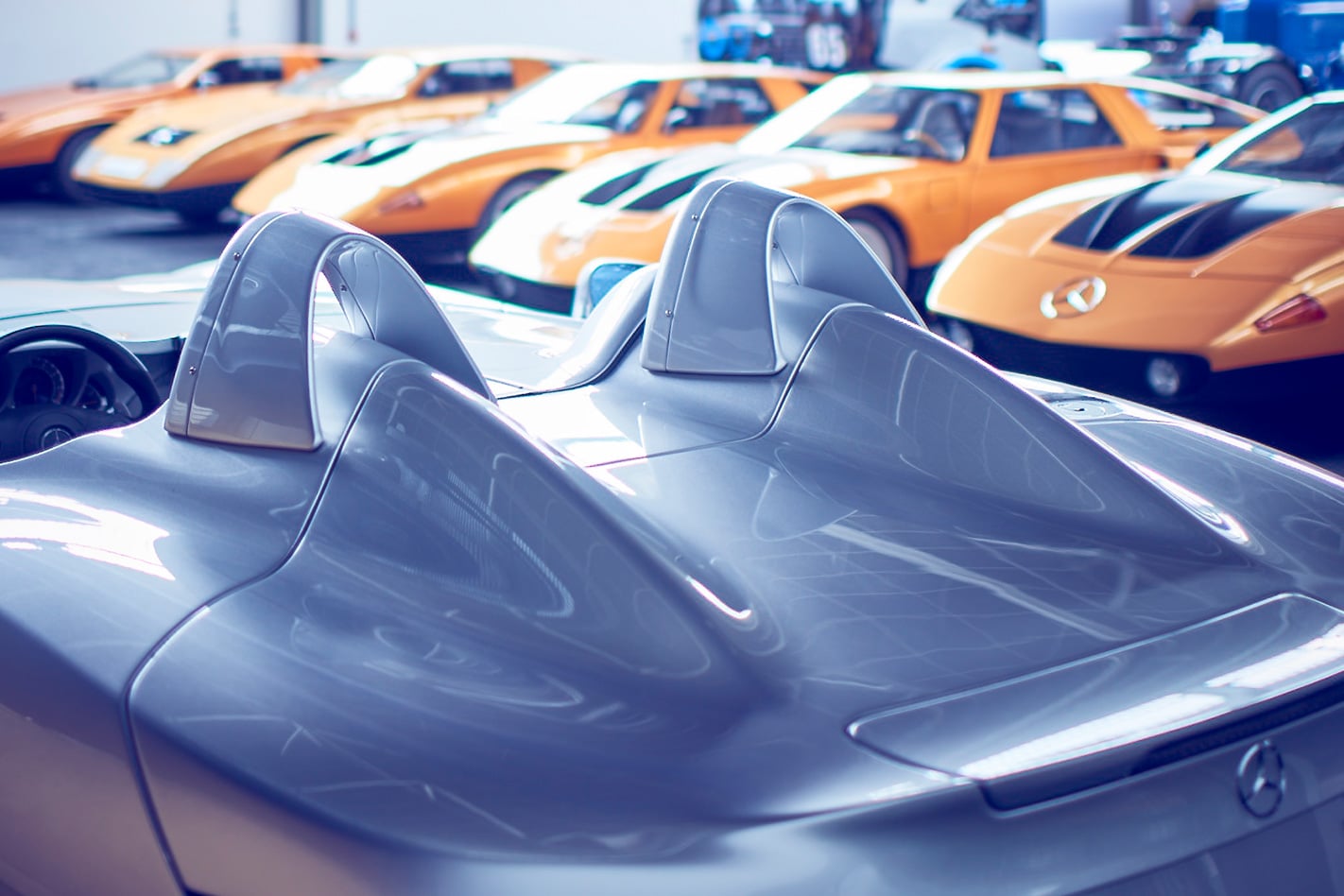
It’s hard not to be drawn to the 14 examples of C 111 (of a total of 16 produced) that dot the halls. None are identical, this mid-engined experimental vehicle going through numerous guises, with V8 petrol engines, five-cylinder diesels and two-, three- and four-rotor Wankels. It’s just part of the design legacy of Bruno Sacco, which encompasses everything with a three-pointed star between 1974 and 1999. His favourite design was the W210 190, and the world’s most valuable 190 is undoubtedly Ayrton Senna’s gold 190E 2.3-16 that he campaigned at the Nurburgring in 1984.
An F1 rookie with the unfancied Toleman team at the time, Senna took the opportunity seriously, demolishing the likes Jack Brabham, James Hunt, Alain Prost, John Surtees, Keke Rosberg, Niki Lauda and Carlos Reutemann in a spec race against the cream of Formula 1. His performance was so impressive that Surtees penned a letter to Enzo Ferrari, saying that he should hire the driver. He never did, as Senna went to Lotus and started claiming victories before moving to McLaren and dominating the sport. His 190E, still emblazoned with the bold SENNA decals on the side and sun strip, sits awaiting final detailing before being consigned to do some PR duty.
Lützenkirchen is keenly aware that the collection falls under marketing’s aegis and has to show some measure of return. “We spend the money that the guys on the belt make,” he admits. “We have to sell cars. That’s why we’re connected to marketing.” Nevertheless, he concedes that it can be hard to make that connection when some of the collection’s contents are so esoteric. He pulls the sheet off a Daimler Benz Flugmotor 603E – the engine that powers a World War II Messerschmitt ME109 fighter – that he bought from a guy at a motor jumble. “We stayed up late, got very drunk, and in the morning I offered him half a million euros for it. We are working to get it running but all the people who know these engines are dead. We only have one try at it.” He replaces the sheet reverently, adding: “We have time.”
Time is the one criterion that seeps into every consideration here. None more so than when sitting among the beautiful racing cars staring up at those ghosts in frames behind glass. Lützenkirchen sits next to me, following my gaze. “Those 227 guys on the wall, they had booked no dinner,” he says, alluding to the grim attrition rate of racing drivers in the early part of the last century. “They had a wooden steering wheel and a leather cap. No belt, no nothing.”
Time is a luxury these men rarely had, and it takes a little time to come to the conclusion that as incredible as the cars are, they’re just more durable icons of the dreams of incredible people; many of whom are long gone. The irony of the Holy Halls is that this astonishing commitment to preservation only serves to remind us even more poignantly of just what we’ve lost. Perhaps this weighs heavily on Holger Lützenkirchen. He looks at his watch, the face catching the light from the dusty roof-level windows. He smiles and looks over to us. “It’s okay. We have time.”
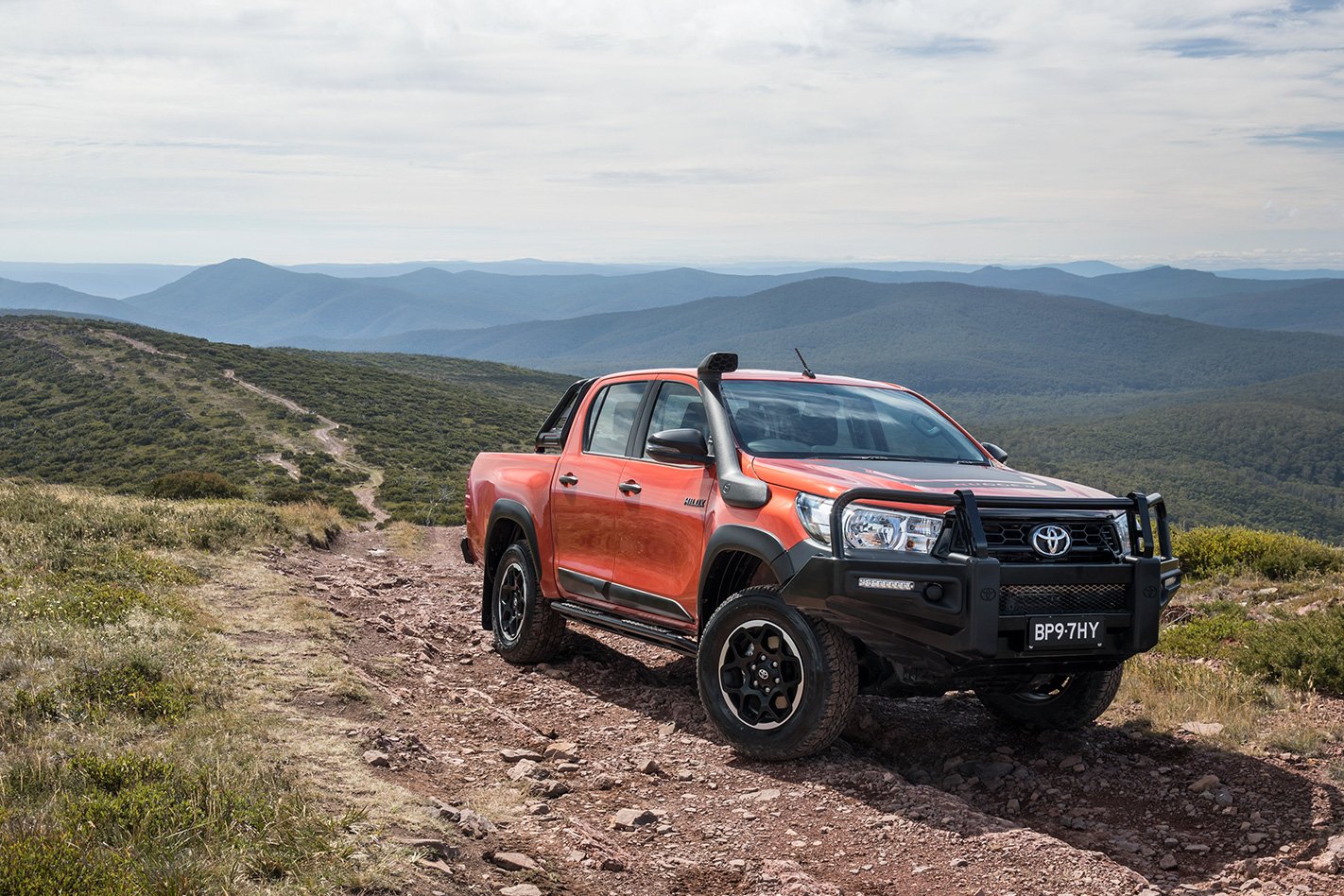
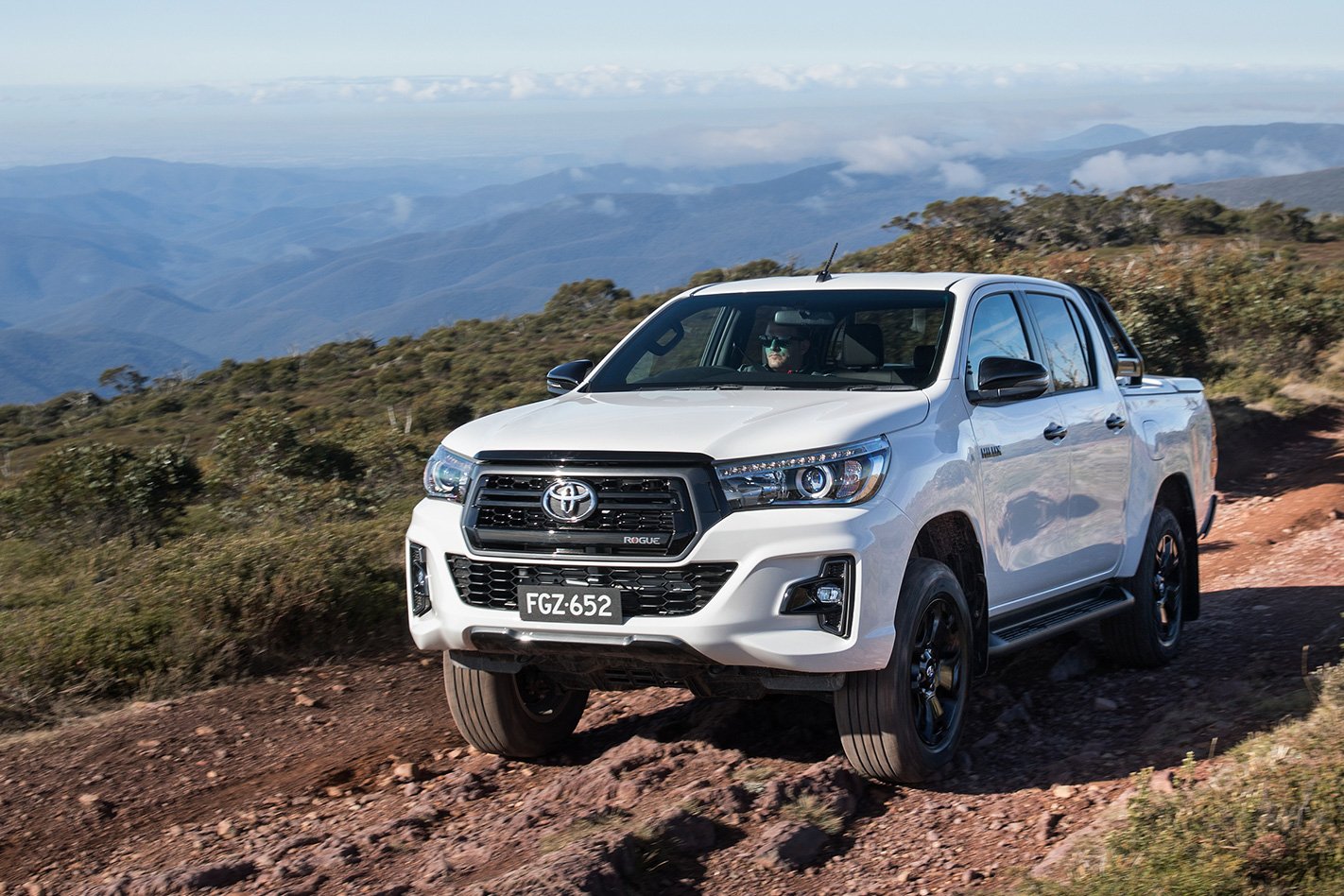
The introduction of an electrified Toyota Hilux is inevitable.
Toyota has already confirmed it will electrify all of its models by 2025, so we know it’s coming. However, the brand is now moving all of its pick-up trucks onto a global platform, bringing a swathe of new technologies – including electrification to the Hilux and US models.
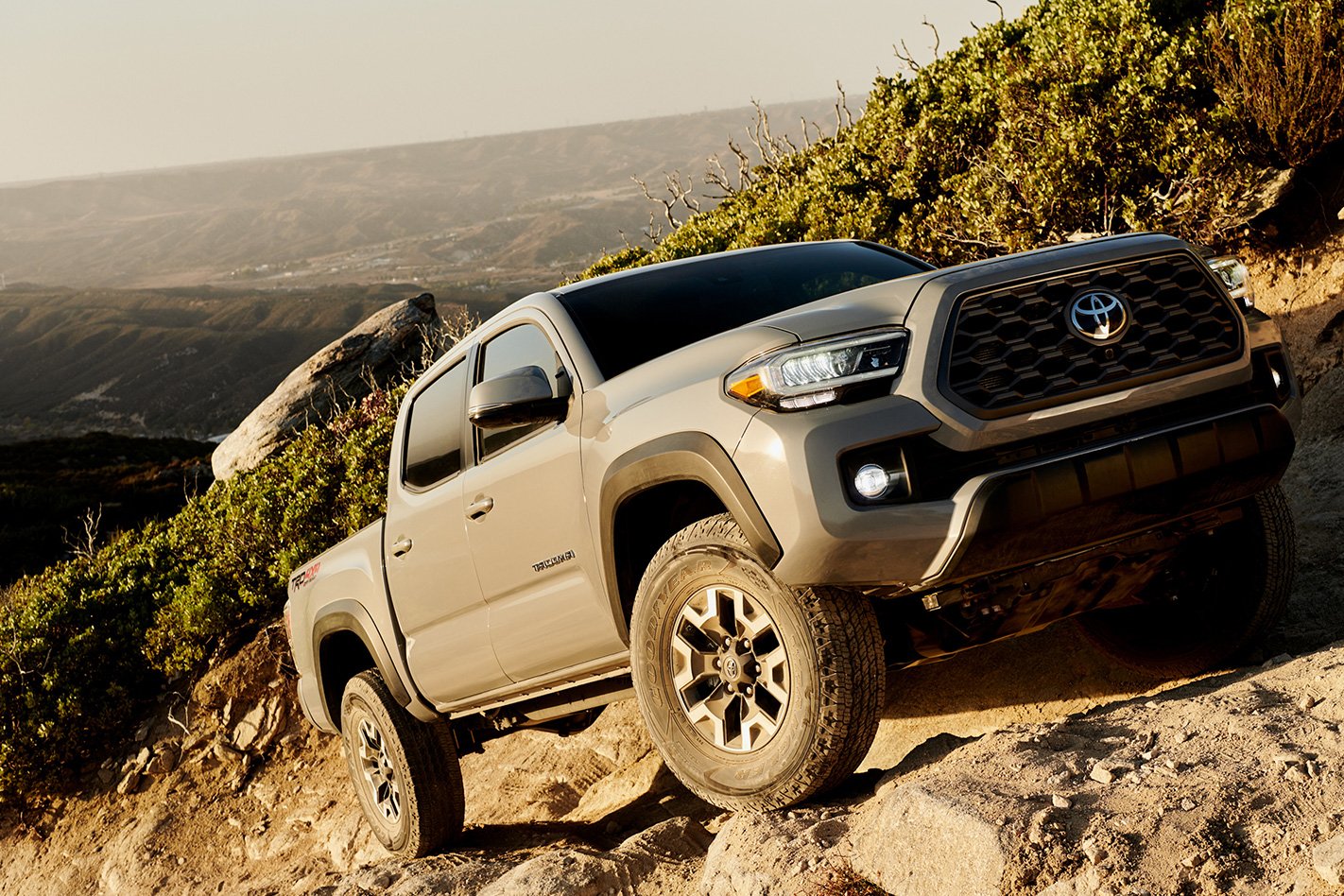
Reported overnight by Automotive News, sources at the Japanese car maker said that Toyota’s Tacoma and Tundra, its highest and lowest-selling truck models in the US respectively, will move onto a new platform architecture internally referred to as ‘F1’.
It is no surprise given Toyota’s passenger vehicles are migrating onto the Toyota New Global Architecture (TNGA) platform, which allows for easier sharing of components such as hybrid electrification and standardised global production.
Sources at Toyota further added that the Hilux, Australia’s best-selling dual-cab ute, will be built on the F1 platform in the future, opening the potential for parts sharing and global access to the utility vehicle. This includes easier adoption of coil sprung rear suspension and the Tacoma’s 3.5-litre petrol V6. It will also include electrification, the sources said.
A spokesperson for Toyota Australia told Wheels that it could not confirm the reports, and could not confirm whether the next-generation Hilux will be built on the F1 platform architecture.
However, Toyota’s global electrification target to meet increasingly stringent emissions standards points to a unified electric platform for all trucks in the near future.
Electrification of the Hilux, which will happen in the next six years to meet the brand’s 2025 goal, is expected to be in the form of a mild hybrid ute and not the fully electric vehicle that, using current technology, is unfeasible for the workhorse’s intended use.
It is a crucial difference between the ‘electric Hilux’ the Government says the ALP’s ’50 percent electric vehicle target’ requires, and what electrification of future car models will really look like.
In mild hybrid form, the Hilux will be able to store excess energy produced during coasting and braking in a small lithium-ion battery, which can be used to power a small electric motor to aid stop-start acceleration – when emissions and fuel consumption can be highest. The net result is a lower claimed measurement of grams CO2 (carbon dioxide) per kilometre.
Australia does not have a vehicle emissions standard like most developed countries, but when it does, it will likely follow the US rule. In North America, manufacturers must have an average maximum emissions output of 105g CO2/km across their entire model line-up.
Toyota’s 2.8-litre turbo-diesel Hilux currently produces a claimed combined 210g CO2/km, while its hatchback Corolla petrol hybrid produces a claimed 97g CO2/km. Fully electric vehicles produce 0g CO2/km from the tailpipe but are much more expensive, lack long driving range, require lengthy amounts of time to recharge, and are much heavier than conventionally powered vehicles.
There is also debate over how bad the emissions and toxic by-products from making batteries are.
Speaking to Wheels, a drivetrain supplier outlined some of its future technology that will likely underpin upcoming models, and includes an electric hybrid low-range transmission for four-wheel-drive applications. It is understood that the technology could be adapted by models such as the Hilux and LandCruiser.
The spokesperson for Toyota Australia confirmed to Wheels the plan to electrify every model in Toyota’s line-up was on track, but would not specifically confirm electrification, or what type of electrification, the Hilux will receive.
“We can confirm Toyota is on track with global plans to electrify the entire vehicle line-up by 2025. It is important to note that ‘electrify’ includes hybrid-electric, plug-in-hybrid electric, battery electric or fuel-cell electric as electrified vehicles,” the spokesperson said.
“We are yet to confirm an electrified Hilux for Australia.”
The local arm for the Japanese company also said it was actively seeking to consult more with Government to ensure a clear understanding of potential policies – such as the ALP’s 2030 electrification plan – and what technology is available.
“Toyota Australia will continue to advocate for close consultation and collaboration between key government and corporate stakeholders to provide more environmentally friendly and fuel-efficient technology in vehicles.
“Around the world, Toyota has a number of low-emissions powertrain options in market, including hybrid and plug-in hybrid and a zero-emission hydrogen Fuel Cell Electric Vehicle (FCEV).“
MORE: Toyota Hilux Range Review MORE: Toyota Hilux Specs, Range & Price
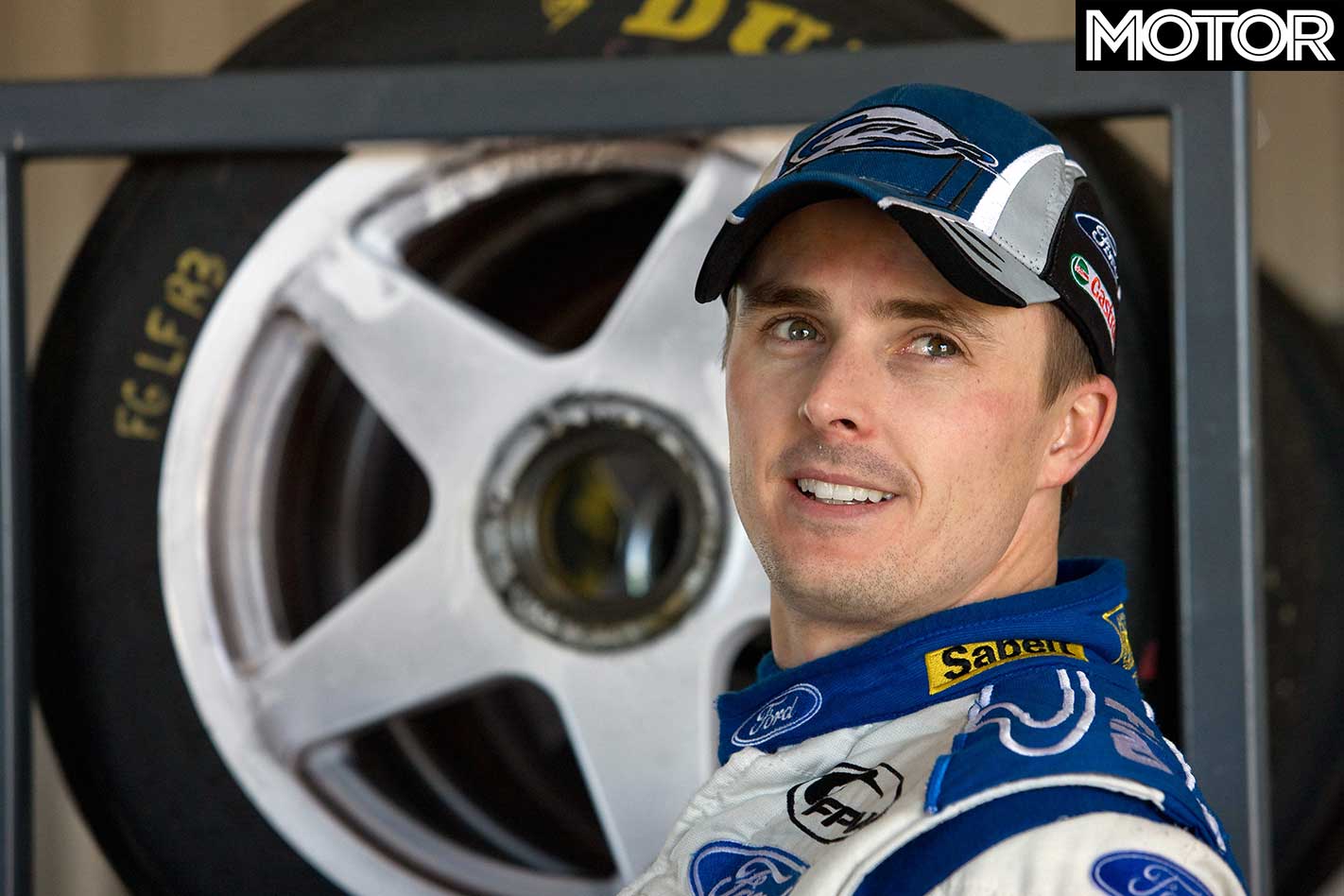
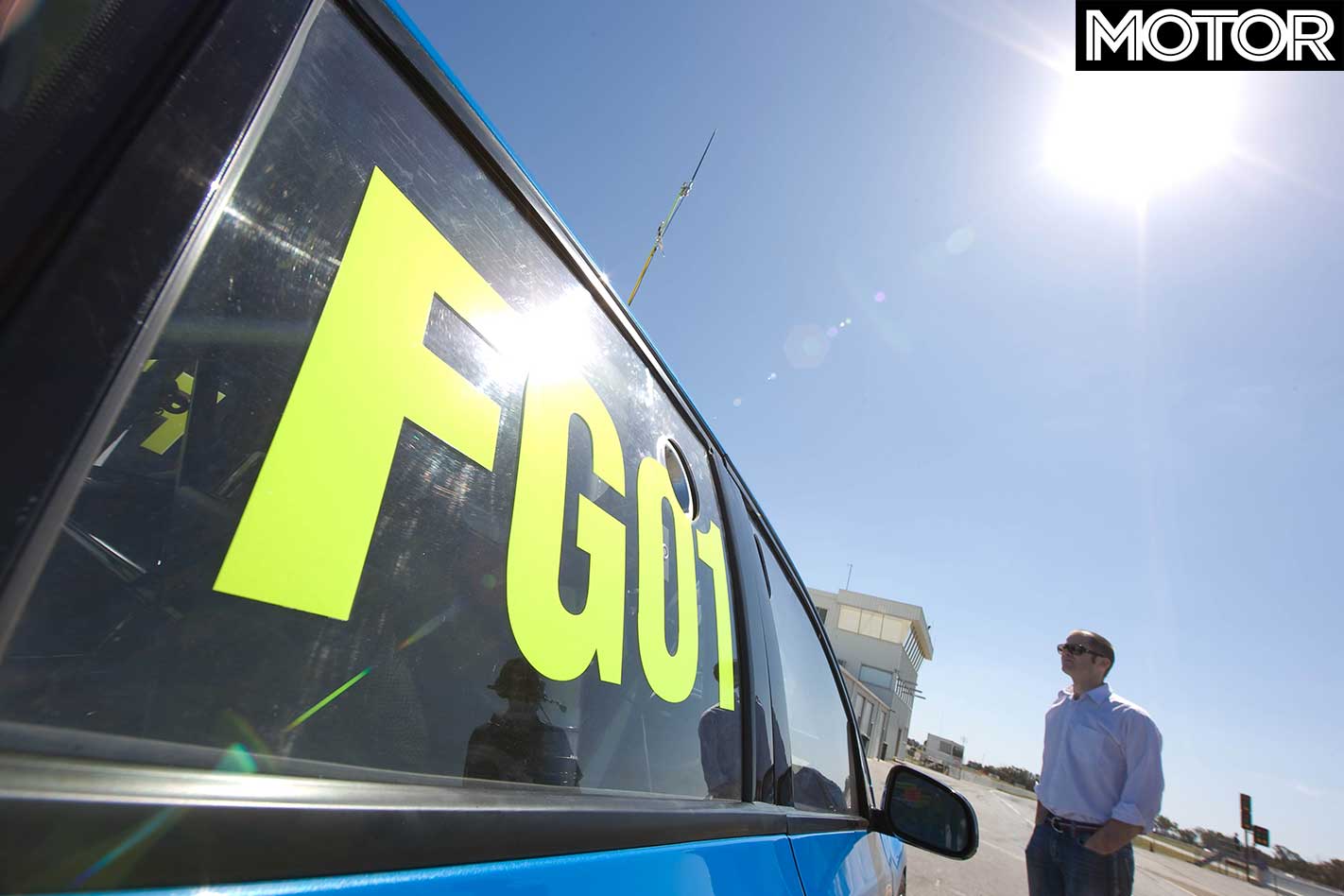
With its headlights blazing and the ignition cut to its engine, Ford’s future V8 Supercar contender, the one and only FG Falcon prototype, coasts into its pitbay with an eerie silence. The Blue Oval’s blue-eyed boy, Mark ‘Frosty’ Winterbottom, gives the thumbs-up to his passenger as he stumbles through the spider’s web of roll-cage, almost tripping over in excitement.
This feature was originally published in MOTOR’s December 2008 issue
Frosty sits in his office chair calmly waiting for another guest to jump in ready for the ride of their life, smiling through the visor in his helmet as he chortles at the ungraceful exit of his last victim.
Without any fuss or fervour, Frosty unclips his belts, contorts himself out of the car and waltzes across to the other side expecting his team-mate, multiple Bathurst winner Steven Richards, (the only other ‘qualified’ driver there) to jump behind the wheel. But Richo’s out the back of the shed casually having a chat to Ford Racing boss, Ray Price.
He shrugs his shoulders again, just as I tap him on the back to let him know he’s my victim now. And, just as soon as he works it out, his eyes bulge with trepidation and the spring in his step halts abruptly.
“Oh, this is going to interesting,” he winces before seeing a positive side to it, adding, “Ah, ha. The tables have finally turned. I’ve never had the pleasure of reporting on a journo before … and I’ve just remembered the story you wrote about me a couple of years ago.”
Winterbottom, and a group from his Ford Performance Racing team, are at Winton in September giving the FG Falcon its first real track test as part of a ride day for the army of Ford personnel that helped build it.
Like its road-going cousin, the FG V8 Supercar is a critical building block in the Blue Oval’s battle to keep the Falcon – the longest-running active nameplate in Australian automotive history – alive. The iconic Aussie sedan is at a career-defining crossroads, under pressure from escalating fuel prices and a massive shift in tha market as the fear of a recession forces punters to bail out of the big sedan segment.
On the racetracks though, the Falcon is still standing tall (heck, it’s won Bathurst for the last three years in a row) and Winterbottom is one of the leading contenders for this year’s V8 title.
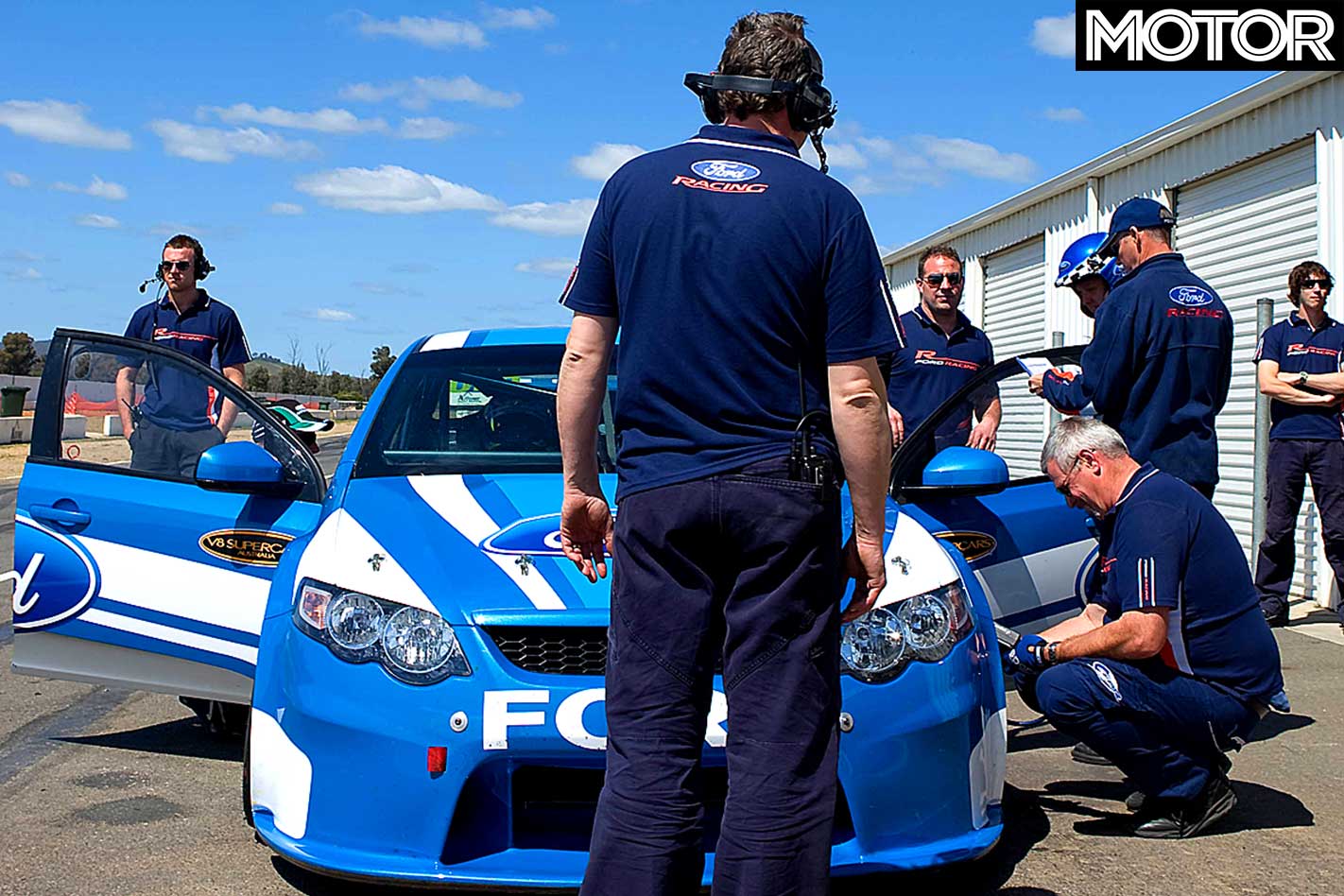
Next year, when the FG is officially introduced to the championship, it’s a new ball game for the Ford teams as the car has undergone a radical design evolution to maintain equality with the VE Commodore under a strict set of regulations, codenamed Project Blueprint, while also constructed to reduce costs and ease the labour-intensive time it takes to repair.
So far, only three active V8 Supercar drivers have had the privilege of driving the FG Falcon: Winterbottom, Richards (who also conducted the rigorous aero testing at Woomera’s rocket base earlier this year) and James Courtney, who officially christened the car on its public debut at Sandown in June.
So before the likes of Lowndes, Whincup, Davison and Johnson get their turn behind the wheel, we jumped the queue with a special guest drive at the Winton ride day – with Winterbottom in the passenger seat for a bit of tuition.
Climbing into the cockpit is not a simple task. Threading yourself through the gap in the roll-cage is an unflattering experience as you contort your body head-first into a hole that’s probably no bigger than a hula hoop (try doing it in your backyard to see how hard it is) and then dropping your bum into a bucket perched flat on the floor and almost in the middle of the car. In doing all of that, you’ve got to try and manoeuvre around the high-tech steering wheel that feels right in the way.
God knows how those blokes make it look so fluid – and fast – during driver changes at Bathurst. Frosty explains: “You have to sacrifice your body a bit as you bang into all the bars on the way in and out. In the lead-up to the endurance races, we practice driver changes all the time and at the end of the day we’ve got bruises everywhere. It’s not easy, but it’s important for the long-distance races to get it right, or it could stuff up the entire race.”
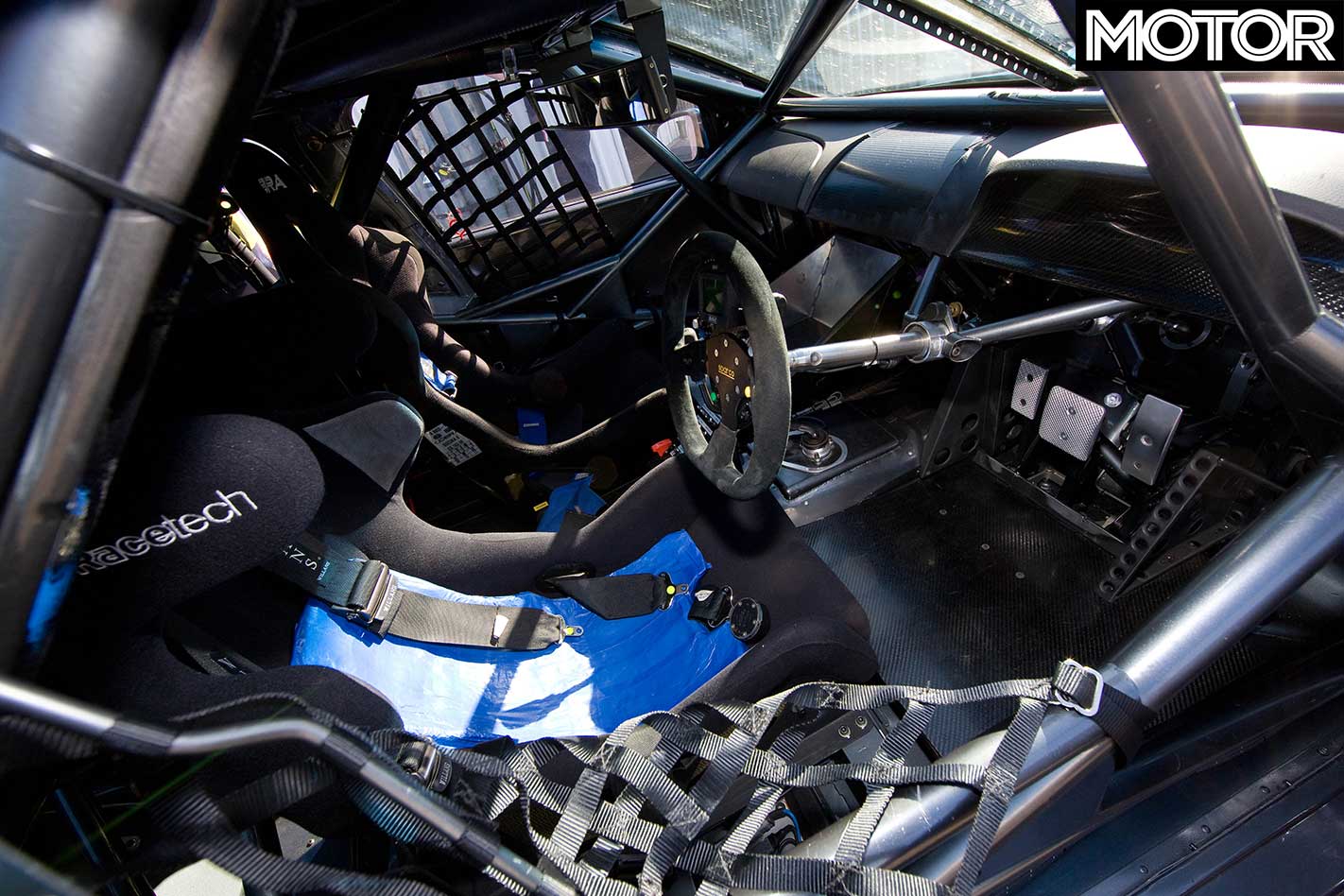
Anyway, after I’ve bent myself into a banana, biffed my helmet, got tangled in the steering wheel and finally fallen into the seat, I clip the six-point harness, tighten the belts and get familiar with the layout of the cockpit. And it is nothing like a family-friendly Falcon at all.
You can hardly see over the bonnet as the seat is so low down, well behind the B-pillar and almost over the transmission tunnel for optimum centre of gravity, meaning the steering wheel juts out of the firewall on a column as long as a fishing rod. And the dash is just a sliver of carbonfibre with nothing on it, in it or behind it.
Instead, all the controls are integrated into the steering wheel, including a mini-dash that displays the gear you’re in, lap times, sector times and shift lights and an array of buttons for seemingly endless functions including the radio, drink bottle, the pitlane speed limiter and even settings for the brake-cooling water spray system.
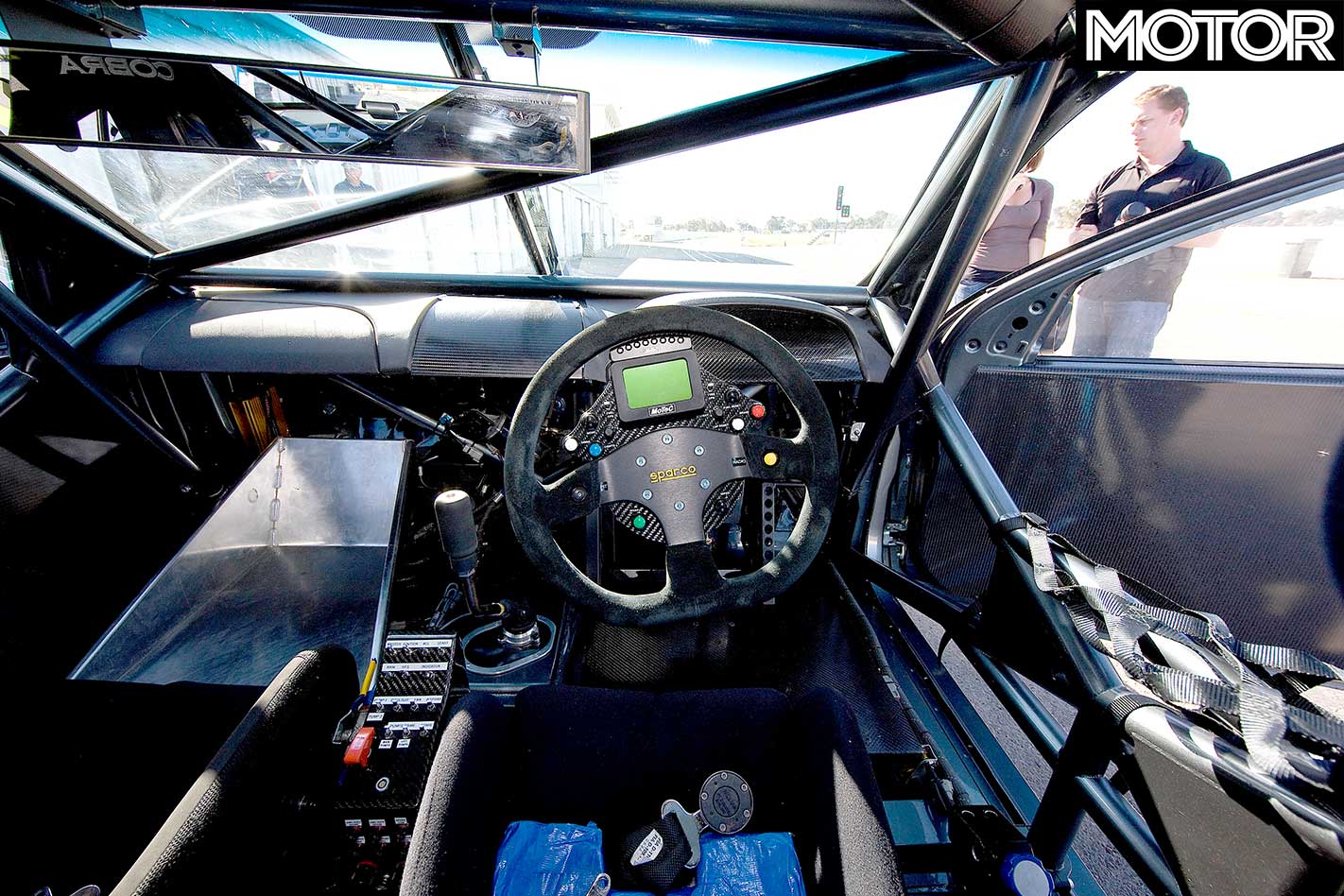
Positioned just a flick of the wrist away is the gear-lever for the six-speed sequential-shift Holinger dogbox, and nestled between the seats is a compact carbonfibre box housing the main switchgear for stuff like the ignition, fuel pumps, indicators, cool-suit pump and the rain light.
Otherwise, the cockpit is barren and surprisingly claustrophobic with rear vision severely limited by the safety nets on the doors, roll-cage and rear wing, despite the rear view mirror being as wide as J-Lo’s rump.
With Frosty strapped into his jump seat and performing a little prayer (a joke or a genuine plea for a safe return to those up above? I’m not sure…), I flick the ignition switch, which primes the fuel pumps with the whirr of a turbine engine before the 5.0-litre Ford Racing V8 fires into life with a bellow of revs as it cops a gutful of high-octane unleaded.
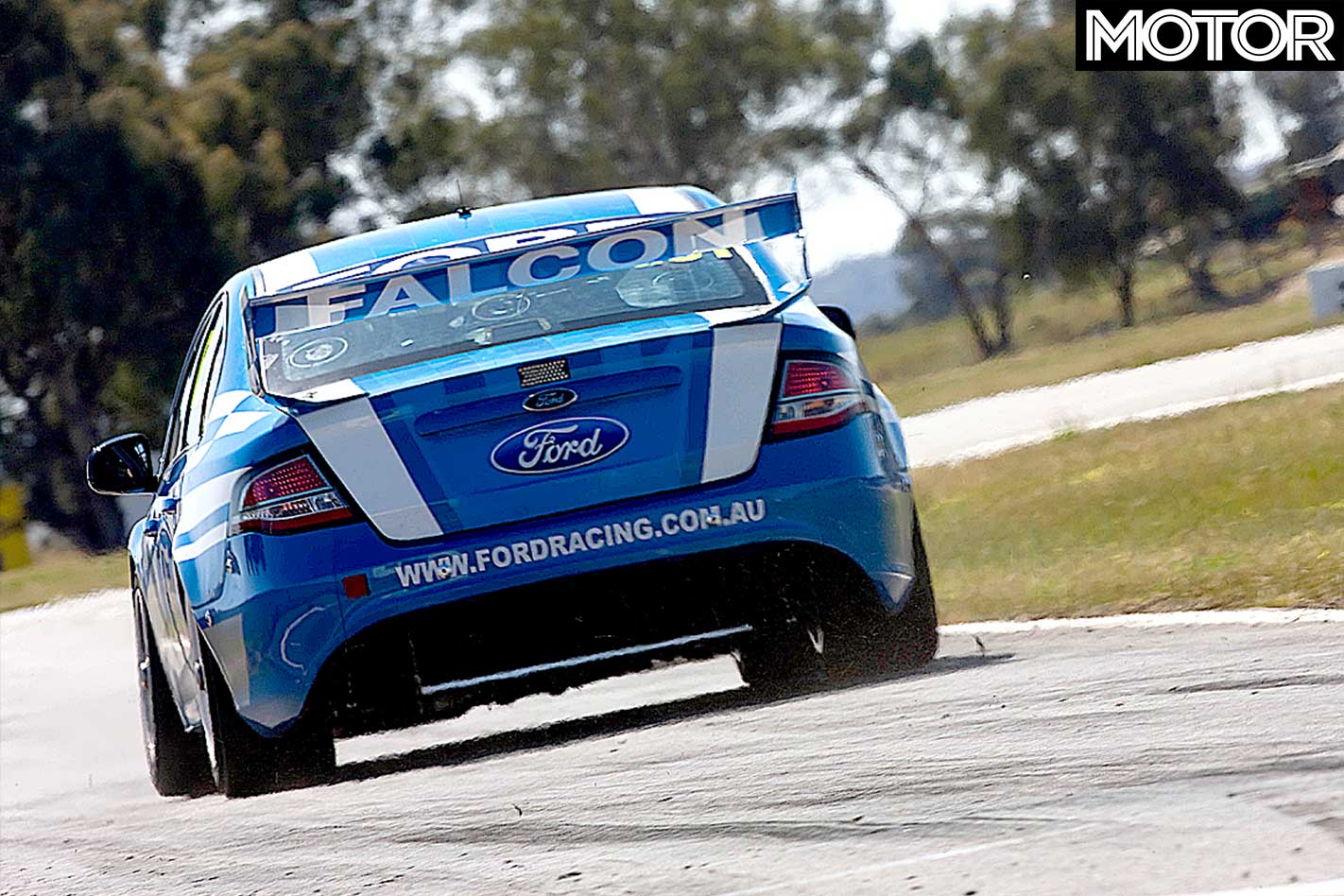
With the floor-mounted pedals stacked closely together in a beautifully manufactured pedal box, it takes a second to adjust to the heavy load on the multi-plate clutch before pulling the lever back to engage first gear, which crunches the cogs together with a metallic snick that seems to lunge the car forward with a sense of bridled urgency.
With a blip on the throttle to bring the revs up, getting moving is surprisingly easy as I ride the clutch slightly to avoid any embarrassment of stalling in pitlane. And then, as we pull out onto the track, I get the chance to unleash the full fury of the 465kW bent-eight, revving it out until the series of shift lights illuminate on the dash like a collection of dazzling jewels. Then I grab second and, almost immediately, snatch third as the full-throttle acceleration pushes my head back into the seat.
I’ve got no time to check out Frosty as we trail brake into the first left-hander through the esses and then balance the speed to the apex through to the off-camber exit of the right-hander onto the old main straight.
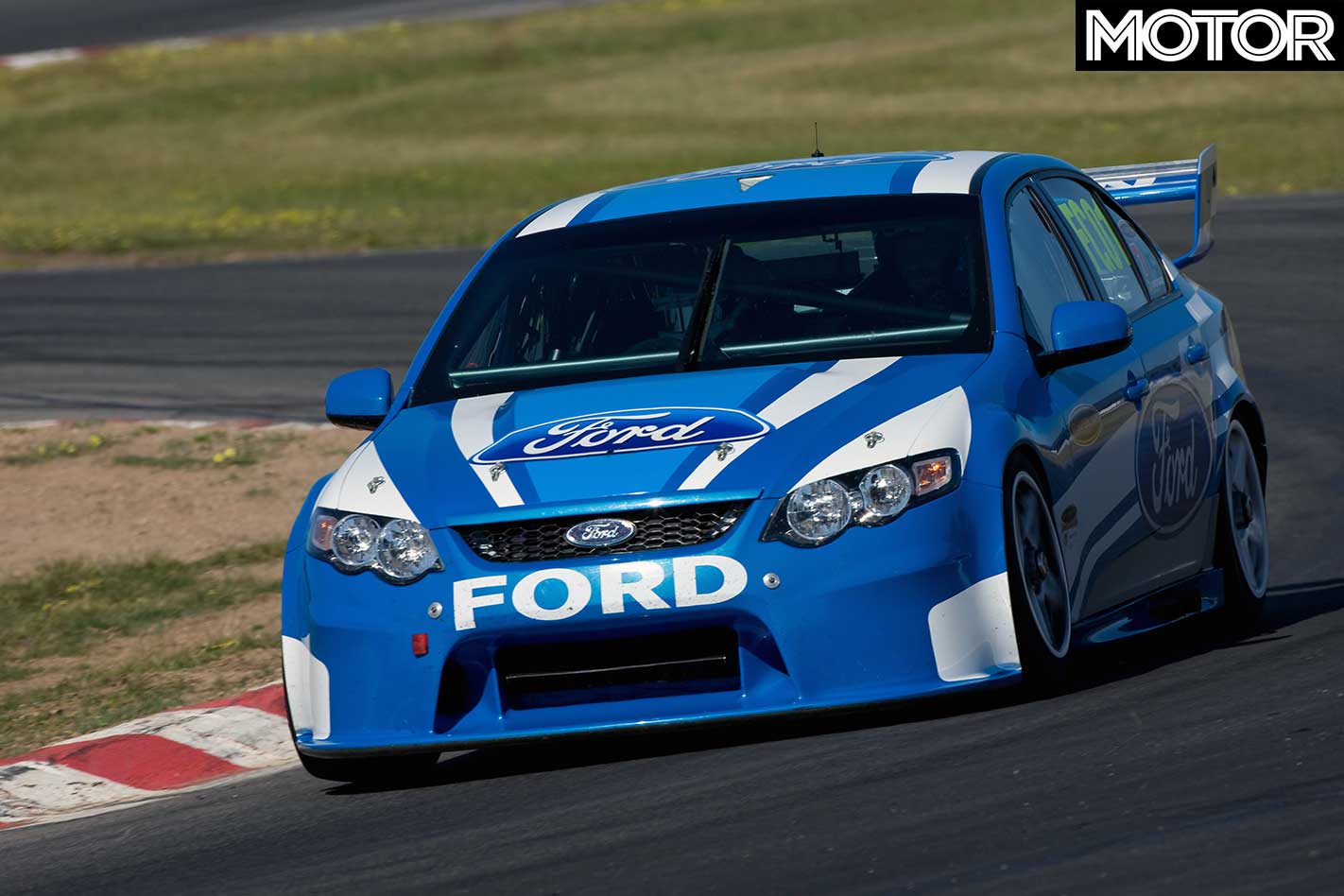
The FG hooks up superbly, though, and bolts up through the gears before we hit the picks again for turn three, resulting in a slight lock-up of the inside front wheel as the grabby pads clamp down on the massive front discs, which in turn pushes the car slightly wide on the exit with a degree of understeer that is surprising (considering we’re hardly at race pace) but easily manageable.
I don’t even have to look at my passenger to sense a degree of nervousness in Frosty’s stiffness. But by the time we get out of the sweeper and into the hairpins on the back of the track without any more slip-ups, he’s starting to free up and begins to offer advice through hand gestures.
Without direct radio communication it’s like trying to lip-read a Labrador, but eventually I get the picture as he instructs me which gear we should be in and the ‘proper’ line through Penrite Corner (the first right-hand hairpin in the sequence).

As I get into the groove on my third lap, pushing my own limits and treading a fine line between being brave and actually looking like I know what I’m doing, I catch a big oversteer slide out of the last corner onto the pit straight. It happens so quickly that I don’t even realise I’ve saved myself from a sheepish walk back to the garage trying to explain why next year’s Falcon V8 Supercar is in the wall until Frosty finally gives me a thumbs-up.
Suddenly, it all starts to click and I push everything a little bit harder, braking deeper into the turns, getting on the throttle harder and earlier and carrying more speed through the corners.
It is then that I can feel the FG moving around underneath me, chattering across the front wheels as I carry too much speed through the slow stuff and drift ever so slightly on the exits as I get on the gas.
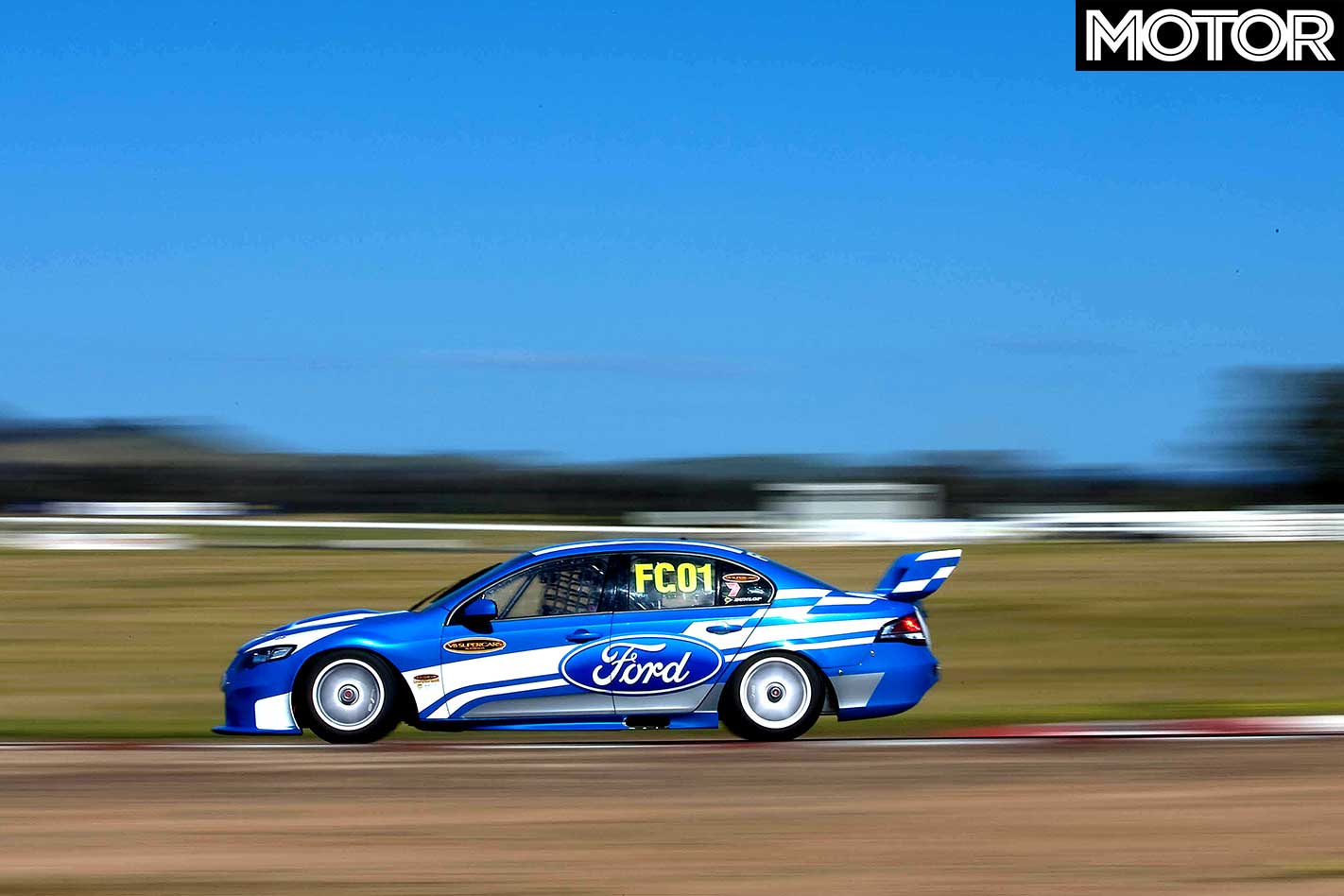
But it all comes down around me like a house of cards: I run wide onto the slippery stuff at the edge of the track at Penrite, try to get it back in the right direction with a stab on the throttle, but fail and suddenly find myself looking at the other side of the circuit. I jump on the brakes, dip the clutch to keep the engine running, and finally have time to glance at Frosty who, not surprisingly, has a cheeky grin on his face.
At the same time I hear over his radio, which is still connected to the engineers in the garage, that I have to bring it back to base. Funny ’bout that? He doesn’t even have to say anything: I’ve already grabbed reverse, done a textbook three-point turn and am cruising back to the pitlane.
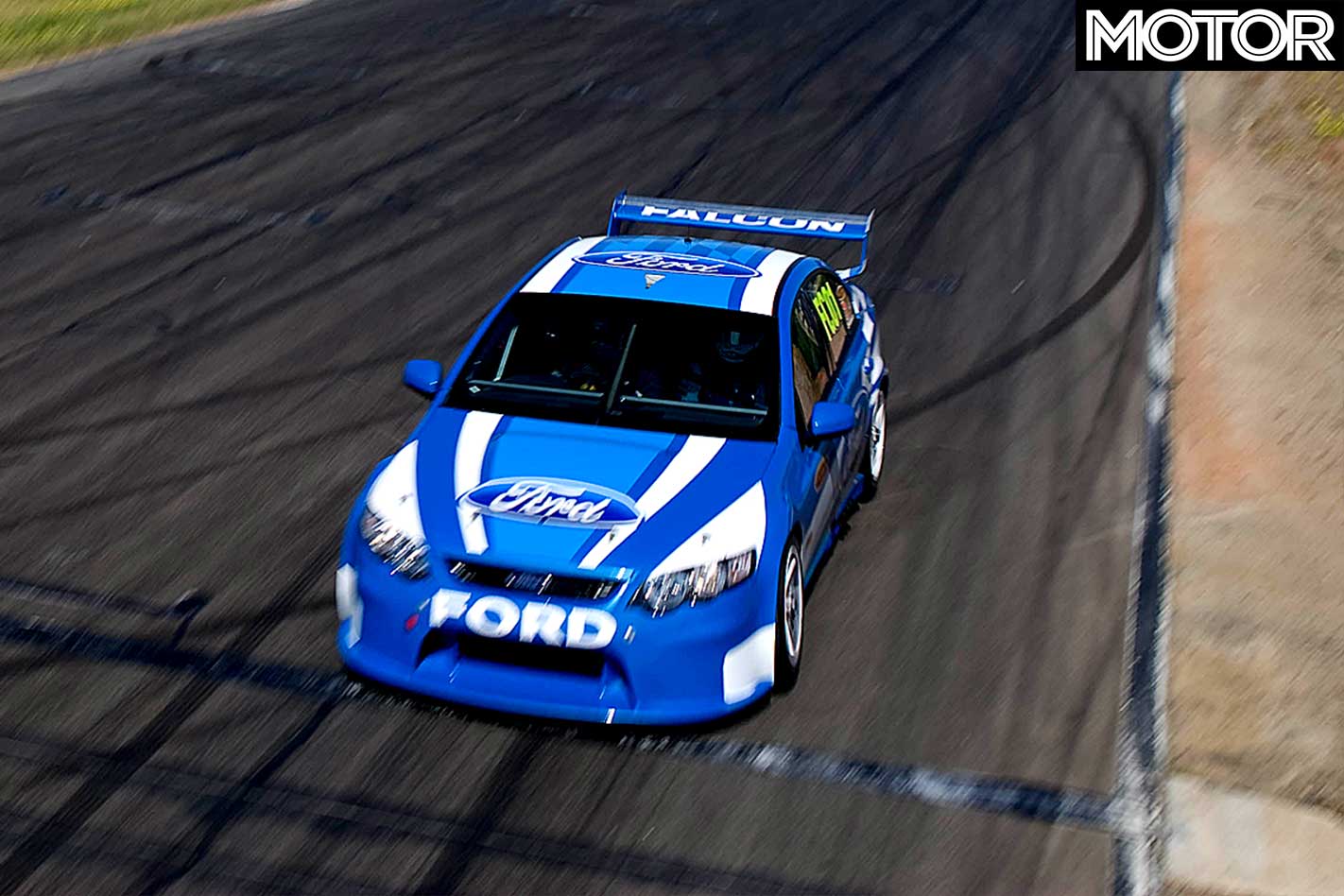
In the end, and after only five laps, I get down to a respectable 1:32.692, about five seconds off the guns’ pace on the day but a massive 10 seconds slower than Frosty’s blinding qualifying lap earlier this year.
I reckon his seat is pretty safe.
And if the new FG V8 Supercars are as quick as they are this year, then the Falcon legend will be too – on the track, at least.
FAST FACTS 2009 Ford FG Falcon V8 Supercar
BODY: 4-door, 1-seat sedan DRIVE: rear-wheel ENGINE: 4998cc 90-degree V8, OHV, 16v COMPRESSION: 10.1:1 POWER: 465kW @ 7000rpm (est) TORQUE: 630Nm @ 5250rpm (est) WEIGHT: 1355kg POWER-TO-WEIGHT: 341kW/tonne TRANSMISSION: 6-speed manual sequential SUSPENSION (f): double A-arms, coil springs, adjustable dampers, anti-roll bar SUSPENSION (r): live axle, Watts linkage, coils springs, adjustable dampers, anti-roll bar WHEELBASE: 2820mm TRACKS (f/r): 1930/1905mm BRAKES: 375mm ventilated/grooved discs, AP Racing six-piston calipers (f); 340mm ventilated/grooved discs, AP Racing four-piston calipers (r) WHEELS: 17 x 11.0-inch alloy TYRES: Dunlop control slicks TOP SPEED: 298km/h PRICE: $500,000
PROS: Head-banging acceleration, massive grip, sequential box CONS: You can’t drive it on the road, rear vision, embarrassing spin RATING: 4.5 out of 5 stars
Winton Raceway Data
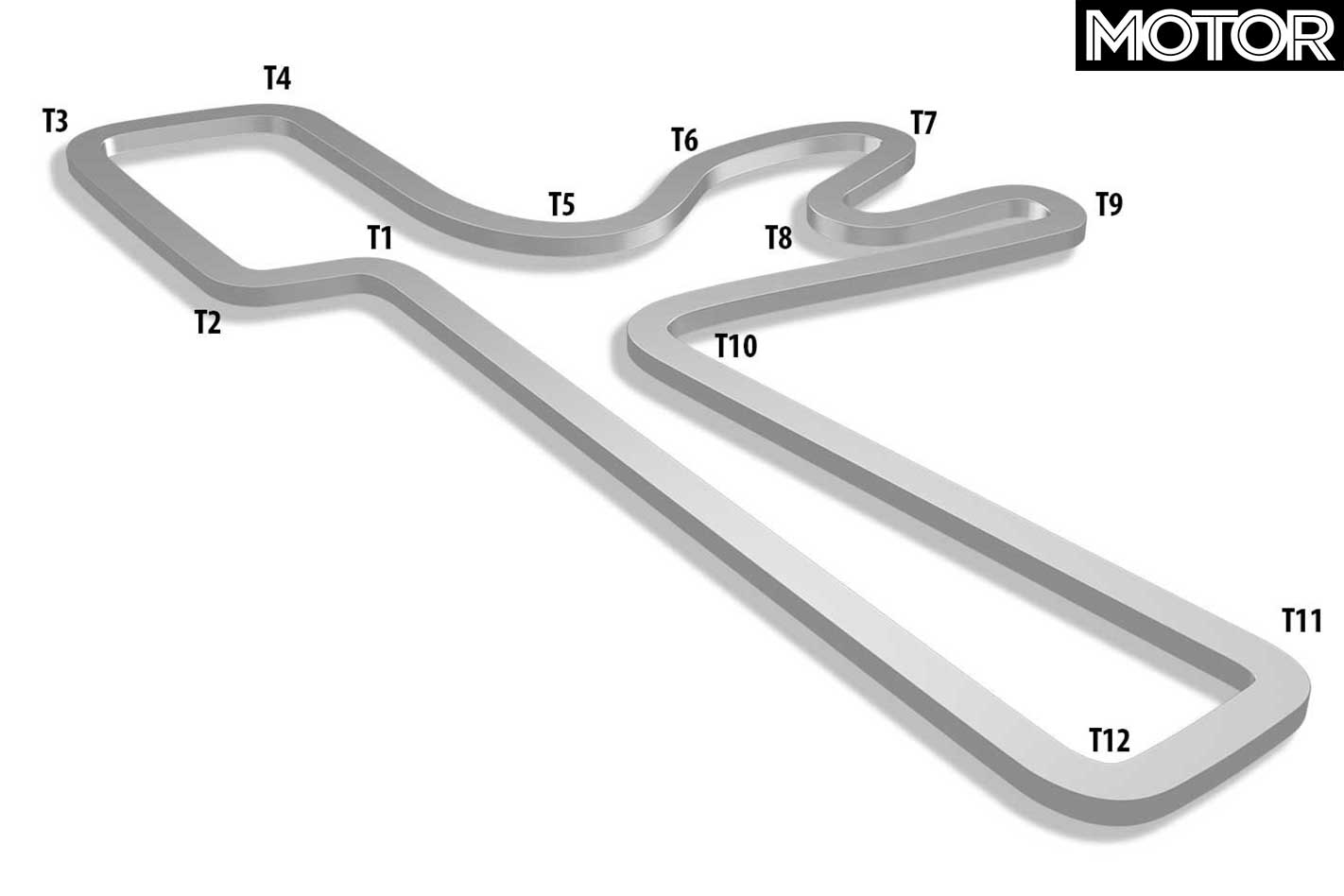
| Turn | Apex Speeds |
| 1 | 100km/h |
| 2 | 109km/h |
| 3 | 91km/h |
| 4 | 98km/h |
| 5 | 135km/h |
| 6 | 131km/h |
| 7 | 52km/h |
| 8 | 84km/h |
| 9 | 66km/h |
| 10 | 73km/h |
| 11 | 81km/h |
| 12 | 76km/h |
| Lap time: 1min 32.69sec | |
BF Falcon vs FG Falcon: What’s the difference?
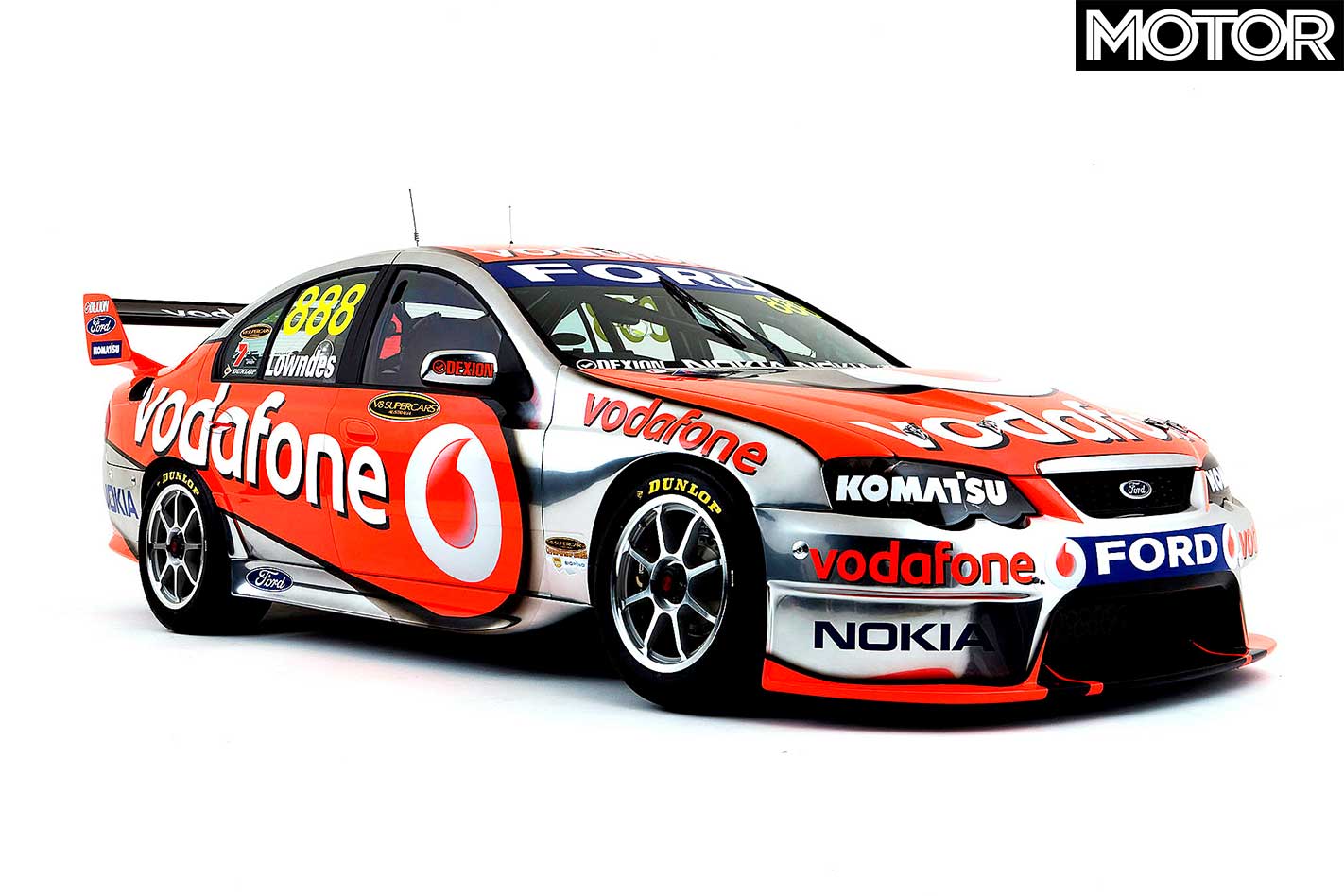
While the road-going FG Falcon range is essentially a major facelift of the BF platform, the V8 Supercar version ain’t that simple.
See, because the V8 Supercar rule makers want everything to be even stevens between the blue and the red cars to ensure neither of them has an advantage on the racetrack. And because the basic Falcon and Commodore floorpans are now miles apart in stuff like wheelbase and track width, Supercar central has had to develop a strict set of guidelines to ensure equality.
That means the FG Falcon V8 Supercar is now built on a specific floorpan that has 63mm taken out of its wheelbase – and is almost identical to that of the VE Commodore V8 Supercar.
The new regulations are also aimed at improving the safety of the driver – with the seat located 200mm inboard of the roll-cage – and the cost and labour time it takes to repair major damage.
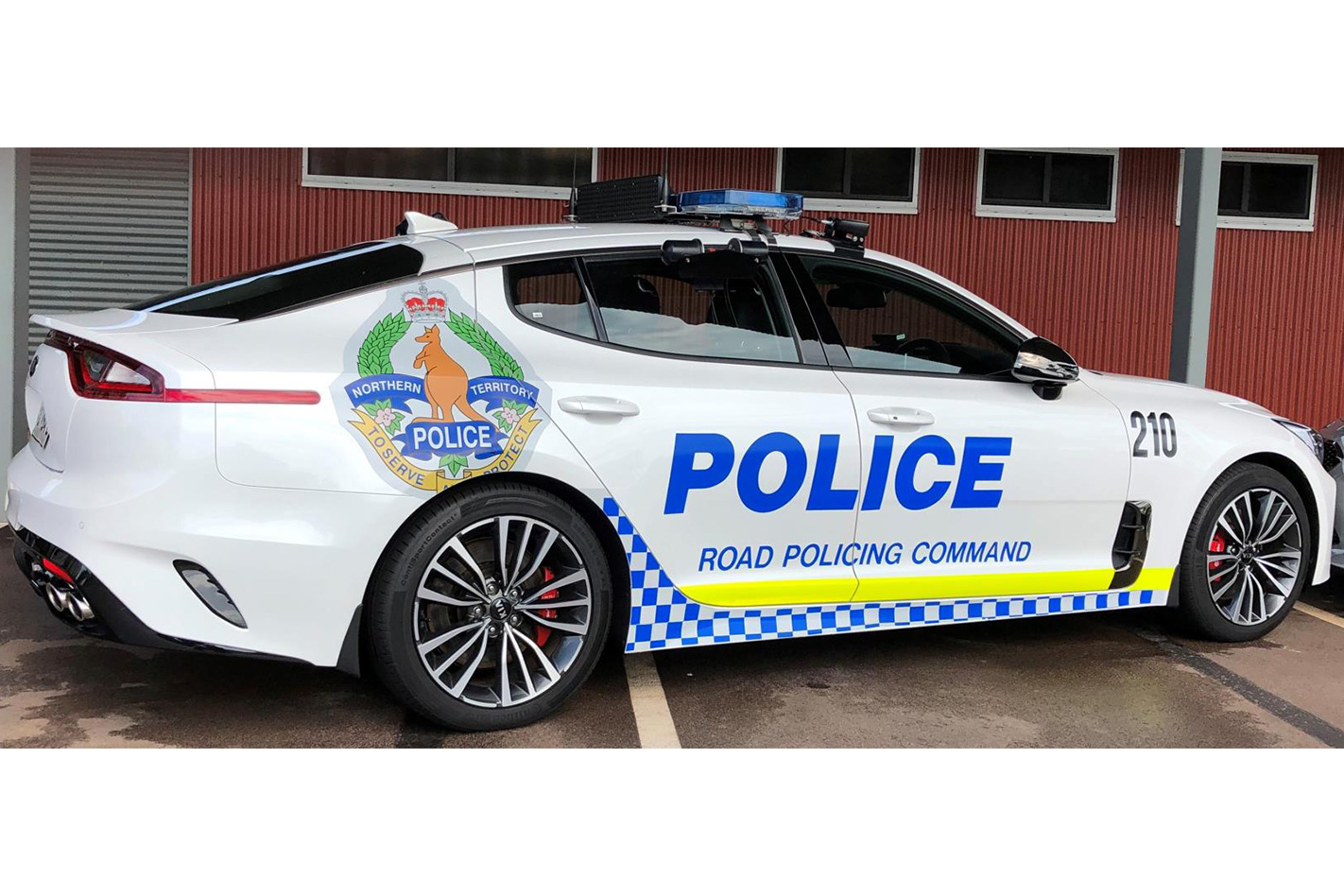
Kia has added to its police customer roster in Australia, with Northern Territory officers rolling out seven new-look Stinger sedans for highway patrol duties in the Top End.
Meanwhile, Chrysler’s 300 SRT will be pressed into service into NSW soon, according to the company.
Commander Matt Hollamby, from NT Police’s Road Policing division, said the 272kW/510Nm Stinger was trialled in the Northern Territory.
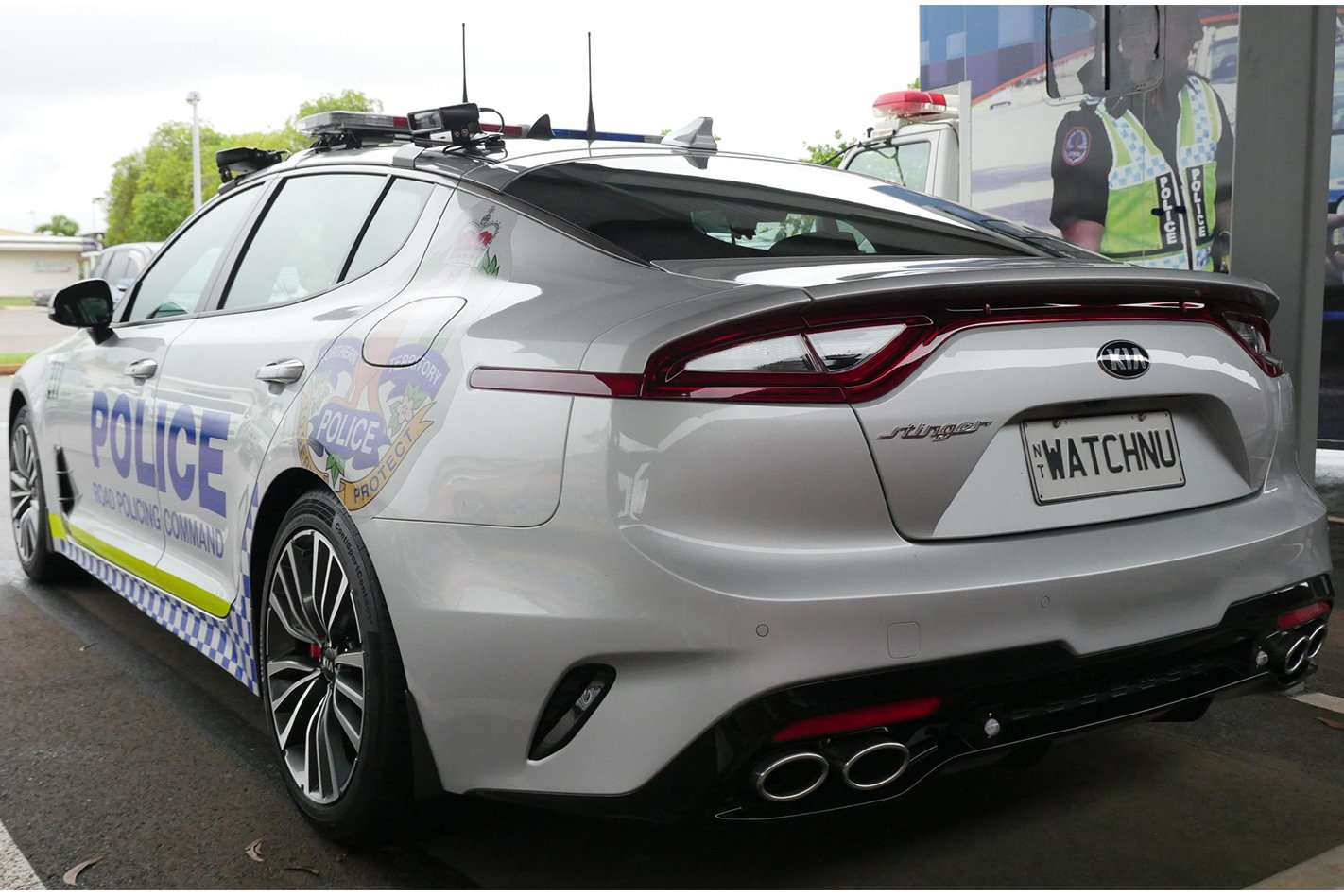
“Holdens and Fords have been standard road policing vehicles in the NT for the best part of 50 years but now that they are not manufactured, it’s time for us to look at an alternative,” he said.
“We needed a car capable of operating at reasonably high speeds in temperatures of 45 degrees in the shade without missing a beat. The Stinger showed itself to be that car.”
The 3.3-litre V6 twin turbo Stingers will also wear a new livery for the first time in 15 years, according to Commander Hollamby.
In NSW, meanwhile, the deployment of replacement high patrol cars will take another step with the impending arrival of the HEMI-powered Chrysler 300 SRT to join the BMW 530d currently in use.
The deal was signed off last year, and cars will roll out this year.
Chrysler’s parent company FCA has facility to build law enforcement-spec cars right on the factory floor, in order to incorporate items like additional wiring and mounts for computer gear, as well as different spec brakes and ancillary coolers.
The V8-powered four-door is based on the SRT Core, and sports 350kW and 637Nm, larger brakes and a more basic interior.
“The Chrysler 300 fleet of cars for NSW Police are currently in build, and we expect to see more on the road as the year progresses,” confirmed a Chrysler spokesperson.
NSW police opted for petrol and diesel power, with a customised version of the BMW 530d sedan also pressed into highway patrol service.
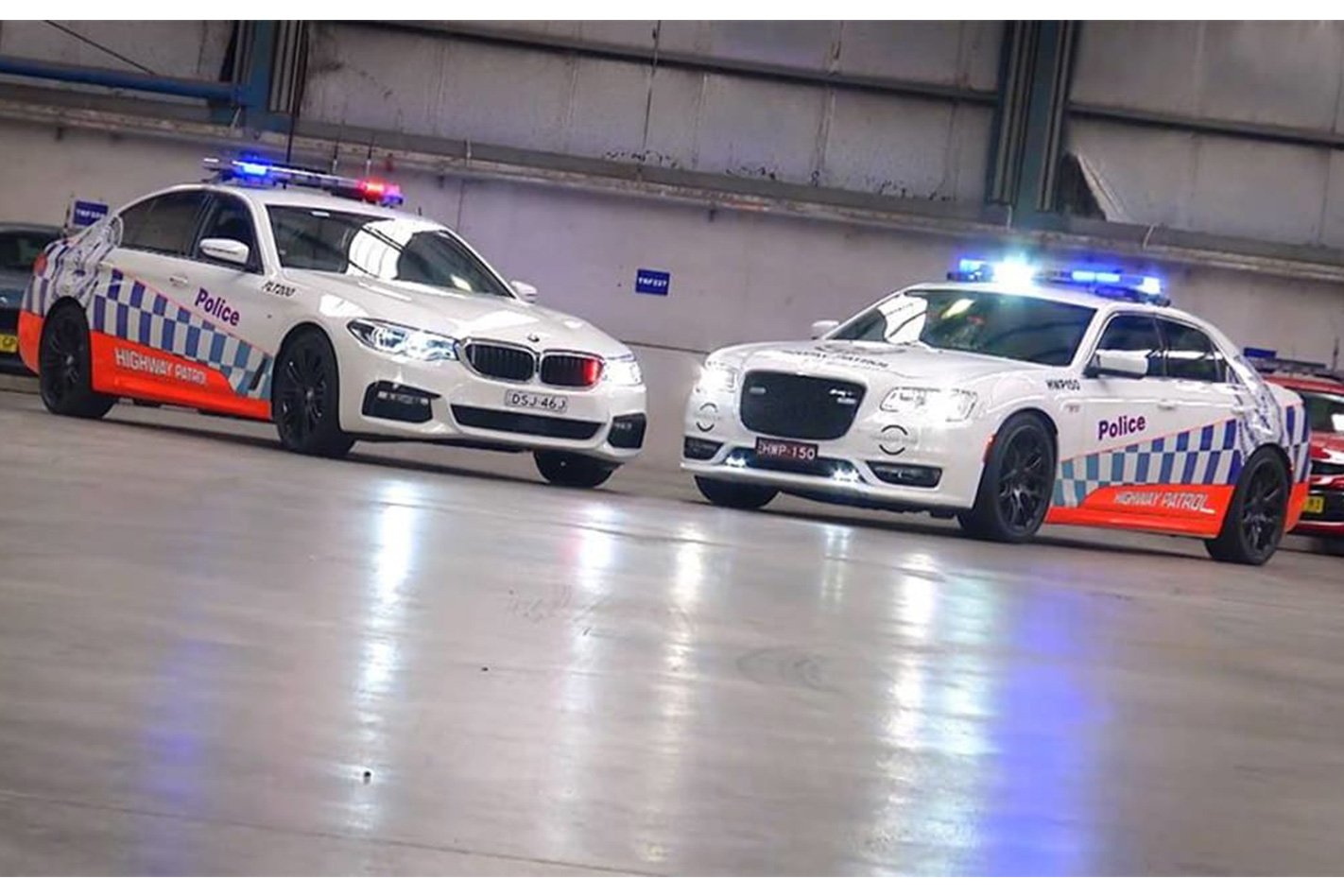
An officer WhichCar spoke with about the BMW said that the force was pleased with the performance of the BMW.
The search for suitable highway patrol cars to take over from the locally-built Holden Commodore and Ford Falcon fleets has taken many directions with police forces across the country, and the four-door, five-seat twin-turbo Stinger has found homes with not only the NT police, but also with law enforcement services in Western Australia and Queensland.
The diesel-powered BMW 530d also serves in Victoria as a highway patrol car, while some states like Tasmania do not use high patrol-spec cars at all.
Testing for highway patrol car suitability varies from state to state, but is more onerous than the requirements for general duties cars. It usually includes a repeated high speed-to-stop component, where items like brakes and transmissions are tested for durability.
The NSW police force ruled out the previous Ford Mustang early on due to auto transmission overheating, for example, while it also evaluated Subaru WRXs and has rolled out a brace of Volvo XC60 SUVs for highway duties in country areas.
HSV has stated its desire to enter the Chevrolet Camaro in the Supercars championship but says a change in technical regulations will be required before it does so.
The Ford Mustang joined Supercars in 2019 as the first two-door model ever and has cleaned up, winning six of the eight races thus far. The resulting parity debate is ongoing, but many fans are wondering why GM doesn’t respond with its respective two-door muscle car, the Chevrolet Camaro.
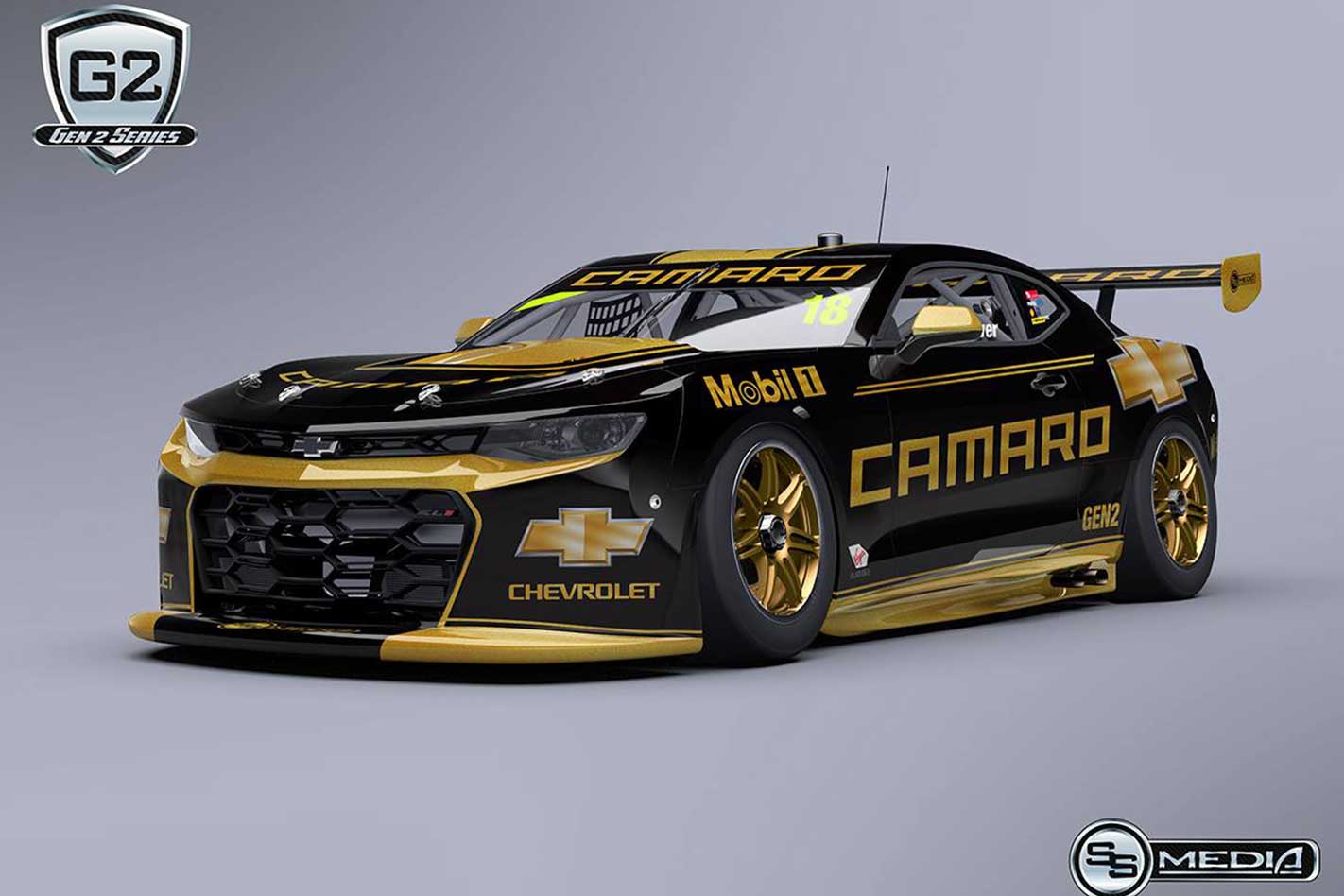
HSV now imports and converts the Chevrolet Camaro for the Australian market, but HSV Managing Director Tim Jackson told MOTOR recently: “Until there’s an appetite to change the technical rules [a Camaro Supercar] is unlikely to happen,” adding that is then “a question for Supercars, not for a manufacturer.”
Ryan Walkinshaw, director of the Walkinshaw Automotive Group and one of the team principals of the Walkinshaw Andretti United Supercar team, has been vocal with his desire to race the Camaro and expanded on his position on the recent Below the Bonnet podcast.
“We really want to do it,” said Walkinshaw. “It makes sense for me personally, I’m importing them, doing the conversion and it makes sense for me to race what I sell. It’s good marketing.”
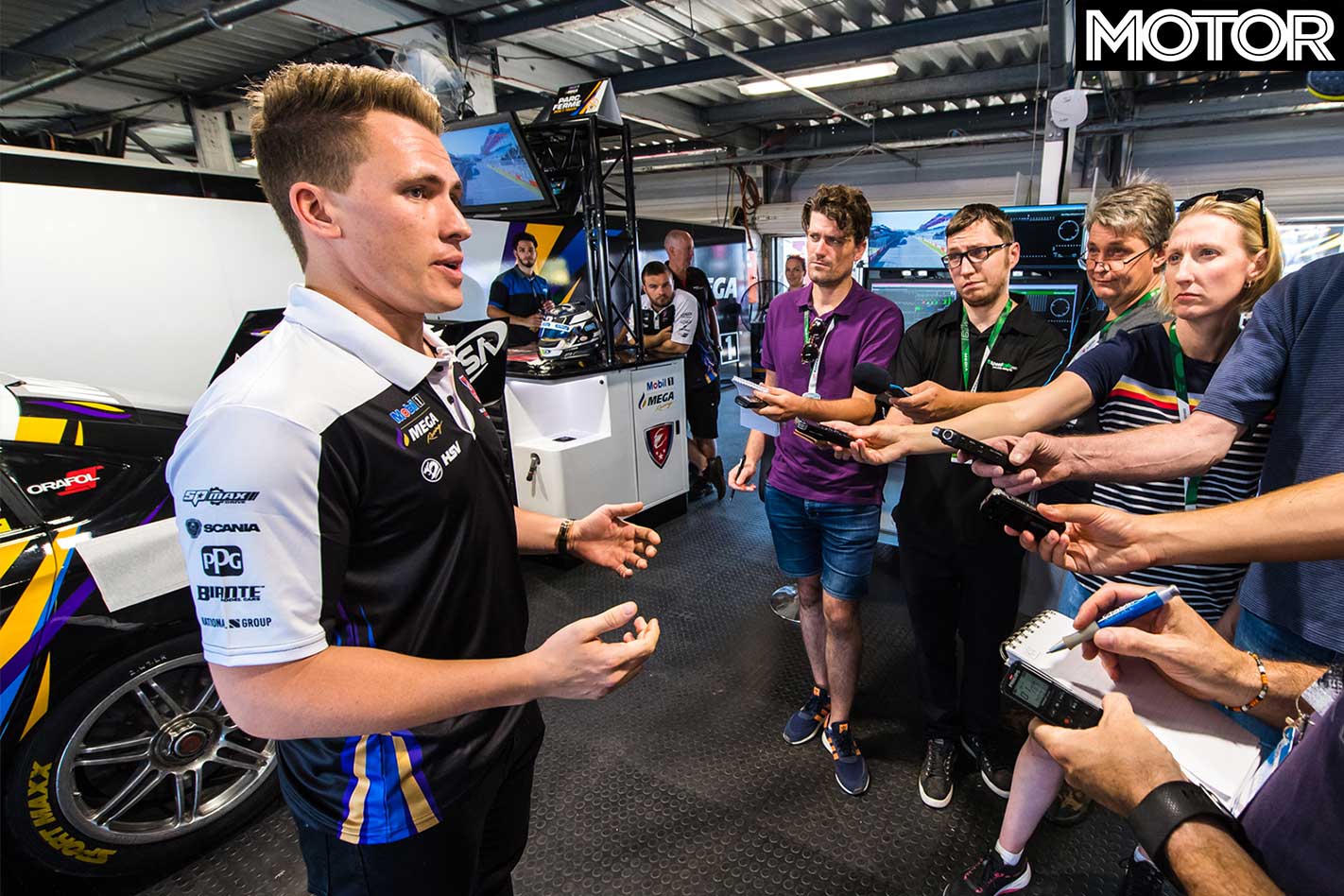
However, Walkinshaw explained that under the current rules, adapting the Camaro’s unique profile to the current Supercars control chassis was simply not an option: “We wouldn’t want to go and bastardise the body shape like they did with the Ford, even if it gets us an advantage.”
There are rumours that there was internal resistance at Ford to the Mustang program once it became clear what the final shape would be, however the resistance was overcome with the sentiment that “there are no ugly cars in victory lane.”

Walkinshaw is adamant any Camaro Supercar will closely resemblance the road car: “We want to have the integrity of the original vehicle at heart, so that it looks like the road car. The profile of the Camaro is different to the Mustang and the body shape just doesn’t fit. It just looks like an Aussie Race Car, it’s shockingly bad.”
As such, any Camaro introduction is unlikely to proceed until the introduction of Supercars’ as-yet unconfirmed ’Gen3’ regulations in 2021.
Remember when Mitsubishi last did a Lancer hot-hatch? The Japanese brand has been noticeably absent from one of the most populated – and popular – market segments since killing the unloved CB Lancer GSR three-door in 1992, then giving Subaru’s WRX a free kick for more than a decade by axeing the all-wheel drive turbo CC Lancer GSR sedan in ’96.
This review was originally published in MOTOR’s December 2008 issue
Since then, Mitsubishi has built its performance-car credentials on one base: the giant-killing Lancer Evolution. But what the brand really needed was some bottom-end back-up, like the two-pronged Lancer Ralliart assault that includes a WRX-rivalling sedan and Sportback Euro-hatch for 2009.

The Sportback targets Euros such as Golf GTI and Focus XR5, and although somewhat awkward, it looks better in the flesh than in pics.
The big advantage, however, is that it’s about 20mm longer than the sedan. Thick C-pillars hinder rear vision, but Sportback’s generous boot is both easily accessible and flexible. There’s also enough room in the rear-seat for adults, and while the front seats don’t have the presence of the Evo’s Recaros, they’re comfy over long distances and provide great lateral support when the road turns twisty.
The Ralliart-spec 2.0-litre doesn’t rev as high as it does in the Evo, running out of puff just above its 6000rpm peak, but it has noticeably less turbo lag and feels just as meaty between 2000 and 5000rpm. The Ralliart will rip through a mountain pass with almost as much poise and pace as an Evo, and while it lacks the bone-jarring suspension, high-tech yaw control diff, bigger brakes and the at-the-limit semi-slick grip, it doesn’t feel that much slower.
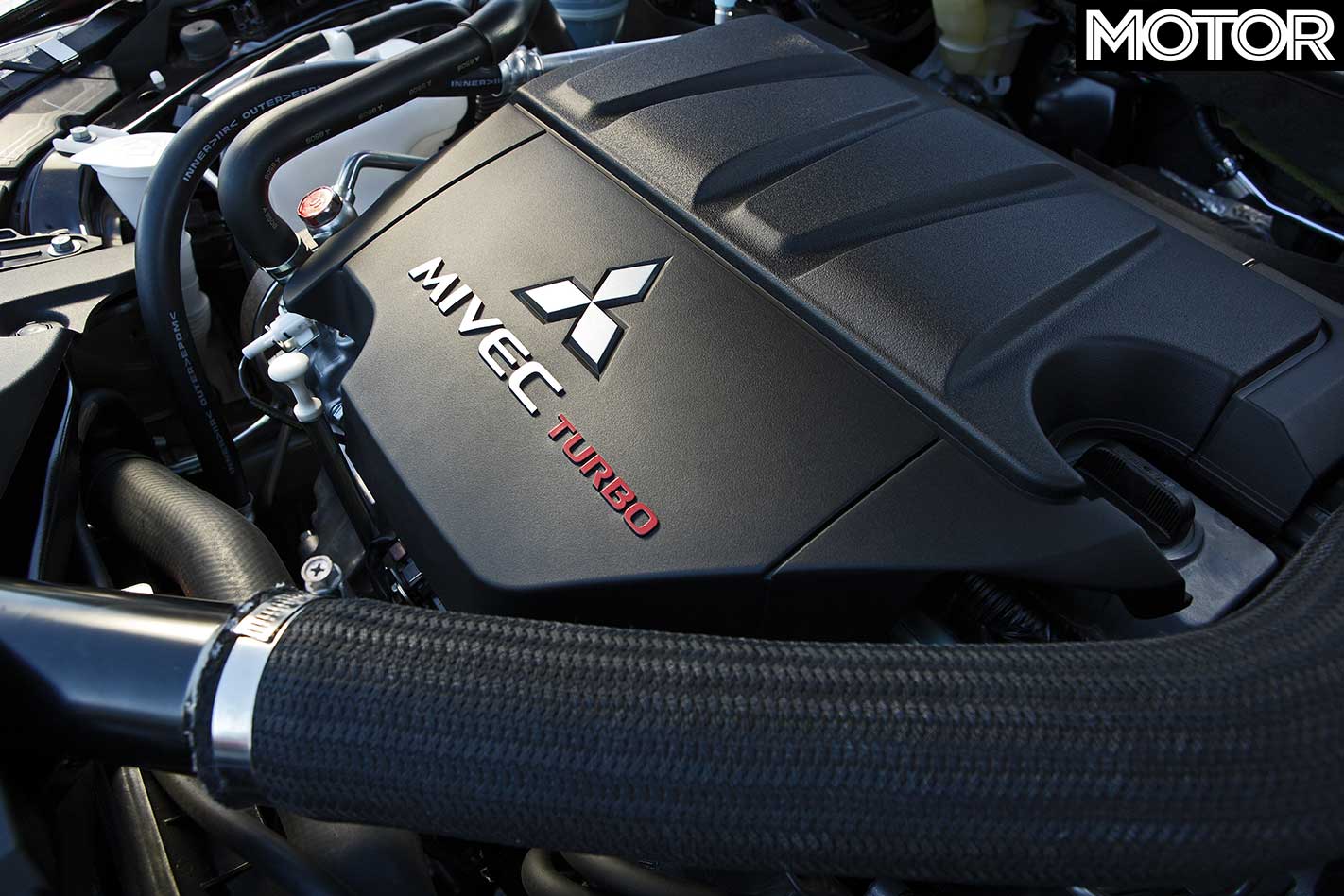
Tip the Ralliart into a corner and the front squeals and rolls a bit more, and it doesn’t have the Evo’s rock-solid punch through tight stuff, but it’s just as predictable and adjusts to mid-corner inputs well. The softer suspension soaks up big bumps better and delivers a quieter ride, without ruining body control.
The Ralliart is also easier to drive everyday as it’s better-matched to the TC-SST gearbox than the highly-strung Evo. The six-speeder isn’t quite as sweet as VW’s DSG, though, and the paddles mounted on the column (rather than the wheel) make it awkward to shift with anything more than a quarter-of-a-turn. It’s fuss free in auto mode, yet just as smooth as a manual and lightning-quick – complete with throttle blips on downchanges.

Our only gripe is the small 50-litre fuel tank, which gives no more than a 450km range, but otherwise the Ralliart Sportback puts Mitsubishi firmly back on the hot-hatch map. And on first impressions, it’s a better all-rounder than the WRX.
2008 MITSUBISHI LANCER RALLIART SPORTBACK SPECS Engine: 1998cc 4cyl, DOHC, 16v, turbo Power: 177kW @ 6000rpm Torque: 343Nm @ 4750rpm Weight: 1515kg Top speed: 220km/h (claimed) 0-100km/h: 6.6sec (est) Price: $42,490
Like: Almost as good as an Evo; best use of TC-SST ’box yet; space Dislike: Awkward rear styling; small fuel tank limits range
Hi WhichCar team – I have right around $50,000 to spend on a new dual-cab ute for work, and I’m torn between choosing a Ford Ranger XLT ($51,490) and an Isuzu D-Max LS-U ($50,800).
I cover about 40,000km a year with about 10,000km of that on dirt, and I carry some bulky tools.
On the weekends, I tow a go-kart trailer and on the odd occasion a horse float.
We have two young kids in the family, but they won’t spend a lot of time in my car.
I’ve always like the Isuzu, but why would I want to choose that over one of the best sellers in the market? What am I missing?
Cheers and thanks
Adam, Newcastle, NSW
Hey Adam,
Interesting! Sounds like you’ve done your homework!
The Isuzu D-Max is a bit of a favourite amongst the WhichCar crew because it’s a well thought-out, honest and reliable rig that has decent off-road chops right out of the box.
A heavy-duty bash plate under the car, along with an air filter that’s mounted in the mudguard to help minimise dust ingress, means that the D-Max is ready right away for the dirt mileage you do.
On road, the 3.0-litre diesel is probably the most underpowered in the category at 130kW and 420Nm, but when combined with the six-speed auto, it hides its shortcomings well.
It’s an older-gen engine that can get noisy when pushed, but its commercial origins mean it’ll outlast the apocalypse.
It has heavy-ish steering without a lot of feel, while the rear end – as with all unladen utes – can be a touch on the jiggly side. If you’re adding tools to the tray, though, that should settle it nicely.
Interior-wise, there are plenty of clever touches like extra bottle holders and the like, but the lack of reach adjust on the steering wheel is an annoyance. Don’t forget that it also misses out on things like Apple CarPlay and AEB, thanks to its advancing years.
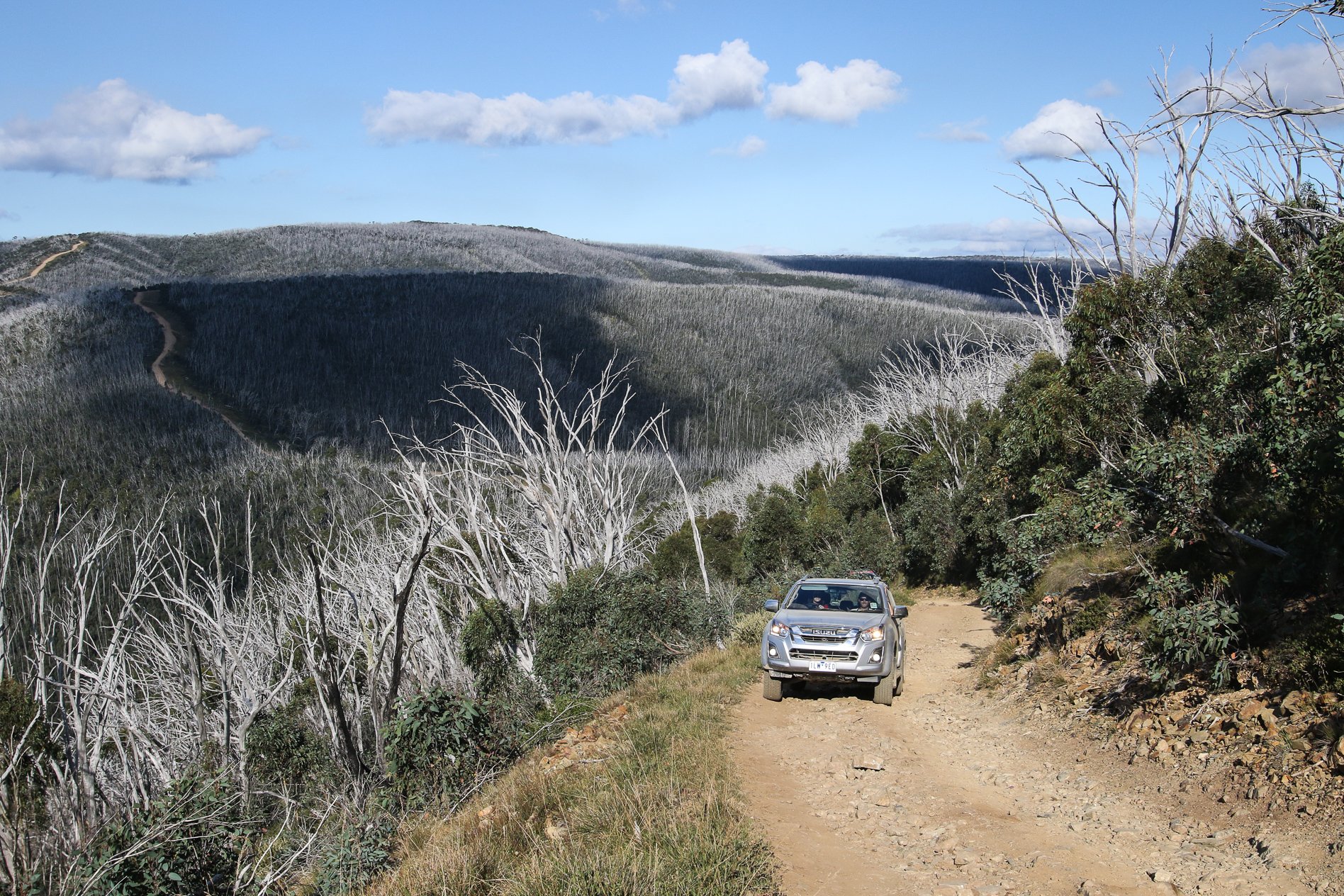
The Ford Ranger, on the other hand, is definitely more car-like inside, and its Sync 3 multimedia system is terrific. The seats, the relationship to the steering wheel… all very good for the longer journey.
It also gains important safety tech like AEB.
The 3.2-litre five-cylinder engine also pairs with a six-speed auto, and while it feels a bit more torquey and fulsome than the new 2.0-litre four-cylinder/10-speed combo, the 147kW/470Nm five-potter is less powerful and less torquey than the twin-turbo four. Still, it works perfectly well, and is a little more refined than the Isuzu engine.
It’s not as rough and tough as the D-Max, though, and you may need to service the air filter more regularly if you tackle dusty terrain.
In short, there is not a whole lot of difference between the two, so it comes down to which one you fit in best. Taller drivers of the D-Max, for example, can find the reach to the steering wheel to be a bit too long, and its rear seats aren’t as comfy as the Ranger’s.
When it comes to towing, both offer up to 3500kg of braked towing capacity, but the Ranger’s rear-view camera is better than that of the Isuzu’s when it comes to hitching.
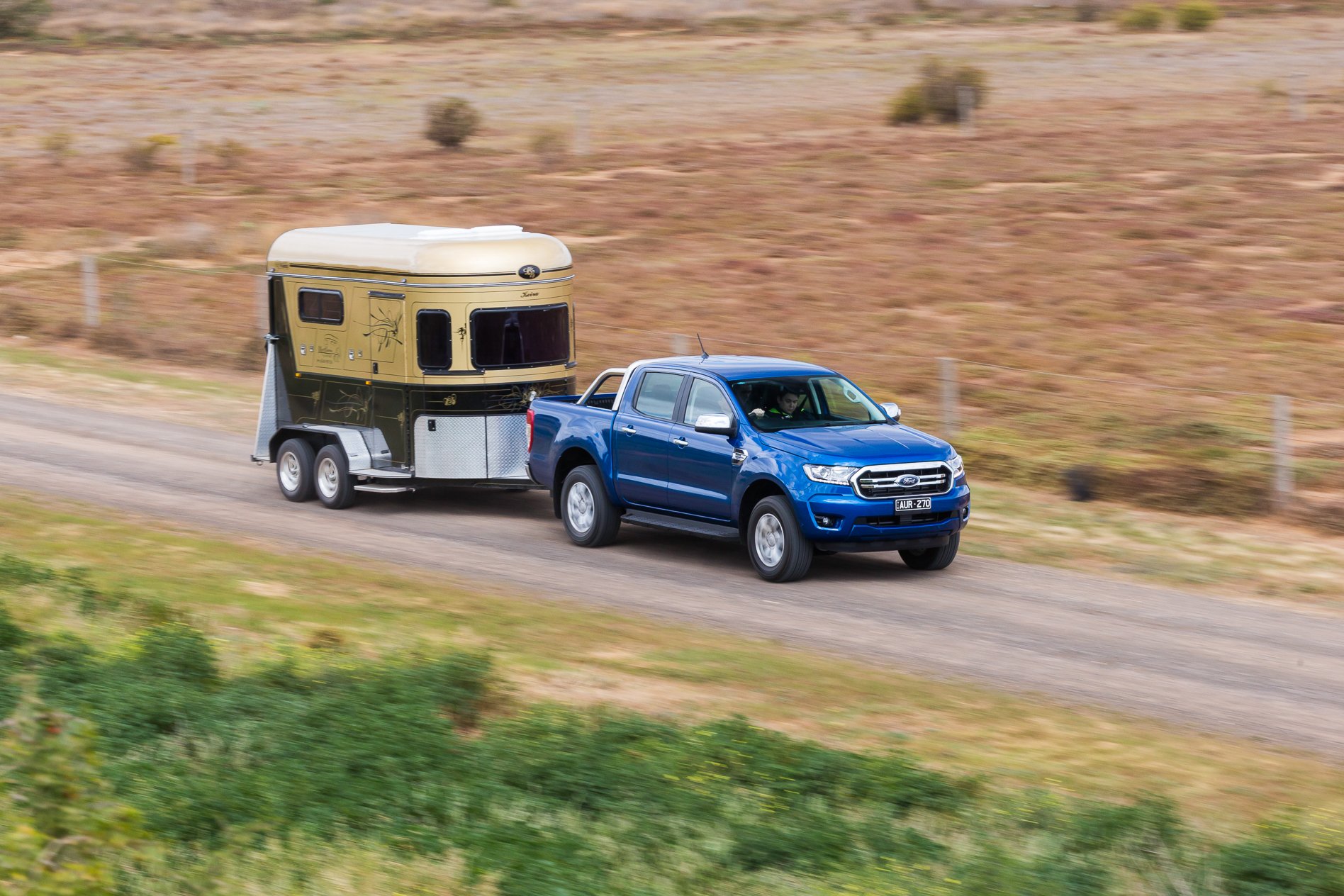
If you pushed us to make a call, we’d take the fact that you do a lot of dirt into account and push you towards the D-Max.
WhichCar recommends: Isuzu D-Max
More on the Ford Ranger
More on the Isuzu D-Max
The little Jimny can seemingly do no wrong. Since launching in Australia at the start of this year, the compact 4×4 has almost immediately achieved cult status, selling up a storm and generating a waiting list that stretches almost to a full 12 months, depending on what colour you want.
That’s quite an achievement for a car that’s priced just a smidge under $24K. The Australian public’s appetite for the Suzuki Jimny boils down mainly to two things: its rugged-looking design, and its genuine off-road capability. Dirt road enthusiasts love it just as much as image-conscious urbanites.
As we get set to give the Jimny its first small-screen treatment on WhichCar TV this Sunday afternoon on Channel Ten, here’s all the stuff we’ve written about the pugnacious offroader to date to whet your appetite:
Suzuki Jimny price and features
Here are the nuts and bolts on the Jimny offering in Australia. The range is simple, consisting of a single grade (for now) with a single petrol engine and the option of a five-speed manual or four-speed automatic. What else has it got? Click the link above to find out.
Launch review
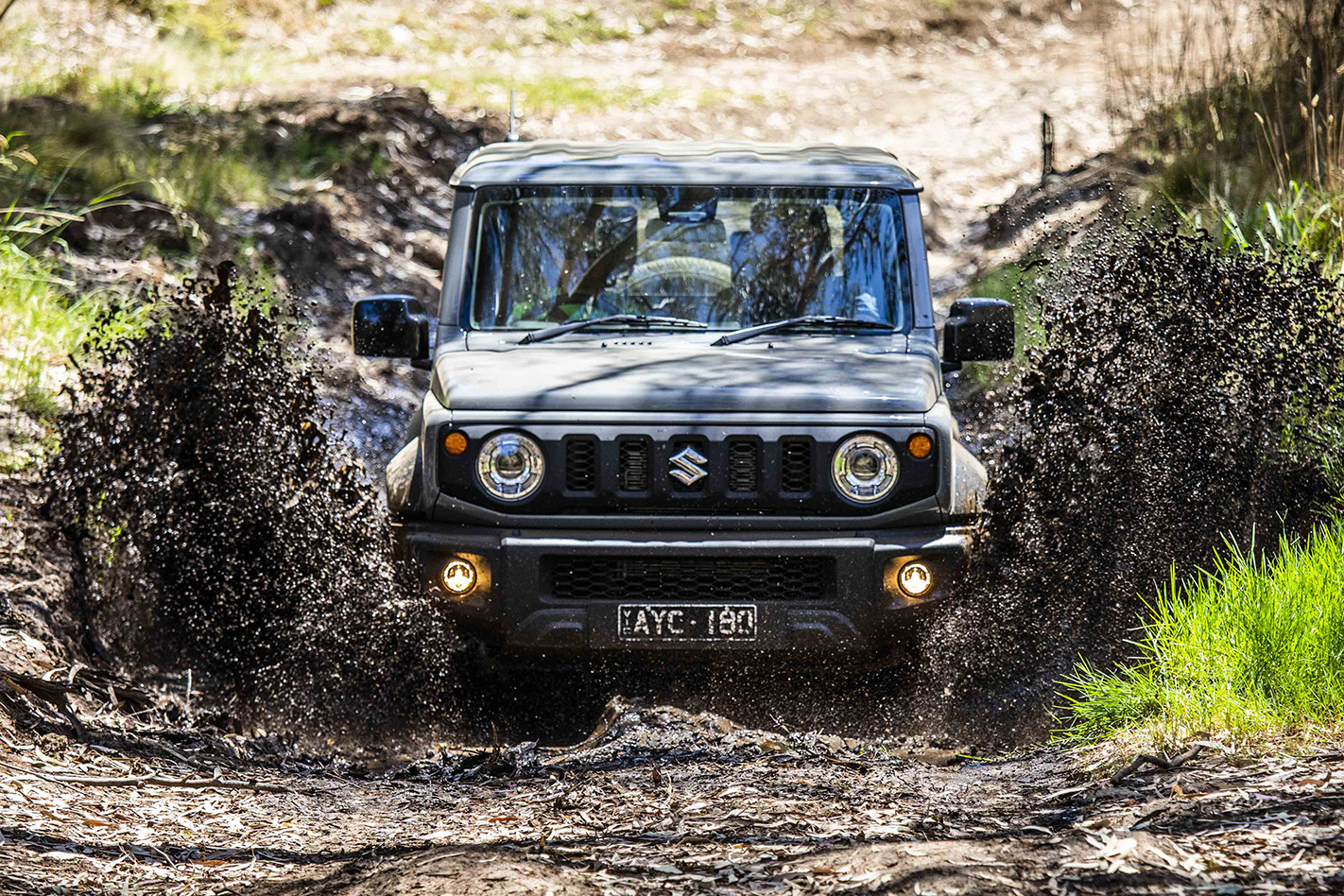
We got our first taste of the fourth-generation Suzuki Jimny in January, with the local launch allowing us to finally lay hands on the retro-tastic off-roader while also giving us the chance to attack some moderate off-road obstacles as well. It definitely delivered on expectations.
Offroad review
The lads at 4×4 Australia are the gatekeepers when it comes to determining whether a 4×4 has true offroad chops or not, and they subjected the Jimny to a proper bush-bashing jaunt up in Victoria’s high country. Curious about how it fared? Head here to find out how the 2019 Suzuki Jimny goes off-road.

ANCAP
It’s not all good news with the Jimny, however. Some buyers may be put off by its three-out-of-five star ANCAP crash safety score, which stands out in an era where most passenger cars and SUVs tend to score a much healthier five-star rating.
Why did the Jimny do so poorly in crash testing?
Ute potential
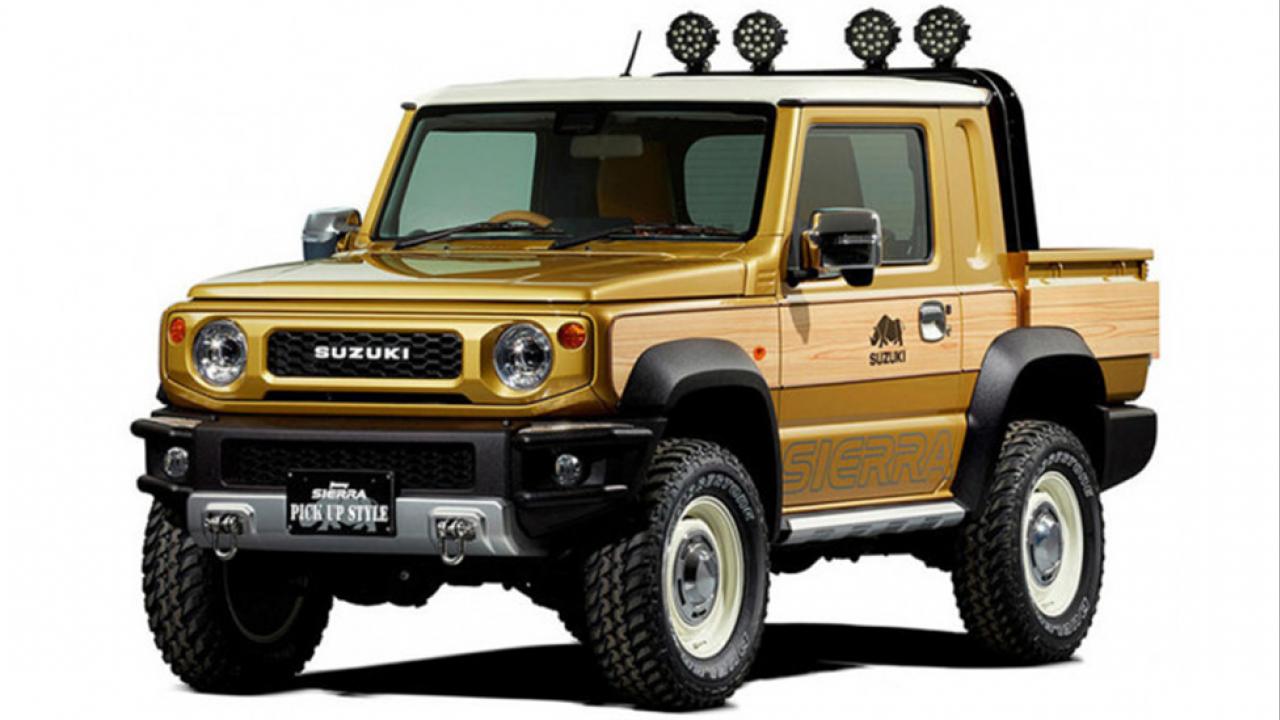
Many moons ago, Suzuki offered a Jimny-based ute called the Stockman – and it was an absolute hit. Farmers loved it for its ability to tote tools and feed around paddocks, saving them the bother of firing up the tractor or having to buy a more expensive 4×4 for farm duty.
Flash forward to the present day, and enthusiasm for the Stockman’s return is incredibly high – so much so that Suzuki’s local head honcho is crossing his fingers and hoping that a load-lugging Jimny derivative is on its way.
The signs look promising: Suzuki themselves wheeled out a custom-built Jimny utility at this year’s Tokyo Auto Salon, and offroad enthusiasts went wild.
Dressing up
The fourth-gen Jimny is a great example of retro styling done right, and its boxy shape and cute throwbacks to Jimnys of yore are tremendously endearing. If you squint, it also happens to bear a passing resemblance to other square-shouldered offroaders like the Mercedes-Benz G-Class and Land Rover Defender – something that’s been exploited by the aftermarket.
Want to make your Jimny look like a shrunken Benz? You’ll want to give it the Mini G treatment. Prefer something with a British flavour? Perhaps check out the amusingly-named “Little D” body kit from Japanese tuner DAMD
Toyota Australia will move to an online ordering system for its upcoming GR Supra in a bid to give keen customers a fair go at getting one.
Better yet, not one of the 300 Supras that will arrive in Australia over the next 12 months have yet been sold.
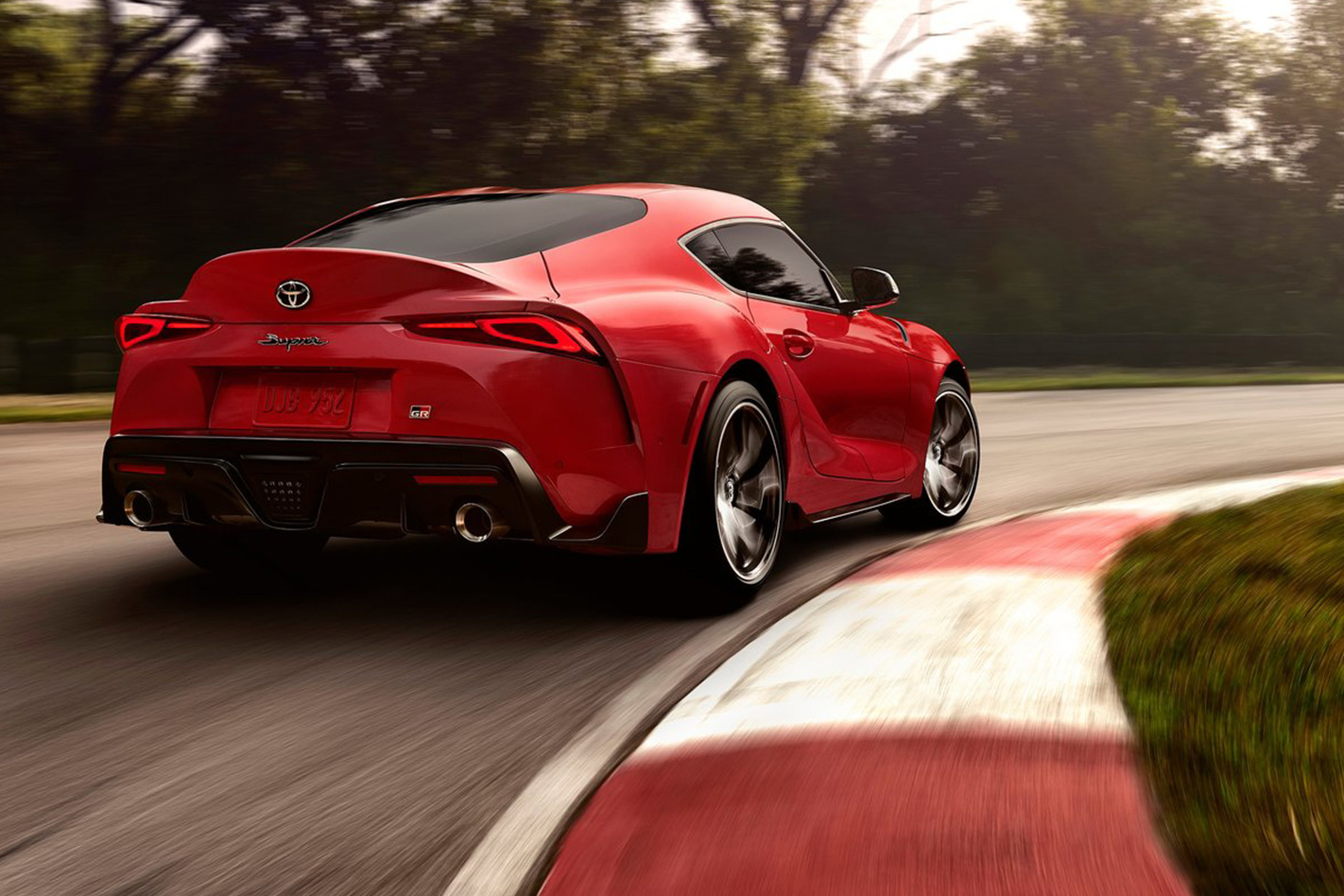
Responding to comments that the reborn Japanese cult car has ‘sold out,’ a spokesperson for Toyota Australia confirmed there will be 300 Supras arriving from September this year and every single one is up for grabs. The local arm is seeking to increase allocation after the initial allotment is exhausted, comfortably predicting it will do “very well,” selling as many as it can get its hands on.
Over 5000 punters have registered interest for the fifth-generation Supra but the spokesperson told Wheels the number did not reflect real buyers, and that not one deposit had yet been taken. There could in fact be only a fraction of that number which will stump up cash for the model when it goes on sale and pricing, which is yet to be detailed, will be another deciding factor.
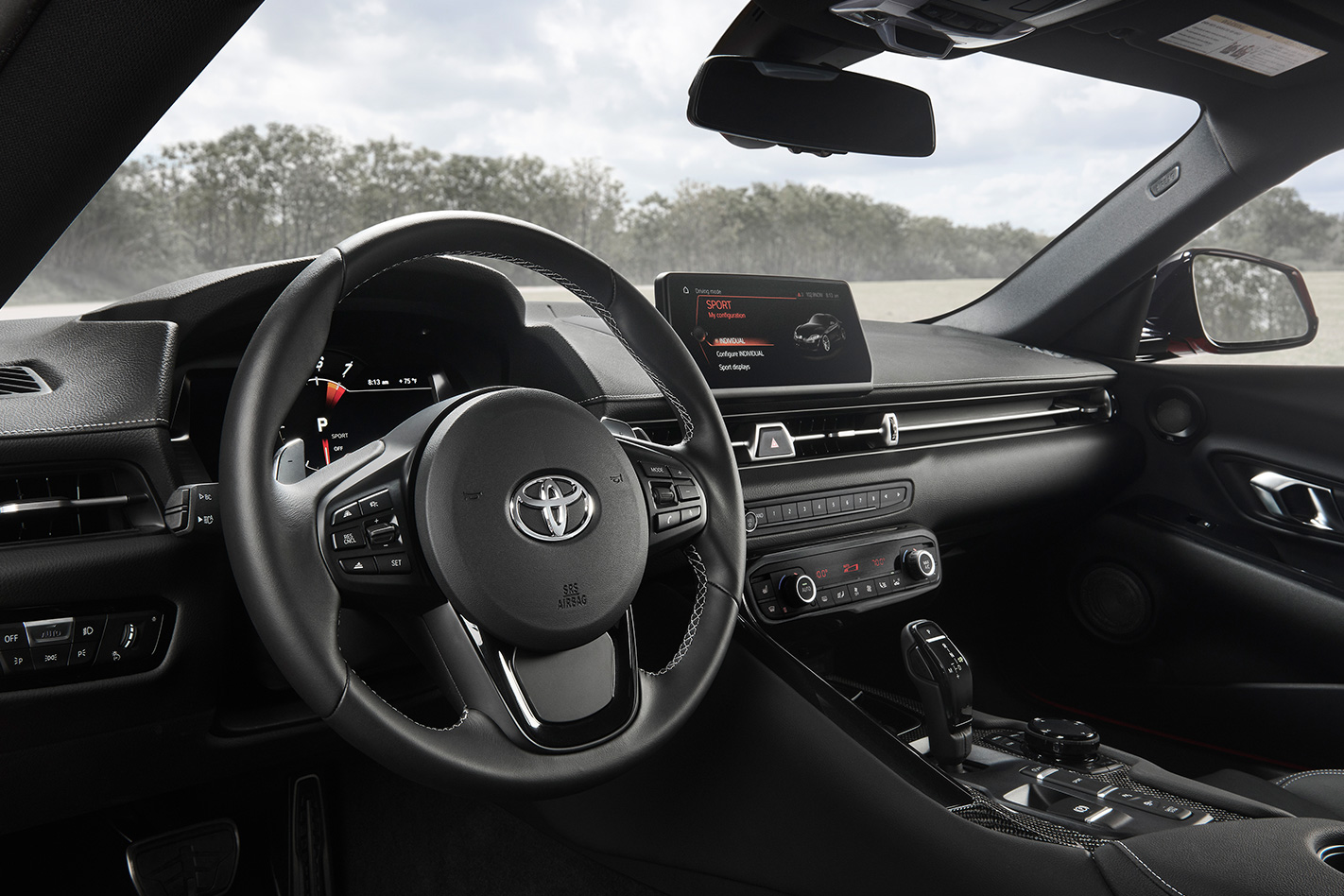
With only 300 Supras arriving over 12 months, 280 Toyota dealers dotted around Australia and plenty of interest, price gouging, as seen with some other low-volume sports cars in the past, could be an issue. However, Toyota Australia will likely sell the car online, with dealers taking care of preparation and delivery to customers, avoiding an artificially inflated market if demand exceeds supply.
That will give Toyota the upper hand in ensuring a fair price for everyone and, as Wheels understands, the majority of orders will be on a first in, best dressed system, though the spokesperson did stress that an official announcement will be made by mid-2019 which details the exact ordering system for keen buyers.
“We have not had one deposit, not one, we have not sold any of the 300 Supras we expect to receive in the 12 months from launch,” they said.
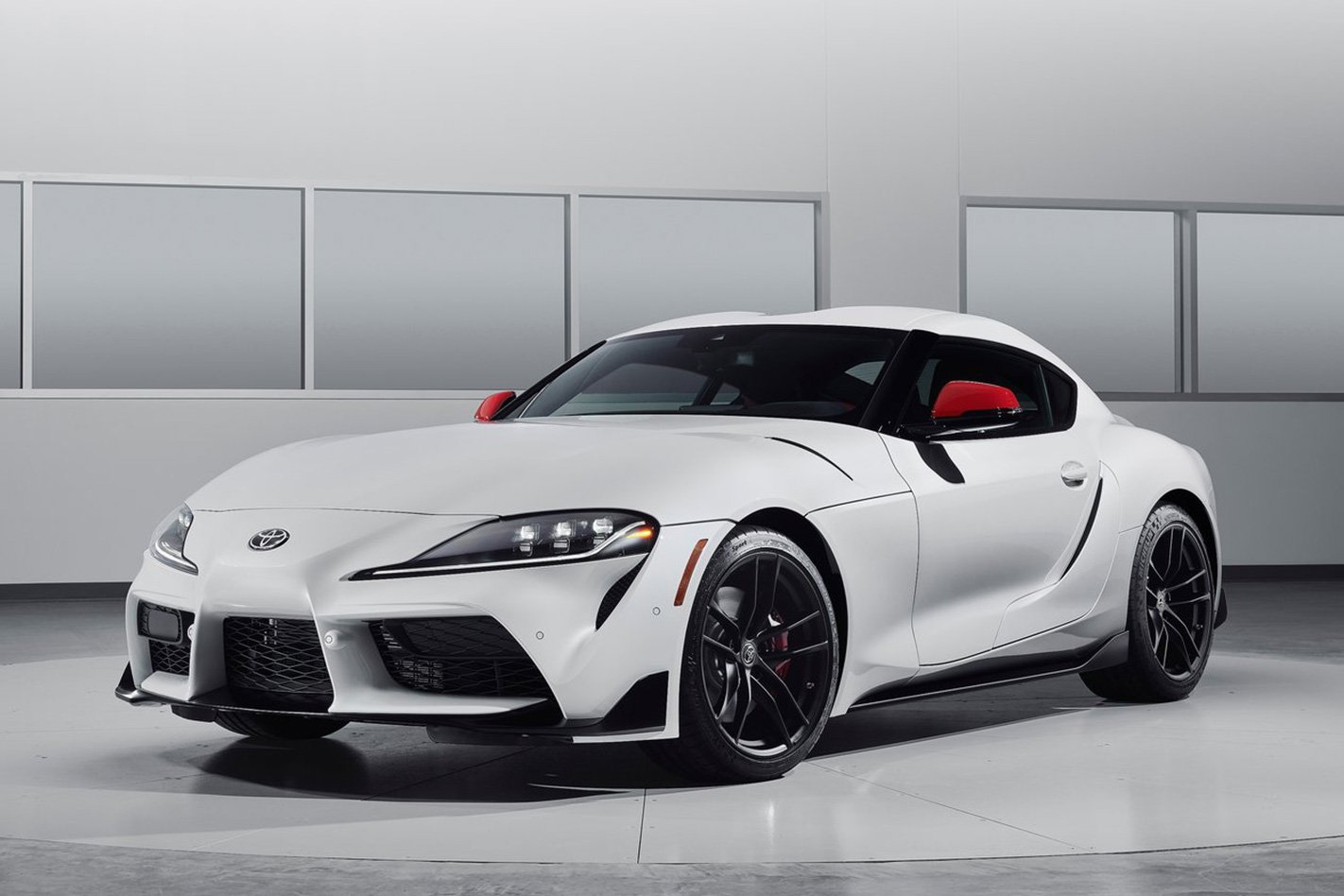
“We are investigating an online system that will ensure an accurate reflection in price and ability for everyone who wants one to get in quickly, but we have not confirmed details yet and will make an announcement soon.”
The lucky 300 buyers will be some of the first customers in Australia to drive the next-generation GR (Gazoo Racing) Supra, co-developed alongside the new BMW Z4. It uses the convertible’s Bavarian-built 3.0-litre straight six twin-scroll turbo engine to produce 250kW and 500Nm through an eight-speed ZF automatic transmission, though it is slightly quicker from 0-100km/h, completing the sprint in a claimed 4.3secs.
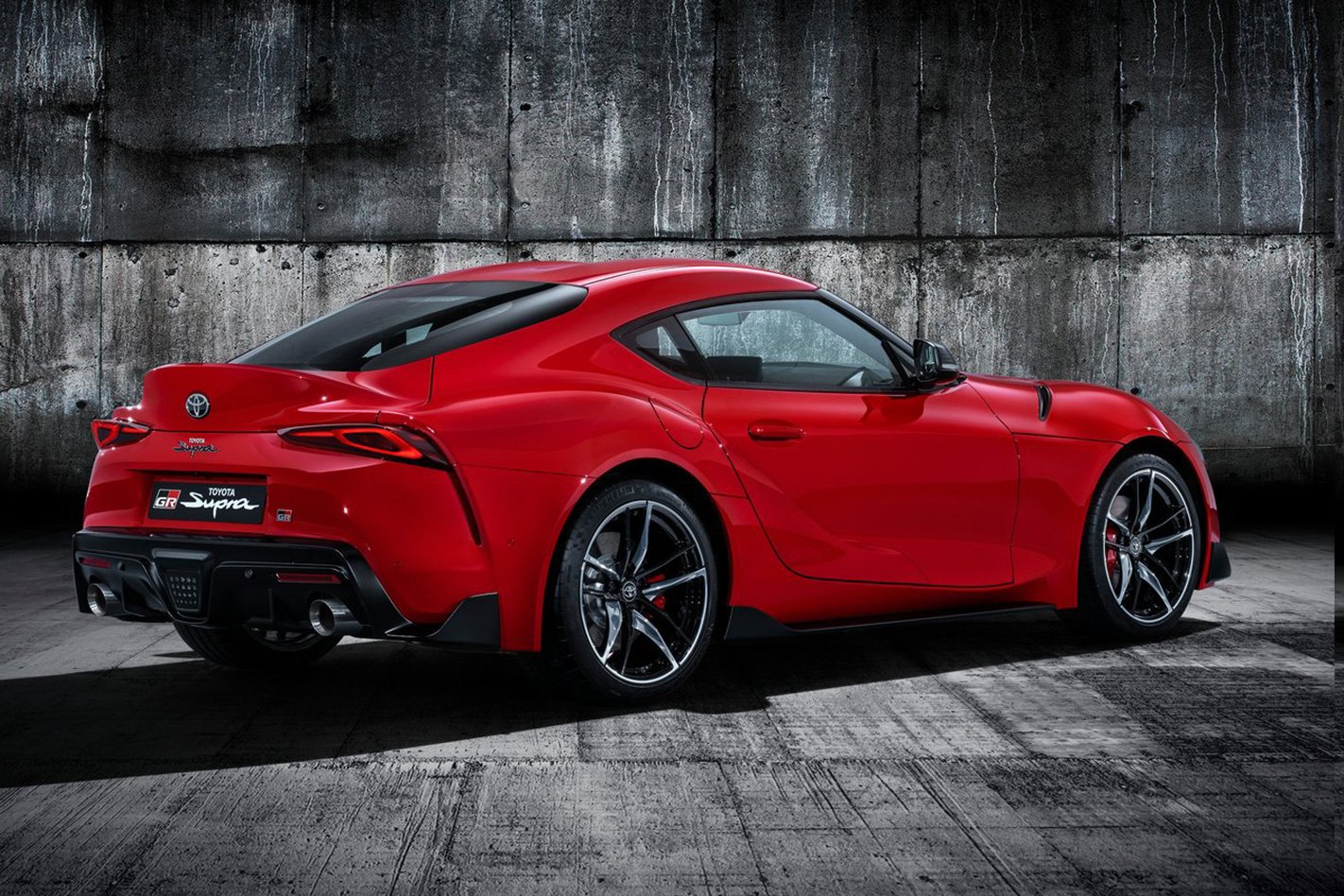
Toyota Australia has so far ruled out the four-cylinder version of the Supra, focusing on only offering the flagship coupe for now. GR Supra pricing for Australia is yet to be revealed, but expect an announcement not long before its September launch date.
