
A new member of the AMG family is inbound in the form of the 2019 Mercedes-AMG CLA35.
With the same engine as the AMG A35, a 2.0-litre turbo four putting out 225kW and 400Nm, its relatively modest performance is the second-most important part of the car behind its styling.
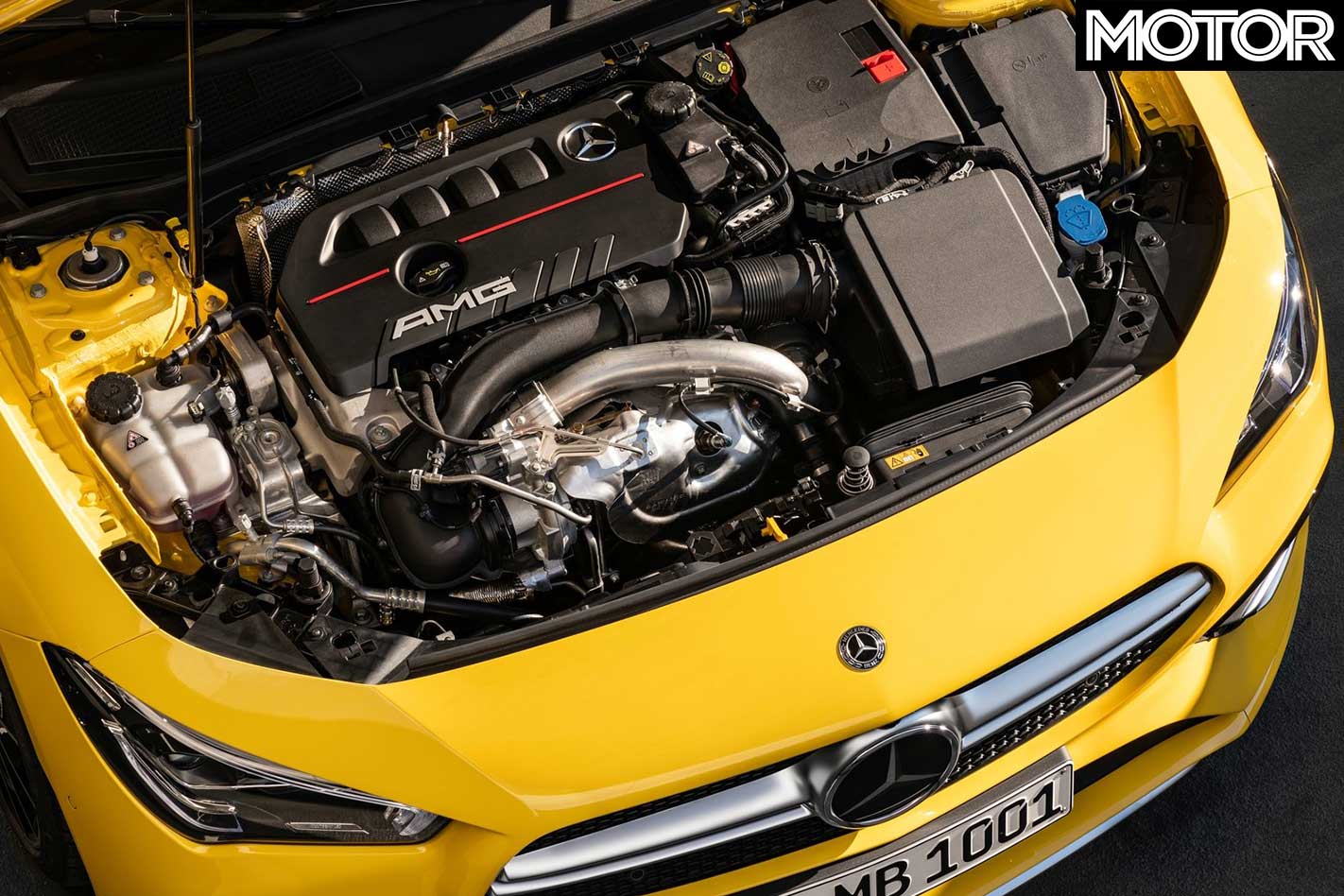
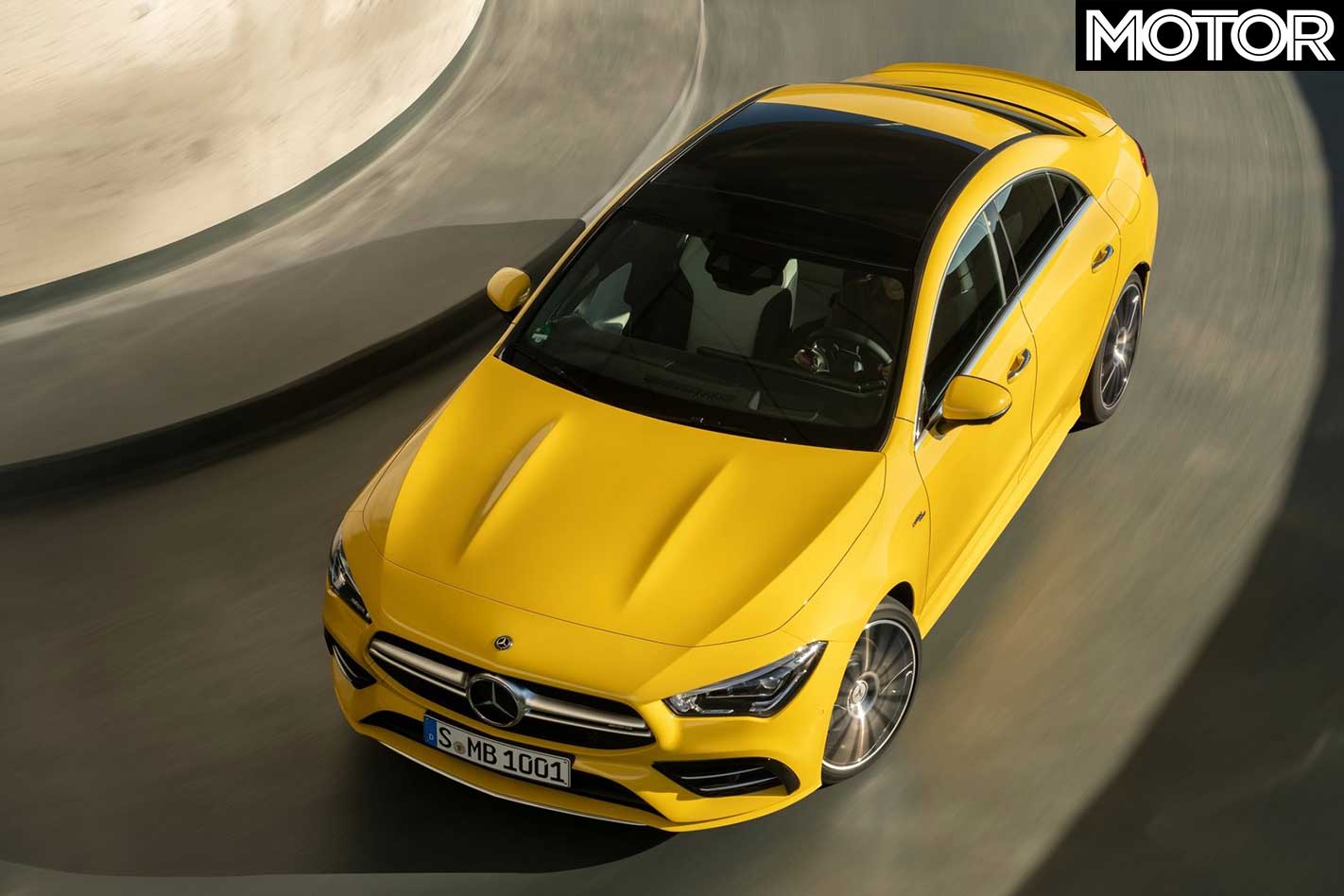
AMG even states “the iconic design of the CLA Coupé is one of the main reasons for purchasing the car.”
Tobias Moers, CEO of Mercedes-AMG, says the A35 makes the best case in the AMG line up as a car targeted at young, style-savvy buyers because of this.
“With its iconic design and agile driving dynamics, the new CLA 35 is an attractive offer for a young, active and lifestyle-conscious target group,” says Moers.
“These customers define their requirements very clearly: They expect exciting design from their vehicle alongside superior performance and inspiring handling characteristics.
“The new CLA 35 embodies just this attitude to life – and enables stepping in to the fascinating world of AMG… in a particularly emotional way.”
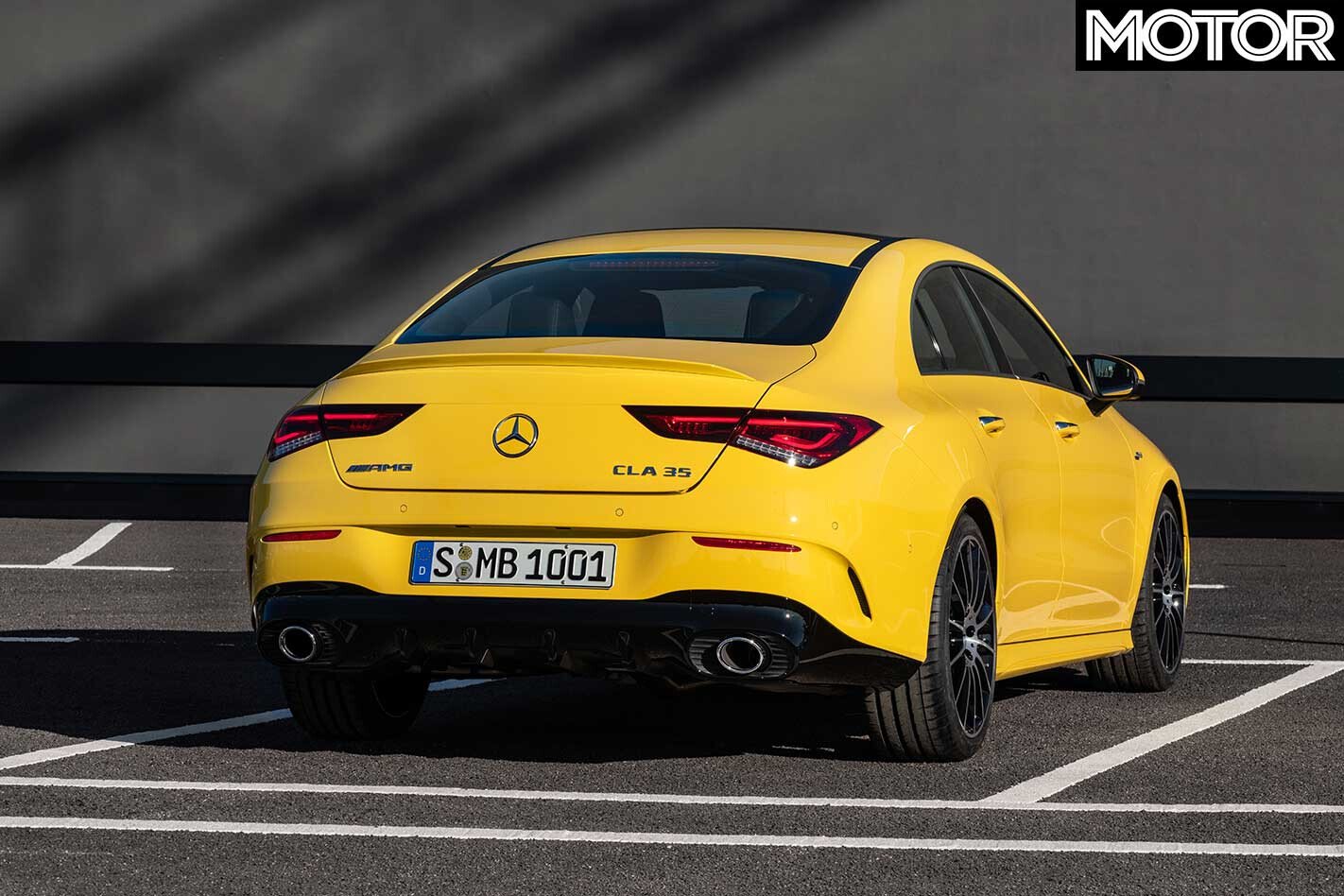
Though it shares much with the CLA250, styling elements like the grille, chrome trim on side inlets, diffuser, and lips spoiler give the CLA35 a slightly more sporting appeal.
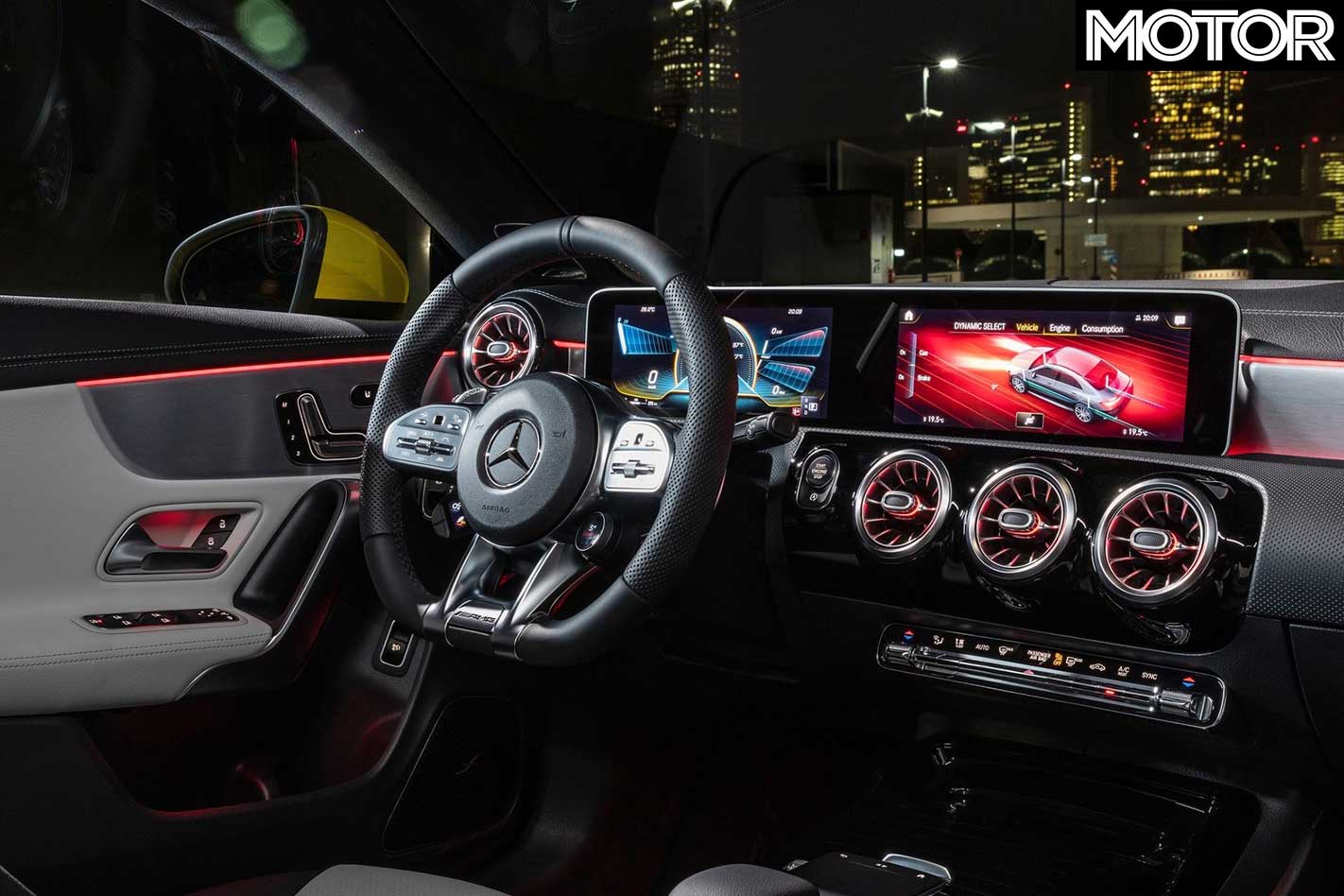
Inside, the youth appeal continues with Mercedes’ MBUX infotainment operating system, along with mood lights and leather (with Dinamica microfibre), and an AMG-specific steering wheel.
Mercedes-AMG says, of course, that the CLA35 will also be a very capable drivers car, in part thanks to a stiffer body-in-white (body sans panels and interior) which it says allows precision “turn-in ability and the toe and camber stability.”
While a weight for the new car hasn’t been supplied, it’s expected to be heavier that the A35 hatch and sedan, which hit 100km/h in 4.7 and 4.8 seconds respectively. The equally powerful CLA35 takes a claimed 4.9sec.
Mercedes will debut the CLA35 at the New York International Auto Show next week, while sales will commence internationally later in the month.
Australian details are yet to be announced, but will be covered by MOTOR once they are. Stay tuned.
2019 MERCEDES-AMG CLA35 SPECS Engine: 1991cc inline-4cyl, DOHC, 16v, turbo Power: 225kW @ 5800rpm Torque: 400Nm @ 3000-4000rpm 0-100km/h: 4.9sec (claimed)
Overall Rating
4/5 stars
PLUS & MINUS
Sense of occasion, improved agility, classier cabin
Cumbersome at low speed, awkward gear selector, no more power
THE WHEELS VERDICT
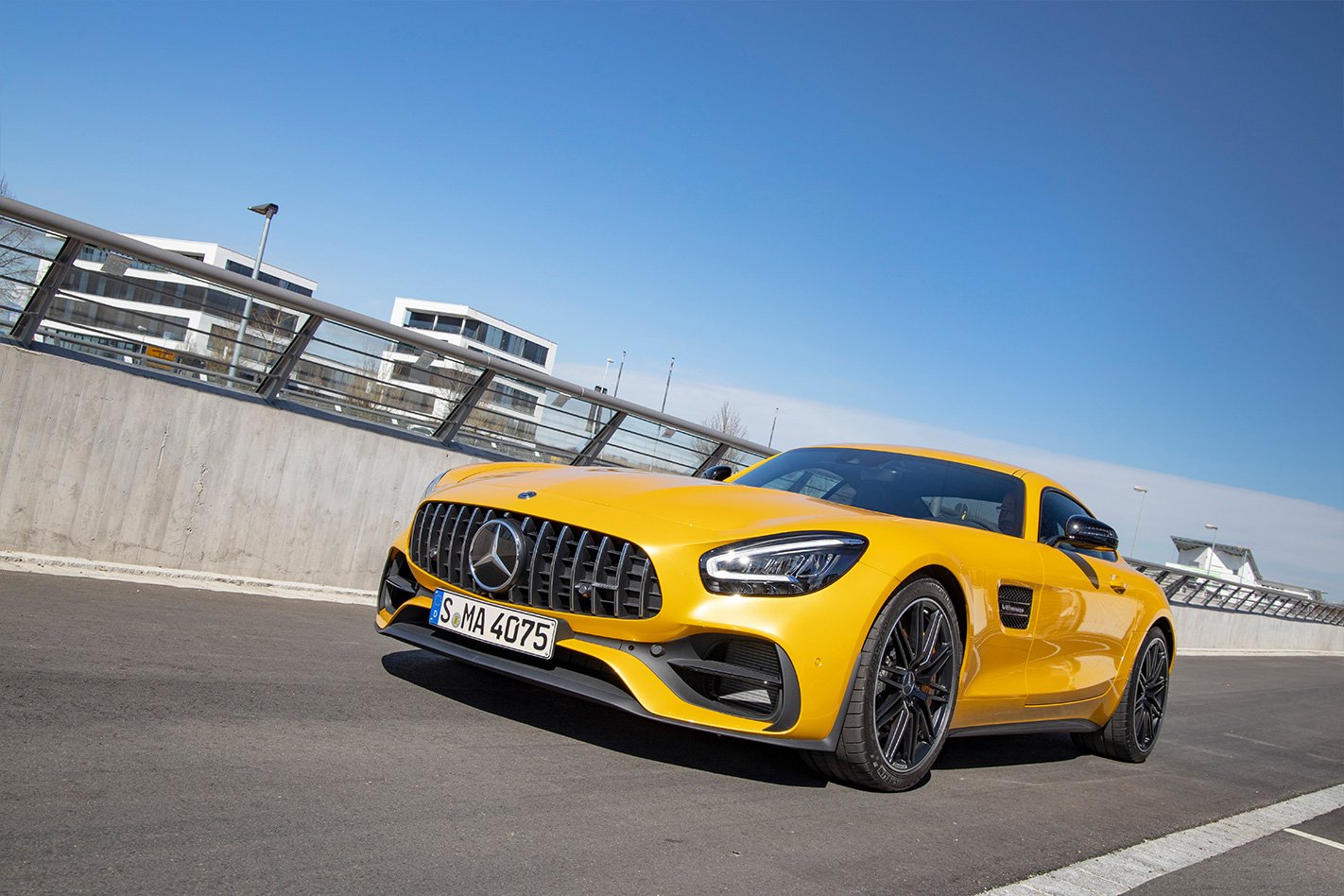
The AMG GT slides into 2019 with a slicker presentation but the dynamics haven’t stepped forward quite so markedly. For those who like a loud and slightly brash coupe or cabrio, that won’t matter. If you really extend the latest GT you’ll find additional layers of talent there, but that will probably best be reserved for exploration on a circuit. We still love it, but this big GT won’t be for everyone.
Updated 2020 Mercedes-AMG GT range: What you need to know
WHAT IS THE MERCEDES-AMG GT?
AMG’s flagship coupe line has been a huge success in Australia since its introduction in 2015. But four years is a long time, especially in this corner of the market where customers are attracted to new and shiny. The brains trust at Affalterbach has given the car a keenly targeted makeover.
WHY WE’RE TESTING IT
Mercedes dangled the carrot of an AMG GT drive while we were in Germany to test the CLA, so it seemed churlish not to take them up on the offer. It may ‘only’ be a facelift, but this is no grille and headlights nip and tuck. There’s a lot more to it than that.
THE WHEELS REVIEW
Let’s start by saying that the Mercedes-AMG GT is not coming to Australia. The Merc marketing people from Mulgrave have taken a look at it and put the red pen through it. Not enough demand, they say. So no 350kW 4.0-litre V8 coupe or cabriolets for us. Ample recompense comes with the fact that we’ve got the green light for the 384kW AMG GT S coupe, 410kW AMG GT C coupe and cabrio, and the ballistic 430kW AMG GT R coupe range-topper.
The GT range that is set to ship to Australia has been given a well-judged reworking for 2019. Greater athleticism, more aggressive styling and a better-quality, more feature-rich interior to bring it in line with the four-door extension to the GT line were the goals, and at least two of them have been achieved.
Being a sports coupe, the dynamics are key. The GT now gets the AMG Dynamics system that we first saw on the C63 S coupe. This augments the electronic smarts of the steering and stability control to offer keen drivers more options and the choice between stability and agility. In other words, you can now taper off the control systems with real finesse. Like the C63, AMG Dynamics offers “Basic”, “Advanced”, “Pro” and “Master” modes, and the GT R gets the clever nine-point traction control switch.
AMG GT C v Vantage v 911 Carrera 4 GTS
We had the opportunity to drive on track at Hockenheim and the “Master” mode is uncannily good, making the steering sharp without feeling nervous and allowing heaps of mid-corner adjustability. What initially feels a bit of a truck-like point-and-squirt hot rod in fact delivers enormous high-speed stability. Downforce also has something to do with that.
Unfortunately the car we were driving on the F1 circuit is another that won’t be coming to Australia. The AMG GT R Pro is an even more focused track-day special with an aggressive aero package delivering an additional 99kg of downforce at 250km/h, but if the rumours are correct, something even more extreme is in the works for AMG GT customers with patience and deep pockets.
When you’re not leaping the kerbs on the Sachskurve, the GT can still feel a big unit. Unlike a 911, you’ll start feeling very wary of width restrictors, multistorey car parks and drive-thru lanes. You still sit way back, almost on the rear axle, with that enormous prow stretching ahead. It’s undoubtedly suffused with a giant dose of drama ¬ especially in the Green Hell Magno paint of our GT R test car – but agility is not the first attribute that comes to mind in town. Go beyond that initial impression and really drive the thing and it has a genuinely talented chassis with superb body control, well-telegraphed feedback and a meaty steering system. The harder you drive, the better it gets.
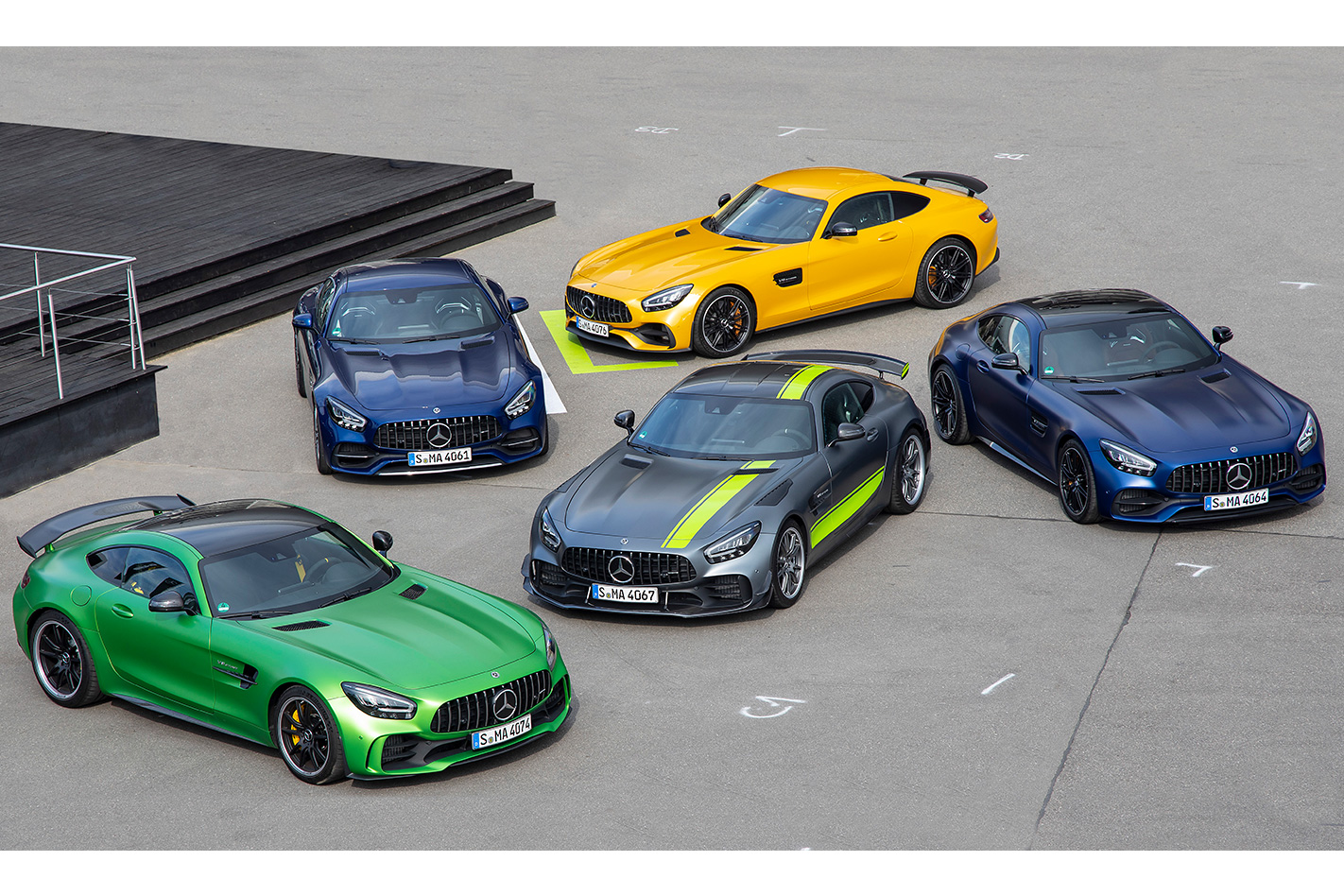
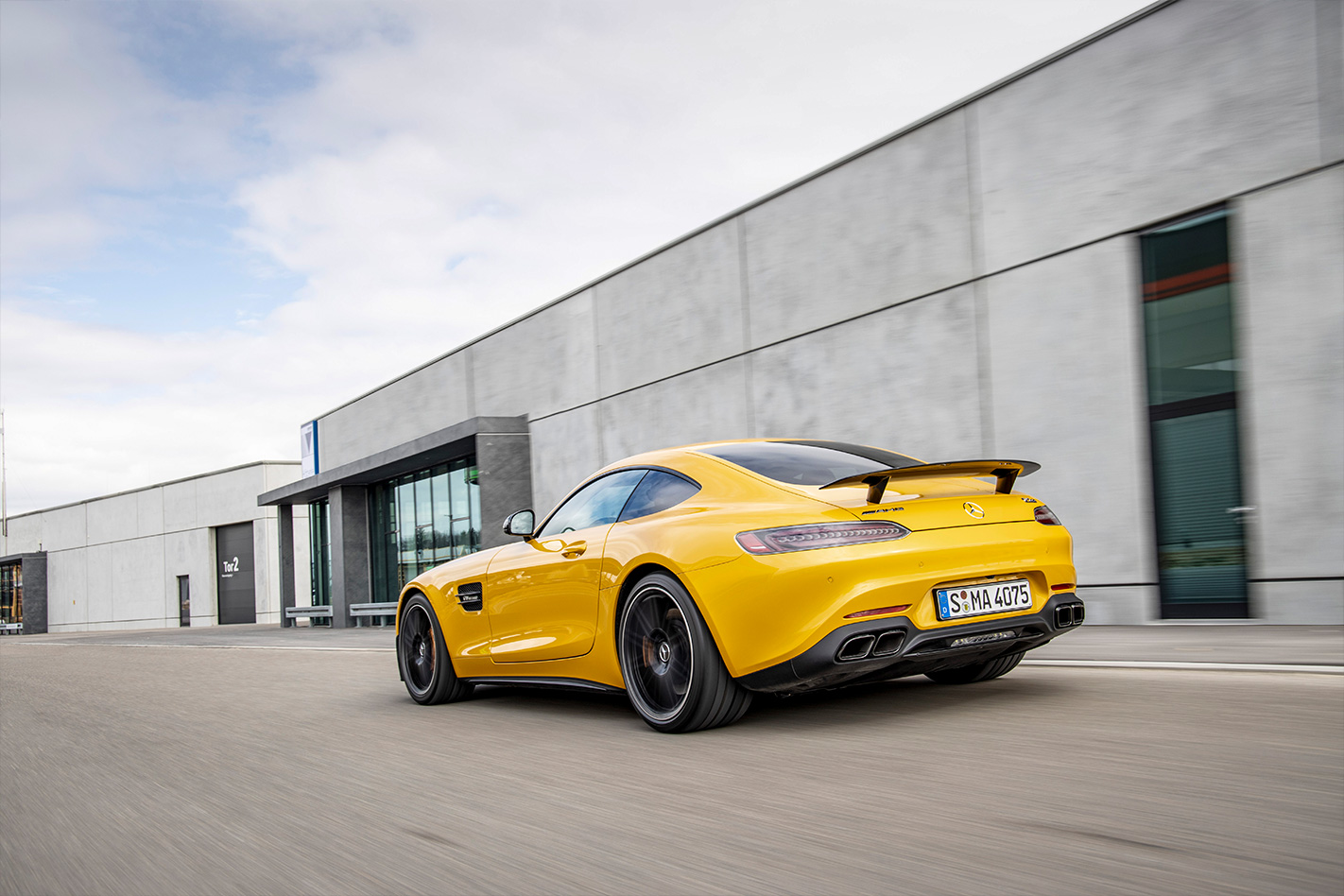
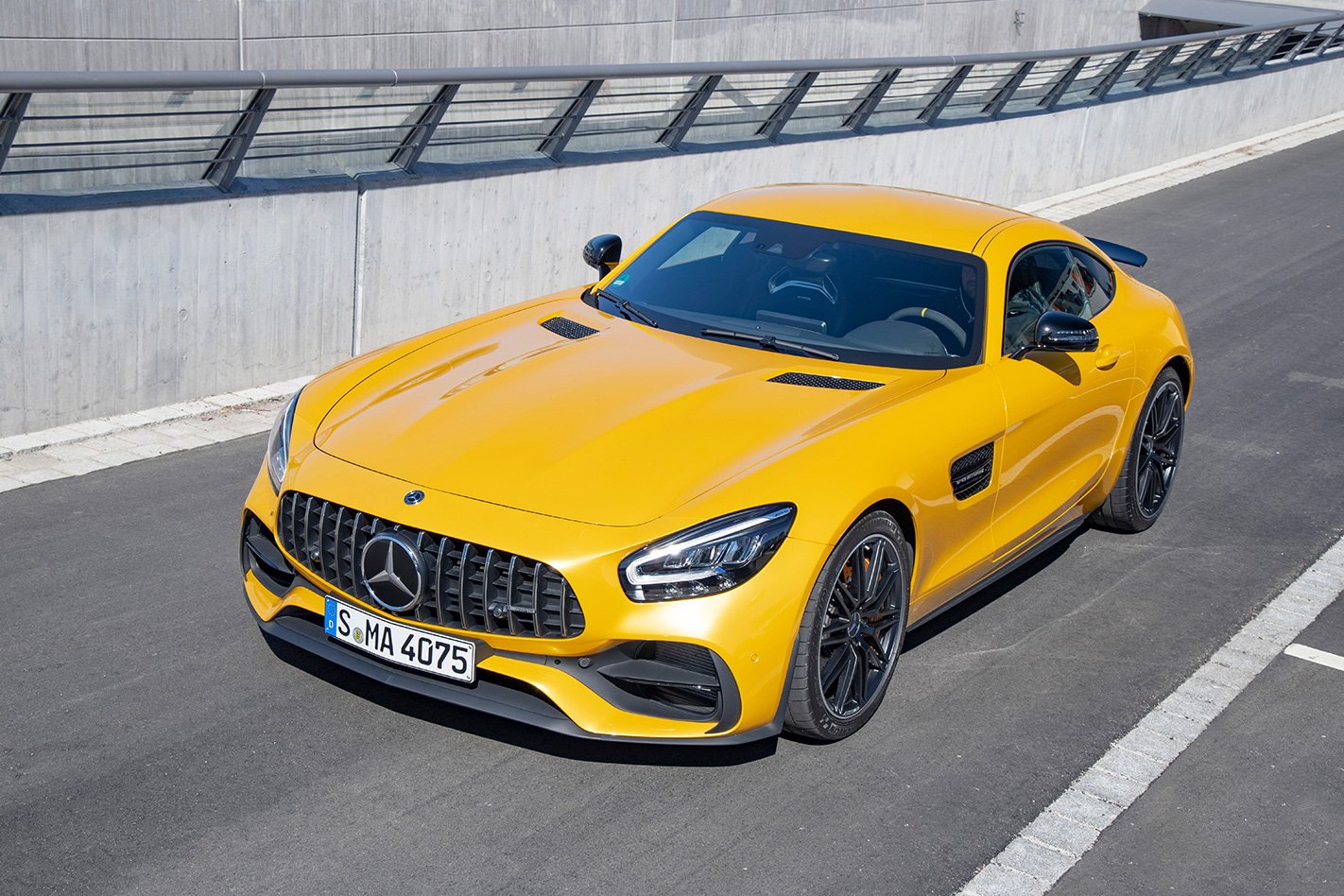
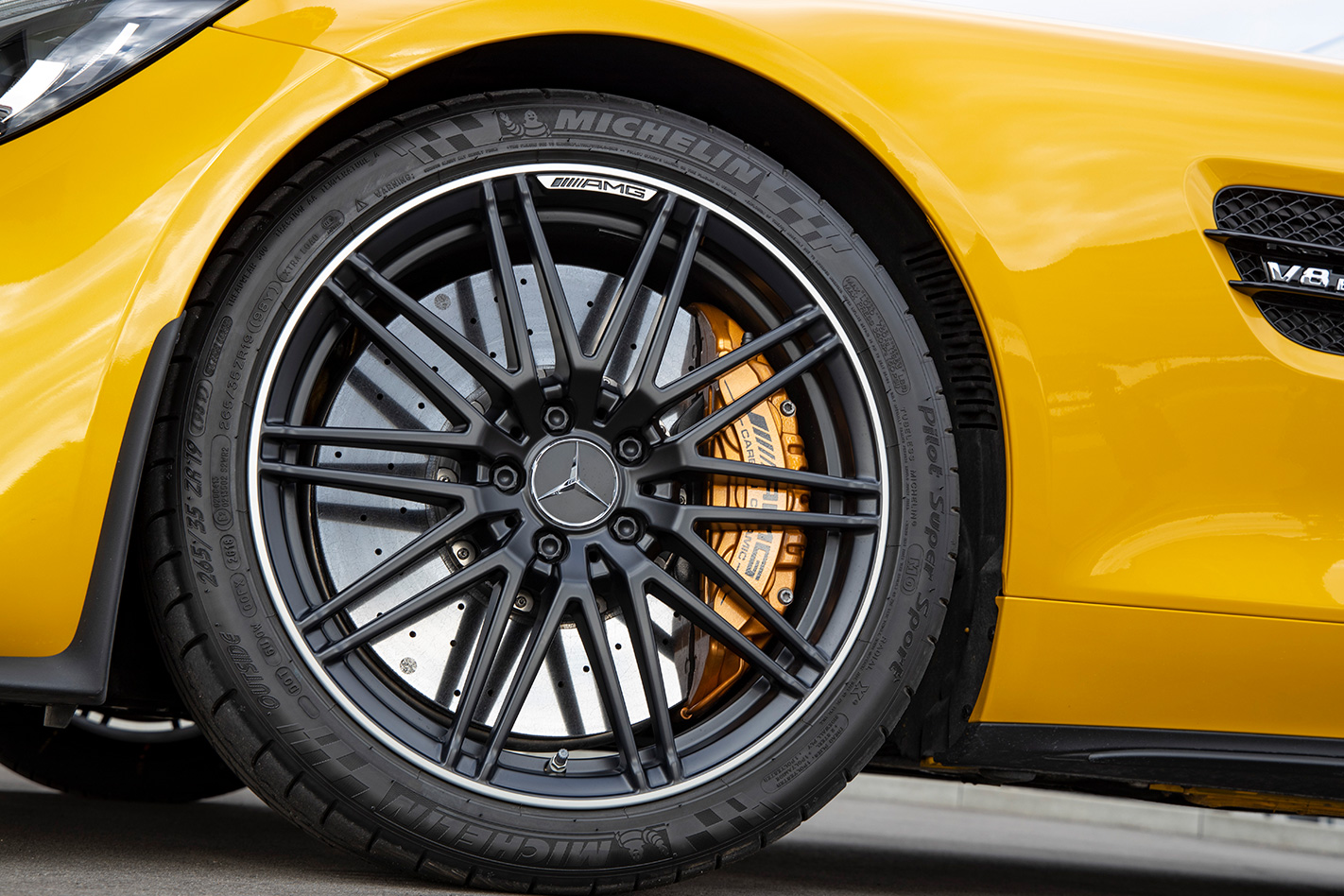
The design tweaks are relatively subtle, but help modernise what was already a handsome car. The daytime running lights now have a different LED signature, there are trapezoidal exhaust finishers, black background rear LEDS and a more extrovert diffuser on the GT S and GT C models, while revised alloy wheels in black and titanium finishes are now offered.
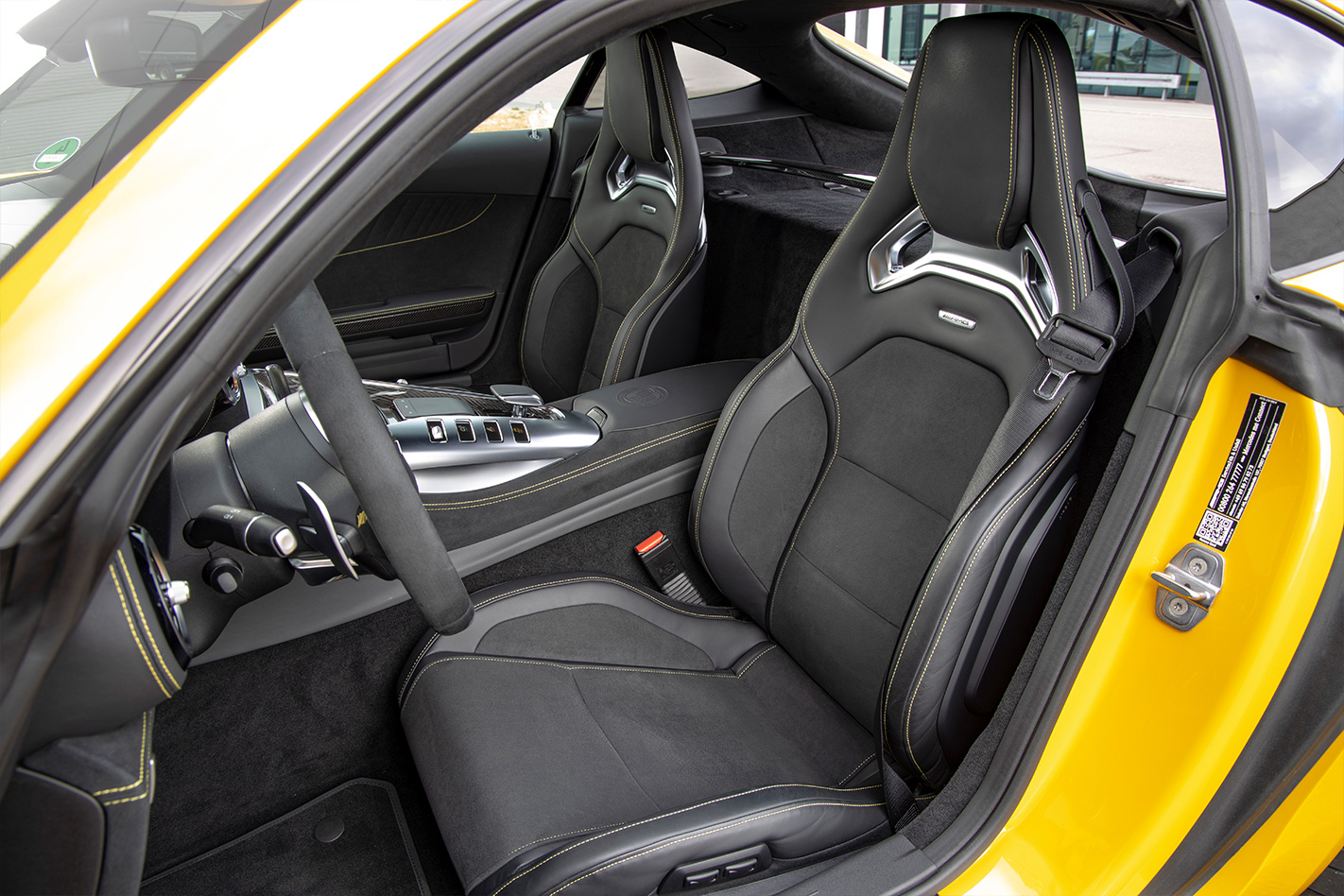
Drop inside the snug cabin and you’ll still be separated from your passenger by a vast transmission tunnel. You’ll still have to claw the GT into gear T-Rex style with a drive selector that’s set way too far back on the tunnel, but the ergonomics are otherwise good. There’s decent headroom in the coupe and, with roof in place, cabrio, a decent wheel-to-pedal alignment and even decent visibility in the mirrors.
A new Parktronic system of sensors and cameras takes some of the anxiety out of sliding over two metres of width into a tight spot.
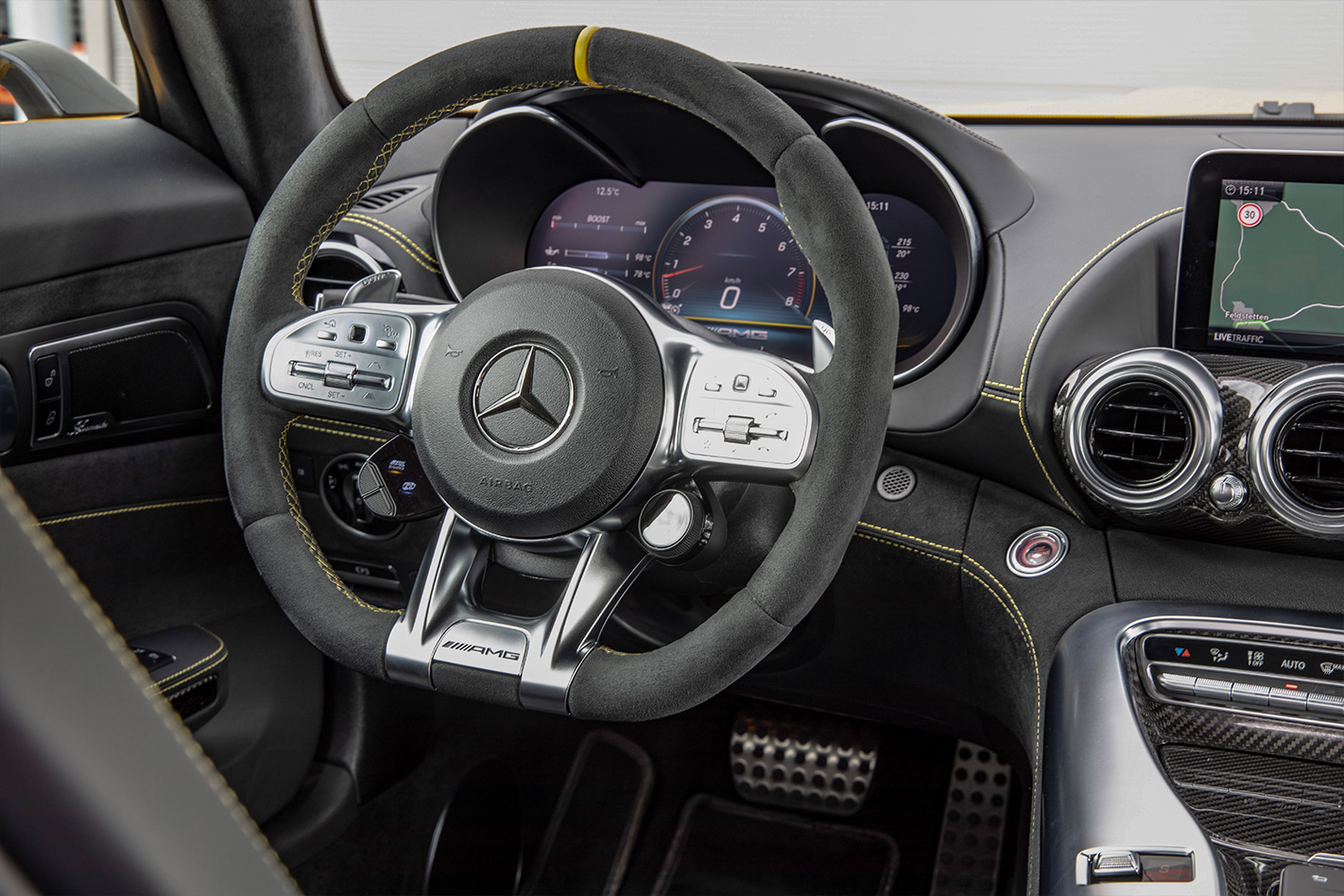
That centre stack is now indented with a series of TFT display buttons which mirror the functions on colour display buttons on the new steering wheel. There’s also a round mode selector that hangs off the right-hand spoke, allowing easy access to the six drive modes (Slippery, Comfort, Sport, Sport+, Individual and Race). The clocks are now a fully digital 12.3-inch pane which can be configured through three modes – Classic, Sporty and Supersport – the latter featuring shift lights for the seven-speed ‘box. In the middle of the dash is a 10.25-inch widescreen display that manages infotainment duties.
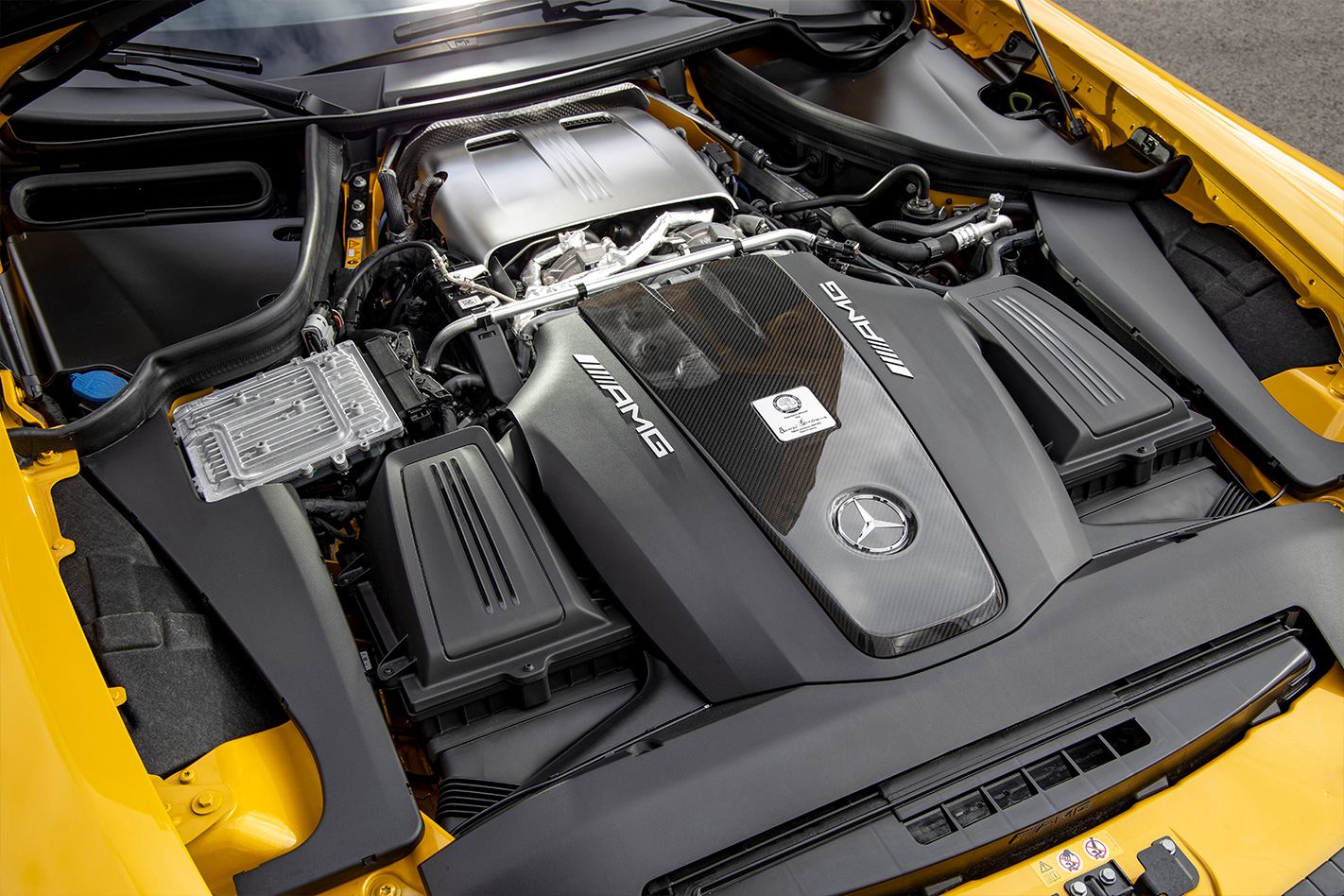
Performance, even in the entry-level (for us) GT S coupe is suitably crushing. The 4.0-litre V8 will punt 1590kg of car from 0-100km/h in 3.8 seconds and on to 310km/h. Step up to the GT C, and you get rear steer and another 10Nm for 680Nm at 2100-5500rpm, while the 430kW GT R hammers through 100km/h in 3.6 seconds. Active aero and a huge rear wing keep the GT R solidly planted and AMG offers an optional rear cage section and four-point harnesses.
In fairness, the AMG GT range didn’t need a lot done to keep it at the forefront of customers’ attention. The changes improve certain elements of its functionality but don’t make significant changes to its dynamic character. For better or for worse, it’s largely business as usual there.
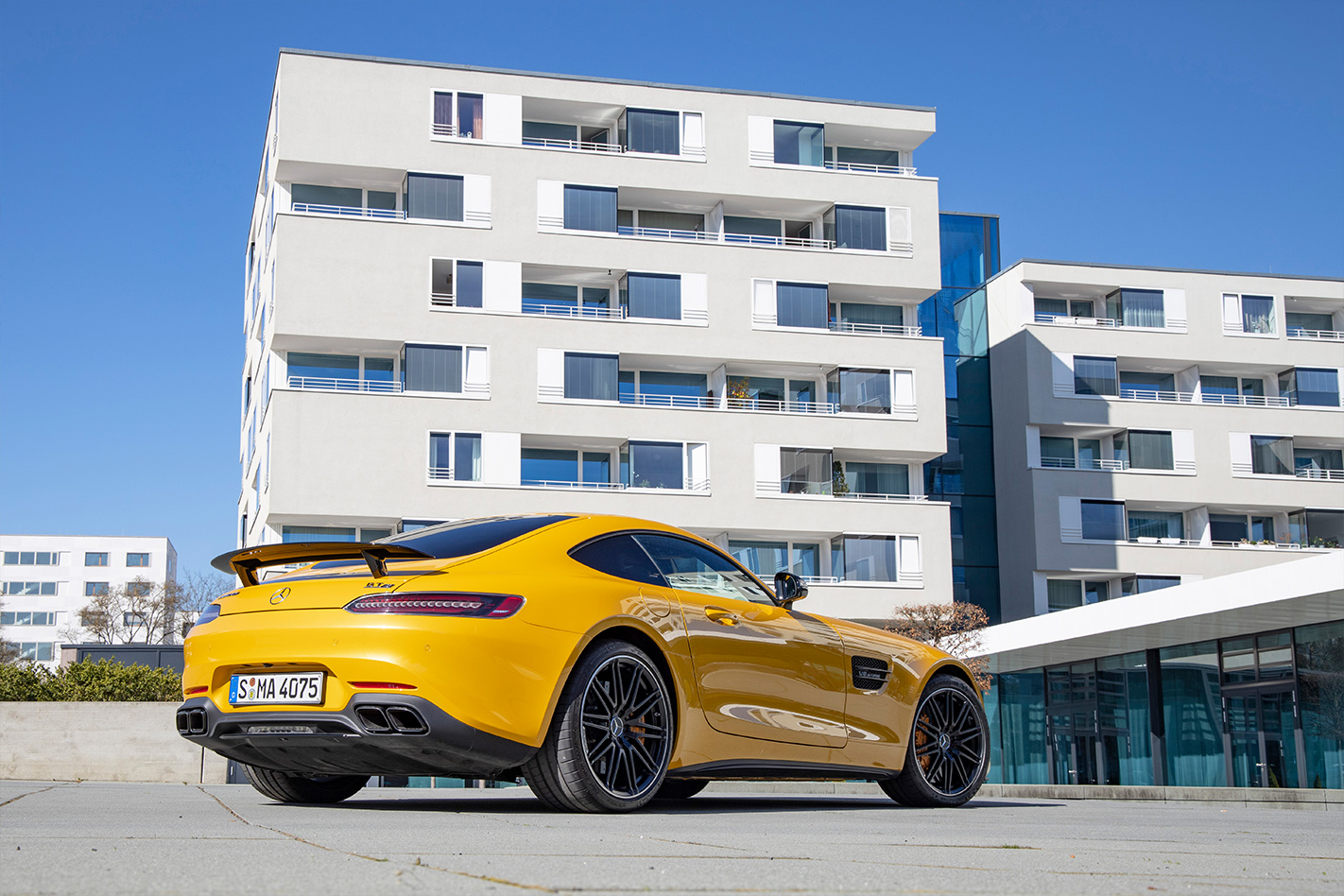
MERCEDES-AMG GT S PRICE AND SPECS AUSTRALIA
Model: Mercedes-AMG GT S coupe Engine: 3982cc V8, 32v, dohc, twin-turbo Max power: 384kW @ 6000-6500rpm Max torque: 670Nm @ 1900-5000rpm Transmission: 7-speed DCT Weight: 1590kg 0-100km/h: 3.8sec (claimed) Economy: 11.5L/100km (claimed) Price: tba On sale: October 2019
Got a mate who’s been to Japan? Odds are high they’ve already preached extensively on the miracle that is the Japanese rail network, and how it can take you from the packed megalopolis that is Tokyo to the shrine-filled serenity of Kyoto in just a few hours for a reasonable price and virtually zero stress.
And they’re not wrong – Japanese trains are truly impressive, especially for Australians accustomed to sub-par public transport – and for visitors to the country taking the train is a no-brainer. So why would you bother renting a car as a tourist? Believe it or not, you’re missing out on a lot if you steer clear of the good ol’ fashioned horseless carriage during your stay in Japan.
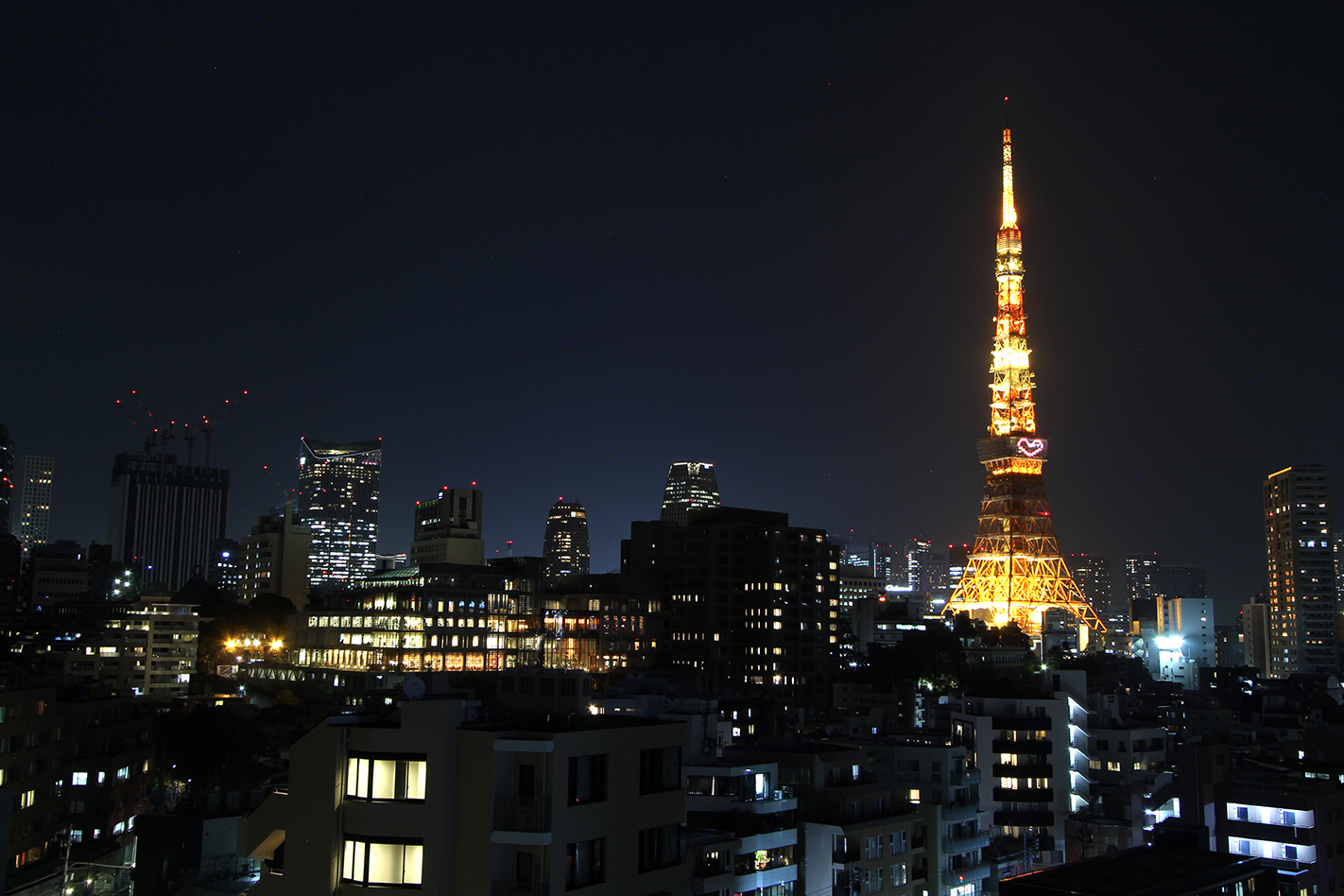
The Place
Japan offers that intriguing mix of the exotic and the familiar, with the country’s ancient history and cyber-punk present somehow coexisting side-by-side without conflict. It’s a land of tremendous contrast, and that dichotomy becomes immediately apparent if you venture outside of its sprawling major cities like Tokyo and Osaka.
This is a simple thing to do as a tourist, thanks to Japan’s virtually flawless public transit system and extensive rail network. Travelling via rail is fast, efficient and affordable, regardless of whether you’re travelling within a city or going from region to region, so it’s little wonder that rates of car ownership in the country are low compared to Australia.
But… what about renting a car? Is a Japanese road trip more fun or more stressful compared to travelling by rail, and, if you decide to do it, what’s the best way to go about it? We travelled to Tokyo to tour the countryside by car, and the short answer is this: if you can afford to do it, it’s something that’s absolutely worth doing, and something that will give you a different perspective on Japan. Read on.
The car
Our vehicle of choice for this roadtrip was a Honda Civic sedan – which is marketed in Japan in a single specification called simply “Honda Civic Sedan”. It’s roughly equivalent to the Aussie-market Civic VTi-L grade, meaning you get nice stuff like climate control, paddle shifters, and active cruise control, except with the 16-inch alloys of the lower-spec VTi-S instead of 17-inch items (they’re a cost option), and the addition of heated front seats (which aren’t available in the Aussie VTi-L).
It’s the cheapest Civic variant in Japan, but comes with plenty of gear as standard – stuff like Honda’s suite of electronic driver-assist technology, active cruise control, the aforementioned heated seats, folding and heated wing mirrors, Honda’s likeable 1.5-litre turbo petrol four, LED headlamps and plenty more. But while the Civic in Australia exists as a biggish small car, out on Japanese roads the Civic sedan feels much, much larger.
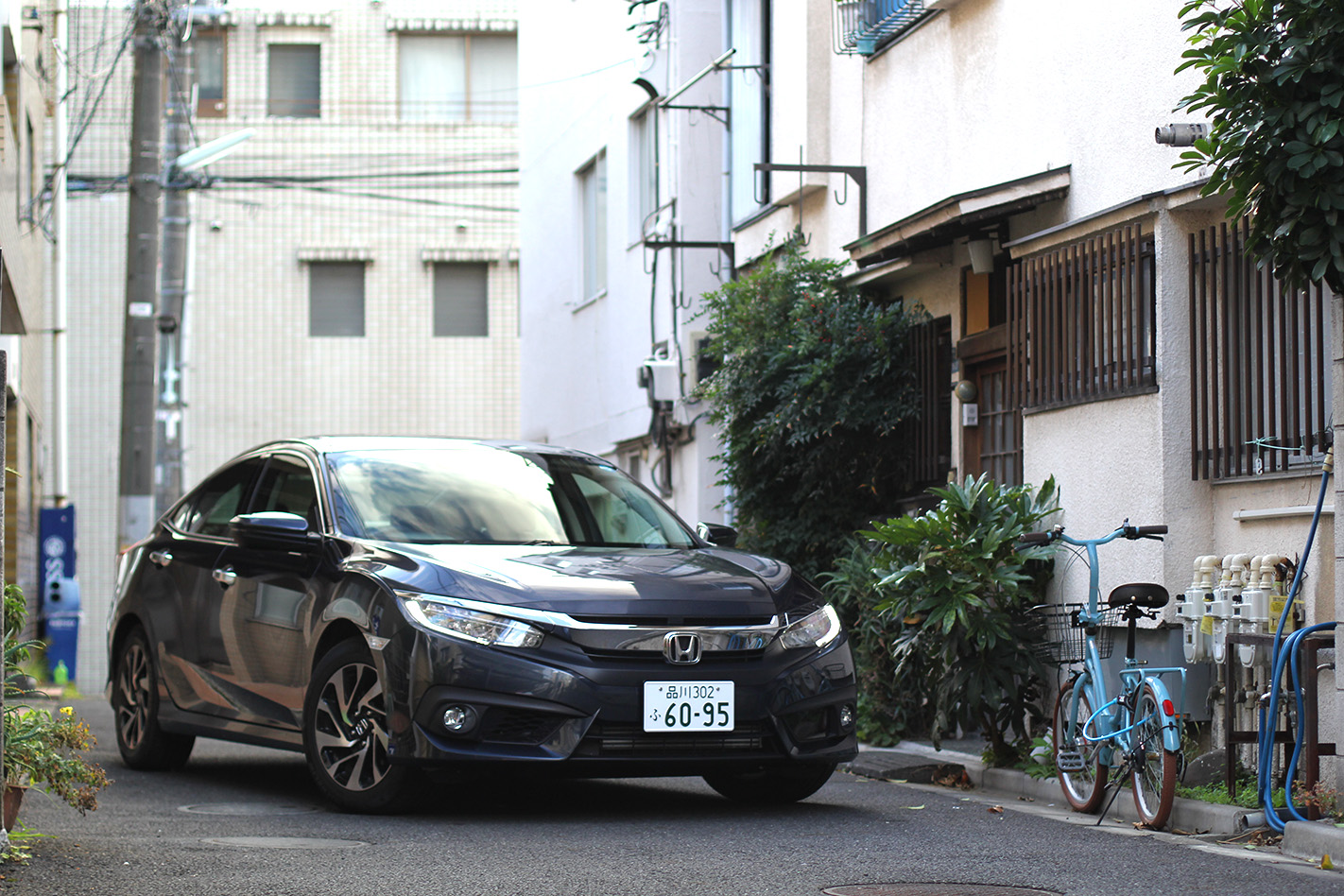
That’s especially apparent in the cramped urban backstreets of Tokyo, where the road can measure barely more than a car’s width and unforgiving concrete walls run incredibly close to your wing mirrors. A general rule of thumb when renting a car in Japan is to avoid large cars and people movers wherever possible.
It’s no surprise that city-dwelling locals tend to favour vehicles from the domestic microcar class (or kei class), which are narrow and nimble enough to deal with the cramped confines of a Japanese megacity. But, for travellers, the Civic exists right in the sweet spot.
As a roomy small sedan it’s got plenty of space for four adults, while its 519 litre boot capacity is simply massive. Even with three blokes, three full-size suitcases/duffels and more than a few bags of souvenirs to take home, the Civic never felt like it was wanting for space.
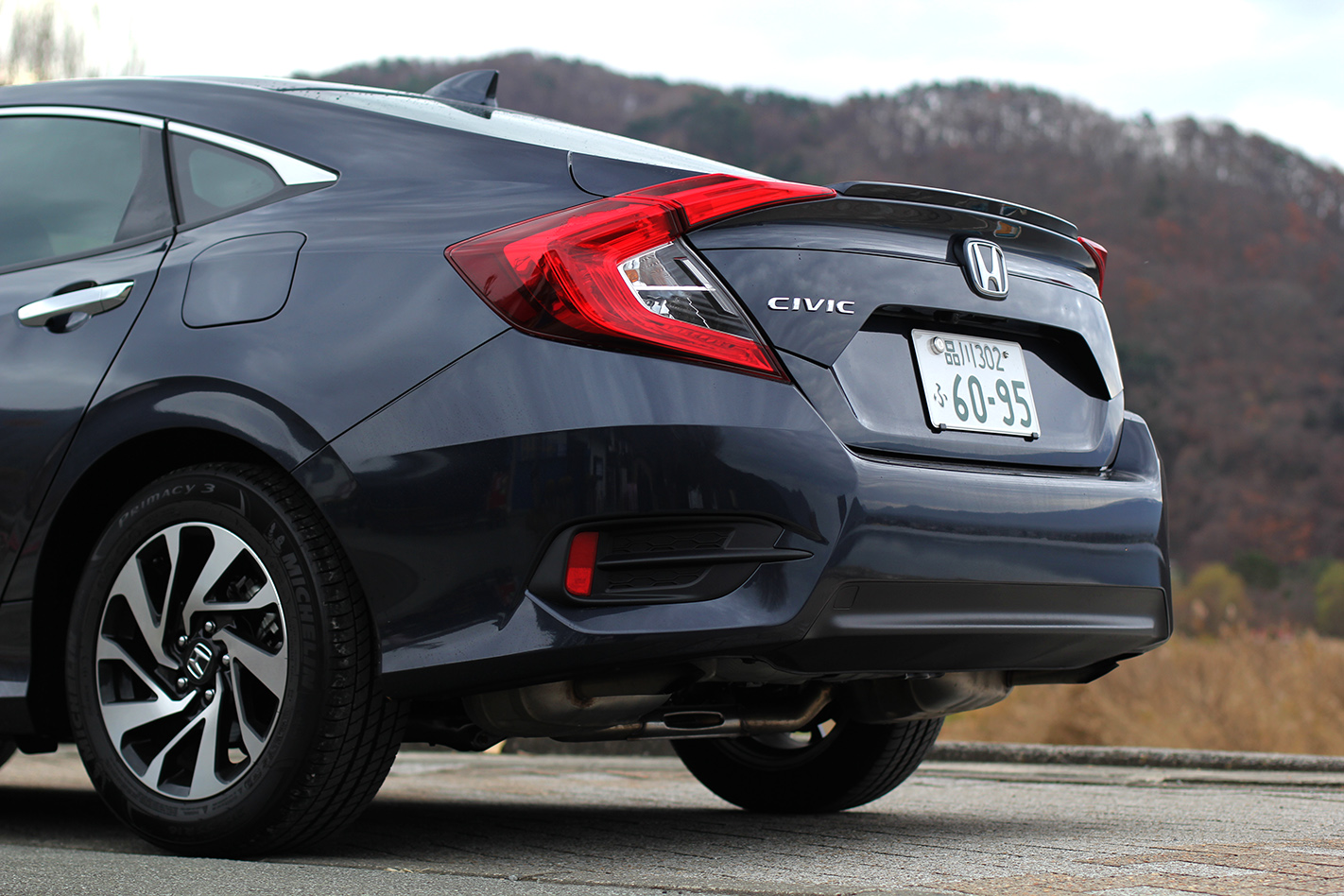
Its massive boot is a key advantage for travellers too – rather than having to lug your luggage with you from train to train, hotel to hotel, the car’s boot essentially serves as a mobile storage locker. Take out what you need, whether it’s an overnight bag or a day pack, and leave the rest. It’s a lot more convenient than using the coin-operated storage lockers at train stations for the same purpose, which is what you’d likely have to resort to if touring by any other method.
The Journey
I’m no stranger to Japan, but previous trips have seen me adhere to the common wisdom of never straying far from the Japanese rail system. It’s a practice that has served well in the past. After all, the rails stretch far and wide, and if you’re willing to walk a kilometre or two from the station there are very few things that are out of your reach as a tourist.
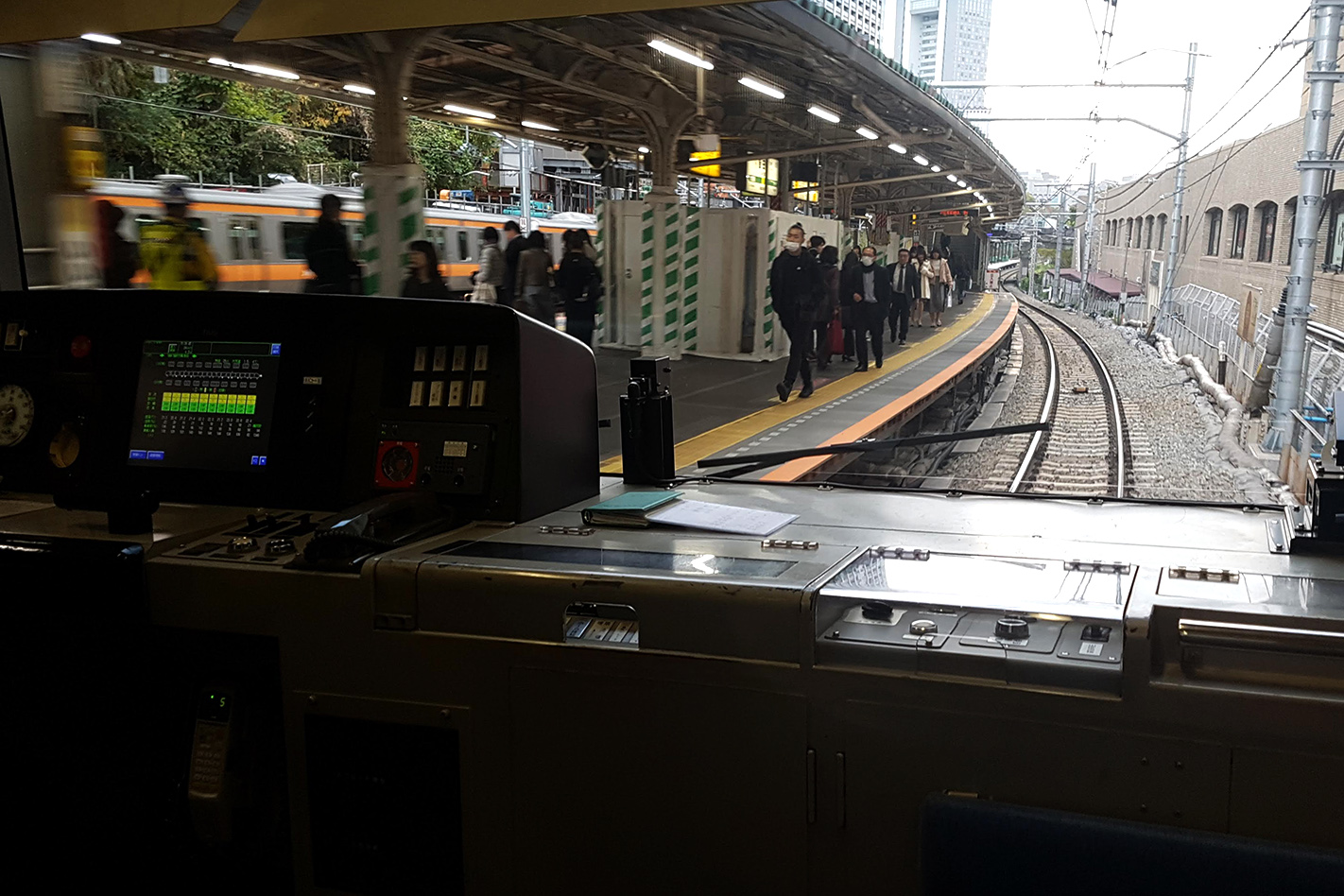
But for this trip, I wanted to try something different: a trip to Japan’s rugged and scenic interior to retrace sections of Japan’s medieval highway between Kyoto and Tokyo – the ancient Nakasendo, or Central Mountain Route.
The route runs east out of Kyoto, Japan’s former capital, before turning north through the Kiso Valley. As the valley gives way to the plains of Nagano prefecture, the Nakasendo ends and the Koshu Kaido begins, taking travellers the rest of the way east to Tokyo. Though regarded as a ‘highway’, the route was a simple path cut through forests and traversed mainly by foot – trains and cars were hundreds of years away when Japan’s first highway networks were established – and the route had been traversed by traders, travellers and others long before the Nakasendo was formally named in the 17th century.
Our journey to the Nakasendo begins from Nihonbashi, a bridge in central Tokyo that’s been used for many centuries as the terminus for Japan’s major inter-city travel routes, and the point from which highway distances are measured from Tokyo – including the Nakasendo. We take a slightly different route though, setting out south to skirt the western edge of Tokyo Bay and head to the port city of Yokohama.
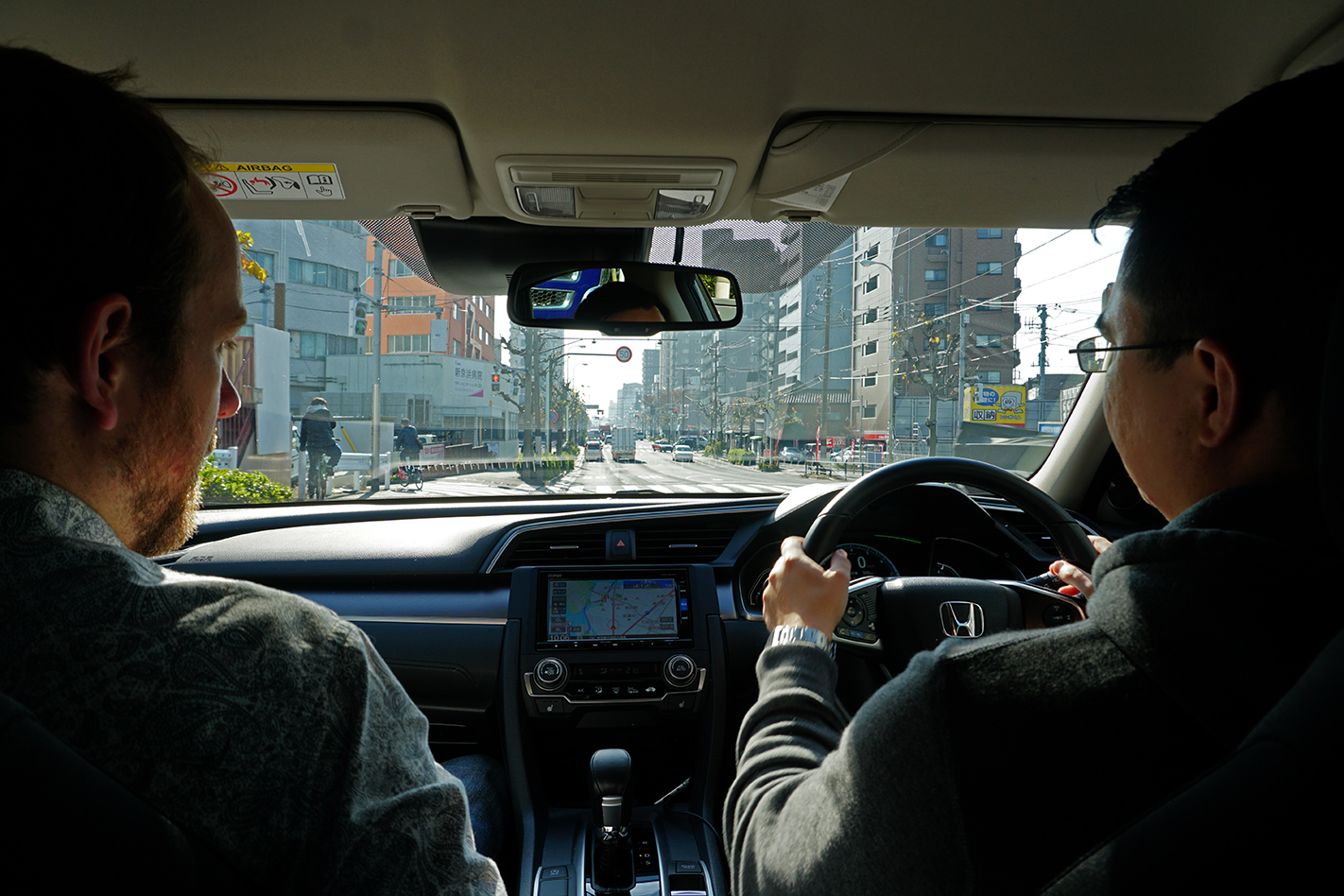
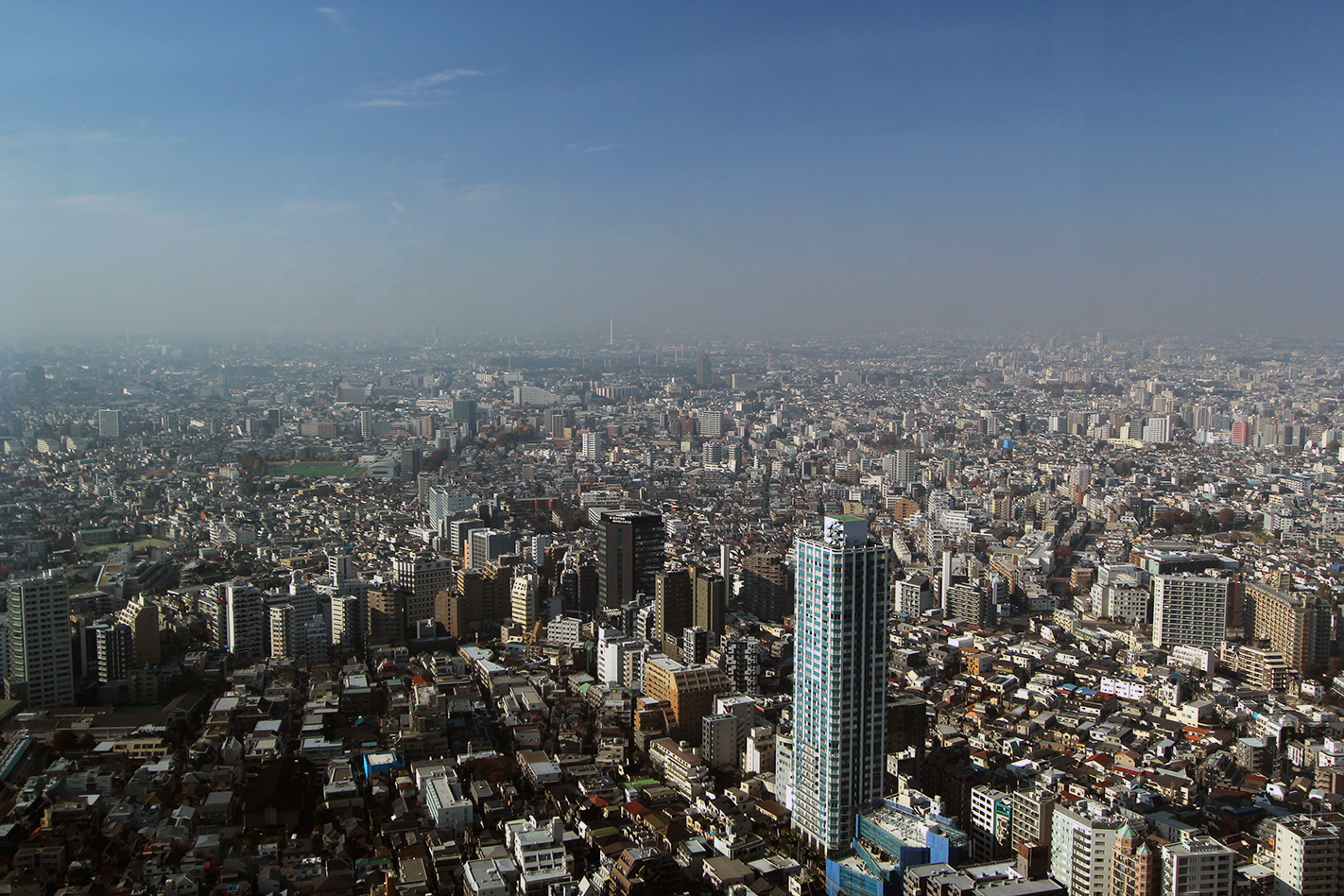
It doesn’t take long for one thing to become quite clear: the further away you get from Tokyo, the less stress you feel behind the wheel. The density of the buildings doesn’t really get any lower until much closer to Yokohama – unsurprising, given Tokyo is the one of the largest and most densely-populated urban areas on earth – but the traffic eases up noticeably after just a few kilometres.
We’re still at ground level for this portion of the trip too, having made a conscious decision to skip the expensive-but-fast toll road known as the Wangan that extends from Tokyo to Yokohama. Though a little slower, you do get to see a different side of Tokyo by bypassing the expressways. It’s not quite as lively as the main activity centres like Shibuya, Shinjuku, Akihabara or Ginza, but it’s areas that are a little further from Tokyo’s main railway loop, the Yamanote Line, where the bulk of Tokyo’s denizens live.
However unless you’re hunting down a specific shop or visiting a friend, there usually isn’t much reason for tourists to stop in these parts of town, and if you do you’ll have the additional challenge of finding a convenient place to park (see below for our tips on parking in Japan).
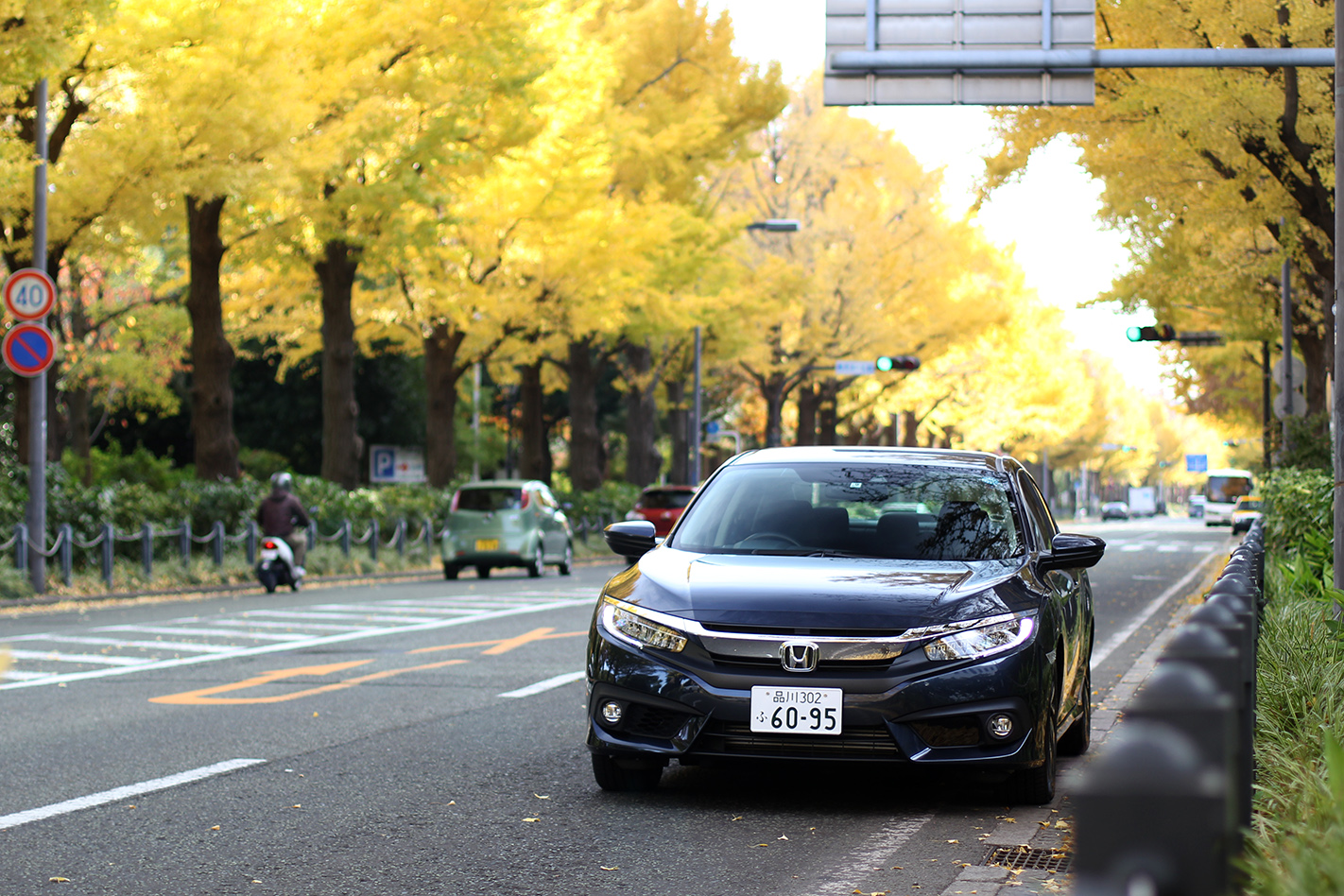
After a couple of hours driving through Tokyo’s bayside suburbs we arrive in Yokohama for an overnight stop, staying at the historic Hotel New Grand on the city’s picturesque waterfront. Against the hustle and bustle of Tokyo, the more relaxed atmosphere in Yokohama is a welcome change.
Known for industry and shipping, the port city also boasts significant foreign influence thanks to its status as an important trading centre, and you can still see remnants of that in the distinctly western-influenced architecture in its old quarter, located not far from the New Grand – not to mention its sprawling Chinatown district.
It’s a different, more modern taste of Japanese history compared to Tokyo’s myriad temples and the huge Imperial Palace, but our objective is to go even further back. But first, we want to get up close with Japan’s most recognisable natural wonder – Mount Fuji.
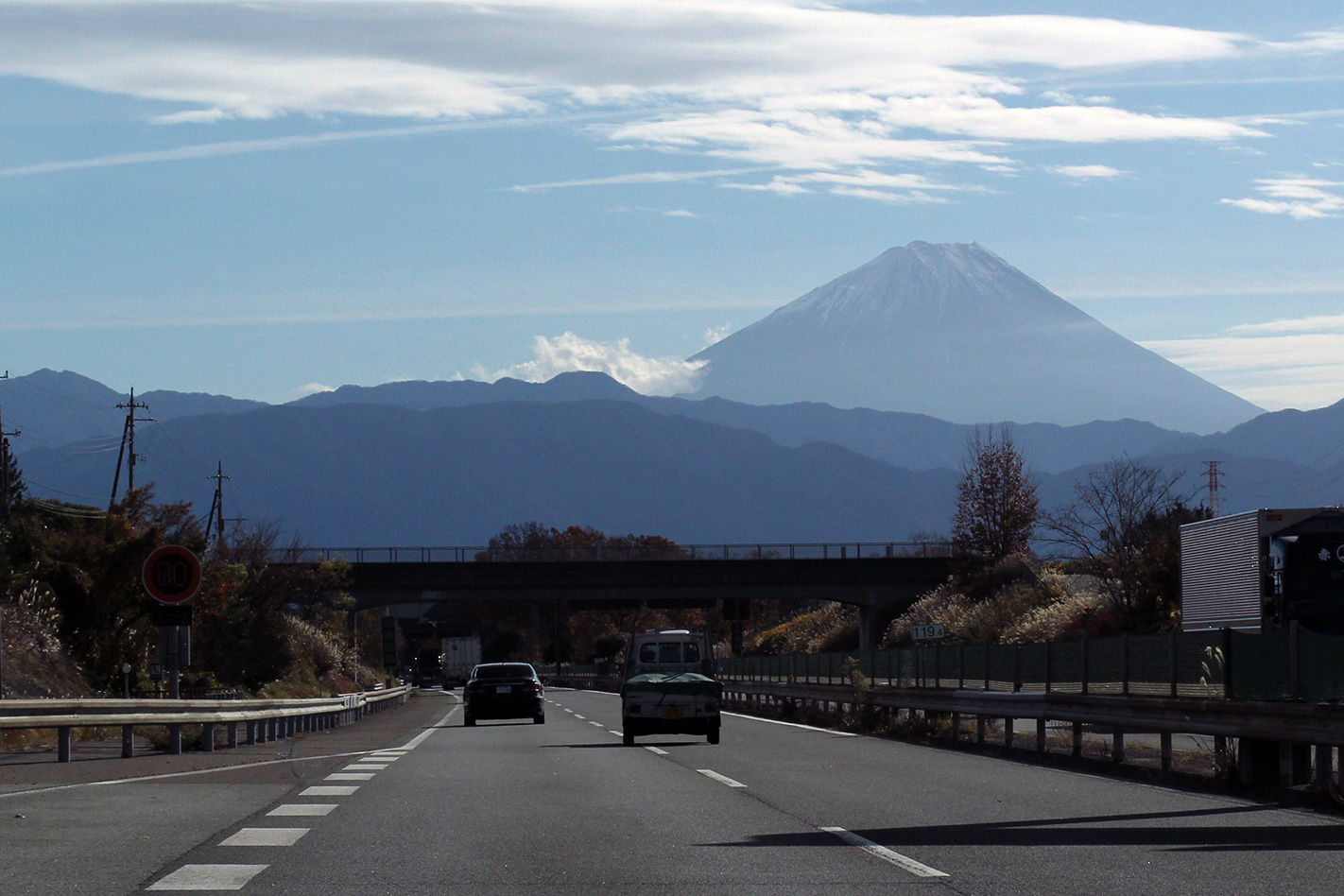
The almost perfectly conical volcano is visible from as far as Tokyo on a clear day, but the closer you get the more awe-inspiring it becomes – hence why we tracked so far south rather than bee-lining west to our objective of the Kiso Valley and the Nakasendo.
After our stopover in Yokohama we turned inland, driving alongside the Tomei Expressway toward Mount Fuji before heading into the Fuji foothills at Oyama.
After spending most of the day at Fuji Speedway to witness the annual Nismo Festival, we drove further into the mountains, crossing over into Fuji’s Five-Lakes district and on to Lake Kawaguchi for another overnight stay.
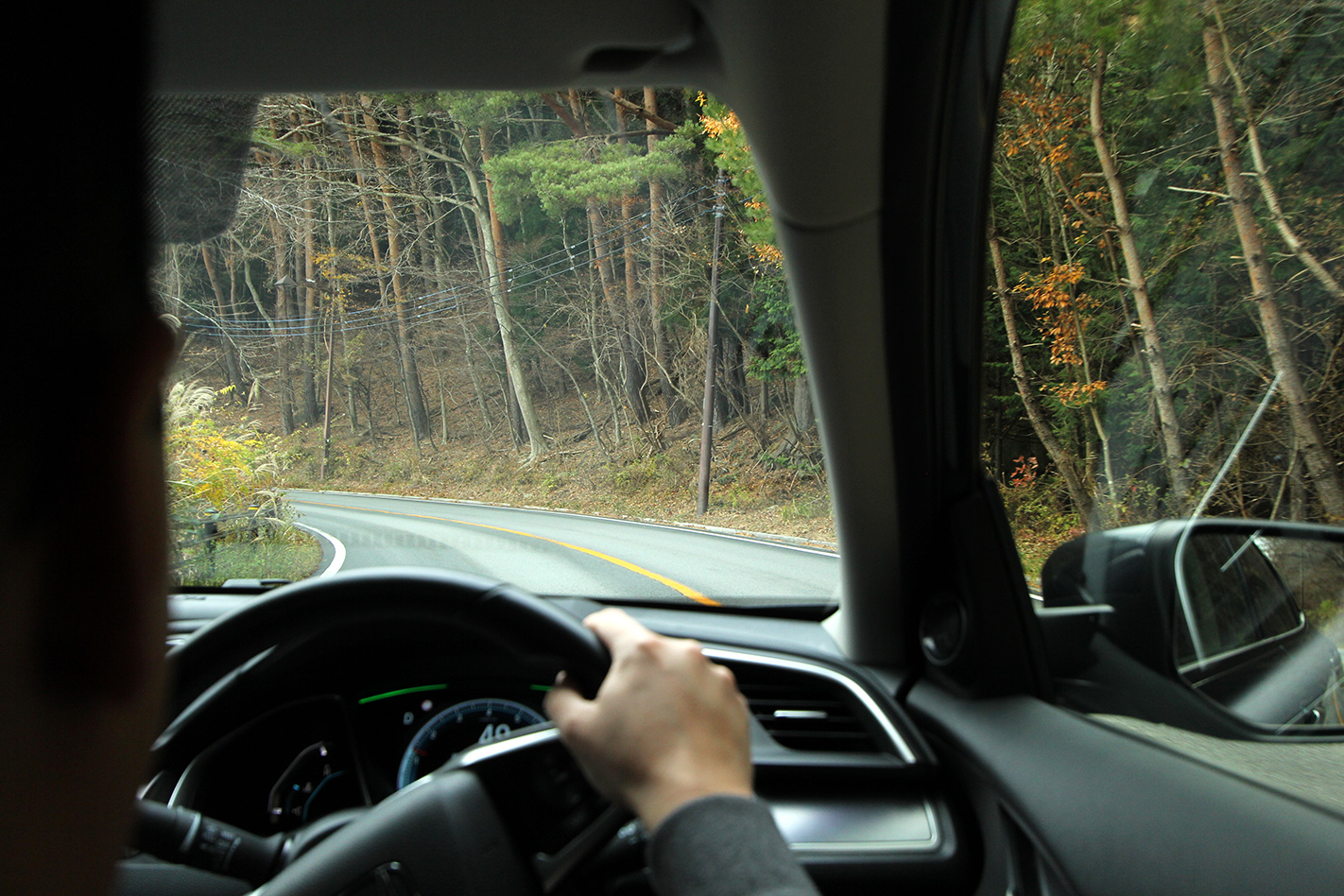
It’s here where the roads become more interesting, winding their way up steep slopes and narrowing significantly. The Civic dealt with it admirably, its turbo engine providing enough grunt to get our gang moving smartly, and its responsive and grippy front-end instilling confidence on these twisty – and in our case quite damp – roads.
By this point in time it was getting dark too, but the rainclouds cleared just long enough for us to get our first fleeting glimpse of Mt Fuji from up close, looming ominously above us in the near-darkness. It’s hard to describe the sheer presence of the mountain in words, but from just 10km away it’s easy to understand how the snowcapped Fuji has inspired generations of Japanese poets and artists. It really is a sight to behold.
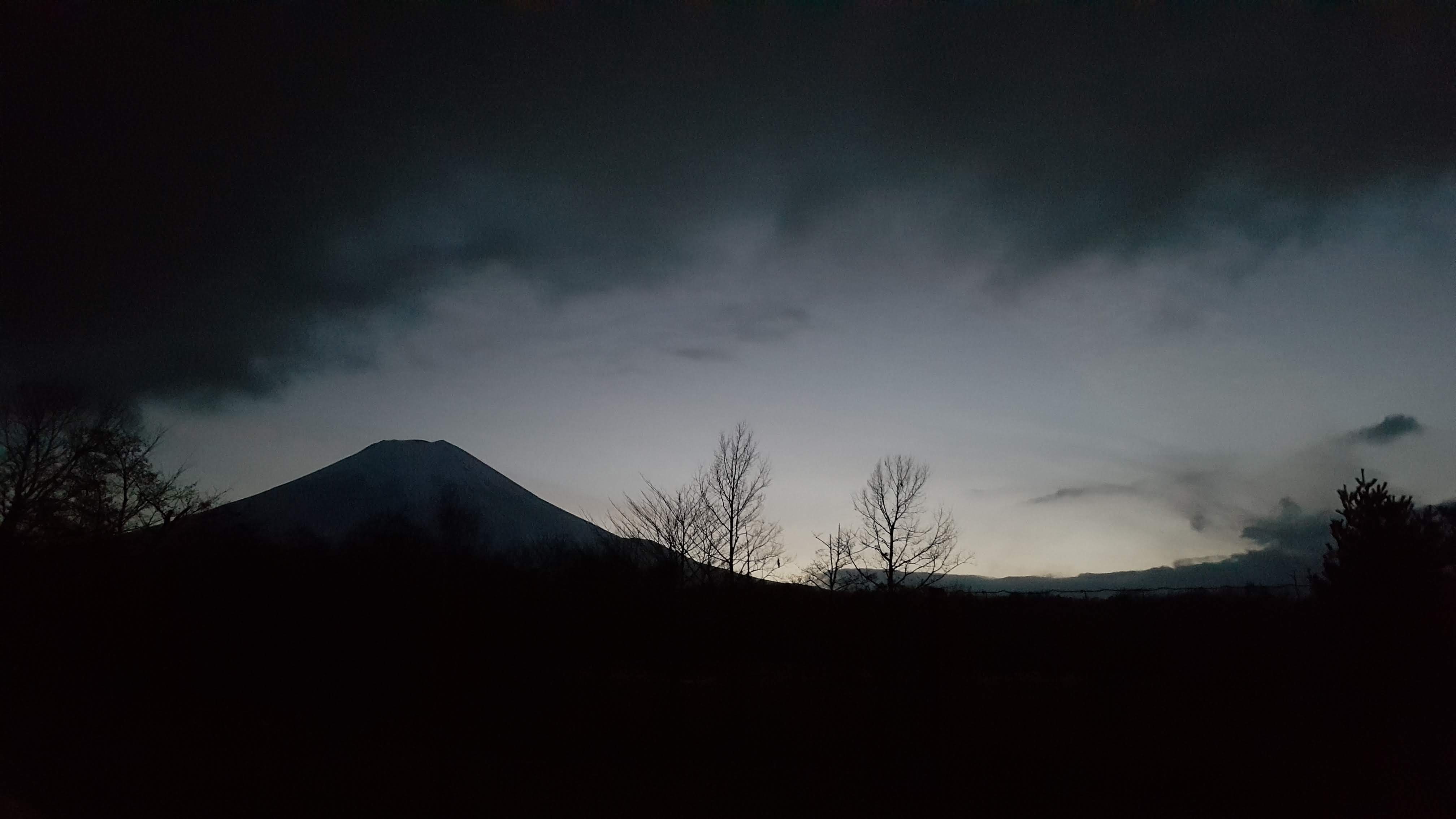
And if you want to get the best views of Japans countryside, it certainly helps to have a car. The flexibility offered by being able to stop at any of the frequent roadside vista points and take a few snaps is hard to beat, and impossible to do if travelling by train. It’s something we certainly appreciated the following morning as we drove along the shores of Lake Kawaguchi and took in the stunning vista of Japan’s iconic peak.
Travelling west from the Fuji Five Lakes area took us further into the mountains. If all you’ve experienced of Japan is the mostly flat coastal plains that big cities like Tokyo and Osaka are built on, then travelling through the virtually vertical hills and valleys that make up the country’s interior regions may take some adjustment.
The roads hug the hills, and tunnels bored right through the heart of the steepest obstacles are the only means of shaving hours off of your trip. The novelty of entering a tunnel in bright daylight and emerging at the other end into dense fog never gets old, but as a driver you do need to stay on your toes. The weather in these parts in winter certainly is … variable.
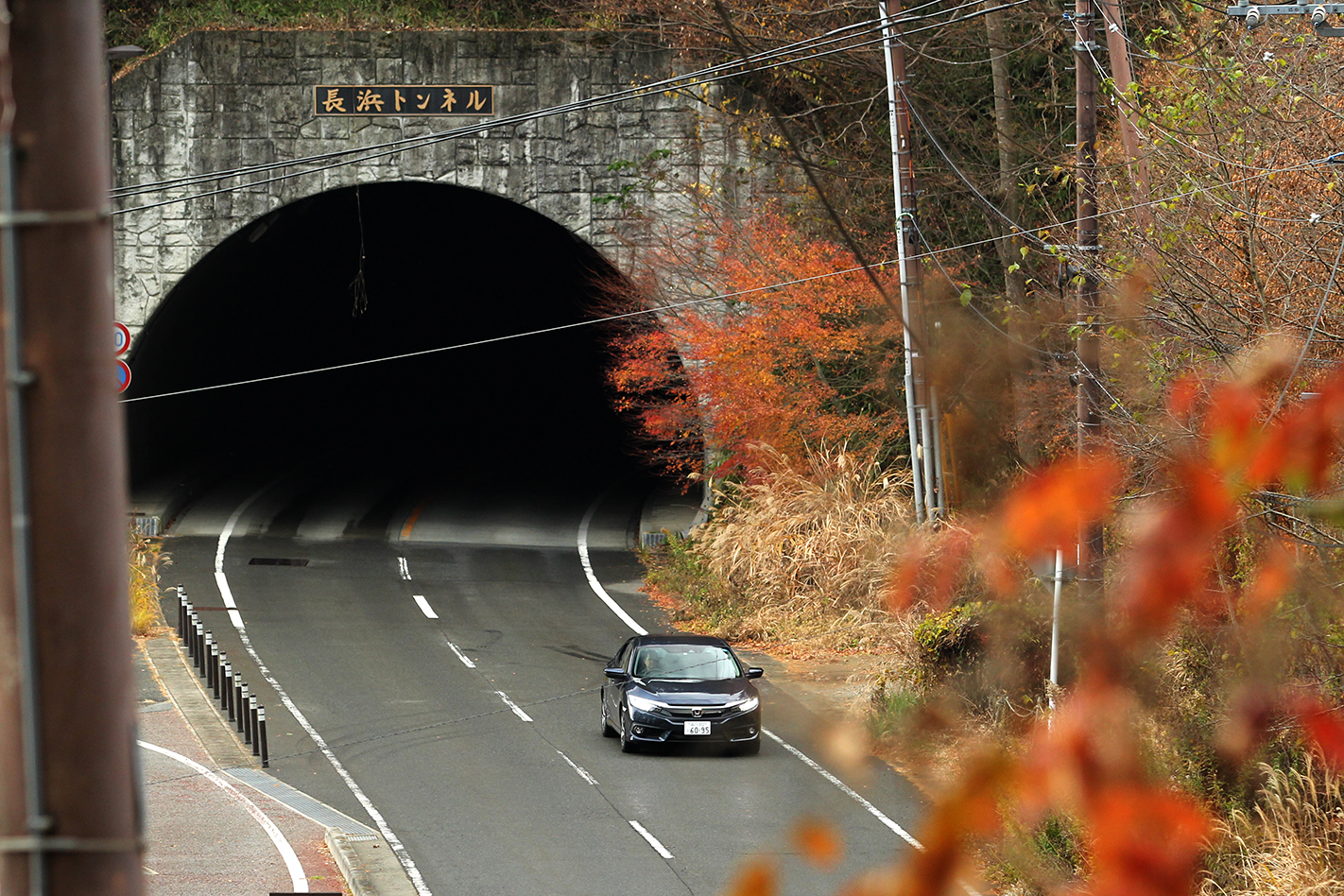
It sure is nice to be warm and snug inside a car though. Japan can get pretty wet and frosty in December, so being able to sit in a climate-controlled steel box as you travel from A to B is a definite advantage, not to mention the door-to-door convenience of not having to schlep by foot from train platform to accommodation.
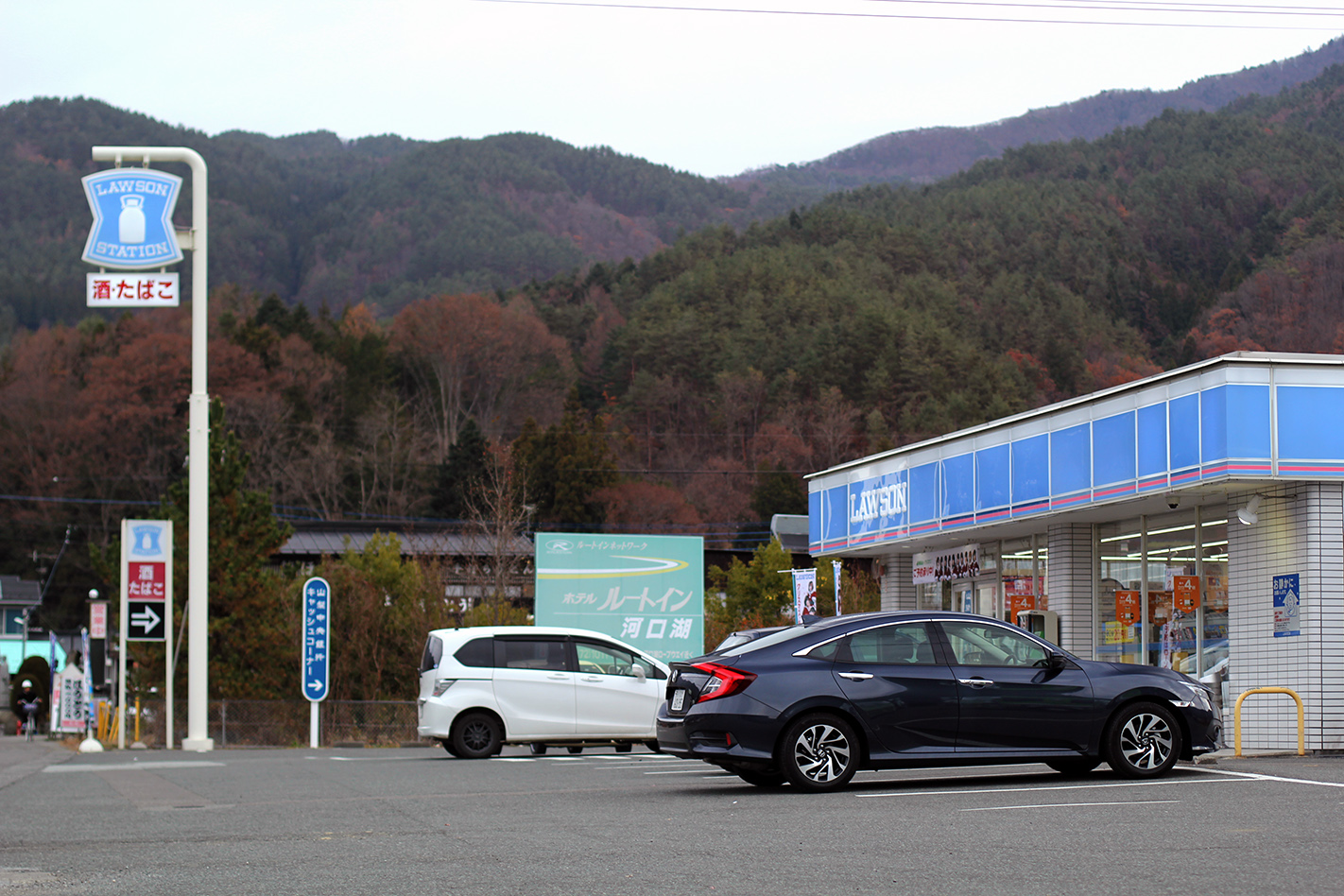
It’s something that becomes even more invaluable in rarely-touristed cities like Kofu, which we passed through on our journey, stopping only to pick up some road trip supplies. In places like these, using a car isn’t just “less inconvenient” than in Tokyo, it’s actually preferable to relying on trains and buses that are often much less frequent than in Japan’s big cities.
But Kofu City is fairly charmless, so we press on westward. Turning south into the Tenryu-kyo valley, we then enter another series of tunnels that penetrate the Kiso Mountain Range to reach our objective: the Kiso Valley.
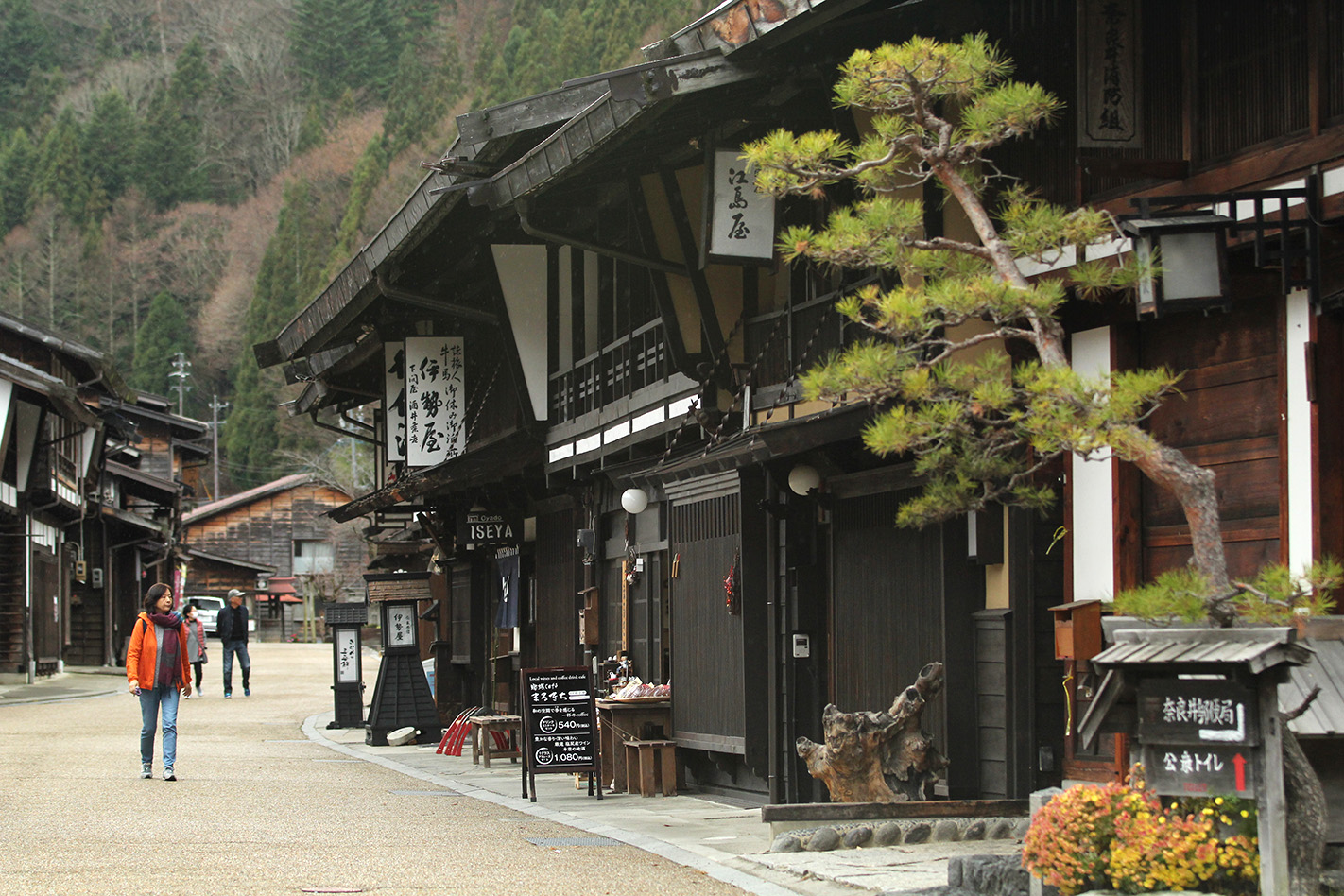
After another overnight stay at a charming Ryokan further down the valley, (a more traditional and much more hospitable option to a conventional hotel) we hit the road once more to reach the place we’ve travelled so far to find, the post town of Narai-juku.
Entering Narai is like travelling back in time to Edo-era Japan, circa 1600AD. Almost exactly halfway between Tokyo and Kyoto, the small township is a protected historic site and a faithfully preserved representation of what a post town – essentially a place to stay overnight for travellers – was like back in the Nakasendo’s heyday. It’s not the only well-preserved post town in the Kiso Valley either – a few of the original 69 Nakasendo post towns have survived or been restored to their former glory, with Tsumago-juku at the southern end of the valley being another well-known historic attraction.
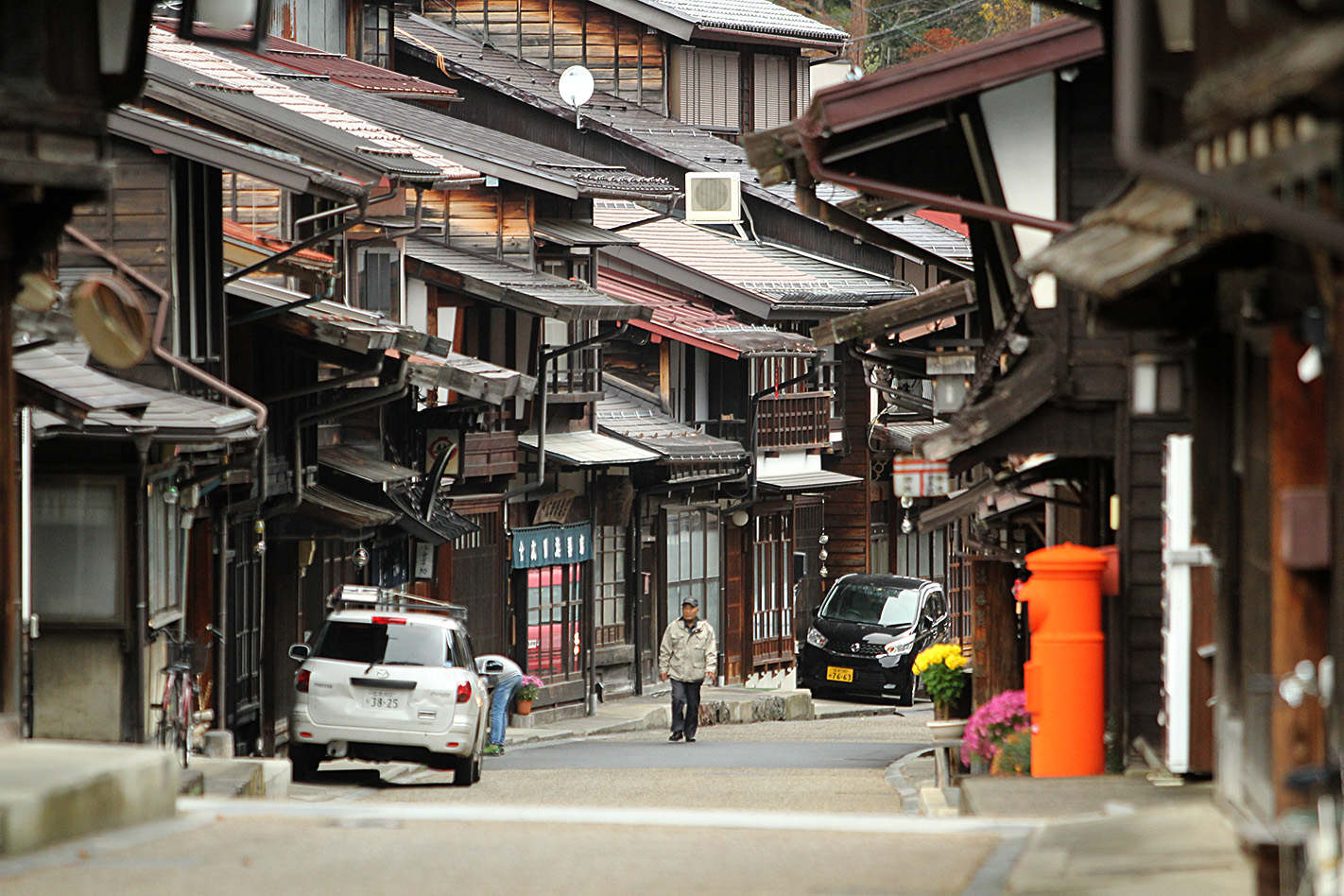
We’ve come in the off-season, but there’s more than a few people walking Narai’s length and taking in the township. Come in spring or summer, however, and the main street can be a logjam of domestic and international tourists.
With its main street lined by charming wooden houses, a mixture of residences, stores and eateries, strolling through Narai is a serene change of pace from the urban chaos of Tokyo. It also feels very authentic. Though a historic site, it’s still a functioning village with permanent inhabitants who live, work and raise families there. Sovereign Hill, it ain’t.
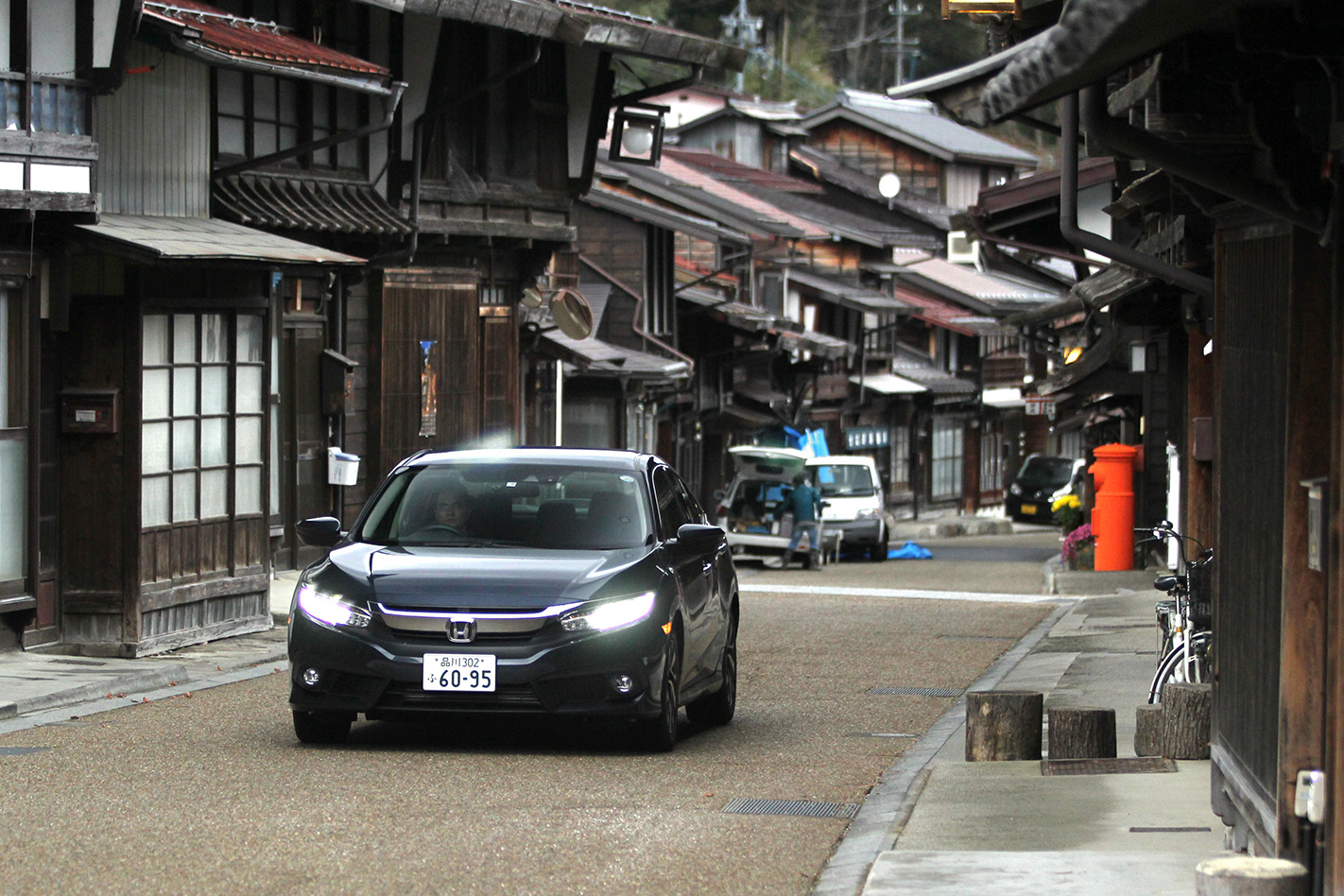
It’s a thought that’s not lost on us as we fast-track our way back to Tokyo the following day, this time hopping on the Chuo expressway toll road to get back to the city pronto to hand ‘our’ Civic back to Honda.
These expressways flow quickly, and even though we have to stop every now and then to pay a toll (see below for tips on dealing with Japanese tollways), we cover a lot of ground efficiently. A trip that would have taken a week by foot back in Edo-era Japan takes us just four hours in the Civic.
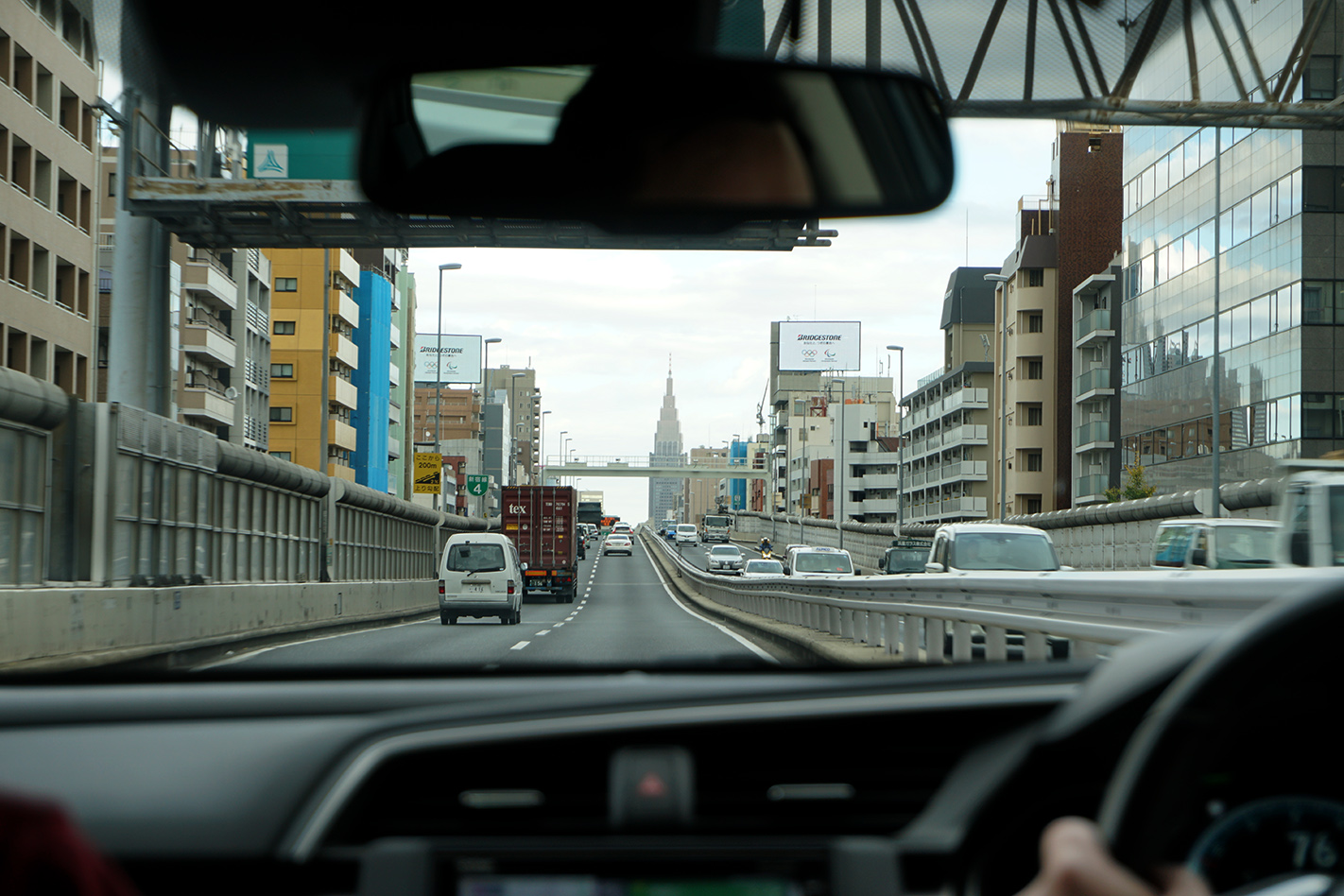
Could we have taken the same journey without a car? Absolutely. There’s no denying that Japan’s train and bus systems are the gold standard, and nine times out of 10 you’ll be able to visit any tourist attraction you like without needing to hire a car.
But there’s no way we could have done the trip that we did without one – at least not in the time we had available. The flexibility a car offered us and the ability for us to leave at a time of our choosing and take a route that interested us was absolutely invaluable. You can craft a much tighter itinerary if you tour Japan’s countryside by car, and it also leaves you spending less time waiting in bus stops and train stations – in other words, you spend far more time actually seeing the sights, the very thing you came to do.
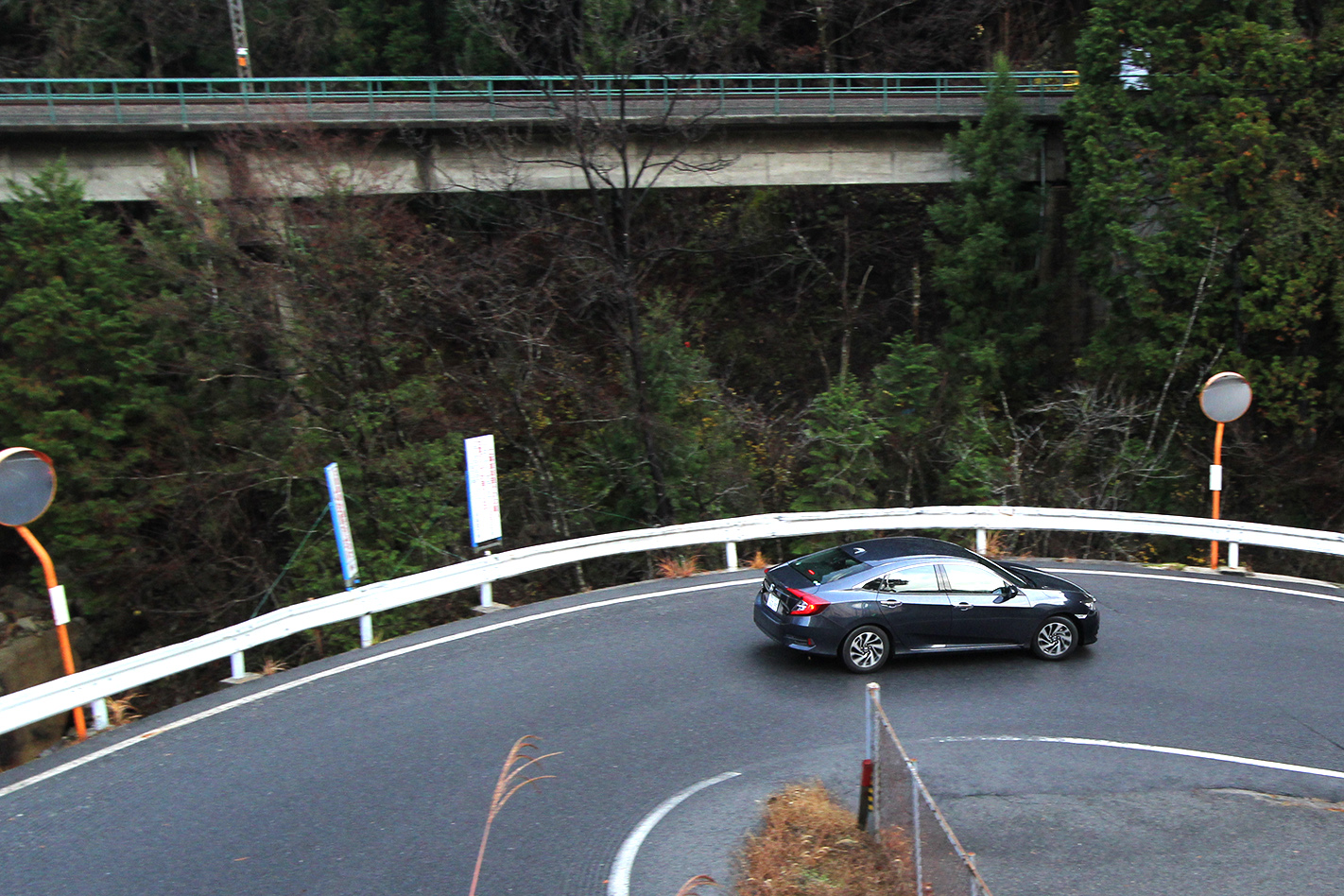
And if you’re travelling as a group of three or four people, hiring a car also becomes quite cost-effective. Even if you use a few toll roads during your journey, the ability to spread those costs among multiple people can make a car a better financial proposition than spending a few hundred dollars on train tickets and bus fares.
So if you’re planning on heading off the beaten track in Japan and you’d like to spend some time in its scenic countryside, do yourself a favour and skip the train. Why live your life according to a schedule?
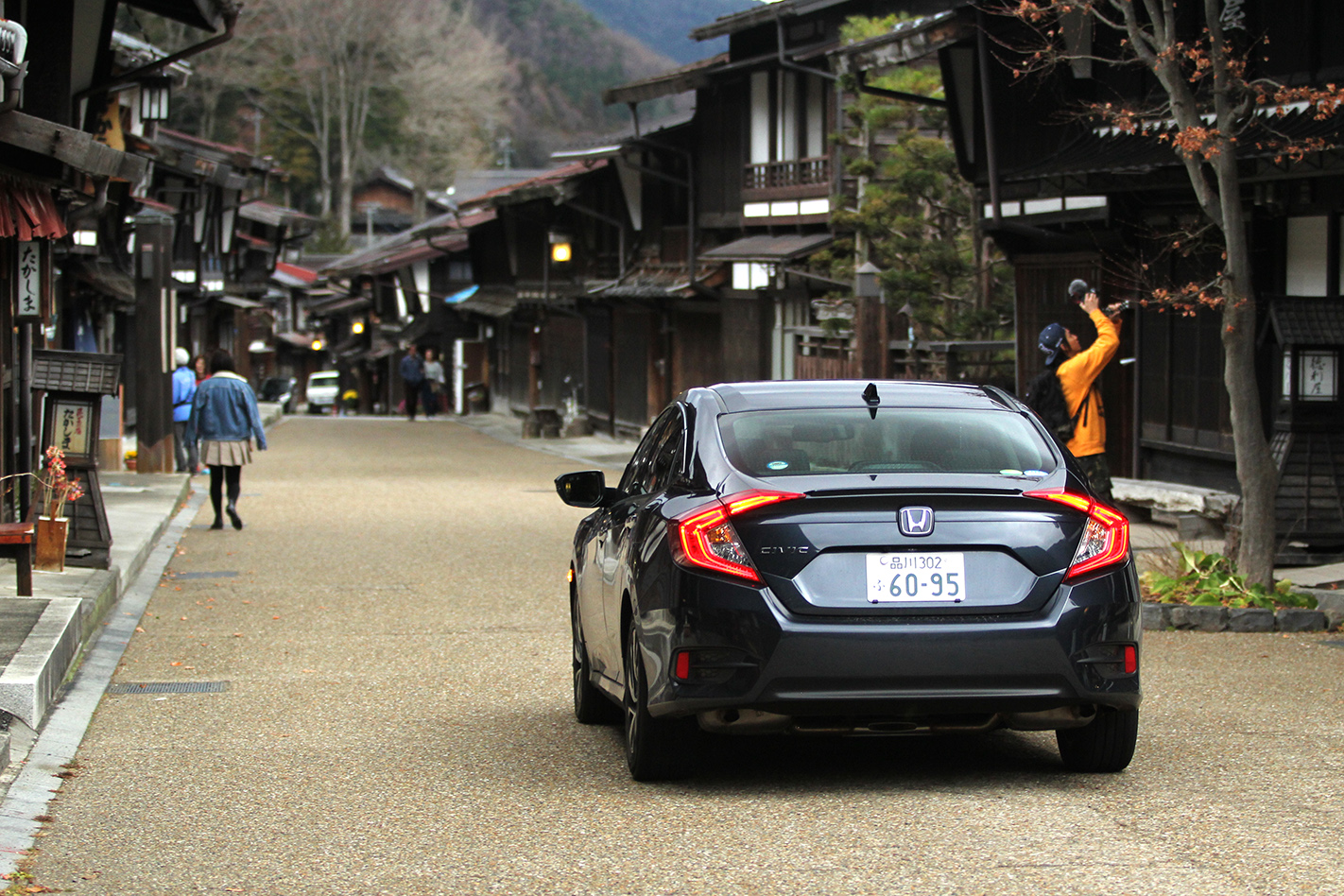
Things you need to know:
- As an Australian tourist, you’ll need an International Driver’s Permit and your Australian driver’s licence on you at all times when behind the wheel. Make sure you pack them both, as car rental companies will need to sight them before handing over the keys. Don’t know how to obtain an IDP? Have a read of our handy guide.
- The majority of Japanese expressways are toll roads, and making heavy use of them will definitely add a lot of expense. If possible, rent a car equipped with an ETC (Electronic Toll Collection) system fitted – it means you can pay for your tolls in one lump sum when you return the car, rather than having to pay as you go in cash. It also means toll points won’t slow your progress.
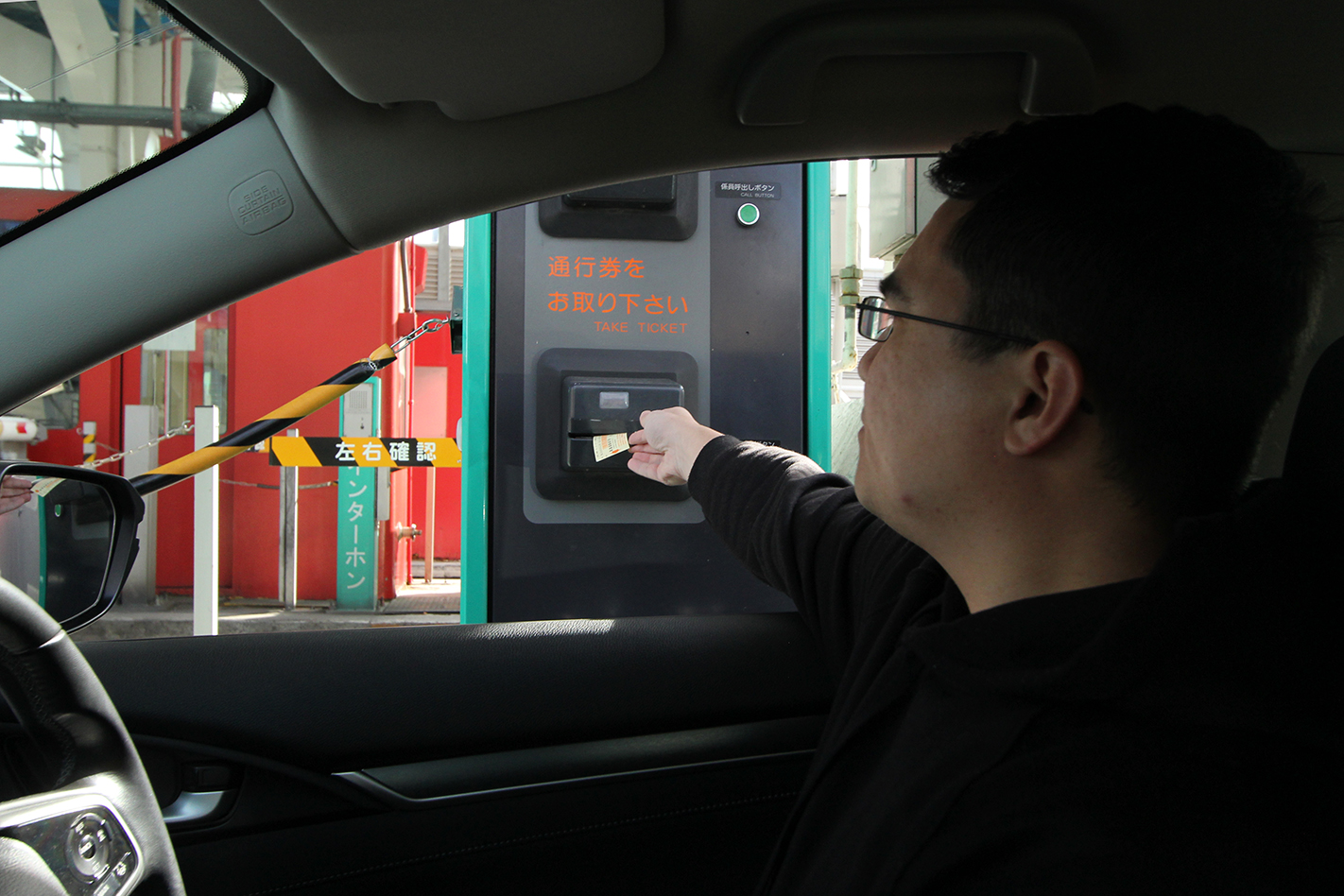
- If you can’t get an ETC card, you’ll need to use a ‘general lane’ at each toll point and pay by cash for each section of expressway that you use – depending on your specific route this could mean multiple payments, as different sections of the national expressway system are managed by different companies. When you enter the expressway you’ll collect a paper ticket from a machine, which you’ll then hand over to an attendant when you eventually exit the toll road. The ticket tells them how far you’ve travelled, and thus how much you’ll need to pay. Keep a good amount of cash with you if you choose this method, as international credit cards are not universally accepted.
- If you choose to pay for tolls by cash, don’t take the lanes marked with just “ETC”! The green ‘general lane’ sign (一般) is what you’re after – if you go into an ETC-only lane, you’ll incur the wrath of other drivers and toll booth attendants, as you’ll instantly become a clog in their otherwise well-oiled system.
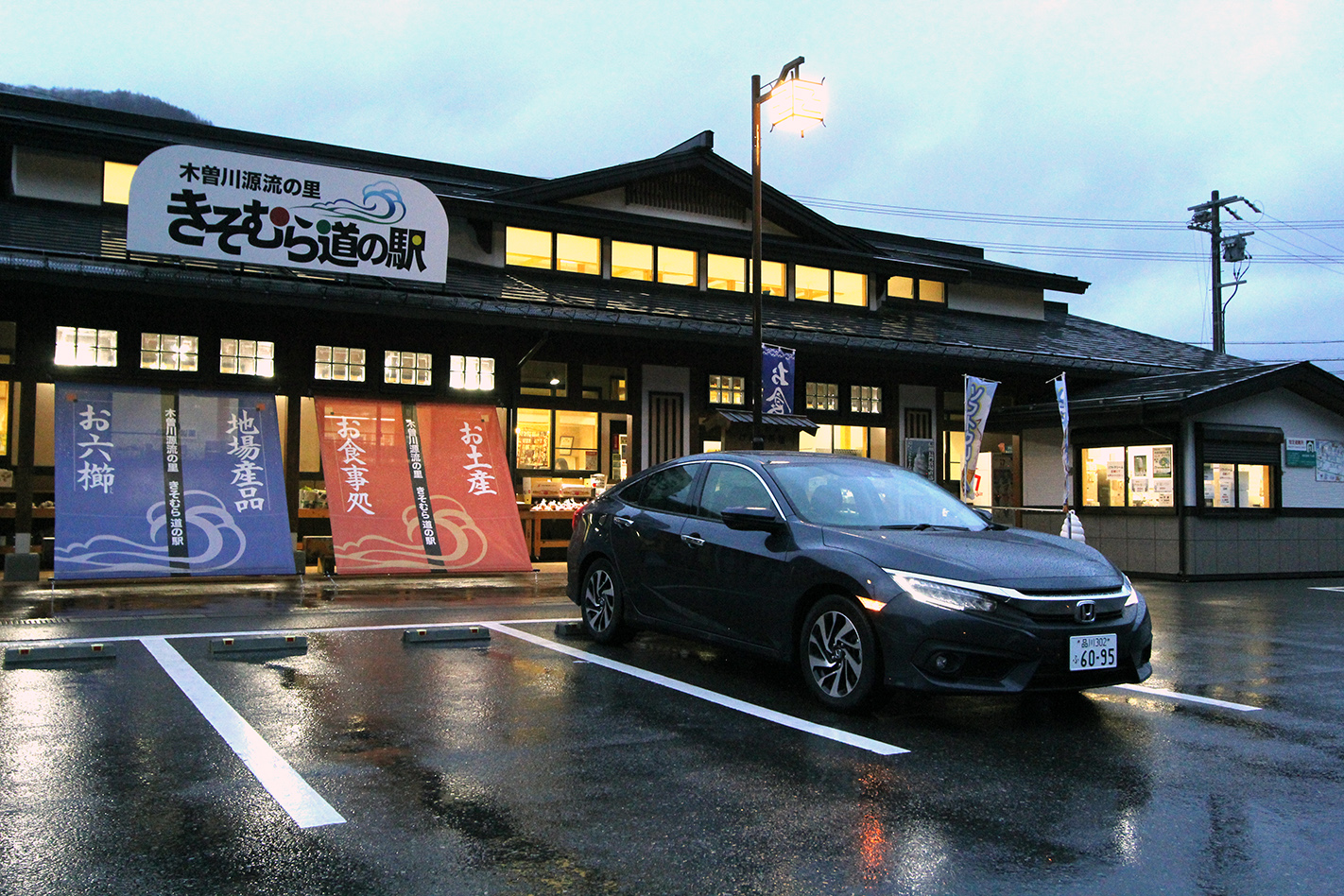
- Regional roadside rest areas are more than just a place to pull over and have a kip when you’re tired – they’re a great way of checking out what the region is known for, and the perfect place to pick up some souvenirs of the area. Japan’s regional towns and cities are fiercely proud of their local identity, and if you’re looking to take some of that back with you these humble roadside stops provide an excellent opportunity.
- The Japanese drive on the left hand side of the road, so Australians should feel at home. Be aware of lit intersections though, as complex ones will often have a green light for specific lanes that you’ll need to pay close attention to. You’ll need to be on your toes in Tokyo especially, as high traffic density and a non-grid city layout can quickly confuse the unwary.
- Japanese speed limits on highways are quite low, often signposted at 80km/h on what are otherwise autobahn-quality stretches of divided and well-maintained road. Speeding, however, isn’t enforced as rigidly as it is in Australia, and locals will frequently blast past at 100km/h or more.
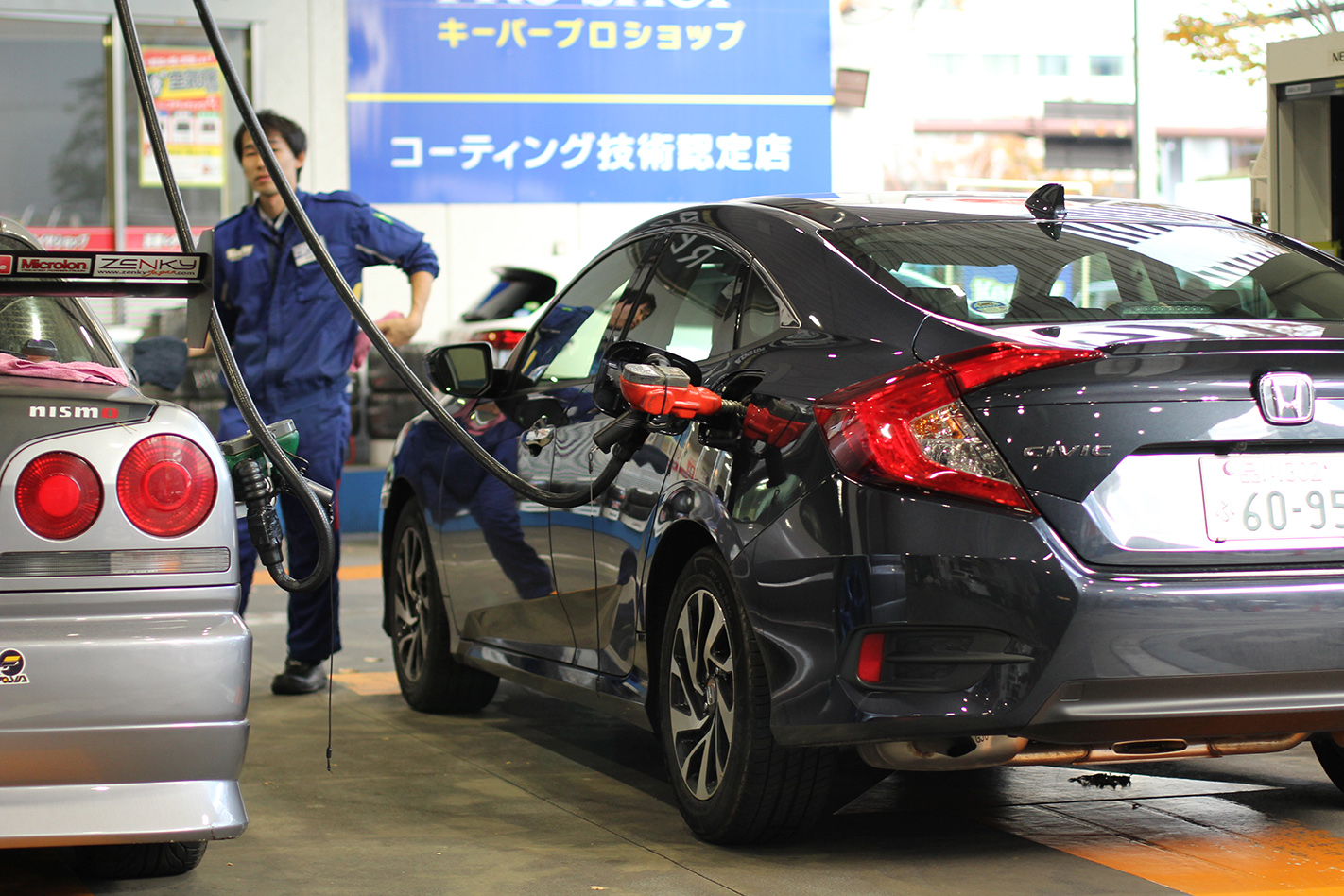
- Petrol stations in Japan are almost universally full-service, something the average Australian hasn’t experienced in quite a while. Feel free to stay in your car as the pump attendant takes care of refueling (they’ll likely also clean your windshield for you while the fuel flows, a complimentary service) but you’ll need some basic Japanese knowledge to tell them what you need. The most useful phrase at a fuel station is “man-tan, ku-da-sai”, which translates as “full tank, please”.
- Simply put, parking a car is an absolute pain in any heavily-populated part of Japan. On-street parking is extremely difficult to find, so never expect to be able to park right outside whatever it is you want to visit. Instead you’ll need to find a paid carpark, and they take multiple forms. Some are a simple self-serve parking lot with an automatic barrier that traps your car in place once you’ve parked, releasing it only once you’ve paid the (usually steep) parking fee at a nearby machine. Other times you’ll need to use a robotic car stacker (which allow a sizable number of cars to park in an otherwise tiny block of land), or a conventional multi-storey parking lot.
- Parking fees are normally calculated by the half-hour during daytime hours, or even per 15 minutes if it’s a crowded popular area like Shibuya or Shinjuku. If the carpark is part of a shopping centre or on the land occupied by a business of some kind, you may be able to park there for free or at a discount – provided you’re a paying customer and get your ticket validated. Keep PLENTY of cash on you to deal with parking fees, as using foreign credit cards can be a pain or simply impossible.
1. Dumb question doesn’t equal dummy
“Typically at a drive day, you have some very talented drivers among the instructors. Getting that amount of talent in one room is a rare thing, let alone having them willing to help you. There is no such thing as a dumb question – the one you’re afraid to ask is the one the person next to you is also too afraid to ask – you may as well shoot.”
Get professional driver training with an Audi R8 V10 Plus on track
2. It’s okay to suck
“Many people put unnecessary pressure on themselves. And because they love cars and won the office go-karting world championship, they expect they will be instantly good at it. Typically, the exercises we do will take you out of your comfort zone – we’re trying to find your breaking point. We aren’t here to teach you things you already know. Cut yourself some slack; you aren’t a pro driver, so why critique yourself like one?”
3. Go ahead, kill a cone
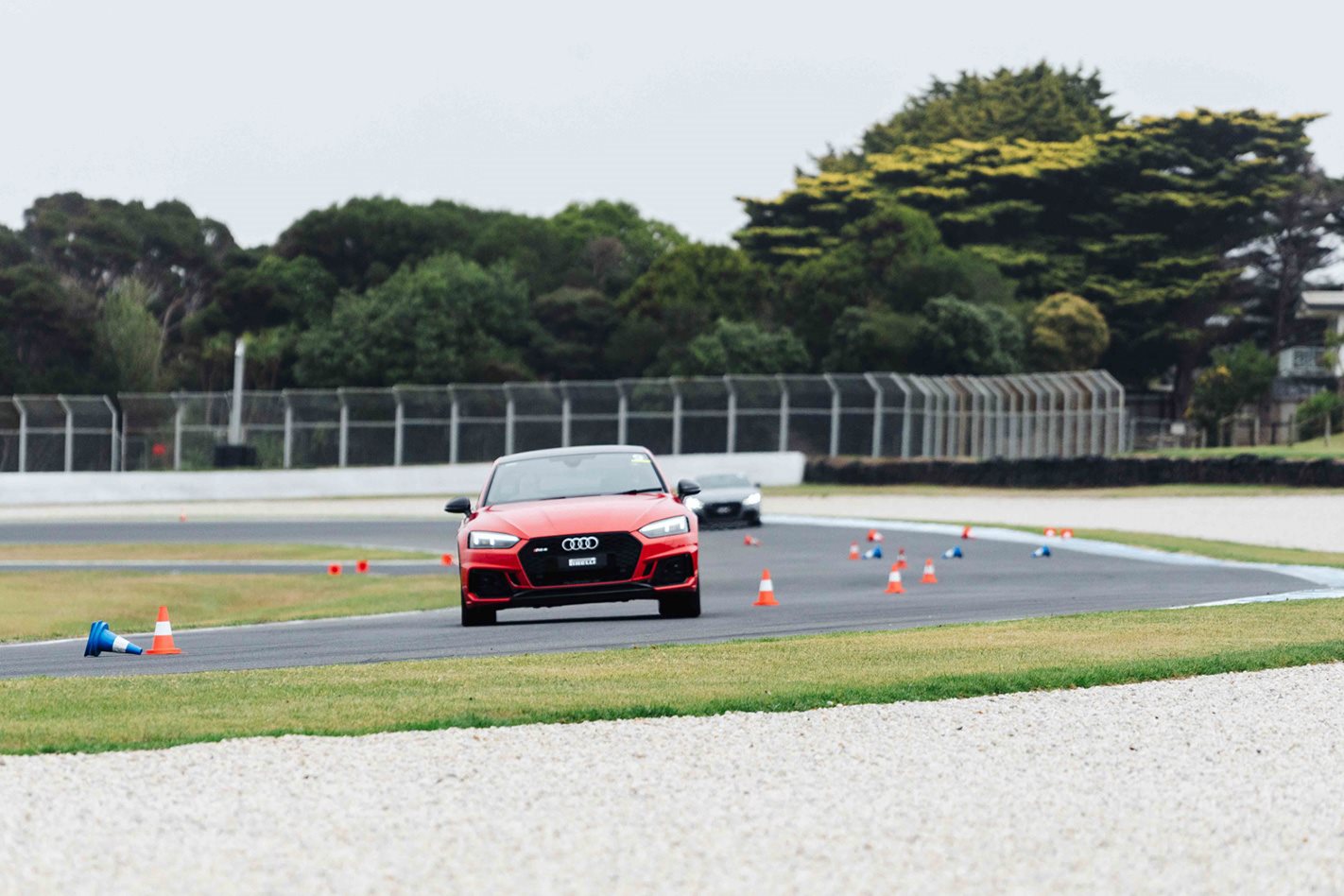
“When we do exercises, some people will be so afraid of looking silly in front of others that they’ll cheat and brake early, or won’t do the exercise quite right. They’d rather look good than do it properly and hit some cones or run wide. Hitting cones is okay! We want you to do that. We’d rather you challenged yourself than chicken out! Hit a cone early and then really start to explore your limits.”
4. No one wants your autograph
“Don’t try to impress the instructors. Everyone has a bit of ego (some more than others) but there are people who think they have a secret talent that will blow away a professional driver when it’s discovered. It isn’t going to happen; it’s a Hollywood fantasy. Just relax and have fun. Don’t spend the entire day hoping you are going to be recruited to join Lewis Hamilton in F1.”
5. When in doubt, laugh like a loon
“Remember: this is a fun thing that you’re doing. Ironically, the less you try, the better you will drive. When you are relaxed and just give it a go, you might hit cones, but who cares what other people think? You will do better anyway with this mentality, because you won’t stack the pressure on yourself. When you combine all of this it seems so simple, but at the time it can be easy to be swept up in it all.”
Want to win an Audi Driving Experience? Click here to enter Wheels’ draw to win a two-part driving experience valued at $5500.
Hi there,
My daughter is in the market for a new hatchback, and she’s narrowed her search down to two cars. Her first choice is a Mazda3, which is a 2018 Touring demonstrator, and she can get it for more than $5000 less than her second choice, which is the Toyota Corolla SX Hybrid.
We know that there is a new Mazda3 arriving pretty soon. My daughter doesn’t need the back seats (yet!) for kids, but having some room for her dog would be good. What do you think – new Corolla or older Mazda?
Thanks
Brett, NSW
Hi Brett – you’re right about the new Mazda3. In fact, it goes on sale this month. While it’s a better car across the board, the lure of low pricing for a car that we – and a lot of Australia – reckons is pretty handy is hard to ignore. Mazda says there isn’t a lot of old models left to clear, but that also means dealers will be all the more motivated to clear the old ones out.
The Touring is a nice bit of kit, with forward and reverse AEB, rear cross-traffic alert and Apple CarpPlay/Android Auto.

The new one will be better equipped, with new-generation engines and an expanded suite of driver aids right across the range… but it will be, on average about $4000 dearer per model, and that’s before any deal you can wangle for a current model on the sales floor.
The Corolla SX Hybrid, on the other hand, has been on sale in its current guise since late in 2018, and the twelfth generation of one of Australia’s most loved cars has experienced an epiphany. A new platform, an eye on design and a terrific interior combine in the hybrid’s case with a powertrain that is proven, reliable and effective at saving fuel.
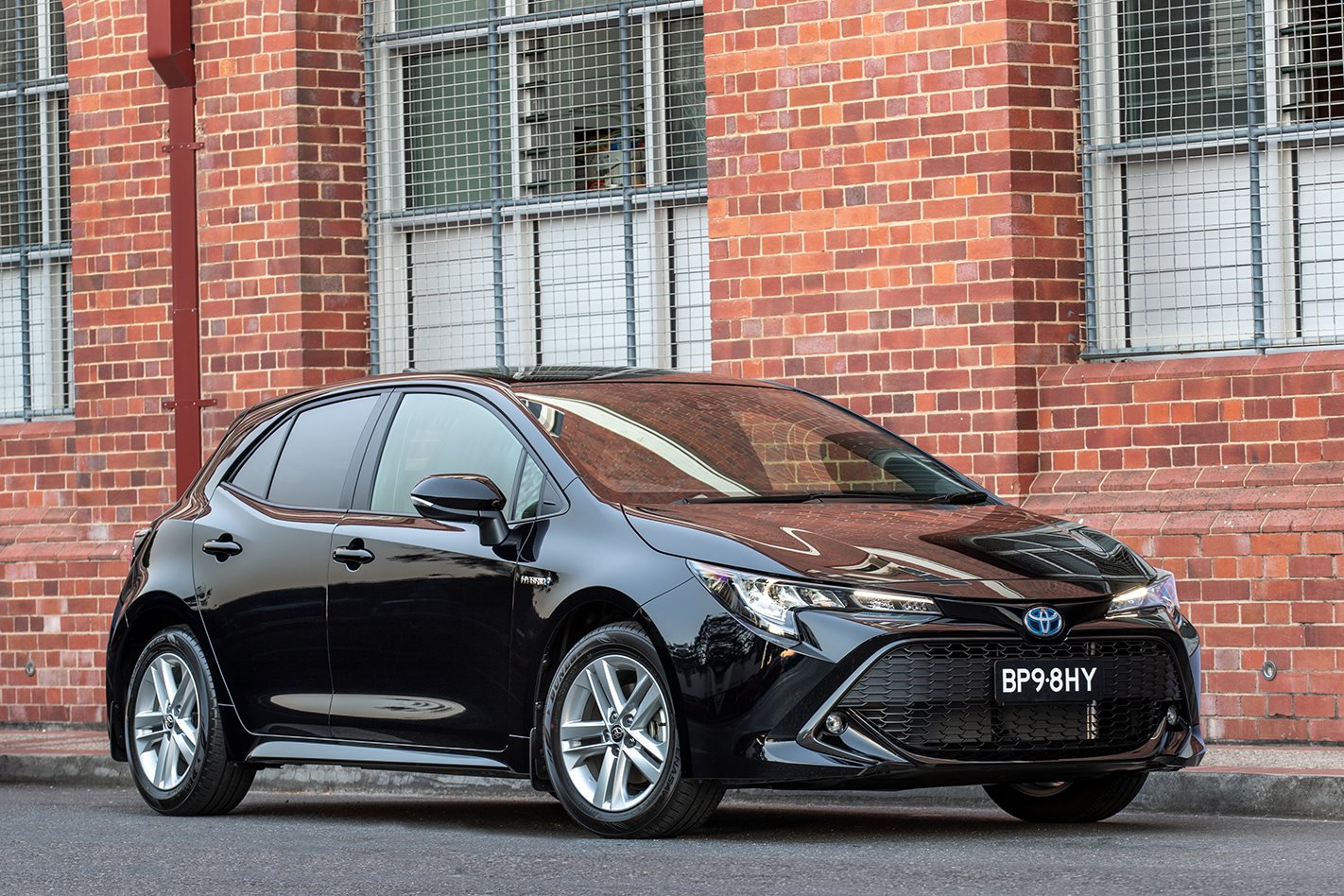
Add to that items like AEB with pedestrian and cyclist detection, speed sign recognition and more, as well as a large multimedia screen, puts the Corolla in front of the Mazda3… for the moment, at least. It doesn’t have Apple CarPlay, which is weird, and it is definitely more compact inside, with slightly less boot room and a smaller rear seat.
ADVICE: Is the new Toyota Corolla as good as everyone says it is?
Looking for something a bit cheaper and a little bit larger in the rear cargo and seating area? The Mazda3is a dependable pick, but is a bit behind the times.
For a young woman looking for a great commuter that’s got a bit of panache, and she can live with a smaller cargo area and less roomy rear seat, then the more modern Corolla is the way we’d go.
WhichCar’s pick: Toyota Corolla SX Hybrid
More about the Mazda 3
More about the Toyota Corolla
The Australian Volkswagen Tiguan range has gained a new R-Line variant for its entry-level offering, the Tiguan 132TSI.
Priced from $46,990 before on-road costs, the Tiguan 132TSI R-Line Edition is based on the five-seat Comfortline and adds Volkswagen’s R-Line package as standard.
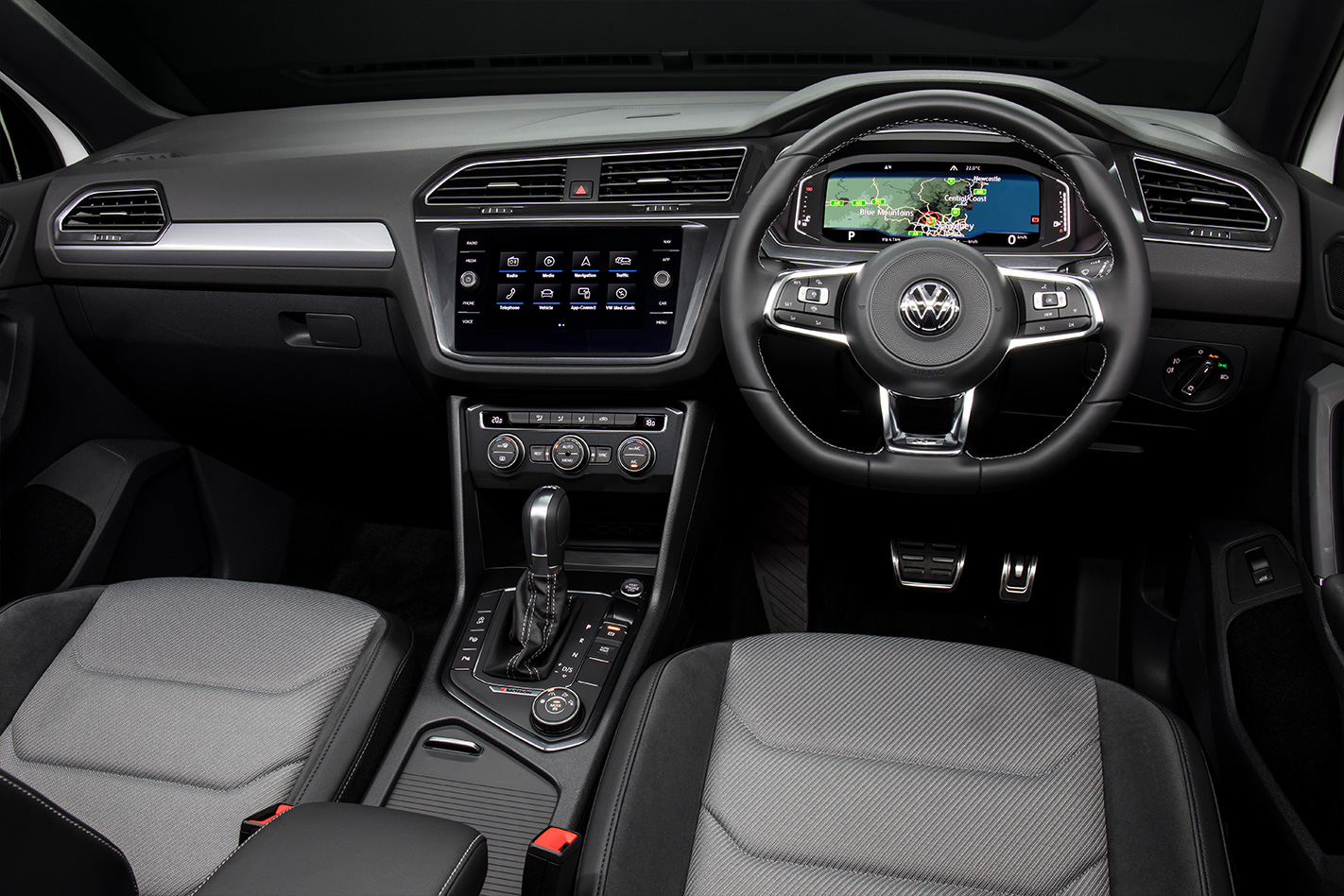
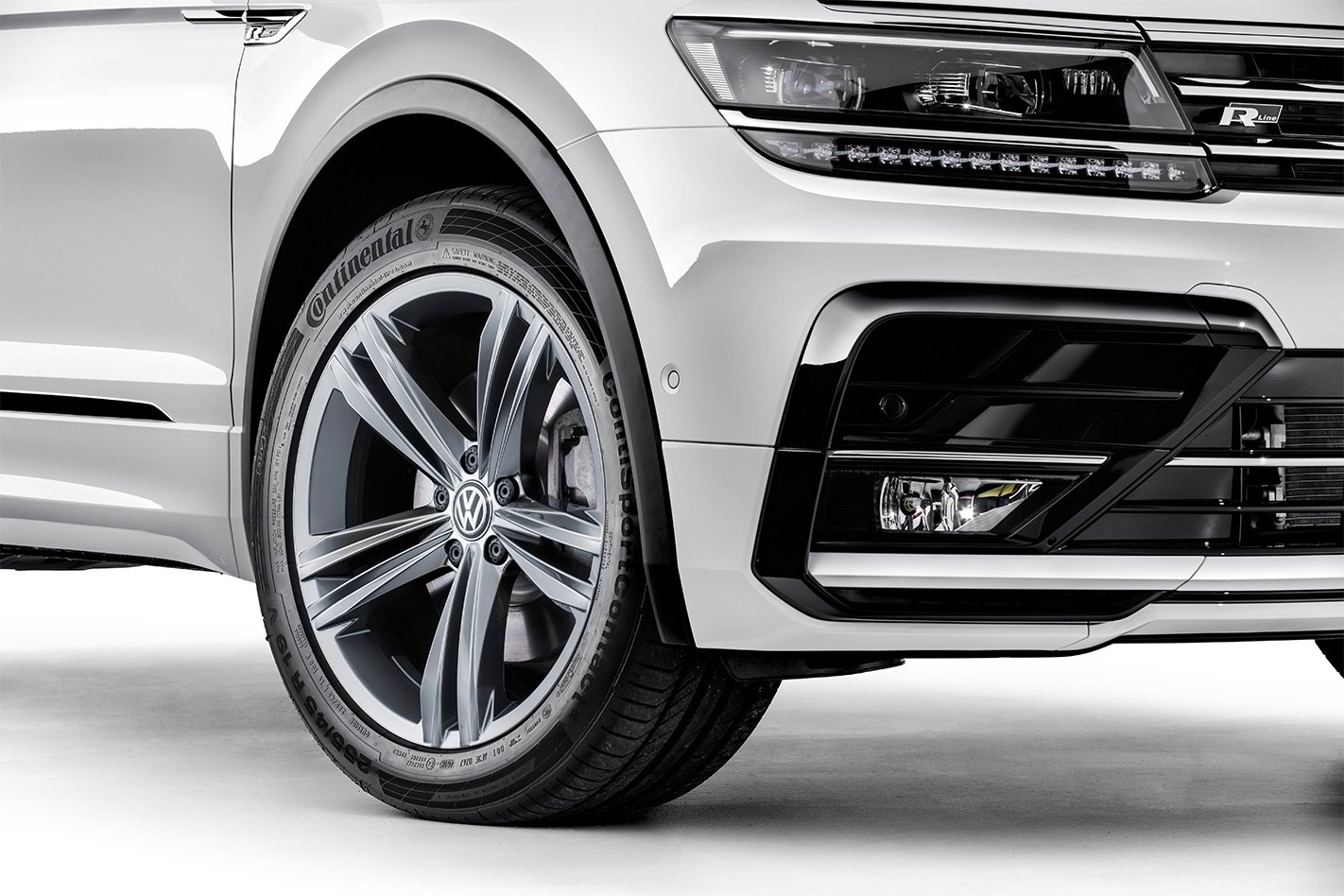
This means a sports bodykit, two-tone cloth seats, 19-inch Sebring alloy wheels and an updated Active Info Display digital instrument cluster for the brand’s most affordable five-door, five-seat Tiguan variant.
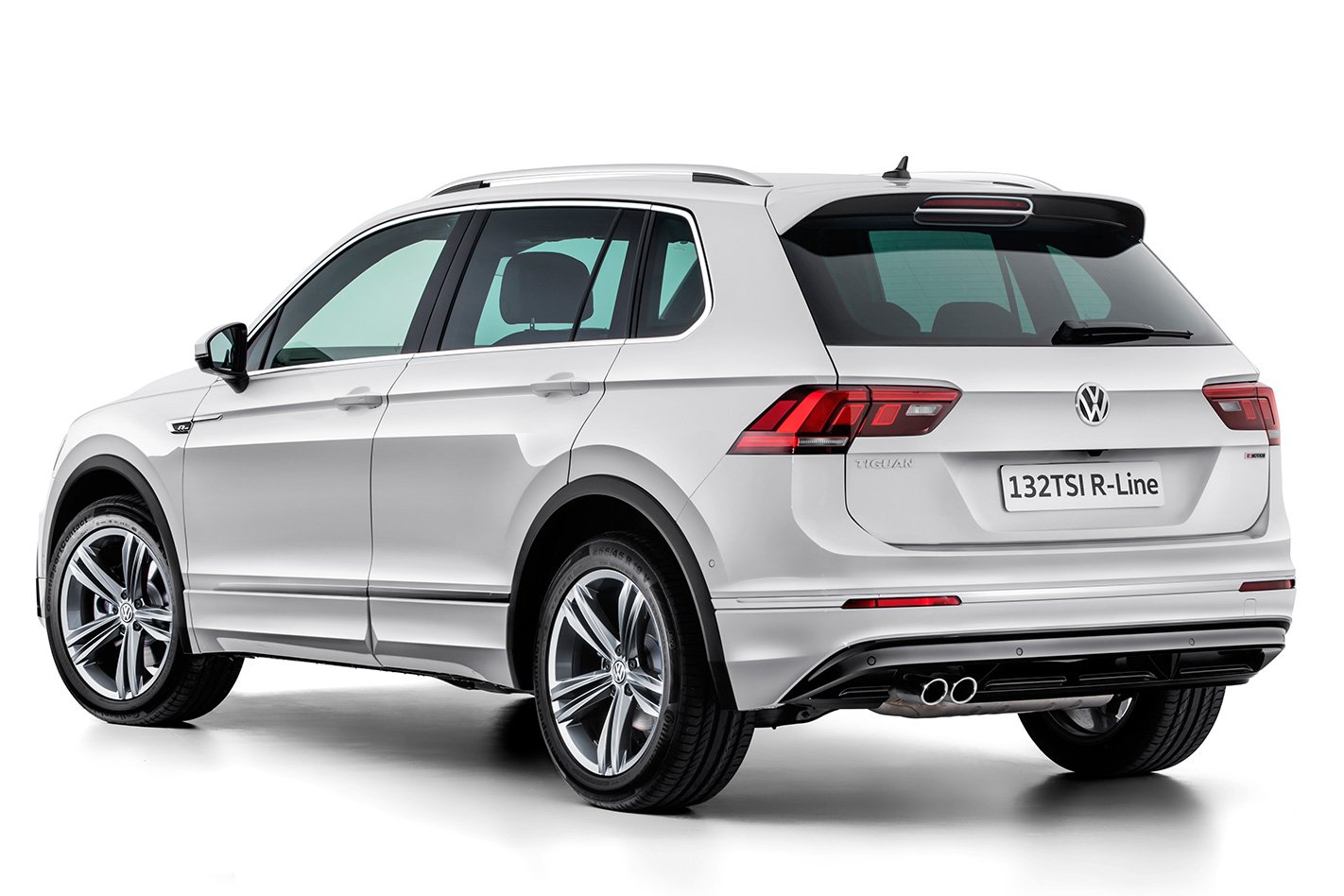
Battling in a hotly-contested mid-size SUV space consisting of the Mazda CX-5, Subaru Forester, Toyota RAV4 and Ford Escape, the addition of the 132TSI R-Line Edition to the range will bring extra value to a lower price point, not to mention the sporty trim enhancements.
Already a popular package among Tiguan 162TSI customers, according to VW, the R-Line Edition will also bring the usually optional Driver Assistance package, adaptive cruise control, Side Assist, Rear Traffic Alert, Traffic Jam Assist and Emergency Assist as standard.
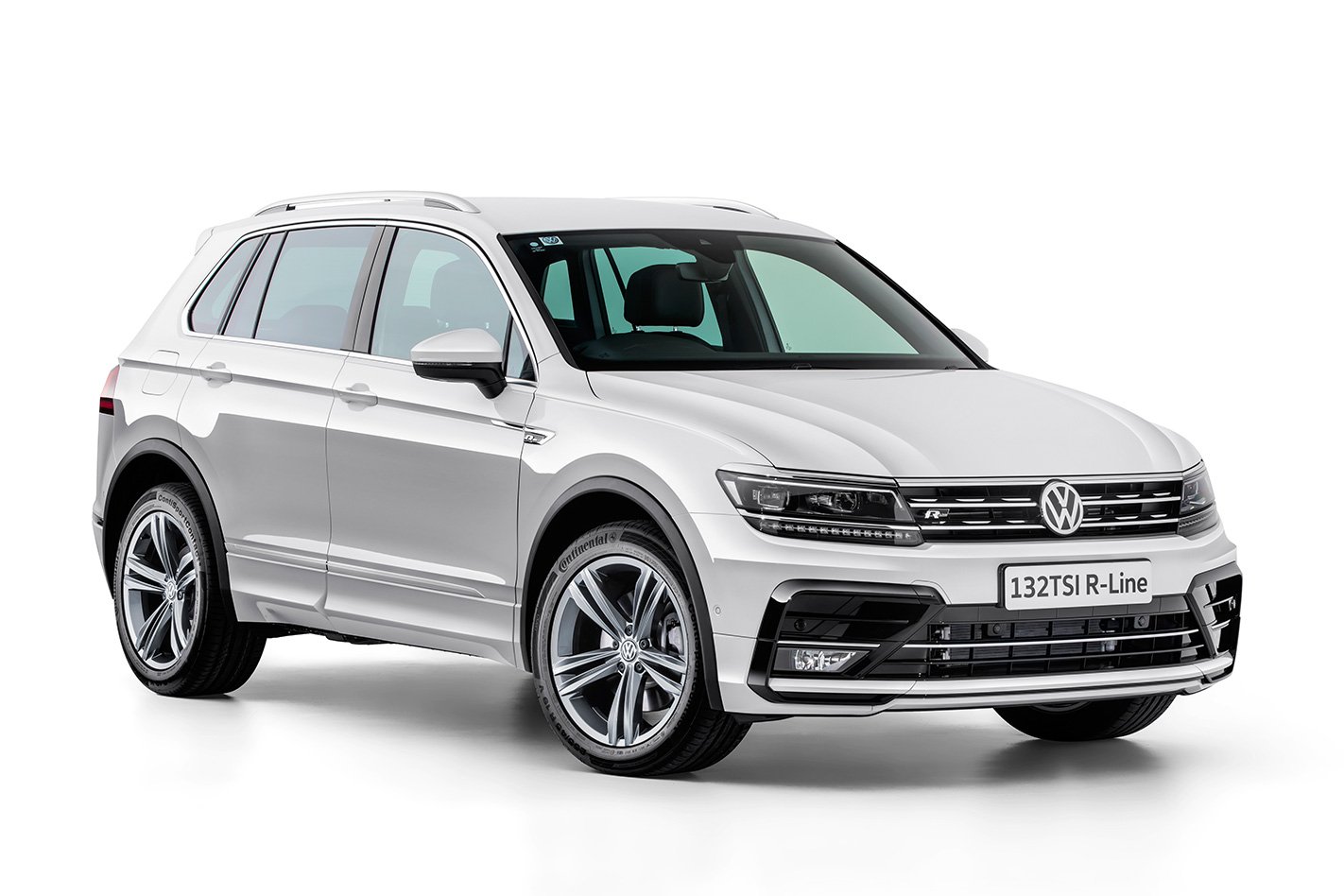
Only two options are available on the new variant, with a sunroof costing $2000 and metallic/pearlescent paint for $700. Pure White is the standard offering, while Tungsten Silver Metallic, Indium Grey Metallic and Deep Black Pearl Effect are optional.
Only 1000 units of the Tiguan 132TSI R-Line Edition will be offered, according to the company.
Volkswagen announced it would cull its Tiguan range at the end of last year, owing to WLTP emissions testing taking out the base model 110TSI petrol and 110TDI and 140TDI diesel versions.
Volkswagen insists the sub-$40k hole in the Tiguan range will eventually be filled, though, saying “the 110TSI version of both the Tiguan and the [seven-seat] Tiguan Allspace [will] re-enter showrooms late this year.”
“The single best selling variant of the Tiguan, either in five or seven seat Allspace guise, remains the top-specification 162TSI,” said VW’s director of customer experience and marketing, Jason Bradshaw.
And some 80 per cent of 162TSI customers choose the optional R-Line package, according to Bradshaw.
“Customers told us that they wanted this option for the 132TSI. We listened. Here it is.”
You know an election is near when the merits of electric vehicles are suddenly thrust into the world of partisan politics where, depending on which party you believe, they’re either the key to saving the world or the death of the great Aussie lifestyle.
The bizarre debate over electric cars was sparked when Labor leader Bill Shorten announced his party, if elected, would introduce a National Vehicle Electric policy that proposes 50 percent of all Australian vehicles sales will be electric by 2030. To reach that target, half of all government passenger vehicle purchases and leases would need to be electrified models by 2025.
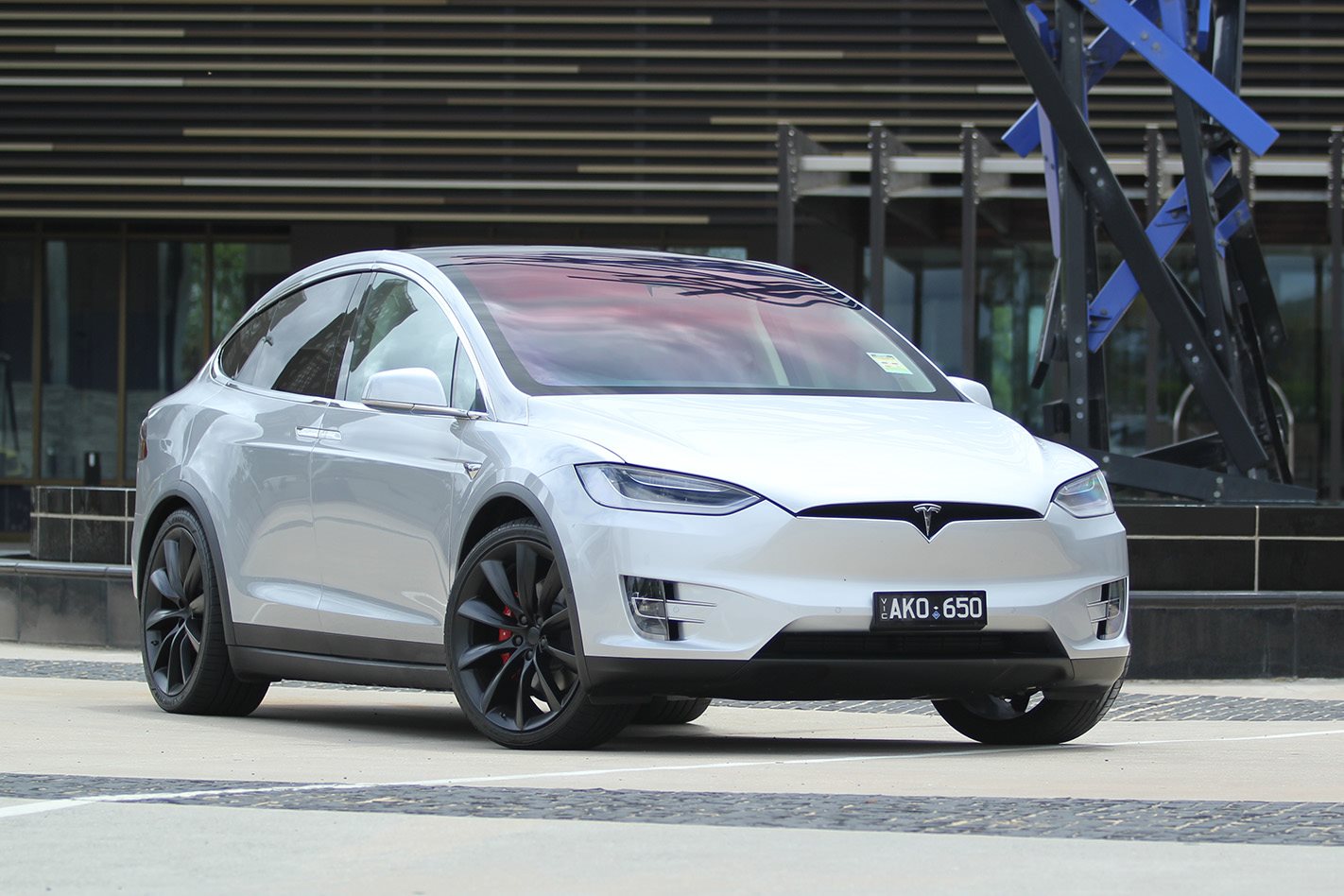
This was enough for everyone on the other side of politics to suddenly view EVs as the work of the devil, with some government MPs including Treasurer Josh Frydenberg and Energy Minister Angus Taylor suddenly back-flipping on their own recent upbeat assessments.
The EV bashing has unsurprisingly been backed up by the usual climate-change denying newspaper columnists who don’t seem to have heard about advances in battery technology – the mantra being all EVs take eight hours to charge and will leave you stranded on your way home from work.
Shorten’s unfortunate gaffe on Sydney radio where he erroneously claimed that EVs can recharged in about eight to 10 minutes provided further ammunition for the sprouting anti-EV movement to discredit them and his plan.
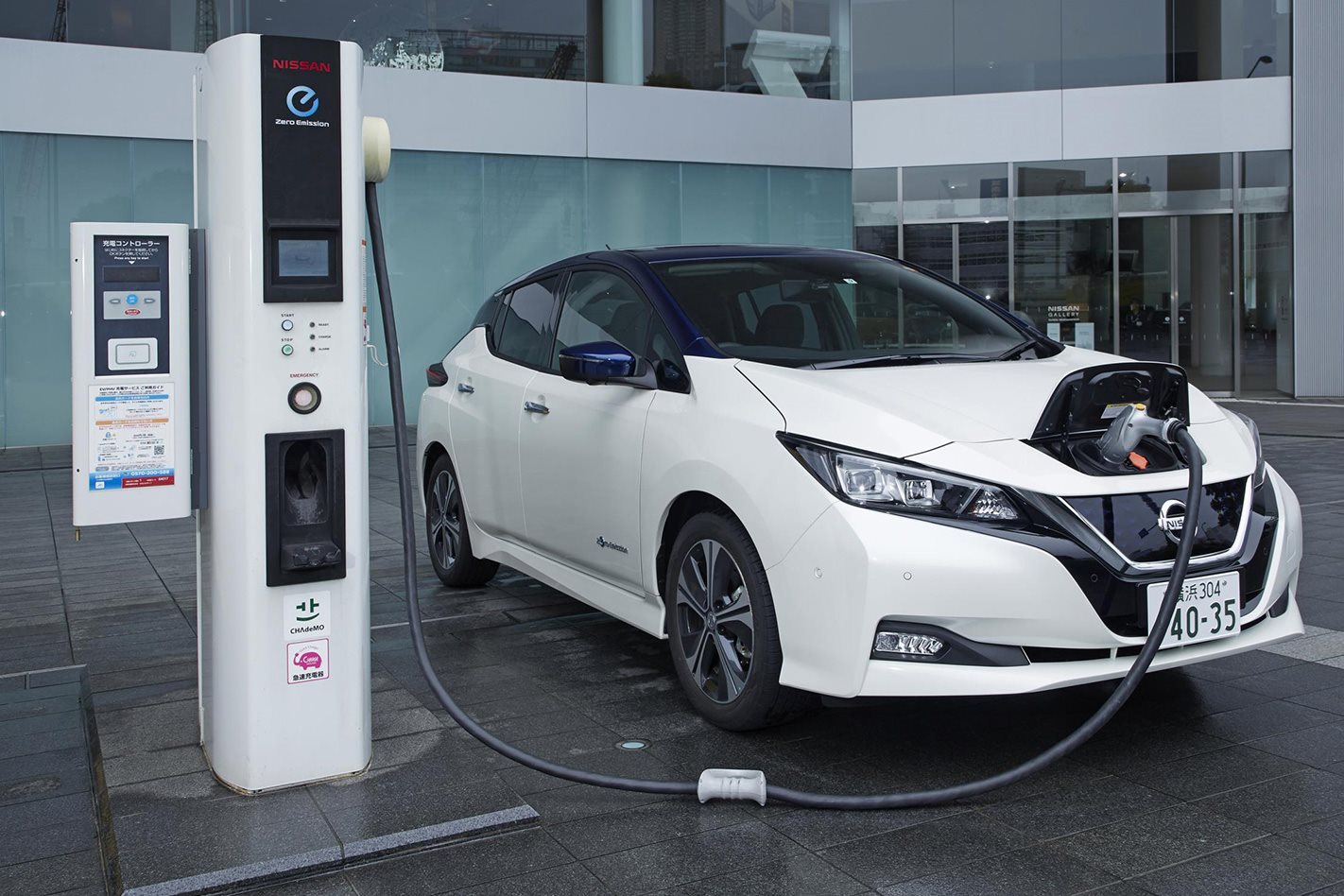
The past week has exposed plenty of misconceptions about EVs, the biggest being that their growth will somehow be influenced by our politicians, rather than international regulations and market forces.
So, let’s cut through the political spin to answer some common questions about battery electric vehicles.
How long does it take to charge an EV?
This varies based on the batteries and the type of charger used. Plug an EV car into the 240-volt socket in your garage and it will take at least overnight to provide a full charge from empty.
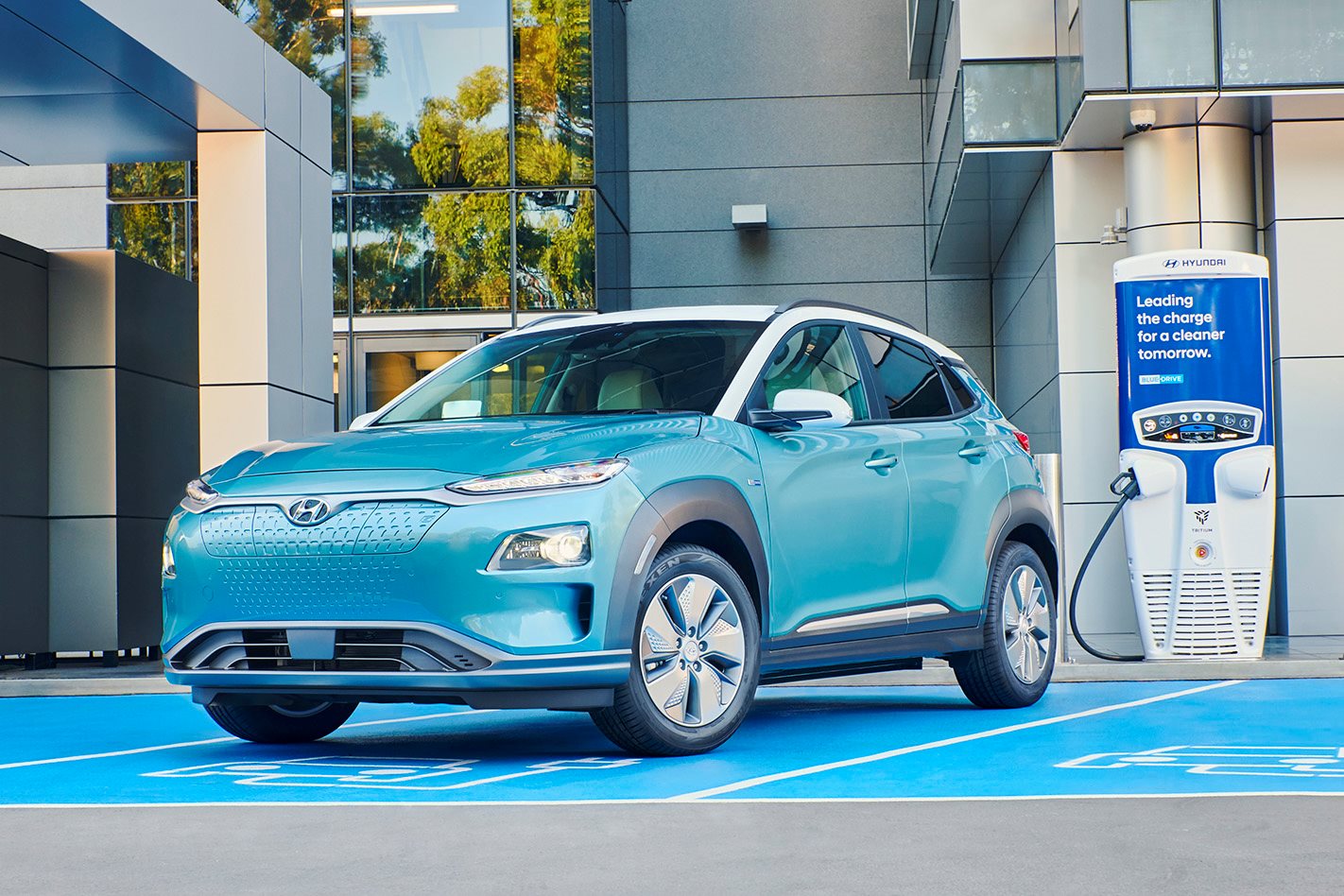
But it’s a different story with DC fast chargers and high-capacity batteries, which currently sees vehicles such as the Kia e-Niro, Jaguar I-Pace, the new Nissan Leaf, Mercedes-Benz EQC and Hyundai Kona Electric receive an 80 percent charge in about 40-50 minutes. All of these cars will be available here by the end of the year – and some are already on our roads.
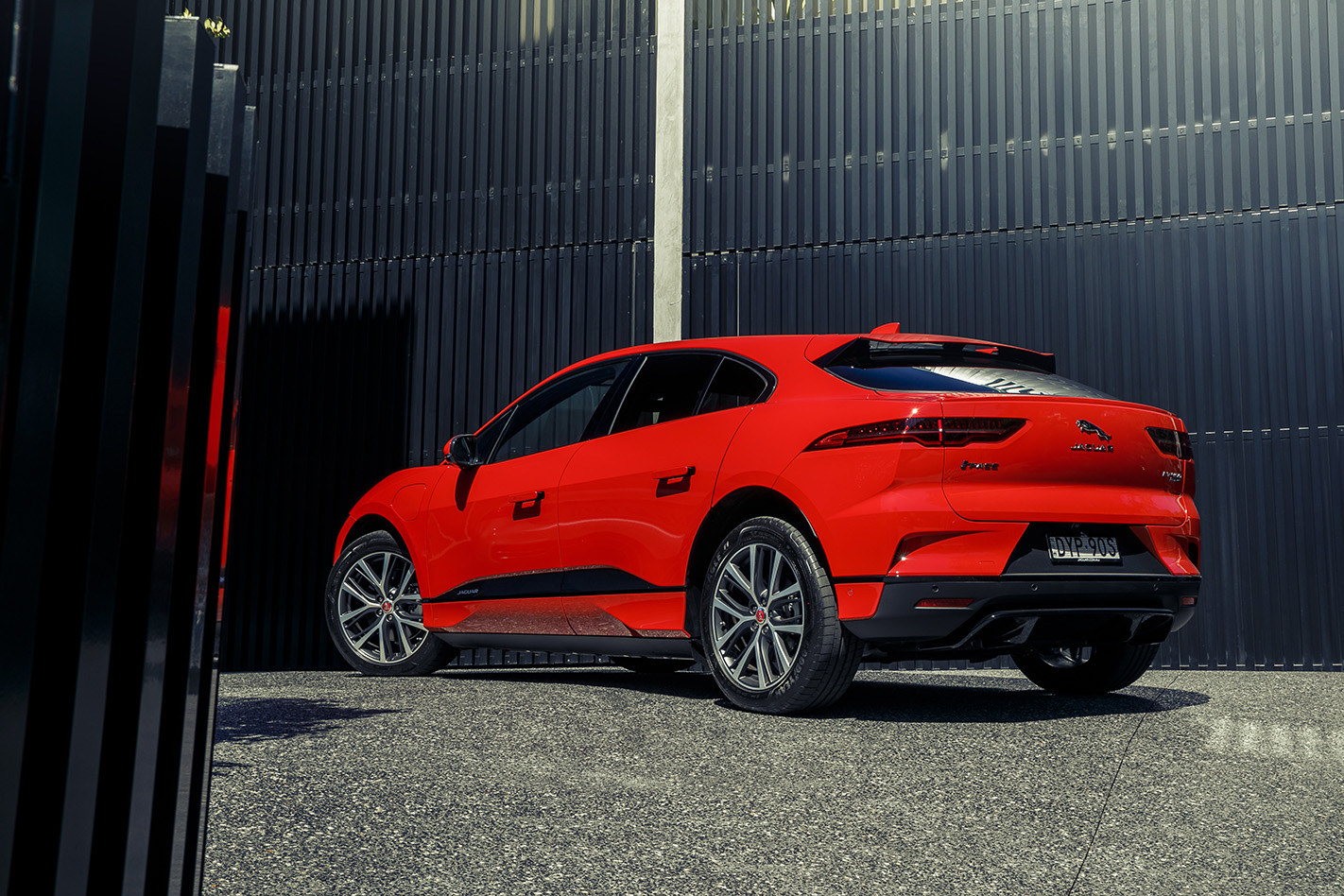
These times will continue to be bettered as battery and charging technology improve. Porsche has announced that its new Porsche Taycan electric sports sedan can receive enough charge for a 100km range in just four minutes – though don’t expect the charger hardware that enables that time to be cheap.
Putting charging times aside, what’s been lost in the political debate is that charging will mostly be done at any available opportunity to keep the batteries topped up, rather than waiting for the battery to nearly run dry like we do with petrol and diesel.
What kind of range do EVs provide?
A silly thing about the EV debate in Australia is the notion that they’re no good for such a large country like ours, the assumption there being that we all drive from Melbourne to Sydney every week.
Such long trips do show up the limitations of EVs, especially while the charging network is still in its infancy. But in reality most Australians live in big cities and travel less than 20kms both ways for their daily commute.
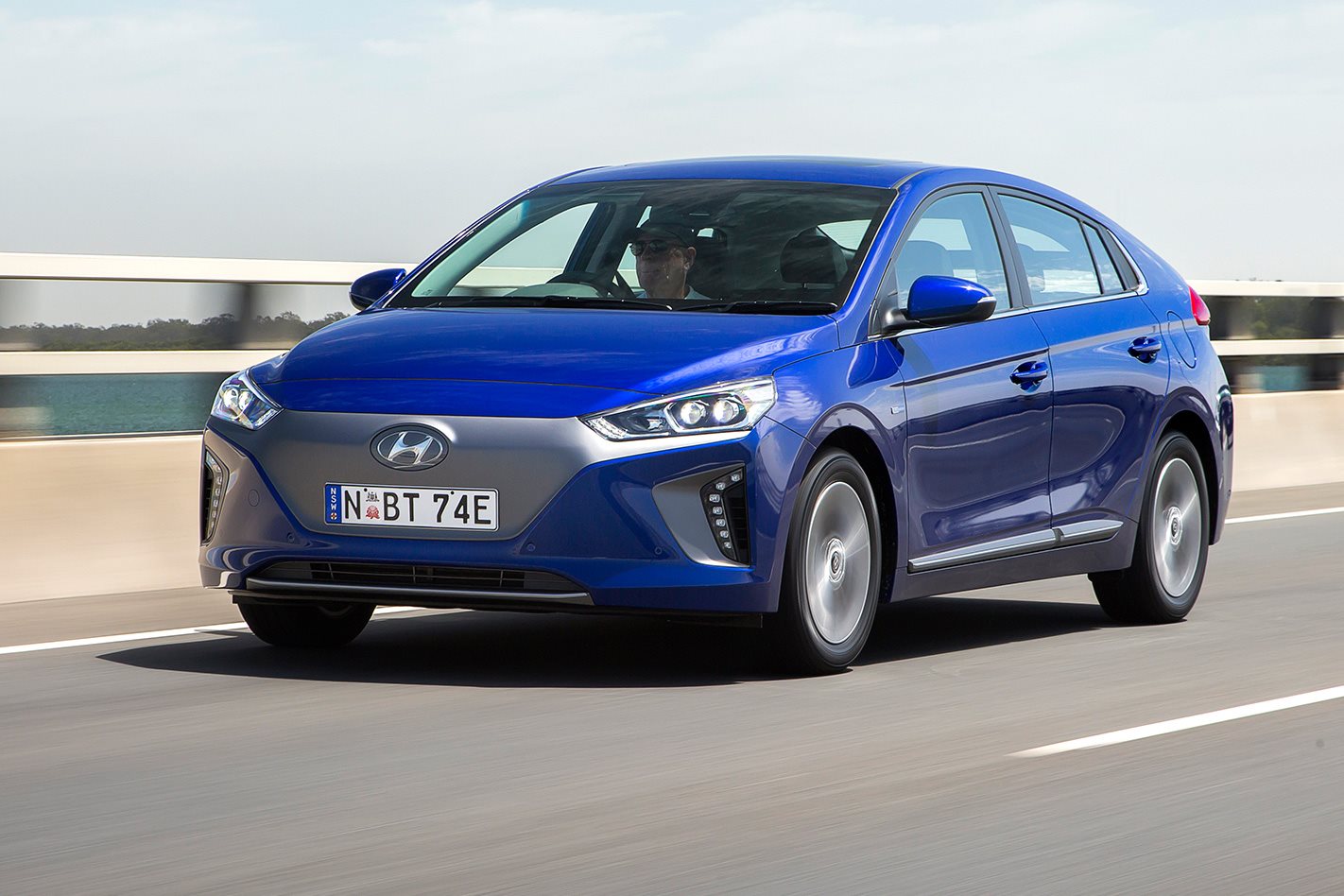
That means even cars with lesser ranges, such as the Hyundai Ionic Electric (above) with its modest 230km range, will get you to work all week on a single charge.
Another thing about EVs is their efficiency actually increases in city traffic thanks to regenerative braking, which recoups kinetic energy while stopping to top up the batteries.
With the ‘new norm’ for range now being about 450kms, EVs are approaching the point where they can easily provide more than enough range for weekly driving duties. There are still limitations for longer trips meaning range anxiety is still very much an issue. But it won’t be too long before you’ll be able to stop somewhere and charge your car to 80 percent in about 20 minutes. That’s about the time it takes to fill up at a highway road house and grab something to eat.
Still don’t like that idea? That’s okay: you’re obviously part of the 50 percent of Australians who won’t be buying an electric car in 2030. Nobody will be forcing you to make the switch, after all.
Is it expensive to charge an electric car?
Generally speaking, no. Compared to a similarly-sized combustion-powered equivalent, electric cars cost a fraction in terms of pure running costs.
This also depends on the type of batteries and whether you’re charging in peak hours or using cheap off-peak power, but based on petrol priced at $1.60 per litre, electricity priced at 0.28c per kilowatt hour and the average annual driving distance 20,000km, going electric will save you money in the long run.
For more detail, our story ‘How much does it cost to charge an electric car?’ delves into the specific numbers and compares like-for-like. Now, are electric cars more expensive to purchase? Absolutely – that’s the key barrier to EV adoption here.
How are EVs clean if the electricity comes from coal?
That’s a fair question, but people who raise this point to argue against the benefits of battery EVs usually neglect to mention that the whole process of extracting oil from the ground, refining it, transporting it and pumping requires energy too.
As the following video explains EVs are more energy intensive to build than combustion cars because of the battery manufacturing process. But once the cars are driven EVs will be about 50 percent more efficient during the course of their lifetime when charged with a mixture of coal-fired and renewable energy.
Disposing of old combustion cars and EVs requires about the same amount of energy with most of the precious (and expensive) metals used by the batteries able to be recovered and recycled.
Will EVs become affordable?
Electric cars are currently more expensive than comparable combustion cars, but this is already changing as the technology and the number of vehicles being built becomes more prevalent.
Despite the fact EVs are still rare in Australia, we’re already seeing relatively affordable options in Australia including the Hyundai Ioniq which retails from $44,990, with the Nissan Leaf priced just under $50K. That said, they’re still much more expensive than similarly-sized conventional small cars.
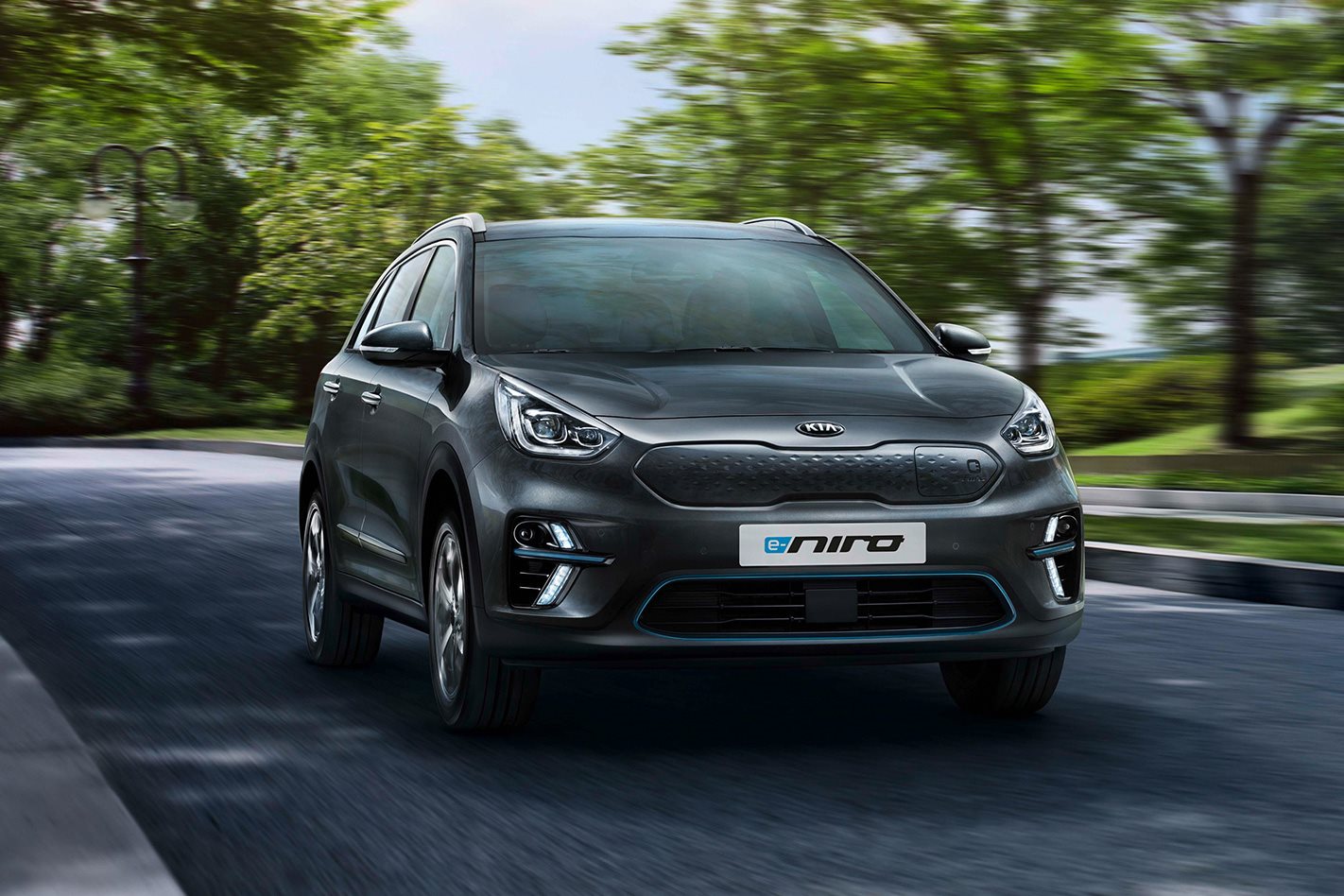
Electric vehicles are still on the fringes in Australia, but expect the numbers to snowball as the EV segment grows, economy of scale improves and competition increases. We’d be surprised if EVs aren’t cost-competitive with combustion engined cars by 2030.
As Tesla has shown, the new technology levels the playing a little by allowing new and emerging brands to enter the market without having to compete against decades of combustion engine development.
And while the growth is happening quicker than previously expected, there will still be a gradual transition. Hybrids that pair combustion engines and lower-capacity batteries should help overcome some of the uncertainties including range anxiety and charging times.
All this, along with vehicle autonomy, makes this a very exciting period in the history of motor vehicles, which is why the last thing this country needs is misinformation and division that leaves us behind the rest of the world.
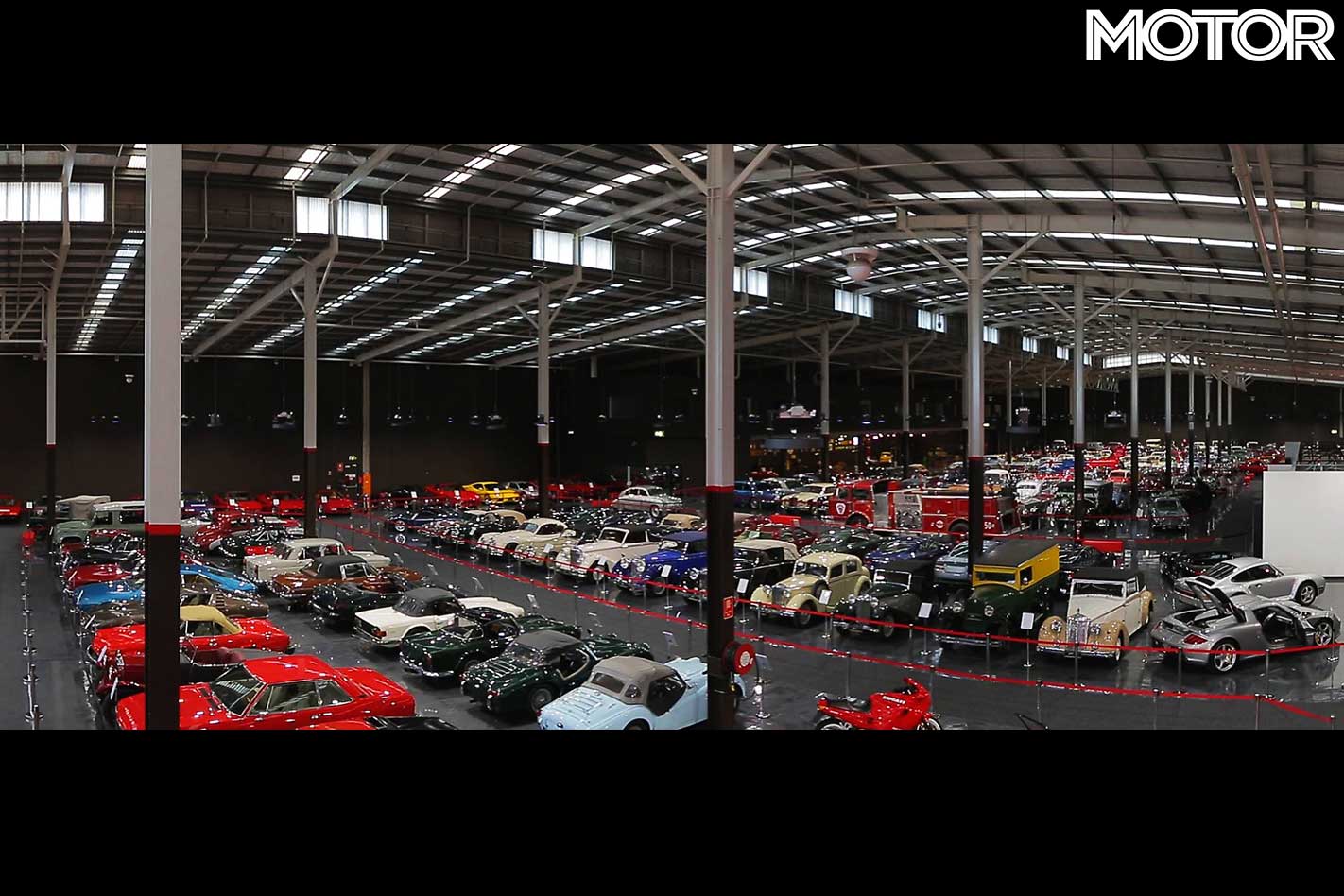
After a couple of months of build-up, the Gosford Classic Car Museum auction has finally wrapped up, with final bidding taking place on location this weekend.
With a massive number of cars being shuffled off to new homes, and a finite number of buyers, it was the perfect storm for some strange results.
But spokesperson for the auction, and former F1 world champ, Alan Jones sees the results in a positive light.
“Proof that the Australian market is really strong came with only two international bidders successfully winning cars. It proves that Aussie car collectors value their classic cars and heritage,” says Jones.
“I am not surprised at the prices achieved in this world-class auction over the weekend attracting international attention.
”The cars got what they deserve, in a fantastic event which served as a true send-off in what was an emotional day of mixed feelings for both Lloyds Auctions and the Gosford Museum.”
Gosford auction results
1964 Aston Martin DB5 – $1,550,000
2006 Aston Martin DBRS9 – $225,000
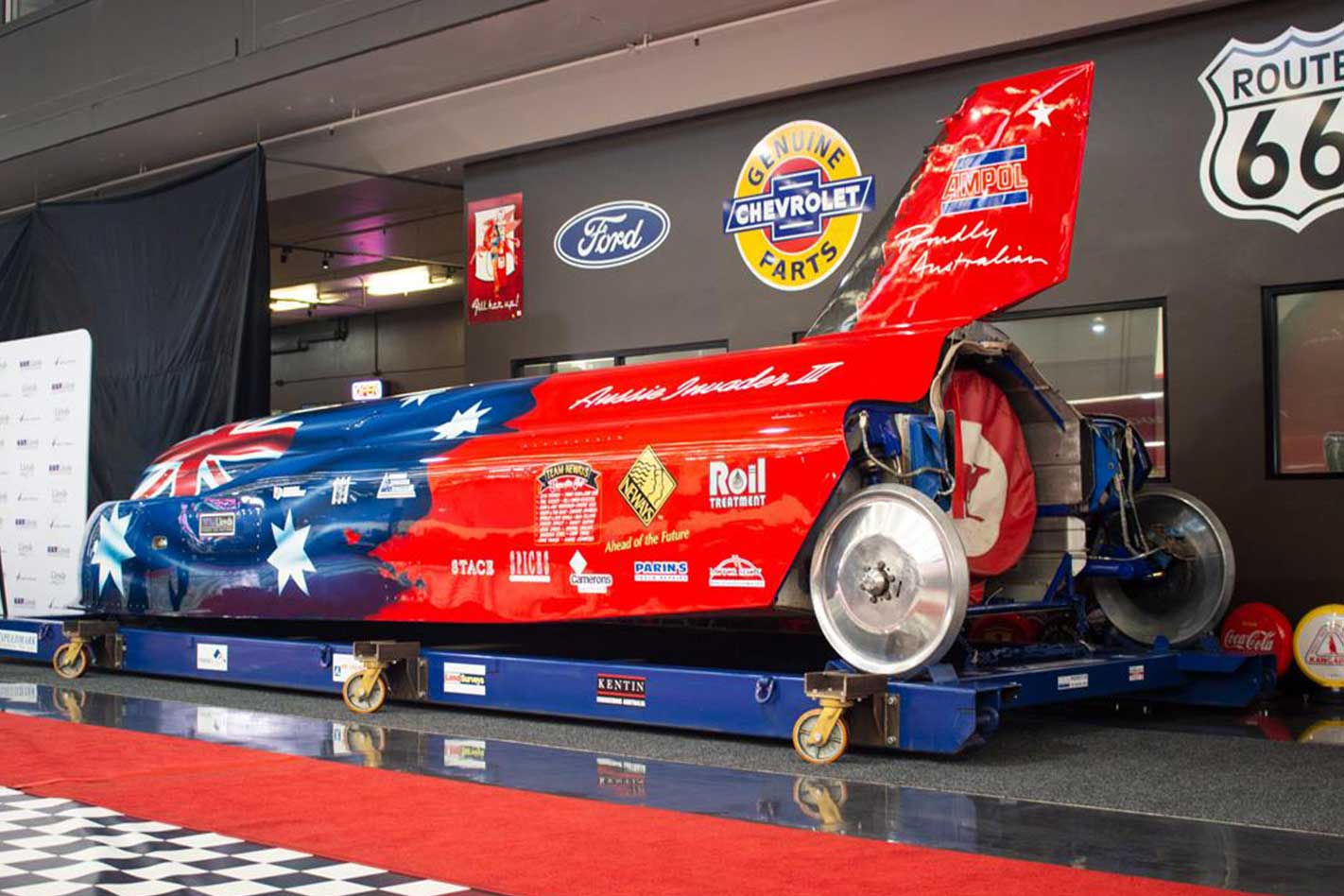
1997 Aussie Invader III LSR Jet – $455,000
1959 Ferrari 250 Testarossa – $275,000 (final known bid)
1962 Ferrari 250 GTE – $400,000 (final known bid)
1976 Ferrari 365 GT4 BB – $520,000
2006 Ferrari Superamerica $510,000
1992 Ferrari Testarossa 512TR – $270,000
1980 Holden/HDT VC Brock Commodore – $94,000
2015 HSV GTS Maloo – $79,000
1985 Lamborghini Countach 5000 QV – $500,000
1999 Lamborghini Diablo SV – $340,000
2017 Nissan R35 GT-R Nismo – $237,500
2002 Porsche 911 GT2 – $195,000 (final known bid)
2016 Porsche 911 R – $650,000
1993 Porsche 928 GTS – $90,000
1997 TVR Cerbera – $77,000
The Gosford Museum leaves a final note after the auction, posting on Facebook the following:
“A massive thank you to all our staff, the community for the support over the past few years and of course Lloyds Auctions for the amazing work they have done in getting these incredible results for our beautiful cars.”
It’s been a while since the Nürburgring record for front-wheel drive cars has changed hands, and it’s possible the new Renault Mégane RS Trophy-R is having a run at it.
Spotted in the last couple of days at the Green Hell is an undisguised example of the next top-dog hot hatch from the French brand, with cameras galore capturing its runs.
YouTuber TALEA Media spotted the poorly hidden hatchback lapping the iconic track with cameras attached, and with a camera car following along from some sections of the drive.
Given the 2019 Mégane RS300 Trophy has already landed in some parts of the world, not very long at all after the new generation RS’s launch, it seems like there’s a chance Renault has sped up the release of each model into the life cycle of the current Mégane.
It also seems, given the cameras and location, Renault might be readying an announcement about a new Nürburgring lap record. After all, it was the previous Trophy-R from which the current ‘Ring King’ – the Honda Civic Type R – took the record.
Chances are, if the previous generation is anything to go by, this Meg RS Trophy-R will share much of its specs sheet with the current RS300 Trophy.
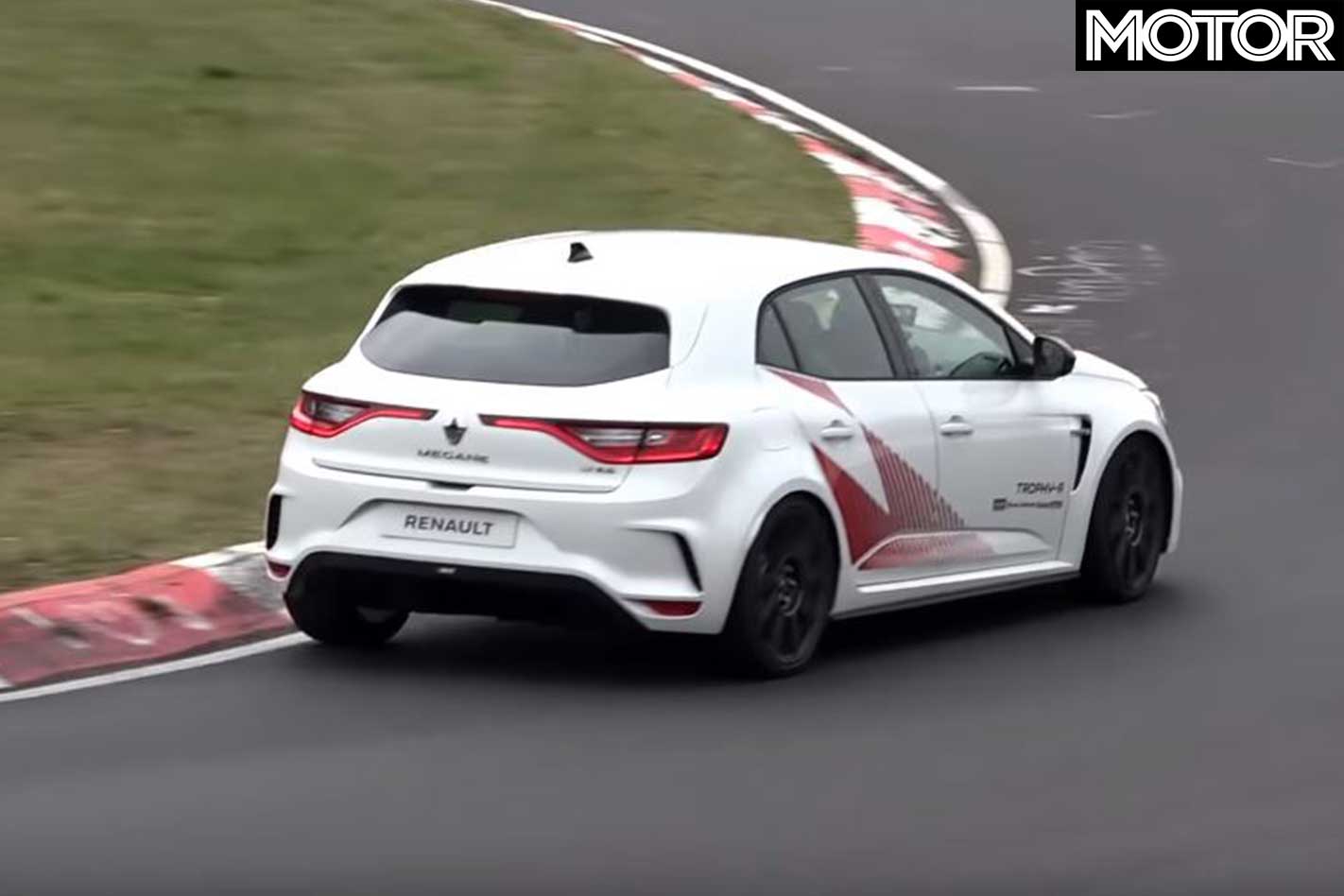
If that’s the case, it’ll be called the RS300 Trophy-R, with 220kW and 420Nm from a 1.8-litre turbo four. The biggest differences would come down to weight – there was more than 100kg between the previous Trophy and Trophy-R.
To achieve this, rear seats are gone (which looks to be the case in this video), as well as creature comforts like air-con and radio if the buyer is keen enough.
Chassis upgrades and more focused rubber, on larger wheels, is likely too, but what those amount to is yet unknown.
The European Union Commission has charged BMW, Daimler and Volkswagen after a preliminary investigation has found they colluded to prevent or limit the introduction of better vehicle emissions technology.
The charges come after whistleblower Daimler went to the EUC with information regarding emissions conspiracy between the big three German makers, which had been ongoing for nearly a decade.
Named the “circle of five”, BMW, Daimler, VW, and its companies Audi and Porsche, allegedly conducted group “technical meetings” in the 1990s, which led to the collaboration to restrict or block the introduction of better, and more costly, diesel and petrol emissions technology from 2006-2014, the EU claims in its investigation.
Information of the meetings leaked to the commission by Daimler, which has also been charged, eventuated in dawn raids at the head offices of all parties involved in July 2017. The antitrust regulator says it opened a formal investigation in September 2018.
Specifically, it alleges that selective catalytic reduction systems (SCRs) which remove poisonous nitrogen oxides from diesel emissions and “Otto” petrol particulate filters were delayed from introduction to European consumers. It is unrelated to the diesel scandal that rocked VW four years ago.
“Companies can cooperate in many ways to improve the quality of their products. However, EU competition rules do not allow them to collude on exactly the opposite: not to improve their products, not to compete on quality,” said European Competition Commissioner, Margrethe Vestager.
“Daimler, VW and BMW may have broken EU competition rules. As a result, European consumers may have been denied the opportunity to buy cars with the best available technology.”
The manufacturers have been given 10 weeks to respond, with potential fines of up to 10 percent of global revenue possible. BMW says it will contest charges “with all legal means if necessary,” and VW is yet to make official comment, confirming only that it has received notice from the antitrust regulator. Daimler, which tipped off the EUC, says it does not believe it will be fined.
All manufacturers must respond to the EUC within 10 weeks. In 2014, a group of six truck manufacturers, including Daimler, was found guilty in a similar case, with fines of $3 billion euros issued.
However, executive director of the European Federation of Transport and Environment, William Todts, says issuing fines is simply not good enough.
“It would be indefensible if the German car industry colluded to fit useless emissions controls, as the allegations indicate. That would mean Europeans were breathing poisonous air that should have been avoided. The EU must fine colluding companies but it mustn’t stop there. We need to clean up the 43 million dirty diesel that are on , our streets today,” he said.
