
“Holden, you’re a disgrace to Australia!” “Well, you have offended me and I drive a Holden….but it will be our last.” “How to alienate the majority of Australia in one go. What about supporting families and tradies and celebrate them! [sic]”
When Holden came out in support of Australian Marriage Equality and announced itself as the first automotive company to sponsor the Sydney Gay and Lesbian Mardi Gras in 2017, these were just a sprinkling of the negative comments that flooded social media.
Sadly, despite an actual overwhelming positive response, most of the negative comments viciously perpetuated stereotypes that still exist in Australian car culture, sending a message that inclusivity is still a dirty word in greater motoring circles.
Actually, Holden was one of the first then-Australian companies to come out in support of marriage equality, alongside QANTAS and ANZ, putting its money where its mouth is by sending out a number of rainbow-wrapped Colorados and Astras filled with glitter and feathers down Oxford Street in the Mardi Gras parade.
Holden is still the only automotive ‘major’ partner for Sydney Mardi Gras, but this year, Jaguar also entered the ring in a cloud of power, glitter and disco tunes.

A great deal of companies have copped accusations of “rainbow washing” in recent years for tagging along for the Mardi Gras ride in attempt to snatch a piece of a pie that is estimated to soon be worth upwards of tens of millions (the same-sex marriage industry alone is said to be worth $50milion and climbing).
And, Jaguar Land Rover, a relatively new brand engaging in the LGBTQI+ space and 2019 principal partner of the Queer Screen’s 26th Mardi Gras Film Festival, showed the rest exactly how to do it right. How? By respecting the culture it was tapping into first.
Located in the heart of Taylor Square, the pop-up Jaguar Jag Queen Service Centre became a buzzy hub and safe space for the thousands of visitors and locals moving through Darlinghurst for Mardi Gras.
To start, the centre partnered with Sephora to offer makeup touch-ups (and glitter-ups) and full drag makeup looks. Next, on the eve of the parade, it hosted one of the hottest drag battles of the week, the Jag Queen Catwalk Competition: a Ru-Paul’s Drag Race-style dance and lip sync battle with a very serious prize of a trip to London Pride on the line.

Unlike a lot of that aforementioned ‘rainbow washing’, this was not a drag show that could risk being seen as a joke or a poor representation of the culture (an example; many brands use Brazilian dancers instead of drag queens in their Mardi Gras marketing).
Instead, it was a high-level competition that attracted some of the city’s best performers who themed their acts around the spirit of the Jaguar cat, helped by the hashtag #fitforaqueen.
We saw performers grab a mic and heart-warmingly wax lyrical on their love of cars, adoration for automotive performance and their own fond memories of the marque – from a queen who dressed herself as the leaping hood ornament, to another who shared a story of attending her brother’s wedding in an old Jag before she could come out as a queen.
The British company also used the opportunity to raise money for Twenty10, one of Australia’s most renown LGBTQI+ charities supporting at-risk young people and their families.
“Inclusion is integral to the way that we do business at Jaguar and we recently established the Jaguar Land Rover PRIDE LGBTQI global network,” said Mark Cameron, Managing Director of Jaguar Land Rover Australia. “We are excited to celebrate creativity, equality and diversity with the incredible line-up of LGBTQI talent and films in this year’s festival, and to have some fun at our Jaguar Service Centre fit for a queen.”
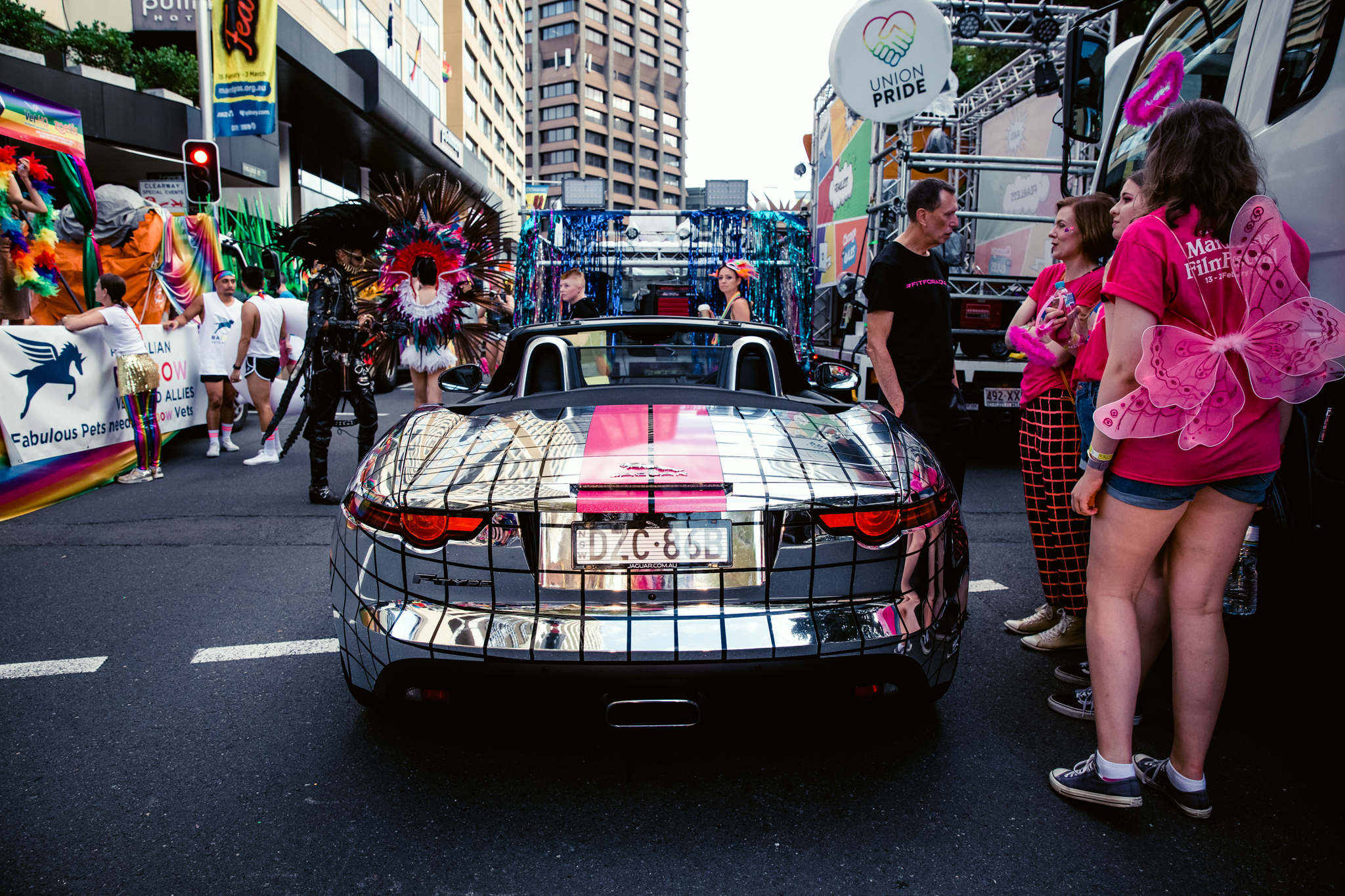
Mardi Gras comes around but once a year, and yes it was a marketing tool, but what stuck with this activation was how showcased why the motoring industry needs to think more about inclusivity, so that those comments perpetuating stereotypes entrenched in misogyny, homophobia and antiquated attitudes are drowned out by a collective love of cars.
As a cis white woman, it’s hard to truly comprehend how the LGBTQI+ community has been treated in automotive, but I can certainly try. Leaving a lasting impression among those who are part of a culture that is rarely included in the automotive conversation en mass (and who would rarely attend a track day or car show) is not easy, but it can be done without it seeming self-serving or crass.
What happened here was finding that all-inclusive place that marries car culture through art, emotion, entertainment and personal experience – and actually, if you think about it, isn’t that how you would describe a car show anyway?
Glance at the ABT RS4+ Avant at the 2019 Geneva Motor Show and it might just look like a slightly hotted-up RS4. Look closer, though, and you’ll see ABT, as basically Audi’s own Alpina brand that races and modifies factory cars, has pumped the RS4’s toughness to C63-frightening levels.
Limited to 50 customers, the pack ups power, tweaks the suspension, restyles the interior and adds a whole lot more presence with new exterior bits.
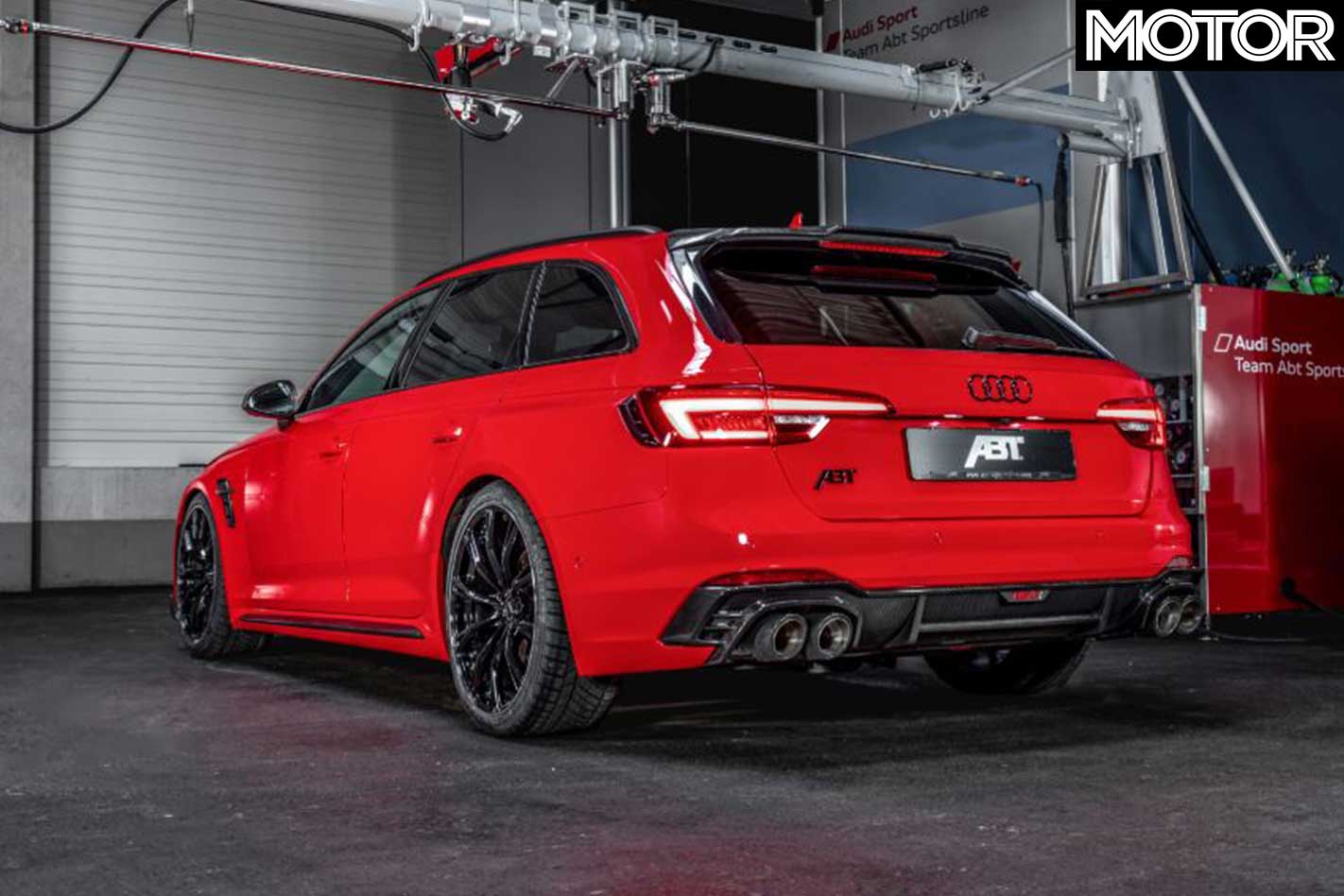
The car’s 2.9-litre twin-turbo V6 powertrain produces 375kW, up from 331kW, thanks to a new engine control unit and intake cover. Torque swells, too, from 600Nm to 680Nm, representing rises of 44kW and 80Nm respectively.
This reportedly drops its acceleration times by two tenths, falling from 4.1 seconds to 3.9, but if you want to squeeze everything from the stock engine, you can add the Power S Boost option, for 4740 € (AU$7613). It puts out another 15kW and 10Nm and includes a radiator kit.
An exhaust system with the stock ABT package sharpen its sound and swap oval end tips for a new 102mm quad tip arrangement, wrapped in carbon fibre. It sets the tone for the rest of the exterior package, also relying on the dark weave.
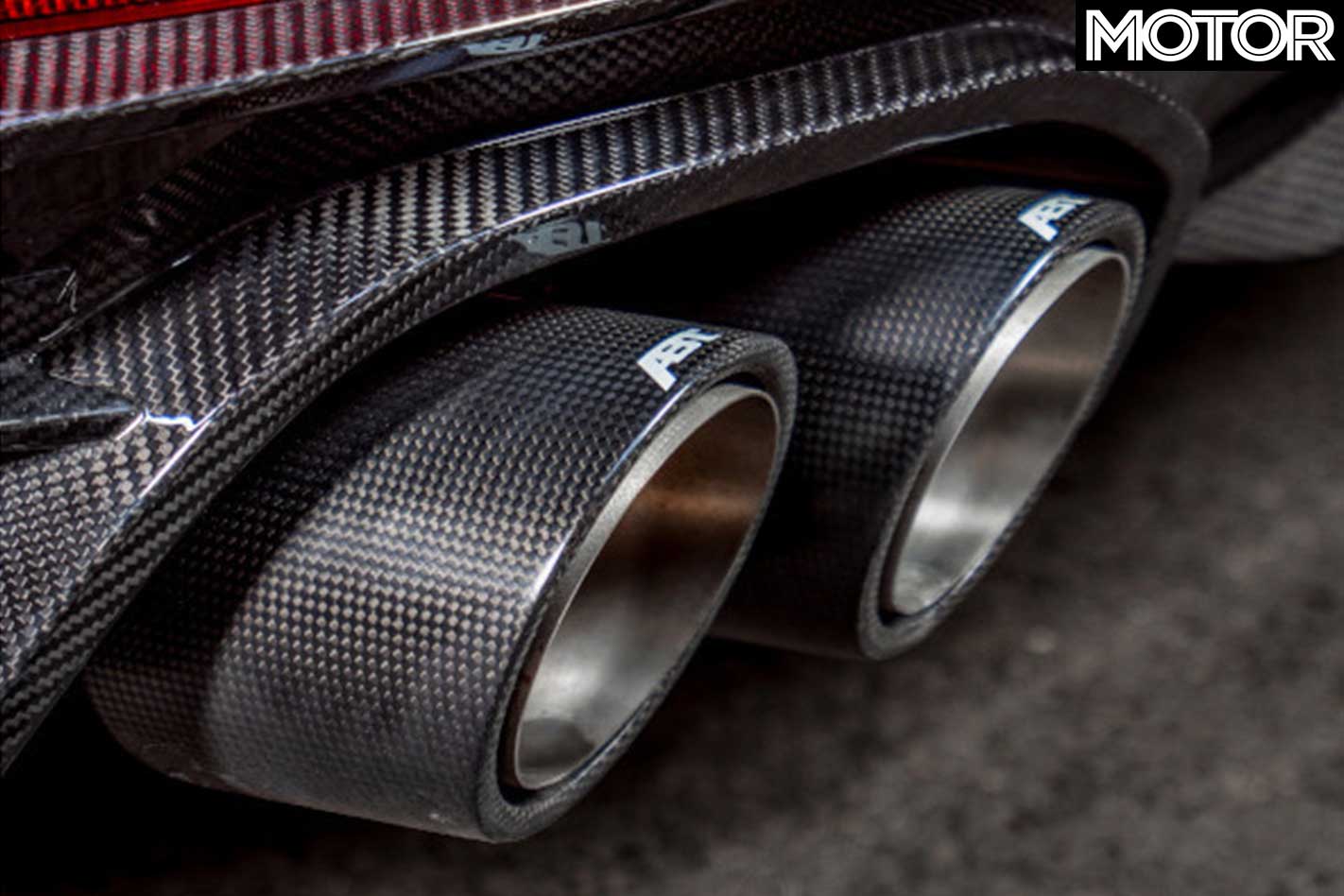
That includes its front lip, its front blades, front grill vents, rear spoiler and rear skirt. It has tricky “height adjustable suspension springs”, hunkering the RS4+ down on ABT 20-inch wheels. A unique anti-roll bar promises to optimise the changes.
The modifications then continue inside with unique badges, leather treatment, buttons and sills. Even its entrance lights now cast the RS4+ logo on to your feet.
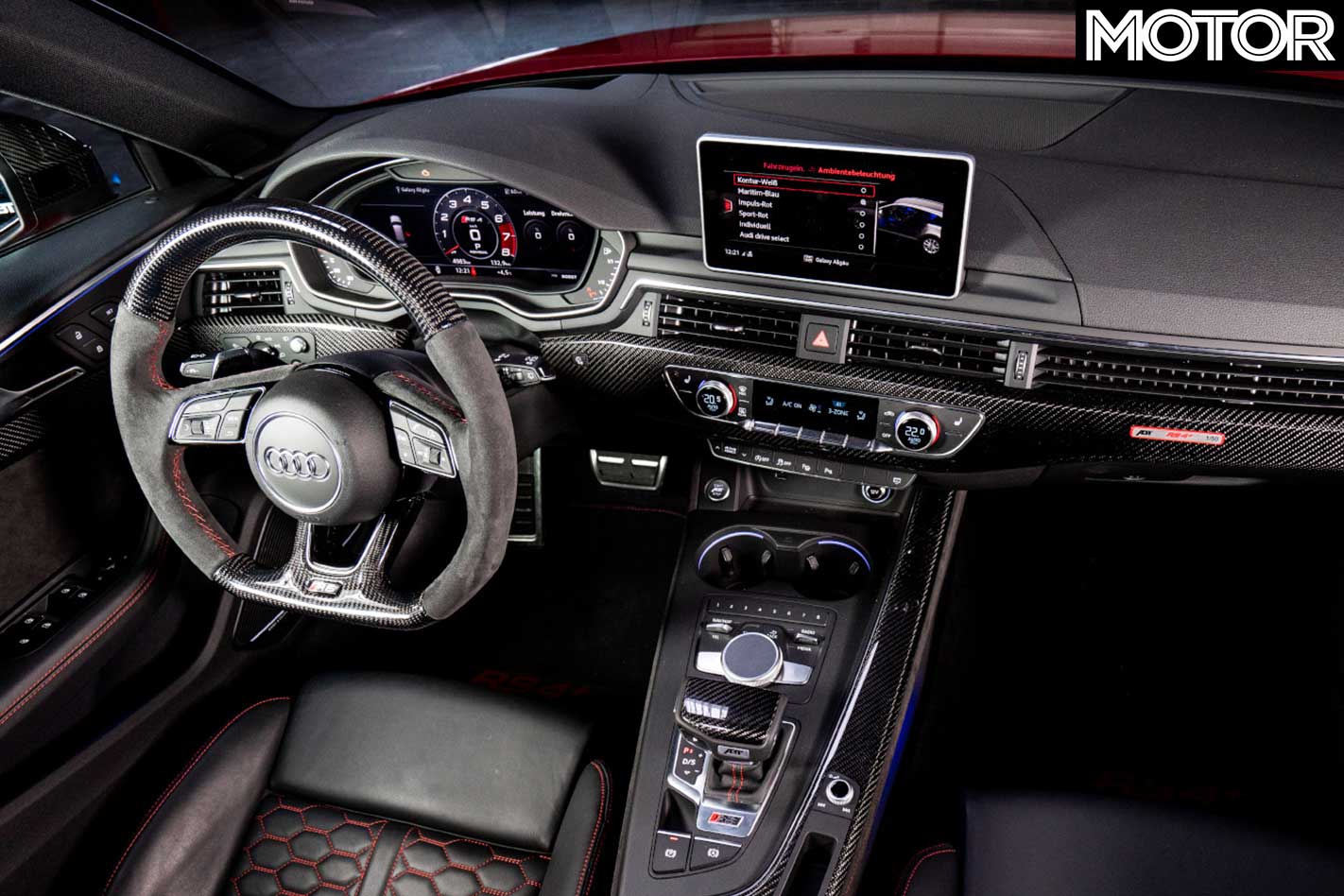
ABT says it put the package together because demand for preceeding RS4-R pack outstripped supply. It’ll charge you 28,900 € (AU$46K) for the pleasure this time around, and another 2840€ (AU$4.5K) for installation.
You can also tick the box for a host of other modifications at the same time, or even buy a complete car from ABT, that it says are sourced from Europe’s NEDC-friendly period, while delays remain on WLTP-era RS4s.
In just 2.5 seconds, the Techart GTstreet RS will hit 100km/h.
At least that’s what the Porsche tuner says about the car it revealed at the 2019 Geneva Motor Show.
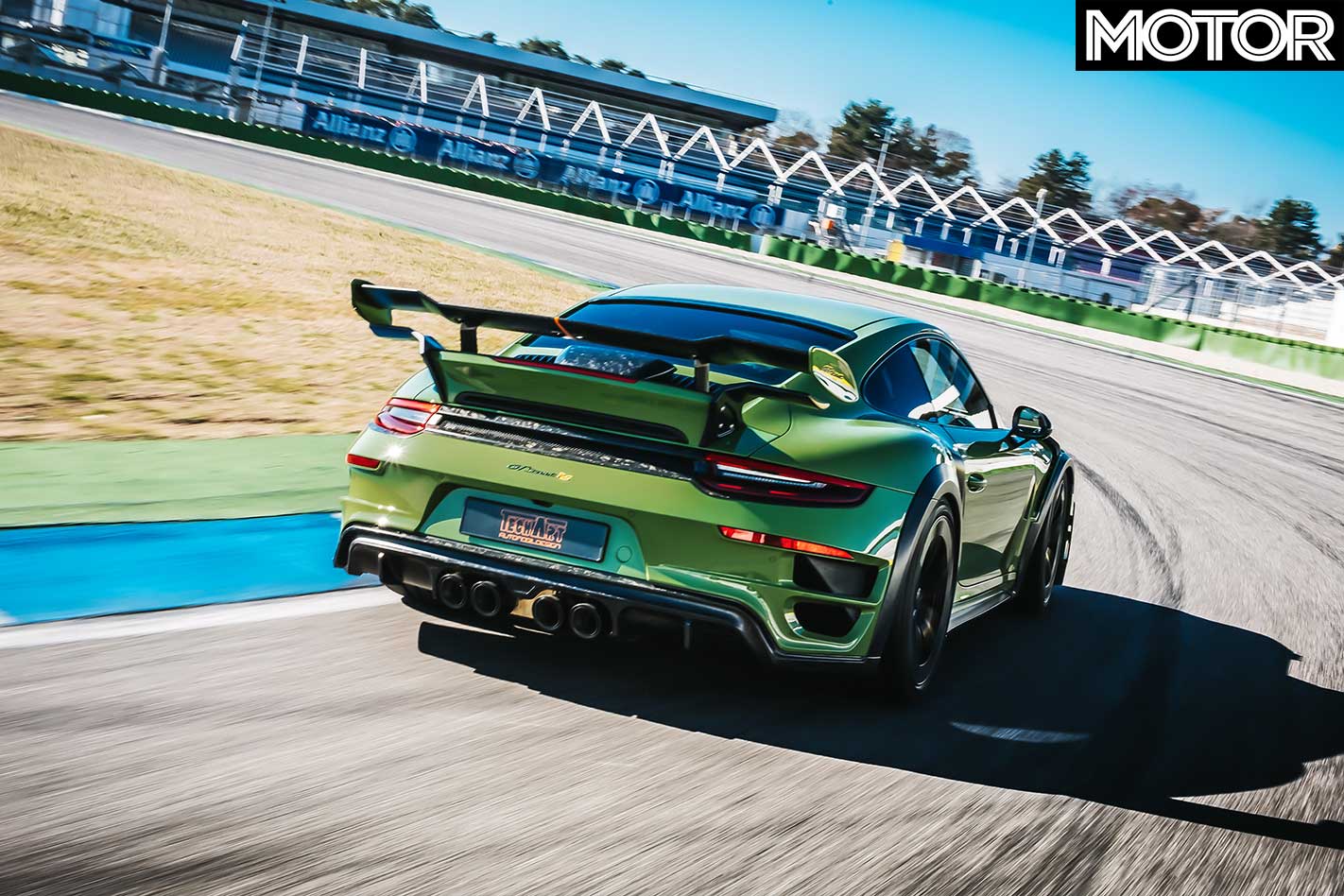
Based on a Porsche 991.2 911 Turbo S, the GTstreet RS brings power and torque up to 567kW/920Nm from the already lofty 427kW and 750Nm. That’s an increase of 140kW and 170Nm.
Techart says the GTstreet GT will go on to 200km/h from a standstill in a total of 8.1 seconds, and then onward towards a potential top speed north of 340km/h, though that’s what it’s limited to for road use. That should prevent speeding tickets, then.
The primary performance modifications Techart has bestowed upon the 911 Turbo S are engine-adjacent, meaning Techart won’t need to go digging around inside the 3.8-litre twin-turbo flat-six to complete the upgrade.
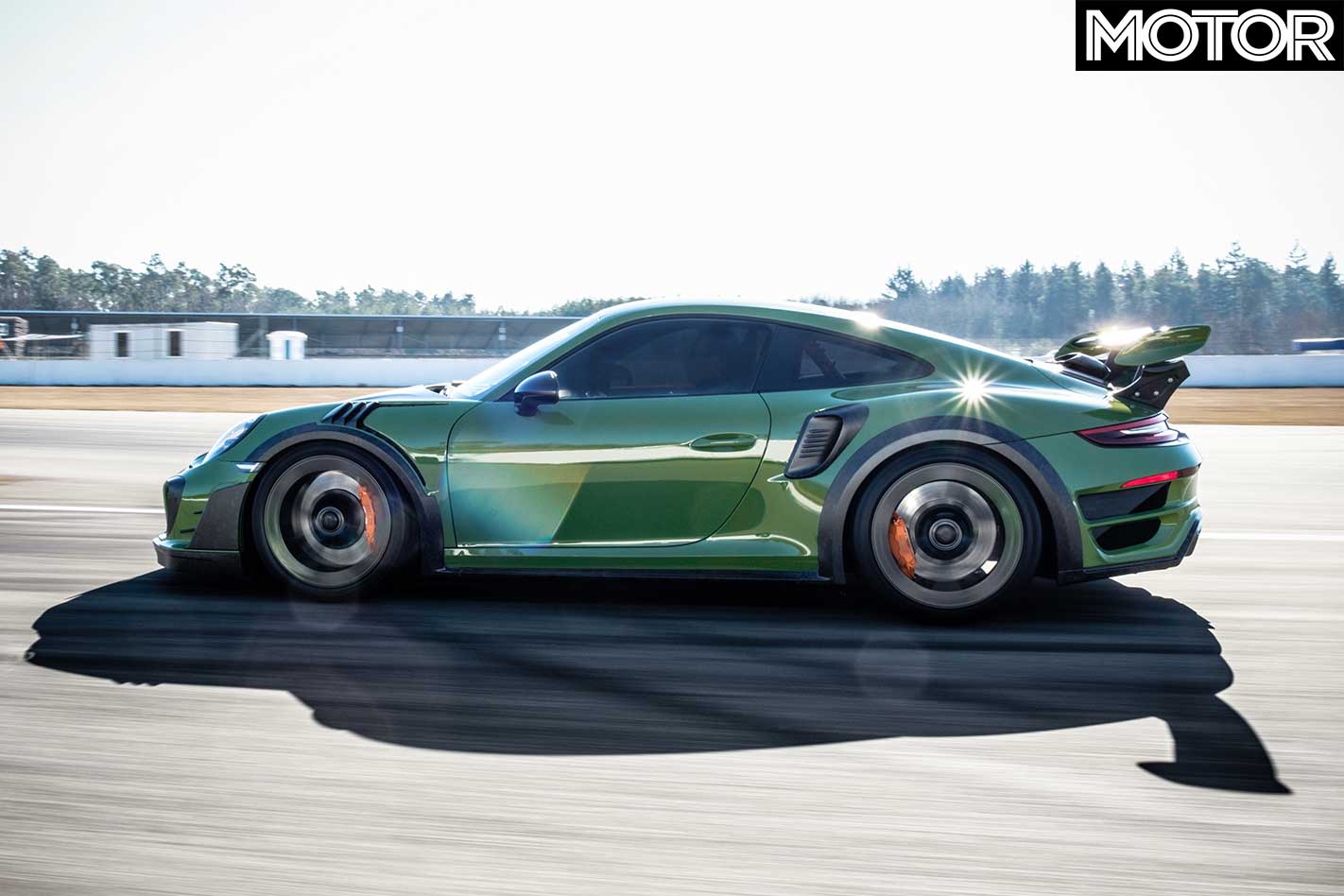
The aforementioned turbos, however, are turfed for Techart’s own. It says its variable turbine geometry turbochargers are more consistent in terms of power delivery, while pipes at the other end of the combustion process – four titanium tailpipes with continuous valve adjustment – ensure gas flow is at its most efficient.
Inside the engine bay is an upgraded air filter, with air entering the engine bar via a ram scoop on the rear ‘door’. Out of sight is a software upgrade to the gearbox management designed by Techart.
So, the GTstreet RS has the bite to back up its visual bark.
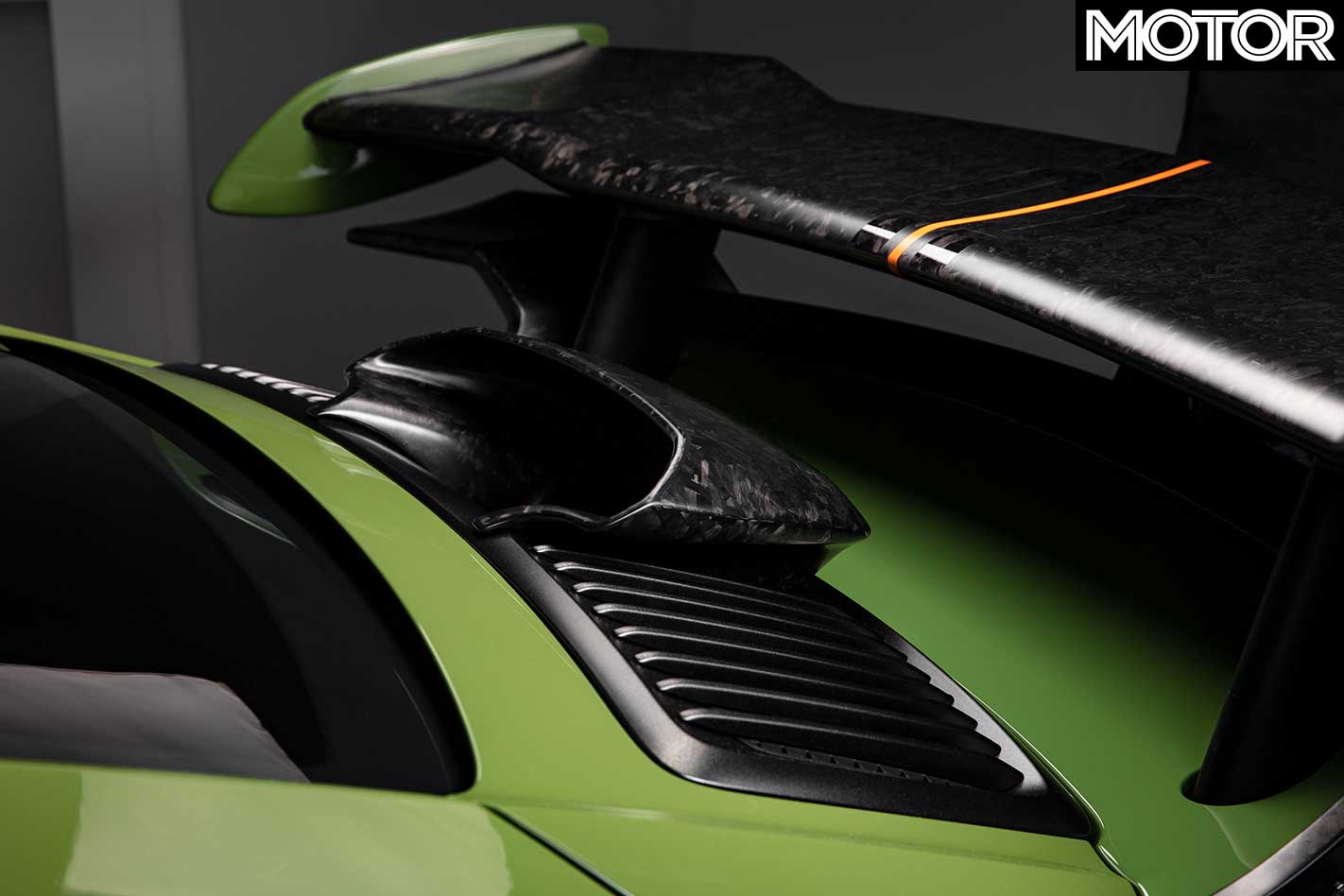
That aesthetic ‘bark’ is down to a lot of carbon panelling, designed for ‘lightweighting’ and aerodynamics as well as giving the car a much more aggro appeal.
A large part of that carbon appears on the active rear wing, which “deploys and adjusts by 15 degrees” once the car is set to performance mode.
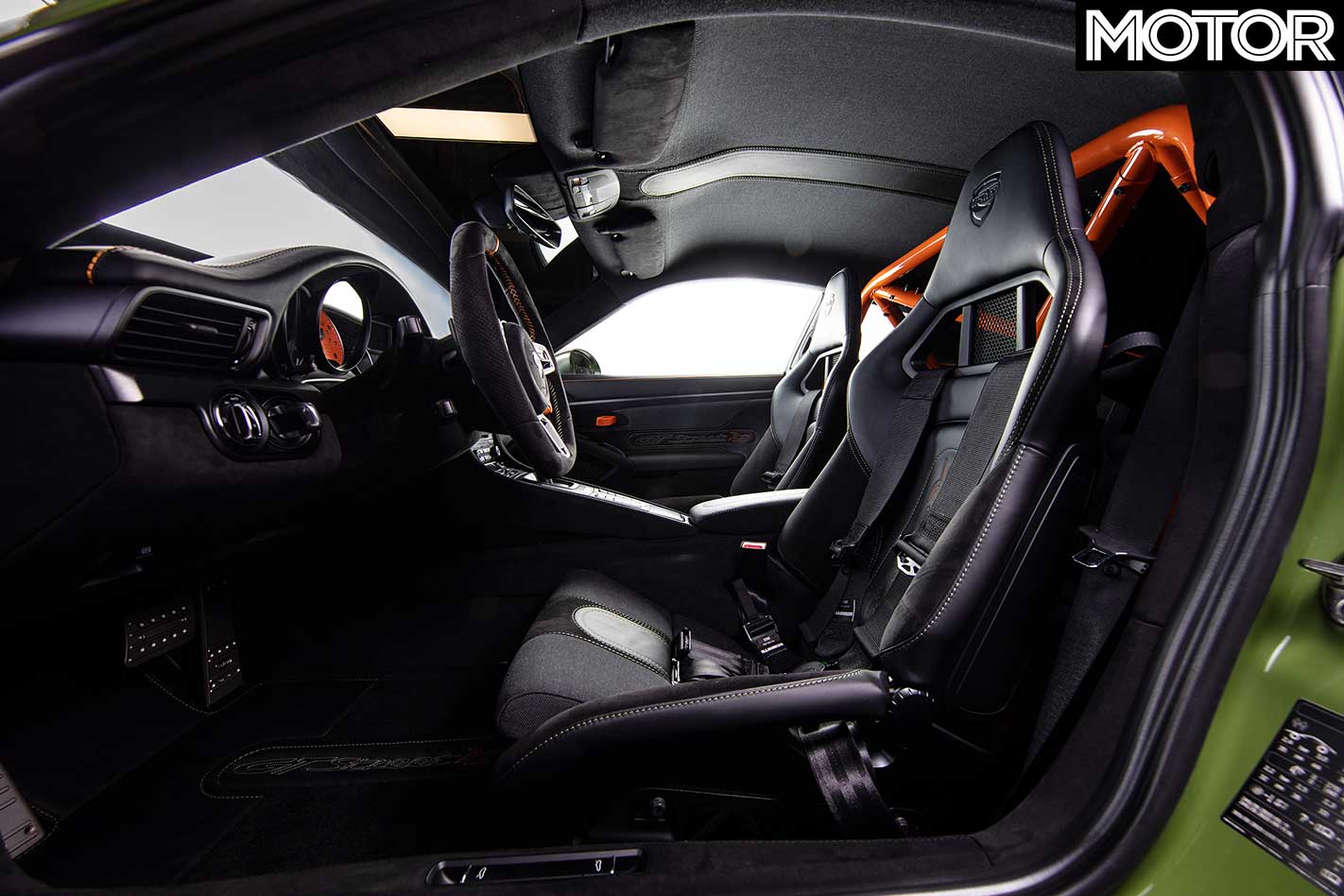
Inside, wool, leather, Alcantara, and more can be optioned to owners tastes, something Techart will custom-create to make this rare car even rarer.
Oh, on that note, did we mention only 10 will be made?
Techart says each car will be numbered, with custom accessories such as racing helmets and matching bags to be given the same numbering.
LIKE tethered skydiving and any ‘edited for content’ airline movie, the IONIQ Plug-in petrol-electric hybrid exudes more than a hint of entrée alongside its Electric sibling’s culinary smorgasbord. Why not just go for the main?
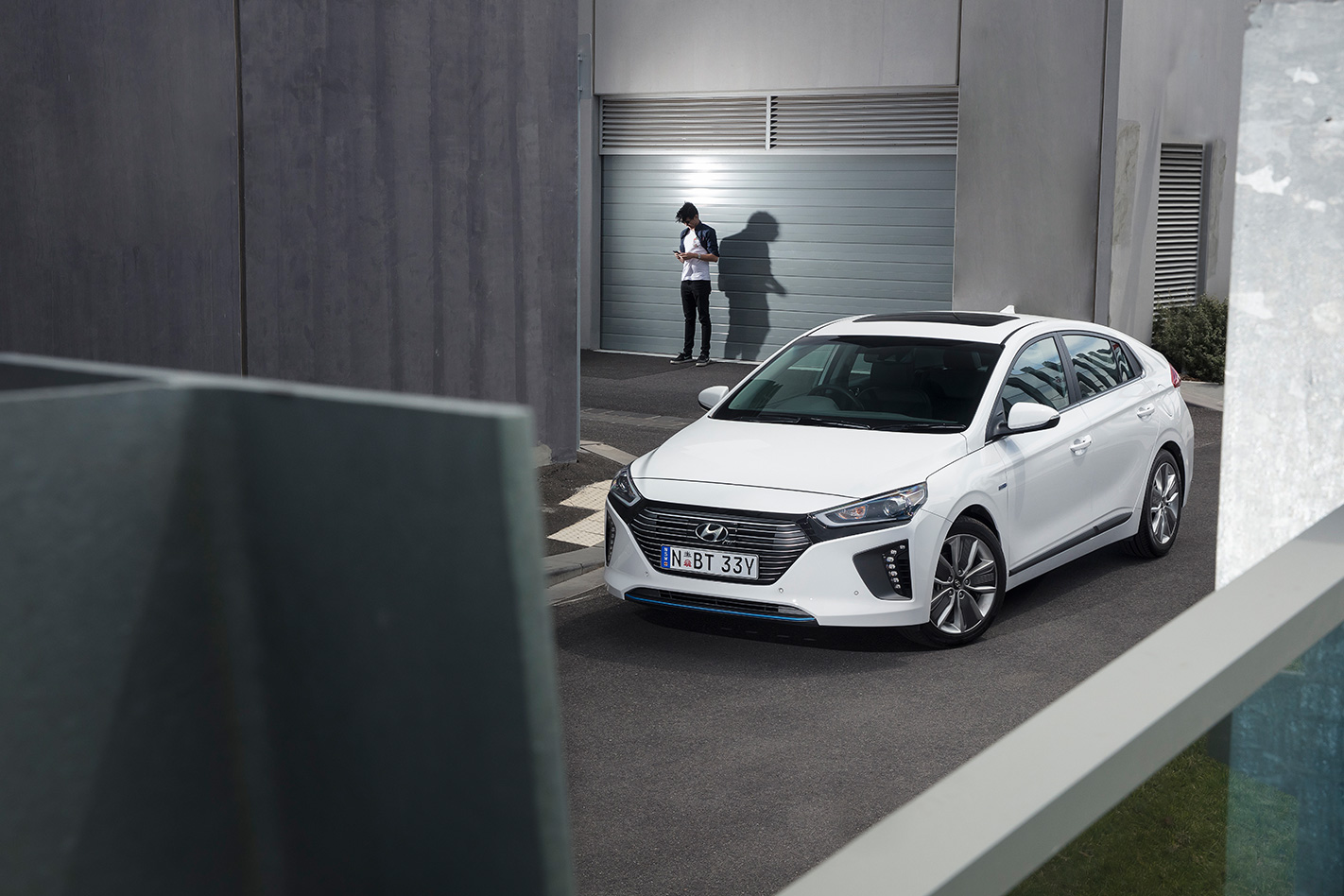
Hyundai’s head-first dive into low-to-zero emissions vehicles is ambitious, with a pair of ‘taster’ electrified IONIQs for buyers uncertain and/or anxious about committing to the full IONIQ Electric EV experience.
And fair enough. As Hyundai’s Prius, the starter Hybrid from $33,990 brings a 77kW/147Nm 1.6 petrol/six-speed dual-clutch transmission internal combustion engine (ICE) combo with 32kW/170Nm electric motor and 1.56kWh battery assistants, for a 3.4L/100km average. It never runs electrically – unlike in the $41K Plug-in, using the same ICE powertrain but a larger (44kW/170Nm) electric motor and 8.9kWh battery, for up to 63km of EV driving, before switching to petrol (and just 1.1L/100km). Both have total system outputs of 104kW.
Mirroring the successful Mitsubishi Outlander PHEV, it is possible to commute daily in pure-EV mode, as long as the Plug-in is fully charged (up to five hours on a household plug) at the outset. The ICE will kick in when the HEV button is selected or ‘Sport’ is accessed, helping recharge along the way.
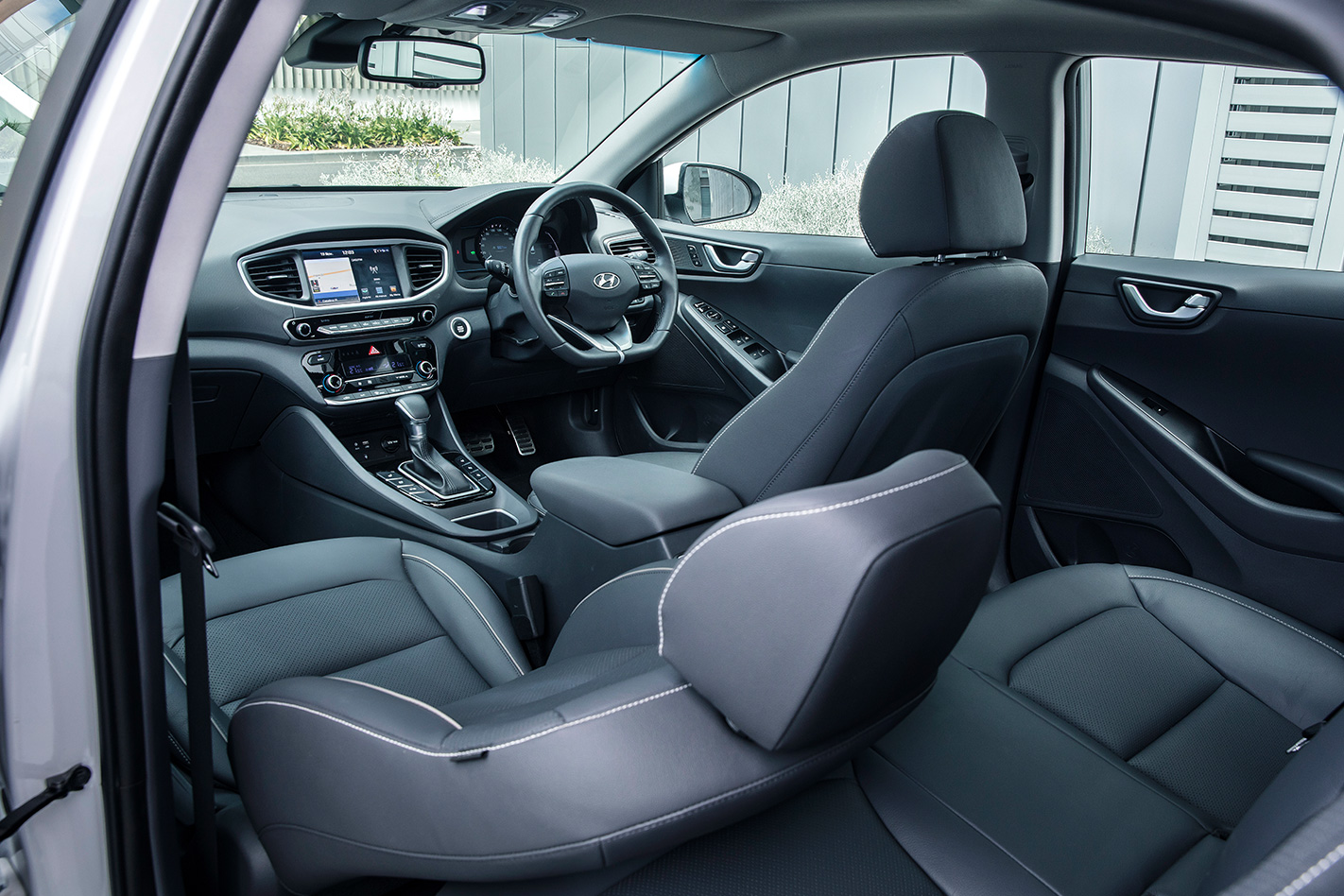
All good so far, especially as the Plug-in’s EV performance is surprisingly eager given the modest output; additionally, the steering is responsive (if remote in feel), with similar handling and roadholding control to the related i30 hatch – further normalising the electrification experience. However, stiff suspension, an unsettled ride and omnipresent droning from the (multi-link) rear end erode the IONIQ’s refinement qualities.
Furthermore, spirited driving drains the volts pretty quickly, and when the ICE does kick in, there’s even more mechanical cacophony to assault ears hitherto lulled into an electric serenity – though the accompanying extra acceleration (and about 900km combined range) is appreciated.
The thing is, for only $4000 more, there’s the near-silent, torquey smoothness of the potent Electric, while still offering 230km of real-world range; the EV is just as spacious and comfy inside, but brings a less mundane dash, gaining electronic transmission controls, flash instruments and stop-and-go adaptive cruise control capability, while ditching the Plug-in’s foot-operated park brake. It simply feels more special inside. And the (torsion beam) rear suspension seems both more absorbent and better-isolated.
The Plug-in, then, is a capable if flawed gateway EV of questionable value, lacking the charming and enjoyable Electric’s more rounded capabilities. Good as it is, if you’re this close, cut the ICE umbilical cord and savour the superior EV experience the all-battery IONIQ offers.
Nissan’s big reveal for this year’s Geneva Motor Show is the IMQ Concept, a sharply-sculpted high-riding wagon which the Japanese company says points toward its next generation of crossover vehicles.
And while the IMQ may be a little more prosaic than the bevy of supercars and high-end luxury metal elsewhere on the show floor, it’s nevertheless an important one to pay attention to for a different reason: it points toward the next generation Nissan X-Trail.
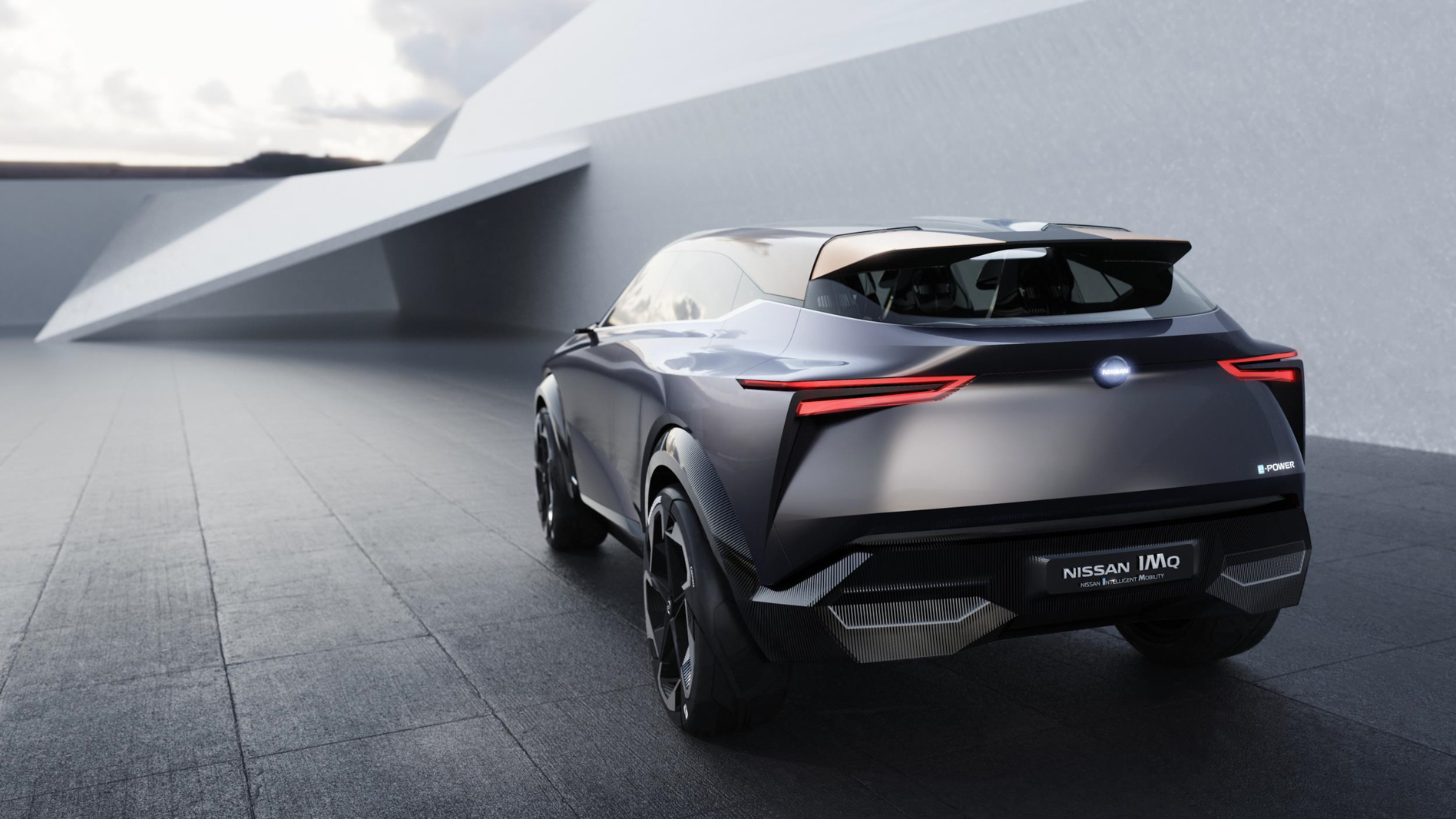
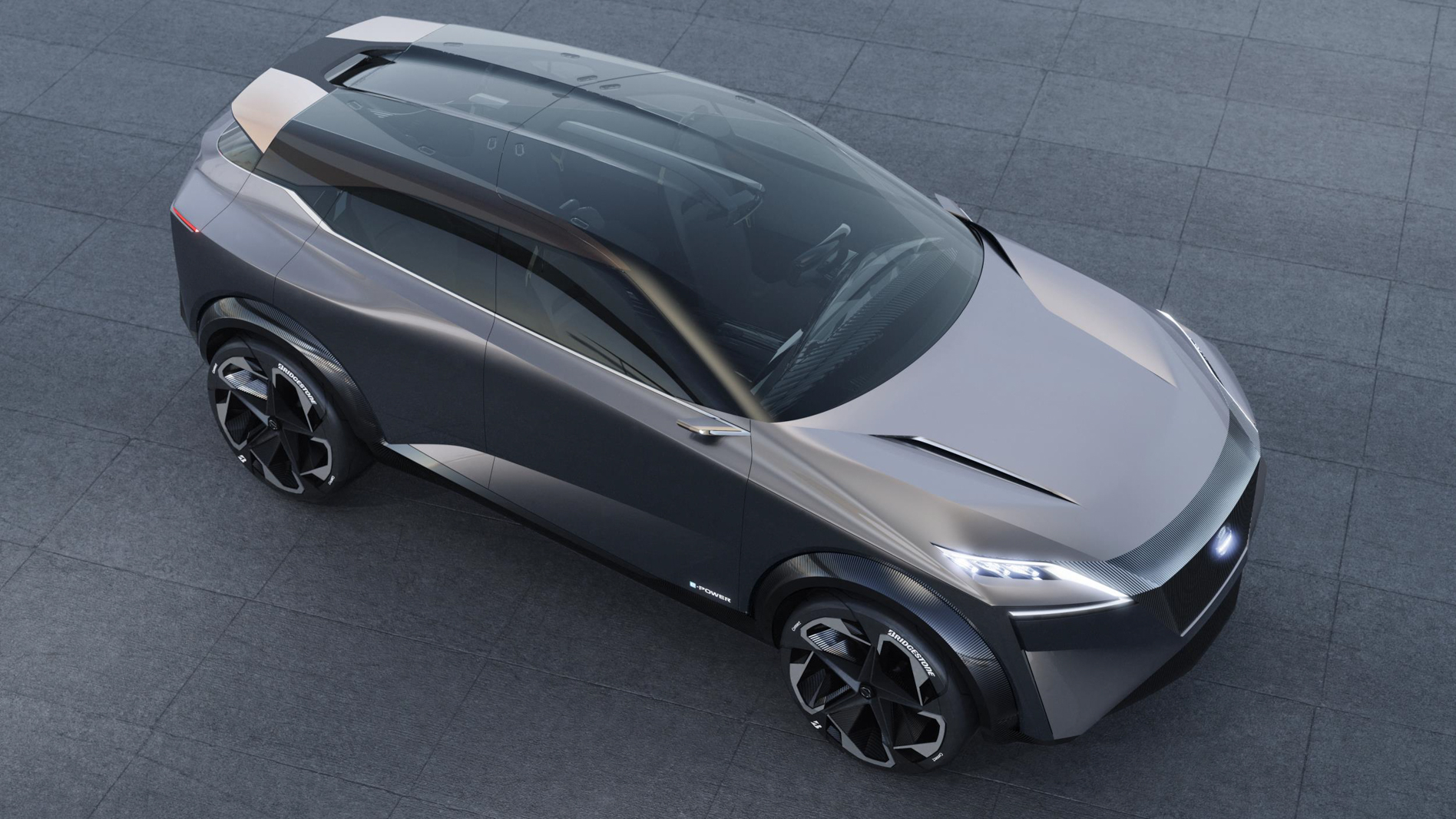
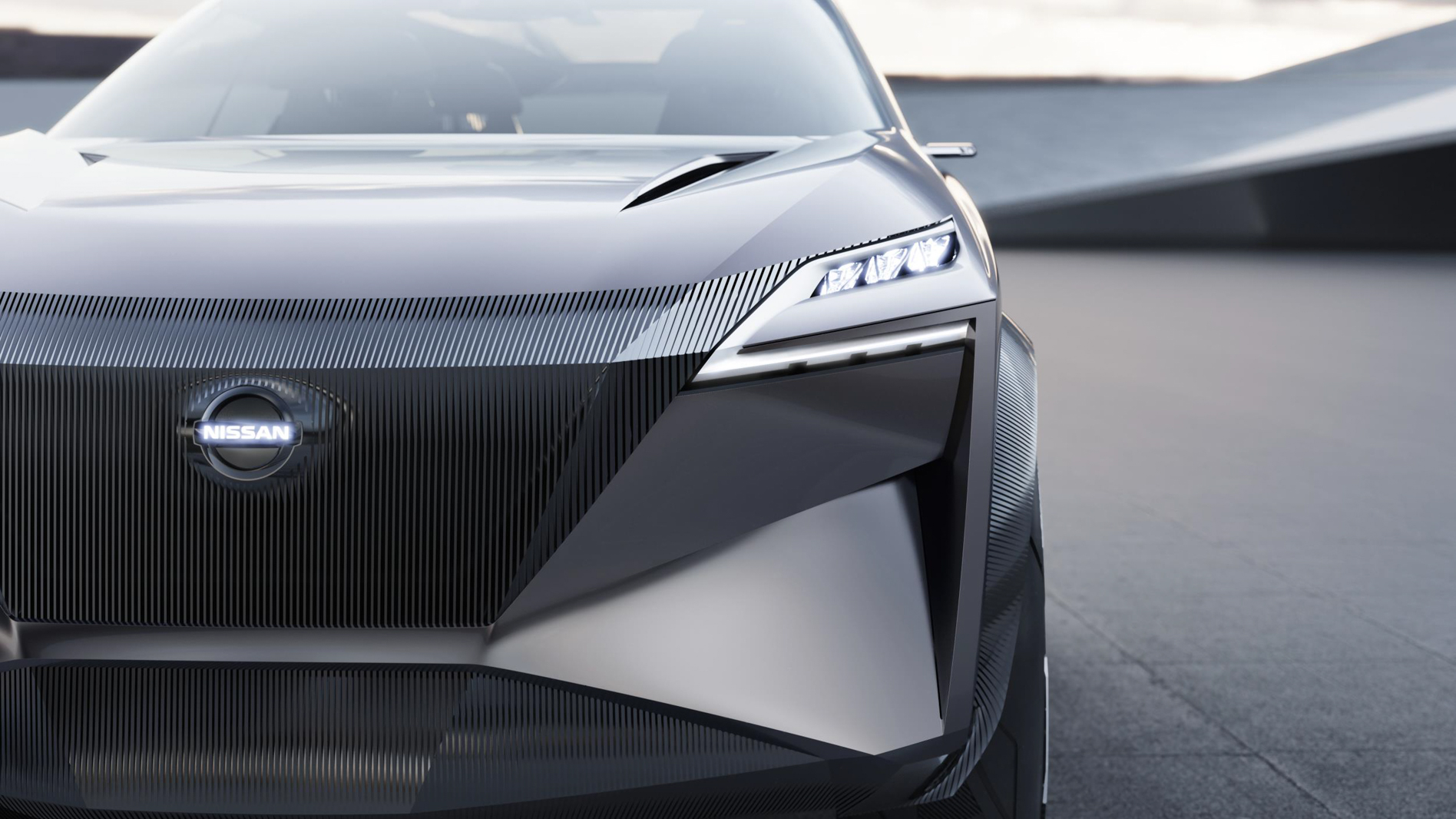
Boasting design cues that Nissan says “signals the direction of the next generation of crossovers”, the 4.56m-long IMQ Concept is slightly shorter than the current Nissan X-trail, but measures wider from wheelarch to wheelarch.
And, if it’s indeed a preview of what’s to come, we can expect the next X-Trail to flaunt an even more athletic appearance than the current model, which ditched the boxy offroad-style aesthetics of previous generations in favour of softer curves and a more car-like look.
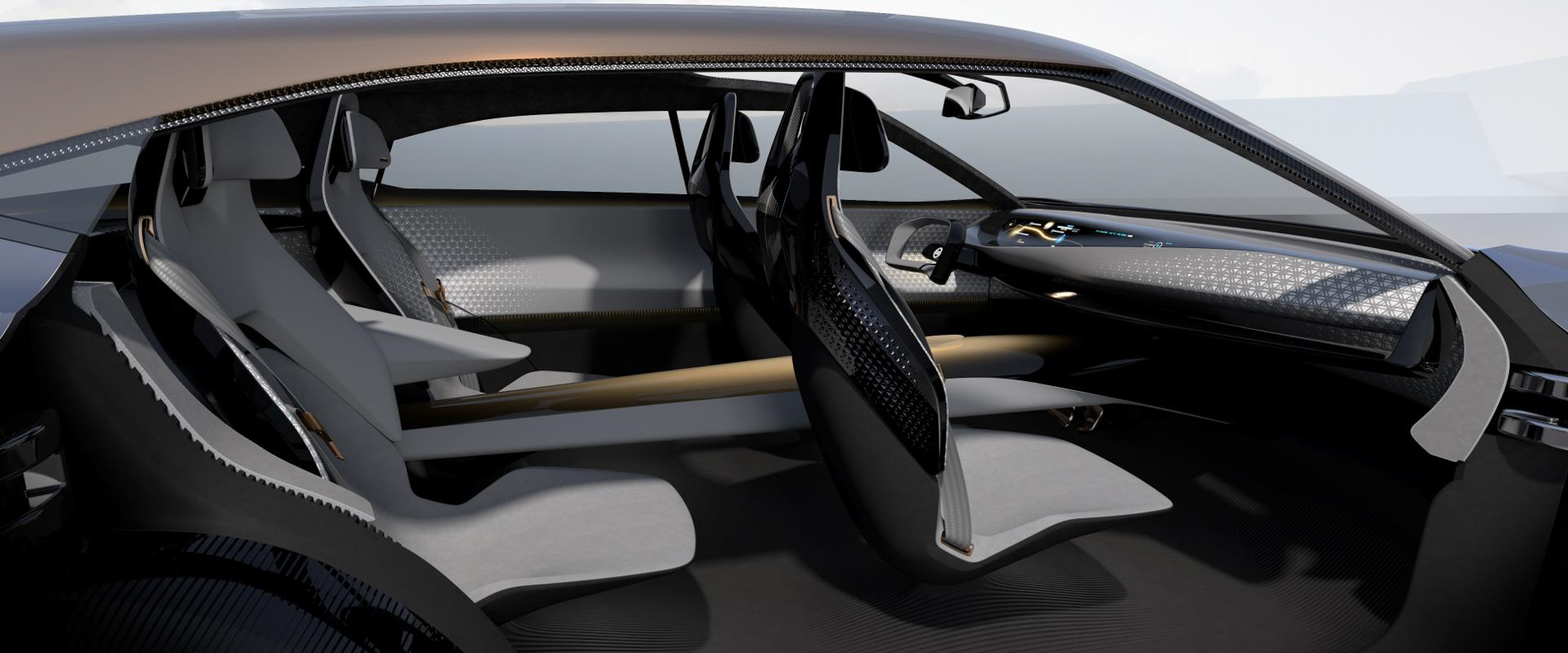
While it looks low-roofed and sporty from the outside, the IMQ adopts a minimalist approach on the inside. As is typical for concept cars there are just four individual seats rather than a more realistic second-row bench seat, and the high centre tunnel runs beneath the floating dashboard rather than being integrated with it.
An aeroplane-style wheel juts toward the driver, while the all-electronic instrument panel and infotainment display are seamlessly integrated with the dashboard. It certainly looks futuristic, but unlike the exterior design we expect few cues of the IMQ’s interior to resurface in Nissan’s next generation SUV family.
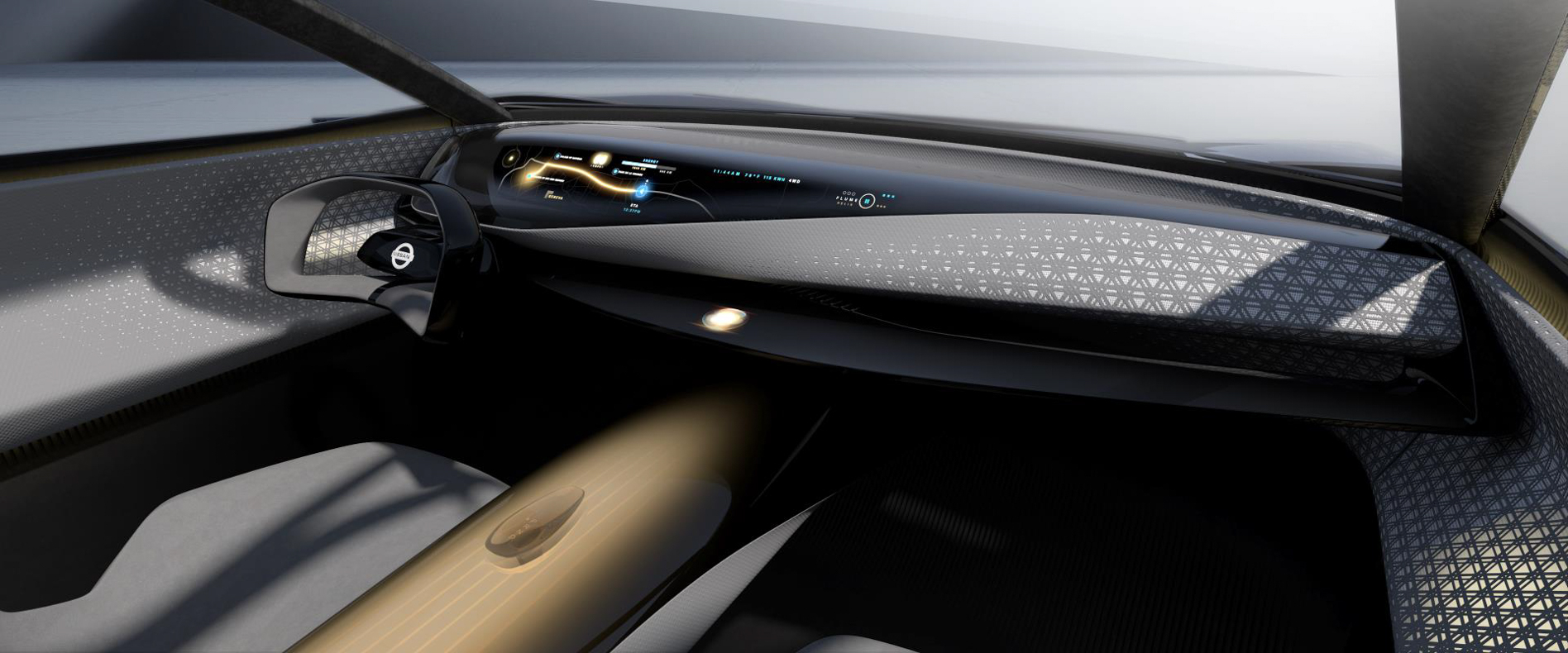
Its powertrain is a curious one. Though described by Nissan as ‘100 percent electric drive’, that’s somewhat misleading. Yes, drive is courtesy of two powerful electric motors (which generate a huge 250kW and 700Nm), however rather than carry a massive battery to provide meaningful range, the IMQ instead uses a smaller battery and a 1.5-litre turbocharged petrol engine as an on-board generator. To some, that makes the IMQ more of a hybrid than a genuine electric car.
However, it’s a strategy that’s in line with what Nissan’s luxury arm Infiniti is planning for its first electrified production cars – a strategy that’s out of step with the rest of the industry, but one that may pay off if concerns over sufficient supply of battery raw materials like lithium turn out to be true.
Other technological highlights of the IMQ include an augmented-reality system which overlays the location of hidden hazards and street features on the car’s windows, along with a further evolution of Nissan’s ProPilot semi-autonomous driver assistance tech.
The concept’s 22-inch wheels and low-profile Bridgestone tyres are also designed to communicate a broad range of information to the driver, such as grip levels, temperature, load and even how worn they are. Their likelihood of being found in a production Nissan SUV soon? Slim.
The current-generation Nissan X-Trail enters is sixth year of production this year, which is commonly retirement age for most cars. If the IMQ Concept points towards that car’s replacement, get prepared for the X-Trail to head in a significantly more stylish – and potentially performance-oriented – direction.
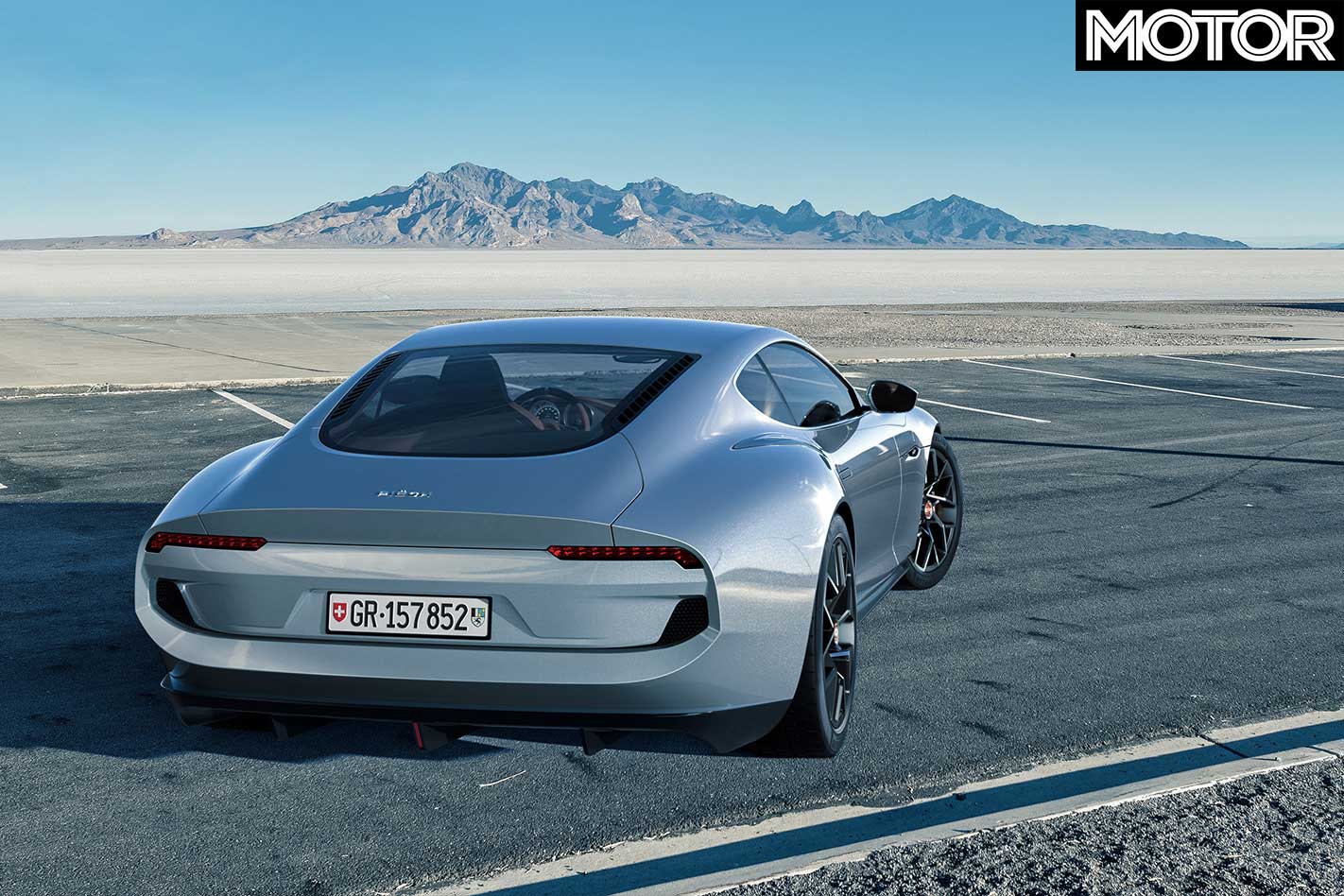
There was definitely no shortage of electric vehicle creations at the 2019 Geneva Motor Show, but the Piëch Mark Zero electric sports car concept promises to deliver more practical solutions to the electric car equation, namely quicker charging times and better heat management.
Cloaked under a body that bears a part-Jaguar part-Aston resemblance, the Mark Zero features a new type of battery that is, not only able to deliver a range of 500km on the WLTP test cycle, but “hardly heats up during charging and discharging phases”.
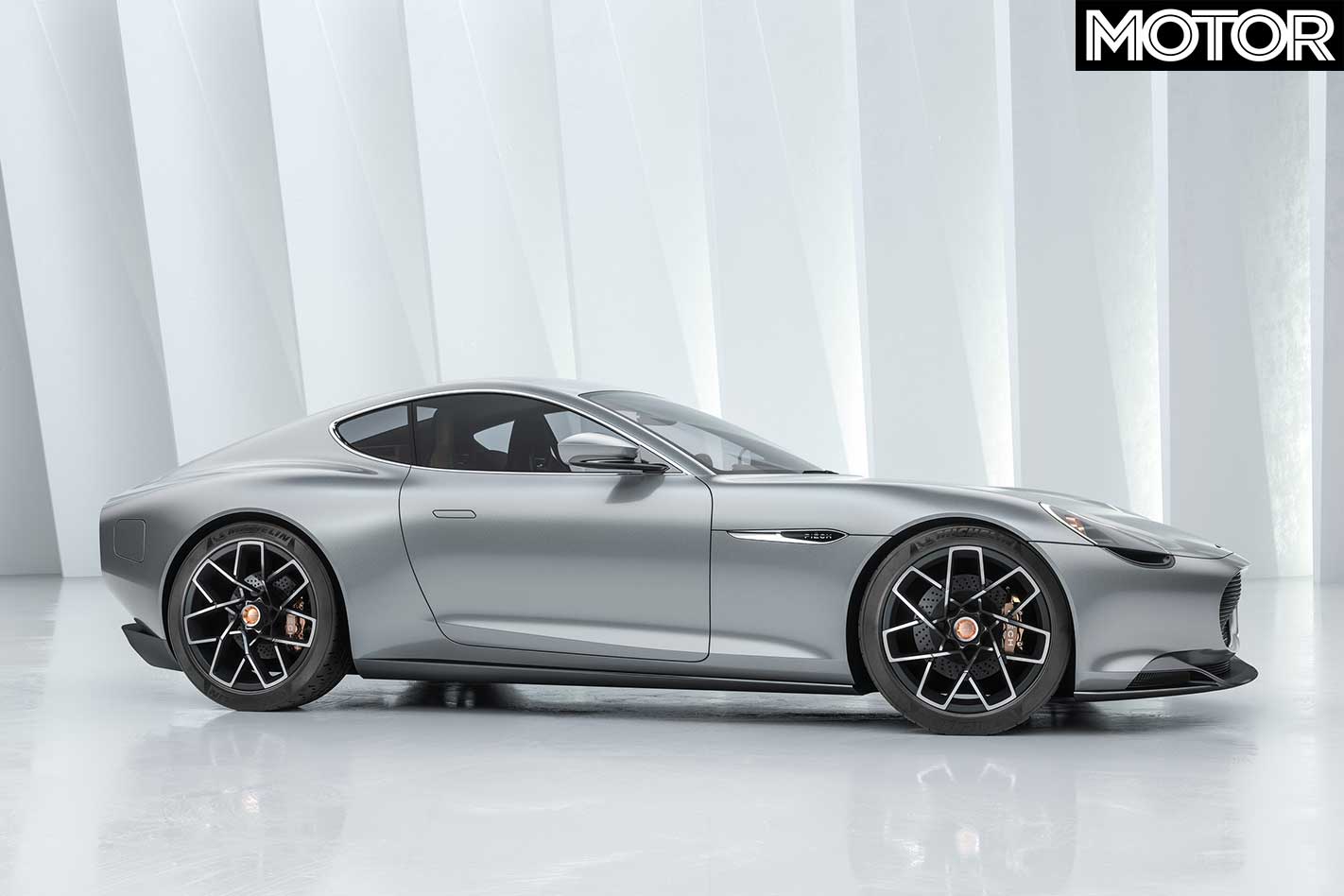
According to Piëch Automotive, the battery’s thermal stability allows the Mark Zero to depend on air-cooling alone, which contributes to an overall weight reduction of around 200kg. This weight saving allows the concept to keep its total weight to 1800kg, which keeps with the Mark Zero’s aim of delivering “a real sports car feeling”.
Adding to that, under its fast charging mode the battery can be recharged up to 80 per cent capacity in 4 minutes 40 seconds, which is around the time one would take at the pumps. The battery itself is the product of Piëch Automotive’s Hong Kong-based battery partner Desten Group.
With three 150kW electric motors, one at the front axle and two at the rear, Piëch Automotive targets a 0-100km/h time of 3.2 seconds and a top whack of 250km/h. Though there is no quoted total system output, the output from its three motors, proposed 500km battery range, and 0-100km/h target puts it right in the realm of Porsche’s upcoming Taycan electric car.
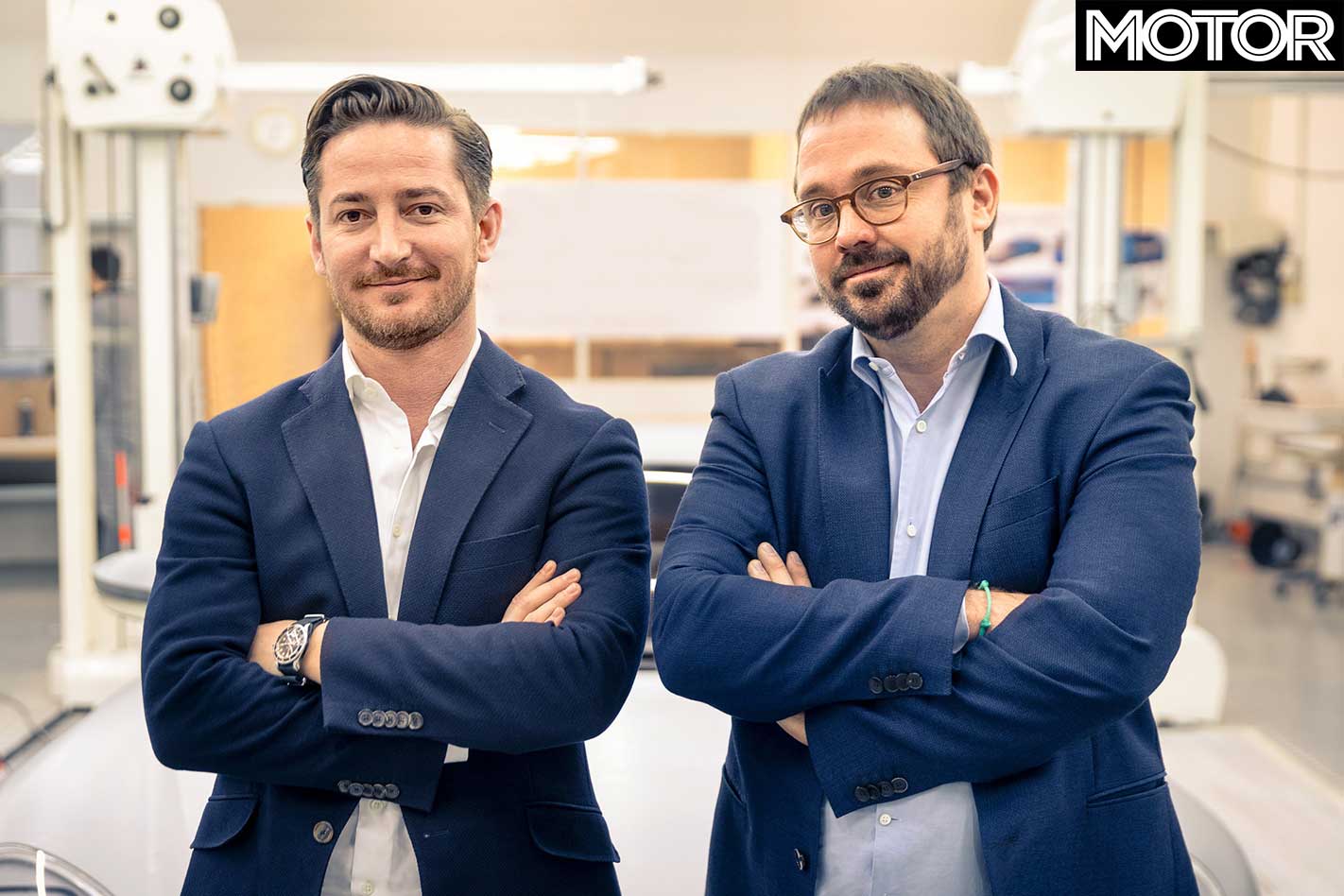
“We have developed a sports car that we ourselves would like to buy,” says Anton “Toni” Piëch, co-CEO of Piëch Automotive.
“We want to offer a modern classic that isn’t subject to consumer cycles. The driver of this sports car should enjoy any minute they can spend in the car.”
More pertinently the Mark Zero serves as Piëch Automotive opening salvo into the automotive business. The Mark Zero is built on a modular concept that Piëch Automotive says will allow the adoption of traditional internal combustion engines, hybrids, and even fuel cell powertrains.
The three and a half year old company says it plans to spin off three vehicle variants from the platform, which includes a two-seater, four-seater, and an SUV, with possible convertibles and pick-up bodystyles, and able to fit autonomous drive systems. Piëch Automotive plans to work with “experience partners with a long-standing successful history in contract manufacturing” to bring the Mark Zero to production in the near future.
If the name Piëch in Piëch Automotive rings a bell, it is because Toni Piëch is a son of Ferdinand Piëch, Volkswagen Group’s former chief supremo who left the company after clashing with the company leadership in 2015.
Maurizio Reggiani, Lamborghini’s chief technical officer, is choosing which bottle of water to pour.
“Sparkling every time,” he decides, notwithstanding the fact that the stuff tastes like TV static.
“Costs the same and has gas inside,” he adds, before making possibly the most Lamborghini comment possible about carbonated water. “CO2 is marvellous,” he beams. “No one is able to prove that CO2 is a pollution, eh? Remember this.”
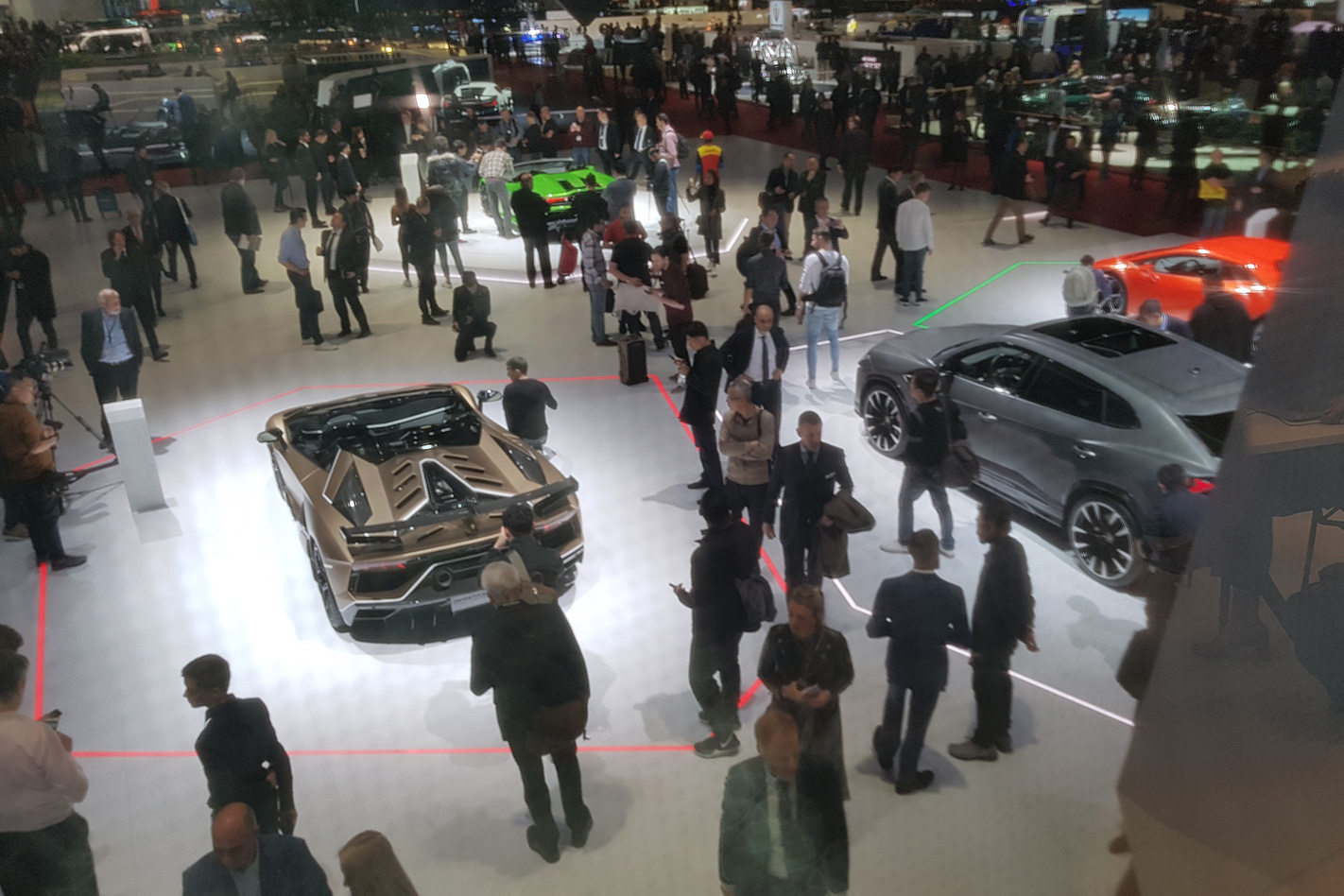
We’re tucked away upstairs in Lamborghini’s suite at the Geneva Show and there to temper Reggiani’s natural bombast is Federico Foschini, the company’s chief commercial officer. He’s keen to stress how well the Urus SUV is doing for Lamborghini.
“Seventy percent of Urus customers are new to the brand. We are seeing more women buying,” he says, but admits that the rise is only from four percent to six or seven percent.
He also demurs when asked whether the success of Urus – targeting 5000 SUV sales next year out of Sant Agata’s total output of 8000 cars – builds pressure on Lamborghini to offer a smaller SUV.
“No, it’s not in our ideas. It’s a step I don’t think we are going to do. The positioning of Urus was perfect. At the end of the day, it’s a super sports car that drives with an SUV design. So, there’s no Macan-like version. We are not working on anything like this,” says Foschini.
“Too small,” snorts Reggiani.
When asked whether the company is instead looking at something more Panamera-like, Reggiani deflects, preferring to talk of platforms and powertrains.
“To create a Lamborghini hybrid super sports car is really easy,” he says, with a dismissive wave.
“The problem is solving the physics problems of weight and packaging. We also need to guarantee the emotion of Lamborghini and that emotion came from sound, from engine responsiveness, from the number of cylinders,” he adds.
“If you take this kind of characteristic, you need to play with what is offered in terms of electrification and then try to minimise the weight and packaging of these components.
“Our competence in carbon fibre will be our biggest support. Taking experience from LDVI (Lamborghini Integrated Vehicle Dynamics system) that we apply to the Huracan Evo, all the chassis control that gives perception to the customer that the car is much more agile.
“From a physics point of view, it’s like having a lighter car.”
He bats away the threat posed by upstart EV supercar manufacturers.
“There are some really fresh ideas. What the need to face is what would be their rule of the game in terms of homologation today,” he says.
“There is a real difference between concept and a production car. There are cars being presented without any kind of entry for air,” he sits back and blows out his cheeks, throwing his hands up. “The battery needs a super efficient cooling system otherwise you have no functionality. From concept to production – you need an evolution of the revolution.”
Cool your jets, in other words.
“The V12 must respect some homologation rules. We are able to guarantee that our V12 will be able to fulfil all Euro 6 rules. After that it comes down to questions of capacity and fuel consumption. What’s becoming clear is that if you want a super sports car, fuel consumption cannot be discounted. The future will be Euro 7, a real tough game changer. Maybe 2023, 2025. It will have real significant impacts in terms of output and performance,” he admits before claiming that it is technically possible to meet Euro 7 requirements with an atmo V12.
He admits to difficulties with the Urus’ speed limit detection system, claiming that it reads German speed limit signs perfectly but not Italian ones, a wry irony indeed.
Its German genetics offer other advantages though.
“In the Urus, it would be possible to benefit from hybridisation work done within the group. But when you take a super sports car, you perceive immediately that there are no cars within the group as extreme as the Aventador in terms of packaging and shape. If you think for a moment that it’s possible to have a floor mounted battery, you understand immediately that the car lifts up so much that you will not be able to have an Aventador.”
Reggiani worked with Ferruccio Lamborghini many years ago and it’s put to him which car in the current range the marque’s founder would have loved most. His eyes light up and he smiles.
“Aventador! He was a man that liked the sound and the perfection and no other engine can be perfected like a V12. For Ferruccio it was engine and design, engine and design.”
RUF, the German firm famous for tuning Porsches, has brought along two 911-based creations to the Geneva Motor Show. Surprise surprise.
First of the two is the 2019 RUF GT, a 991-based 911 GTS that’s had its wick turned up to 384kW. If you remember, that model’s 3.0-litre twin-turbo flat six debuted with 331kW, which means RUF has found another 53kW.
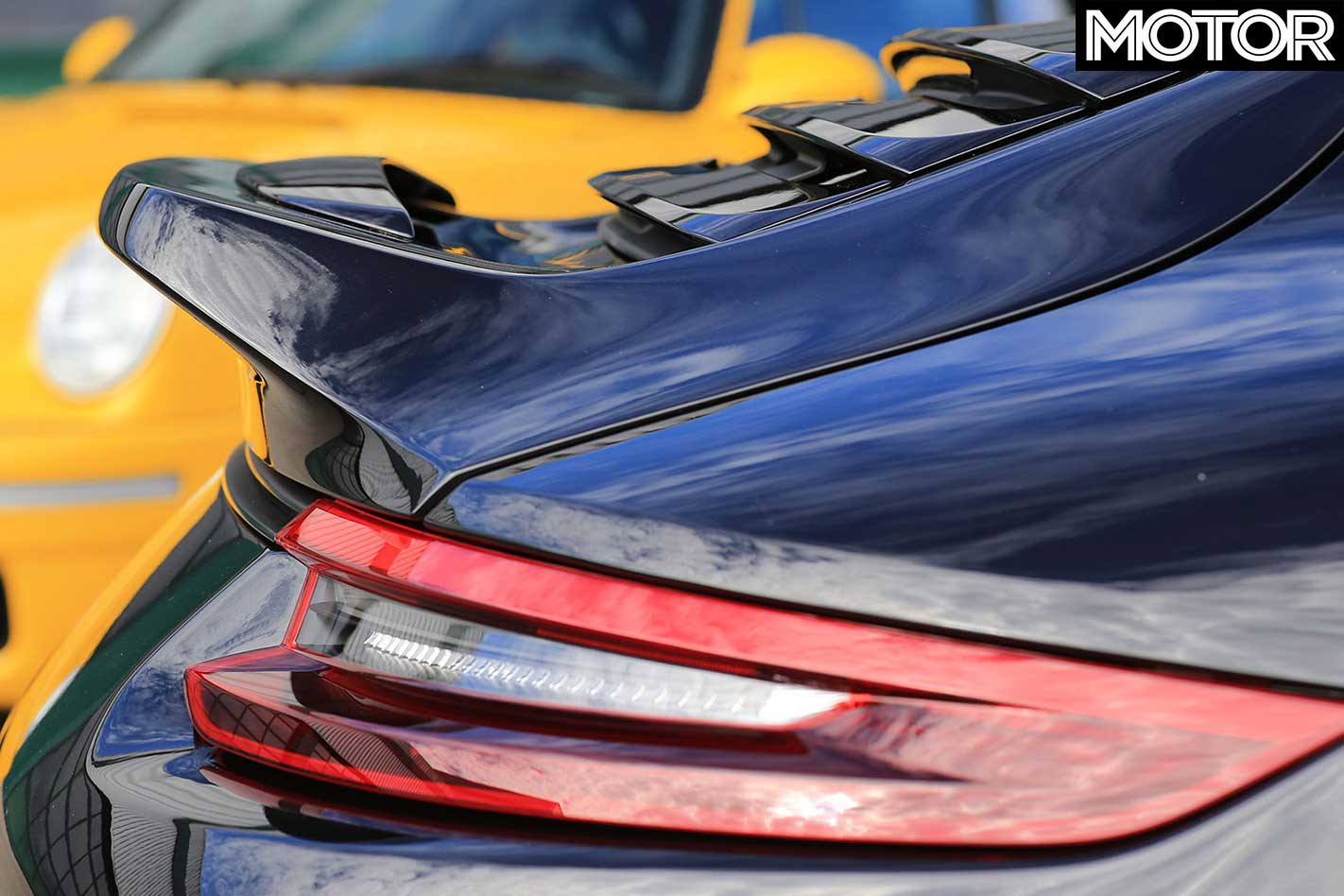
Torque is up too, from 550Nm to 645Nm. Combined with a seven-speed dual clutch transmission it’s claimed to hit 100km/h in 3.4 seconds. That’s equal to a current 992 911 Carrera 4S with Sport Chrono, but RUF has focused on other areas to maintain the GT’s desirability.
It’s somehow slashed its kerb weight to 1450kg. Top speed is pegged at 320km/h, thanks to that ducktail spoiler improving aerodynamics and boosting downforce.
It comes with specific 20-inch wheels, a carbon fiber front lip and rear diffuser. It also offers it with a seven-speed manual transmission. A price, however, is not yet publicised.
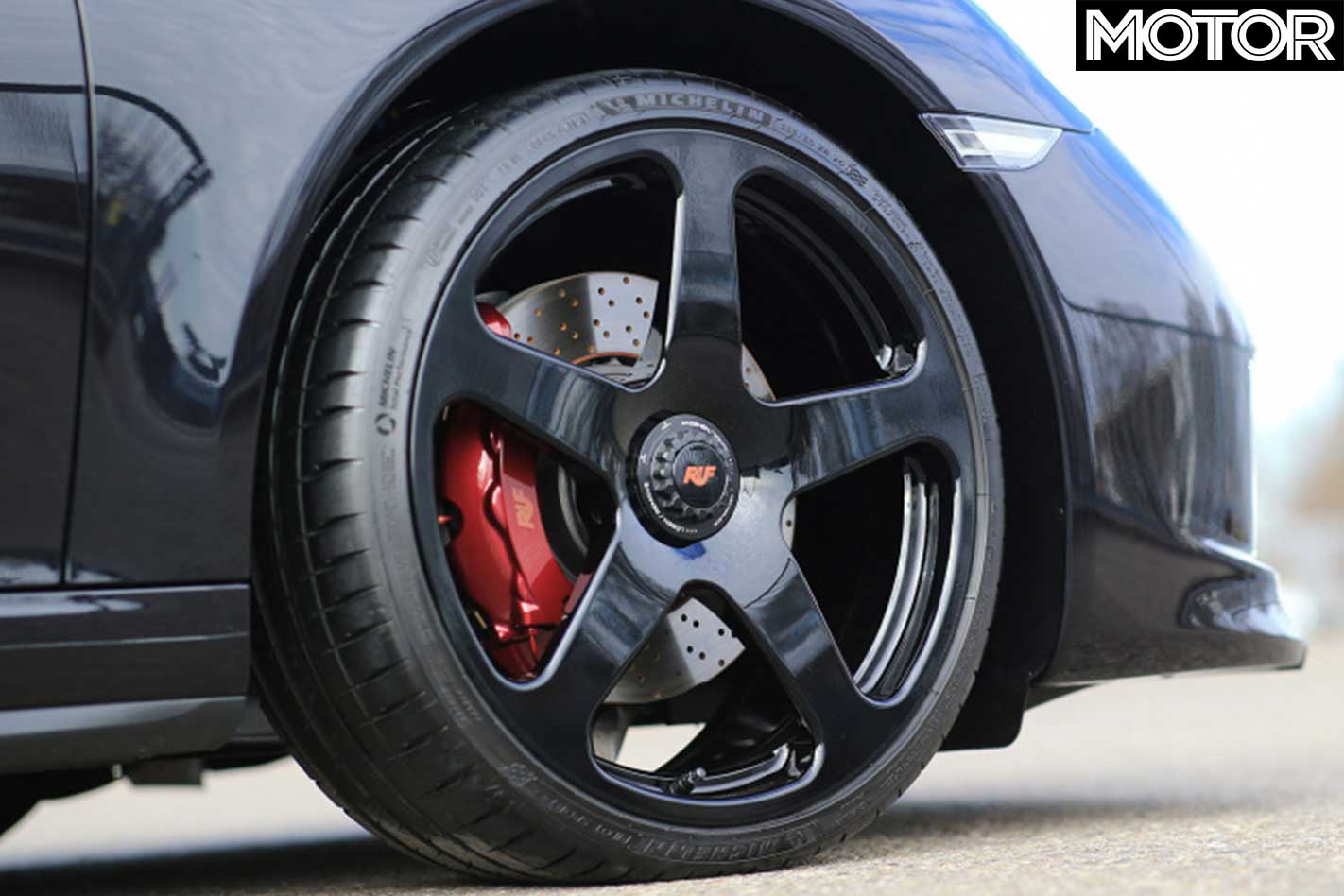
But if you want to spend some money, then the RUF CTR Anniversary would be a good way to do it. Built as a tribute to the original CTR Yellowbird, that could tear its way to 342km/h in 1987, it hides supercar-worthy mechanicals under its retro styled bodywork.
You might already know about its 520kW/880Nm engine and carbon-fibre chassis, after all the highly developed prototype was revealed back in 2017 to mark 30 years since the original, but the example RUF has brought to Geneva is the first production example.
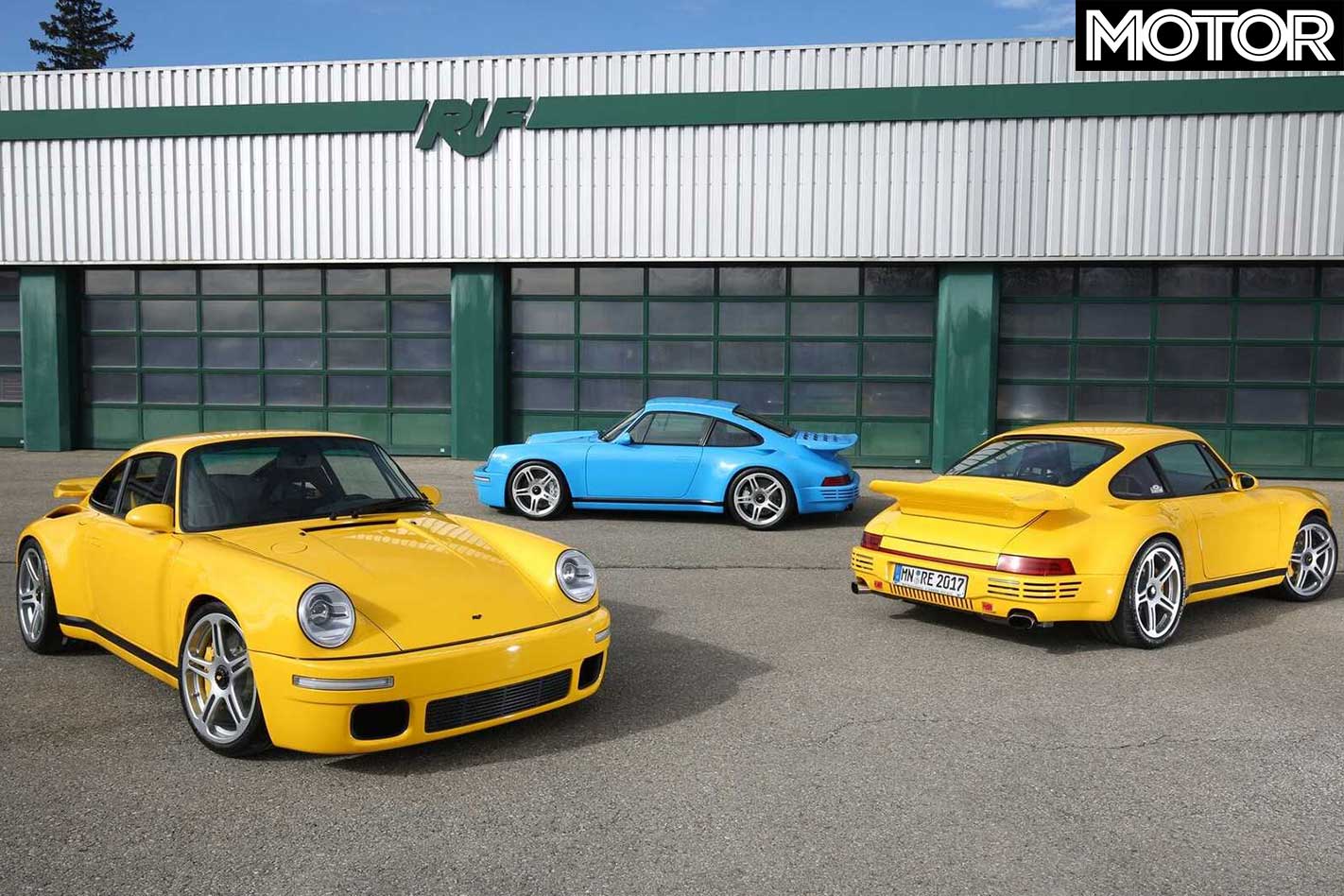
Its jaw-dropping specifications are worth reciting. As mentioned, it produces 522kW. That comes from a twin-turbo 3.6-litre flat six in, of course, the back and pushes only 1200kg.
Steel crash structures at either end of its carbon tub connect with on-board pushrod suspension, then it’s all clothed in 964-series styled bodywork that’s also carbon fibre.
Driving through a six-speed manual transmission and rear LSD, it’ll hit 100km/h in under 3.5 seconds and eventually reach 360km/h. Only 30 that will be built.
Volvo’s commitment to reduce the speed capabilities of its range of cars by 2020 may end up being an own-goal of sorts for the Swedish car company.
It has pledged that, as part of its self-imposed 2020 deadline to reduce serious injuries and deaths in its cars to zero, Volvo will roll back the top speeds of all its cars to 180km/h.
“Volvo is a leader in safety: we always have been and we always will be,” said Håkan Samuelsson, Volvo’s president and chief executive (below).

“Because of our research, we know where the problem areas are when it comes to ending serious injuries and fatalities in our cars. And while a speed limitation is not a cure-all, it’s worth doing if we can even save one life.”
Its entire line of cars, including the XC40 and XC60, as well as its forthcoming S60 sedan, will be electronically limited to 180km/h, which cannot be overridden by consumers.
Australian-delivered cars will also be subject to the same restriction, confirmed the brand’s communications director Greg Bosnich.
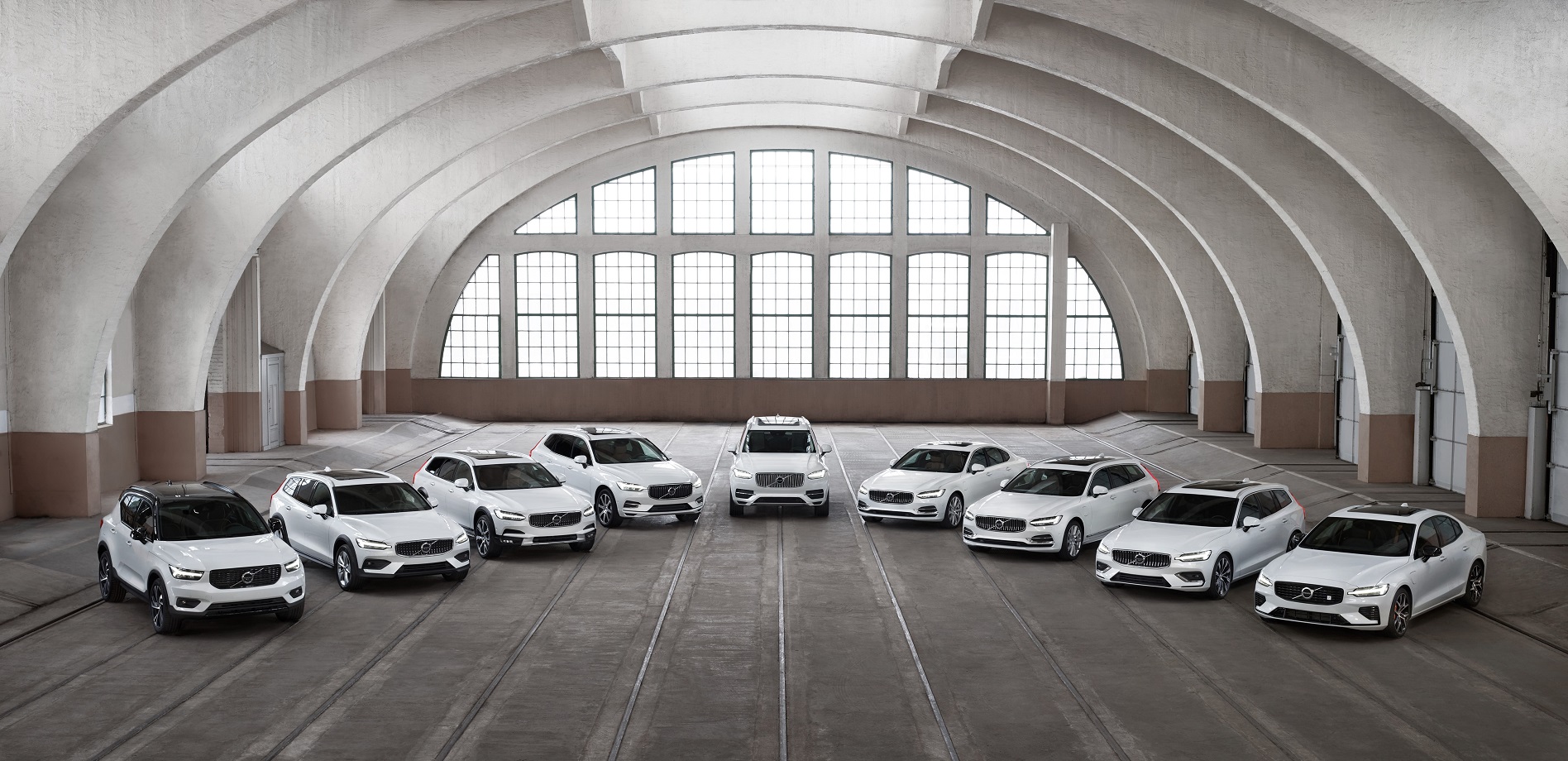
All of Volvo’s range will be speed-limited by 2020
He denied, however, that ‘limiting’ a vehicle’s speed to 180km/h is another way of suggesting that a higher limit is just as safe as current speeds.
“It is not about promoting a top speed,” he told WhichCar. “It is about limiting a speed and wanting to start a conversation about tackling speeds.”
Bosnich said that it is becoming clearer to Volvo that in-car technology and smart infrastructure design is no longer enough to avoid severe injuries and fatalities in the event of a crash.
“Whilst Volvo Cars do not have a firm answer on this, we are taking a leadership in the discussion and yet again be a pioneer when it comes to safety and the safety of all road users,” he said.
Ironically, Australia is one of only a handful of companies where the implementation of a lower speed limit in the Volvo would actually be effective.
Currently, approximately 340km of roads in the Northern Territory have no speed limits, while the highest speed a driver can legally attain in the rest of the country is 110km/h.
Road fatalities fell in 2018, with an estimated 1143 deaths across the country. This is a reduction of 92 over 2017.
McLaren CEO Mike Flewitt took to the stage at the Geneva Motor Show to announce an incoming model which he says will be ‘The McLaren of Grand Tourers’.
Said to be closely related to the Speedtail, but with a focus on being suitable for long trips.
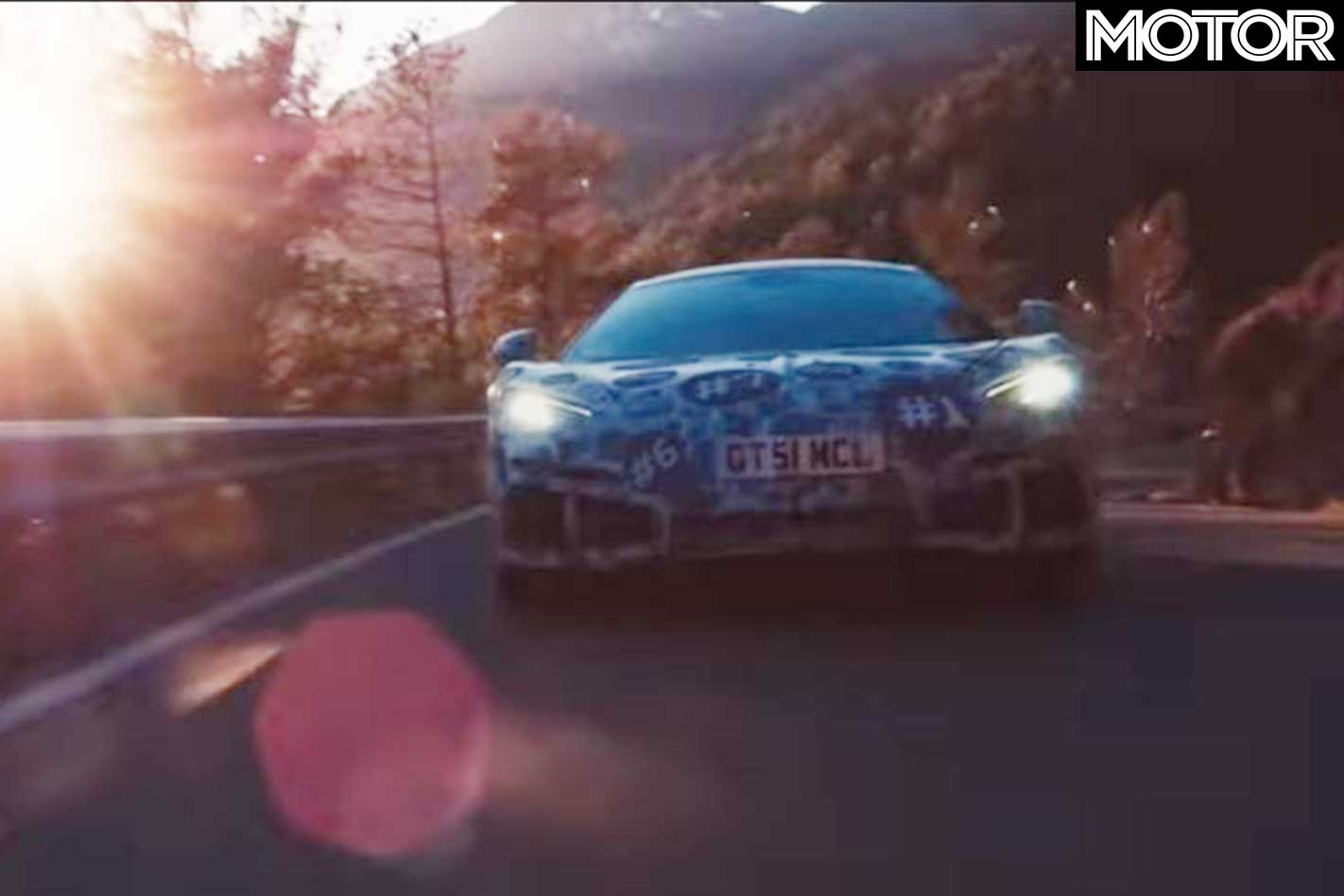
A video and one image, a still from the aforementioned, have been released by McLaren as a teaser for the car.
Though camouflaged heavily, the Grand Tourer looks to have definite McLaren DNA in its design.
On stage at the Geneva Motor Show, Flewitt said the ‘McLaren of Grand Tourers’ was born out of customer feedback, from which McLaren decided a car more ‘road trip friendly’ than the 570GT was required.
“The fourth McLaren to be introduced under the Track25 business plan will be our interpretation of the Grand Tourer,” Flewitt said.
“It will be a car that combines competition levels of performance with continent-crossing capability, wrapped in a beautiful lightweight body.”
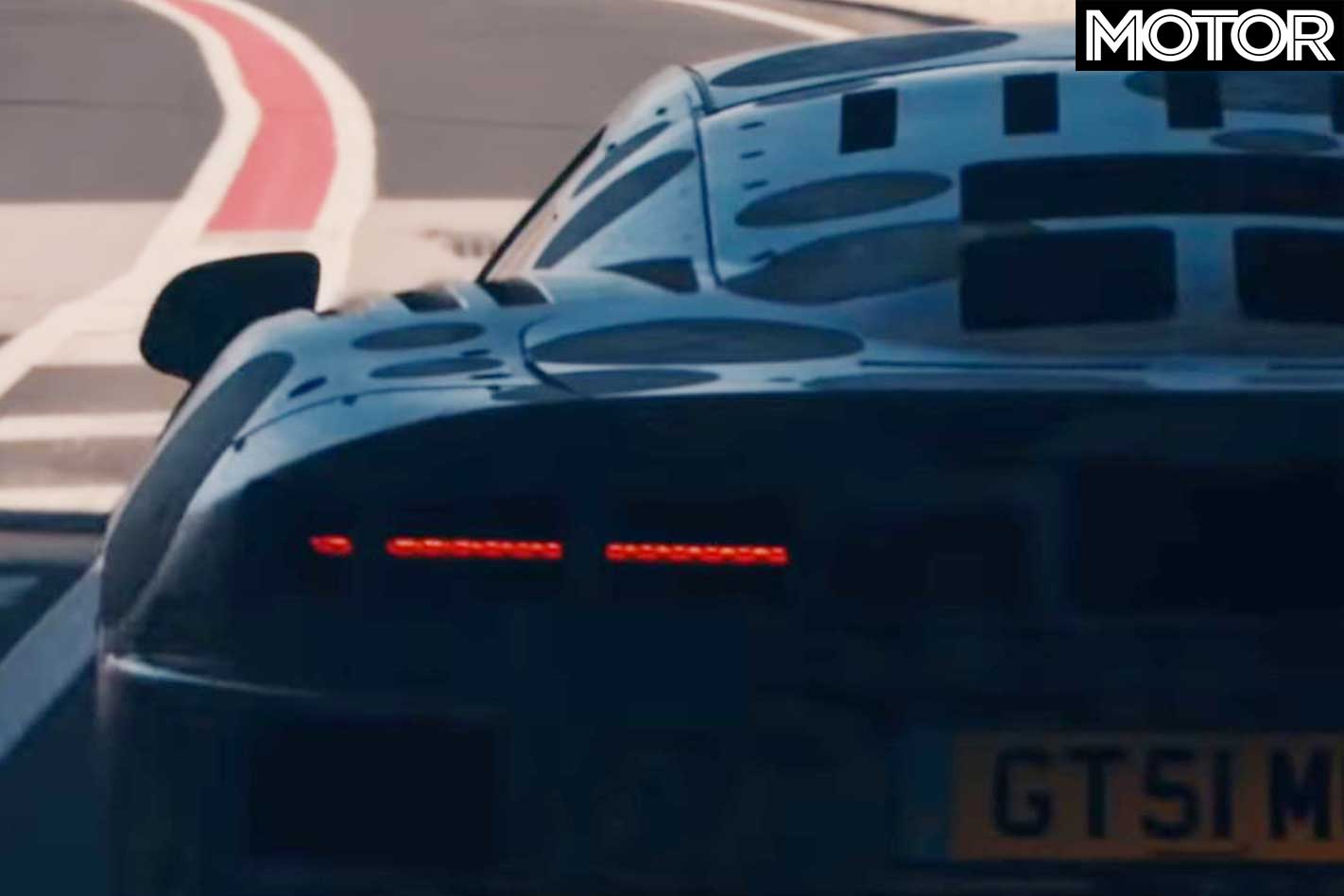
The ‘McLaren of Grand Tourers’ won’t be part of a series, standing alone as a unique model for McLaren, Flewitt also says.
“It’s a car that has been designed for distance and one that will also provide the comfort and space expected of a Grand Tourer.
“But with a level of agility never experienced before in this segment. In addition, it will be the lightest of Grand Tourers and by also having the best power-to-weight ratio, I promise it will be one of the quickest.
“In addition, it will be the only Grand Tourer to share its DNA with the 250mph McLaren Speedtail.”
McLaren will reveal more information about the Grand Tourer in the coming months, so stay tuned.
