
I’ve never been too interested in drag racing. Speeding up and then stopping again has always seemed like the least activity you can possibly aim for in motorsport – anything less than that is just being parked. Even NASCAR – “go fast, turn left” – has literally twice as many steps to remember as drag racing.
But I’m warming to drag racing. Because I realised that I’ve been thinking about it all wrong.

I was perusing the 2018/19 handbook for ANDRA, the Australian National Drag Racing Association, and three wonderful words caught my eye: “Any modification permitted.” Now there’s an innovative way to prevent people from overstepping the rules: not have any.
I was looking at the Modified Bike Eliminators – MB class, “dial your own handicap”. The “anything goes” class of drag bikes.
Drag bikes are for people who like the idea of drag racing, but find sitting on an exploding rocket with four wheels too safe. “How can I make my drag car less stable?” ponders the nascent drag biker.
Somewhere in the drag bike community, there must be someone tinkering with a drag unicycle. And if there is, the Modified Bike Eliminator class is where you’ll find them.
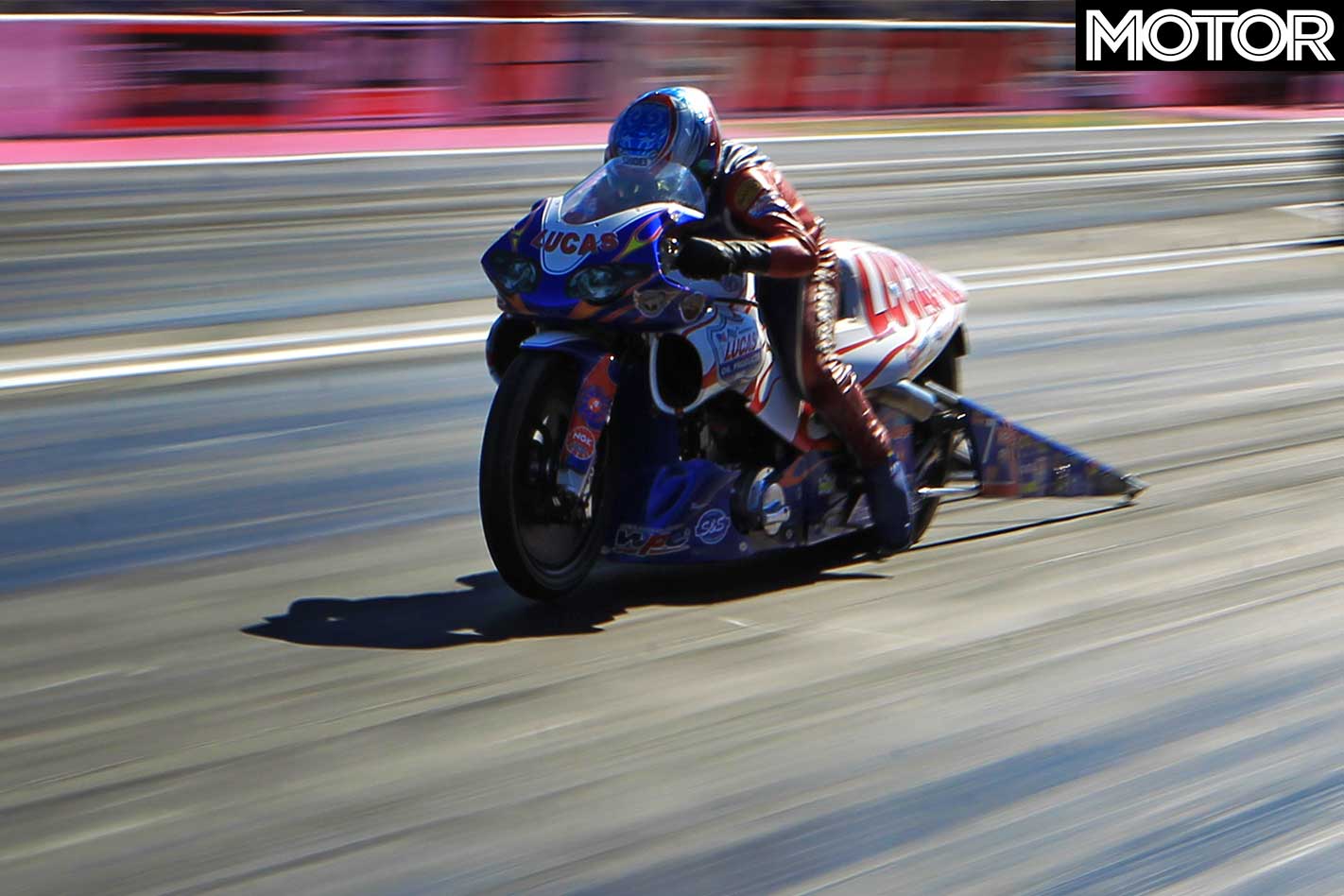
Any modification permitted. Glorious. Here are the actual ANDRA regulations, word for word: – Any internal combustion engine to a maximum of 2500cc permitted. – Any modification permitted. – A maximum of three true motorcycle engines may be fitted with no capacity limit. – Superchargers, turbochargers or nitrous oxide injection permitted. – All classes restricted to Ethanol, Methanol or Petrol only.
You can have up to three engines! They just can’t be powered by diesel, sled dogs or a nuclear reactor. And they have to be under 2500cc, which is sort of a non-condition, since the biggest production motorbike engine ever, uh, produced is in the Triumph Rocket III, and weighs in at 2294cc.
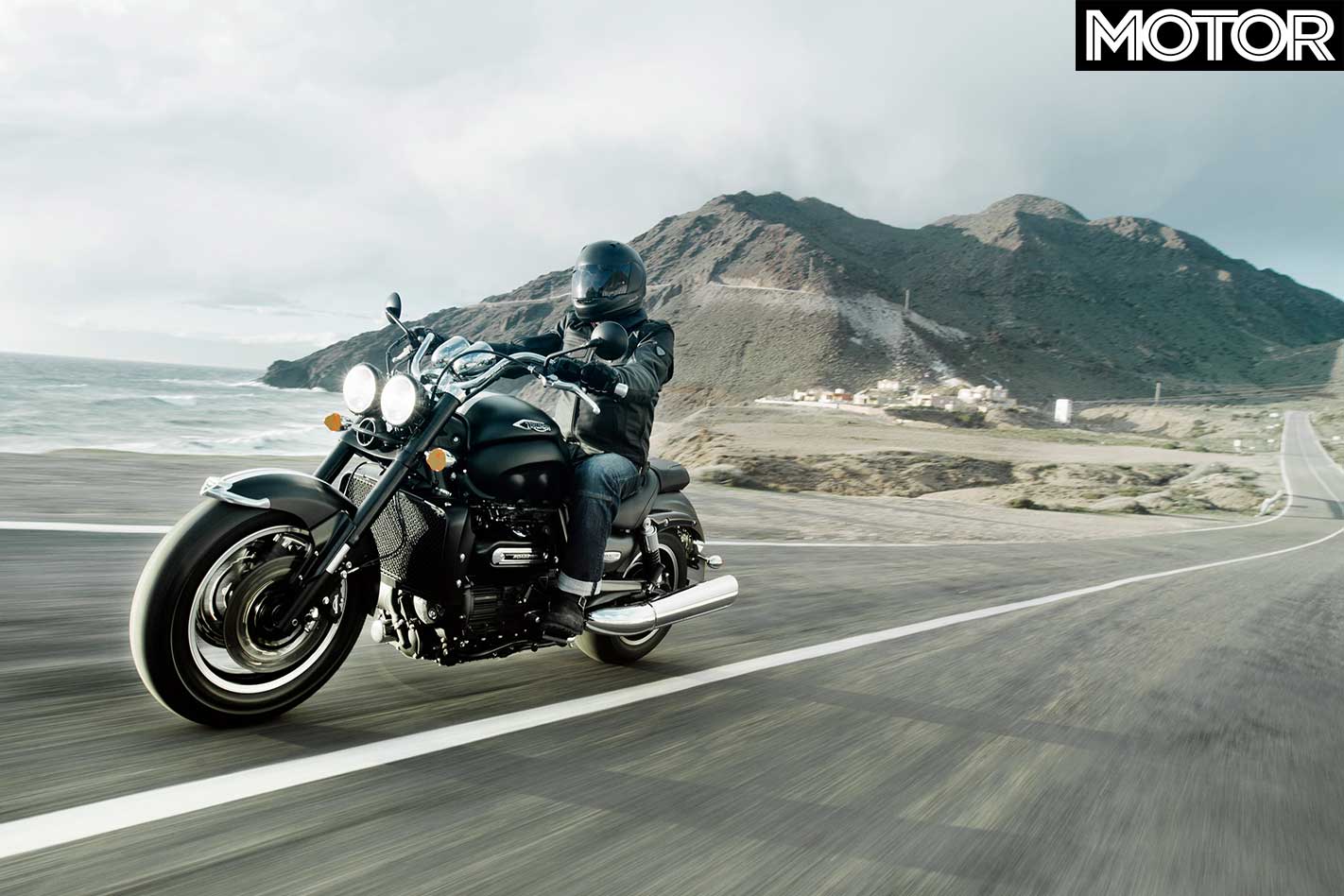
Plus, you need to have a helmet and a chain guard. That’s it. That’s the rules. It’s like Group B rallying without any corners. It’s the opposite of what we get in Formula One.
F1 engineer: “How can I make a smaller, quieter engine?” Drag biker: “Hmm, two engines just isn’t getting it done. Let’s add another one!”
Why isn’t drag racing the biggest sport in Australia? It’s perfect for the modern Instagram attention span – the race that stops a nation for six seconds. “Aaaand they’re away! And they’re done.”
That’s when I realised I had been thinking about it wrong. Drag racing is actually less like sport, and more like art: it’s less about what you do, more about what you make. And the MB Eliminators are like modern art: anything goes.
Look at the kings of drag (as opposed to drag queens) compared to other motorsports. Around the time that Mark Webber was living on diet water and the smell of sunshine to keep his bodyweight at Olsen twin levels, Victor Bray was being mistaken for a small crowd. Victor may be skinny now (well, skinny-ish) but he’s also the same age as Chuck Berry’s debut album – he’s literally the same age as rock-and-roll – and he’s still competitive.

Excellent, yes – but an athlete? Hmm.
While it’s no small skill to steer a land-rocket down a two-lane without ending up as a quarter-mile streak of smoking wreckage, the real wizardry is done before you even get to the track. The workshop is the art studio – the drag strip is just the gallery.
Sport is generally about rules and regulations – whether you choose to accept them or choose to “win at any cost”. But drag racing – that’s art. High-performance art.
Price & equipment
Holden packs a lot into the flagship of the Commodore range with standard equipment lists aligning closely for more than $10,000 less than that of the Volkswagen. However, the superior build quality and styling of the Arteon is harder to quantify but desirable. The Holden adds in a few extra fruity bits including driver’s seat massage function and heated seats front and rear.
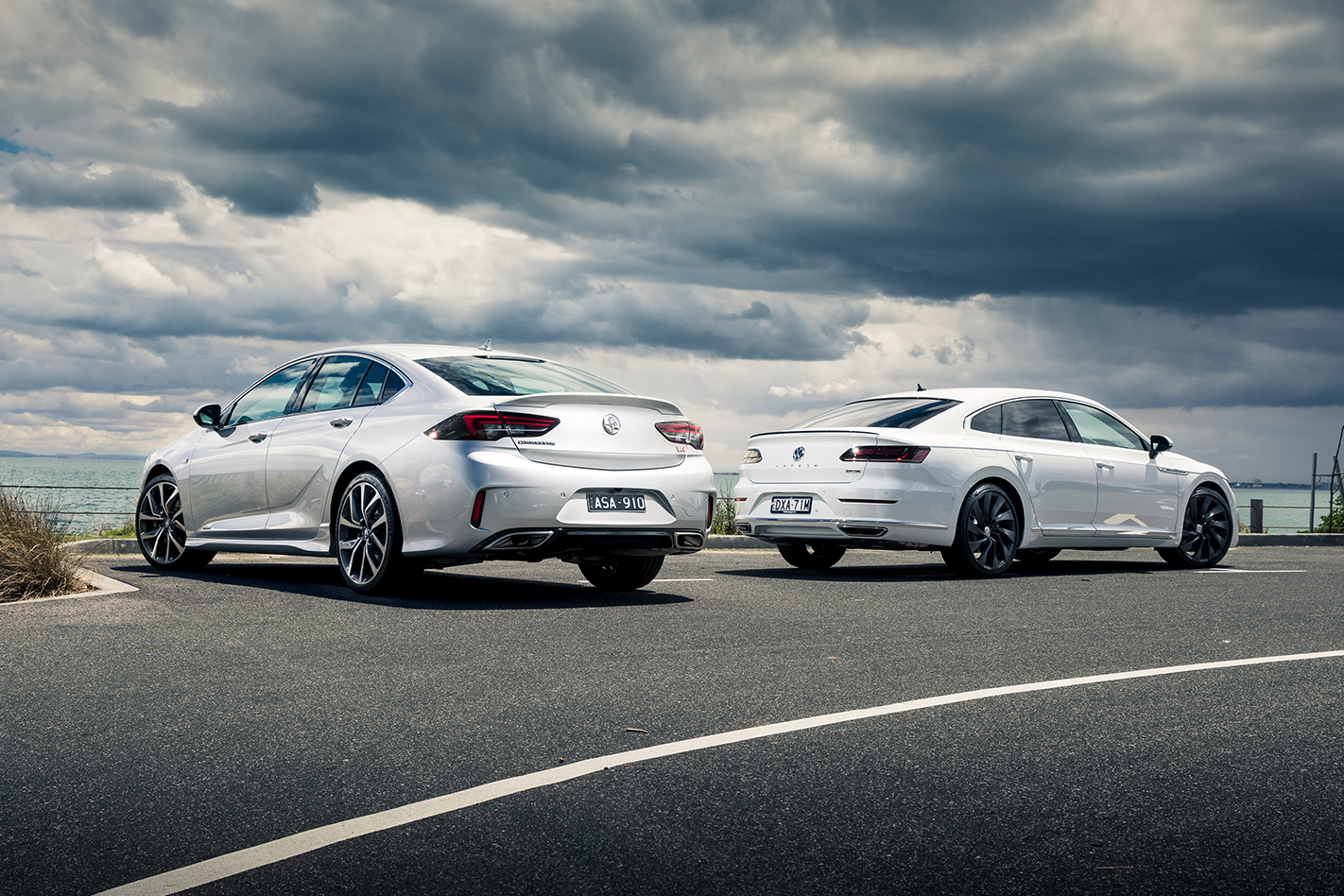
Upwards of $66K might appear a bit steep for a Volkswagen, but that asking price is easier to digest when you examine the standard equipment list. Virtually everything is standard fare including adaptive LED headlights, a digital instrument cluster and head-up display, and you’ll only be asked extra for if you want a sunroof, metallic paint and Sound & Style pack.
Interior & connectivity
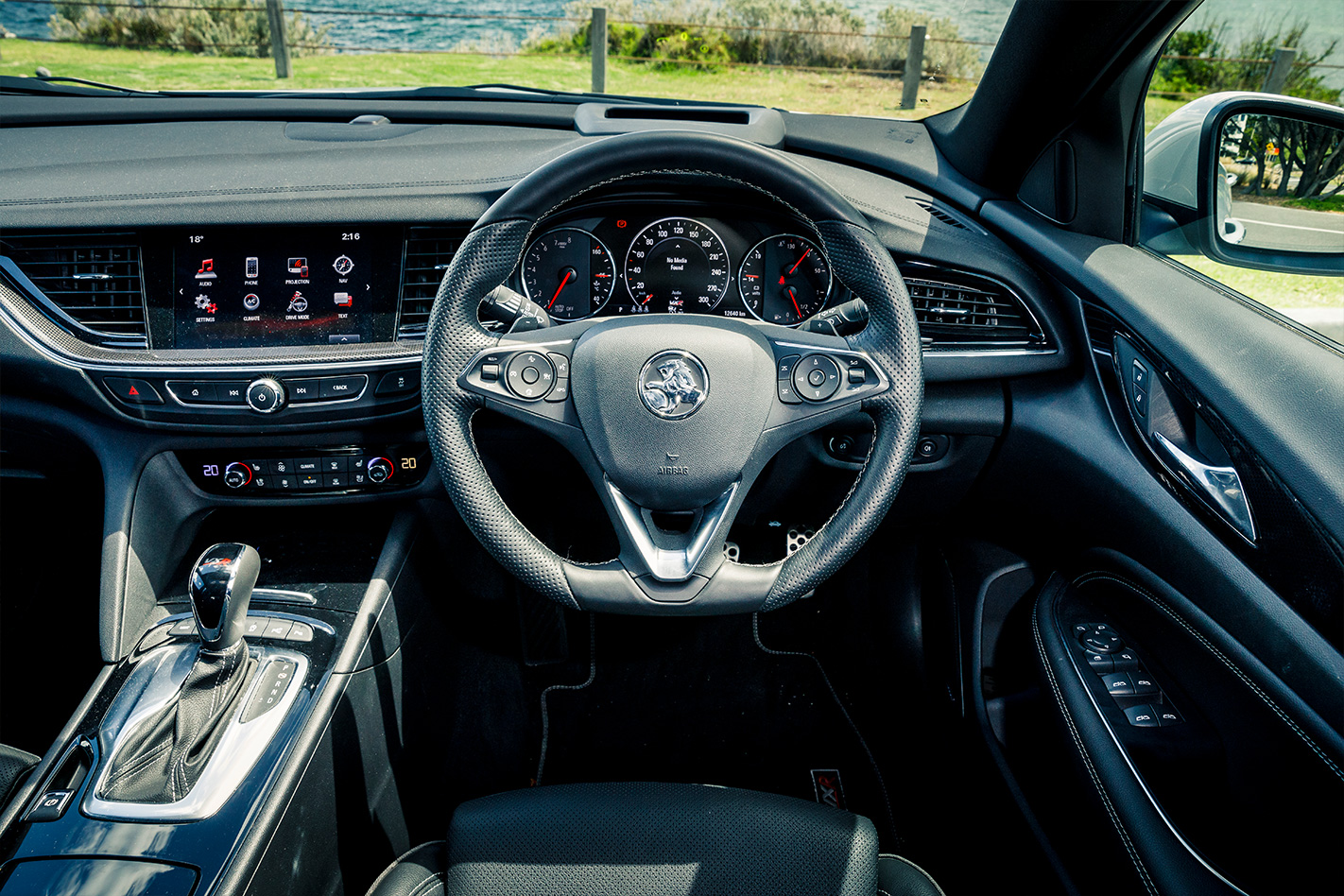
The Holden’s interior feel and finish can’t compete with VW’s quality, and its partial leather doesn’t feel as premium. Navigation, Bluetooth, Apple CarPlay, Android Auto and DAB radio are standard in both and wireless device charging is a bonus in the Holden. There’s also a little more rear occupant space in the Holden, but at the cost of a 490-litre boot with manual opening.
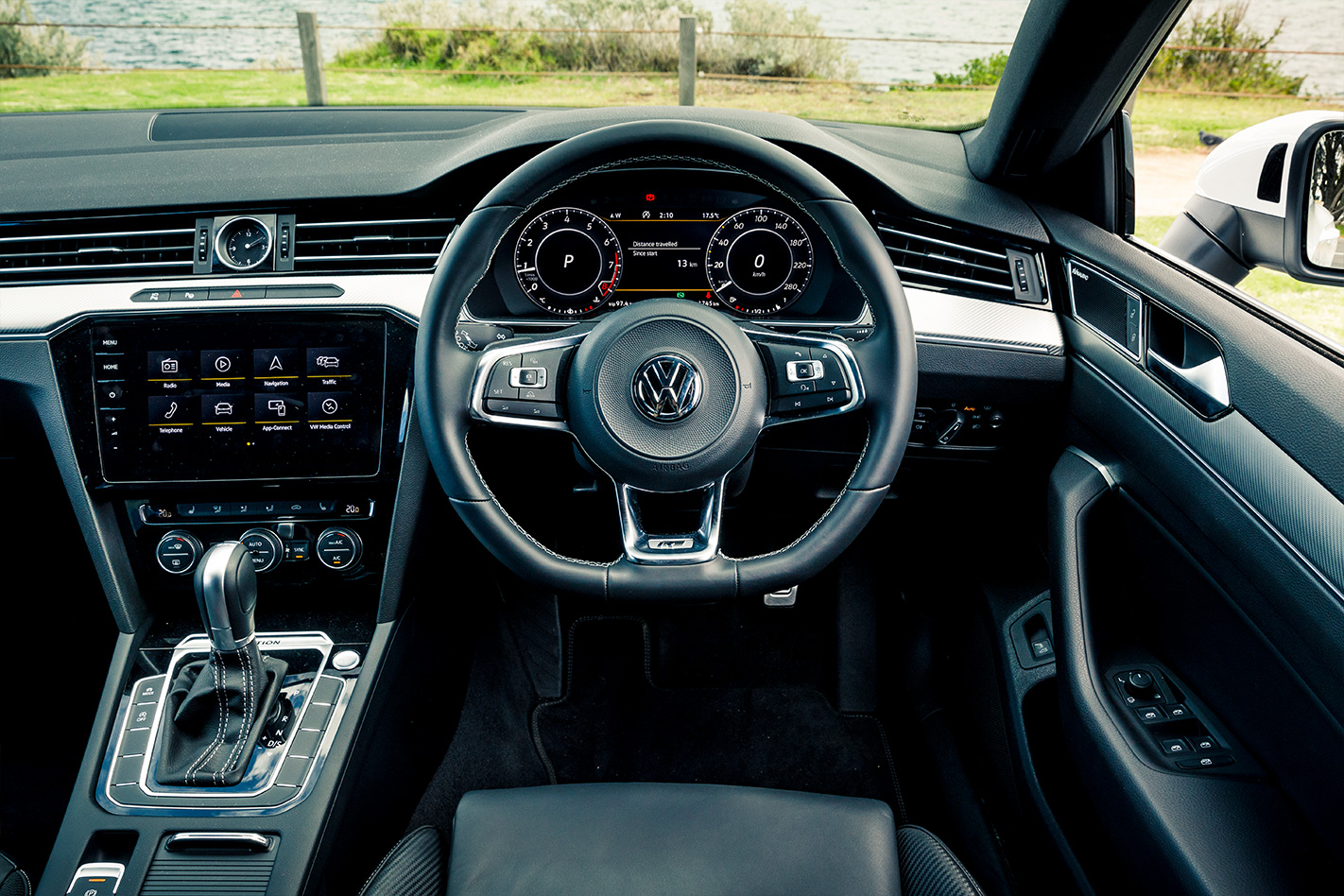
VW may not traditionally compete with the other three big German brands, but the Arteon’s interior certainly does. It is sharp but ergonomic and understated. A slick 9.2-inch screen is complemented by a fully digital instrument cluster, with Nappa leather trim throughout the cabin. Rear-seat room is cosy but acceptable, and a 650-litre boot is accessible by an electric hatch.
Ride & handling
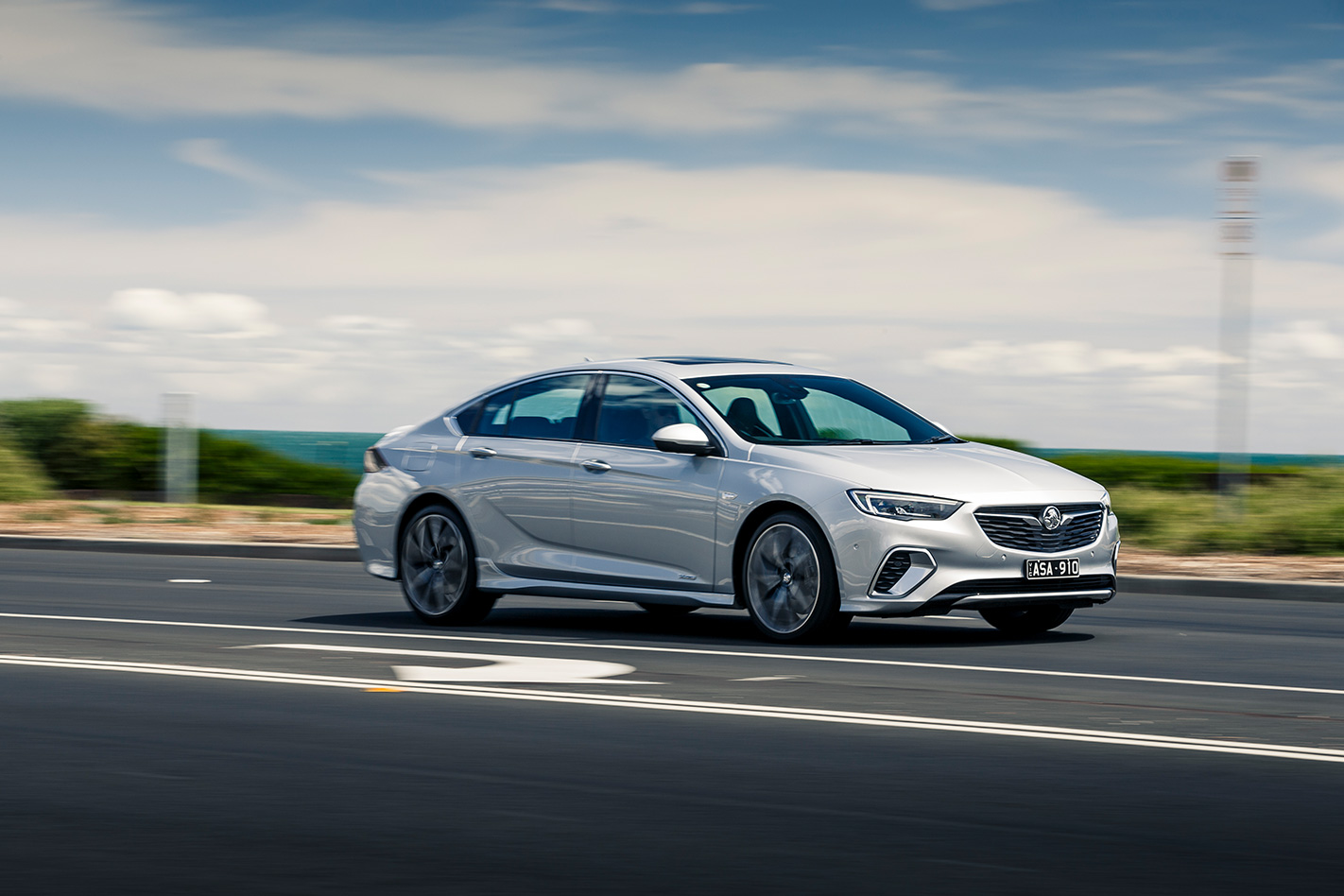
The Commodore feels the heavier of the two because it is. While the Arteon parries and dodges imperfections in the the road, the Holden prefers to bludgeon them into submission. Despite the weight, the VXR steering map and suspension is still lively but lacks sophistication. However, occupants would likely appreciate its more docile nature on longer highway cruises.
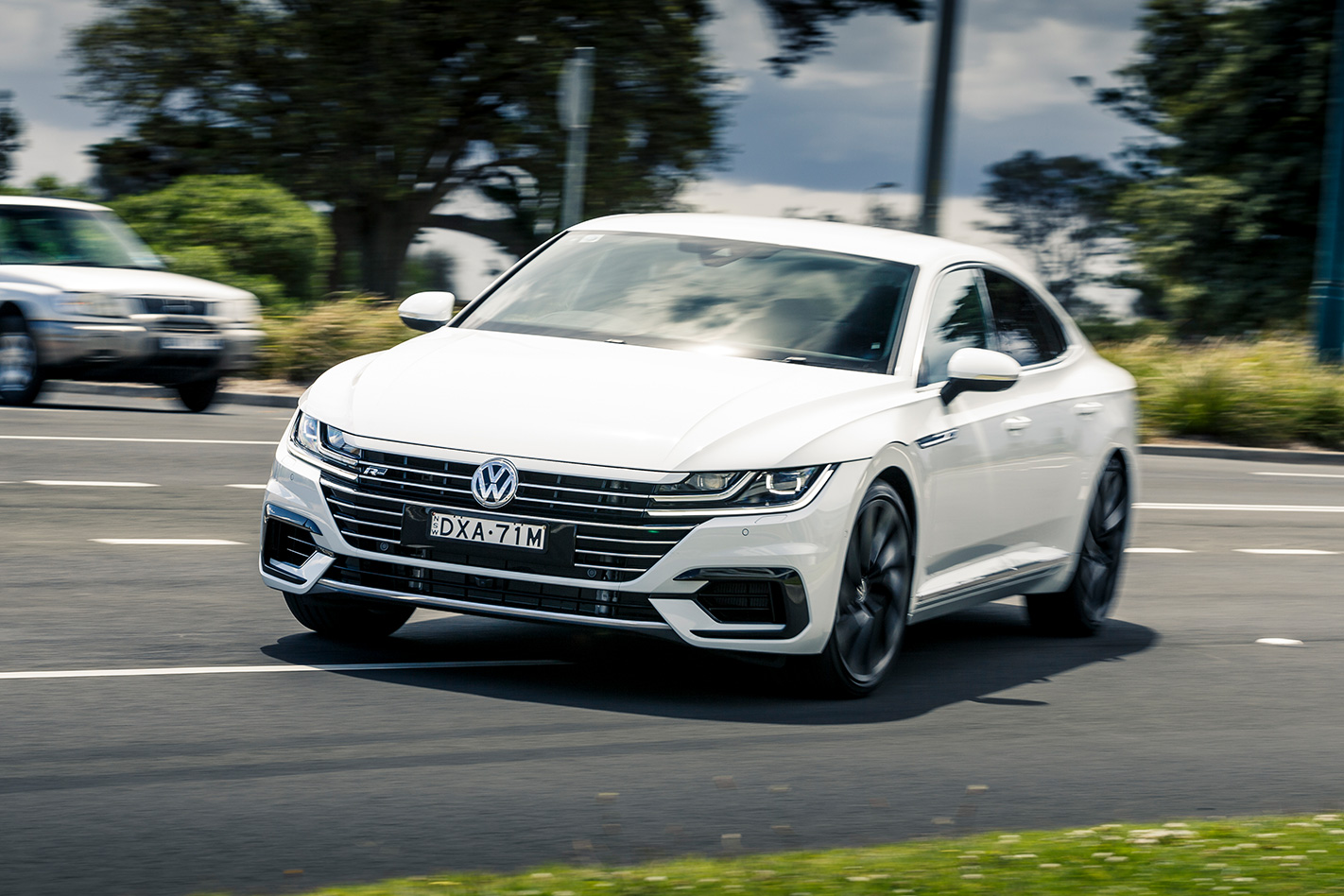
A snub-nosed bonnet and squat ride immediately makes the Arteon feel involving, enhanced by light but obedient steering. The all-wheel drive traction is beneficial and deals torque to each axle for confident road manners. The adjustable adaptive dampers perhaps have too many settings but result in a chassis that can be fettled for almost any driving taste.
Performance & economy
With a larger capacity to feed, the VXR’s more powerful drivetrain will hit your hip pocket harder at the bowser, asking for 9.3 litres of fuel per 100km. Unlike the Volkswagen, the Commodore accelerates urgently from the line, but throttle response is too sensitive for smooth driving at lower speeds, and the initial grunt drops off higher in the rev range. A more vocal exhaust note is the only bonus.
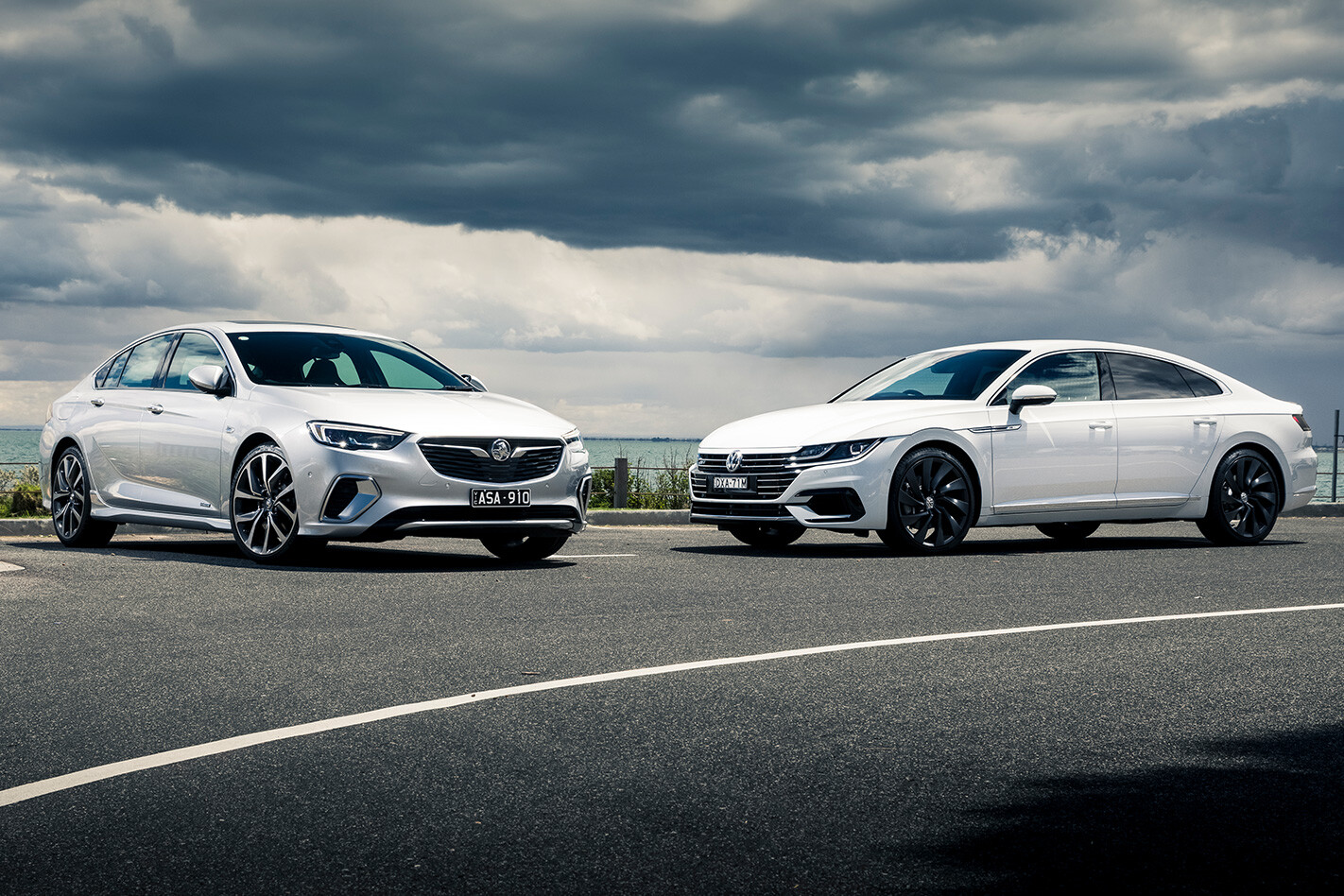
With running gear lifted from the effervescent Golf R, the Arteon has performance to match its premium appearance. Initial lag from the four-cylinder’s turbo and seven-speed dual-clutch transmission is followed by zesty acceleration that feels stronger as the redline approaches. Despite the performance, it still returns 7.5L/100km. A less muted exhaust note would complete the package.
Warranty & servicing
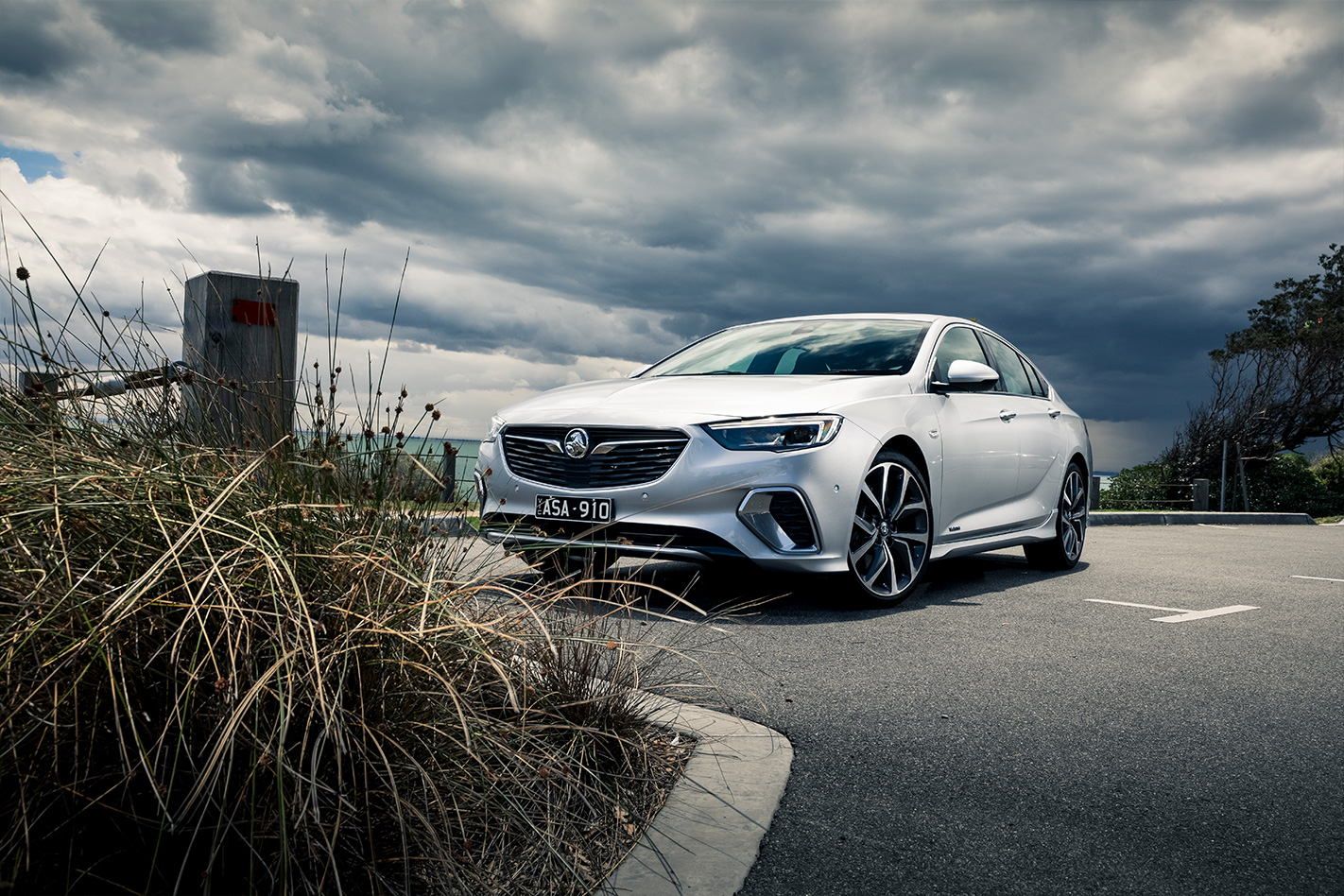
With the transition from the locally built VF to the imported ZB model, the Commodore service intervals have dipped from 15,000km to 12,000km. When it comes to warranty, all Holden passenger vehicles trump the Volkswagen with an unlimited kilometre five-year deal, and Holdens younger than five years are treated to fixed costs for the first seven scheduled services.
A three-year unlimited kilometre warranty has recently been upgraded to five years and is now a permanent fixture as of late last year. Volkswagen’s service plan allows the first three or five scheduled services to be purchased in advance, effectively capping the price of scheduled maintenance. The Arteon requires a service every 15,000km.
Verdict
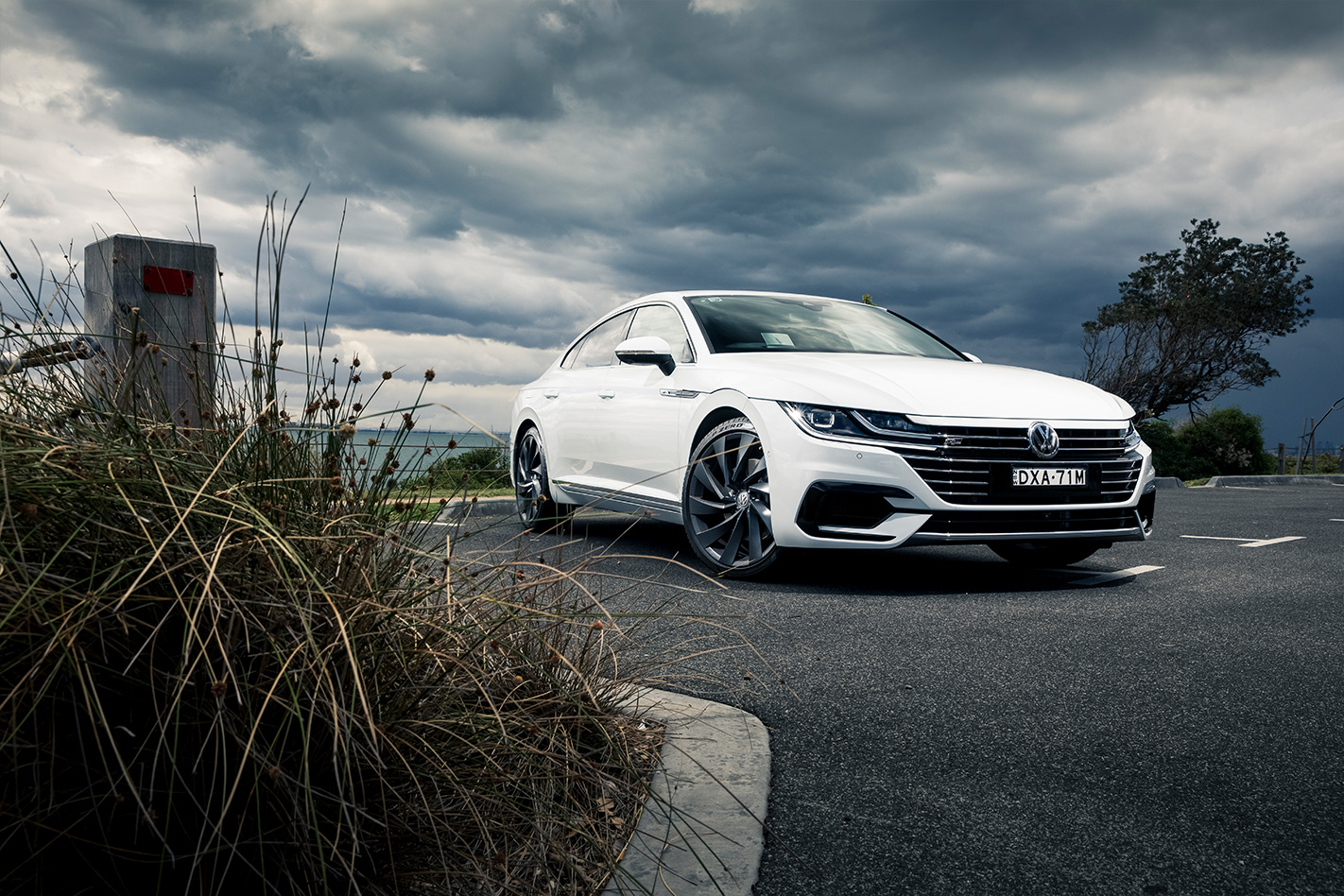
Despite being more expensive, the Arteon’s fit and finish and high level of standard equipment ensure it takes the trophy in this head to head.
Sydney to Melbourne once. Melbourne to Sydney twice. Through 2018 I travelled three times between Australia’s two biggest cities without earning a single Qantas Frequent Flyer or Virgin Velocity point. Mostly I stuck to memory lane.
That’s not what the tabloids called it when I was growing up in Yass in the 1970s. Back then it was always the Deadly Hume, in boldface headlines above reports of yet another holiday weekend multiple-fatality crash on Highway 31.
Today the deadliest thing about the Hume is its dullness. The killer curves of the Cullerin Range, driving highlight of the weekly trips I used to make from Goulburn to Yass and back again, were bypassed long ago. So was Razorback, the climb over the Great Dividing Range between Picton and Camden that added a little interest to any journey to Sydney. Now the Hume also sidesteps every town along the way.
All this has reduced driver workload for most of the journey to negligible levels. Set cruise, sit, steer, and stare at the safety of the once Deadly Hume.
The future comes slow and stealthy. It’s a bird-stalking cat, not a frantic, barking, car-chasing dog. The remaking of Highway 31 was a process that took decades. Most of my lifetime, in fact. Each step was small, but over time they added up to complete transformation.
Already the first signs of the Hume’s next era are beginning to appear…
Late in 2017, during the single Melbourne to Sydney drive I did that year, I was amazed to see a white Model S stop to recharge at the row of six Tesla Superchargers installed near the Dog on the Tuckerbox near Gundagai.
On my final Hume trip of 2018 I made a stop at the big Shell service centre near Euroa, specifically to take a look at the new array of four DC fast-chargers recently installed there. These are available to all EV drivers, not only Tesla owners. Each charger has two permanently attached cables, one with a CCS Combined plug at its end, the other with a CHAdeMO plug.
Two of them, manufactured in Italy by ABB, can deliver 150kW, way more than a Tesla Supercharger and enough to make charging truly quick. They’re apparently the most powerful DC fast chargers in Australia right now but this month’s EV Megatest showed that there are still wrinkles to be ironed out. The other two chargers on site are 50kW units, designed and manufactured in Australia by Queensland-based company Tritium.
The Euroa installation is part of an embryonic national network being installed by Chargefox, with support from state-based motoring clubs like the RACV, the Federal Government’s Australian Renewable Energy Agency and the Victorian Government.
I’m convinced that EVs are the best way to make driving a clean-conscience activity, so I don’t want to criticise an initiative that aims to hasten their adoption. But I honestly cannot foresee the Euroa chargers being useful or utilised until something is done to encourage people to choose EVs instead of fuel burners.
Then Highway 31 would really be on the way to becoming the Electric Hume…
I dunno, but I would have thought in an age where my phone can take videos and my toothpaste can clean and whiten, that maybe we’d have seen the last of Grand Canyon production tolerances.
This feature was originally published in MOTOR’s May 2005 issue
So how about these for anomalies: about two years ago, we carried out the same test and Ford’s XR6 Turbo stuck it right up the V8s to record an overall win. Okay, so the Holden gear has since copped the upgrade to VZ, but even against the same opposition, this time around this particular XR6T just wouldn’t have cut it.
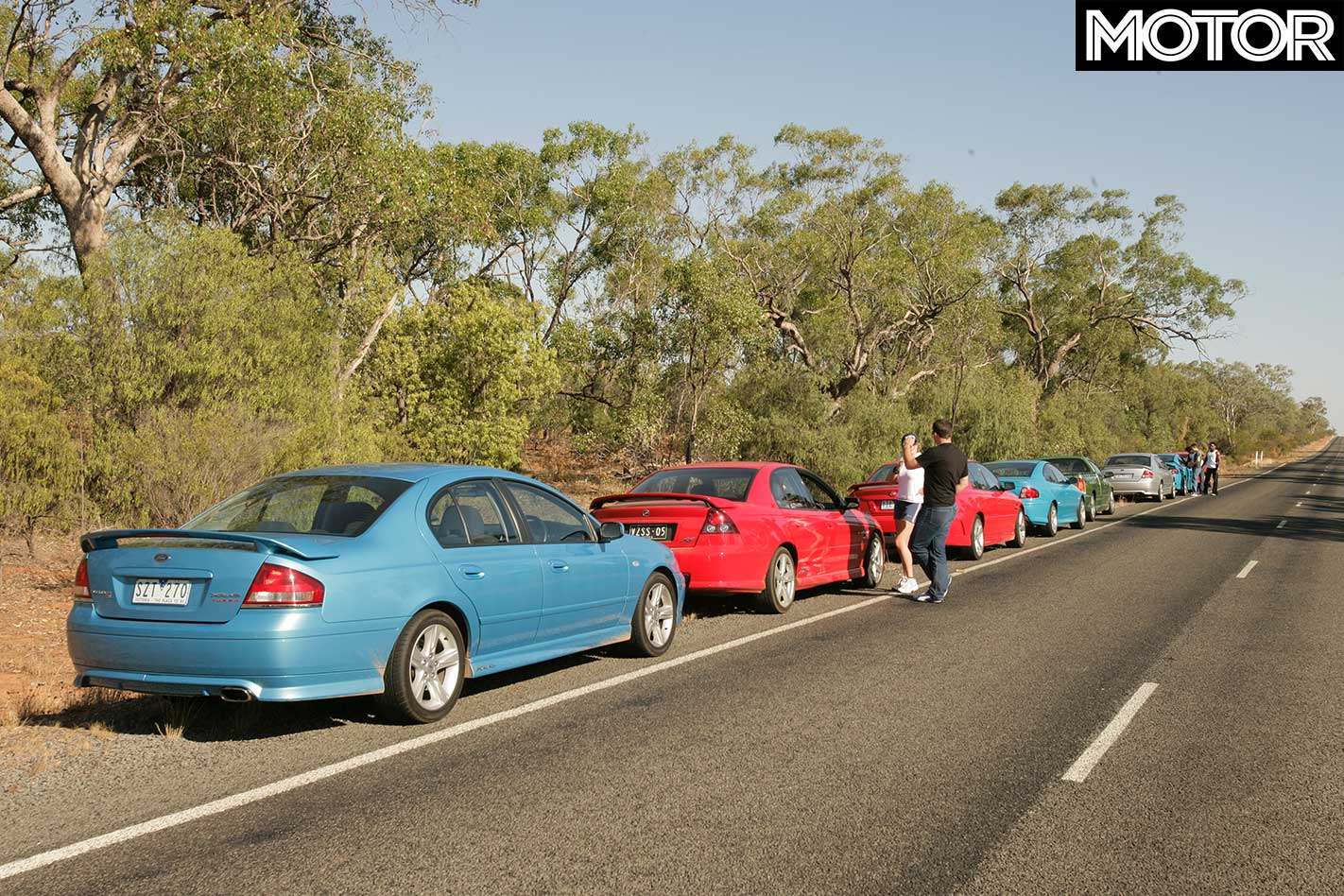
Meanwhile you’d expect the 6.0-litre, 19-inch-wheeled HSV stuff to show the rest of the pack the way at Eastern Creek, too, right? So how come the humble SS with a full 47kW less than the Clubbie (and a shedload less bottom-end torque) was 0.7-seconds quicker around the Creek’s hotmix?
Be honest, if it isn’t production variations that are the cause of this oddness, what else can it be? Exactly. The point is that even though the SS we had on test was an absolute jet, is that any guarantee that the one you buy from the showroom floor will be just as sharp? Er, um, maybe not.
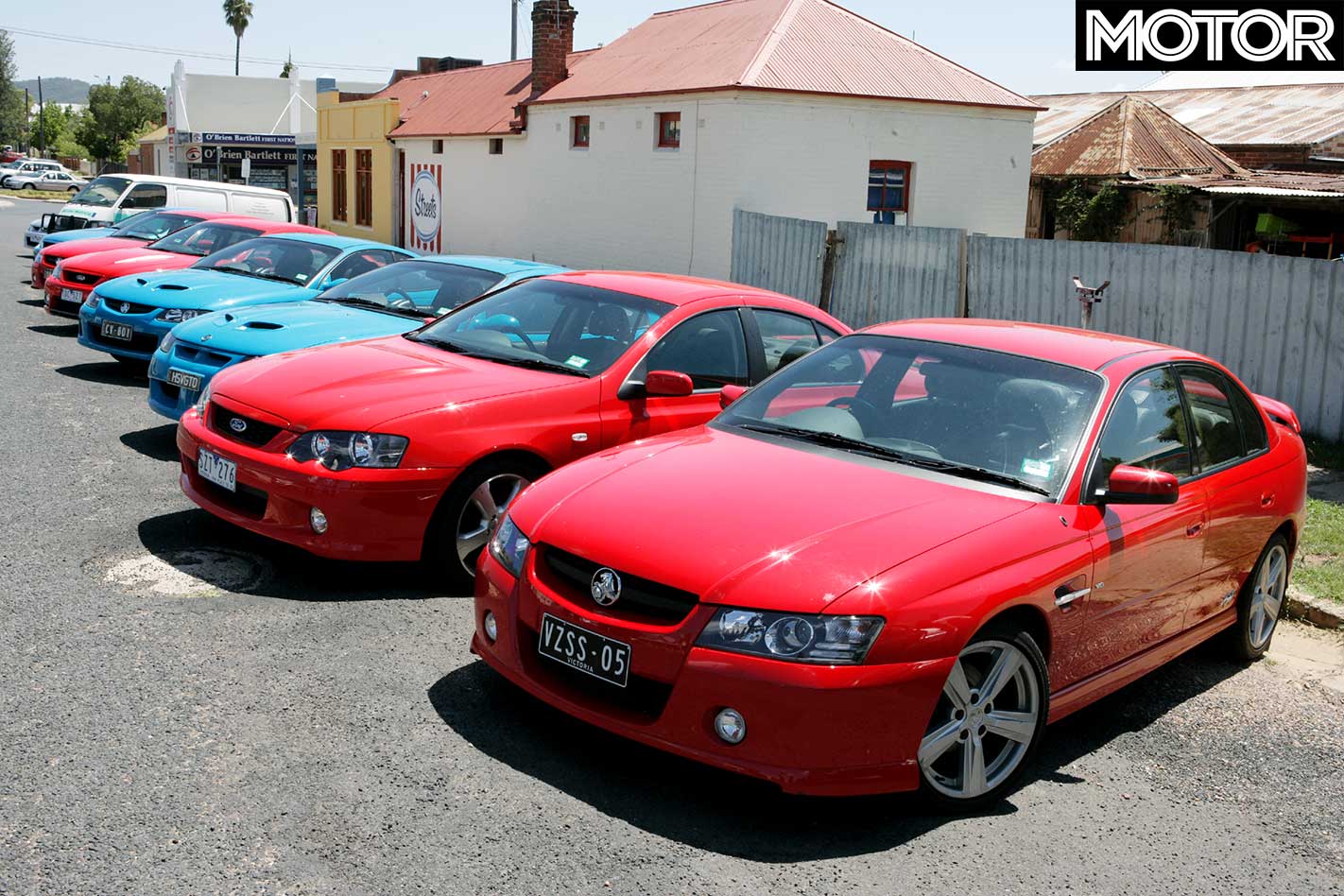
On the other hand, there’s not much we can do about all this because these were the cars that were presented for us to flog around far-western NSW, so I guess we just have to go with it. Still, I’d be darker than a Centura’s sump oil if my brand spanking new HSV got cleaned up by a Holden SS.
Speaking of the SS, there’s a fair bit to like about the VZ version. It gets those terrific front chairs that are both comfy and supportive over a long distance and are clearly the primo pews of this lot. Okay, they’re not as good as the ones in the VY Clubbie R8, but not much ever was.
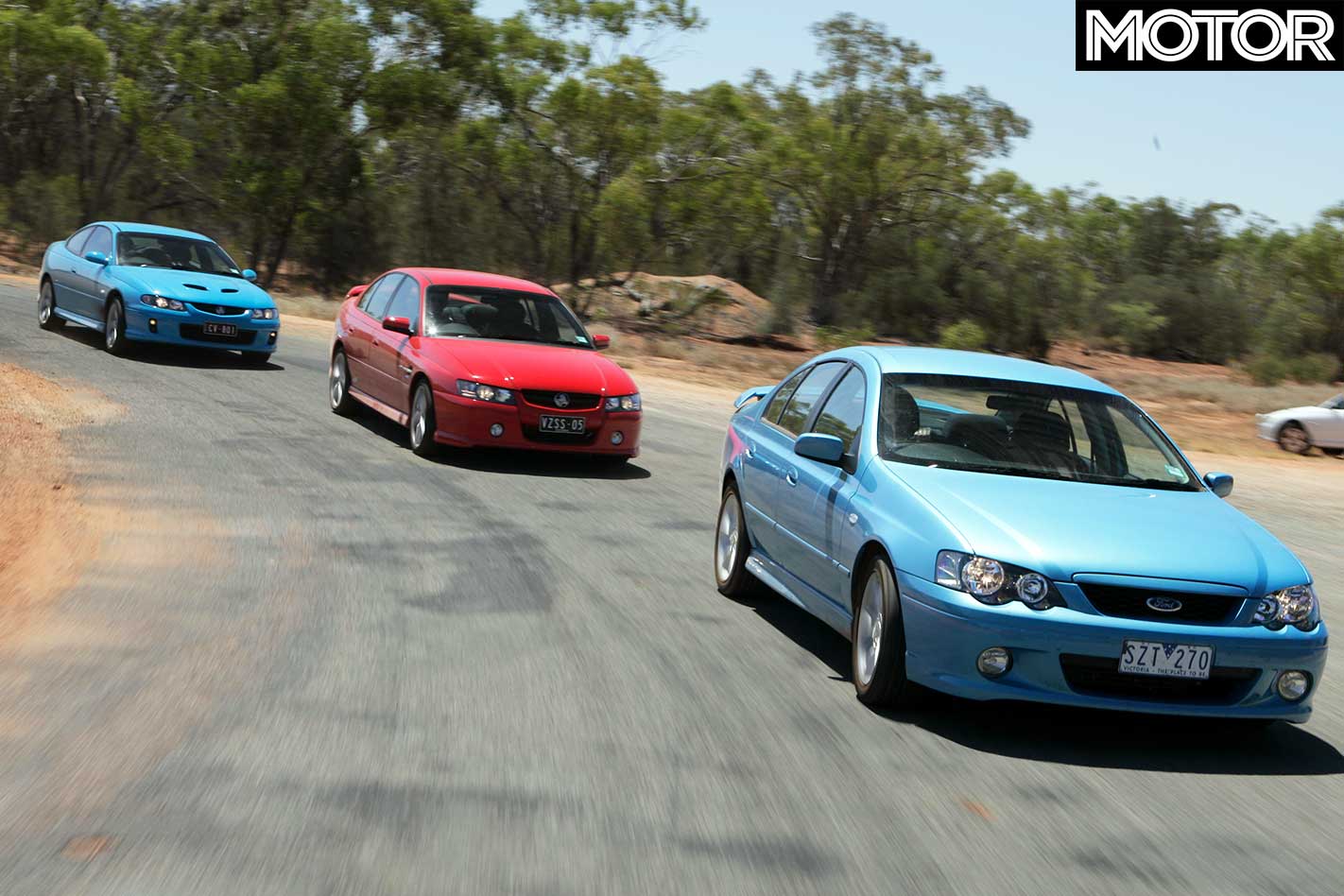
The SS is also less plasticky inside than the $7k-cheaper SV8, with a better tiller and classier instrumentation where the SV8 feels distressingly like a taxi with bigger nuts.
Its 1:55.26 around Eastern Creek couldn’t be bettered by anything else and a 14.2-seconds 400m dash along with a 6.1-second 0-100 time is right up there for anything with a Holden badge.
The SV8, meanwhile, was a tenth quicker down the quarter and half a tenth faster to 100, thanks to its extra power across the range and 15kg advantage. But it was nearly two seconds slower around the track. Blame the different tyres and the fact that the SS gets slightly firmer springs and dampers.
Mind you, the extra firmness in the SS didn’t destroy its on-road ability in terms of ride and believe us, the roads at the back of Bourke really tested that.
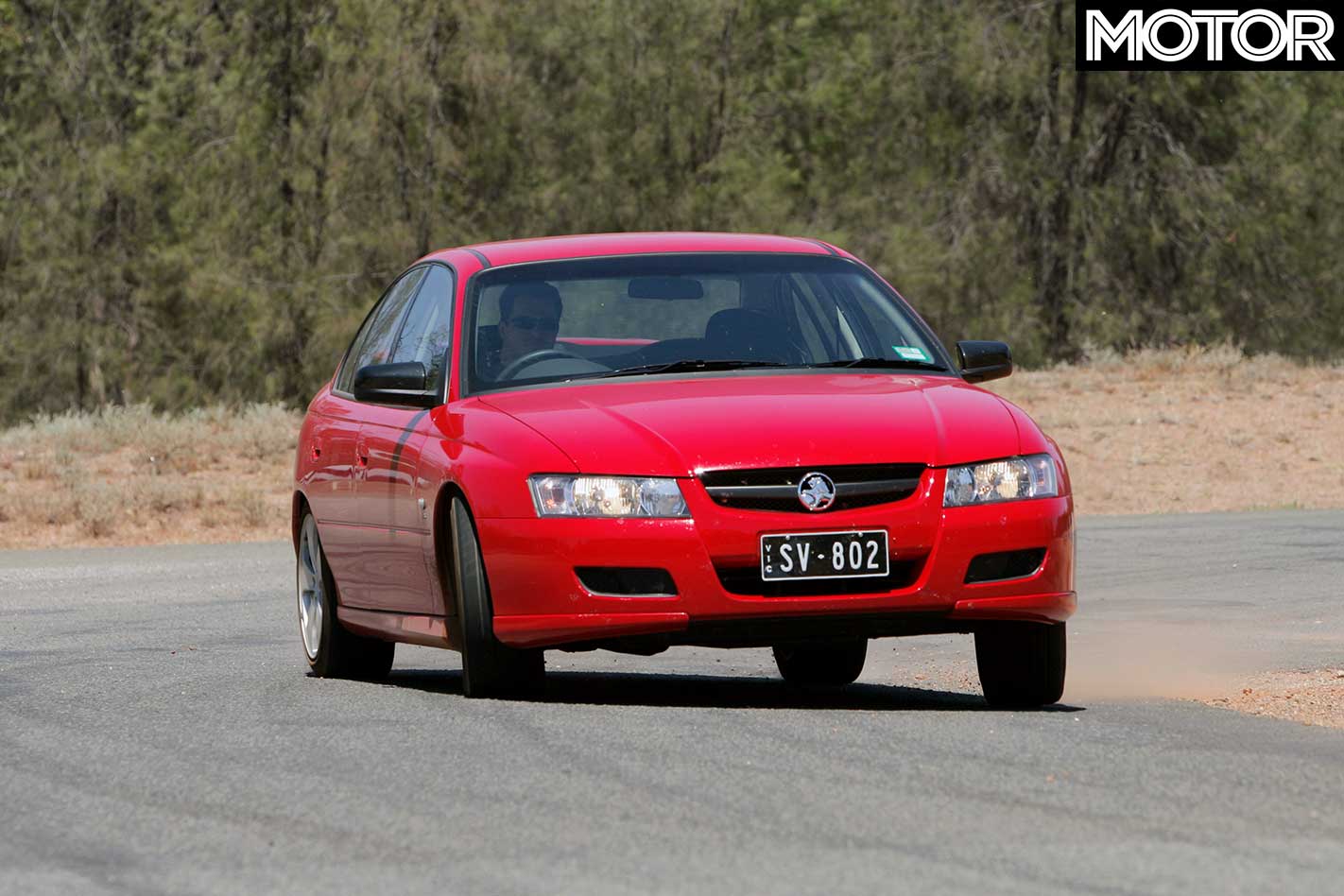
The Monaro’s on-paper claims of 260kW equated to exactly the same advantage over the 250kW SS, SV8 and even the 260kW XR8 on C&V’s dyno, but Monaro’s pair of dips in the mid-range meant it was seven-tenths slower than the SS down the quarter-mile and blasted to 100 in slightly less than the SV8 (6.02 against 6.08).
It also rides reasonably well on the bumps and lumps of back roads, but given that it’s nearly 20 grand more than the SV8 and can’t lap Eastern Creek as quickly, it loses a few points. And is it just me, or does that new Nostril-Dude bonnet make the whole thing look a bit piecemeal?
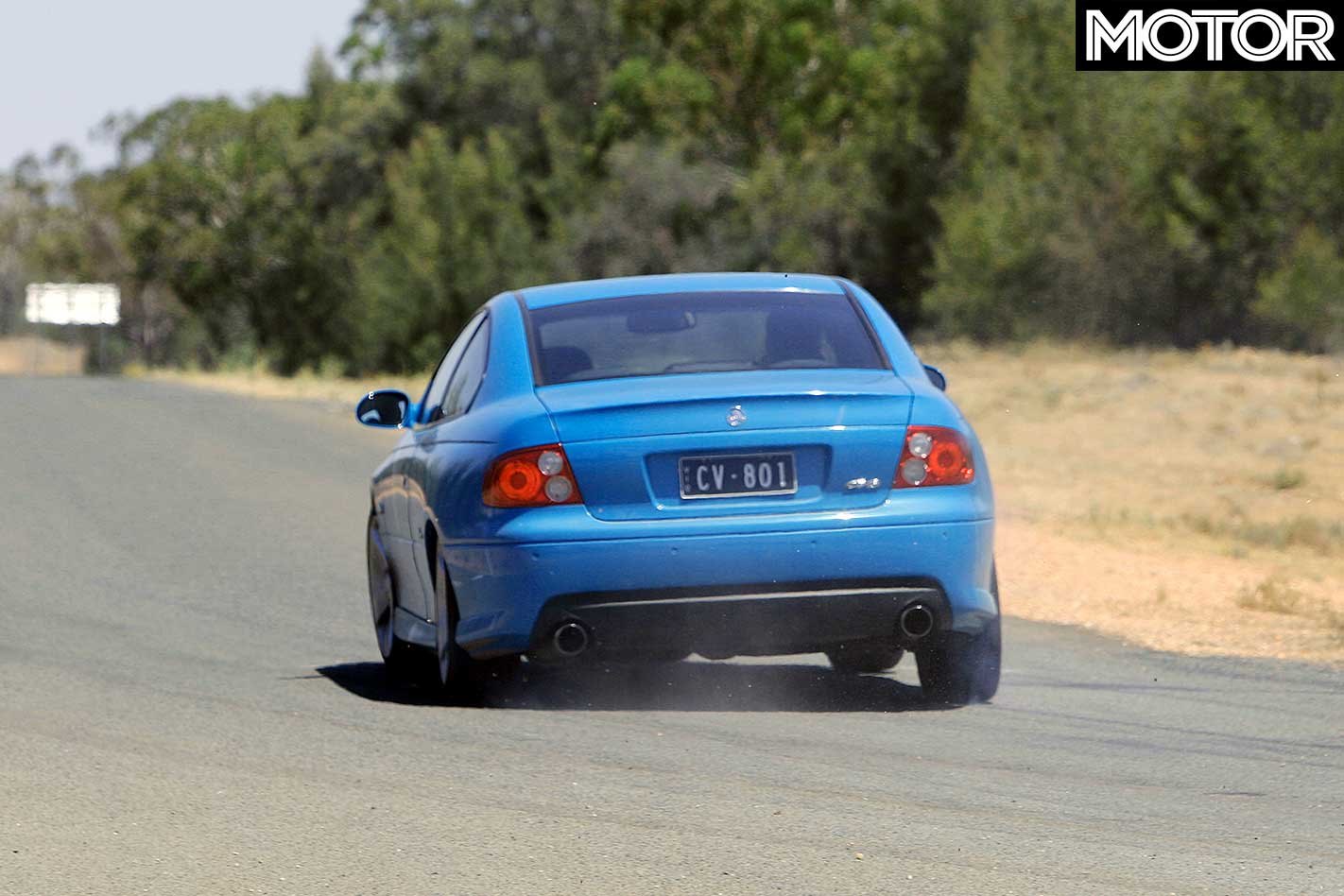
Against that background, the XR6 Turbo was, like we said, disappointing to say the least. Okay, Falcons have never been too fleet on a track, but nearly three seconds off the SS’s time ain’t no laughing matter. Same goes for its quarter mile time of 14.8secs, although the 0-100km/h number of 6.25secs is quicker than the quarter-mile result would suggest.
But more than the bald numbers, the Turbo just felt flat on the road. The ride is good and the thing still makes a terrific noise, but the off-centre dead-spot in the steering seems worse than ever and you still get the feeling you’re sitting above the roll-centre. The interior has the Holdens kicked to bits, however, and the new six-speed ’box features a better shift action than the Holden gear, too.
In contrast, the other Ford, the XR8, felt a bit fitter than others we’ve sampled. It spun the rollers to the tune of 211kW at the treads, flung itself to 100km/h in 6.1secs and then blew the rest of this category into the weeds with a standing quarter time of 13.99 – the only one to dip under 14-dead.
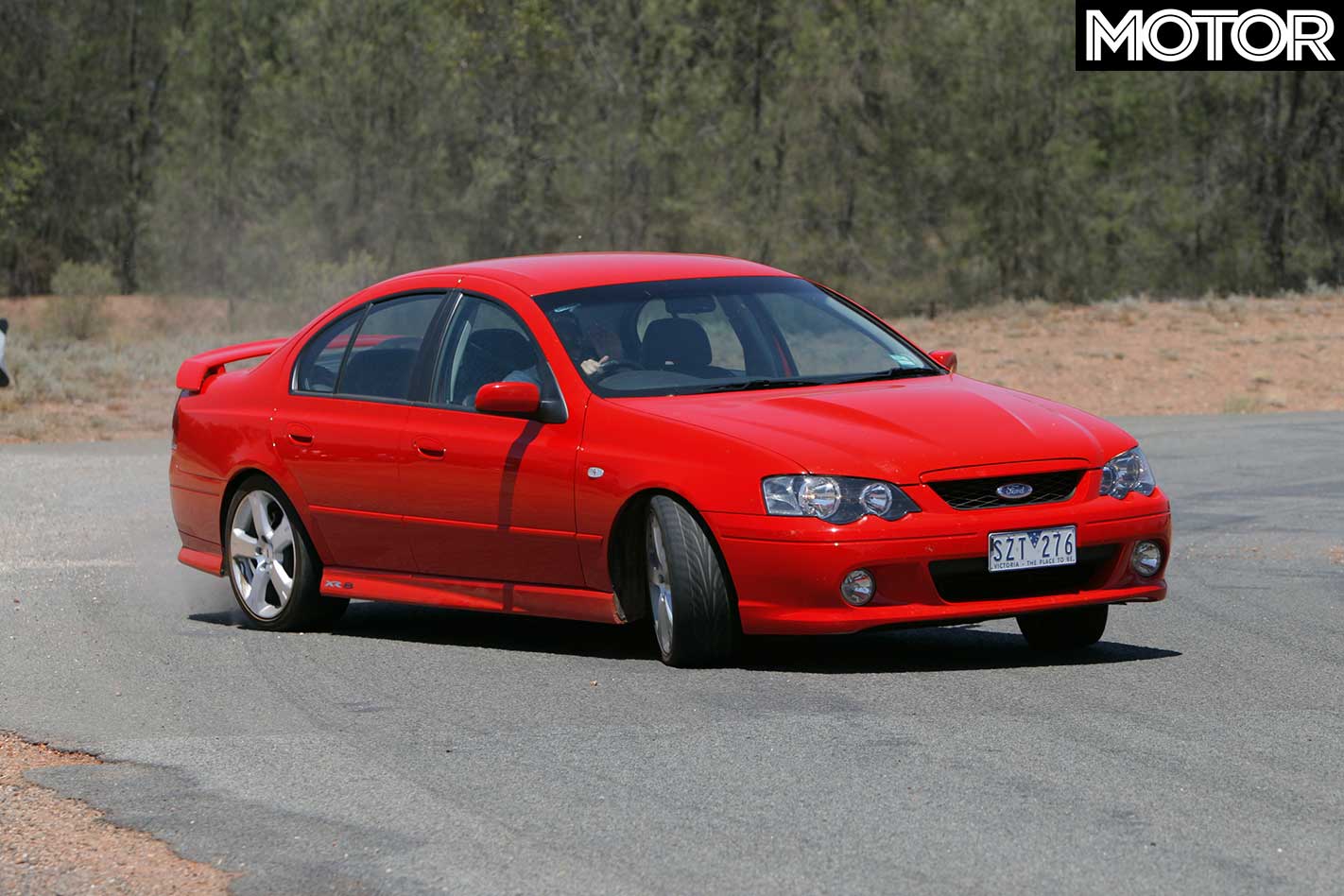
Once again, the Falcon bogey turned out to be the racetrack, and the XR8’s 1:57.86 was just two-tenths faster than the Turbo, despite it feeling much fitter out in the real world.
The changes to the BA Falcon in MkII form have made a big difference, to be sure, and the six-speed gearbox would be at the top of that list. But even the firmer springs that reduce diagonal pitch on turn-in, can’t hide the fact that the engine is heavy and carried high in the engine bay thanks to those big fat Double Overhead Cams (DOHC) heads.
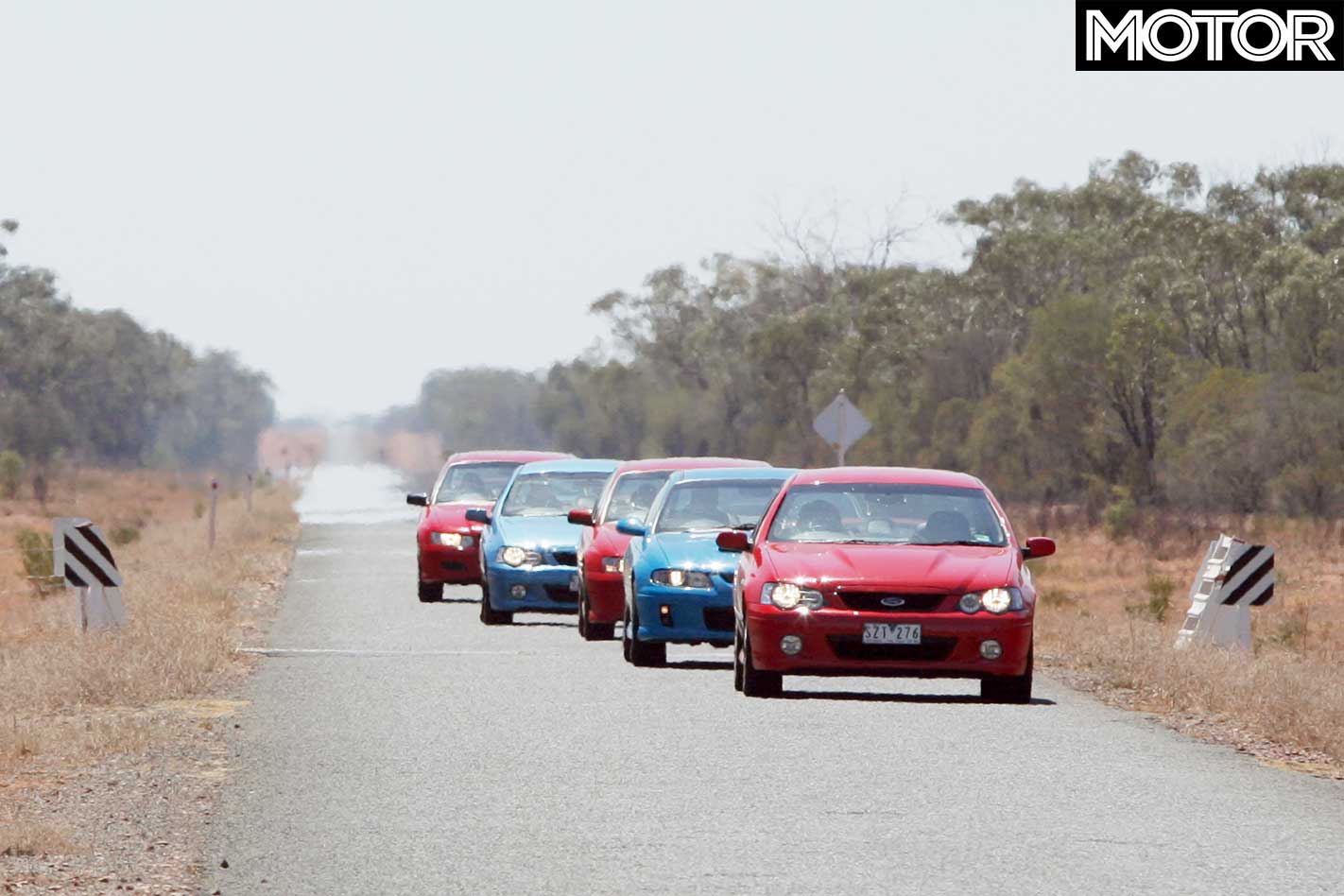
But it remains a great road car with good ride and a great interior let down only by the seats (leather at least). And there were many who reckoned that in the bright red of our test car, it was the looker of this five-car gang. In the end, the final decision was a split one. Only two cars got any judges’ votes, the XR6T, XR8 and CV8 missing out altogether.
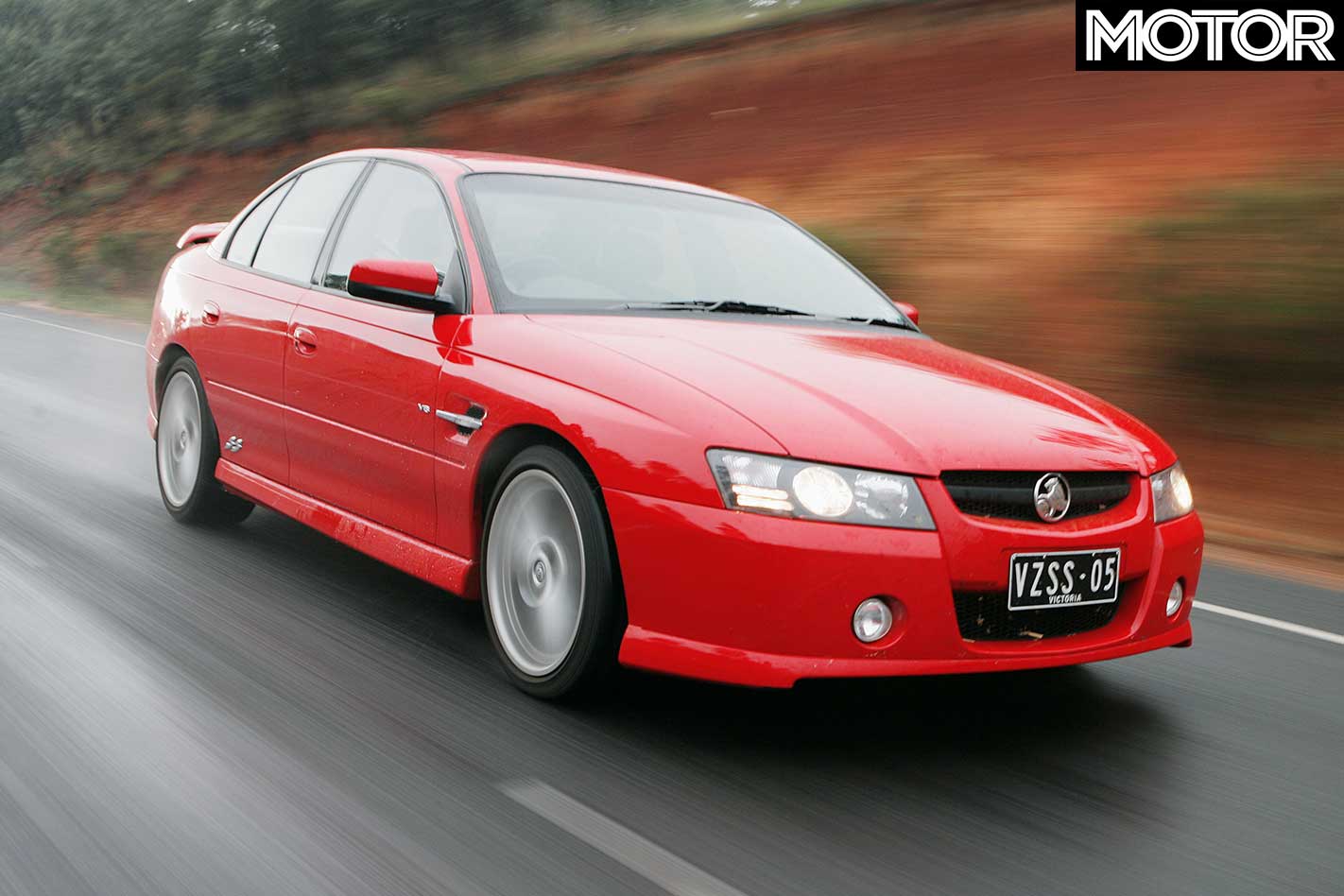
Both Taylor and my very large self just couldn’t go past the SS’s scorching lap-time and its superior seating and interior over the SV8, but it wasn’t enough. Value was the difference.
Cockburn, Evans and Lucky Bastard all plumped for the SV8, quoting its good straight-line performance and the fact that you’d have seven grand left over to add what ever the hell seats and wheels you wanted. Fair enough.
Fast Facts
| u00a0 | Commodore SV8 | Commodore SS | Monaro CV8 | Falcon XR6 Turbo | Falcon XR8 |
| Engine | 5.7L V8, OHV | 4.0L Inline-6, DOHC, turbo | 5.4L V8, DOHC | ||
| Power | 250kW @ 5600rpm | 260kW @ 5600rpm | 240kW @ 5250rpm | 260kW @ 5250rpm | |
| Torque | 470Nm @ 4800rpm | 500Nm @ 4000rpm | 450Nm @ 2000rpm | 500Nm @ 4250rpm | |
| Weight | 1639kg | 1654kg | 1692kg | 1685kg | 1795kg |
| Fuel consumption | 13.05L/100km | 13.51L/100km | 13.95L/100km | 13.57L/100km | 14.06L/100km |
| Price | $43,990 | $51,290 | $60,490 | $46,350 | $51,275 |
Dyno Results
With 240kW on paper, Ford’s XR6T may have been the least powerful in peak power, sitting in a clear gap between the performance sixes and V8s, but its 193kW is still 8kW up on the winning XR6T from last time and about 9kW up from what we’ve seen as normal.
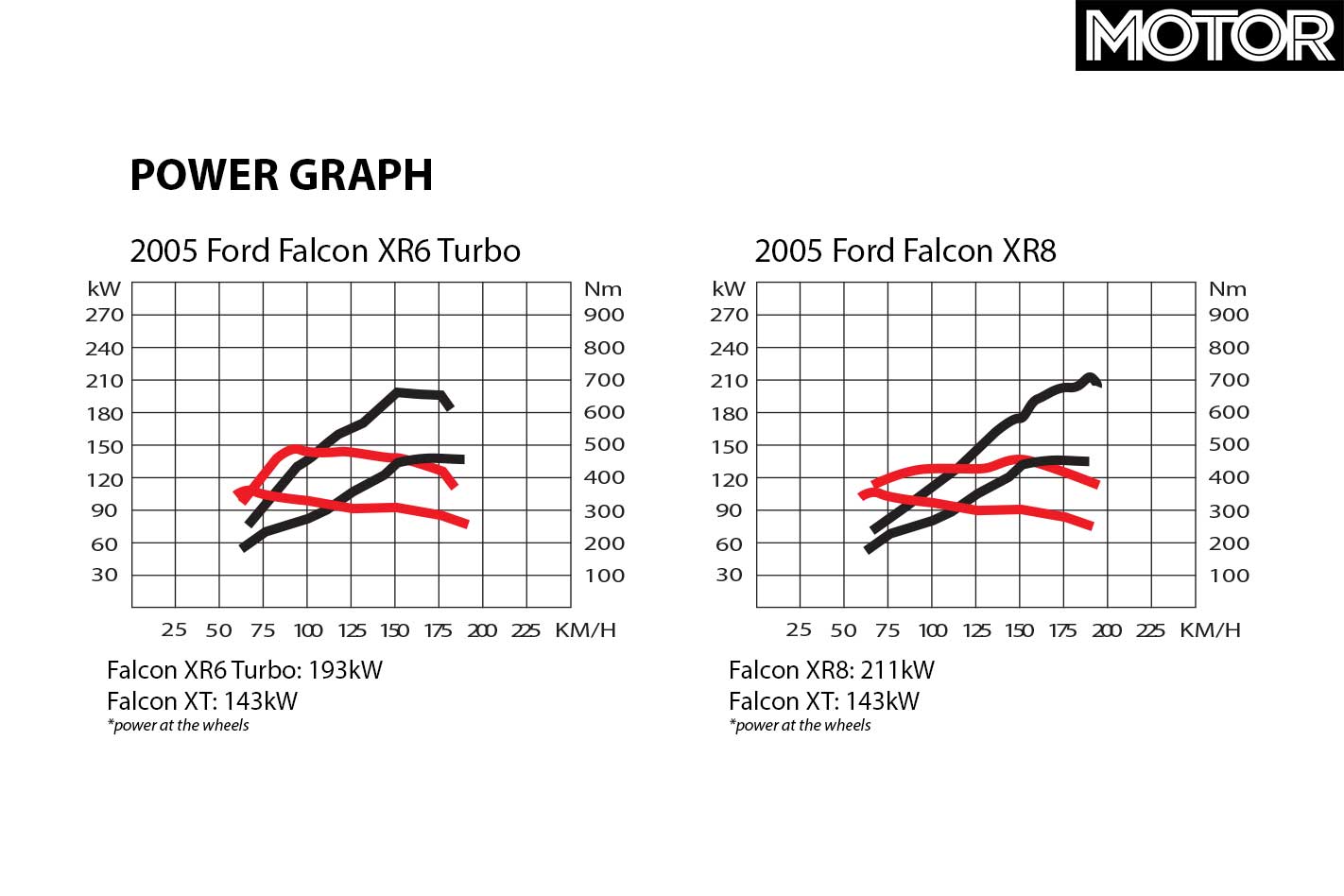
It did taper off sharply in the last 500rpm though, explaining the lack of top-end punch on the track. Its peak was also proportionately down on the V8s, equating to a 24 percent power loss through the drivetrain. Most impressive was its mass of mid-range power and torque was clearly better than not just all the V8s in class, but every other car in this entire test.
Onto the 250 kilowatters, the SV8 and SS had virtually identical power curves and a 208kW peak, less than 1kW apart. Impressive consistency there, and a 20 percent power loss. Up to the 260kW Monaro and XR8, nowhere in the range does the Ford better the Monaro, much less the SS.
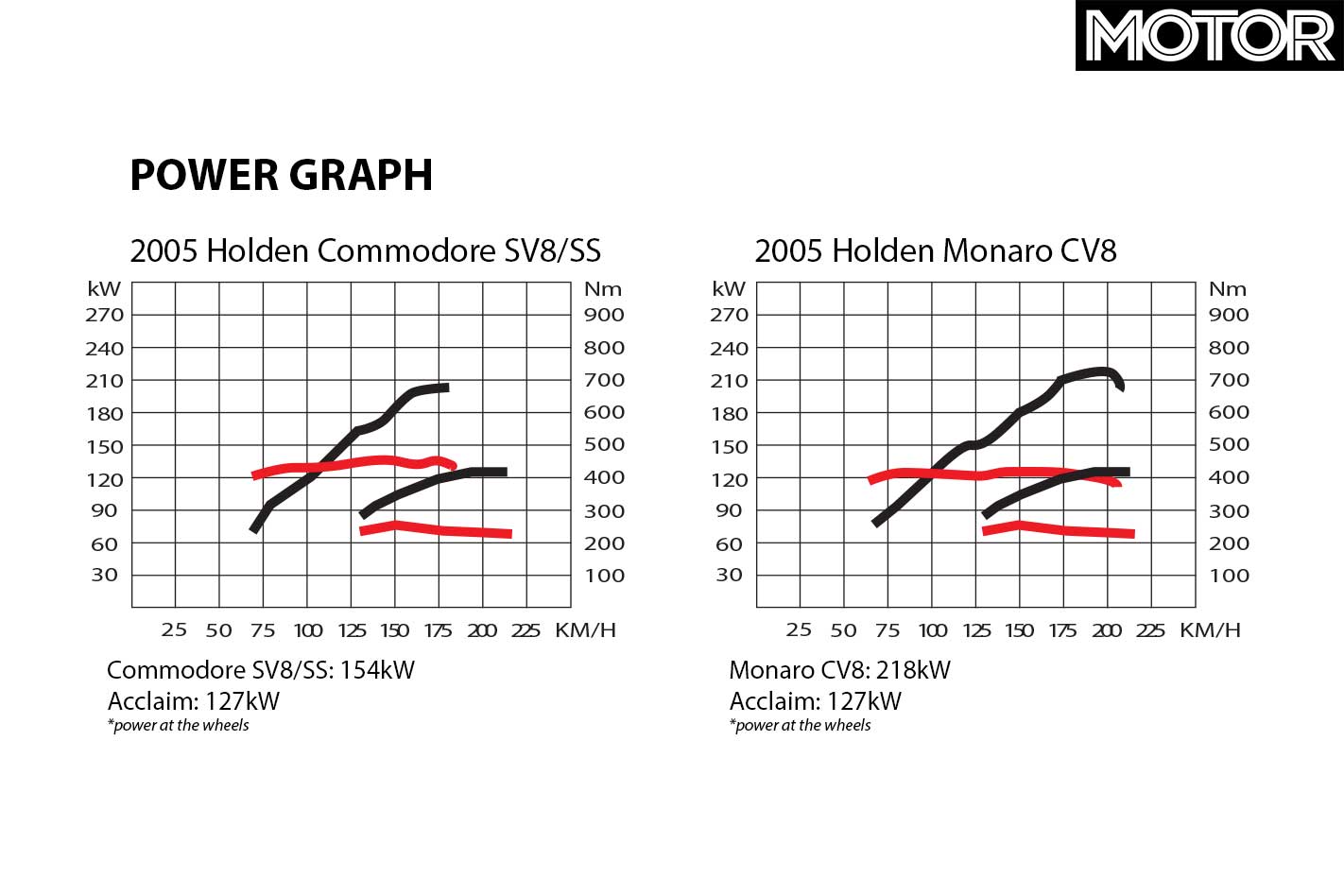
The XR8 matches the mid-range of the CV8, but does possess smoother power and torque curves. But the Monaro has more low down, and the XR8’s 211kW power curve flattens out at 5900rpm, the Monaro’s keeps going to its 300rpm higher limit until it reaches 218kW.
Interestingly, the hotter the Holdens got, the less power they produced. The Ford V8s, however, loved the heat, increasing by a kilowatt or two on their second and third runs.
Drag Run
| u00a0 | Commodore SV8 | Commodore SS | Monaro CV8 | Falcon XR6 Turbo | Falcon XR8 |
| 0-10km/h | 0.52sec | 0.53sec | 0.51sec | 0.64sec | 0.46sec |
| 0-20km/h | 0.97sec | 0.96sec | 0.94sec | 1.13sec | 0.91sec |
| 0-30km/h | 1.55sec | 1.55sec | 1.60sec | 1.51sec | 1.46sec |
| 0-40km/h | 2.15sec | 2.08sec | 2.14sec | 1.98sec | 1.96sec |
| 0-50km/h | 2.66sec | 2.64sec | 2.63sec | 2.40sec | 2.53sec |
| 0-60km/h | 3.14sec | 3.22sec | 3.19sec | 2.93sec | 2.92sec |
| 0-70km/h | 3.72sec | 3.80sec | 3.74sec | 3.82sec | 3.76sec |
| 0-80km/h | 4.55sec | 4.72sec | 4.66sec | 4.61sec | 4.51sec |
| 0-90km/h | 5.17sec | 5.57sec | 5.52sec | 5.35sec | 5.22sec |
| 0-100km/h | 6.08sec | 6.14sec | 6.02sec | 6.25sec | 6.11sec |
| 0-110km/h | 7.10sec | 6.91sec | 6.90sec | 7.49sec | 7.33sec |
| 0-120km/h | 8.04sec | 8.25sec | 8.21sec | 8.61sec | 8.59sec |
| 0-400m | 14.12sec @ 166.7km/h | 14.21sec @ 166.4km/h | 14.28sec @ 165.6km/h | 14.81sec @ 156.9km/h | 13.99sec @ 166.4km/h |
XR6T was tricky to balance between bogging down and tyre spin, but wasn’t as sharp as hoped and 8km/h down on trap speed than our best speed recorded. XR8 was a jet by comparison nailing the quarter mile in 13.99secs.
The SV8 launched with just enough wheelspin to keep it in the meat of its torque curve and posted a 6.08-seconds to 100km/h. The SS was within spitting distance of the SV8 as was the CV8 which scored its best 0-100km/h time by four-tenths. Apart from the XR6T, there’s just three-tenths and 3km/h between all the V8s’ ETs and speeds.
Track Results
| u00a0 | Commodore SV8 | Commodore SS | Monaro CV8 | Falcon XR6 Turbo | Falcon XR8 |
| Lap Time | 1min 57.07sec | 1min 55.26sec | 1min 57.21sec | 1min 58.05sec | 1min 57.86sec |
| Top Speed | 200km/h | 201km/h | 203km/h | 195km/h | 202km/h |
Not the fastest XR6 Turbo we’ve driven; handling and brakes didn’t feel noticeably better than nat-atmo XR6. It was 3.5secs faster than the XR6 around the Creek, 12km/h faster down the straight, though all this was more down to its power advantage than extra corner speed.
Three of the V8s were within one second of each other. The XR8’s big V8 feels sharper than the Turbo, but rolls on its nose more, and like the GT, difficult to minimise oversteer under power – and just 0.2secs faster than the Turbo.
The CV8 was a mild disappointment: it understeered more, then once the rear tyres got warm, started oversteering. Brakes were better than the sedans but it was slower – albeit just a few tenths – than the SV8. The Monaro’s slippery body helped it top a fastest-in-group 203km/h down the straight, but all the V8s were within 3km/h anyway.
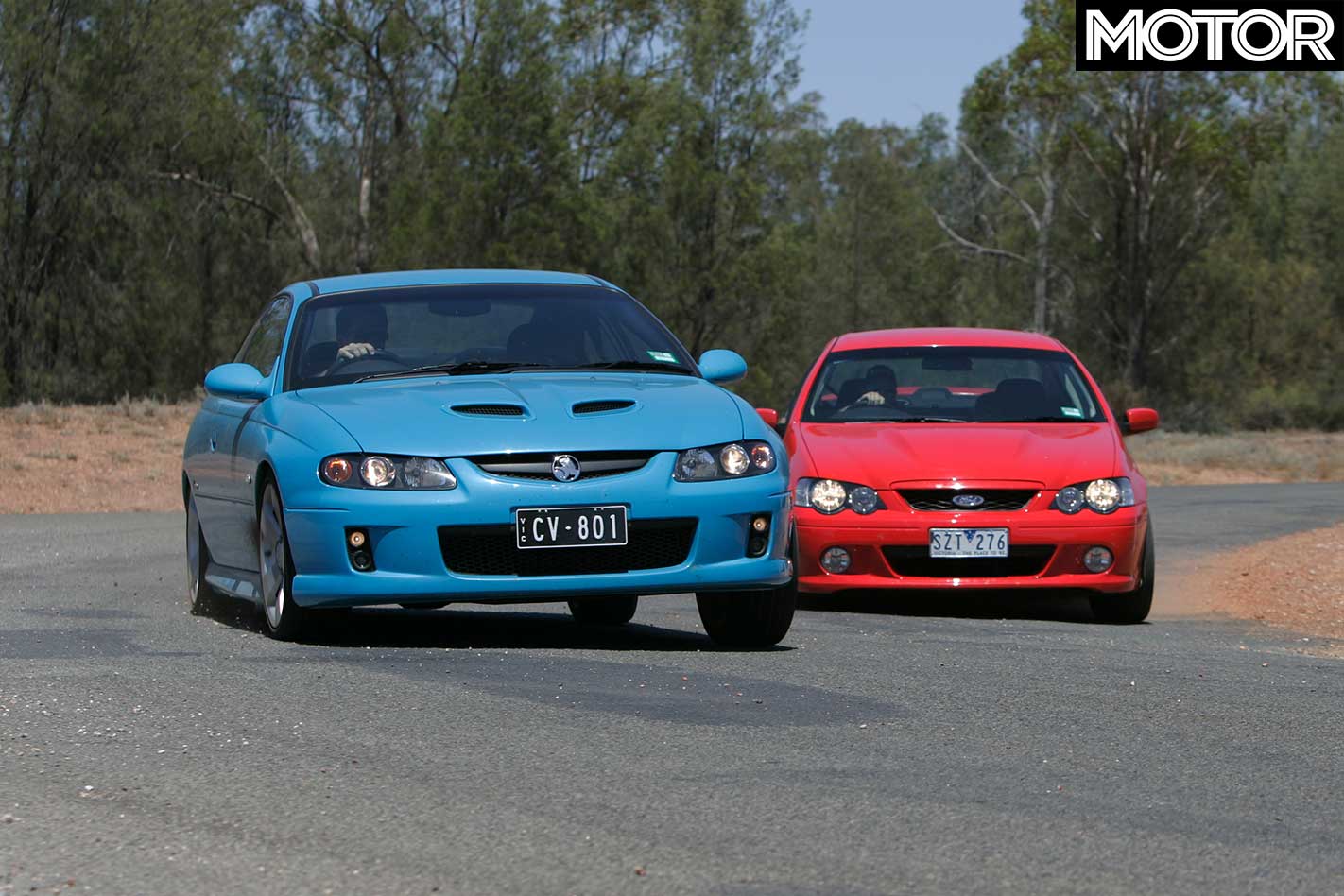
The budget-priced SV8 offered instant power and strong urge from 3500rpm. Despite bodyroll, different rubber and mild understeer, it still puts its power down better than the Fords.
Then the Commodore SS hit the track. Its 201km/h straight speed was average, its woeful brakes were dangerously soggy on the second lap, but it fired out the biggest surprise of the day, the fastest lap of 1:55.26: three-quarters of a second faster than the next fastest, HSV’s ClubSport. Even its second lap, that ran wide at turn two thanks to the brakes dying, was just 0.15 slower than the Clubbie’s fastest.
Why? An HSV-equalling and dead straight power curve that’s bettered only above 5000rpm, fantastic mid-corner grip from the Bridgestones that also offer unrivalled ability to put its power to the ground. Felt fastest, was fastest. Who said the Gen III was dead?
Judges’ Scores
2005 Holden Commodore SV8
| Judges | JT | DE | DM | PC | LB |
| Performance/10 | 7 | 6 | 8 | 8 | 7 |
| Dynamics/10 | 7 | 7 | 6 | 7 | 7 |
| Driveability/10 | 7 | 9 | 5 | 7 | 7 |
| Value/10 | 8 | 9 | 7 | 8 | 7 |
| Total/40 | 29 | 31 | 26 | 30 | 28 |
| GRAND TOTAL | 144/200 WINNER | ||||
2005 Holden Commodore SS
| Judges | JT | DE | DM | PC | LB |
| Performance/10 | 9 | 9 | 9 | 8 | 5 |
| Dynamics/10 | 8 | 7 | 7 | 8 | 6 |
| Driveability/10 | 7 | 6 | 6 | 7 | 6 |
| Value/10 | 7 | 8 | 5 | 6 | 6 |
| Total/40 | 31 | 30 | 27 | 29 | 23 |
| GRAND TOTAL | 140/200 | ||||
2005 Holden Monaro CV8
| Judges | JT | DE | DM | PC | LB |
| Performance/10 | 7 | 6 | 8 | 8 | 7 |
| Dynamics/10 | 7 | 7 | 6 | 7 | 7 |
| Driveability/10 | 7 | 7 | 6 | 7 | 7 |
| Value/10 | 6 | 5 | 4 | 5 | 5 |
| Total/40 | 26 | 25 | 24 | 27 | 26 |
| GRAND TOTAL | 128/200 | ||||
2005 Ford Falcon XR6 Turbo
| Judges | JT | DE | DM | PC | LB |
| Performance/10 | 6 | 5 | 6 | 6 | 7 |
| Dynamics/10 | 8 | 8 | 6 | 6 | 7 |
| Driveability/10 | 7 | 7 | 7 | 6 | 6 |
| Value/10 | 7 | 7 | 7 | 5 | 7 |
| Total/40 | 28 | 27 | 26 | 23 | 27 |
| GRAND TOTAL | 131/200 | ||||
2005 Ford Falcon XR8
| Judges | JT | DE | DM | PC | LB |
| Performance/10 | 8 | 6 | 7 | 7 | 6 |
| Dynamics/10 | 8 | 7 | 6 | 6 | 6 |
| Driveability/10 | 6 | 6 | 7 | 5 | 6 |
| Value/10 | 7 | 6 | 5 | 4 | 6 |
| Total/40 | 29 | 25 | 25 | 22 | 24 |
| GRAND TOTAL | 125/200 | ||||
Technology behemoth Apple has slashed staff numbers within is autonomous vehicle division – known as Project Titan – which all but spells the end of the Cupertino company’s dream of building its own autonomous car – at least in the short term.
The company says that staff are being redeployed to other projects throughout the company, and that it will continue to focus on projects like machine learning.
The idea of an Apple Car has been a long-held dream at the company, and reportedly even pre-dates the iPhone as an internal project.
Project Titan kicked off with a couple of thousand employees in a secret facility not far from Apple’s HQ in 2014, but has changed focus a couple of times in that period.
Reports from the US suggest that Apple was pretty serious about the project, even entering into discussions with Magna-Steyr, a contract car builder in Austria whose current resume includes the Mercedes-Benz G-Wagen, the BMW Z4 and its fraternal twin, the Toyota Supra.
As well, stories emerged that Apple had approached sports car maker McLaren about a possible takeover.
In 2016, the company announced that it was refocusing the division’s energies towards creating autonomous software, officially moving away from the notion of creating a car from scratch. Reports suggest that staff numbers also fell in line with the announcement.
Work continued apace on the autonomous software, though, with Apple granted a licence in California to operate a fleet of autonomous R&D vehicles based on Lexus RX300s.
It’s also working with Volkswagen to turn a fleet of Transporter vans into autonomous shuttles for use within its own precincts.
The appointment of former Tesla chief vehicle engineer (and former Apple employee) Doug Field – who joins a number of former Elon Musk workers at Apple – is thought to be behind the restructure.
The appointment of a such a senior vehicle engineer also lends credence to persistent rumours that the vehicle project is not completely dead and buried, but merely being pushed back a number of years as Apple focuses on getting the software right first.
Watch this space.
If having the right badge matters, this month’s Cool Car Things features a motley collection of branded apparel and gear for the more dedicated of enthusiasts.
Better yet, these exotic-branded paraphernalia are likely not to break the bank.
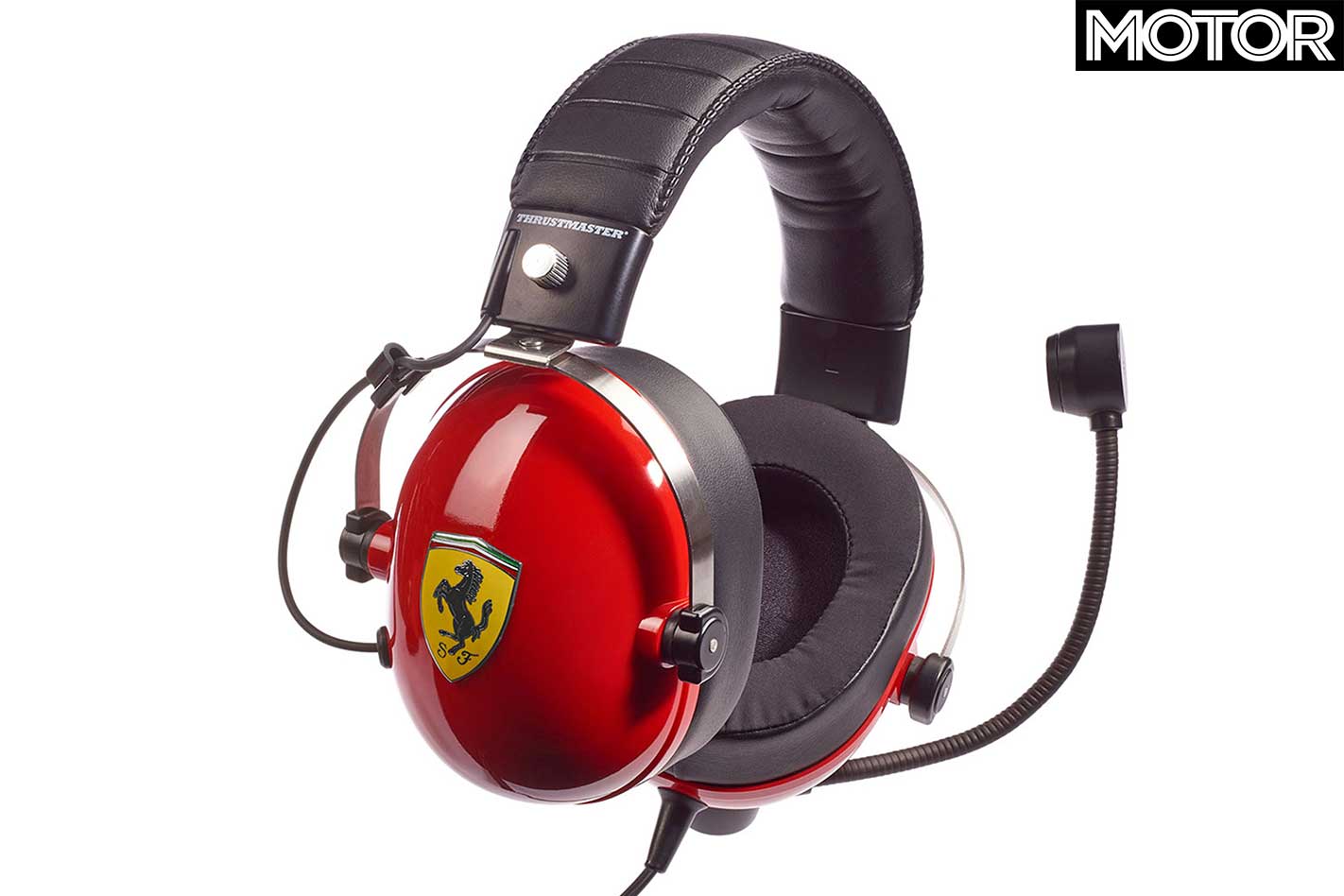
1 – FEATURED “PRODUCT OF THE MONTH”: Ferrari headset ($165 from store.ferrari.com) Put yourself in the F1 paddock from your couch with these gaming headphones from Thrustmaster. Licensed by Ferrari, they feature a microphone, three-metre cord and a 50mm speaker.
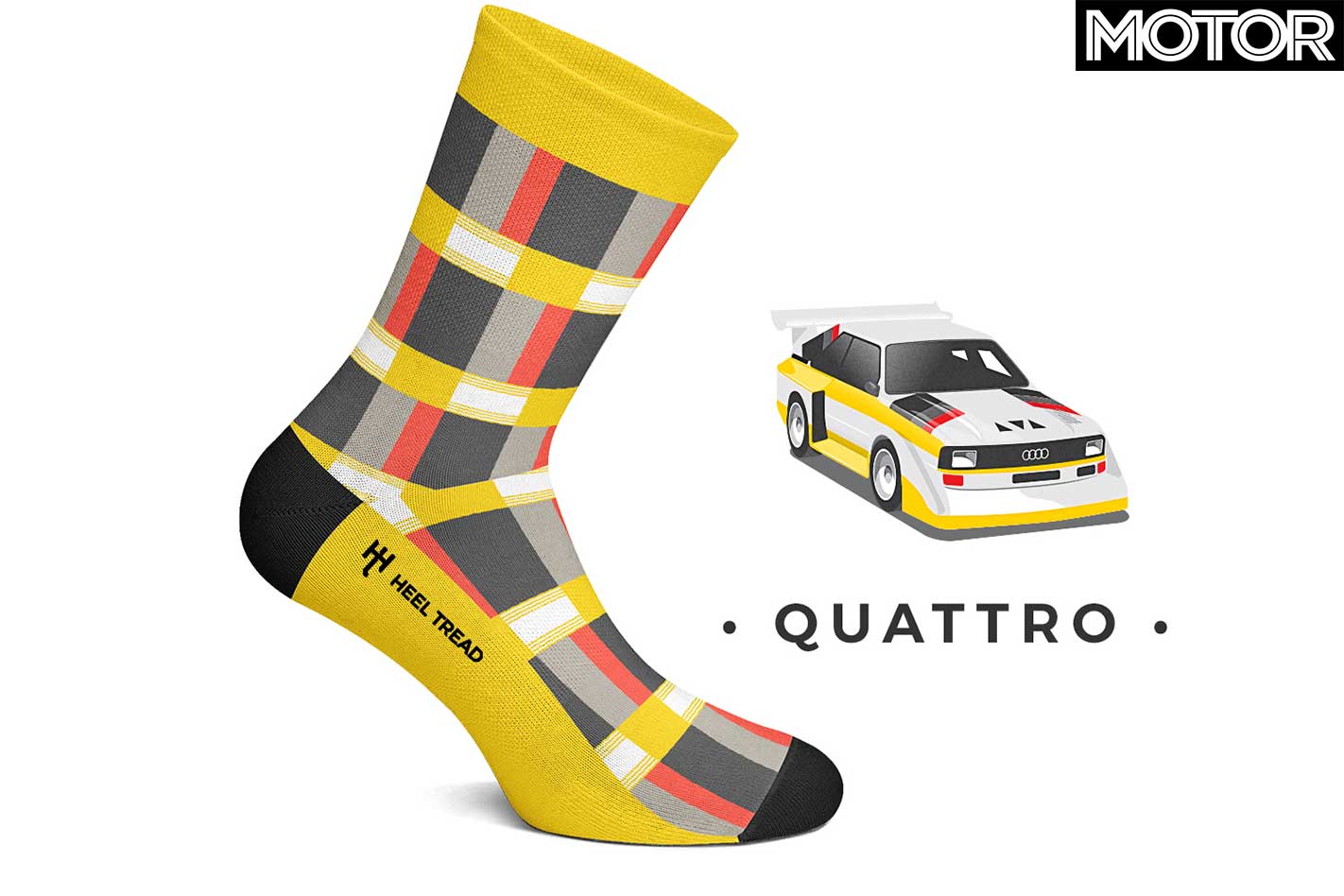
2 – Audi Quattro socks ($16 from heeltread.com) These are socks you wouldn’t mind getting as a present, as they’re a tribute to the flame-spitting Audi Quattro WRC cars. They’re available in medium and large, which covers US shoe sizes 4.5-7.5 and 8-12.
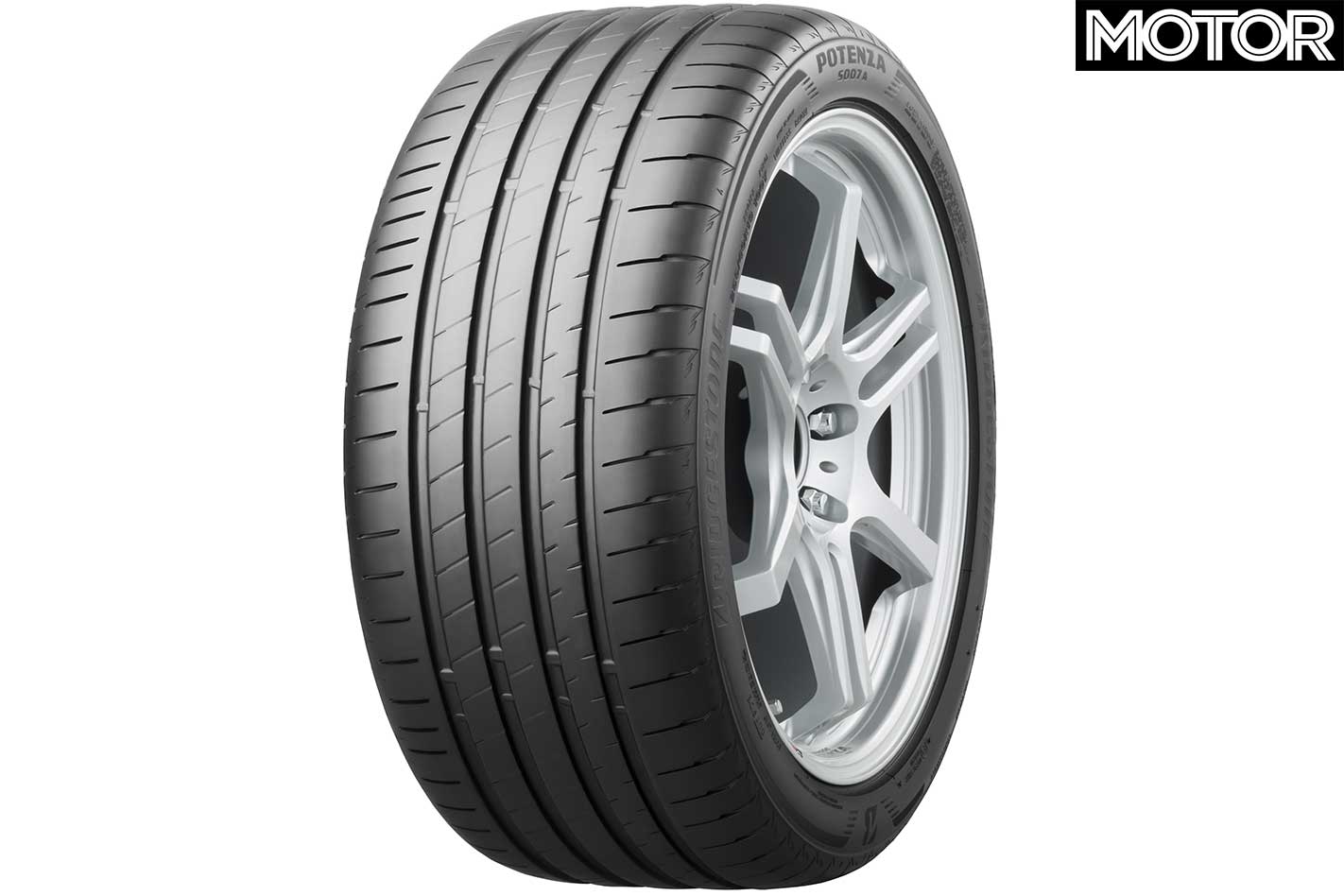
3 – Bridgestone S007A ($225 from jaxtyres.com.au) Not to be confused with the tyre factory fitted to the Aston Martin DB11, the S007A is still designed for high-performance driving. Available for 17-20in wheels. Price for one 225/45R17 tyre.
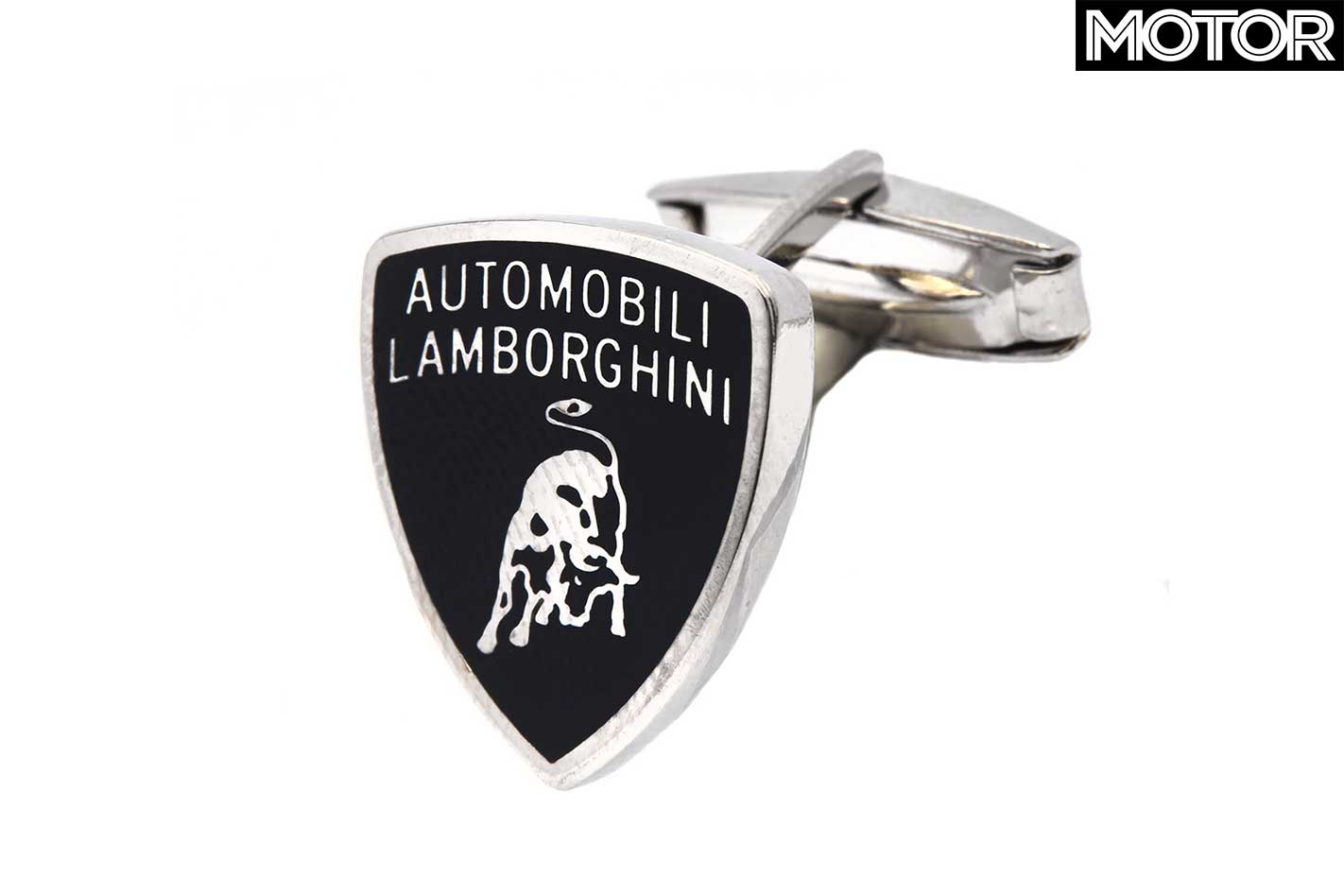
4 – Lamborghini cuff-links ($132 from lamborghinistore.com) Class up your cuffs with these Lambo cuff-links. They’re silver-plated around the enamelled shield logos that feature the famous raging bull.
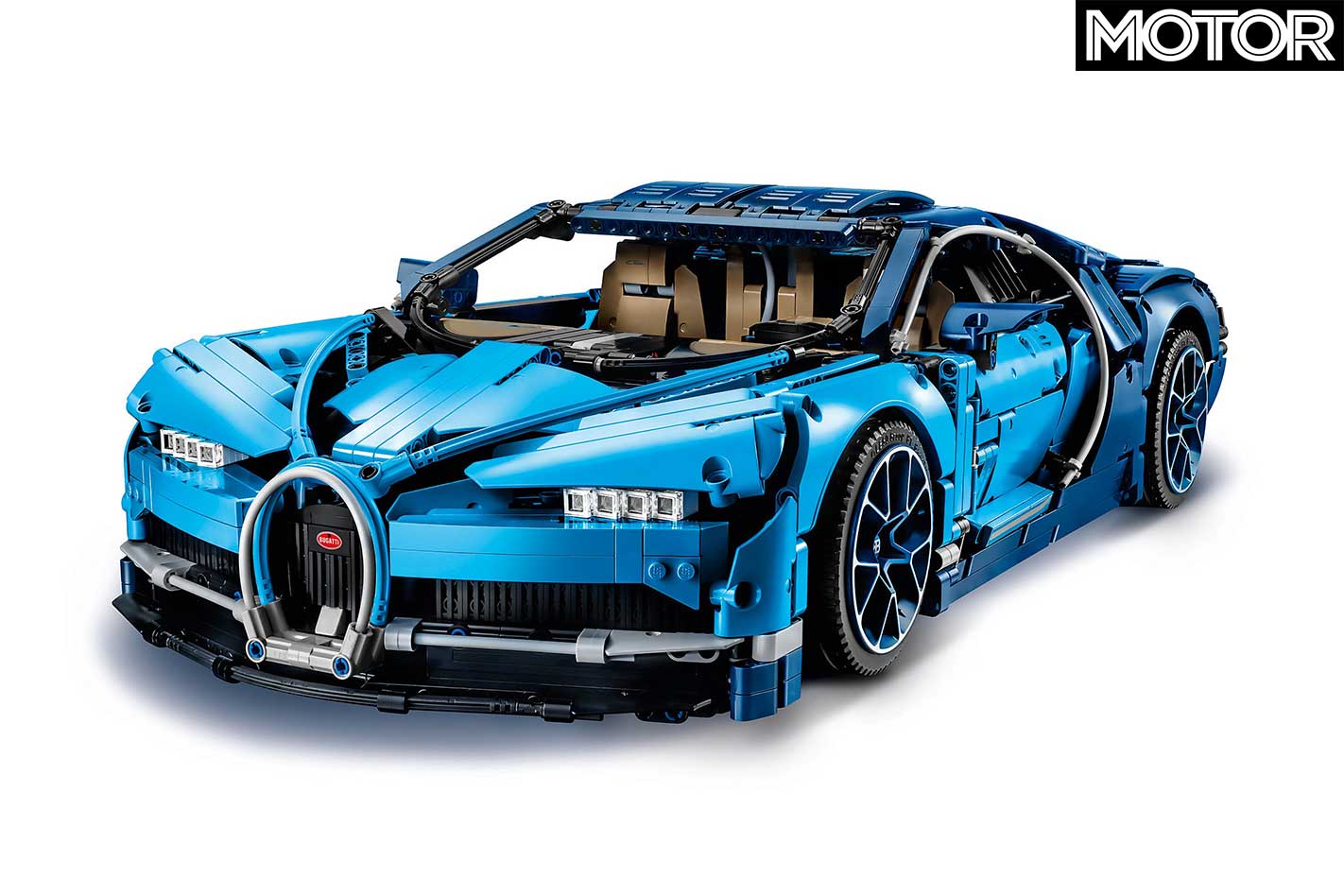
5 – Lego Technic Bugatti Chiron ($600 from shop.lego.com) Following up the lauded 911 GT3 RS Technic build, this eighth-scale Bugatti Chiron is built from a massive 3599 pieces and actually features operational paddleshift gearbox and W16 engine.
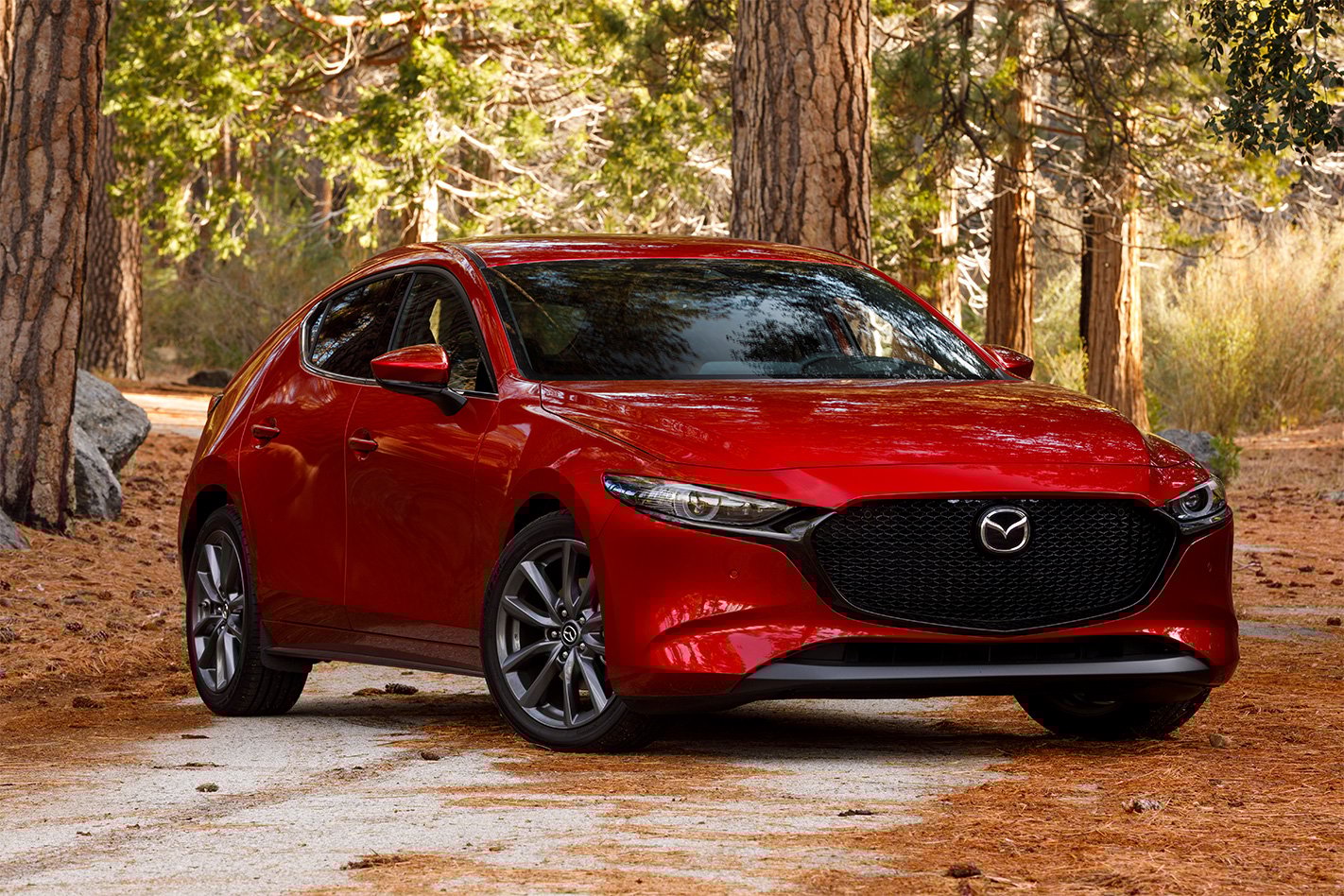
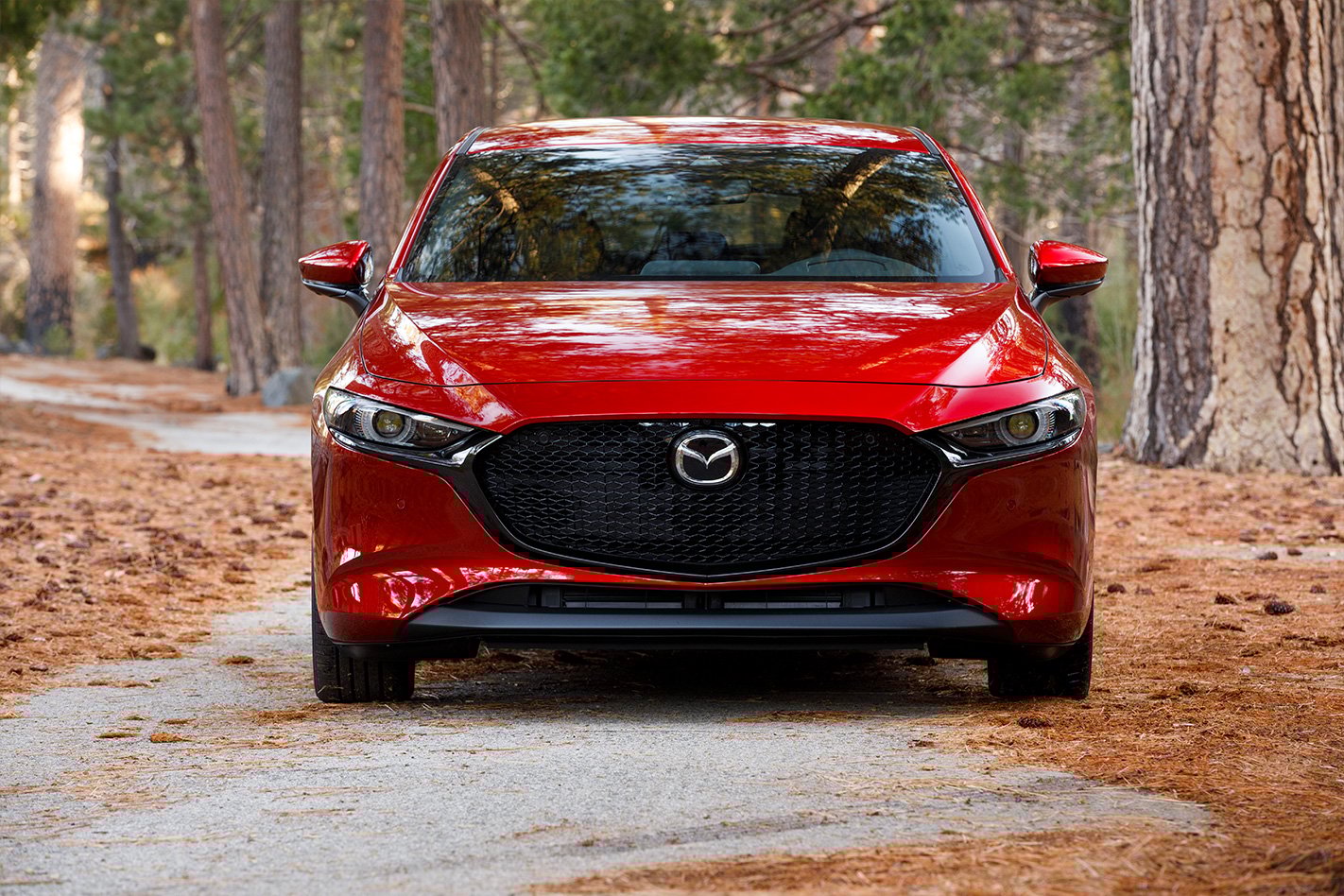
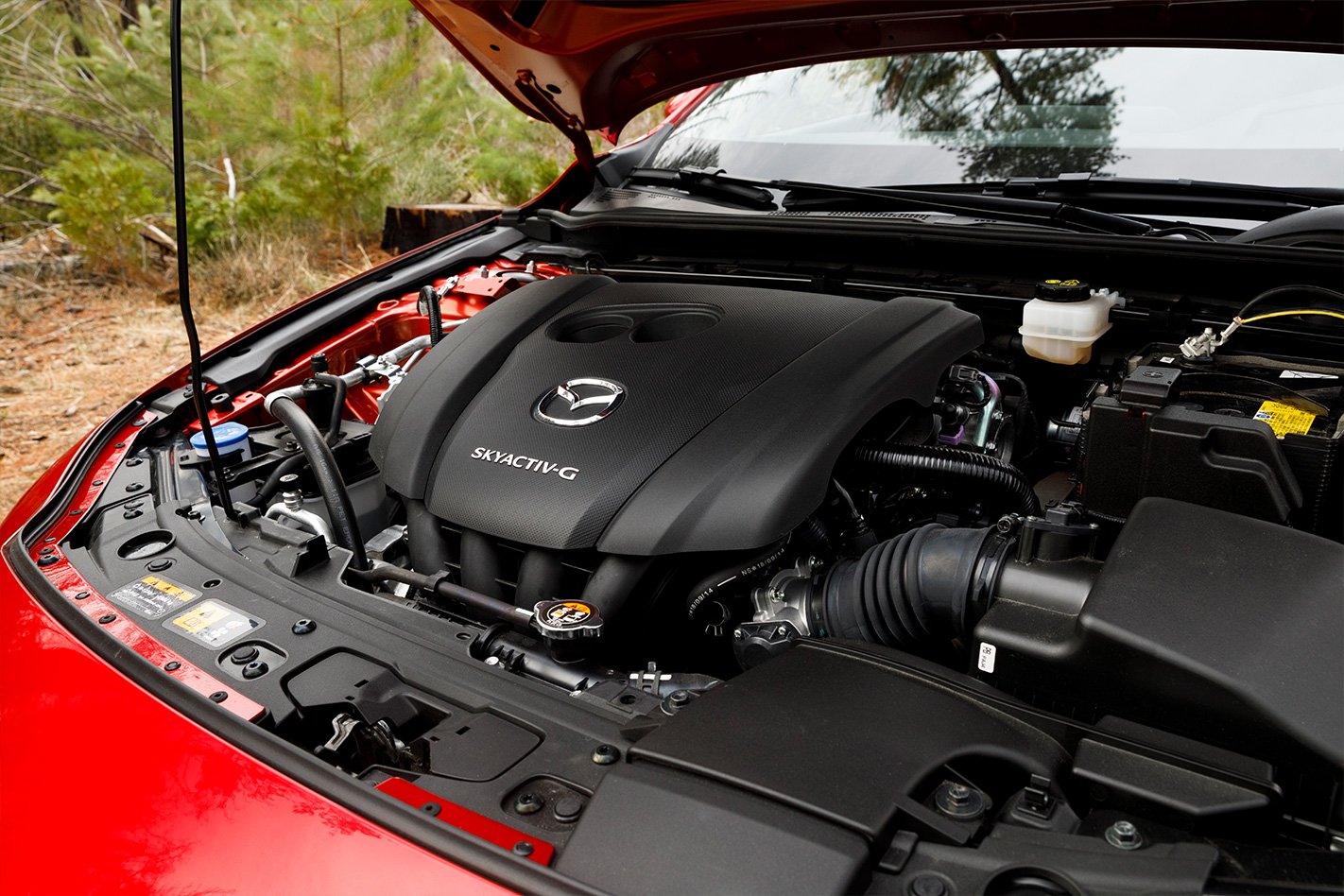
This is the all-new fourth generation of Mazda’s hugely popular small car, offered in both sedan and hatch. They are powered by mildly updated versions of the SkyActiv-G petrol four-cylinder engines, in 2.0- and 2.5-litre capacities. Both body styles are larger than the models they will replace when launched in Australia around May, but this doesn’t translate to increased cabin space.
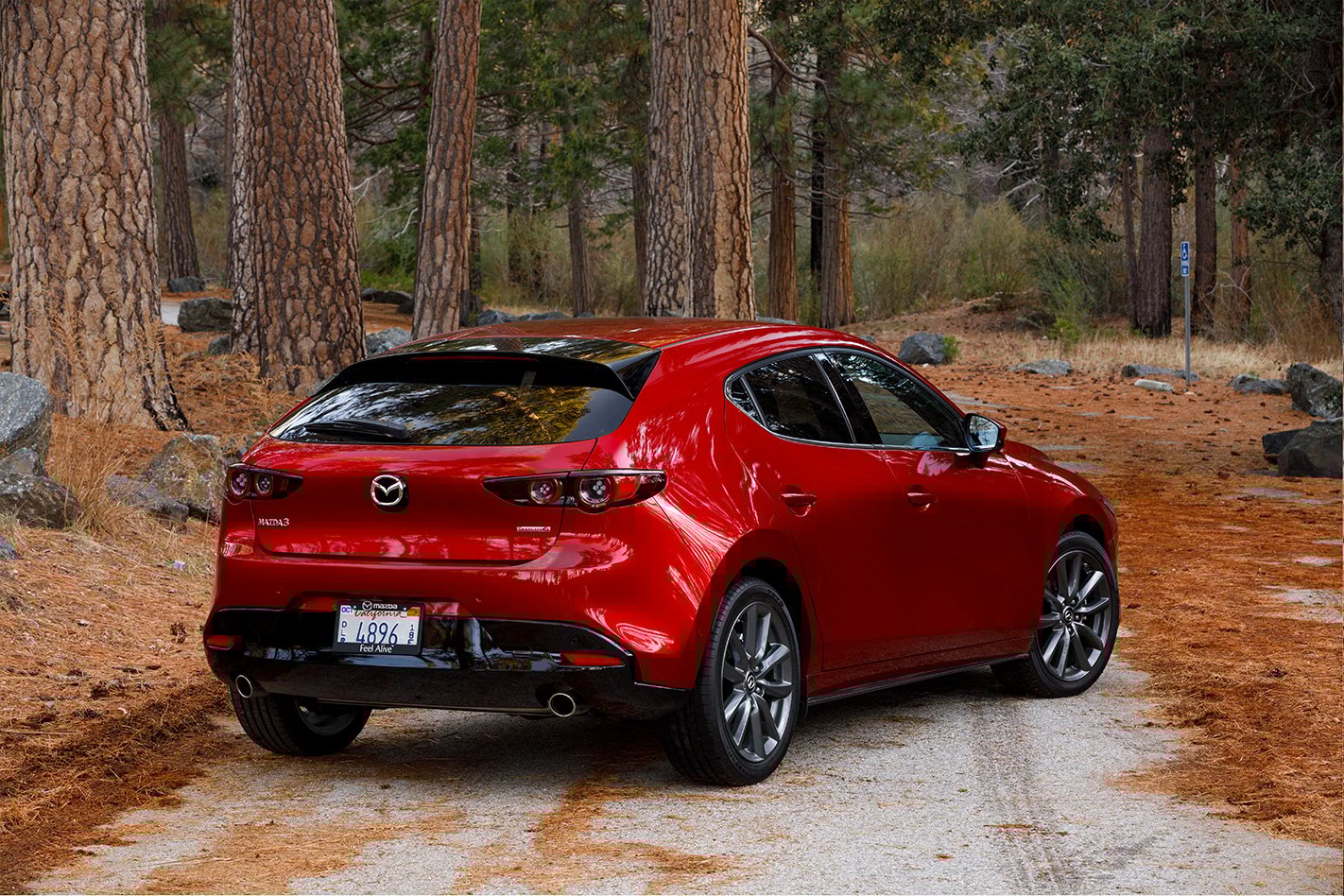
The significance of the 3 to the Australian market can’t be understated – it’s continually up the very pointy end on the best-seller list of passenger cars, and fights against long-standing incumbents like the Toyota Corolla, Ford Focus, Volkswagen Golf and Hyundai i30.
VALUE
Mazda Australia has not announced final specification or pricing for the models we’ll see here, so we’re basing some assumptions around the outgoing range, and the expectation that prices may rise slightly, but so will standard equipment.
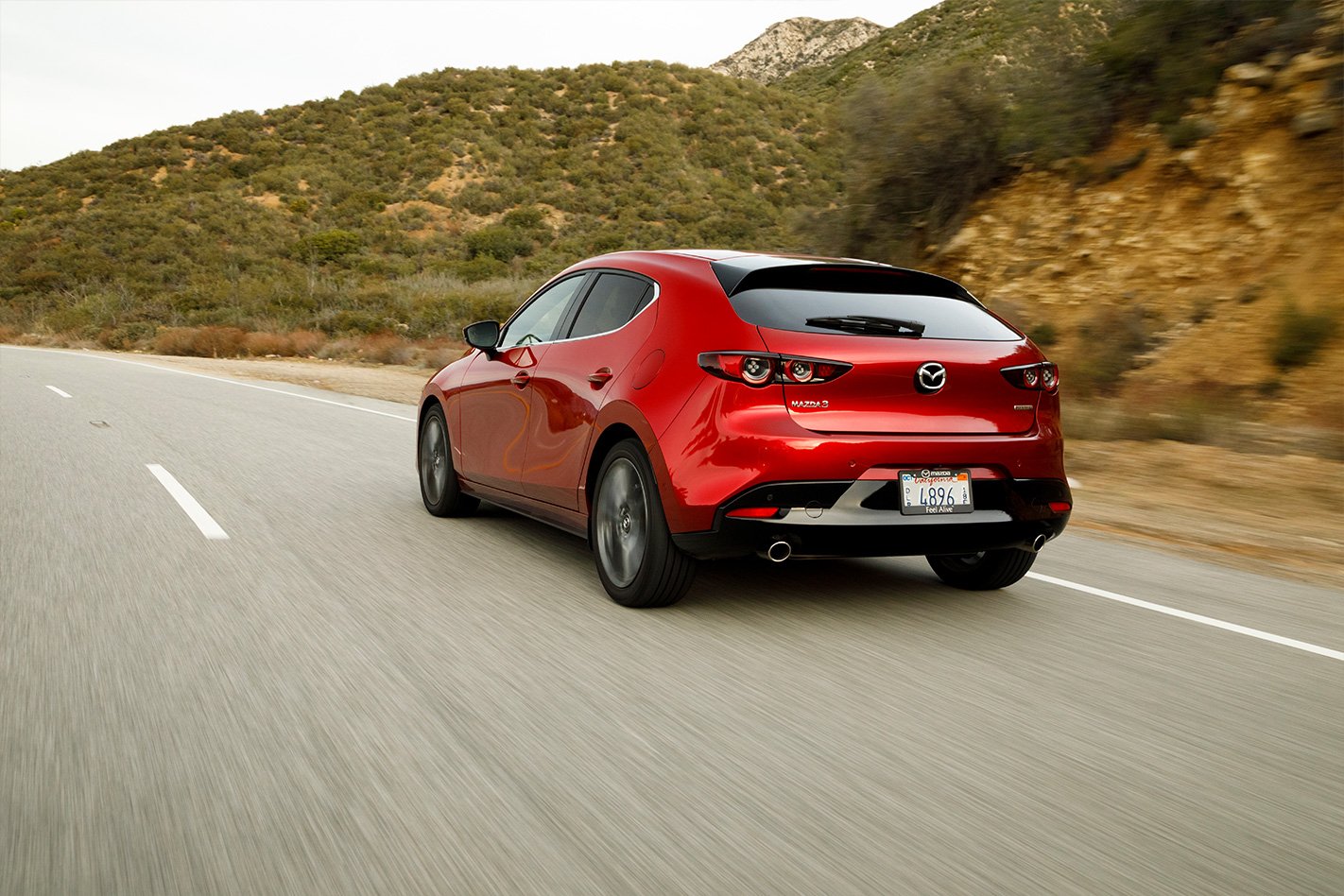
Expect the range to start at around $22,000 (plus ORC) for an entry-level manual hatch, and top out at around $36,000 (plus ORC) for a top-spec automatic. Mazda’s five-year/unlimited kilometre warranty is strong, if short of industry best (Kia, at seven years.) Official resale appears solid but unremarkable for the outgoing car at around 55 per cent of retained value over three years.
STANDARD FEATURES
Again, this one also requires some assumptions around the outgoing range, plus what was fitted to the cars we drove in the USA. Expect each variant in the range to be at least as well-specced as the best in class, and possibly among the best presented, with the possible exception of the VW Golf.
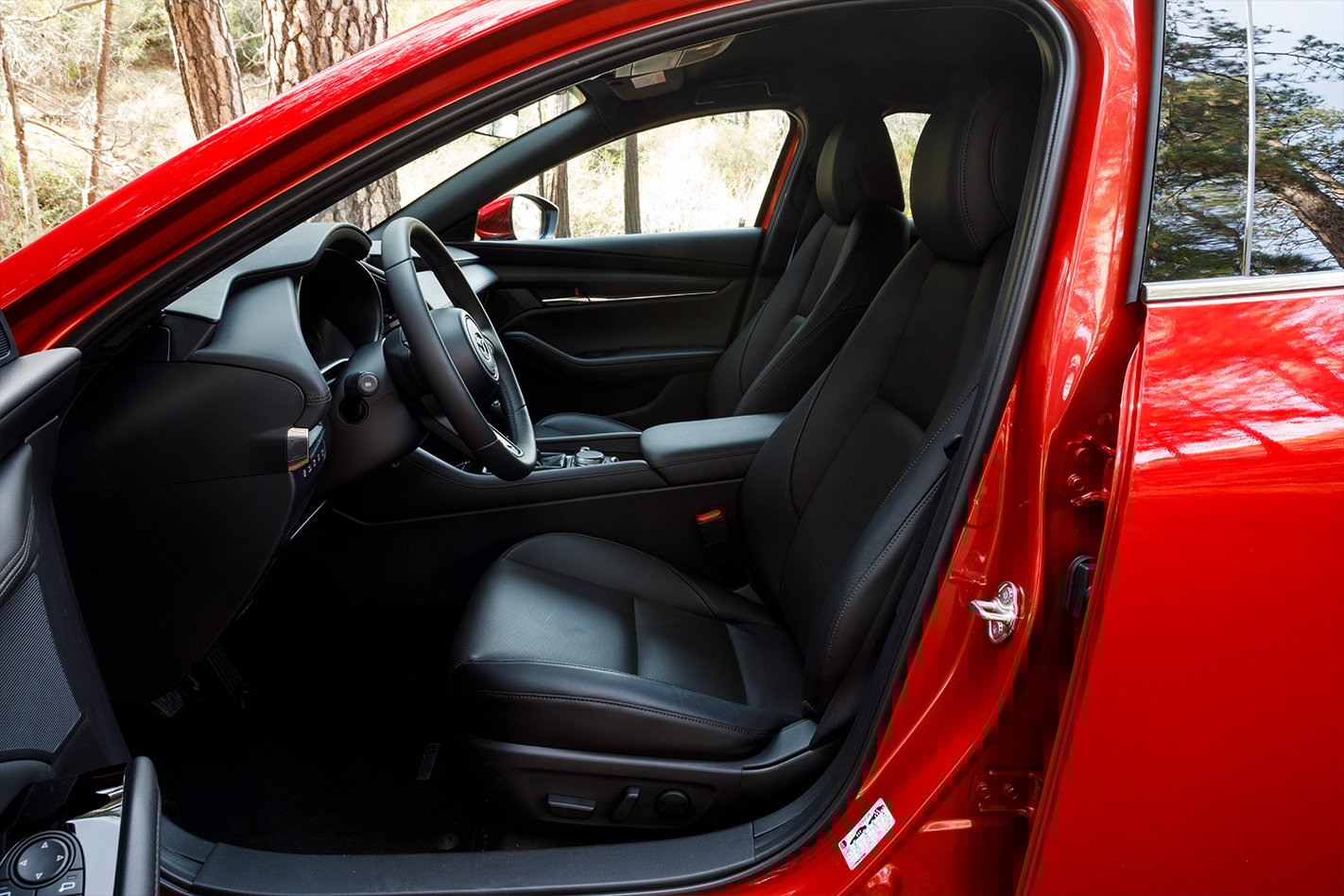
Interior design is a highlight. The instrument panel, HVAC controls and centre console appear far less cluttered compared to the outgoing car, with greater practicality evident in things like the dual cup holders forward of the shifter, and a generous bin ahead of that for phone or sunnies.
The multimedia screen is larger – now 8.8 inches – and positioned slightly further away from the driver to reduce the eye-focussing time from the road ahead to the display. Mazda has also bucked the touch-screen trend, claiming it’s safer for drivers to navigate the improved system via the larger rotary controller just aft of the gear lever.
Less divisive are the revamped and better-explained functions within the various menus, as well as the improved head-up display for top-spec models, which ditches the pop-up plastic reflector thing for a more integrated and sophisticated projector system. Eyes-ahead clarity for navigation and speed-sign recognition is excellent.
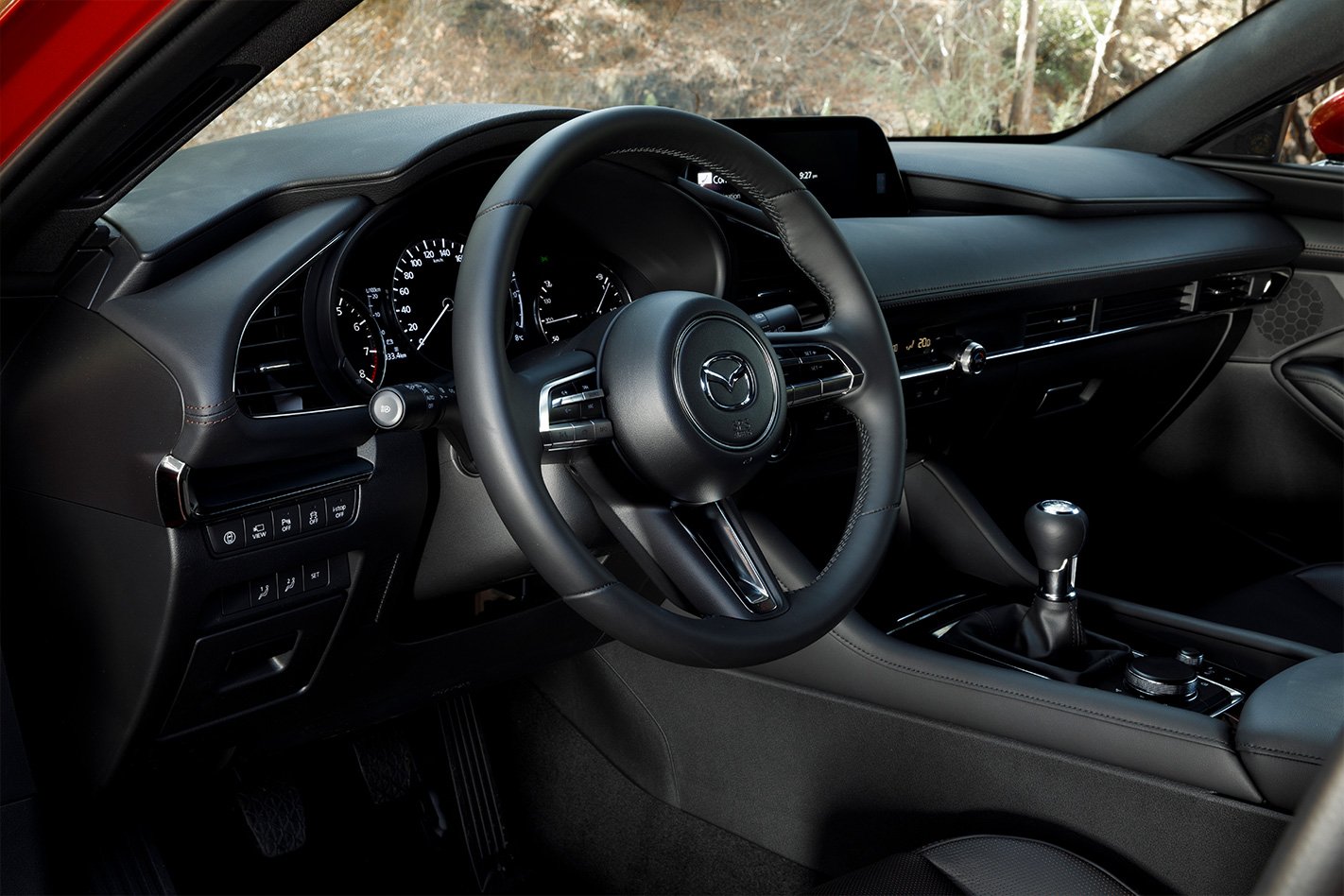
And you’ll instantly note the move to better quality materials pretty much everywhere, from the stitched dash top in upper-spec models, the padded lid of the generous console box, as well as the uniform slickness and tactility of every button and switch. Even the warning chimes and the indicator’s ticking sound have been acoustically buffed in the quest to make the car feel premium.
It’s a convincing effort, and sadly for the likes of Ford’s all-new Focus and even the Corolla, leaves those rivals in a world of scratchy-plastic hurt.
SIZE
The all-new platform delivers slightly larger cars (the hatch is 4460mm long, the sedan is 4662mm) riding on a wheelbase that’s 25mm longer than the outgoing model, but this hasn’t translated into any appreciable gain inside the cabin.
Sitting behind the driver’s seat set for my six-foot frame, rear head- and legroom is adequate, nothing more. If rear-seat room is a high priority, you may be better off at a Honda dealership looking at the commodious Civic.
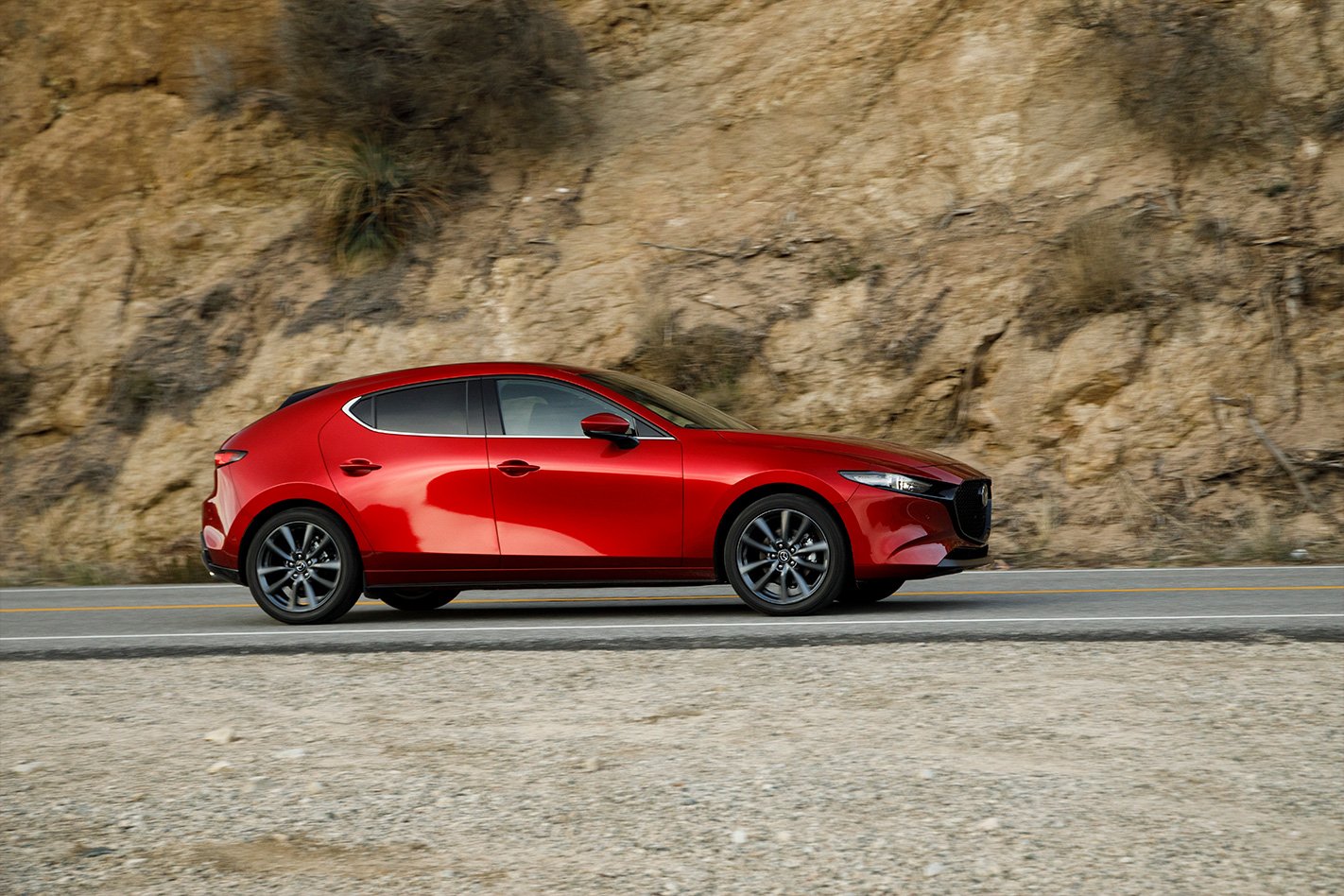
For those counting litres, boot space in the hatch has actually dropped slightly (was 308 litres; now 295), so no, the new model is not exactly a masterclass in packaging genius. The sedan offers a bigger boot, and, as with the hatch, features folding rear seats, but the fixed parcel shelf limits load height and the shape of stuff that will fit in there.
SAFETY
In its most highly-specced form, there’s the potential for the new 3 to feature cross-traffic alert both front and rear, a camera to monitor driver attention and drowsiness, lane-keep assist, AEB that recognises pedestrians and cyclists, blind-spot monitoring, and active cruise control.
COMFORT
In short, excellent. The central message that Mazda is pushing with the new 3 is one about human-centric design. That is, putting the human form – and the way people sit, bend, see, and generally function while driving or riding in a car – at the forefront of every design decision.
The front seats in the up-spec cars we drove are claimed to position occupants better than the outgoing car, even if we are told the hip-point remains much as it was. What I did notice straight away is that for my XL frame, the front seats are instantly more comfortable and supportive than those in the top-spec Mazda 6 Atenza I recently drove.
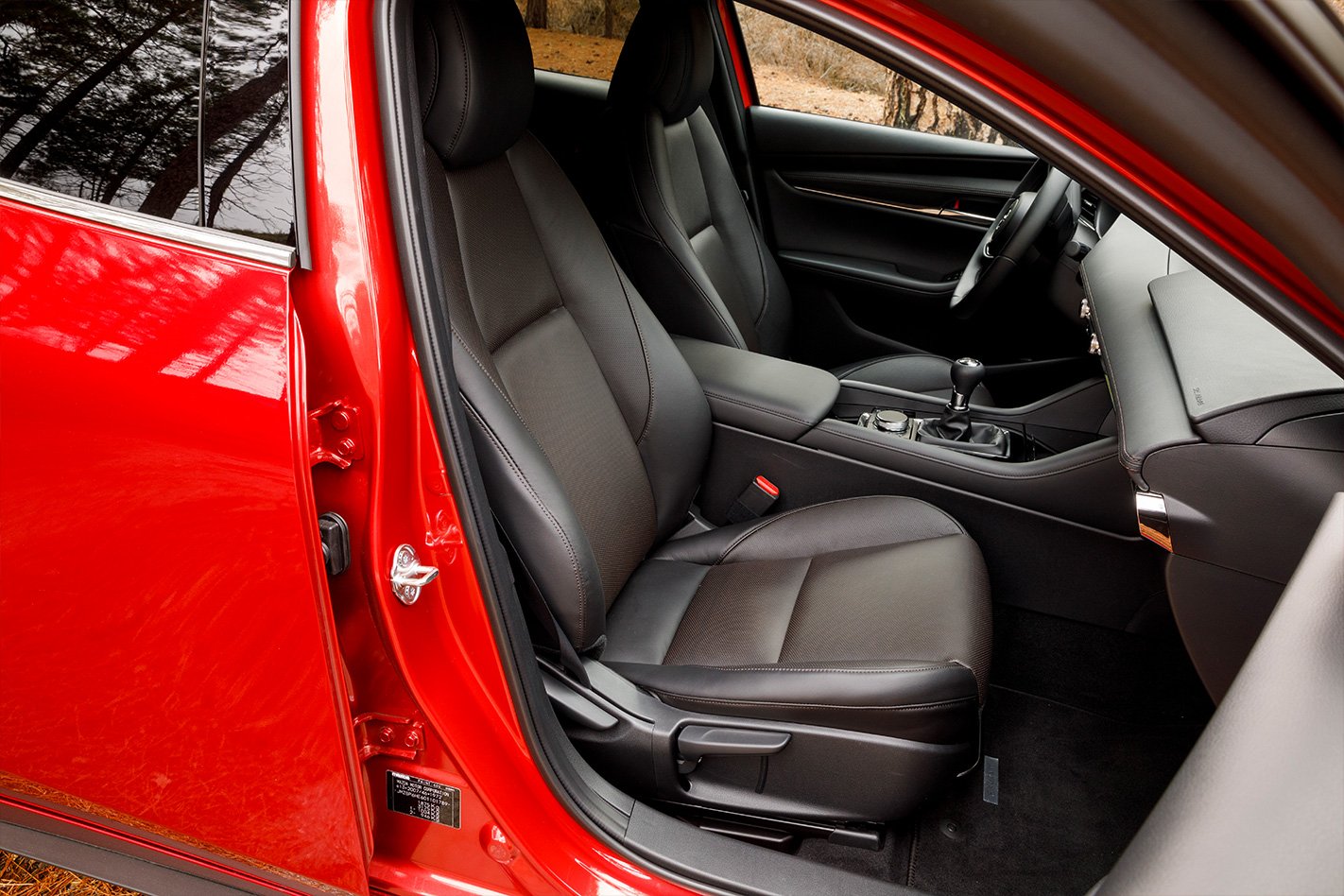
The driving position feels spot-on, with dead-pedal and throttle in auto cars placed shoulder-width apart, and the steering column now provides an extra 20mm (for a total of 70mm) of reach adjustment, allowing taller drivers to pull the wheel in closer.
By declaring all-out war on road noise – including the use of a new production process that sees sound-damping ‘nodes’ sandwiched between key sheet metal sections before spot-welding takes place – Mazda have delivered a small car that not only rides and drives with a maturity that could be from the class above, it also seems likely to challenge the Mk7 Golf for refinement honours.
Only the lack of ventilation for rear-seat passengers detracts from the 3’s overall scoring for comfort.
ON THE ROAD
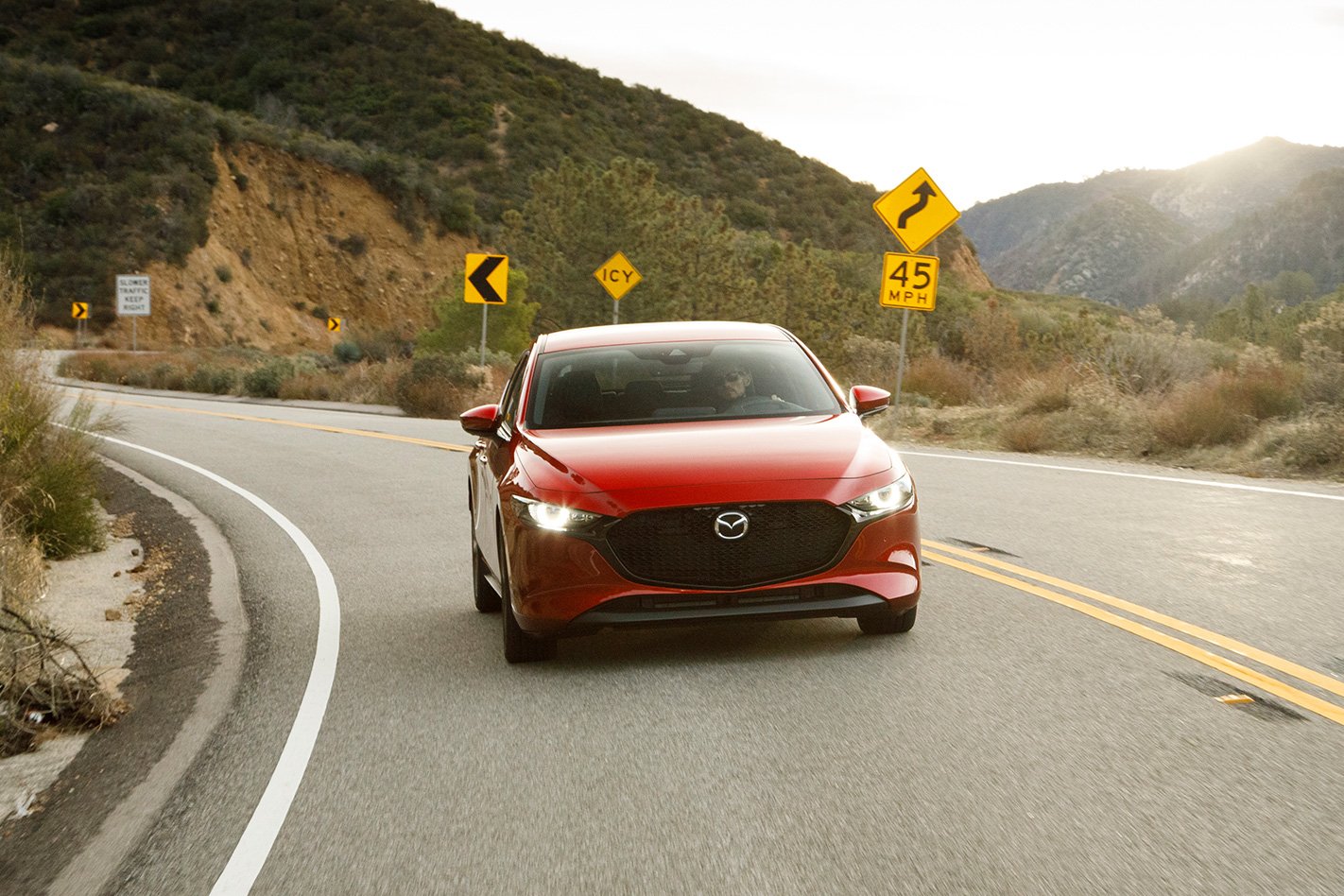
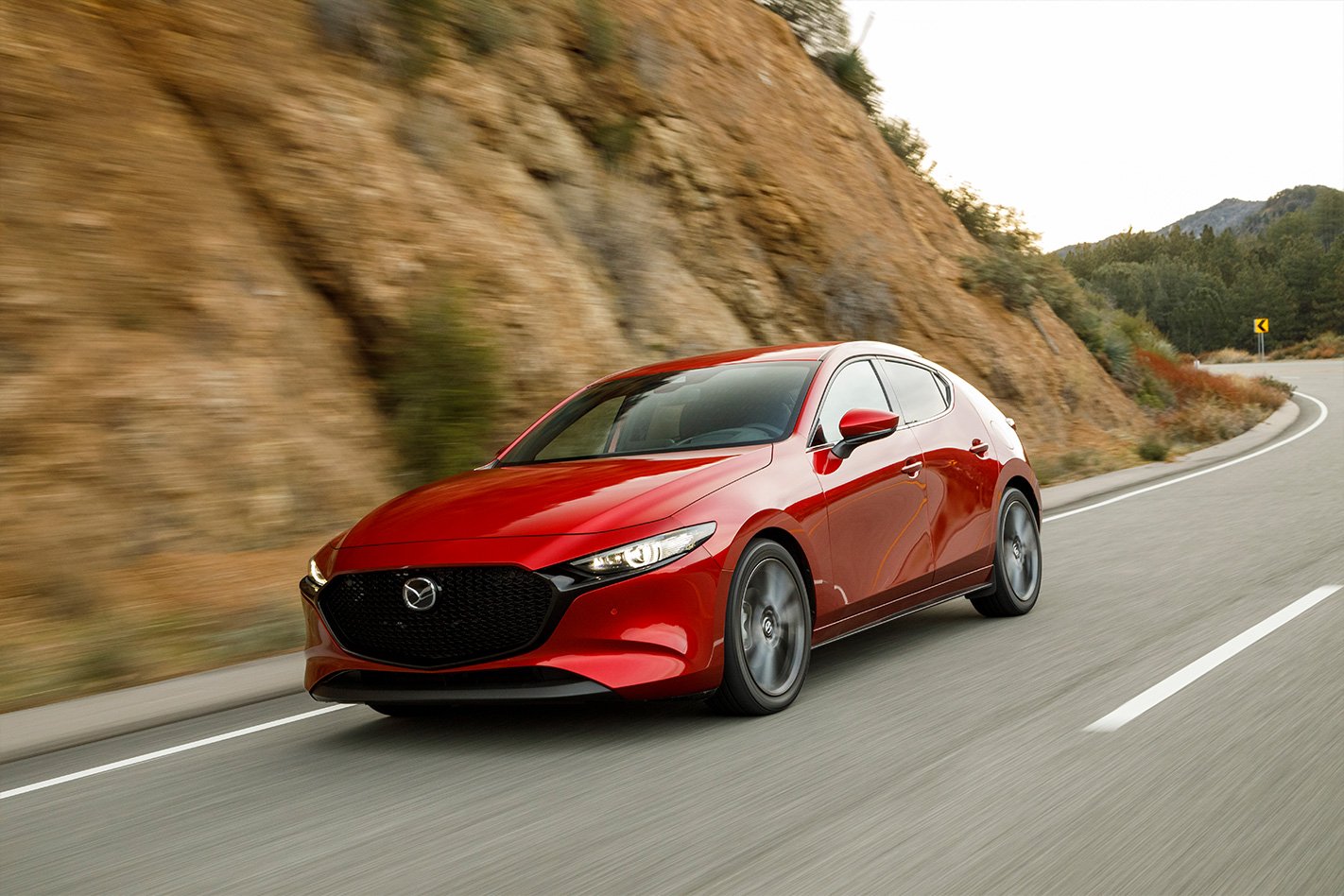
Our drive out of Los Angeles took in suburban streets, slab-section freeways and some enjoyable twisty bits up in the mountainous Angeles National Forrest above the glittering metropolis. On just about every level, the new 3 deeply impressed and may see it throw down a serious challenge to the segment-leading Ford Focus in terms of dynamics.
For starters, we suspect the 3’s steering is not too far short of Ford’s brilliant set-up in the Focus. Mazda has wisely ignored multiple modes, instead providing one fixed setting that begins with a natural, medium weighting at maneuvering and parking speeds, and which doesn’t change dramatically when on the move.
It’s gifted with an oily slickness that never feels gluggy or viscous, and has a just-right return rate when self-centring out of a round-about, for example.
At freeway speeds it’s relaxed but not aloof, while in the twisty stuff it never loads up excessively, and almost fades into the background to allow you to fully concentrate on exploring the chassis balance… which, we are happy to say, retains that pointy, engaging quality that Mazda has now built into its DNA.
Keen drivers will lap up the precision with which you can place the nose when pushing on, then smile at the progressiveness of both adhesion breakaway and tail’s keenness to get involved.
Admittedly, the sedan we drove was fitted with 18-inch all-season Toyo rubber, so the speeds at which this was all happening was not exactly hot-hatch velocity. Still, there’s no denying that the 3 has involvement and adjustability oozing from its pores.
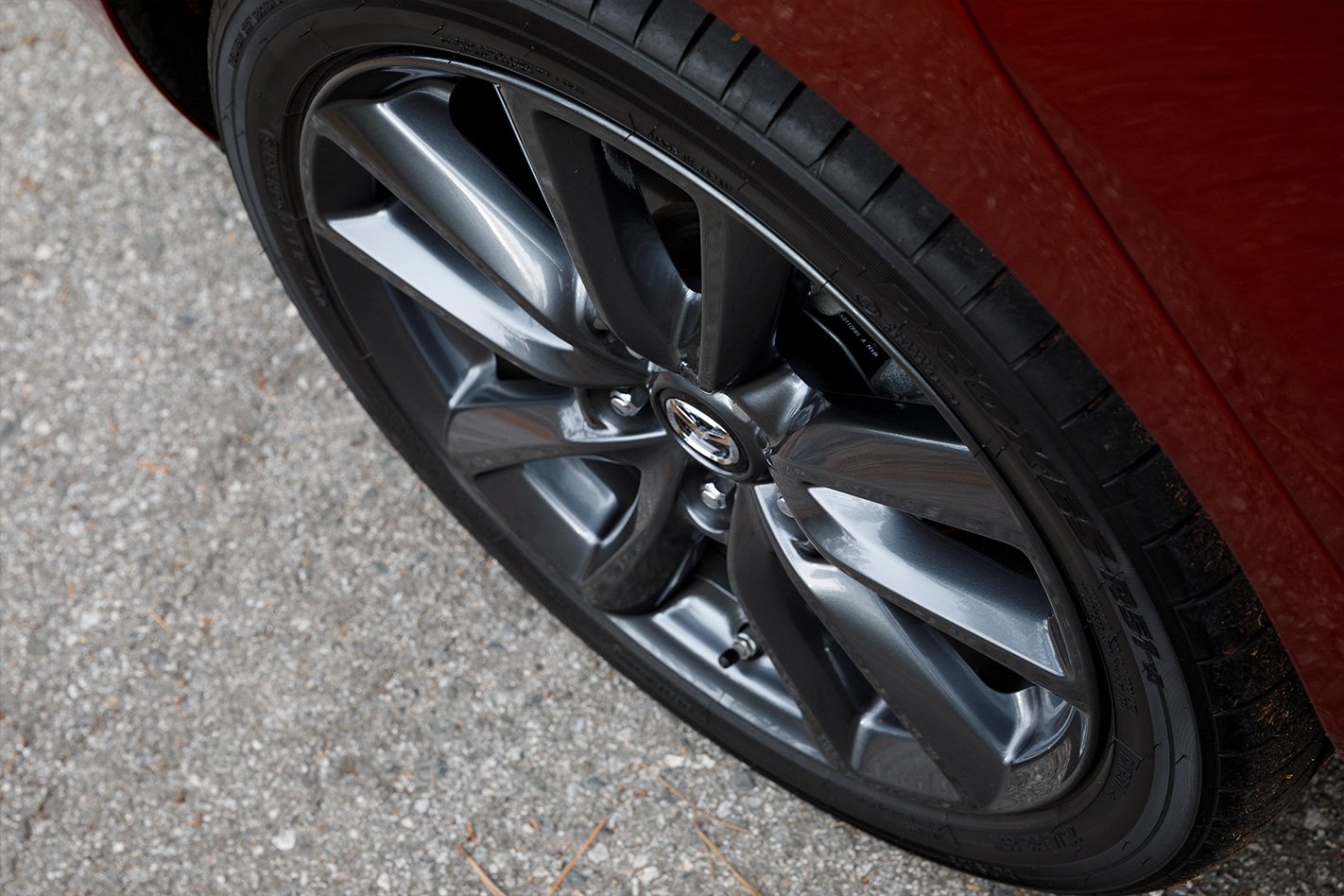
In the hatch, which was on regular summer-spec 215/45R18 Toyo Proxes A40s (representative of what Oz cars will run) there was more chassis grip and goodness to tap into, even if the Euro-spec (read; emission-capped) 2.0-litre engine we drove, with just 90kW/ 213Nm, had a top-end that was weaker than prison coffee.
The 2.5-litre was obviously zestier and more fun, but the fact is that the two engines currently offered in the outgoing 3 will carry over with only a bunch of combustion-efficiency changes, leaving the 2.0-litre with unchanged outputs (114kW/200Nm) and minuscule gains for the 2.5 (now 139kW/252Nm.)
Yes, those torque figures, both delivered at 4000rpm, aren’t the most muscular numbers getting around this class. (The potentially game-changing SkyActive X engine, with supercharger and compression-ignition technology, is not due until Q3 of this year.)
Some buyers will no doubt be tempted by the gruntier midranges delivered by the turbo-fed Volkswagen Golf or Focus. But those who do stick with the 3 will be rewarded with crisp, linear throttle response, and superb suppression of unwanted engine noise, so chasing revs is no chore.
From inside the cabin, it sounds as though Mazda has doubled the firewall thickness for this generation, only allowing a cultured, distant tune of mechanical harmony to make it to your ears.
Both transmissions are excellent, too. Any 3 buyers seeking extra driver connection and reduced cost of entry will be rewarded with a beautifully slick, precise shift action through the six manual ratios, paired with near-perfect clutch weight and throttle tip-in.
The auto, meanwhile, has seen both mechanical upgrades and a raft of software changes to improve both response and refinement. In Sport mode, it manages two seemingly contradicting qualities, being both eager to drop one or more ratios in response to throttle kick-down, yet does it with a cushioned softness that eliminates any jerkiness or shift shock.
The prospect of this transmission fitted with paddle shifters, paired with the predicted grunt and linearity of the supposedly torquey SkyActiv-X engine, is properly tantalising.
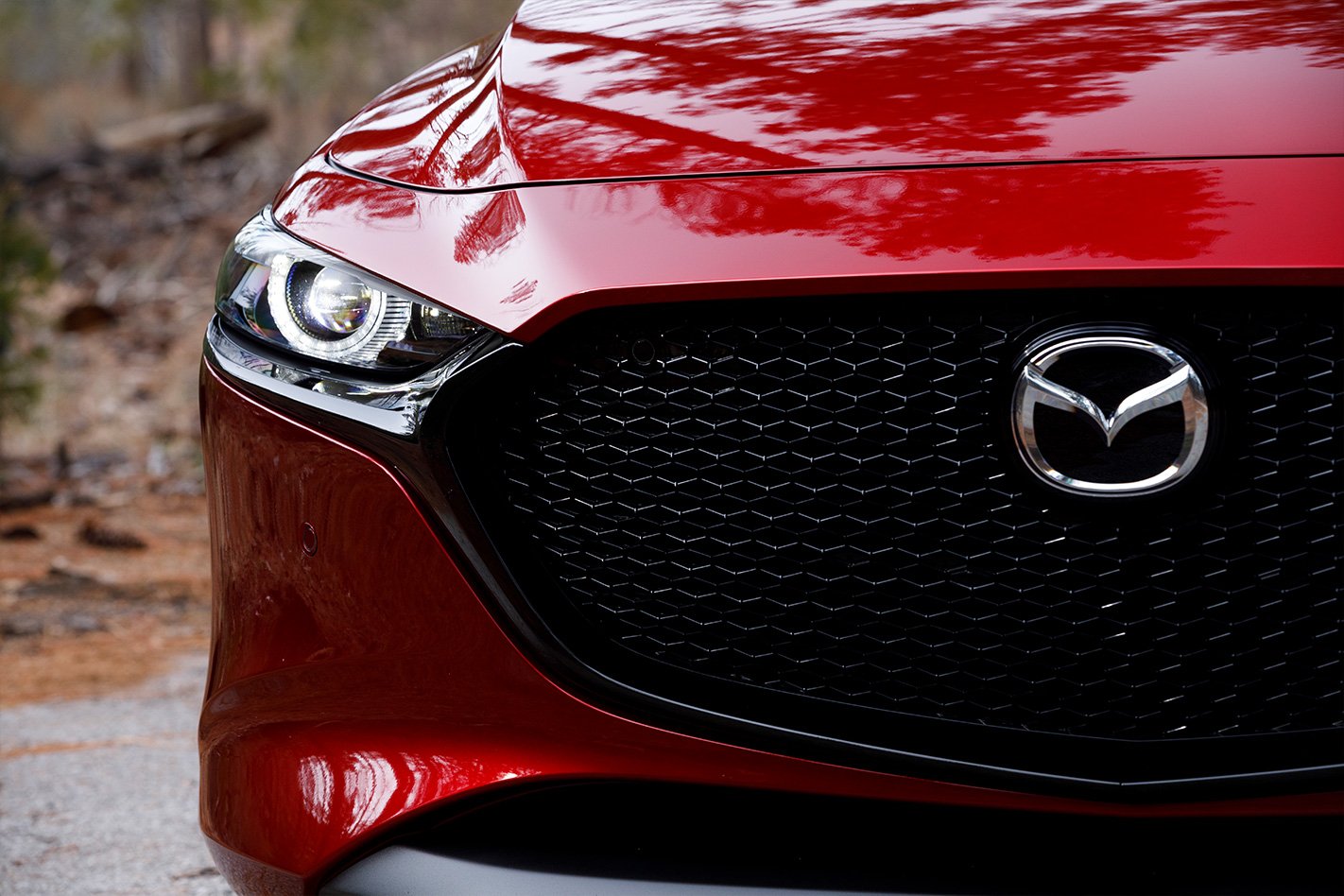
VERDICT
The new 3 is vastly improved over the outgoing third-gen model, and presents as a deeply impressive, ultra-well-rounded small car. Refinement takes the biggest leap forward, but the new 3 also comprehensively ticks the boxes for dynamics, ride comfort, cabin quality and style.
Only the lack of packaging advantages from the bigger body, as well as the question of engine strength, stops it short of a clean sweep.
The latter seems certain to be addressed when the new SkyActiv-X engine is offered around October.
WHAT IS IT?
The all-new fourth generation of Mazda’s hugely popular small car, offered in both sedan and hatch. They are powered by (very) mildly updated versions of the SkyActiv G petrol four-cylinder engines, in 2.0- and 2.5-litre capacities. Both body styles are larger than the models they will replace when launched in Australia around May, but this doesn’t translate to increased cabin space.
WHY ARE WE DRIVING IT?
The significance of the 3 to the Australian market – it’s continually up the very pointy end on the best-seller list of passenger cars – meant our attendance was a no-brainer. The international launch was held in Los Angeles, a mega city with some great roads not far from its congested freeways.
THE WHEELS REVIEW
Who knew, after all these years, there was one easy explanation – Mazda just wasn’t trying hard enough. Okay, that’s a slightly simplistic and fairly uncharitable conclusion to draw when it comes to dissecting the NVH afflictions that have marred the company’s small car for three generations.
But perhaps there is a kernel of truth there, despite its huge sales success. See, zesty performance and keen dynamics have always pushed the 3 to at least podium positions in our small-car rankings. It’s mostly been raucous road noise and a bit of upper-rev uncouthness that have tempered our enthusiasm for the 3, especially against the silken refinement of VW’s evergreen Golf.
But for this fourth generation, due in Australia around May or June, all that has changed. By declaring all-out war on road noise – including the use of a new production process that sees sound-damping ‘nodes’ sandwiched between key sheetmetal sections before spot-welding takes place – Mazda has delivered a small car that not any rides and drives with a maturity that could be from the class above, it also seems likely to challenge the Mk7 Golf for refinement honours.
Our drive out of Los Angeles took in suburban streets, slab-section freeways and some enjoyable twisty bits up in the mountainous Angeles National Forest above the glittering metropolis. On just about every level, the new 3 deeply impressed. But it’s the quietness and overall refinement which really feels to have made the biggest leap.
The all-new platform delivers a slightly larger car riding on a wheelbase that’s 25mm longer that the outgoing model, but this hasn’t translated into any appreciable gain inside the cabin. Sitting behind the driver’s seat set for my six-foot frame, rear head- and legroom is adequate, nothing more. If rear seat space is a high priority, you may be better off at a Honda dealership looking at the commodious Civic.
Eyebrows may also spike skyward at the news that Mazda has ditched in the independent rear suspension of the outgoing car in favour of a simpler, cheaper, (and also lighter) torsion-beam arrangement. But it’s a more sophisticated take on the basic twist-beam design, utilising steel of differing thickness to aid chassis tuning, and is sufficiently removed from existing hardware to have a patent pending. Chassis engineers insist that in the real world, it’s not inferior to the multi-link layouts used in this class.
As best we can establish, the move away from IRS was essential for the packaging requirements needed for the lithium-ion battery pack fitted to the mild-hybrid version –a (for now, at least) not-for-Oz model which uses a belt-driven integrated starter generator (ISG) set-up to boost torque by a claimed 12Nm. For those counting litres, boot space in the hatch has actually dropped slightly (was 308 litres; now back to 295L), so no, the new model is not exactly a masterclass in packaging genius.
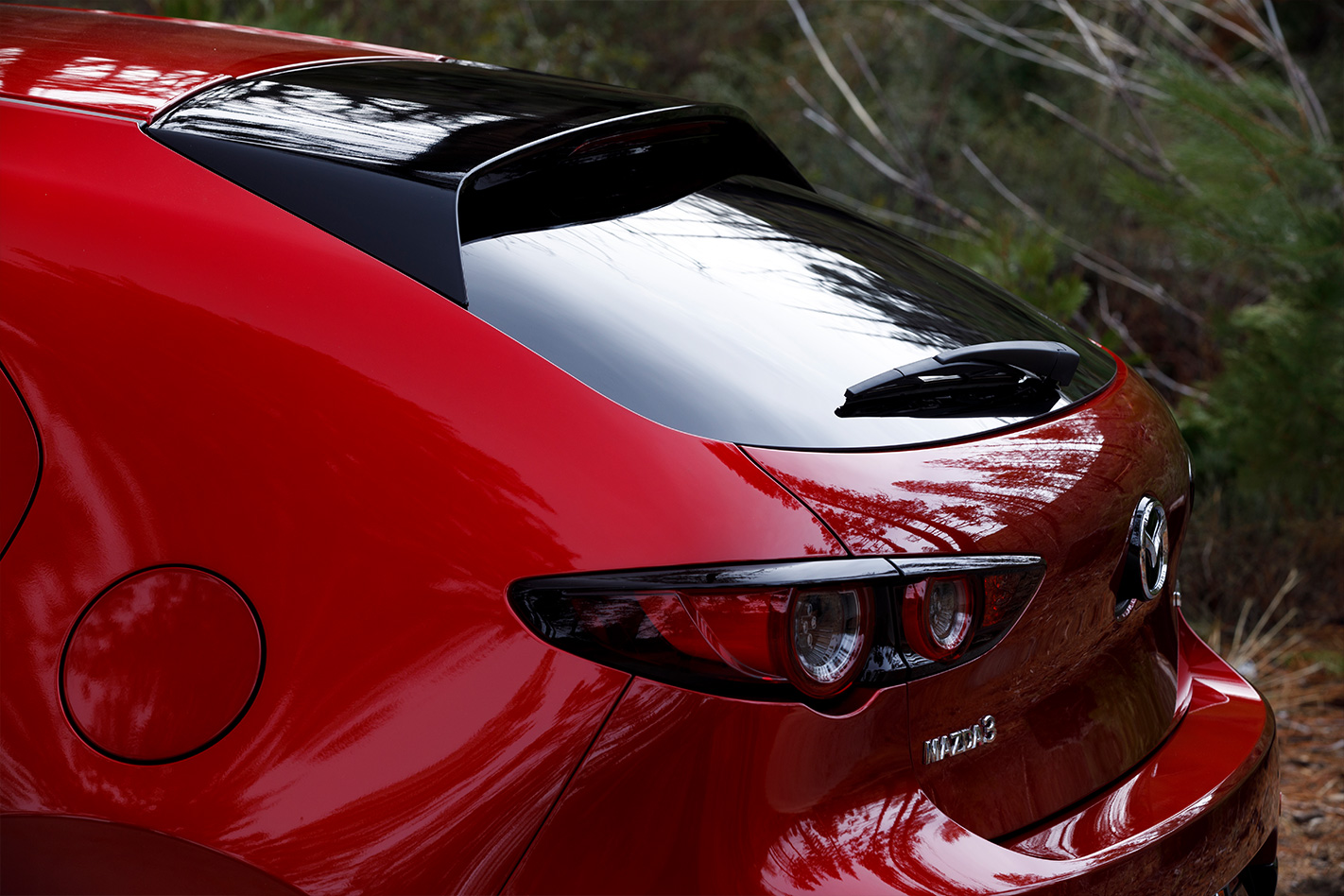
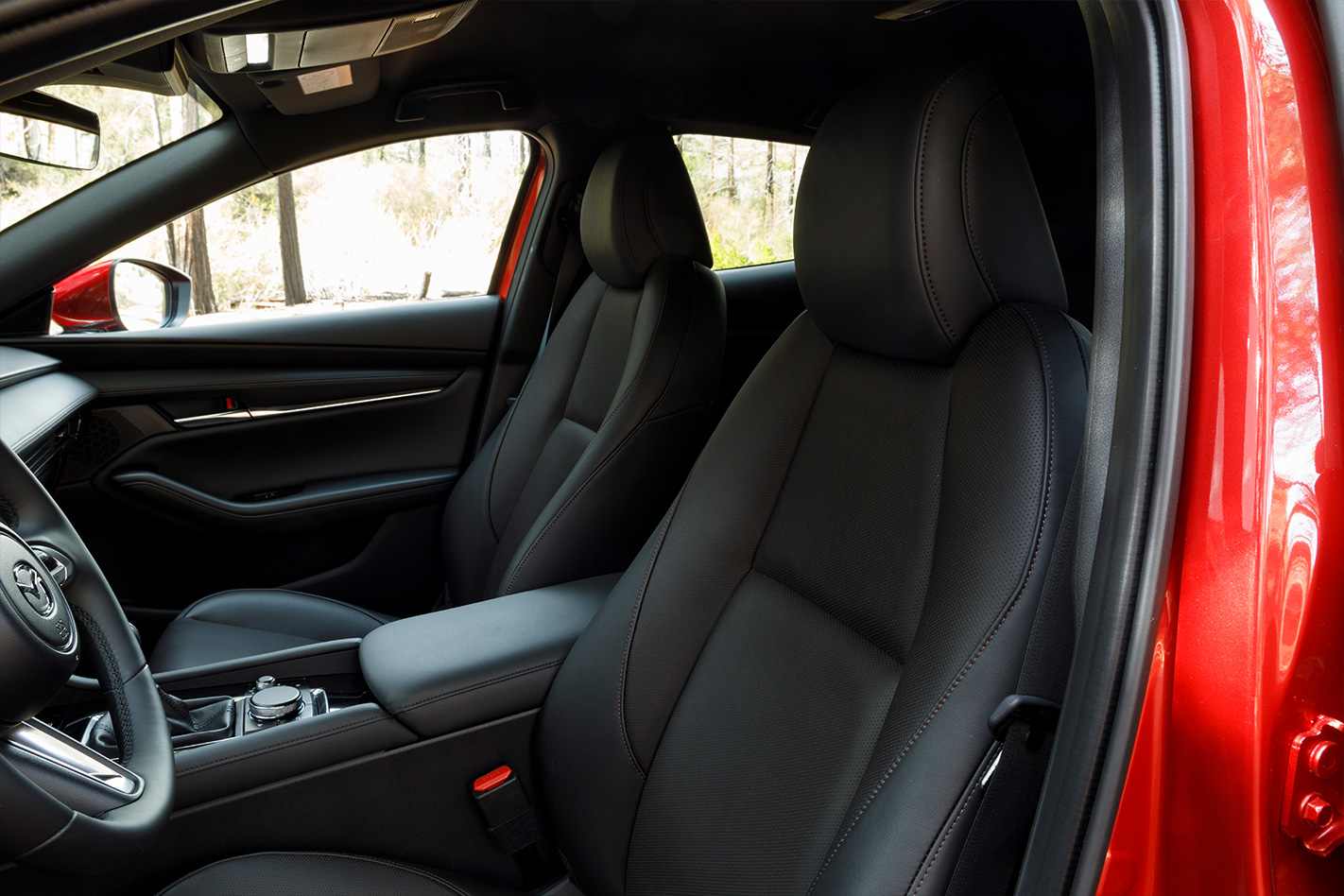
But enough of the tech dive, because the central message that Mazda is pushing with the new 3 – and more broadly from here on it, it seems – is one about human-centric design. That is, putting the human form – and the way people sit, bend, see, and generally function while driving or riding in a car – at the forefront of every design decision. Sounds logical, but Mazda are trumpeting this as something of a breakthrough. The front seats in the upspec cars we drove are claimed to position occupants better than the outgoing car, even if we are told the hip point remains much as it was.
What I did notice straight away is that for my XL frame, the front seats are instantly more comfortable and supportive than those in the top-spec Mazda 6 Atenza I recently drove. The driving position feels spot-on, with dead-pedal and throttle in auto cars placed shoulder-width apart, and the steering column now provides an extra 20mm (for a total of 70mm) of reach adjustment, allowing taller drivers to pull the wheel in closer.
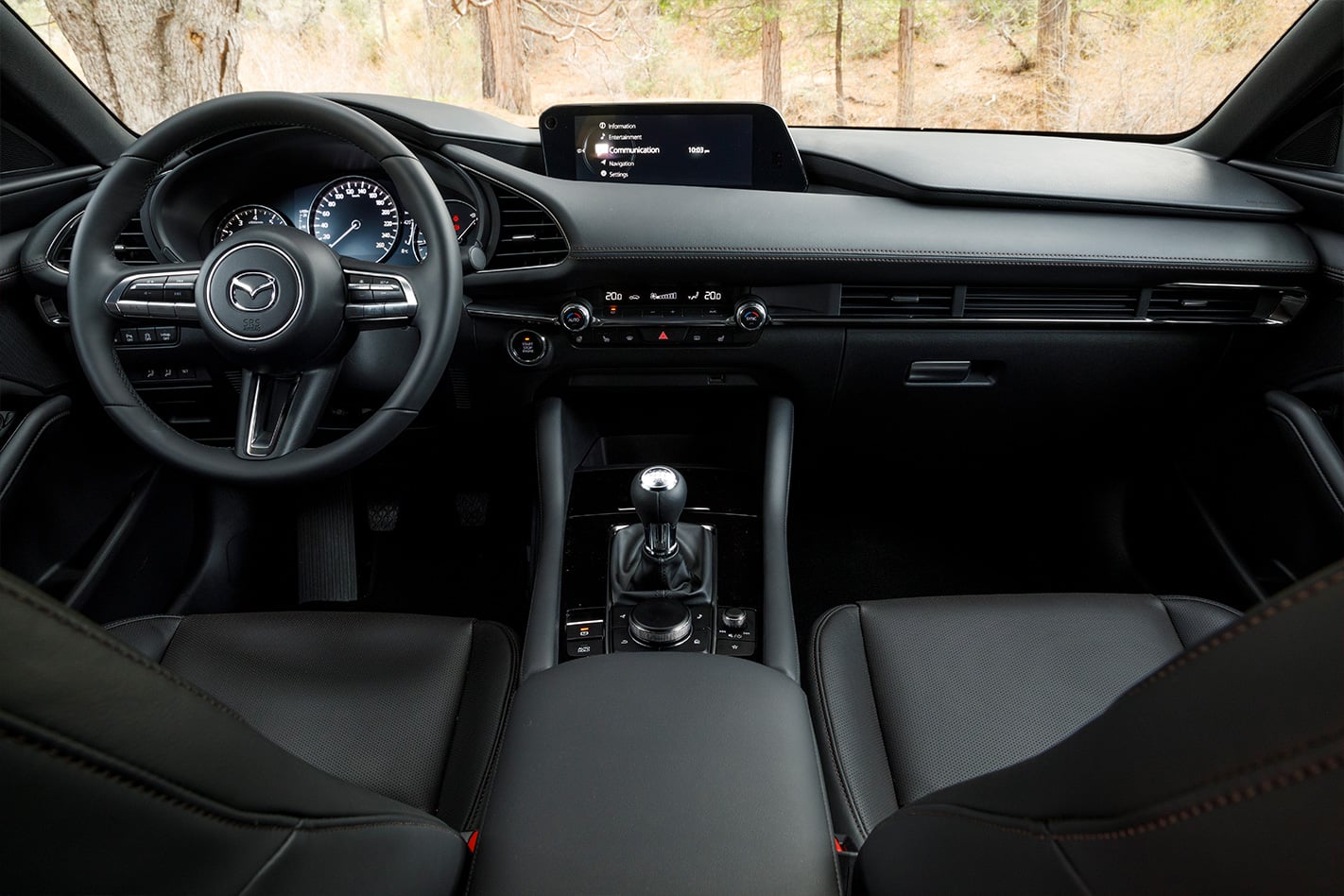
The instrument panel, HVAC controls and centre console appear far less cluttered – a reduction in “visual noise” is how Mazda describes it – with greater practicality evident in things like the dual cup holders forward of the shifter, and a generous bin ahead of that for phone or sunnies. The multimedia screen is larger – now 8.5 inches – and positioned slightly further away from the driver to reduce the eye-focusing time from the road ahead to the display. Mazda has also bucked the touch-screen trend, claiming it’s safer for drivers to navigate the improved system via the larger rotary controller just aft of the gear lever. Okay, but we bet any teenagers in the passenger seat using the standard-fit Apple Car Play or Android Auto will poke at the unresponsive screen more than once.
Less divisive are the revamped and better explained functions within the various menus, as well as the improved head-up display for top spec models, which ditches the pop-up plastic reflector thing for a more integrated and sophisticated projector system. Eyes-ahead clarity for navigation, and speed-sign recognition is excellent. And you’ll instantly note the move to better quality materials pretty much everywhere, from the stitched dash top in upper-spec models, padded lid of the generous console box, as well as the uniform slickness and tactility of every button and switch. Even the warning chimes and the indicator’s ticking sound have been acoustically buffed in the quest for “added premiumness.” It’s a convincing effort, and sadly for the likes of the Ford’s all-new Focus and even Toyota’s Corolla, leaves those rivals in a world of scratchy-plastic hurt.
As for on-road dynamics, this is a core zone of excellence that may see the 3 throw down a serious challenge to the segment-leading Focus. It will take a comparo to reveal it as fact, but I suspect the 3’s steering is not too far short of the Ford’s brilliant set-up. Mazda has wisely ignored multiple modes, instead providing one fixed setting that begins with a natural, medium weighting at manoeuvring and parking speeds, which doesn’t change dramatically when on the move. It’s gifted with an oily slickness that never feels gluggy or viscous, and has a just-right return rate when self-centring out of a roundabout, for example. At freeway speeds it’s relaxed but not aloof, while in the twisty stuff, it never loads up excessively, and almost fades into the background to allow you to fully concentrate on exploring the chassis balance.
Which, we are happy to say, retains that pointy, engaging quality that Mazda has now built into its DNA. You’ll lap up the precision with which you can place the nose when pushing on, then smile at the progression of both adhesion breakaway and tail’s keenness to get in on the story arc. Admittedly the sedan we drove was fitted with 18-inch all-season Toyo rubber, so the speeds at which this was all happening was not exactly hot-hatch velocity, but still, there’s no denying that the 3 has involvement and adjustability oozing from its pores.
In the hatch, which was on regular summer-spec spec 215/45R18 Toyo Proxes A40s (representative of what Oz cars will run), there was more chassis grip and goodness to tap into, even if the Euro-spec (read, emission capped) 2.0-litre engine we drove, with just 90kW/ 213Nm, had a top-end weaker than prison coffee.
The 2.5-litre was obviously zestier and more fun, but the fact is that the two engines currently offered in the outgoing 3 carry over with only a bunch of combustion-efficiency changes, leaving the 2.0-litre with unchanged outputs (114kW/200Nm) and minuscule gains for the 2.5 (now 139kW/252Nm.
Yes, those torque figures, both delivered at 4000rpm, aren’t the most muscular numbers getting around this class. For improvements you’ll need to wait for the potentially game-changing SkyActiv X engine, with supercharger and compression-ignition technology, is not due until Q3 of this year. Some buyers will no doubt be tempted by the gruntier midranges delivered by the turbo-fed Golf or Focus. But those who do stick with the 3 will be rewarded with crisp, linear throttle response, and superb suppression of unwanted engine noise, so chasing revs is no chore. From inside the cabin, it sounds as though Mazda has doubled the firewall thickness for this generation, only allowing a cultured, distant timbre of mechanical harmony to make it to your ears.
Both transmissions are also excellent. Any 3 buyer seeking extra driver connection and reduced cost of entry will be rewarded with a beautifully slick, precise shift action through the six manual ratios, paired with near-perfect clutch weight and throttle tip-in.
The auto, meanwhile, has had both mechanical upgrades and a raft of software changes to improve both response and refinement. In Sport mode, it manages two seemingly contradicting qualities, being both eager to drop one or more ratios in response to throttle kick-down, yet does it with a cushioned softness that eliminates any jerkiness or shift shock. The prospect of this transmission, with paddle shifters, paired with the predicted grunt and linearity of the SkyActiv X engine, is properly tantalising.
Which is pretty much the over-arching take-out on the new 3 – a comprehensive ticker of boxes marked refinement, dynamics, ride comfort, cabin quality and design. Only the question of engine strength stops it short of a clean sweep, and that seems certain to be addressed when the new donk drops around October. Mark your calendar.
THE WHEELS VERDICT
Vastly improved over the outgoing third-gen model, and now a deeply impressive, ultra-well-rounded small car. Refinement takes the biggest leap forward, but the new 3 also comprehensively ticks the boxes for dynamics, ride comfort, cabin quality and style. Only the lack of packaging advantages from the bigger body and the question of engine strength stops it short of a clean sweep. The latter seems certain to be addressed when the new SkyActiv X petrol engine, with strong torque thanks to revolutionary combustion technology, is offered around October.
PLUS: Maturity; refinement; engine smoothness; steering; handling; cabin comfort and presentation; equipment in top spec MINUS: Larger but not roomier than outgoing model; engines lack turbo-fed midrange punch; no vents or USB ports for rear-seat passengers; no digital speedo for models without head-up display
SPECS
Model: 2019 Mazda 3 SP25 Astina hatch Engine: 2497cc 4cyl, dohc, 16v Power 139kW @ 6000rpm Torque 252Nm @ 4000rpm Transmission 6-speed automatic Weight: 1350kg (estimated) 0-100km/h: 7.9sec (estimated) Price $36,000 (estimated) Onsale May (estimated)
The battle of the Aussie sedans starts with a six. The Holden Commodore SV6 and Ford Falcon XR6 is round one in this fight.
This feature was originally published in MOTOR’s May 2005 issue
Filling the gap between poverty pack and V8, they’re sports sedans designed for the working man with a lease plan and a desire to avoid the base-model blues, someone without the desire to cop the fuel bills of a V8. Or just those who are perfectly happy sacrificing outright speed for more agility and less buy-in bucks.
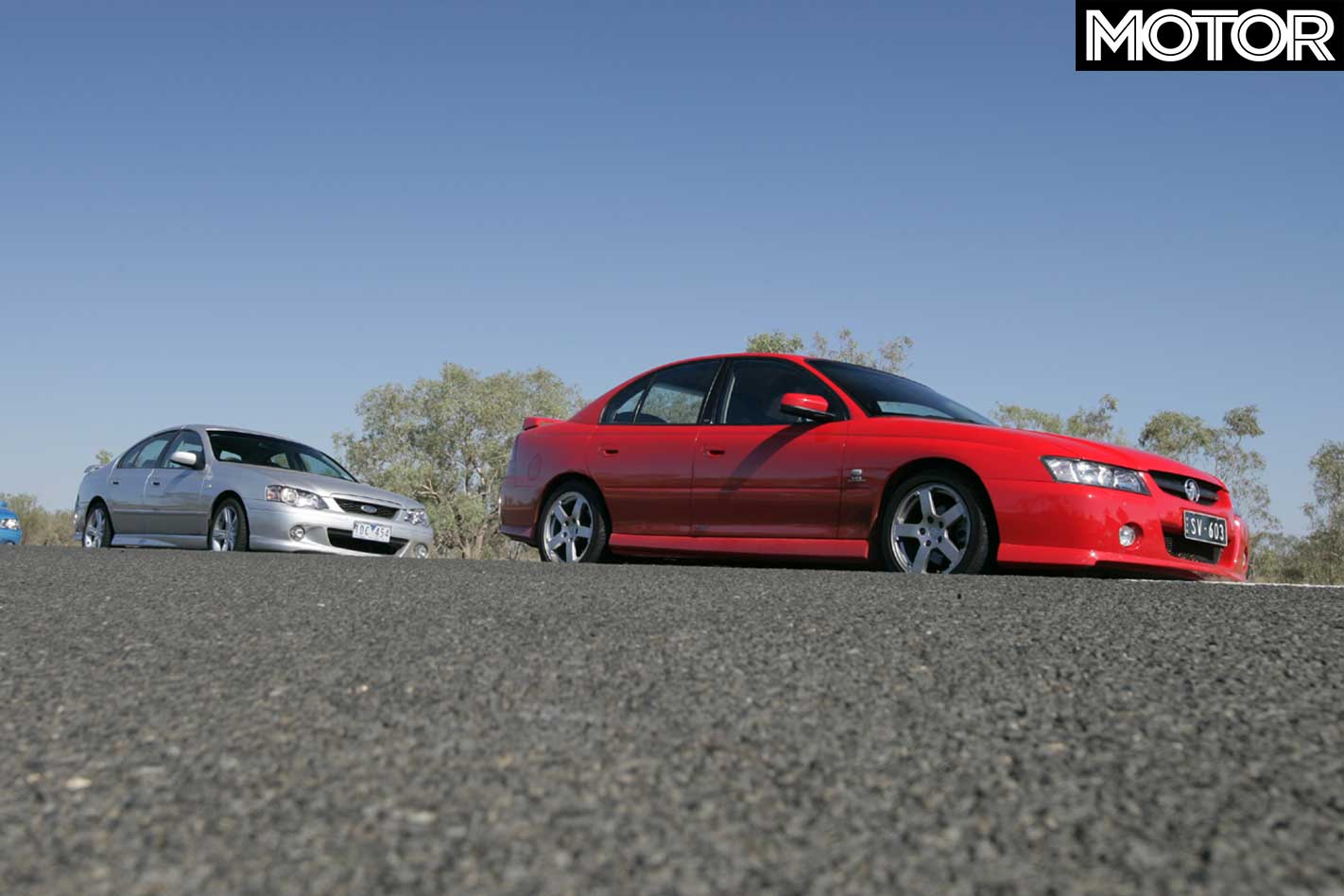
Not that there’s a huge saving. At 39 large, both the XR6 and SV6 are just $3000 less than the budget V8 banger, the Commodore SV8.
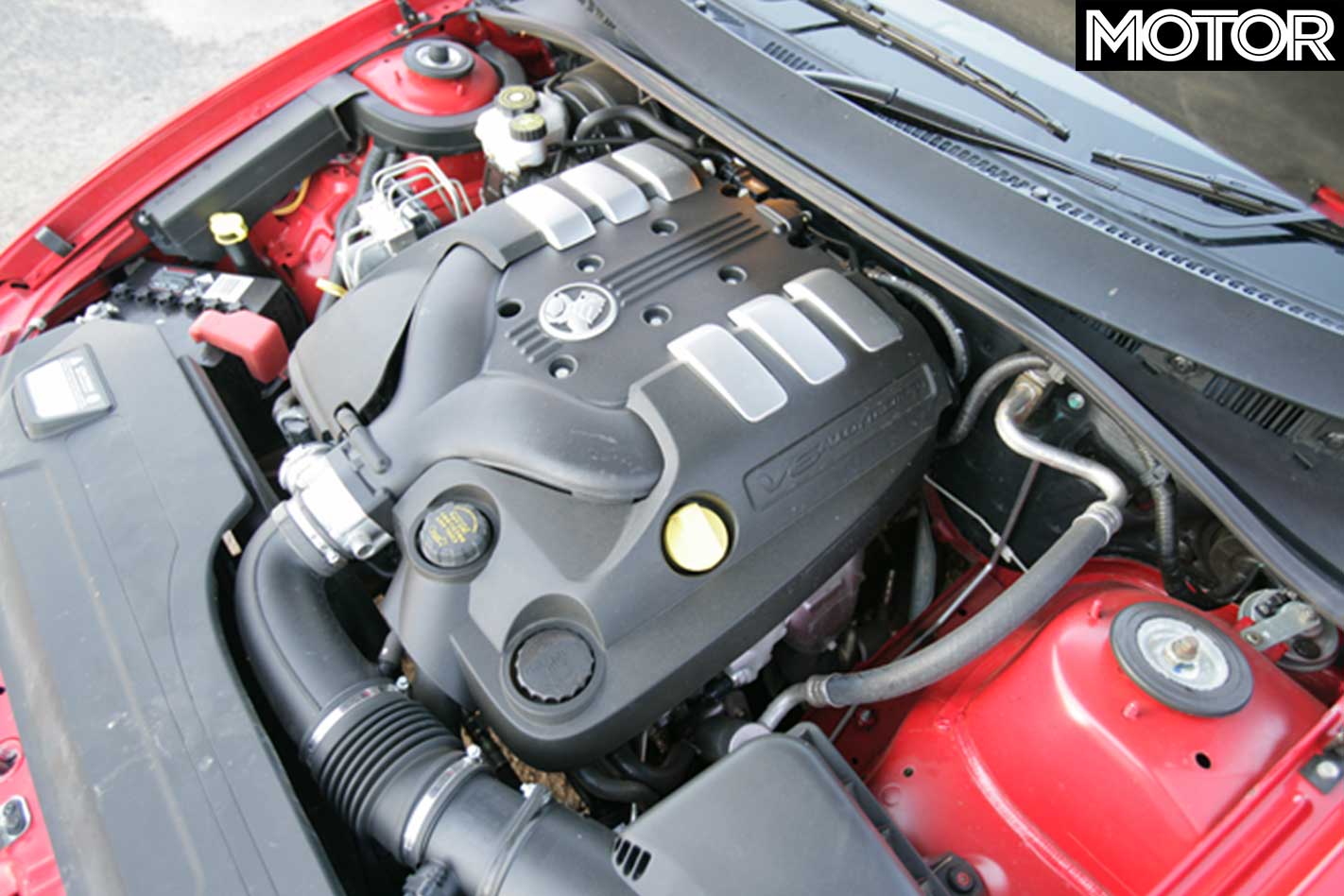
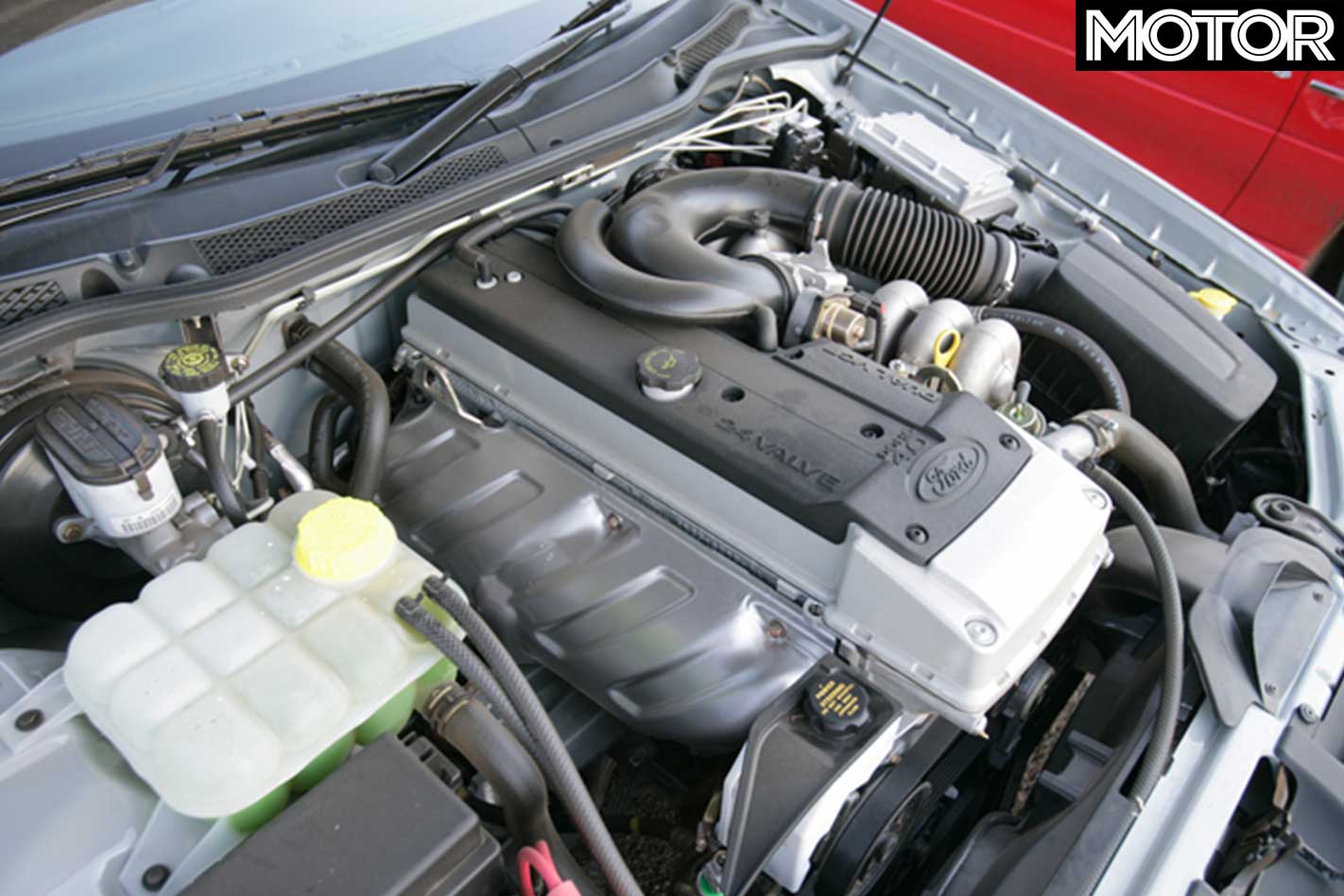
But comparing apples with apples – on paper at least – the SV6 appears to have the edge. Both are four-valve engines with twin-cams, but the Holden’s 3.6-litre V6 specs read 8kW more than the 4.0-litre inline Ford six.
The dyno showed it was more, with a 7kW difference at the wheels – equating to about 9-10kW at the engine. A good advantage given the SV6 is also 80kg lighter. The Ford fights back with 40 more Newtons, but then the Holden’s six-speed gearbox offers one more ratio than the Ford.
Curious then that the Ford is faster to accelerate. Blame the SV6’s super tall 2.87:1 diff ratio that makes it much harder to launch and keep in its torque band than the XR6’s 3.45:1. And the Holden’s grippy ability to put power down so well in the V8s seems to lose it time in the weaker V6.
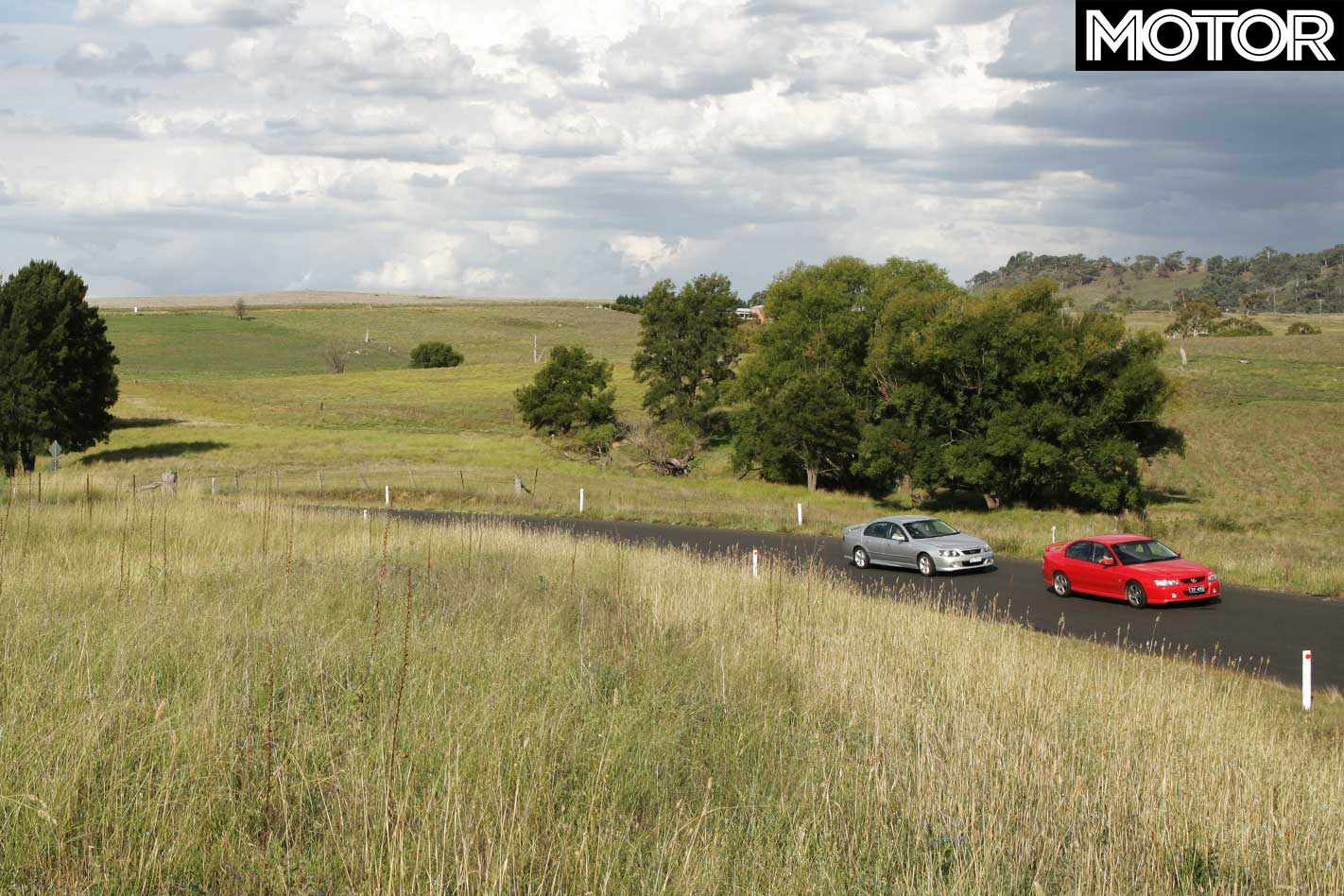
It’s a fair fight on the track, both peaking at the same 183km/h down Eastern Creek’s straight. But through the turns, on identical size 235/45×17 tyres, the Holden has the slight advantage with stability and gearing the XR6 can’t match.
On the road the two are closer still. The Falcon’s slightly softer suspension soaks up more road rubbish. And its five-speed manual doesn’t seem to hurt its performance. The XR6 feels big and heavy, the seating position is high, the steering is at an odd angle, but it’s a comfortable and functional interior.
But the Holden has it mostly covered. Slightly firmer damping still absorbs bumps. The spongy seats are grippy, and the dash is similarly logical with basic controls that are actually easier to use than the V8 Commodores. Both sixes have all the good gear like power windows, mirrors, cruise control, single CD player, auto headlights and basic trip computer. Expected stuff for a $40,000 sedan.
Around the ‘burbs’, the Falcon holds an edge; its 4.0-litre six is more instant, more eager to please. Whereas the SV6 winds out to a high 6750rpm to extract every bit of speed, the Falcon’s 5900rpm range proves how much gruntier it is. In the real world, the Ford is faster. But they’re so close, we turned the Ford’s a/c on and the SV6’s off, and the Holden was quicker.
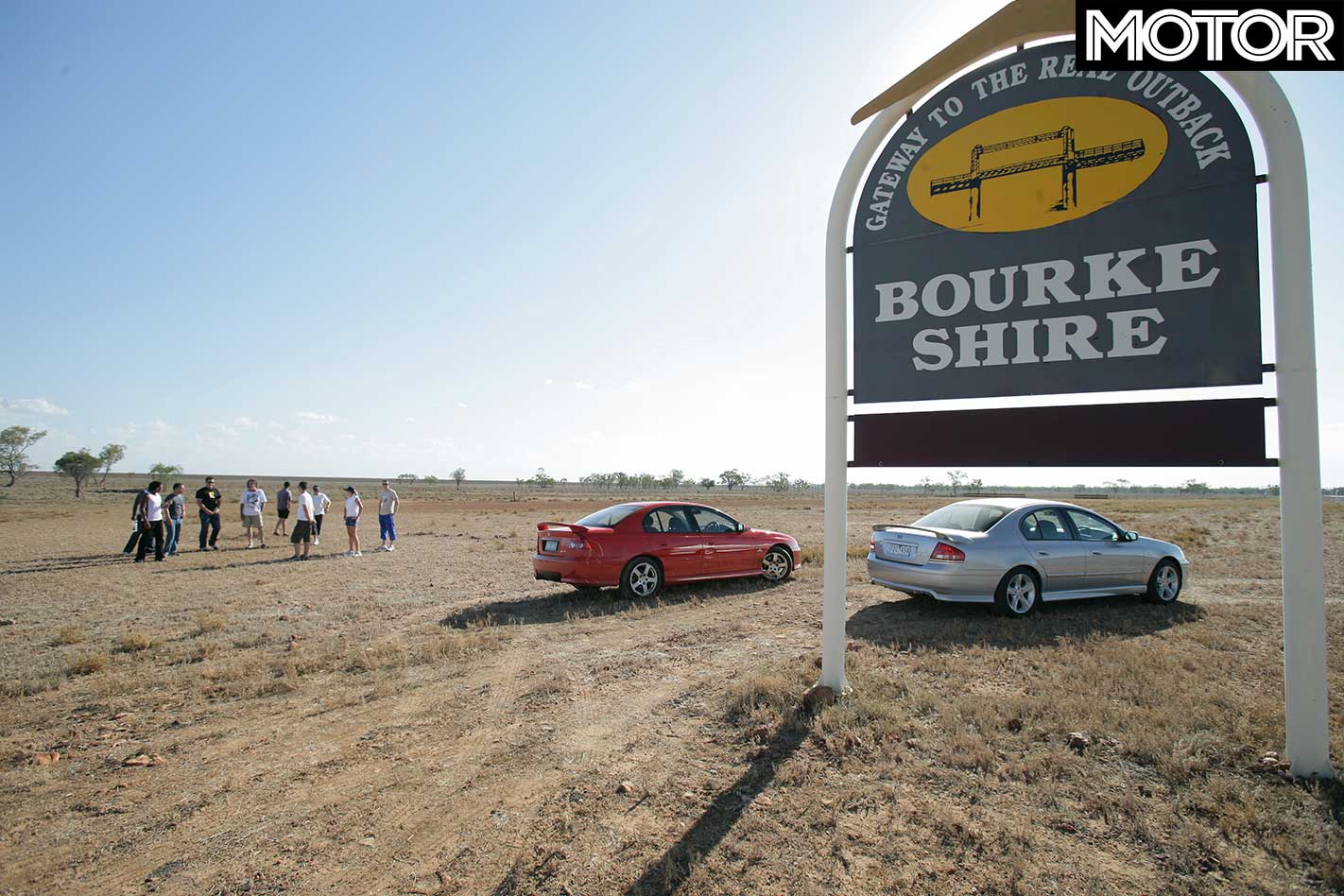
On tour, the SV6 sips a touch less, using about $6 more fuel for the 1700km drive to Bourke and back. But at that rate, Ford’s smaller 68-litre tank (vs Holden’s 75L) would empty about 80km earlier.
Picking a winner is a split decision. Some liked the SV6 engine for its smoothness throughout the rev range, some loathed it for its lack of torque. Equally the Ford was criticised for being harsh and sloppy, but loved for its wide band of torque. Three votes to two however, the executive express class win goes to Ford’s Falcon XR6.
Fast Facts
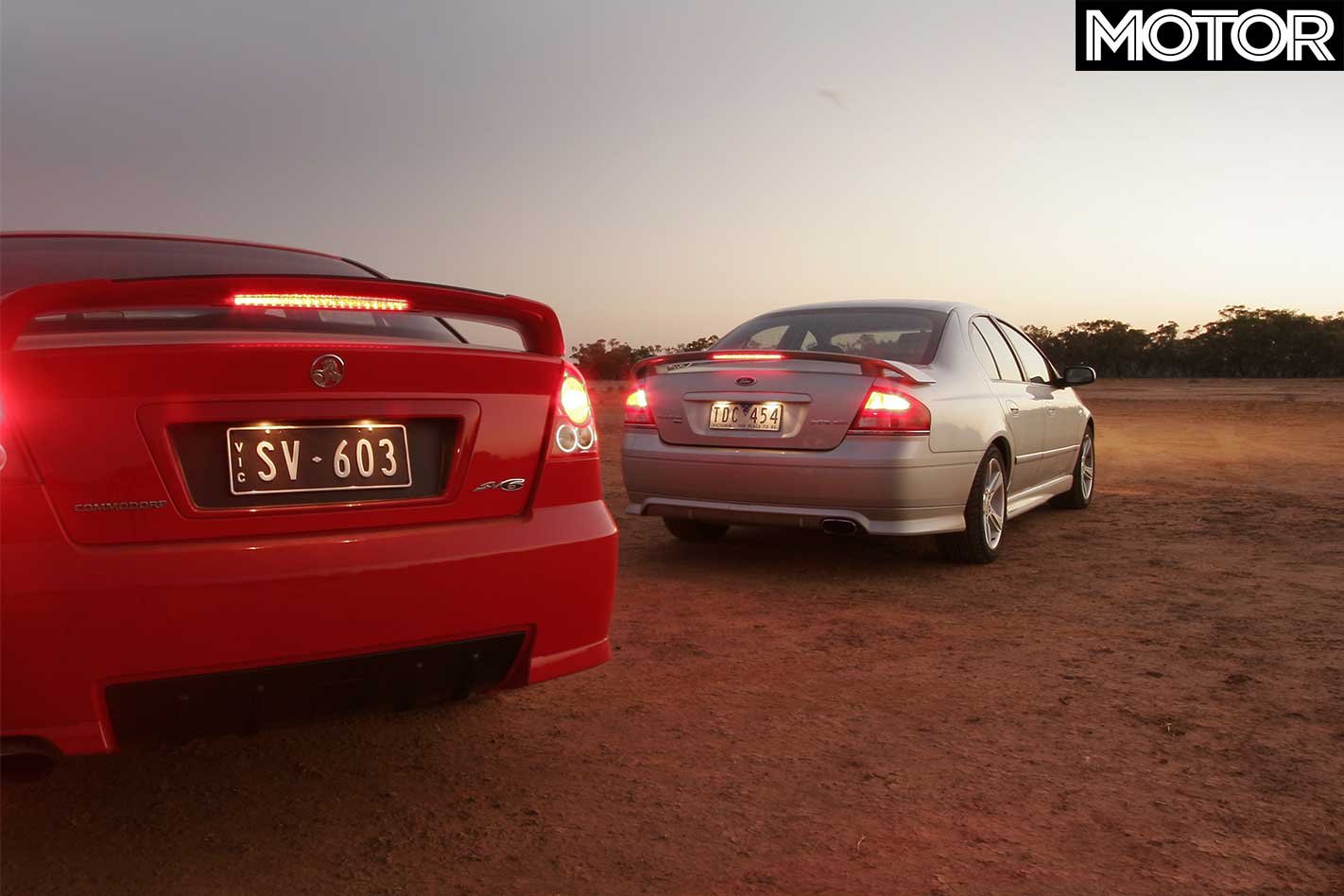
| u00a0 | Commodore SV6 | Falcon XR6 |
| Engine | 3.6L V6, DOHC | 4.0L Inline-6, DOHC |
| Power | 190kW @ 6500rpm | 182kW @ 5600rpm |
| Torque | 340Nm @ 3200rpm | 380Nm @ 3250rpm |
| Weight | 1592kg | 1672kg |
| Fuel consumption | 12.37L/100km | 12.93L/100km |
| Price | $39,490 | $38,655 |
Dyno Results
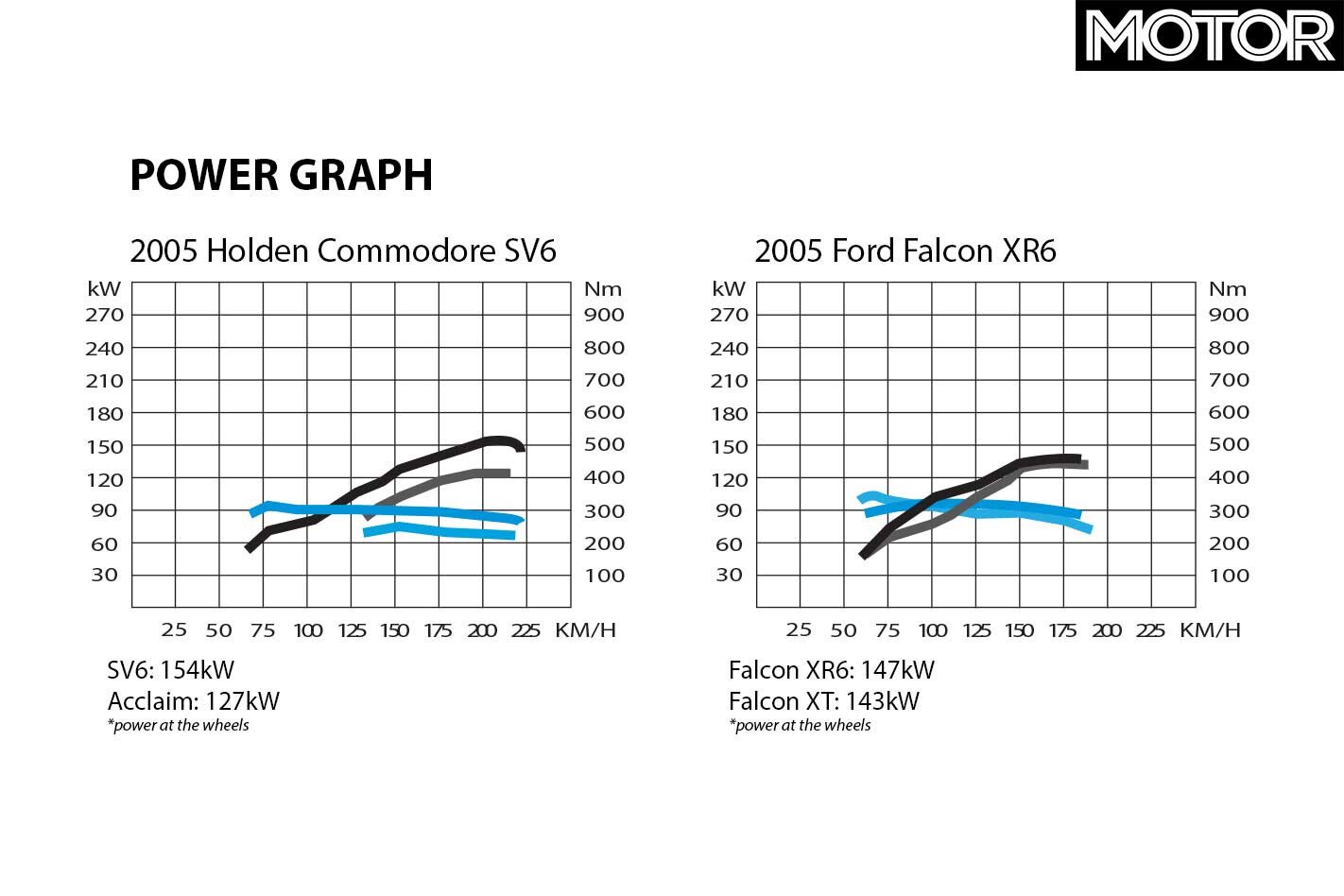
Quite a contrast, the XR6’s shorter rev-range is just a few kW short of the SV6’s peak, but it’s stronger everywhere else and smoother too. By then, SV6’s higher peak is largely irrelevant as the Ford is back in the bulge of its torque.
Drag Run
| u00a0 | Commodore SV6 | Falcon XR6 |
| 0-10km/h | 0.69sec | 0.61sec |
| 0-20km/h | 1.28sec | 1.14sec |
| 0-30km/h | 1.96sec | 1.85sec |
| 0-40km/h | 2.61sec | 2.48sec |
| 0-50km/h | 3.22sec | 3.13sec |
| 0-60km/h | 4.16sec | 4.09sec |
| 0-70km/h | 5.08sec | 4.82sec |
| 0-80km/h | 6.14sec | 6.02sec |
| 0-90km/h | 7.18sec | 7.05sec |
| 0-100km/h | 8.21sec | 8.11sec |
| 0-110km/h | 9.91sec | 9.26sec |
| 0-120km/h | 11.76sec | 11.17sec |
| 0-400m | 16.28sec @ 143.4km/h | 16.06sec @ 146.8km/h |
The Falcon XR6 matched its best ever 0-100km/h time but the quarter mile was 0.14secs outside its best. The SV6 was way off the pace by comparison with the worst manual of the field – it crunched from second to third and even popped out of second gear on one run.
Track Results
| u00a0 | Commodore SV6 | Falcon XR6 |
| Lap Time | 2min 0.61sec | 2min 1.46sec |
| Top Speed | 183km/h | 183km/h |
XR6’s firmer suspension minimises nose-diving under brakes but is still sloppier than SV6. Not much difference in straight-line speed. SV6 feels lighter and livelier and offers better turn-in and mid-corner grip and stability. High 6750rpm redline and the six-speed ’box keeps the 3.6 on pace.
Judges’ Scores
2005 Holden Commodore SV6
| Judges | JT | DE | DM | PC | LB |
| Performance/10 | 4 | 3 | 4 | 6 | 5 |
| Dynamics/10 | 6 | 7 | 5 | 6 | 6 |
| Driveability/10 | 6 | 9 | 5 | 6 | 5 |
| Value/10 | 4 | 6 | 6 | 5 | 5 |
| Total/40 | 20 | 25 | 20 | 23 | 21 |
| GRAND TOTAL | 109/200 | ||||
2005 Ford Falcon XR6 – WINNER
| Judges | JT | DE | DM | PC | LB |
| Performance/10 | 5 | 4 | 5 | 7 | 6 |
| Dynamics/10 | 6 | 5 | 5 | 6 | 5 |
| Driveability/10 | 7 | 8 | 7 | 7 | 4 |
| Value/10 | 5 | 6 | 6 | 5 | 5 |
| Total/40 | 23 | 23 | 23 | 25 | 20 |
| GRAND TOTAL | 114/200 | ||||
THERE was no Golden Age of Cars. Think about that for a moment. Cars have never peaked and then become worse. Every successive generation of cars – taken in the round – has been better than their forebears. Faster, safer, better equipped, more comfortable, more economical, cleaner, cheaper in real terms and, yes, more fun. The gradual draw down on the internal combustion engine isn’t about to reverse that trend either.
That’s not to say we don’t love a few reciprocating oily bits. From a personal perspective, my favourite moment on the job last year wasn’t even spent in a car. It was sitting by the roadside listening to editor Inwood pedalling a 911 GT3 up a set of forested hairpins in the Grampians, savouring the volume dial cranking up a crescendo of atmo six butting up against its 9000rpm redline. Nothing’s going to replace that experience.
But if you’d told me ten years ago that the plumber next door would be driving a seven-seat SUV which was quieter than a Rolls-Royce, cheaper to fuel than a Corolla but which could also leave a V12 Lamborghini in its wake, I’d have laughed in your face. And been gloriously, spectacularly wrong. Vehicles like his Tesla Model X P100D are but the vanguard of the EV era. The fascinating thing is that they’re the utterly hopeless early adopter stuff that, in another decade, will appear almost comically dated. They’re the Sinclair ZX Spectrums, the Panasonic brick phones, the Myspace equivalents.
Mary Barra, CEO of General Motors, understands this better than most. “I have no doubt that the automotive industry will change more in the next five to 10 years than it has in the last 50,” she said in 2016.
The pace of change is indeed dizzying. Since we published our first Future Issue this time last year, we’ve seen the ‘legacy manufacturers’ respond to Tesla. We’ve driven the Jaguar I-Pace, the Mercedes-Benz EQC and the Audi E-Tron. We’ve sampled the Tesla Model 3 in Australia. Hyundai has brought the Ioniq to market, offering hybrid, plug-in hybrid and fully electric variants, all for less than $50K. An entry-level Mercedes A200 now features system architecture way in advance of last year’s flagship S-Class. Australia’s still a long way behind the eight-ball, but ultra-fast high-capacity chargers are starting to be rolled out across the nation.
Cars like the Porsche Taycan point to a different future, but one where the attributes we value as drivers – namely performance, handling, feedback, speed and excitement – burn brighter than ever. Fire up YouTube and put yourself in-car with Romain Dumas as he demolishes the Pikes Peak record in Volkswagen’s amazing I.D. R racer, registering the first sub-8 minute time. It makes Ari Vatanen’s iconic Climb Dance video in the Peugeot 405 T16, long the gold standard of in-car footage from The Race to the Clouds, look comically quaint.
There’s also a serene place for being able to let cars pilot themselves. But as long as there are deserted roads that twist through forests and people like us to savour them, manufacturers will build cars to exploit them. And they’ll do it better than ever before. So strap yourself in. This is just getting good.
