
What is it?
The Endura Titanium is the luxury version of Ford Australia’s first large SUV since it stopped local production of the Ford Territory. Unlike most large SUVs it has five seats instead of seven.
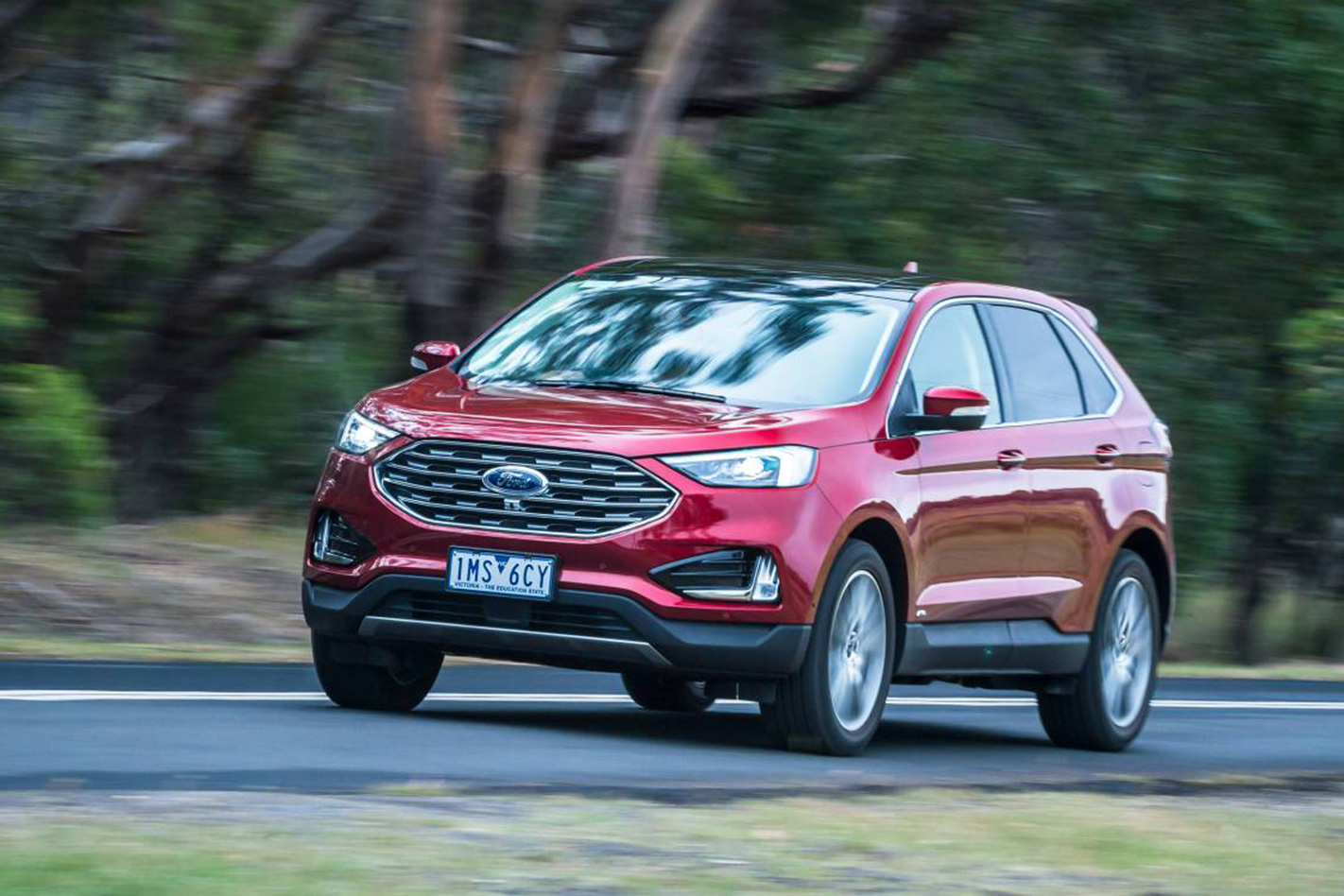
How much is the Ford Endura Titanium AWD?
The diesel-only Ford Endura range starts at $44,990 for the Endura Trend FWD, with the Endura Titanium AWD featured here the most expensive variant at $67,990. AWD traction attracts a $4000 premium across all three variants, which also include the mid-spec ST-Line.
Standard-feature highlights include full-LED headlights, panoramic sunroof, blind-spot monitoring, rear cross-traffic alert, and a parking assistant.
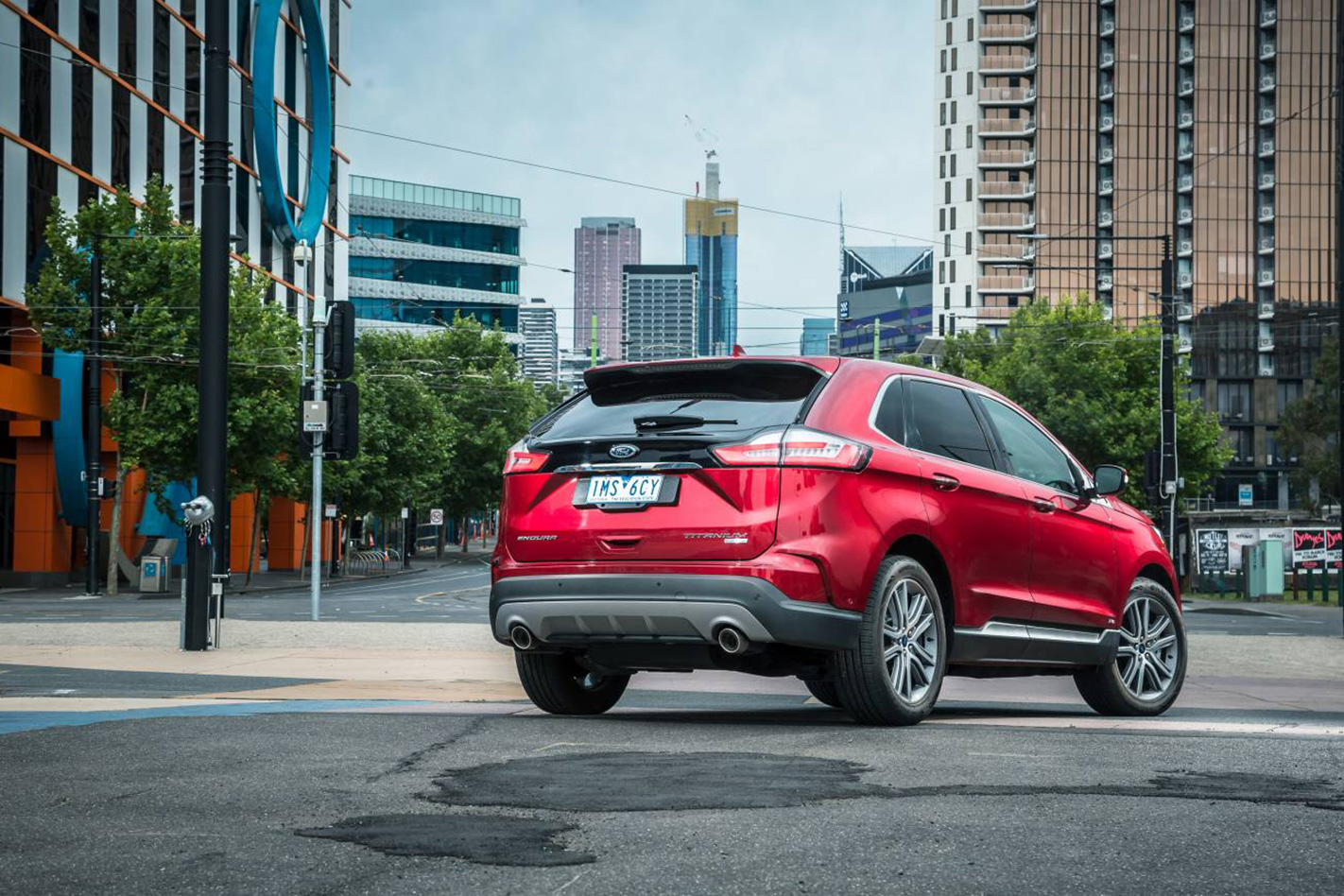
Our Test car also included Ruby Red metallic paint ($600), 12-speaker B&O sound system with split-view parking camera ($1000) and DVD screens behind each front headrest ($1600), which took the total cost to $71,190.
Who is this car for?
Families who like long trips and who are looking for a luxuriously appointed yet economical large five-seat SUV that can tow and carry a lot of stuff.
Is the Ford Endura Titanium AWD easy to live with?
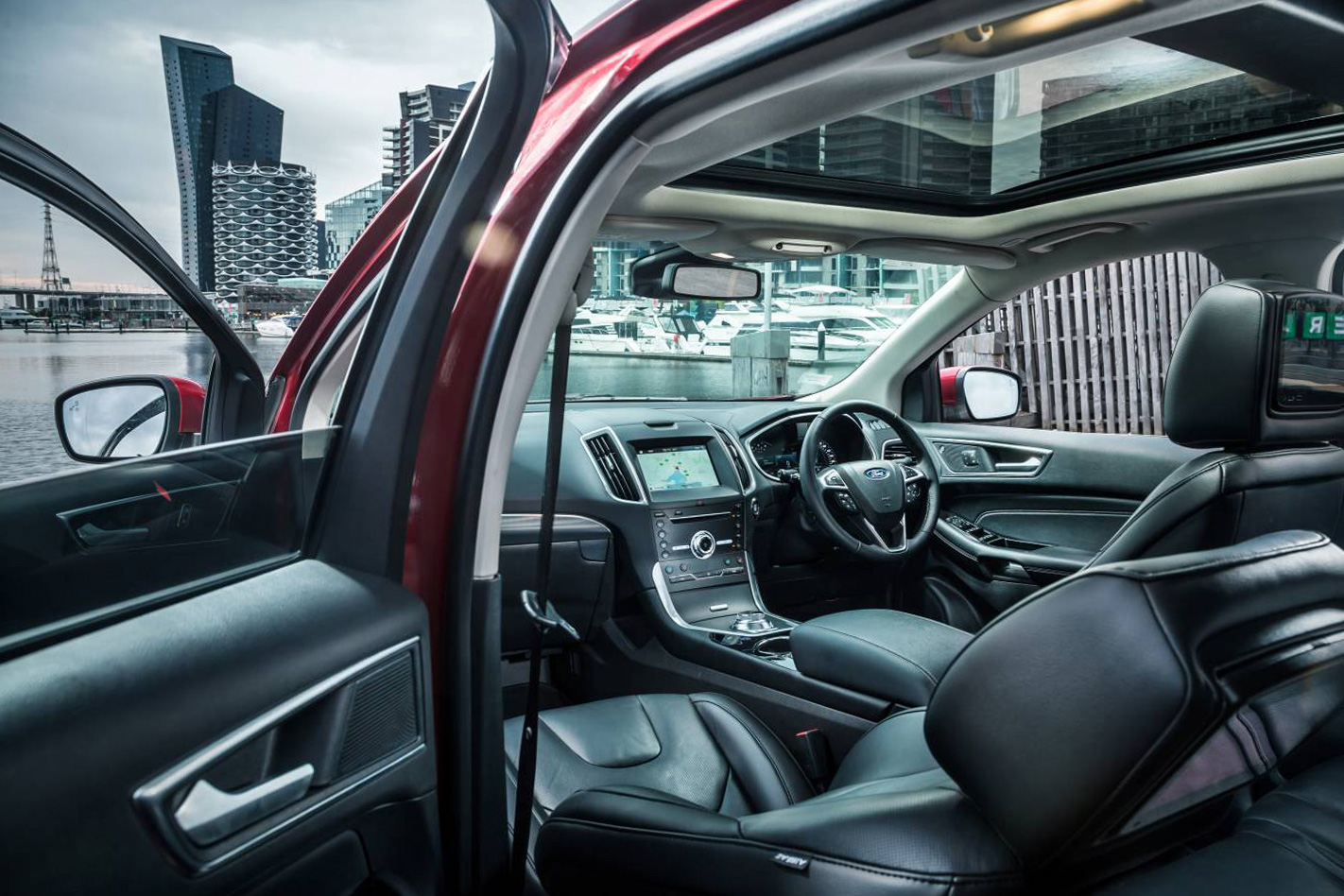
While new to the Australian market, the Endura is actually a facelifted version of the 2015 Ford Edge meaning the dashboard is similar to older Ford models, though it’s less cluttered and bulky than the Ford Escape’s.
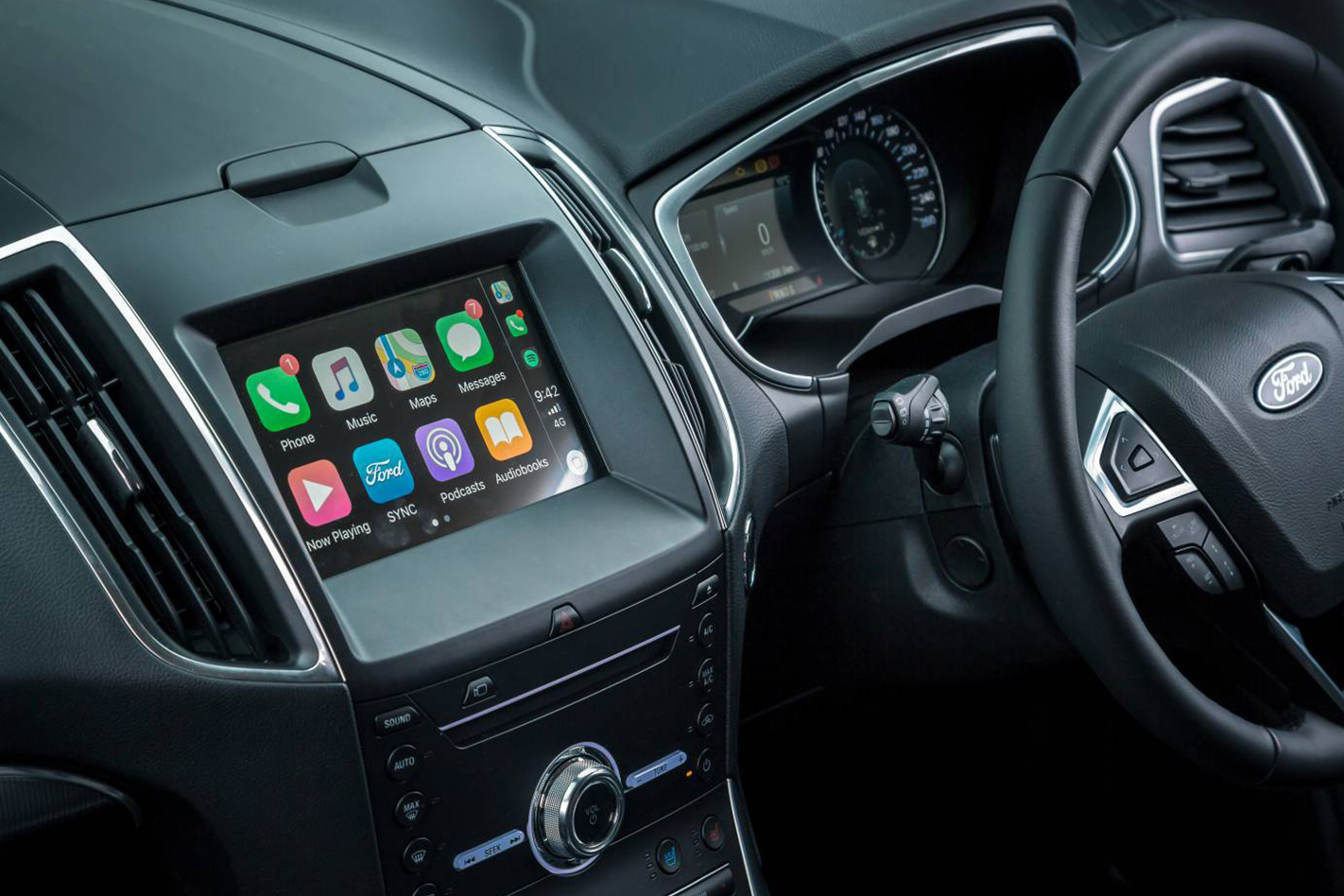
The 8.0-inch infotainment screen is located a little low within the dash, but it does use Ford’s latest Sync3 infotainment system with inbuilt sat-nav and Apple CarPlay/Android Auto smartphone pairing. You also get a CD player, which is becoming increasingly quaint these days.
The interior fit and finish is a little plain but has a quality feel to it, thanks to leather-appointed power-adjusted front seats that also offer both heating and cooling.
The rear seats have reclining backrests and will fit three adults, albeit a little snugly. Rear passengers get their own air vents, 12v and 240v sockets and heated outboard seats.
Boot space is a generous 800 litres, which is well above average for large SUVs, though you might have some trouble fitting taller, bulkier loads because of the raked-forward tailgate glass. The boot floor lifts to reveal a space-saver spare tyre and several storage compartments, too.
Does the Ford Endura Titanium AWD drive well?
A well-appointed cabin and a quiet, smooth ride makes the Endura Titanium an excellent companion for long journeys. Despite its size, it feels relatively nimble around town with light but nicely weighted steering.
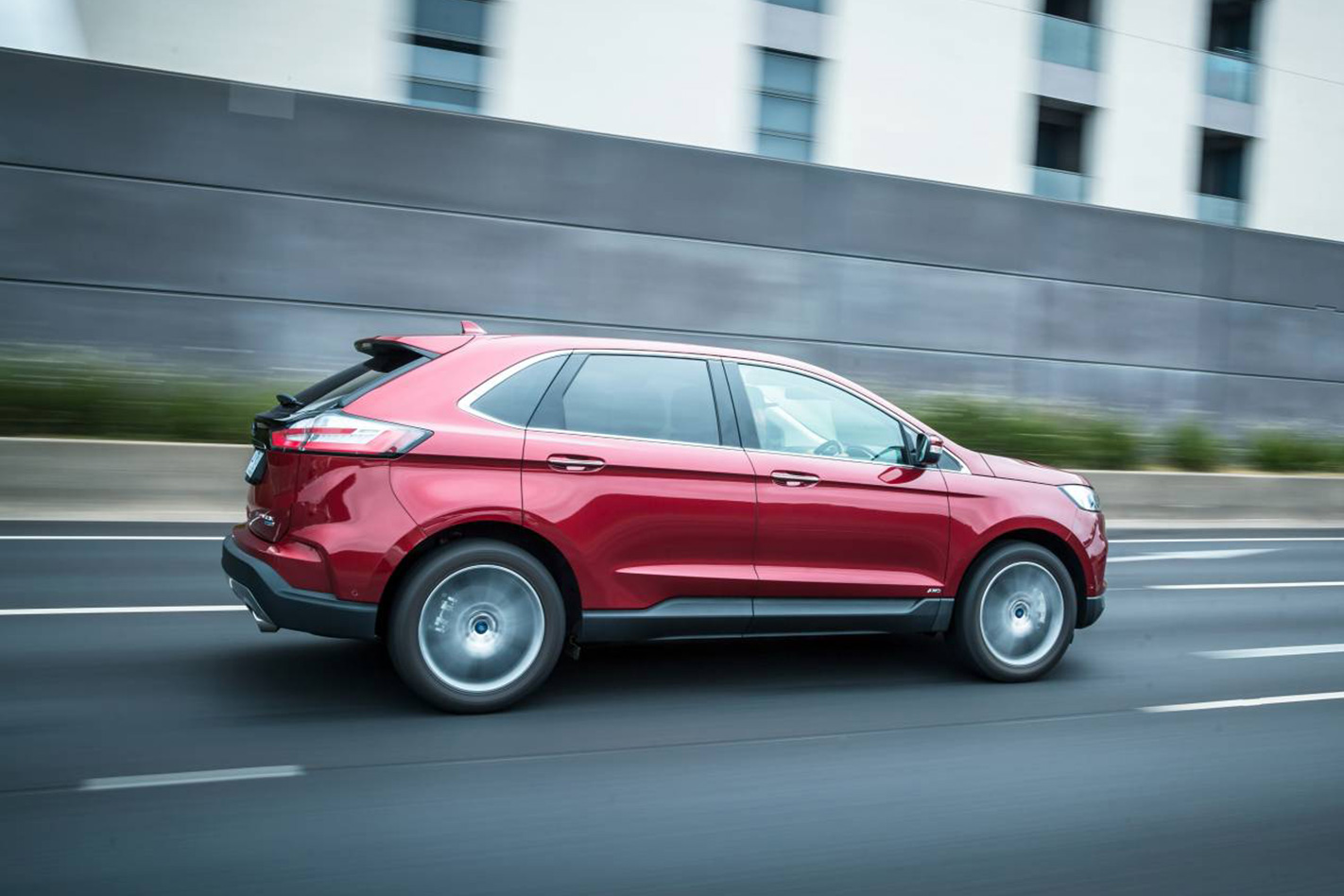
Despite its size, the Endura is still manageable in tight spots and is easy to park. It’s quiet, too, with good soundproofing that’s enhanced by electronic noise cancelling.
The 140kW/400Nm 2.0-litre four-cylinder turbo diesel engine, matched with an eight-speed automatic gearbox, feels more than adequate, and features a sports mode when you want to get up to speed a little quicker.
Fuel economy is excellent for a large SUV, with an official combined consumption rating of 6.7L/100km, which crept up to around 8.0L/100km while driving around town.
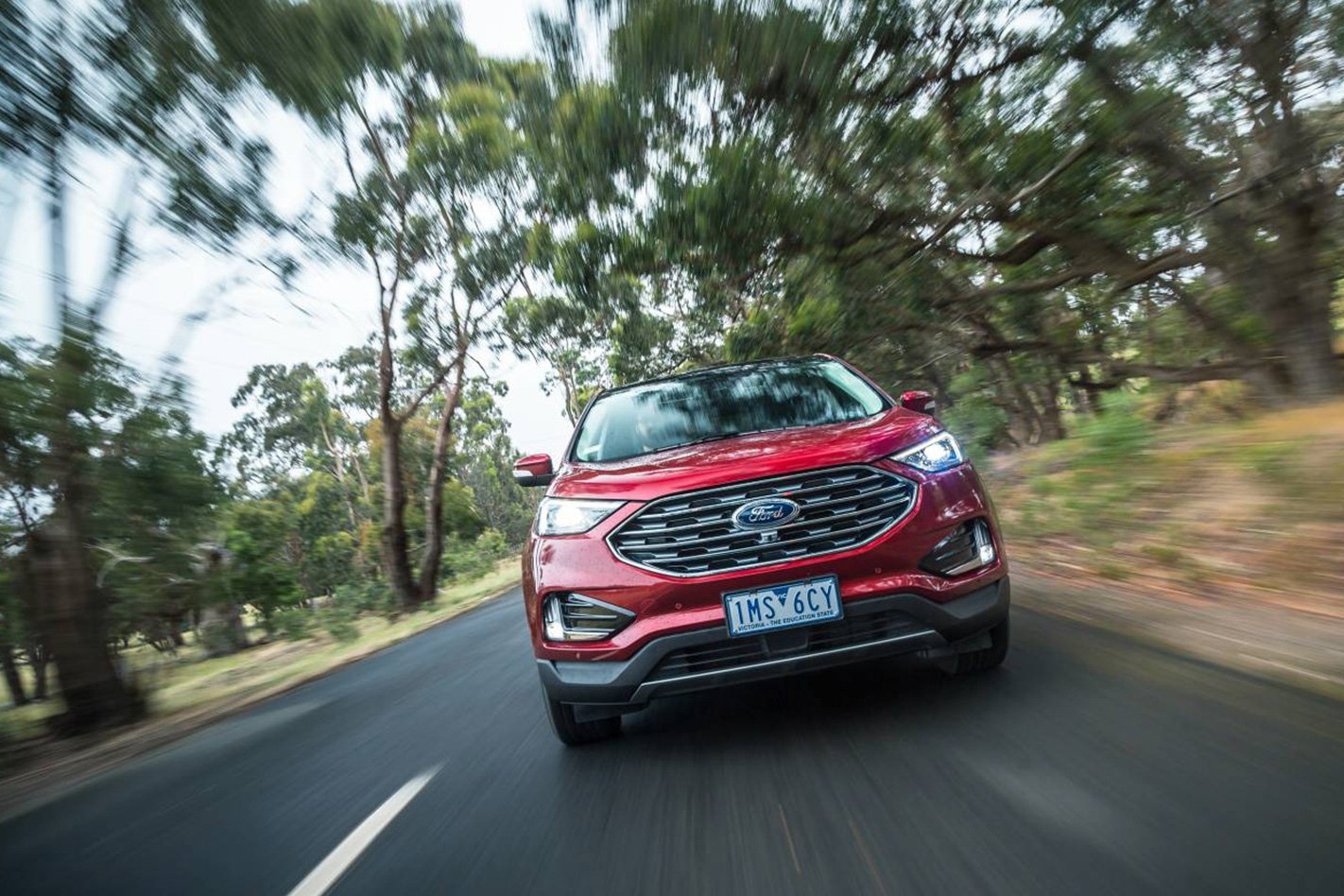
The semi-autonomous drive mode, with active cruise control and lane-keeping assist, is easy to set and operates smoothly.
Verdict
When Ford announced it was adding the Endura to its Aussie range, it was immediately viewed as a Territory replacement. And while there are differences between the two, the Endura is certainly capable of taking on the family workhorse role vacated by the Aussie-built SUV.

In its range-topping Titanium AWD guise, the Endura has the upmarket feel to match its circa-$70,000 price tag. It is a lot of money for a mainstream SUV, though, and, while you get plenty to show for it, it could be worth saving a few grand by opting for the FWD version.
Alternatively, you could even look at the Endura Trend or ST-Line variants that come with most of the Titanium’s key features but misses out on the leather interior treatment.
You’re forgiven for not spending a great deal of time studying the ins and outs of vehicle emissions testing.
It’s not the world’s most exhilarating topic, particularly as we’re betting most MOTOR readers are happy to sacrifice a little (or a lot, in some cases) fuel consumption for more power and performance. However, the regulatory net is closing and will force major mechanical changes to the next generation of performance cars and beyond.
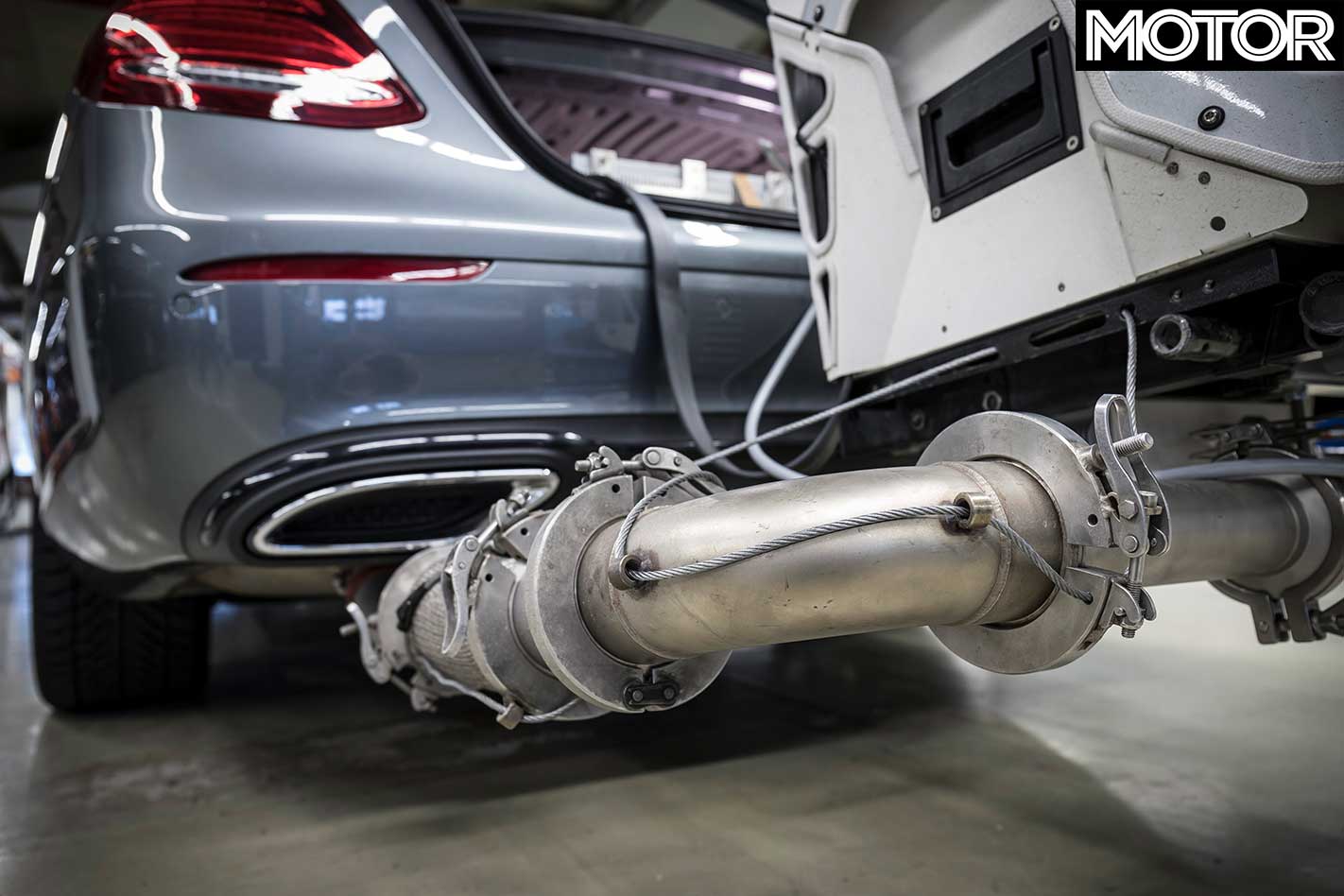
Let’s start with where we’ve been. The New European Driving Cycle (NEDC) was introduced in 1970 to assess passenger car fuel economy and emissions. There are other tests, such as that conducted by the Environmental Protection Agency in the US, but the NEDC is relevant in Australia because it forms the basis for fuel economy and emissions testing under Australian Design Rule 79/04.
The NEDC consists of an urban driving cycle repeated four times consecutively (the ‘urban’ economy figure) followed by an extra-urban cycle (the ‘highway’ figure), which are then combined.
If you’ve ever wondered why your car’s claimed economy is difficult to achieve, it’s because the NEDC is not in any way representative of real-world driving.
We won’t bore you with the nitty-gritty details, but essentially the entire test is spent at idle, cruising, or gently accelerating and decelerating at a rate that even your grandmother would call leisurely. The most enthusiastic acceleration is during the initial 0-15km/h phase, which is required to take four seconds, the equivalent of 0-100km/h in 26.6sec.
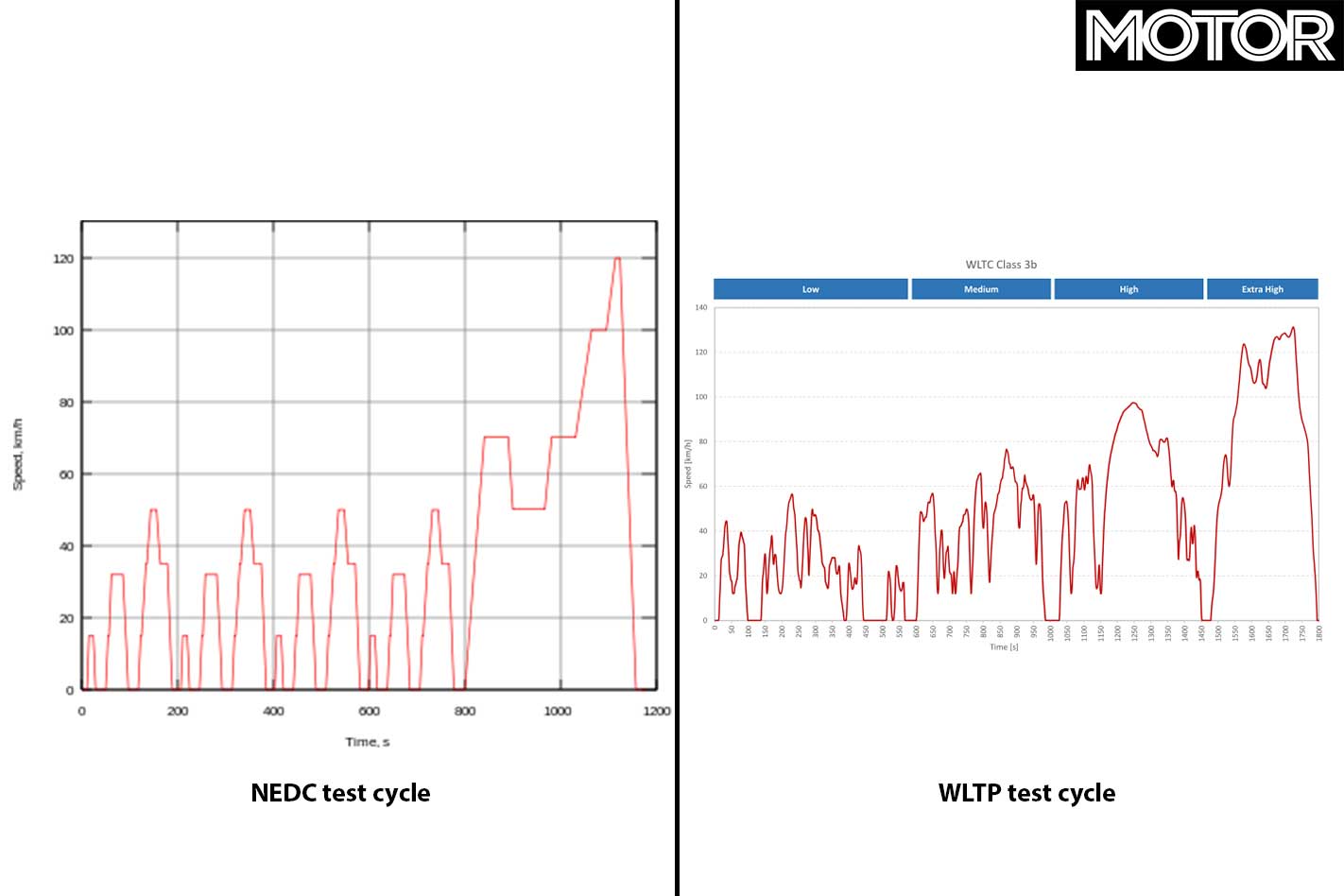
Is it any wonder that modern cars are predominantly powered by low-capacity, highly boosted engines with stop-start systems and as many gears as possible? Thus equipped, the NEDC can be completed off-boost at low rpm and with the engine off for a large proportion of the test.
The NEDC has rightly been criticised for its lack of real-world correlation and has now been replaced by the Worldwide Harmonized Light Vehicles Test Procedure (WLTP), which came into force in Europe from September 1, 2018.
Again, we’ll save you the specifics, but WLTP is a longer test split into four cycles (low, medium, high and extra-high speed) that, crucially, requires much more dynamic driving. The acceleration and deceleration events are still unrealistically slow, but there are more of them.
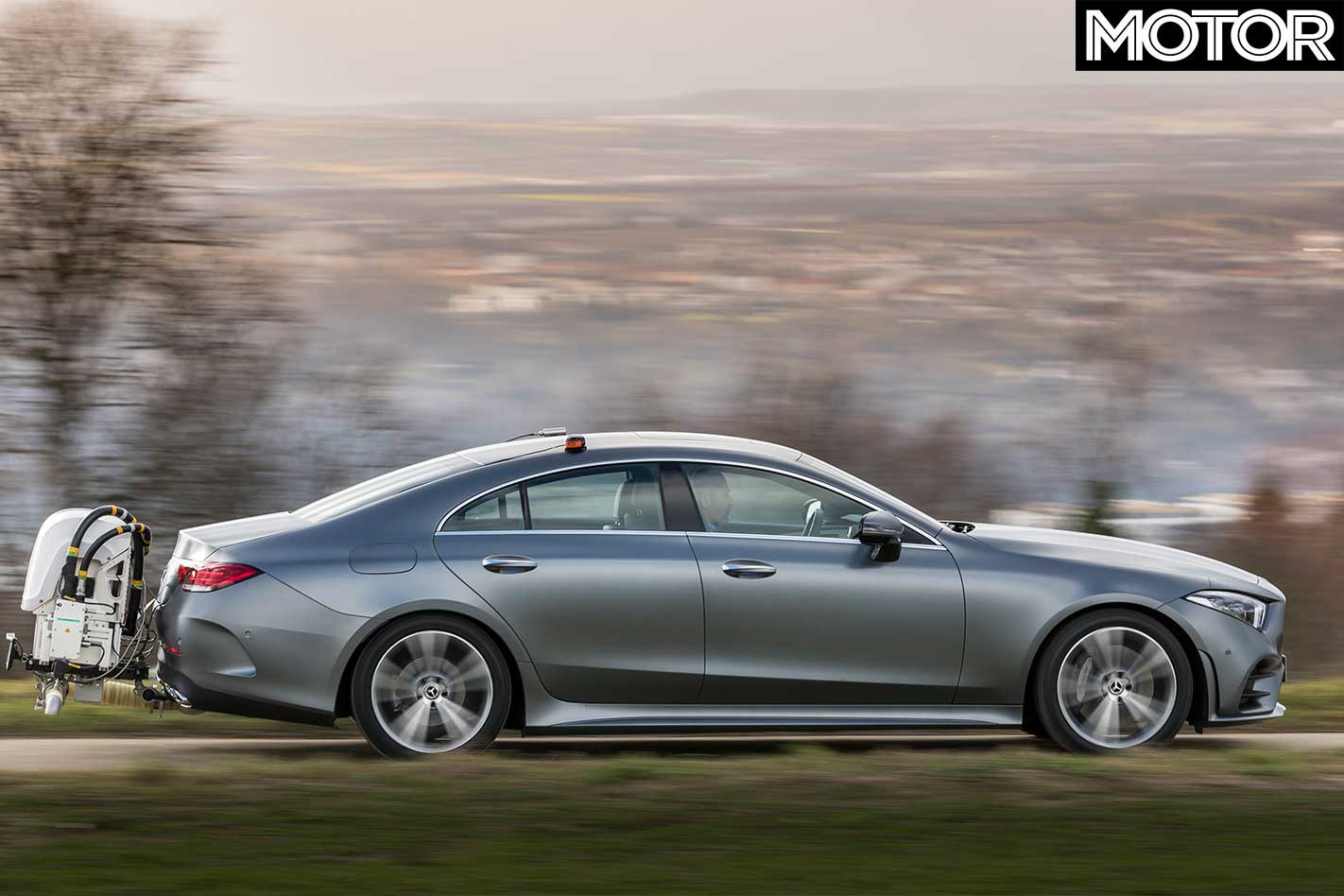
In layman’s terms, WLTP economy and emissions figures will be closer to those of the real world. For example, the VW Up GTI’s figures of 5.76L/100km and 110g/km CO2 increased to 6.73L/100km and 127-129g/km CO2 under WLTP.
This is good news for customer knowledge, but bad news for manufacturers. For some, particularly the Volkswagen Group, it has caused chaos. Porsche suspended orders for its entire model range, Audi suspended the SQ5, the VW Golf GTI was removed from sale, and the Golf R lost 7kW. And that’s just some of the VAG impact.
Elsewhere, BMW killed the M3 and the base M2 early, Jaguar removed its petrol XJs from sale and slimmed down its XF range, and Peugeot suspended sale of its 308 GTi 270.
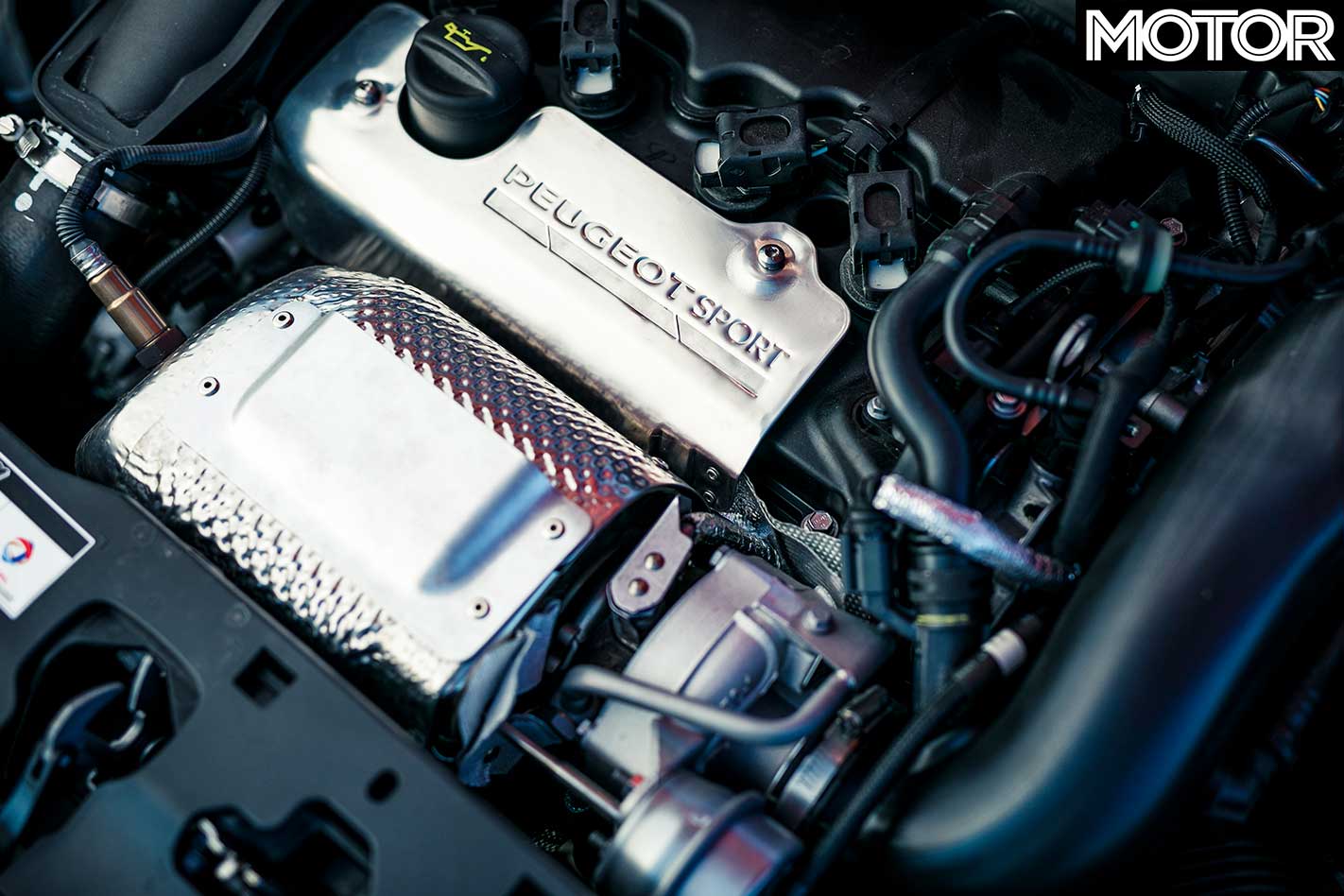
The problem goes beyond just greater fuel use and emissions, though that’s bad enough when by 2021 a manufacturer’s fleet average emissions must be below 95g/km CO2. The real issue is that most of the ‘tricks’ used by manufacturers for the NEDC don’t translate to the WLTP. This isn’t Dieselgate-style cheating, but tuning designed to achieve the best possible results.
Many cars use 1:1 air-fuel ratios (known as stoichiometric) at light loads to improve economy only to add fuel to control temperatures and protect components such as the turbocharger under heavy loads.
This is where it gets tricky for future performance cars, particularly as it’s likely that the as-yet-unconfirmed Euro7 emissions regulations will force manufacturers to use stoichiometric air-fuel ratios at all times, ending the practice of using fuel as a cooling agent.
This gives manufacturers a choice: reduce power, make components able to withstand higher temperatures, or introduce technology like hybrid turbochargers, water injection or variable-compression. However, the most likely outcome is that these regulations will simply accelerate the development of pure-electric cars.
The best automotive joint ventures are wonderful things. Subaru and Toyota teaming up to bring us the magical BRZ/86 or Audi and Lamborghini’s incredible tech cross-pollination that brought us the R8 and Gallardo spring to mind.
But for every great collaboration, there are more than a few where it all went sour even before the fruits of these ill-starred relationships ever hit showroom floors. Yep, it’s time to point and laugh at the worst automotive collaborations.
McLaren-Mercedes SLR
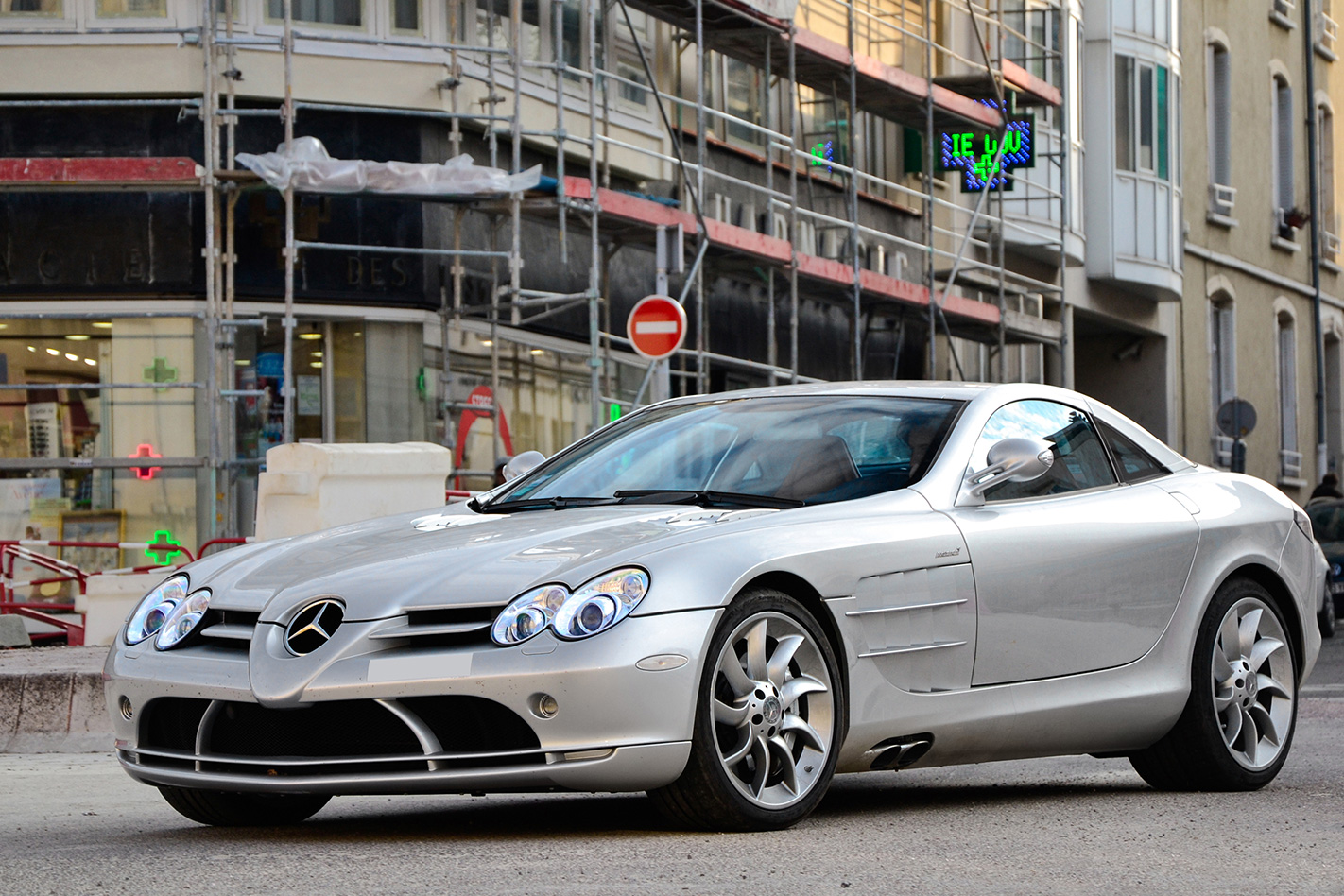
Just as Ferrari was developing the Enzo and Porsche the mighty Carrera GT, McLaren and Mercedes partnered to bring us the ill-conceived SLR. Ignore the fact that you could buy the much prettier SL55 AMG with much the same engine and gearbox for a third of the price and instead mull this thought over for a while. McLaren’s designer Gordon Murray said this ahead of the car’s launch. “It embodies the qualities expected in a Mercedes-Benz with the performance expected of a McLaren… we see it as the first ever crossover supercar.”
Thing is, people didn’t want a crossover supercar. They wanted a supercar. One with mid-engined proportions, a certain lack of accessibility and a Latin temperament. Something like a Lamborghini Murcielago LP640 was half the price. Even a Pagani Zonda was a good deal cheaper. That was reflected in sales. The original goal for the SLR was to sell 500 cars annually over a 7 year period. Total sales were 615 units in 2005, 261 units in 2006, and 275 units in 2007, the intervention of the GFC eventually seeing sales run dry at 2157 units. Both parties felt the other had diluted their vision for the vehicles and they were both right. Mercedes-AMG developed the fantastic SLS shortly thereafter and McLaren the groundbreaking 12C, both far more coherent concepts than the schizophrenic SLR.
Alfa Romeo Arna
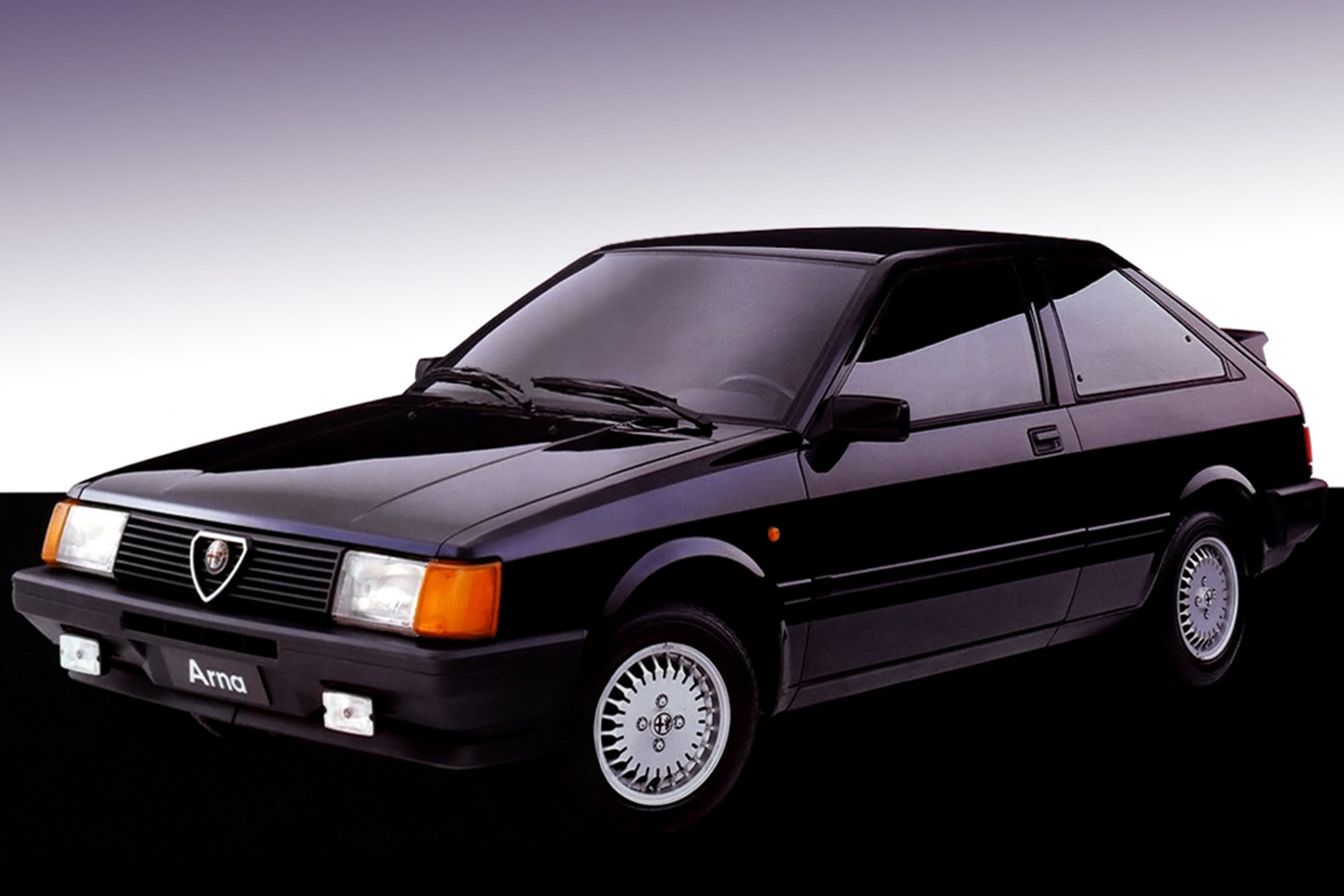
When called upon to replace the iconic Alfasud, funds at Alfa Romeo were a little tight. Back in 1980, the company decided to embark on a joint venture with Nissan which appeared to promise all sorts of benefits. What could be better than slinky Italian styling and chassis know-how allied to the engineering durability of the Japanese? Unfortunately the Alfa Romeo Arna and its badge-engineered sibling, the Nissan Cherry Europe, didn’t pan out like that.
These 1983 model year dungers paired Nissan’s blandest styling and most inept handling with the mechanical flakiness of 1970s Alfa. It was the classic case study in destructive synergies and both cars bombed. Only three years later, the Italian government sold state-owned Alfa to Fiat who quietly took the Arna out back and shot it.
Toyota Lexcen
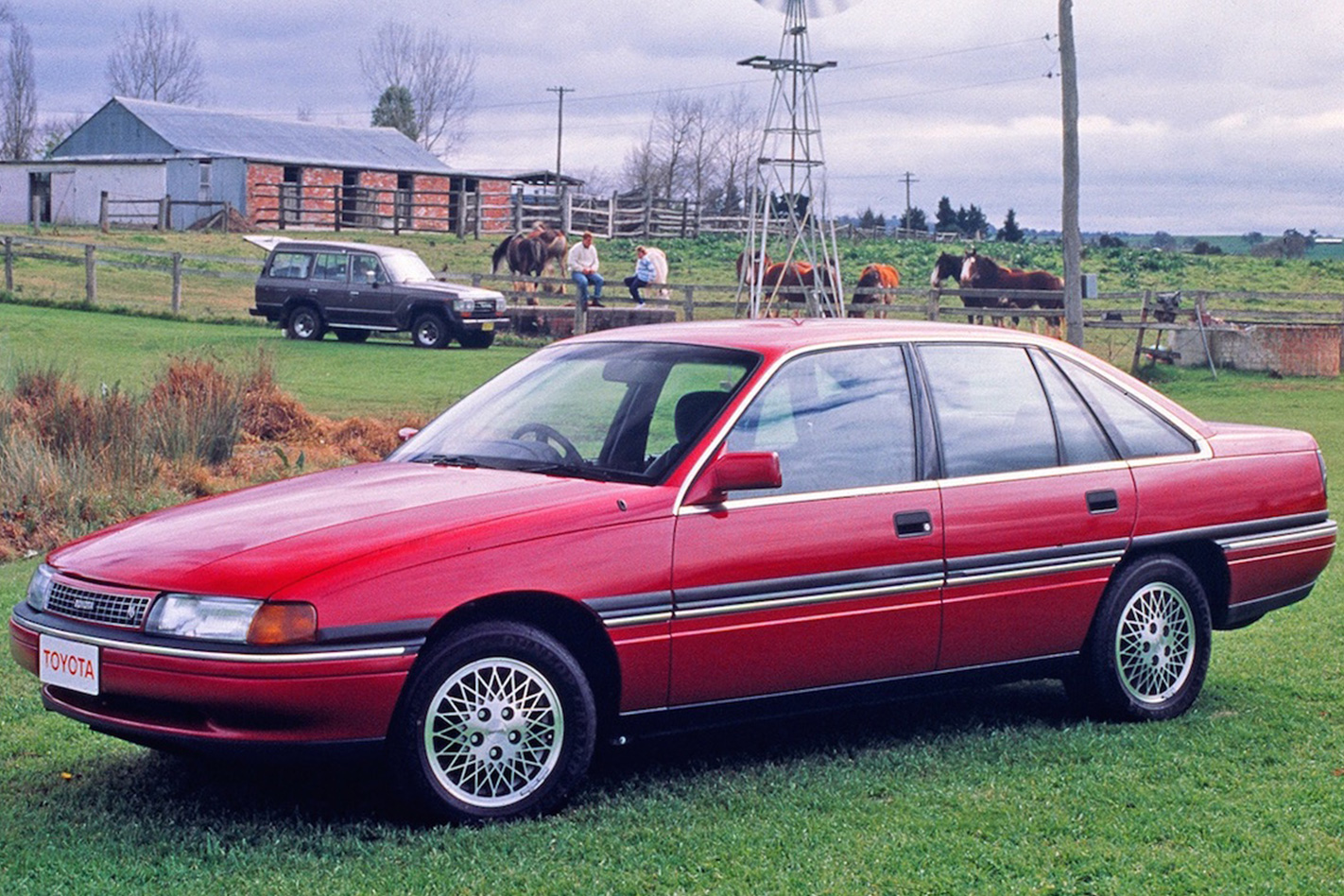
United Australian Automobile Industries has a lot to answer for. Holden’s previous joint venture with Nissan spawned the Commodore VL Turbo, which has since acquired something like deity status, so the following tie-up with Toyota, spawned from the Button Plan had a lot to live up to. We chose the Toyota Lexcen here but we could have chosen the Holden Apollo, based on the Toyota Camry or the Holden Nova, based on the Corolla. There was one common theme amongst the rebadged cars namely that they bombed sales-wise, largely due to half-hearted promotion of the forced relationship.
By the end of 1993, the UAAI venture cars realised sales of 21 percent at best when compared to the models retailed by their original manufacturers. The Lexcen only ever received Holden’s asthmatic 3.8 V6 with automatic gearbox, whereas the Holden version was offered with a choice of V6 and V8 with manual transmissions also offered. The VN-VS II Commodores weren’t bad cars, but the Toyota Lexcen was the fruit of an ill-starred joint venture and was discontinued in 1997 with no replacement.
Saab-Lancia 600
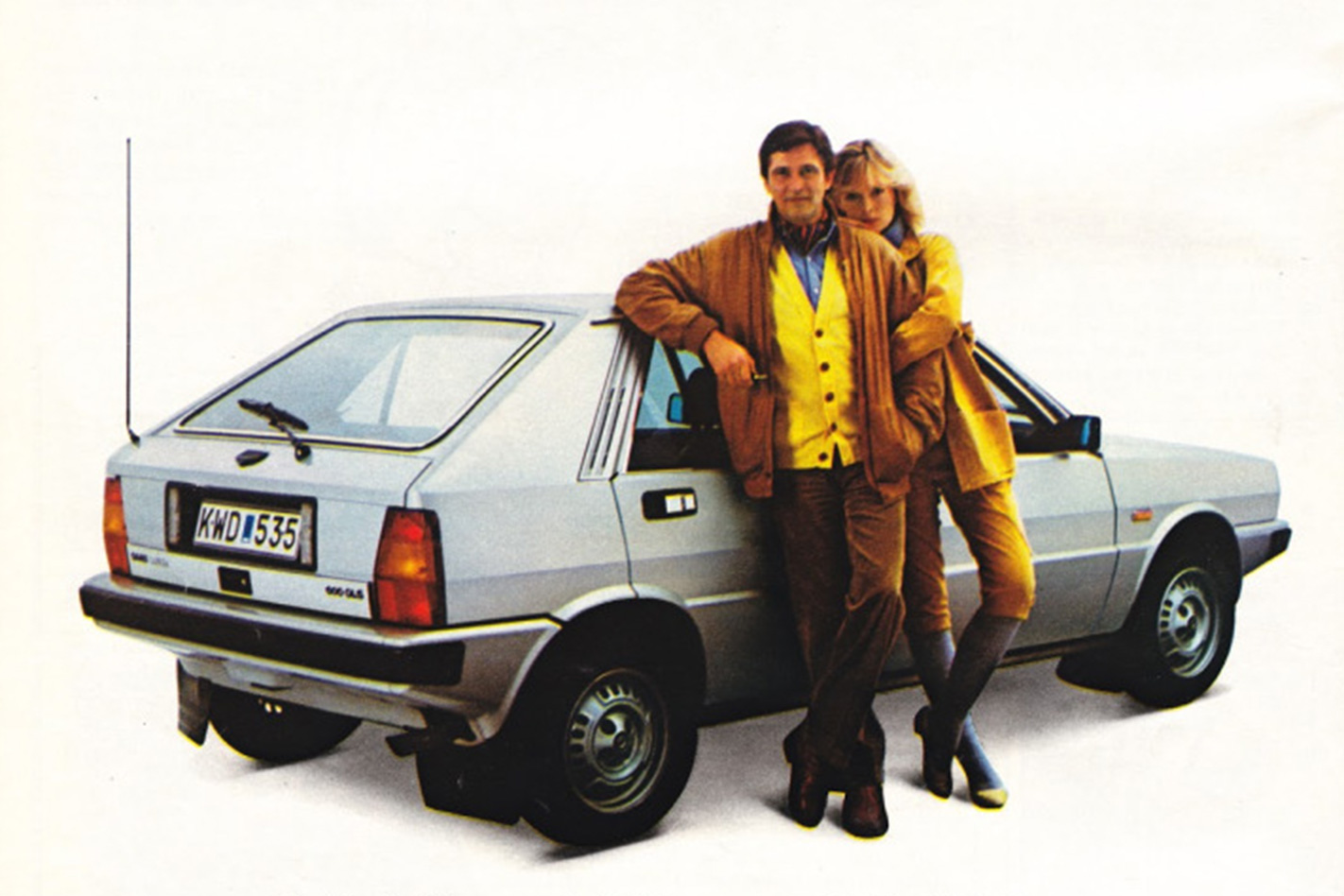
The ‘Type 4’ collaboration is an example of joint ventures done fairly well. It spawned a chassis that underpinned the Lancia Thema, the Saab 9000, the Fiat Croma and the Alfa Romeo 164. A little known offshoot of that deal was the Saab-Lancia 600. Yes, you’re looking at a Lancia Delta with Saab badging, sold exclusively in Sweden, Finland and Norway. Lacking funds to develop their own small car, Saab jumped into bed with the Fiat Group and brought the pert Giugiaro-styled Delta to its Scandinavian markets.
High pricing hampered sales and Italian electricals and bodywork didn’t fare too well in the long northern winters. The gutless front-drive 63kW 1.5-litre GLS and GLE models initially offered are now a very rare sight. Only 6419 ever sold and as of 2012, only 12 were left on the road.
Lotus Europa S
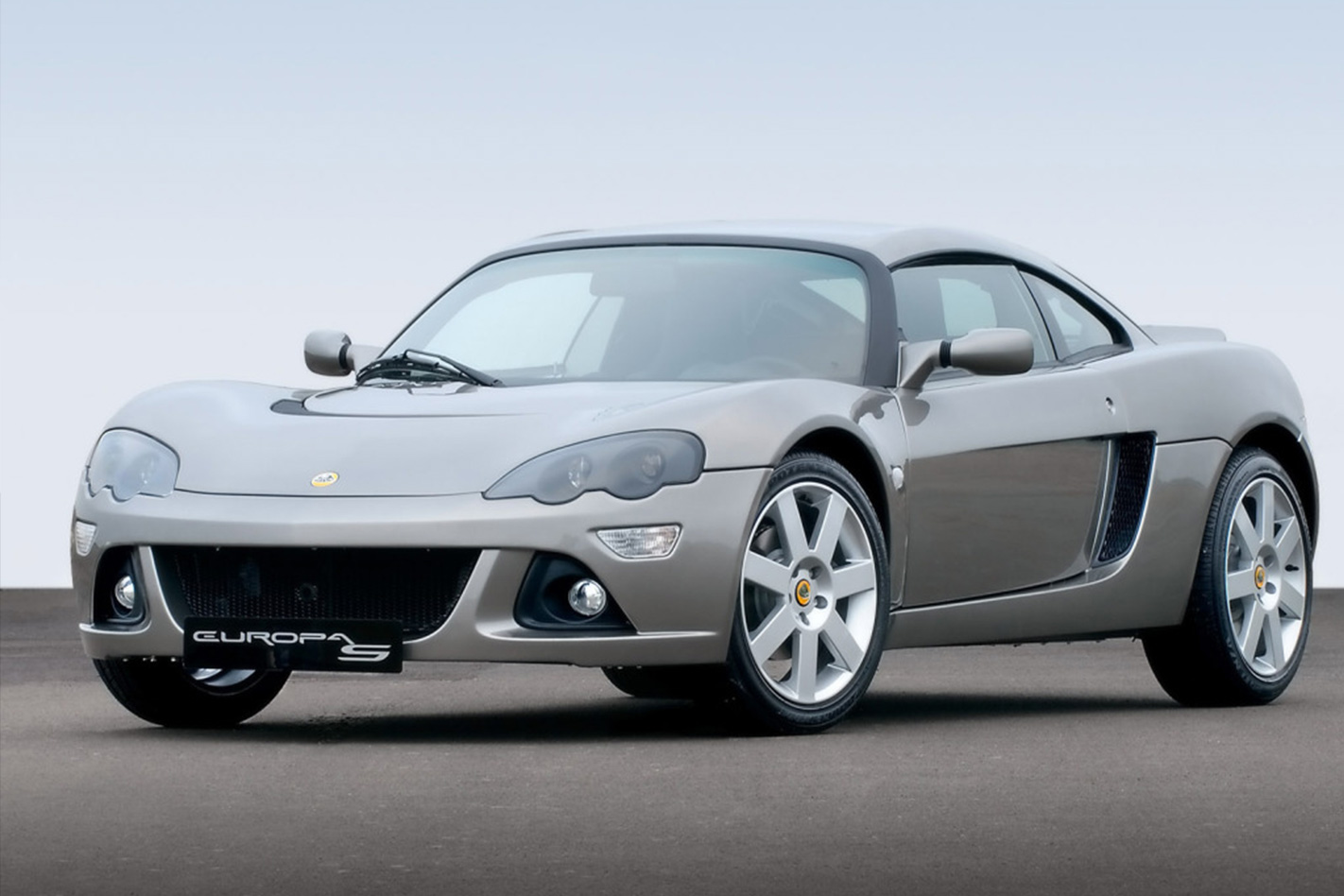
This joint venture was so bad that Proton, who had initially funded the development and provided all manner of build criteria upon its fully-owned subsidiary, Lotus, decided it didn’t want the car. Originally scheduled for build at Proton’s Malaysian production facility, it was decreed that the car would instead be built at Lotus’ plant in Hethel. The turbocharged engine failed emissions certification for the US and Canada, further limiting its sales potential.
Production started in 2006 and was halted in 2010. Some 456 cars were sold in this four year period, Lotus attempting a refresh in 2008 with the SE version. In the end, nobody really wanted a Lotus Elise that was 10% more civilised. The Europa was given a tan leather interior to try to draw in a few more punters but, as a Lotus engineer muttered to me at the time, “Turning that f****** thing into a satchel isn’t going to save it.”
Lotus Europa S review – Unique Cars
Ford Maverick Brock Executive Performance Series
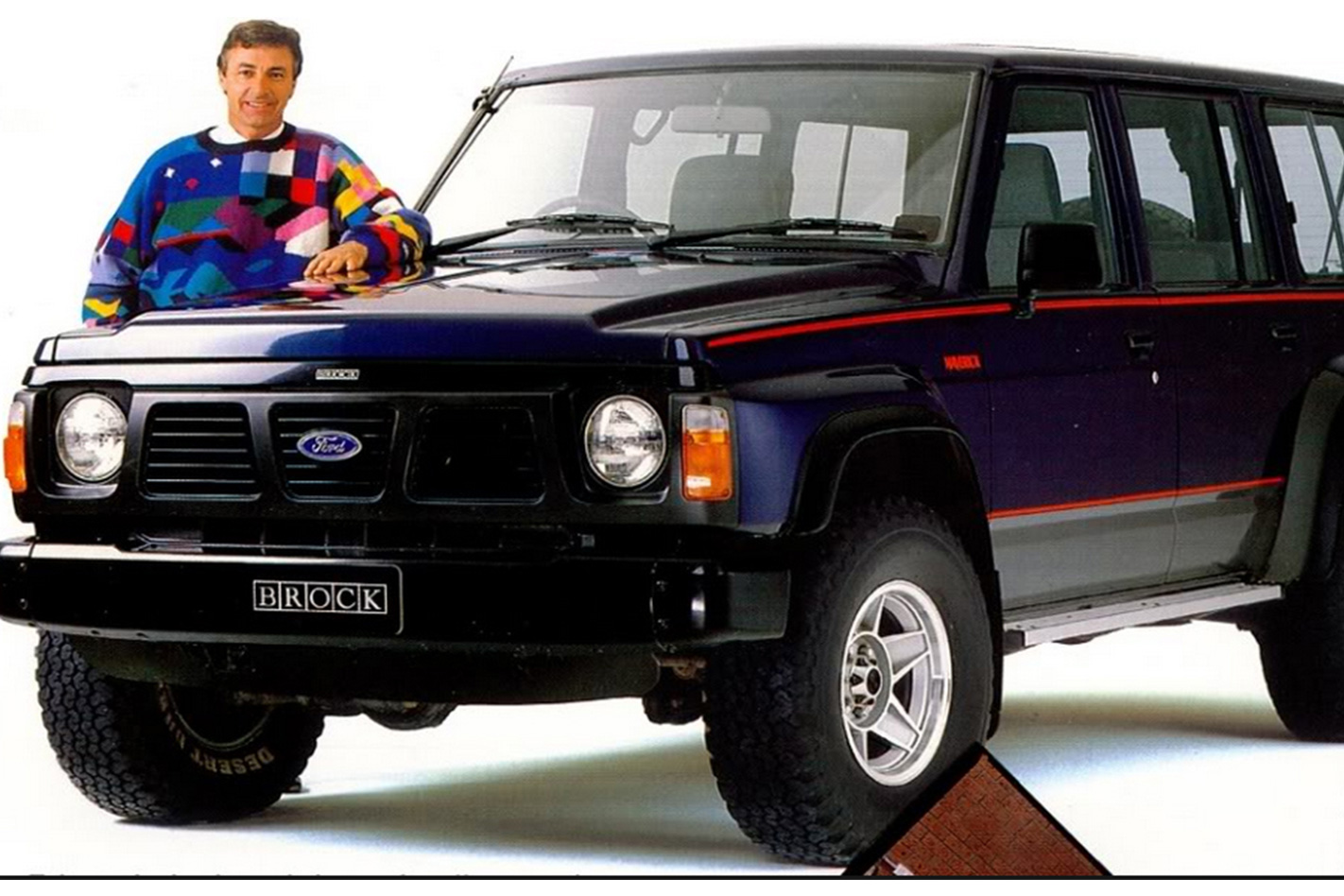
We can discuss that knitwear at a later date, but for now, feast your eyes on the performance icon to the right of shot. Having been given the boot unceremoniously by Holden, Peter Brock did the unthinkable and began spruiking Fords. The Brock Executive Performance (EP) Series Fords weren’t in the same league of tyre-scorching brawn as his HDT Holdens and the nadir of this line was the rebadged Y60 Nissan Patrol that was the Ford Maverick EPIII.
Another product of John Button’s original masterplan, this got 15-inch alloy wheels and RV sports tyres, colour-keyed enhancements including grille, bumpers and wheel arch flares and an optional personalised bullbar. We couldn’t spot an Energy Polarizer on the options list.
Mazda Roadpacer AP
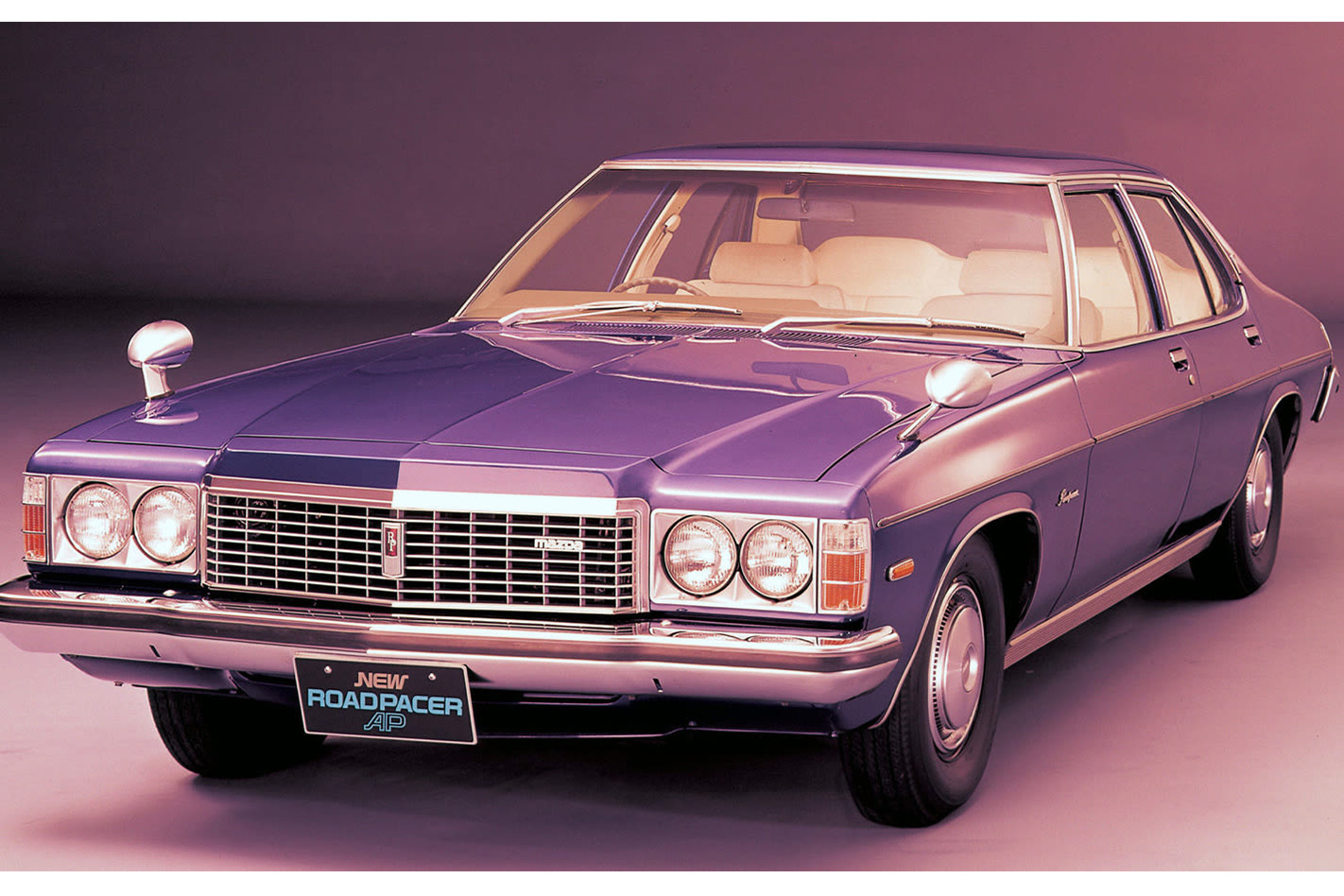
As bad ideas go, importing a Holden HJ Prem, pulling out the lovely red motor, fitting a 13B rotary and selling it in Japan as the Mazda Roadpacer AP is right up there. Maybe Mazda spotted a niche in the market for people who badly needed a car that featured a woeful torque to weight ratio, catastrophic reliability and 28L/100km fuel economy. Pricing the car at 3.8 million yen, about double the price of a contemporary Mazda Cosmo or Luce also did the Roadpacer AP (Anti Pollution) few favours, the car being sold for two years and registering just 840 sales, the lion’s share going to Mazda and Sumitomo executives.
The only GM product to make series production with a rotary lump, the Roadpacer remains a fascinating curio but whereas big engine in a small car is a formula that never gets old, the opposite rarely spells sales success. Cool Roadpacer trivia? Suspension tuning was undertaken by Takao Kijima, who would later be responsible for the suspension design of the Le Mans-winning 787B. And if you thought the Roadpacer was too big for a 13B, spare a thought for the driver of the 3.2-tonne, 13 seater Parkway Super Deluxe bus, which shared an identical 100kW/138Nm lump.
UPDATE, May 2023: A new era for SV
Way out here in 2023, JLR has unveiled its new Range Rover Sport SV P635, handily putting this SVR to shame.
Get all the details below.
Story continues: Range Rover Sport SVR review
The Range Rover Sport SVR has never been a car for shrinking violets.
Any illusion you’d made the sensible family choice quickly faded once the 5.0-litre supercharged V8 fired into life. Still, outwardly at least, it was somewhat of a sleeper, especially on the standard 21-inch rims. No longer.
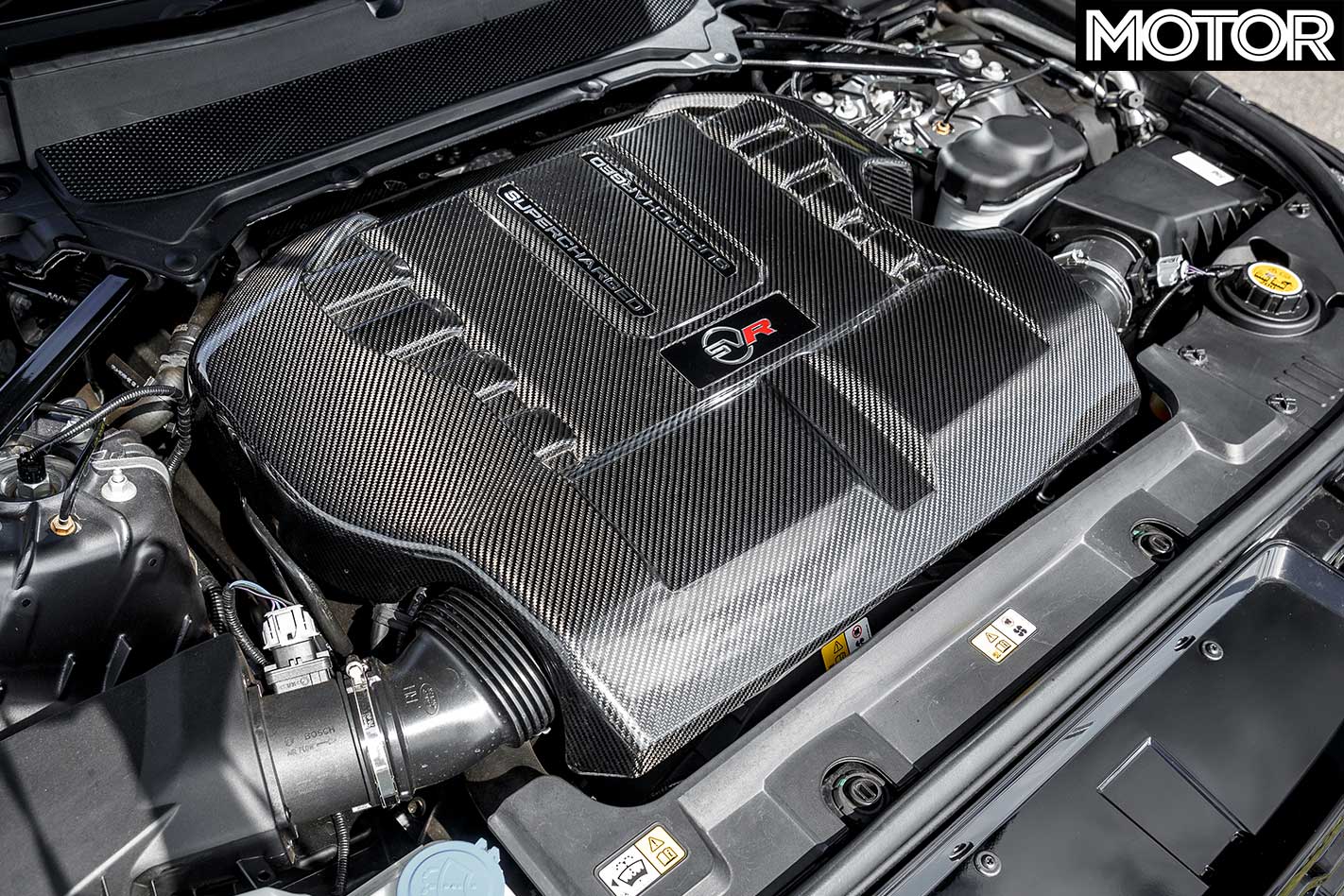
The MY19 Range Rover Sport SVR now looks like it has driven through a F1 team factory, or at least our test car did, clad with the Carbon Fibre Exterior Pack. This $14,690 option spreads the black weave across the front bumper, grille, guard vents, mirror covers and tailgate, joining the standard-fit bonnet.
Range Rover claims “its lightweight construction delivers genuine dynamic benefits”, but then it needs to, as the updated SVR is 42kg heavier than its predecessor. Our test car is probably closer to being on par thanks to the aforementioned added carbon.
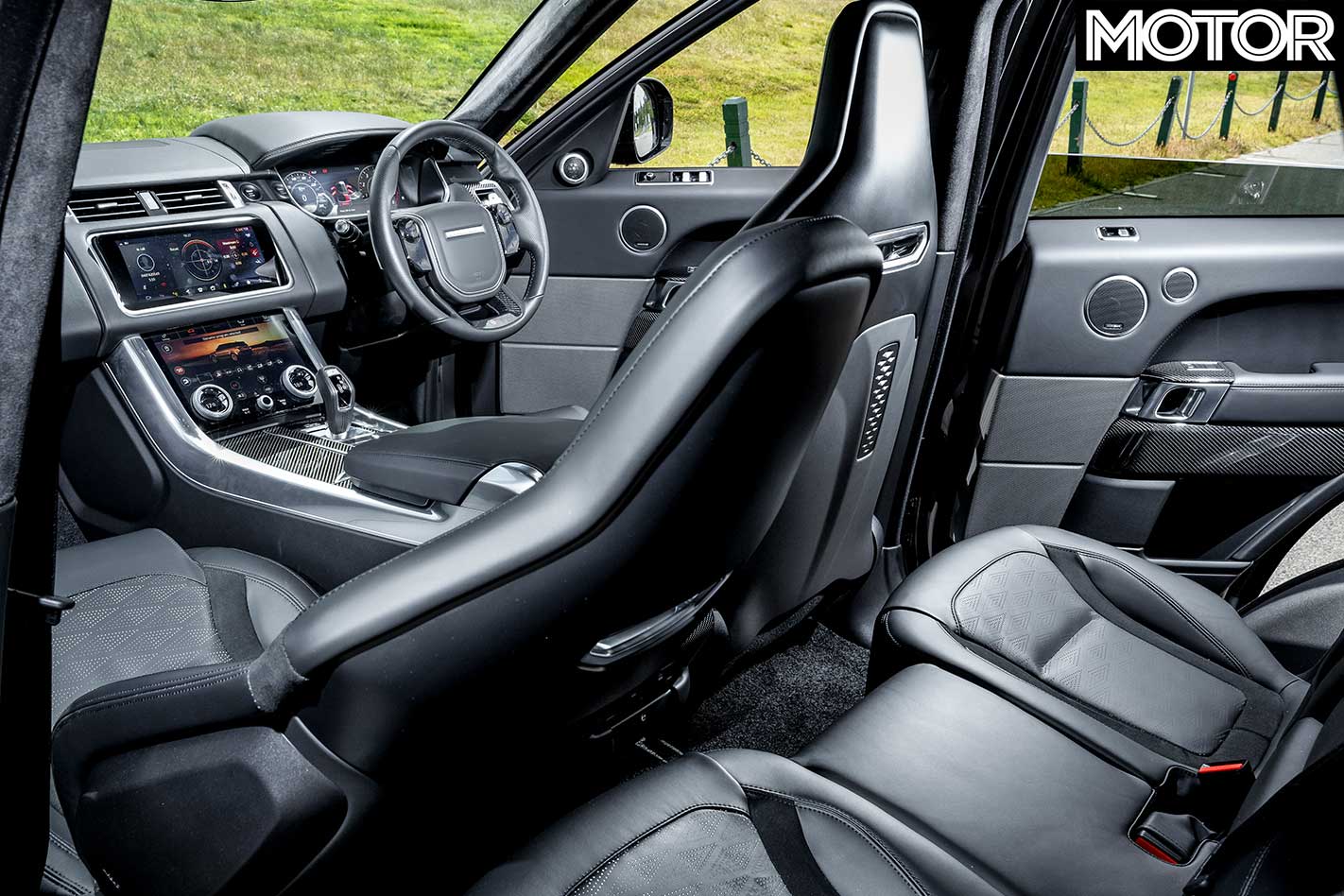
The new Performance seats would look more at home in the Jaguar XE SV Project 8 and are yet another example of the new SVR’s added pizzazz. The interior has undergone the biggest transformation, adding the Velar’s twin-touchscreen setup, greater connectivity and the full suite of active safety systems.
It’s a very nice place to spend time, though the twin-screen set-up feels a bit like technology for technology’s sake, as there aren’t enough vehicle functions to make use of all the screen real estate.
Despite the cabin overhaul, the primary reason to consider an SVR is the lump of fire and fury under that carbon bonnet. It now produces an F-Type SVR-matching 423kW/700Nm, dropping the 0-100km/h claim to 4.5sec. This still feels conservative, the ultra-sharp throttle response catapulting this monster forward like it’s attached to an aircraft carrier launch line.
It sounds murderous, too, with a gurgly snarl like a bear in the bath. The racket is addictive, but activating it doesn’t do much for the fuel economy, which needs all the help it can get with this much power and weight.
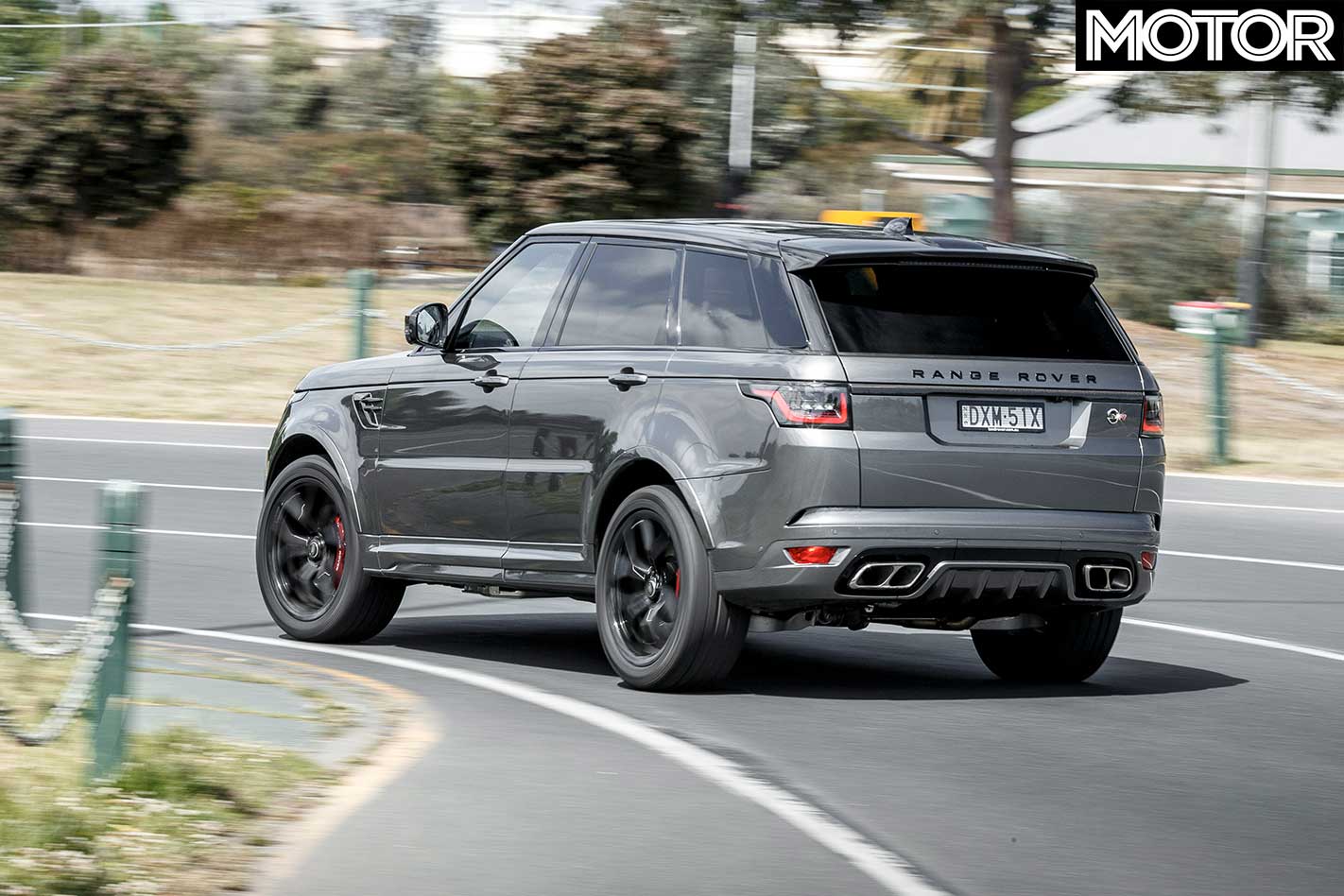
These two numbers largely dictate the SVR’s cornering behaviour. Apparently the suspension has undergone revisions, but driven hard the SVR is still definitely more Sport in name than nature. The rear-end is especially mobile and the steering can be corrupted when drive is fed forward; it’s better to back off in the bends and just thunder down the straights.
The facelifted SVR is an intriguing machine. It has attitude galore, but ask it to relax and the throttle is doughy and the ride unsettled. It’s not difficult to see the attraction but I do wonder how long the appeal of this automotive extrovert would last.
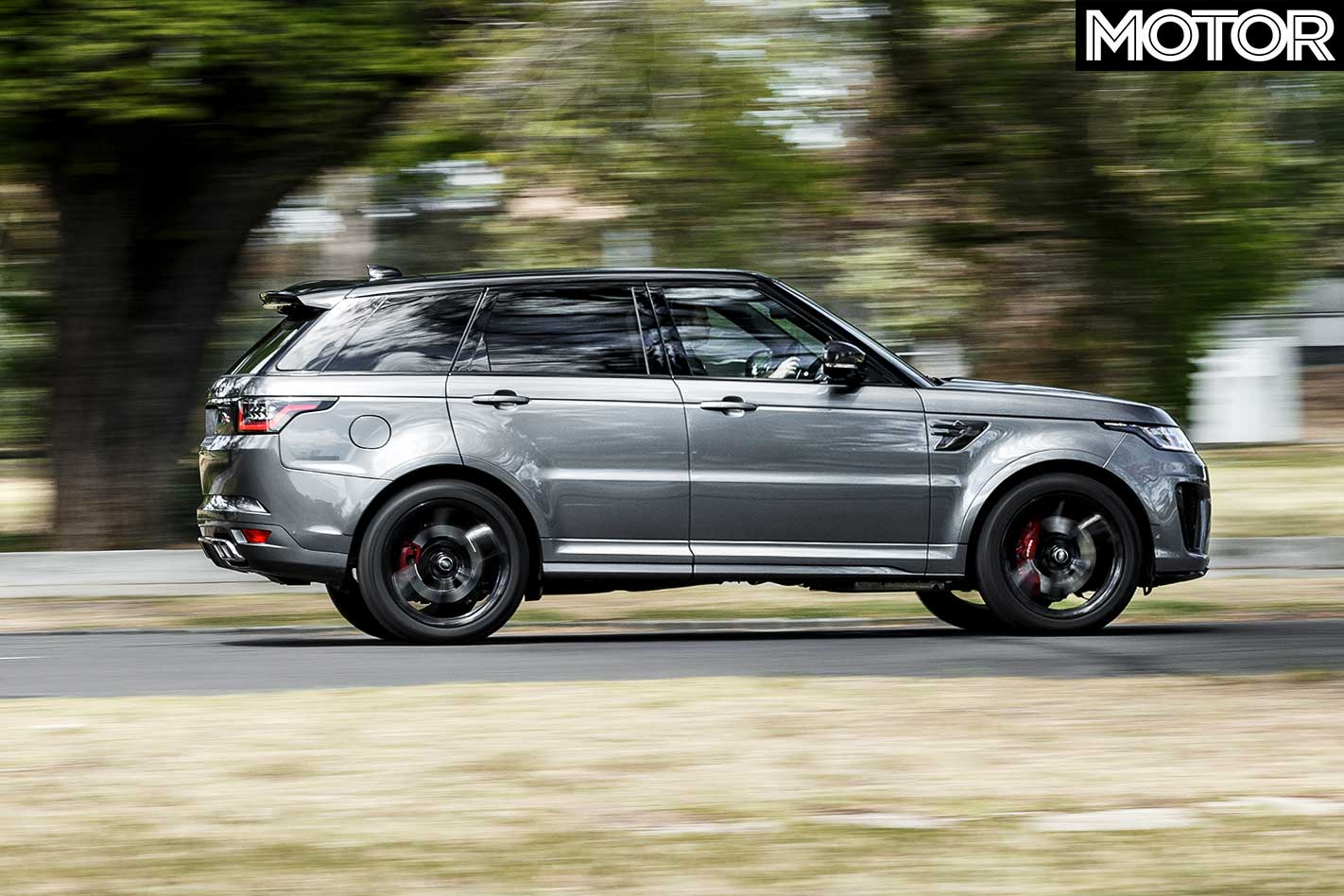
2019 RANGE ROVER SPORT SVR SPECS: Engine: 5000cc V8, DOHC, 32v, supercharger Power: 423kW @ 6000-6500rpm Torque: 700Nm @ 3500-5000rpm Weight: 2377kg 0-100km/h: 4.5sec (claimed) Price: $238,000
Like: Looks and sounds crazy; brutal performance; lively handling; updated interior Dislike: No ballet dancer; terrifying thirst; silly options prices (test car was $296,280!)
Rating: 3.5 out of 5 stars
Weissach, under R&D boss Helmut Bott, had begun researching various technical layouts for a replacement while the 911’s air-cooled engine was believed to be at the end of its life. Every possible layout was considered.
Read the original story
With the end in sight for the original air-cooled Beetle, at least in Europe, front-wheel drive was the obvious choice for small cars, while a mid-engine design seemed most appropriate for sports cars.
Finally, on October 21, 1971 Dr Ernst Fuhrmann, who’d taken over as Porsche boss in 1972, decided the new car should have a water-cooled front engine, probably a V8, and a rear-mounted gearbox to give near-perfect weight distribution. It was, therefore, that rarity among cars: a totally new model, owing nothing to those that had gone before.
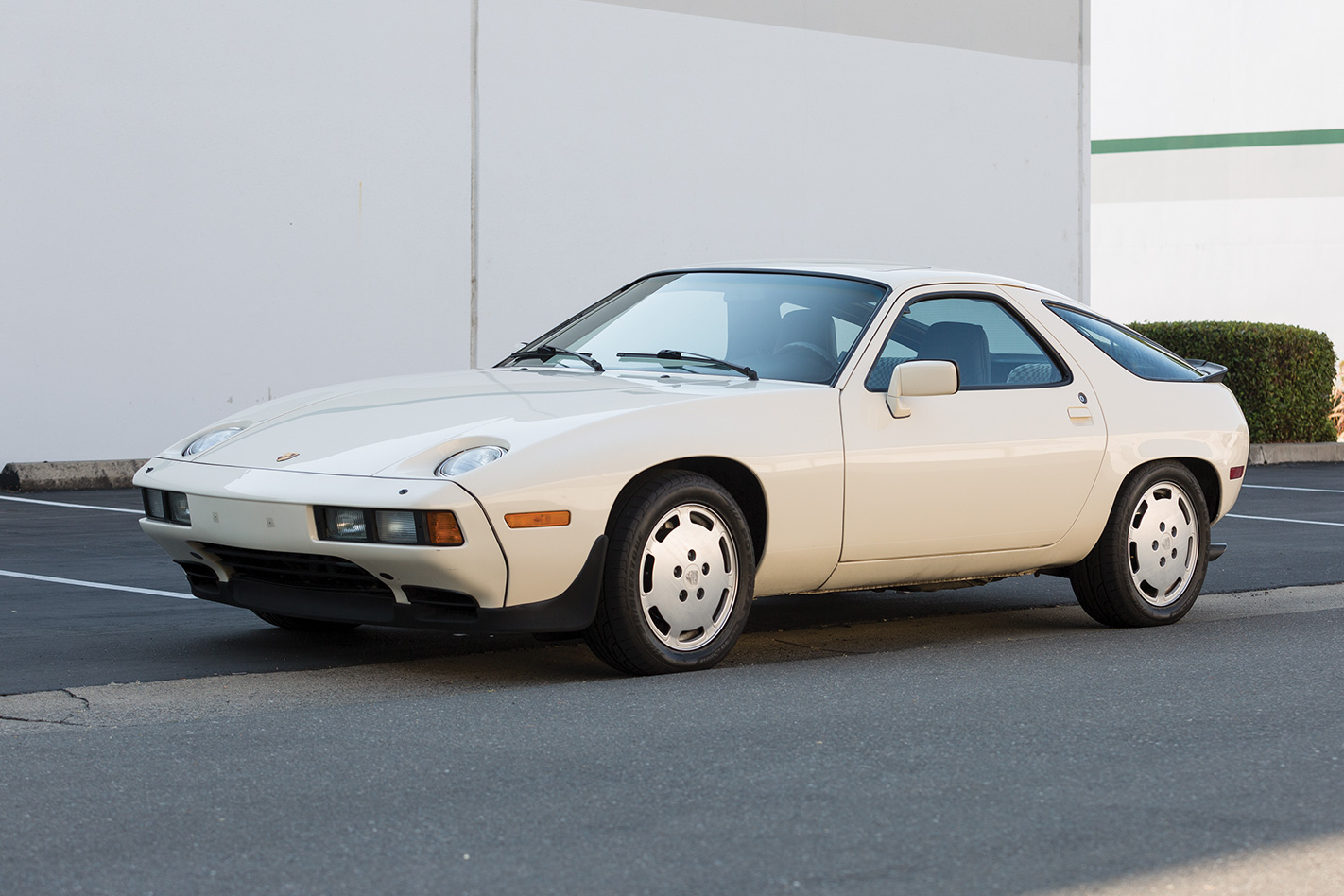
In late 1995, with photographer Tim Wren, I fronted up to Zuffenhausen to commemorate the end of the 928. We wanted to spend wheel time in one of the very last cars, mainly for photographic purposes, but more importantly to meet designer Wolfgang Mobius and modeller Peter Reisinger to learn more of the creation of the 928.
I knew part of the story from Chuck Jordan, the American design boss who, in 1968, headed Opel design and later became GM’s vice-president of design. Latvian-born Anatole ‘Tony’ Lapine, who’d worked on various Corvettes (including serving as studio engineer on the 1963 Sting Ray) was on assignment to Opel. By chance, the urbane, multilingual Lapine met some of the Porsche family. He suggested they might like to see the new Opel design studio. Jordan remembered Ferdinand Piech, FA ‘Butzi’ Porsche and Ferry Porsche arrived in a huge Pontiac station wagon.
“We thought it would be good for motivation,” remembered Jordan. “It was a great honour for us.”
He wasn’t so pleased when, within months, Lapine – with designers Dick Soderburg and Mobius, plus Reisinger and engineer Jurgen Mayer – all left Opel for Porsche. These men were to form the core of the team (with Dutchman Harm Lagaay, who’d come from Ford) that designed the 928 and the 924.
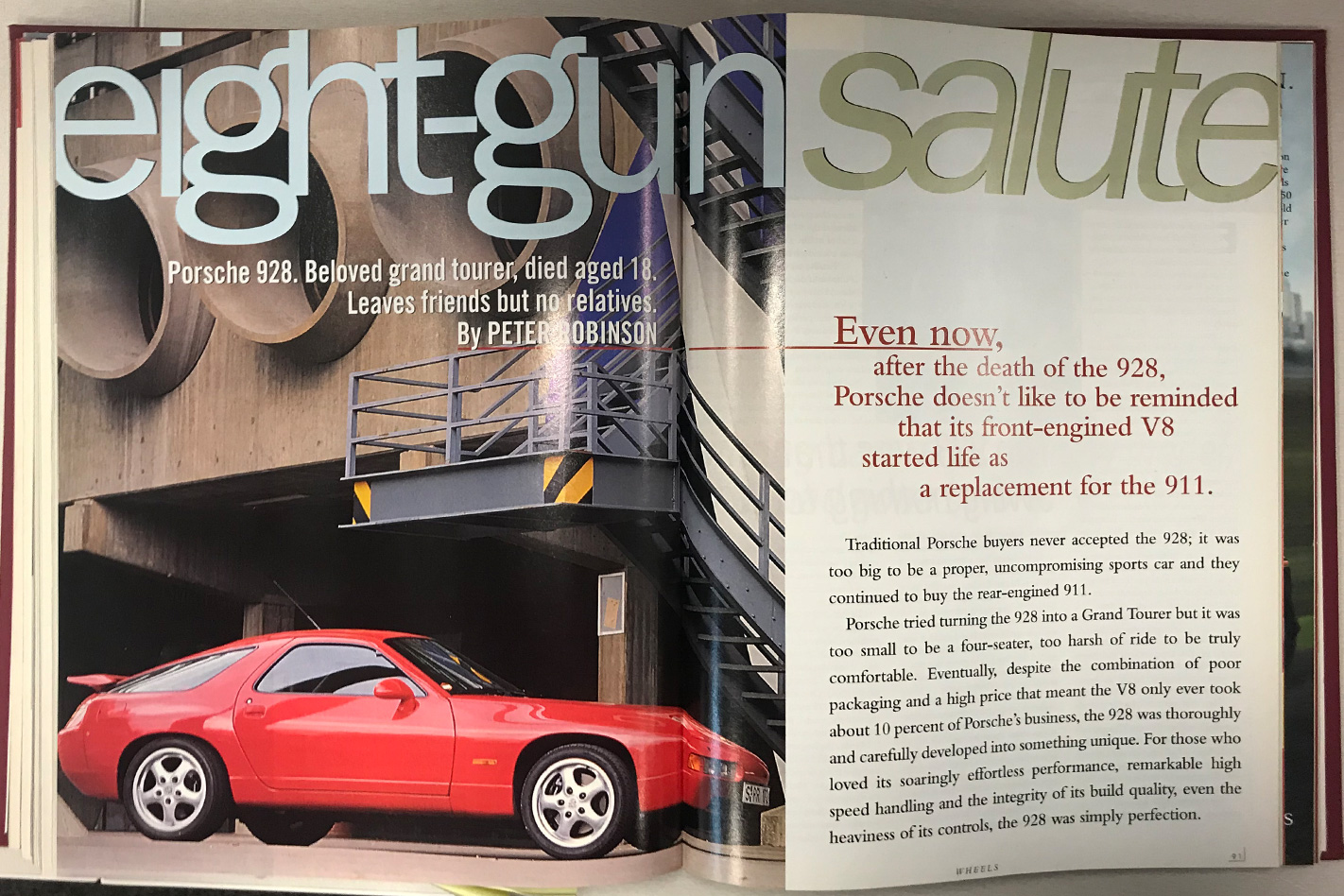
The 928 package called for a car slightly longer and wider than the 911. However, Mobius’ original width proposals were blown out the door when the engineers realised the GM automatic transmission they insisted upon using was going to add considerable width, if the car was to retain two, small rear seats. Eventually the 928 blew out to be 186mm wider than the 911. Mobius’ job was to disguise this width. By giving the new design extreme taper at both ends, Mobius managed to hide the length of the overhangs.
“I think it looks better today than it did 18 years ago,” Mobius told me. “It may have been too far-out; it wasn’t easy to understand initially.”
On this visit Porsche refused to provide an end-of-production date. Only months later did the press department admit the last car (of just 61,056) was built on July 26, 1995, four months before our visit.
The missing link
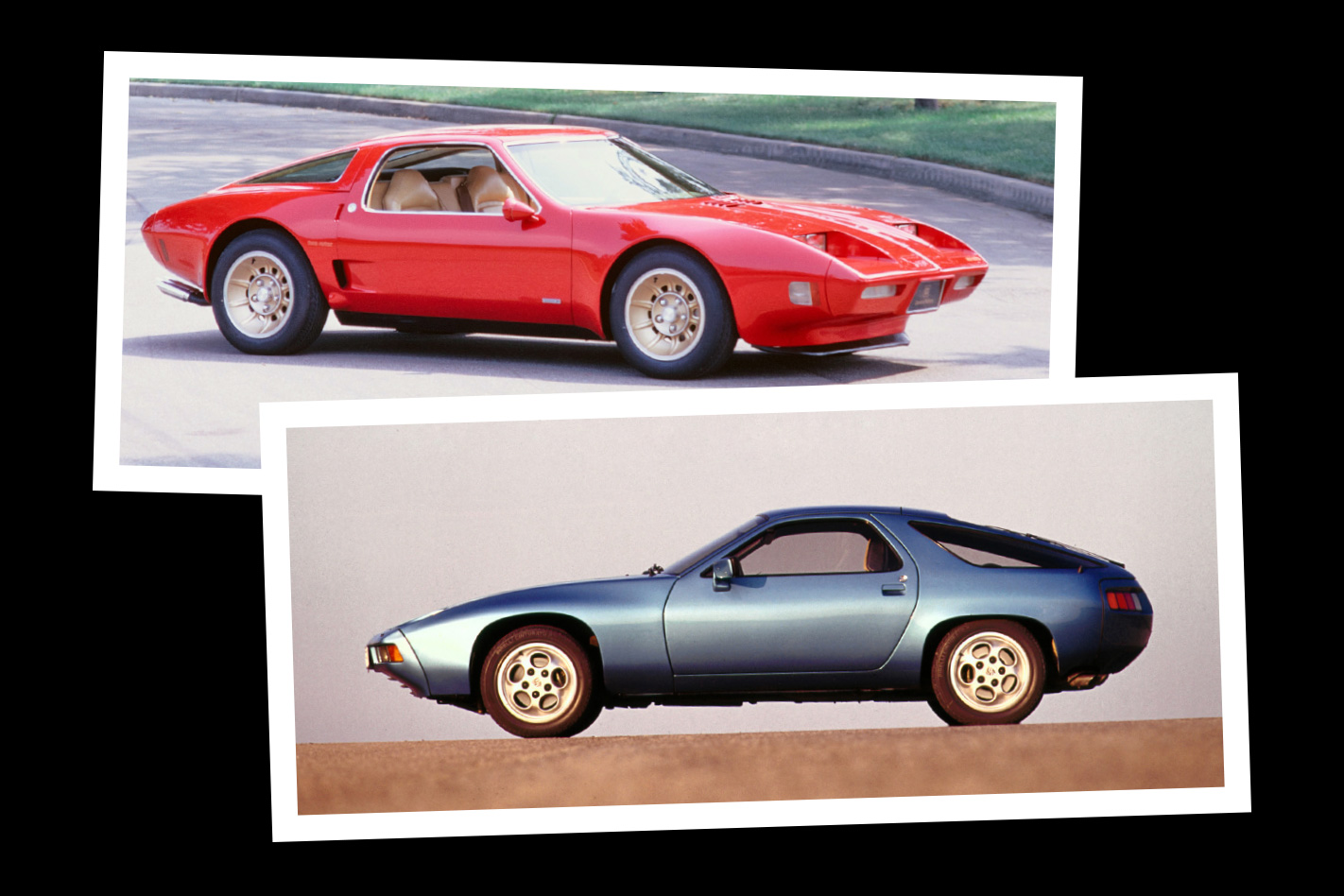
How many people today realise there is a design link between the 928 and the still-born 1973 two- and four-rotor Chevrolet Corvette concept cars? The Corvettes, built by Pininfarina on Porsche 914 chassis, were designed to a large extent by Tony Lapine before he was poached by Porsche, and share many of the same design elements as the 928. Soft corners, a wide B-pillar, even the overall shape of the doors, and the proportions, all look 928-ish.
What is it?
Now into its fourth generation, BMW’s all-new X5 is Australia’s best-selling premium large SUV and the German car maker plans on keeping it that way. A majority of the volume is likely to come from the most affordable 30d and 40i variants but, until an X5 M comes along, the most potent and driver-focused option is this – the diesel-powered M50d.

How much is it?
As the flagship, the X5 M50d costs from $149,900 which is pricey for a large SUV but comes packed with kit. Among premium diesel rivals, it bumps gloves with the Mercedes-Benz GLE 350d from $108,900 or, for a similar budget, you could have the V6 turbo petrol GLE43 AMG for $134,700.

If potent diesel power is your thing then you should certainly be looking at Audi’s SQ7 which costs $153,327 and brings a sophisticated V8 engine, while the Jaguar F-Pace 30d S is a compelling option in the luxury market from $101,795.
For the money, we would also recommend Porsche’s excellent Cayenne, but there’s no diesel in the current range to directly compete with the M50d.
Who is the BMW X5 M50d for?
Increasingly, Australian families are choosing large SUVs and dual-cab utes as the main family car and this model is targeting exactly that demographic with a little more cash to splash.
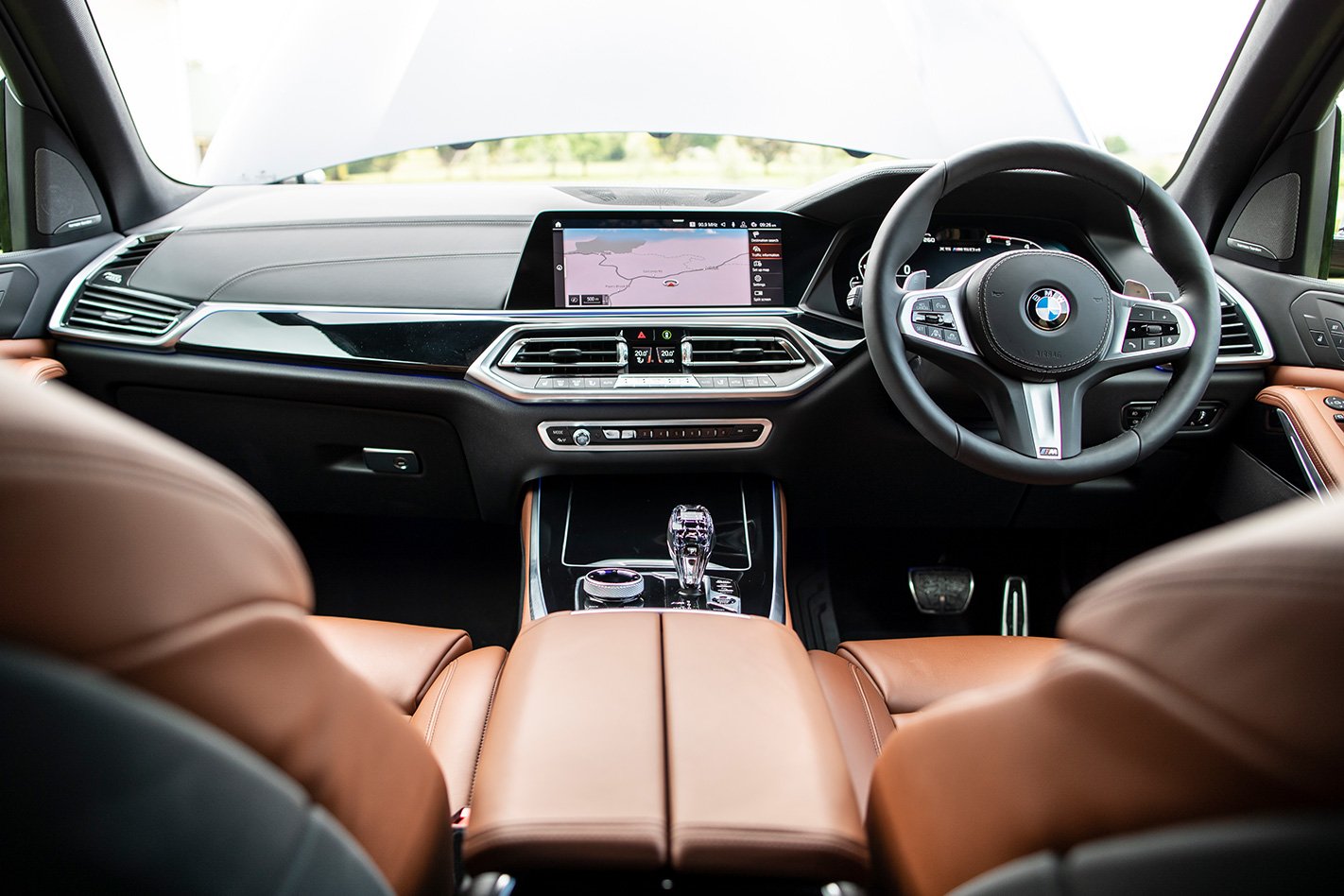
There are seven seats for the larger family, it offers a big (650L-1870L) boot and plenty of cabin space, lots of luxury and comfort features wrapped up in seriously handsome styling. Does that sound like a bit of you?
The X5 also has a number of all-terrain features including four-wheel drive but, with huge wheels wrapped in high-performance road tyres and lots of exposed paintwork, this particular version is perhaps not best suited to a family looking to stray too far from the beaten path.
Is the BMW X5 M50d easy to live with?
One of the first things that hits you soon after boarding the new X5 is just how large it is and how much it has grown over the outgoing model. The upside is a generous cabin with lots of light and space for all, but drivers not used to a similarly sized car might need a bit of time to get used to it – particularly if you are upgrading from the previous generation.

About town, the X5’s scale really becomes obvious although there are some very impressive parking assistance features that mitigate the problems associated with its measurements. There are more cameras around the perimeter of the X5 than a detention centre and the self-parking function is eerily effective if you choose to give up on manoeuvring altogether.
If however, a majority of your journeys involve freeway cruising and rural excursions, the BMW competes in a very luxurious and impressive class.
We took the M50d for a day out at the Portsea Polo and it quickly became apparent that a socialite gathering of wealth and fashion was the X5’s natural habitat. Parked among the Porsche Cayennes and Range Rovers, you might expect the BMW to feel a little out of place, but its massive wheels, stunning pearly white paint and head-turning details stood out among the more commonplace regulars.
If we happened to leave with a pony or two then the torquey engine and clever four-wheel drive system would have been perfect for a horse float too.

Speaking of horses …
How well does the BMW X5 M50d drive?
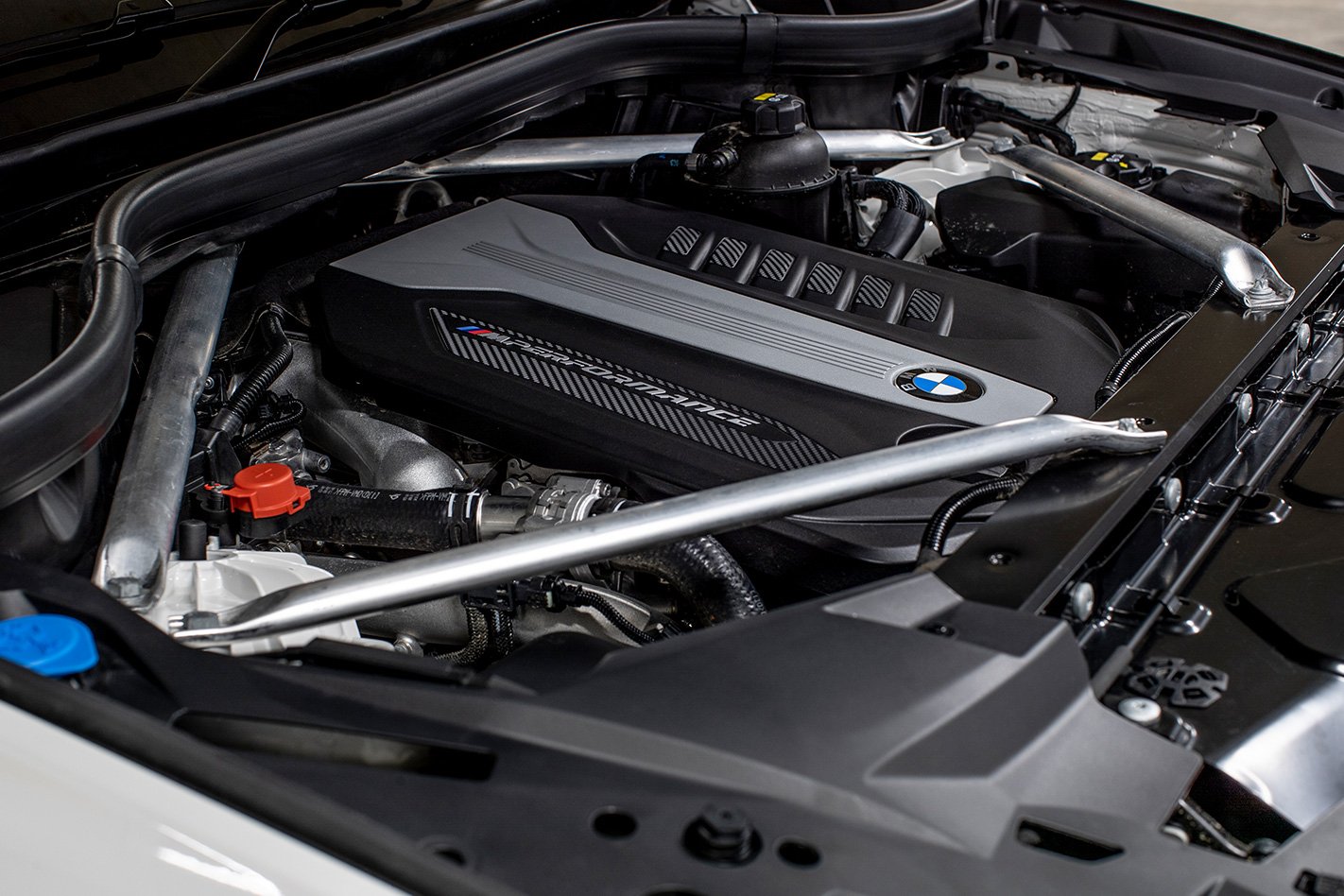
Like the more affordable X5 30d, this version has a 3.0-litre in-line six-cylinder diesel engine which, thanks to its quartet of turbos, finds a whopping 294kW and 760Nm – 99kW and 149Nm more than the 30d.
As you might expect, acceleration defies the X5’s size and weight, taking just 5.2 seconds to get from rest to 100km/h, says BMW. But thanks to the clever turbo arrangement, there is very little perceived delay before the full boost and power is liberated.
Whether it’s dragging a heavy trailer up a hill or simply embarrassing hot-hatches at the lights, BMW’s potent diesel engine is a formidable all-rounder, but despite its impressive honour roll, it still brags diesel efficiency. BMW claims 6.6L/100km and we managed a figure not far off that.
But the flagship X5 is not simply all brawn and no sophistication. Its quiet cruising manners and smooth ride enabled an opportunity to take in some of the cabin’s finer points.
A crystal gear selector with matching engine start button and iDrive scrolling wheel is definitely not to everyone’s taste, but it started to grow on us. Less divisive is the excellent interior design however.
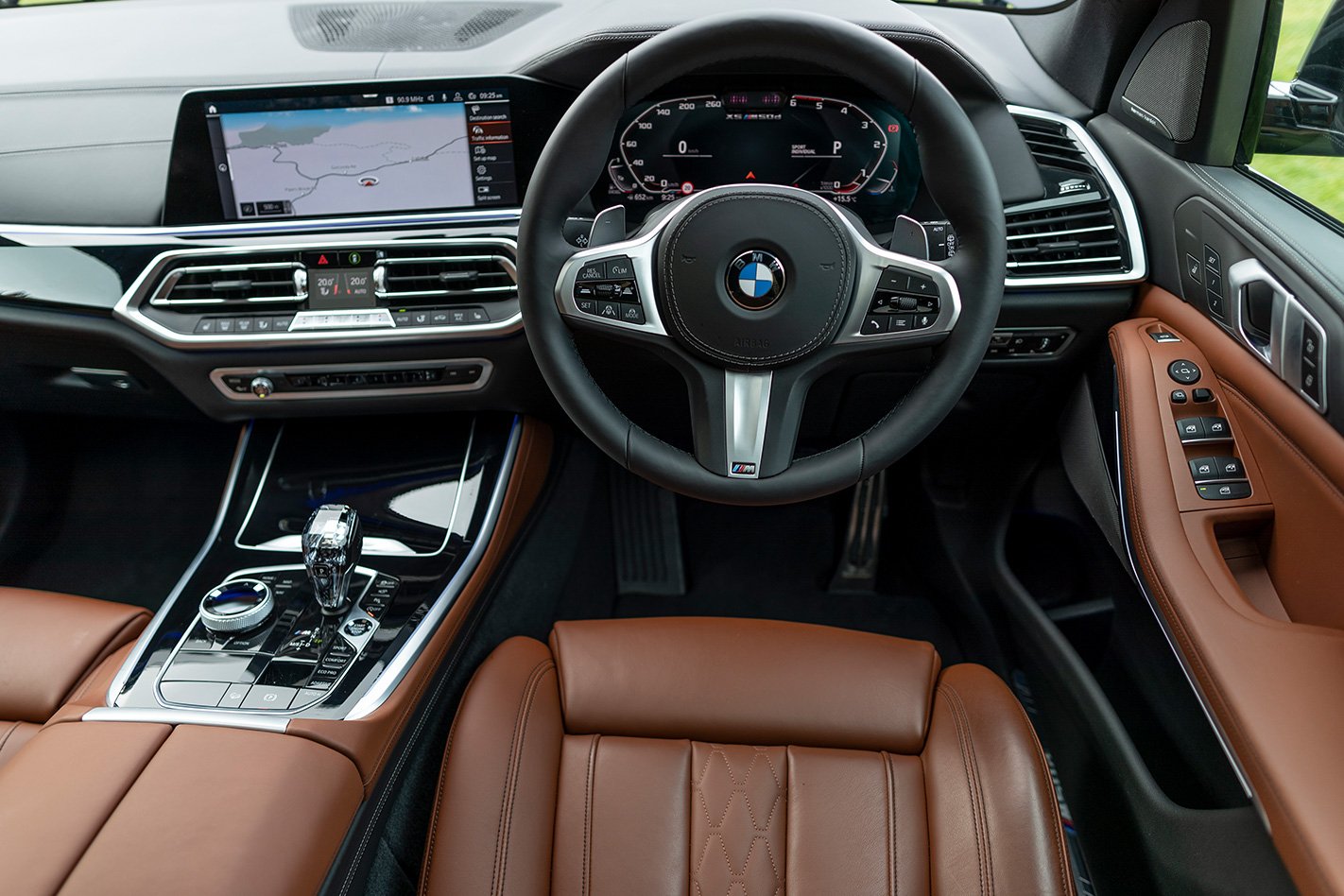
Seats are upholstered in top-quality materials and carry typical BMW DNA for a driver-focused position. There’s also the gesture control that has cascaded down from the 7 Series where it began and allows the stereo volume and phone calls to be controlled with a simple hand movement. The system is basic at this stage but we can foresee a more sophisticated version on the horizon that will allow better features.
Verdict
Pricey doesn’t have to equal poor value and BMW’s X5 hero is as much substance as it is expense. A quad-turbocharged engine is always going to inflate the asking price but, if you can stretch to it, the drivetrain is almost worth the price tag in itself.
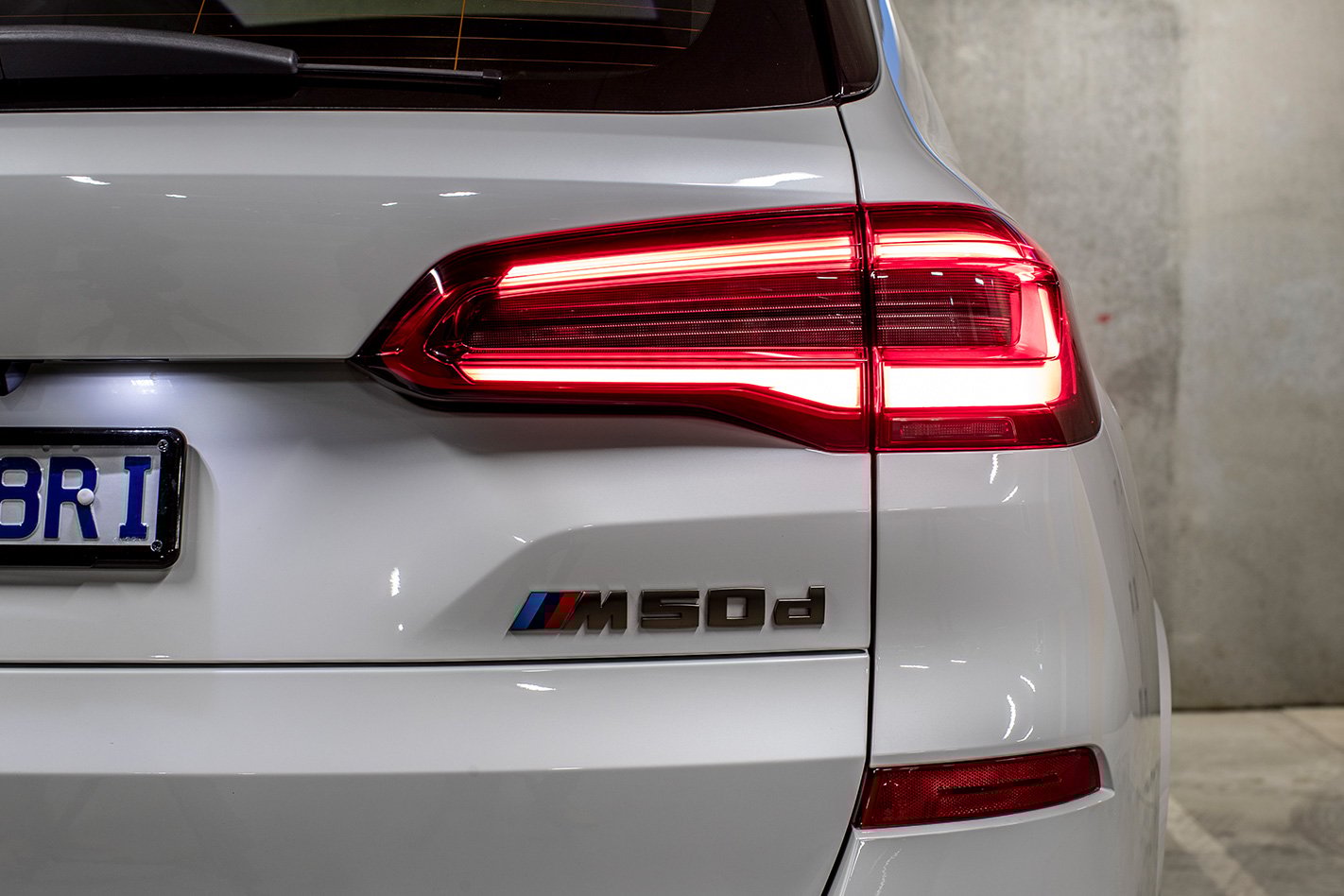
Add to that a package of beautiful design and quality, capped by practical touches throughout and the value of this big Beamer shines through.
An SUV designed to act as a high-riding sibling to the seductive and sporty Giulia? Can’t be done. Won’t be as enjoyable or as eye-catching. And definitely not with a diesel engine. These are all things I had sternly believed upon first learning about the Stelvio – even with the knowledge that ahead of its launch, the top-spec Quadrifoglio took out a new record for “fastest sports utility” at the beloved Nürburgring. This five-seater would be a second or third cousin, at the very best…
Well, armed with a base model diesel as my daily drive over the summer break, let’s say I was only half wrong.
What is it?
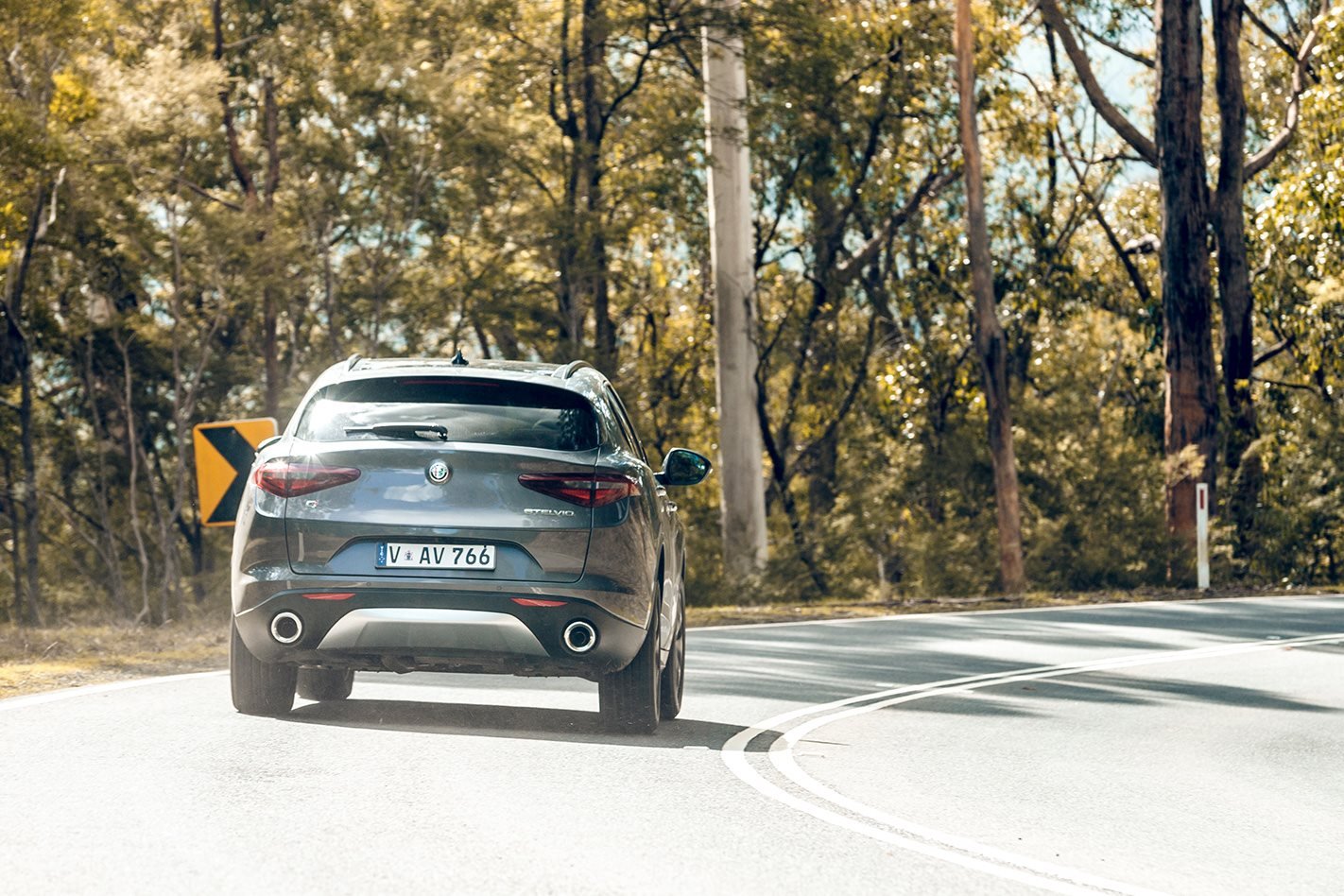
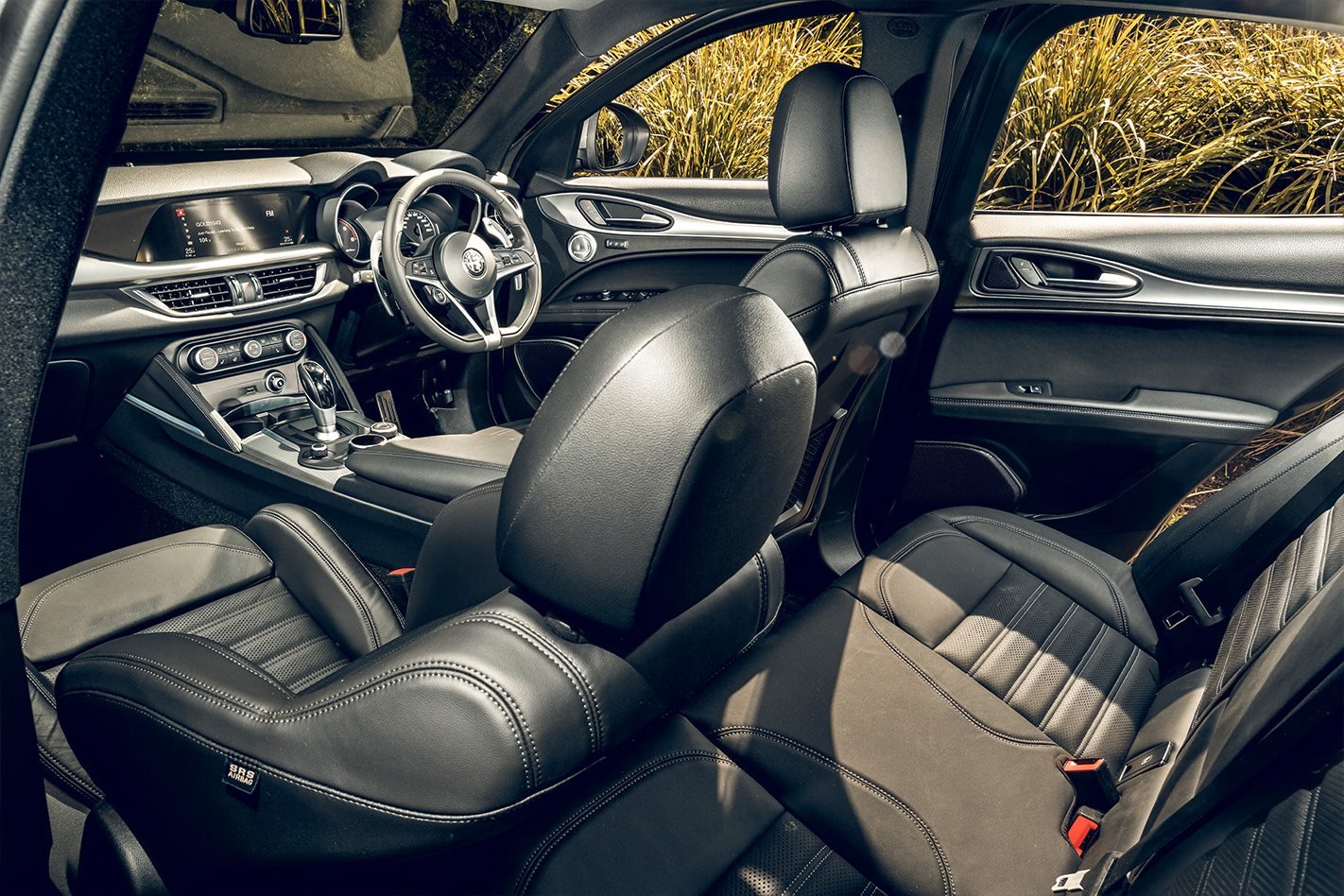
The Alfa Romeo Stelvio is the Italian brand’s first foray into the lucrative mid-sized SUV market which hit showrooms last year. As mentioned, Alfa has based this five-seater on the Giulia – and these are elements that can be seen in the styling of the racy instrument cluster, cabin, seats optional Ferrari-like silver paddles and steering wheel-positioned press button start and of course with the drop of that beasty twin-turbo V6 Stelvio Quadrifoglio.
Alas, that’s not the variant I’m driving, but just know that it exists, and on-paper, that six-figure-tagged Stelvio is likely to have the closest DNA to the Giulia. My summer ride is the 2.2L, turbo diesel four-cylinder, which sits alongside the four-pot petrol Stelvio at the bottom of the range. In between this and the Quadrifoglio, there is also a mid-spec Ti.
In terms of rivalry, the Stelvio’s biggest competition is the Jaguar F-Pace, Porsche Macan and Mercedes-Benz GLC.
How much is the Alfa Romeo Stelvio Diesel?
Normally priced at $67,900, which is just above the $65,900 price tag of the petrol equivalent, this particular model is the First Edition – which offers a stack of added extras well worth the $6000 for the First Edition Pack. This pack is a sweet spot of leisure-y accents adding comforts that take this from a cheap-looking, luxury-priced SUV to something with a bit of attitude and much-needed showroom appeal. As personally, I find the standard Alfa Romeo base cabin too plastic and cheap-looking, something that would become one of those gripes that would only grow on one’s nerves over time.
The standard model comes with autonomous emergency braking, lane departure warning, blind spot monitoring, front- and rear parking sensors, rain-sensing wipers, bi-Xenon headlights, hill descent control, and DNA (dynamic, natural and all-weather) drive modes, Apple CarPlay and Android Auto, digital radio, heated seats, power tailgate, auto dimming rear-view mirror, reverse camera and a 900w Harmon/Kardon stereo.
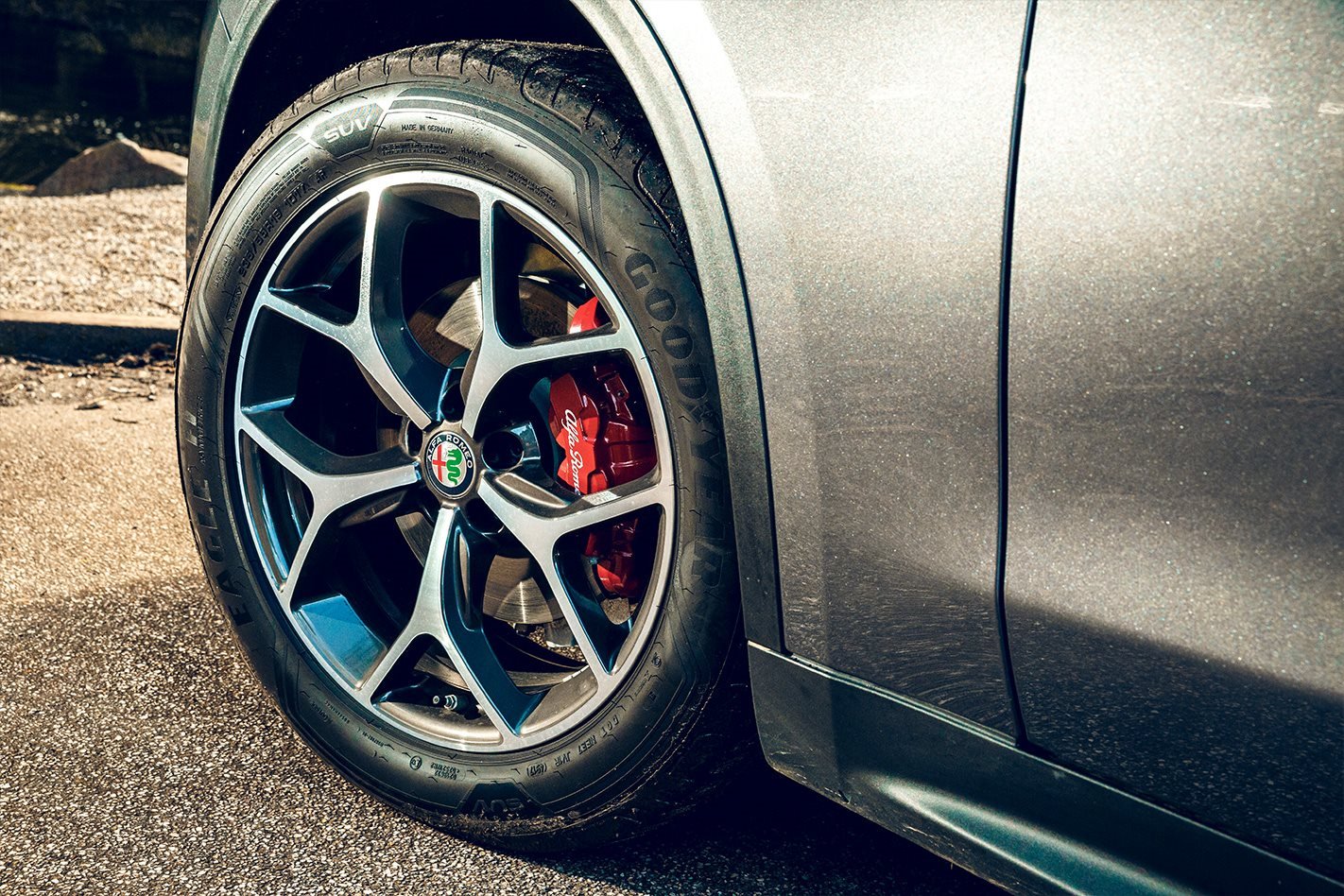
However, the First Edition pack includes 19-inch First Edition alloy wheels, a huge panoramic sunroof, leather seats, sports steering wheel, a banging 14 speaker 900W Harmon/Kardon sound system, red brake callipers and glossy, black window surrounds and aluminium trim and sports paddles inside the cabin.
Aside from the stereo, another element I was particularly thankful for in this pack – especially when hammering this thing down the Hume Highway and on some dirt tracks around the outskirts of Canberra – it also comes with tricky KONI adaptive shocks, which puts miles between the handling of the standard non-adaptive dampers.
All that, plus $1300 for the car’s metallic paint, brought this model to $75,200 – again, excellent value when you consider that Alfa charges $2200 for a sunroof and $1500 for the same stereo system in the Giulia.
Who is it for?
Gunning for a piece of the SUV pie usually points to one thing – wanting more women behind the Anonima Lombarda Fabbrica Automobili Snake-stamped wheel. So yes, Alfa Romeo’s intent with the Stelvio was to appeal to more women.
On the surface, the Stelvio’s interior appears quite masculine, but my main gripe of this car is the huge front A-pillar and compromised cabin vision. Because of the thickness of the pillar, combined with close, chunky side mirrors, there is a huge frontal blind spot going on here – which I found dangerous at intersections and even caused me a very close call with a tiny MX-5 on a roundabout.
Either a woman wasn’t consulted, or vision for those of small stature wasn’t even put into consideration.
I also wouldn’t call it a family SUV. Yes it has a pair of ISOFix points for the rear seats and a five-star ANCAP rating, but backseat vision gets pretty tight with that rounded-off body shape – small humans might get easily frustrated.
So who is this best made for? Well, car enthusiasts wanting an SUV with some sporty chutzpah, adventurers after an SUV that is at once stylish, sexy and not your run-of-the-mill make – I drove this Stelvio around for two weeks and didn’t once see a single other Stelvio on the road. Yes, it’s new, but I love that this is a sort of object of desire, because, at the moment, these things seem to be few and far.
Is the Stelvio Diesel easy to live with?
This SUV is incredibly easy to live with. This is a true lifestyle car; headroom for grown adults in the back, well-bolstered seats for long drives, a sexy exterior and a take-me-anywhere attitude. From beach adventures with a carload of mates to carting my Great Dane X around town, I had no complaints from the rear seat – especially once I had pointed out the two USB port.
The boot capacity is a mild 525L (with seats up), but was more than enough for some suitcases and Christmas Presents- though, for your average family, it might prove a struggle.
Alfa Romeo’s infotainment system has certainly had an upgrade from the small Nintendo Game Boy-esque screens of past cars, but it is still super-easy to use with the centre dial – I particularly enjoyed the easy of the dial-driven in-built nav, compared with some of the other, cheaper makes on the market that use the QWERTY-style input.
The downside to Alfa’s system, which many people have pointed out on this site before, is the dinky reverse camera; which, when compared to its rivals, isn’t really of a luxury-car standard.
How well does the Stelvio Diesel drive?
Over two weeks, my average fuel consumption sat between 6.8L/100km (around town) and 8L/100km (on a long road trip) – keep in mind, the latter had me driving this on long stretches of highway, with some hill climbs thrown in. Alfa’s official thirst consumption rating is 4.8L/100km. I was still impressed with exactly how well it did, not to mention how quiet this diesel is. Actually, to be honest, the air conditioning’s weirdly deafening roar bothered me more than any road noise or engine noise could have.
The Stelvio is beautifully nimble, even with this donk. The silver paddles, analogue instruments and low centre of gravity give it this sexy, sports-driven sensory element, not often found in mid-sized SUVs- or at least, something that usually comes via gurgles of engine noise and right-foot plants.
That said, when driven in any other mode than Dynamic, despite its spritely 154kW/470Nm power/torque numbers, it was sluggish off the mark – devastatingly so. Let’s say I put those paddles and that eight-speed-gearbox to work with many a necessary downshift – but once you’re up there and in Dynamic, this thing is intuitive and sharp.
Verdict:
Just a day into my loan, I was flinging this 1660kg-ish thing around twisty turns, happily shocked to discover that it was nimble way beyond what it should be, quieter beyond what it should be and interestingly, snapping necks on the street more than I ever expected it to. I do think the latter comes down to its current esoteric status and bold, curvaceous shape.
We are overwhelmed with choice when it comes to uninspiring SUVs that are seemingly made to appeal to every… single… family’s desire. What Alfa has done here is make something that doesn’t punish the motoring enthusiast for needing/wanting/succumbing to the benefits that an AWD, mid-sized SUV provides.
While I have major gripes with some of the design cues, its non-performance drive modes and the fact it may not be the best family car around, it’s almost a lock for for singles or couples wanting something nimble, sexy and dynamic that can tackle fun roads, carry a Great Dane in the back and get you from Sydney to Canberra on a single tank of fuel.
I’m actually, and somewhat shockingly, convinced that Alfa Romeo has actually achieved what it says it could with the Stelvio. And, to be honest, I kind of love its arrogance…
DESPITE withholding some core information about the new Mustang Shelby GT500’s powertrain, the early numbers suggest that Ford has revealed one of the most exciting engines of the year.
The supercharged bent-eight is reported to develop big power, and sounds as tough as a bare-knuckle boxing dinosaur.

Currently, Ford isn’t revealing exact power and performance figures for the GT550, instead stating it will produce “more than” 522kW (no torque figure is provided), crack the 0-97km/h sprint in the mid-3.0 second bracket, and cut a sub-11 second quarter mile. Those are bona fide supercar numbers.
View more photos of the new Shelby Ford Mustang GT500
The Blue Oval’s being surprisingly tight-lipped around much of the GT500’s technical information and final performance figures – wanting instead to drip-feed titbits until the car is launched later this year.
However, the company has let slip some of the details behind the supercharged V8.

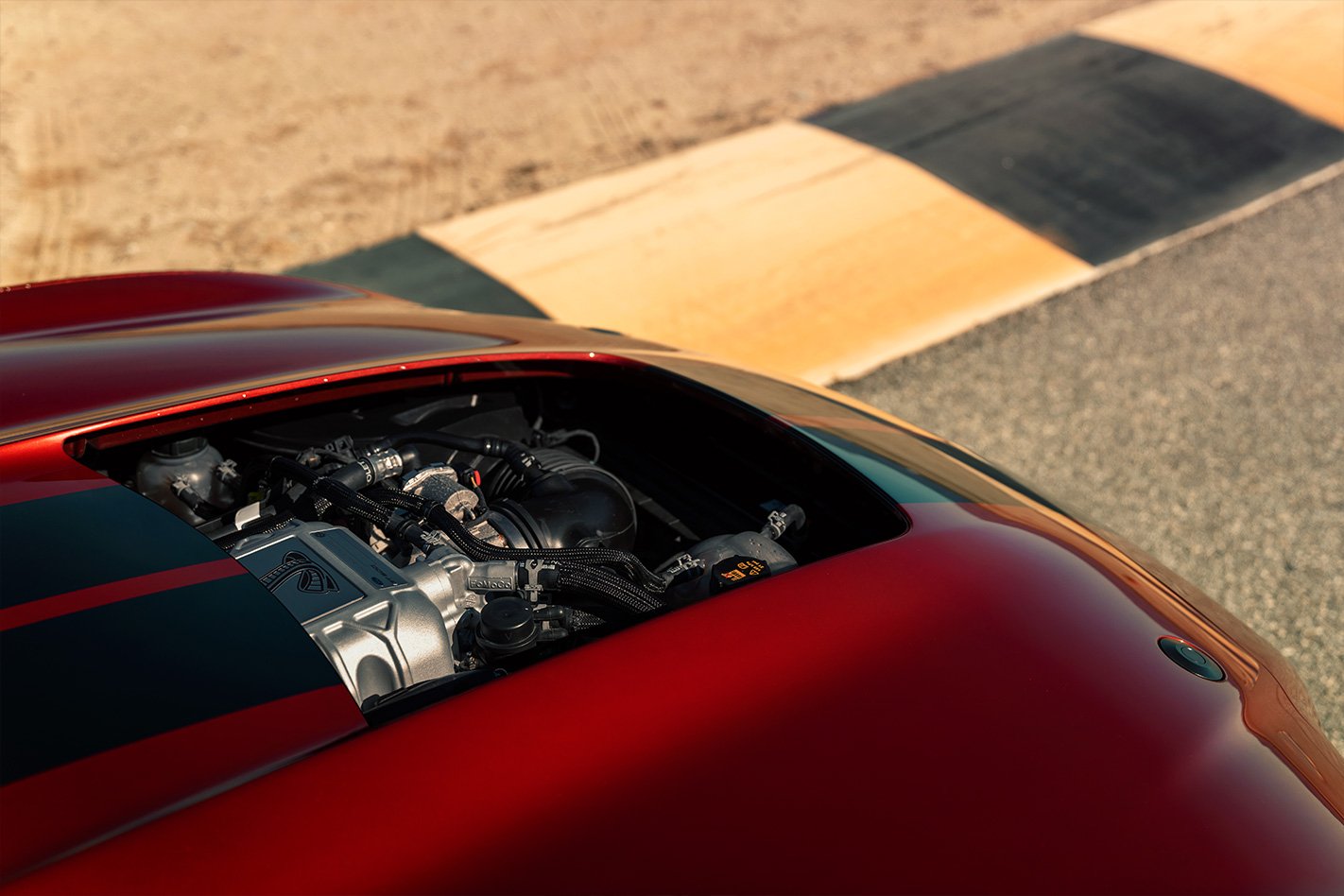
The 5.2-litre engine which powers the GT500 starts life as the block which is fitted to the naturally-aspirated GT350 – known as the Voodoo engine.
While it started life identically to the GT350’s power unit, Ford’s engineers had to modify the block significantly to cope with the extra boost and power associated with supercharging.
Changes include longer bolts for the cylinder heads, new gaskets, additional cooling units, and new seals, along with modified cylinder heads designed to cope with the extra heat and pressure.

Allowing the engine to huff down more air is a 2.65-litre Roots-type supercharger, which pumps 12psi of boost. The intercooler for the Eaton-built supercharger is hidden between the engine’s cylinder banks to keep the centre of gravity as low as possible.
Speaking of intercoolers, the GT500 has no fewer than eight heat exchangers – two for the engine, two for the supercharger, one for the transmission, one for the oil, one for the rear axle, and an air conditioning condenser.
When fitted to the GT350, the Voodoo engine has a flat-plane crank, which allows the atmo ‘stang to rev to a higher 8250rpm redline.
This was replaced with a traditional cross-plane crankshaft, with Carl Widmann, chief engineer at Ford Performance, telling Road and Track that the GT350’s crankshaft wouldn’t have had the same benefit in the GT500.

“You don’t really need it,” he explains. “Because you’ve got such a short runner off the supercharger … you don’t get a benefit going to a flat plane.”
The GT500’s gaping maw isn’t some frivolous design either, with the engineering team making the frontal opening twice as large as the GT350’s for better cooling.
All that work results in the GT500 having the most powerful engine ever fitted to a roadgoing car in Ford’s history.

Grunt is transferred from the engine to rear treads via a dual-clutch transmission – a first in Mustang history.
The seven-speed unit is supplied by Tremec, and delivers power through a carbonfibre driveshaft and Torsen limited-slip differential. It’s rumoured that this DCT transmission will also be supplied to General Motors for the mid-engined Corvette C8.
While it’s not coming to Australia officially, Mustang Motorsport will be bringing the car Down Under in very limited numbers.
TESLA’S Model 3 got the better of not only its premium sedan rivals but also every other SUV to land the crown of America’s best-selling premium car of 2018.
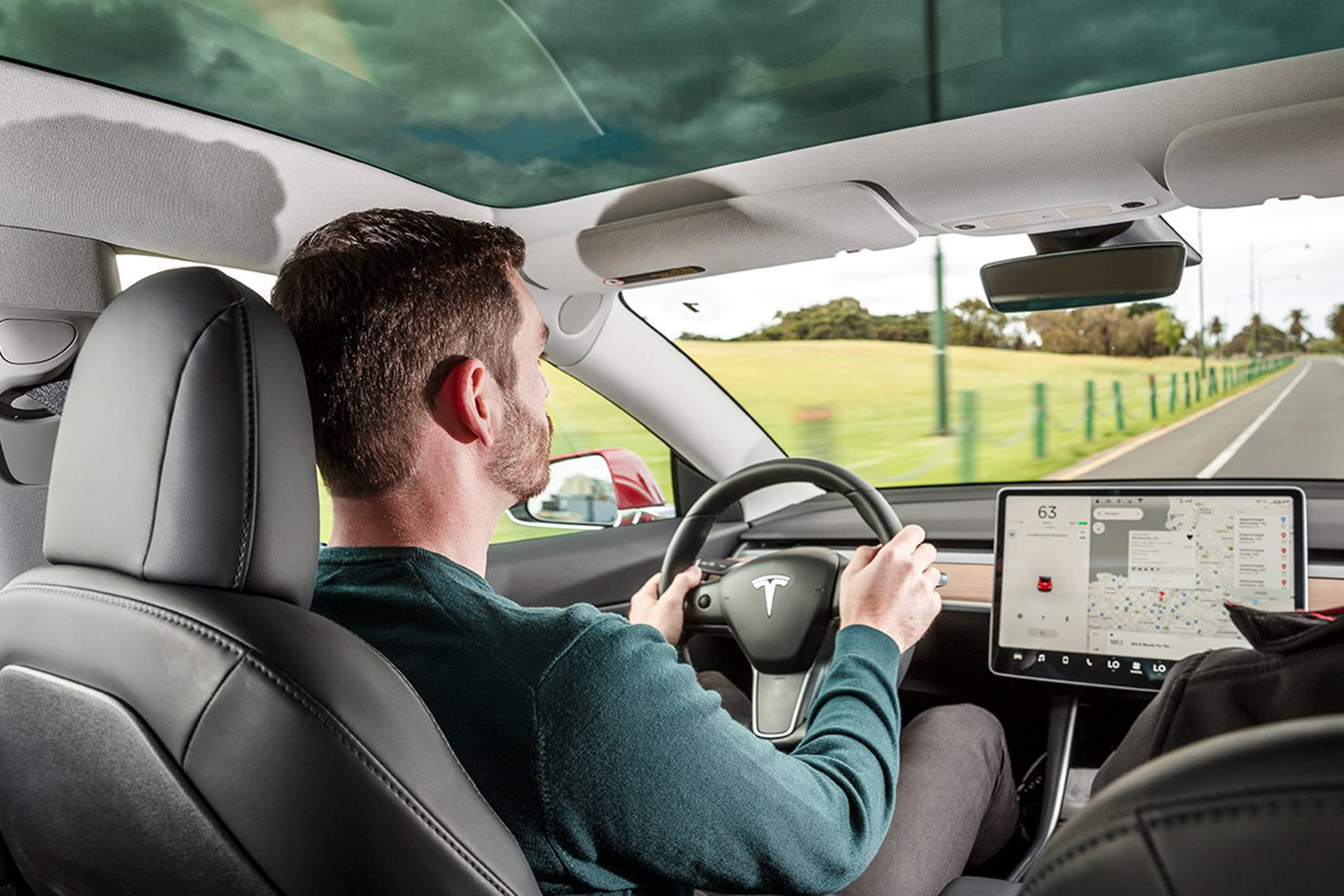
It marked a very special year for the company as it finally began to see light at the end of its ‘production hell’ tunnel. In fact, it sold more cars in 2018 alone than it had for every previous year combined.
The company shifted 245,240 vehicles globally, which still makes it something of a minnow compared to giants like Toyota, Ford and General Motors.
Nevertheless, more than half of those sales were Model 3 registrations in the US, with InsideEVs claiming that the Model 3 found 139,782 new homes in the States.
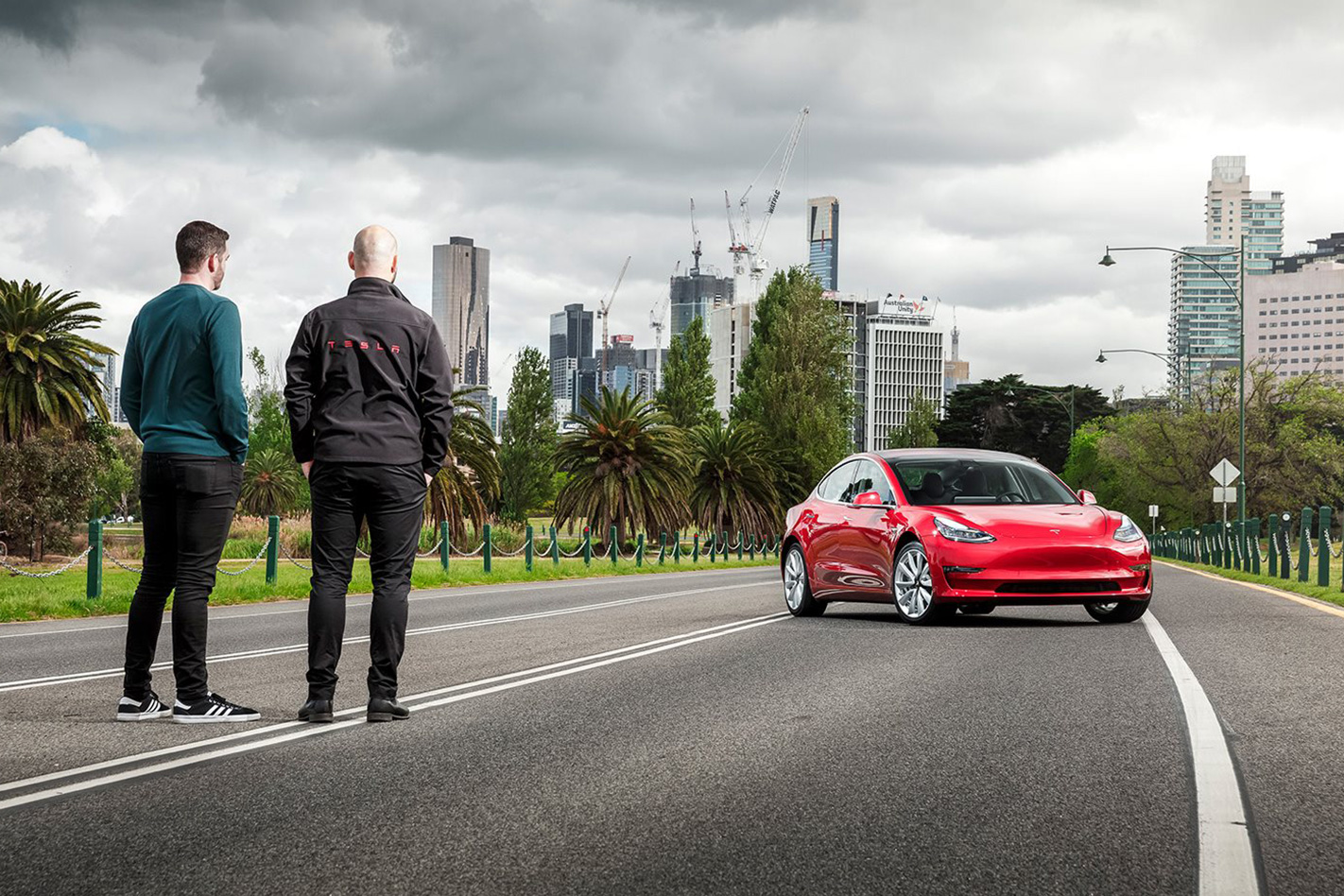
The runners up included a cavalcade of light trucks, the Lexus RX shifting 111,641 units, followed by the Mercedes-Benz GLC (62,435 units) and Audi Q5 (61,835 units).
That’s quite an achievement for a car that’s new to market and a breath of fresh air if you’re depressed by the fact that SUVs increasingly dominate sales charts.
What’s more, the Model 3’s growth ramped up as production issues were ironed out.
The third quarter saw 55,000 registrations, with 63,000 going out of the Fremont factory’s doors in Q4.
That is only set to accelerate still further with the introduction of a more affordable rear-wheel drive version with a standard battery that’s slated to arrive towards the end of Q1 2019.
Right hand drive production is slated to begin in mid-2019 with Australian imports arriving shortly thereafter.
The 2019 Kia Picanto GT is here, a five-door micro car with a turbocharged 1.0-litre three-cylinder engine belting out 74kW and 172Nm. A hot hatch? Possibly not – read our review here.

But at $17,990 drive-away, it is very affordable. As a slightly more athletic version of the regular Kia Picanto, the GT could somewhat legitimately lay claim to the title of “Australia’s most affordable performance car”.
It also bulks up the range, being a new addition to the Picanto family and sitting at the very top of the lineup above the Picanto S, Picanto GT-Line and the limited-run Picanto Australian Open Edition.
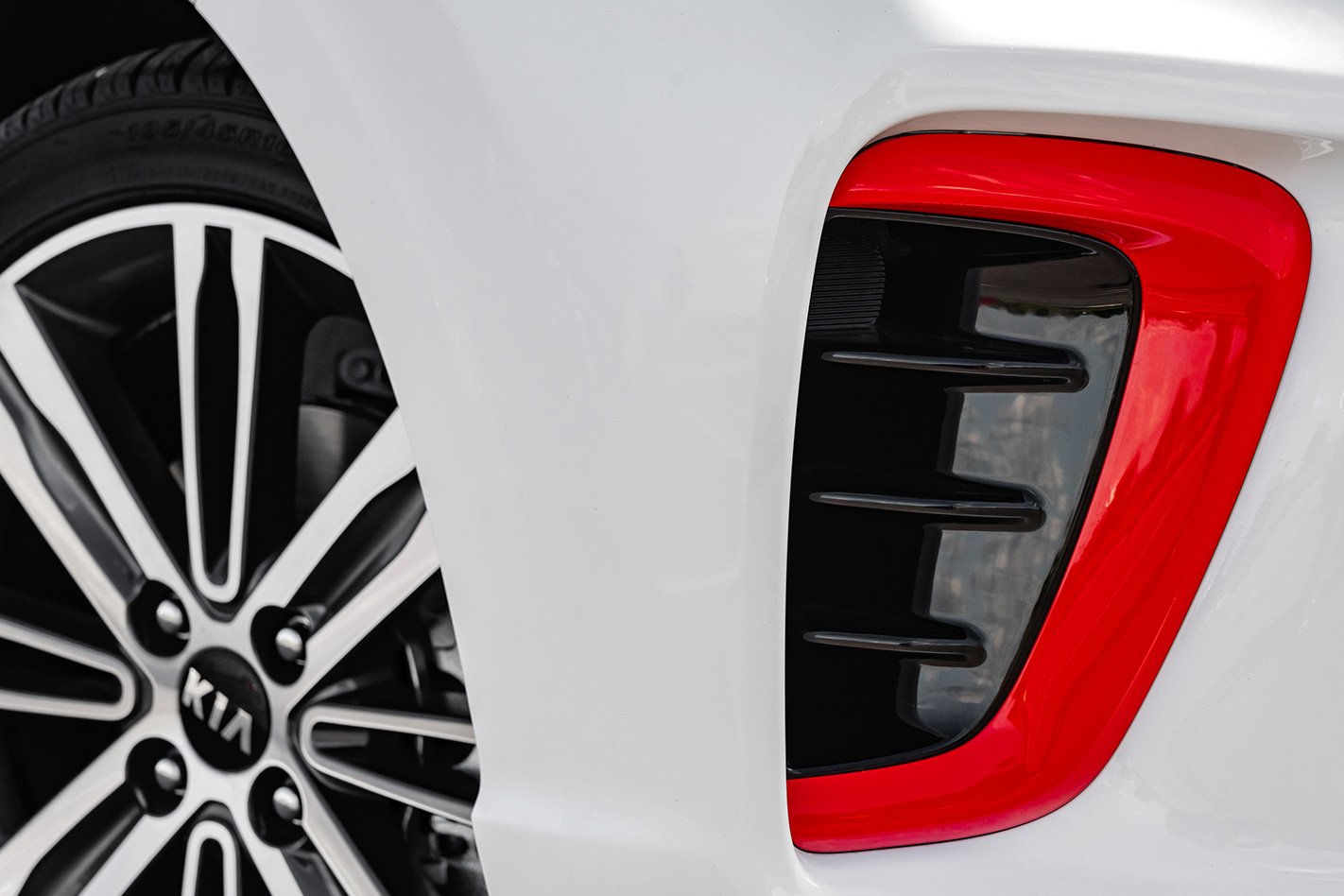
However, it’s not for everyone. The Kia Picanto GT comes with a five-speed manual only for now, and like the rest of the Picanto range you’re locked into a five-door bodystyle too. If you prefer an automatic, you’re fresh out of luck.
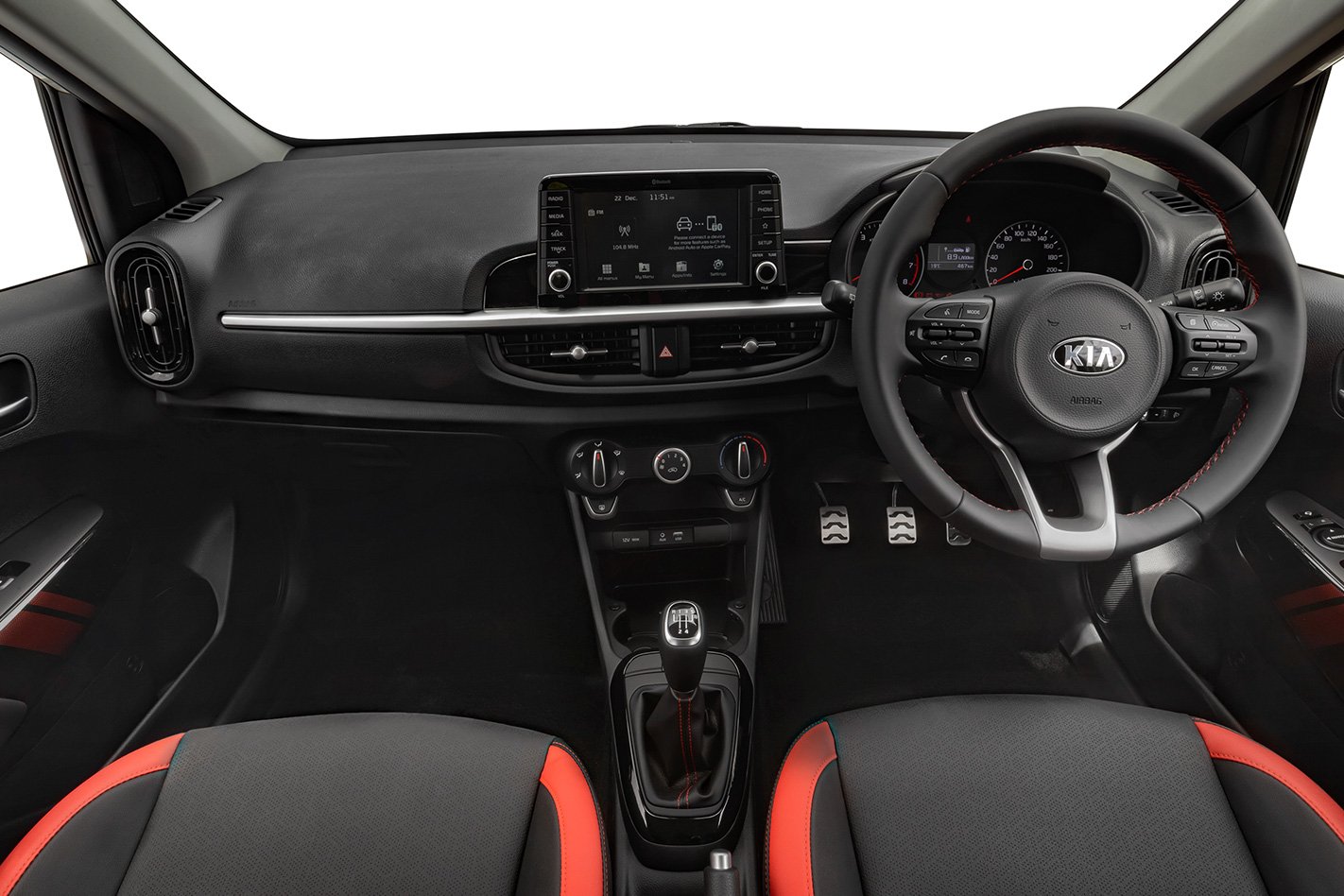
There is, however, a seven-year manufacturer warranty. Not to mention a standard equipment list that’s impressively lengthy. Highlights include:
- Apple CarPlay connectivity
- Android Auto connectivity
- 7-inch touchscreen with reversing camera
- Reverse parking sensors
- Autonomous Emergency Braking (AEB)
- Bluetooth connectivity with steering wheel controls
- Automatic headlights
- Cruise control with speed limited
- Body kit including accents and twin exhaust
- 16-inch alloy wheels
- Premium seats with red accents
- Six airbags
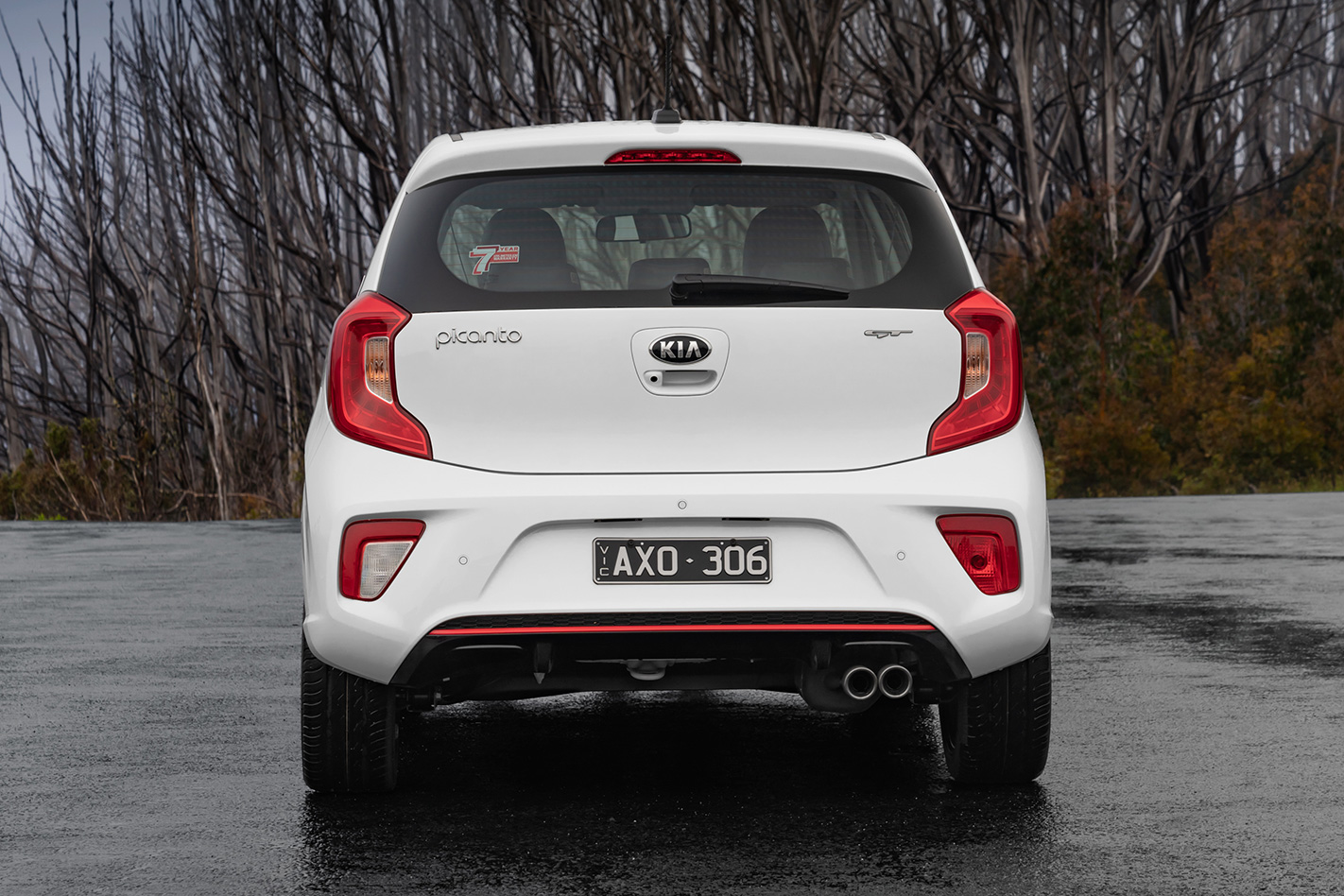
The only option available for the GT is premium paint, which carries a $520 additional cost. Considering the Picanto GT costs a mere $17,990 drive away, it represents a fairly keen deal.
