
With a month of vehicle sales still to go in 2018, Australia’s favourite brands have all staked their claim on a top 5 spot, led by Toyota, Mazda, Hyundai, Mitsubishi and Ford. However things are still very much in the air further down the list, which should mean plenty of competitive pre-Christmas pricing as brands strive to maintain their top 10 positions.
Whatever happens this month, the 2018 Top 10 will look different to 2017, with Holden slipping from 4th spot down to as low as 7th, if Kia has a strong December.
Holden currently sits in 6th spot, with its market share dropping from 8.2 percent in 2017 to 5.2 percent by the end of November 2018.
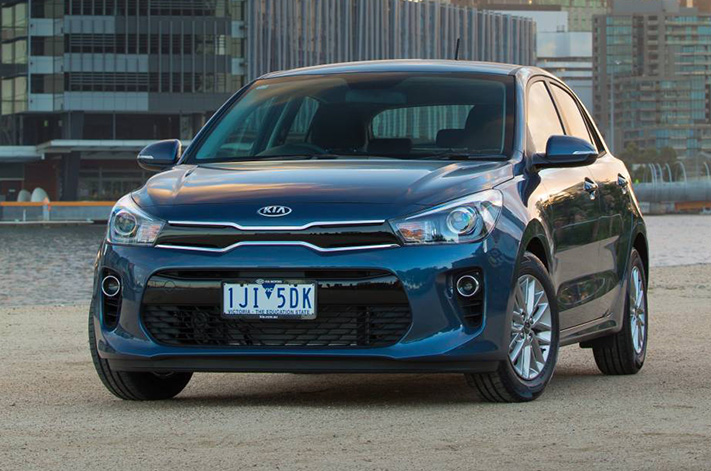
So far this year Holden has sold 55,929 vehicles, just 1328 more than Kia, which currently sits 7th, up from 9th at the end of 2017, its charge led by the Rio small car, Sportage SUV and Carnival people mover.
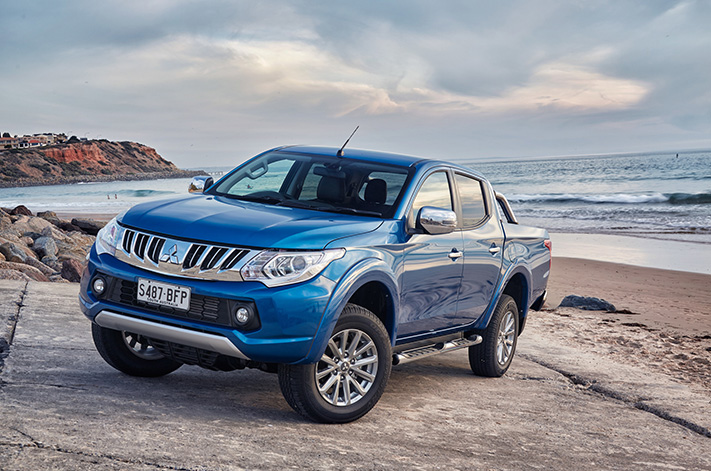
Mitsubishi has all but secured fourth placing this year on the back of strong sales of its Triton ute and ASX small SUV.
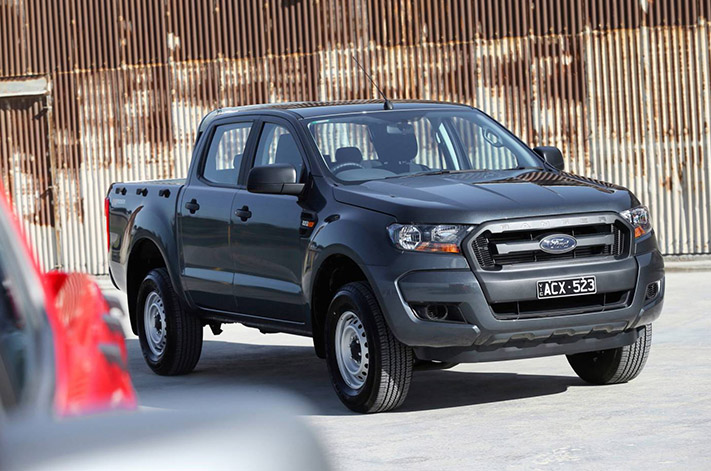
Ford looks to have snared fifth spot for the year, up from 6th in 2017, with 63,851 sales up to the end of November. More than half of these sales were Ranger utes (38,779).
Like Kia and Mitsubishi, Nissan and Honda also defied the overall market to grow their brands this year.
Nissan sits at 8th spot with five percent market share on the back of 53,129 sales to the end of November, which is just 1436 fewer than Kia and 836 more than Volkswagen. Nissan outsold Kia and Holden in November and would be hoping for a similarly strong December to stay well within the top 10.
Top tips: Inside advice on getting the best deal on a new car
Honda, which didn’t finish in the top 10 last year, is hanging in there with 47,336 sales so far this year, but will be looking over its shoulder at 11th placed Subaru whose 46,565 sales give it a chance of stealing back 10th by December 31.
No other brands are in contention to make the Top 10, with luxury brand Mercedes-Benz a long way back in 11th with 29,967 cars and SUVs so far this year. This is actually more than Ford if you don’t include the big-selling Ranger.
As expected the top 3 for 2018 will remain the same as last year with Toyota defying to downward sales trend to so far boost its market share from 18.4 percent in 2017 to 18.9 percent with 201,070 sales. That’s almost double Mazda which sits No.2 with 103,151 sales, while Hyundai sits third with 88,421 vehicles sold.
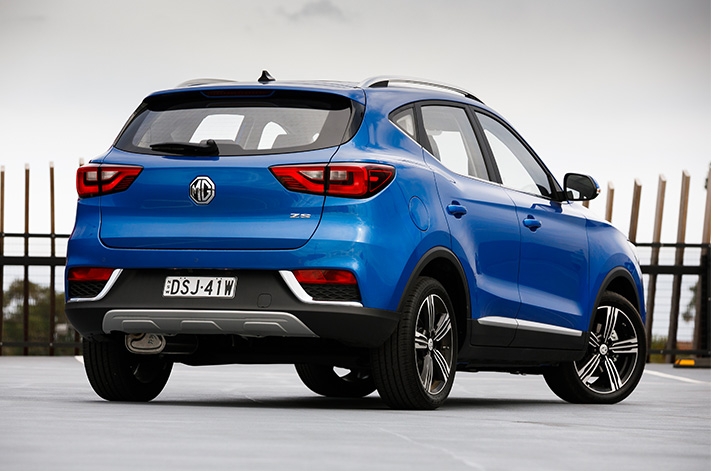
Outside the top 10 most brands have had fewer sales, reflecting the entire market’s 1.9 percent overall drop, though there were a couple of exceptions at totally opposite ends of the market: MG’s year to date sales are up 395 percent from 546 to 2706, while Ferrari sales jumped by 24.7 percent from 176 to 222.
2018 November/YTD sales Top 10
Brand | Nov 2018 | YTD 2018 | YTD Market Share |
Toyota | 18,271 | 201,070 | 18.9% |
Mazda | 8905 | 103,151 | 9.7% |
Hyundai | 7869 | 88,431 | 8.3% |
Mitsubishi | 6953 | 77,638 | 7.3% |
Ford | 5519 | 63,851 | 6.0% |
Holden | 5125 | 55,929 | 5.2% |
Kia | 4644 | 54,601 | 5.1% |
Nissan | 5330 | 53,165 | 5.0% |
Volkswagen | 4713 | 52,139 | 4.9% |
Honda u00a0 u00a0 | 3732 u00a0 u00a0 | 47,336 u00a0 u00a0 | 4.4% u00a0 u00a0 |
M-Sport has revealed its latest motorsport creation and the first developed entirely by its Polish branch, the Ford Fiesta R2 rally car.
Set to continue running in the Junior WRC, and with previous R2 drivers such as Elfyn Evans and Craig Breen now fully-fledged WRC drivers, M-Sport has placed high expectations on this generation of R2.
Ford has provided financial support to M-Sport for the development of the R2, and as such the British motorsport brand says it has been able to improve the car in “every element” thanks to its R2 team in Krakow, Poland.
Based on the road-going Ford Fiesta ST-Line, the R2 runs on 999cc EcoBoost power, with 147kW and 290Nm on tap. A Sadev sequential 5-speed ‘box hints at how little this car shares with with the road-going version.
A new suspension setup also includes three-way and two-way adjustable Reiger dampers at the front and rear respectively, as well as Eibach springs and an optional anti-roll bar.
Maciej Woda of M-Sport’s Polish arm says the team is “extremely proud” after the effort it has put into the new R2.
“It’s the first car to be fully designed and developed here in Krakow, and a tremendous amount of effort, passion and enthusiasm has gone into making this project as successful as possible,” Woda says.
“Sharing information with the engineers and designers back in Cumbria, we’ve been inspired by the success of the championship-winning Ford Fiesta WRC and every component has been designed to make this new car as strong and as innovative as possible within the regulations.
“But the main philosophy of the Fiesta R2 remains – giving the stars of the future the perfect platform with which to hone their skills and show what they can do in the early stages of their careers. “
It really is an unfair comparison. We’d spent the previous day belting the pick handles out of Ferrari’s latest and greatest with the 599 GTB (see MOTOR July 2006). Today there’s a choice of F430 coupe and Spider, or 612 Scaglietti.
This review was originally published in MOTOR’s July 2006 issue
The 612 is still a Ferrari but it’s the big daggy four-seat one. It’s hardly the Prancing Horse you daydream about blowing your lottery winnings on, but this 612 is fitted with the HGTC handling and performance kit.
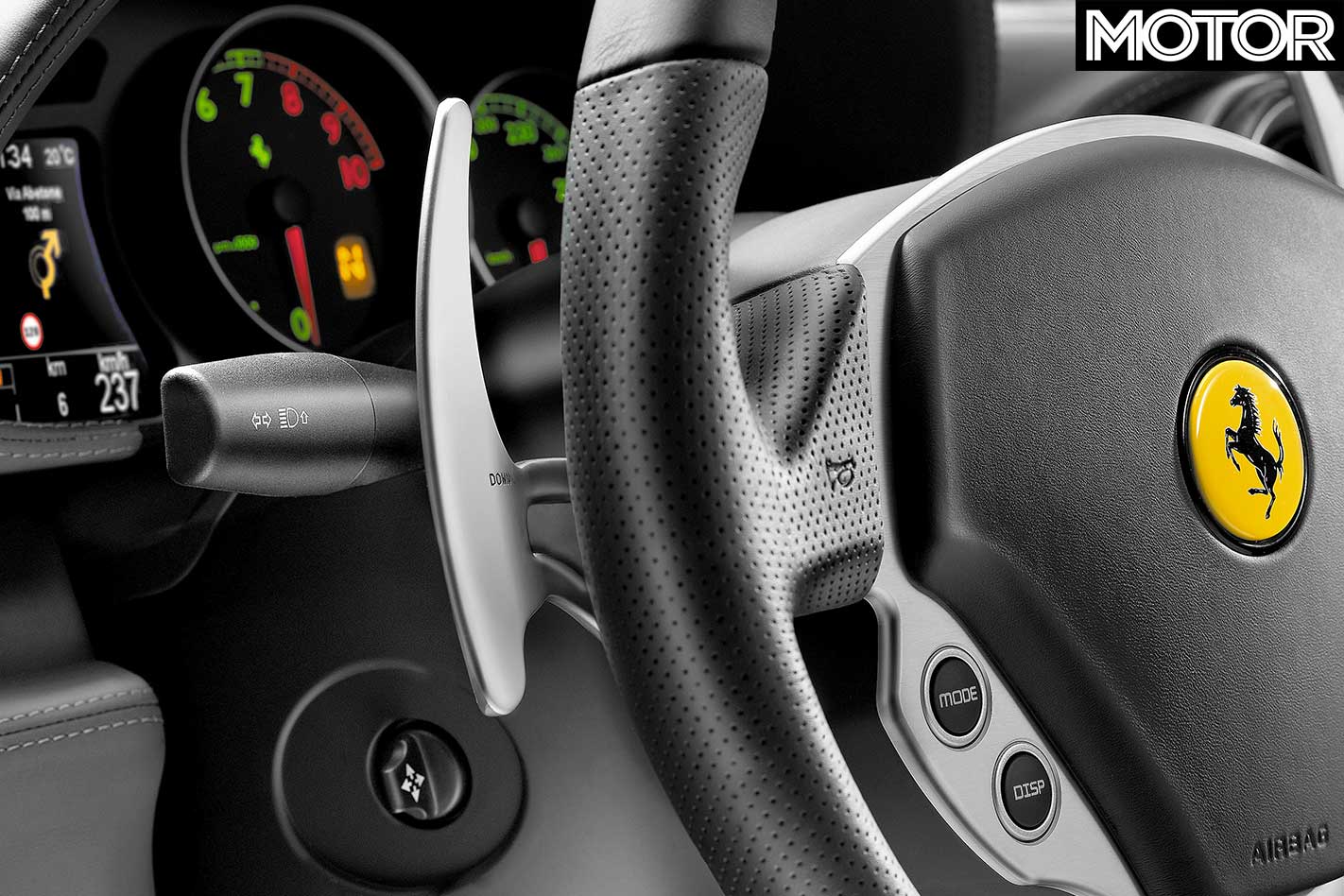
If you’re a complete nutter, you can also option your boulevard bruiser with Pirelli P Zero Corsa semi-race rubber. Can you imagine rocking up to a track day in this bad boy?
On the same roads we’ve belted the lithe 599, the 612 feels every millimetre of its 4902mm length (that’s longer than a Commodore). The Scaglietti also tips the scales at 1840kg and that weight really tests the chassis and brakes on fast roads. On the run into a corner you need to fully lean on the brakes to haul the pace down, and though they do the job there’s a sponginess to the pedal that fails to inspire confidence.
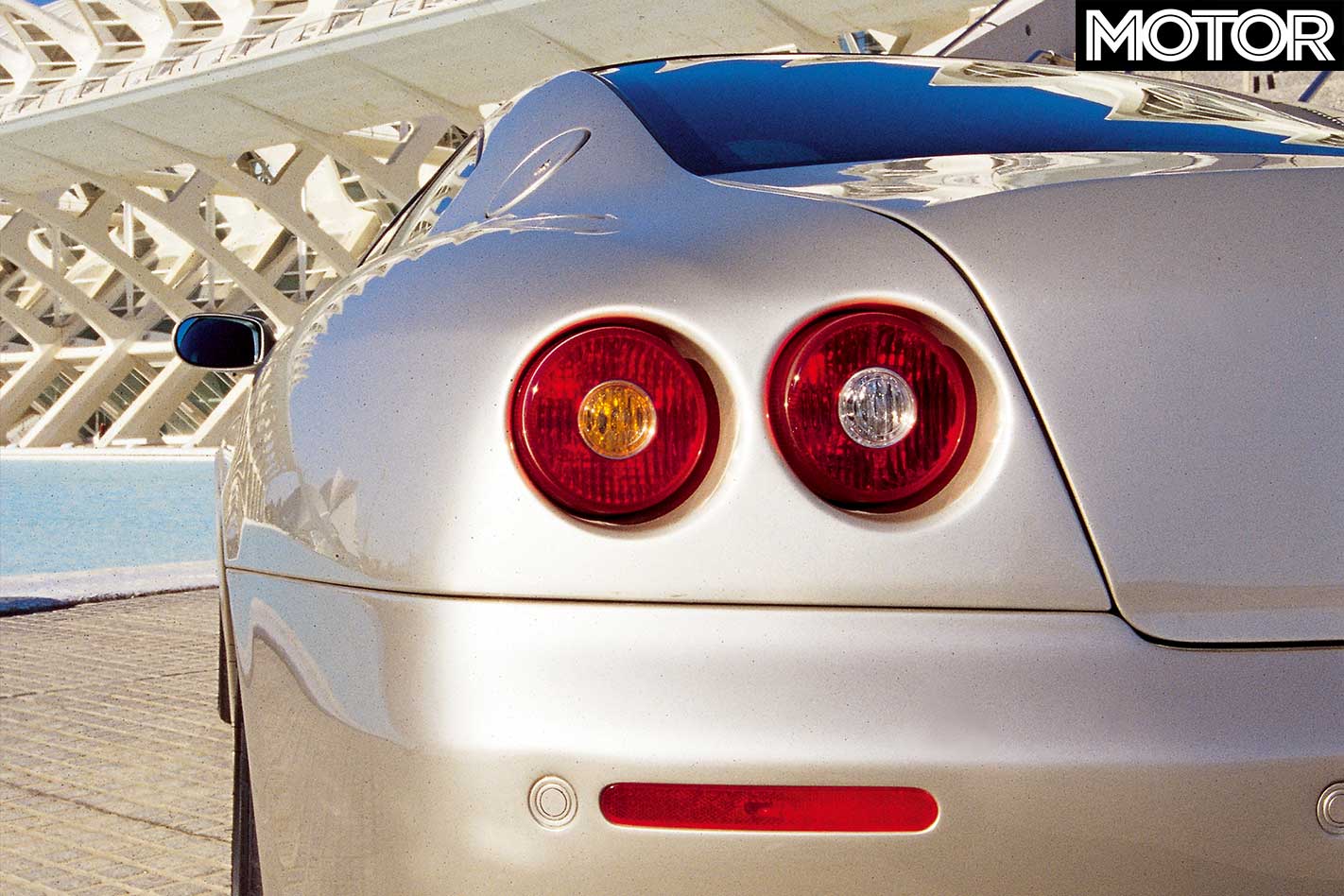
The steering feels slow and you’re often caught short mid-corner, forcing you to grab another armful of lock. But for all the negatives the car feels very balanced (weight is split 46:54 front to rear), and with a 2950mm wheelbase there’s every chance you’ll catch any slide. Actually the 612 would make a great, if perverse, drift car.
Strange as this sounds given this is a 397kW, 588Nm car, but the 612 really doesn’t feel like that fast on tight roads. But on more open roads the big girl gathers her skirts, and once she passes 150km/h the 612 comes into her own. And that’s the whole point of the Scaglietti, to eat big distances while carrying four people and their gear – there’s room for four sub-six-footers.
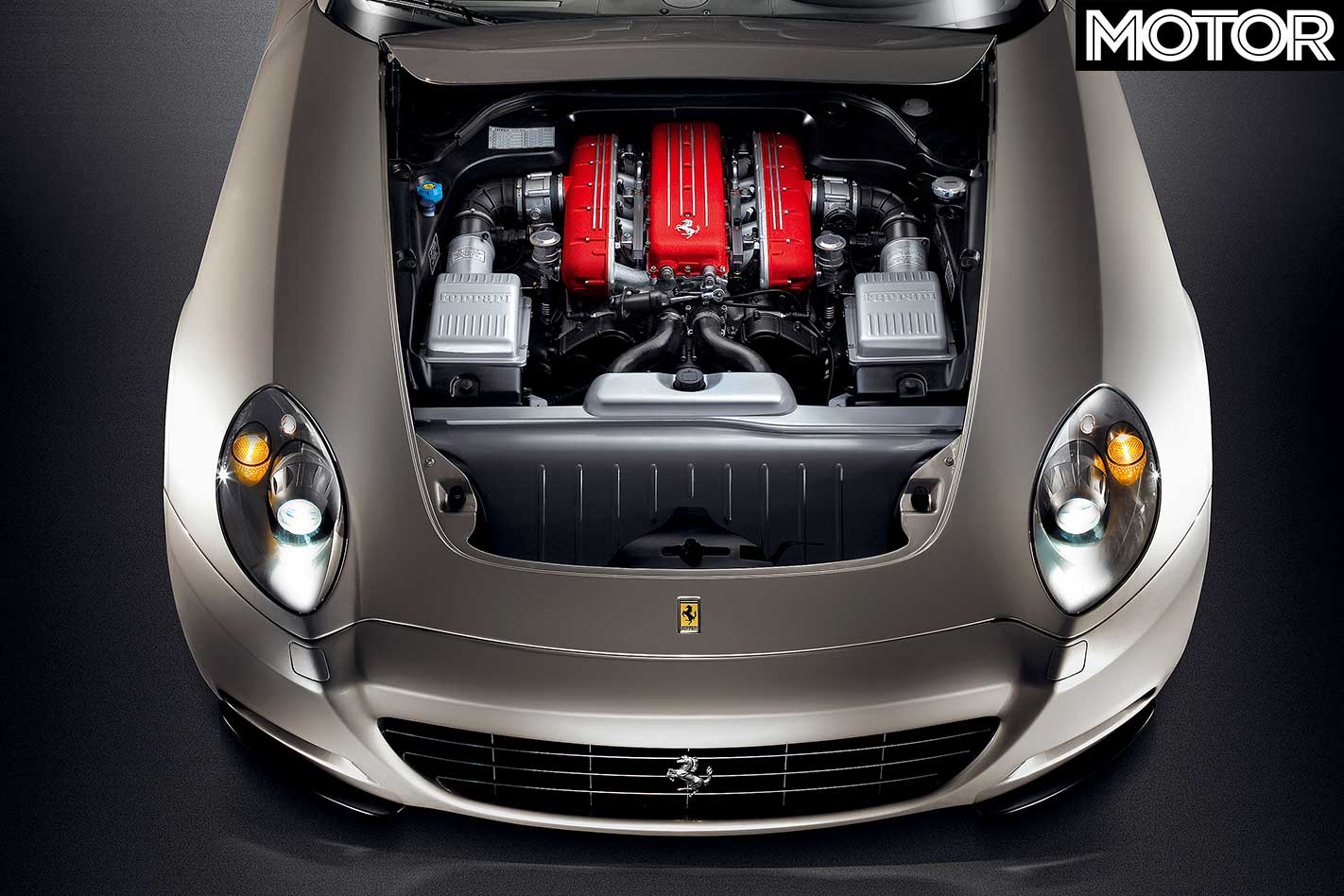
Dynamically the 612 is never going to compete with the other members of the Ferrari family, but a car like a Scaglietti will almost certainly share garage space with something sportier anyway. So the 612 needs to compete not with 911s, but with luxury GTs like Bentley’s Continental GT and Aston Martin’s DB9, something it does with ease.
FAST FACTS 2006 Ferrari 612 Scaglietti HGTC Engine: 5.75-litre DOHC 48-valve V12 Power/Weight: 397kW/1840kg Drive: rear-wheel Price: $621,000
A fully-furnished luxury apartment in Miami is set to sell for AUD$51.55m, a price which includes a new Lamborghini Aventador and Rolls-Royce Cullinan.
Located at the top of The Mansions at Acqualina tower, the penthouse called Palazzo del Cielo is a 13,000 square-foot statement of prosperity. Or debt.
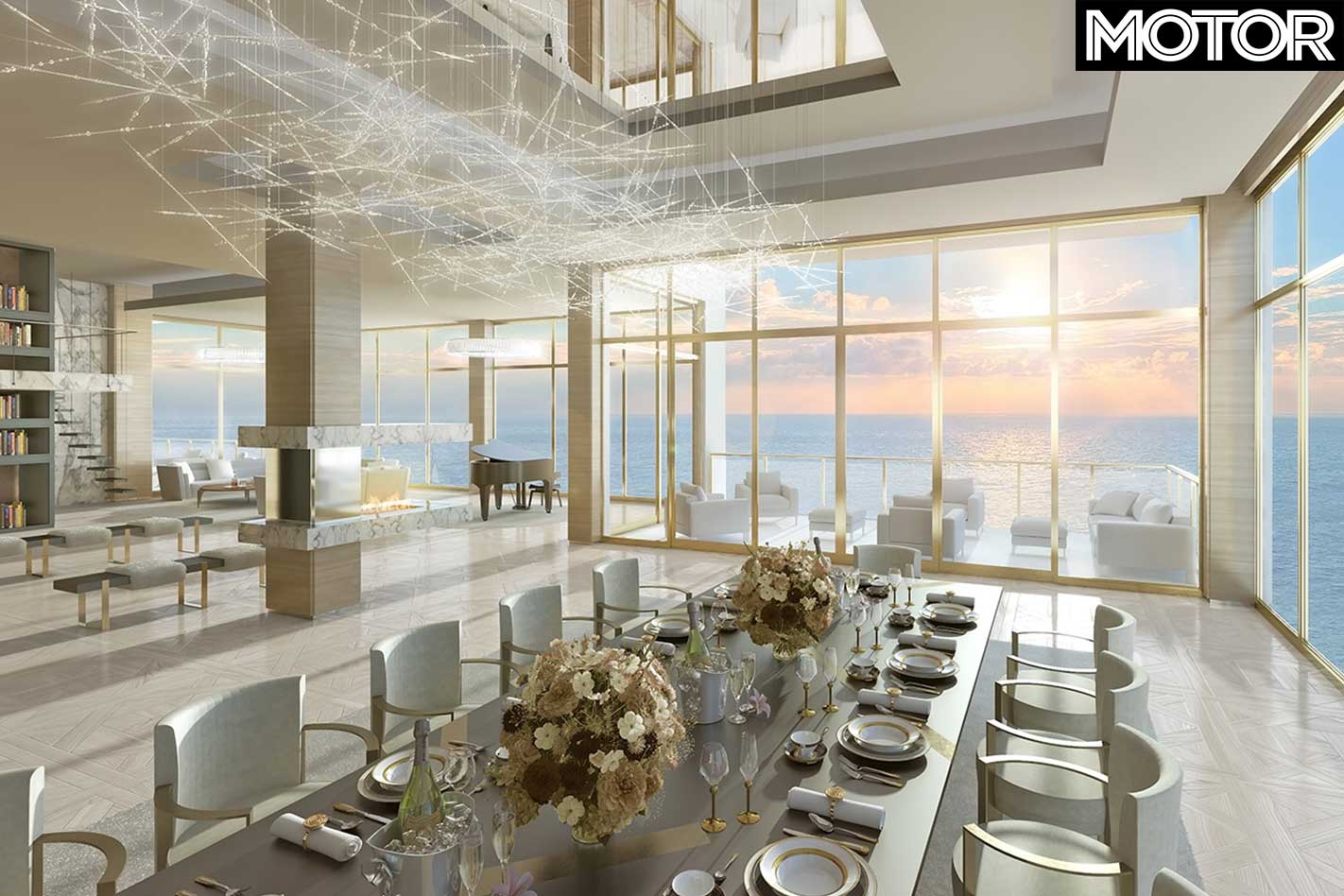
The ‘apartment’, if you can call it that as its name translates to ‘Palace of the Sky’, features four bedrooms, eight bathrooms, a terrace with a glass-bottom pool, and a sauna. But it’s what comes with the garage we care about.
The 6.5-litre V12-powered Aventador won’t at all look out of place cruising Miami’s wealthy streets at night, while the Cullinan is arguably the most luxurious runabout ‘offroader’ you can have. Not that any of them will likely leave the blacktop.
Rolls Royce says the brand which built the residences actually has a large fleet of Rolls-Royce cars. The largest private fleet in the world, in fact.
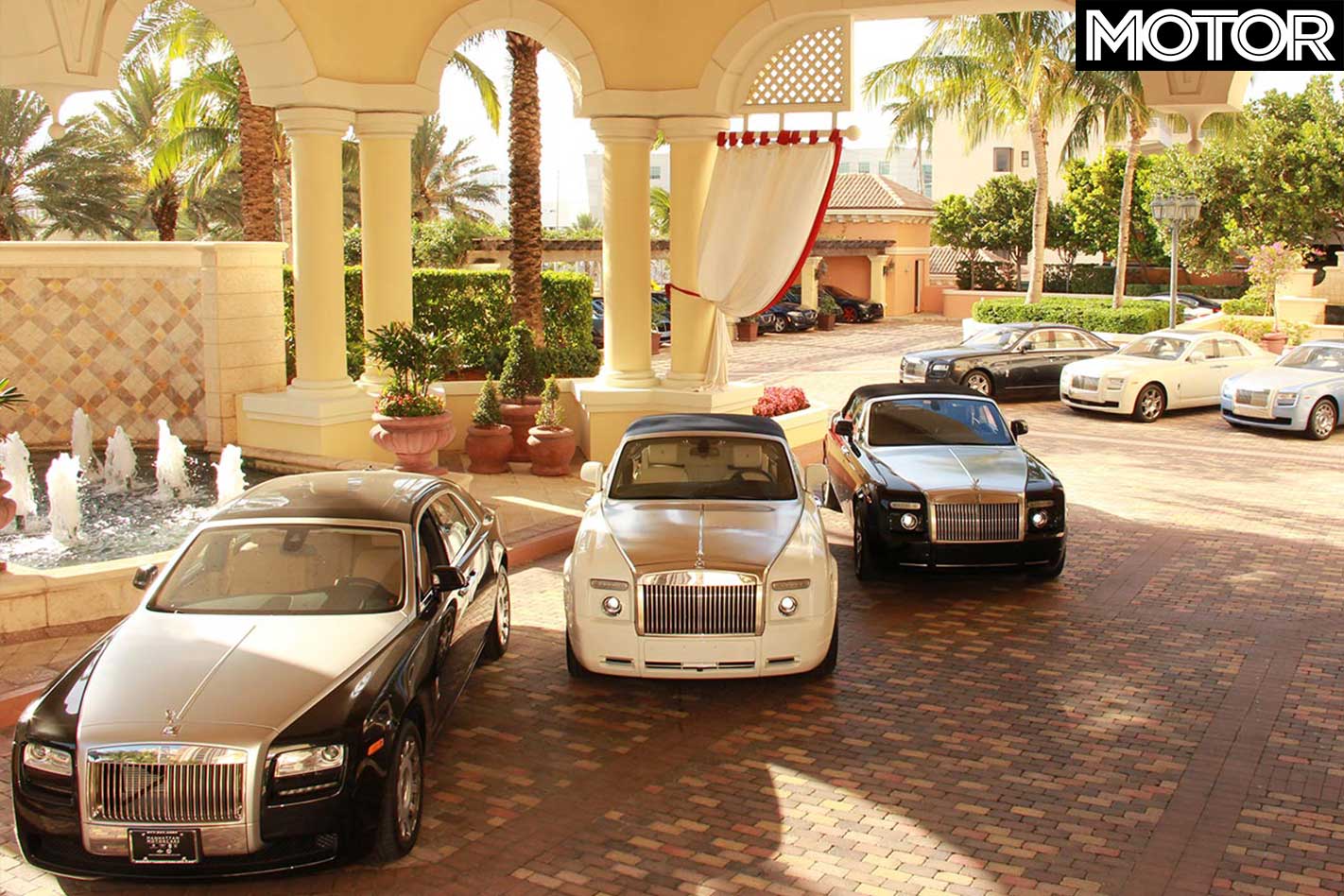
“As the Acqualina brand is home to the largest collection of independently owned Rolls-Royce vehicles in the world and The Mansions at Acqualina’s house car is a Red Rolls-Royce Ghost Series II, it is only fitting that ‘Palazzo del Cielo’ includes the first all-wheel drive Rolls-Royce.”
Michael Goldstein, president of sales for Acqualina Realty, says “people who buy a $38 million penthouse want to walk in the door and not have to do anything but enjoy it.”
The same could be said about the Cullinan, which starts from AUD$685K, still around $100K below the Aventador S in Australia.
GERMAN automotive parts manufacturer ZF has detailed its vision for an airbag system that deploys on the exterior of a car to decrease the harshness of side-impact collisions.
Large airbags inflated within milliseconds down the length of a car’s doors are said to reduce the severity of injuries sustained in car accidents by up to 40 percent, according to the maker.
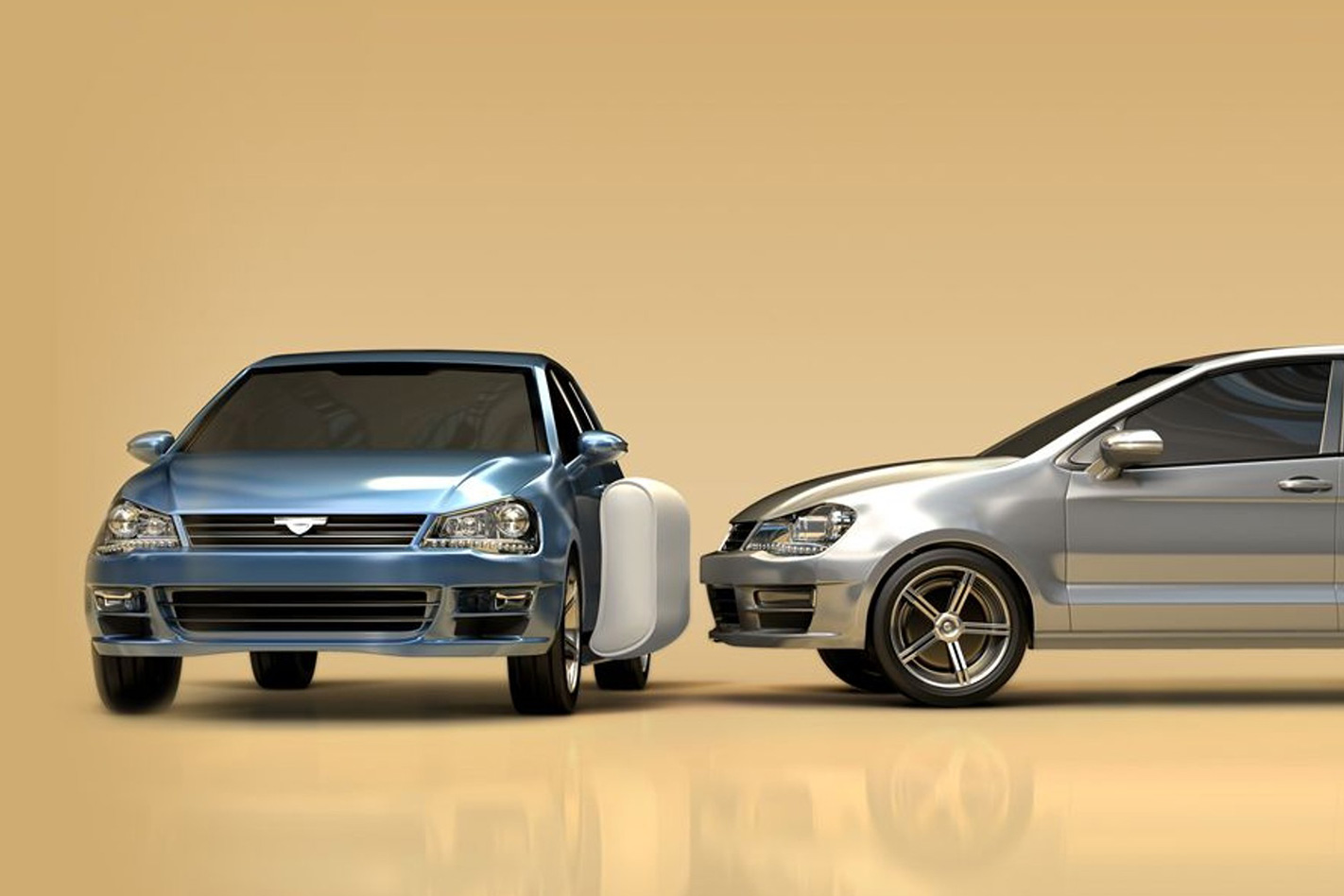
While exterior airbags aren’t new – Volvo’s V40 had bonnet-mounted airbags to create a soft place for pedestrians to land – ZF’s airbags are meant to absorb the impact energy of another car.
While ZF has been developing the technology for a number of years, the advent of autonomous vehicles will enable a car to ‘foresee’ a crash happening through various sensors, radars and cameras, and subsequently deploy the airbag to act as an additional crumple zone.
Whereas traditional airbags deploy after an accident has happened, ZF’s concept airbags aim to explode just prior to impact, as soon as the car can detect a fast-moving vehicle approaching from the side too quickly to avoid a crash.
“Our concept of the pre-crash external side airbag is a great example of how ZF wants to achieve its Vision Zero, a world without accidents and emissions,” said Dr Michael Buchsner, head of ZF’s passive vehicle safety systems division.
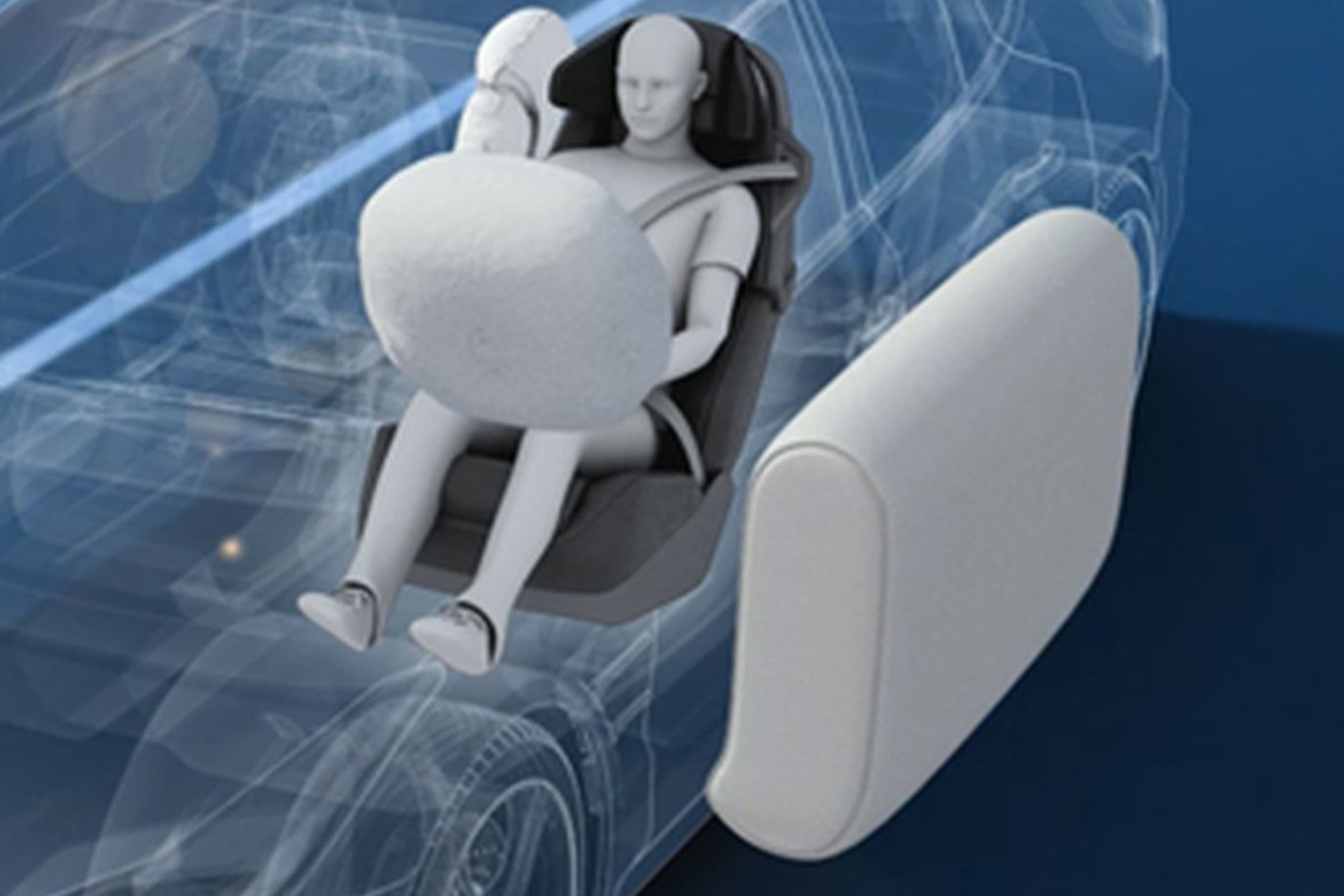
“Occupant safety is paramount when developing new vehicles for automated and autonomous driving.”
The airbag technology remains a concept at the moment, but ZF is in talks with manufacturers and could potentially have it on production cars, reducing the severity of T-bone car collisions, in two years’ time.
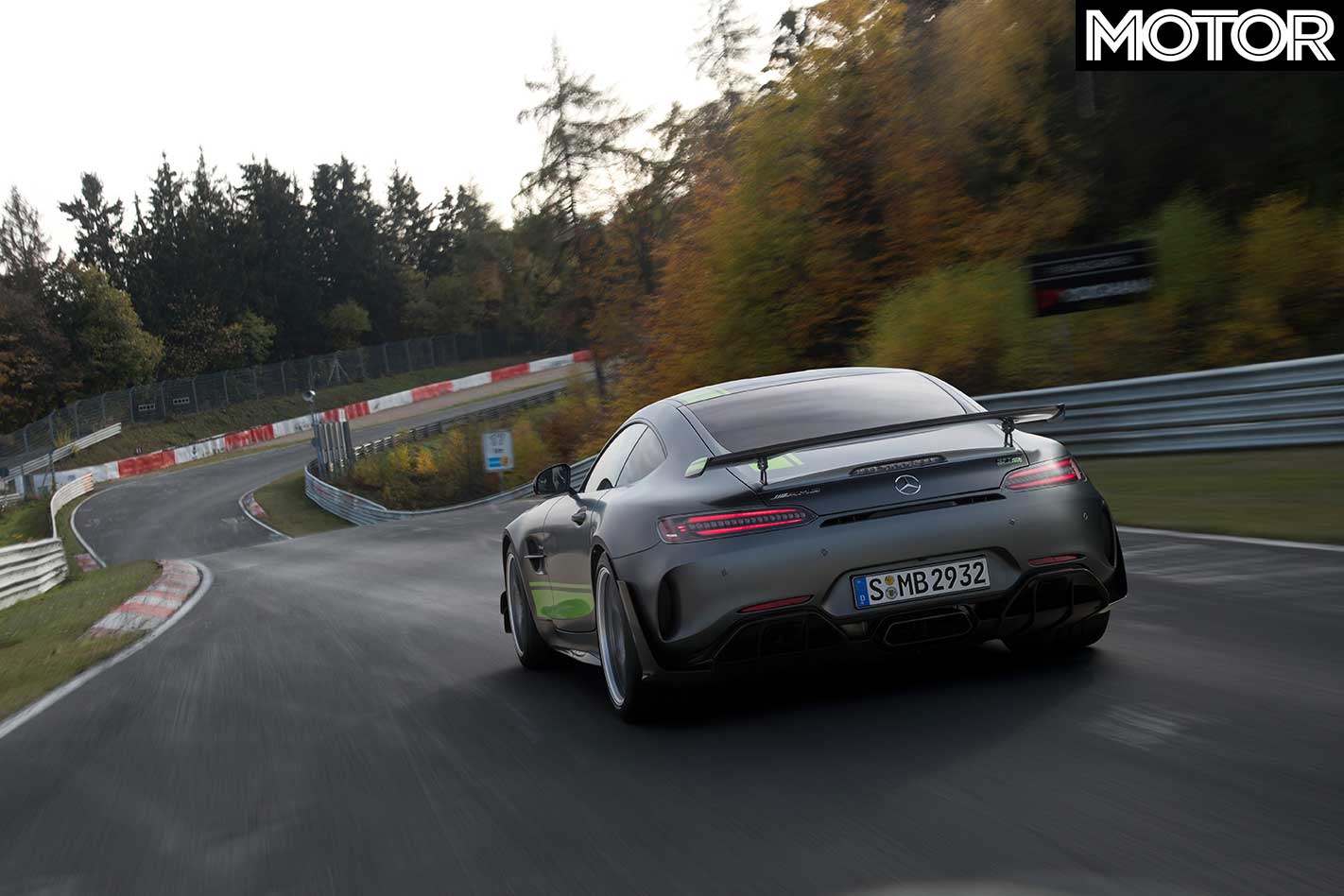
AMG has sent its sharpened GT R Pro out for a few laps of the Germany’s most famous track, capturing footage of a 7:04 run.
Affalterbach say it ran the AMG GT R Pro around the Nürburgring before its LA Auto Show reveal, clocking a time faster than the standard Mercedes-AMG GT R.
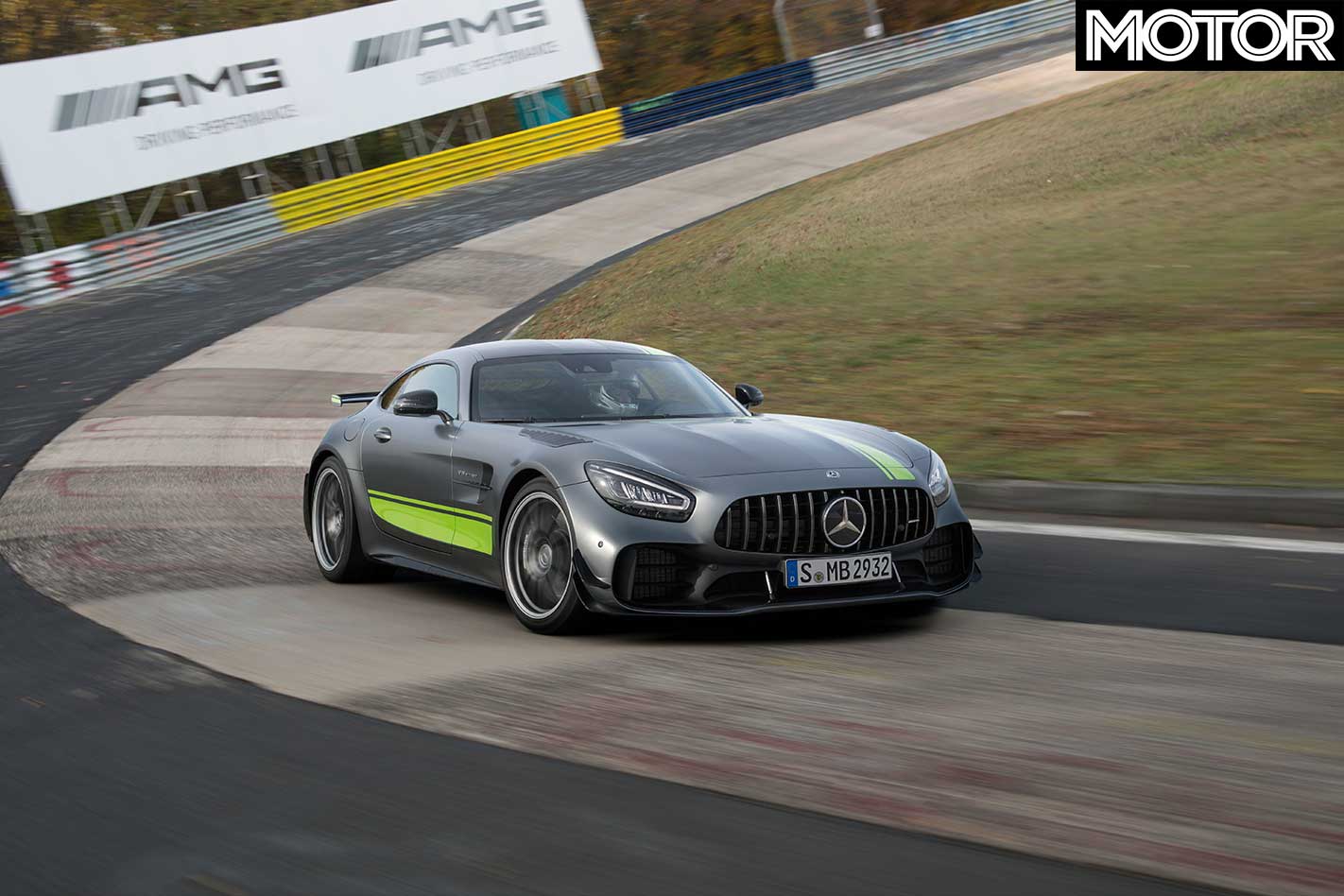
“Already before its full reveal, the new Mercedes-AMG GT R Pro impressively demonstrated its performance potential on the racetrack.
“In autumnal conditions, Mercedes-AMG GT3 Racing Driver Maro Engel completed a hot lap on the legendary Nürburgring Nordschleife in exactly 7:04.632 minutes.
By calling conditions ‘autumnal’, AMG is implying the car might be faster with better weather. Specks of water on the windshield at the beginning of the lap suggest the track wasn’t exactly dry, while temperatures rarely break double-digits towards the end of the year.
We do know it can’t have been within recent weeks – there’s currently a fair bit of construction happening with the track surface.
But if, once that’s finished, the GT R Pro returns to the Ring, it could even shave a few seconds off.
The 430kW/700Nm GT R Pro shares the same outputs from its 4.0-litre twin-turbo V8 with the ‘standard’ GT R, but the Pro features better aero, a sharper chassis, and optimised weight.
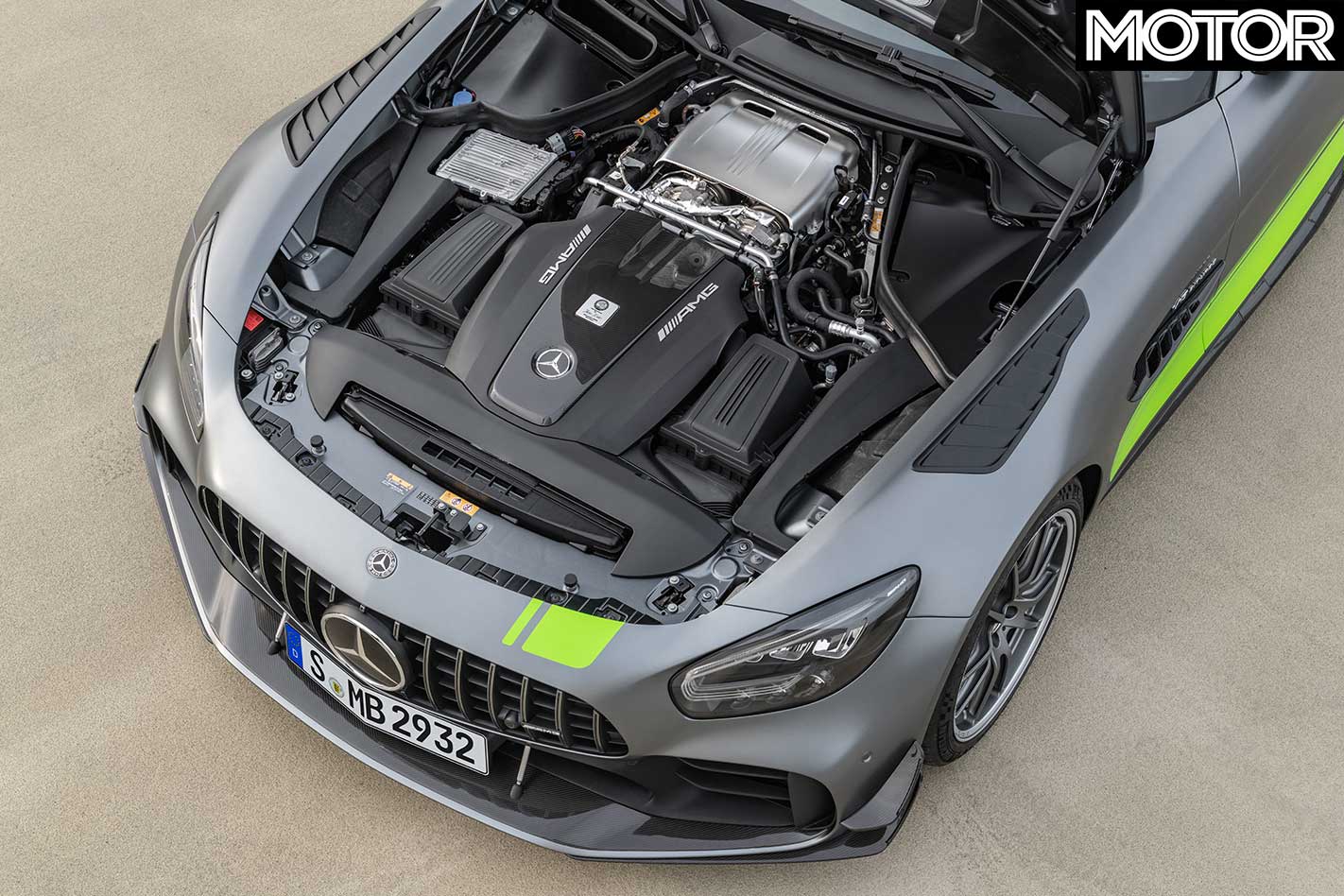
Upgraded suspension features adjustment dials on each damper so the driver can set compression rates and other variables to perfectly reflect their driving style and the track they’re conquering.
Lighter carbon and hollow tube steel torsion bars, at the front and rear respectively, as well as the addition of spherical bearings for the rear axle’s upper wishbone create a stiffer setup and allow more accurate control.
A new front bar now features GT3-inspired aero, while the rear aluminium bracket-mounted wing now features a Gurney flap.
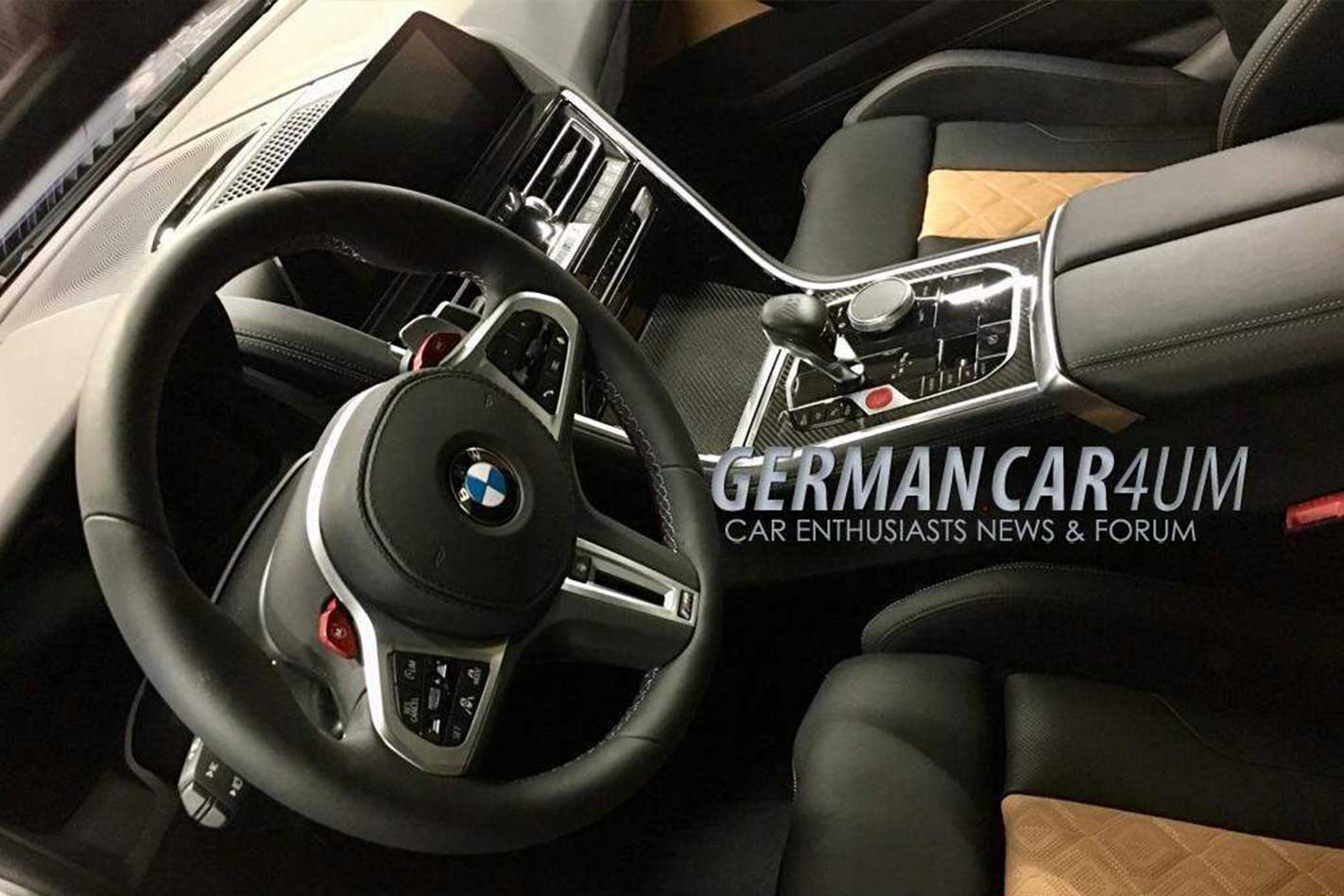
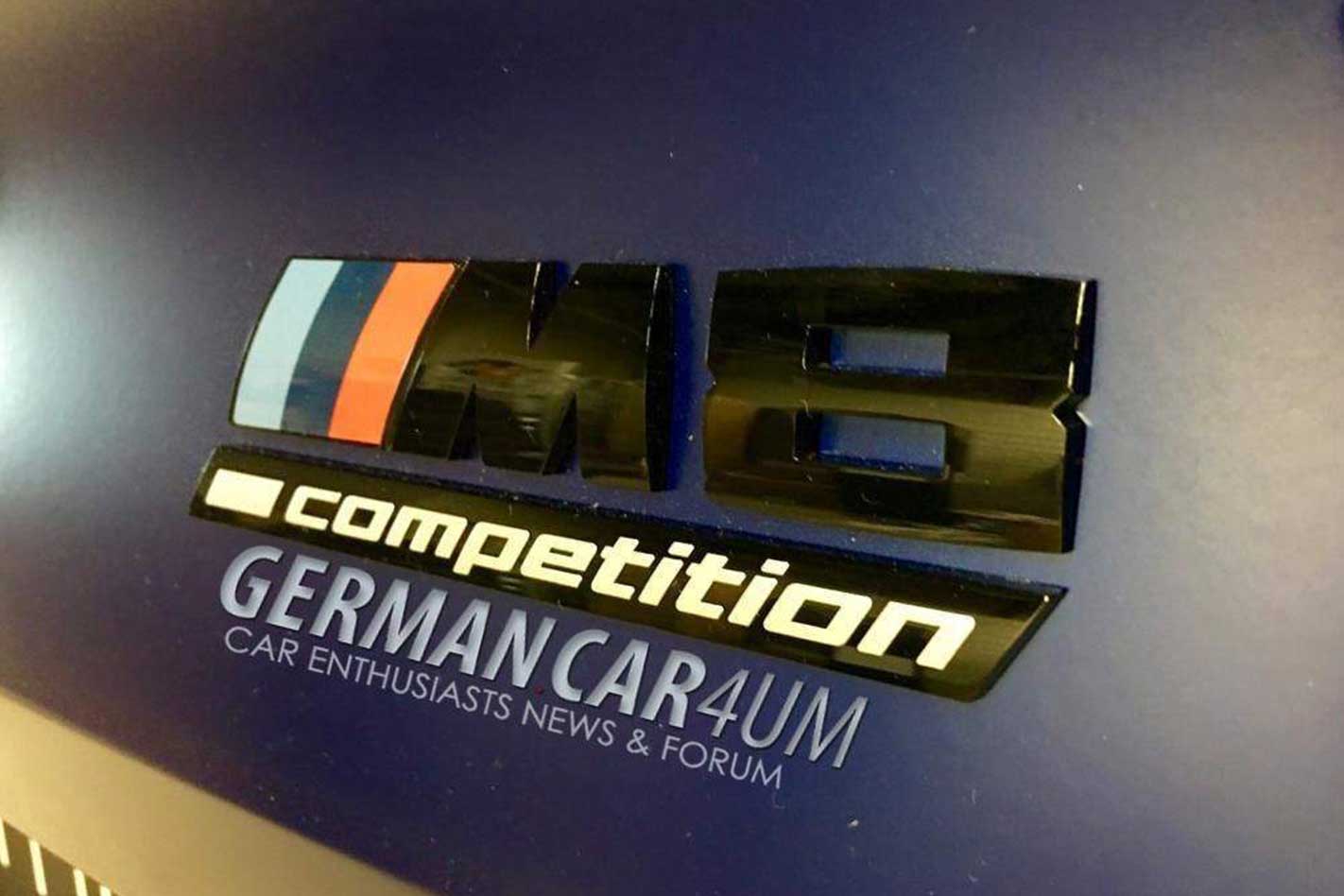
The 2019 BMW M8 hasn’t even been launched yet, but the internet has already gotten hold of images of its superior version, the BMW M8 Competition.
Leaked on GermanCarForum by user ‘Klier’, the images give us a thorough look at both the body and the interior of the M8 Competition in what looks like a private BMW warehouse. There’s even a BMW M850i Cabriolet in the background.
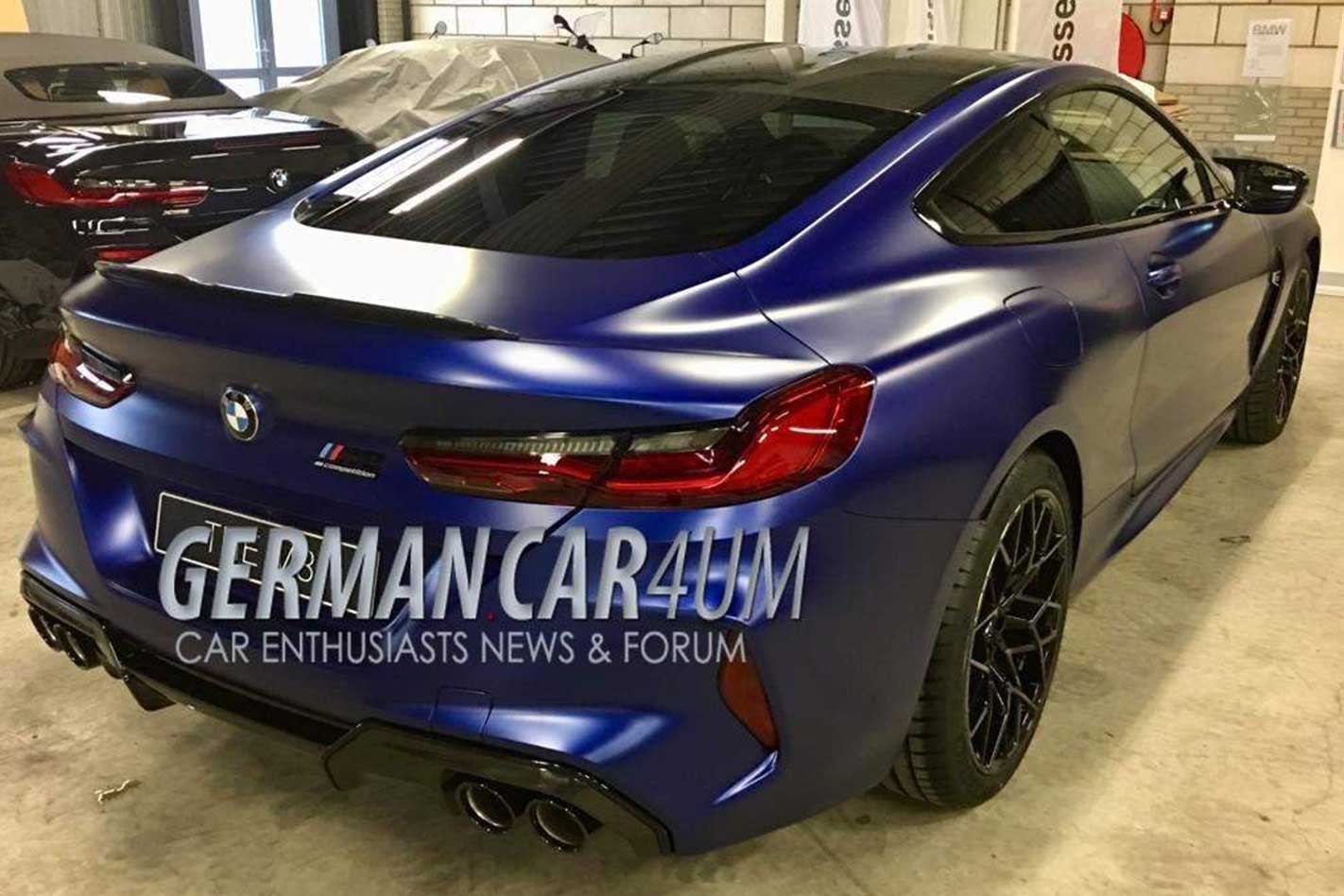
With no official word from BMW, details of the M8 Competition are down to rumour and informed estimations, but based on other versions of Competitions, we’d expect the M8 Comp to be more powerful than the standard M8.
Given the BMW M850i boasts 390kW/750Nm already, and the M5 Competition 460kW/750Nm, we’d expect the larger M8 Comp to top those figures if it’s to achieve a respectable set of performance figures.
We’ve had glimpses of the M8 in camo form and during its testing thanks to BMW and those with video cameras at the Nürburgring, with the closest look having come from the 2017 Concorso d’Eleganza Villa d’Este more than a year ago.
BMW’s M Division boss Frank van Meel said upon the first official acknowledgement of the M8 that the car has been developed right from the start of the 8 Series’ conception.
“The conception and development of the standard BMW 8 Series and the M model run in parallel,” said van Meel.
“The future BMW M8 will build on the genes of the 8 Series and augment its DNA with added track ability and generous extra portions of dynamic sharpness, precision and agility.”
MOTOR Magazine has contacted BMW Australia regarding the release expectations of both versions of the BMW M8, which has no comment at this time, adding that it expects the first 8 Series models to go on sale here in March 2019.
In the meantime, we expect the M850i to arrive on our shores sometime in 2019, and an announcement regarding the first M8 in the near future.
Click on the image above to access the gallery and learn more about the 2019 Volkswagen Touareg
Believe it or not, it’s been almost a decade since we last laid eyes on a brand new Volkswagen Touareg, the all-round SUV that’s popular around the world. So to say the beloved SUV is due for an update is an understatement. We hoped for Apple CarPlay and Android Auto as standard, more active safety features and an updated cabin. But what we didn’t expect was Volkswagen to come out swinging as hard has it has.
Better connectivity, a higher level of luxury and a “we’ve thought of everything” level of function makes the 2019 Volkswagen Touareg one of the most impressive Volkswagens yet. It is dripping in technology, making it appear more smartphone-like than ever with active safety features to a level not yet seen in this SUV.
To be honest, if anything, the VW Touareg is starting to show that Germans are looking into and beyond the future, even if that means potentially snatching customers from its cousin brand, Audi. Click on the picture gallery above to learn about some of the Touareg’s most impressive features.
After an absence of two years from the Australian market, Korean brand SsanYong is back with two SUVs and a Ute, long warranties and plenty of features for Australian consumers.
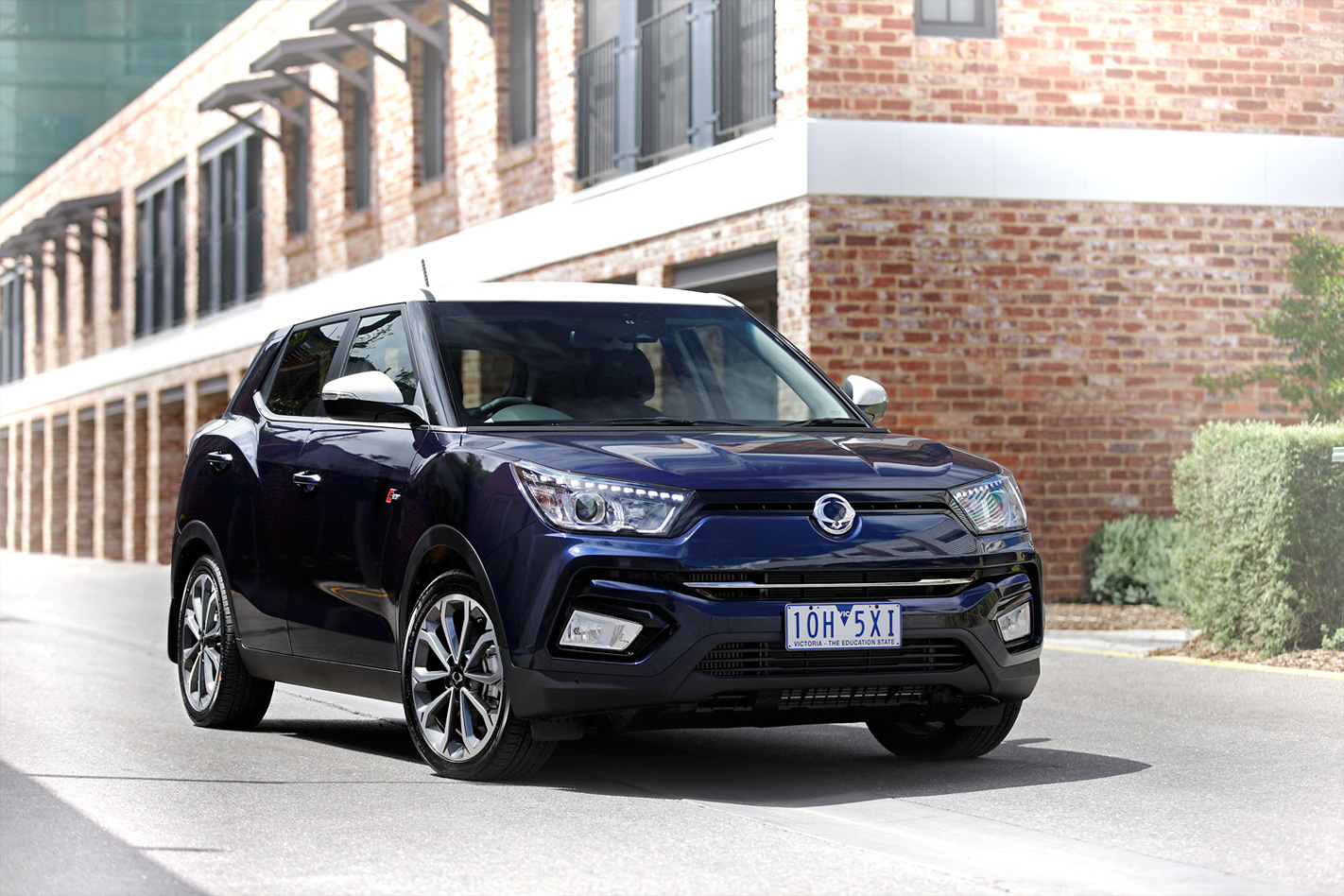
The 2019 SsangYong range kicks off with a small SUV in two sizes – both called the Tivoli – to tackle the likes of the Mitsubishi ASX, Mazda CX-3, Toyota CH-R and Honda HR-V.
SsangYong is also introducing a seven-seat large SUV called the Rexton, and a dual-cab ute called the Musso to take on some of the biggest players in the game, including Toyota’s HiLux and Kluger, the Mitsubishi Triton and Pajero Sport pairing, as well as the Ford Ranger and Everest.
SsangYong will enter the mid-size SUV space in 2019 with the all new Karando, which will challenge Korean arch rivals like the Kia Sportage and Hyundai Tucson, as well as Japanese rivals like the Mazda CX-5, Toyota RAV4, Nissan X-Trail and Subaru Forester.
SsangYong Australia is under no illusions that it has a huge job ahead of them, but managing director Tim Smith says it’s ready to go.
“It is a tough market no doubt, but every market has its own ups and downs,” said Smith. “We’ve had two years away, and that’s a long time. But we’ve had time to change the product, and they’ve definitely improved.”
SsangYong becomes only the second brand in Australia behind Kia to offer a bumper-to-bumper seven-year warranty on all its cars, along with seven years of roadside assistance and seven years of fixed-price servicing.
“I don’t care if you’re a tradie, a mum-and-dad, a florist, or even my mum who drives to the shopping centre a back again,” Mr Smith said. “We’ve left no stone unturned. We’ve tried to make it absolutely super simple for the customer. We want to take away every bone of contention that they have in consideration of our brand.”
SsangYong exited Australia stage-left a couple of years ago, and many may remember that vehicle styling wasn’t… shall we say… a strong point for the brand.
“It’s fair to say that the previous iterations of these cars were polarising,” admits marketing manager Mitch Wiley. “I think for us to move into a model range that looks contemporary, that’s going to be really important for us.”
SsangYong has also moved to a national drive-away pricing structure, with the Tivoli starting at $23,490 all-in for a 1.6-litre four-cylinder petrol-powered front-wheel-driver with a six-speed manual. A six-speed auto adds $2000. This undercuts virtually every car in the competitive small SUV field right off the bat.
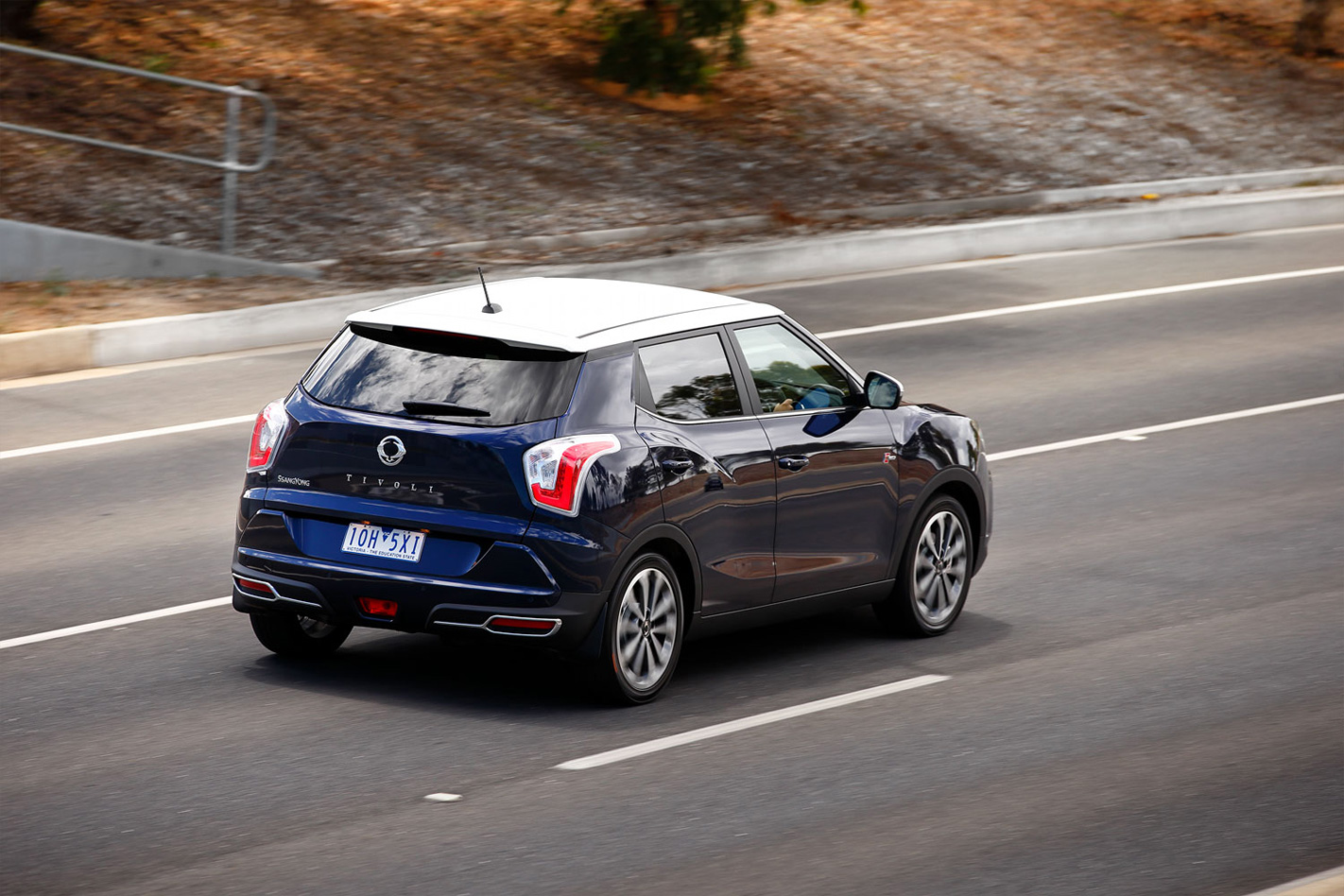
The Tivoli will be offered in three grades – base EX, ELX and top-spec Ultimate – and with both petrol and diesel engines. The ELX can be ordered with petrol or diesel in FWD auto, while the Ultimate is only available in auto diesel AWD guise.
The petrol engine makes 94kW and 160Nm – which puts it a bit behind the competition on paper – while the diesel is good for 84kW and 300Nm. Fuel economy numbers are a claimed 6.6 and 7.2L/100km for FWD and AWD petrol, and 5.5-5.9L/100km for FWD and AWD diesel.
A longer version of the Tivoli, known as the Tivoli XLV, adds 238mm of length to the car behind the rear axle, upping the luggage space to a claimed class-leading 720 litres. The XLV comes in diesel form only, and only in the mid-grade ELX (FWD) and the Ultimate (AWD).
Model Tivoli EX Petrol M/T Tivoli EX Petrol A/T Tivoli ELX Petrol A/T Tivoli ELX Diesel A/T Tivoli Ultimate Diesel A/T Tivoli Ultimate 2-Tone Diesel A/T Tivoli XLV ELX A/T Tivoli XLV Ultimate A/T Tivoli XLV Ultimate 2-Tone | Drive-away price $23,490 $25,490 $27,490 $29,990 $33,990 $34,490 $31,990 $34,990 $35,490 |
What do you think of SsangYong’s value offering? Would you put the returning Korean brand on your shopping list? Tell us in the comments below.
Click here to read about the new SsangYong Rexton and Musso!
A seven-year warranty, nationwide pricing, more dealers, big towing capacity and heaps of equipment; that’s what the latest iteration of the Korean brand SsangYong is promising Australian buyers with the Rexton large seven-seat SUV and its companion, the Musso dual-cab pick-up.
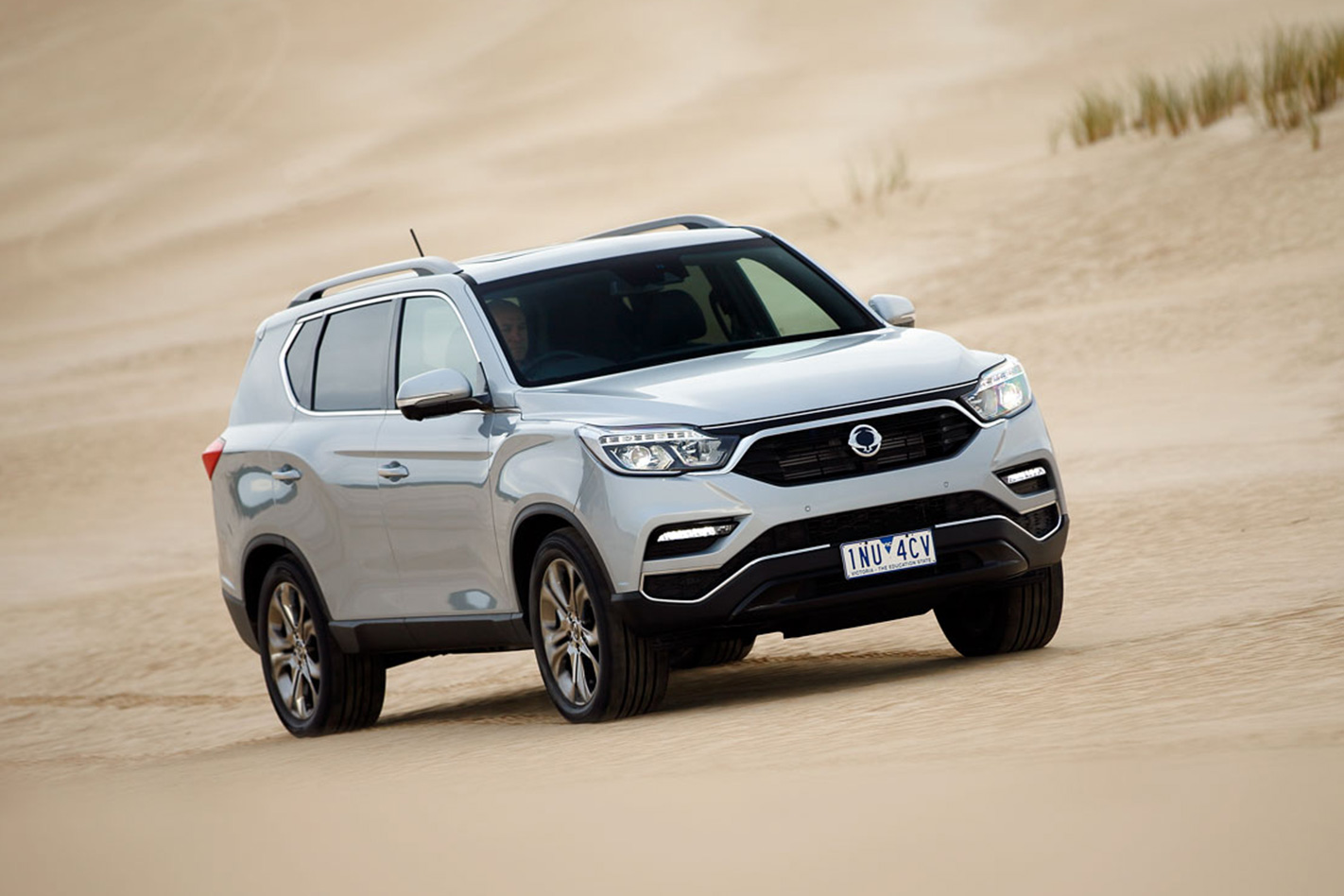
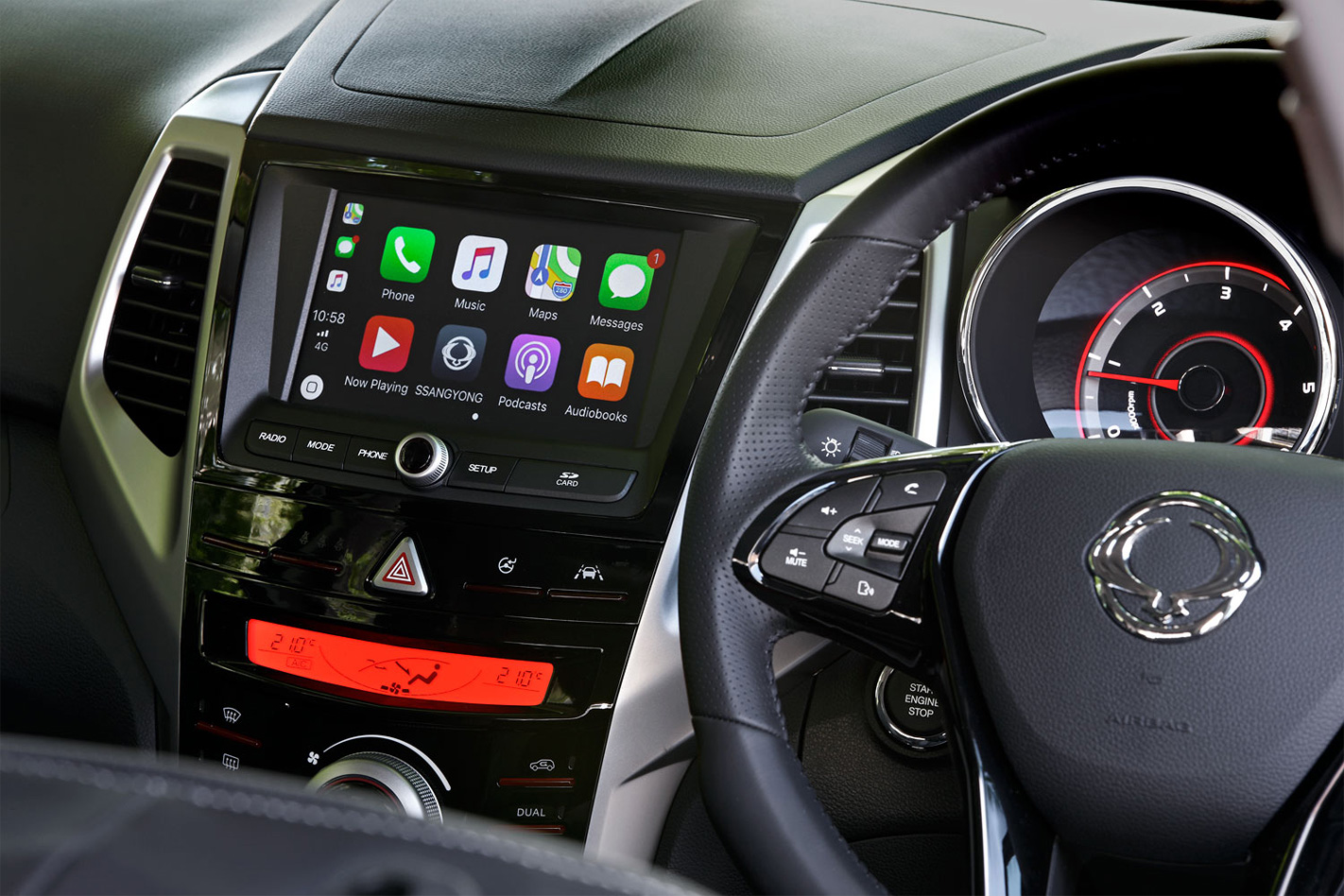
The SsangYong Rexton EX SUV come standard with front-wheel-drive and a 2.0-litre turbocharged petrol engine teamed with six-speed automatic transmission. It retails for less than $40,000, and offers Apple Carplay/Android Auto as standard, along with autonomous emergency braking (AEB), lane keep assist, forward collision warning and automatic high beam headlights as standard. The SsangYong Rexton EX also gets full-length curtain airbags and rear parking sensors.
This level of equipment, space and value puts the SsangYong Rexton up against the Kia Sorento, Hyundai Santa Fe, Toyota Kluger, Ford Everest, Mazda CX-9, Holden Trailblazer and Toyota Fortuner. Slightly smaller models such as the Mitsubishi Outlander, Nissan X-Trail, Subaru Forester and Toyota RAV4 could also be considered rivals, though not all have the Rexton’s seven-seat carrying capacity.
The SsangYong Rexton ELX ($46,990) adds a part-time 4×4 driveline along with a 2.2-litre turbodiesel engine and seven-speed automatic, heated front and rear seats, tyre pressure monitoring, lane change and blind spot assist, rear cross-traffic alert and more.
The $52,990 Rexton Ultimate, meanwhile, uses the same powertrain, and adds 20-inch alloy wheels, powered tailgate, sunroof and HID headlights.
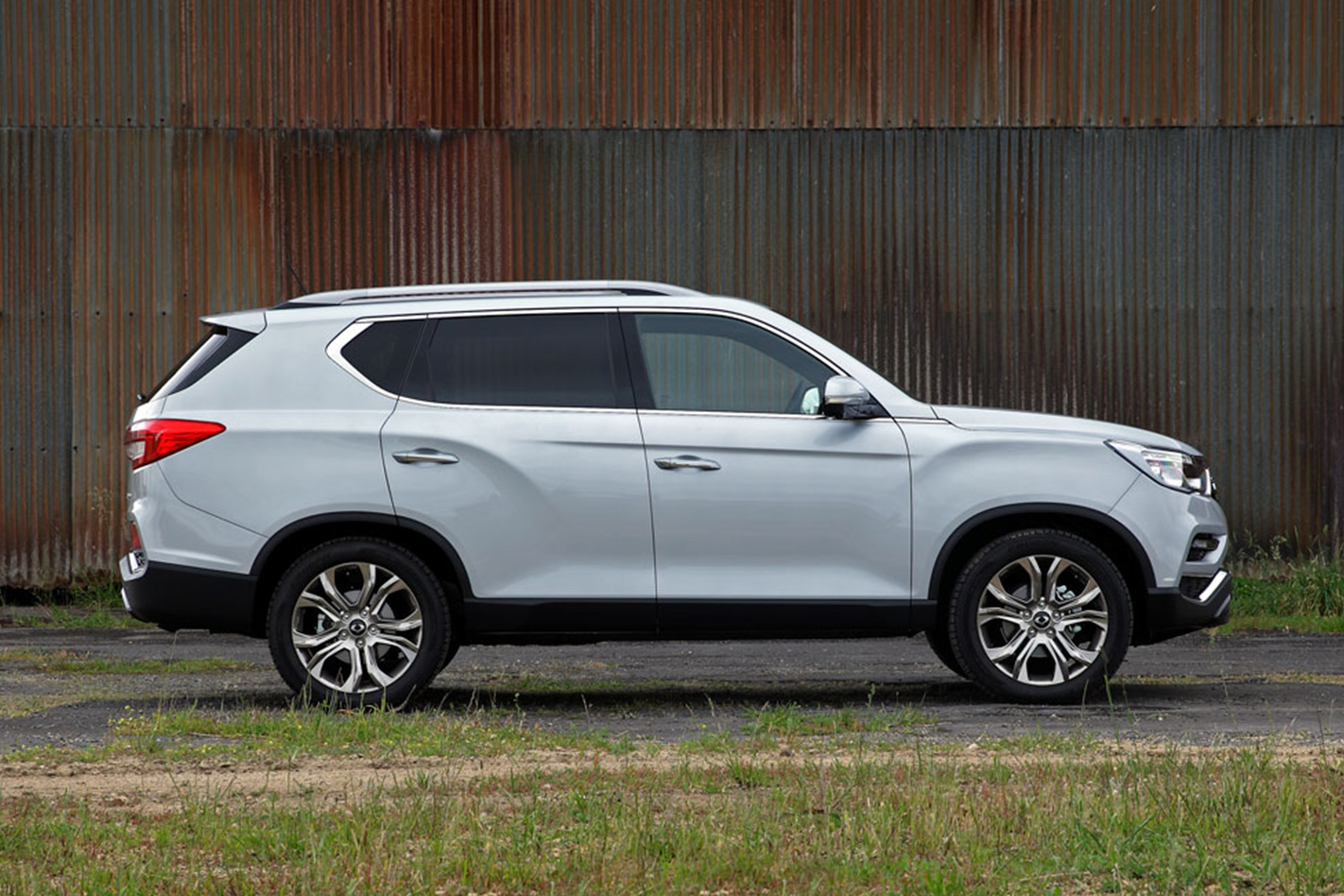
Of note, too, is that the Rexton is capable of towing 3500kg – and Australia is the only market to offer that kind of capacity. “Grey Nomads are going to love it,” said SsangYong managing director Tim Smith.
Mr Smith also pointed to the SsangYong Musso ute’s origins being based on the Rexton. “Most SUVs are developed from utes, but ours is developed from the SUV,” he said, suggestion the ute inherits the Rexton wagon’s refinement in terms of occupant comfort. The Musso ute is all but identical to the Rexton from the C-pillar forward, but the ute version sports a short, deep and wide tray on top of a coil-spring/live axle rear end that’s equipped with disc brakes.
The only other ute to offer rear brake discs (compared to cheaper drum brakes), incidentally, is the Ford Ranger Raptor.
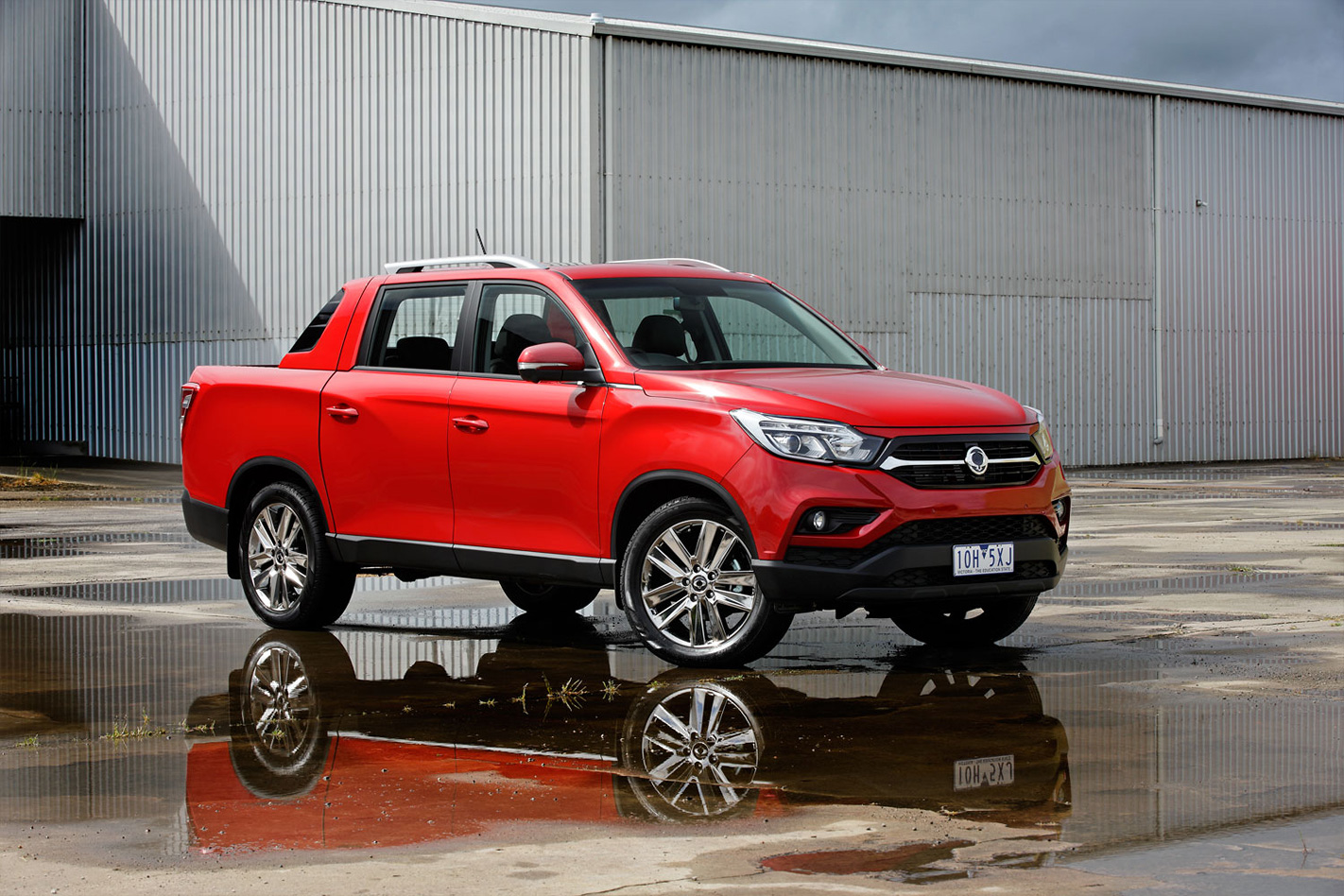
The Musso’s short, square tray dimensions of 1300mm length, 1570mm width, and 570mm height are large enough to swallow a European-spec pallet, while a long-tray version is due in 2019.
Like the Rexton, autonomous emergency braking is standard, along with full-length curtain airbags. It’ll also tow 3500kg, despite its coil sprung rear end. Available only with the 133kW/400Nm 2.2-litre diesel, the Musson EX will start at $30,490 drive-away in six-speed manual guise, and $2000 more in six-speed auto form.
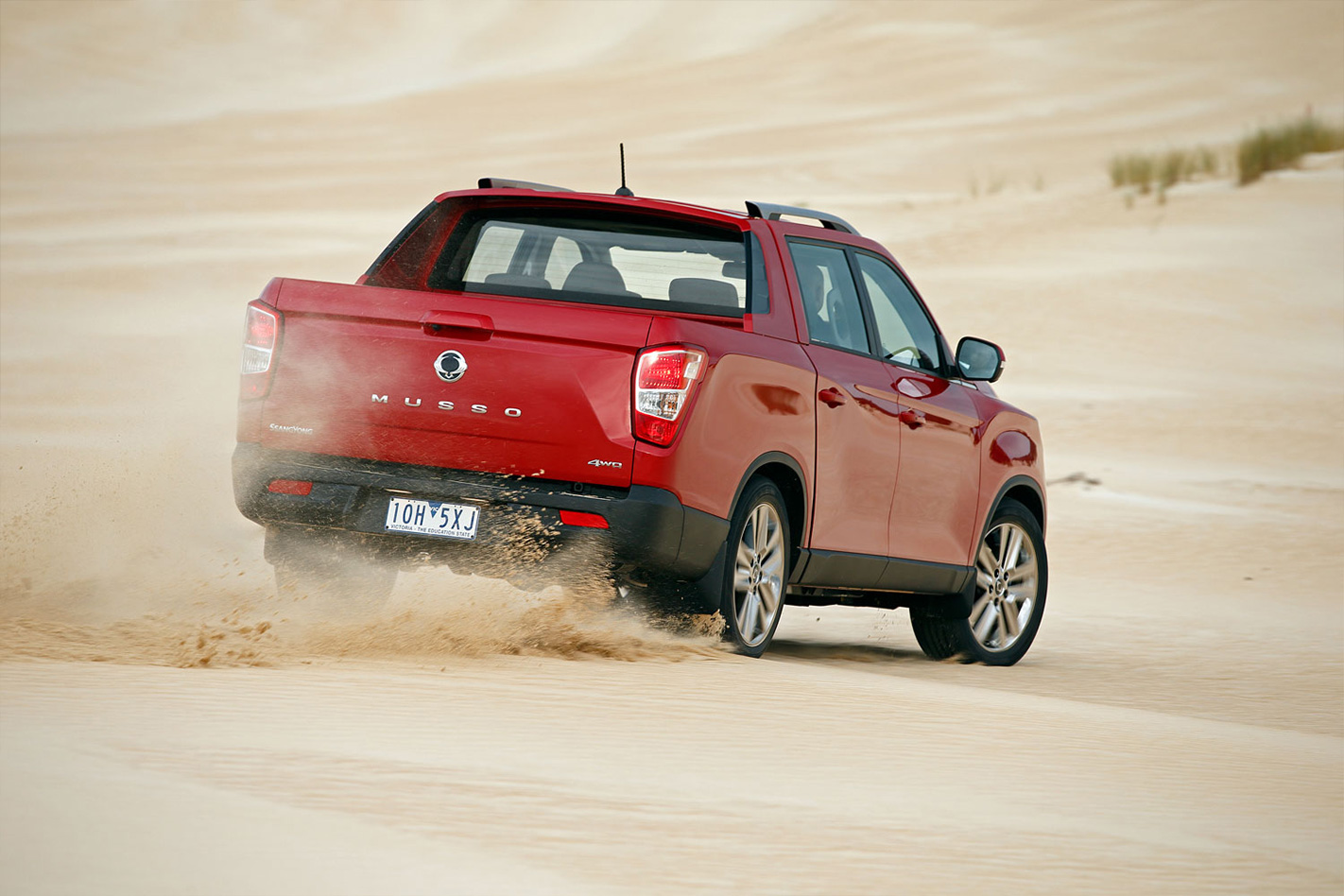
The auto-only ELX adds blind spot and lane change assist, rear cross-traffic alert, 18-inch alloys, and daytime running lamps for $35,990, while the Ultimate scores 20-inch rims, a tray turret cover, HID headlights, heated/vented and powered front seats with leather throughout, a 360-degree view camera and a sunroof for $39,990 drive-away.
What do you think of the new SsangYong Rexton and Musso? Tell us now in the comments below.
