
It takes a brave man to bet against the tidal wave of SUVs flooding the new car market, and Skoda’s Board Member for Sales and Marketing, Alain Favey, is such a man.
Favey is in Australia for meetings with Skoda Australia management and dealers, and to outline the brand’s plans moving forward.

Alain Favey expects SUV growth to peak soon.
Amongst a number of announcements made at a media call in Sydney this week, Favey said the company would launch a new version of its Octavia sedan and wagon in 2020, despite the current downturn in sales in sedans worldwide.
“We will launch the all new Octavia in 2020,” he confirmed. “It will be new in every aspect, and it’s an extremely good looking car.”
Currently, the Octavia is Skoda’s strongest performer, and competes against the likes of the Toyota Camry, Mazda 6 and Ford Mondeo.
When Whichcar asked Favey whether a new Octavia was an opportunity for success or a recipe for disaster, he said that the future of the sedan is a lot brighter than it appears.
“This is a very, very interesting question,” he said. “For us, there is no doubt that in the future there will be a demand for cars like the Octavia, irrespective of what’s happening with SUVs and electric vehicles.
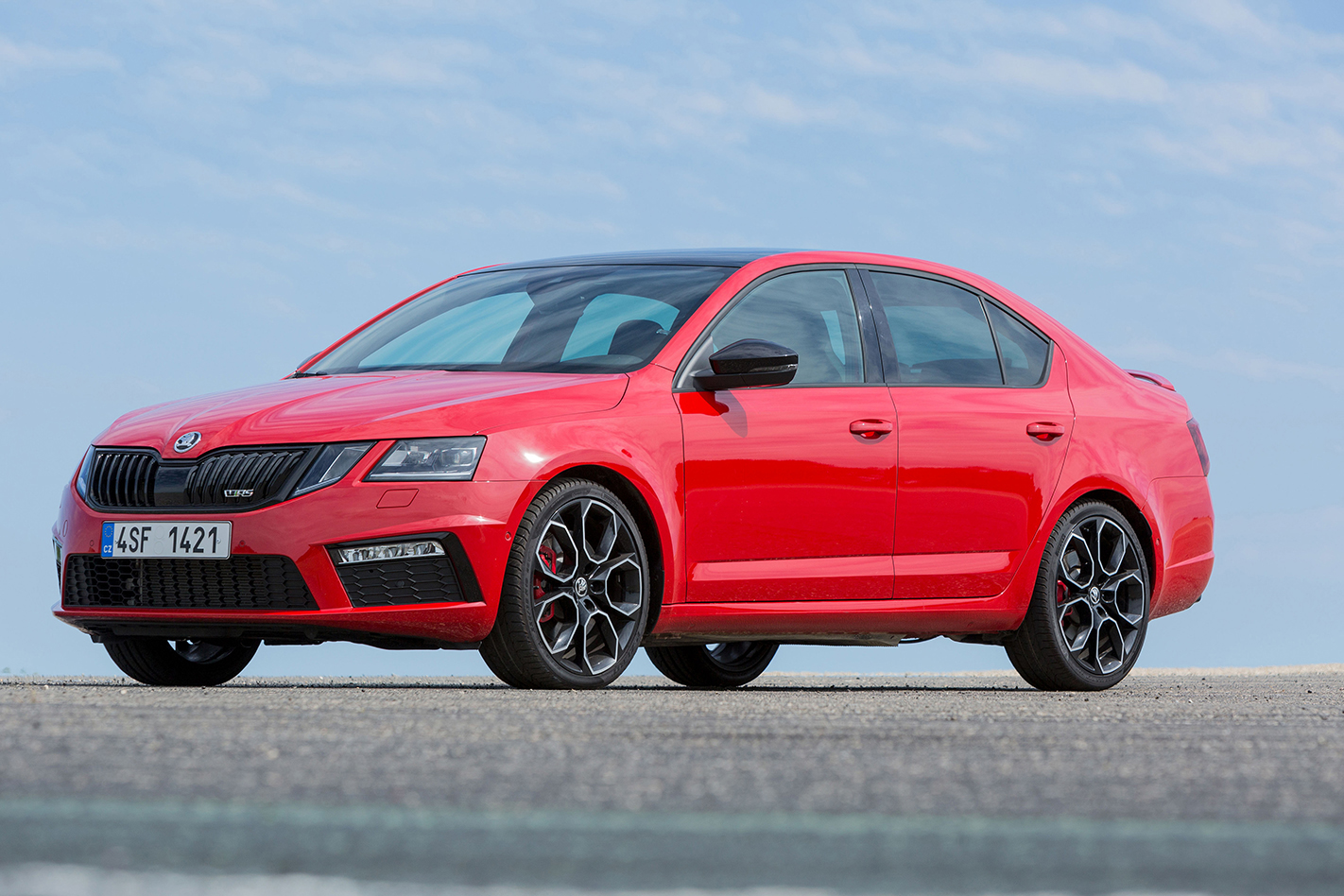
The 2018 Octavia RS245 won’t be the last hot Skoda sedan
“We don’t have a shadow of a doubt that we need to develop the future generation of Octavia, just as we need to introduce the Scala as a real contender in the hatchback market.”
Sales of SUVs are booming in Australia and around the world, and Favey acknowledged that betting against high-riding wagons looks like a rookie move.
“If you look at the trend of SUVs going up and up and up, you think and believe that this trend will continue to go up from 40 per cent of the market to 100 per cent and even beyond, it seems!” he smiled.
“But we are seeing the first signs that this is not necessarily the way it will keep happening. The first sign is the Chinese market, where the trend for SUVs has been overwhelming for the last few years, and you now have the same incredible trend in Australia.
“But this year, where everyone was expecting a continuation of this trend, this year the trend has stopped, and the Chinese SUV market is no longer growing. There’s actually a growing demand in China now for notchbacks, or sedans.”
Favey pointed out that the SUV growth trend is the same around the world, and that Skoda is furiously working on new crossover vehicles for its showrooms.
“I don’t believe that SUVs will overwhelm the market. There will always be a demand for other types of cars, otherwise we would not develop them. And we believe in the future like cars like the Octavia and Scala.”
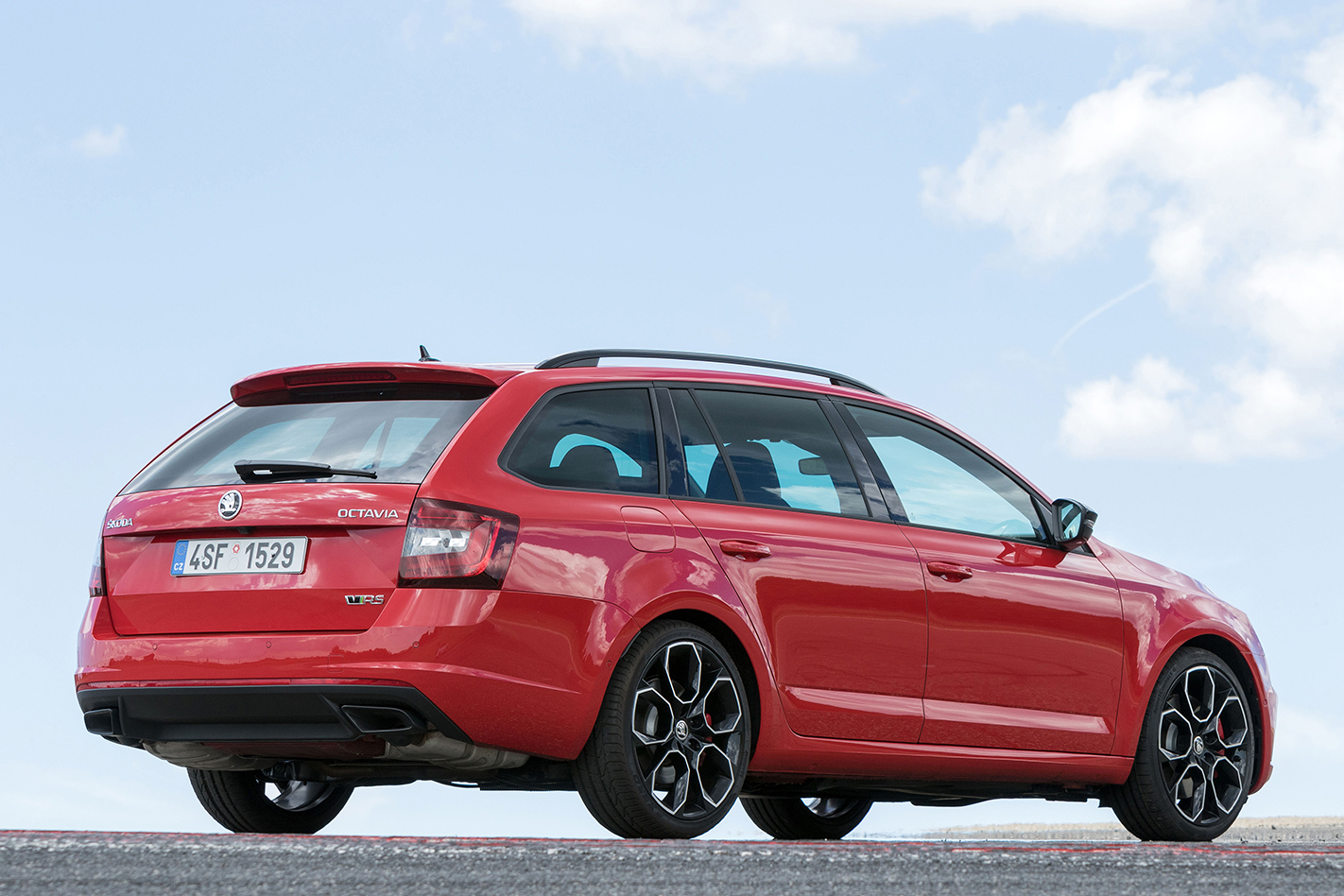
Skoda Australia sells more than 20 per cent of its Octavia range as wagons, and Favey was also bullish about their future.
“The wagon market is under pressure worldwide, but there is still a demand for them,” he said. “The offer is quite small, too, so we are in a good position to get a bigger part of the cake.”
WHAT IS IT?
Audi’s mid-engined supercar gets a refresh for 2019, but no messing with the basic V10, all-wheel-drive recipe.
WHY WE’RE TESTING IT
It’s the last gasp of the naturally aspirated V10, and tweaks make it more powerful than ever. Can it retain its daily-driver supercar crown?
MAIN RIVALS
McLaren 570S, Lamborghini Huracan LP610-4, Mercedes-Benz AMG GT-R
THE WHEELS REVIEW
AUDI has freshened up the Audi R8 V10 for 2019, the headline being more power from the 5.2-litre naturally aspirated V10. The base model goes to 419kW and 550Nm, increases of 22kW/10Nm thanks to calibration changes. The top-spec Performance we’re driving (formerly Plus) stretches 7kW/20Nm to 456kW/580Nm total, with some valvetrain components now uprated with titanium replacements.
That takes the R8 V10 Performance beyond even the closely related Lamborghini Huracan to which Audi has always deferred, if not the Performante. But an engineer reveals ‘pretty much all cars make 5 per cent more’. Let’s call it 485kW, so a Performance is punchier than a Performante then – unless the Lambo is also under-reporting. Whatever, it means all variants break into 320km/h (200mph) territory for the first time, including the chunkier Spyder.
We’ve come to the Ascari race circuit in southern Spain for our test drive, partly because the place is awesome, partly because the R8 is still awaiting homologation.
Flatten the accelerator in first and the all-wheel drive claws at the pit exit’s dry surface, the V10 rips round past 8000rpm, and the first-to- second gear shift thwacks in like you’re playing pinball. The small increase in performance isn’t particularly noticeable, but this remains visceral acceleration that requires some acclimatisation – I wouldn’t bet against the 3.1-second 0-100km/h time being low-ball too.
The appeal of this V10 stretches way beyond performance alone – it’s the crispness of response, how the performance soars like a horror-movie soundtrack at the scary bit, the all-consuming fury of the last grand or so to 8250rpm as the rev counter strobes red. The turbocharged McLaren 570S and 600LT can’t match this kind of excitement, plus they’re less powerful and cost more too.
The Brit fights back, of course, when it comes to torque, and you can definitely catch the R8 napping if you’re in a gear too high. The McLaren (smaller engine, no all-wheel drive) also feels every bit the near-300kg lighter it is, and its chassis and steering has the more nuanced communication skills.
Springs and dampers remain the same, but Audi says the R8’s chassis has received some attention, and there are more noticeable transitions between drive modes that we won’t detect on track. All test cars are also equipped with a new optional front anti-roll bar. Made of carbonfibre and aluminium, it saves 2kg and is displayed in the pit garage along with the standard one. The regular bar makes a fine dumbbell but you can twirl the lighter one about like a marching band baton. It’s also worth noting that all test cars are fitted with Michelin Cup 2 tyres, the stickier track-focussed rubber you’ll find on a 911 GT3. Will they be optional in Australia? No-one seems to know.
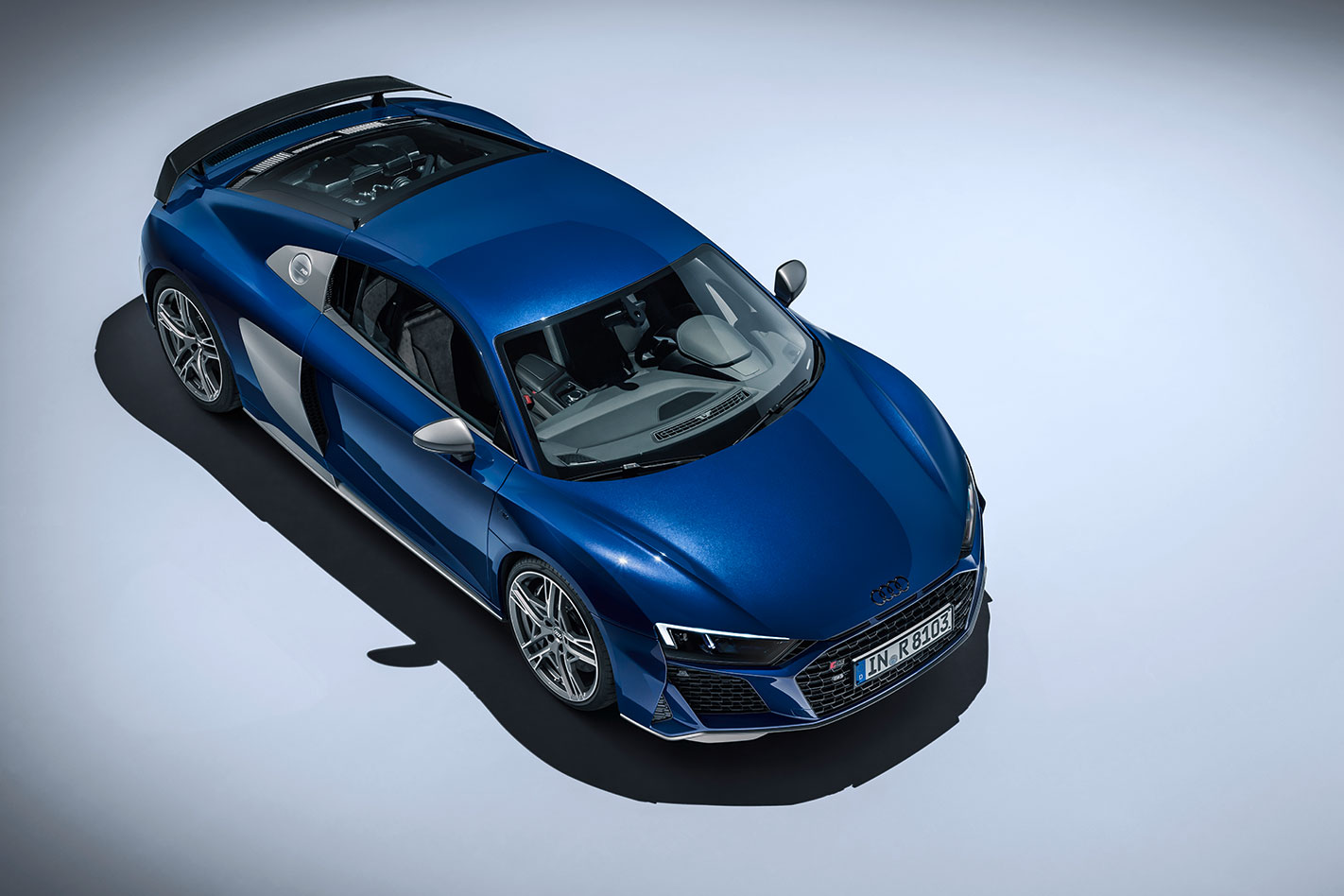
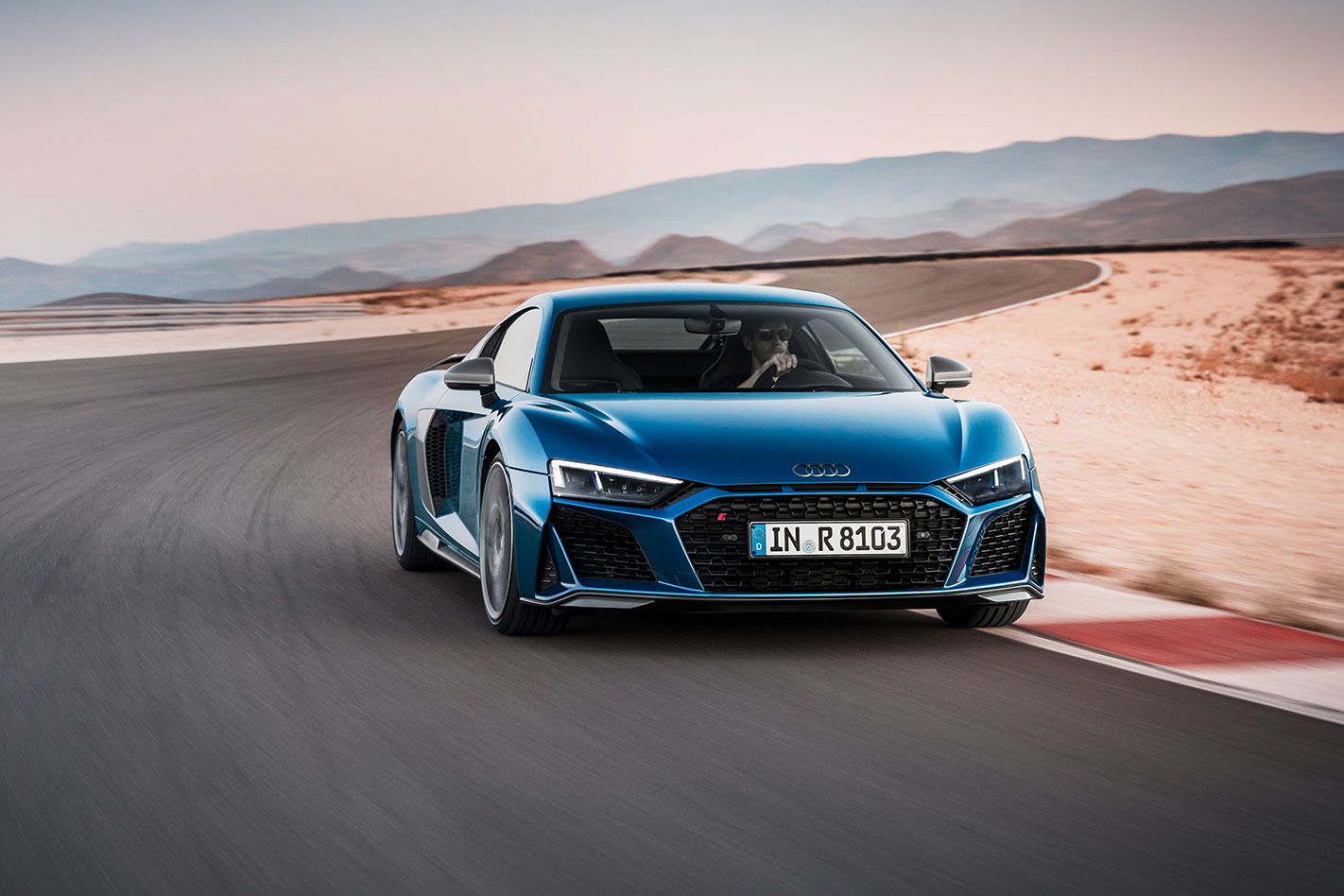
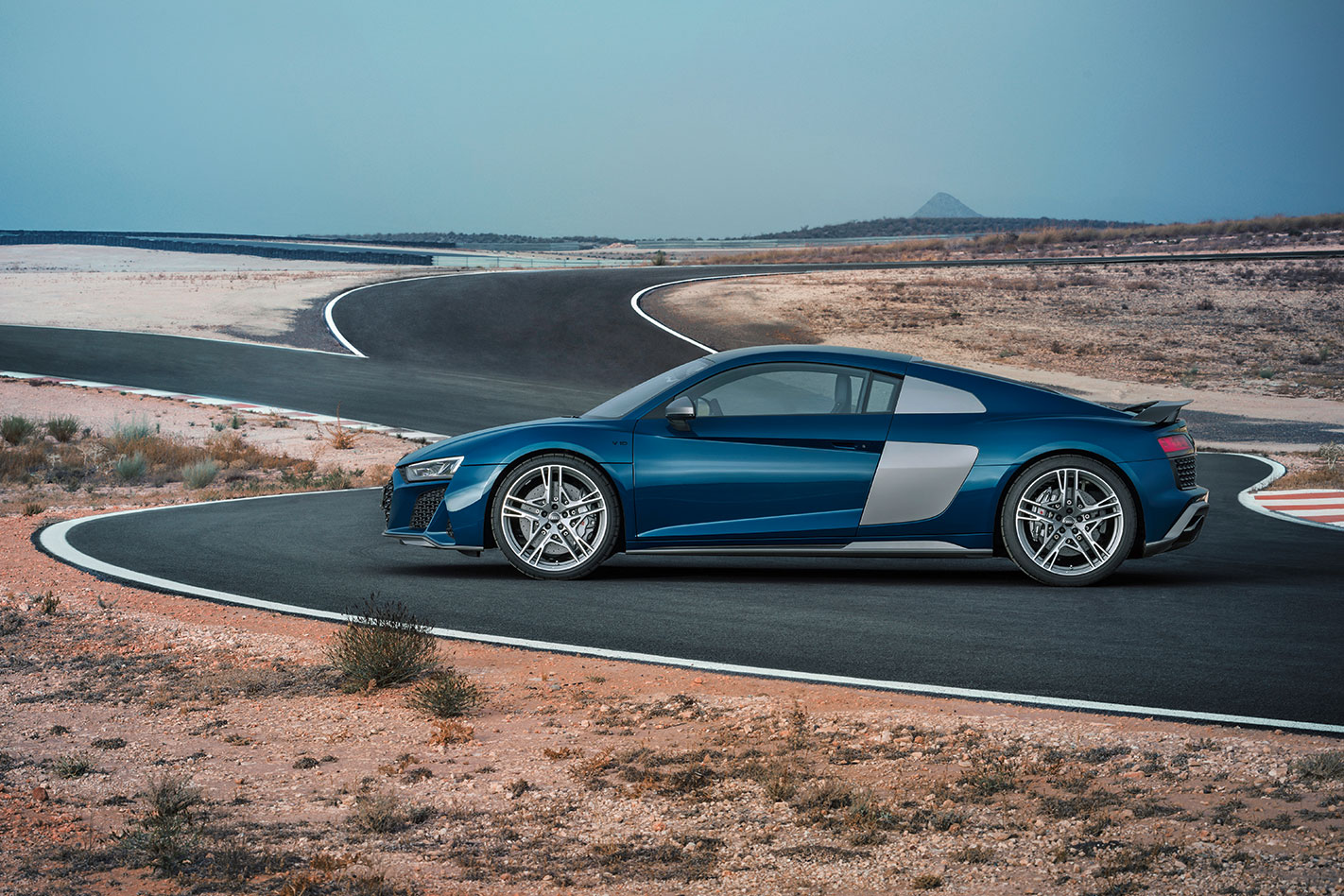
Under power, the R8 transfers every drop of power to the tarmac, and gathers speed rampantly through long corners while feeling a little nose-led with mild understeer. It’s a slightly frenetic feeling, but it’s safe and secure, and off-throttle the R8 becomes far more playful – composed under braking and quick to turn like only a mid- or rear-engined car can, but with that hunk of V10 ready to move the rear end around. You have to watch the pendulum effect, but it gives the driver options on how to position the car, and the R8 a multi-dimensional character. Impressive that the stability control’s Sport setting lets you tap into all this without clumsy intervention. We asked the engineers if the rear-wheel drive R8 RWS will re-appear, which caused much ‘I must check with my colleagues in marketing’. It was the pick of the range last time with a more fluid feel, so here’s hoping.
Software for both standard and Dynamic electric steering has been tuned. The Standard steering has a more measured, confidence-inspiring rate and weight through faster corners, but the Dynamic set-up blows through chicanes like a glove slap to both cheeks. Both are fine, but I’d take the standard system.
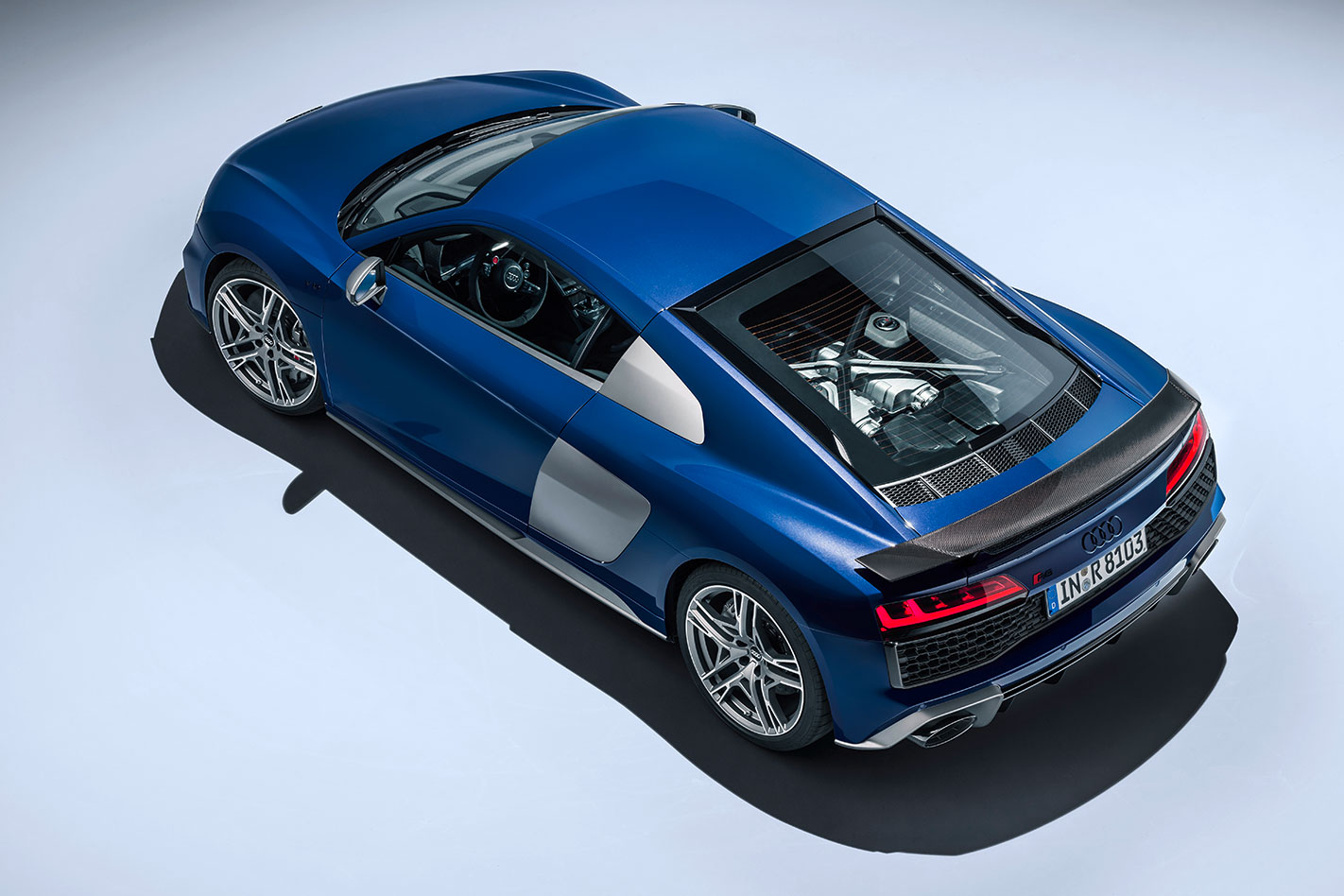
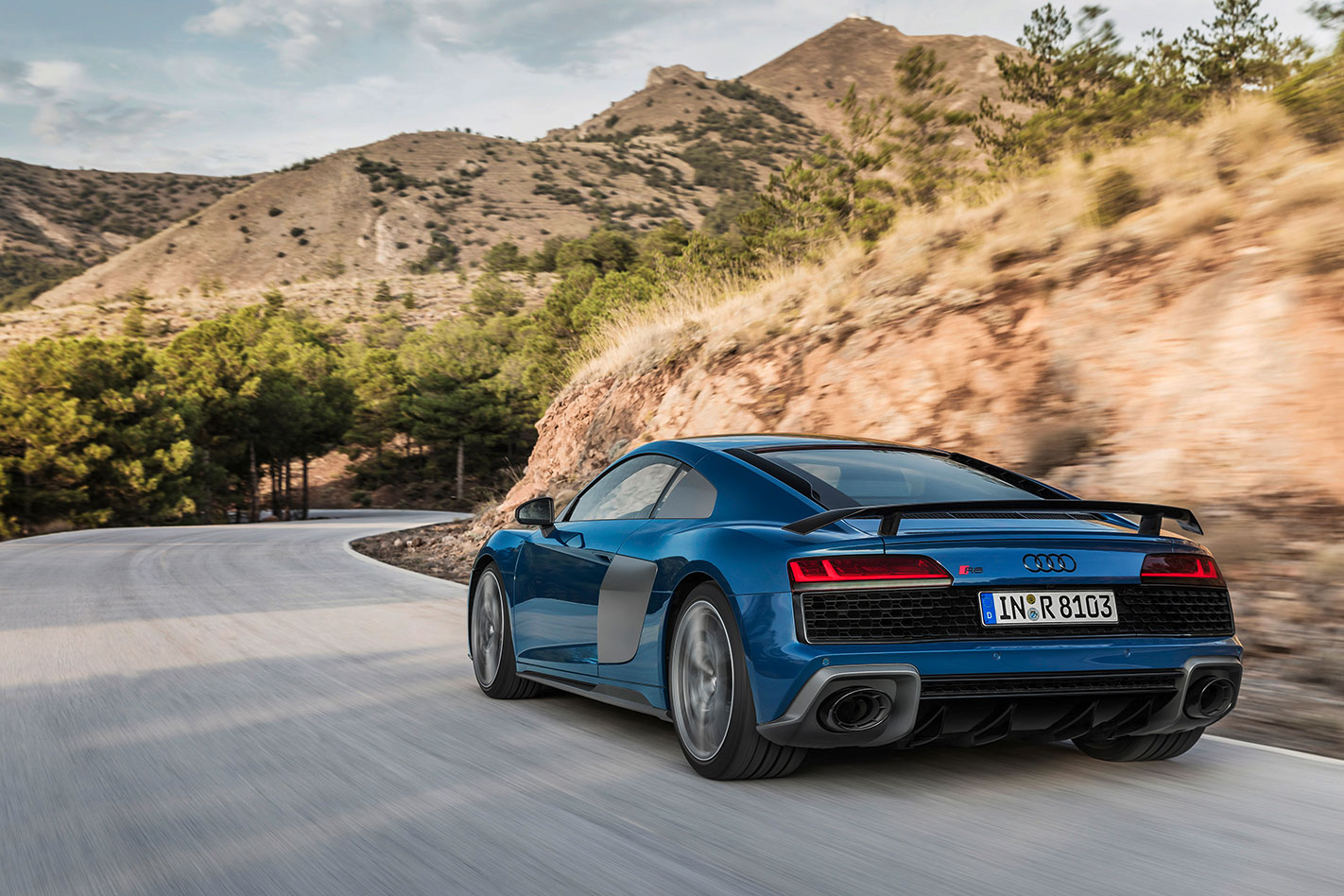
The refreshed R8 offers some cosmetic upgrades too, though this is very much the if-aint-broke-don’t-spend-loads-of-cash-fixing-it approach. At the front, a flatter, wider grille bordered from above by three little slits that recall the Ur Quattro and from below by a wider front splitter give the R8 a meaner look, like it’s wearing a mouthguard. There are two new colours (Kemora Grey, Ascari Blue), new 19-inch alloys (20s for the V10 Performance), a more upswept rear diffuser, and gloss-black detailing on the standard model, replaced by matt titanium on the Performance.
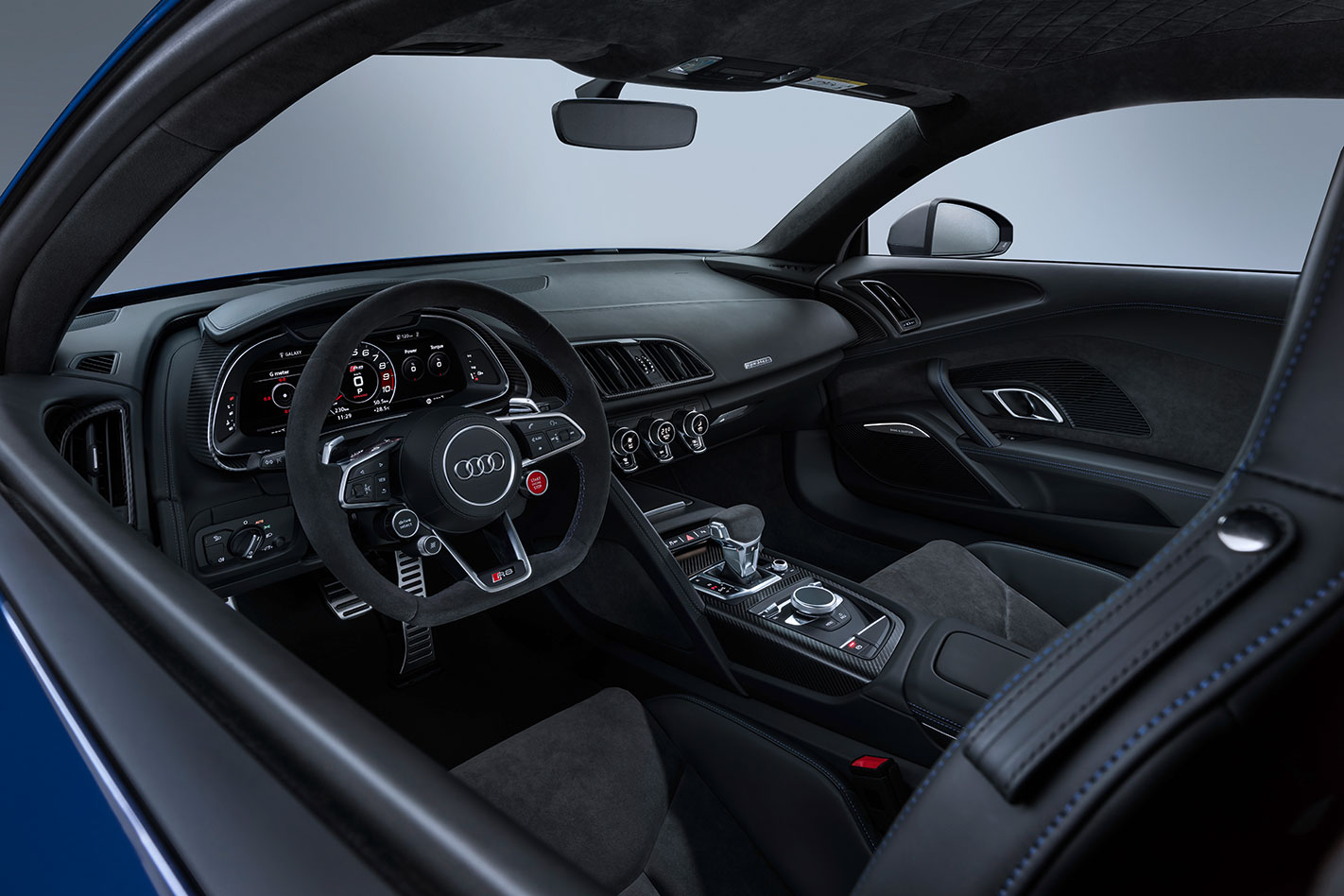
The R8’s interior is unchanged, but that means a great driving position (though the Spyder is more cramped), solid build and refinement with flashes of excitement, and infotainment that’ll get you there faster than a Ferrari, McLaren or Lambo.
These changes are not radical, then, but the R8 remains a supercar like no other, a paradoxical mix of high-tech infotainment and old school V10 engine; of Lamborghini genes and sensible-shoes usability; of searing performance at – in this rarefied segment – a relatively affordable price point.
With Audi rumoured to axe the R8 after this second generation or re-imagine it as an all-electric or plug-in hybrid, this is probably our last chance to marvel at ten cylinders screaming to an incendiary 8250rpm. Let’s enjoy it while we still can.
THE WHEELS VERDICT
This is a light mid-life refresh of the Audi R8, but the tweaks only enhance a unique offering – no-one else combines such a visceral engine in a package so sensible, whether that’s all-wheel-drive security, excellent infotainment or impressive refinement. It’s even relatively affordable versus the competition. If you want a supercar you can use every day, the Audi R8 remains our choice.
PLUS: White-hot V10, usability, traction, keen turn-in, playful handling off-throttle, infotainment and refinement make this the daily supercar MINUS: Bit chunky, could be more tactile, we’ve seen more ambitious facelifts, Australia might not get Cup 2 tyres we tested, brake pedal a little fuzzy
SPECS
Model: Audi R8 V10 Performance Engine: 5204cc V10, dohc, 40v Max power: 456kW @ 8000-8250rpm Max torque: 580Nm @ 6500rpm Transmission: 7-speed dual-clutch Weight: 1635kg 0-100km/h: 3.1sec (claimed) Economy: 12.3L/100km (estimated) Price: $395,000 (estimated) On sale: Q2 2019 (estimated)
Ford has announced plans to launch a high-riding version of its latest Focus hatchback, to be known as the Active, in Australia early-to-mid 2019. It’s a first for the Ford Focus range, and it mimics the offroad-esque chops of cars like the Volkswagen Golf Alltrack, Subaru’s XV and even the unusual Infiniti QX30.
Overseas, Ford has Active variants of a number of models, including the recently retired Fiesta. Ford says the Focus Active makes the most sense for Australia.
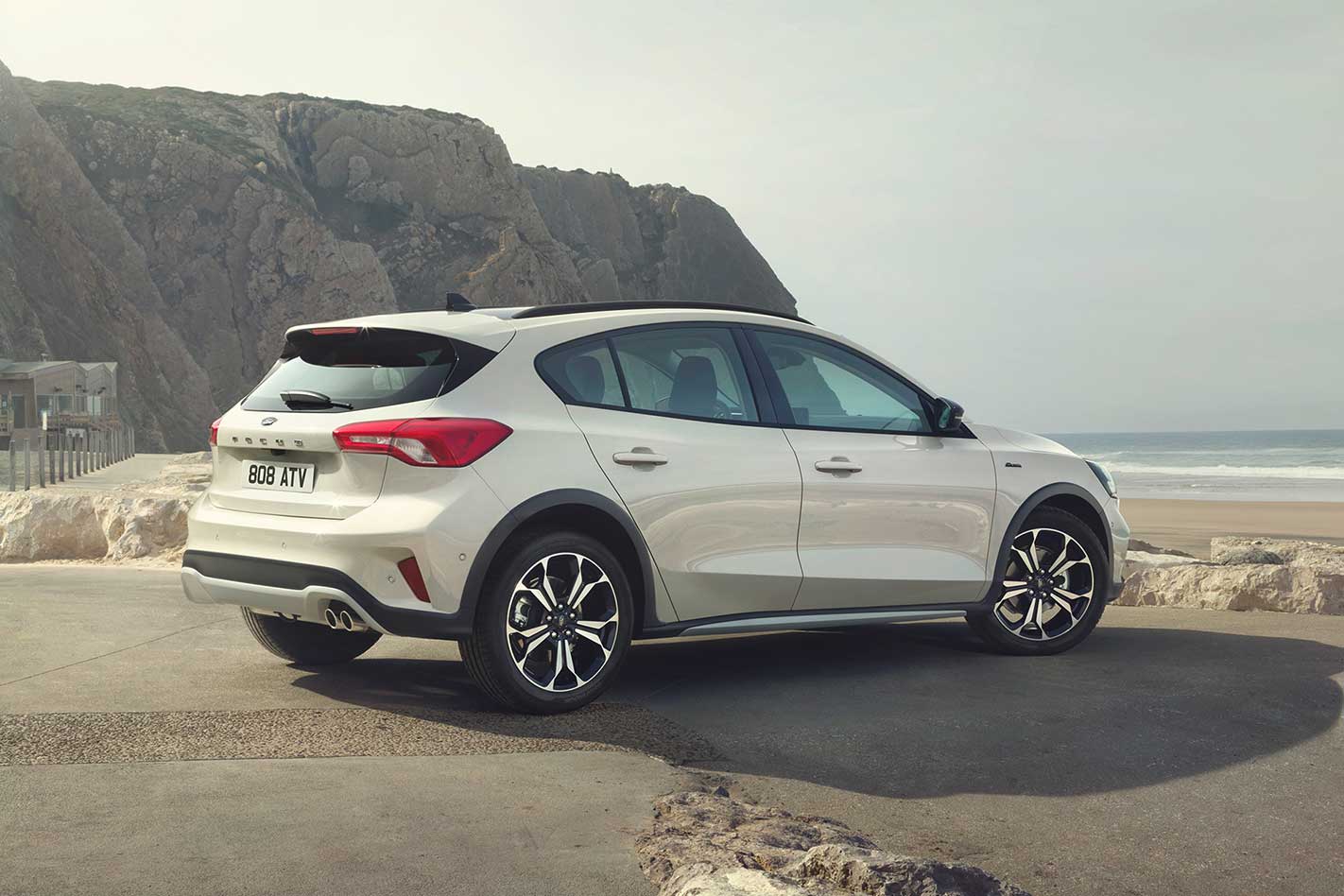
Sourced from Germany, the Ford Focus Active sits 34mm higher off the ground than a regular Focus hatch. Ford has added a couple of extra settings to its drive mode system to cope with less ideal conditions. These include Slippery Mode for ice and snow and a Trail Mode for softer surfaces like sand and dirt.
There’s also a pair of skid plates under the nose and tail, as well as the obligatory black plastic overarches that complement bespoke front and rear bumpers for the Active.

That’s where the off-road leanings end, though. The Active is a front-drive proposition only, and is powered by the same 134kW 1.5-litre three-cylinder turbo petrol engine as the rest of the all-new Ford Focus line-up.
There’s only one gearbox on offer, and that’s an eight-speed torque-converting automatic.
The Ford Focus Active has plenty of standard kit, including 17-inch rims, satnav, smart phone mirroring, dual-zone air, Ford’s clever MyKey programmable keyless entry system, ISOFIX baby seat mounts, and auto lights and wipers.
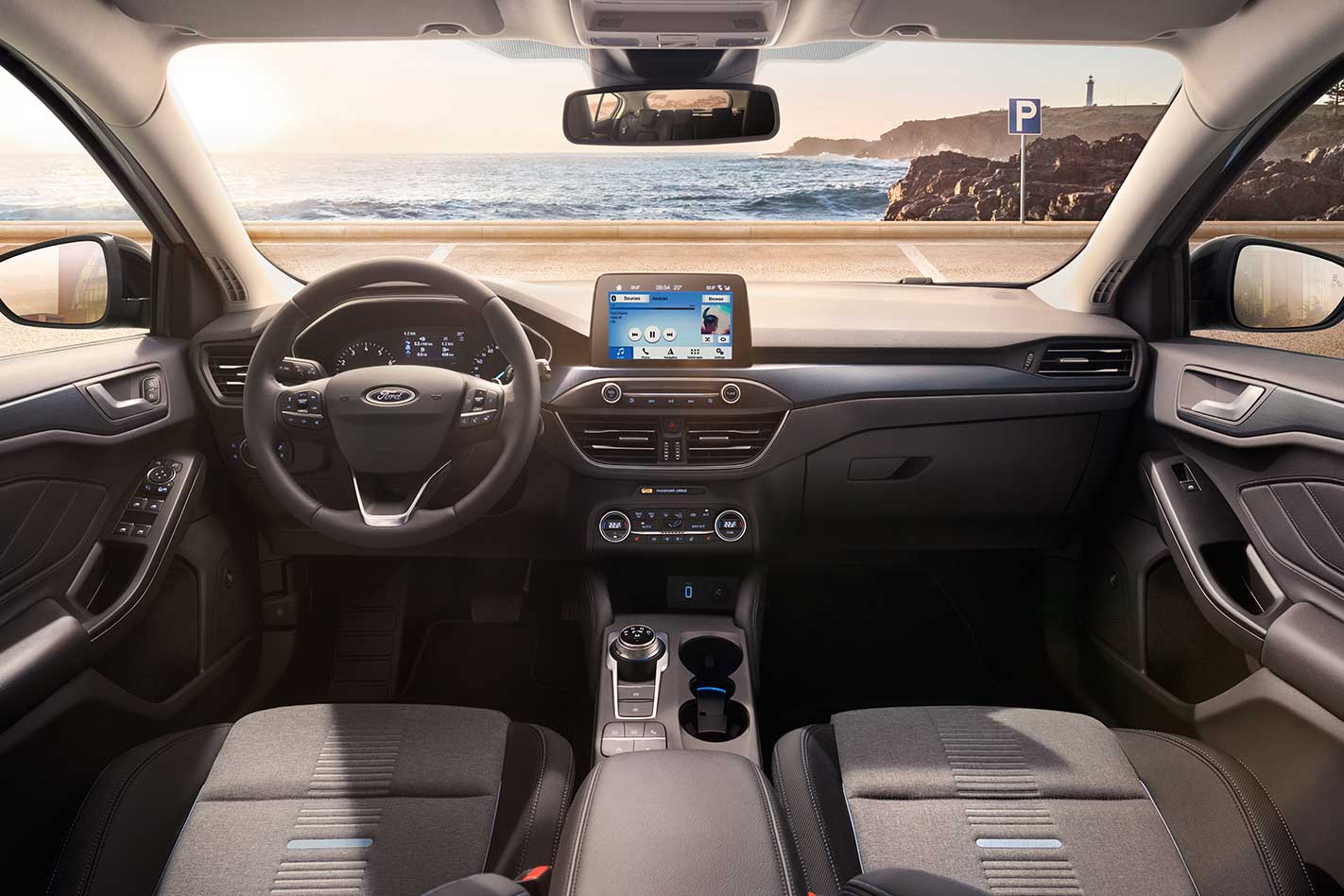
If you want 18-inch alloy wheels, LED foglights, tinted glass and adaptive headlights, you’ll need to find an extra $1800. There’s also a panoramic roof option for $2000 and self-parking for another grand.
The Active’s standard safety kit is strong, with pedestrian- and cyclist-detecting AEB standard, along with lane departure warning and a 180-degree view rear camera. Spend $1250 more and you’ll get stop-and-go adaptive cruise control, blind spot warning with rear-cross traffic alert and lane-centring steering.
At $29,990 (before on roads), the Ford Focus Active will drop right into the middle of the new Focus line-up, which comprises the $25,990 entry level Trend, $28,990 ST-Line and $30,990 ST-Line wagon, and the range-topping Titanium at $34,490.
WHAT IS IT?
The fifth-generation of the world’s best-selling SUV (811,000 in 2017), which is now offered in hybrid form for the first time. This all-new RAV4 adopts Toyota’s TNGA (Toyota New Global Architecture) engineering philosophy and brings an aggressive, truck-like appearance. It also provides further proof of the rise-and-rise of SUVs, as the RAV4 is now America’s most popular passenger vehicle outside of pick-ups.
WHY WE’RE TESTING IT
Six months before the local launch in April, Toyota offered us the chance to test the RAV4 in California. Australian spec has yet to be finalised, but we learned enough to know rival Mazda, Nissan, Hyundai and Mitsubishi et al models are soon to confront a formidable challenger.
MAIN RIVALS
Mazda CX-5, Nissan X-Trail, Mitsubishi Eclipse/Outlander, Hyundai Tucson, Kia Sportage.
THE WHEELS REVIEW
SUZUKI and Daihatsu might have beaten Toyota to be first in Australia with an SUV crossover, but since its 1994 launch, Toyota’s RAV4 took ownership of the idea. The SUV revolution redefined the market and now, 300,000 plus RAV4s later, Toyota brings a hybrid powertrain to the party as the “standout” version of the new fifth-generation model.
Toyota is migrating almost its entire line-up to four architectures within the TNGA philosophy – the exceptions are the 86 and new Supra, both jointly developed models. The RAV4 is the latest to switch; using the so-called K-platform that also underpins the Camry, the next-generation Kluger, and Sienna MPV (that’s not for Australia).
Wheel time in the new RAV4 instantly confirms the benefits to handling, comfort and refinement of the TNGA philosophy of a lower centre of gravity, lower engine for a lower bonnet, wider tracks and quicker steering.
Yet this latest version takes this further still. Instead of the previous single RAV4 personality, chief engineer Yoshikazu Saeki developed the new model in three distinct streams; conventional on-road (essentially replacing the old RAV4), sports on-road, and off-road oriented.
Different chassis tunes and equipment levels across the front- and all-wheel-drive variants produce subtle, if noticeable, differences in driving character, most notably with the new Adventure version that aims to increase the RAV4s off-road capability.
Toyota is playing coy with what variants Australians can expect, and how much emphasis it intends to place on the three pillars philosophy, except to reveal that the three-grade Australian range will include front drive 2.0-litre petrol, front- or all-wheel drive 2.5-litre hybrid, and the AWD 2.5-litre petrol.
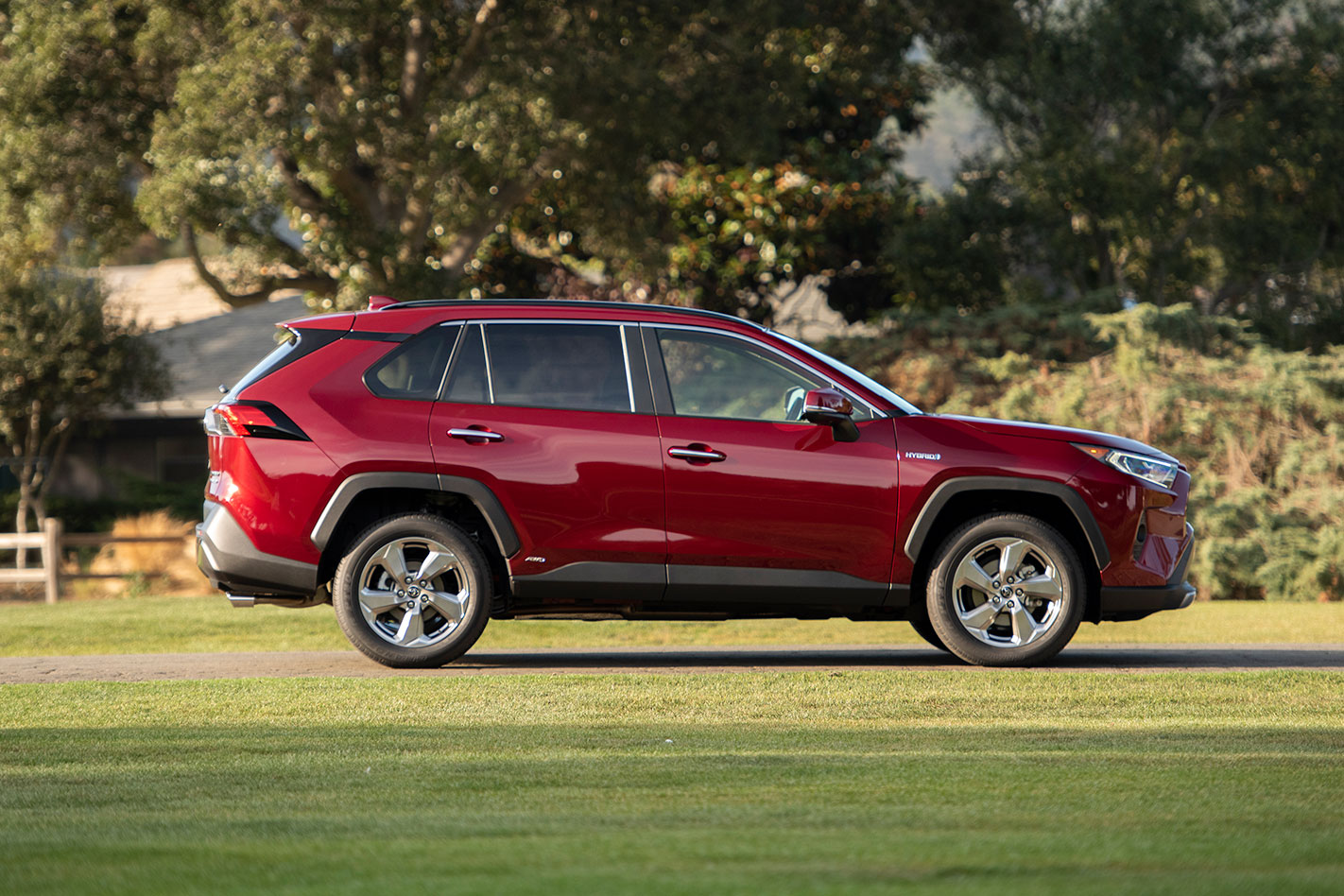
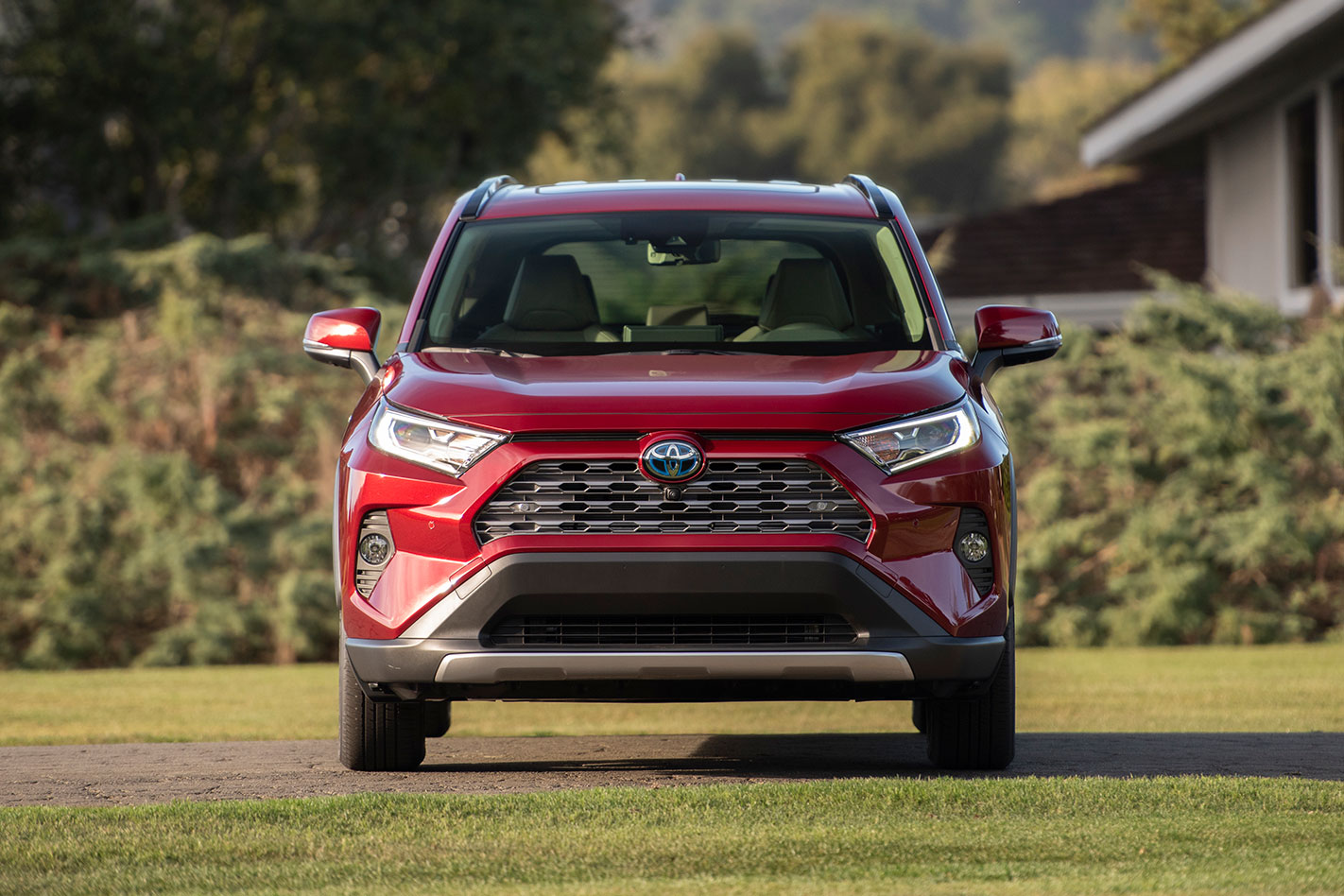
The RAV4’s styling takes a monumental leap forward … if you like the truck influence of that robust front-end. The look is more refined around the tapered rear end, however, and in between, the body’s many creases and protrusions don’t quite match the ugly complication of the Lexus NX.
The RAV4 gains optional 19-in wheels, new two-tone paint schemes (apparently not for Australia) and door mounted, pedestal-style, side mirrors to greatly improve outward visibility. Styling varies by trim, with the American Limited displaying a more elegant grille and headlight design and the Adventure a more masculine look punctuated by wheel arch and lower body cladding.
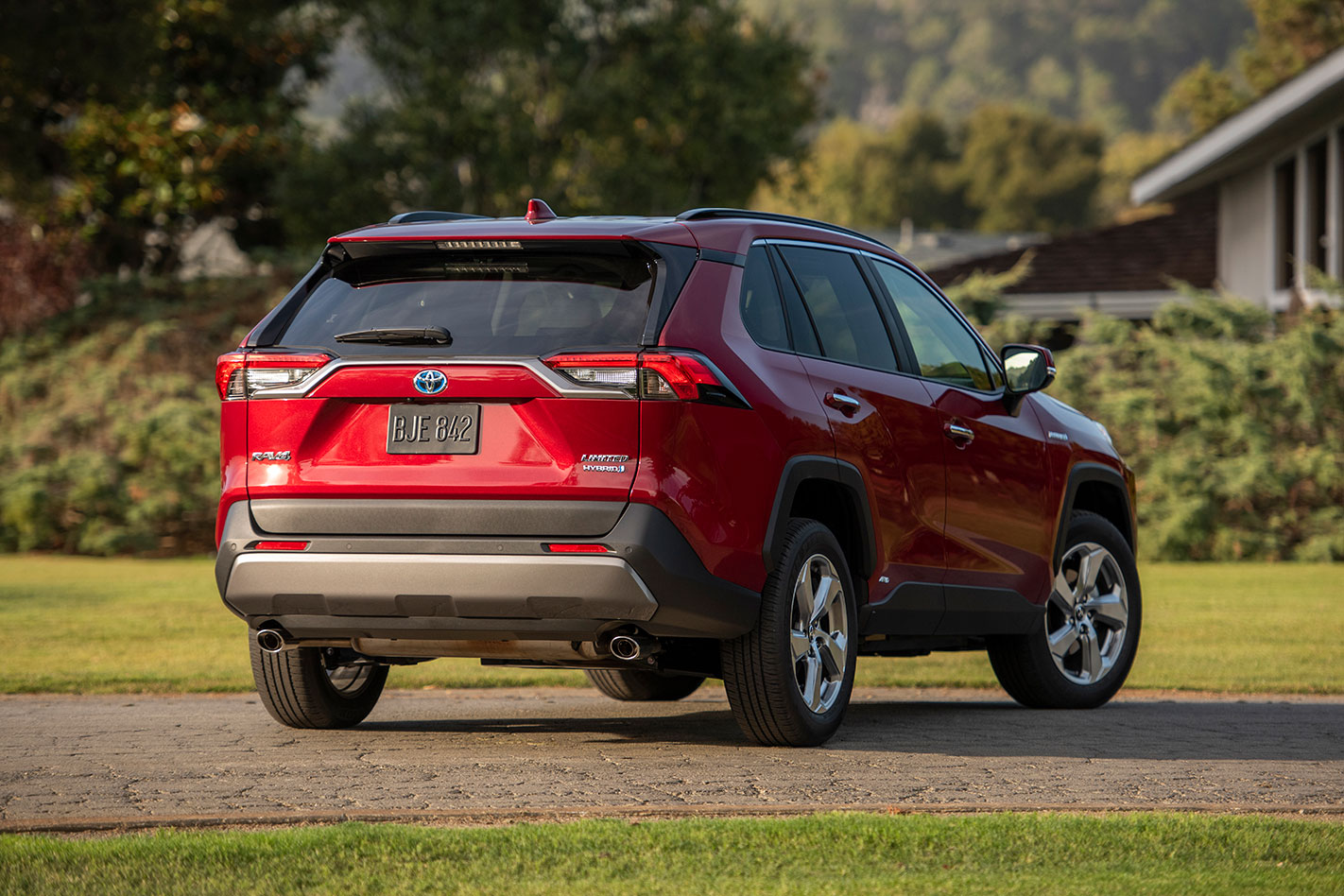
Developed using the Camry as an engineering basis with newly revised front struts, the RAV4 gets what Toyota calls a trailing wishbone, multi-link rear suspension in place of the Camry’s double wishbones.
A quick, linear steering ratio delivers 2.7 turns lock-to-lock while the electric motor is now mounted on the rack, rather than the steering column, for more precision. An Aisin eight-speed gearbox is standard with the 2.5-litre petrol engines. The base 2.0-litre gets either a six-speed manual or the CVT that’s shared with the hybrid. A sports chassis tune is available along with hill-descent control, while AWD models get three multi-terrain modes. Based on the American models we drove, there’s an almost infinite choice of specifications and equipment. Toyota Australia’s product planners face a nightmare.
Predictably, given the array of TNGA chassis technology, Toyota claims the new RAV4 both handles better on the road and is more capable off-road, especially in the Adventure model grade, that is expected to come to Australia.
After experiencing the RAV4 Hybrid on a modest off-road course, as well as on some twisty mountain two-lanes, we won’t dispute the claim. More relevant are the RAV4’s road manners, which seriously improve over the old model. Slack steering is replaced by a system that’s more direct and responsive, especially in the first movements off-centre. A vague feeling of aloofness is still there, but this is a RAV4 to be enjoyed with its increased grip and dramatically diminished understeer. However, the hybrid is slightly heavier on its feet than the 2.5-litre petrol, and its brake feel is less convincing. Tyre noise is sensitive to road surface changes, but the ride quality, while difficult to accurately assess on California’s smooth roads, appears to deliver real chassis refinement and comfort.
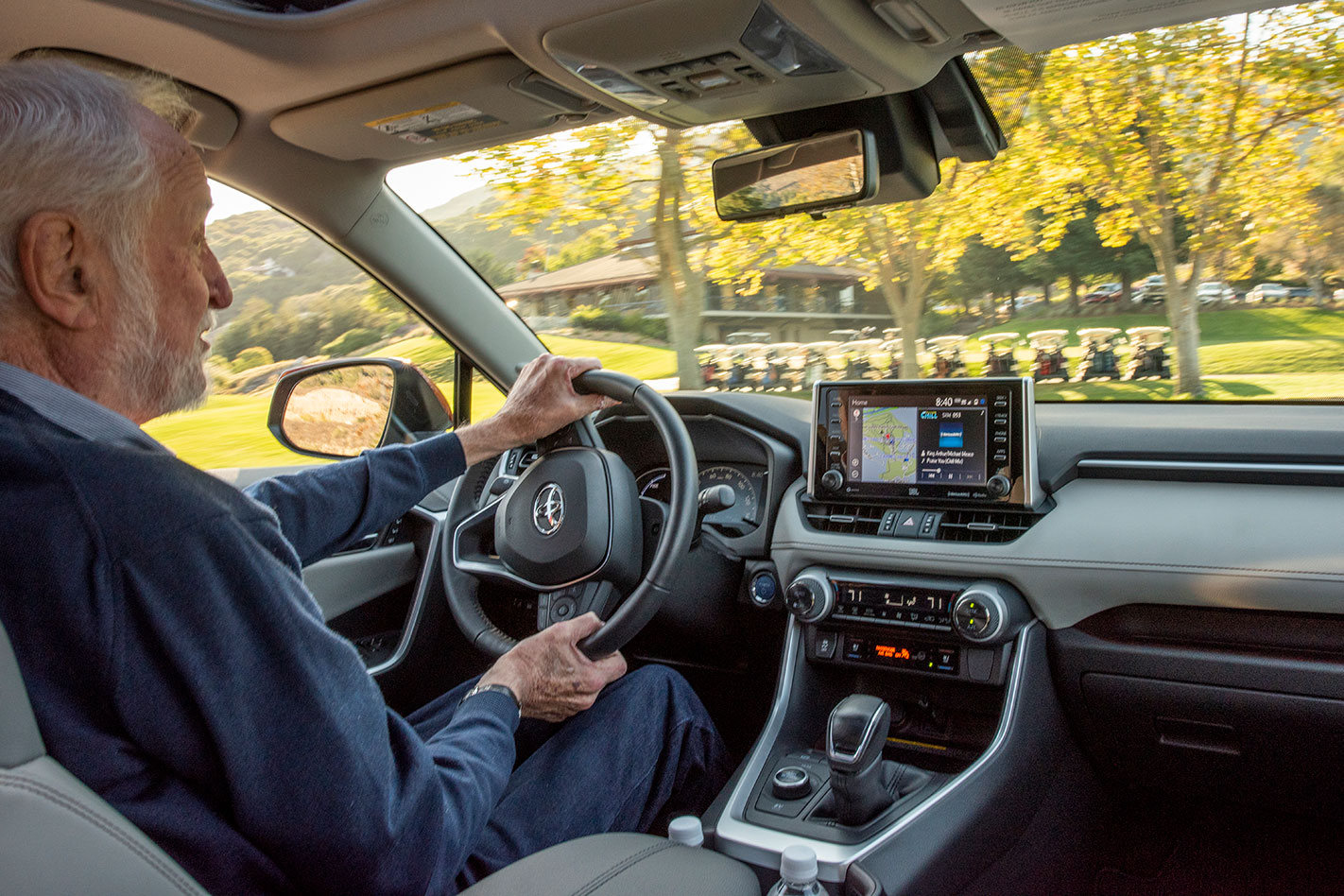
The powertrain is less cultured. The hybrid powertrain offers 155kW/221Nm (slightly more than the 152kW 2.5-litre petrol) and the performance is appropriate to the class (as usual, no acceleration numbers from Toyota). Efficiency of the hybrid is a highlight with a combined cycle figure of 6.0L/100km economy. However, some coarseness at high revs, where the engine spends considerable time if you are climbing, accelerating or passing another vehicle, detracts from the hybrid’s refinement. Aside from the strains of the hybrid, theRAV4 is extremely quiet and its structure solid. The more polished 2.5 petrol achieves 8.1L/100km.
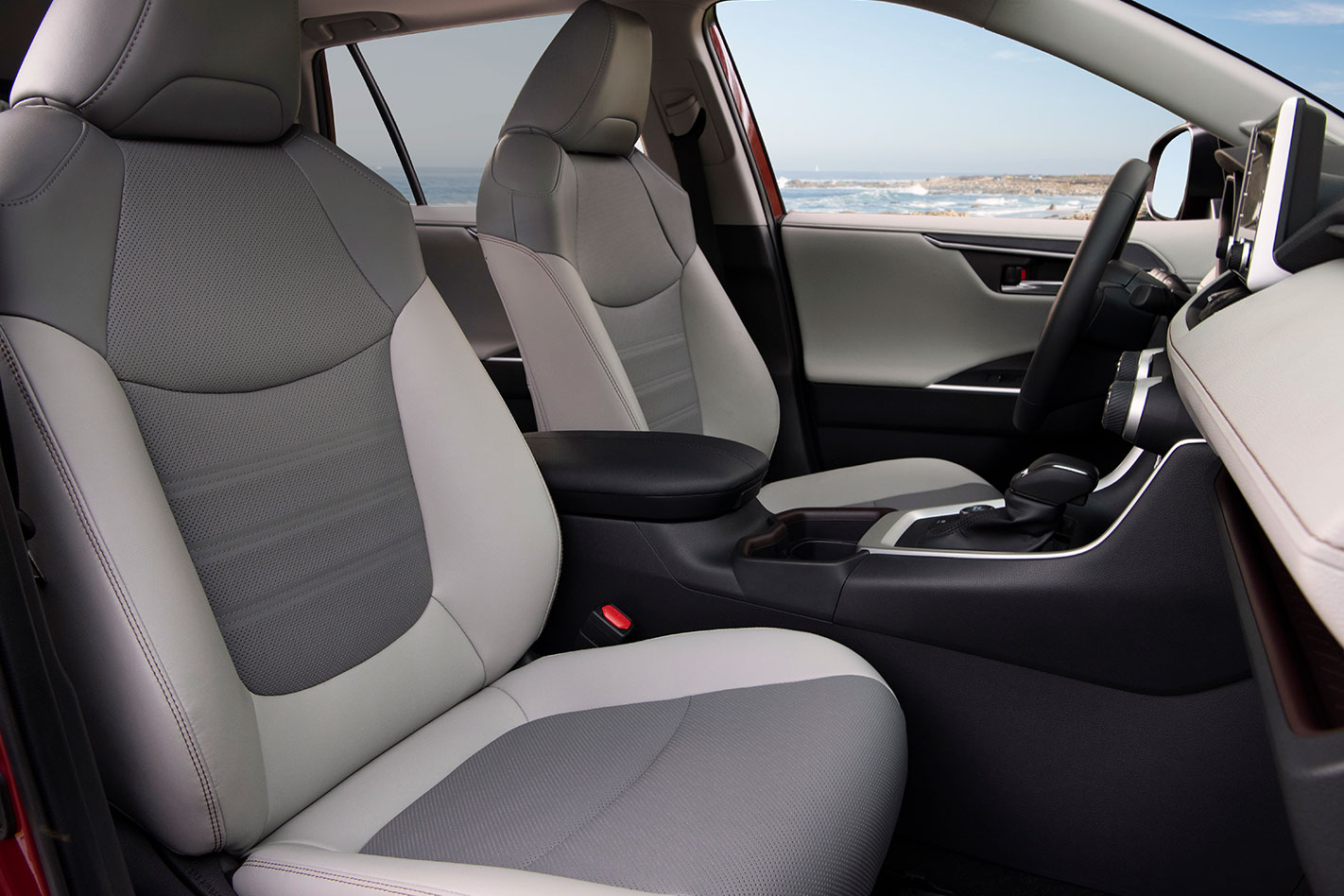
Every modern car is as much about electronics as dynamics, especially when it’s a family-SUV. The 2019 RAV4 features Toyota’s Entune 3.0 software viewed through a 7.0-inch colour display. An 8.0-inch screen with satellite radio and navigation is optional, as is an 800-watt JBL audio system, Qi wireless charging and up to five USB ports. Even the most basic RAV4 includes Wi-Fi connectivity. Sorry Apple users, Toyota Australia is still not happy with the CarPlay system and is testing alternatives, including Android Auto.
If it seems that Toyota has a RAV4 for everyone, that is certainly the intention. With its impressive array of mechanical and technological advances, the new RAV4 makes a convincing case that this is the most accomplished Toyota SUV yet.

THE WHEELS VERDICT
It is too early for a definitive verdict on Toyota’s crucially important RAV4, but if you approve of the forceful appearance, know that the new model is a huge improvement across the board and delivers a broader range of driving characters and appeal, with strong safety credentials.
PLUS: Space; handling; convincing interior quality; safety; visibility; polarising styling MINUS: Raucous hybrid powertrain; low rear seat cushion; polarising styling
SPECS
Model: Toyota RAV4 Hybrid Engine: 2487cc four, dohc, 16v, hybrid Max power: 155kW @ 5700rpm Max torque: 221Nm @ 3600-5200rpm Transmission: CVT auto Weight: 1682-1723kg 0-100km/h: 10.0 sec (est) Fuel consumption: 6.0L/100km Price: $38,000 (est.) On sale: April 2019
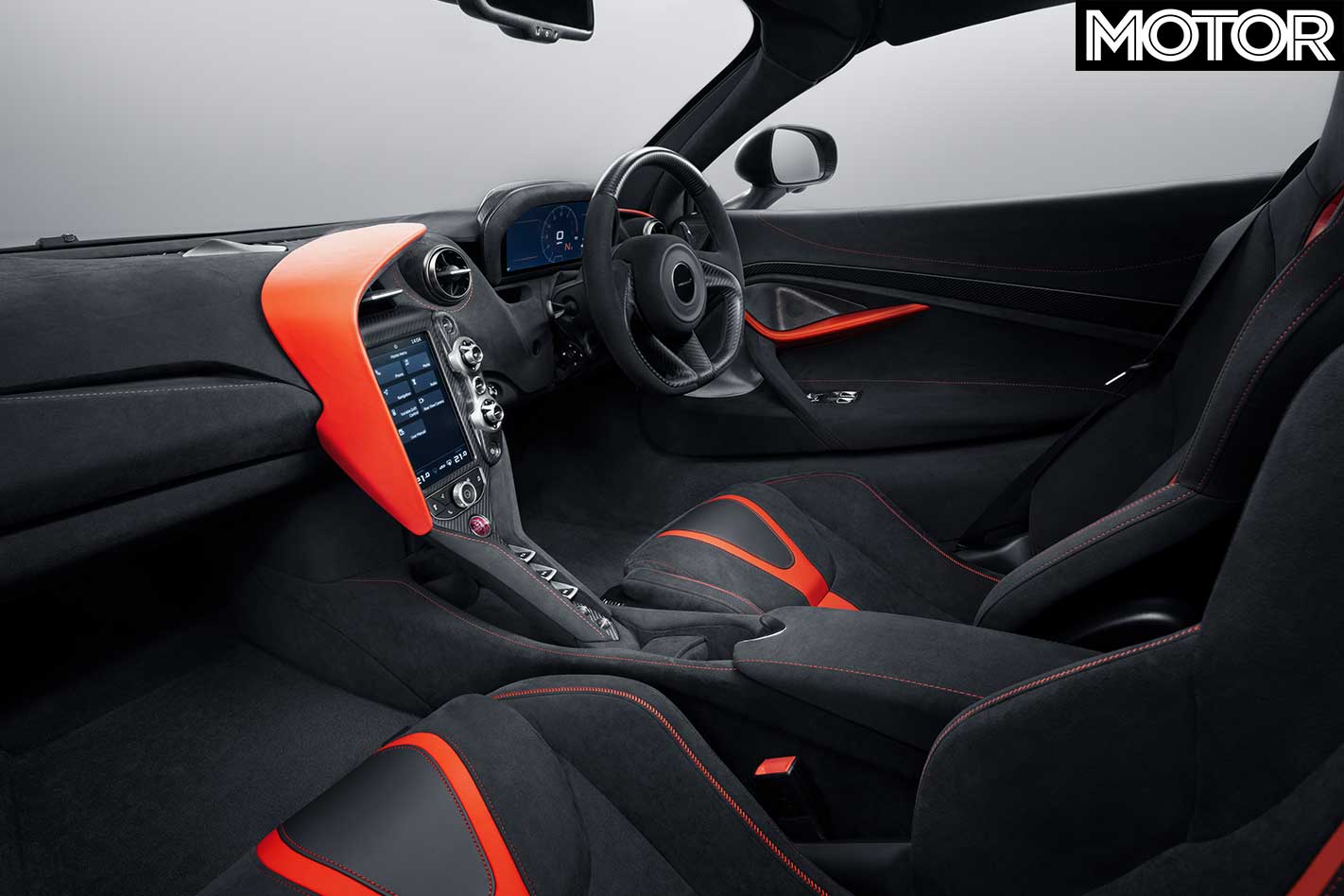
McLaren has revealed a real version of one of its initial McLaren Special Operations (MSO) theme concepts for the 2018 McLaren 720S.
Dubbed ‘Stealth’, the theme incorporates dark hues and red highlights, but the name seems like a misnomer, as no one’s sneaking anywhere in this.
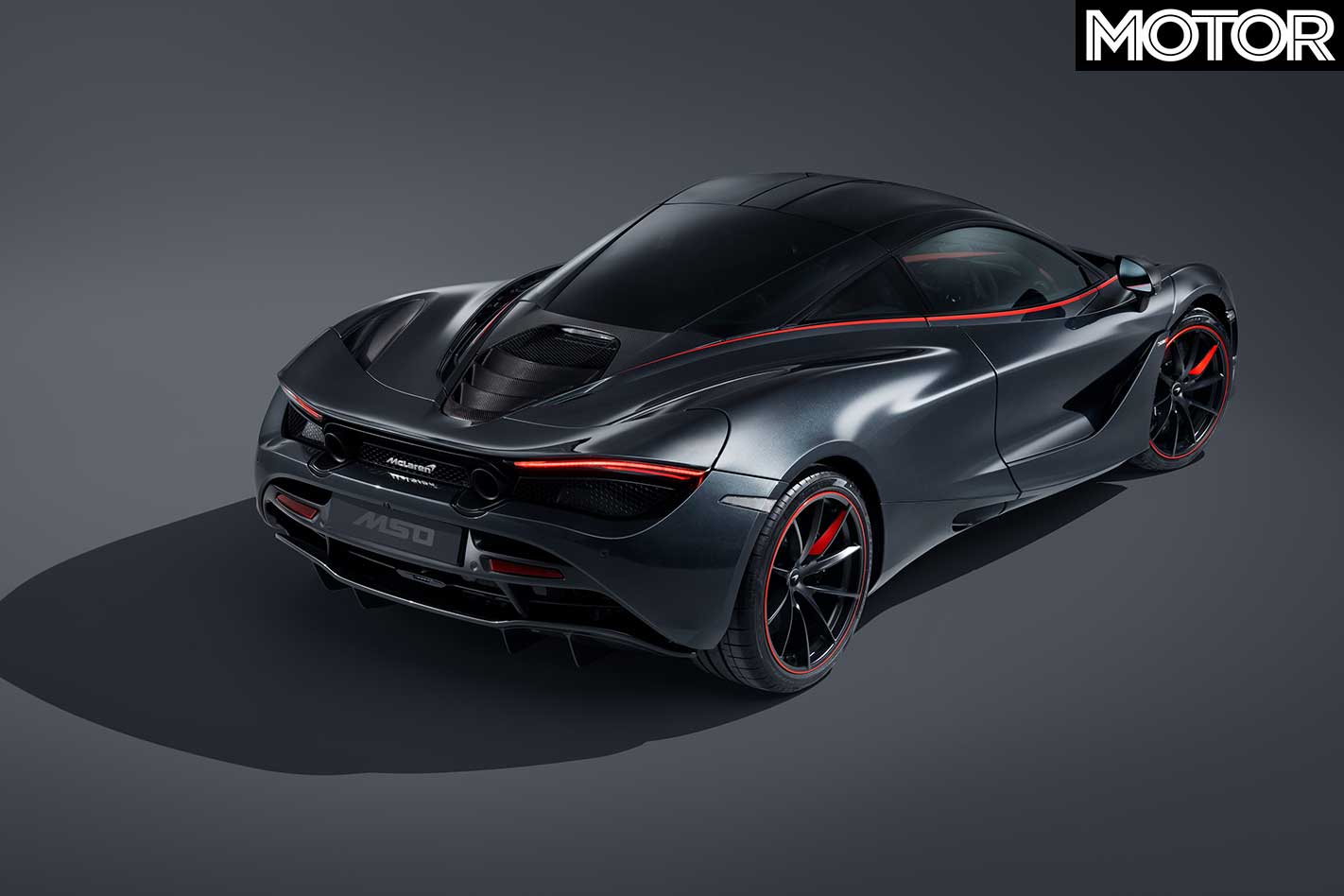
This particular 720S has also had the Performance specification bestowed upon it, which in this case adds more carbon and Alcantara for the interior.
Satin black 10-spoke lightweight alloys and carbon fibre accents on the front air intakes, door mirrors, rear aero bridges, rear deck and rear air intakes are all also MSO additions to the 720S.
McLaren says the popularity of MSO’s options on its sports cars has led to many unique versions of the 720S, including others from its ‘Bespoke themes’ list displayed upon the car’s debut.
“The McLaren 720S can be ordered as standard in one of three specification levels, with MSO-defined options among the additional features offered to customers who want their new car to be unlike others.
“Beyond this there are opportunities to further personalise a McLaren through MSO’s Bespoke services, where areas such as paint and interior stitching can be developed as themes to create a car that is often, quite literally, one-of-a-kind.
“Stealth was one of the MSO Bespoke themes visualised for the McLaren 720S on its global debut at the 2017 Geneva International Motor Show; examples of the Velocity, Track and Pacific themes have already been produced as MSO Bespoke orders.”
SLEEPING on private planes. Starring in his own Japanese comic book. Sparring with the finance ministers of sovereign nations over the size of his enormous pay packet. It’s all in a day’s work for the man who heads up the world’s largest automotive alliance … or at least, it was.
The extraordinary news of Carlos Ghosn’s arrest for “significant acts of misconduct” has made global headlines, but to truly appreciate the gravity of the situation, it helps to better understand the man at the centre of it all.
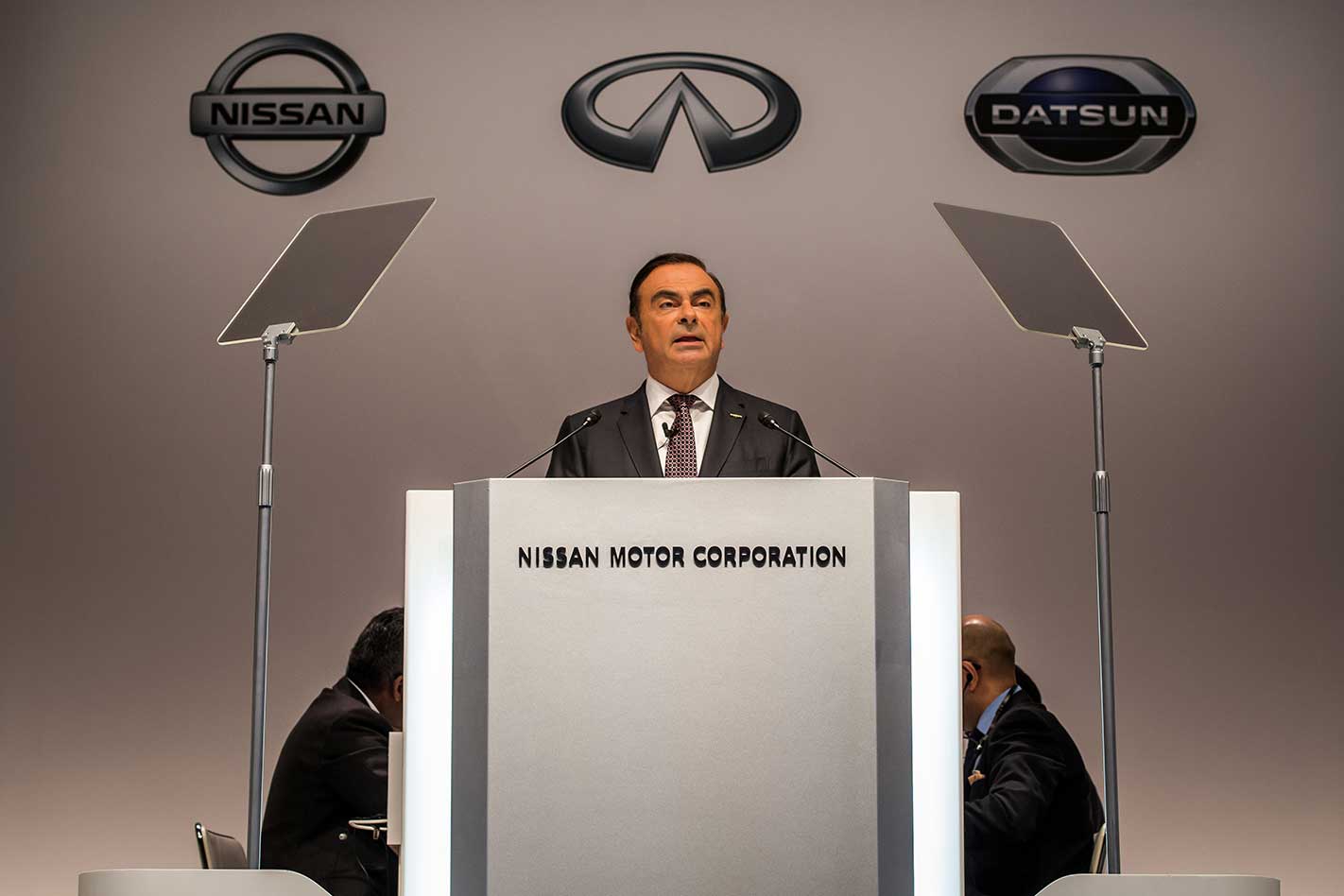
Forceful, charismatic and, at times, brutal in his decision making, Ghosn’s story is as colourful as his personality. Here’s a brief look at his meteoric rise to become one of the motoring world’s giants.
– 1978- 1996: The Michelin years. Born in Brazil to Lebanese parents, Ghosn’s motoring career begins after graduating as an engineer and joining Europe’s largest tyre maker, Michelin. By 30, he’s appointed chief operating officer of Michelin’s South American operations, before taking on similar roles in North America.
– 1996: Ghosn joins ailing French manufacturer Renault and quickly implements a radical restructure to return the company to profit by 1997. The restructure earns him the nickname “Le Cost Killer”
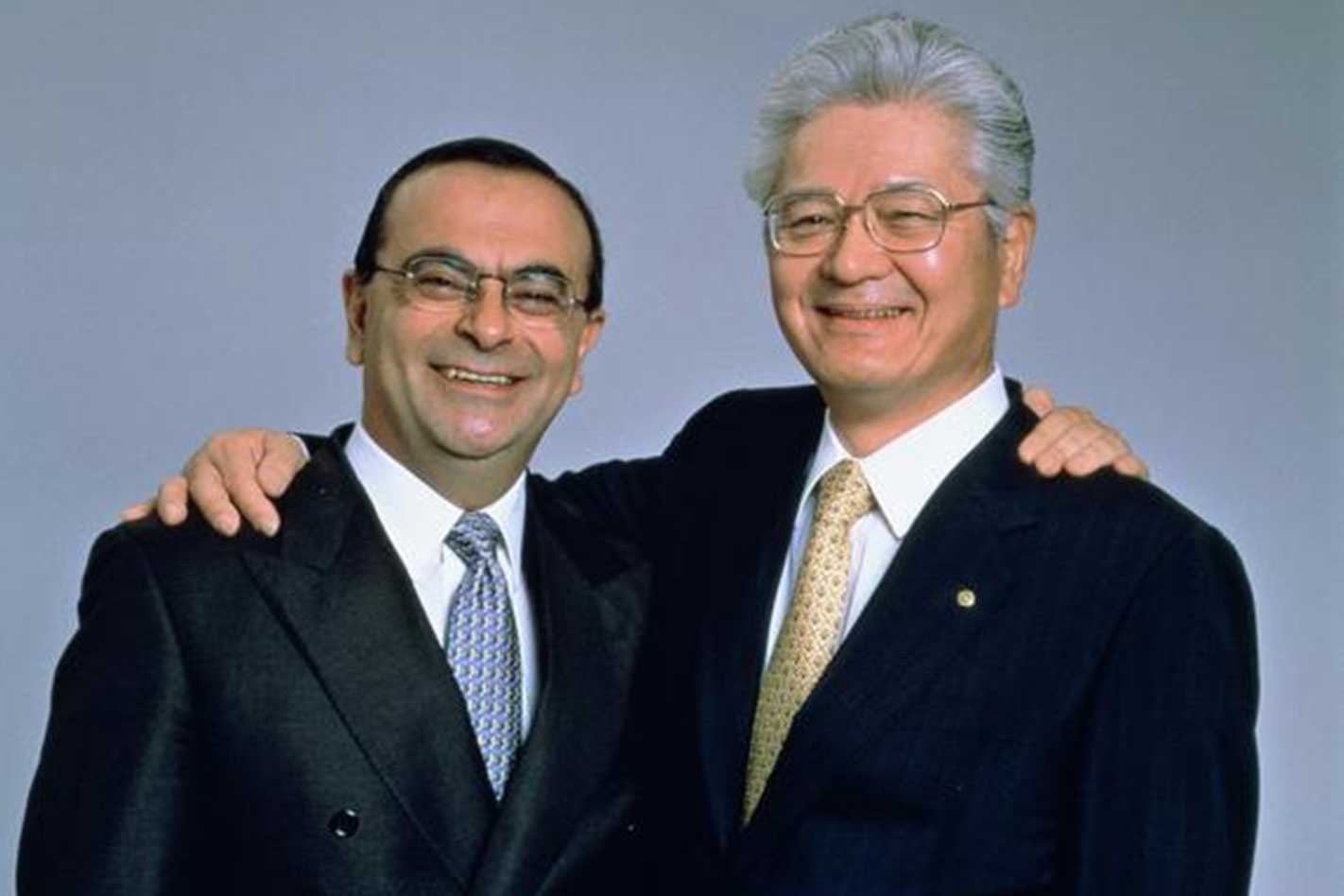
– 1999: The Renault-Nissan Alliance is formed, Ghosn joins Nissan as its chief operating officer. Is appointed as Nissan’s president in 2000, then CEO in 2001.
– Now in charge at Nissan, Ghosn controversially changes the company’s official language from Japanese to English.
– 2001: Ghosn’s hero status in Japan reaches a new level. His life is serialised in one of the country’s well-known comic books.
– 2007: Ghosn embraces the future of electrification and reveals his plan for the Nissan-Renault Alliance to move into mass-market zero-emission cars.
– 2010: The Nissan Leaf is launched. It is now the world’s best-selling EV.
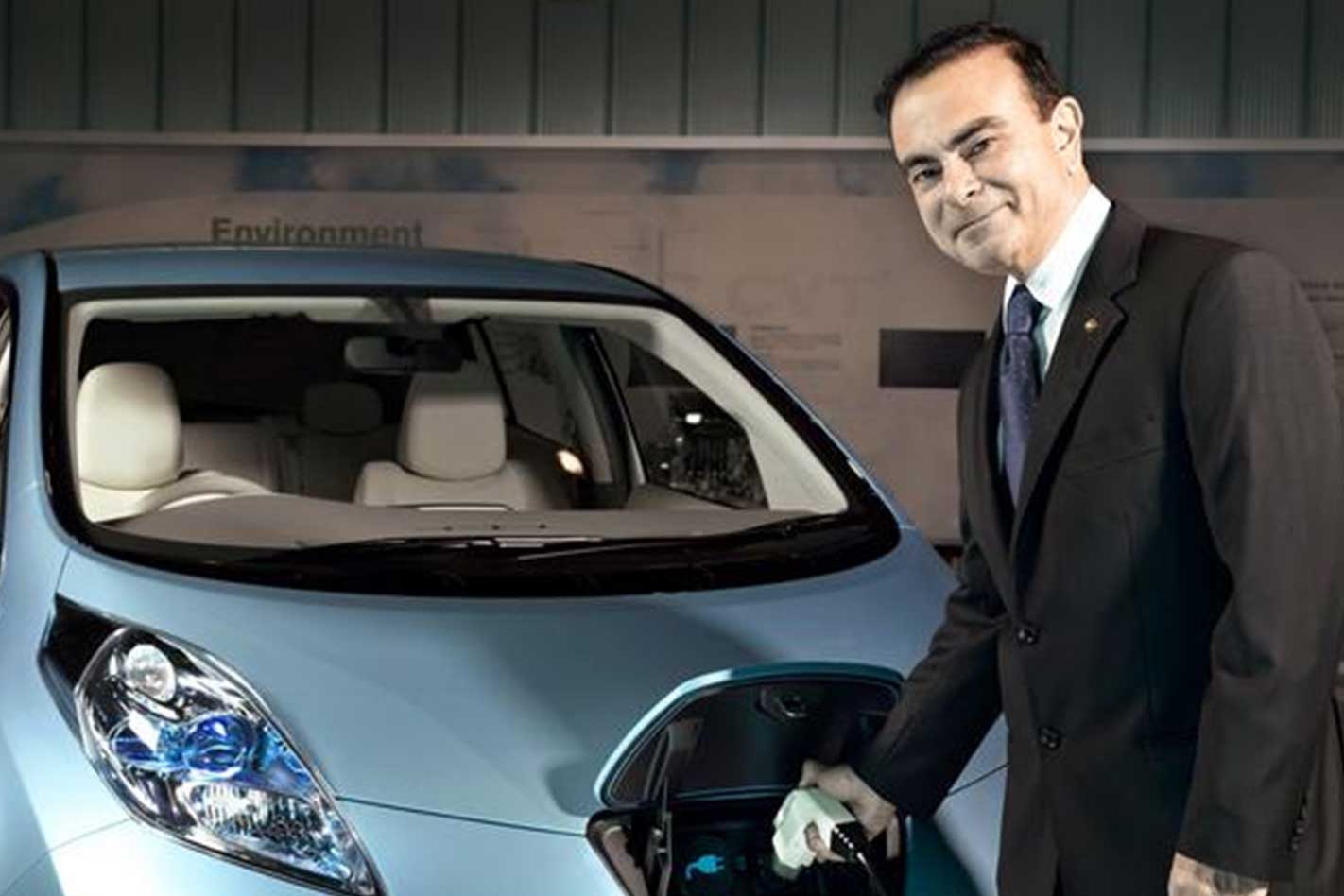
– 2011: The Japanese rank Ghosn seventh in a nationwide poll of who they’d like to run their country. That was two places ahead of Barack Obama.
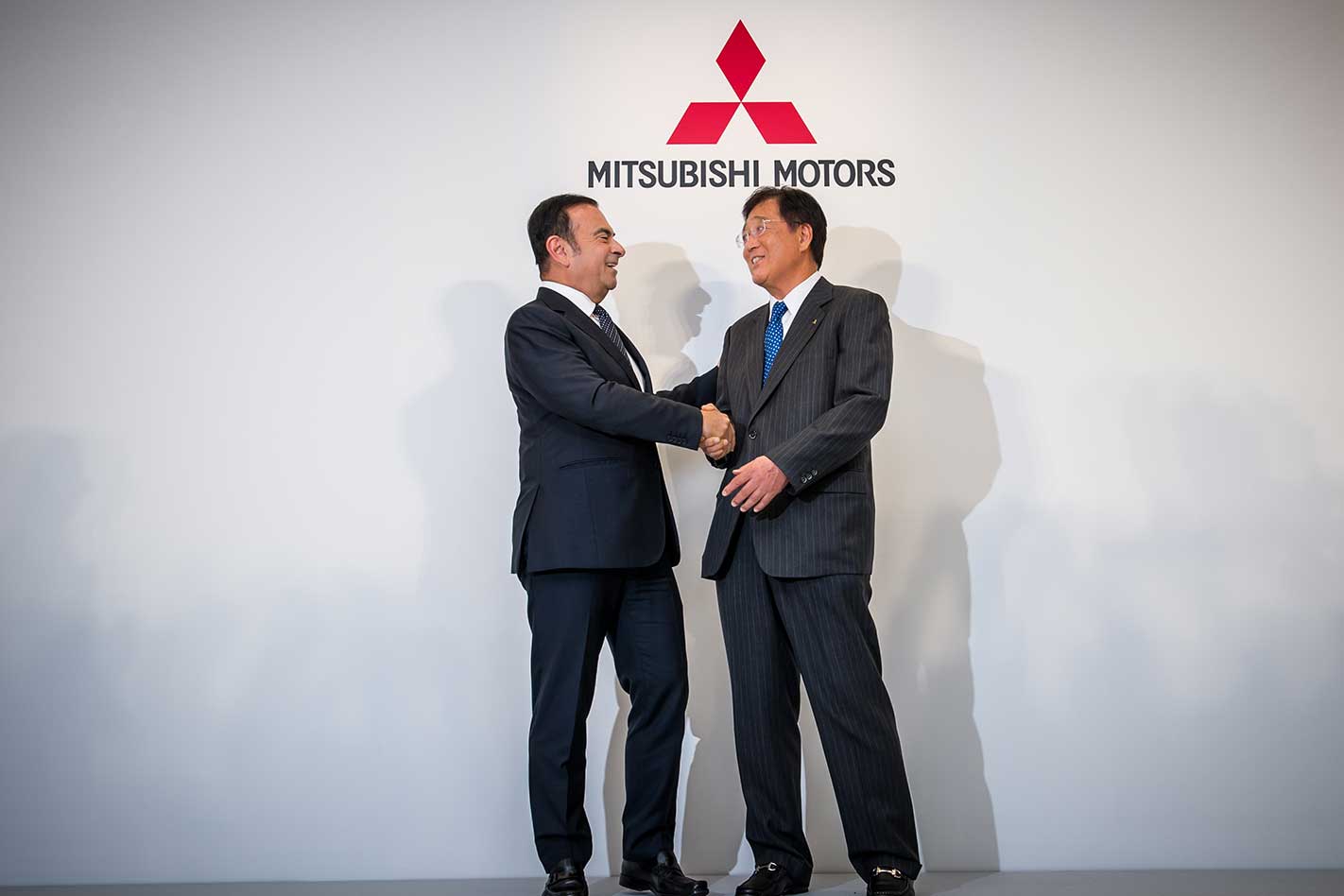
– 2016: Long a supporter and advocate of alliances, Ghosn takes charge of Mitsubishi, forming a three-way partnership with Renault-Nissan. This places him at the head of the world’s largest motoring alliance, which is said to build one in nine of the world’s cars and employs 470,000 people.
More on Renault-Nissan-Mitsubishi’s former supremo Carlos Ghosn from Wheels:
– Carlos Ghosn: Legacy of “Le Cost Killer” – Carlos Ghosn: “Consumers don’t want to buy electric vehicles” – Nissan swoops on Mitsubishi in $3bn takeover bid
Carlos Ghosn is in a little bit of trouble, allegedly.
The chairman of Nissan (as well as of Mitusbishi and CEO of Renault thanks to the alliance between the three) has been accused of “significant acts of misconduct” by the brand.
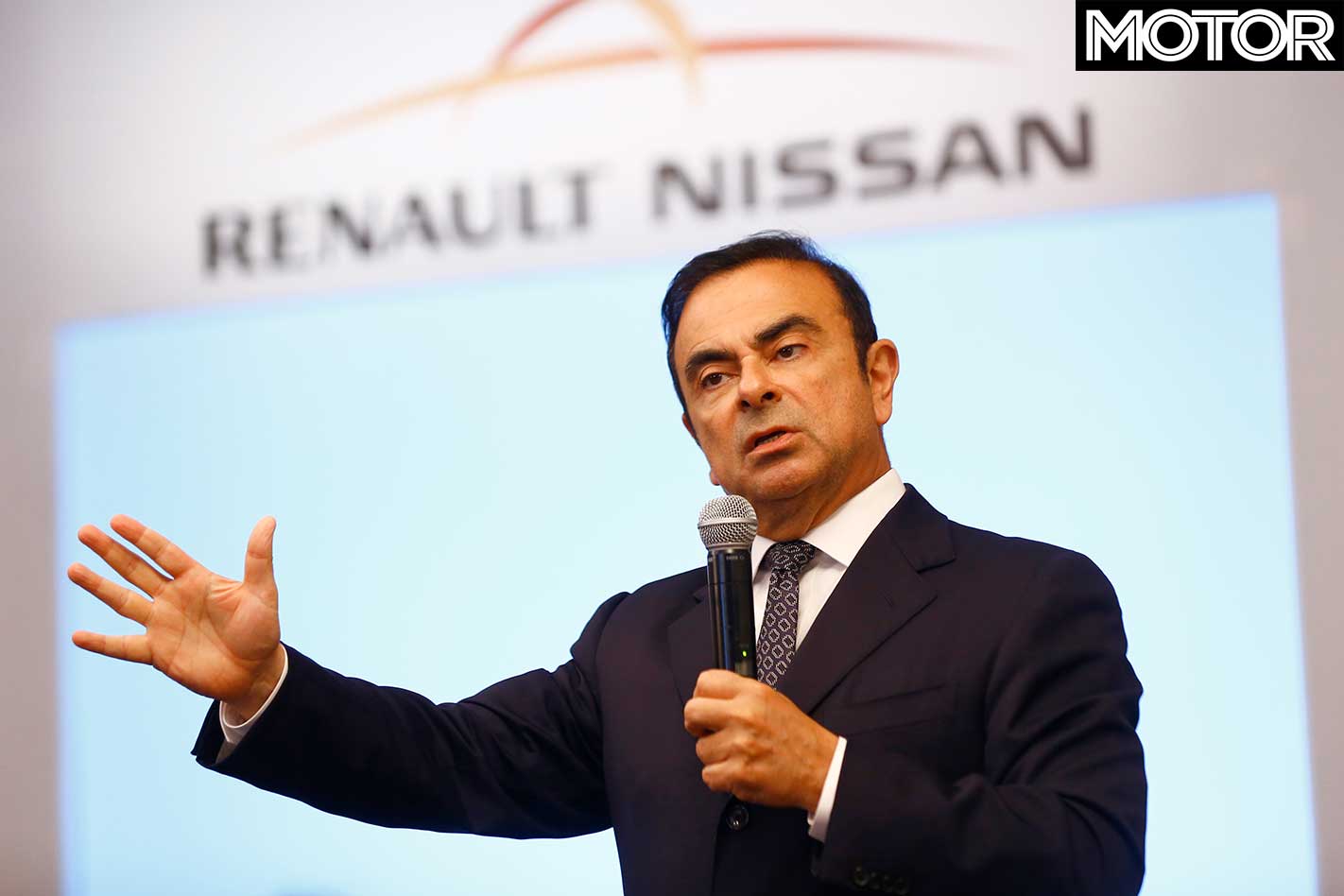
Nissan said in a statement that Ghosn has been “reporting compensation amounts in the Tokyo Stock Exchange securities report that were less than the actual amount, in order to reduce the disclosed amount of Carlos Ghosn’s compensation.”
Essentially, the company says he’s being paid more than Ghosn says he is. You can read more about it in WhichCar’s coverage of the events, but what we’re doing here is looking to the future.
We’ve got our fingers crossed that the next Nissan-Renault-Mitsubishi boss (if the chairman position still exists once this is done) is someone with a little more of a focus on products. Think Andy Palmer.
It’d be great to see investment in a few cars that have been seemingly neglected for some time:
1 – Nissan’s next Zed
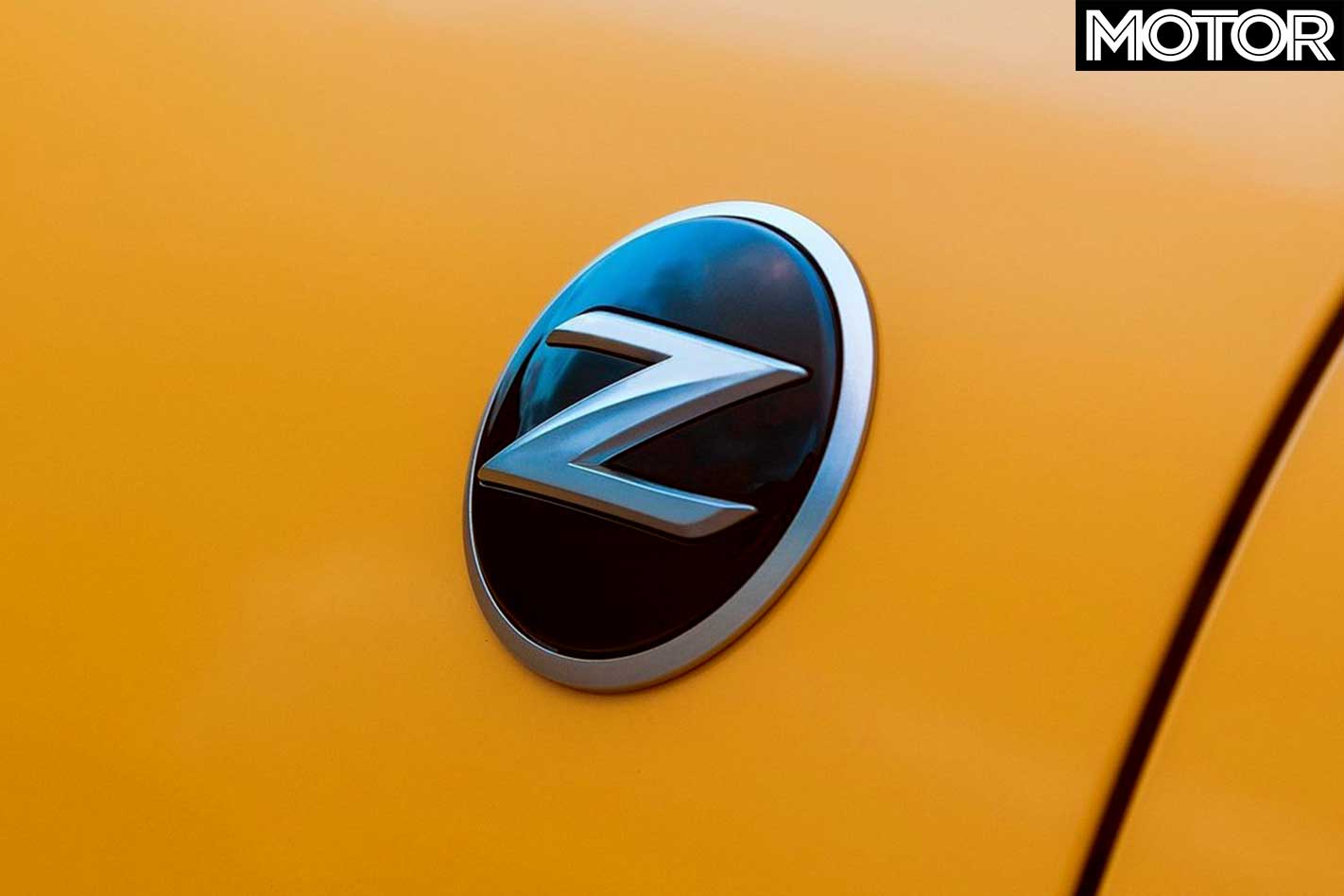
The sports car that most well-off people can reasonably shell out for is ageing, and the next version is still a way off. We’re hoping the next boss of Nissan has the foresight to make its every-person’s sports car something worth considering and bringing a little bit of fresh fun to Nissan’s product range.
2 – The ‘R36’ Nissan GT-R
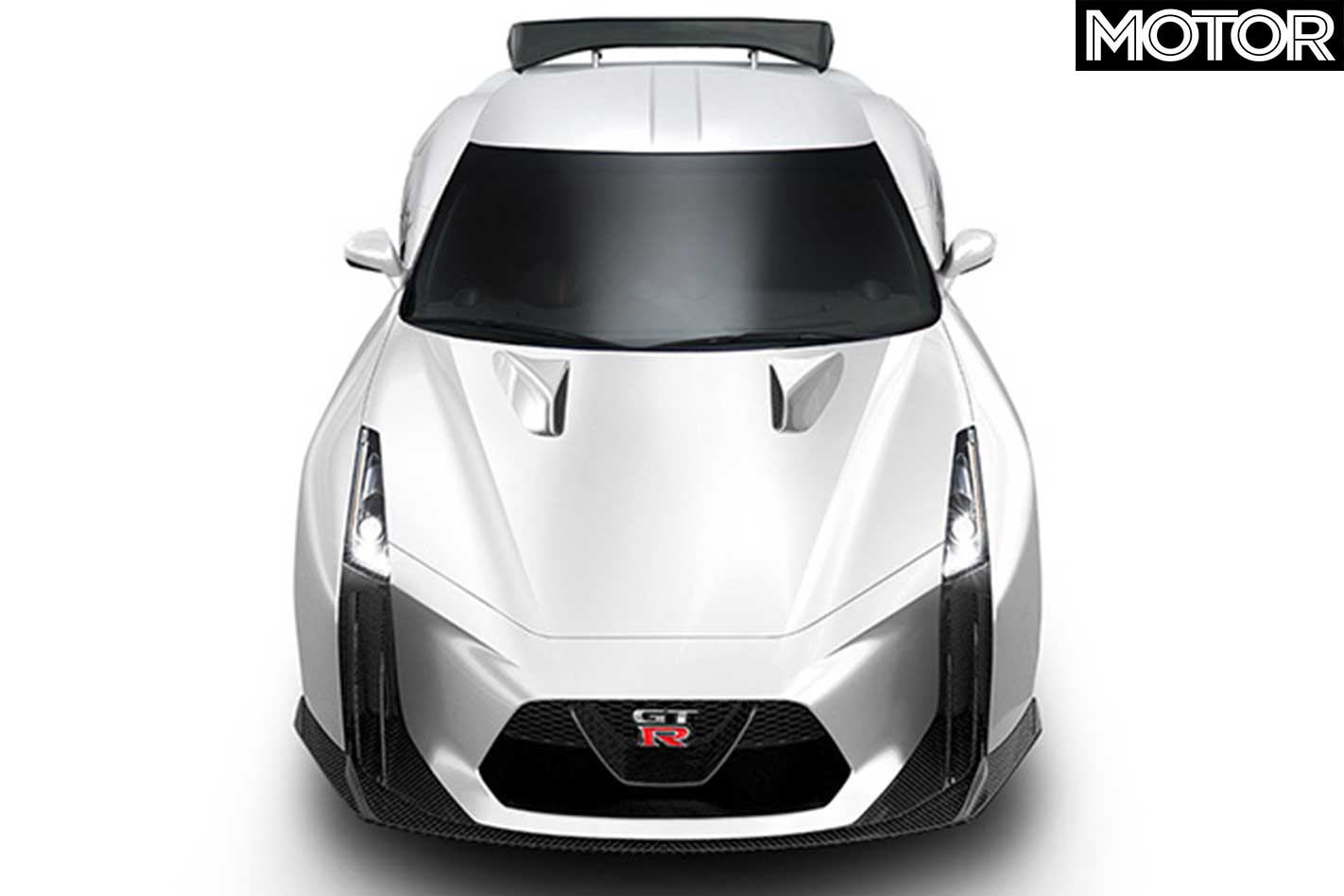
The list of Japanese supercars is currently rather short, and it’d be a shame to see it get any shorter.
We want the next head of Nissan to drop some cash on a new GT-R (or whatever it ends up being called, R36 makes sense to us) for the simple reason that the current generation is barely current anymore. It was introduced in 2007.
3 – A new Pulsar GTI-R
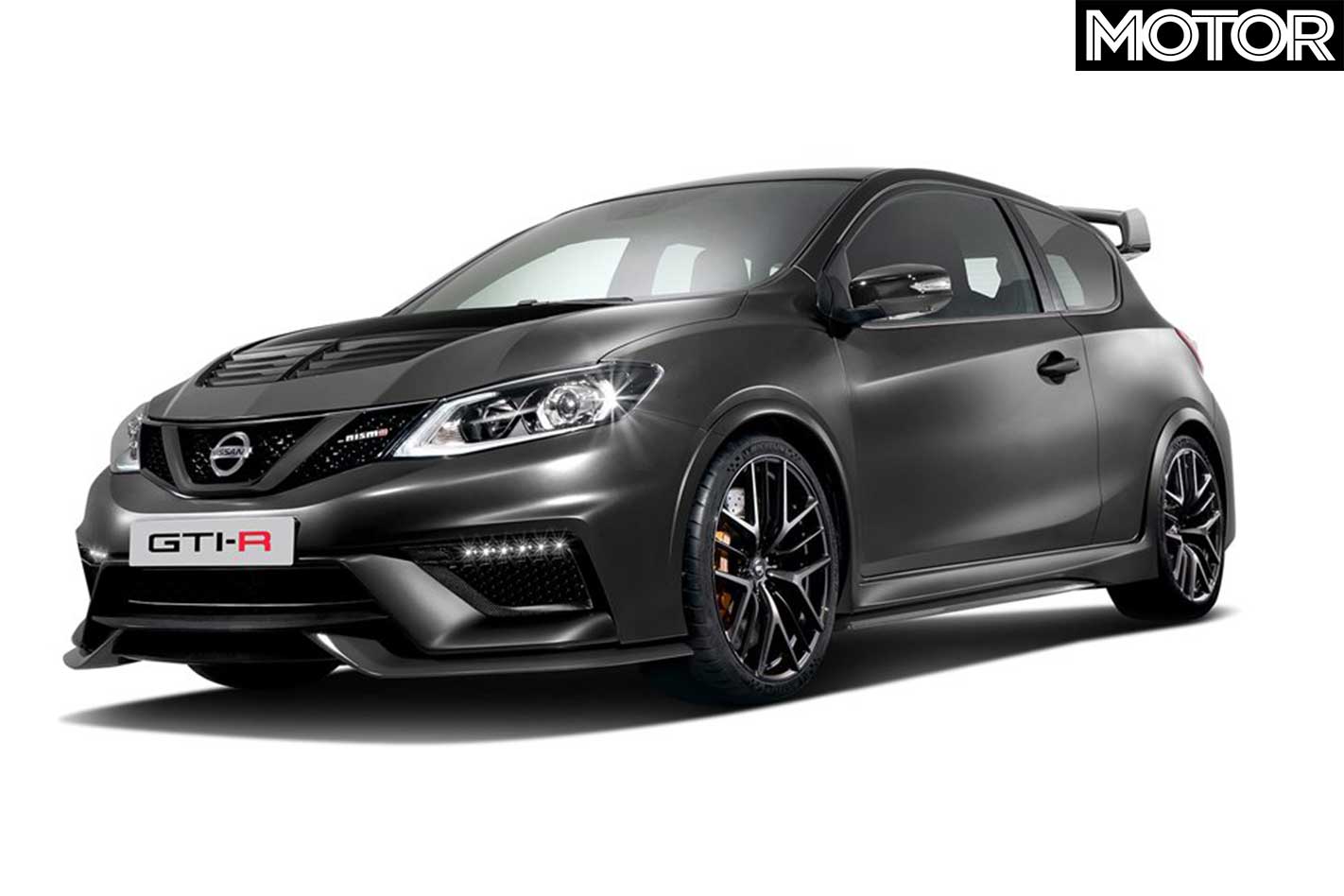
The hot hatch war is raging right now, and Nissan’s missing out despite having an obvious fighter.
While it wasn’t as iconic as its rivals, the GTI-R had (and still has) its own die-hard cult following.
Look, we’ve already done the heard yards and designed it ourselves, including how we’d build it, in a Sweet Dream article we put together last year.
4 – And a new Nissan Silvia. Please?
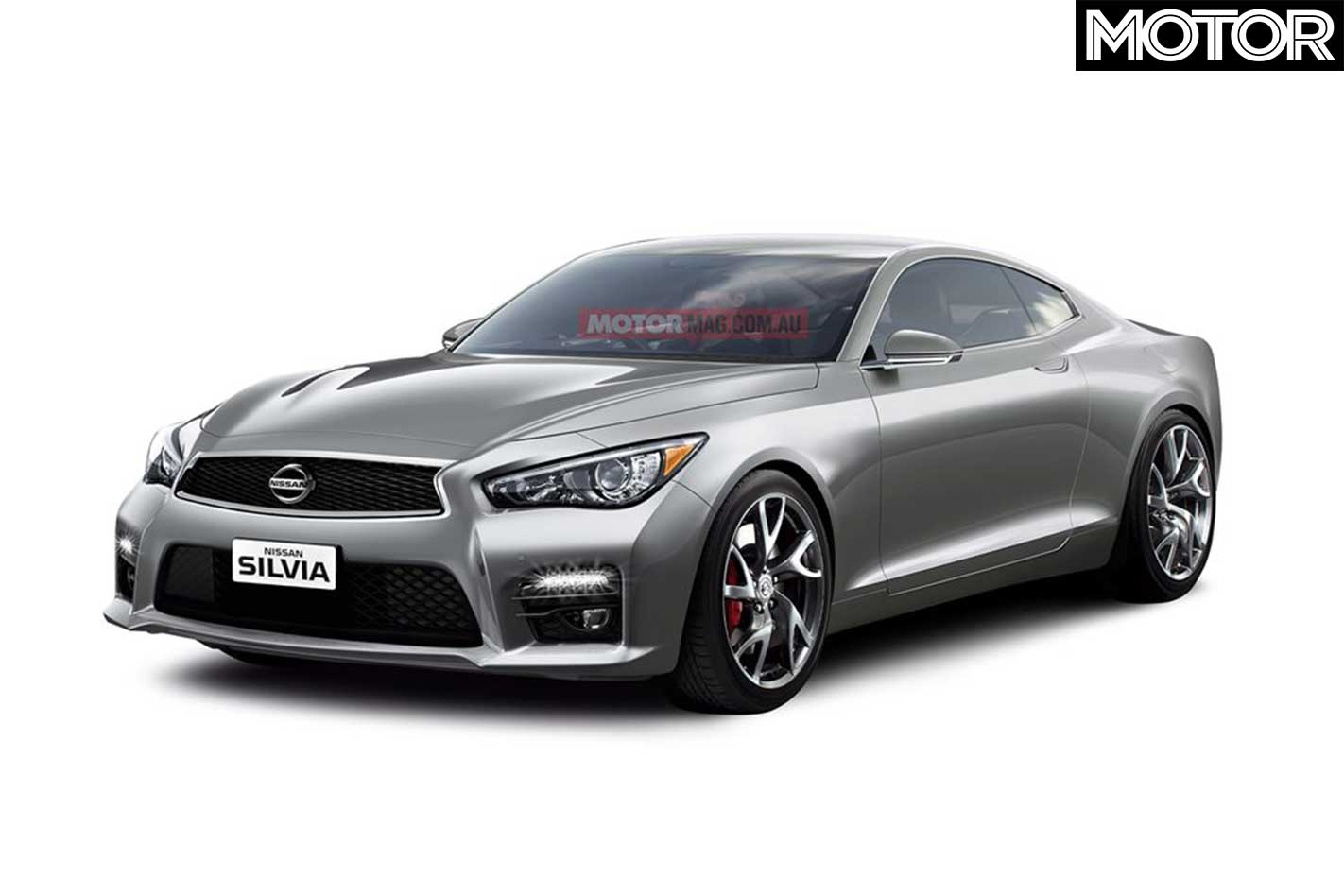
Also on our list of outlandish demands is the return of a Japanese performance great. We’d give the ‘S16’ some Infiniti vibes, as pictured, as well as a couple of engine choices, six- and four-pots, both with turbos. If Toyota can have two rear-drive sports cars, why can’t Nissan?
5 – And one more thing…
If Ghosn also ends up being ousted from Mitsubishi, we’ve got something we’d like to propose to the next boss of the red triple-diamond.
The Subaru WRX is still around, and it needs some direct competition. Evolution XI, anyone?
Stop me when this sounds familiar. You go to wash your hands in an airport bathroom. You squirt the soap from the dispenser, and then go to start the water and… nothing. The high-tech sensor taps don’t see you, and you’re left with hands dripping in pungent goo, like the collector at a bull-stud farm.
It’s Finagle’s Law – a refinement of Murphy’s Law, that anything which can go wrong, will go wrong… at the worst possible moment.
Your credit card will only be declined when you’re on a first date. Your transmission will only crap itself when the house down-payment is due. The porn star you had an affair with will only sell her story to the papers when you’re being investigated for being a sleeper agent for a Russian spy agency. Better hope Dr Finagle doesn’t drive a Lexus.
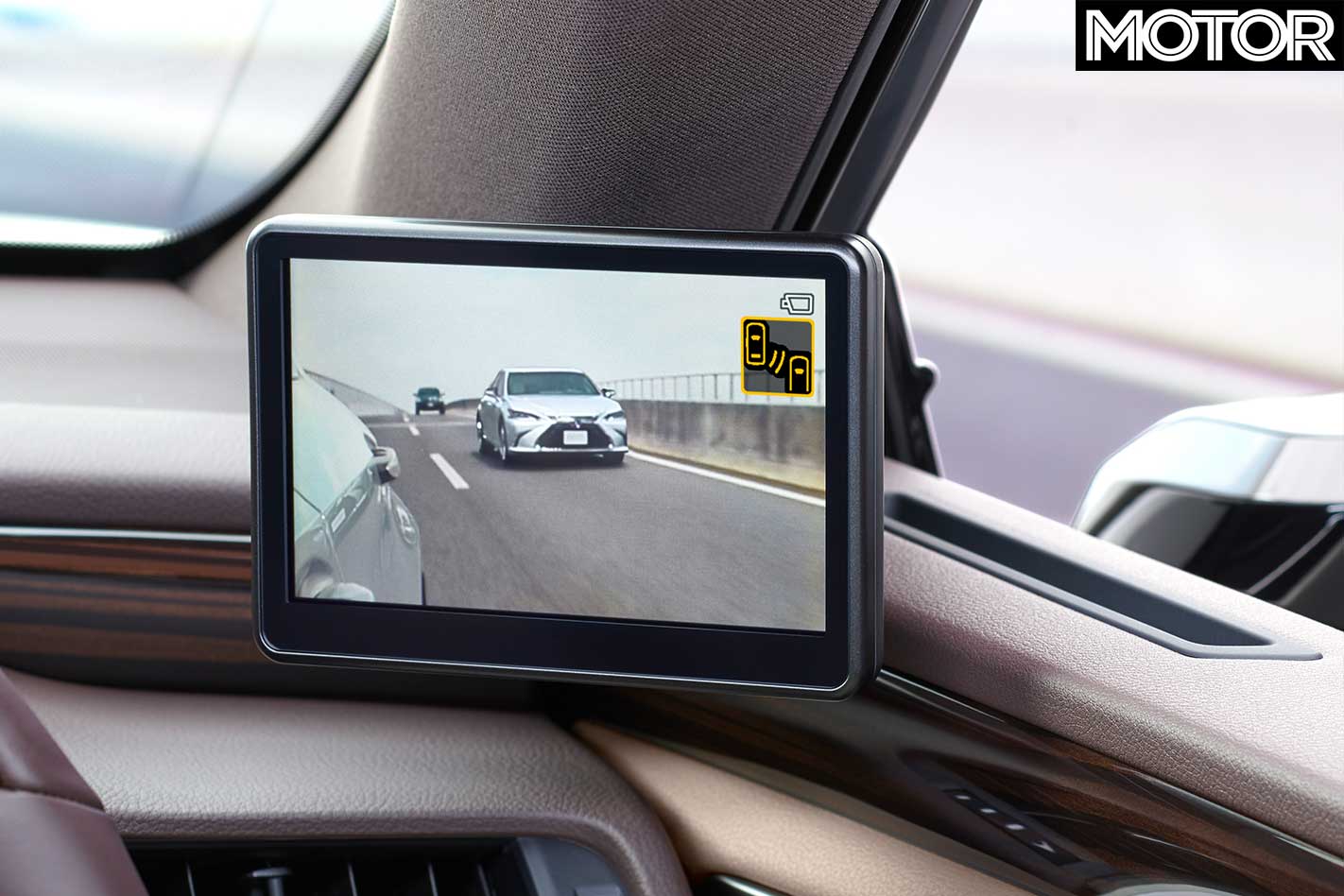
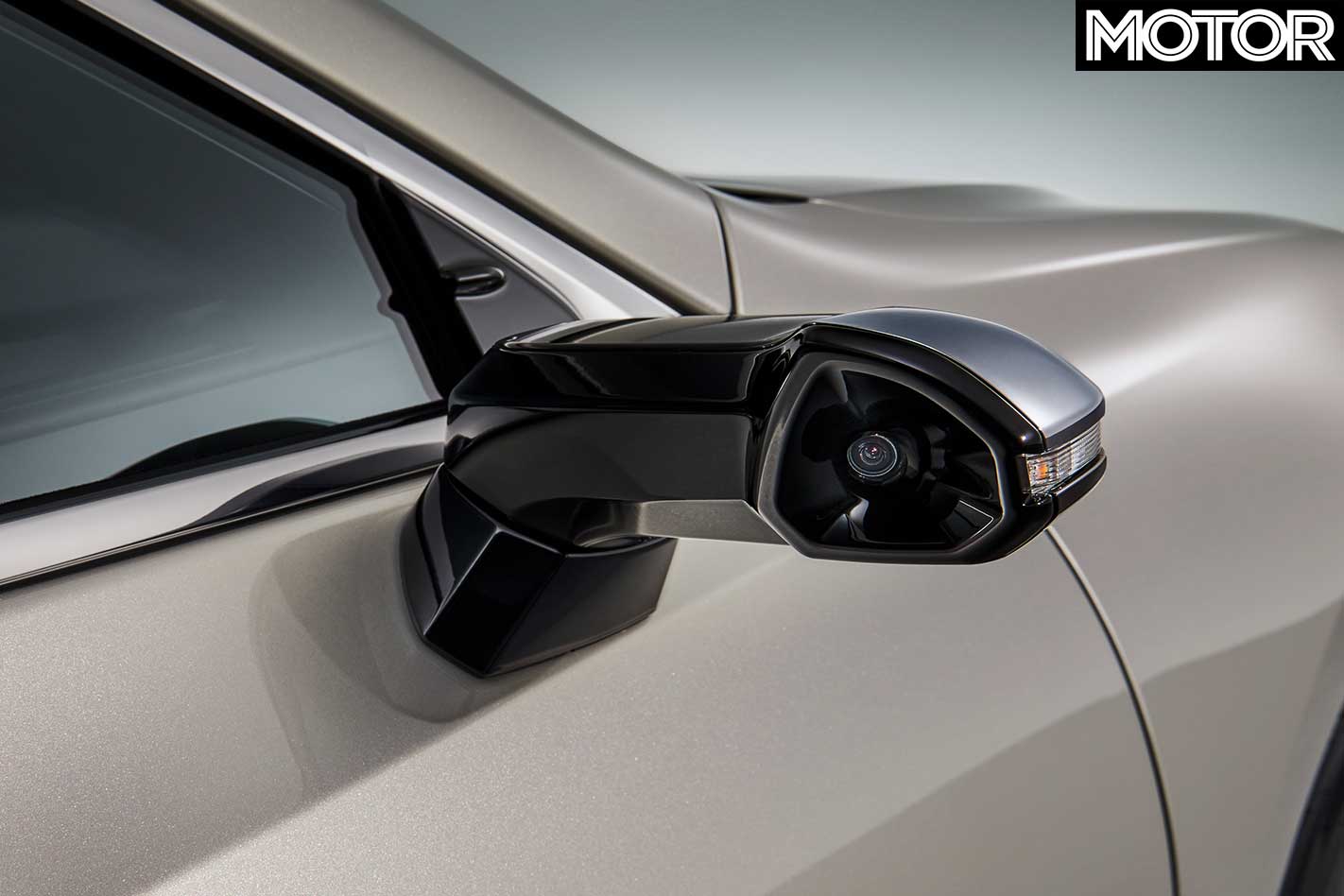
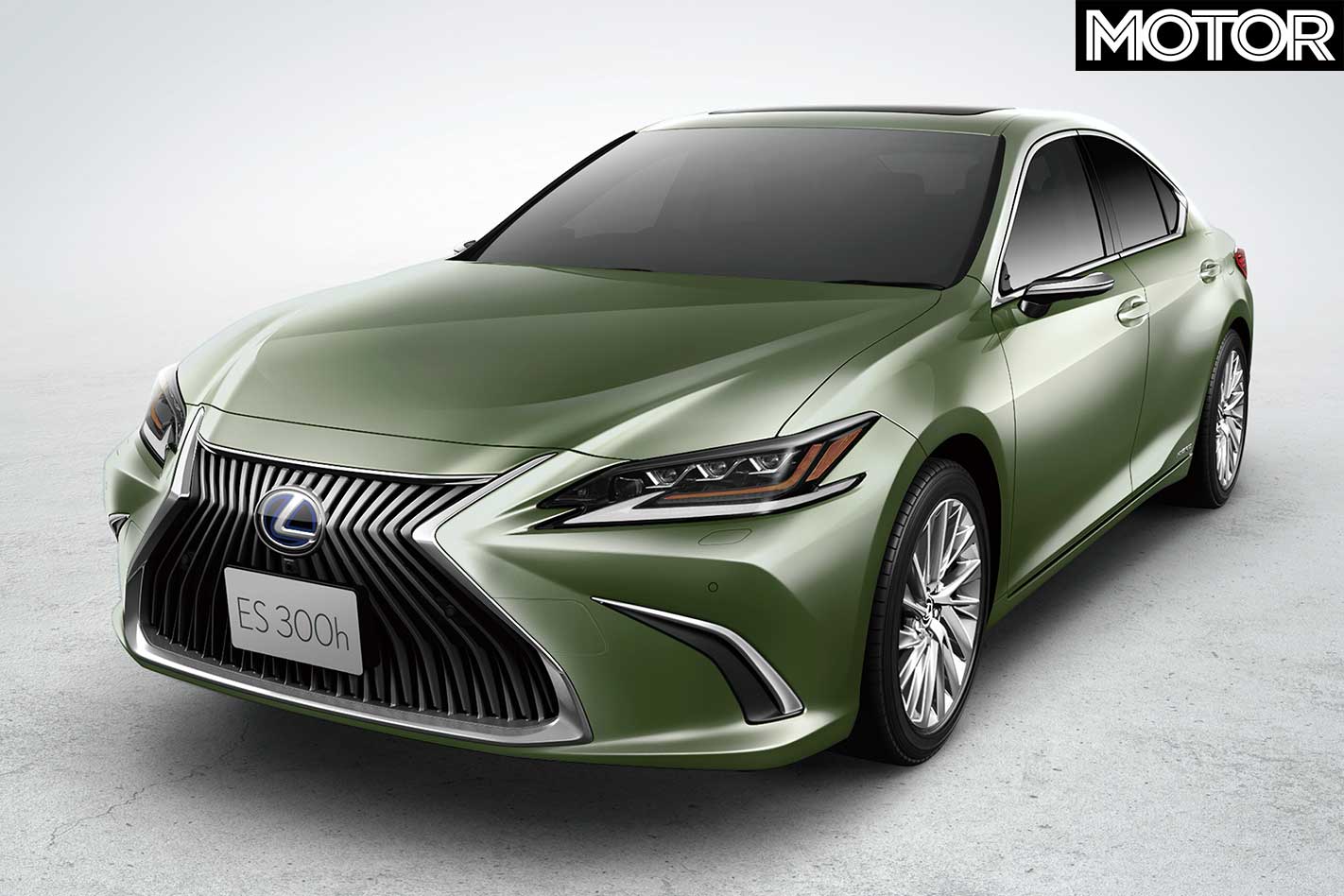
You’ve surely read that next year’s Lexus ES is getting side cameras instead of wing mirrors. They should have called that model the ER instead, because that’s the noise you’ll make if the cameras fail – “Eeeeyaaaarrrrgh” – and where you might end up when they do.
By all accounts, Audi is not far behind – only Lexus can’t see how far behind the Audi is, because they have no wing mirrors.
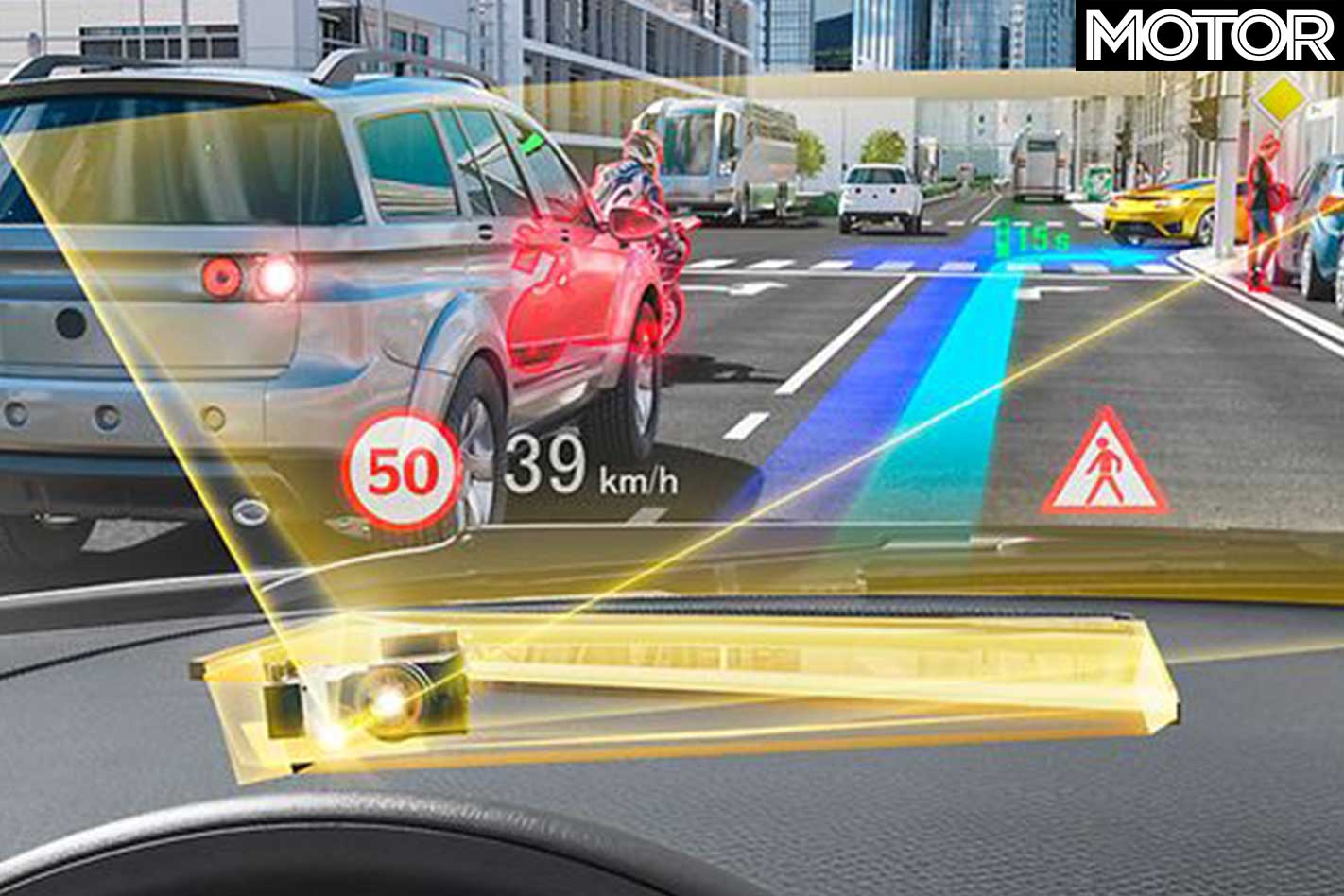
The cameras are better in low light or in the rain, says Lexus. Huh. Okay. So why not go the whole hog, then, and do away with the windscreen as well, and replace it with a high-res monitor showing a feed from an exterior camera array – low-light, infra-red, glare-immune, automatic, systematic, hydramatic, greased-lightning cameras?
It would be the perfect use for enhanced vision. Every view out of the car could be computer augmented, like being a Lexus-driving Terminator: pedestrians glowing orange, GPS directions lighting up the street you need to turn down, no more glare at sun-up or sundown, no need for windscreen wipers even in the rain… plus no-one could look in and see you scratching your balls. I can see the commercial now: “Wearing pants is the past. The new ES is the future.”
So why not do it? Because it would be awful, that’s why.
Because no-one would want to drive such a thing. It would be 10 per cent awesome, in a James Bond sort of way, and 90 per cent horrifying, knowing that if anything went wrong you’d be left driving blind. “Ridiculous analogy,” scoffs the Lexus defender.
But really – if the tech is failproof, why not replace the windscreen? And if it’s not failproof, what does that say about Lexus’s opinion of wing mirrors? Maybe Lexus is comfortable introducing mirror-less cars because it knows its customers rarely check their mirrors anyway.
Ouch. Apologies, Sawa-san.
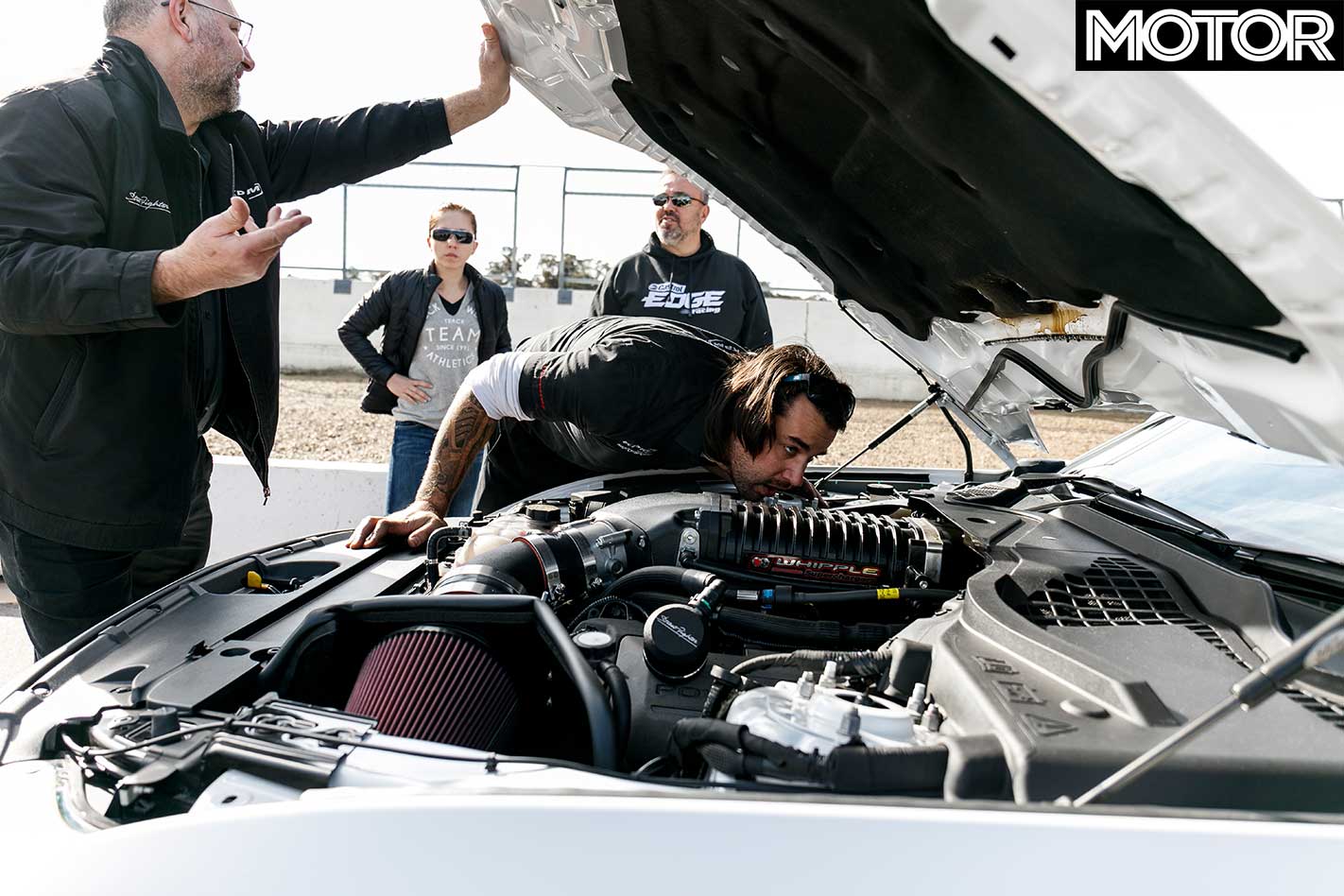
The flip side of Finagle’s Law, of course, is that when you want something to go wrong, it won’t. Such as when I took our household car to an alarm specialist because it was convinced, despite evidence to the contrary, that the rear passenger door wasn’t really closed, and that it should scream blue murder whenever you locked the car. Every time. Without fail. Until, of course, it’s at the alarm specialist… and then, the bloody thing worked perfectly. Bastard.
So, somehow the trick has to be wanting something to fail all the time, so that it works perfectly. But you have to actually want it to fail – if you try to trick the universe by pretending to want it to fail only to make it work, then it will fail. You need to actually and actively want them to not work.
Perhaps the only way to achieve that is to be an old curmudgeon, a sour-faced Luddite who snarls at every innovation, muttering “What’s wrong with mirrors anyway… these cameras are stupid… wouldn’t happen back in my day.”
And then wait expectantly for the moment you can bask in the smug satisfaction of watching them fail… only to have them work perfectly every time.
Which is exactly what I’ve done.
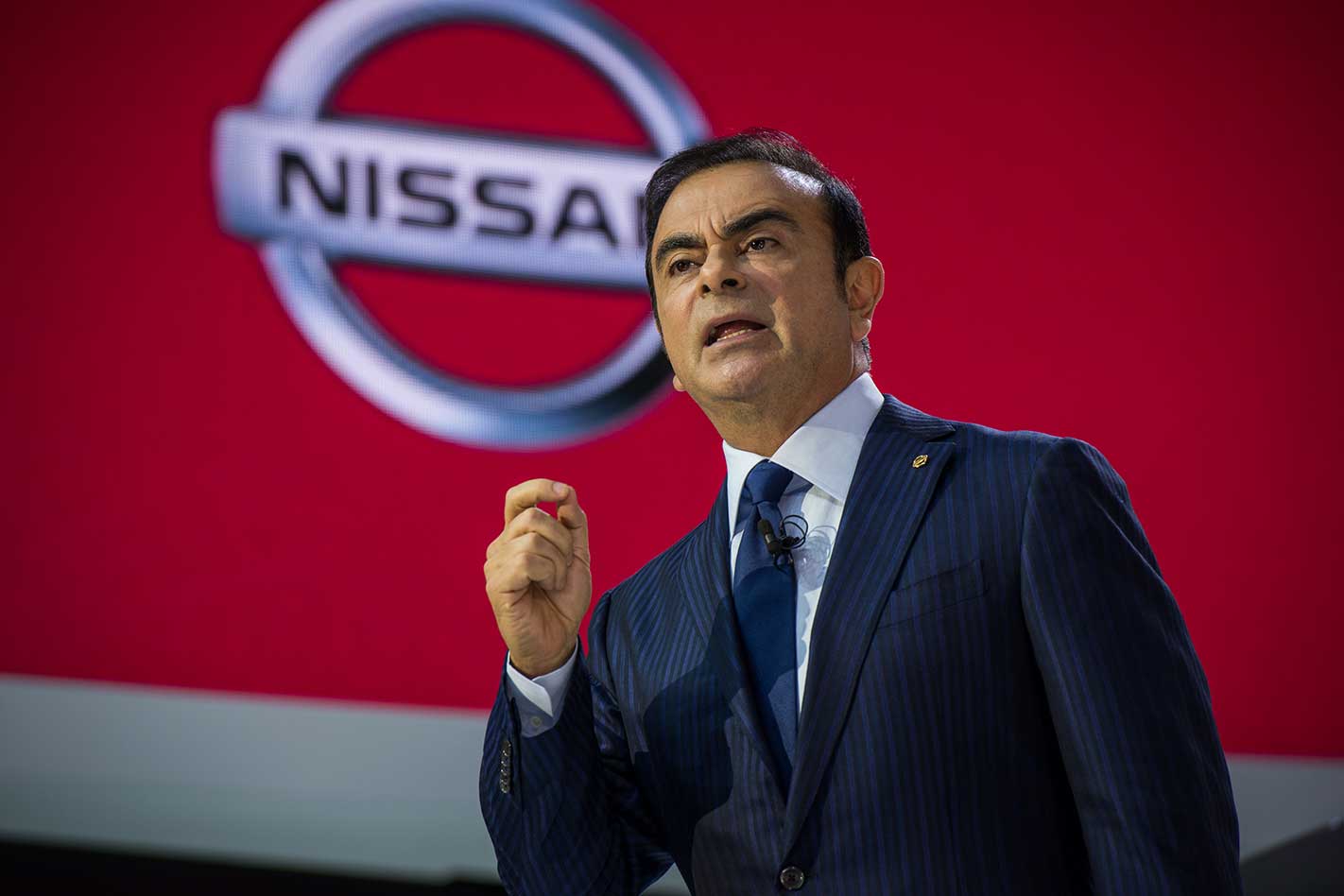
In a stunning industry development overnight, the chief executive of Nissan, Renault and Mitsubishi, Brazilian-born Carlos Ghosn, will be fired by Nissan and has been arrested by Japanese authorities for what Nissan has called “significant acts of misconduct” dating back to 2011.
The allegations relate to the 64-year-old understating his income to Japanese financial authorities to the tune of $110 million over a five-year period. He has also been accused of using company assets for personal use, according to Nissan.
A second board member, American Greg Kelly, has also been implicated in the scandal for under-reporting his income to the Japanese stock market, and is also set to lose his job.
Mr Ghosn is still the CEO of both Renault and Mitsubishi – which was purchased after a Japanese-market emissions scandal crippled the company back in 2015 – for the moment.
However, some sources suggest that the high-profile firing – prompted by an internal whistleblower – is a sign of a deeper schism within the alliance. Executive salaries are a matter of public record in Japan, and previous transgressions have been dealt with via fines.

As well, despite Nissan contributing the most profit to the group every year, it has no power to stop Renault – which owns 43 per cent of Nissan – taking billions of dollars of profit out of the Japanese company, which only owns 15 per cent of non-voting stock in Renault.
The Nissan-Renault-Mitsubishi alliance is the biggest car-maker in the world, selling more cars than Toyota (10.6m cars versus 10.3m) in 2017, which equated to one in nine new cars sold globally that year.
Mr Ghosn, who was raised in Lebanon, is one of the most feared executives in the automotive world, and he recently cut a swathe through the local arms of both Nissan and Renault, which resulted in the outing of their respective CEOs.
That same no-nonsense manner, however, turned Nissan’s floundering fortunes around earlier this decade.
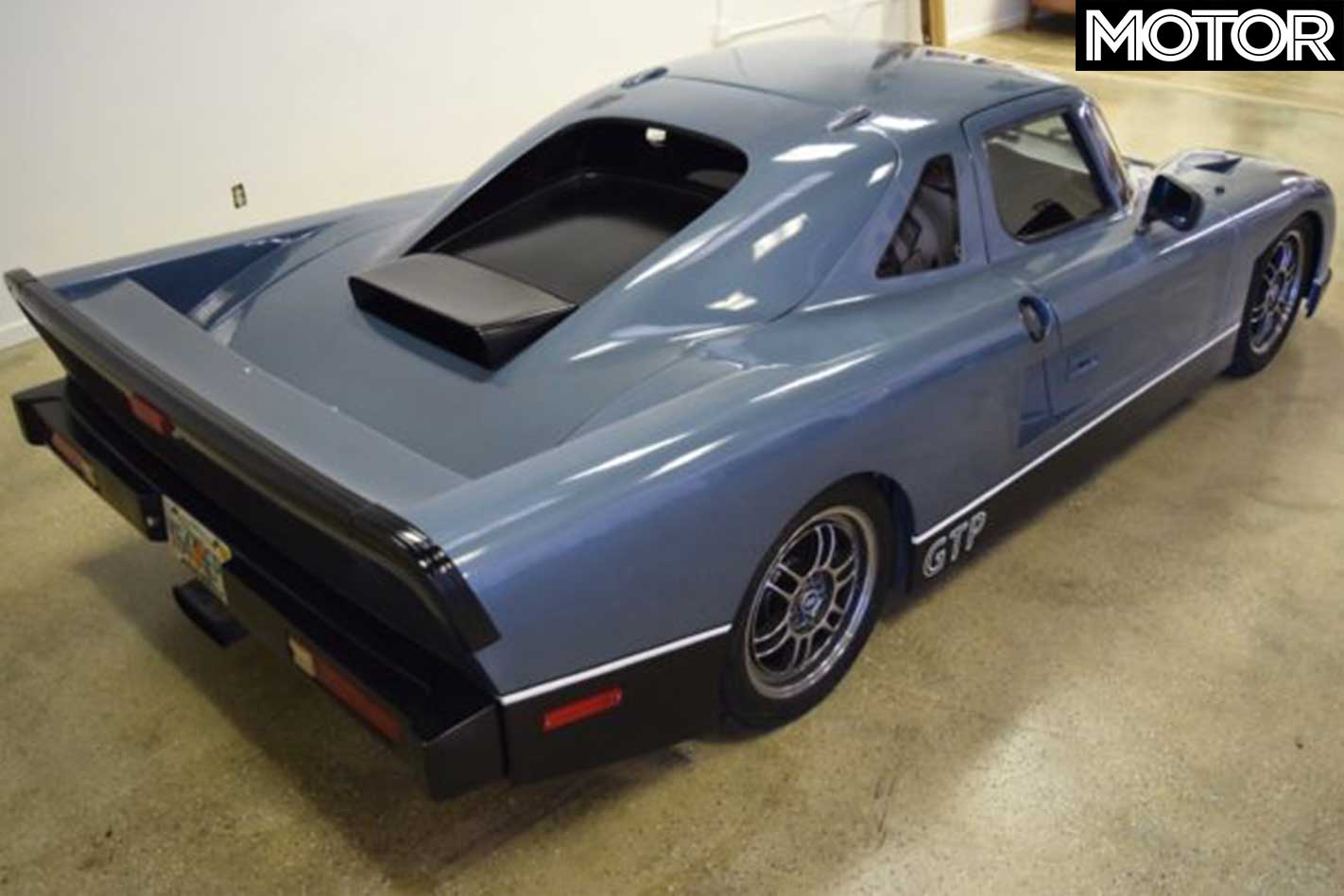
The Consulier GTP is one of those strange cars which elicits a ‘what?’ from most people when you name it.
This was proven in the MOTOR offices today, after finding this 1990 example of Warren Mosler’s creation on Bring A Trailer.
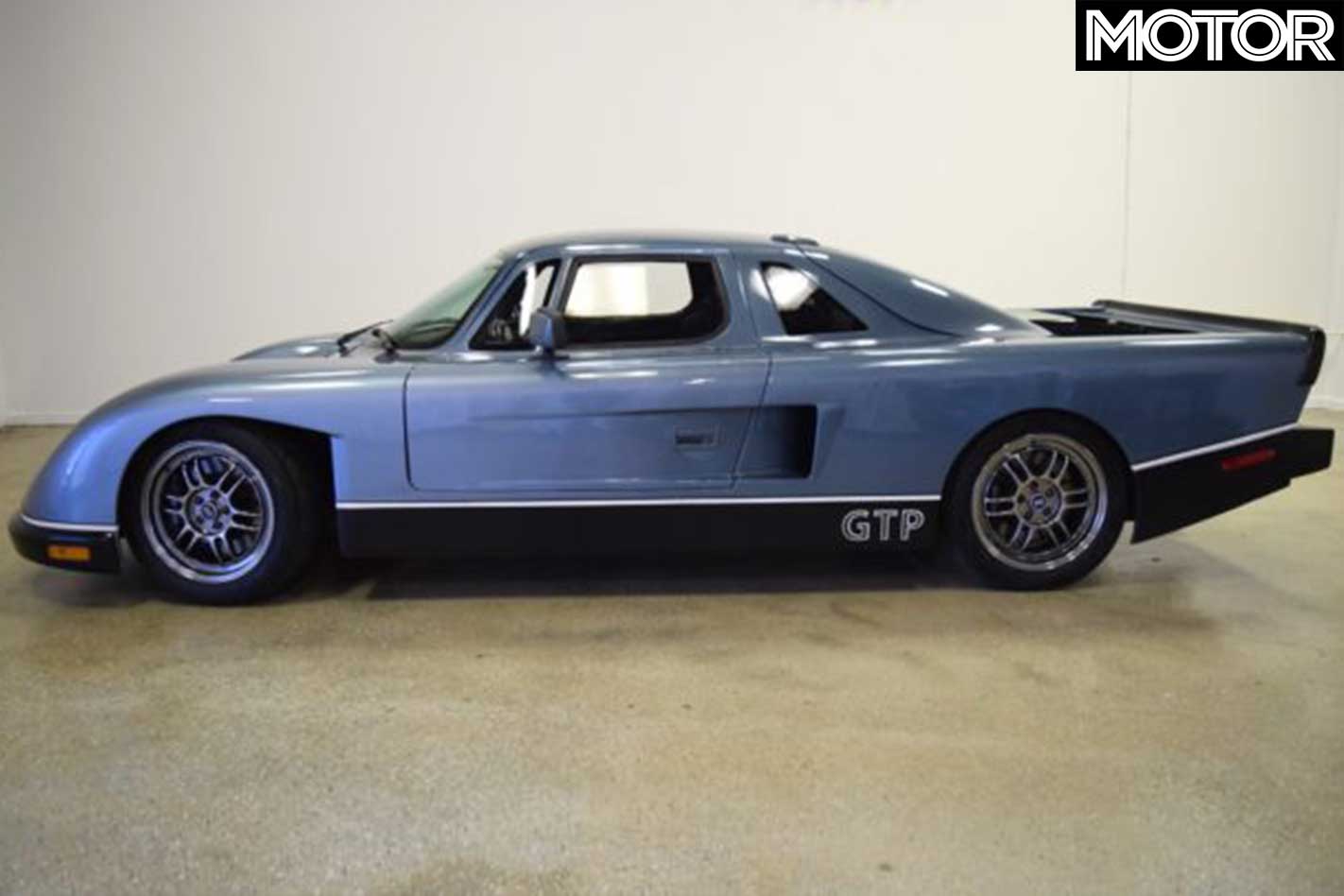
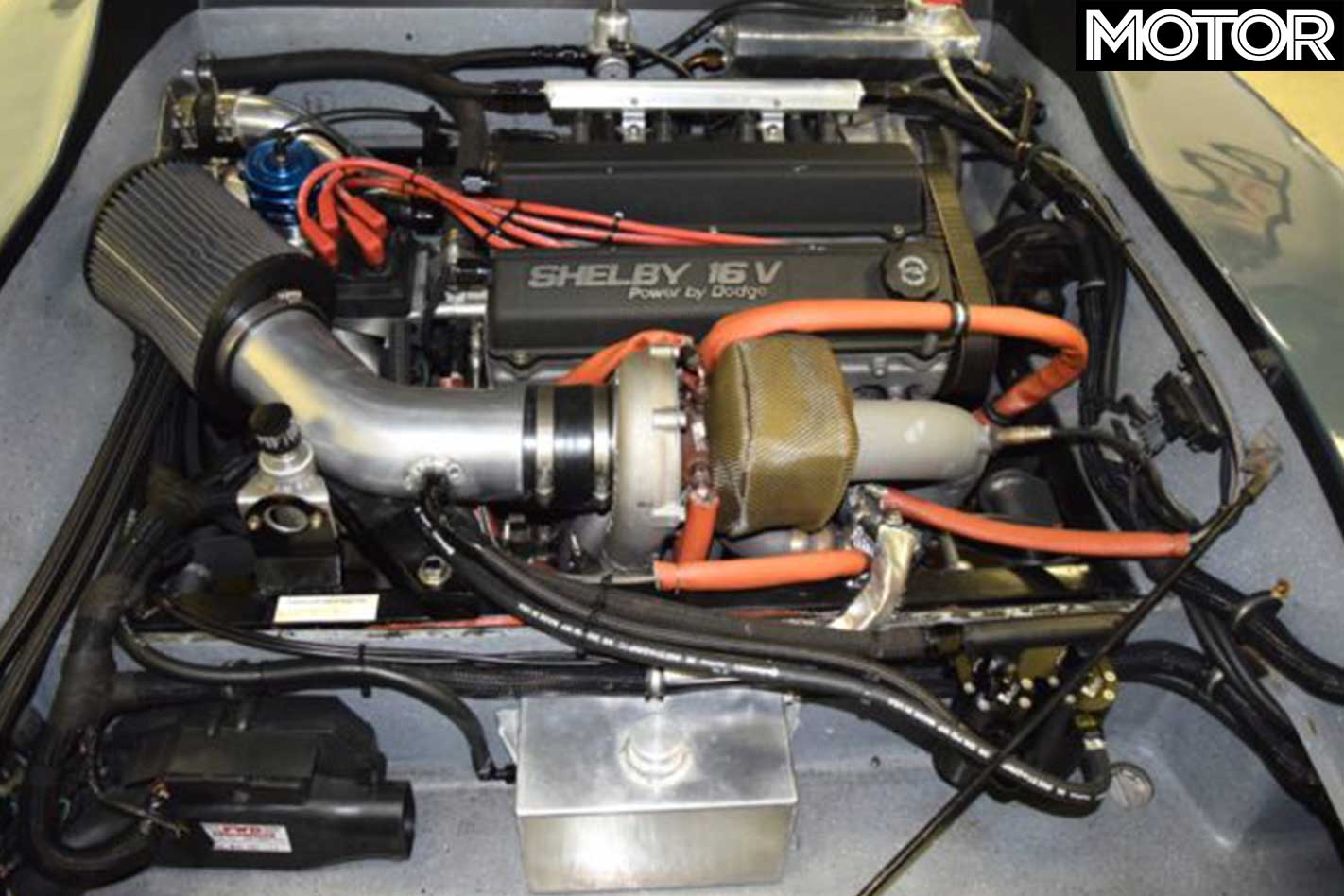
The road-legal GTP – in this case a Series II – runs on a 2.2-litre turbocharged Dodge four-cylinder, which allows the sub-tonne sports car to rival a modern muscle car for 0-100km/h sprints and run a sub-12-second quarter-mile.
Australia’s own odd sports cars
The video below is proof of that – in addition to it actually being a video of the car up for sale.
About 100 of the oddball cars were built, and they made somewhat of a name for themselves in part thanks to Mosler’s confidence in his own product.
At the time of their production, he offered USD$25,000 to anyone who could “race a street-legal car around any track in the United States, and beat his Consulier GTP model.”
US outlet Road and Track took the challenge, and the Corvette they used came out on top. From the Mosler Automotive website:
“As it turned out, Mosler revealed that the test car was an older model, and it needed work. The tires and brake pads were worn out, and this affected the performance of the vehicle. Warren Mosler took on the challenge to make the necessary fixes to his super car, and he sent new brake pads to be installed.
“Car and Driver, however, didn’t like this, as they argued a new test run meant a new driver would be used, thus affecting the way the cars were driven. Mosler even tried to inform them that they could use any driver they pleased, but the magazine company refused.
“As a result, Car and Driver magazine ended up publishing a negative review for the car. The company also claimed that Mosler refused to uphold his end of the bargain.”
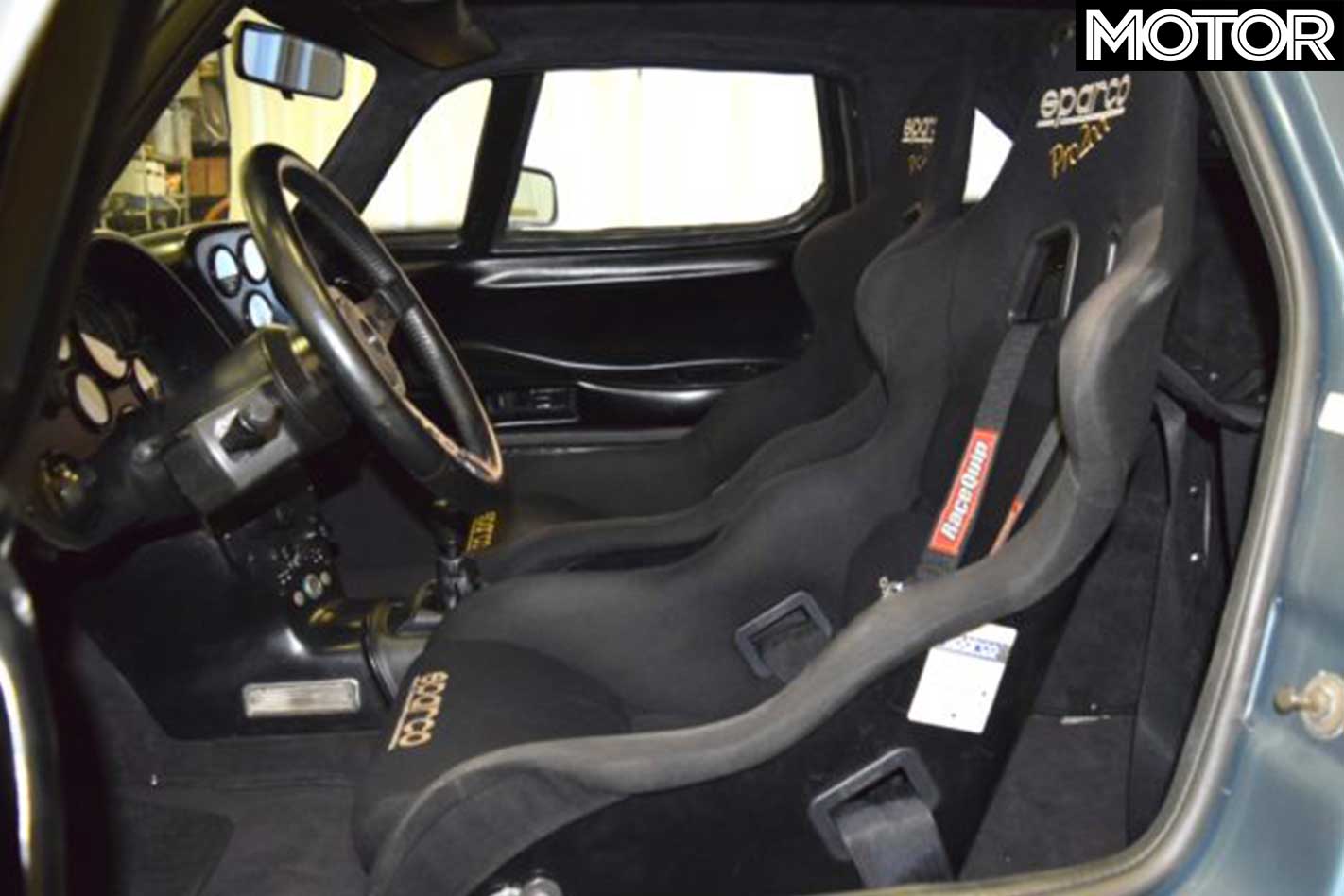
Of course, the accuracy of this story is subject to Mosler’s bias, but it’s interesting to note that the car had received this much attention at the time but is so little-known now.
Bidding on the example in question sits at USD$9,600 with five days to go at time of publish.
