
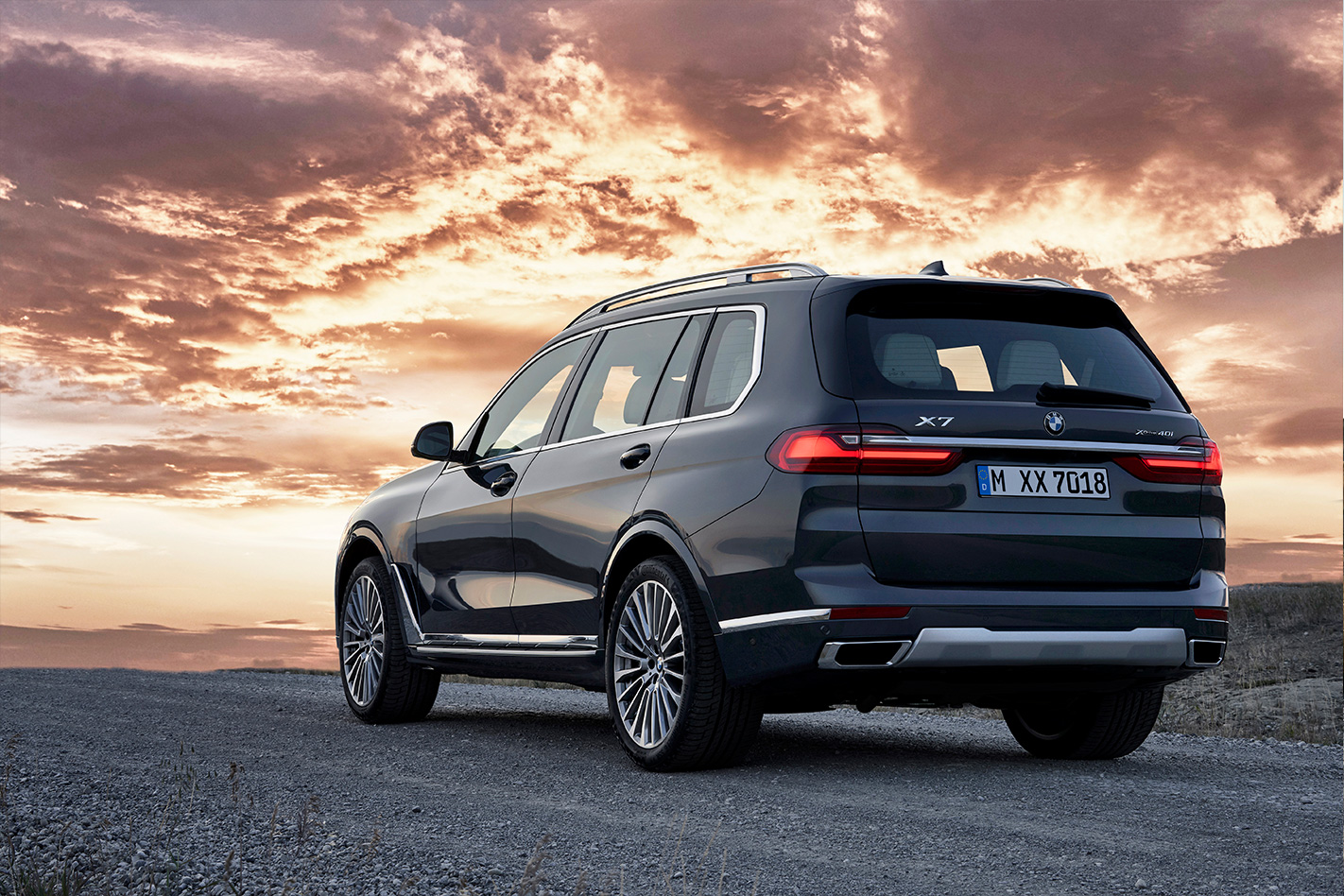
BMW has lifted an enormous cover off its all-new X7 SUV, revealing the biggest model in its line-up, and it’s coming to dominate roads near you.
The X7’s 5151mm length is only exceeded by long-wheelbase 7 Series models. But those uber limos have nothing on the towering 1805mm height, and 2000mm width of the X7, which also has a wheelbase of 3105mm.
Four variants will be available at launch, and enthusiasts will be glad to hear BMW engineers have slotted a 4.4-litre twin-turbo V8 under the bonnet for one version coming to Oz, the xDrive50i, which won’t be available in Europe.
The bent-eight sends 340kW and 650Nm to all four wheels via an eight-speed automatic gearbox, good for a 5.4-second 0-100km/h sprint.
Customers who don’t want to lose bragging rights at the traffic light grand prix but prioritise fuel efficiency can opt for the M50d, which features a 3.0-litre six-cylinder turbo-diesel good for 294kW and 760Nm. Again, power is sent to all four wheels via an eight-speed auto, but this X7 will sip 7.0-7.4L/100km compared to the V8’s 11.4L/100km.
At the most accessible end of the range is the xDrive40i, which has a 3.0-litre turbo six-cylinder petrol producing 250kW and 450Nm to complete the 0-100km/h sprint in 6.1 seconds, with an 8.7-9.0L/100km.
An xDrive30d is also available, with a 3.0-litre turbo-diesel six-cylinder tuned to produce 195kW and 620Nm for a 7.0-second 0-100km/h time, and 6.5-6.8L/100km claimed fuel efficiency.
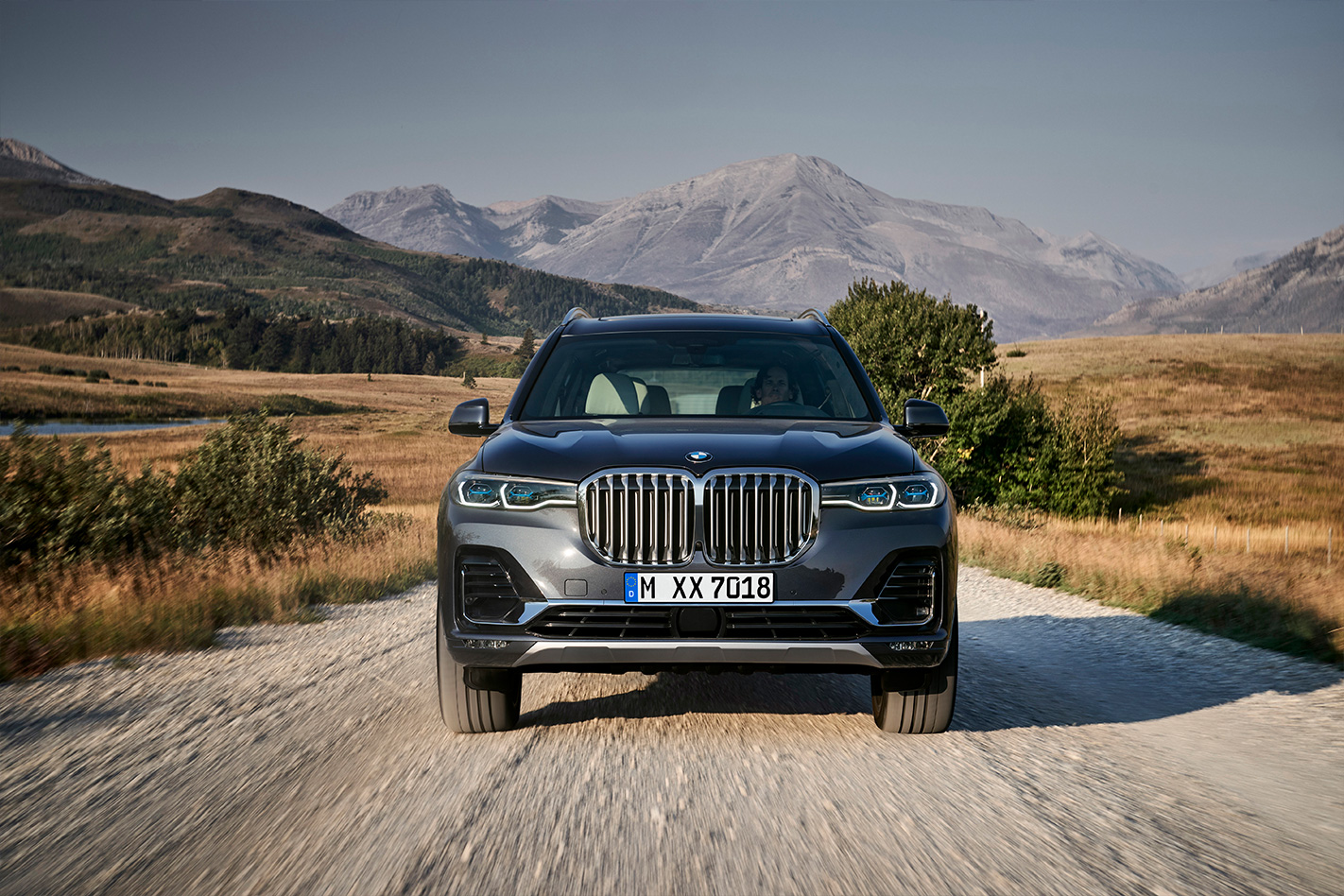
It won’t be hard to miss the X7 on the road, thanks in part to its sheer stature and unmistakably BMW styling – in particular the overgrown kidney grille on the front end. LED headlights are standard, along with a two-section split tailgate.
Wheel sizes range from 20- to 22-inches, while air springs and adaptive dampers are standard. Active steering and active roll stabilisation are optional.
The M50d will receive an M Sport differential as standard, while xDrive50i and xDrive40i owners will be able to tick a box to have it fitted to their cars.
While most likely to be found in your local gated community, the X7 is capable of getting dirt in its treads when fitted with an optional off-road package, which enables xSand, xGravel, xRocks and xSnow driving modes.
BMW says the standard driver assistance systems will vary depending on market, however it’s likely Australian X7 owners will be treated to a full suite of features, including active cruise control, steering and lane control assist, and parking assist – the latter of which will come in handy at the Westfield car park due to the X7’s sheer size.
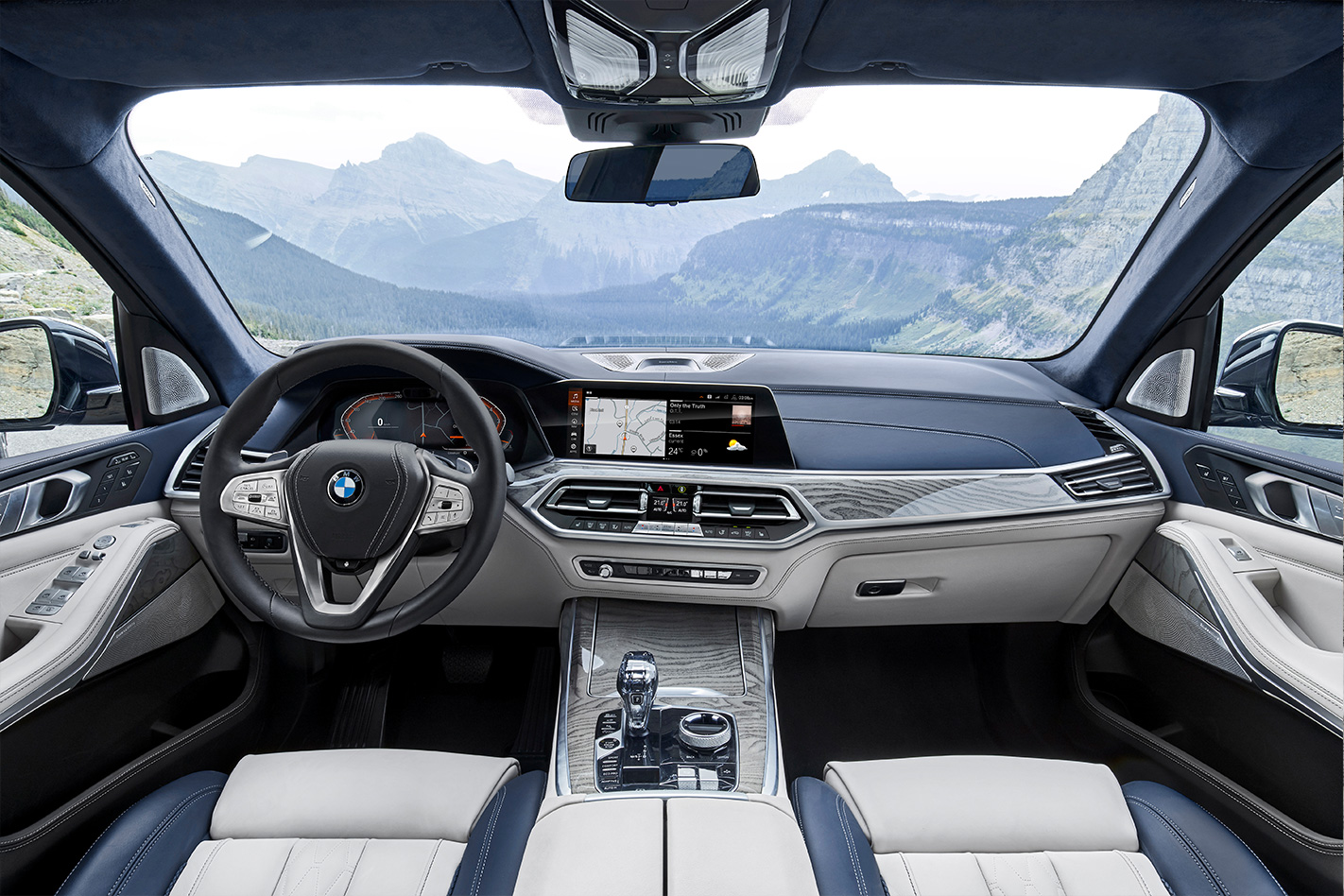
Dual 12.3-inch digital displays dominate the cabin, with one replacing a traditional instrument cluster, while the other is used to control BMW’s seventh-generation infotainment. The operating system can be interacted with via the iDrive Controller, steering wheel buttons, voice control and gesture control.
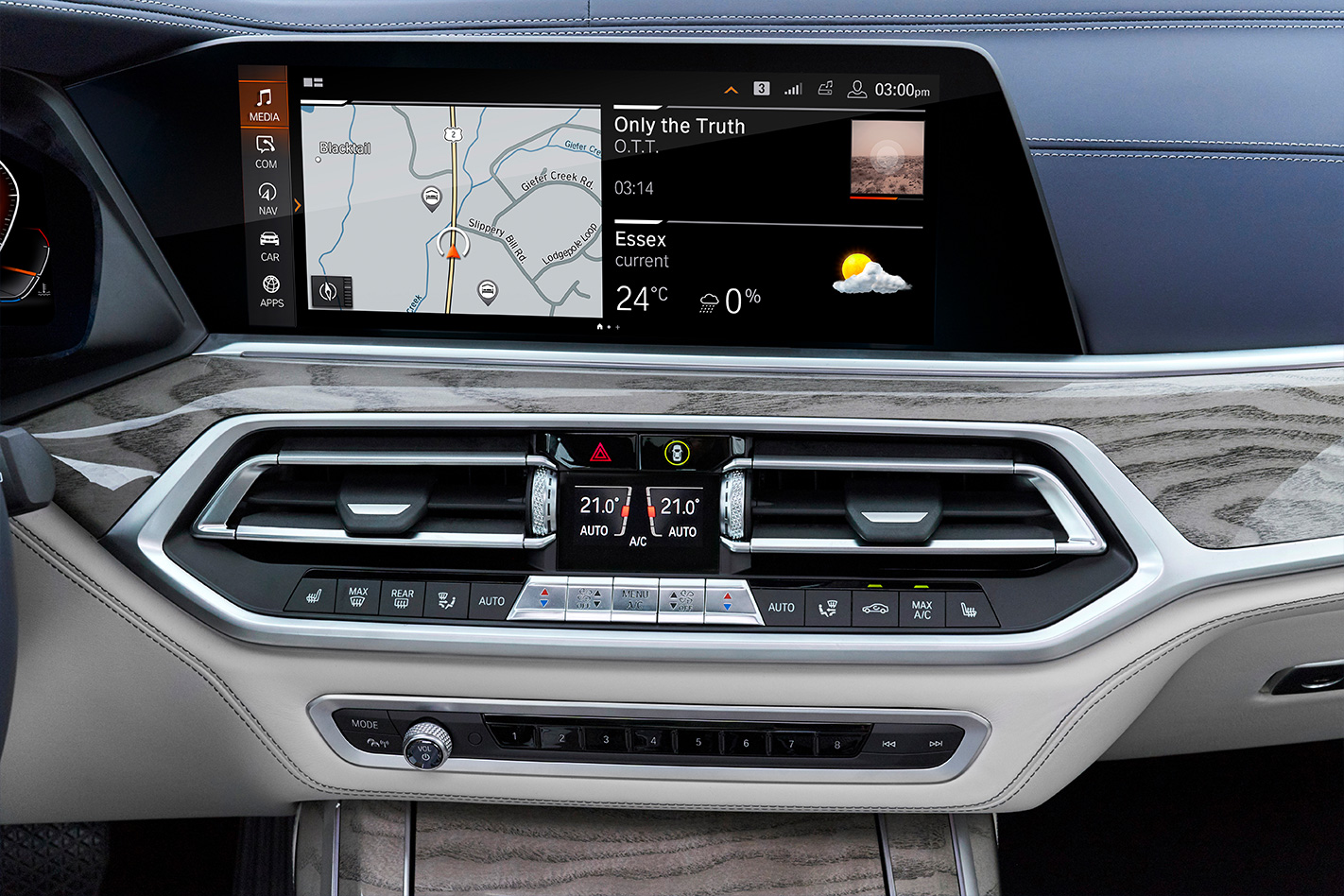
Following similar lines to Mercedes-Benz’s cutting-edge MBUX system, BMW says the X7 will feature an ‘intelligent personal assistant’ who responds to voice control, and can activate ‘in-car experiences’ including satellite navigation. A BMW digital key also allows X7 owners to unlock and start the vehicle using their smartphone.
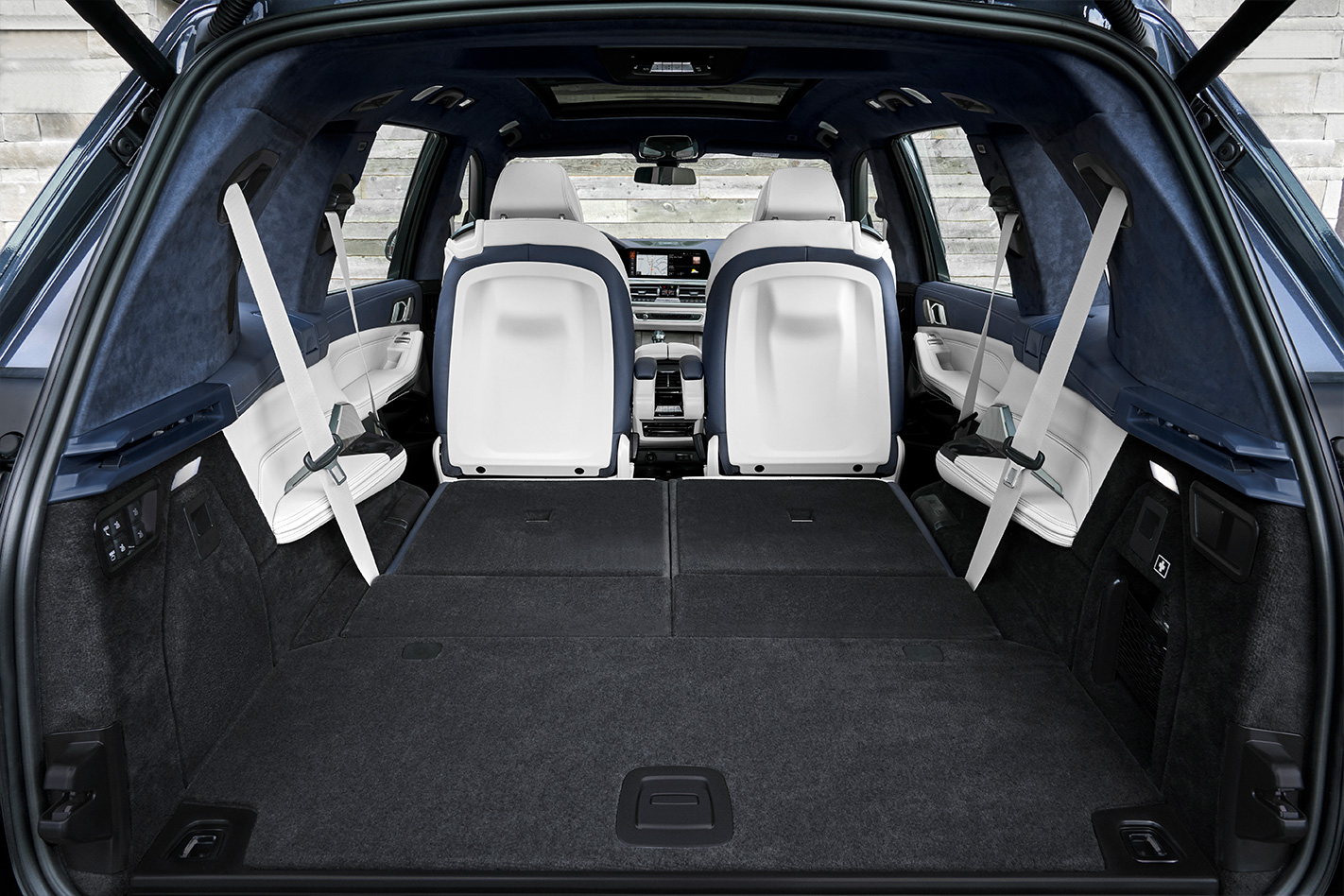
All X7s are able to transport a small tribe in luxury thanks to its seven-seat, three-row configuration. Or the middle row can be specified with two individual ‘comfort seats’ for a price. The back pews feature armrests, cup holders, and USB ports as standard, and all seats are electrically adjustable. Boot space ranges from 326 litres to 2120.
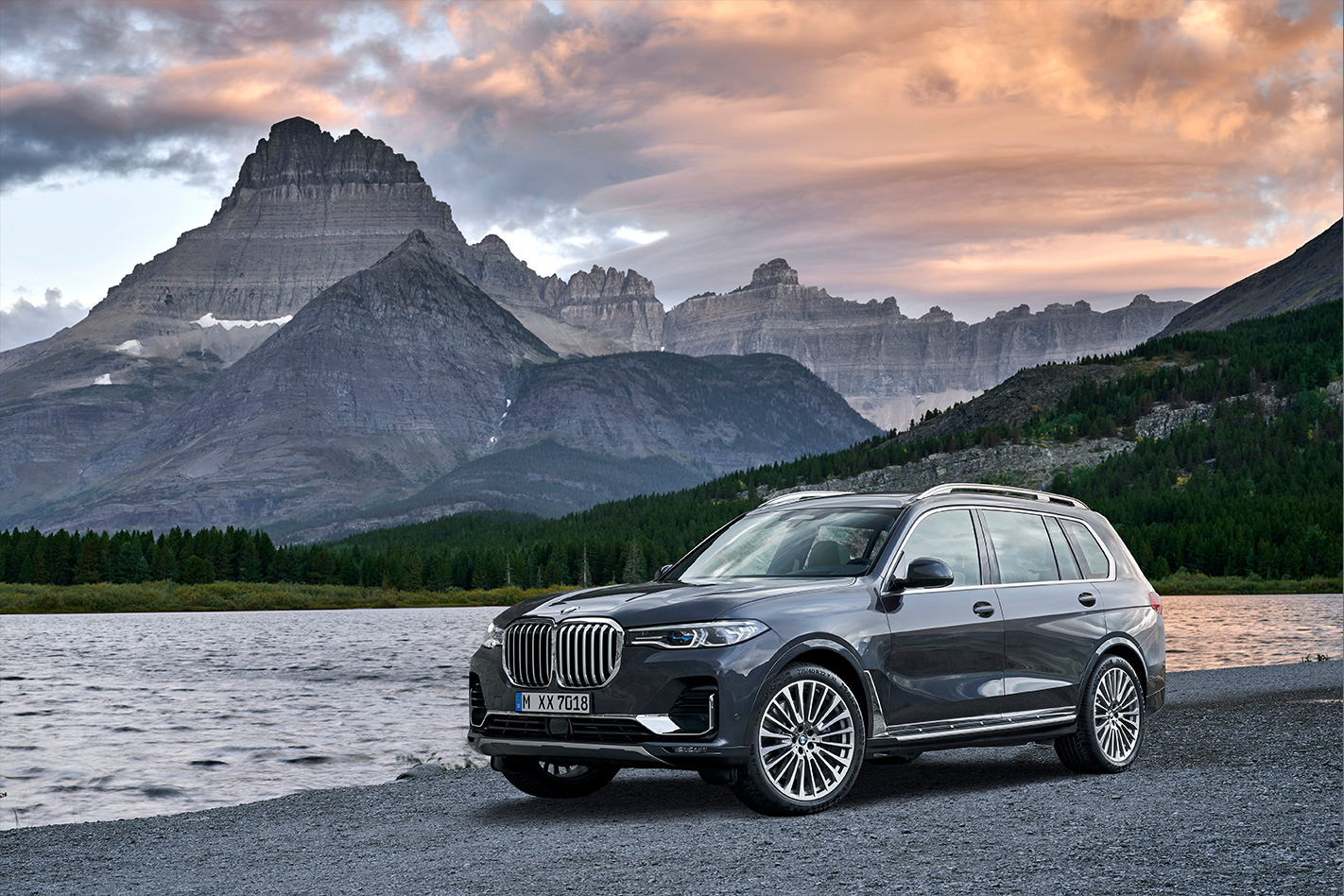
Production of all X7s will take place at BMW’s Spartanburg plant in the United States. Market launch is scheduled for March 2019.
WHAT CAR ARE WE GETTING? The Chevrolet Camaro 2SS. Only one version will be offered in MY2018 spec with an eight-speed paddle-shift auto (no manual initially). Think 6.2-litre V8 with 339kW/617Nm. There’ll be a limited-slip diff, Brembo brakes, bi-modal exhaust, sunroof, full leather, heated seats, 20-inch rims, rear spoiler and Bose nine-speaker premium audio, all standard.
WHEN & HOW MUCH? HSV’s converted Camaro SS was due in showrooms end of September, priced at $85,990 (plus on-roads). Production at HSV’s new factory at Clayton in Melbourne’s south-east began early September – just “a little late”, HSV managing director Tim Jackson told MOTOR. The slight delay was because “it just takes time to do it properly”.
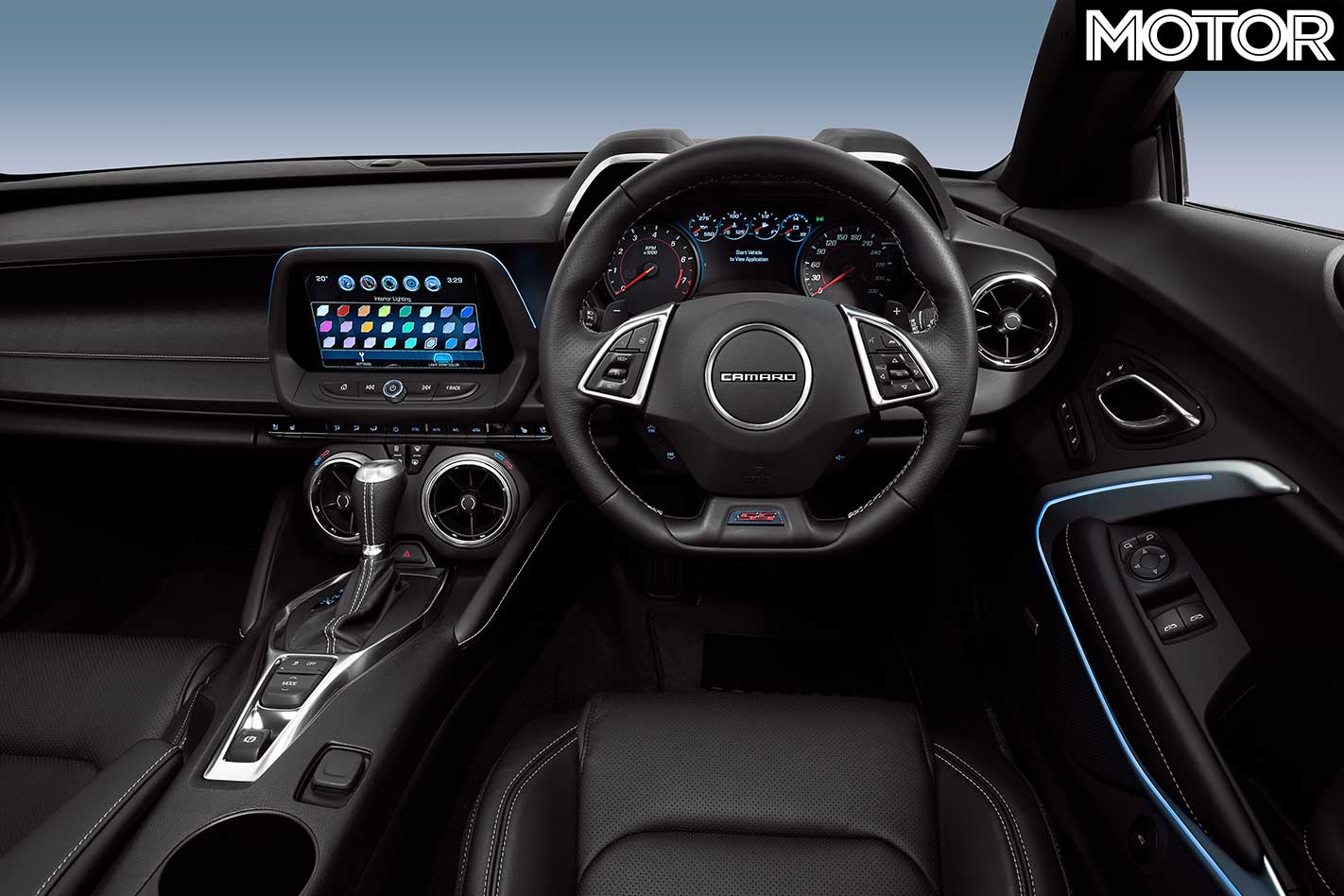
The Camaro will be sold nationally through 60 Holden dealers in re-branded Chevrolet areas – along with the similarly converted Silverado pick-up trucks. That’s more than the previous HSV network due to the addition of rural dealerships.
HOW MANY CAMAROS ARE ACTUALLY COMING TO OZ? The first model year will be limited to just 550 units. This will be augmented by further shipments already on the water from the USA. HSV is looking at selling around 1000 a year, although production capacity will rise to more than 2000 if demand warrants.
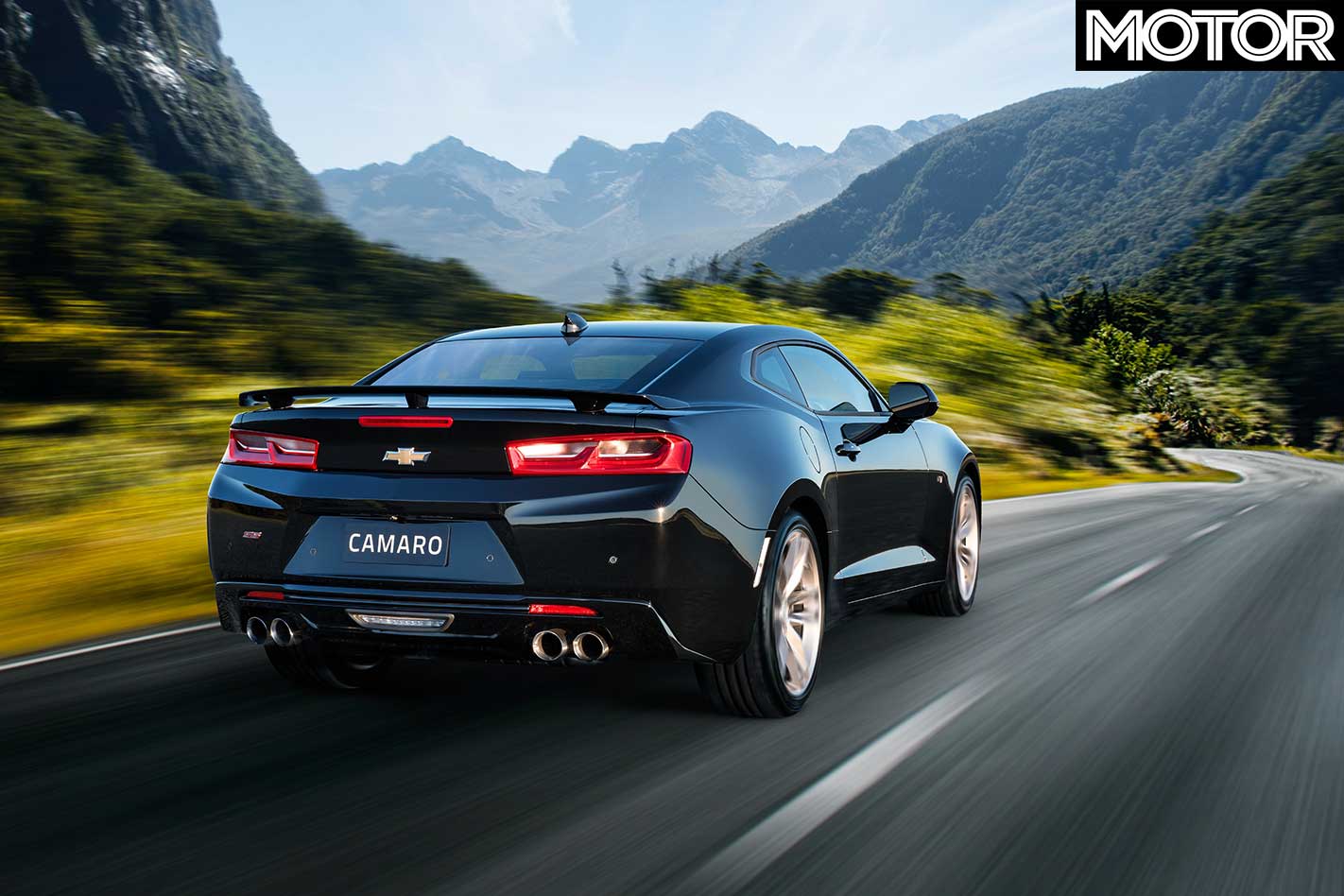
Annual sales will never approach the Mustang’s 9000-plus, a car imported as a factory made right-hand drive, avoiding the extra cost of local right-hand drive conversion.
ARE WE GETTING THE FACELIFTED ONE? Yes. Right-hand drive conversions of the latest 10-speed auto model – and possibly a manual option – won’t be available until “well into 2019”, according to HSV.
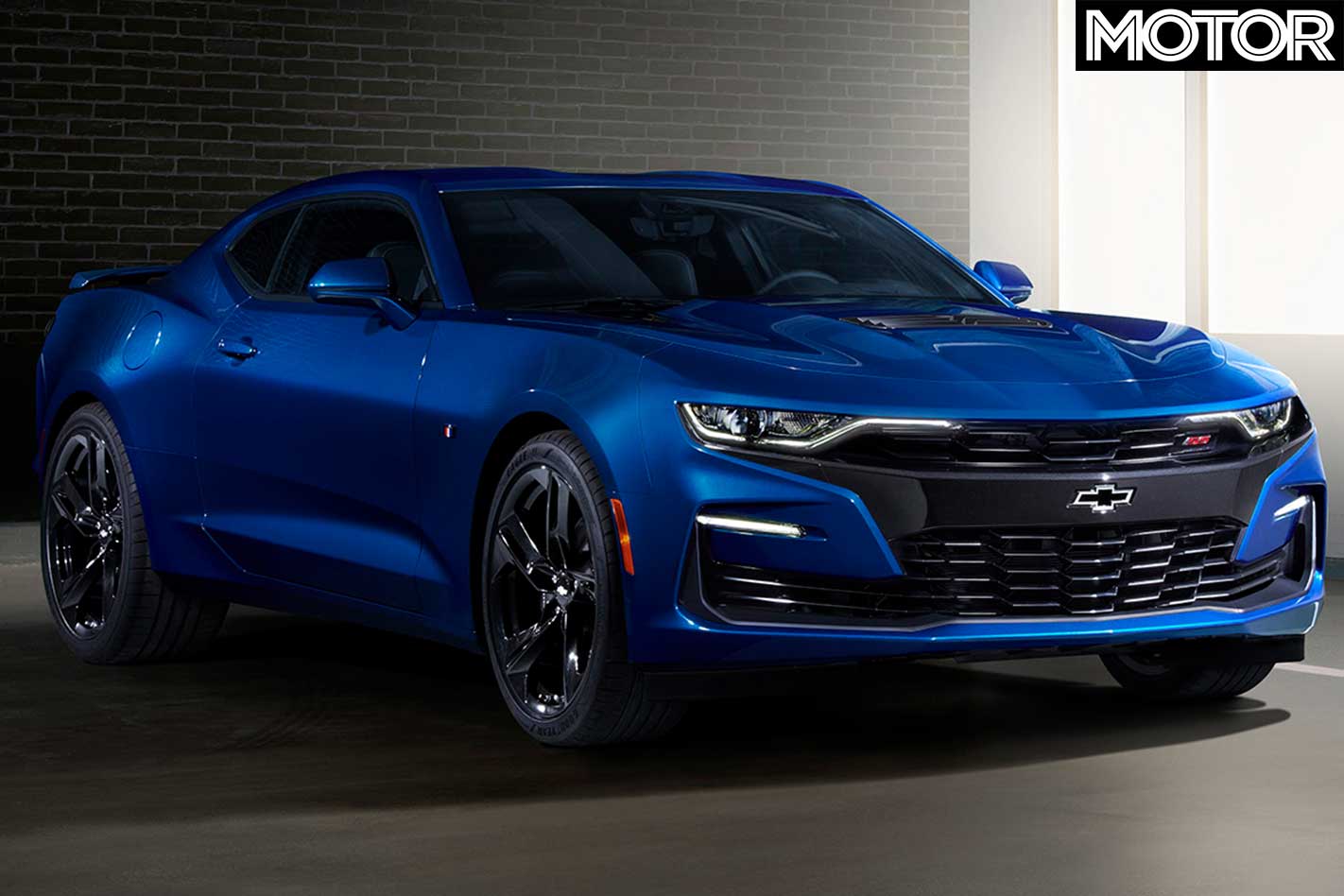
ARE WE GOING TO GET ZL1 AND/OR ZL1 1LE? ZL1 is to Camaro SS what HSV GTS was to Commodore SS – the supercharged big daddy. The ZL1 has a supercharged 6.2-litre V8 packing 485kW and 868Nm. The 1LE pack optimises the ZL1 for track duty complete with monster brakes and wild aero. “We’ll look at them in the future,” Jackson teased. They’d cost well beyond $100,000.
WHAT DOES HOLDEN THINK ABOUT ALL THIS? HSV’s conversion program has been endorsed by global GM product chief Mark Reuss, the former Holden boss who visited Australia recently. Reuss was shown the RHD Camaro and Silverado at a look-and-drive event at the Lang Lang proving ground, reportedly declaring he was happy with the result and supportive of HSV’s Chevrolet niche.
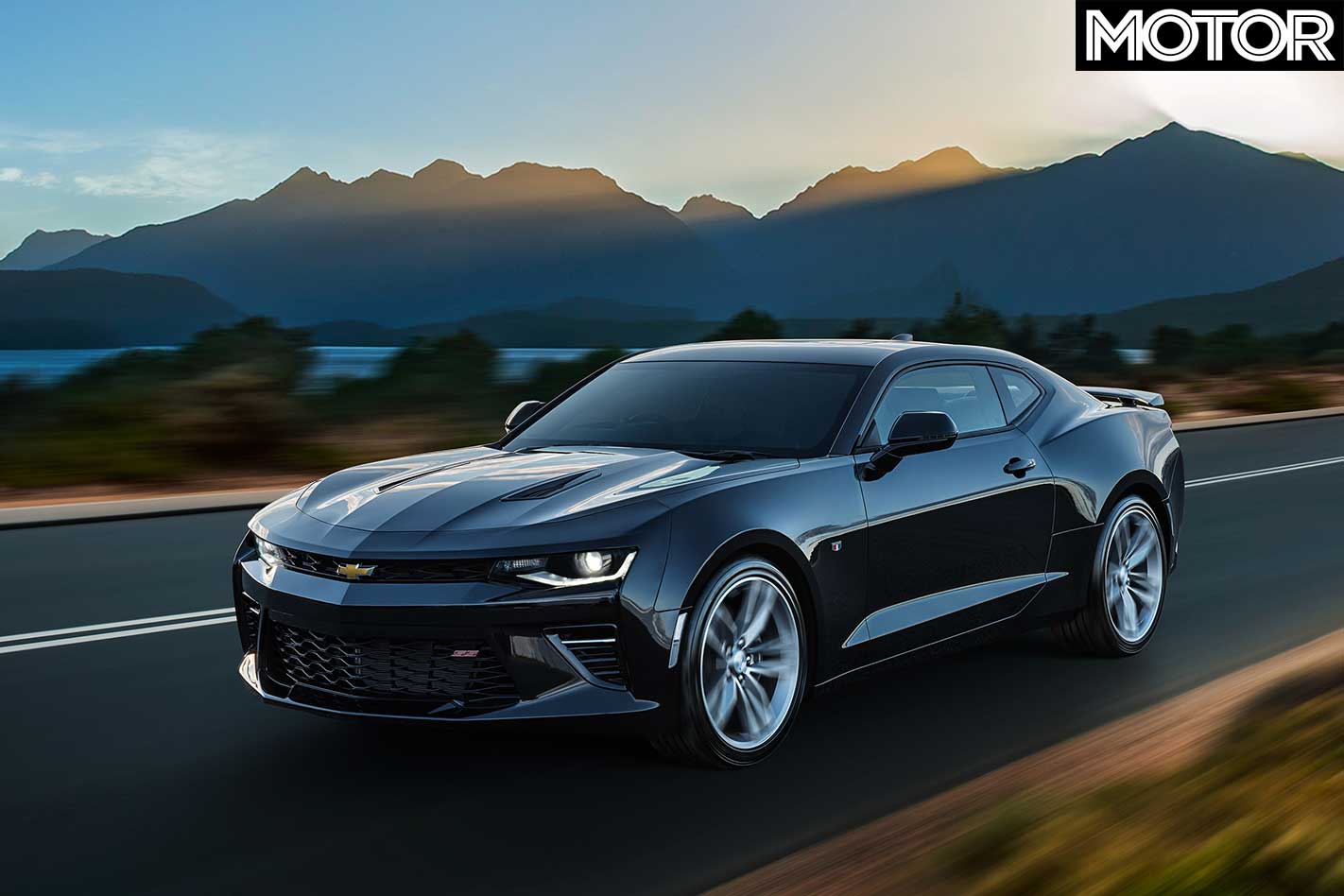
While the next-gen mid-engined C8 Corvette is destined to be made in right-hand drive and imported by Holden in 2021, right-hand drive production of the new Camaro due around the same time has not been confirmed. In fact, despite the success of the RHD Mustang, GM insiders report that a business case for a factory RHD Camaros cannot be made.
WILL THERE BE A CAMARO SUPERCAR RACER? The Walkinshaw Andretti United (WAU) team – closely aligned with Walkinshaw family owned HSV – is doing an engineering study to determine viability of a Camaro Supercar. Although the latest Gen2 rules allow two-door coupe body shapes, adapting them to fit the control Supercars chassis is difficult. Most problematic is the low roofline, which Ford has overcome by raising, stretching and widening the Mustang shape (a Mustang-bodied Supercars racer will replace the Falcon next year).
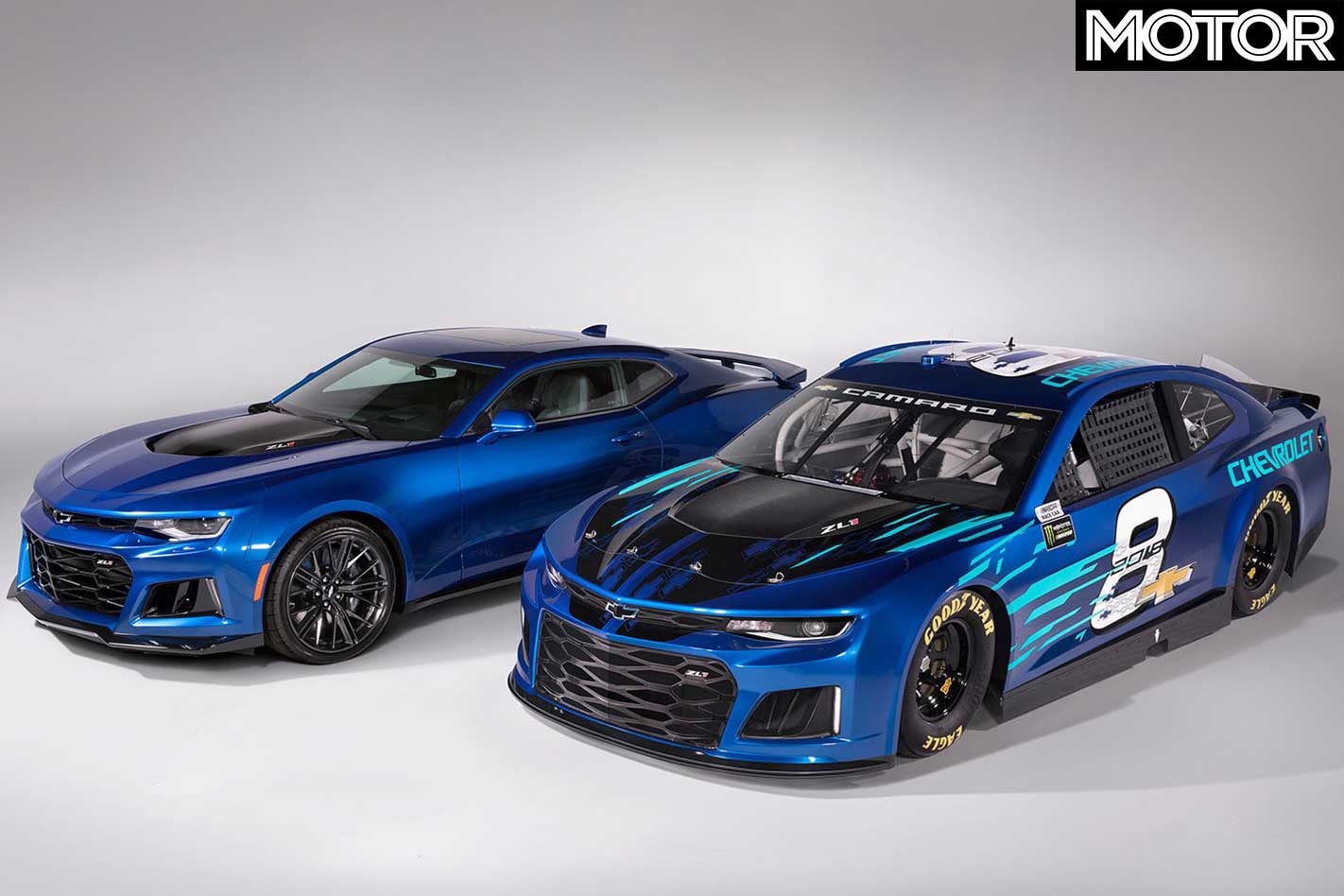
A similar solution has been found for the even lower-line Camaro and WAU is keen to switch from the ZB Commodore in 2020. It is looking at a technical alliance with Kelly Racing – about to lose its Nissan factory backing – and giant-killing independent Erebus Motorsport to justify the change.
Formerly the factory-backed Holden Racing Team, WAU has to tread carefully because of HSV’s links to Holden. Although Holden’s new management is supportive of racing again and has gone on record as not opposing the Camaro joining as a Commodore rival, the internal politics of such a change are a minefield. –
Kia Australia has been open in the past about its aspirations to join the increasingly lucrative dual-cab utility club, but now it has what appears to be a firm timeframe on when it will bring a work-grade load-lugger to market.
Speaking to journalists today, company spokesperson Kevin Hepworth said the intent was to bring a utility to local showrooms in 2022 – something with more tradie cred than the company’s K-series range of light trucks which were previously offered here.
“We’d like to be playing in that market, definitely, but it’s got to be the right [product],” Hepworth said.
With a little over three years until its self-imposed deadline, the company has time to ensure it’s got the product proposition right.
“Damien [Meredith, Kia Australia chief operating officer] has got pretty strong ideas on what he wants and what he doesn’t, and what he wants in this regard is a commercial vehicle, not a defacto family car. So it’s going to be a twin-cab, single cab, have a decent load area and capacity to tow.”
“You could either have a flat tray or a tub. It widens the appeal of the car,” Hepworth said, before indicating that Kia’s ute range would be pitched more at the everyman, not the foreman: “It won’t be $70K,” he said, “it will be, in Kia’s world, an affordable ute.”
But as to what this ute will look like, drive like, or even what name it will go by, those details are still far from set in stone. Chief among these unknowns is its powertrain, and while diesel dominates the light commercial utility segment right now, it appears Kia is keeping one eye on a potential migration away from diesel tech.
“This is one of the ponderables at the moment – where diesel is going to be in three or four years,” Hepworth said.
“Diesel is the ideal fuel for that kind of truck, but nobody is sure where diesel is going right now. It’s not flavour of the month in Europe… Americans never liked diesel. What happens going forward, I don’t know.”
“The engine would need to be of a capacity to be able to do that sort of work, and to get that sort of torque out of it, you’d need a turbo – for petrol – because otherwise you’d need a very big-capacity engine.”
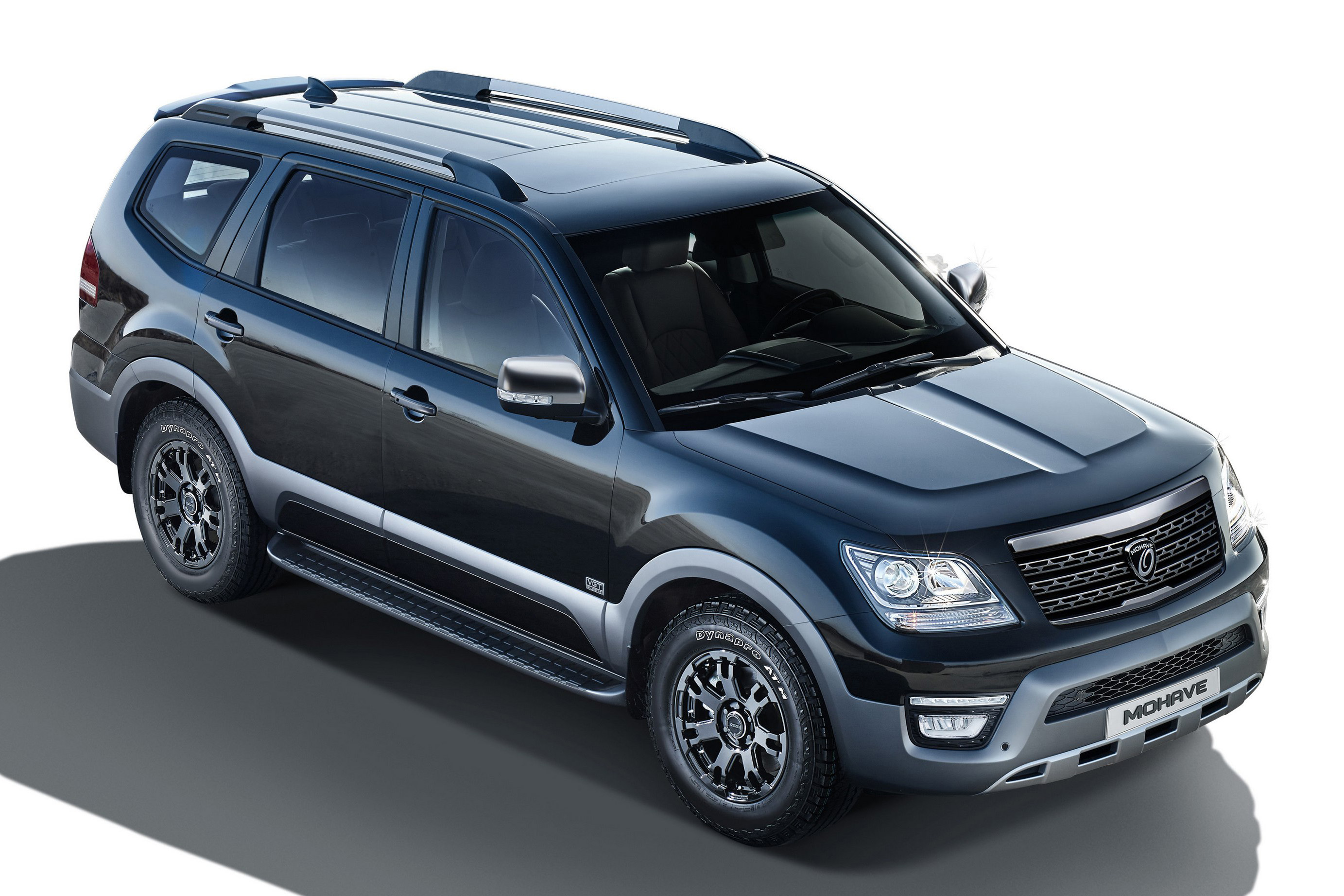
There are few clues in overseas models too. Body-on-frame is a must-have, but the only vehicle that fits that description in Kia’s product portfolio is the Mohave large SUV (above), which is approaching retirement. Other large Kia SUVs, like the KX7 and the incoming Telluride (top) are of unibody construction, and thus not rugged enough for workhorse 4×4 duty.
It’s not just utes that Kia Australia wants to add to its range either. The company also wants to bring a successor to the Pregio commercial van to Australia – though as with the utility, there’s no suitable product available globally as yet.
“We’d like to get a light commercial range, not just the ute,” Hepworth said. “We’d like to get something in the Pregio style.”
As Ford Australia returns to Supercar racing after a near-total withdrawal just three years ago, it is leaving the door open for a turbocharged future for its racing Mustangs.
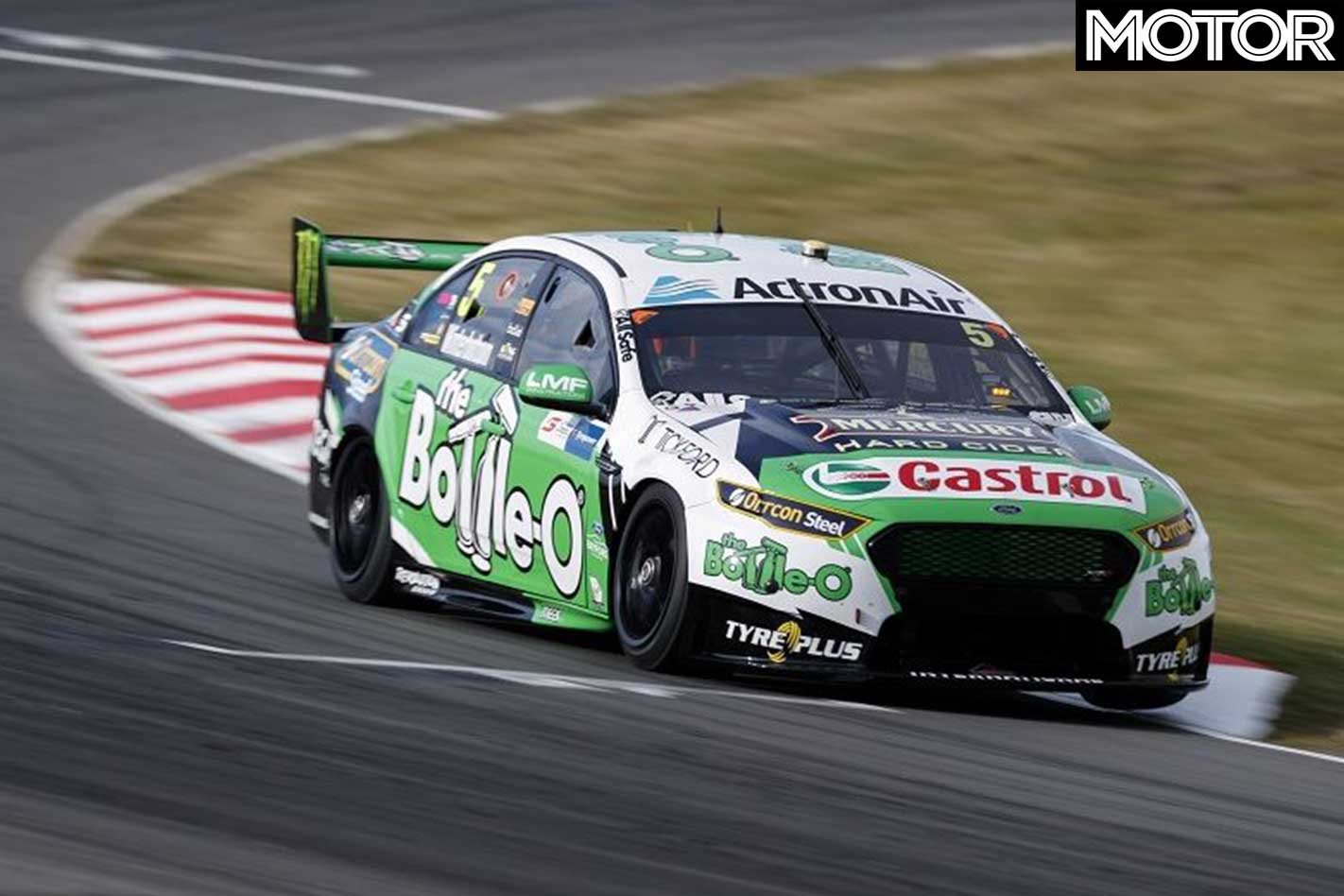
At least five Mustangs will hit the track next March in Adelaide, and while they will all be initially powered by the same 5.0-litre V8 powerplant currently used in the soon-to-be superseded Falcon FG-X racer, Ford Australia marketing director Danni Winter has indicated that a swap to V6 turbo power for the Mustang isn’t off the table.
“We never disconnected from the sport,” she said. “We pulled back from an investment basis but we’ve still been connected to the same teams we were connected with when we exited.”
There are three Supercars teams currently running Ford products – including multiple entries from US powerhouse Penkse and former local Ford factory team Tickford – who have received nominal parts support over the last few seasons.
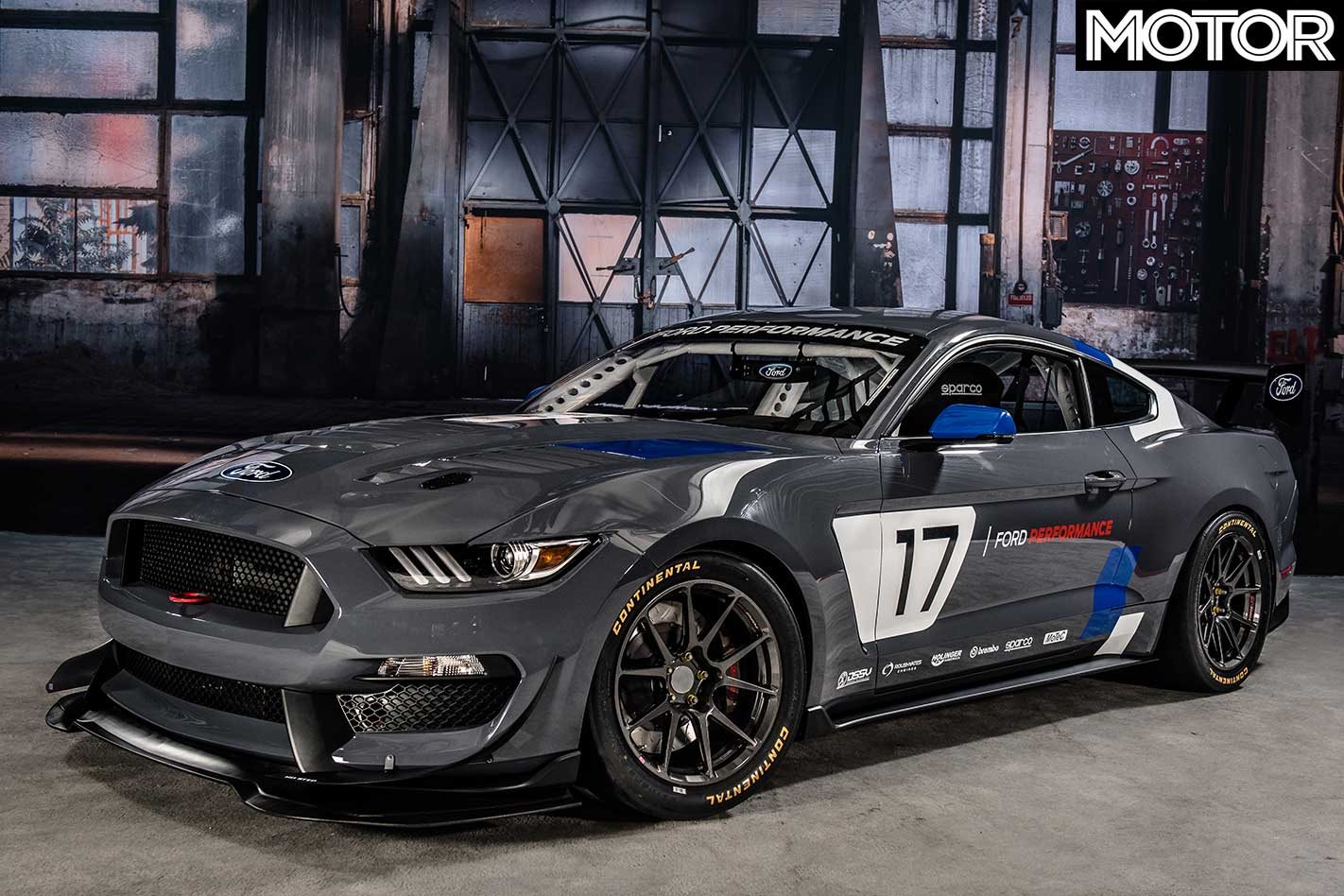
The company announced late last year that it would work with both Penske and Tickford to re-introduce the Mustang to Aussie racetracks after a 40-year hiatus, but that deal doesn’t extend to funding a fully-fledged, factory-backed race team.
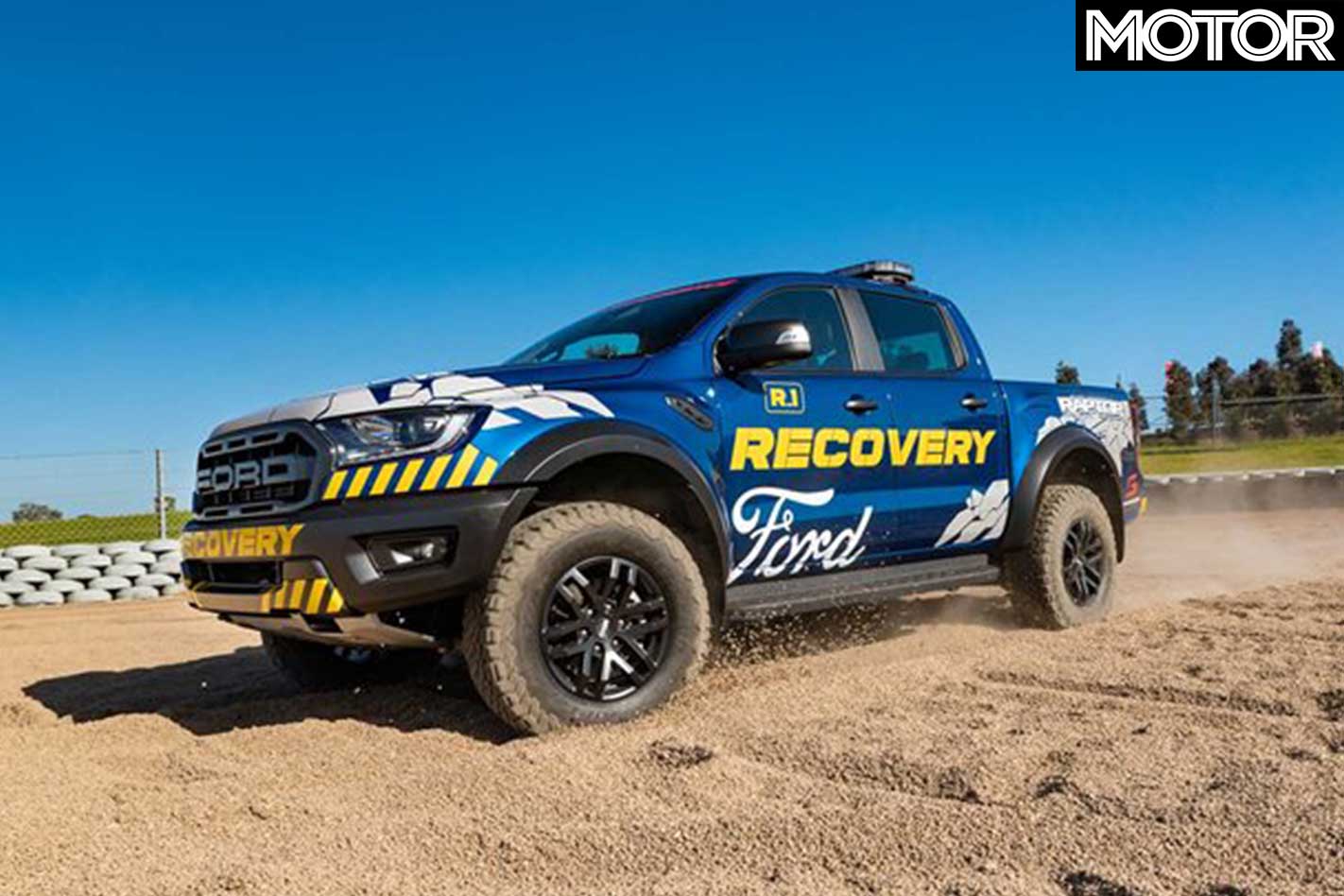
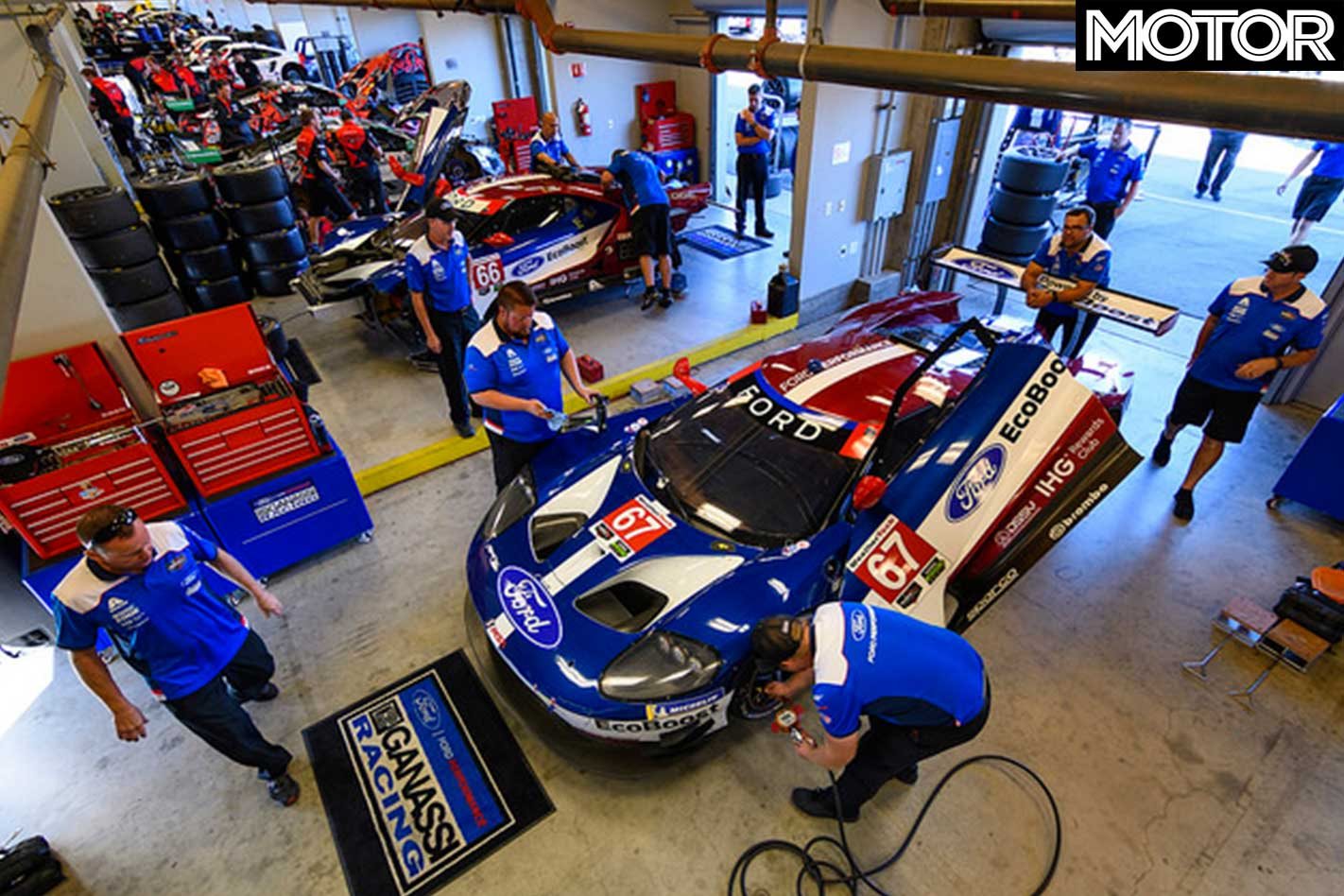
It has also recently signed a deal to supply a Ford Ranger Raptor as the series’ official recovery vehicle, and brought a Le Mans-spec Ford GT racecar as well as a Mustang GT4 from Europe for a demonstration at the Bathurst 1000.
“We haven’t been screaming from the rafters about that,” Ms Winter admits. “We always thought there would a time when it was right for us to get back in. We started that work back in early 2017 and we worked with Penske and Tickford to make sure that we could make a feasible car given the changes to the series.”
The Supercars series runs a control chassis upon which a bespoke body is fitted, while new regulations – dubbed Gen2 Supercar – announced in 2017 opened the door for two-door coupes and non-V8 engines to join the fray.
Ms Winter said it’s important for the company to partner with Supercars as the series evolves with the new regulations.
“We’ll continue to see new powertrains come down and developments in that series,” she said. “And they [Supercars] have a wide pipe they’re working on that we’re very actively want to understand as we plan our future appropriately.”
Internationally, Ford’s preferred race engine is a 3.5-litre twin-turbo V6, which is used in the Ford GT at events like Le Mans and in world endurance championship events.
When asked whether the V6 is a possibility for the local series, Ms Winter said that it would depend on a number of factors.
“I think it will largely depend on what the Supercars define moving forward beyond 2020, in terms of the requirements overall,” she said. “It’ll be up to them to determine what will and won’t be allowed, and we’ll work with them to make sure that we’ve got a role to play – and hopefully whatever they define will enable us to look at what we’ve got available.
“We watch with keen eyes to see how that goes and develops. We continue to have discussions as to what our involvement may be. But we’re going to be an overall partner and that’s how we’ll move forward.”
Skoda has announced the Scala nameplate for its new Ford Focus-rivalling hatchback, ahead of a full reveal of the new small passenger model later this year.
The Czech brand is yet to confirm any details of the all-new model including a first full look at the car, but it is understood the newcomer will be one of a pair of new vehicles that will split the current Rapid Spaceback’s trajectory. The second will materialise as a yet-to-be-named compact crossover.
Both will roll on the company’s smallest MQB A0 platform although the Scala will use a version larger than any model before it, giving it overall dimensions larger than a Volkswagen Golf – though only fractionally.
The model will also introduce a shift in company calling cards with the traditional boot roundel swapped out in favour of full width Skoda lettering. A single shot of the new branding arrangement also reveals a frameless glass boot lid similar to the Rapid Spaceback’s.
Some reports suggest the Scala will replace the current Rapid model although its maker has not revealed any plans for the line. One possibility is that the Scala will carry the small hatchback mantle while the Rapid moniker continues on as the existing liftback version which is not sold in Australia. Alternatively, this could be the end of the Rapid name for now.
Either way, the enigmatic new Scala has not yet been confirmed for sale locally, with Skoda Australia corporate communications general manager Paul Pottinger telling WhichCar the model was still too far off to make a final decision.
“As to whether we’d take it or not … it is too early to say, but the whole Skoda model range portfolio is open to examination,” he said. “We’re interested in everything that’s coming out.”
An initial hint at what the Scala will look like can be found in the Vision RS concept that made its debut at the Paris motor show, and Pottinger said the model will continue a more mature style direction for Skoda.
“I think the days of quirky are banished and that’s reflected in a more assertive brand identity.”
Latin for stairs or step, the Scala name represents the new model’s level of technology and innovation, which is more typically found in a ‘higher class segment’ says its maker.
The Fabia will continue to look after the compact end of the hatchback segment for Skoda, while the Octavia offers customers something larger than the Scala in either sedan or wagon bodystyles. The Superb sits at the top of the pack as the brand’s luxury flagship.
As for the SUV line-up, a Kodiaq GT which was also confirmed this week will be offered in China only for now, but the crossover range will be bolstered by a new compact model riding on the same platform as the Scala in 2019, previewed by the company’s Vision X concept.
The four-cylinder 2018 Ford Mustang EcoBoost has launched in Australia and is now available to order from showrooms.
Ford’s 2.3-litre turbo EcoBoost engine that powers the pony cars also get a slight bump in torque versus the previous MY15-17 models, but also a slight drop in power. Both are worth nine – Newton metres and kiloWatts respectively for new outputs of 224kW and 441Nm.
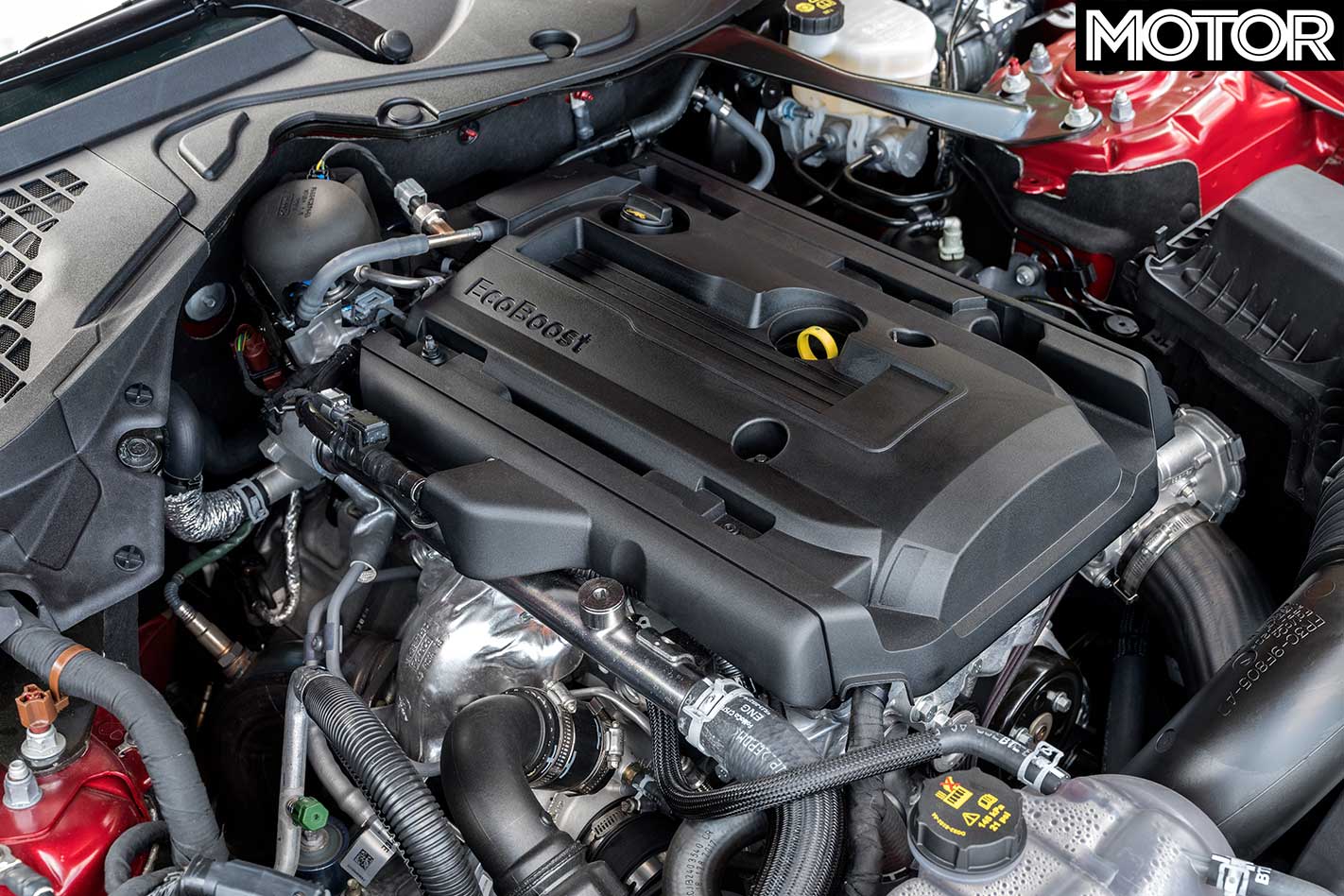
A Ford Australia spokesperson has previously told MOTOR: “As MOTOR readers know, the increase in torque to 441Nm is what Mustang drivers will notice behind the wheel, and make the EcoBoost Mustang more drivable and enjoyable than before.”
The EcoBoost with 6-speed manual ‘box starts at $49,990, $13K cheaper than the manual GT. An EcoBoost with Ford’s 10-speed auto starts at $52,990, while a convertible (auto-only) is set at $59,490, almost beginning to encroach on GT territory.
MagneRide adaptive dampers are a $2750 option, while Recaro leather seats will set buyers back $3K.
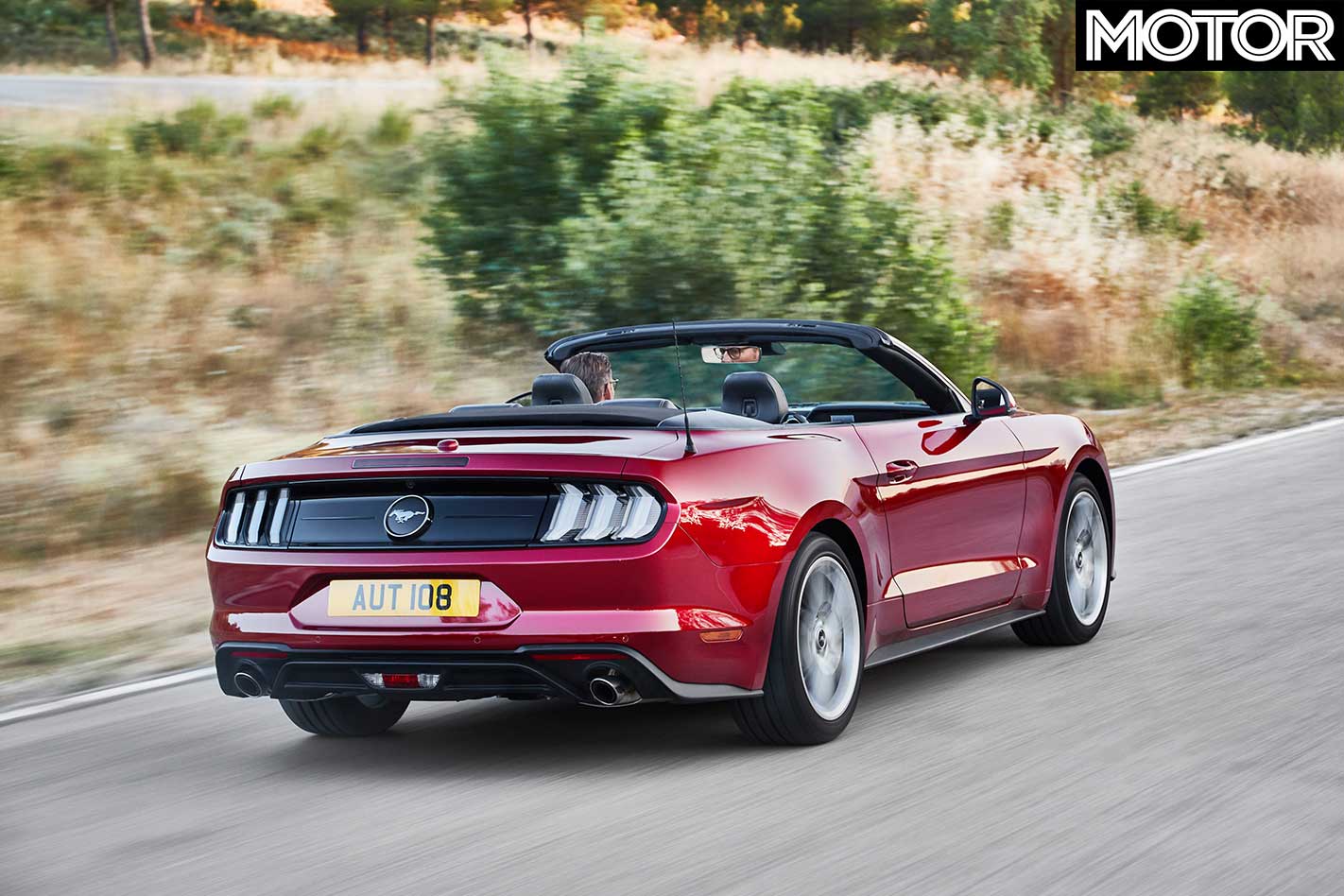
Ford Australia and NZ president and CEO Kay Hart says the EcoBoost joining the Mustang GT and Mustang Bullitt means the range of Mustangs to be locally available is complete.
“Mustang needs no introduction, and the arrival of the EcoBoost models means that we now have the full gamut of performance options for Australian enthusiasts,” says Hart.
“With its turbocharged engine, Mustang EcoBoost adds an advanced 224kW powertrain to that unmistakable, iconic Mustang design.”
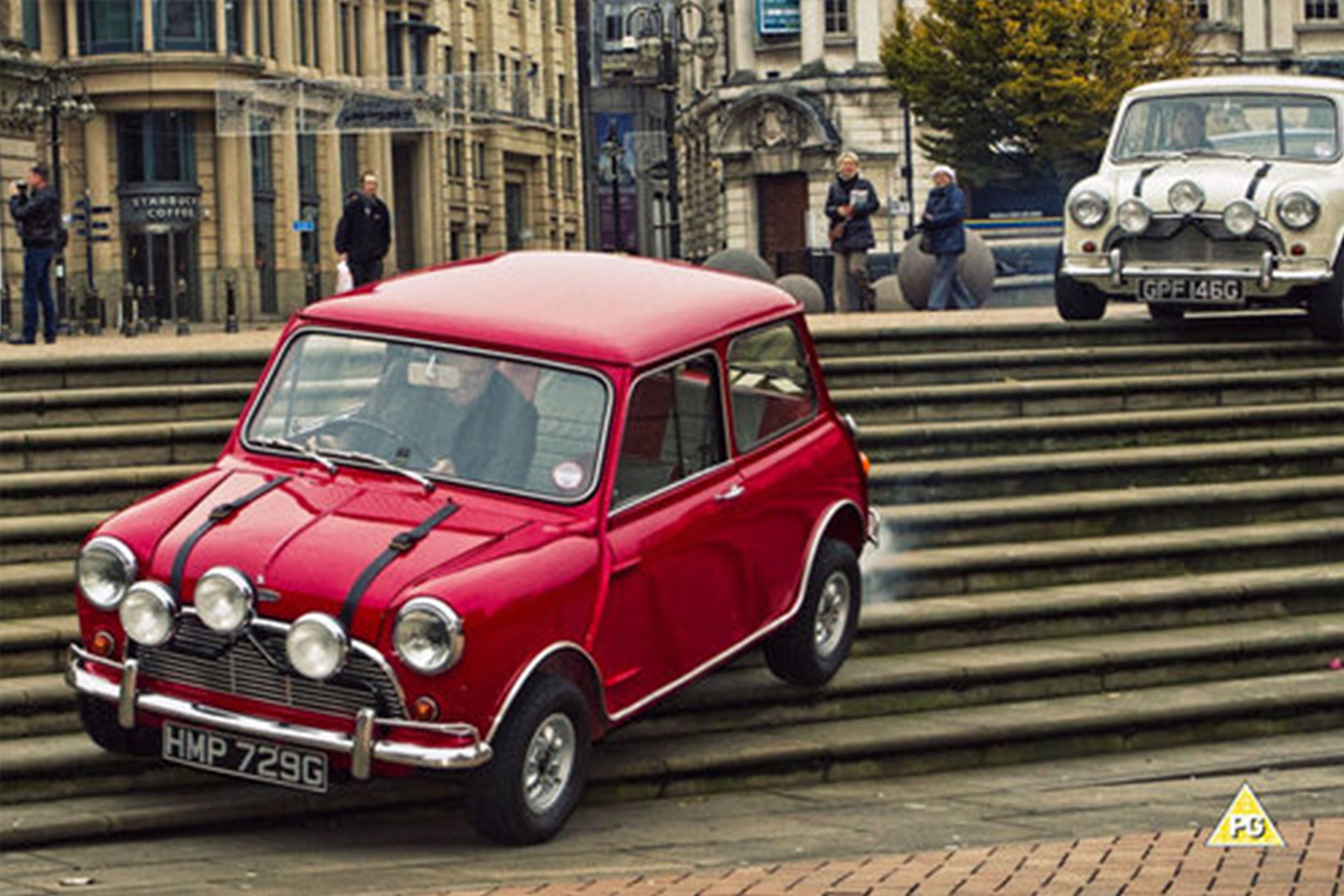
IT’S OFTEN credited as revolutionary in ways it wasn’t – front-wheel drive and transverse engines had both been seen decades earlier – but the Morris Mini-Minor, aka Austin Seven and Austin 850, changed forever the template for small cars. It also enjoyed one of the longest production runs of any, in the company of fellow revolutionaries like the Citroen 2CV and Volkswagen Beetle.
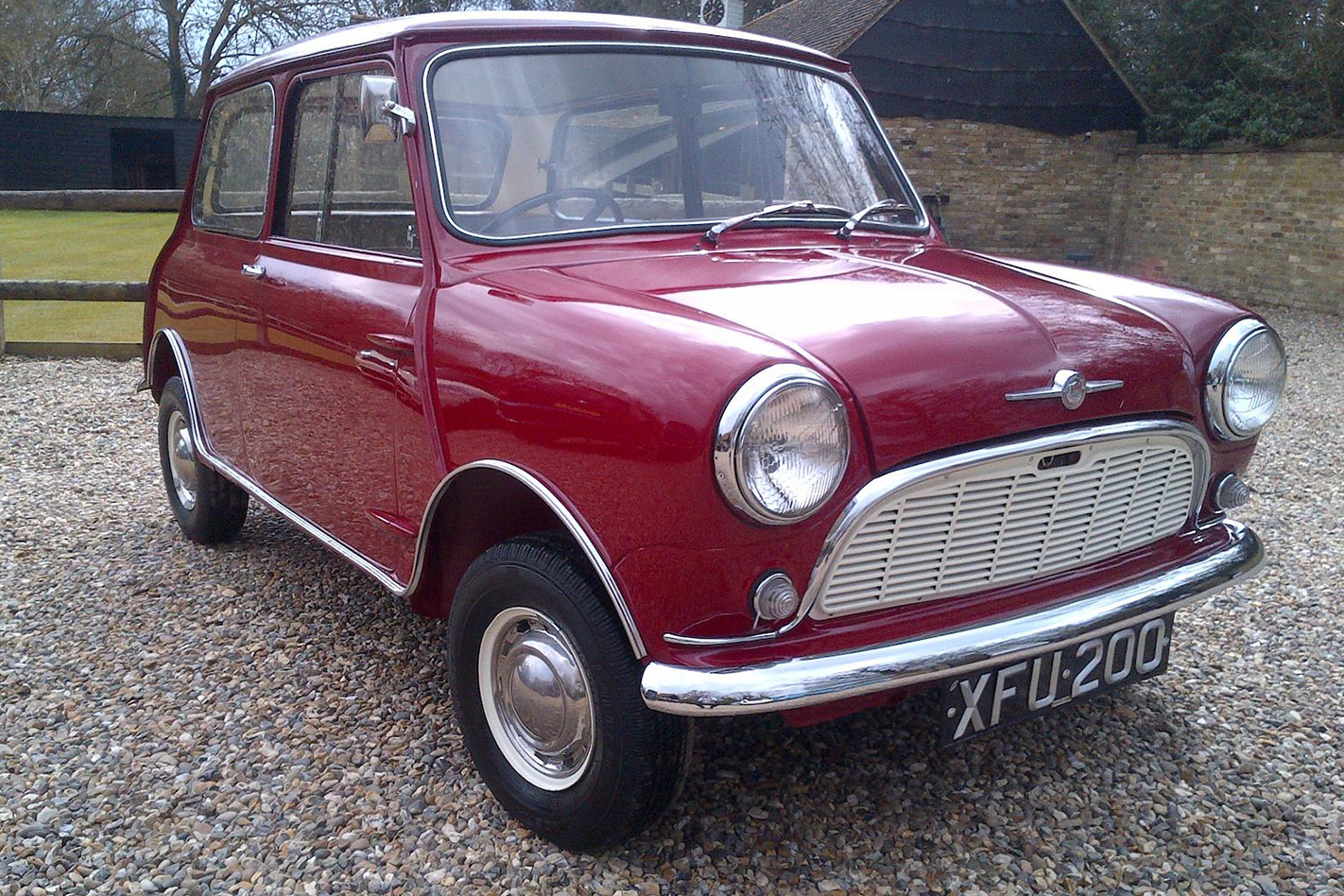
The accidental egalitarian Mini was beloved of poor families and pop stars alike. It began in response to the post-war popularity of affordable, European ‘bubble cars’. In 1955, Leonard Lord, president of British Motor Corporation (BMC), assembled engineer Alec Issigonis and inventor/engineer Alex Moulton and a small team to create a car within dimensions later given as 10 x 4 x 4 feet, and using BMC’s existing, 948cc four-cylinder ‘A-series’ engine.
Issigonis famously drew the first sketch for Austin Design Office Project 15 on a tablecloth.
Two factors that would focus ADO 15’s development were the seizing of the Suez Canal by Egypt in 1956 and subsequent oil crisis, and the debuts of Fiat’s small, but proper four-seater 600 (1955) and Nuova 500 (1957).
ADO 15 created an astonishingly space-efficient package (though it did exceed Lord’s four-foot width and height spec.) At the front of the upright, two-box body, the engine sat transversely, or ‘east-west’. This was possible because the gearbox and diff were incorporated beneath, in the sump.
Developing an oil to be shared among engine, gearbox and differential was just one of many challenges.
Dr Alex Moulton contributed a suspension system of space-saving, hollow rubber ‘cones’. Coupled with tiny, 10-inch wheels and a shallow central floor tunnel, there was minimal intrusion into the cabin. Front and rear subframes were added when the unitary body proved inadequate to the suspension forces. Early testing prompted the engine’s de-stroking to a more ruly 848cc.
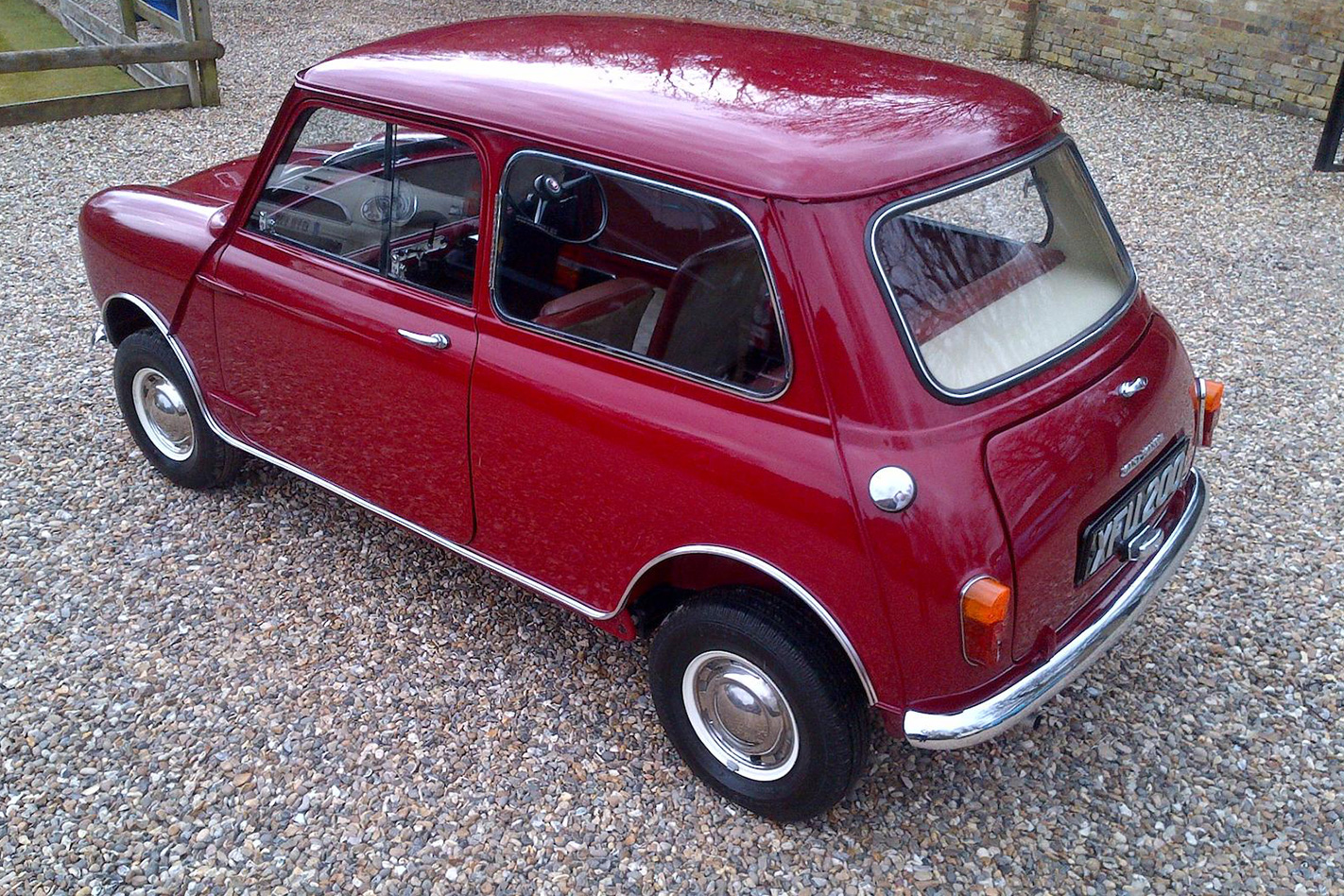
So, yeah – whatever became of the Mini? Er, from August 1959 to October 2000, just under 5.5 million were built – around 70 percent at Longbridge, but many also in Australia (1961-78). The giant-killing Cooper and Cooper S came in 1961 and ’63, respectively, and Mini was also made in wagon and van (1960) and pick-up (1961) and bizarre, booted ‘luxury’ Riley Elf and Wolseley Hornet (1962), and bare-bones, buckboard Moke (from 1964) destined to be biggest Down Under.
Trim, taut and terrific
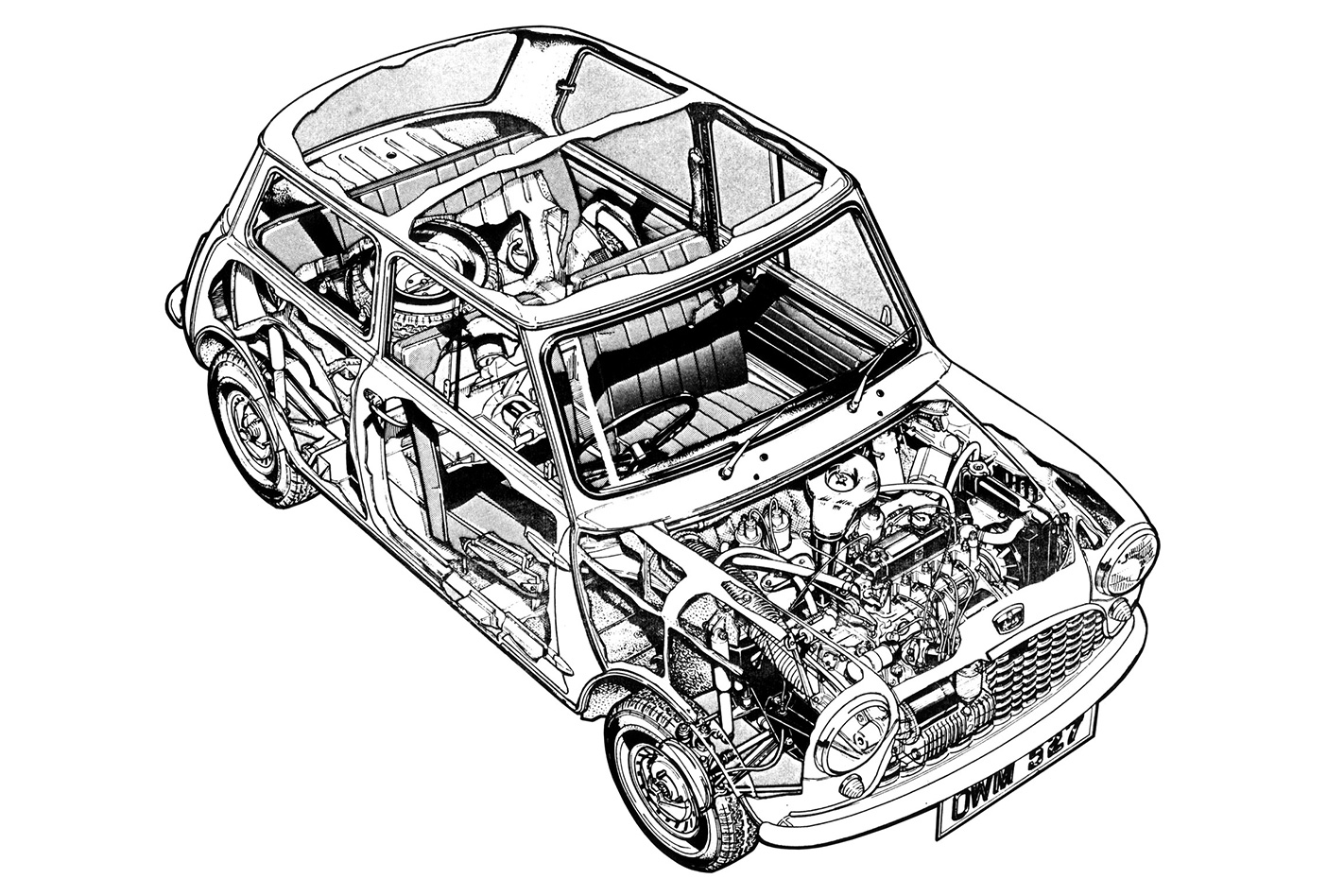
The Mini’s incredibly compact unitary body measured just 3055mm long by 1410mm wide by 1346mm tall and weighed just 626kg. Space efficiency drove the brilliant rubber cone suspension, essentially struts with control arms at the front and trailing arms at the rear, but with dome-shaped rubber ‘cones’ replacing steel springs. Rack-and-pinion steering helped mask the torque-steer effect of unequal-length driveshafts. Tiny 10-inch wheels enclosed four drums.
The space race
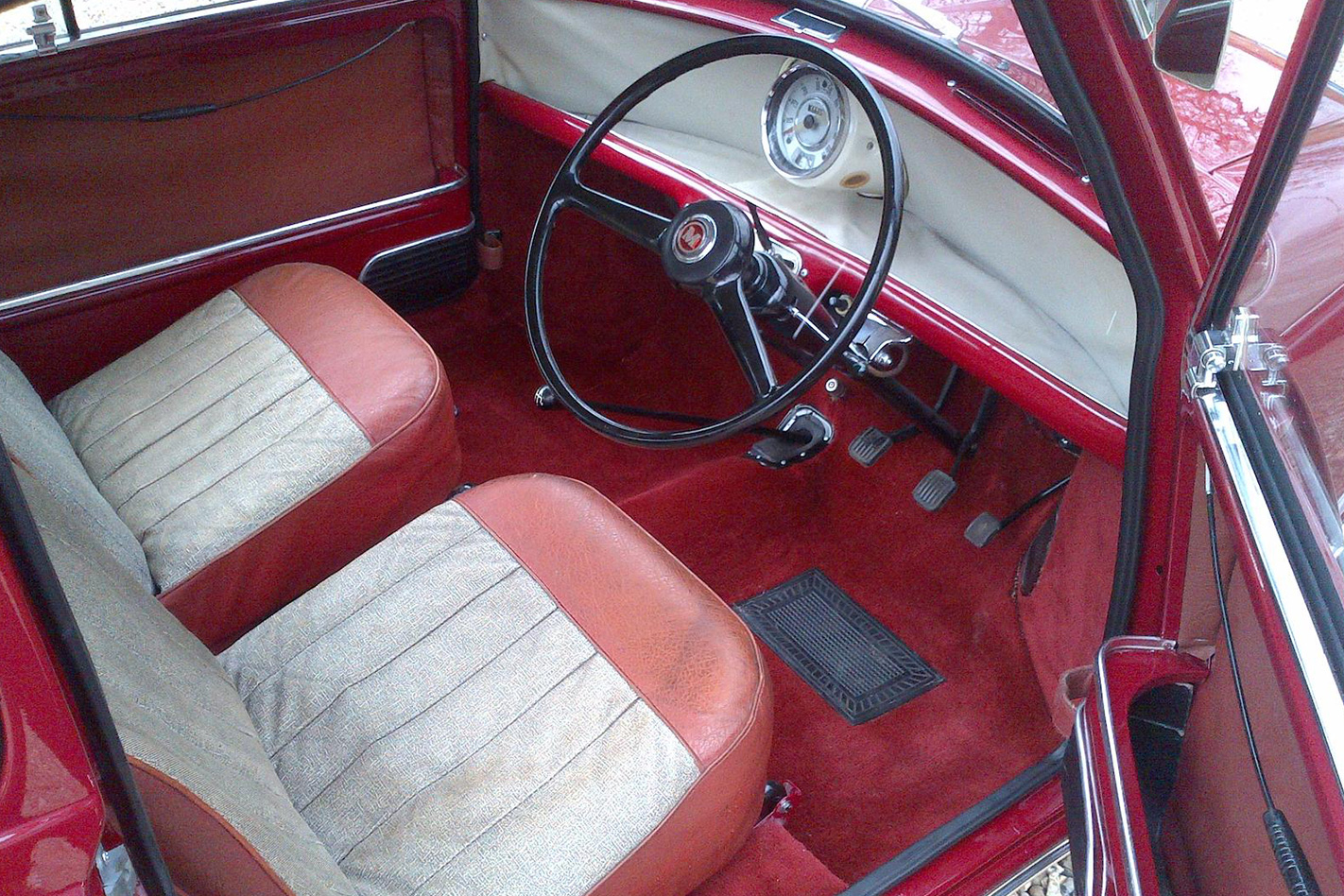
Mini was all about space, right down to its 10-inch wheels. Absence of transmission tunnel allowed passenger placement nearer the centreline, with large side bins for storage; these initially dictated sliding windows for the front doors. A central instrument pod created under-dash storage shelves either side. Early Australian Minis had more durable vinyl and stronger interior doorhandles than Brit cousins. Battery in the boot helped weight distribution.
A for antique
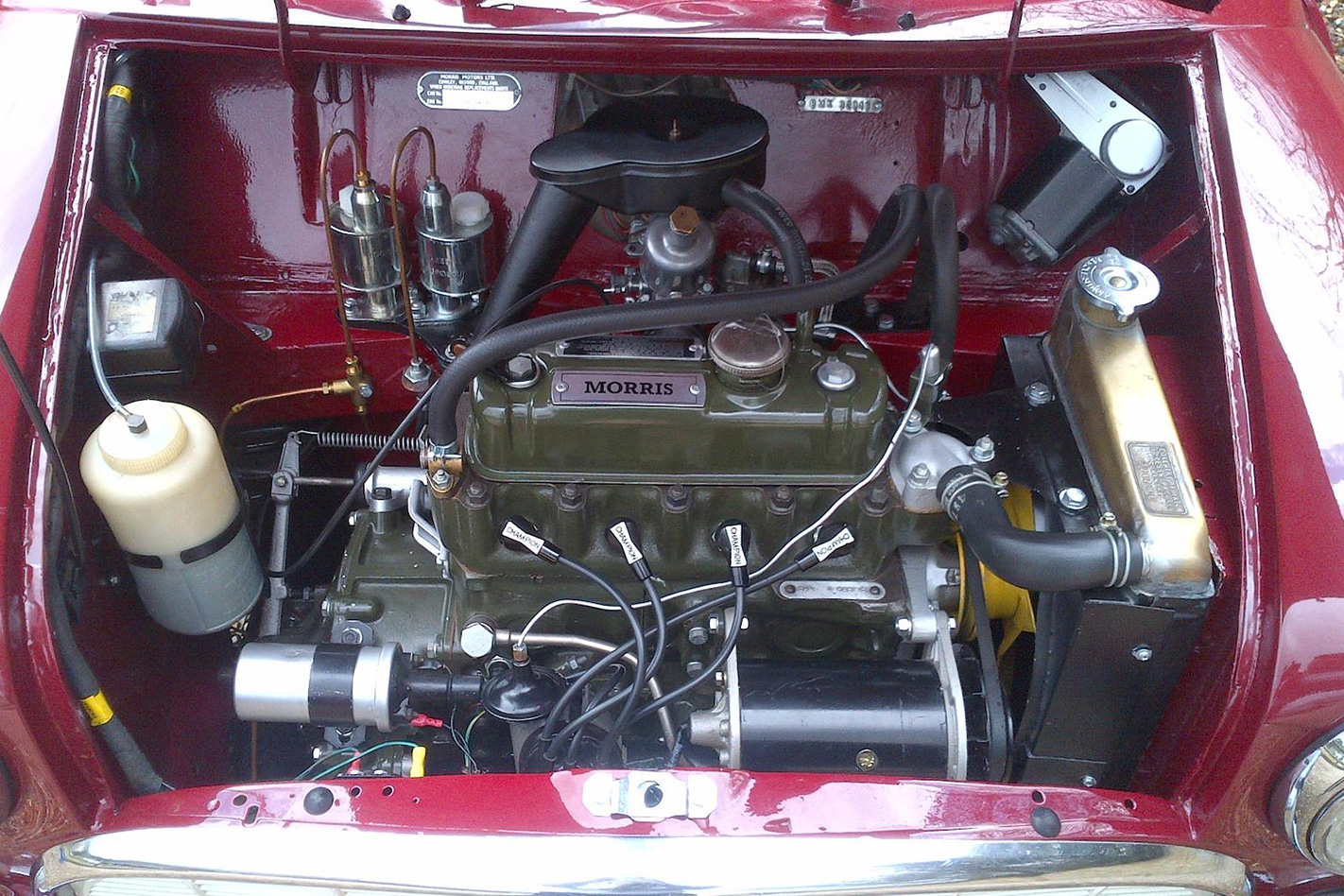
Mini’s magic lay in the four-speed gearbox mounted in the sump; a contemporary motorcycle innovation. The four-cylinder A-series dated from 1951’s Austin A30, with three main bearings and iron block and (non-crossflow ohv) head. Mini unit displaced 848cc; with single SU carb it gave 25kW at 5500rpm and 60Nm at 2900rpm. 0-60mph (97km/h), at 26.5 seconds, was still five seconds quicker than a Triumph Herald.
Porsche has announced it’s bringing the GTS badge into the current Panamera lineup, filling the gap between the 4S and the Turbo badges.
The new versions of the Panamera GTS and Panamera GTS Sport Turismo (a badge which means Gran Turismo Sport Sport Turismo) have both already been confirmed for Australia.
With 4.0-litre twin-turbo V8s powering both models, producing 338kW and 620Nm each, the primary difference between the Panamera GTS and GTS Sport Turismo is the body style, the larger Sport Turismo being the slightly heavier ‘wagon’.
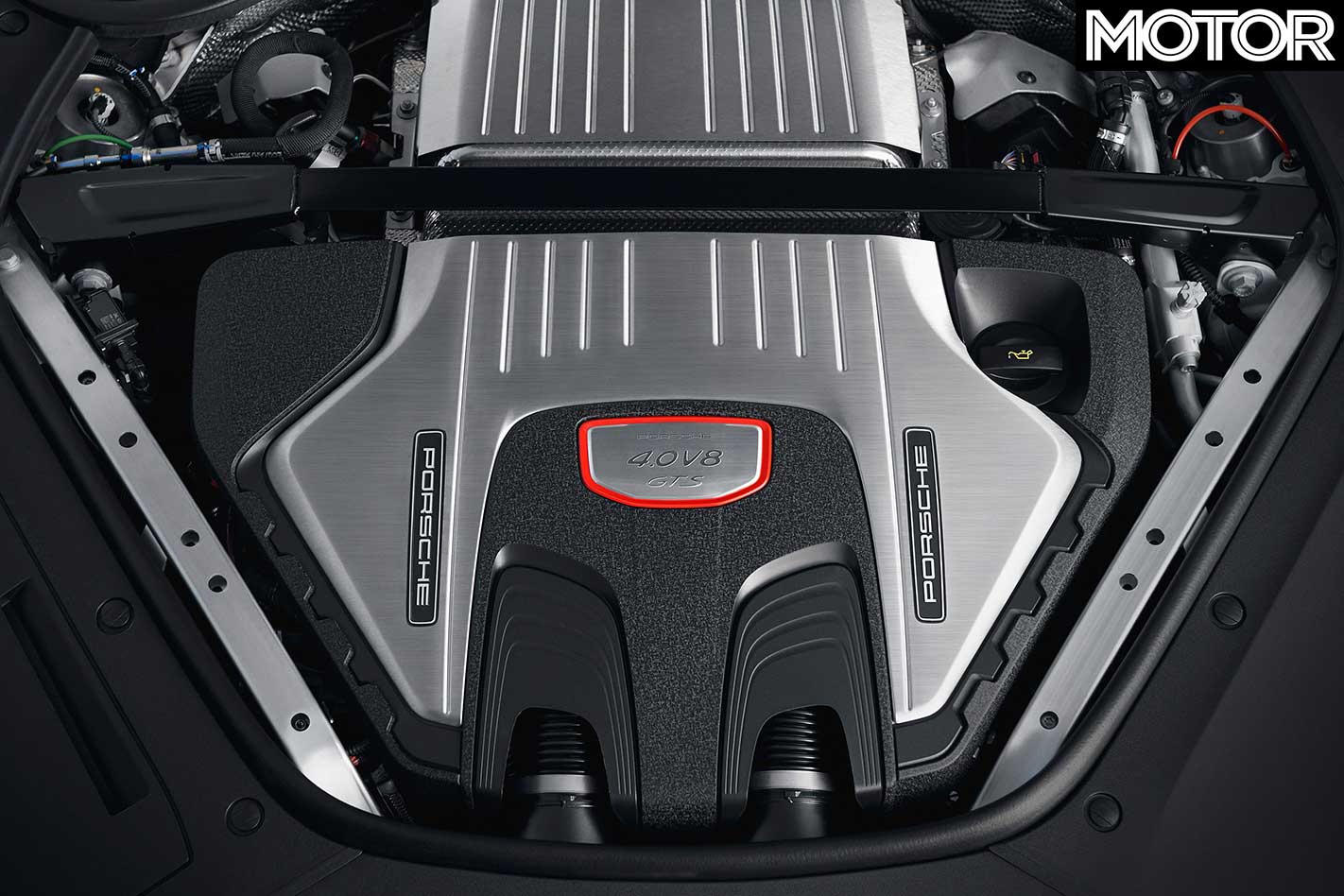
Each GTS has had its chassis lowered by 10mm, with air suspension and a more dynamic Porsche Active Suspension Management (PASM) setup claimed to strike a balance between performance and comfort.
The GTS models are visually distinguished with black trim around the front, sides, and rear to provide accents, while black Alcantara and anodised aluminium.
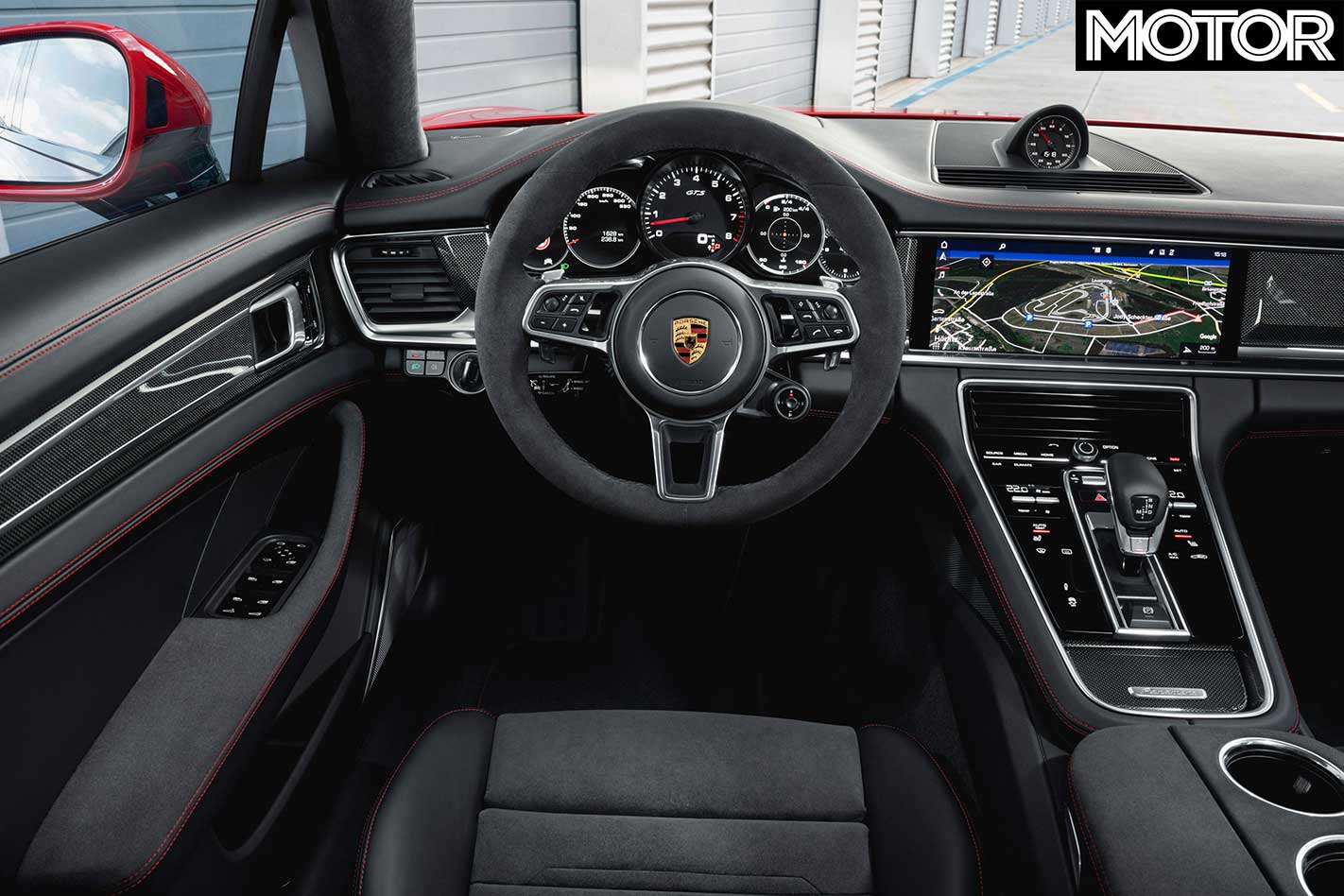
Porsche Australia says the new GTS models are available to order now, with the Panamera GTS available from $364,100. The Panamera GTS Sport Turismo starts from a slightly higher $371,400. These price points slot them in just below the Panamera Turbo models, but well north of the 4S models.
Both GTS models are due to arrive in Australia in the first quarter of 2019.
This feature was originally published in MOTOR’s January 2004 issue
Got a tip for you. Do you have a chequebook? Good. Now take out a pen and write a letter as follows:
“Dear Mr RalliArt,
It has come to my attention that you will soon offer for sale a juicy little number called the Lancer Evolution VIII. If you could see your way clear to elevate my deposit to the top of the order queue, I’d be very appreciative. In fact, to guarantee such a thing, I’ve enclosed two cheques. Obviously, if one is enough to secure one of your 100 EVO VIIIs, I’d be pleased, and you can buy yourself something nice for the missus. However, I’m prepared to waterfall my bids in order to lock it in, Eddie.
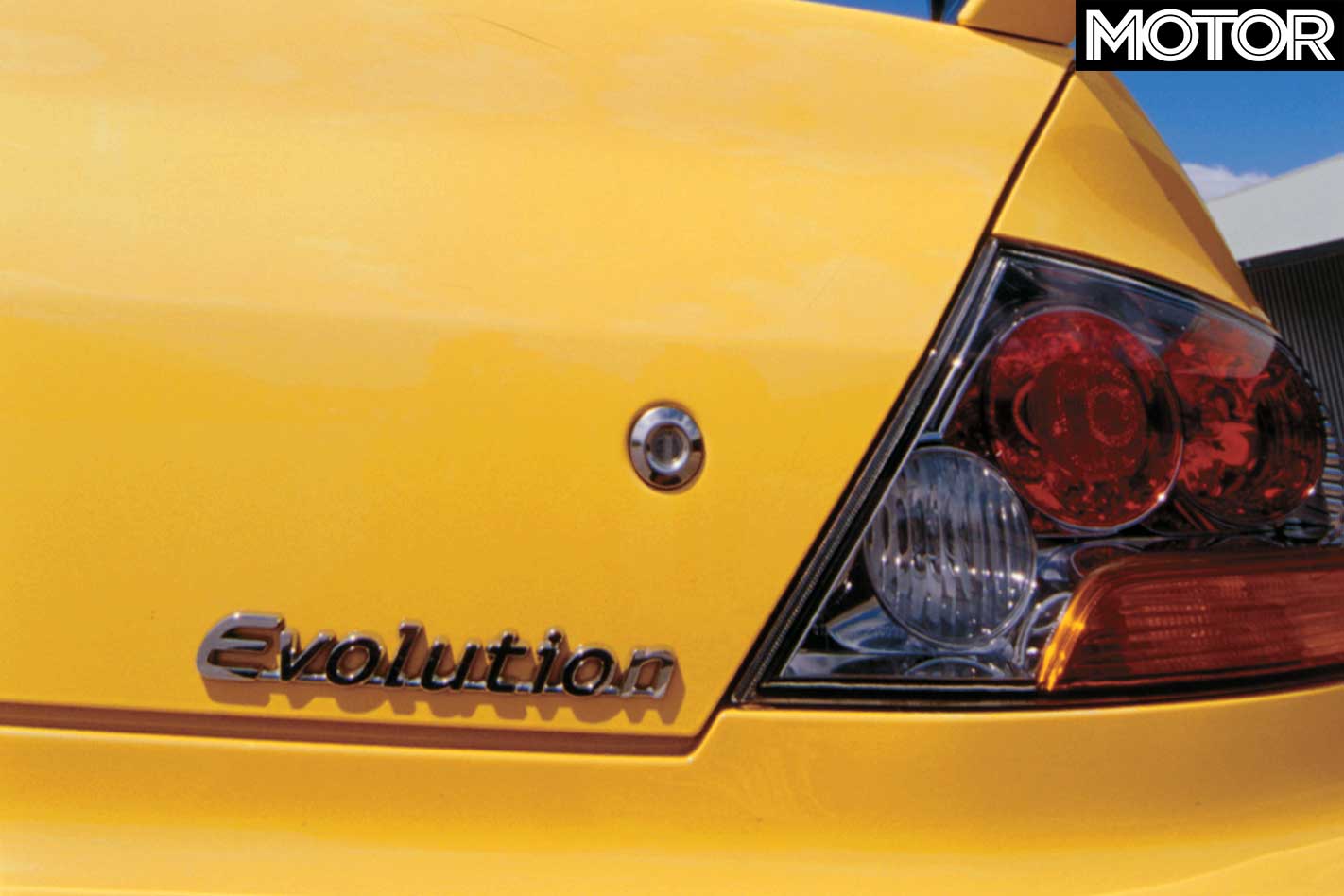
PS: Yellow would be beaut, but if that’s not available, I’ll take anything. PPS: I said EVO VIII. Don’t even think about trying to slip me one of those old-shaped dungers you’ve got lying around…“
The Evolution revolution is almost here, except that Mitsubishi will do it properly this time. When it arrives, between April and June next year, every sub-$300,000 sports car will come under sub-atomic examination like never before. Expect very few of them to emerge with their reputations unscathed.
Just when you thought you had Mitsubishi pigeon-holed as an earnest mob of battlers scrapping for the crumbs, it lobs in a slab of C4 to blow apart everything you know about fast four-doors.
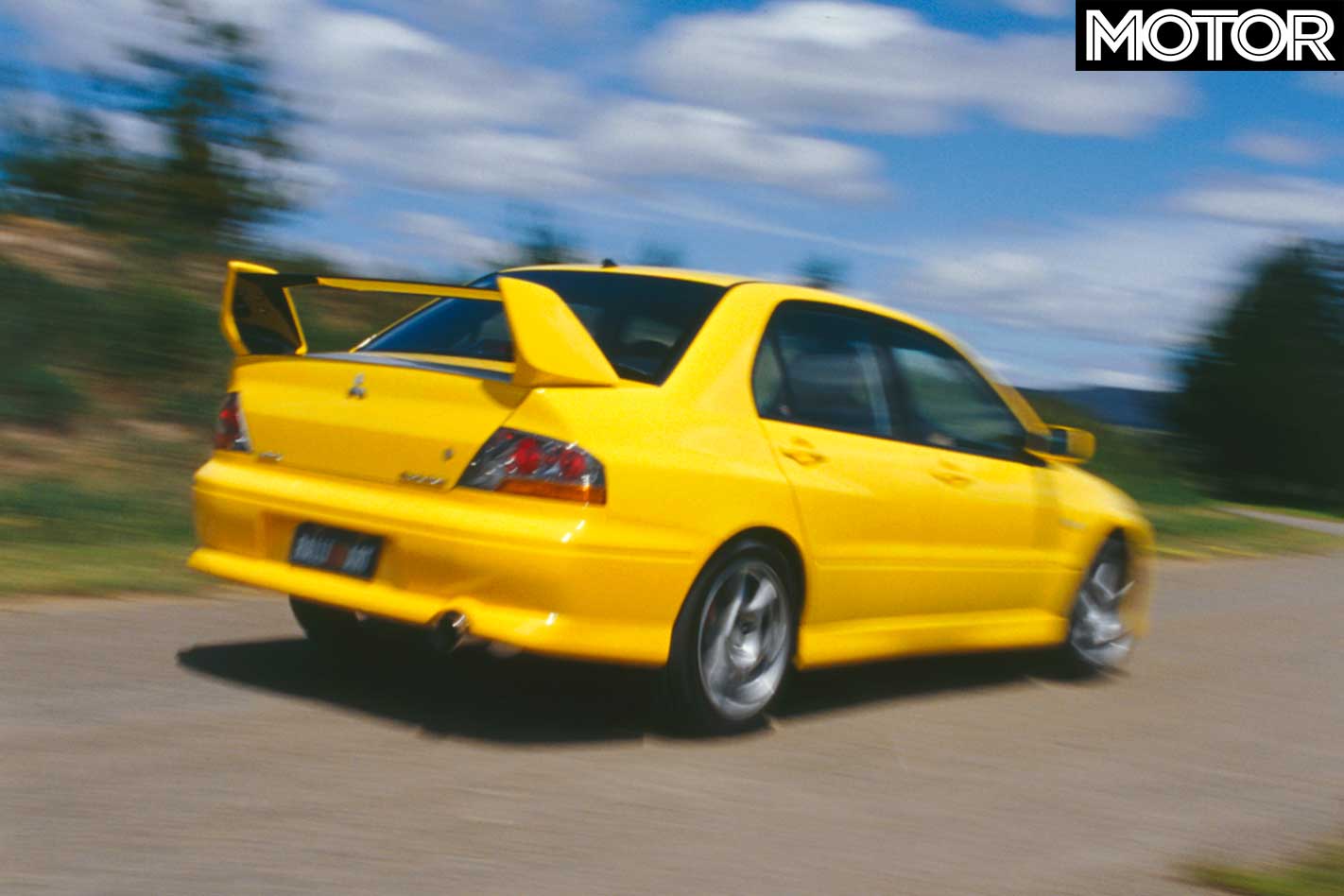
We tell you this only for your own good. Sell up your Impreza WRX STis, HSV ClubSports and FPV GTs now, because when the EVO VIII finally gets here, they will suddenly become obsolete. This car, born of the humble Lancer, is about to smear them into the scenery.
The bad news is that there’ll only be annual batches of 100, sold through RalliArt as low-volume imports, hence get your order in now.

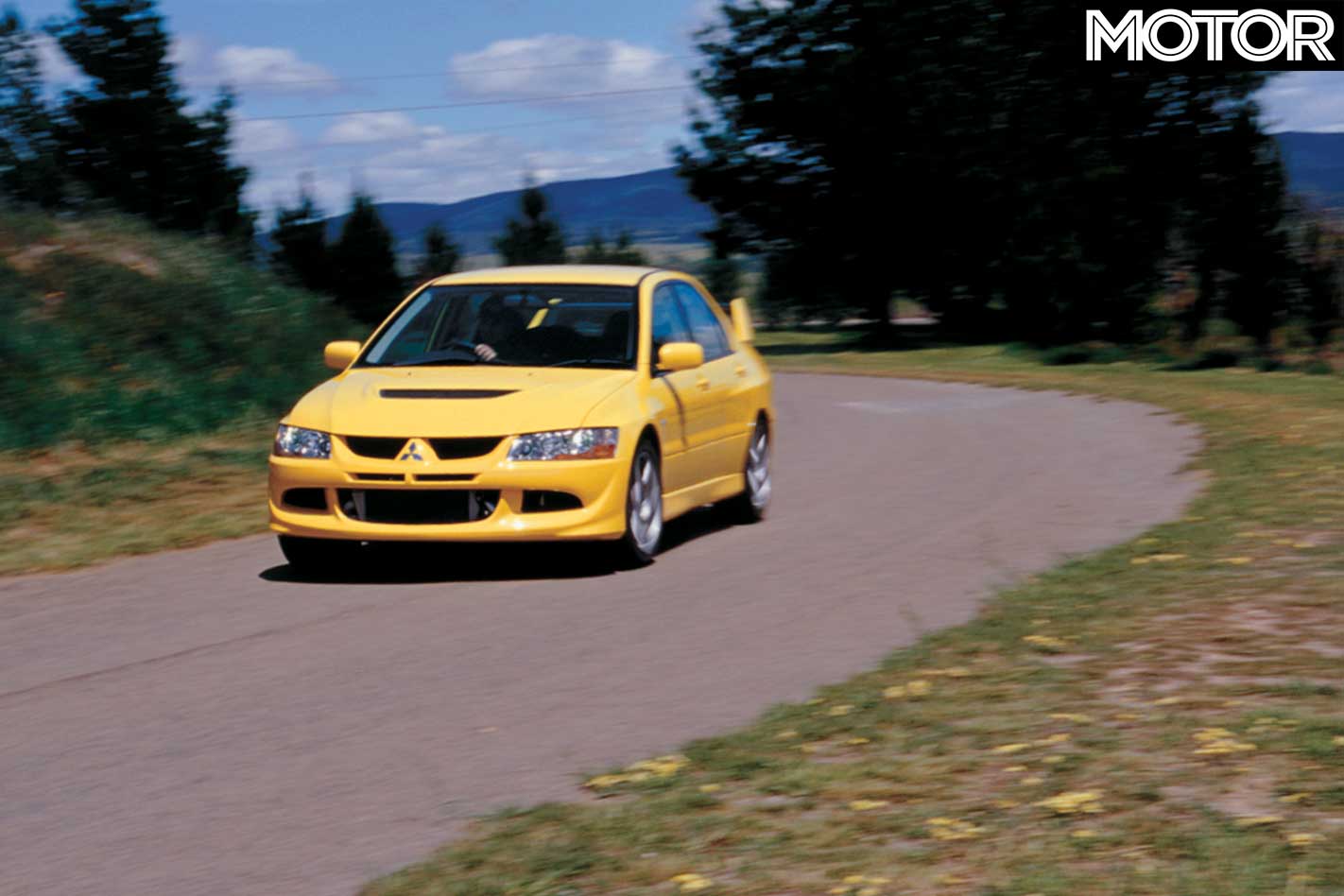
To save you drooling until sometime next year, we snaffled the first one to come to Oz. This car has been poked and prodded by the gummint’s Poke and Prod Department, which certifies such things for sale in Australia (and is responsible for the ambiguity of the on-sale date). And the car is fast. Very, very, seriously, grown-up, you-are-kiddin’ fast.
Subaru’s Impreza WRX STi is an obvious rival for the EVO VIII. Everybody says so, and it’s an opinion held high up at Mitsubishi, hence its determination not to repeat past EVO mistakes (like bringing in the VI just as the VII was launching in Japan, pricing it $20k upstream of the STi and then watching in horror as the dealers had to hack that down by the same $20k to shift the last of them).
While the price hasn’t been confirmed for Australia’s first batch of current model EVOs, the smart money’s on whatever Subaru’s doing. To the dollar. At the moment that’s $56,630. You get the feeling Mitsubishi is happy to do what it takes on the EVO VIII to rub shine onto the rest of the line-up.
So pricing’s one of the three big EVO VI criticisms answered. The other two – its flimsiness and its forgot-the-springs ride – have also been addressed.

A goodly part of the VI’s startling speed came via weighing less than the Stephen Hawking section of Holly Valance’s bookcase. That had its impact all the way down the VI’s spine. Literally. The rear wing wobbled and danced in the mirror, shutting the doors sounded like a paper clip dropping into an ashtray and it rode so hard that the driver’s head hit the roof crossing painted white lines.
But the all-new Lancer chassis has put beef on the EVO – some of it wanted, some of it not. Where the old car weighed an incredible 1280kg, the new car is 1450kg (and still 20kg lighter than an STi).
Mitsubishi never sold the VII here, but the VIII’s a significant technological step forward from it – and quite a few paces upstream of the VI. For starters, even though they’re from the same engine family (the 4G63 architecture dates back to the Starion), very few internal parts will transfer from the VII to the VIII.
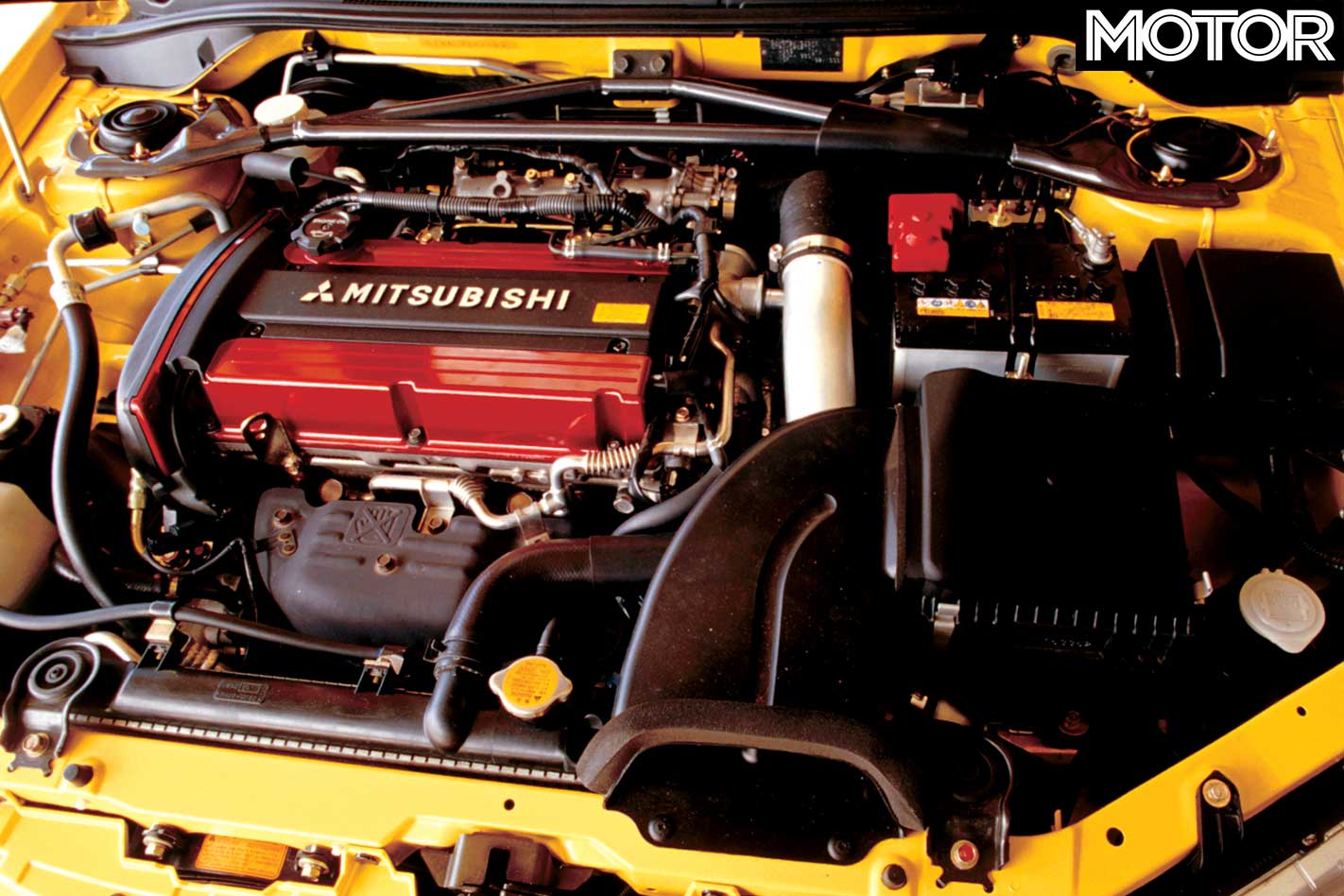
The flywheel is one notable exception, along with similarly hollow camshafts. Down low, the cradle supports are considerably stronger on the VIII to cope with the enormous torque loads.
While the conrods are the same as they were on the VII, they’re stiffer than the versions in the VI. The pistons, too, are lighter and carry a much heavier webbing on the thrust side. The exhaust manifold got an upgrade, and it all demanded a bigger clutch.
While this, the Japanese-spec car, has a six-speed gearbox, the Australian versions will get the cheaper five-speeder, strengthened from the EVO VI and also fitted to the European models.
In fact, ours will be a very European spec of EVO, right down to the downgraded power ratings to cope with Europe’s tougher emissions regulations. Yep, so while the Japanese model quotes 206kW (and most insiders admit the VI had 220kW), our EVO VIII will have only 195kW at the same 6500rpm. Where goes the power, the torque will follow, and it drops from 373Nm to 355Nm at 3500rpm.
And here Mitsubishi has an ace up its sleeve. A not inconsiderable ace. A company not known for its foresight (it said “no” to the FTO and “yes” to the 3000GT), it’s taken a leaf out of the Ducati book of ‘fixing’ what the gummint has taken away.
See, Mitsubishi Europe has developed its own aftermarket power-up kit and, given that we’re getting Europe-spec EVOs, we’ll also get the power-up kit, which will essentially be a chip and a freer catalytic converter.
“If we don’t do it, the customers will find somebody else who will,” says Mitsubishi’s Kevin Taylor. “Europe’s got the same power-reduction issues we have, so they’ve fixed it. Not sure how much power we can pick up, but it’ll be at least what it was.”
At the time of writing, Mitsubishi’s plan was to have the cost of the kit included in the purchase price, and to fit it at the first service. So that’s that, then, and stop sookin’ about being robbed.
So how does all that impact on the EVO’s bent-road pace? Well, anybody who owns a stock WRX STi ought to forget about picking on an EVO VIII and go for softer targets. Like anything from the McDonnell-Douglas catalogue. See, while the STi and the EVO are, deep down, kindred spirits, the EVO’s just more… well, it’s just more…
Both of them have worked their Street God status by stuffing modest chassis full of all-paw, force-fed madness. If their ability to turn any piece of road into a chance to beat up V8s and la-de-dah Euros wasn’t enough, they’ve always got the satisfaction of rally tearaway genetics.
So here’s the guts of it. At Bang For Your Bucks, in a turbo-friendly winter at Goulburn’s Wakefield Park raceway, guru Rick Bates cranked a 1min 11.5sec lap out of the STi. The Suby wasn’t even FTD, either. That fell to Lotus’s Elise Sport 111, complete with road-racer rubber, at 1:10.44.
This gleaming yellow Japanese-spec EVO VIII, straight from 5000km of homologation work, rolled off the RalliArt trailer and whipped out a 1:10.7 with yours truly twirling. After a quick check to amend tyre pressures that weren’t what they should have been (er, 57psi), the Lancer fired out again and, on its second flying lap, slammed down a 1:09.8. Under tens, stock, at Wakefield Park.
Don’t worry about the EVO’s pace, then, because it’s still nearly two seconds a lap quicker than an STi. Just like the EVO VI was at BFYB 2002.
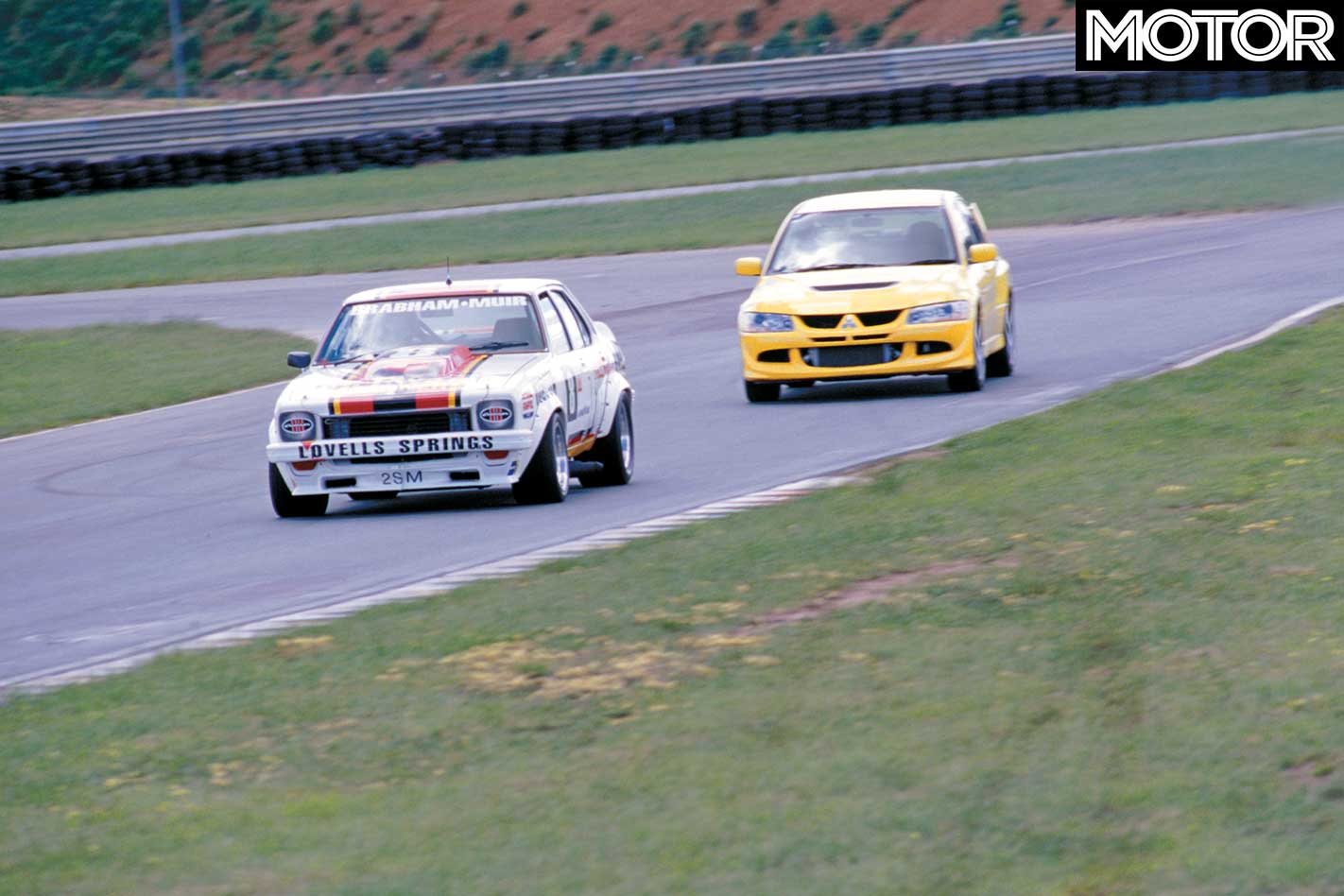
Obviously, not all of that two seconds is down to straight-line speed alone – but the EVO does feel demonstrably quicker than the hottest of the hot Subys. And it’s speed where it counts. It’s driveable. The natural feeling is to hold second through the hairpin leading onto the front straight, but third feels just as quick.
So it proves, with the ultimate shift into fifth gear falling at exactly the same point on the straight. Try fourth, just for a giggle, and it doesn’t hesitate, doesn’t splutter, just steams into its work, gets on boost and hammers. The shift into fifth is only another 10 metres up the track.
One of the secrets of the EVO’s pace, then, is its incredible torque. From under 2000rpm it’s got genuine urge and heaps of it. The numbers might say 373Nm stock (and 355 in homologated local spec) at 3500rpm, but it feels like at least 85 percent of that is hanging around from 2000 revs. While an STi is being disdainfully tardy under 3500 (and its peak torque arrives at 4000), the Lancer’s already gone.
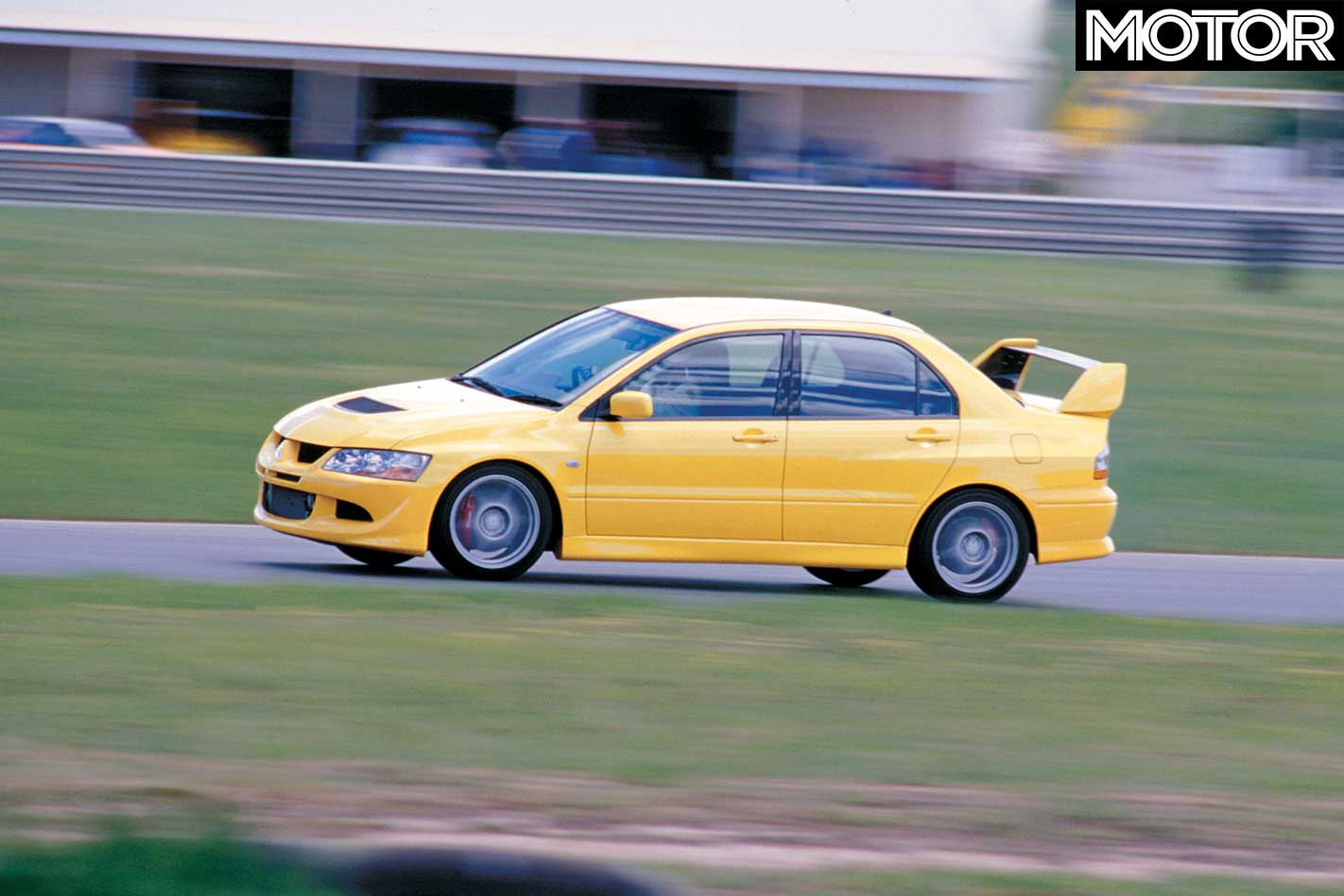
So it’s got the ability to torque its way out of trouble, but what else makes it the Subaru’s nemesis? To start with, the EVO motor’s a stroker (88mm) where the STi’s boring (92mm), so the Mitsu’s got an inherent torque advantage.
Well, nothing happens in an STi engine until around 3700rpm and its power peak is at 6000. The EVO VIII is working like buggery at 2000rpm, and its power peak is 6500. In effect, it’s got double the useful rev range, so we don’t reckon a five-speed gearbox will knock its performance around in any significant way.
But its chassis is also awesome. It’s a better proposition than the VI in the fast stuff and on mid-corner lift-off because of its longer wheelbase (up 115mm) and its multiple active diffs. The same active diffs help it to lose little, if anything, to the shorter, lighter, theoretically more nimble VI.
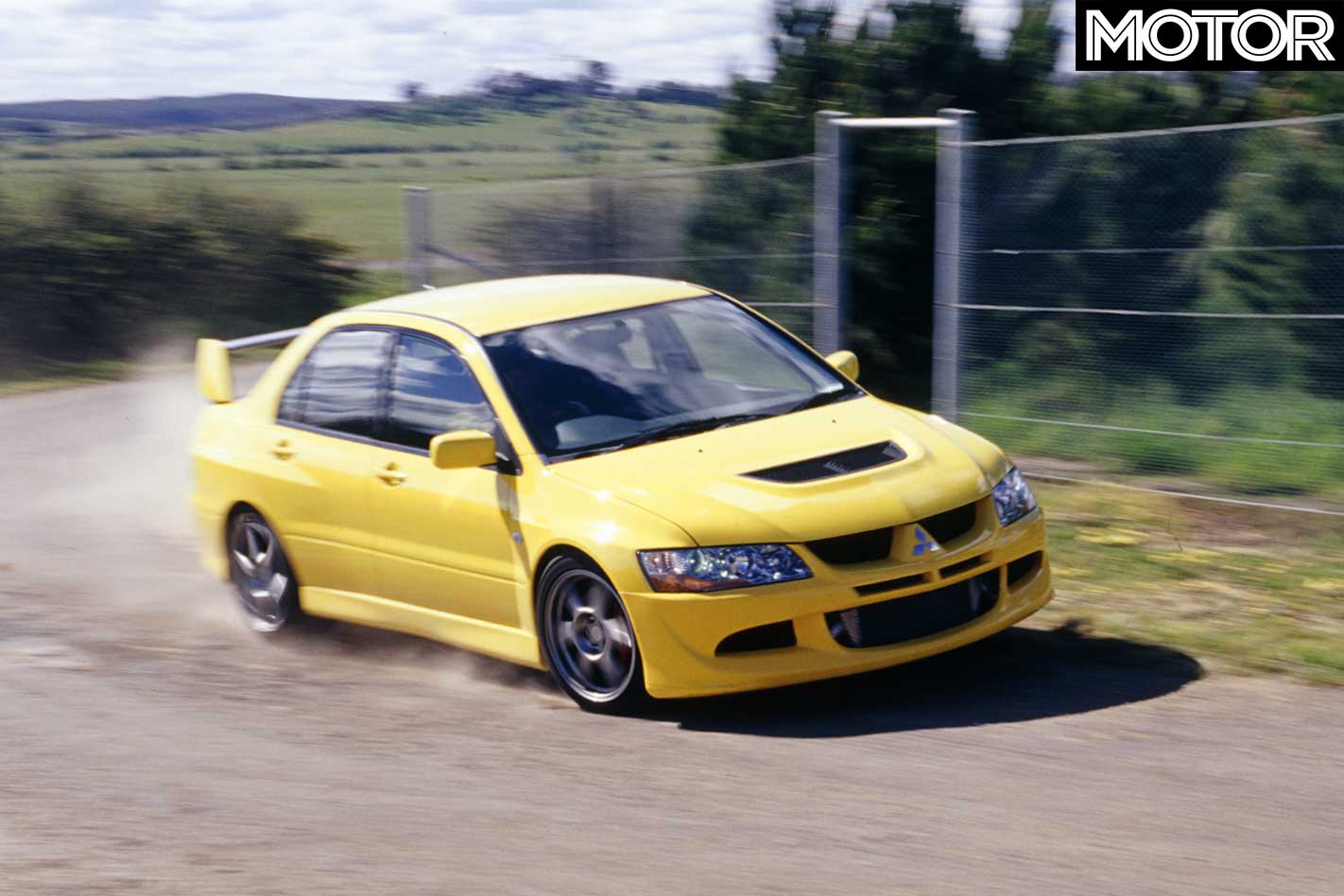
Under most circumstances the diff technology is invisible. It’s still working, locking and unlocking the centre diff as required, but you don’t notice it. It only starts to become clear that something strange is going on below decks when it’s all going awry and, instead of gravel smacking underneath, your date feels the drive instantly being spat from one wheel to another, to another, as the big brain whips through the maths to keep you on the island.
Carry too much speed into a sweeper and you can actually feel the outside rear wheel driving the car back to the radius you should be taking, while the inside wheel is almost free-wheeling.
But it takes some doing to get it that far. First, you have to outstrip the conventional grip levels, and they’re set phenomenally high, and with similarly phenomenal levels of idiotproofness. Okay, I just made that word up, but that’s what it does.
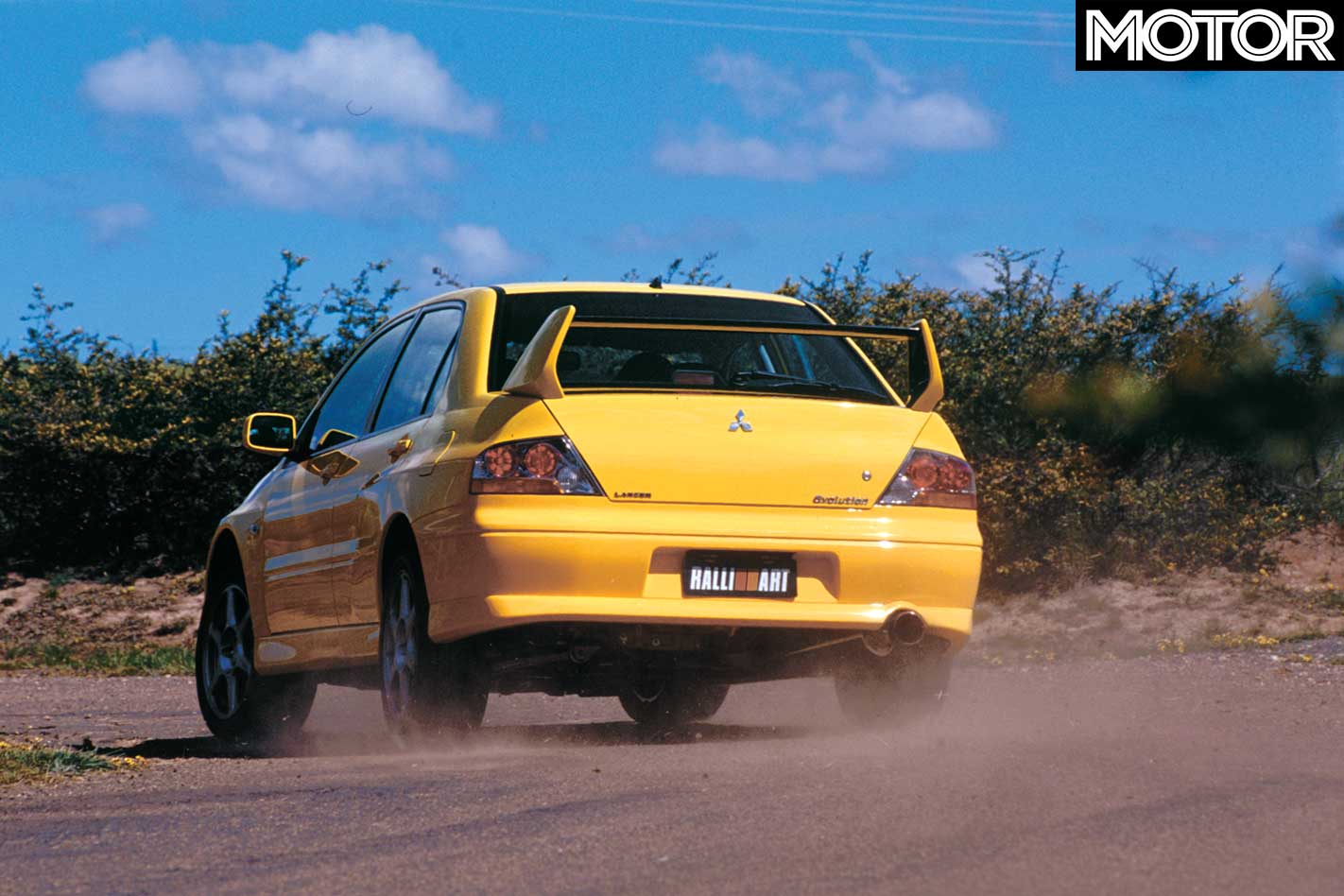
On its Yokohamas (our cars will have Pirellis, in deference to the link with the rally program), grip is superb and, apart from a slight blank patch just as the massive tread blocks turn-in, so is the feedback.
The steering gives more feel than the VI and is almost certainly more informative than the STi. It’s well weighted, too, and loses very little in the tight stuff to its predecessor. It helps that it’s got new cross-members, that the lower control arms locate in a completely different way, and that it’s got a lower front roll centre than the VI.
And it can still be steered on the pedals just as effectively as with the tiller. The brakes are strong and, even on road pads, can live with half a dozen track laps before they begin to fade. Even then, they fall off about 10 percent and stay there – unlike some local performance stuff we’ve driven.

The other big difference over the VI is that weight gain has made it an easier car to live with. While our drive was very limited in range, it rides demonstrably better than a VI.
Yep, a new era is just about here, and we can’t wait. Don’t say we didn’t warn you.
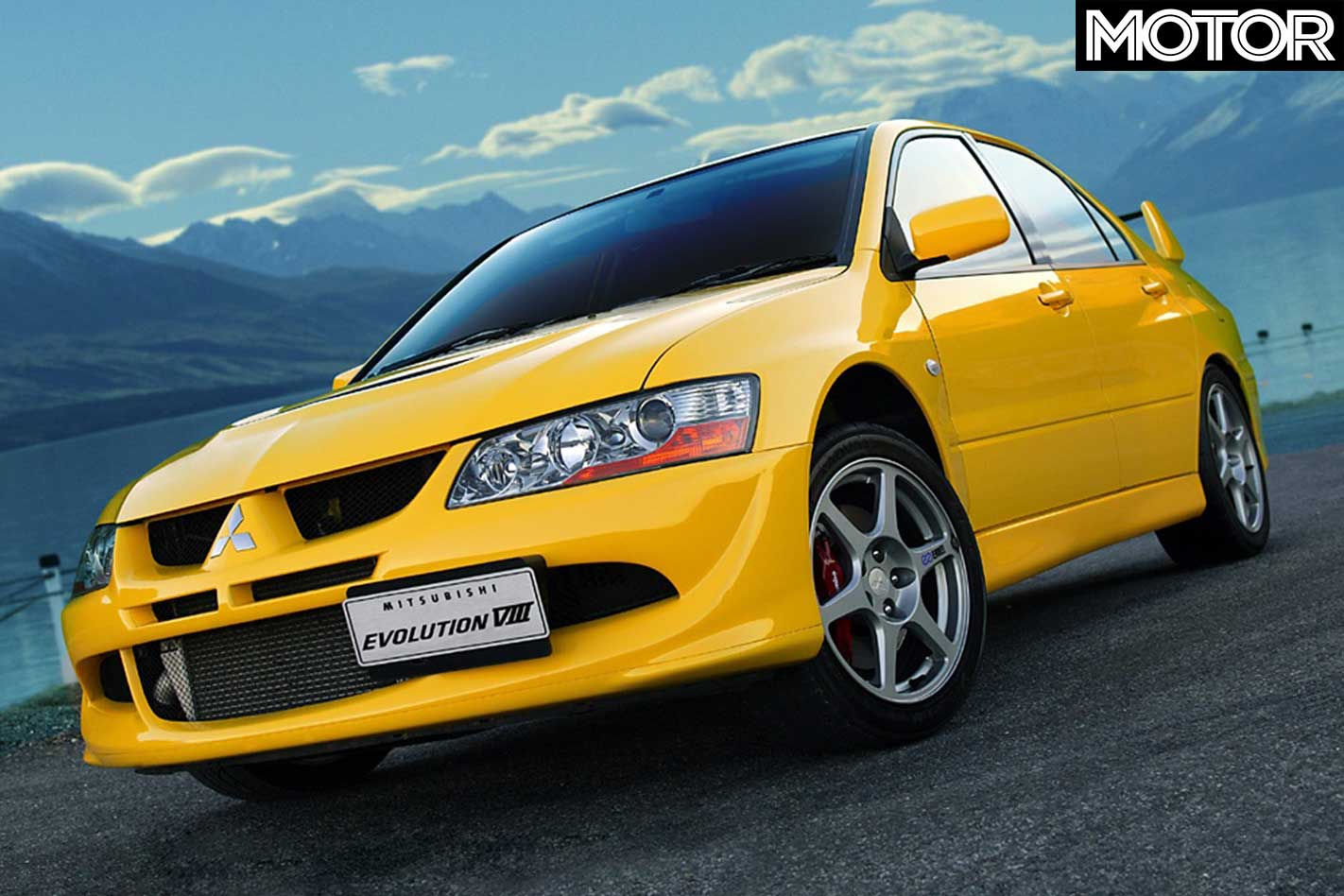
FAST FACTS 2004 Mitsubishi Lancer Evolution VIII
BODY: 4-door sedan DRIVE: all-wheel ENGINE: 2.0-litre turbo four, DOHC 16-valve POWER: 195kW @ 6500rpm TORQUE: 355Nm @ 3500rpm COMPRESSION: 8.8:1 BORE/STROKE: 85.0mm x 88.0mm WEIGHT: 1450kg POWER-TO-WEIGHT: 134kW/tonne TRANSMISSION: five-speed manual SUSPENSION: MacPherson struts, coil springs, anti-roll bar (f); multi-link, coil springs, anti-roll bar (r) L/W/h: 4470/1770/1450mm WHEELBASE: 2625mm TRACK: 1515mm (f); 1500mm (r) BRAKES: 376mm ventilated discs, four-piston calipers (f); 320mm ventilated discs, two-piston calipers (r), ABS WHEELS: 17 x 7.5-inch (f & r), alloy TYRES: 235/45 R17 (f & r) FUEL: 55 litres, PULP PRICE: “whatever the STi costs”
What’s the diff?
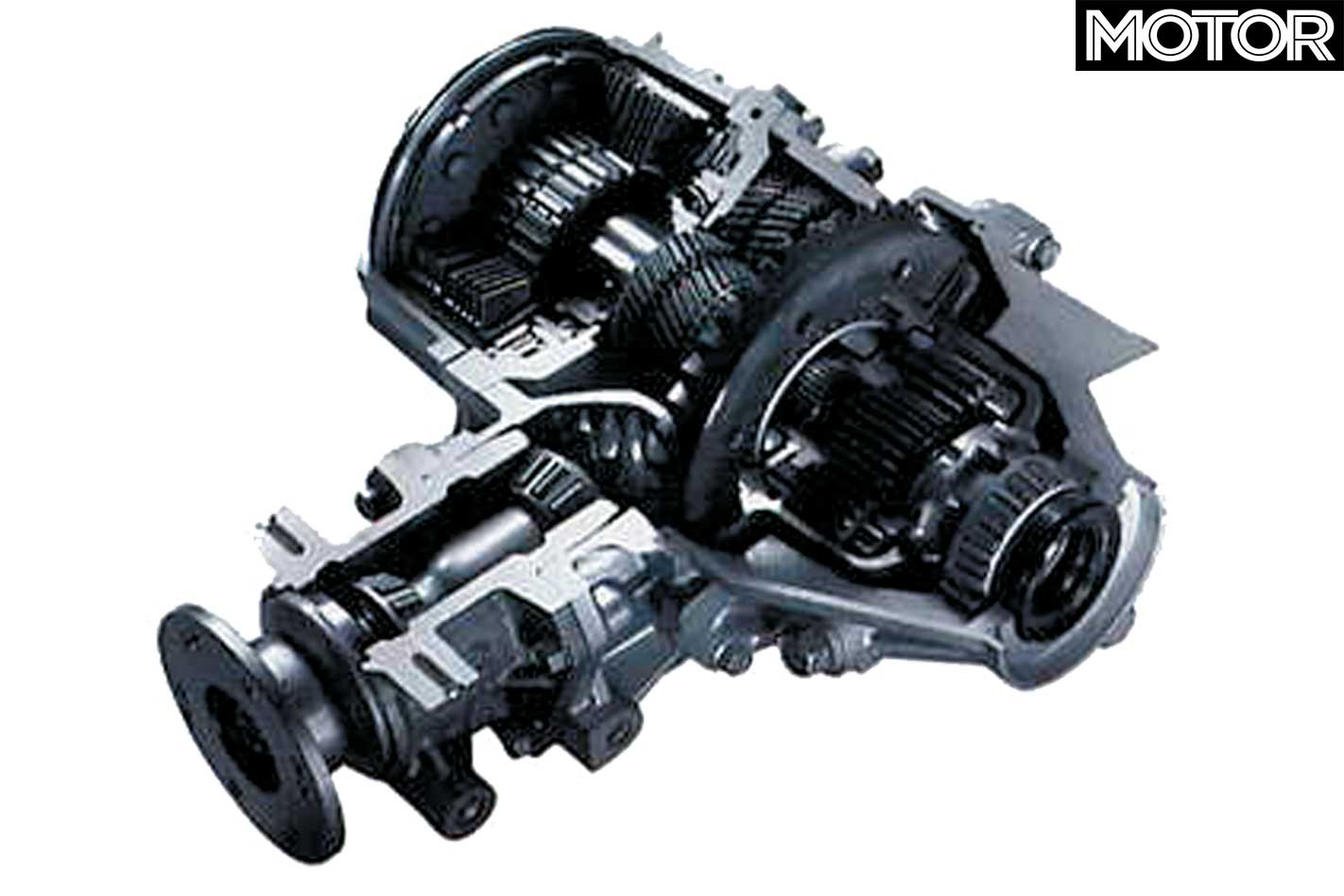
Officially, the rear diff on the EVO VIII isn’t an active diff. It’s called Active Yaw Control, but that’s just a piece of marketing crud so they don’t have to call it an active diff. Whoopee, you say, it was there from IV onwards. Yes, and no.
It’s been much improved since then and, from the VII, it’s even had a full software rewrite. The big difference between our last EVO and our next EVO is that the rear diff’s trickery is accompanied by an active centre diff – a huge step forward from the viscous model in the VI.
The ECU brain does the thinking and it works kinda like this: it takes inputs from wheel speed (all of ’em – think ABS sensors), steering input, throttle input, lateral and longitudinal sensors. Then it essentially draws itself a diagram of the corner, computing the radius the car is tracking and overlaying it on the radius it needs to travel, and then it works out what the diff needs to do to make it happen.
The centre diff is different. It uses all the same sensors and it’s on maximum lock under straight-line acceleration and under braking. It sets up for maximum slip on turn-in, then it works the in-betweens through the mid-corner to fire you out the other side.
The rally EVO-lution

Ask the rally fraternity (the people who’ve had the most exposure to the EVO phenomenon) and they’ve generally got a favourite. Most of them will pick the EVO III, while the VI has its share of fans. There have been unkind things said about the VII, particularly by factory pilot Ed Ordynski, whose view may have been clouded by a damaged wiring harness interfering with his active centre diff and spitting him off the road a couple of times. Yep, that’ll do it.
The main reason for the III and VI affection, according to RalliArt boss Bob Riley, is that they were the last of their line. Both the III and the VI were fully developed versions of their respective bodyshells, while their successors had to start from scratch.
“The IV over the III wasn’t a big jump. It’s probably the least loved EVO, but the engine was turned around and it had a new chassis.
“They all improved as they went on, but obviously the final development of each chassis was pretty fondly remembered.”
Galant VR4

Major Results: 1989-92 Swedish Rally (WRC) – 1st 1000 Lakes ’89 – 1st Indonesia Rally (APRC) – 1st Malaysia Rally (APRC) – 1st 1000 Lakes ’90 – 2nd
Lancer Evolution I

Major Results: 1993-94 Indonesia (APRC) – 2nd RAC (WRC) – 2nd Thailand (APRC) – 3rd Safari (WRC) – 2nd Acropolis (WRC) – 3rd
Lancer Evolution II
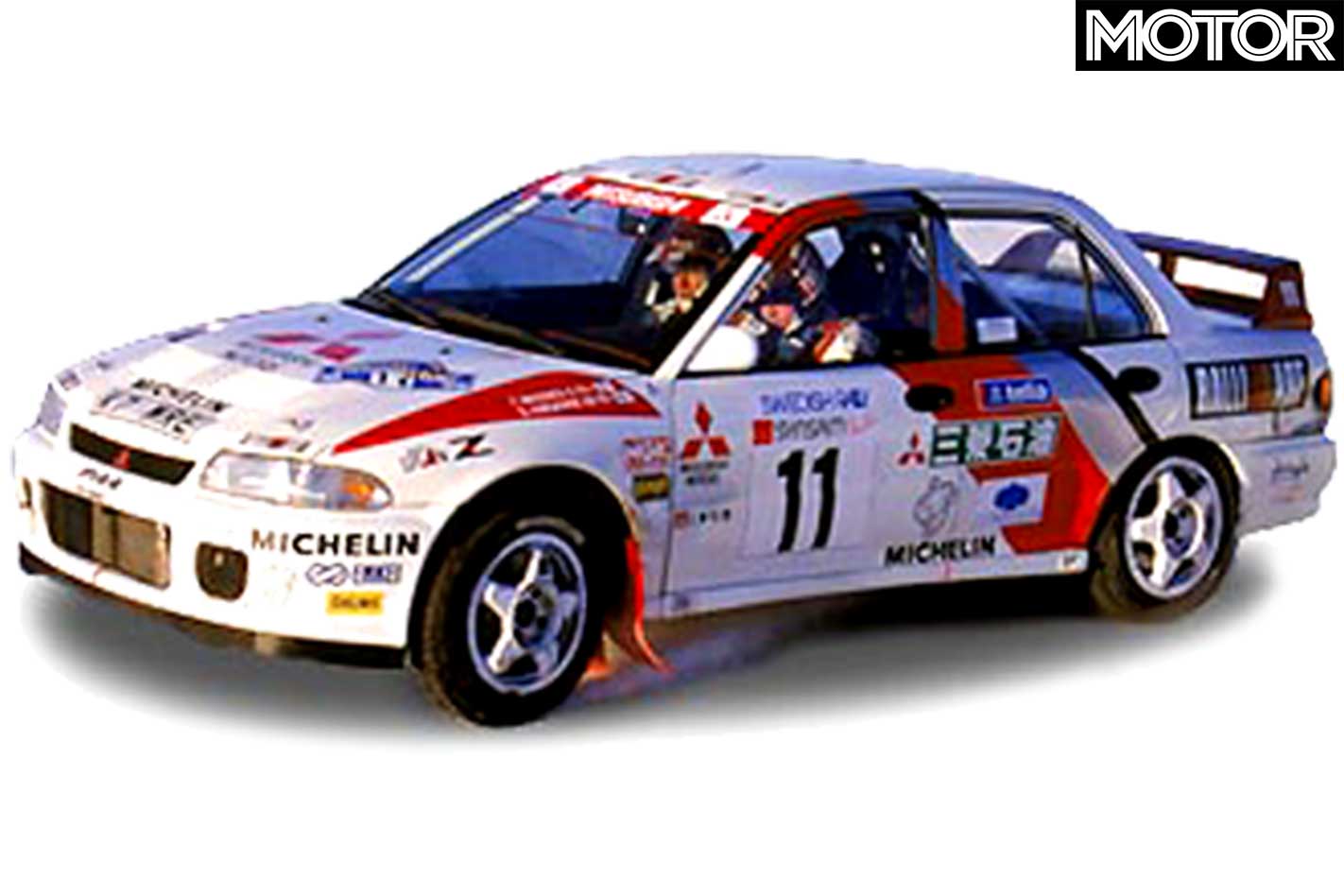
Major Results: 1994-95 Swedish Rally (WRC) – 1st Indonesia (APRC) – 1st Thailand (APRC) – 1st Acropolis (WRC) – 2nd Asia Pacific (APRC) – 2nd
Lancer Evolution III
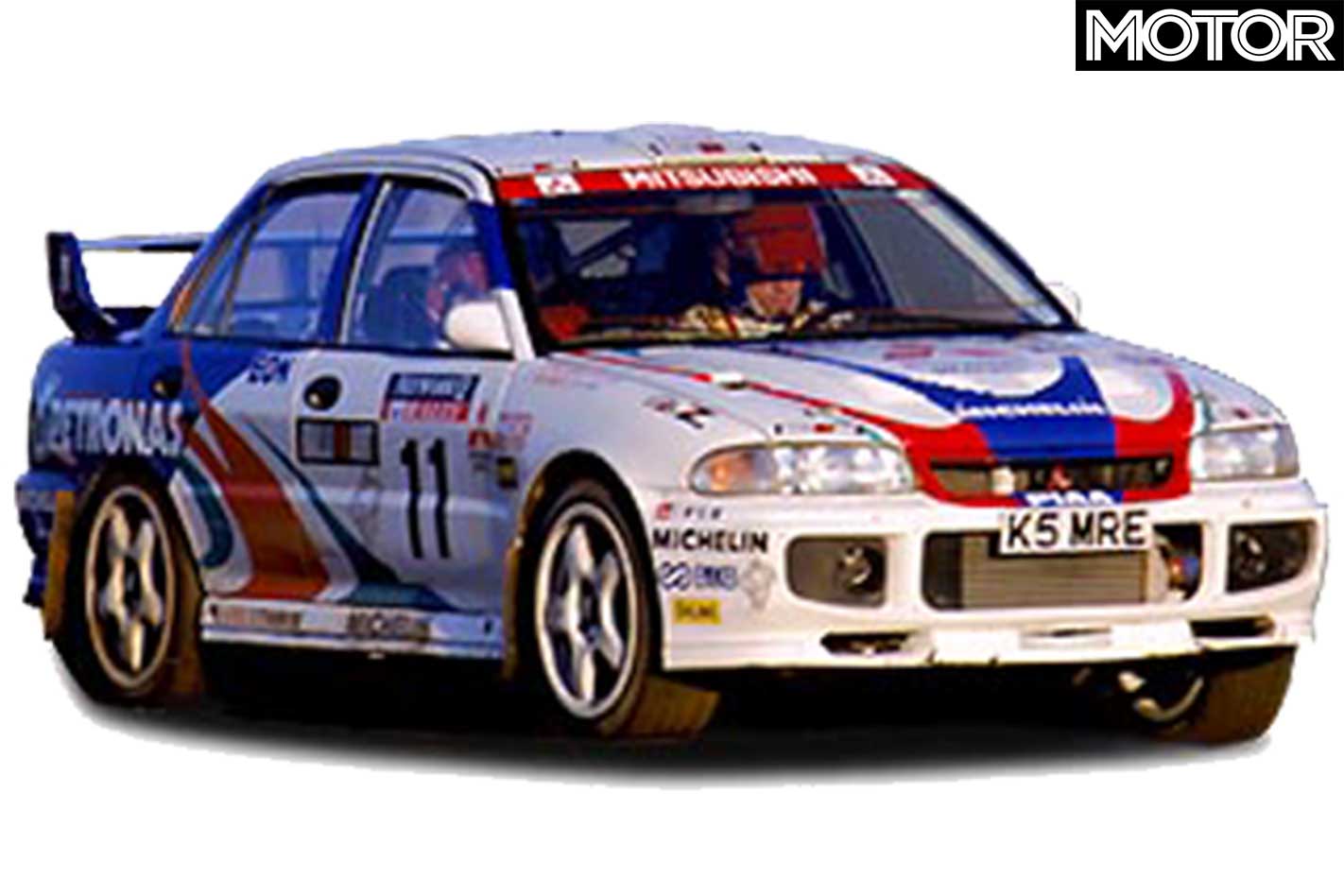
Major Results: 1995-96 Indonesia (APRC) – 1st Thailand (APRC) – 1st Swedish Rally (WRC) – 1st 1000 Lakes – 1st Australia (WRC) – 1st
Lancer Evolution IV
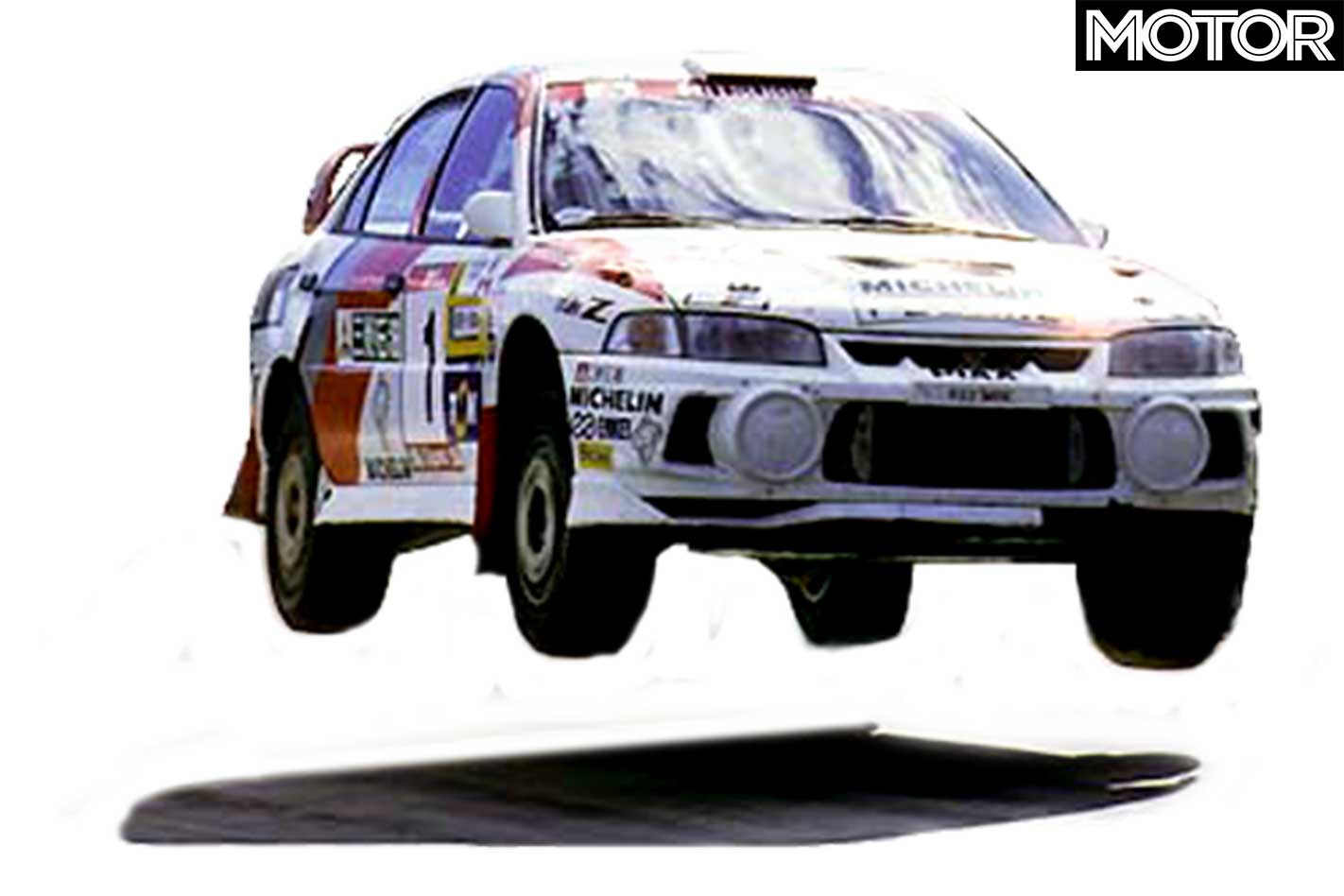
Major Results: 1997-98 Portugal (WRC) – 1st Catalunya (WRC) – 1st Argentina (WRC) – 1st Finland (WRC) – 1st Swedish (WRC) – 3rd
Lancer Evolution V
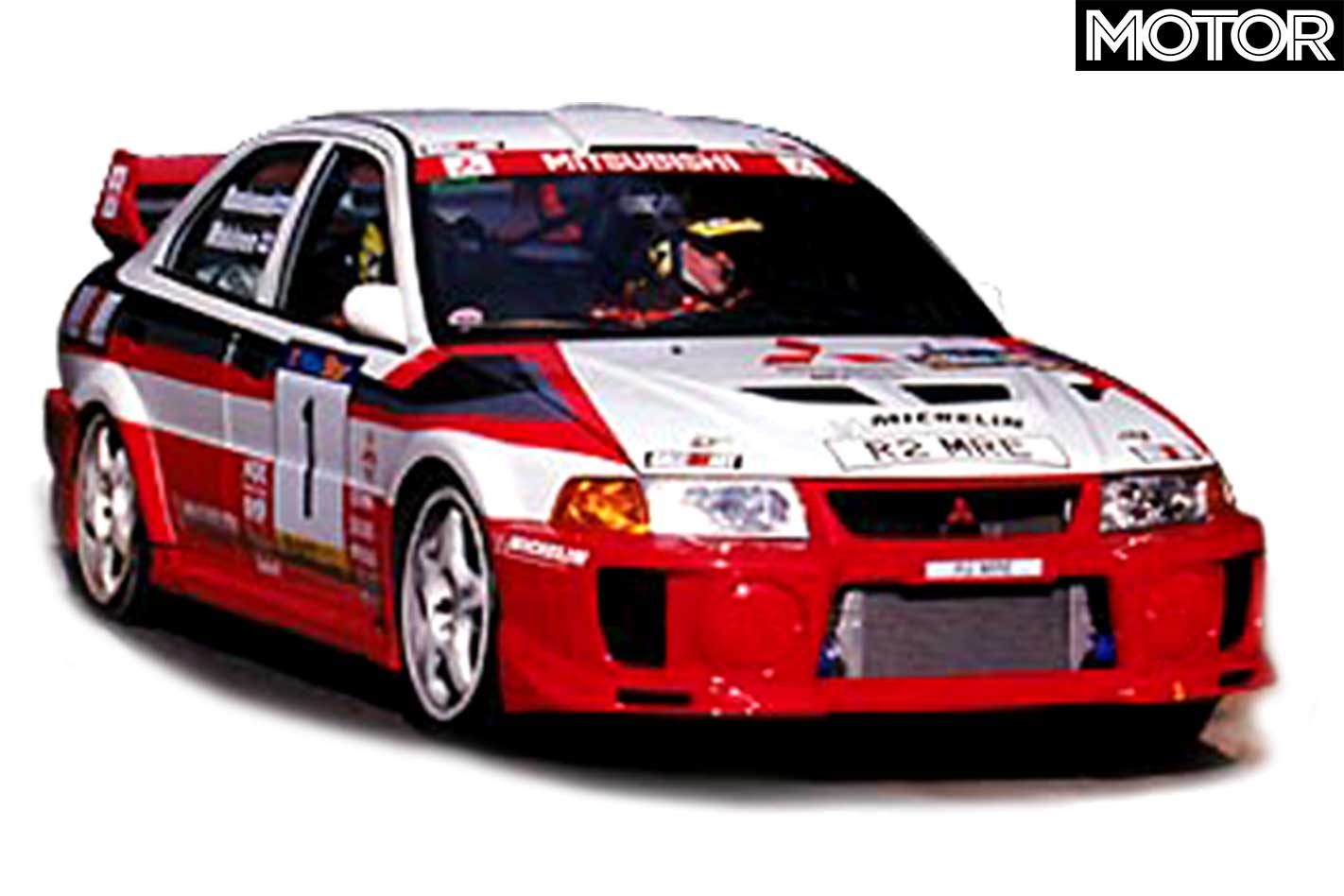
Major Results: 1998 Argentina (WRC) – 1st Finland (WRC) – 1st Sanremo (WRC) – 1st New Zealand (WRC) – 3rd Australia (WRC) – 1st
Lancer Evolution VI

Major Results: 1999-00 Monte Carlo ’99 (WRC) – 1st Swedish (WRC) – 1st New Zealand (WRC) – 1st Sanremo (WRC) – 1st Monte Carlo ’00 (WRC) – 1st
Lancer Evolution VII

Major Results: 2001 -03 Monte Carlo (WRC) – 1st Portugal (WRC) – 1st Safari Rally (WRC) – 1st Canberra (APRC GrN) – 1st Thailand (APRC GrN) – 1st
Five Official Heroes of the Evolution

– 1993 Monte Carlo: the rally debut (Eriksson and Schwarz) – Armin Schwarz: first podium (’93 Acropolis, EVO I) – Kenneth Eriksson: first win (’95 Swedish, EVO III) – Tommi Makinen: first world championship (’96, EVO III) – The Tommster: next three world championships (’97, ’98, ’99)
LEXUS has a bit of a conundrum right now. When it comes to attracting new buyers – younger buyers especially – there’s not a whole lot of choice within its showroom.
Sure, there’s the CT 200h, but that vehicle is hamstrung by its age and its hybrid-only powertrain. It’s also not the most sparkling offering in its segment, which is dominated at the moment by much fresher competition from its German rivals, BMW, Benz and Audi.
But while there’s no replacement in sight for the venerable CT, Lexus reckons it has a better solution in the form of its first-ever compact SUV – the UX. It’s coming to Australia towards the end of this year, but we went to Sweden to sample it at its global launch – and the first encounter was a promising one.
For Australia both a conventional 2.0-litre petrol and a 2.0-litre petrol-electric hybrid will be on offer, and we got plenty of wheel time in both. However, one thing that we weren’t expecting from the UX was just how engaging it feels from the driver’s seat. Can Lexus beat the Germans at their own game for a second time? Watch our first video review of the Lexus UX to learn more – or head here to read our in-depth Wheels review.
