
Nissan has just released the Juke Nismo RS in Australia, but before that there was something a little more… potent.
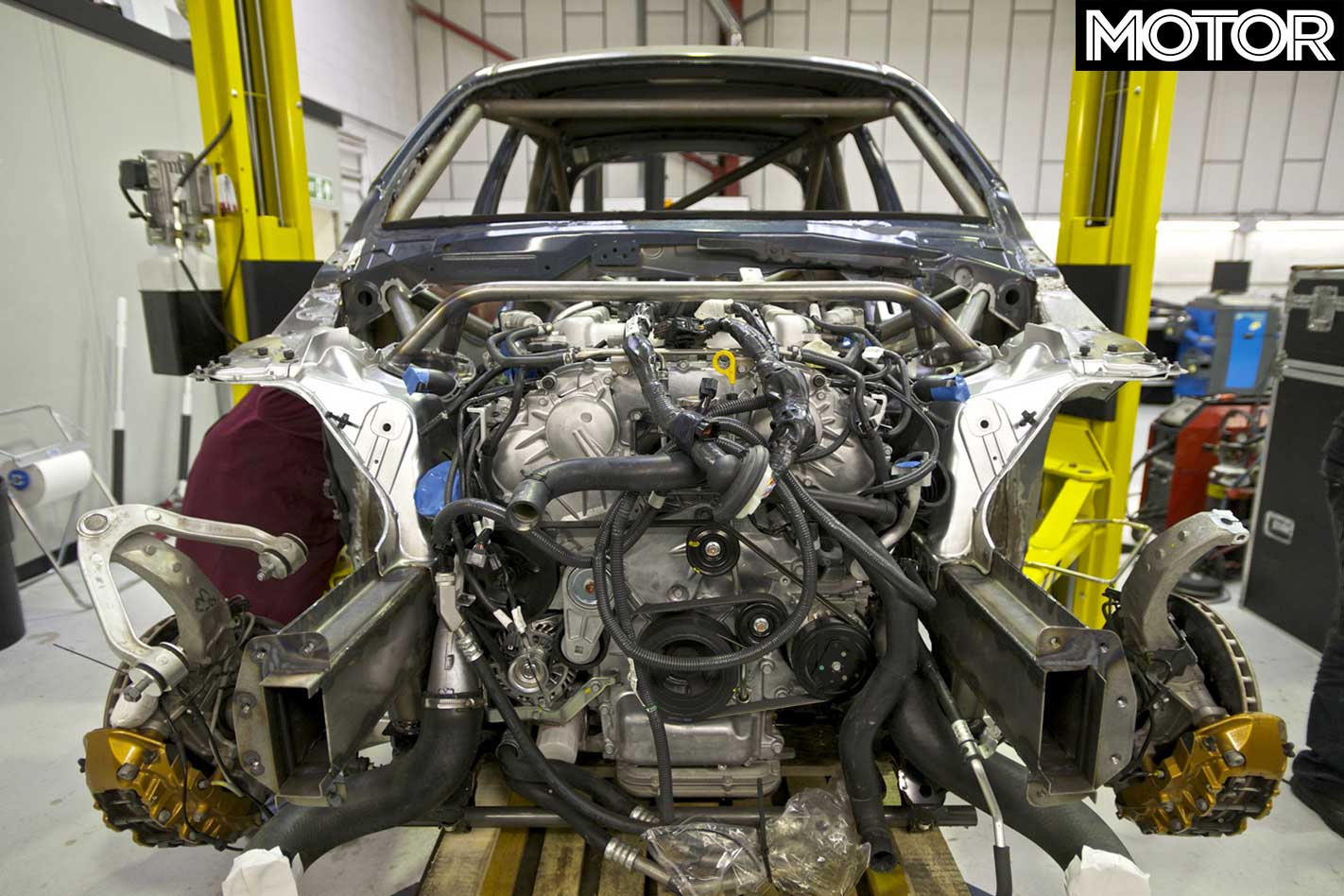
The 2011 Nissan Juke-R was originally just to be a concept as the compact SUV was granted the drivetrain from the mighty Nissan GT-R, creating what Nissan called the ‘world’s first crossover supercar’.
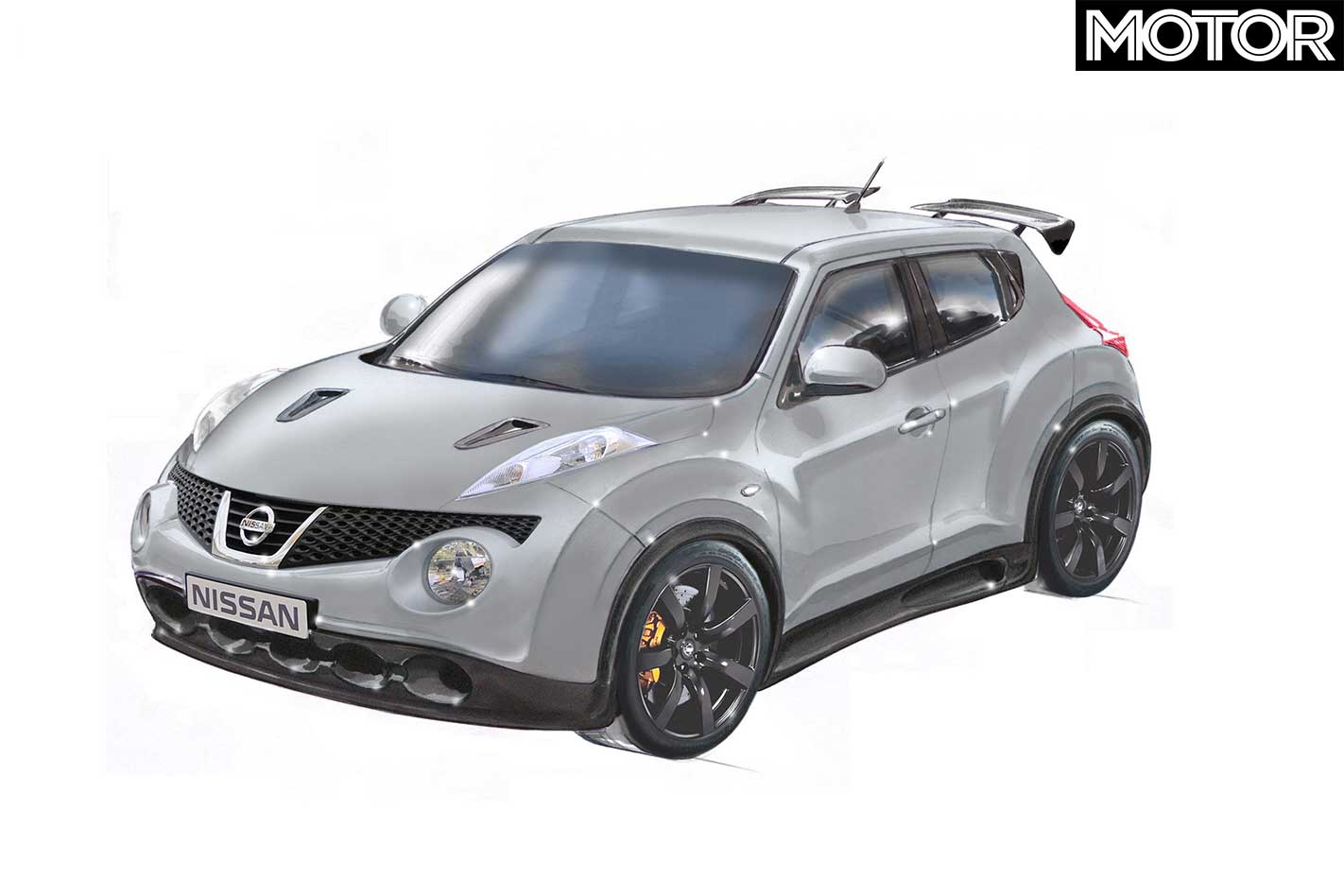
Only two were to exist, one in left-hand and one in right-hand drive, built by motorsport engineering company Ray Mallock Ltd (RML).
Of course, those with enough money and optimism to make offers to buy one of the concept cars did so, and the response was so strong that Nissan eventually caved.
For a somewhat hefty USD$665,000 (around AUD$940,750 today), the wealthy could pick up a 406kW twin-turbo V6-powered SUV with all-wheel drive traction and a 0-97km/h (0-60mph) sprint of just 3.0 seconds. It even had an FIA-spec roll cage.
While the original concept car was shown in white for its renderings, the production version were all matte black.
By early 2013, Juke-Rs were already being delivered to customers, only a little more than a year after its debut in Dubai. Where else could such a crazy and pricey car drum up so many offers?
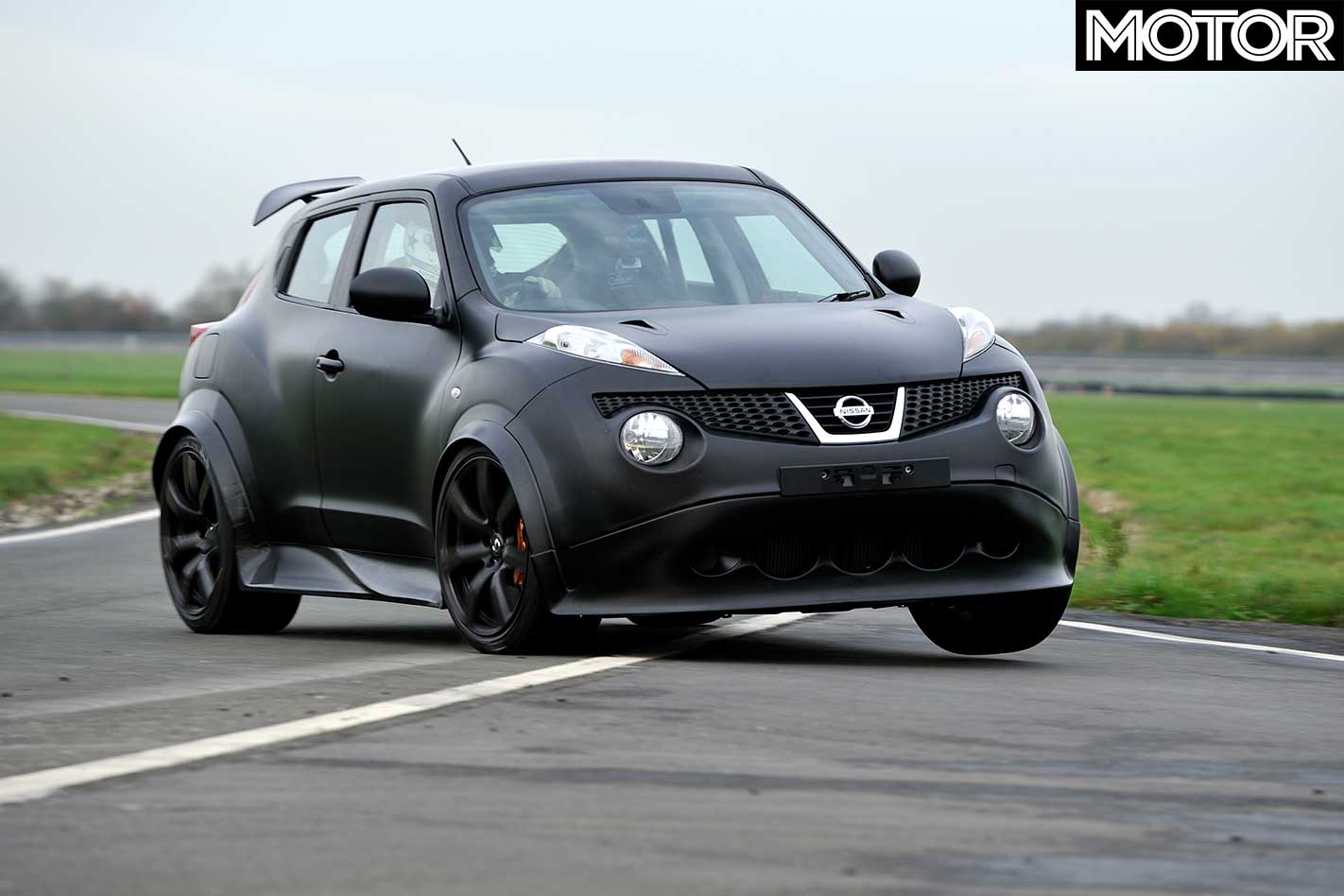
It’s rumoured that only 21 were ever built, but that’s not the end of the Juke-R story. In 2015, Nissan announced another generation of the super-crossover, with the Nissan GT-R Nismo drivetrain set to feature in the updated model.
The Nissan Juke-R 2.0 upped the game to 447kW, but retained much of the styling (small changes were made) and the matte black paint of its predecessor.
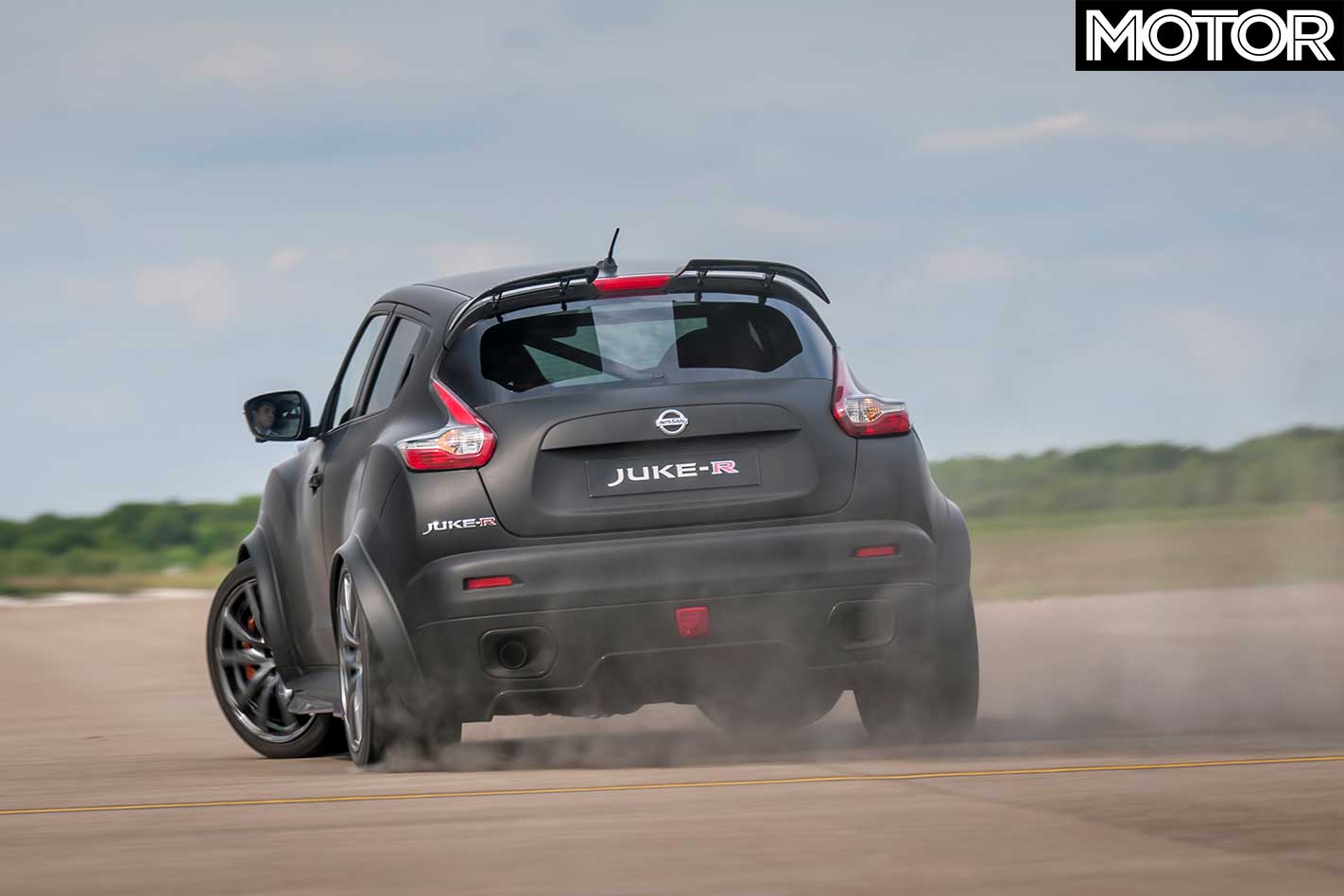
Nissan even took the Juke-R 2.0 to Goodwood in 2015, putting an impressive (but unofficial) 57.21 seconds with Super GT driver Jann Mardenborough at the wheel.
It’s said 17 of the 2.0 were built (we’ve actually asked Nissan to confirm) for those wealthy and connected enough to get their hands on one, though Nissan never announced a price for the second-gen Juke-R.
The Hyundai i30 ushered in a new era for the Korean brand, taking it from a cheap and cheerful alternative to the Japanese establishment to a serious rival. This was cemented with the current third-generation model that even dared to take on the hatchback-benchmark Volkswagen Golf in terms of styling, equipment and even hot-hatch performance.
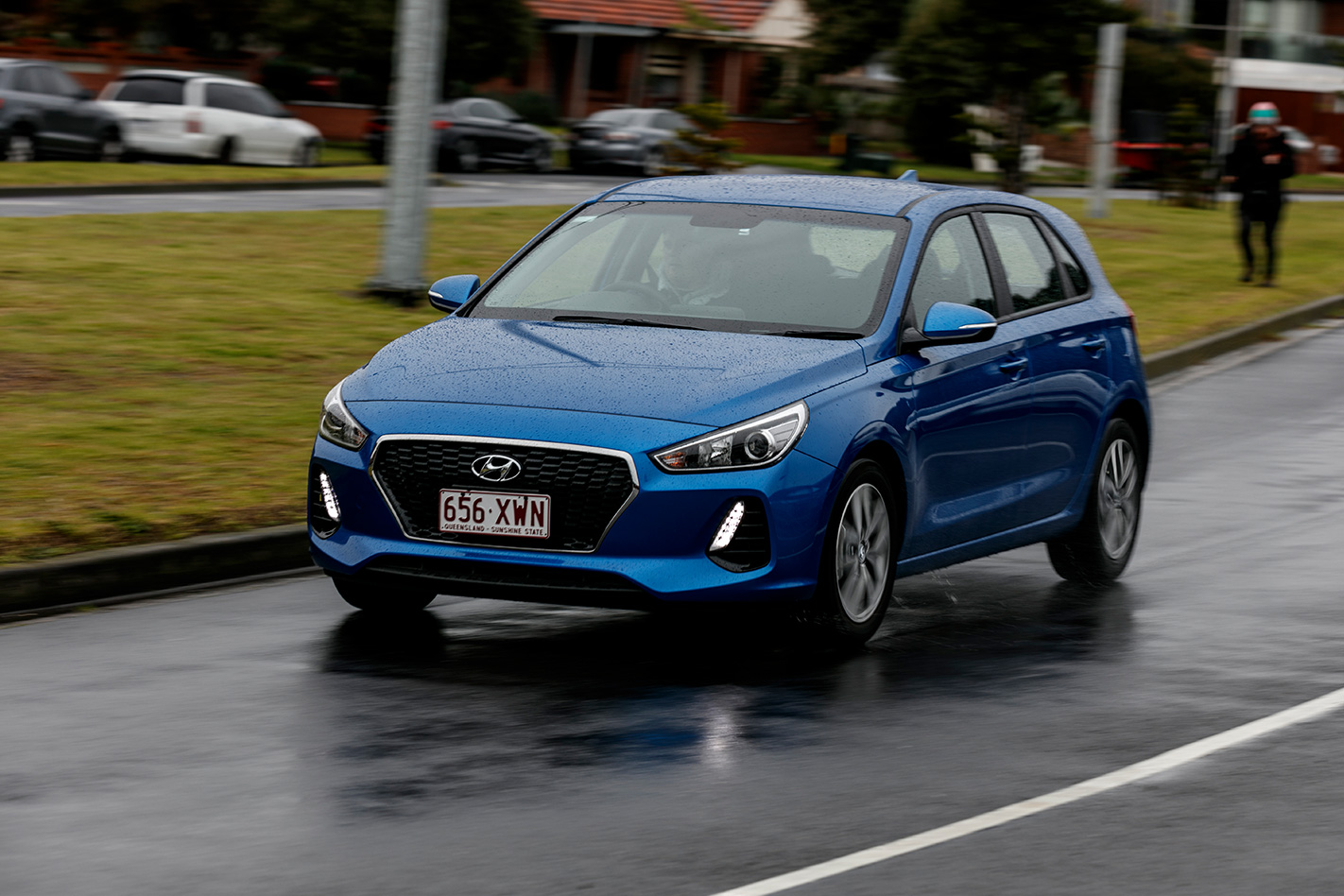
When it arrived in May 2017 it was one of the better equipped small hatches for the price, but 18 months is a long time in an age of ever-improving powertrains, active safety and infotainment, so we took to the road to see if it still measures up against all-new and updated rivals – not least the 2018 Toyota Corolla.
VALUE
Priced at $23,390, the i30 Active 2.0-litre petrol automatic we’re testing here costs $2300 more than the manual version. The same grade can also be had with a 1.6-litre turbo diesel version in manual or automatic form, for $23,590 and $26,090 respectively, if you’re looking for a more fuel-efficient option.
However, if you’re looking for the most affordable i30 outright, there’s another variant below the Active called the i30 Go that starts at $19,990 for the manual, or $22,290. If feature-count matters not, then the Go is the one for bargain-hunters.
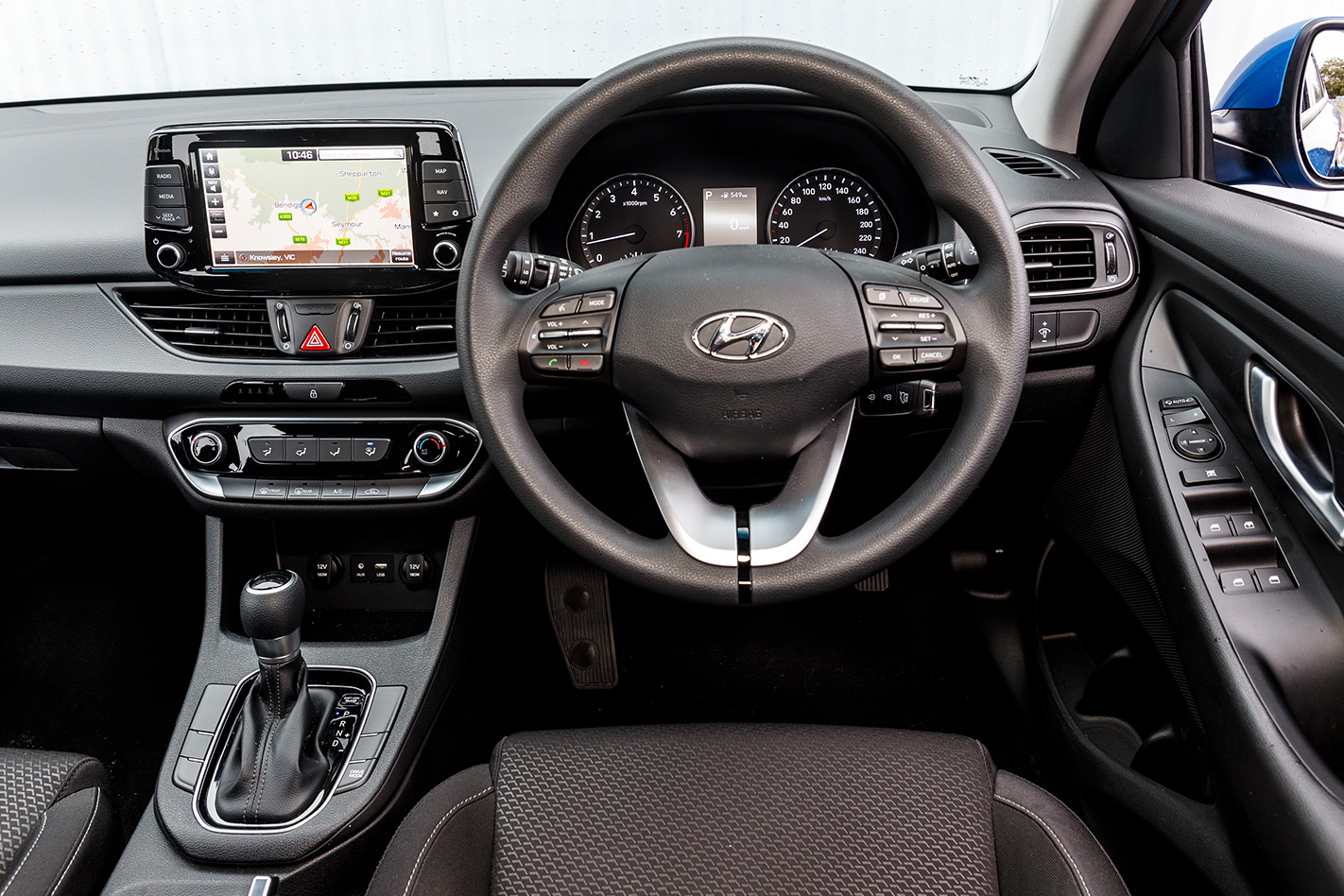
The vehicle we tested was standard, with the only extra on top of the six-speed automatic gearbox being the Marina Blue paintwork for an extra $495 that took the total retail price to $23,885.
The 2.0-litre engine’s claimed average fuel consumption is 7.4L/100km with the automatic, which is a little thirsty for a small hatch – the similarly powered Mazda 3, for example, sips unleaded at a rate of 5.8L/100km.
As for servicing, the i30 tested here has 12-month/15,000km service intervals. Scheduled services within the first five years are capped at $259 a visit, except for the 45,000km major service which will cost you $359. The i30 is covered by Hyundai’s five-year/unlimited kilometre warranty.
STANDARD FEATURES
You’ll find things in the i30 Active that are options in far more expensive cars, such Apple CarPlay and Android Auto smartphone pairing, satellite navigation and digital radio (DAB+), which are controlled via an 8.0-inch touchscreen.
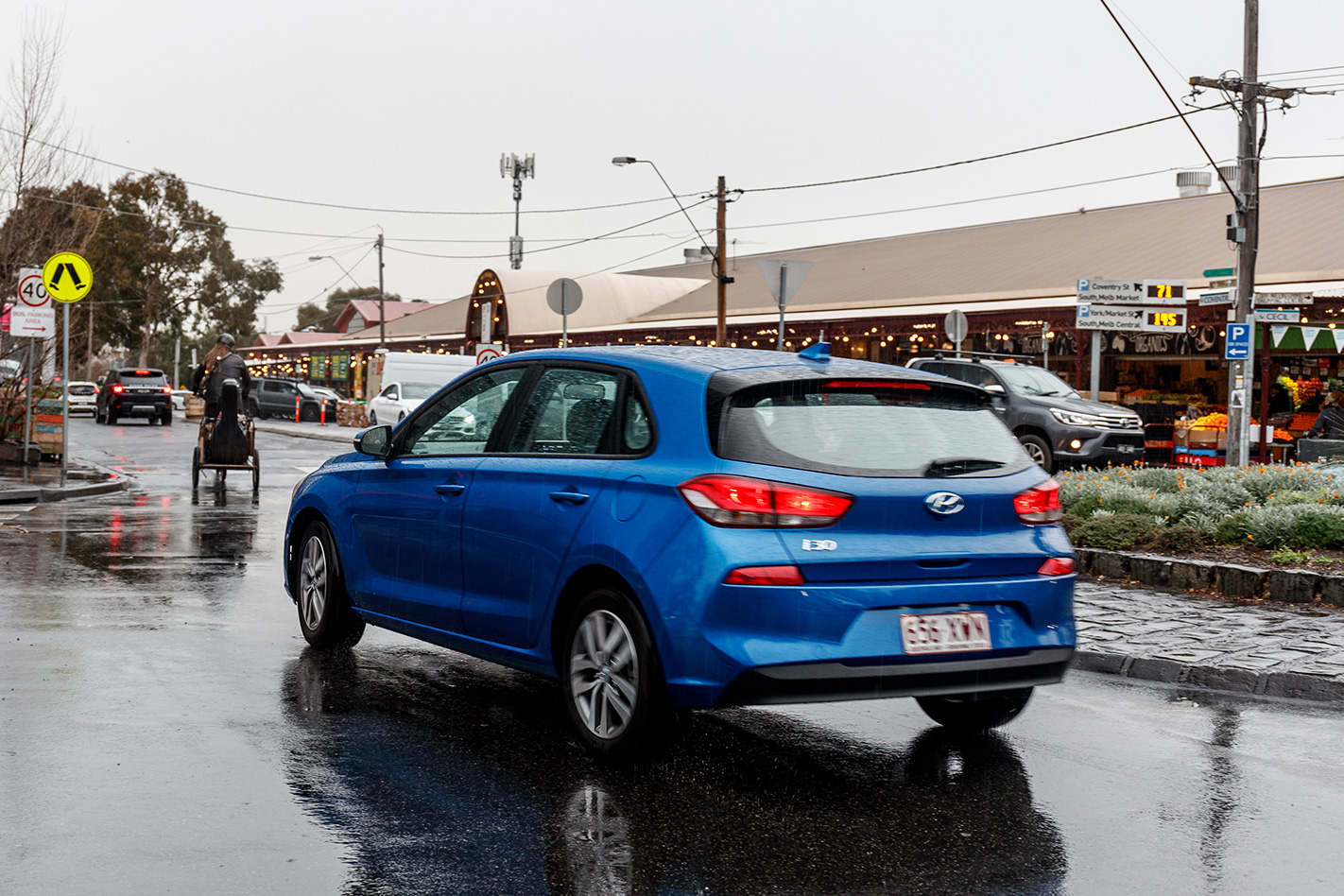
It also comes with LED daytime running lights, power-folding electric mirrors, cloth seats and cruise control. 16-inch alloy wheels are standard, and you get a full-sized spare alloy wheel as well – something that’s often a cost option in this segment, or replaced by a space-saver.
SIZE
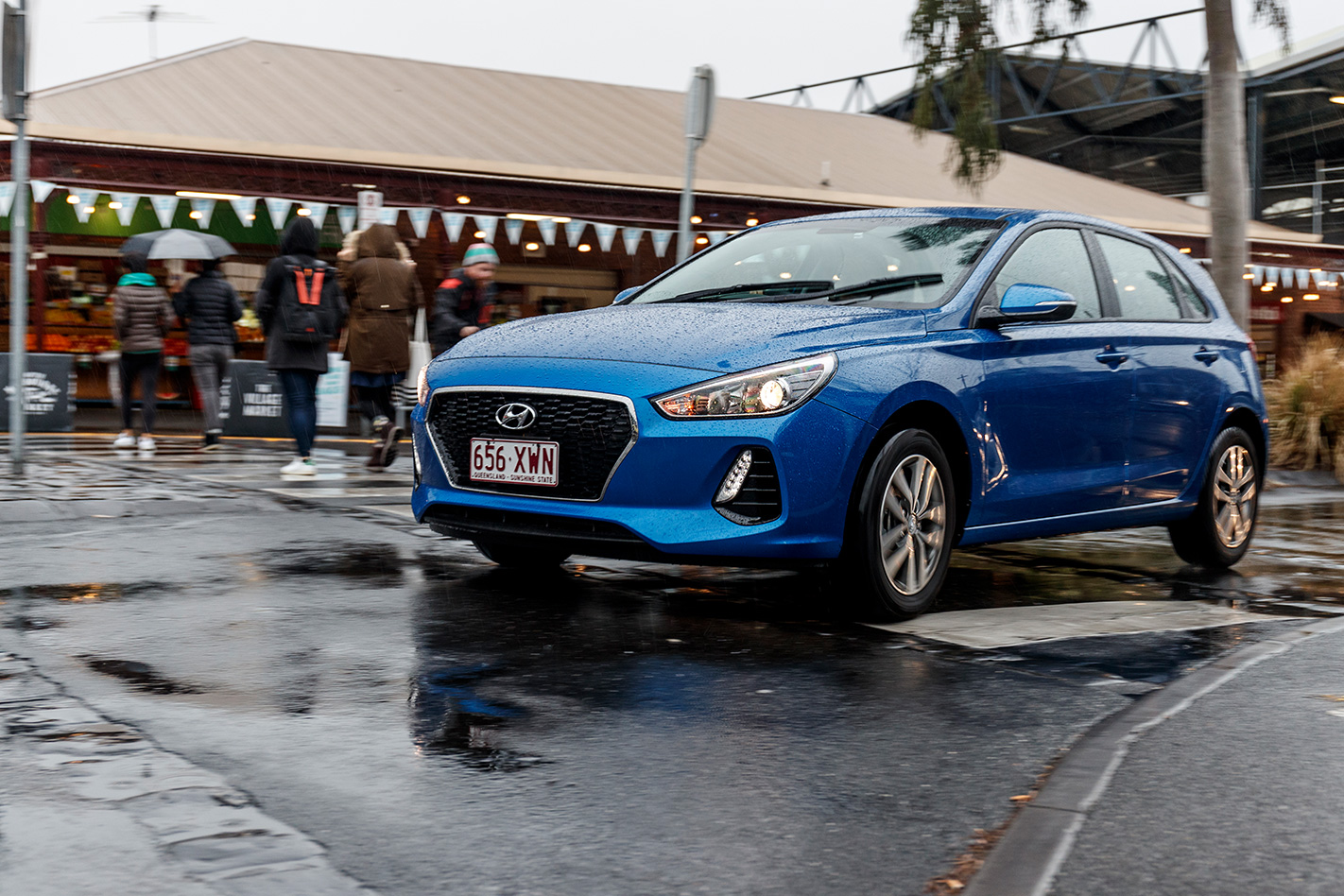
The Hyundai i30 Active is a five-door hatchback that seats up to five people.
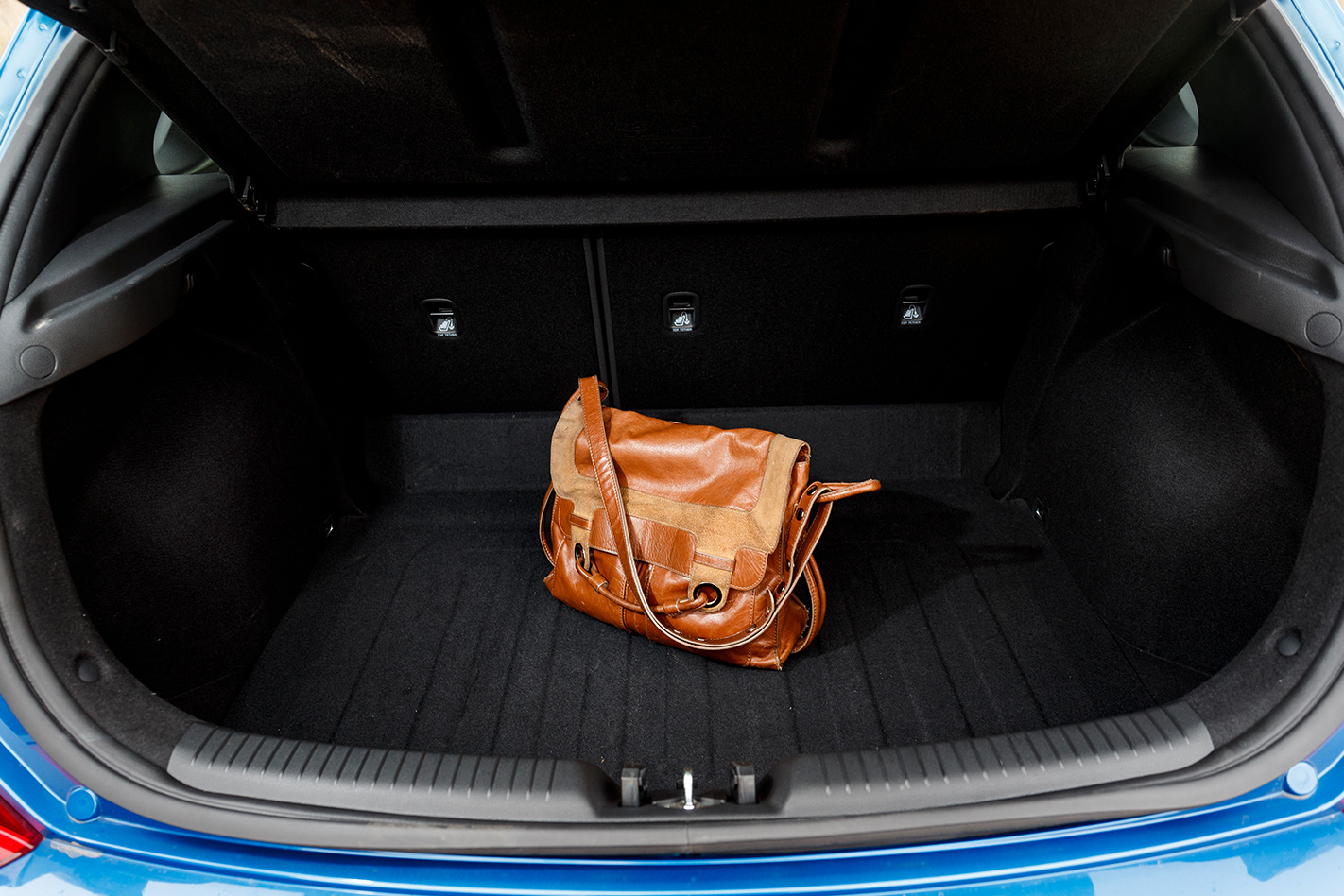
It measures just 4.34m length with a 2650 wheelbase that accommodates a spacious interior and practical 395-litre boot space that expands to 1301 litres with the rear 60:40-split seatbacks folded down.
SAFETY
The Hyundai i30 was awarded a five-star ANCAP rating in April 2017. It’s a safe car in terms of crash protection, with seven airbags including a driver’s knee bag and full-length curtain airbags to protect your head.
Other safety features include a reversing camera, rear parking sensors, auto-on headlights, LED daytime running lights, seatbelt reminders on front and rear seats, and electronic stability control that all cars are required to have.
Active safety features including autonomous emergency braking aren’t included on the standard spec sheet, however it available as part of Hyundai’s SmartSense package that for around $1700 adds active cruise control, auto-braking, lane keeping assist, driver attention alert, blind-spot detection, and rear-cross traffic alert.
COMFORT
The i30 Active’s cloth seats are comfortable and there’s good leg and headroom throughout, though the rear seat is a little too narrow to comfortably seat three adults – though that’s common for this segment.
The smaller 16-inch wheels provide it with a better ride than the up-spec models that roll on 17s and 18s, and the locally-tuned suspension has a composed ride over bumps.
The conservative cabin design is a little bland and hard plastics abound, but the dashboard looks neat and uncluttered and the controls, particularly the switches on the steering wheel, are intuitively laid out.
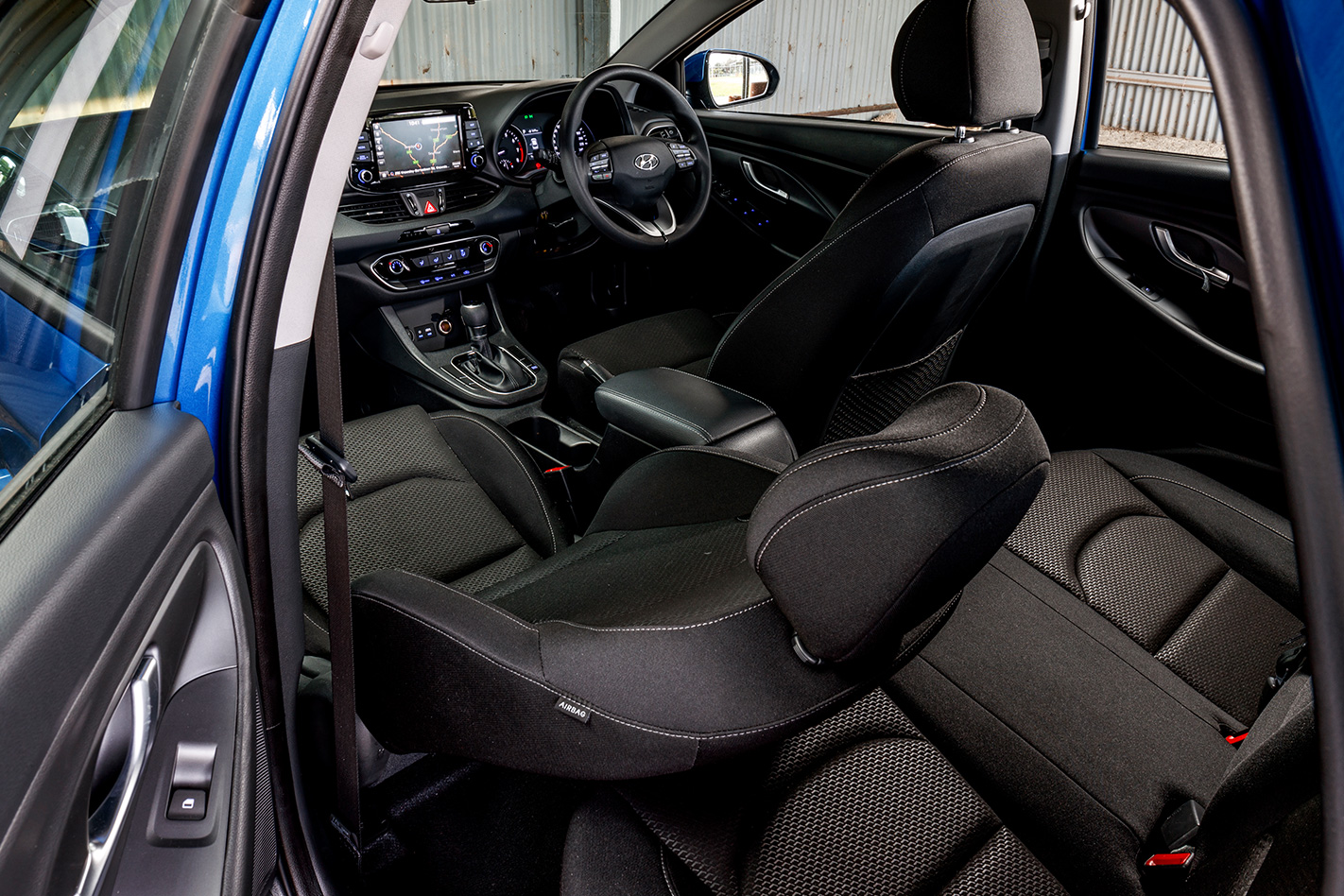
The 8.0-inch touchscreen, which is a staple across the Hyundai and Kia range, looks good, works well and the infotainment system is very easy to navigate.
Rear-seat passengers miss out on their own air vents or USB/12v charging sockets, but if their phones go flat they can enjoy the view with good side and forward vision through the i30’s generous glasshouse.
ON THE ROAD
While it’s not intended to be as spirited or dynamic as the sportier i30 SR at the upper end of the range, the Active certainly feels nimble enough around town. Hyundai has honed its chassis and suspension for Aussie roads resulting in a great ride and body control on a broad range of road surfaces, which makes it feel like a bigger, more mature car.
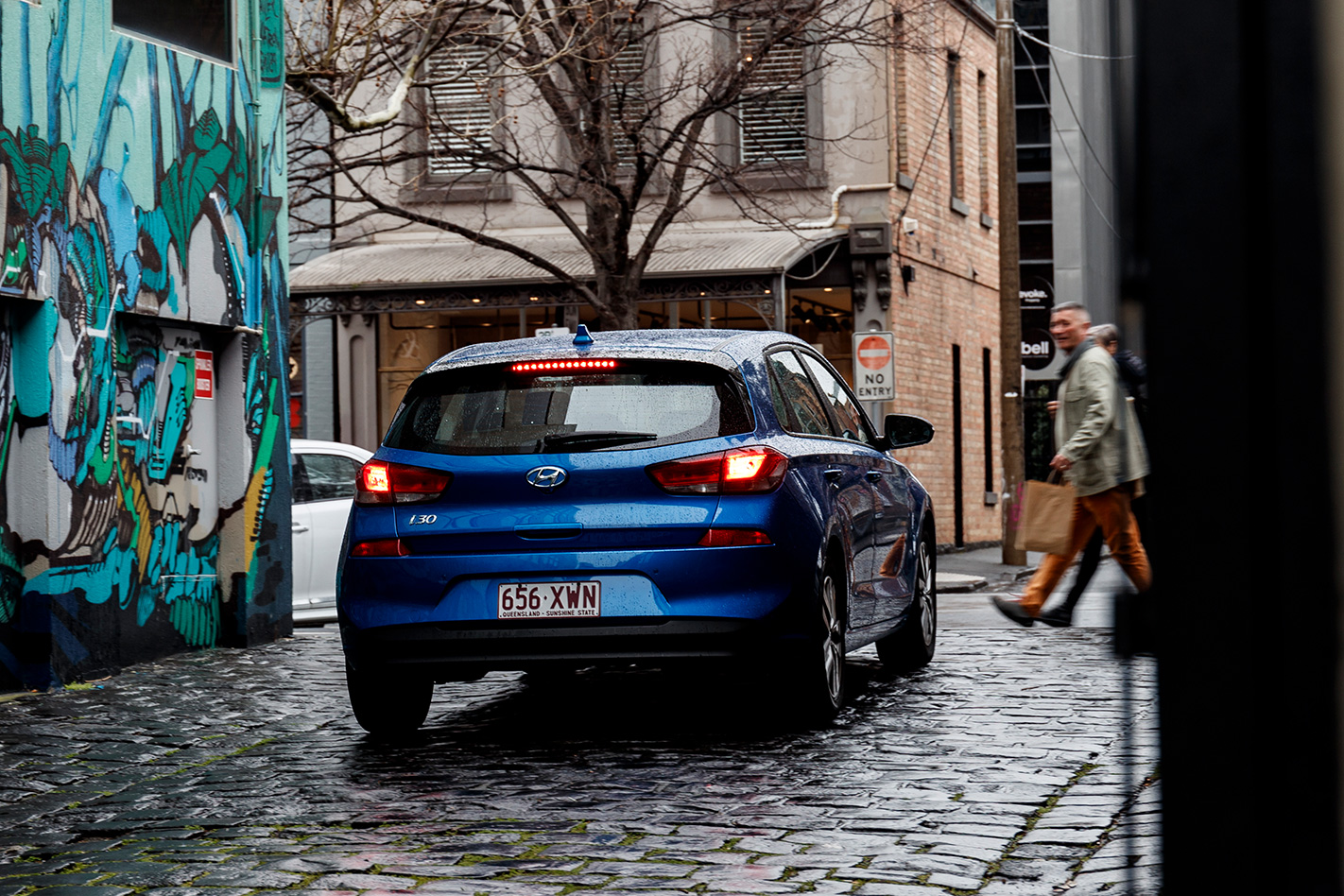
Meanwhile, the 120kW/203Nm 2.0-litre petrol engine responds quickly to throttle inputs and the six-speed torque converter automatic gearbox shuffles smoothly between steps. It may be a comparatively thirsty engine, but it also produces more power than many others at its price point. For those that don’t like to dawdle, that’s worth noting.
VERDICT
The Hyundai i30 Active may not push boundaries in any way, but it does everything you’d expect an affordable hatch to do while also standing up well against its rivals.
A strong list of standard features, particularly its smartphone-friendly infotainment system, make it good value, but the lack of standard-fitment of active safety gear like autonomous emergency braking lets it down at time when more of its rivals are including it as part of their entry-level price. Opting for the SmartSense active safety package would add much in the way of peace of mind.
MORE: Hyundai i30 Range Review MORE: Hyundai i30 Specs, Range & Price
If a faster Nissan Juke strikes you as the answer to a question no one asked, it turns out you’re mistaken.
Nissan Australia says there is pent-up demand for a powered-up version of its quirky crossover and has secured 240 units of the Juke Nismo RS as it nears the end of its production life.
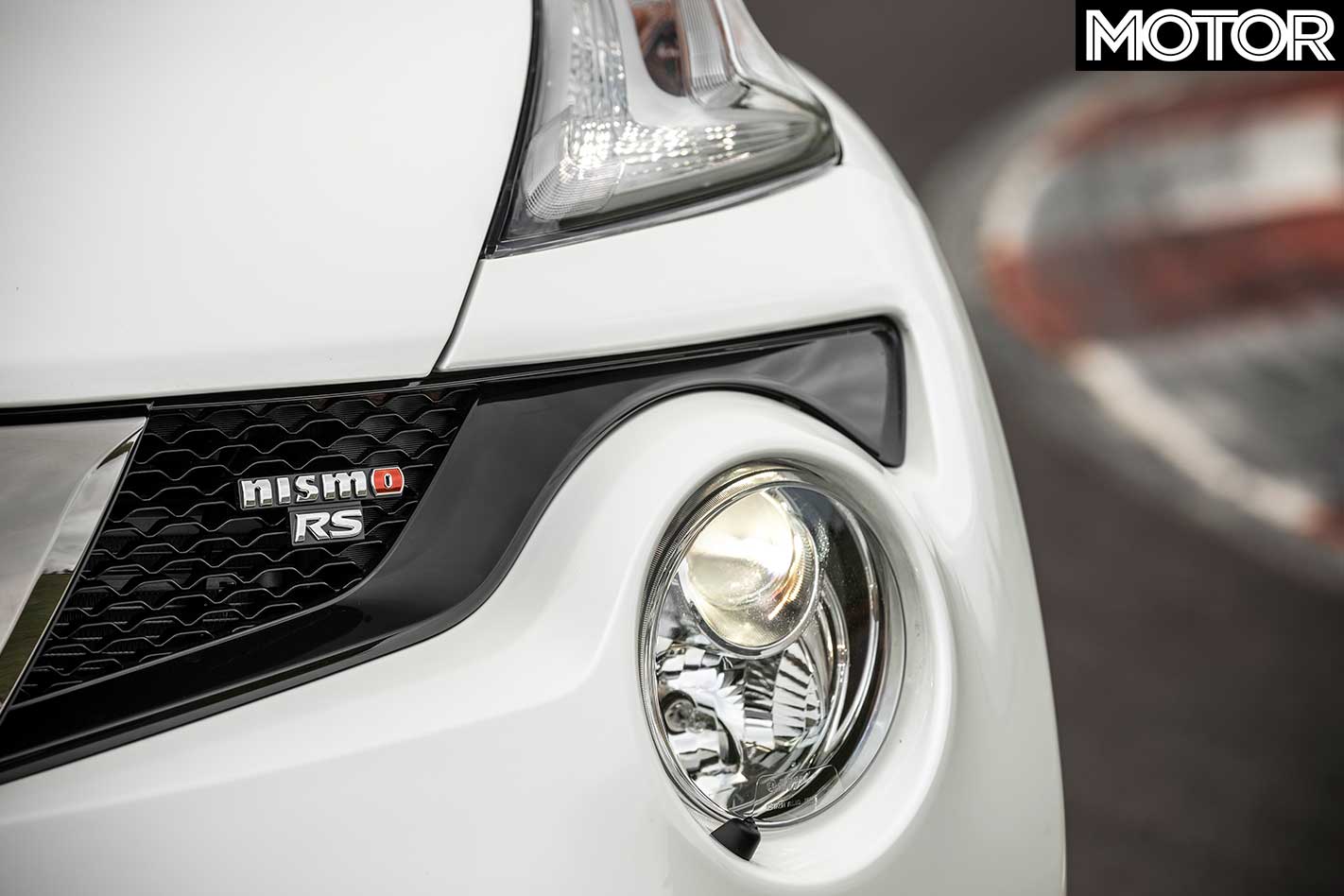
It’s part of an updated Juke range and offers a more attainable entry point into the Nismo range, joining its 370Z and GT-R bigger brothers in the performance section of Nissan’s showrooms.
Two variants are available, an all-wheel drive CVT which Nissan expects to account for 70 per cent of sales and the front-drive six-speed manual we’re driving here. At $37,790, the manual costs an extra $7650 over the Ti-S on which it’s based, while the CVT adds $3700.
Visually, you’ll pick a Nismo by its bodykit, red mirrors, body-coloured wheel arches and 18-inch 10-spoke alloys, while inside there is Alcantara galore, carbon-look centre console, red stitching and a pair of ace sports seats. Sadly, there’s also acres of hard, scratchy plastic and a roof lining that feels like it’s been made out of old parcel shelves.
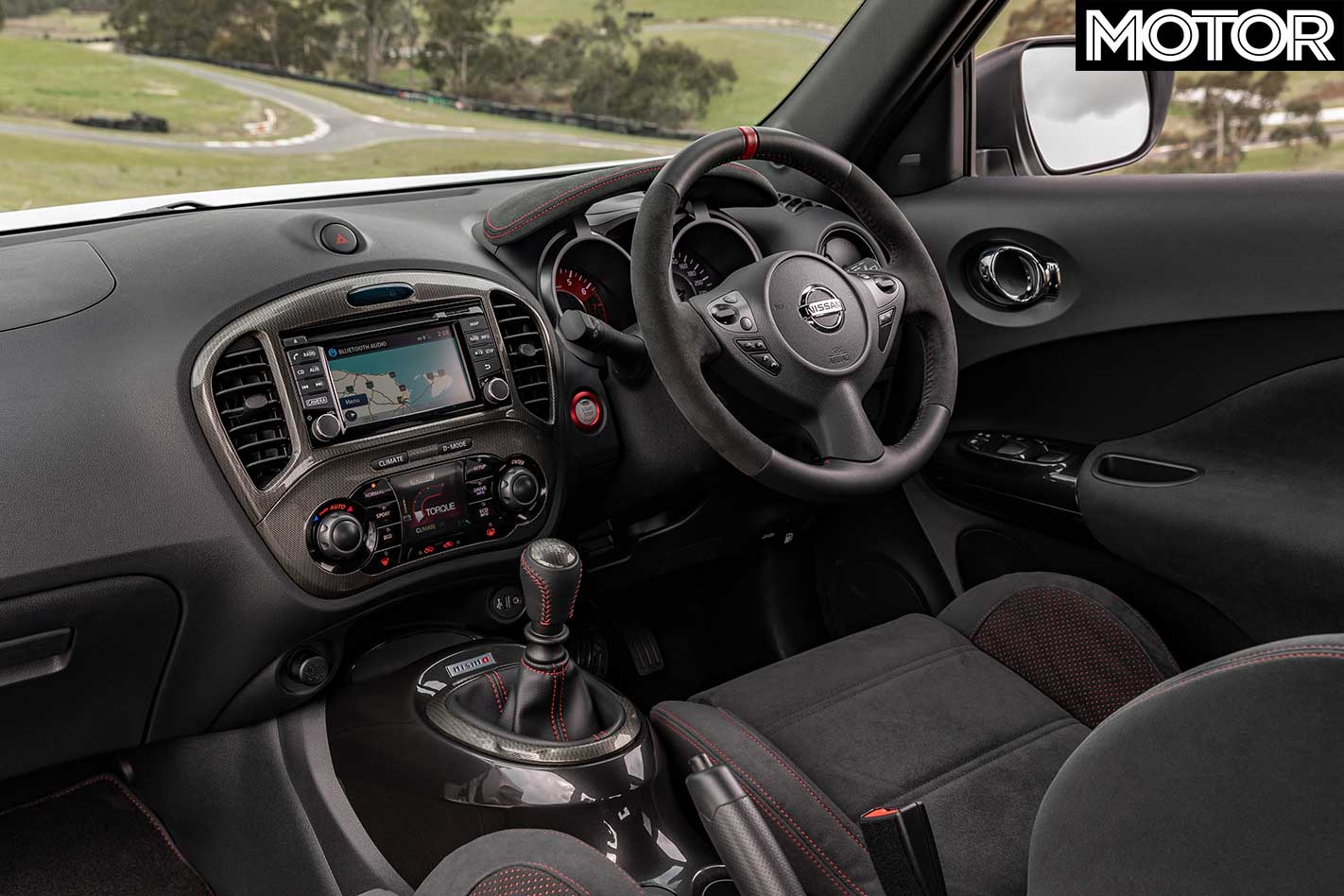
Overseas, all this addenda is available as a Juke Nismo R, but as part of Nissan Australia’s commitment to only offering Nismo models with tangible performance upgrades, it’s importing only the hotter RS.
A new exhaust and remapped ECU liberates extra power from the 1.6-litre turbo four, 157kW/250Nm in the case of the CVT and a full-fat 160kW/280Nm for the manual, which also benefits from a stronger clutch, limited-slip front diff and shorter final drive.
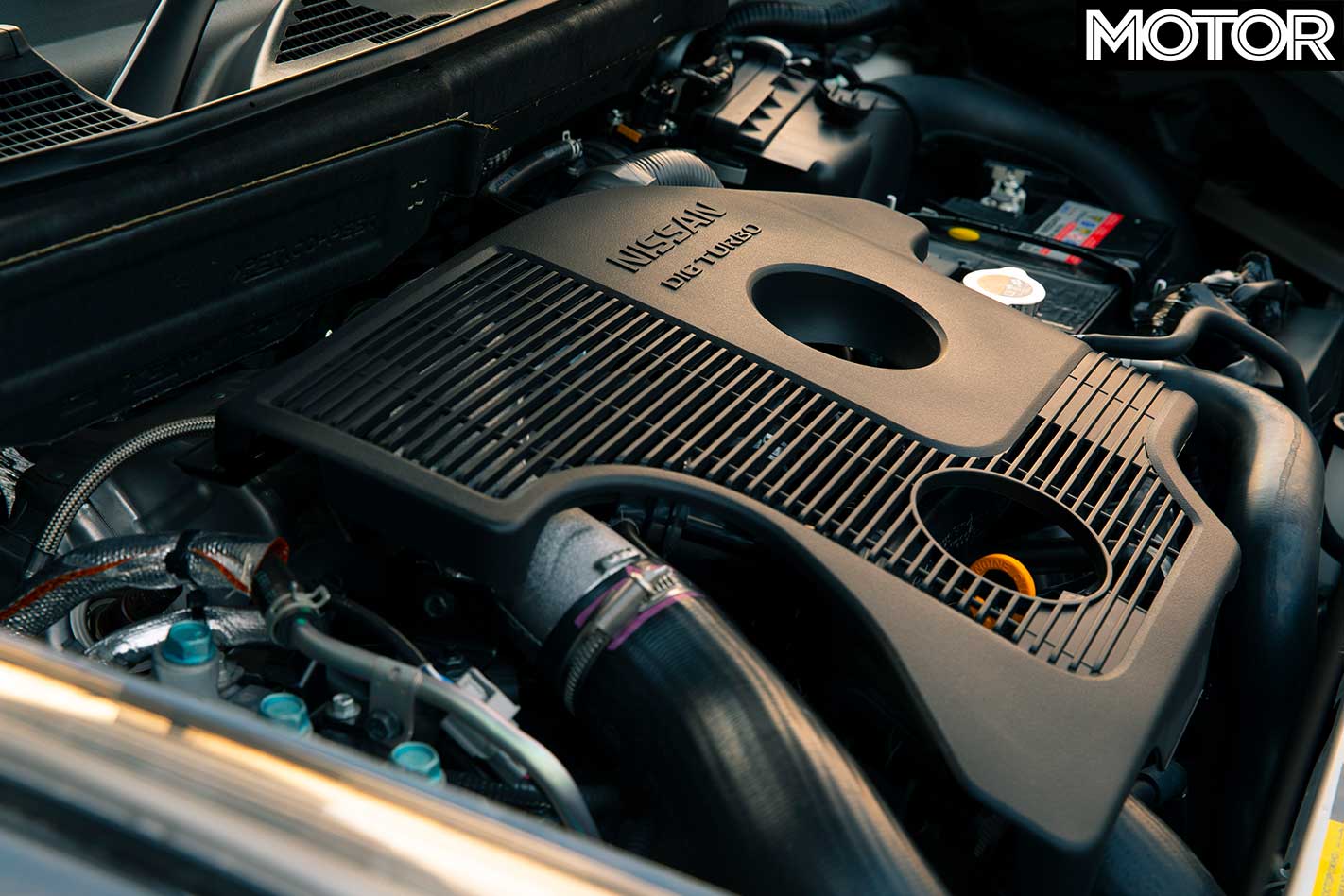
Performance is impressively punchy, with plenty of turbocharged torque to shove the Juke’s impressively svelte 1281kg along. No claim is made, but bet on 0-100km/h in around seven seconds.
Unfortunately, the engine sounds truly awful, emitting a baleful, buzzy whine under load like it’s in pain and the revs hang so long on the over-run it’s like the flywheel is made of lead.
Throttle response is good, but all the power feels to arrive in the first 50 per cent of pedal travel, which can make smooth application tricky.
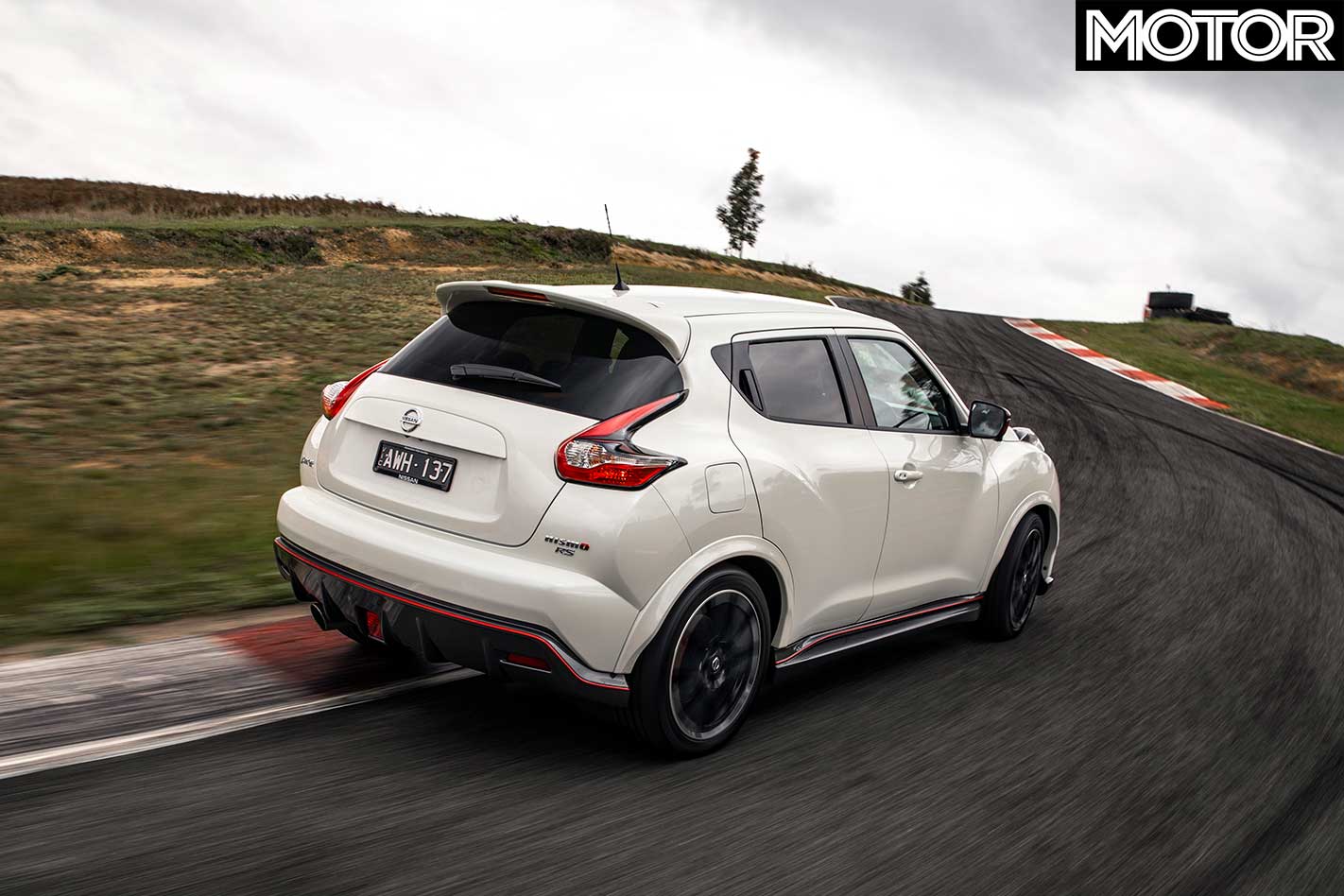
The limited-slip diff ensures most of the power makes it to the ground, even in tight corners, but there is fairly severe torque steer under hard acceleration and the front wheels can scrabble on uneven surfaces, awaking the conservative traction control.
Outright grip is quite strong, particularly in longer sweeping corners where the Juke Nismo feels most at home, and the steering is a highlight, well-weighted and accurate with only a slight dead zone around the straight-ahead blotting its copybook.
Drive within its limits and the Juke flows well, but any attempt to bully it further results in scrubby understeer. The ride is decent, if a little fidgety on rough surfaces, but hit a mid-corner bump and the dampers quickly run out of travel.
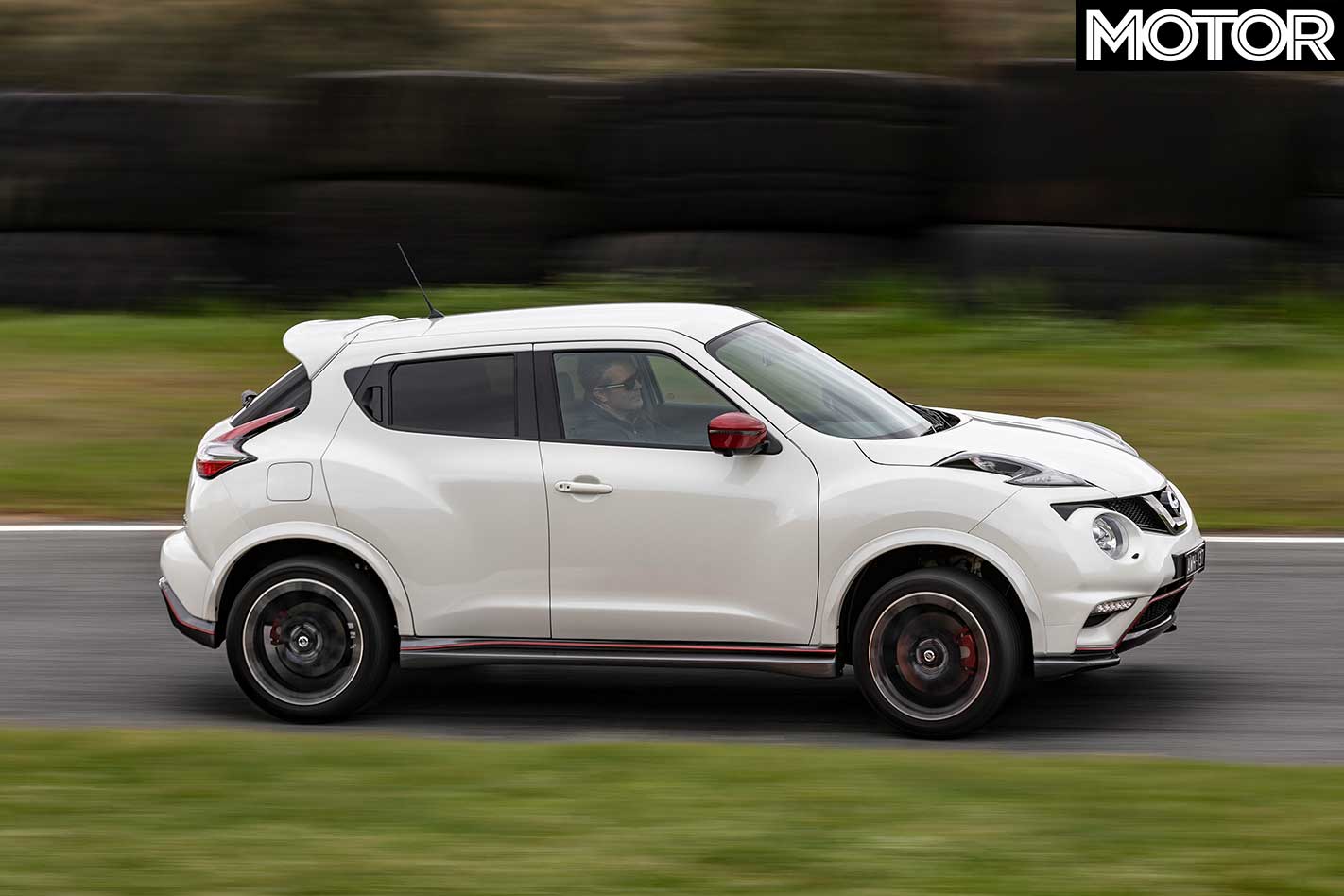
For those Juke fans who want a bit more performance the Nismo is probably exactly what they’re after and its combination of bold design and crossover versatility has merit for those seeking something different.
Unfortunately, the execution leaves a lot to be desired. At this price point its more traditional hot hatch competitors – Polo GTI, Clio RS, i30 N, take your pick – offer more performance, greater space, nicer interiors and a far more rewarding driving experience.
If you really want a Juke that stands out from the crowd, buy a 140kW/240Nm Ti-S and invest in the new $800 myJuke personalisation pack.
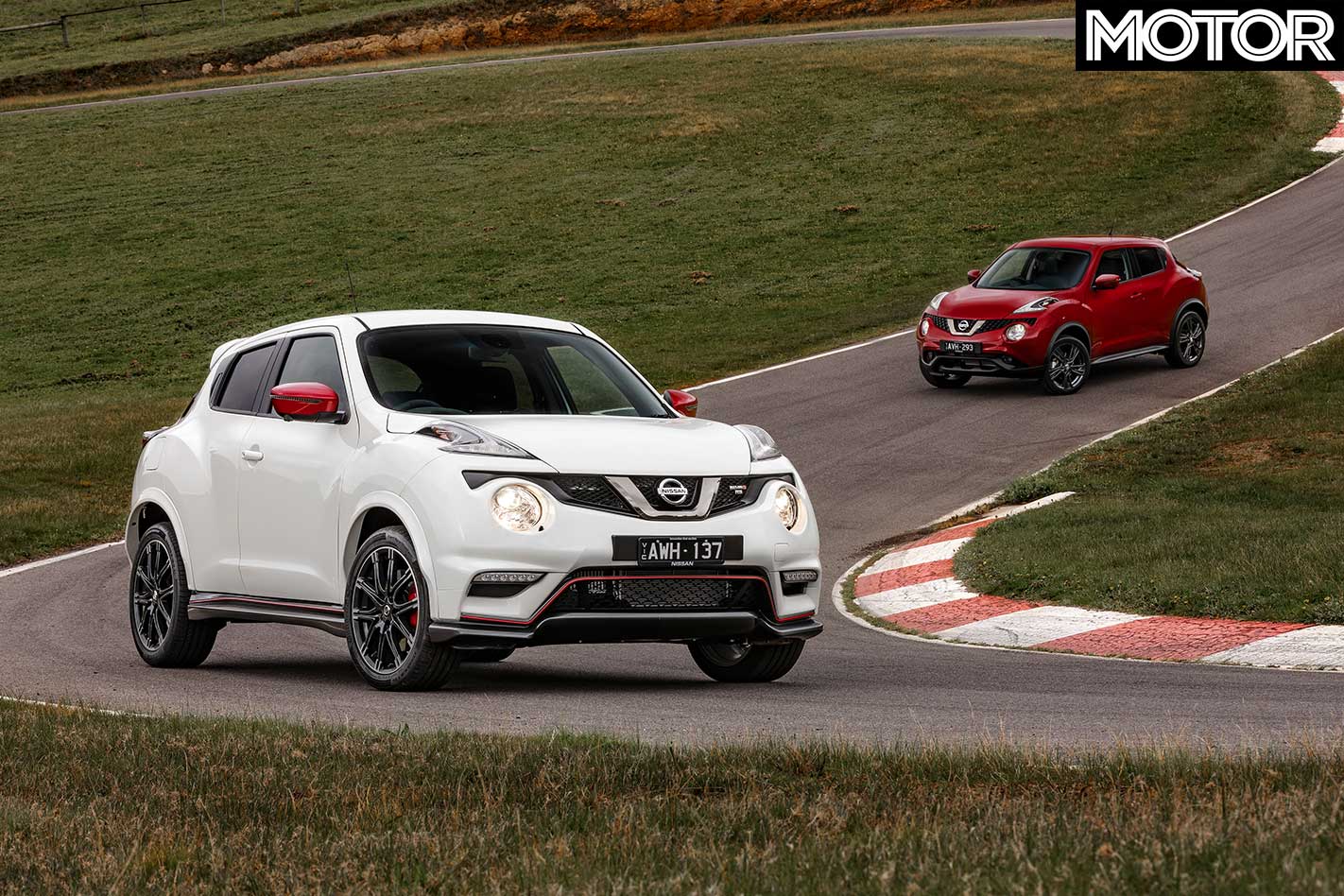
2018 NISSAN JUKE NISMO RS SPECS Engine: 1618cc inline-4, DOHC, 16v, turbo Power: 160kW @ 6000rpm Torque: 280Nm @ 3600-4800rpm 0-100km/h: 7.0sec (est.) Weight: 1281kg (tare) Price: $37,790
Ratings: 2.5 out of 5 stars
“WE’RE really busy now,” admits Alex Ernst, team leader testing, Porsche. He’s the man heading this test of the 992, Porsche’s replacement 911, and after we’ve been out in the cars today, our seats will be filled by top-tier management for final sign off. The pressure is on then, not least as Porsche will reveal the next Carrera at the LA motor show late November.
This test is one of the last for the new Carrera S. The cars are disguised, though the iconic 911 shape is familiar, if subtly different. August Achleitner, vice president product line 911/718, elaborates; “there won’t be a narrow bodied 911,” all new 992 Carrera models will share the same dimensions with the cars here today, the rear as wide as the outgoing 991 GTS model. The front track grows by 40mm, the front overhang is 20mm longer for styling reasons, while height is boosted by 5mm.
Like the existing GT3, the new 992 Carreras will roll on staggered wheel diameters, with the front axle on the S boasting 20-inch wheels, and the rear 21s. Those, combined with the wider front track allow Porsche to soften the rear anti-roll bar, enabling greater forces on the rear axle when accelerating out of a curve.

There’s a mix of Carrera S coupe models in convoy, PDK automatic and manual, with optional Sport Chassis and standard, Sport Chassis riding around 10mm lower and featuring a slightly more prominent front spoiler. The model line will be introduced with the rear-wheel-drive Carrera S and four-wheel-drive 4S at LA, in PDK guise only. The standard Carrera will follow in 2019, bringing with it the choice of the seven-speed manual available across the entire Carrera line-up. Convertibles will also join the range in 2019.
Inevitably there are carry-over elements from the 991. The engine block is essentially the same 3.0-litre turbocharged flat-six unit as the 991 series, though there are significant changes. Achleitner explains: “we have a connection between the cylinder heads on both sides, and link directly to the longitudinal beams of the body. It makes the whole system stiffer, feels more rigid.”
It’s not only attached differently, but what’s attached to it has changed. There’s an entirely new induction system, as well as piezo injection to improve efficiency. More significantly is the fitting of a new eight-speed PDK transmission, it derived from the Panamera’s gearbox. It replaces the previous seven-speed PDK transmission, the new automatic not just bringing an additional ratio, but the potential for hybrid drive.

The space in the gearbox housing for a hybrid drive won’t be utilised yet, Achleitner saying: “the whole car in its layout, its structure is prepared for any hybrid solution in the future. We do not do it right now, because we are not yet satisfied with the performance, especially of the batteries.” There’s space in the body to accommodate batteries, too.
With new emissions regulations, weight reduction has been key in the car’s development. More of the body is formed in aluminium, the entire side panel from the A-pillar to the rear wing being aluminium, that saving about 10-15kg at the rear of the car. The need for exhaust filters for European models has added some weight, around 7.5kg, though the 3.0-litre turbo engine in S guise here gains kW, it now delivering the same 331kW as the outgoing 991 GTS, torque being around the 530Nm mark. The Carrera will produce in the region of 280-290kW when it arrives in 2019.
Using launch control with the PDK transmission the Carrera S will have performance to rival the 997 Turbo model, which means a 0-100km/h time comfortably under 4 seconds. As with its predecessors, the 992 will feature different drive modes, with Wet, Normal, Sport, Sport+ and the configurable Individual mode. Sport Chrono will continue to be an option, it adding elements like active engine mounts and additional configurability within the driver modes.
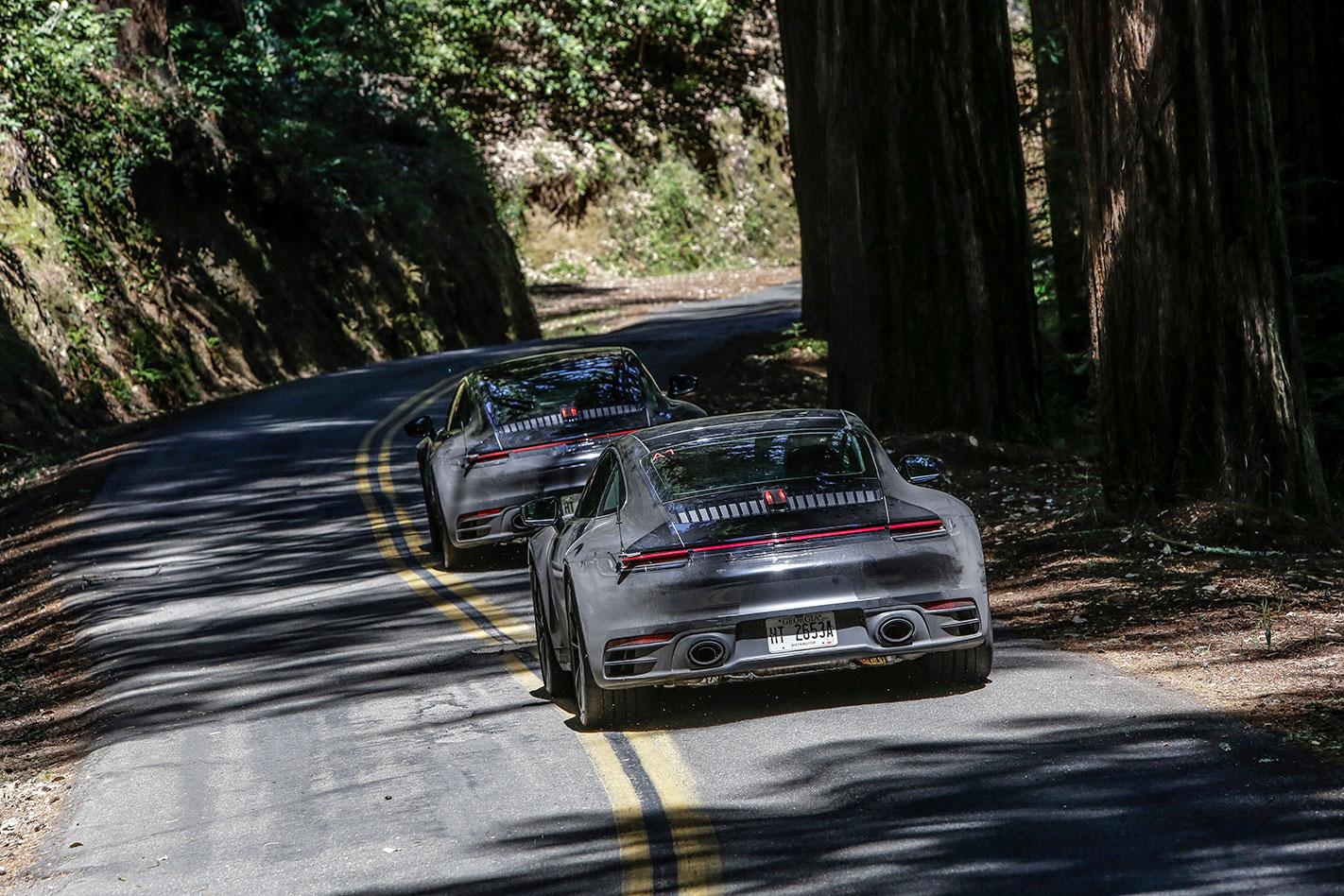
Of those modes, Wet is a new addition, and, says Achleitner, necessary due to the 992 being relatively light and on wide tyres. It is linked to a new sensor system in the front wheel wells that detects water on the road surface. Working independently of the wipers, using acoustic monitoring, if a wet surface is detected the driving systems are primed automatically, the rear spoiler changing its angle of attack for greater downforce, the PSM (Porsche Stability Management) adjusting its responses, and the gearbox is put in its less aggressive Normal mode.
That Wet mode is one of a number of new technologies for the 992, the new Carrera also being offered with active driver aids like Lane Departure Warning and Lane Keep Assist. If that technological creep to autonomy raises a concern, Achleitner is quick to counter: “I think the 911 will be one of the last cars which will be offered with an autonomous system. I’ve been asked ‘do we really need adaptive cruise control for the 911?’ And I said, well, just offer it, and if you’re travelling in heavy traffic then why not? It’s an option so if the customer wants it, and has a situation where they want to use it, but of course it can be switched off, of course.”
In addition to that the 992 will be offered with a night vision option, which detects pedestrians and animals on and around the road. That is displayed on one of the screens surrounding the analogue rev-counter dial, which retains its classic central position in front of the driver. The interior, still largely covered on these pre-series models, is significantly changed, featuring a large central screen that’s shared with the Cayenne.

Opening the doors will be more of an event (all 911s will be keyless go), with the door handles popping out as you approach it, returning to position after 10 seconds. Retracted, these help with the 0.29 drag figure, that number achieved with the rear spoiler in its raised ‘eco’ position in European models, other markets having a slightly greater angle of attack at highway speeds for greater downforce.
There’s still plenty of familiar 911 inside: you sit low, the haunches visible in the rear view mirrors. Sadly it’s passenger seat only for us today, as Ernst and his team of engineers do driving duties. In the traffic in town it’s quiet and smooth, the suspension riding with real composure, and there’s a notable improvement in road noise from the front tyres.
Key to the engine changes, over the efficiency gains, admits Matthias Hofstetter, director powertrain product lines 911/718, is improvements in response. The intake system helps here, so too does the movement of the intercoolers from a split system either side of the engine to a unit above it. The result is palpable, the 992 feeling hugely quick when escaping the confines of San Francisco’s busy streets, exploring the roads that wind up into the mountains.

Optional rear-wheel steering assists with the agility, though even without it the promise is of a sharper turn in, and greater grip. The road surfaces here are poor, the 992 managing the tricky tarmac with fine control, both wheel and body. As standard the 992 will feature standard steel brakes, with both Porsche Surface Coated Brakes (PSCB) with their hard tungsten carbide surface, or Porsche Ceramic Composite Brakes (PCCB) offered optionally.
The eight-speed PDK shifts with the speed we’ve come to expect from Porsche’s paddle-shifted autos, while the manual retains the rev-matching throttle blips when in Sport modes and above.
Thankfully, the manual has been retained, helped by a resurgence of demand. Global manual sales sit around 15 percent, but markets like the USA actually taking a greater percentage of manuals sales, particularly higher up the model range.

That model range will follow the established route, with Carrera, Carrera S and GTS, in coupe, Targa and Cabriolet guises in rear- or four-wheel drive, while there’s room for the more driver-focused T model, its success surprising insiders at Porsche. Above that will come the inevitable Turbo and Turbo S versions, the mightiest anticipated to have in excess of 485kW, while the GT department will add GT3 and GT3 RS models for the track drivers out there.
Rumours abound that the GT cars may switch to turbocharged engines, but they currently remain just that, rumours. The hope is the GT team will hang onto the naturally aspirated 4.0-litre flat-six for a while yet.
Time will tell, and more details will come as the official wraps come off the line up later this year, but our early ride in the 992 does little to suggest that Porsche has done anything to gamble with the 911’s unique appeal in the sports car marketplace, and made its future all the more certain at the same time.
Remember seeing all those pictures of Ferraris, Skylines, and other performance cars with photoshopped AU Ford Falcon front ends?
Those memes gave a 25-year-old drifter from Tasmania an admittedly crazy idea. His recently-damaged S13 Silvia drift car (powered by GM’s 6.0-litre L76 V8) needed a new front end…
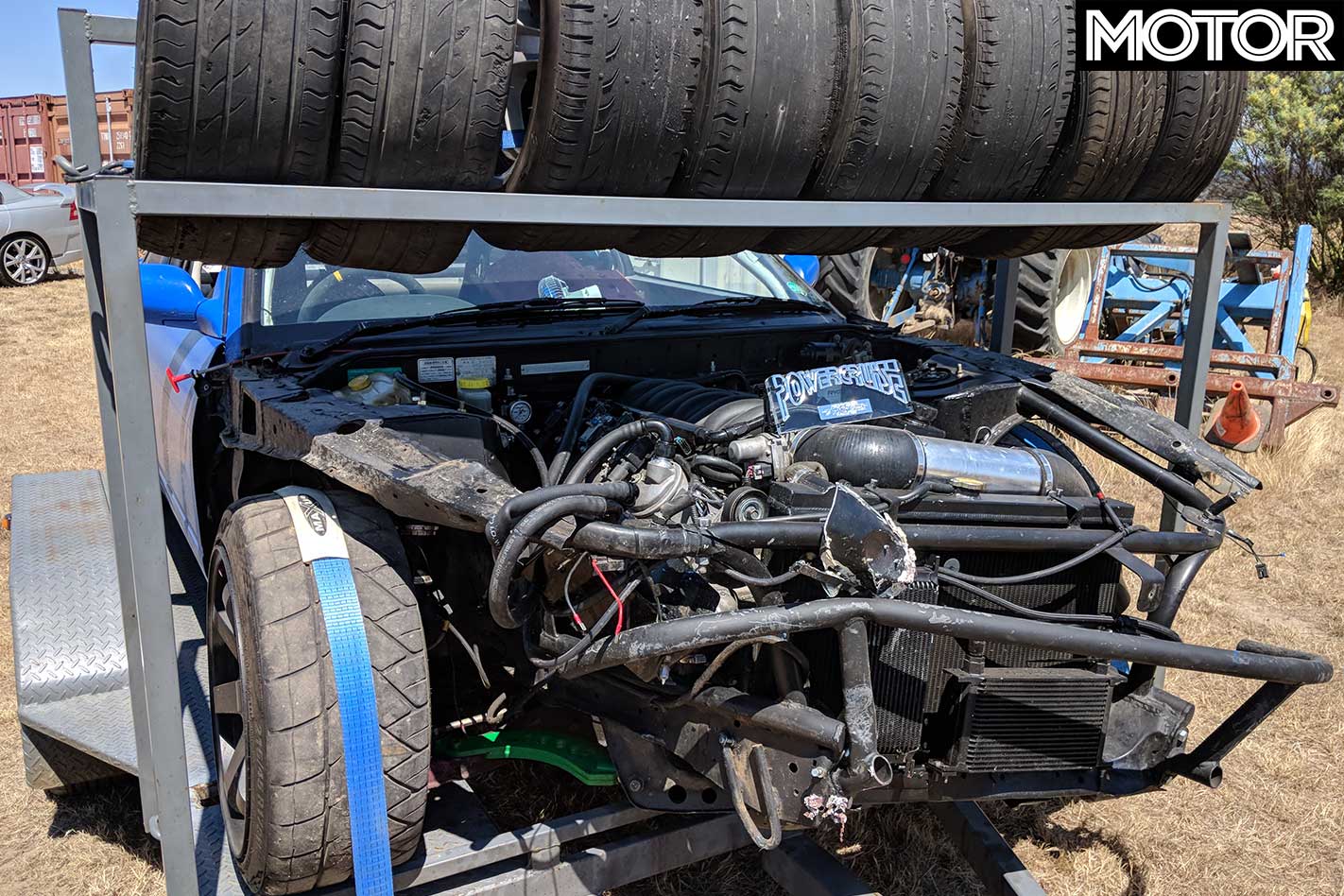
After seeing the result of this crazy idea, we had to contact him and ask ‘why’?
“I had a pretty big prang at the start of the year in January at Powercruise Tasmania at Symmons Plains,” Forck tells MOTOR.
“I ended up nose first in the wall, bending the chassis and wiping off all the front panels. When I was tossing up between re-shelling the car into another S13 or something completely new, the price and availability of S13 panels was a big issue.
“Around that time, I had the crazy idea. What if I did what everyone was photoshopping, and put an AU front on it? At the time I had a $300 AU Falcon as a daily driver, so I knew parts were cheap, everywhere, and from a quick measure it might just fit!”
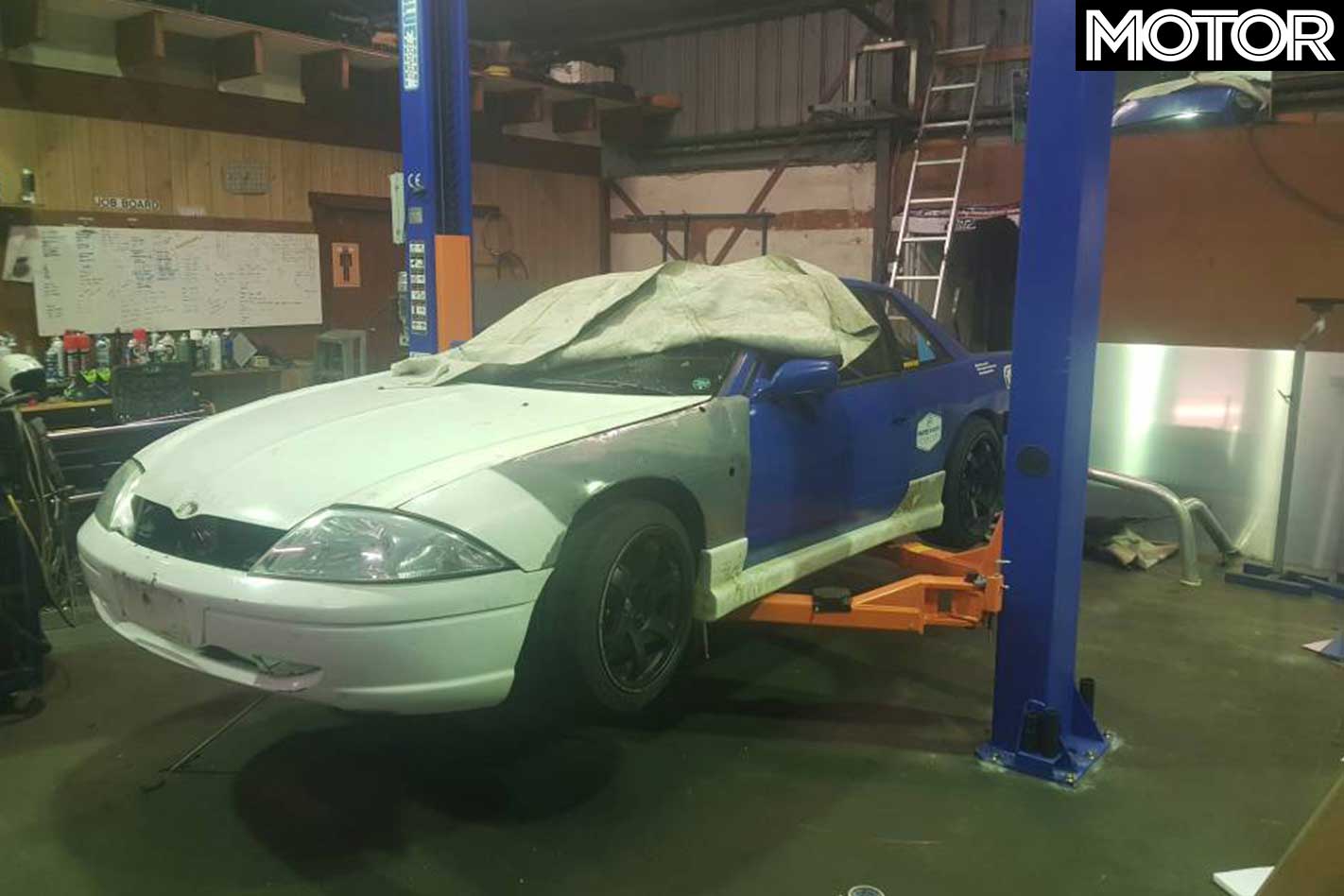
Forck got in contact with a workshop that does track prep and car mods. The results are what you see in the pictures on this page.
“When I talked to Craig from Lodder Industries, he was almost keener on the idea than I was! Once thing led to another, the chassis was straightened, then tubed, then the AU front attached with custom AU to S13 front guards.
Forck says the rest of the car has been changing and “slowly evolving bit by bit” over the years.
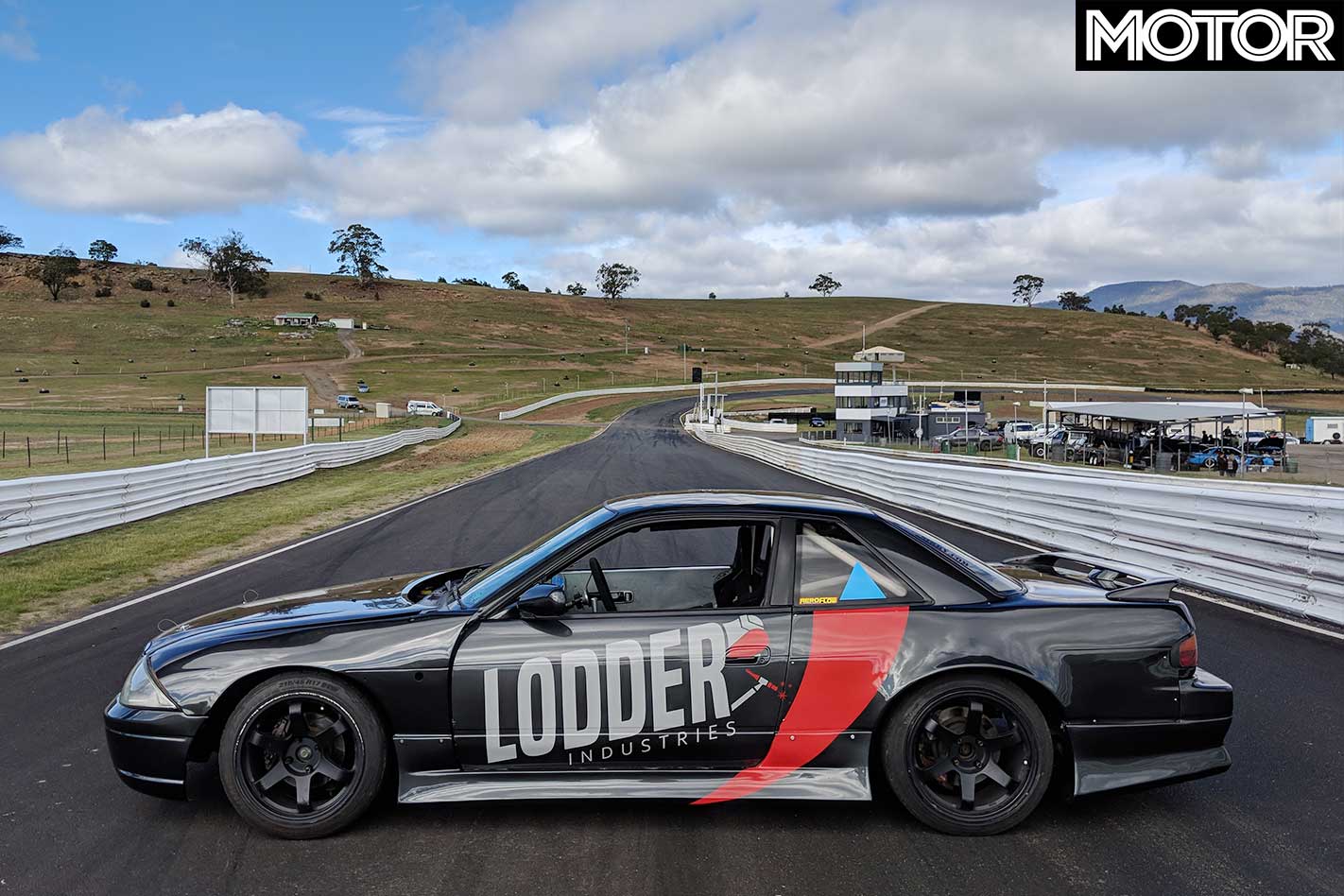
“One thing led to another, and when my daily-driven S13 was just a bit too much for the street, it was turned into a track car.
“That car has developed over the years to be what you see now. I now mainly compete in drift events (Drifting Tasmania and DCA) but also take it to Time Attack and the odd hill climb.
“It’s now powered by an L76 (pretty much an LS2 with LS3 heads), big cam, a bit of head work all supported by forged pistons and rods. The power is put down through a T56 gearbox and everything’s adjustable underneath.
“It is putting down 316kW at the wheels, without the 50hp shot of NOS. It has a 6-point CAMS-approved roll cage, race seats, and stripped interior, but it’s still registered on special interest registration.”
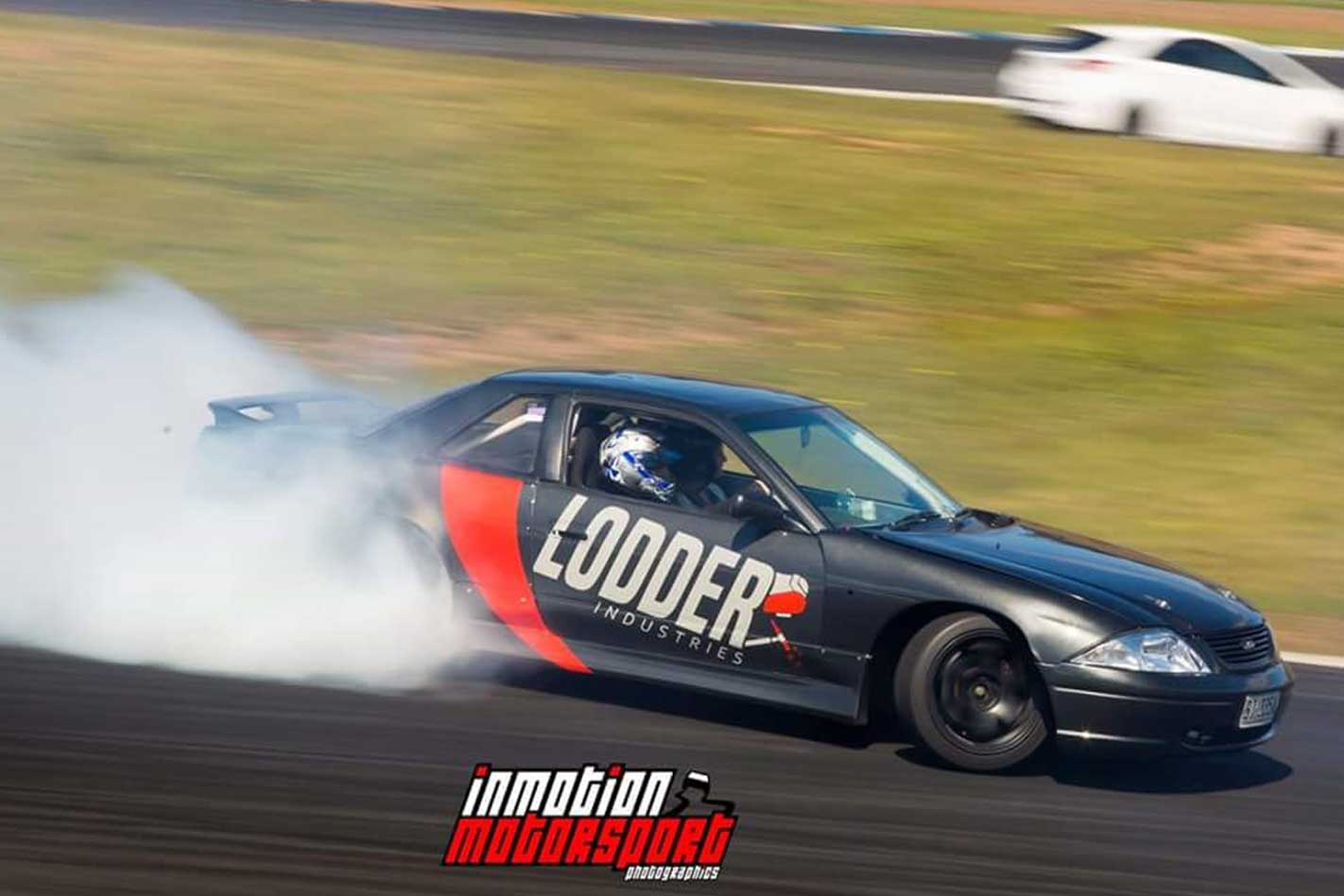
Forck has made the most of a rough situation, using what he had at hand at the time, all while managing to do it with a sense of humour. We can’t think of anything much more Australian than that.
Larry Perkins 1997 Bathurst win was a legendary victory for the Aussie racer, making six times he’d conquered The Mountain.
It was also his last win at Mt Panorama, making the VS Commodore bearing the number ‘11’ a proper legend.
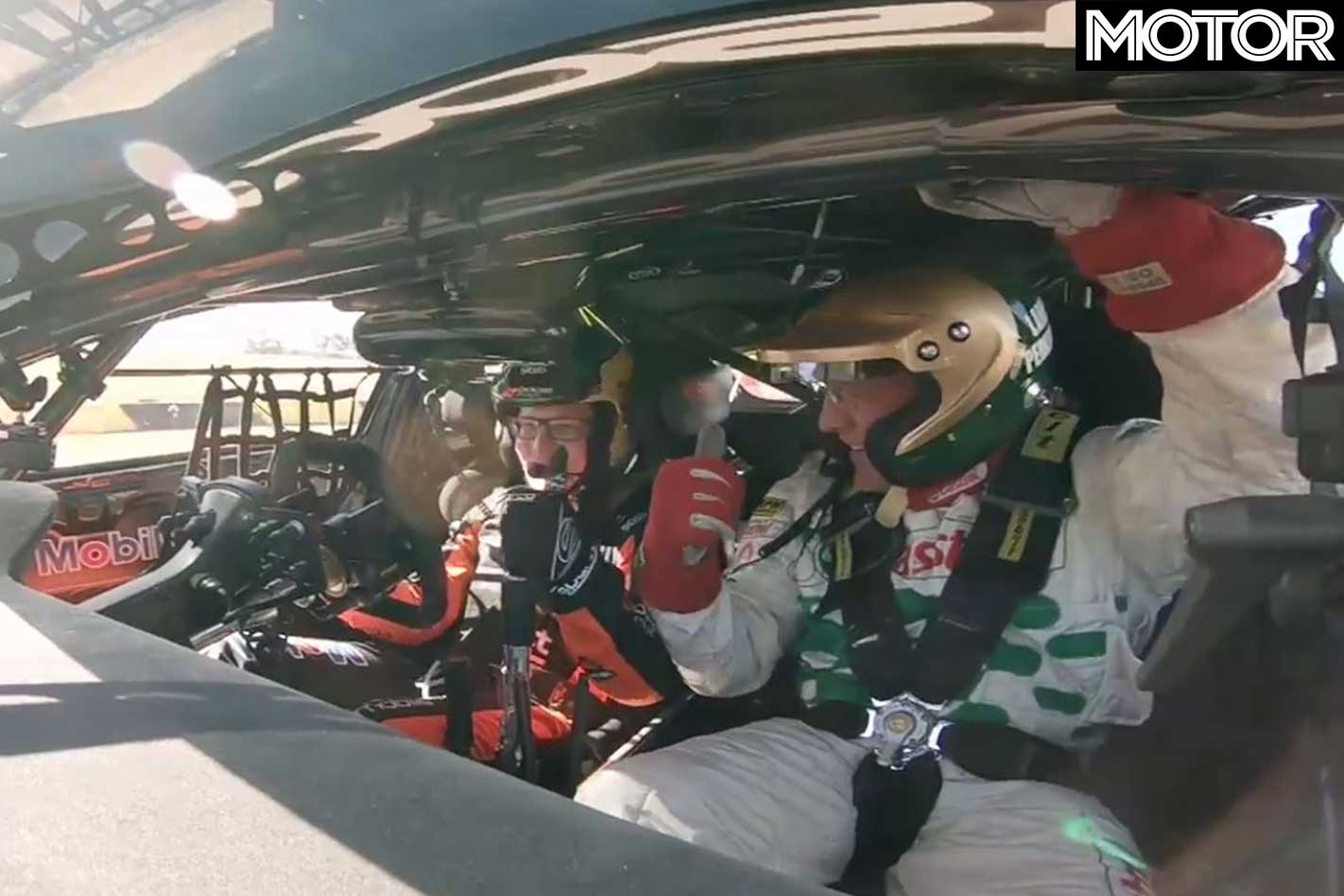
This year, his son Jack Perkins was a co-driver with James Courtney in the #25 ZB Commodore Supercar for the Great Race for Walkinshaw Andretti United.
Before the race, the Perkins met with each other at Sydney Motorsport Park to film a short video for Ten Motorsport with both cars.
Though Bathurst was cruel to Jack this year, with the car he and Courtney shared suffering an engine failure only 34 laps into the 161-lap race, he says in the video that he has hopes to stand on the top step of the podium just once.
Heart-wrenchingly, Larry says in this video that if Jack was to win at The Mountain over the weekend, that he’d be the only one happier than Jack.
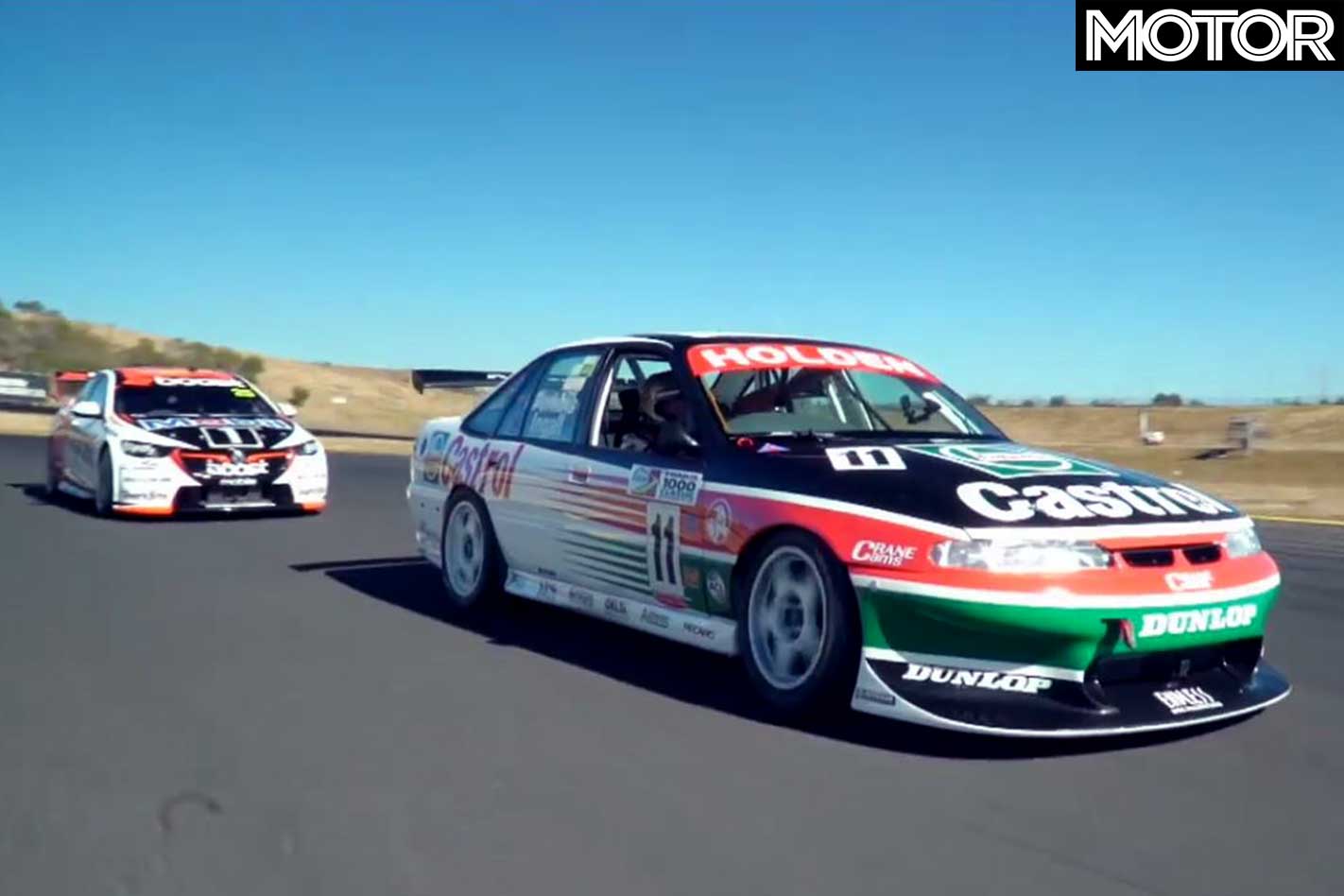
Two of Larry Perkins’ other five Bathurst wins were also at the wheel of his own car (rather than a HDT car shared with Brock), one in 1993 with Gregg Hansford in a VP Commodore, the other two years later in a VR with Russell Ingall sharing driving duties.
Interestingly, the VS driven at Bathurst in 1997 (also shared with Ingall) technically won on its racing debut, as it was a rebuild of the near-identical car which he’d crashed only months before the race.
It’s a special car, and that makes this already special video just a little more… special. If you can watch it without feeling anything, you’re watching it wrong.
FOR DIE-HARD Blue Oval followers in Australia, there’s only one rear-wheel drive performance offering left in showrooms to partly fill the hole made by the departure of the locally-built Falcon.
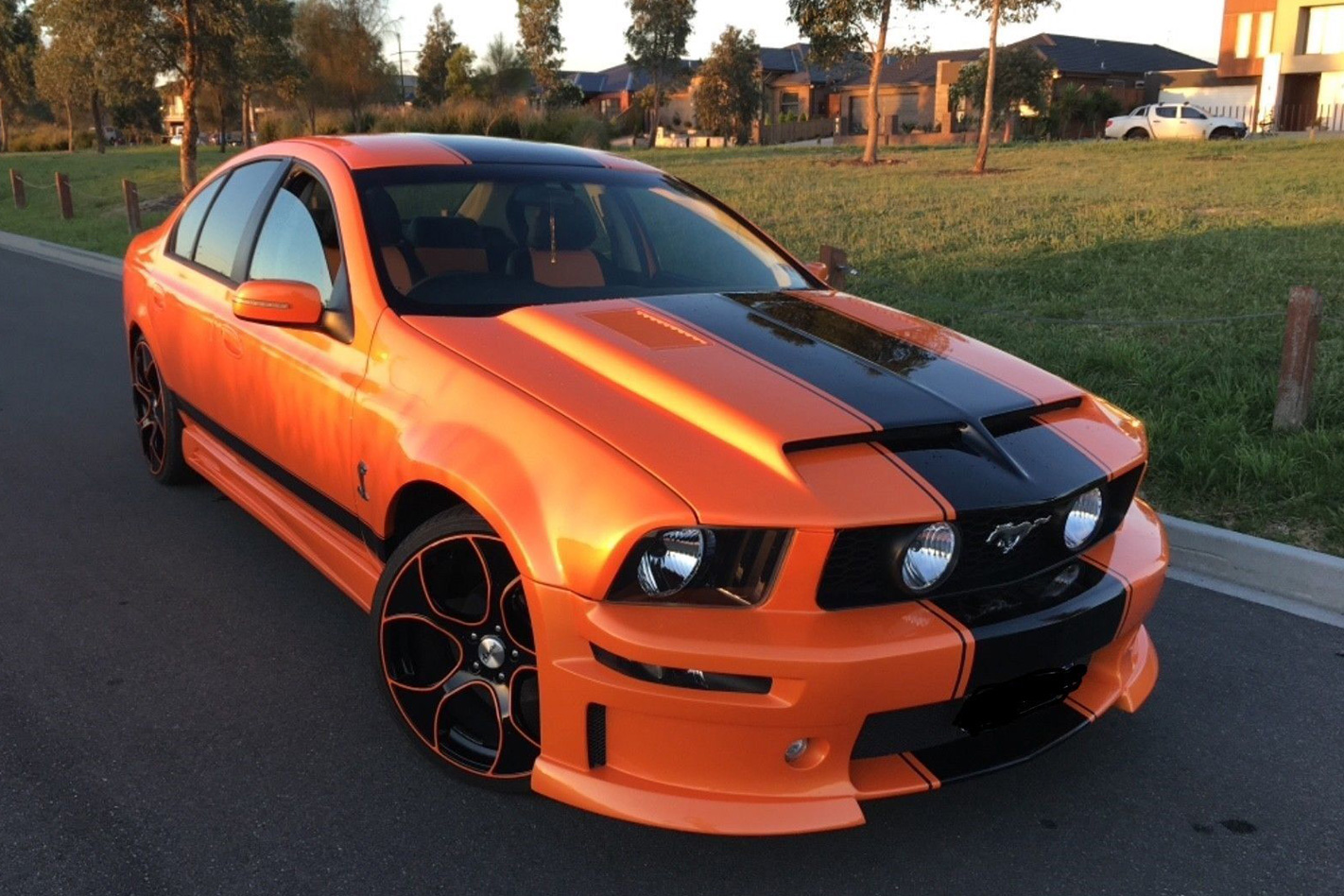
It’s the Ford Mustang, and it’s a good thing, but it doesn’t do everything the Falcon once did. So what if you could somehow blend both? One dedicated fan has done just that, melding the two cars together to create a four-door tribute to the Mustang, based on the body of a Ford Falcon.
Starting life as a BA, the owner has grafted the front and rear ends of a fifth-generation ‘Stang to the four-door Falcon body, and it actually sort of works. If you like orange.
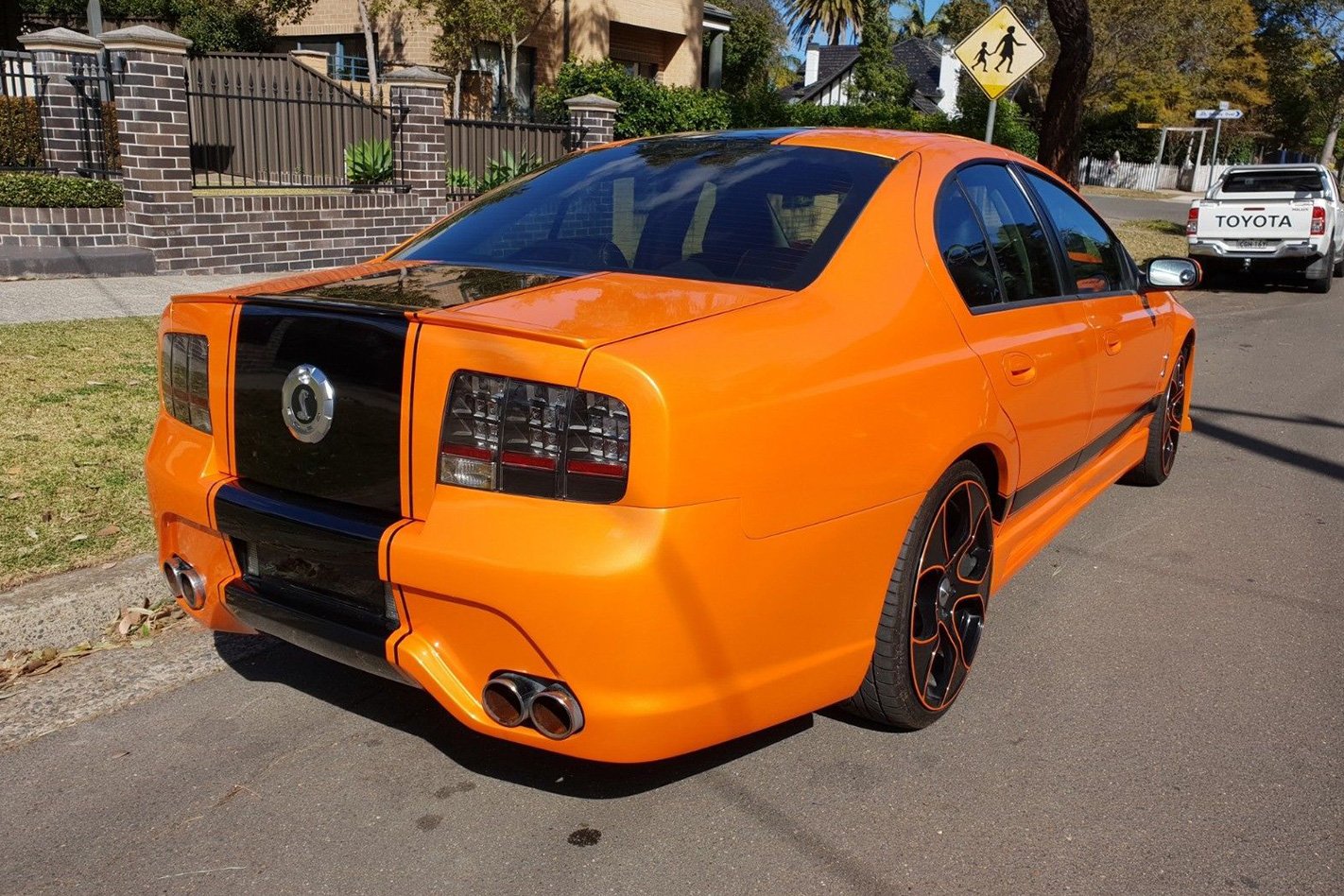
What’s more, you might be able to buy it. The car has changed hands a few times in the last year, most recently via eBay where is sold for $10,700.
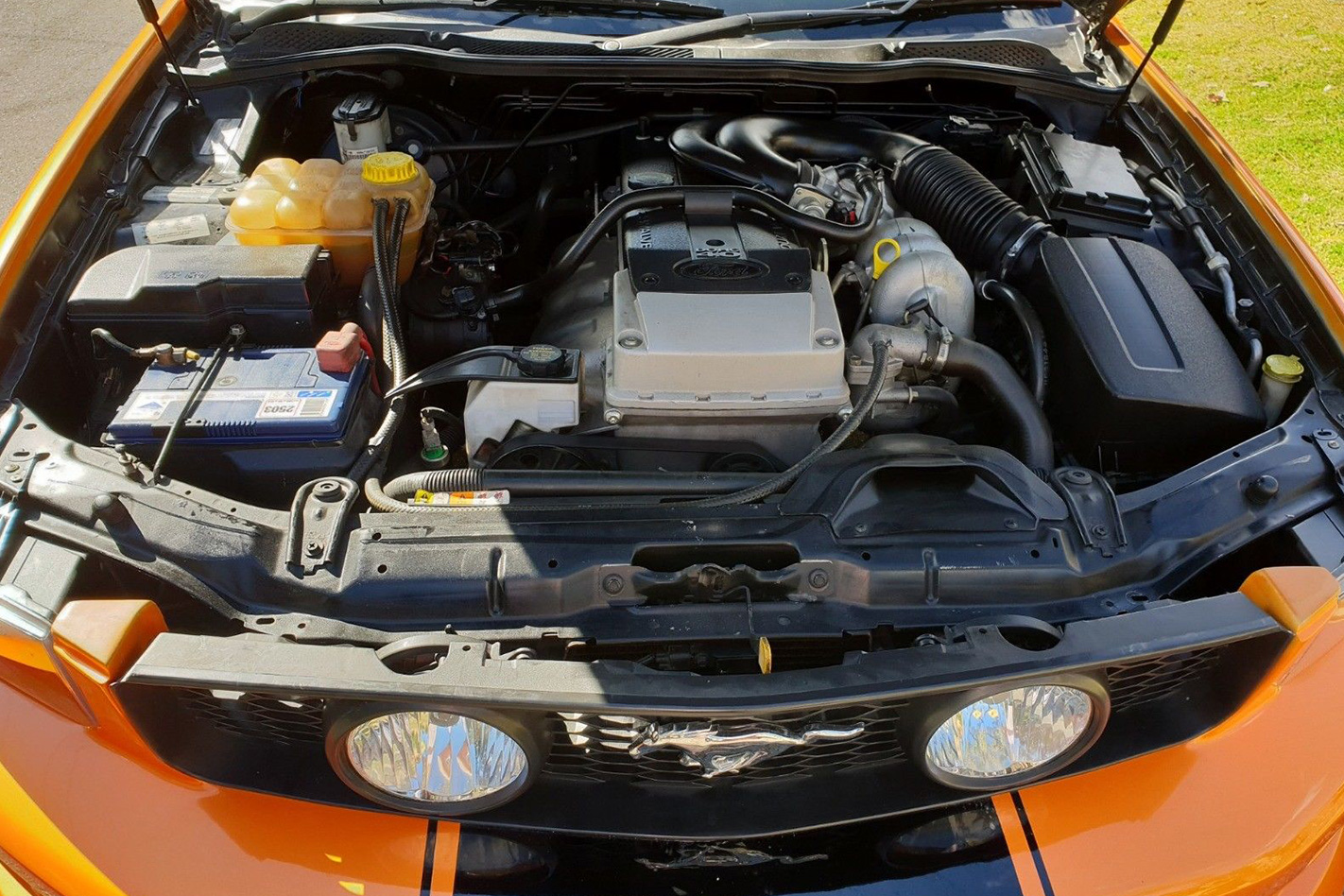
More details about the project are revealed in the listing, including what engine lurks under the bonnet. While the exterior is inspired by the supercharged V8 GT500, the Falstang has an atmo Barra straight-six up front, running on LPG and with an automatic gearbox.
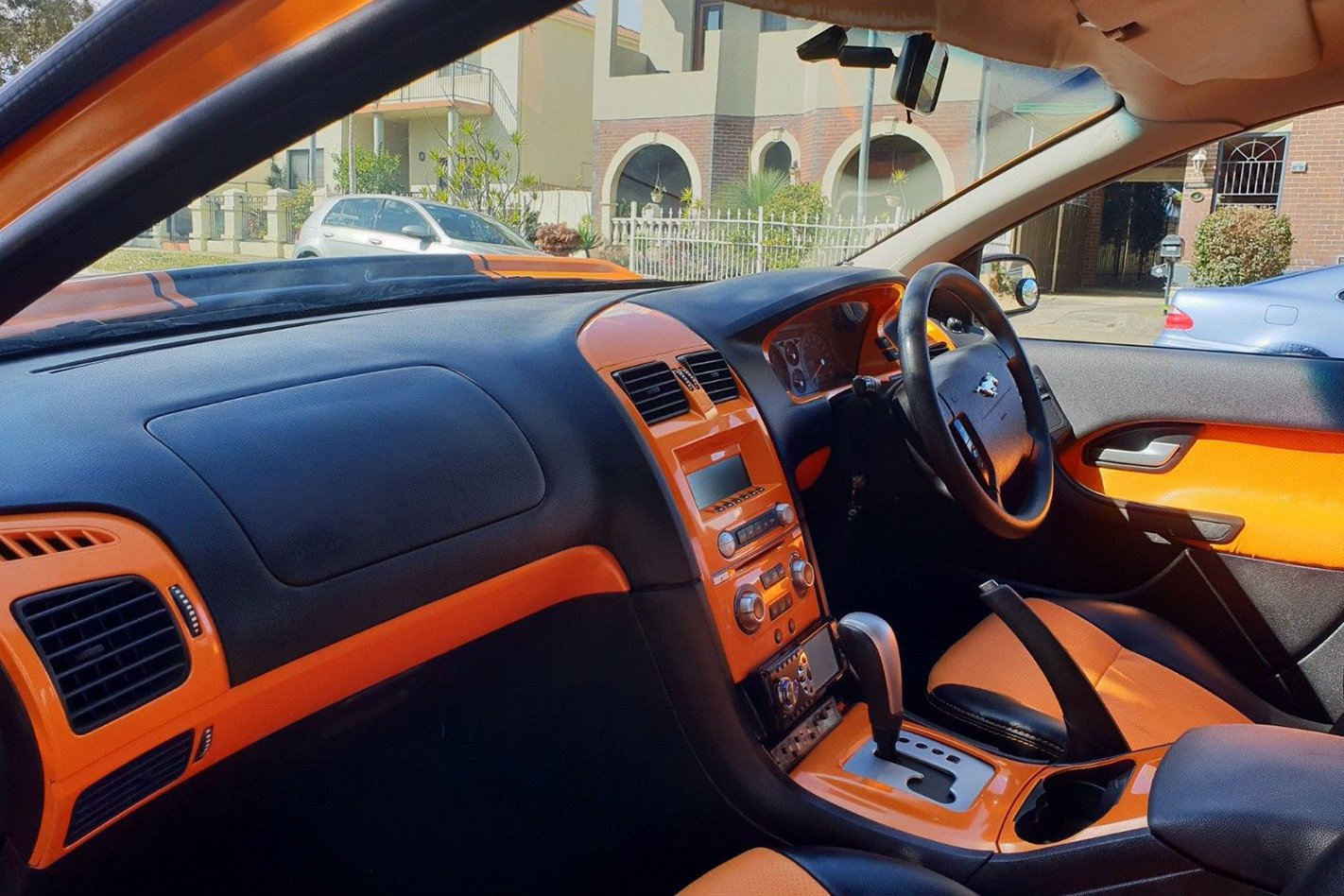
We won’t pass too much judgement on the exterior, with the person responsible clearly passionate enough to put significant time and money into ensuring the Mustang fasciae paired smoothly with the Falcon body. That interior, though…
In an ironic twist of fate, it was actually the fifth gen S197 Mustang that signed the death warrant for the Aussie Falcon.
The S197 Mustang and BA Falcon were initially developed in conjunction, with the Aussie four-door slated to share the rear half of the pony car’s platform.
The plan was for the Falcon to later pick up the front half of the S197 platform when Ford Australia could afford to switch to the imported 3.5-litre Duratec V6 engine.
However, the plan began to come apart at the seams when Ford Australia engineers and their Mustang counterparts disagreed on a rear suspension configuration.
The difference of opinion triggered a chain of events that eventually led to the Aussie Falcon’s extinction.
Most car enthusiasts have a secret list of dream cars. They’re usually money-no-object, bugger-the-kids-and-the-dog kinda cars. My lotto list includes at least one mid-engined Italian exotic from the house of Lamborghini and Morley makes no secret that he’d kill for a Boxster S. And now my list has grown by one to include the very top-of-the-tree BMW 760Li.
This review was originally published in MOTOR’s January 2004 issue
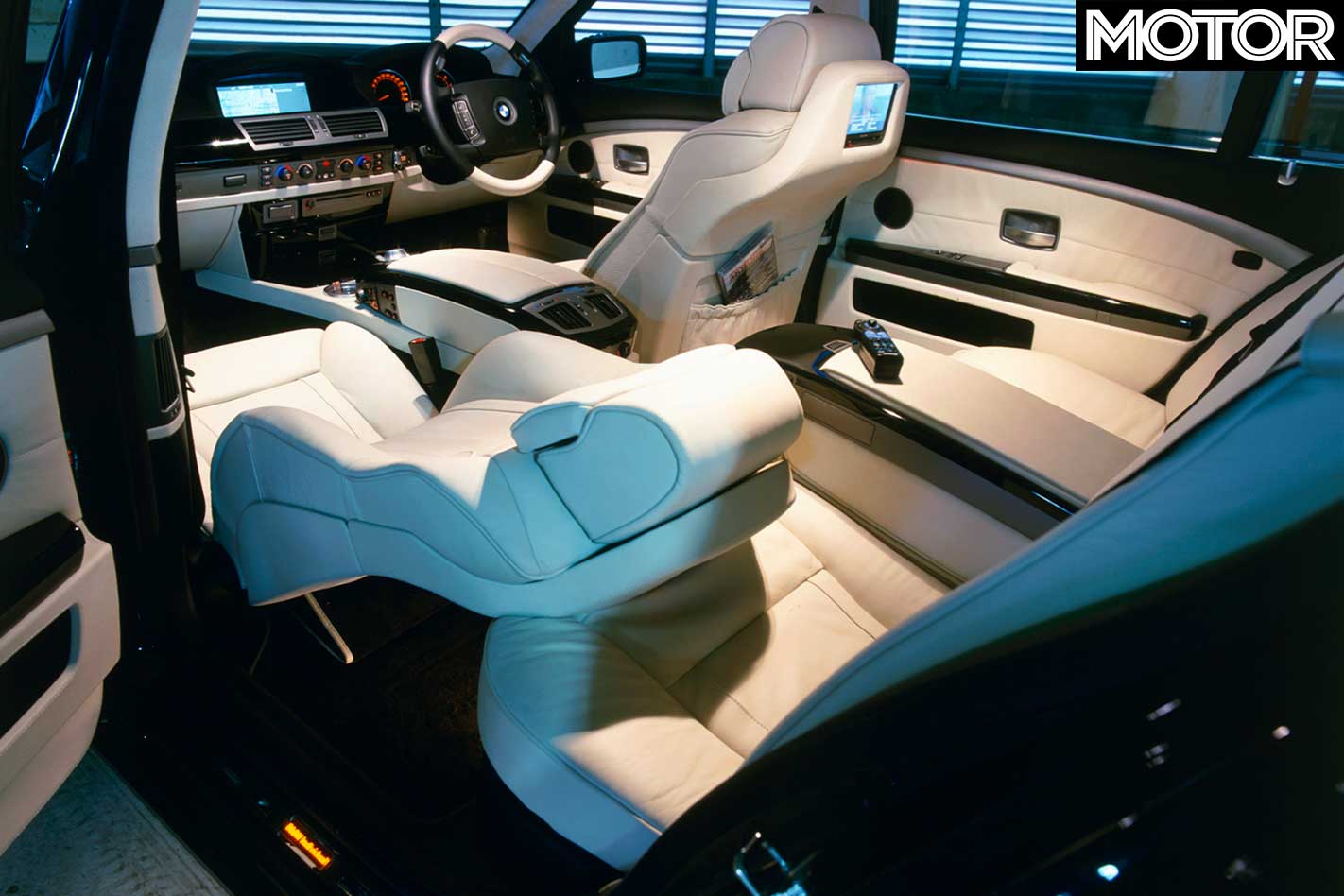
It’s funny, because a big automatic limo is not really my style, but how can you resist a car with cream suede headlining and matching suede-trimmed sunvisors? The fact that the 760 (not to be confused with the dodgy Volvo of the same name) comes with a 6.0-litre V12 is icing on the cake.
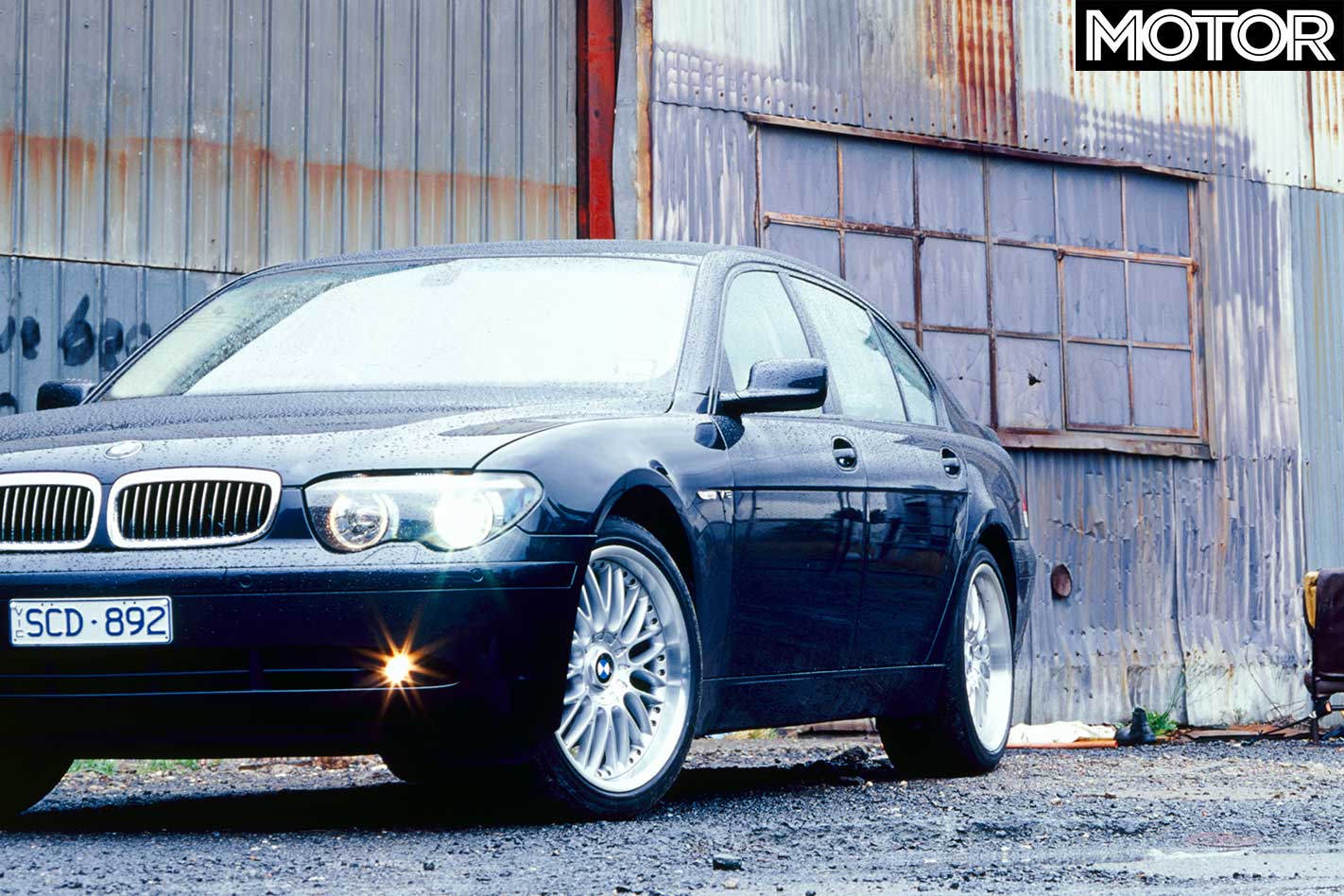
But the numbers aren’t the end of the story. The engine’s been around the block a few times and it feels a bit old – it uses the same basic design as the SOHC 5.0-litre V12 first found in the 1988 E32 750iL, and later as a 5.4-litre in the E38 7-Series.
Now packing twin cams per bank and the full complement of 48 valves, the 6.0-litre dozen- potter isn’t a low-down lugger or a top-end screamer. It lacks the creamy smoothness of the 4.4-litre V8 in the 745 or the 3.0-litre straight six found in a multitude of Bimmers.
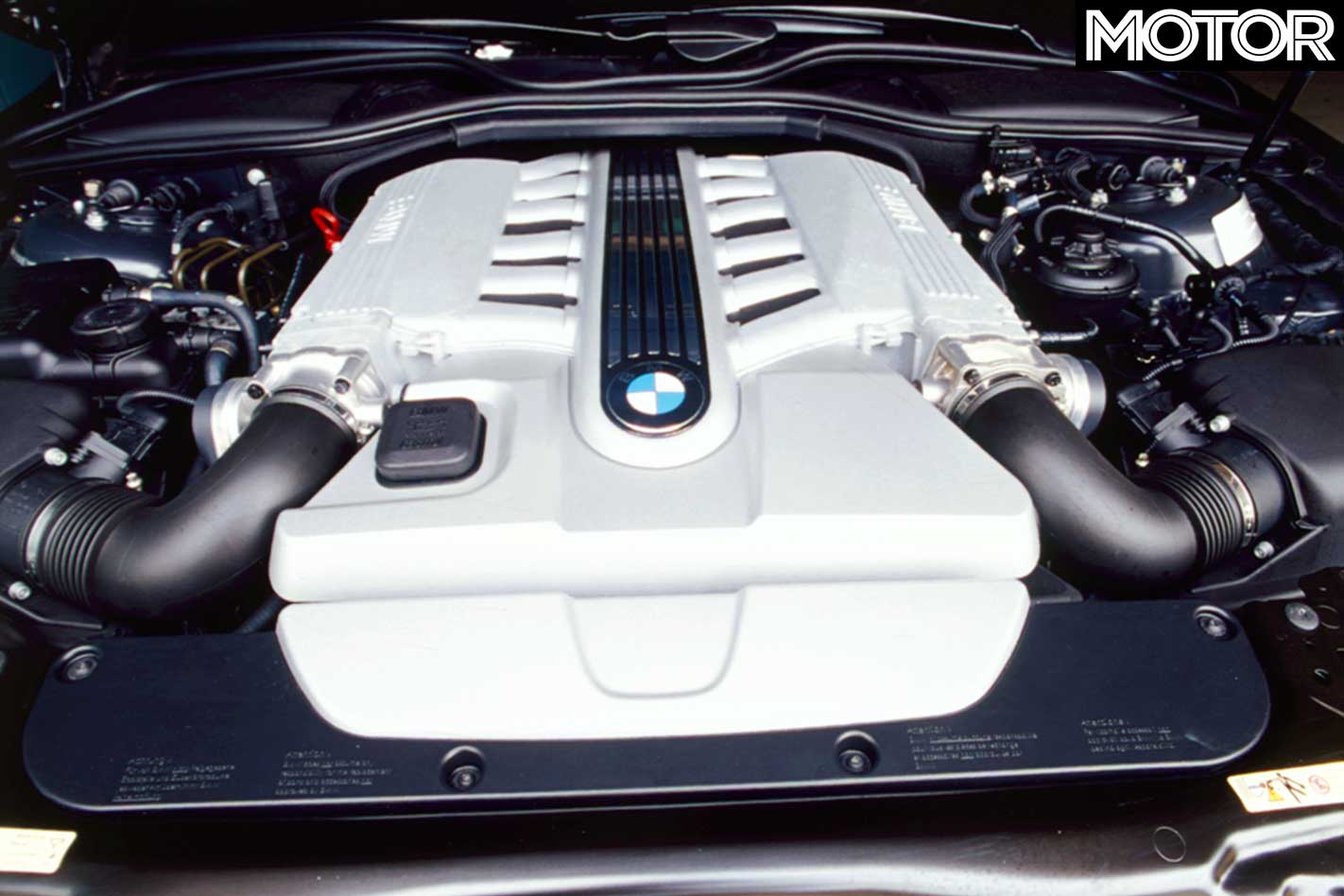
The motor’s got a narrow, 1500-rev sweet spot from around four grand, where peak torque is swelling, up to 5500rpm. Below 4000rpm the big V12 doesn’t seem that interested in proceedings, and above five and a half she starts to sound a little strained. But keep the tacho in the zone and it’s a fine way to motivate two tons of limo.
But at the end of the day, this thing’s not really going to have the pick handles belted out of it by the captains of industry who’ll be laying down the $332,400 ask.
There’s plenty of electronic cotton wool trying to save you from yourself and diluting the driving experience. Switch off all the electrickery and there’s fun to be had. But be warned: it is a very big car and will punch a very big hole in the scenery should you disrespect physics.
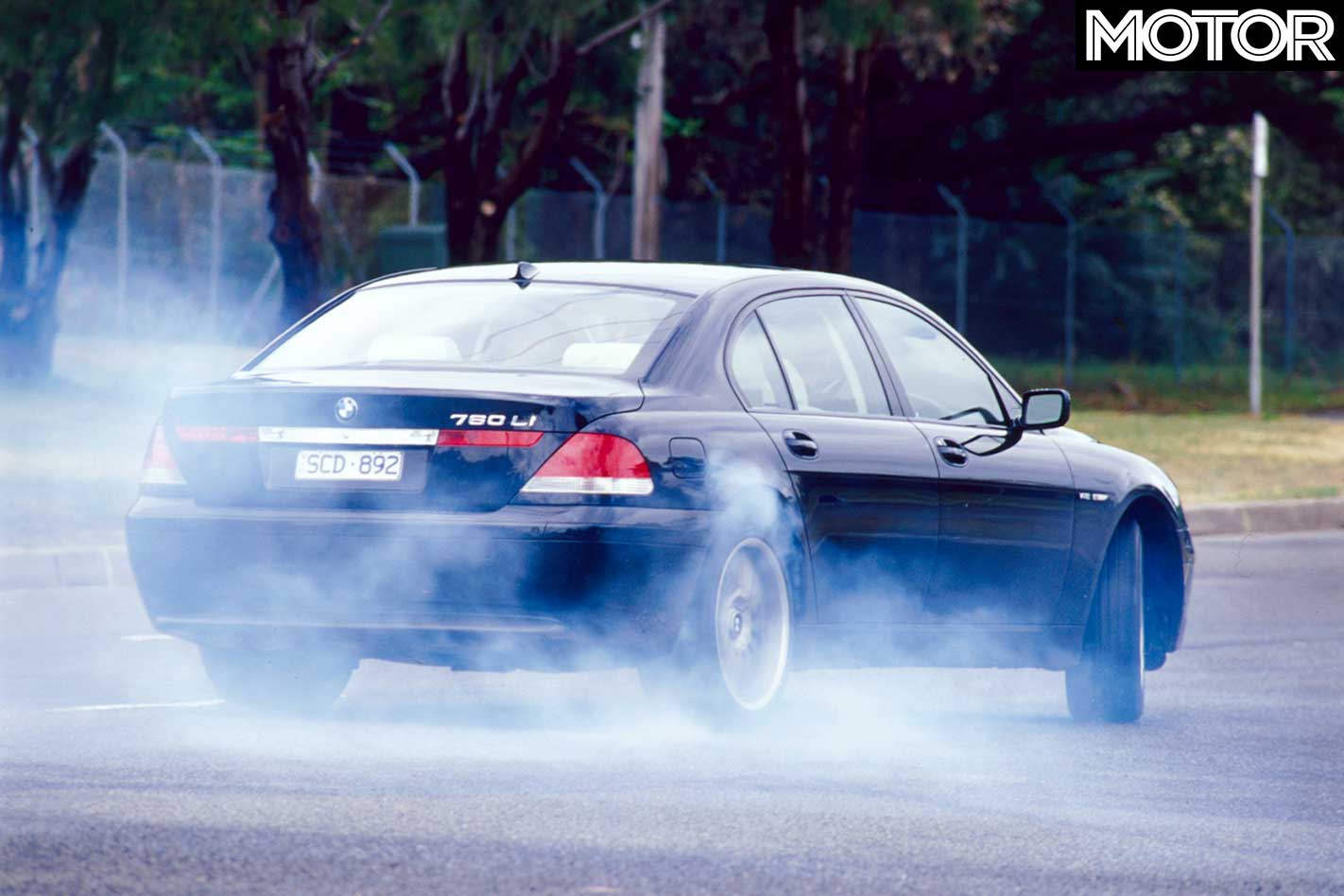
The steering is very light and not that talkative, and despite the enormous three-metre wheelbase telegraphing comments from the back, the limits can be exceeded. The ride from the continuously adjustable Electronic Damper Control (EDC) suspension is firmish, especially for an avowed limo. Not intrusive, just firm. And ultimately it’s more lively and entertaining than Audi’s A8, Lexus LS430 and probably the big Mercs, too.
Inside, the 760Li is stuffed with more gear than my house. There’s a 12-speaker stereo hooked up to the DVD player with screens mounted in the headrests of the front seats. The front seat occupants don’t miss out, either, with a dash-mounted TV. There’s even a fridge in the back – just the thing to chill the Moët. And for really lazy coves, the doors close by themselves.
So put the 760Li on your list; no self-respecting rock star should be without one.
FAST FACTS 2004 BMW 760Li Engine: 6.0-litre DOHC 48-valve V12 Power/Weight: 327kW/2150kg Drive: rear-wheel Price: $332,400
IT MUST be the most original Volkswagen Beetle on the planet. It sure would want to be, if the seller is serious about the AU$1.4 million asking price for this completely original 1964 Volkswagen Beetle.
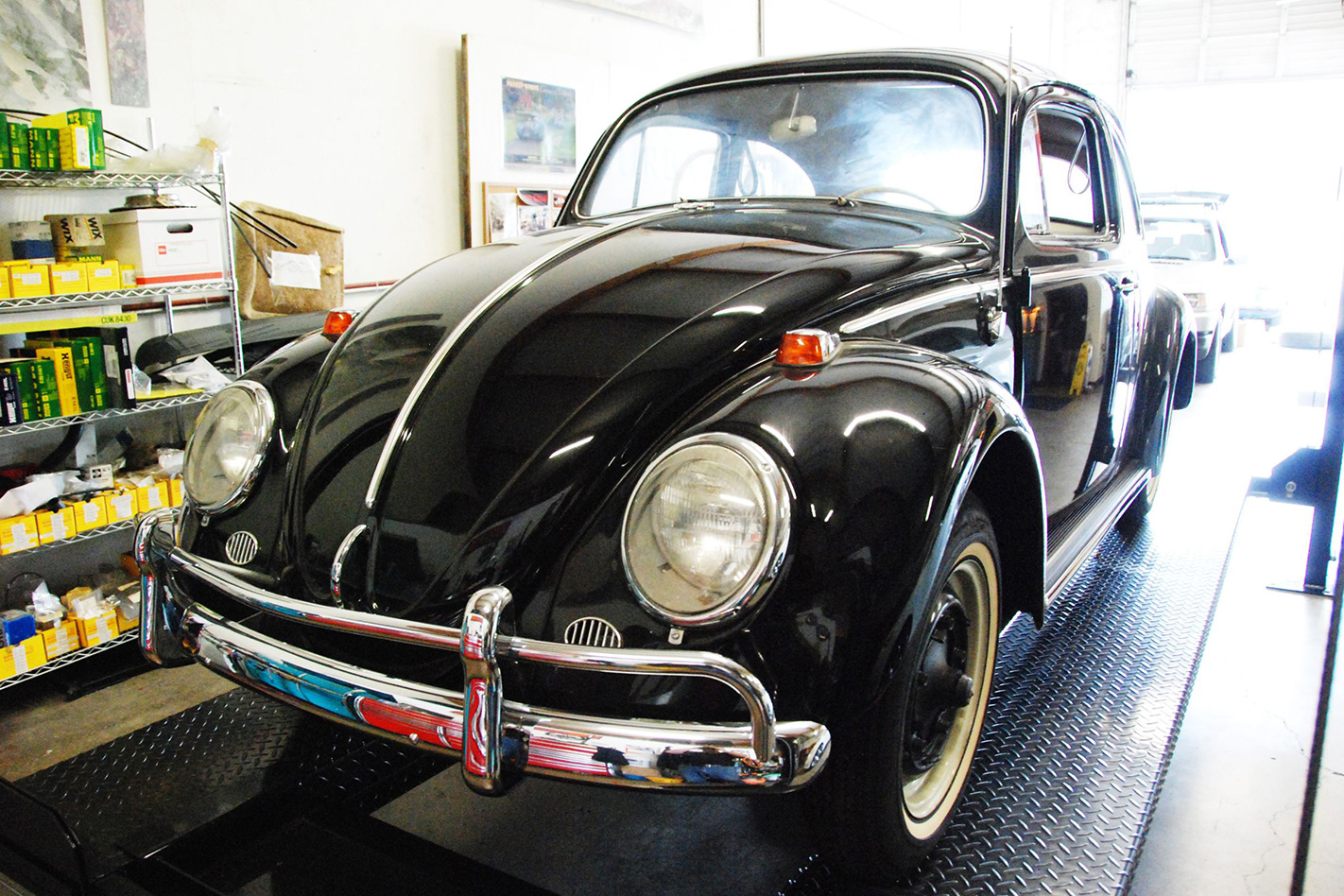
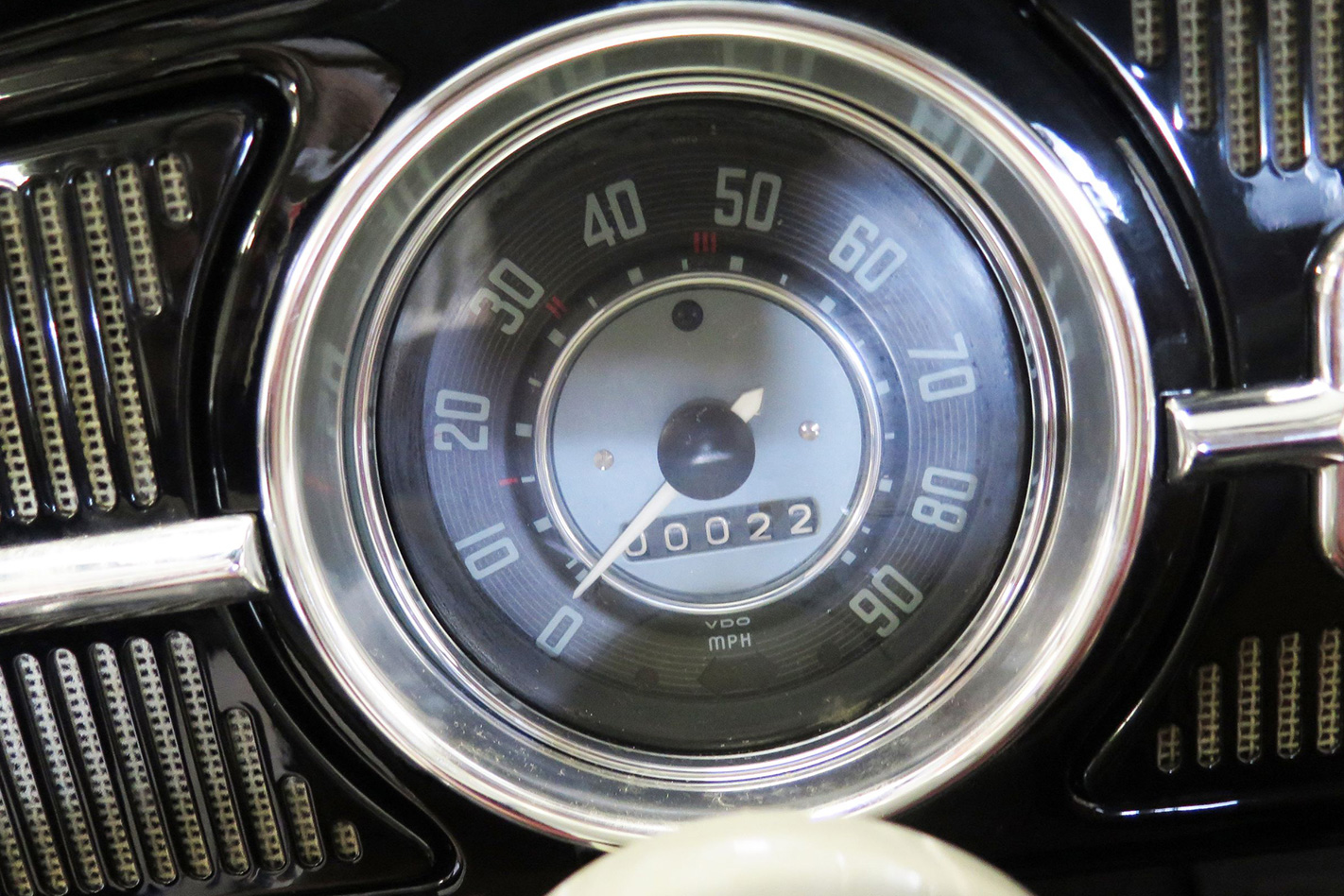
Offered for sale in Portland Oregon, VIN 6437532 is a black manual Volkswagen Beetle that has probably seen about an hour of sunlight in its 54-year existence. The car’s odometer clicked over from 22 miles to 23 whilst being rolled out of storage following the original owner’s death.
The ‘64s all original condition is the legacy of Beetle enthusiast Rudy Zvarich, a collector from Oregon who preserved this pristine example for its entire life.
Zvarich was driving a 1957 Beetle when he decided he didn’t like the changes Volkswagen intended to make to the 1965 model, namely the move away from the flat windscreen and the differing front-end geometry. So in order to preserve his ’57 car, he purchased one of the last ’64 cars, drove it home and garaged it under a cover with the intention to use it for parts.
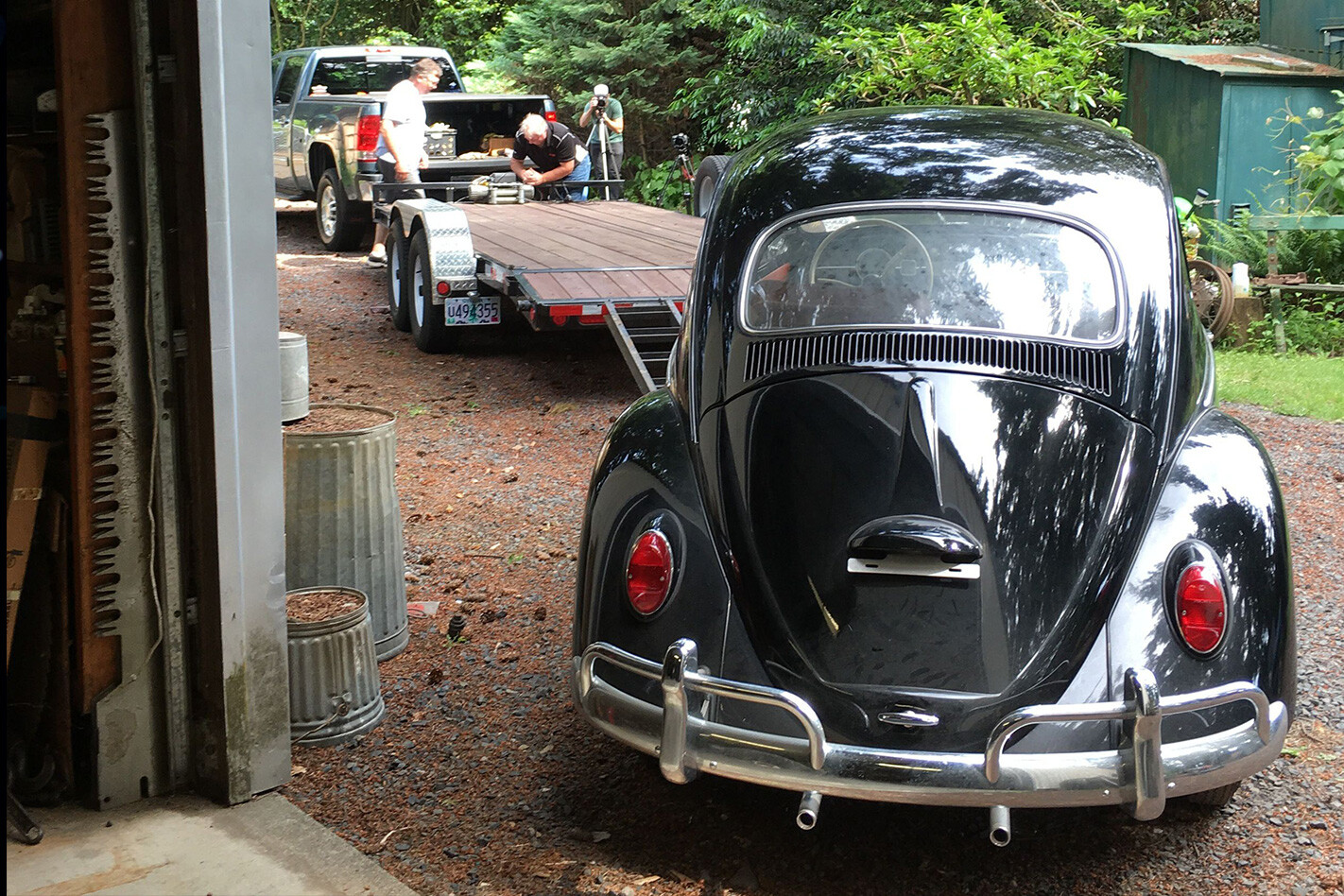
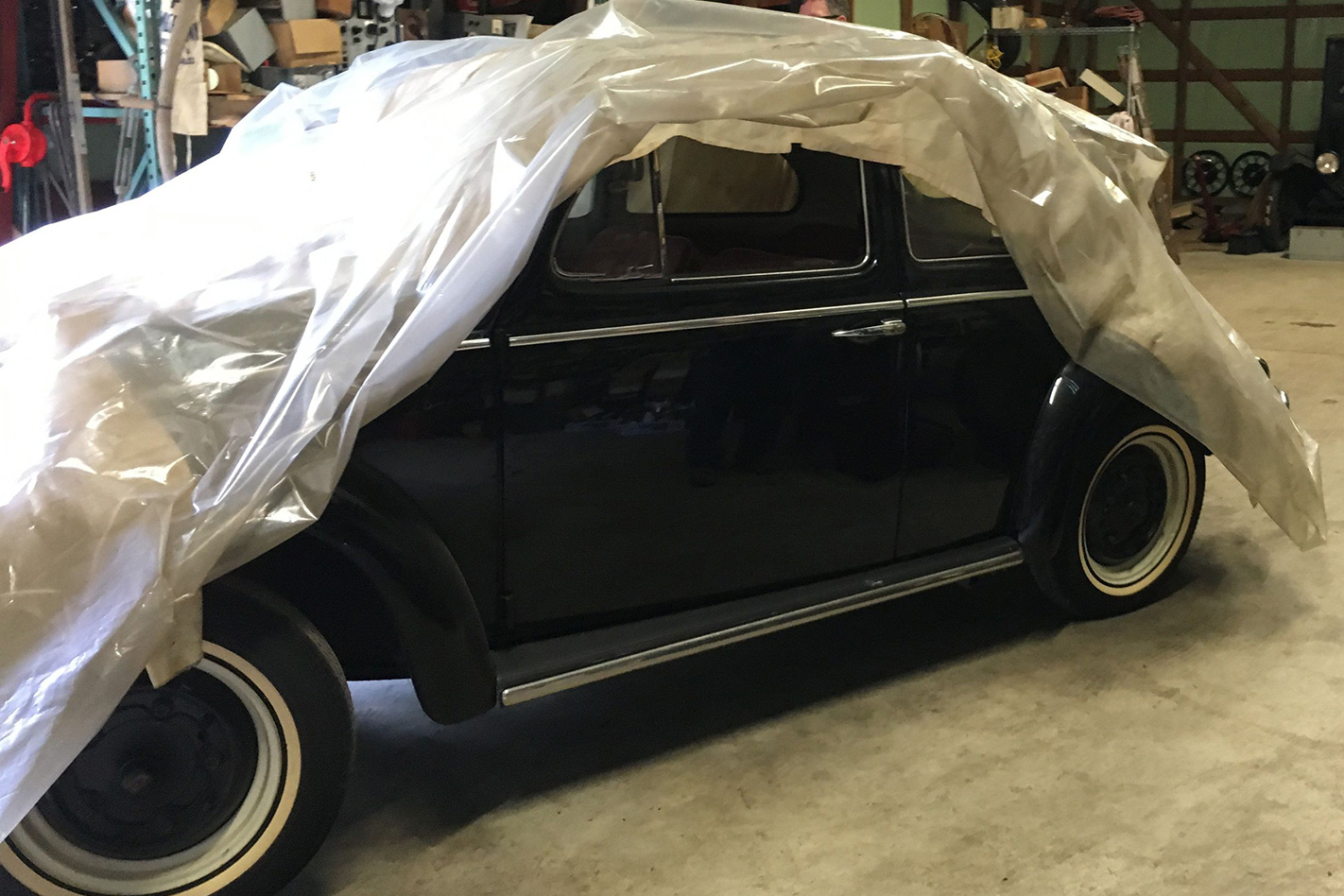
Such was the reliability of his first Beetle, the back-up Beetle was never used or even registered. There was no reason to touch it, so it lay dormant in the back corner of his garage with all fluids drained and sheet covering it to keep dust away.
Once Rudy died, his collection was left to his nephew who restored the Beetle back to running condition, careful not to disturb the originality of the example. All accessories and documents are still in their original packaging, and even things like windscreen wipers and hubcaps have never been fitted to the car.
Such time capsule classics of any make and model don’t come around often, so putting a price on this one is uncharted territory. That said, it’s hard to imagine paying the AU$1.4 million ask for a Beetle, but nothing ventured, nothing gained…
Is this little slice of history worth its astronomical price tag? Let us know your thoughts below.
It’s a little way off, but if you can wait until the next decade, Jeep might finally offer you the chance to get your hands the first electrified model to wear the classic seven-slot grille – the Renegade PHEV.
Fiat Chrysler Automobiles (FCA) Australia is yet to confirm the plug-in hybrid version of the cheekiest Jeep for our market, but it is now official that the model will go on sale in selected global regions from 2020.
The news isn’t entirely unexpected. An FCA social media post originating from the company’s Capital Markets Day earlier this year announced the imminent arrival of a bevy of electrified Fiat 500 variants, and while it did not specifically mention the Renegade, the two cars are platform mates and roll down the same production line in Melfi, Italy.
“FCA announces @Fiat 500 #GreenFamily – full BEV of class-leading #Fiat500 and all-new #Giardiniera model will be joined by #hybrid versions on the #Fiat500X and #Fiat500L to create a fully electrified #Fiat500 family.”
https://twitter.com/fcagroup/status/1002524923909287936
Putting two and two together, an electrified Renegade was a matter of not if, but when.
With the variant now confirmed, pre-production versions will roll-out before the decade is out, bearing the first fruits of a €200m (A$324m) investment to develop FCA’s first electrified drivetrain.
No technical details regarding performance, range or charging times have yet been made public but the Renegade is expected to align closely with its electrified 500X stablemate, although, unlike the Fiat, no full electric version is officially on the cards at this stage.
The announcement of a plug-in Jeep ties in to the company’s alternative energy strategy, and there will be many more to follow the Renegade if FCA is to stick to its schedule.
“By 2022, FCA will offer 12 electrified propulsion systems (BEV, PHEV, full-hybrid and two mild-hybrid) in global architectures spanning the full range of vehicle segments; 30 nameplates will feature one or more of these systems,” it said in a separate post.
https://twitter.com/fcagroup/status/1002522479858987009
FCA’s charge into electrification was initiated by the plug-in hybrid version of the Pacifica Minivan earlier this year and the mild hybrid Ram 1500 large pick up.
