
Prince Charles has built a reputation as the British Royal Family’s very own environmentalist, previously waging a war on plastics in the palace and even installing sovereign solar panels.
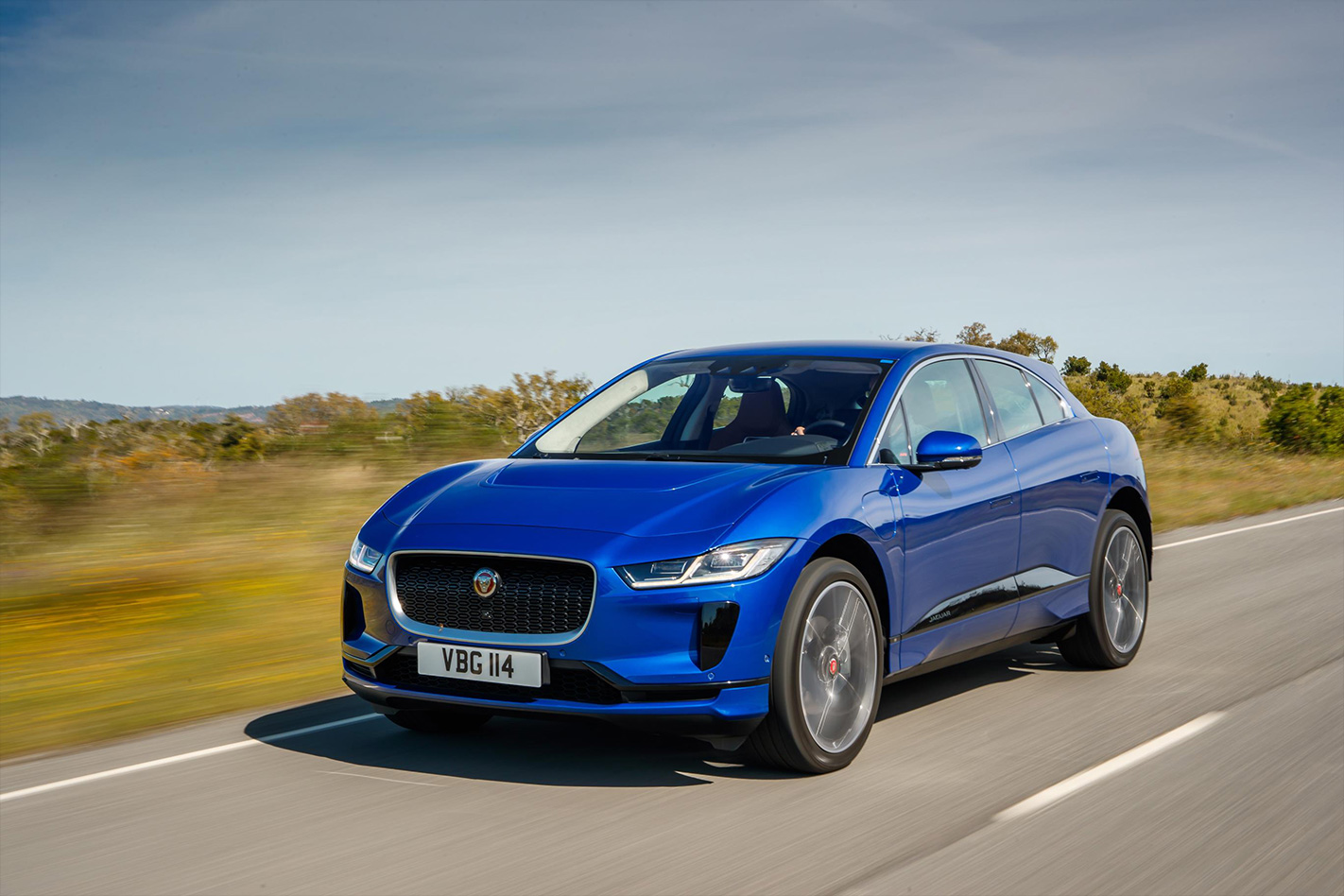
Now he’s taking delivery of an emissions-free electric car.
The heir to the throne of the British Empire has ponied up £60,000 (A$107,700) of his own money on an example of the new Jaguar I-Pace. The I-Pace is the first all-electric car from the iconic British marque, and is due to arrive in Australia in October priced from $119,000.
But Jaguar Australia won’t sell you a version identical to Prince Charles’s because the bonnie Prince has ticked quite a few options boxes, including a couple exclusively for him.
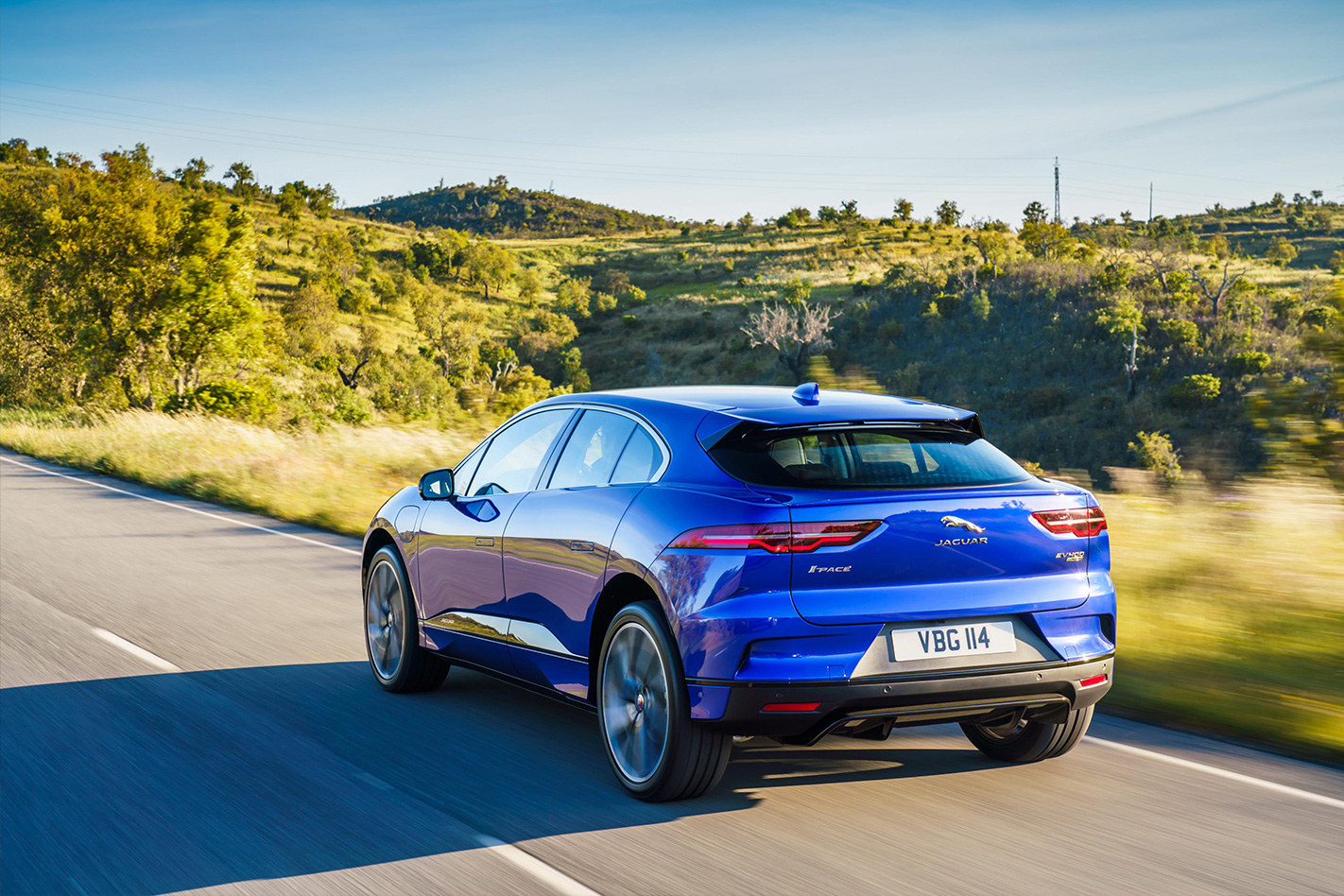
To avoid the automotive equivalent of turning up to a party in the same dress as another guest, the Prince has ordered his Jaguar I-Pace SUV in a unique Loire Blue paint colour. Personally we prefer the dazzling Caesium Blue from the standard palette, but who are we to argue with a bona fide blue blood?
Interestingly, Prince Charles recently described his newest ride as “silent but deadly” which probably sent Jaguar’s marketing team into damage control. We assume he meant the I-Pace is almost completely noise free from the outside yet devastatingly quick. That’s exactly what we found when we drove the car in June.
The Jaguar I-Pace is not quite the first electric Jaguar to feature a Royal at the wheel. In May, Prince Harry drove his new bride Meghan Markle from their wedding in a 1960s E-Type that had been modified to run on an electric motor.
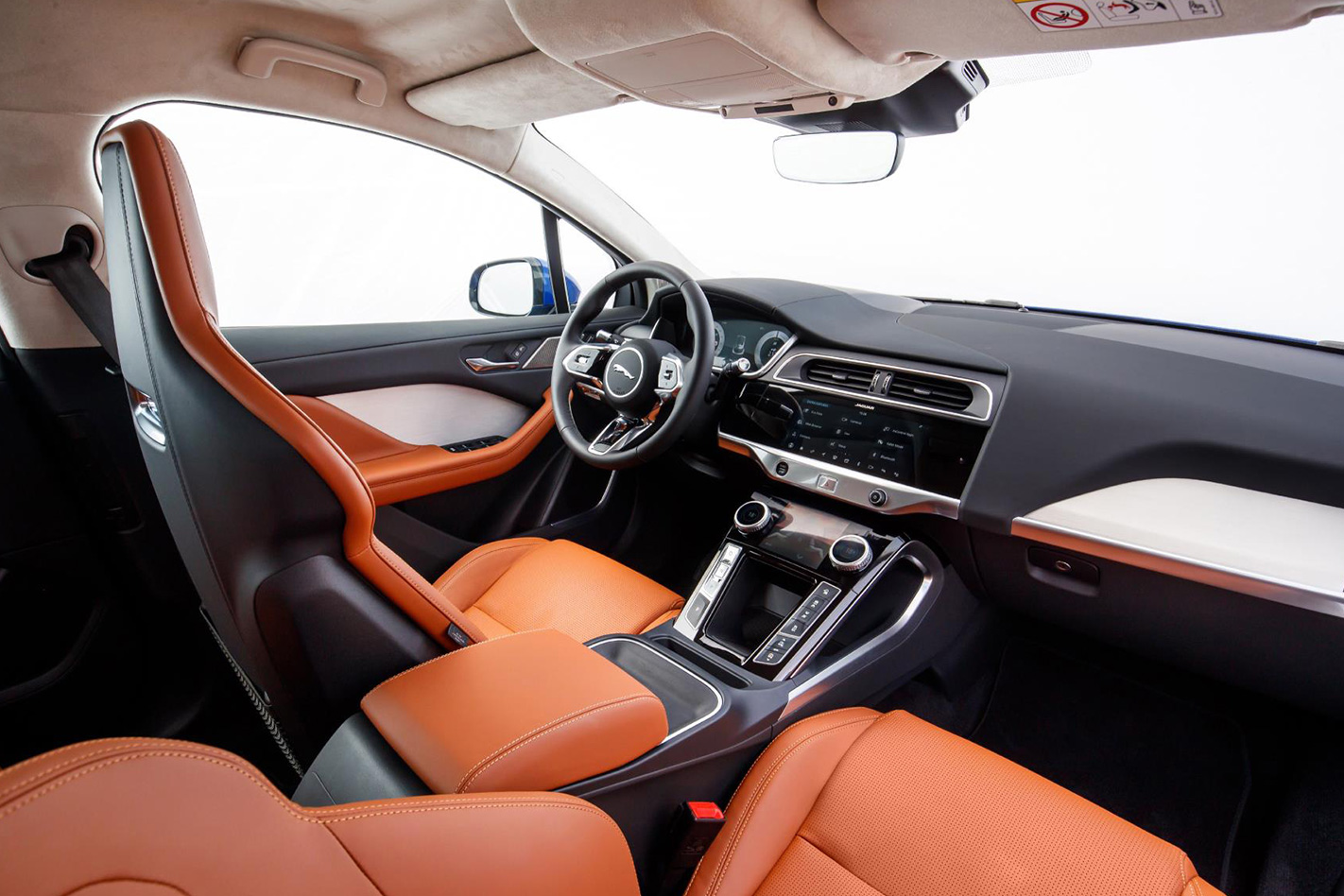
It should come as no surprise that the Royals are fans of environmentally friendly motoring. Charles’ new Jaguar will have to battle for attention with a beloved Aston Martin DB6 which has been converted to run on bio-ethanol.
And his father, the Duke of Edinburgh, was known in years past to ferry himself about town in a London black cab fuelled by LPG.
The Jaguar I-Pace is the first serious rival to the popular Tesla Model X, which sells in Australia for a coincidental $119,000. But a future king of England paired up with an American just wouldn’t be cricket. Or would it?
BMW’S iconic 3 Series is coming back to reclaim the driver’s car crown, and looking to give the likes of Mercedes, Alfa and Jaguar a good shoeing in the process.
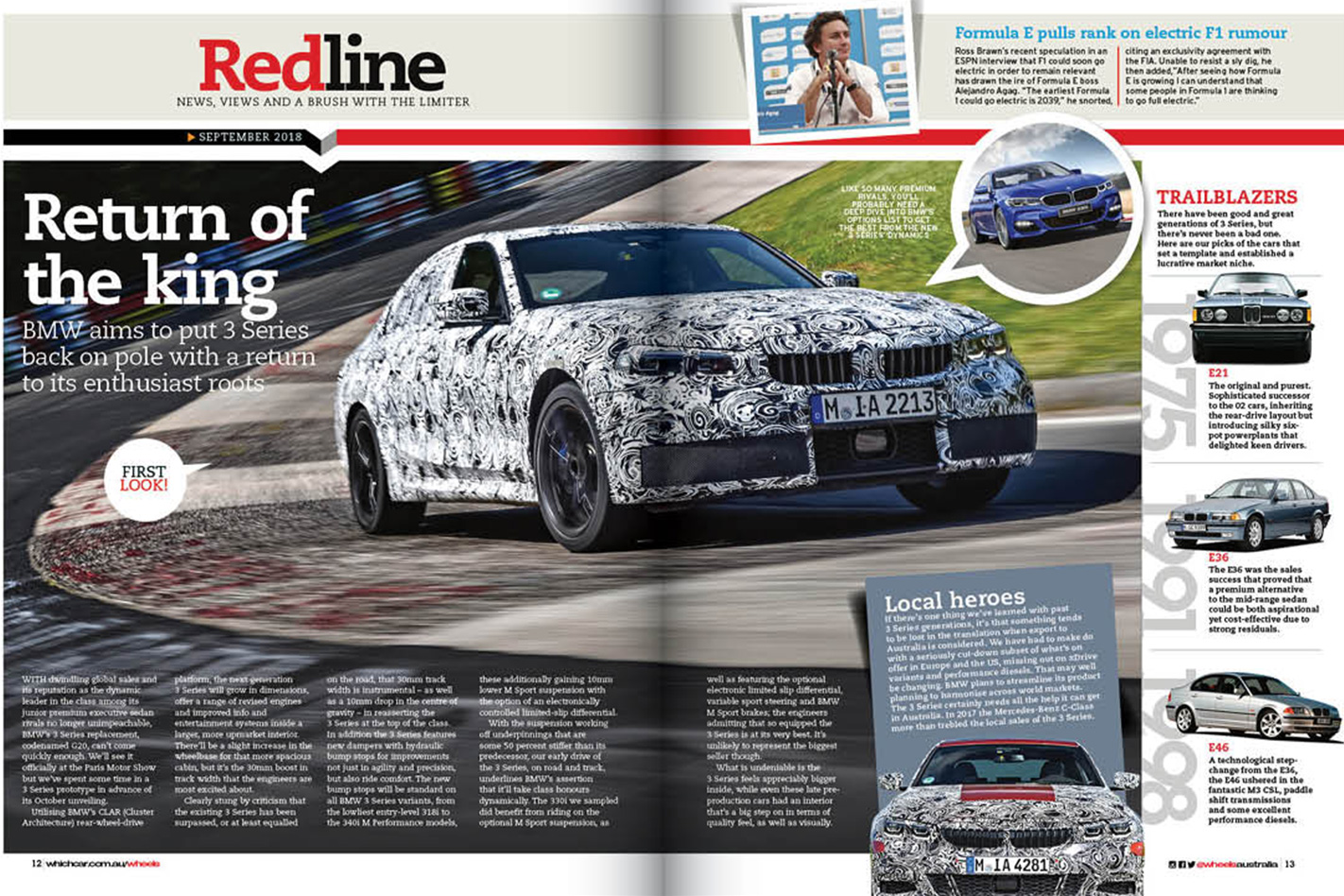
We’ve driven the next-gen sedan at the Nurburgring, and you’ll need to check the feature to discover why a resurgent return to form from Munich has the rest of the industry a bit sweaty-palmed.
Without wishing to appear in any way immodest, this month’s issue of Wheels is a belter. We really don’t know where to start with the good stuff, but here’s a taster.
We’ve delved into the decision making process which has led Daniel Ricciardo to jump ship from Red Bull, in what could be the riskiest gamble of his career.
Car of the Year 2019 is fast approaching, and the field is starting to come together. We’ve formulated a shortlist of the hottest new metal that will be vying for the prestigious award come November.
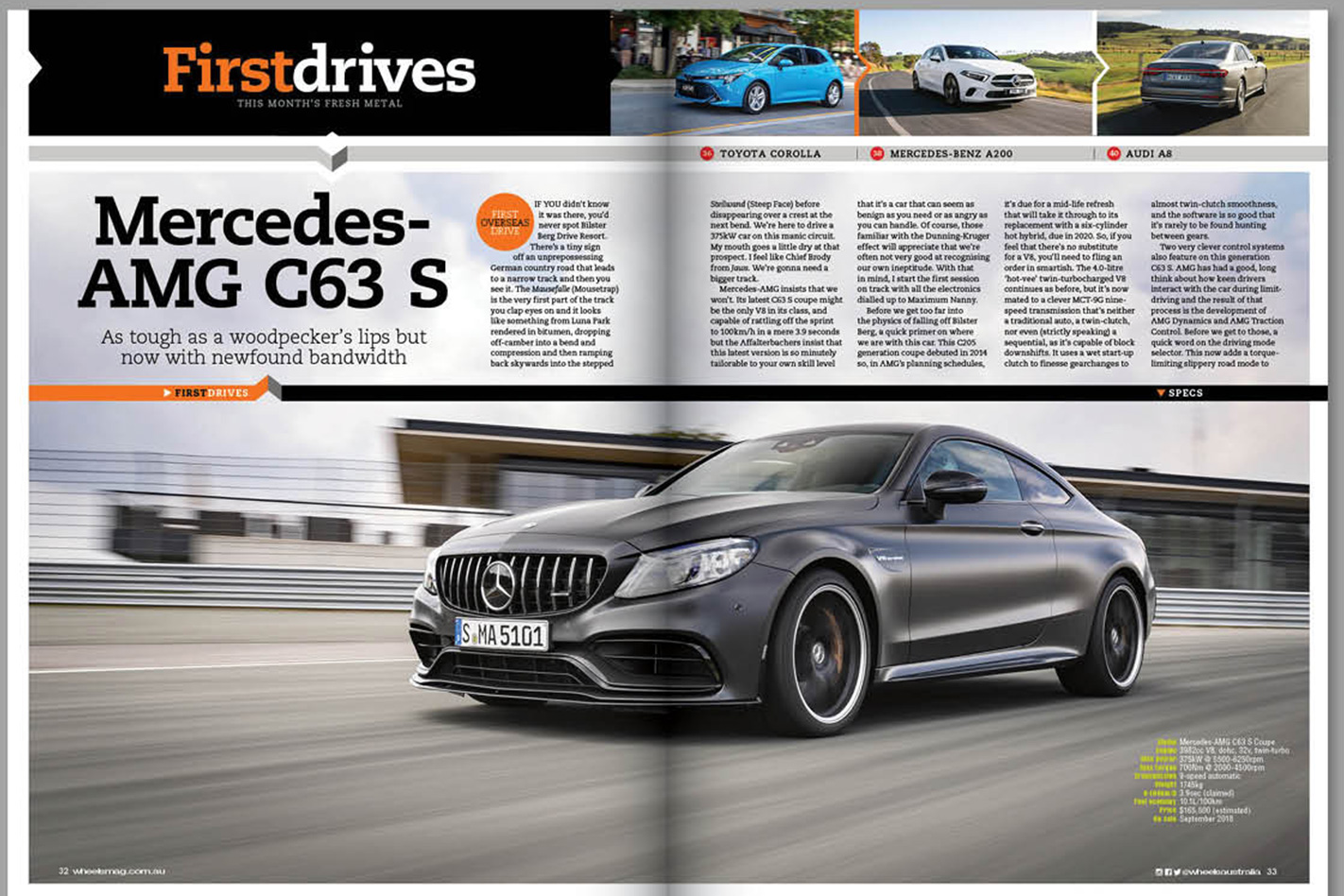
Our crew of journalists have been travelling the globe to drive the freshest new cars on sale now, including the tyre-shredding Mercedes-Benz C63, the tech-fest A-Class, the gutsy X350d ute, the quiet revolution that is the Audi A8, Hyundai’s updated Tucson, and McLaren’s gorgeous 570S drop top.
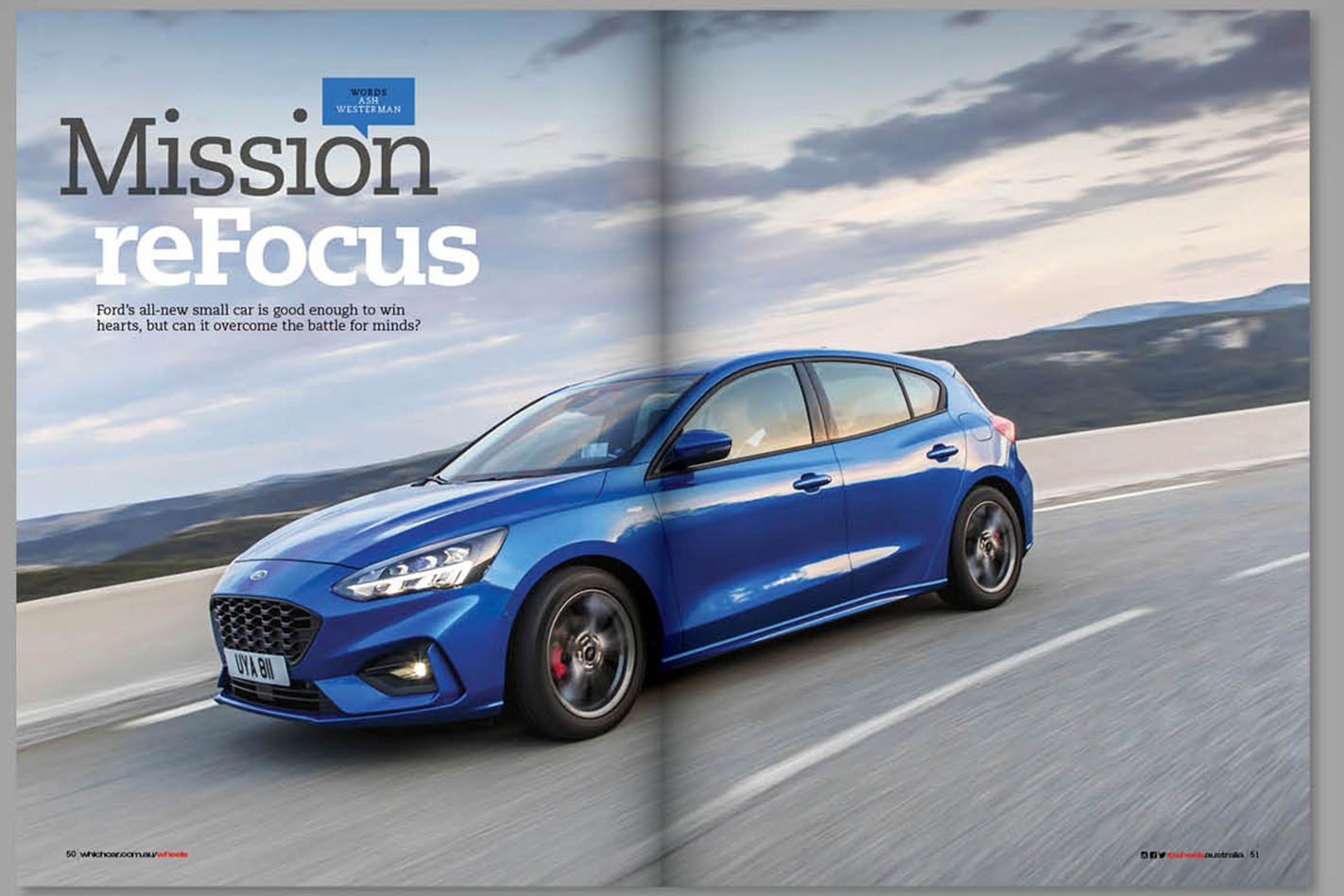
It’s not just BMW getting its mojo back, either. Ford’s latest Focus has been given a solid once-over, with Ash Westerman ignoring the cheese course in southern France to give the Focus a good leathering on the mountain roads of Provence.
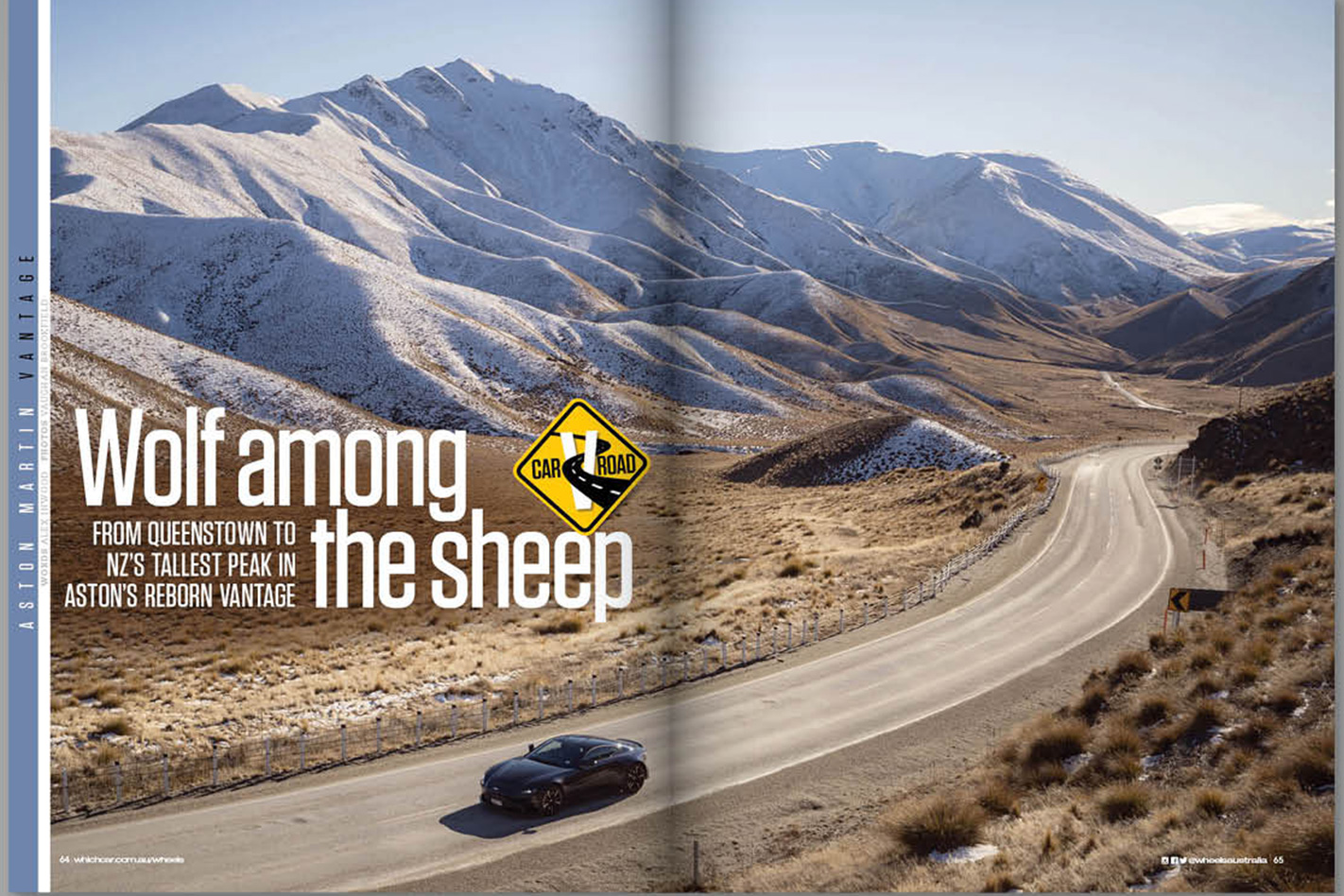
Editor Inwood escaped the cold grasp of Melbourne’s winter for the even colder conditions in New Zealand. Thankfully, he had a box-fresh AMG-powered Aston Martin Vantage at his disposal, which he pointed towards the tallest peak and most deserted roads he could find.
Ryan Lewis flew to Pikes Peak to ride along as Audi put the next-gen regenerative brakes of its yet-to-be-released E-Tron SUV to the test, while Peter Robinson hitched a ride with Jaguar’s Ian Callum in the I-Pace electric SUV for a trip down memory lane with the famous designer.
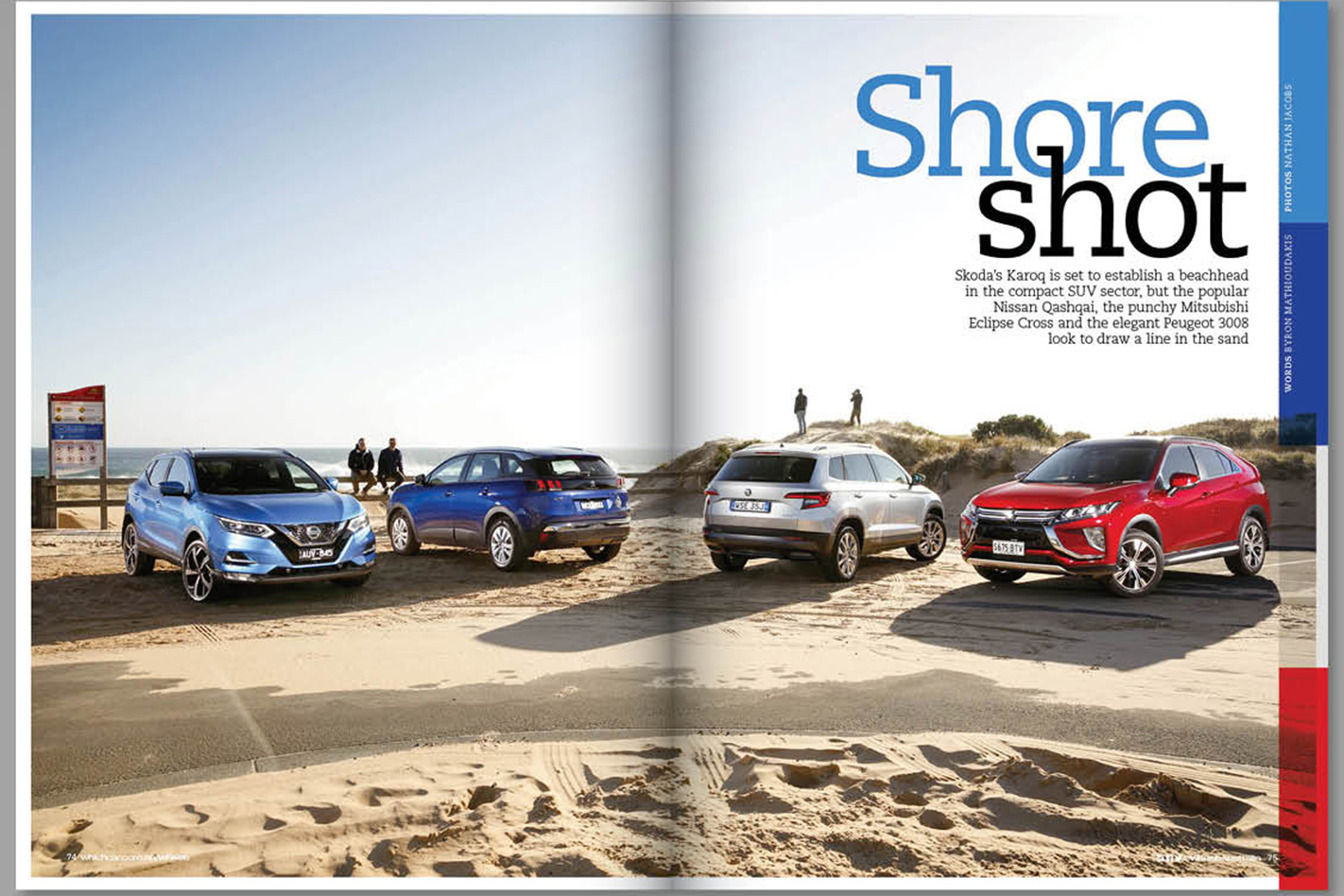
We sent Corby to Mongolia in an Infiniti, Bulmer to Blighty to check out resurrected Jaguars and, to prove that life’s not all business class and Bollinger, we gathered four budget SUVs to see which of the Skoda Karoq, Mitsubishi Eclipse Cross, Peugeot 3008 and Nissan Qashqai would be the last one standing after the full Wheels road test process.
All that, plus our usual opinion, long term test reports, and all the facts and figures that matter in Showroom – phew!
The issue is available now at your local newsagent, or online at Magshop.com.au.
IT MAY have escaped your attention, but October next year marks the 50th anniversary of the launch of Nissan’s ground-breaking 240Z. It also happens to be the date of the Tokyo Motor Show, so it would be entirely understandable were Nissan to celebrate that fact.
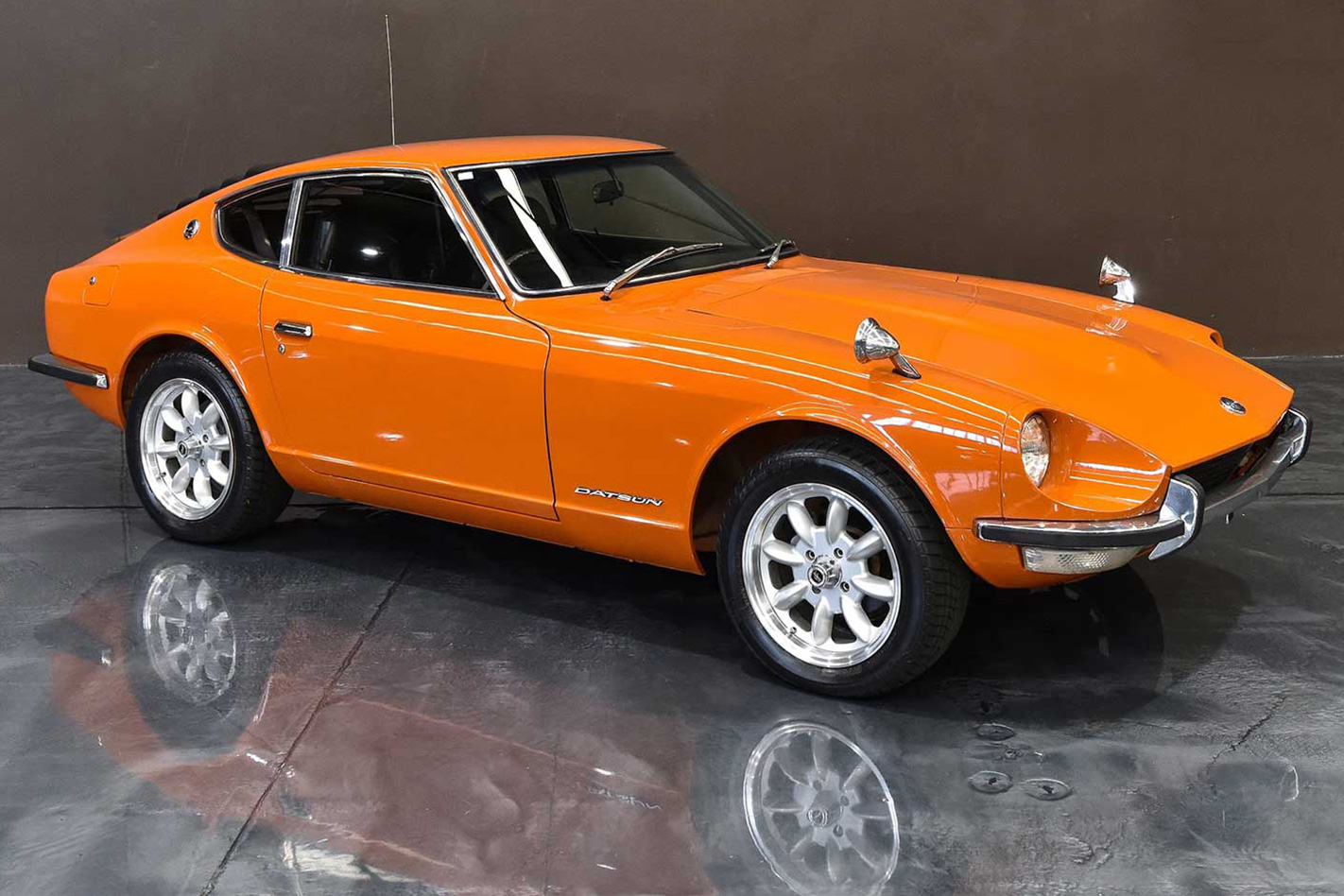
But rather than launch a special edition 370Z to commemorate the event, Nissan may well have something more spectacular to stop the show with: an all-new Z-car prototype. During an interview with Alfonso Albaisa, Nissan’s Senior Vice President for Global Design, we learned that planning for the next-gen Z is already under way. Rumours have swirled to that effect, but it’s now on record from a senior Nissan source.
“The Z-car, oh my god. Huge pressure,” said Albaisa when reviewing the to-do list of Nissan design work. “You can imagine I’m completely excited that I am in the position to work on that.”
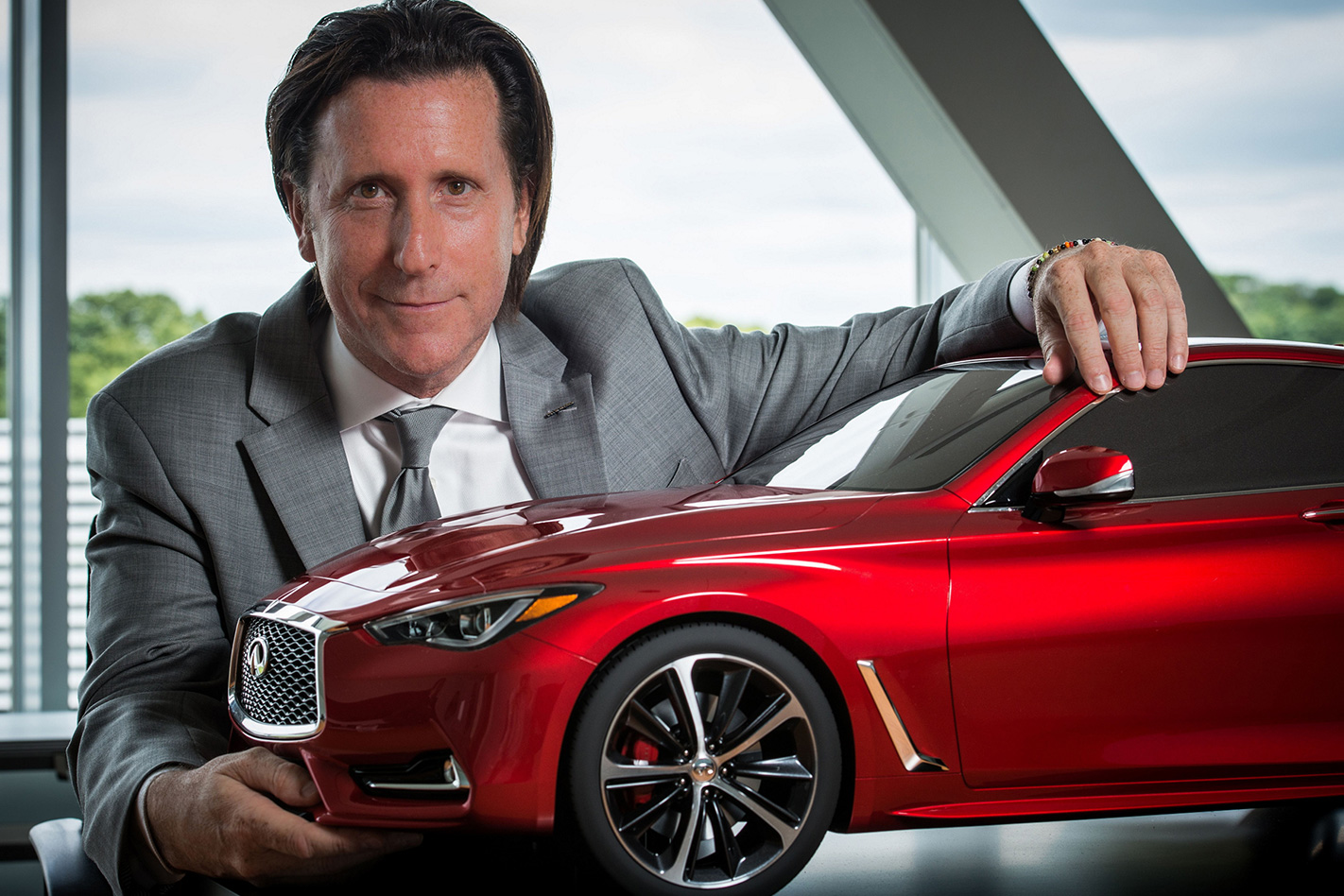
It couldn’t be in much safer hands. Albaisa, a 31-year veteran of Nissan, has some pedigree, having developed a series of stunning Nissan and Infiniti show cars, acting as the high-level guide to future design direction. When Shiro Nakamura stepped down as Nissan’s design boss last year, having overseen the design of 350Z and 370Z, the appointment of Albaisa, an unapologetic aesthete, met with universal acclaim.
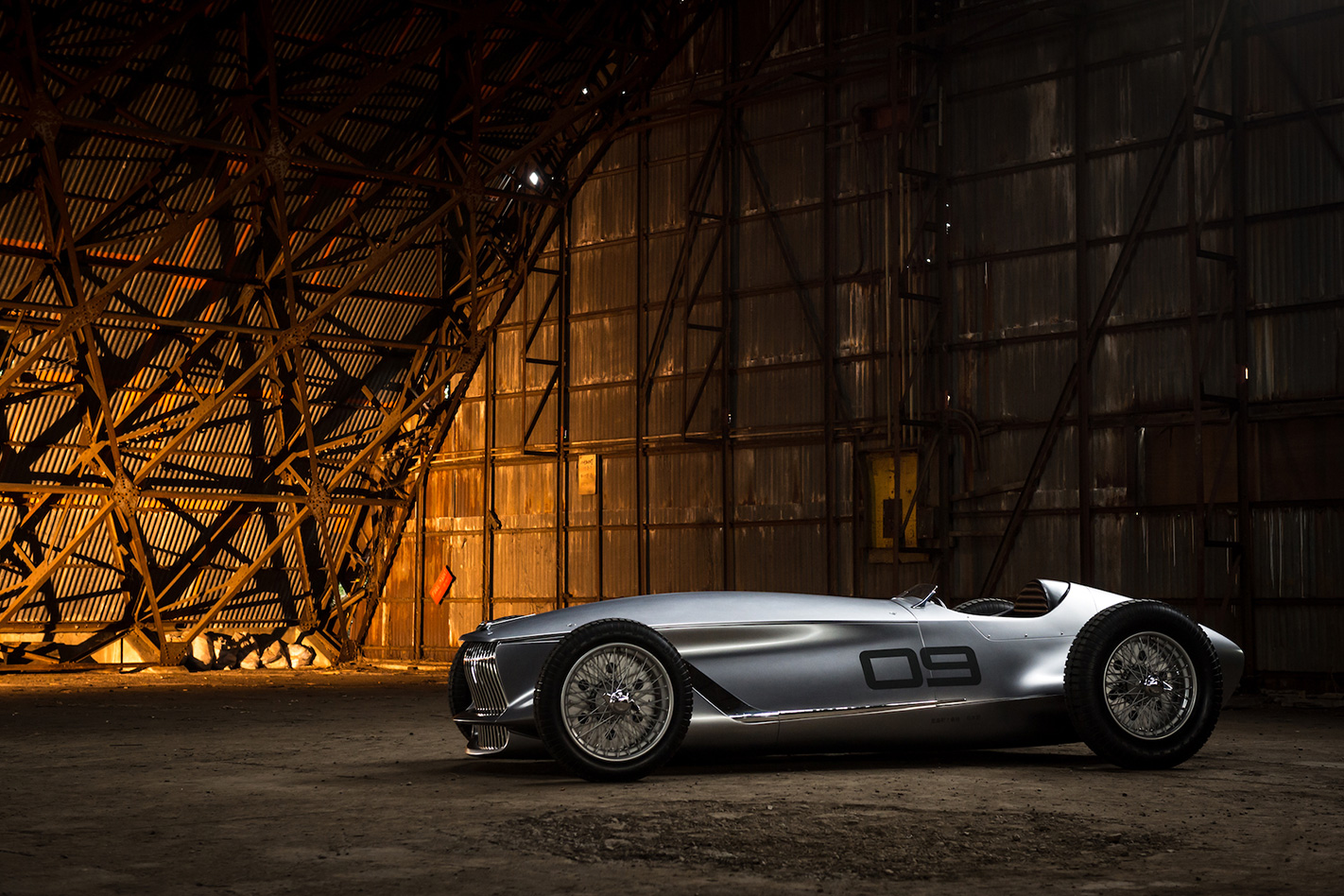
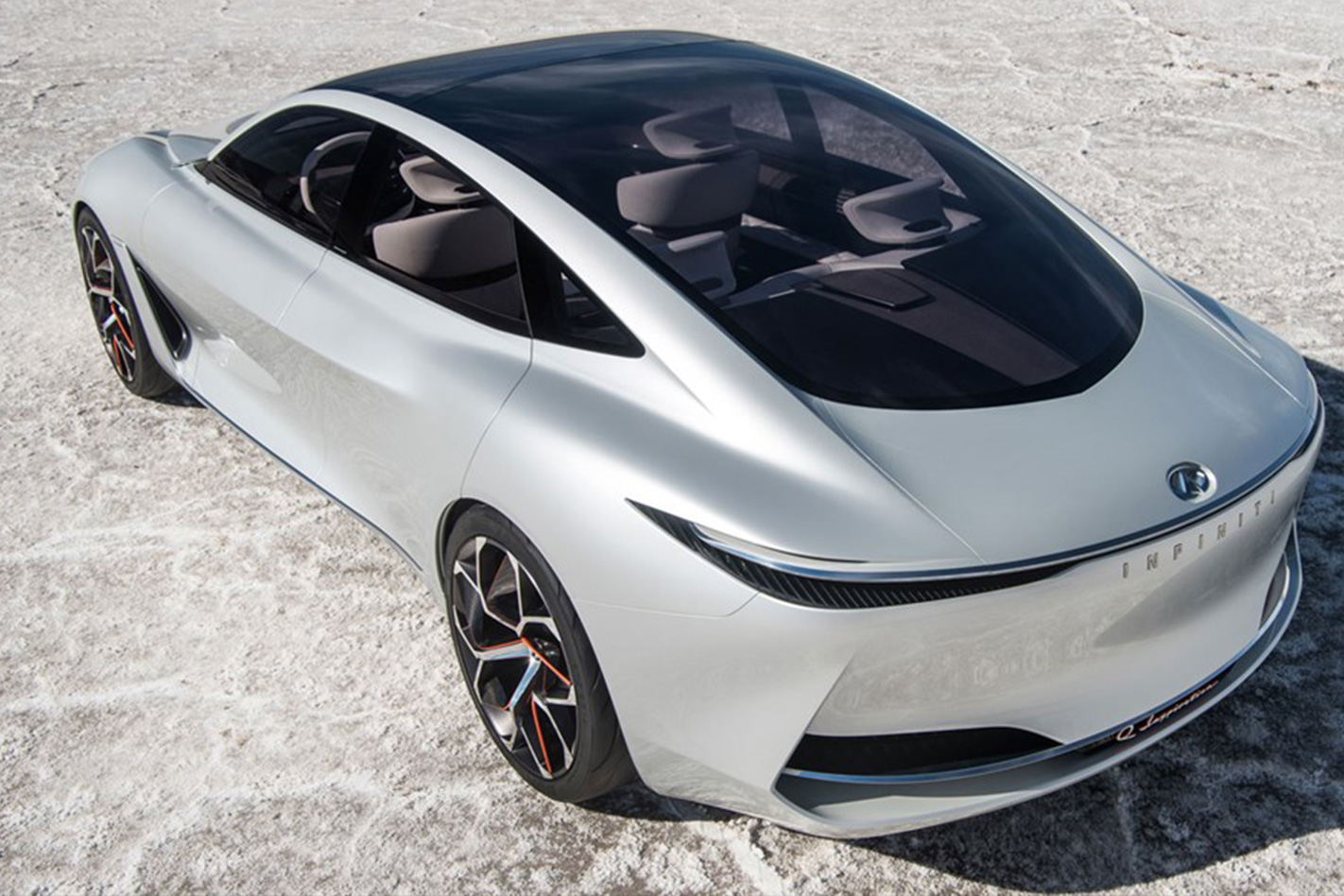
His 1940s-themed Prototype 9 proved the showstopper at last year’s Pebble Beach, an electric car inspired by the Howard Hughes’ H1 record-breaking aircraft. That was followed by the beautiful Infiniti Q Inspiration with its voluptuous sweep of glass running from bonnet to boot.
Success with the next-gen Z-car would cement Albaisa’s reputation in the top job. He’s fully appreciative of the weight of expectation. “Democratisation of the sports car, the 240Z, unforgettable,” he says. “Even in the modern day … the 300ZX of 1989, this Japanese simplicity was impressive.”
It’s been a decade since we first saw the 370Z at the 2008 Los Angeles show, and the car now feels long in the tooth. Ten years after the 240Z appeared, we’d cycled through 260Z and were into the 280ZX era.
It’s time for a new generation and Alfonso Albaisa has the management experience to effectively drive that project through Nissan’s multiple levels of bureaucracy. He might be feeling the pressure, but he’s odds-on to deliver. Start the countdown to Tokyo, 25th October 2019.
The Volvo XC60 is arguably the best mid-sized SUV on the market, with its case strengthened by a string of international accolades including the 2018 Wheels Car of the Year.
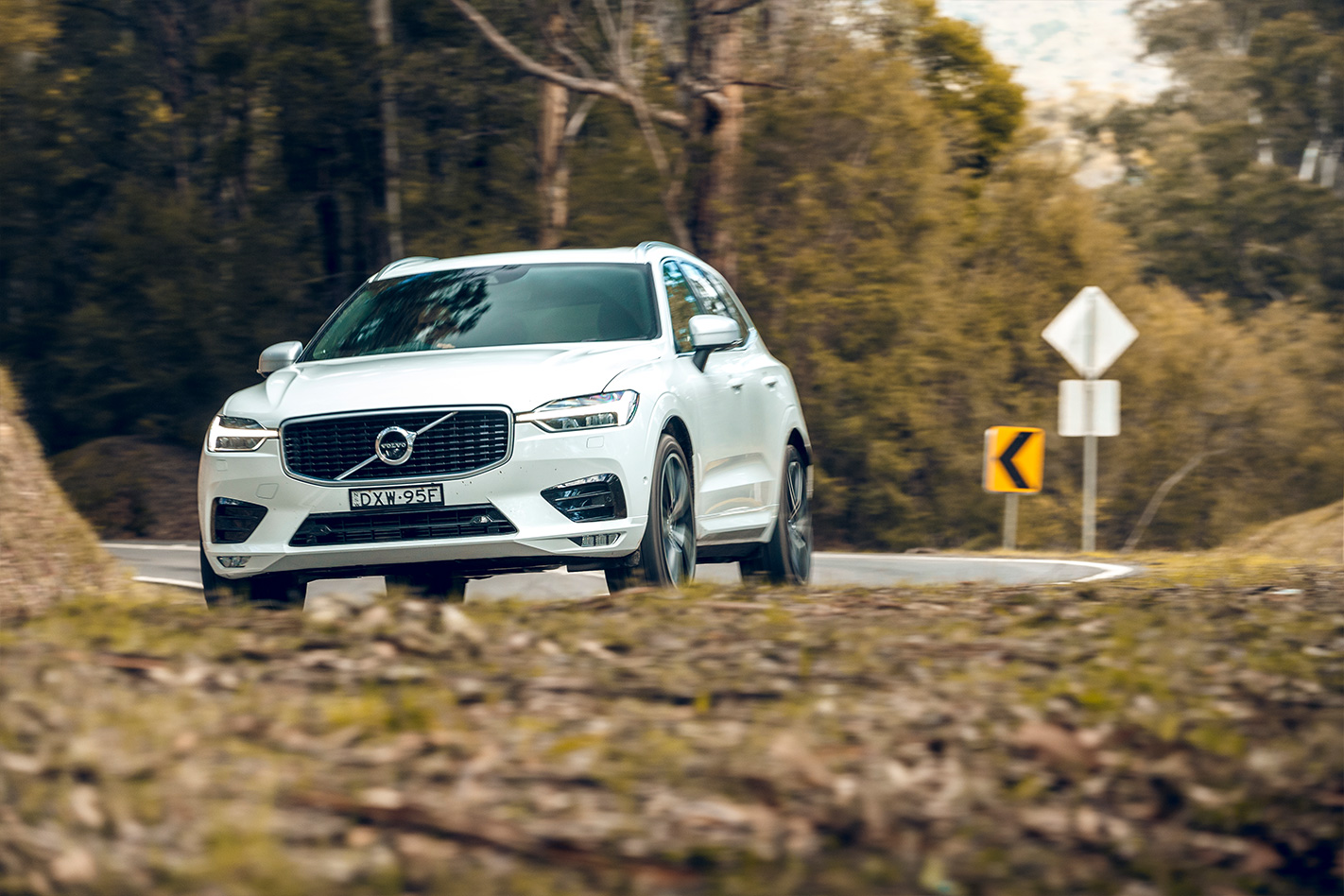
Much of the focus is on the hero variant, the very swift T8 Hybrid range-topper, but even the relatively sedate diesel versions provide an enjoyable drive, along with the comfort and safety levels you expect from the Swedish brand.
The Volvo XC60 range has two diesel powertrains, the 140kW/400Nm 2.0-litre D4, and its gutsier twin-turbo D5 sibling that produces 173kW and 480Nm of torque. After spending plenty of time with the state-of-the-art petrol-hybrid T8, we decided to hit the road in the D5 R-Design to see if twin-turbo diesel power still provides a viable, and enjoyable alternative.
VALUE
The D5 is only available in the sporty R-Design spec that tops the XC60 range, with a corresponding heftier price. If you want the most powerful diesel, you’ll have to fork out for the more generous features that it’s supplied with as standard. The retail price starts at $75,990 before options, which is considerably more than the D4 in entry-level Momentum, and Inscription spec which start at $61,990 and $68,990 respectively.
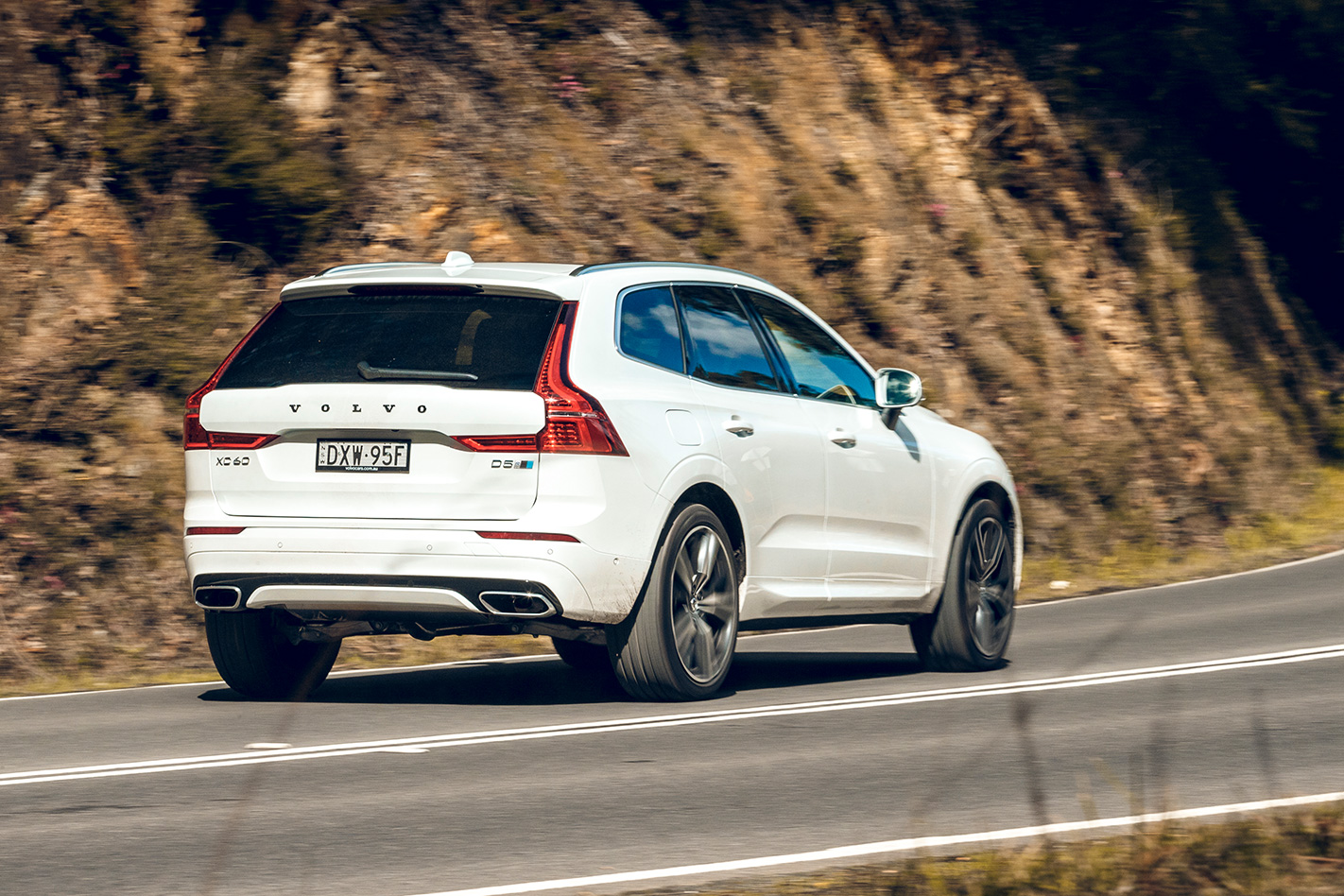
The XC60 D5 R-Design we tested starts at $75,990 had a few optional extras including the $2500 Lifestyle Pack with heated front seats, panoramic sunroof, and tinted rear glass, along with powered front seat side bolstering ($450) and Crystal White Pearl premium paint ($1900) – only one colour, Ice White, doesn’t attract a premium. All this brought the retail price up to $80,840, which still represents good value against similarly equipped and performing rivals such as the BMW X3 xDrive20d and Jaguar F-Pace 20d R Sport. AWD.
The D5 powertrain is economical, with official combined fuel consumption rated at just 5.6L/100km, which is excellent for an almost 2.0-tonne luxury SUV. Our real-world driving saw that stretch to a still-respectable 7.5L/100km according to the trip computer.
The XC60 requires servicing every 15,000km. There is no capped servicing, with pricing varying between dealer networks. Hourly labour costs apply, with each service taking between 1.5 and 2.1 hours.
STANDARD FEATURES
The R-Design spec brings a scrolling list of standard features to the Volvo XC60 D5 starting with active safety suite that includes autonomous emergency braking, adaptive cruise control, lane keeping assistance, driver alert, and adjustable speed limiter and cross traffic alert.
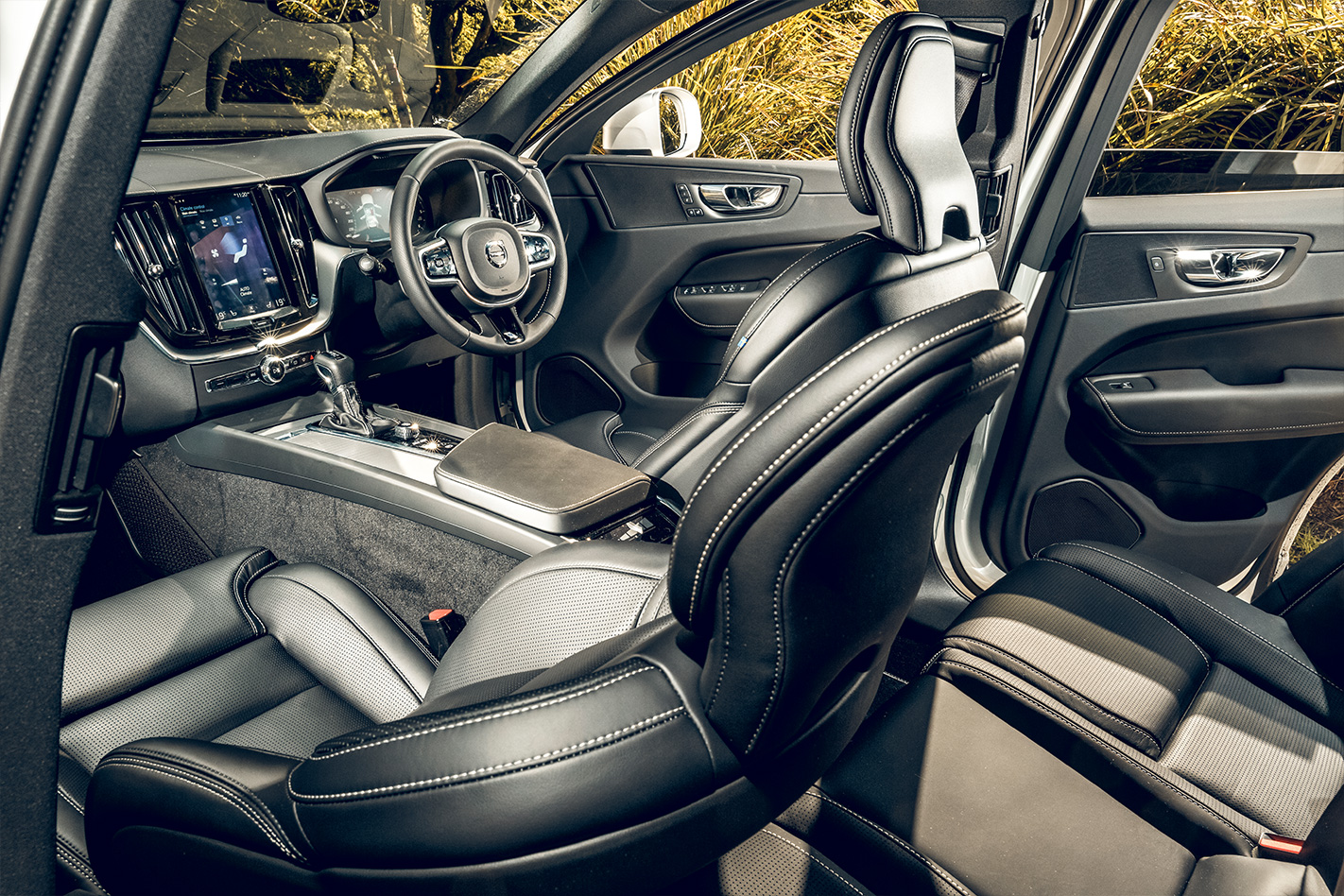
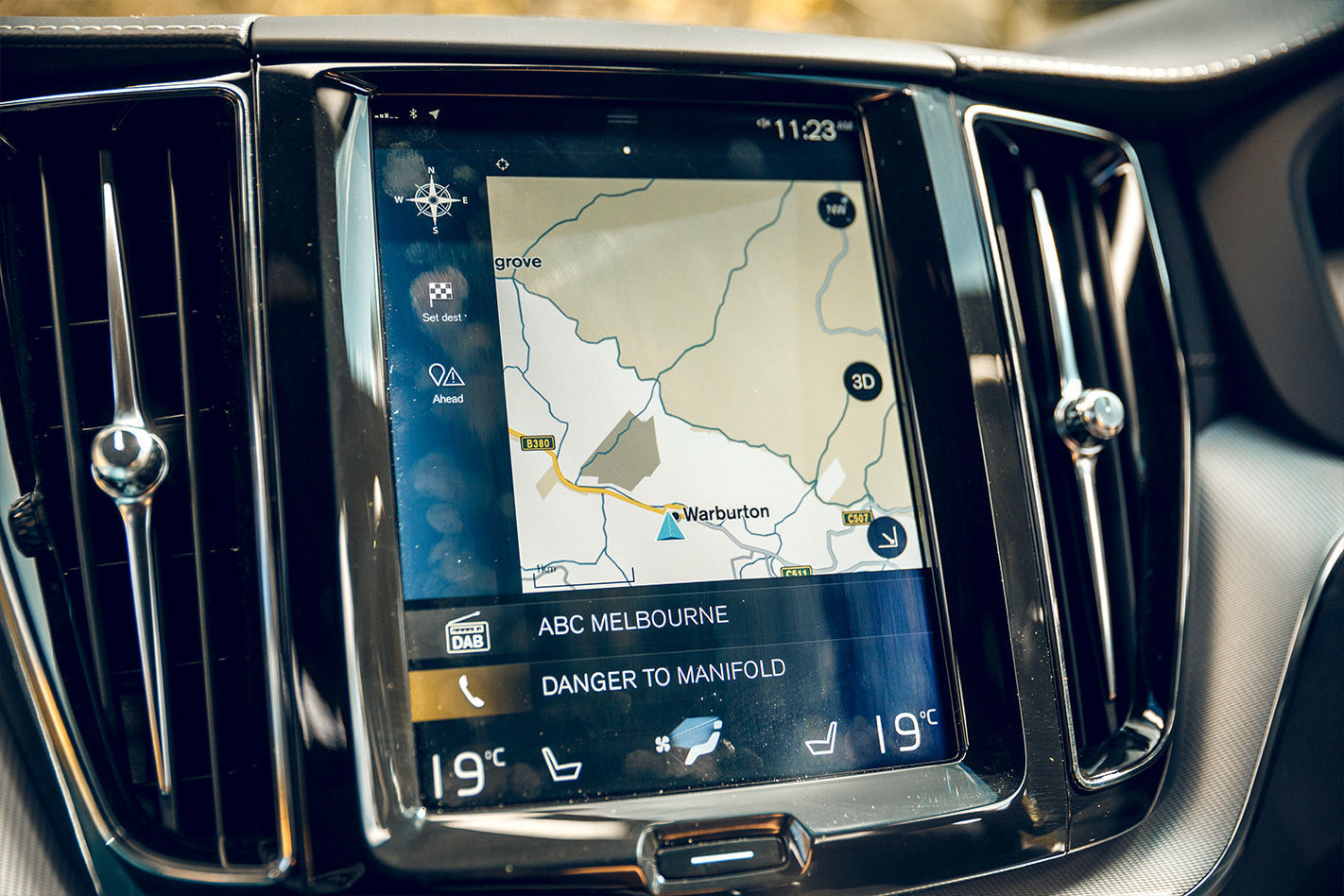
Step inside and you’ll find a 12.3-inch portrait orientated touchscreen, Nubuck leather upholstery, metal mesh décor inlays, power adjustable front seats with cushion extensions, three-spoke R-Design leather steering wheel with paddle shifters, four-zone climate control, and ambient lighting.
You also get front and rear parking sensors, a 360-degree reversing camera, rain-sensing windscreen wipers with integrated washers, LED active bending head-lights that help you see into corners, LED daytime running lights, puddle lights, high-pressure headlight washers, hands-free powered tailgate, keyless entry and plenty of sporty R-Design interior and exterior embellishments.
SIZE
The Volvo XC60 is a five-seater medium SUV.
Measuring 1.66m long and 1.90m wide, it’s deceptively big with its gangly 1.9m height and 21.6cm ground clearance making it look narrow – which you realise it isn’t the case when trying to park, though the 360-degree parking camera does make things easier.
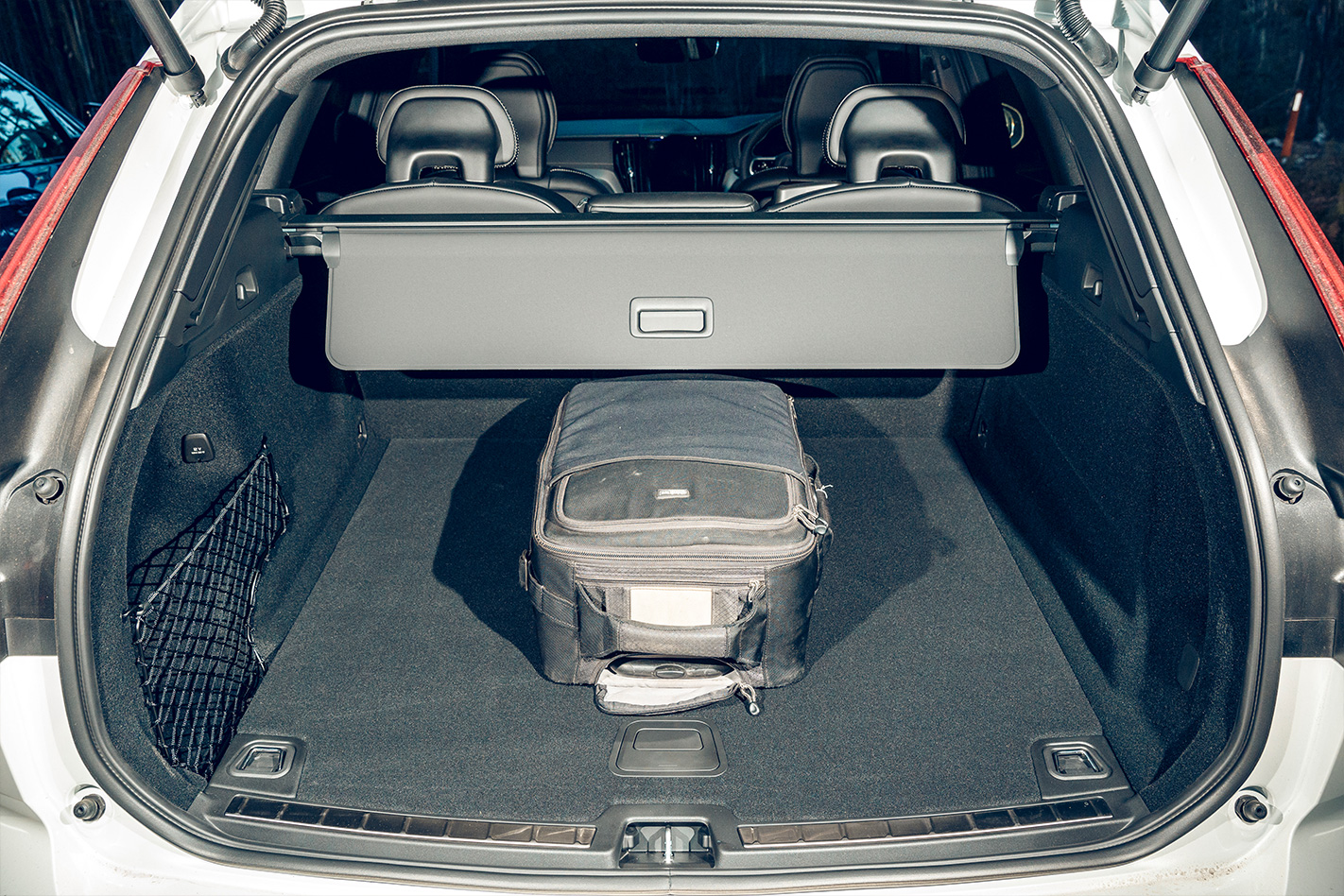
Inside there’s plenty of leg and shoulder room, and the boot space is 505 litres, which is average for medium SUV, but there’s a wide opening that helps fit bulky loads. Fold the rear seats flat and capacity expands to 1432 litres.
The Volvo XC60 D5 weighs in at 1918kg and has a decent braked towing capacity of 2400kg.
SAFETY
The second-generation Volvo XC60 took the Swedish brand’s excellent reputation for safety a step further when the European New Car Assessment Program (EuroNCAP) awarded it the highest crash rating in 2017. It excelled with “almost-perfect 98 percent” for the way it protected adults in a simulated crash. The Australasian New Car Assessment Program (ANCAP) also gave the Volvo XC60 the maximum five-star safety rating in October 2017.
It has seven airbags: two in front of the driver and front passenger; side airbags to protect front occupants from side impacts; a driver’s knee airbag; and head-protecting curtain airbags down each side that protect even the third-row passengers. There are also ISOFIX child seat anchors for the outward rear seats.Among the active safety aids on every XC60, there’s autonomous emergency braking that detects other vehicles, pedestrians, cyclists and even large animals. As well as stopping, the system will help try and steer around the object ahead of the vehicle.
Driver fatigue alert, lane-keeping assistance, blind Spot information, and cross traffic alert are also standard, as is rear collision warning that detects if you’re about to be rear-ended and tensions your seatbelts and applies the brakes after impact.
COMFORT
The XC60 is very comfortable, with a quiet, roomy and uncluttered cabin that looks more premium than many pricier German rivals. Front seats provide excellent support on long trips. The driver is treated to a comfortable seating position, forward vision, and pleasant touch points including the leather gear shifter and steering wheel, with the latter featuring intuitively laid out controls for phone, audio and cruise control.
The control and infotainment system has multiple layers and modes via the swipe-and-push 12.3-inch portrait touchscreen. It’s is a little confusing at first, but once you’re accustomed you’ll find it is a decent mix of functionality and design. Most vehicle and climate control settings can only be operated via the screen. While, this has reduced clutter around the dashboard and centre console, it can prove troublesome on rougher roads where you’ll be wishing there were more physical buttons.
Second-row seating is also very comfortable but legroom is limited for taller people who’ll find their shins touching the front seats. The low window line and good forward vision helps children feel less hemmed in.
The rear has its own digital climate dual-zone control display with air vents situated on the door pillar, and there’s a 12v socket for charging devices or powering auxiliary equipment.
The cabin refinement is undermined a little by standard steel suspension springs that, along with the big 21-inch wheels, lead to a ride that’s firmer than you’d expect, or want, from a luxury SUV.
ON THE ROAD
Apart from the raised driving position, the Volvo doesn’t make you feel like you’re behind the wheel of an SUV.
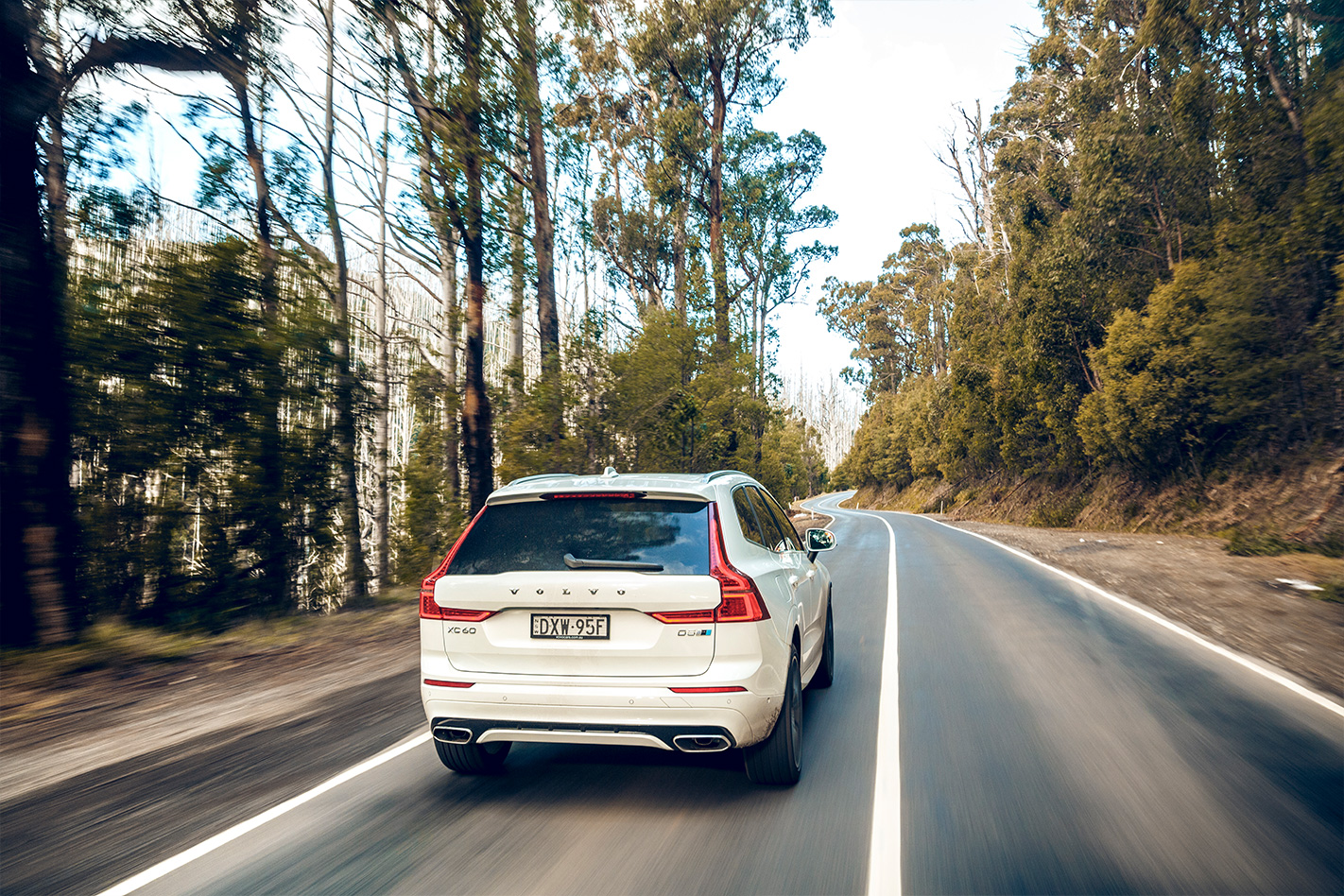
Apart from some inevitable turbo lag, the twin-turbo D5 has plenty of shove, with excellent acceleration, particularly in the Dynamic driving mode. It sits comfortably at higher speeds, with plenty of power in reserve to make quick overtaking a doddle.
The steering can feel a little disconnected though. It’s accurate and consistently-geared but doesn’t offer much in the way of feedback which can sap confidence a little when entering tighter corners.
You also feel every pothole with the standard steel suspension, not helped by the wagon-wheel 21-inch rims with skinny rubber. The ride is choppy on country backroads, but reasonably composed on freeways or around town. If there’s one option box you should tick on any XC60 it’s the Active Chassis with Air Suspension, which offers a far more complaint ride and adapts to different road and driving conditions.
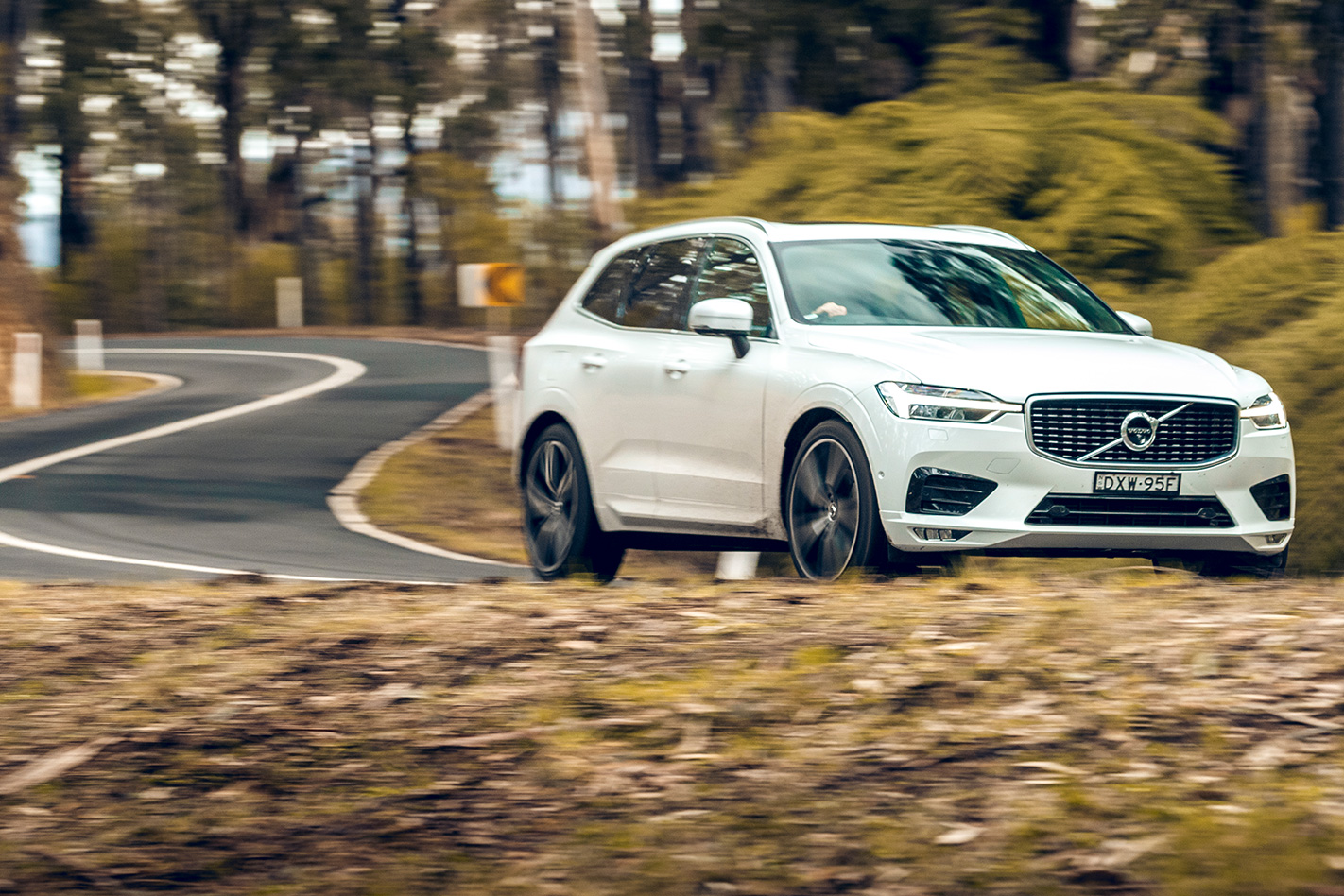
The XC60’s all-wheel drive helps it maintain drive on snowy or otherwise slippery sealed roads, on gravel roads and reasonably intact tracks. That said, if you were to get a flat tyre while off the beaten track, you would have to struggle home on the skinny space-saver spare.
THE VERDICT
There’s a reason the Volvo XC60 has a bulging trophy cabinet. It does almost everything well and has managed to steal the luxury SUV benchmark away from the Germans.
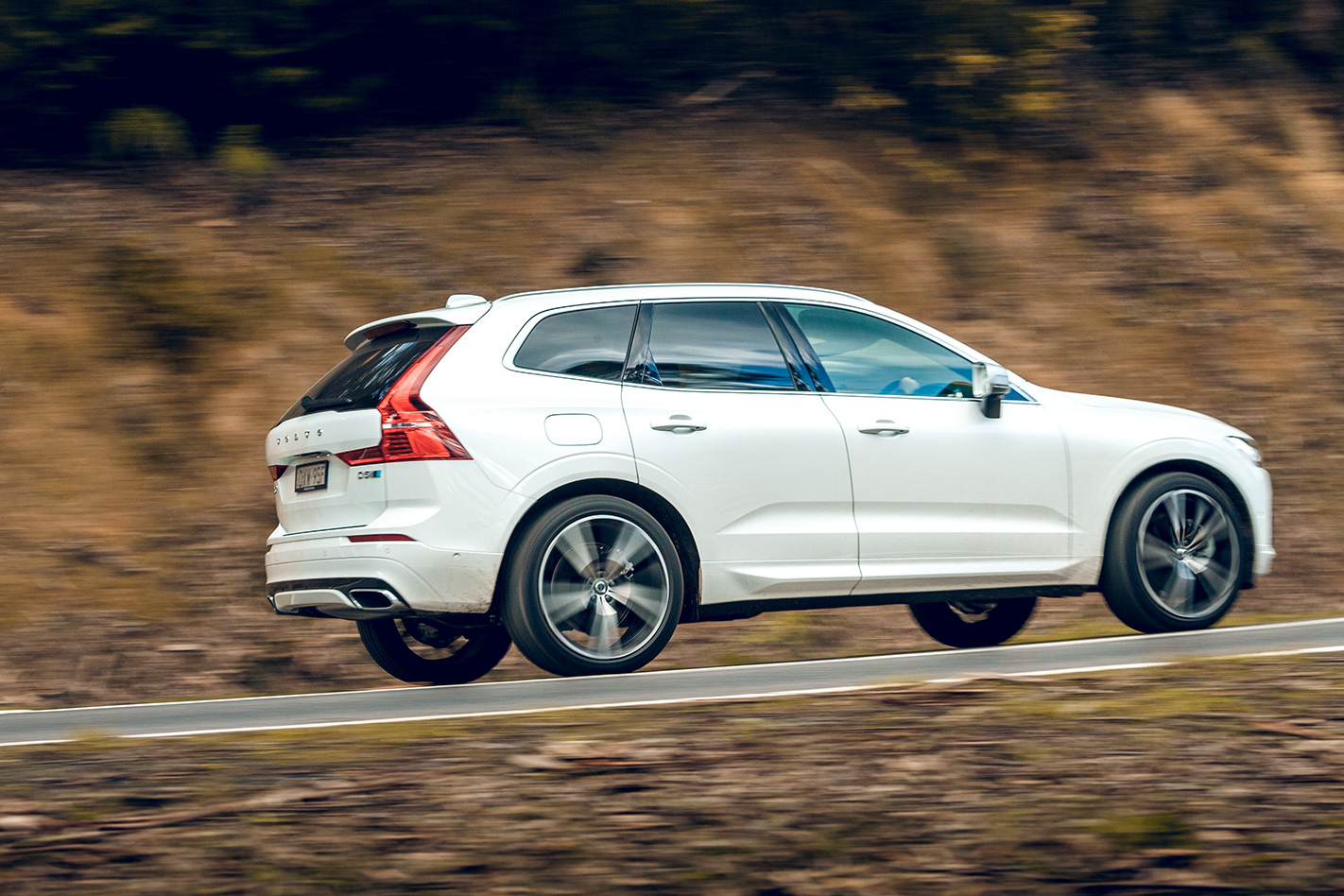
The Volvo XC60 D5 R-Design is one of the stand-out variants, ticking most premium SUV boxes including elegance, safety, build quality, economy and performance. The ride and handling remains vacant though, but this can be ticked off by investing $2490 in the Active Suspension Air Suspension option that transforms this very good luxury SUV into a great one.
Everyone remembers Chrysler’s E49 Charger R/T. Okay, maybe not exactly the E49 – maybe something like the pale yellow VH Charger XL my Uncle Brian once owned – but that legendary codename carries plenty of baggage for the Chrysler faithful.
This review was originally published in MOTOR’s June 2007 issue
Not only did the 1972 E49 represent the pinnacle of decades of local engineering for Chrysler Australia, it was also the fastest-accelerating Aussie car for nearly 20 years – pipped by Holden’s VN SS Group A in 1990.
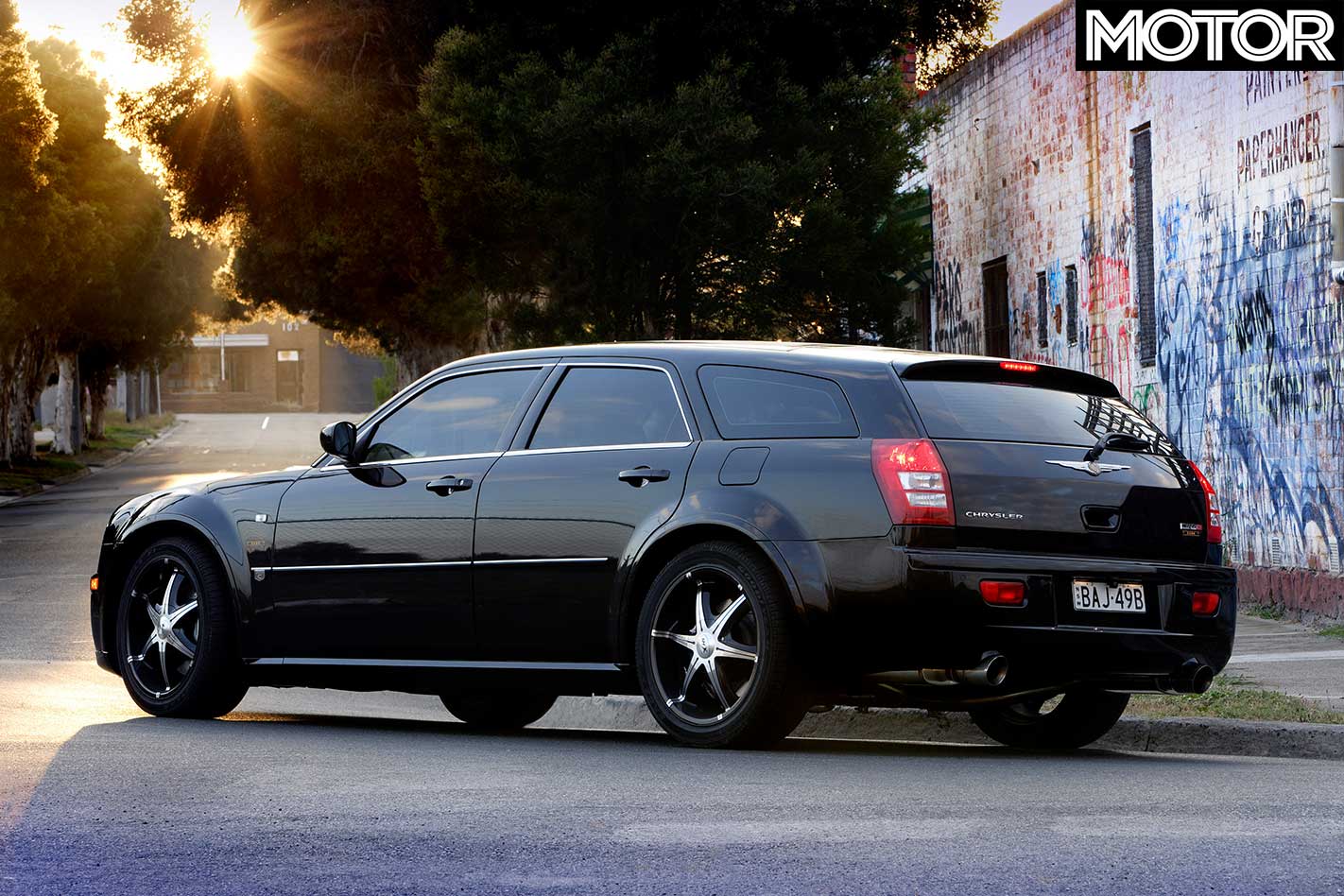
Despite the fuel-price phobia, the 300C range has struck a chord with Aussie punters (we’re now the biggest market for the car outside North America), and such is its recognition and nation-wide appreciation, it simply begged for some ‘special project’ action.
The result is Project E490 – a modified, ghetto-fied version of the most recent 300C variant introduced here, the SRT8 Touring. The standard SRT8 is already one mean-looking, mean-sounding son of a bitch, but with a heavy window tint, some subtle but sinister visual tweaks, and some breathing mods for its 6.1-litre Hemi V8, the E490 has to be the baddest and loudest thing to grace Sydney’s streets since Kelly Osbourne in 2005.
The focus with Project E490 is to highlight the much-admired style of the 300C, as well as the stunning performance of the flagship SRT8. But there’s an ulterior motive here – Daimler Chrysler Asia Pacific is keen to develop and market a limited-edition 300C utilising genuine performance parts from Chrysler’s Mopar catalogue, as well as some local engineering know-how. And 300C SRT8 Touring ‘E490’ is the test mule.
Visually, there isn’t a lot in it, but the 300C’s chiselled shape is such a great canvas to work with, the effect of the E490’s subtle enhancements is dramatic. At the front, the grille’s vertical slats have been painted black (they were grey), and to match the Touring’s sinister Brilliant Black Crystal Pearl paint job, its windows have also been darkened.
The 300C’s exaggerated wheelarches are now stuffed with 20 x 9-inch XHP ‘Cruz’ alloys – the same size as the regular SRT8’s polished alloys, but suitably meaner to complete E490’s look and chosen for visual impact rather than a reduction in unsprung weight.
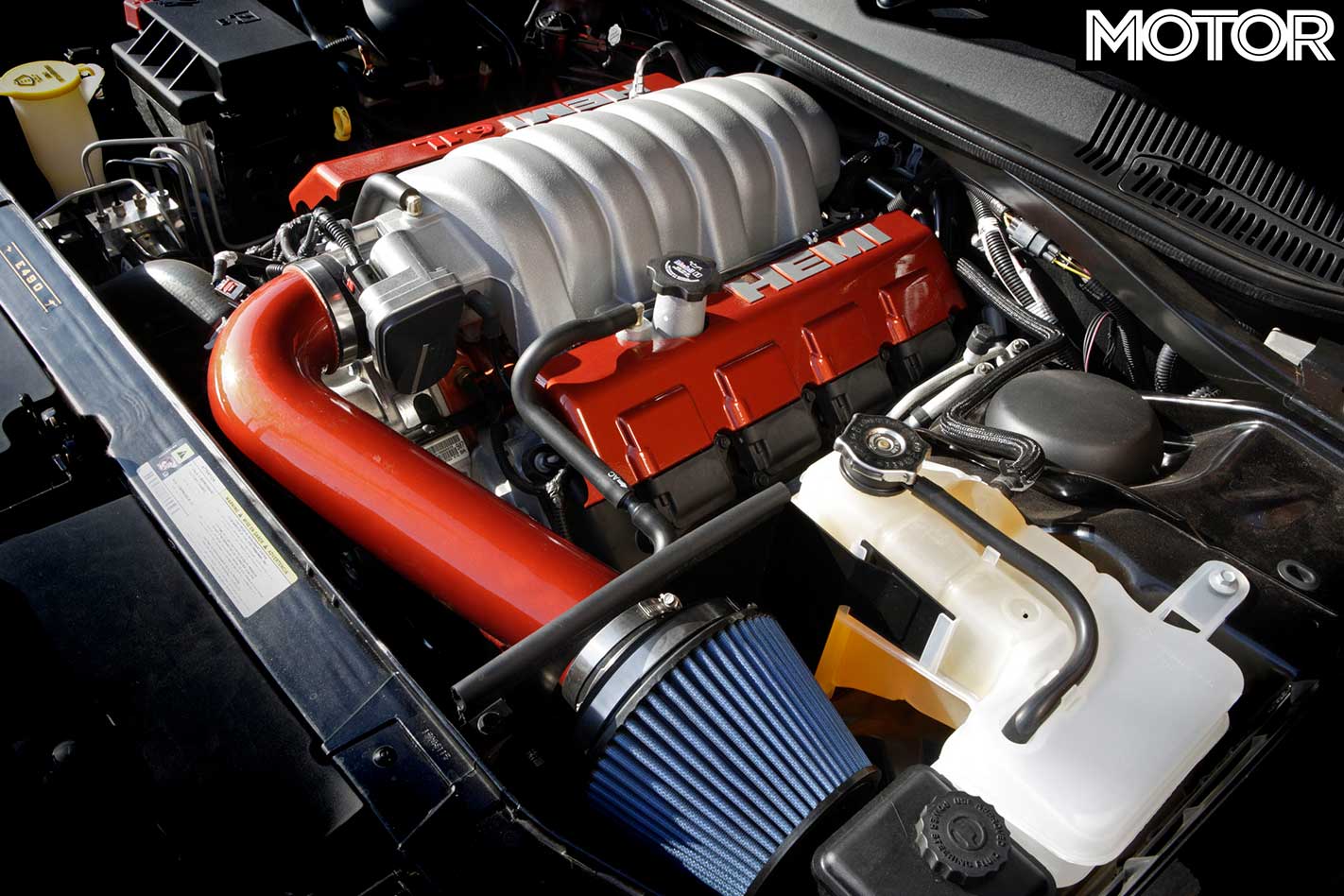
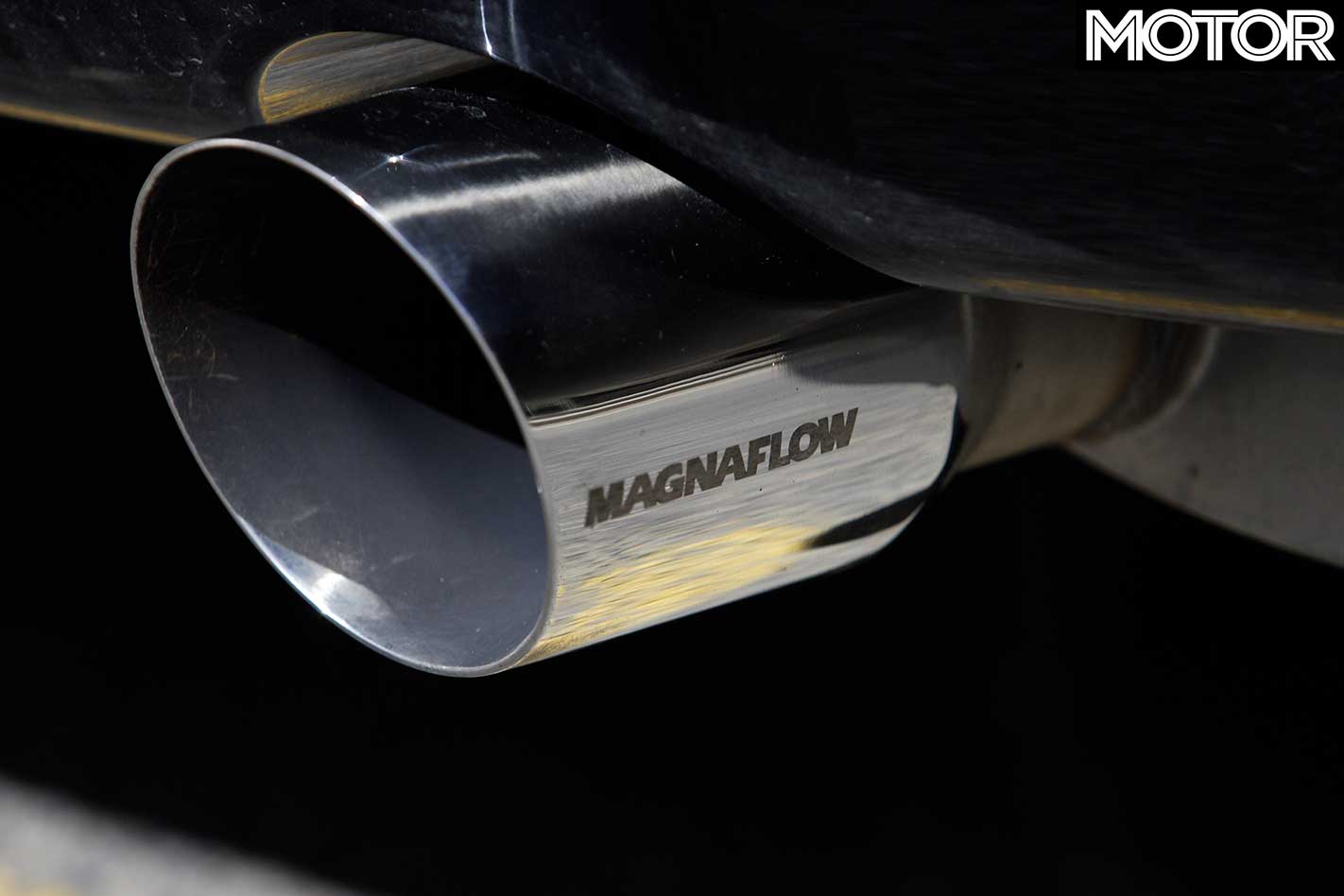
The Hemi V8’s glowing-red rocker covers are also purely for appearance, but E490’s Mopar cold-air induction system (with red intake piping the girth of a roof drain) and Mopar exhaust system with Magnaflow rear mufflers are anything but show pony … apart from that bloody exhaust noise.
And what a noise! True, the E490’s exhaust is currently too loud to meet the drive-by ADR, and the boom it produces at 60km/h in top gear is both deafening and kind of annoying. But tickle the E490’s throttle a little, or simply knock it down a gear, and the drone disappears. Indeed, the bellow from both its engine and exhaust at virtually any rev point is intoxicating.
Foot-to-the-floor, the 1965kg E490 Touring delivers mild wheelspin off the line, followed by a huge shove between the shoulders as its engine hammers. Chrysler reckons E490 is up roughly 15kW over a ‘standard’ SRT8 and our scorching quarter-mile time of 13.5sec seems to vindicate as much.
But, honestly, the numbers mean jack. It’s the wall of thunder that accompanies the E490 under acceleration – of any intensity – that ices this cake.
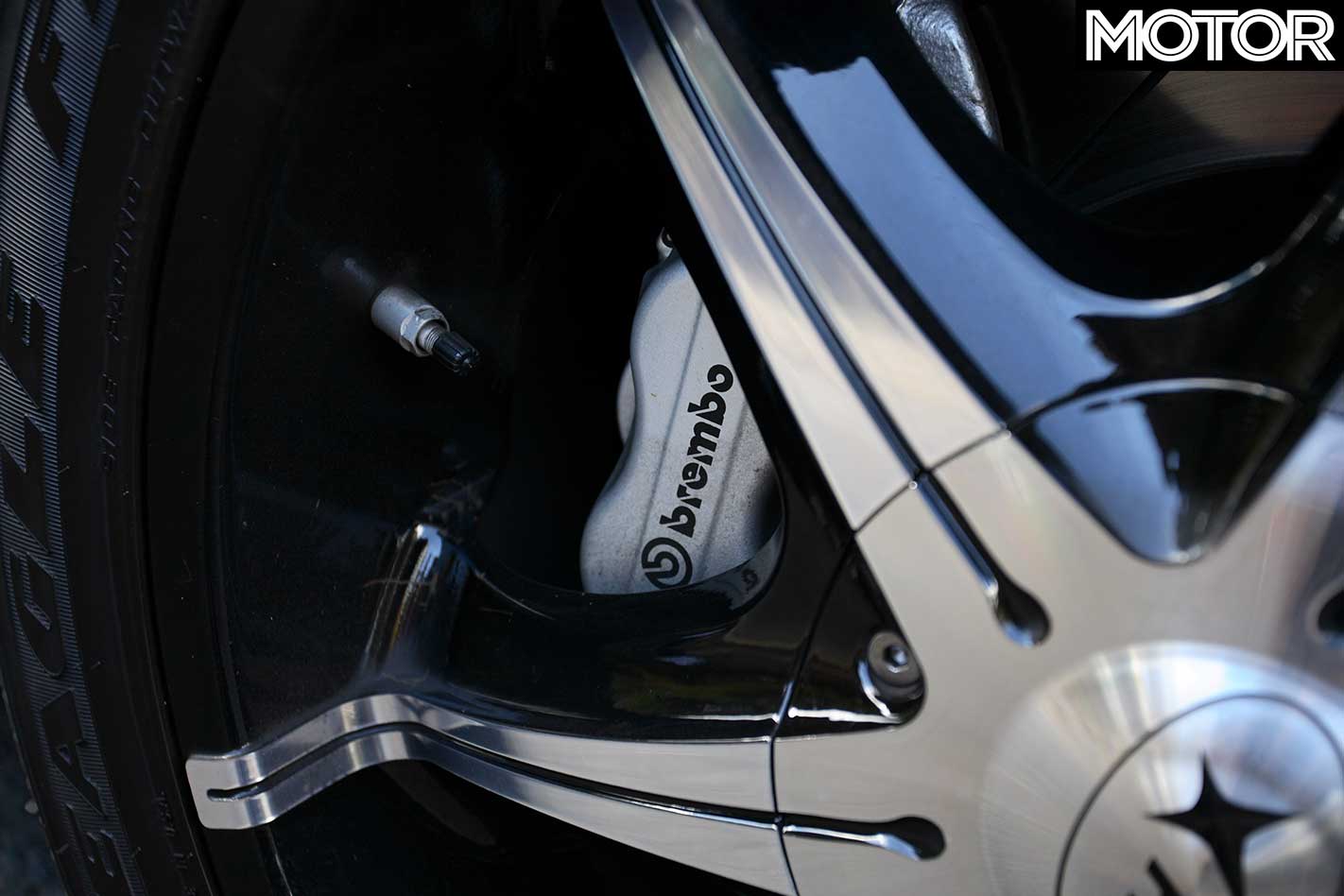
Having never really cornered a 300C SRT8 hard, I was surprised at E490’s effortless chuckability. It runs the standard SRT8 chassis and brakes, but the Touring’s extra 77kg must all be at the rear end because E490’s balance is impressively neutral.
What we didn’t try was E490’s six grand’s worth of trick Alpine audio gear. But when an engine as great as the 6.1 Hemi has had its volume turned up to 11, that’s all the music MOTOR needs.
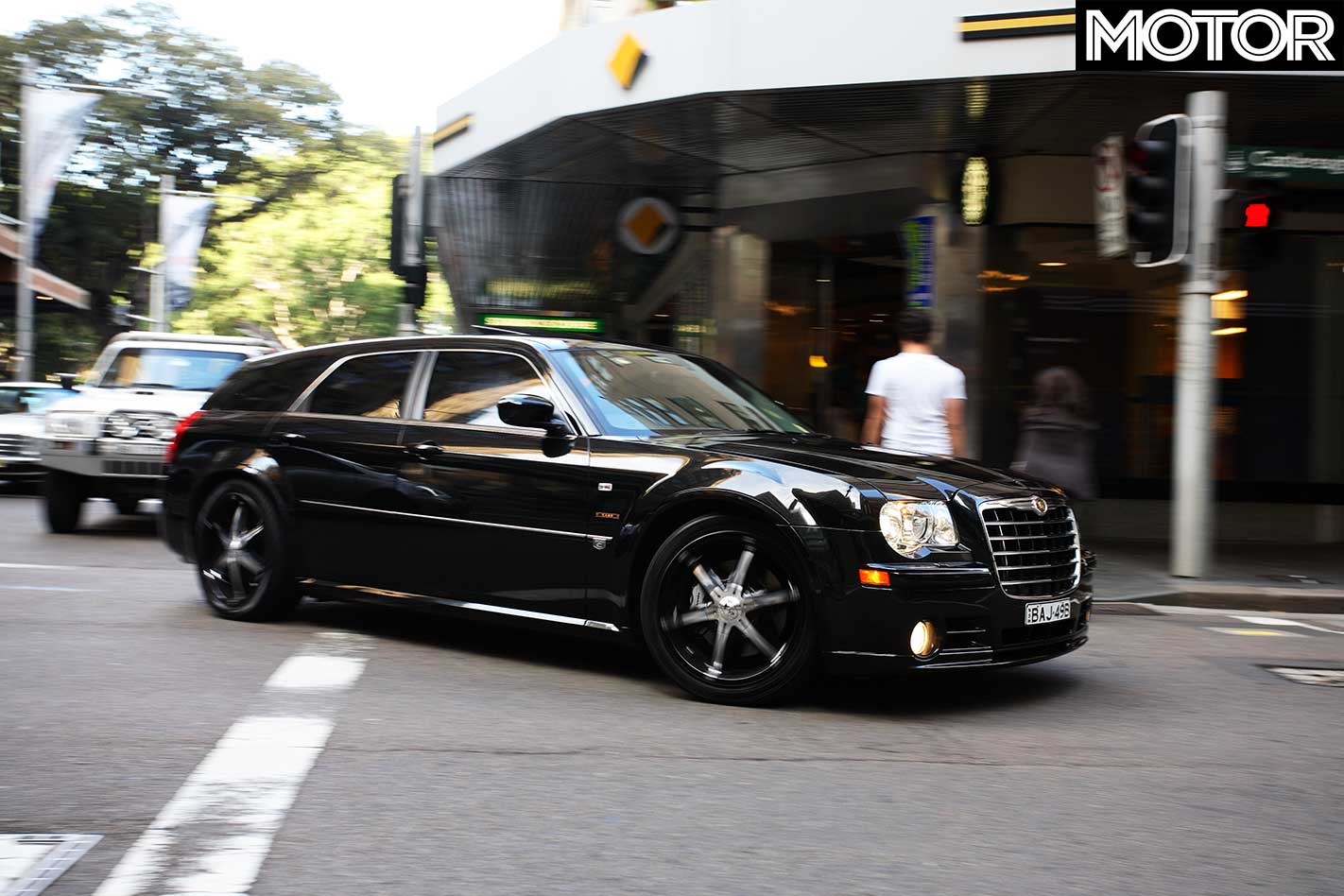
FAST FACTS 2007 Chrysler 300C SRT8 E490
BODY: 5-door, 5-seat wagon DRIVE: rear wheels ENGINE: 6059cc V8, OHV, 16v POWER: 332kW @ 6000rpm* TORQUE: 569Nm @ 4800rpm* WEIGHT: 1965kg POWER-TO-WEIGHT: 169kW/tonne TRANSMISSION: 5-speed automatic SUSPENSION: double A-arms, coil springs, anti-roll bar (f); multi-links, coil springs, anti-roll bar (r) L/W/H: 5015/1880/1462mm WHEELBASE: 3050mm TRACKS (f/r): 1600/1605mm BRAKES: 360mm ventilated discs, four-piston Brembo calipers (f); 350mm ventilated discs, four-piston Brembo calipers (r) WHEELS: 20 x 9.0-inch alloy (f & r) TYRES: Goodyear F1 Supercar; 245/45ZR20 (f), 255/45ZR20 (r) PRICE: $84,990 (as tested)
0-60km/h: 2.8sec 0-100km/h: 5.5sec 0-400m: 13.5sec @ 174.4km/h Top speed: 265km/h (limited)
WHAT IS IT?
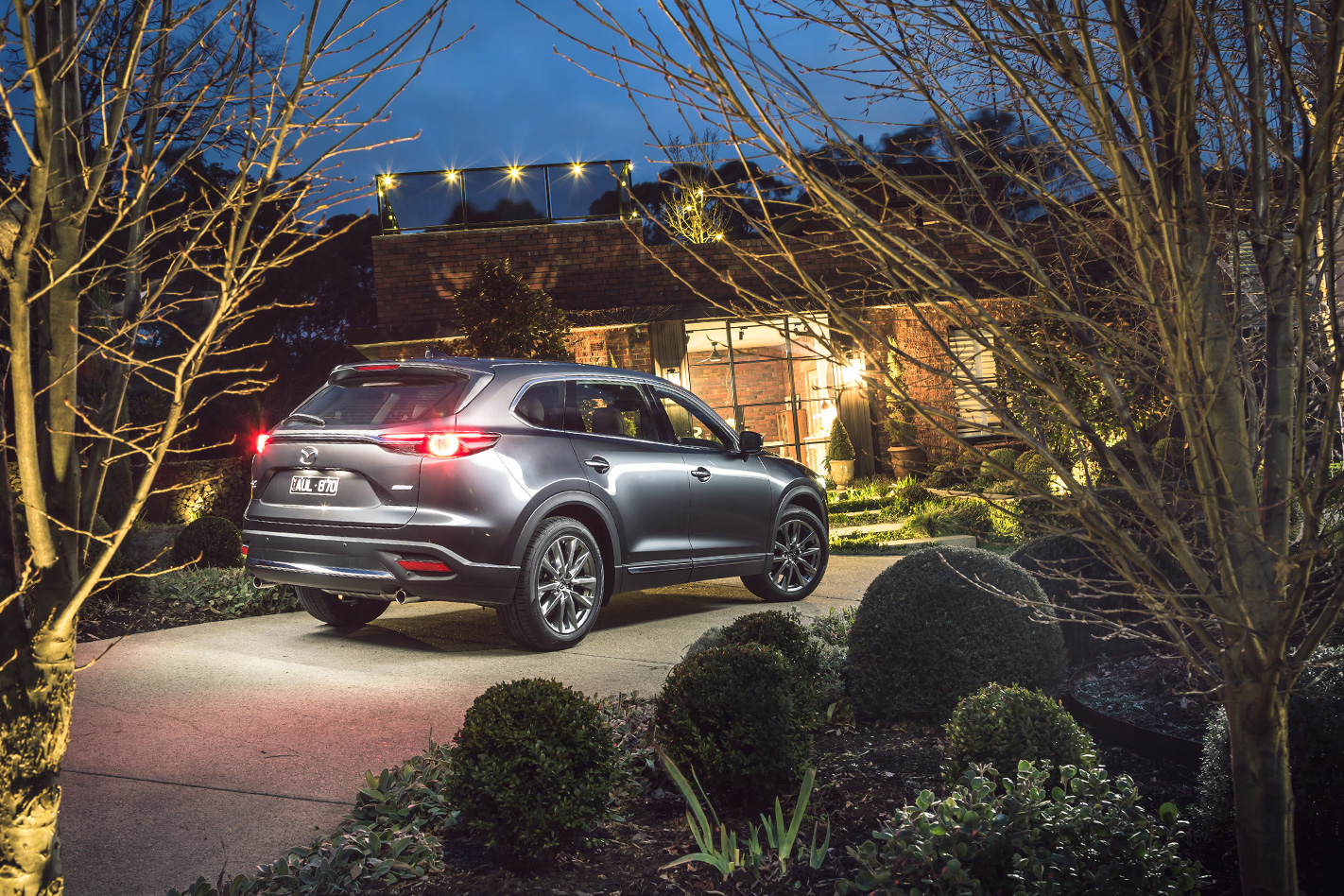
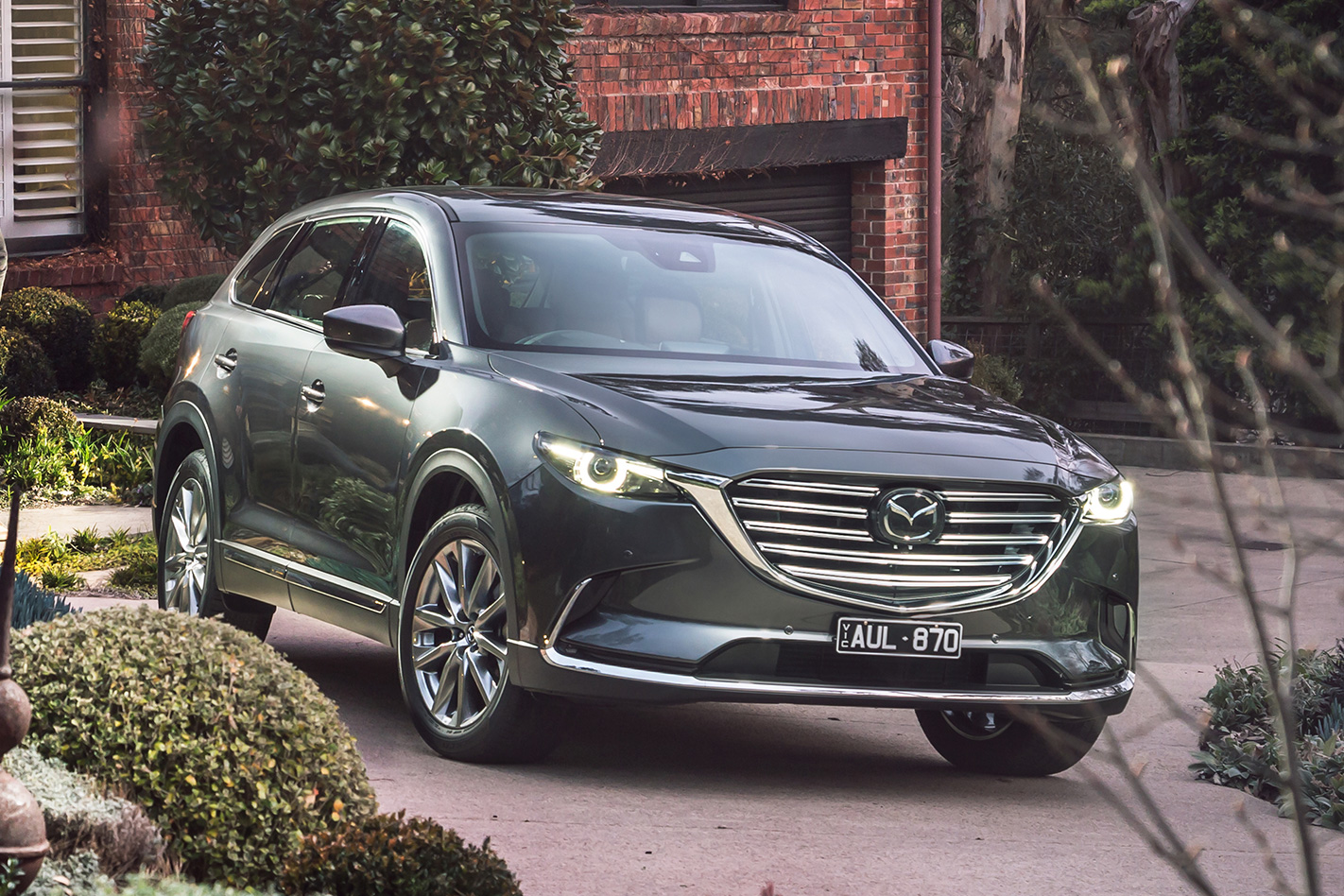
The CX-9 is Mazda’s flagship SUV, a former Wheels Car of the Year winner, and an all-‘round good thing. It competes against other large, three-row wagons and is now available in five trim grades with a choice between FWD or AWD for all but the new, all-wheel-drive-only range-topper. Prices span from $44,990 to $66,490.
WHY WE’RE TESTING IT
Mazda raised the bar for the seven-seat segment when it launched the CX-9 in 2016. Its competitors are still catching up, yet Mazda is pushing forward with further updates for its market-leader having already introduced a round of improvements early on. This time the Japanese brand has added a new variant at the top of the range, called the Azami LE, which could cement its crossover appeal to buyers of European SUVs.
MAIN RIVALS
Hyundai Sante Fe, Toyota Kluger, Kia Sorento, Nissan Pathfinder, Skoda Kodiaq, Peugeot 5008
THE WHEELS VERDICT
The CX-9 remains as convincing as ever, with even less scope for buyers to nit-pick now that its minor spec discrepancies have been addressed. This large SUV is an attractive proposition at every tier of the line-up, so simply set a budget and buy accordingly.
PLUS: Refinement; ride comfort; family friendliness; turbo torque MINUS: LE’s brown dash won’t appeal to everybody; still no third-row vents
THE WHEELS REVIEW
WE’RE now two years into the second-gen CX-9’s tenure and already talking about update number two. On face value that smacks of a car company trying desperately to make an uncompetitive car more appealing, but that couldn’t be further from the truth.
The COTY-winning CX-9 was the best large SUV on the market when it launched, and Mazda’s internal drive to make it an even stronger proposition is only making it harder for rivals to catch up. The existing range has had the material quality to make buyers of premium SUVs think hard about the value of a badge, and now there’s an even ritzier CX-9 range-topper on offer.
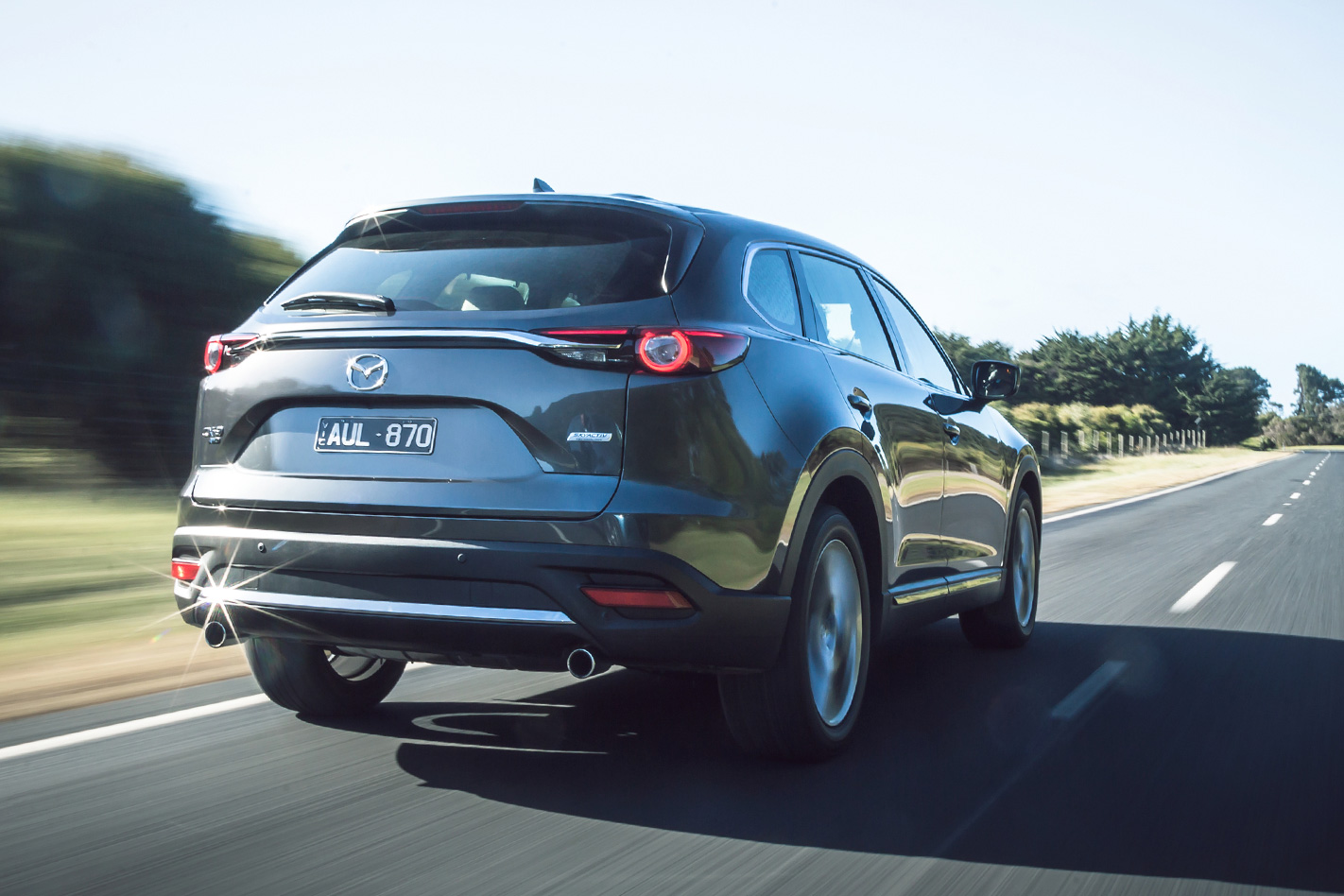
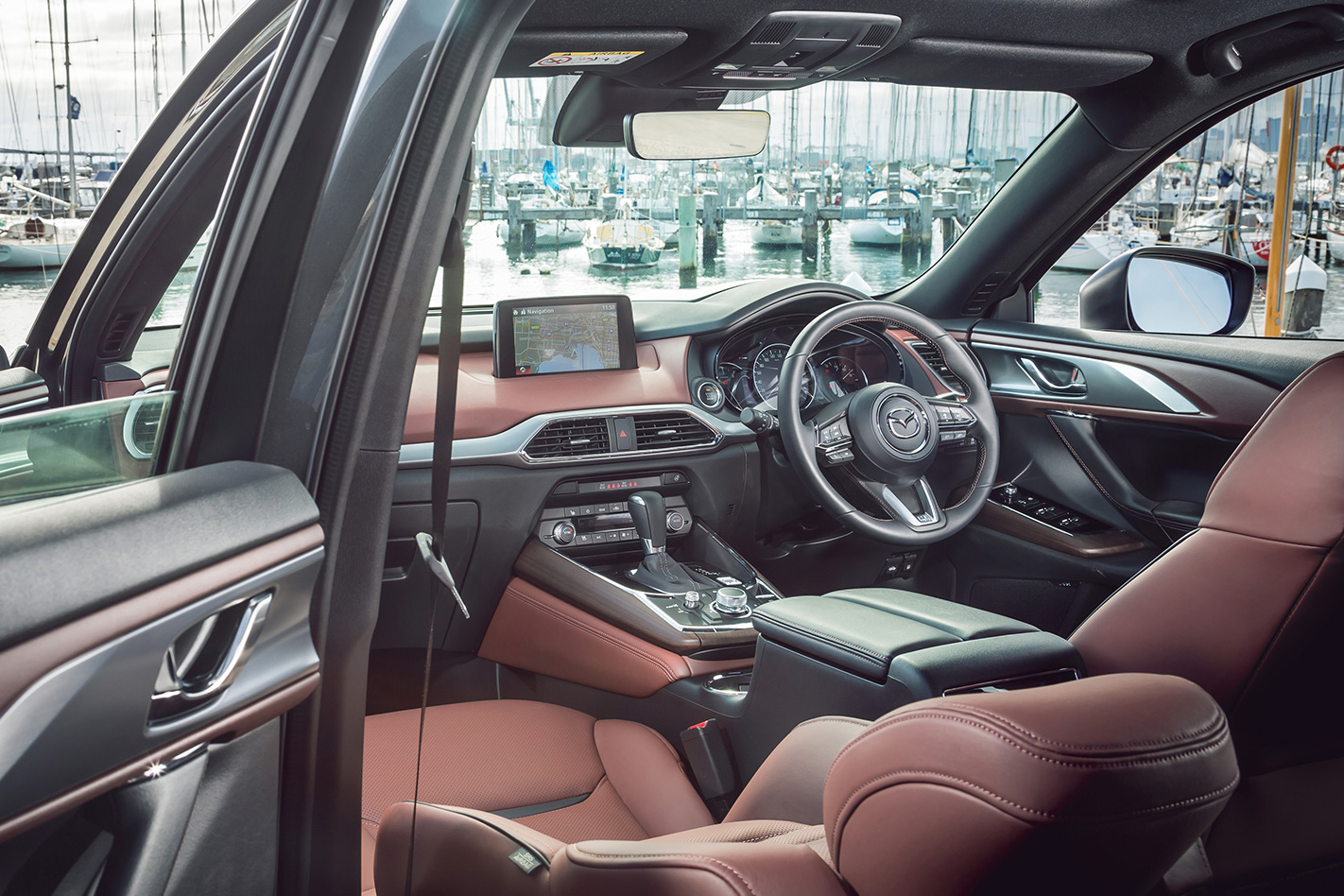
Dubbed Azami LE (for Luxury Edition) the new flagship variant, priced at $66,490, stretches the CX-9 range to five and elevates the star seven-seater’s upmarket feel even further. It sports hand-stitched Nappa leather upholstery in brown with black detailing, genuine timber inserts applied to the shifter surround and doors, matching steering wheel stitching and ambient lighting for a $1500 premium. Look too closely and the treatment can appear a little patchy – hard lower dash plastics are never too far from the high-end tinsel – but overall the LE does what it sets out to do.
Power comes from an unchanged and strong 2.5-litre turbo petrol four-cylinder, producing 170kW/420Nm. One engine across the board is good, as it means there’s no major penalty when shopping at the low end of the range. Sport, Touring, GT and regular Azami variants are available in either FWD, or AWD for an additional $4000. The LE is exclusively all-wheel-drive.
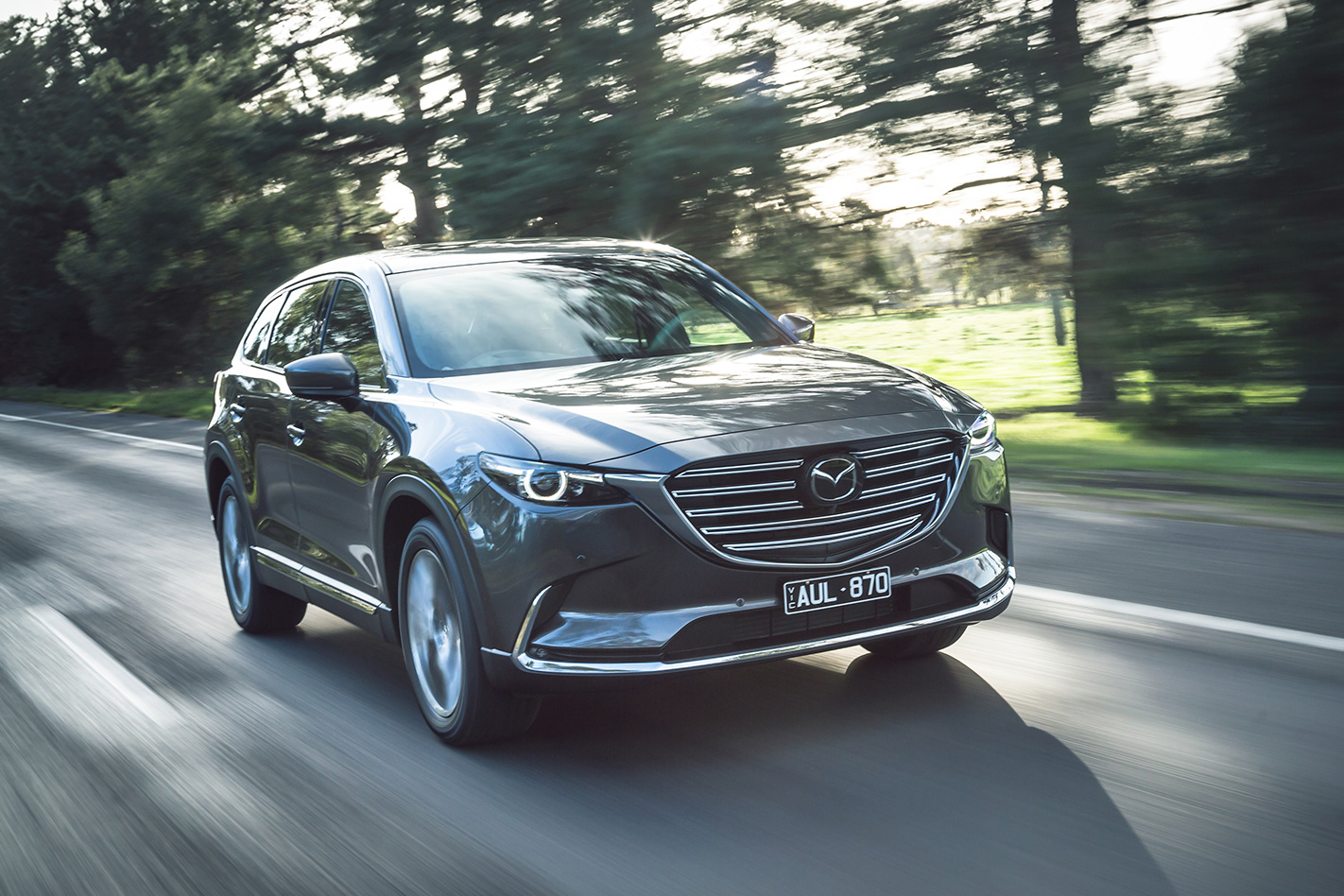
Getting into a base model Sport now costs $1100 more than before at $44,990, but Mazda has added equipment in all variants including Apple CarPlay and Android Auto, addressing one of the few things the model tripped up on previously. Sport now has a head-up display as standard, while Azami and Azami LE grades receive ventilated seats and a heated steering wheel, a 360-degree camera, windscreen de-icer and the Mazda 6’s instrument panel incorporating a 7.0-inch LCD screen.
Engineering advances for this update include thicker headliner to further reduce noise levels in the already quiet cabin, and adjustments to steering hardware that correct the sometimes unnatural feeling early cars had, while honing off-centre response. Subtle suspension tweaks aimed at increasing stability and ride comfort were difficult to assess in isolation, but the CX-9’s progress remains smooth over mixed surfaces including gravel, even on the LE’s standard 20-inch wheel and tyre package.
Mazda has put together an extremely convincing model line-up with the CX-9. Virtually every variant has something going for it, meaning shoppers can simply set a budget and buy accordingly. A flagship version that verges on $70K won’t appeal to every CX-9 buyer, but in the context of posh alternatives from European brands, with which it competes on spec and challenges for refinement, the Azami LE doesn’t seem unreasonable. The only thing holding it back in that fight is good old badge snobbery.
SPECS
Model: 2019 Mazda CX-9 Azami LE AWD Engine: 2488cc 4cyl, dohc, 16v, turbo Max power: 170kW @ 5000rpm Max torque: 420Nm @ 2000rpm Transmission: 6-speed automatic Weight: 2000kg 0-100km/h: 8.5sec (est.) Fuel economy: 8.8L/100km Price: $66,490 On sale: Now
BMW has revealed a new compact performance SUV for its line-up, the 2019 BMW X2 M35i.
It’s set to arrive next year, though it’ll also debut a new-generation engine for BMW, a 2.0-litre four which will be used for much of the front-wheel and all-wheel drive line-up in the future.
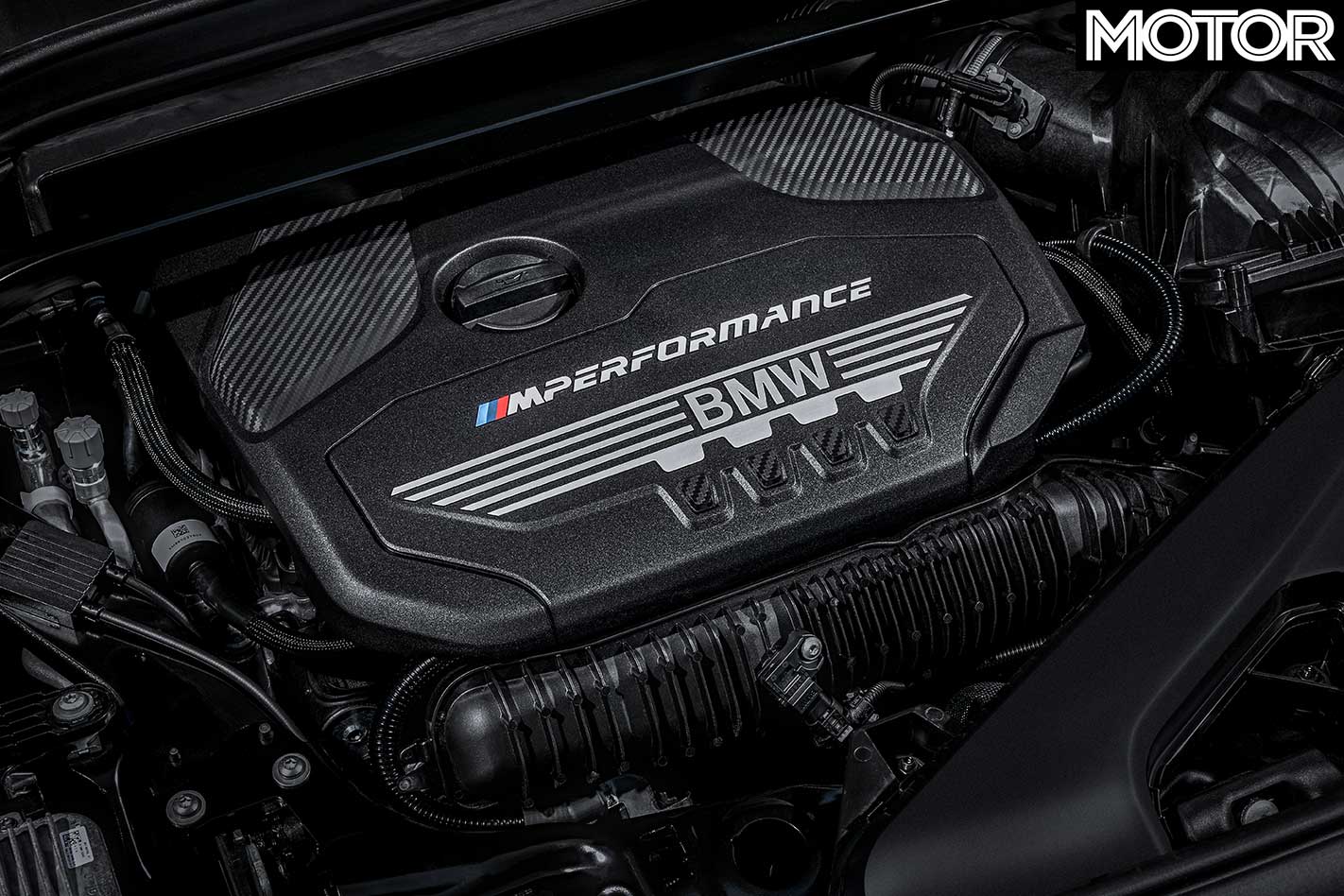
In the X2 M35i, it’s tuned to 225kW and 450Nm, which BMW says will allow it to hit 100km/h in an impressive 4.9 seconds, with help from its xDrive variable AWD system. An 8-speed Steptronic with launch control also helps things along.
BMW makes no mention of its weight, though with all-wheel drive it’d be well over the front-drive X2’s 1535kg, but we’d expect lower than the all-wheel X3 30i’s 1720kg.
It’s set to be the top model of the X2 Series, BMW says, meaning no M40i equivalent will come along.
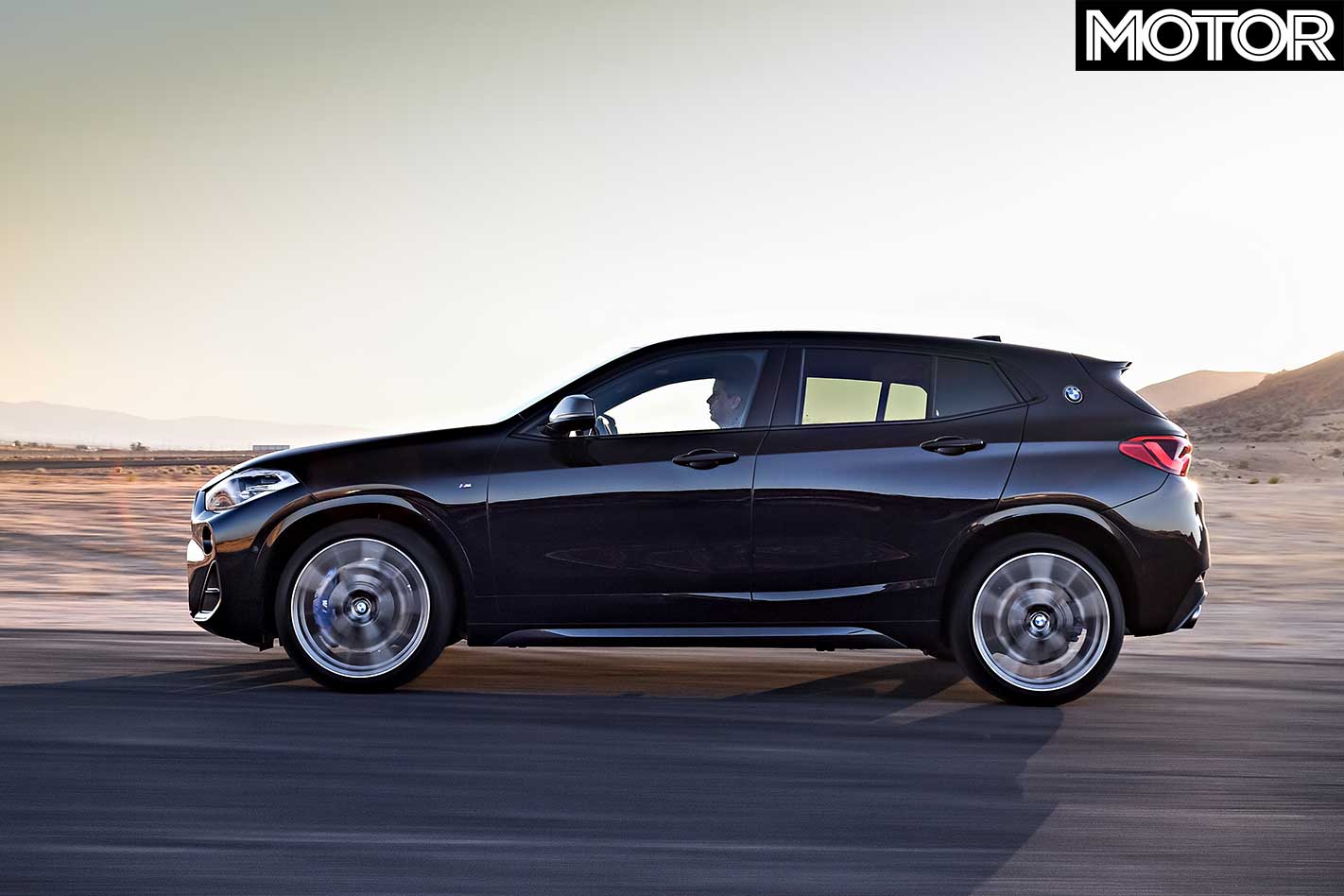
A retuned M Sport suspension with two-mode adaptive dampers, as well as a front locking differential, and a combination of 18-inch discs (f) and 17-inch disc brakes mean the X2 M35i should be a pleasant surprise in terms of its dynamics.
As for its ‘more aggressive’ look, BMW seems to understand it’s not for everyone.
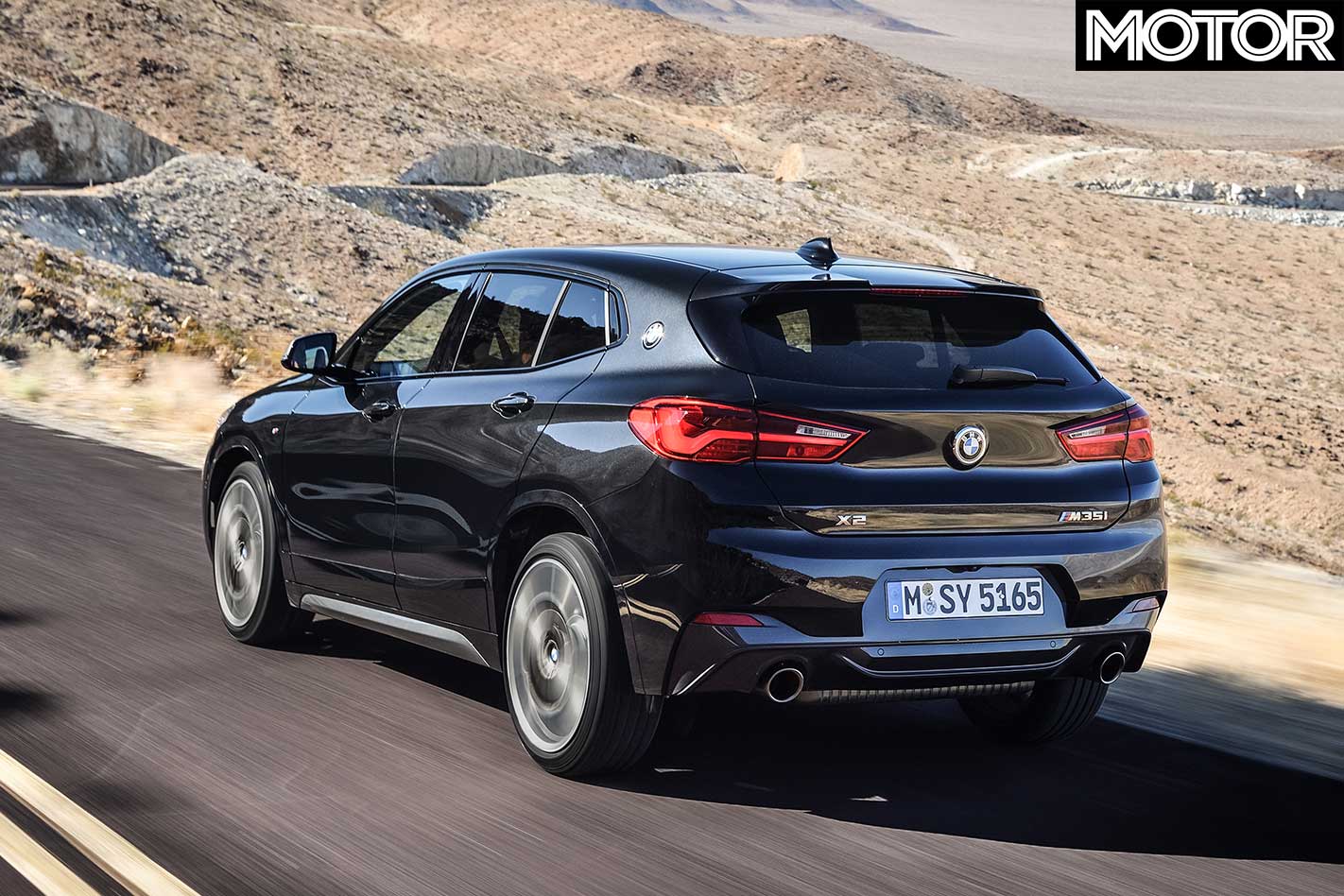
“Sportiness coupled with a polarising appearance,” BMW begins in its media release, “based on this formula, the new BMW X2 has inspired above all a young and modern target group following its premiere in March 2018.”
The X2 M35i is set to go into production late this year, with Australian availability and pricing yet to be confirmed.
Back in 2005 there wasn’t much to suggest that HSV’s brand spanking SV6000 would help you go faster than a standard Clubsport R8.
Unlike the 1989 VN-based SV5000, the new ‘SV’ had a 6.0-litre V8 churning out the same 297kW and 530Nm, with the same suspension as well.
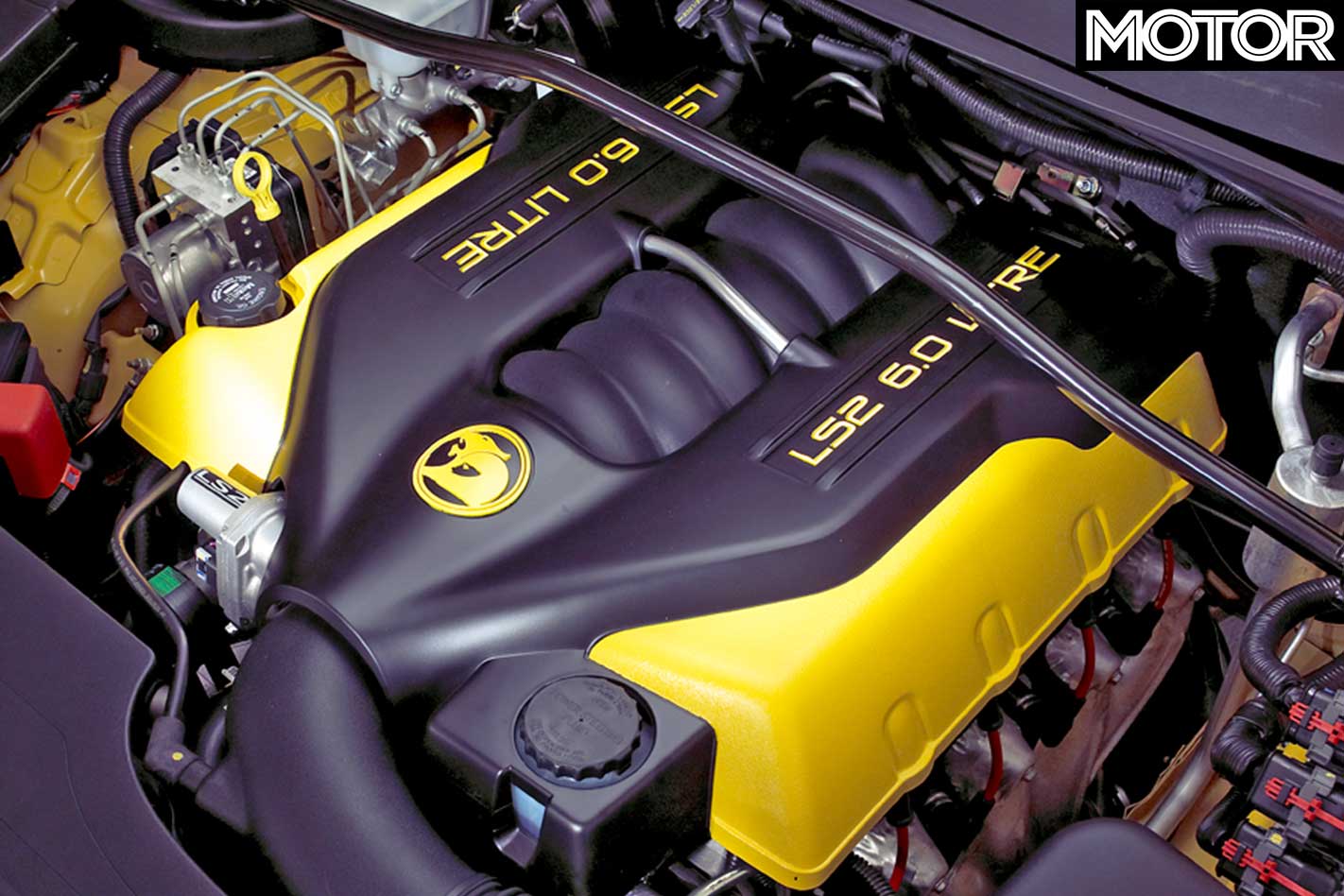
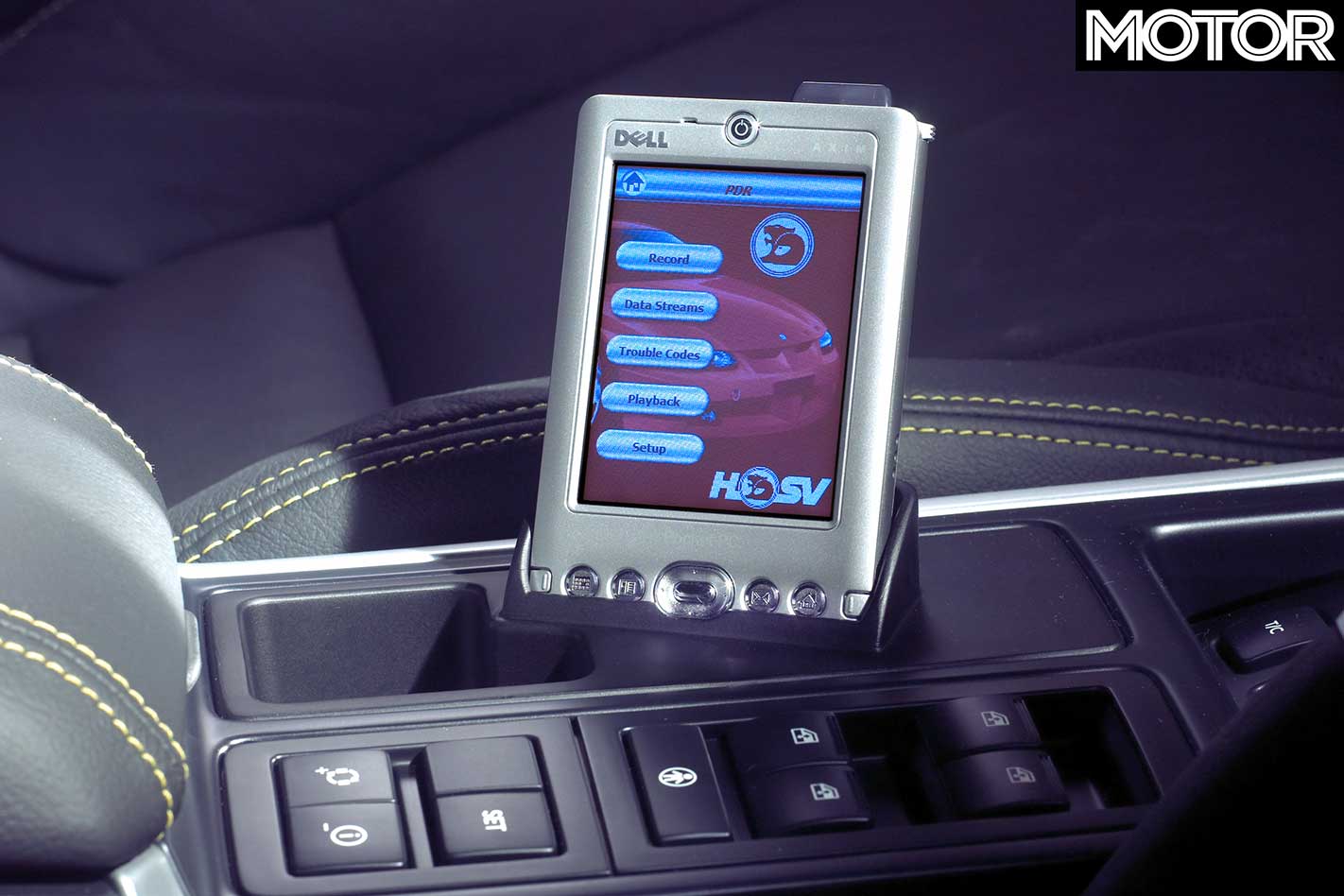
Its secret weapon instead had more to do with, well, you. This was the first HSV to feature a data-logging function and if you’ve ever had someone point out your dodgy braking points and rushed throttle inputs then you’ll know how useful telemetry can be for reducing lap times. And track work was something the SV6000 did well, with big AP Racing brakes and the just-updated VZ Commodore’s rear-drive platform.
The onboard data-logger was known as the Dynamic Driver Interface. It was a tablet-style device that lived on the centre console, just to the left of your elbow. Being a Dell-built palm pilot, it also carried out GPS duties, Bluetooth mobile phone connectivity, and other nifty things that were saved for fancy Euro cars those days.
On top of that, the memory card within it could also record almost any type of data you’d need, from wheelspin to charge air temperature, ready to be analysed later on a computer.
Sure, Nissan may have shown everyone the way to integrate this stuff gracefully in the 1999 R34 Skyline GT-R, but there’s no denying this was high-tech for an Australian-made family car back then. Perhaps you need to be reminded of HSV’s brilliant Enhanced Drive Interface on the Gen-F2 range to grasp the weight of its legacy.
The SV6000 came in black or yellow, with a six-speed manual or four-speed auto, and retailed for $79,900 on the brochure. Don’t expect to pay massive bucks for one these days, the SV6000 lacks the pedigree to command the same penny as full-blown classics like a VS GTS-R. Although, only 50 units were released to buyers, so they’re hard to come by. And that counts for something.
2005 HSV SV6000 SPECS Engine: 5967cc V8, OHV, 16v Power: 297kW @ 6000rpm Torque: 530Nm @ 4400rpm 0-100km/h: 5.6sec (estimate) Price: $79,990 (estimate when new)
WHAT IS IT?
A new generation of Jeep’s most focused, accomplished off-road model, now with much-improved on-road dynamics.
WHY WE’RE DRIVING IT
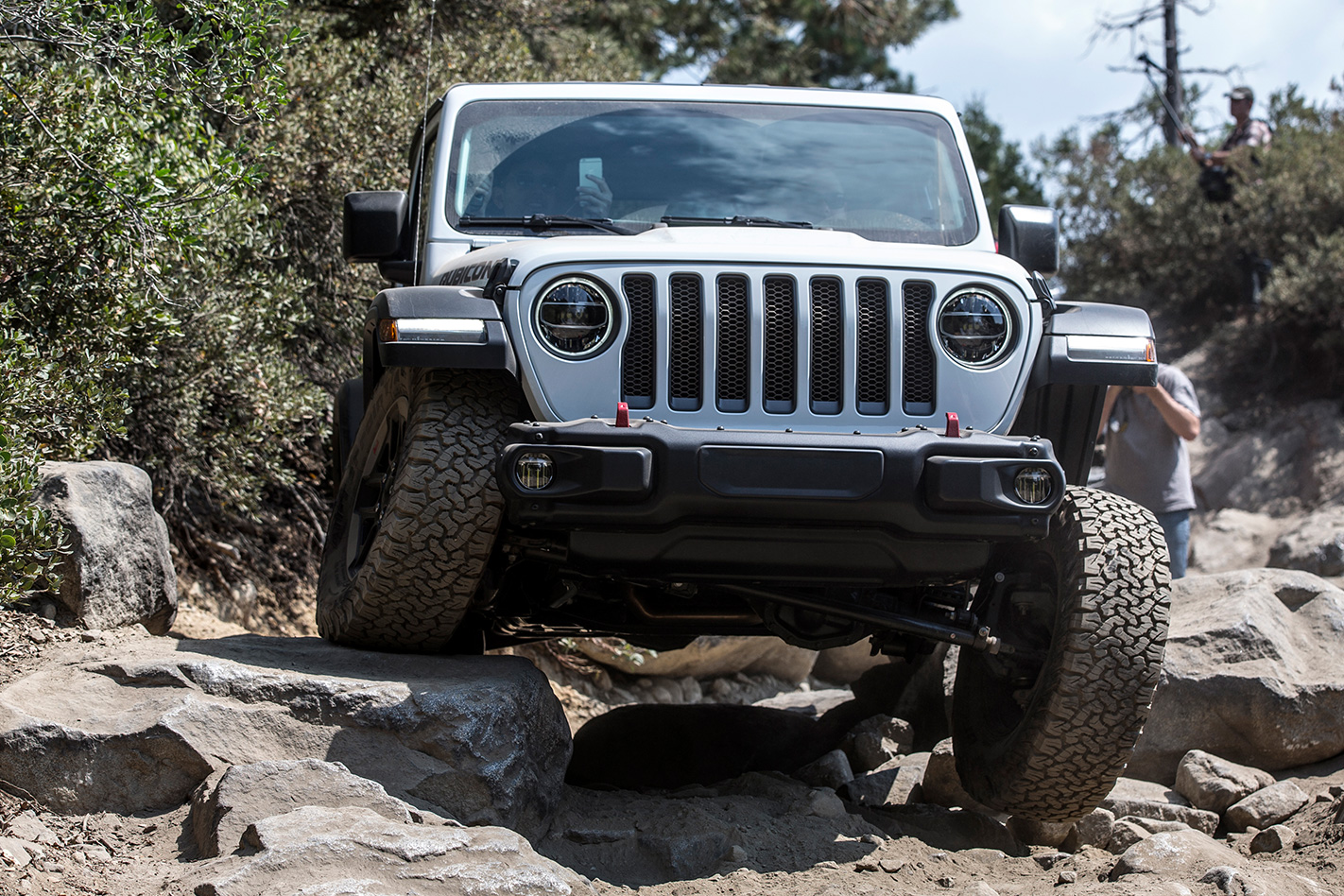
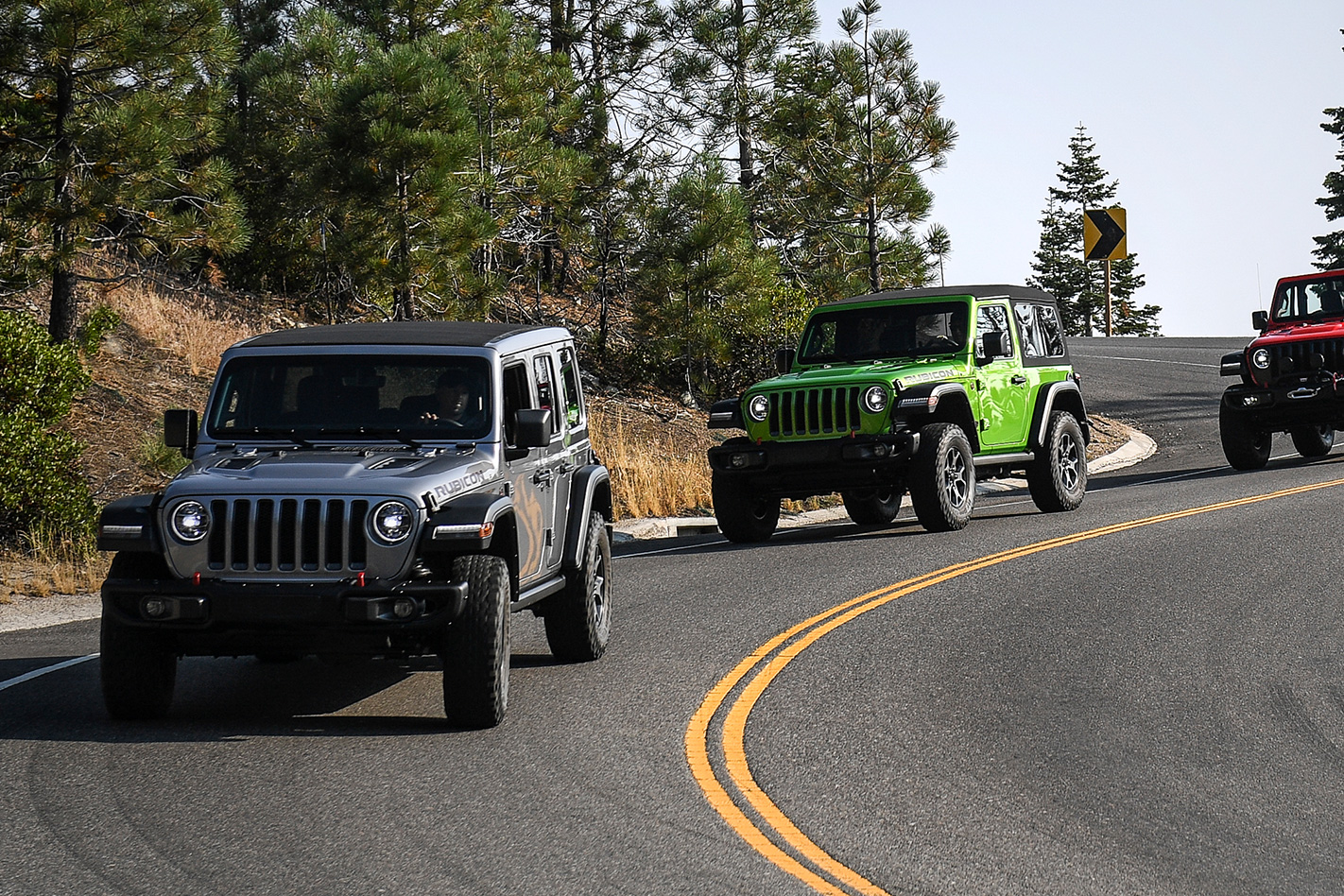
Jeep offered us V6 petrol-powered Rubicon models (both two- and four-door body styles) to drive on – appropriately enough – the iconic Rubicon Trail in the Sierra Nevada region of California. Also included was a brief on-road stage on smooth roads around Lake Tahoe.
PLUS: Much-improved on-road dynamics; remarkable off-road ability; V6 powertrain and eight-speed auto; interior functionality and presentation MINUS: V6 can be thirsty; no turbo-petrol four for Australia; luggage space not huge; bumpy-road dynamics untested
THE WHEELS VERDICT
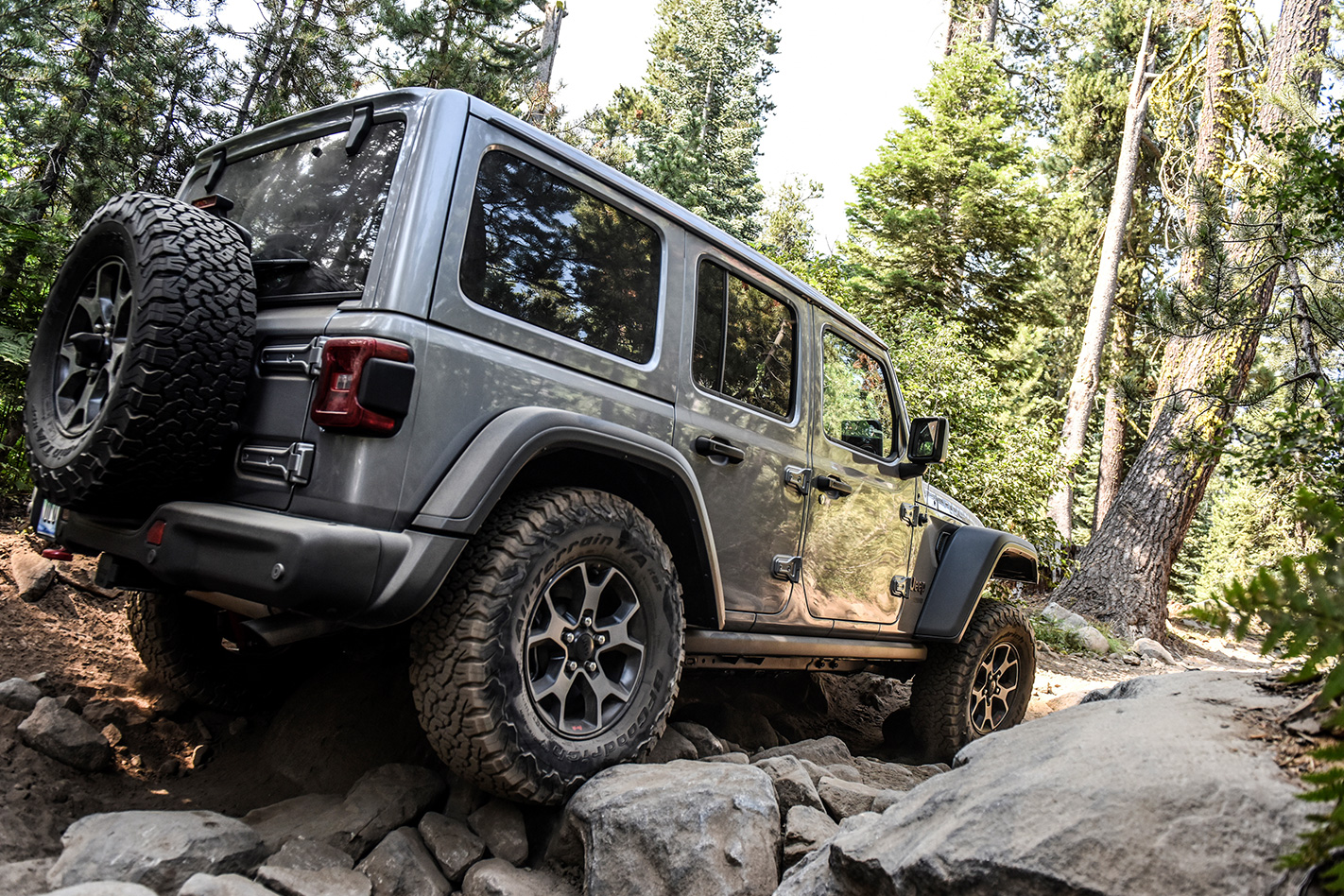
The Wrangler Rubicon is quite astonishing in its ability to fulfil the primary part of its intended function: that is, to be near-unstoppable off-road. Straight off the showroom floor, it’s capable of crawling through seemingly impenetrable terrain, thanks to a combination of ultra-low gearing, outstanding traction, class-leading approach and departure angles, huge wheel travel, and extensive underbody protection.
It’s also vastly improved over its predecessor on road. The steering is no longer sloppy and vague, the separate-chassis construction is much better engineered, and the interior is nicely presented, ultra-functional, and fitted with excellent multimedia. But to buy this as alternative to an SUV is misguided. It sets out to be acceptable on-road and brilliant off it, and nails that target superbly.
THE WHEELS REVIEW
IF YOU were to assemble a money-no-object garage of say, 10 road-registered cars, with the aim of creating a real Swiss-army-knife collection – that is, a vehicle for every purpose and condition – what would be the extremes to bookend this line-up?
At one end it may be a McLaren Senna, or perhaps a Bugatti Chiron. But what about at the other end? As weird as it sounds, you’d have to consider this: a Jeep Wrangler Rubicon, purely because it’s one of the world’s most off-road-capable vehicles you can drive out of the showroom.
The only flaw in this fanciful plan is the fact the outgoing JK Wrangler, set to be replaced in the first quarter of next year, is a bit rubbish on-road. Its steering is a mess of slop and vagueness, the separate-chassis construction contributes to spooky-feeling shimmies and wobbles on bumpy backroads, the auto is an ancient five-speeder, and the interior is a plasticky mess.
It seems none of this was missed by the team responsible for the new JL model. All these key deficits have been addressed, while at the same time adding even more ability to take you into terrain where Mother Nature is clearly trying to say “keep the hell out.”
Before we cover what makes the Rubicon model the true rock-hopper of the range, let’s cover the key changes that differentiate the new Wrangler from the outgoing JK. Apart from the 3.6-litre V6 petrol engine, which carries over with a few tweaks that improve efficiency and torque by tiny amounts (up 6Nm to 353) pretty much everything is new.
Of course the fundamentals remain – separate-chassis design, live axles at each end, the choice of two doors or four on two different wheelbases, and an exterior that doesn’t deviate too far from the boxy, iconic lines that owners love. But the wheelbase has been stretched by 61mm on the four-door, (36mm on the two-door) and packaging improvements bring a small but noticeable gain in rear seat room.
Steering, which we’ll get to, is massively improved with the shift to a revised rack and electro-hydraulic assistance. Weight has taken a slight trim with the use of aluminium for doors, bonnet, guards, and magnesium for the tailgate. All the crucial off-roading parameters – approach angle (44 degrees), ramp-over (28 degrees) and departure angle (37 degrees) – are improvements by a few percent over the JK.
As for what sets the Rubicon apart from the Sport and Overland models; most notable are driveline changes aimed at toughness and crawling ability. Its axles are Dana 44s (30 and 35 on the other two models) and its low-range transfer case provides a shorter ratio, while its final-drive ratio is also shorter. Rubicon also gets Tru-Lock electronic locking differentials to help it find traction in really extreme conditions, and runs mono-tube dampers, along with a slightly higher ride height for better ground clearance.
Okay, great, but off-road ability has never been the Wrangler Rubicon’s shortfall. It was the bit of actually getting to the trail that wasn’t especially pleasant, and that’s what owners of the new JL will notice first. If they care. (Do they care?)
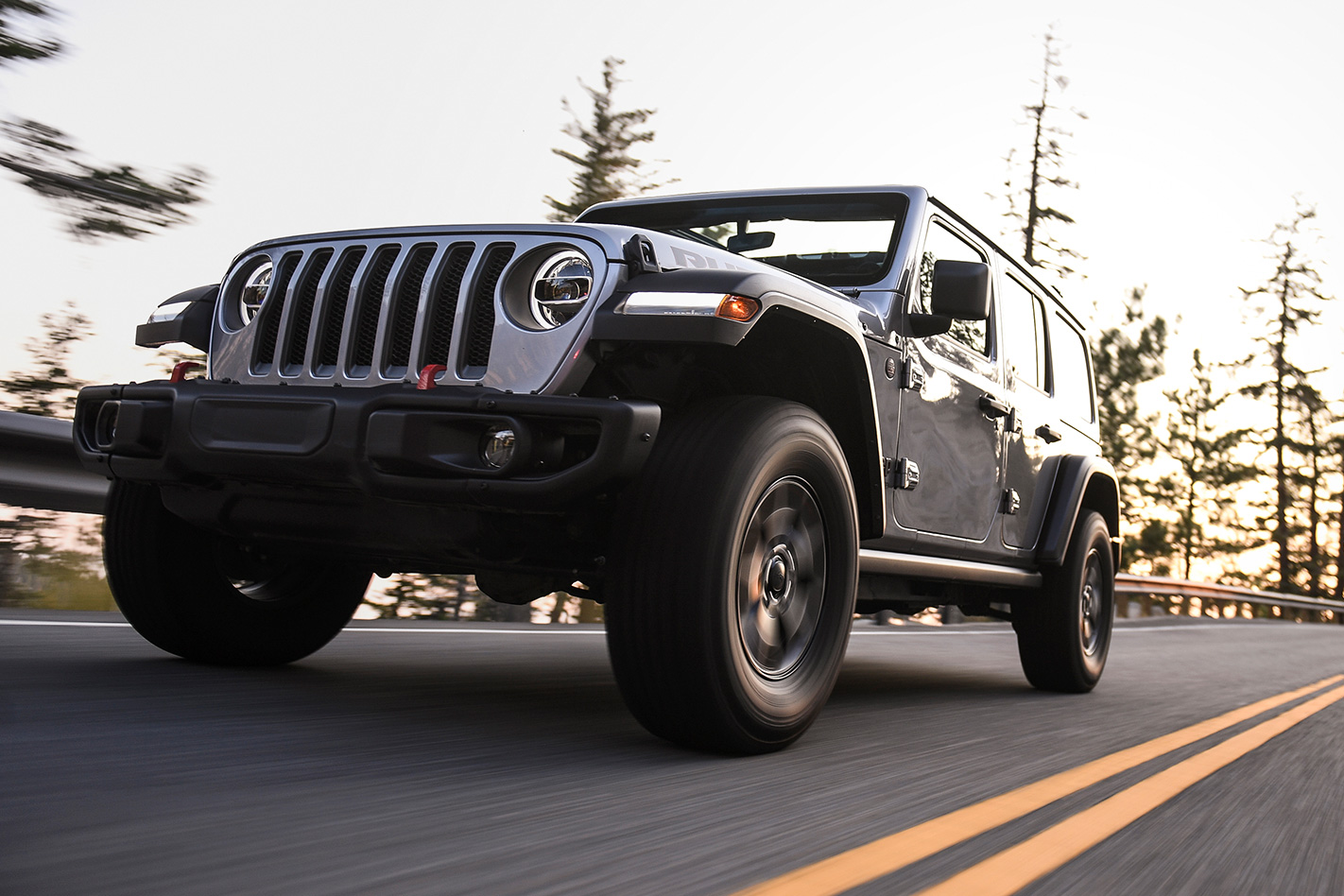
On smooth roads it now actually feels semi-civilised for a body-on-frame behemoth with a live front axle. Drive it like the rest of the law-abiding public and it doesn’t feel a whole lot less composed than most of the 4×4 utes that dominate the Aussie sales charts. Sure, the Rubicon’s off-road-biased tyres let you know you’re not in SUV-land, and bumps send a few discombobulating shimmies through the bits where body meets chassis. But it’s way better than the lumbering, sloppy, remote-feeling JK.
The steering is less slow-geared (now 3.2 turns lock-to-lock on the four-door; 3.6 on the shortie) and actually feels connected to the front wheels when lock is first applied. You feel the squirm of the tread blocks on the Rubicon, but we suspect this will be noticeably reduced in the Sport and Overland models on their more dual-purpose rubber. Bottom line is there’s now a far more planted sense of stability to Wrangler’s on-road manners, along with reduced wind and road noise.
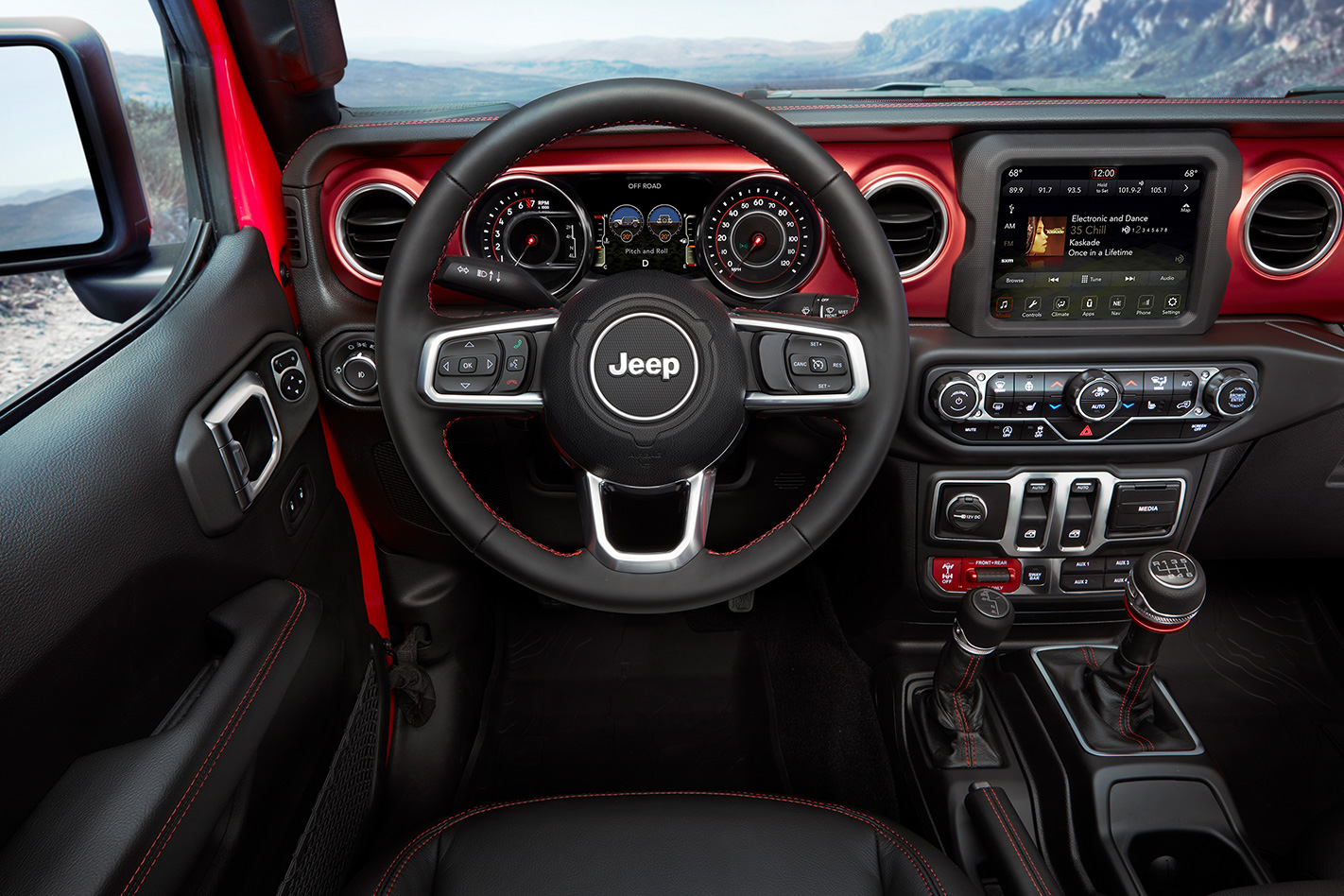
The Pentastar V6 is not the most charismatic lump, but it does feel willing and energetic, given the weight it shoulders, and doesn’t become stressed when asked to rev. Adding three extra transmission ratios and much improved shift quality also contributes to the sense of new-found powertrain polish. It seems a shame Australia won’t get the torquey 2.0-litre turbo-petrol four offered in other markets, but it does seem likely we’ll get the 2.2-litre Multijet II turbo-diesel four available in Europe, replacing the current 2.8-litre four.
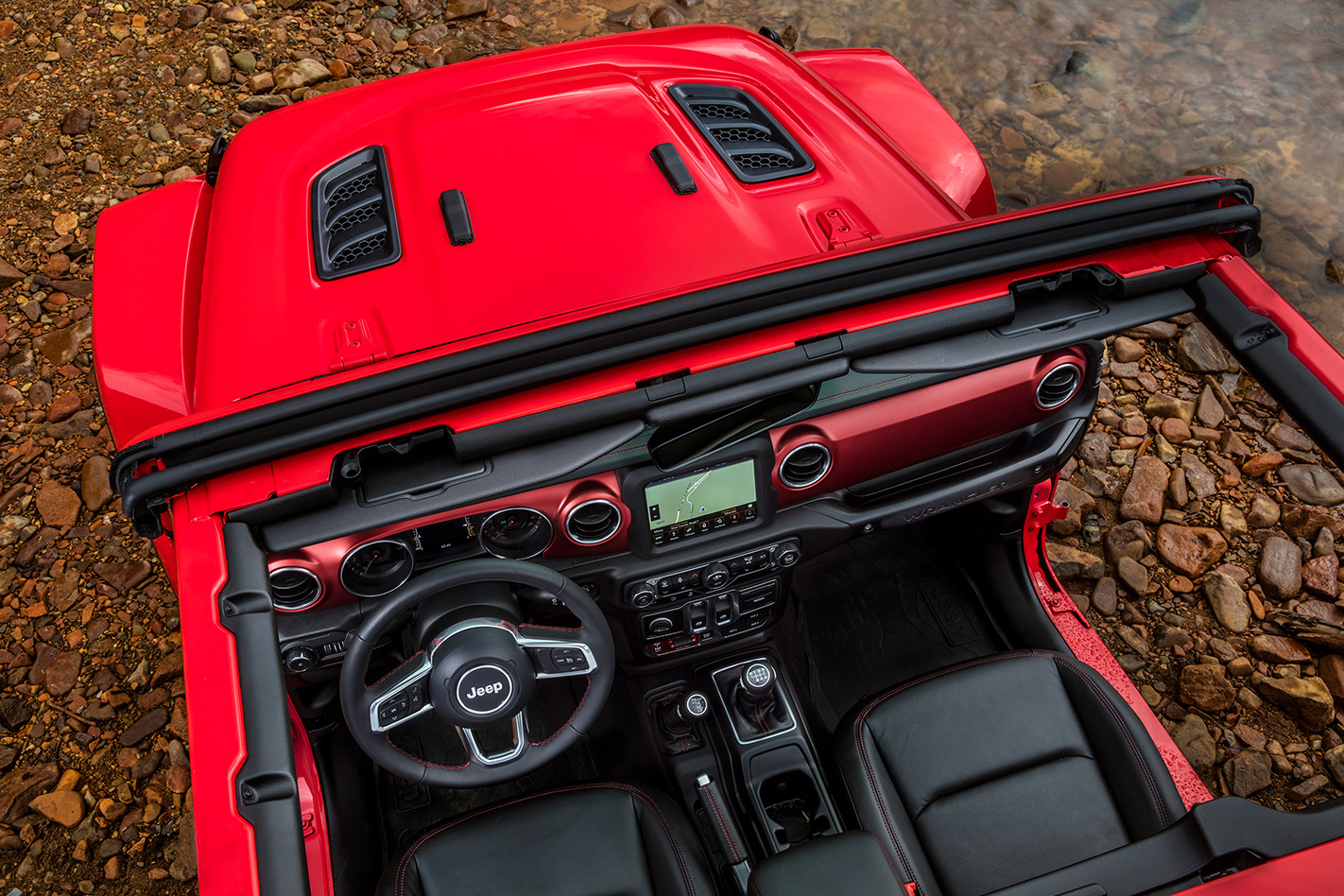
Then there’s the hugely improved interior. The JK had a cabin that felt as if it was hastily thrown together by the chassis team after someone yelled tools down. The JK flips that by delivering an interior that manages to feel both well-crafted and ultra-functional, like a cross between a Leatherman multi-tool and a premium ski boot. The seat feels good the moment you slide in; the wheel adjusts for both rake and reach, the pedals are positioned where your feet naturally fall. Glance down at the centre stack and you notice how key fascia components are secured with Allen-head bolts; while the bits that control the off-road functions are anodised in red aluminium. The fourth-gen Uconnect touchscreen infotainment system is excellent – fast, intuitive, and capable of displaying pages of vehicle off-road info.
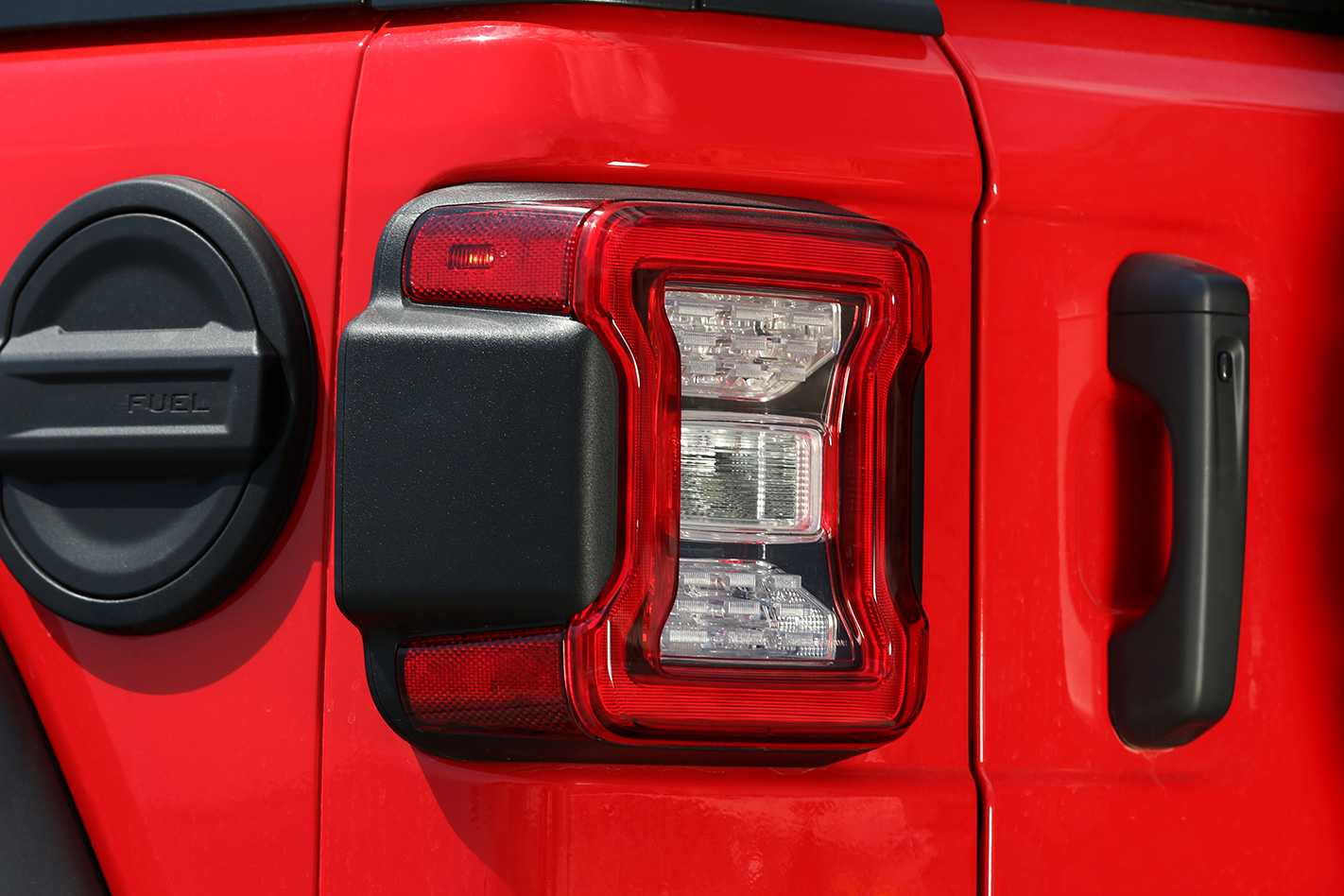
But you can’t fully appreciate the virtues of a Wrangler Rubicon until you’ve pointed it at terrain that looks like a wrecking yard for boulders. The Rubicon Trail is a 35km stretch in the Sierra-Nevada region of California, with the Eastern entrance not far from the shimmering, deep blue water of Lake Tahoe. It was here we had a chance to stick the meaty-feeling lever of the transfer case into 4×4 Low, and hit the button that disconnects the front anti-roll bar for maximum axle articulation (another feature specific to the Rubicon model). As mentioned, there are switchable diff locks, but that’s it. No modes for Rock, Snow or Sand or any of that stuff. Tell this thing you’re heading off-road and, as we quickly learned, it cares little for the details; it just gets on with getting you through.
Only a few hundred metres in, the rocks quickly become the size of microwave ovens and the gradient suddenly ramps up to around 10 percent. That revised gearing means this thing is built to crawl. Purely out of curiosity, I flicked the lever over to the manual gate, only to see we were in second of the new auto’s eight ratios. The manual shift pattern (there are no paddles) is correctly orientated, meaning a push forward to downshift, but you’d only select first if you found yourself staring at a cliff face. As it was, the Wrangler managed to crawl its way over brutal rock falls which had the rational part of my brain saying “no chance”.
The throttle tip-in for the crisply responsive V6 is near-perfect, as is the weighting and travel of the brake pedal, allowing you to ‘walk’ the thing up and over outcrops that make you wince as they extract an ugly graunch from the rock rails protecting the underbody.
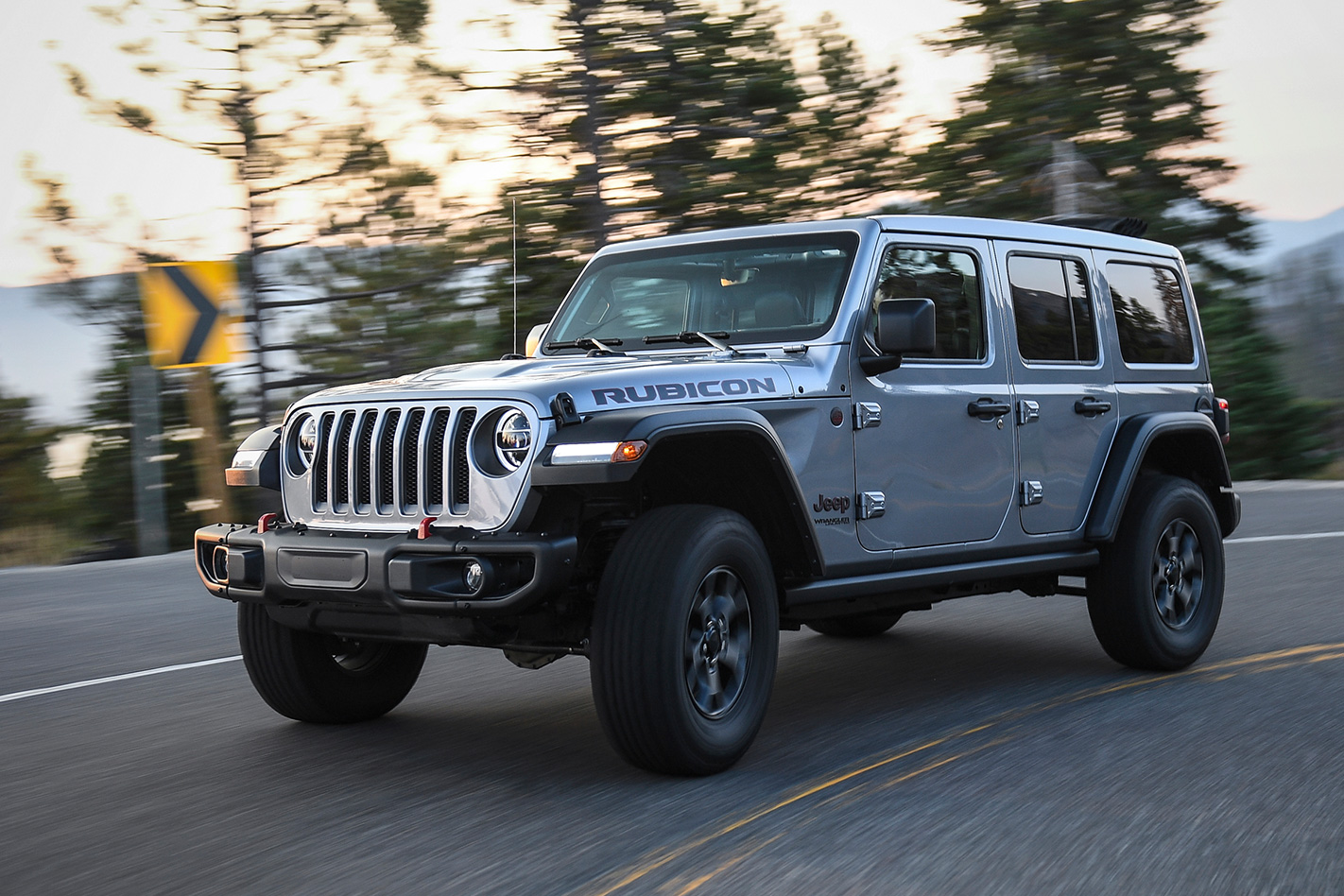
Fact is, that’s where the real satisfaction lies in the driving over terrain like this: get the line exactly right, maintain precise control of crawl speed and weight transfer, and you’re rewarded by (hopefully) avoiding a noise that’s the off-roading equivalent of fingernails down a blackboard.
By the time we finally rolled into our campsite, I found it impossible not to be won over by the new Wrangler. Of the six vehicles in our convoy, not one had become stuck, had a mechanical issue (not even a puncture) and, despite the hostility of the terrain, we’d had no call to even engage the diff locks. If you have the urge to head into back country where the SUV crowd fears to tread, Wrangler has the answers. And a deserving claim on a spot in that Ultimate 10.
SPECS
Model: Jeep Wrangler Rubicon four-door Engine: 3604cc V6 (60°), dohc, 24v Max power: 209kW @ 6400rpm Max torque: 353Nm @ 4800rpm Transmission: 8-speed automatic Kerb weight: 2021kg 0-100km/h: 8.5sec (estimated) Economy: 11.6L/100km Price: $55,000 (estimated) On sale: Q1 2019
With a cursory glance, you might mistake the 2019 Subaru Forester for the version that launched in 2013 and eventually rolled out with a choice of four engines and a handful of special editions. But the mildly modified skin of the company’s all-new large SUV belies the significantly upgraded model beneath.
Kicking off from $33,490, the entry-level 2019 Subaru Forester costs $3250 more than the previous most affordable variant, but that version was powered by a 2.0-litre four-cylinder petrol engine paired with a manual gearbox.
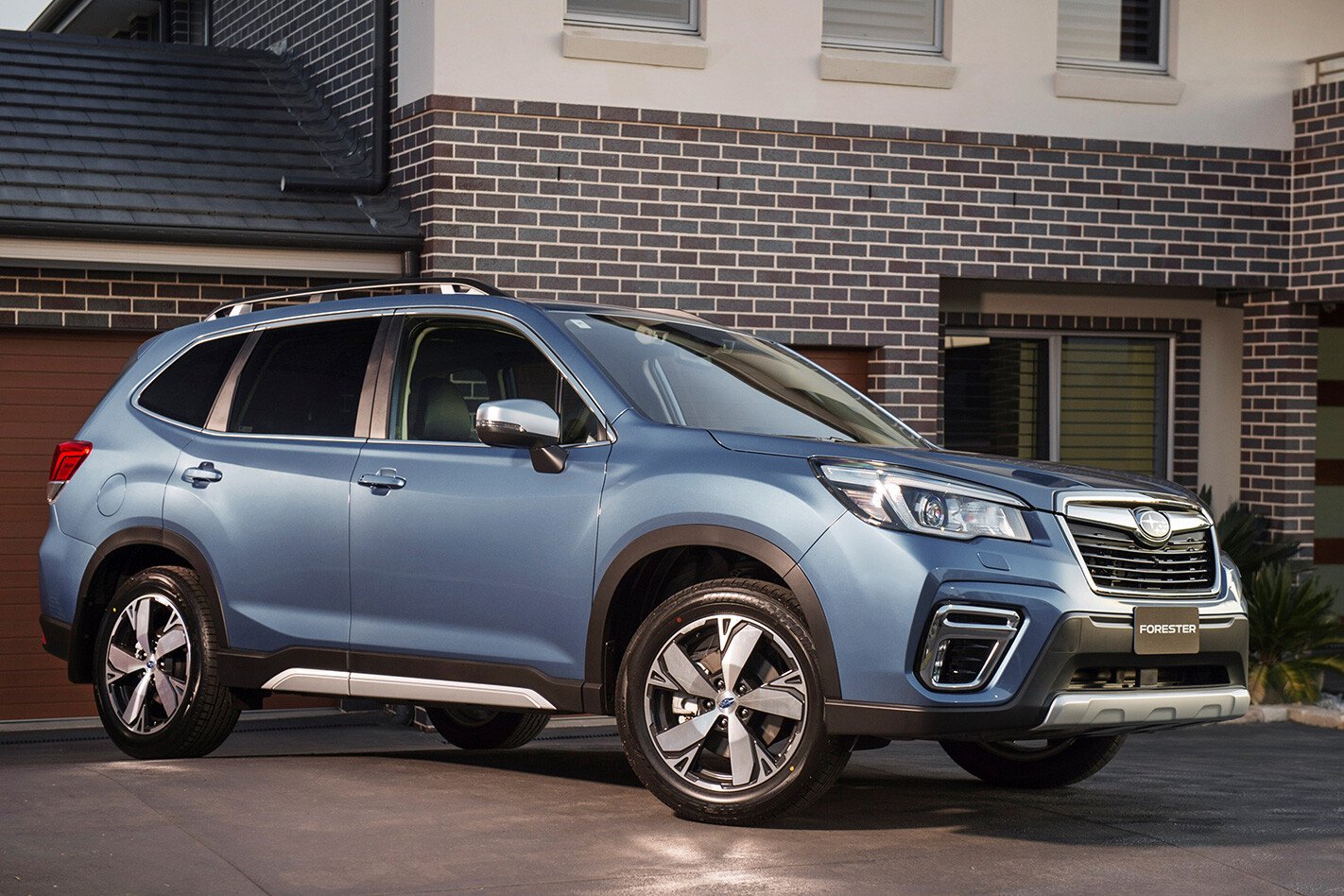
For the 2019 range, the entry Forester has a more powerful 2.5-litre four-cylinder petrol engine that sends power to all four wheels via an automatic transmission, aligning more closely with Australia’s buying habits, and representing better value.
Not only has the non-turbo 2.0-litre engine been discontinued, so has the turbocharged diesel and petrol variants of the same capacity, leaving only the non-turbo 2.5-litre for all variants. The cull has chopped the Subaru Forester line-up down from nine variants to just four.
Above the base 2.5, a 2.5i-L costs $35,490 and brings an incremental rise in equipment, as do the $38,490 2.5i Premium and range-topping 2.5i-S for $41,490. In all cases the main oily parts remain the same with the continuously variable transmission (CVT) and 136kW/239Nm shared by all four.
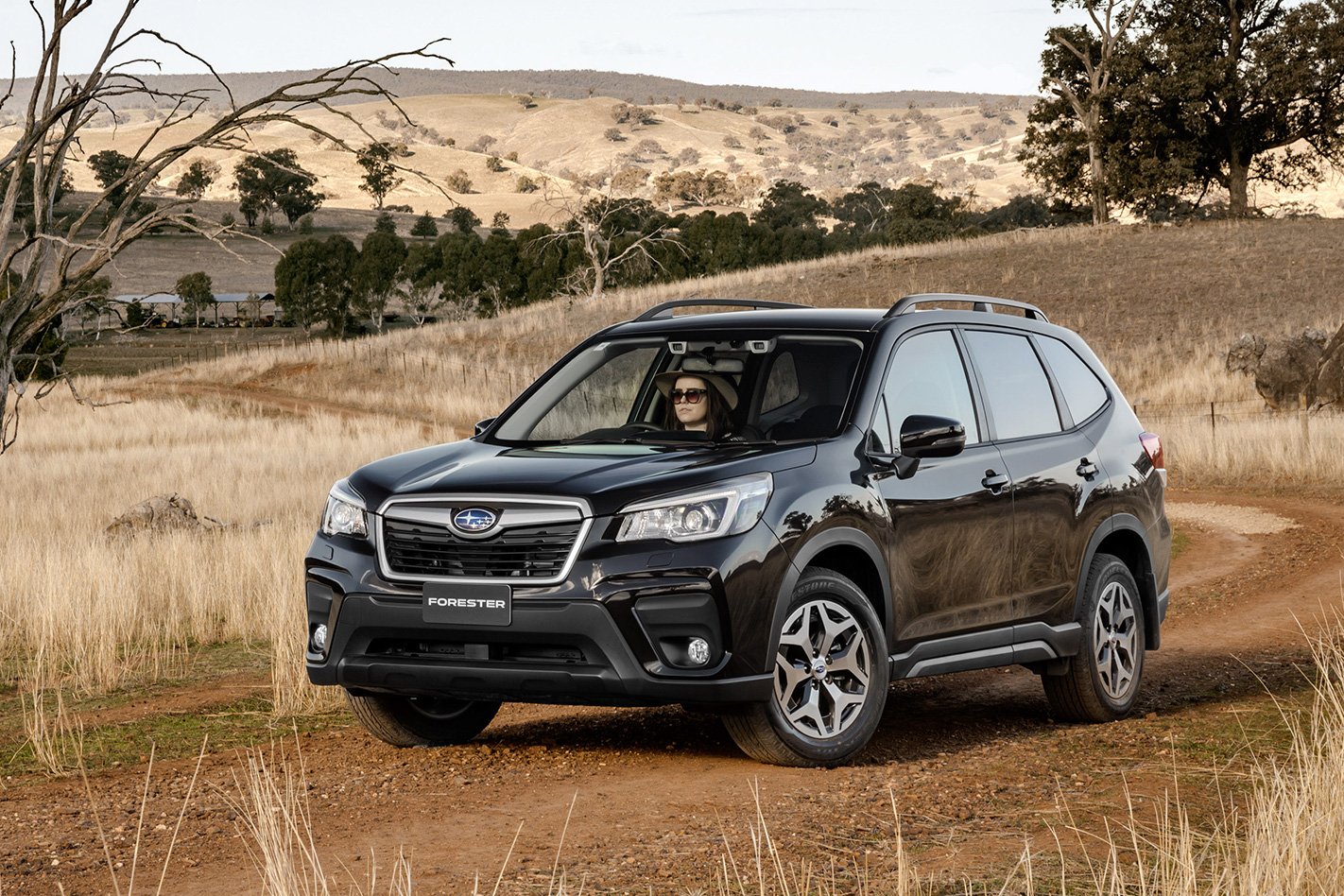
Headlining technological changes for the 2019 range is a new driver recognition system, which is standard fare for all versions except the base Forester.
A camera concealed in the dashboard, scans the driver’s face as they enter the vehicle and establishes their identity if they have previously saved one of three user profiles. On recognition, the Forester moves the electrically adjustable seat and mirrors to the desired position, sets the customisable displays and climate contra to the previous setting, and welcomes the user with a greeting in the central screen.
Beyond the convenience advantages of the system, it continues to monitor the driver during a journey and can identify if they are becoming drowsy or distracted, and issues an audible and visual warning.
The high-tech safety feature is complemented by Subaru’s unique EyeSight stereoscopic camera system, which monitors the road ahead with a pair of cameras – also standard for all Foresters. Not only does the hardware support adaptive cruise control and lane departure warning, it also enables autonomous emergency braking.
For all but the base Forester, a system similar to AEB is also applied when reversing but uses the rear parking sensors to apply the brakes if the driver fails to see an object in the mirrors or reversing camera, including pedestrians or children walking behind the vehicle, for example.
Housed in the subtly redesigned front end, LED headlights are now standard for all, projecting a higher-intensity light for greater safety at night. The more advanced lights feature steering responsive beams which follow the direction of the vehicle. Opt for the 2.5i-S and you’ll get LED fog lights as well.
With another cursory glance, the 2.5-litre engine may appear identical to the non-turbo version that powered two variants of the previous range, but Subaru says 90 percent of its components have been ‘revised’. The result is an increase of 10kW, 8.0 percent better acceleration and an 8.6 percent improvement to fuel economy (7.4 litres per 100km).
Like all Subaru models except the BRZ sportscar, the Forester is permanently four-wheel drive, and the company’s X-Mode traction management system is there for optimum grip from all four tyres.
For the flagship variant, a Snow/Mud setting offers maximum traction on the loosest surfaces by allowing moderate wheel slip, although the same effect can be achieved by manually deactivating traction control in more affordable variants. The 2.5i-S also displays vehicle incline and roll angles in the upper central screen when switched into X-Mode.
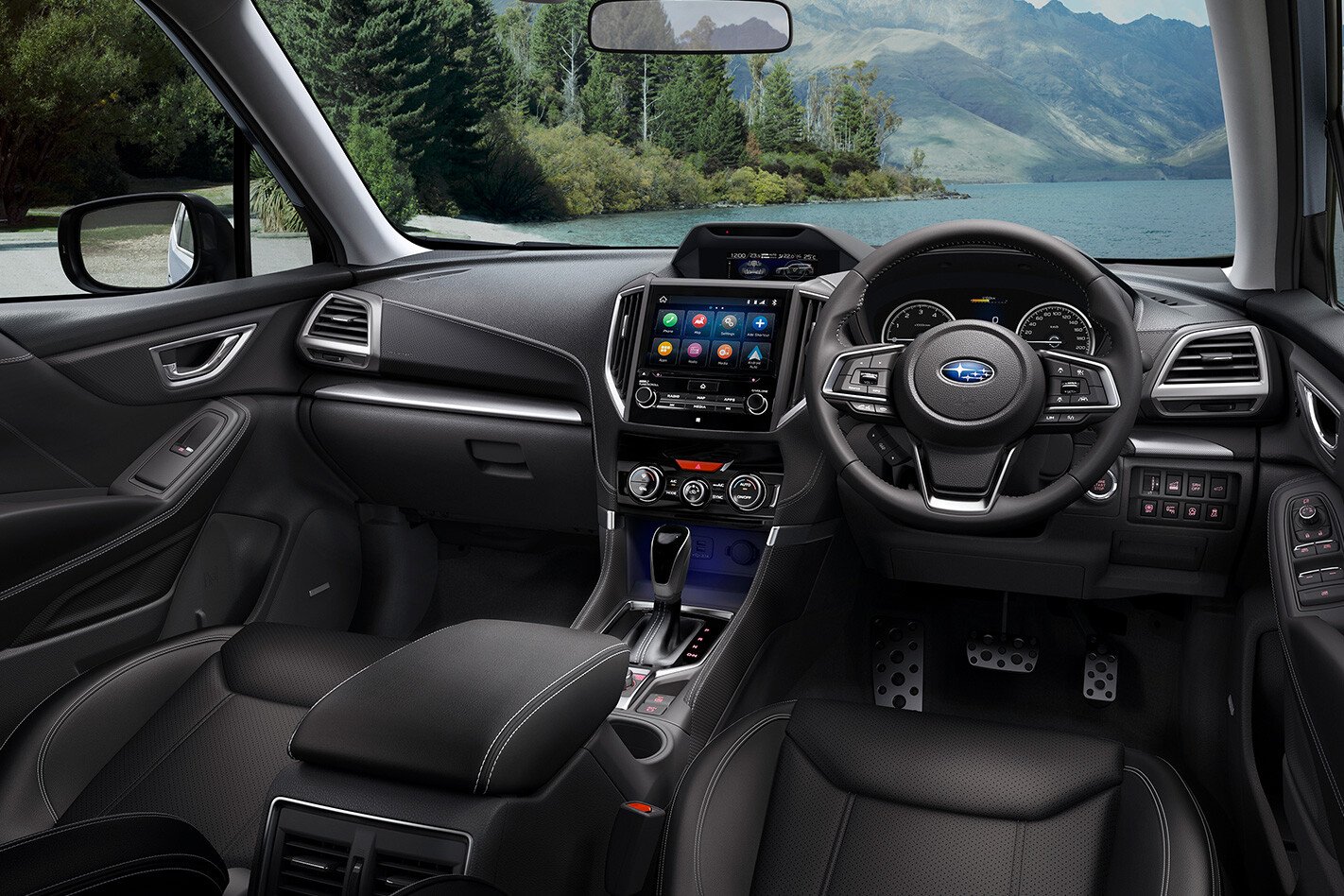
The new Forester has three full-colour digital displays. A main touchscreen measuring 8.0 inches for Premium and S variants with navigation, or 6.5-inch for the entry versions offering a range of applications including smartphone mirroring. It’s complemented by an upper 6.3-inch Multi Function Display screen and a 4.2-inch screen between the driver’s gauges for displaying vehicle and trip information.
Compared with the outgoing Forester, the Lineartronic automatic transmission is essentially the same unit but, like the engine, it has been revised. The changes have reduced weight and boosted efficiency, while the operation has been made more similar to a conventional automatic transmission with seven simulated gears that can be selected with the steering wheel paddles.
The Forester is the third model to be launched in Australia that uses Subaru’s Global Platform, following the XV and Impreza. The new construction has resulted in a stronger and safer car with better driving attributes, says its maker. Despite its larger proportions and extra technology, the 2019 Forester has only gained a little weight, increasing by as little as 15kg in the case of the S, or 26kg for the entry version.
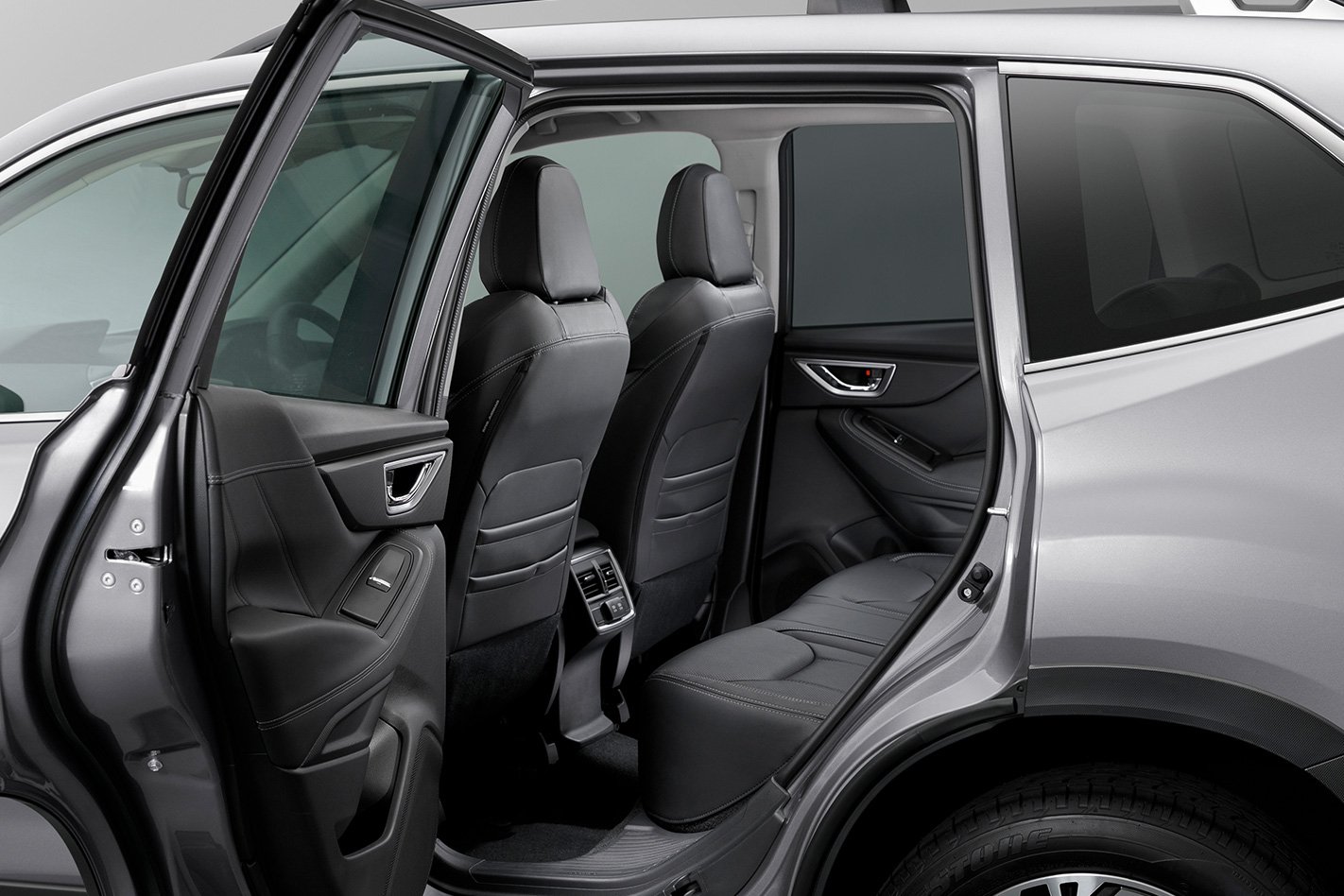
The larger proportions offer more space for occupants in both rows of seating as well as a bigger load area. Cargo space height is up by as much as 35mm, a 55mm increase to the boot floor width takes the widest point to 1585mm and the wider boot opening measures 1300mm. Boot volume is 498 litres but can be expanded by 60/40-split folding rear seats, and a flat step at the edge or the rear seats enables easy loading of roof storage.
A power tailgate for Premium and S is now twice as fast to open and close, and incorporates a close and lock button, allowing users to walk away from the vehicle without having to wait for the boot to close before locking.
Notable features for the most affordable Forester include new rear air vents and a pair of USB sockets for second-row passengers, stereo system by renowned audio manufacturer Harman Kardon, three 12-volt power sockets, rain-sensing wipers, auto-dipping headlights, tyre pressure monitoring, rear cross-traffic alert, electric park brake and 17-inch ally wheels.
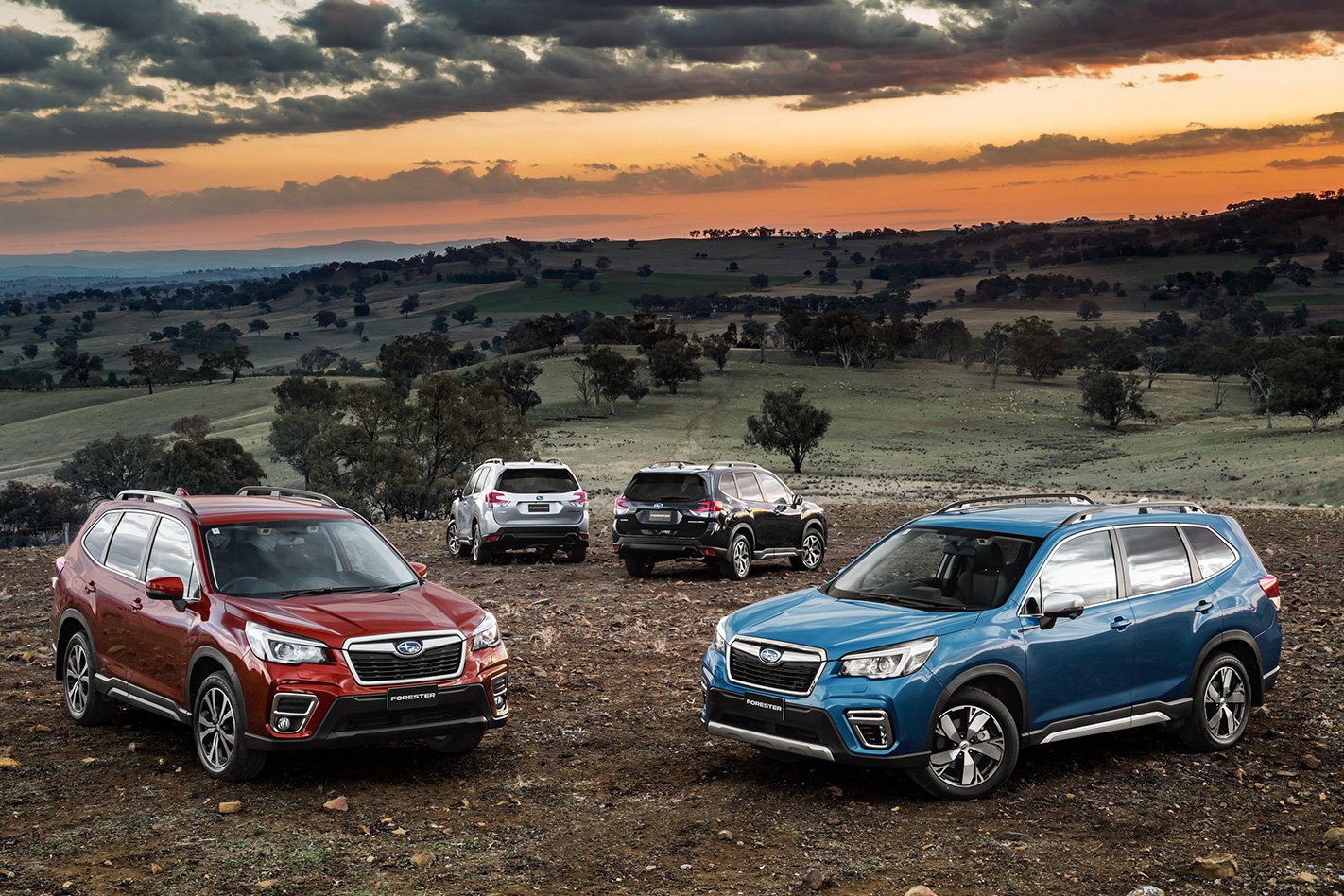
The 2.5i-L adds to that list with the aforementioned Driver monitoring System and the vision assistance systems that add rear emergency braking and adaptive beam headlights.
Above that, the Premium brings electric operation for the rear folding seats, a selection of alloy and chrome-look trims inside and out, power folding mirrors, navigation, an SI-Drive mode that allows the engine characteristics to be adjusted, power adjustable front seats and 18-inch alloy wheels.
The flagship tops off the kit list with an electric sunroof, higher specification sound system, leather upholstery in a choice of black or ‘platinum’, and a selection of more premium appearance and texture interior and exterior materials.
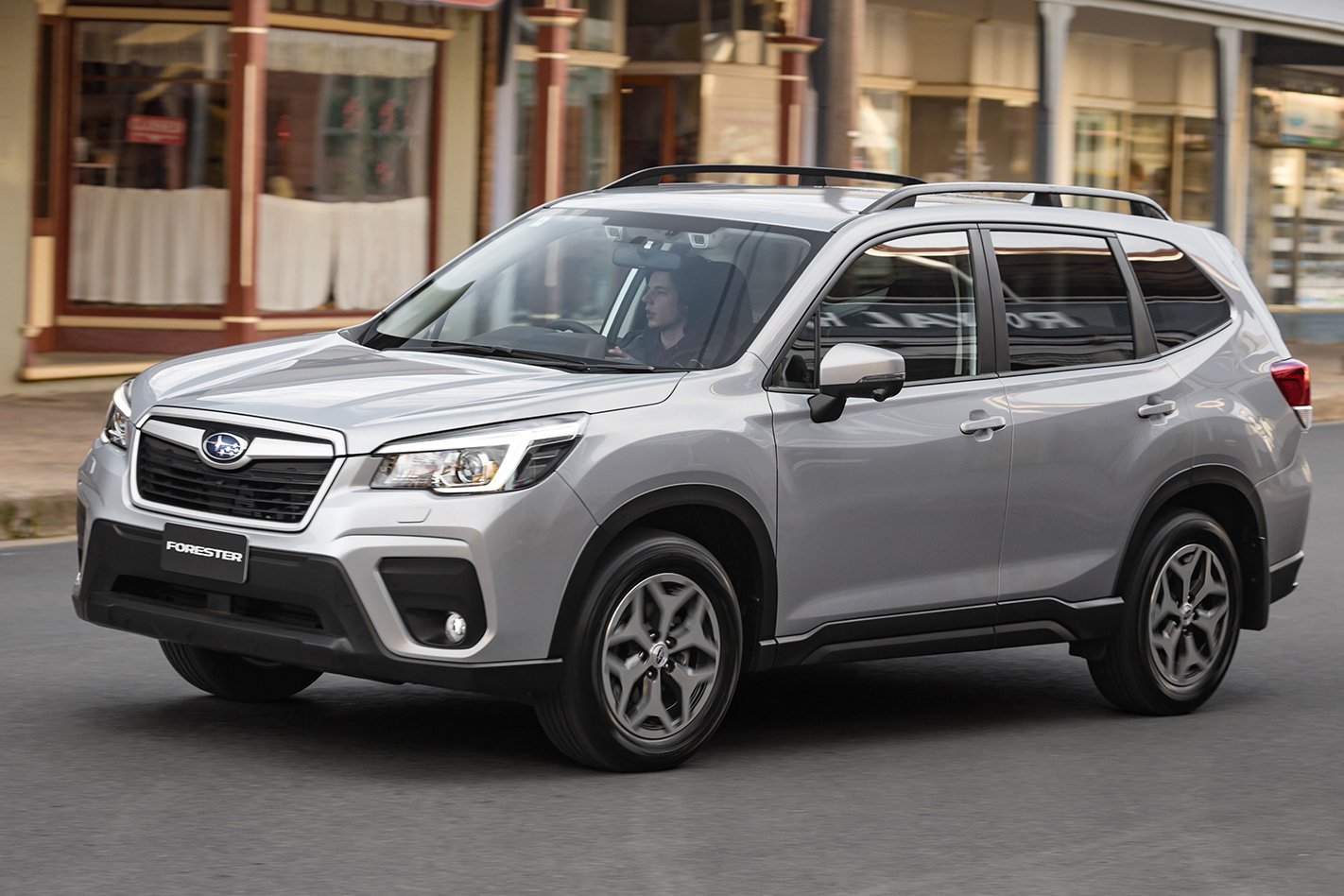
Unlike some luxury brands which offer extensive options lists that can significantly add to the bottom line, there are no extras on offer to pump the price of the Forester. Even the nine choices of metallic and pearlescent paint are included in the asking price.
A three-year unlimited kilometre warranty is included along with a 75,000km capped price servicing program and roadside assistance.
MORE: Subaru Forester Range Review MORE: Subaru Forester Specs, Range & Price
