
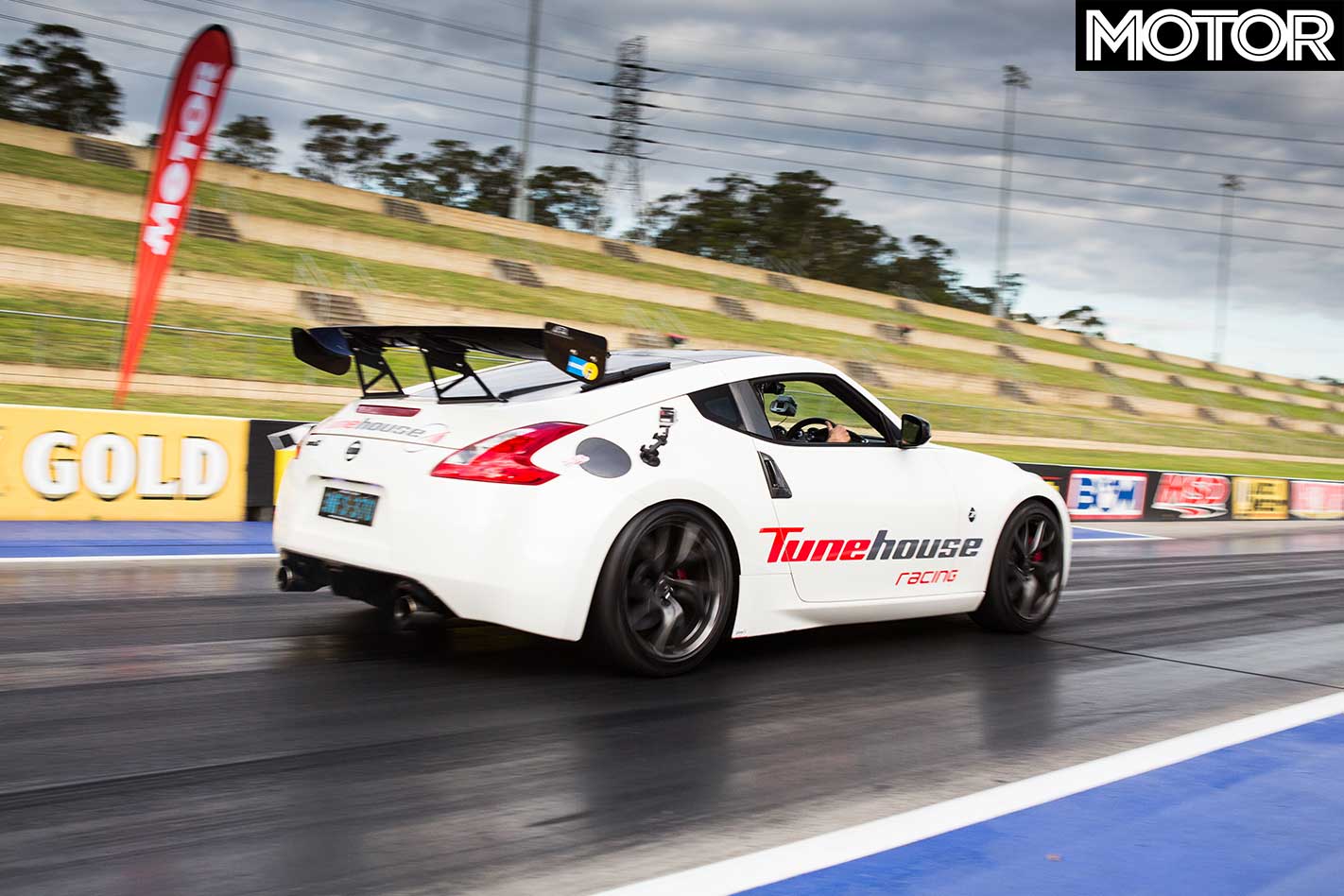
Sydney tuning and customs workshop Tunehouse has announced it’s partnered with Audi Performance and Racing (APR) to become an official dealer.
Tunehouse founder Jim Ghelis tells MOTOR that being on the same side as APR benefits both brands.
“APR is a very strong brand. The way I saw it was, why compete when we can work together?”
“Tunehouse can still cover the custom tuning approach for customers who want something alternative to what’s on offer from APR, but we feel it’s great to now be able to offer both avenues.”
Ghelis says he believes Tunehouse will benefit from the confidence buyers have in the APR brand, while allowing Tunehouse customers more options.
“I think Tunehouse and APR is a good fit. APR is a good brand, we trust it, and it’s got a lot of engineers on board with the same values as Tunehouse.
“It’s one of the brands I’ve wanted to bring on board, and I think it’s going to service a different part of the market for Tunehouse.”
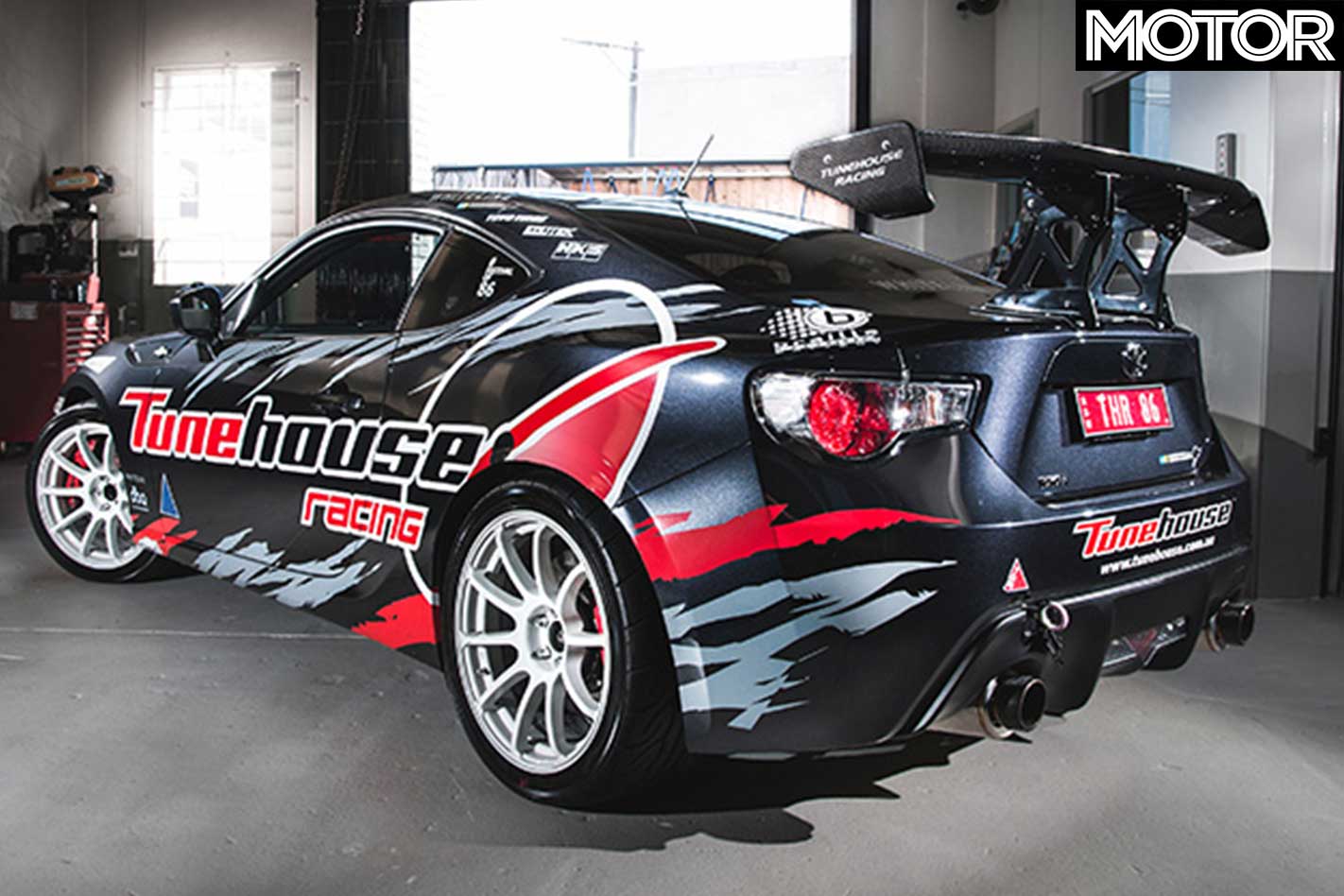
“Because of this new relationship, it means we can keep putting time into the Japanese cars as we have with the 86 and BRZ, and the MX-5.”
Ghelis expects to see plenty more Volkswagen Group cars coming into the shop in the future, with APR covering primarily Audi, VW, and Porsche tuning.
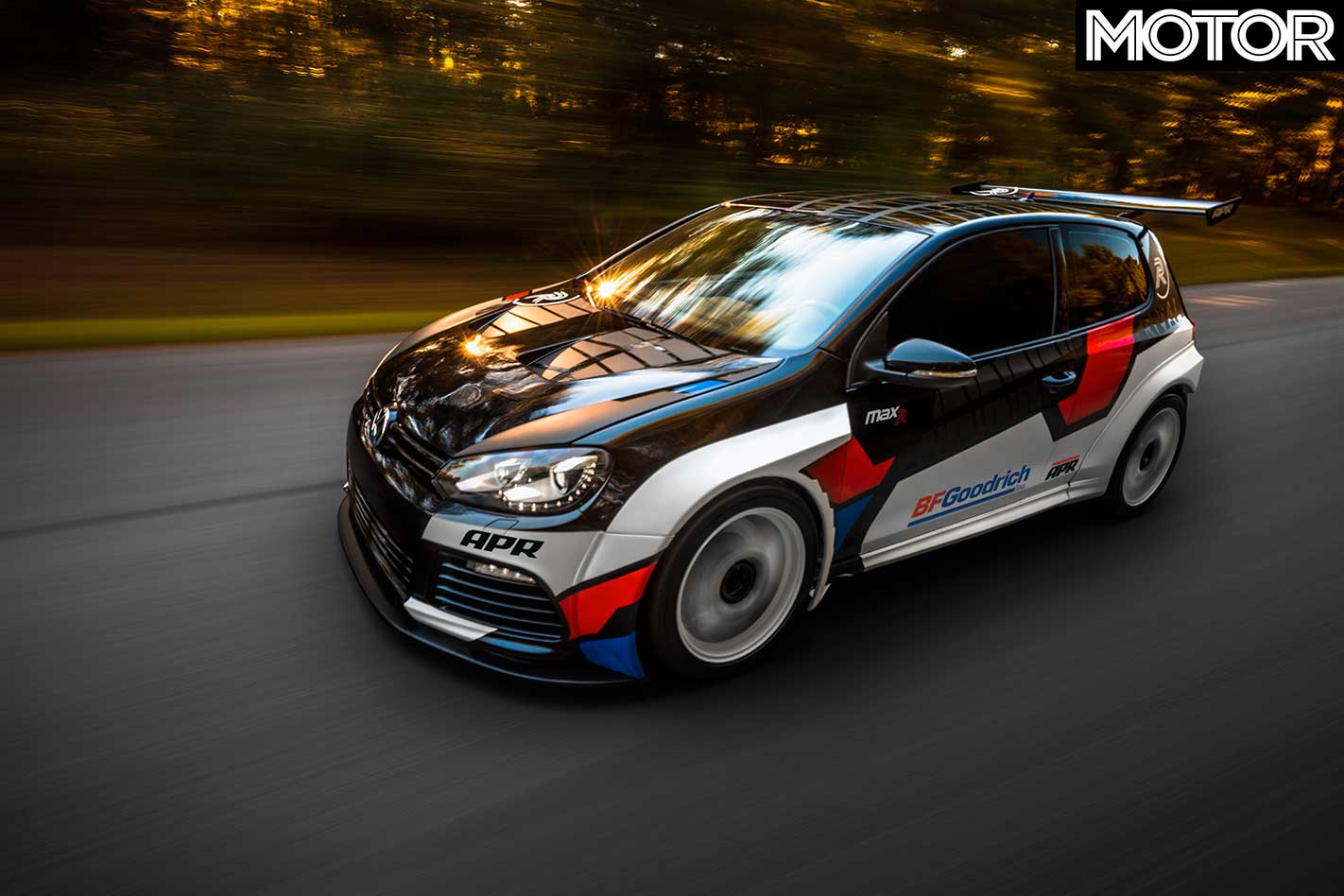
“It’s a brand that’s widely recognised, so you become more of a Volkswagen and Audi specialist by having APR on board.”
But, he adds that he doesn’t think it’ll take time away from tuning other cars.
“It’s actually better because one of the philosophies of Tunehouse is to appreciate and service niche markets. Brands that we bring on board are brands we believe will add value – and I think APR will add value.”
Performance Pack v BRZ tS v MX-5 RF Limited Edition
Ghelis expects to be able to fully meet the APR needs of customers within the very near future, citing next month as his timeline.
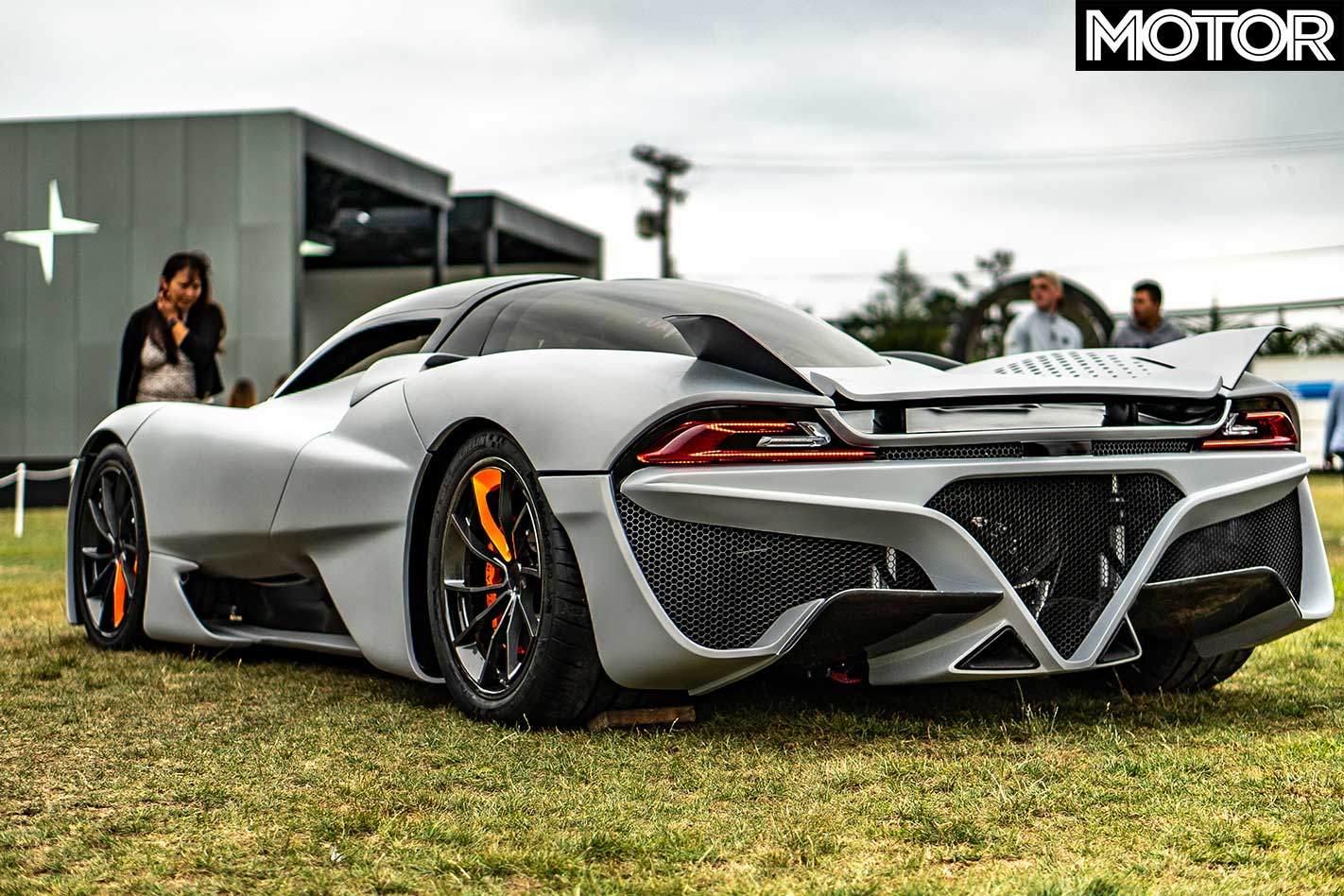
The 2019 SSC Tuatara has finally been unveiled after a long wait, with its technical specifications and performance expectations now also revealed.
The American hypercar, expected to challenge the Hennessey Venom F5 for the title of Fastest US-built car, utilises a 1.3MW (1305kW) 5.9-litre twin-turbo V8, which redlines at 8800rpm and runs on either E85 or premium unleaded (on which it makes 1006kW).
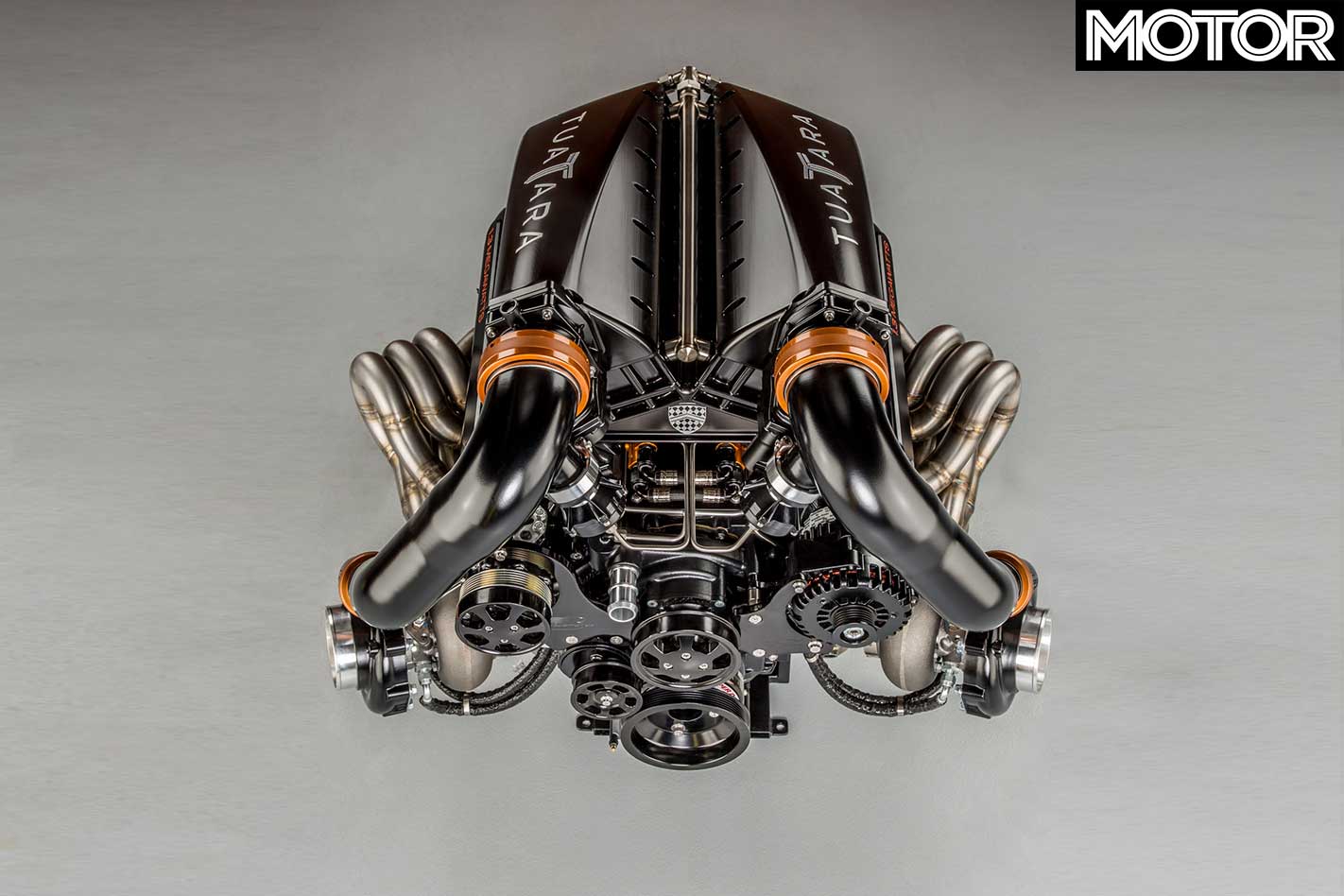
Founder and CEO Jerod Shelby unveiled the hypercar at Pebble Beach this weekend, joined by designer Jason Castriota. It’s the first we’ve seen of the car since it was first made publically known back in 2011.
Named for a New Zealand lizard which has a faster rate of evolution than any other animal according to studies, the Tuatara had been teased in three shadowy photos earlier this month.
Since then, we’ve also been told exactly what its ‘unmatched’ drag coefficient is, something SSC is very proud of – just 0.279.
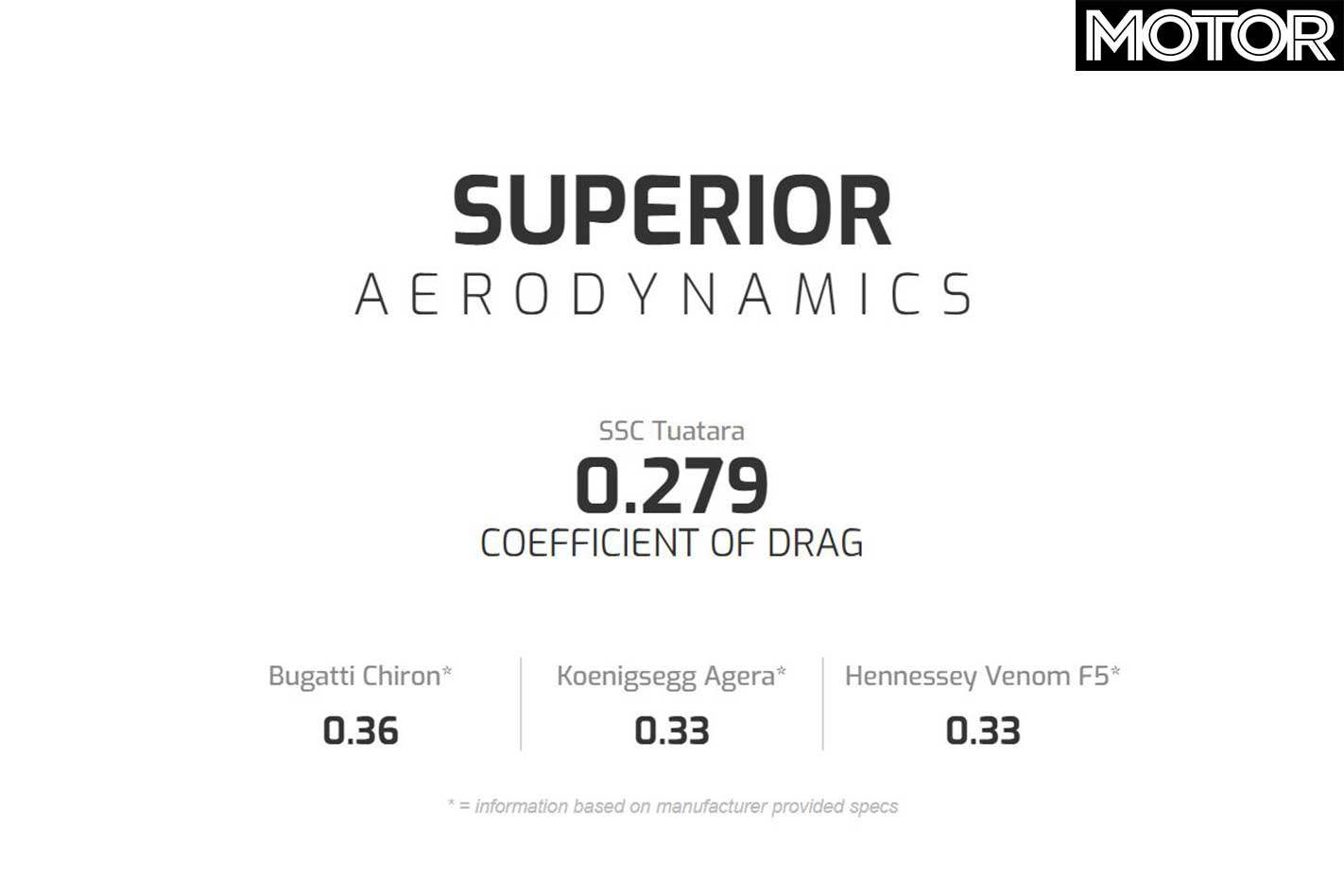
It prominently compares this to the 0.36 of the Bugatti Chiron, and the 0.33 of the Koenigsegg Agera and Hennessey Venom F5.
This also plays to its claim that the Tuatara will top 300mph, or 482.7km/h. That’s the same speed Hennessey is aiming for with the Venom, and it’s faster than the speed achieved by the Koenigsegg Agera RS and Bugatti Chiron.
The Agera RS holds the record, with an official record of 447km/h according to the average top speed of two runs – it managed 457.5 on one of those.
So who will win the race to 460km/h? 470? If the claims stack up, we’ll see a 480km/h hypercar before long.
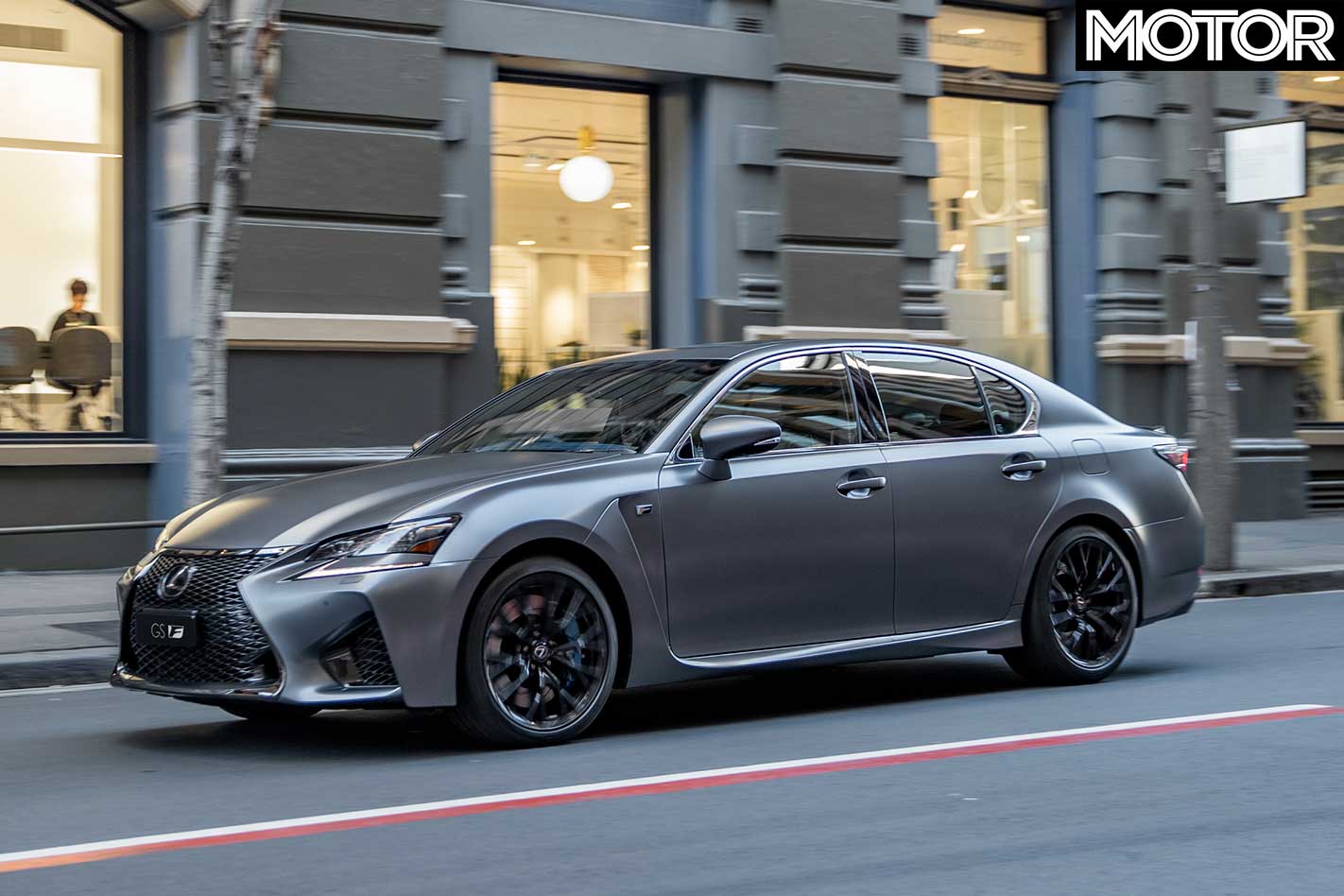
Lexus Australia will release a limited edition series of cars to celebrate the 10th anniversary of the Lexus F Line.
‘F’ variants have been the pinnacle of performance for each of Lexus’ models over the last decade, with the Lexus GS F and Lexus RC F serving those roles in sedan and coupe form respectively.
The special edition versions of these cars are distinclively painted Fuji Graphite, a matte grey colour, with strong Competition Blue themed interiors.
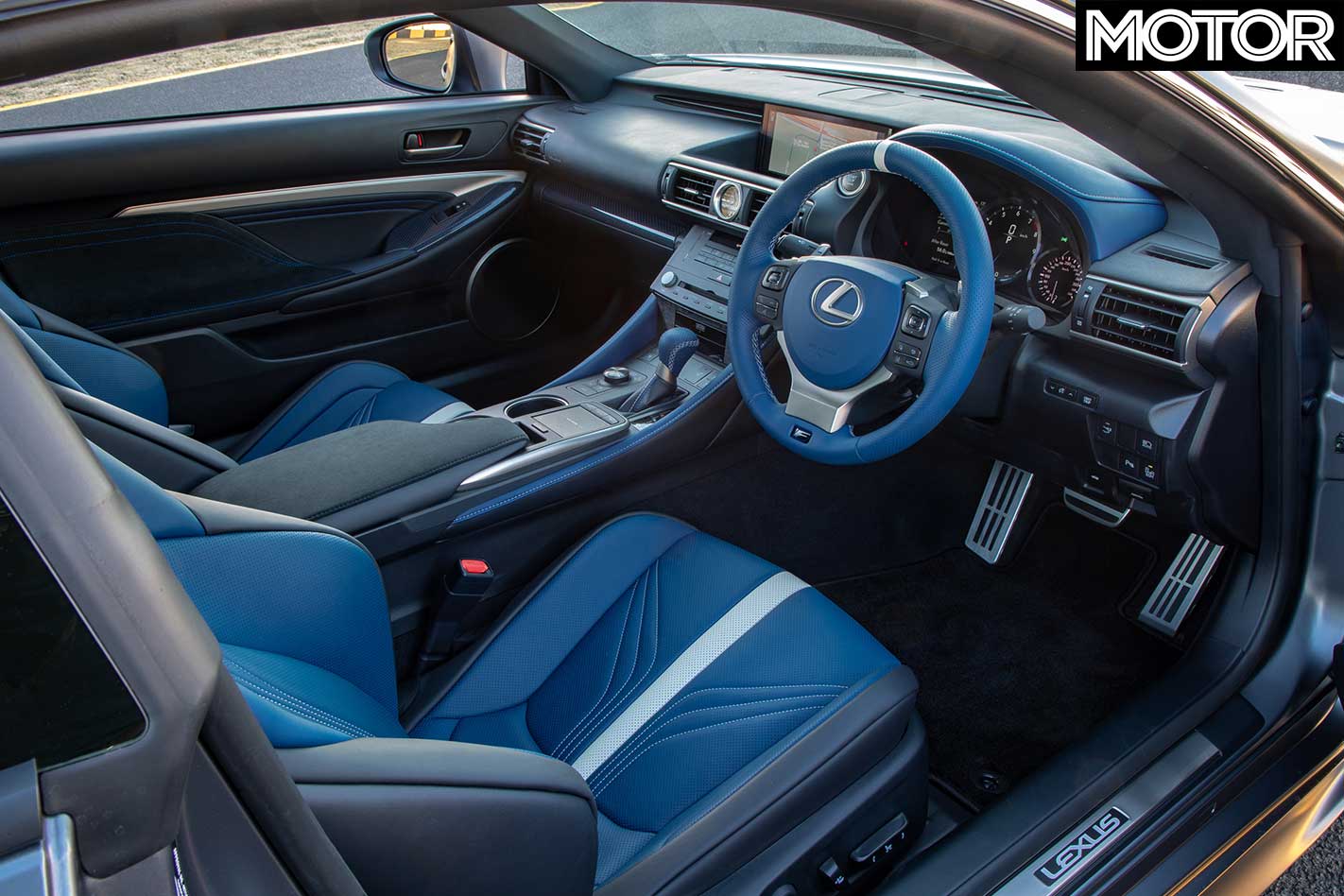
A 351kW/530Nm 5.0-litre atmo V8 is at the heart of each, driving only the rear wheels with the assistance of a torque vectoring differential.
For the 10th anniversary RC F, the RC F Carbon Pack is used as a base which means the car scores a carbon fibre roof and active rear wing. Lexus prices the limited edition coupe prices from $151,929.

Similarly, the GS F limited-edition sedan features a carbon-fibre lower grille surround and rear lip spoiler, and is priced from $155,940.
Recently, Lexus held a special 10th anniversary event for the F Line at Fuji Speedway, the track which lends its first initial to the name of Lexus’ performance arm.
Lexus Australia CEO Scott Thompson says the special models have successfully ‘captured the sporting spirit of the F performance marque’ and should reflect the track-honed nature of ‘F’.
“The letter F symbolises a series of Lexus cars that are designed and engineered to deliver a higher level of sporting style and driving reward,” Thompson says.
“These rare and exclusive versions reinforce that F models are built for drivers to immerse themselves in pure driving pleasure and satisfying performance.”
The limited models will be available from September 5 2018.
Over 1193kW, and a total of 1763Nm. Those are the claimed figures behind the 7.6-litre twin-turbo V8 mounted in the Hennessey Venom F5.
And it’ll need each and every one of those kiloWatts and Newton metres if it’s to achieve its goal of becoming the fastest car on the planet.
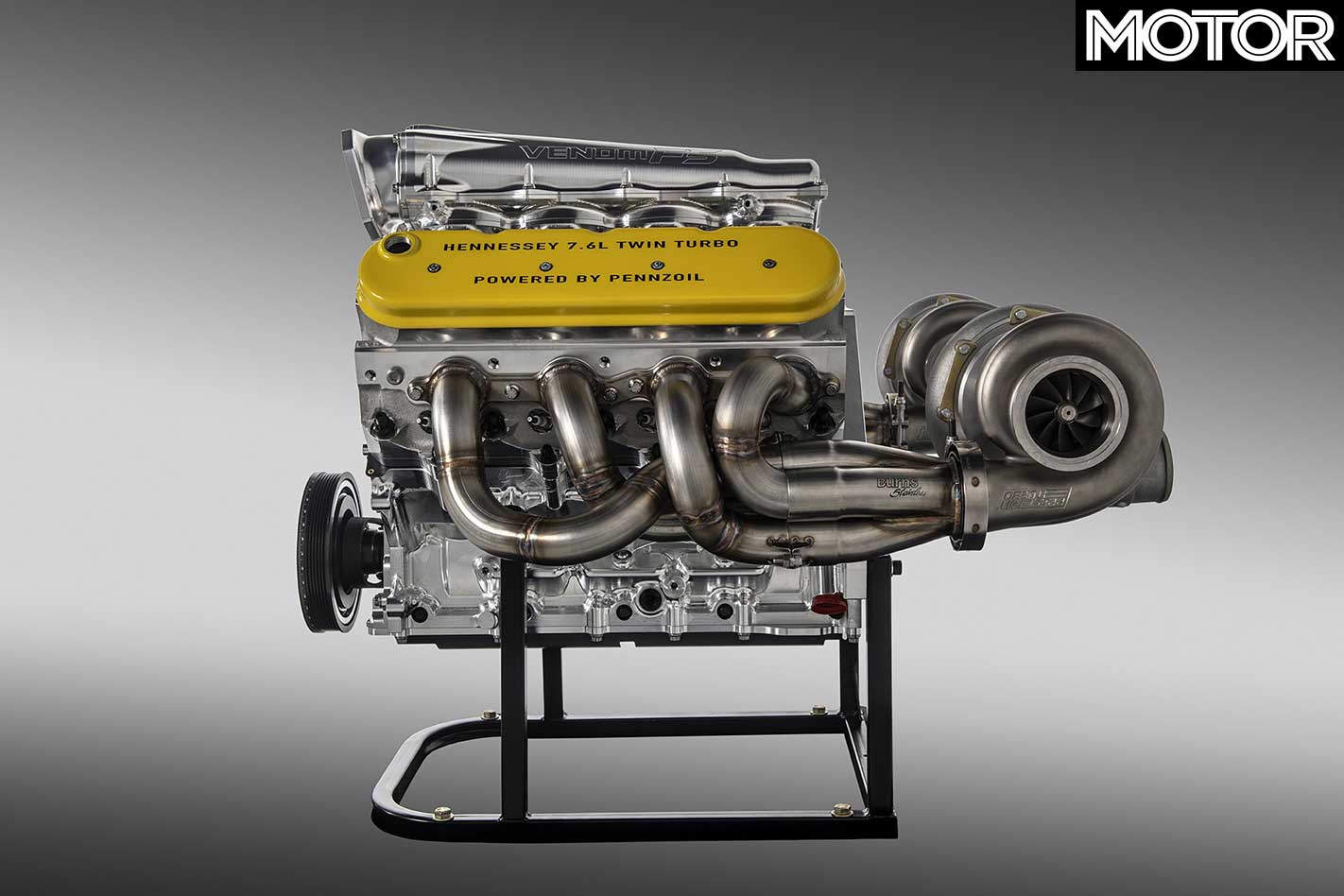
Announced at the Pebble Beach celebrations during Monterey Car Week, the details of the Hennessey-built engine are rather impressive.
The billet aluminium dry-sumped block utilises steel cylinder sleeves allowing the custom engine to achieve its 1193kW/1763Nm magic numbers, at 7200rpm and 4400rpm respectively.
Ball bearing twin turbos with billet compressor wheels force air into the engine at 24psi, helped by stainless steel headers.
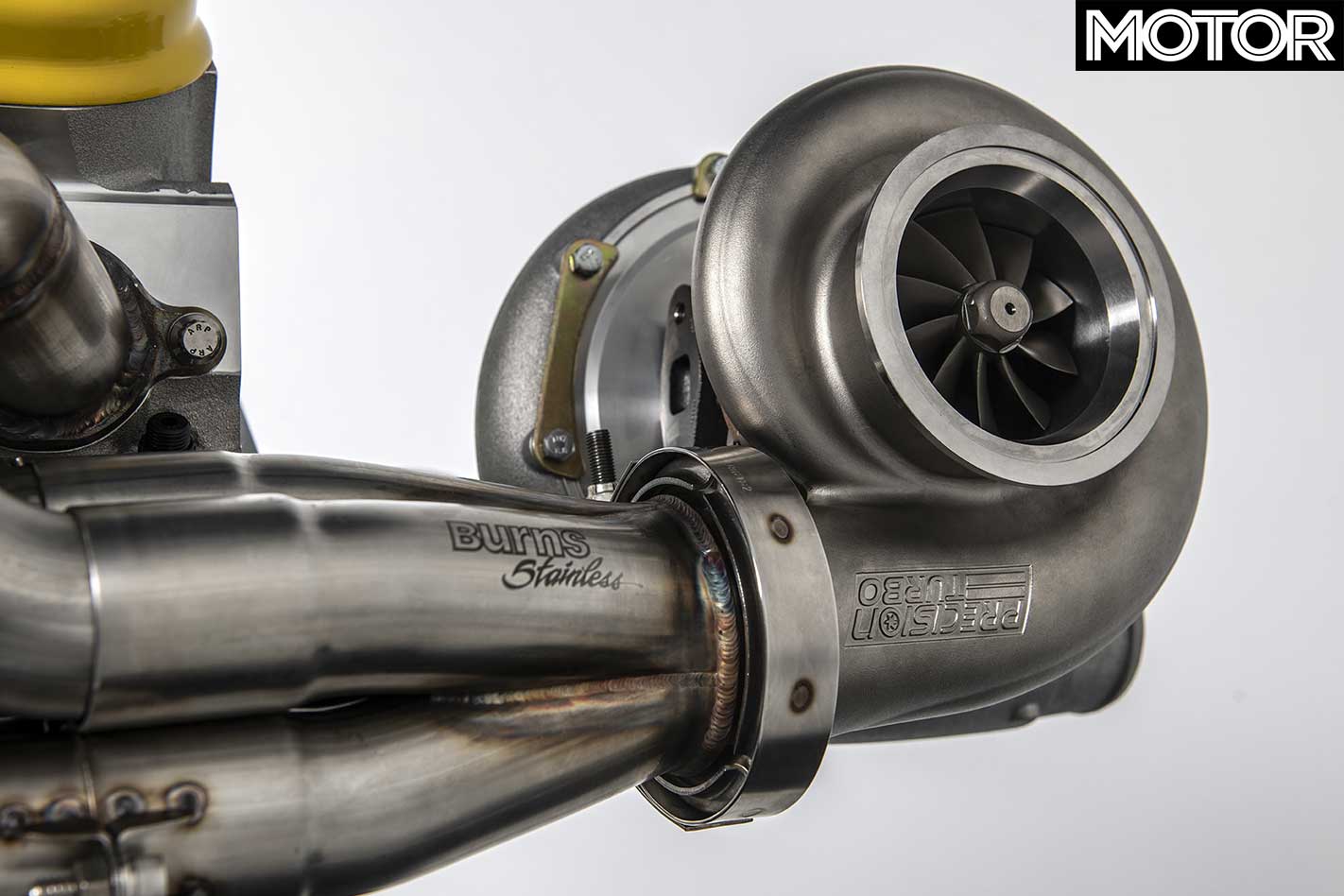
A 7-speed single clutch transmission will power the rear wheels, with the driver able to intervene with paddle shifters.
Hennessey estimates the Venom will weight 1338kg, allowing it to hit 300km/h in less than 10 seconds, and top over 482km/h. It’ll achieve this, Hennessey hopes, in part thanks to its drag coefficient of 0.33 – on par with the Koenigsegg Agera.
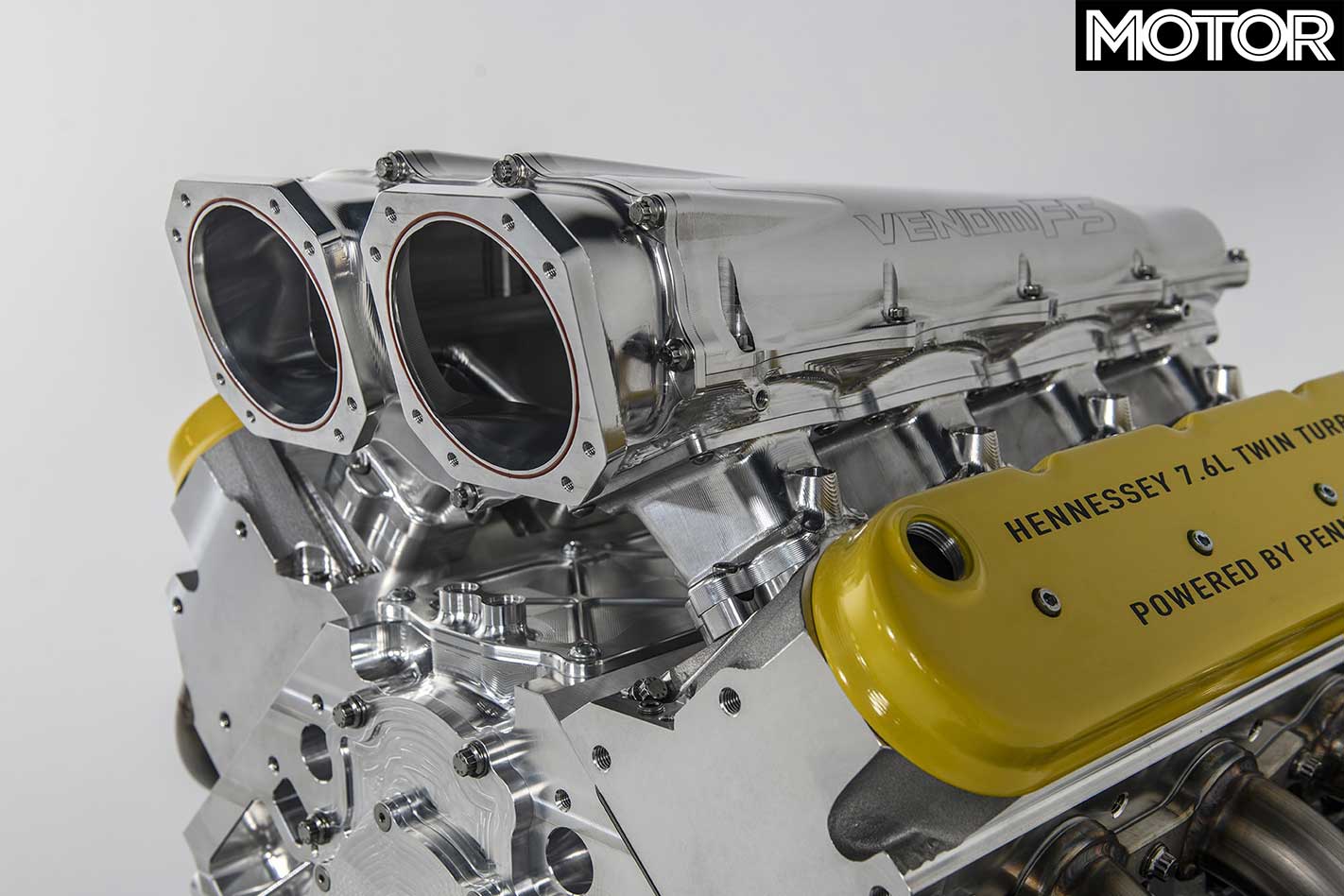
“We think the engine details shared at The Quail are of major interest to all those who have been following the progress of the Venom F5,” says Hennessey.
“With a custom-built Hennessey 7.6-litre twin-turbo V8 engine capable of achieving more than 1600bhp at 7200rpm (1193kW in metric), and Shell and Pennzoil powering and protecting this powerhouse, we’re feeling confident in our quest to set new records in 2019.”
Of the 24 examples planned, Hennessey says there are already 15 units spoken for, at a base price of USD$1.6 million (AUD$2.18, as directly converted).
HERE was a time in the golden era of Japanese carmaking, between the mid-1980s and late-1990s, when Toyota showrooms were thick with tasty metal. Celicas, MR2s, Supras and Chasers sat alongside supercharged Crown Comforts, and forced induction was everywhere.
It was a good time to be a Toyota fan. However, once the Japanese economy went off the boil in the mid-1990s Toyota’s will to keep building fun cars evaporated with it. And so begun Toyota’s ‘whitegoods era’.
It was around this time that Tetsuya Tada, the man we best know as the chief engineer of the Toyota 86, cut his teeth as a vehicle project lead. As the automotive architect responsible for Toyota’s most engaging and dynamic car of this century, he’s a person worth knowing, and his latest project – the reincarnation of the mighty Supra – has the potential to spark a new level of enthusiasm for the Big T – and put an end to the whitegoods reputation. But Tada wasn’t always interested in making fast, driftable Toyotas. In his formative years, he wasn’t even interested In making cars at all.
“I was a rocker,” he says. “I was in a rock band at the end of high school; I started studying electronics because I liked electric guitars. I actually wanted to work for Yamaha, making instruments.”
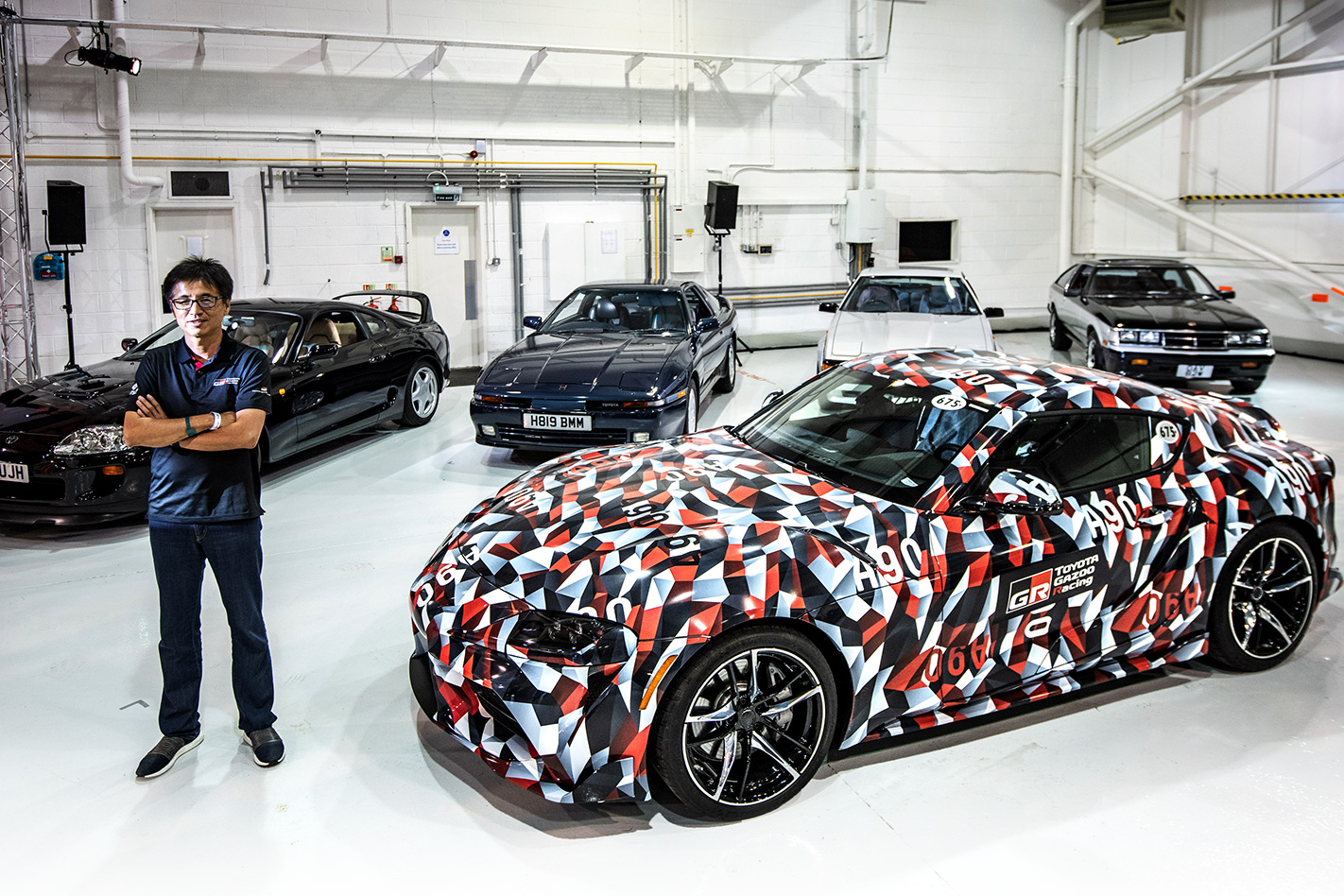
But a gift from his parents of a Toyota Publica rekindled a love of cars that was first stoked by his rally-driving father, and Tada joined Toyota as a graduate software engineer instead. ABS and traction control were his bread and butter, and after stints in Japan’s frosty northern island Hokkaido and at Toyota’s sprawling Higashi Fuji research facility, he spent three years in Europe validating road cars and race cars.
However Tada’s early years as a chief engineer were decidedly less sexy than you might imagine.
“At the time, Toyota was trying to get the number-one sales spot in the world, and was walking away from making ‘inefficient’ sports cars that could not give us the number of sales,” says Tada. “We shifted to more [profitable] cars.”
From Tada’s point of view dull cars might have been making big money for Toyota at a time when the Japanese economy was contracting, but grocery-getters held little appeal to him. Senior management had different ideas, and in the mid-1990s Tada was lured to the world of product planning by Isao Tsuzuki – the chief engineer of the JZA80 Supra. Upon learning that the first car he would oversee would be a two-box MPV, his displeasure earned him a reprimand.
“As soon as I moved to that planning department, I asked Tsuzuki-san: ‘what car am I making?’ He said I’d be working on the Raum. It means ‘Room’ in German, but it’s a small car sold only in Japan, for carrying kids or elderly people. I was asked to do the plan for that car; I was really disappointed – it wasn’t a sports car! I complained to Tsuzuki-san, and he yelled at me. I was scolded by him: ‘Raum, Supra, have the same philosophy. If you don’t understand that, you’ll never make a sports car’. It took me more than 10 years until I understood what he meant.
“At that time I was in charge of minivans and of course the number of sales were going upwards and upwards, and the prospect of Toyota being ‘Number One’ was coming close. People were saying, ‘wow, Toyota is going really well’, however journalists would always say at the end of interviews: ‘Toyota’s cars are easy to use, they don’t break and are good value … but they’re not fun, they’re not interesting.’”
As his senpai, or mentor, Isao Tsuzuki taught Tada that building good cars was about much more than sharp handling or big power. Even boring cars would benefit from the same design philosophy that had made cars like Tsuzuki’s fourth-generation Supra fun.
“What he said about making sports cars is that it’s the same fundamentally as the Raum, or any car for that matter. Whatever the category, you have to think about the drivers, or the people who will be sitting in the seats.”
There was another harsh truth: sports cars couldn’t be loss-leaders in the world of Toyota. Every product had to pay its own way.
“Sports car development is about how you are going to develop the business case. Toyota isn’t a non-profit organisation – we don’t really make a lot of profit [making sports cars], but you really need to have at least some. With sports cars you can’t really sell a lot of them, and you use a lot of specific parts to get the performance. It’s a risky business, [which is why] a lot of board members don’t want to be involved in the sports car category.”
Tada’s experience in building compact vans for the budget-conscious proved instrumental to getting the 86 project across the line at the right price. Maximising parts-sharing and designing components that were cheap to produce were critical to keeping costs down.
“I learned that from making small cars. It was really useful, you have to have that kind of accumulated experience, otherwise you won’t be able to make production sports cars.”
Another crucial factor was Subaru’s role in the joint venture as the provider of the 86’s engine and platform. It comes as no surprise that Tada is teaming up with another manufacturer on his newest sports car project to help spread costs – the Supra will share its architecture and powertrains with BMW’s next-gen Z4.
But to dismiss it as a reskinned BMW is foolish. Tada proved with the 86 that an unconventional engineering approach can result in a car with vast driver appeal – even if said car is built largely on top of recycled suspension tech and borrowed engines. He remains fiercely proud of his decision to equip the 86 with low-friction tyres from the Prius for that reason.
He says to expect similar driver rewards with the new, fifth-generation ‘A90’ Supra.
“You’ll really need to drive it. It’s hard to express in words, but I’d like everyone to hold the steering wheel as soon as possible. On a circuit, or on the autobahn at over 200km/h, you’ll be able to enjoy it. Just drive it a few hundred kilometres and you’ll think, ‘Oh! It’s different!’ compared to conventional cars.”
Sadly Isao Tsuzuki, as the key influence on the man now responsible for injecting some much-needed joy into Japan’s most sober brand, won’t be able to critique the follow-up to his much-missed sports car and the product of his former understudy.
“Sports car making is very different from production cars, so I really wanted some advice from my senpai Tsuzuki-san. I went to see him, actually when I planned Hachiroku,” Tada says, using the Japanese name for his beloved 86.
“But before the launch of the Hachiroku, he died in an accident. If he was alive today he would be the first one I’d report to, and I’m sure he’d be very happy to see the Supra is continuing.”
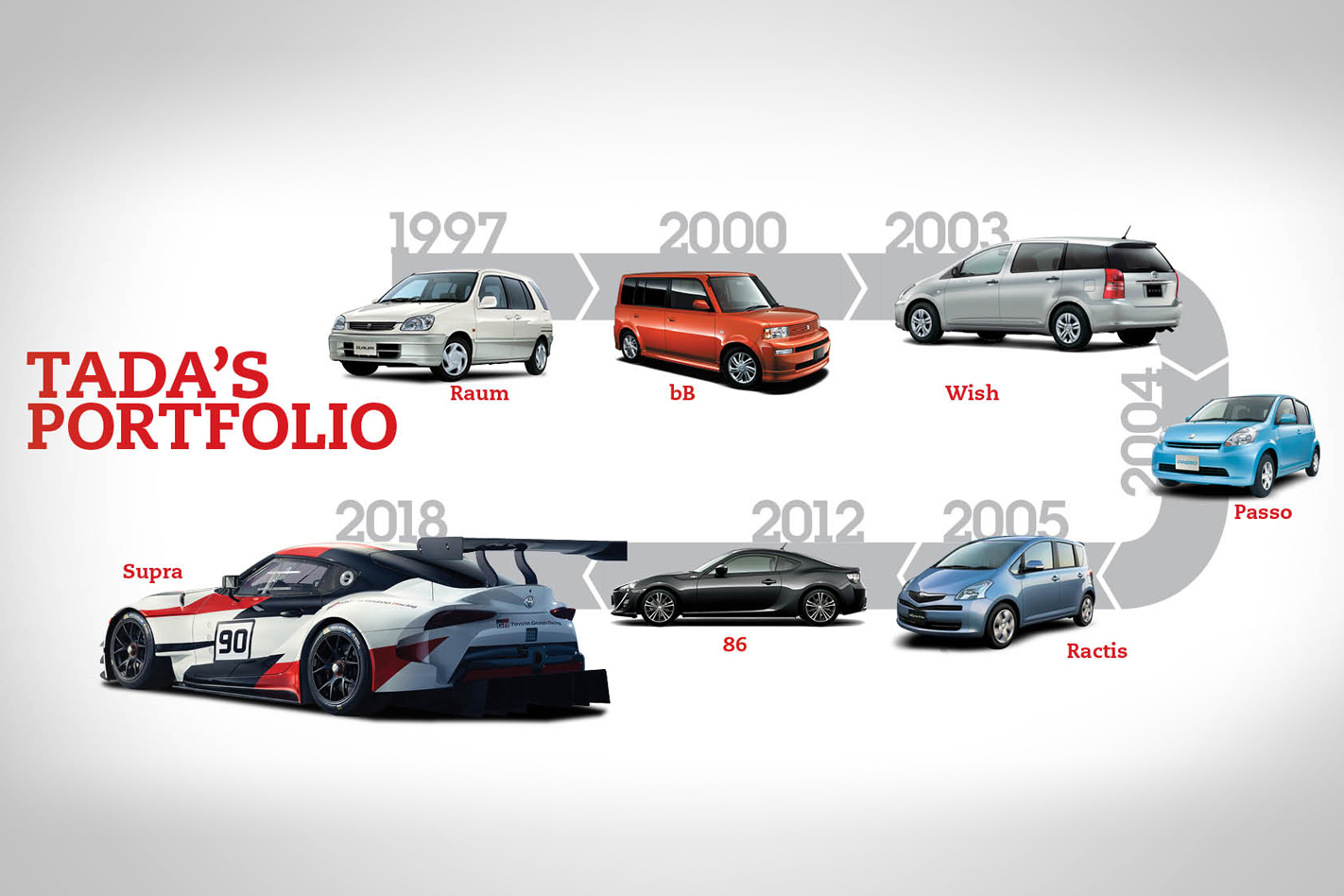
TADA’S PORTFOLIO
Accusations that Toyota spent too long building boring cars hit close to home for Tetsuya Tada – after all, he spent much of his career creating them. As a chief engineer he spent over a decade developing a bevy of largely soulless boxes for Toyota to sell to the masses, until being mercifully relieved of that task in 2007 to oversee the creation of the 86.
Mazda has treated its popular CX-3 small SUV to a mid-life update, which has increased pricing by up to $1300 but now includes on-road costs and a flurry of new features and equipment.
The update also brings a reshuffle of the variant pack with the entry Neo now replaced by the Neo Sport, Maxx gets the same treatment with a Maxx Sport successor, while a pair of Akari LE variants will represent a new flagship of the line-up above the ongoing Akari toward the end of the year.
Pricing kicks off from $21,790 before on-road costs for the entry manual Neo Sport, which represents a $1300 increase over the discontinued Neo. However, with a driveaway price of $23,990 and the addition of reversing camera and MZD information and entertainment screen, Mazda says the CX-3 is now better value.
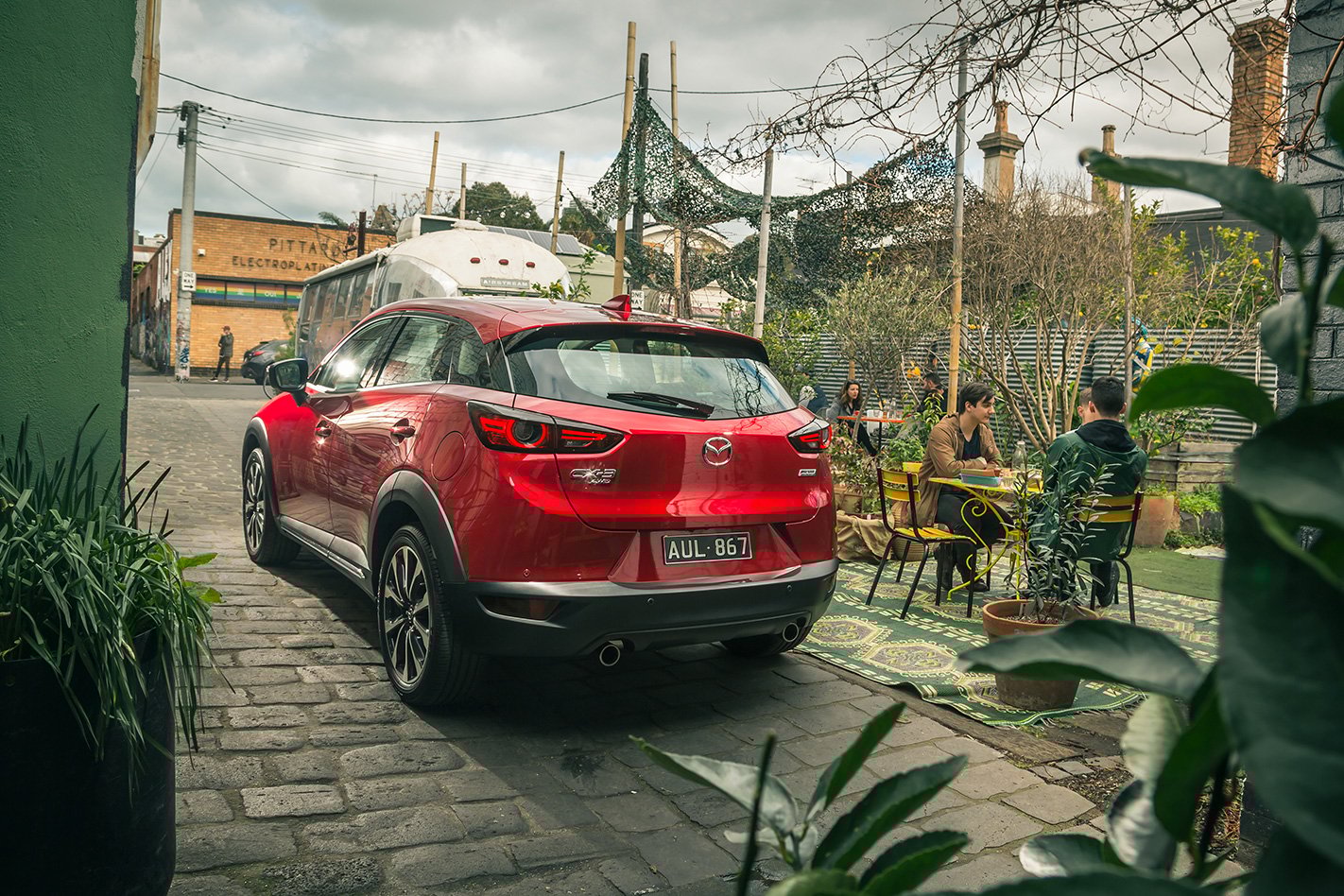
For now, the Akari is the most generously equipped and expensive starting at $33,990 driveaway. Below it, the sTouring kicks off from $28,740, while the Maxx Sport costs from $25,490. Adding an automatic transmission costs $2000 in all cases, and all but the Neo Sport are available in either front or four-wheel drive.
Every CX-3 in the updated range gets a revised centre console which replaces the manual park brake with an electric version. The adoption of a switch over a lever has freed up more storage space and allowed the inclusion of a centre arm rest. The Command Controller has been relocated to a more ergonomic position.
There’s a mild redesign for the grille of all variants, while the re-sculpting continues to the rear lights of the higher-grade sTouring and Akari versions.
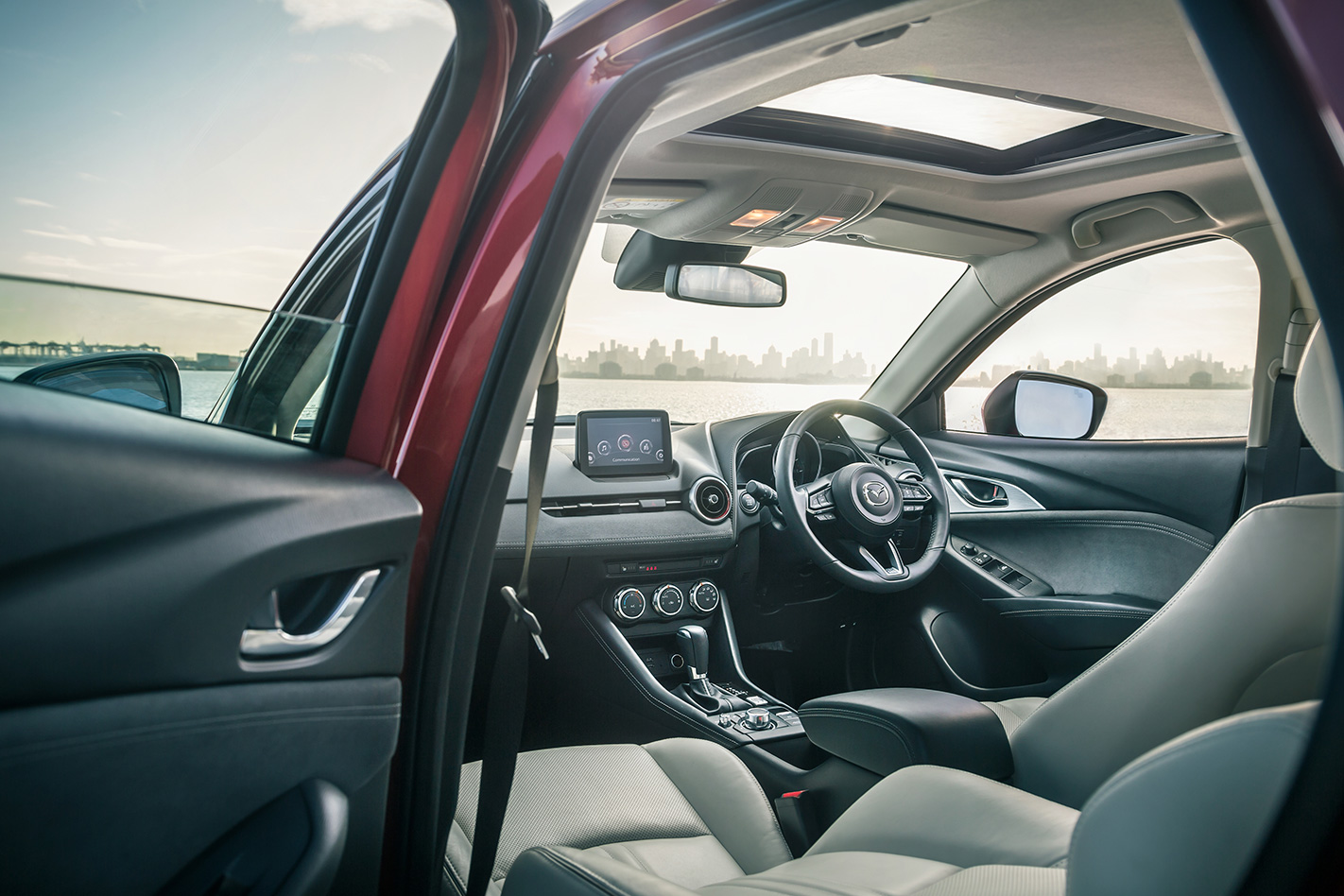
Higher-spec versions have even more kit with Maxx Sport and above, gaining a pair of cup holders in the rear seat folding arm rest. Comfort is boosted by a different urethane seat cushion filling. For the more expensive models, the new cushions are upholstered in full leather, not the part-synthetic covering as before.
Opt for the sTouring or Akari and your CX-3 will roll on the largest 18-inch wheels which feature a new design and are said to absorb more high-frequency noise and road vibrations.
At the top of the pack, the Akari gets a 360-degree camera and adaptive cruise control added to its list of standard equipment, which operates down to stop-and-start traffic.
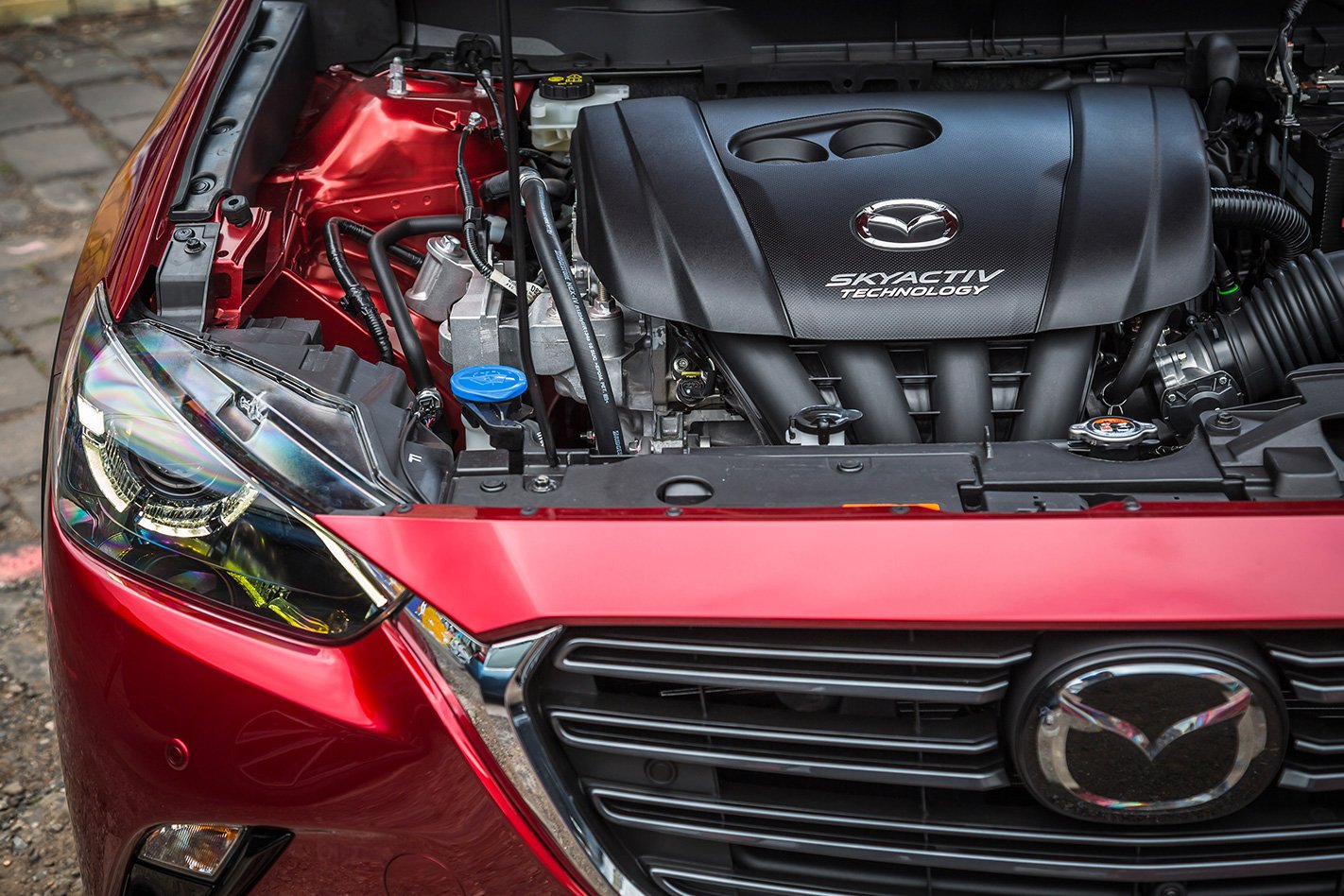
Petrol versions continue to be powered by a 2.0-litre naturally aspirated four-cylinder which has been revised to produce an almost negligible output increase to 111kW and 195Nm.
There’s more significant news for diesel power however, with the previous 1.5-litre unit growing to 1.8 litres and taking power up to 85kW from 77kW. Torque is unchanged at 270Nm but is now delivered more readily from just 1600rpm.
The new engine is more refined and responsive, says Mazda and improves efficiency by 0.1-litres per 100km with an economy figure of between 4.7L/100km and 5.1L/100km depending on the variant and drive train.
As before, the CX-3 is offered with choices including six-speed manual or an automatic with the same number of gears.
A number of minor chassis enhancements also arrive with the update including an electric power steering revision, new anti-roll bar and damper rates. The CX-3’s panels and glass have also been thickened in places to cut cabin noise, but has increased kerb weight.
The Corolla, Camry and Kluger ride-share cars of the not-too-distant future may turn up on your doorstep without a driver, if Toyota has any say in it. Toyota today officially announced that it will invest US $500 million into Uber Technologies and work with the ride-sharing company to hasten development of its own autonomous driving tech.
The Japanese auto giant has until now been conservative in its approach to autonomous driving, preferring instead to focus on driver assist systems rather than developing a truly self-driving car. This new deal with Uber, however, is a significant shift in that strategy.
“Combining efforts with Uber, one of the predominant global ride-sharing and automated driving R&D companies, could further advance future mobility,” said Shigeki Tomoyama, executive vice president of Toyota.

Reading between the lines, Toyota’s investment in Uber could also insulate the world’s largest carmaker against a potential decrease in car ownership as the ride-sharing sector matures. If fewer people are buying cars due to the greater convenience of simply hailing an autonomous vehicle from a phone app, then Toyota wants to be the one supplying vehicles to the world’s ride-sharing fleets.
It’s an idea the carmaker has toyed with already in the form of its e-Palette concept, revealed at the start of this year at the Consumer Electronics Show in Las Vegas.
Under the deal Uber will supply Toyota with its autonomous driving technology, which will be tested on a number of Toyota Sienna minivans. The tech will work alongside Toyota’s existing ‘Guardian’ driver-assist suite, which uses a range of radar and optical sensors to reduce the chance of a collision.
Toyota won’t say how long it will be until the company’s autonomous ambitions transition from experimental to showroom-ready. According to some commentators, we shouldn’t hold our breath.
Speaking with The Australian, Richard Young, a senior associate at technology consulting firm Beca Group, said the automotive industry is fixated on developing autonomous vehicles but isn’t necessarily considering whether they’re the best fit for modern society.
“They’re blithely accepting we’re all going to have these autonomous electric vehicles in 10 years’ time, but I don’t see the evidence for it,” he said.
“The challenge with autonomous vehicles is they either have to be absolutely foolproof – that is, no steering wheel – or they’ve got to say, ‘this stuff is there to assist’.”
Beyond that, there are also the legal concerns surrounding autonomous vehicles. A Volvo test car operated by Uber as part of its autonomous vehicle trial killed a pedestrian in March, and while the inattention of the human ‘failsafe’ on board was deemed a contributing factor, the incident highlighted that the technology was still far from foolproof.
Have your say: Would you happily climb aboard a driverless car, or do you struggle with the idea of giving up control of a vehicle to a computer? Tell us below.
It’s an HSV, but not as we know it. Rear-wheel drive, a tray-back body and 500Nm of torque are all pretty familiar, but the elevated driving position, 2281kg kerb weight and 4000rpm redline make it clear the HS…sorry, Holden Colorado SportsCat by HSV is a very different kettle of fish.
All SportsCats have more aggro styling, a flashier interior and revised suspension with increased ride heights, improved approach and departure angles and unique Cooper Zeon all-terrain tyres as well as retuned ESP.
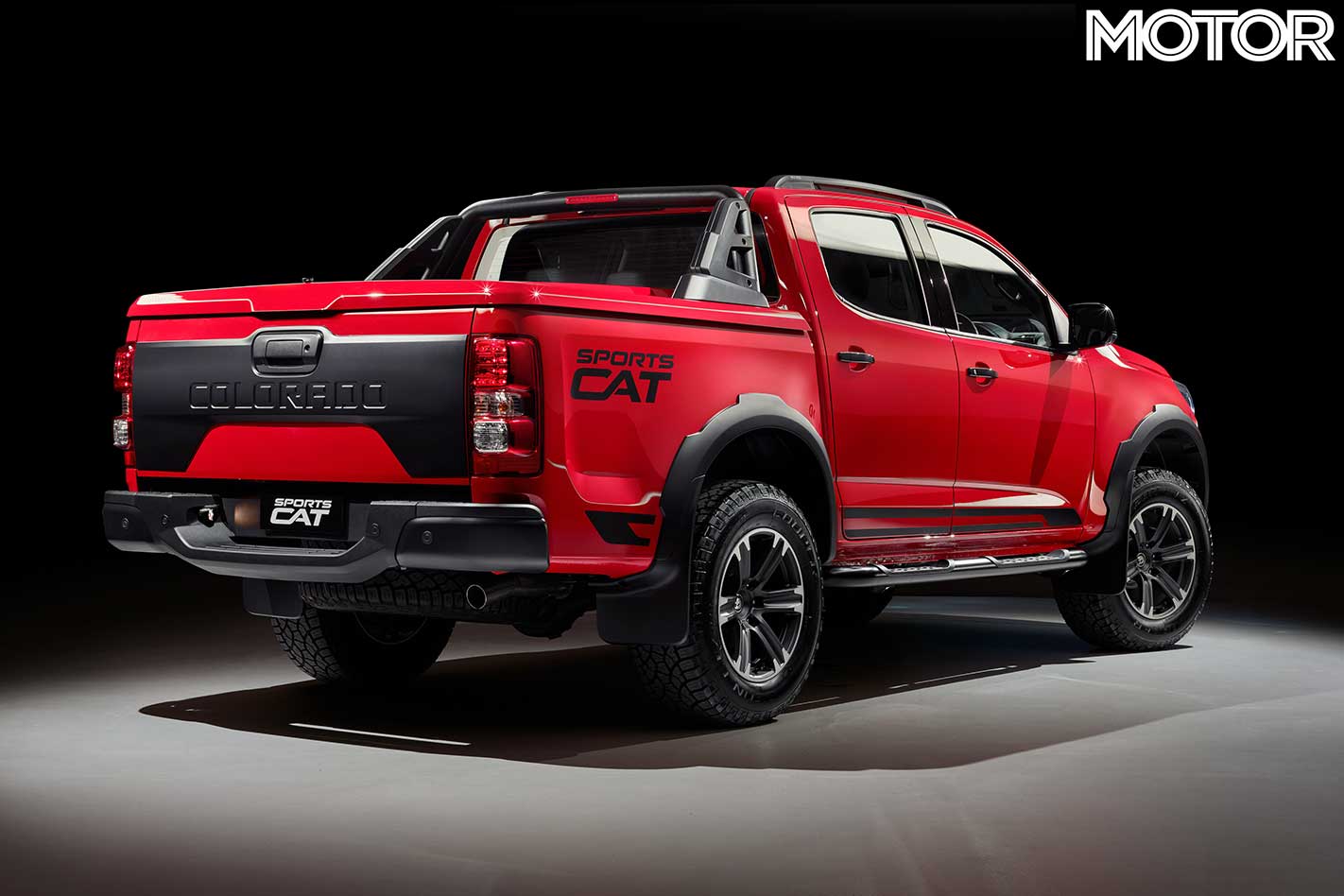
Our test SportsCat ‘+’ adds even butcher styling, four-piston AP Racing brakes and a rear anti-roll bar that decouples when you select low range.
On the road the SportsCat handles like, well, a Colorado. Body roll is reduced and the brake pedal is firmer than standard but it remains a vehicle you’d only drive quickly if your life depended on it rather than for enjoyment. Unless you find an empty gravel road, that is.
The light rear end and ample torque means care is needed in the wet, but on the loose the rear LSD and well-tuned electronics make it possible to indulge your inner Neal Bates – within reason. It’s certainly very capable when the going gets really rough.
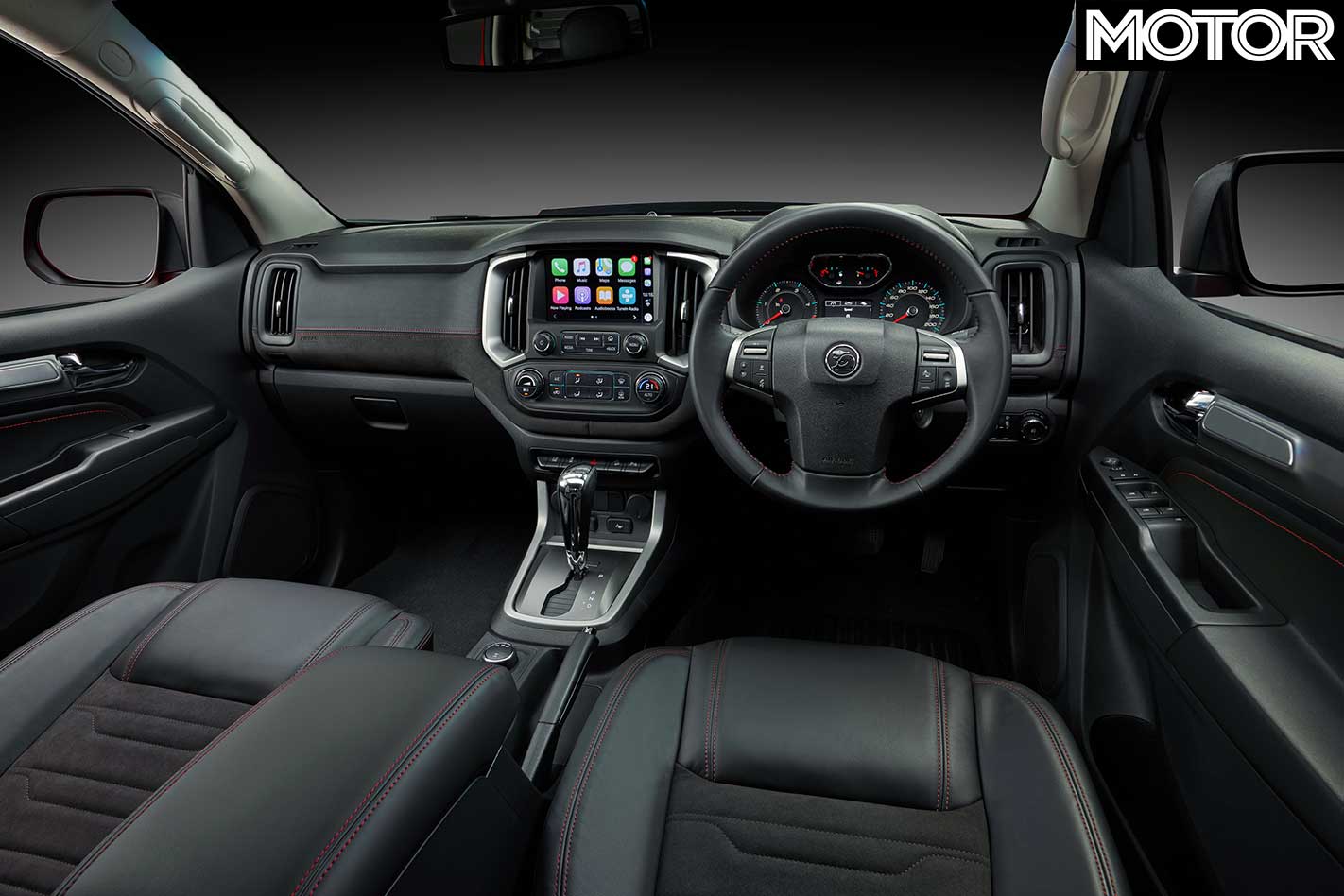
I could see a place for it in my garage, but only to tow something actually exciting.
2018 HOLDEN COLORADO SPORTSCAT+ BY HSV SPECS: Engine: 2776cc inline-4, DOHC, 16v turbo diesel Power: 147kW @ 3600rpm Torque: 500Nm @ 2000rpm Weight: 2281kg Drive: AWD Price: $66,790
Mazda’s CX-3 small SUV is a winner with private buyers, and it’s received a facelift to ensure it remains a front-runner in the popularity stakes.
WHAT IS IT?
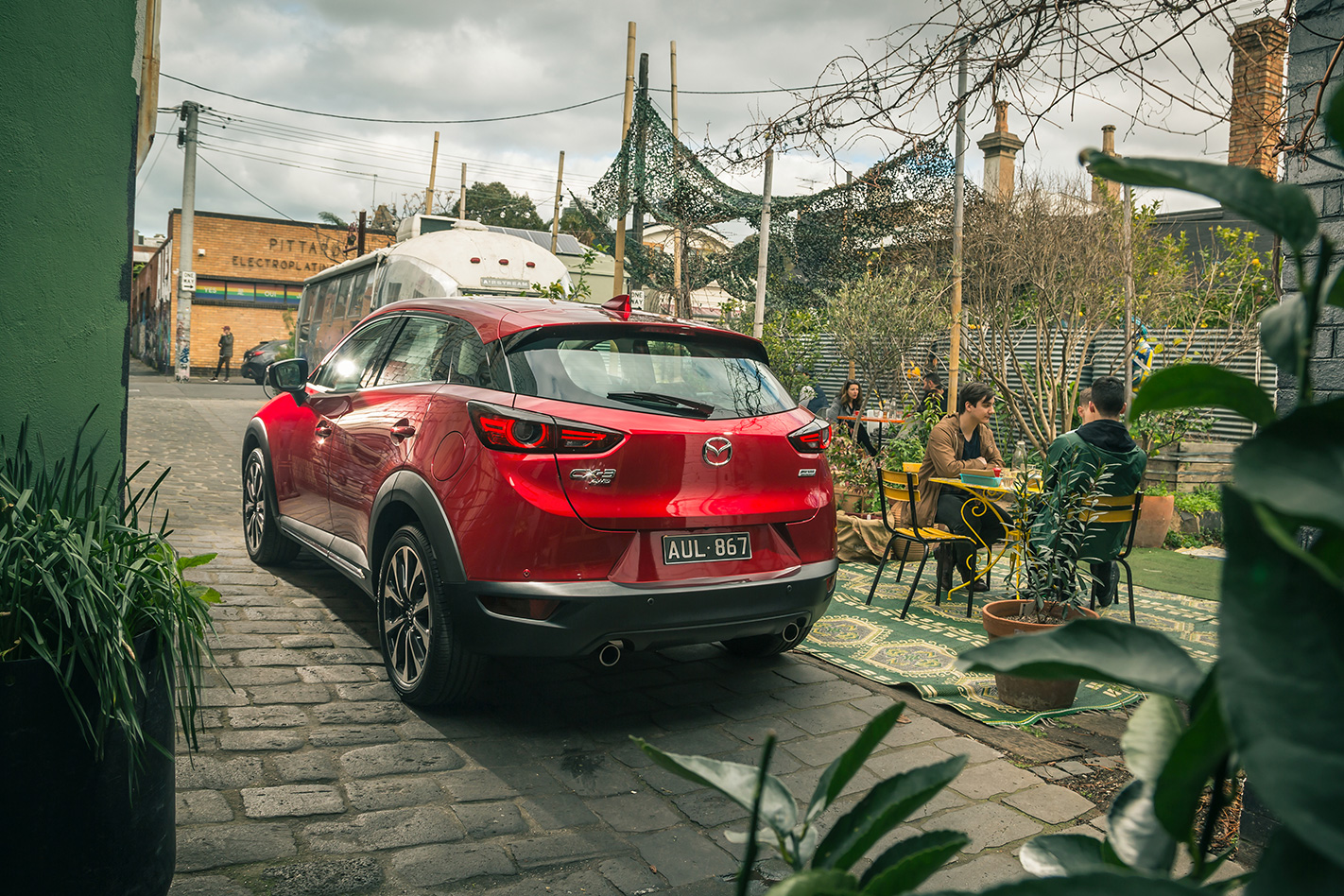
A mild mid-life update for Mazda’s smallest SUV offering. Still riding on the same platform shared with the Mazda 2, the crossover has been tweaked outside and in, along with fine-tuning under the skin, to ensure it remains a top-seller.
WHY WE’RE TESTING IT
We’re big fans of the dynamic prowess of Mazda’s pint-sized SUV here at Wheels, and it seems so are buyers, with the CX-3 a consistent top three seller in the class. Mazda has treated the CX-3 to a mid-life update which keeps the styling fresh, offers better value for money with more standard equipment across a revamped range, while attempting to improve cabin comfort.
MAIN RIVALS
Toyota C-HR, Holden Trax, Mitsubishi ASX, Peugeot 2008, Haval H2, Nissan Juke, Suzuki S-Cross, Hyundai Kona, Ford EcoSport, Subaru XV
THE WHEELS VERDICT
Mazda has avoided change for change’s sake, which is a good thing. Improvements are minimal, but when the product was already working well with real dynamic clout, that’s not a bad thing. The CX-3 remains as enjoyable to drive as ever, although its smaller stature compared to rivals hurts it in terms of practicality.
Prices have jumped a small amount with this update, but added features like a 360 degree reversing camera for flagship variants, and keen drive away pricing, sharpen the value offering. While Mazda claims NVH has improved, noise intrusion in the cabin can be an irritant, with lower-profile rubber on some variants producing noticeable tyre roar.
PLUS: As dynamically engaging as ever, increased value offering MINUS: Smaller boot and rear seat space compared to competitors, auto gearbox is too eager to kick down a gear
THE WHEELS REVIEW
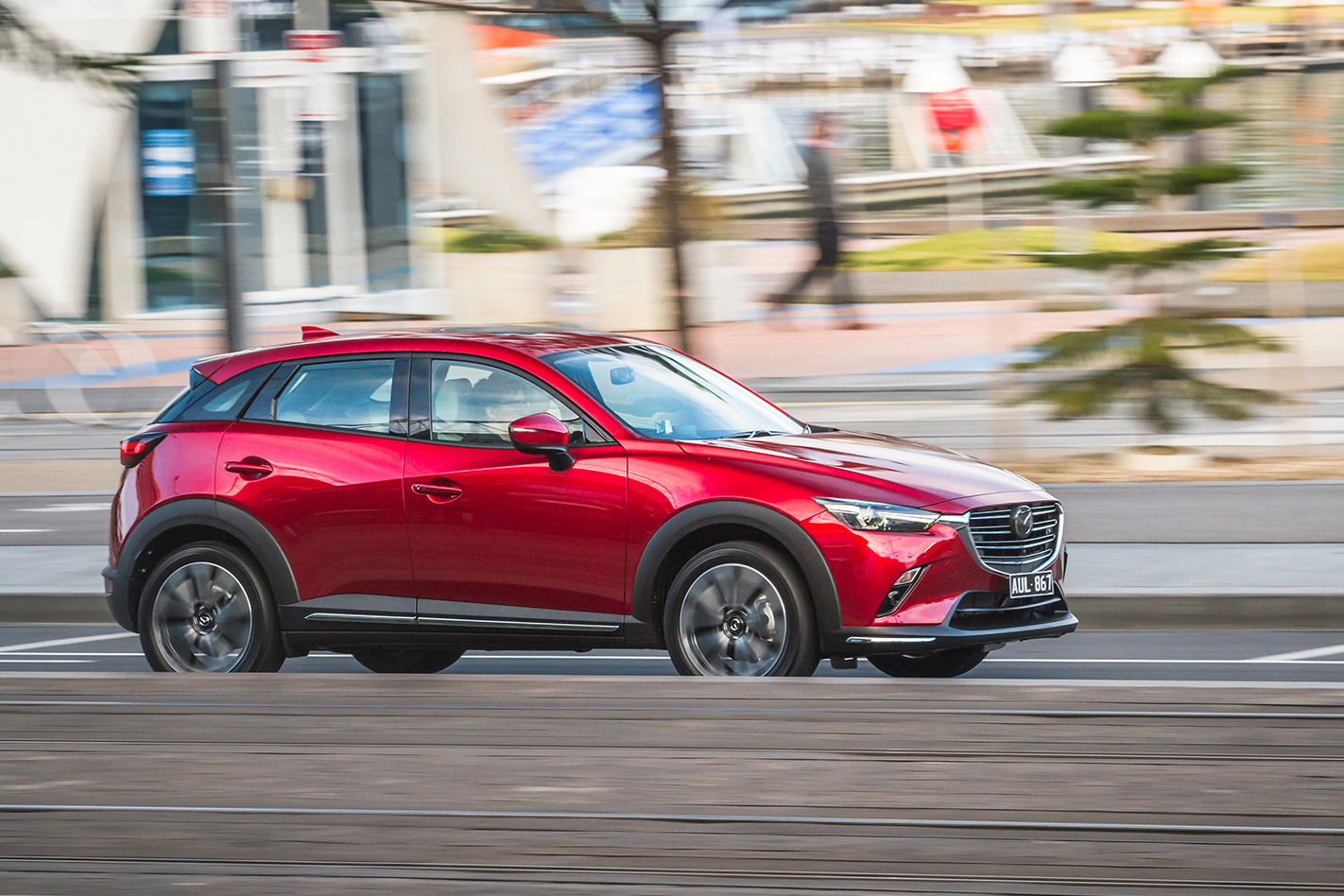
In a field littered with drab offerings, the Mazda CX-3 is a shining beacon of hope for enthusiasts who want a small SUV that is both stylish and fun to drive.
Mazda has updated its smallest SUV for 2018 with a facelift that boosts value, rejigs the model line-up and places a stronger focus on cabin refinement to try and fix the CX-3’s consistent niggle of poor NVH.
A thicker headliner, outer door panels, seals, and glass have been added, though unfortunately any improvements are minimal with noticeable wind and tyre noise still apparent.
The CX-3’s equipment list has been lengthened. A new Neo Sport model grade (which replaces the old entry-level Neo) gains a reversing camera, which is now standard across the range, along with Mazda’s MZD infotainment system. Maxx Sport and above model grades also score a pair of cup holders in the folding rear arm rest, while the flagship Akari is treated to a 360-degree camera and adaptive cruise control. Pricing has jumped by a roughly $1000 across the range, though Mazda has introduced keen drive away pricing for all variants, starting at $23,990 for a manual Neo Sport.
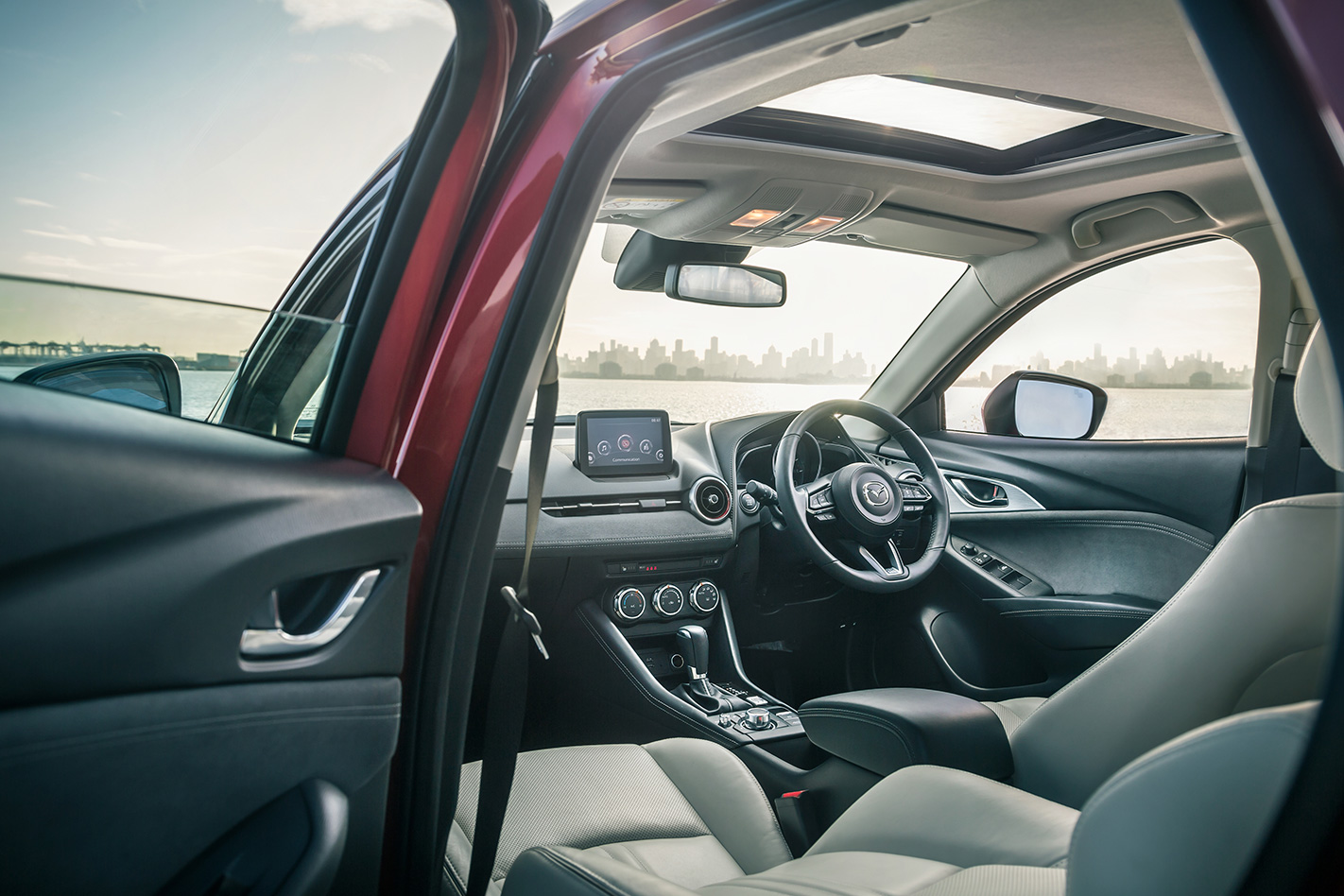
Exterior styling has been subtly revised, while the most significant interior change is the replacement of the manual handbrake with an electronic unit.
Subtle enhancements ensure the CX-3 remains one of the most dynamically engaging SUVs in its class. The chassis is beautifully balanced and crucially the ride is now improved with new springs and dampers ironing our larger bumps, while thicker anti-roll bars help to reduce body roll. Mazda’s G-Vectoring Control tech has also been added and the CX-3’s steering remains crisp and is naturally weighted.
The 2.0-litre naturally aspirated petrol engine carries over for this update and it remains as tractable as ever, though it’s been re-homologated with minute increases of 1kW and 3Nm. A 1.8-litre diesel producing 85kW/270Nm replaces the old 1.5-litre. All petrol variants use a six-speed manual as standard, with the six-speed automatic a $2000 premium. The self-shifting transmission is a smooth unit, though it does have a tendency to kick down a ratio too eagerly, resulting in a noisy flare of revs which does nothing to improve cabin refinement.
Mazda claims an unchanged combined fuel economy of 6.3-6.7L/100km depending on transmission and wheel sizes for the petrol, and 4.7-5.1L/100km for the diesel (which is a slight improvement over the previous unit). Both powertrains are available in AWD and FWD.
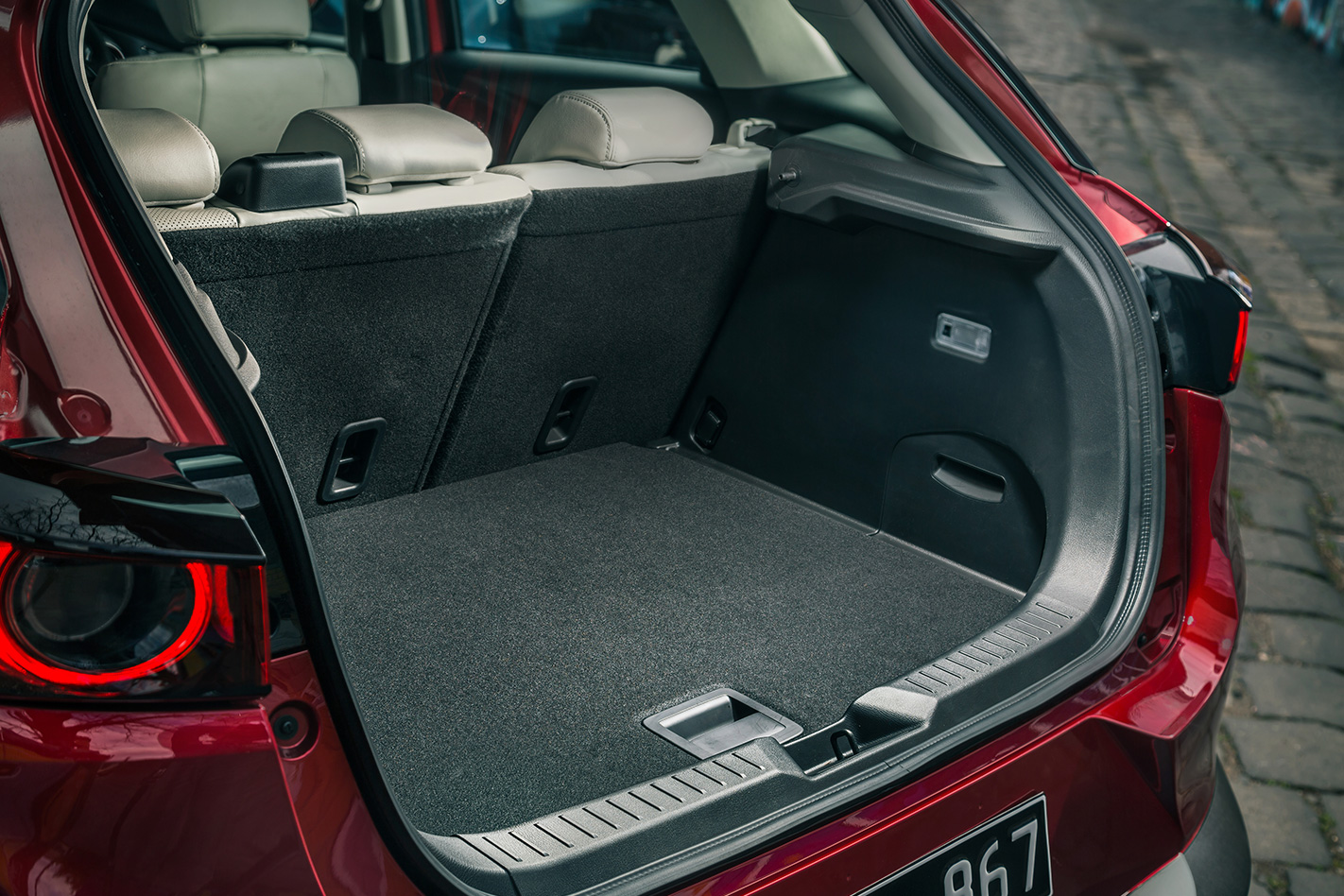
With buyers flocking to the small SUV segment the CX-3 has a tough ask ahead of it as convincing new contenders like the Toyota C-HR and Hyundai Kona encroach on its turf. While the styling tweaks keep it looking fresh, the real gains here are found in the improved equipment and value, and the greater sheen of polish to an already good dynamic package. Sadly, this update hasn’t quite ironed out the NVH issues.
2019 MAZDA CX-3 SPECS
Model: 2018 Mazda CX-3 Maxx Sport Engine: 1998cc 4cyl, dohc, 16v Max Power: 110kW @6000rpm Max Torque: 195Nm @2800rpm Transmission: Six-speed automatic Weight: 1297kg 0-100km/h: 10.0sec (estimated) Fuel economy: 6.3L/100km Price: $25,690 On sale: Now
Mazda has treated the CX-3 to a mid-life update which keeps the styling fresh, offers better value for money with more standard equipment across a revamped range, while attempting to improve cabin comfort.
McLaren has revealed its newest intended addition to the grids of GT3 races around the world, the McLaren 720S GT3.
More than ninety per cent of the 720S’s components have been changed or optimised in some way for the GT3 version, with the overall layout remaining essentially the same as a mid-engined coupé.
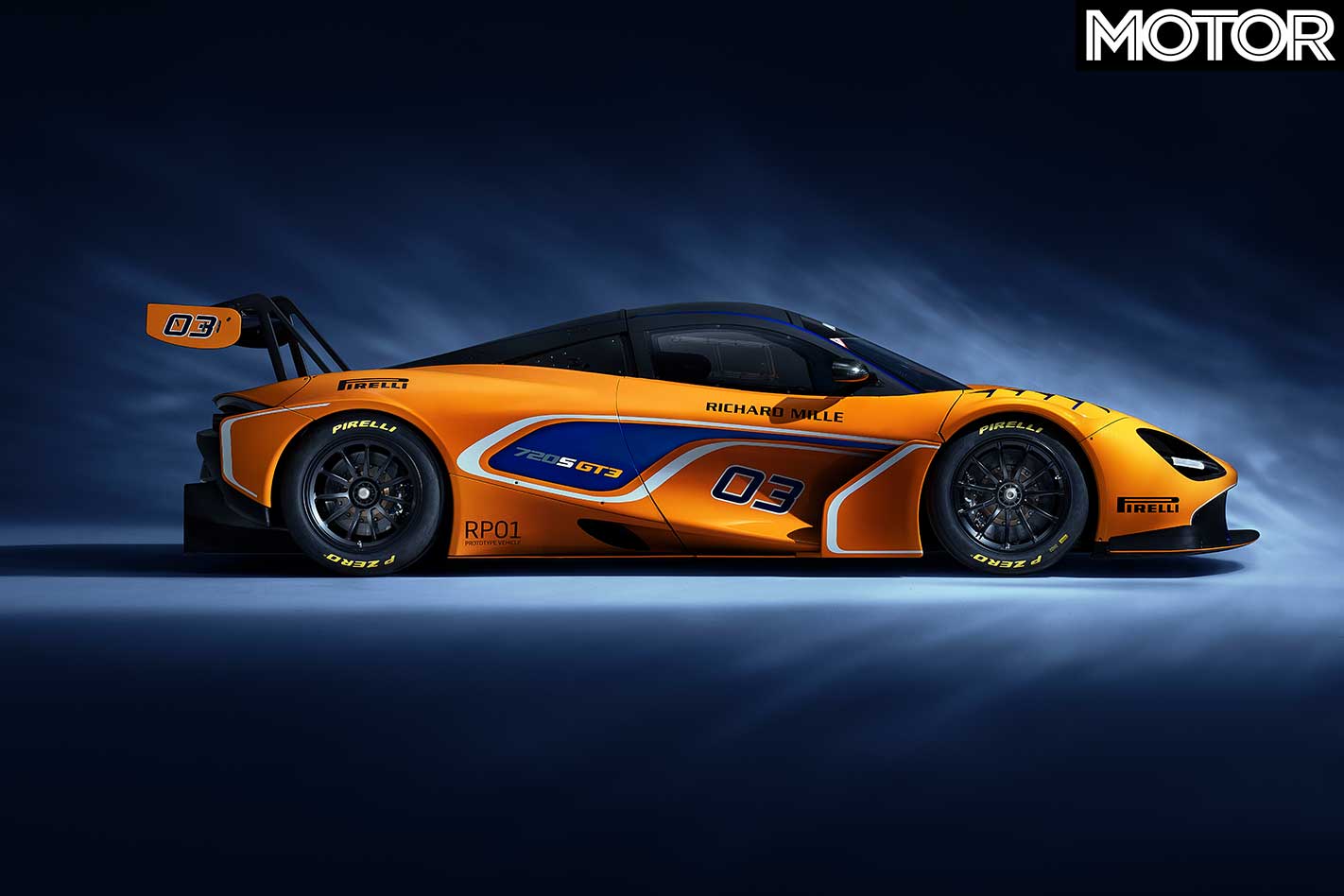
It still utilises a twin-turbo 4.0-litre V8 though in race-spec and prone to restriction via the FIA’s rulebook for GT3 racing. A 6-speed sequential race ‘box transmits power to the rear wheels only.
McLaren Automotive motorsport director Dan Walmsley says the car was already close to where it needed to be even as a road car, but adds that a GT3 car is often so far from its road-going version that there was still a lot of work to be done.
“The McLaren 720S is such a multi-talented road car that we always knew honing its pure racing talents and making a GT3 car out of it would be an entirely natural process – and so it has been.
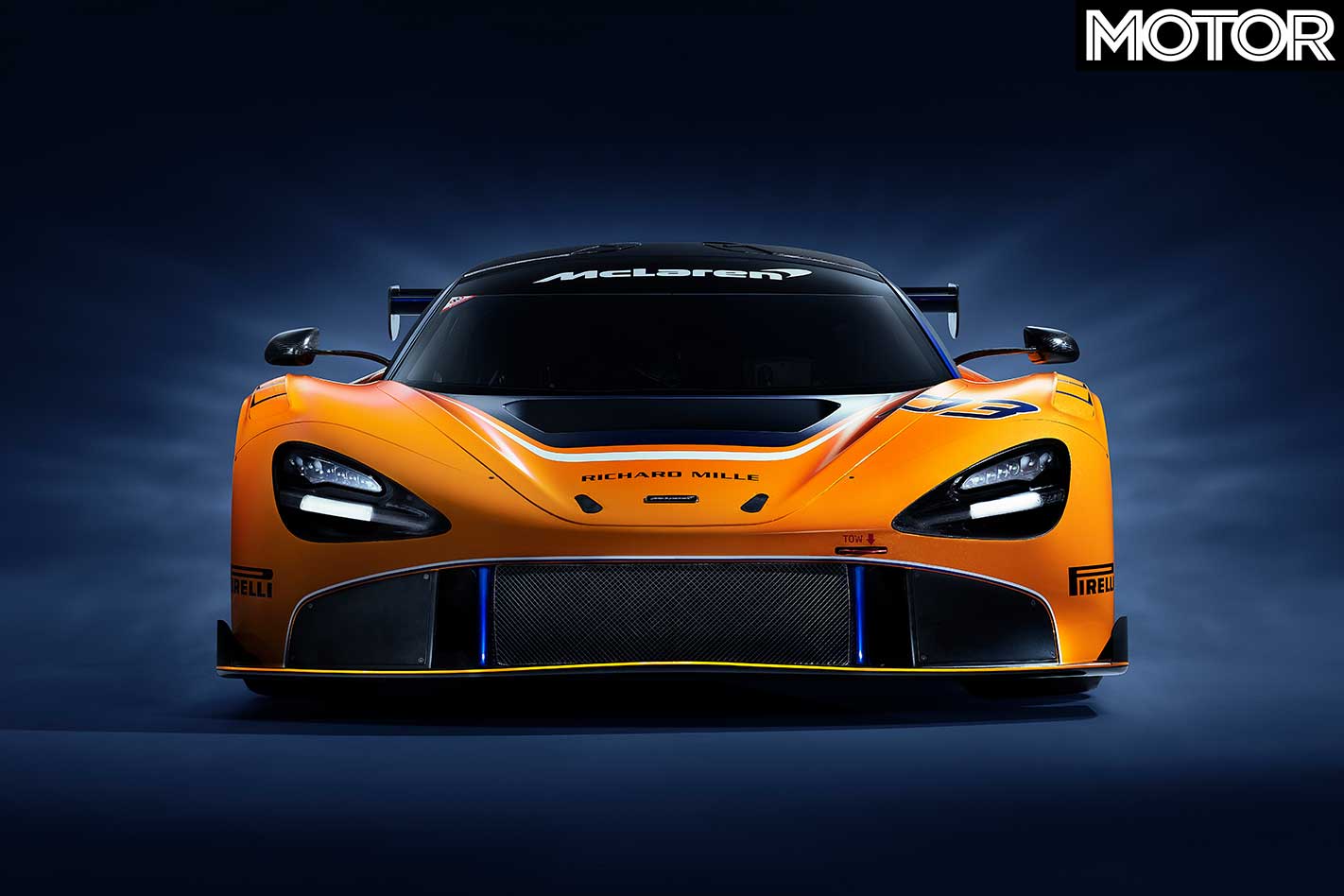
“While largely a bespoke machine, the GT3 car is still a McLaren 720S at its core. Developing a race car is about optimising every component and the lightweight MonoCage II carbon fibre chassis is the perfect base for this,” says Walmsley.
McLaren has been testing the race version of its Super Series topper on track, with a development program set to take the car across the world and run experimental kilometres in Europe, the Middle East, and the US.
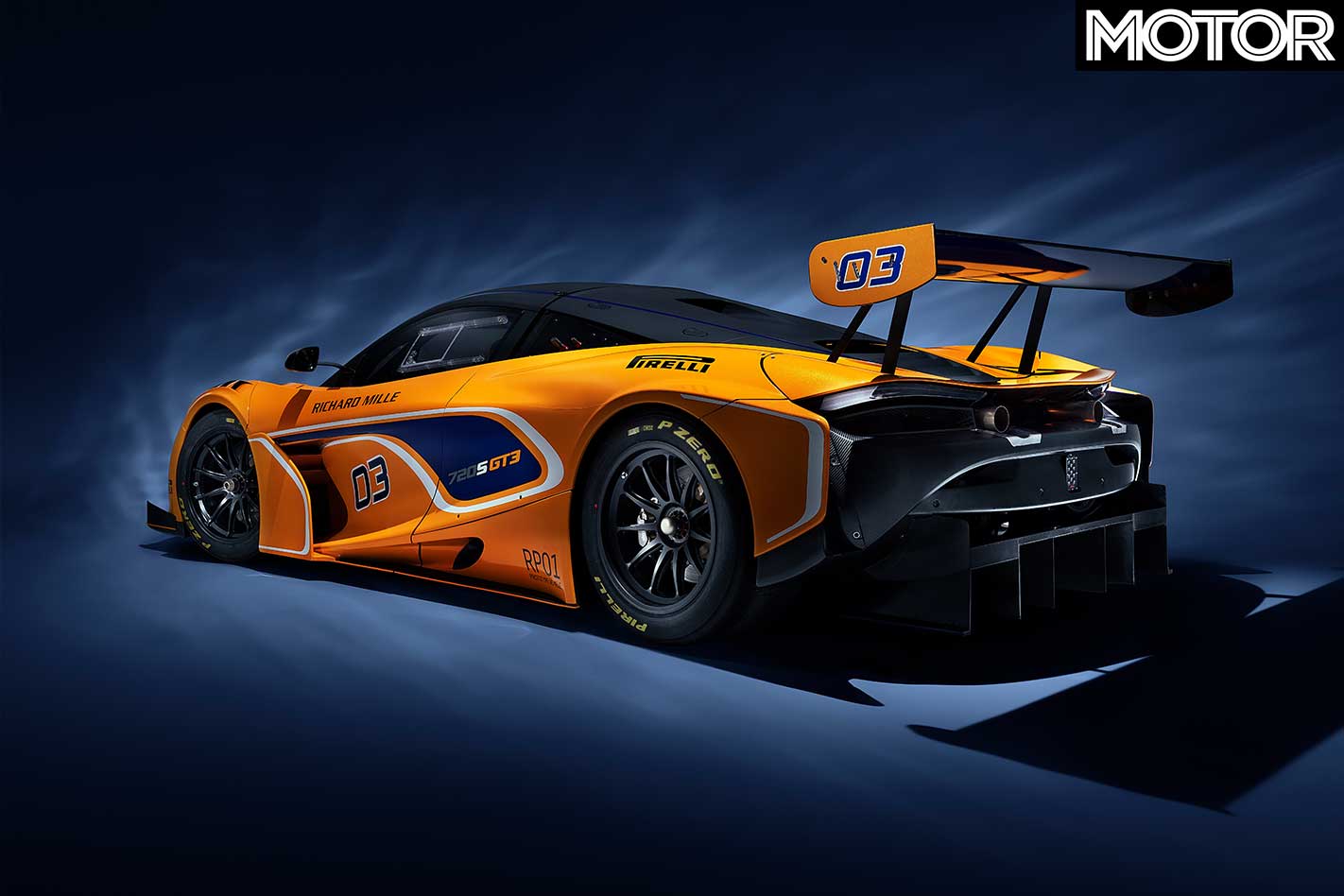
McLaren CEO Mike Flewitt says seeing the GT3 version of McLaren’s sports car take to the track was particularly exhilarating.
“It was an incredibly exciting moment for us to see our new 720S GT3 begin the intensive track-based phase of a development programme that we are confident will provide our customers with a first-class GT race car,” says Flewitt.
“Enabling our customers to go racing is integral to the business strategy of McLaren Automotive and we are committed to supplying teams with exceptional GT cars and the world-class support to get the most out of them.”
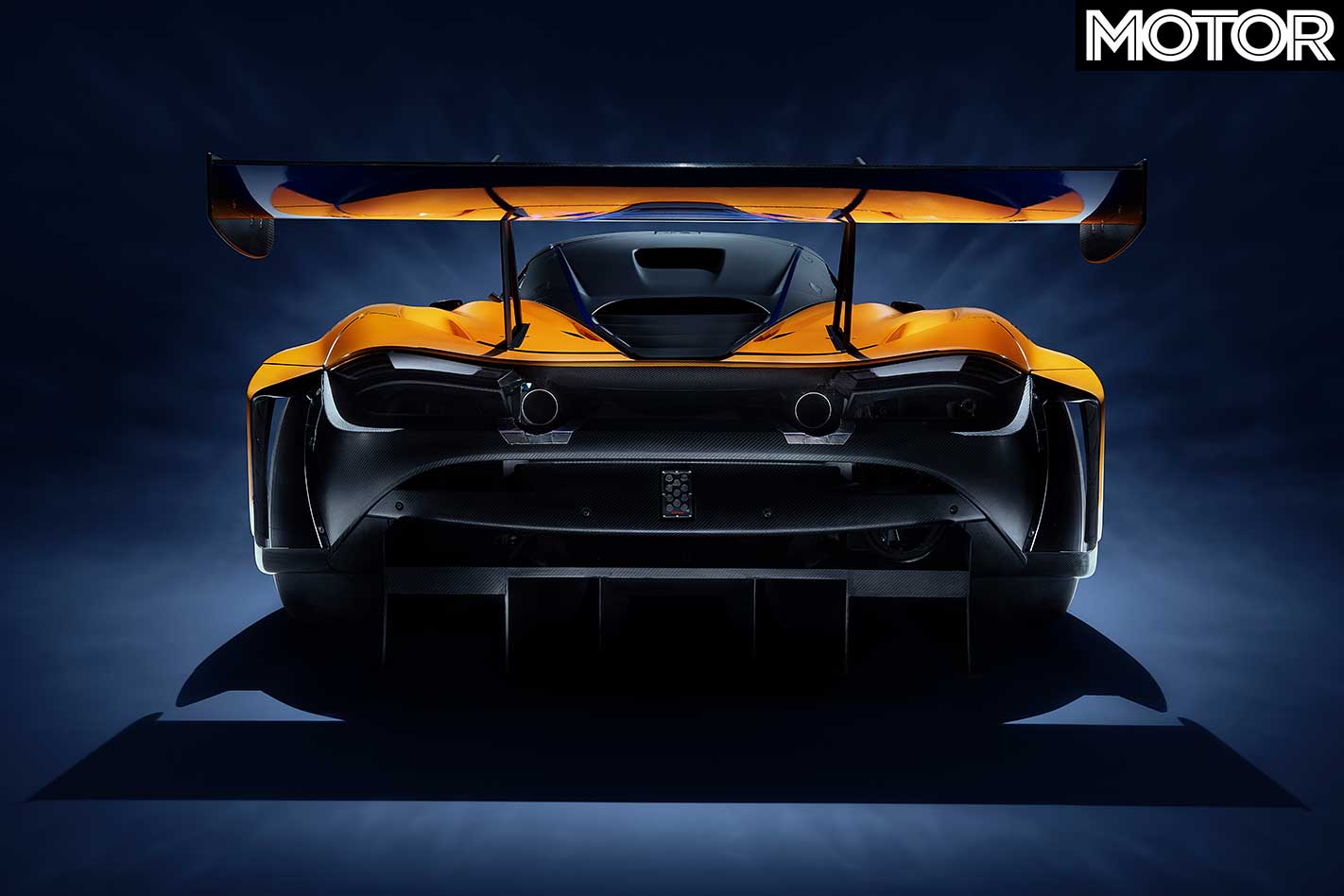
The entire body of the 720S GT3 is bespoke for the race car, with a much larger front grille and GT3-spec wing being the most obvious alterations. A bespoke splitter, floor assembly and dive-planes also differentiate the GT3 from the road car.
In the UK, McLaren says the 720S GT3 will set customers back £440,000 from the factory, with cars likely to be ready for ‘entry into major GT3 championships in 2019’.
