
PURVEYOR of ultra-fast automobiles, Bugatti, is building a new monster for the world to drool over, with an enigmatic variation of the mighty Chiron in the works that hunts corners not horizon.
No technical details have yet been revealed but the iconic brand has at least started the hype machine with the announcement its coach-built machine will wear the moniker Divo, honouring pre-war grand prix racer Albert Divo, who won the Targa Florio twice for Bugatti in the 1920s.
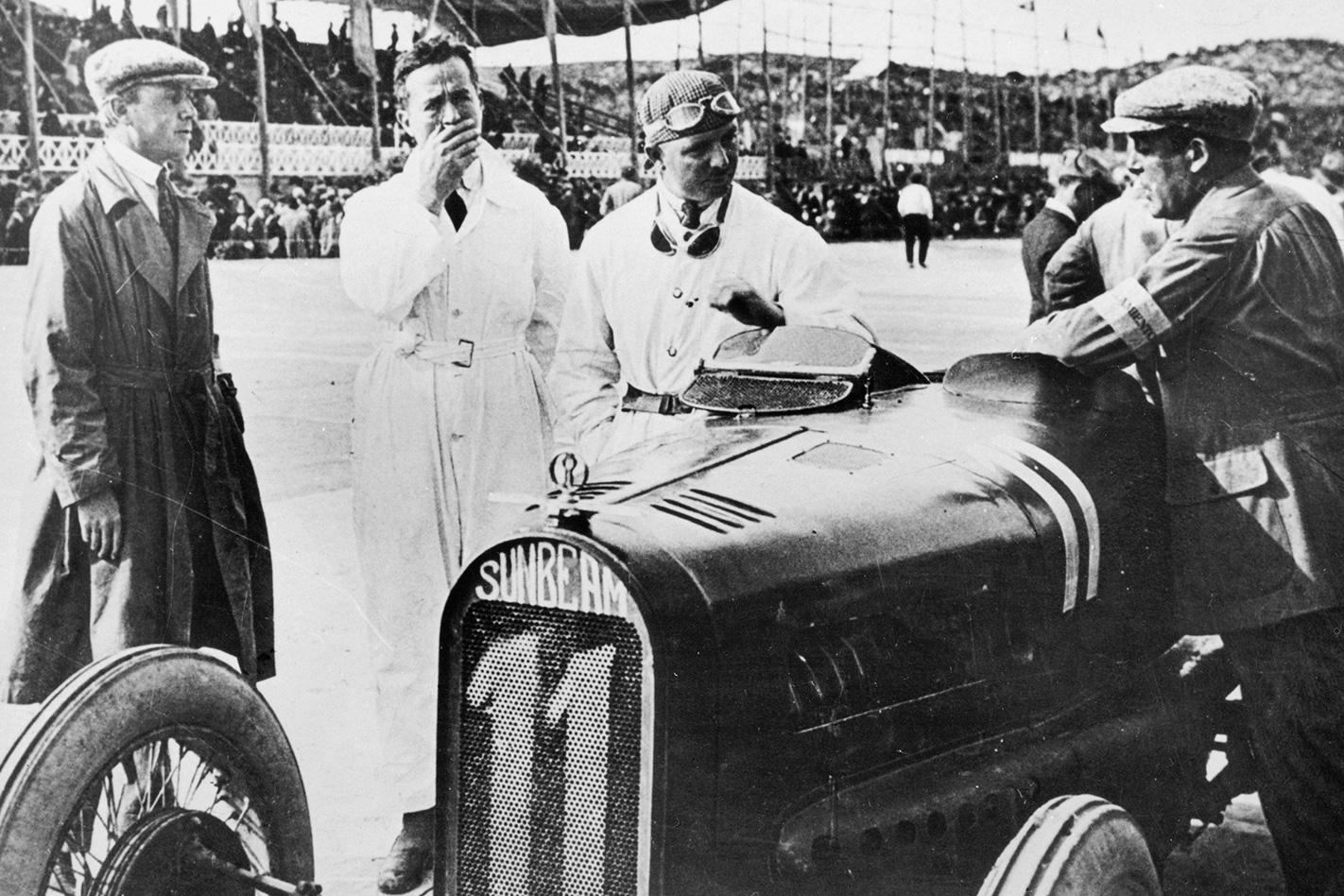
Unlike the Chiron and Veyron, the Divo usurps the traditional top-speed focus of previous Bugatti hardware, and is instead engineered to attack apexes at with more vigour than its straight-line speed siblings.
Bugatti claims the Divo will “be light and nimble and will boast enormous downforce and G-forces” and have “outstanding” handling.
Each Divo will be built atop the same chassis and powertrain as the Chiron, which means the limited-edition Bugatti will be afforded 1102kW of shove to attack corners with, although the engineers might not be able to resist turning up the taps a little further.
The Divo will reportedly cost $7.9m to buy, is limited to just 40 cars globally, and is due to be revealed to the world at California’s Quail motorsport meet in California.
We are sure the world’s ultra-rich will be waiting with open cheque books in hand.
Bugatti boss Stephan Winkelmann said the Divo will help Bugatti break free of the V max prism within which it is most often viewed.
“With the Divo we want to thrill people throughout the world,” he explained.
“With this project, the Bugatti team has an opportunity to interpret the brand DNA in terms of agile, nimble handling in a significantly more performance-orientated way.”
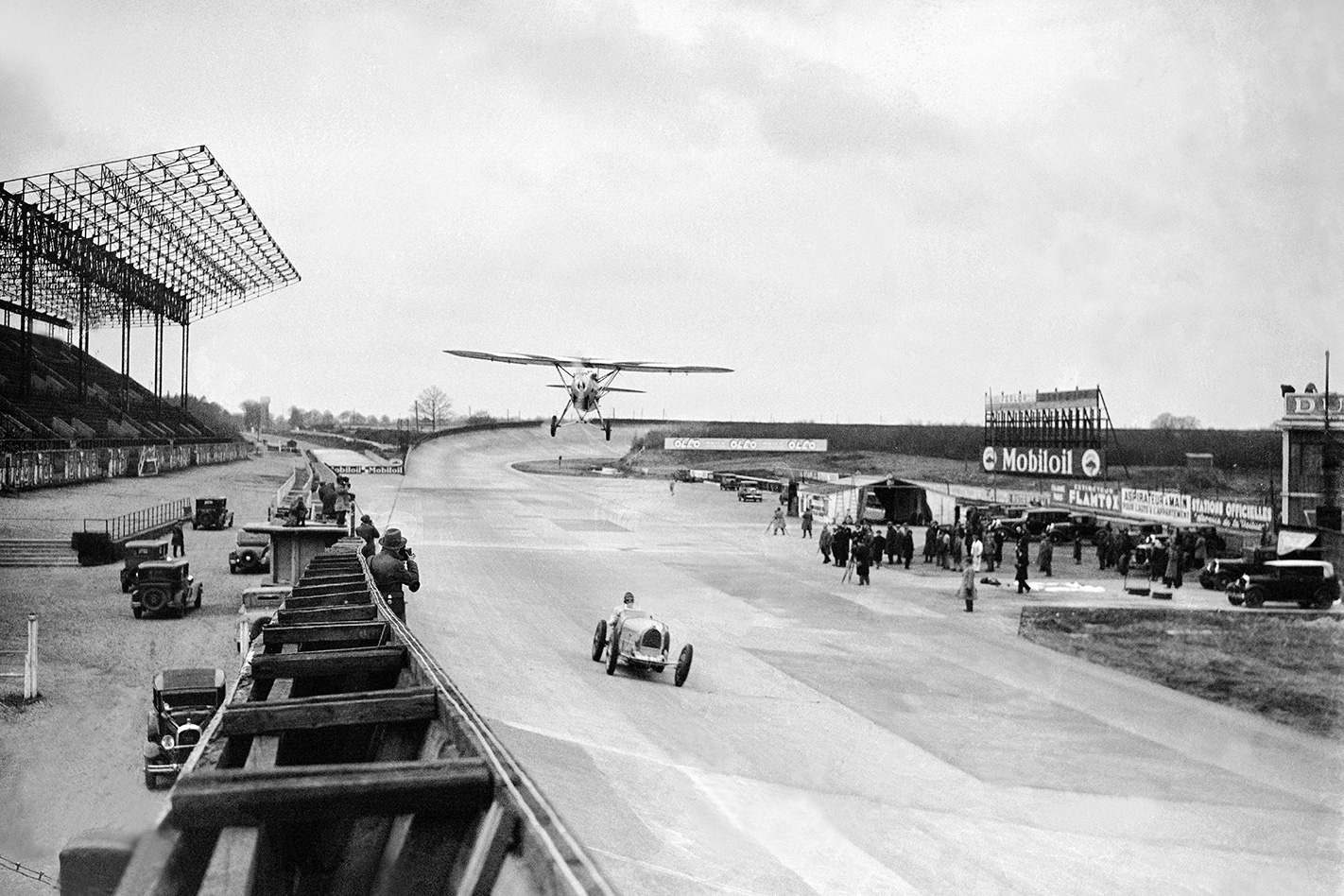
Albert Divo once competed against a plane in a Bugatti T51 to promote the new Circuit de Montlhery in 1932 but , unfortunately, the plane won. Time for a modern-day rematch?
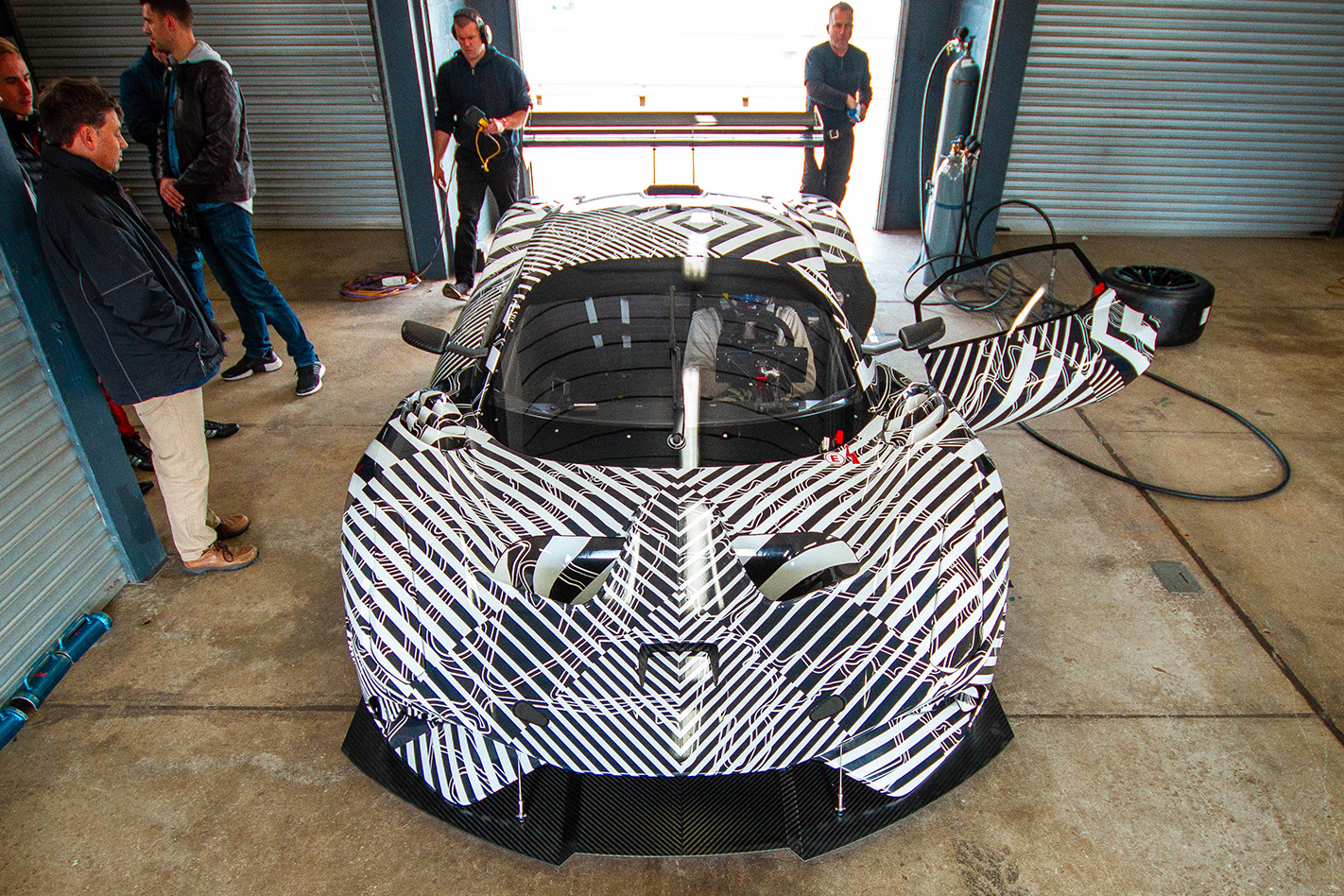
THIS is the Brabham BT62. It is not a concept car. It is not a hypothetical rendering years from production. It is here, now, as a fully formed supercar customers will take delivery of before the year is out. And the best bit? It’s built right here in Australia, by Australians.
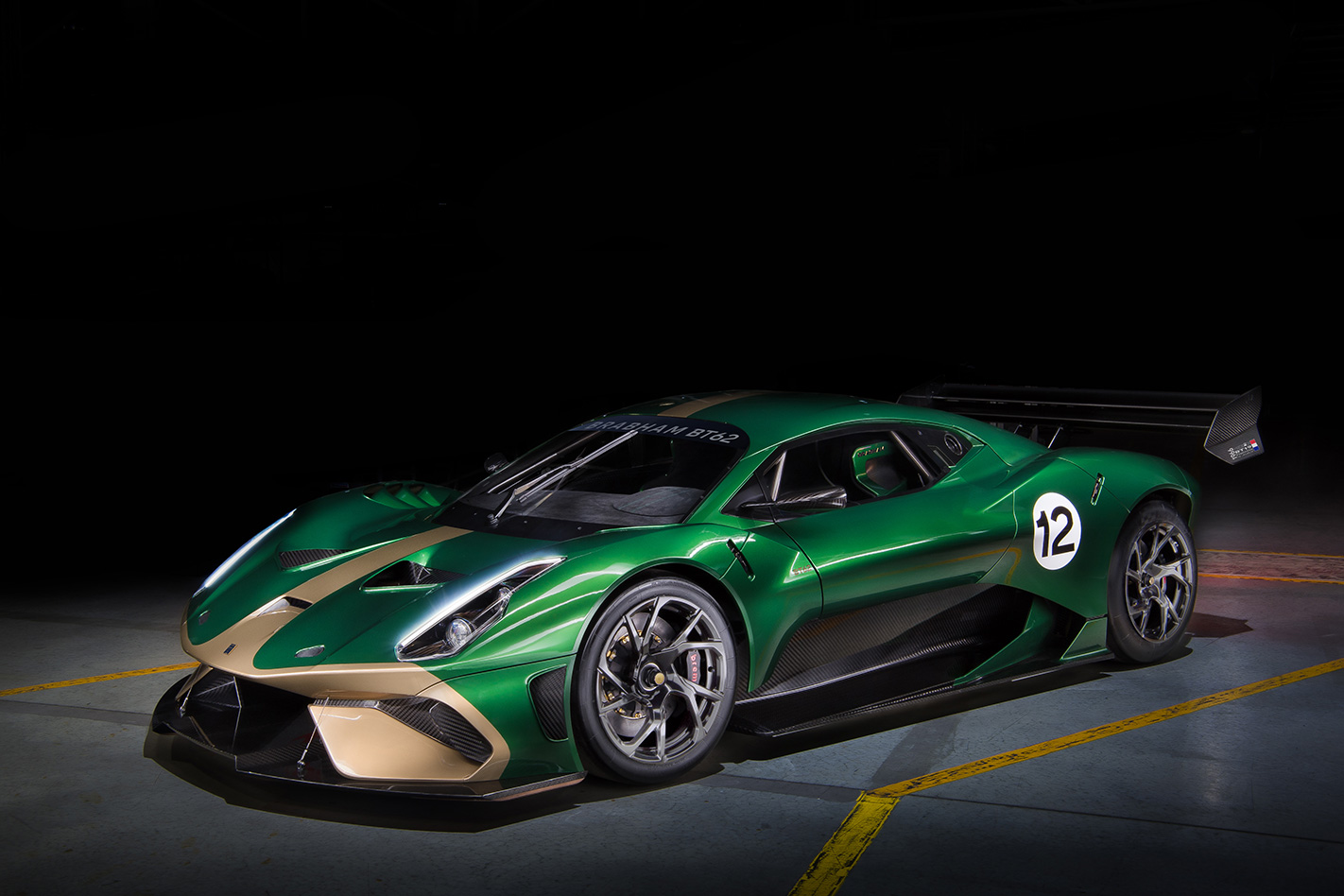
Here are the headline numbers: 5.4-litre naturally aspirated V8, 522kW at 7400rpm, 667Nm at 6200rpm, 972kg dry. It is an all-out attack on the track-only toys from the likes of Ferrari’s FXX program, and even the McLaren Senna GTR, and has the esteem of a marque etched into Formula 1 legend.
Brabham’s re-emergence has been shrouded in secrecy since the family won a court battle to protect the name in early 2013. The BT62 project has been on the boil behind closed doors for the last two years. Brabham is one of the most evocative names in motorsport, with intrinsic Australian DNA, and its return to the automotive landscape has been extremely calculated in execution. Managing it is respected racing driver – and youngest son of Sir Jack – David Brabham, and a team of businesspeople split between Australia and the United Kingdom.
Christian Reynolds is one such businessman. He’s an ex-pat working in Adelaide as both a Brabham Automotive director and representative for Fusion Capital Partners, a private equity firm that has backed the initial phase of Brabham’s return.
“[Fusion Capital was] looking at the opportunity in this market in late 2015. We were fairly well through mature concept planning, and through mutual contacts we were introduced to David. It snowballed pretty quickly from that point. We started working through how we could align what we saw in the market with the revival of the Brabham brand, and set out how we would work together to deliver a program like the BT62.”
Brabham tells Wheels: “When we first met we started to talk about visions. I said, ‘I’m either involved or I’m not.’ For me this was all hands on deck. If we’re producing a high-performance vehicle it’s got to have Brabham DNA in it.”
Reynolds is the man overseeing the 15,000sqm production facility in an undisclosed Adelaide suburb, keeping engineering and operations teams on schedule. His employment history reads like a who’s who of lightweight performance experts and disruptive business pioneers including Lotus and Tesla.
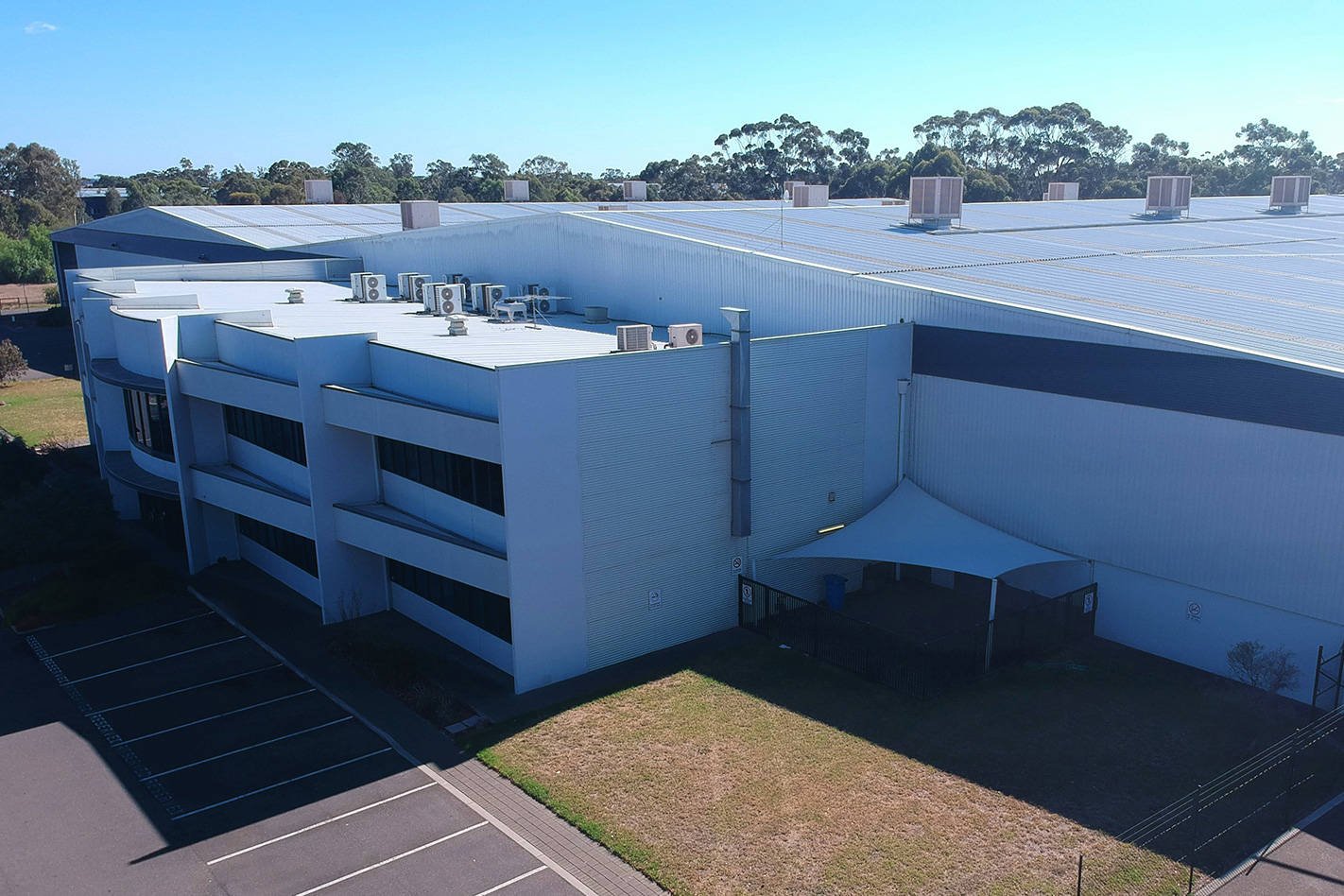
Before Brabham Automotive, Reynolds was managing director of ZF’s Australian arm, with a direct line into Holden through the axle and chassis work undertaken by the firm for General Motors. His exposure to the manufacturing industry in South Australia primed him to leverage our existing expertise and infrastructure, and to bring the right people in from local OEMs, third-party suppliers and even Supercars race teams. “The supply base and the capability has always been here to develop advanced product. In both advanced manufacturing and advanced engineering it’s actually quite a logical choice to use that installed capacity and supply base.”
Brabham agrees. “It’s a fantastic opportunity with manufacturing having left these great shores. There’s a bit of a void with a lot of well-trained, talented engineers and people. A project like this can tap into that,” he says.
On paper there’s no immediate link between Australia’s history of building large sedans and a high-end track-focused supercar carrying a A$1.8m price tag. And the Brabham couldn’t be further from a Commodore or Falcon.
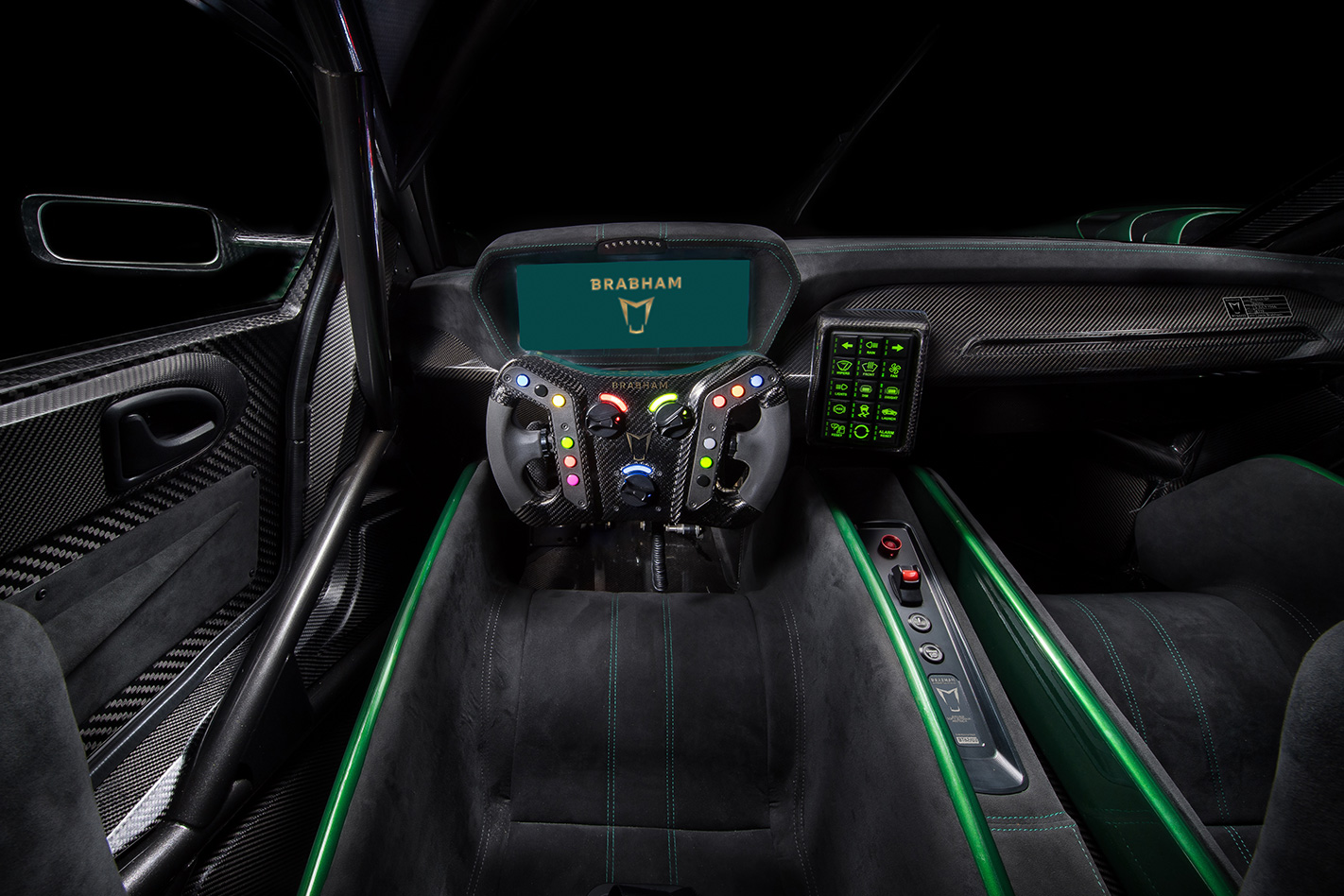
Composite materials feature heavily, including extensive use of carbonfibre for the main body panels, the floor and barge boards, and all aerodynamic additions. Carbon-Kevlar is used for the wheel houses, and it is pure racecar everywhere else. Double-wishbones with adjustable pushrod-actuated Ohlins dampers hang off each corner. There’s an air-jacking system, dry-break fuel fillers in the rear quarter windows and on-board telemetry data acquisition.
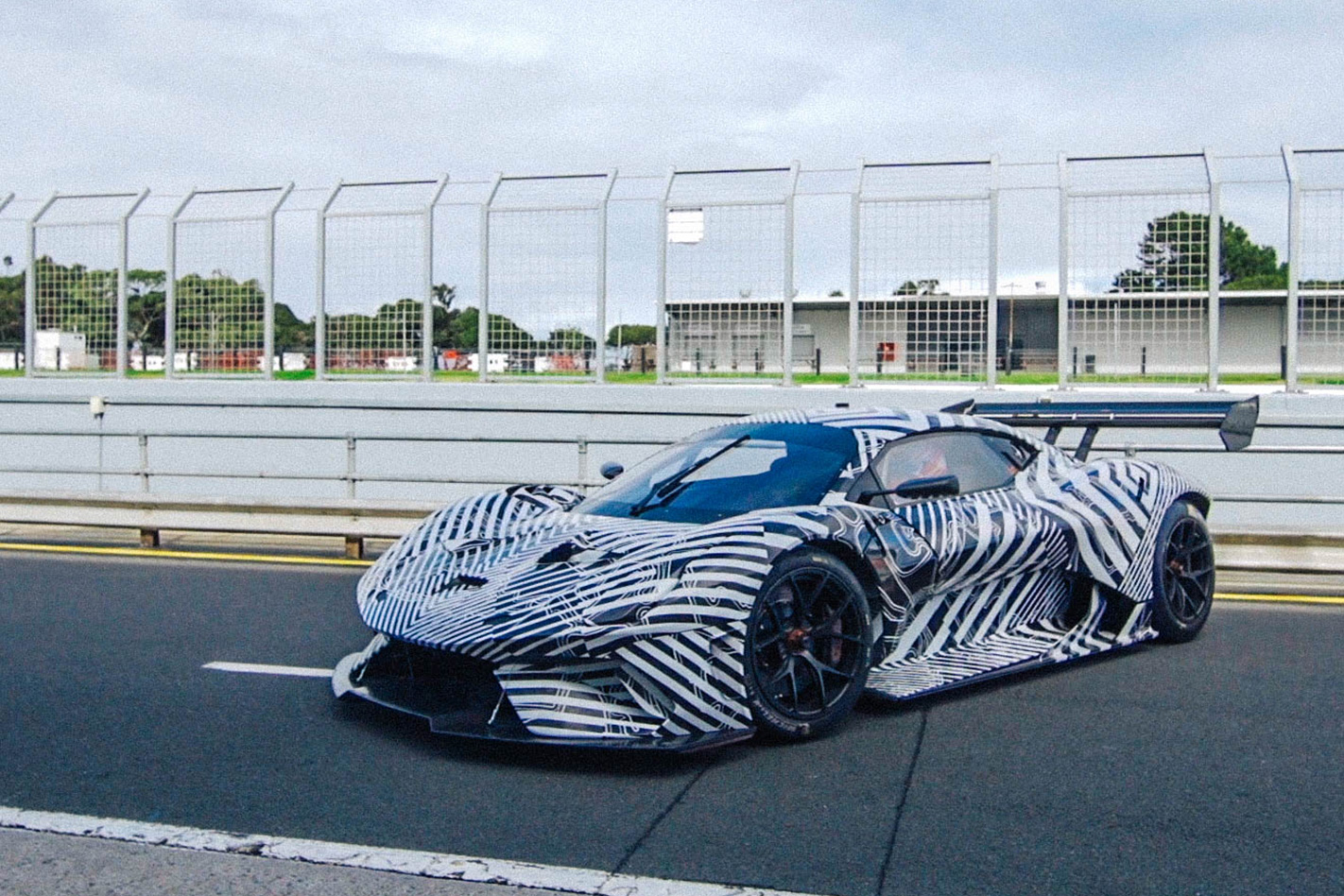
Stopping power comes from enormous carbon-on-carbon six-piston Brembo brakes – 380mm front, 355mm rear. The gearbox is an Australian-made, air-shifted Hollinger sequential with six forward ratios that sends drive to the rear wheels from the dry-sumped Brabham-branded 5387cc quad-cam V8.
Pressed for details about the engine, Reynolds is frustratingly reluctant to share. He is instead keen to point out the BT62’s powerplant is vastly different from anything available off the shelf, and is Brabham in personality as much as in spec.
A little digging suggests the base engine is sourced from Ford, and most closely related to the 5.2-litre ‘Voodoo’ V8 with flatplane crankshaft found in the Shelby GT350 and GT350R, itself a development of the 5.0-litre ‘Coyote’ V8 that powers the regular Mustang.
“We engaged an OEM and talked to them about a personalised development program,” says Reynolds. “They were supportive at that level, but we took the engine and heavily customised it to suit the attributes of our vehicle and agreed with the OEM that the engineering work is such the engine can be called a Brabham based on its departure from anything they do in any sector of automotive.
“We’ve customised and re-engineered it to be very, very specific to this vehicle. The design specifications are under control of Brabham. You cannot go out and procure an engine of this configuration.”
Brabham adds they didn’t simply grab the first V8 they could find. “There’s a strategy behind it,” he says. “We’ve got racing in our sights. A lot of the architecture we’ve done around the car and the engine is based around where we want to go with that.”
Push for clarification about which category the BT62 will compete in and Brabham’s representatives are cagey, though the official line is, “Le Mans is in our sights.”
A focus on the racetrack means aerodynamic performance is paramount. Sculpted bodywork scoops air around the purpose-built chassis, applying downforce via blades and canards and an adjustable dual-element rear wing optimised using computational fluid dynamics.
Again, more secrets surround the source of the car’s emotive design. Reynolds cites the support of a ‘well-respected international partner’, but there’s no namechecking when pressed for specifics.
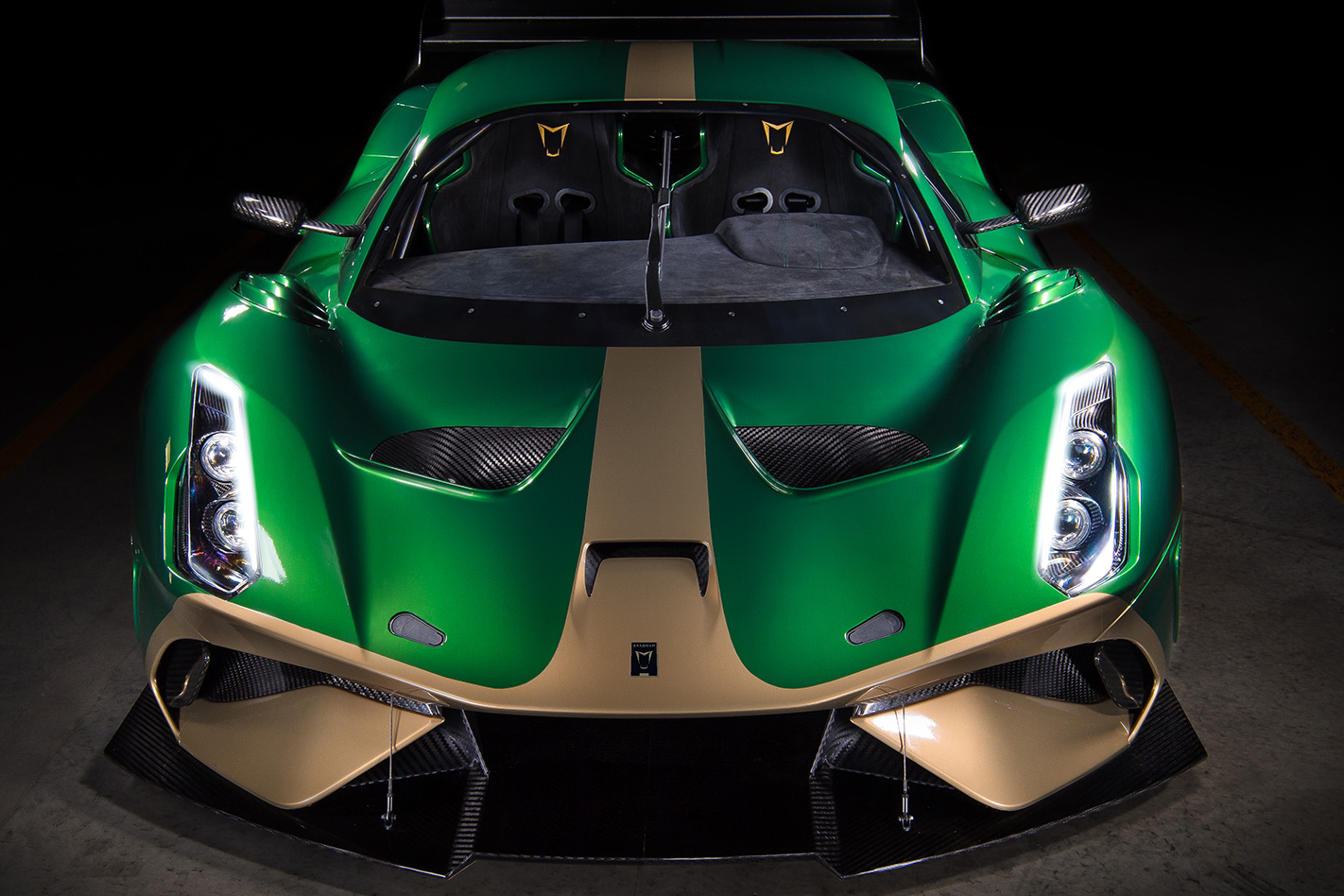
Elements of its form resemble themes seen in other high-performance vehicles from McLaren and even Lamborghini that have a focus on air management, though as a whole the BT62 is far from derivative.
“What you see in the finished vehicle is the battle between form and function,” says Reynolds. “We’re re-establishing the marque, so there are subtleties in the design in terms of the taillights, door depth to sill position, that will continue to identify brand vehicles going forward.”
“It has an identity of its own, which is really important,” says Brabham. “Those design cues will flow through the next variant of cars so you’ve got that common thread and it becomes ‘that’s a Brabham’.”
But track-only supercars are not the only goal for Brabham Automotive. The BT62 is a means of establishing credibility. Beyond racing as the next step, the eventual target is street-legal road cars.
“Aspirationally we understand where we want to end up, and we’ve entered this venture with a long-term business plan,” says Reynolds. “It’s fair to say we have to earn the right to grow, and we believe BT62 is the right product to re-establish the brand and give people confidence in the validity of the company.
“The automotive industry will see a growth in what we refer to as A-to-A vehicles. Whether that be on the road or out on track. We’ve developed a platform structure that will lead us toward competition.”
“We have the team in place that has engineered the first vehicle, we are in the mature concept phase for the follow-on vehicle, and specification ready on the third generation after that,” says Reynolds.
Presently, Brabham Automotive operations are divided into two main camps, with a core team in Australia responsible for delivery of the physical project, and a crew in the UK charged with technical engineering and sales.
Mystery surrounds the exact scale of the fledgling enterprise in terms of personnel and the depth of talent at its disposal. Specifics are being kept behind a curtain, for now, but there is a clear roadmap laid out beyond BT62’s launch and the people to deliver it, according to the company.
“We don’t really want to say how many people are in the business. We’ll disclose how big we are later on for you to understand the true horsepower behind this venture,” says Reynolds. “We’ve gone two and a half years being very comfortable not telling people everything that we’ve done and who we are, and that’s part of our continued plan going forward.”
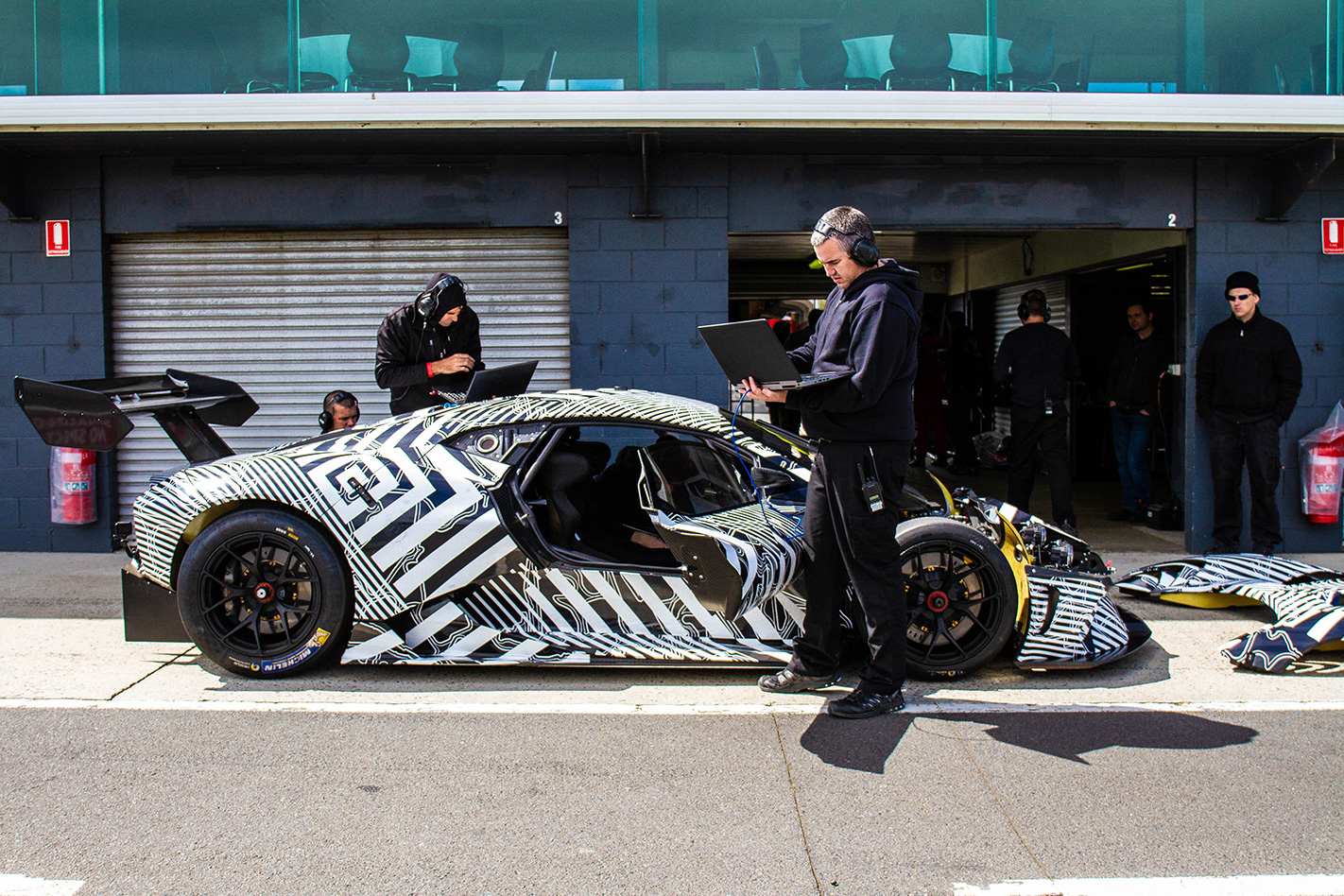
The development program has seen the car tested at several Aussie locations, including Phillip Island Grand Prix Circuit where it’s understood the brief was to achieve a 1:22.0 – an outright record – making it nine seconds per lap quicker than a V8 Supercar. Brabham won’t say whether that target has been met. Not because they didn’t time it, but because it represents yet another ace tucked up its sleeve for drip-feeding.
The Brabham BT62 is the most ambitious, most expensive production car this country has ever produced, and most likely the fastest. Whether it can deliver on the performance promise, and successfully command its phenomenal asking price against brands with established credentials remains to be seen, but on paper, this is no flash in the pan. Brabham is back.
THE YEAR IS 2088. You and I are probably long dead, or just heads floating in a jar of life-sustaining liquid, mumbling something about natural aspiration. Sea levels have risen such that Dubbo now has quite a nice beach.
It’s the future, and unless teleportation has been miraculously invented, there’s now a mobility solution that was once known as the car. And if capitalism is still a thing, there will be a mobility solution with a Porsche badge on it.
As we celebrate the past 70 years of Porsche in MOTOR’s August 2018 issue, it’s been fun to imagine how the performance car might change again over the next 70 years. As you start reading and looking at trends – including Porsche spending six billion euros (AUD$9.4b) on ‘electromobility’ over the next four years, and that’s just Porsche – you can’t help but wonder if we’ll still be admiring and celebrating the brilliant petrol-powered performance cars of today in 2088. (Certainly many investors in today’s age would agree.)
That includes celebrating the turbocharged ones; with emissions regulations being aggressively tightened, forget natural aspiration – grab hold of any petrol engine and hold it close, as it seems we can’t take their existence for granted.
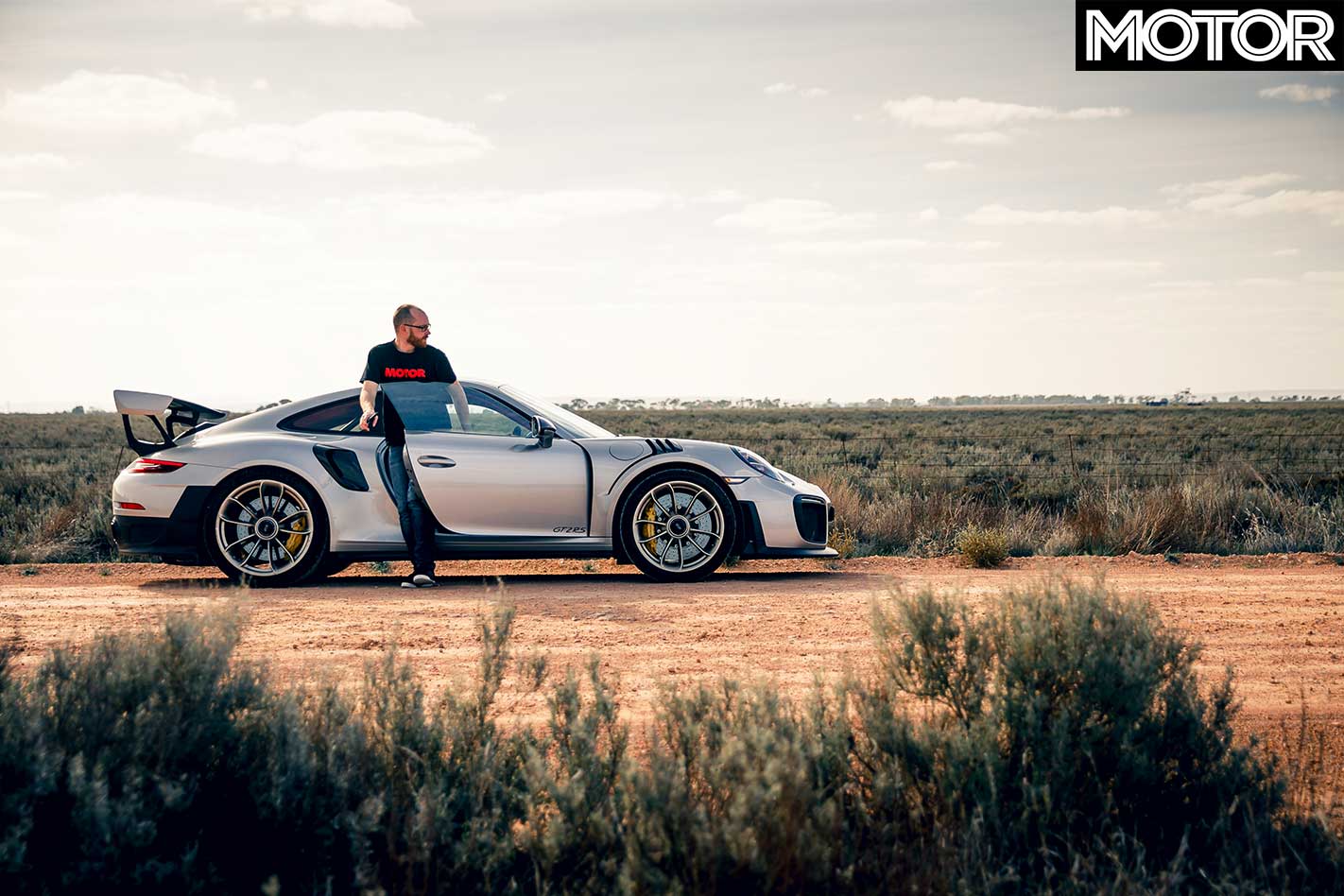
With this in mind, I’m starting to embrace downsized turbocharged engines, rather than just grieving for the decline of atmo power. This is partly from having experienced a next-level turbocharged engine in the Porsche 911 GT2 RS (which you’ll read about the August issue), one that combines response and throttle precision with prodigious torque in a new and special way for a turbo engine. Hopefully this kind of turbo mastery trickles down to, say, hot hatches.
Of course, beyond this blossoming turbo age a short hybridised one likely awaits us, and it’s this one I feel more sceptical about. Is a Porsche 918 better off for its 314kg of batteries and electric motors? That said, I will keep an open mind when I drive the rumoured hybrid hot hatches like the next Ford Focus RS and Mercedes-AMG A45, which promise supercar acceleration on the smell of an oily rag.
It’ll be at the end of the hybrid period when we begin farewelling the internal combustion engine as the electric car takes a stab at world domination. Yes, one day your Renault Megane RS will probably be fully electric. It might also have a button that says “auto” and folds the steering wheel into the dash. Don’t act like you wouldn’t use it in the worst of traffic.
At this Jetsons-esque point of mobility solution evolution, a handful of internal combustion performance models may still be on sale – perhaps even naturally aspirated – but only in supercars priced not into the stratosphere, but low earth orbit.
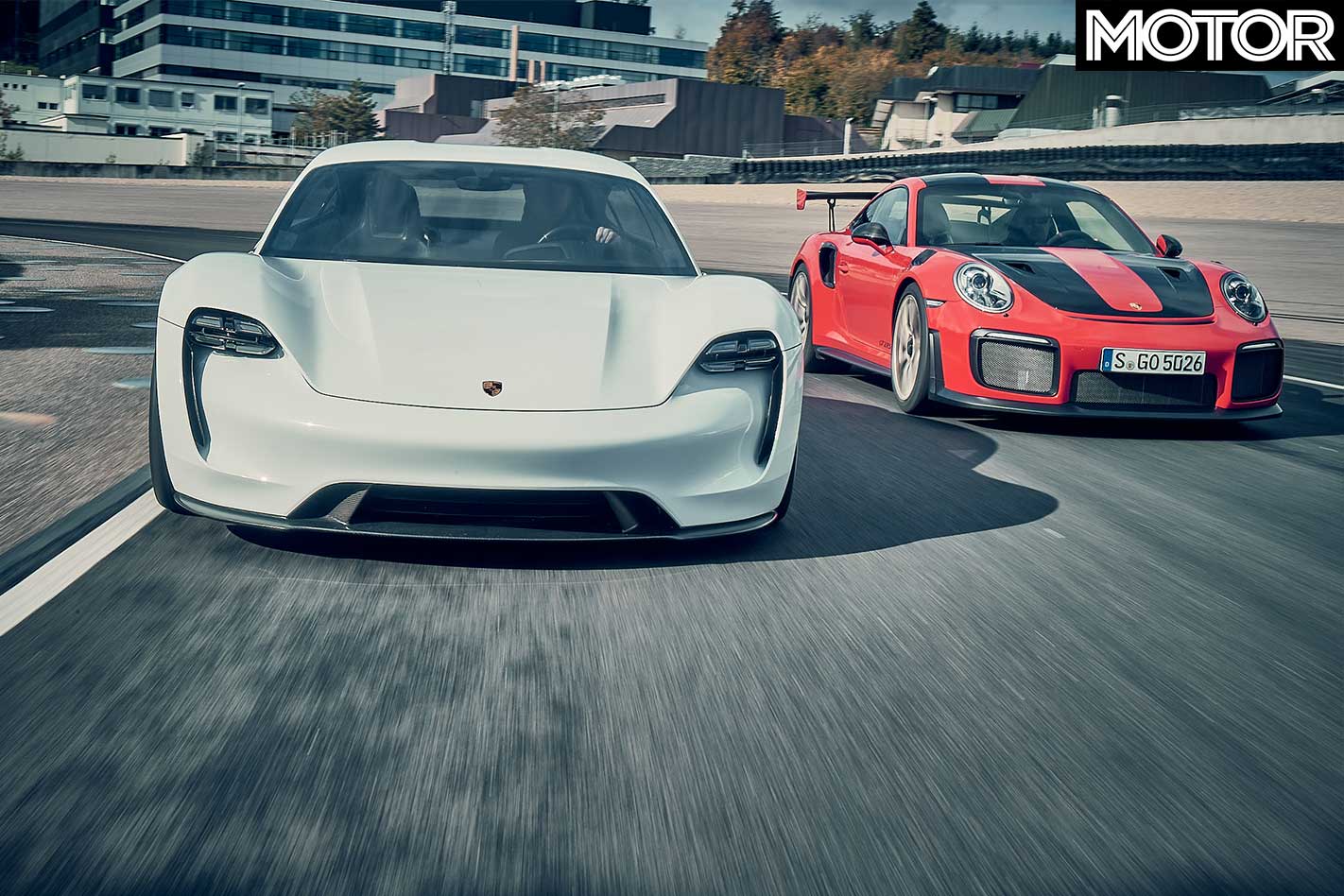
It’s not all doom and gloom. I’m staying open to the idea of the electric performance car. It has a lot of potential, and not just by way of acceleration insanity, but also very tricky torque vectoring smarts and low centres of gravity, which could provide handling like you’ve never experienced before. The new Porsche Taycan (formerly Mission E) even has a sound generator that imitates a switchable exhaust.
Of course, it’s impossible to imagine how the world might look next year, let alone in 70. But so long as people still want to buy a sports car, emotion will be a major selling point, which will guide the creators of future electric performance models. Nobody will want an appliance, and in that, there’s an optimistic vision for the next 70 years, no matter the brand.
People will tell you that jobs aren’t forever these days. Five different careers in a working lifetime and no fancy gold watch at the end of it all is becoming the norm, apparently, which is fine if you’ve just resigned as Chief Faecal Analyst at an adult nappy company, aiming for less brown pastures.
But what if you’ve been doing your childhood-fantasy job from the get-go? Trust me, it makes leaving that much harder.
My career as a motoring hack came to fruition in 2000 doing anything I possibly could, for whatever freelance rate they were willing to pay me, at Wheels, alongside Robbo, Micmac, Carey, Stahly, Pagey, and anyone else fortunate enough to be part of the magazine’s family. But after 17 years as part of the furniture in ACP/Bauer’s motoring stable, I write this merely hours before I hand back my security pass, destined to never sleep under my desk or smoke in the Stockland House toilets again.
I mentioned my intention to accept a role at another outlet to Peter Robinson recently, during one of our always-delightful, life-affirming lunches, and I thought I could see tears welling in the old bloke’s eyes. At which point my whole body prickled with goosebumps as I tried desperately to swallow the lump in my throat. It was never just a career working here – it was almost a religion. A left-leaning, opinionated, slightly rebellious form of worship, with the deity being a proper ‘Wheels’ car – one that’s charming, innovative, attainable and fun.
My relationship with this title began the day I pedalled my Malvern Star to the Wamberal newsagent in early ’82 and bought my first copy of Wheels – Road Tests No.40 – which now looks incredibly dog-eared and old-world. It’s a black-and-white ‘tearsheet’ compilation of 1981’s chief comparos, though the lack of glossy stock was hardly enough to stem my unbridled enthusiasm for the ‘shadowtone’ silver-over-maroon VH Commodore SL/E V8 gracing its full-colour cover.
Twenty years later, as Micmac punished a Mitsubishi Magna (remember those?) along our notoriously gnarly four-up test route outside Bowral, with John Carey and myself being tossed around the back seat like a pair of dice, I can remember gripping on and grinning. Here was a bloke in his (then) late-60s correcting roll-oversteer through a corner with no margin for error as Carey yells “have a go, Mike, you old bastard!” It was glorious. Grown men behaving like teenagers, while simply doing their jobs – testing cars to their limits. I could’ve died happy that day. Perhaps I nearly did.
Of course, there have been some amazing cars (and launches). The lavish Bugatti Veyron event in Sicily alongside Motor’s Michael Taylor was a highlight, and not just for the mind-warping car. We were the only journos to attend the ‘wrap party’ in Cefalu after the launch program concluded, spent the whole night guzzling expensive plonk while toasting “Vive le marque” with the brand faithful, then watched the Italian Bugatti boss leave at the wheel of his $10m 1927 Type 35 Targa Florio race car, missus by his side, three sheets to the wind (not that we condone drinking and poncing…)
But it’s the tremendous passion of the characters that surround me that I’ll miss almost every day. A passion for this title and all it encapsulates; a love of magazine craft; of great stories, new experiences and a whole bunch of random stuff that often has absolutely nothing to do with cars.
So it’s bittersweet knowing that I’m about to come full circle, returning to being a Wheels reader rather than a Wheels road-tester, pensively awaiting this year’s COTY announcement and its unflinching, insightful judgement, but quietly heartbroken I won’t be along for the ride.
What’s the old adage about it being tough to get to the top, even tougher to stay there? Whatever it is, no-one has told the Amarok. VW’s contender rose to comfortable ascendancy at our last 4×4 ute Megatest (May 2016), and here it is again, this time in V6 spec, still showing the field – and new arrivals – how to best blend the disparate demands of on-road refinement and off-road capability.
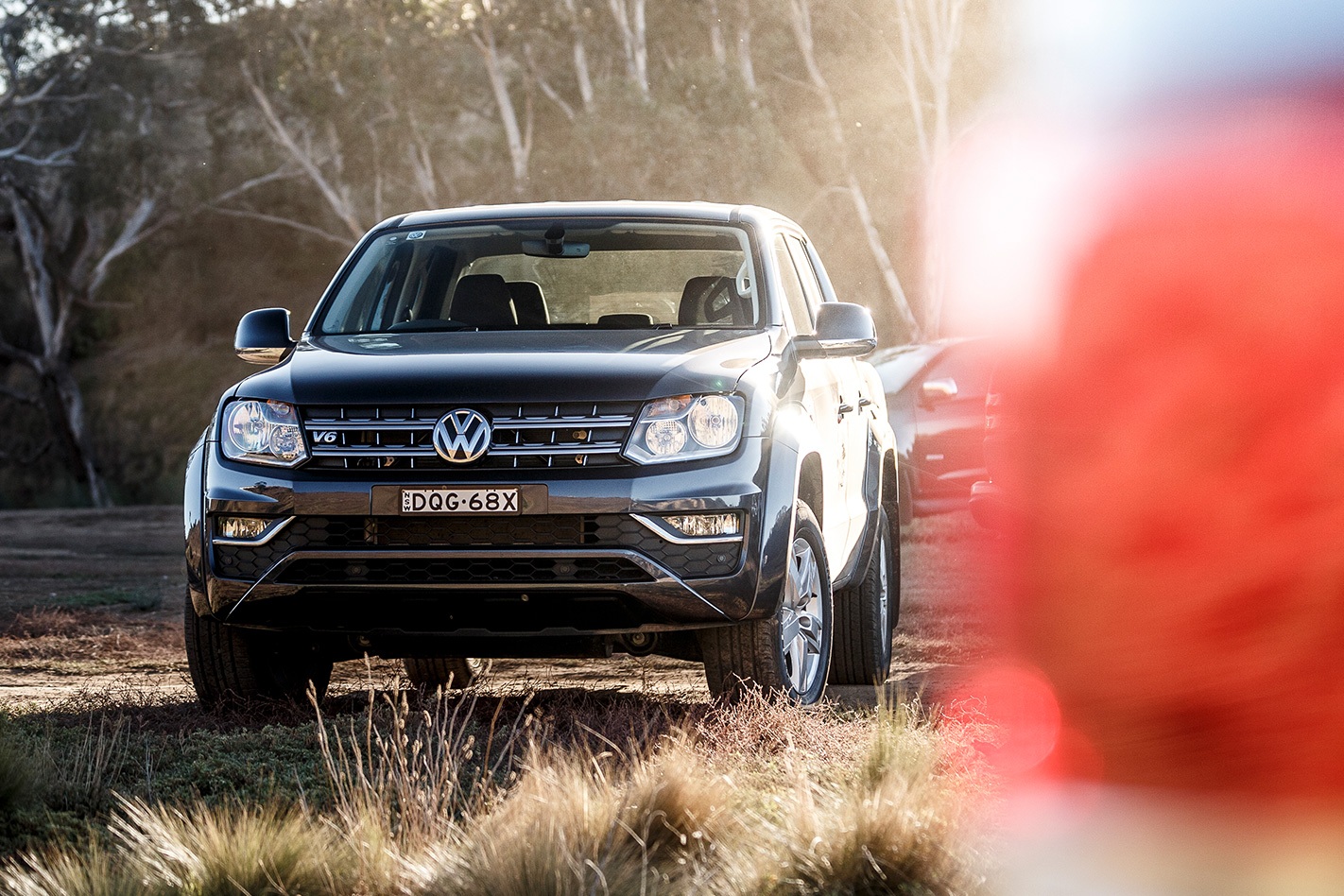
It’s the only contender here with six cylinders; an advantage it doesn’t squander. The V6 is, by a fair margin, the most powerful and torque-rich of this group, and delivers performance that’s swift and punchy.
Its 0-100km/h of 7.9sec clobbers its rivals (the next quickest, the Holden, is still 1.6sec adrift), while it hammers through the 80-120km/h overtaking move in just 5.3sec, or nearly 35 percent quicker than the slower rigs here. Part of this is down to the overboost function, which sees peak power swell to 180kW under 70 percent throttle or more, beyond second gear. Admittedly its consumption is the second-thirstiest of the bunch, but you can forgive it that because of its overwhelmingly superior performance.
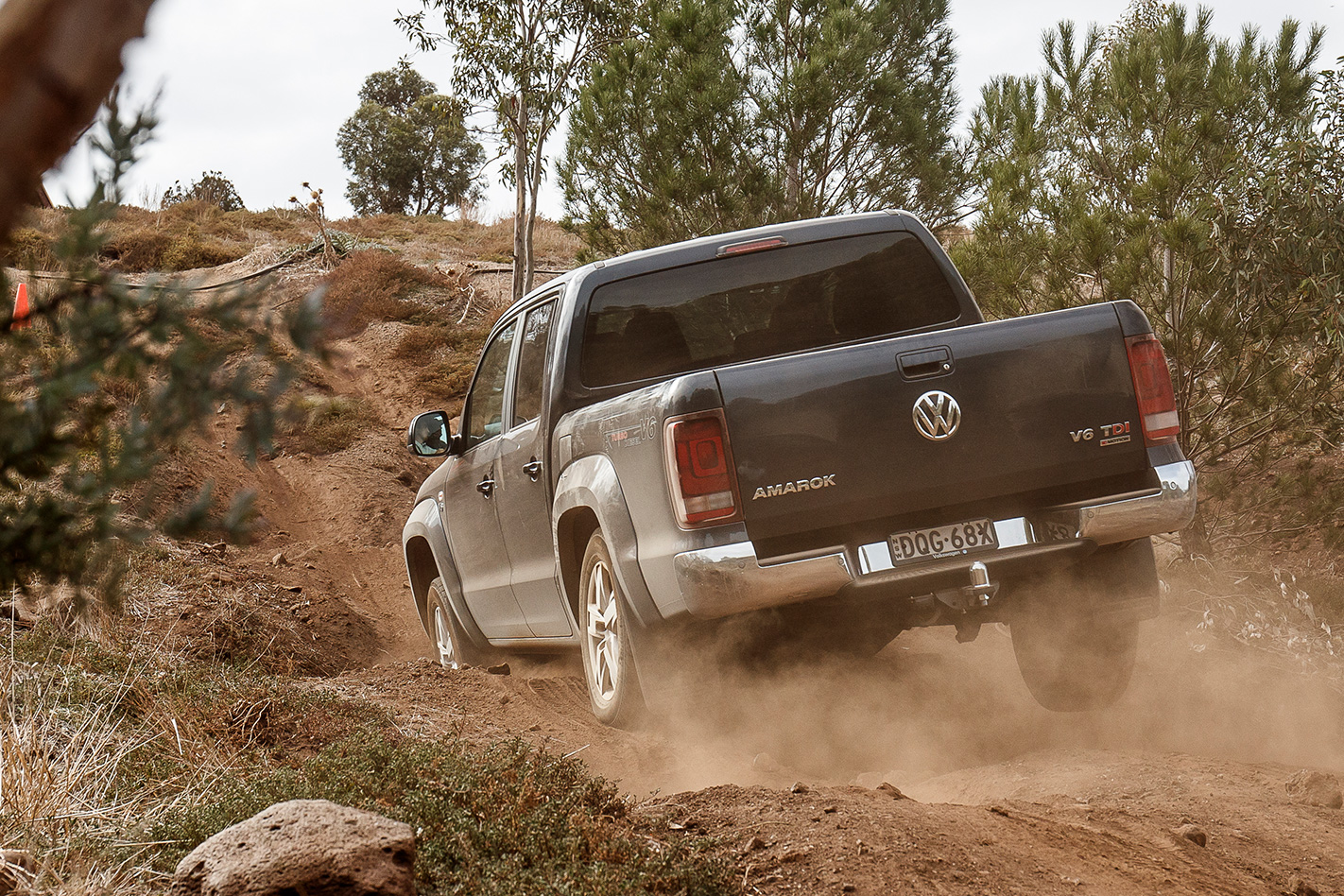
Almost as significant as Amarok’s power advantage is its powertrain refinement. This engine actually sounds like it enjoys the workload thrown at it, and is appreciably quieter and better sounding than even the Merc’s, the next most hushed of the bunch. It also has no aversion to revs, upshifting at 4400rpm on full throttle, but capable of closer to 5000rpm if you want to select manual mode and hold a ratio.
Speaking of ratios, the Amarok is the only ute here to boast an eight-speeder, which allows both swifter step-off acceleration and calm, unstressed highway cruising. Shift smoothness and kickdown response also mark this as one of the best autos in the group. In short, this is an engine and transmission combo you’ll actually enjoy driving.
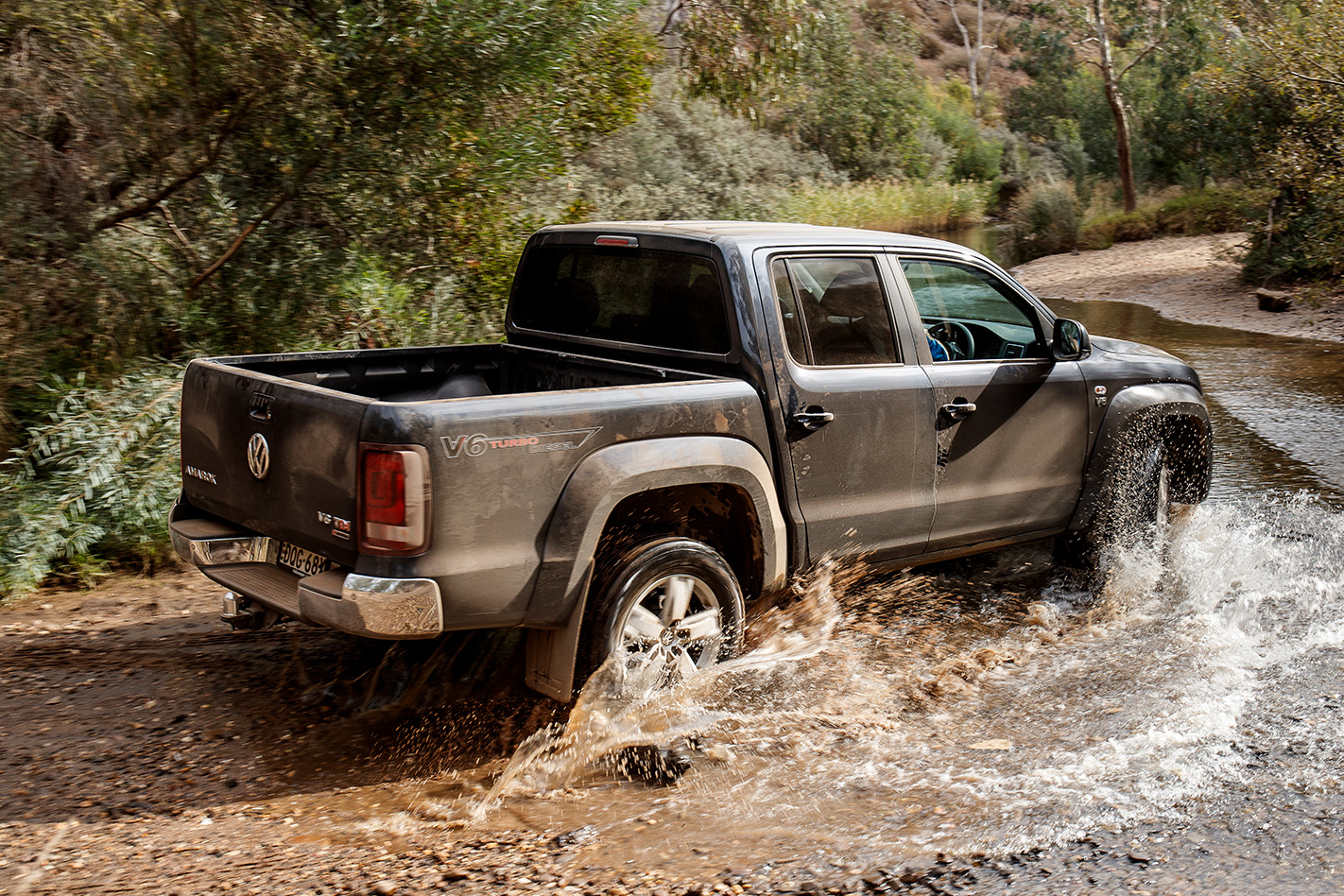
Then there’s the Amarok’s other on-road ace: full-time all-wheel drive. Driven hard, or in the wet, the rest of the field will lurch, attempt to spin up, and trigger ESC intervention. The VW mostly just gets on with the job of transferring grunt to ground. It’s also the only ute we tested that requires no dial-turning or button-pushing when you head off-road. Despite the lack of low-range, this thing is every bit as capable in properly rough or steep terrain as the best in the group.
The only dynamic element the Amarok does not ace is steering. It’s far from awful, just a bit remote and unengaged, especially against the standard-setting rack in the Ranger. Otherwise, the Amarok again rises to the pointy end of the field. It rides with a controlled absorbency that’s a world away from the brutal stiffness of the Hilux, yet still manages to retain the sort of body control delivered by the likes of the Ranger.
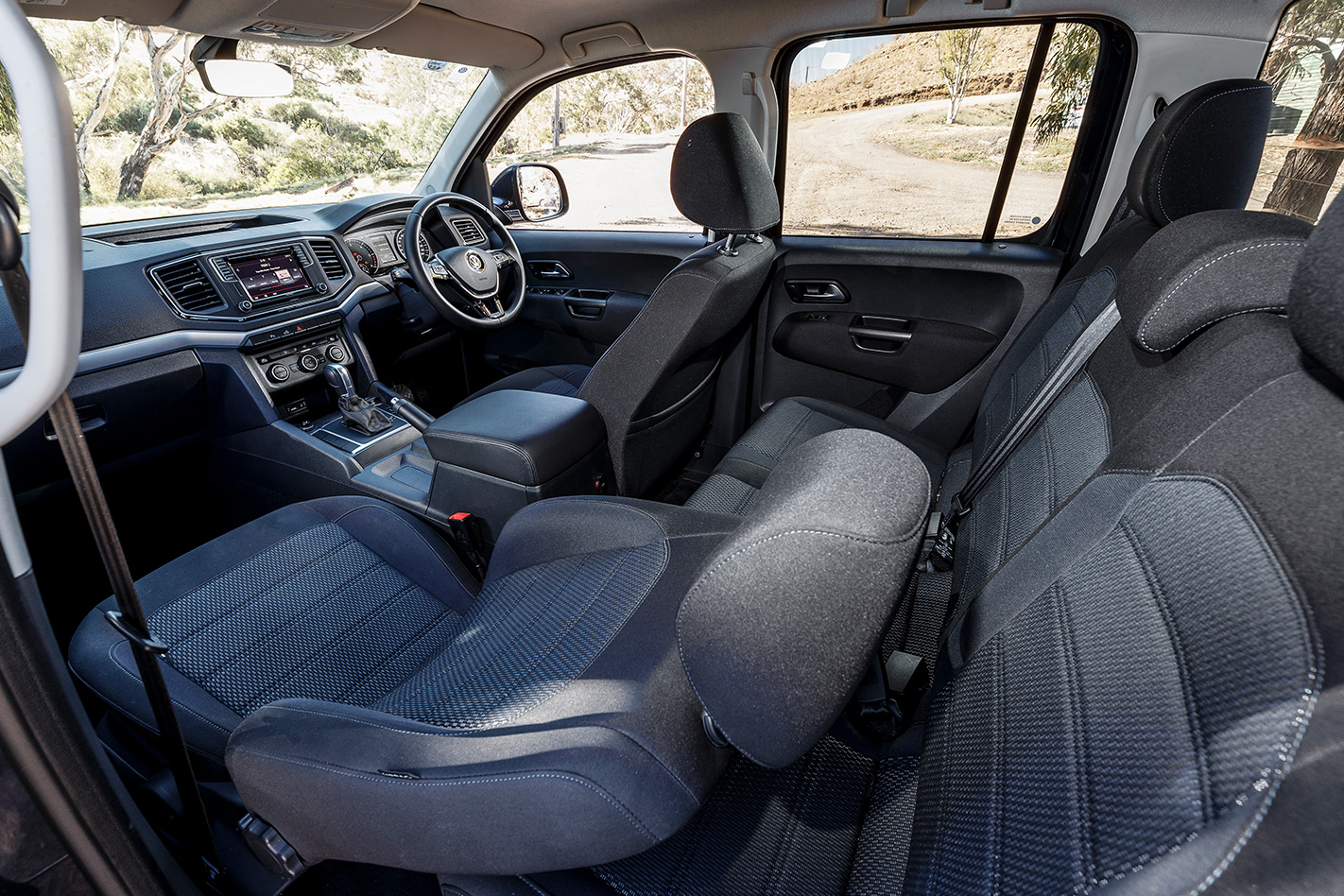
With this level of multi-discipline dominance, the Amarok could have an interior like an outback dunny and you’d still consider one. Naturally it doesn’t; despite its age, the cabin still nails the brief in terms of comfort and functionality. It’s way less flashy than the Merc, but it actually works better, with superior storage, more adjustment to the driving position, and better-shaped seats, if falling short on equipment.
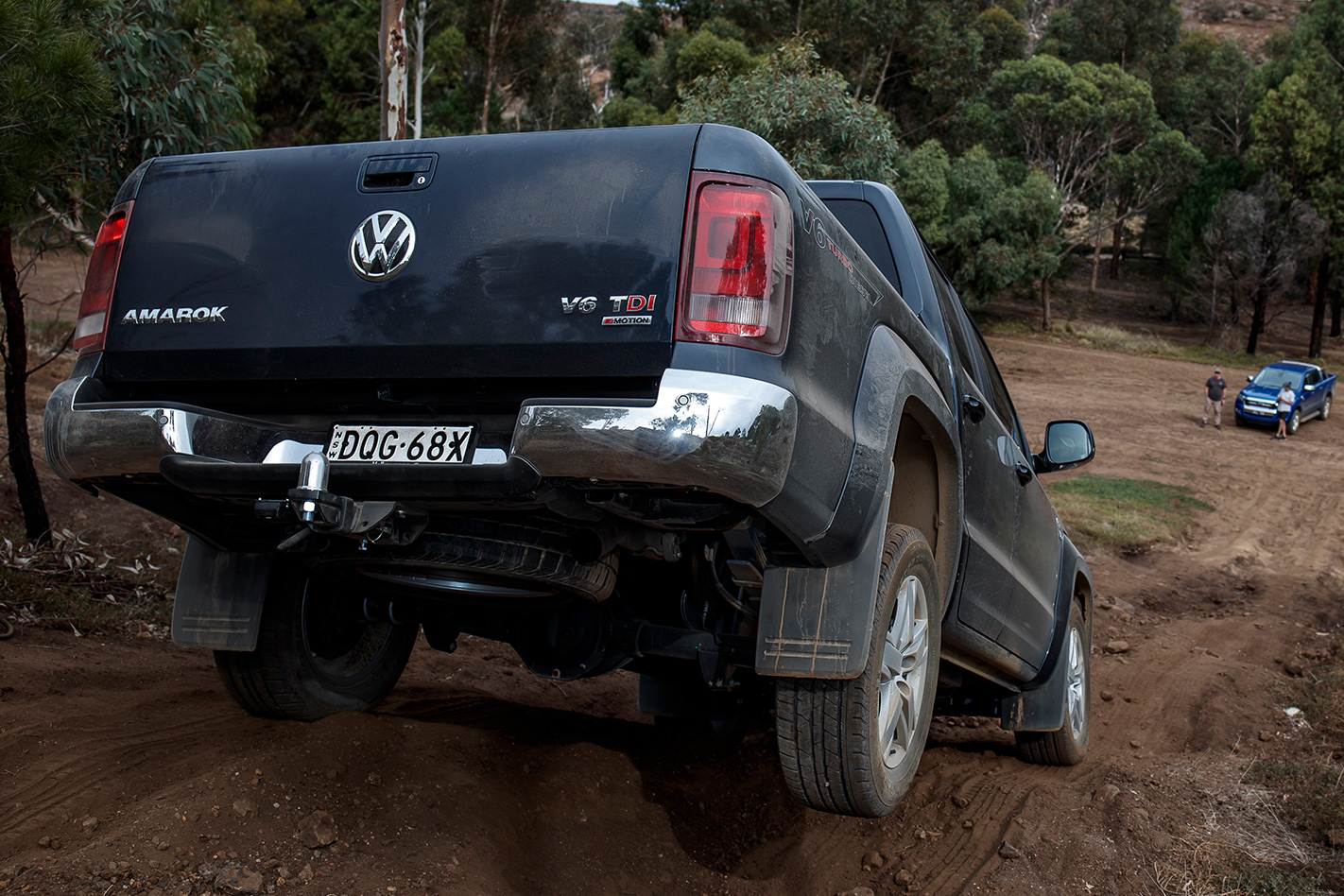
So while Amarok comfortably tops our second-ever ute Megatest, the Hilux continues to outsell the VW by a ratio of around five to one. There’s a message in there, if only we could figure out what it is.
SPECS
Price $52,990 (driveaway*) Engine 2967cc V6, dohc, 24v, TD Power 165kW @ 4500rpm Torque 550Nm @ 1500-2500rpm Transmission 8-speed automatic Dimensions (L/W/H/W-B) 5254/1954/1878/3095mm Weight 2169kg Tray capacity 911kg Braked towing capacity 3000kg Unbraked towing capacity 750kg Ground clearance 192mm Tyres Pirelli Scorpion ATR 245/65R17 Test fuel average 11.2L/100km 0-100km/h 7.9sec 80-120km/h 5.3sec
*Limited offer
Need more info?
Read the Wheels Dual-Cab Ute Megatest Introduction
The Contenders
# 9 Isuzu D-Max LS-T
Rough ’n’ ready appeal pales when polished rivals are better at going bush too
#8 Nissan Navara ST-X
Tough and reliable aren’t enough as Navara wilts on price, spec and comfort
#7 Toyota Hilux SR+
Unbreakable? Possibly. Unloveable? Sadly, yes, as mediocrity is allowed to prevail
#6 Mazda BT-50 GT
Still in the fight, but ultimately overshadowed by its high-flying fraternal twin
#5 Mitsubishi Triton Exceed
A strong and likeable mid-fielder where consistency and value are king
#4 Holden Colorado LTZ
Colorado raises its game right when Holden needs a hero
#3 Mercedes-Benz X250d
Arrives carrying great expectations; delivers only a modest load
#2 Ford Ranger XLT
Continuous improvements make the only truly Australian-conceived ute world class
#1 Volkswagen Amarok V6 Sportline
Quiet achiever doesn’t have youth on its side, but still shows how it should be done
Describing a car as a tool to get you places is egregiously wrong, it can be so much more than for going fast and driving hard, it can be evocative art.
These car inspired watches, decor, and attire are fine pieces of automotive art in their own right. So gussy up your living quarters and personal style if you have the cash to flash.
1 – ED’s PICK “PRODUCT OF THE MONTH”: Ferrari watch ($628 from timepiecestore.com.au) This Ferrari mens’ watch is made in Italy and classically styled in a 43mm case. Powered by a quartz movement, its dials evoke the cluster design inside the brand’s 1960s cars.

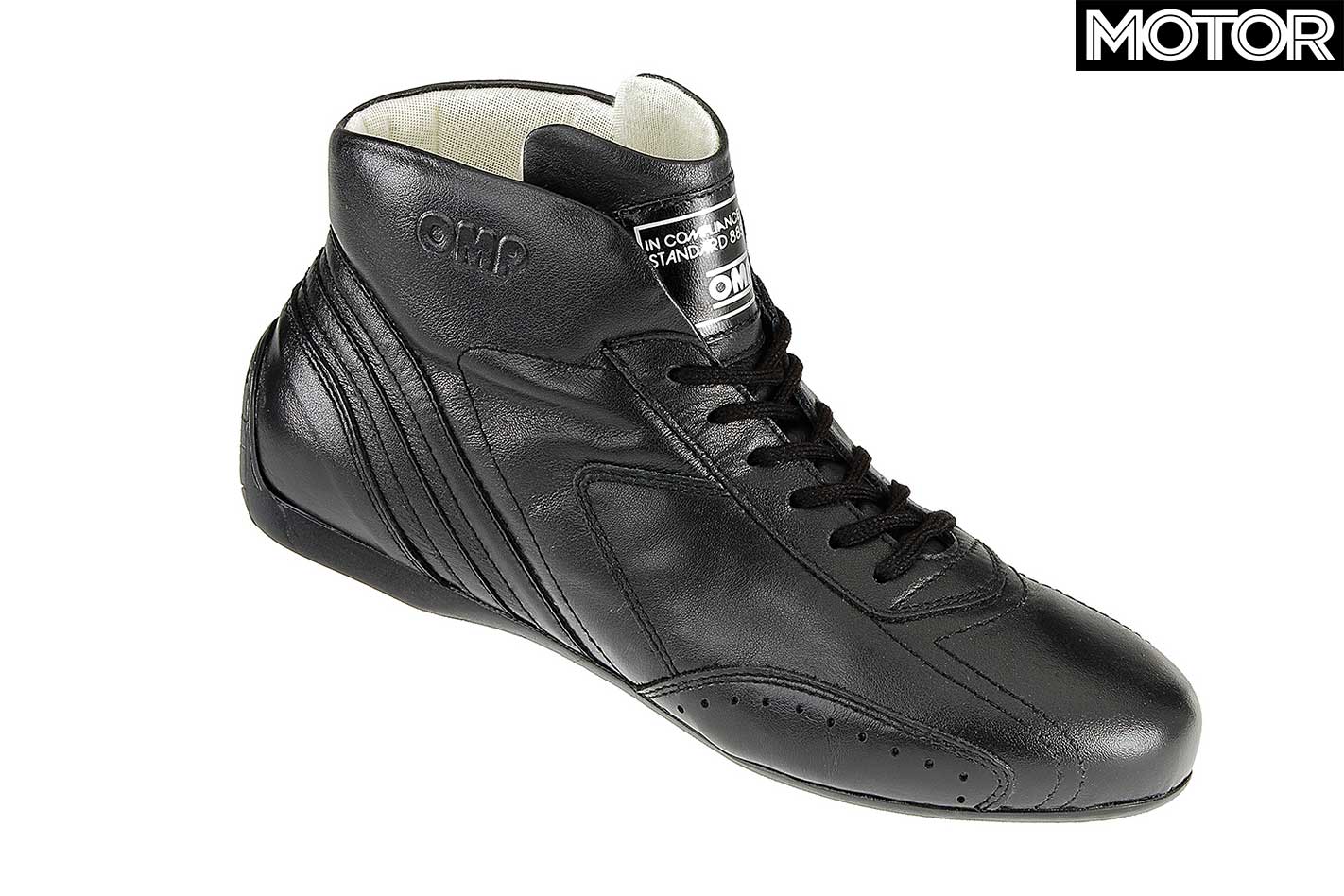
2 – OMP ‘Carrera’ boot ($380 from raceline-racewear.com.au) The racewear brand’s classic low-cut boot almost looks too good to be anywhere near oil stains. Complying with FIA 8856-2000, it’s available sizes US 5-12 and also comes in brown.
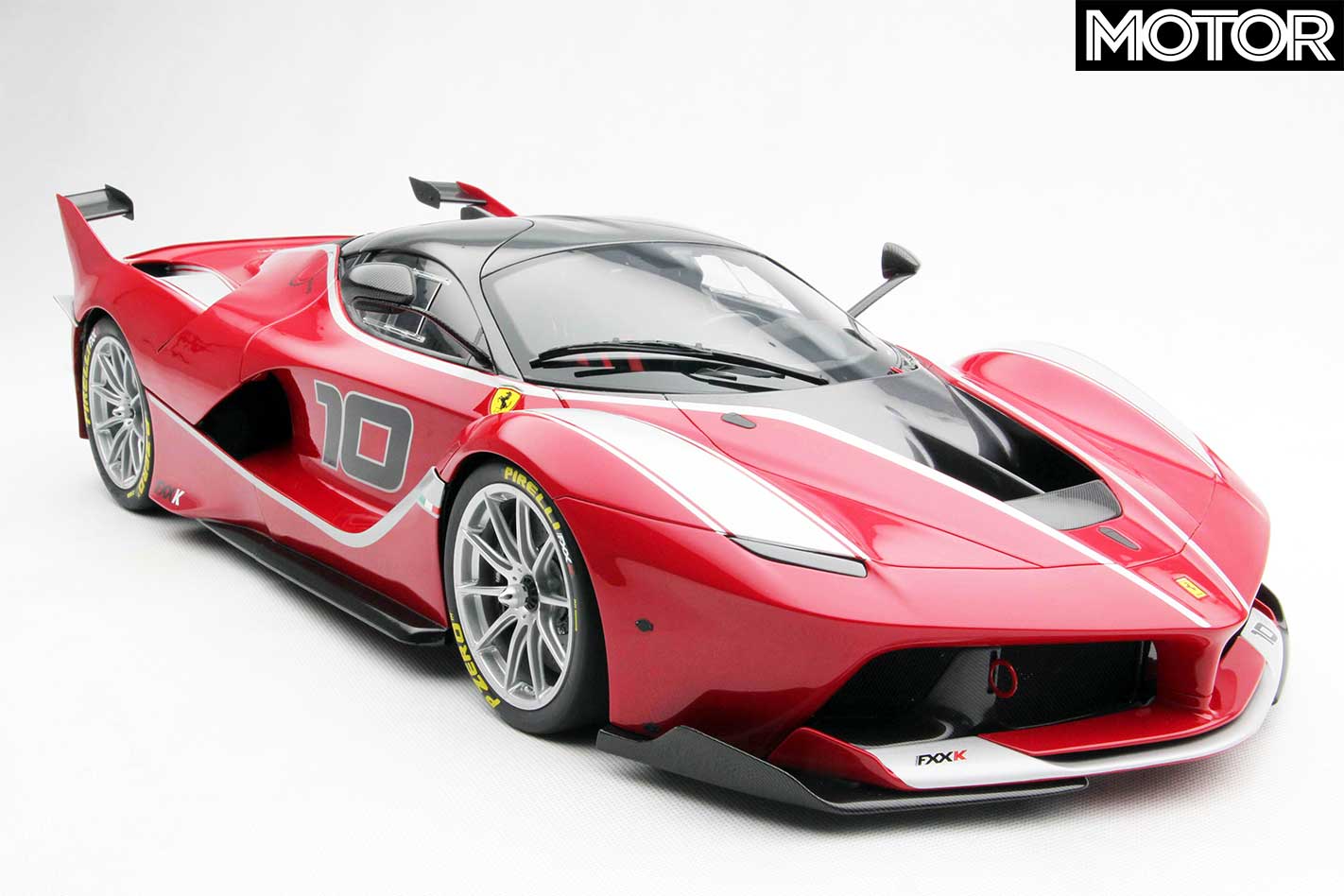
3 – Ferrari FXX K scale model ($9120 from amalgamcollection.com) No, that price is not a typo, this model comes from model car connoisseurs Amalgam who have painstakingly hand crafted a Ferrari LaFerrari FXXK in 1:8th scale.
4 – Baume & Mercier Clifton watch ($5250 from baume-et-mercier.com) A chronograph from gurus Baume & Mercier dedicated to ‘Burt’ Munro, the Kiwi behind the fastest sub-1000cc motorcycle run at the Bonneville Salt Flats. He set it in 1967, aged 68, on his Indian.

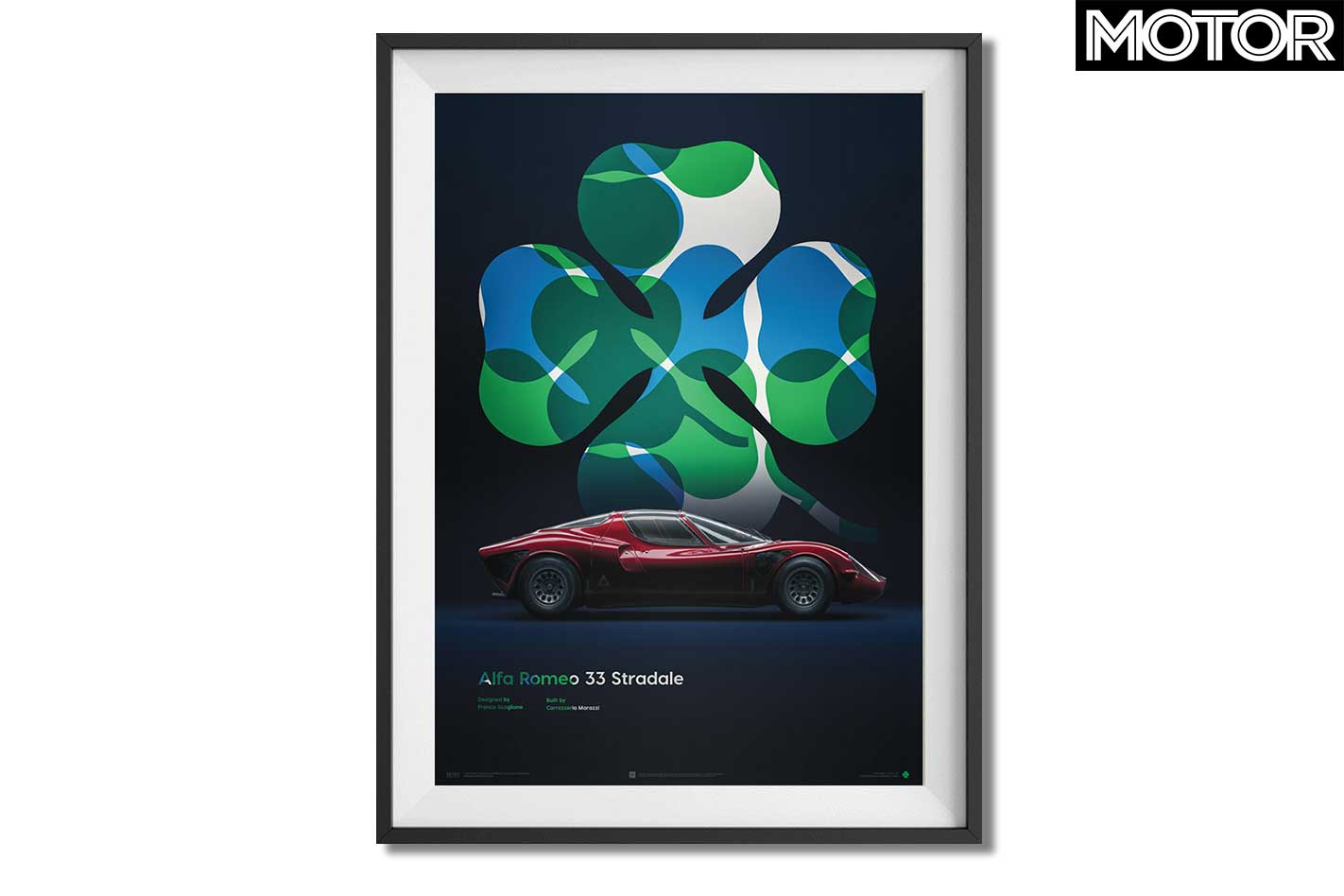
5 – Alfa Romeo 33 Stradale print ($41 from automobilist.com) Alfa Romeo’s a brand that believes in luck. However, there’s nothing lucky about the curves on its 33 Stradale, quite simply a display of art on wheels. Hang the 1968 masterpiece on your wall.
6 – Porsche Design leather belt ($205 from porsche-design.com) Porsche Design had the inspired idea to combine its brand’s initials into one buckle piece. It’s called the Icon 35.

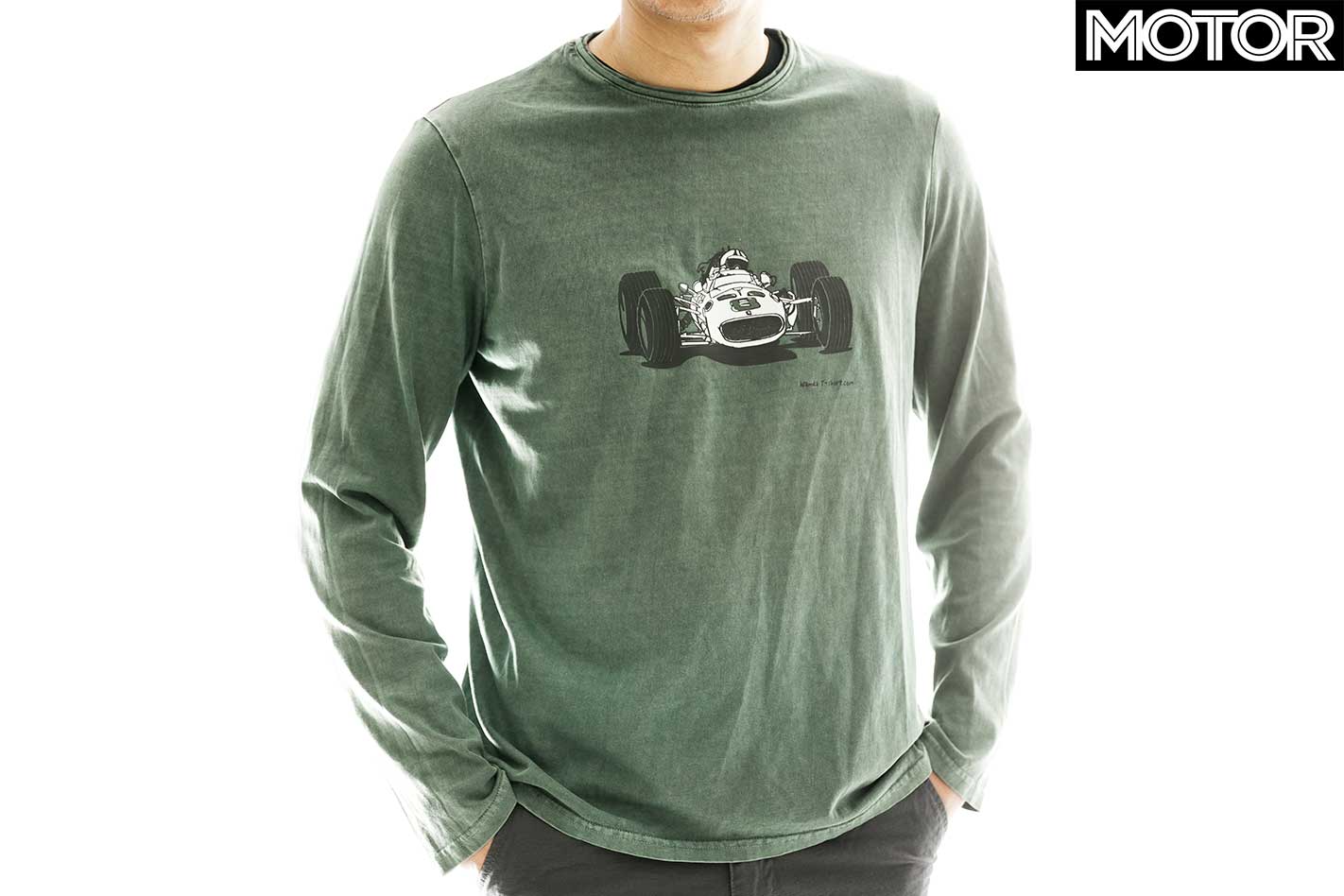
7 – F1 tee-shirt ($43 from wandat-shirt.com) Before Sebastian Vettel or Ayrton Senna, there was Jackie Stewart, Denny Hulme and Jim Clark. It’s to them this tee pays tribute, a classic F1 design in Spanish organic cotton.
The sometimes enlightening, often confronting arrival of perspective is rarely delivered with such cold-faced clarity as when you climb into a car from a bygone era. In many ways they feel like time capsules; machines that preserve the cultural essence of their moment and highlight, unflinchingly, how far modern cars have come.
And so it was driving the E34 BMW M5 that features in April’s issue, on p30. Parked next to the high-tech wizardry, flexed sheet metal and brutish confidence of the box-fresh F90 M5, which is the focus of the piece, the older car felt remarkably simple, unrushed and unassuming. It was almost quaint, with its smaller dimensions, boxy panels and off-set pedals, which isn’t a descriptor I thought I’d use on a car that, not so long ago, was one of the world’s fastest and most engaging sports sedans.
It also caused a quote I’d filed away deep in my brain to bubble to the surface. It was delivered by GM CEO Mary Barra, who proclaimed late last year, “we are in the midst of seeing more change in the next five years than we’ve seen in the last 50.” Other execs and futurists have said similar things and, hyperbole or not, it shines a beam of perspective not only onto the 30-year-old E34, but the F90.
Are we now beginning an age of such rapid progress that cars we consider to be right on the cutting edge, like the weapons-grade F90, will swiftly feel antiquated? A technology boom that could spawn an era of express obsolescence and cause us to look back in five, or even ten years with misty-eyed fondness?
I’m dubious about the predicted timeline, but this is already happening, if at a slightly slower pace and with less severity. Nissan’s R35 GT-R looked, and felt, like a tech-infused spaceship when it landed 10 years ago. Now, Japan’s supercar has gone full circle and feels not so futuristic, but almost outdated and analogue, if still brutally fast.
It makes you pause to ponder what the next wave of enthusiast icons will be like, and where they’ll come from. You only have to look at the sudden appearance and success of the Kia Stinger, and now at the remarkable achievement of our cover car, the Hyundai i30 N (read more on p76), to realise they could hail from the most unlikely of places, or even in unfamiliar shapes with unfamiliar badges.
For all their differences, it’s easy to trace an evolutionary line between the E34 and F90. The family DNA is clear and had you asked someone at the E34’s launch to plot how today’s M5 might look, they wouldn’t have had to guess too wildly. The fact it’s now all-wheel drive, turbocharged and festooned with safety gubbins isn’t such a surprise, but what will the M5 look like in another 30 years? Will it be hybrid? Electric? Autonomous? Will there even be one?
The barriers to such fundamental shifts are slowly and inevitably being knocked down, though how much change this will exert on cars that excite enthusiasts like us remains to be seen. Recent machinery like the Porsche 911 R and the Audi R8 RWS, which we also drive in this issue, show that despite the relentless march of progress, a market still exists for machinery that is pared-back, simpler and focused on the driver. Even if they might soon feel ‘old school’.
In response to an earlier article regarding Australia’s road safety problem, a number of commentators mentioned it would have been good to see more data in the piece.
Worried a numbers-heavy piece would make the piece more difficult to read and distract from the main message of driver education, I tried to keep the figures to a minimum. However, there is certainly value in a greater investigation into road safety data, so you’ll find that below.
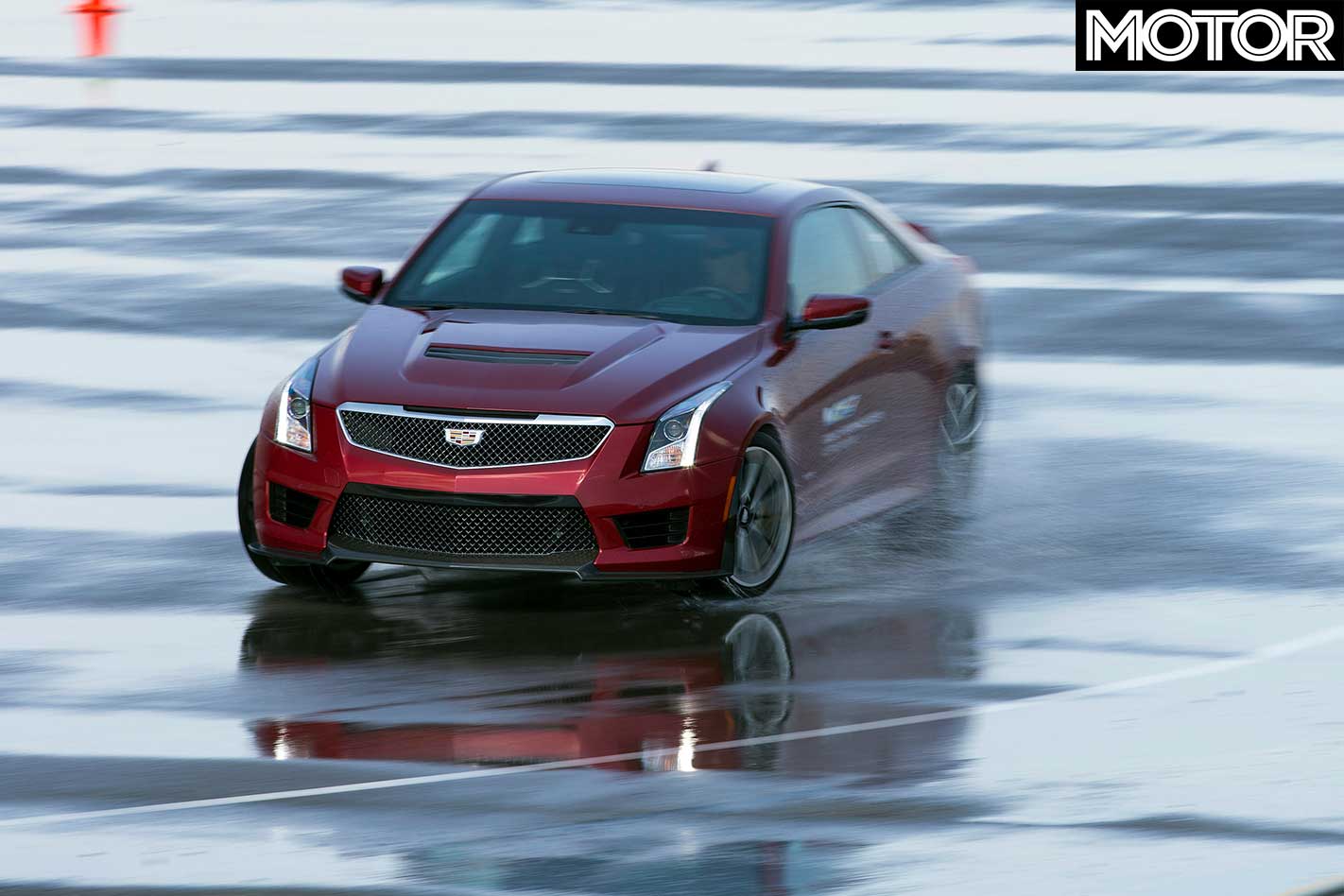
My main source for the article was the Australian Infrastructure Statistics Yearbook 2017, compiled by the Australian Bureau of Infrastructure, Transport and Regional Economics, part of the Department of Infrastructure and Regional Development.
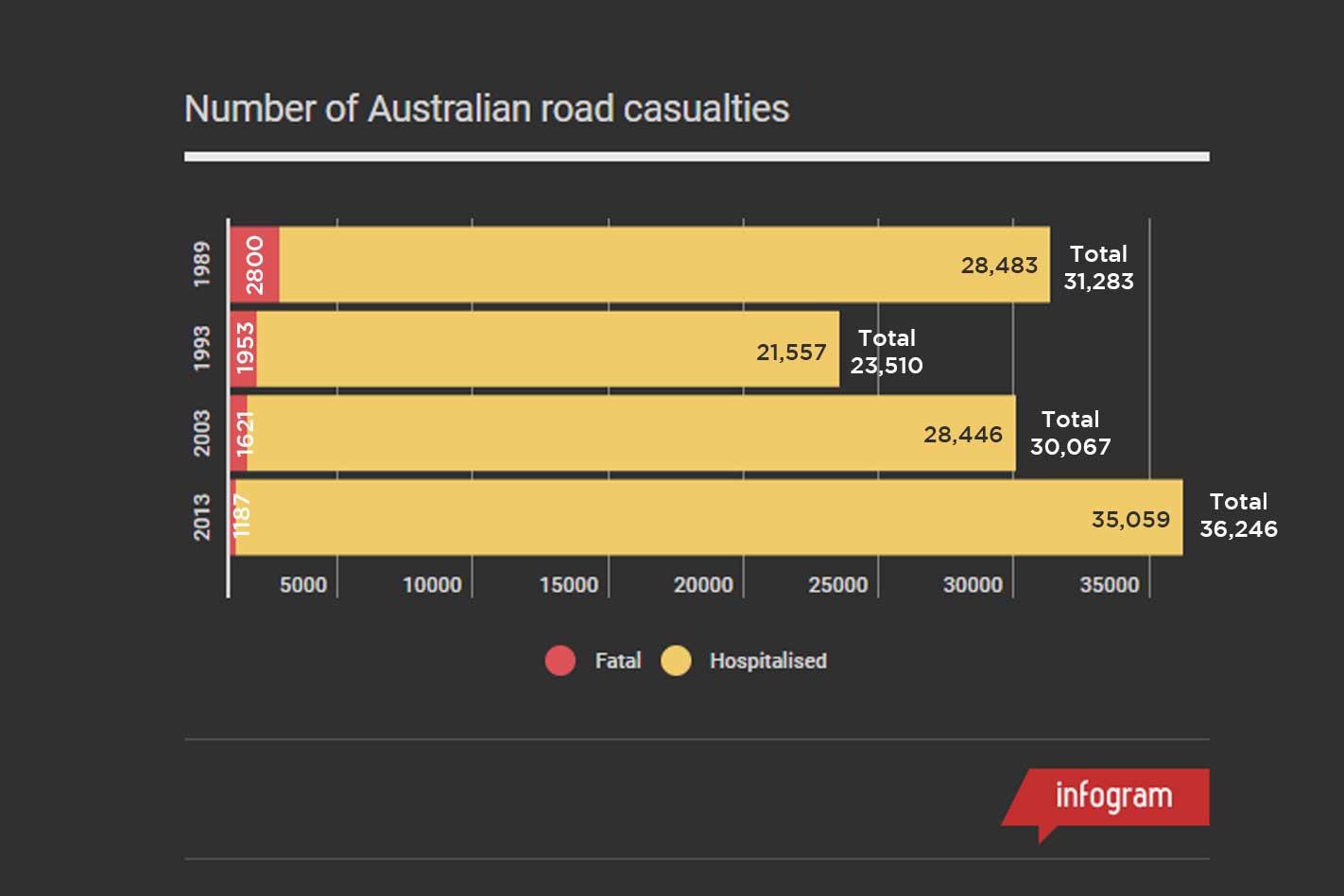
One of the key points in the original article is that while Australia’s road fatality rate has fallen dramatically over the decades, the injury rate has actually risen. While fatal crash data goes back to 1973, hospitalisation data only began being recorded in 1989, making that the first year available for comparison.
Nonetheless, you can find the absolute figures below:
Table 1. Number of road casualties
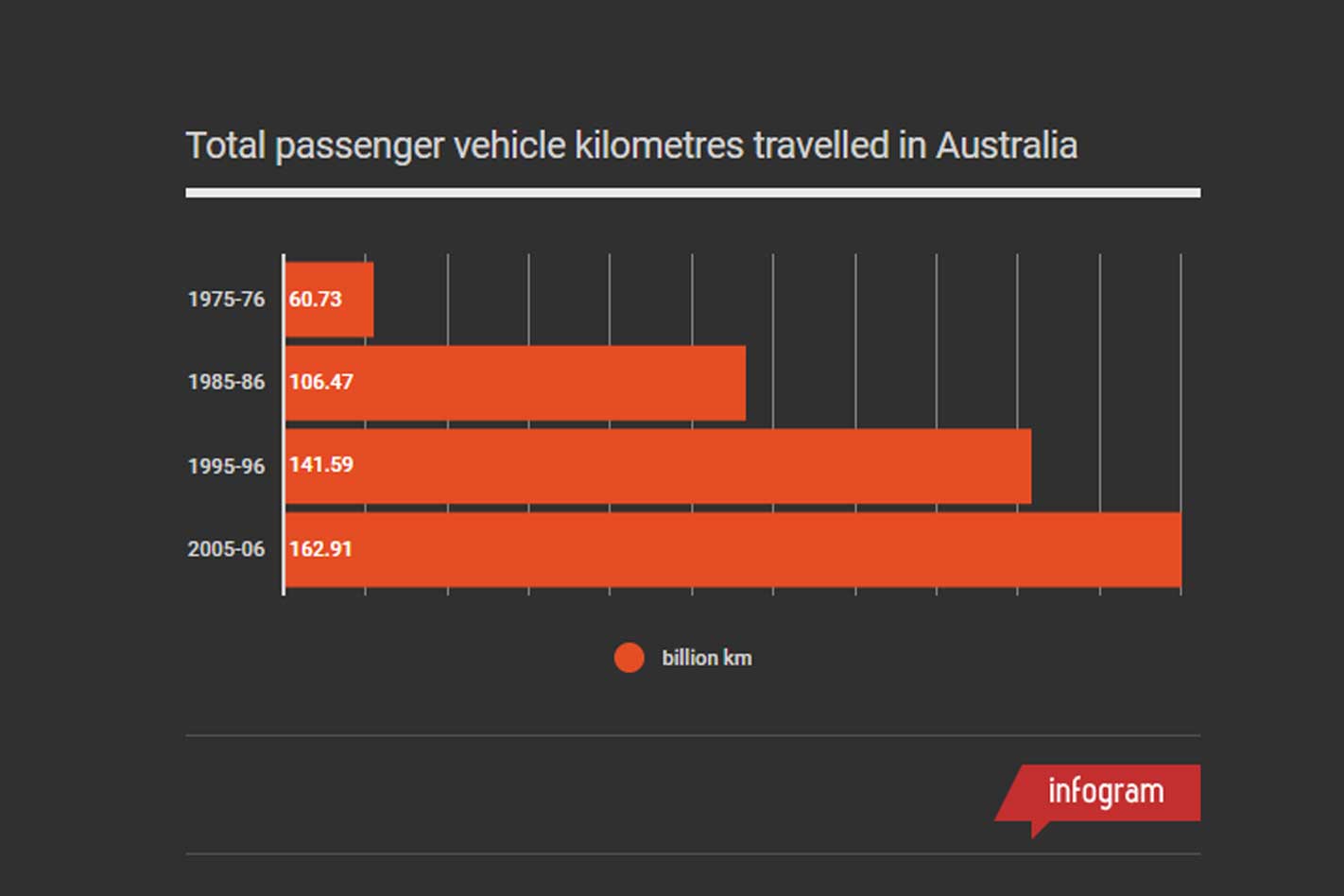
As a few people pointed out, these figures don’t tell the whole story, as there are a lot more cars on the road in 2013 than in 1989, therefore the number of total crashes is likely to increase. Below is the total number of kilometres travelled by Australian motorists by passenger cars over the decades.
Table 2. Total vehicle kilometres travelled (passenger cars)
However, regardless of the metric used, the results are the same. Below is Table 1 but divided per 100,000 population at the time.
Table 3. Road casualty rate per 100,000 people
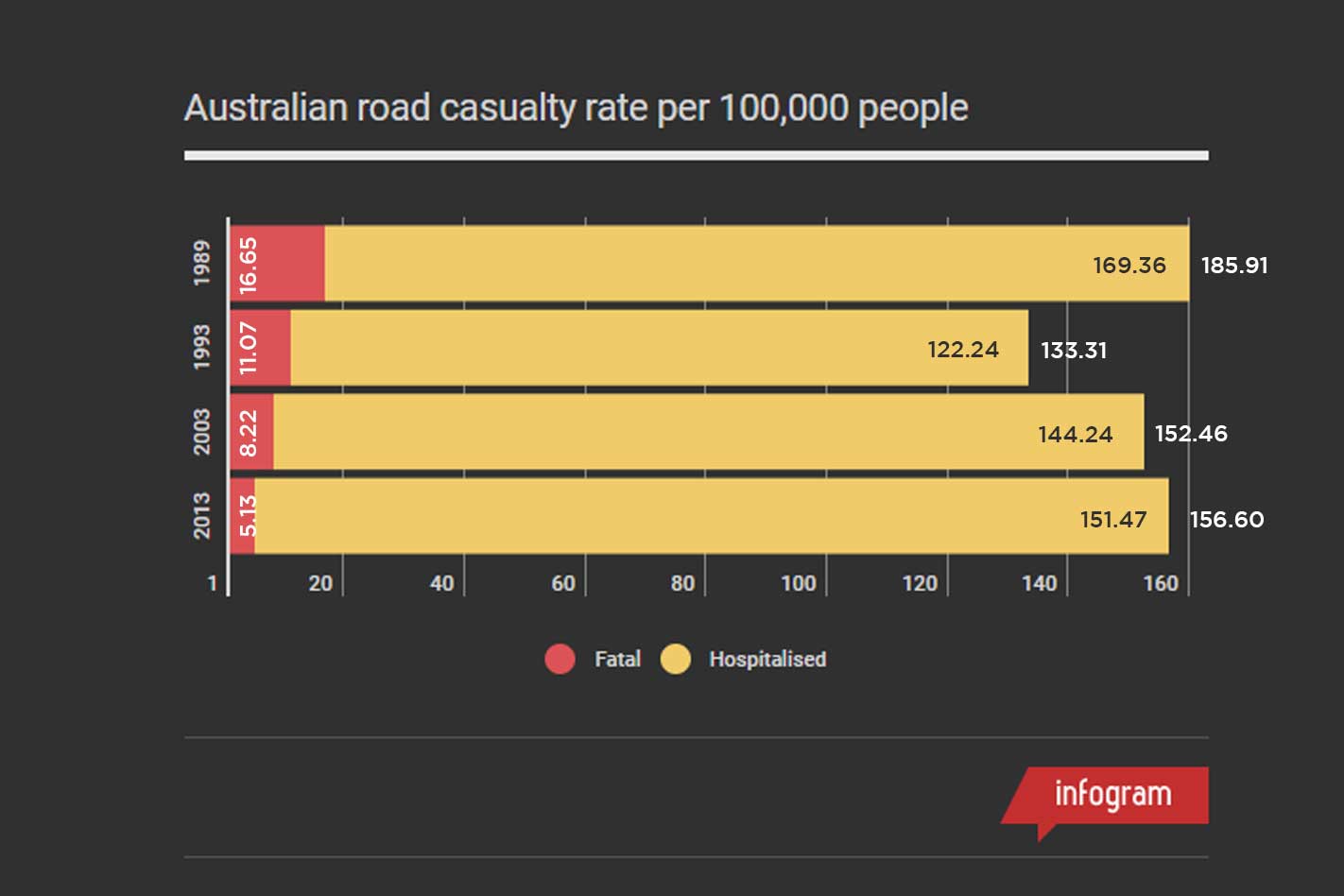
Below are again the same figures from Table 1, this time divided per billion passenger kilometres travelled.
Table 4. Road casualty rate per billion passenger km travelled
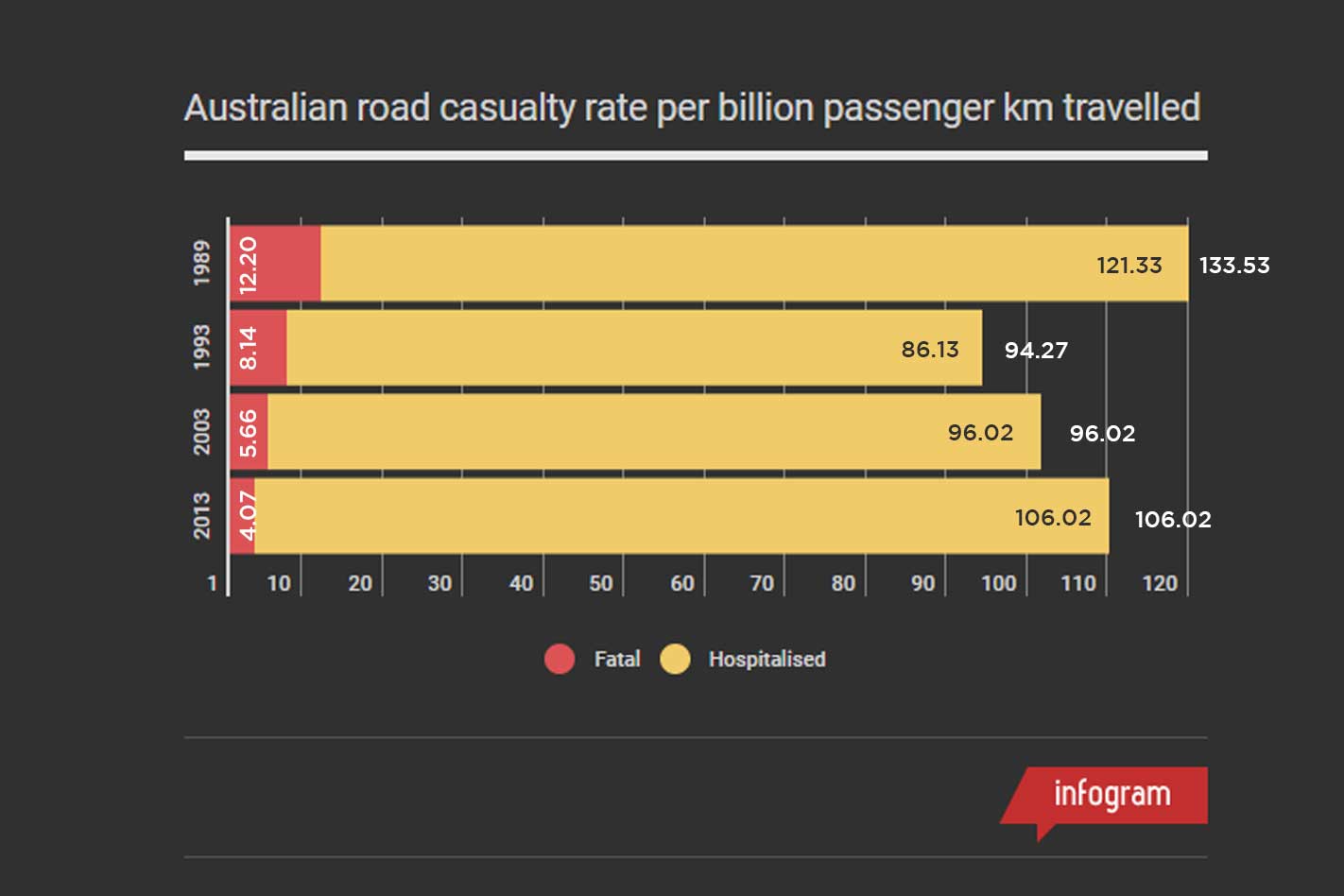
As you can see, Australia has had a dramatic reduction in the number of road fatalities, but the number of serious crashes (ones that result in hospitalisation) has increased. This suggests the same crashes are occurring, but are thankfully no longer resulting in deaths.
Many factors have contributed to Australia’s road toll reduction. Pre-1972 data isn’t available, but presumably the introduction of absolute speed limits helped. Certainly the introduction of random breath testing in late-1982 coincides with a decrease in road deaths from 21.4 (1982) to 17.4 (1982) deaths per billion kilometres travelled.
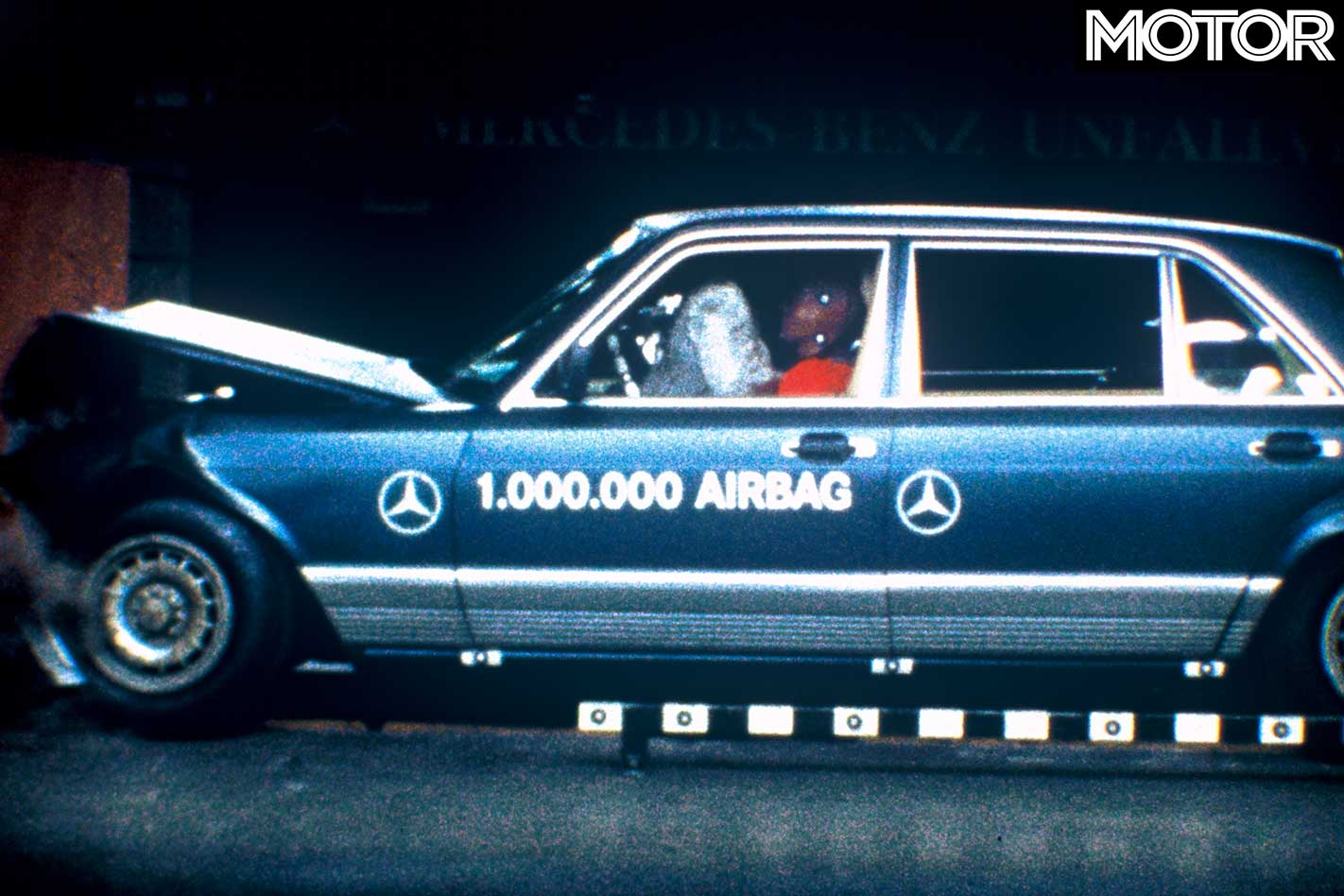
The 1990s also saw an enormous drop in fatal accidents, from 15.2 deaths per billion kilometres in 1988 to 6.76 a decade later. Is it a coincidence that this fall coincides with the increasingly widespread rollout of airbags and the formation of the Australian crash-testing authority ANCAP? Perhaps.
One thing that hasn’t changed over the years? Driver education and the numbers around it. For example, the Queensland Government’s transport website says an average modern family car with good tyres and brakes will stop from 100km/h on a dry road in 56 metres (not including reaction time).
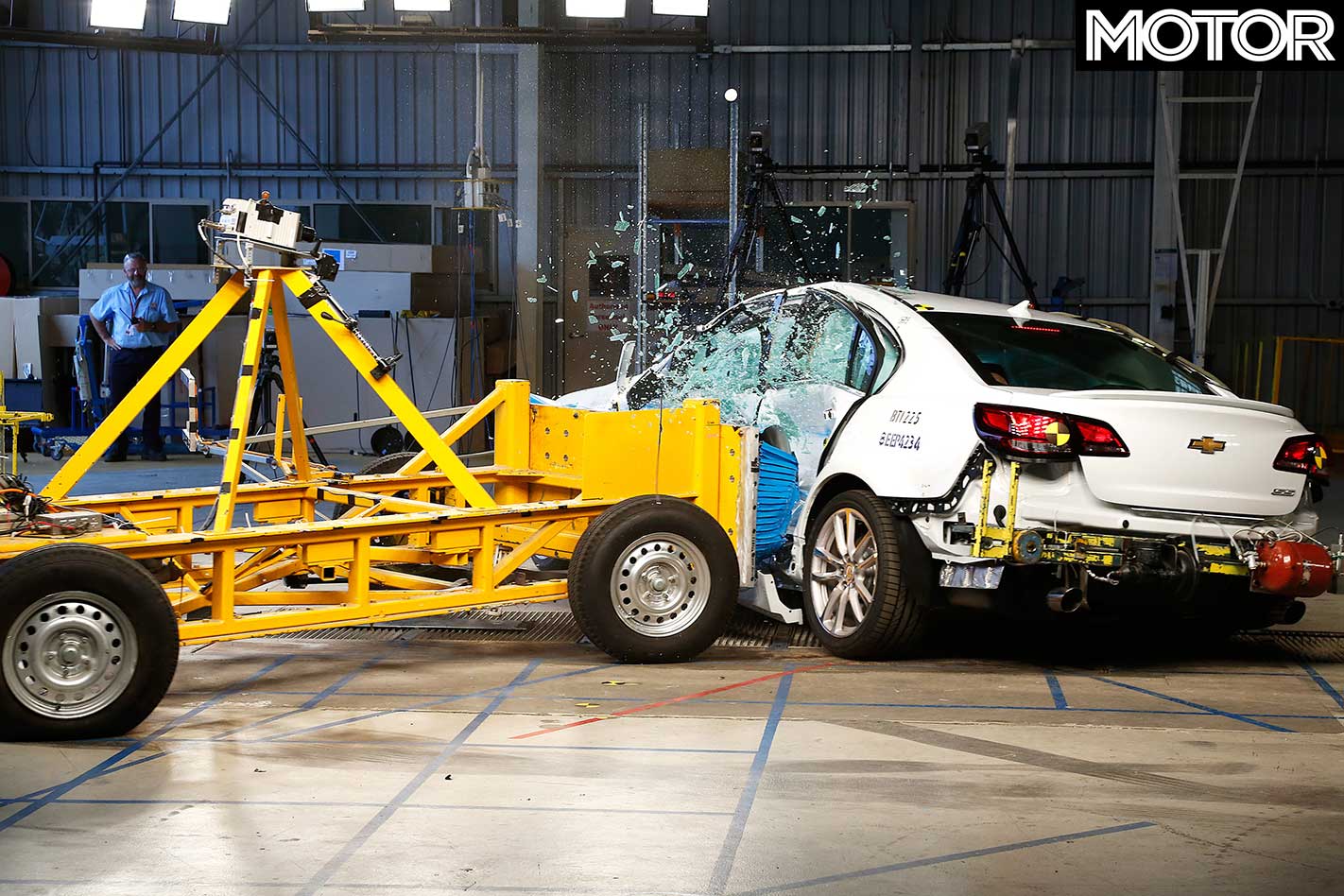
Compare this with 100-0km/h stopping data pulled from recent MOTOR and Wheels road tests:
Table 5. 100-0km/h stopping distances
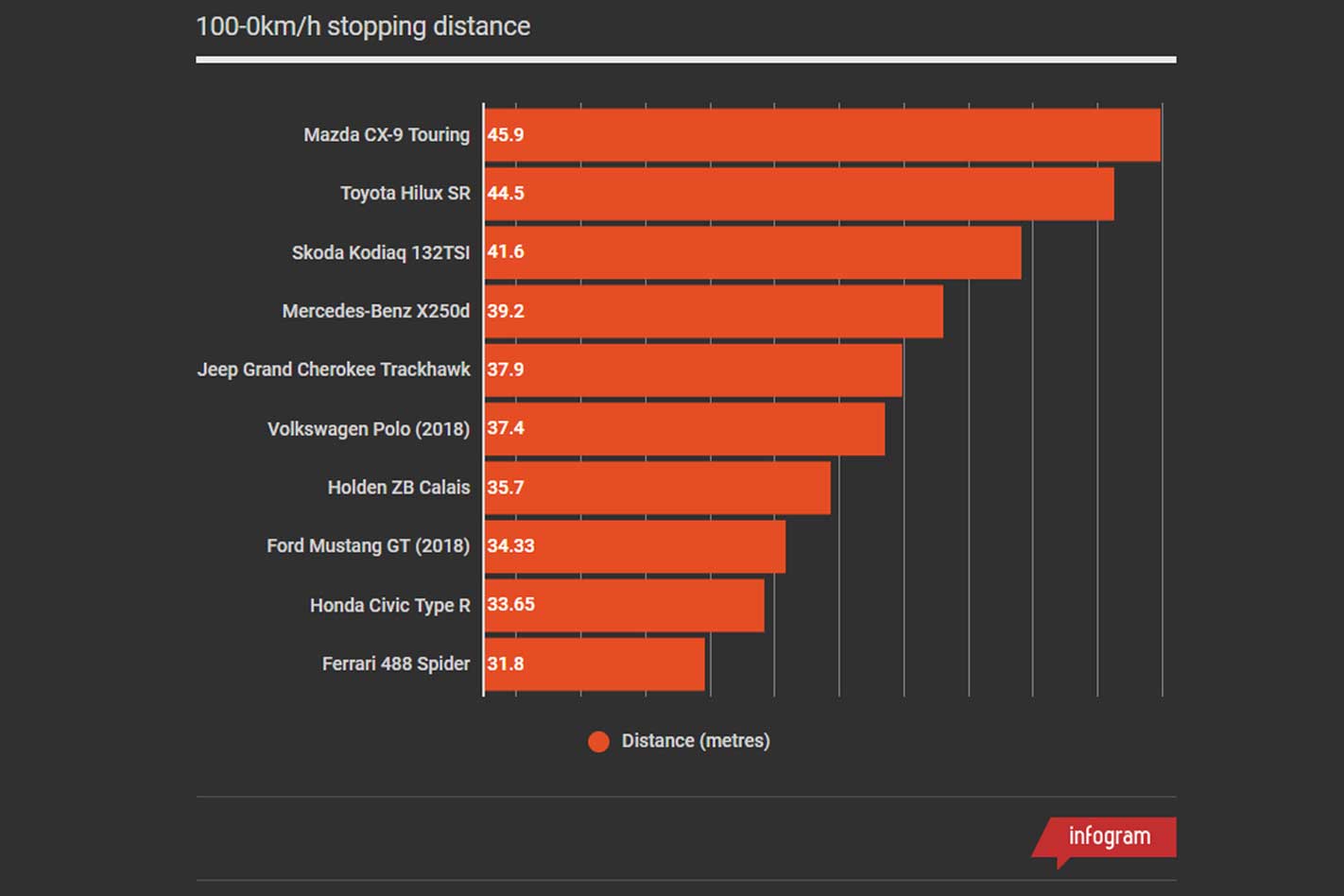
Using conservative stopping distances is extremely important in order to indicate a worst-case scenario, but in what year did a “modern average family sedan” take 58m to stop from 100km/h? A Holden HQ Kingswood SL 4.2, for example, managed the feat in 43m (Modern MOTOR, February 1978).
Once again, the easiest way to stop people being hurt in crashes is to prevent them occurring and that means better educated, more skilful drivers.
The prospect of Aussie consumers saving thousands of dollars on European and premium vehicles is a step closer, with EU trade negotiators mounting a strong case to scrap two contentious Australian vehicle taxes.
The Luxury Car Tax (LCT), and five-percent import tariff on European cars are in the negotiator’s sights, the latter of which affects all European-branded cars regardless of price, but is no longer required to protect local vehicle manufacturing.
Former Australian trade minister and deputy chair of the European Australian Business Council Simon Crean told The Australian that axing the import tariff is an inevitable consequence of the free trade agreement.
“As for the luxury car tax, I think the Europeans will continue to make that case (for it to be abolished), and I think they have got a strong case in that regard,” Crean said.
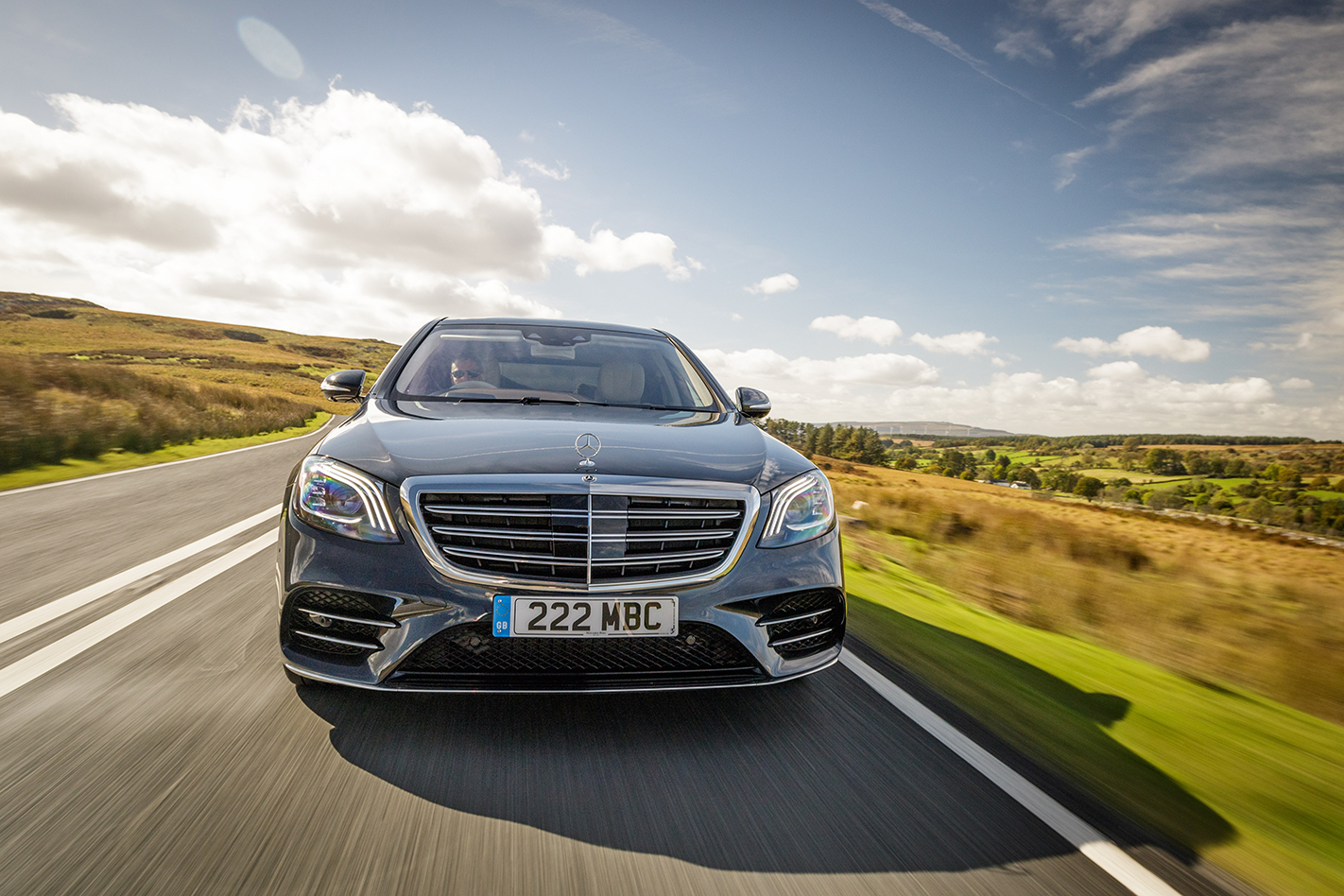
As you might expect, his comments have the backing of the European carmakers’ Australian operations such as Mercedes-Benz Australia, whose head of public relations and corporate communications David McCarthy told WhichCar the LCT’s demise would be passed on to consumers.
However, he said it would be unlikely the tax would be immediately abolished in its entirety, adding that Benz’s preference is for it to be phased out over three years to prevent what he calls a “buyer’s strike”, resulting in a temporary sales decline until LCT’s axing takes effect.
“With the Korean free trade agreement, they didn’t allow six-cylinder vehicles of more than 3.0-litres capacity to come in until the end of local manufacturing, even though the free trade agreement actually ran a couple of years before that,” McCarthy pointed out.
Some non-European vehicles such as the popular LandCruiser 200 Series and Toyota Prado VX and Kakadu will also become cheaper as a result of the scrapping of the LCT, which contributes between $1767 and $12,454 to prices depending on the variant.
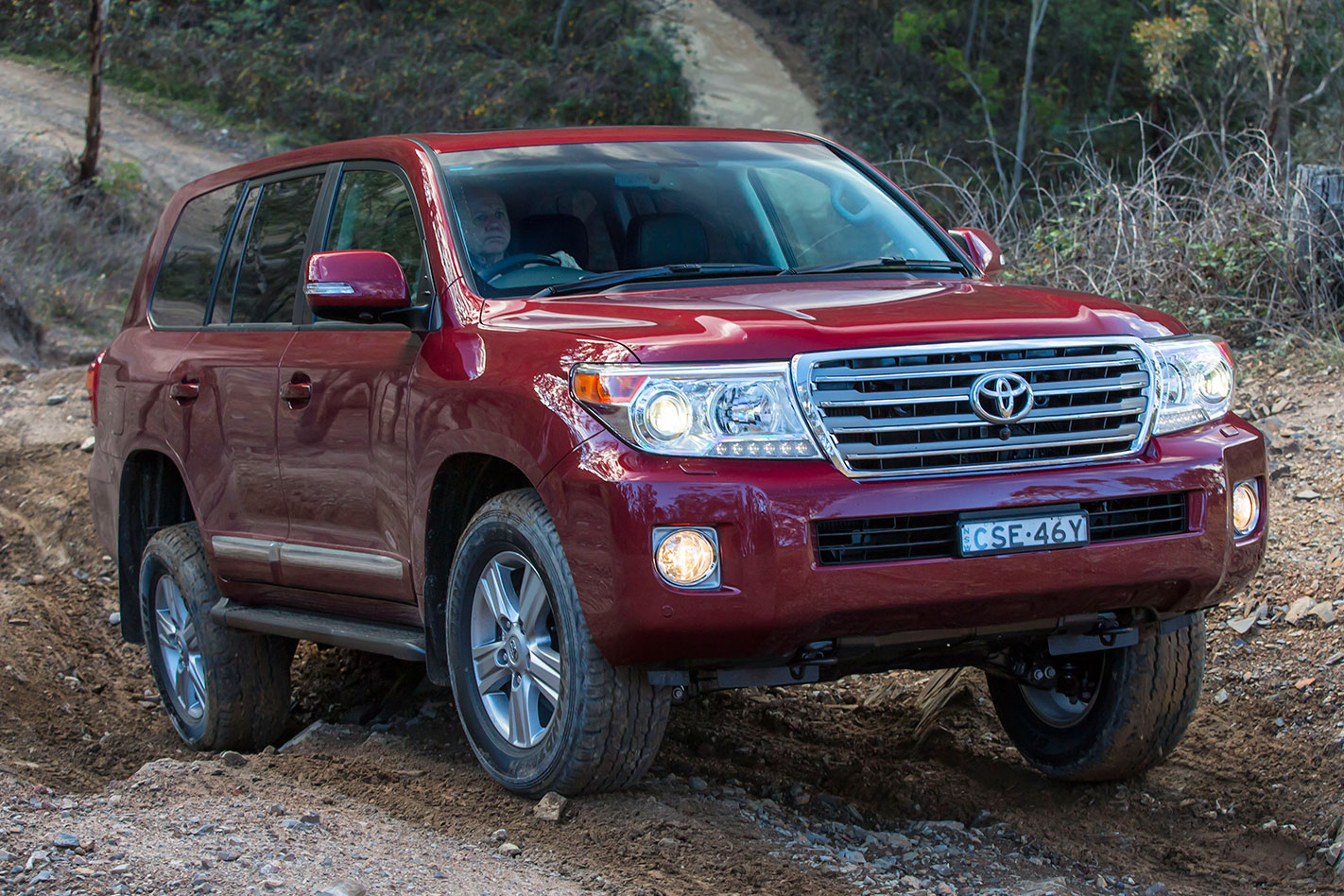
As you’d expect Toyota believes the LCT is an unfair impost on Australians and the automotive industry as it applies only to vehicles and not to other items.
“Motorists already significantly contribute to government revenue when purchasing a vehicle through GST, stamp duty and registration fees,” a spokesman told WhichCar.
The results of dropping the five-percent import tax won’t be as dramatic, however it will benefit more people including buyers of mainstream Euro brands such as Volkswagen, Skoda, Renault, Fiat and Peugeot.
Volkswagen Group Australia Managing Director Michael Bartsch said dropping the “inequitable tax” would create a genuinely level playing field, enabling consumers to make a choice based on the inherent merits of the cars.
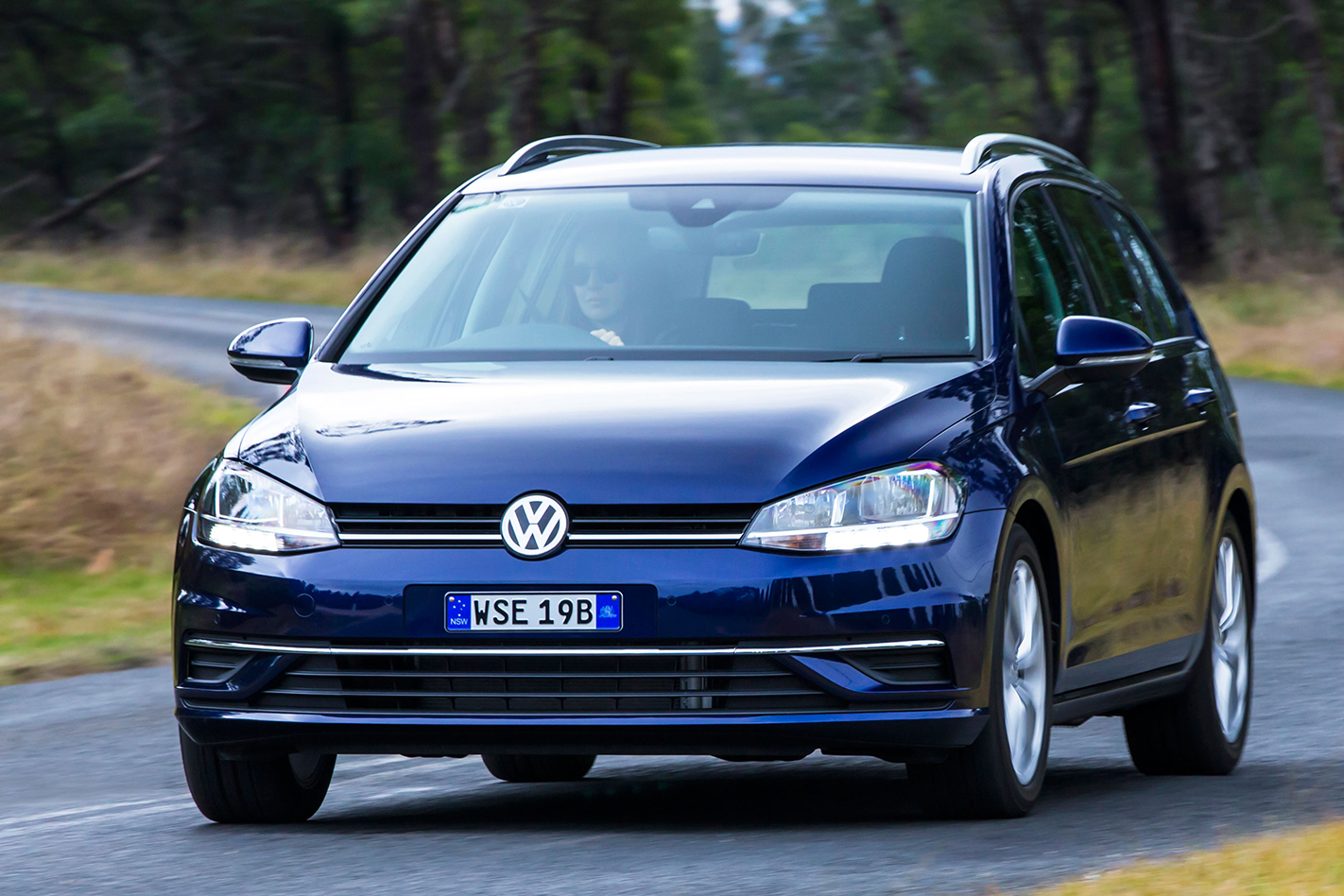
“It will lead to either a realignment down of our prices, an increase in standard equipment or possibly both,” he said.
Negotiations for the Australia-EU FTA officially started in June and are ongoing.
FERRARI’S forgotten Le Mans hero is being sold privately by auction house RM Sotheby.
The 275 P is one of Maranello’s earliest mid-engine sports cars, with the prototype fitted with a 3.3-litre V12 engine between its axles.
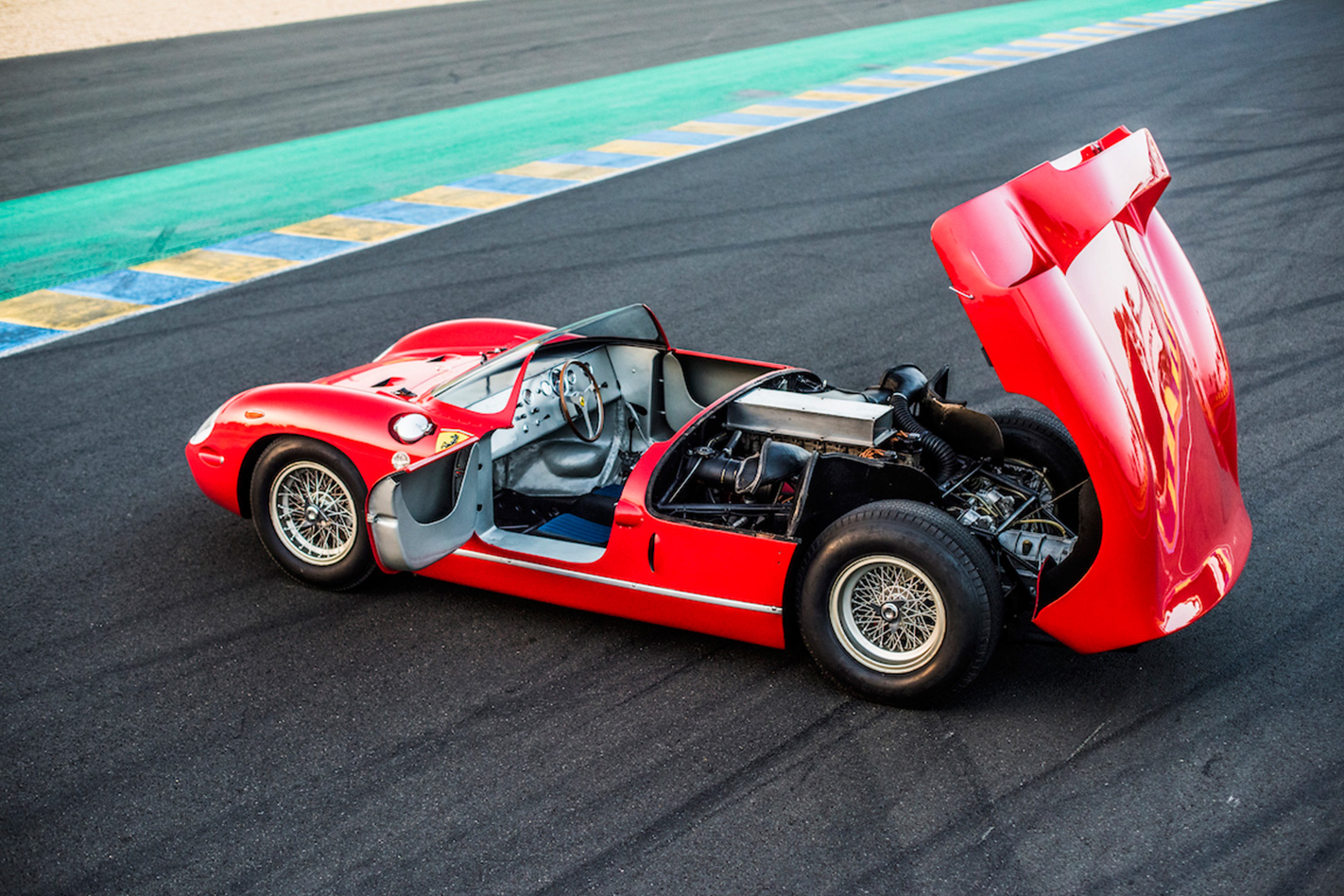
This particular example, chassis #0816, is one of Ferrari’s greatest racing cars, winning the 24 Hours of Le Mans twice (1963 and 1964), but the Italian company didn’t realise until recently.
According to the auction house, chassis #0816 wasn’t meant to race in the ’63 race.
The original plan was for 275 P #0814 to be entered, but that chassis badly damaged at the Nurburgring just a month before the French race.
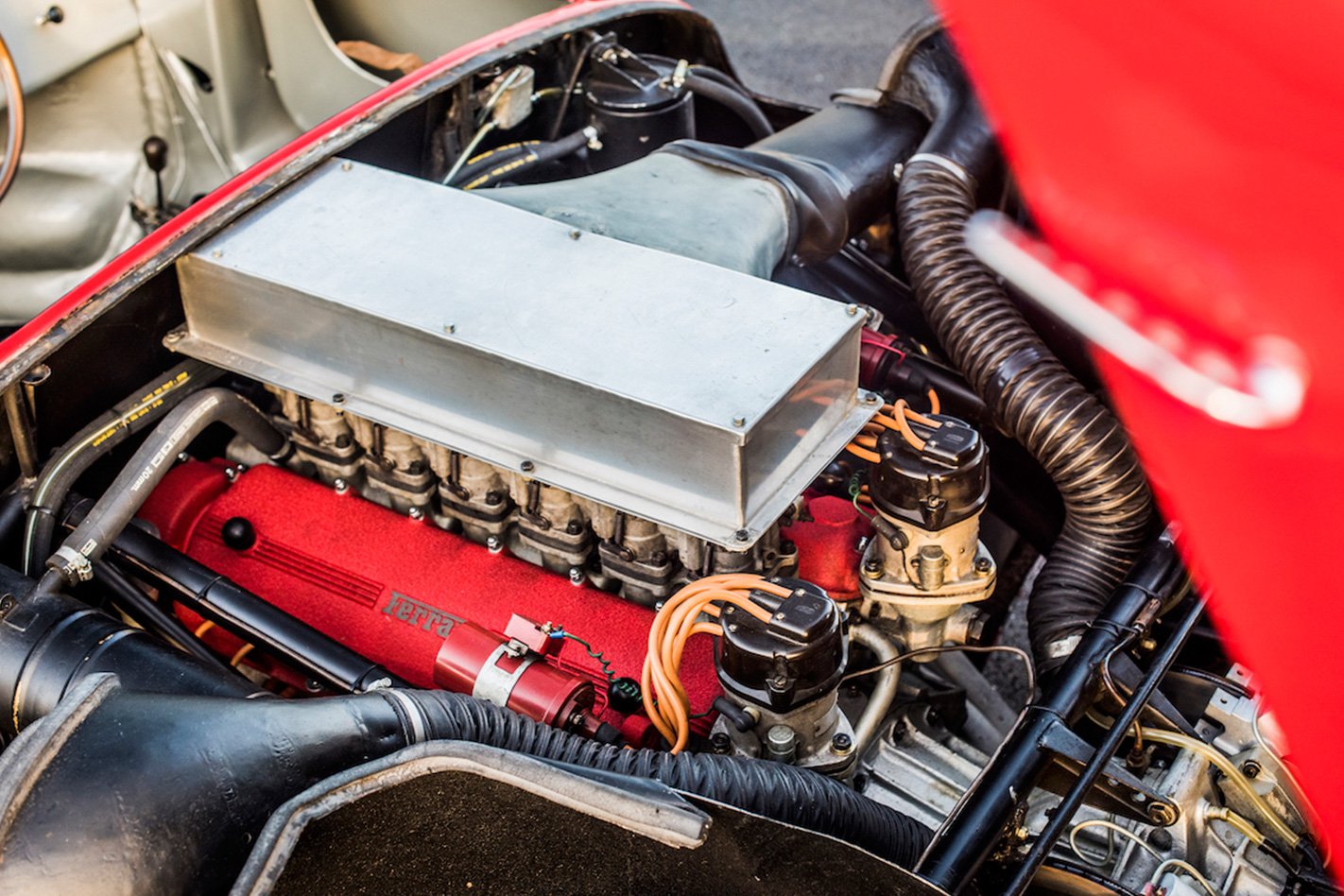
Instead of filling out the paperwork for the entry again, Ferrari simply sent #0816 in its place, finishing first outright
The very same chassis repeated the feat a year later, but Ferrari didn’t pick up the clerical error that hid the achievement for many decades.
The victories in ’63 and ’64 are also the final outright 24 Hours of Le Mans victories for the Scuderia.
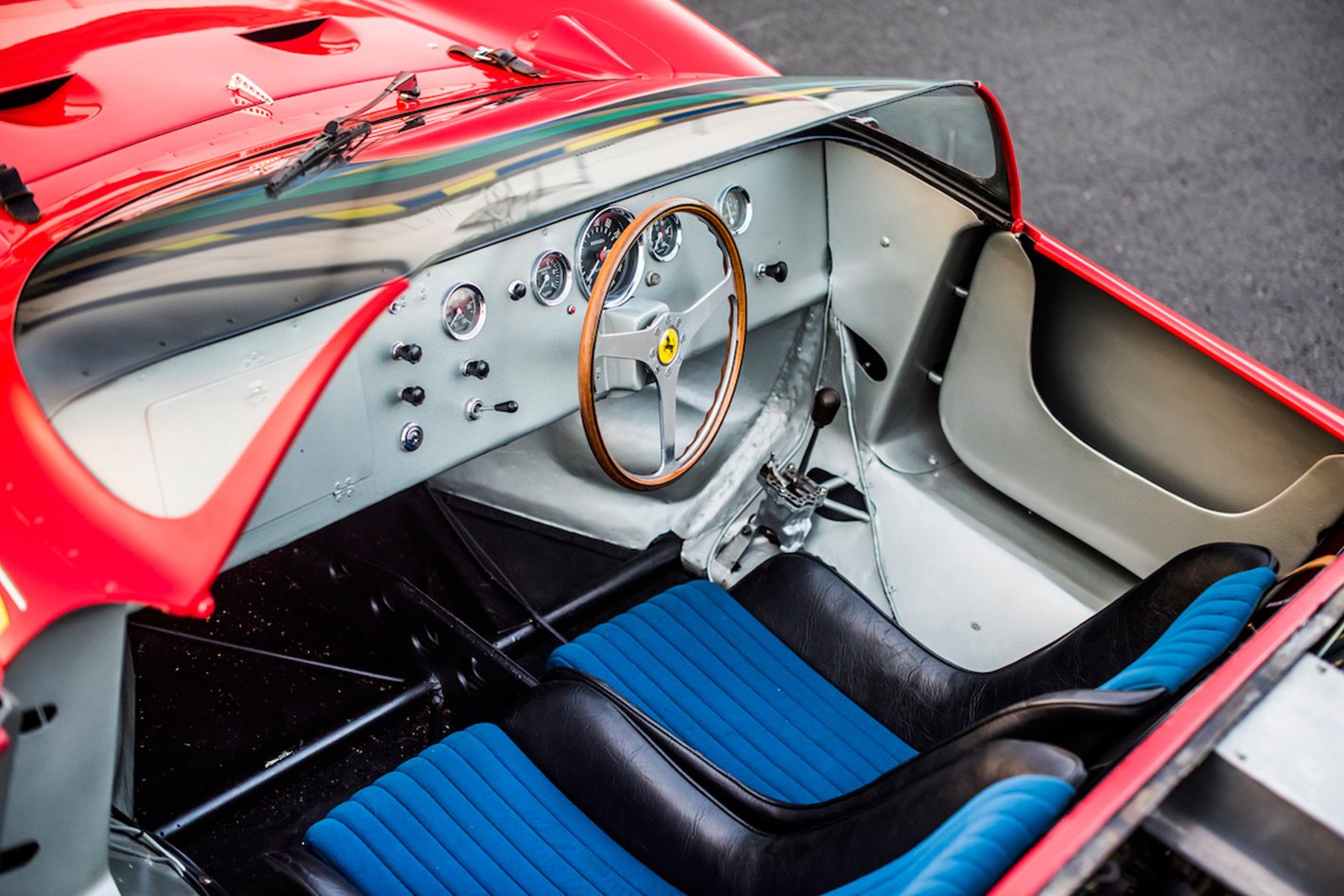
Only four other individual chassis have won the 24 Hours of Le Mans twice; a Bentley Speed Six in ’29 and ’30, the legendary Mk1 Ford GT40 in ’68 and ’69, a Porsche 956 in ’84 and ’85, and the TWR-WSC 95 in ’96 and ’97.
Belonging to the family of collector Pierre Bardinon, 275 P #0816 has lived a reclusive life for the past five decades, rarely being shown in public.
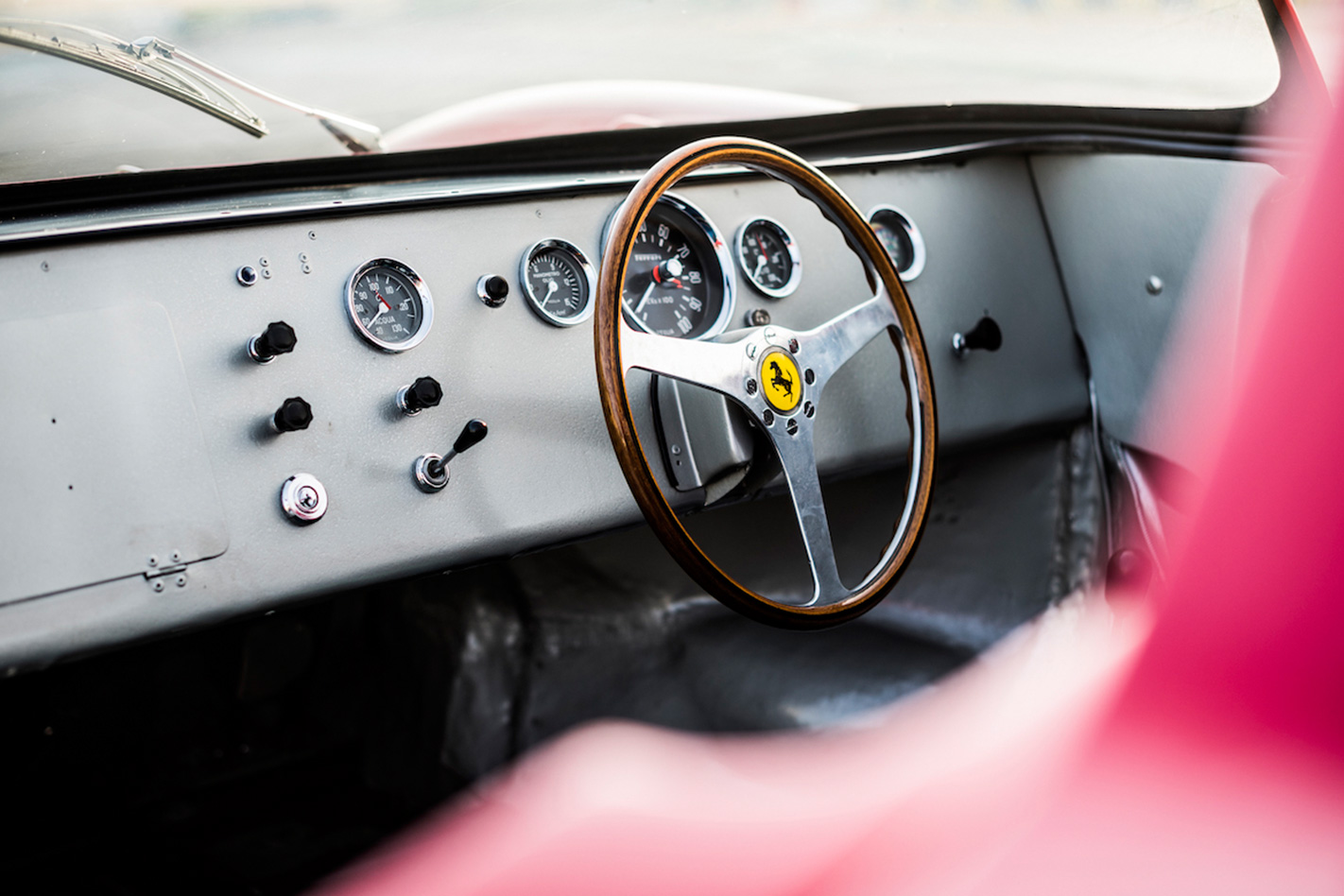
RM Sotheby’s says the car is being sold unrestored, with matching number engine, gearbox, and body.
The auction house doesn’t issue a price estimate for the private sale, but it’s likely to be deep into the eight figures.
