
THEY SAY sex sells, so why on earth is the divisively designed Mitsubishi Triton a regular podium visitor in the pick-up truck sales race?
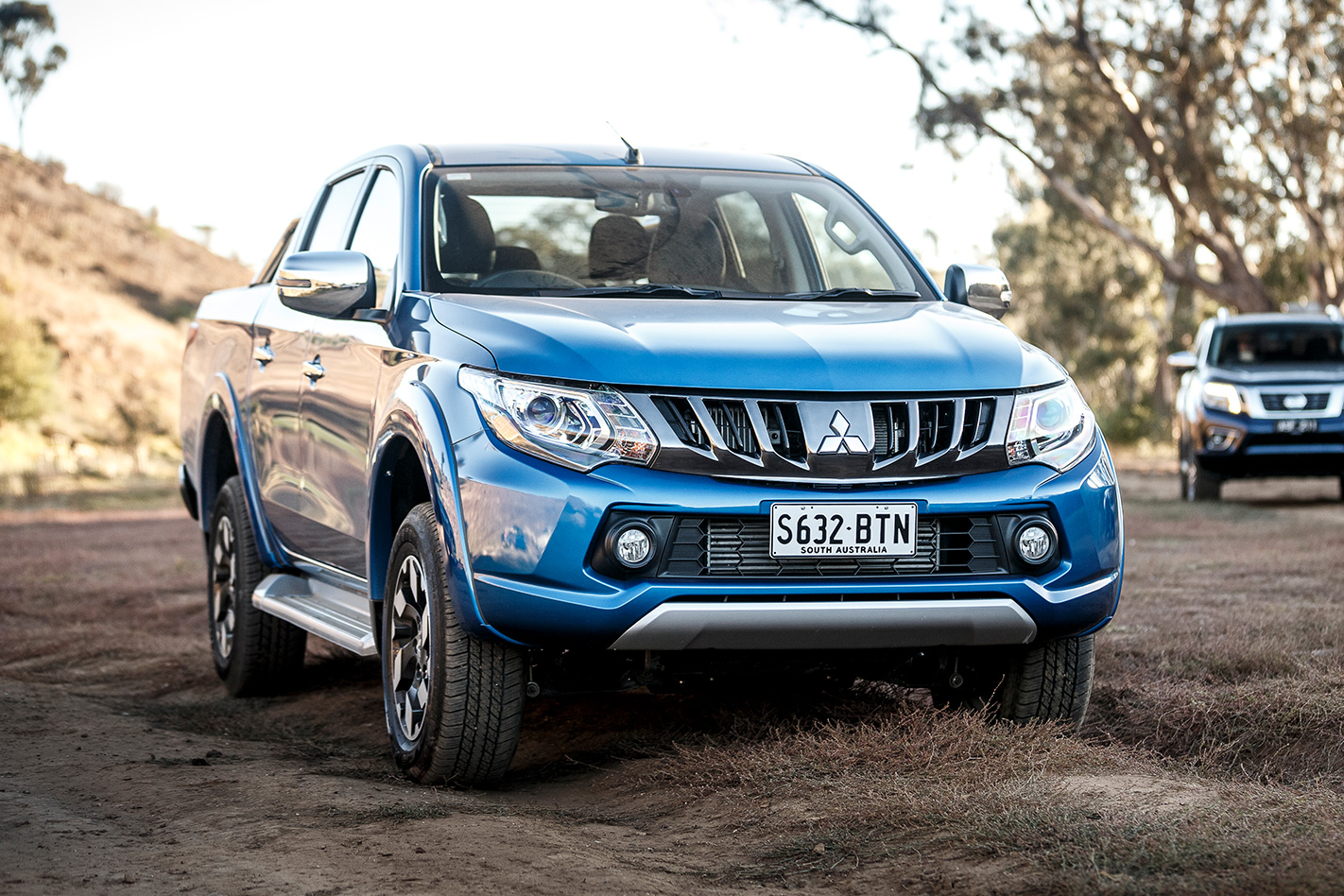
Look past the styling and even a cursory glance at the Thai-made Triton Exceed’s spec sheet will reveal several compelling truths.
At $48,000 all-in, the range flagship comfortably undercuts most mid-level rivals, and then packs a wallop with sat-nav, leather, heated front seats, climate control, reverse camera, Apple CarPlay/Android Auto, DAB+ digital radio, HDMI port, paddle shifters, keyless entry/start, HID headlights, side steps and a sports bar. Box-tickers will run out of ink cataloguing this.
And that’s on top of Mitsubishi’s five-year/ 100,000km warranty. It’s classic more-for-less marketing. Even smaller alloys than the class norm (at 17 inches) work quite nicely with the Triton’s tighter proportions.
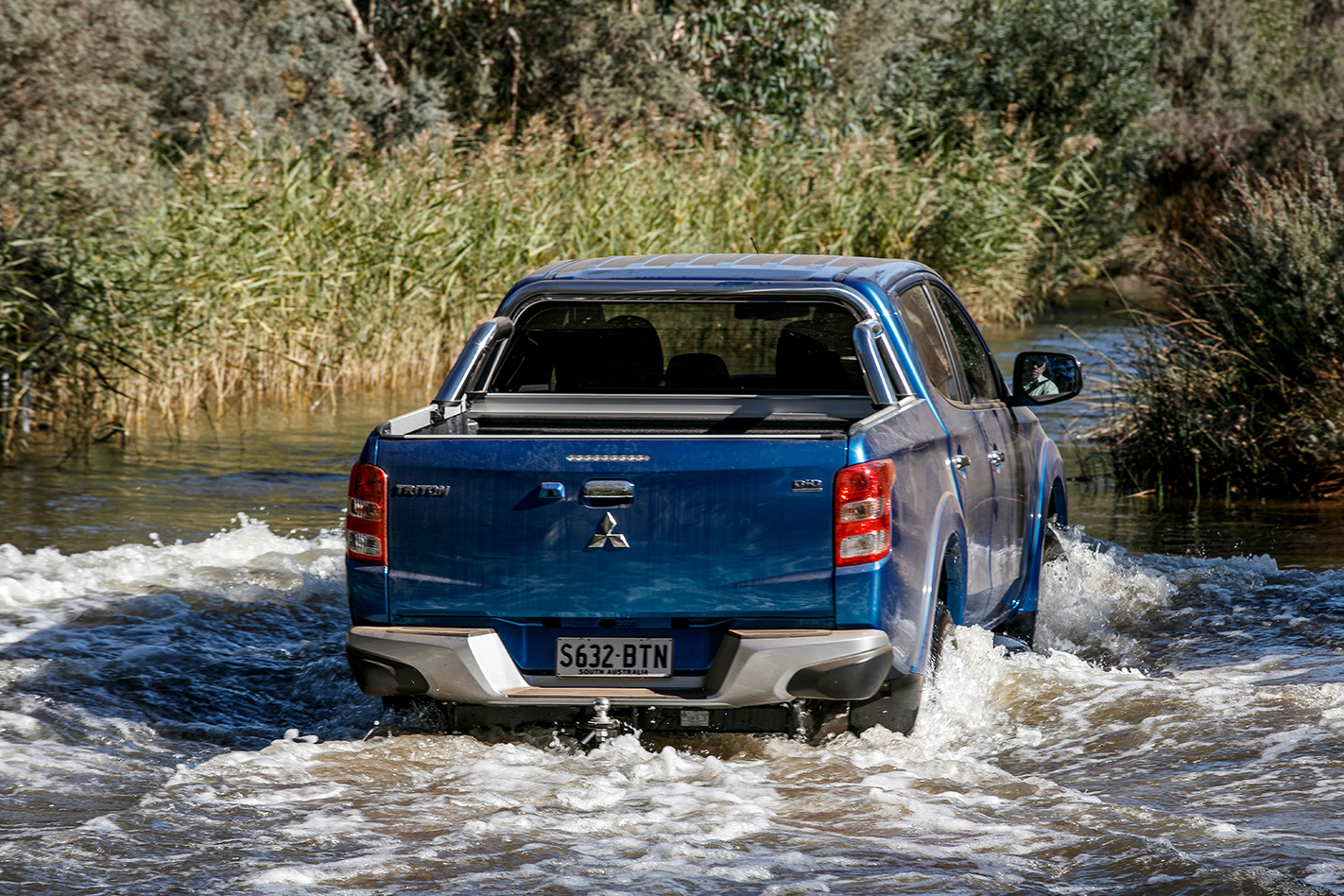
But beyond the low price and high features, the Exceed also surpasses expectations by being consistently capable in almost every area. And that’s a reflection on Mitsubishi’s expertise in light trucks, since this year marks 40 years of the L200/Triton.
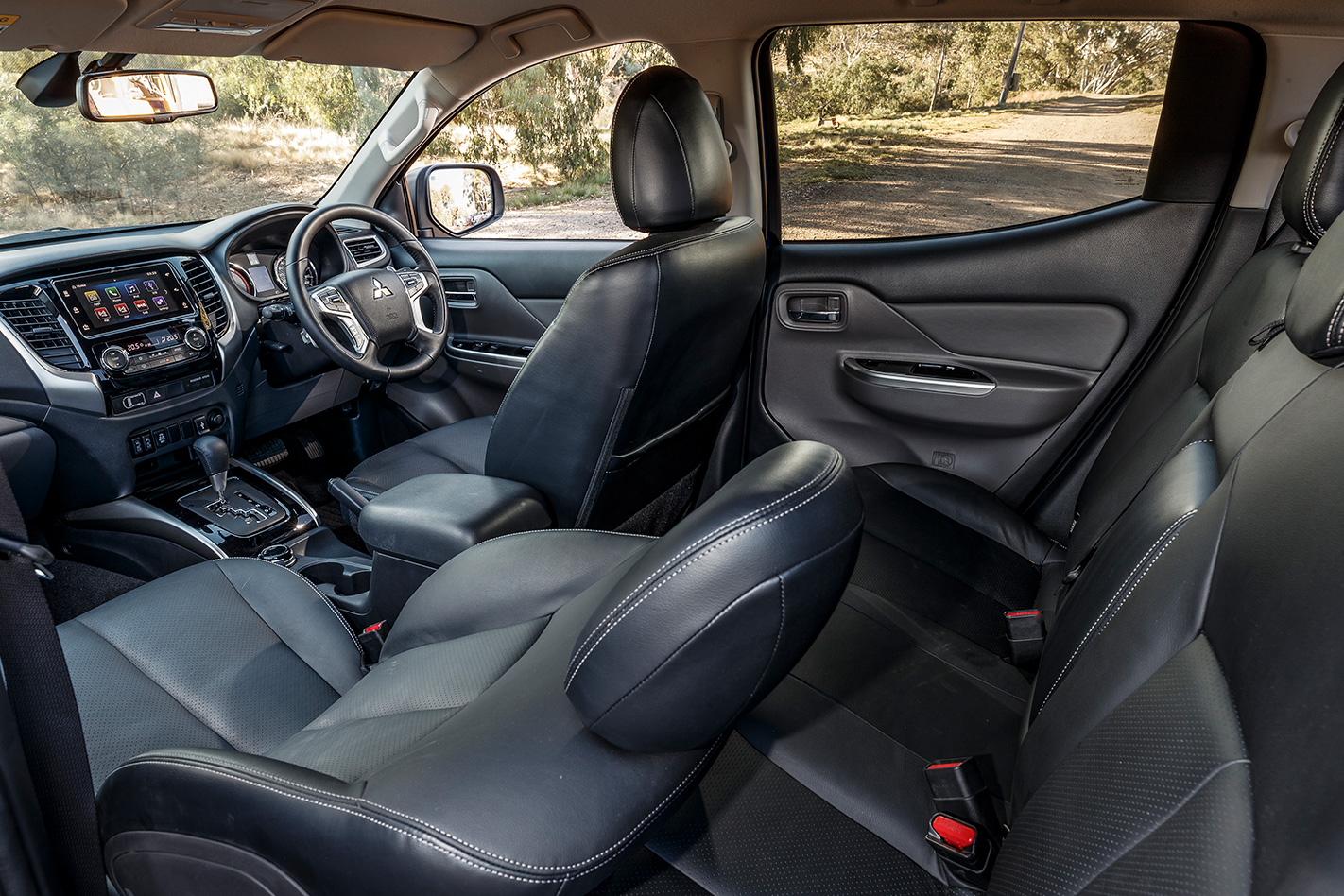
Take the packaging. Though among the smallest and narrowest of the assembled contenders (as well as the oldest, as the current fifth-gen Triton released in 2015 is actually a reskin and revamp of the 2006 Mk4), the Exceed is still amply accommodating, thanks in part to well-padded seats, a thoughtfully presented dashboard boasting clear instruments, logical control placement, ample compartments to keep stuff in, and a fine driving position. Not the last word in modernity or style, it’s still all screwed together well and seemingly made to last. A digital speedo wouldn’t go amiss, though.
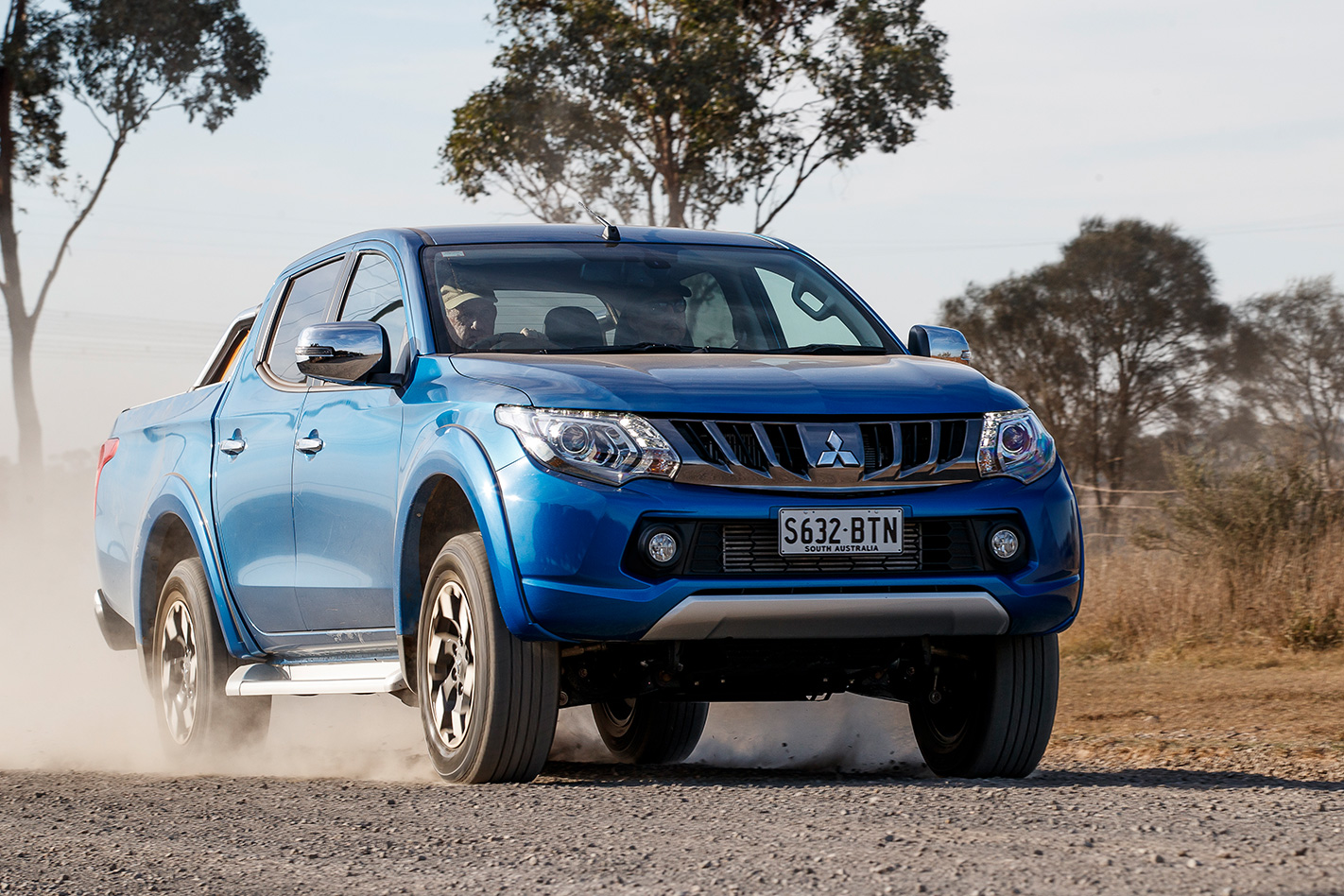
Perhaps unexpectedly, considering its advancing years underneath, the Triton’s a bit of a treat to drive on the road, offering punchy diesel flexibility (keeping the hard-charging Colorado and Navara honest, if not the runaway Amarok, in its 9.8sec-to-100km/h performance), combined with what is adequate fuel consumption for something with just five forward gears. Clearly each ratio has been well chosen. Lag is minimal, there’s heaps of oomph readily available for easy overtaking, and mechanical refinement at speed is commendable.
There’s more too, like fairly direct and connected steering, assuredly contained handling, confidence-building roadholding, and a firm but never jarring ride (no doubt the smaller wheels help here). As in most areas, the Mitsubishi rarely puts a foot wrong dynamically. The set of components may not be the newest but they obviously still work well.
It’s only when you dig a little deeper that the Triton’s lack of polish becomes really apparent. Compared with the larger and more civilised trucks on test, there is no real respite from that firm ride for rear-seat passengers, cushion support favours the smaller statured out back, advanced driver-assist safety tech like AEB and adaptive cruise control simply don’t exist and the diesel at idle is a long way from hushed.
Speaking of seeking the serenity, the Mitsubishi turns out to be one of those quiet achievers that grows in estimation long after the bells and whistles, and low asking price, have grabbed your attention. Maybe our expectations were set lower than in the others, but as each tester spent more time in the Triton, it became clear that real beauty does exist beyond the gawky styling.
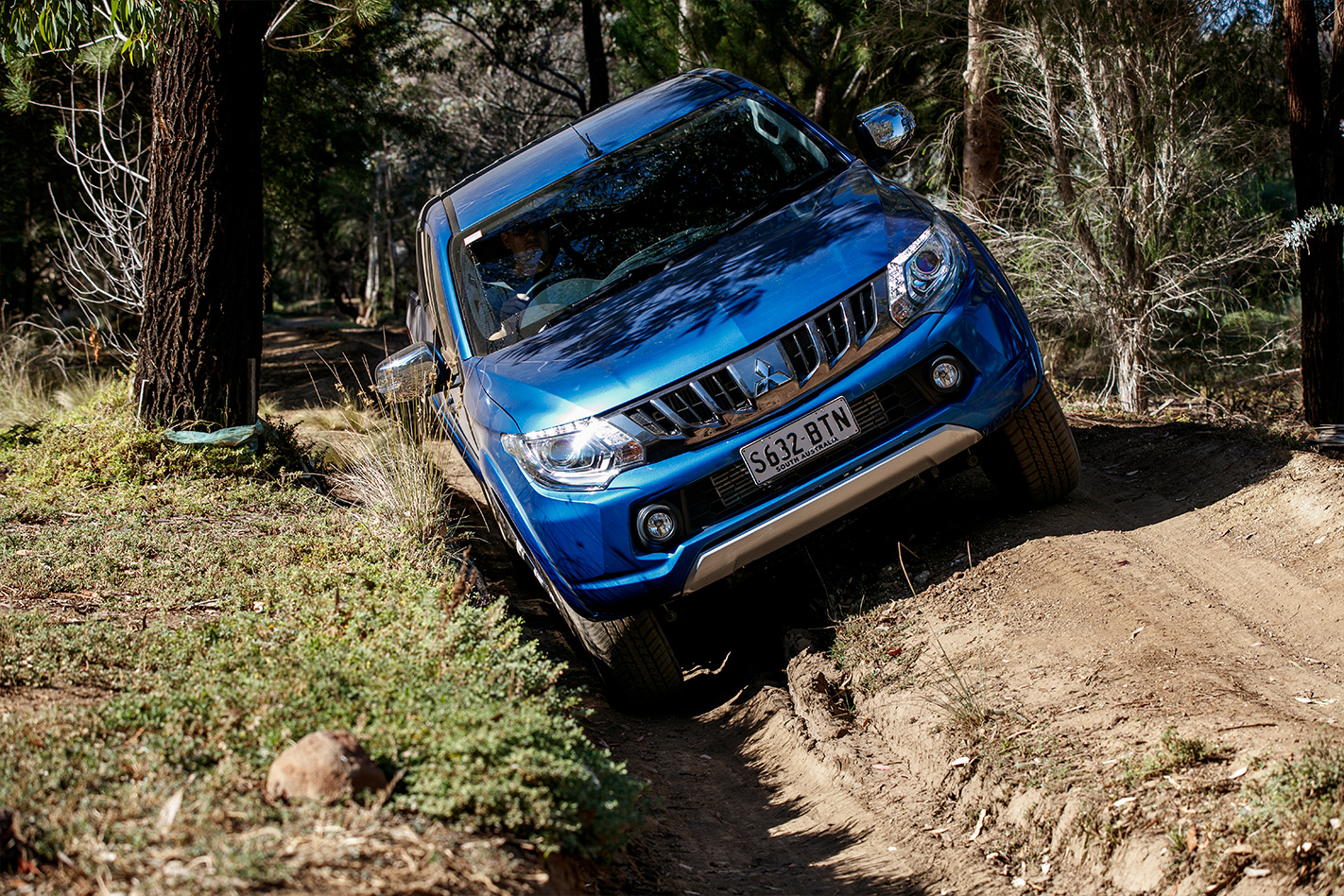
Not so long ago, Mitsubishi was one of our local manufacturers, offering honest, no-nonsense value transportation for generations of Australians. And some of those character traits remain in today’s Triton. Its appeal is anything but skin deep.
SPECS
Price $48,000 Engine 2442cc 4cyl, dohc, 16v, TD Power 133kW @ 3500rpm Torque 430Nm @ 2500rpm Transmission 5-speed automatic Dimensions (L/W/H/W-B) 5280/1815/1780/3000mm Weight 1955kg Tray capacity 945kg Braked towing capacity 3100kg Unbraked towing capacity 750kg Ground clearance 205mm Tyres Bridgestone Dueler H/T KII 245/65R17 111S Test fuel average 10.5L/100km 0-100km/h 9.8sec 80-120km/h 7.2sec 100km/h-0m 42.1m
Need more info?
Read the Wheels Dual-Cab Ute Megatest Introduction
The Contenders
# 9 Isuzu D-Max LS-T
Rough ’n’ ready appeal pales when polished rivals are better at going bush too
#8 Nissan Navara ST-X
Tough and reliable aren’t enough as Navara wilts on price, spec and comfort
#7 Toyota Hilux SR+
Unbreakable? Possibly. Unloveable? Sadly, yes, as mediocrity is allowed to prevail
#6 Mazda BT-50 GT
Still in the fight, but ultimately overshadowed by its high-flying fraternal twin
#5 Mitsubishi Triton Exceed
A strong and likeable mid-fielder where consistency and value are king
#4 Holden Colorado LTZ
Colorado raises its game right when Holden needs a hero
#3 Mercedes-Benz X250d
Arrives carrying great expectations; delivers only a modest load
#2 Ford Ranger XLT
Continuous improvements make the only truly Australian-conceived ute world class
#1 Volkswagen Amarok V6 Sportline
Quiet achiever doesn’t have youth on its side, but still shows how it should be done
MORE: Mitsubishi Triton Range Review
MORE: Mitsubishi Triton Specs, Range & Price
A CHINESE Instagrammer with a penchant for German cars has acquired undisguised pictures of BMW’s new Z4, due to be unveiled officially at Pebble Beach on August 23rd.
The post shows front, rear and profile views of a red Z4 M40i with its roof down, the pictures corresponding fairly closely to the rough patent application schematics that BMW had previously generated.
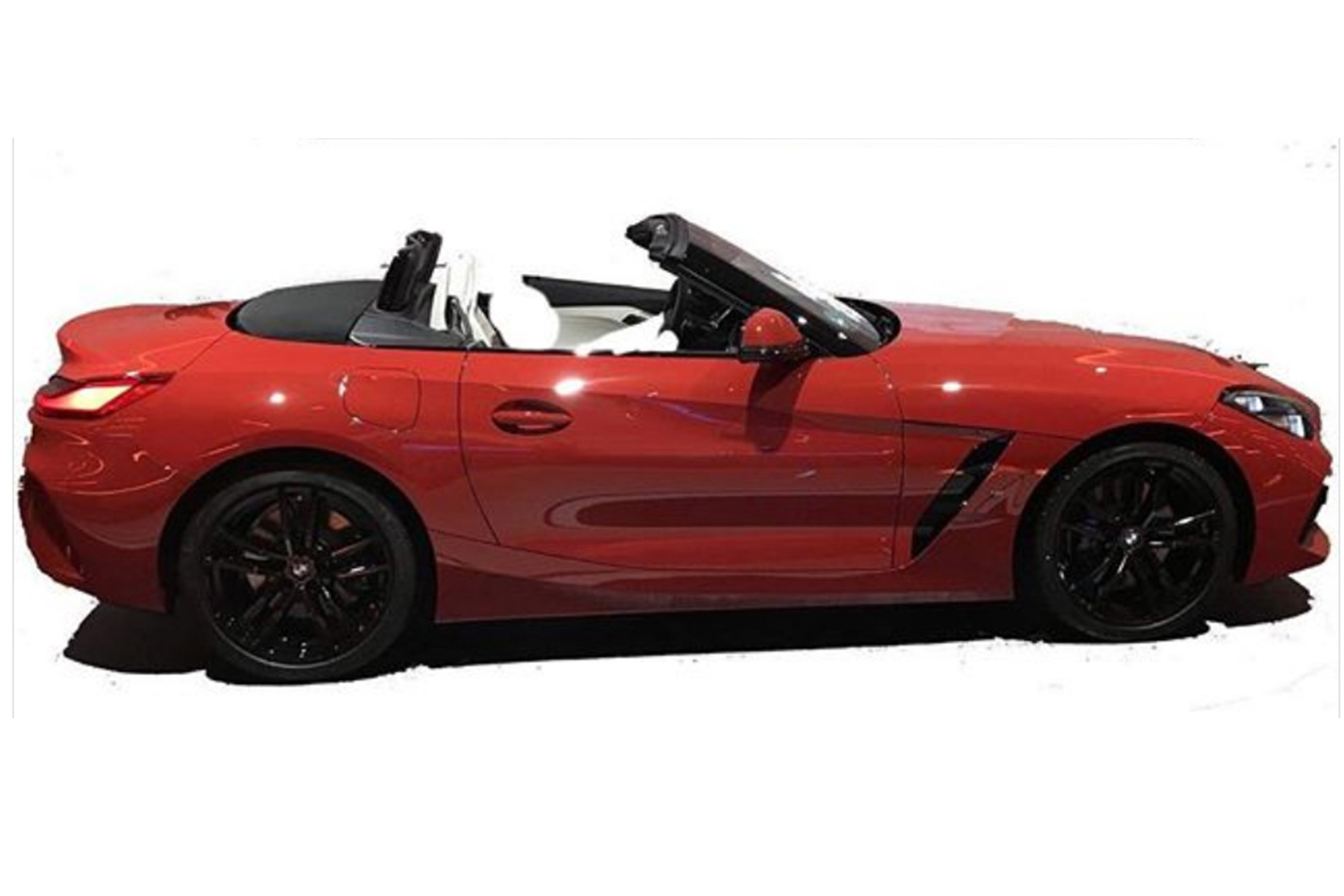
BMW’s ‘G29’ Z4 has been one of this year’s most eagerly awaited new entries, in part because it’ll share some of its underpinnings with Toyota’s Supra. The rakish surfacing of the Z4 Concept teased some time earlier has been toned down for production, with the hood vents and blade door mirrors being ditched, but it’s still a good looking thing, with gloss black vanes ahead of the front bumper bar, and no shortage of shape in its flanks.
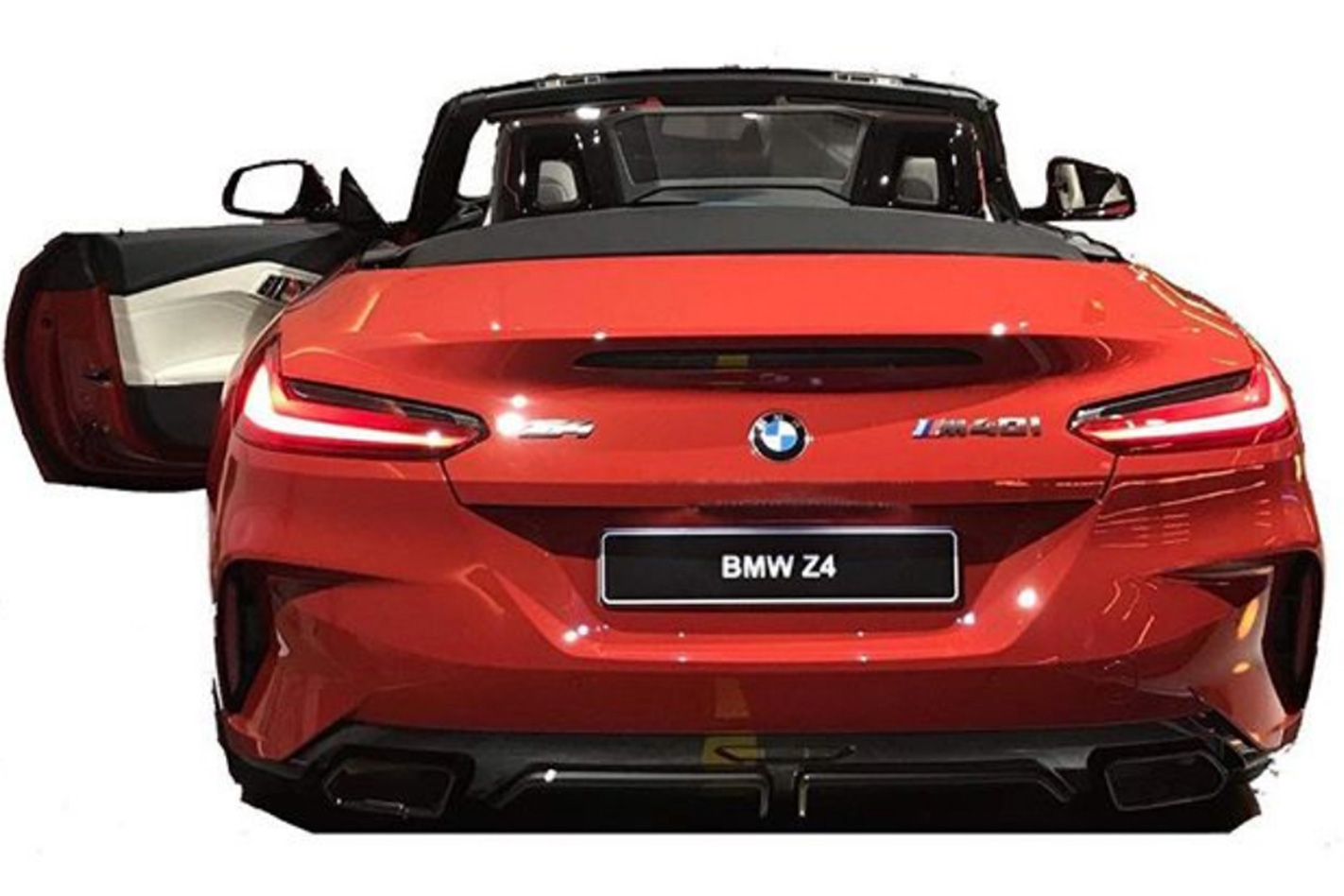
The M40i is the more powerful of two launch powerplants for the Z4. It’s partnered by the four-cylinder 30i, but those looking for a more authentic six-pot experience will doubtless step up to the M40i, which uses much the same 3.0-litre twin-turbo lump found in the M240i. With 500Nm and up to 285kW (dependent on market), it also gets adaptive dampers and an electronic limited-slip differential as standard. An eight-speed automatic is the sole transmission choice.
The Z4 is set to assume even greater importance as Mercedes-Benz looks to pension off the ageing SLC. If you’ve yet to be convinced of the charms of the four-cylinder Porsche 718 Boxster, the Z4 M40i could pique your interest.
Mazda’s surprise decision to extend its warranty from three to five years doesn’t appear to be having a flow-on effect with other popular manufacturers.
Main rival Toyota, which offers a three-year, 100,000km factory warranty, told WhichCar it has no plans to extend it to match Mazda, or other manufacturers which have recently pushed out their guarantees to five years such as Ford, Holden and Honda.
“There’s been a lot of commentary on five and seven-year warranties, but we certainly think our warranty provisions are adequate for our customers,” Toyota Australia marketing and sales boss Sean Hanley told WhichCar.
“We don’t see a [longer] warranty as a sales tool.”
Hanley’s comments have been echoed by other manufacturers which are holding on to the once-standard three-year warranties, which slowly become the exception since Korean carmakers Kia and Hyundai began offering seven- and five-year periods in 2014.
Of the brands still holding out, Volkswagen has hinted it could be swayed if customers demanded a longer warranty period, though VW Australia spokesman Kurt McGuinness told WhichCar that isn’t currently the case.
“We see Volkswagen customers responding to our drive-away pricing and finance offers. We do not detect the same interest in five year warranty, though we are monitoring its increased prevalence.”
“We work closely with dealers to resolve any issue that customers might encounter after the expiration of their warranty.”
Nissan and Subaru, which both dabbled with five-year warranties on selected models in September last year, are also on the record as saying they are continuing to assess the merits of a longer warranty period, but have no plans to change things for the foreseeable future.
Now that you’re acquainted with the WhichCar tyre torture methodology, here’s how our rubbery contenders measured up across five disciplines.
Slalom
The slalom represents a very accurate way of representing a typical swerve and recover; the sort of manoeuvre you’d make to avoid a pedestrian, an errant wombat or the nose of a car edging out of a junction in front of you. The test is over in the space of six or so seconds, all things going smoothly but, as we found, that wasn’t always the case.
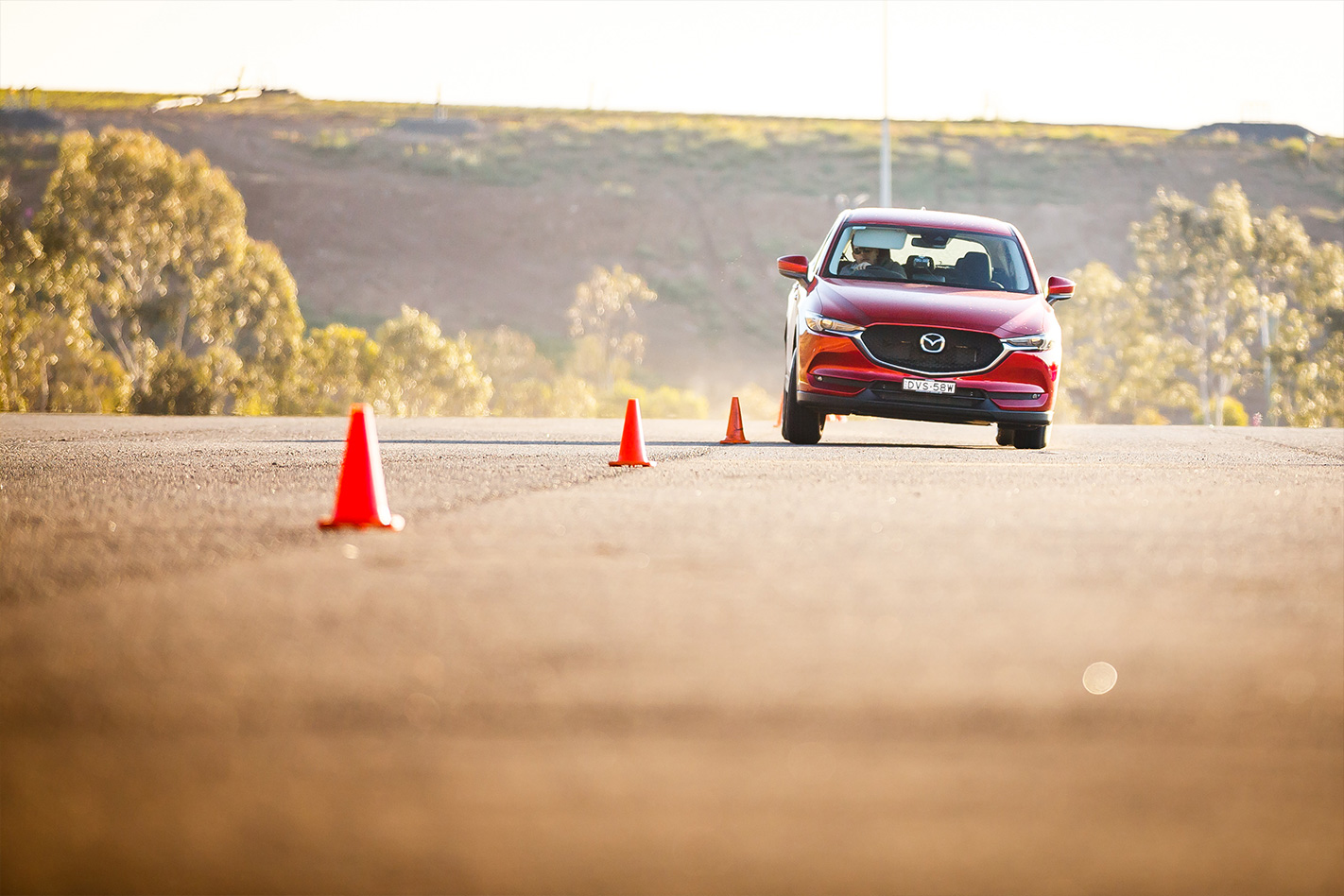
Being absolutely brand new, some of the tyres were still a little greasy from releasing agent used in the manufacturing process. The Momo Alusion M9 and the HiFly Vigorous HT601 were both particularly slippery on their first couple of runs, but a bit of vigorous scrubbing-in through the six-cone slalom soon saw them deliver some representative runs. “I had a big step-out from the rear on the second part of the slalom,” said Loberto of the HiFly, noting that a bit of scrubbing-in soon saw it improve.
They weren’t enough to trouble the top of the leader board though. Both the Continental ContiPremium Contact5 and the Maxxis Bravo HP M3 recorded an average lateral g-force of 0.71 across their three measured runs, sharing the honours here. Rounding out the podium with joint bronzes were the GT Savero SUV and the Dunlop Grandtrek PT3 with 0.697. We were also measuring times through the slalom course – a measure that didn’t go into the final reckoning – and the quickest was the Goodyear EfficientGrip Performance SUV tyre, at 6.05s, with the slowest being around half a second slower through the 100m course.
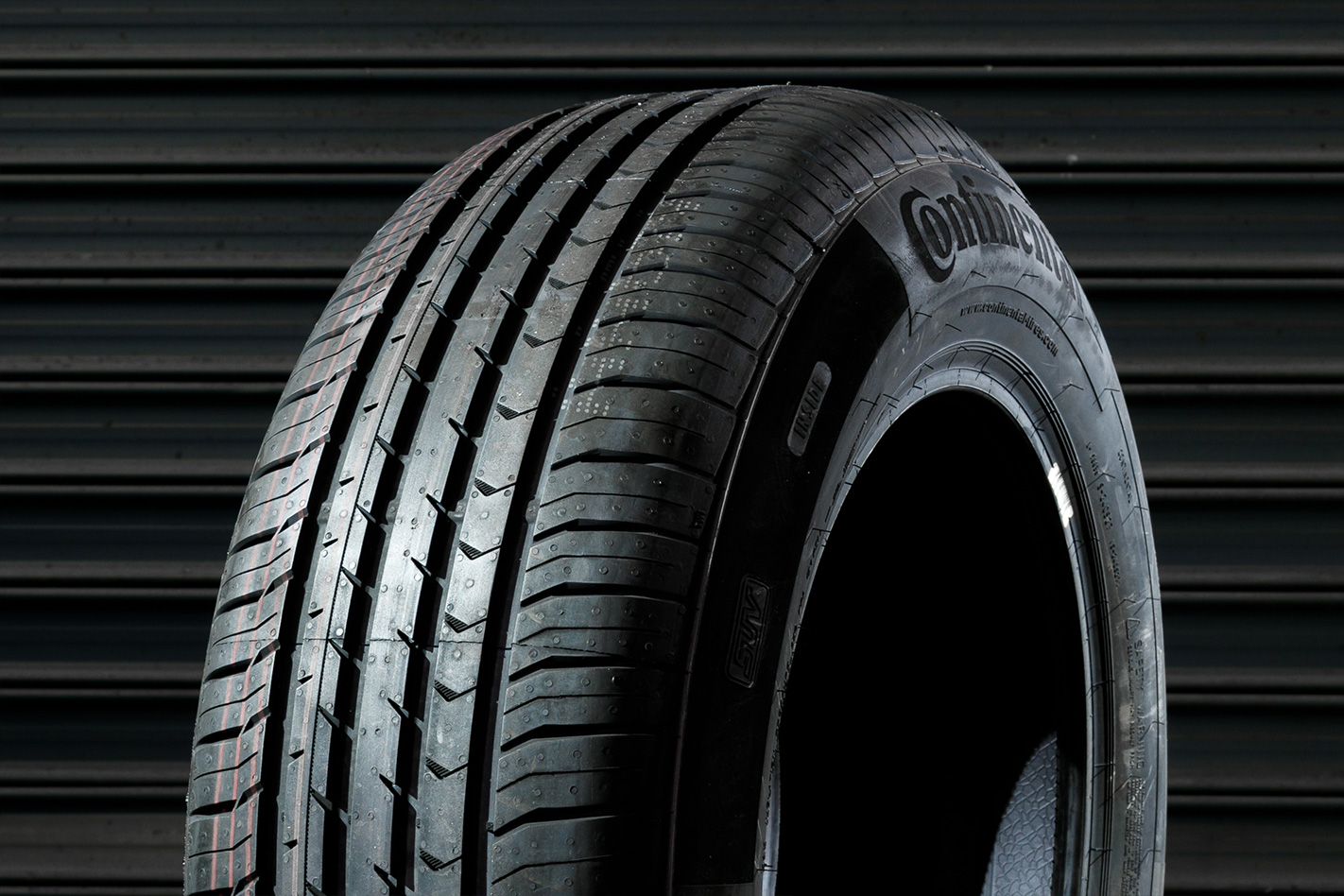
Winners: Continental ContiPremium Contact5 & Maxxis Bravo HP M3
Dry Braking
Of all the tests conducted at Sydney Dragway, dry braking is the easiest to get a handle on and hugely relevant on a day to day basis. In fact, the difference between the best and worst tyres in this discipline was a hefty 5.33 metres, which is greater than the length of a long-wheelbase Mercedes-Benz S-Class. Given that the test was conducted from 80km/h to a standstill, in many ways this replicates the sort of stop you’d need to perform if you were distracted while travelling an urban freeway and suddenly encountered standing traffic. Think what a difference 5.33 metres would make in that particular scenario.
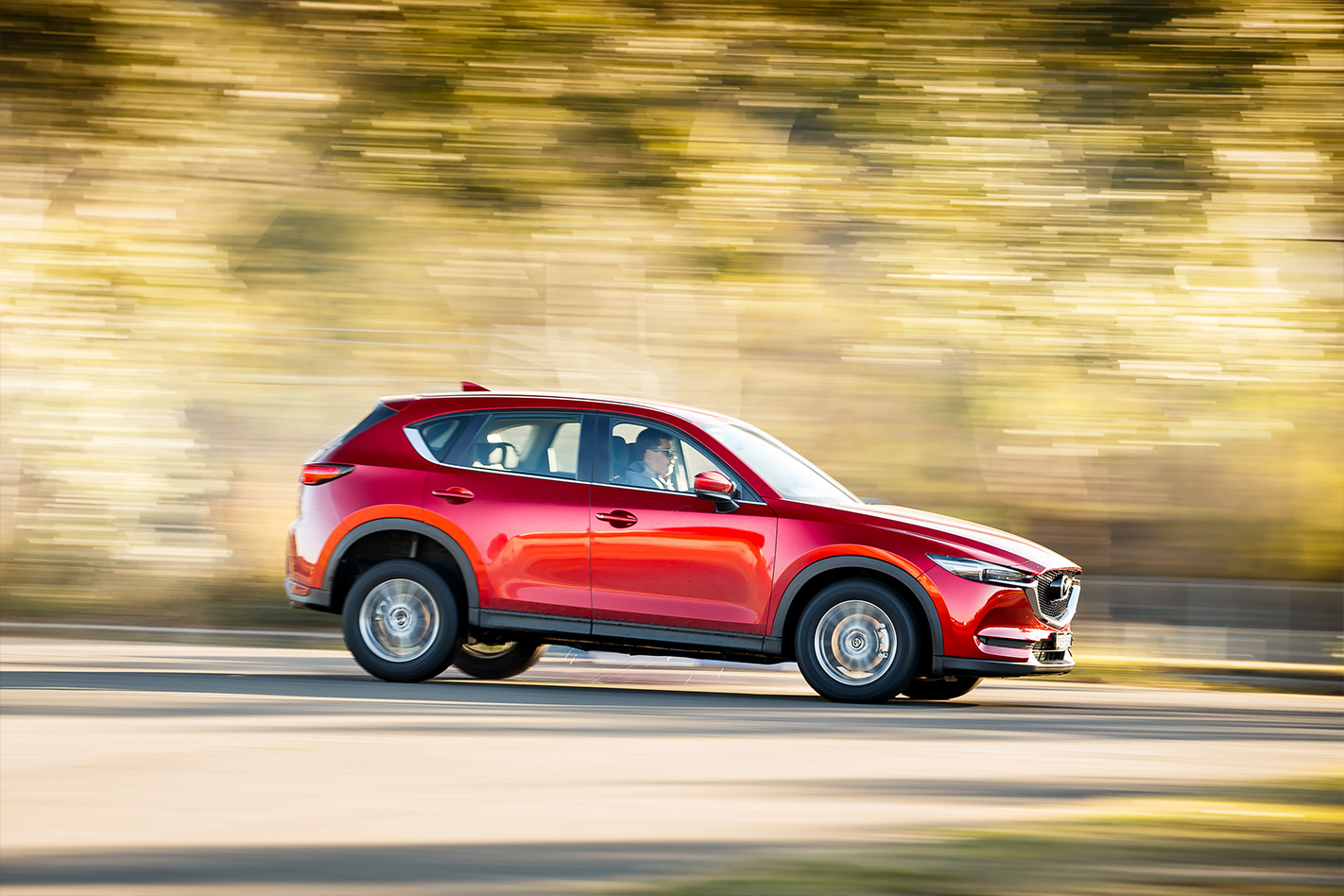
There’s no great delicacy to the test procedure. It involves bringing the anti-lock braking system up to threshold as quickly as possible by basically standing on the stop pedal as hard as possible at the first gate of cones and seeing how long it takes to bring the CX-5 to a halt. The surface was, if anything, a little bit scabbier than what you’d experience on Australia’s major roads, but certainly not unrepresentative of minor roads.
Renato’s notes highlighted that the Goodyear felt a little vague in this exercise with the car sliding to the right a few degrees, while the Bridgestone gave a loud but brief screech as the brakes bit, with strong overall stopping power. That subjective impression was backed up by the data, the Bridgestone finishing second here and the Goodyears down in tenth. The gap between first and third was a mere 1.2 metres, with the second place Falken recording peak longitudinal g-force in this test. The victory, however, went to the Continentals thanks to their 25.2 metres stopping distance from 80km/h. ‘Good braking support’ was the succinct note from Loberto on the winning tyre’s performance here.
Winner: Continental ContiPremium Contact5
Wet braking
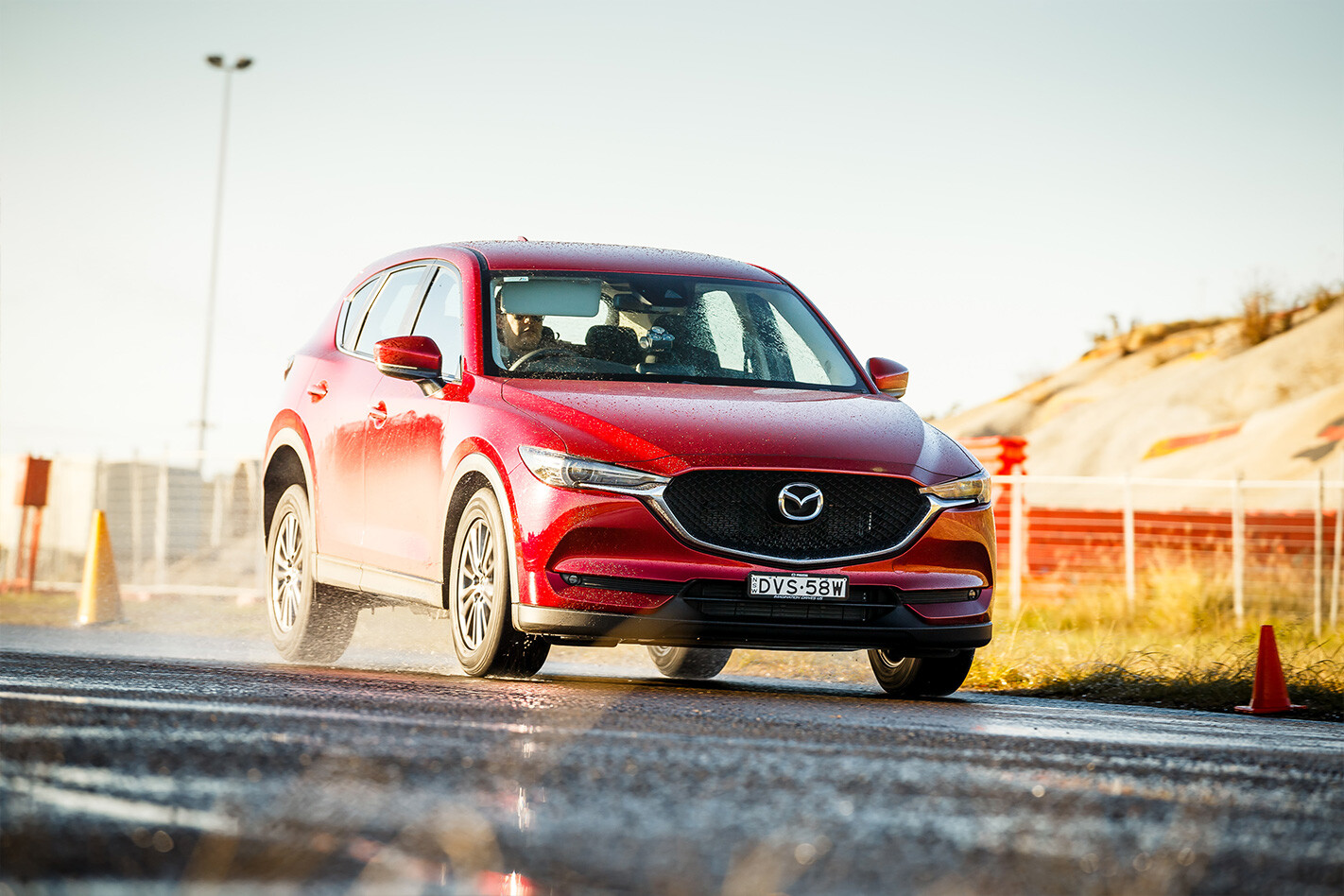
Heading into the sections of the track covered by sprinklers, it seemed unlikely that the tyre that did best in the dry – the Continental – would be able to reprise its victory with a bit of moisture thrown into the mix. It’s often the case that the compound and tread pattern of a tyre that excels in the dry is somewhat compromised in the wet, but given the German company’s clean sweep to this point, there weren’t too many who were betting against Conti here.
The procedure for this test is largely similar to that of the dry braking discipline, with an entry speed of 80km/h and then a big heave on the brakes. The results would prove a real eye-opener though.
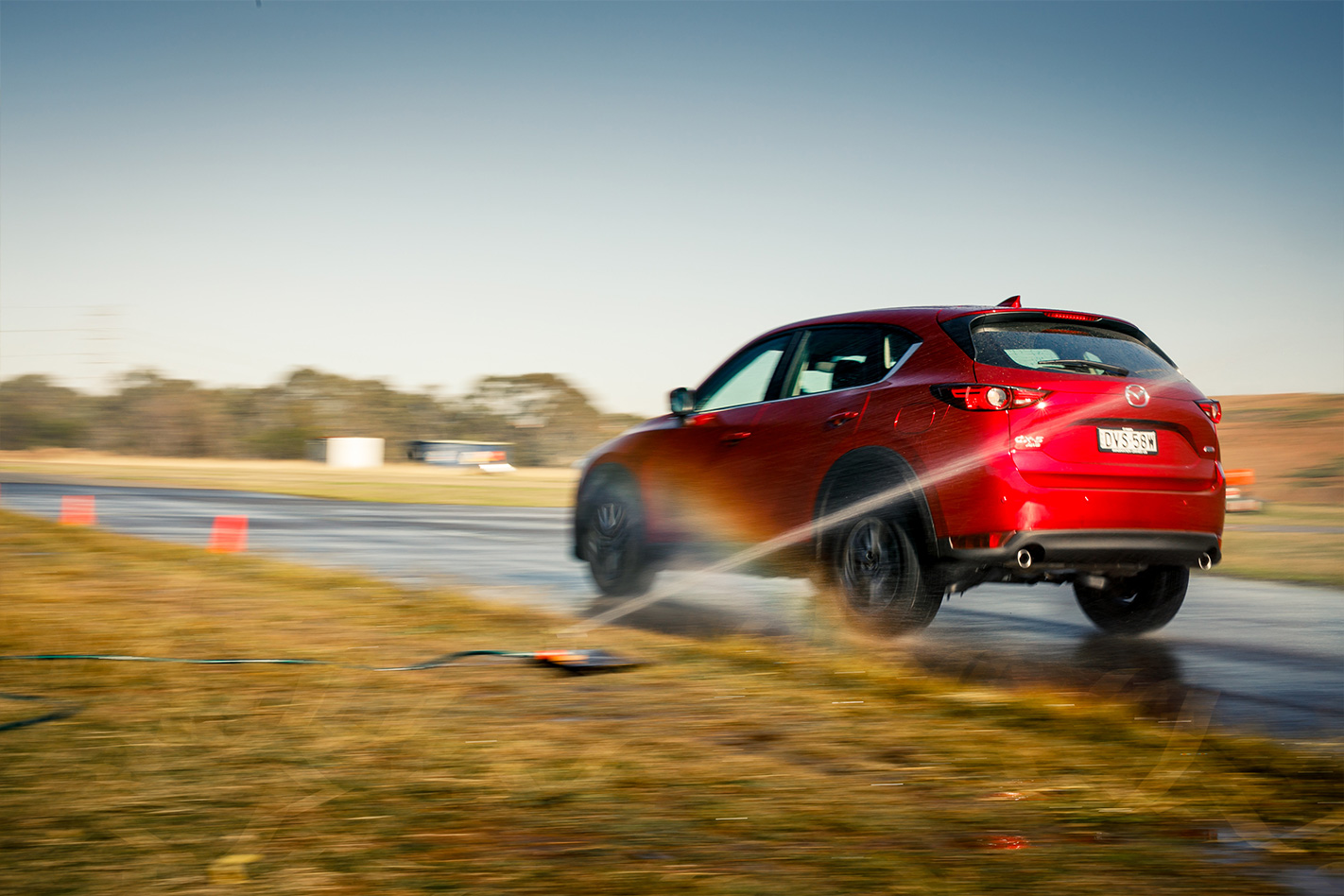
Sure enough the Continentals scored top spot, bringing the car to a halt in 25.8 metres. That’s 40cm shorter than their dry braking figure. In fact seven of the tyres tested here (Continental, BF Goodrich, Maxxis, Falken, Goodyear, Dunlop and GT) had shorter braking distances in the wet compared to the dry. The Laufenn recorded absolutely identical distances wet or dry, while the Bridgestone, Momo, Nexen, Vitora and Hifly all recorded longer distances under the sprinklers.
After a bit of head scratching at how the tyres were performing better on a more slippery surface, Loberto believed that the wet bitumen was bringing the anti-lock braking system to its absolute threshold quicker and more effectively than in the dry, a factor that was cancelling out the overall lower grip level amongst the tyres that could capitalise on this advantage.
Even more so than in the dry, the wet braking test resulted in a big discrepancy between the best and worst performing tyres. The HiFly’s average stopping distance was 34.4 metres, which is more than a London double-decker bus longer than the stopping distance of the Continental tyre. That’s a faintly terrifying notion and, to be honest the entire bottom half of the field performed in a way that would be tough for us to recommend. The Continental’s 2.5 metre advantage over the next-best tyre was more than the difference between the second and seventh best tyres. Unsurprisingly, the Conti also registered the highest initial g-force at 1.1G.
Winner: Continental ContiPremium Contact5
Wet Cornering
The wet cornering test was a brand new test for this year, replacing the old dry handling track. Given that these aren’t performance tyres, we felt that thrashing them around a track was a little beyond the scope of this review and, in addition, the wet cornering test chopped a lot of variables out, relying on just one single metric – the amount of lateral G the tyre could generate when driven through a 90-degree wet corner.
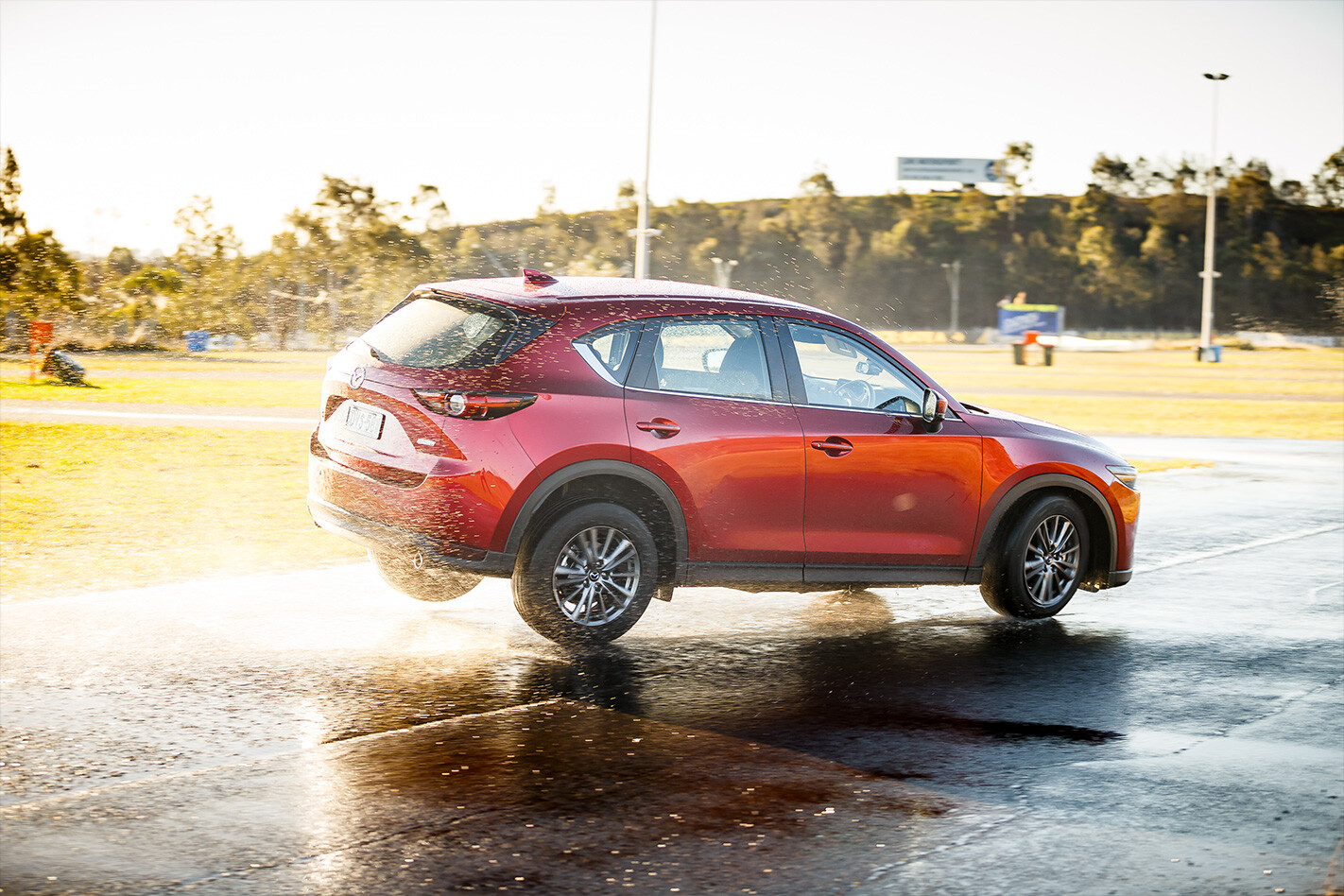
In most normal instances the Mazda’s electronic stability control would kick in and slow the CX-5 down if it felt that it had exceeded the amount of grip through a corner, but we were entering the corner in neutral to try to fox the system somewhat. This exacerbated the gap between best and worst tyres that, in the real world, would probably be far closer. Still, as a way to separate the best from the worst, and identify the tyres that will carry speed through a corner and trouble the stability control system to the minimum extent, the technique was still valid.
The winner – and you’re probably detecting something of a theme here – was the Continental, the ContiPremiumContact 5 just pipping the Goodyear and Bridgestone tyre in generating peak cornering grip. “This tyre felt very stiff, and in that stiffness comes consistency,” said Renato of the Conti. He was spot on with his assessment of the Goodyear being comparatively more competitive in the wet than in the dry, claiming that “it didn’t seem to be that agile in the dry but its wet cornering performance was as good as some of the other tyres in the dry.”
He experienced a bit of a moment with the Vitora tyres, which finished last, when they understeered quite markedly when pushed beyond their comfort zone. “This tyre particularly just switches off for grip,” he noted after clouting a cone and nearly putting the sprinkler system out of commission in the process.
Winner: Continental ContiPremium Contact5
Tyre Noise
A 65-series road-biased SUV tyre shouldn’t be noisy. Mud and snow tyres, semi-slick performance rubber and such like can usually be relied upon to peg our noise meters, but the generous sidewalls and fairly benign tread patterns of a mid-market tyres like these have no excuse for generating drone and whine in the cabin.
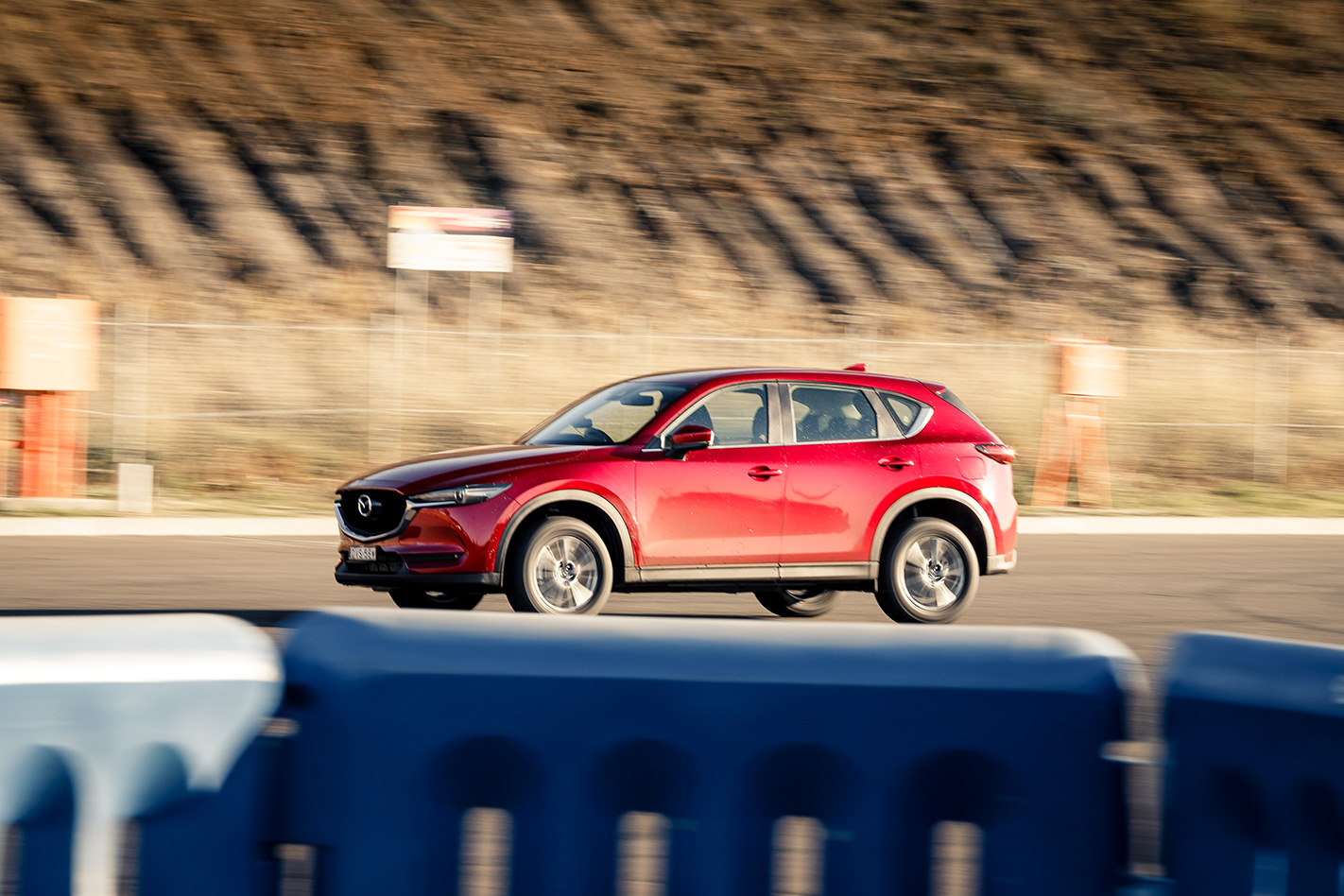
Unlike many of the other tests, the gap between first and last wasn’t that great. Mazda has made great strides in improving the sound deadening in this latest generation of CX-5 but despite that fact, the noise meter detected a mere decibel’s difference between best and worst at a constant 60km/h.
What does that mean in real terms? Well, given that decibels are on a logarithmic scale, it takes twice the audio energy to add three decibels. The way that we process sound, however, doesn’t mean that this would appear twice as loud to us. It generally takes an increase in sound pressure level of ten decibels to double the perceived volume.
In total, eight tyres generated 57dB, which meant a 100 percent score in this test for all of them. Four more then generated 57.5dB, with only the HiFly – the tyre that also came flat last in wet braking – registering 58dB.
Winners: Continental ContiPremium Contact5, Maxxis Bravo HP M3, Dumlop Grandtrek PT3, Laufenn G Fit EQ, Goodyear EfficientGrip Performance SUV, BF Goodrich Advantage T/A SUV, Momo Alusion M99, Nexen Roadian HTX RH5
Verdict
Sometimes the winner of a tyre test can come down to subtleties of calculations; how each discipline is measured, weightings in the scoring and the vagaries of local conditions. This was not one of those occasions. A clean sweep of all the disciplines is something that has never occurred in the WhichCar tyre test, but that’s exactly what was achieved by the exceptional Continental ContiPremium Contact5. Yes, on a couple of the five tests the Conti found itself sharing the top step of the podium but it wasn’t bested in any of the key disciplines. Only by drilling down into our data sheets for figures outside our scoring rubric could we find any performance metric where it didn’t come top – and even that was a bit of a stretch, with the Continental coming joint second.
Yes, you’ll certainly pay a little more to equip your SUV with ContiPremium Contact5 rubber than you would with some of the emerging brands in this test, but the data speaks for itself. Its wet braking performance, in particular, ought to be enough to convince you of this tyre’s value proposition, resulting in a stopping distance more than two metres shorter than the nearest competitor.
If the Conti was the standout performer in this test, then it’s also possible to make convincing cases for the Bridgestone, Falken, BF Goodrich and Maxxis contenders, all of which proved free from notable vices and which turned in strong all-round performances across our tyre testing pentathlon. Of these, the Maxxis carries the lowest price amongst the retailers we contacted, so if you’re unable or unwilling to run to the premium Continental and are looking to save a little, then the Bravo HP M3 represents our mid-priced recommendation.
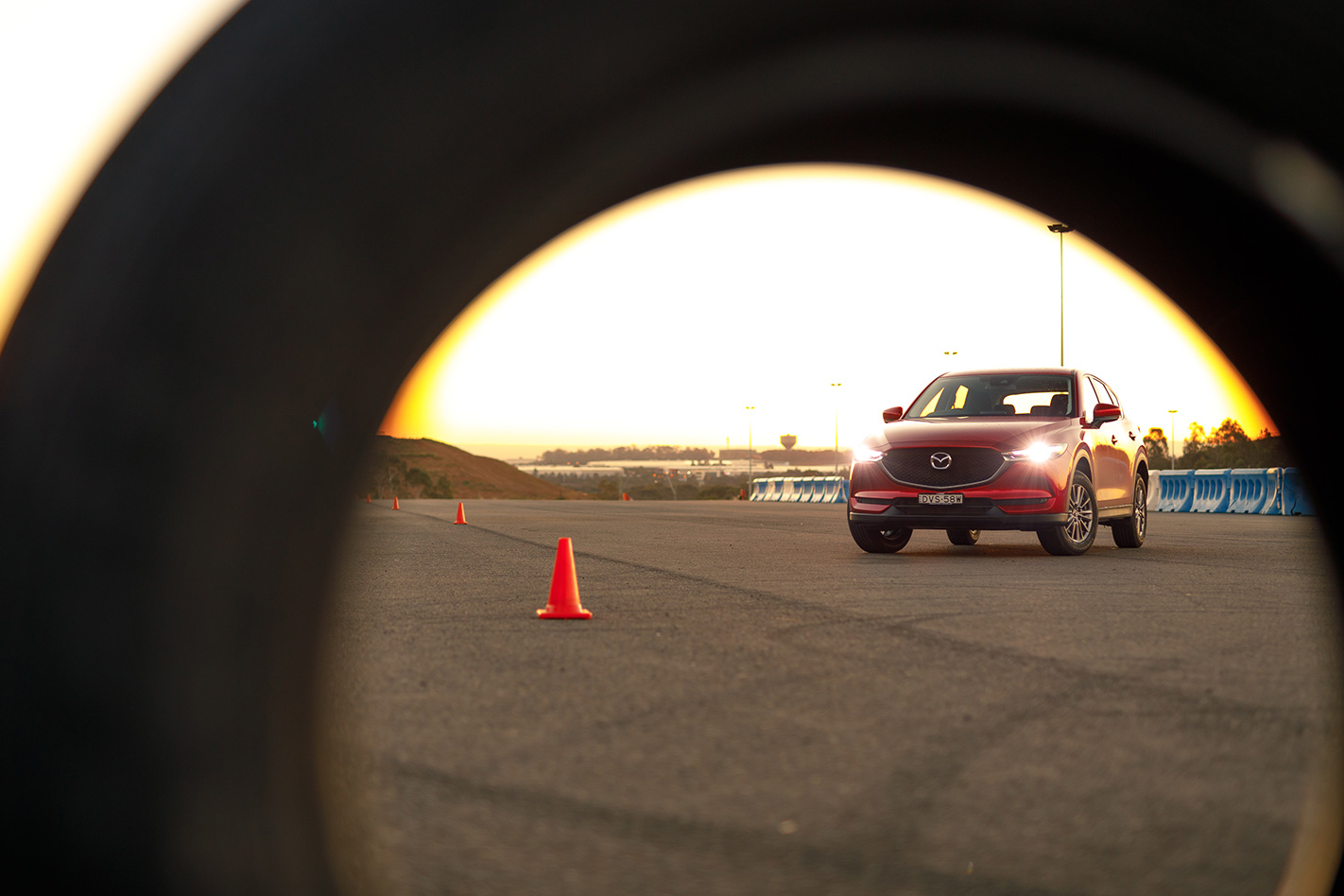
Were we spending our own money, we wouldn’t hesitate at budgeting a little more for the Continental, the overwhelmingly deserving victor of the WhichCar 2018 Tyre Test.
FINAL SCORES
Continental ContiPremiumContact5100.000
Bridgestone Alenza96.248
Falken Ziex ZE914 Ecorun96.038
BF Goodrich Advantage T/A SUV95.935
Maxxis Bravo HP M395.260
Goodyear EfficientGrip Performance SUV92.385
Laufenn G Fit EQ92.277
GT Savero SUV91.504
Momo Alusion M991.501
Dunlop Grandtrek PT390.796
HiFly Vigorous HT60187.763
Nexen Roadian HTX RH586.746
Vitora Streetlife86.686
IF YOU’RE anything like most Australian motorists, the news that your car needs new tyres will create a sinking feeling. It’s the classic ‘distress purchase’, something that you buy out of necessity rather than pleasure. Around 23 percent of Aussies will buy the cheapest tyre available to them and half will wait until a tyre has reached its legal tread depth before replacement.
But here’s the thing – it needn’t be that way. If you’re armed with the correct information, buying a new set of boots for your car could transform that way it goes, stops and steers for the better and also deliver a significant boost to safety.
The problem for most consumers is that the range of choice is truly dizzying. Even if you’ve settled on one brand, there are multiple tyre designs and models. What’s more, it’s virtually impossible to find decent, unbiased advice. Your local tyre depot is usually incentivised to push certain brands and will generally steer you towards the rubber with the chunkiest profit margins for them. That’s understandable, but in order to get the inside line on what tyres to look for, we’ve conducted a series of tests to bring you 2018’s best.
And it’s worth paying attention. Without giving too much away, the difference between the best and worst rubber on the 2018 Which Car Tyre Test was a massive 8.6 metres (or two average car lengths) of braking distance in the wet, and we’ve all experienced that freeway hard stop where we wind up a couple of metres from the bumper of the car in front. Get this decision wrong and we don’t need to labour the consequences. So, on that vaguely morbid note, here’s how the test works.
THE METHODOLOGY
It didn’t take too much discussion to pinpoint the vehicle we wanted for the test. The Mazda CX-5 was Australia’s best-selling SUV last year and this Maxx Sport diesel version has a huge range of available tyre choices in its 265/65 17 size.
We also recruited test driver Renato Loberto as the guy behind the wheel. With a background in automotive engineering that has then seen him branch into event planning and management, driving instruction, and piloting a Ferrari GT3 race car, Ren’s a familiar face on sister title Wheels’ events and can be relied on for metronomic precision.
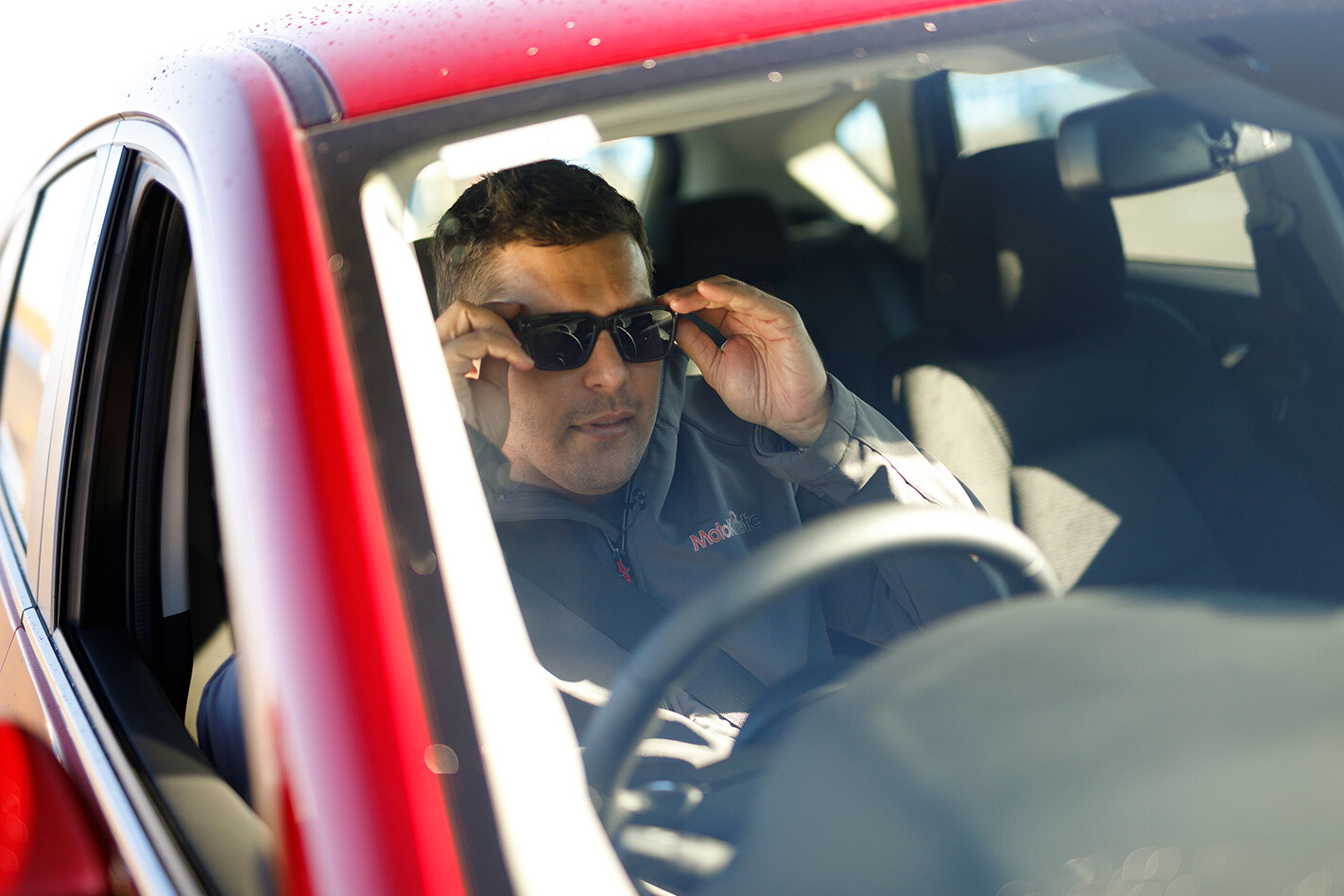
The venue for testing was Sydney Motorsport Park or, to be more precise, the vast hotmix backlot of the Dragway where we’d set up a number of tests designed to objectively measure the performance of our fresh rubber. All of the tests were conducted with a Racelogic Performance Box GPS data logger and the Loberto was never aware which tyres were on the car at any time, staying in the vehicle when the wheels were changed.
After taking a tyre noise reading at a steady 60km/h cruise, the brand-new tyres were scrubbed in during a series of runs through a slalom. Renato ran through the series of 20m-spaced witch’s hats at an entry speed of 60km/h, whereupon peak lateral g-forces are measured. That’s followed by a dry braking test, entered at 80km/h, a similar wet braking test at the same speed and then a wet cornering test where lateral g is logged.
The winner of each of the five dynamic tests was awarded a 100 percent score with the rest of the contenders given percentages based on how close they got to that mark. After all five disciplines were complete, the percentage scores were averaged and a final mark achieved. Therefore if one tyre were to win every event, it would end up with an overall score of 100 percent.
In order to ensure a level playing field, we ran some of the tyres twice across the day as ‘control runs’ so that we could ensure that conditions such as changing temperatures or the extra rubber on the track could be adjusted for if necessary. Each of the tyres tested is offered in a range of sizes, and although the results would by definition alter depending on tyre size and weight of vehicle, the results of this test are a decent indication of where you should spend your money.
THE WRANGLERS
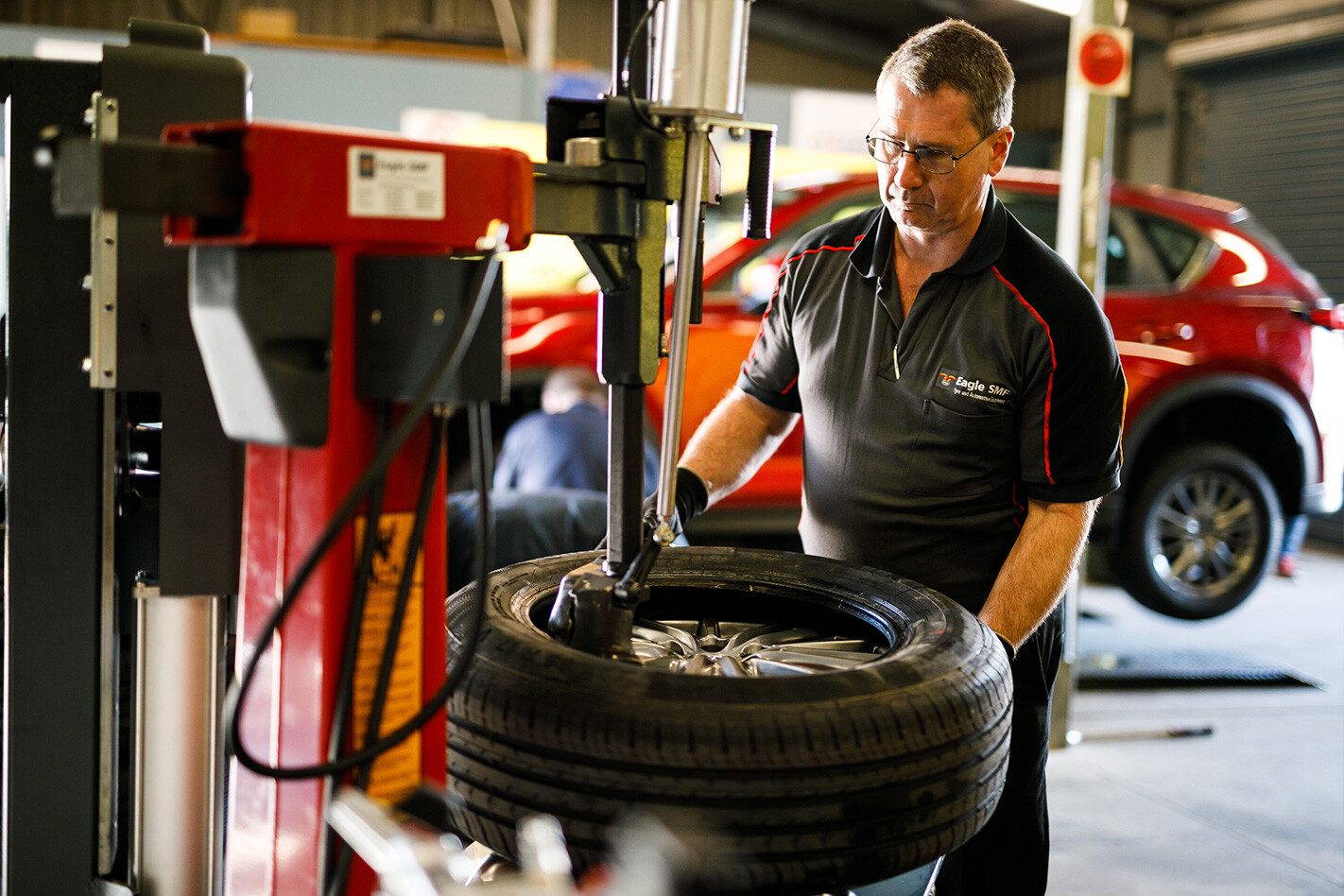
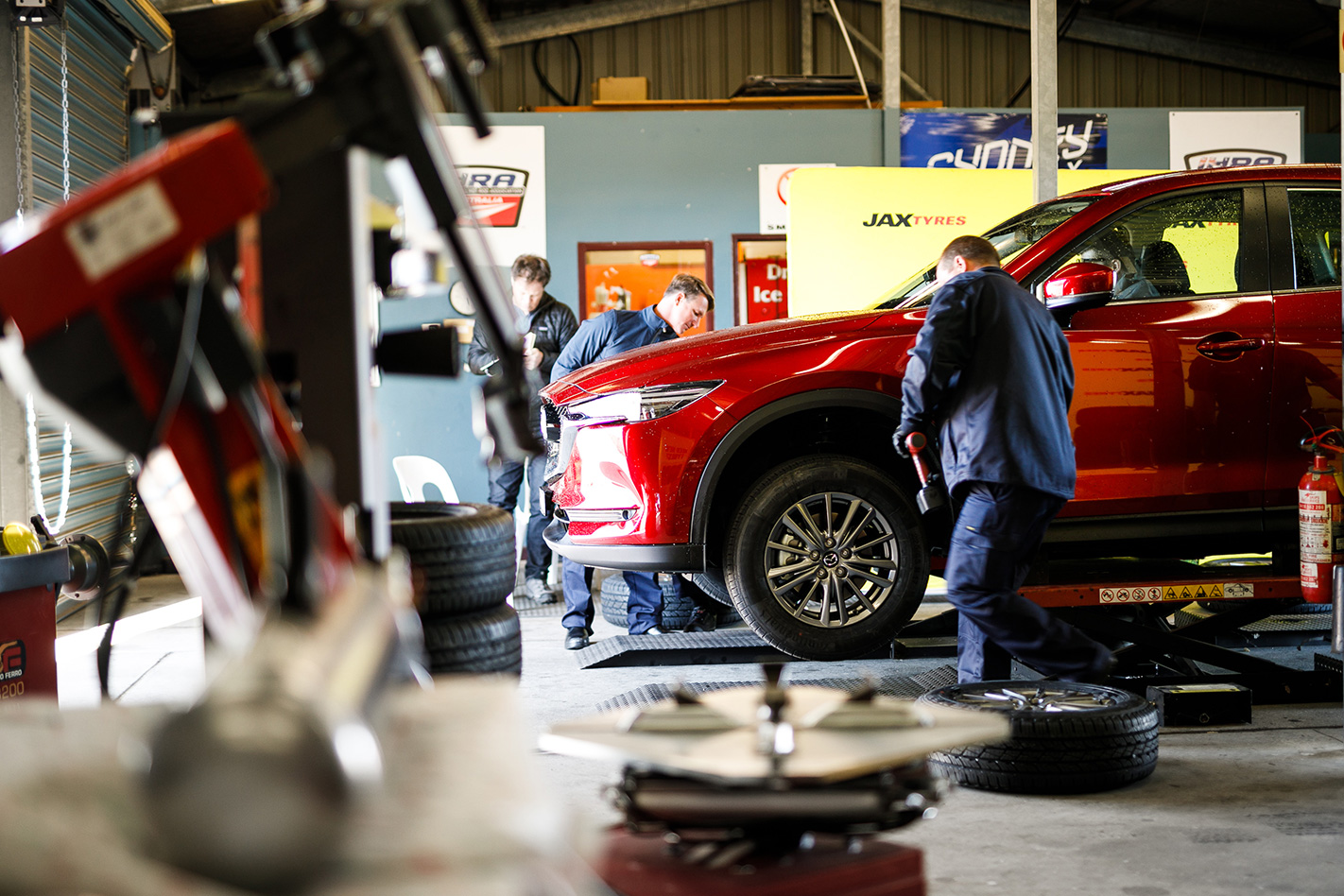
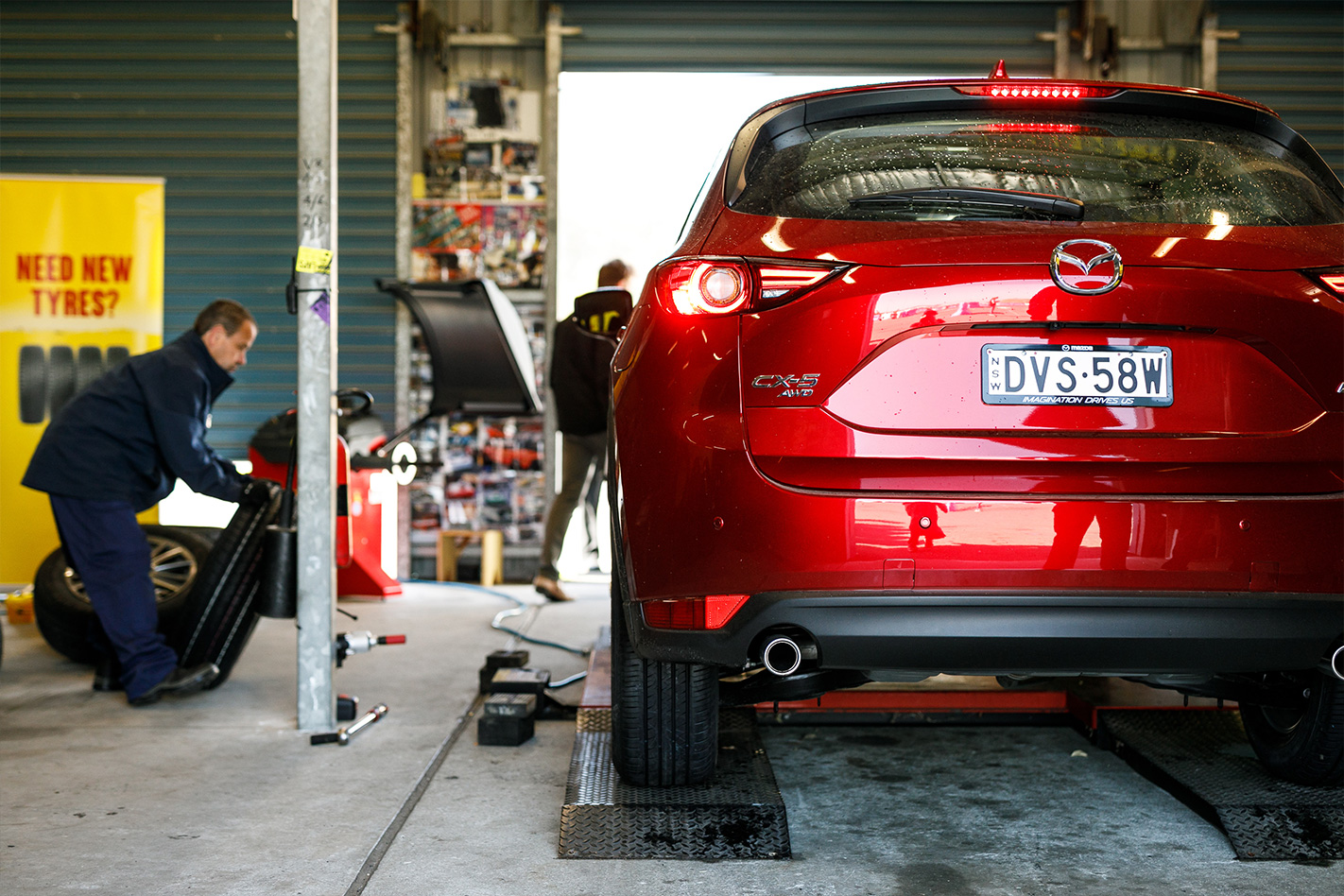
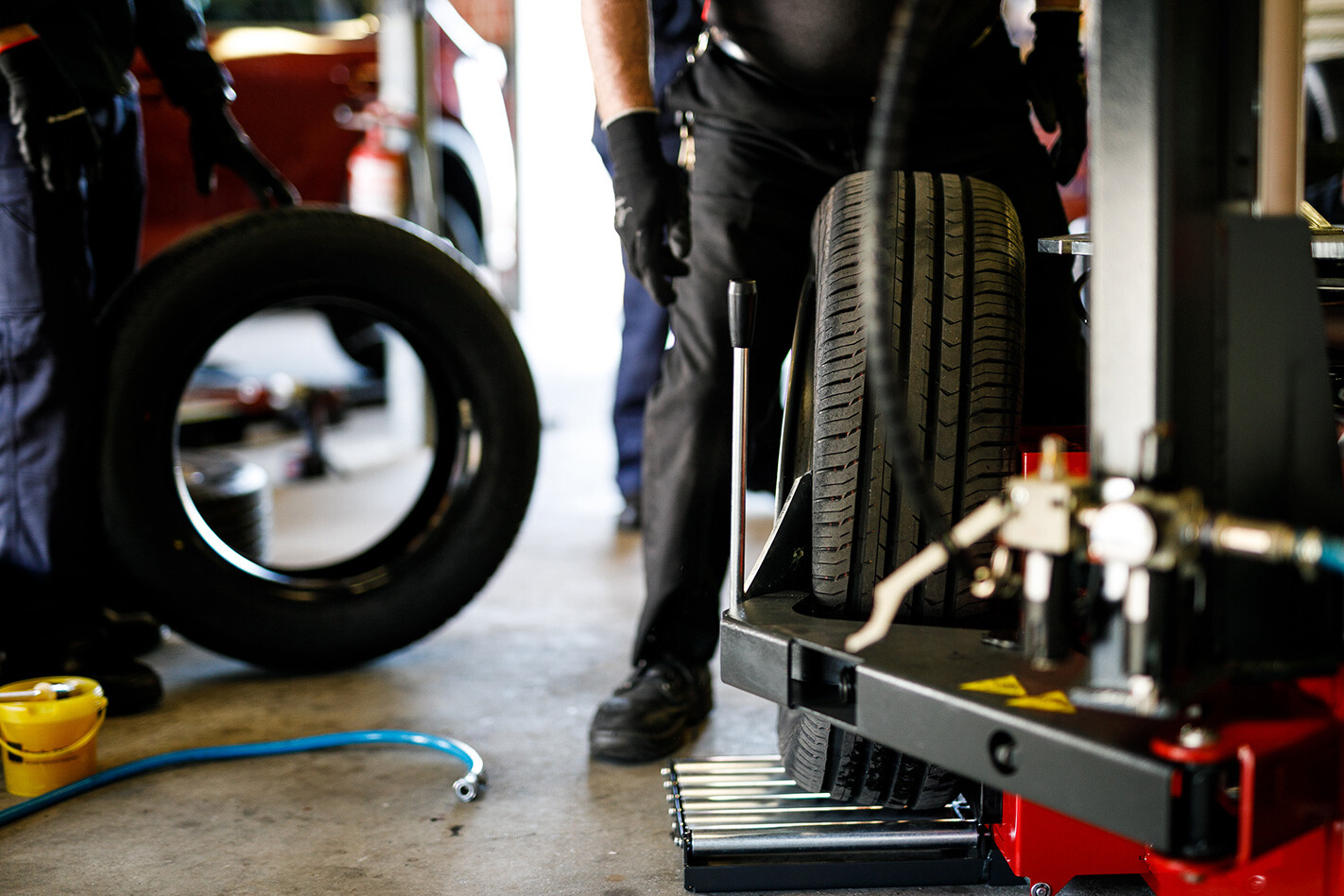
The task of swapping 68 tyres throughout the day was handed to the team from JAX Tyres, with all of the fitting equipment, ramps and air lines supplied by Eagle SMF Tyre and Automotive Equipment. In the space of a couple of hours, the otherwise bare scrutineering shed at Sydney Dragway was transformed into a very passable facsimile of one of JAX’s 80+ retail location
In order to keep things consistent, we ensured that all tyres were inflated to the CX-5’s placarded pressures of 38psi up front and 41psi at the back. Two sets of wheels on the go meant that as soon as the CX-5 arrived in the garage after a set of disciplines, it was a matter of a couple of minutes for the wheels to come off, ones shod with the next set of tyres to go on and the wheel nuts torque checked.
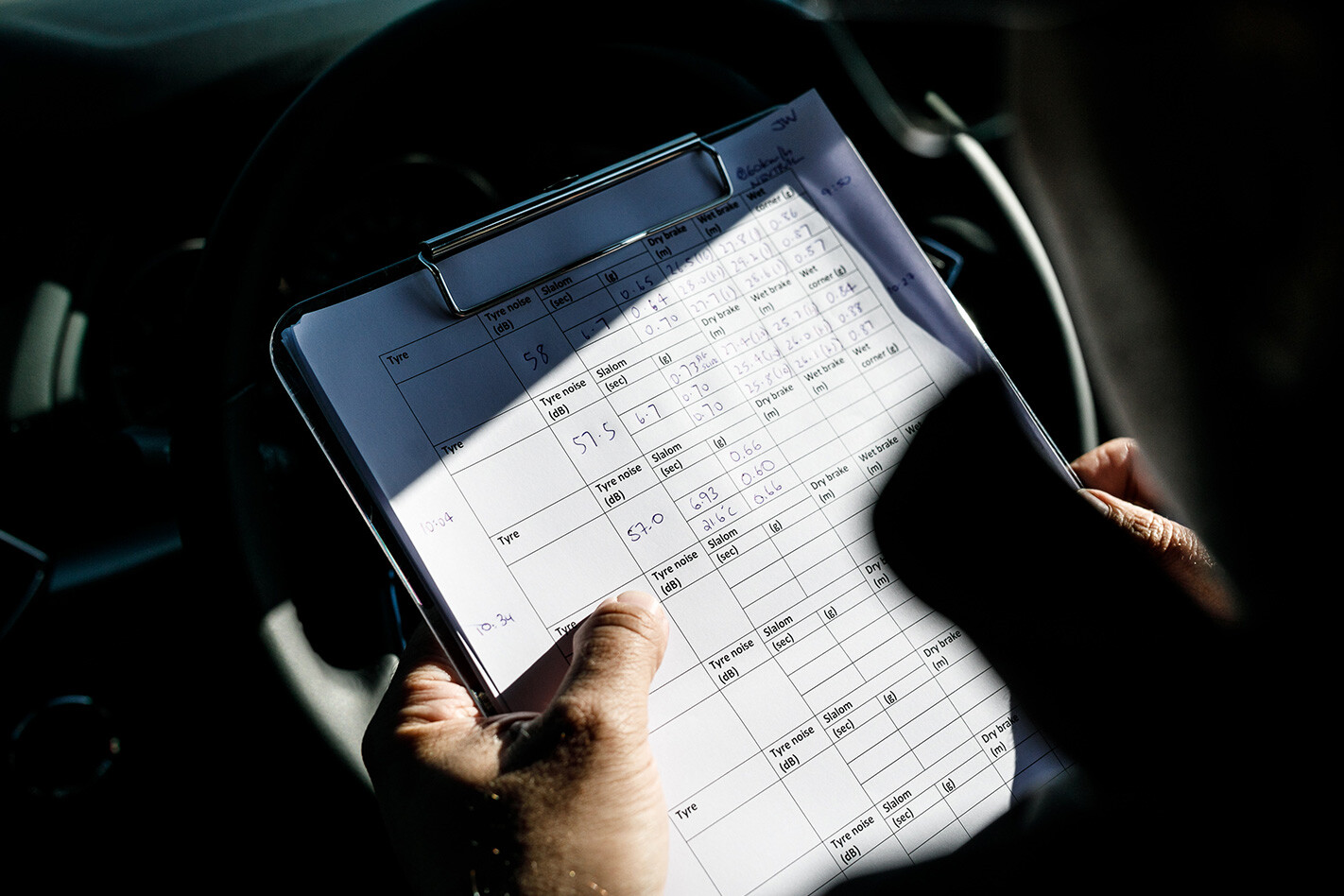
Overseeing fair play on the day was our technical expert, James Whitbourn. He was the guy taking temperature measurements, collating Renato’s data and managing the running order throughout the day. An experienced WhichCar contributor with an engineering background, Whitbourn developed the tyre test formula for Wheels magazine and we’ve adapted it only very slightly for WhichCar.
THE FIELD
We wanted the widest range of tyres possible at a range of prices, so invitations were sent to all major manufacturers. Not all were able to get logistics in place, but a field of 13 original equipment (OE) replacement tyres for the 2018 WhichCar tyre test was comfortably the biggest set of tyres we’d ever tested in one day.
The standard size for the CX-5 is a chunky 225/65R17, and many medium SUVs will run a tyre somewhere in that ballpark, with enough sidewall to avoid damaging the rim should you venture off the bitumen. As standard, the Mazda is fitted with Yokohama Geolandar G98s but we opted not to run these tyres on the day, given that they had seen a few miles.
Some of the tyres were household names. Even if you’re no petrolhead, you’ll probably know the Dunlop, Bridgestone, Continental and Goodyear brands. Others, such as BF Goodrich, Momo and Falken are familiar to those with a passing interest in tyres. Then there are the emerging brands that we were intrigued to try. Taiwanese outfit Maxxis is emerging as a brand going places, having claimed last year’s Wheels tyre test but many buyers won’t know too much about brands like GT, Laufenn, HiFly, Nexen and Vitora. Until now, that is.
Click here to see how each tyre stood up to our testing regime.
Alfa Romeo has released a special edition of its Giulia Quadrifoglio (QV) rocket ship that features lashings of carbonfibre without the carbon tax.
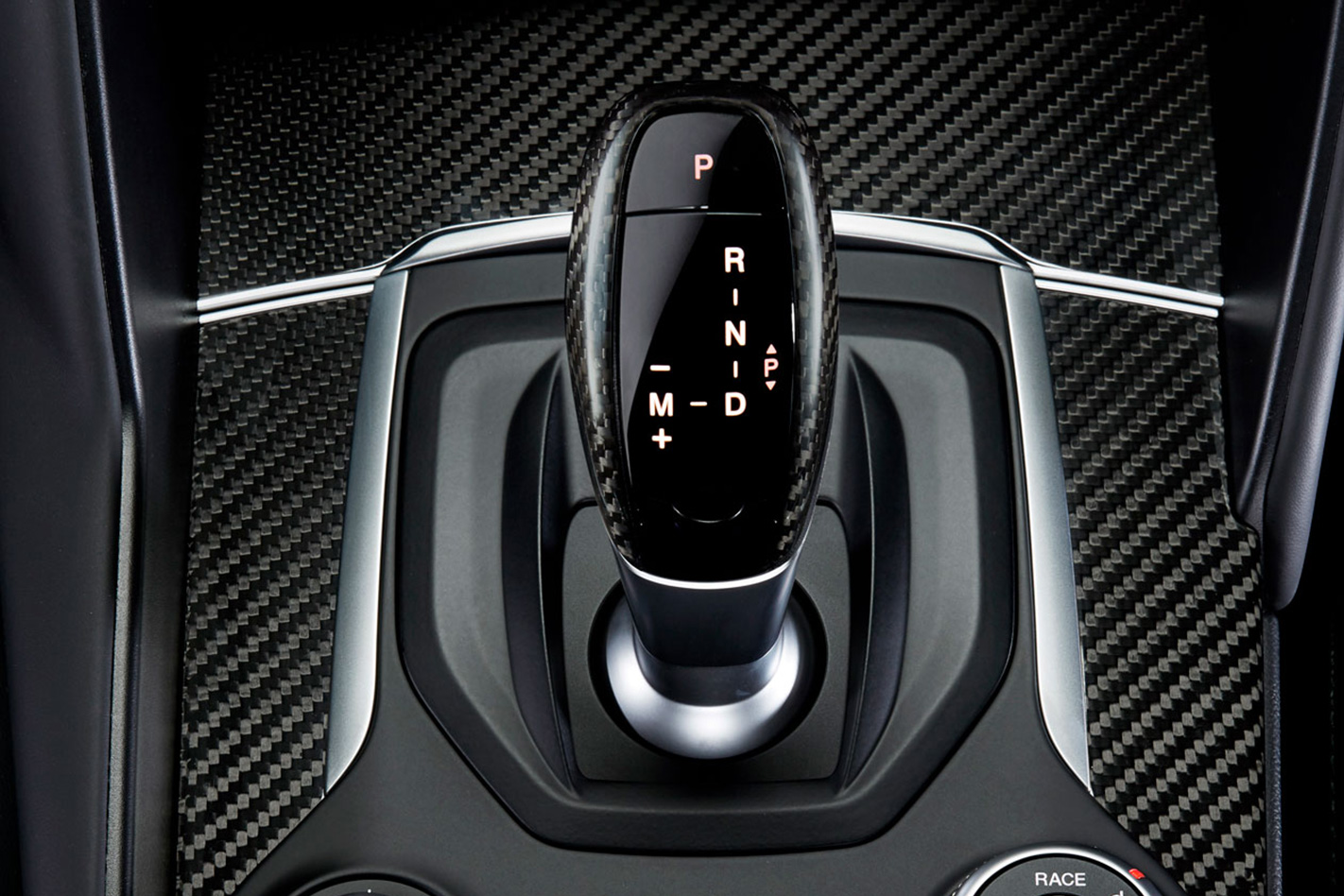
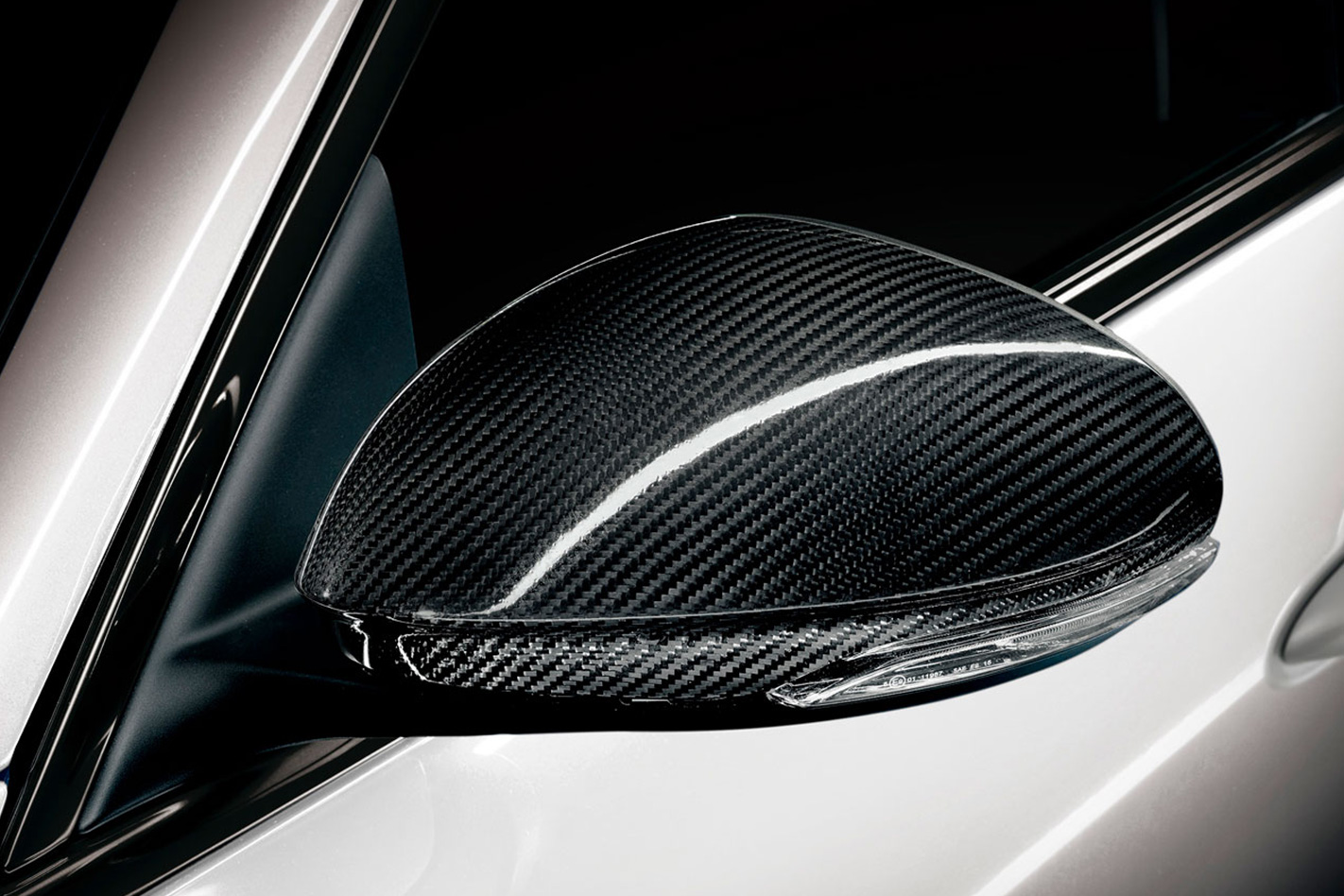
It’s called the Giulia Quadrifoglio Carbonio Edition and it gains $8500-worth of complimentary enhancements made from carbonfibre, including a front grille insert, exterior mirror covers, illuminated front door sill covers and shifter surround on the centre console. It also boasts 19-inch alloy wheels, and a leather and Alcantara-trimmed steering wheel with carbonfibre insert.
Premium exterior paint is also included in one of two hues; Trofeo White or Competizione Red.
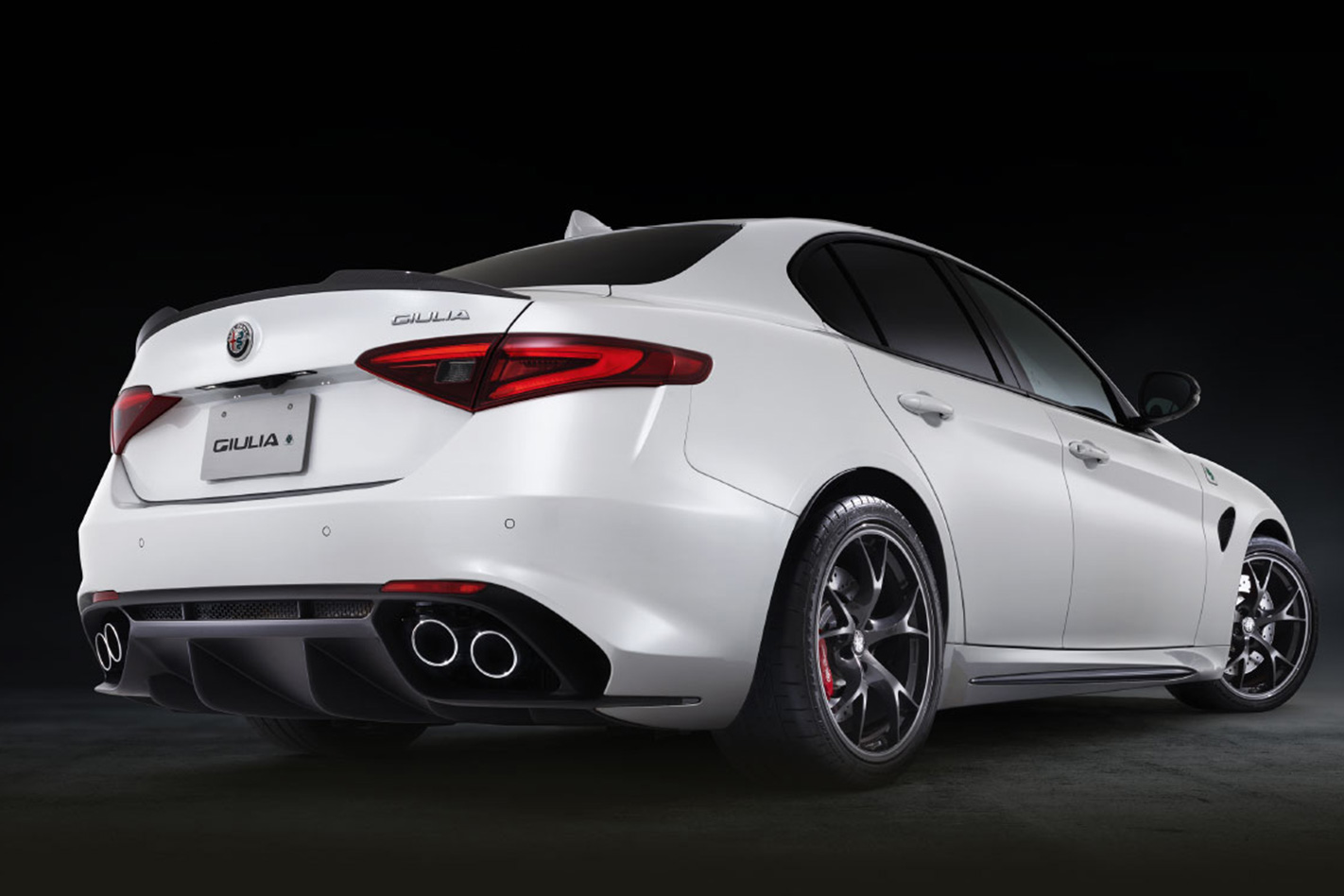
The extras bring no additional change over the Giulia Quadrifoglio’s $143,900 retail price. Catch is, there are only 20 available in Australia and they’re likely to be snapped up soon.
Alfa’s carbon enhancements are on top of the standard features available in every Giulia, including leather trim, autonomous emergency braking, cruise control, rear parking sensors, reversing camera, bi-xenon headlights, keyless start, auto-stop/start, satellite navigation, dual-zone climate control and rain-sensing wipers.
Not to mention the Giulia Quadrifoglio’s375kW/600Nm 2.9-litre twin-turbo V6 engine that launches it from 0-100km/h in just 3.9 seconds towards a top speed of 307km/h.
SSC North America will reveal the 2019 SSC Tuatara at Monterey Car Week, after more than half-a-decade has elapsed since it was first announced.
Named for a New Zealand lizard which has a faster rate of evolution than any other animal according to studies, the Tuatara has been teased in three shadowy photos which somewhat reveal the car’s silhouette.
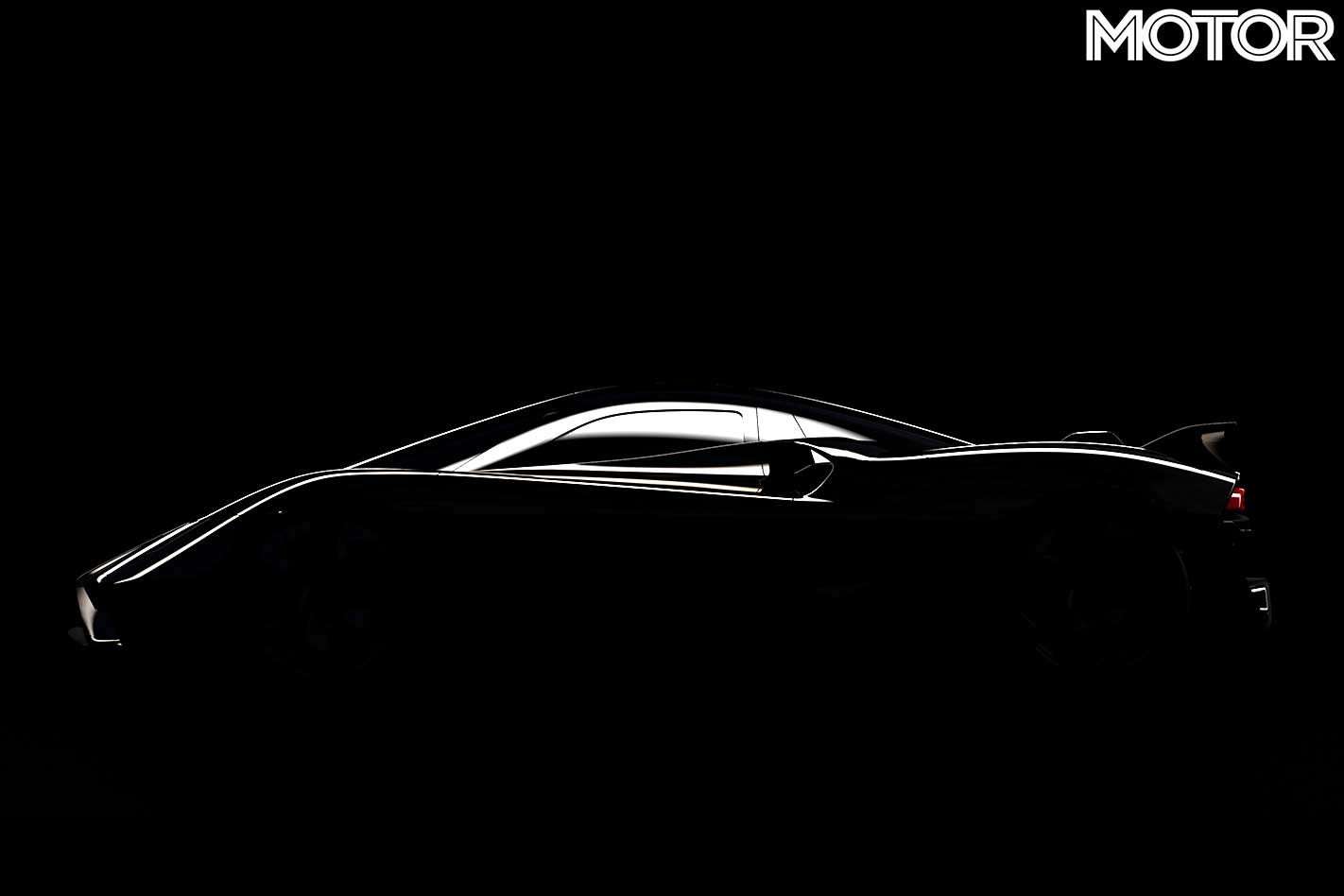
SSC North America says the Tuatara “boasts an unmatched drag coefficient, track-level handling characteristics, and a top speed that is projected to easily surpass the current world record.”
For this to be true, it will have to beat the current record held by the Koenigsegg Agera RS, which is an astonishing 447km/h.
This is plausible for two reasons, this first (and most concrete) being that SSC has held a ‘world’s fastest car’ record in the past when the Bugatti Veyron Super Sport’s record was deemed to be breaking the rules – its speed limiter was disabled – while the SSC Ultimate Aero was second-in-line for the title. That car hit 412km/h.
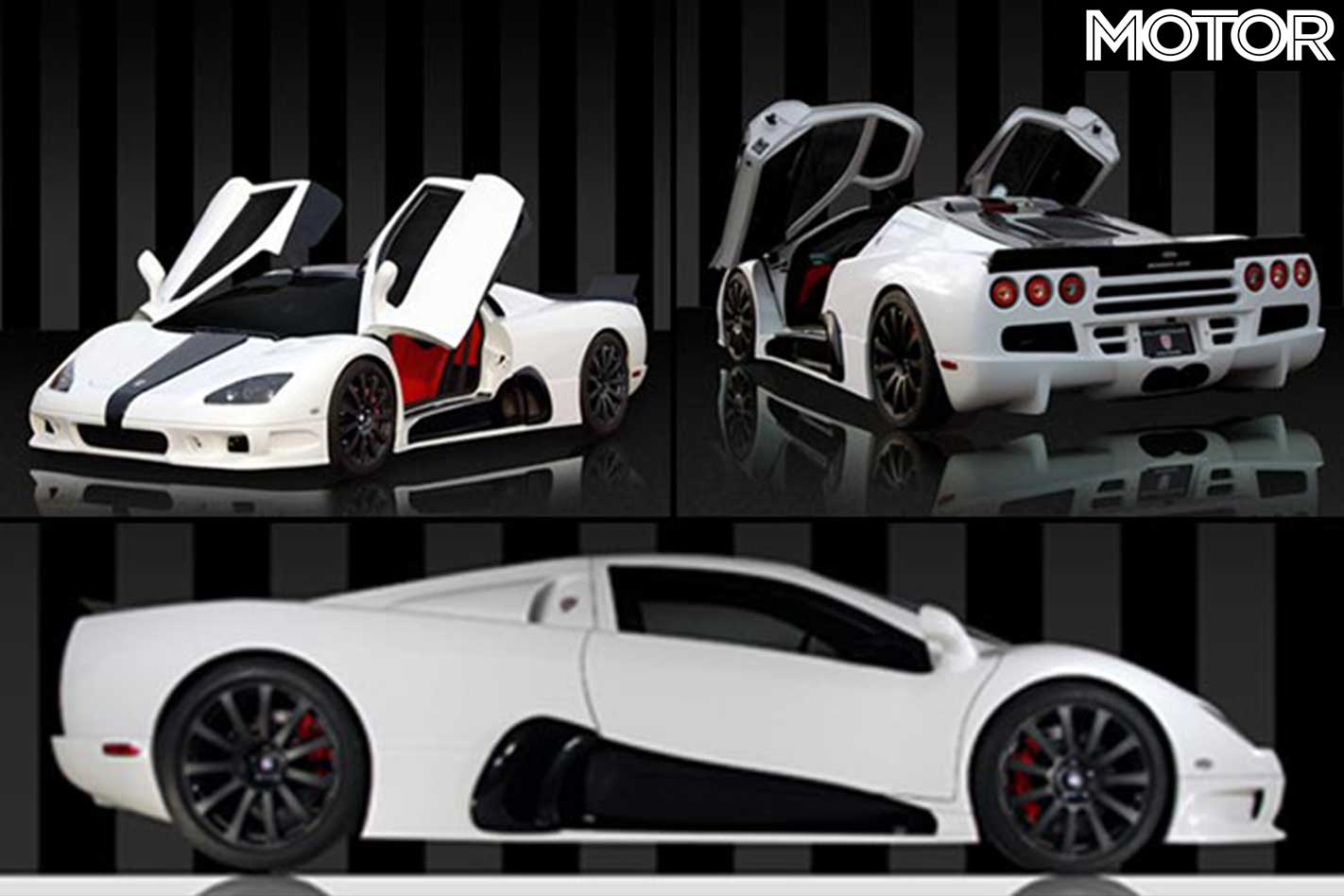
The second reason is that, over the last few years since the Tuatara was first announced, technology has allowed cars to be faster than ever before, meaning the Tuatara’s original top speed claim of 445km/h is within reach, and an extra 3-or-so km/h on top of that isn’t a huge stretch.
“Years of methodical engineering applied to the Tuatara will be revealed in the unparalleled performance, driver experience, and striking presence of the car.”
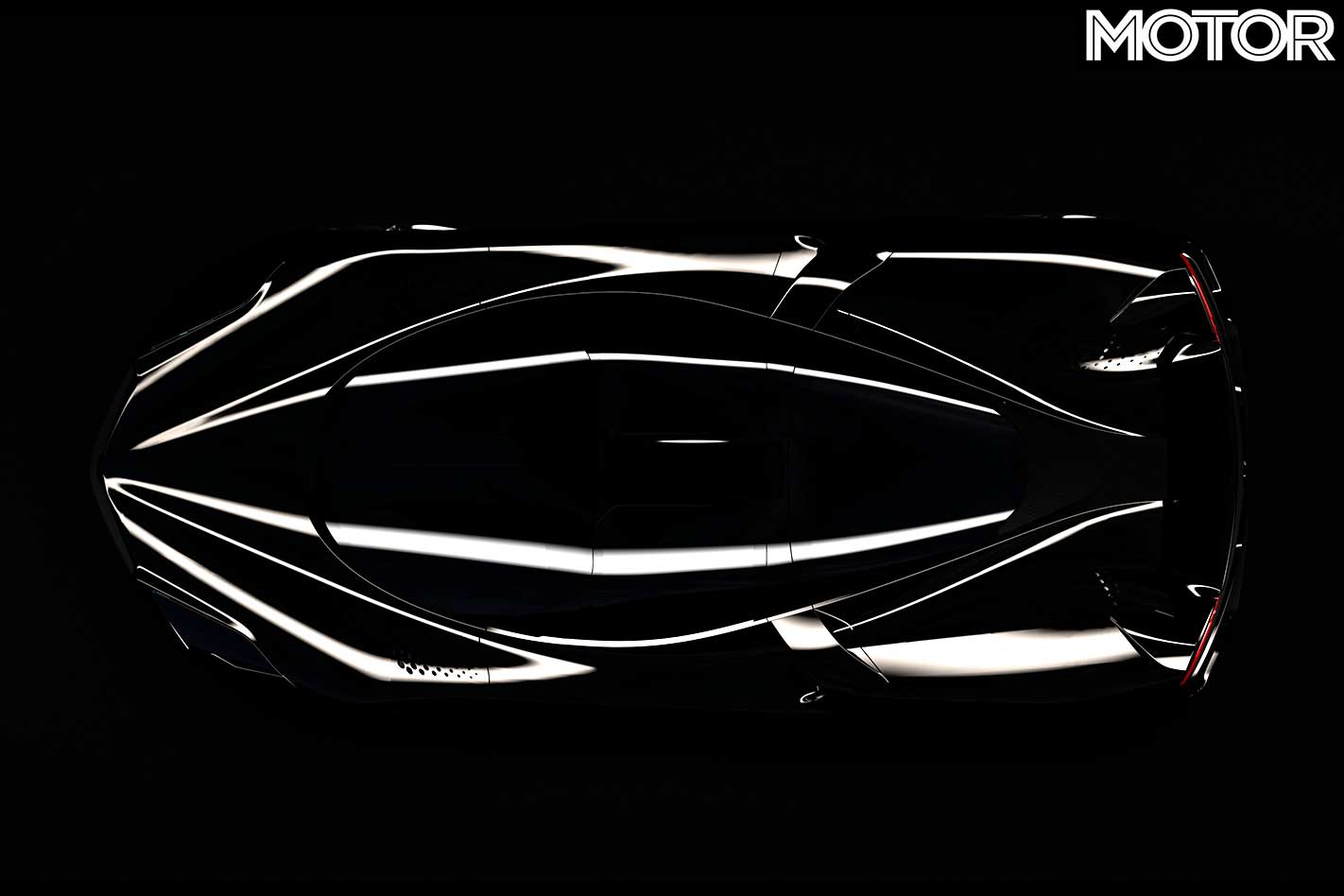
It should boast more than 1000kW and 1400Nm if its outputs are to top its original concept, which was powered by a 6.9-litre billet aluminium V8, designed by SSC North America. The whole car weighed in at 1247kg dry.
It’s uncertain how much resemblance the new Tuatara will bear to its original concept, so keep an eye out for the Tuatara on August 24 During Monterey Car Week.
FORD is slashing its portfolio of vehicle platforms in a bid to reduce costs by AU$34.3 billion between now and 2025. The latest cull intends to move all vehicles globally onto just five modular platforms.
Hau Thai-Tang, Ford’s head of product development and purchasing, spoke at the 2018 J.P. Morgan Auto Conference explaining to shareholders that under this plan the The Blue Oval will be able to produce a wider range of cars while simultaneously reducing costs.
Ford’s five architectures moving forward will include a rear-wheel/all-wheel drive body-on-frame platform, a rear-wheel/all-wheel drive unibody, a commercial van unibody, a front-wheel/all-wheel drive unibody and a unibody platform that covers off Ford’s battery-electric vehicle ventures.

It’s a plan that continues the work of former CEO Alan Mulally’s One Ford proposal, which has already seen the company reduce its number of platforms by more than two-thirds, from 30 to nine. The One Ford plan helped the company navigate the Global Financial Crisis with relative success, while some other manufacturers struggled.
“This is not saying One Ford was wrong. This is building on the strategy of One Ford and evolving from it,” Thai-Tang said in comments reported by Automotive News. Thai-Tang also said up to 70 percent of a vehicle’s cost can be managed through modular platforms.
Ford expects to save US$7 billion (AU$9.6 billion) on product development and engineering costs while also reducing the amount of time it takes to develop new models by 20 percent.
RETIRED Formula 1 ace Felipe Massa has revealed ambitious plans to spearhead motorsports into the Olympic Games for the first time in 130 years, with a zero-emissions karting competition chalked to make its debut in six years.
After bowing out of the F1 series last year, the Brazilian accepted a role to head up the FIA’s kart racing body – the Commission Internationale de Karting – and has grand designs to raise the profile of the sport, encouraging more people to participate and spectate.
Speaking to Brazilian talk show Conversa com Bial, Massa outlined his plans to bring motor racing to the world’s biggest sports stage.
“There are good ideas ahead,” he said. “There will be an event in Argentina, at the end of the year, an event of the Olympics. The idea is to take electric karts to the 2024 Olympics in Paris.”
According to the track star, who like many successful racers, started his career in karts, the emerging electric karting arena is in its infancy but has enormous potential. Ahead of the planned major Olympic event, Massa explained that a demonstration of the series will happen at the Youth Olympics in Buenos Aires later this year.
If the kart champion can pull it off, an Olympic debut is big news for motorsport.
It’s unlikely the motion would even be considered if a combustion-powered competition was pitched for the Olympic event, with the global committee under increasing pressure as a leader in sustainability and ethics.
But with its emissions-free stamp of approval, an electric karting comp has the potential to fit in with a progressive and modern persona – not the negative portrait that is sometimes painted of high-octane fossil fuel-dependent motorsports.
There are bigger knock-on implications for the broader racing industry too. Not only would the high-profile of the Olympic Games put motorsport in the line of sight of many potential new fans of the sport, it is likely to grab the attention of many new participants, inspiring a new generation of racers.
Massa’s announcement comes at a time when electric racing leagues gain momentum, including the Formula E championship which has already spanned four seasons, and the World Rallycross Championship which will switch to pure EV racing in 2020.
In June, Volkswagen’s I.D R smashed the Pikes Peak hillclimb record, unequivocally proving the place of electric power in the future of motor racing.
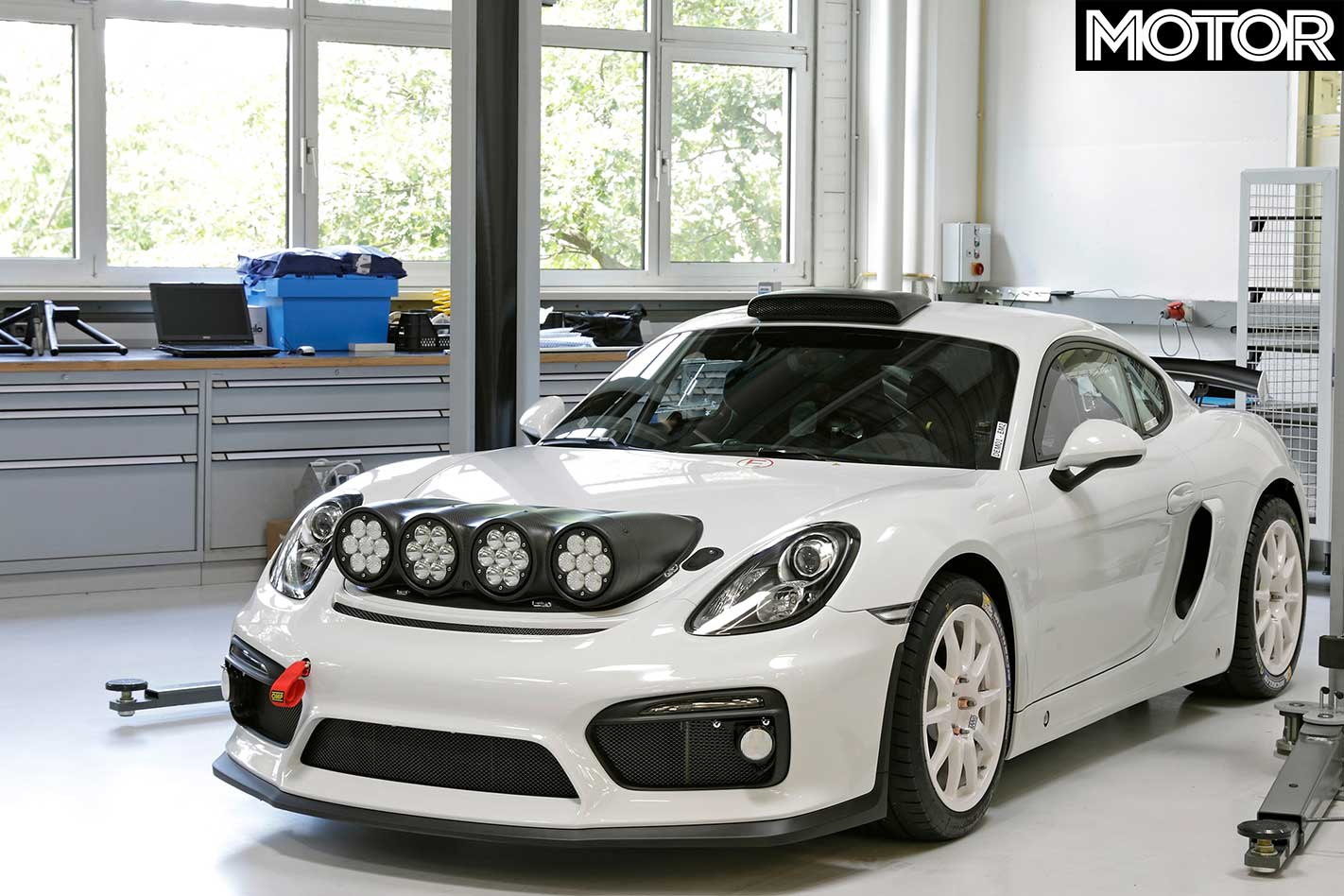
As we reported last week, Porsche Motorsport has built a Cayman GT4 Clubsport rally car, which is great news for rally fans.
Now Porsche has revealed more official information about it, and we’ve got a look at what the car looks like as it hits the gravel.
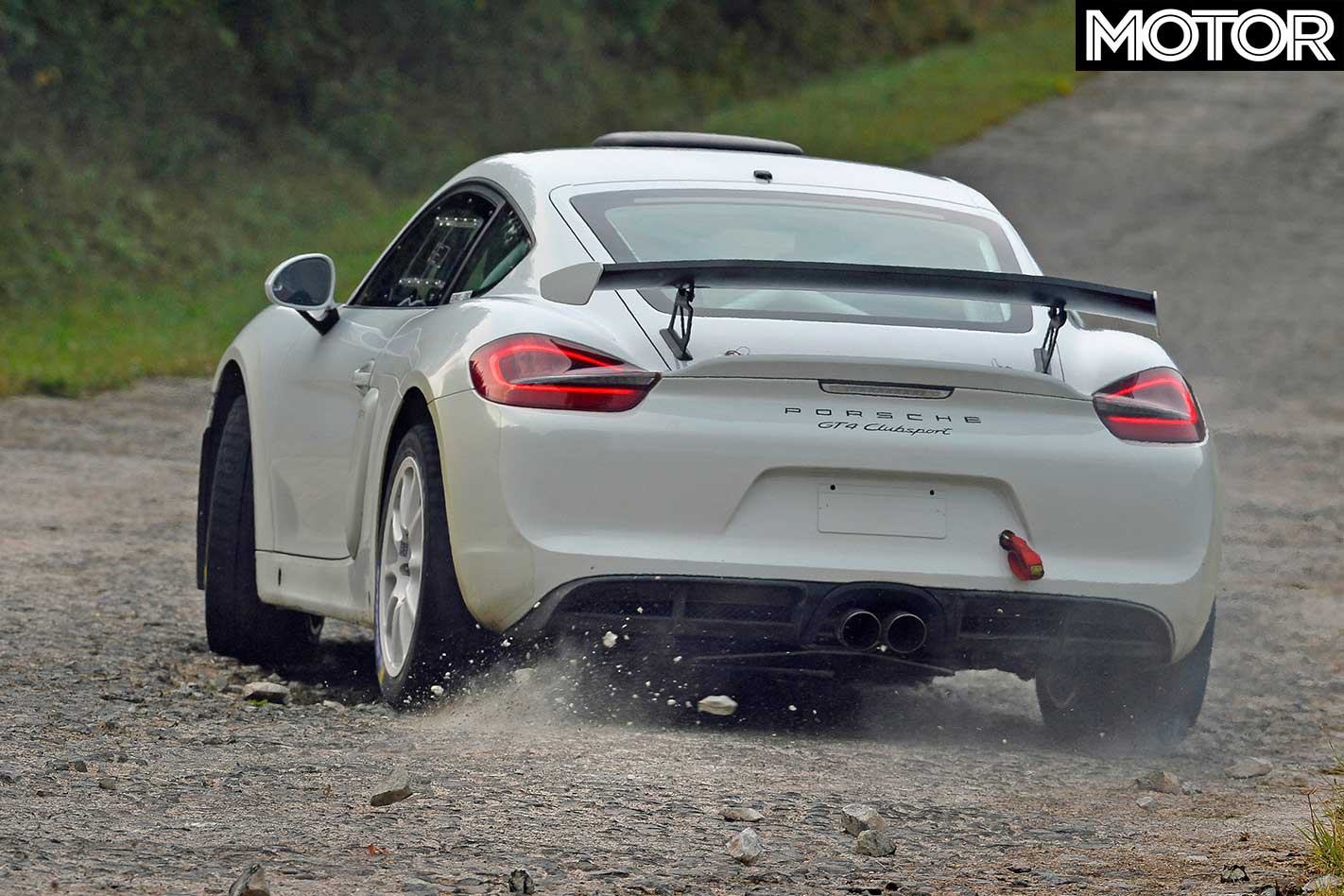
Set to appear with Porsche works driver Romain Dumas at the wheel as the course car during Rally Germany, the Cayman GT4 rally car is undergoing testing and evaluation.
It’s running Porsche’s 3.8-litre flat-six in rear-drive form, tuned for 283kW, with a PDK gearbox.
To increase its rallying capability, it’s got full underbody protection and pod lights mounted to the bonnet, as well as ‘an energy-absorbing foam element’ in the doors as found in WRC cars to absorb damage upon impact – something only recently added to rallying’s top tier.
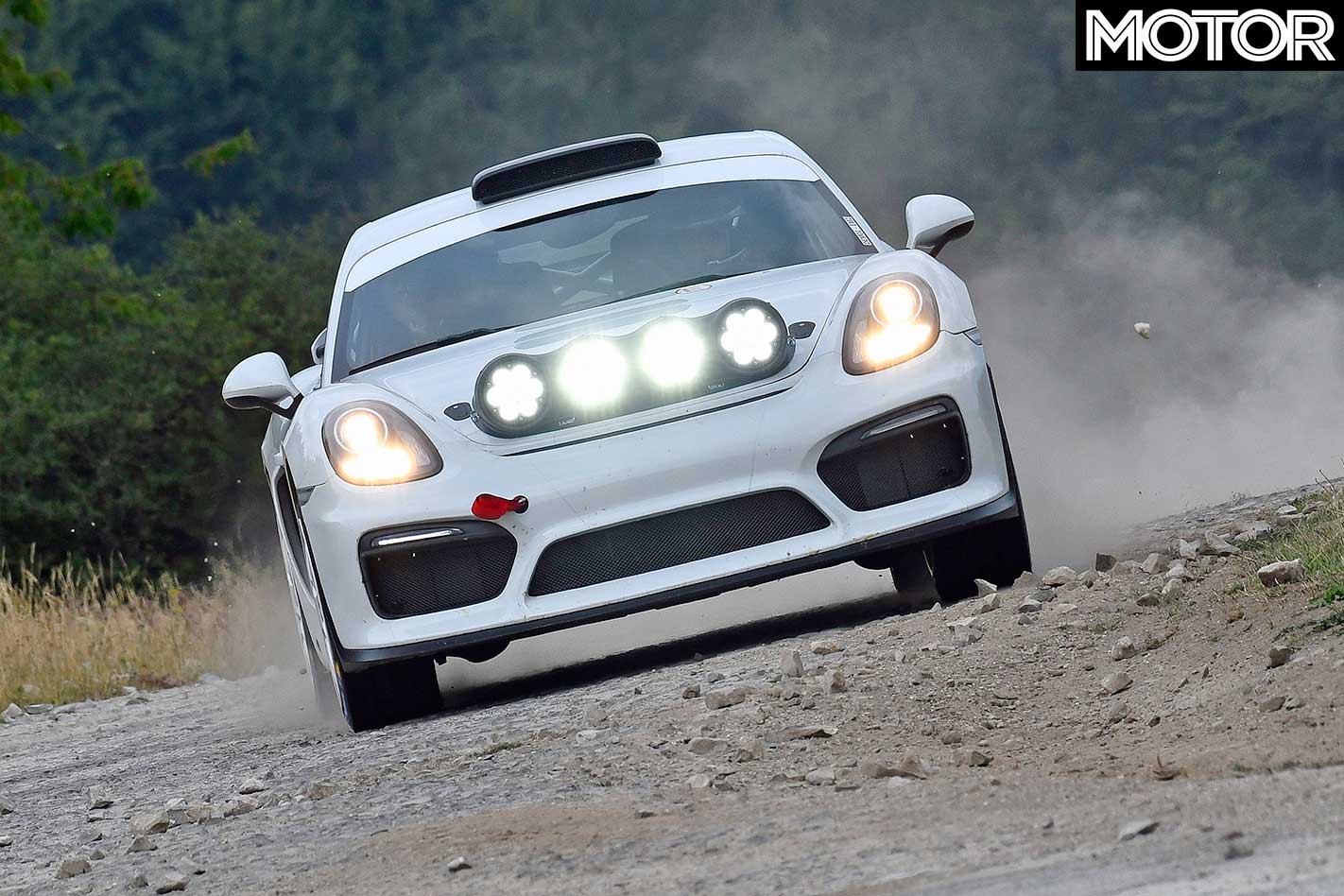
Porsche VP of Motorsport and GT Cars Dr. Frank-Steffen Walliser says the hype around the car could lead to the development of a proper Cayman rally car.
“We’re looking forward to seeing how the rally world responds to our FIA R-GT concept study,” says Walliser.
“I would like to invite every interested driver and team principal to visit the service park and take a close look at our rally concept car.
“Based on the feedback and the interest from potential customers, we will then decide by the end of the year whether we’ll develop in the mid-term a competition car for near-standard rallying based on a future Porsche model.”
Keep an eye out for the Cayman GT4 rally car at Rallye Deutschland, from 16-19 August.
