
DESPITE BEING a factory Mercedes-AMG Formula 1 driver, Lewis Hamilton has not one, but two LaFerraris in his 15 car collection, and he uses a tow truck to keep their mileage to a minimum.
The four-time world drivers’ champion revealed details of his impressive garage to The Sunday Times last month.
Hamilton’s personal wealth is estimated at A$281 million, and the 33-year-old has homes in Colorado, Los Angeles, and Monte Carlo. He also supplements his roadgoing vehicles with a custom Bombardier private jet and a 90-foot yacht.
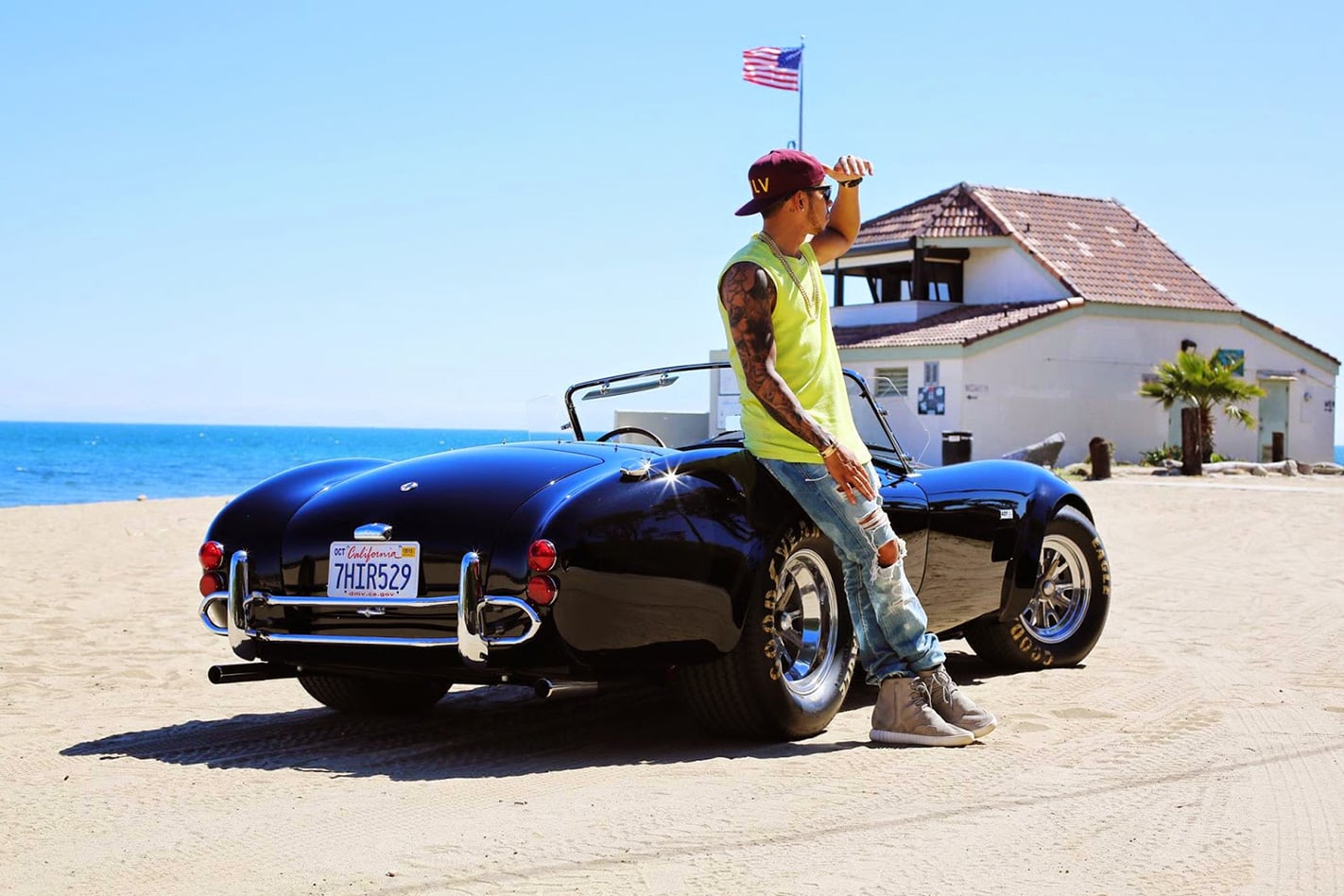
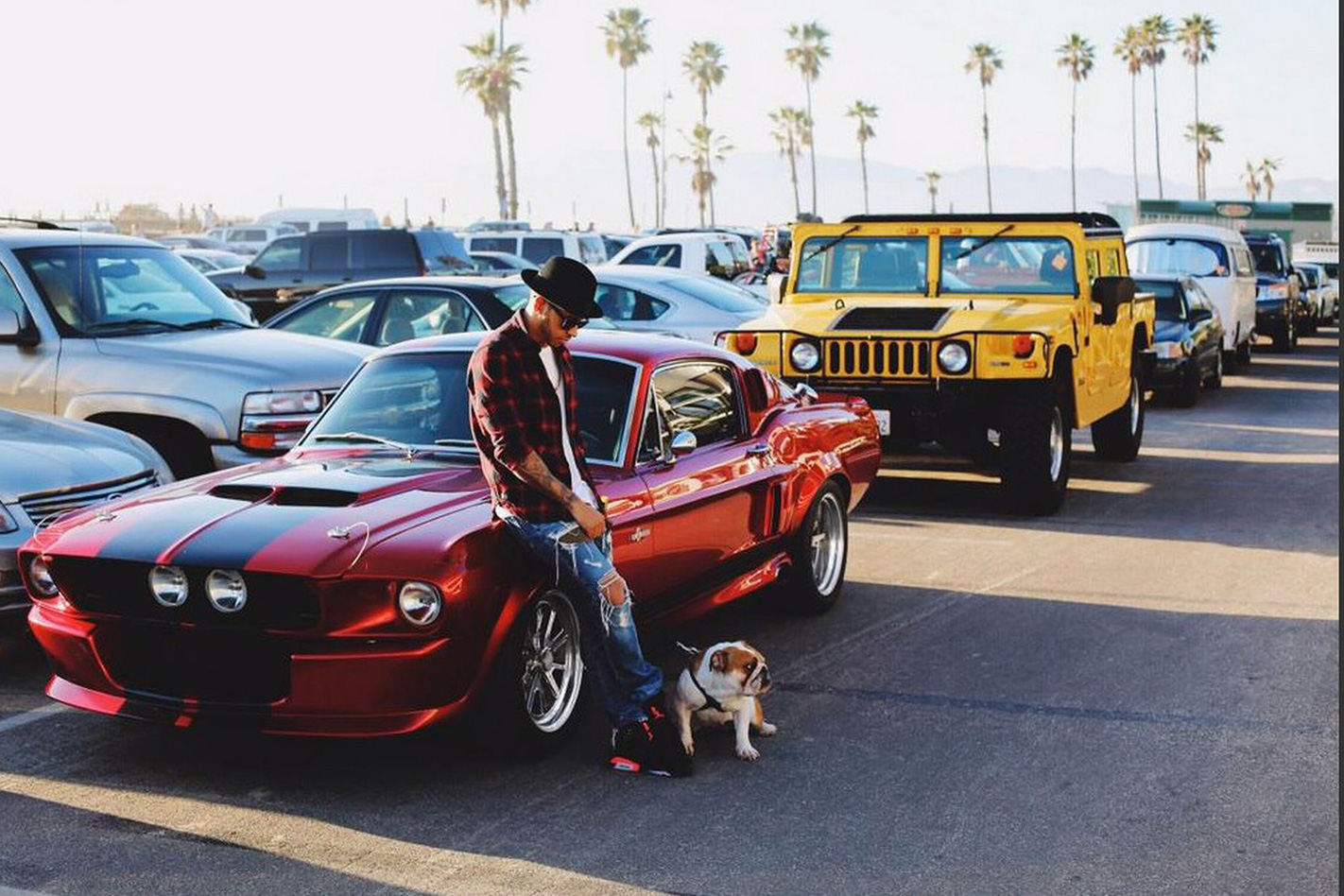
Included in Hamilton’s personal fleet is a pair of original Shelby Cobras, a Mustang, a Ferrari 599 SA Aperta, that pair of LaFerraris, a McLaren P1 and a A$2.8 million custom Pagani Zonda 760, the latter of which he famously crashed in Monaco after a particularly exuberant night of celebrating following a world championship victory.
Oh, and naturally he has a Mercedes-AMG Project One on order.
“I do like driving,” Hamilton explained to The Sunday Times. “But I hate sitting in a car for more than a couple of hours.”
Of his 15 cars, Hamilton rates eight as “special”, and divides these between his house in Monaco and a garage he rents in Los Angeles.
Hamilton was snapped by paparazzi parking one of his LaFerraris outside a venue in the Californian city, only for a tow truck to arrive and remove the vehicle. This prompted speculation of unpaid parking and speeding fines, but the truth is much simpler – the F1 driver keeps a towie on call to ensure his cars don’t rack up unnecessary mileage.
“In LA, I’ve got a tow truck and a handyman,” he said. “If I think I’ve had my excitement quota for the day I’ll ring him up and he’ll collect it from wherever I am.”
Although he’s tightly connected to Mercedes-Benz, Hamilton clearly has a penchant for vehicles from Maranello, with a 599 GTO the second car he ever bought with his own cash.
Considering his substantial wealth, Hamilton sees his collection of vehicles as an investment.
“I don’t know anything about wine,” he explained. “I don’t know a huge amount about art. But what I do know is cars, and I’m very particular about them.”
“I could sell them all for way more than I paid for them, but these are my babies, my art pieces, and I’ve worked hard for them.”
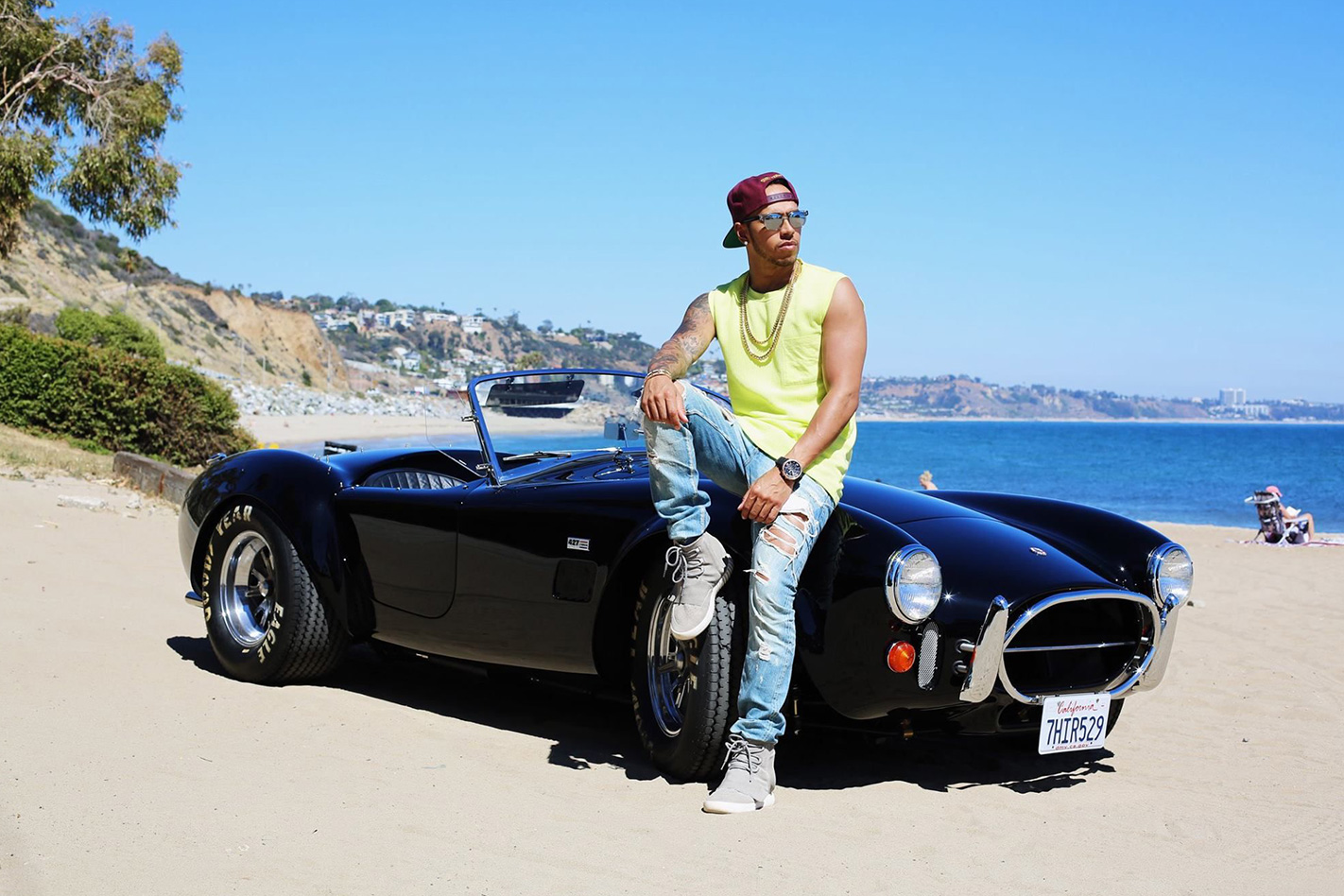
Another gem from his collection is a 1966 Shelby Cobra 427, which was inspected by Mr Shelby himself before purchase.
“I found it and called Carroll Shelby to check it out for me. He said it was one of the best he’d seen in a long time, all original,” Hamilton explained.
“I got a second one soon after, a ’67 427, which I actually use more because I want to keep the ’66 one perfect.”
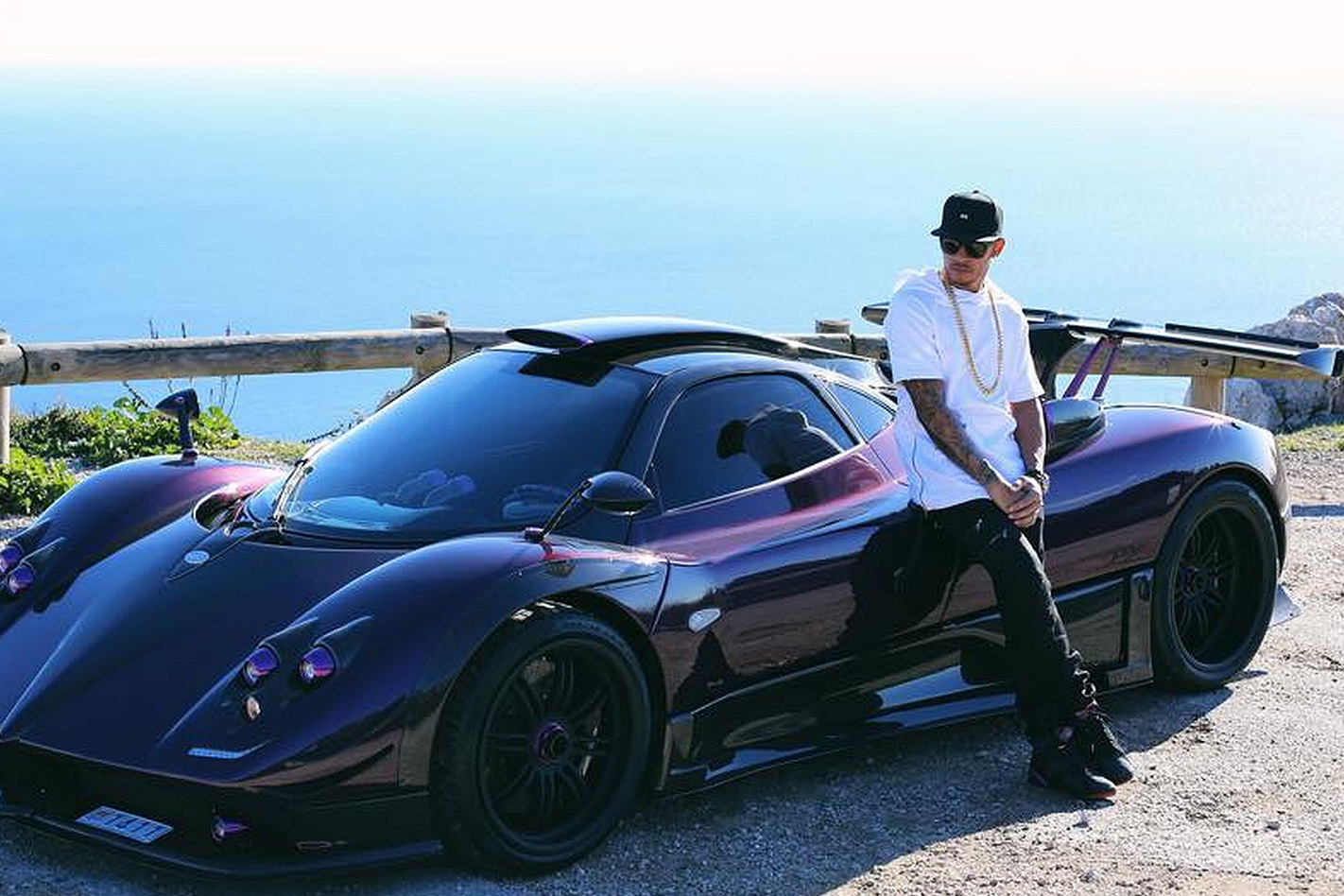
However, the racing driver isn’t always glowing in his reviews for the cars in his collection, with his limited-edition Pagani a target of his ire.
“The Zonda is terrible to drive! It’s the best-sounding car I own, but handling-wise it’s the worst,” he said. “I got it in manual because I didn’t like the tiptronic version.
“The tiptronic Pagani offered was worse than the Smart Roadster I had. I’m used to quick gearshifts, so I’m more critical than most customers. If you asked me to design my own supercar I’d have it manual.”
Hamilton isn’t always at the wheel, spending plenty of time being chauffeured to and from events and grands prix weekends. The Briton rates the Mercedes-Maybach S 600, Mercedes-Benz GL 63 and Cadillac Escalade as his favourite vehicles to be driven in.
As for future additions, Hamilton is eyeing off potentially adding a Mercedes-Benz 300 SL, or if the budget will allow, a Ferrari 250GT California Spyder.
“That’s the dream car, like the one in Ferris Bueller’s Day Off. When I retire, that’s what I want to drive.”
Almost a year has passed since Jaguar first showed its steroidal-arched warrior at the Goodwood Festival of Speed. Since then it’s set what Jaguar says is a four-door sedan lap record at the Nurburgring. But now, at last, we get to drive it at the brilliant Portimao racetrack in Portugal and on the twisty roads in the surrounding hills.
The Project 8 looks right at home at a racetrack. Those flared arches with semi-pornographic cutouts, jutting front splitter and tall rear wing all scream motorsport. The Verbier Silver car assigned to track duties is about as racy as the Project 8 will get.
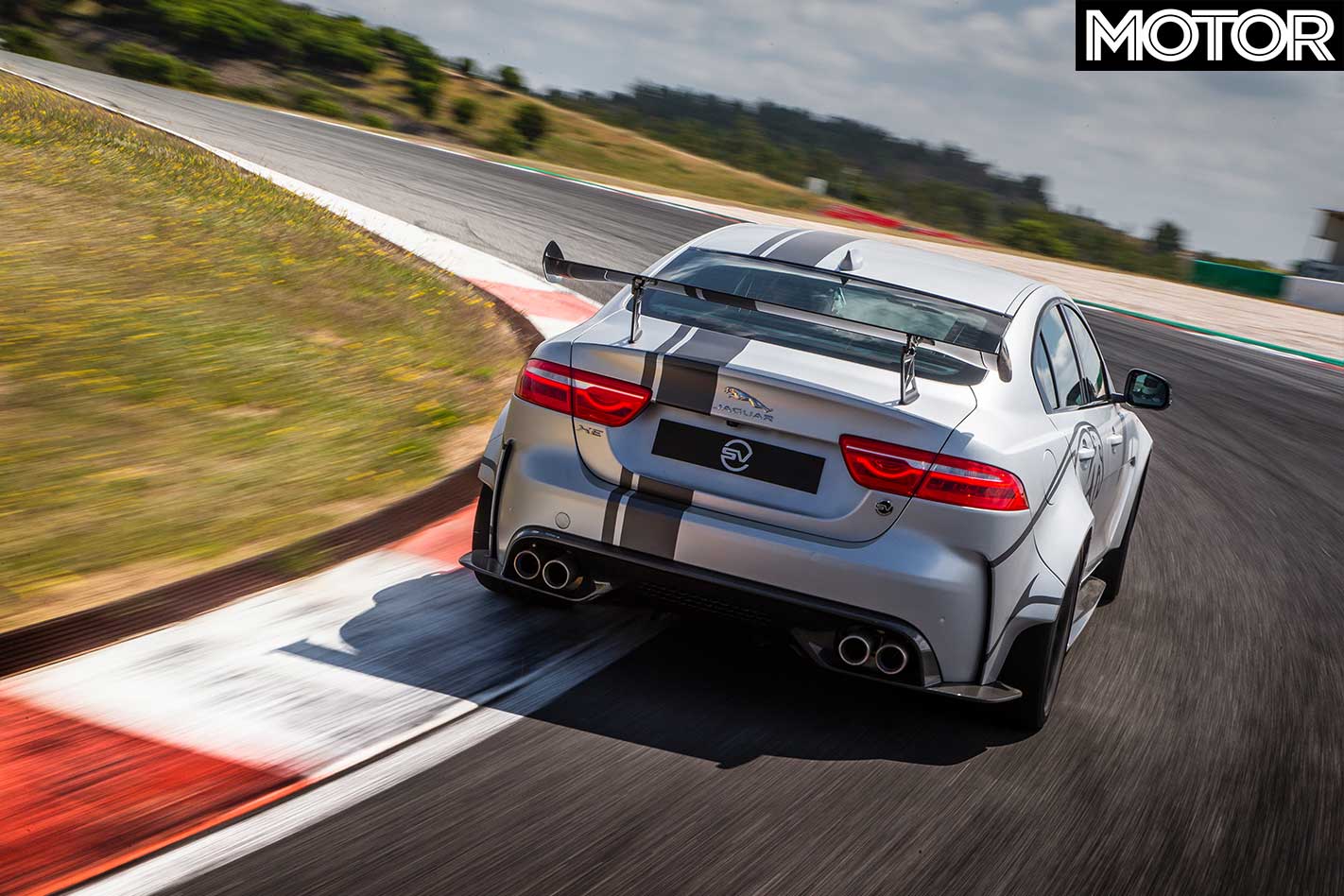
This car is not equipped with the Track Pack, but even without it this Project 8 looks too track-focused to possibly work on the road. But Jaguar’s most hardcore passenger car works surprisingly well away from the track.
With springs that are four-and-a-half-times stiffer than those fitted to a conventional XE the ride is, of course, tight and firm, but not too unyielding. There’s enough compliance and bump absorption to deal with most road surfaces and while it’s far from cushy, it’s not uncomfortable, either. Even when the test route turns onto an ancient back lane, the Project 8 hums along with impressive composure.
The damping really is exceptional. It skilfully prevents a firm ride from ever becoming overbearing. At no point does the car threaten to leap into the scenery. That’s the first surprise. The second is how well mannered it is in these wet conditions. A number of high-performance cars would be close to undriveable in this rain on Michelin Pilot Sport Cup 2 tyres, as fitted here, but the Project 8 makes them work.
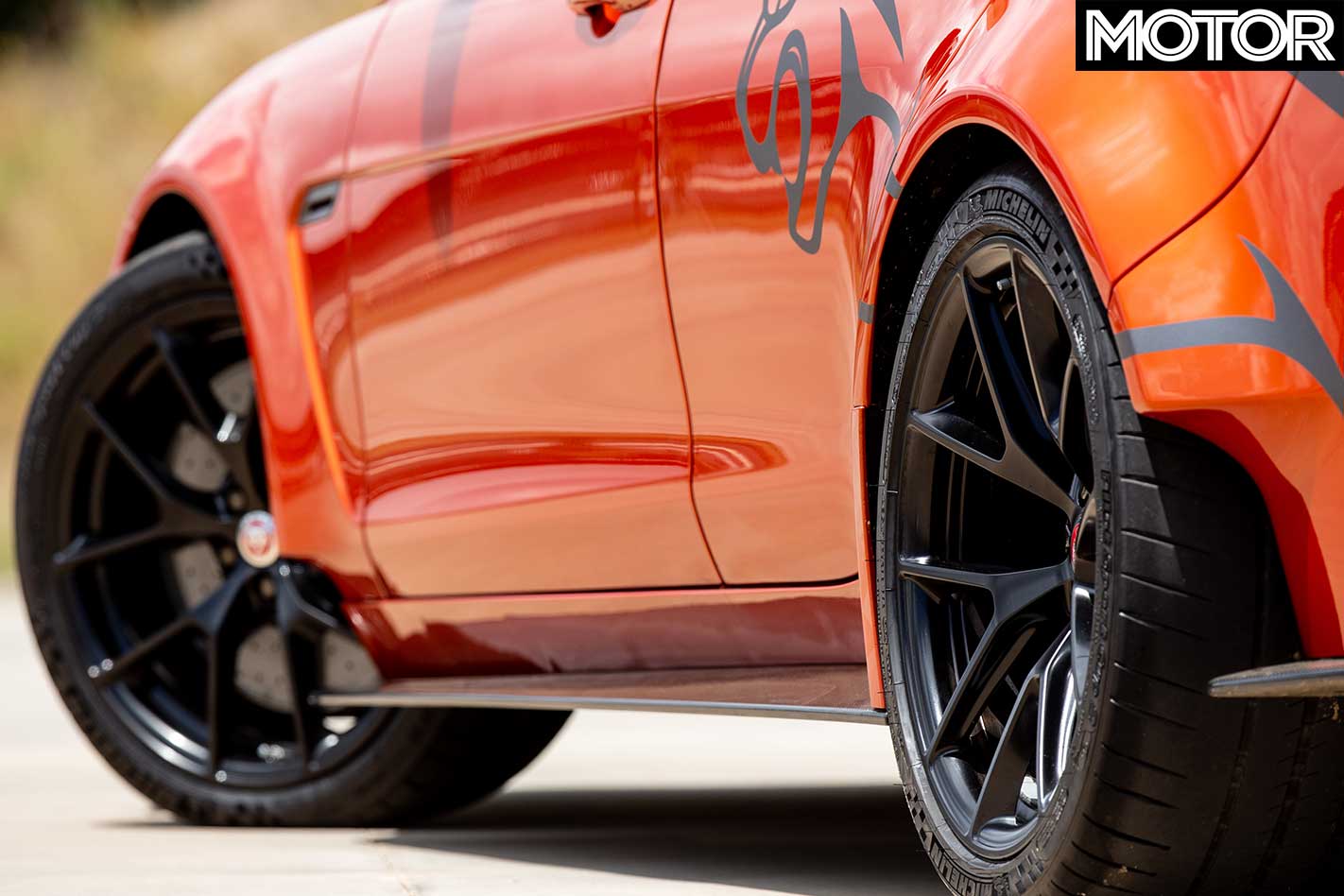
There is good turn-in bite and very stable, consistent cornering grip, which means you don’t feel at all nervous leaning on the chassis in corners. Traction is very strong, too, thanks to the clever all-wheel drive system, and those spring rates guarantee a very stable platform, a level of body control no other super-sedan can match, and astonishingly sharp steering response.
There’s no tougher test of a track-focused car than a wet, bumpy back road, but the Project 8 gives you the confidence to press on. It’s all by design. “We wanted to build a car that was approachable and friendly to drive at speed,” says vehicle dynamics manager David Pook‚“not something that tried to bite you.”
That’s why they settled on all-wheel drive. Jaguar has fitted its biggest and most powerful engine into its smallest and lightest car and Pook wasn’t interested in building a wheelspin machine. This car is the latest limited-edition trinket from Jaguar Land Rover’s Special Vehicle Operations (SVO), the division responsible for hi-po SVR-branded Range Rovers, F-Types and specials like the 2014 F-Type Project 7.
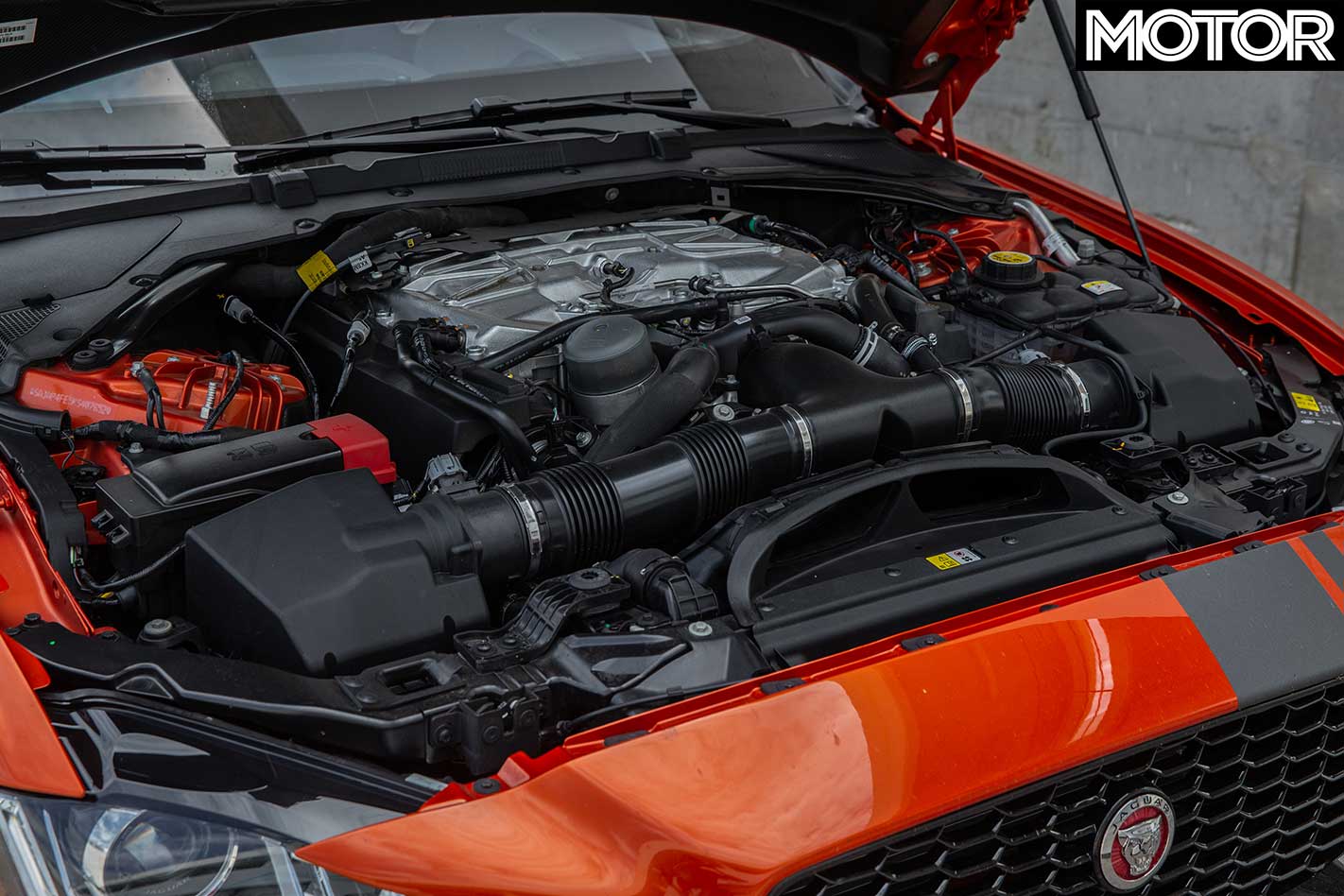
No more than 300 Project 8s will be built, all in left-hand drive. It shares its body, front doors and roof with all other XEs (a carbon-fibre bonnet saves 3kg), but the Project 8 is so comprehensively re-engineered that it’s really an XE in name only.
Tracks that are wider by 24mm at the front and 73mm at the rear and only the lower suspension arms are carried over. Everything else is bespoke. Even the headlights were relocated, dragged forward by 14mm (with the bodywork around them) to make space for 20-inch Cup 2 tyres.
“If we didn’t get the Cup 2 tyres to fit there wouldn’t have been a Project 8,” says Pook. “They were the only tyres that would have worked on this car.”
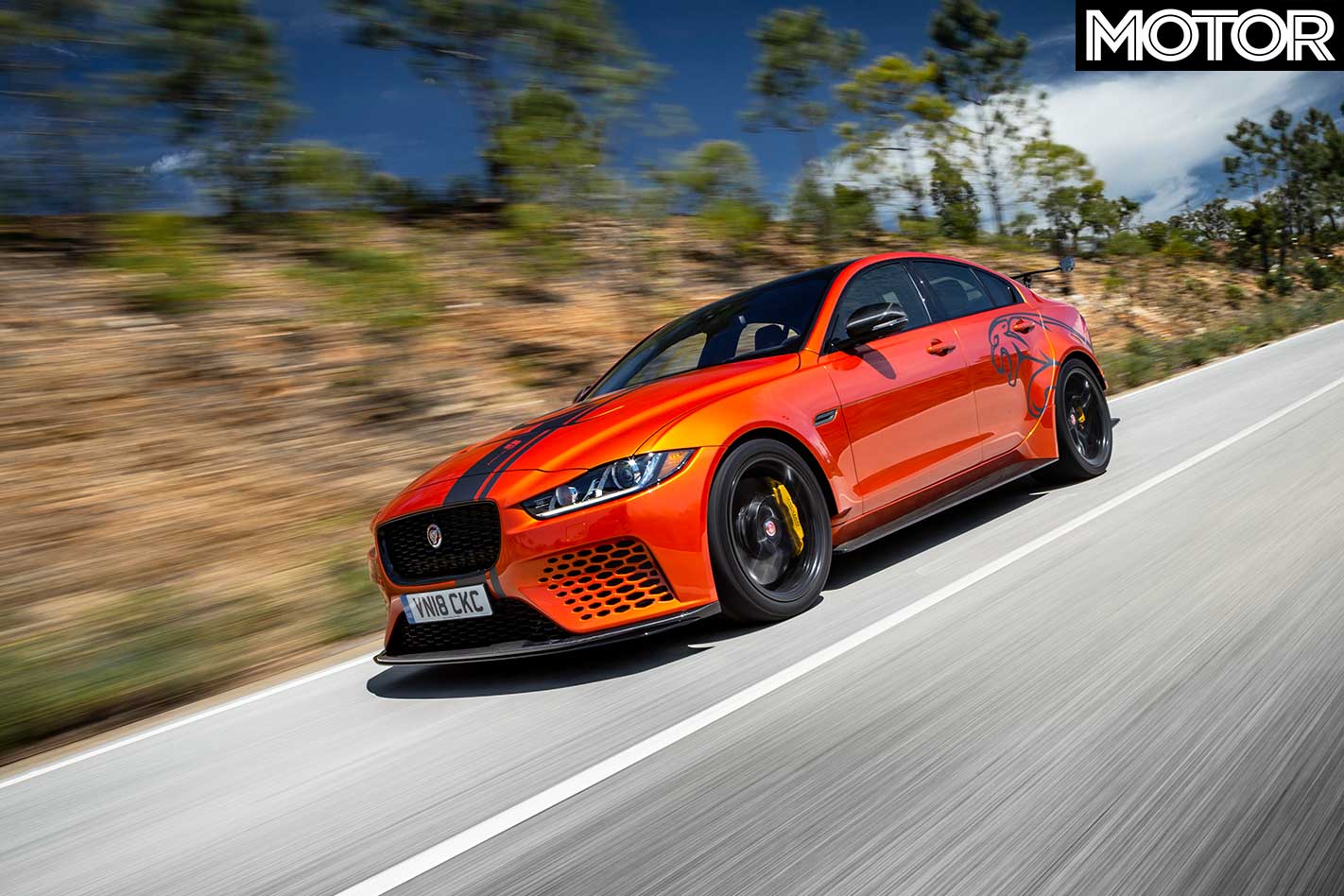
Squeezing the 5.0-litre supercharged V8 into the engine bay was less of a struggle, but SVO had to develop new billet engine mounts to stop the 400kg hulk from writhing around. The engine develops 442kW and 700Nm, delivered via an eight-speed auto transmission, and Jaguar quotes a 0-100km/h time of 3.7sec and a 322km/h top speed.
There are carbon-ceramic brakes with 400mm discs on the front, forged wheels, the differential in the rear axle is electronically controlled so it can open fully into a bend to reduce understeer and lock on exit to give maximum traction, the dampers are adaptive, ride height is adjustable for road or track, and the front splitter and rear wing, at full extension, generate 122kg of downforce at 300km/h.
This might well be the most comprehensively re-engineered four-door performance car of all time. “We built a car that all of us at SVO wanted to drive,” says Pook.
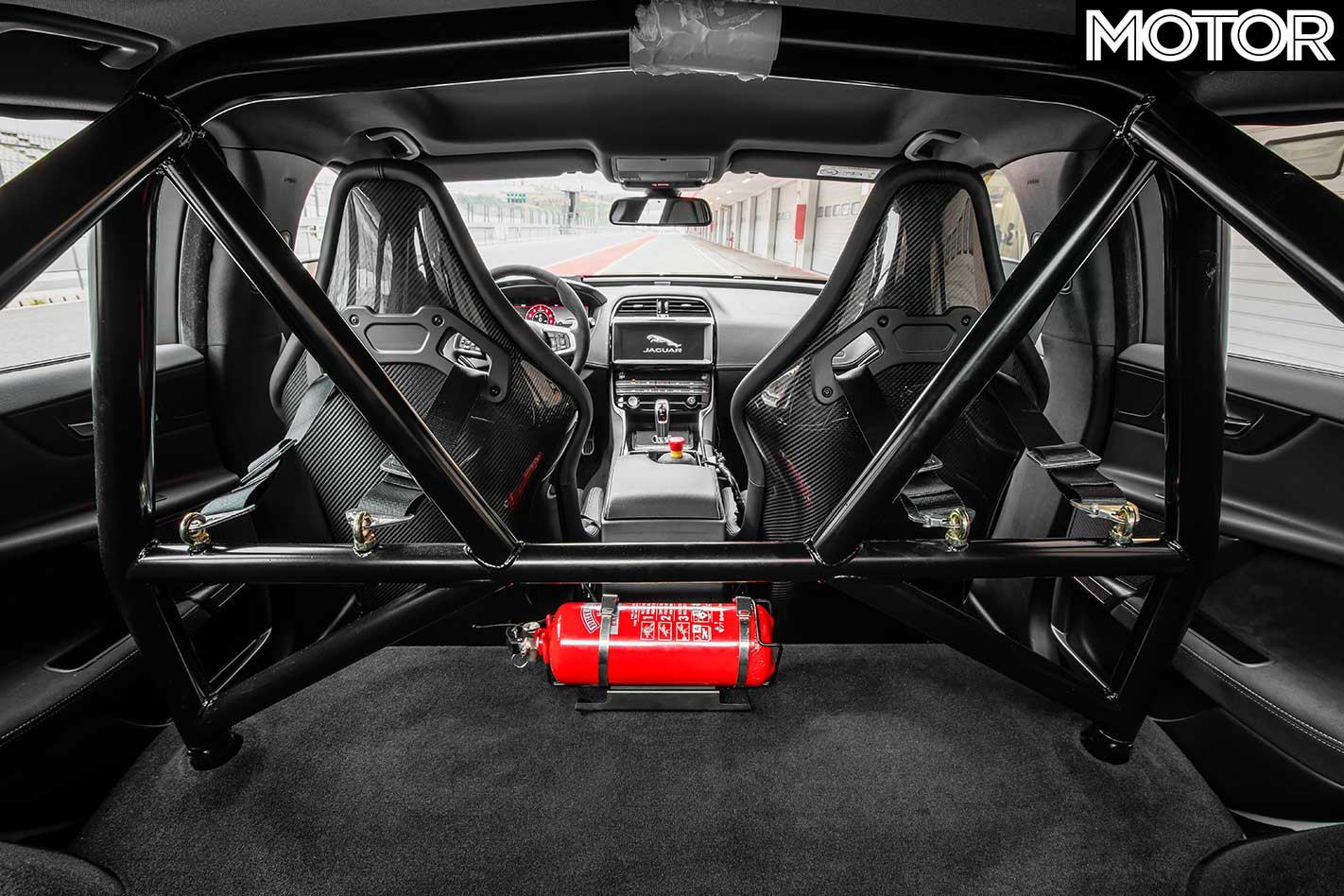
Time for the Verbier Silver car. The track is bone dry now and within two corners it’s clear that no other super-sedan is this aggressive. It’s more akin to a Porsche 911 GT3 RS or a BMW M4 GTS. It just happens to have four doors.
The adaptive dampers remain basically unchanged between Comfort and Dynamic modes, but in Track they switch to a more aggressive map and there’s less roll, less vertical movement and even tauter responses.
On sticky track-biased tyres, the Project 8 has enormous grip; you choose your turn-in speed and trust the front axle to find a way through the corner.
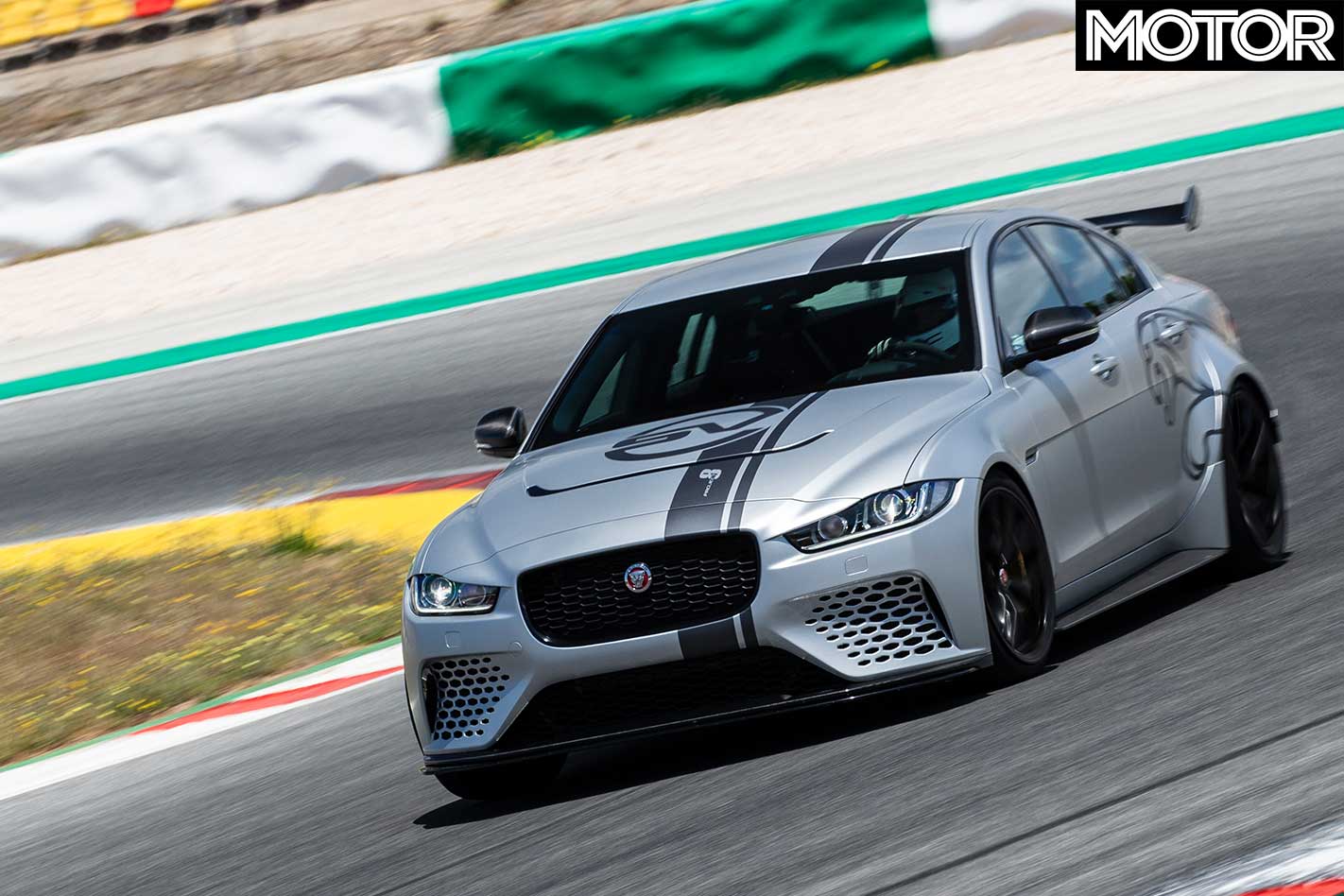
The steering is intuitive and precise, the body stays almost entirely flat and the car is perfectly balanced through the apex. In fourth-gear corners it sweeps from entry to apex in the subtlest four-wheel drift, like an old racing car. It’s the sweetest sensation.
Exiting a corner, there’s no power oversteer. If you unsettle the car on the way in and stand abruptly on the throttle pedal, you can make it drift, but it doesn’t come naturally. It doesn’t slide very willingly even in Track mode, which favours the rear axle right up until it starts to lose traction.
The Project 8 slingshots out of bends with no loss of forward momentum, rocketing towards the next corner with eye-widening ferocity. The big carbon stoppers never fade, and with the four-point harness pinning you into the wrap-around seat, you feel everything.
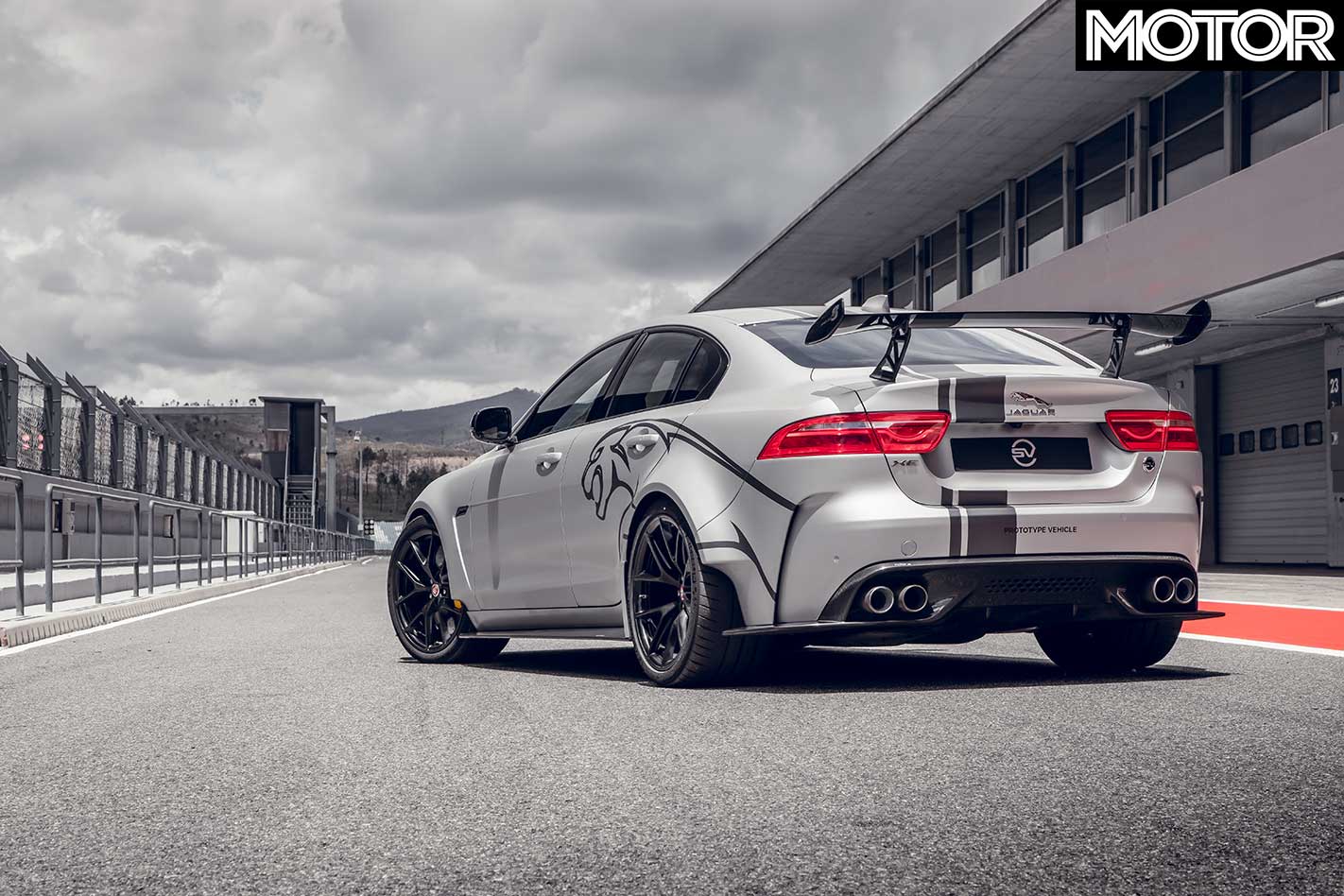
Track driving is torture for most road cars but the Project 8 is built for it. The engine has almost as much character as it does power, and while the auto gearbox isn’t the quickest or most responsive, it does its job well.
What’s most important about the Project 8 is that it is absorbing, rewarding, and huge fun to drive. When diehard car guys are left to get on with it, the results speak for themselves.
2018 JAGUAR XE SV PROJECT 8 SPECS: Engine: 5000cc V8, DOHC, 32v, s/c Power: 442kW @ 6500rpm Torque: 700Nm @ 3500-5000rpm Weight: 1745kg 0-100km/h: 3.7sec (claimed) Price: $287,000 (est)Like: Four-wheel drive grip and traction; stonking supercharged V8; aggressive looks; exclusivity Dislike: Left-hook production only; firm ride on the road; not a drifting specialist Rating: 4.5 out of 5
The Nemesis – BMW M4 GTS 3.0-litre twin-turbo l6, RWD, 368kW/600Nm, 0-100km/h 3.8sec 1510kg, $294,715
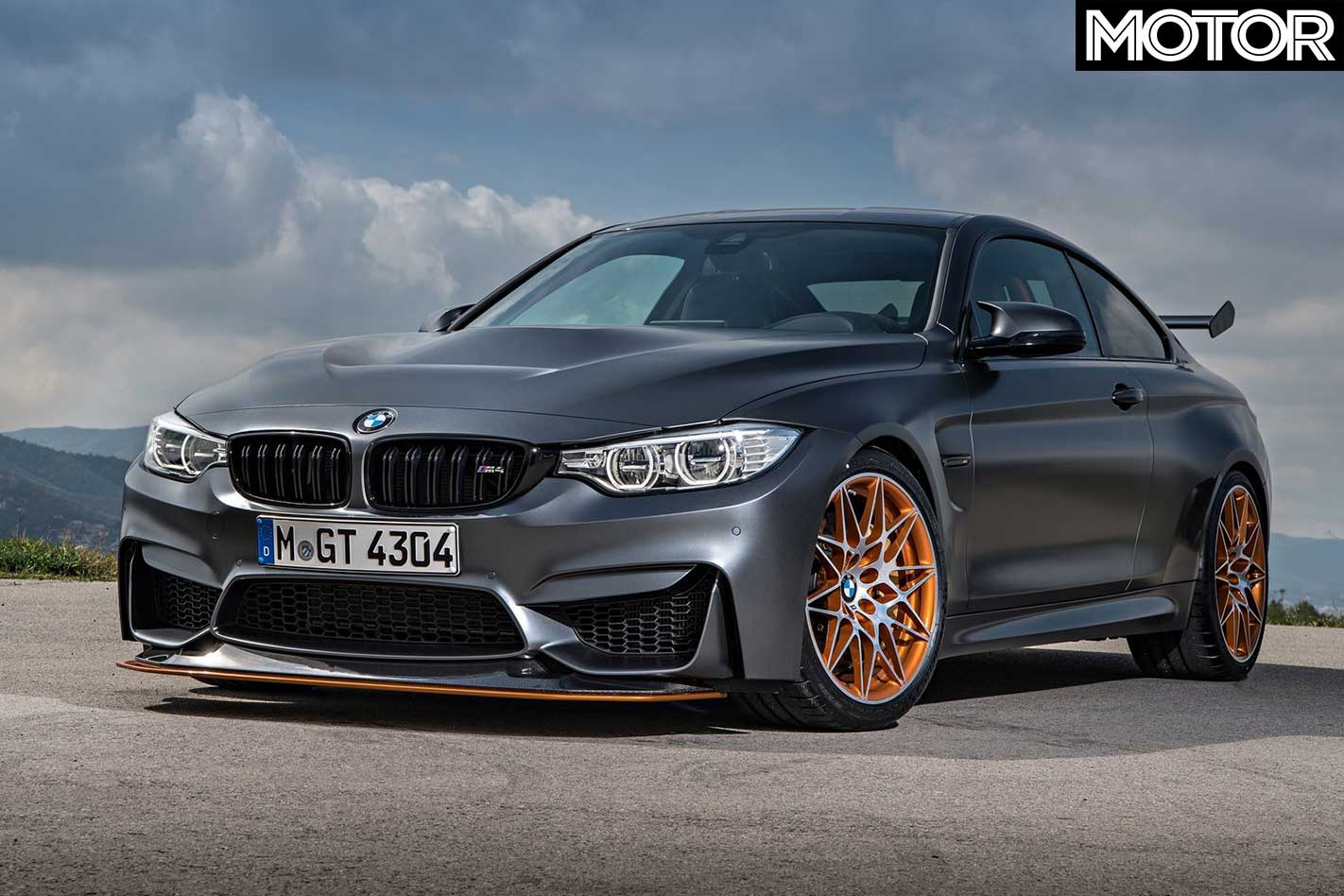
It isn’t cheap, only 25 came to Australia (plus 10 DTMs) and you can’t buy one new. With more power and a 27kg diet, the roll-cage equipped BMW M4 GTS isn’t perfect, but it’s very fast.
Cars are becoming more complex and their upkeep is increasingly specialised, and while many maintenance tasks are best left to the experts, there are still a few minor but necessary fixes you can easily tend to yourself to save time and money.
Wiper blades
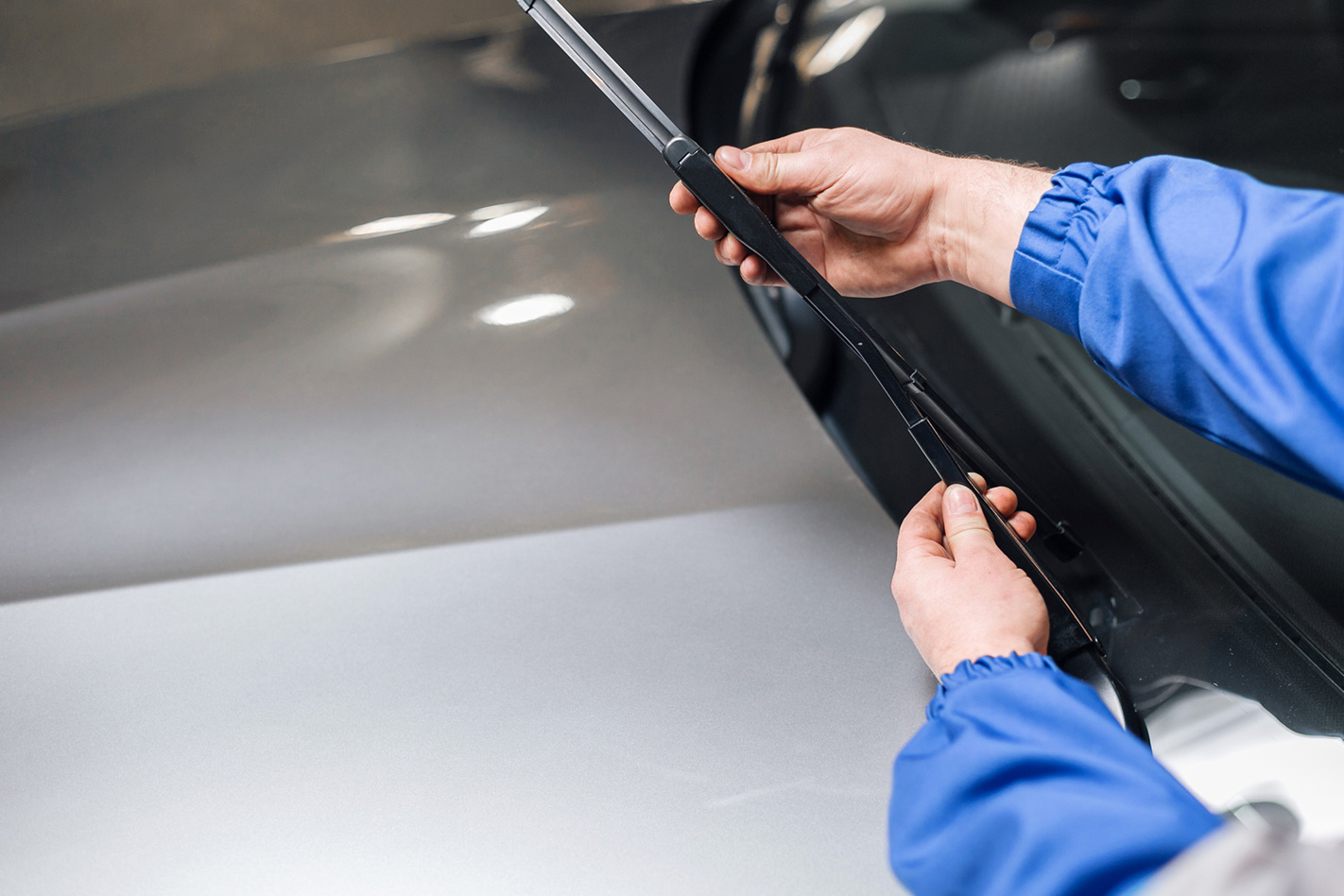
Windscreen wiper blades should be replaced every 12 months, or when they start to leave streak marks and/or screech. All you need is a pair of cutting pliers. First, squeeze the small clip that holds the wiper blade in place, and to cut the new rubber to fit. It’s easier than you might think.
HOW TO CHANGE YOUR WINSCREEN WIPERS
Light globes
Replacing a blown globe is an urgent task, but one you can easily do yourself. The hardest thing is knowing how to access them. Fortunately, this information is usually on hand in the car’s owner’s manual or online, even on YouTube.
You may need a common Phillips-head screwdriver to access the globe, and long-nose pliers can prove handy for unplugging wires on headlight globes.
HOW TO TELL WHEN YOUR GLOBES ARE BLOWN – AND HOW TO FIX THEM
Car battery
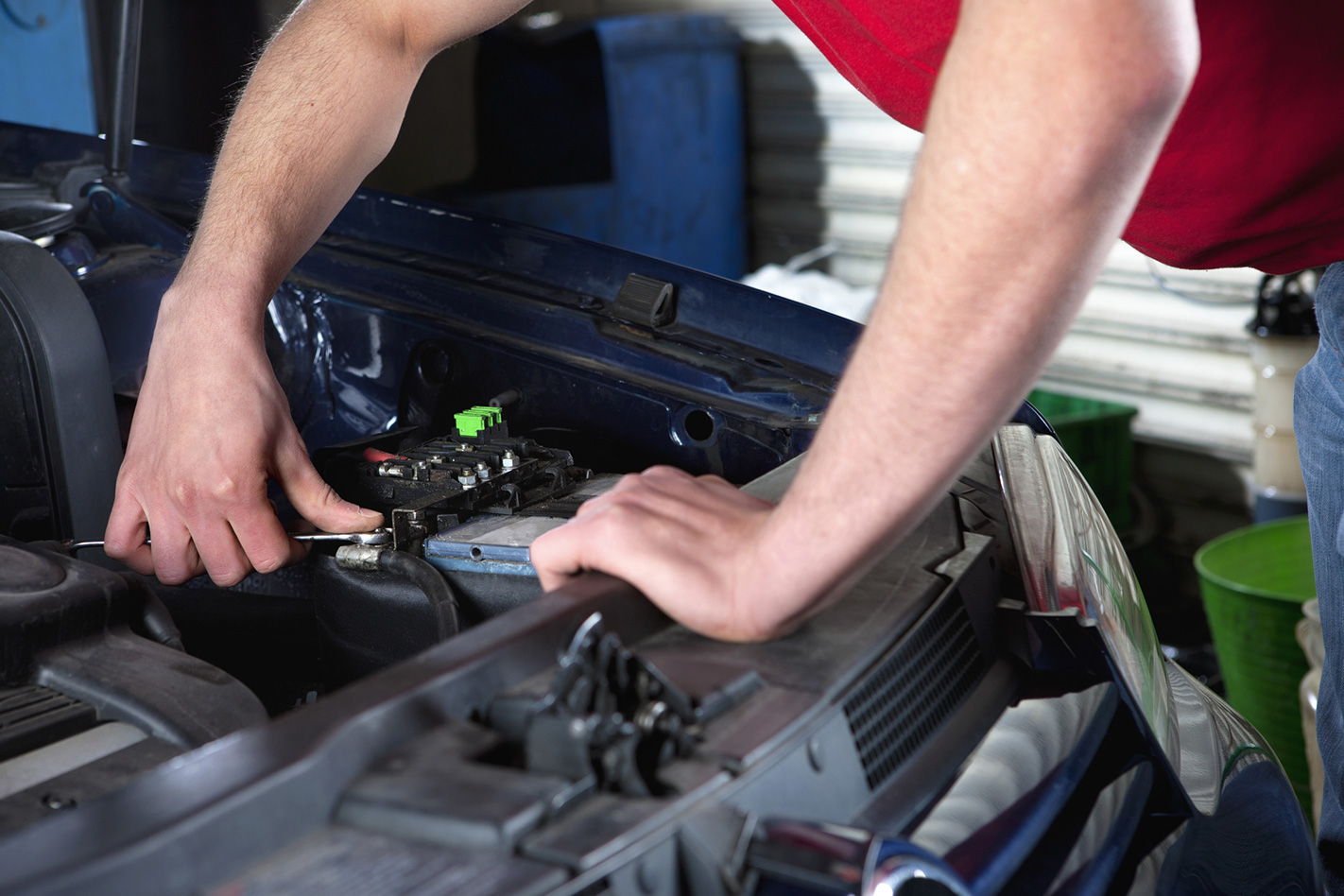
If you’ve had to jump start your car, or your engine struggles to start every morning, than it’s time to replace your battery before it lets you down.
Changing the battery yourself is generally pretty simple. Use a spanner to carefully disconnect the black negative (-) terminal followed by the red positive (+) terminal, making sure you don’t touch anything else with the other end of the spanner. Then undo the battery clamp and remove the battery. Installation is the same, but in reverse.
8 TIPS FOR LOOKING AFTER YOUR BATTERY
THE sports coupe has evolved. Alfa Romeo is working on a 447kW two-door version of the Giulia while Mercedes-AMG is looking to create an athlete in the shape of its next-generation 400kW C63 coupe.
Both will feature fashionably downsized turbocharged powerplants and both will deliver tantalising diversions from the performance template for each marque.
The coupe version of the Giulia was long-rumoured as a logical model extension on the Giorgio platform, but outgoing FCA boss Sergio Marchionne amped up expectation at the group’s Capital Markets Day, where the plans for the next five years are unveiled. The coupe will revive the classic GTV nameplate, a badge last seen on the underwhelming 916-series front-drive cars that last rolled off Pininfarina’s Giorgio Canavese line back in 2004.
This one is very different. Although the front tyres are tasked with transferring torque, they’ll be minority players, stepping in to help the rears deploy a power figure that is set to be at least 600 horsepower, or 447kW if you prefer. That figure deserves a little contextualising. It’s more than a Ferrari 458 Speciale, shades a current Porsche 911 Turbo S and means more muscle than a Nissan GT-R Nismo.
The latter is instructive as the AWD Nissan will accelerate to 100km/h in 2.7 seconds, despite weighing 1739kg. Should the GTV hit a target weight of around 1685kg, its step-off will be utterly concussive.
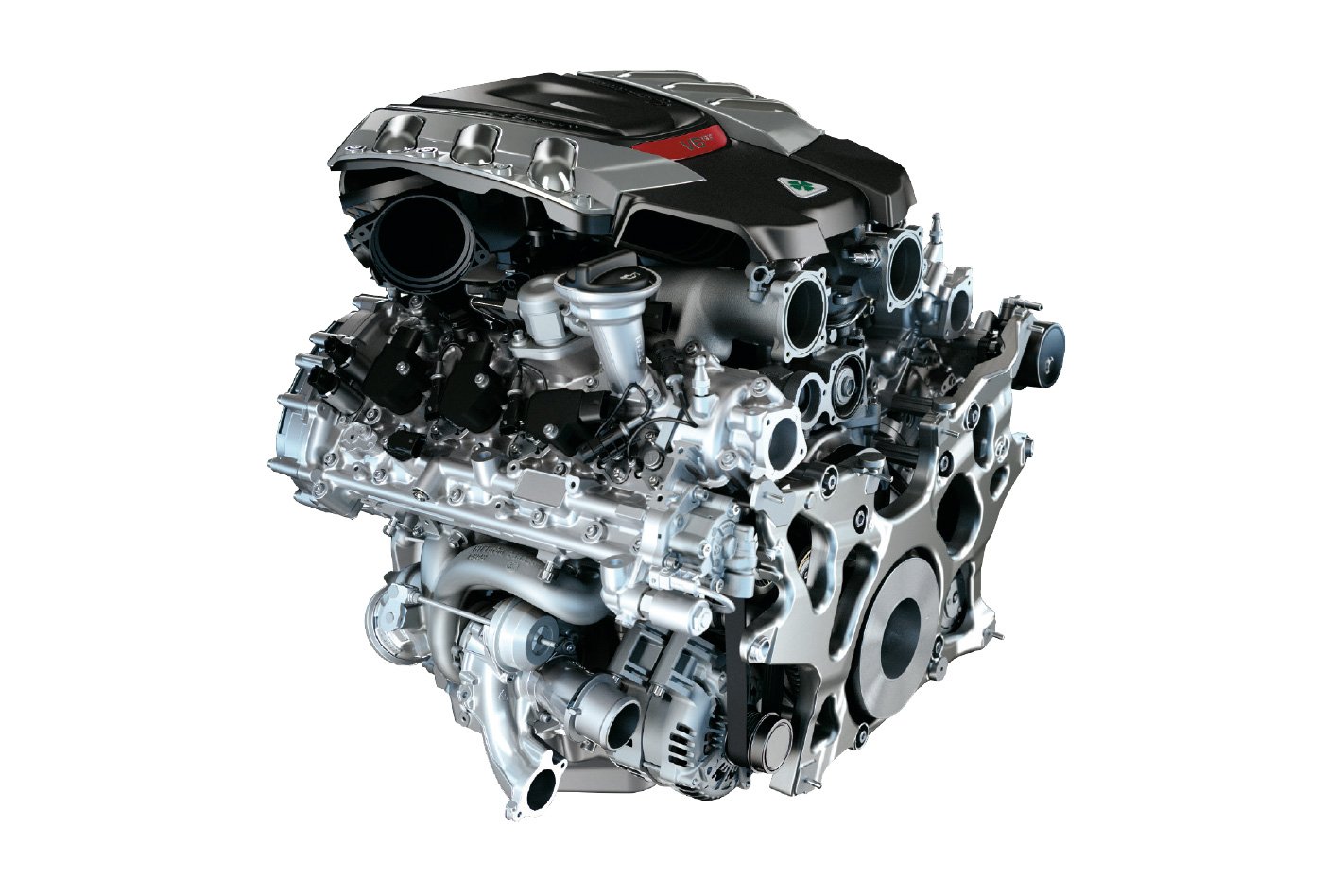
Performance will be aided by the fitment of an E-Boost system, which FCA claims will increase power by 25 percent and, in the process, virtually eliminate turbo lag. That uptick in power would see the output of the 2.9-litre V6 (currently making 375kW in Giulia Quadrifoglio and Stelvio Q) lifted to above the 447kW target. The AWD system will be a version of the Maserati Levante-derived hardware seen in the Stelvio Q complete with torque-vectoring rear differential. In addition to the halo Quadrifoglio model, there’s also likely to be a 260kW E-Boosted version of the current 208kW 2.0-litre turbo four.
Alfa promises a perfect 50:50 front-to-rear weight distribution and functional rear seats in a model that will be a key player in FCA’s plans to steadily elevate Alfa Romeo’s brand equity.
One thing the GTV can’t count on is an unopposed run at things in the premium two-door market. Mercedes-AMG is planning to take a divergent tack from the usual C-Class coupe script with its next generation model. Whereas AMG products have often sought to differentiate themselves by being the most powerful cars in their respective classes, the 2021 model-year C63 will now focus on dynamics and athleticism.
Power is set to be capped at no more than 400kW, already up 25kW on the figure that AMG boss Tobias Moers once cited as being the limit for manageable traction in such rear-drive cars. He had set about readying the market at this year’s New York auto show when he said that the all-new C63 “will be a hybrid – that’s now a given.” What we weren’t prepared for was how intricate the new car’s hybrid system would be.
Responsibility for the development of the hybrid tech has gone to Mercedes-AMG High Performance Powertrains, the engineering team responsible for the oily bits that sit behind Lewis Hamilton’s noggin, as well as the Force India and Williams units. F1 fans will also be familiar with the name Ilmor, which was ultimately taken over by Daimler-Chrysler in 2005, the Brixworth-based outfit also charged with developing the driveline for the AMG Project One hypercar, itself a car that has grown in importance within Daimler’s porfolio due to updated endurance racing regulations that will allow for such cars to appear at races like Le Mans from 2020.
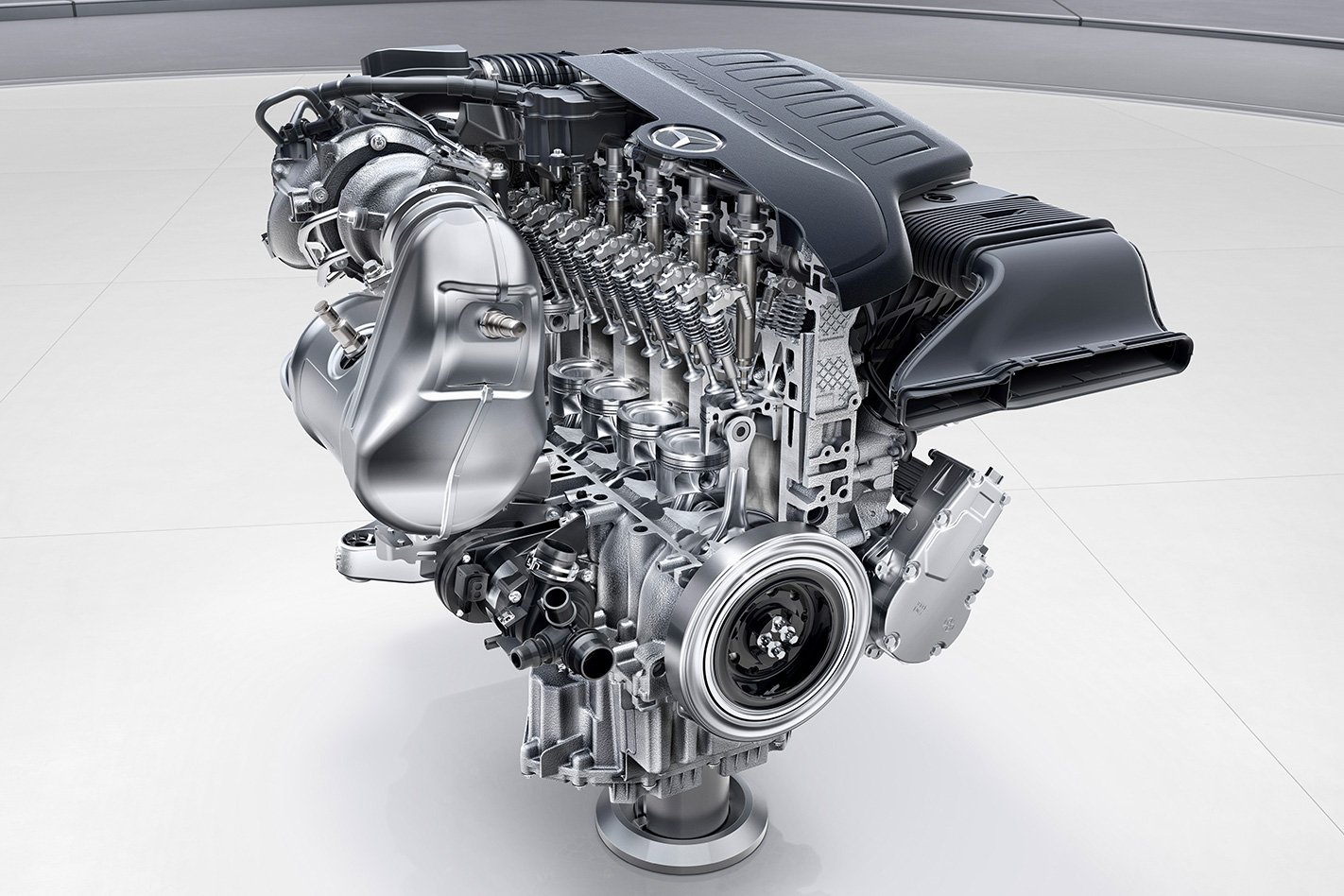
With the larger E63 being positioned as the ball-tearing hotrod in the AMG sedan portfolio, the C63 needs to work smarter as well as harder. The 6.2-litre M156 V8 engine that debuted in 2008 gave way to a 4.0-litre twin-turbo M177 engine in 2015; now the flagship C-Class looks set to go smaller still in its next iteration with our Mercedes source suggesting that it may shrink to a six-pot, albeit augmented with hybrid tech, a kinetic energy recovery system and turbocharging. That makes a development of the M256 in-line 3.0-litre six-cylinder unit, as fitted to the current Mercedes-AMG CLS53, the most likely candidate for teasing out the additonal required 80kW of grunt.
The styling follows the CLS’s lead, with similar lights and the extension of Mercedes’ current design direction of eliminating unnecessary swage lines from the car’s flanks. A Panamericana grille and a similarly pugnacious flared-guard stance to the current C63 can be taken as read.
With BMW also planning to introduce its next-gen G82 M4 in 2021, powered by a 375kW straight six with e-chargers and water injection, the Mercedes-AMG C63 will have a very tangible rival that will threaten its sales dominance in Australia. Nissan has hinted that its next-gen GT-R is also likely to appear in 2021. This looks set to feature an electrified six-cylinder engine and offer near- hypercar performance.
Where the ballistic Alfa will slot into the market is another issue altogether. By increasing power enormously and running the GTV Quadrifoglio on an AWD chassis, it’s likely that Alfa’s flagship coupe will be nearer C63 than M4 pricing.
Whatever your preference, it’s reassuring that this coming generation of e-boosted six-pot supercoupes looks set to crank up a new, even fiercer rivalry.
You almost certainly read David Morley’s sharp takedown of the perils of using mobile phones in this very magazine recently. And it’s true – Morley only carries a mobile phone to use as a tiny mirror to do his fabulous hair. But in fact mobile phones carry a secret insight into the attitudes and desires of the next generation of tech users and, thus, car buyers – and frankly, it’s not good news for gearheads.
I’m talking about emojis. (In case Morley’s reading this, an emoji is a tiny pictogram that you send in a text message. And even there, I’m exposing myself as an old codger because people under the age of 25 are about as likely to send a text message as they are to use a slide rule.)

There are 2666 emojis (currently), which in itself is proof that the extinction of the human race really can’t come soon enough. Amongst those 2666 emojis, there are 17 different types of hearts and 30 different images of clocks, including two different hourglasses. There’s also four types of umbrella and three types of baby chickens. But there are only two images of a car – one from the side, one from the front.
There are more emojis of cake than there are of cars. There are twice as many emojis of stars. There are as many mermaids as cars. Looking on your phone right now? (Not you, Morley, everyone else.)
You might be scowling that there are two cars – one red and one blue – but if you look at the official list, the red one is listed as “automobile” and the blue one is “sport utility vehicle”. And that tells you pretty much everything you need to know about how Planet Emoji views cars.
People are very interested in hearts, sushi, shoes, baby chickens and hourglasses. They are, at least in the opinion of our emoji overlords, almost entirely uninterested in driving. Does it matter? I don’t want to put the Horse Face (emoji code U+1F434) before the Cart (emoji code U+1F6D2) by suggesting that a falling interest in car ownership is caused by a lack of emojis.

On the other hand, how can Generation Emoji be expected to fall in love with cars, when the only pictogram they have for them looks like their grandma’s 2009 Hyundai Getz? Wouldn’t they be more likely to have it in their favourites list if it looked like a Porsche 919 Evo or a Highland Green 1968 Mustang GT fastback catching air off a San Francisco hill? Can anything be done?
In fact, you can submit requests for new emojis to the Unicode Consortium. Every year, they choose new emojis to add to the list. The nominations for 2019 include two more hearts, a motorised wheelchair, an oyster and a waffle – perfect for anyone looking to send a Snap to bae saying “I love oyster waffles so much, I can’t even walk my fat ass home.”
But as far as new vehicles go, the proposed list includes… a motorised rickshaw. Perhaps we gearheads could band together for the 2020 list and demand a few motoring emojis.
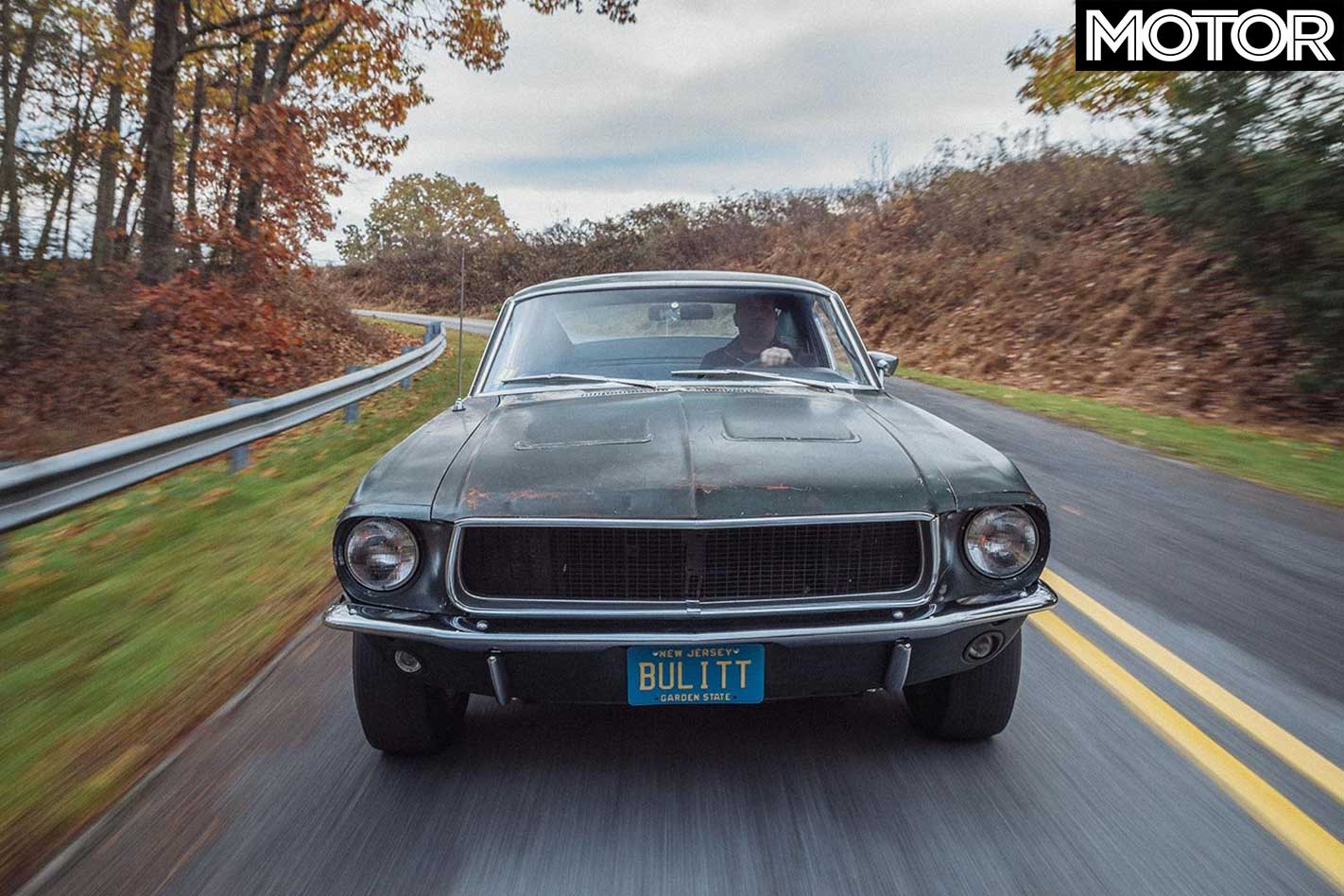
One of the Unicode Consortium’s criteria for new emojis is the “expected usage level”, which includes “multiple usages”. Like, say, Nail Polish (emoji code U+1F485) has come to mean both literally nail polish, but also a type of fabulous snarkiness in response to haters.
A big blue spoiler emoji could mean a Subaru WRX… or it could double as a spoiler-warning for movie reviews. A twin exhaust could mean aftermarket parts, or it could mean “Bae I’m twice as exhausted after eating all those oyster waffles, please send my wheelchair.” A handbrake could mean… actually, no one in the emoji generation would recognise a real handbrake, but that’s the fault of the OEMs, not the emoji overlords.
Sadly I suspect we’re as likely to see these new pictograms as we are a unicorn. In real life, I mean, not on the emoji list… where there are two of them. Crying face.
More than 6.5 million horsepower – that’s how much power Hennessey estimates it has delivered over the course of the 10,000 vehicles it has built.
To us, that’s 4,847,050kW, from the average of 650hp (485kW) per car.
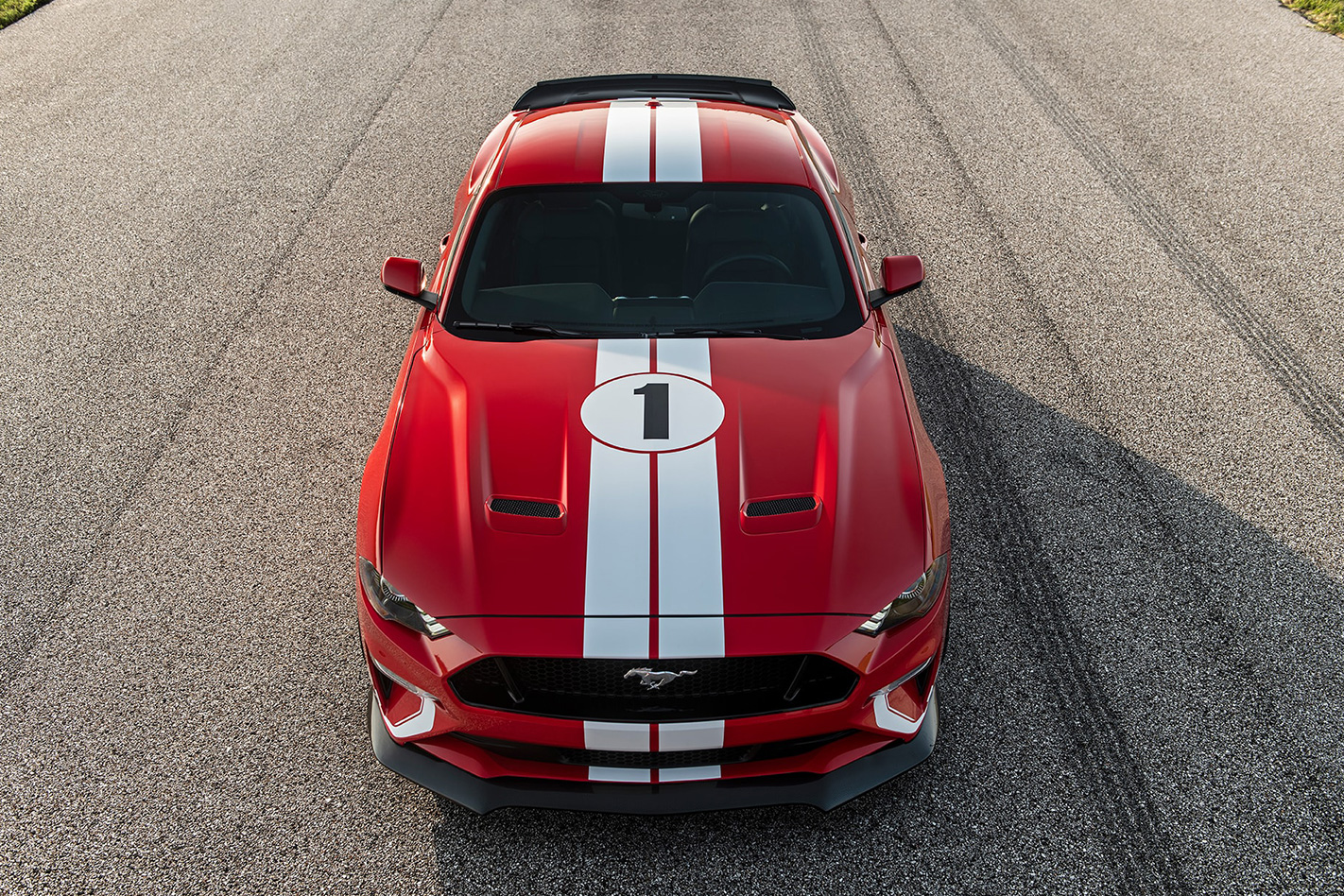
So, to celebrate its 10,000th car, Hennessey built a ‘Heritage Edition’ 2018 Mustang GT inspired by the 2018 Ford GT Heritage Edition.
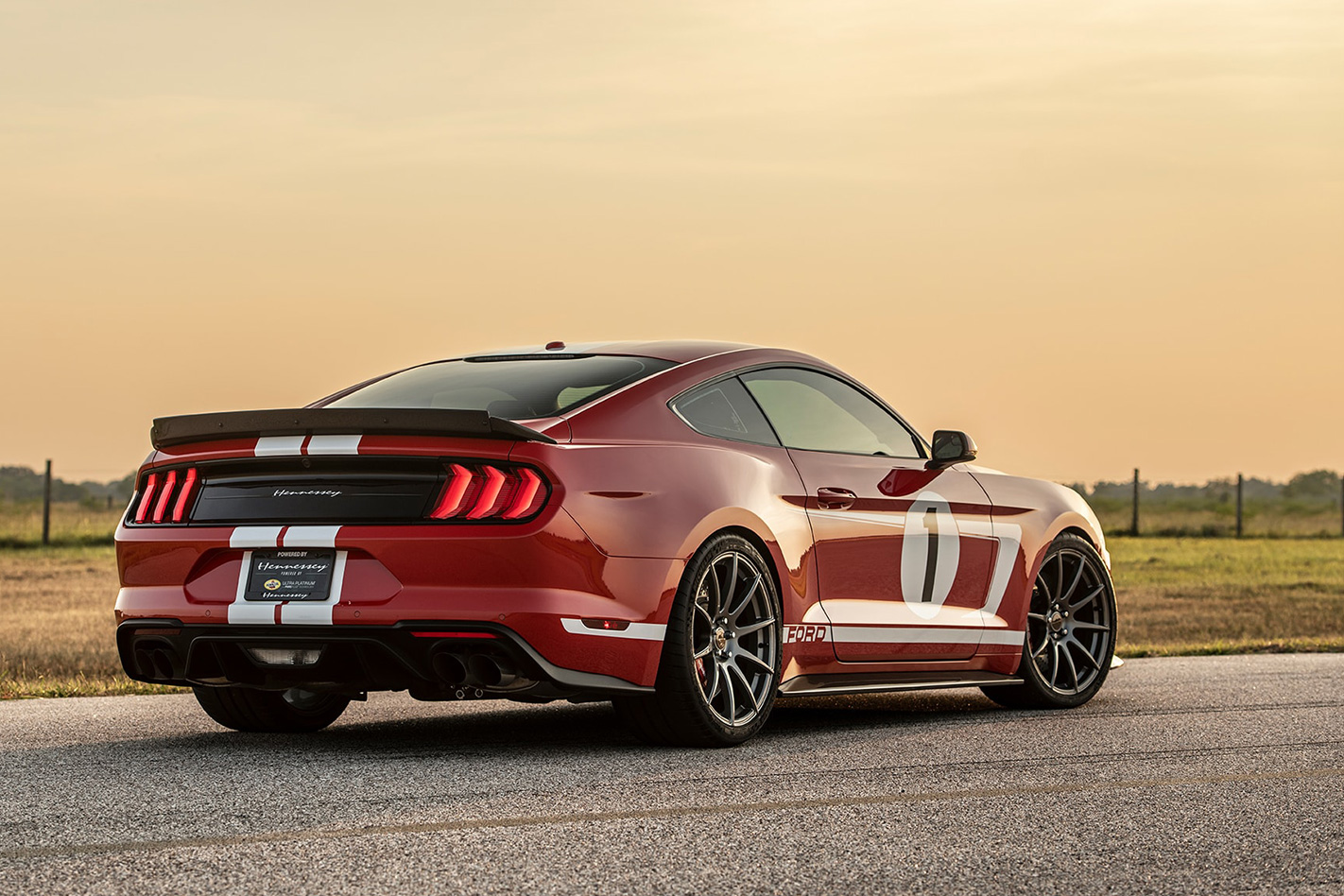
Hennessey’s Mustang bests the previously mentioned average power output, with 603kW at 7200rpm and 317Nm at 4500rpm. Hennessey claims 0-97km/h takes 3.3 seconds, before it heads onwards to its top speed of more than 322km/h.
A 3-litre supercharger kit is the major factor in this, while upgraded fuel injectors and pump, high-flow induction, and a carbon fibre exterior pack are also on the list.
John Hennessey says he’s proud to have the Ford Mustang as the milestone car for his company, which he started in 1991.
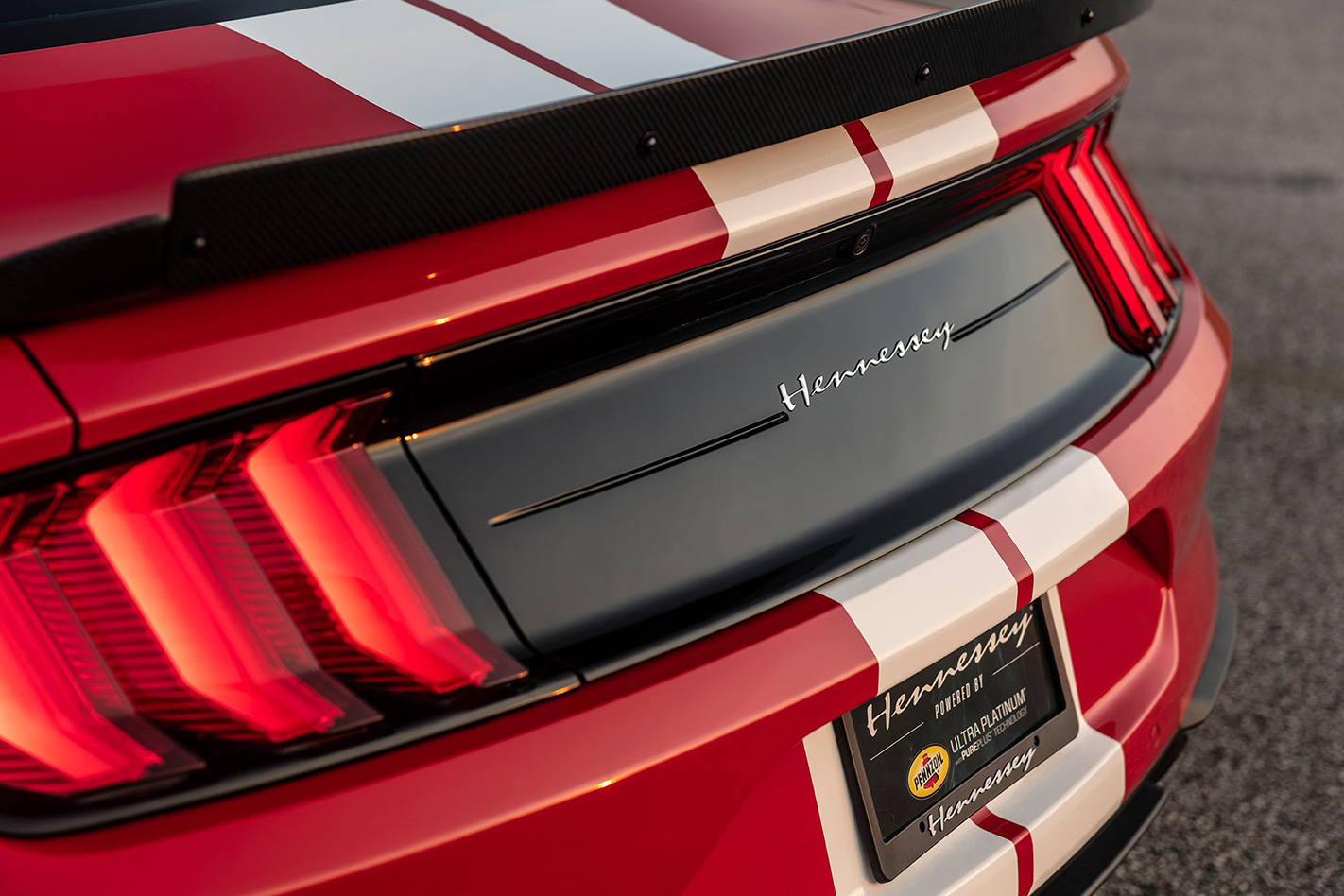
“We love the design and livery of the 2018 Ford GT Heritage Edition supercar that we took delivery of earlier this year,” he says.
“We thought that this look on our specially tuned Hennessey Mustang would also be very appropriate, a great way to celebrate our 10,000th build.
“This is one of the most beautiful Mustangs we’ve ever built, and it has the power and performance to match its gorgeous looks.
“We are very grateful to our customers, team members, dealers, family and friends who’ve shared and supported our passion for building powerful, fast, fun vehicles for the past 27 years.
“This is an exciting time for the company and we look forward to building the next 10,000 Hennessey cars and trucks in the years to come”.
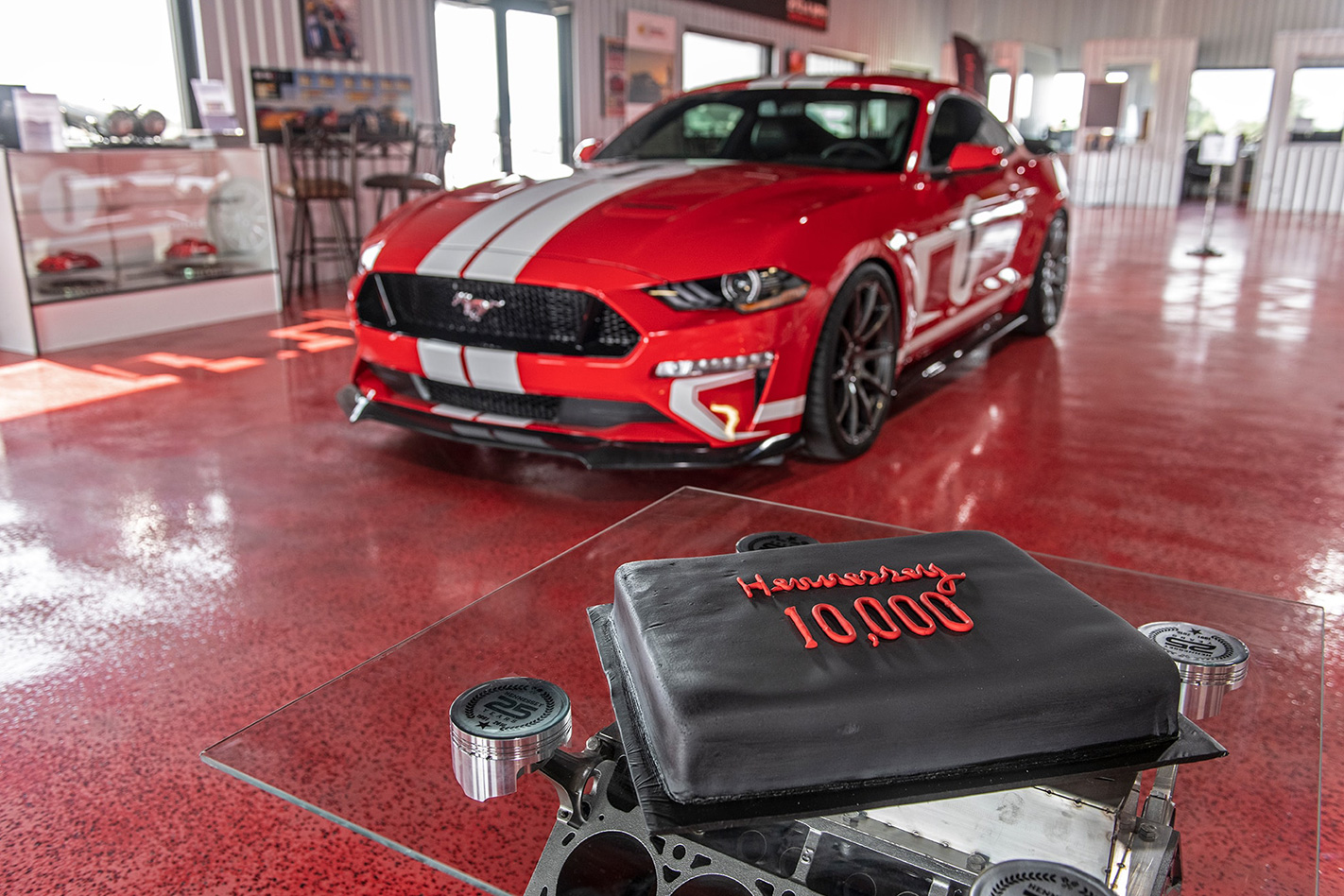
Customer versions of the Hennessey Heritage Edition Mustang will be offered as a complete vehicle, available in auto or manual, with a 3-year/58,000km warranty.
Only 19 will be built, at a starting price of USD$89,950 (AUD$122,000).
REMEMBER this moment because it won’t last.
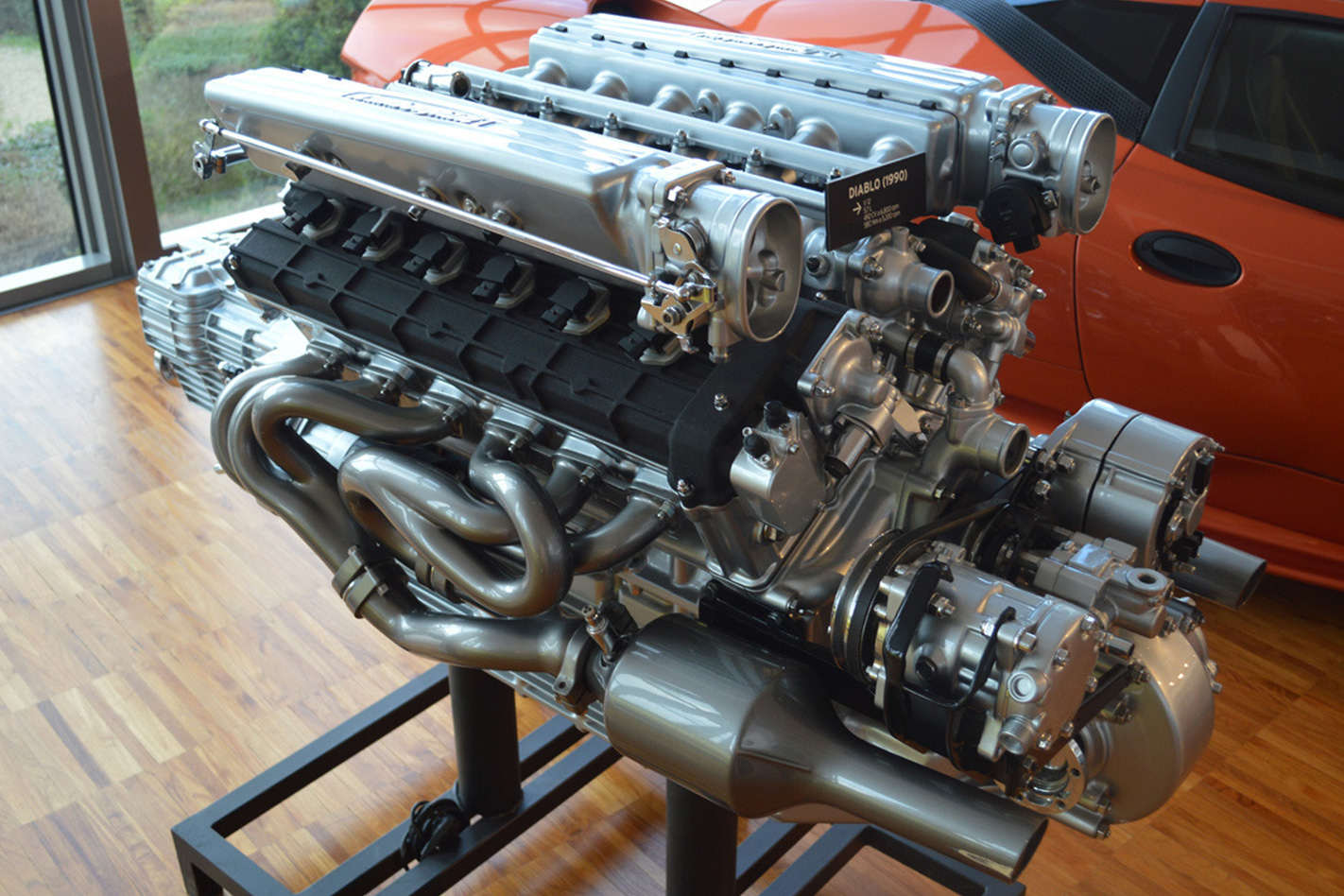
For a fleeting moment in history, the fastest production car around the Nurburgring is powered by a normally-aspirated V12 engine. Lamborghini’s yet to be released Aventador SVJ shaved a few seconds off the Porsche 911 GT2’s time, but it could prove a bittersweet historical footnote. It will probably never occur again.
Sant’Agata hasn’t withdrawn its commitment to build 12-cylinder engines at all, but Lamborghini has gone on record stating that its next generation of V12s will be augmented by electric power. In January, Lamborghini’s R&D boss, Maurizio Reggiani, confirmed that the next Aventador would be a hybrid. Sant’Agata’s CEO, Stefano Domenicali reiterated the marque’s commitment to electric augmentation at this year’s Goodwood Festival of Speed.
“The next Aventador will be hybrid, with a V12. A decision is made on that and this is something that will keep us different from the others and this is very important,” he said.
“With regard to the super sport car brand, it’s clear that we want to stay with the V12 to have with the top car.”
So it looks as if the Aventador Jota is going to be the last of a very special line: one whose lineage can be traced back 55 years.
Ferruccio Lamborghini commissioned Società Autostar to design a V12 engine to eclipse Ferrari’s three-litre V12. Autostar was well credentialed, its lead engineer on the project being Giotto Bizzarrini, the genius behind the legendary Ferrari 250 GTO and a man with an axe to grind against old Enzo. Bizzarrini had left Ferrari a couple of years prior to Lamborghini’s inquiry, disgruntled at what he perceived as management meddling in the engineering department.
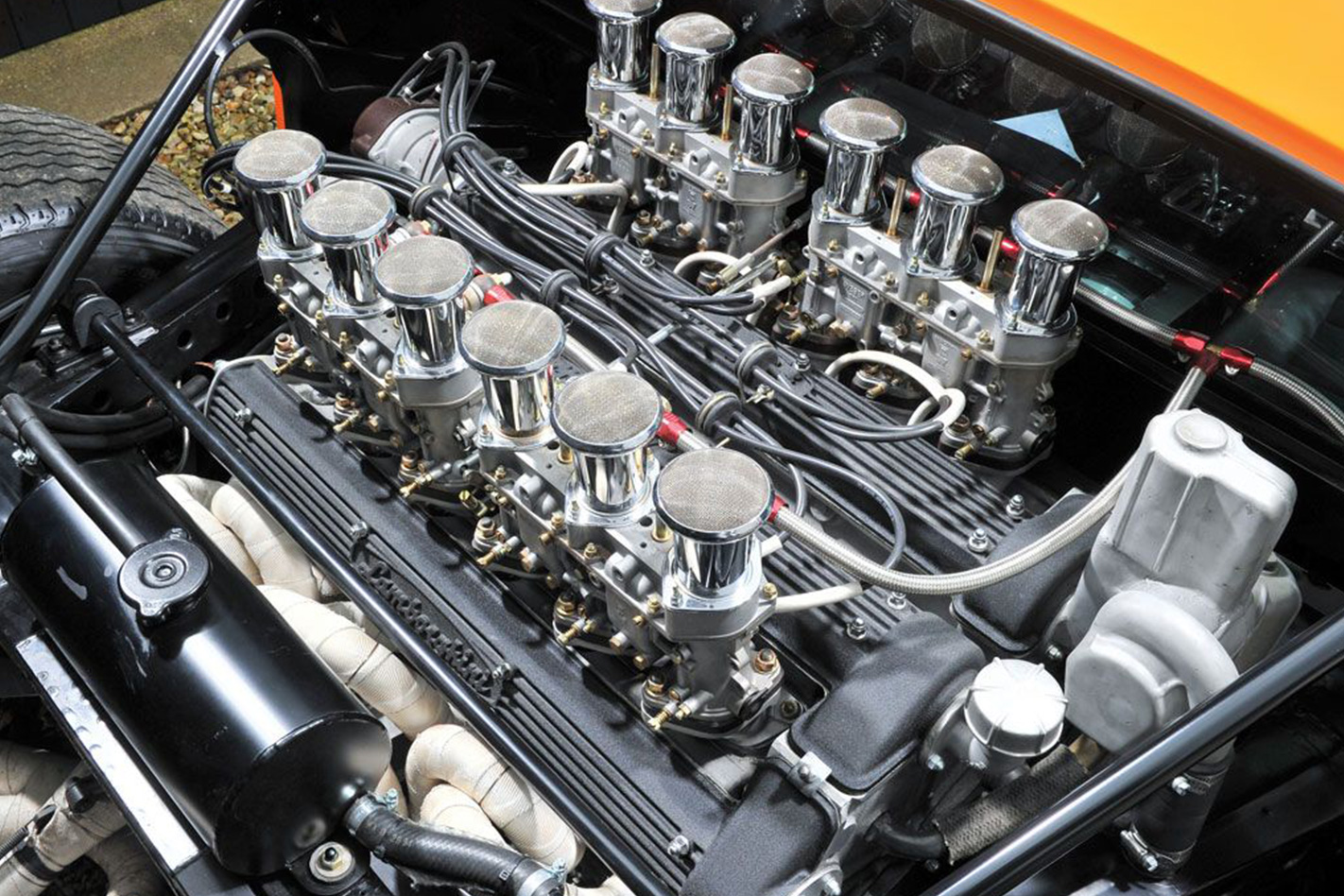
Bizzarrini’s ethos was, nevertheless, fairly well aligned to Enzo Ferrari’s, viewing competition as the purest way to improve the breed. When Lamborghini asked him to design a roadgoing engine and offered a monetary bonus for every incremental horsepower over Maranello’s twelve-pot, the powerplant that Bizzarrini delivered wasn’t exactly what old man Lamborghini had in mind.
For a start, the 3.4-litre unit was dry-sumped, had a 9.5:1 compression ratio and made its peak power of 268kW at a stratospheric 9800rpm. Lamborghini was incensed. He’d asked for a road car powerplant to fit to his elegant 350GT prototype and Bizzarrini had built him a screaming race engine.
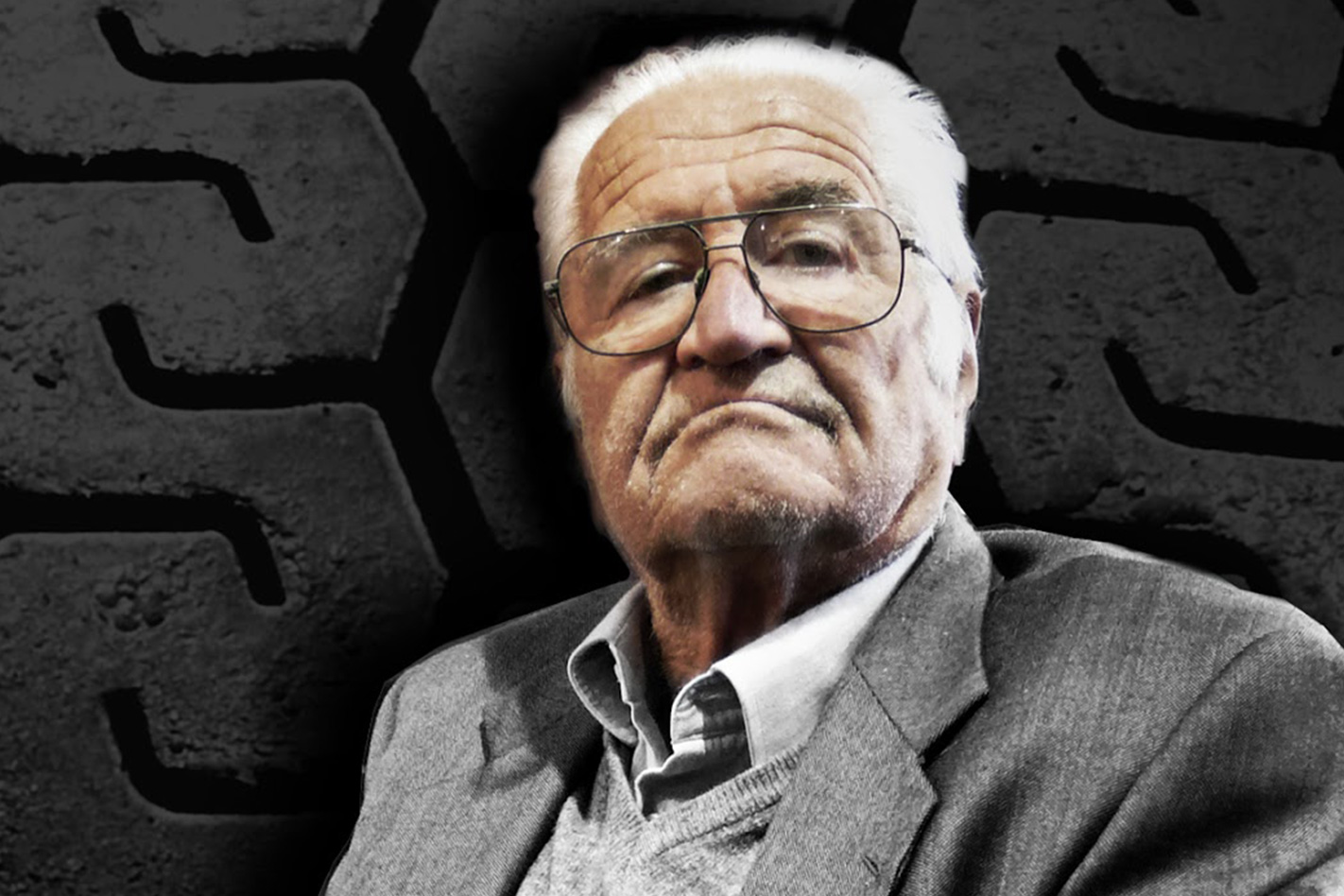
A heated exchange between the two men culminated in Lamborghini refusing to pay Autostar’s final invoice, eventually being ordered to do so by local courts. It could well have been the best 4.5million lire ever spent. A version of this engine powered every Lamborghini flagship sports car for almost half a century.
Starting out as a 3.5-litre 201kW unit in the production 350GT, it grew to 3.9, 4.8, 5.2, 6.0, 6.2 and finally 6.5-litres for the final Murcielago models (LP640 and the 493kW LP670-4 Superveloce). It could be found beneath the bodywork of the 350GT, 400GT, Islero, Miura, Espada, Jarama, Countach, LM002, Diablo and Murcielago.
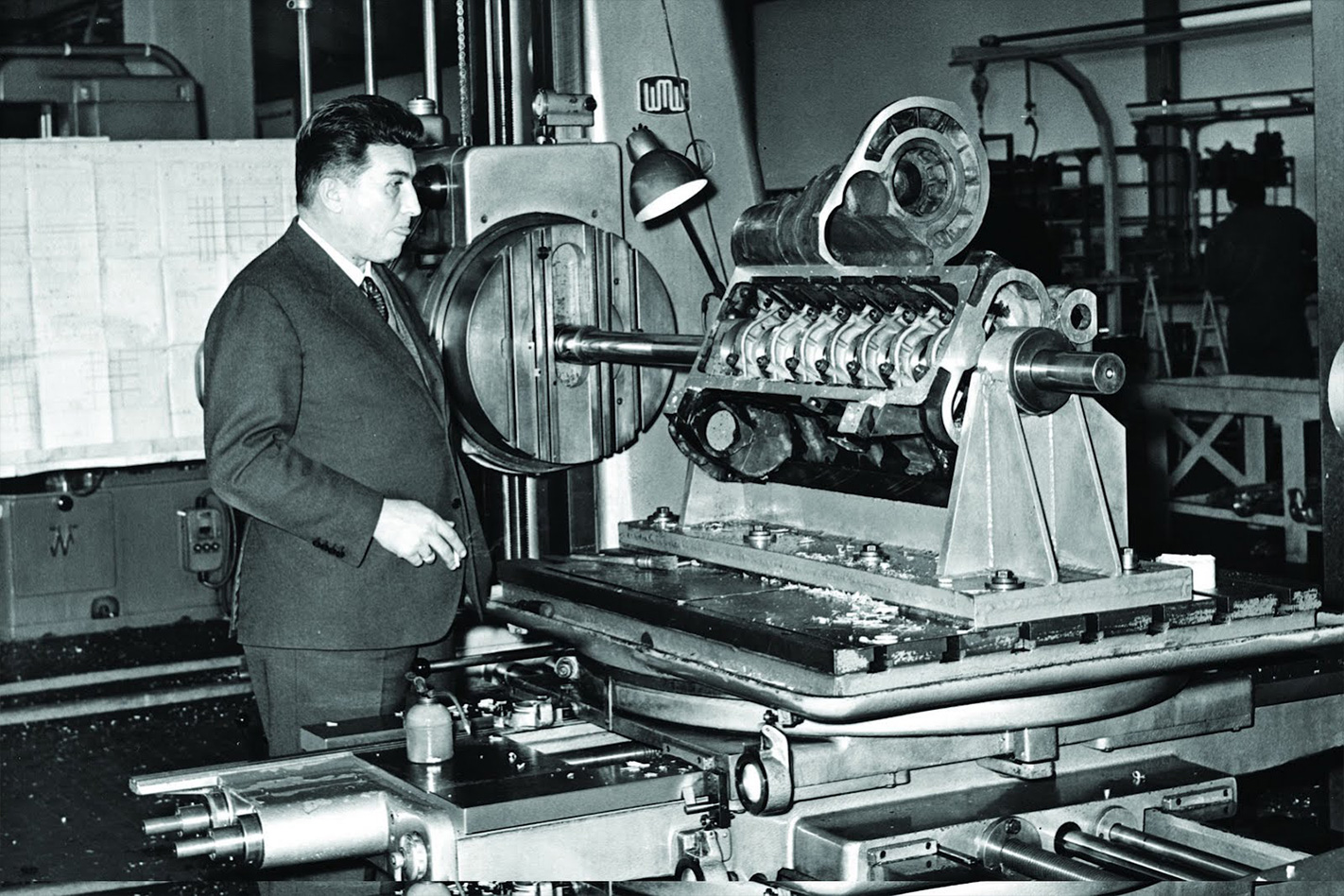
The engine was replaced by the 6.5-litre L539 unit in the 2011 Aventador, introducing a lighter block, a revised firing order and an oversquare bore/stroke ratio. It finds its ultimate series production incarnation in the Aventador SVJ, the Super Veloce Jota, named for Appendix J (J being pronounced jota in Italian) of the FIA rulebook covering homologation specials.
Although it was never designed to spawn a race series, the Aventador SVJ has carved its mark on track, it’s 6:44.97 time around the Nordschleife with factory driver Marco Mapelli on kerb-hopping duty being a mark that’s hard to see being eclipsed by any atmo V12.
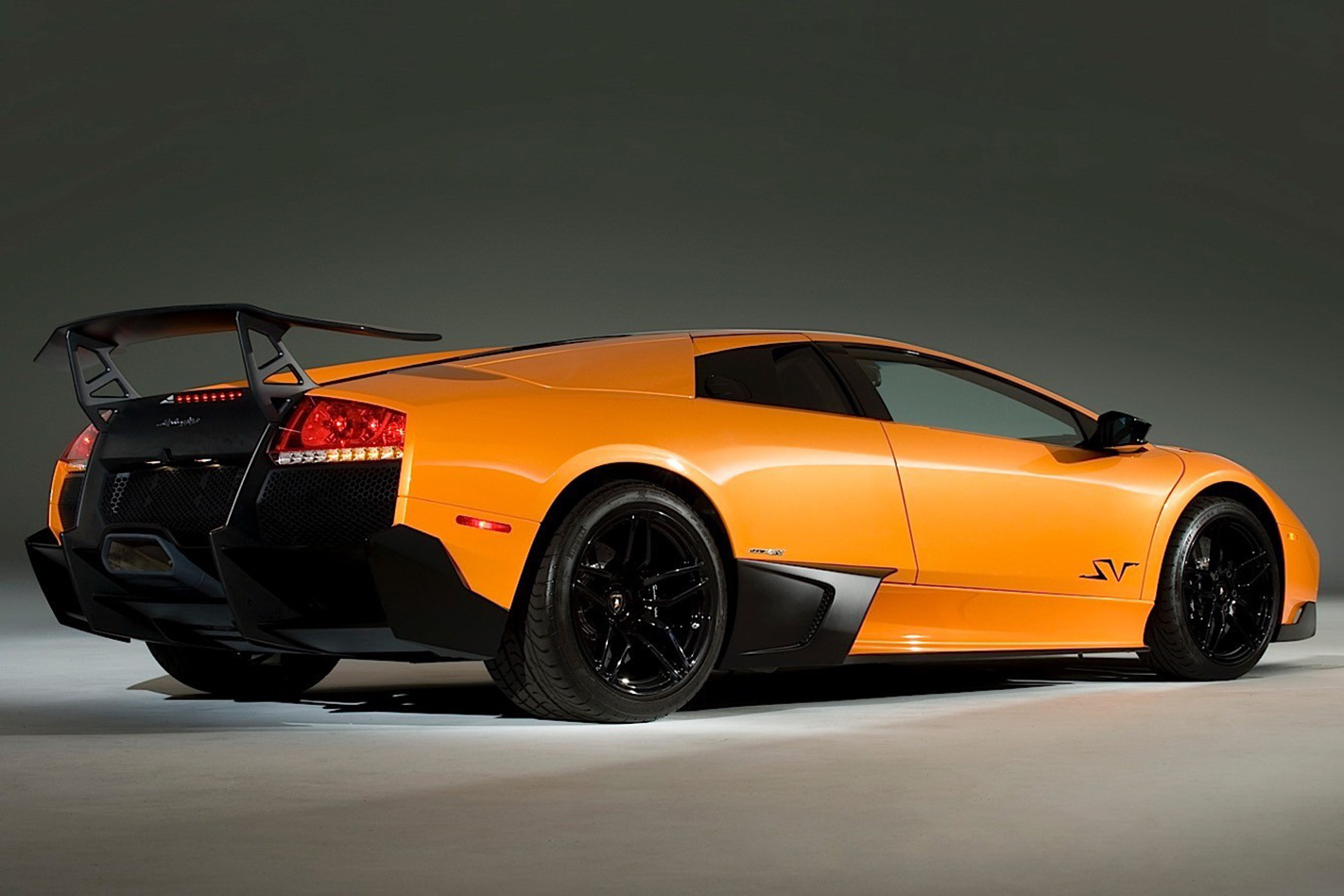
Lamborghini certainly seems to think so. Running his eye over the camouflaged Aventador SVJ, Maurizio Reggiani almost seemed wistful. “This is the last time the V12 will be on its own,” he said. It’s the end of an era, but it’s been one hell of a wild ride.
If you’ve always suspected that car people are a bit unusual, with motoring writers near one extreme of that spectrum, I’m here to agree with you absolutely. I have recently gathered evidence of a pervasive cult that is luring in members of my profession.
And while normal, right-thinking people are utterly immune to its attractions, I think I’m about to join it myself.
I’m forever being asked what car a motoring journalist drives. And they’re always expecting to be told a Lamborghini, or a Moller Flying Car (I really am thinking I should cancel my order), or some similar thing that is to a journo’s wages, what a superyacht is to a ferry driver’s.
But car journos don’t do it for the money; we do it because it’s the best job in the world for car kooks. And so, like other car people, we’ll often put the ownership of a cool car ahead of other things. Like children, or superannuation. I count myself in the latter class, having bought my 1980s dream car six years ago. I know at least five other journos with various old Porsches.
But this new thing – it’s completely out of left field. And though I’ve not driven one, and can’t recall even sitting in one, it’s sucked me into its strange forcefield. To the point where I’ve already worked out the colour I’ll get, how I’ll lower it, and the aftermarket wheels I want. But I know this is really serious, because I’m willing to sell my minibike to buy it.
You’d never guess, except there’s probably a photo nearby that’s already given it away, but the car that’s stealing journos’ hearts is the Volkswagen Up! (That’s Volkswagen’s exclamation mark, not mine. Although, if I were a younger man, I’d have added three more and be tweeting this instead).
Currently there seems to be four or five Up!wardly mobile motor-noters in Sydney alone. Aside from the profession, they have little in common, ranging from an endearingly nerdy 30-something, to a 40-ish father of two, to Mike McCarthy, former decades-long servant of Wheels, now well into his hundreds (I think).
MicMac, as astute a judge of cars as there ever was, saw the light early and bought his from new (the Up! launched here in September 2012). But it’s used Up!s that are hitting the spot with motoring writers. One of the first converts, and probably the Bhagwan of the movement, is journo Matt Campbell. He recently bought a black, five-door 2013 model … for $3000.
“This car was a game-changer when it was launched,” Campbell gushes. “It brought AEB to this segment. It turns, stops, handles beautifully and rides like a cushion. And the fuel consumption is ridiculous.”
Admittedly, Campbell’s $3K example was out of rego and a bit gamey, but I’ve seen half a dozen at or below $5K, and low-kay ones are usually below $7K. And I’m the guy whose current, cheap commuter hack is a 15-year-old Ducati Monster. Bought for $8000.
Australia hates the car enthusiast
For the sake of torturing the typography: what’s up with the UP!? Well, trying to sell it in Australia as a manual only, in a segment where 80 percent buy automatics, made it flop when new; now it’s hurting even more, for the same reason, on the used market.
So it looms into the view of someone who has shallow pockets, who prefers a manual transmission, who appreciates packaging and engineering and World Car of the Year awards, who’ll have a lash at DIY servicing – and who needs a car to leave on the street while they’re driving someone else’s Lamborghini.
DANIEL RICCIARDO has confirmed that he will leave the Red Bull Formula 1 team at the end of the year in a shock announcement.
Ricciardo joined the Red Bull family in 2008 as a member of the Junior Team, before making his F1 debut in 2011.
After spending two years with the junior Toro Rosso squad, Ricciardo graduated to Red Bull in 2014, replacing Mark Webber at the team, alongside Sebastian Vettel.
During his time at Red Bull, Ricciardo has won seven grands prix, stood on the podium 29 times, scored two pole positions, and 904 championship points.
Red Bull Team Principal Christian Horner was quoted in a statement from the team.
“We fully respect Daniel’s decision to leave Aston Martin Red Bull Racing and we wish him all the best in his future,” he said.
“We would like to thank him for his dedication and the role he has played since joining the team in 2014.”
Confirmation of Ricciardo’s departure will have knock-on effects throughout the field, with many having expected the Aussie to sign on again with Red Bull.
Renault F1 confirmed the Aussie will join the French factory team at the start of next season.
“Renault decided to come back to Formula One to fight for World Championships. Signing Daniel Ricciardo is a unique opportunity for the Groupe Renault towards this objective that could not be missed,” Renault Sport Racing President Jérôme Stoll said.
Ricciardo has proven to be the most daring overtaker in the field, with an unmatched braking ability. Combined with his growing popularity, his signature is one of the most sought of this silly season.
The Australian currently sits fifth in the drivers’ championship in 2019, following victories at the Chinese and Monaco Grand Prix.
Entry-level pricing for the 2019 Volkswagen Tiguan range will jump by more than $10,000, with the range slashed to consist of just two of the higher-spec petrol models.
Volkswagen Australia will ditch the 110TSI petrol, and 110TDI and 140TDI diesel versions from October this year, leaving just the higher-powered 132TSI and 162TSI powertrains.
Production of the 110TSI has been suspended in Europe in order for Volkswagen to complete testing for the new Worldwide Harmonised Light Duty Vehicles Test Procedure (WLTP) real-world emissions testing.
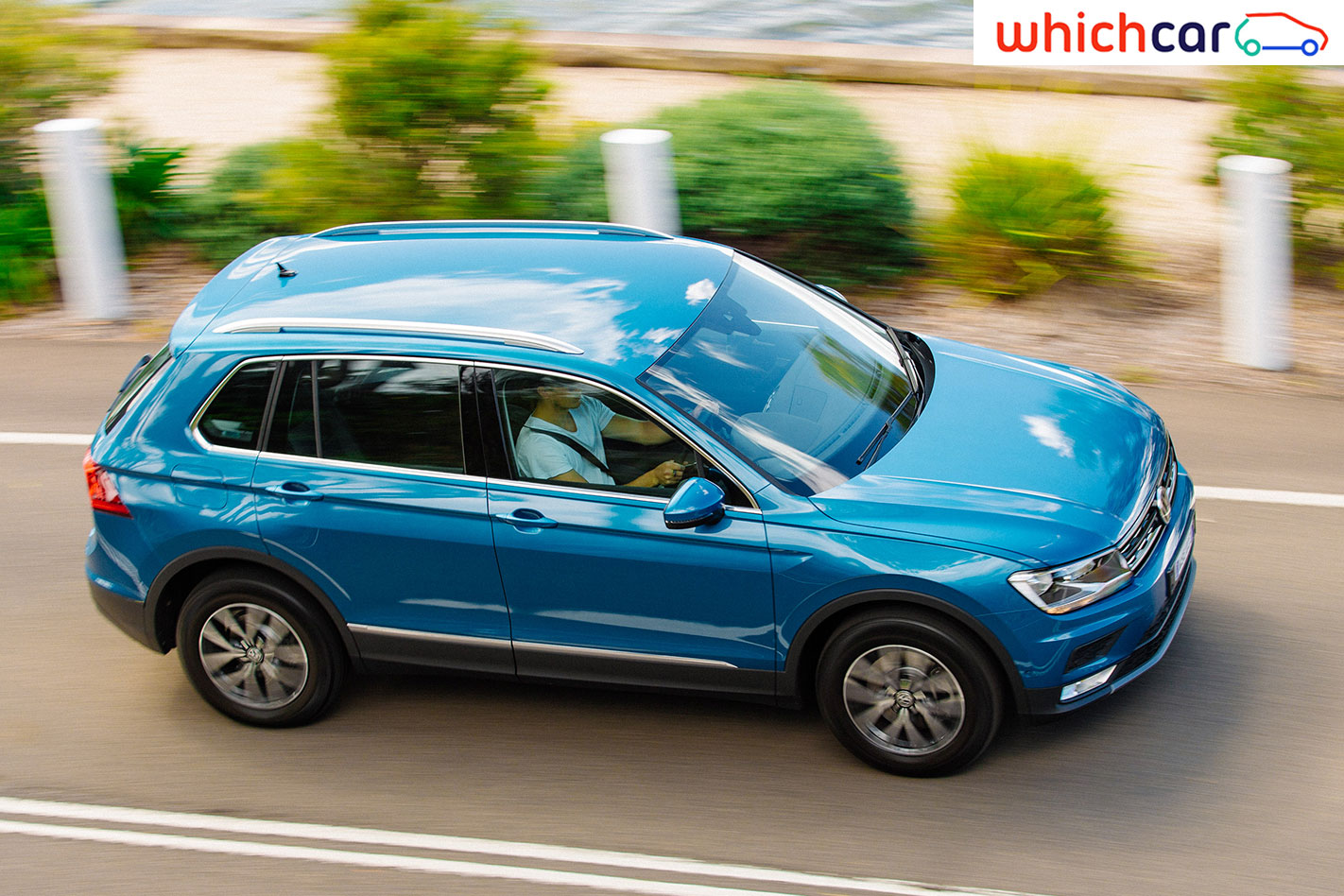
Volkswagen says it will return, but in the meantime you won’t be able to get a Tiguan with the most-affordable Trendline spec or front-wheel drive.
This leaves the all-wheel-drive 132TSI Comfortline, that used to sit around the middle of the range, as the base model, while the deletion of the diesel powertrains leaves the 162TSI Highline the new range-topper.
Volkswagen Australia says the range consolidation won’t dramatically affect sales here with most buyers already opting for 2.0-litre 132TSI and 162TSI, which send power to all four wheels via a seven-speed dual-clutch auto.
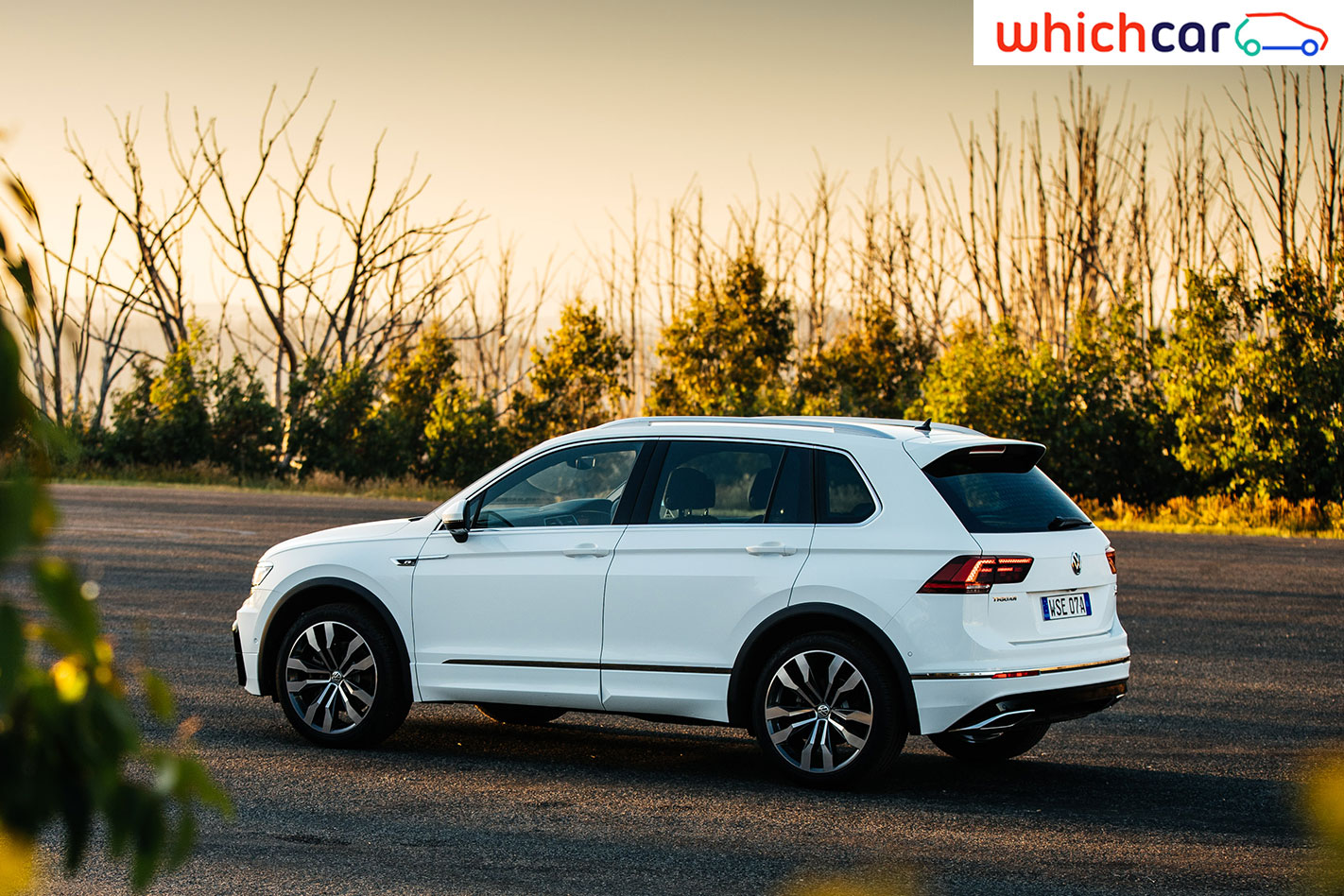
The 162TSI Highline can still be up-specced with the R-Line package – that brings sporty exterior styling, 20-inch ‘Suzuka’ alloy wheels, Vienna leather seats, interior embellishments, and steering wheel paddles.
A limited Wolfsburg Edition, will also be available.
“The 162TSI Highline already comprises some 50 percent of Tiguan sales,” said Volkswagen Australia passenger vehicle product marketing manager Jeff Shafer.
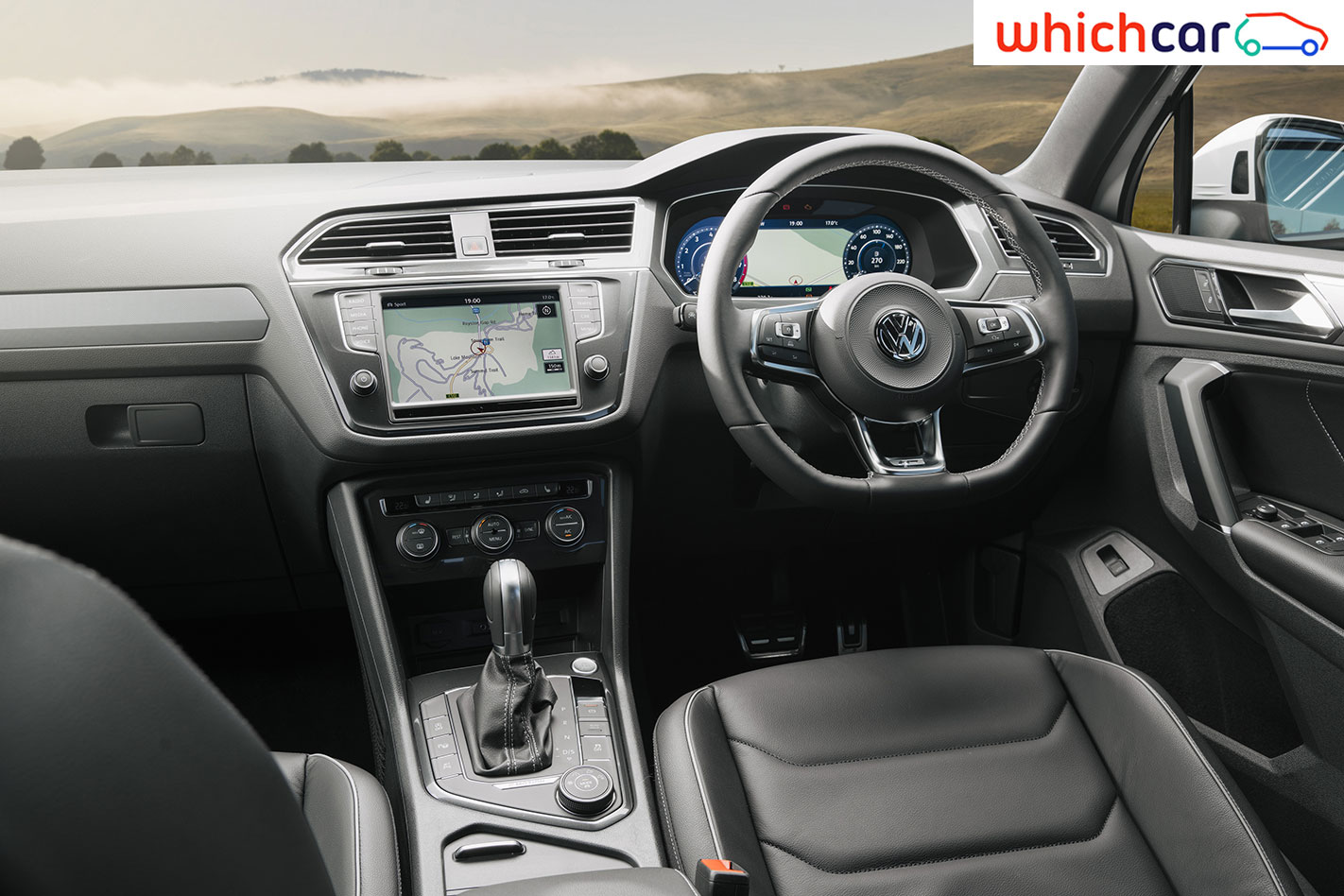
“Up to 90 percent of those customers take up the optional R-Line package.
“So devising the first Wolfsburg Edition of a Volkswagen medium SUV is very much a case of listening to what our customers want.”
Based on the 16TSI Highline, the Tiguan Wolfsburg Edition will retail for $55,490 and comprise the Sound & Vision and R-Line packages, unique black exterior trim enhancements, 20-inch Black Suzuka Alloys, 90 percent Rear Window Tint and head up display.
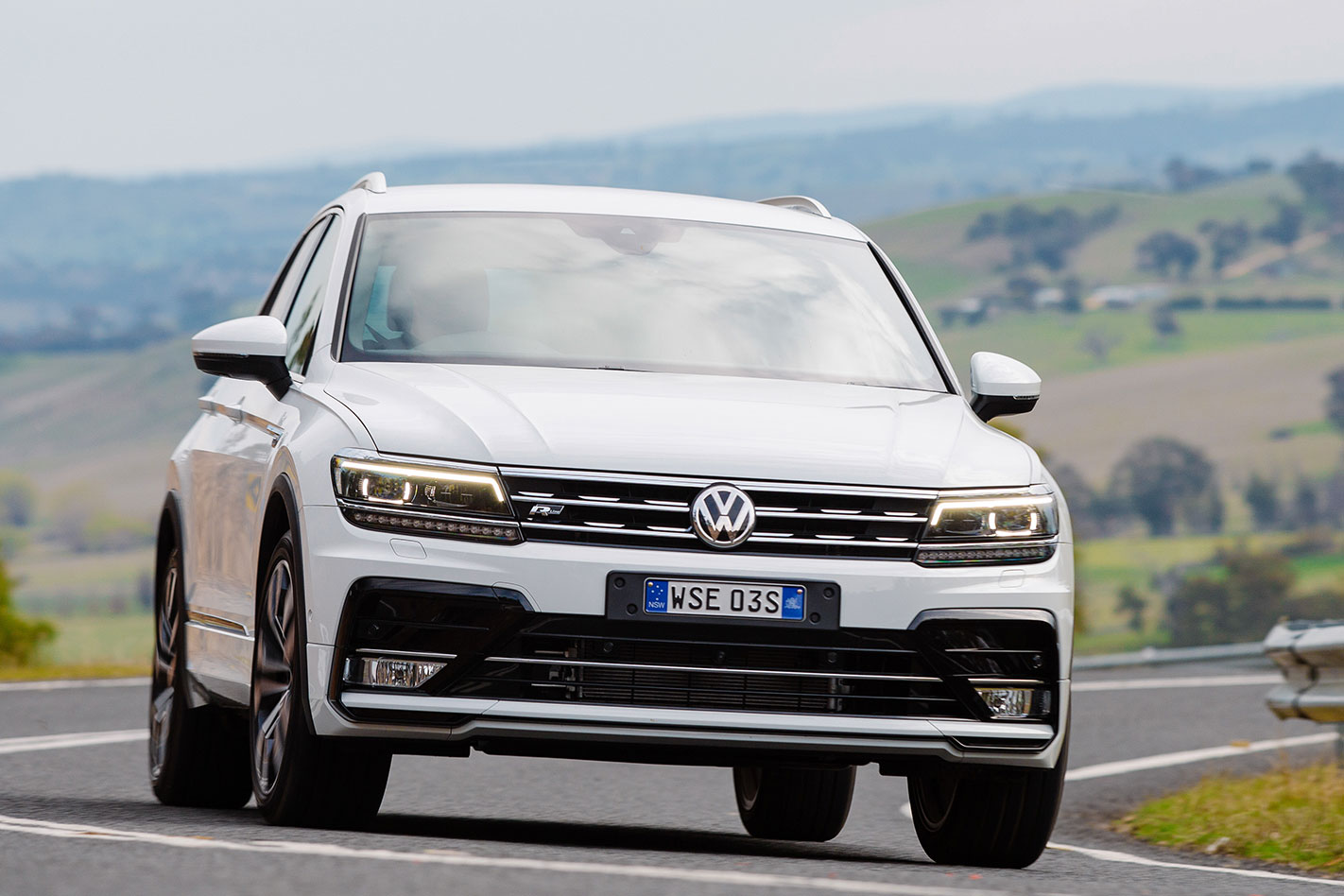
Three paint choices include Oryx White Pearlescent, Deep Black Pearl Effect or Indium Grey Metallic.
The 2019 Tiguan range, including the Wolfsburg Edition, will arrive in showrooms this October.
2019 Volkswagen Tiguan pricing
- Tiguan 132TSI Comfortline – $42,490
- Tiguan 162TSI Highline – $49,490
- Tiguan 162TSI Wolfsburg Edition – $55,490
- Metallic/pearl paint – $700
- Driver Assistance Package (Comfortline) – $1400
- Luxury Package (Comfortline) – $4000
- Sound and Vision Package (Comfortline) – $3200
- Sound and Vision Package (Highline) – $3000
- R-Line Package (Highline) – $2900
- Panoramic sunroof (Highline and Wolfsburg) – $2000
