
LAMBORGHINI has taken its yet-to-be-released Aventador SVJ to the Nurburgring Nordschleife and broken the lap record previously held by Porsche’s GT2 RS.
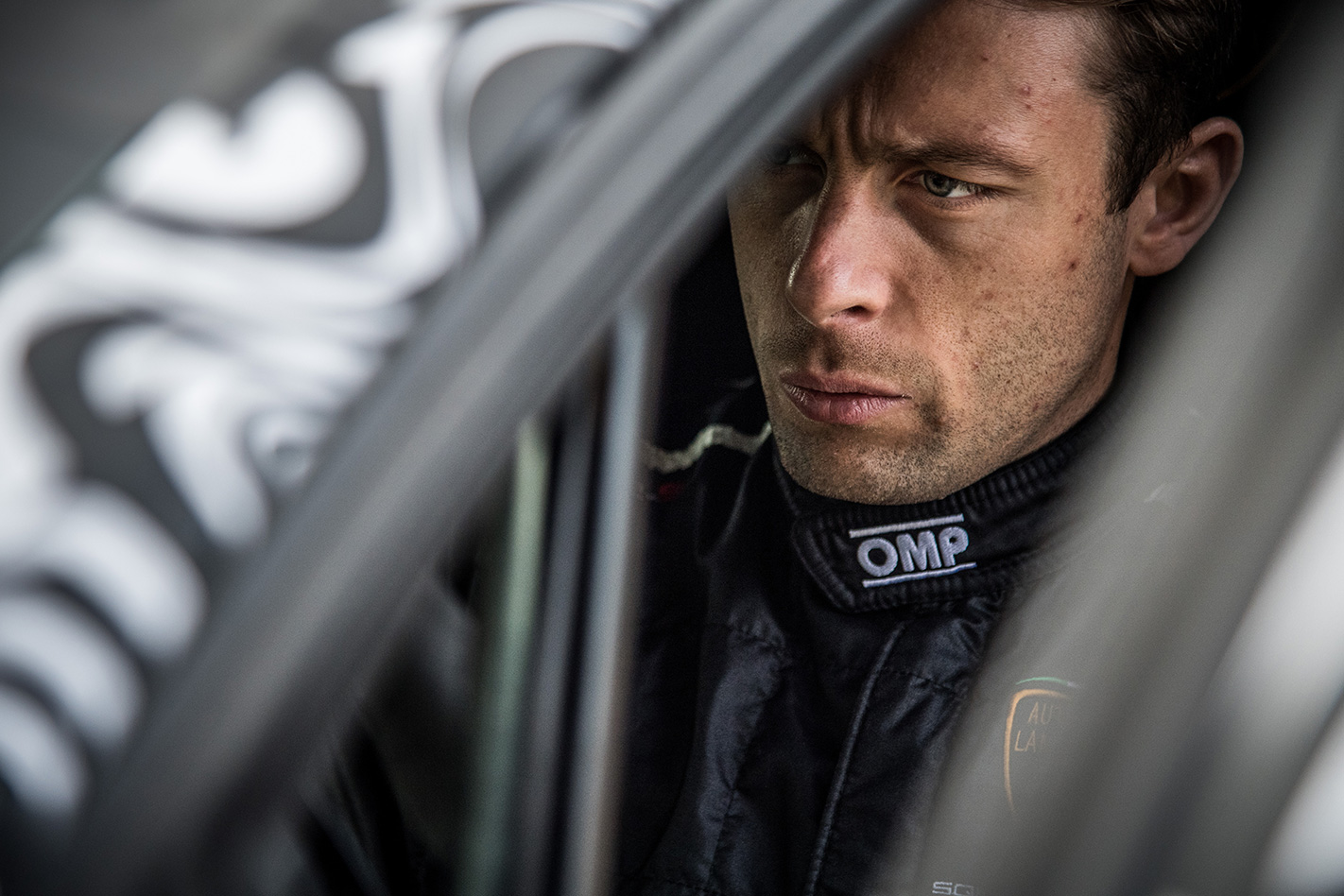
Driver Marco Mapelli was at the wheel for the 6:44.97 lap, which is more than two seconds quicker than the best time achieved by Lars Kern in the Porsche last year.
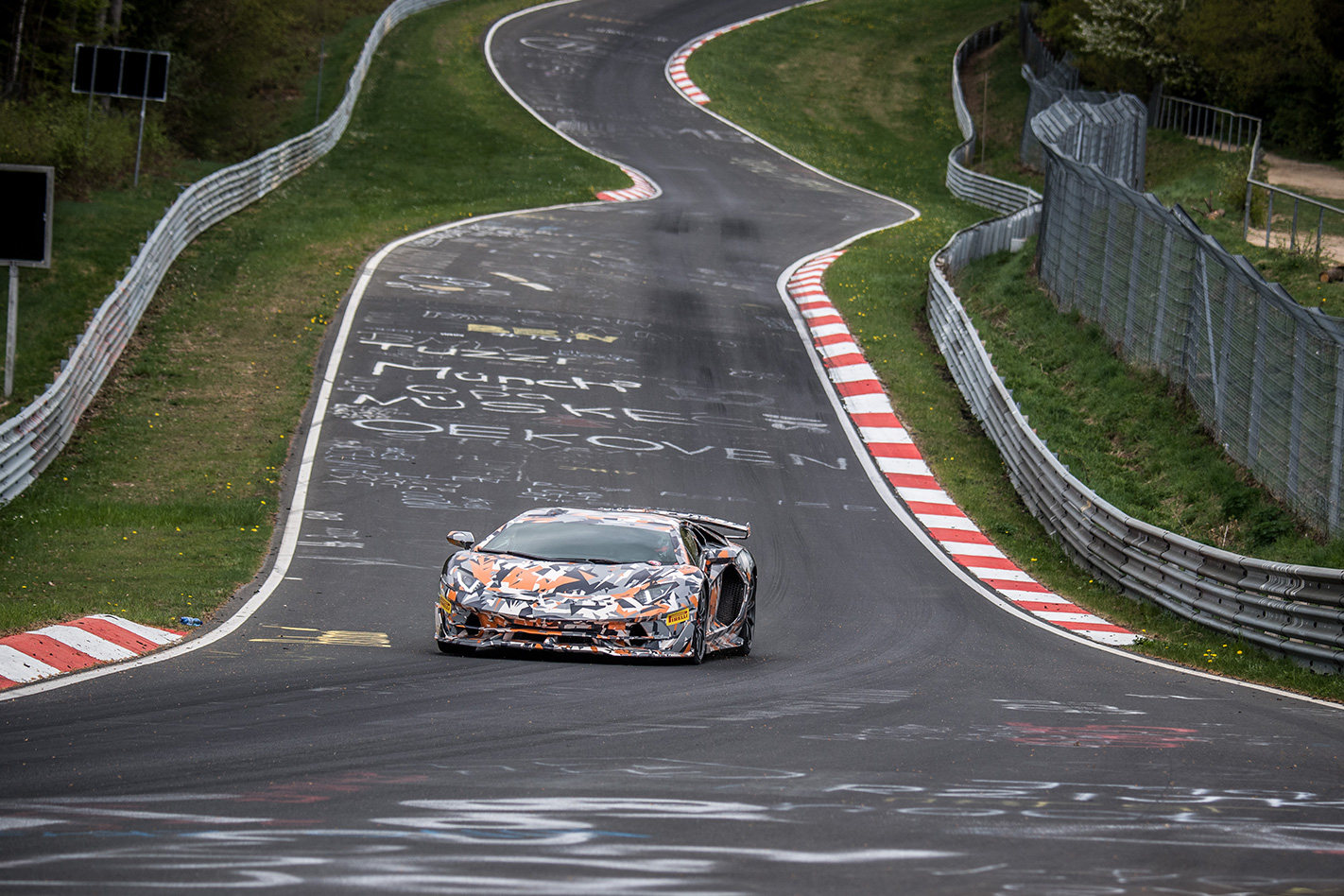
The Aventador SVJ achieved an average speed of 183km/h during its record lap of the 20.6-kilometre Nordschleife circuit.
Scarred by claims of fudged lap times with previous record holder, the Huracan Performante, Lamborghini stressed the record run was conducted with multiple independent witnesses.
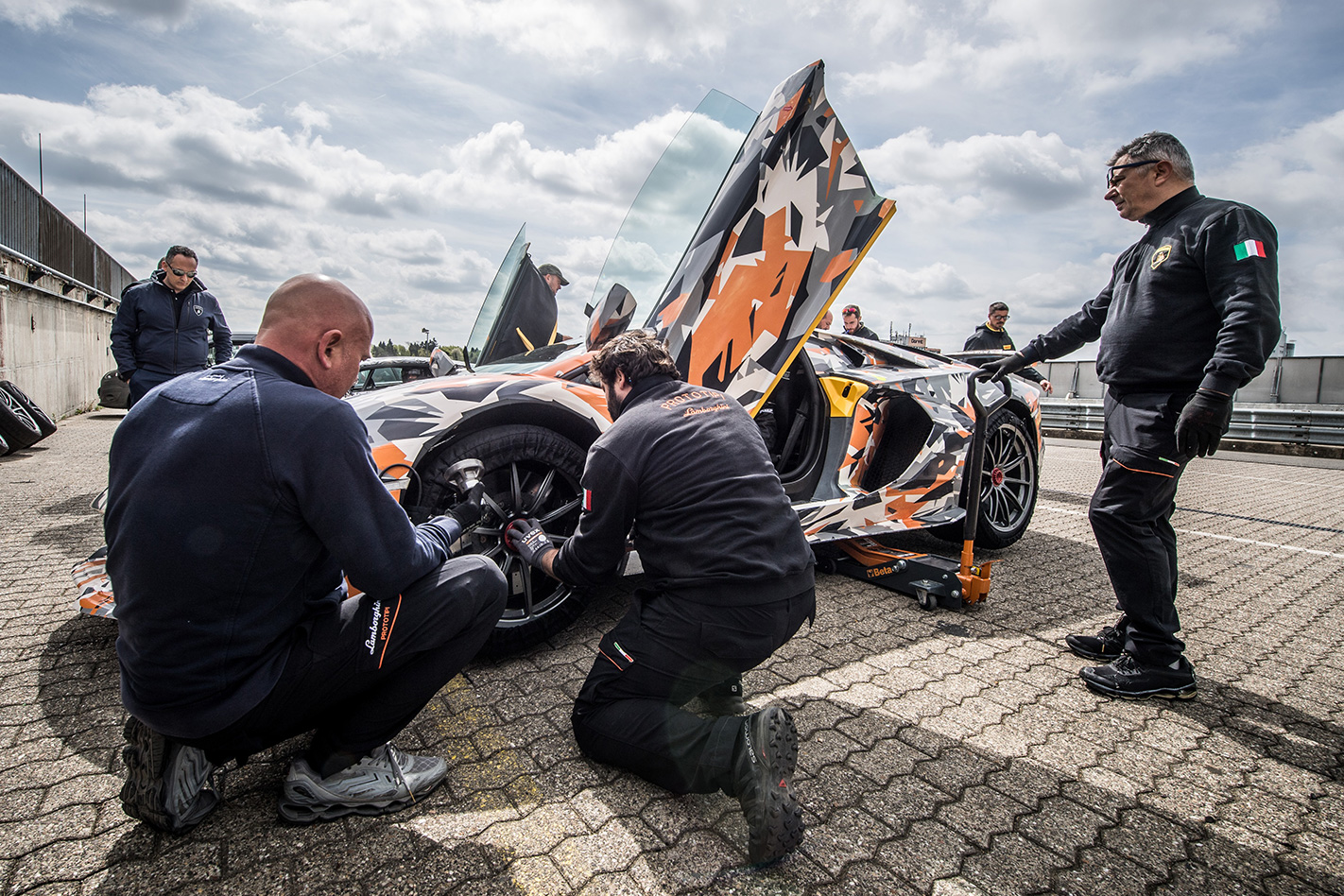
“The challenge was managed by Lamborghini’s Research and Development team, with extensive tyre support from Pirelli technicians and driver,” the press release states.
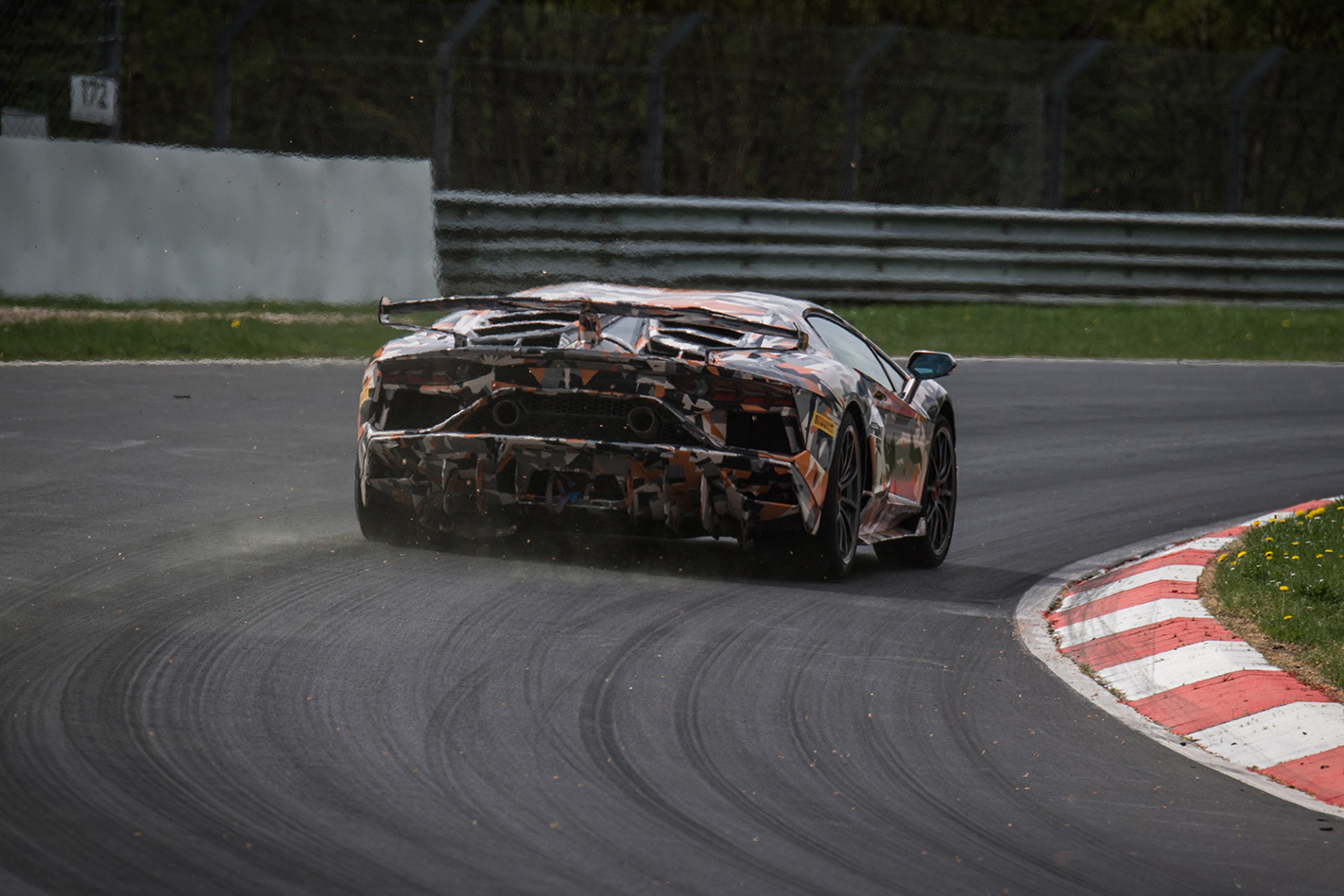
“Fitted with cameras inside and out and full telemetry, under the formal scrutiny of Remak personnel who managed time and GPS certification using VBOX-Racelogic instrumentation, the lap attempt of the Aventador SVJ was performed during an exclusive session on the Nurburgring Nordschleife.”
The SVJ is no normal V12-powered supercar, and is expected to be the final farewell for the Aventador name.
However, Lamborghini is yet to officially reveal the car – which will wear the Jota suffix – so technical information is thin on the ground.
It’s clear from the camouflaged bodywork that the SVJ will have extreme aerodynamic additions, and according to Top Gear, a removable – not hinged – bonnet.
It has been reported the SVJ has 40 percent more downforce than the hard core Aventador SV, but one percent less drag, with 490kg of downward pressure at top speed.
The mid-mounted 6.5-litre naturally aspirated engine has been tuned to produce 566kW at 8500rpm, and 720Nm at 6750rpm.
“[The SVJ’s] tenure as the Nurburgring lap time record holder, even before its unveiling during the Monterey Car Week in California in August, endorses Lamborghini’s competence in applying superlative design engineering and ground-breaking technologies,” Lamborghini Chairman and Chief Executive Officer, Stefano Domenicali said.
“The SVJ is a super sports car at the zenith of performance, while also ensuring unrivalled driving pleasure.”
While the 2018 Mercedes-Benz CLS 450 has a gorgeous interior and will surprise quite a few other cars off the lights, it’s a vehicle that will impress rather than thrill a proper performance driving enthusiast.
For its third generation CLS, a car based on the E-Class, Mercedes-Benz has given its so-called four-door coupe the new ‘predator’ corporate face treatment and under the bonnet, the big news is a new electrified, twin-turbocharged 3.0-litre inline-6. Designated ‘M256’, it’s destined for use across the range and is the first inline-6 in a Mercedes-Benz since the ‘M104’ was discontinued in 1999.
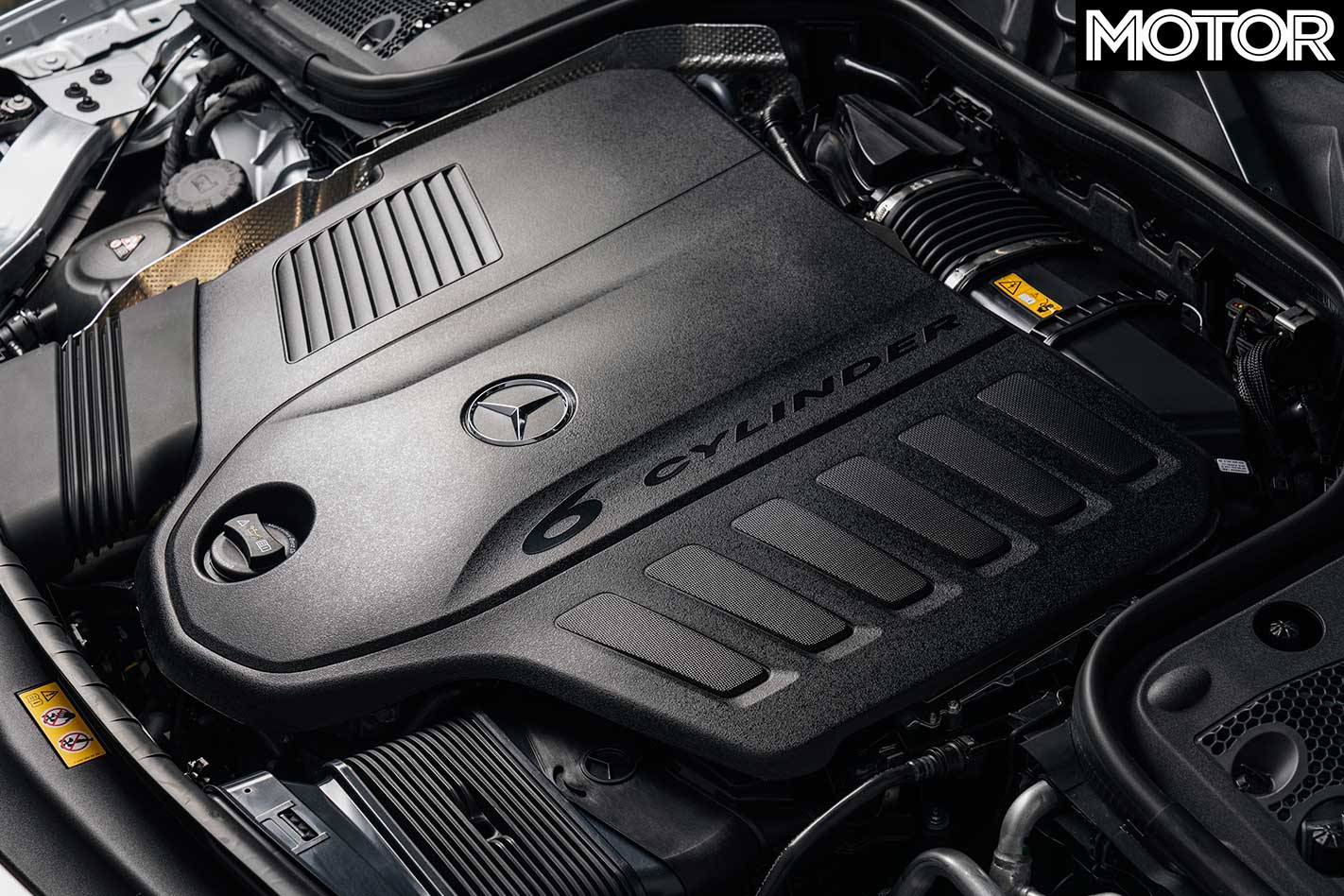
In CLS 450 guise, the grunty petrol engine works with a clever 48-volt mild hybrid system. While there’s a 12v battery under the bonnet, there’s also a 48v battery centrally mounted under the boot floor, scavenging power from a clever combined starter/alternator/generator/motor unit and then sending it back when needed.
With the petrol engine producing 270kW/500Nm, the electric motor can supply a further 16kW/250Nm of electric boost over short periods. It also helps the big Merc achieve an impressive claimed combined 7.8L/100km.
The new straight-six is a great engine. Smooth, quiet and powerful, together with the electric motor it slingshots the weighty all-wheel drive CLS 450 to 100km/h in a drama-free 4.8 seconds.
We are curious to hear it in AMG guise. Even with a standard “Sports exhaust” it’s quite sensible in CLS 450 trim, letting rip a polite bark that steps up an octave with the powertrain in Sport Plus mode, presumably assisted by some realistic if artificial engine noise coming through the interior speakers. Redline is 6200rpm.
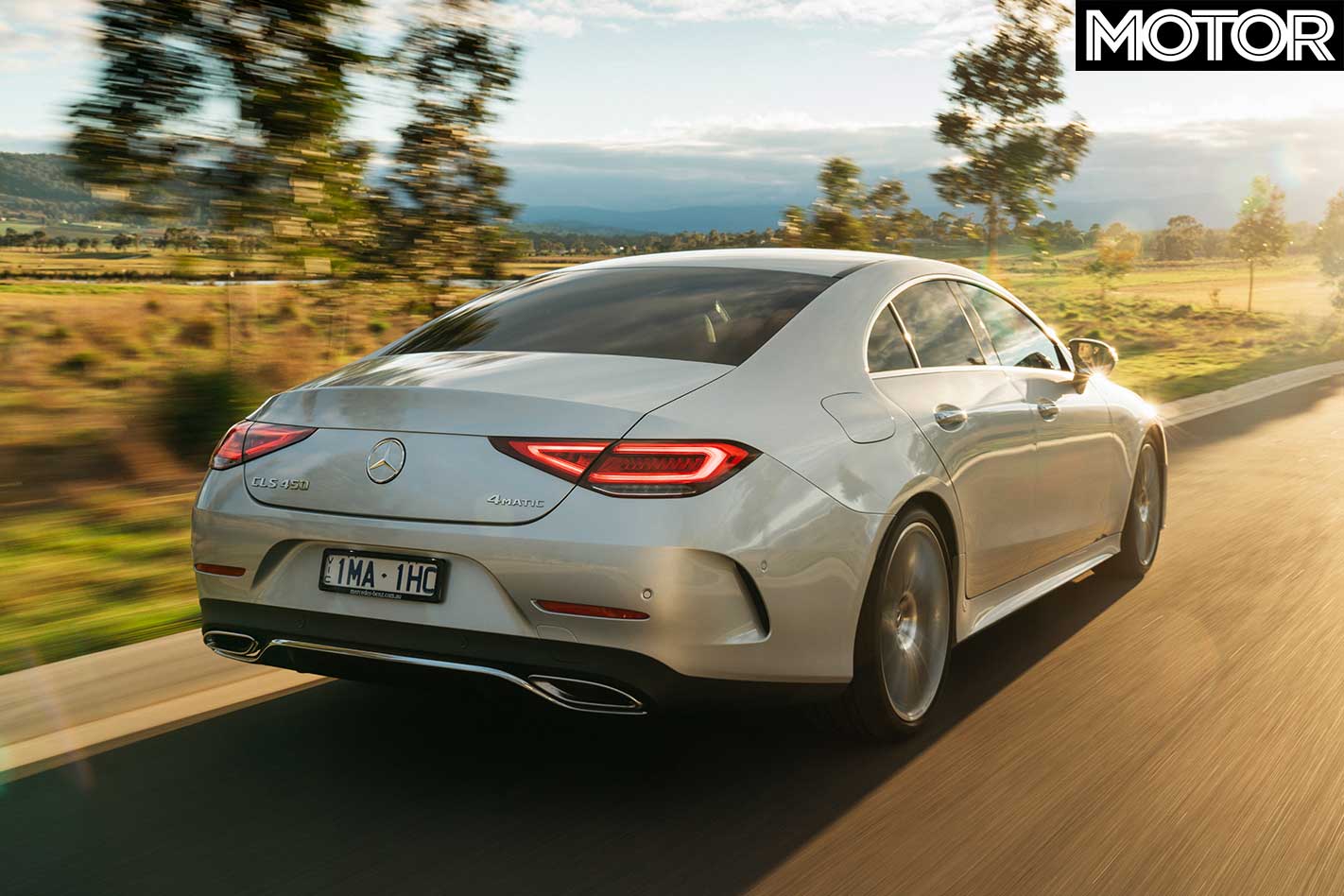
Sensible is a word you could use to describe the handling as well. For hardcore cornering thrills, this is a car calibrated for the mass market, choosing to err on the side of refinement and comfort over precision and agility, absolutely appropriate for this car and its intended customers. Yet don’t think that, when hustled through the twisties, the CLS 450 is soggy or unsatisfying.
It can bolt along a backroad quicker than the performance cars of yesteryear, carrying impressive mid-corner speed and leaping out of tight corners with clean all-wheel drive traction. The torque split front-to-rear is 45/55.
There is not much satisfaction or enjoyment to be had from driving the CLS 450 harder and harder, where you’ll find increasing amounts of understeer and ESP intervention. But the CLS 450, unlike its impending AMG siblings, makes no promises of racetrack ability, yet remains stable, secure and surefooted during hard cornering, never untidy.
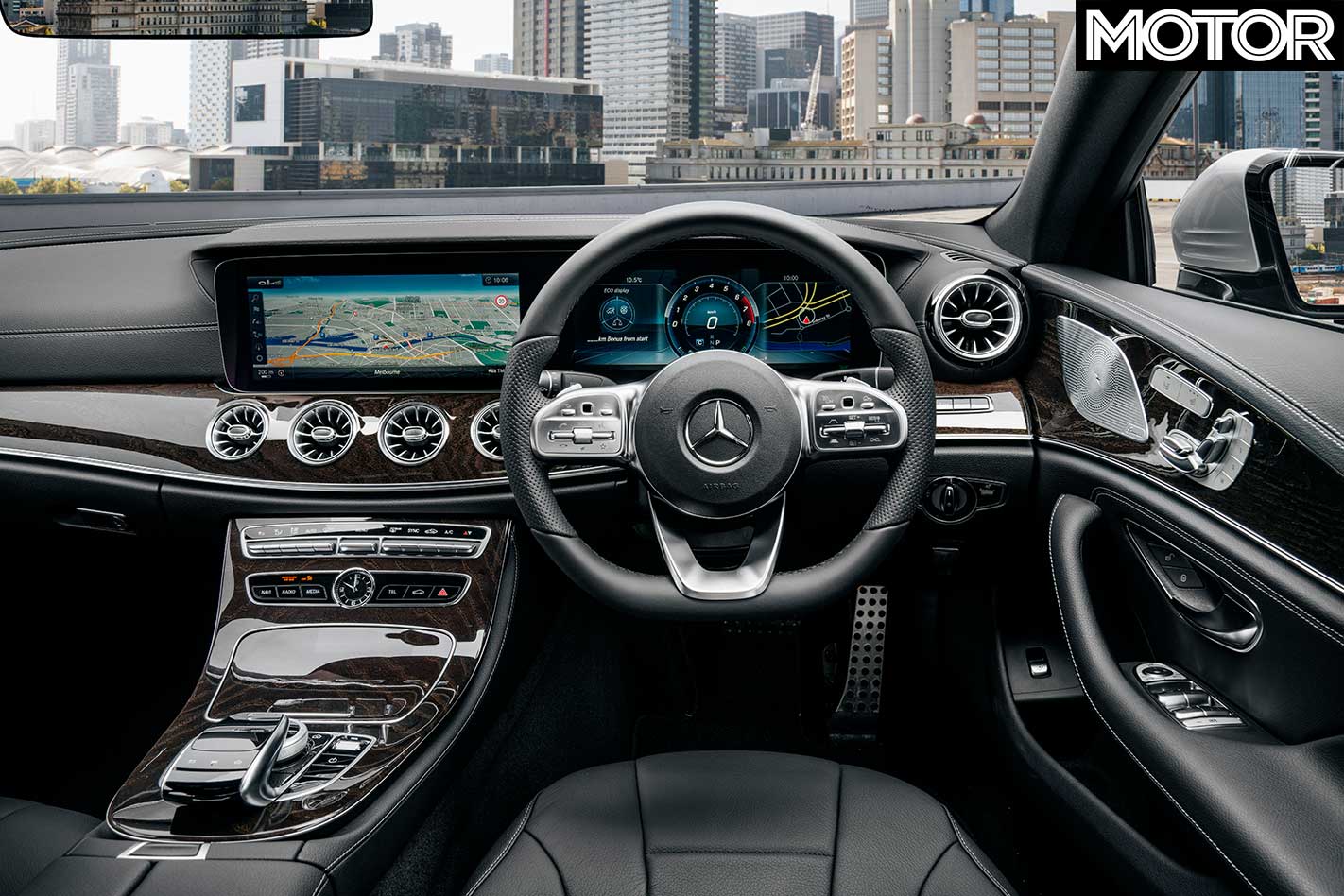
Really, you purchase a CLS 450 for the luxurious, high-tech interior, comfortable Air Suspension ride and the striking styling. Of the latter, as ever, we will defer to your own personal tastes.
We will say that this is one car particularly sensitive to photographic angles; and that if you’re a MOTOR reader, you should perhaps consider one of the intriguing frosted colours for maximum visual impact – white, red or gun-metal silver available as cost-options.
The verdict on the CLS 450 is basically, if you love driving fast and hard, you’re better off waiting for the AMG CLS 53 which arrives in November priced from $179,529. It has more power, a more aggressively calibrated all-wheel drive system and the general all-over AMG treatment. And, hopefully, a proper old-school straight-six howl.
2018 MERCEDES-BENZ CLS450 SPECS: Engine: 2982cc twin-turbocharged inline-6, DOHC, 24v Powertrain: nine-speed automatic transmission, all-wheel drive, mild hybrid Power: 270kW @ 5500-6100rpm Torque: 500Nm @ 1600-4000rpm Weight: 1940kg 0-100km/h: 4.8 seconds (claimed) Price: $155,529
Rating: 3.5 out of 5 stars
Mid-size SUV shoppers with the Renault Koleos on their shortlist now have another option to consider, with the French brand adding a more fuel-efficient version of the flagship variant to the line-up, for those who don’t need all-wheel drive.
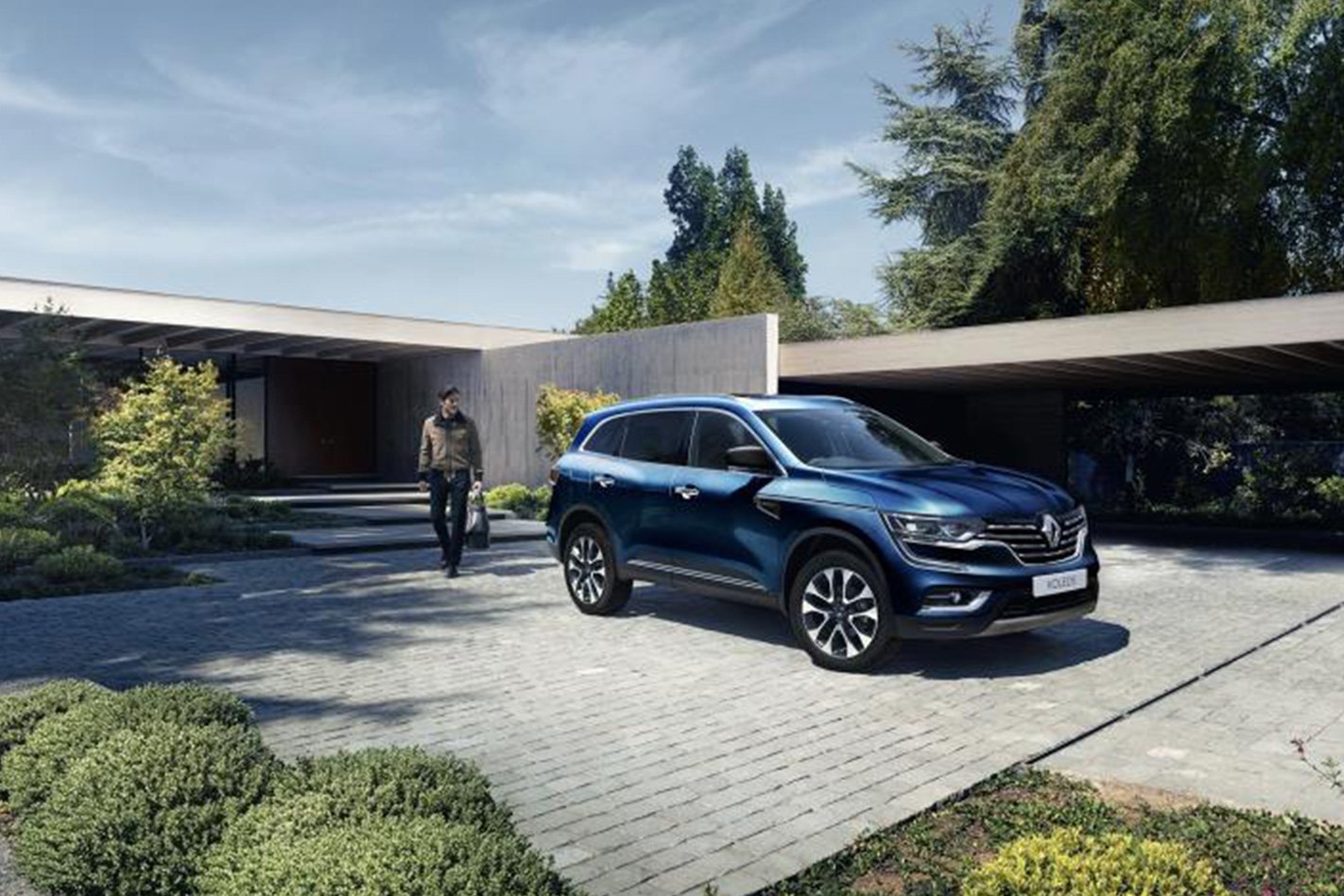
Dubbed the Koleos S-Edition, the new trim grade is based on the flagship Koleos Intens and features much of the same equipment with a few unique additions, but has only two driven wheels instead of four, which makes it lighter and better on fuel.
Koleos S-Editions are fitted with the same 2.5-litre four-cylinder engine as the petrol-powered Intens, but by removing a pair of driveshafts the S-Edition has the same claimed economy of 8.1L/100km as other 4×2 variants. For comparison, the Intens 4×4 uses a claimed 8.3L/100km.
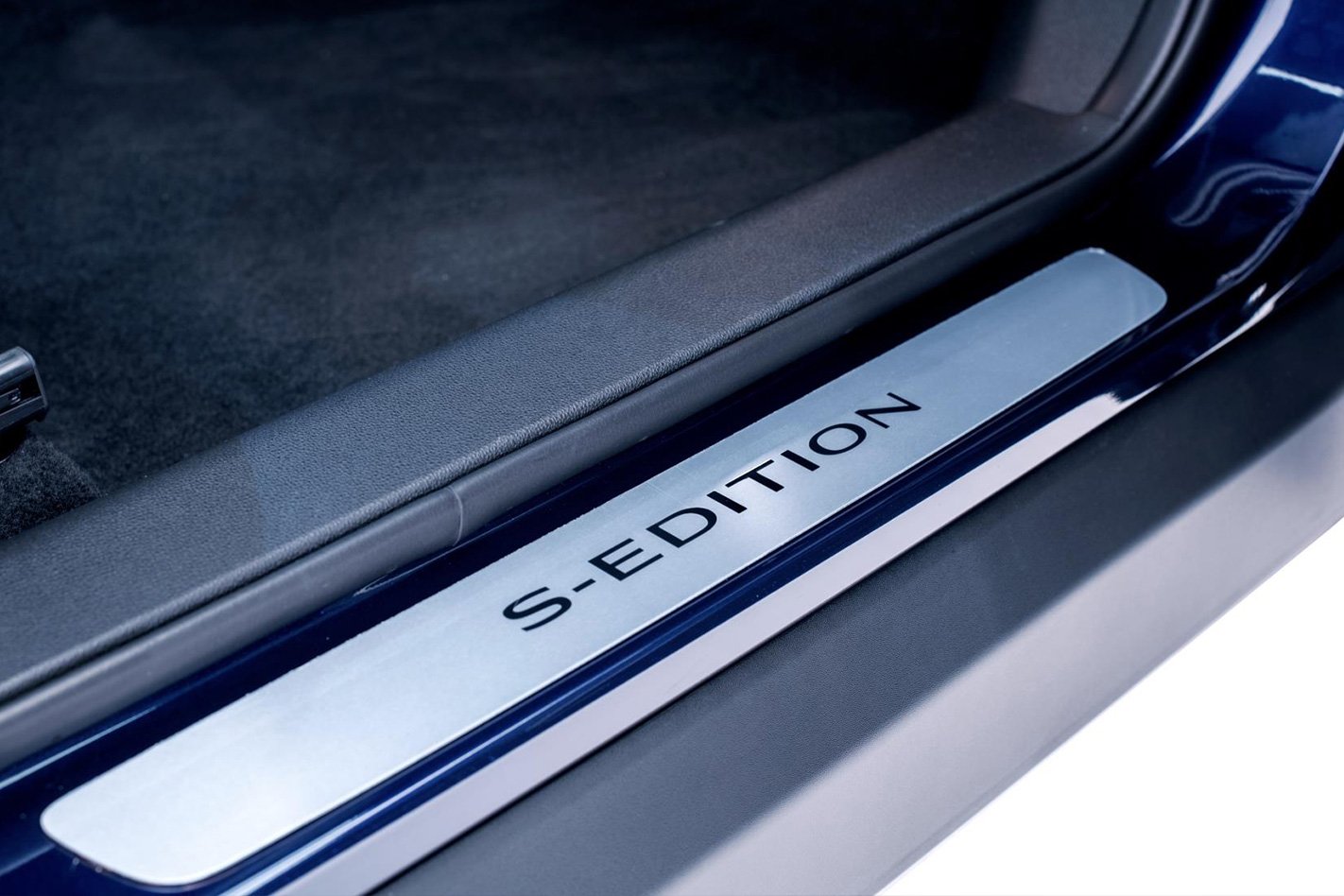
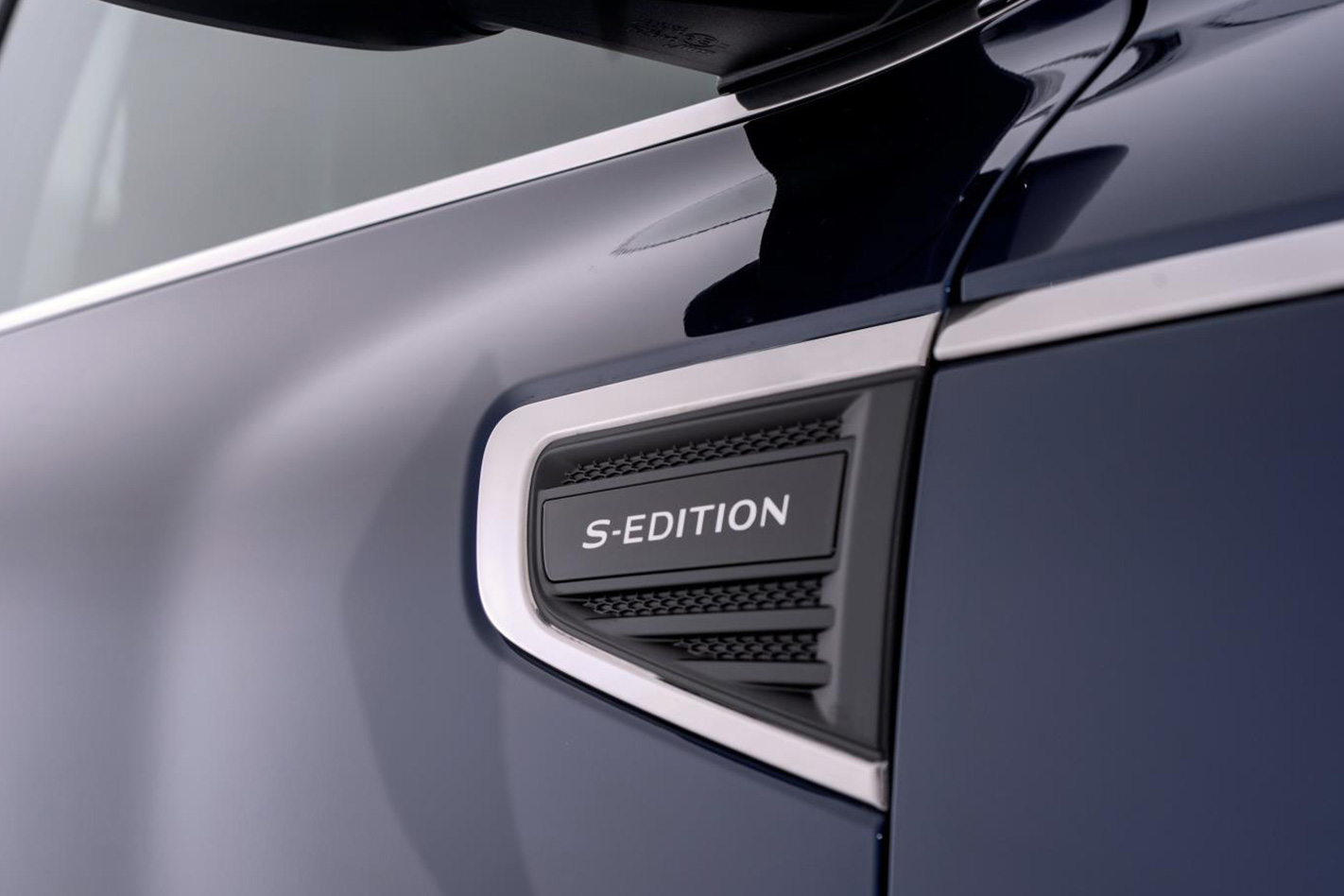
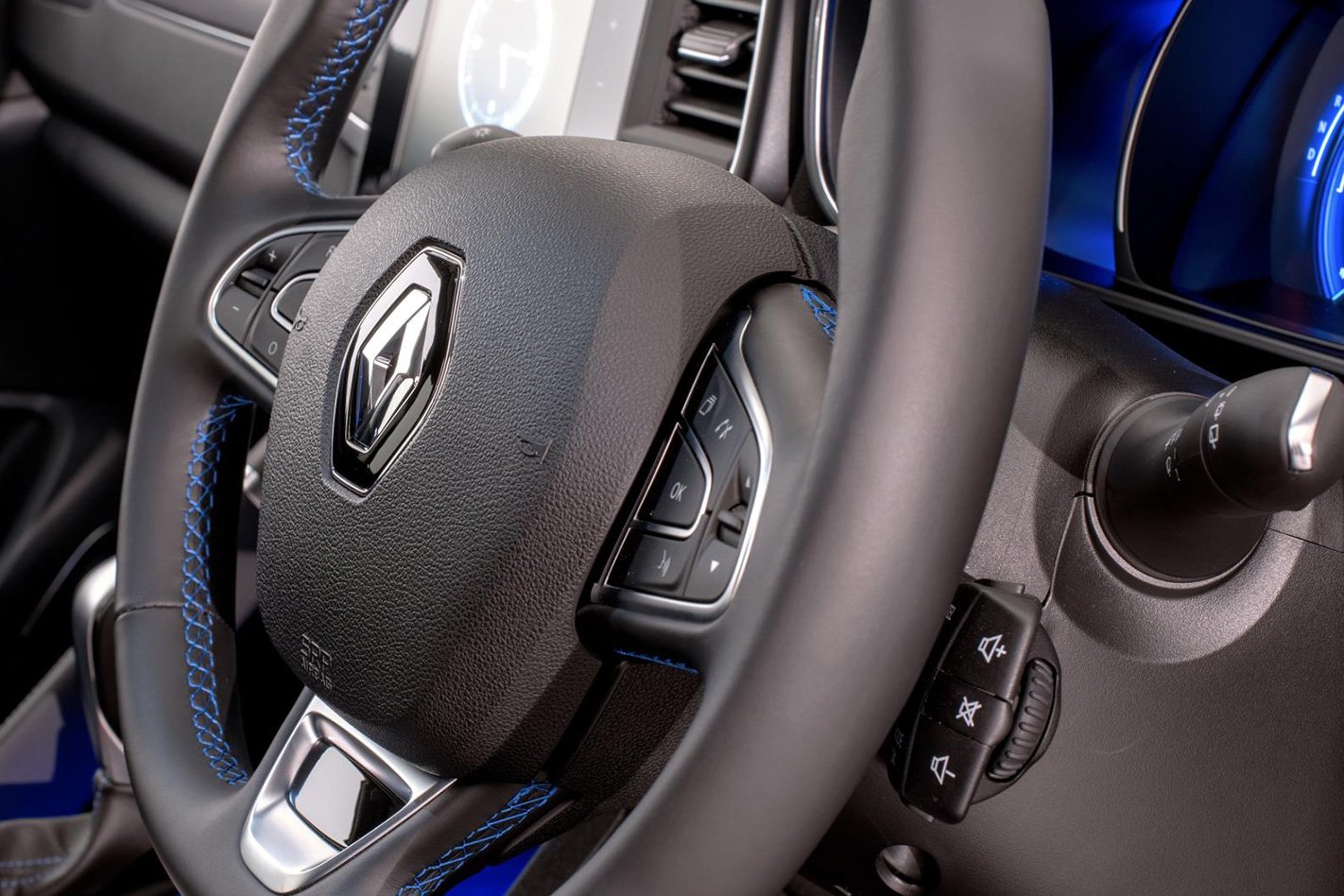
Other additions specific to the S-Edition include unique sill plates, metallic-black mirrors, and blue-trimmed interior features. The special edition also rolls on 19-inch alloy wheels as seen on the Koleos Initale Paris variant sold overseas.
Customers will be able to specify their S-Edition in one of four exterior colours, Solid White, Universal White, Meissen Blue and Grey Metallic.
The S-Edition Koleos is the same price as the all-wheel drive Intens, with a sticker price of $44,990.
“The Renault Koleos is the best-selling model in the Renault Australia line-up,” said Andrew Moore, Managing Director, Renault Australia.
“Since the new Koleos went on sale in the second half of 2016, we experienced customer and dealer demand for a highly specified 4×2 variant to join our already compelling line-up.
“We’re confident this new addition will boost interest and sales levels still further.
“And with our five-year factory warranty and capped price servicing, the Renault Koleos continues to offer an extremely attractive ownership package compared with its rivals.”
WHAT IS IT
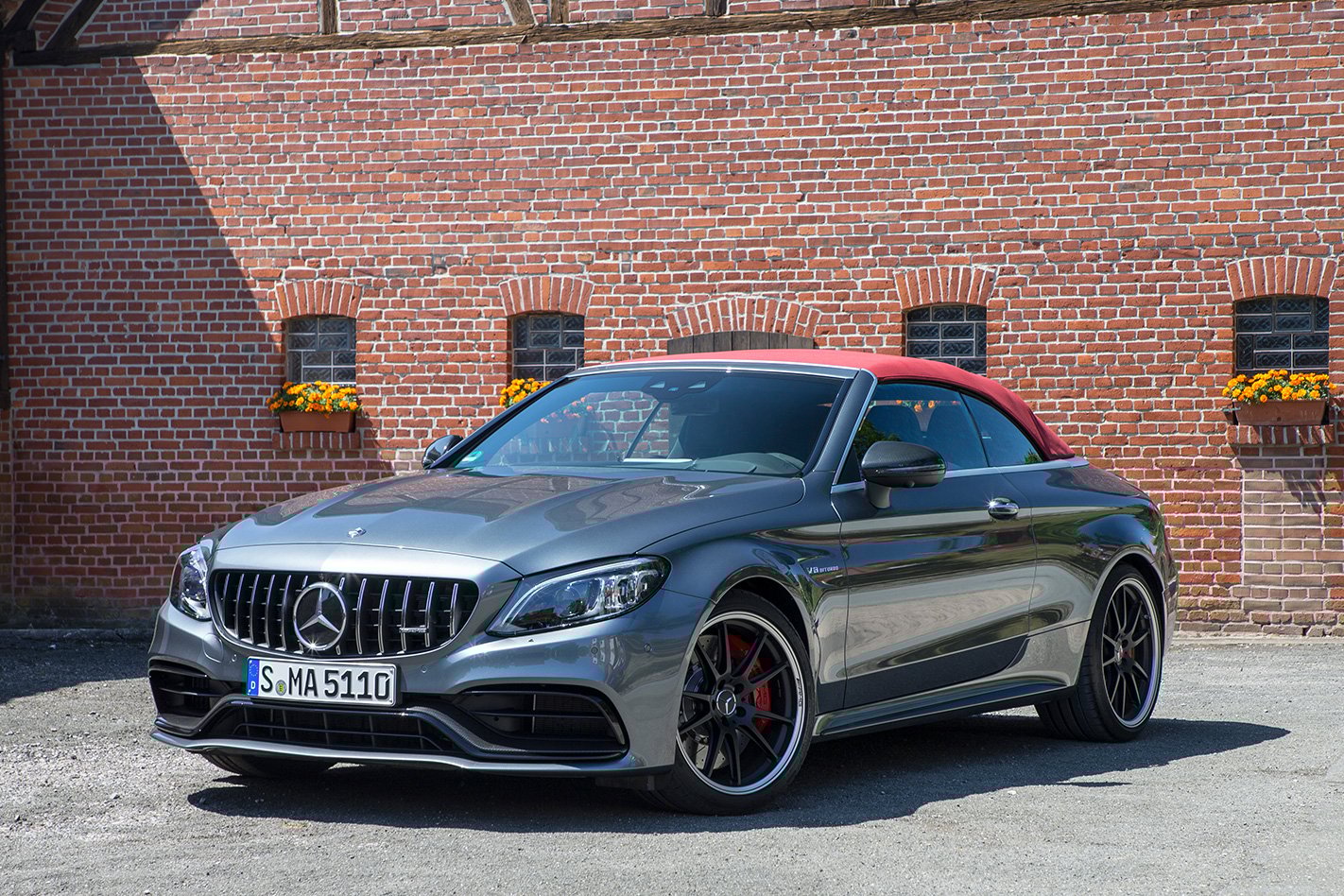
On the face of it, cutting the top off a coupe and then endowing it with a 375kW twin-turbo V8 seems a first-class route to creating something largely pointless, but the latest Mercedes-AMG C63 S does a remarkably good job of acting as the exception that proves the rule. With a new nine-speed transmission, smart control systems and a new look inside and out, it’s a surprisingly satisfying pick.
WHY WE’RE TESTING IT
We’d been invited along to drive all versions of the C63 S. The coupe, sedan and estate we were looking forward to; the cabriolet less so. It turns out that we were doing the drop-top a disservice. It’s the most pleasant surprise of the bunch. It’s a good deal more liveable than the old car, which makes it a better everyday proposition.
MAIN RIVALS
Audi S5 Cabriolet; BMW M4 Competition Convertible; Porsche 911 Carrera Cabriolet
THE WHEELS VERDICT
The Mercedes-AMG C63 S Cabriolet is a car that doesn’t have a direct rival. Name the V8-powered drop top that it competes with? There isn’t one. That might seem like an opportunity for a judicious bit of laurel-resting on AMG’s part, but the latest car significantly improves on its predecessor. It’s friendlier in Comfort mode, which improves it as a daily driver, yet when you want to get on it, there are smarter control systems and a sharper nine-speed transmission beneath you. It’s not cheap, but there’s a lot to like about this one. If you’ve viewed midsize cabriolets with a certain disdain, this 375kW bullet has the power to convert you.
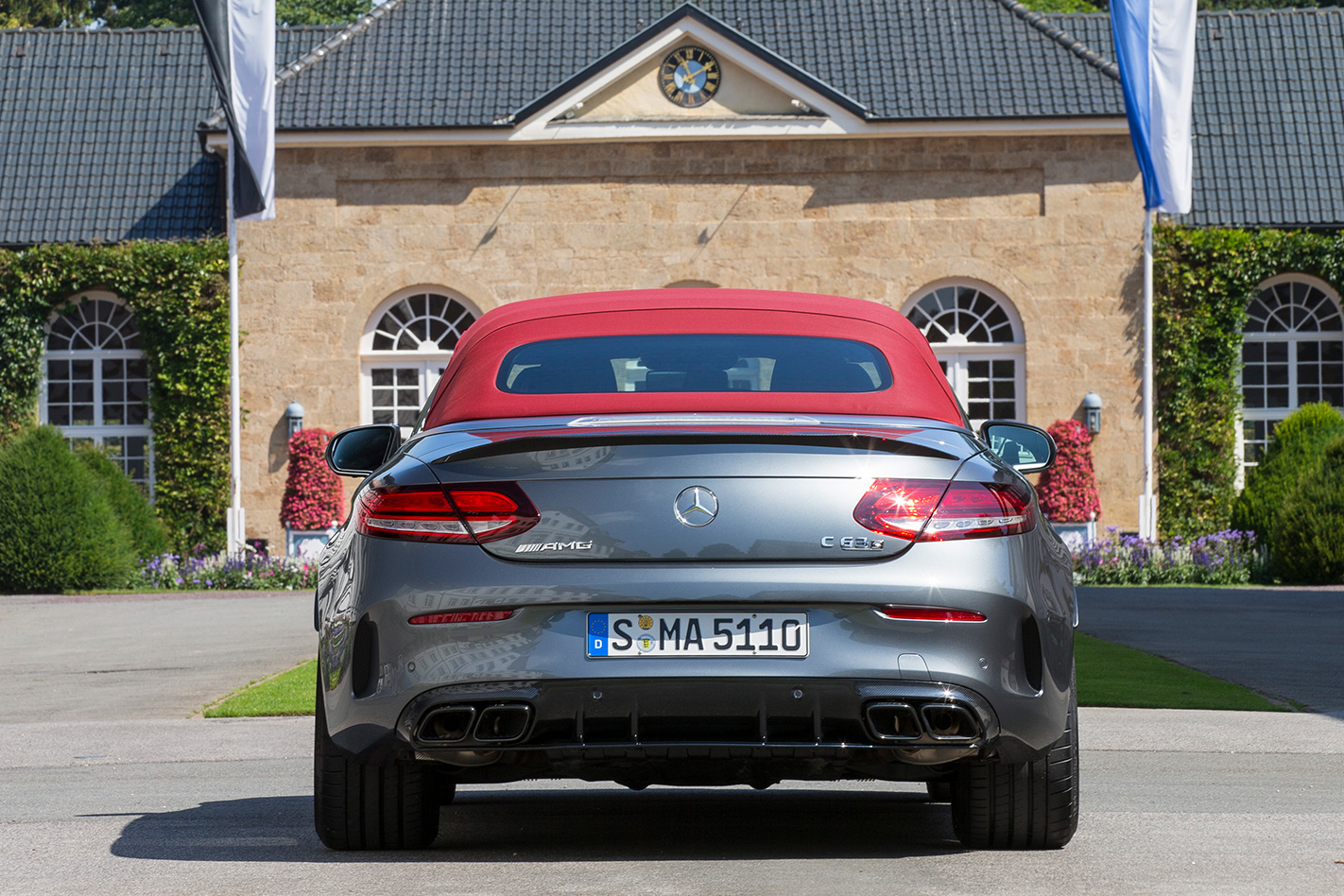
PLUS: V8 charisma; soundtrack with roof down; benign handling balance; clever control systems; interior glitz MINUS: Some of the exterior styling updates look a bit racy for a drop top; fuel thirst; weight
THE WHEELS REVIEW
UNLESS you own a Jacqui E loyalty card, it’s fair to say that midsize cabriolets have something of an image problem. Should you care a jot about engineering, you’ll pale at the thought of crucifying a vehicle’s structural integrity by lopping the lid off it. From a dynamic perspective it’s about as egregious a sin as anything this side of ‘stancing’ your car with extreme negative camber. We’ve driven many cars that were great with metal over your melon but which turn into shuddering calamities when there’s mere canvas up top, but rest assured that the Mercedes-AMG C63 S Cabriolet isn’t among their number.
At this juncture, I probably don’t need to declare my antipathy to cabrios. You can probably feel it seething out already, and when asked to test the hottest C-Class drop top after driving the fantastically focused coupe on track, it seemed time to sharpen the knives. Mercedes-AMG probably did a smart thing by plotting a road rather than track drive for the cabrio, but nonetheless my anticipation in giving the thing a kicking rapidly came to naught. In fact – and I can’t quite believe I’m writing this – it’s right up there as one of the picks of the C63 line up.
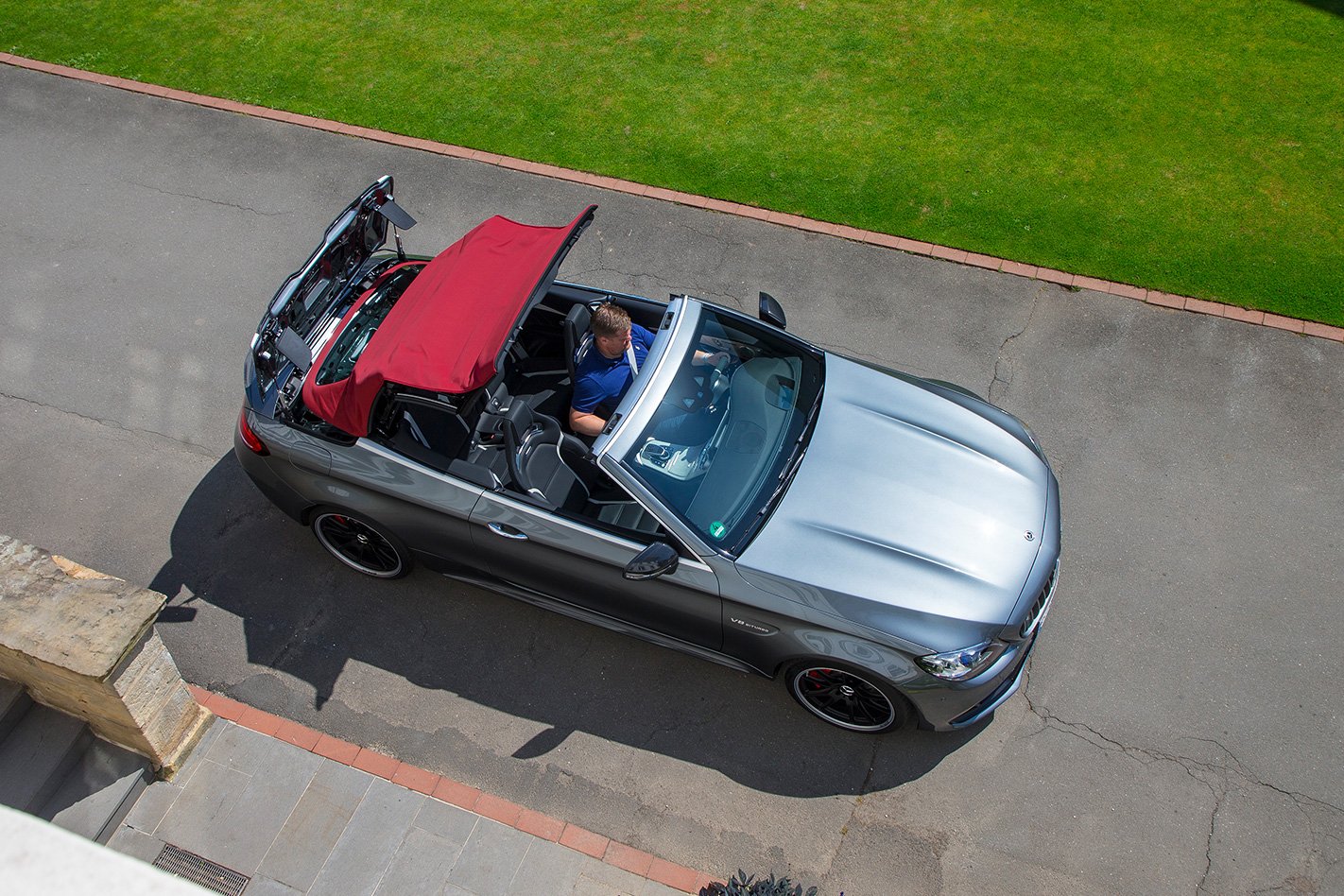
No, I haven’t taken leave of my senses. There’s a very good reason why you’d choose the cabriolet over the hard top and it’s all about the sound. Pure, unfiltered sound. Forget the piped-in nonsense that corrupts your lugholes in the coupe. Drop the insulated cloth roof of the Cab and you get the full surround-sound splendour of the 375kW AMG V8 up front. You’ll hear every hiss, snort and woofle of the turbocharger and induction system, you’ll learn to time the rat-a-tat fusillade of exhaust overrun crackles to coincide expertly with a passing truck for full ricochet effect and you’ll do all that without being beaten to death by your own hair.
That’s because wind isolation with the roof down is more than adequate at speeds of up to 130km/h and the Airscarf blowers will keep you from developing a crick in your neck from any draughts that do creep through the mesh wind deflector. I’m relieved that Mercedes has stuck to a cloth roof for this car rather than a folding hard top that would have only added weight and complexity. The soft top is well insulated against wind noise when raised, which can be undertaken at speeds of up to 31km/h. It’ll take 20 seconds to fully deploy and when the roof is raised, you get 360 litres of boot space. The retaining bag reduces that figure by 75 litres when the hood is folded, which is worth bearing in mind if you fill the boot with gear and then get a sudden urge to drop the top.
By now you’ll probably have read about the latest C63’s clever nine-stage traction control system that’s borrowed from the AMG GT R but that’s not really too relevant to the Cabriolet, as it’s something you’ll really only exploit on a track. Likewise the four-stage AMG Dynamics tech that governs the electronically-controlled limited-slip differential is probably not the big sell for Cab buyers. Mercedes-AMG’s aim, with the latest generation of C63 was to broaden its appeal; to make it more athletic when you’re really driving the thing by the scruff of the neck and, at the same time, to render it more liveable when you’re not.
The latter is the key to the Cabriolet’s improvement. By softening the suspension when you’re in Comfort mode, ride quality has improved significantly over its predecessor, with less noise and vibration being felt in the cabin. Surface imperfections that would have had you wincing in anticipation and the rear view mirror vibrating crazily in the old car are now just mopped up with a distant thud. Even switching into Sport and Sport+ modes doesn’t introduce too harshness, although it’s worth noting at this juncture that the German roads on which we tested the cars were better surfaced than we’d typically find in country Australia.
Also helping the Cabriolet’s comportment is the new nine-speed transmission, replacing the old seven-speed unit. Like that one, it’s neither a twin-clutch nor a conventional torque-converter automatic, in this case using a wet start-up clutch to slur between ratios. Alternatively you can click up and down through the ‘box with the wheel-mounted shift paddles, although the software is so good, you’ll probably be slower. The new wheel-mounted manettino-style drive selector makes it easy just to flick the car into a sportier mode if you want a sharper transmission response.
Performance of this 375kW S version of the C63 Cabriolet (Mercedes Australia said no to the 350kW non-S model) is agreeably ridiculous, stepping its 1865kg to 100km/h in 4.1 seconds and on to an electronically limited top speed of 280km/h. The engine isn’t the purest-sounding V8 you’ll have ever heard, but there’s something about its gruff purposefulness that’s nevertheless endearing. Really get to enjoy the C63 S drop top and you’ll drain its 66-litre fuel tank depressingly quickly, despite Mercedes claiming a 10.4L/100km fuel figure for the car. Our test route saw an average thirst of 28.0L/100km for a range of 235km.
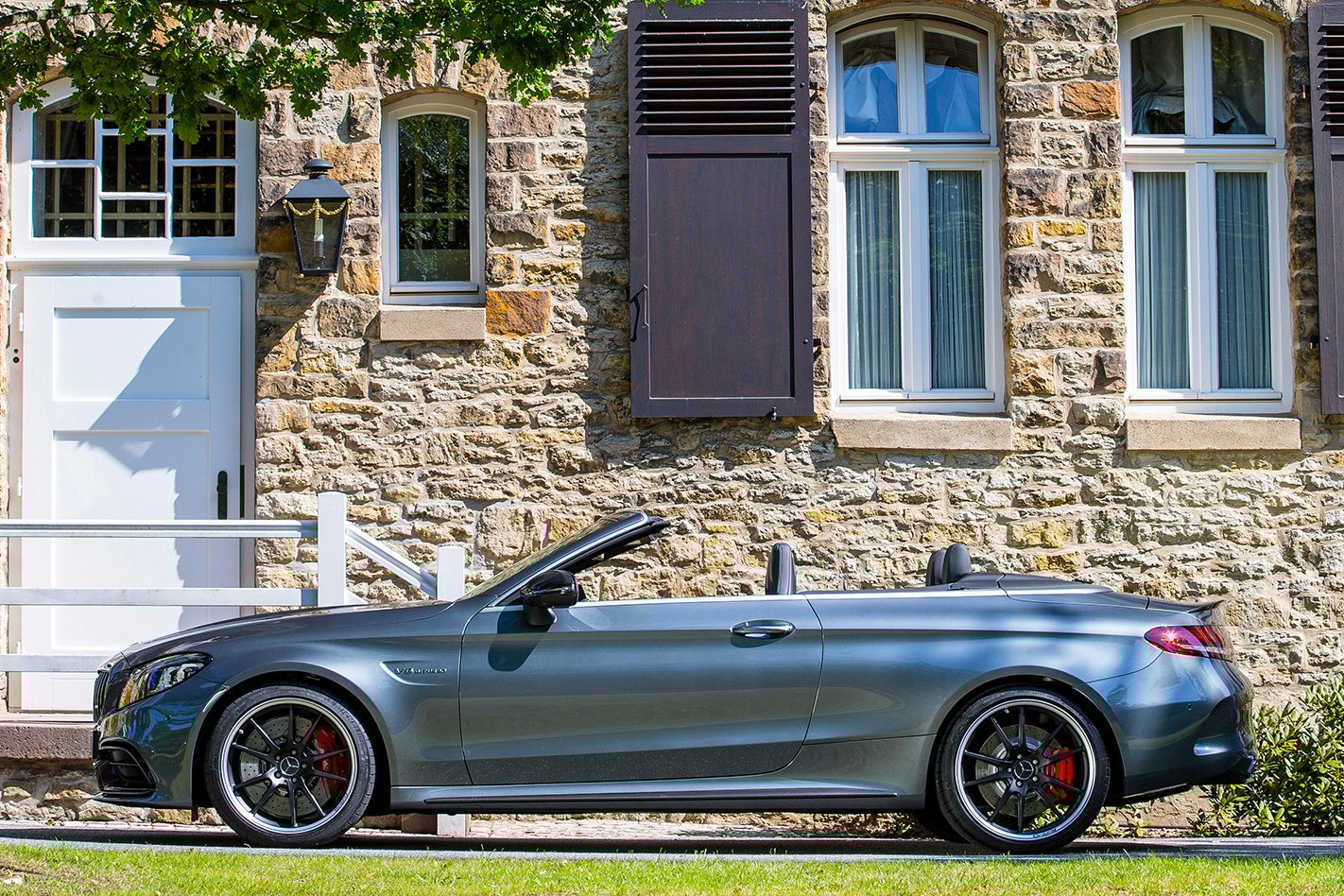
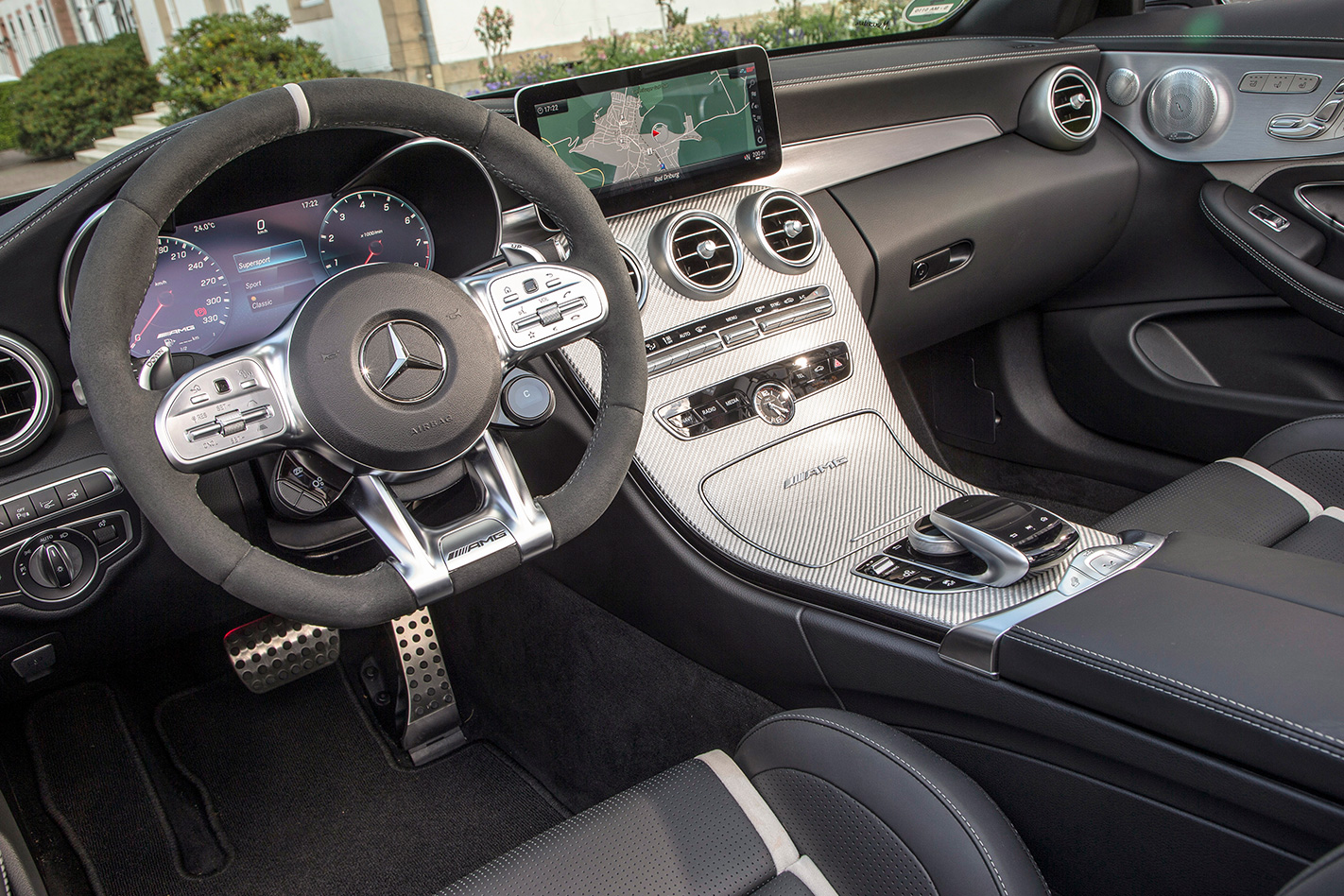
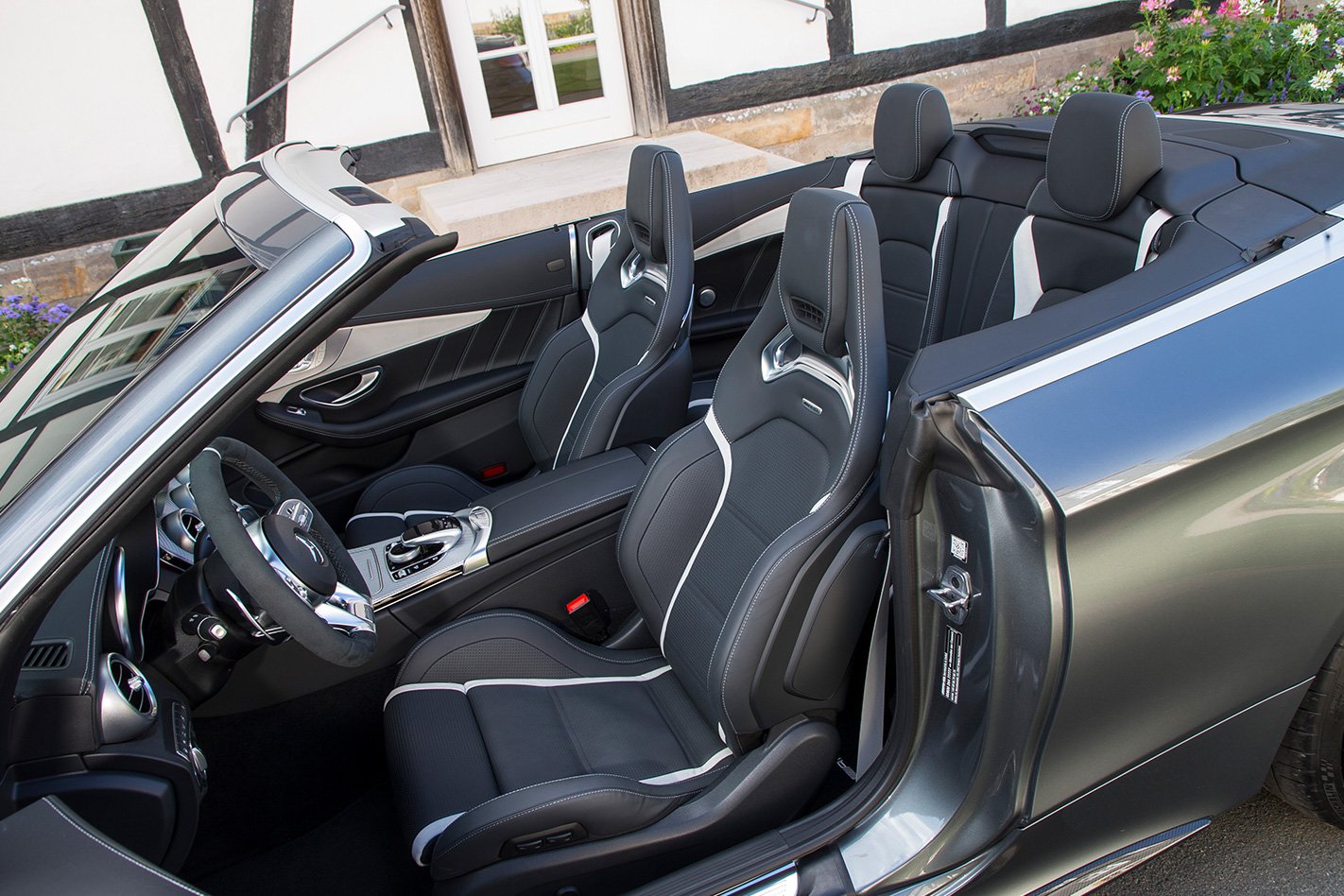
The usual mid-life facelift targets of lights, grille and lower aprons have been duly attended to by Mercedes with this iteration of the C63, the Panamericana grille now giving the C63 a more aggressive front end than the old horizontally-slatted item. A largely cosmetic rear diffuser looks a little self-conscious on the Cabriolet, which could perhaps have dialled back the visual belligerence a notch or two. Drop inside and you’ll find an all-digital clock set and a 12.3-inch centre screen, as well as a refresh for the seating, fascia trims and steering wheel.
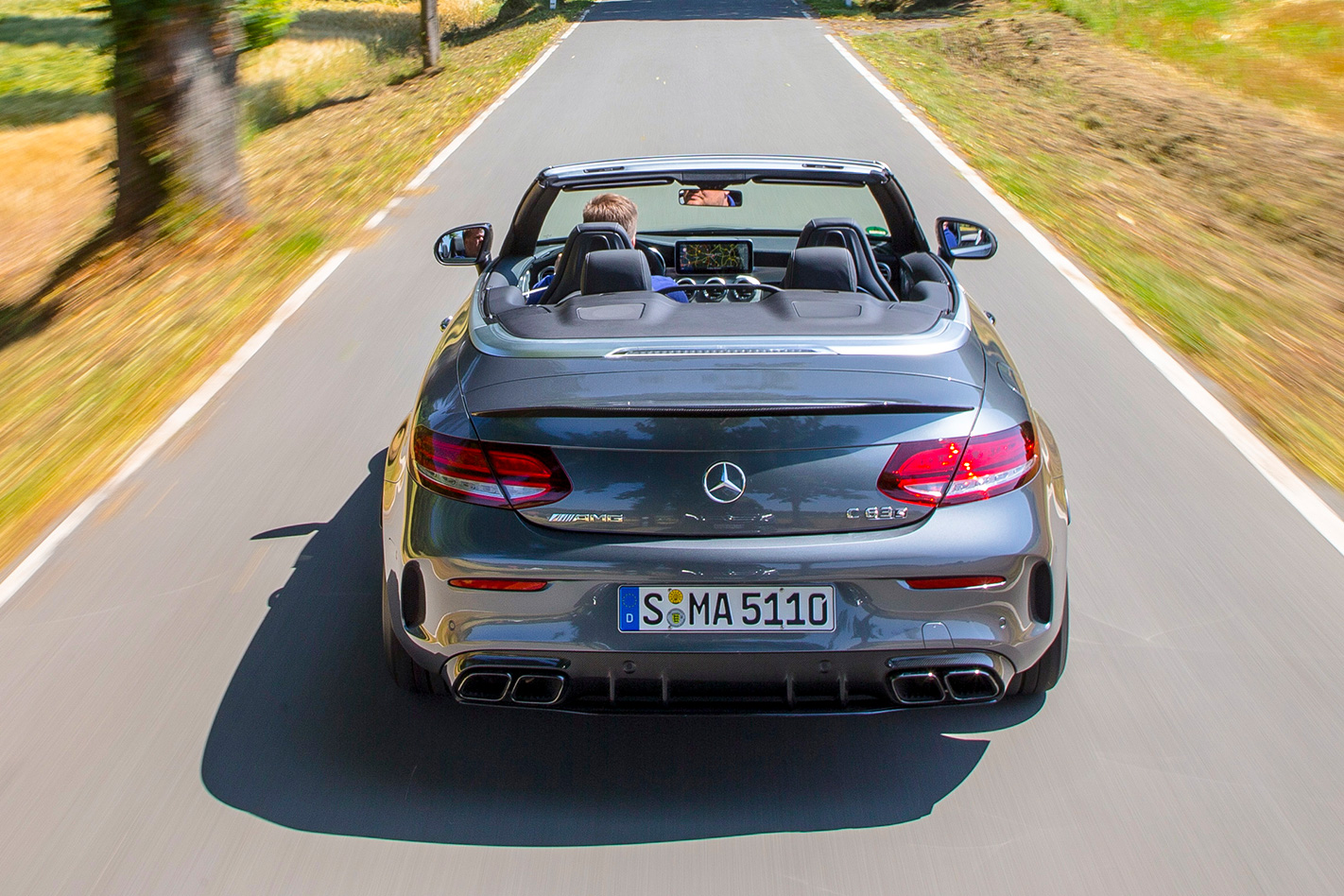
In making the C63 S Cabriolet’s ride that bit friendlier, Mercedes has created a better car. It seems almost counter-intuitive that the angriest drop-top in the C-Class range has been improved by rendering it a little more benign, but it fits the buyer profile that bit better. Of course, there’s added capability at the other end should you really wish to exploit it, but sometimes this much excess is a reassurance rather than a requirement. As a fast road car, there’s now a real reason to choose the Cabriolet.
SPECS
Model: Mercedes-AMG C 63S Cabriolet Engine: 3982cc twin-turbo V8, dohc, 32v Max power: 375kW @ 5500-6250rpm Max torque: 700Nm @ 2000-4500rpm Transmission: 9-speed automatic Weight: 1865kg 0-100km/h: 4.1 sec Economy: 10.4L/100km Price: $183,000 [est] On sale: September 2018
MCLAREN’S successor to the mighty P1 and the grandchild of the legendary F1 will bear the name ‘Speedtail’, the British supercar maker has revealed.
Following the Senna as McLaren’s next instalment in its top-tier ‘Ultimate Series’ range, the Speedtail continues the company’s migration away from its established alphanumeric naming strategy.
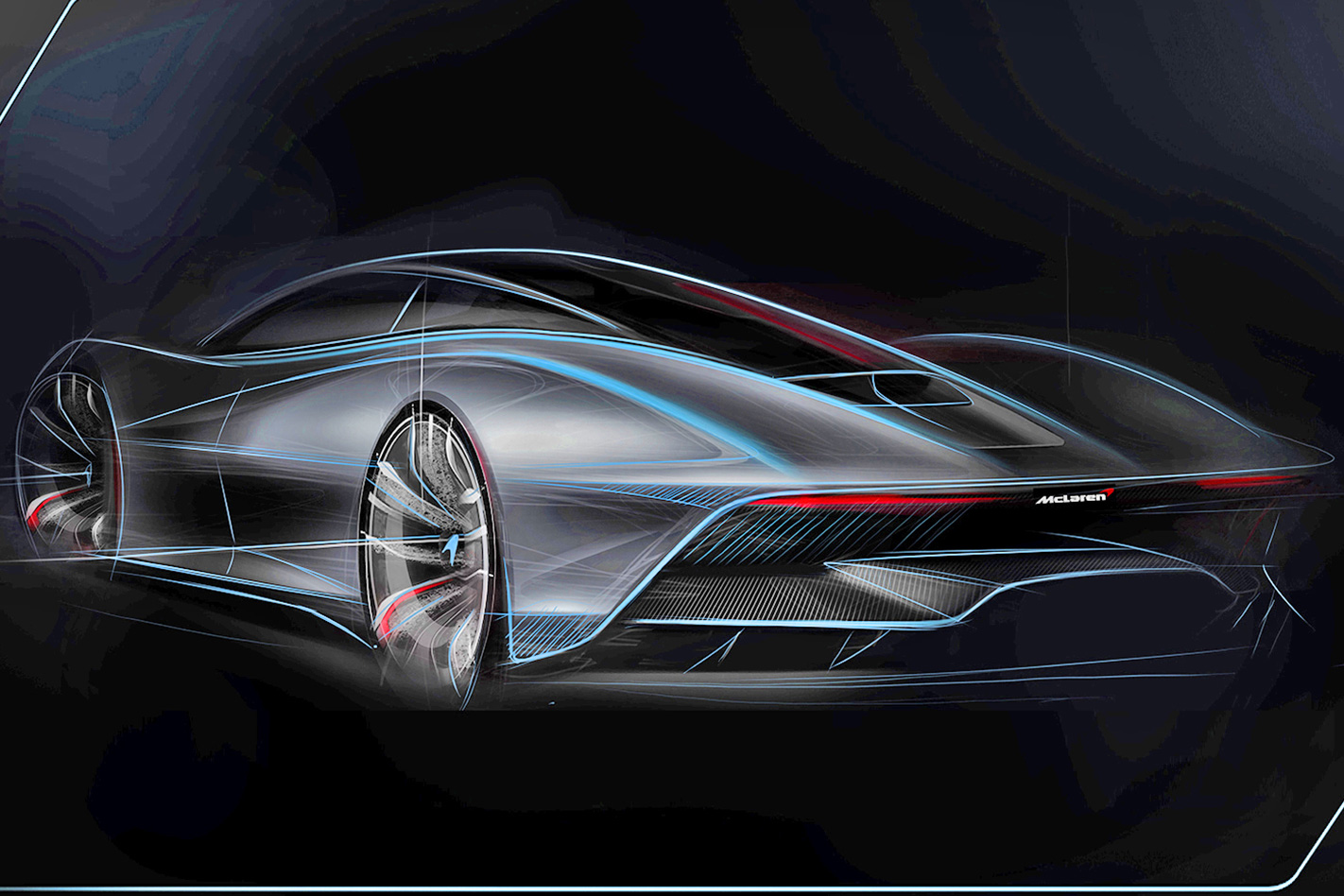
While superficially similar to the ‘Longtail’ moniker that was first informally applied to race-spec versions of the McLaren F1 and eventually became official nomenclature on the 675LT and 600LT, it’s always been shortened to an acronym. The Speedtail is different – it’s not a suffix, it’s the car’s full name. Lesser McLarens continue to advertise their power output in brake horsepower in their names, but, like the Senna, the Speedtail won’t follow that strategy. The car’s provisional name of BP23 was a red herring, it seems.
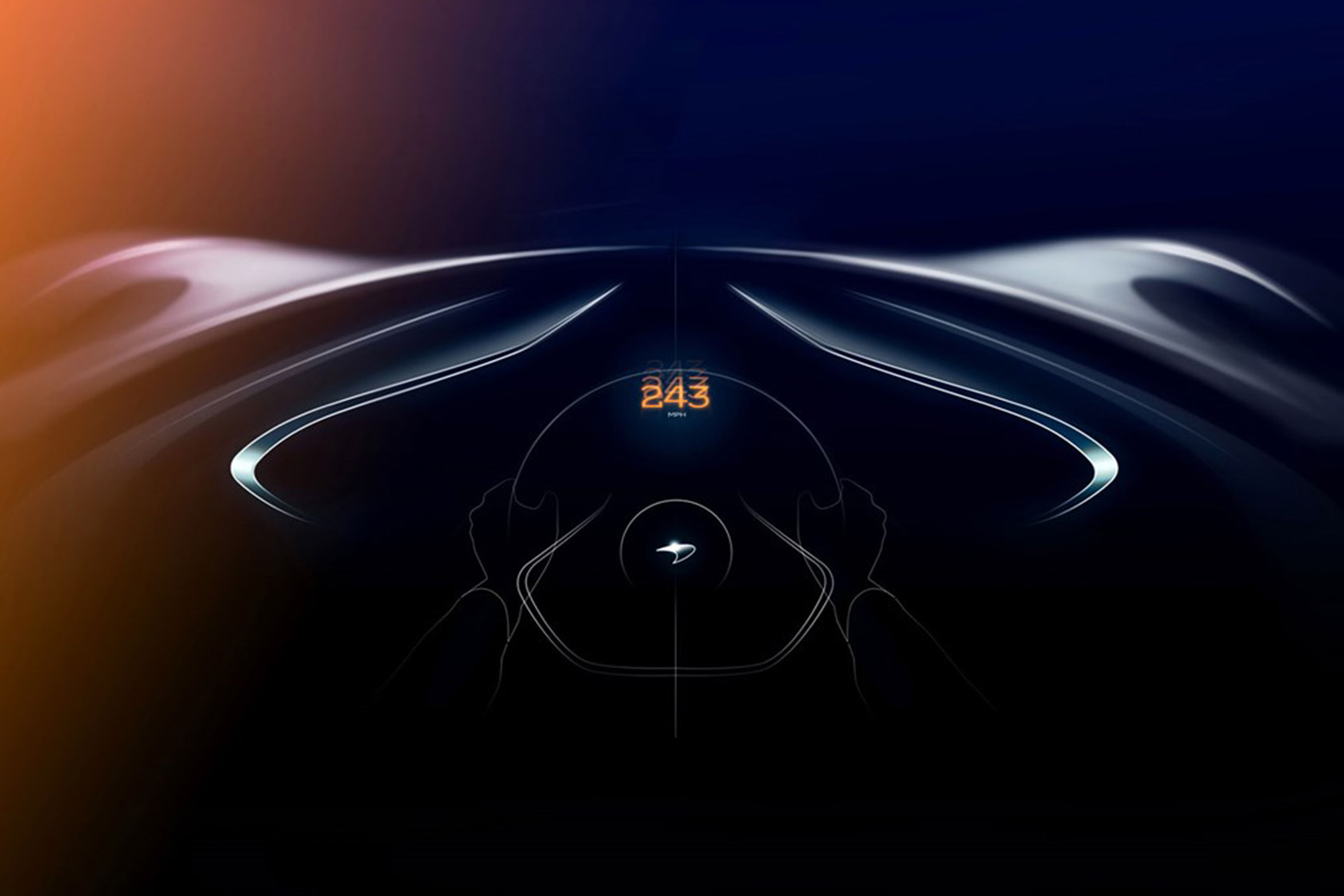
Why Speedtail? Because, simply put, McLaren’s next ‘Hyper-GT’ will be the fastest McLaren in a straight line yet. The company isn’t talking numbers for now, but says it will without any doubt eclipse the McLaren F1’s 391km/h top speed.
Just 106 Speedtails will be created, and 106 well-heeled customers have already placed eye-watering $2.8 million reservations against each one. McLaren’s brief teaser video announcing the Speedtail’s name keeps the car’s true form shrouded, but it’s been known for a while that the car will feature a central driving position flanked by two passenger seats – just like the landmark F1. Unlike the F1, a petrol-electric powertrain will thrust it along the road.
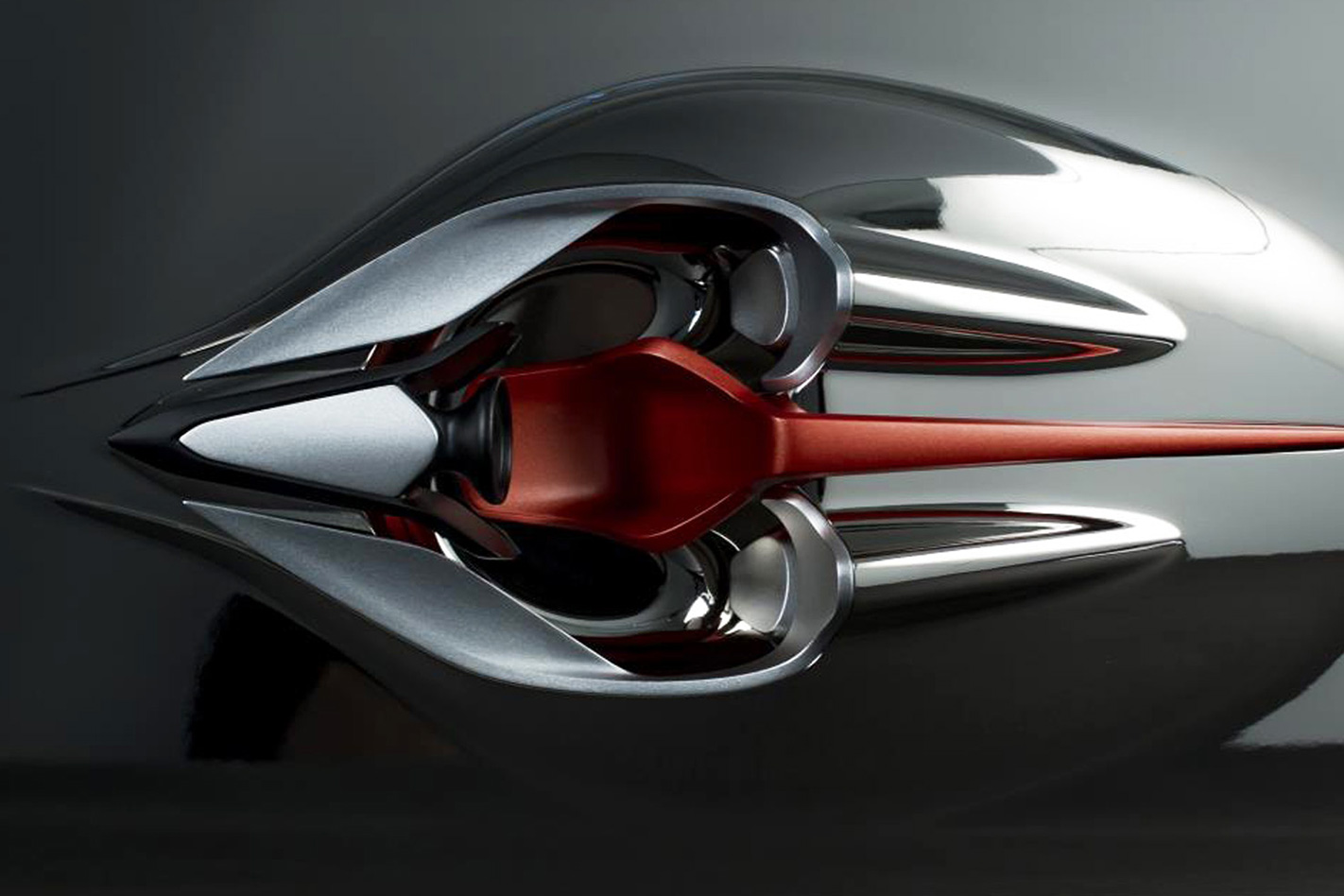
And unlike the ultra-focused Senna that sits next to it in the Ultimate Series, the Speedtail will adopt a more luxurious posture. The styling will be more organic and flowing than the Senna’s brutally pragmatic bodywork, and the use of high-end materials will endow it with an ultra-premium aura. McLaren Special Operations will tailor each one to the owner’s tastes, and we doubt that any two Speedtails will be alike.
Production of the Speedtail will commence at the end of 2019, though we’ll be able to lay our eyes on its final production-ready shape before the end of this year.
Some people are obsessed with size. You know them, their car has more pistons in each brake caliper than their engine. Each brake disc looks like a flying saucer. Meanwhile, their brake pads are rated to withstand re-entry into earth’s atmosphere. It’s likely overkill.
All that hardware means nothing if the tyre’s grip levels aren’t as large. As we’ll see, tyres can vary brake performance, along with distances, by wild margins. To test this, we’ve designed an ‘emergency’ braking zone for Luffy to use on every second return from the slalom.
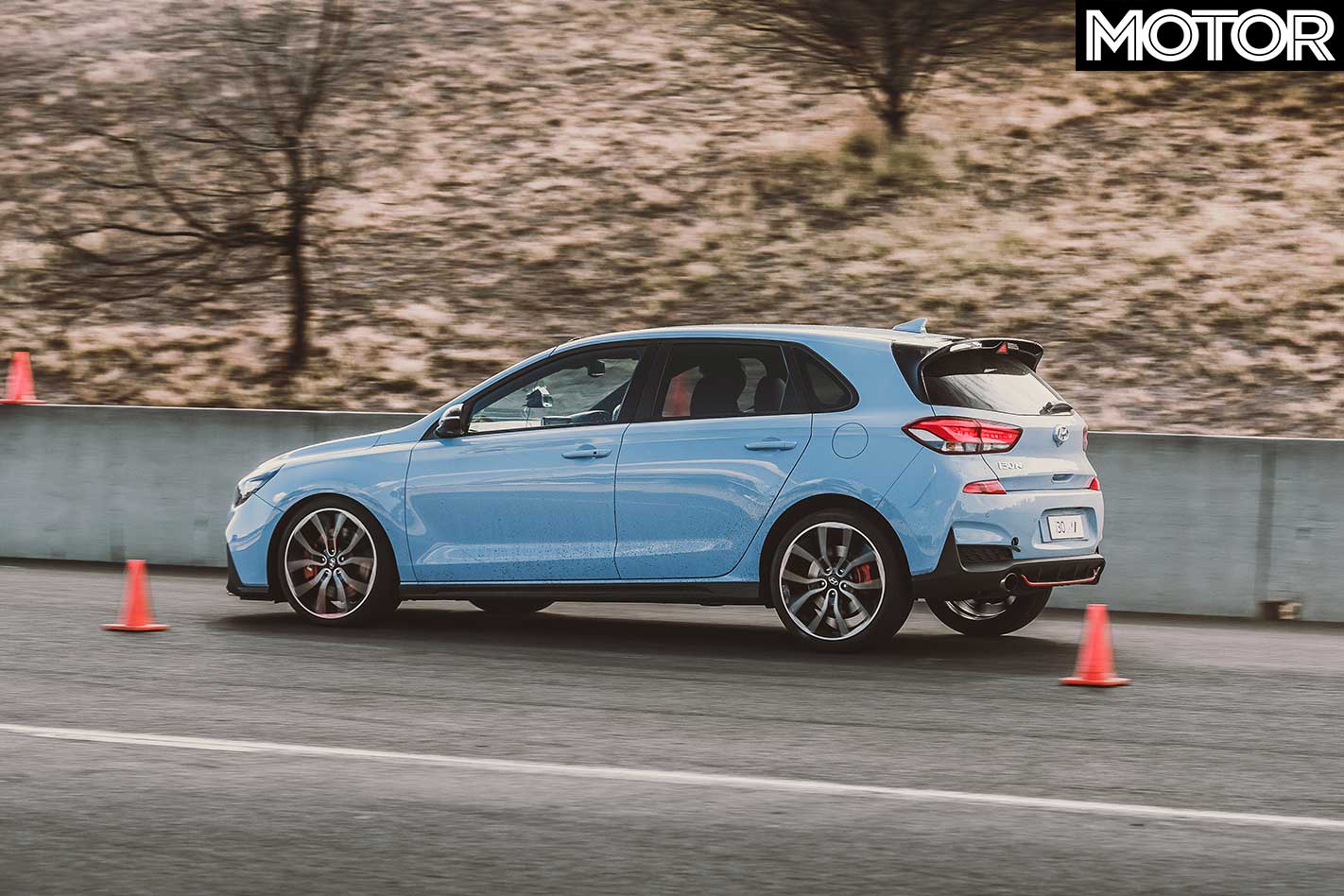
As Luffy cycles through the contenders, the Hyundai’s spoiler-mounted brake light flashing during hard stops, Continental shows it has evolved the ContiSportContact 5P’s braking prowess to new levels with its new SportContact 6 flagship. It pulls up a ruler’s length shorter than the Dunlop.
Even with a cool-down between each run, our control data reveals braking performance drops off slightly as the day goes on. While Luffy reassures us the i30 N’s brake pedal stays firm, surface temperatures rise steadily in both the sun and shade from around 23 degrees Celsius to around 30. Ambient temperature peaks at 26 degrees.
Because this has most likely handed our first control run an advantage over the last (it stopped 39cm shorter), this slightly tweaks our finishing order. Linear regression splits the tied placings in seventh between Laufenn and the Nitto. It also swaps the Goodyear and Pirelli in respective fourth and fifth positions, the later run Pirelli gaining the formulaic advantage.
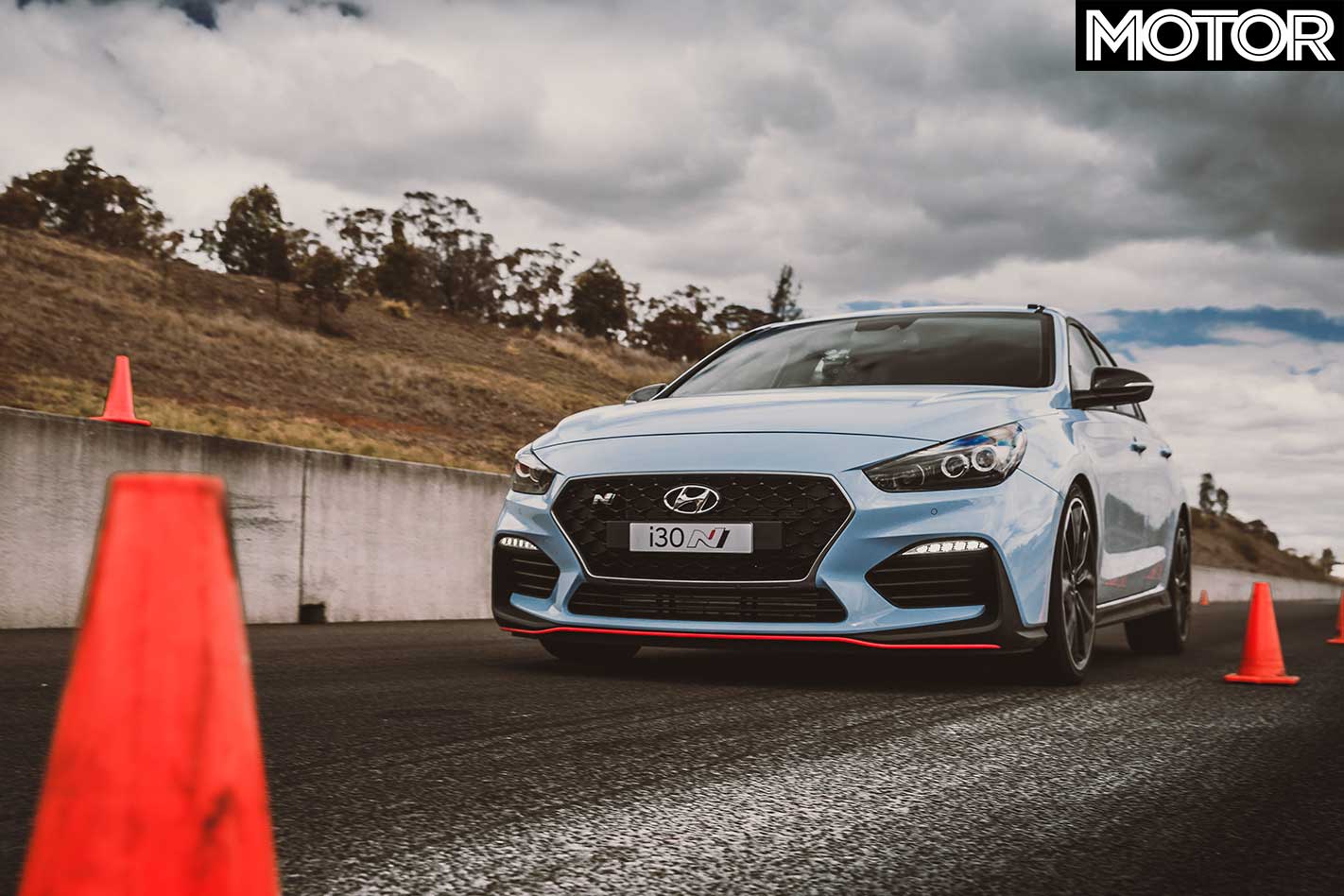
As for the rest of the pack, Kumho’s PS91 cements its dry-braking performance with an unchanged third to replicate its result in last year’s test. Meanwhile, the pack’s tail-end is more than three metres away from the top spot.
Most notable is the Achilles, which needs an extra seven metres than the Continental to reign in the Hyundai’s 1400kg-plus at 100km/h. It’s a chilling statistic. That distance spans longer than a Mercedes Maybach S600 Pullman. Lose a game of chicken with a roo, or a set of yellow traffic lights, and those seven metres could cost you more than last place in a test.
Dry Braking Results
Welcome to the August 2018 issue of Motor Magazine.
Below you’ll find a preview of the content you can find in this month’s mag, available at all good retailers, or in digital form at Zinio. And if you don’t want to wait each month, save yourself some dosh and subscribe here!
You can also follow MOTOR’s adventures on Twitter, Instagram or YouTube.
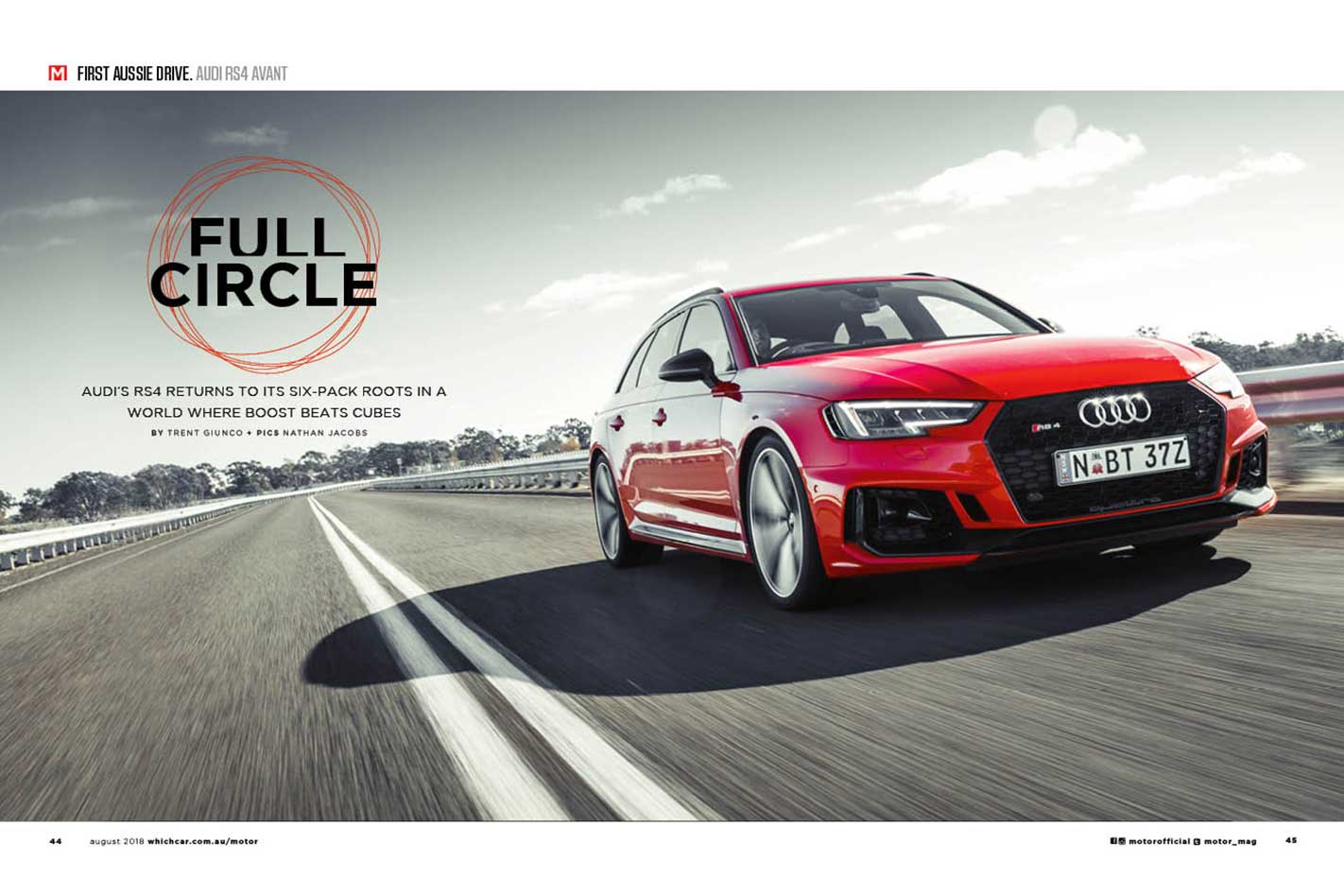
The cover story this month is our first Aussie drive in the Audi RS4 Avant, now with 331kW of twin-turbo V6 under the bonnet.
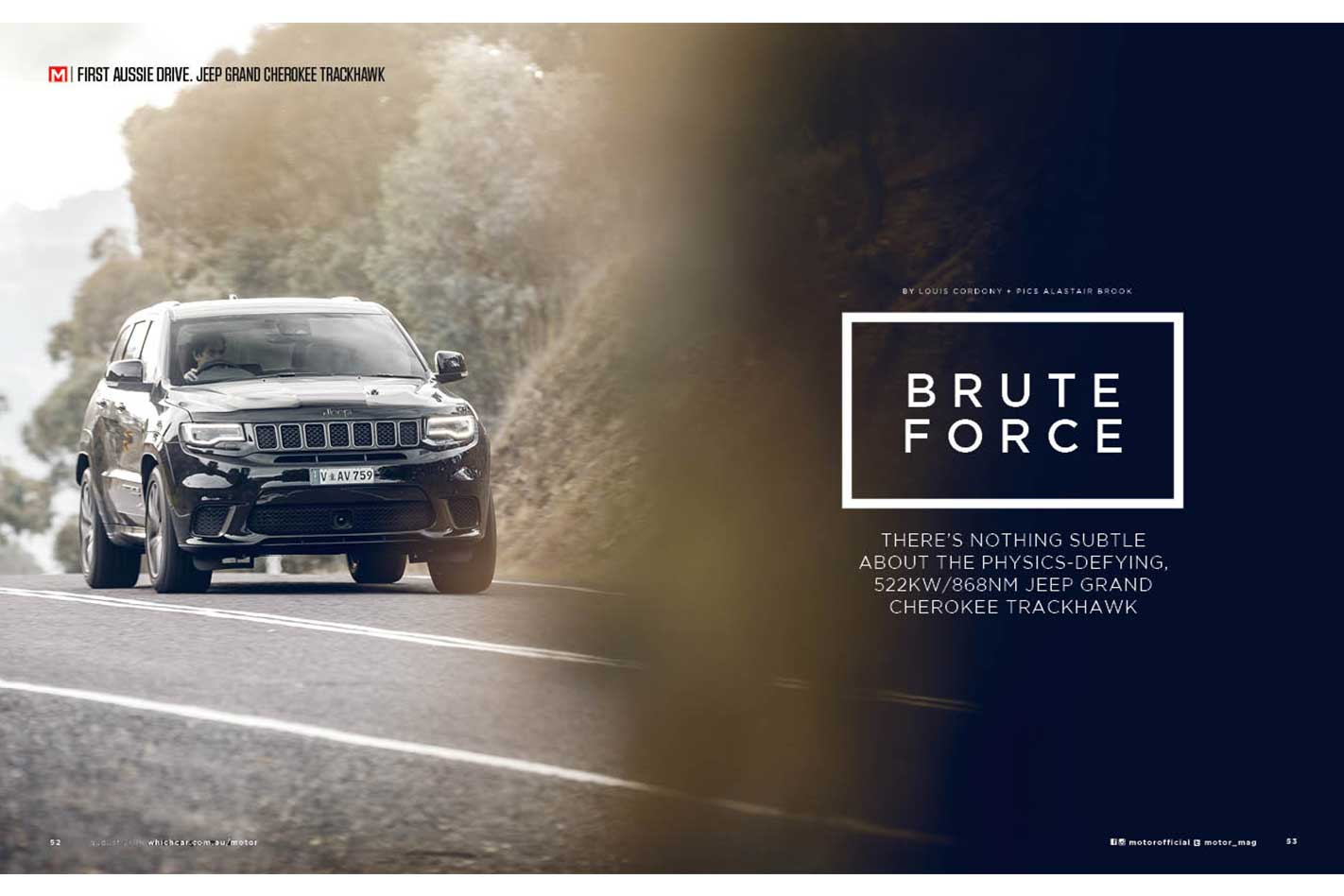
Sticking with the fast wagon theme, we strap the VBox to Jeep’s mad 522kW Grand Cherokee Trackhawk.
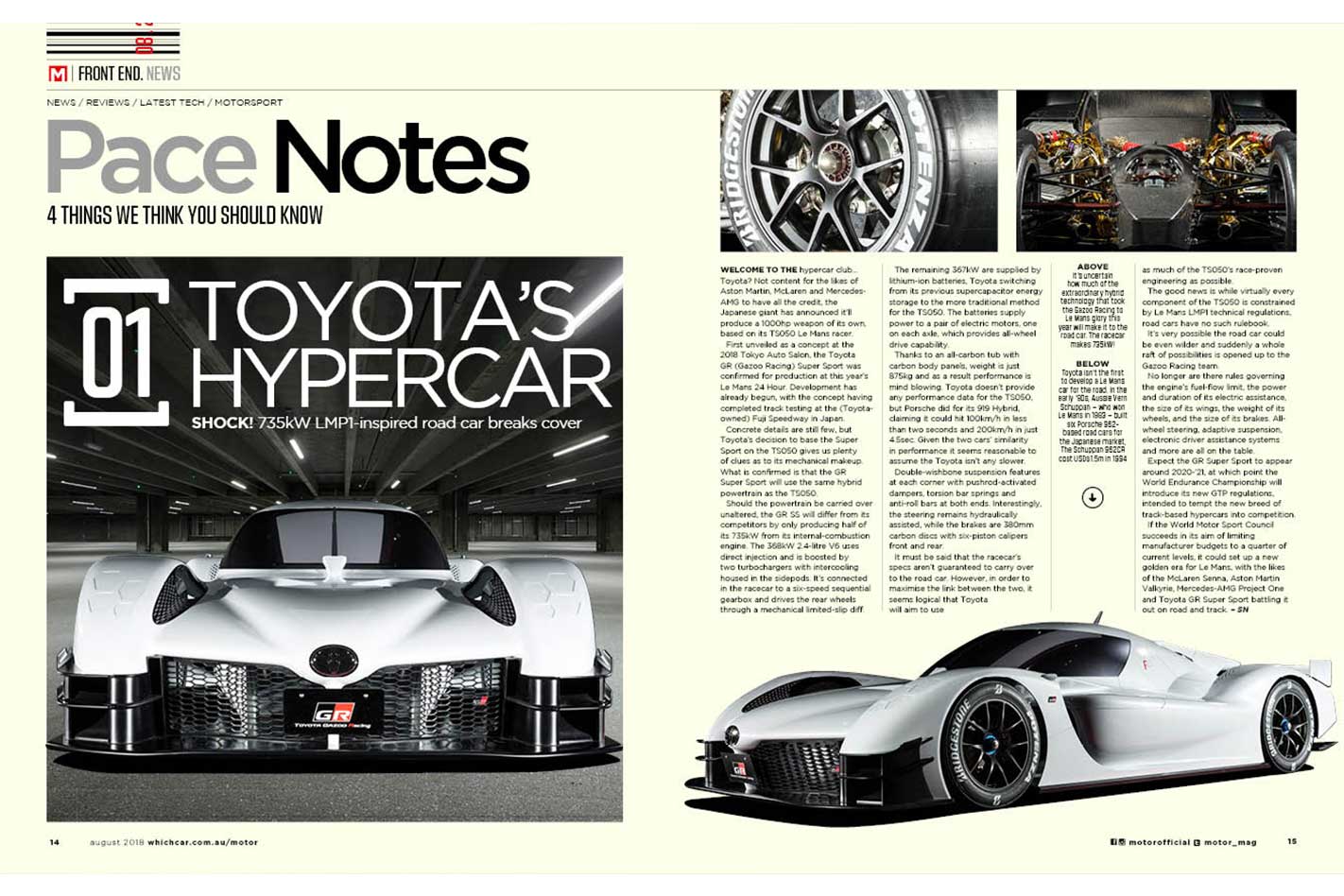
In news we cover off Toyota’s hypercar plans, Porsche’s exotic 911 Speedster, the new McLaren 600LT and compare Porsche’s production car and outright Nurburgring lap records.
There is a bit of a Porsche theme to this issue, as we celebrate the Stuttgart sports car maker’s 70th birthday.

Where better to start than where it all began? The very first Porsche ever built.

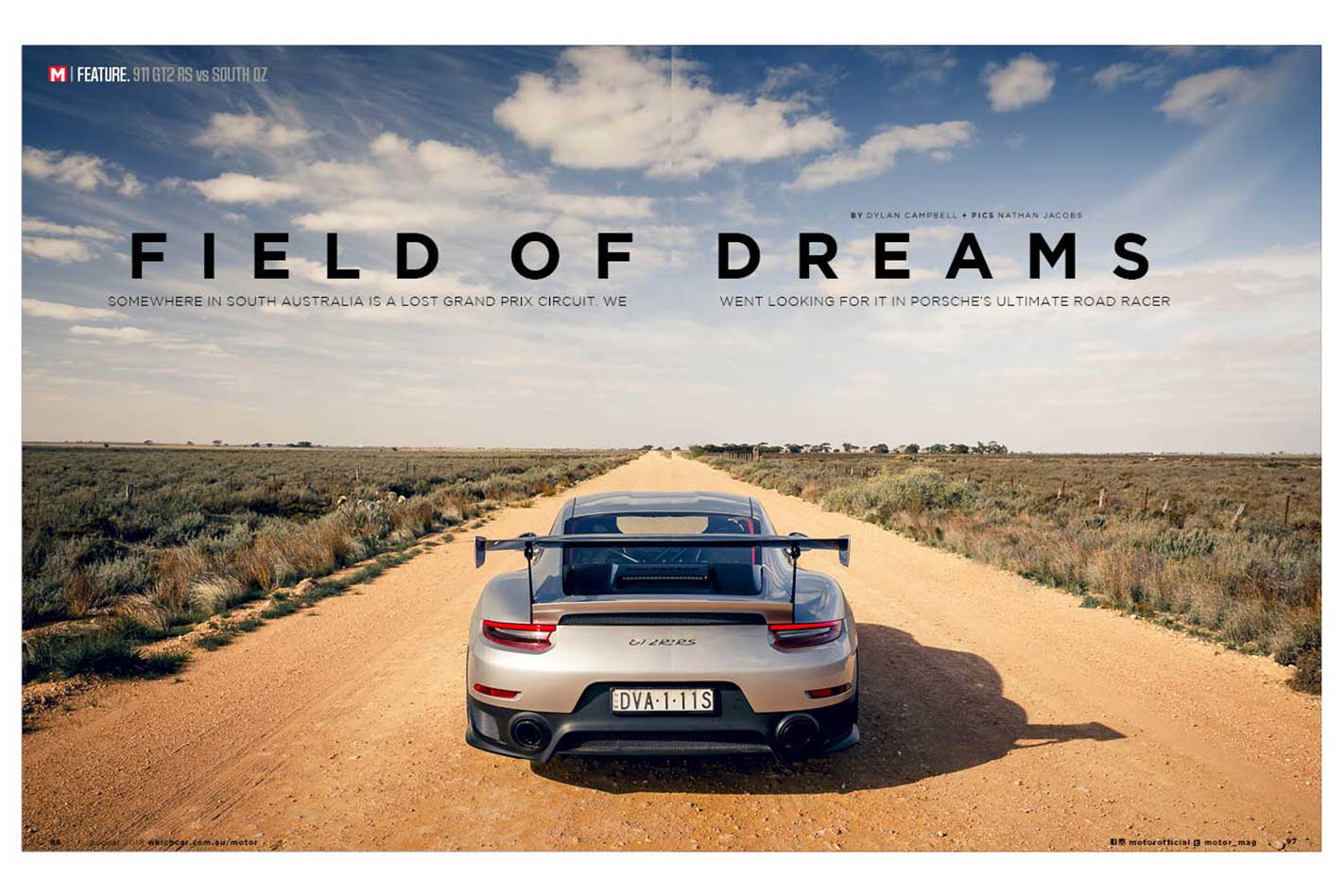
From the first to the latest, we hunt the scene of Porsche’s first Australian motorsport victory in its ultimate road racer, the 515kW 911 GT2 RS.
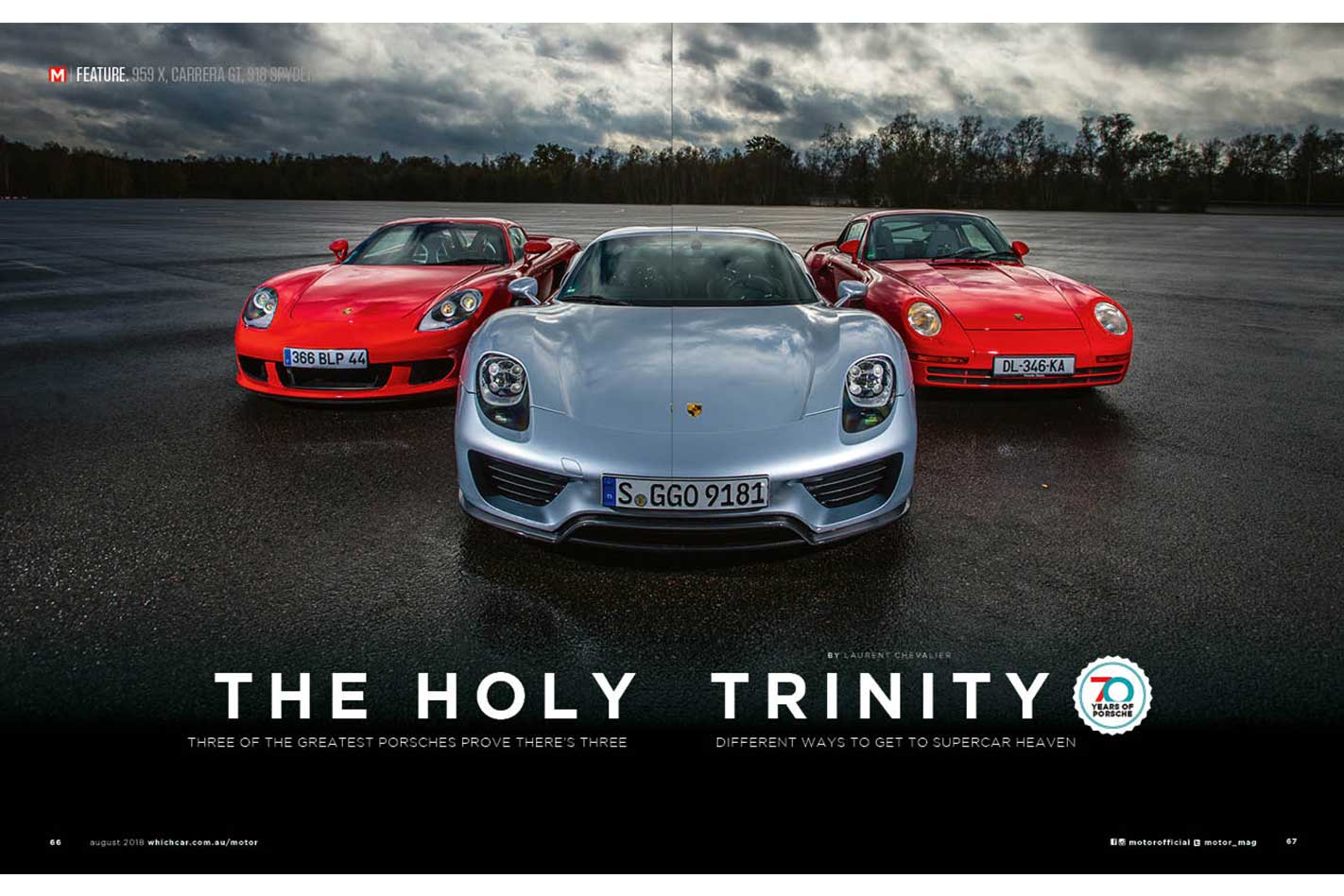
Some Porsches are more special than others and the 959, Carrera GT and 918 Spyder are top of the list.
Flat chat in Porsche’s Le Mans-winning 919 Hybrid. Hold on tight.

There have been hundreds of 911 variants over the years. We name the five greats.
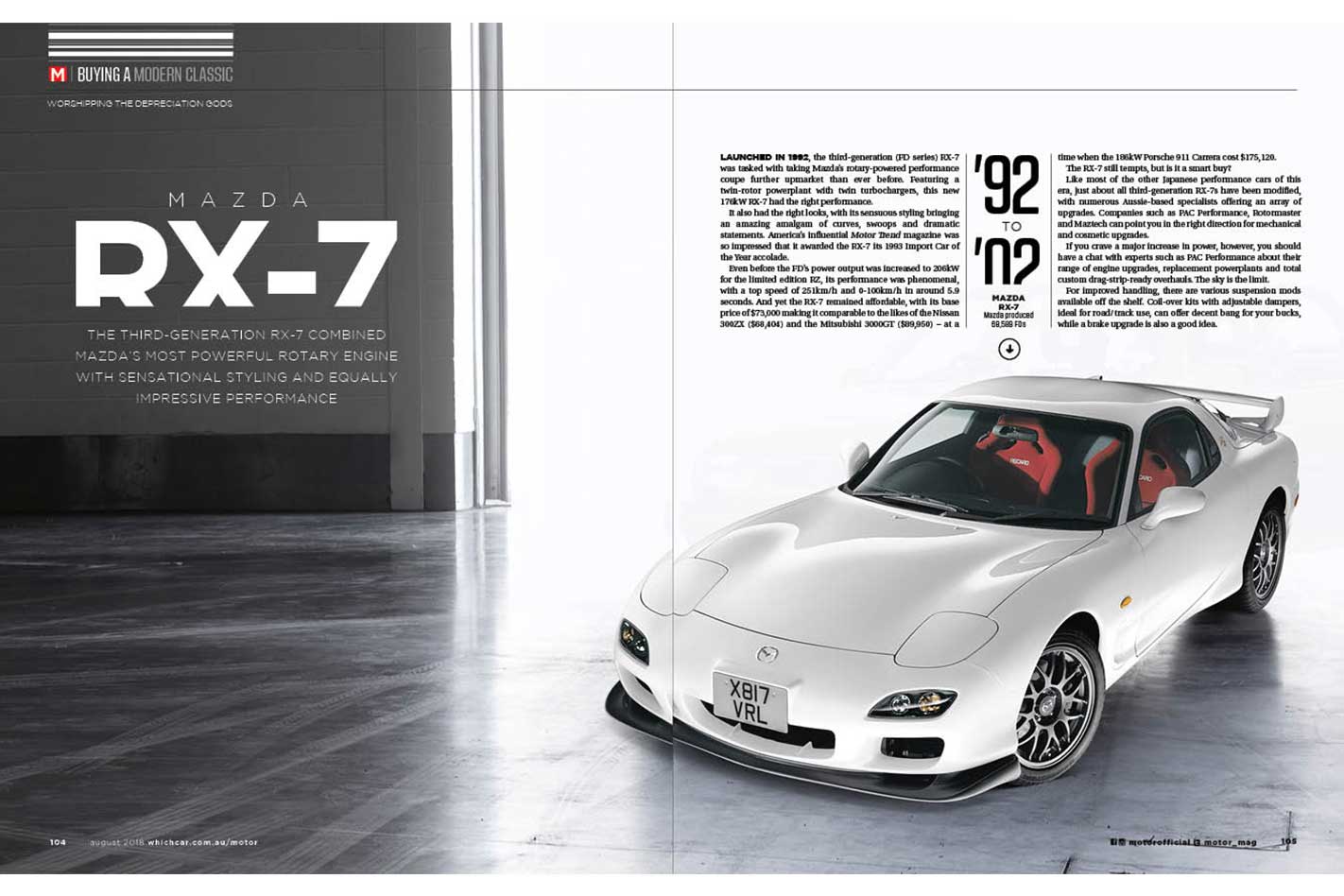
Keen on an FD-series Mazda RX7? We have all the info you need to know.
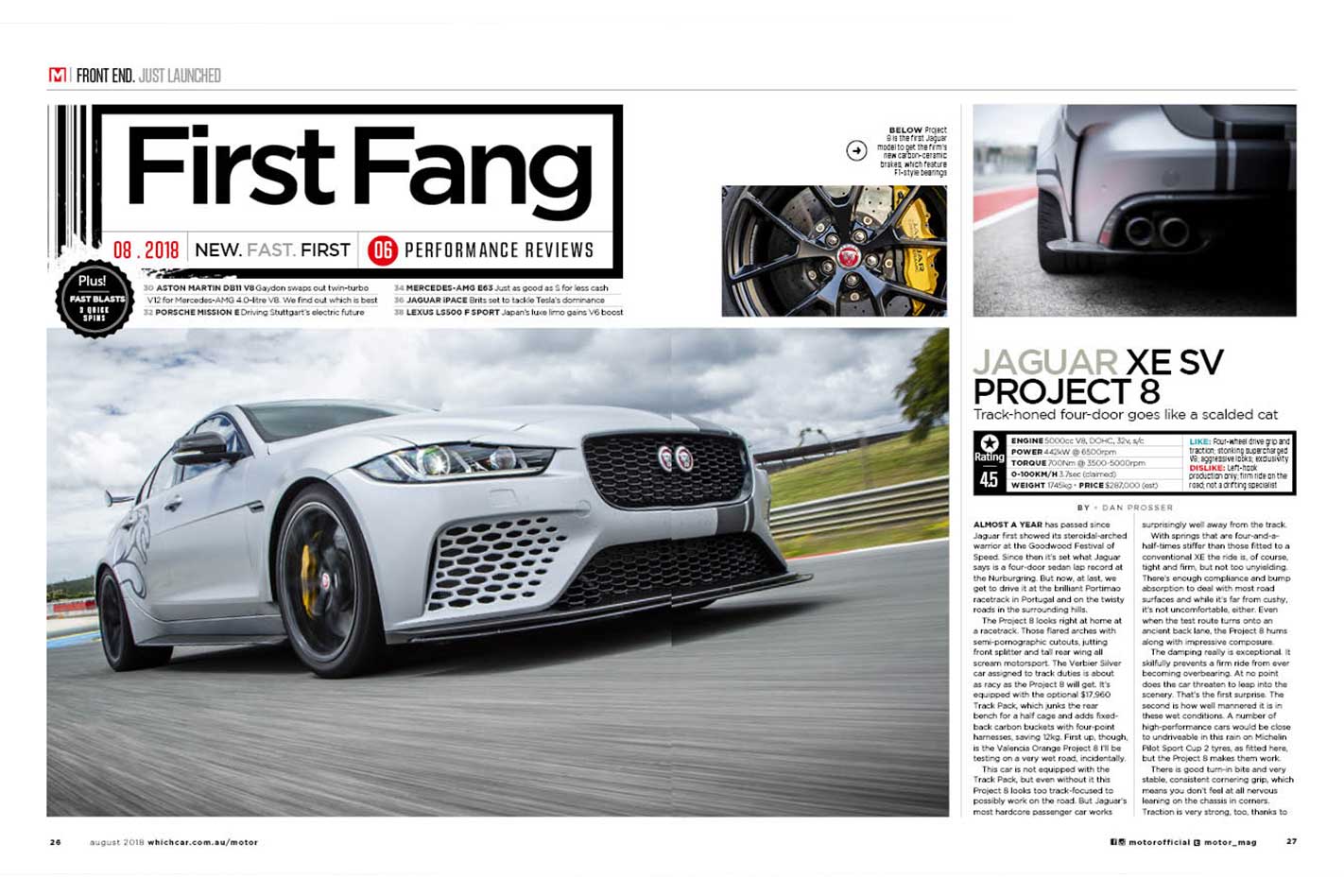
First drives of the monstrous Jaguar XE Project 8, Aston Martin DB11 V8, Mercedes-AMG E63, Lexus LS500 F Sport and much more.
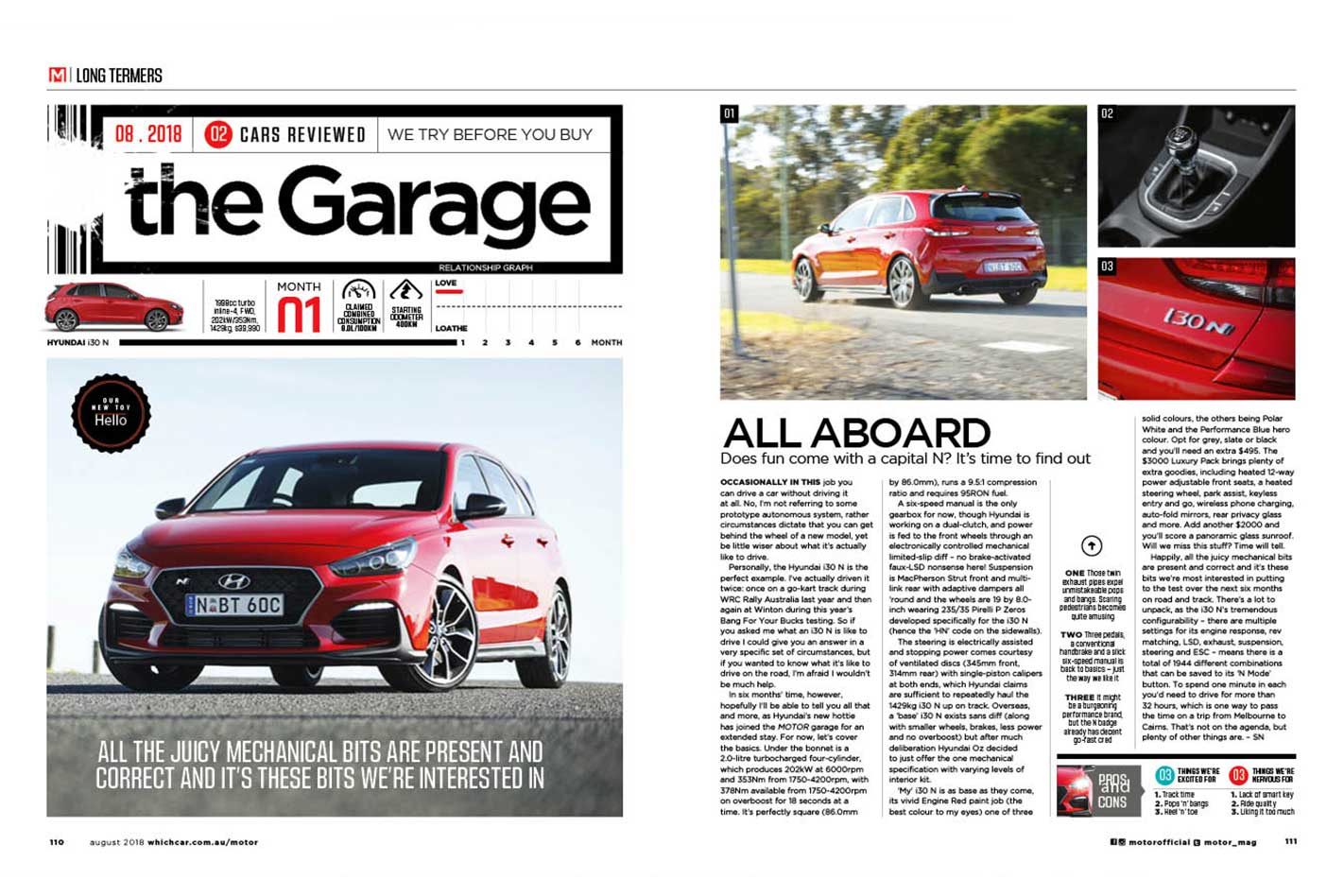
Two top-notch hot hatches have landed in MOTOR’s garage, the Hyundai i30N and Honda Civic Type R.
If you’ve been finding the interior of your Chiron a little dark and depressing, Bugatti is here to – literally – shed some light on the problem.
It has revealed the new ‘Sky View’ option for its 1103kW hypercar, available with immediate effect, allowing customers to choose two fixed panels in the roof allowing sunlight to stream through.
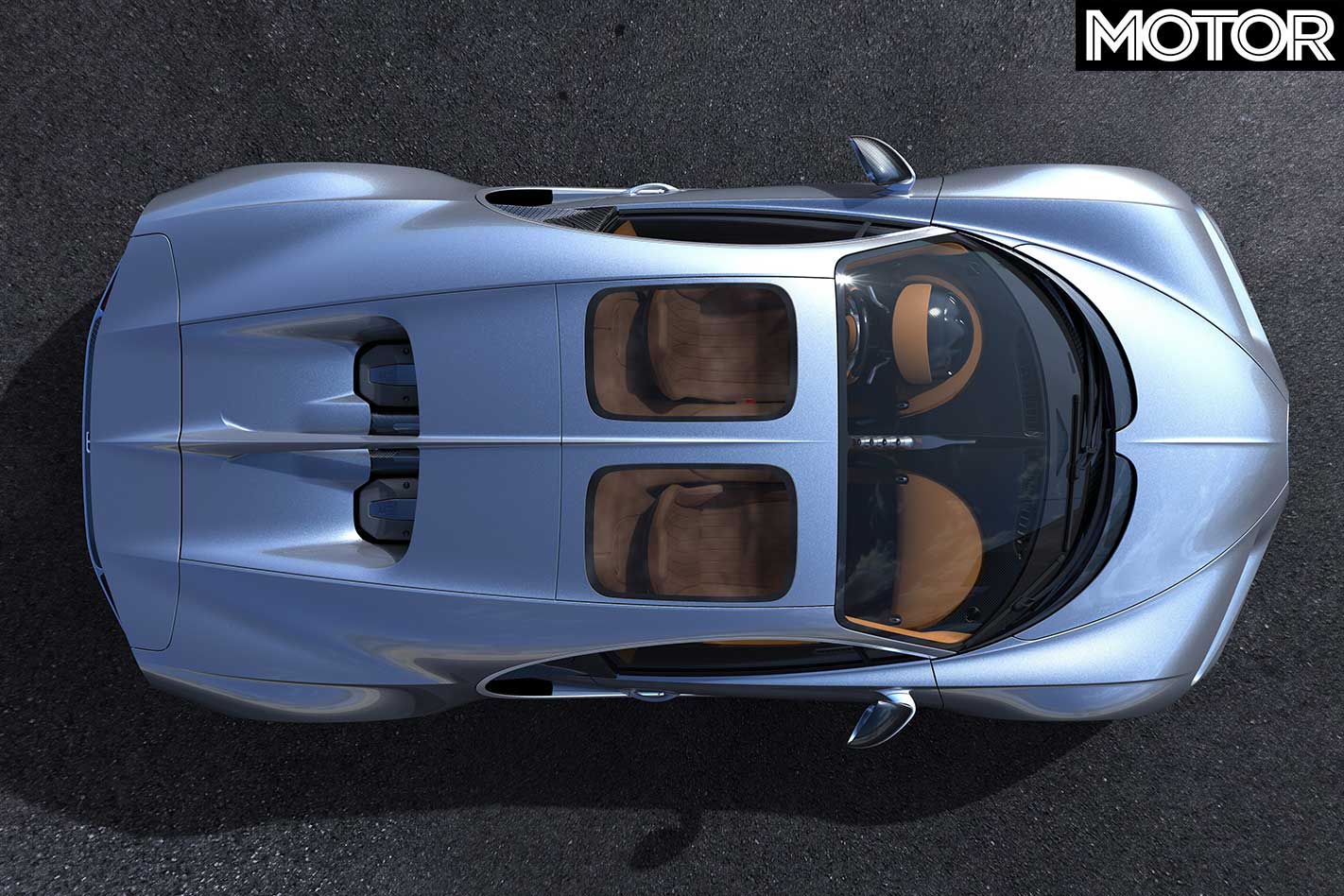
Sky View is possibly a response to customers who want a greater sense of connection with the outdoors while driving their hypercar, as Bugatti has already announced it will not be producing a convertible ‘Grand Sport’ version of the Chiron.
Each panel is 65cm long and 44cm wide and consists of four layers, each with a different role. Together, they reduce wind noise, reflect infrared and ultraviolet radiation and the tint prevents the sun glinting off the dazzling chrome inside the Chiron.
The panels are laminated to improve stiffness and Bugatti claims the overall structural rigidity of the Chiron is maintained. As a bonus, the panels also liberate 2.7cm of extra headroom, handy if your height is equal to your bank account.
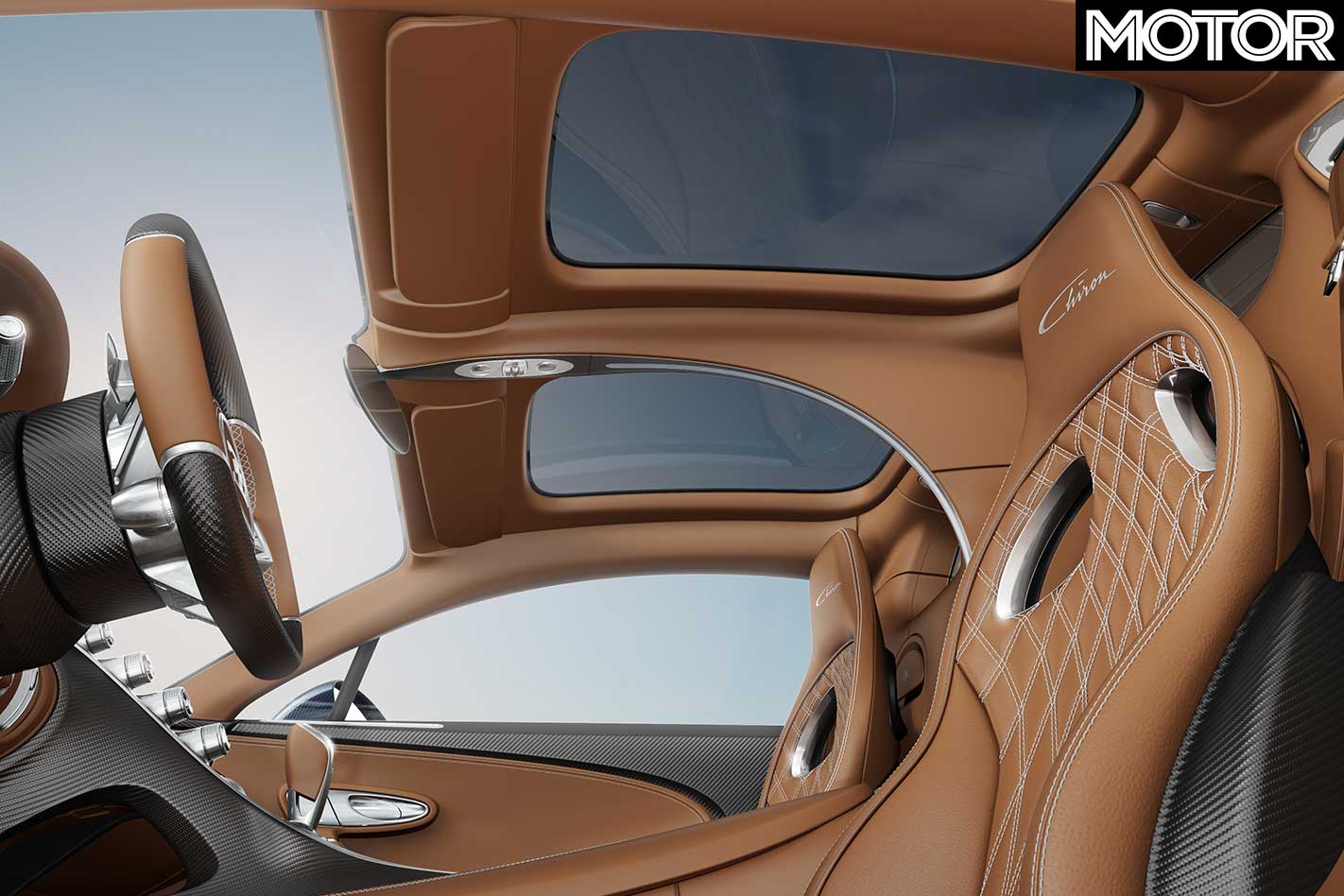
Bugatti doesn’t state a price for the Sky View option, but presumably similar money would buy you a decent hot hatch. No mention is made of whether the option can be retrofitted (it seems highly unlikely) so existing Chiron owners will have to buy another example if they fancy the feature.
A Sky View-equipped Chiron will make its public debut during Monterey Car Week in late August, alongside the new Divo hypercar, aimed at turning the Bug into a track weapon. Only 40 will be built at a price of 5 million Euro each.
Jaguar Land Rover has applied for an intriguing new trademark – Road Rover.
The application has prompted a flurry of wild speculation from media around the world, with some indicating it could hint at a new passenger car vehicle or sub-brand.
While an application for a trademark isn’t official confirmation of a new product, JLR is rumoured to already be using the Road Rover name internally in reference to a new model line.
JLR also has a number of other trademarks for vehicles which aren’t in production, such as J-Type, J-Pace, and C-Pace, according to autoexpress.co.uk.
The purpose of a trademark application can often be more about keeping names out of the hands of competitors or trademark squatters.
However, Land Rover is expected to launch its first fully-electric production vehicle in 2020, with some speculating Road Rover could be the badge adorning the bonnet and boot when it is revealed to the world.
UK publication Autocar has reported that the Road Rover could be a Mercedes-Benz S-Class rival, with a luxurious interior, but retaining some of JLR’s trademark off-road capability.
The Road Rover name isn’t completely new to the brand, and like Velar, was used on experimental prototypes in the company’s distant past, in this case, a 1951 three-door estate design study which used a shortened version of the Rover P4 platform – retaining its rear wheel drive transmission.
The latter may well be key. Rather than dilute the Range Rover brand with ever more road-oriented vehicles, Road Rover could be a way to introduce rear-wheel drive bitumen-biased versions.
Whatever JLR’s intentions with the name, we shouldn’t have to wait long to find out what the Road Rover’s purpose will be, with speculation estimating a launch could be just two years away.
SERGIO MARCHIONNE, the former head of Fiat Chrysler Automobiles (FCA), has died aged 66, just days after he was replaced as the head of the business.
The Italian-Canadian underwent shoulder surgery to remove a tumour in late June, but reportedly suffered a cerebral embolism during the operation that led to him being placed in a coma. As his condition worsened he was replaced by Mike Manley as CEO of FCA and by John Elkann as CEO of Ferrari, however his injuries were too severe to recover from. Marchionne succumbed and passed away, July 25.
“Unfortunately, what we feared has come to pass. Sergio Marchionne, man and friend, is gone,” FCA chairman John Elkann said in a statement.
“I believe that the best way to honour his memory is to build on the legacy he left us, continuing to develop the human values of responsibility and openness of which he was the most ardent champion.
“My family and I will be forever grateful for what he has done. Our thoughts are with Manuela, and his sons Alessio and Tyler.”
Marchionne joined the board of Fiat in 2003 with no prior experience in the automotive industry, but had a reputation for transforming loss-making firms.
During his time at the head of the business Marchionne managed to turn Fiat around while simultaneously taking control of a then struggling Chrysler to create FCA, as well as spinning Ferrari into an independent division.
His tenacity and drive during this period will see him remembered as a titan of the automotive industry.
Marchionne had intended to continue in his role as the head of Ferrari for another five years, meaning his passing could have a short-term impact for the Italian manufacturer.
It was announced Mike Manley would take over Marchionne’s mantle at the head of FCA last weekend when the then-CEO fell ill. Louis Camilleri will take over at the top job in Maranello.
During Marchionne’s time at the helm, FCA focussed on its premium brands, growing Jeep, Alfa Romeo, and Maserati through new SUV models.
Marchionne will be remembered for his frank and outspoken opinions, and honest approach to dealing with the media, such as when he openly discussed finding another car company to merge FCA with.
